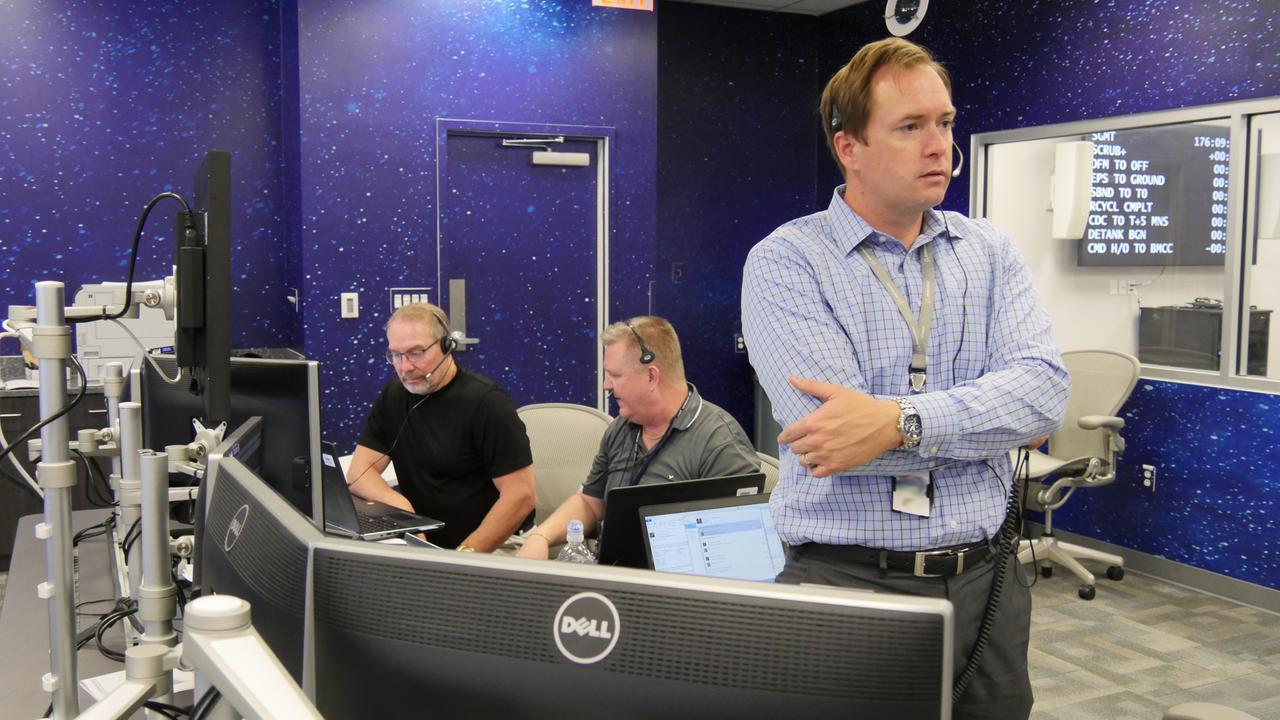
Inside the Boeing Mission Control Center at Kennedy Space Center, Fla., launch control teams for the CST-100 Starliner rehearse a fully integrated prelaunch simulation of the spacecraft’s upcoming Orbital Flight Test. Boeing Spacecraft Launch Conductor Louis Atchison speaks on console to the Mission Management Team as the countdown in the launch simulation progresses.
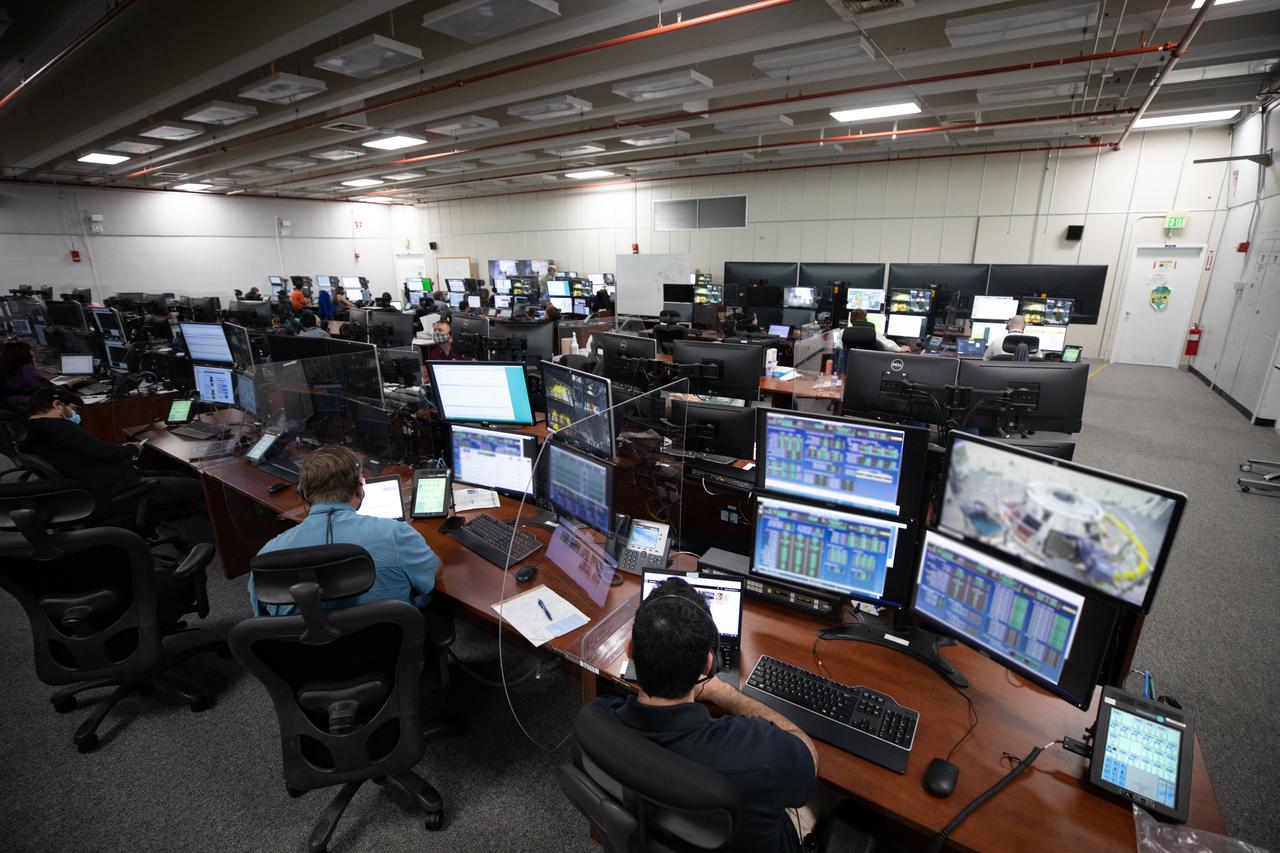
Members of the Artemis I launch team, including personnel with NASA’s Exploration Ground Systems (EGS) and contractor Jacobs, monitor activities during the ninth formal terminal countdown simulation inside Firing Room 2 in the Launch Control Center at NASA’s Kennedy Space Center in Florida on June 24, 2021. This is part of a series of simulations to help the team prepare for the launch of Artemis I, the uncrewed first flight of the Space Launch System rocket and Orion spacecraft.
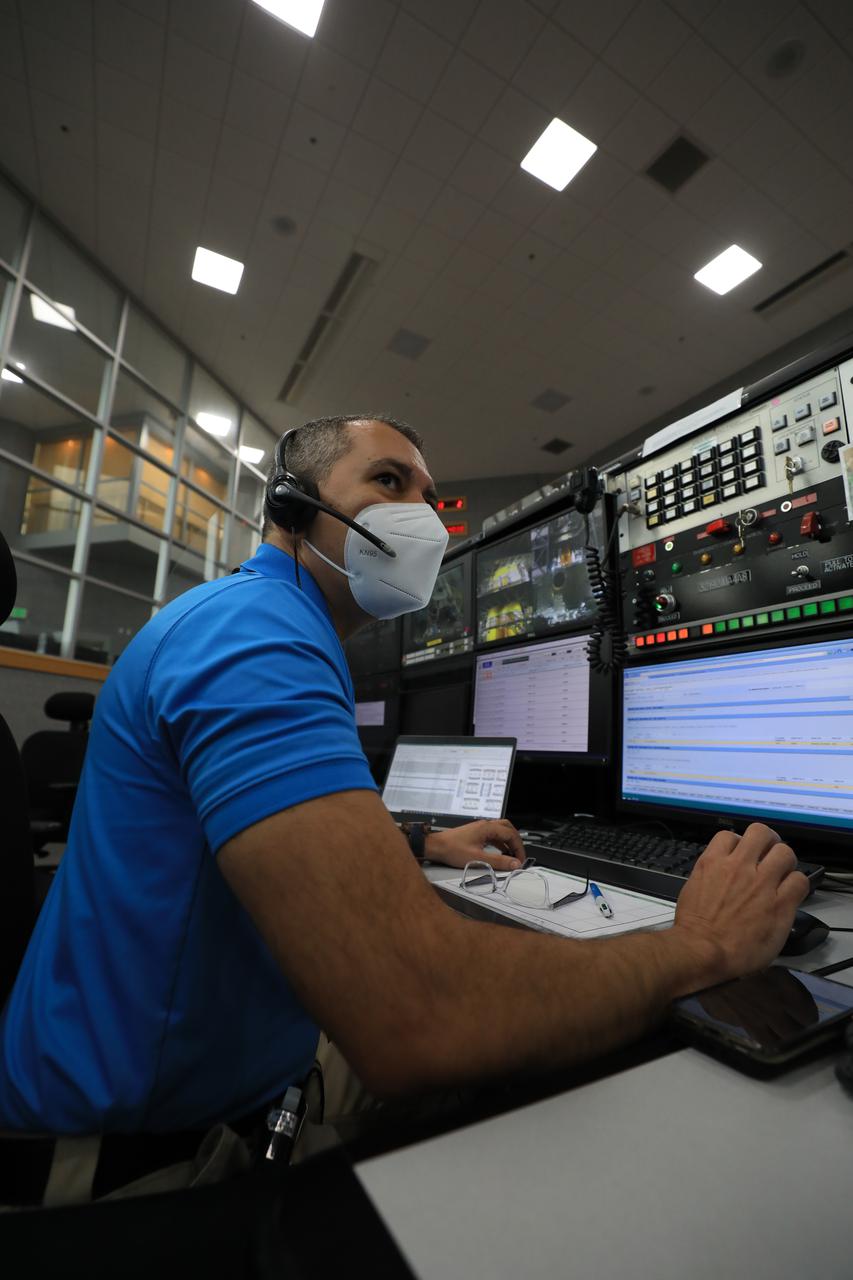
Members of the Artemis I launch team, including personnel with NASA’s Exploration Ground Systems (EGS) and contractor Jacobs, monitor activities during the ninth formal terminal countdown simulation inside Firing Room 1 in the Launch Control Center at NASA’s Kennedy Space Center in Florida on June 24, 2021. This is part of a series of simulations to help the team prepare for the launch of Artemis I, the uncrewed first flight of the Space Launch System rocket and Orion spacecraft.
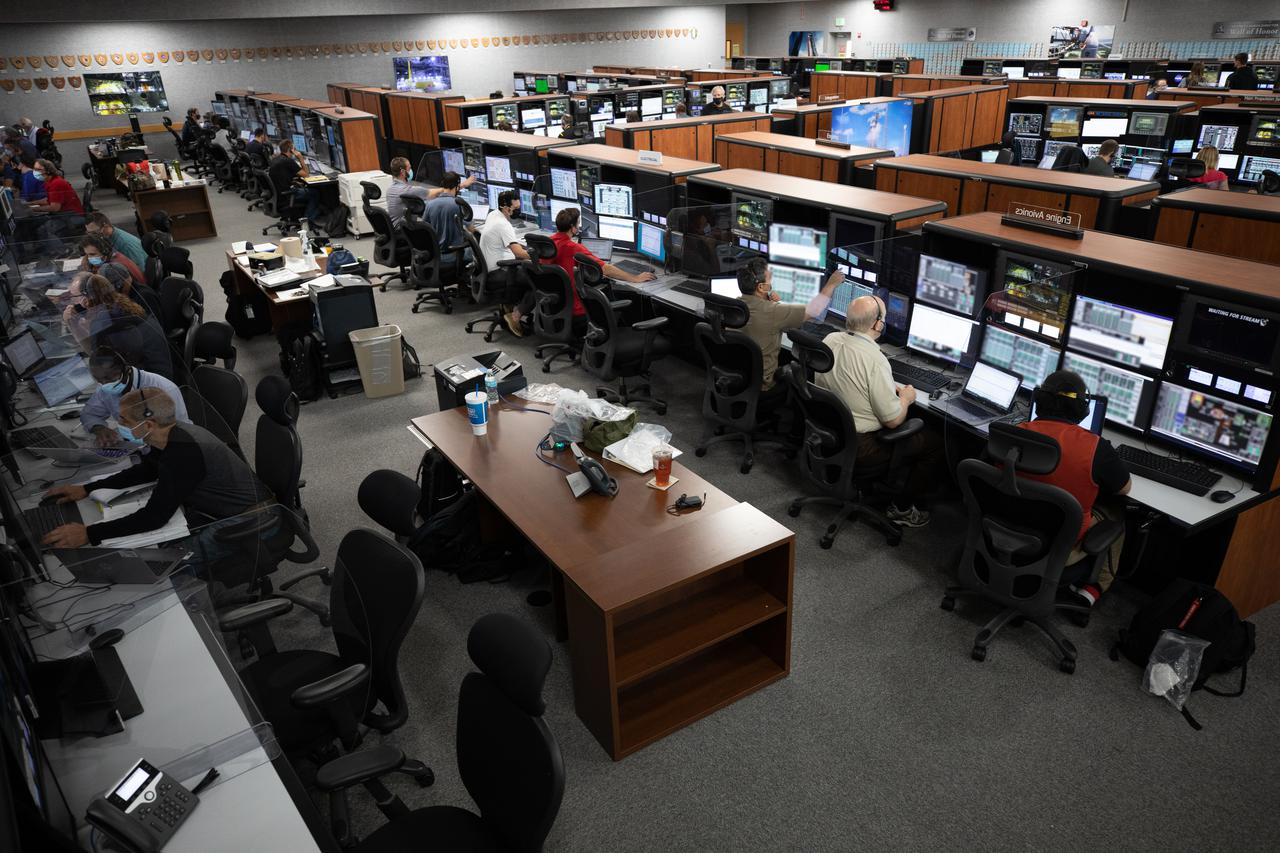
Members of the Artemis I launch team, including personnel with NASA’s Exploration Ground Systems (EGS) and contractor Jacobs, monitor activities during the ninth formal terminal countdown simulation inside Firing Room 1 in the Launch Control Center at NASA’s Kennedy Space Center in Florida on June 24, 2021. This is part of a series of simulations to help the team prepare for the launch of Artemis I, the uncrewed first flight of the Space Launch System rocket and Orion spacecraft.
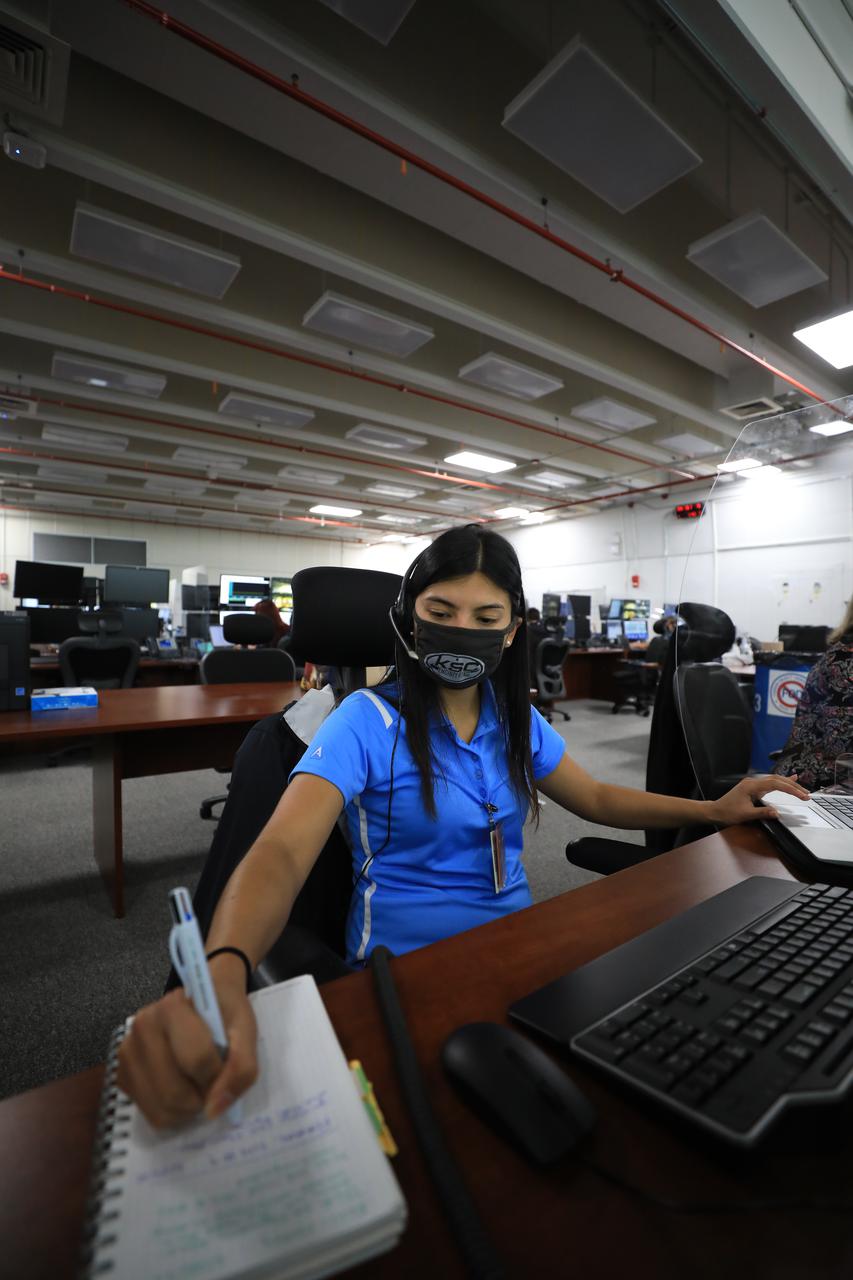
Members of the Artemis I launch team, including personnel with NASA’s Exploration Ground Systems (EGS) and contractor Jacobs, monitor activities during the ninth formal terminal countdown simulation inside Firing Room 2 in the Launch Control Center at NASA’s Kennedy Space Center in Florida on June 24, 2021. This is part of a series of simulations to help the team prepare for the launch of Artemis I, the uncrewed first flight of the Space Launch System rocket and Orion spacecraft.
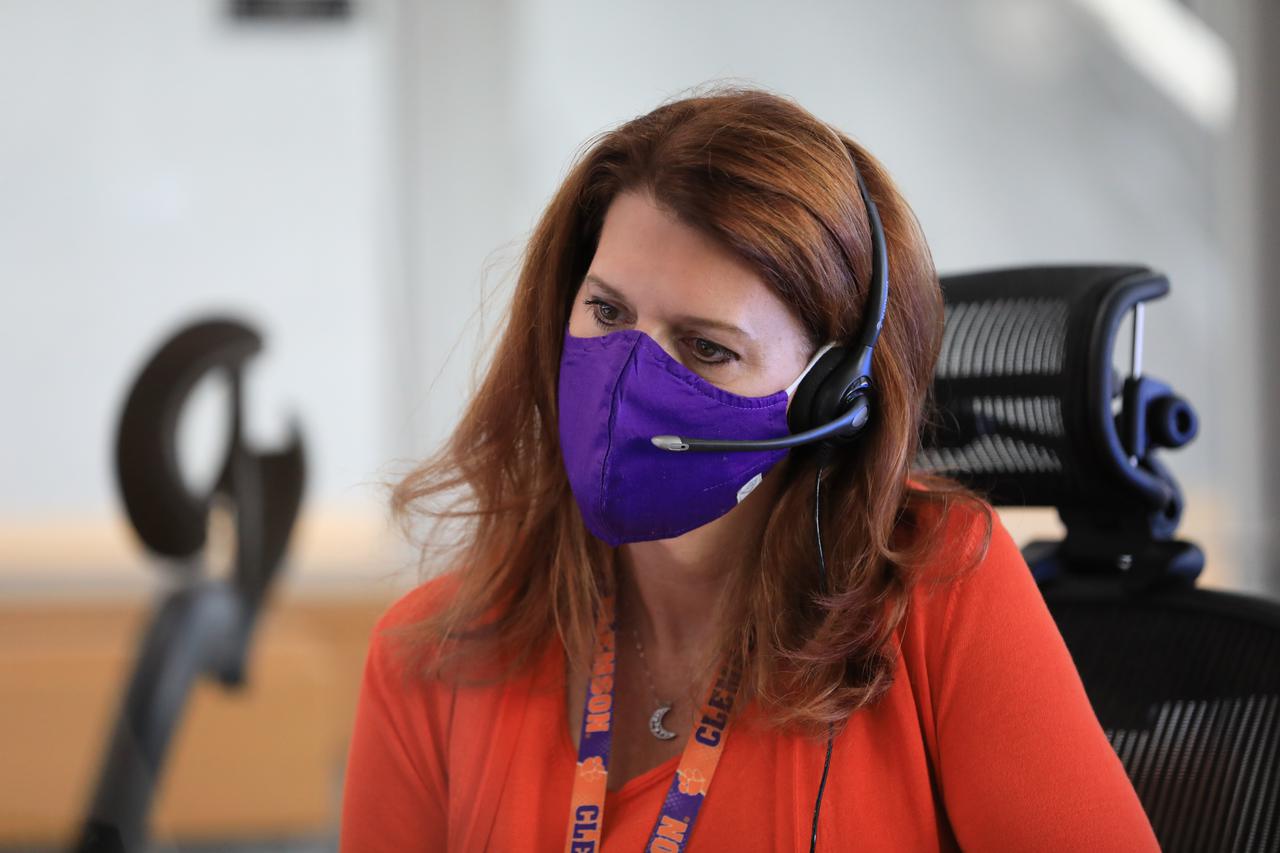
Artemis I Launch Director Charlie Blackwell-Thompson monitors activities during the ninth formal terminal countdown simulation inside Firing Room 1 in the Launch Control Center at NASA’s Kennedy Space Center in Florida on June 24, 2021. Members of the Artemis I launch team include personnel with NASA’s Exploration Ground Systems (EGS) and contractor Jacobs. This is part of a series of simulations to help the team prepare for the launch of Artemis I, the uncrewed first flight of the Space Launch System rocket and Orion spacecraft.
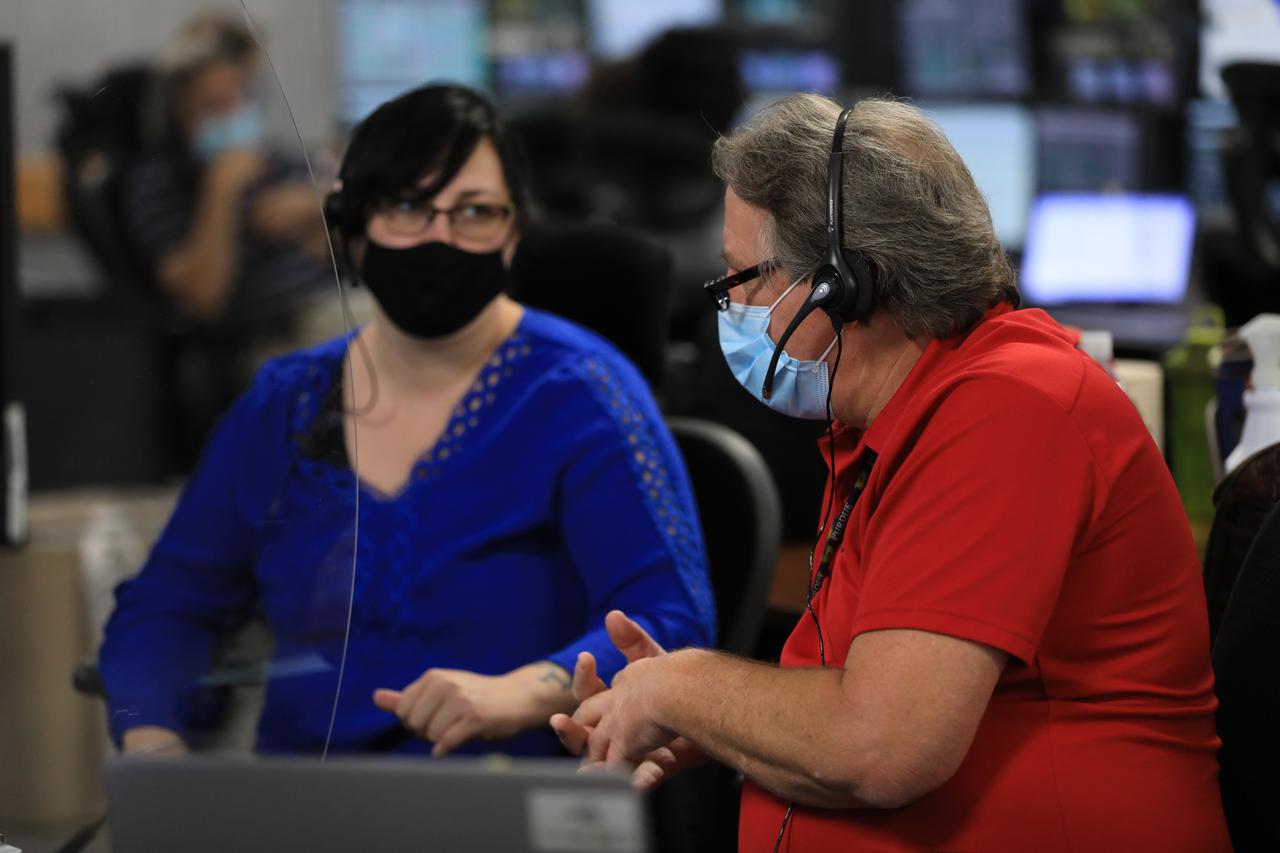
Members of the Artemis I launch team, including personnel with NASA’s Exploration Ground Systems (EGS) and contractor Jacobs, monitor activities during the ninth formal terminal countdown simulation inside Firing Room 1 in the Launch Control Center at NASA’s Kennedy Space Center in Florida on June 24, 2021. This is part of a series of simulations to help the team prepare for the launch of Artemis I, the uncrewed first flight of the Space Launch System rocket and Orion spacecraft.
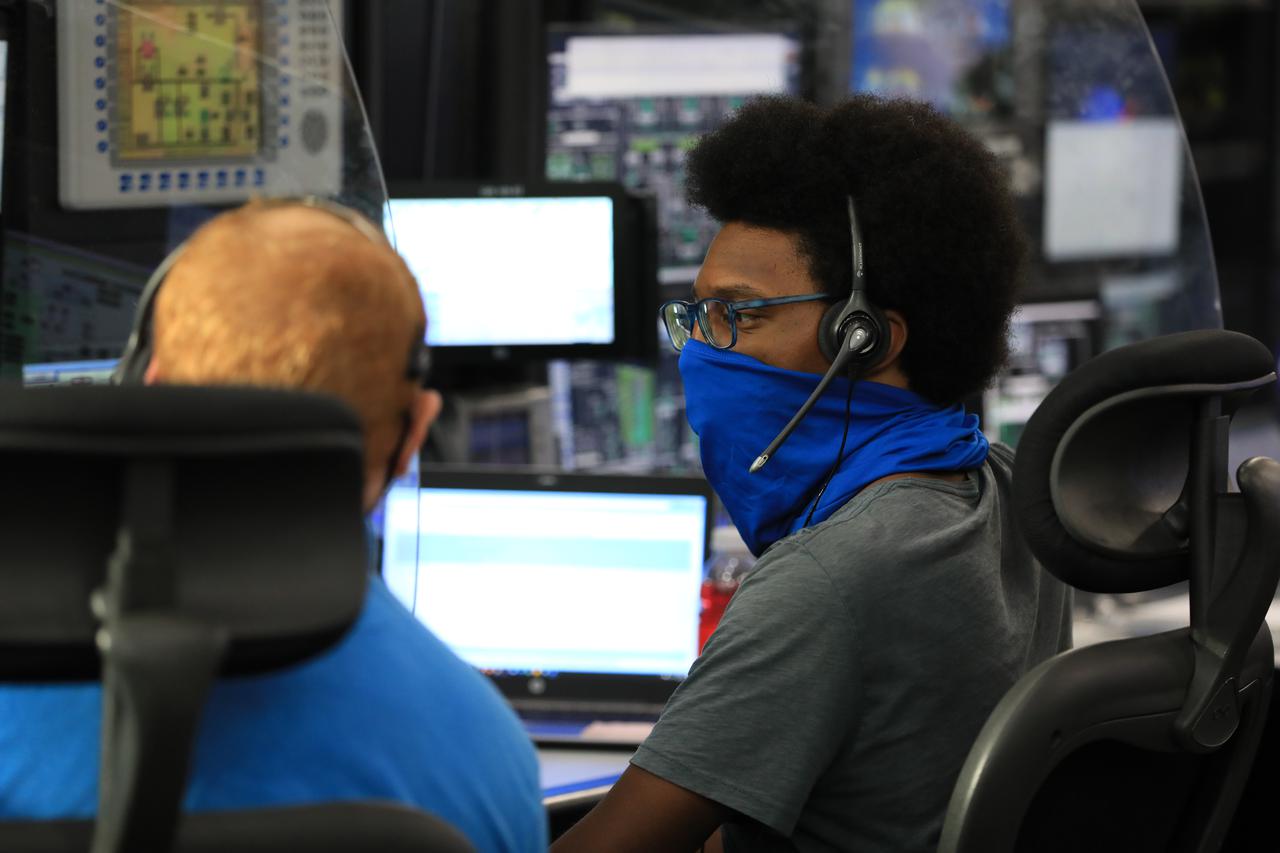
Artemis I launch team member Joshua Jones monitors activities during the ninth formal terminal countdown simulation inside Firing Room 1 in the Launch Control Center at NASA’s Kennedy Space Center in Florida on June 24, 2021. The Artemis I launch team includes personnel with NASA’s Exploration Ground Systems (EGS) and contractor Jacobs. This is part of a series of simulations to help the team prepare for the launch of Artemis I, the uncrewed first flight of the Space Launch System rocket and Orion spacecraft.
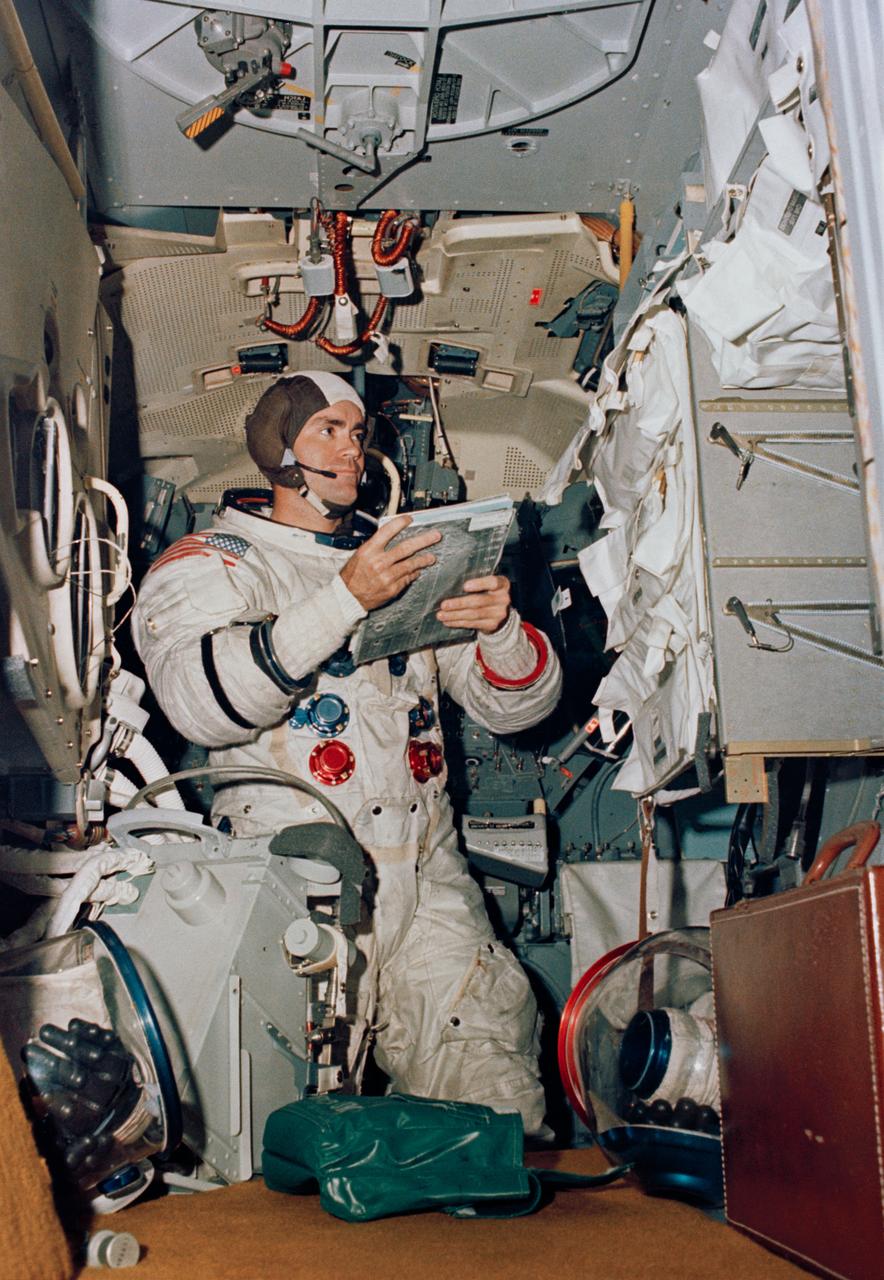
S70-34412 (4 April 1970) --- Astronaut Fred W. Haise Jr., Apollo 13 lunar module pilot, participates in simulation training in preparation for the scheduled lunar landing mission. He is in the Apollo Lunar Module Mission Simulator in the Kennedy Space Center's Flight Crew Training building.
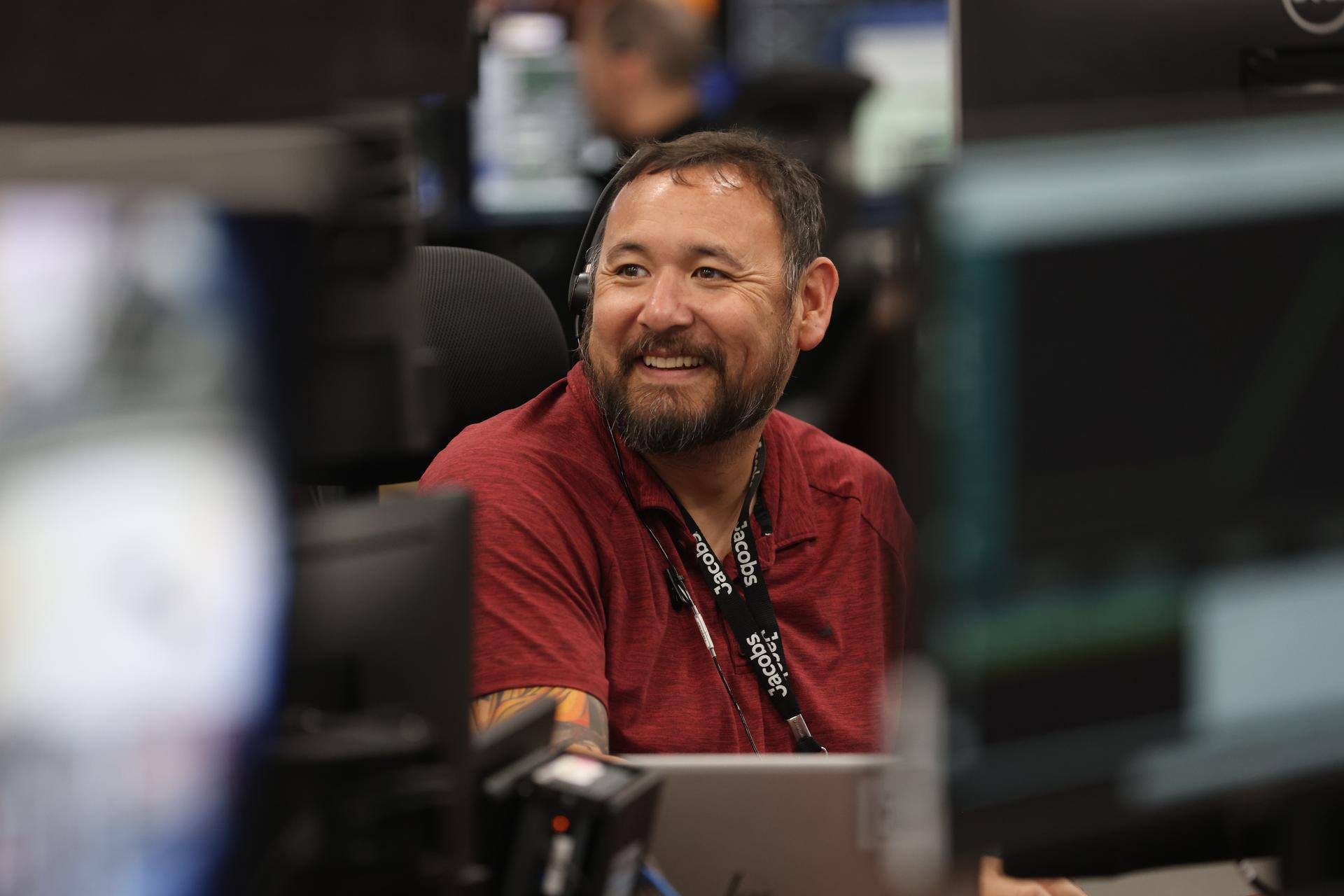
Members of the Artemis launch team participate in an Artemis II launch countdown simulation inside Firing Room 1 in the Launch Control Center at NASA’s Kennedy Space Center in Florida on Wednesday, Oct. 8, 2025. The simulations go through launch day scenarios to help launch team members test software and make adjustments if needed during countdown operations. For Artemis II, four astronauts will venture around the Moon, the first crewed mission on NASA’s path to establishing a long-term presence for science and exploration through Artemis.
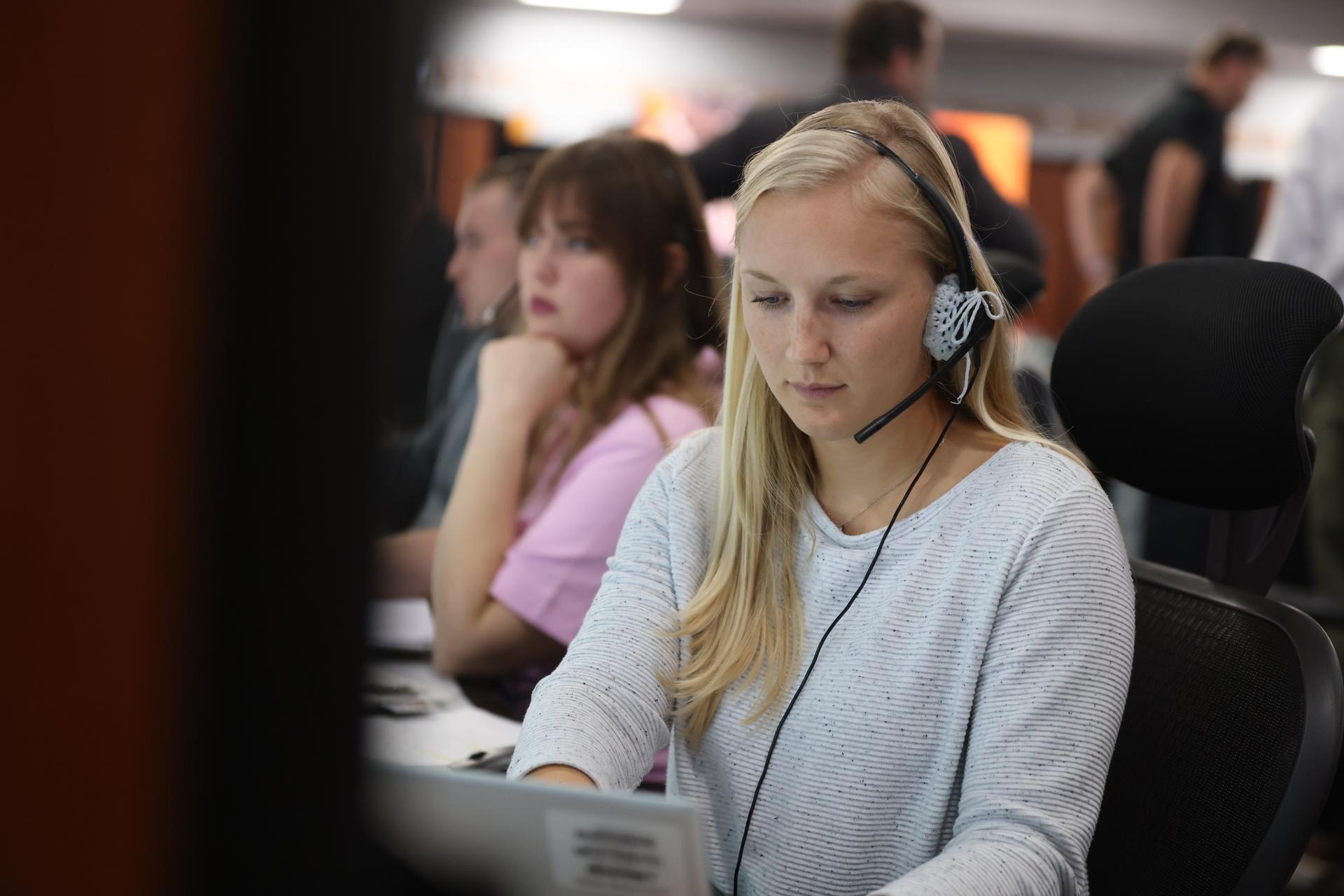
Members of the Artemis launch team participate in an Artemis II launch countdown simulation inside Firing Room 1 in the Launch Control Center at NASA’s Kennedy Space Center in Florida on Wednesday, Oct. 8, 2025. The simulations go through launch day scenarios to help launch team members test software and make adjustments if needed during countdown operations. For Artemis II, four astronauts will venture around the Moon, the first crewed mission on NASA’s path to establishing a long-term presence for science and exploration through Artemis.
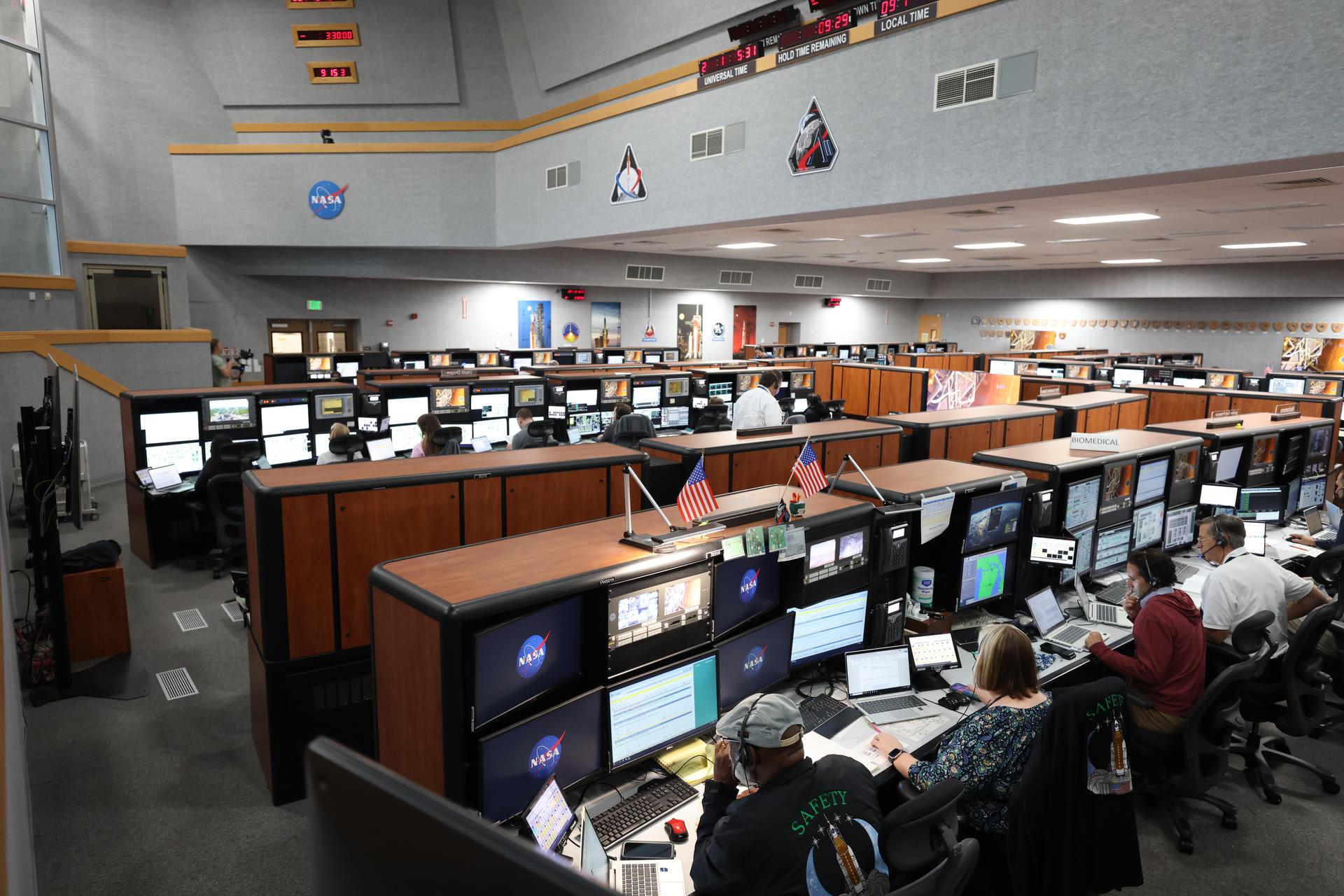
Members of the Artemis launch team participate in an Artemis II launch countdown simulation inside Firing Room 1 in the Launch Control Center at NASA’s Kennedy Space Center in Florida on Wednesday, Oct. 8, 2025. The simulations go through launch day scenarios to help launch team members test software and make adjustments if needed during countdown operations. For Artemis II, four astronauts will venture around the Moon, the first crewed mission on NASA’s path to establishing a long-term presence for science and exploration through Artemis.
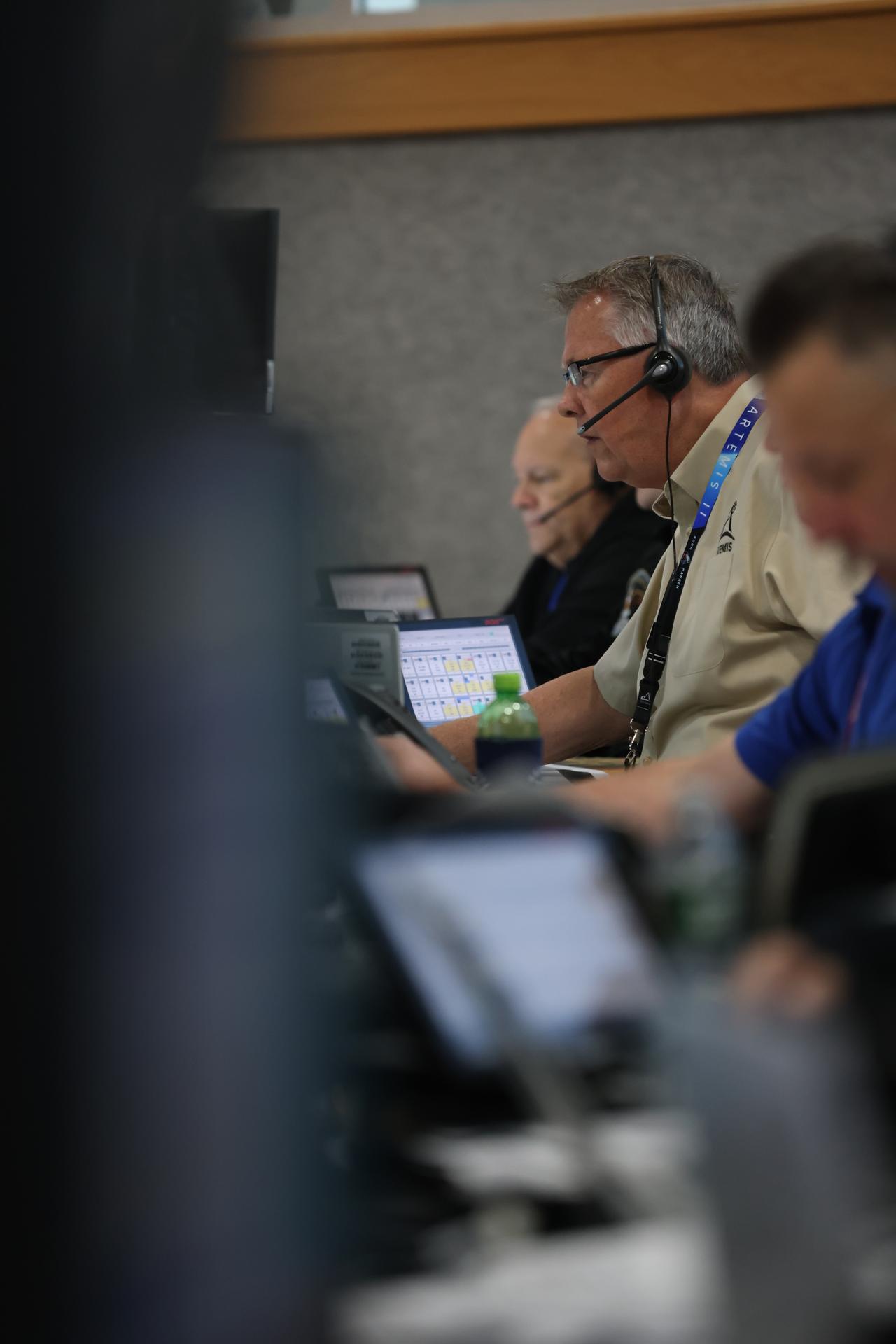
Jeff Spaulding, senior NASA test director for Artemis II at NASA’s Kennedy Space Center in Florida participates in an Artemis II launch countdown simulation inside Firing Room 1 in the Launch Control Center at NASA Kennedy on Wednesday, Oct. 8, 2025. The simulations go through launch day scenarios to help launch team members test software and make adjustments if needed during countdown operations. For Artemis II, four astronauts will venture around the Moon, the first crewed mission on NASA’s path to establishing a long-term presence for science and exploration through Artemis.
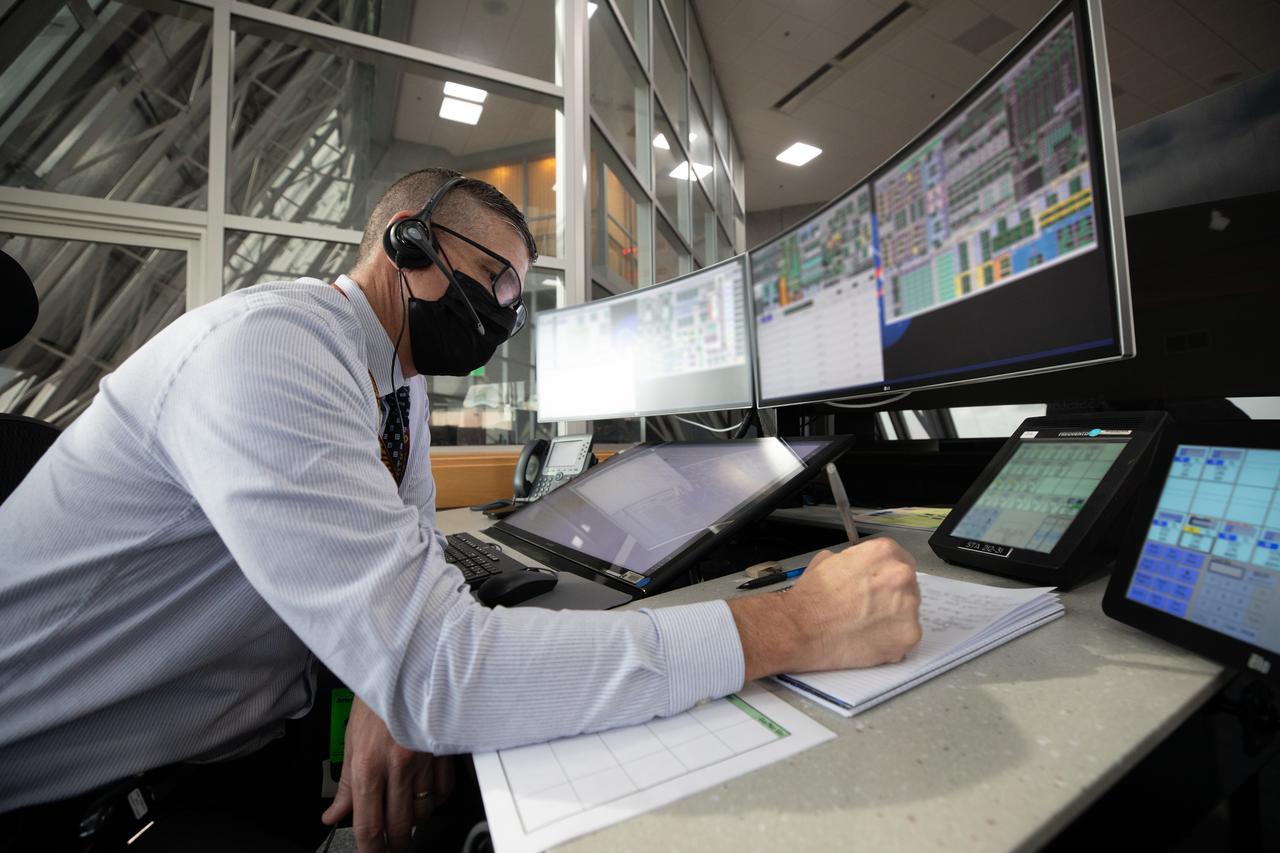
Chief of the Test, Launch and Recovery Operations Branch within the Exploration Ground Systems (EGS) Program Jeremy Graeber monitors activities during the ninth formal terminal countdown simulation inside Firing Room 1 in the Launch Control Center at NASA’s Kennedy Space Center in Florida on June 24, 2021. Members of the Artemis I launch team include personnel with EGS and contractor Jacobs. This is part of a series of simulations to help the team prepare for the launch of Artemis I, the uncrewed first flight of the Space Launch System rocket and Orion spacecraft.
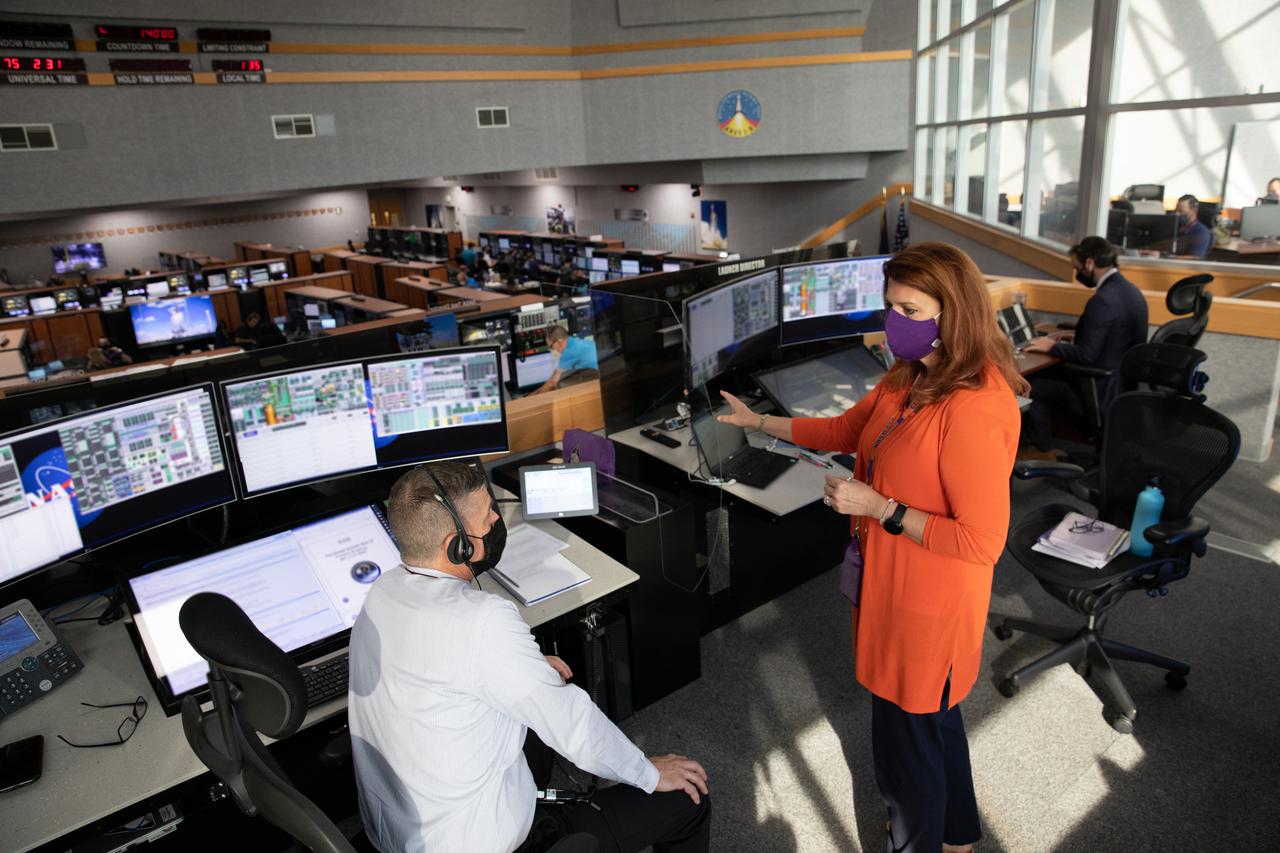
Chief of the Test, Launch and Recovery Operations Branch within the Exploration Ground Systems (EGS) Program Jeremy Graeber, (left) and Artemis I Launch Director Charlie Blackwell-Thompson (right), along with members of the Artemis I launch team, including personnel with EGS and contractor Jacobs, monitor activities during the ninth formal terminal countdown simulation inside Firing Room 1 in the Launch Control Center at NASA’s Kennedy Space Center in Florida on June 24, 2021. This is part of a series of simulations to help the team prepare for the launch of Artemis I, the uncrewed first flight of the Space Launch System rocket and Orion spacecraft.
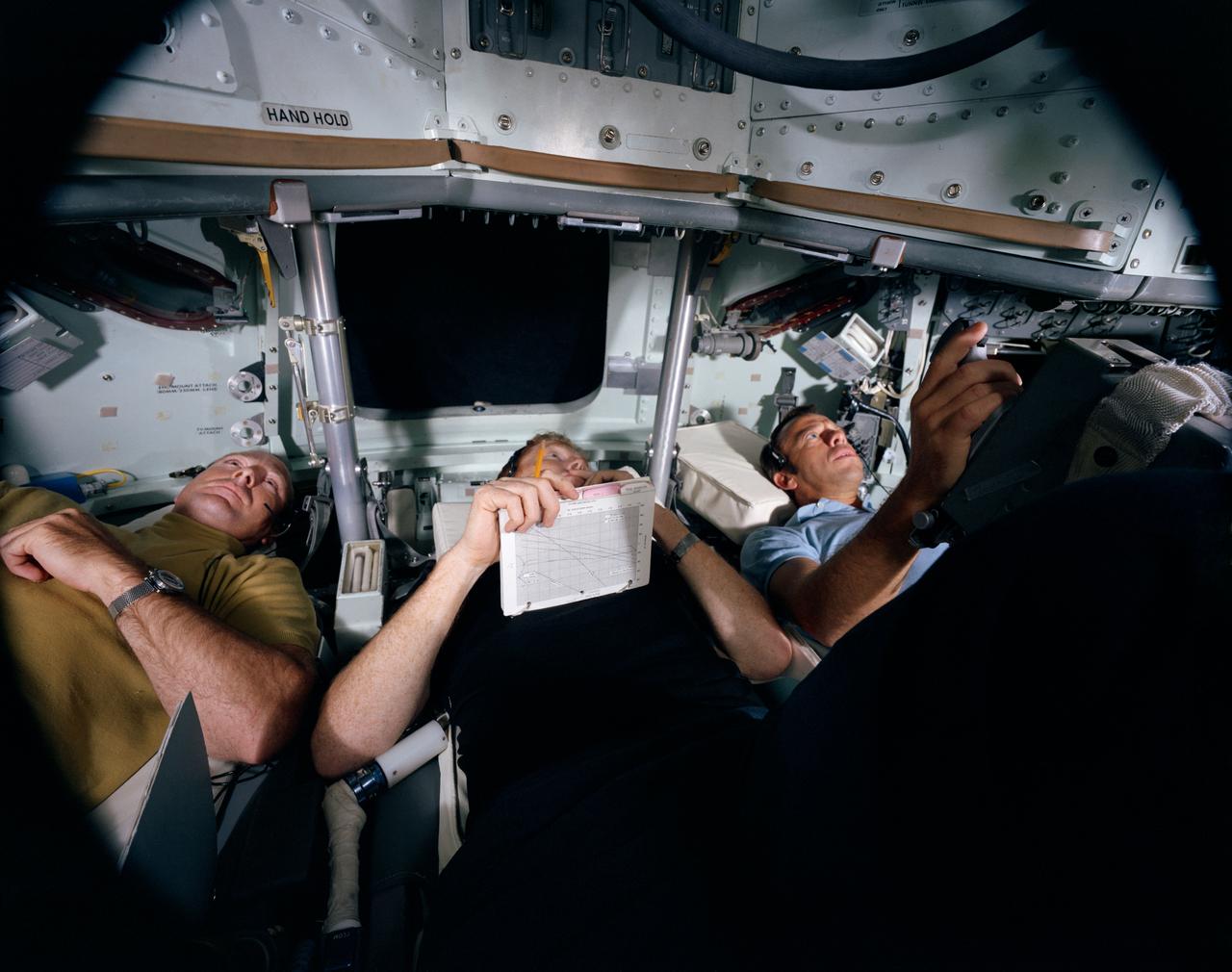
S70-45580 (July 1970) --- The members of the prime crew of the Apollo 14 lunar landing mission participate in Command Module (CM) simulation training at the Kennedy Space Center (KSC). Left to right are astronauts Edgar D. Mitchell, lunar module pilot; Stuart A. Roosa, command module pilot; and Alan B. Shepard Jr., commander.
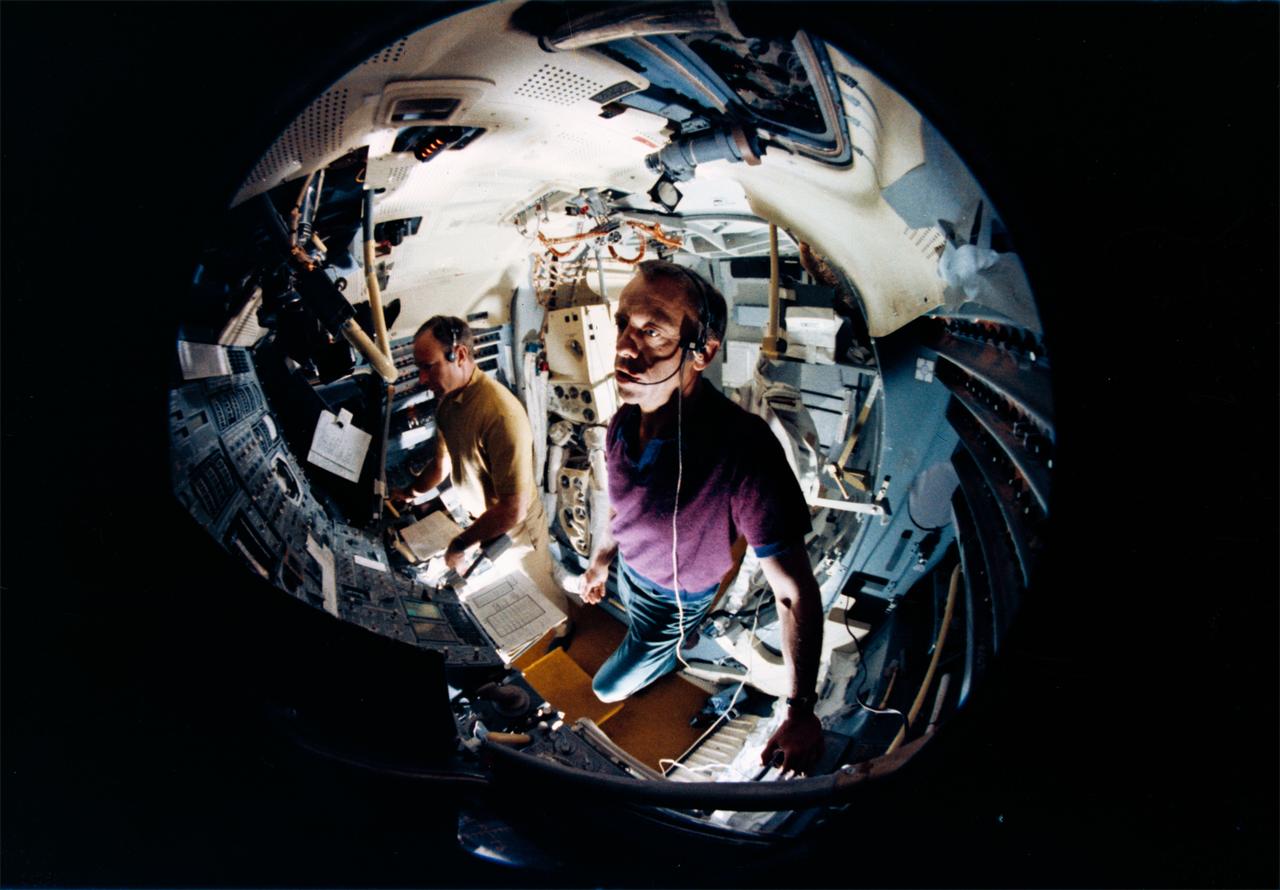
S70-45555 (July 1970) --- A fish-eye lens view showing astronauts Alan B. Shepard Jr. (foreground) and Edgar D. Mitchell in the Apollo lunar module mission simulator at the Kennedy Space Center during preflight training for the Apollo 14 lunar landing mission. Shepard is the Apollo 14 commander; and Mitchell is the lunar module pilot.

Joe Pavicic, operations project engineer, participates in an Artemis II launch countdown simulation inside Firing Room 1 in the Launch Control Center at NASA’s Kennedy Space Center in Florida on Wednesday, Oct. 8, 2025. The simulations go through launch day scenarios to help launch team members test software and make adjustments if needed during countdown operations. For Artemis II, four astronauts will venture around the Moon, the first crewed mission on NASA’s path to establishing a long-term presence for science and exploration through Artemis.
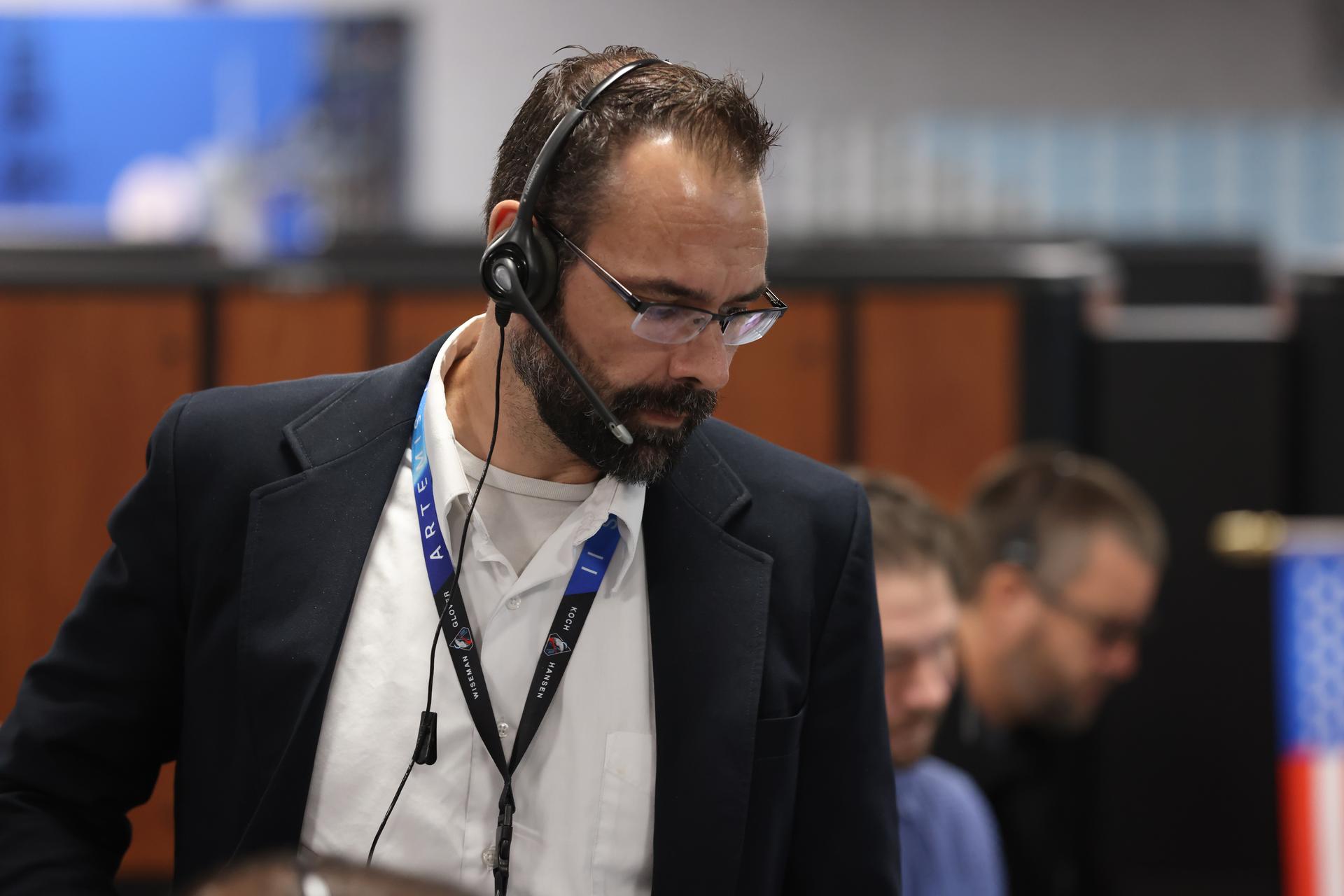
Anton Kiriwas, senior technical integration manager and senior launch project engineer with NASA’s Exploration Ground Systems Program participates in an Artemis II launch countdown simulation inside Firing Room 1 in the Launch Control Center at the agency’s Kennedy Space Center in Florida on Wednesday, Oct. 8, 2025. The simulations go through launch day scenarios to help launch team members test software and make adjustments if needed during countdown operations. For Artemis II, four astronauts will venture around the Moon, the first crewed mission on NASA’s path to establishing a long-term presence for science and exploration through Artemis.
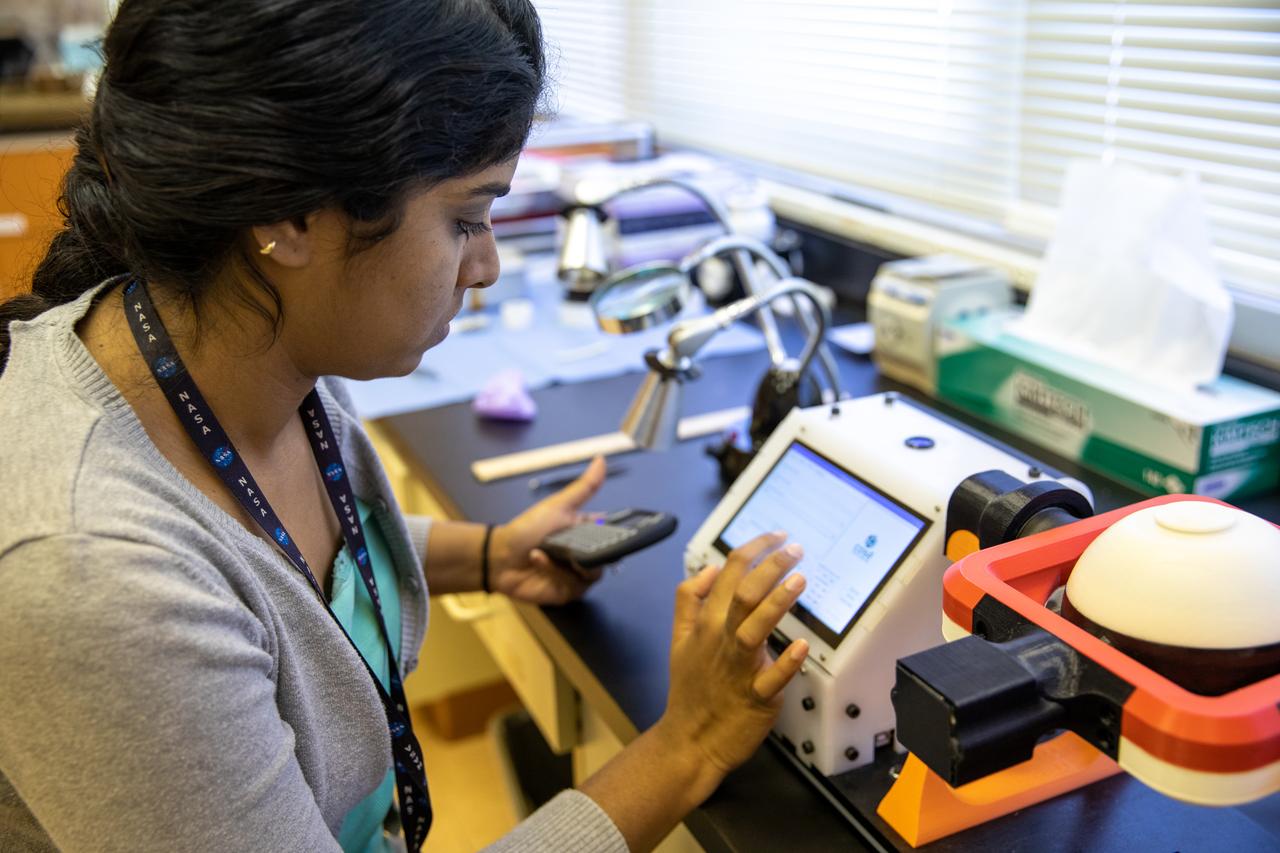
Srujana Neelam, a researcher working at NASA’s Kennedy Space Center in Florida, programs the SciSpinner Microgravity Simulator in the Microgravity Simulation Support Facility (MSSF) inside the Neil Armstrong Operations and Checkout building on Feb. 11, 2020. The facility was developed to provide ground simulation capability to the U.S. research community in order to supplement the limited opportunities to access the International Space Station and other platforms for microgravity research. The MSSF is designed to support biological research on microorganisms, cells, tissues, small plants and small animals. The simulator provides NASA with an alternative platform for microgravity research and creates the opportunity to conduct experiments on the space station in parallel with conditions of simulated microgravity on the ground.
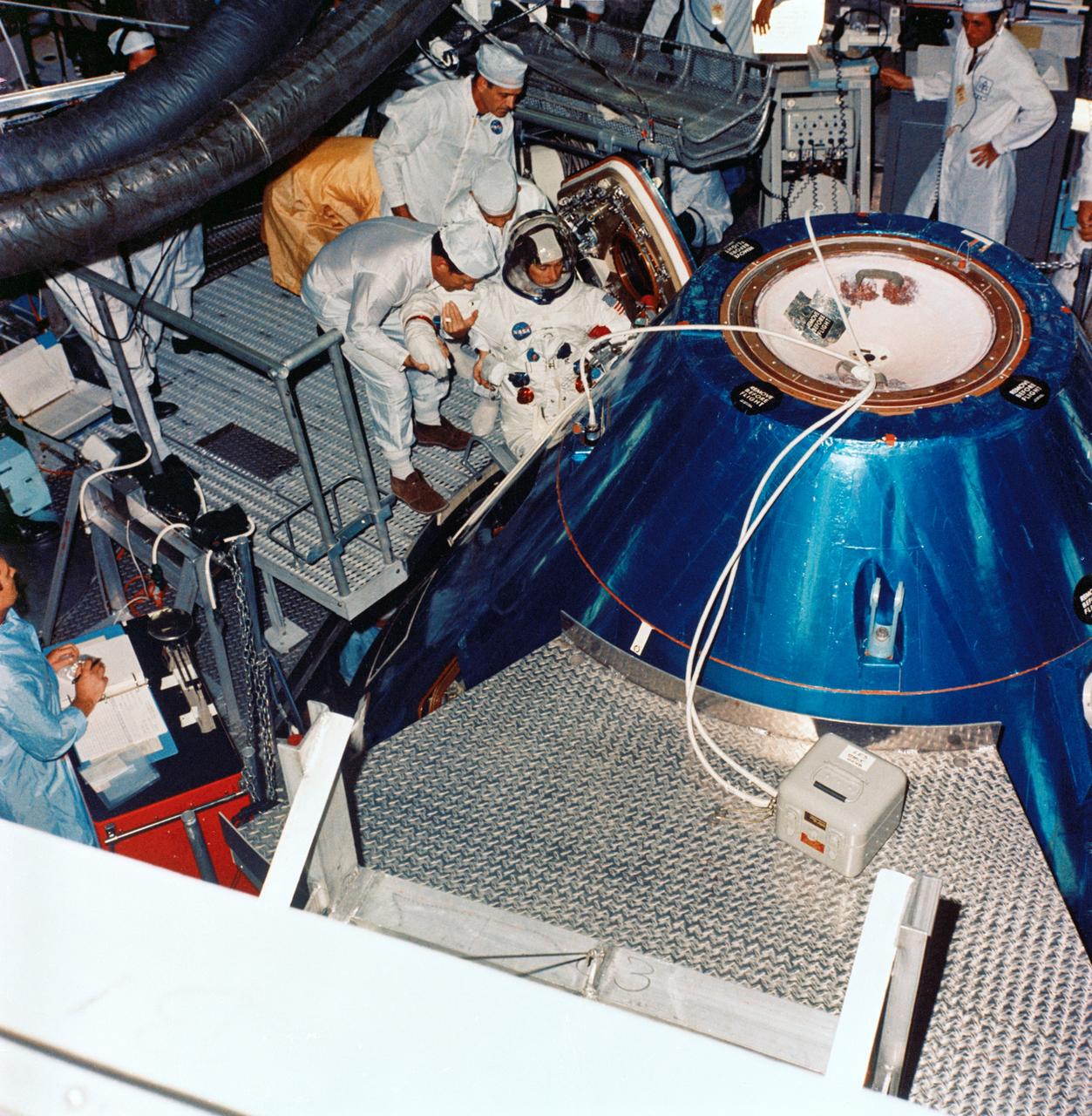
S68-40875 (5 July 1968) --- Astronaut John W. Young, Apollo 7 backup command module pilot, ingresses Apollo Spacecraft 101 Command Module during simulated altitude runs at the Kennedy Space Center's Pad 34.
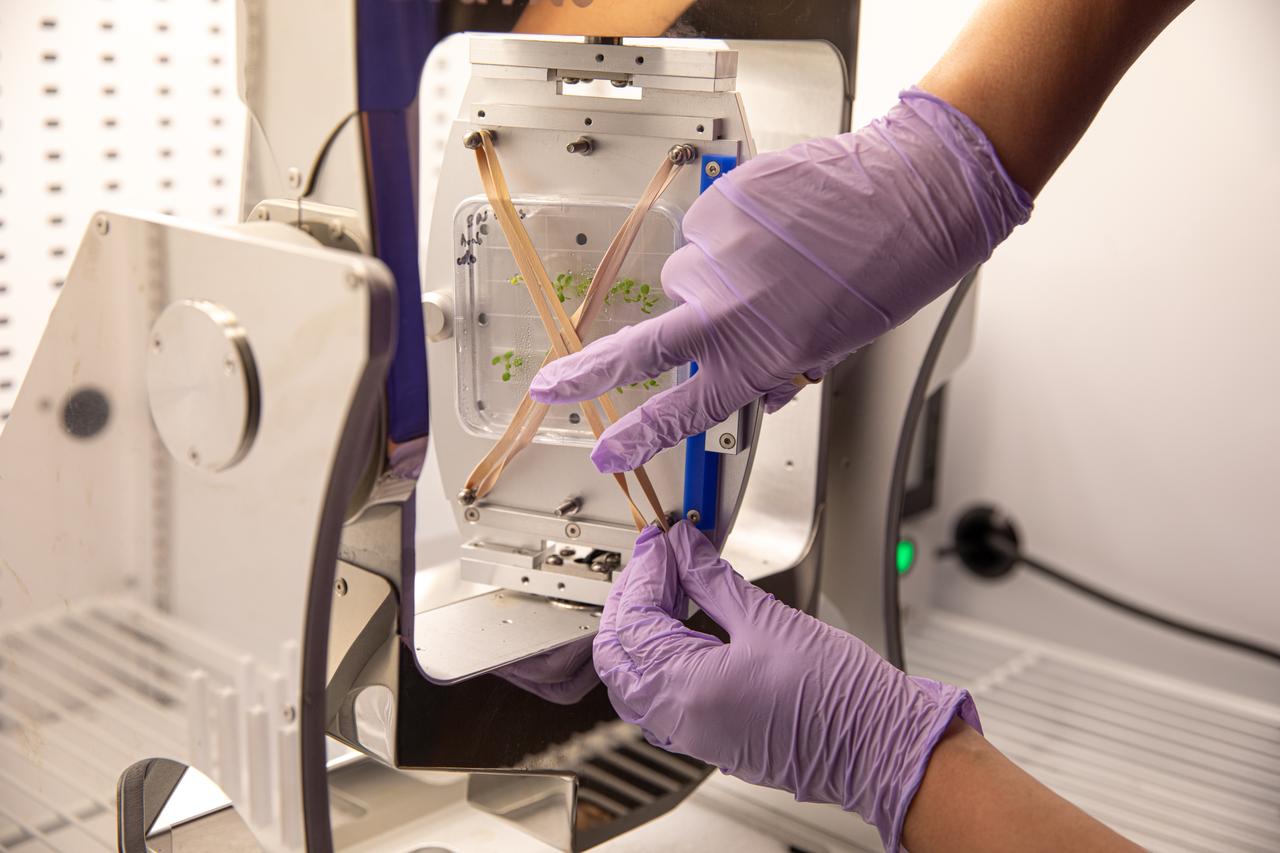
Ye Zhang, a project scientist at NASA’s Kennedy Space Center in Florida, makes adjustments to a Gravite 3d clinostat in the Microgravity Simulation Support Facility (MSSF) inside the Neil Armstrong Operations and Checkout building at NASA’s Kennedy Space Center in Florida on Feb. 11, 2020. The facility was developed to provide ground simulation capability to the U.S. research community in order to supplement the limited opportunities to access the International Space Station and other platforms for microgravity research. The MSSF is designed to support biological research on microorganisms, cells, tissues, small plants and small animals. The simulator provides NASA with an alternative platform for microgravity research and creates the opportunity to conduct experiments on the space station in parallel with conditions of simulated microgravity on the ground.
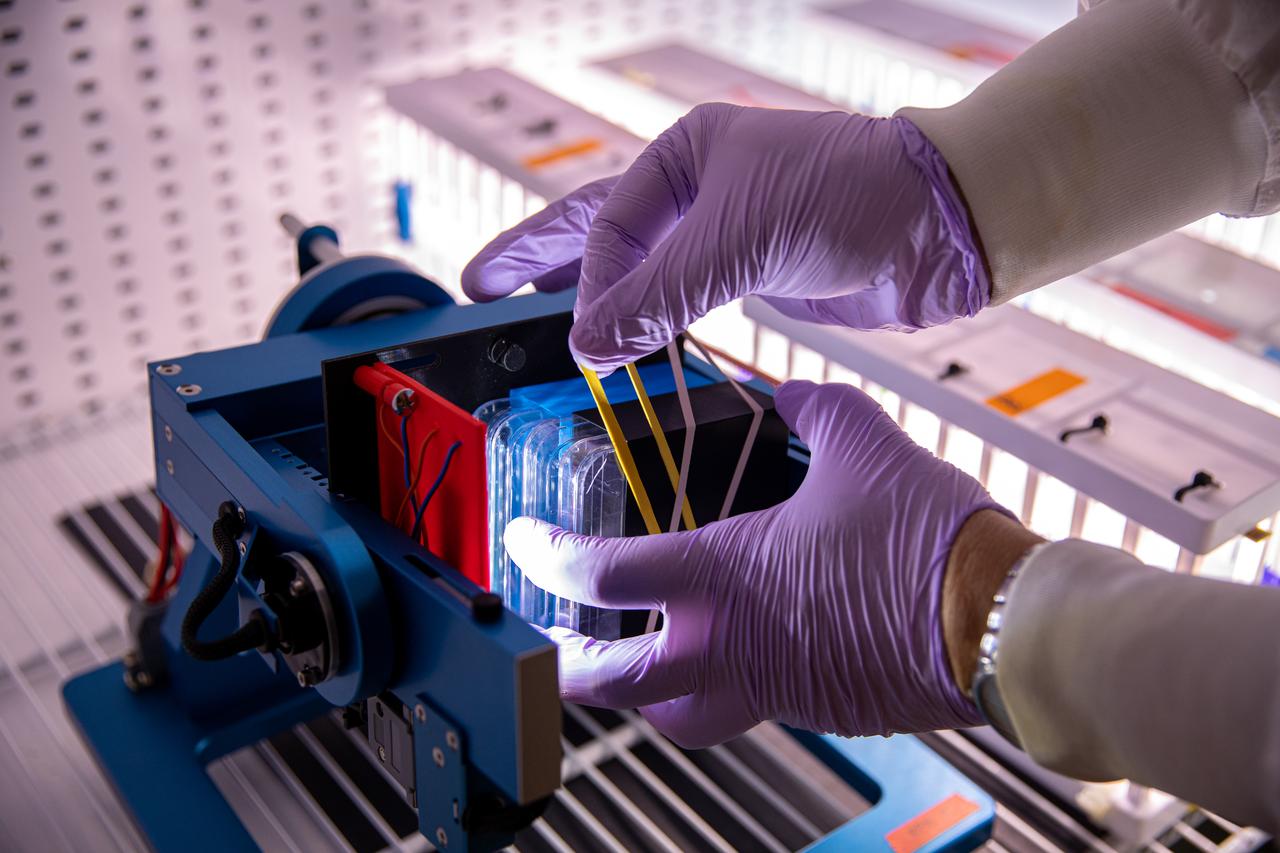
Jeffrey Richards, a payload research and science coordinator on the LASSO contract at NASA’s Kennedy Space Center in Florida, prepares an experiment for a test in an Airbus Random Positioning Machine in the Microgravity Simulation Support Facility (MSSF) inside the Neil Armstrong Operations and Checkout building at NASA’s Kennedy Space Center in Florida on Feb. 11, 2020. The facility was developed to provide ground simulation capability to the U.S. research community in order to supplement the limited opportunities to access the International Space Station and other platforms for microgravity research. The MSSF is designed to support biological research on microorganisms, cells, tissues, small plants and small animals. The simulator provides NASA with an alternative platform for microgravity research and creates the opportunity to conduct experiments on the space station in parallel with conditions of simulated microgravity on the ground.

Jeffrey Richards, a payload research and science coordinator on the LASSO contract at NASA’s Kennedy Space Center in Florida, prepares an experiment for a test in an Airbus Random Positioning Machine in the Microgravity Simulation Support Facility (MSSF) inside the Neil Armstrong Operations and Checkout building at NASA’s Kennedy Space Center in Florida on Feb. 11, 2020. The facility was developed to provide ground simulation capability to the U.S. research community in order to supplement the limited opportunities to access the International Space Station and other platforms for microgravity research. The MSSF is designed to support biological research on microorganisms, cells, tissues, small plants and small animals. The simulator provides NASA with an alternative platform for microgravity research and creates the opportunity to conduct experiments on the space station in parallel with conditions of simulated microgravity on the ground.
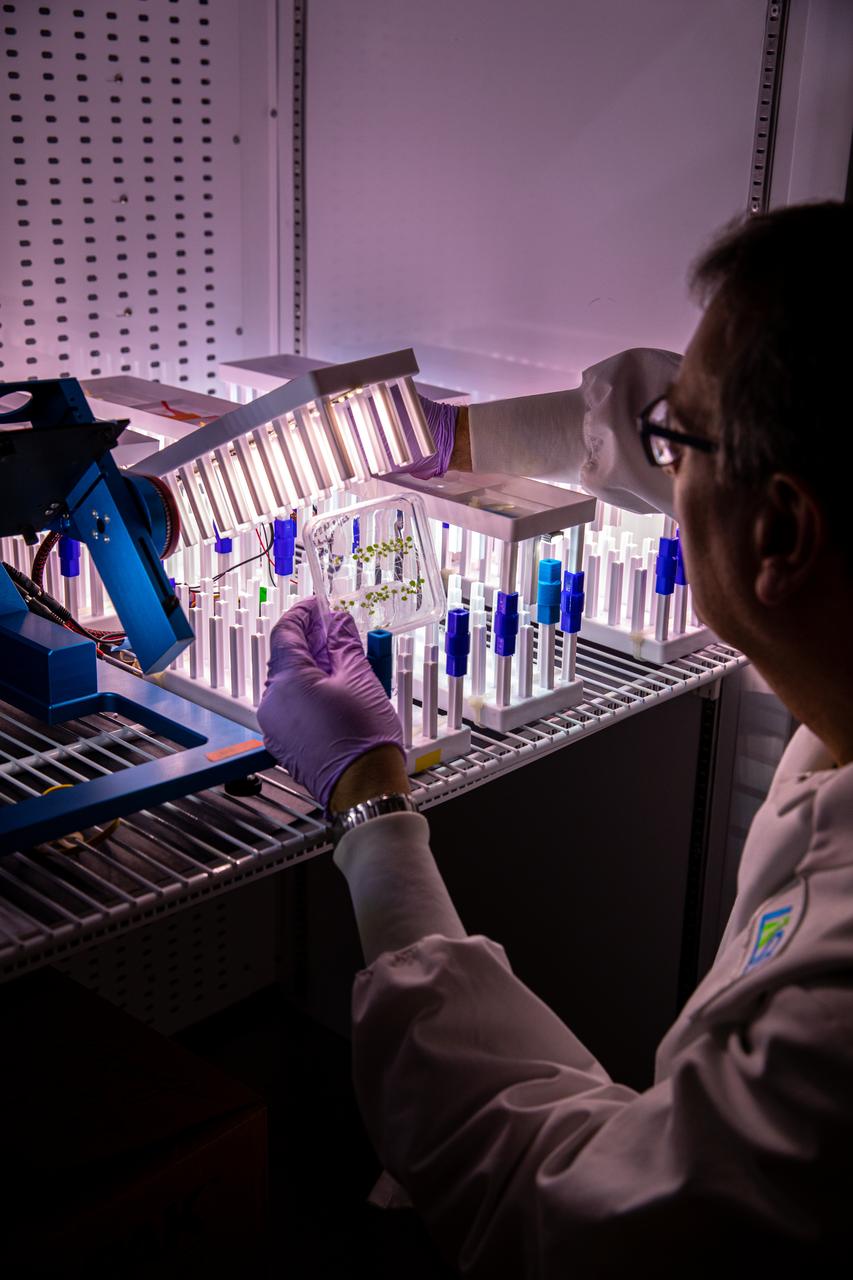
Jeffrey Richards, a payload research and science coordinator on the LASSO contract at NASA’s Kennedy Space Center in Florida, prepares an experiment for a test in an Airbus Random Positioning Machine in the Microgravity Simulation Support Facility (MSSF) inside the Neil Armstrong Operations and Checkout building at NASA’s Kennedy Space Center in Florida on Feb. 11, 2020. The facility was developed to provide ground simulation capability to the U.S. research community in order to supplement the limited opportunities to access the International Space Station and other platforms for microgravity research. The MSSF is designed to support biological research on microorganisms, cells, tissues, small plants and small animals. The simulator provides NASA with an alternative platform for microgravity research and creates the opportunity to conduct experiments on the space station in parallel with conditions of simulated microgravity on the ground.
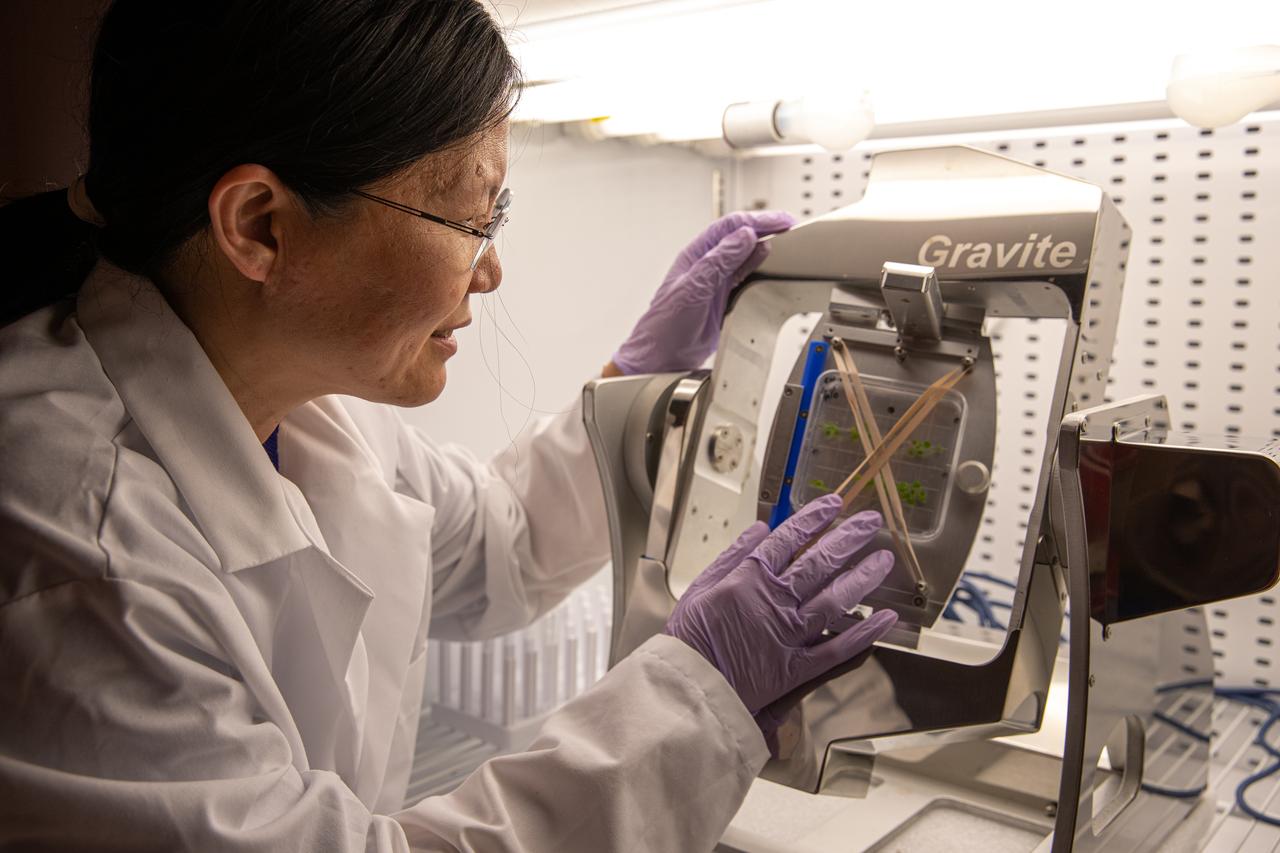
Ye Zhang, a project scientist at NASA’s Kennedy Space Center in Florida, makes adjustments to a Gravite 3d clinostat in the Microgravity Simulation Support Facility (MSSF) inside the Neil Armstrong Operations and Checkout on Feb. 11, 2020. The facility was developed to provide ground simulation capability to the U.S. research community in order to supplement the limited opportunities to access the International Space Station and other platforms for microgravity research. The MSSF is designed to support biological research on microorganisms, cells, tissues, small plants and small animals. The simulator provides NASA with an alternative platform for microgravity research and creates the opportunity to conduct experiments on the space station in parallel with conditions of simulated microgravity on the ground.
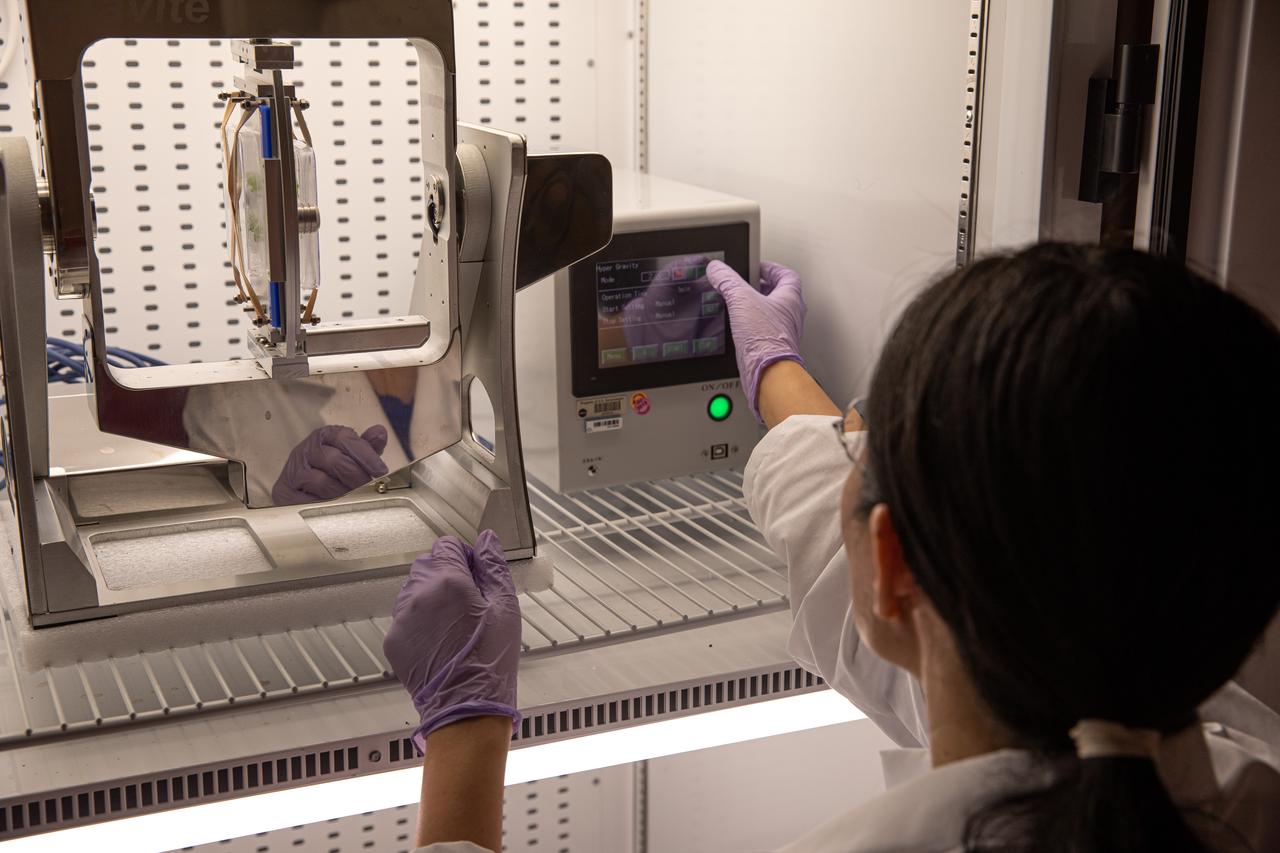
Ye Zhang, a project scientist at NASA’s Kennedy Space Center in Florida runs a test on a Gravite 3d clinostat device in the Microgravity Simulation Support Facility (MSSF) inside the Neil Armstrong Operations and Checkout building on Feb. 11, 2020. The facility was developed to provide ground simulation capability to the U.S. research community in order to supplement the limited opportunities to access the International Space Station and other platforms for microgravity research. The MSSF is designed to support biological research on microorganisms, cells, tissues, small plants and small animals. The simulator provides NASA with an alternative platform for microgravity research and creates the opportunity to conduct experiments on the space station in parallel with conditions of simulated microgravity on the ground.
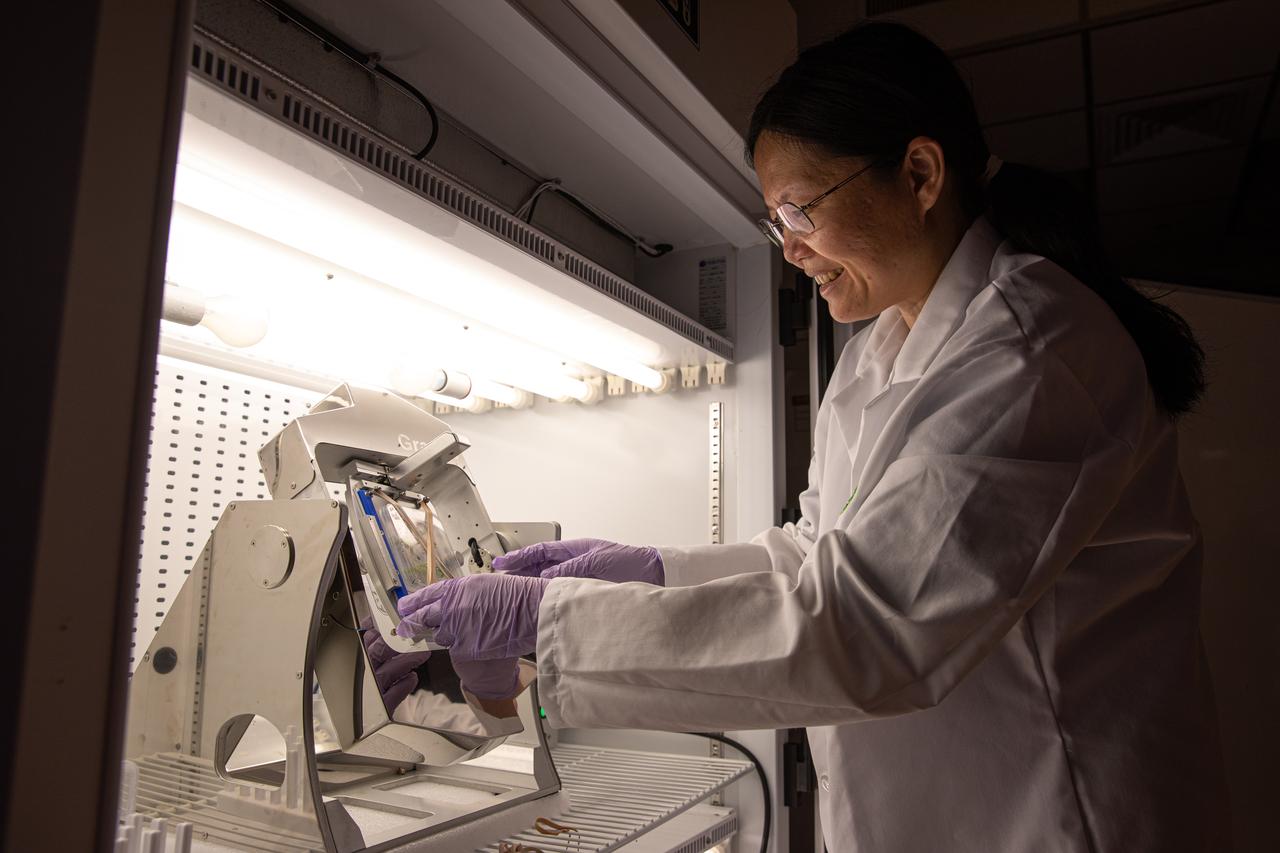
Ye Zhang, a project scientist at NASA’s Kennedy Space Center in Florida, makes adjustments to a Gravite 3d clinostat in the Microgravity Simulation Support Facility (MSSF) inside the Neil Armstrong Operations and Checkout building on Feb. 11, 2020. The facility was developed to provide ground simulation capability to the U.S. research community in order to supplement the limited opportunities to access the International Space Station and other platforms for microgravity research. The MSSF is designed to support biological research on microorganisms, cells, tissues, small plants and small animals. The simulator provides NASA with an alternative platform for microgravity research and creates the opportunity to conduct experiments on the space station in parallel with conditions of simulated microgravity on the ground.
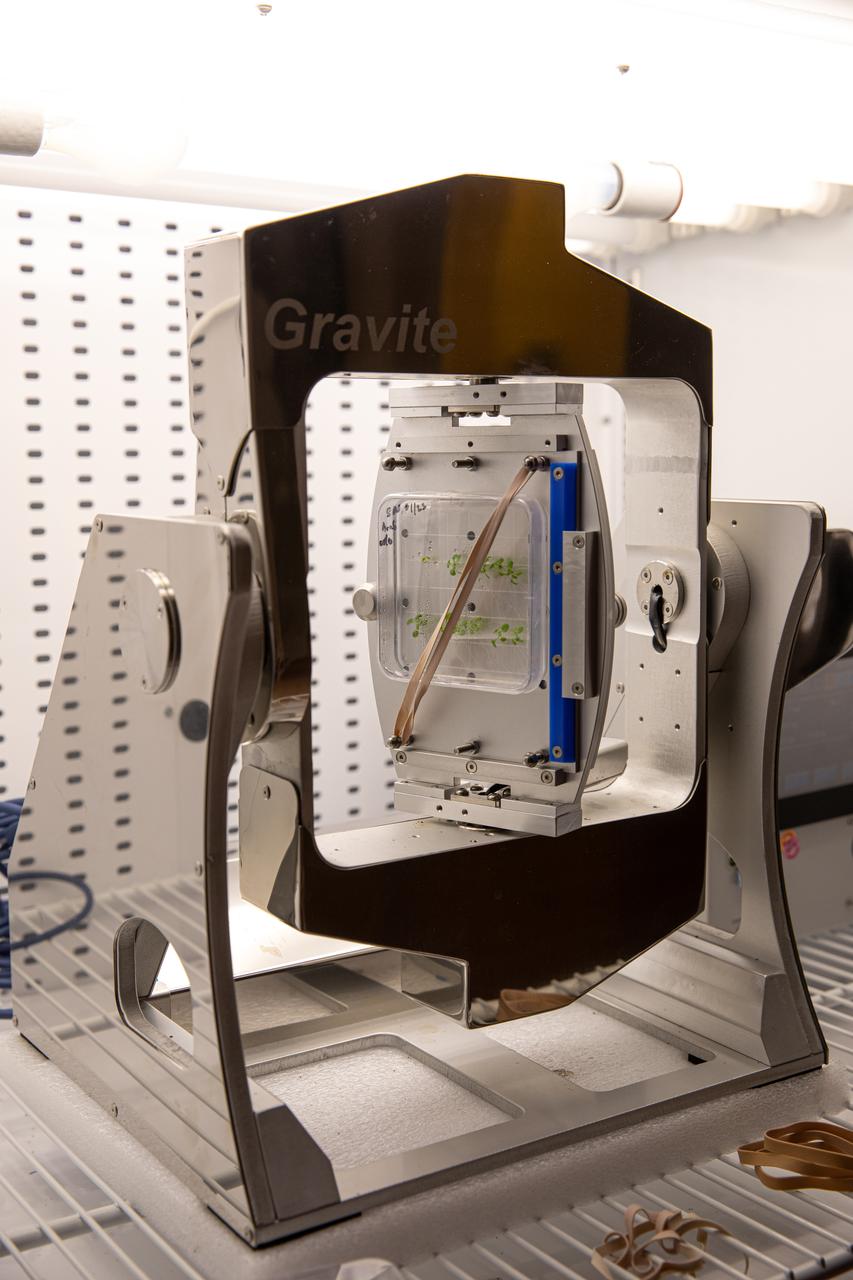
A Gravite 3d clinostat is in the Microgravity Simulation Support Facility (MSSF) inside the Neil Armstrong Operations and Checkout building at NASA’s Kennedy Space Center in Florida on Feb. 11, 2020. The facility was developed to provide ground simulation capability to the U.S. research community in order to supplement the limited opportunities to access the International Space Station and other platforms for microgravity research. The MSSF is designed to support biological research on microorganisms, cells, tissues, small plants and small animals. The simulator provides NASA with an alternative platform for microgravity research and creates the opportunity to conduct experiments on the space station in parallel with conditions of simulated microgravity on the ground.
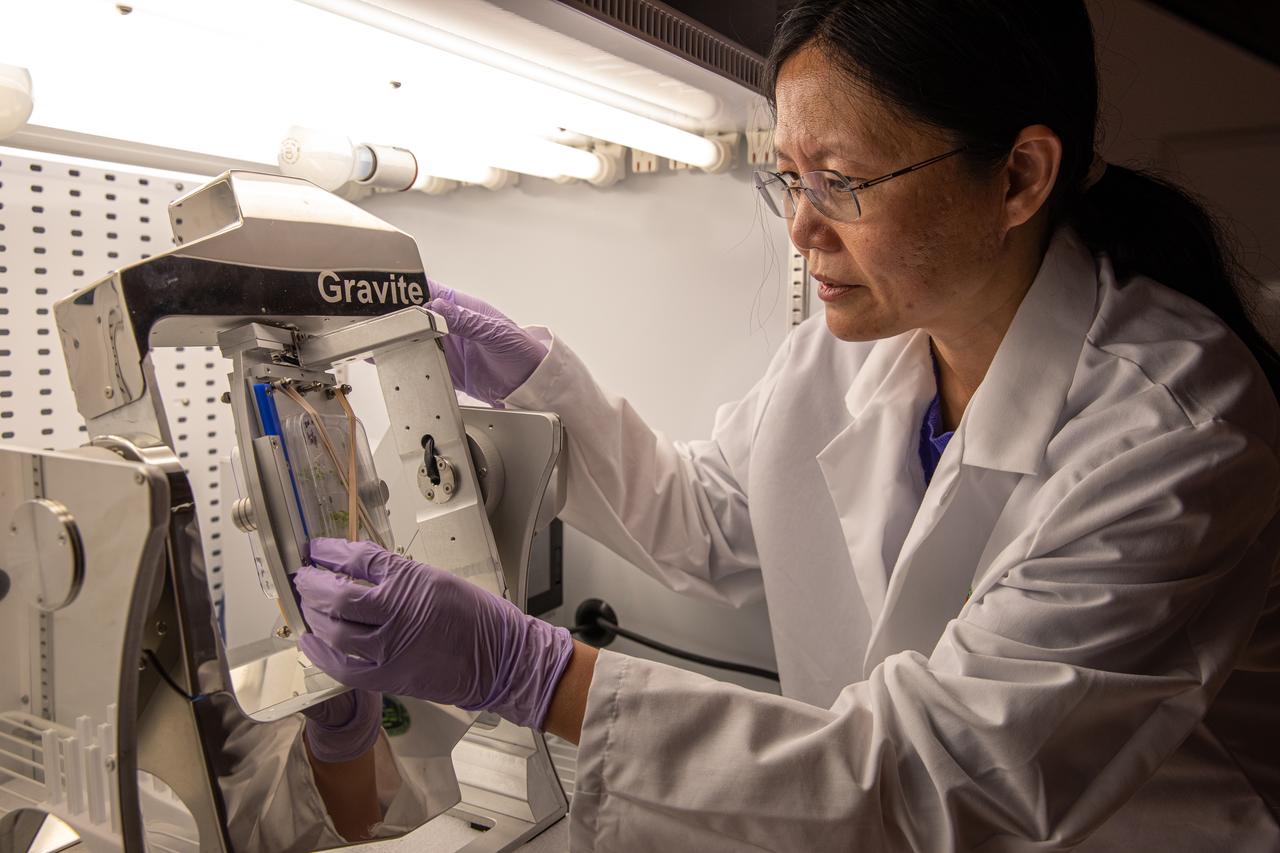
Ye Zhang, a project scientist at NASA’s Kennedy Space Center in Florida, makes adjustments to a Gravite 3d clinostat in the Microgravity Simulation Support Facility (MSSF) inside the Neil Armstrong Operations and Checkout building at on Feb. 11, 2020. The facility was developed to provide ground simulation capability to the U.S. research community in order to supplement the limited opportunities to access the International Space Station and other platforms for microgravity research. The MSSF is designed to support biological research on microorganisms, cells, tissues, small plants and small animals. The simulator provides NASA with an alternative platform for microgravity research and creates the opportunity to conduct experiments on the space station in parallel with conditions of simulated microgravity on the ground.

A Gravite 3d clinostat is in the Microgravity Simulation Support Facility (MSSF) inside the Neil Armstrong Operations and Checkout building at NASA’s Kennedy Space Center in Florida on Feb. 11, 2020. The facility was developed to provide ground simulation capability to the U.S. research community in order to supplement the limited opportunities to access the International Space Station and other platforms for microgravity research. The MSSF is designed to support biological research on microorganisms, cells, tissues, small plants and small animals. The simulator provides NASA with an alternative platform for microgravity research and creates the opportunity to conduct experiments on the space station in parallel with conditions of simulated microgravity on the ground.
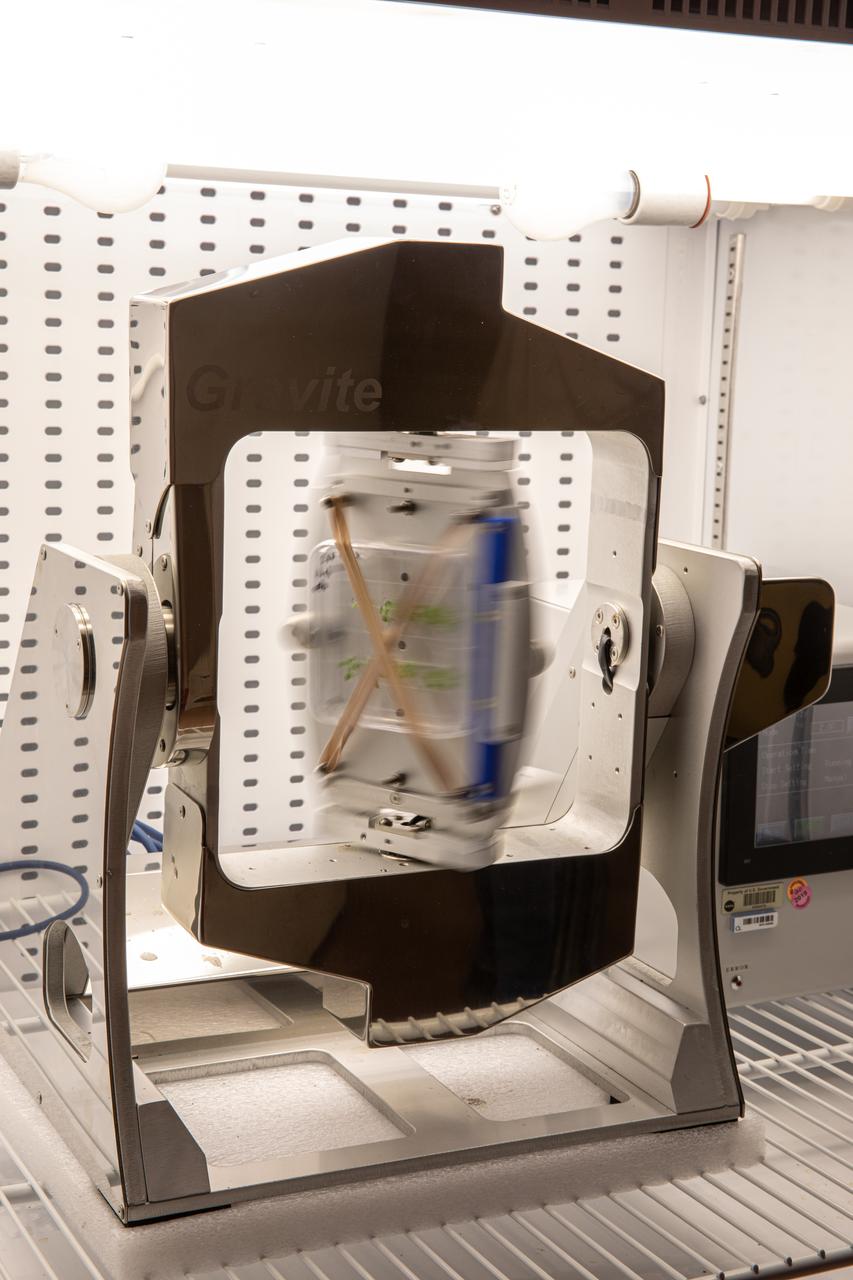
A Gravite 3d clinostat undergoes a test in the Microgravity Simulation Support Facility (MSSF) inside the Neil Armstrong Operations and Checkout building at NASA’s Kennedy Space Center in Florida on Feb. 11, 2020. The facility was developed to provide ground simulation capability to the U.S. research community in order to supplement the limited opportunities to access the International Space Station and other platforms for microgravity research. The MSSF is designed to support biological research on microorganisms, cells, tissues, small plants and small animals. The simulator provides NASA with an alternative platform for microgravity research and creates the opportunity to conduct experiments on the space station in parallel with conditions of simulated microgravity on the ground.
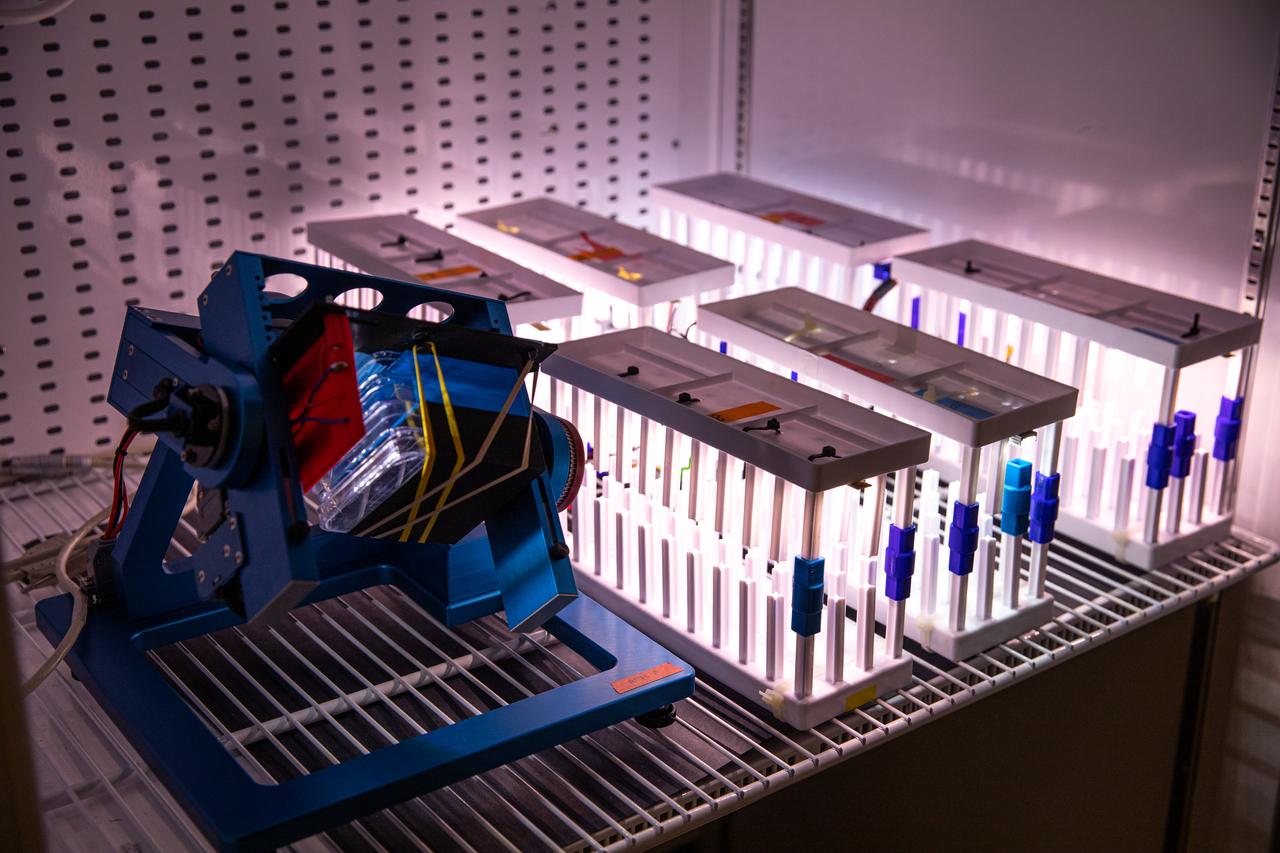
Some experiments are being prepared for a test in the Airbus Random Positioning Machine in the Microgravity Simulation Support Facility (MSSF) inside the Neil Armstrong Operations and Checkout building at NASA’s Kennedy Space Center in Florida on Feb. 11, 2020. The facility device was developed to provide ground simulation capability to the U.S. research community in order to supplement the limited opportunities to access the International Space Station and other platforms for microgravity research. The MSSF is designed to support biological research on microorganisms, cells, tissues, small plants and small animals. The simulator provides NASA with an alternative platform for microgravity research and creates the opportunity to conduct experiments on the space station in parallel with conditions of simulated microgravity on the ground.
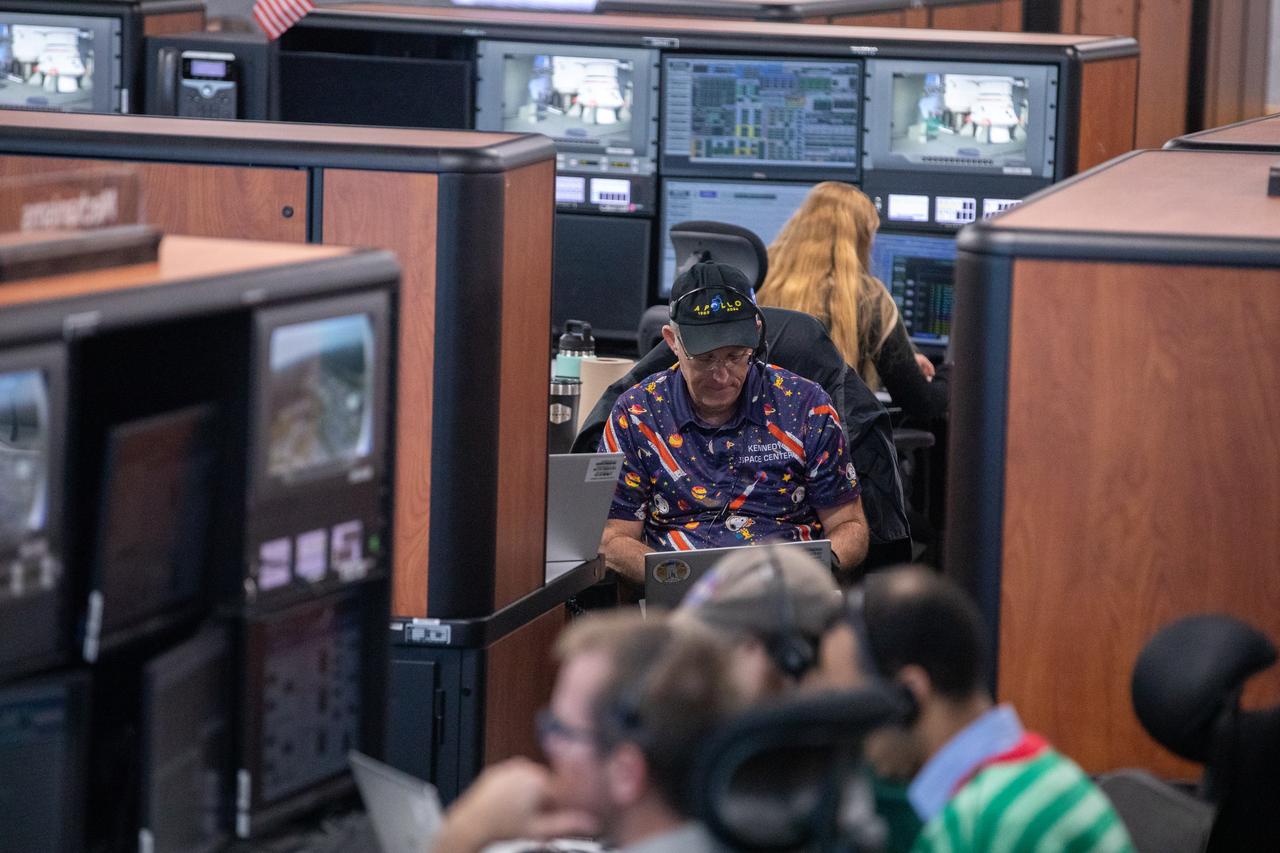
Members of the Artemis launch team participate in a cryogenic simulation for Artemis II in Firing Room 1 inside the Launch Control Center at NASA’s Kennedy Space Center in Florida on Wednesday, Dec. 11, 2024. Cryogenic simulations allow team members the opportunity to practice loading propellant – liquid hydrogen and liquid oxygen – onto the SLS (Space Launch System) rocket and make any necessary adjustments during countdown operations. Four astronauts will venture around the Moon on Artemis II, the first crewed mission on NASA’s path to establishing a long-term presence for science and exploration through Artemis.
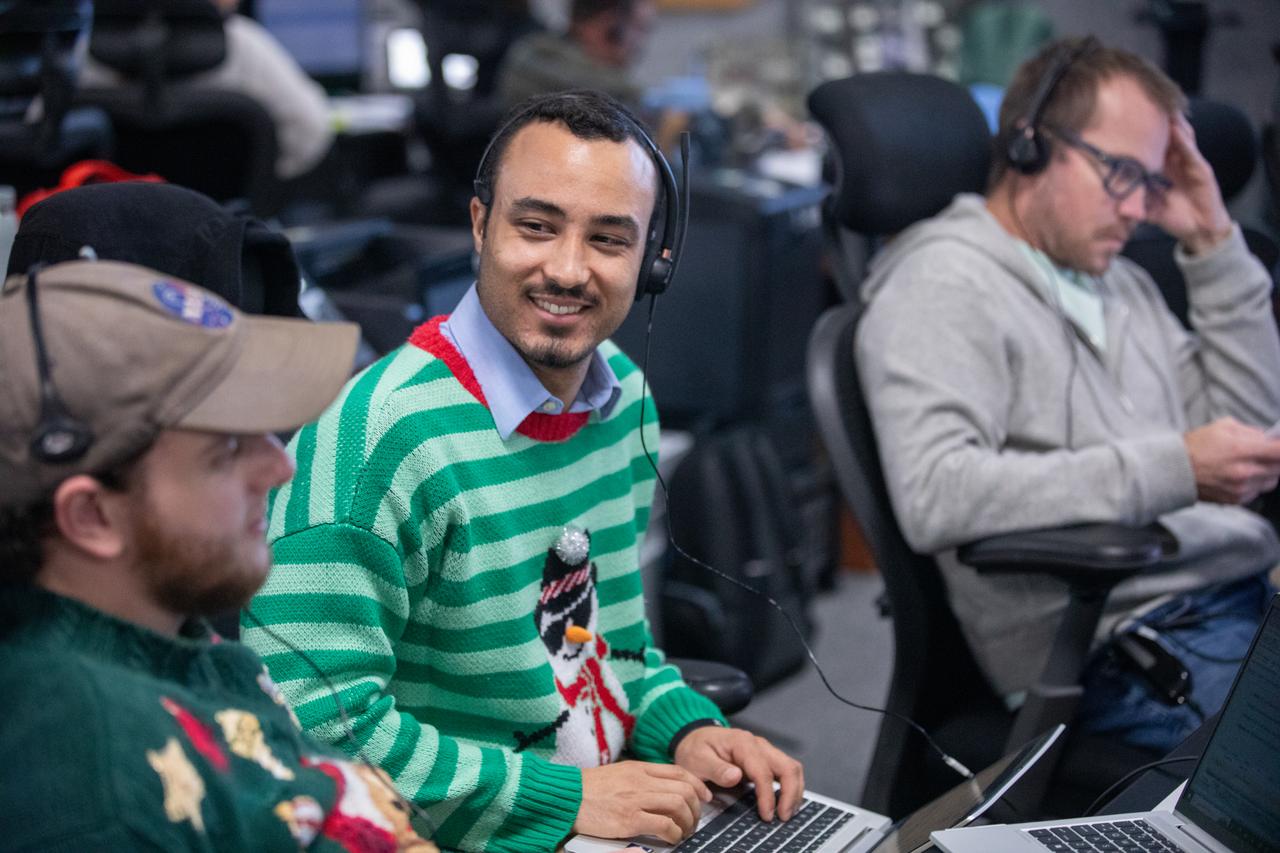
Members of the Artemis launch team participate in a cryogenic simulation for Artemis II in Firing Room 1 inside the Launch Control Center at NASA’s Kennedy Space Center in Florida on Wednesday, Dec. 11, 2024. Cryogenic simulations allow team members the opportunity to practice loading propellant – liquid hydrogen and liquid oxygen – onto the SLS (Space Launch System) rocket and make any necessary adjustments during countdown operations. Four astronauts will venture around the Moon on Artemis II, the first crewed mission on NASA’s path to establishing a long-term presence for science and exploration through Artemis.
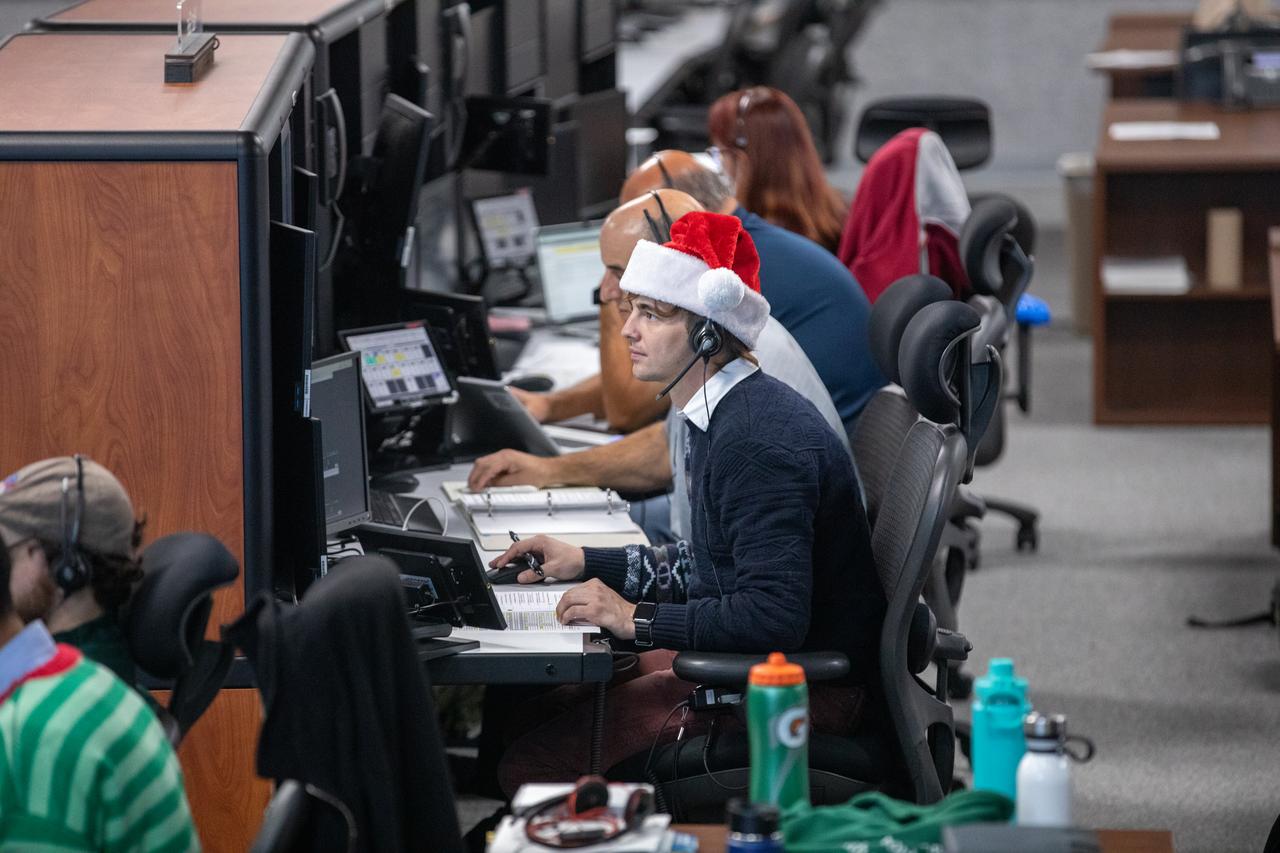
Members of the Artemis launch team participate in a cryogenic simulation for Artemis II in Firing Room 1 inside the Launch Control Center at NASA’s Kennedy Space Center in Florida on Wednesday, Dec. 11, 2024. Cryogenic simulations allow team members the opportunity to practice loading propellant – liquid hydrogen and liquid oxygen – onto the SLS (Space Launch System) rocket and make any necessary adjustments during countdown operations. Four astronauts will venture around the Moon on Artemis II, the first crewed mission on NASA’s path to establishing a long-term presence for science and exploration through Artemis.
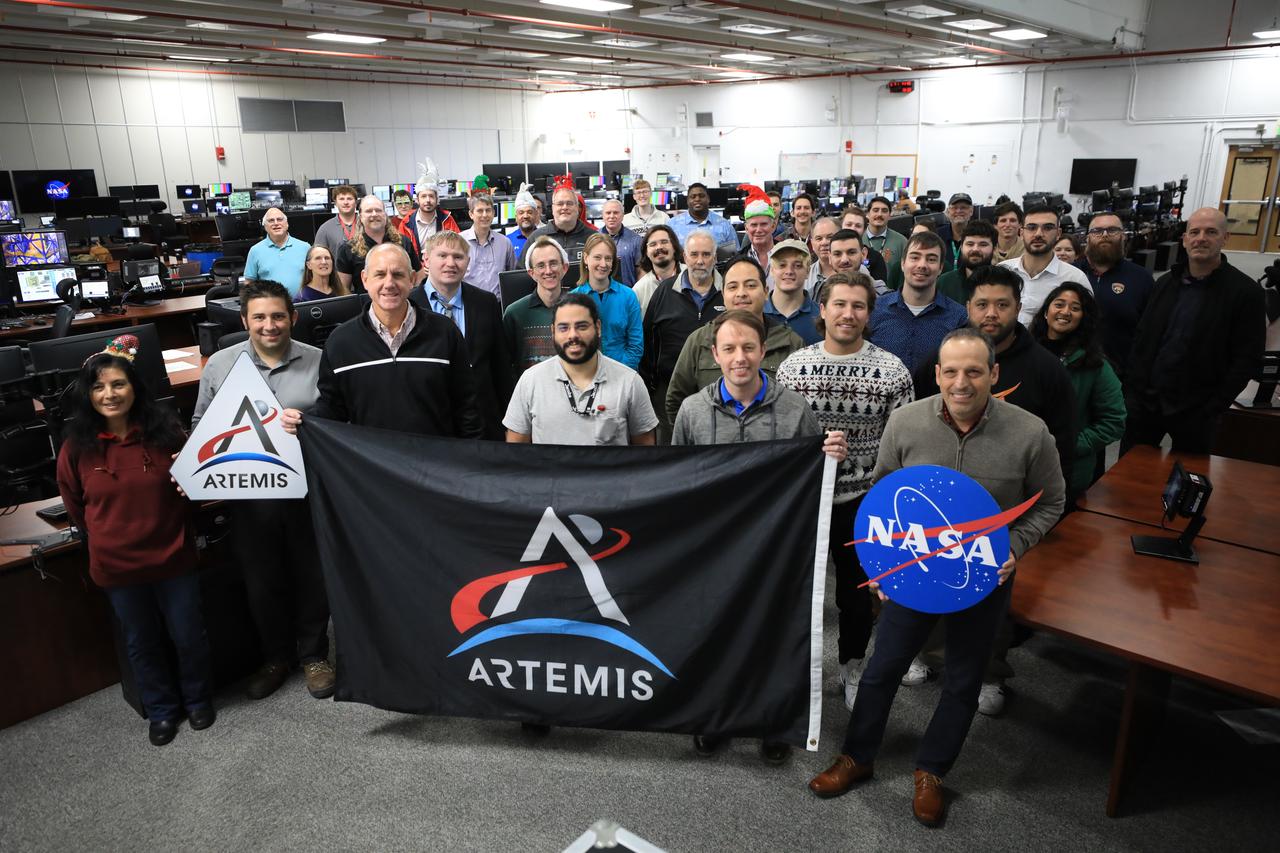
Members of the Artemis launch team pose for a holiday group photo in Firing Room 2 inside the Launch Control Center at NASA’s Kennedy Space Center in Florida on Thursday, Dec. 12, 2024. Teams participated in a cryogenic and terminal count simulation for Artemis II. The simulations go through launch day scenarios to help launch team members test software and make any necessary adjustments during countdown operations. Four astronauts will venture around the Moon on Artemis II, the first crewed mission on NASA’s path to establishing a long-term presence for science and exploration through Artemis.
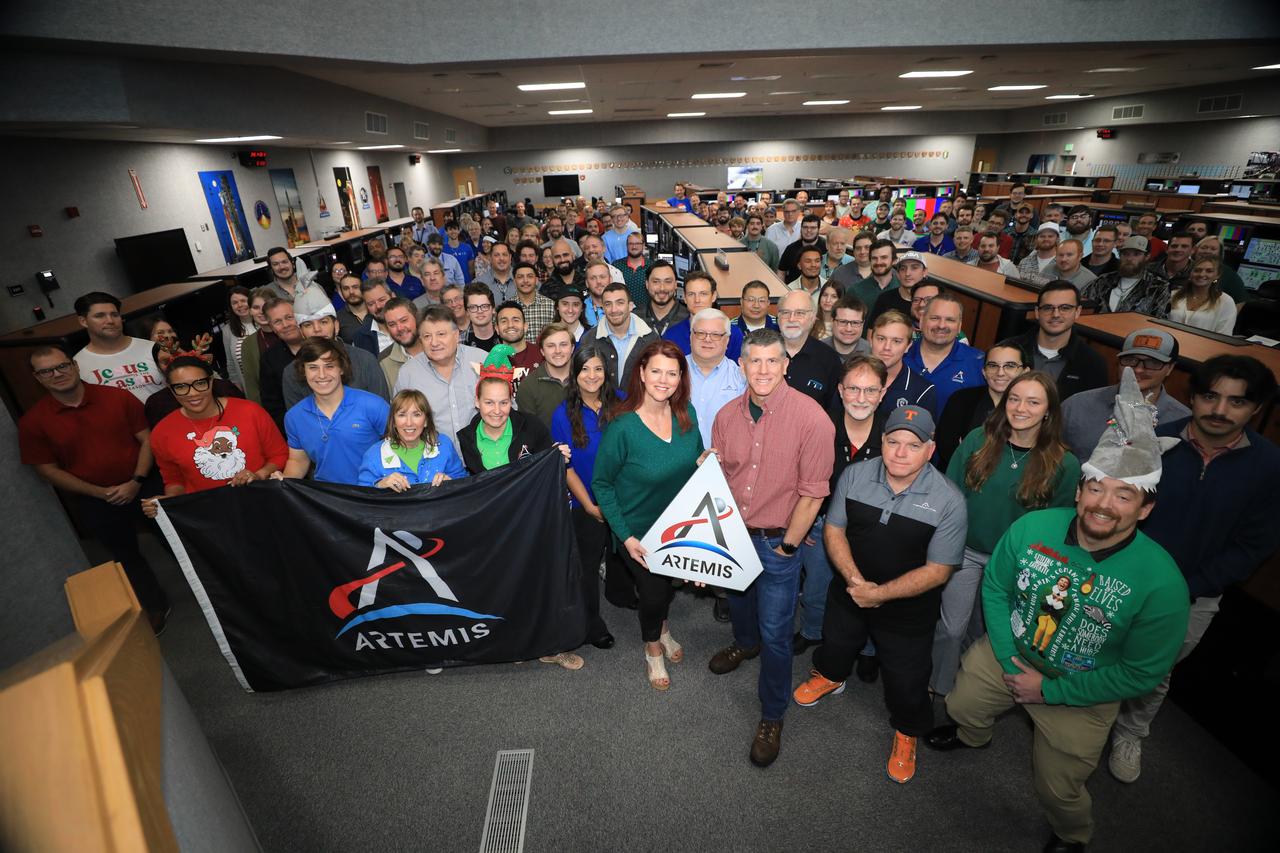
Members of the Artemis launch team pose for a holiday group photo in Firing Room 1 inside the Launch Control Center at NASA’s Kennedy Space Center in Florida on Wednesday, Dec. 11, 2024. Teams participated in a cryogenic and terminal count simulation for Artemis II. The simulations go through launch day scenarios to help launch team members test software and make any necessary adjustments during countdown operations. Four astronauts will venture around the Moon on Artemis II, the first crewed mission on NASA’s path to establishing a long-term presence for science and exploration through Artemis.
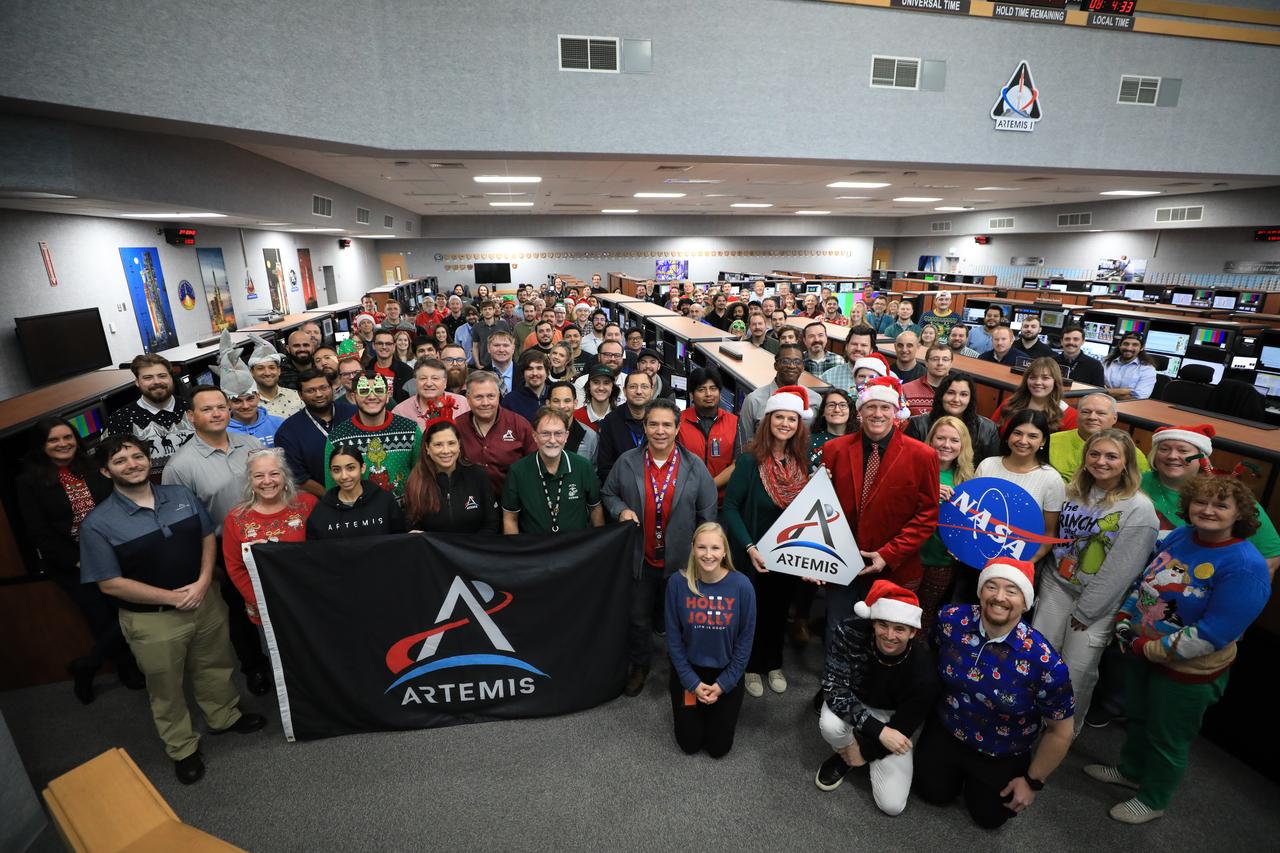
Members of the Artemis launch team pose for a holiday group photo in Firing Room 1 inside the Launch Control Center at NASA’s Kennedy Space Center in Florida on Thursday, Dec. 12, 2024. Teams participated in a cryogenic and terminal count simulation for Artemis II. The simulations go through launch day scenarios to help launch team members test software and make any necessary adjustments during countdown operations. Four astronauts will venture around the Moon on Artemis II, the first crewed mission on NASA’s path to establishing a long-term presence for science and exploration through Artemis.
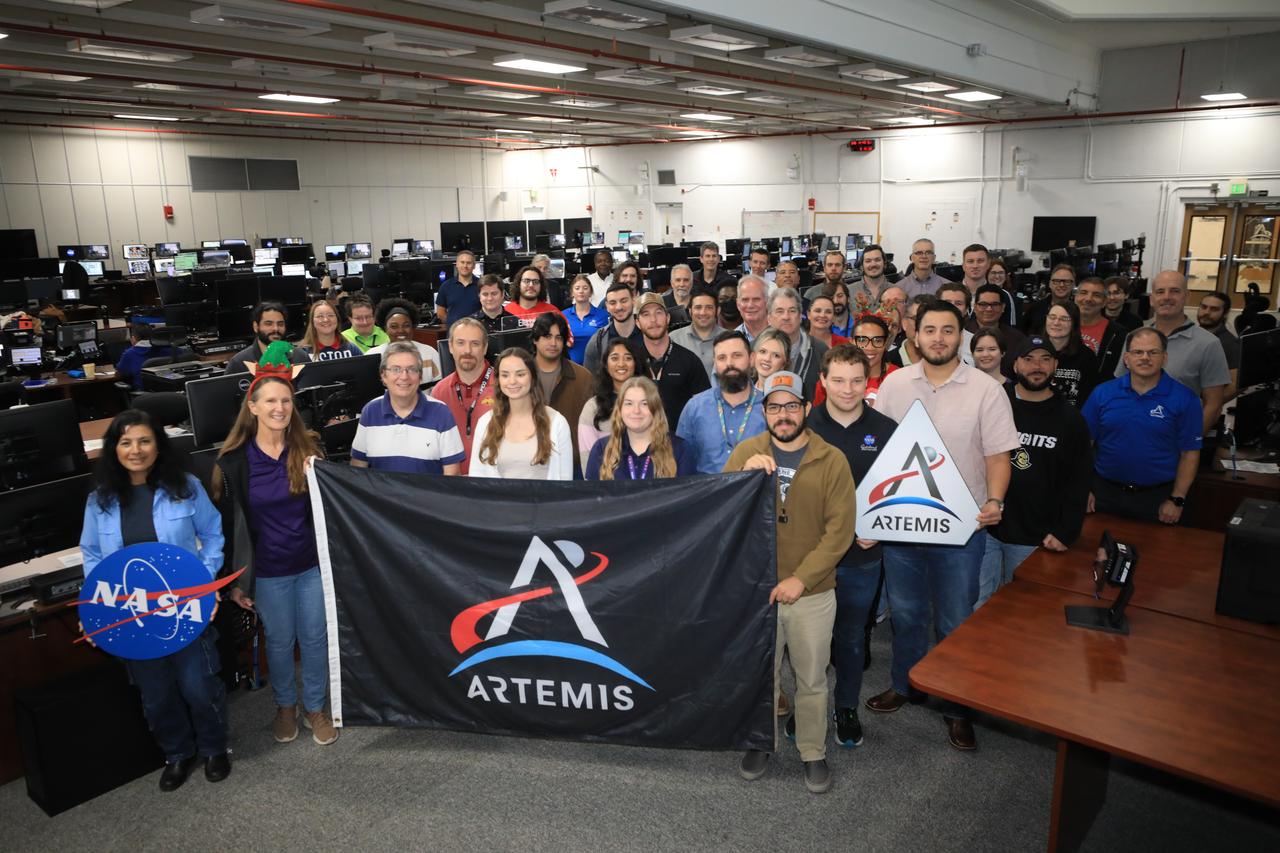
Members of the Artemis launch team pose for a holiday group photo in Firing Room 2 inside the Launch Control Center at NASA’s Kennedy Space Center in Florida on Wednesday, Dec. 11, 2024. Teams participated in a cryogenic and terminal count simulation for Artemis II. The simulations go through launch day scenarios to help launch team members test software and make any necessary adjustments during countdown operations. Four astronauts will venture around the Moon on Artemis II, the first crewed mission on NASA’s path to establishing a long-term presence for science and exploration through Artemis.
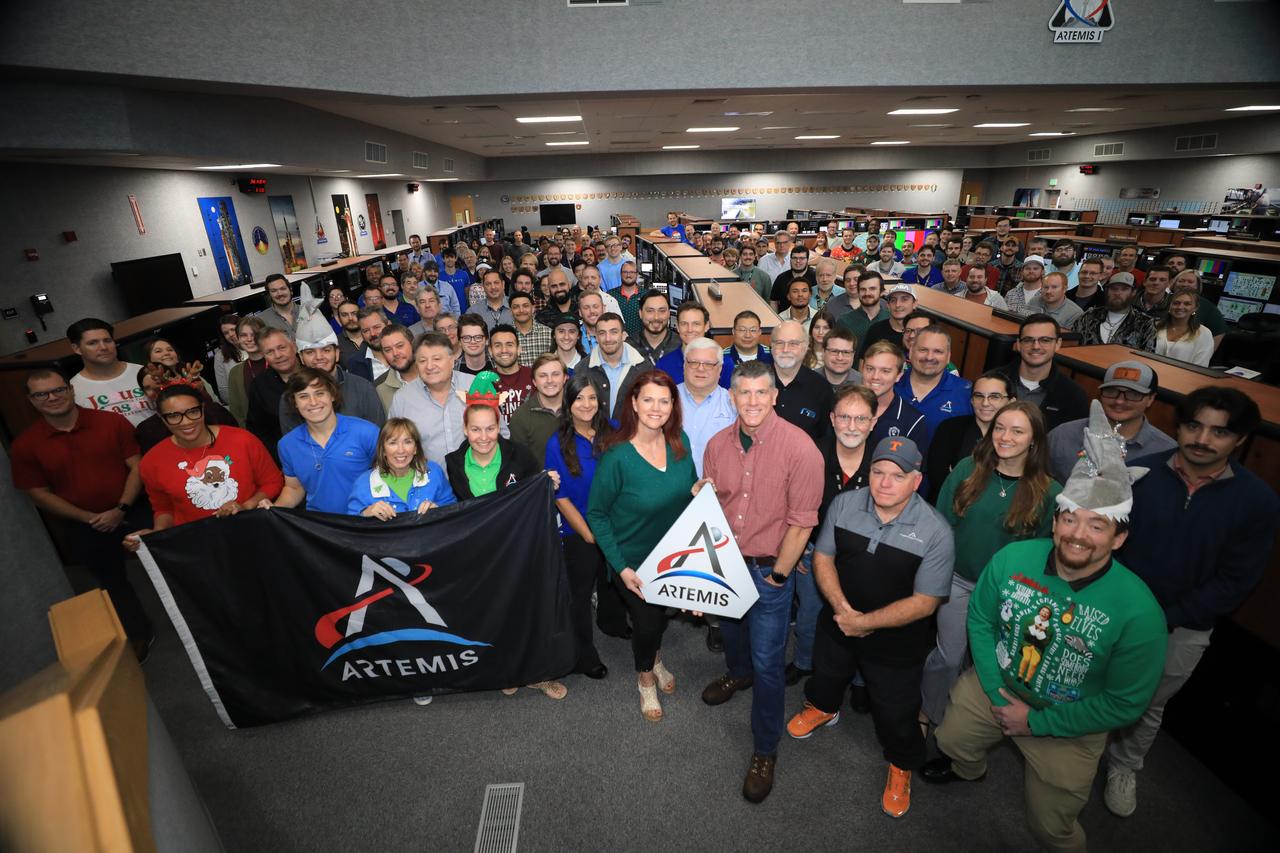
Members of the Artemis launch team pose for a holiday group photo in Firing Room 1 inside the Launch Control Center at NASA’s Kennedy Space Center in Florida on Wednesday, Dec. 11, 2024. Teams participated in a cryogenic and terminal count simulation for Artemis II. The simulations go through launch day scenarios to help launch team members test software and make any necessary adjustments during countdown operations. Four astronauts will venture around the Moon on Artemis II, the first crewed mission on NASA’s path to establishing a long-term presence for science and exploration through Artemis.
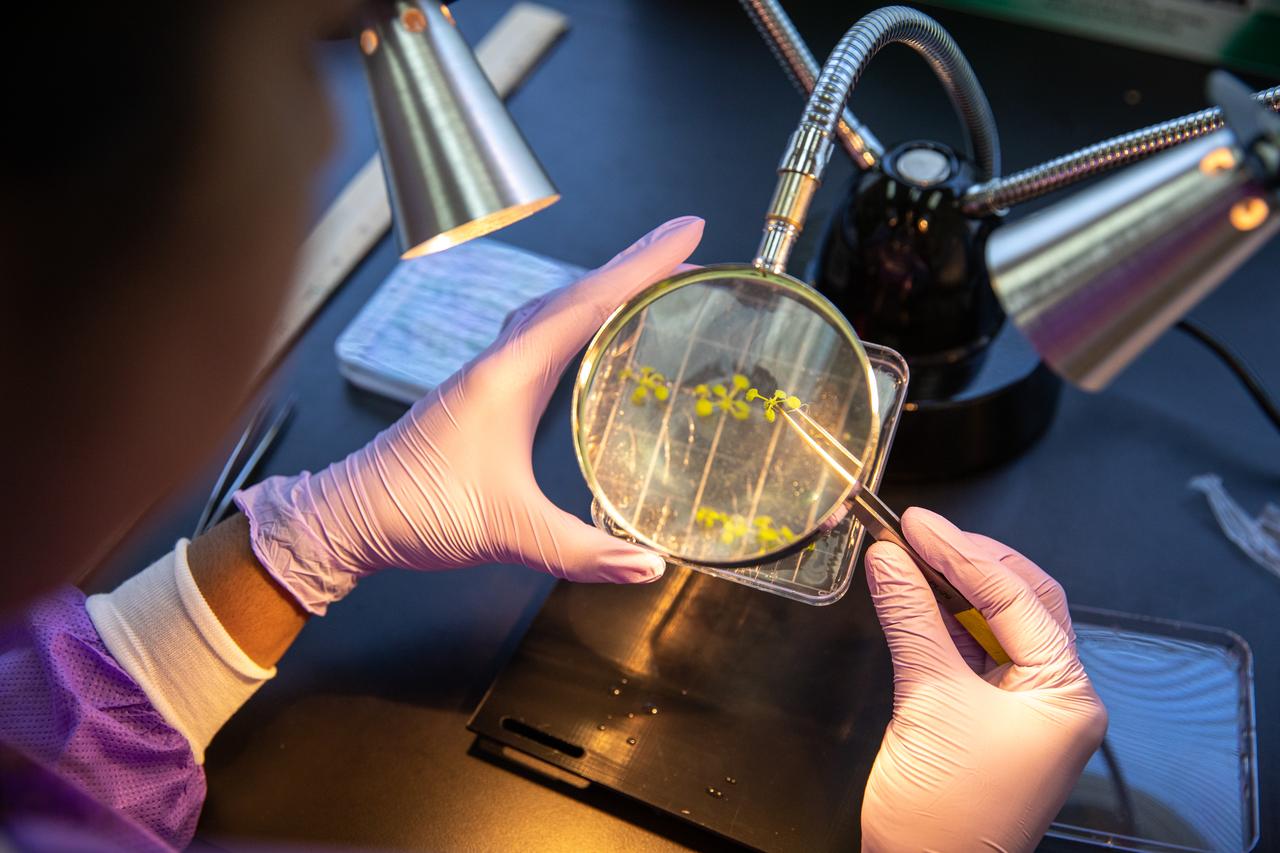
Srujana Neelam, a researcher working at NASA’s Kennedy Space Center in Florida, dissects Arabidopsis thaliana plants from petri plates used in microgravity simulation devices in the Microgravity Simulation Support Facility (MSSF) inside the Neil Armstrong Operations and Checkout building on Feb. 11, 2020. The facility was developed to provide ground simulation capability to the U.S. research community in order to supplement the limited opportunities to access the International Space Station and other platforms for microgravity research. The MSSF is designed to support biological research on microorganisms, cells, tissues, small plants and small animals. The simulator provides NASA with an alternative platform for microgravity research and creates the opportunity to conduct experiments on the space station in parallel with conditions of simulated microgravity on the ground.
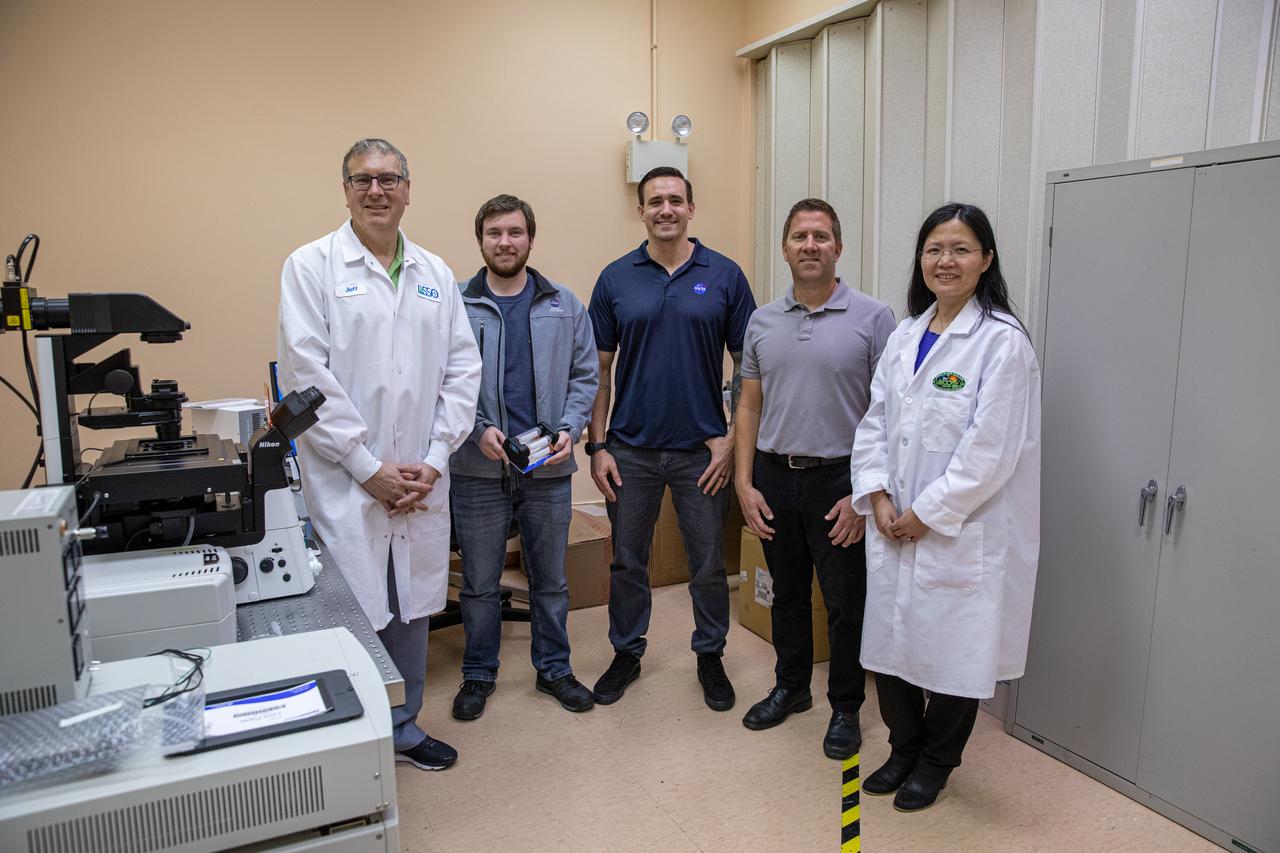
Researchers are in the Microgravity Simulation Support Facility (MSSF) inside the Neil Armstrong Operations and Checkout building at NASA’s Kennedy Space Center in Florida on Feb. 11, 2020. From left are Jonathan Gleeson, aerospace engineer on the LASSO contract; Jason Fischer, a research and development scientist on the LASSO contract; Ralph Nacca, aerospace flight systems; Jeffrey Richards, a payload research and science coordinator on the LASSO contract; and Dr. Ye Zhang, a project scientist. The microgravity simulation device was developed to provide ground simulation capability to the U.S. research community in order to supplement the limited opportunities to access the International Space Station and other platforms for microgravity research. The MSSF is designed to support biological research on microorganisms, cells, tissues, small plants and small animals. The simulator provides NASA with an alternative platform for microgravity research and creates the opportunity to conduct experiments on the space station in parallel with conditions of simulated microgravity on the ground.
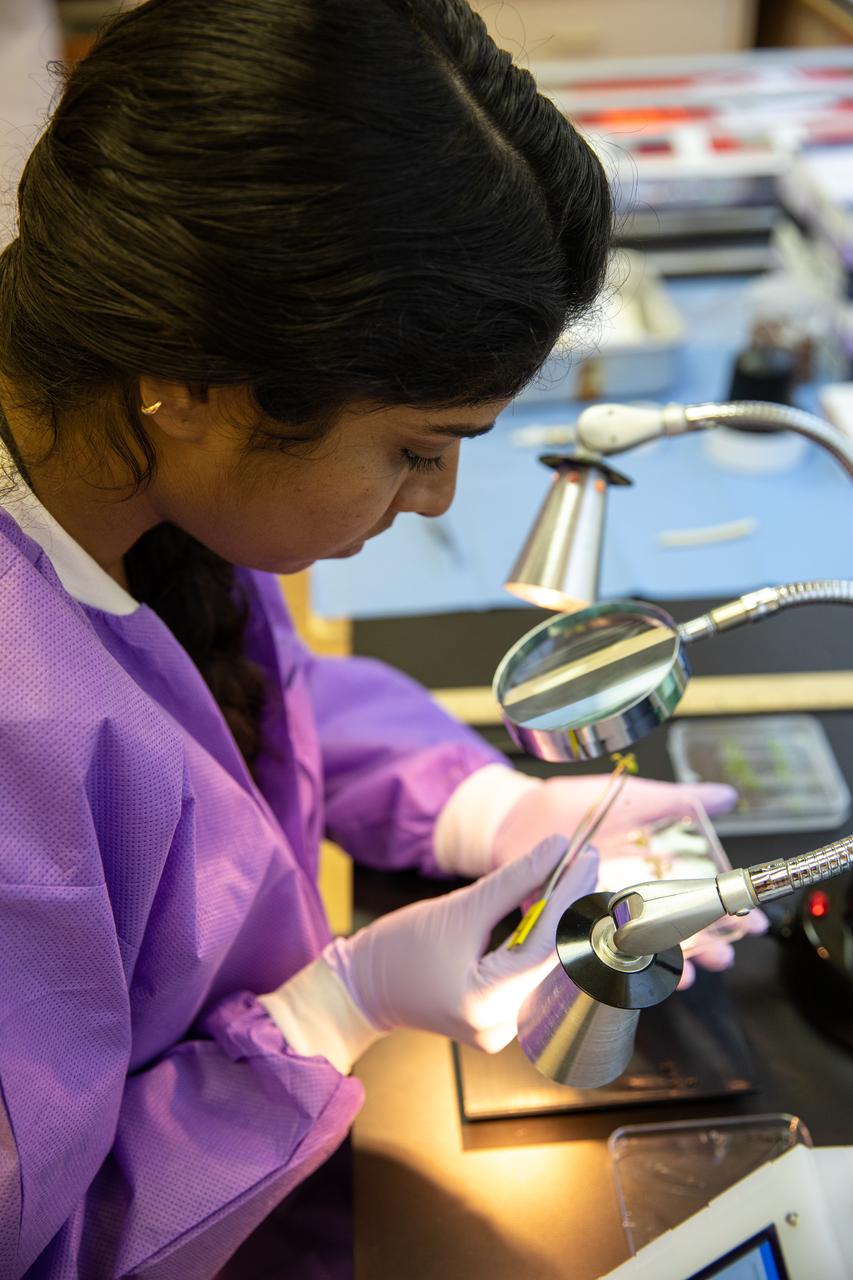
Srujana Neelam, a researcher working at NASA’s Kennedy Space Center in Florida dissects Arabidopsis thaliana plants from petri plates used in microgravity simulation devices in the Microgravity Simulation Support Facility (MSSF) inside the Neil Armstrong Operations and Checkout building on Feb. 11, 2020. The facility was developed to provide ground simulation capability to the U.S. research community in order to supplement the limited opportunities to access the International Space Station and other platforms for microgravity research. The MSSF is designed to support biological research on microorganisms, cells, tissues, small plants and small animals. The simulator provides NASA with an alternative platform for microgravity research and creates the opportunity to conduct experiments on the space station in parallel with conditions of simulated microgravity on the ground.
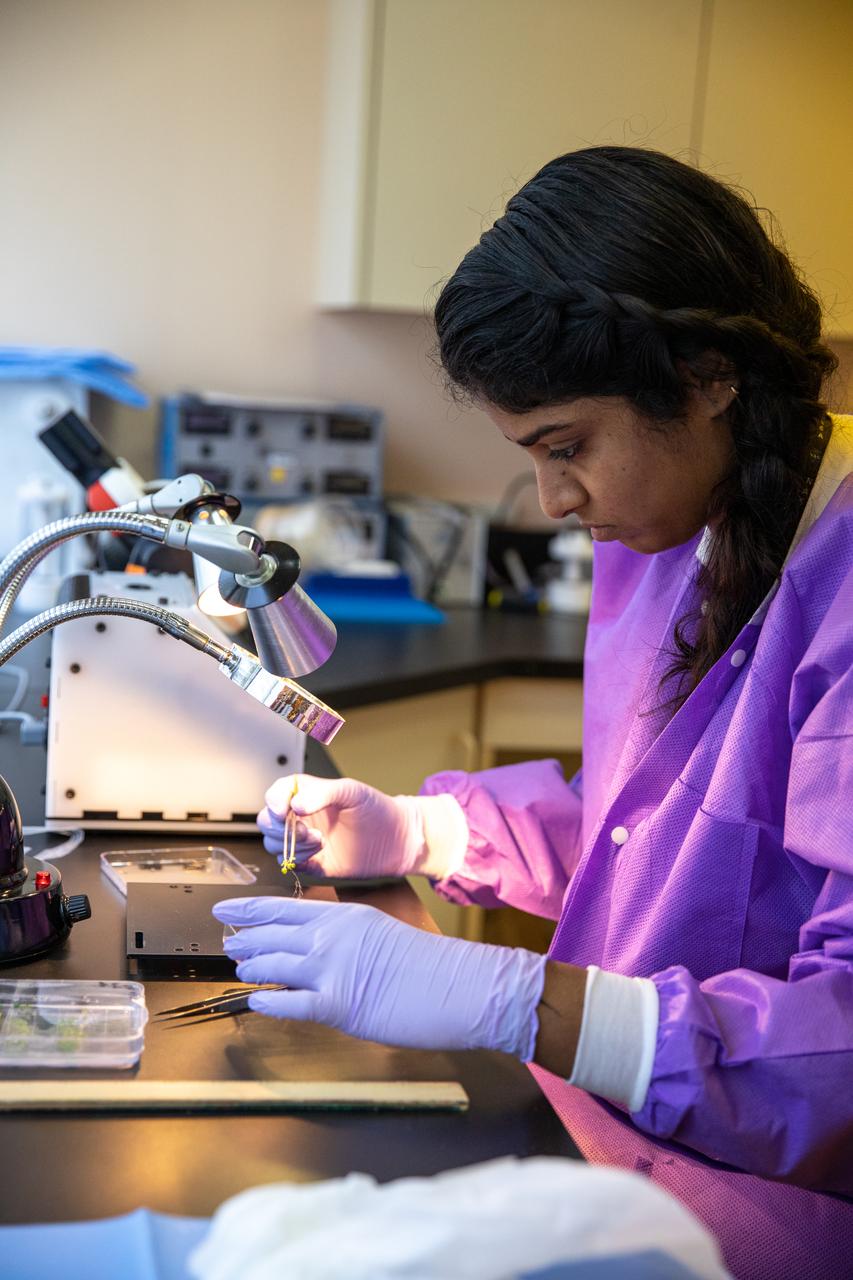
Srujana Neelam, a researcher working at NASA’s Kennedy Space Center in Florida, dissects Arabidopsis thaliana plants from petri plates used in microgravity simulation devices in the Microgravity Simulation Support Facility (MSSF) inside the Neil Armstrong Operations and Checkout building on Feb. 11, 2020. The facility was developed to provide ground simulation capability to the U.S. research community in order to supplement the limited opportunities to access the International Space Station and other platforms for microgravity research. The MSSF is designed to support biological research on microorganisms, cells, tissues, small plants and small animals. The simulator provides NASA with an alternative platform for microgravity research and creates the opportunity to conduct experiments on the space station in parallel with conditions of simulated microgravity on the ground.

Srujana Neelam, a researcher working at NASA’s Kennedy Space Center in Florida, dissects Arabidopsis thaliana plants from petri plates used in microgravity simulation devices in the Microgravity Simulation Support Facility (MSSF) inside the Neil Armstrong Operations and Checkout building on Feb. 11, 2020. The facility was developed to provide ground simulation capability to the U.S. research community in order to supplement the limited opportunities to access the International Space Station and other platforms for microgravity research. The MSSF is designed to support biological research on microorganisms, cells, tissues, small plants and small animals. The simulator provides NASA with an alternative platform for microgravity research and creates the opportunity to conduct experiments on the space station in parallel with conditions of simulated microgravity on the ground.
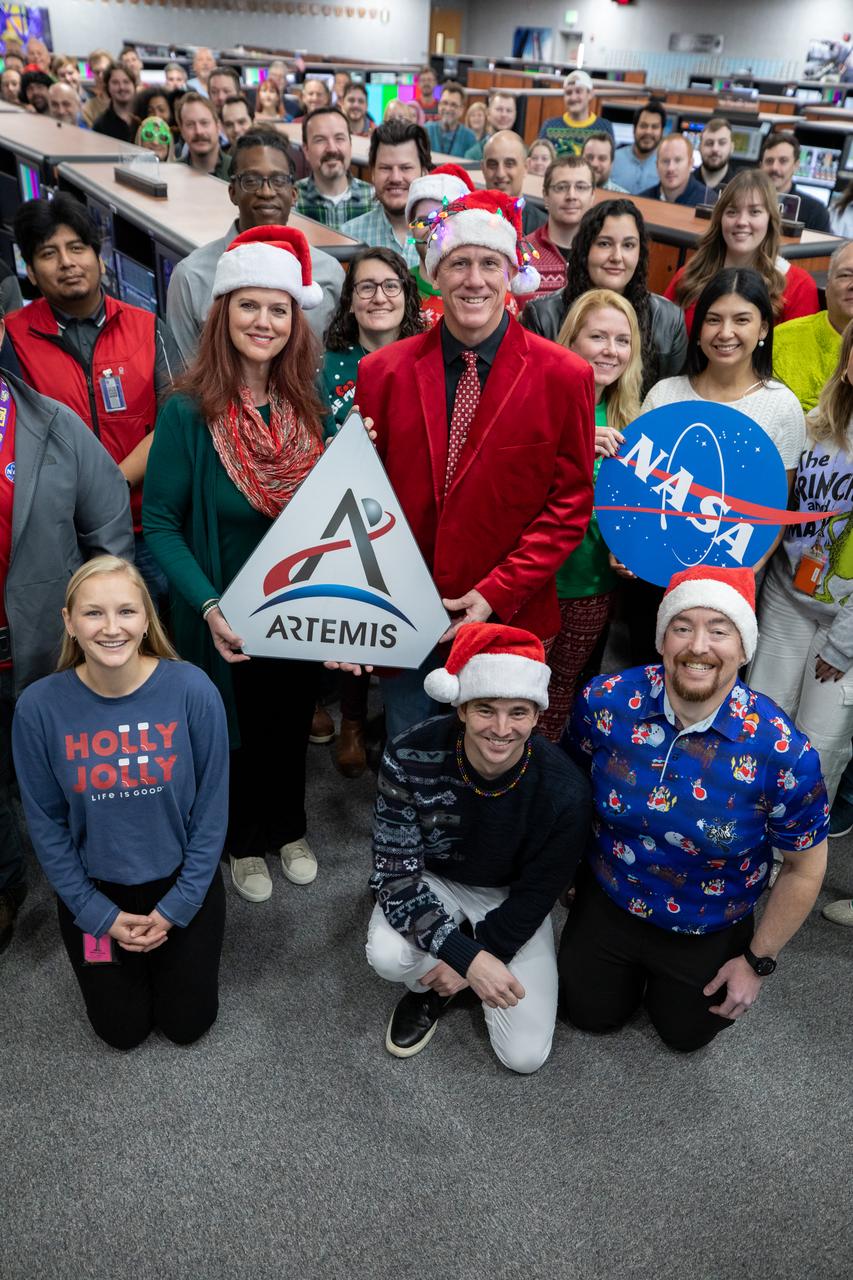
Charlie Blackwell-Thompson, center left, NASA Artemis launch director; and Jeremy Graeber, center right, assistant Artemis launch director, along with members of the Artemis launch team participate in a terminal countdown simulation for Artemis II in Firing Room 1 inside the Launch Control Center at NASA’s Kennedy Space Center in Florida on Thursday, Dec. 12, 2024. Four astronauts will venture around the Moon on Artemis II, the first crewed mission on NASA’s path to establishing a long-term presence for science and exploration through Artemis.
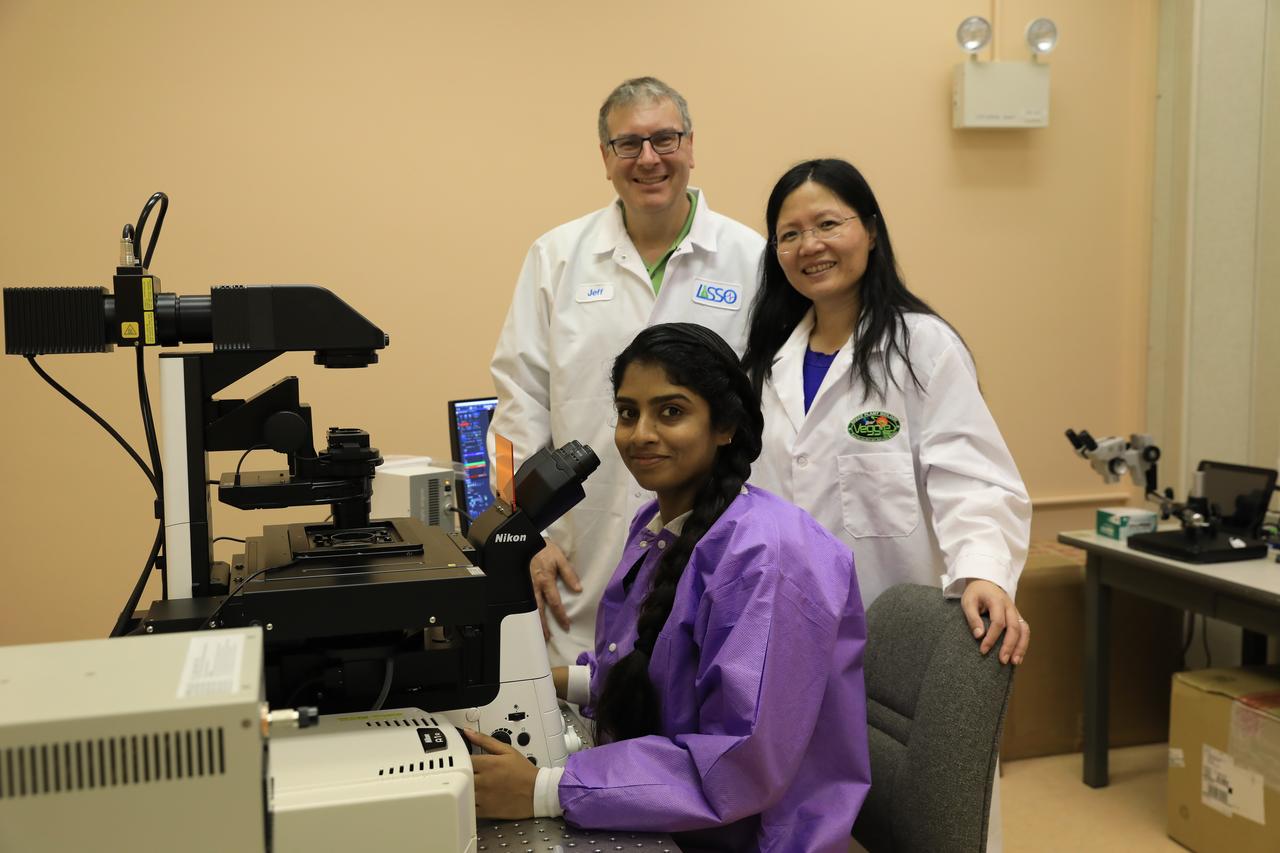
Dr. Srujana Neelam, a NASA post-doctoral fellow observes samples on a confocal microscope in the Microgravity Simulation Support Facility (MSSF) inside the Neil Armstrong Operations and Checkout building at NASA’s Kennedy Space Center in Florida on Feb. 11, 2020 with Jeffrey Richards, a payload research and science coordinator on the LASSO contract, Dr. Ye Zhang, a project scientist. The facility was developed to provide ground simulation capability to the U.S. research community in order to supplement the limited opportunities to access the International Space Station and other platforms for microgravity research. The MSSF is designed to support biological research on microorganisms, cells, tissues, small plants and small animals. The simulator provides NASA with an alternative platform for microgravity research and creates the opportunity to conduct experiments on the space station in parallel with conditions of simulated microgravity on the ground.
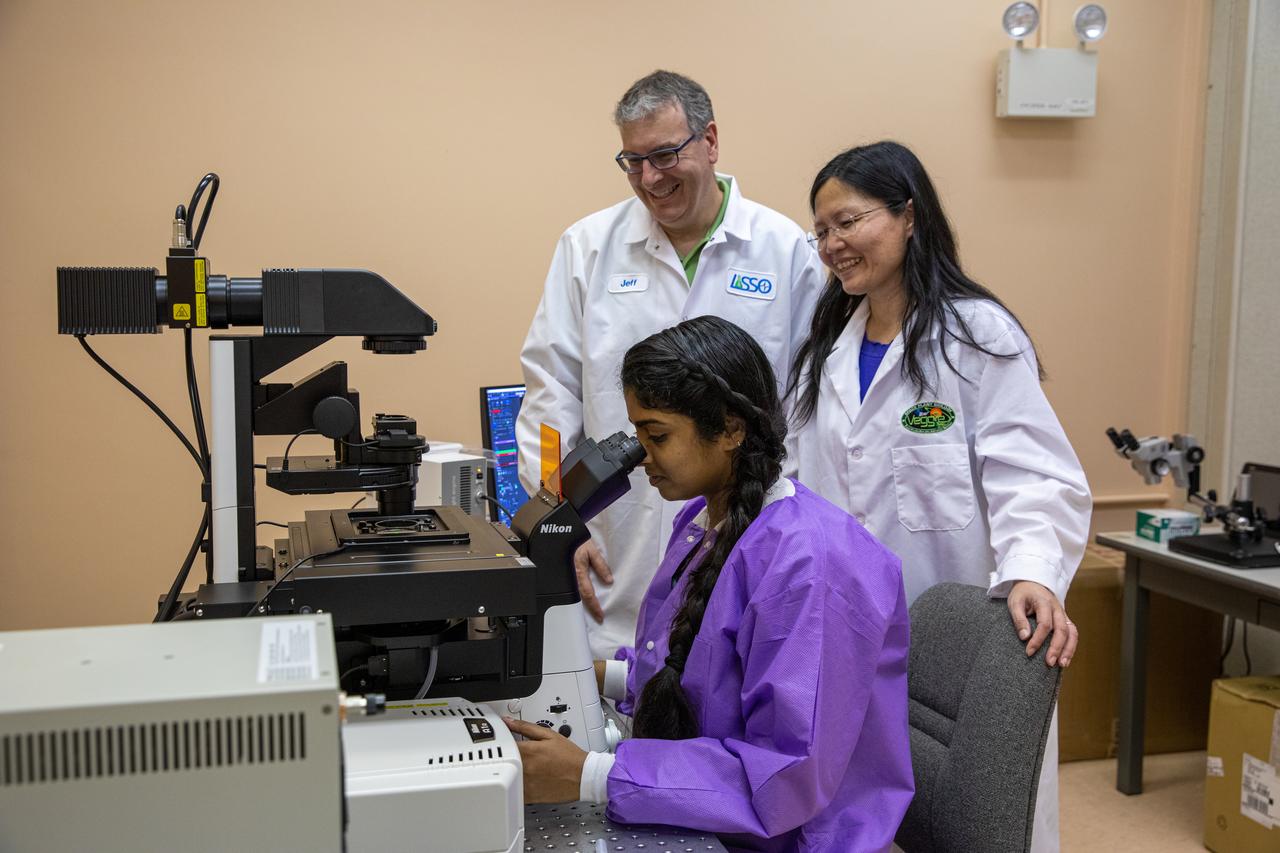
Dr. Srujana Neelam, a NASA post-doctoral fellow observes samples on a confocal microscope in the Microgravity Simulation Support Facility (MSSF) inside the Neil Armstrong Operations and Checkout building at NASA’s Kennedy Space Center in Florida on Feb. 11, 2020, with Jeffrey Richards, a payload research and science coordinator on the LASSO contract; and Dr. Ye Zhang, a project scientist. The facility was developed to provide ground simulation capability to the U.S. research community in order to supplement the limited opportunities to access the International Space Station and other platforms for microgravity research. The MSSF is designed to support biological research on microorganisms, cells, tissues, small plants and small animals. The simulator provides NASA with an alternative platform for microgravity research and creates the opportunity to conduct experiments on the space station in parallel with conditions of simulated microgravity on the ground.
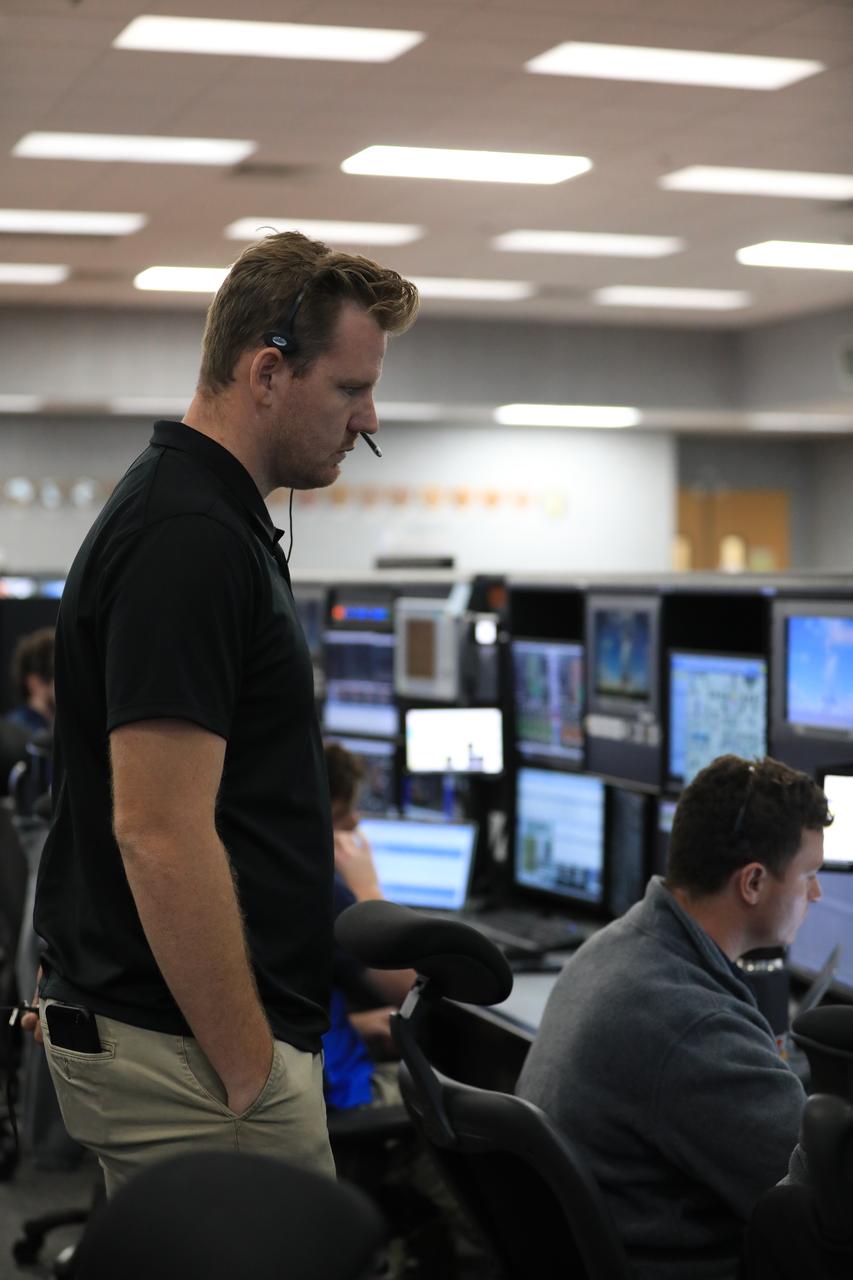
Teams at NASA’s Kennedy Space Center in Florida participate in the first joint integrated launch countdown simulation for Artemis II inside Firing Room 1 of the Launch Control Center on Thursday, Sept. 11, 2025. The training exercise involved engineers from Kennedy, Marshall Space Flight Center in Huntsville, Alabama, and Johnson Space Center in Houston coming together to rehearse all aspects of the launch countdown, from cryogenic loading – filling tanks in the SLS (Space Launch System) rocket’s core stage with liquid hydrogen and liquid oxygen – to liftoff. These simulations will help certify that the launch team is ready for Artemis II – the first crewed Artemis mission that will send four astronauts around the Moon and back.
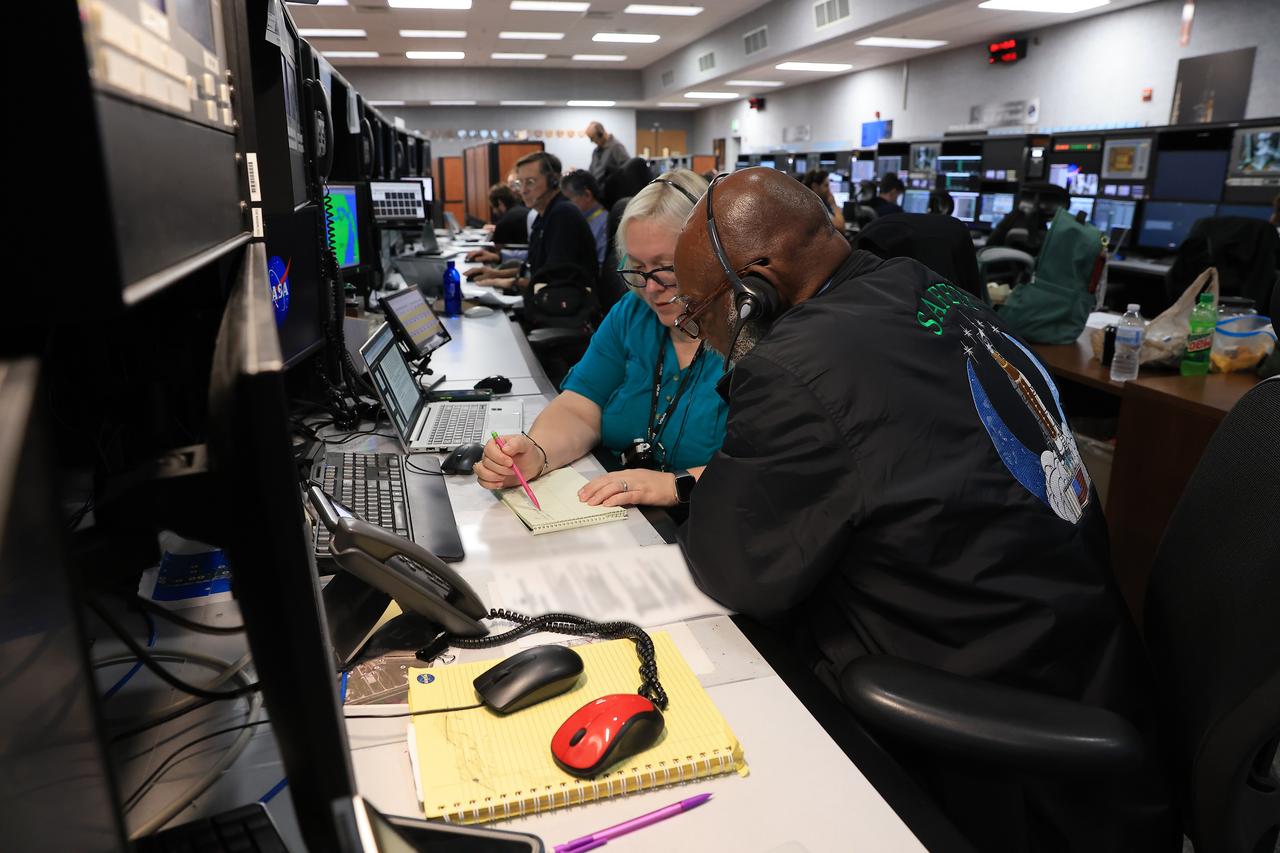
Teams at NASA’s Kennedy Space Center in Florida participate in the first joint integrated launch countdown simulation for Artemis II inside Firing Room 1 of the Launch Control Center on Thursday, Sept. 11, 2025. The training exercise involved engineers from Kennedy, Marshall Space Flight Center in Huntsville, Alabama, and Johnson Space Center in Houston coming together to rehearse all aspects of the launch countdown, from cryogenic loading – filling tanks in the SLS (Space Launch System) rocket’s core stage with liquid hydrogen and liquid oxygen – to liftoff. These simulations will help certify that the launch team is ready for Artemis II – the first crewed Artemis mission that will send four astronauts around the Moon and back.
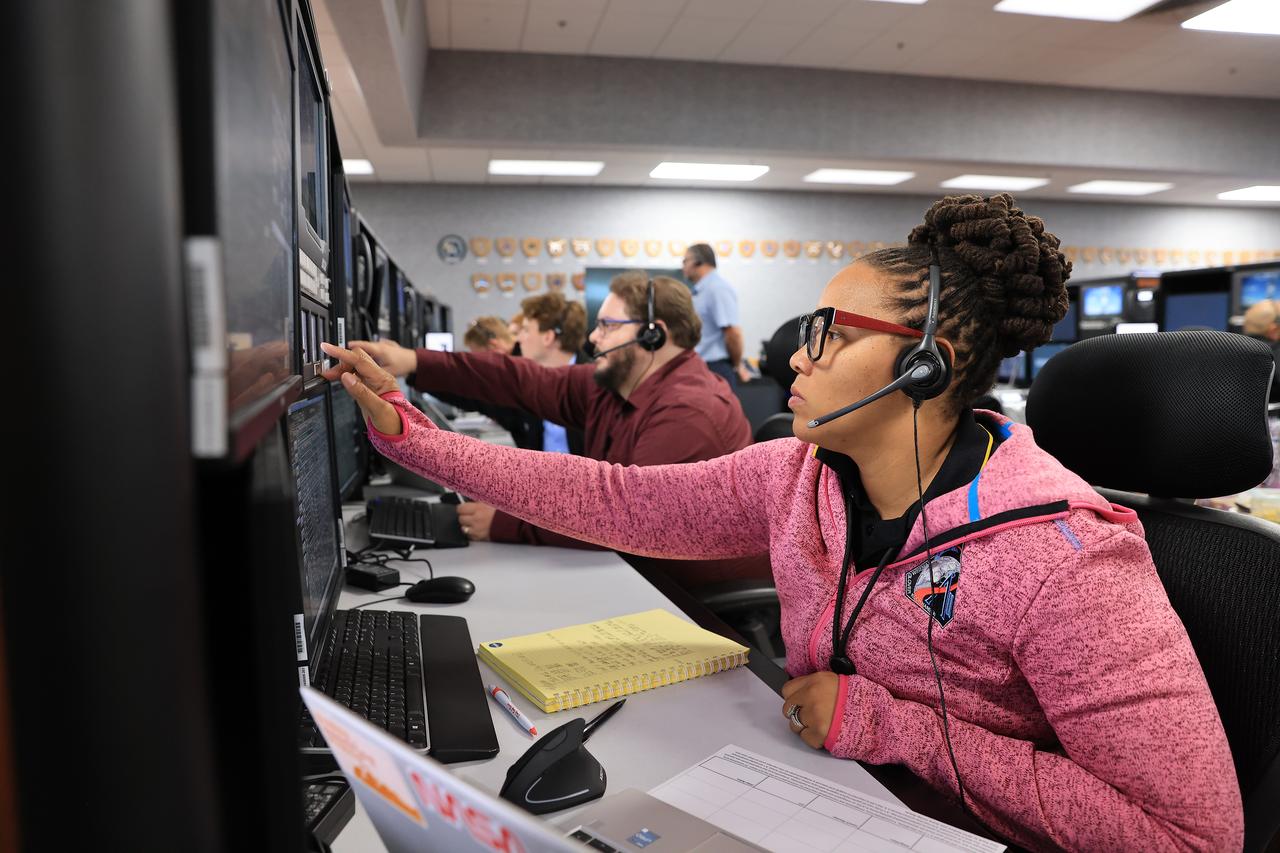
Teams at NASA’s Kennedy Space Center in Florida participate in the first joint integrated launch countdown simulation for Artemis II inside Firing Room 1 of the Launch Control Center on Thursday, Sept. 11, 2025. The training exercise involved engineers from Kennedy, Marshall Space Flight Center in Huntsville, Alabama, and Johnson Space Center in Houston coming together to rehearse all aspects of the launch countdown, from cryogenic loading – filling tanks in the SLS (Space Launch System) rocket’s core stage with liquid hydrogen and liquid oxygen – to liftoff. These simulations will help certify that the launch team is ready for Artemis II – the first crewed Artemis mission that will send four astronauts around the Moon and back.
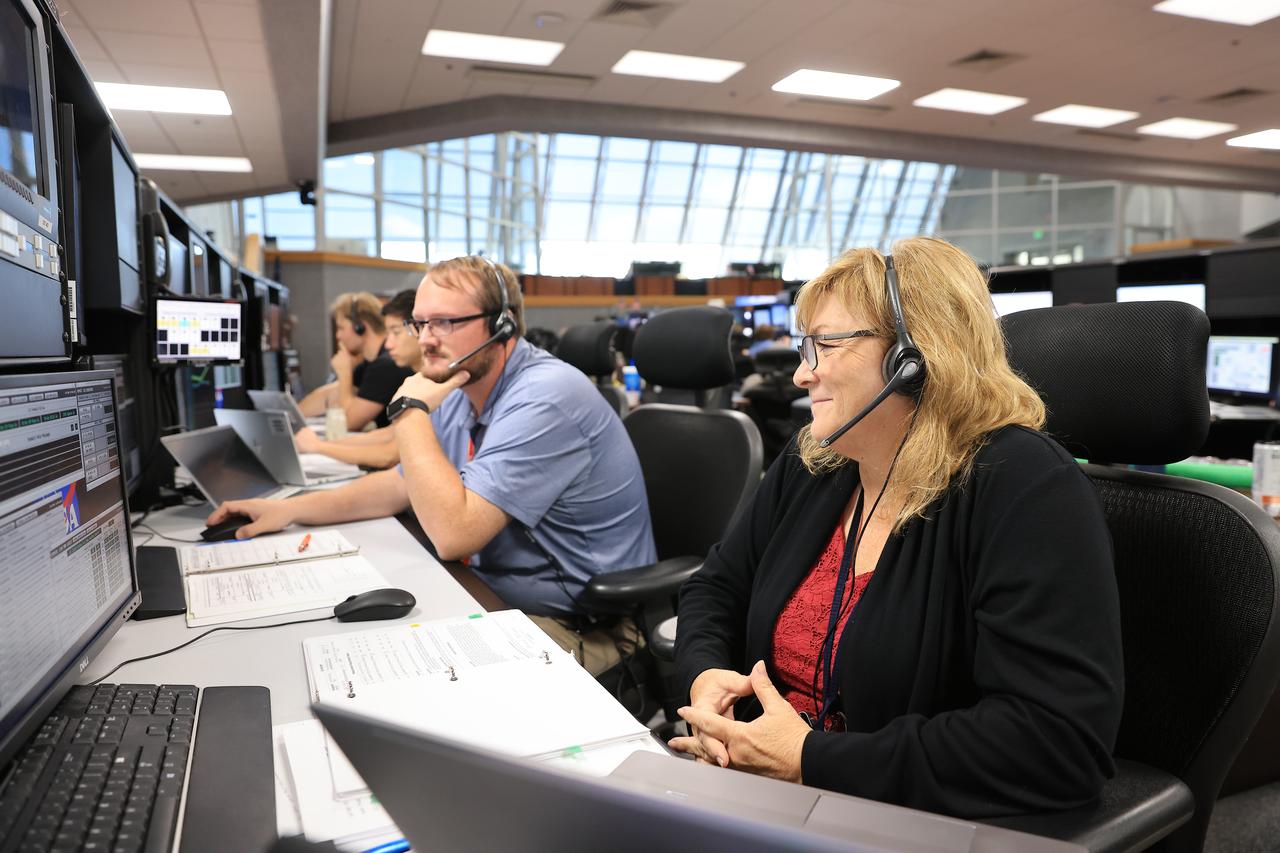
Teams at NASA’s Kennedy Space Center in Florida participate in the first joint integrated launch countdown simulation for Artemis II inside Firing Room 1 of the Launch Control Center on Thursday, Sept. 11, 2025. The training exercise involved engineers from Kennedy, Marshall Space Flight Center in Huntsville, Alabama, and Johnson Space Center in Houston coming together to rehearse all aspects of the launch countdown, from cryogenic loading – filling tanks in the SLS (Space Launch System) rocket’s core stage with liquid hydrogen and liquid oxygen – to liftoff. These simulations will help certify that the launch team is ready for Artemis II – the first crewed Artemis mission that will send four astronauts around the Moon and back.
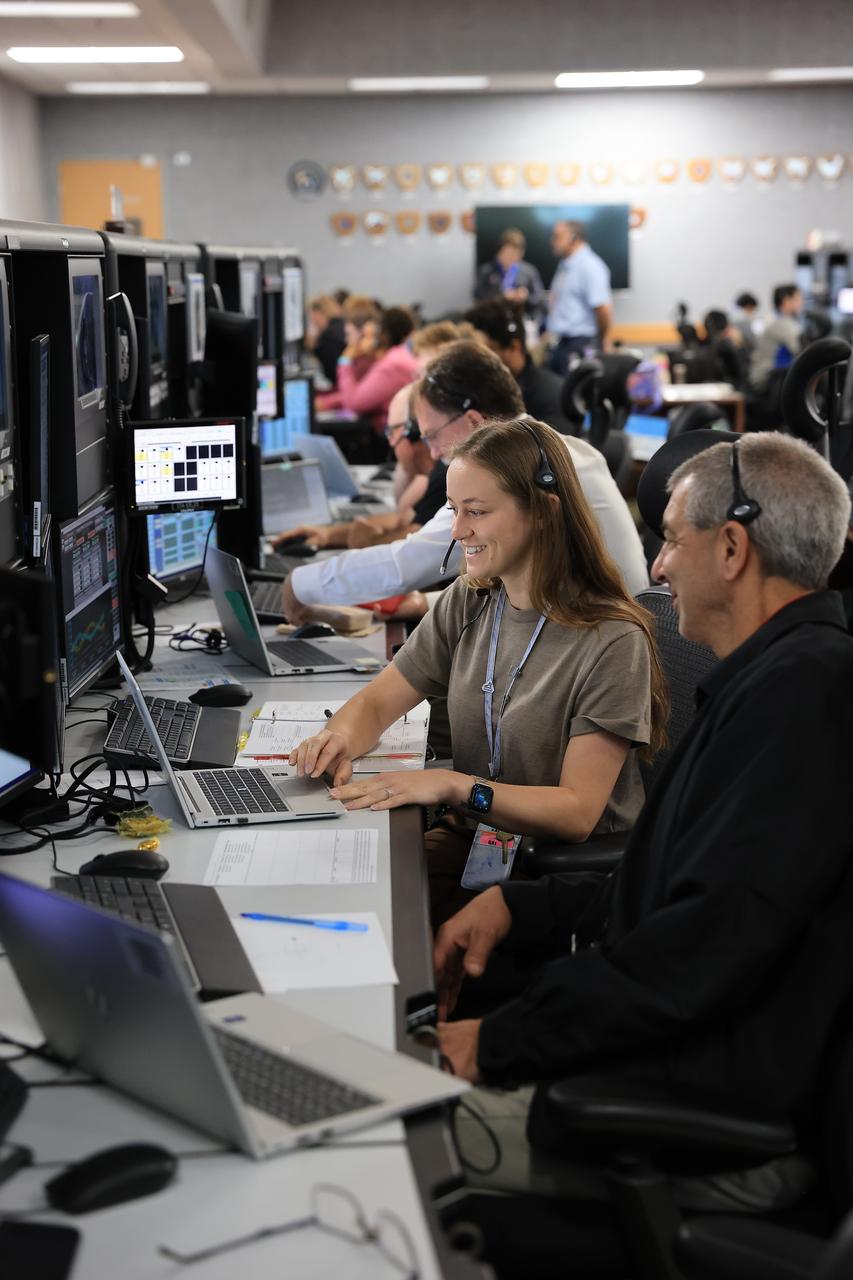
Teams at NASA’s Kennedy Space Center in Florida participate in the first joint integrated launch countdown simulation for Artemis II inside Firing Room 1 of the Launch Control Center on Thursday, Sept. 11, 2025. The training exercise involved engineers from Kennedy, Marshall Space Flight Center in Huntsville, Alabama, and Johnson Space Center in Houston coming together to rehearse all aspects of the launch countdown, from cryogenic loading – filling tanks in the SLS (Space Launch System) rocket’s core stage with liquid hydrogen and liquid oxygen – to liftoff. These simulations will help certify that the launch team is ready for Artemis II – the first crewed Artemis mission that will send four astronauts around the Moon and back.
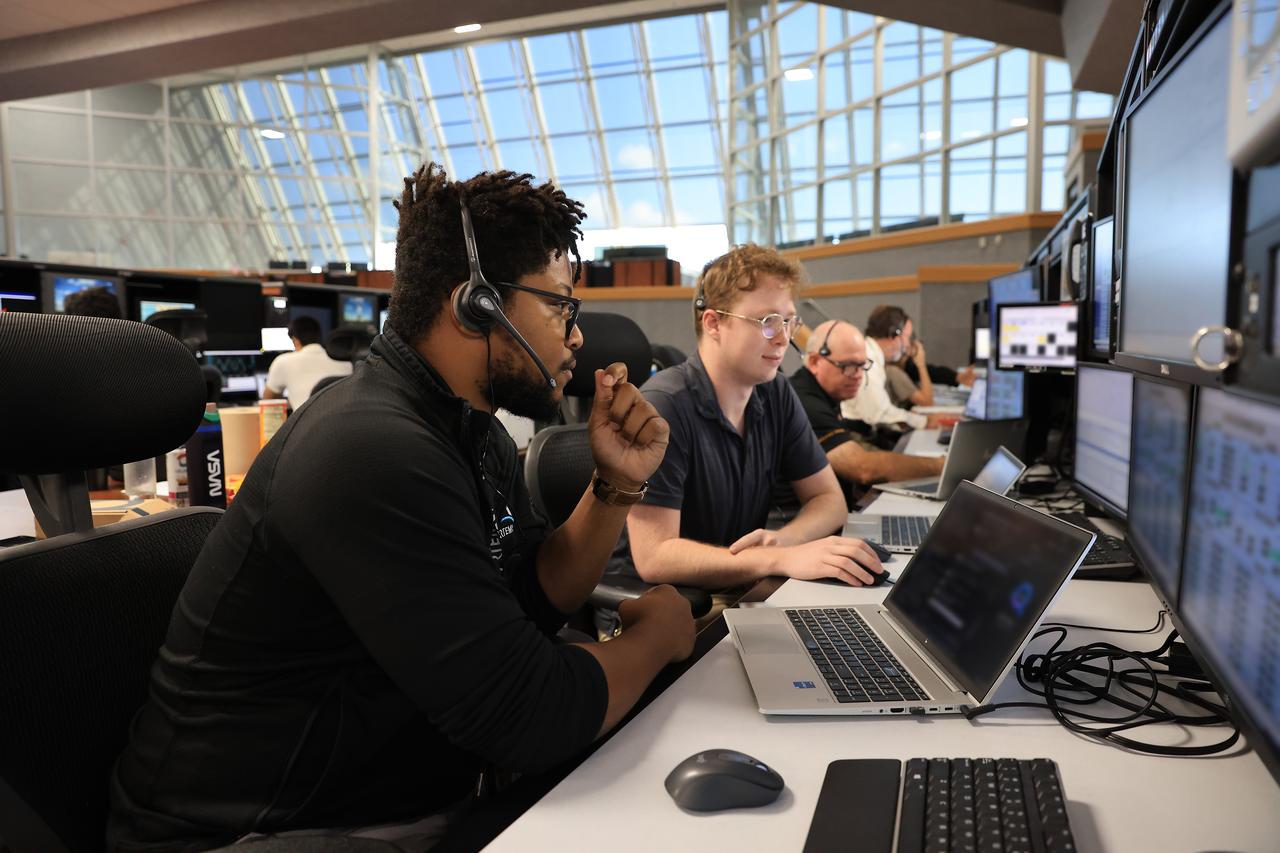
Teams at NASA’s Kennedy Space Center in Florida participate in the first joint integrated launch countdown simulation for Artemis II inside Firing Room 1 of the Launch Control Center on Thursday, Sept. 11, 2025. The training exercise involved engineers from Kennedy, Marshall Space Flight Center in Huntsville, Alabama, and Johnson Space Center in Houston coming together to rehearse all aspects of the launch countdown, from cryogenic loading – filling tanks in the SLS (Space Launch System) rocket’s core stage with liquid hydrogen and liquid oxygen – to liftoff. These simulations will help certify that the launch team is ready for Artemis II – the first crewed Artemis mission that will send four astronauts around the Moon and back.
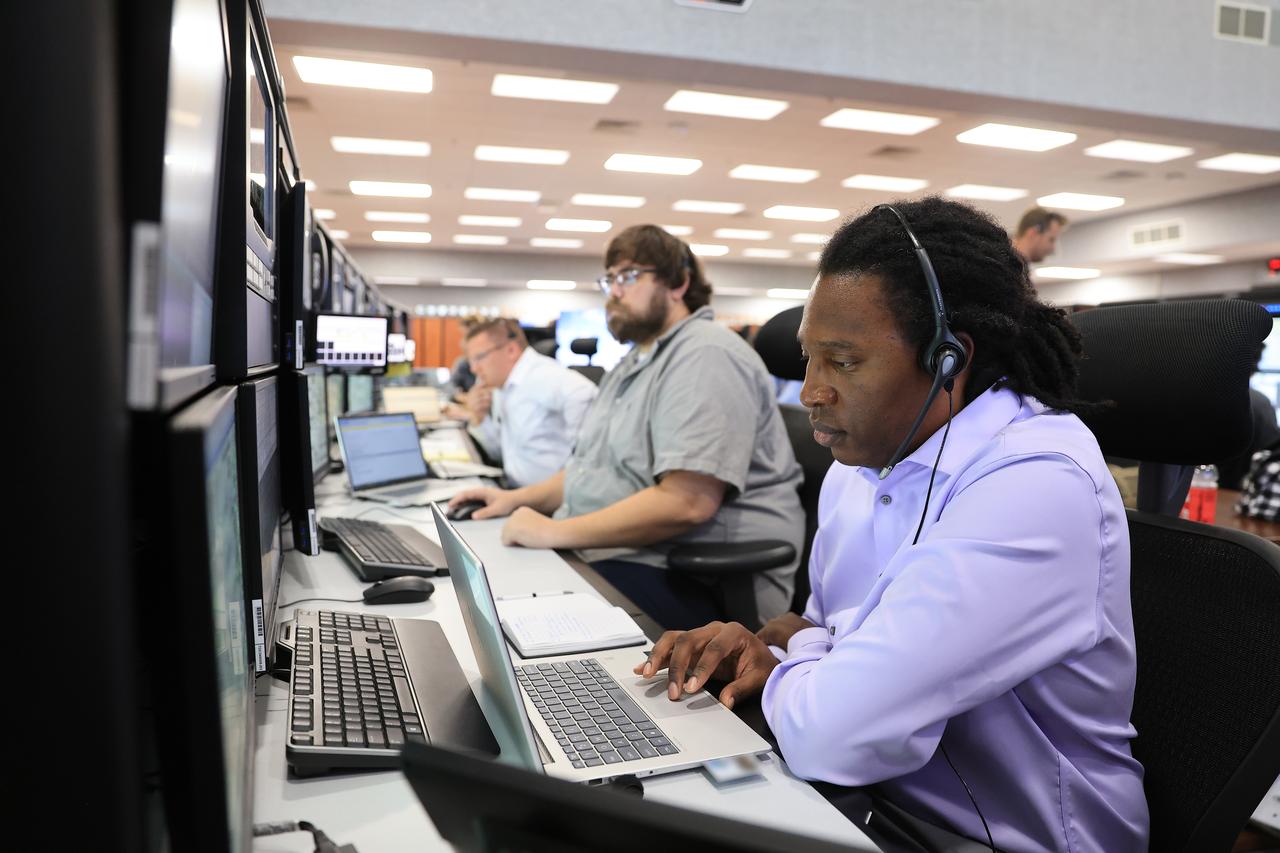
Teams at NASA’s Kennedy Space Center in Florida participate in the first joint integrated launch countdown simulation for Artemis II inside Firing Room 1 of the Launch Control Center on Thursday, Sept. 11, 2025. The training exercise involved engineers from Kennedy, Marshall Space Flight Center in Huntsville, Alabama, and Johnson Space Center in Houston coming together to rehearse all aspects of the launch countdown, from cryogenic loading – filling tanks in the SLS (Space Launch System) rocket’s core stage with liquid hydrogen and liquid oxygen – to liftoff. These simulations will help certify that the launch team is ready for Artemis II – the first crewed Artemis mission that will send four astronauts around the Moon and back.
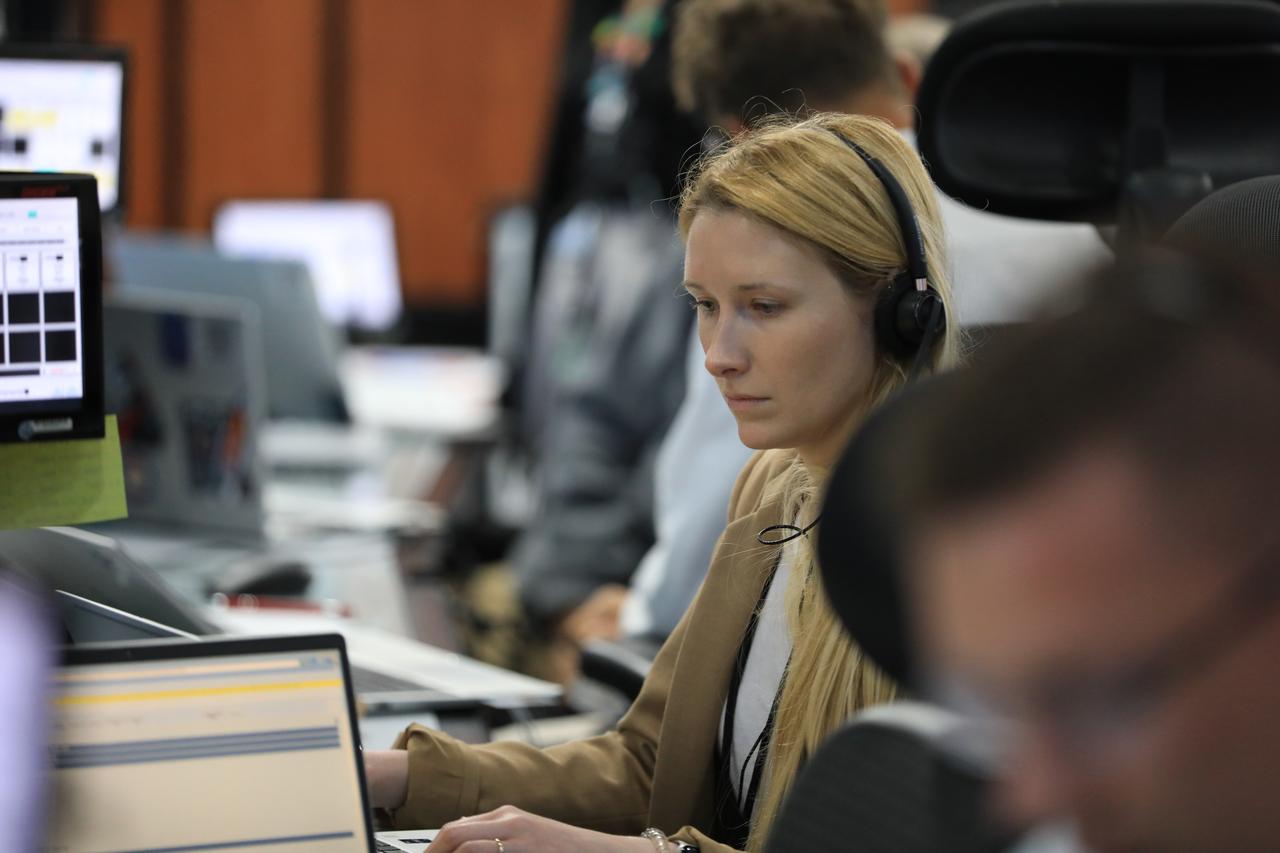
Teams at NASA’s Kennedy Space Center in Florida participate in the first joint integrated launch countdown simulation for Artemis II inside Firing Room 1 of the Launch Control Center on Thursday, Sept. 11, 2025. The training exercise involved engineers from Kennedy, Marshall Space Flight Center in Huntsville, Alabama, and Johnson Space Center in Houston coming together to rehearse all aspects of the launch countdown, from cryogenic loading – filling tanks in the SLS (Space Launch System) rocket’s core stage with liquid hydrogen and liquid oxygen – to liftoff. These simulations will help certify that the launch team is ready for Artemis II – the first crewed Artemis mission that will send four astronauts around the Moon and back.
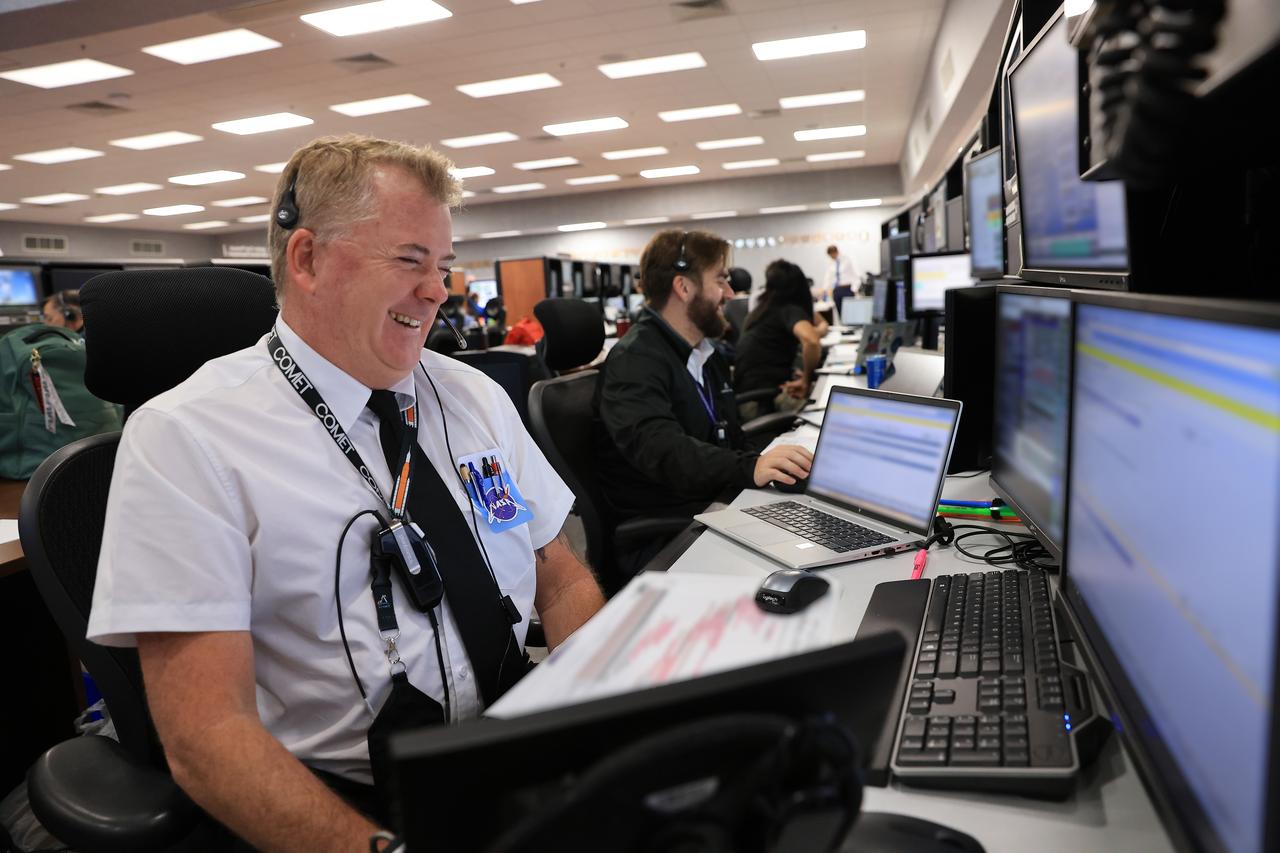
Teams at NASA’s Kennedy Space Center in Florida participate in the first joint integrated launch countdown simulation for Artemis II inside Firing Room 1 of the Launch Control Center on Thursday, Sept. 11, 2025. The training exercise involved engineers from Kennedy, Marshall Space Flight Center in Huntsville, Alabama, and Johnson Space Center in Houston coming together to rehearse all aspects of the launch countdown, from cryogenic loading – filling tanks in the SLS (Space Launch System) rocket’s core stage with liquid hydrogen and liquid oxygen – to liftoff. These simulations will help certify that the launch team is ready for Artemis II – the first crewed Artemis mission that will send four astronauts around the Moon and back.
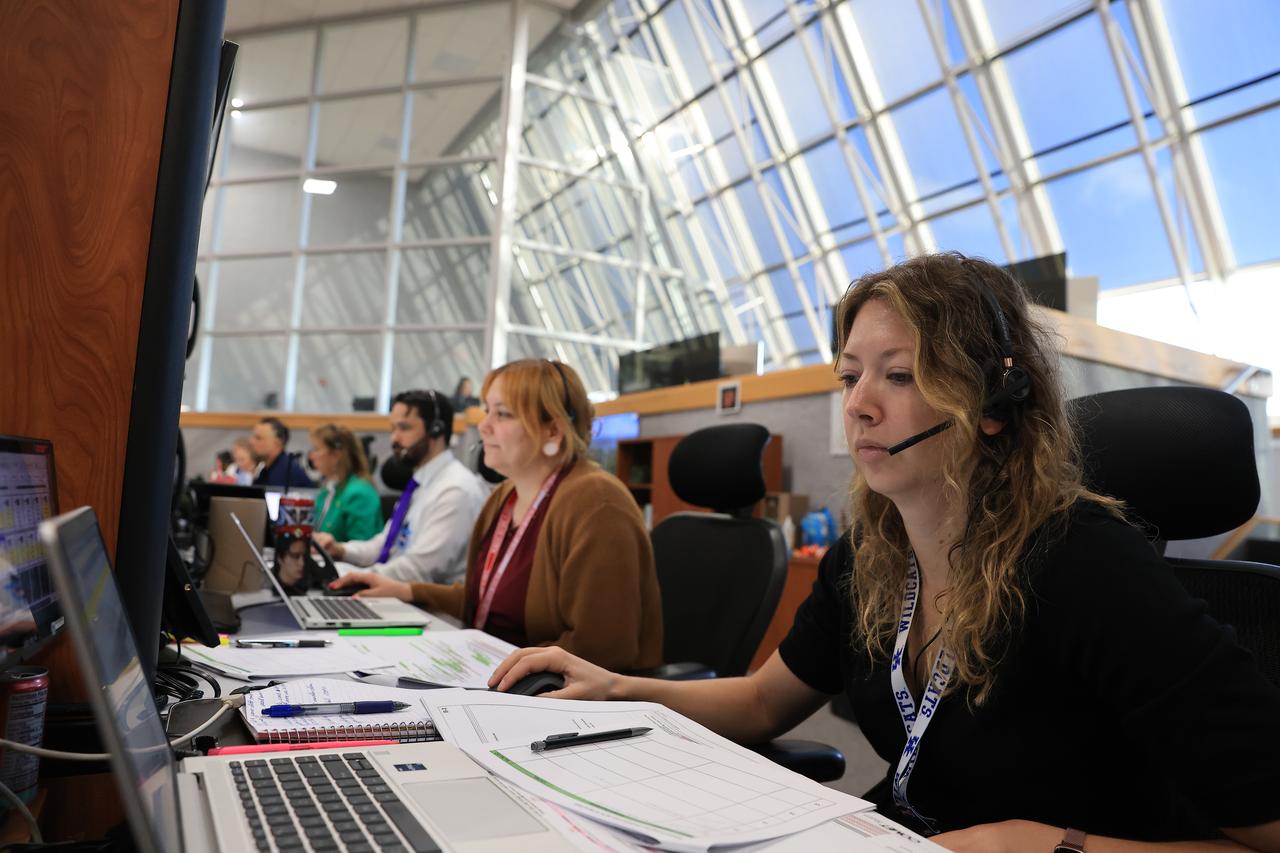
Teams at NASA’s Kennedy Space Center in Florida participate in the first joint integrated launch countdown simulation for Artemis II inside Firing Room 1 of the Launch Control Center on Thursday, Sept. 11, 2025. The training exercise involved engineers from Kennedy, Marshall Space Flight Center in Huntsville, Alabama, and Johnson Space Center in Houston coming together to rehearse all aspects of the launch countdown, from cryogenic loading – filling tanks in the SLS (Space Launch System) rocket’s core stage with liquid hydrogen and liquid oxygen – to liftoff. These simulations will help certify that the launch team is ready for Artemis II – the first crewed Artemis mission that will send four astronauts around the Moon and back.
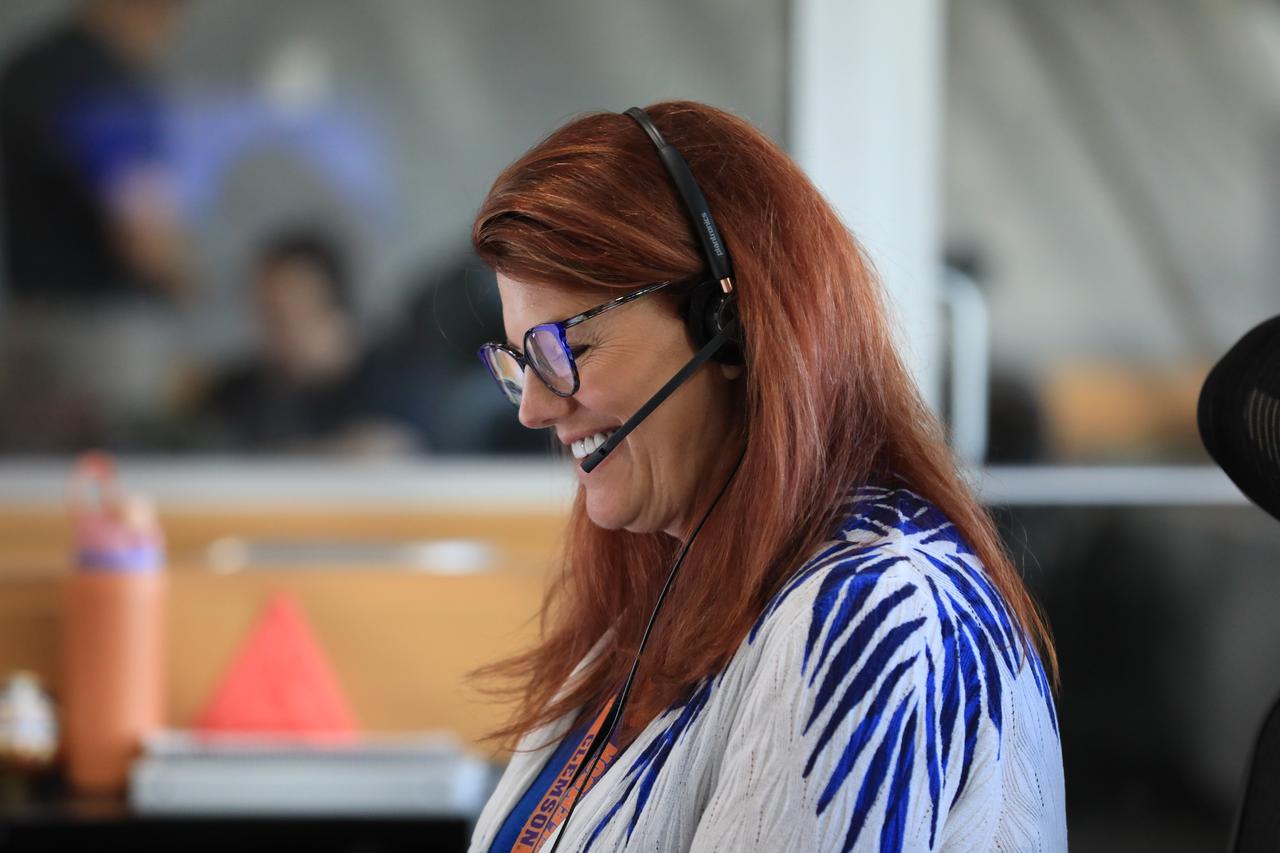
Charlie Blackwell-Thompson, Artemis launch director, Exploration Ground Systems at NASA’s Kennedy Space Center in Florida, participates in the first joint integrated launch countdown simulation for Artemis II inside Firing Room 1 of the Launch Control Center on Thursday, Sept. 11, 2025. The training exercise involved engineers from Kennedy, Marshall Space Flight Center in Huntsville, Alabama, and Johnson Space Center in Houston coming together to rehearse all aspects of the launch countdown, from cryogenic loading – filling tanks in the SLS (Space Launch System) rocket’s core stage with liquid hydrogen and liquid oxygen – to liftoff. These simulations will help certify that the launch team is ready for Artemis II – the first crewed Artemis mission that will send four astronauts around the Moon and back.
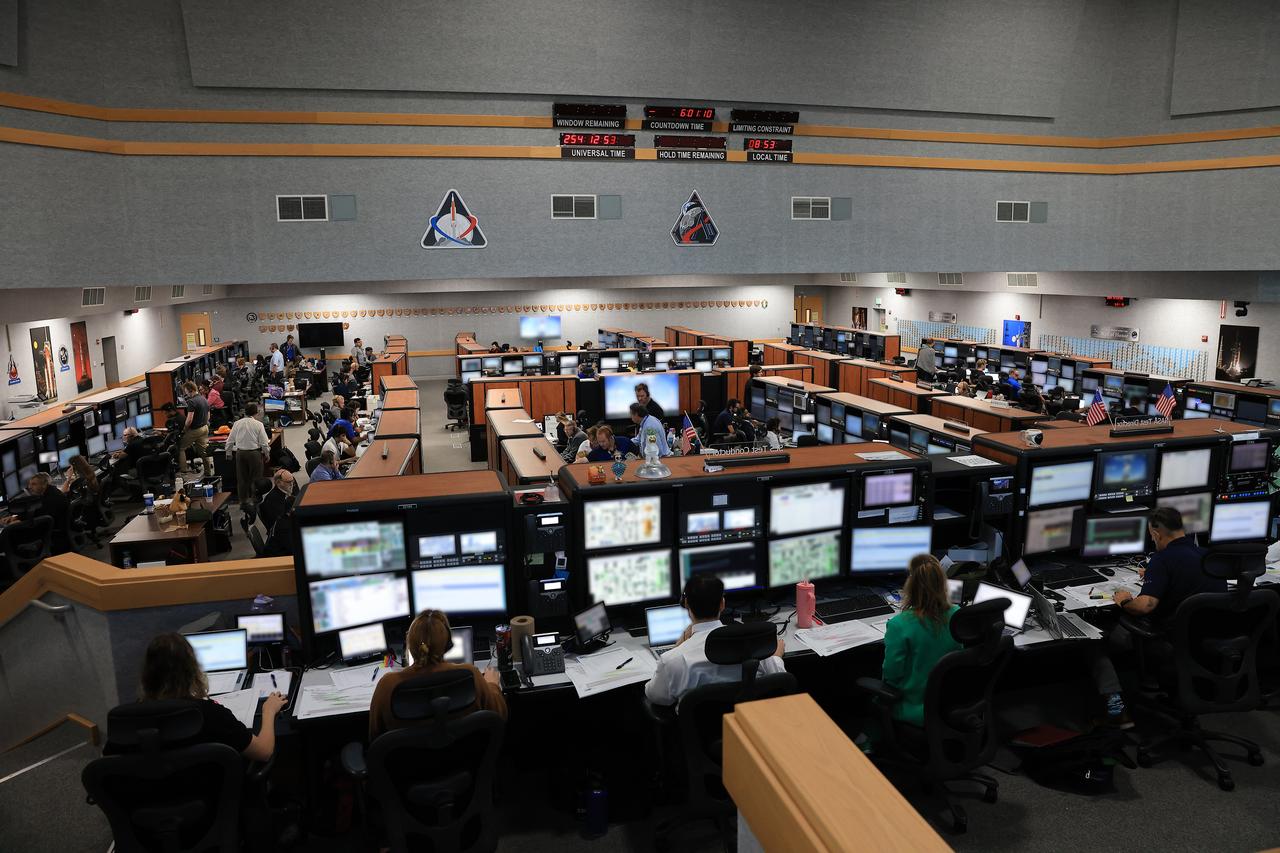
Teams at NASA’s Kennedy Space Center in Florida participate in the first joint integrated launch countdown simulation for Artemis II inside Firing Room 1 of the Launch Control Center on Thursday, Sept. 11, 2025. The training exercise involved engineers from Kennedy, Marshall Space Flight Center in Huntsville, Alabama, and Johnson Space Center in Houston coming together to rehearse all aspects of the launch countdown, from cryogenic loading – filling tanks in the SLS (Space Launch System) rocket’s core stage with liquid hydrogen and liquid oxygen – to liftoff. These simulations will help certify that the launch team is ready for Artemis II – the first crewed Artemis mission that will send four astronauts around the Moon and back.
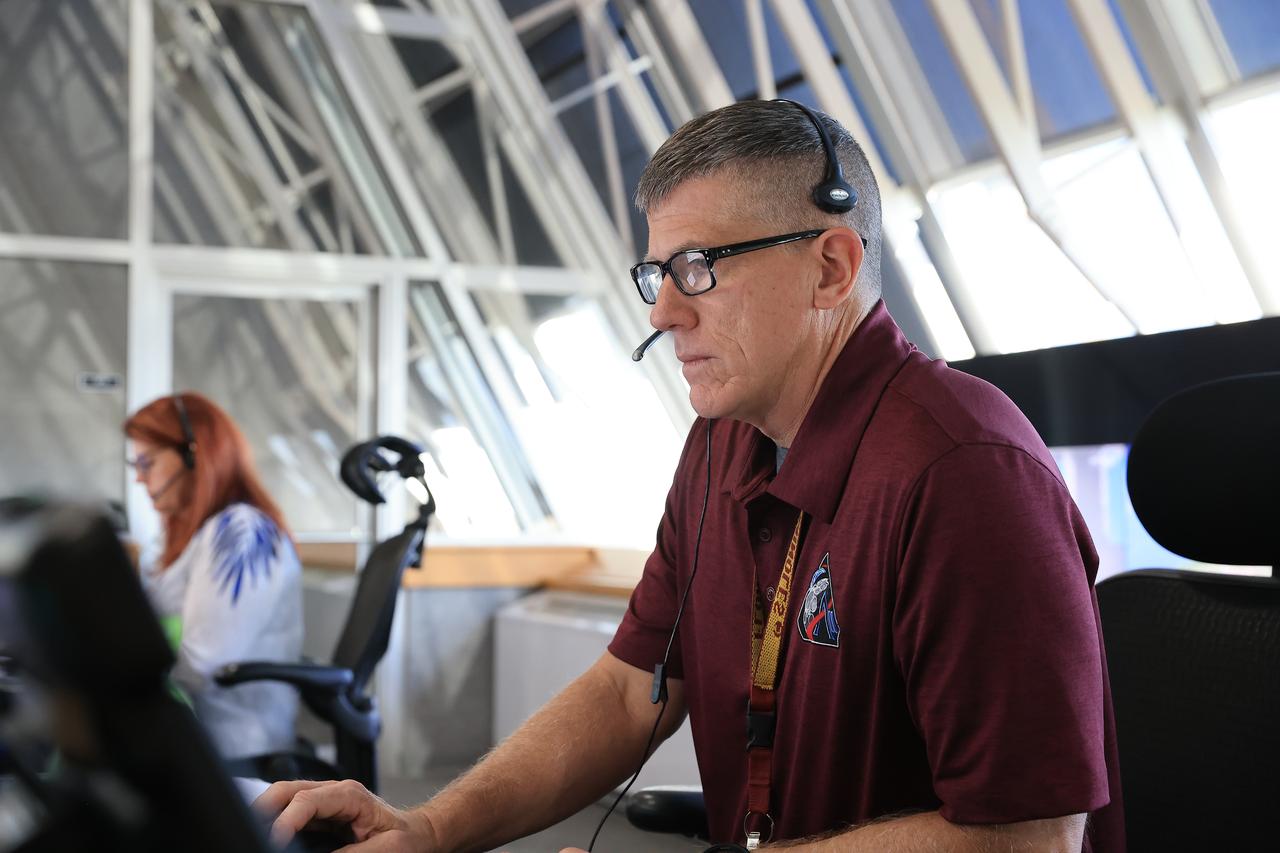
Jeremy Graeber, Artemis assistant launch director within NASA’s Exploration Ground Systems Program, participates in the first joint integrated launch countdown simulation for Artemis II inside Firing Room 1 of the Launch Control Center on Thursday, Sept. 11, 2025 at the agency’s Kennedy Space Center in Florida. The training exercise involved engineers from Kennedy, Marshall Space Flight Center in Huntsville, Alabama, and Johnson Space Center in Houston coming together to rehearse all aspects of the launch countdown, from cryogenic loading – filling tanks in the SLS (Space Launch System) rocket’s core stage with liquid hydrogen and liquid oxygen – to liftoff. These simulations will help certify that the launch team is ready for Artemis II – the first crewed Artemis mission that will send four astronauts around the Moon and back.
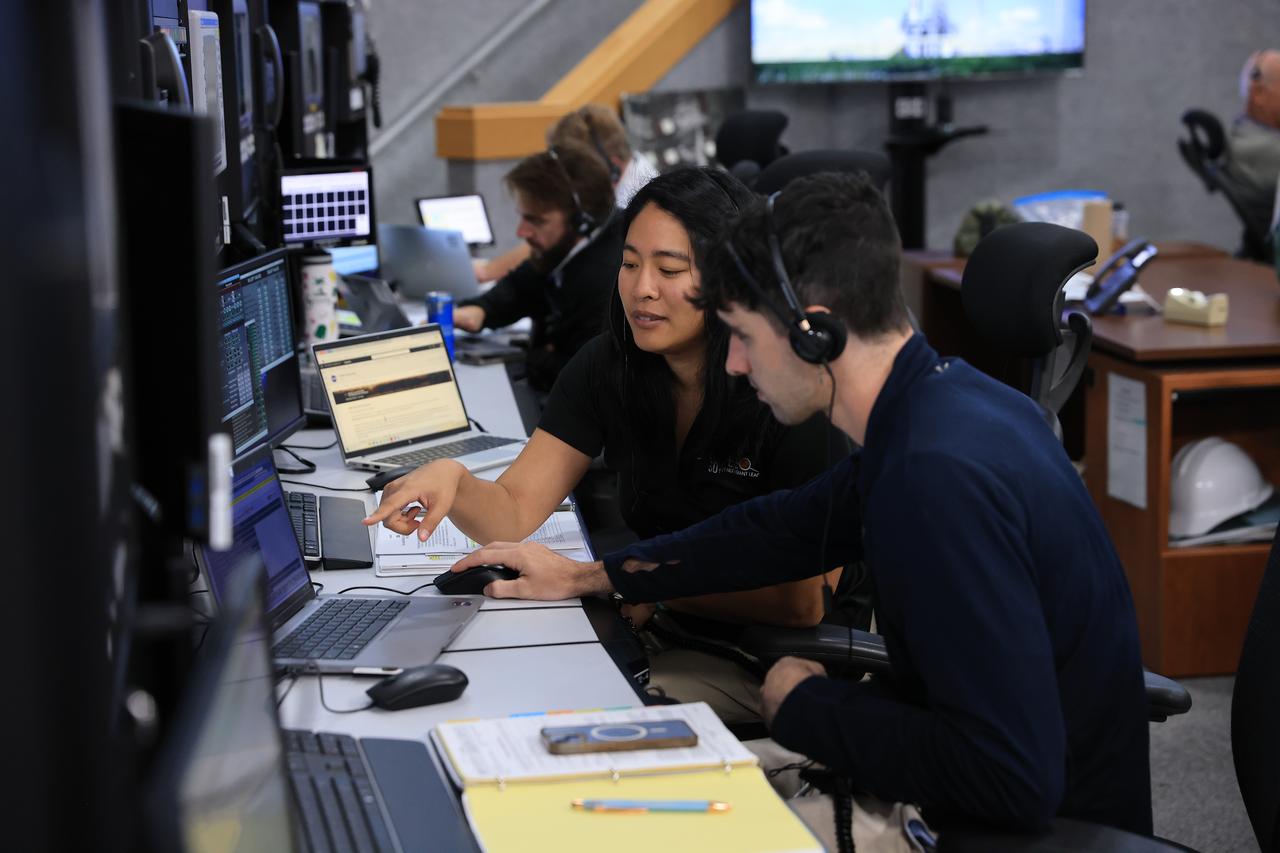
Teams at NASA’s Kennedy Space Center in Florida participate in the first joint integrated launch countdown simulation for Artemis II inside Firing Room 1 of the Launch Control Center on Thursday, Sept. 11, 2025. The training exercise involved engineers from Kennedy, Marshall Space Flight Center in Huntsville, Alabama, and Johnson Space Center in Houston coming together to rehearse all aspects of the launch countdown, from cryogenic loading – filling tanks in the SLS (Space Launch System) rocket’s core stage with liquid hydrogen and liquid oxygen – to liftoff. These simulations will help certify that the launch team is ready for Artemis II – the first crewed Artemis mission that will send four astronauts around the Moon and back.
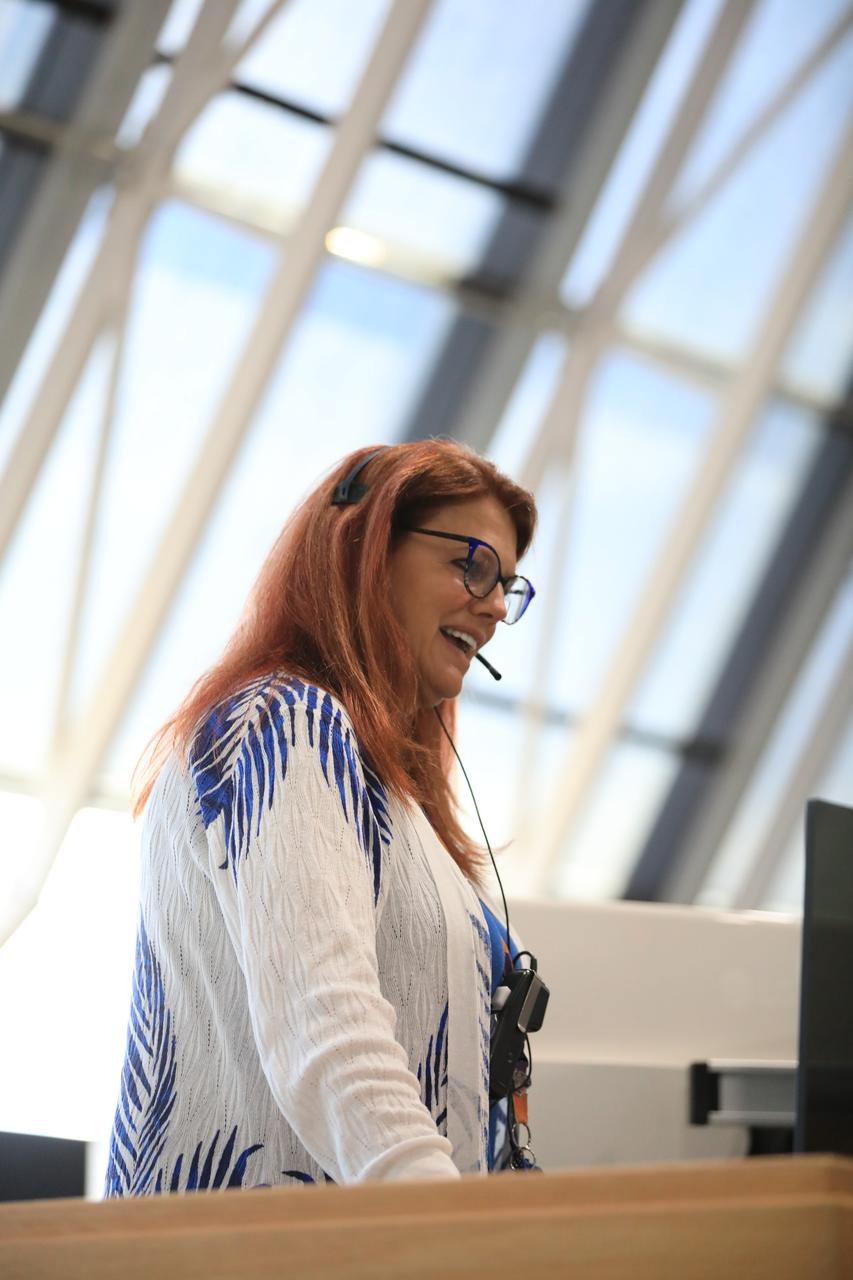
Charlie Blackwell-Thompson, Artemis launch director, Exploration Ground Systems at NASA’s Kennedy Space Center in Florida, participates in the first joint integrated launch countdown simulation for Artemis II inside Firing Room 1 of the Launch Control Center on Thursday, Sept. 11, 2025. The training exercise involved engineers from Kennedy, Marshall Space Flight Center in Huntsville, Alabama, and Johnson Space Center in Houston coming together to rehearse all aspects of the launch countdown, from cryogenic loading – filling tanks in the SLS (Space Launch System) rocket’s core stage with liquid hydrogen and liquid oxygen – to liftoff. These simulations will help certify that the launch team is ready for Artemis II – the first crewed Artemis mission that will send four astronauts around the Moon and back.
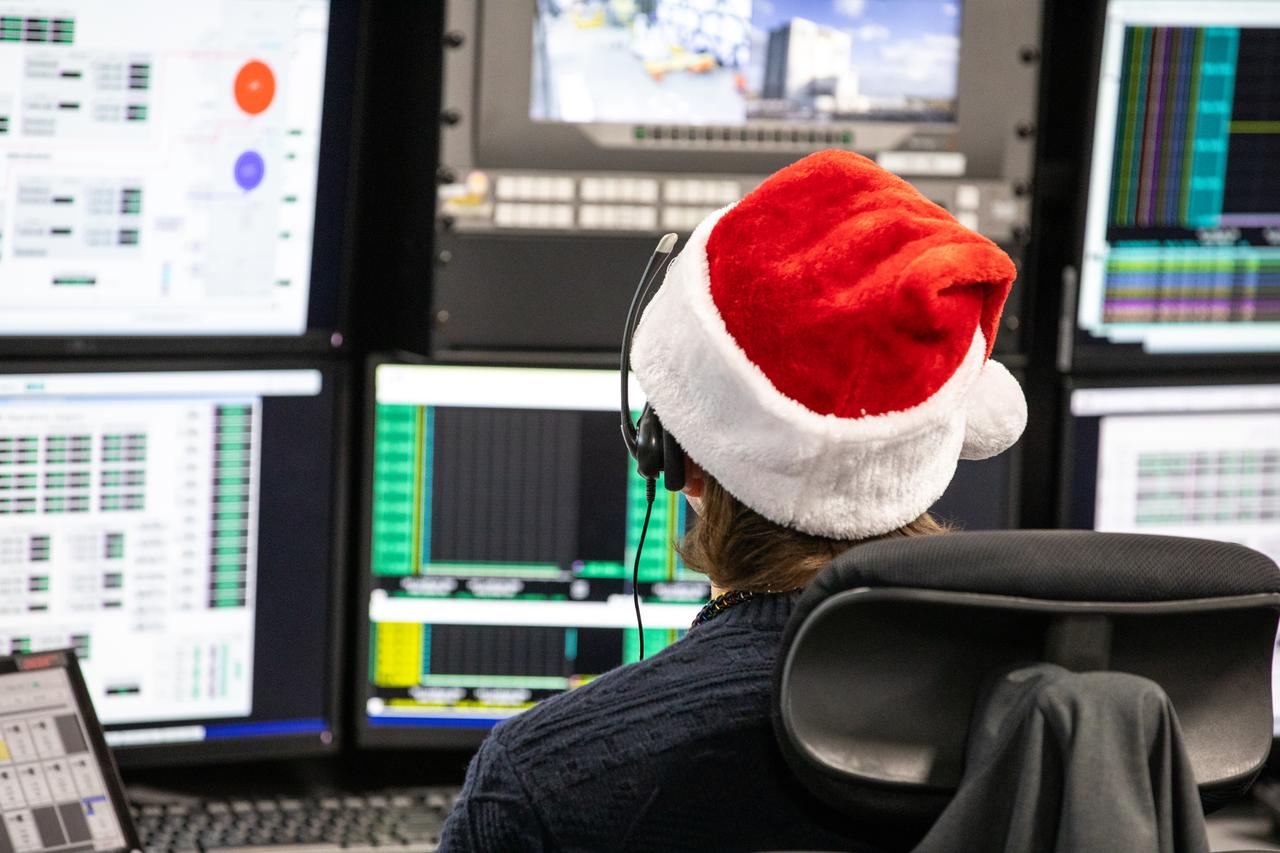
Members of the Artemis launch team participate in a terminal countdown simulation for Artemis II in Firing Room 1 inside the Launch Control Center at NASA’s Kennedy Space Center in Florida on Thursday, Dec. 12, 2024. Four astronauts will venture around the Moon on Artemis II, the first crewed mission on NASA’s path to establishing a long-term presence for science and exploration through Artemis.
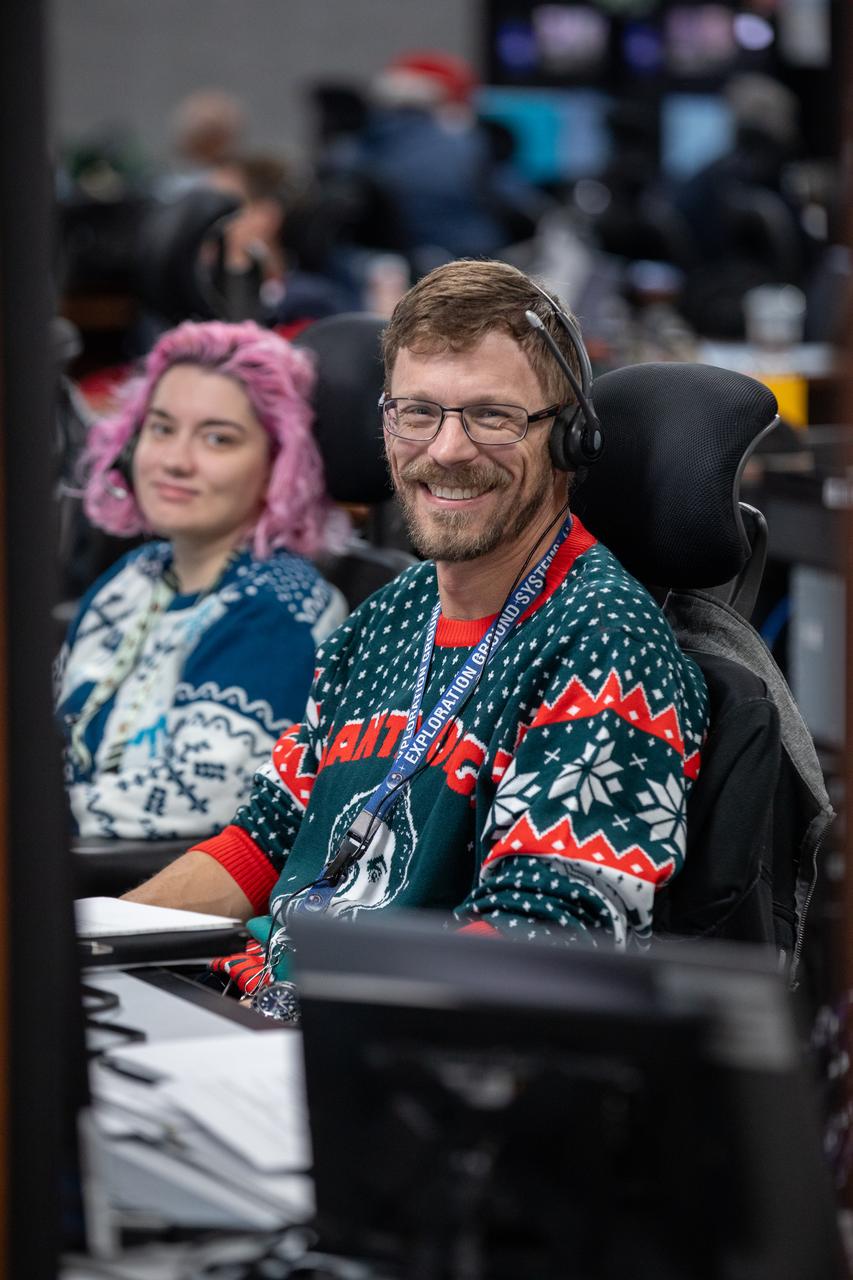
Members of the Artemis launch team participate in a terminal countdown simulation for Artemis II in Firing Room 1 inside the Launch Control Center at NASA’s Kennedy Space Center in Florida on Thursday, Dec. 12, 2024. Four astronauts will venture around the Moon on Artemis II, the first crewed mission on NASA’s path to establishing a long-term presence for science and exploration through Artemis.
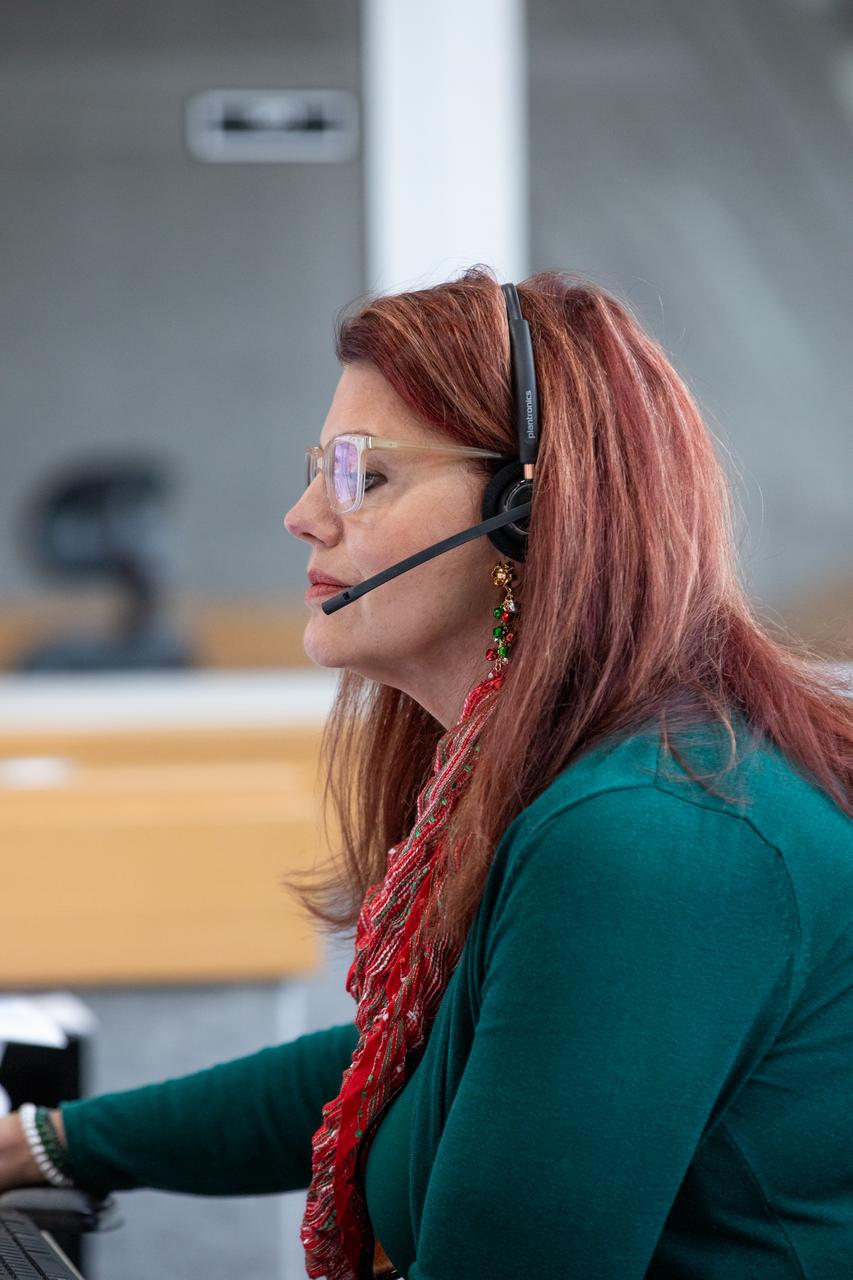
Charlie Blackwell-Thompson, NASA Artemis launch director, monitors the terminal countdown simulation for the Artemis II mission inside Firing Room at the Launch Control Center at NASA’s Kennedy Space Center in Florida on Thursday, Dec. 12, 2024. Four astronauts will venture around the Moon on Artemis II, the first crewed mission on NASA’s path to establishing a long-term presence for science and exploration through Artemis.
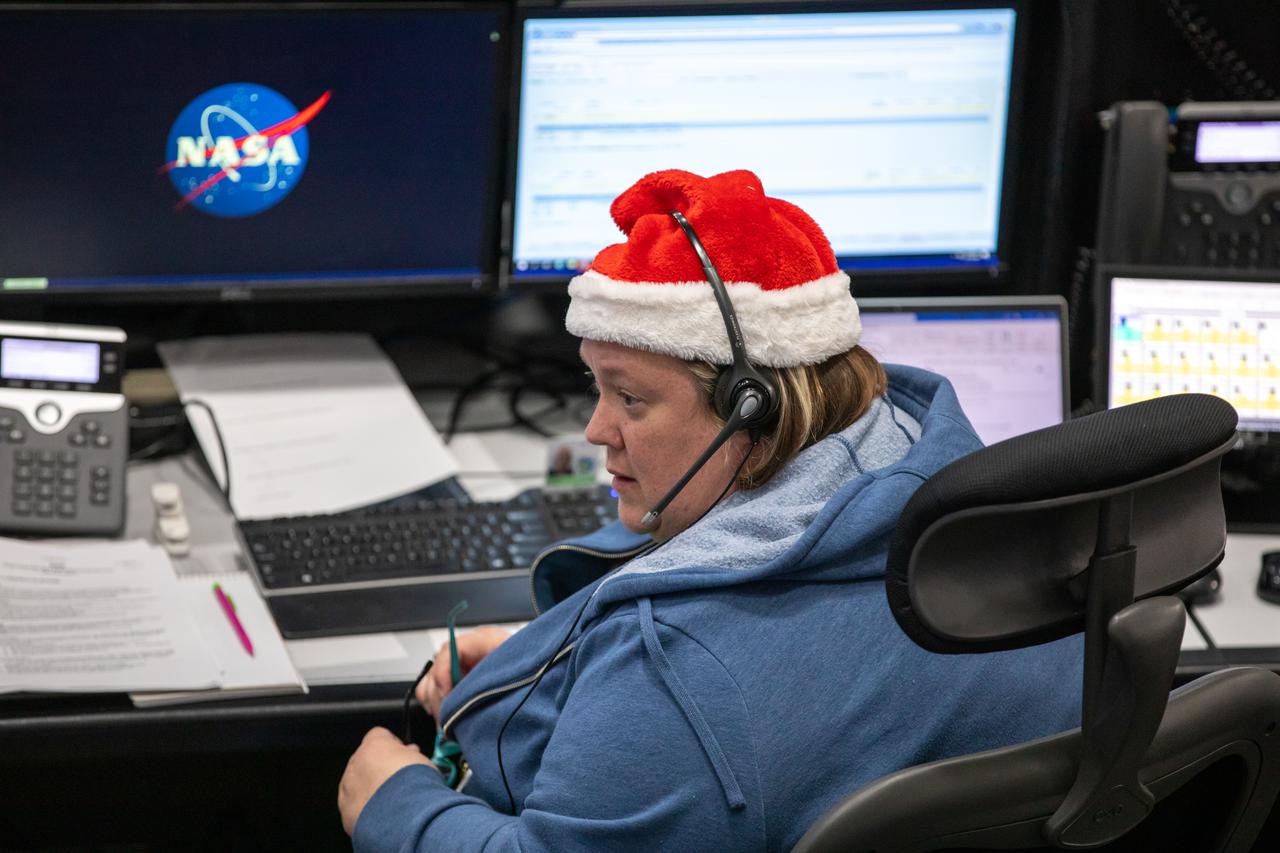
Members of the Artemis launch team participate in a terminal countdown simulation for Artemis II in Firing Room 1 inside the Launch Control Center at NASA’s Kennedy Space Center in Florida on Thursday, Dec. 12, 2024. Four astronauts will venture around the Moon on Artemis II, the first crewed mission on NASA’s path to establishing a long-term presence for science and exploration through Artemis.
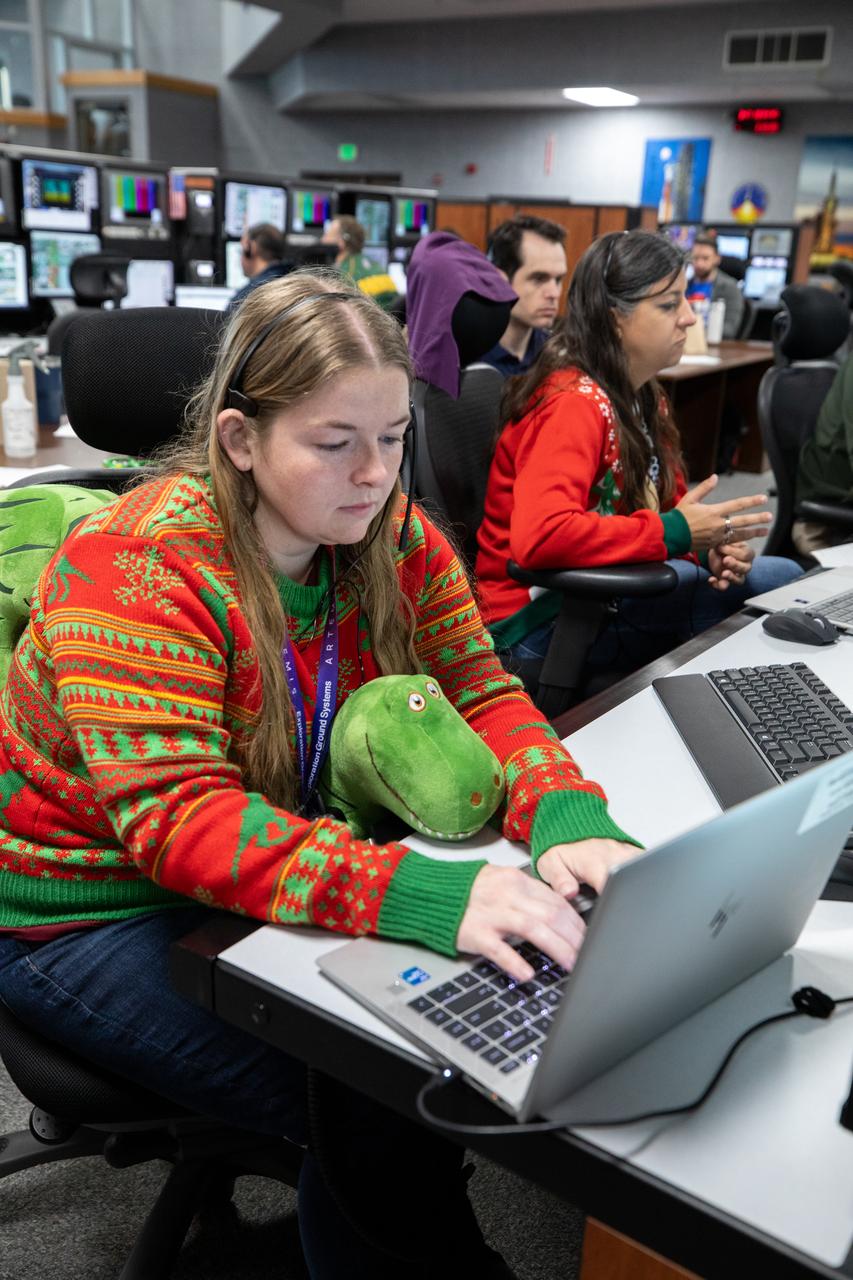
Members of the Artemis launch team participate in a terminal countdown simulation for Artemis II in Firing Room 1 inside the Launch Control Center at NASA’s Kennedy Space Center in Florida on Thursday, Dec. 12, 2024. Four astronauts will venture around the Moon on Artemis II, the first crewed mission on NASA’s path to establishing a long-term presence for science and exploration through Artemis.
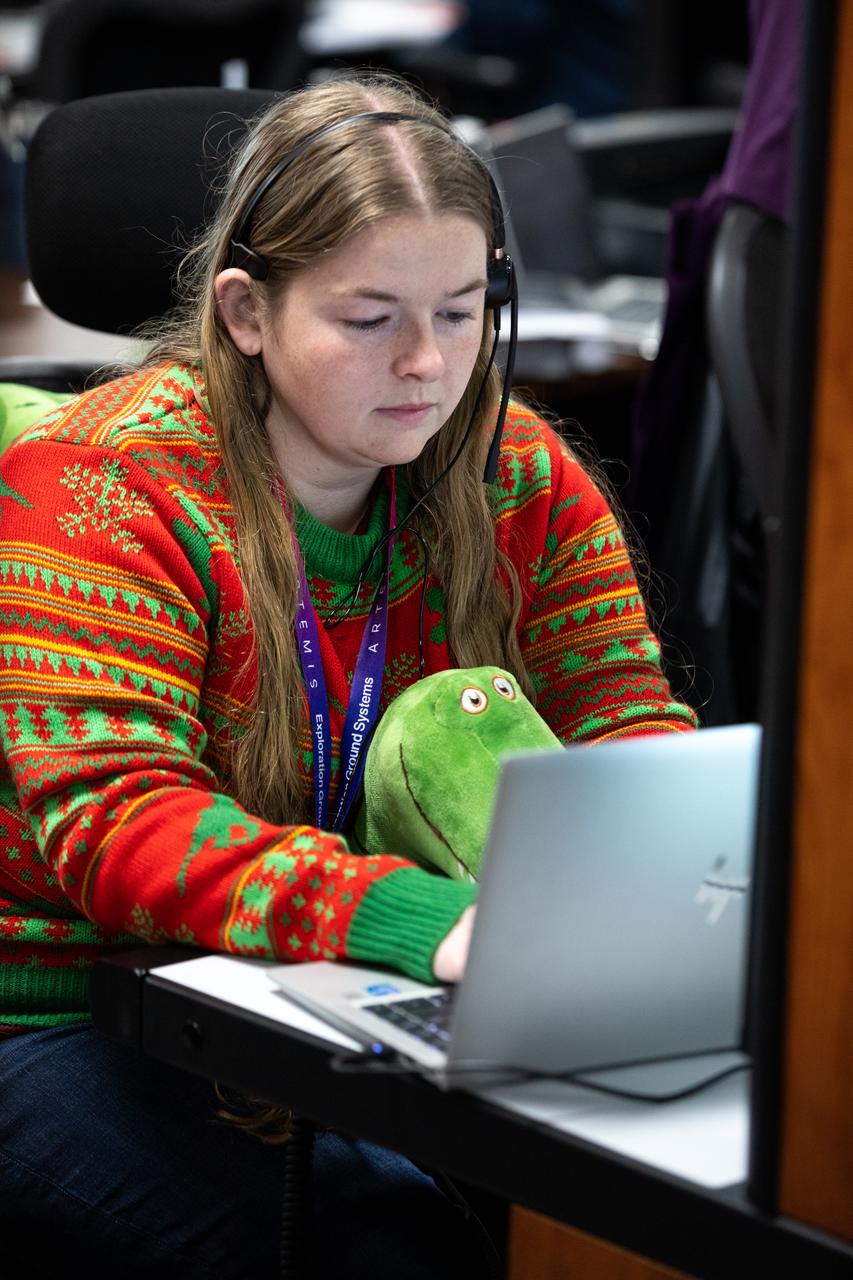
Members of the Artemis launch team participate in a terminal countdown simulation for Artemis II in Firing Room 1 inside the Launch Control Center at NASA’s Kennedy Space Center in Florida on Thursday, Dec. 12, 2024. Four astronauts will venture around the Moon on Artemis II, the first crewed mission on NASA’s path to establishing a long-term presence for science and exploration through Artemis.
Members of the Artemis launch team participate in a terminal countdown simulation for Artemis II in Firing Room 1 inside the Launch Control Center at NASA’s Kennedy Space Center in Florida on Thursday, Dec. 12, 2024. Four astronauts will venture around the Moon on Artemis II, the first crewed mission on NASA’s path to establishing a long-term presence for science and exploration through Artemis.
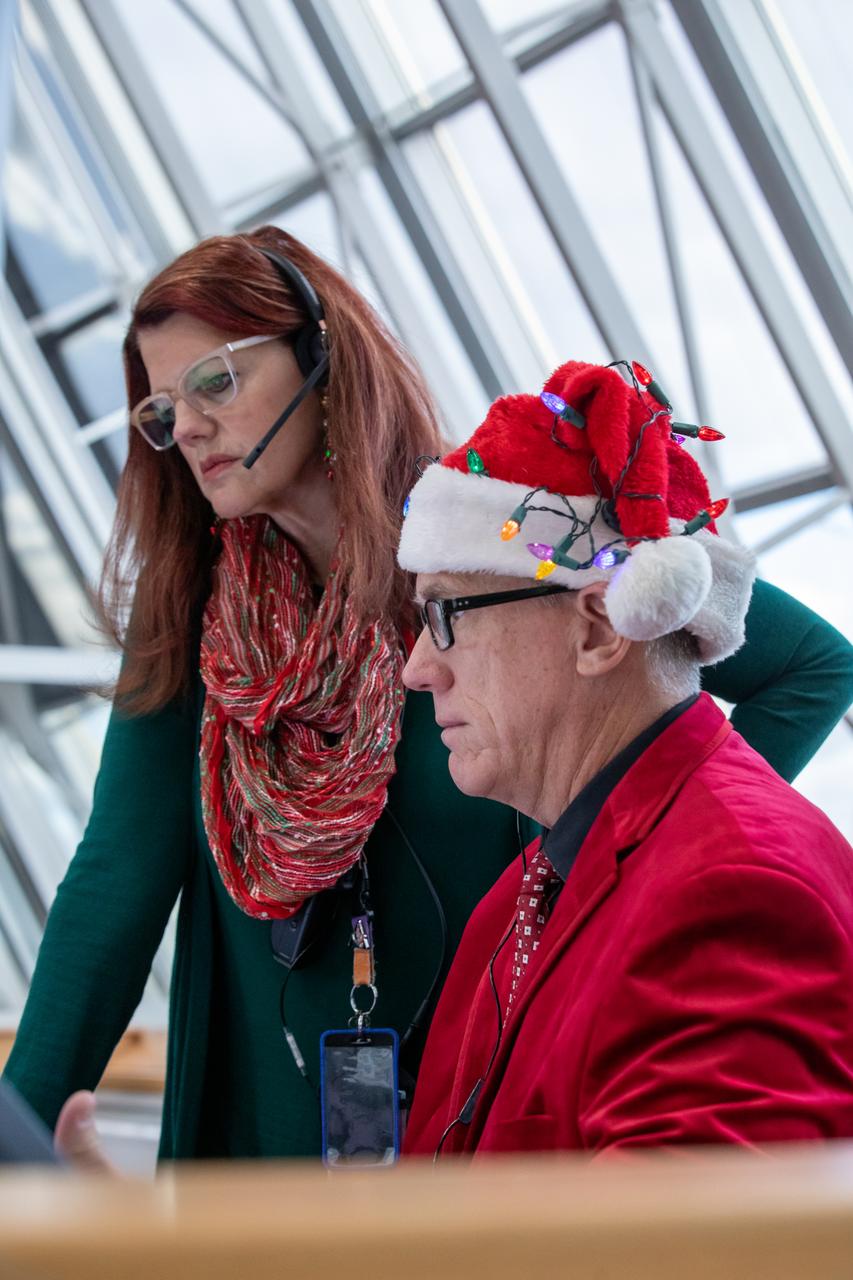
Charlie Blackwell-Thompson, at left, NASA Artemis launch director; and Jeremy Graeber, assistant Artemis launch director, monitor the terminal countdown simulation for the Artemis II mission inside Firing Room at the Launch Control Center at NASA’s Kennedy Space Center in Florida on Thursday, Dec. 12, 2024. Four astronauts will venture around the Moon on Artemis II, the first crewed mission on NASA’s path to establishing a long-term presence for science and exploration through Artemis.
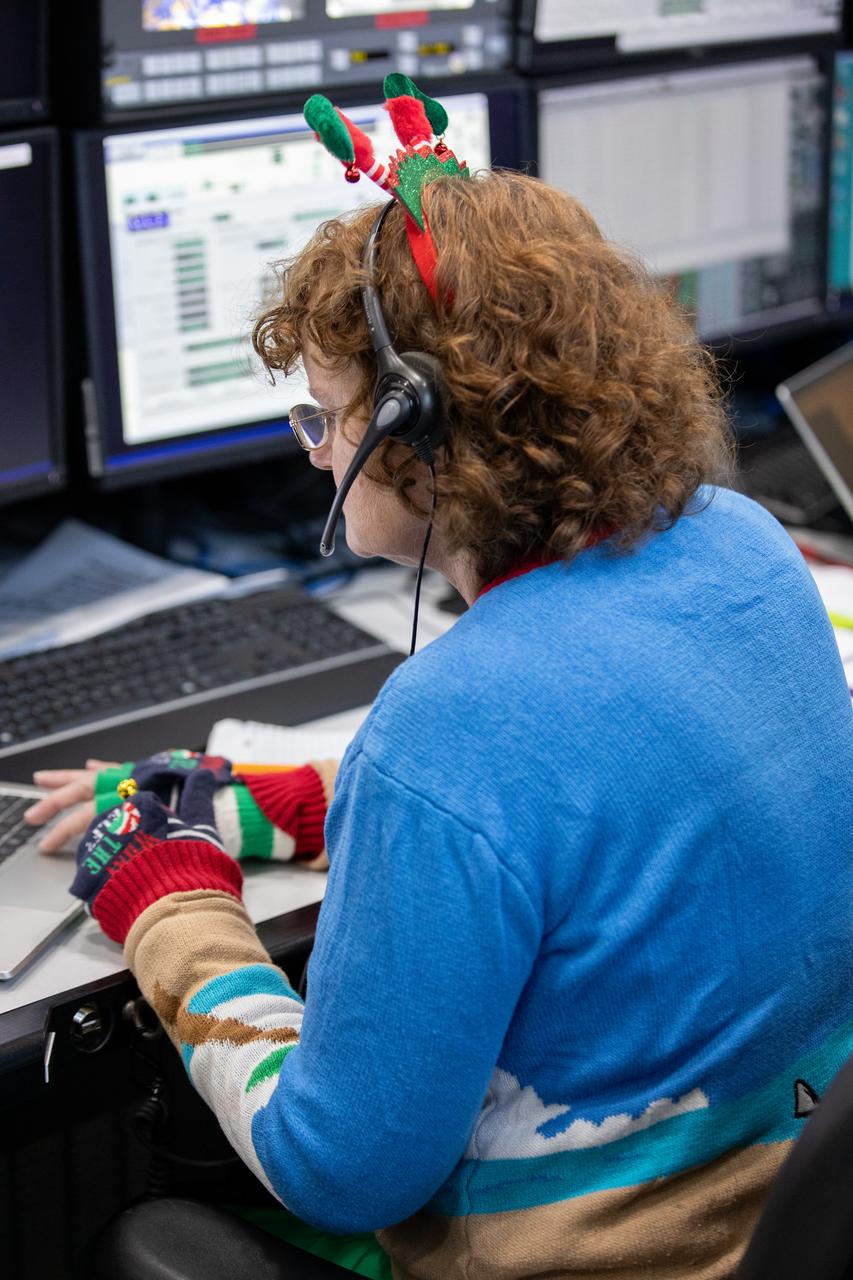
Members of the Artemis launch team participate in a terminal countdown simulation for Artemis II in Firing Room 1 inside the Launch Control Center at NASA’s Kennedy Space Center in Florida on Thursday, Dec. 12, 2024. Four astronauts will venture around the Moon on Artemis II, the first crewed mission on NASA’s path to establishing a long-term presence for science and exploration through Artemis.
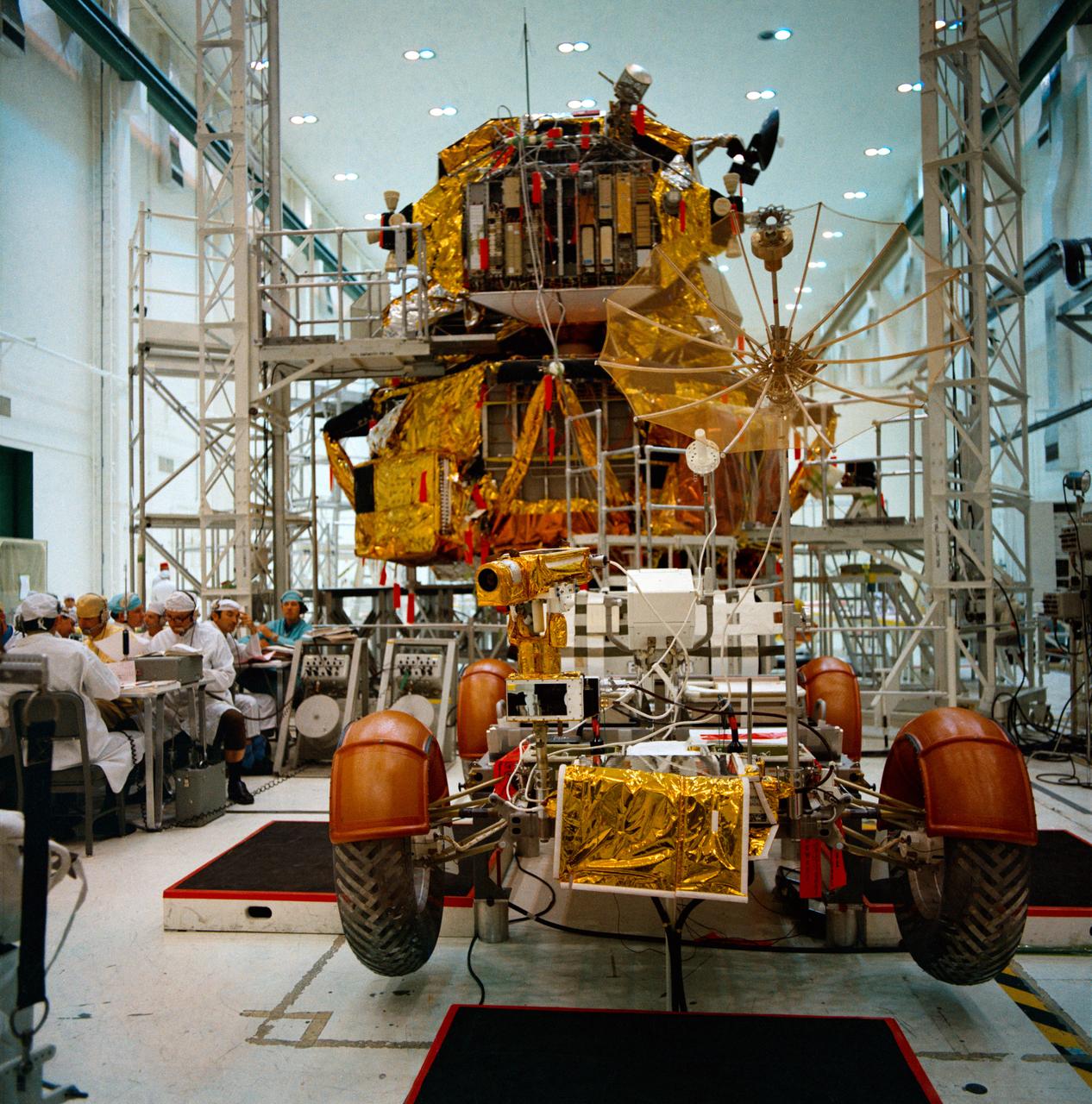
S71-30542 (21 April 1971) --- An overall view of the Apollo 15 Lunar Roving Vehicle (LRV) and the Lunar Module (LM) during simulations at the Kennedy Space Center (KSC). Astronauts David R. Scott, commander, and James B. Irwin, lunar module pilot, will man the LRV on the lunar surface during their August 1971 traverses. Rover 1 will permit the astronauts to cover a larger area of the moon for exploration and sample collecting than on previous missions.
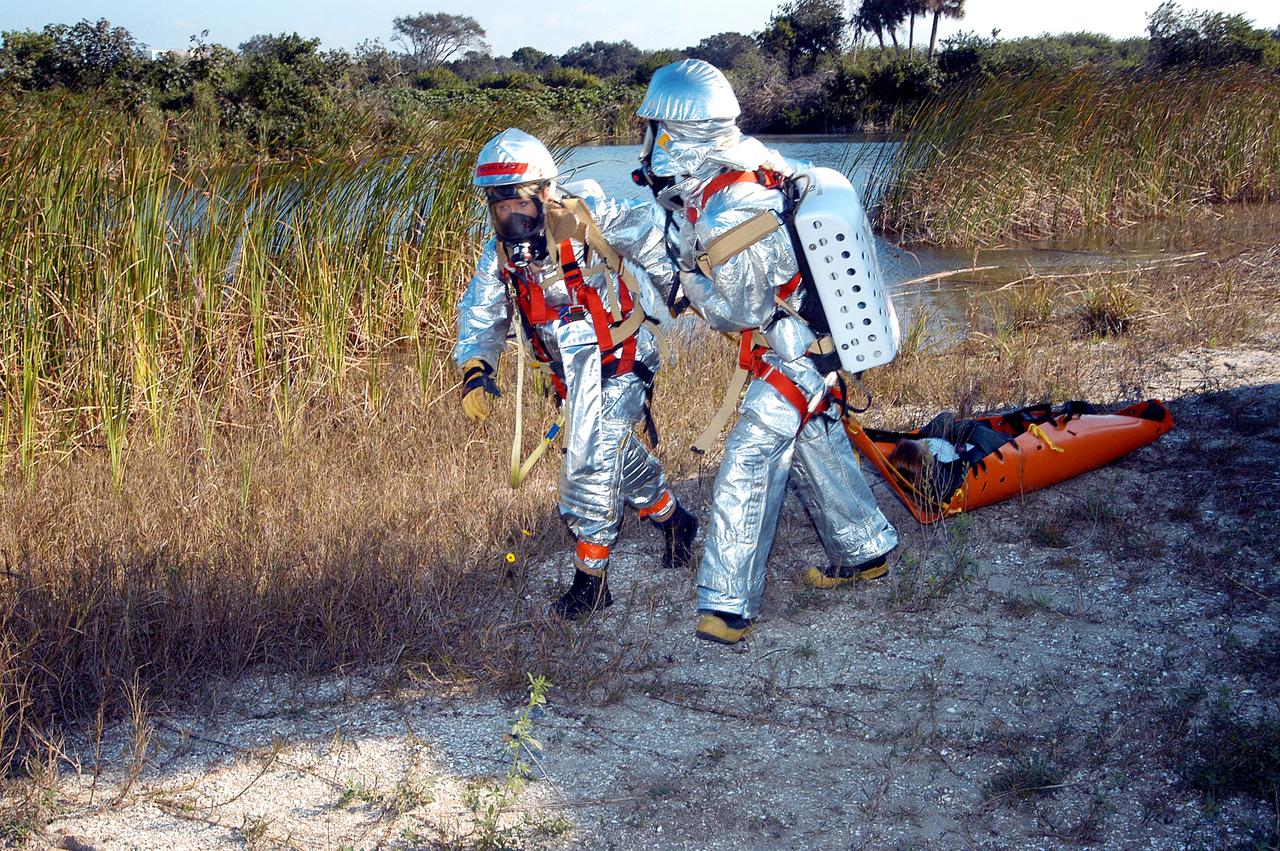
KENNEDY SPACE CENTER, FLA. - Emergency crew members transport an “injured” astronaut during a “Mode VII” emergency landing simulation at Kennedy Space Center. The purpose of the Mode VII is to exercise emergency preparedness personnel, equipment and facilities in rescuing astronauts from a downed orbiter and providing immediate medical attention. This simulation presents an orbiter that has crashed short of the Shuttle Landing Facility in a wooded area 2-1/2 miles south of Runway 33. Emergency crews are responding to the volunteer astronauts who are simulating various injuries. Rescuers must remove the crew, provide triage and transport to hospitals those who need further treatment. Local hospitals are participating in the exercise.
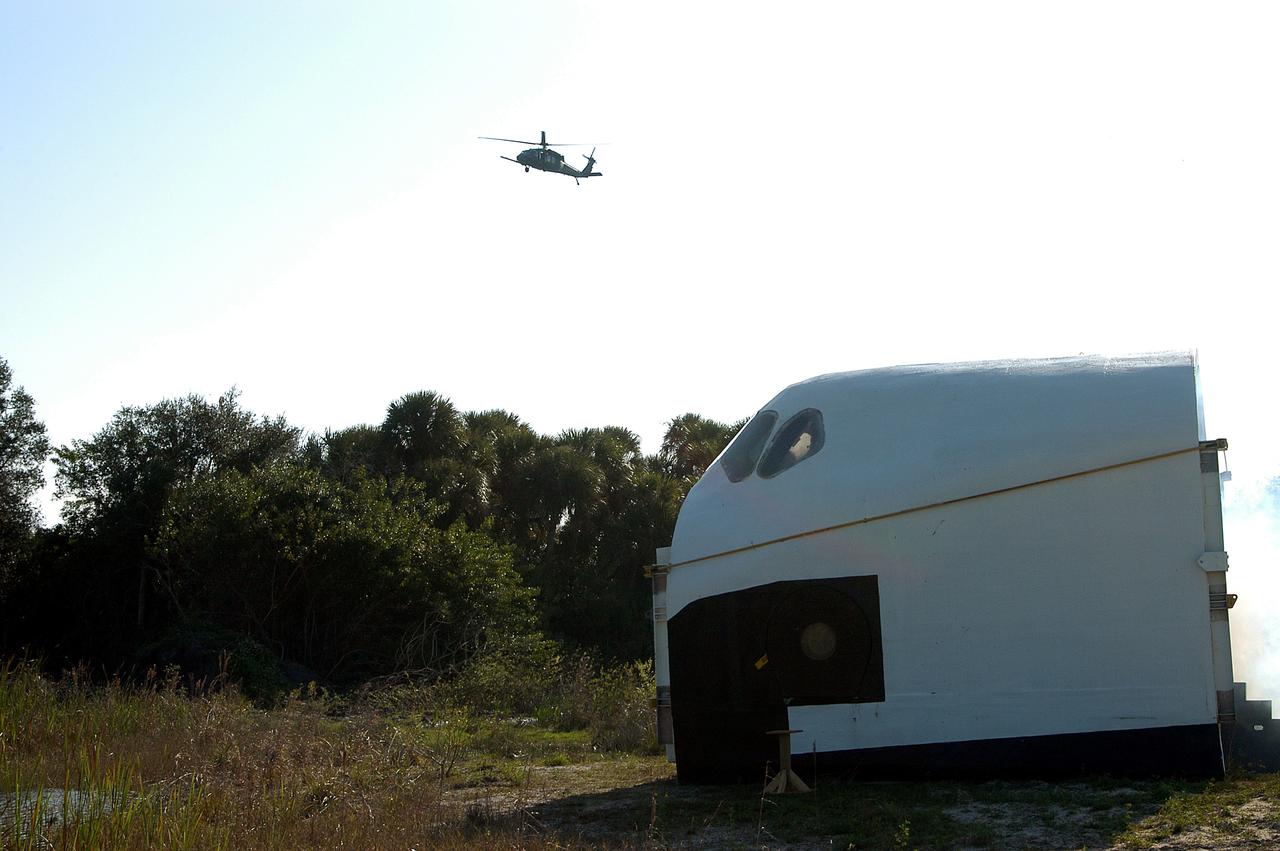
KENNEDY SPACE CENTER, FLA. - A helicopter approaches an orbiter crew compartment mock-up as part of a “Mode VII” emergency landing simulation at Kennedy Space Center. The purpose is to exercise emergency preparedness personnel, equipment and facilities in rescuing astronauts from a downed orbiter and providing immediate medical attention. This simulation presents an orbiter that has crashed short of the Shuttle Landing Facility in a wooded area 2-1/2 miles south of Runway 33. Emergency crews will respond to the volunteer “astronauts” simulating various injuries. Rescuers must remove the crew, provide triage and transport to hospitals those who need further treatment. Local hospitals are participating in the exercise.
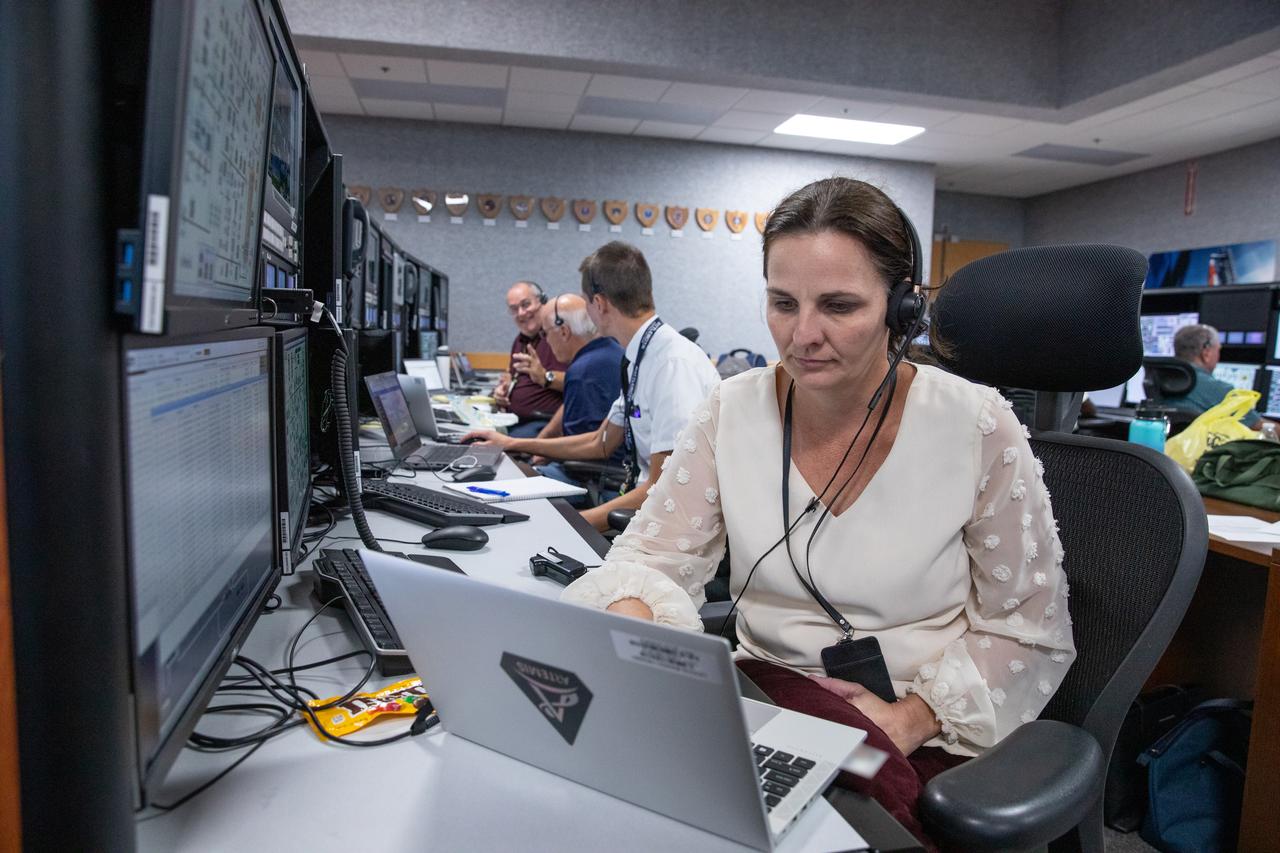
Members of the Artemis II launch team, including personnel with NASA’s Exploration Ground Systems and contractor Jacobs, monitor activities during the Artemis II terminal countdown simulation inside Firing Room 1 in the Launch Control Center at NASA’s Kennedy Space Center in Florida on Monday, Sept. 11, 2023. This is part of a series of simulations to help the team prepare for the launch of Artemis II, the first mission with astronauts under Artemis that will test and check out all of the Orion spacecraft’s systems needed for future crewed missions.
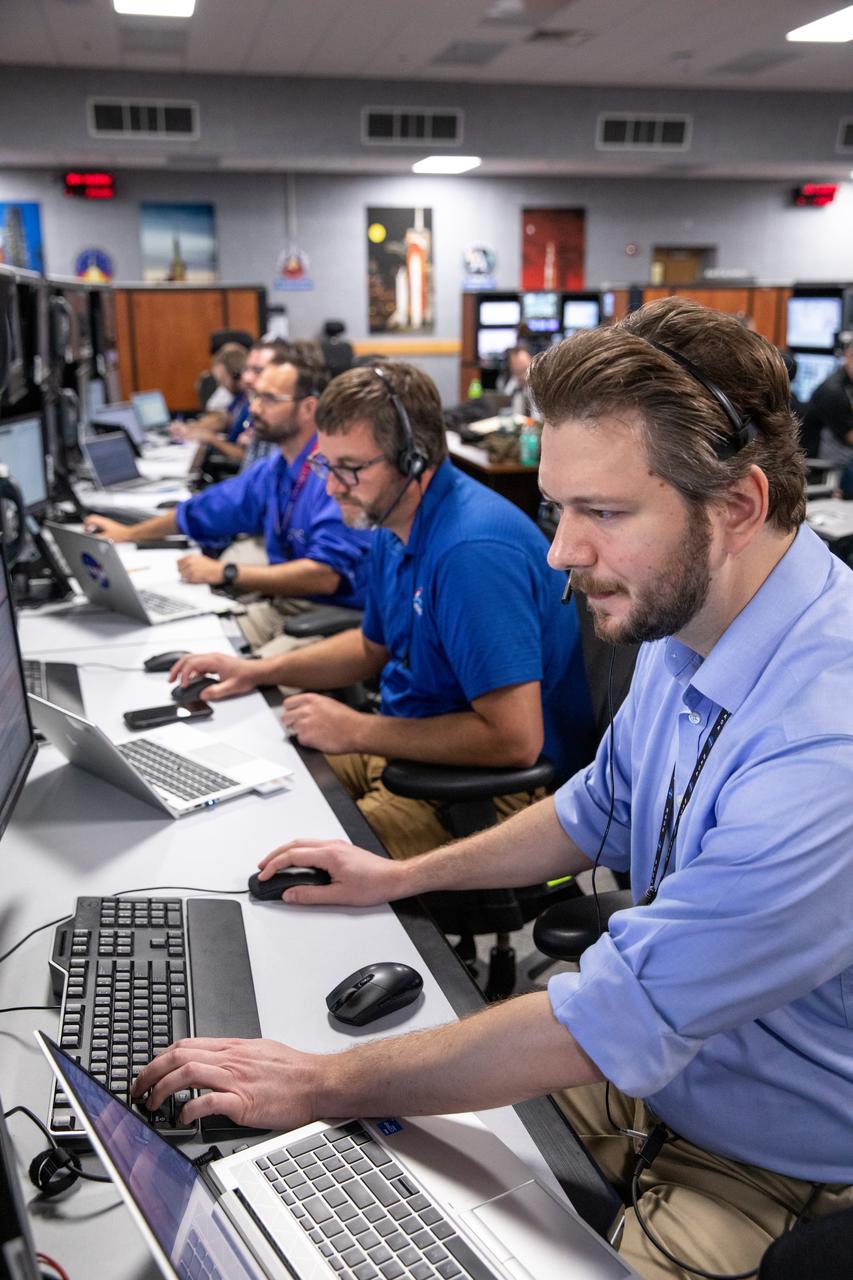
Members of the Artemis II launch team, including personnel with NASA’s Exploration Ground Systems and contractor Jacobs, monitor activities during the Artemis II terminal countdown simulation inside Firing Room 1 in the Launch Control Center at NASA’s Kennedy Space Center in Florida on Monday, Sept. 11, 2023. This is part of a series of simulations to help the team prepare for the launch of Artemis II, the first mission with astronauts under Artemis that will test and check out all of the Orion spacecraft’s systems needed for future crewed missions.
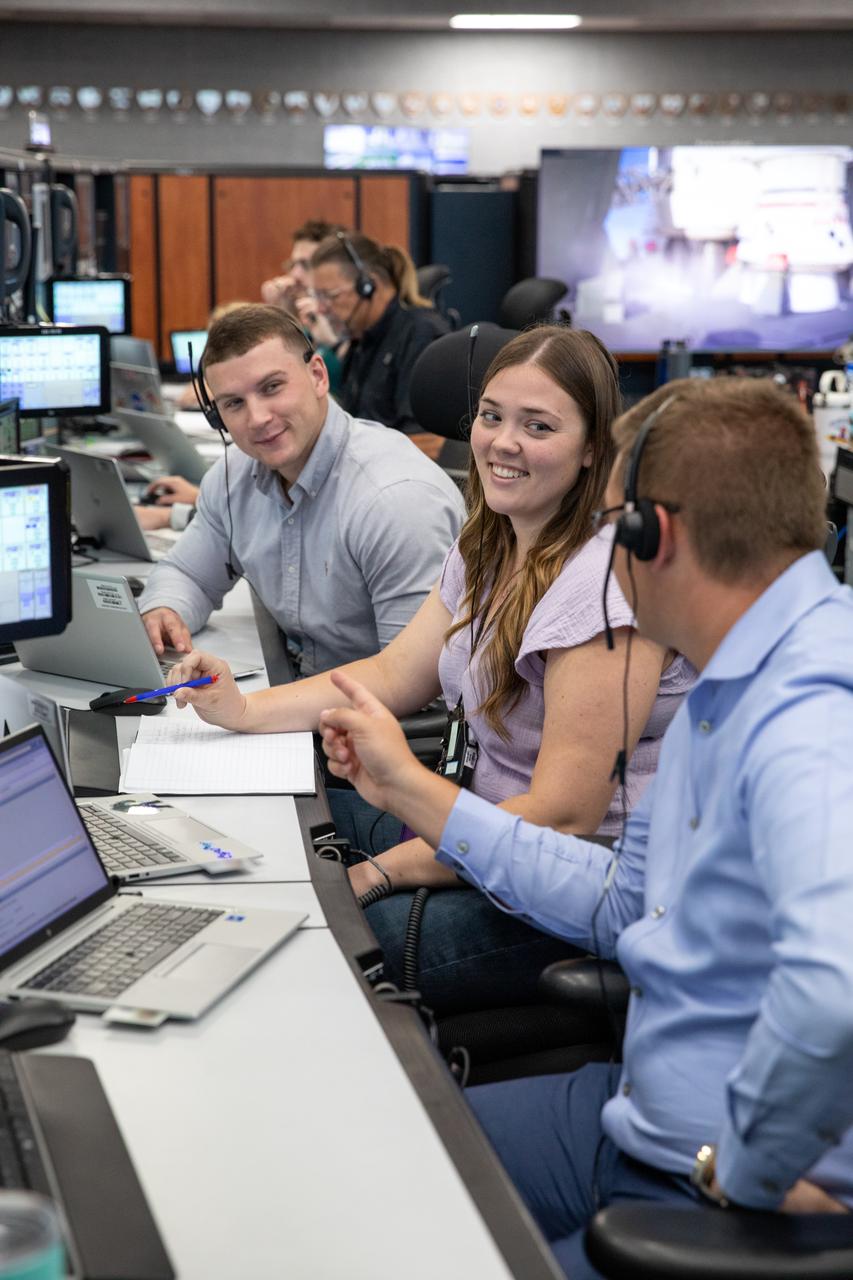
Members of the Artemis II launch team, including personnel with NASA’s Exploration Ground Systems and contractor Jacobs, monitor activities during the Artemis II terminal countdown simulation inside Firing Room 1 in the Launch Control Center at NASA’s Kennedy Space Center in Florida on Monday, Sept. 11, 2023. This is part of a series of simulations to help the team prepare for the launch of Artemis II, the first mission with astronauts under Artemis that will test and check out all of the Orion spacecraft’s systems needed for future crewed missions.

Members of the Artemis II launch team, including personnel with NASA’s Exploration Ground Systems and contractor Jacobs, monitor activities during the Artemis II terminal countdown simulation inside Firing Room 1 in the Launch Control Center at NASA’s Kennedy Space Center in Florida on Monday, Sept. 11, 2023. This is part of a series of simulations to help the team prepare for the launch of Artemis II, the first mission with astronauts under Artemis that will test and check out all of the Orion spacecraft’s systems needed for future crewed missions.
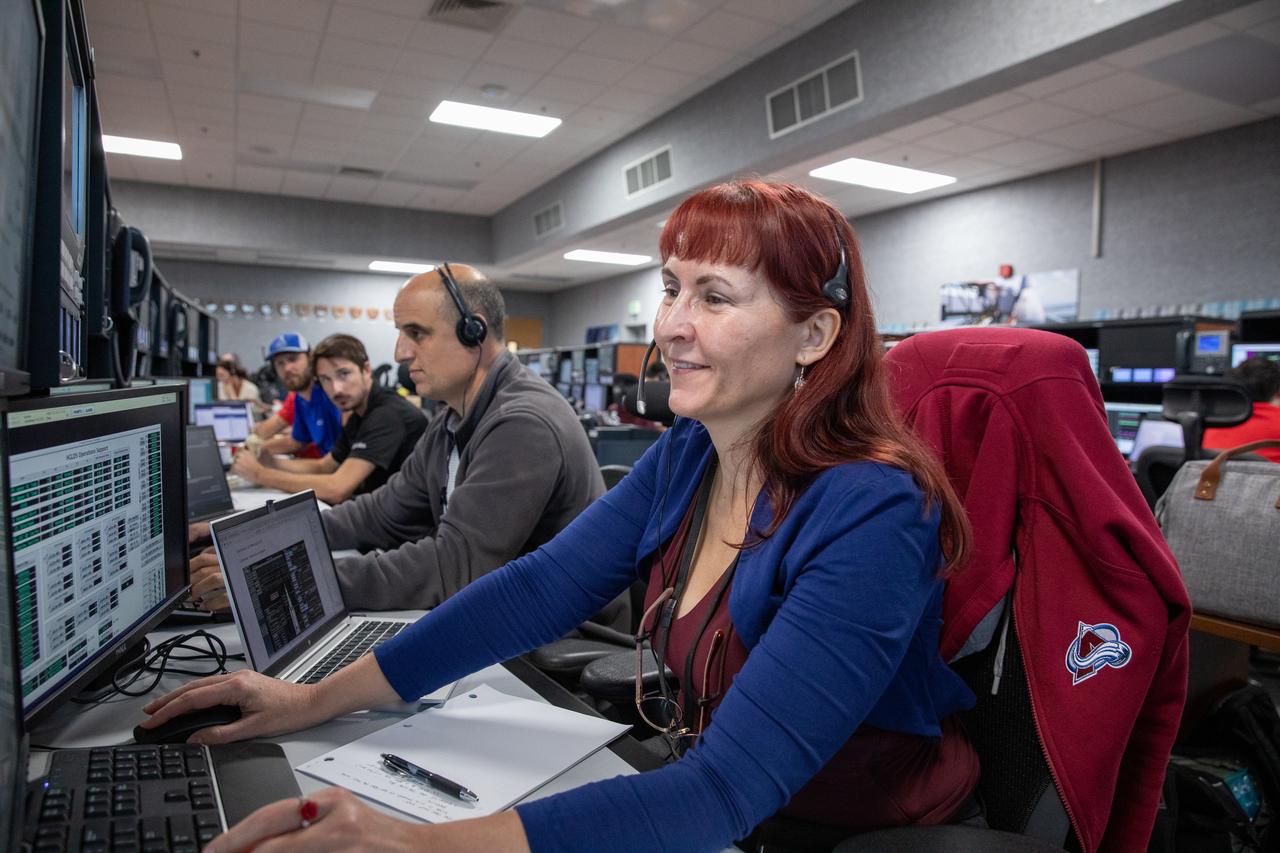
Members of the Artemis II launch team, including personnel with NASA’s Exploration Ground Systems and contractor Jacobs, monitor activities during the Artemis II terminal countdown simulation inside Firing Room 1 in the Launch Control Center at NASA’s Kennedy Space Center in Florida on Monday, Sept. 11, 2023. This is part of a series of simulations to help the team prepare for the launch of Artemis II, the first mission with astronauts under Artemis that will test and check out all of the Orion spacecraft’s systems needed for future crewed missions.
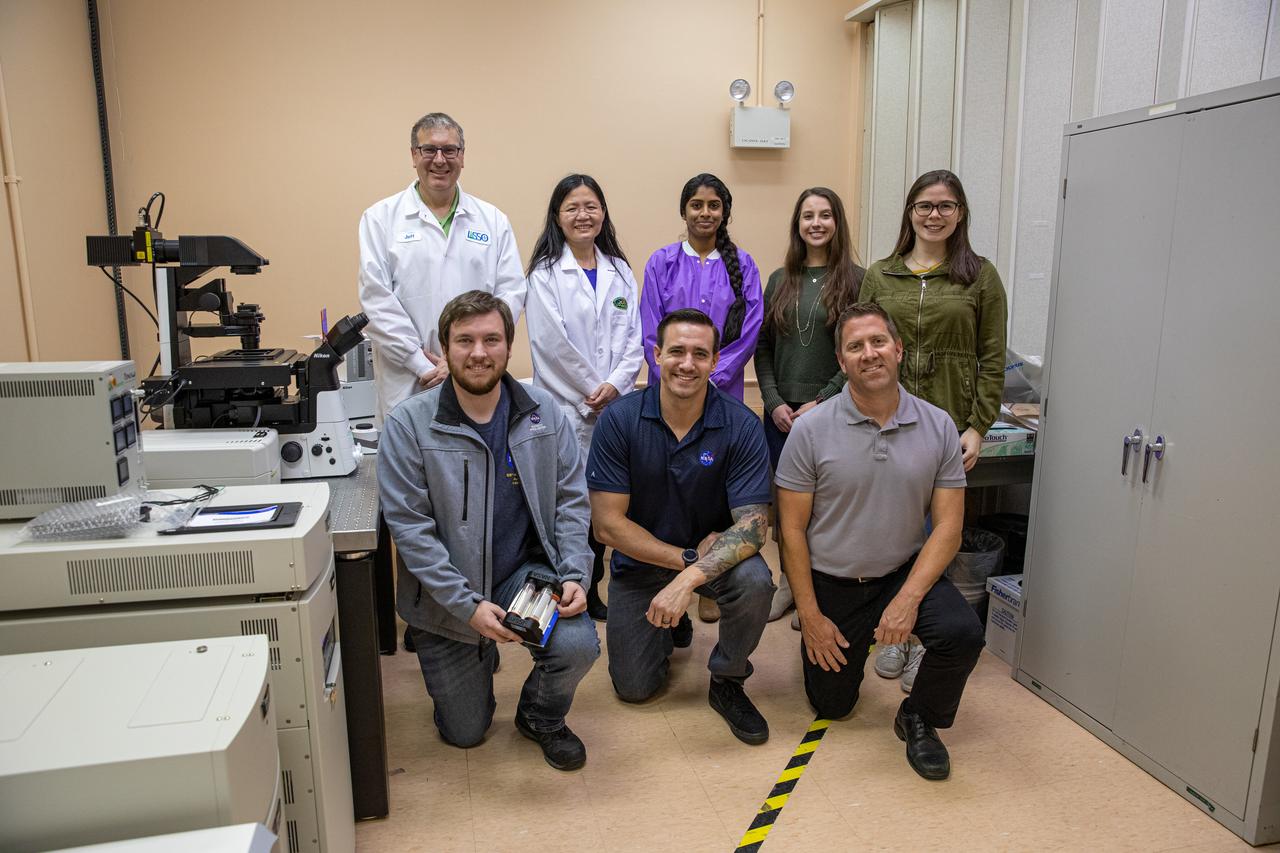
Researchers are in the Microgravity Simulation Support Facility (MSSF) inside the Neil Armstrong Operations and Checkout building at NASA’s Kennedy Space Center in Florida on Feb. 11, 2020. In front, from left, are Jonathan Gleeson, aerospace engineer on the LASSO contract; Jason Fischer, a research and development scientist on the LASSO contract; and Ralph Nacca, aerospace flight systems. In back, from left, are Jeffrey Richards, a payload research and science coordinator on the LASSO contract; Dr. Ye Zhang, a project scientist; Dr. Srujana Neelam, a NASA post-doctoral fellow; Jessica Hellein, NASA intern; and Emily Keith, NASA intern. The facility was developed to provide ground simulation capability to the U.S. research community in order to supplement the limited opportunities to access the International Space Station and other platforms for microgravity research. The MSSF is designed to support biological research on microorganisms, cells, tissues, small plants and small animals. The simulator provides NASA with an alternative platform for microgravity research and creates the opportunity to conduct experiments on the space station in parallel with conditions of simulated microgravity on the ground.
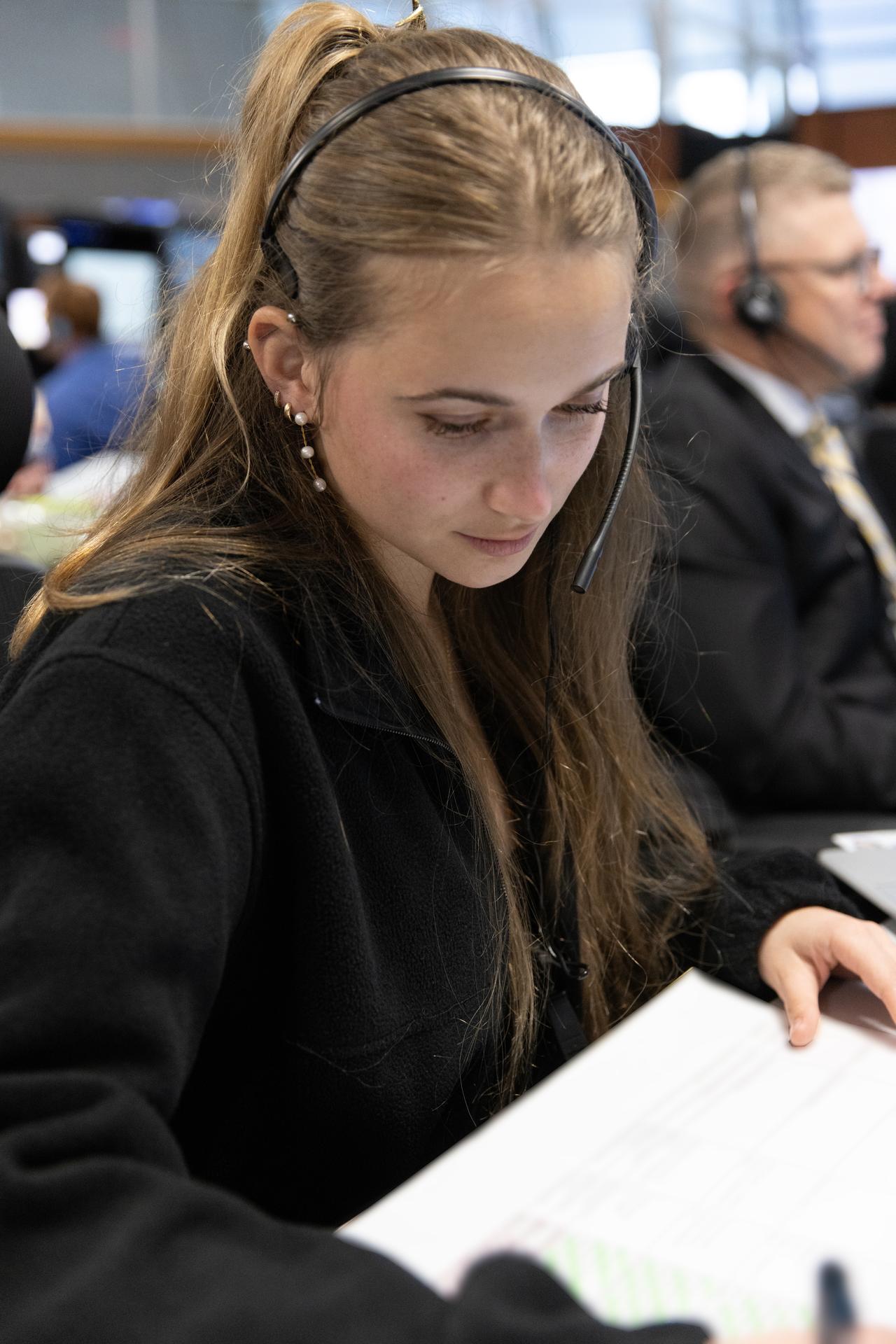
Artemis launch team members participate in an integrated launch countdown simulation for Artemis II inside Firing Room 1 of the Launch Control Center on Wednesday, Dec. 10, 2025. The training exercise involved engineers from Kennedy, Marshall Space Flight Center in Huntsville, Alabama, and Johnson Space Center in Houston coming together to rehearse all aspects of the launch countdown, from cryogenic loading – filling tanks in the SLS (Space Launch System) rocket’s core stage with liquid hydrogen and liquid oxygen – to liftoff. For Artemis II, four astronauts will venture around the Moon, the first crewed mission on NASA’s path to establishing a long-term presence for science and exploration through Artemis.
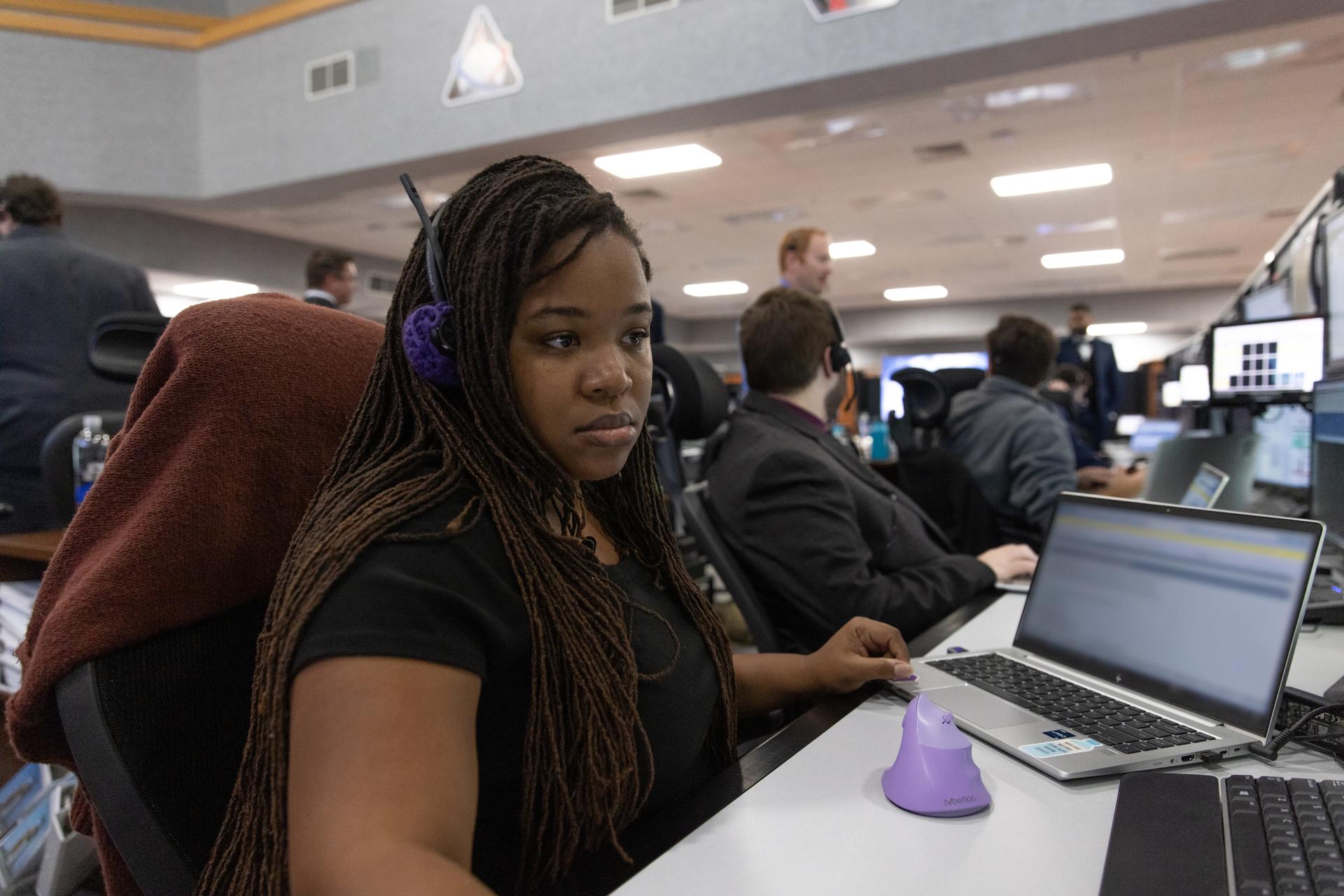
Artemis launch team members participate in an integrated launch countdown simulation for Artemis II inside Firing Room 1 of the Launch Control Center on Wednesday, Dec. 10, 2025. The training exercise involved engineers from Kennedy, Marshall Space Flight Center in Huntsville, Alabama, and Johnson Space Center in Houston coming together to rehearse all aspects of the launch countdown, from cryogenic loading – filling tanks in the SLS (Space Launch System) rocket’s core stage with liquid hydrogen and liquid oxygen – to liftoff. For Artemis II, four astronauts will venture around the Moon, the first crewed mission on NASA’s path to establishing a long-term presence for science and exploration through Artemis.
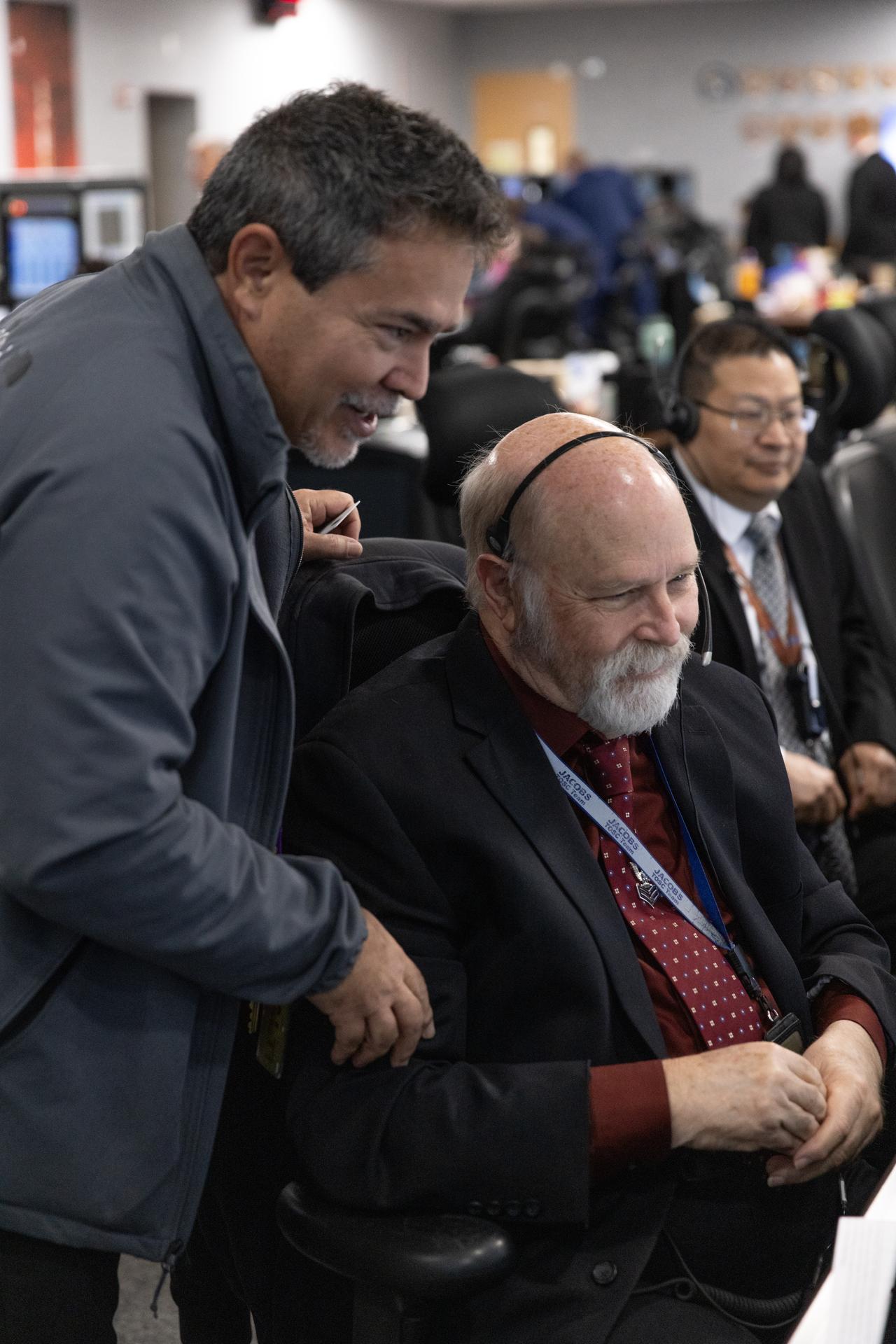
Artemis launch team members participate in an integrated launch countdown simulation for Artemis II inside Firing Room 1 of the Launch Control Center on Wednesday, Dec. 10, 2025. The training exercise involved engineers from Kennedy, Marshall Space Flight Center in Huntsville, Alabama, and Johnson Space Center in Houston coming together to rehearse all aspects of the launch countdown, from cryogenic loading – filling tanks in the SLS (Space Launch System) rocket’s core stage with liquid hydrogen and liquid oxygen – to liftoff. For Artemis II, four astronauts will venture around the Moon, the first crewed mission on NASA’s path to establishing a long-term presence for science and exploration through Artemis.
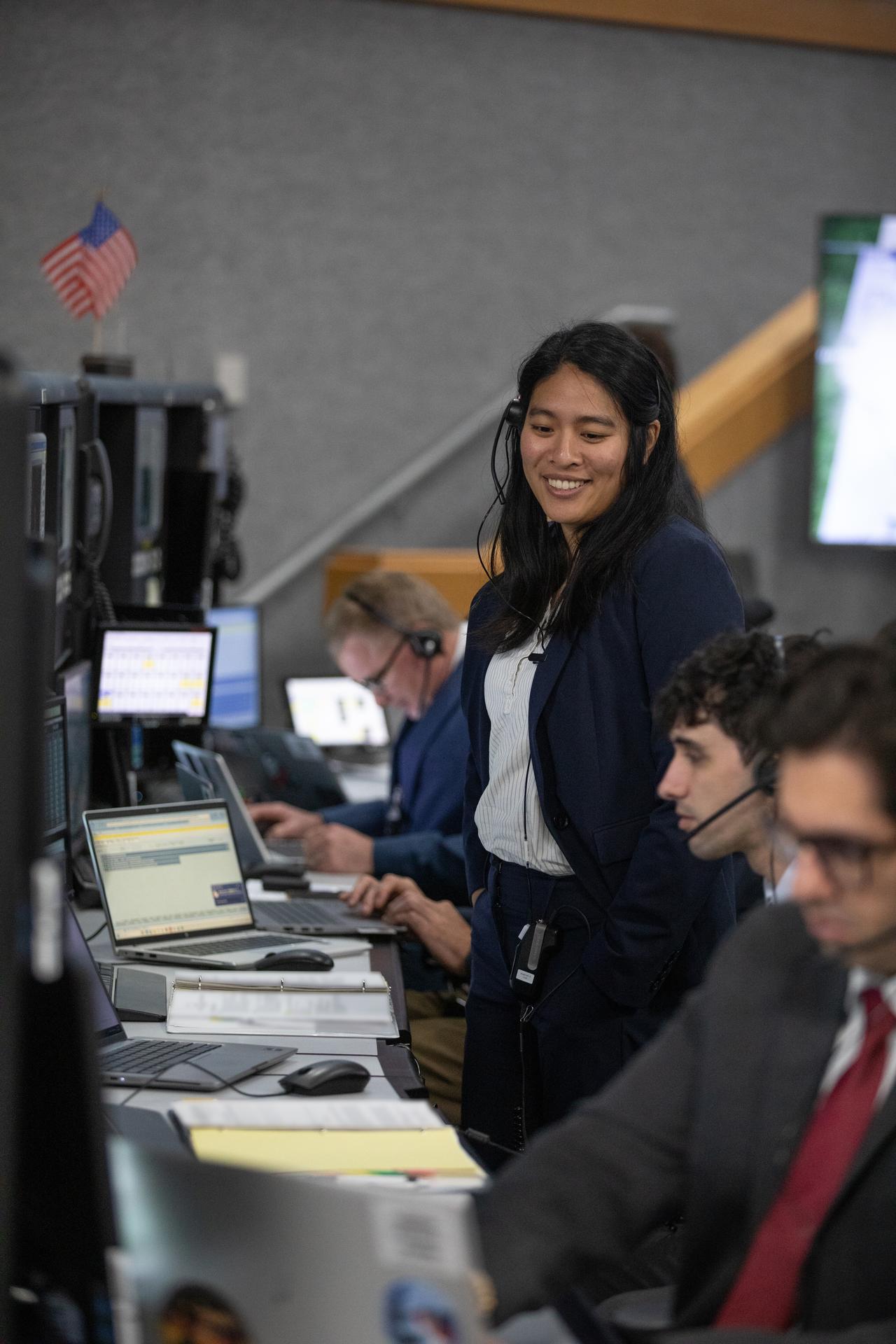
Artemis launch team members participate in an integrated launch countdown simulation for Artemis II inside Firing Room 1 of the Launch Control Center on Wednesday, Dec. 10, 2025. The training exercise involved engineers from Kennedy, Marshall Space Flight Center in Huntsville, Alabama, and Johnson Space Center in Houston coming together to rehearse all aspects of the launch countdown, from cryogenic loading – filling tanks in the SLS (Space Launch System) rocket’s core stage with liquid hydrogen and liquid oxygen – to liftoff. For Artemis II, four astronauts will venture around the Moon, the first crewed mission on NASA’s path to establishing a long-term presence for science and exploration through Artemis.
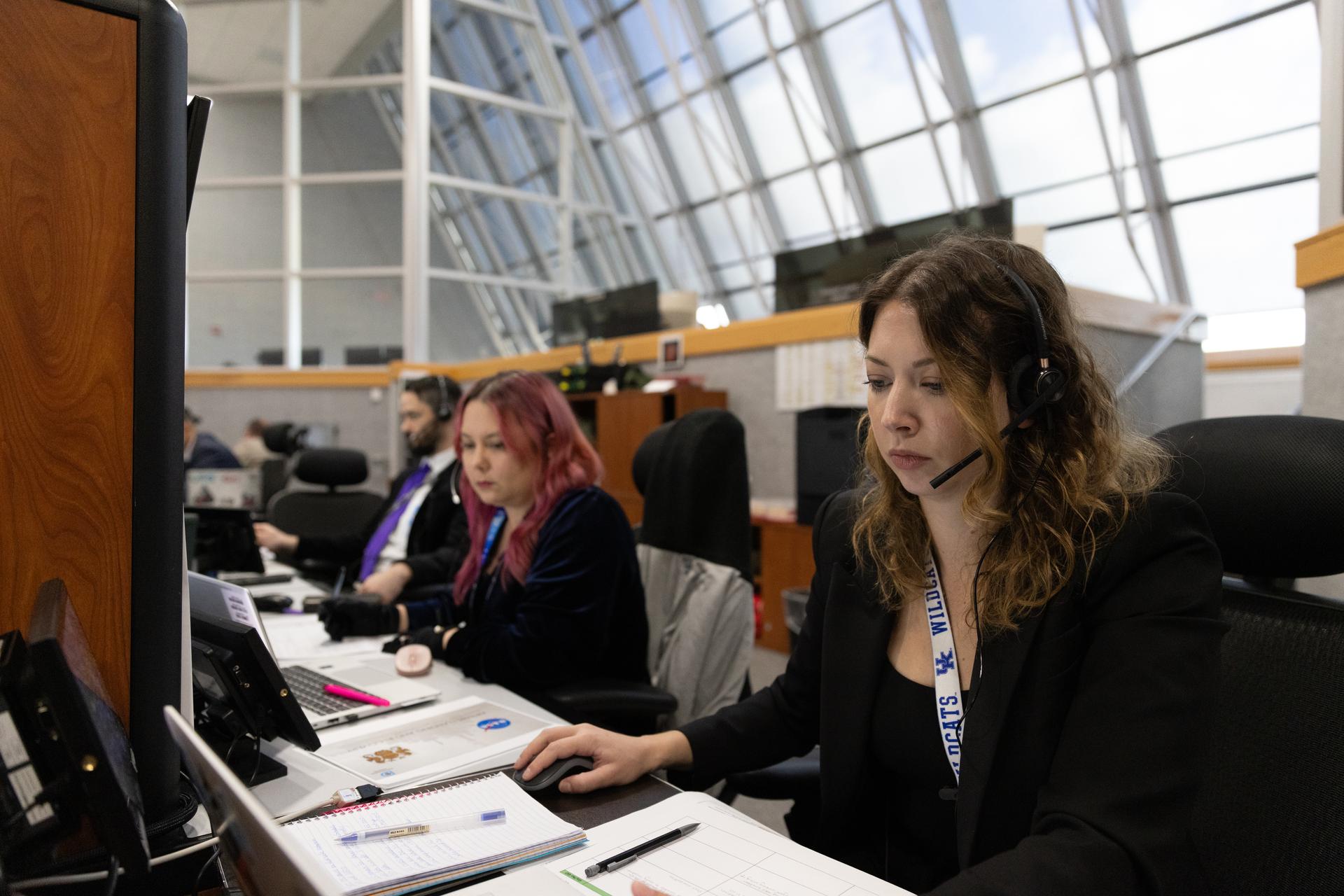
Artemis launch team members participate in an integrated launch countdown simulation for Artemis II inside Firing Room 1 of the Launch Control Center on Wednesday, Dec. 10, 2025. The training exercise involved engineers from Kennedy, Marshall Space Flight Center in Huntsville, Alabama, and Johnson Space Center in Houston coming together to rehearse all aspects of the launch countdown, from cryogenic loading – filling tanks in the SLS (Space Launch System) rocket’s core stage with liquid hydrogen and liquid oxygen – to liftoff. For Artemis II, four astronauts will venture around the Moon, the first crewed mission on NASA’s path to establishing a long-term presence for science and exploration through Artemis.
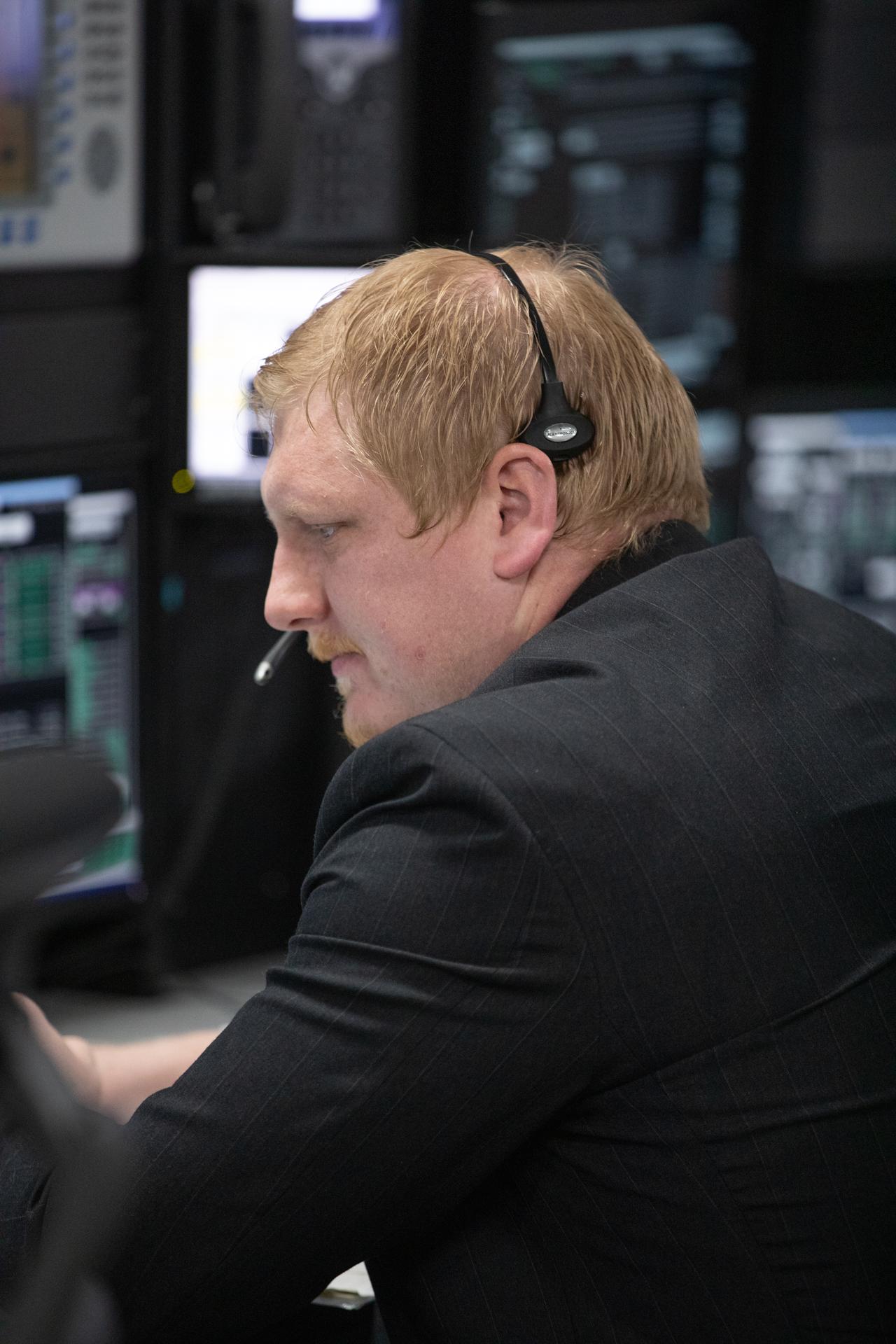
Artemis launch team members participate in an integrated launch countdown simulation for Artemis II inside Firing Room 1 of the Launch Control Center on Wednesday, Dec. 10, 2025. The training exercise involved engineers from Kennedy, Marshall Space Flight Center in Huntsville, Alabama, and Johnson Space Center in Houston coming together to rehearse all aspects of the launch countdown, from cryogenic loading – filling tanks in the SLS (Space Launch System) rocket’s core stage with liquid hydrogen and liquid oxygen – to liftoff. For Artemis II, four astronauts will venture around the Moon, the first crewed mission on NASA’s path to establishing a long-term presence for science and exploration through Artemis.
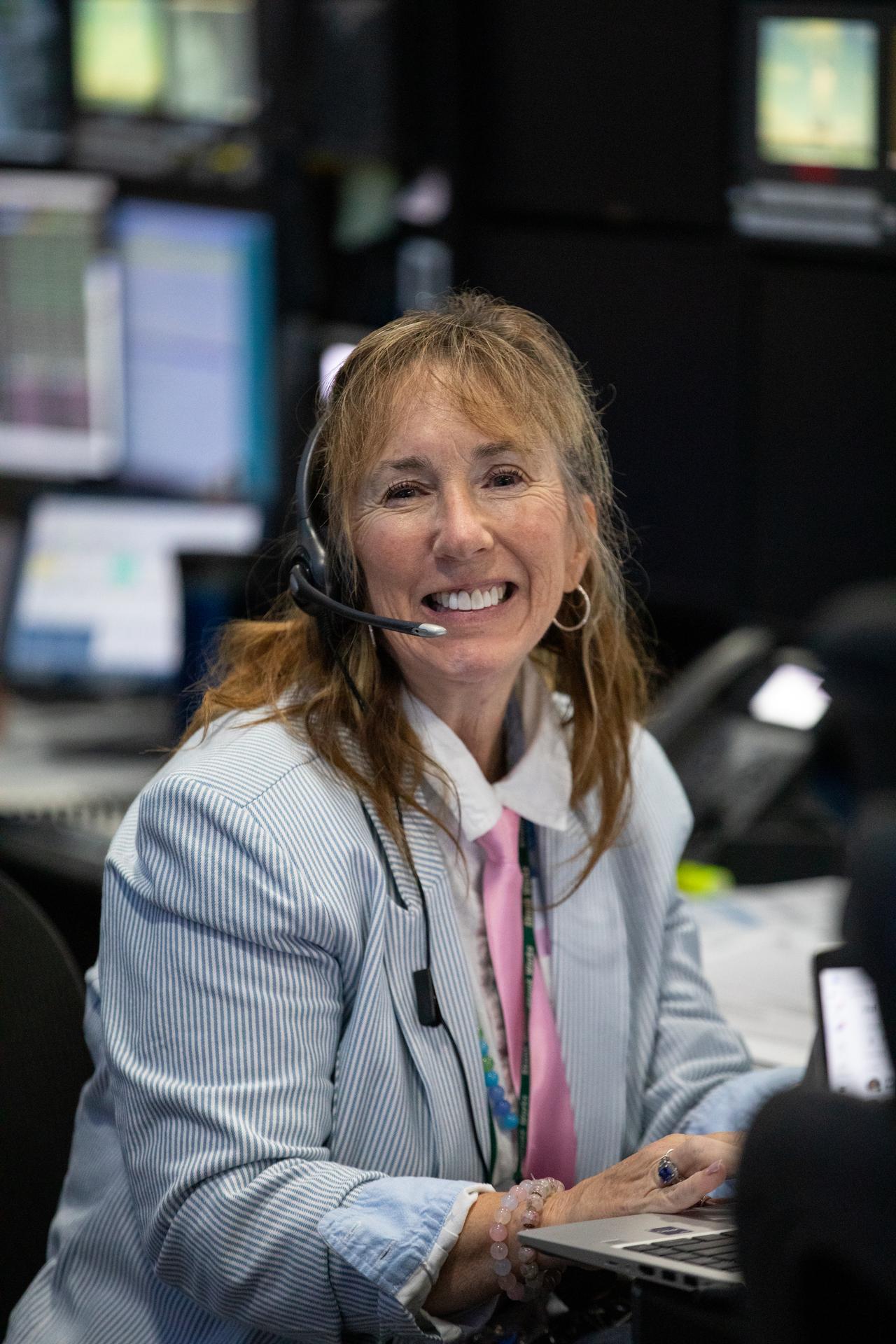
Artemis launch team members participate in an integrated launch countdown simulation for Artemis II inside Firing Room 1 of the Launch Control Center on Wednesday, Dec. 10, 2025. The training exercise involved engineers from Kennedy, Marshall Space Flight Center in Huntsville, Alabama, and Johnson Space Center in Houston coming together to rehearse all aspects of the launch countdown, from cryogenic loading – filling tanks in the SLS (Space Launch System) rocket’s core stage with liquid hydrogen and liquid oxygen – to liftoff. For Artemis II, four astronauts will venture around the Moon, the first crewed mission on NASA’s path to establishing a long-term presence for science and exploration through Artemis.
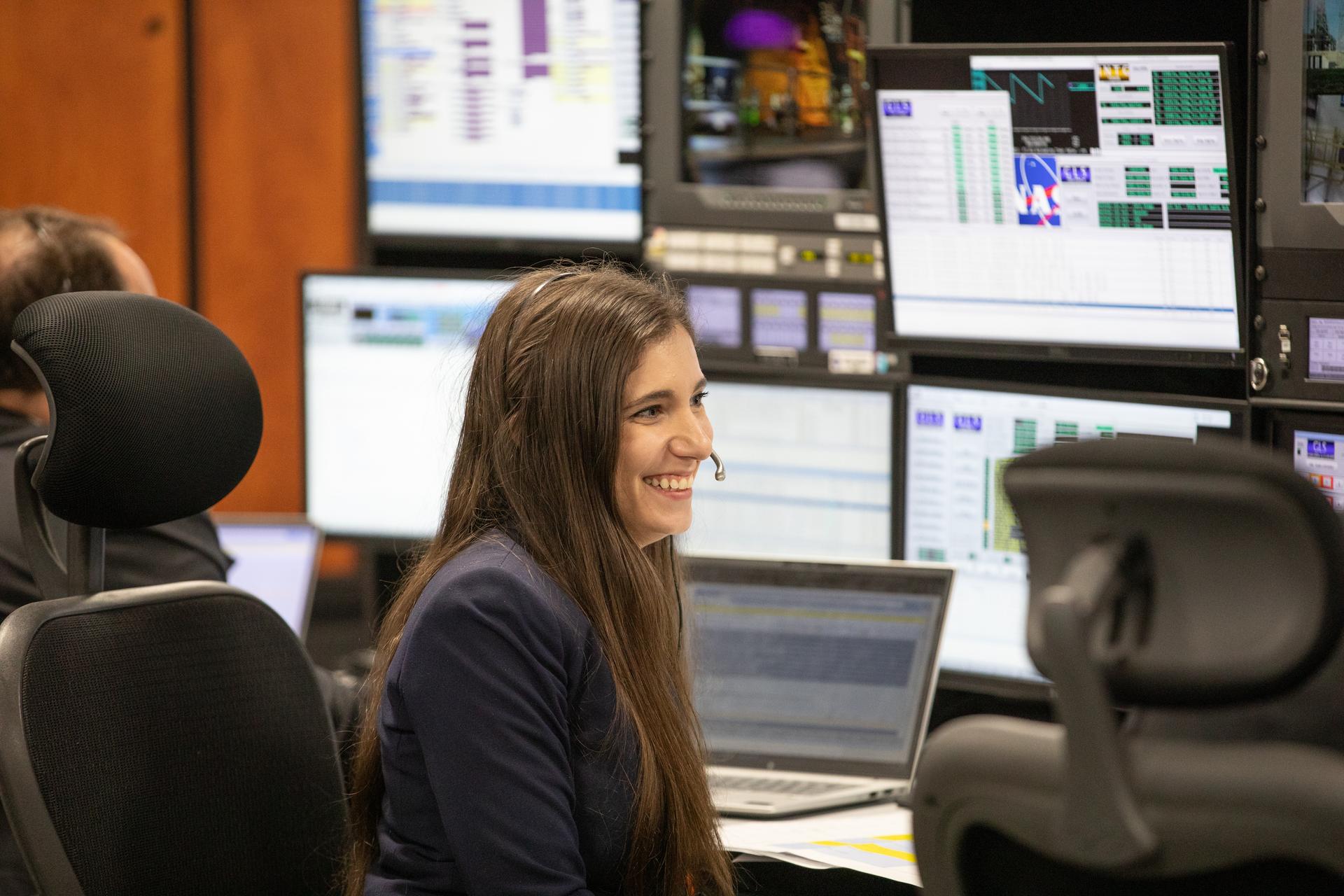
Artemis launch team members participate in an integrated launch countdown simulation for Artemis II inside Firing Room 1 of the Launch Control Center on Wednesday, Dec. 10, 2025. The training exercise involved engineers from Kennedy, Marshall Space Flight Center in Huntsville, Alabama, and Johnson Space Center in Houston coming together to rehearse all aspects of the launch countdown, from cryogenic loading – filling tanks in the SLS (Space Launch System) rocket’s core stage with liquid hydrogen and liquid oxygen – to liftoff. For Artemis II, four astronauts will venture around the Moon, the first crewed mission on NASA’s path to establishing a long-term presence for science and exploration through Artemis.

KENNEDY SPACE CENTER, FLA. - In the Launch Control Center, Robert Holl (left), Landing Recovery directo, and Donald Hammel, from the Shuttle Project Office, are in contact with the leaders of the “Mode VII” emergency landing simulation at Kennedy Space Center. The simulation is being managed and directed from the LCC. The purpose of the Mode VII is to exercise emergency preparedness personnel, equipment and facilities in rescuing astronauts from a downed orbiter and providing immediate medical attention. This simulation presents an orbiter that has crashed short of the Shuttle Landing Facility in a wooded area 2-1/2 miles south of Runway 33. Emergency crews are responding to the volunteer “astronauts” who are simulating various injuries inside the crew compartment mock-up. Rescuers must remove the crew, provide triage and transport to hospitals those who need further treatment. Local hospitals are participating in the exercise.
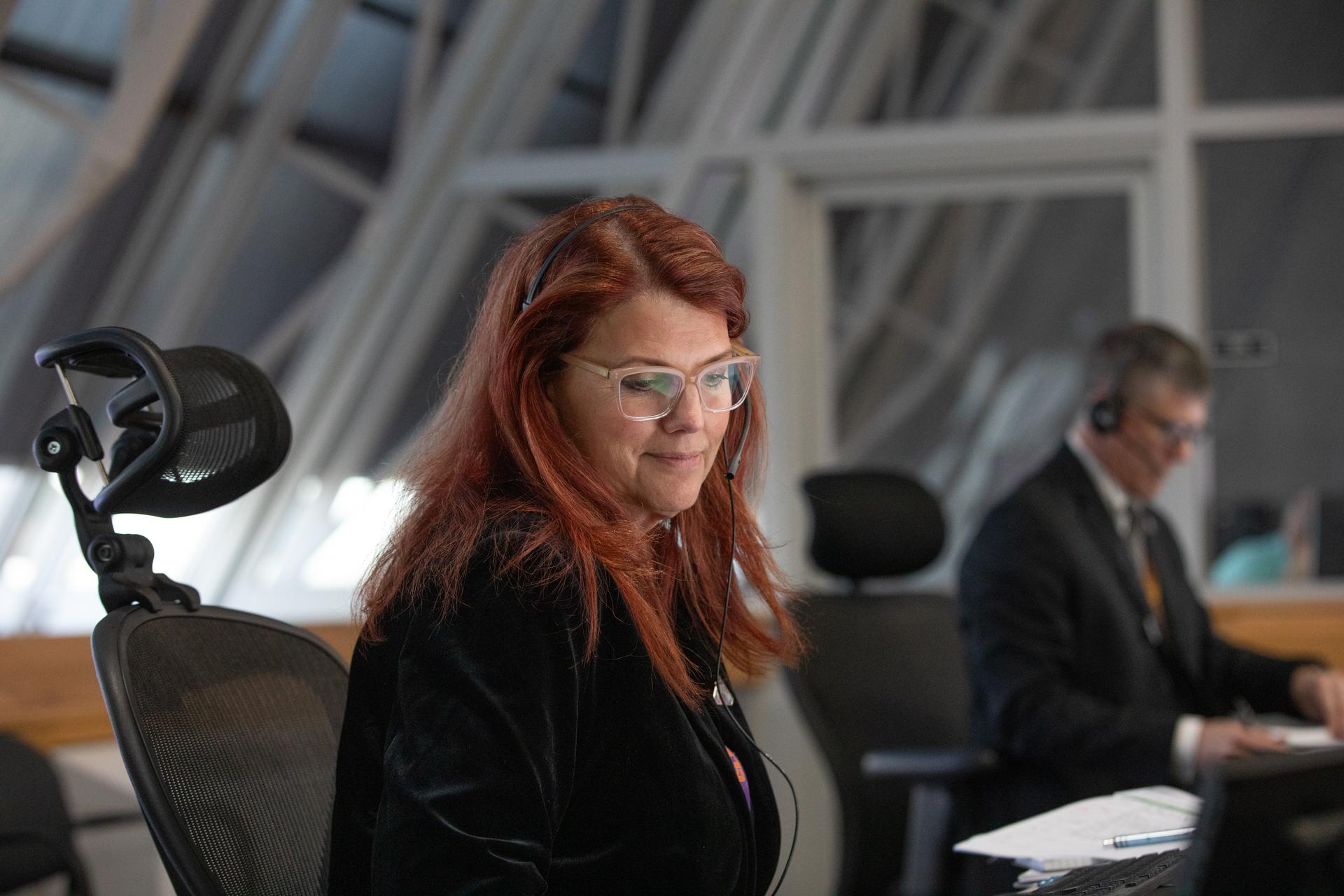
Charlie Blackwell-Thompson, Artemis launch director, Exploration Ground Systems at NASA’s Kennedy Space Center in Florida, participates in an integrated launch countdown simulation for Artemis II inside Firing Room 1 of the Launch Control Center on Wednesday, Dec. 10, 2025. The training exercise involved engineers from Kennedy, Marshall Space Flight Center in Huntsville, Alabama, and Johnson Space Center in Houston coming together to rehearse all aspects of the launch countdown, from cryogenic loading – filling tanks in the SLS (Space Launch System) rocket’s core stage with liquid hydrogen and liquid oxygen – to liftoff. For Artemis II, four astronauts will venture around the Moon, the first crewed mission on NASA’s path to establishing a long-term presence for science and exploration through Artemis.
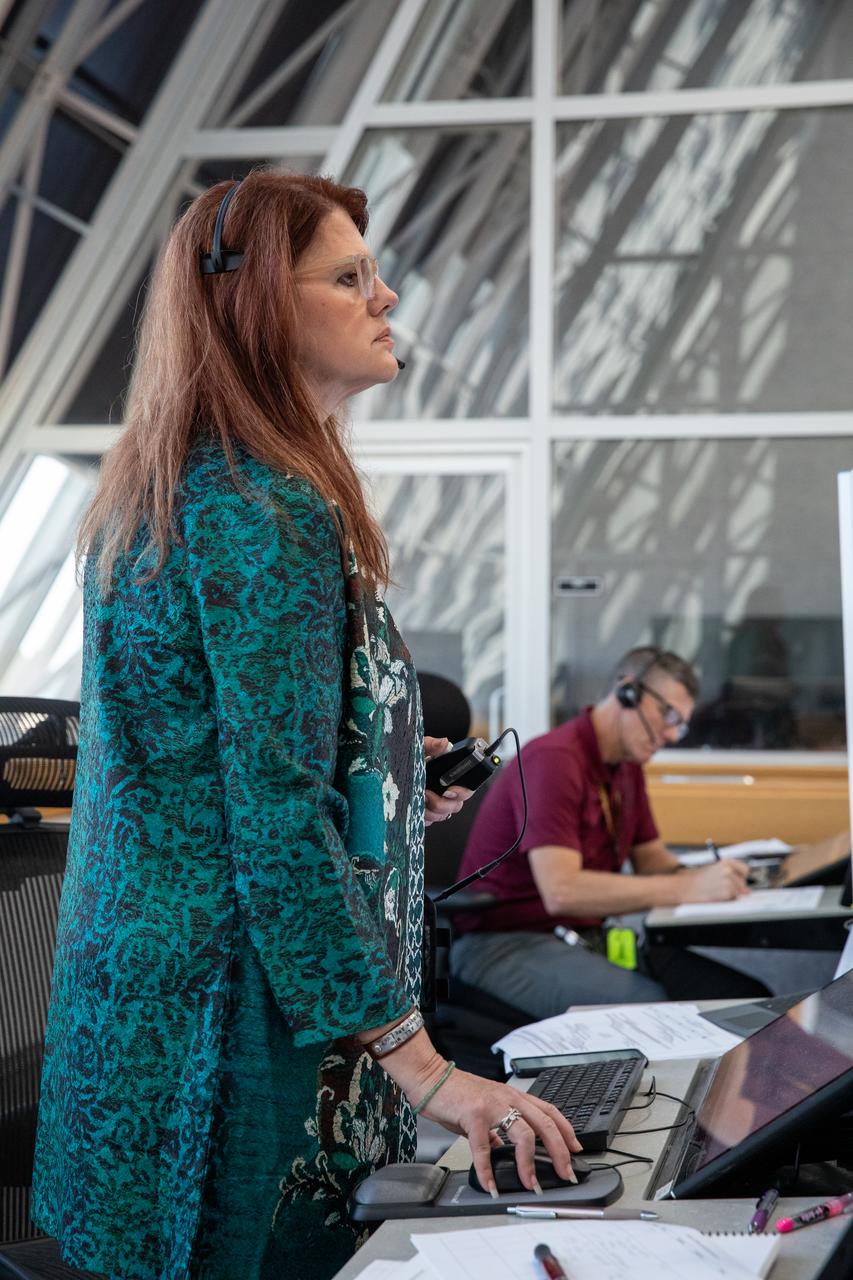
NASA Artemis Launch Director Charlie Blackwell-Thompson, left, and Assistant Artemis Launch Director Jeremy Graeber monitor activities during the Artemis II terminal countdown simulation inside Firing Room 1 in the Launch Control Center at NASA’s Kennedy Space Center in Florida on Monday, Sept. 11, 2023. Members of the Artemis II launch team include personnel with NASA’s Exploration Ground Systems and contractor Jacobs. This is part of a series of simulations to help the team prepare for the launch of Artemis II, the first mission with astronauts under Artemis that will test and check out all of the Orion spacecraft’s systems needed for future crewed missions.
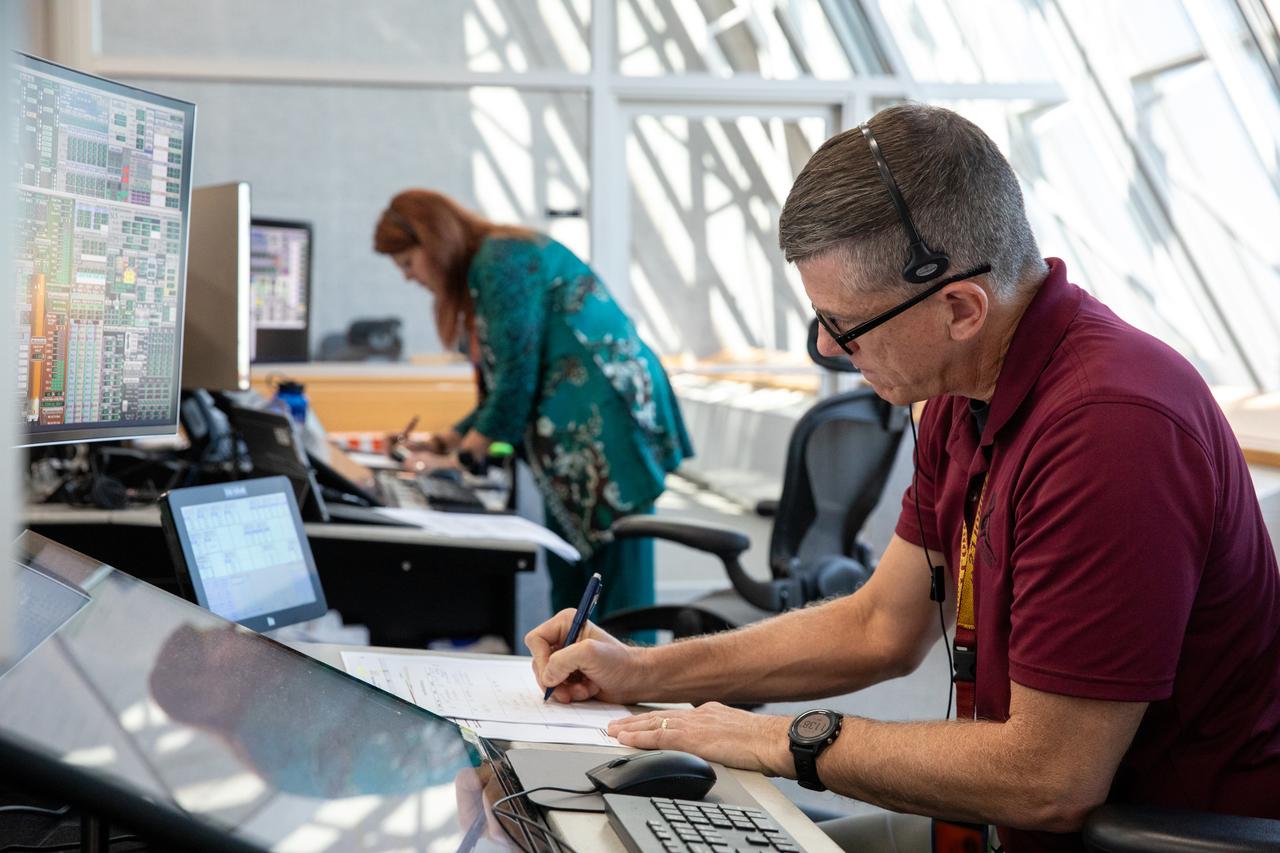
NASA Artemis Launch Director Charlie Blackwell-Thompson, left, and Assistant Artemis Launch Director Jeremy Graeber monitor activities during the Artemis II terminal countdown simulation inside Firing Room 1 in the Launch Control Center at NASA’s Kennedy Space Center in Florida on Monday, Sept. 11, 2023. Members of the Artemis II launch team include personnel with NASA’s Exploration Ground Systems and contractor Jacobs. This is part of a series of simulations to help the team prepare for the launch of Artemis II, the first mission with astronauts under Artemis that will test and check out all of the Orion spacecraft’s systems needed for future crewed missions.

KENNEDY SPACE CENTER, FLA. - A replica of a Space Shuttle orbiter is on exhibit outside the Astronaut Hall of Fame, which features the world’s largest collection of personal astronaut mementos plus historic spacecrafts and training simulators. The Hall of Fame is part of the KSC Visitor Complex.
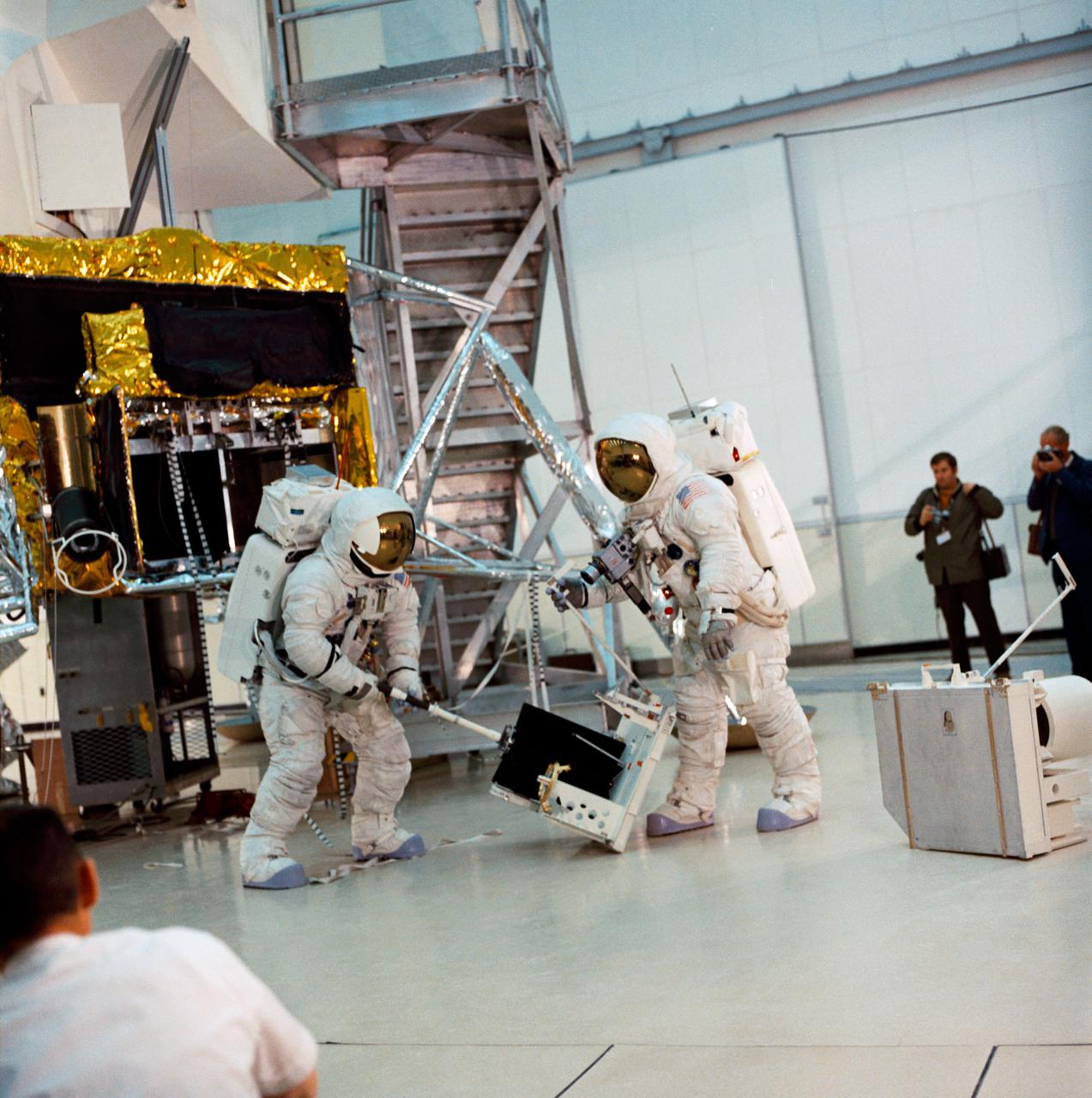
S70-27036 (4 Feb. 1970) --- Two crew men of the Apollo 13 lunar landing mission simulate lunar surface extravehicular activity (EVA) during training exercises in the Kennedy Space Center's (KSC) Flight Crew Training Building. They are astronauts James A. Lovell Jr. commander; and Fred W. Haise Jr., lunar module pilot.

S71-39867 (June 1971) --- Astronauts David R. Scott (right), commander, and James B. Irwin, lunar module pilot, are shown on the Lunar Roving Vehicle (LRV) at the Kennedy Space Center (KSC), Florida, during Apollo 15 lunar surface extravehicular activity (EVA) simulations. While astronauts Scott and Irwin descend in the Lunar Module (LM) "Falcon" to explore the moon, astronaut Alfred M. Worden, command module pilot, will remain with the Command and Service Modules (CSM) in lunar orbit.
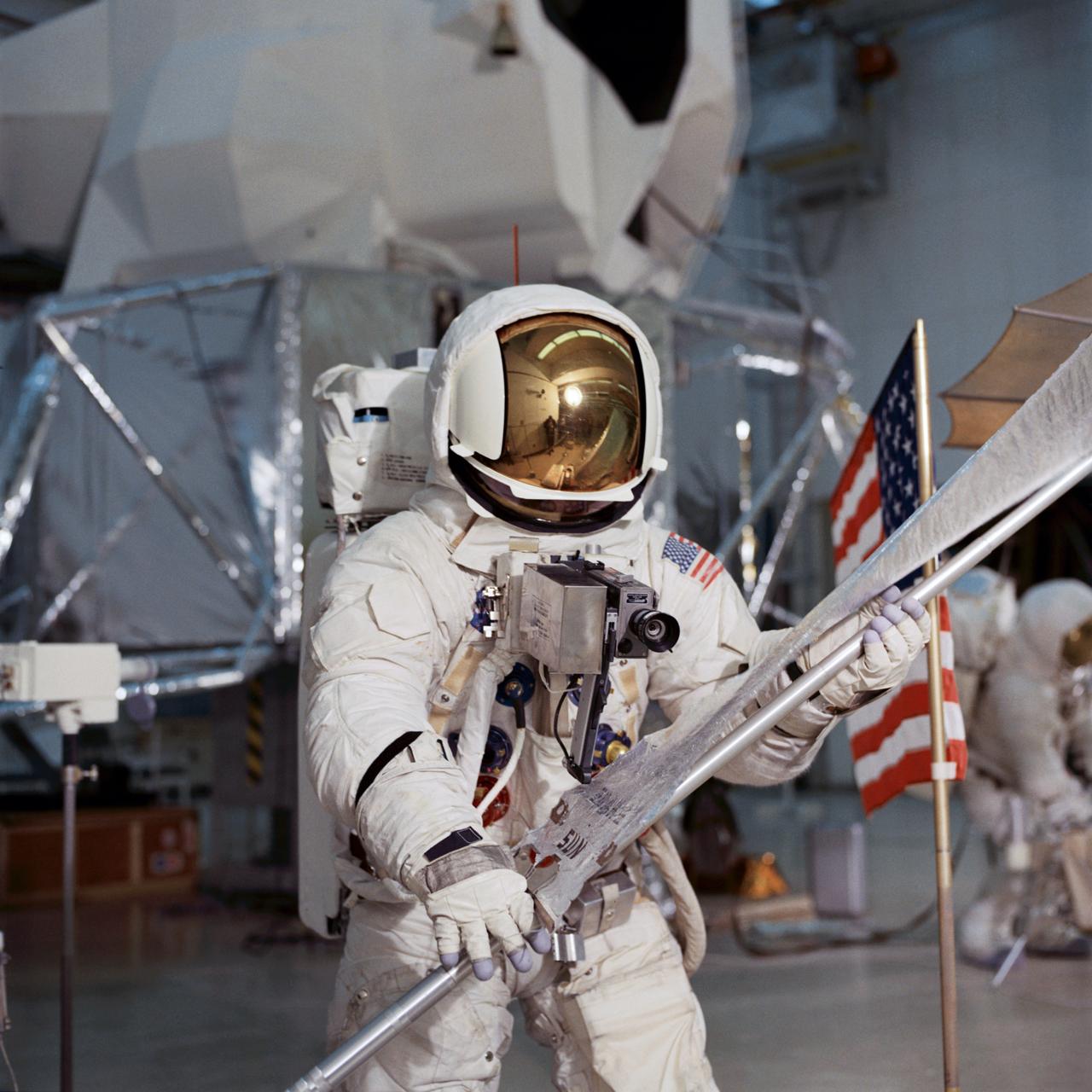
S70-27034 (4 Feb. 1970) --- Astronaut Fred W. Haise Jr., lunar module pilot of the Apollo 13 lunar landing mission, simulates lunar surface extravehicular activity (EVA) during training exercises in the Kennedy Space Center's (KSC) Flight Crew Training Building (FCTB). Haise, wearing an Extravehicular Mobility Unit (EMU), is holding a Solar Wind Composition (SWC) experiment.
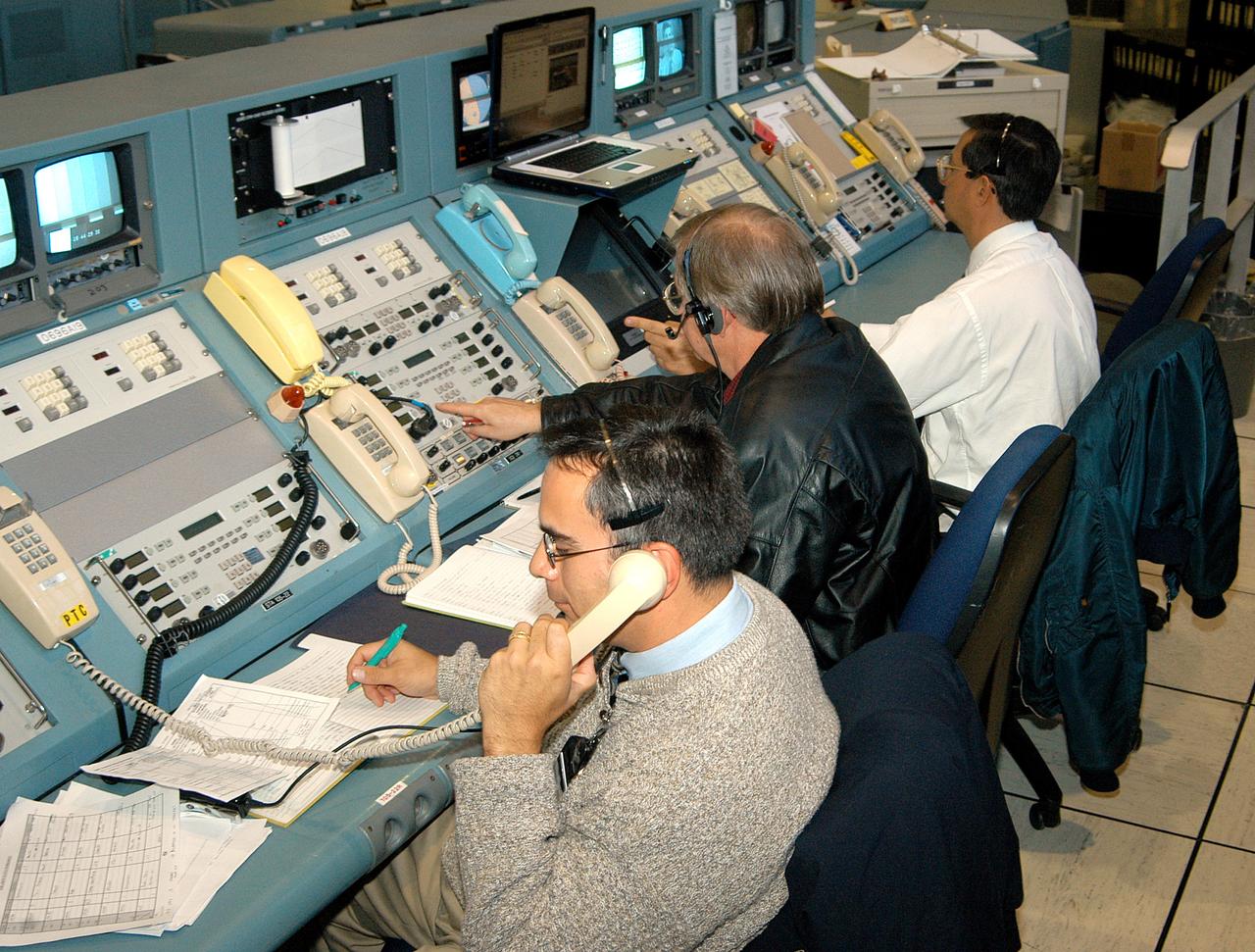
KENNEDY SPACE CENTER, FLA. - In the Launch Control Center, officials monitor the “Mode VII” emergency landing simulation being conducted at Kennedy Space Center and managed and directed from the LCC. From left are Dr. Luis Moreno and Dr. David Reed, with Bionetics Life Sciences, and Dr. Philip Scarpa, with the KSC Safety, Occupational Health and Environment Division. The purpose of the Mode VII is to exercise emergency preparedness personnel, equipment and facilities in rescuing astronauts from a downed orbiter and providing immediate medical attention. This simulation presents an orbiter that has crashed short of the Shuttle Landing Facility in a wooded area 2-1/2 miles south of Runway 33. Emergency crews are responding to the volunteer “astronauts” who are simulating various injuries inside the crew compartment mock-up. Rescuers must remove the crew, provide triage and transport to hospitals those who need further treatment. Local hospitals are participating in the exercise.
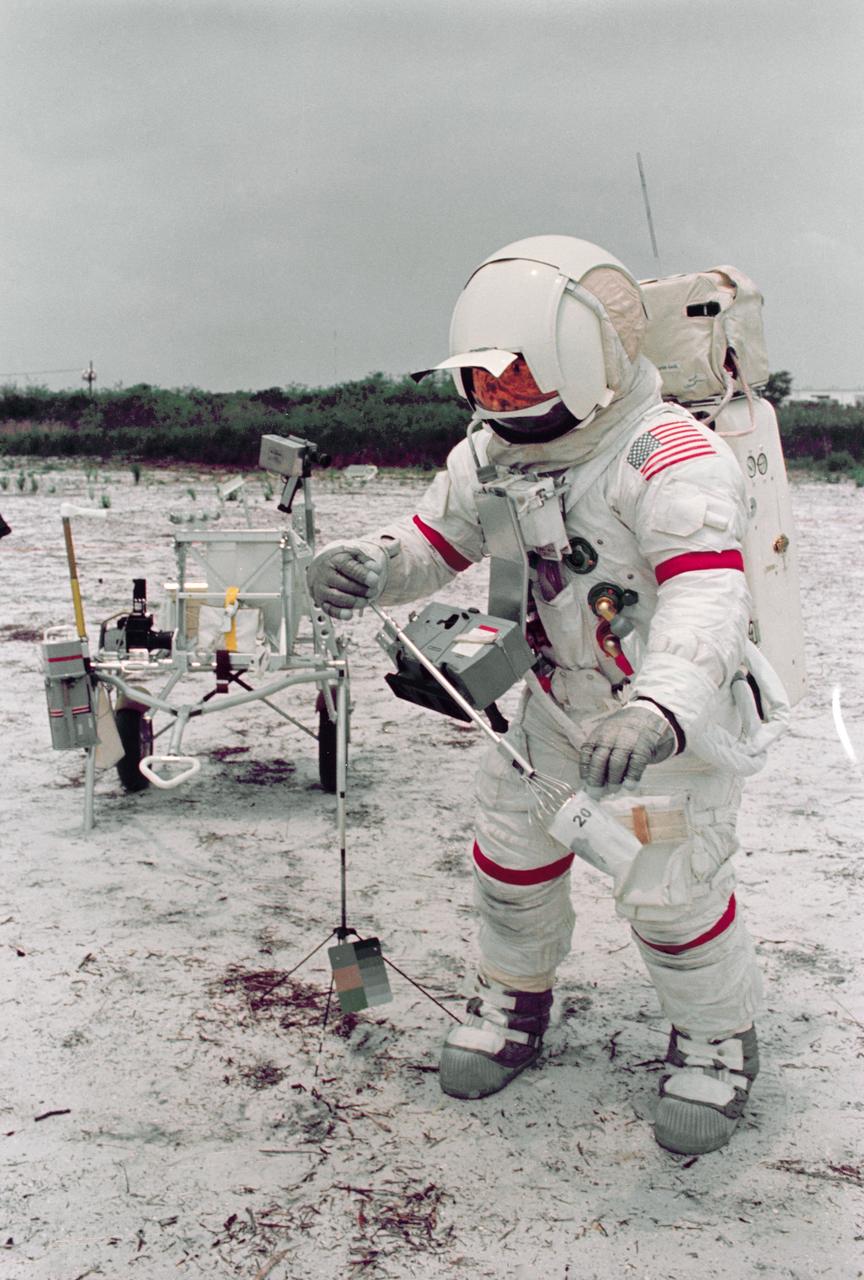
S70-46157 (July 1970) --- Astronaut Alan B. Shepard Jr., commander of the Apollo 14 lunar landing mission, participates in lunar surface simulation training at the Kennedy Space Center (KSC). The modular equipment transporter (MET) is in the left background, in the center foreground is a gnomon. The MET, nicknamed the "Rickshaw", will serve as a portable work bench with a place for the Apollo lunar hand tools and their carrier, three cameras, two sample container bags, a special environment sample container, spare magazines, and a lunar surface Penetrometer. Shepard is wearing an Extravehicular Mobility Unit (EMU).