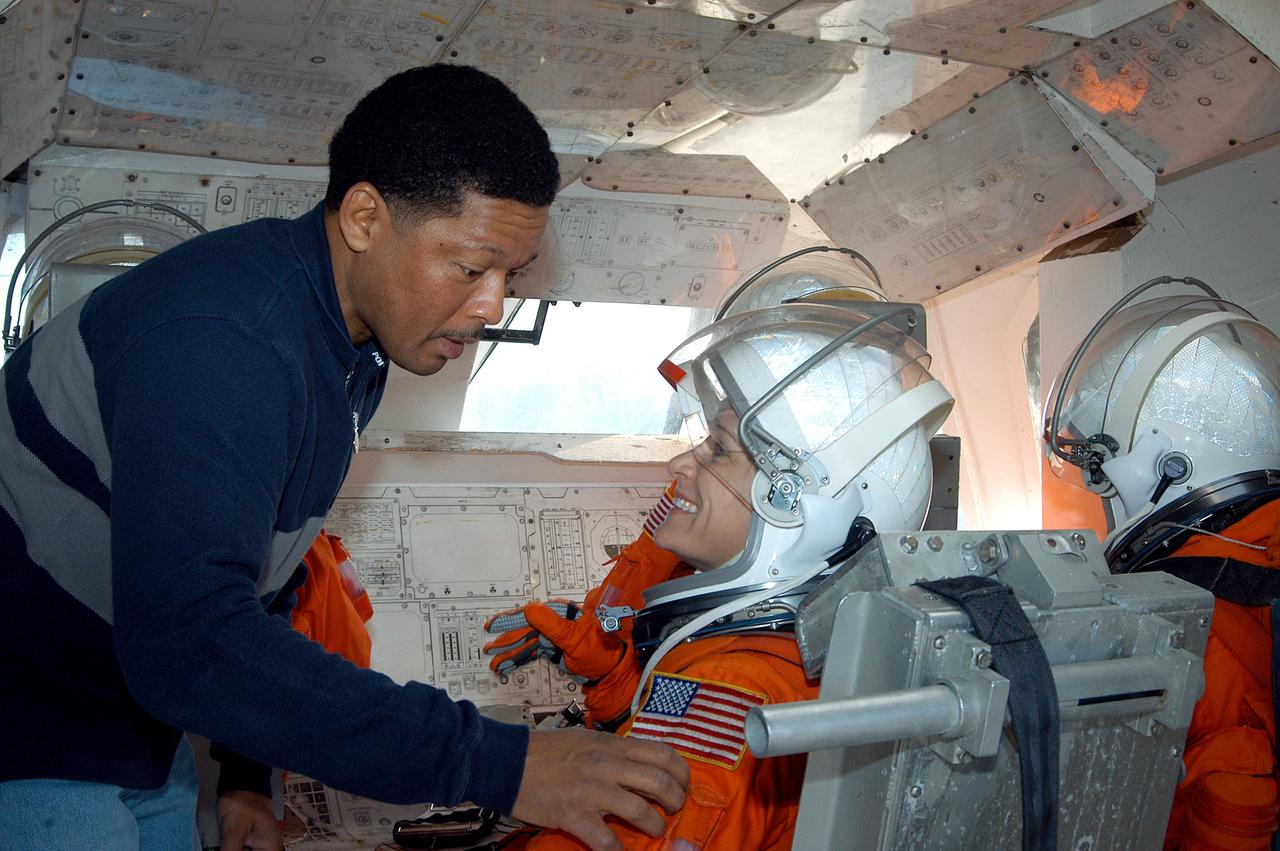
KENNEDY SPACE CENTER, FLA. - Volunteers from the KSC Fire-Rescue team dressed in launch and entry suits settle into seats in an orbiter crew compartment mock-up under the guidance of George Brittingham, USA suit technician on the Closeout Crew. Brittingham is helping Catherine Di Biase, a nurse with Bionetics Life Sciences. They are all taking part in a “Mode VII” emergency landing simulation at Kennedy Space Center. The purpose is to exercise emergency preparedness personnel, equipment and facilities in rescuing astronauts from a downed orbiter and providing immediate medical attention. This simulation presents an orbiter that has crashed short of the Shuttle Landing Facility in a wooded area 2-1/2 miles south of Runway 33. Emergency crews will respond to the volunteer “astronauts” simulating various injuries. Rescuers must remove the crew, provide triage and transport to hospitals those who need further treatment. Local hospitals are participating in the exercise.

JSC2010-E-014041 (25 Jan. 2010) --- Attired in a training version of his shuttle launch and entry suit, NASA astronaut Alvin Drew, STS-133 mission specialist, participates in a simulation exercise in the motion-base shuttle mission simulator in the Jake Garn Simulation and Training Facility at NASA?s Johnson Space Center.
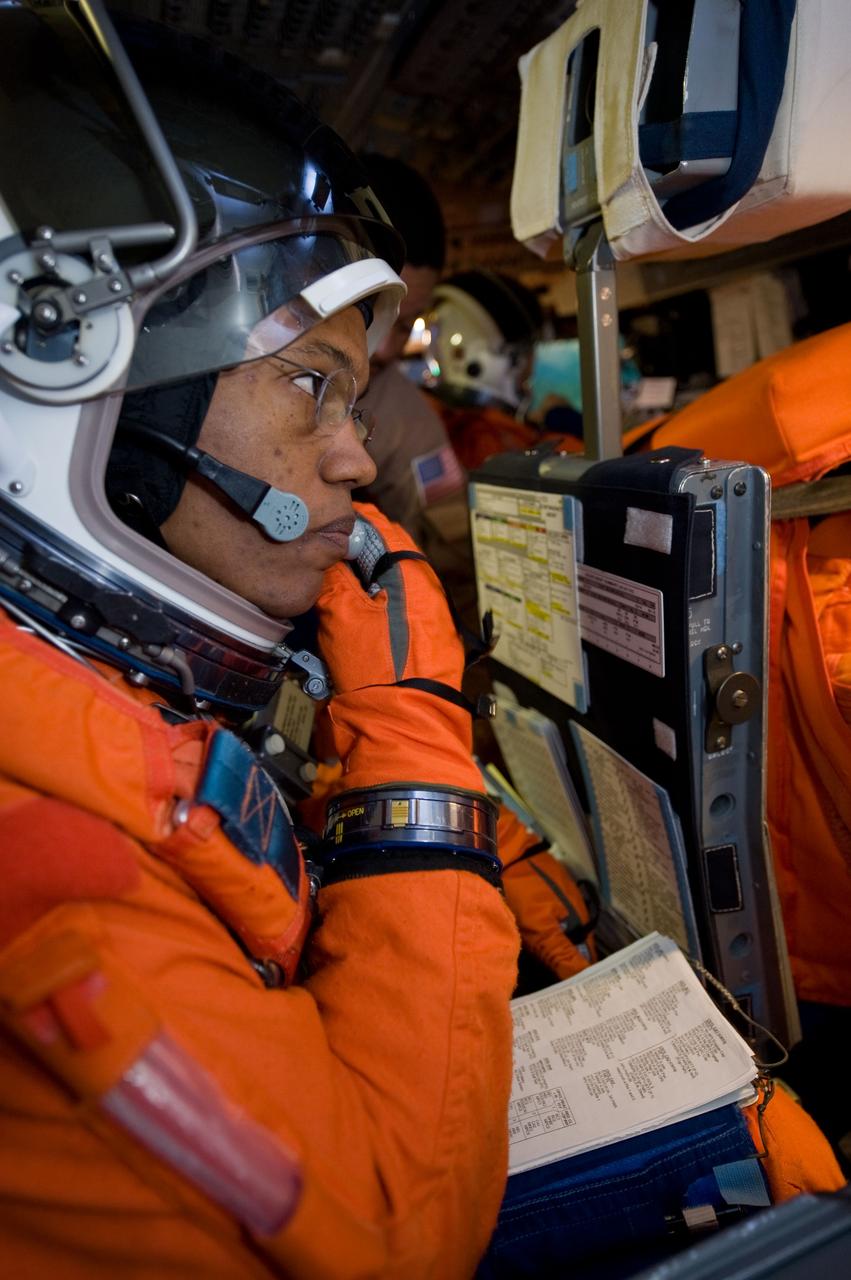
JSC2010-E-014042 (25 Jan. 2010) --- Attired in a training version of his shuttle launch and entry suit, NASA astronaut Alvin Drew, STS-133 mission specialist, participates in a simulation exercise in the motion-base shuttle mission simulator in the Jake Garn Simulation and Training Facility at NASA?s Johnson Space Center.
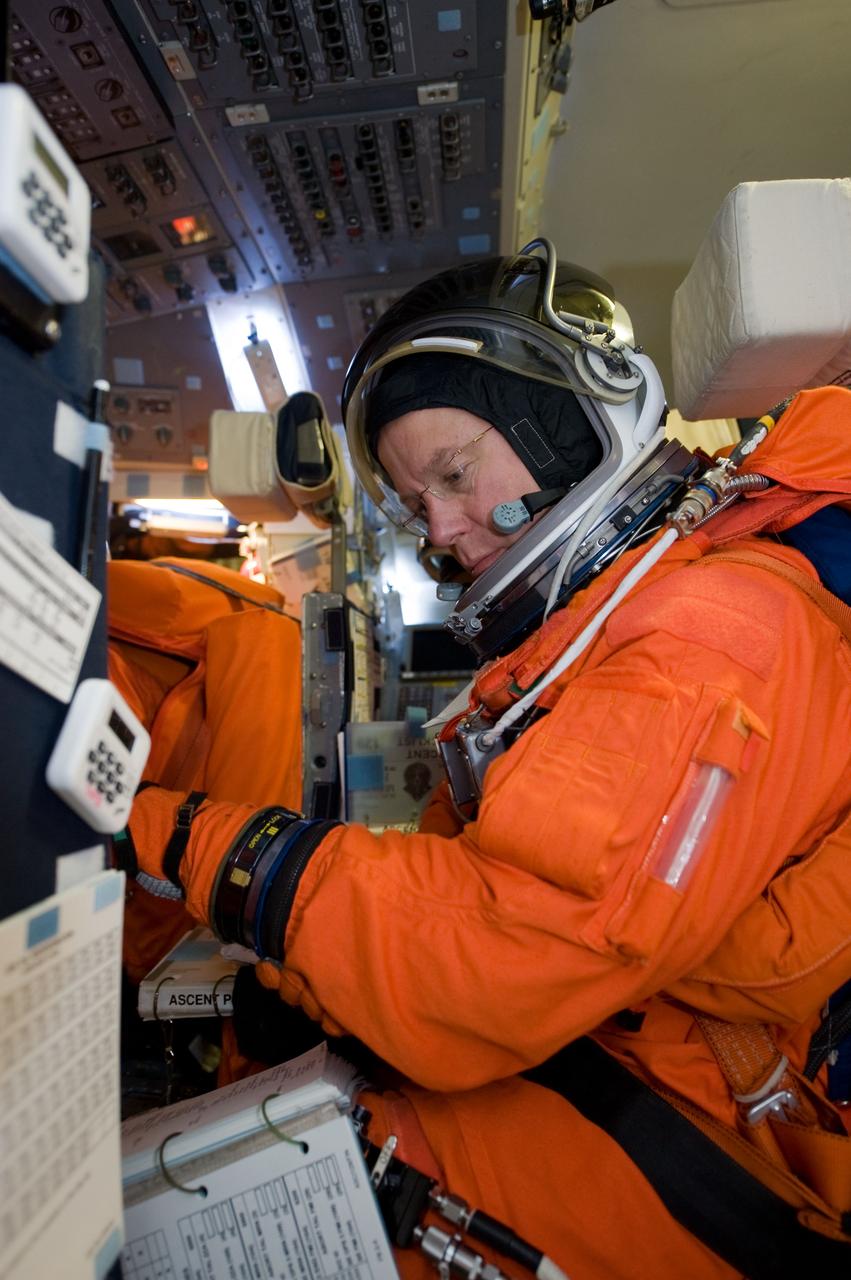
JSC2010-E-014043 (25 Jan. 2010) --- Attired in a training version of his shuttle launch and entry suit, NASA astronaut Tim Kopra, STS-133 mission specialist, participates in a simulation exercise in the motion-base shuttle mission simulator in the Jake Garn Simulation and Training Facility at NASA?s Johnson Space Center.
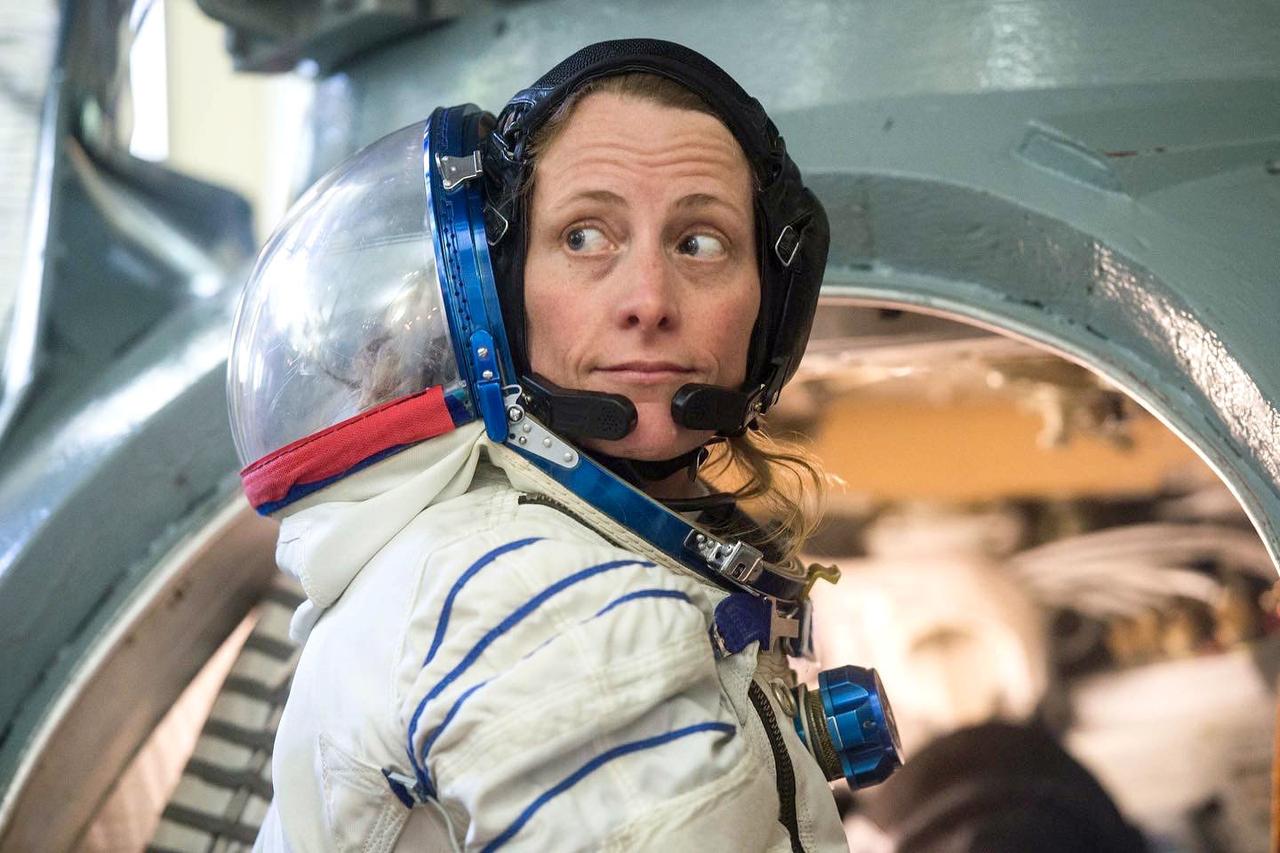
jsc2023e052881 (Sept. 13, 2023) --- NASA astronaut Loral O'Hara prepares to enter a Soyuz spacecraft simulator in her Sokol launch and entry suit for preflight training before beginning her mission to the International Space Station.
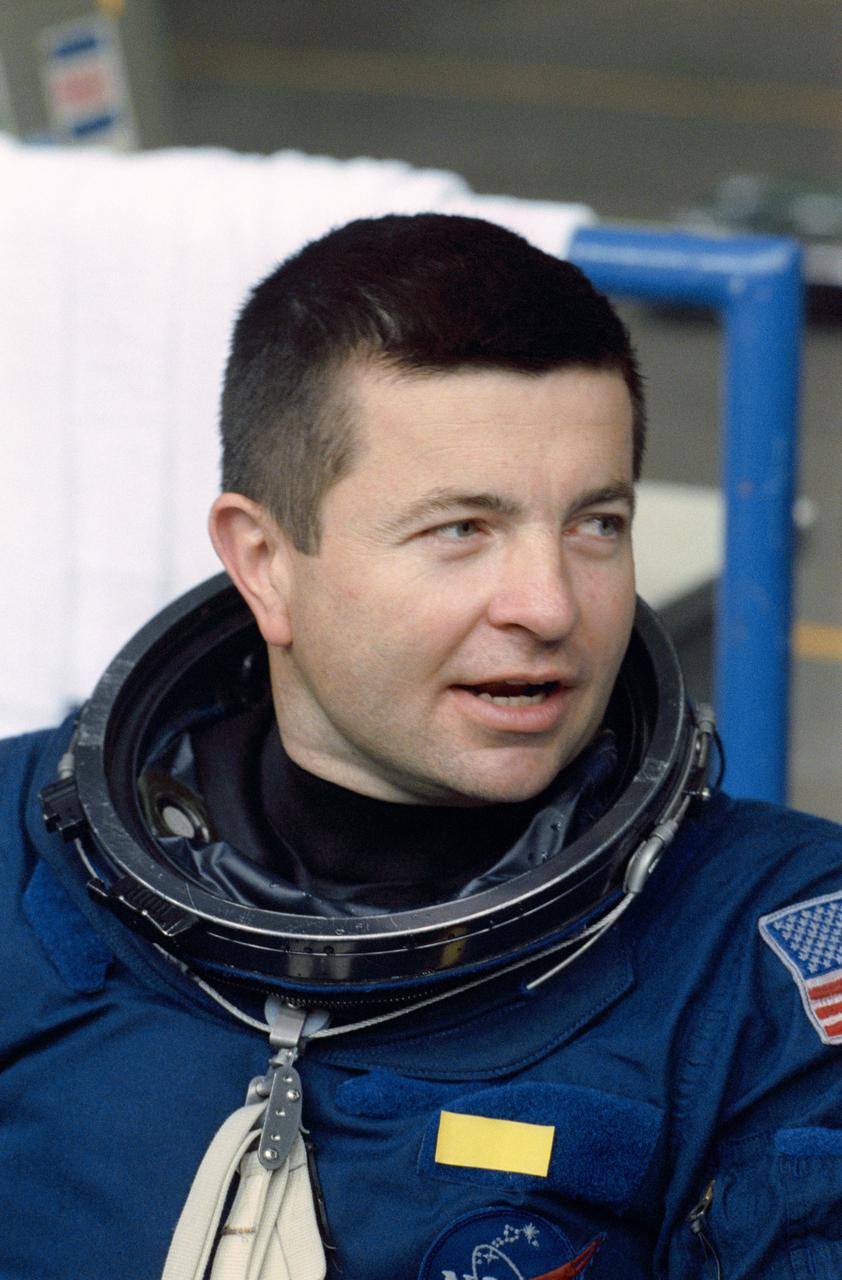
STS-37 Pilot Kenneth D. Cameron, wearing launch and entry suit (LES), discusses simulated emergency egress training on the pool side of JSC's Weightless Environment Training Facility (WETF) Bldg 29. Cameron will be dropped into a simulated ocean, the WETF's 25-ft pool, into which a parachute landing might be made.
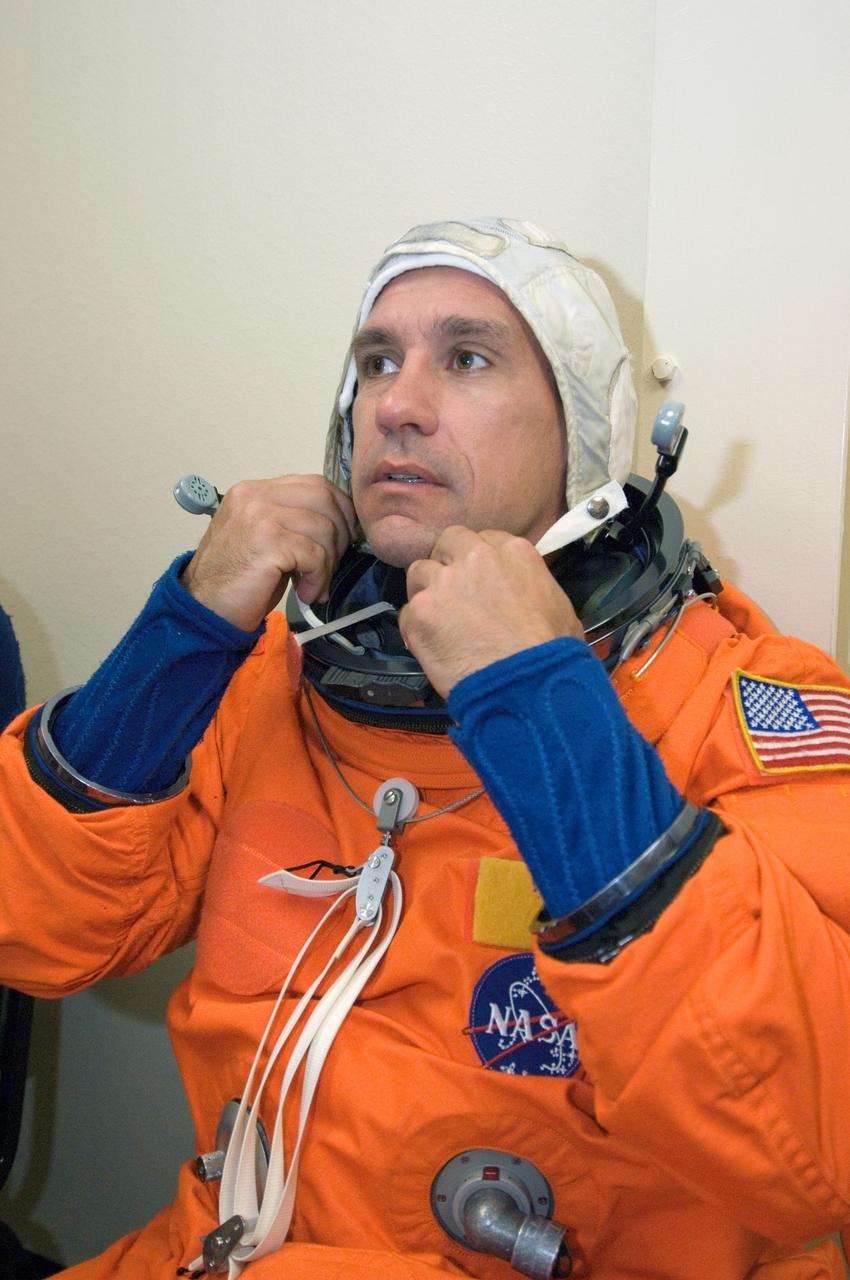
JSC2006-E-23021 (15 June 2006) --- Astronaut William A. Oefelein, STS-116 pilot, dons his training version of the shuttle launch and entry suit prior to a training session in the fixed-base shuttle mission simulator (SMS) in the Jake Garn Mission Simulation and Training Facility at Johnson Space Center.
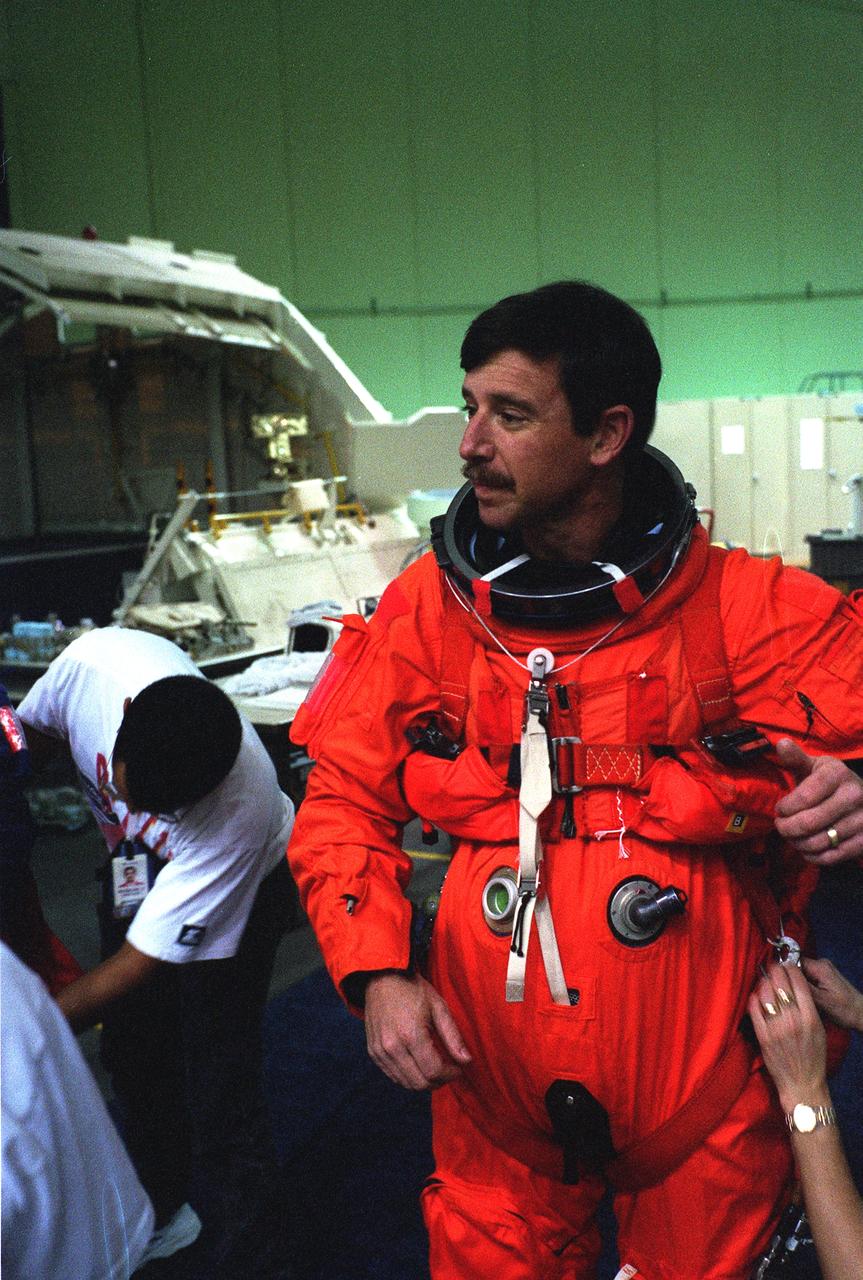
S96-18553 (30 Oct. 1996) --- Astronaut Scott J. Horowitz, pilot, gets help with his launch and entry suit prior to a training session in JSC's systems integration facility. Wearing training versions of the partial pressure launch and entry escape suit, Horowitz and his crewmates went on to simulate an emergency ejection, using the escape pole system on the mid deck, as well as other phases of their scheduled February mission.

S94-41838 (Nov 1994) --- Wearing training versions of the orange partial pressure suit used for shuttle ascent and entry, five NASA astronauts and a Russian cosmonaut assemble for an STS-63 training session. The six are in the Johnson Space Center's (JSC) Shuttle mockup and integration laboratory. They are, left to right, astronauts James D. Wetherbee, mission commander; Eileen M. Collins, pilot; Bernard A. Harris Jr., payload commander; and C. Michael Foale, Janice E. Voss, and cosmonaut Vladimir G. Titov, all mission specialists.
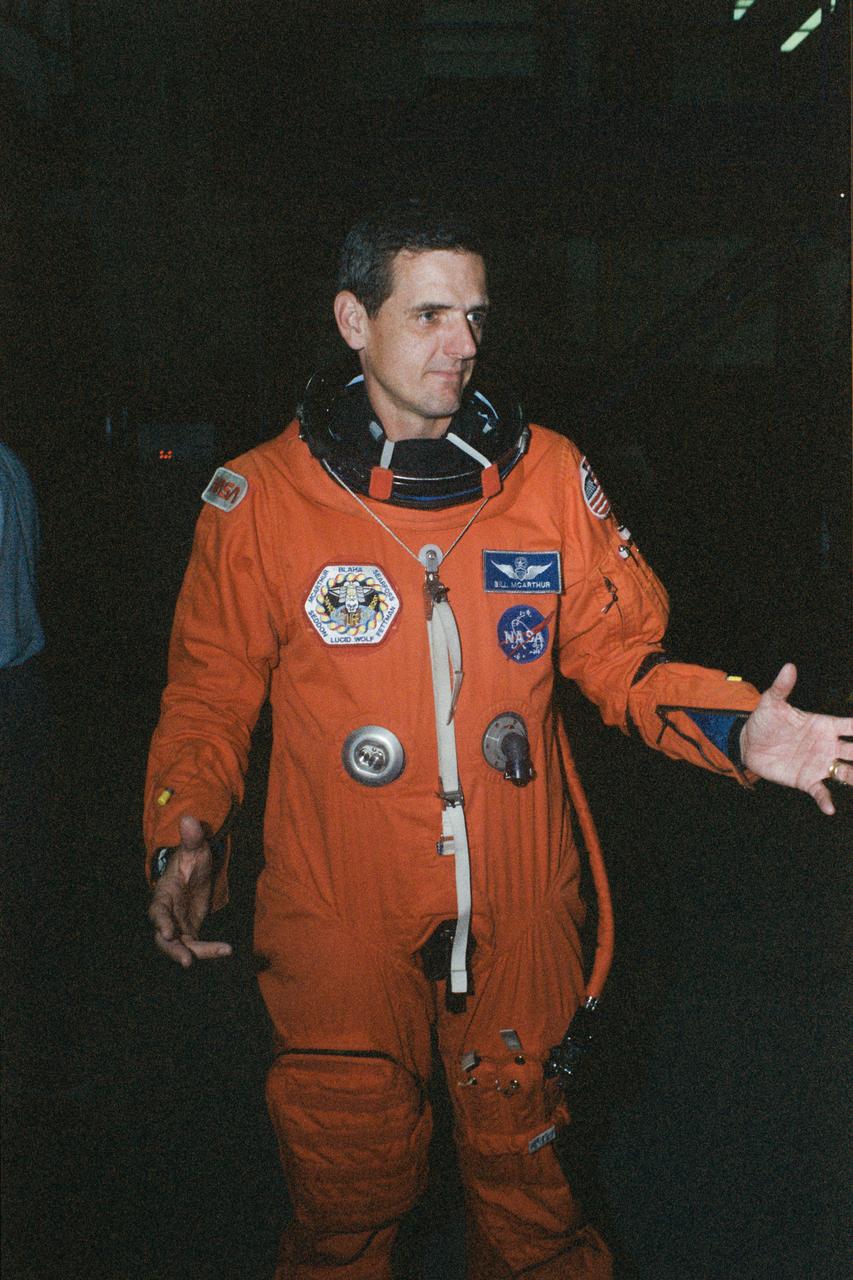
S93-38679 (20 July 1993) --- Wearing a training version of the partial pressure launch and entry garment, astronaut William S. McArthur listens to a briefing on emergency egress procedures for the STS-58 mission. McArthur, along with five other NASA astronauts and a visiting payload specialist assigned to the seven member crew, later rehearsed contingency evacuation procedures. Most of the training session took place in the crew compartment and full fuselage trainers of the Space Shuttle mockup and integration laboratory.
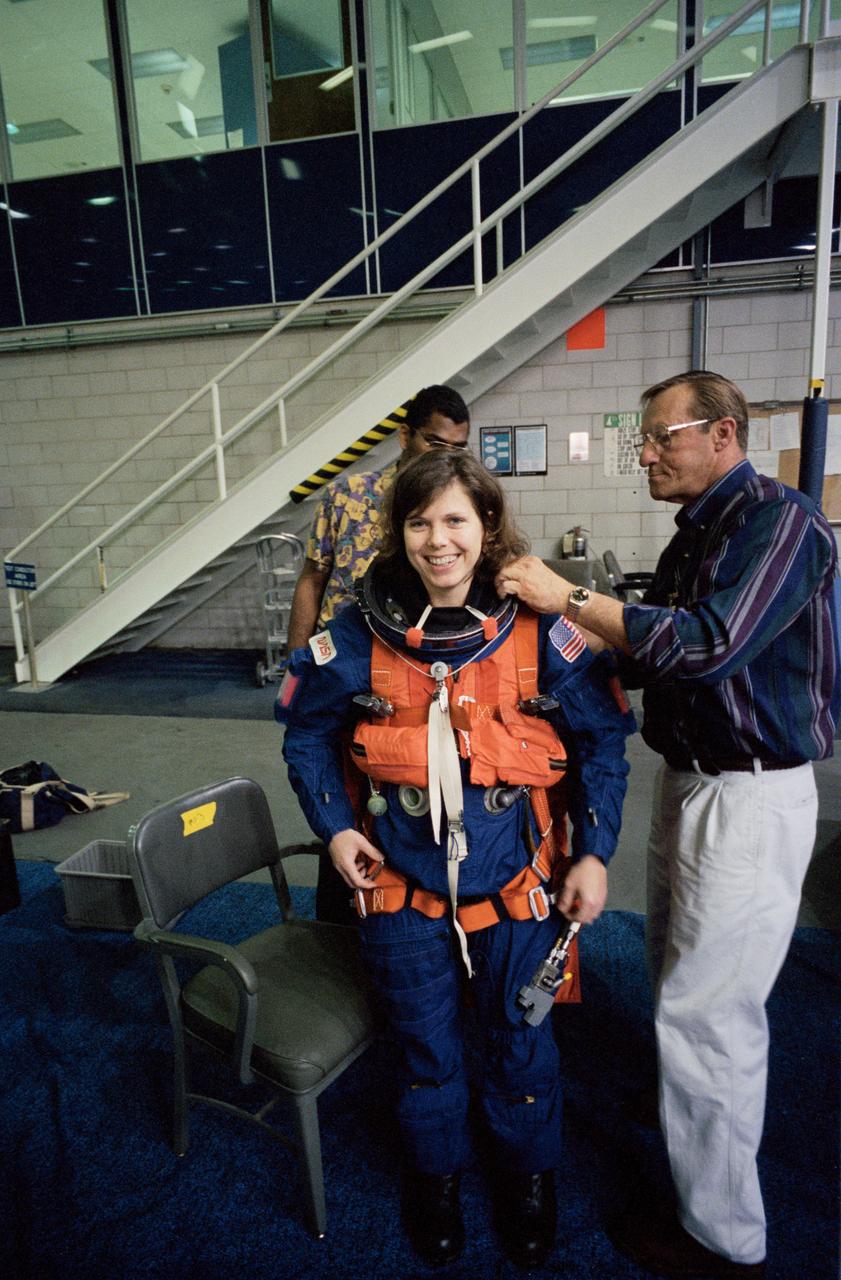
S95-03469 (16 FEB 1995) --- Attired in a training version of the Shuttle launch and entry garment, astronaut Mary Ellen Weber gets help with the final touches of suit donning during a training session at the Johnson Space Center's (JSC) Weightless Environment Training Facility (WET-F). Helping out is Rockwell's William L. Todd (right), while Staffon Isaacs looks on. Training as a mission specialist for the STS-70 mission, Weber was about to rehearse emergency bailout. The crew members made use of a nearby 25-feet deep pool to practice parachute landings in water and subsequent deployment of life rafts.
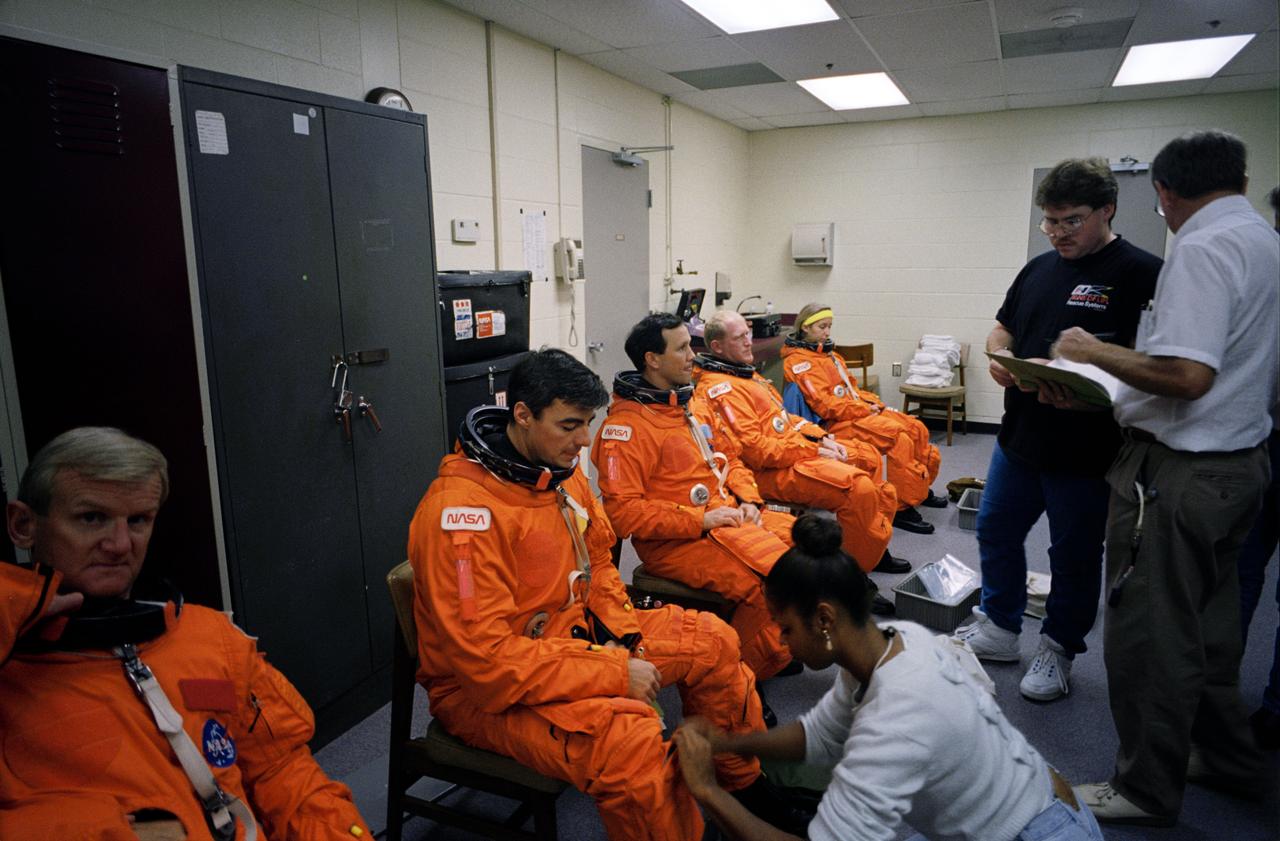
S93-48458 (5 Nov. 1993) --- In the Johnson Space Center's (JSC) Shuttle mockup and integration laboratory, the five crew members training for NASA's next mission are assisted in donning their partial pressure launch and entry suits. From left to right are astronaut John H. Casper, Andrew M. Allen, Pierre J. Thuot, Charles D. (Sam) Gemar and Marsha S. Ivins. Minutes later the crew was in the crew compartment trainer (CCT) rehearsing their scheduled March 1994 mission aboard the Space Shuttle Columbia. Launch, landing and emergency egress procedures were covered in the training session.
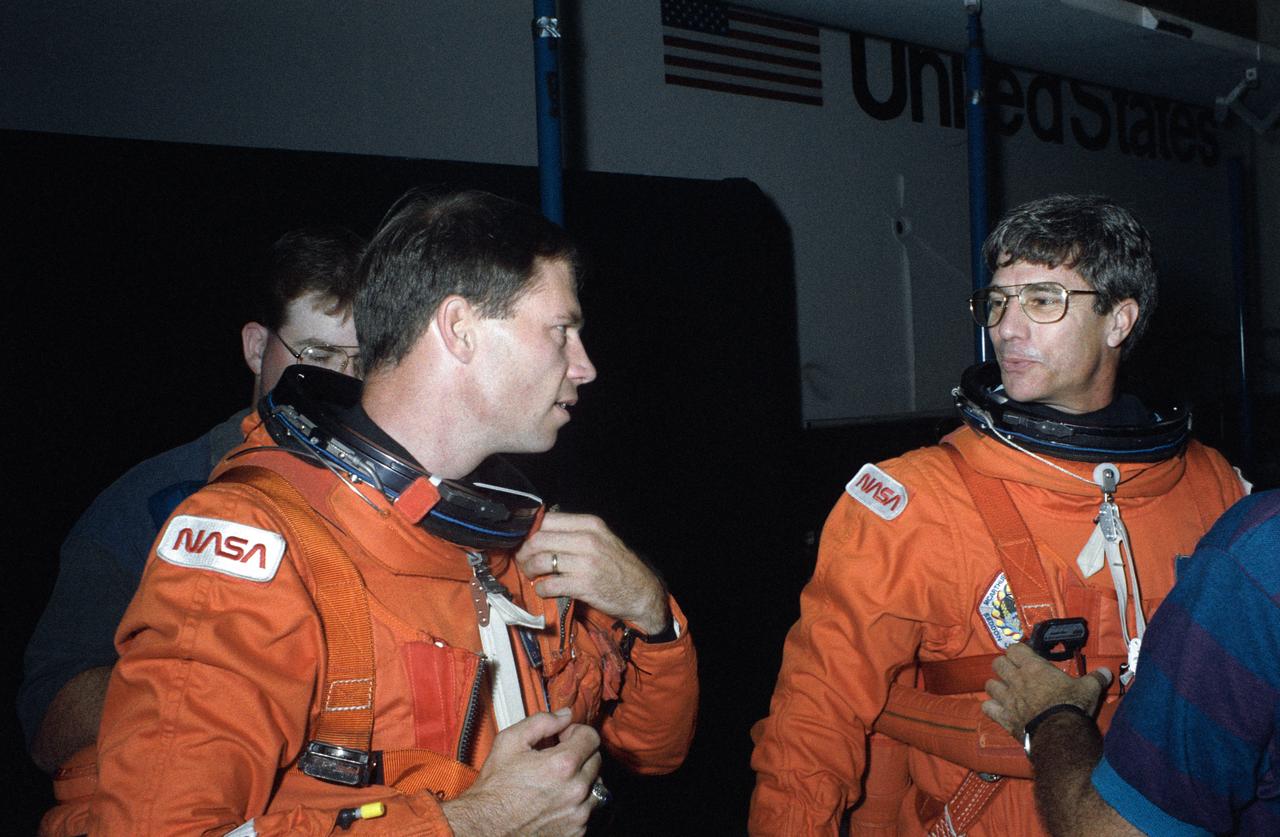
S93-38675 (20 July 1993) --- Wearing training versions of the partial pressure launch and entry garment, astronauts Richard A. Searfoss (left), pilot, and John E. Blaha, mission commander, prepare for a training exercise. The two, along with the four other NASA astronauts and a visiting payload specialist asssigned to the seven-member crew, later rehearsed contingency evacuation procedures. Most of the training session took part in the crew compartment and full fuselage trainers in the Space Shuttle mockup and integration laboratory.
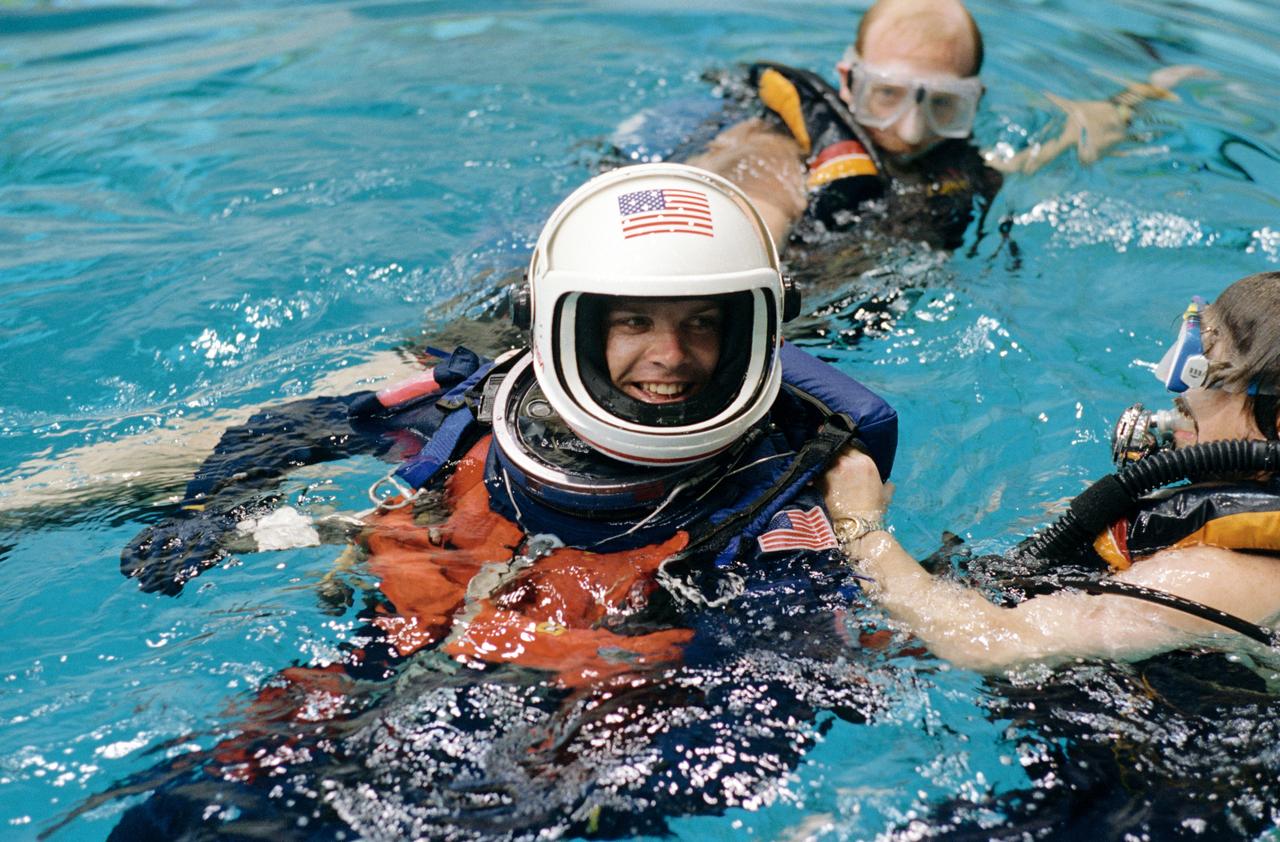
S95-03480 (16 FEB 1995) --- Attired in a training version of the Shuttle launch and entry garment, astronaut Kevin R. Kregel, pilot, gets help from SCUBA-equipped divers during a training session at the Johnson Space Center's (JSC) Weightless Environment Training Facility (WET-F). As part of the emergency bailout phase of their training agenda, the STS-70 crew members made use of this 25-feet deep pool to practice parachute landings in water and subsequent deployment of life rafts.
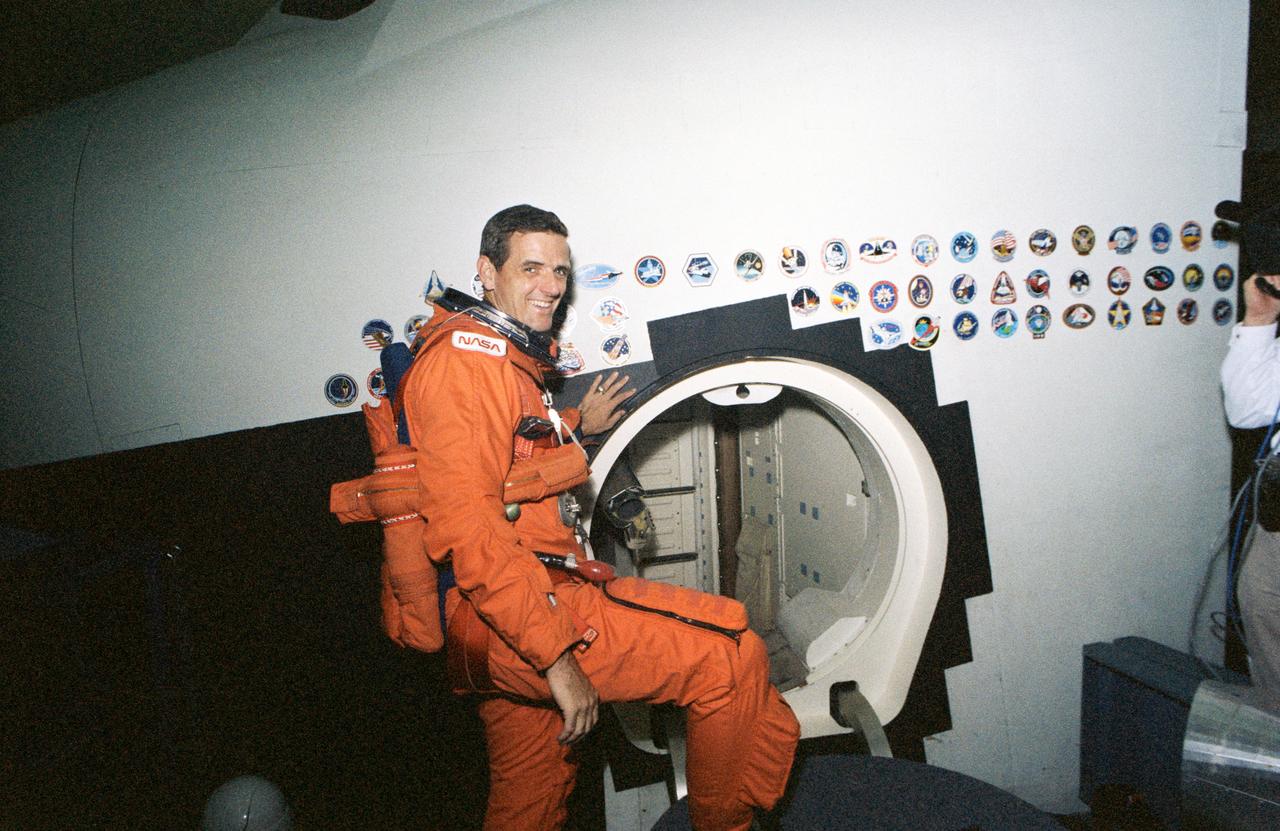
S93-38686 (20 July 1993) --- Wearing a training version of the partial pressure launch and entry garment, astronaut William S. McArthur prepares to rehearse emergency egress procedures for the STS-58 mission. McArthur, along with the five other NASA astronauts and a visiting payload specialist assigned to the seven-member crew, later simulated contingency evacuation procedures. Most of the training session took place in the crew compartment and full fuselage trainers of the Space Shuttle mockup and integration laboratory.
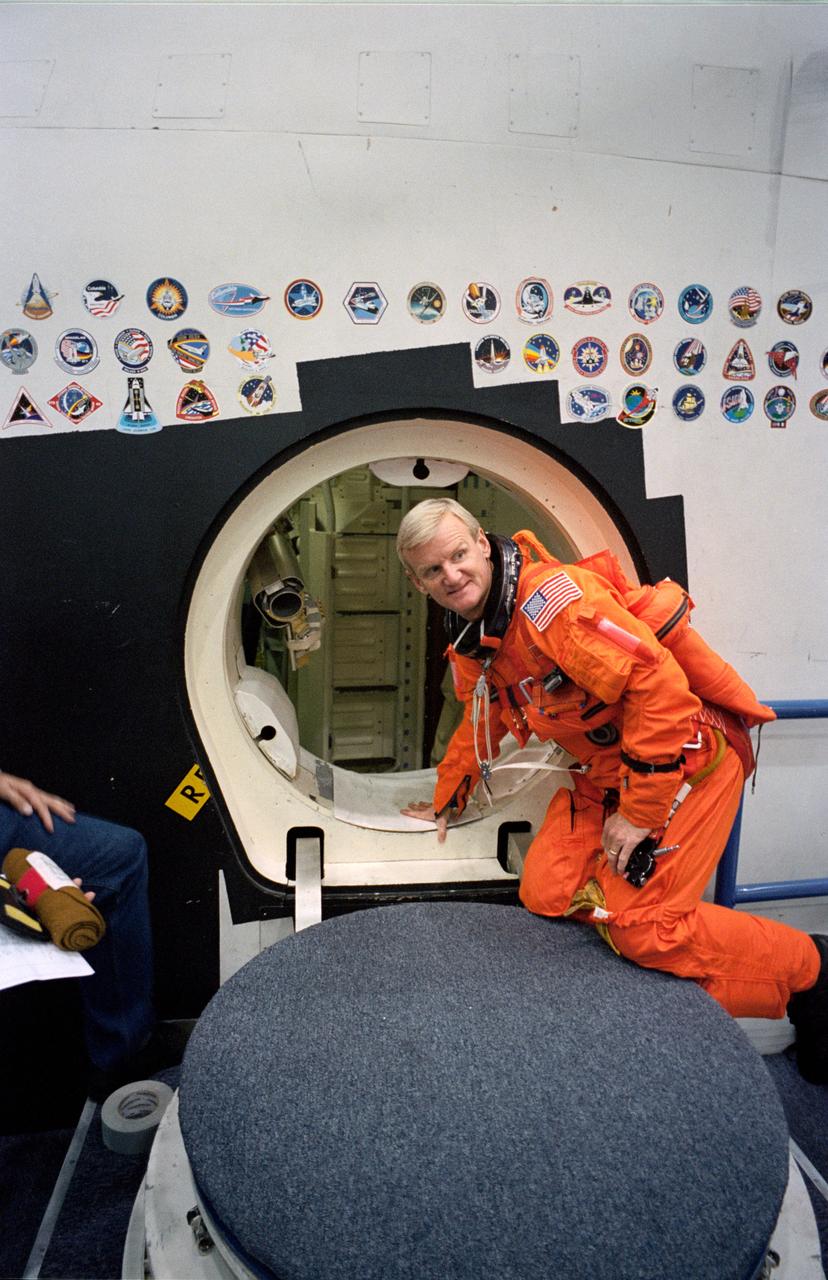
S93-48461 (5 Nov. 1993) --- In the Johnson Space Center's (JSC) Shuttle mockup and integration laboratory, astronaut John H. Casper simulates an emergency ejection from the space shuttle. Barely visible in the hatchway of the Shuttle crew compartment trainer (CCT) is the escape pole device like that flown on each shuttle flight. Casper and four other NASA astronauts will spend two weeks in space aboard the Space Shuttle Columbia in March 1994.
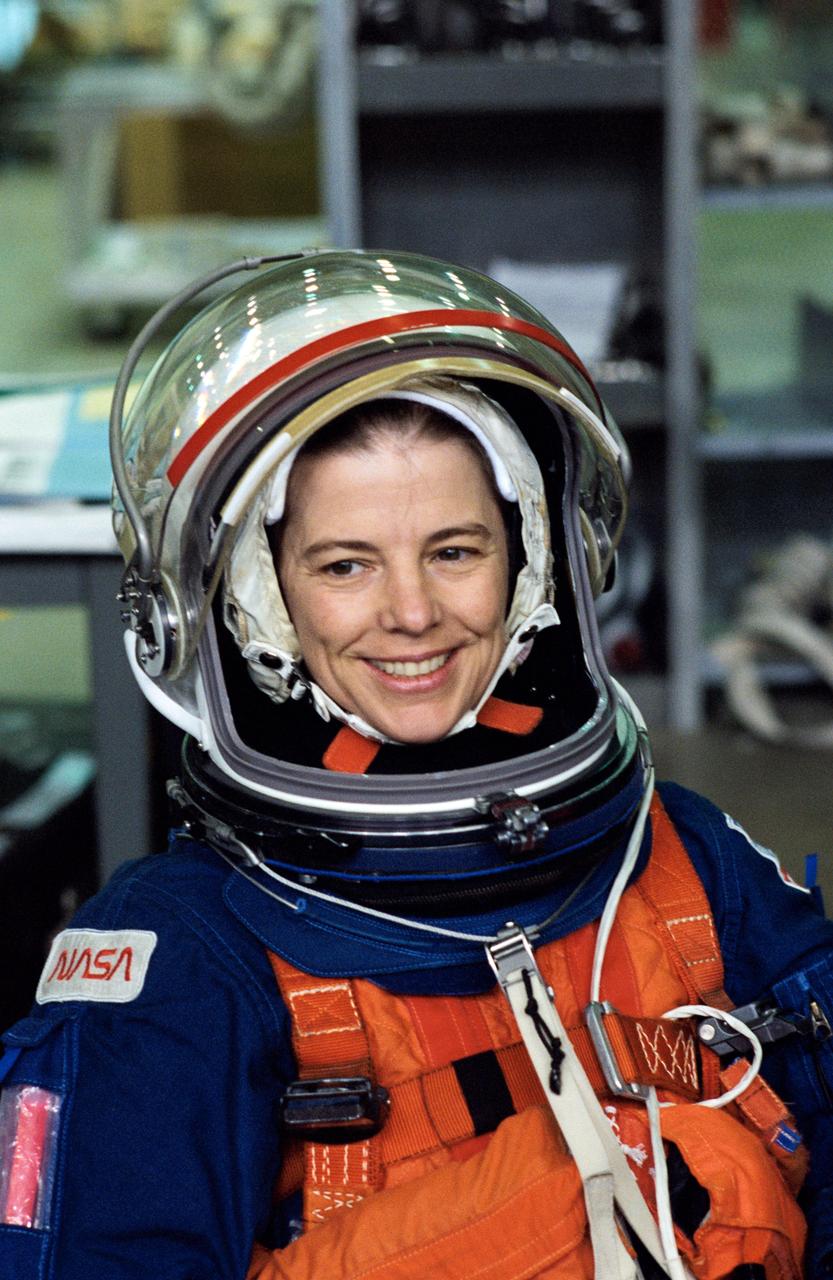
S94-47256 (13 Oct 1994) --- Astronaut Bonnie J. Dunbar, STS-71 mission specialist, smiles as she watches a crew mate (out of frame) make a simulated parachute landing in nearby water. The action came as part of an emergency bailout training session in the Johnson Space Center's (JSC) Weightless Environment Training Facility's (WET-F) 25-feet-deep pool.
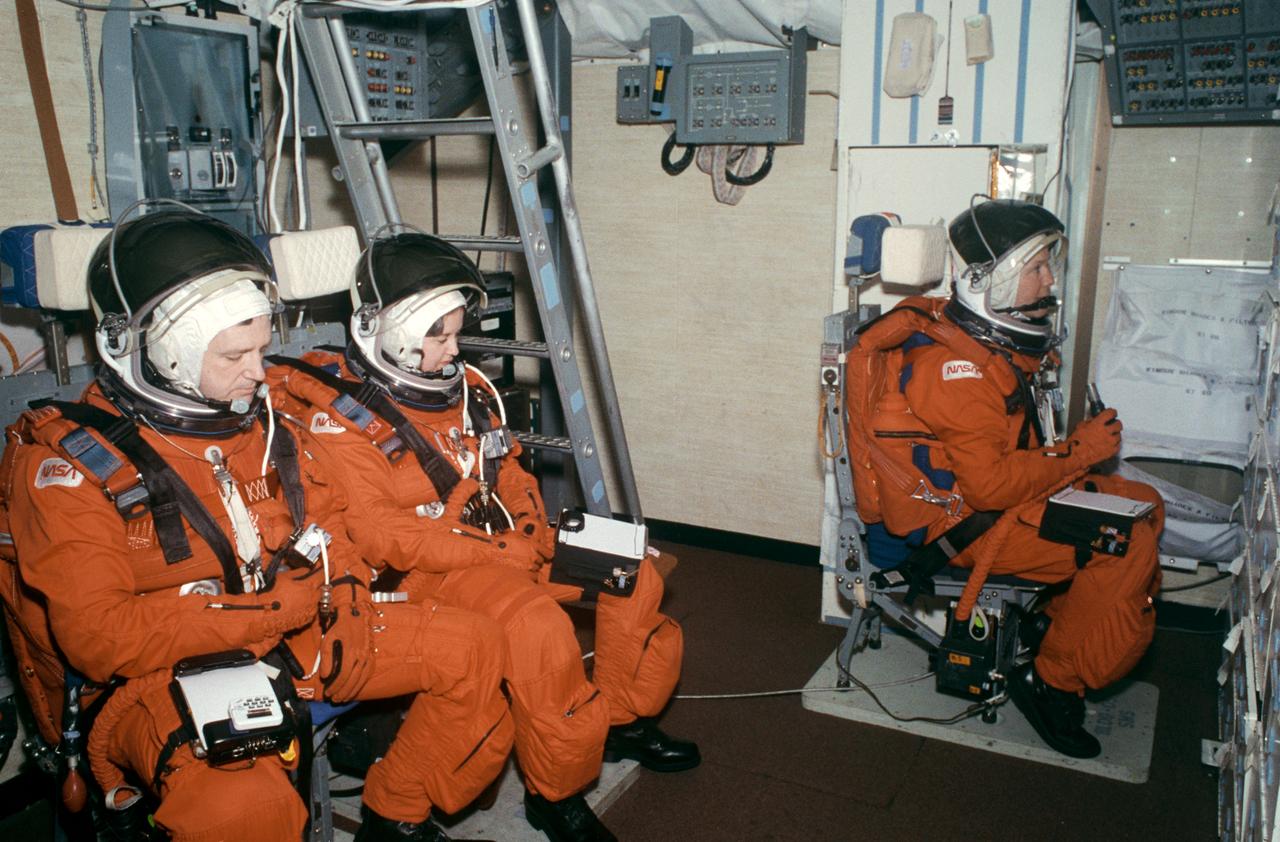
S92-29406 (Feb 1992) --- Three mission specialists assigned to the STS-49 flight occupy temporary stations on the "middeck" of a Johnson Space Center (JSC) Shuttle trainer during a rehearsal of Endeavour's launch and entry phases. Left to right are astronauts Thomas D. Akers, Kathryn C. Thornton and Pierre J. Thuot. The three, along with four other NASA astronauts, will be aboard Endeavour in May for a week-long mission during which a satellite will be retrieved and boosted toward a higher orbit and extravehicular activity evaluations for Space Station Freedom assembly techniques will be conducted.
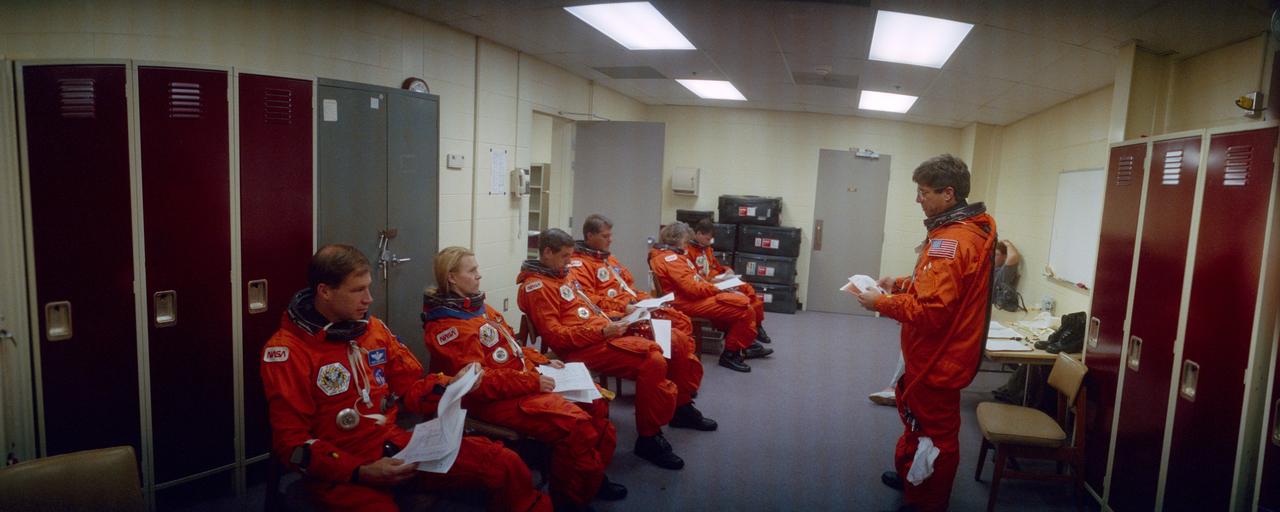
S93-38672 (20 July 1993) --- Wearing training versions of the partial pressure launch and entry garment, the STS-58 crewmembers prepare for a training exercise. After being briefed by astronaut John E. Blaha (right), mission commander, the group rehearsed contingency evacuation procedures. Most of the training session took part in the crew compartment and full fuselage trainers in the Space Shuttle mockup and integration laboratory.
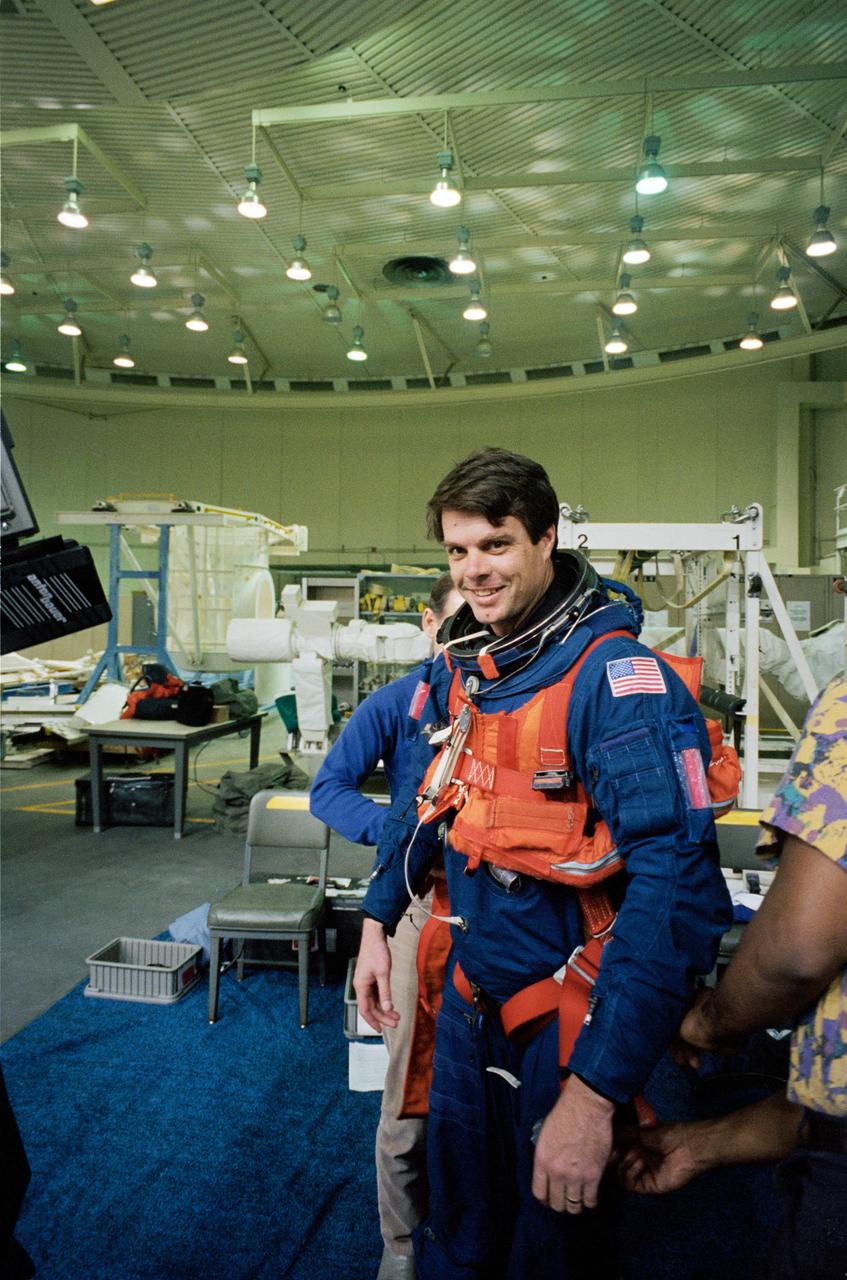
S95-03465 (16 Feb 1995) --- Attired in a training version of the Shuttle launch and entry garment, astronaut Kevin R. Kregel gets help with the final touches of suit donning during a training session at the Johnson Space Center's (JSC) Weightless Environment Training Facility (WET-F). Assigned as pilot for the STS-70 mission, Kregel was about to rehearse emergency bailout. The crew members made use of a nearby 25-feet deep pool to practice parachute landings in water and subsequent deployment of life rafts.
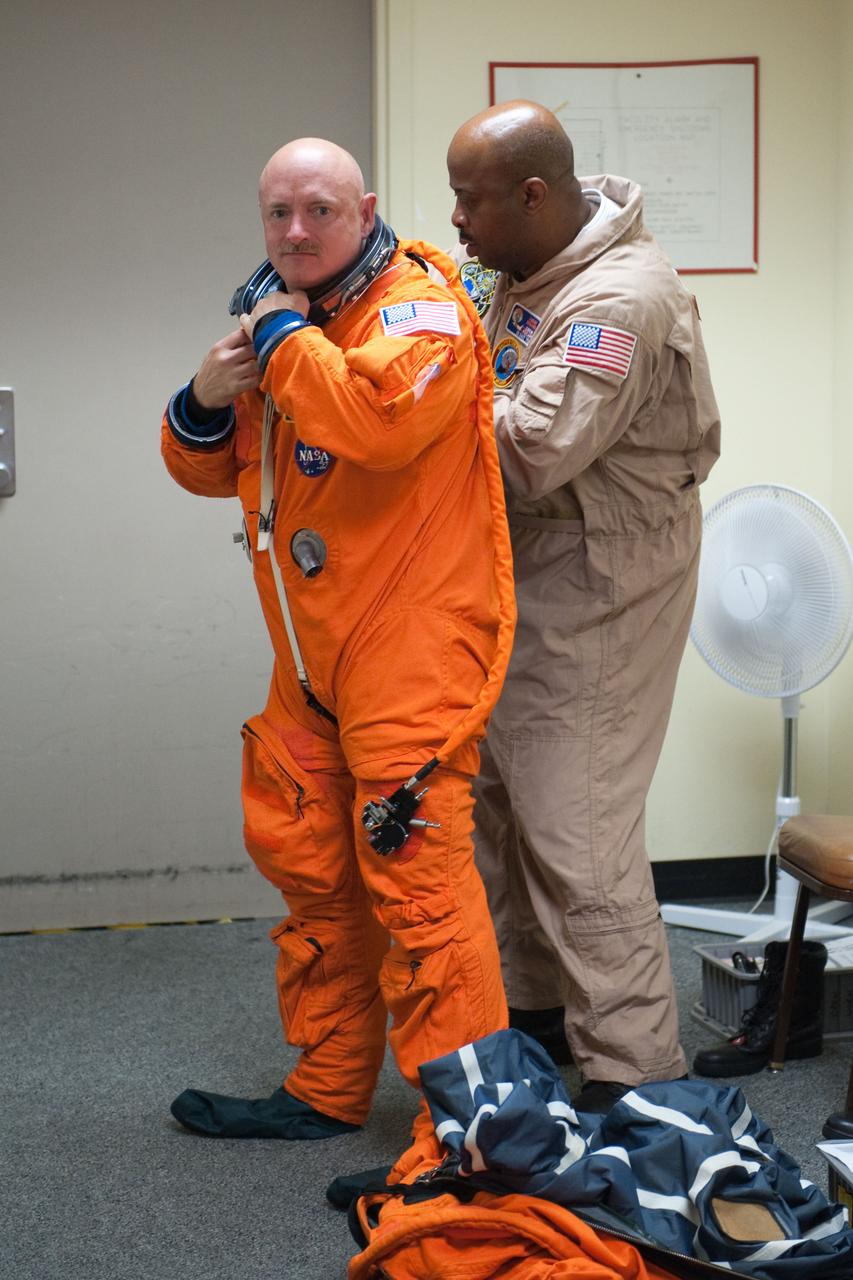
JSC2010-E-124259 (8 Sept. 2010) --- NASA astronaut Mark Kelly, STS-134 commander, dons a training version of his shuttle launch and entry suit in preparation for a training session in the fixed-base shuttle mission simulator (SMS) in the Jake Garn Simulation and Training Facility at NASA?s Johnson Space Center. United Space Alliance suit technician Andre Denard assisted Kelly. Photo credit: NASA or National Aeronautics and Space Administration
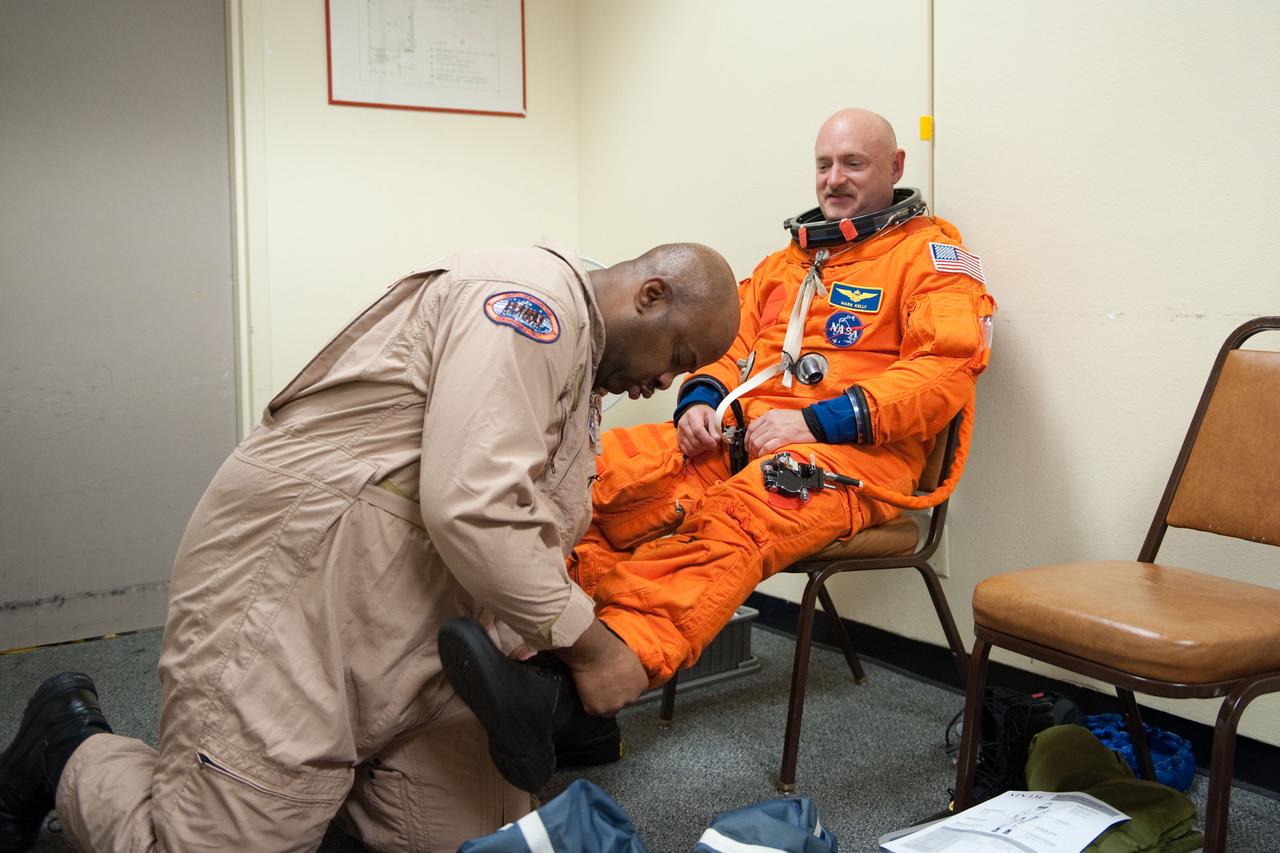
JSC2010-E-124261 (8 Sept. 2010) --- NASA astronaut Mark Kelly, STS-134 commander, dons a training version of his shuttle launch and entry suit in preparation for a training session in the fixed-base shuttle mission simulator (SMS) in the Jake Garn Simulation and Training Facility at NASA?s Johnson Space Center. United Space Alliance suit technician Andre Denard assisted Kelly. Photo credit: NASA or National Aeronautics and Space Administration
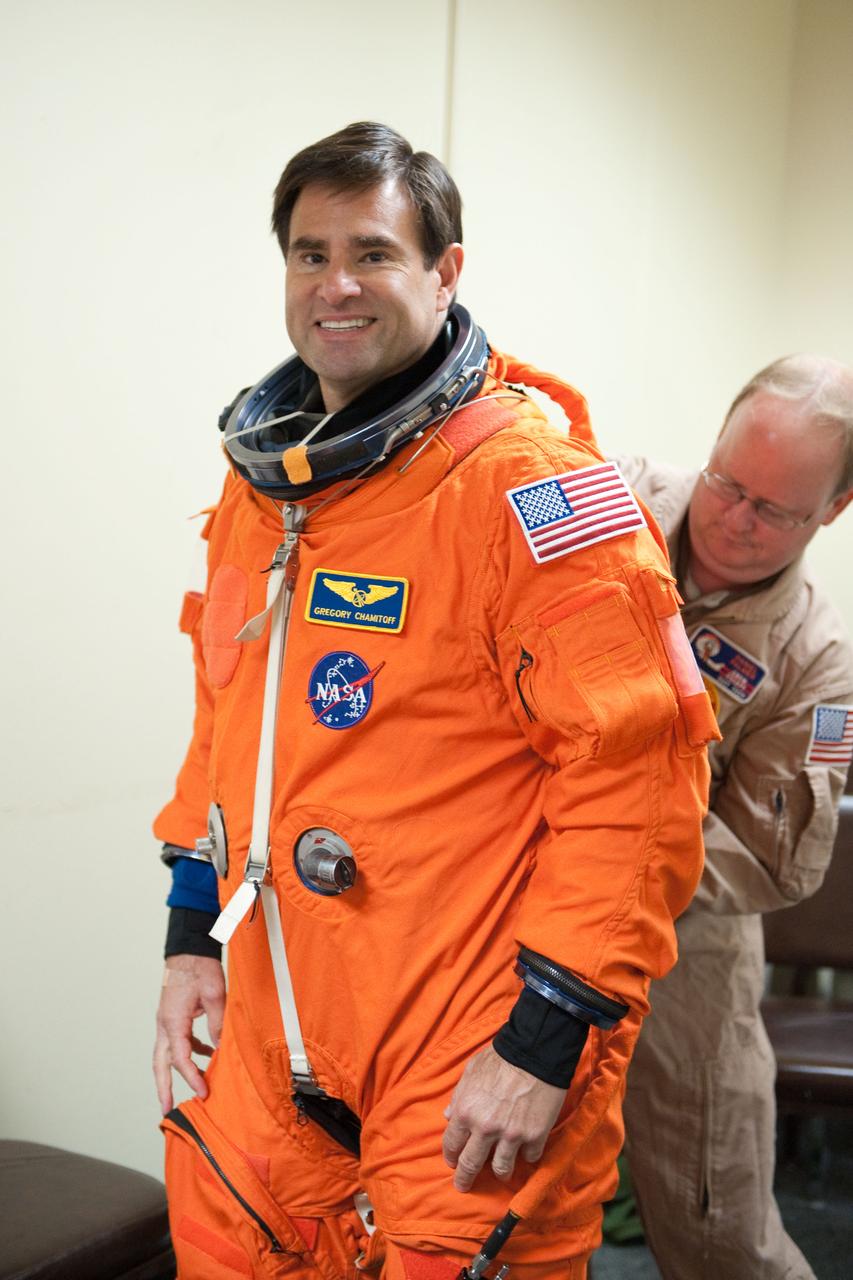
JSC2010-E-124263 (8 Sept. 2010) --- NASA astronaut Greg Chamitoff, STS-134 mission specialist, dons a training version of his shuttle launch and entry suit in preparation for a training session in the fixed-base shuttle mission simulator (SMS) in the Jake Garn Simulation and Training Facility at NASA?s Johnson Space Center. United Space Alliance suit technician Daniel Palmer assisted Chamitoff. Photo credit: NASA or National Aeronautics and Space Administration
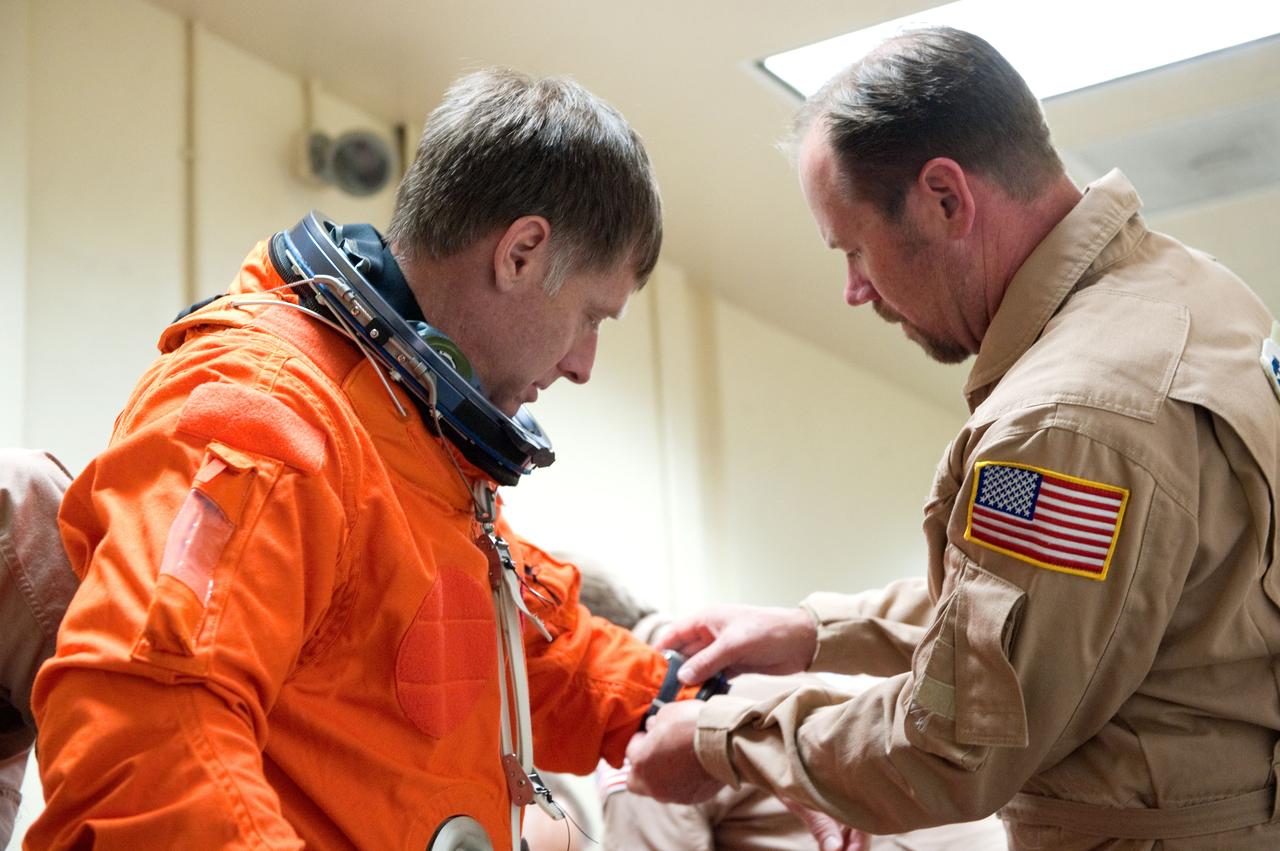
JSC2011-E-023113 (2 March 2011) --- NASA astronaut Chris Ferguson, STS-135 commander, dons a training version of his shuttle launch and entry suit in preparation for a training session in the fixed-base shuttle mission simulator (SMS) in the Jake Garn Simulation and Training Facility at NASA's Johnson Space Center. Suit technician Drew Billingsley assisted Ferguson. Photo credit: NASA or National Aeronautics and Space Administration
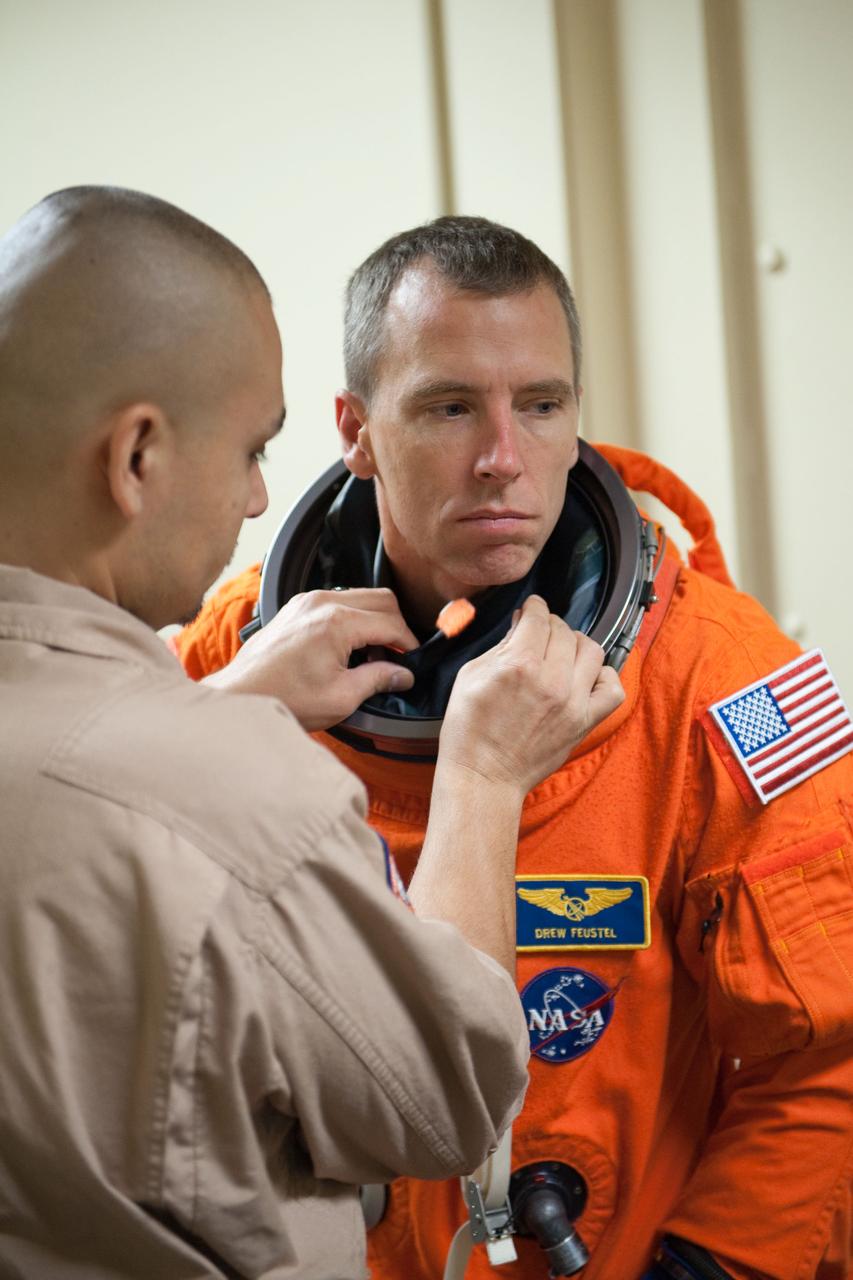
JSC2010-E-124260 (8 Sept. 2010) --- NASA astronaut Andrew Feustel, STS-134 mission specialist, dons a training version of his shuttle launch and entry suit in preparation for a training session in the fixed-base shuttle mission simulator (SMS) in the Jake Garn Simulation and Training Facility at NASA?s Johnson Space Center. United Space Alliance suit technician Russ Baker assisted Feustel. Photo credit: NASA or National Aeronautics and Space Administration
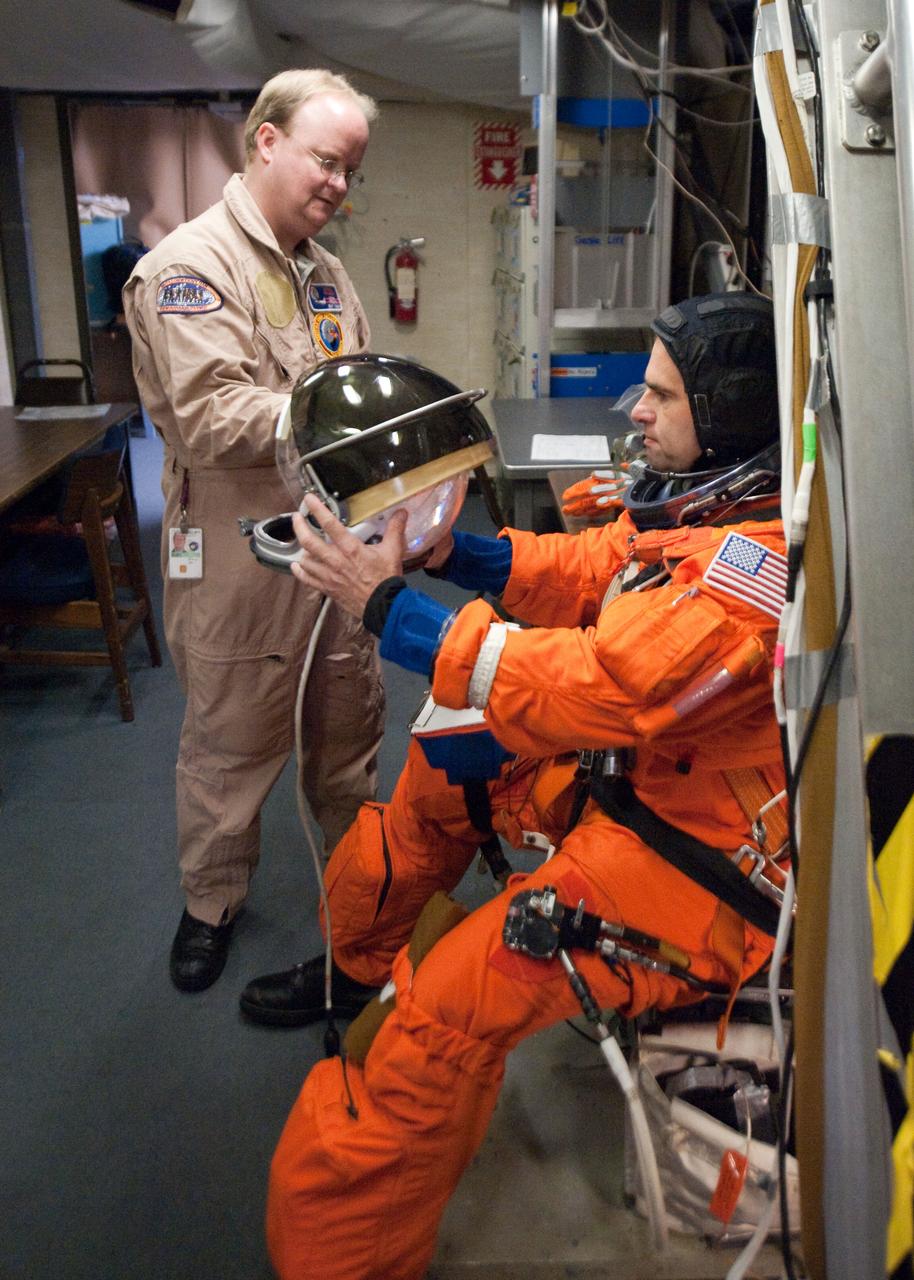
JSC2010-E-124282 (8 Sept. 2010) --- NASA astronaut Greg Chamitoff, STS-134 mission specialist, attired in a training version of his shuttle launch and entry suit, prepares for a training session in the fixed-base shuttle mission simulator (SMS) in the Jake Garn Simulation and Training Facility at NASA?s Johnson Space Center. United Space Alliance suit technician Daniel Palmer assisted Chamitoff. Photo credit: NASA or National Aeronautics and Space Administration
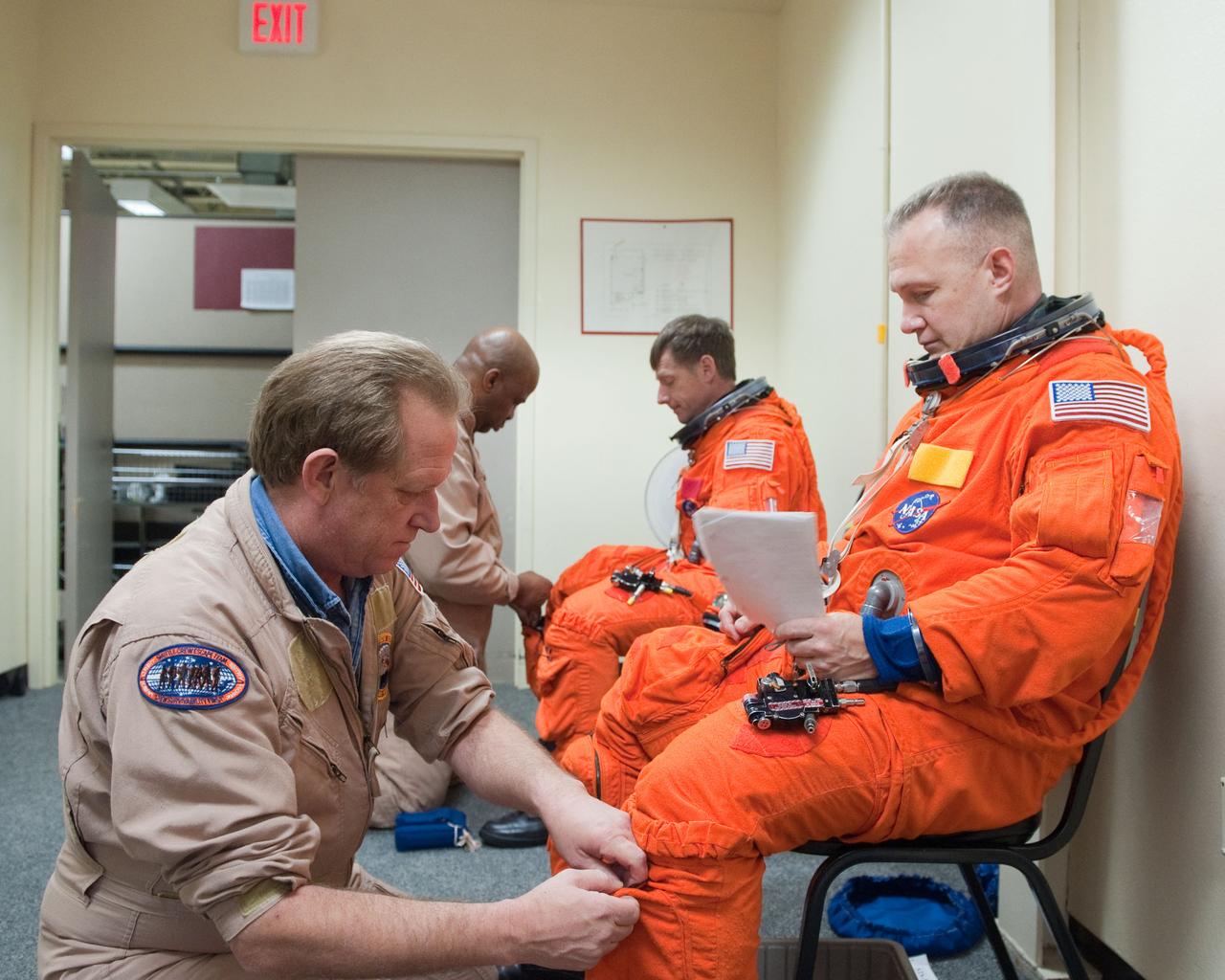
JSC2011-E-023117 (2 March 2011) --- NASA astronauts Doug Hurley (right foreground), STS-135 pilot; and Chris Ferguson, commander, don training versions of their shuttle launch and entry suits in preparation for a training session in the fixed-base shuttle mission simulator (SMS) in the Jake Garn Simulation and Training Facility at NASA's Johnson Space Center. Suit technicians John Hazelhurst (left foreground) and Andre Denard assisted the crew members. Photo credit: NASA or National Aeronautics and Space Administration
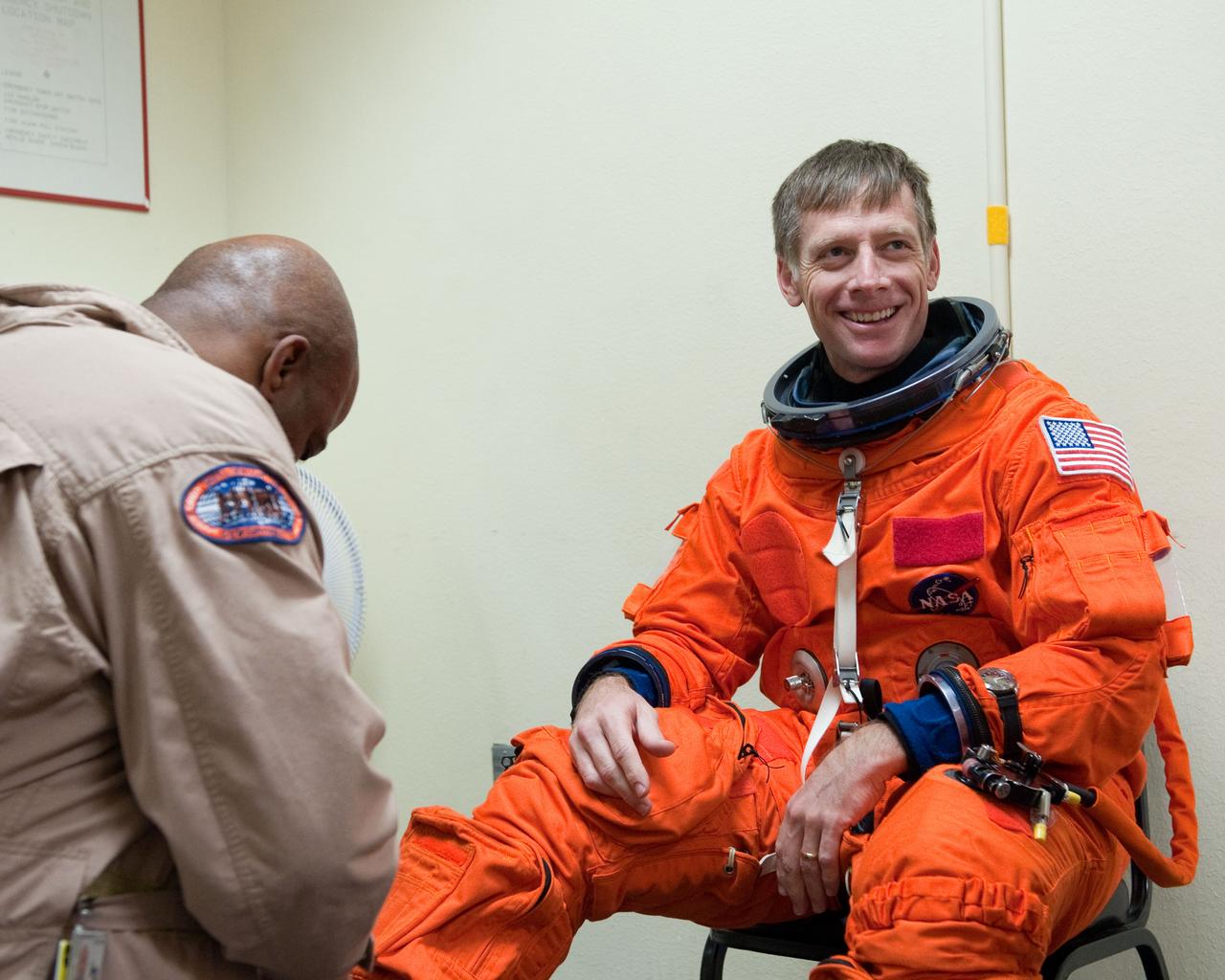
JSC2011-E-023114 (2 March 2011) --- NASA astronaut Chris Ferguson, STS-135 commander, dons a training version of his shuttle launch and entry suit in preparation for a training session in the fixed-base shuttle mission simulator (SMS) in the Jake Garn Simulation and Training Facility at NASA's Johnson Space Center. Suit technician Andre Denard assisted Ferguson. Photo credit: NASA or National Aeronautics and Space Administration
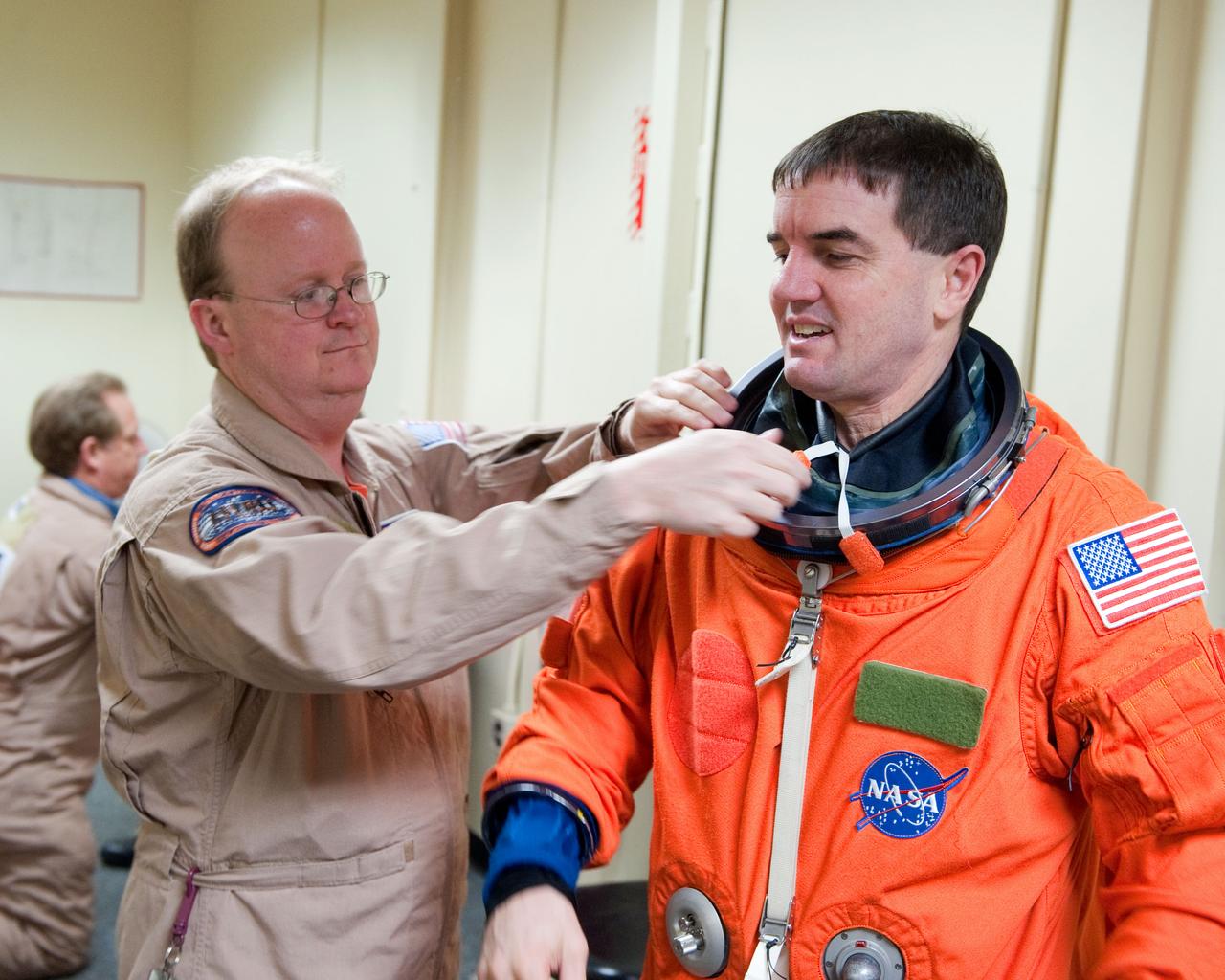
JSC2011-E-023118 (2 March 2011) --- NASA astronaut Rex Walheim, STS-135 mission specialist, dons a training version of his shuttle launch and entry suit in preparation for a training session in the fixed-base shuttle mission simulator (SMS) in the Jake Garn Simulation and Training Facility at NASA's Johnson Space Center. Suit technician Daniel Palmer assisted Walheim. Photo credit: NASA or National Aeronautics and Space Administration
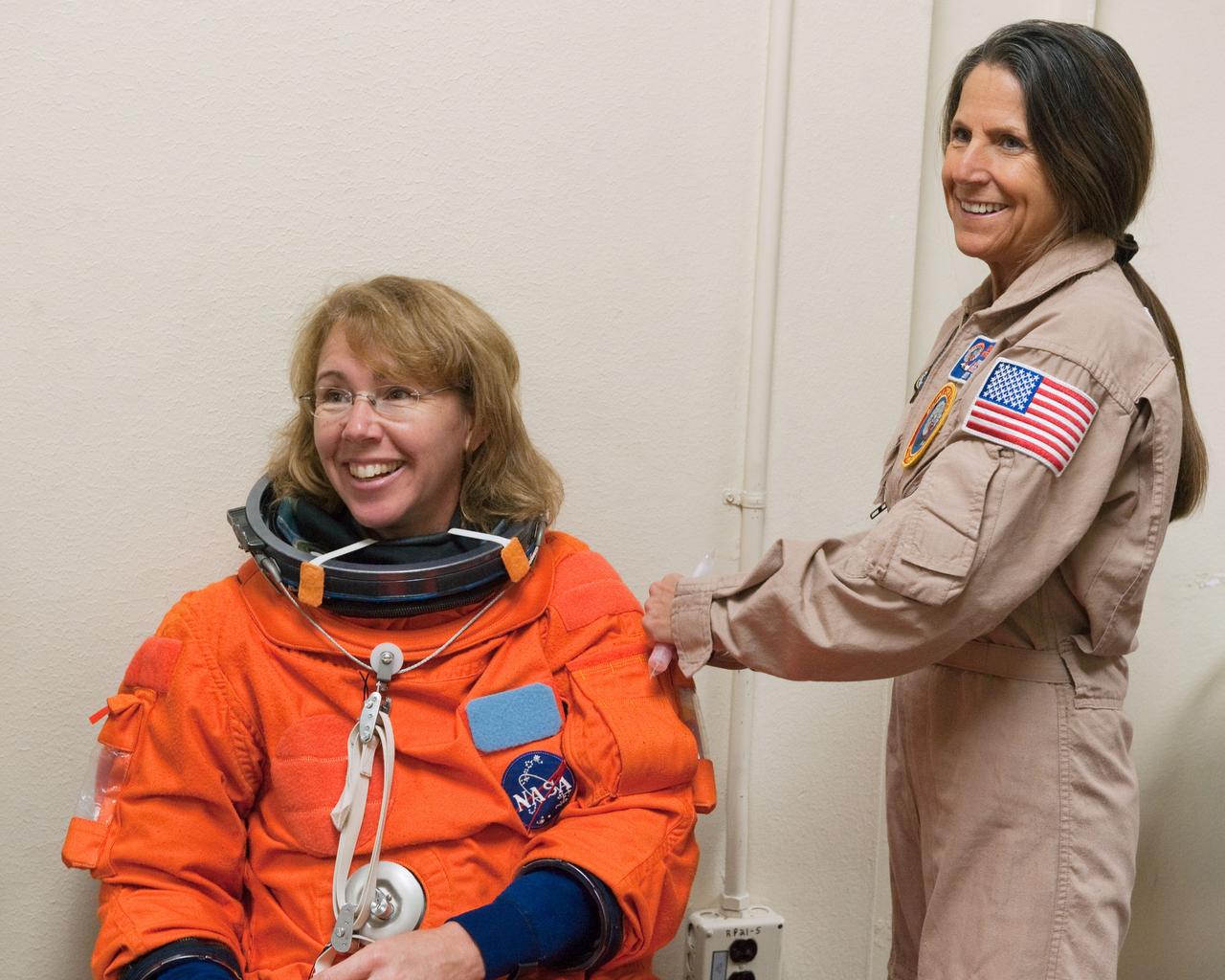
JSC2011-E-023112 (2 March 2011) --- NASA astronaut Sandy Magnus, STS-135 mission specialist, dons a training version of her shuttle launch and entry suit in preparation for a training session in the fixed-base shuttle mission simulator (SMS) in the Jake Garn Simulation and Training Facility at NASA's Johnson Space Center. Suit technician Toni Cost-Davis assisted Magnus. Photo credit: NASA or National Aeronautics and Space Administration
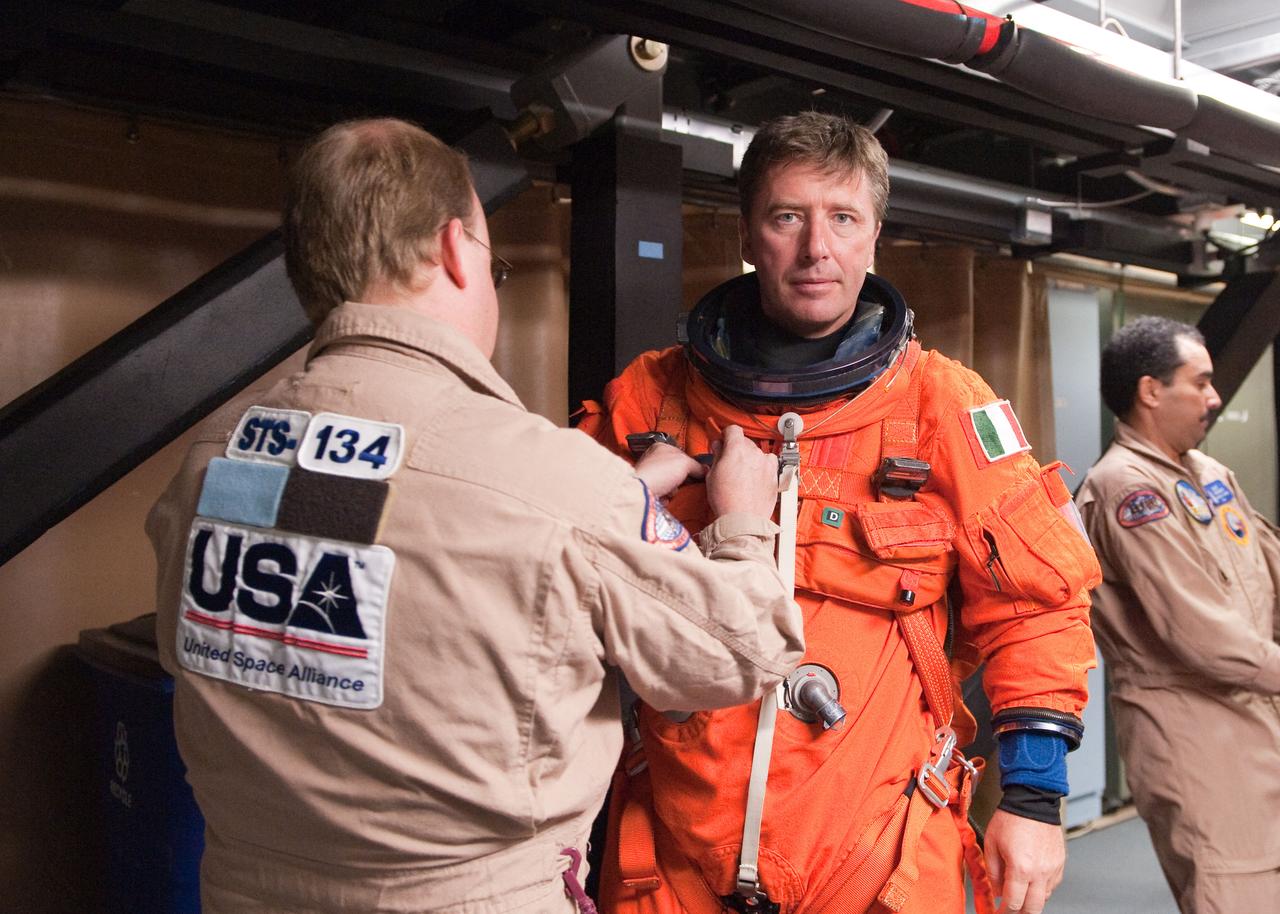
JSC2010-E-124278 (8 Sept. 2010) --- European Space Agency astronaut Roberto Vittori, STS-134 mission specialist, dons a training version of his shuttle launch and entry suit in preparation for a training session in the fixed-base shuttle mission simulator (SMS) in the Jake Garn Simulation and Training Facility at NASA?s Johnson Space Center. United Space Alliance suit technician Daniel Palmer assisted Vittori. Photo credit: NASA or National Aeronautics and Space Administration
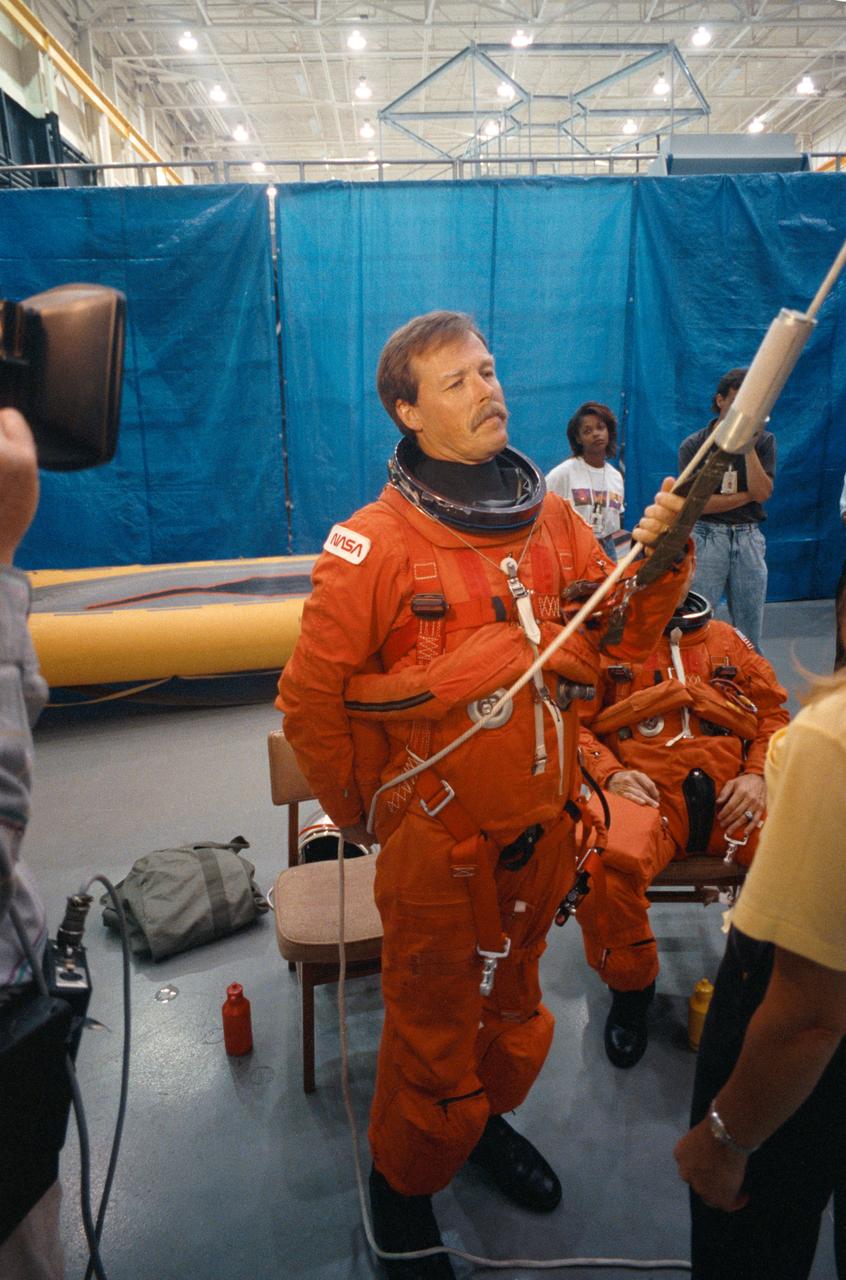
STS-47 Endeavour, Orbiter Vehicle (OV) 105, Spacelab Japan (SLJ) Commander Robert L. Gibson, wearing launch and entry suit (LES), holds sky genie equipment in proper position while listening to a training instructor's directions. Gibson along with the other STS-47 crewmembers is participating in post landing emergency egress procedures at JSC's Mockup and Integration Laboratory (MAIL) Bldg 9NE.
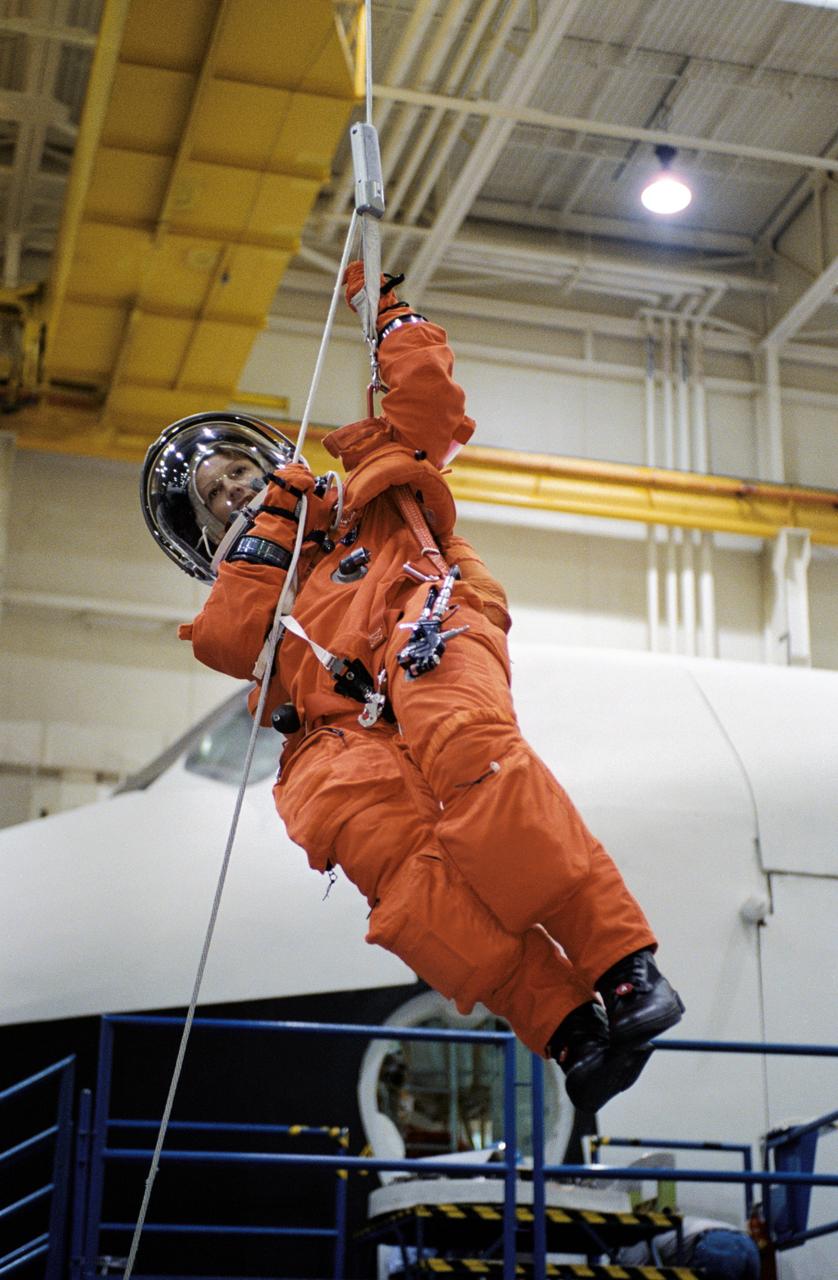
JSC2002-01651 (12 September 2002) --- Astronaut Eileen M. Collins, STS-114 mission commander, wearing a training version of the full-pressure launch and entry suit, lowers herself from a simulated shuttle in trouble during an emergency egress training session in the Space Vehicle Mockup Facility at the Johnson Space Center (JSC).
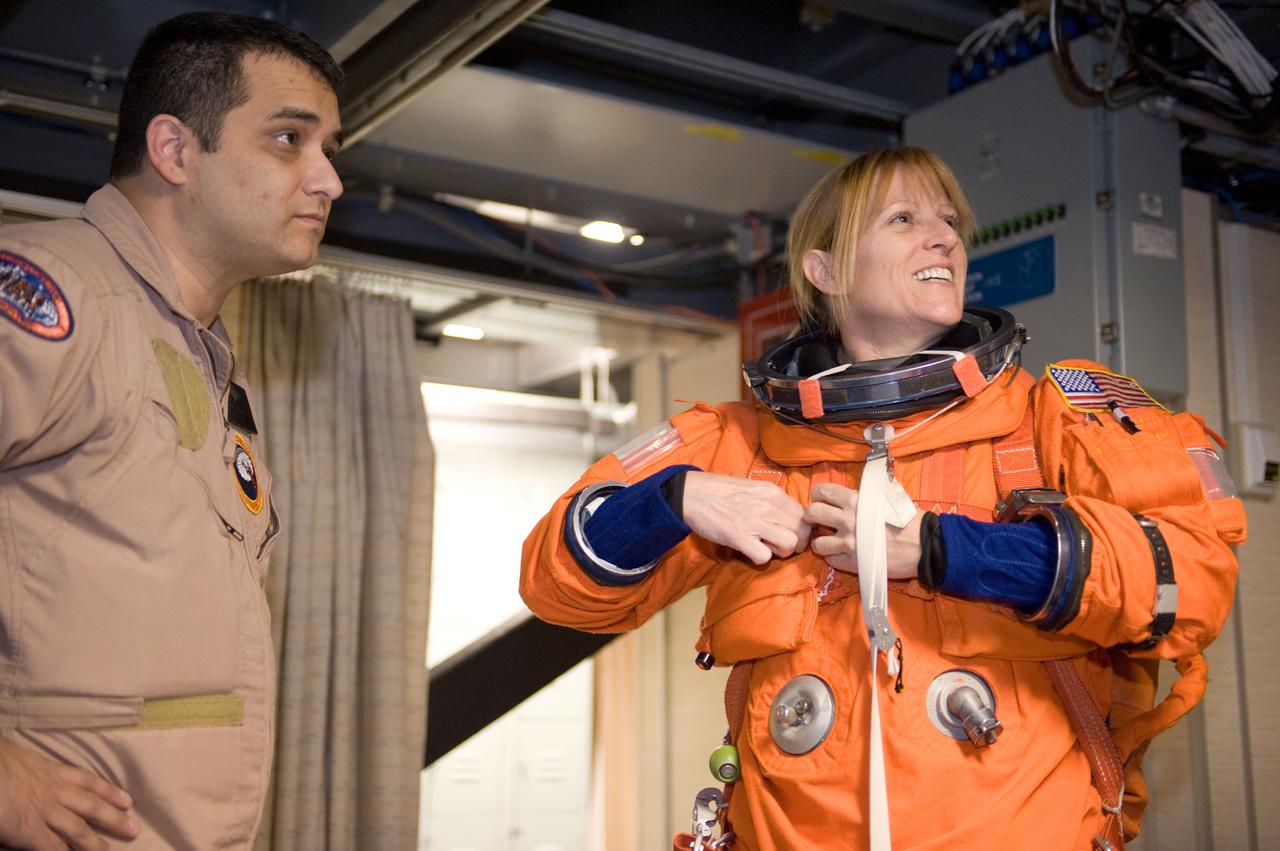
JSC2009-E-286666 (21 Dec. 2009) --- Astronaut Kathryn Hire, STS-130 mission specialist, dons a training version of her shuttle launch and entry suit in preparation for a training session in the Mission Simulation Development Facility at NASA's Johnson Space Center.

JSC2002-00866 (24 April 2002) --- Astronaut David A. Wolf, STS-112 mission specialist, wearing a training version of the full-pressure launch and entry suit, lowers himself from a simulated shuttle in trouble during an emergency egress training session in the Space Vehicle Mockup Facility at the Johnson Space Center (JSC).
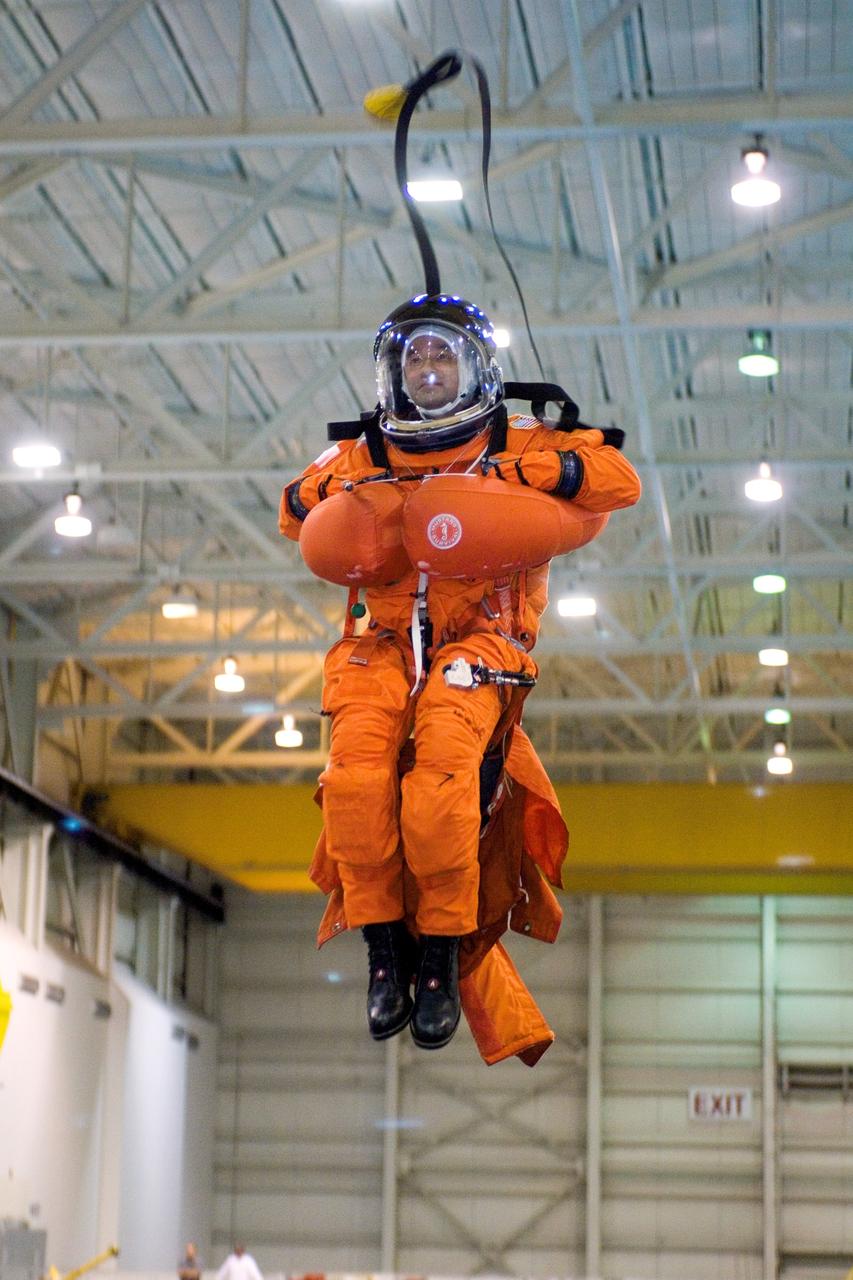
JSC2005-E-31233 (28 July 2005) --- Astronaut Mark L. Polansky, STS-116 commander, attired in a training version of the shuttle launch and entry suit, simulates a parachute drop into water during an emergency bailout training session at the Neutral Buoyancy Laboratory (NBL) near the Johnson Space Center.

JSC2009-E-286671 (21 Dec. 2009) --- Astronaut Nicholas Patrick, STS-130 mission specialist, attired in a training version of his shuttle launch and entry suit, participates in a training session in the Mission Simulation Development Facility at NASA's Johnson Space Center.

JSC2009-E-286657 (21 Dec. 2009) --- Astronaut Terry Virts, STS-130 pilot, attired in a training version of his shuttle launch and entry suit, occupies the pilot?s station during a training session in the Mission Simulation Development Facility at NASA's Johnson Space Center.
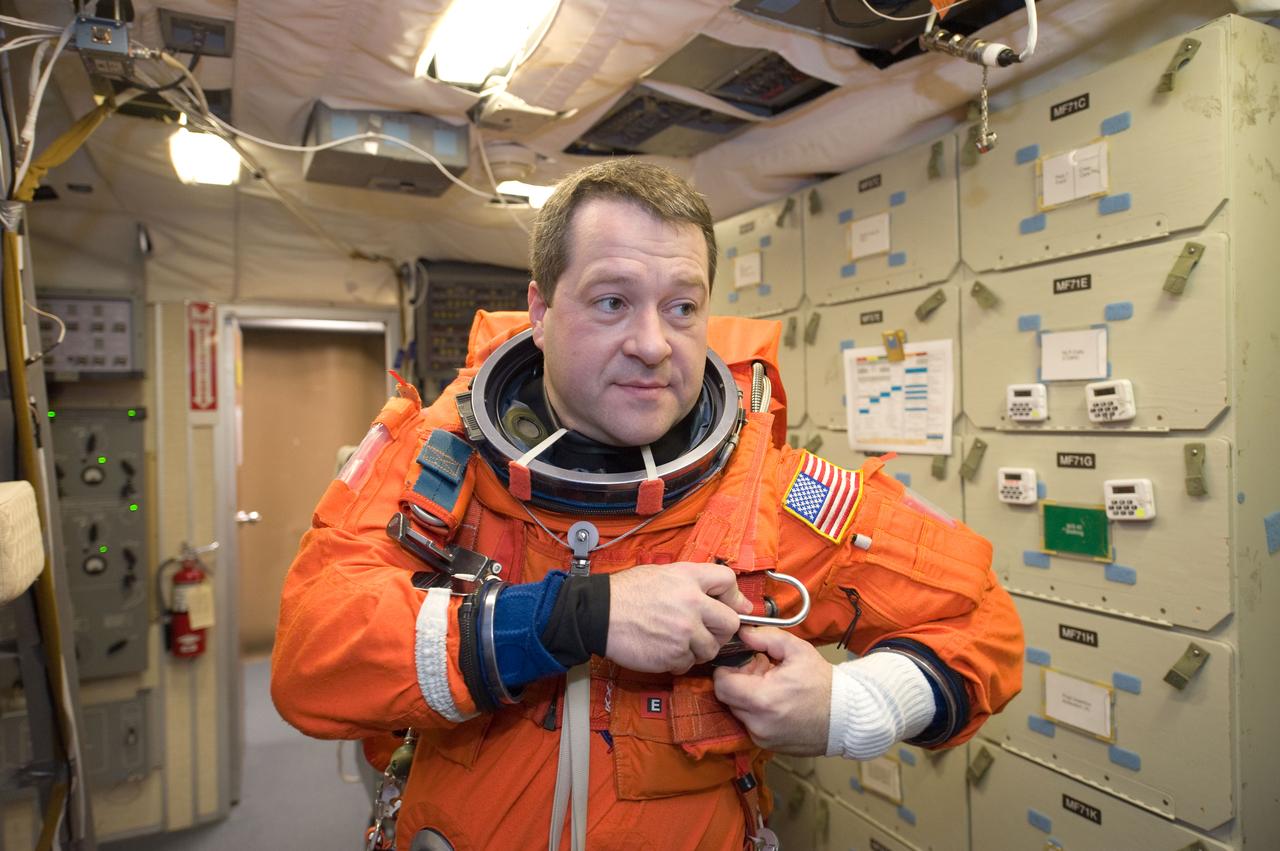
JSC2009-E-286664 (21 Dec. 2009) --- Astronaut Nicholas Patrick, STS-130 mission specialist, dons a training version of his shuttle launch and entry suit in preparation for a training session in the Mission Simulation Development Facility at NASA's Johnson Space Center.

JSC2009-E-286678 (21 Dec. 2009) --- Astronaut Nicholas Patrick, STS-130 mission specialist, attired in a training version of his shuttle launch and entry suit, participates in a training session in the Mission Simulation Development Facility at NASA's Johnson Space Center.

JSC2000-02225 (March 2000) --- Astronaut Daniel C. Burbank, mission specialist, fastens the communications carrier assembly (CCA) on his launch and entry suit (LES). Burbank was about to join his six STS-106 crewmates for a simulation exercise in the Systems Integration Facility at the Johnson Space Center (JSC).
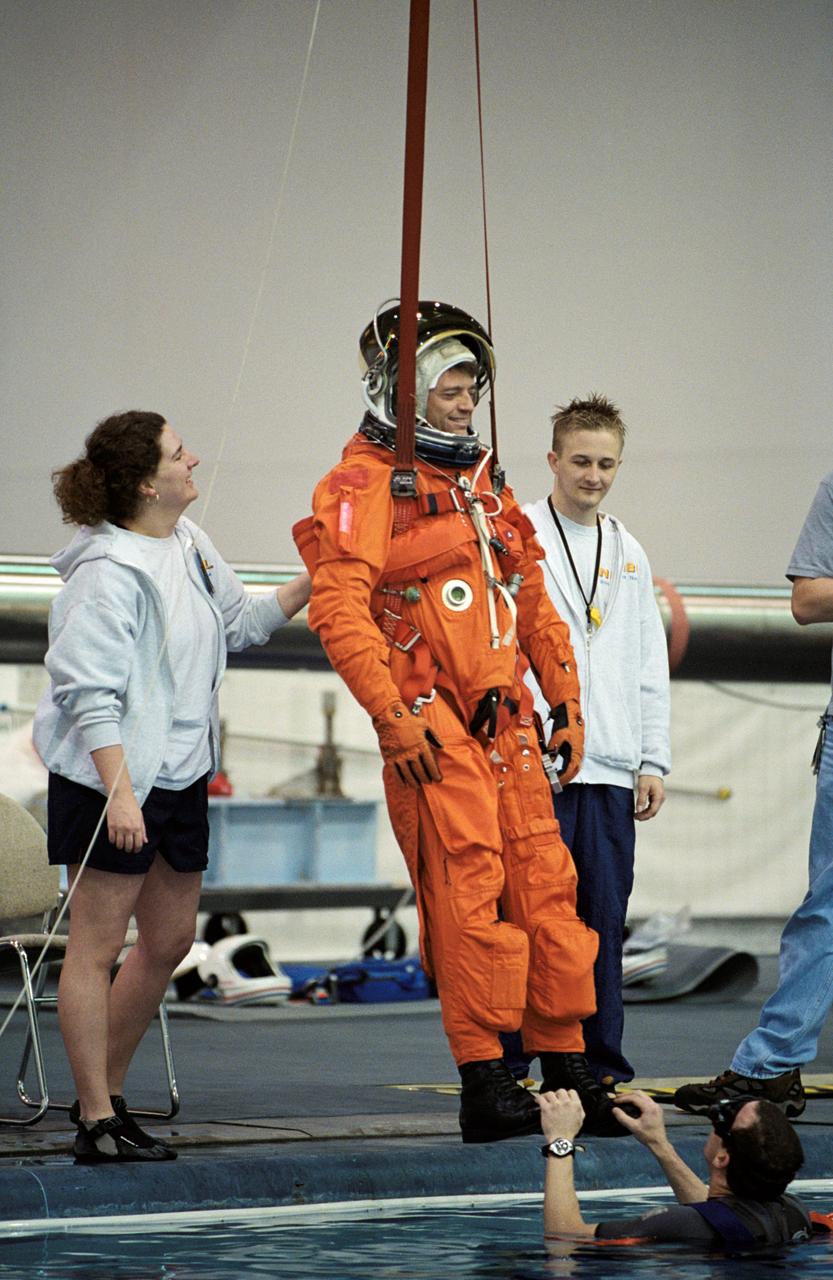
JSC2002-00532 (19 February 2002) --- Astronaut Jeffrey S. Ashby, STS-112 mission commander, simulates a parachute drop into water during an emergency bailout training session at the Neutral Buoyancy Laboratory (NBL) near the Johnson Space Center (JSC). Ashby is attired in a training version of the shuttle launch and entry suit.
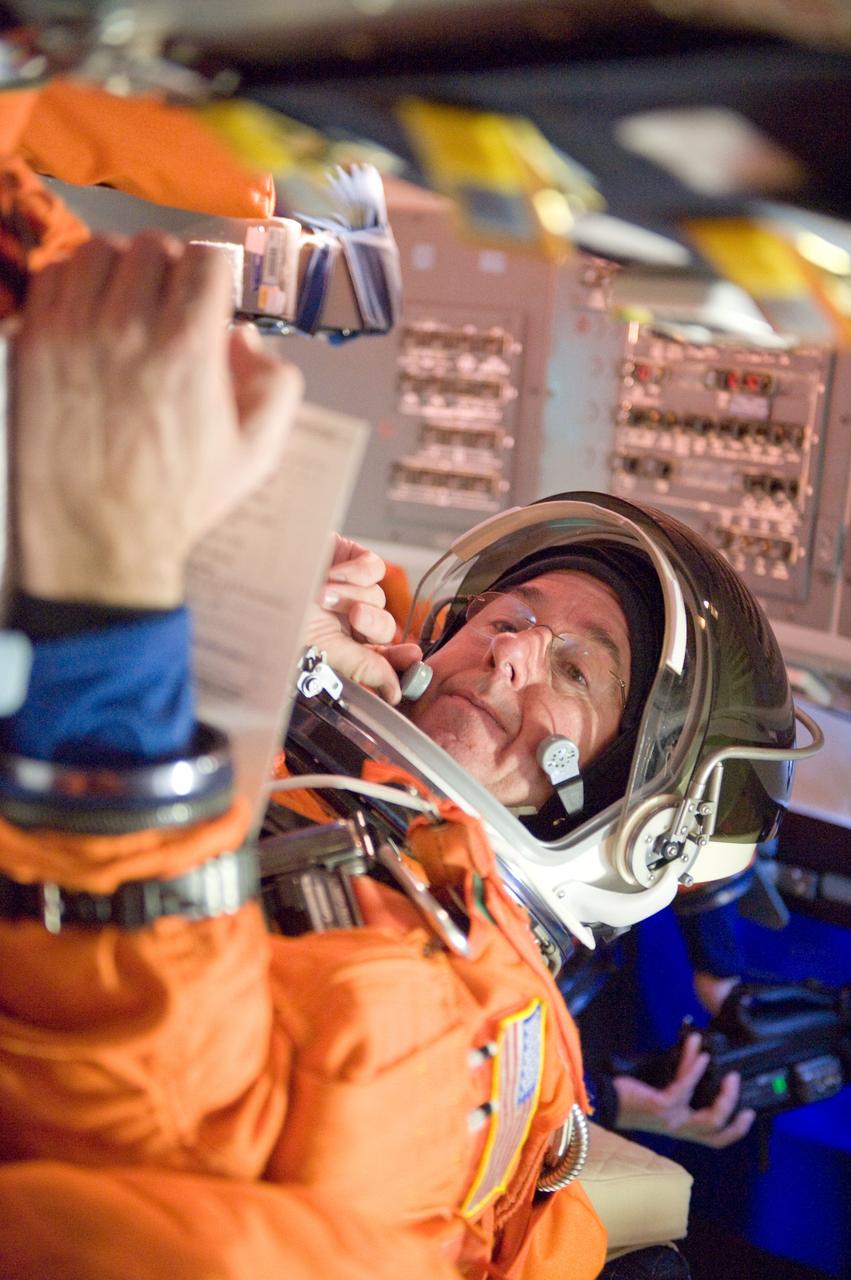
JSC2009-E-286677 (21 Dec. 2009) --- Astronaut Stephen Robinson, STS-130 mission specialist, attired in a training version of his shuttle launch and entry suit, participates in a training session in the Mission Simulation Development Facility at NASA's Johnson Space Center.
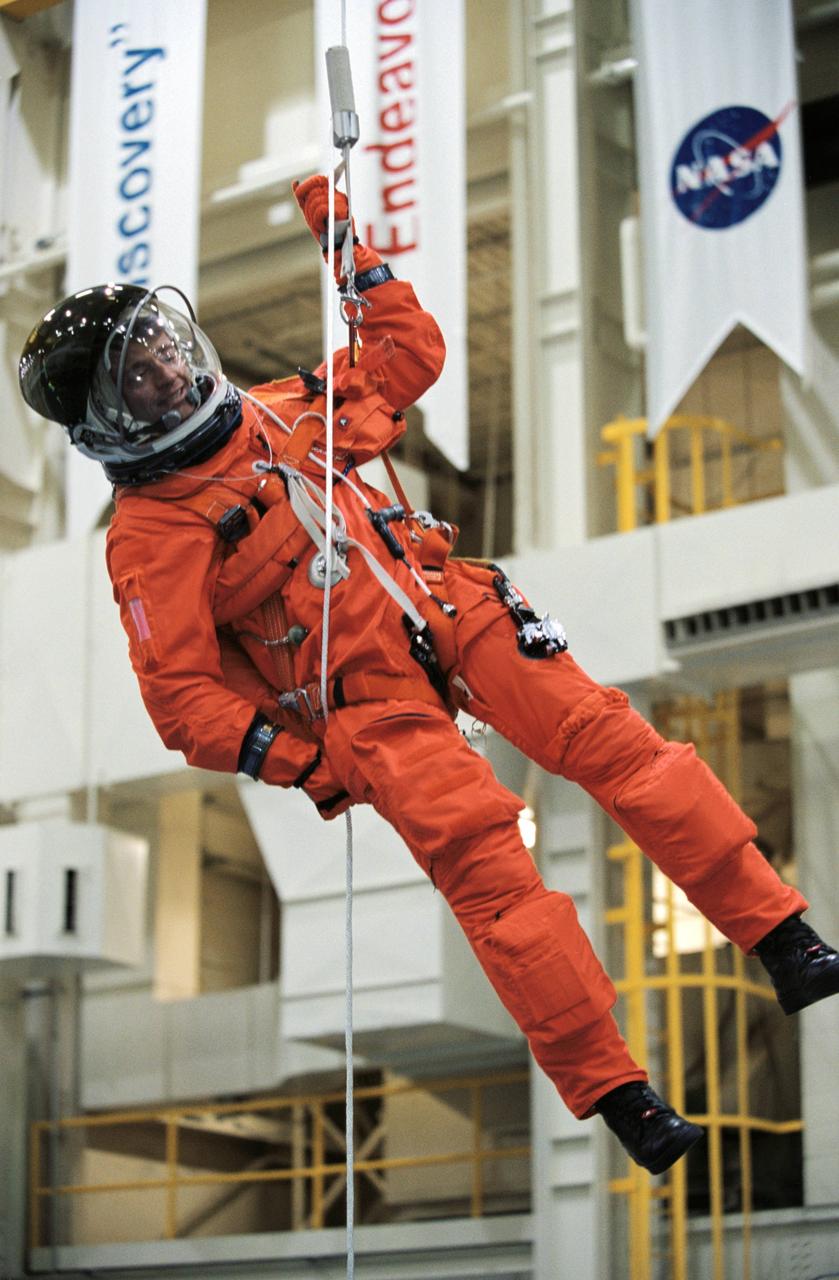
JSC2002-00868 (24 April 2002) --- Astronaut Jeffrey S. Ashby, STS-112 mission commander, wearing a training version of the full-pressure launch and entry suit, lowers himself from a simulated shuttle in trouble during an emergency egress training session in the Space Vehicle Mockup Facility at the Johnson Space Center (JSC).
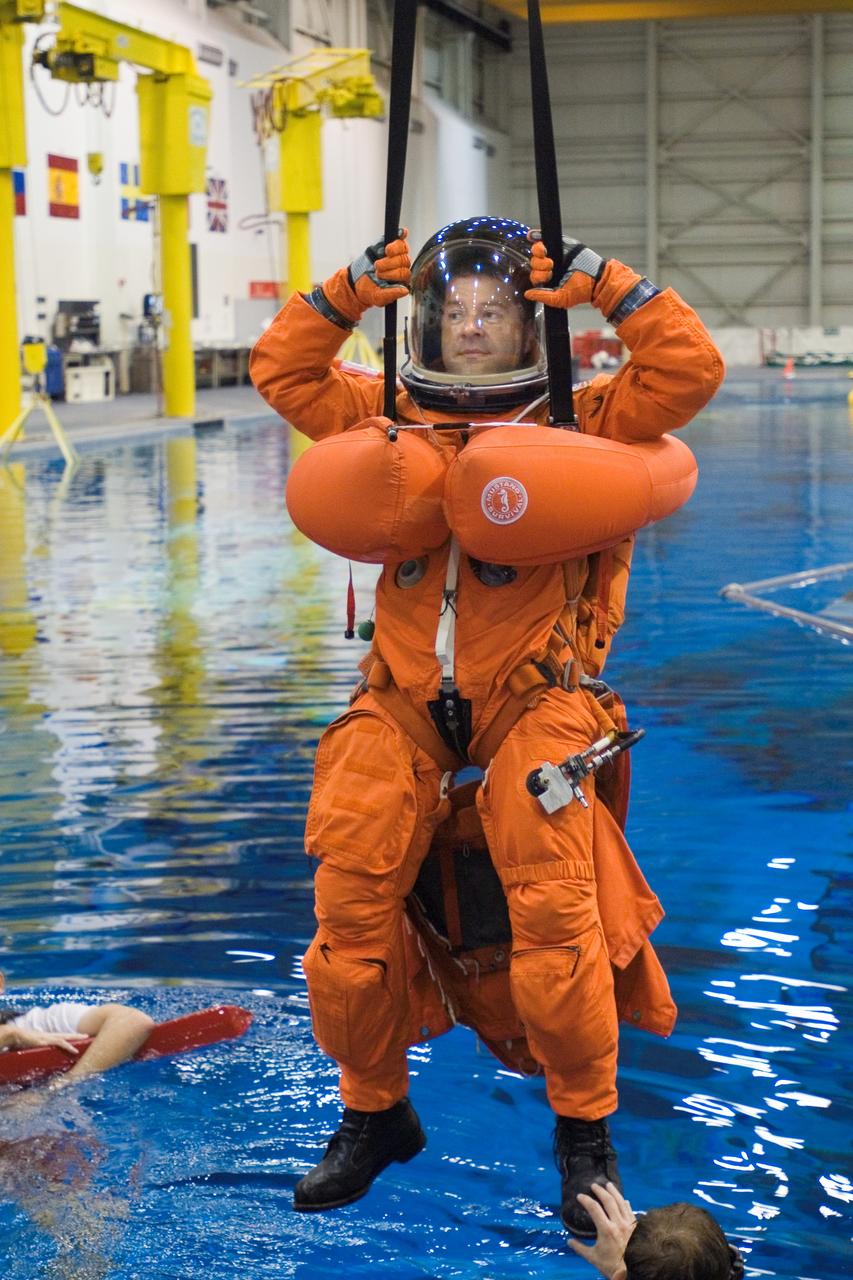
JSC2005-E-31280 (28 July 2005) --- Astronaut Nicholas J. M. Patrick, STS-116 mission specialist, attired in a training version of the shuttle launch and entry suit, simulates a parachute drop into water during an emergency bailout training session at the Neutral Buoyancy Laboratory (NBL) near the Johnson Space Center.
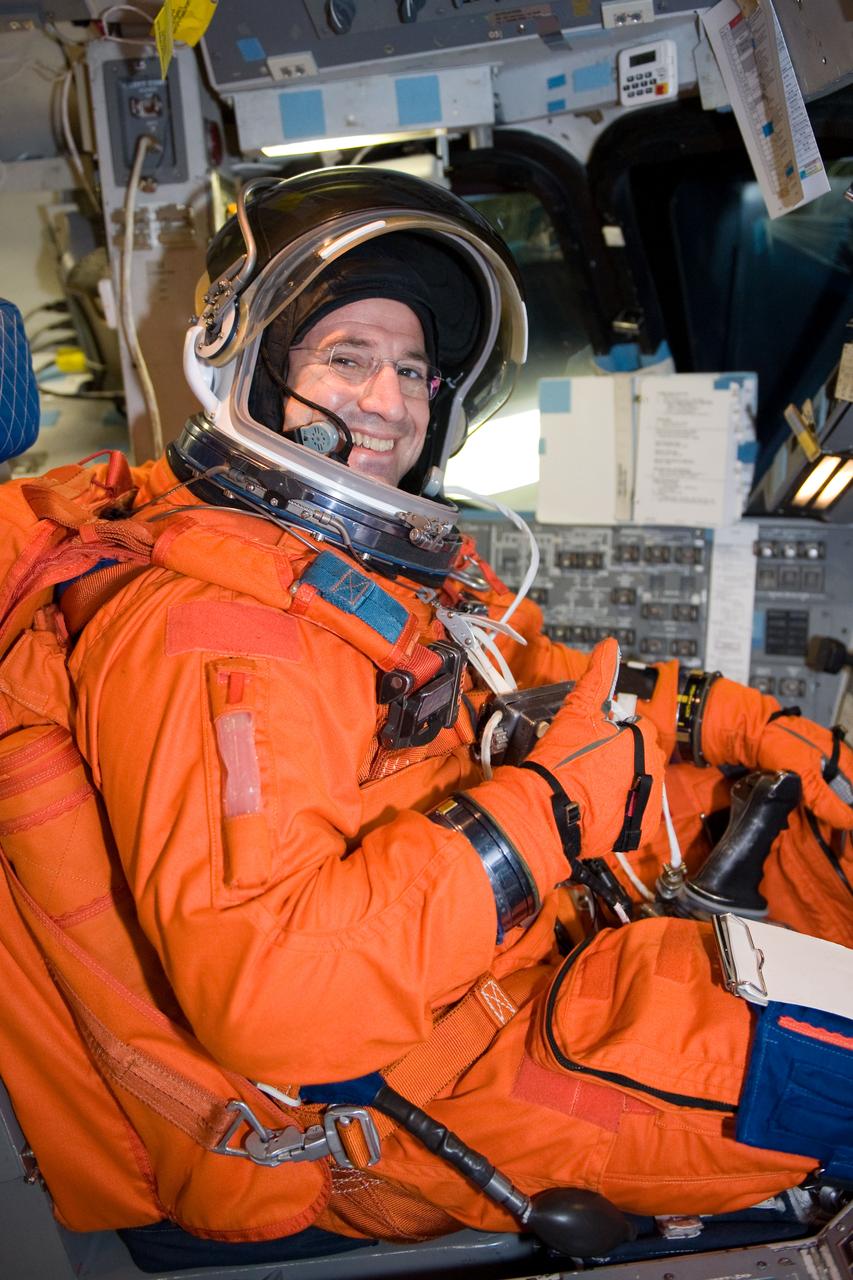
JSC2009-E-286660 (21 Dec. 2009) --- Astronaut George Zamka, STS-130 commander, attired in a training version of his shuttle launch and entry suit, occupies the commander?s station during a training session in the Mission Simulation Development Facility at NASA's Johnson Space Center.
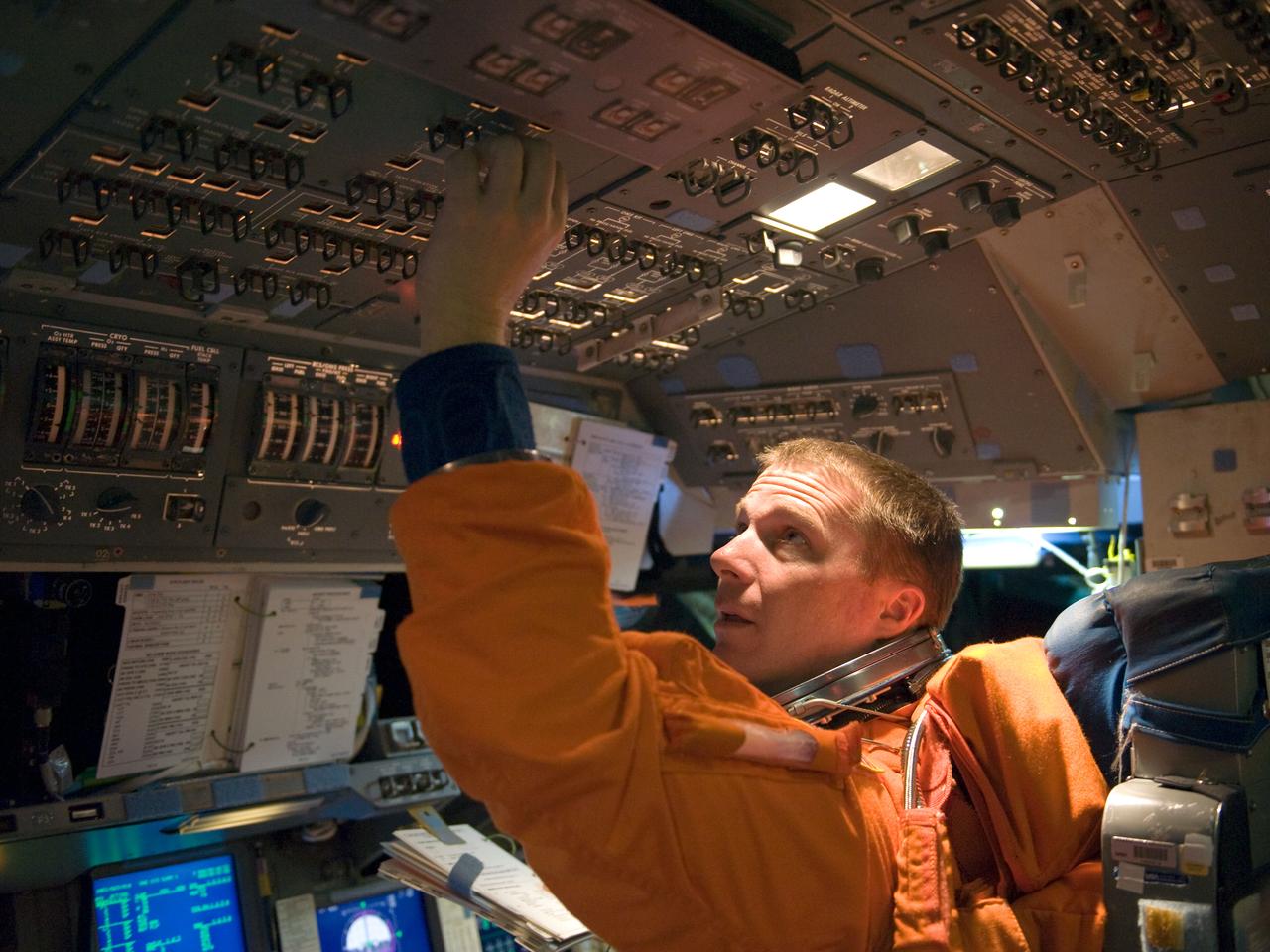
JSC2009-E-286655 (21 Dec. 2009) --- Astronaut Terry Virts, STS-130 pilot, attired in a training version of his shuttle launch and entry suit, occupies the pilot?s station during a training session in the Mission Simulation Development Facility at NASA's Johnson Space Center.
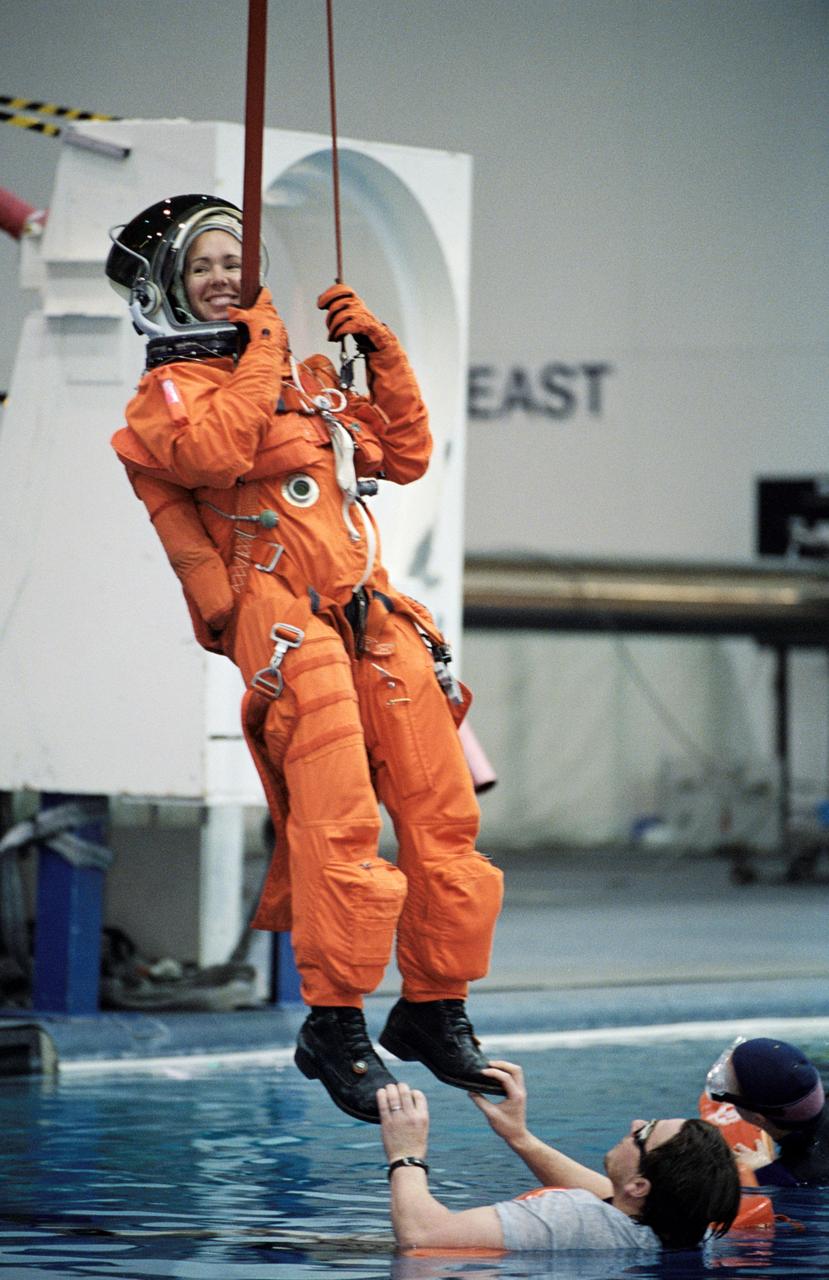
JSC2002-00518 (19 February 2002) --- Astronaut Sandra H. Magnus, STS-112 mission specialist, simulates a parachute drop into water during an emergency bailout training session at the Neutral Buoyancy Laboratory (NBL) near the Johnson Space Center (JSC). Magnus is attired in a training version of the shuttle launch and entry suit.
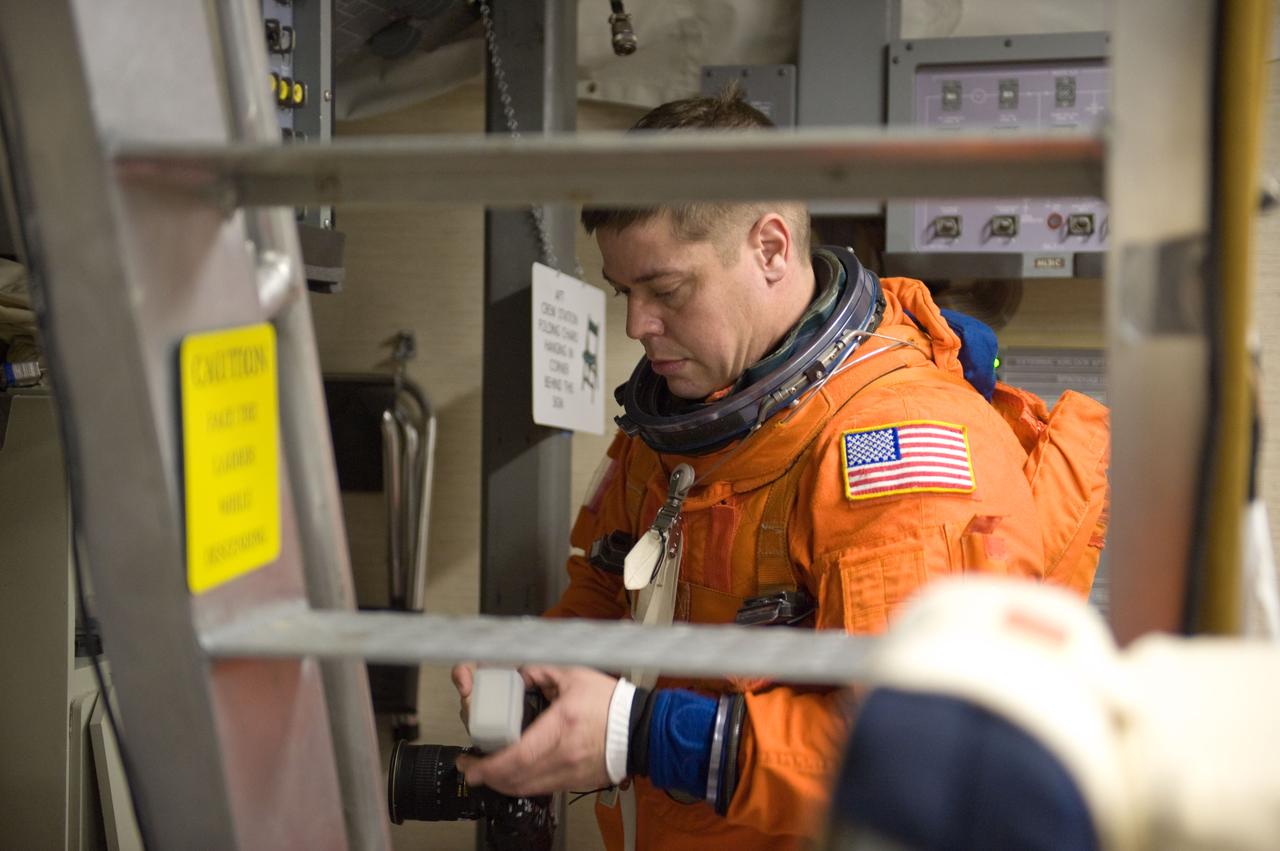
JSC2009-E-286679 (21 Dec. 2009) --- Astronaut Robert Behnken, STS-130 mission specialist, attired in a training version of his shuttle launch and entry suit, participates in a training session in the Mission Simulation Development Facility at NASA's Johnson Space Center.
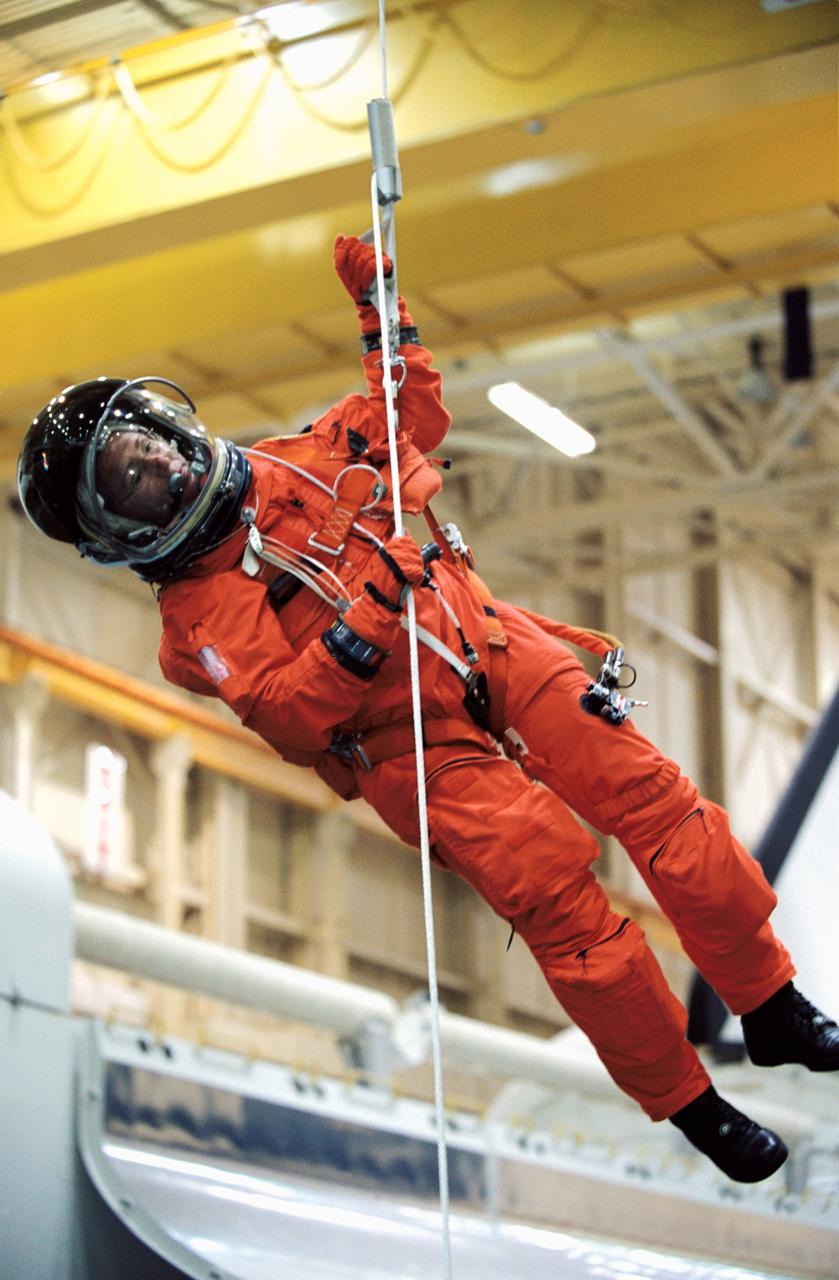
JSC2002-00879 (24 April 2002) --- Astronaut Sandra H. Magnus, STS-112 mission specialist, wearing a training version of the full-pressure launch and entry suit, lowers herself from a simulated shuttle in trouble during an emergency egress training session in the Space Vehicle Mockup Facility at the Johnson Space Center (JSC).
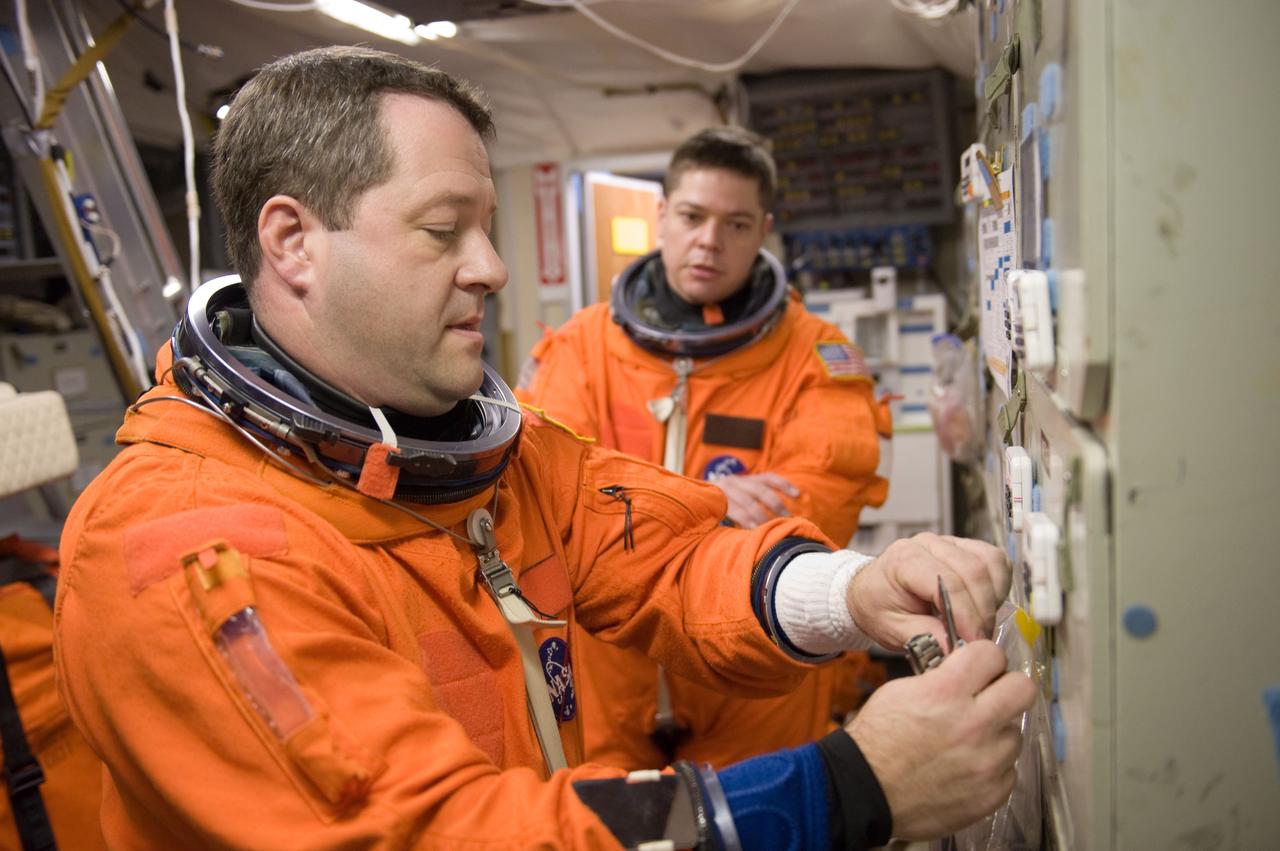
JSC2009-E-286680 (21 Dec. 2009) --- Astronauts Nicholas Patrick (foreground) and Robert Behnken, both STS-130 mission specialists, attired in training versions of their shuttle launch and entry suits, participate in a training session in the Mission Simulation Development Facility at NASA's Johnson Space Center.
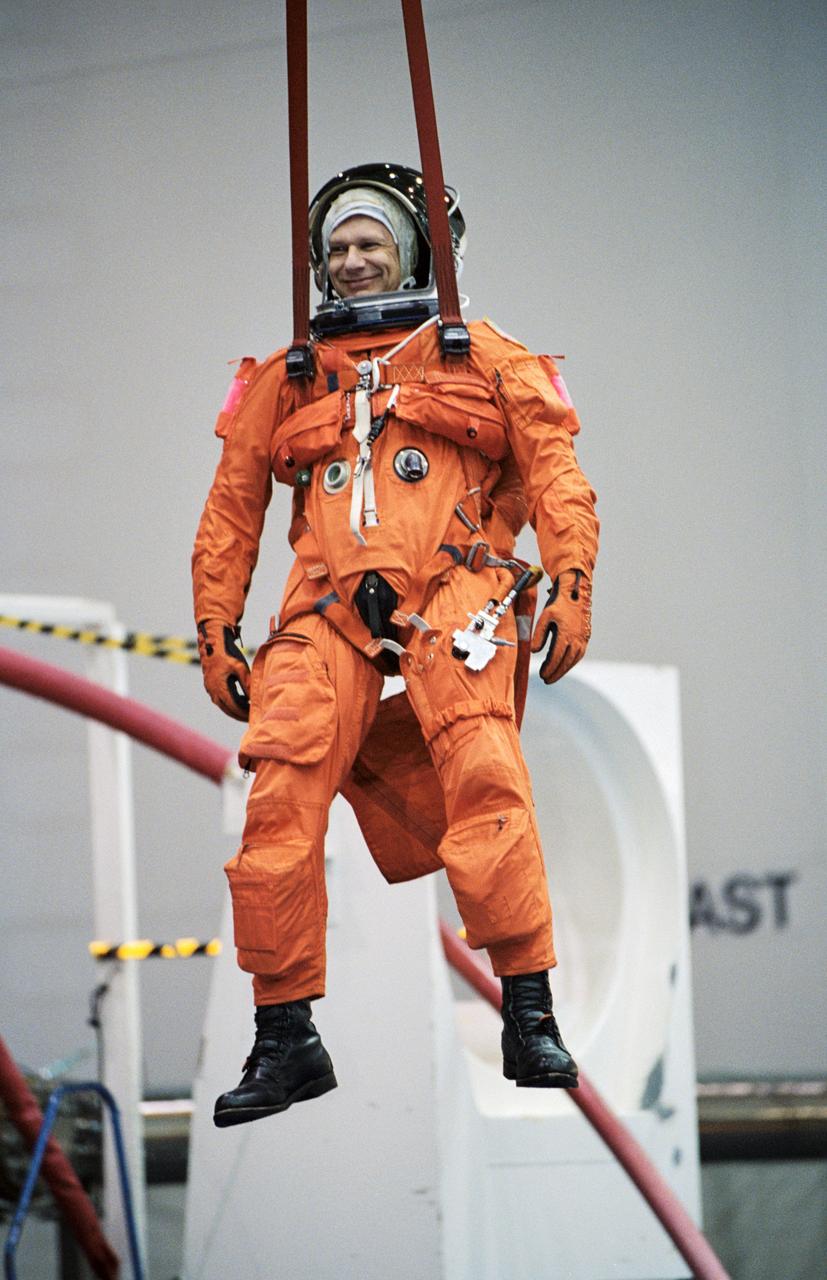
JSC2002-00515 (19 February 2002) --- Astronaut Piers J. Sellers, STS-112 mission specialist, simulates a parachute drop into water during an emergency bailout training session at the Neutral Buoyancy Laboratory (NBL) near the Johnson Space Center (JSC). Sellers is attired in a training version of the shuttle launch and entry suit.
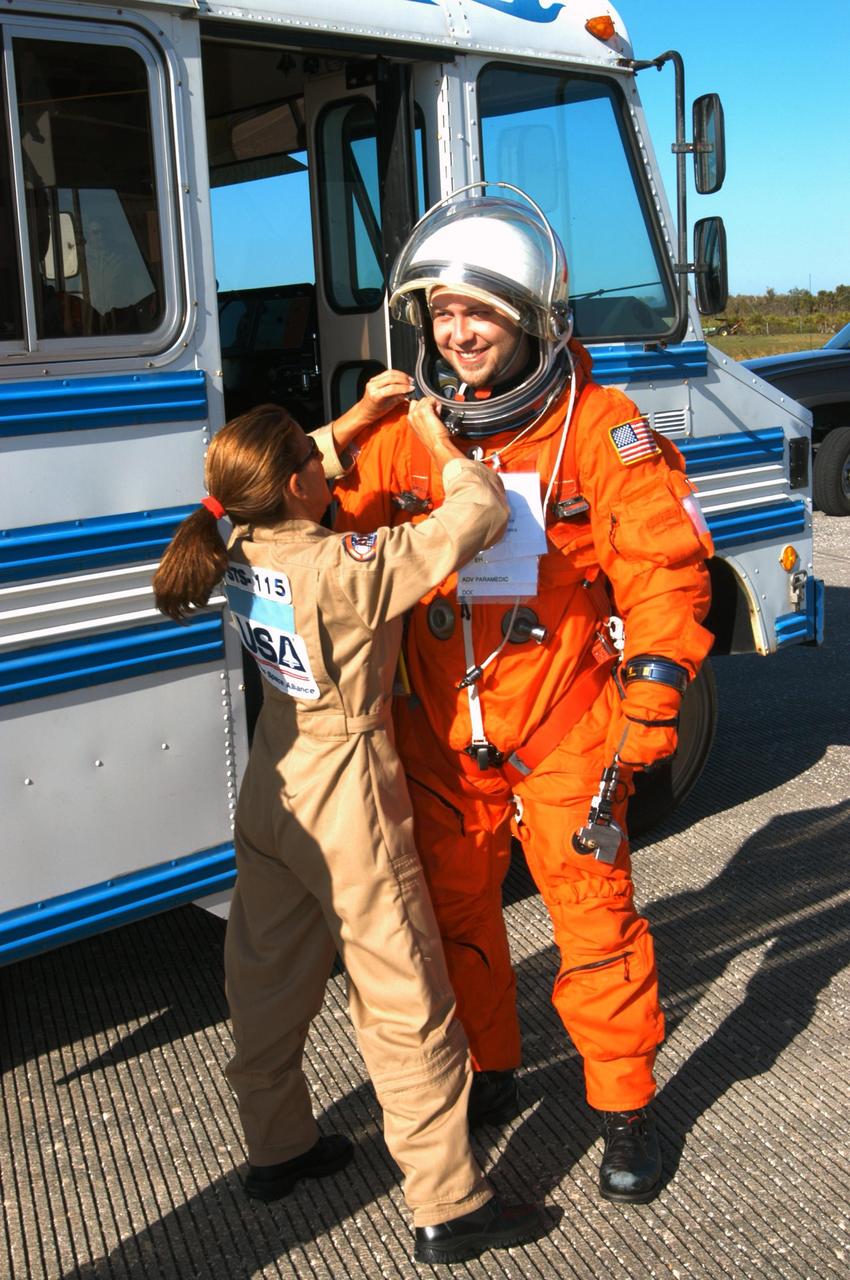
KENNEDY SPACE CENTER, FLA. - Preparing for a simulated emergency landing of a shuttle crew, United Space Alliance (USA) Suit Tech Toni Costa-Davis helps volunteer "astronaut" Brian Bateman, also with USA, with his launch and entry suit. Many volunteers posed as astronauts during the simulation. Known as a Mode VI exercise, the operation uses volunteer workers from the Center to pose as astronauts. The purpose of the simulation is to exercise emergency preparedness personnel, equipment and facilities in rescuing astronauts from a downed orbiter and providing immediate medical attention. Photo credit: NASA/George Shelton

JSC2010-E-014044 (25 Jan. 2010) --- Attired in training versions of their shuttle launch and entry suits, NASA astronauts Steve Lindsey (left), STS-133 commander; Eric Boe (background), pilot; Tim Kopra (right foreground) and Alvin Drew, both mission specialists, participate in a simulation exercise in the motion-base shuttle mission simulator in the Jake Garn Simulation and Training Facility at NASA?s Johnson Space Center.
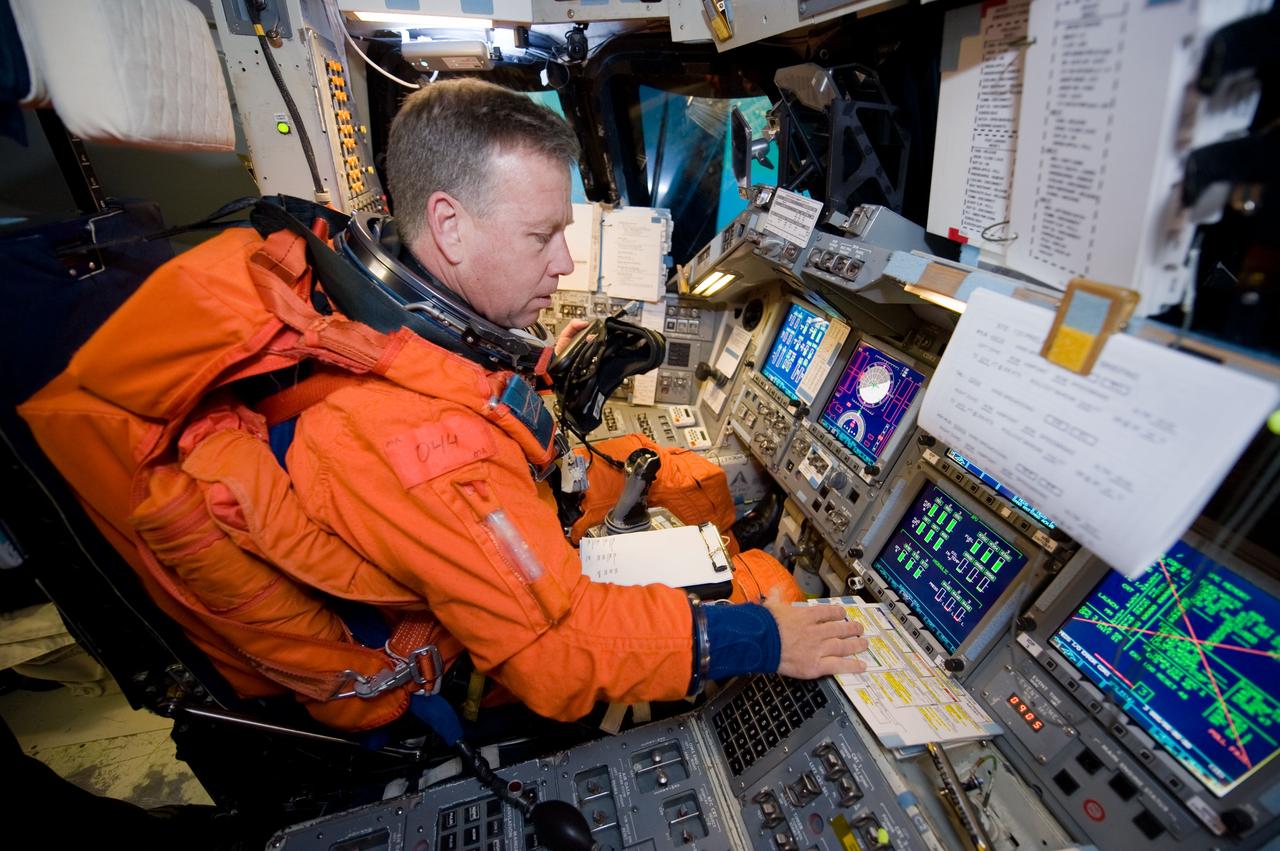
JSC2010-E-014040 (25 Jan. 2010) --- Attired in a training version of his shuttle launch and entry suit, NASA astronaut Steven Lindsey, STS-133 commander, occupies the commander?s station during a simulation exercise in the motion-base shuttle mission simulator in the Jake Garn Simulation and Training Facility at NASA?s Johnson Space Center.
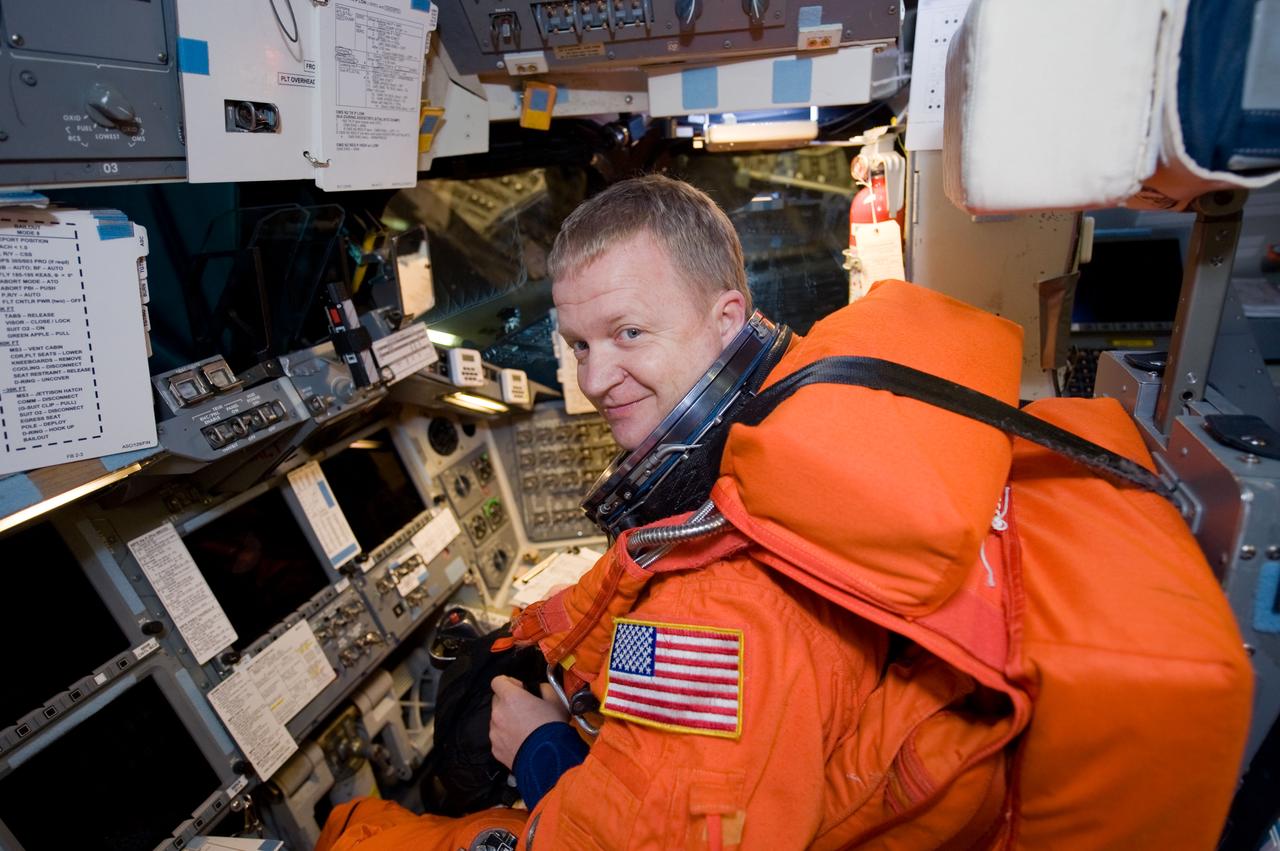
JSC2010-E-014039 (25 Jan. 2010) --- Attired in a training version of his shuttle launch and entry suit, NASA astronaut Eric Boe, STS-133 pilot, occupies the pilot?s station during a simulation exercise in the motion-base shuttle mission simulator in the Jake Garn Simulation and Training Facility at NASA?s Johnson Space Center.
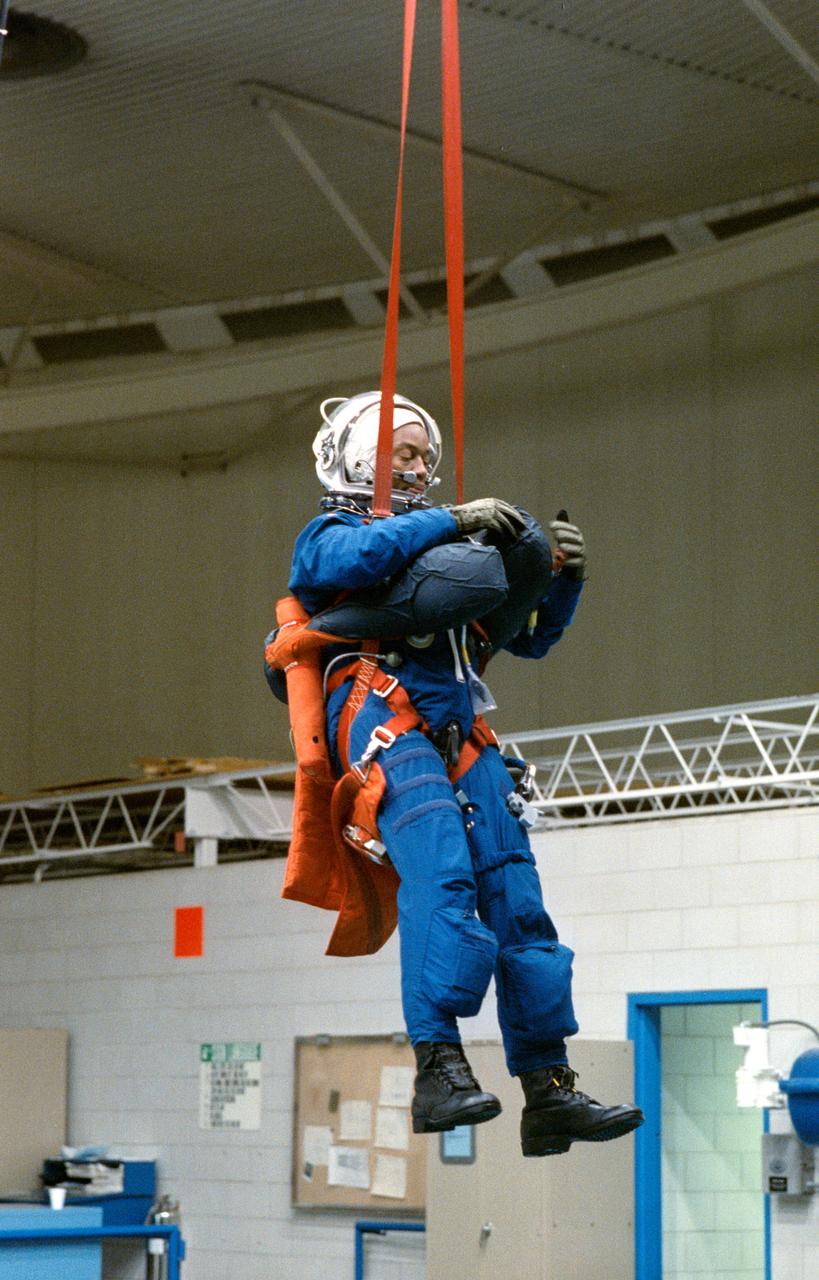
S90-54755 (13 Dec 1990) --- Astronaut Guion S. Bluford, Jr., STS-39 Mission Specialist wearing launch and entry suit (LES) and launch and entry helmet (LEH), is suspended above JSC's Weightless Environment Training Facility (WETF) Bldg 29 pool via his parachute harness. Bluford will be dropped from the harness into the WETF's 25 ft deep pool to simulate an emergency egress bailout from the Space Shuttle into the ocean.
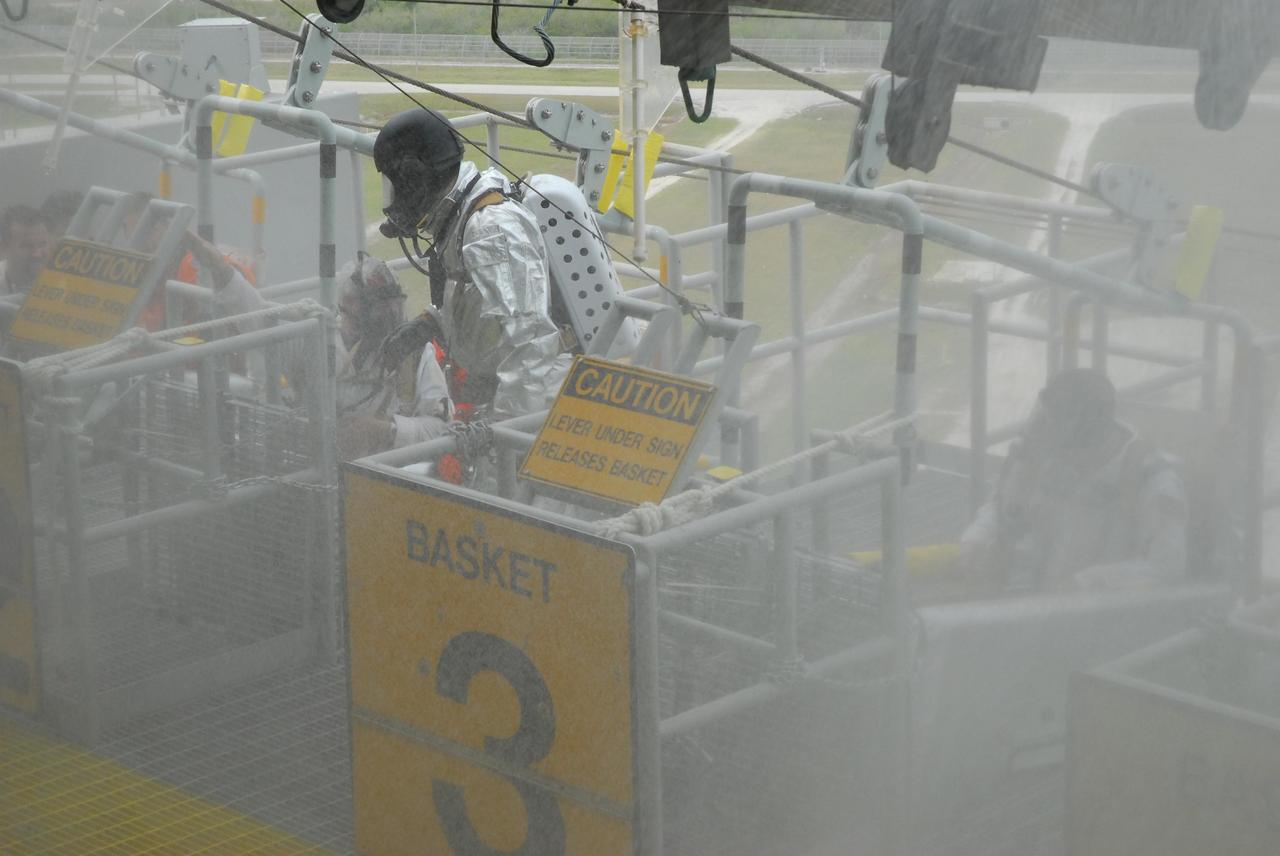
KENNEDY SPACE CENTER, FLA. -- During a simulated rescue mission on Launch Pad 39A, known as Mode 2, KSC workers dressed in astronauts' launch-and-entry suits climb into the slidewire baskets. A fire rescue team is simulating extracting the crew from the orbiter and helping them to the baskets. The KSC rescue teams are practicing emergency procedures in the unlikely scenario of a mishap on the pad during a launch sequence. The exercises are standard training procedures to assess and prepare emergency personnel, procedures and hardware. Photo credit: NASA/Jack Pfaller
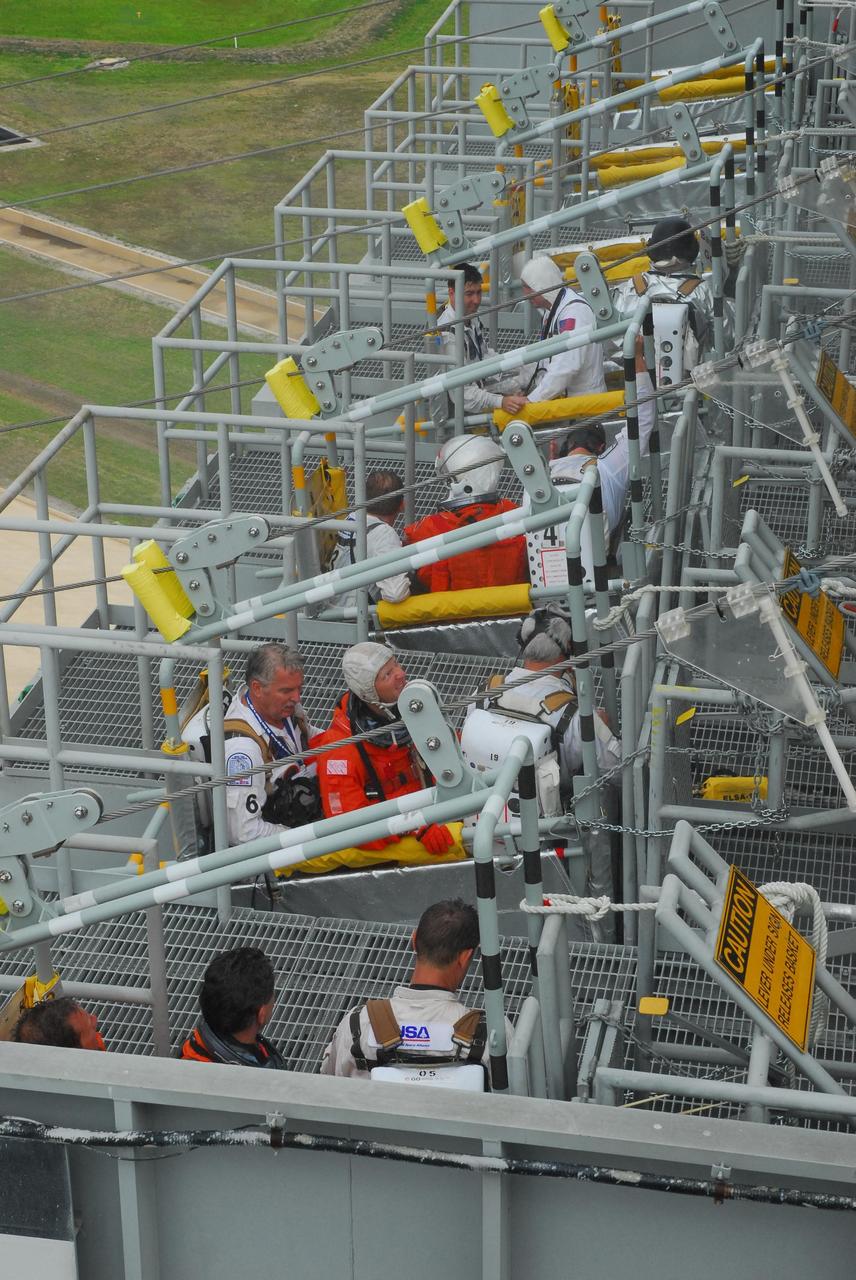
KENNEDY SPACE CENTER, FLA. -- During a simulated rescue mission on Launch Pad 39A, known as Mode 2, KSC workers dressed in astronauts' launch-and-entry suits are climbing into the slidewire baskets. A fire rescue team is simulating extracting the crew from the orbiter and helping them to the baskets.The KSC rescue teams are practicing emergency procedures in the unlikely scenario of a mishap on the pad during a launch sequence. The exercises are standard training procedures to assess and prepare emergency personnel, procedures and hardware. Photo credit: NASA/Jack Pfaller
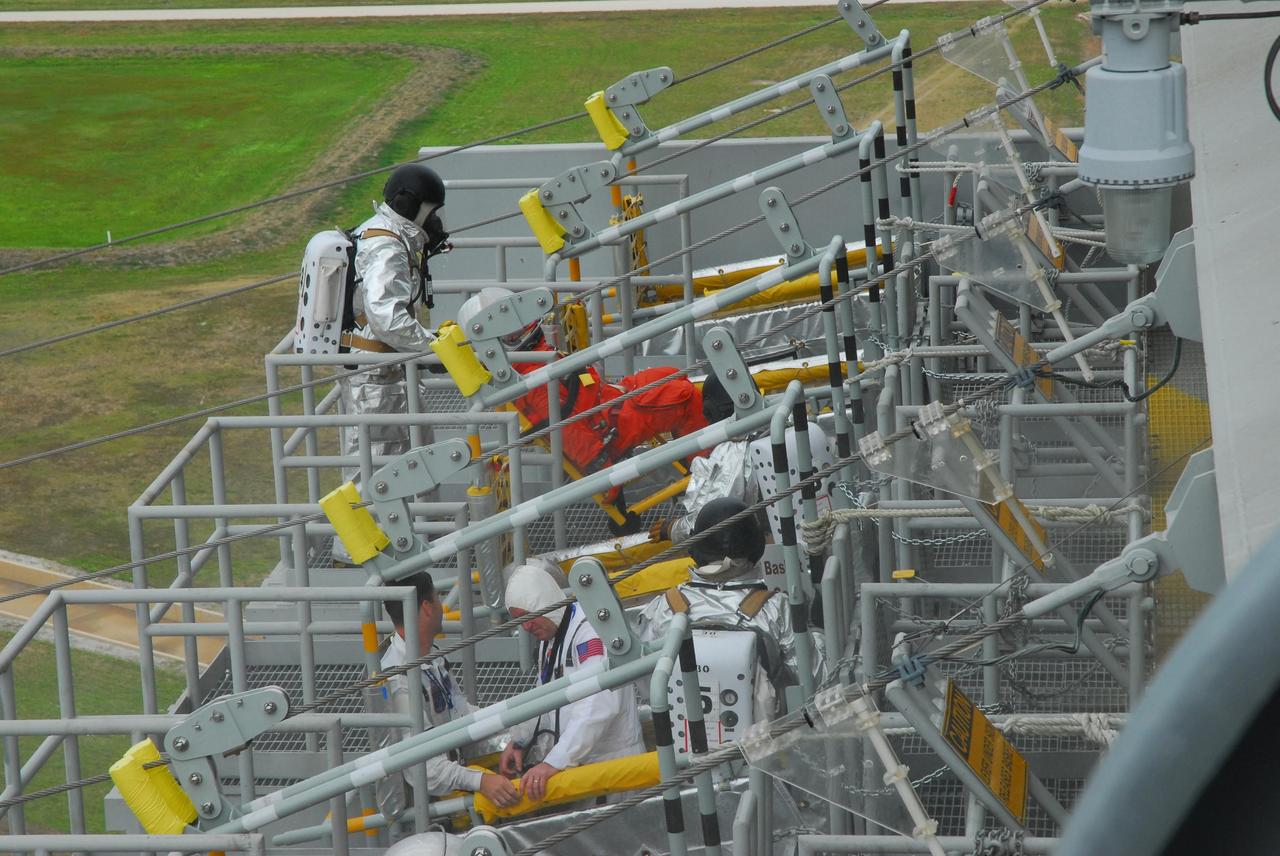
KENNEDY SPACE CENTER, FLA. -- During a simulated rescue mission on Launch Pad 39A, known as Mode 2, KSC workers dressed in astronauts' launch-and-entry suits are climbing into the slidewire baskets. A fire rescue team is simulating extracting the crew from the orbiter and helping them to the baskets.The KSC rescue teams are practicing emergency procedures in the unlikely scenario of a mishap on the pad during a launch sequence. The exercises are standard training procedures to assess and prepare emergency personnel, procedures and hardware. Photo credit: NASA/Jack Pfaller
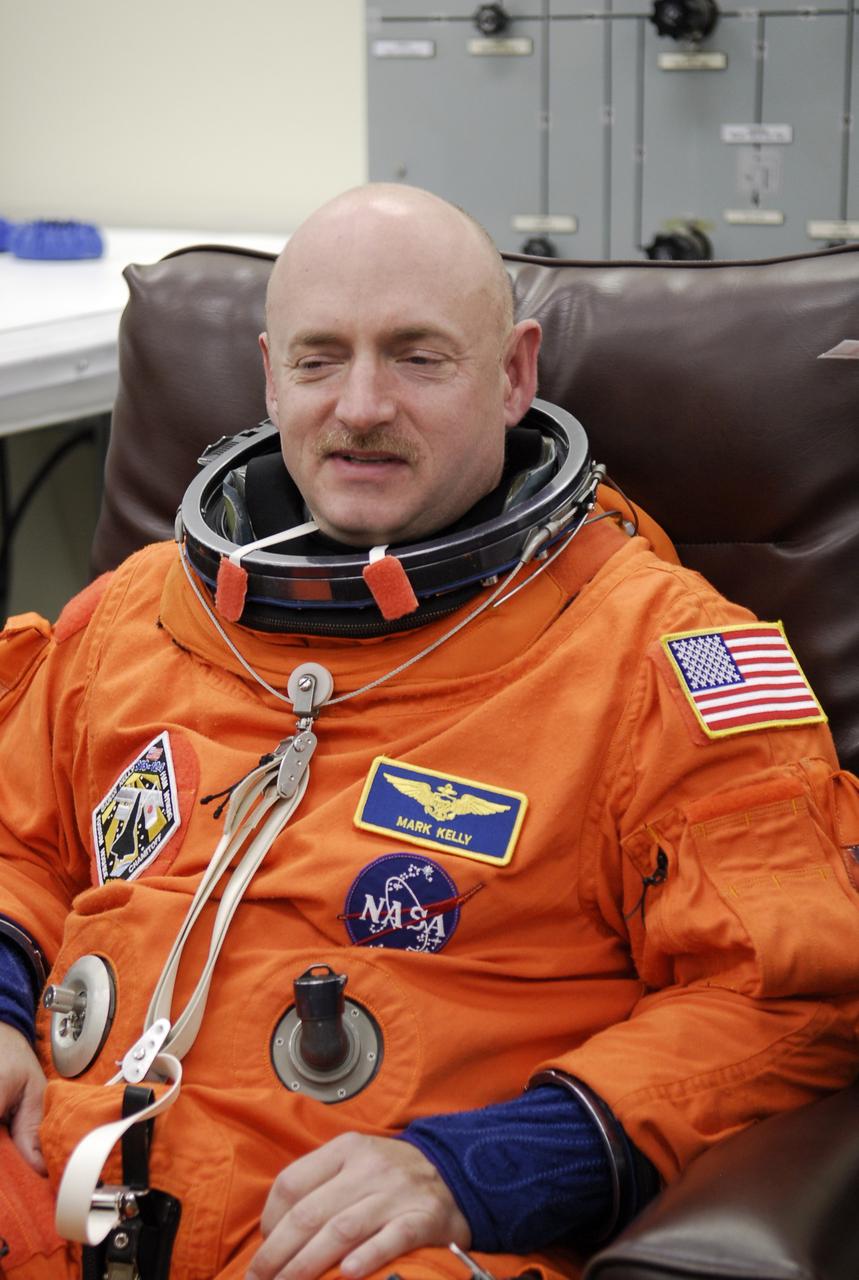
CAPE CANAVERAL, Fla. -- In the Operations and Checkout Building at NASA's Kennedy Space Center, STS-124 Commander Mark Kelly dons his launch-and-entry suit needed for the simulated launch countdown. The simulation is the culmination of the launch dress rehearsal called the terminal countdown demonstration test. TCDT provides astronauts and ground crews with an opportunity to participate in various simulated countdown activities, including equipment familiarization and emergency training. On the STS-124 mission, the crew will deliver and install the Japanese Experiment Module – Pressurized Module and Japanese Remote Manipulator System. Discovery's launch is targeted for May 31. Photo credit: NASA/Kim Shiflett
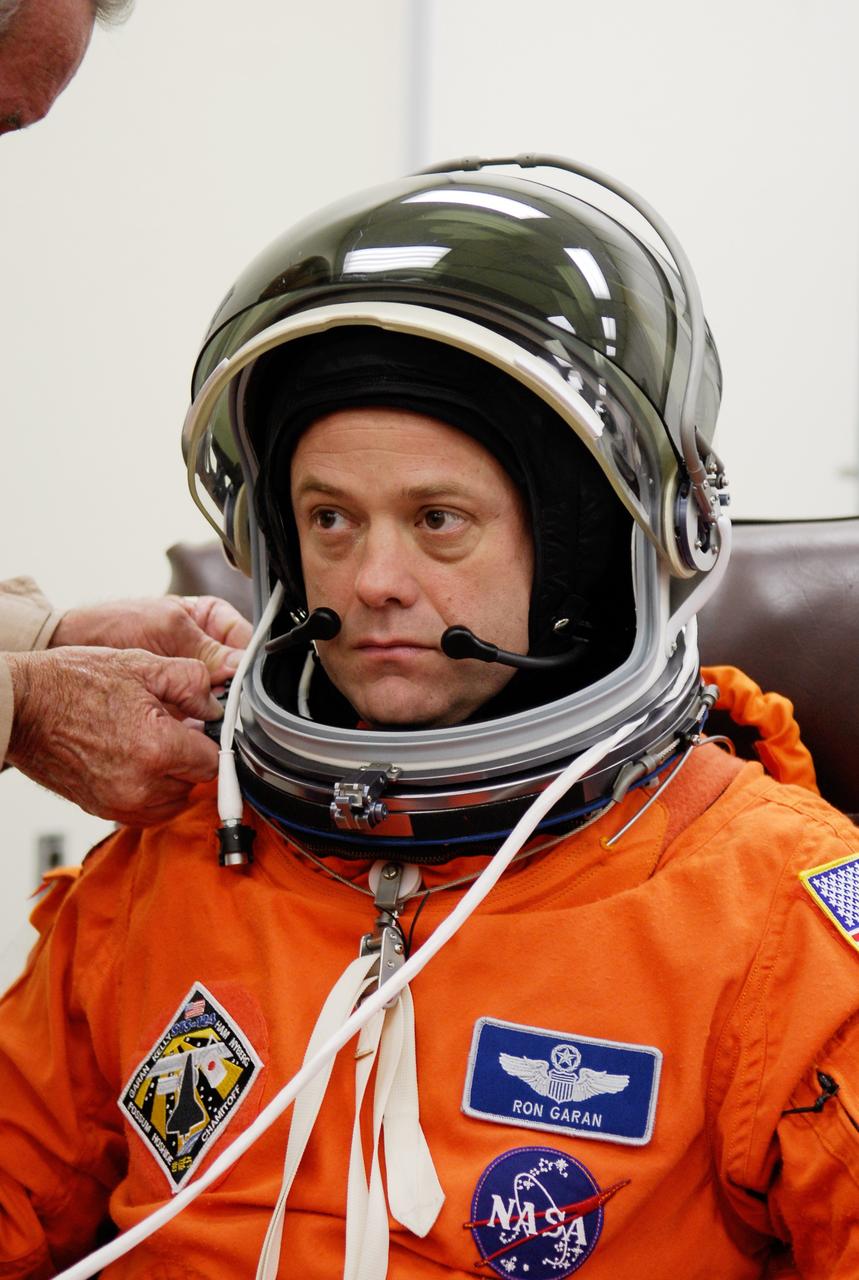
CAPE CANAVERAL, Fla. -- In the Operations and Checkout Building at NASA's Kennedy Space Center, a technician helps STS-124 Mission Specialist Ron Garan with the communication piece of his helmet. Garan has donned his launch-and-entry suit for the simulated launch countdown. The simulation is the culmination of the launch dress rehearsal called the terminal countdown demonstration test. TCDT provides astronauts and ground crews with an opportunity to participate in various simulated countdown activities, including equipment familiarization and emergency training. On the STS-124 mission, the crew will deliver and install the Japanese Experiment Module – Pressurized Module and Japanese Remote Manipulator System. Discovery's launch is targeted for May 31. Photo credit: NASA/Kim Shiflett
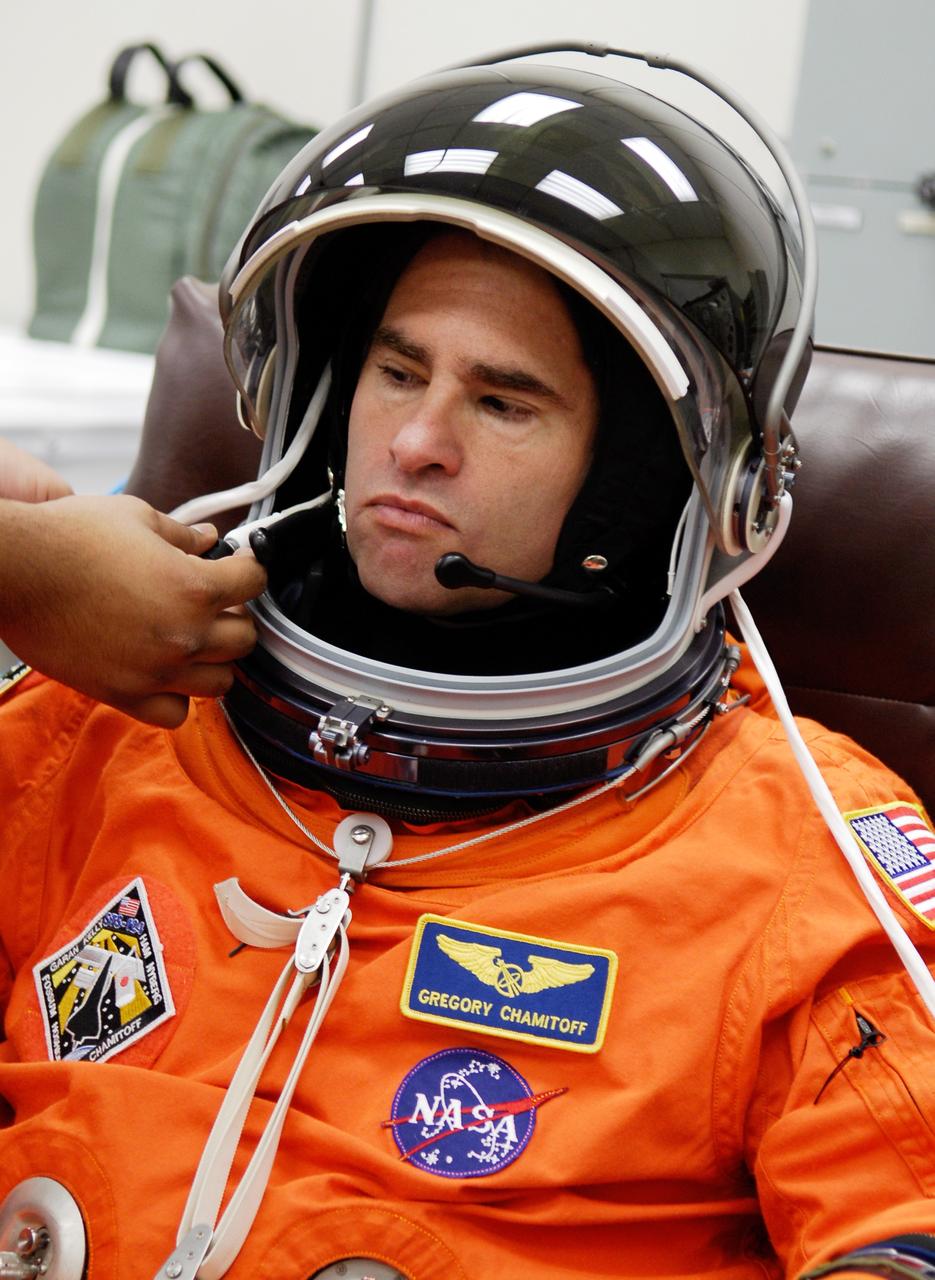
CAPE CANAVERAL, Fla. -- In the Operations and Checkout Building at NASA's Kennedy Space Center, a technician helps STS-124 Mission Specialist Greg Chamitoff with the communication piece of his helmet. Chamitoff has donned his launch-and-entry suit for the simulated launch countdown. The simulation is the culmination of the launch dress rehearsal called the terminal countdown demonstration test. TCDT provides astronauts and ground crews with an opportunity to participate in various simulated countdown activities, including equipment familiarization and emergency training. On the STS-124 mission, the crew will deliver and install the Japanese Experiment Module – Pressurized Module and Japanese Remote Manipulator System. Discovery's launch is targeted for May 31. Photo credit: NASA/Kim Shiflett

CAPE CANAVERAL, Fla. -- In the Operations and Checkout Building at NASA's Kennedy Space Center, STS-124 Mission Specialist Karen Nyberg has fitted her helmet and launch-and-entry suit for the simulated launch countdown. The simulation is the culmination of the launch dress rehearsal called the terminal countdown demonstration test. TCDT provides astronauts and ground crews with an opportunity to participate in various simulated countdown activities, including equipment familiarization and emergency training. On the STS-124 mission, the crew will deliver and install the Japanese Experiment Module – Pressurized Module and Japanese Remote Manipulator System. Discovery's launch is targeted for May 31. Photo credit: NASA/Kim Shiflett
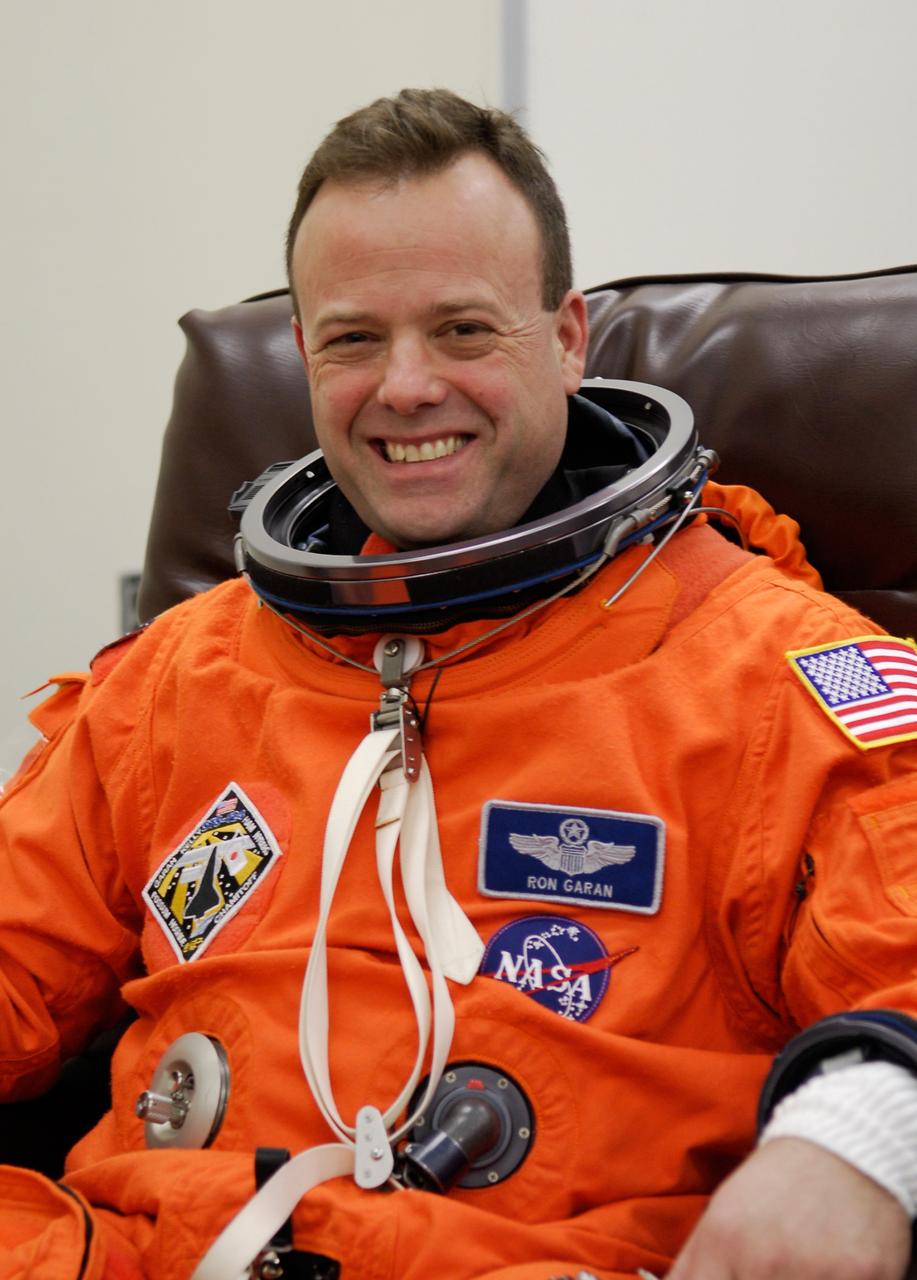
CAPE CANAVERAL, Fla. -- In the Operations and Checkout Building at NASA's Kennedy Space Center, STS-124 Mission Specialist Ron Garan dons his launch-and-entry suit needed for the simulated launch countdown. The simulation is the culmination of the launch dress rehearsal called the terminal countdown demonstration test. TCDT provides astronauts and ground crews with an opportunity to participate in various simulated countdown activities, including equipment familiarization and emergency training. On the STS-124 mission, the crew will deliver and install the Japanese Experiment Module – Pressurized Module and Japanese Remote Manipulator System. Discovery's launch is targeted for May 31. Photo credit: NASA/Kim Shiflett
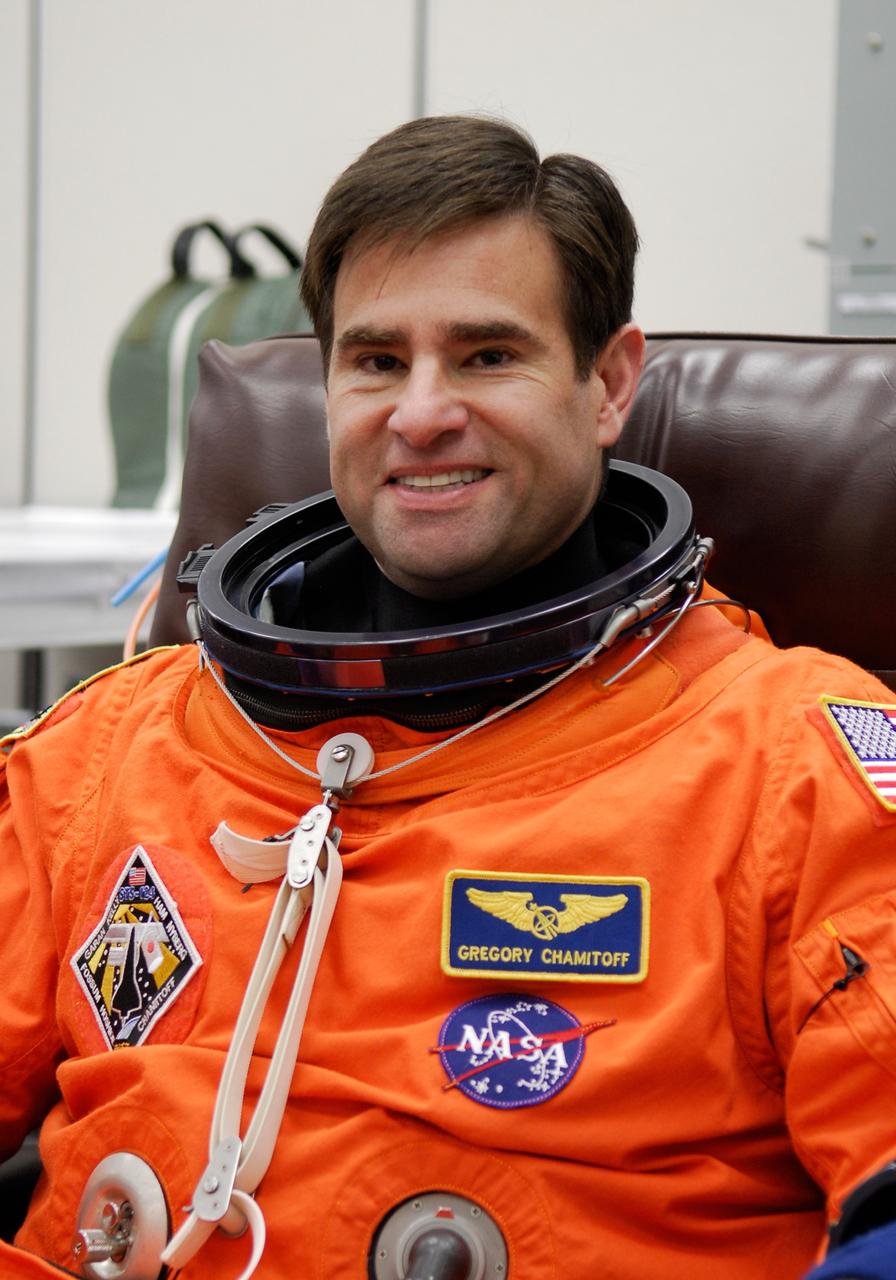
CAPE CANAVERAL, Fla. -- In the Operations and Checkout Building at NASA's Kennedy Space Center, STS-124 Mission Specialist Greg Chamitoff dons his launch-and-entry suit for the simulated launch countdown the crew is starting. The simulation is the culmination of the launch dress rehearsal called the terminal countdown demonstration test. TCDT provides astronauts and ground crews with an opportunity to participate in various simulated countdown activities, including equipment familiarization and emergency training. On the STS-124 mission, the crew will deliver and install the Japanese Experiment Module – Pressurized Module and Japanese Remote Manipulator System. Discovery's launch is targeted for May 31. Photo credit: NASA/Kim Shiflett
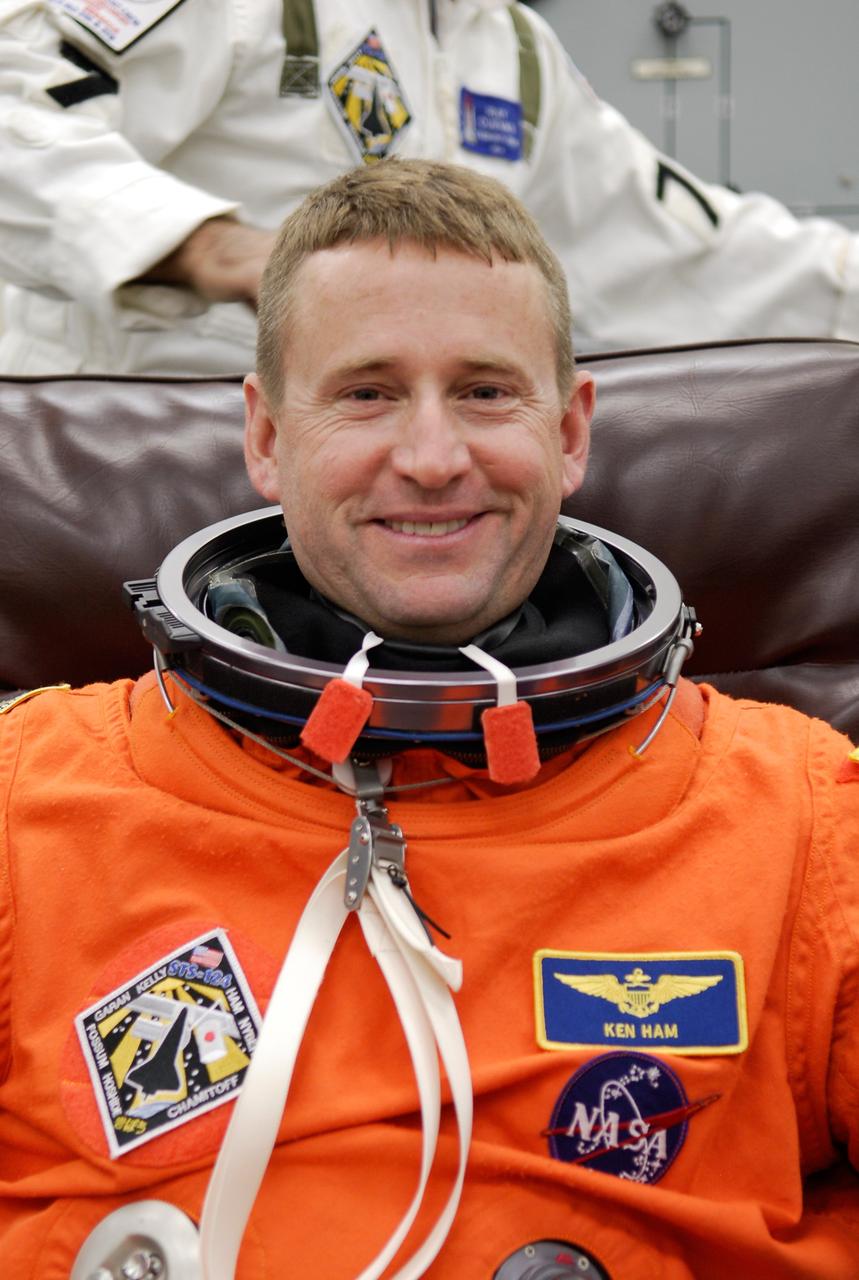
CAPE CANAVERAL, Fla. -- In the Operations and Checkout Building at NASA's Kennedy Space Center, STS-124 Pilot Ken Ham dons his launch-and-entry suit needed for the simulated launch countdown. The simulation is the culmination of the launch dress rehearsal called the terminal countdown demonstration test. TCDT provides astronauts and ground crews with an opportunity to participate in various simulated countdown activities, including equipment familiarization and emergency training. On the STS-124 mission, the crew will deliver and install the Japanese Experiment Module – Pressurized Module and Japanese Remote Manipulator System. Discovery's launch is targeted for May 31. Photo credit: NASA/Kim Shiflett
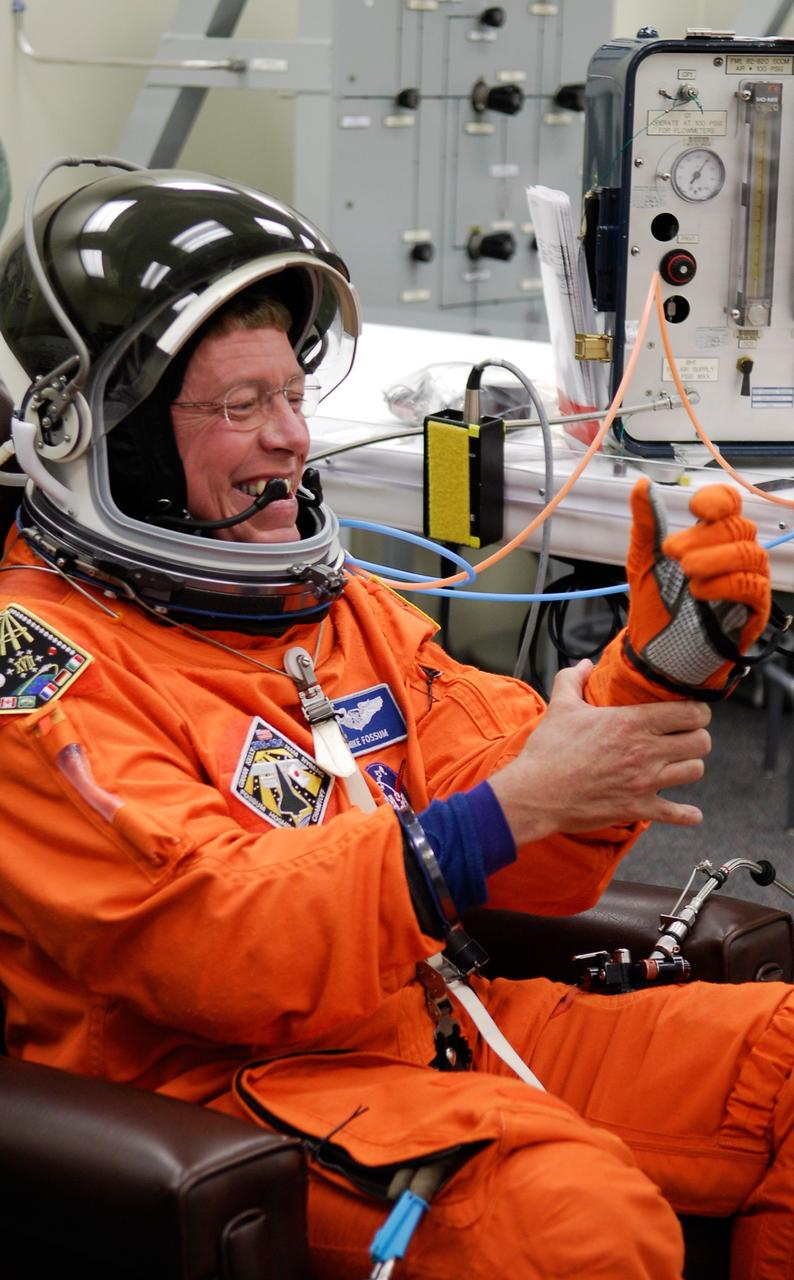
CAPE CANAVERAL, Fla. -- In the Operations and Checkout Building at NASA's Kennedy Space Center, STS-124 Mission Specialist Mike Fossum tests the fit of his glove, part of the launch-and-entry suit needed for the simulated launch countdown. The simulation is the culmination of the launch dress rehearsal called the terminal countdown demonstration test. TCDT provides astronauts and ground crews with an opportunity to participate in various simulated countdown activities, including equipment familiarization and emergency training. On the STS-124 mission, the crew will deliver and install the Japanese Experiment Module – Pressurized Module and Japanese Remote Manipulator System. Discovery's launch is targeted for May 31. Photo credit: NASA/Kim Shiflett
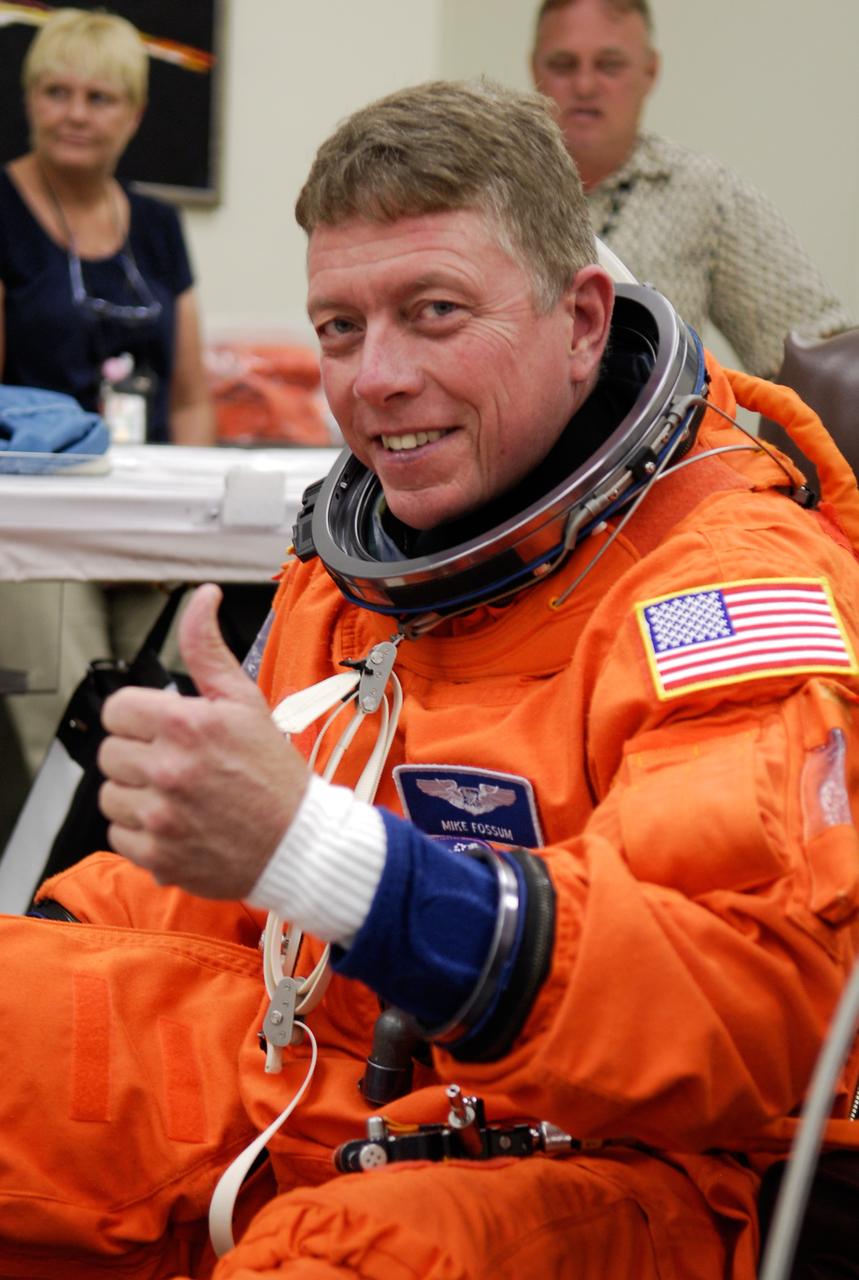
CAPE CANAVERAL, Fla. -- In the Operations and Checkout Building at NASA's Kennedy Space Center, STS-124 Mission Specialist Mike Fossum is dressed in his launch-and-entry suit and ready to start the simulated launch countdown. The simulation is the culmination of the launch dress rehearsal called the terminal countdown demonstration test. TCDT provides astronauts and ground crews with an opportunity to participate in various simulated countdown activities, including equipment familiarization and emergency training. On the STS-124 mission, the crew will deliver and install the Japanese Experiment Module – Pressurized Module and Japanese Remote Manipulator System. Discovery's launch is targeted for May 31. Photo credit: NASA/Kim Shiflett
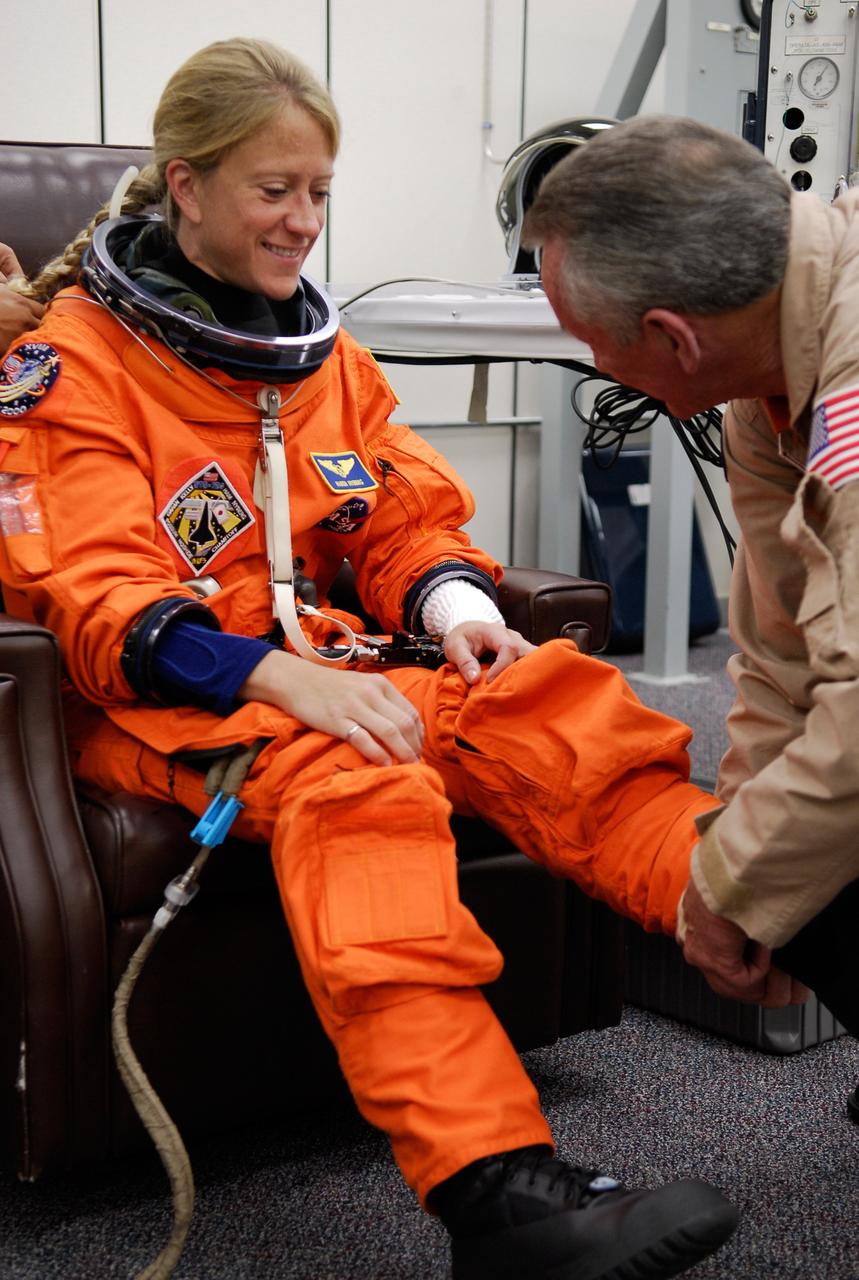
CAPE CANAVERAL, Fla. -- In the Operations and Checkout Building at NASA's Kennedy Space Center, STS-124 Mission Specialist Karen Nyberg gets help donning her launch-and-entry suit for the simulated launch countdown the crew is starting. The simulation is the culmination of the launch dress rehearsal called the terminal countdown demonstration test. TCDT provides astronauts and ground crews with an opportunity to participate in various simulated countdown activities, including equipment familiarization and emergency training. On the STS-124 mission, the crew will deliver and install the Japanese Experiment Module – Pressurized Module and Japanese Remote Manipulator System. Discovery's launch is targeted for May 31. Photo credit: NASA/Kim Shiflett
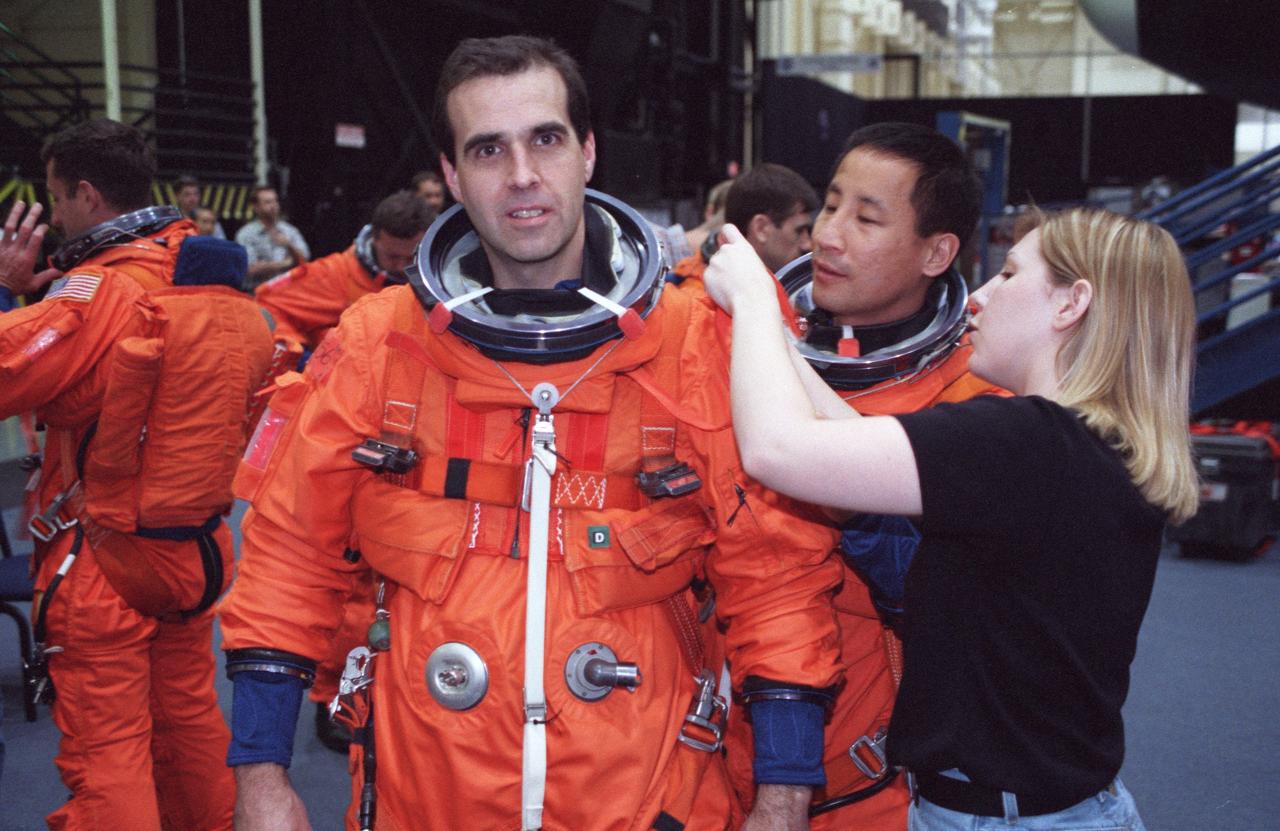
JSC2000-02223 (March 2000) --- Astronaut Edward T. Lu (center foreground) and United Space Alliance suit technician Erin Traina assist astronaut Richard A. Mastracchio with his launch and entry suit. The two astronauts were about to join their five crewmates for a simulation of mission activity in the Systems Integration Facility at the Johnson Space Center (JSC).
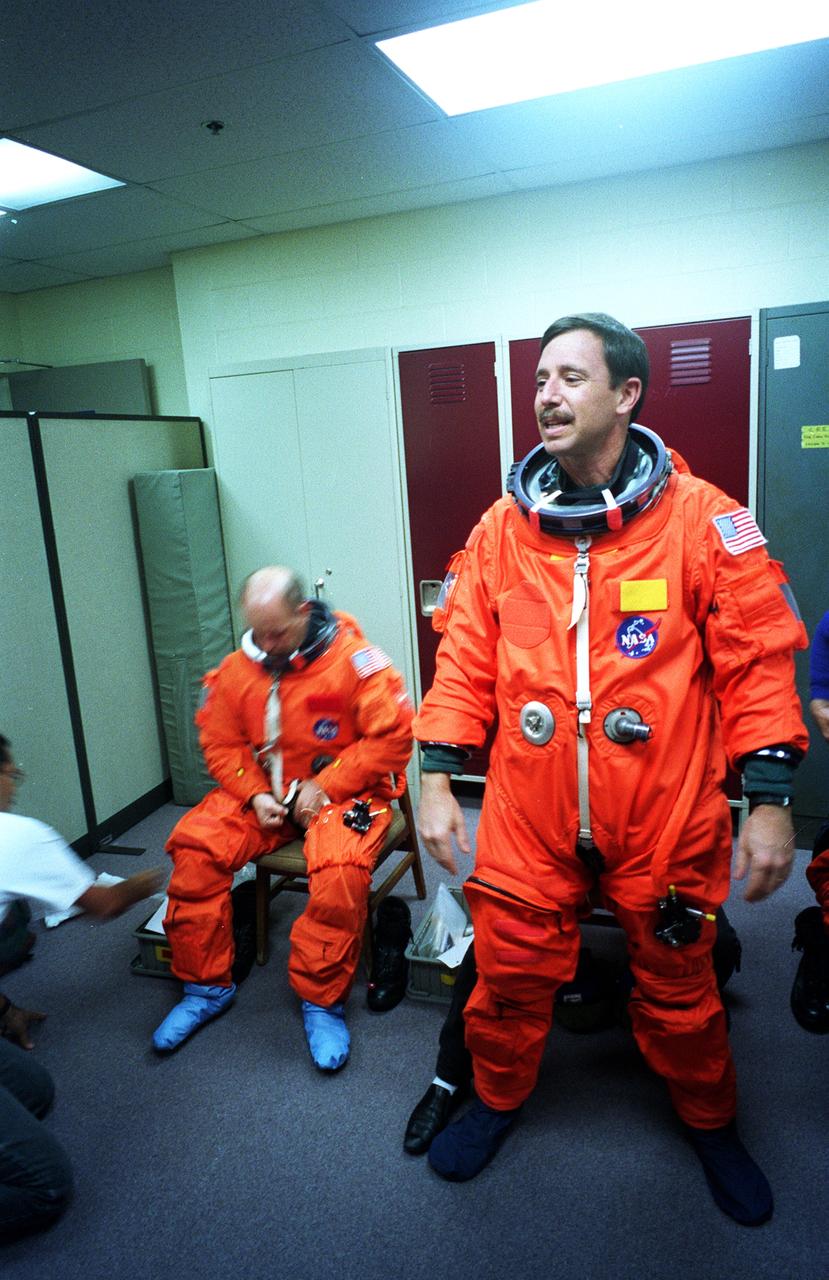
S96-18556 (30 Oct. 1996) --- Astronauts Scott J. Horowitz (standing) and Kenneth D. Bowersox wind up suit donning for a training session in JSC's systems integration facility. Wearing training versions of the partial pressure launch and entry escape suit, the STS-82 pilot and mission commander joined their crewmates in simulating an emergency ejection, using an escape pole on the mid deck, as well as other phases of their scheduled February mission.
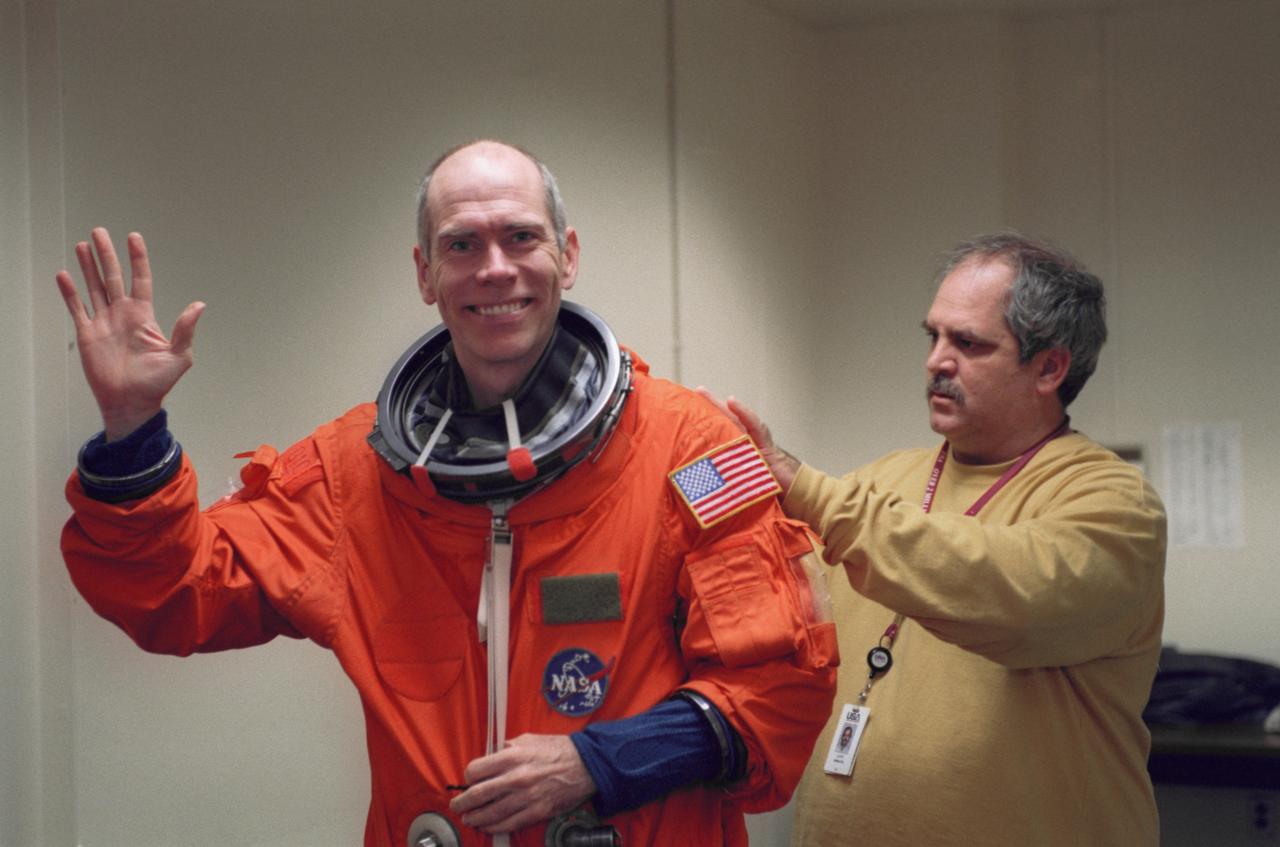
JSC2000-07655 (19 December 2000) --- Astronaut Daniel T. Barry, STS-105 mission specialist, dons a training version of the full-pressure launch and entry suit prior to a training session in one of the trainer/mockups (out of frame) in the Jake Garn Simulation and Training Facility at Johnson Space Center (JSC). Barry is assisted by United Space Alliance (USA) suit technician Lloyd Armintor.
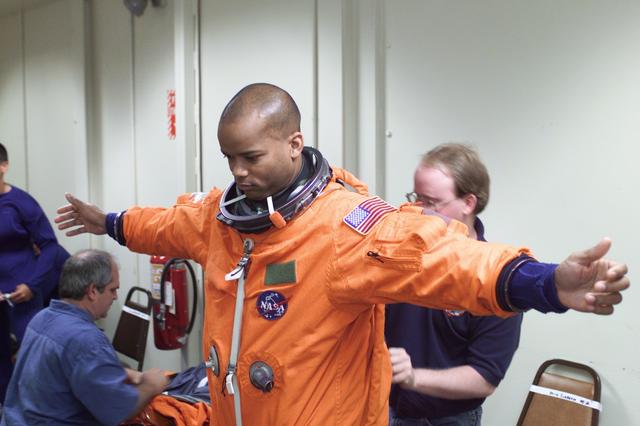
JSC2002-E-33368 (29 July 2002) --- Astronaut Robert L. Curbeam, Jr., STS-116 mission specialist, dons his training version of the shuttle launch and entry suit prior to the start of a mission training session in the Jake Garn Simulation and Training Facility at the Johnson Space Center (JSC). United Space Alliance (USA) suit technician Daniel Palmer assisted Curbeam.
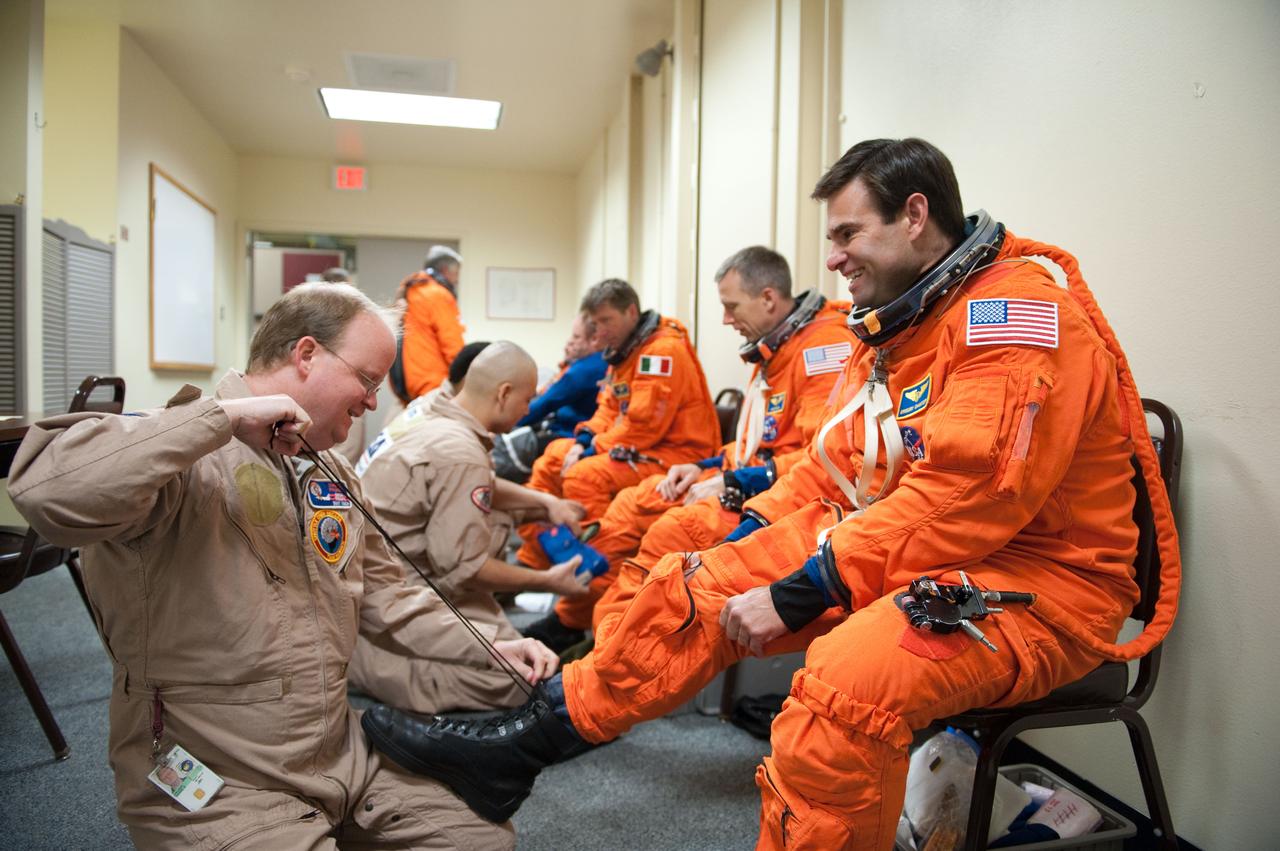
JSC2010-E-124264 (8 Sept. 2010) --- NASA astronauts Greg Chamitoff (foreground), Andrew Feustel and European Space Agency astronaut Roberto Vittori, all STS-134 mission specialists, don training versions of their shuttle launch and entry suits in preparation for a training session in the fixed-base shuttle mission simulator (SMS) in the Jake Garn Simulation and Training Facility at NASA?s Johnson Space Center. United Space Alliance suit technicians assisted the crew members. Photo credit: NASA or National Aeronautics and Space Administration
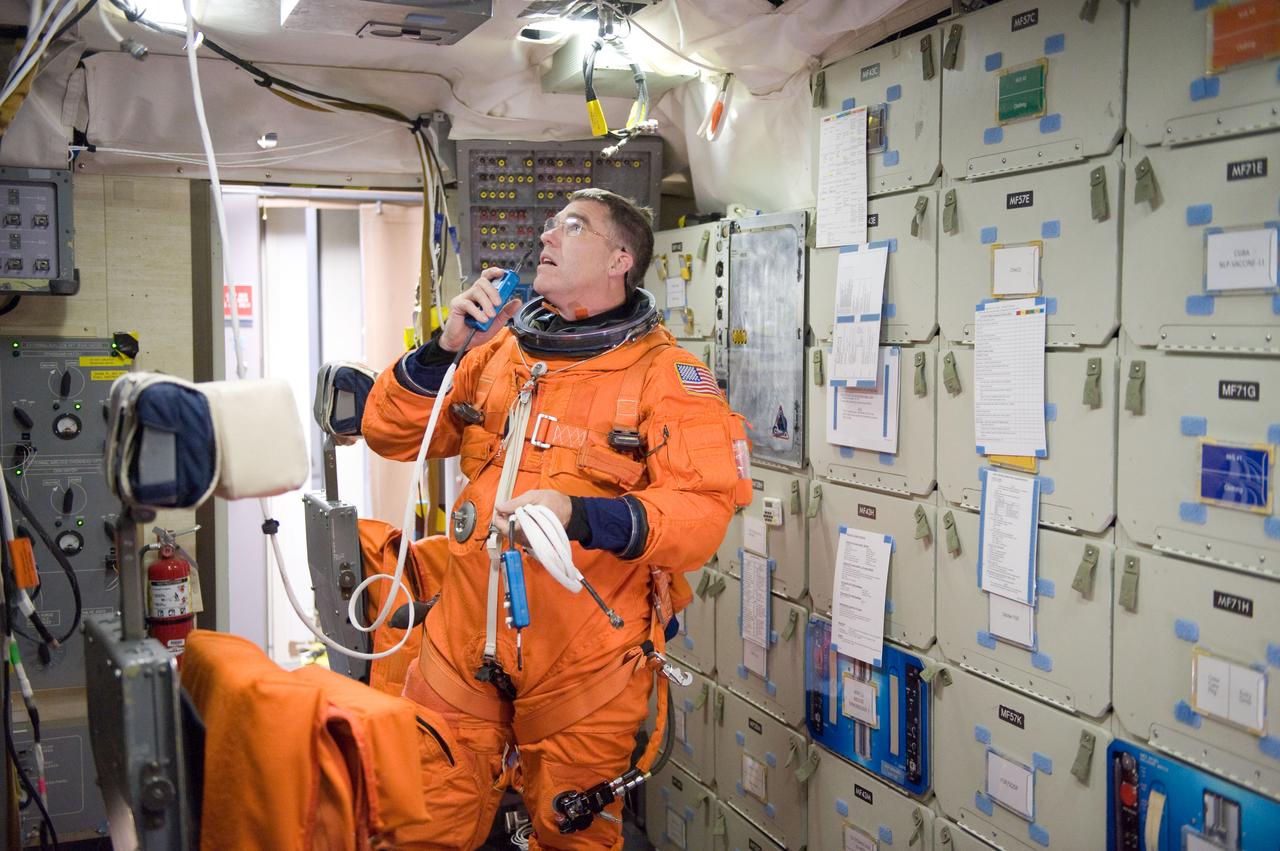
JSC2011-E-006696 (27 Jan. 2011) --- NASA astronaut Steve Bowen, STS-133 mission specialist, attired in a training version of his shuttle launch and entry suit, uses a communication system during a training session in the fixed-base shuttle mission simulator (SMS) in the Jake Garn Simulation and Training Facility at NASA's Johnson Space Center. Photo credit: NASA or National Aeronautics and Space Administration
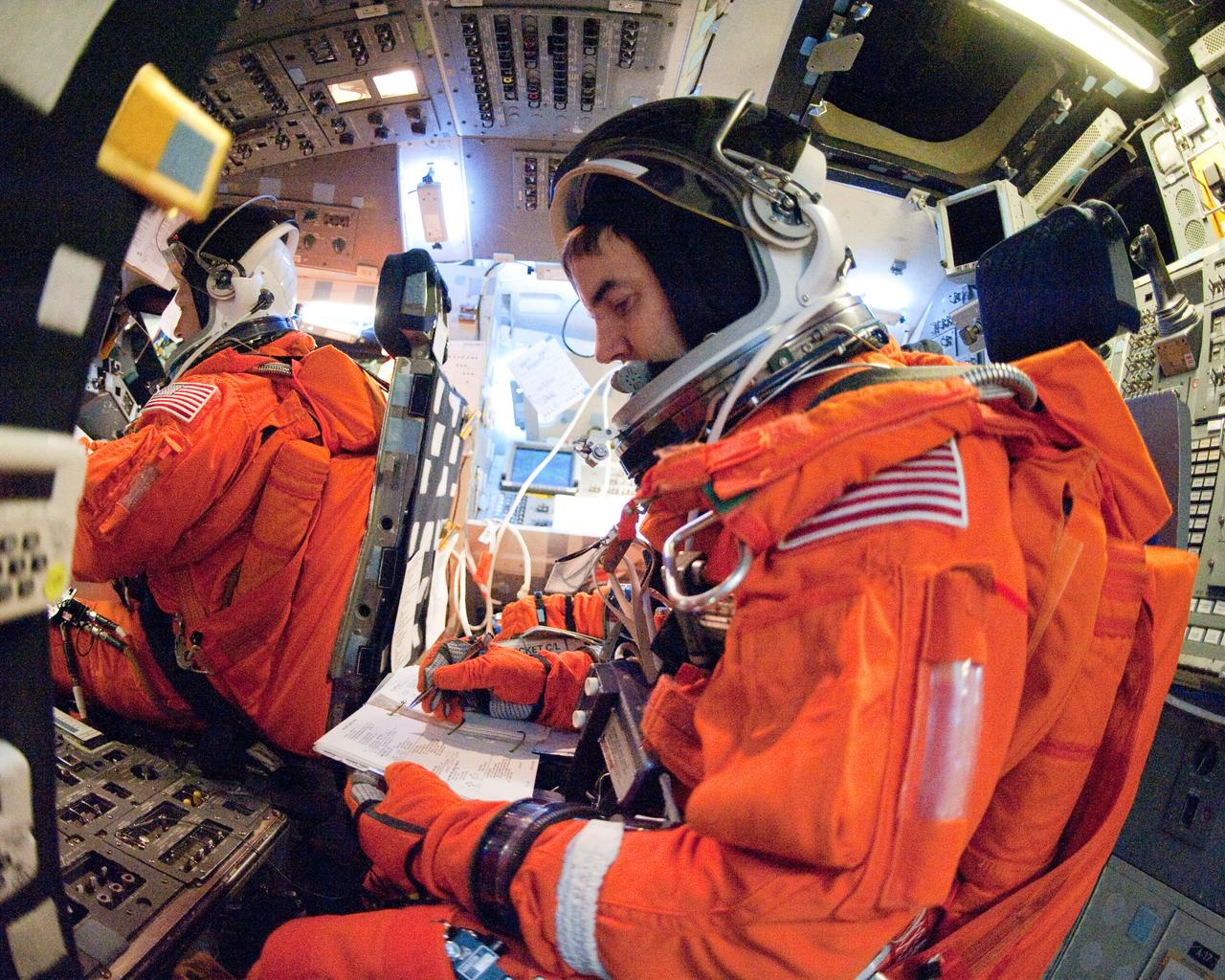
JSC2011-E-023121 (2 March 2011) --- NASA astronauts Rex Walheim, STS-135 mission specialist; and Doug Hurley (background), pilot, attired in training versions of their shuttle launch and entry suits, participate in a training session in the fixed-base shuttle mission simulator (SMS) in the Jake Garn Simulation and Training Facility at NASA's Johnson Space Center. Photo credit: NASA or National Aeronautics and Space Administration
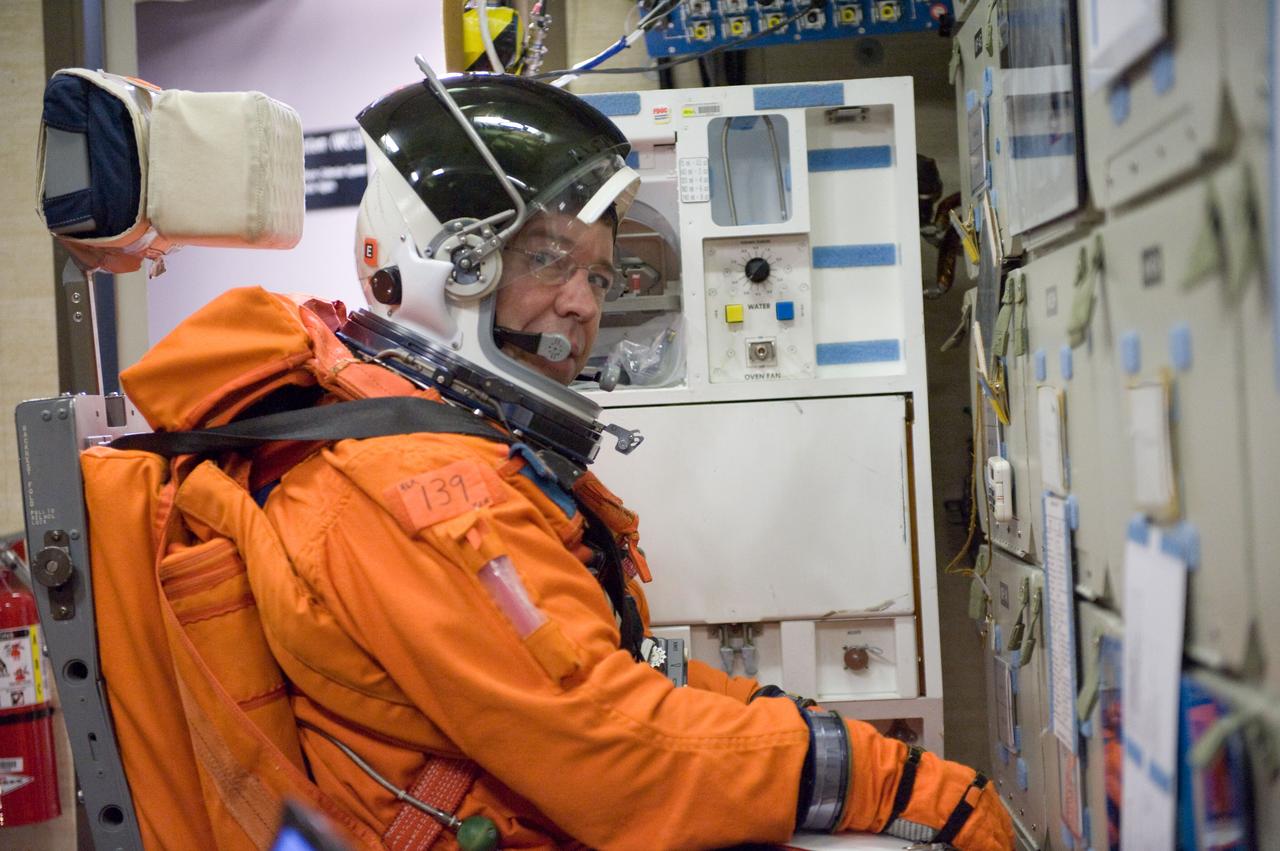
JSC2011-E-006691 (27 Jan. 2011) --- NASA astronaut Steve Bowen, STS-133 mission specialist, attired in a training version of his shuttle launch and entry suit, participates in a training session in the fixed-base shuttle mission simulator (SMS) in the Jake Garn Simulation and Training Facility at NASA's Johnson Space Center. Photo credit: NASA or National Aeronautics and Space Administration
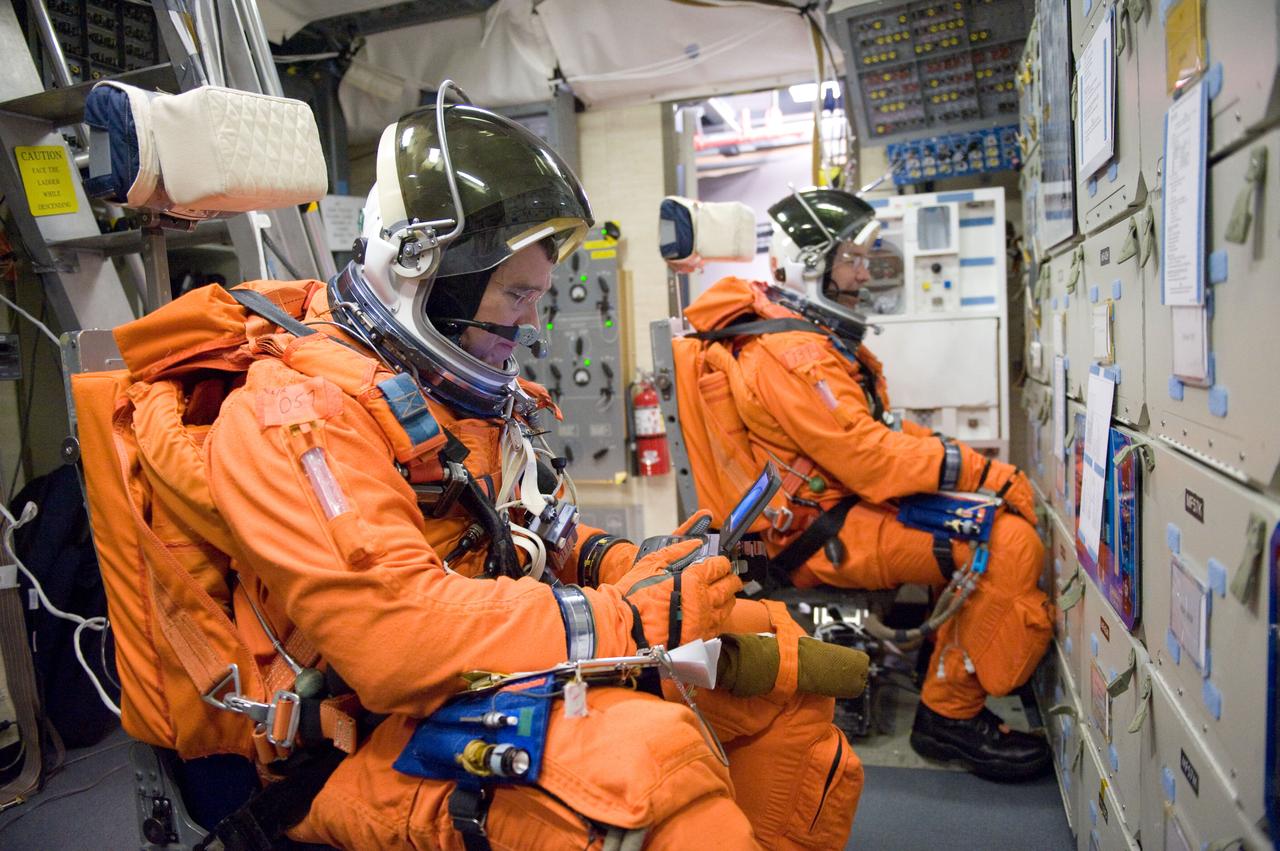
JSC2011-E-006690 (27 Jan. 2011) --- NASA astronauts Steve Bowen (foreground) and Michael Barratt, both STS-133 mission specialists, attired in training versions of their shuttle launch and entry suits, participate in a training session in the fixed-base shuttle mission simulator (SMS) in the Jake Garn Simulation and Training Facility at NASA's Johnson Space Center. Photo credit: NASA or National Aeronautics and Space Administration
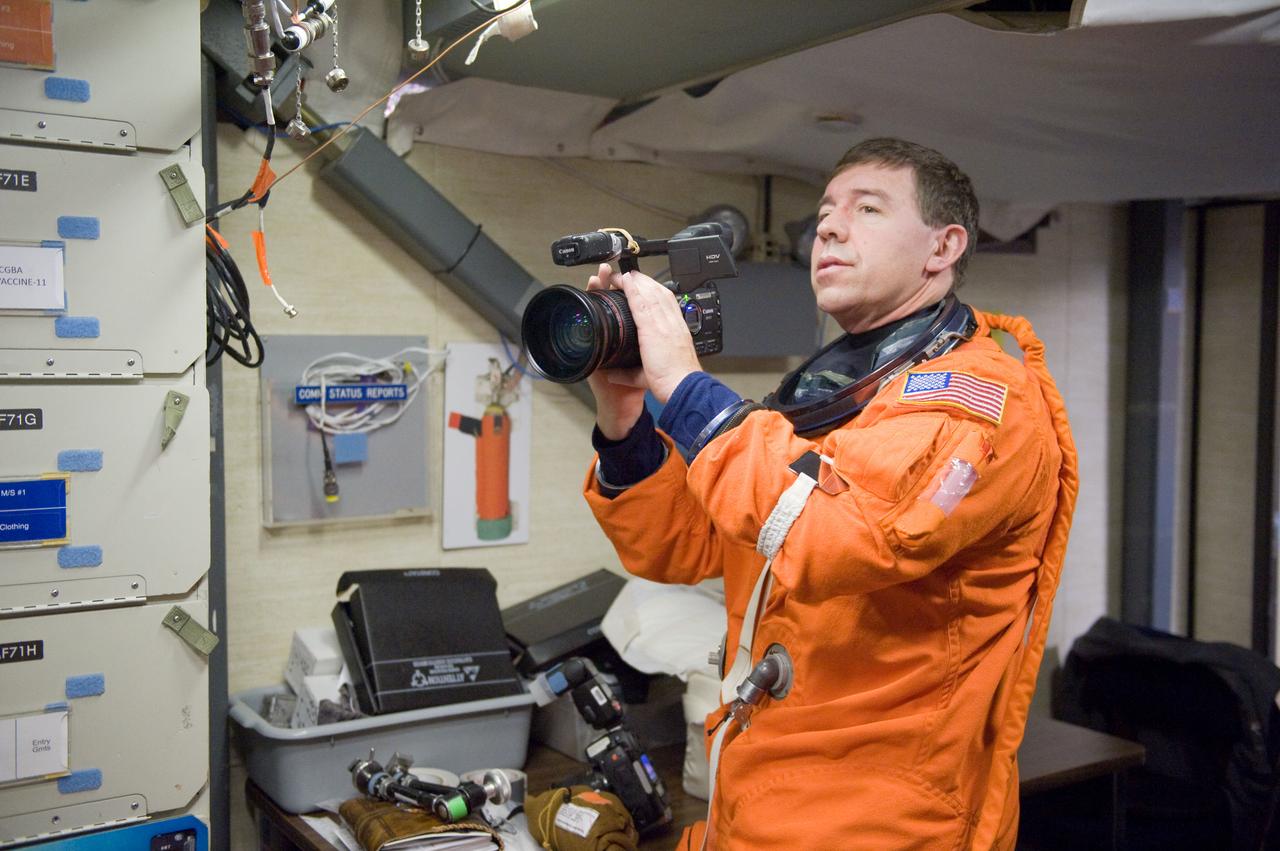
JSC2011-E-006704 (27 Jan. 2011) --- NASA astronaut Michael Barratt, STS-133 mission specialist, attired in a training version of his shuttle launch and entry suit, uses a High Definition Video (HDV) camera during a training session in the fixed-base shuttle mission simulator (SMS) in the Jake Garn Simulation and Training Facility at NASA's Johnson Space Center. Photo credit: NASA or National Aeronautics and Space Administration
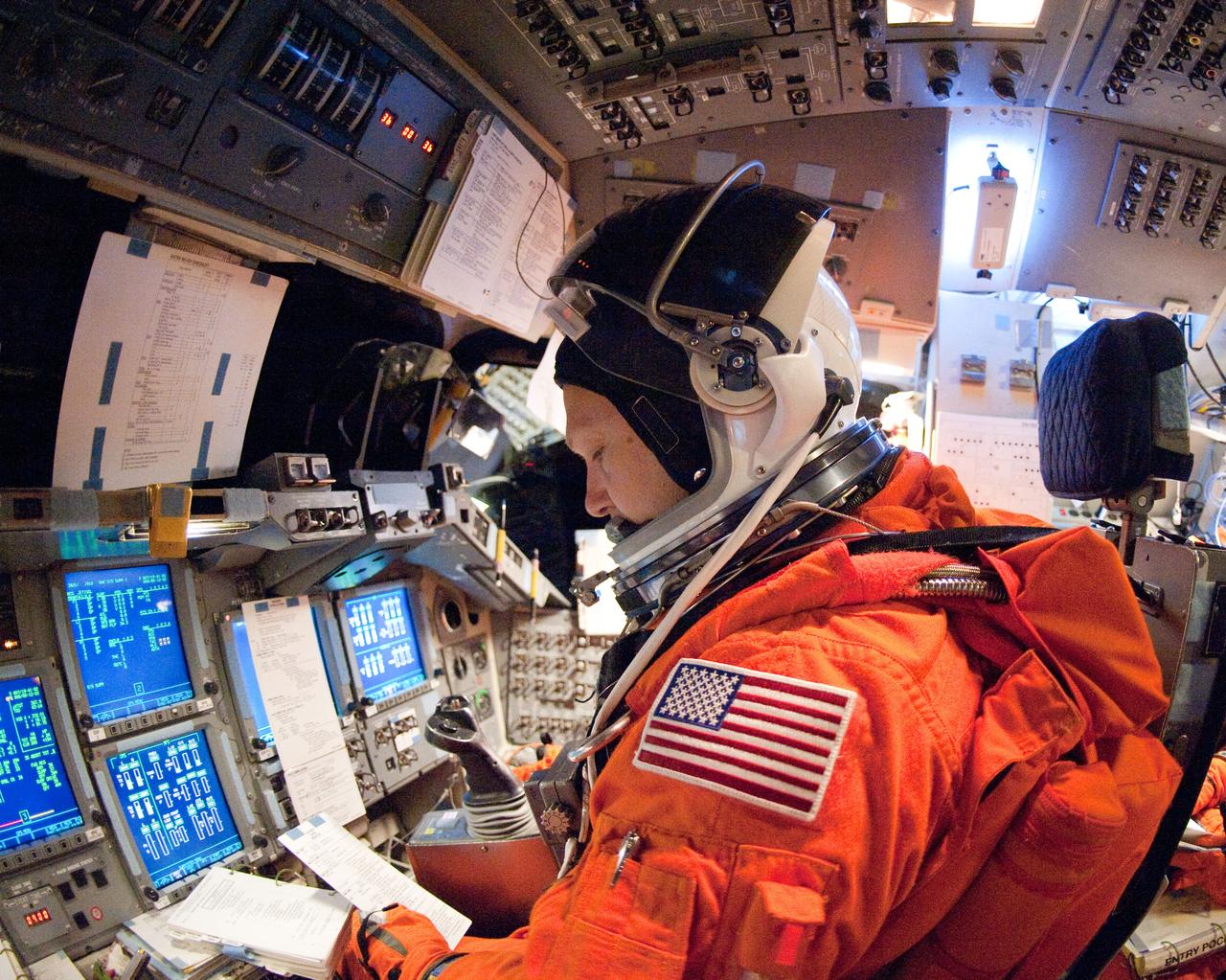
JSC2011-E-023123 (2 March 2011) --- NASA astronaut Doug Hurley, STS-135 pilot, attired in a training version of his shuttle launch and entry suit, participates in a training session in the fixed-base shuttle mission simulator (SMS) in the Jake Garn Simulation and Training Facility at NASA's Johnson Space Center. Photo credit: NASA or National Aeronautics and Space Administration
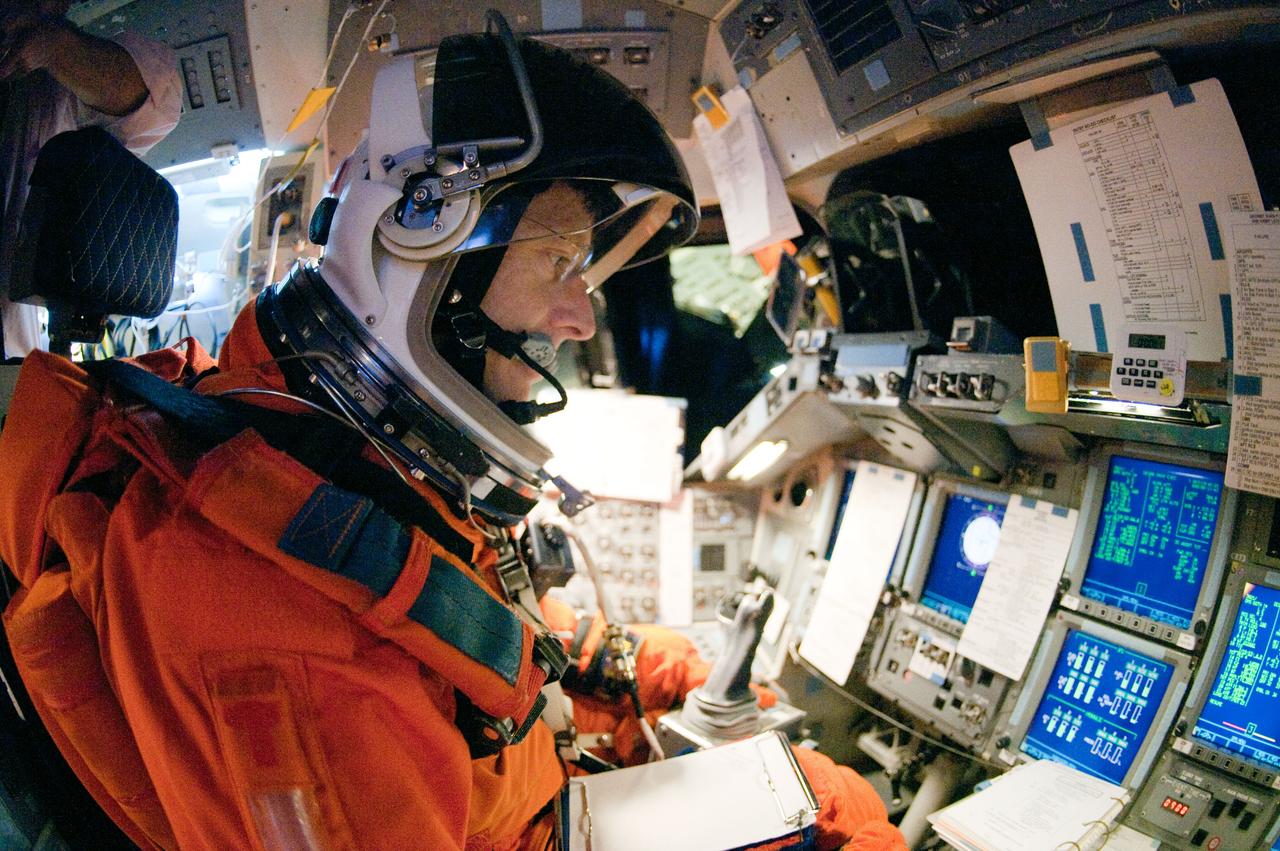
JSC2011-E-023124 (2 March 2011) --- NASA astronaut Chris Ferguson, STS-135 commander, attired in a training version of his shuttle launch and entry suit, participates in a training session in the fixed-base shuttle mission simulator (SMS) in the Jake Garn Simulation and Training Facility at NASA's Johnson Space Center. Photo credit: NASA or National Aeronautics and Space Administration
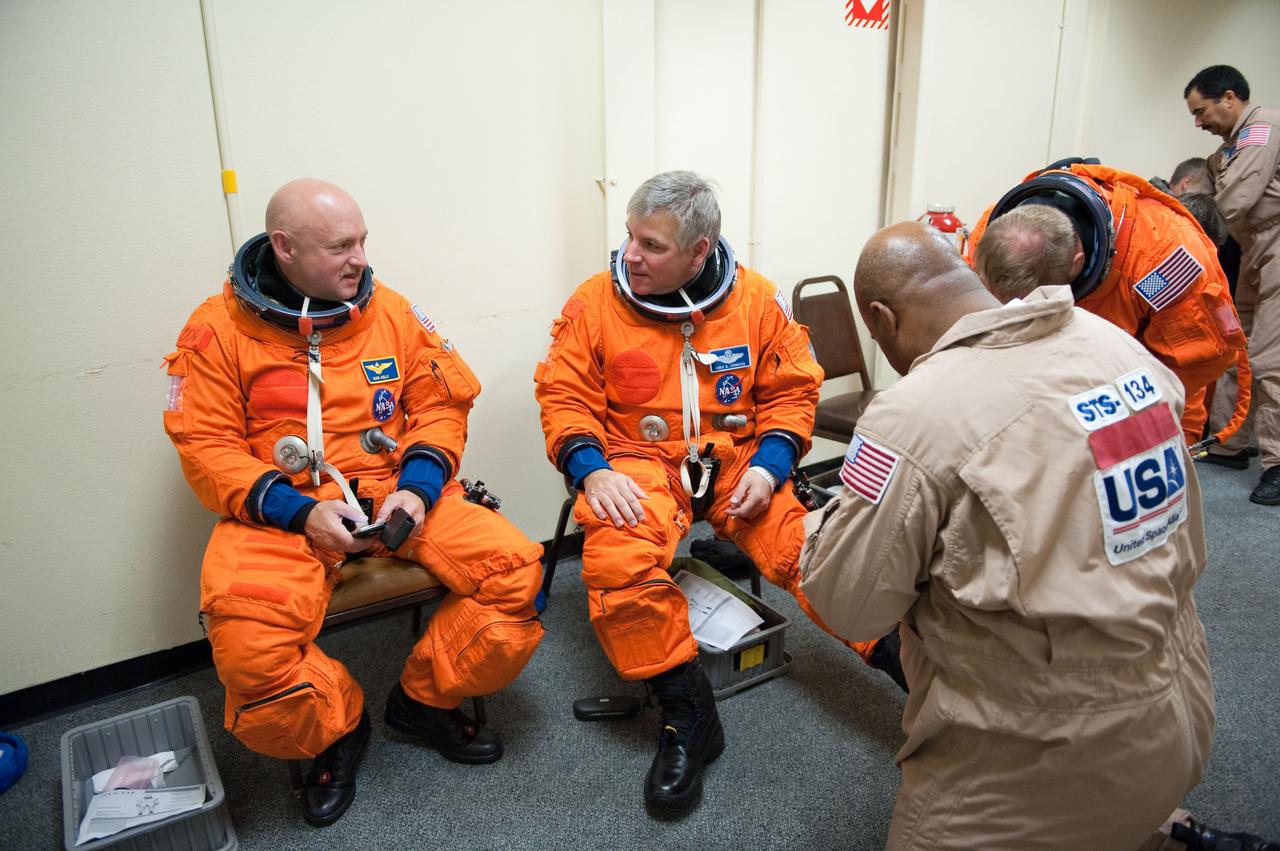
JSC2010-E-124267 (8 Sept. 2010) --- NASA astronauts Mark Kelly (left) and Gregory H. Johnson, STS-134 commander and pilot, respectively, attired in training versions of their shuttle launch and entry suits, prepare for a training session in the fixed-base shuttle mission simulator (SMS) in the Jake Garn Simulation and Training Facility at NASA?s Johnson Space Center. Photo credit: NASA or National Aeronautics and Space Administration
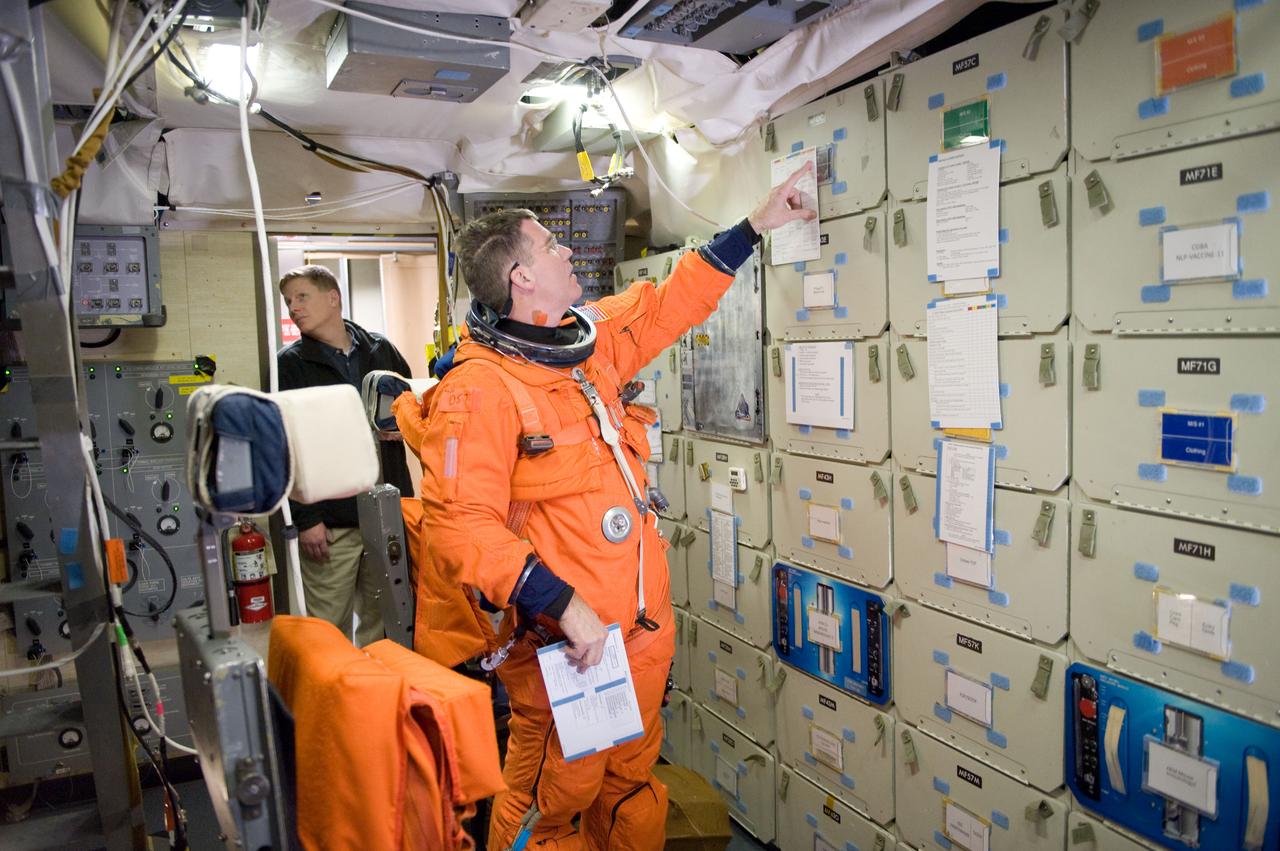
JSC2011-E-006699 (27 Jan. 2011) --- NASA astronaut Steve Bowen, STS-133 mission specialist, attired in a training version of his shuttle launch and entry suit, participates in a training session in the fixed-base shuttle mission simulator (SMS) in the Jake Garn Simulation and Training Facility at NASA's Johnson Space Center. Photo credit: NASA or National Aeronautics and Space Administration
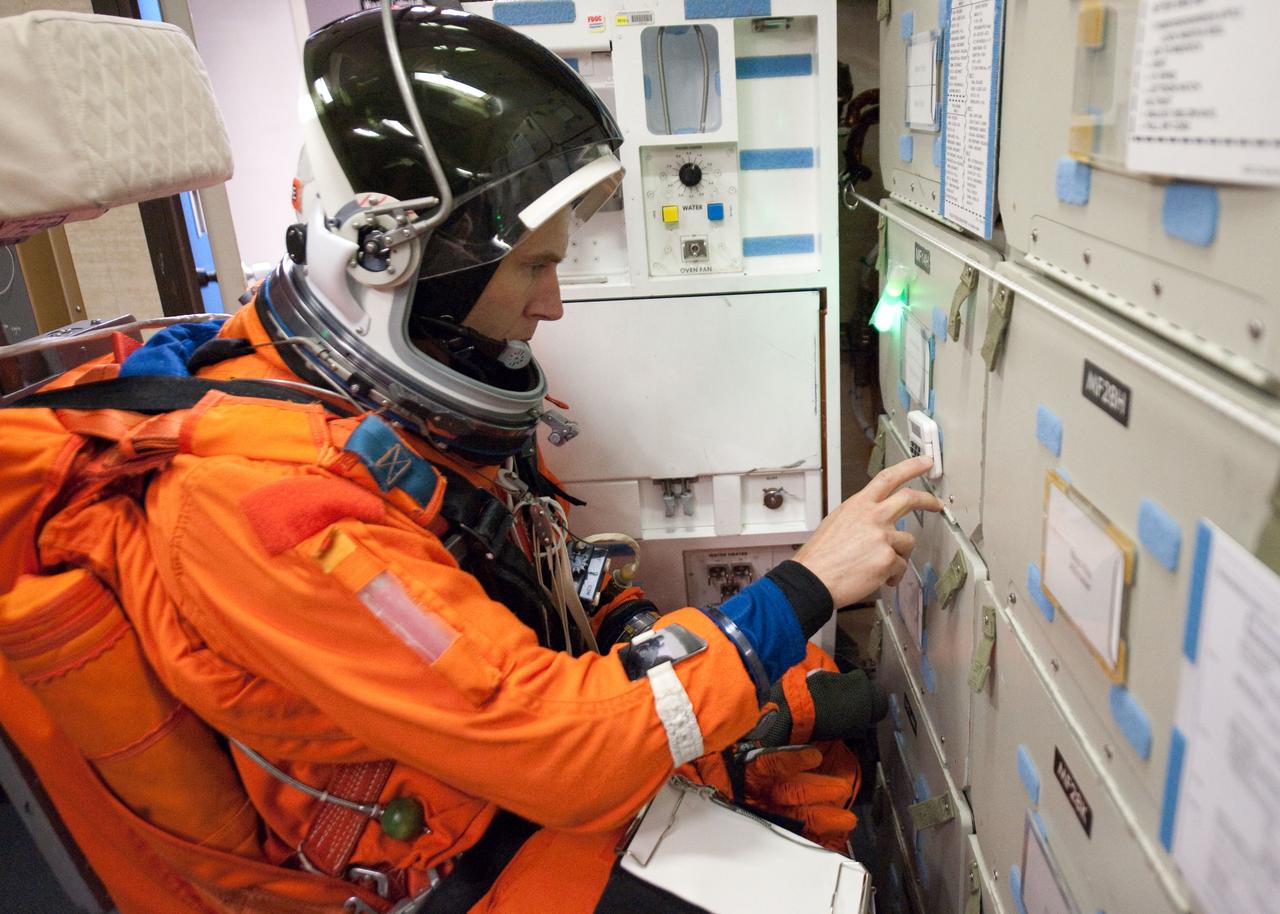
JSC2010-E-124284 (8 Sept. 2010) --- NASA astronaut Andrew Feustel, attired in a training version of his shuttle launch and entry suit, participates in a training session in the fixed-base shuttle mission simulator (SMS) in the Jake Garn Simulation and Training Facility at NASA?s Johnson Space Center. Photo credit: NASA or National Aeronautics and Space Administration
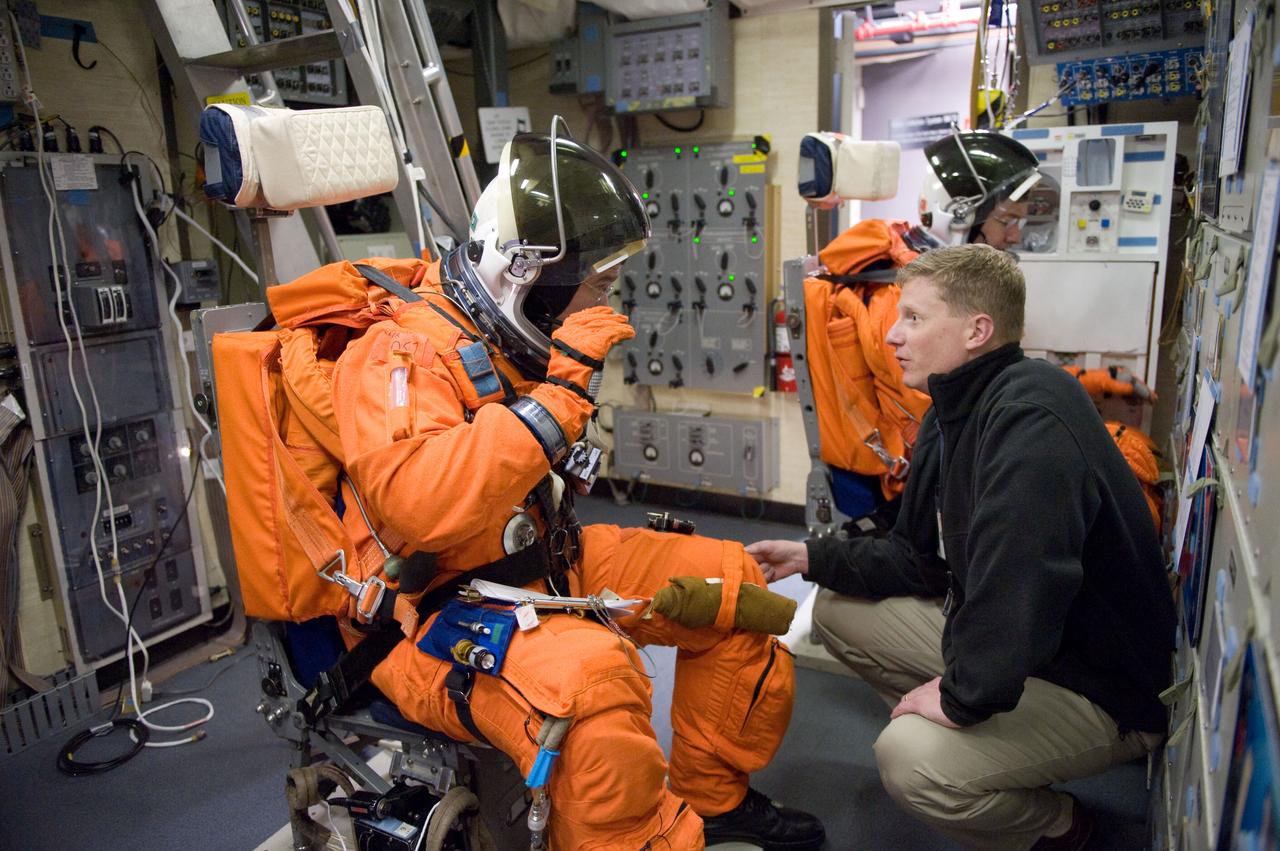
JSC2011-E-006687 (27 Jan. 2011) --- NASA astronauts Steve Bowen (left foreground) and Michael Barratt, both STS-133 mission specialists, attired in training versions of their shuttle launch and entry suits, participate in a training session in the fixed-base shuttle mission simulator (SMS) in the Jake Garn Simulation and Training Facility at NASA's Johnson Space Center. Crew instructor Gary W. Kilgo assisted the crew members. Photo credit: NASA or National Aeronautics and Space Administration
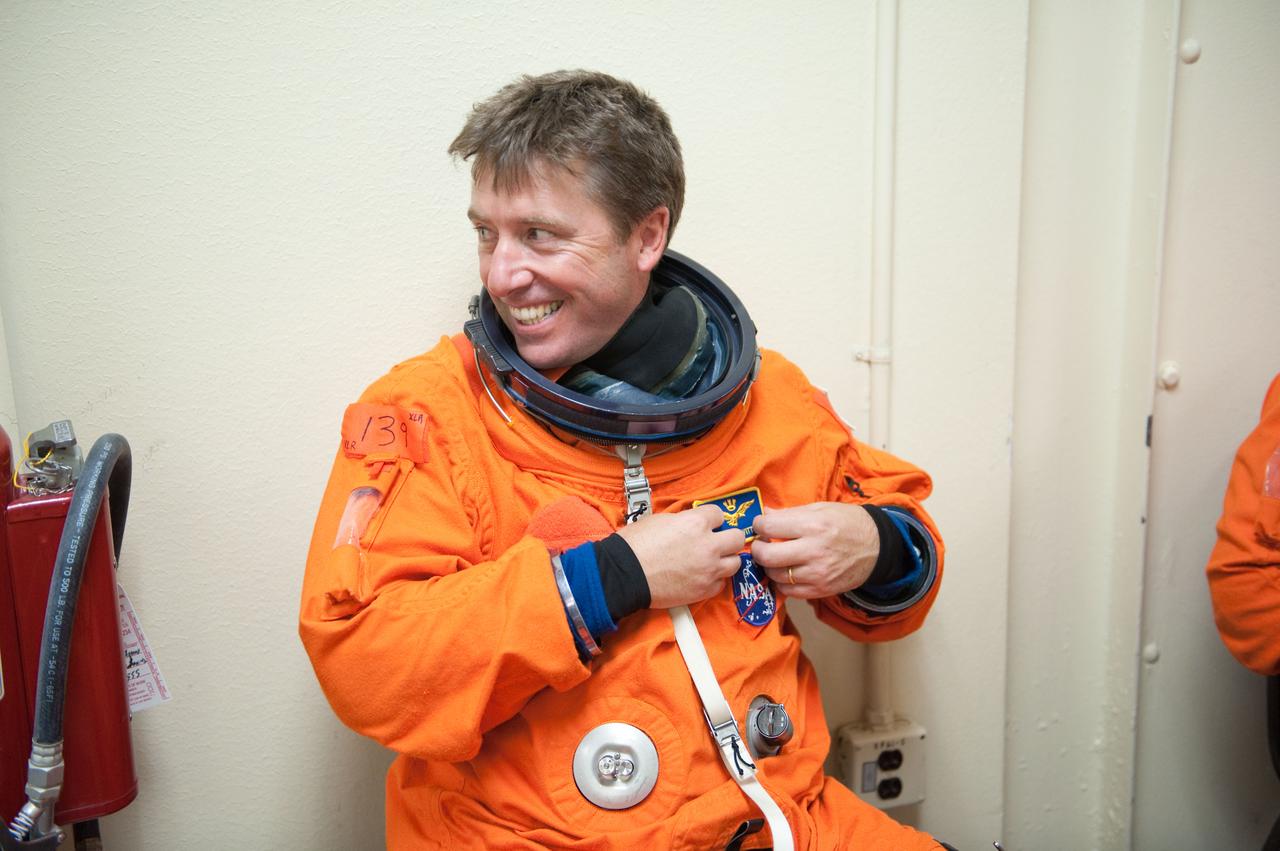
JSC2010-E-124262 (8 Sept. 2010) --- European Space Agency astronaut Roberto Vittori, STS-134 mission specialist, attired in a training version of his shuttle launch and entry suit, prepares for a training session in the fixed-base shuttle mission simulator (SMS) in the Jake Garn Simulation and Training Facility at NASA?s Johnson Space Center. Photo credit: NASA or National Aeronautics and Space Administration
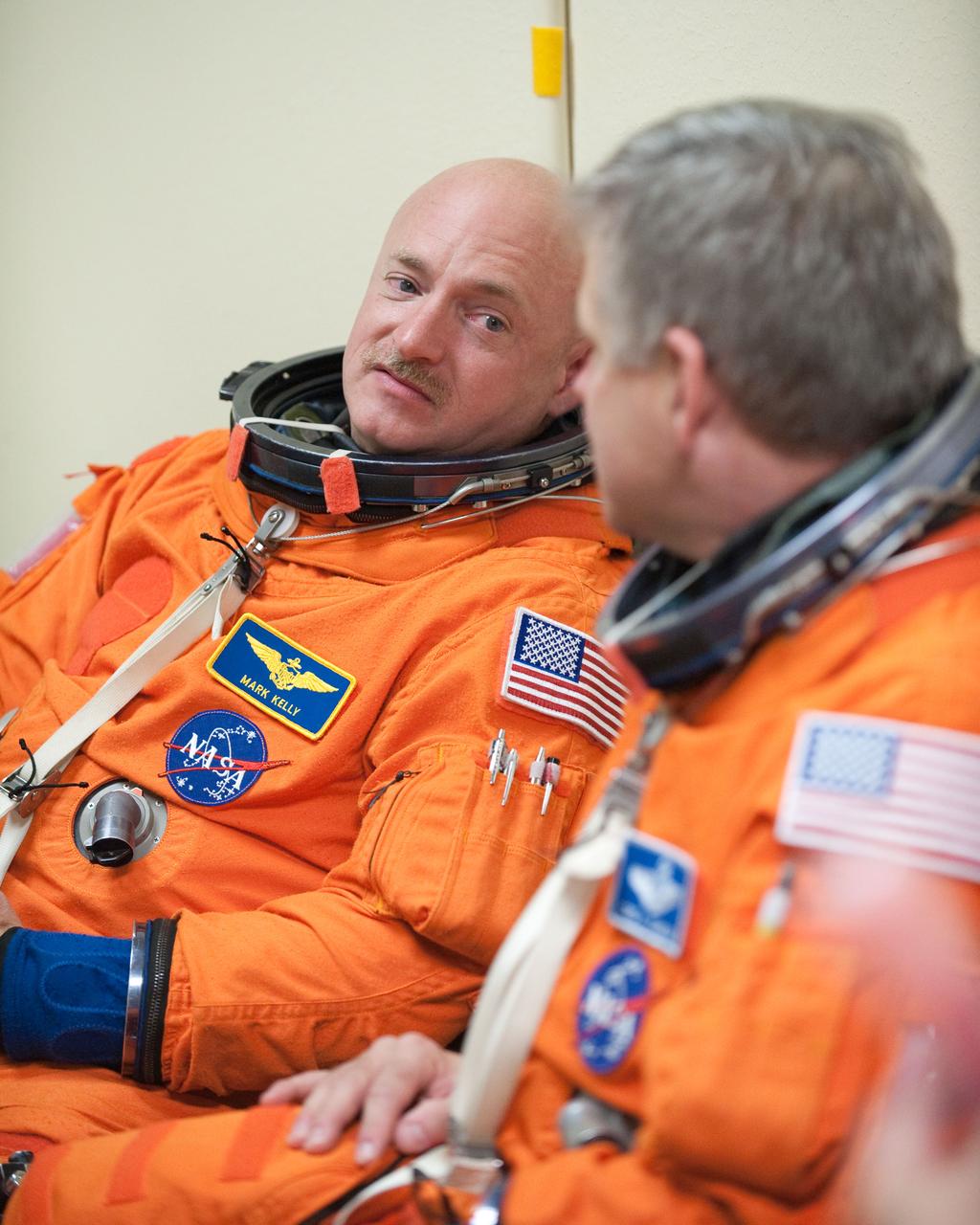
JSC2010-E-124272 (8 Sept. 2010) --- NASA astronauts Mark Kelly (background) and Gregory H. Johnson, STS-134 commander and pilot, respectively, attired in training versions of their shuttle launch and entry suits, prepare for a training session in the fixed-base shuttle mission simulator (SMS) in the Jake Garn Simulation and Training Facility at NASA?s Johnson Space Center. Photo credit: NASA or National Aeronautics and Space Administration
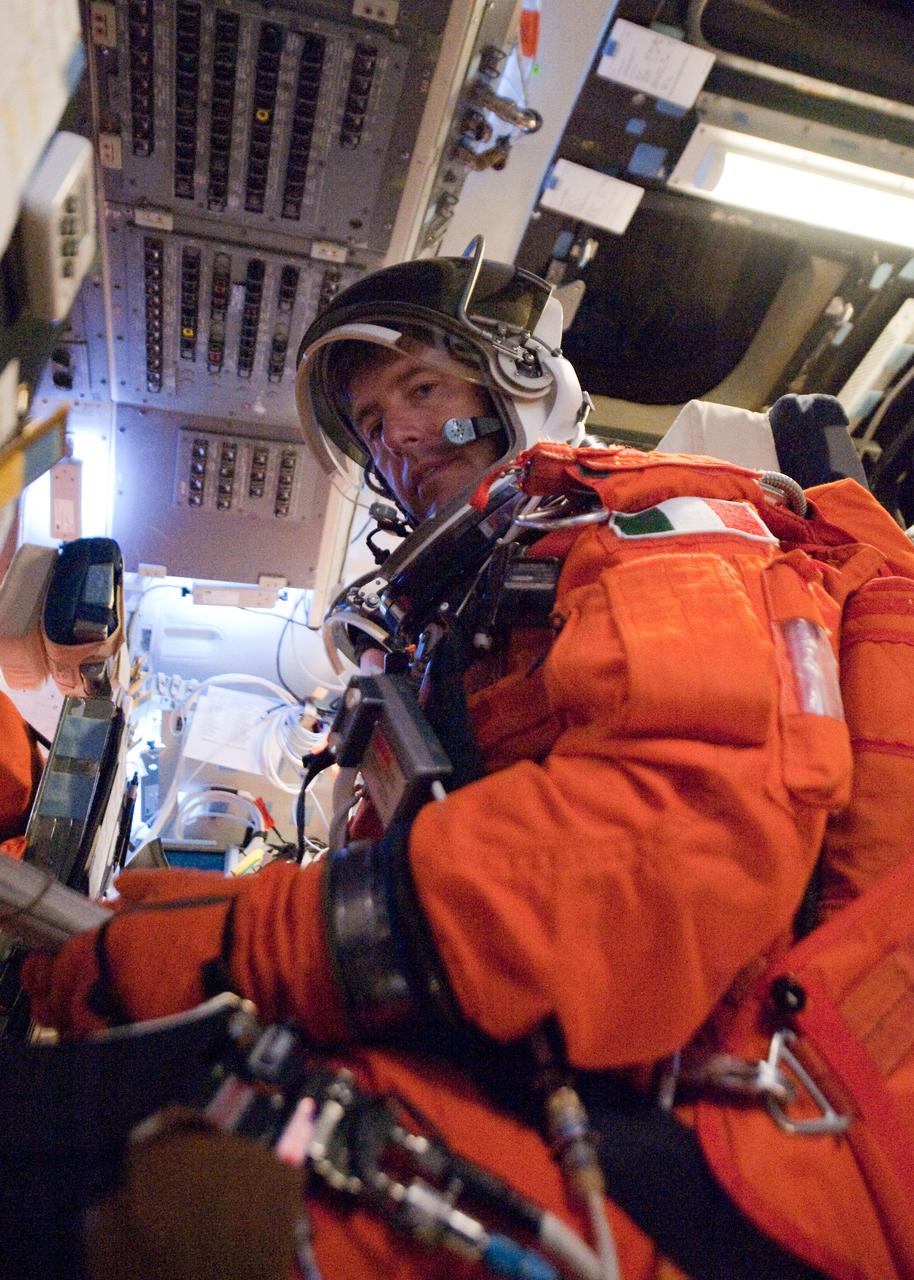
JSC2010-E-124289 (8 Sept. 2010) --- European Space Agency astronaut Roberto Vittori, STS-134 mission specialist, attired in a training version of his shuttle launch and entry suit, participates in a training session in the fixed-base shuttle mission simulator (SMS) in the Jake Garn Simulation and Training Facility at NASA?s Johnson Space Center. Photo credit: NASA or National Aeronautics and Space Administration
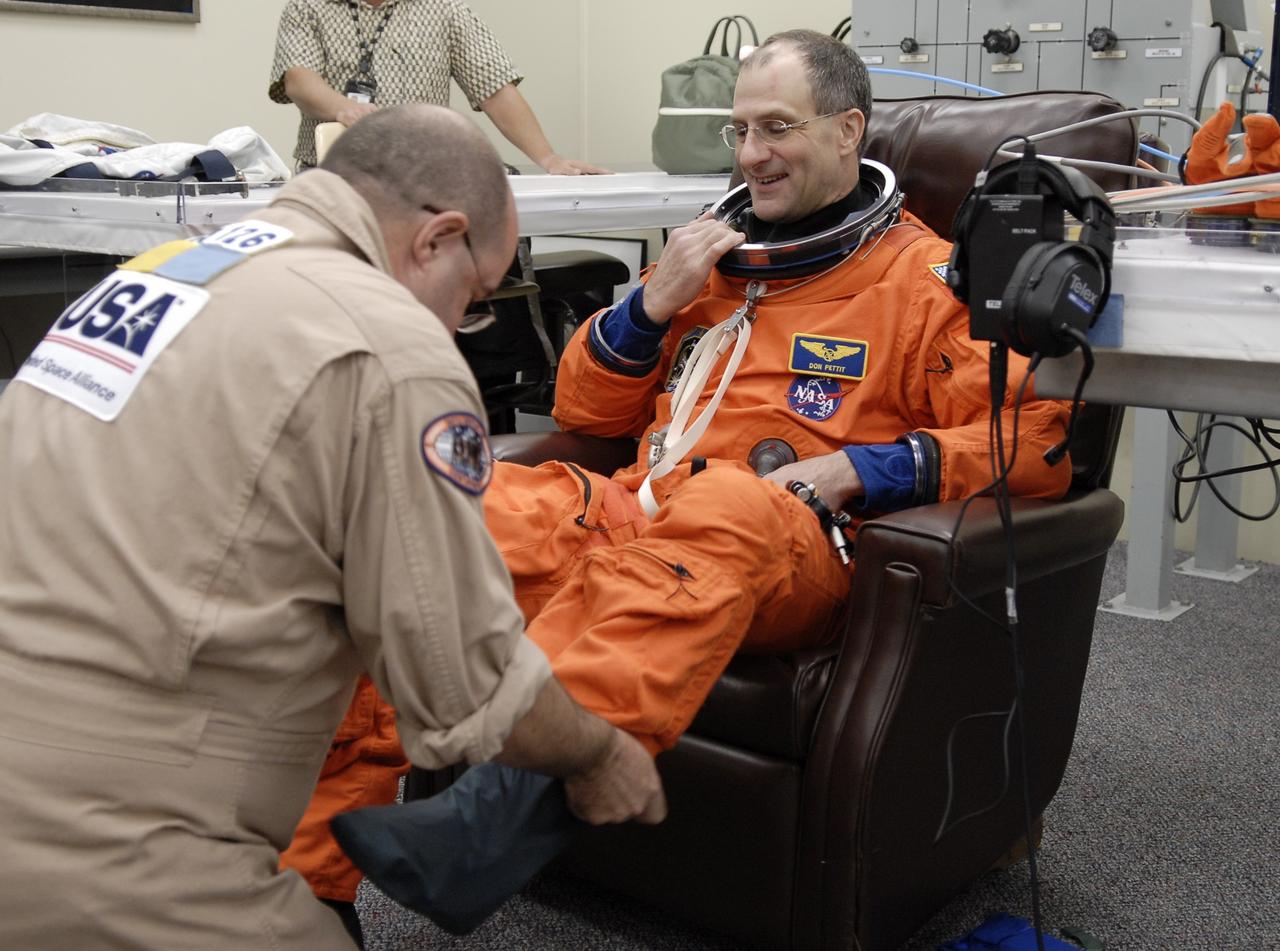
CAPE CANAVERAL, Fla. – STS-126 Mission Specialist Donald Pettit is helped by a suit technician with his boots during suit-up in the Operations and Checkout Building at NASA's Kennedy Space Center in Florida. Pettit and other crew members are having their launch-and-entry suits fit-checked prior to heading for Launch Pad 39A. The crew will take part in a simulated launch countdown at the pad. The crew is at Kennedy to take part in the Terminal Countdown Demonstration Test, which includes equipment familiarization, emergency exit training and the simulated countdown. On the STS-126 mission, space shuttle Endeavour's crew will deliver equipment and supplies to the International Space Station in preparation for expansion from a three- to six-person resident crew aboard the complex. The mission also will include four spacewalks to service the station’s Solar Alpha Rotary Joints. Endeavour is targeted to launch Nov. 14. Photo credit: NASA/Kim Shiflett
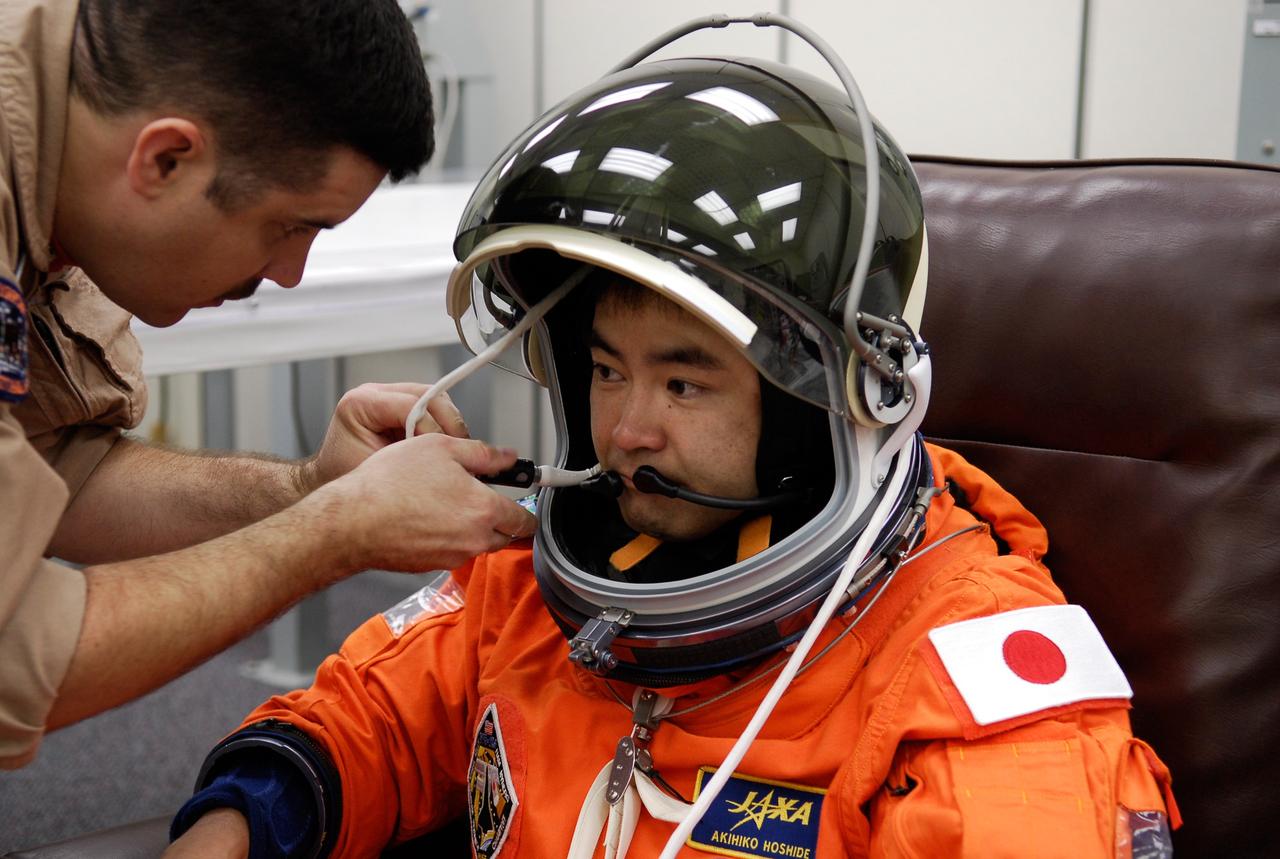
CAPE CANAVERAL, Fla. -- In the Operations and Checkout Building at NASA's Kennedy Space Center, STS-124 Mission Specialist Akihiko Hoshide has his communications adjusted in the helmet of his launch-and-entry suit. Hoshide represents the Japan Aerospace Exploration Agency, or JAXA. He has donned the suit for the simulated launch countdown the crew is starting. The simulation is the culmination of the launch dress rehearsal called the terminal countdown demonstration test. TCDT provides astronauts and ground crews with an opportunity to participate in various simulated countdown activities, including equipment familiarization and emergency training. On the STS-124 mission, the crew will deliver and install the Japanese Experiment Module – Pressurized Module and Japanese Remote Manipulator System. Discovery's launch is targeted for May 31. Photo credit: NASA/Kim Shiflett
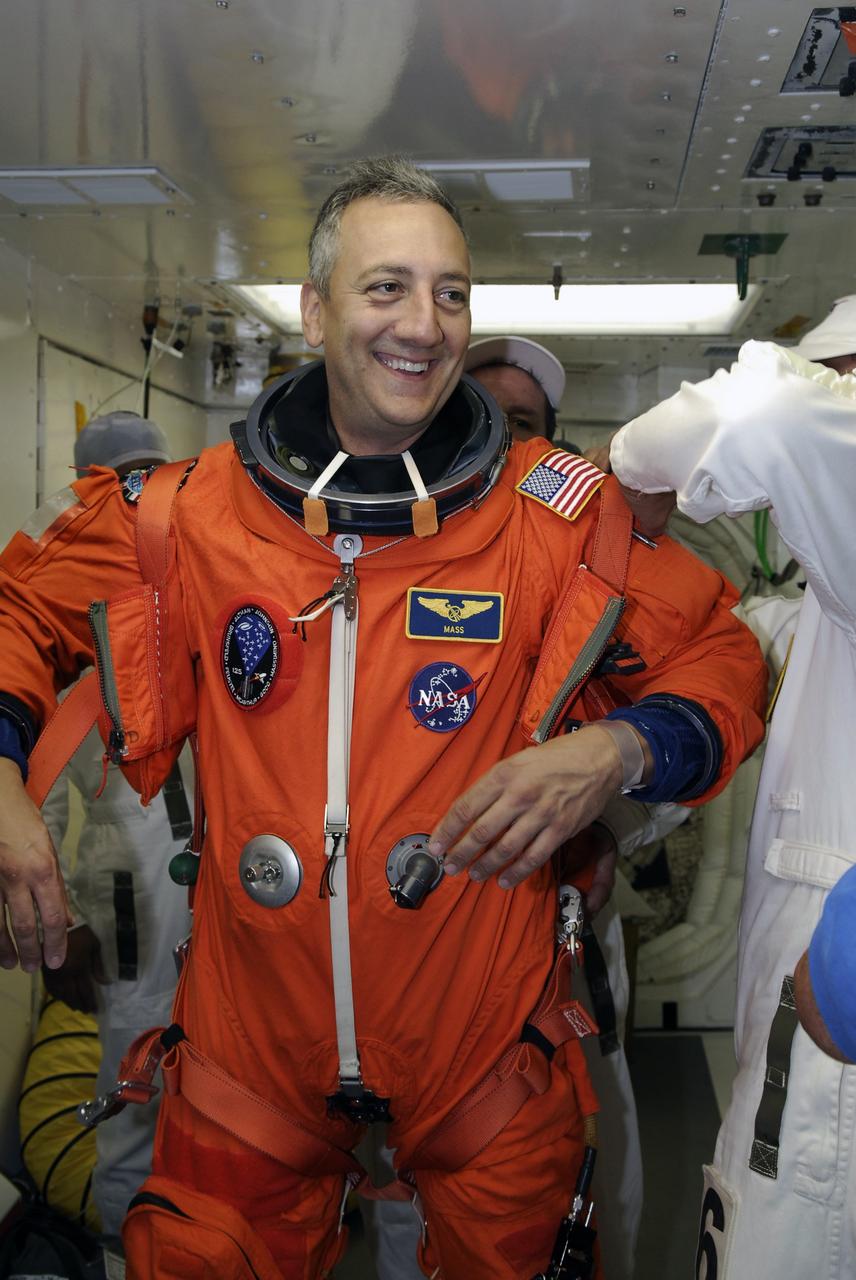
CAPE CANAVERAL, Fla. - STS-125 Mission Specialist Mike Massimino s helped by a suit technician to don a harness over his launch and entry suit before entering space shuttle Atlantis for a simulated launch countdown. The countdown is the culmination of terminal countdown demonstration test, or TCDT, activities as preparation before launch. TCDT provides astronauts and ground crews with an opportunity to participate in various launch activities, including equipment familiarization, emergency training and the countdown. Atlantis’ STS-125 mission to service NASA’s Hubble Space Telescope is targeted for launch Oct. 14. Photo credit: NASA/Amanda Diller
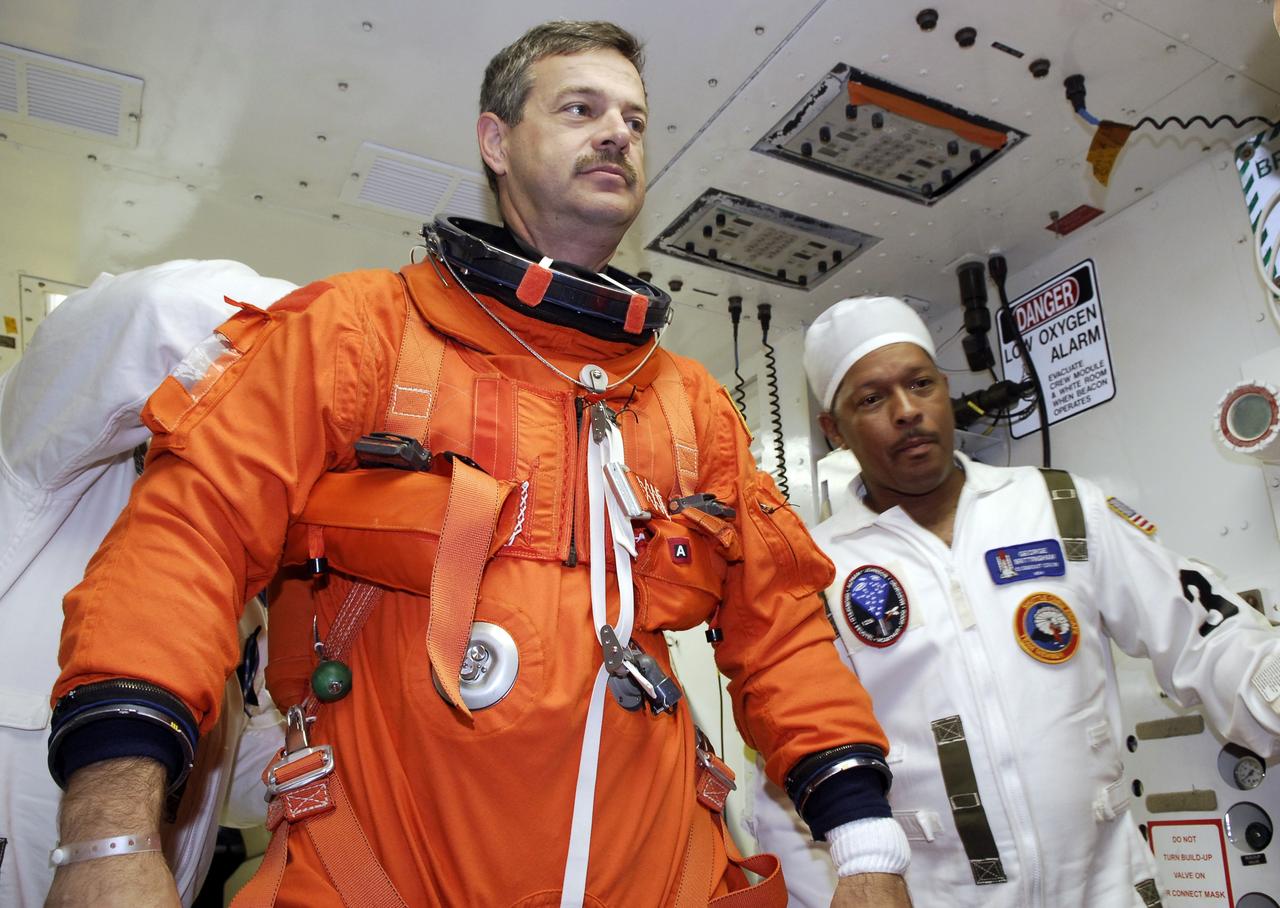
CAPE CANAVERAL, Fla. - STS-125 Commander Scott Altman is helped by a suit technician to don a harness over his launch and entry suit before entering space shuttle Atlantis for a simulated launch countdown. The countdown is the culmination of terminal countdown demonstration test, or TCDT, activities as preparation before launch. TCDT provides astronauts and ground crews with an opportunity to participate in various launch activities, including equipment familiarization, emergency training and the countdown. Atlantis’ STS-125 mission to service NASA’s Hubble Space Telescope is targeted for launch Oct. 14. Photo credit: NASA/Amanda Diller
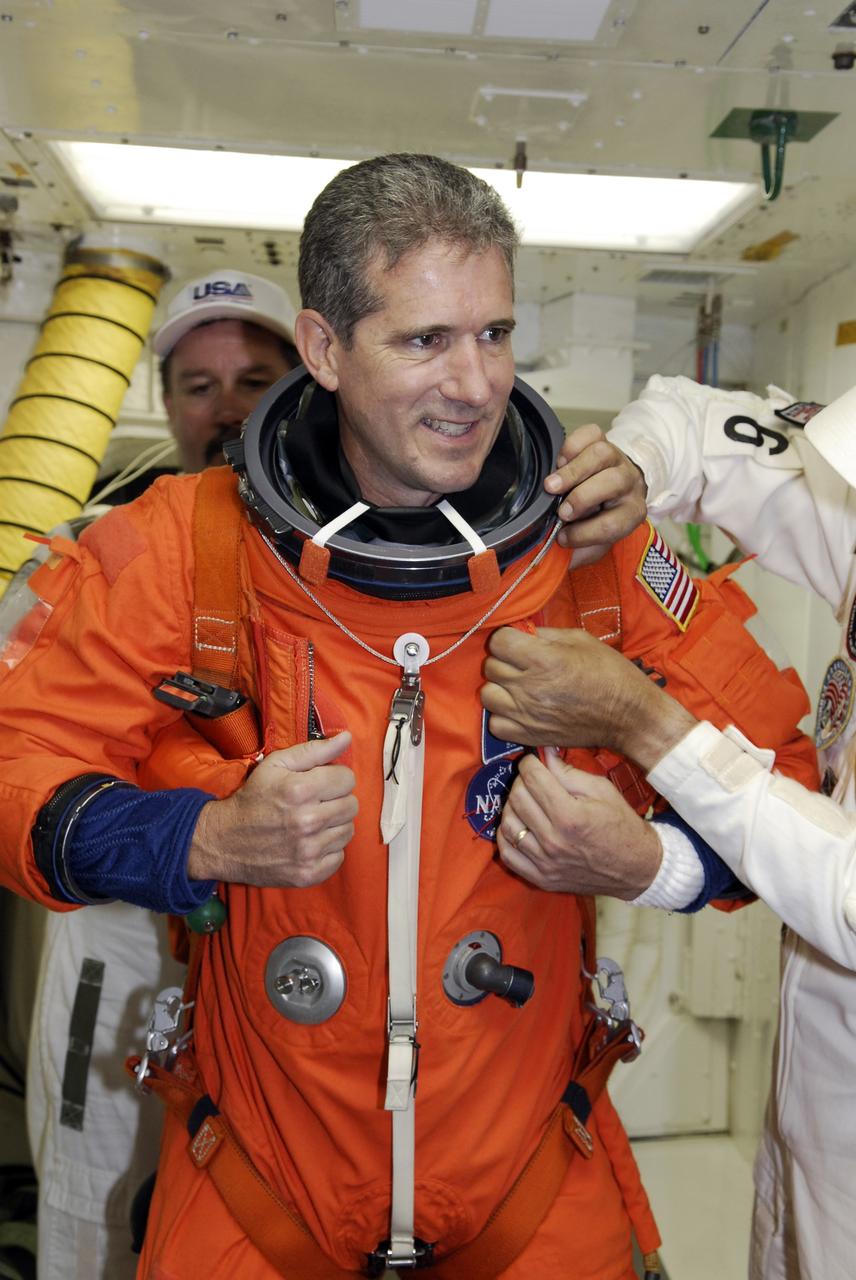
CAPE CANAVERAL, Fla. - STS-125 Mission Specialist Michael Good is helped by suit technicians to don a harness over his launch and entry suit before entering space shuttle Atlantis for a simulated launch countdown. The countdown is the culmination of terminal countdown demonstration test, or TCDT, activities as preparation before launch. TCDT provides astronauts and ground crews with an opportunity to participate in various launch activities, including equipment familiarization, emergency training and the countdown. Atlantis’ STS-125 mission to service NASA’s Hubble Space Telescope is targeted for launch Oct. 14. Photo credit: NASA/Amanda Diller
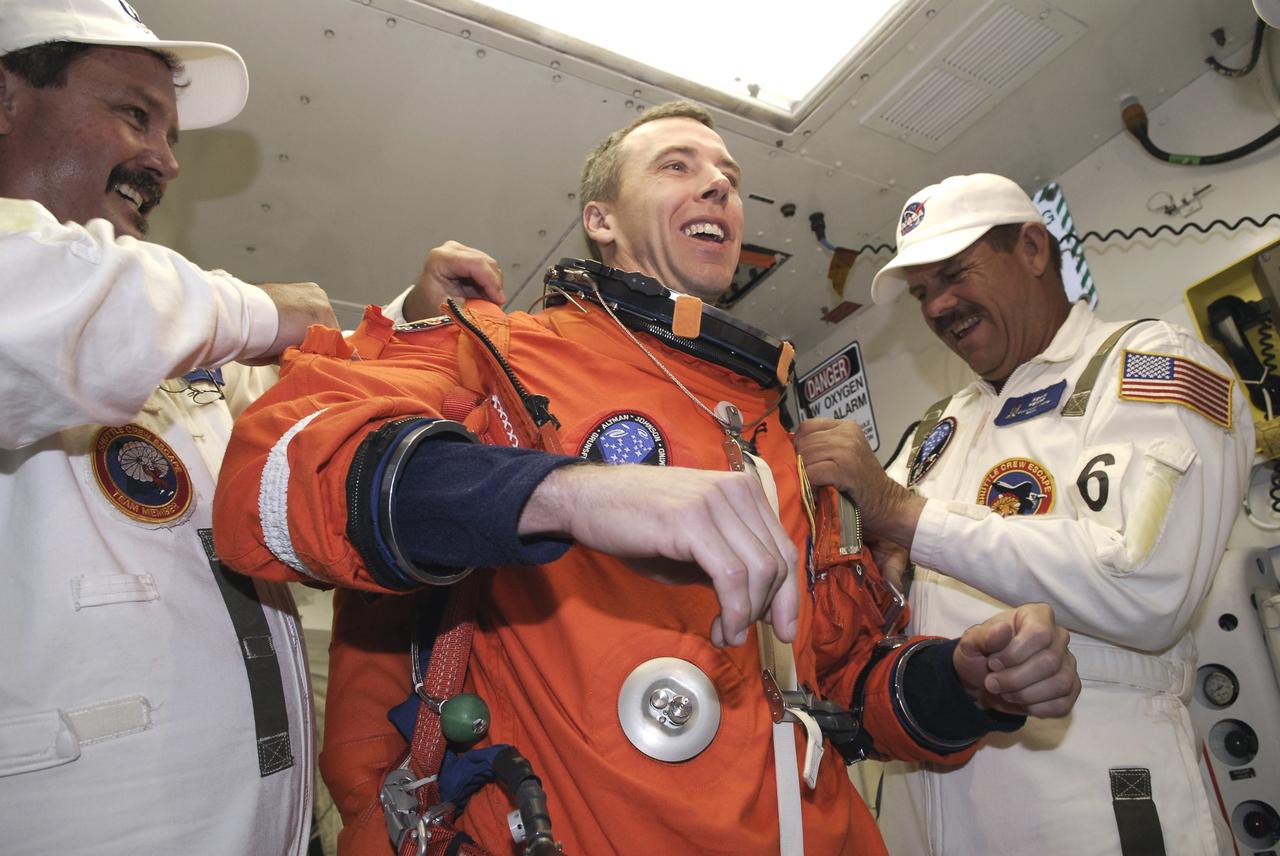
CAPE CANAVERAL, Fla. - STS-125 Mission Specialist Andrew Feustel is helped by suit technicians to don a harness over his launch and entry suit before entering space shuttle Atlantis for a simulated launch countdown. The countdown is the culmination of terminal countdown demonstration test, or TCDT, activities as preparation before launch. TCDT provides astronauts and ground crews with an opportunity to participate in various launch activities, including equipment familiarization, emergency training and the countdown. Atlantis’ STS-125 mission to service NASA’s Hubble Space Telescope is targeted for launch Oct. 14. Photo credit: NASA/Amanda Diller
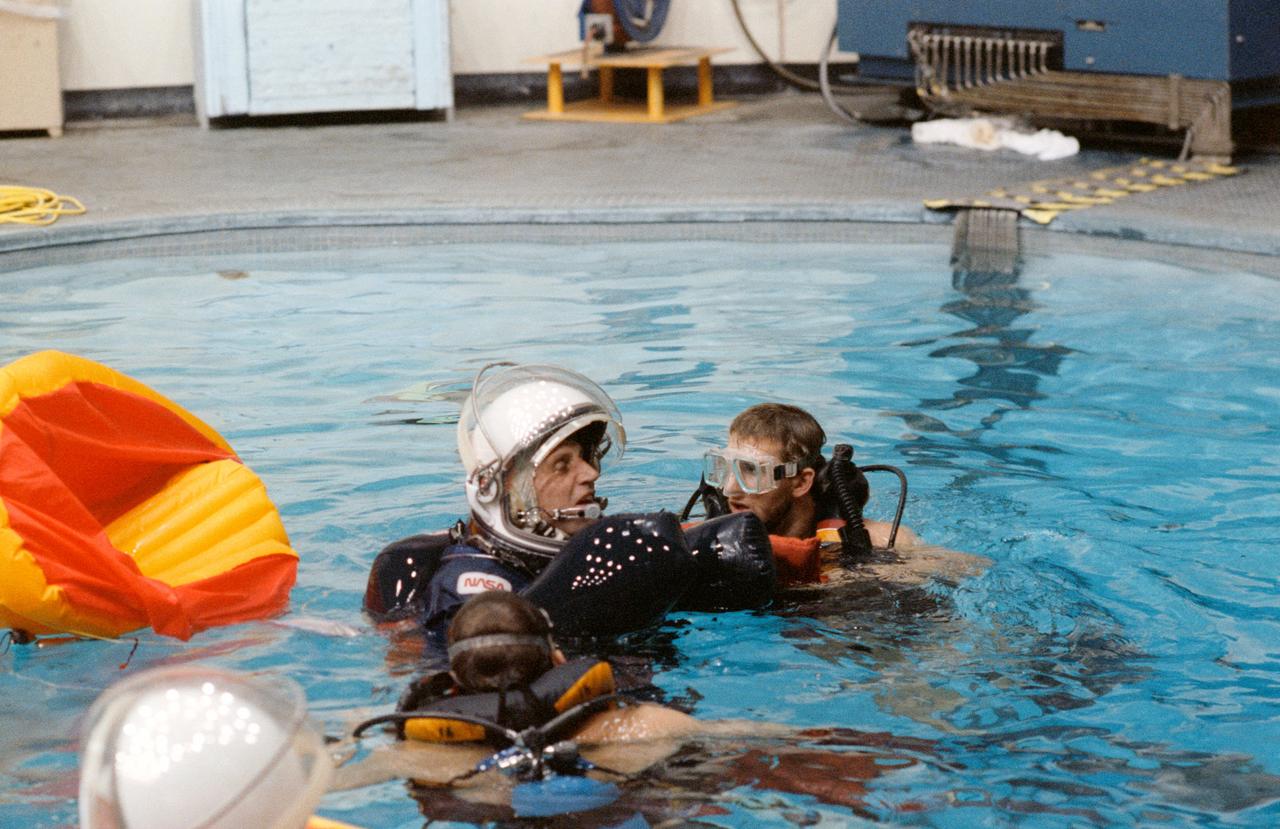
S91-51995 (26 Nov 1991) --- Astronaut David C. Hilmers, STS-42 mission specialist, wearing launch and entry suit (LES) and launch and entry helmet (LEH), floats in the water with the aid of an underarm flotation device as SCUBA-equipped divers look on. Behind Hilmers is his yellow and orange single person life raft. Hilmers is rehearsing launch emergency egress (bailout) procedures in the Johnson Space Center?s (JSC) Weightless Environment Training Facility (WETF) Bldg 29. The crewmembers would use this equipment in the event of an emergency bailout over water. The WETF's 25 ft deep pool is used to simulate the ocean.
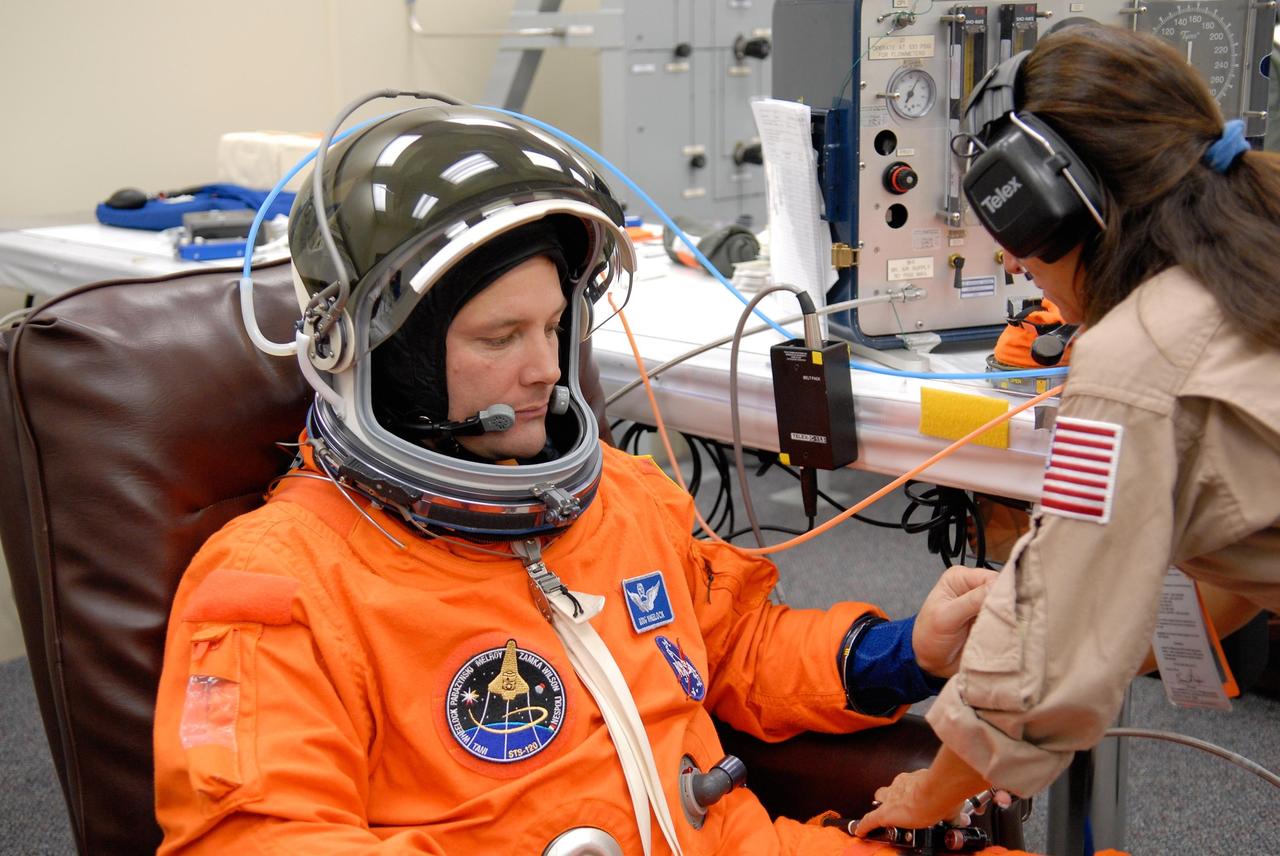
KENNEDY SPACE CENTER, FLA. -- STS-120 Mission Specialist Doug Wheelock tries on his launch and entry suit to prepare for launch. The fitting is part of terminal countdown demonstration test, or TCDT, activities the crew is undertaking at NASA's Kennedy Space Center. The TCDT also includes emergency egress procedures, equipment familiarization and a simulated launch countdown. Mission STS-120, which will carry the Italian-built U.S. Node 2 to the International Space Station, is targeted for launch on Oct. 23. Photo credit: NASA/Kim Shiflett
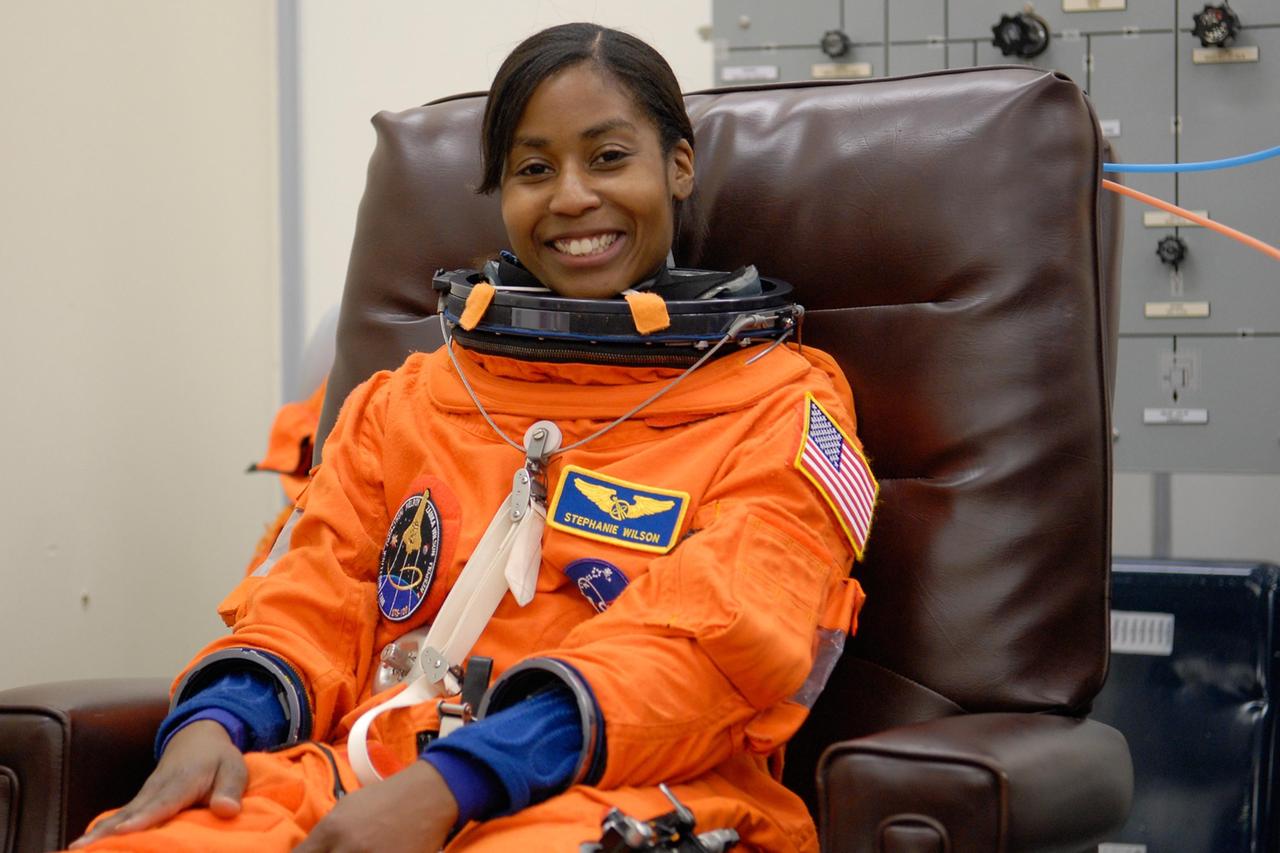
KENNEDY SPACE CENTER, FLA. -- STS-120 Mission Specialist Stephanie Wilson tries on her launch and entry suit, preparing for launch. The fitting is part of terminal countdown demonstration test, or TCDT, activities the crew is undertaking at NASA's Kennedy Space Center. The TCDT also includes emergency egress procedures, equipment familiarization and a simulated launch countdown. Mission STS-120, which will carry the Italian-built U.S. Node 2 to the International Space Station, is targeted for launch on Oct. 23. Photo credit: NASA/Kim Shiflett
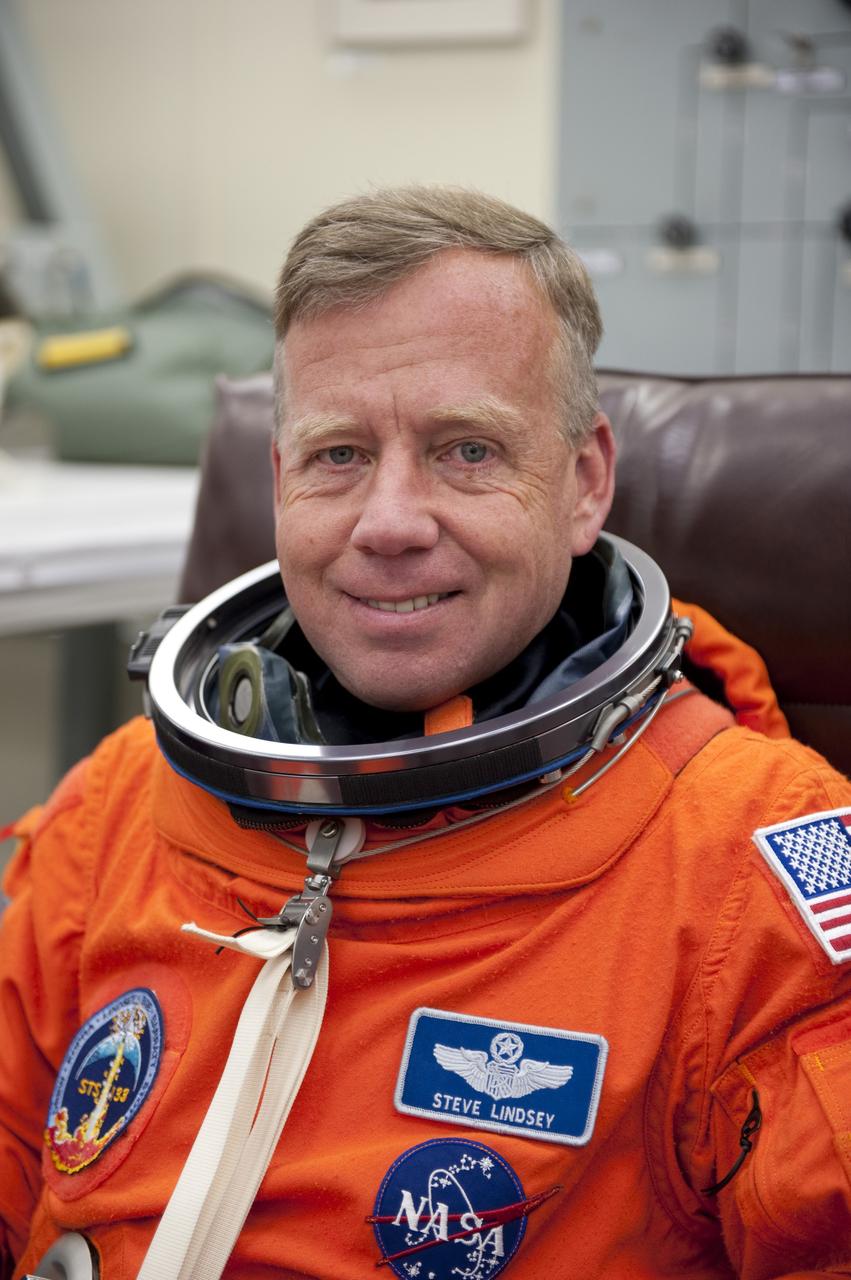
CAPE CANAVERAL, Fla. -- STS-133 Commander Steve Lindsey is suited up in the Operations and Checkout Building at NASA's Kennedy Space Center in Florida during a simulated launch countdown. Checking the fit of their orange launch-and-entry suits and helmets before launch day is part of the Terminal Countdown Demonstration Test (TCDT), which provides each shuttle crew and launch team an opportunity to participate in various simulated activities, including equipment familiarization and emergency training at the launch pad. Space shuttle Discovery and its STS-133 crew will deliver the Permanent Multipurpose Module, packed with supplies and critical spare parts, as well as Robonaut 2, the dexterous humanoid astronaut helper, to the International Space Station. Launch is targeted for Nov. 1 at 4:40 p.m. For more information on the STS-133 mission, visit www.nasa.gov/mission_pages/shuttle/shuttlemissions/sts133/. Photo credit: NASA/Kim Shiflett
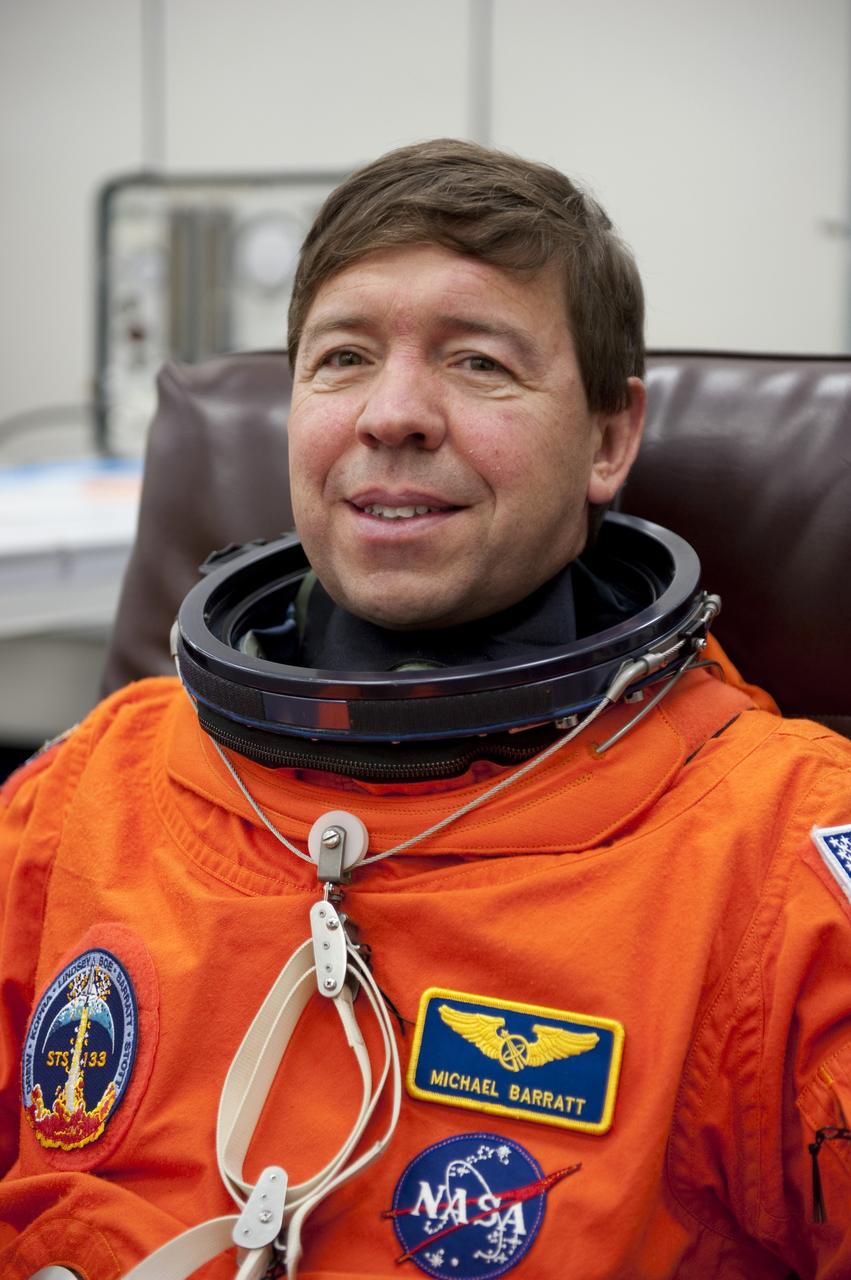
CAPE CANAVERAL, Fla. -- STS-133 Mission Specialist Michael Barratt is suited up in the Operations and Checkout Building at NASA's Kennedy Space Center in Florida during a simulated launch countdown. Checking the fit of their orange launch-and-entry suits and helmets before launch day is part of the Terminal Countdown Demonstration Test (TCDT), which provides each shuttle crew and launch team an opportunity to participate in various simulated activities, including equipment familiarization and emergency training at the launch pad. Space shuttle Discovery and its STS-133 crew will deliver the Permanent Multipurpose Module, packed with supplies and critical spare parts, as well as Robonaut 2, the dexterous humanoid astronaut helper, to the International Space Station. Launch is targeted for Nov. 1 at 4:40 p.m. For more information on the STS-133 mission, visit www.nasa.gov/mission_pages/shuttle/shuttlemissions/sts133/. Photo credit: NASA/Kim Shiflett