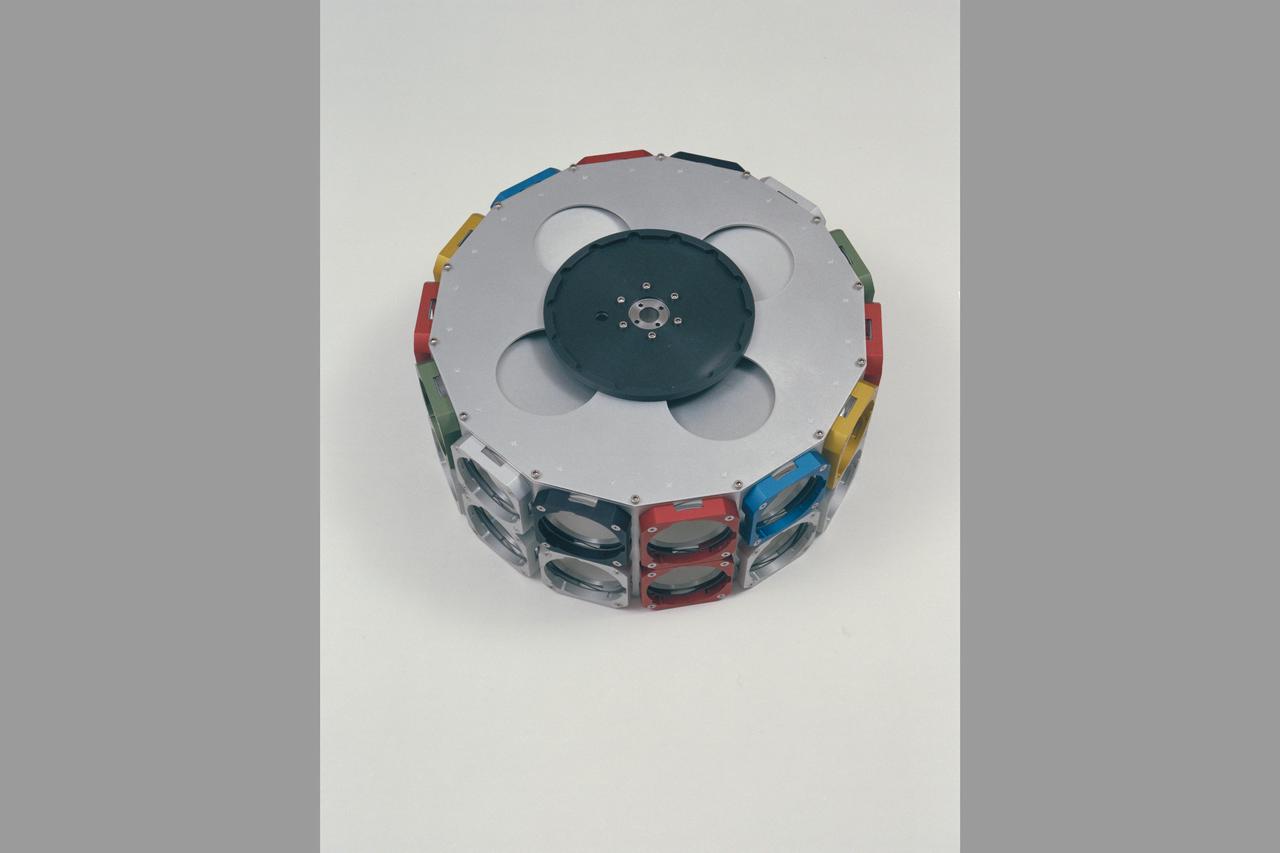
SL-J Space Shuttle Frog Embryology Experiment (FEU) flight hardware
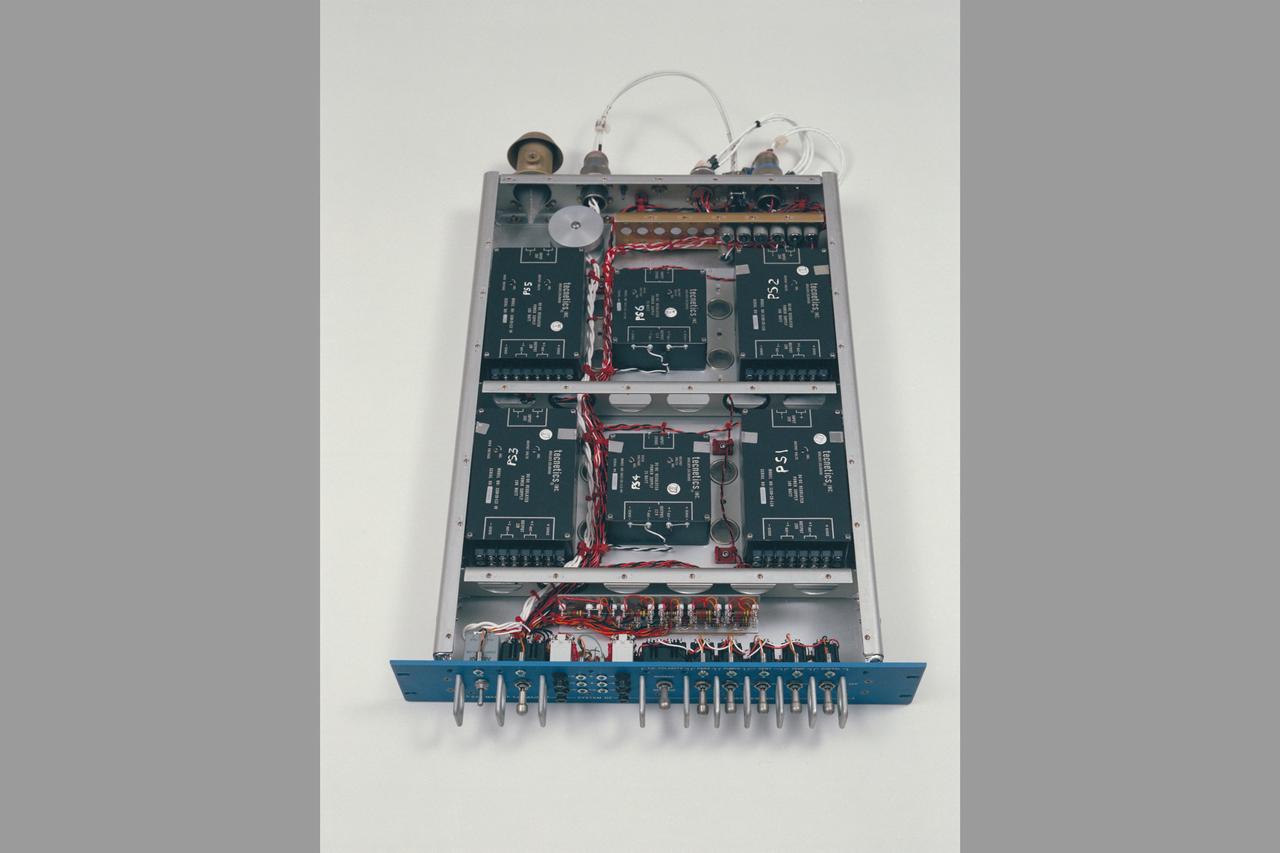
SL-J Space Shuttle Frog Embryology Experiment (FEU) flight hardware
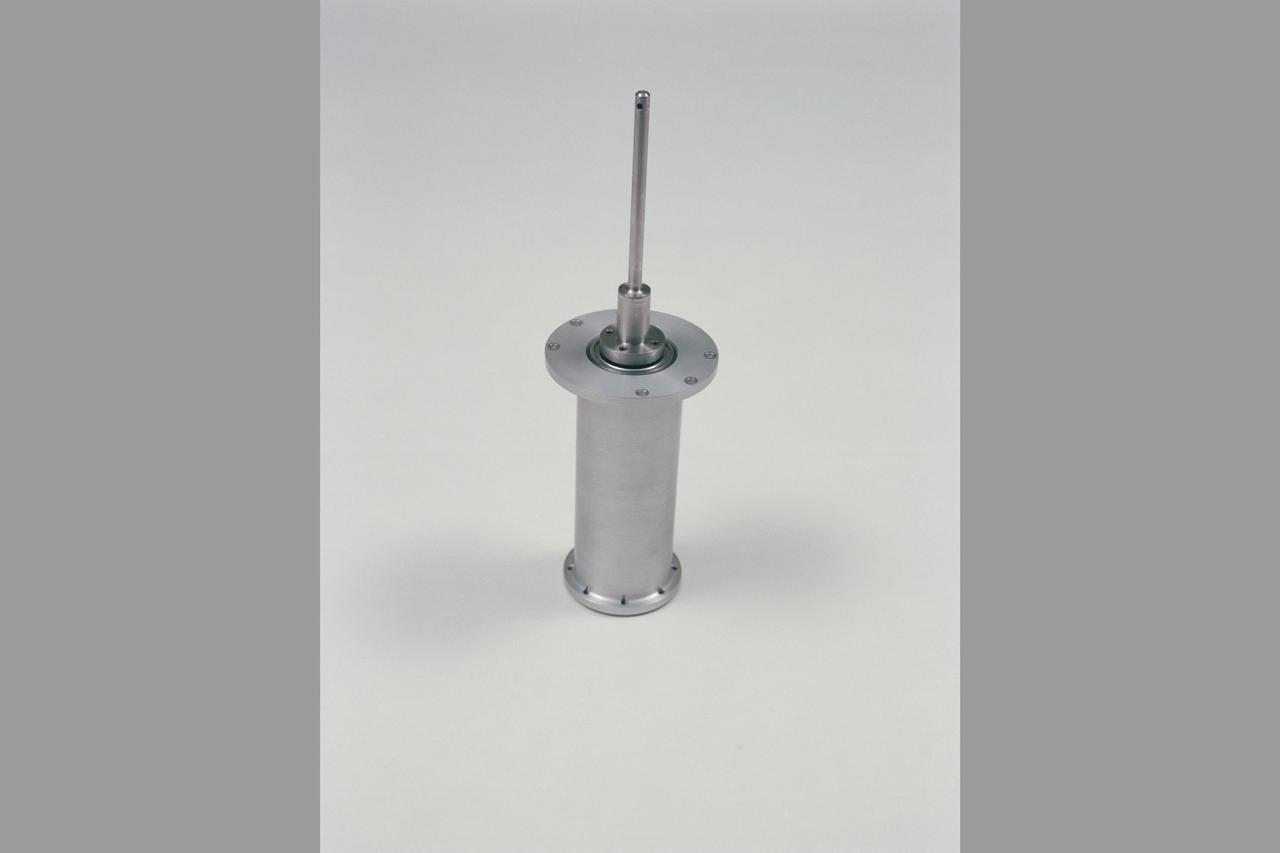
SL-J Space Shuttle Frog Embryology Experiment (FEU) flight hardware
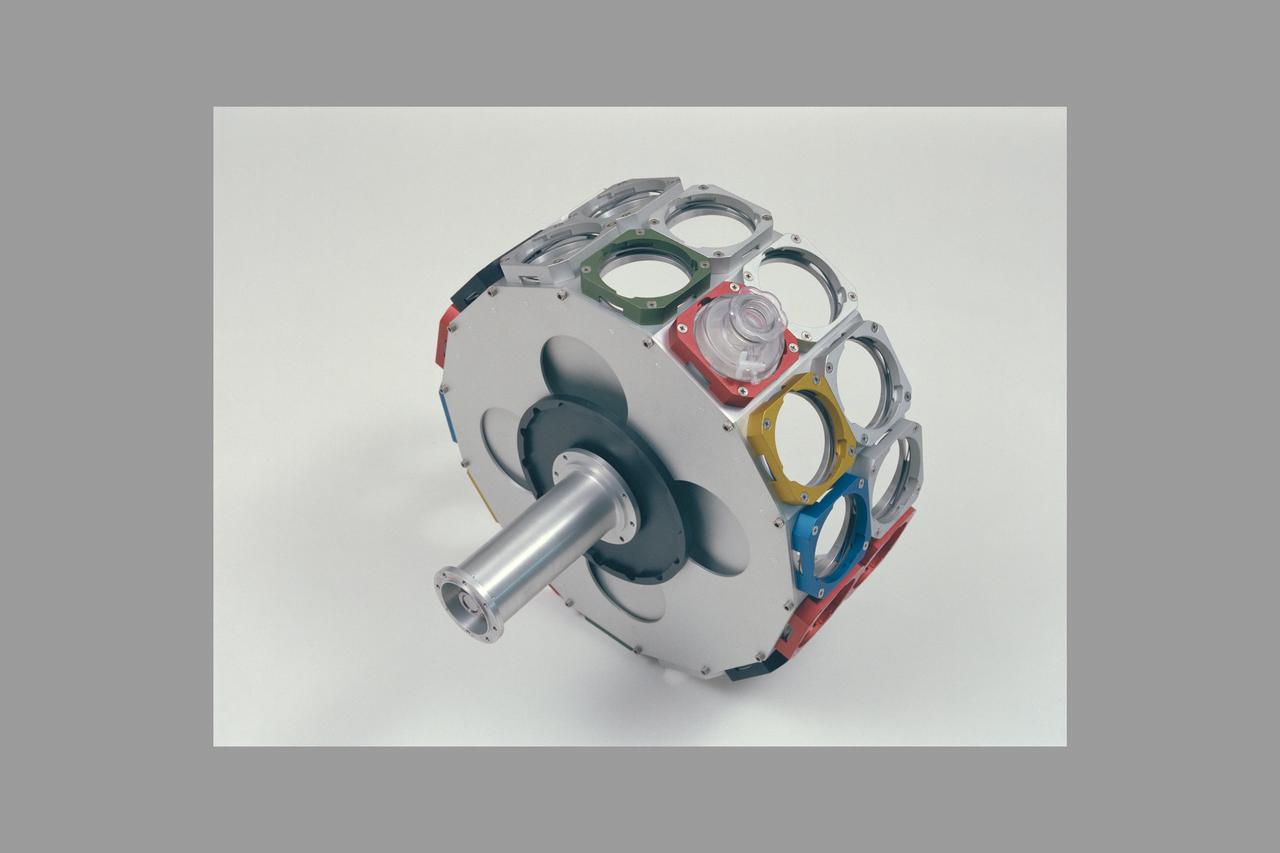
SL-J Space Shuttle Frog Embryology Experiment (FEU) flight hardware
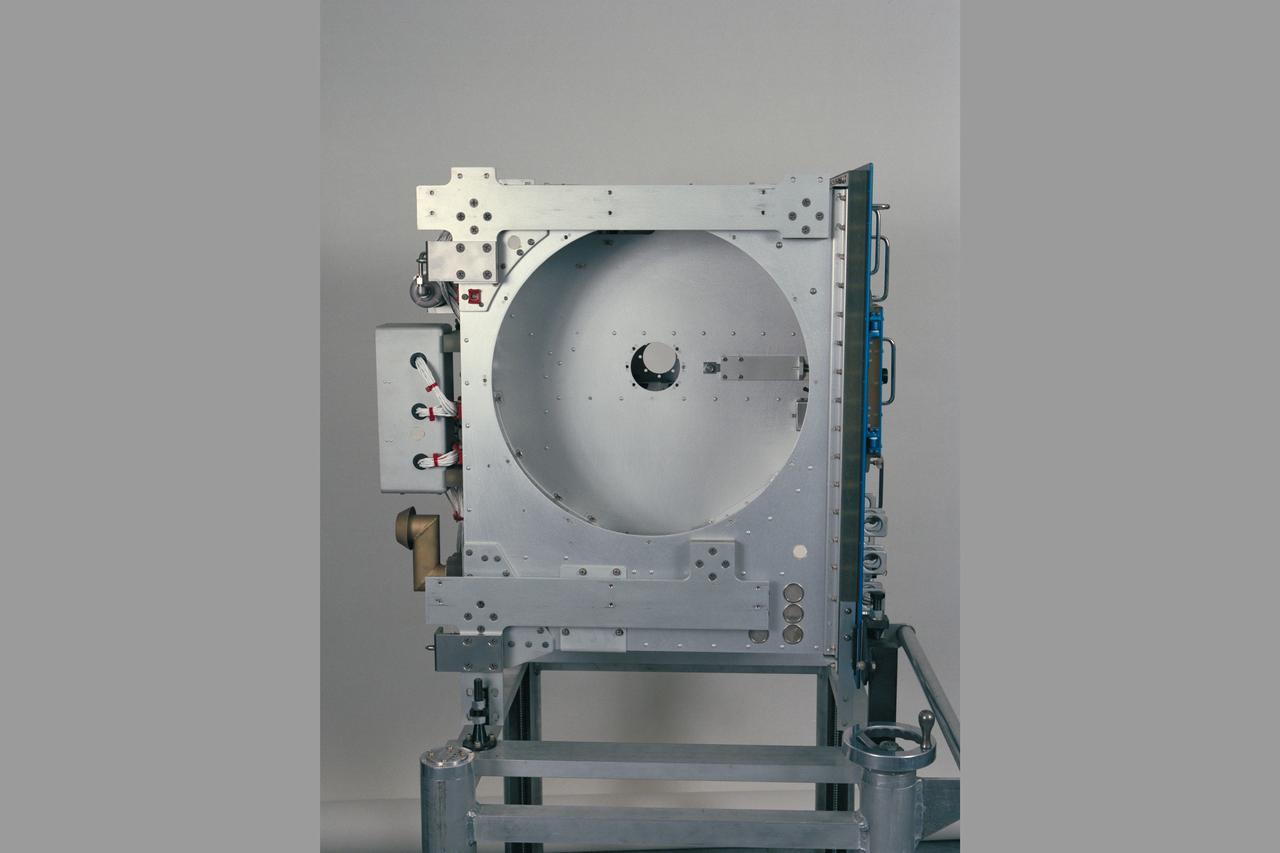
SL-J Space Shuttle Frog Embryology Experiment (FEU) flight hardware
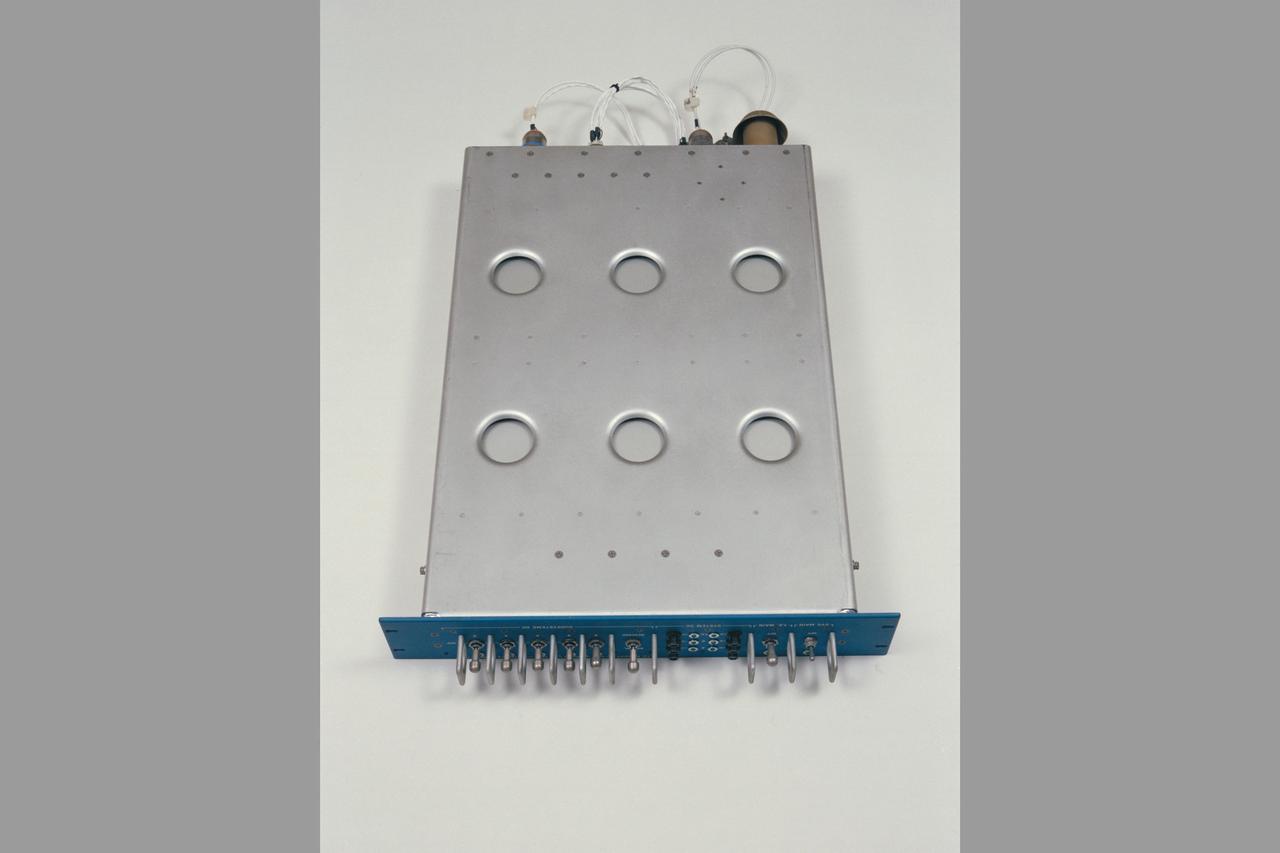
SL-J Space Shuttle Frog Embryology Experiment (FEU) flight hardware
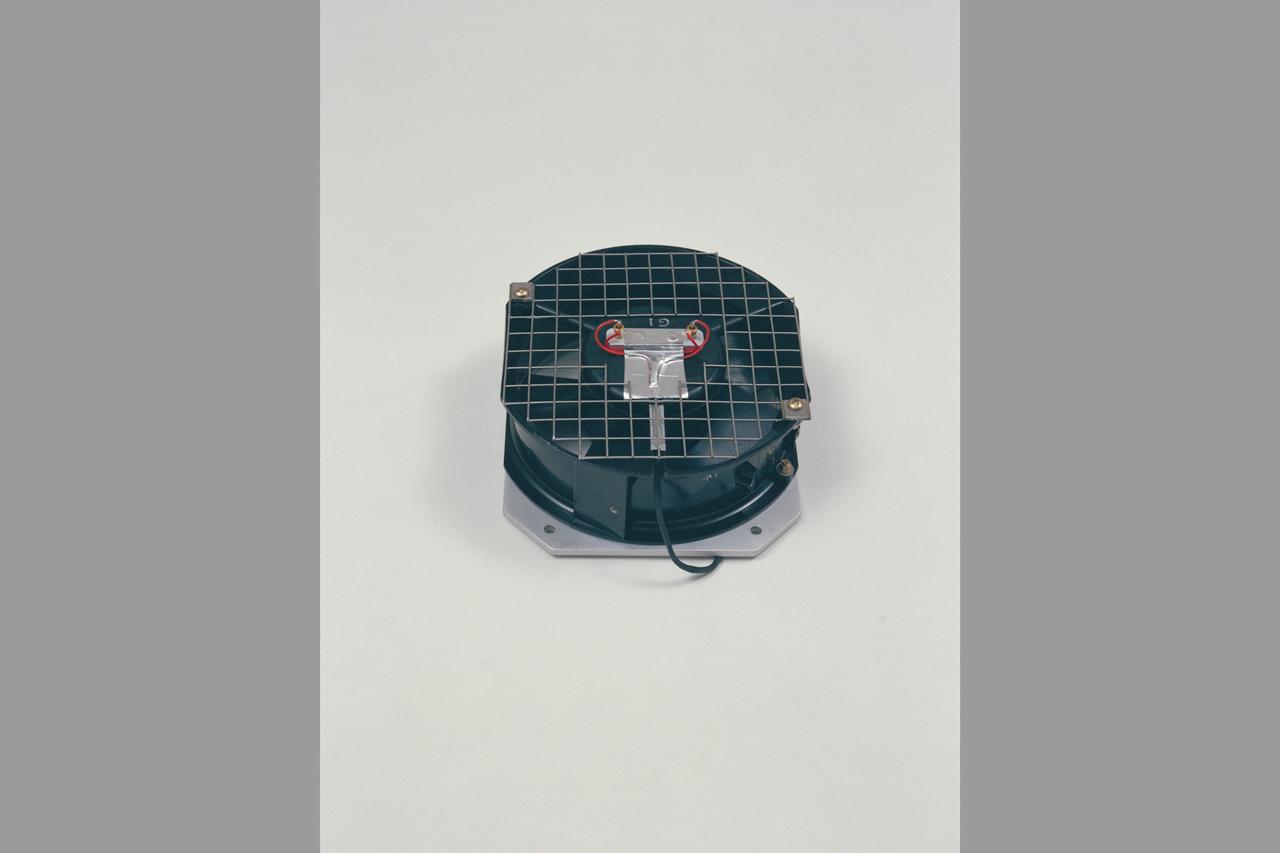
SL-J Space Shuttle Frog Embryology Experiment (FEU) flight hardware
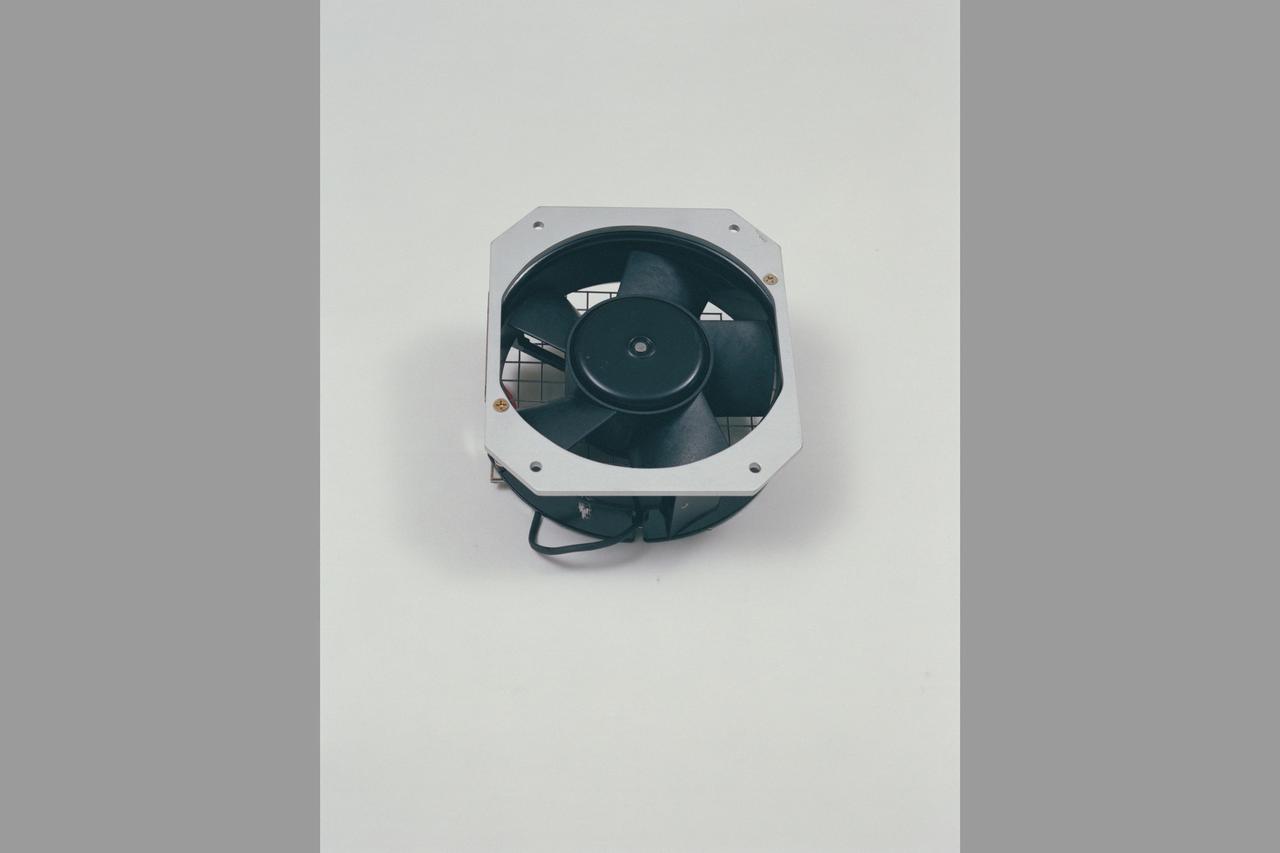
SL-J Space Shuttle Frog Embryology Experiment (FEU) flight hardware
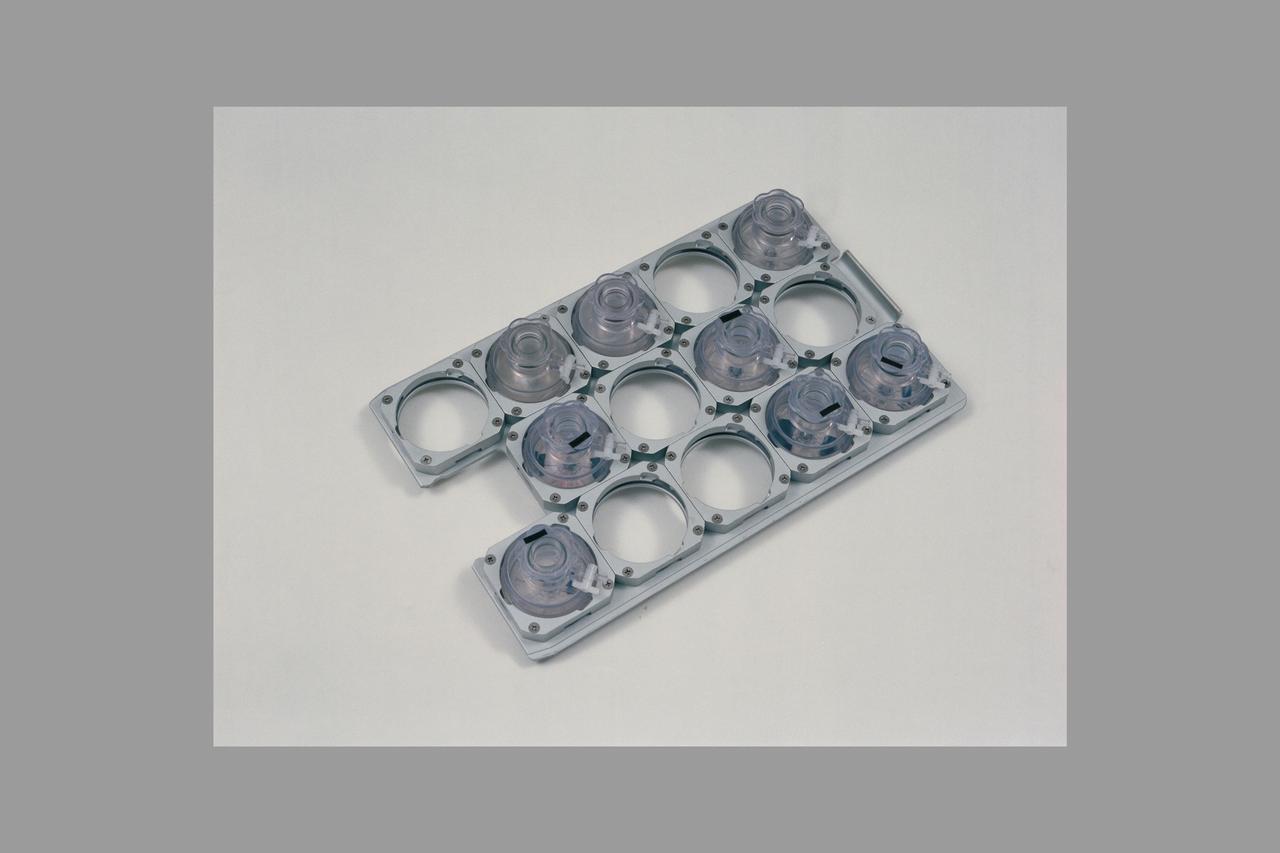
SL-J Space Shuttle Frog Embryology Experiment (FEU) flight hardware
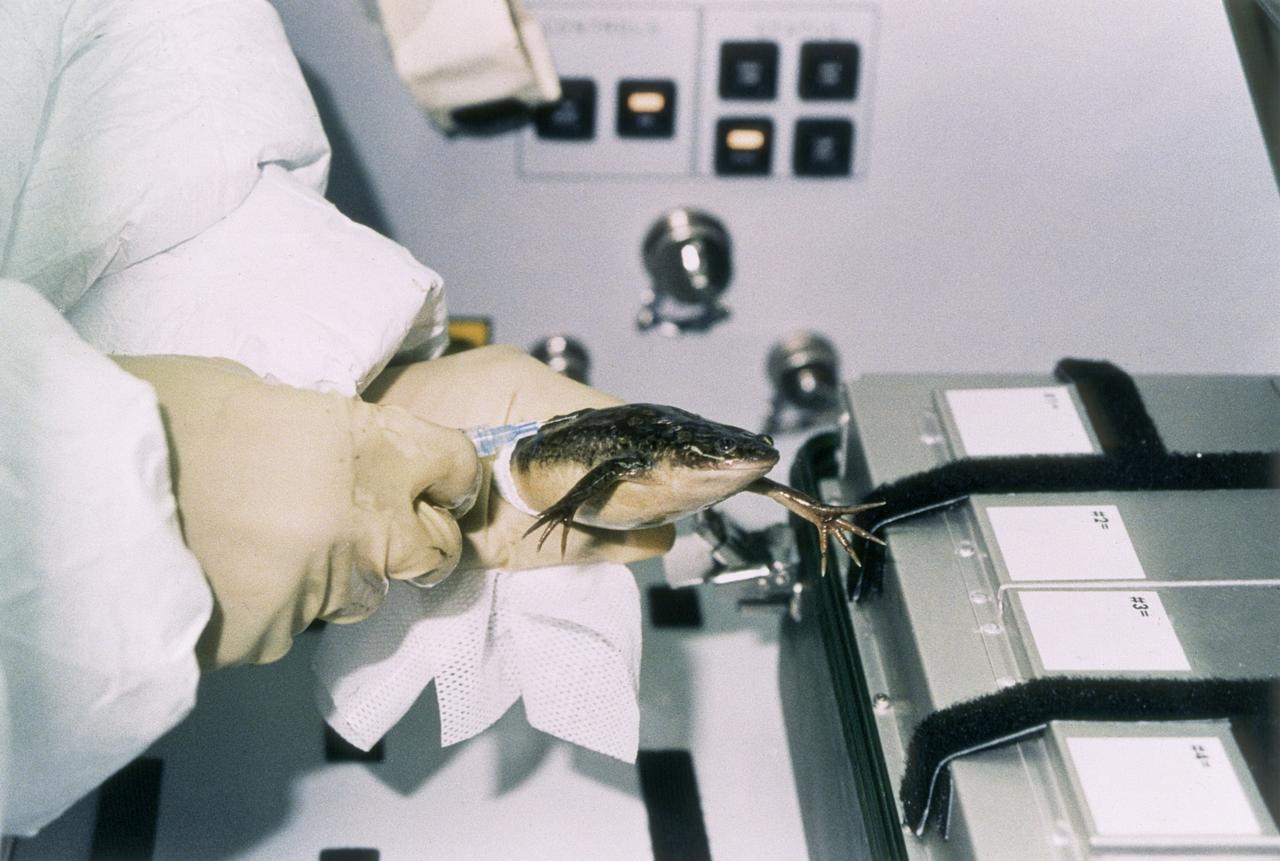
The Spacelab-J (SL-J) mission was a joint venture between NASA and the National Space Development Agency of Japan (NASDA) utilizing a marned Spacelab module. Materials science investigations covered such fields as biotechnology, electronic materials, fluid dynamics and transport phenomena, glasses and ceramics, metals and alloys, and acceleration measurements. Life sciences included experiments on human health, cell separation and biology, developmental biology, animal and human physiology and behavior, space radiation, and biological rhythms. Before long-term space ventures are attempted, numerous questions must be answered: how will gravity play in the early development of an organism, and how will new generations of a species be conceived and develop normally in microgravity. The Effects of Weightlessness on the Development of Amphibian Eggs Fertilized in Space experiment aboard SL-J examined aspects of these questions. To investigate the effect of microgravity on amphibian development, female frogs carried aboard SL-J were induced to ovulate and shed eggs. These eggs were then fertilized in the microgravity environment. Half were incubated in microgravity, while the other half were incubated in a centrifuge that spins to simulate normal gravity. This photograph shows an astronaut working with one of the adult female frogs inside the incubator. The mission also examined the swimming behavior of tadpoles grown in the absence of gravity. The Spacelab-J was launched aboard the Space Shuttle Orbiter Endeavour on September 12, 1992.
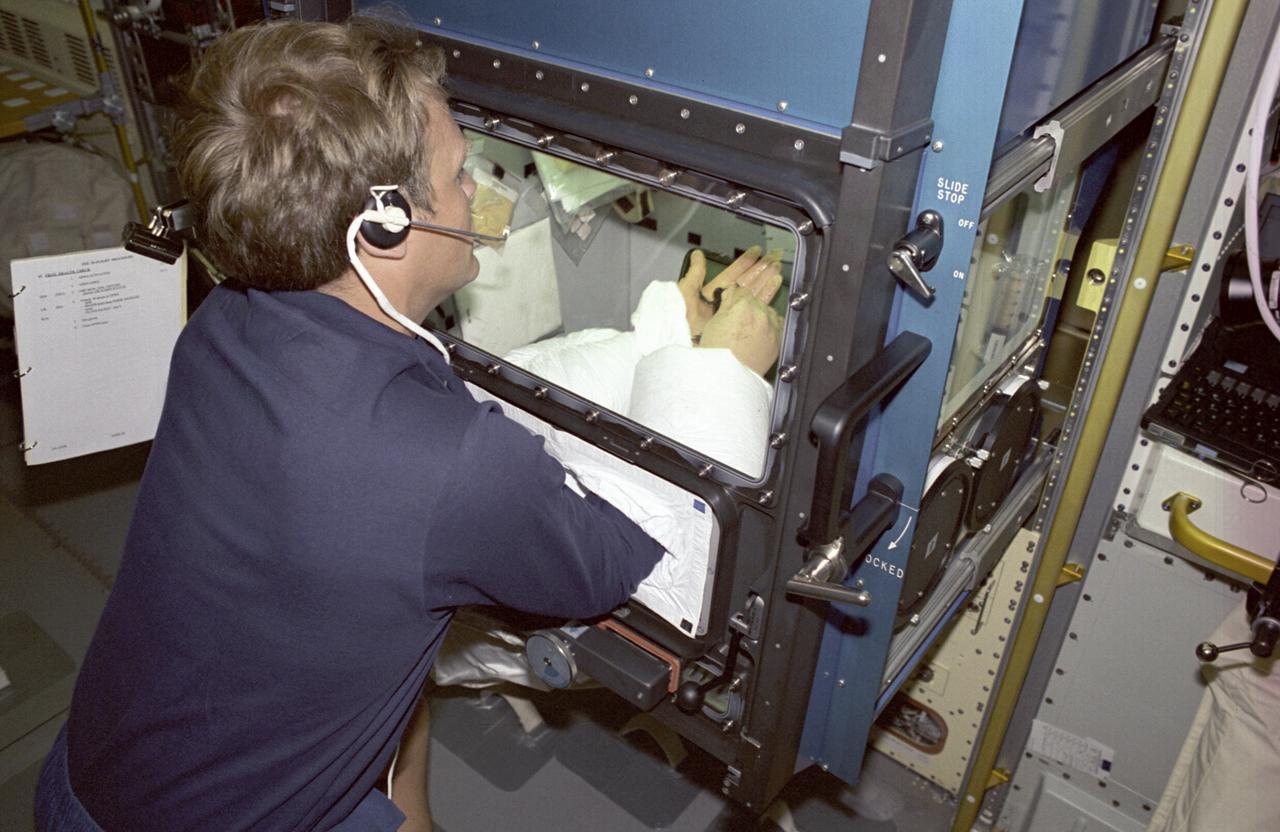
The Spacelab-J (SL-J) mission was a joint venture between NASA and the National Space Development Agency of Japan (NASDA) utilizing a marned Spacelab module. Materials science investigations covered such fields as biotechnology, electronic materials, fluid dynamics and transport phenomena, glasses and ceramics, metals and alloys, and acceleration measurements. Life sciences included experiments on human health, cell separation and biology, developmental biology, animal and human physiology and behavior, space radiation, and biological rhythms. Before long-term space ventures are attempted, numerous questions must be answered: how will gravity play in the early development of an organism, and how will new generations of a species be conceived and develop normally in microgravity. The Effects of Weightlessness on the Development of Amphibian Eggs Fertilized in Space experiment aboard SL-J examined aspects of these questions. To investigate the effect of microgravity on amphibian development, female frogs carried aboard SL-J were induced to ovulate and shed eggs. These eggs were then fertilized in the microgravity environment. Half were incubated in microgravity, while the other half were incubated in a centrifuge that spins to simulate normal gravity. This photograph shows astronaut Mark Lee working with one of the adult female frogs inside the incubator. The mission also examined the swimming behavior of tadpoles grown in the absence of gravity. The Spacelab-J was launched aboard the Space Shuttle Orbiter Endeavour on September 12, 1992.

This photograph of aurora borealis, northern aurora, was taken during the Spacelab-J (SL-J) mission (STS-47). People who live in the northernmost areas like Alaska or work in the southernmost regions like Antarctica often see colorful lights produced by Earth's natural electromagnetic generator; these shimmering expanses of light are auroras, commonly called the northern and southern lights. Charged particles from the magnetosphere follow magnetic fields and are accelerated toward Earth at the magnetic poles where they strike molecules in the upper atmosphere, staining the sky with the red and green lights of oxygen and hydrogen, and the purples and pinks of nitrogen. The altitude and inclination of the Spacelab will give scientists unique views of auroras, which occur at altitudes ranging from about 90 to 300 kilometers (56 to 186 miles). Most views of the auroras have been from the ground where only limited parts can be seen. These Spacelab views will give scientists information on their complex structure and chemical composition. The Spacelab-J was a joint mission of NASA and the National Space Development Agency of Japan (NASDA) utilizing a marned Spacelab module. The mission conducted microgravity investigations in materials and life sciences. The SL-J was launched aboard the Space Shuttle Orbiter Endeavour (STS-47) on September 12, 1992.
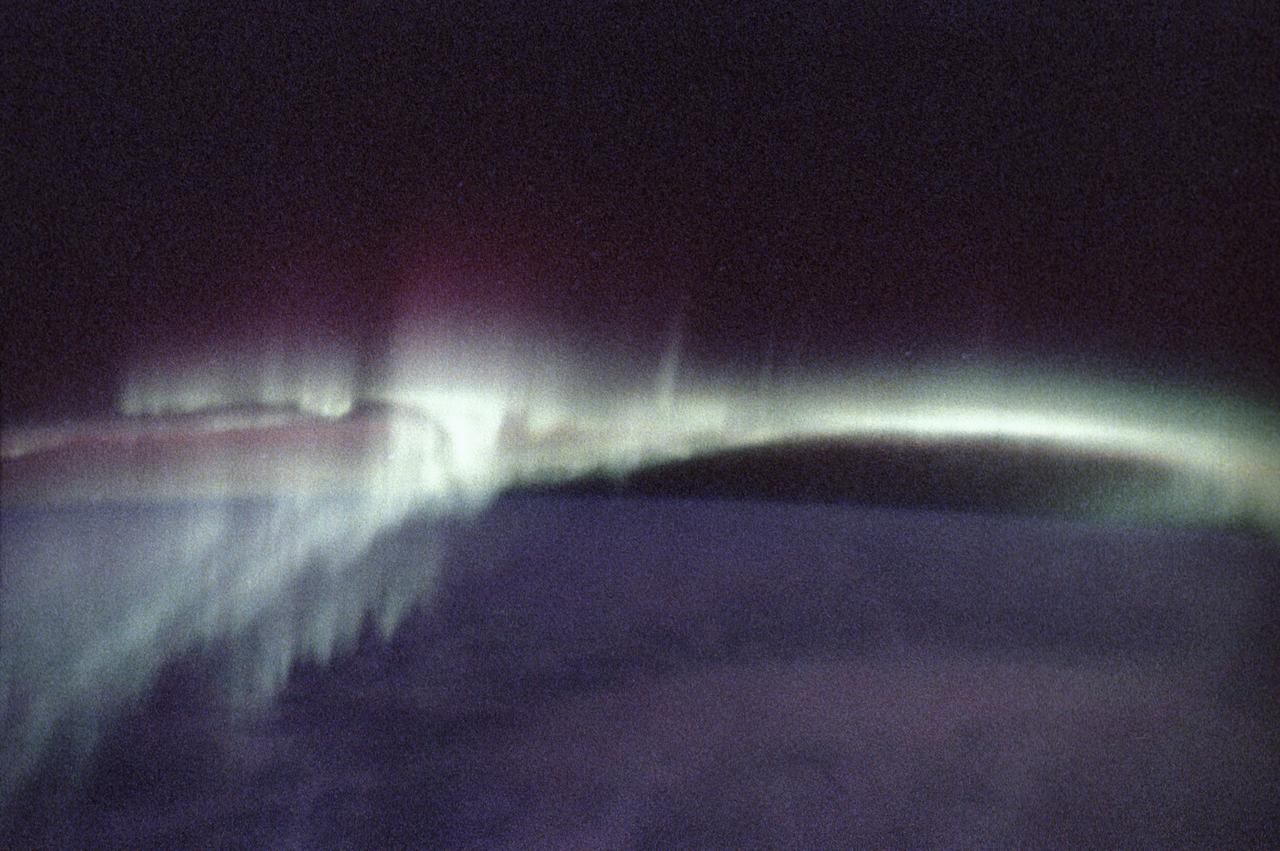
This photograph of aurora borealis, northern aurora, was taken during the Spacelab-J (SL-J) mission (STS-47). People who live in the northernmost areas like Alaska or work in the southernmost regions like Antarctica often see colorful lights produced by Earth's natural electromagnetic generator; these shimmering expanses of light are auroras, commonly called the northern and southern lights. Charged particles from the magnetosphere follow magnetic fields and are accelerated toward Earth at the magnetic poles where they strike molecules in the upper atmosphere, staining the sky with the red and green lights of oxygen and hydrogen, and the purples and pinks of nitrogen. The altitude and inclination of the Spacelab will give scientists unique views of auroras, which occur at altitudes ranging from about 90 to 300 kilometers (56 to 186 miles). Most views of the auroras have been from the ground where only limited parts can be seen. These Skylab views will give scientists information on their complex structure and chemical composition. The Spacelab-J was a joint mission of NASA and the National Space Development Agency of Japan (NASDA) utilizing a marned Spacelab module. The mission conducted microgravity investigations in materials and life sciences. The SL-J was launched aboard the Space Shuttle Orbiter Endeavour (STS-47) on September 12, 1992.
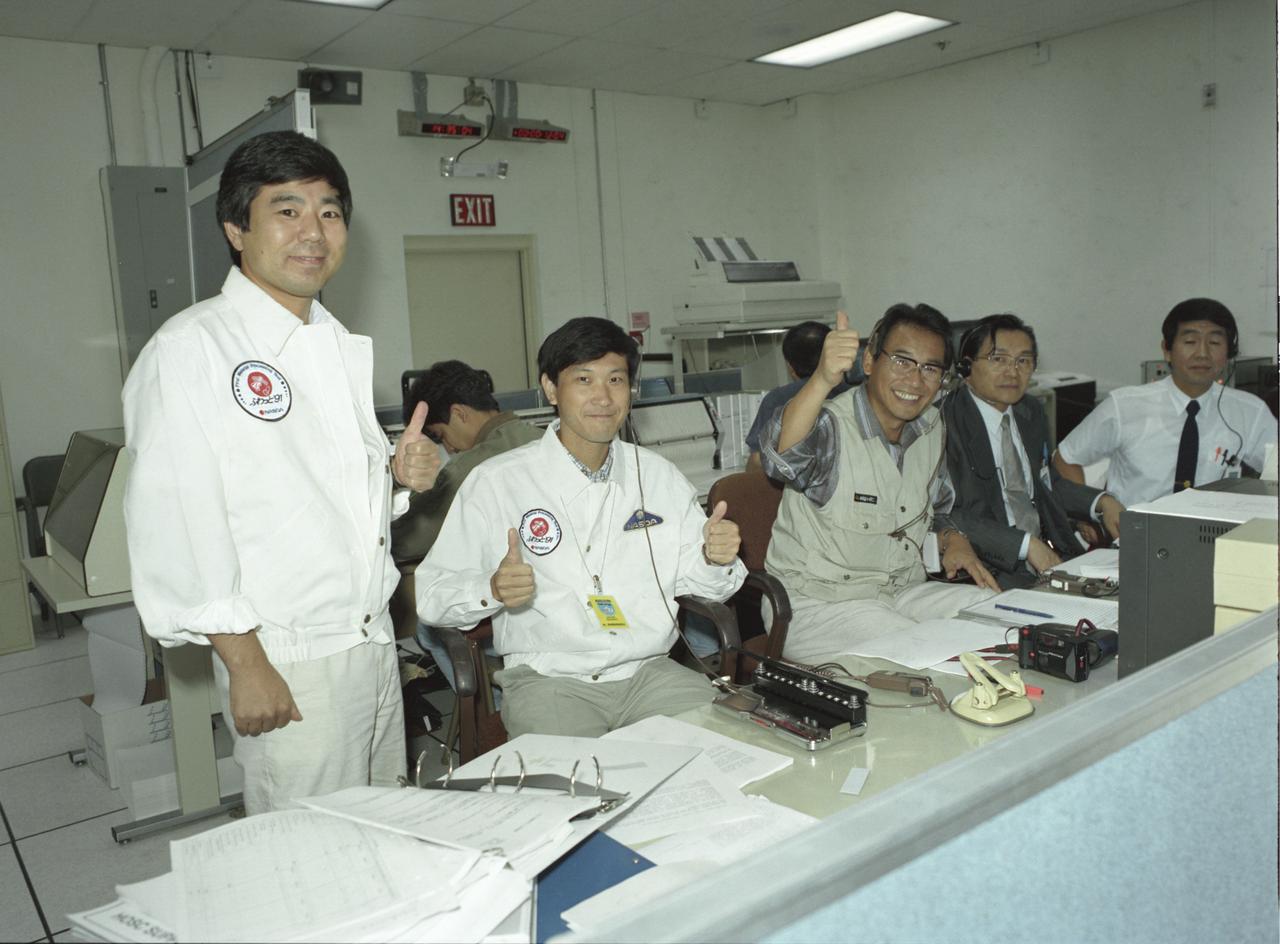
The group of Japanese researchers of the Spacelab-J (SL-J) were thumbs-up in the Payload Operations Control Center (POCC) at the Marshall Space Flight Center after the successful launch of Space Shuttle Orbiter Endeavour that carried their experiments. The SL-J was a joint mission of NASA and the National Space Development Agency of Japan (NASDA) utilizing a marned Spacelab module. The mission conducted microgravity investigations in materials and life sciences. Materials science investigations covered such fields as biotechnology, electronic materials, fluid dynamics and transport phenomena, glasses and ceramics, metals and alloys, and acceleration measurements. Life sciences included experiments on human health, cell separation and biology, developmental biology, animal and human physiology and behavior, space radiation, and biological rhythms. Test subjects included the crew, Japanese koi fish (carp), cultured animal and plant cells, chicken embryos, fruit flies, fungi and plant seeds, frogs, and frog eggs. The POCC was the air/ground communications channel between the astronauts and ground control teams during the Spacelab missions. The Spacelab science operations were a cooperative effort between the science astronaut crew in orbit and their colleagues in the POCC. Spacelab-J was launched aboard the Space Shuttle Orbiter Endeavour on September 12, 1992.
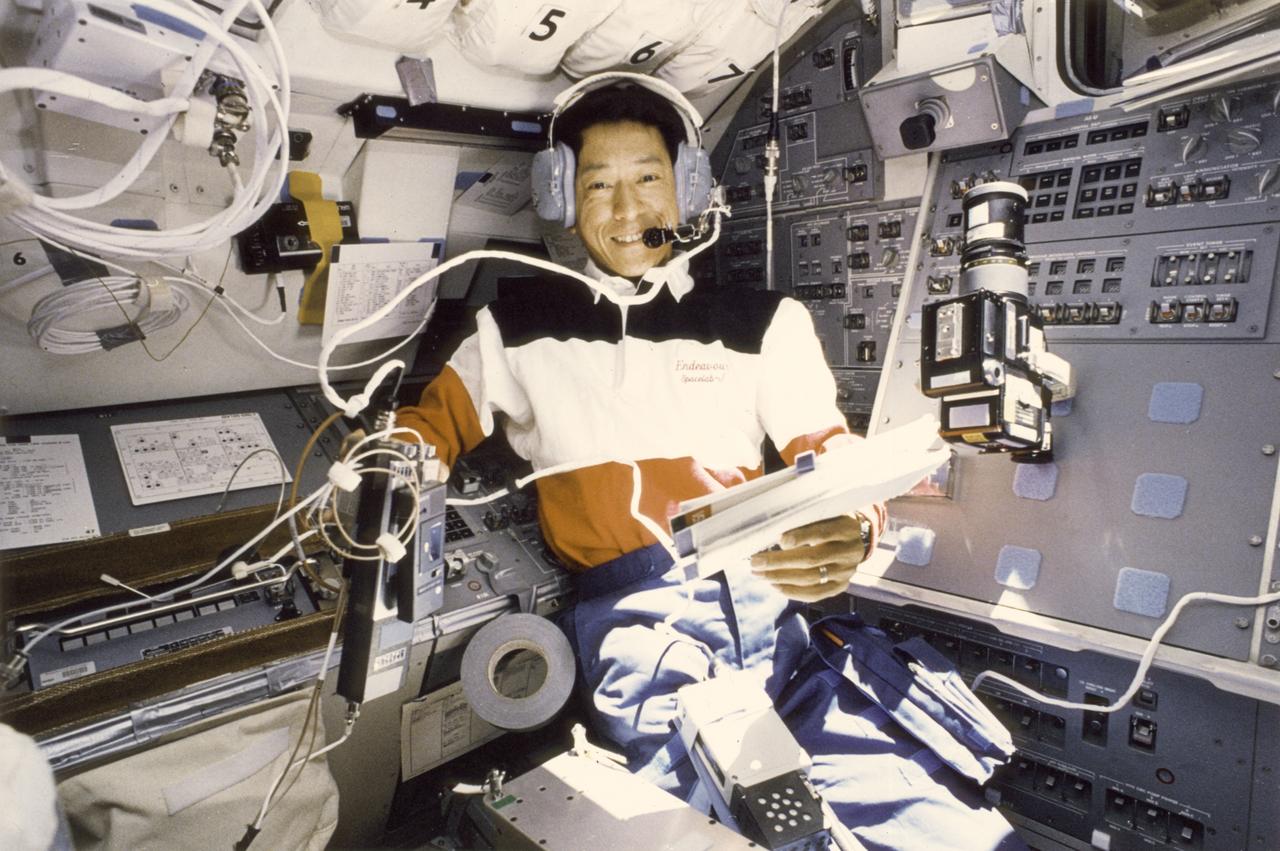
Japanese astronaut, Mamoru Mohri, talks to Japanese students from the aft flight deck of the Space Shuttle Orbiter Endeavour during the Spacelab-J (SL-J) mission. The SL-J mission was a joint venture between NASA and the National Space Development Agency of Japan (NASDA) utilizing a marned Spacelab module. The mission conducted 24 materials science and 20 life science experiments, of which 35 were sponsored by NASDA, 7 by NASA, and two collaborative efforts. Materials science investigations covered such fields as biotechnology, electronic materials, fluid dynamics and transport phenomena, glasses and ceramics, metals and alloys, and acceleration measurements. Life sciences included experiments on human health, cell separation and biology, developmental biology, animal and human physiology and behavior, space radiation, and biological rhythms. Test subjects included the crew, Japanese koi fish (carp), cultured animal and plant cells, chicken embryos, fruit flies, fungi and plant seeds, and frogs and frog eggs. Spacelab-J was launched aboard the Space Shuttle Orbiter Endeavour on September 12, 1992.
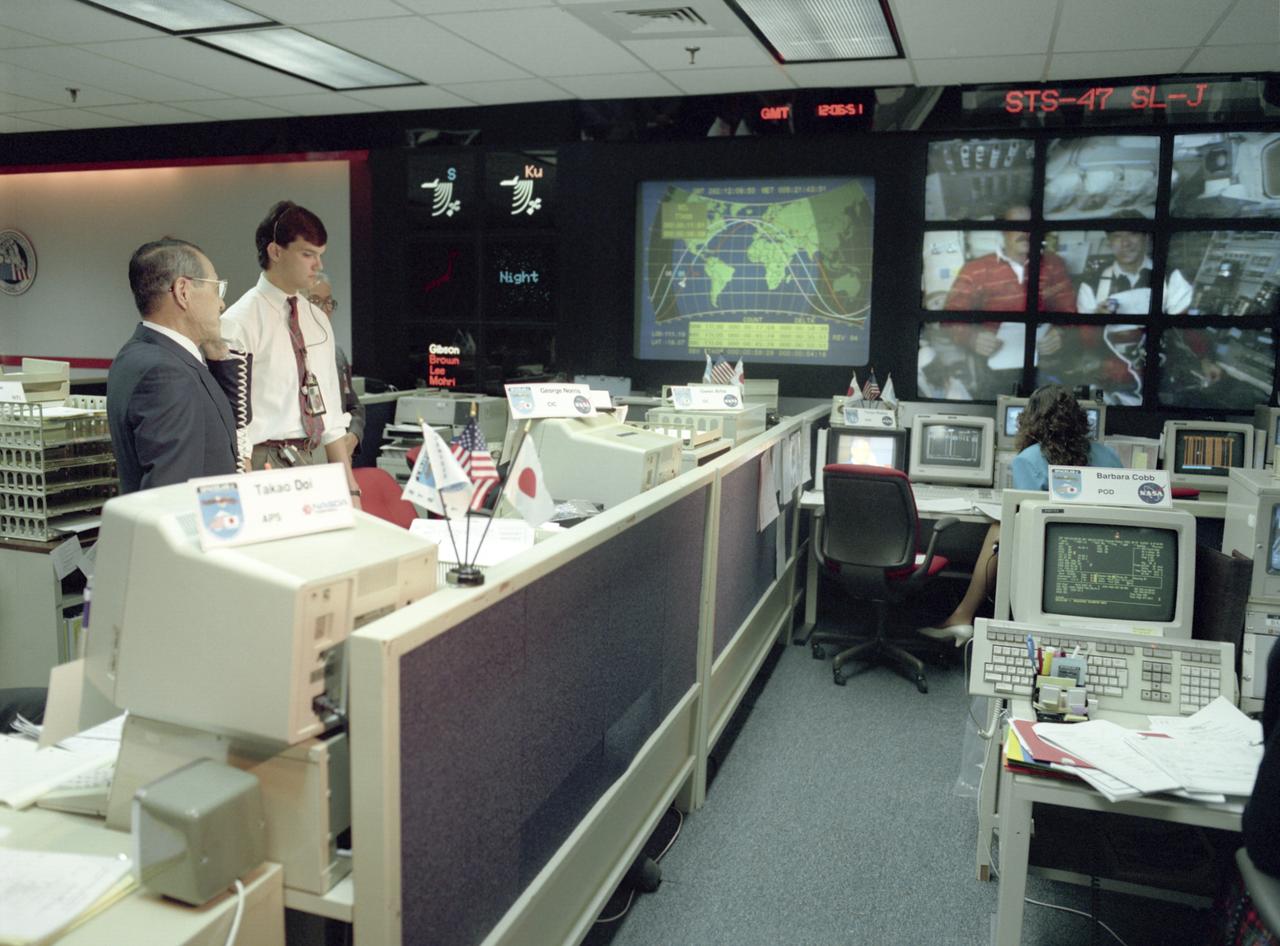
The science laboratory, Spacelab-J (SL-J), flown aboard the STS-47 flight was a joint venture between NASA and the National Space Development Agency of Japan (NASDA) utilizing a manned Spacelab module. The mission conducted 24 materials science and 20 life science experiments, of which 35 were sponsored by NASDA, 7 by NASA, and two collaborative efforts. Materials science investigations covered such fields as biotechnology, electronic materials, fluid dynamics and transport phenomena, glasses and ceramics, metals and alloys, and acceleration measurements. Life sciences included experiments on human health, cell separation and biology, developmental biology, animal and human physiology and behavior, space radiation, and biological rhythms. Test subjects included the crew, Japanese koi fish (carp), cultured animal and plant cells, chicken embryos, fruit flies, fungi and plant seeds, and frogs and frog eggs. From the Huntsville Operations Support Center (HOSC) Spacelab Payload Operations Control Center (SL POCC), NASDA President, Mr. Yamano, speaks to Payload Specialist Mamoru Mohri, a Japanese crew member aboard the STS-47 Spacelab J mission.
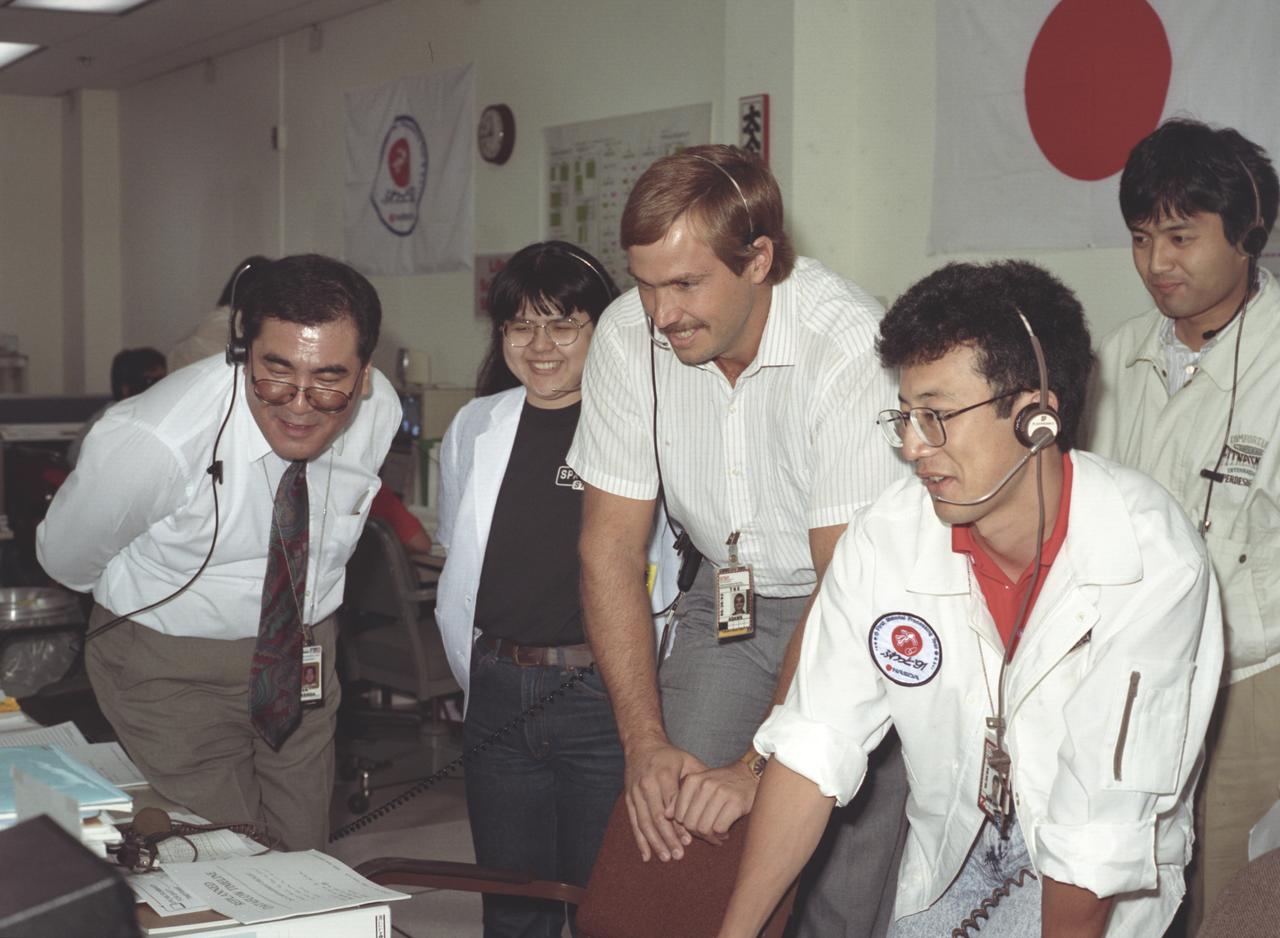
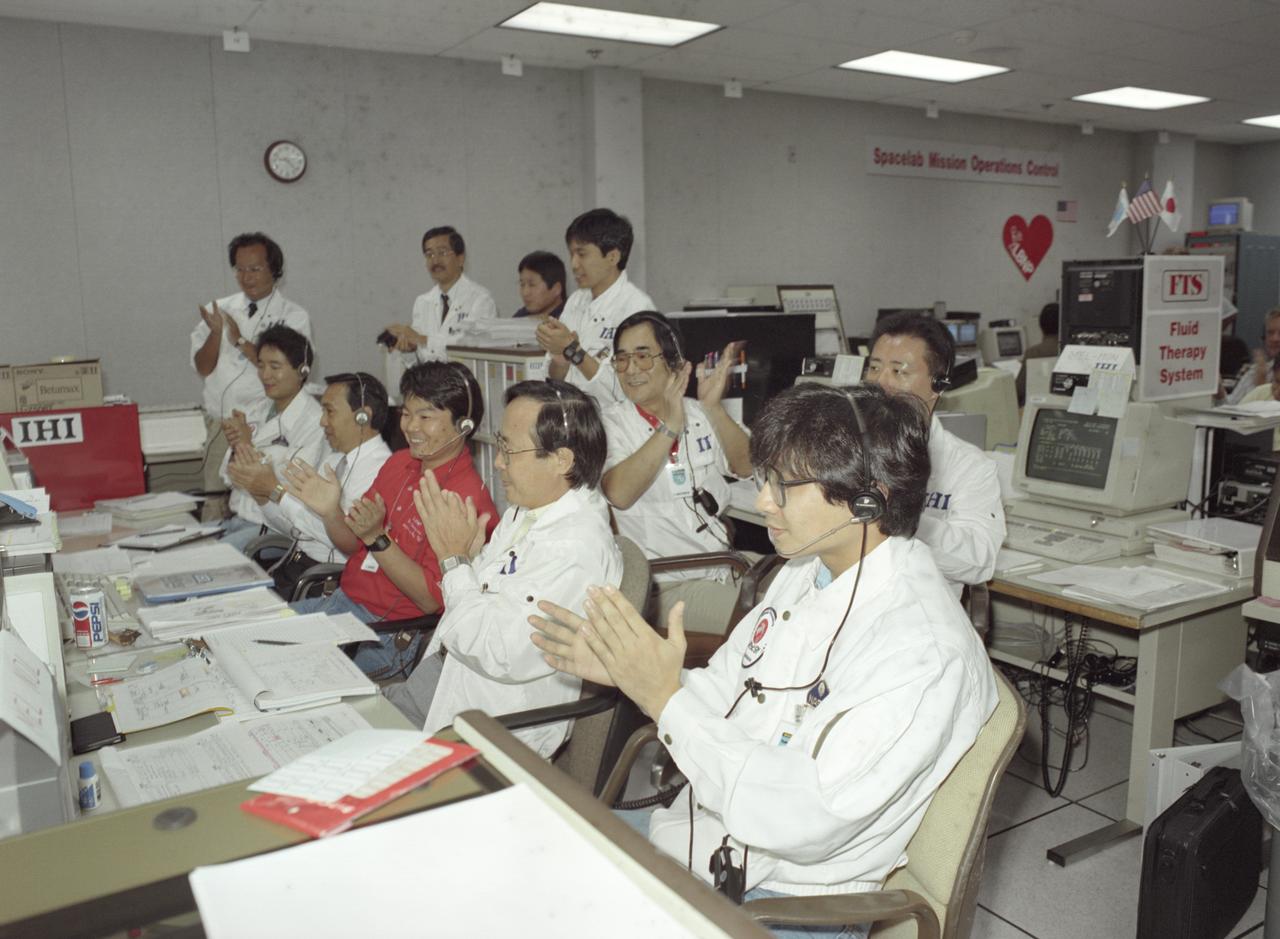
The science laboratory, Spacelab-J (SL-J), flown aboard the STS-47 flight was a joint venture between NASA and the National Space Development Agency of Japan (NASDA) utilizing a manned Spacelab module. The mission conducted 24 materials science and 20 life science experiments, of which 35 were sponsored by NASDA, 7 by NASA, and two collaborative efforts. Materials science investigations covered such fields as biotechnology, electronic materials, fluid dynamics and transport phenomena, glasses and ceramics, metals and alloys, and acceleration measurements. Life sciences included experiments on human health, cell separation and biology, developmental biology, animal and human physiology and behavior, space radiation, and biological rhythms. Test subjects included the crew, Japanese koi fish (carp), cultured animal and plant cells, chicken embryos, fruit flies, fungi and plant seeds, and frogs and frog eggs. Featured together in joint ground activities during the SL-J mission are NASA/NASDA personnel at the Huntsville Operations Support Center (HOSC) Spacelab Payload Operations Control Center (SL POCC) at Marshall Space Flight Center (MSFC).
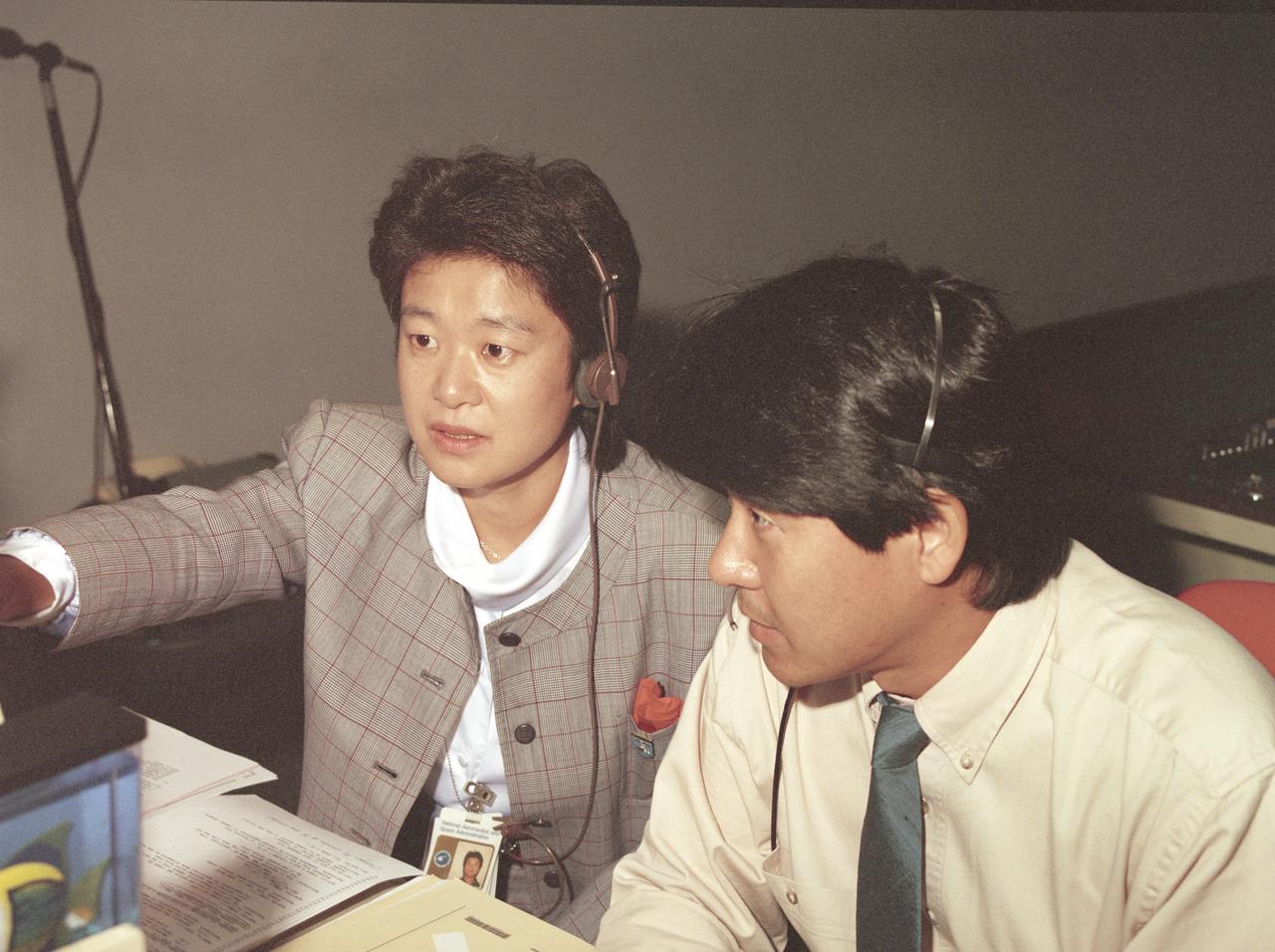
The science laboratory, Spacelab-J (SL-J), flown aboard the STS-47 flight was a joint venture between NASA and the National Space Development Agency of Japan (NASDA) utilizing a manned Spacelab module. The mission conducted 24 materials science and 20 life science experiments, of which 35 were sponsored by NASDA, 7 by NASA, and two collaborative efforts. Materials science investigations covered such fields as biotechnology, electronic materials, fluid dynamics and transport phenomena, glasses and ceramics, metals and alloys, and acceleration measurements. Life sciences included experiments on human health, cell separation and biology, developmental biology, animal and human physiology and behavior, space radiation, and biological rhythms. Test subjects included the crew, Japanese koi fish (carp), cultured animal and plant cells, chicken embryos, fruit flies, fungi and plant seeds, and frogs and frog eggs. Pictured in the Huntsville Operations Support Center (HOSC) Spacelab Payload Operations Control Center (SL POCC) of Marshall Space Flight Center (MSFC) are NASDA alternate payload specialists Dr. Doi and Dr. Mukai.
The science laboratory, Spacelab-J (SL-J), flown aboard the STS-47 flight was a joint venture between NASA and the National Space Development Agency of Japan (NASDA) utilizing a manned Spacelab module. The mission conducted 24 materials science and 20 life science experiments, of which 35 were sponsored by NASDA, 7 by NASA, and two collaborative efforts. Materials science investigations covered such fields as biotechnology, electronic materials, fluid dynamics and transport phenomena, glasses and ceramics, metals and alloys, and acceleration measurements. Life sciences included experiments on human health, cell separation and biology, developmental biology, animal and human physiology and behavior, space radiation, and biological rhythms. Test subjects included the crew, Japanese koi fish (carp), cultured animal and plant cells, chicken embryos, fruit flies, fungi and plant seeds, and frogs and frog eggs. Featured together in the Science Operation Area (SOA) are payload specialists’ first Materials Processing Test during NASA/NASDA joint ground activities at the Huntsville Operations Support Center (HOSC) Spacelab Payload Operations Control Center (SL POCC) at Marshall Space Flight Center (MSFC).
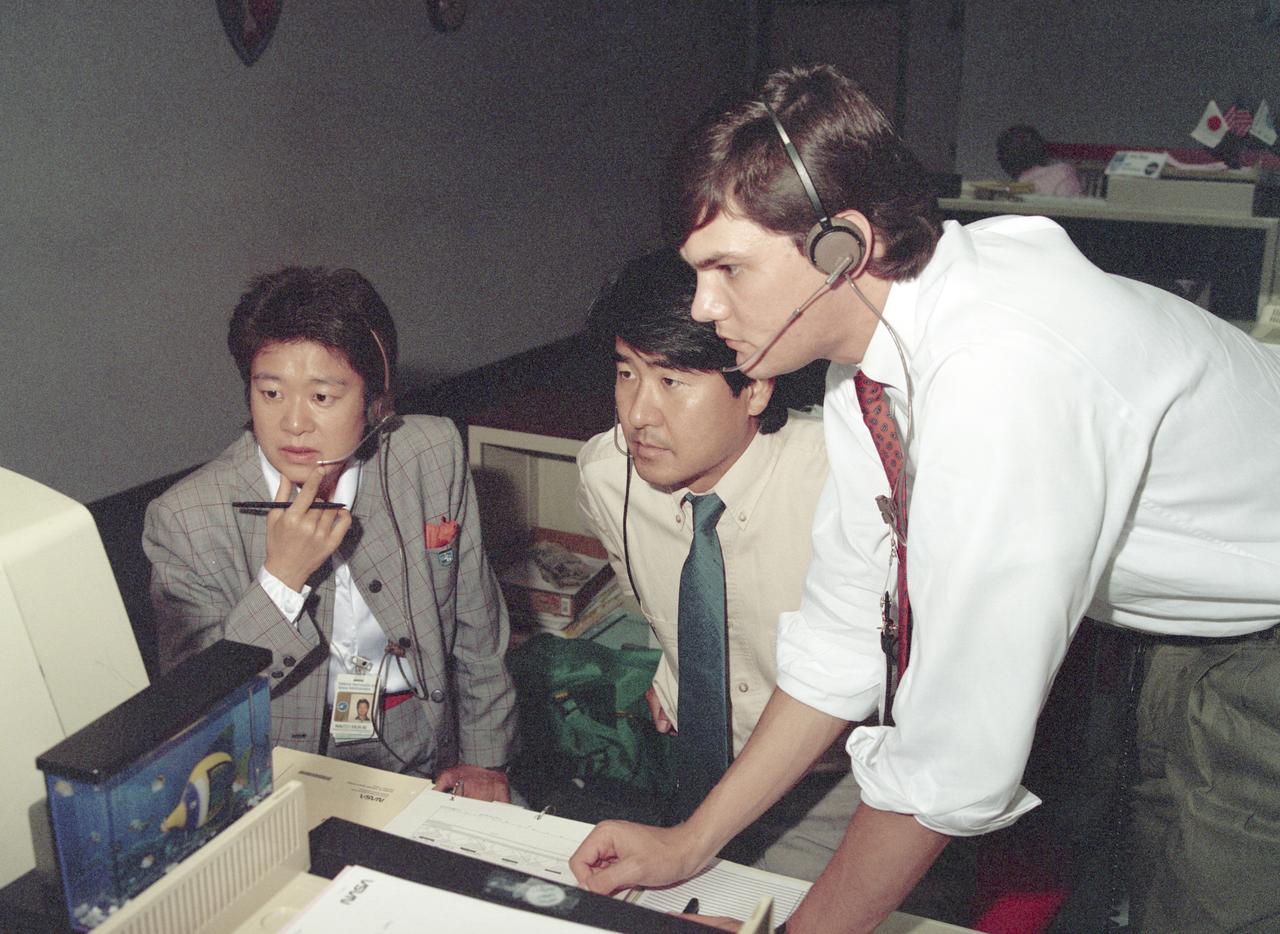
The science laboratory, Spacelab-J (SL-J), flown aboard the STS-47 flight was a joint venture between NASA and the National Space Development Agency of Japan (NASDA) utilizing a manned Spacelab module. The mission conducted 24 materials science and 20 life science experiments, of which 35 were sponsored by NASDA, 7 by NASA, and two collaborative efforts. Materials science investigations covered such fields as biotechnology, electronic materials, fluid dynamics and transport phenomena, glasses and ceramics, metals and alloys, and acceleration measurements. Life sciences included experiments on human health, cell separation and biology, developmental biology, animal and human physiology and behavior, space radiation, and biological rhythms. Test subjects included the crew, Japanese koi fish (carp), cultured animal and plant cells, chicken embryos, fruit flies, fungi and plant seeds, and frogs and frog eggs. Pictured along with George Norris in the Huntsville Operations Support Center (HOSC) Spacelab Payload Operations Control Center (SL POCC) at Marshall Space Flight Center (MSFC) are NASDA alternate payload specialists Dr. Doi and Dr. Mukai.
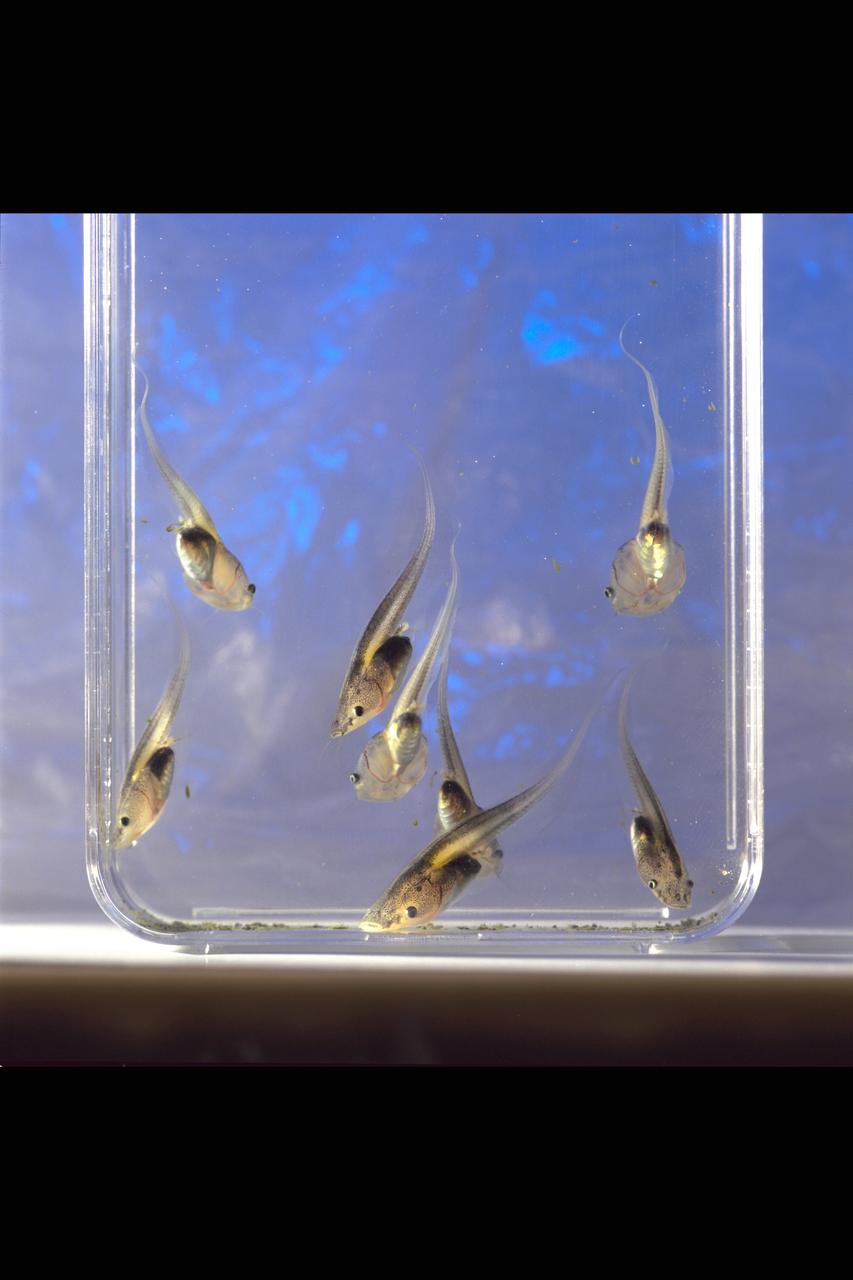
STS-47 Spacelab-J FFE (Frog Embryology Experiment) post flight data - flight frogs from SL-J, ground control tadpoles
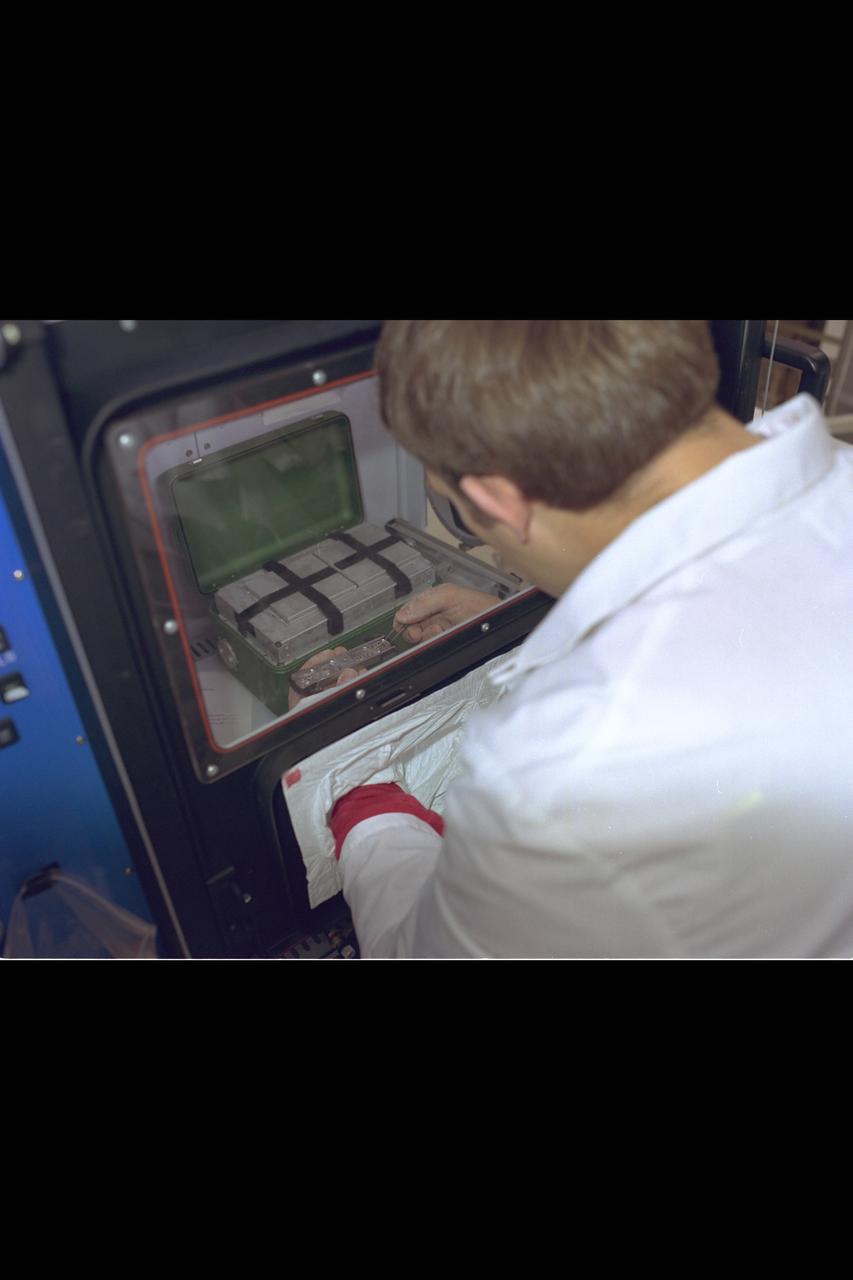
Frog Embryology Experiemnt (FEE) SL-J Crew Training & EVT at Ames
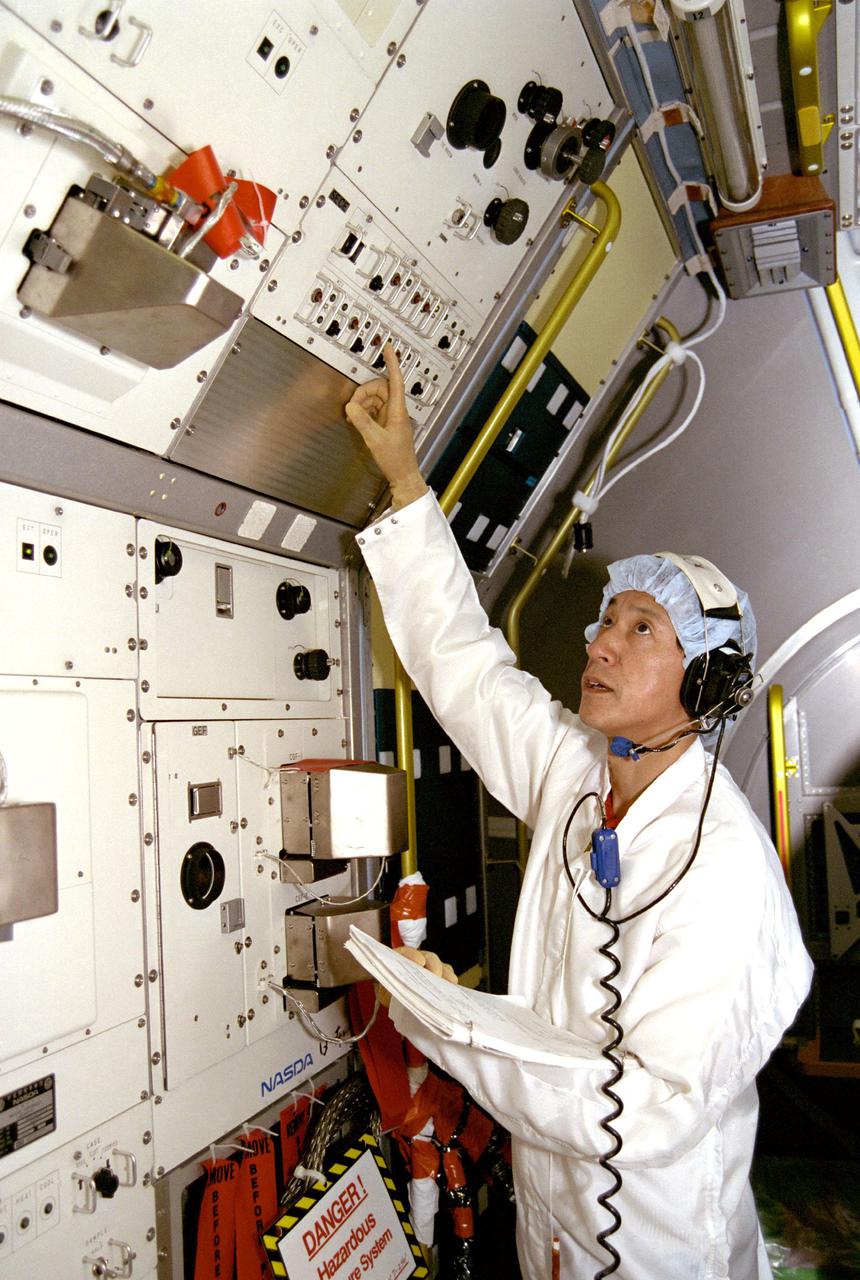
KENNEDY SPACE CENTER, FLA. -- In the Operations and Checkout Building high bay, STS-47 Payload Specialist Dr. Mamoru Mohri is participating in a Mission Sequence Test of the Spacelab-J (SL-J). Also on hand for the test of planned on-orbit activities were Payload Commander Mark Lee and other members of the payload team. Spacelab-J is a joint effort between the Japanese space agency NASDA and NASA, and features an array of 44 life science and materials processing investigations. Dr. Mohri, a payload specialist, will become the first Japanese to fly on the Shuttle.

S73-18667 (January 1973) --- Astronaut Paul J. Weitz, pilot for the Skylab 2 first manned mission, is suited up for Skylab training activity in the mission simulation and training facility at the Manned Spacecraft Center. Photo credit: NASA
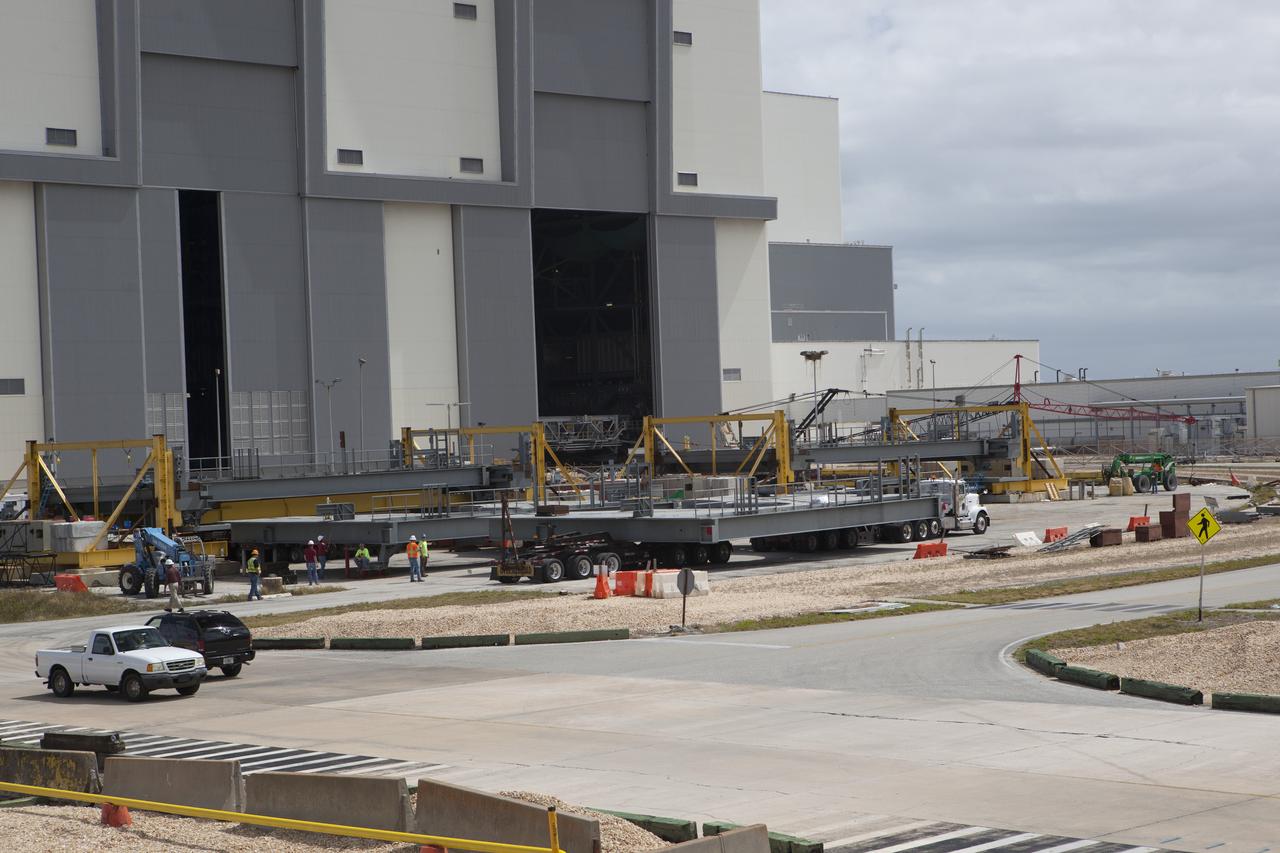
The first half of the F-level work platforms for NASA’s Space Launch System rocket has arrived at the Vehicle Assembly Building at the agency’s Kennedy Space Center in Florida. The Ground Systems Development and Operations Program is overseeing upgrades and modifications to High Bay 3 to support processing of the SLS and Orion spacecraft. A total of 10 levels of new platforms, 20 platform halves altogether, will surround the SLS rocket and Orion spacecraft and provide access for testing and processing. The first three sets of platforms, H, J and K, were delivered to the center last year.
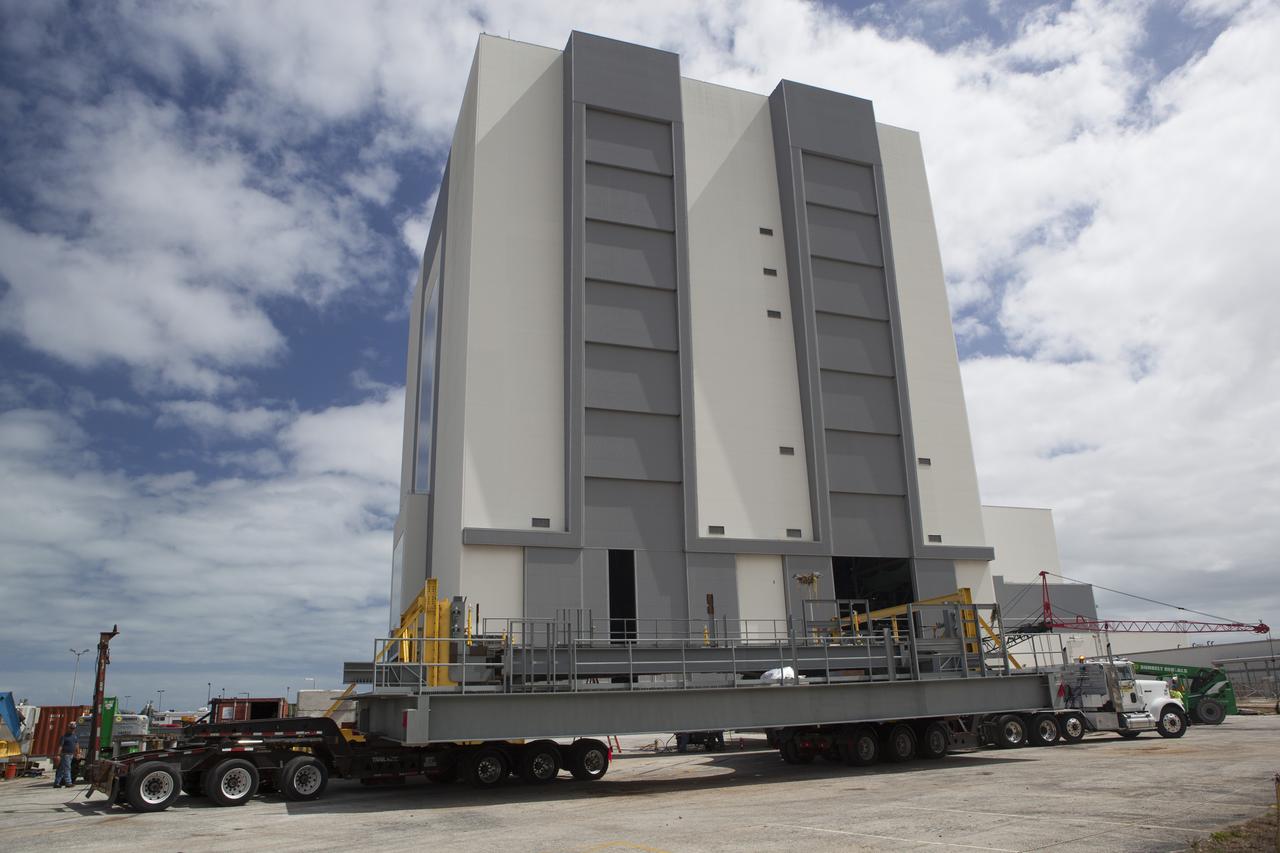
The first half of the F-level work platforms for NASA’s Space Launch System rocket has arrived at the Vehicle Assembly Building at the agency’s Kennedy Space Center in Florida. The Ground Systems Development and Operations Program is overseeing upgrades and modifications to High Bay 3 to support processing of the SLS and Orion spacecraft. A total of 10 levels of new platforms, 20 platform halves altogether, will surround the SLS rocket and Orion spacecraft and provide access for testing and processing. The first three sets of platforms, H, J and K, were delivered to the center last year.
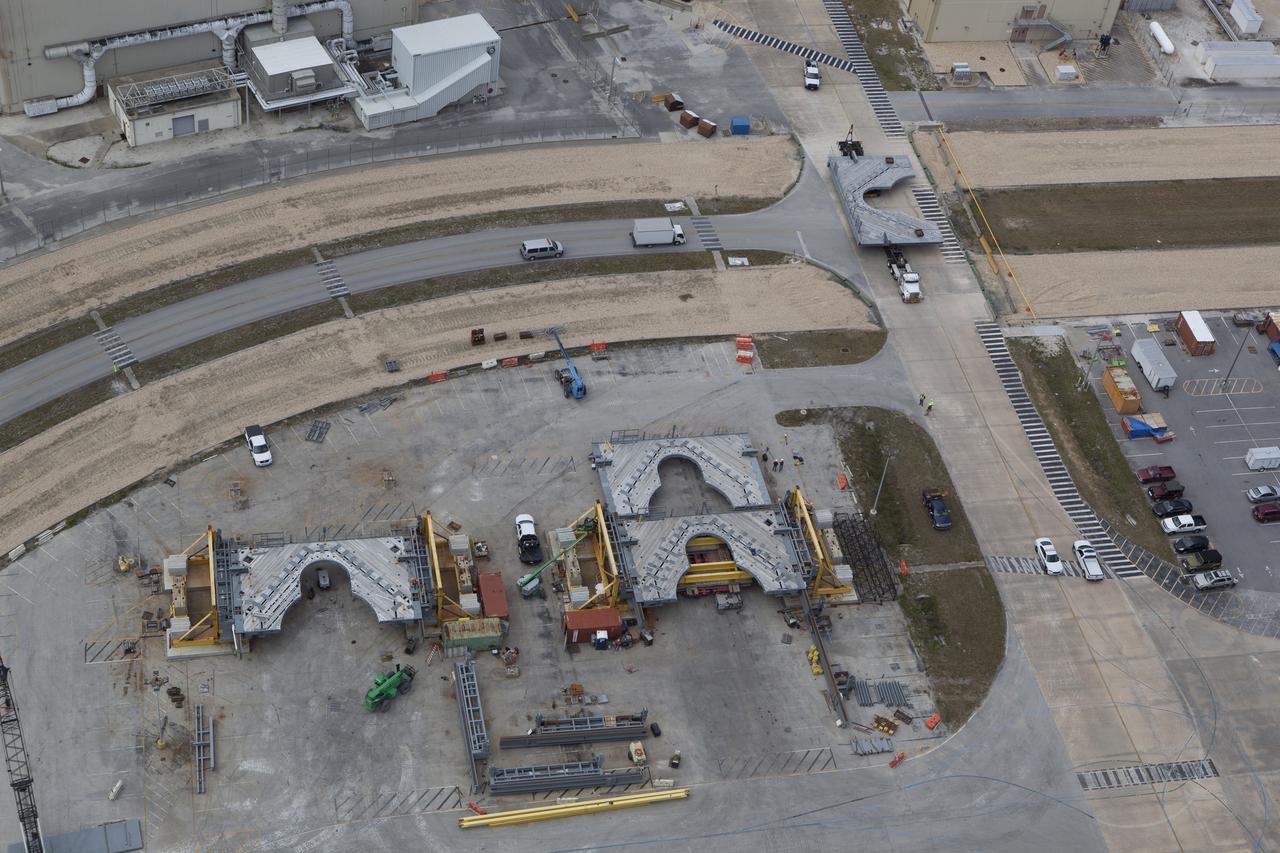
At right, the first half of the F-level work platforms for NASA’s Space Launch System rocket has arrived at the Vehicle Assembly Building at the agency’s Kennedy Space Center in Florida. At left, several other work platforms are being readied for future installation in VAB High Bay 3. The Ground Systems Development and Operations Program is overseeing upgrades and modifications to High Bay 3 to support processing of the SLS and Orion spacecraft. A total of 10 levels of new platforms, 20 platform halves altogether, will surround the SLS rocket and Orion spacecraft and provide access for testing and processing. The first three sets of platforms, H, J and K, were delivered to the center last year.
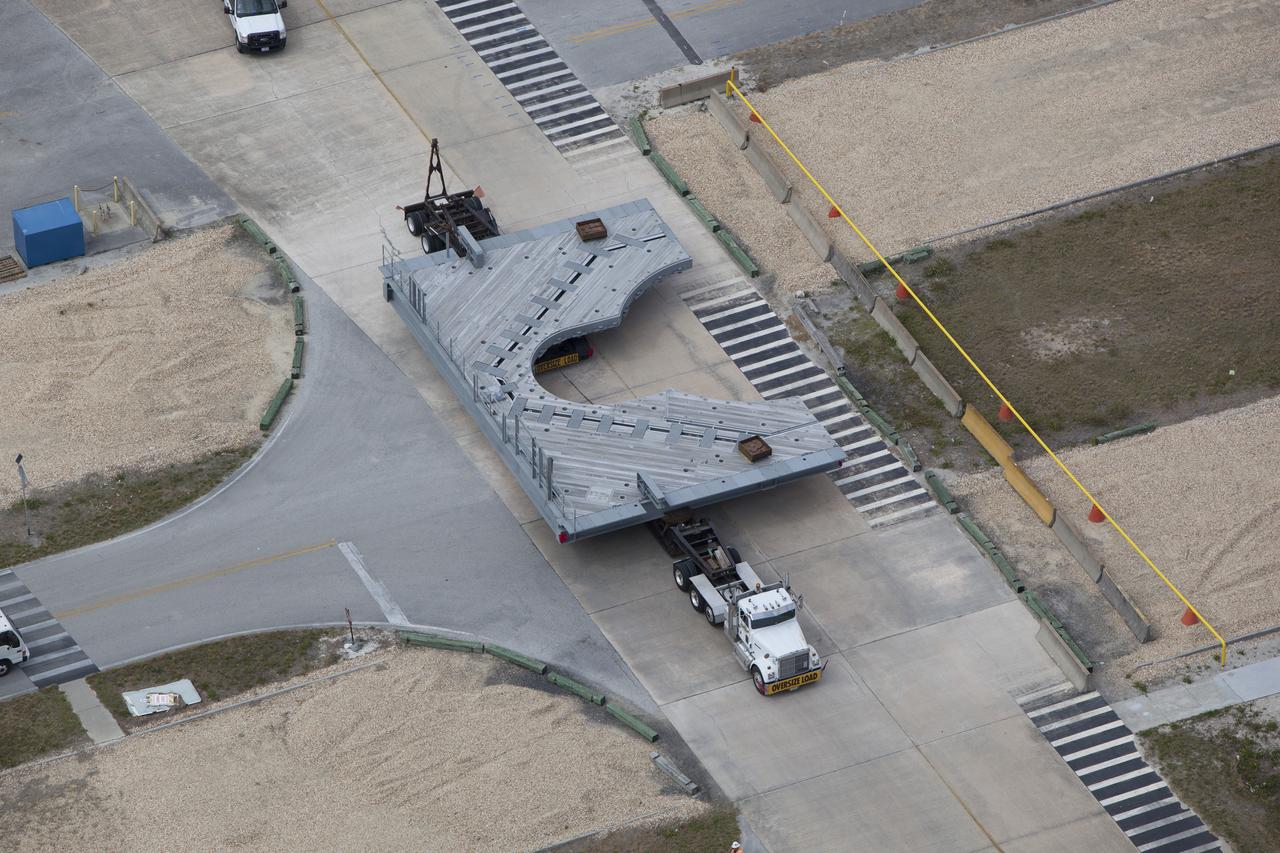
The first half of the F-level work platforms for NASA’s Space Launch System rocket has arrived at the Vehicle Assembly Building at the agency’s Kennedy Space Center in Florida. The Ground Systems Development and Operations Program is overseeing upgrades and modifications to High Bay 3 to support processing of the SLS and Orion spacecraft. A total of 10 levels of new platforms, 20 platform halves altogether, will surround the SLS rocket and Orion spacecraft and provide access for testing and processing. The first three sets of platforms, H, J and K, were delivered to the center last year.
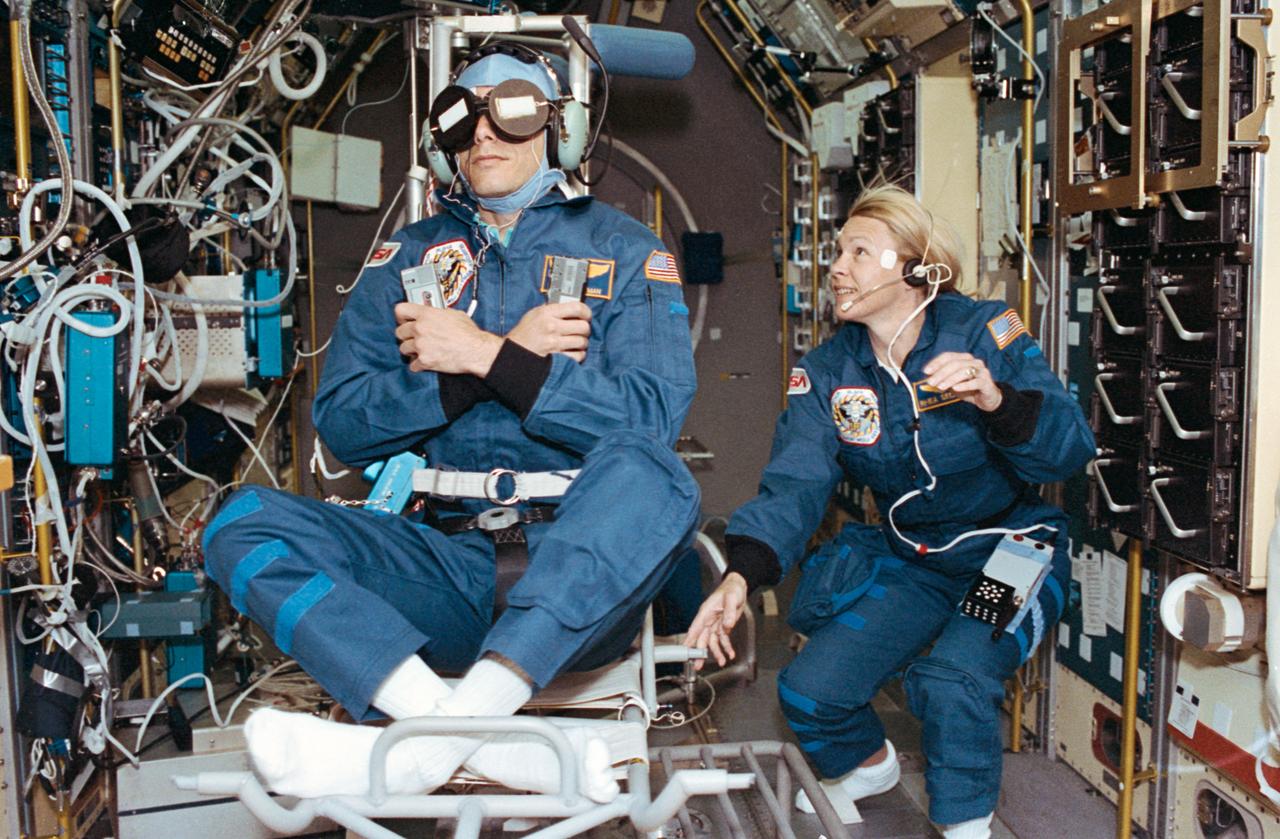
STS058-202-002 (18 Oct.-1 Nov. 1993) --- Astronaut Rhea Seddon, STS-58 payload commander, spins the Spacelab Life Sciences (SLS-2) rotating chair as payload specialist Martin J. Fettman serves as test subject. The two joined five NASA astronauts for fourteen days of medical research aboard the Earth-orbiting space shuttle Columbia. Photo credit: NASA
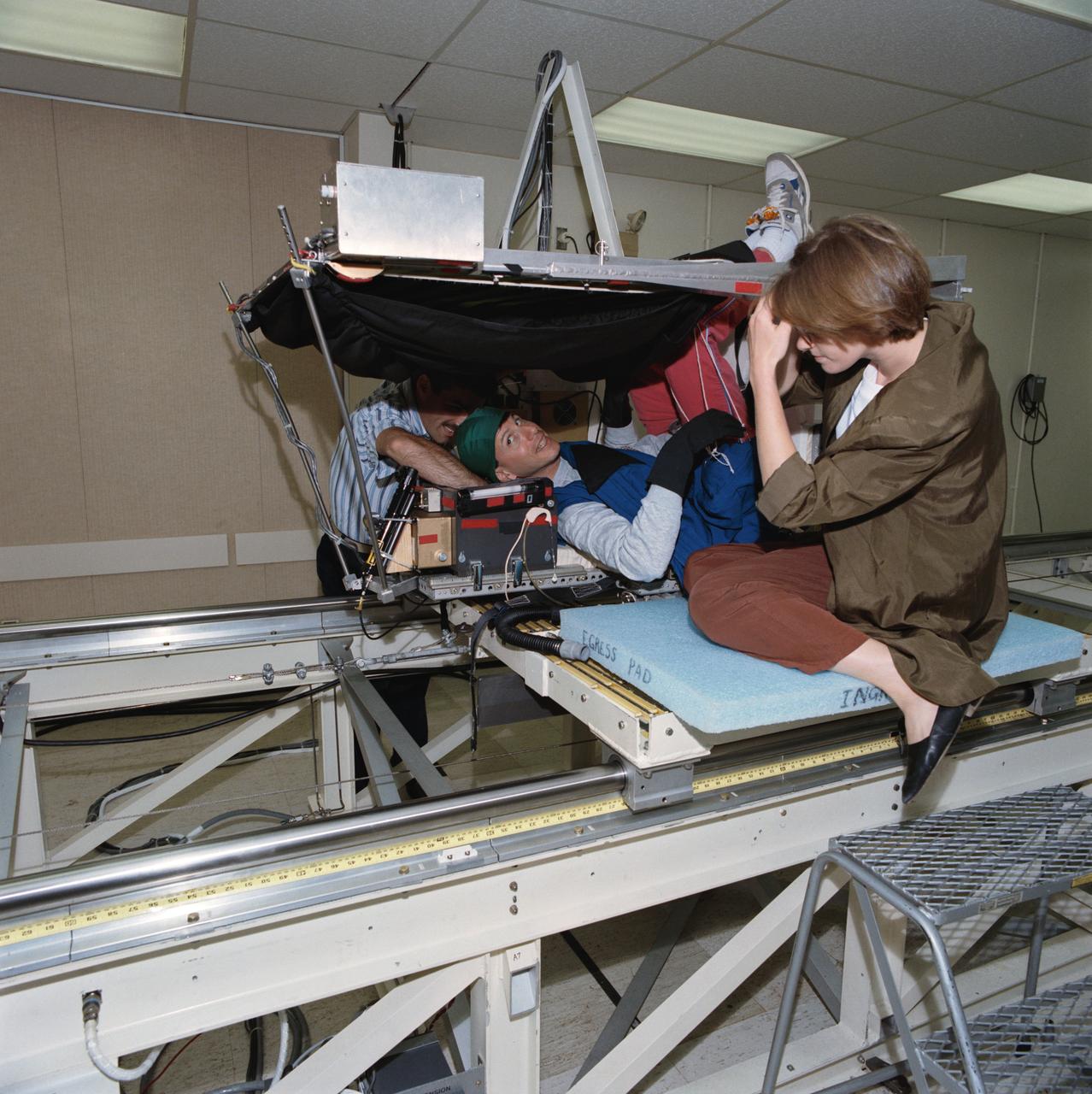
S93-45314 (29 Sept 1993) --- Payload specialist Martin J. Fettman, in an oscillating sled device, participates in a data collection project for neurovestibular functions. The seven Spacelab Life Sciences (SLS-2) crewmembers devoted a full day to miscellaneous biomedical data collection in preparation for next month's two week mission aboard Columbia.
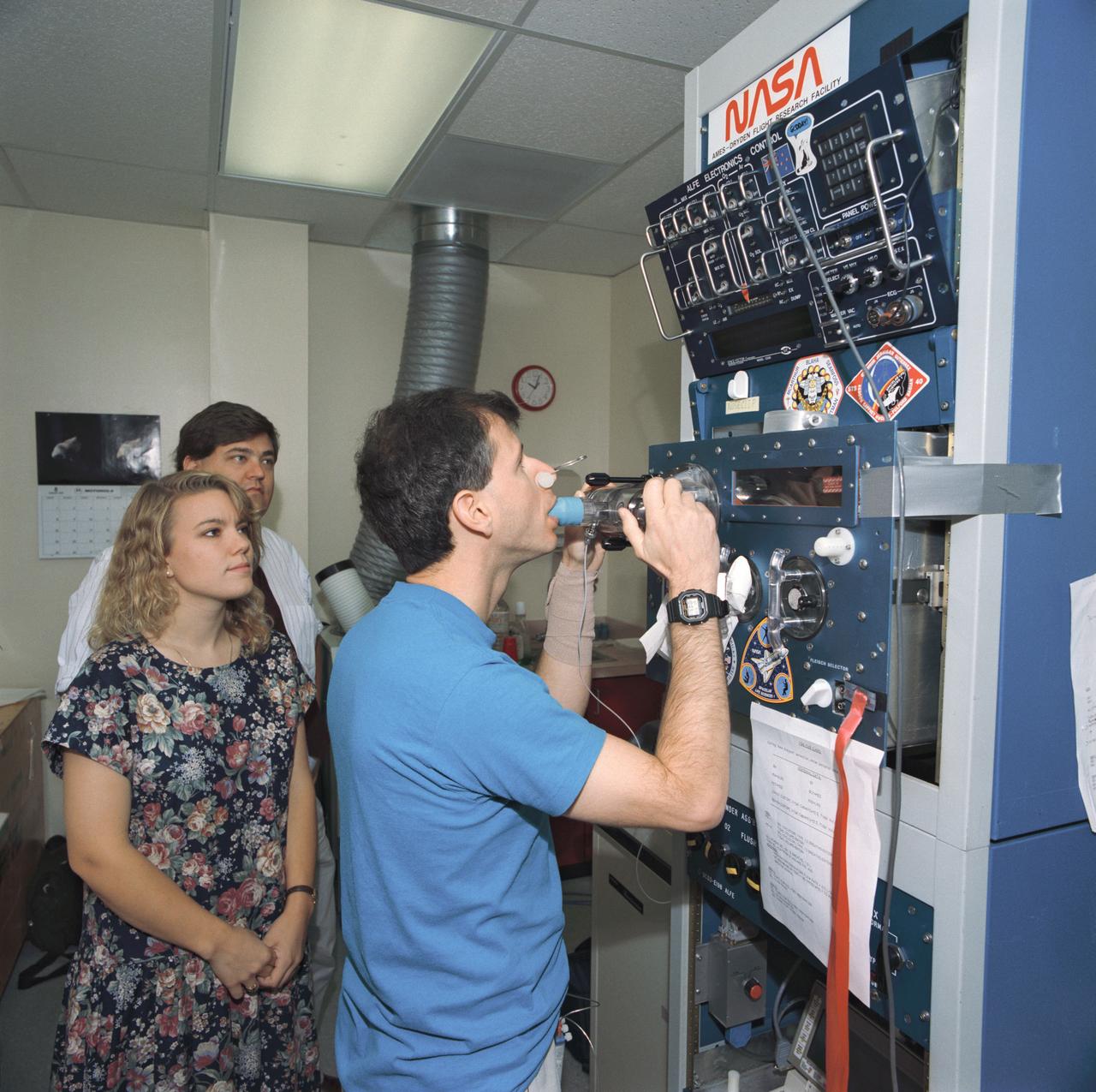
S93-45369 (29 Sept 1993) --- Training on the pre-breathing assembly, Martin J. (Marty) Fettman, DVM, inhales a predetermined gas composition. A gas analyzer mass spectrometer determines the composition of the gases he exhales. The re-breathing assembly and gas analyzer system are part of an investigation that explores how lung function is altered in space flight. The payload specialist for the Spacelab Life Sciences (SLS-2) mission was participating with six NASA astronauts, also assigned to STS-58, for data collection and training.
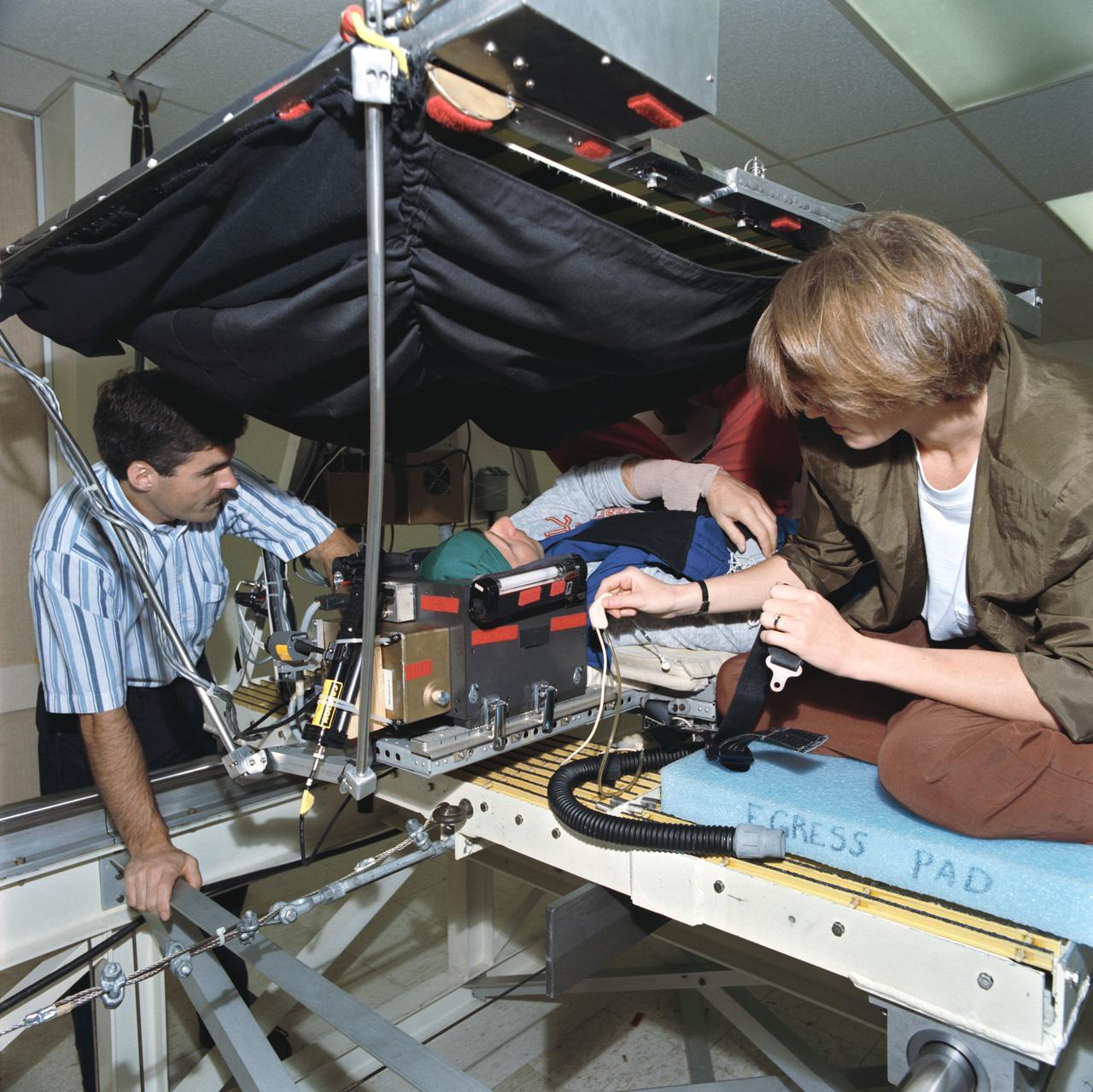
S93-45363 (29 Sept 1993) --- Payload specialist Martin J. Fettman, in an oscillating sled device, participates in a data collection project for neurovestibular functions. The seven Spacelab Life Sciences (SLS-2) crewmembers devoted a full day to miscellaneous biomedical data collection in preparation for next month's two week mission aboard Columbia.
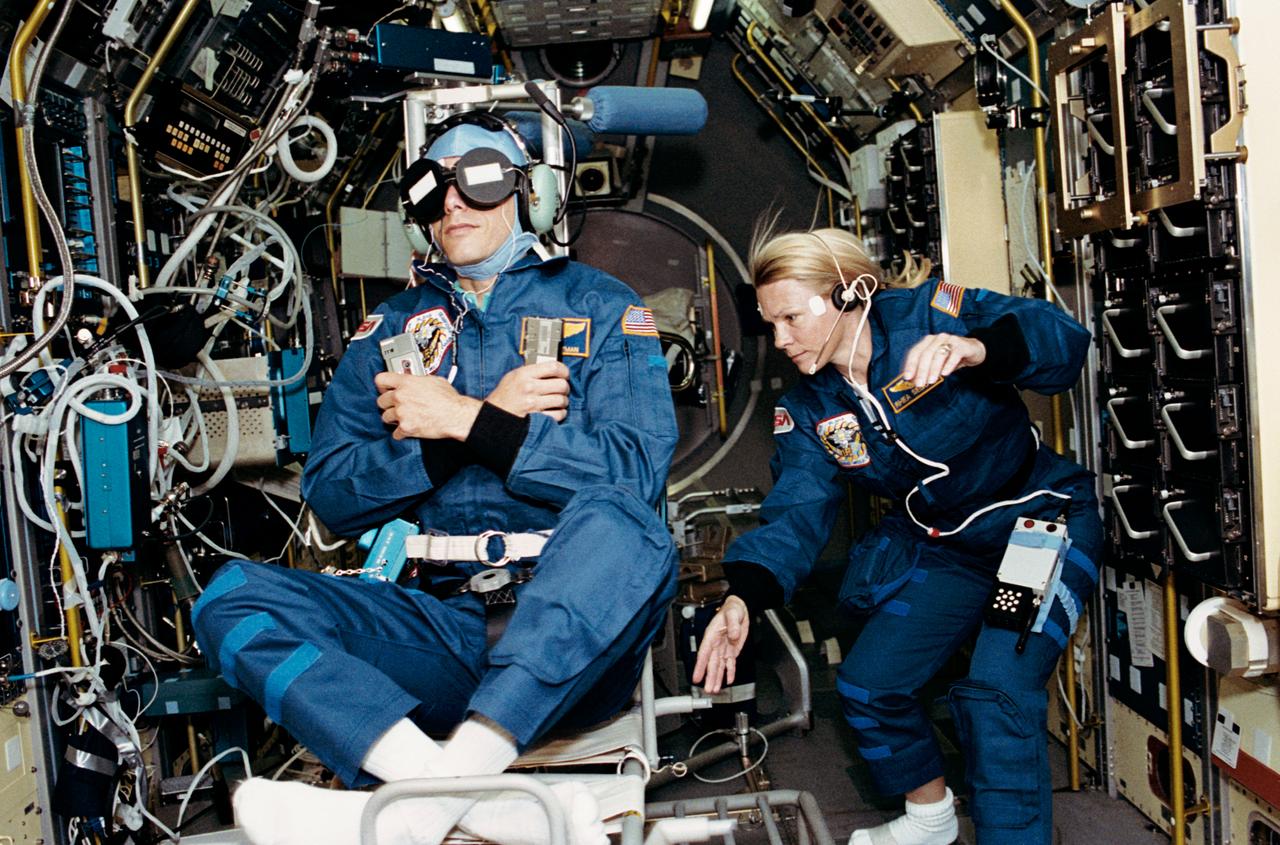
STS058-202-001 (18 Oct.-1 Nov. 1993) --- Astronaut Rhea Seddon, payload commander, spins the Spacelab Life Sciences (SLS-2) rotating chair as payload specialist Martin J. Fettman serves as test subject. The two joined five NASA astronauts for fourteen days of medical research aboard the Earth-orbiting space shuttle Columbia. Photo credit: NASA
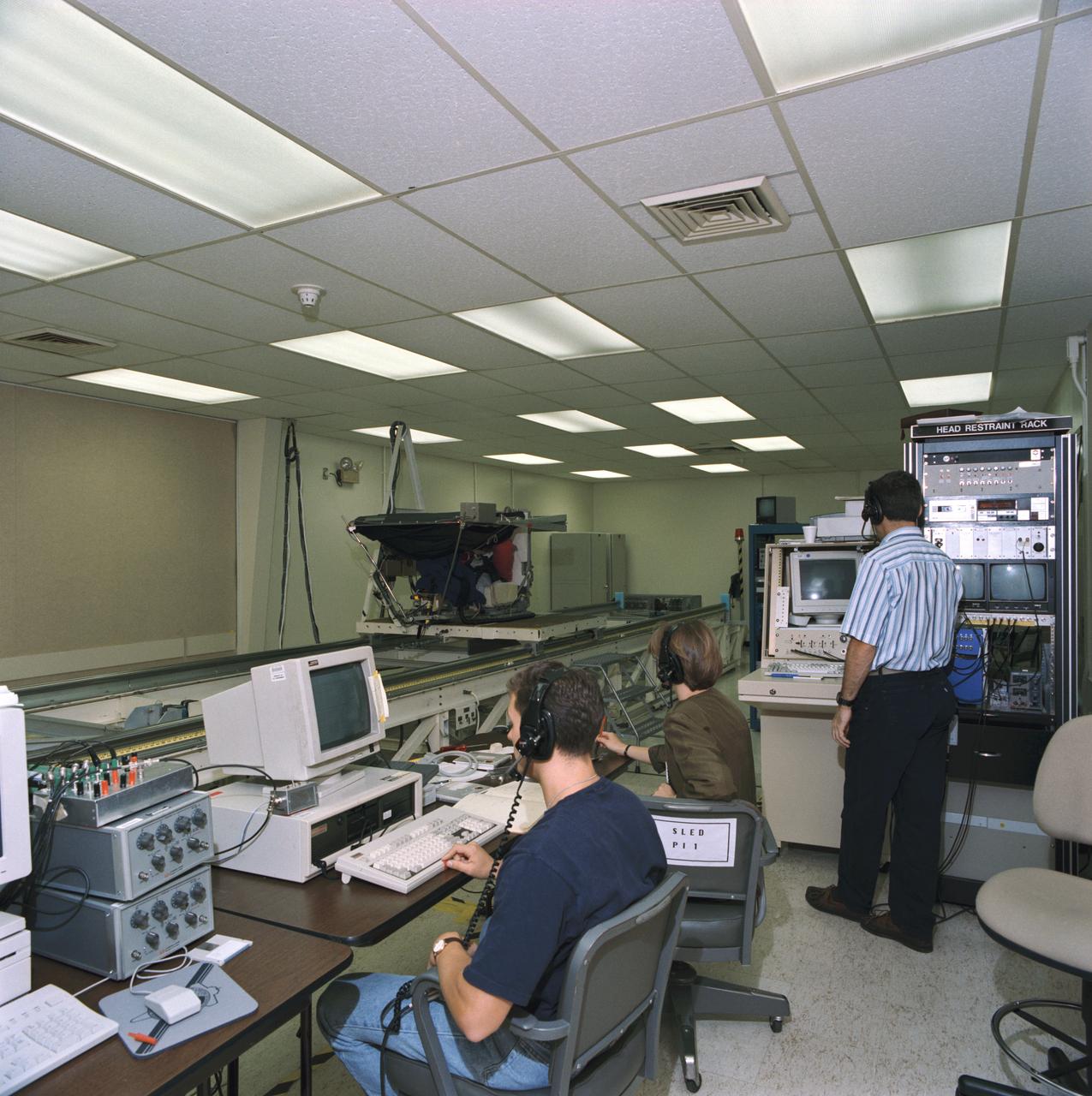
S93-45365 (29 Sept 1993) --- Payload specialist Martin J. Fettman, in an oscillating sled device in upper left, participates in a data collection project for neurovestibular functions. His responses to the sled's movements are recorded by a team of monitors in the foreground. The seven Spacelab Life Sciences (SLS-2) crew members devoted a full day to miscellaneous biomedical data collection in preparation for next month's two week mission aboard Columbia.
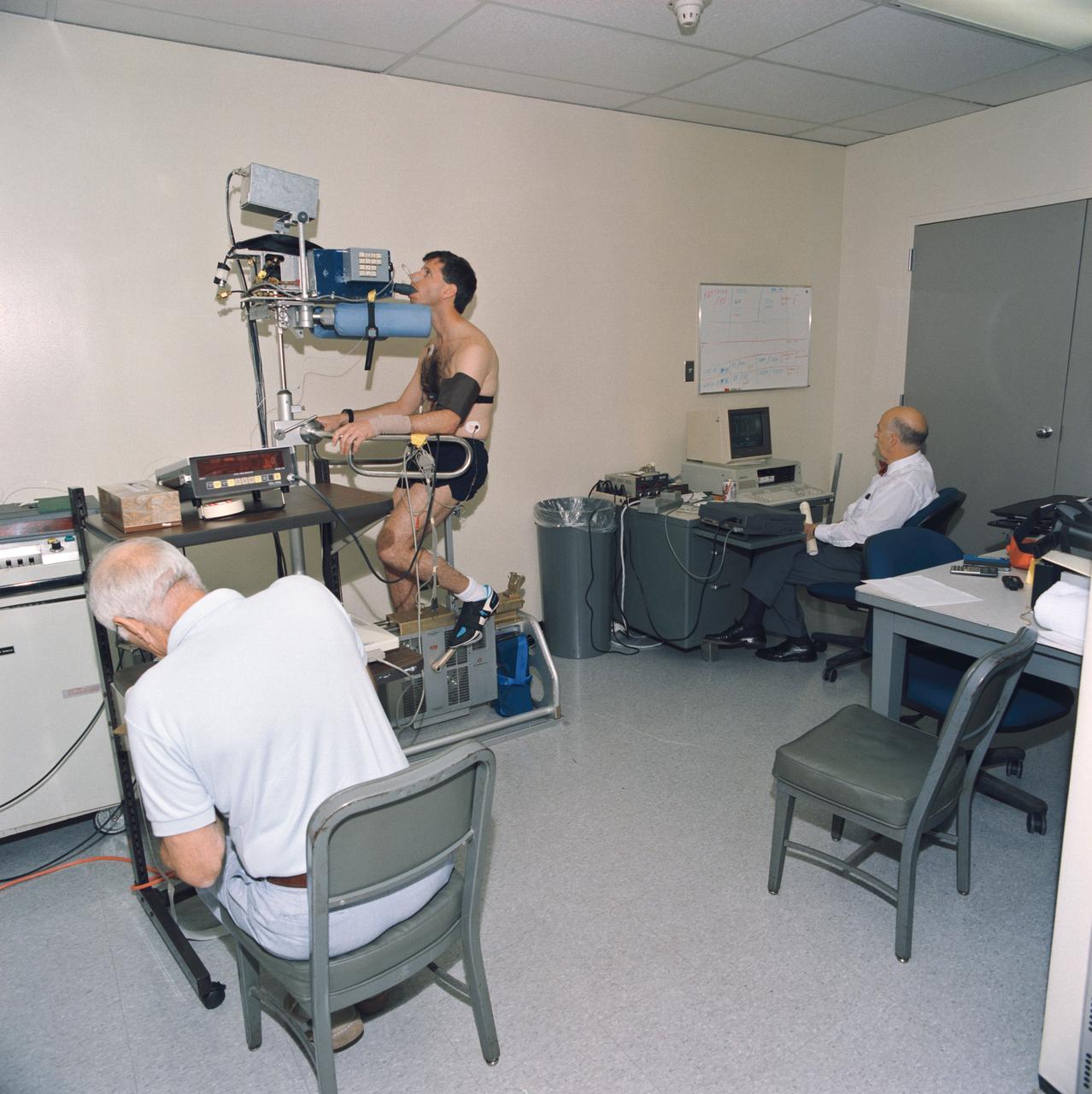
S93-45371 (29 Sept 1993) --- Astride the bicycle ergometer, Martin J. (Marty) Fettman, DVM, breathes quietly into the cardiovascular re-breathing unit during the resting phase of an experiment. The payload specialist for the Spacelab Life Sciences (SLS-2) mission was participating with six NASA astronauts, also assigned to STS-58, for data collection and training.
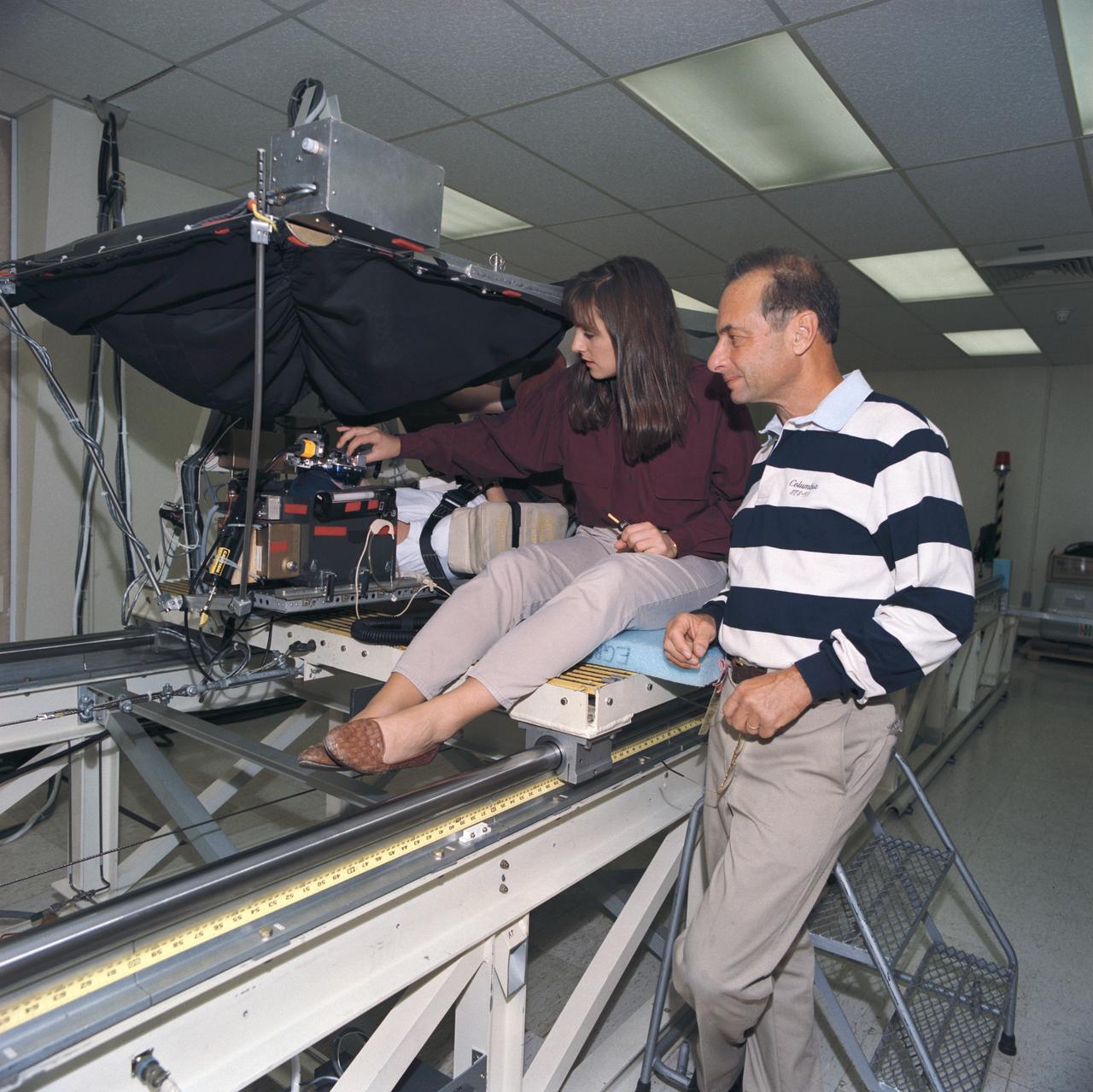
S93-45368 (29 Sept 1993) --- Payload specialist Martin J. Fettman (face obscured), in an oscillating sled device, participates in a data collection project for neurovestibular functions. Assisting the test are Dr. Laurence Young, alternate payload specialist, and an unidentified MIT student. The seven Spacelab Life Sciences (SLS-2) crew members devoted a full day to miscellaneous biomedical data collection in preparation for next month's two week mission aboard Columbia.
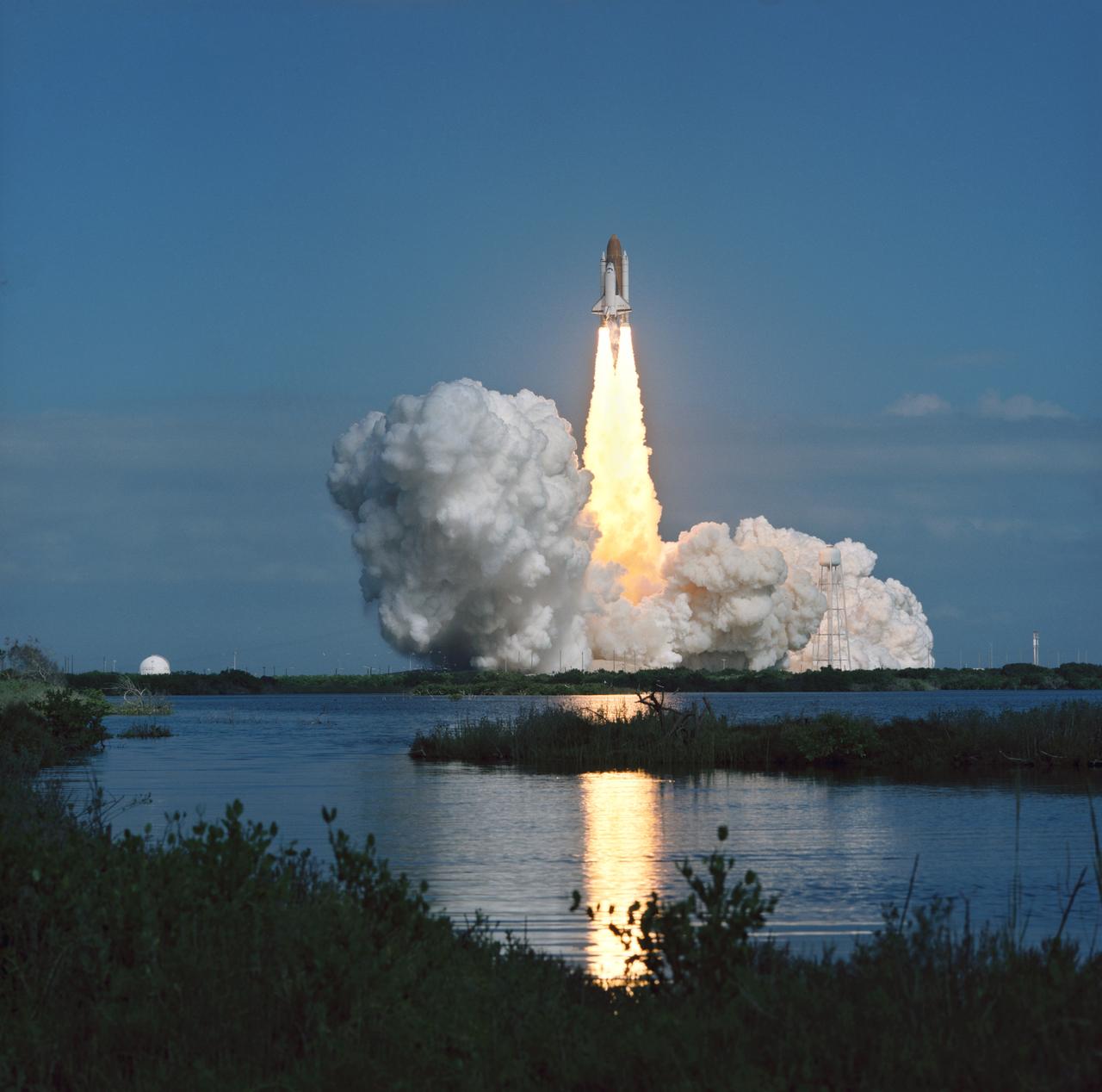
STS058-S-091 (18 Oct 1993) --- A distant shot shows the Space Shuttle Columbia, lifting off from Launch Complex 39 at Kennedy Space Center (KSC), reflecting its image in nearby marsh waters. Launch occurred at 10:53 a.m. (EDT), October 18, 1993. Along with six NASA astronauts and a veterinarian from the private sector, the Spacelab Life Sciences-2 (SLS-2) science module was aboard. Onboard were astronauts John E. Blaha, Richard A. Searfoss, Rhea Seddon, Shannon W. Lucid, David A. Wolf and William S. McArthur along with payload specialist Martin J. Fettman.
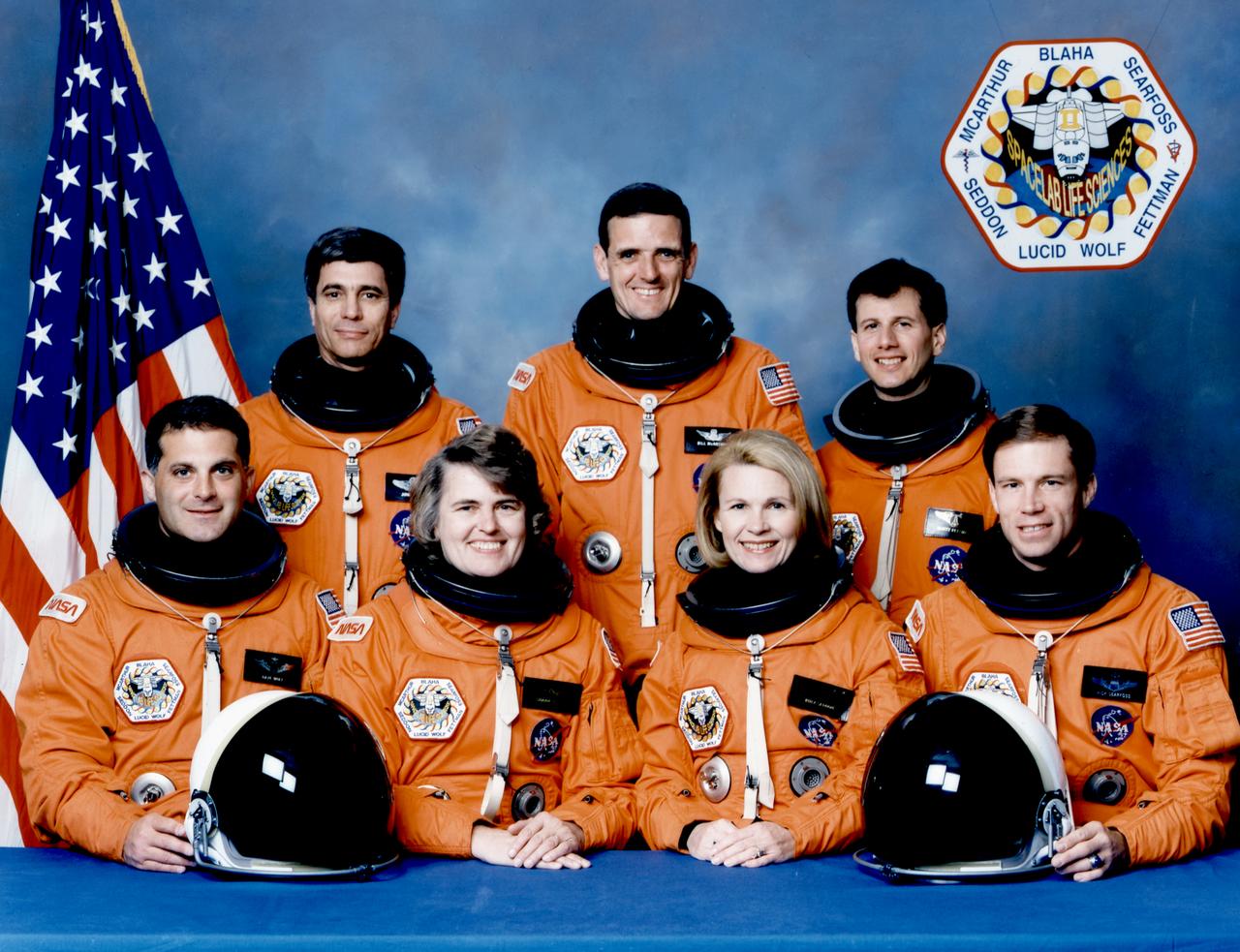
The STS-58 crew portrait includes astronauts (seated left to right) David A. Wolf, Shannon W. Lucid, and Rhea Seddon, all mission specialists; and Richard A. Searfoss, pilot. Standing in the rear, left to right, are John E. Blaha, commander; William S. McArthur, Jr., mission specialist; and Martin J. Fettmen, payload specialist. Launched aboard the Space Shuttle Columbia on October 18, 1993 at 10:53:10 a.m. (EDT), STS-58 served as the second dedicated Spacelab Life Sciences (SLS-2) mission.
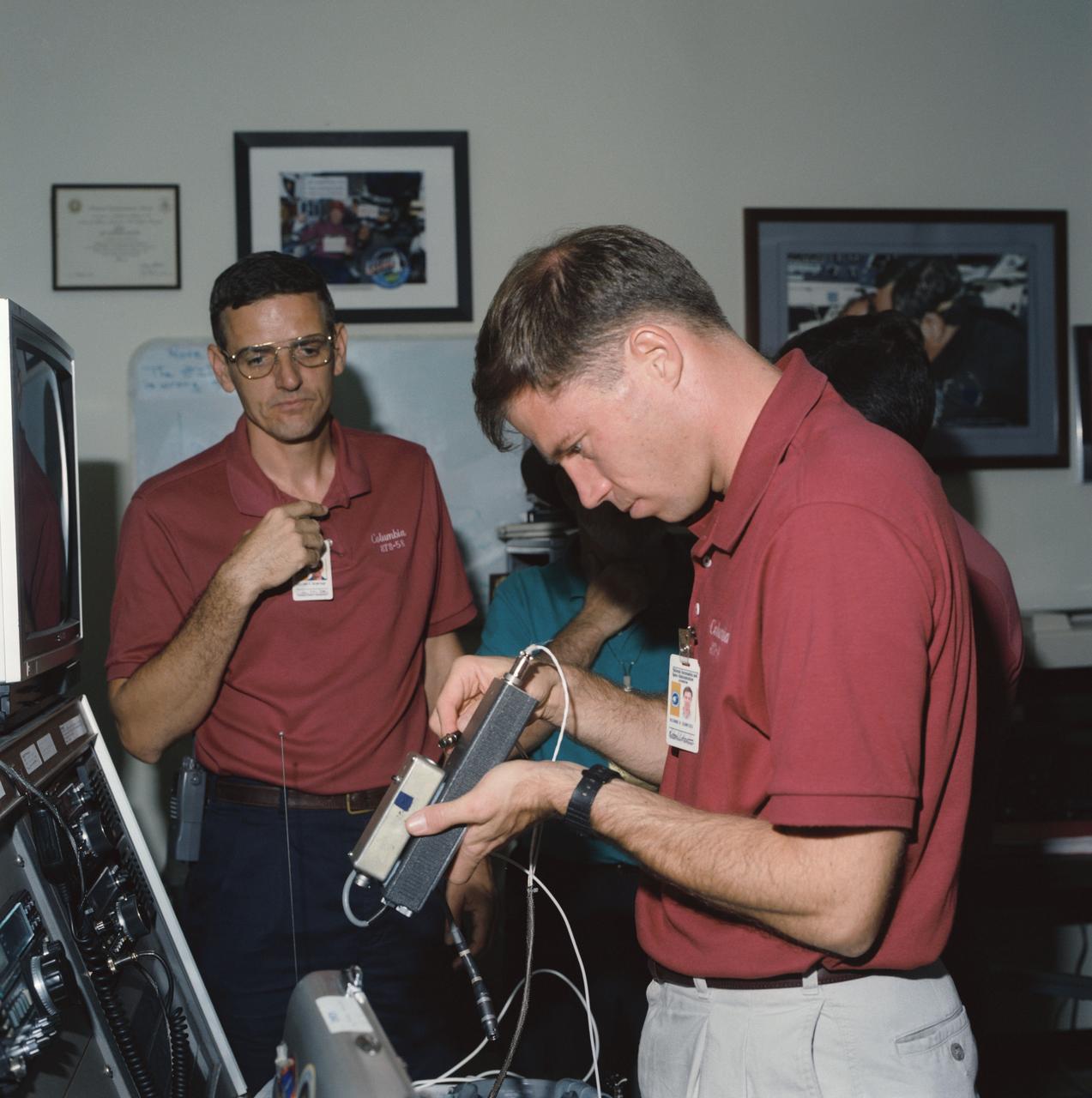
S93-45068 (22 Sept 1993) --- Two members of the STS-58 Spacelab Life Sciences (SLS-2) crew, train with amateur radio equipment at the Johnson Space Center (JSC). They are William S. McArthur (left), mission specialist, and Richard A. Searfoss, pilot. The STS-58 flight will carry the Shuttle Amateur Radio Experiment (SAREX) payload, configuration C, which includes FM voice and packet. Three of the seven crewmembers are licensed amateur radio operators. Searfoss' call letters are KC5CKM; McArthur, KC5ACR; and payload specialist Martin J. Fettman, KC5AXA. Licensed students at a number of schools around the country will have the opportunity to talk directly with the astronauts during the 14-day flight.
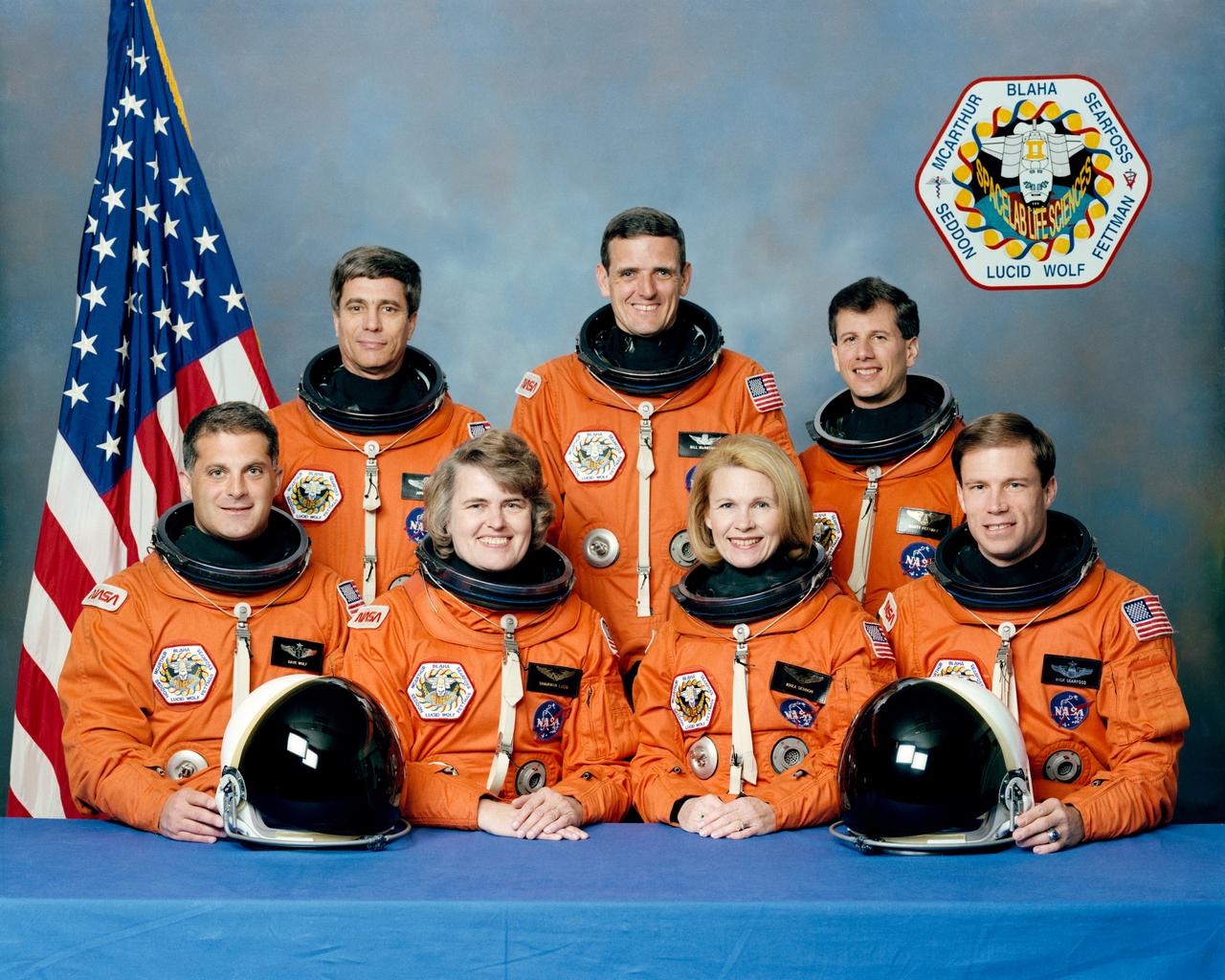
STS058-S-002 (May 1993) --- Wearing training versions of their launch and entry garments, the seven crew members assigned to the Spacelab Life Sciences (SLS-2) mission are pictured in the traditional pre-flight crew portrait. Left to right (front) are David A. Wolf, and Shannon W. Lucid, both mission specialists; Rhea Seddon, payload commander; and Richard A. Searfoss, pilot. Left to right (rear) are John E. Blaha, mission commander; William S. McArthur Jr., mission specialist; and payload specialist Martin J. Fettman, DVM.
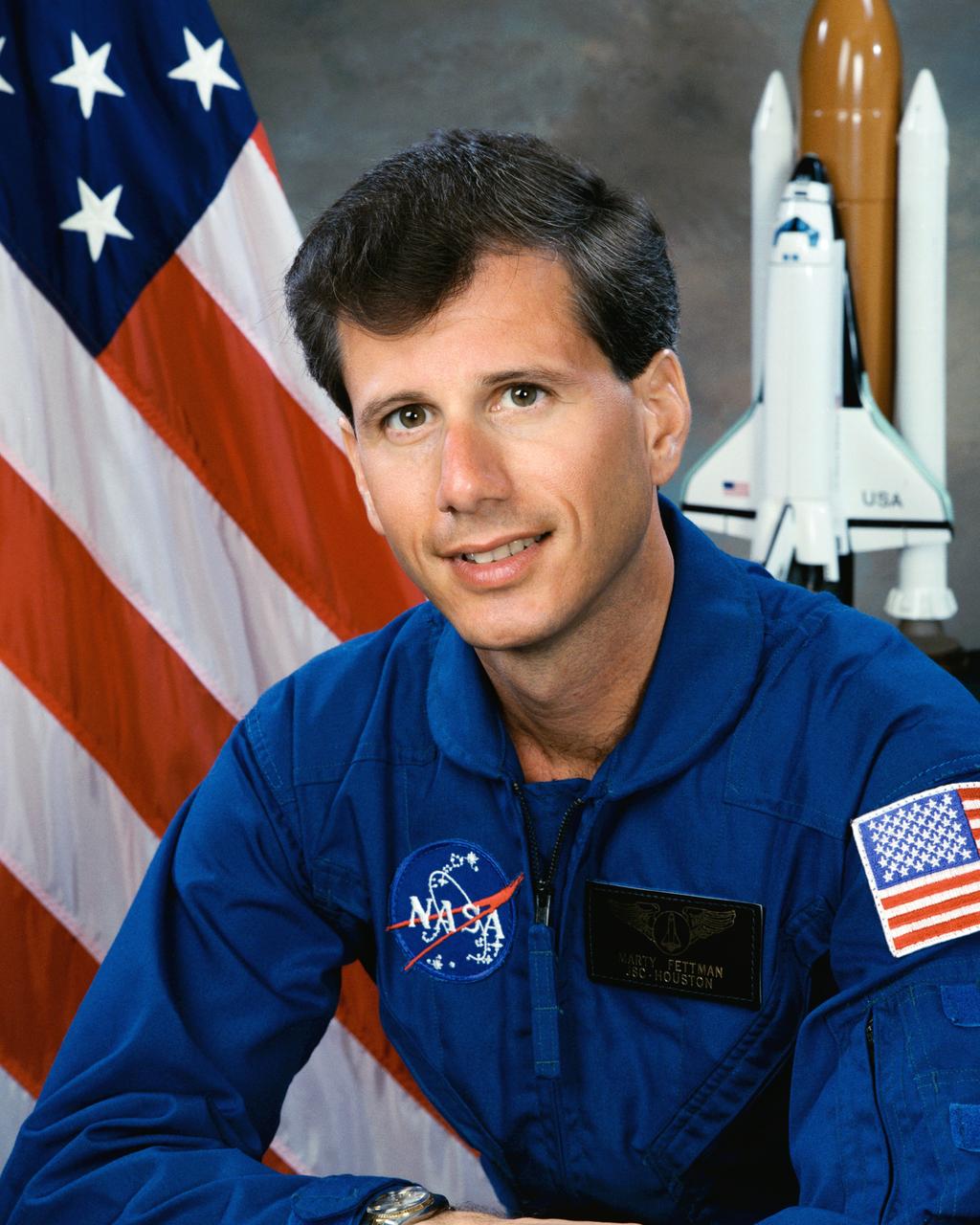
S92-48423 (October 1992) --- Astronaut Martin J. Fettman, payload specialist.