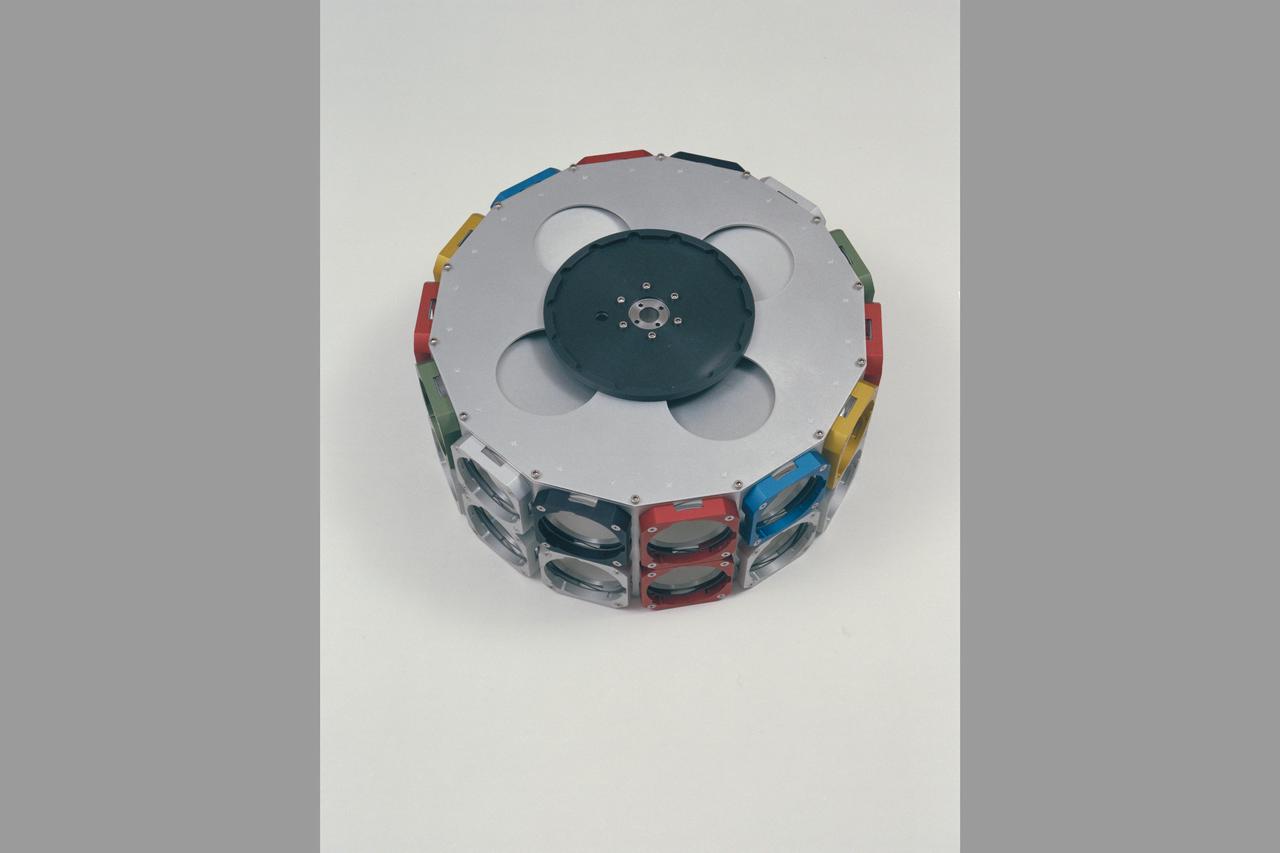
SL-J Space Shuttle Frog Embryology Experiment (FEU) flight hardware
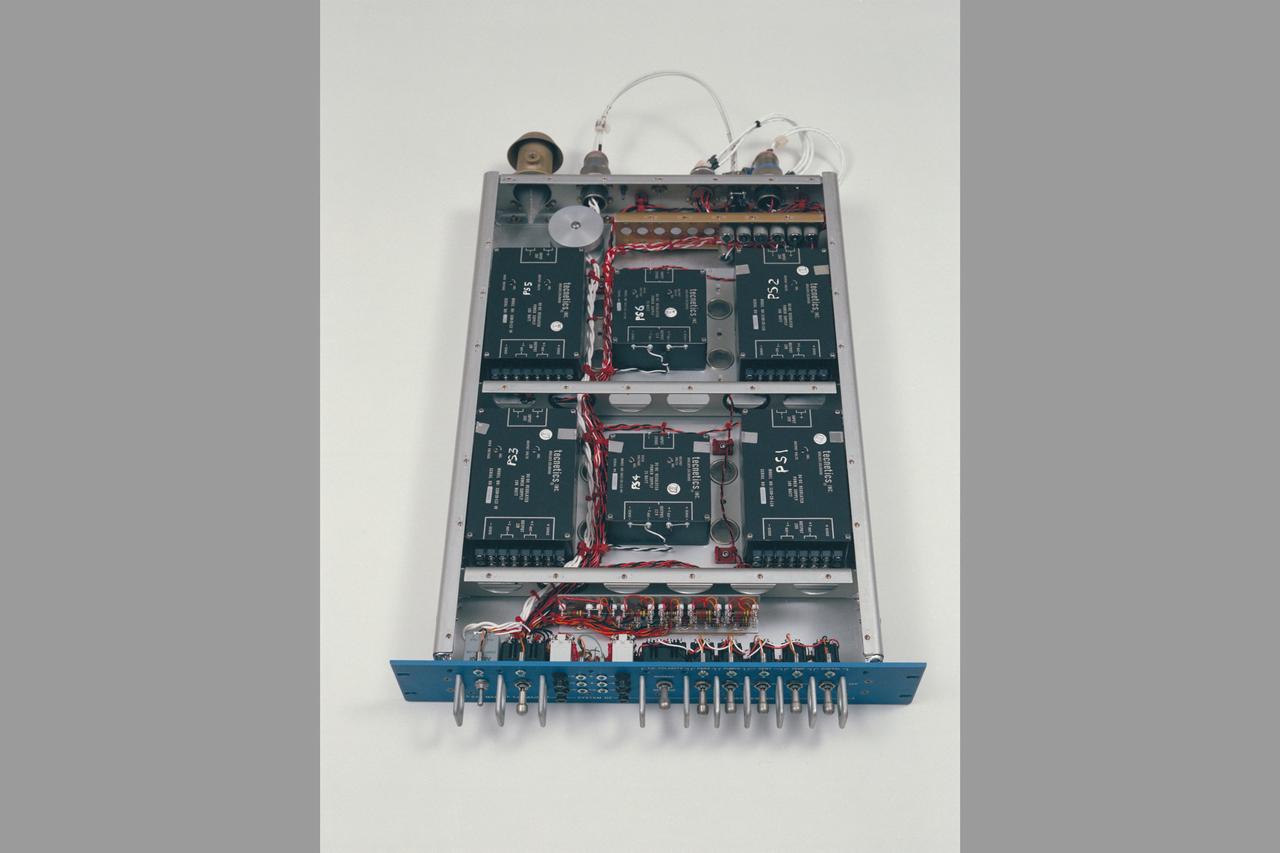
SL-J Space Shuttle Frog Embryology Experiment (FEU) flight hardware
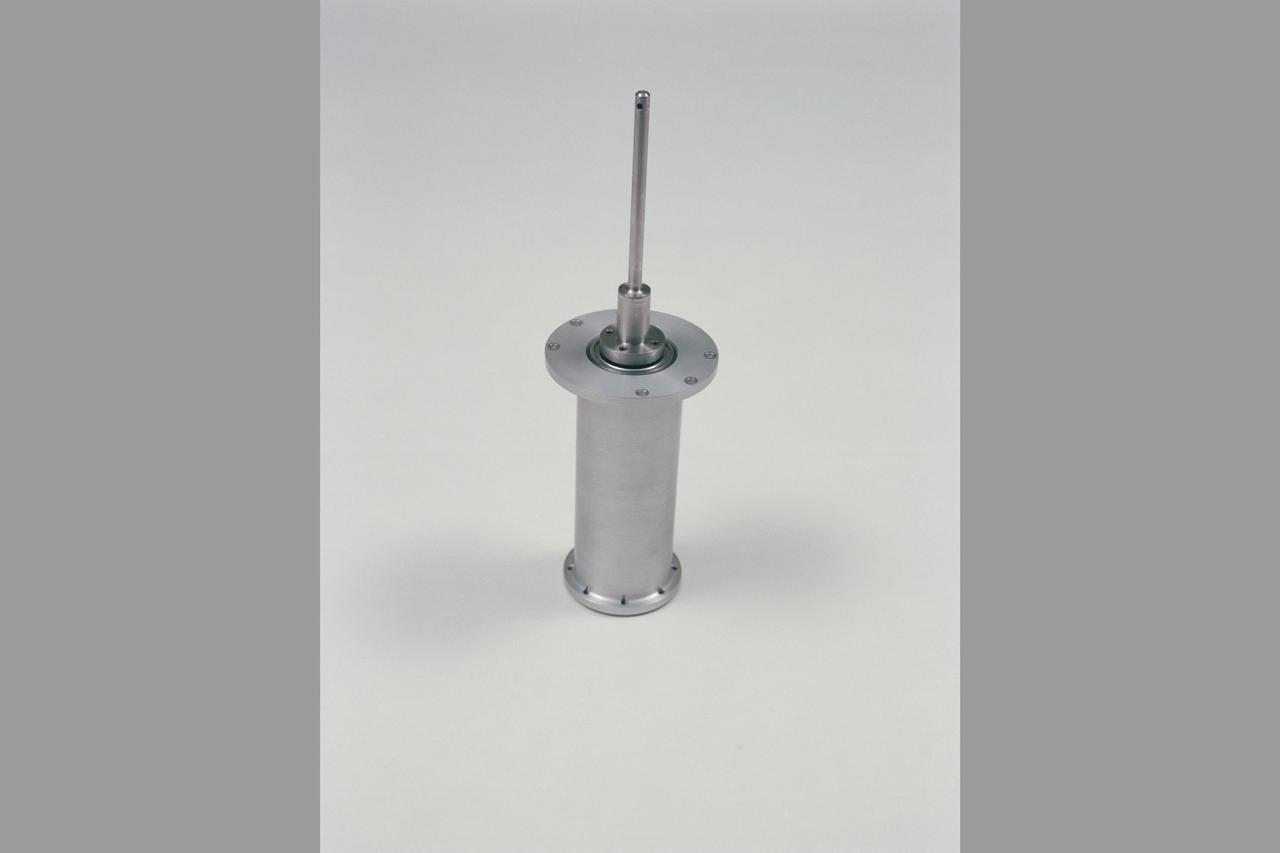
SL-J Space Shuttle Frog Embryology Experiment (FEU) flight hardware
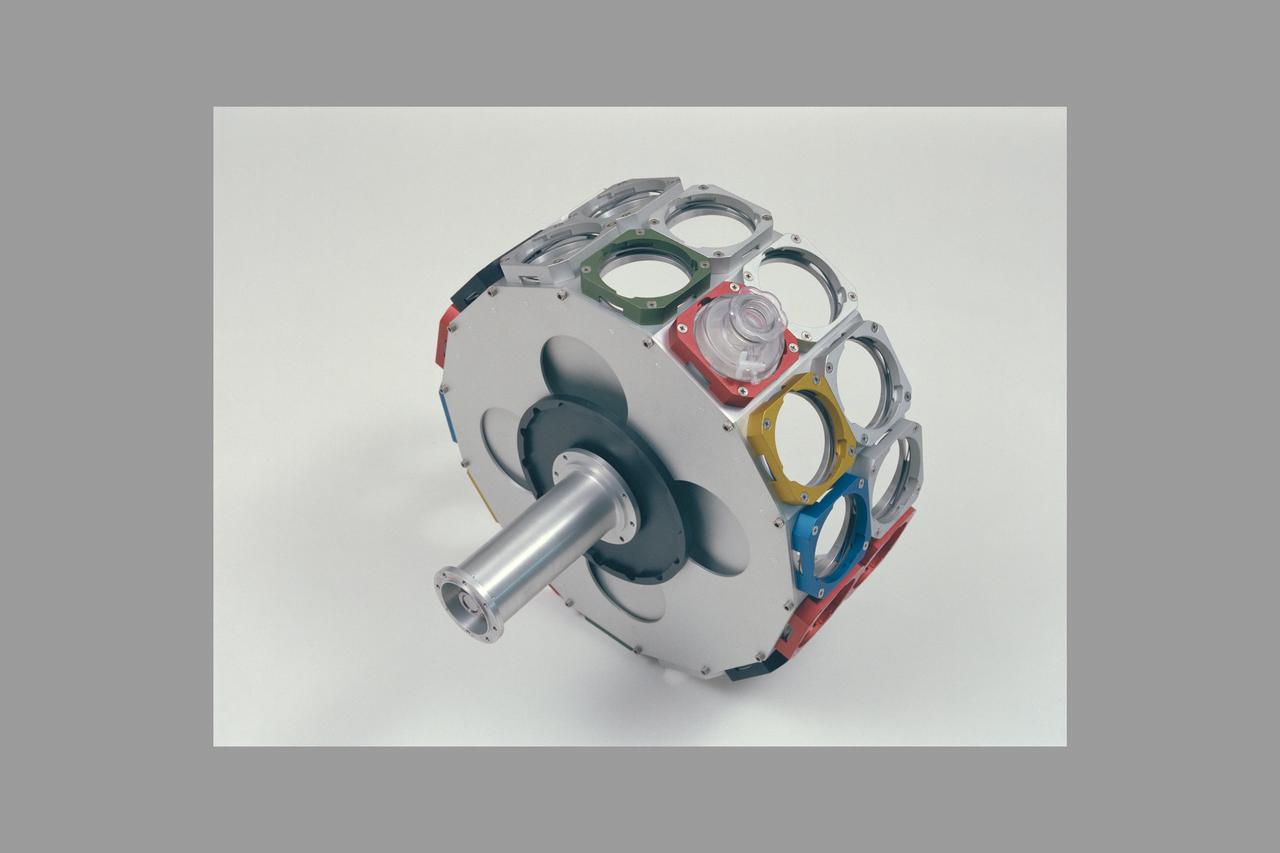
SL-J Space Shuttle Frog Embryology Experiment (FEU) flight hardware
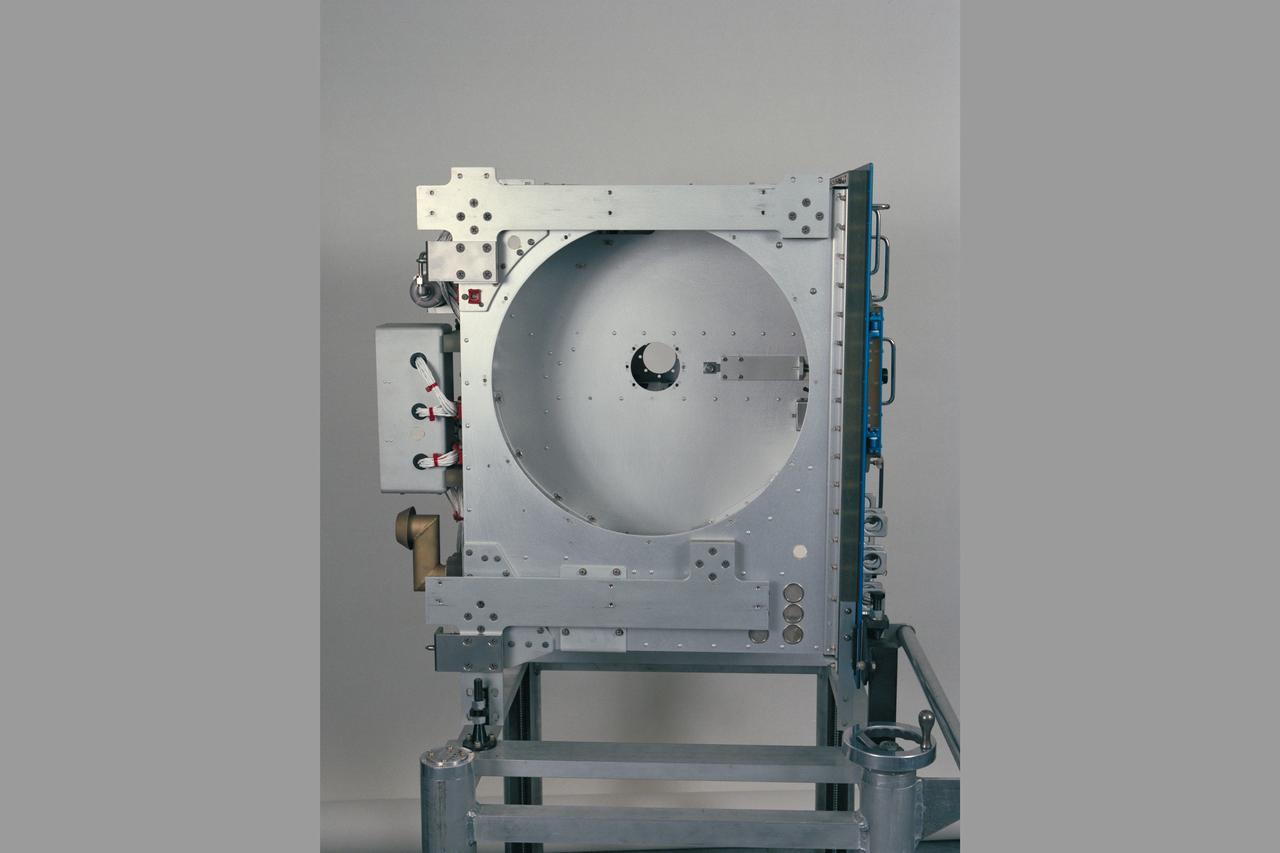
SL-J Space Shuttle Frog Embryology Experiment (FEU) flight hardware
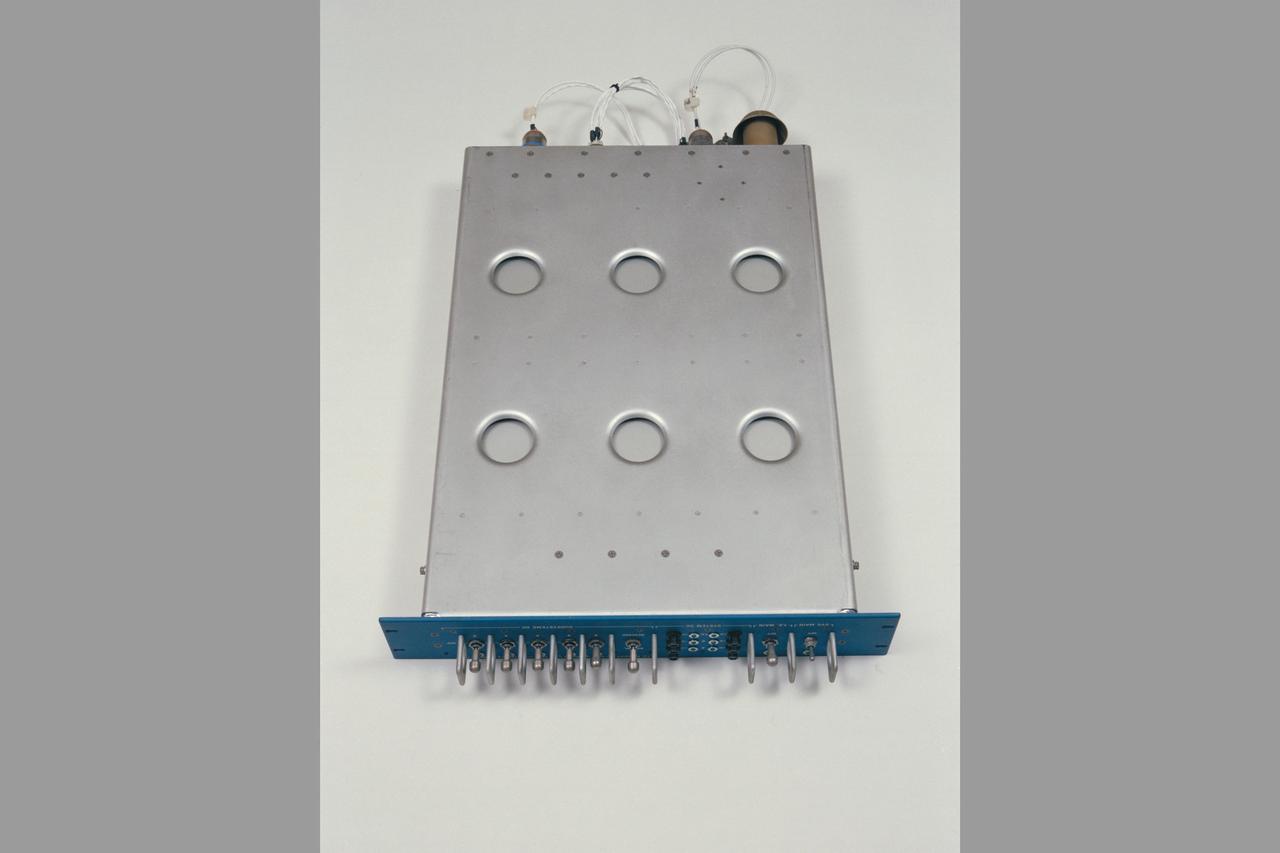
SL-J Space Shuttle Frog Embryology Experiment (FEU) flight hardware
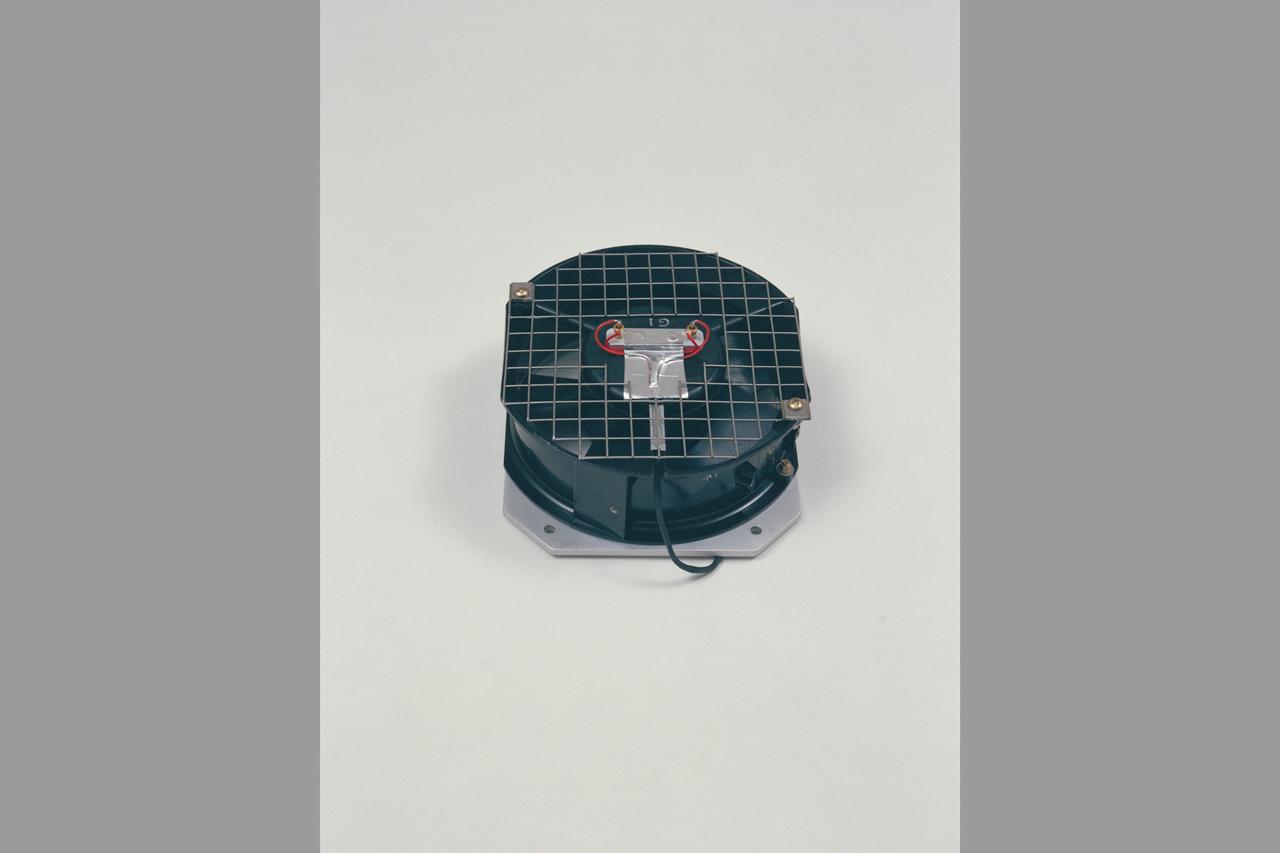
SL-J Space Shuttle Frog Embryology Experiment (FEU) flight hardware
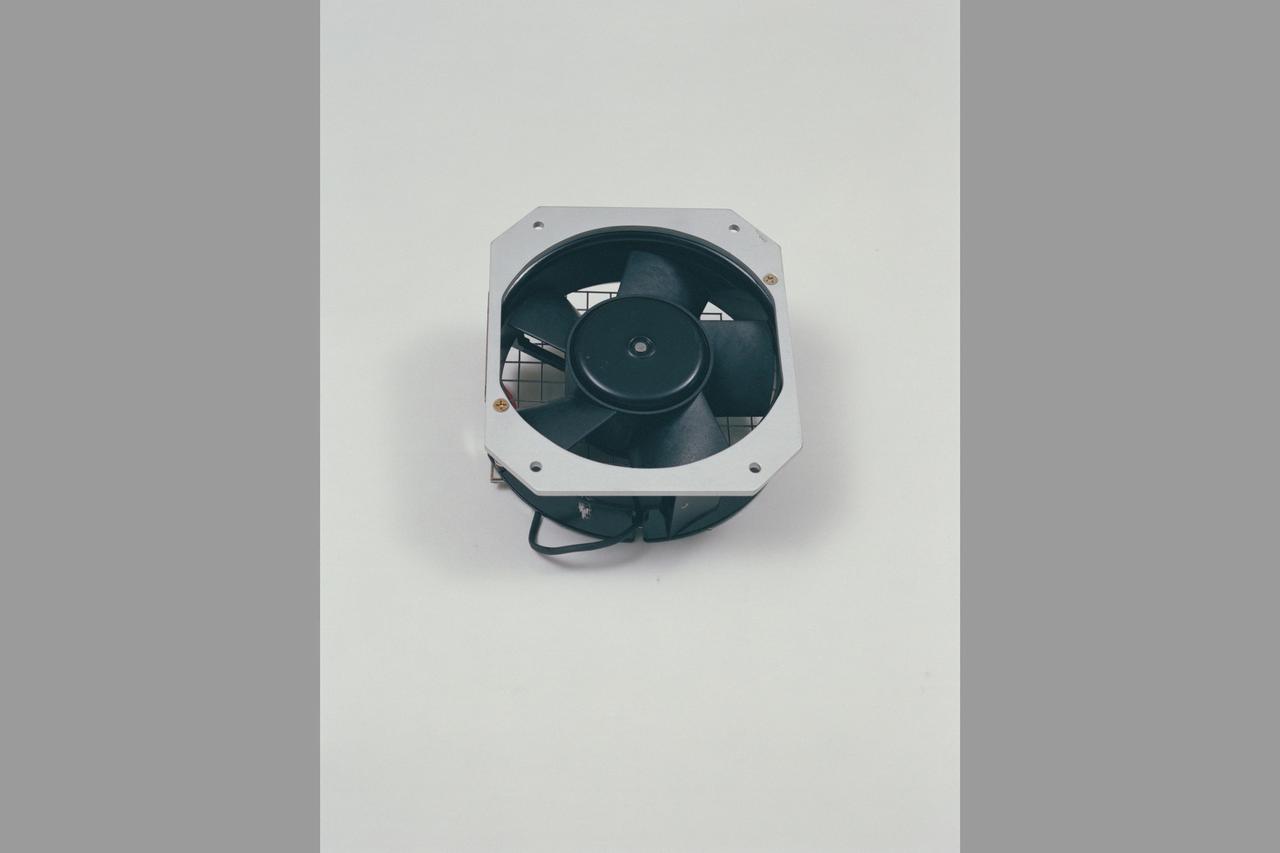
SL-J Space Shuttle Frog Embryology Experiment (FEU) flight hardware
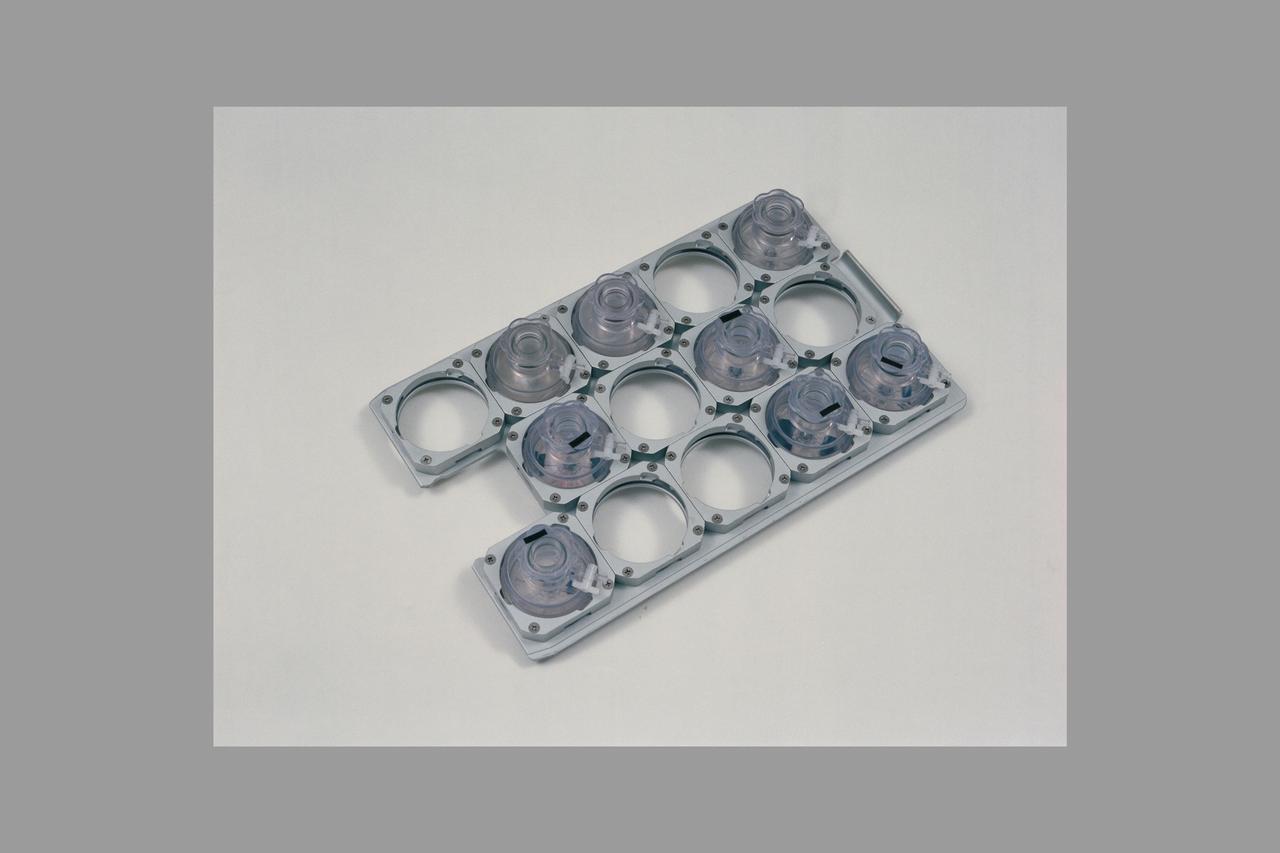
SL-J Space Shuttle Frog Embryology Experiment (FEU) flight hardware
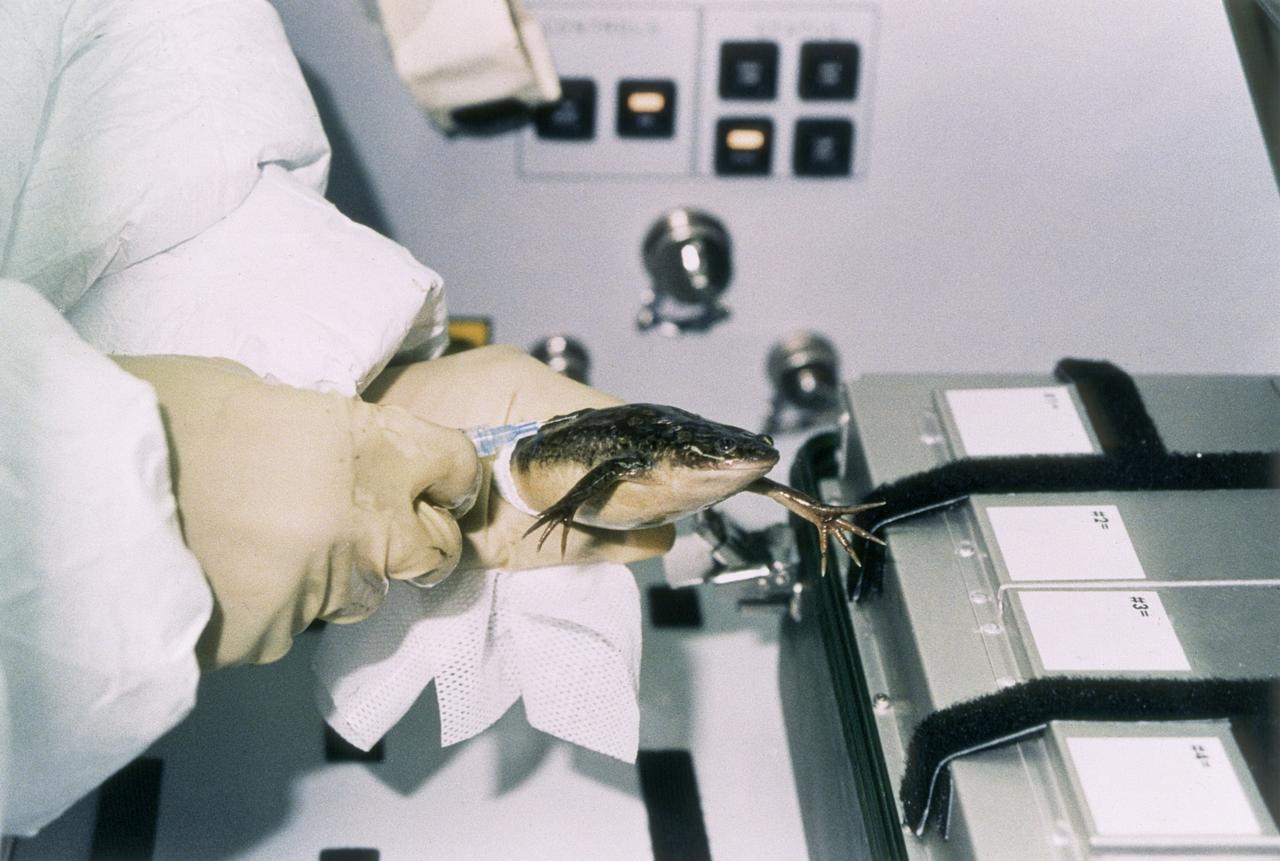
The Spacelab-J (SL-J) mission was a joint venture between NASA and the National Space Development Agency of Japan (NASDA) utilizing a marned Spacelab module. Materials science investigations covered such fields as biotechnology, electronic materials, fluid dynamics and transport phenomena, glasses and ceramics, metals and alloys, and acceleration measurements. Life sciences included experiments on human health, cell separation and biology, developmental biology, animal and human physiology and behavior, space radiation, and biological rhythms. Before long-term space ventures are attempted, numerous questions must be answered: how will gravity play in the early development of an organism, and how will new generations of a species be conceived and develop normally in microgravity. The Effects of Weightlessness on the Development of Amphibian Eggs Fertilized in Space experiment aboard SL-J examined aspects of these questions. To investigate the effect of microgravity on amphibian development, female frogs carried aboard SL-J were induced to ovulate and shed eggs. These eggs were then fertilized in the microgravity environment. Half were incubated in microgravity, while the other half were incubated in a centrifuge that spins to simulate normal gravity. This photograph shows an astronaut working with one of the adult female frogs inside the incubator. The mission also examined the swimming behavior of tadpoles grown in the absence of gravity. The Spacelab-J was launched aboard the Space Shuttle Orbiter Endeavour on September 12, 1992.
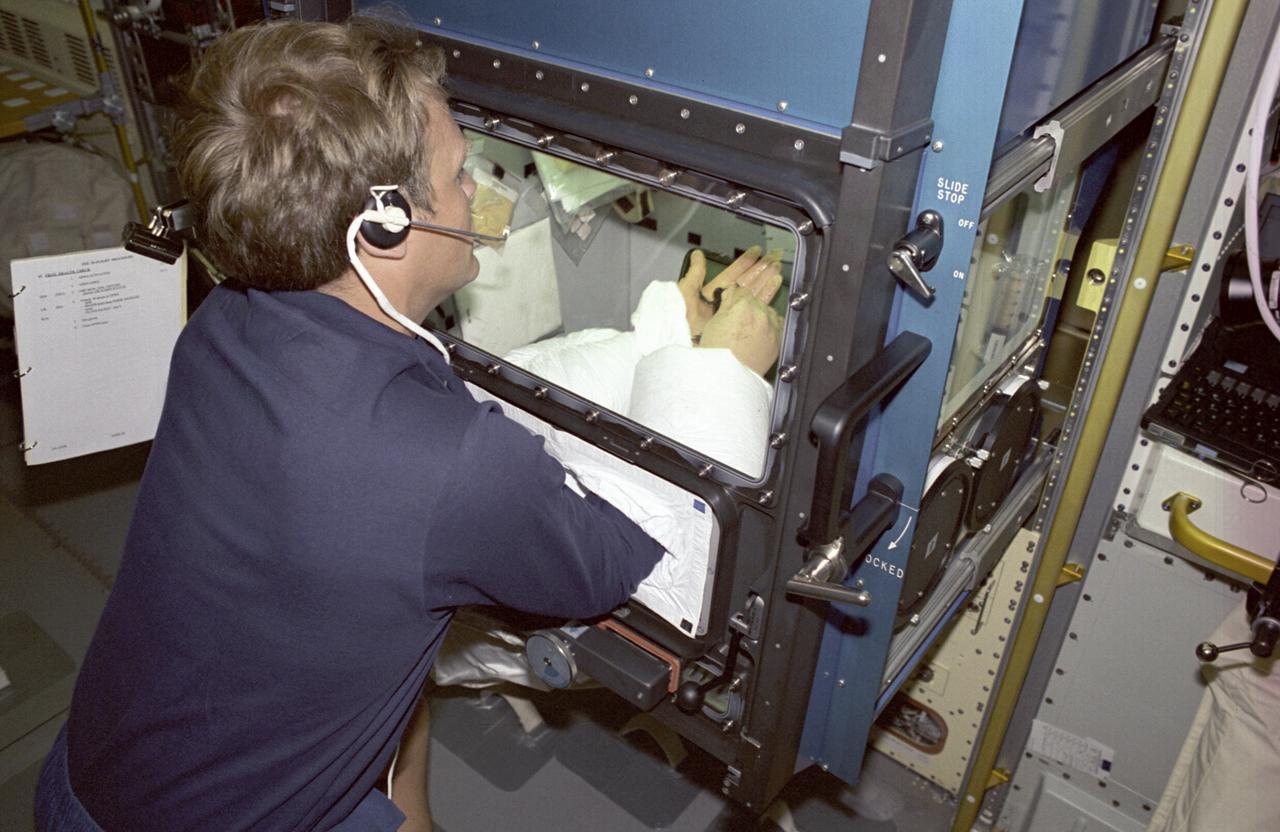
The Spacelab-J (SL-J) mission was a joint venture between NASA and the National Space Development Agency of Japan (NASDA) utilizing a marned Spacelab module. Materials science investigations covered such fields as biotechnology, electronic materials, fluid dynamics and transport phenomena, glasses and ceramics, metals and alloys, and acceleration measurements. Life sciences included experiments on human health, cell separation and biology, developmental biology, animal and human physiology and behavior, space radiation, and biological rhythms. Before long-term space ventures are attempted, numerous questions must be answered: how will gravity play in the early development of an organism, and how will new generations of a species be conceived and develop normally in microgravity. The Effects of Weightlessness on the Development of Amphibian Eggs Fertilized in Space experiment aboard SL-J examined aspects of these questions. To investigate the effect of microgravity on amphibian development, female frogs carried aboard SL-J were induced to ovulate and shed eggs. These eggs were then fertilized in the microgravity environment. Half were incubated in microgravity, while the other half were incubated in a centrifuge that spins to simulate normal gravity. This photograph shows astronaut Mark Lee working with one of the adult female frogs inside the incubator. The mission also examined the swimming behavior of tadpoles grown in the absence of gravity. The Spacelab-J was launched aboard the Space Shuttle Orbiter Endeavour on September 12, 1992.
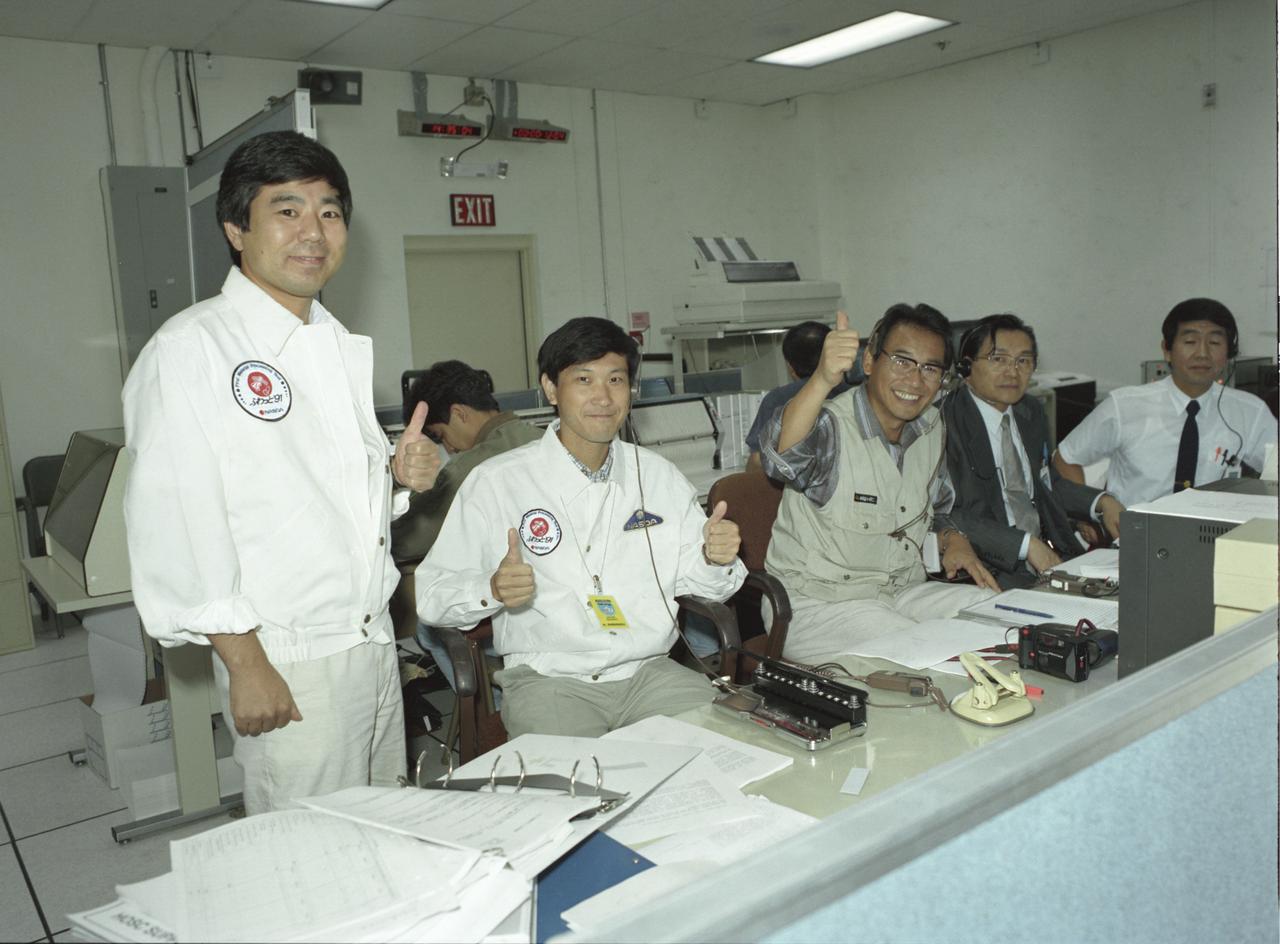
The group of Japanese researchers of the Spacelab-J (SL-J) were thumbs-up in the Payload Operations Control Center (POCC) at the Marshall Space Flight Center after the successful launch of Space Shuttle Orbiter Endeavour that carried their experiments. The SL-J was a joint mission of NASA and the National Space Development Agency of Japan (NASDA) utilizing a marned Spacelab module. The mission conducted microgravity investigations in materials and life sciences. Materials science investigations covered such fields as biotechnology, electronic materials, fluid dynamics and transport phenomena, glasses and ceramics, metals and alloys, and acceleration measurements. Life sciences included experiments on human health, cell separation and biology, developmental biology, animal and human physiology and behavior, space radiation, and biological rhythms. Test subjects included the crew, Japanese koi fish (carp), cultured animal and plant cells, chicken embryos, fruit flies, fungi and plant seeds, frogs, and frog eggs. The POCC was the air/ground communications channel between the astronauts and ground control teams during the Spacelab missions. The Spacelab science operations were a cooperative effort between the science astronaut crew in orbit and their colleagues in the POCC. Spacelab-J was launched aboard the Space Shuttle Orbiter Endeavour on September 12, 1992.
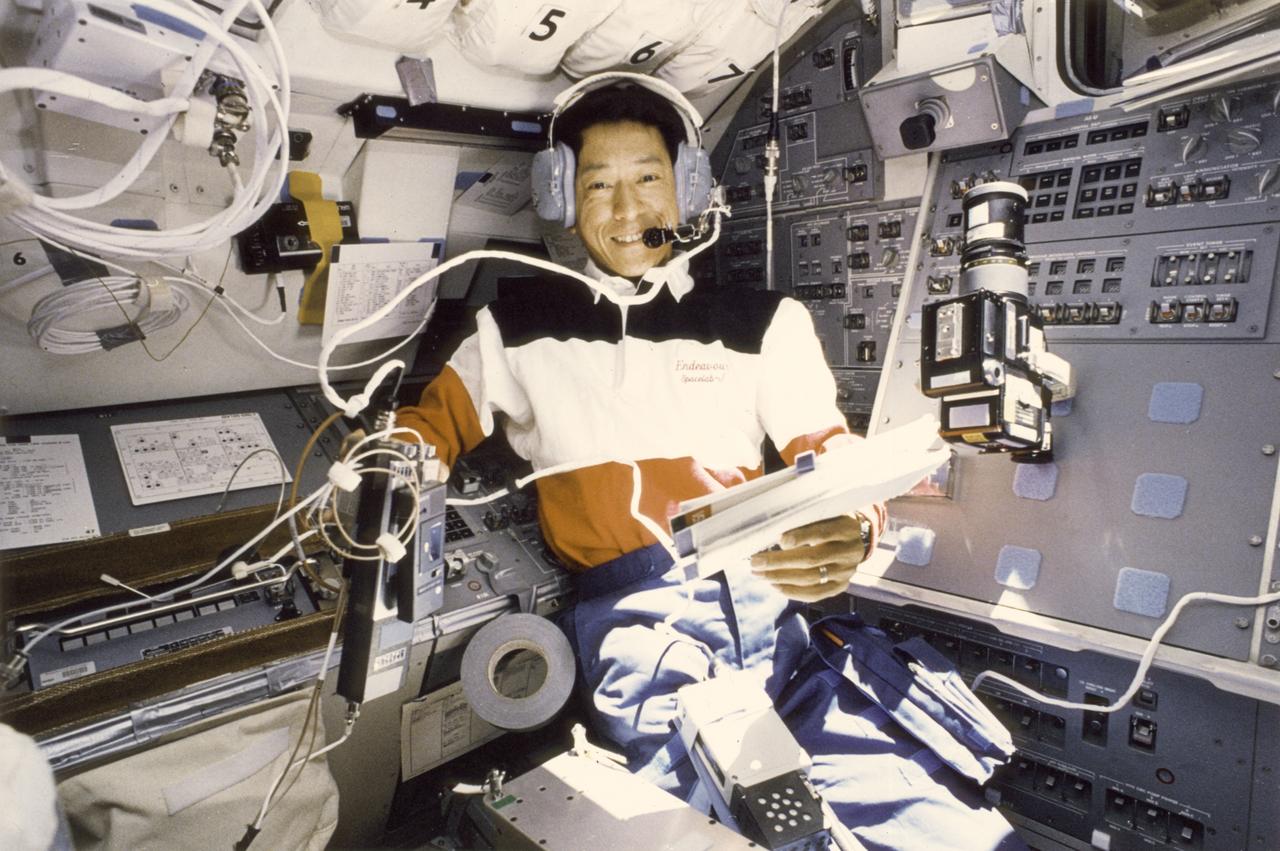
Japanese astronaut, Mamoru Mohri, talks to Japanese students from the aft flight deck of the Space Shuttle Orbiter Endeavour during the Spacelab-J (SL-J) mission. The SL-J mission was a joint venture between NASA and the National Space Development Agency of Japan (NASDA) utilizing a marned Spacelab module. The mission conducted 24 materials science and 20 life science experiments, of which 35 were sponsored by NASDA, 7 by NASA, and two collaborative efforts. Materials science investigations covered such fields as biotechnology, electronic materials, fluid dynamics and transport phenomena, glasses and ceramics, metals and alloys, and acceleration measurements. Life sciences included experiments on human health, cell separation and biology, developmental biology, animal and human physiology and behavior, space radiation, and biological rhythms. Test subjects included the crew, Japanese koi fish (carp), cultured animal and plant cells, chicken embryos, fruit flies, fungi and plant seeds, and frogs and frog eggs. Spacelab-J was launched aboard the Space Shuttle Orbiter Endeavour on September 12, 1992.