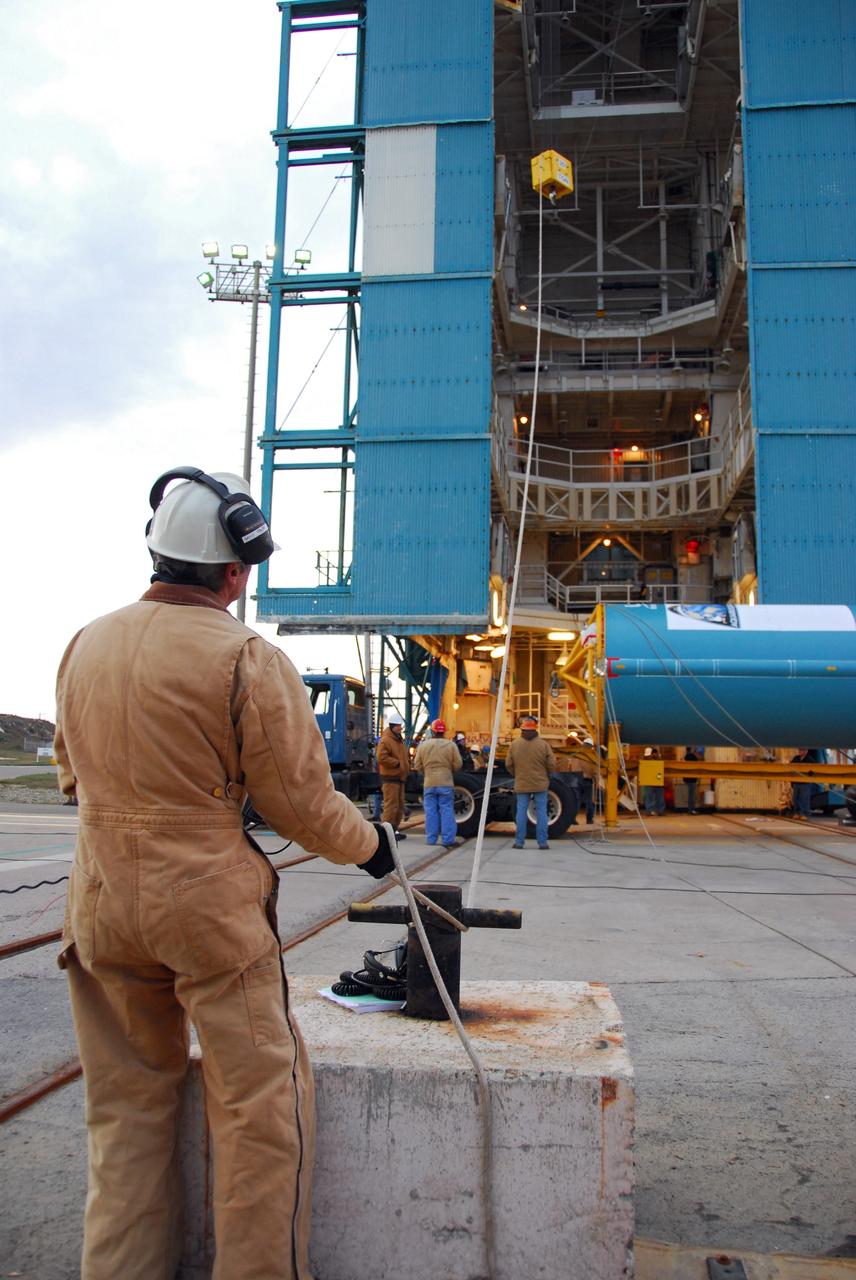
VANDENBERG AIR FORCE BASE, Calif. -- The first stage of the United Launch Alliance Delta II rocket that will carry the Aquarius/SAC-D spacecraft into low Earth orbit is being prepared for its vertical lift into the service tower at NASA's Space Launch Complex-2 (SLC-2) at Vandenberg Air Force Base in California. Following final tests, the spacecraft will be integrated to the Delta II in preparation for the targeted June launch. Aquarius, the NASA-built primary instrument on the SAC-D spacecraft, on its three-year mission, will provide new insights into how variations in ocean surface salinity relate to fundamental climate processes. Photo credit: NASA/VAFB
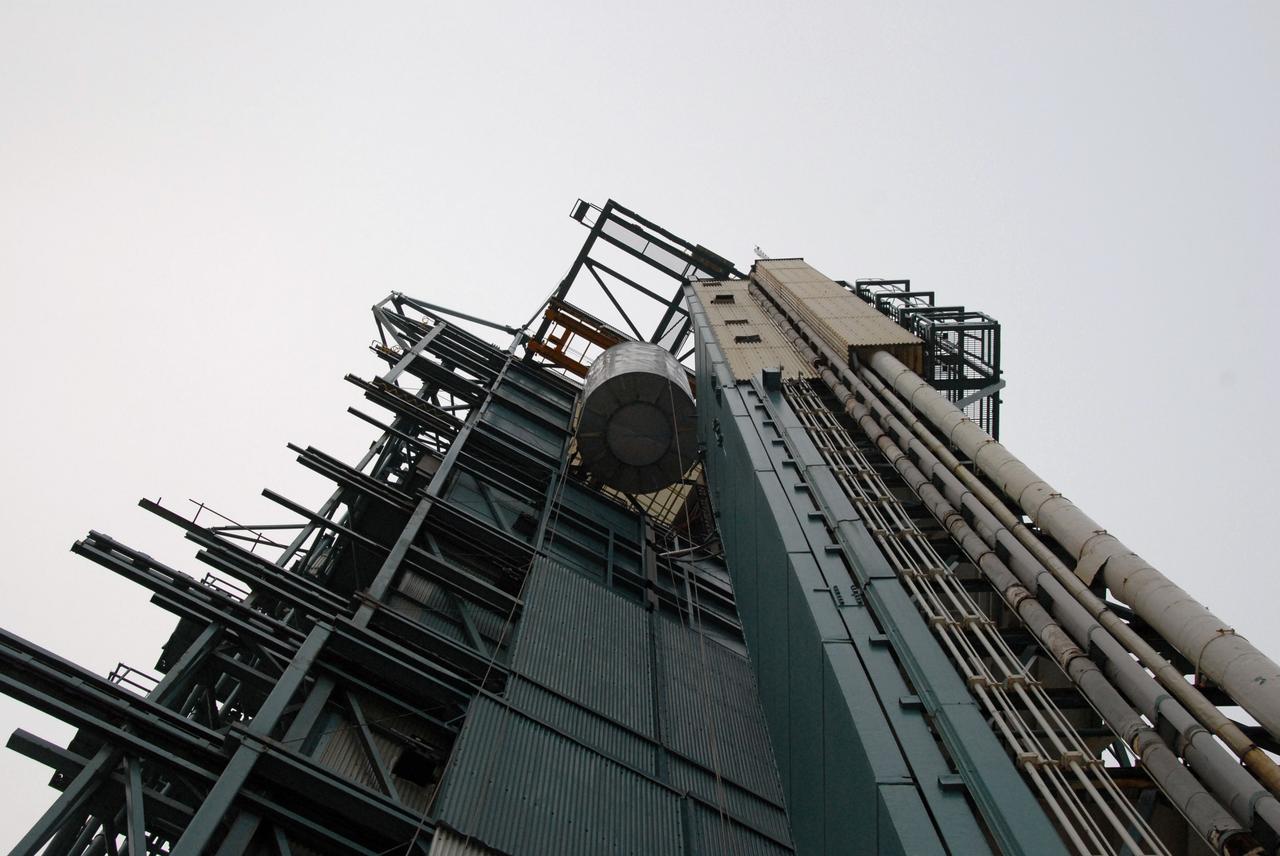
VANDENBERG AIR FORCE BASE, Calif. -- An overhead crane lifts the Aquarius/SAC-D spacecraft, secured inside its payload transportation canister, into the mobile service tower at NASA's Space Launch Complex-2 (SLC-2) at Vandenberg Air Force Base in California. There, the spacecraft will be integrated to a United Launch Alliance Delta II rocket in preparation for the targeted June liftoff. Aquarius, the NASA-built instrument on the SAC-D spacecraft, will provide new insights into how variations in ocean surface salinity relate to fundamental climate processes on its three-year mission. Photo credit: NASA/VAFB
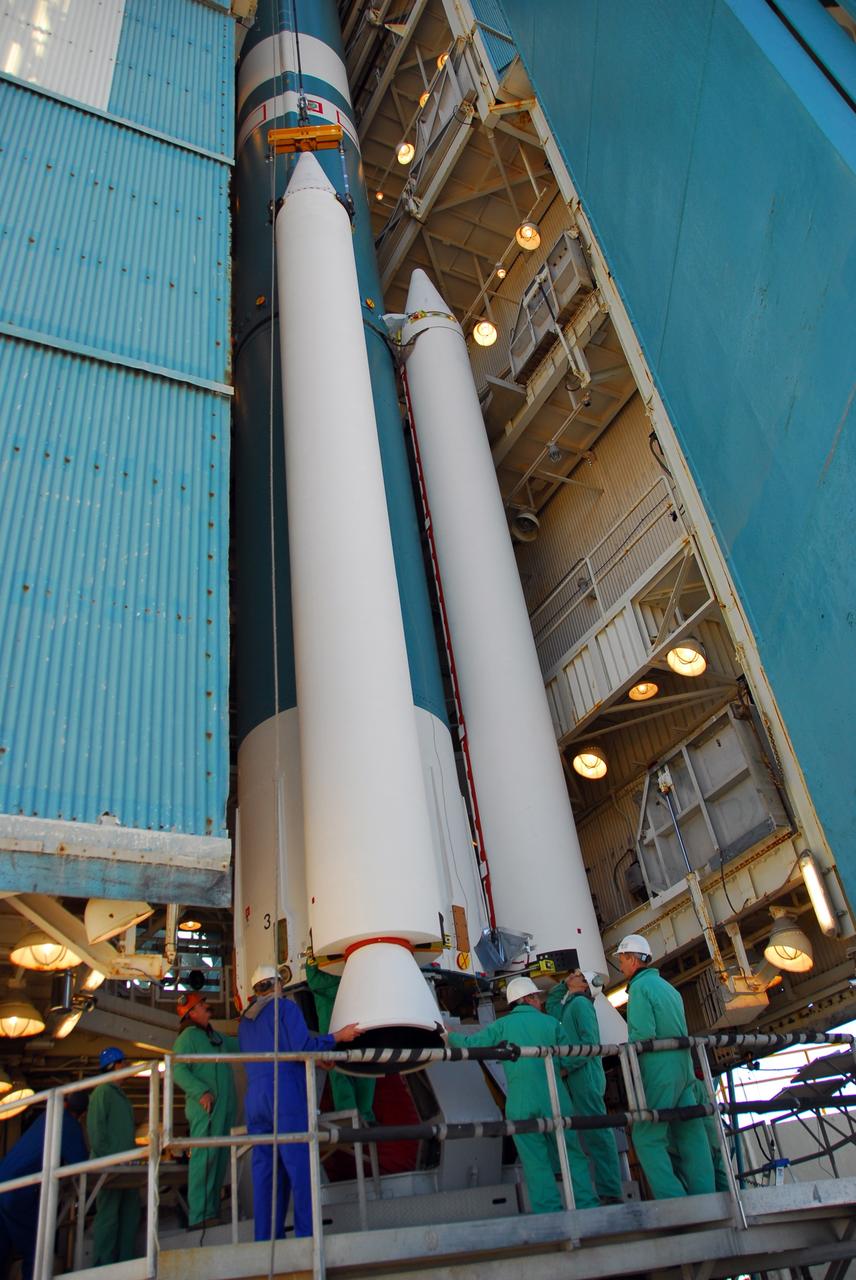
VANDENBERG AIR FORCE BASE, Calif. -- Workers attach one of three solid rocket motors to a United Launch Alliance Delta II launch vehicle in the service tower at NASA's Space Launch Complex-2 (SLC-2) at Vandenberg Air Force Base in California. Following final tests, the spacecraft will be integrated to the Delta II in preparation for the targeted June launch. Aquarius, the NASA-built instrument on the SAC-D spacecraft will provide new insights into how variations in ocean surface salinity relate to fundamental climate processes on its three-year mission. Photo credit: NASA/VAFB
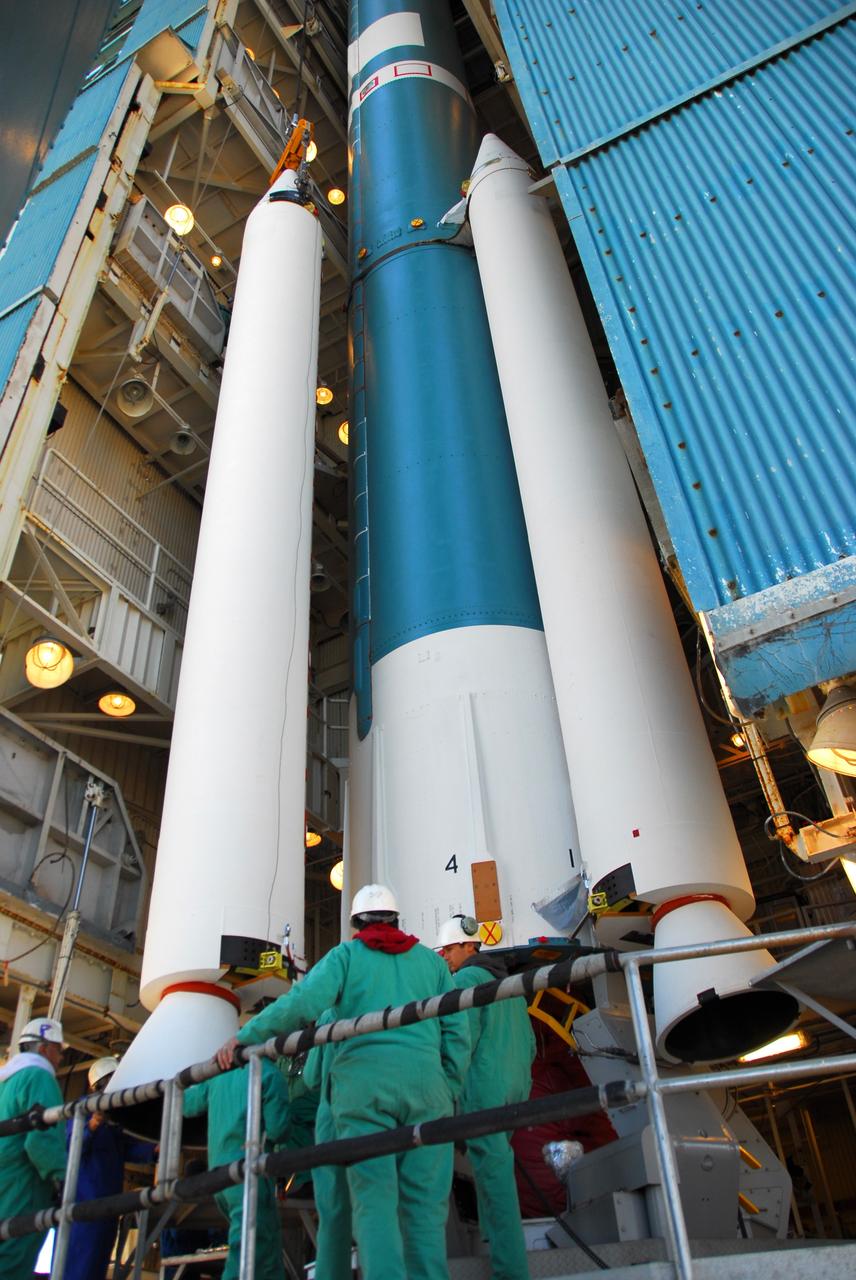
VANDENBERG AIR FORCE BASE, Calif. -- Workers attach one of three solid rocket motors to a United Launch Alliance Delta II launch vehicle in the service tower at NASA's Space Launch Complex-2 (SLC-2) at Vandenberg Air Force Base in California. Following final tests, the spacecraft will be integrated to the Delta II in preparation for the targeted June launch. Aquarius, the NASA-built instrument on the SAC-D spacecraft will provide new insights into how variations in ocean surface salinity relate to fundamental climate processes on its three-year mission. Photo credit: NASA/VAFB
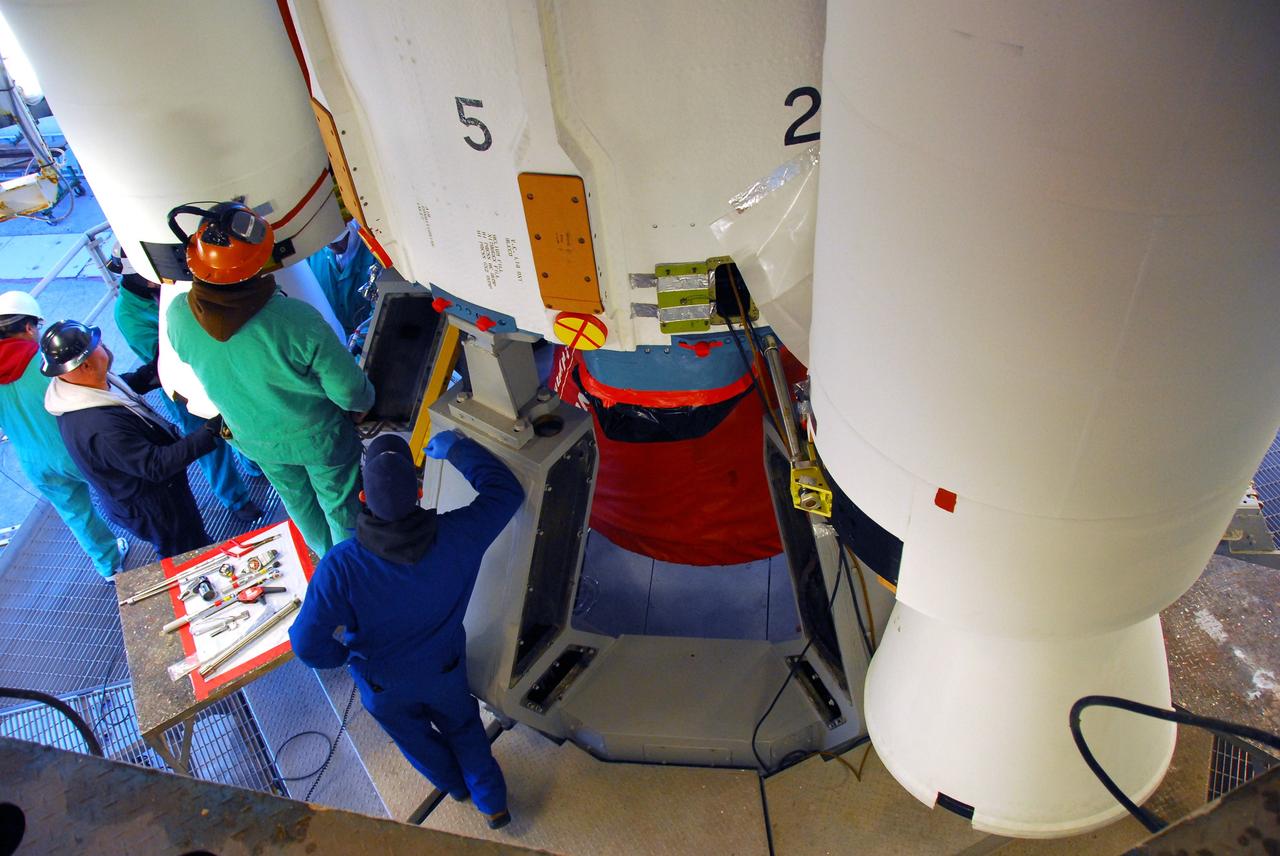
VANDENBERG AIR FORCE BASE, Calif. -- Workers attach one of three solid rocket motors to a United Launch Alliance Delta II launch vehicle in the service tower at NASA's Space Launch Complex-2 (SLC-2) at Vandenberg Air Force Base in California. Following final tests, the spacecraft will be integrated to the Delta II in preparation for the targeted June launch. Aquarius, the NASA-built instrument on the SAC-D spacecraft will provide new insights into how variations in ocean surface salinity relate to fundamental climate processes on its three-year mission. Photo credit: NASA/VAFB
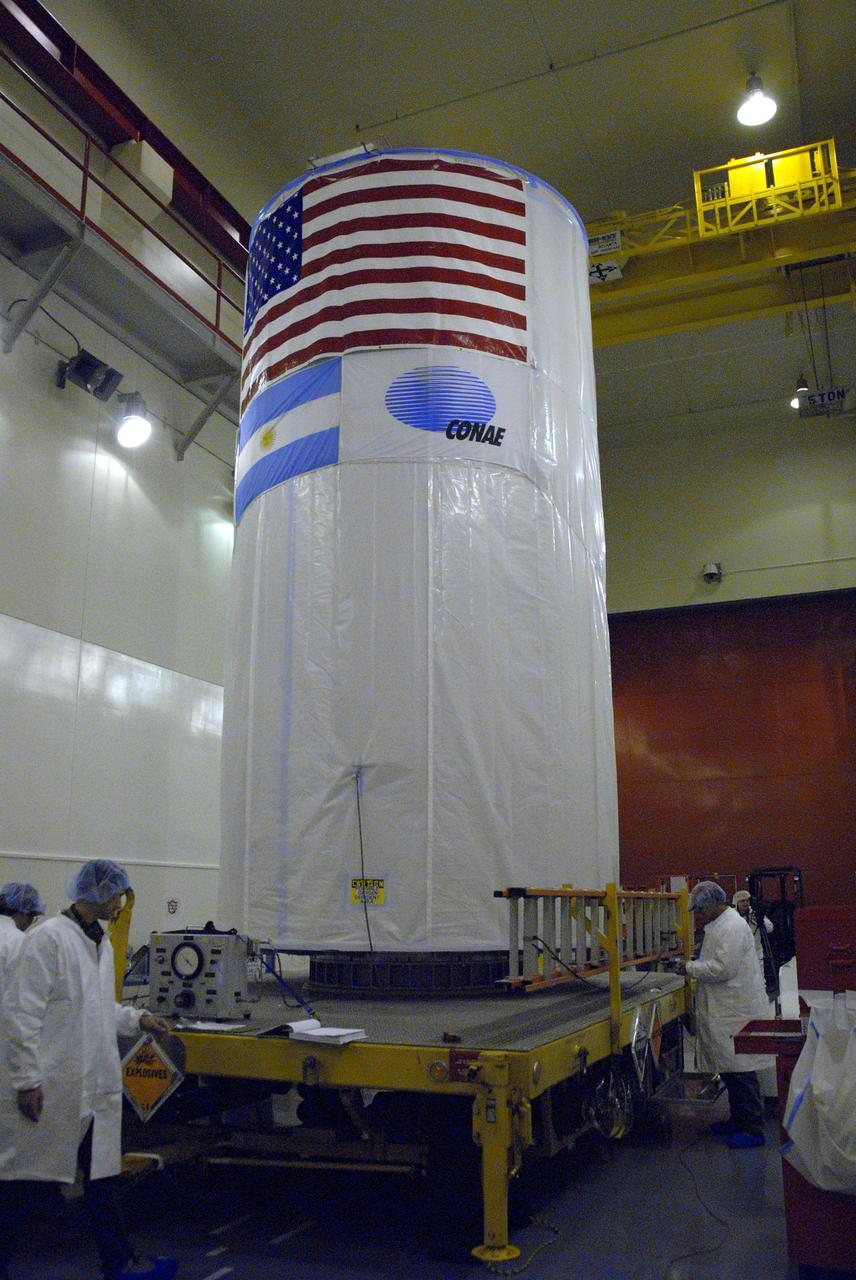
VANDENBERG AIR FORCE BASE, Calif. -- The Aquarius/SAC-D spacecraft is secured inside its payload transportation canister for transfer to NASA's Space Launch Complex-2 (SLC-2) at Vandenberg Air Force Base in California. There, the spacecraft will be integrated to a United Launch Alliance Delta II rocket in preparation for the targeted June liftoff. Aquarius, the NASA-built instrument on the SAC-D spacecraft, will provide new insights into how variations in ocean surface salinity relate to fundamental climate processes on its three-year mission. Photo credit: NASA/VAFB
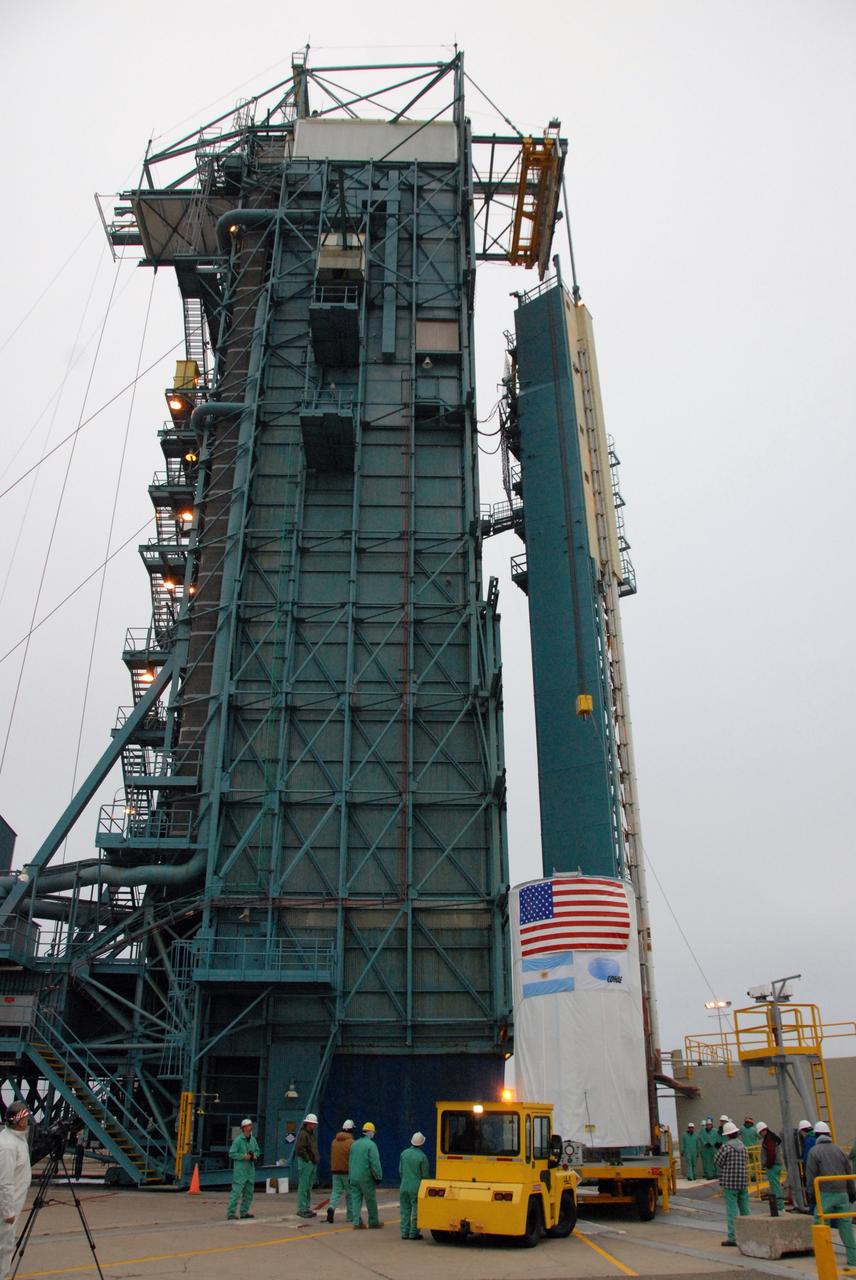
VANDENBERG AIR FORCE BASE, Calif. -- Workers attach an overhead crane to the Aquarius/SAC-D spacecraft, secured inside its payload transportation canister, for lifting into the mobile service tower at NASA's Space Launch Complex-2 (SLC-2) at Vandenberg Air Force Base in California. There, the spacecraft will be integrated to a United Launch Alliance Delta II rocket in preparation for the targeted June liftoff. Aquarius, the NASA-built instrument on the SAC-D spacecraft, will provide new insights into how variations in ocean surface salinity relate to fundamental climate processes on its three-year mission. Photo credit: NASA/VAFB
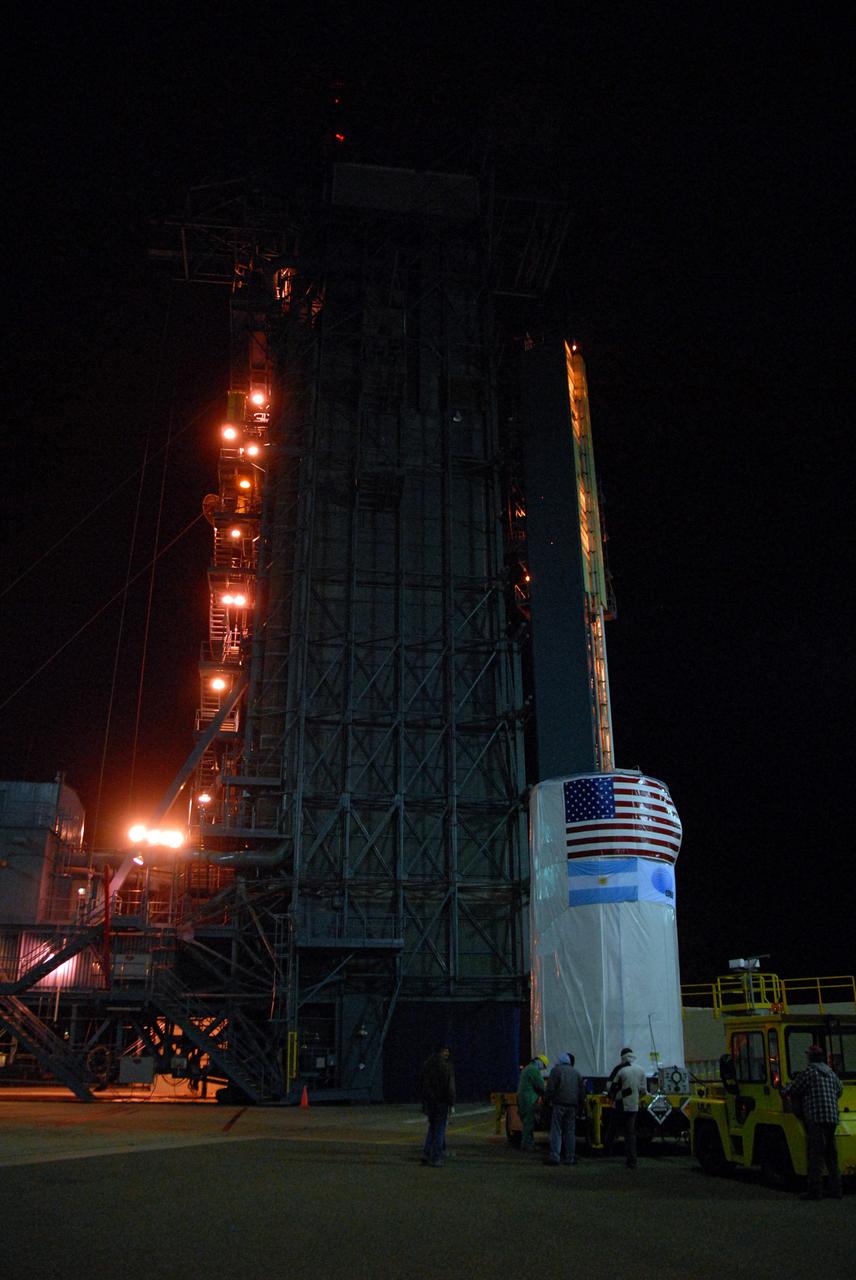
VANDENBERG AIR FORCE BASE, Calif. -- The Aquarius/SAC-D spacecraft, secured inside its payload transportation canister, has been delivered to NASA's Space Launch Complex-2 (SLC-2) at Vandenberg Air Force Base in California. There, the spacecraft will be integrated to a United Launch Alliance Delta II rocket in preparation for the targeted June liftoff. Aquarius, the NASA-built instrument on the SAC-D spacecraft, will provide new insights into how variations in ocean surface salinity relate to fundamental climate processes on its three-year mission. Photo credit: NASA/VAFB
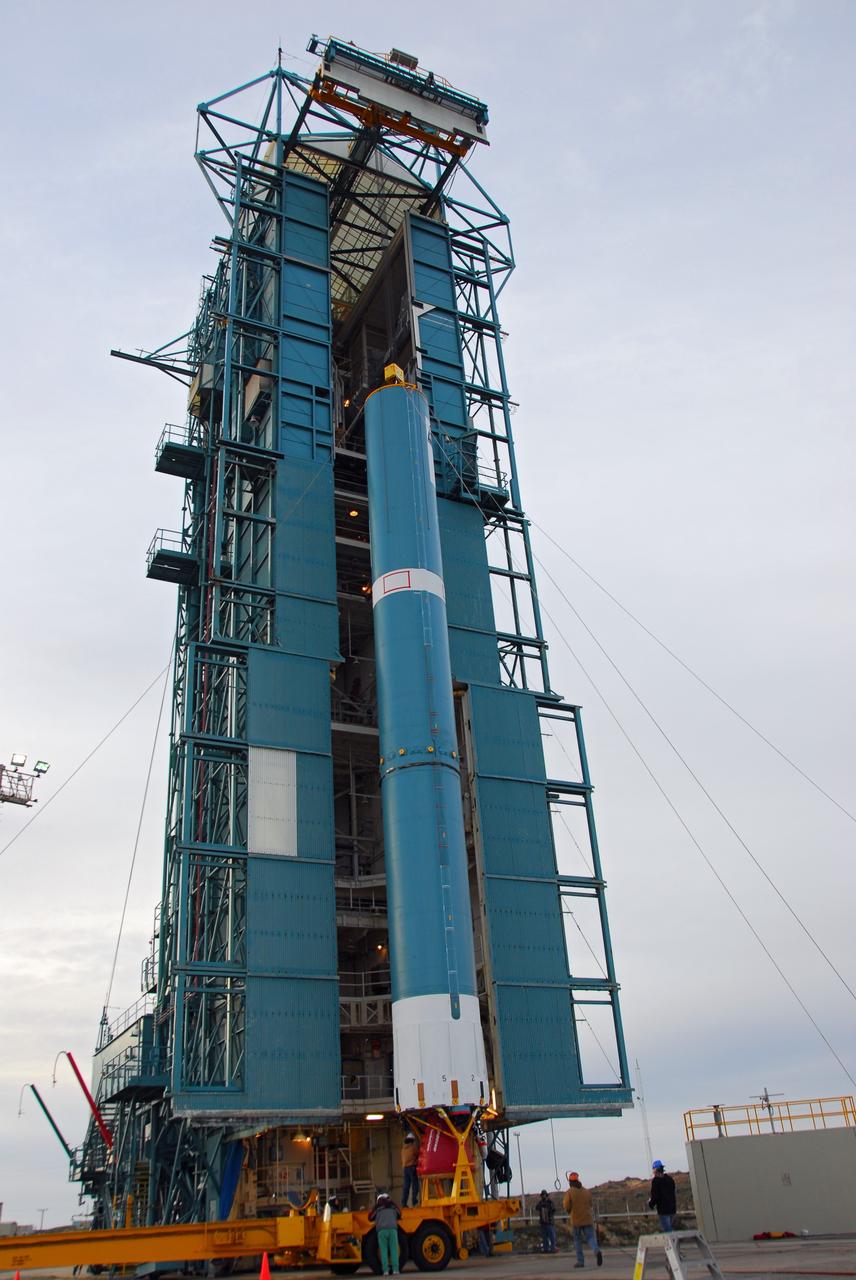
VANDENBERG AIR FORCE BASE, Calif. -- With the aid of an overhead crane, workers lift the first stage of the United Launch Alliance Delta II rocket that will carry the Aquarius/SAC-D spacecraft into low Earth orbit, into the service tower at NASA's Space Launch Complex-2 (SLC-2) at Vandenberg Air Force Base in California. Following final tests, the spacecraft will be integrated to the Delta II in preparation for the targeted June launch. Aquarius, the NASA-built instrument on the SAC-D spacecraft, on its three-year mission, will provide new insights into how variations in ocean surface salinity relate to fundamental climate processes. Photo credit: NASA/VAFB
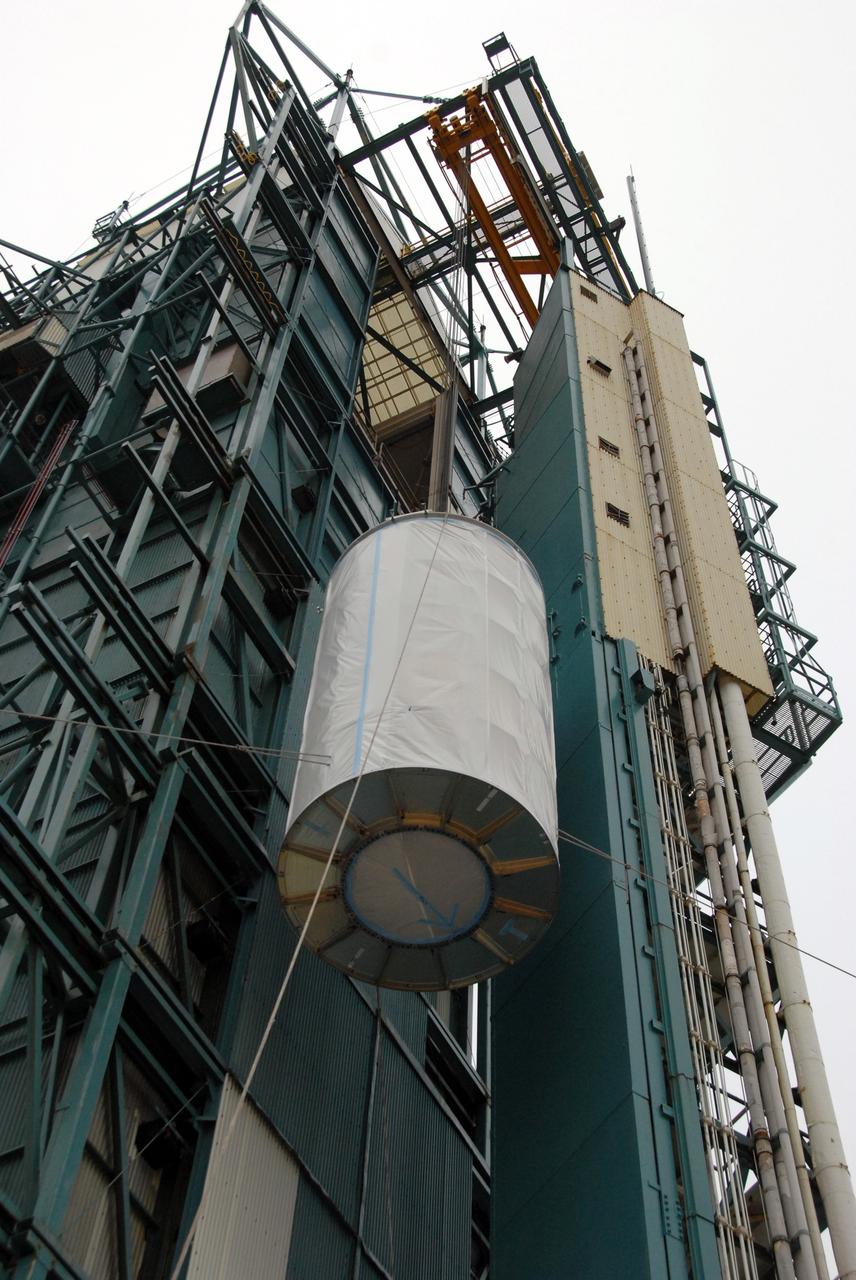
VANDENBERG AIR FORCE BASE, Calif. -- An overhead crane lifts the Aquarius/SAC-D spacecraft, secured inside its payload transportation canister, into the mobile service tower at NASA's Space Launch Complex-2 (SLC-2) at Vandenberg Air Force Base in California. There, the spacecraft will be integrated to a United Launch Alliance Delta II rocket in preparation for the targeted June liftoff. Aquarius, the NASA-built instrument on the SAC-D spacecraft, will provide new insights into how variations in ocean surface salinity relate to fundamental climate processes on its three-year mission. Photo credit: NASA/VAFB
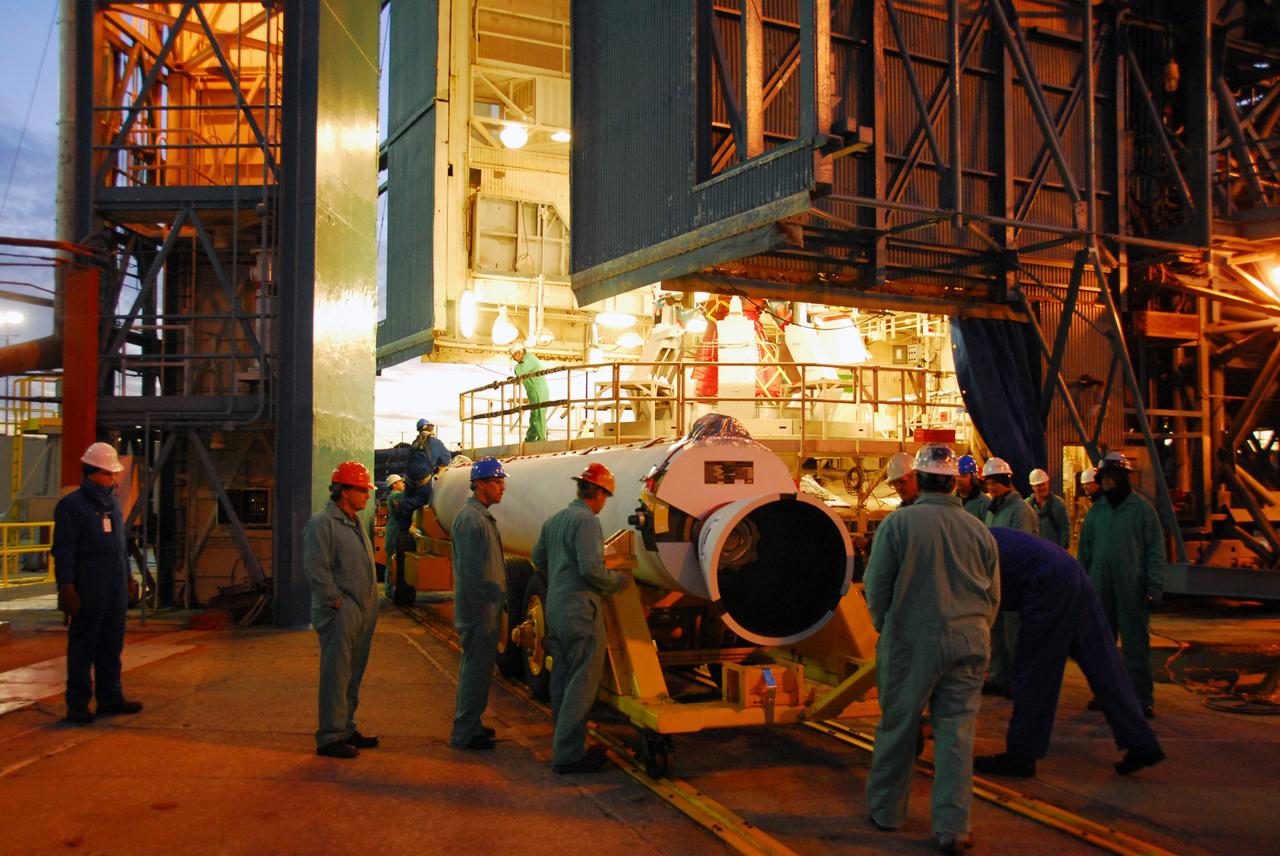
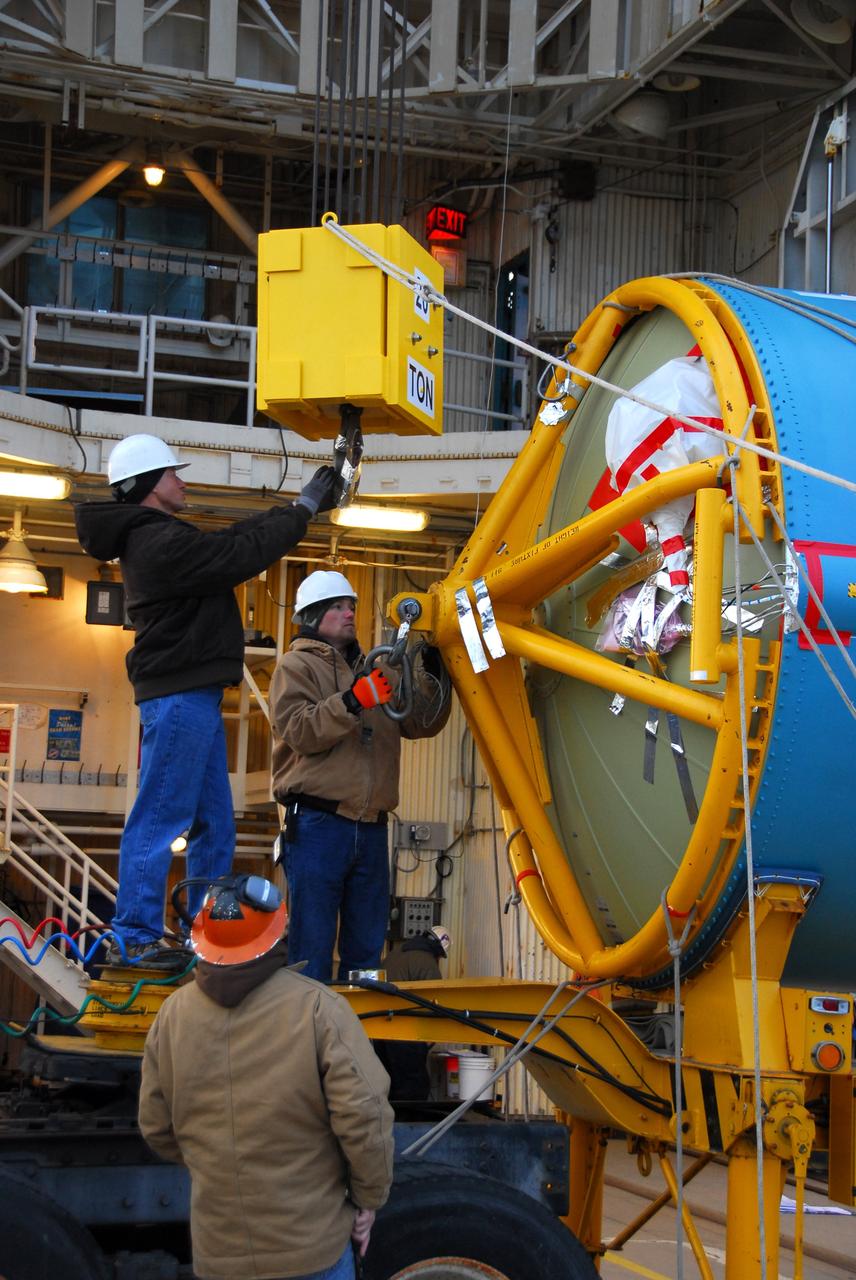
VANDENBERG AIR FORCE BASE, Calif. -- Workers prepare one of three United Launch Alliance Delta II solid rocket motors for its lift into the service tower at NASA's Space Launch Complex-2 (SLC-2) at Vandenberg Air Force Base in California. Following final tests, the spacecraft will be integrated to the Delta II in preparation for the targeted June launch. Aquarius, the NASA-built instrument on the SAC-D spacecraft will provide new insights into how variations in ocean surface salinity relate to fundamental climate processes on its three-year mission. Photo credit: NASA/VAFB
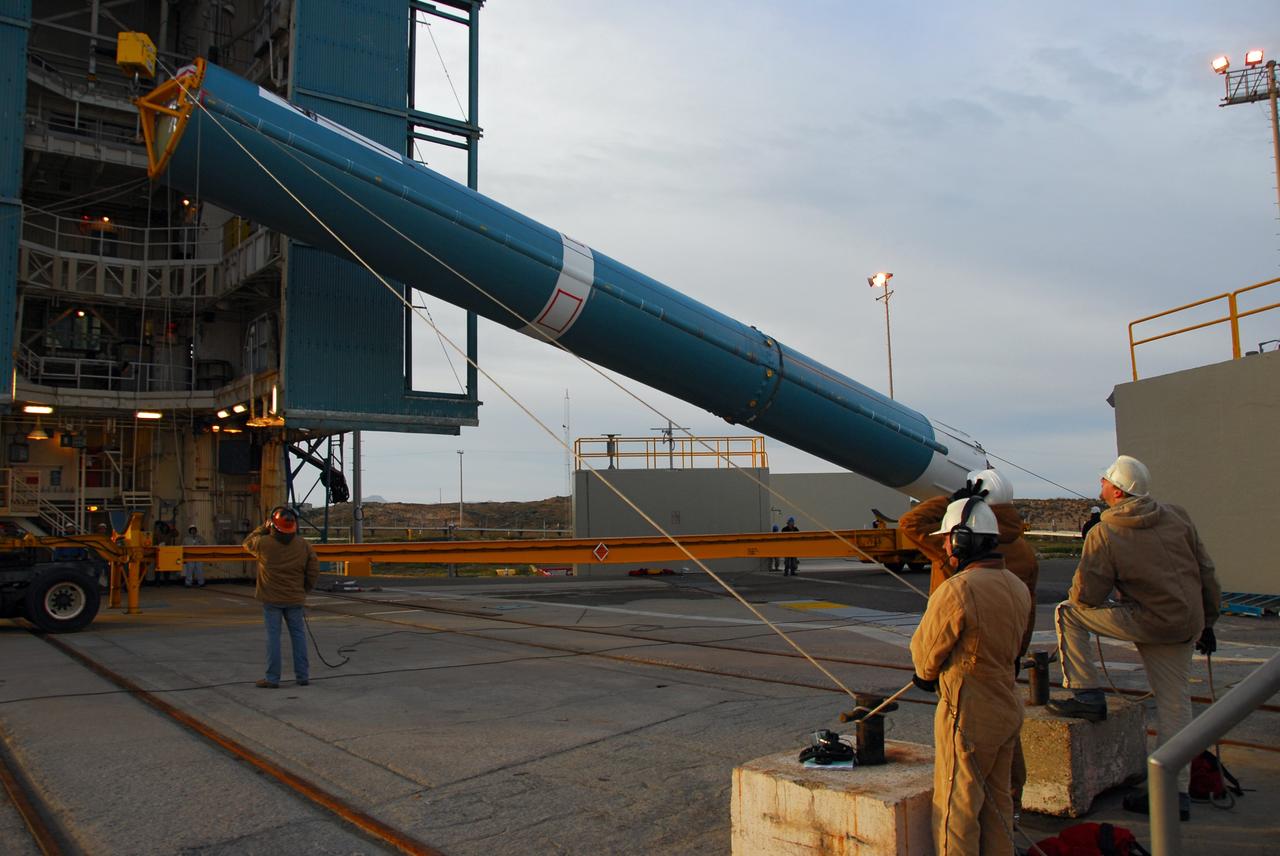
VANDENBERG AIR FORCE BASE, Calif. -- With the aid of an overhead crane, workers lift the first stage of the United Launch Alliance Delta II rocket that will carry the Aquarius/SAC-D spacecraft into low Earth orbit, into the service tower at NASA's Space Launch Complex-2 (SLC-2) at Vandenberg Air Force Base in California. Following final tests, the spacecraft will be integrated to the Delta II in preparation for the targeted June launch. Aquarius, the NASA-built instrument on the SAC-D spacecraft, on its three-year mission, will provide new insights into how variations in ocean surface salinity relate to fundamental climate processes. Photo credit: NASA/VAFB
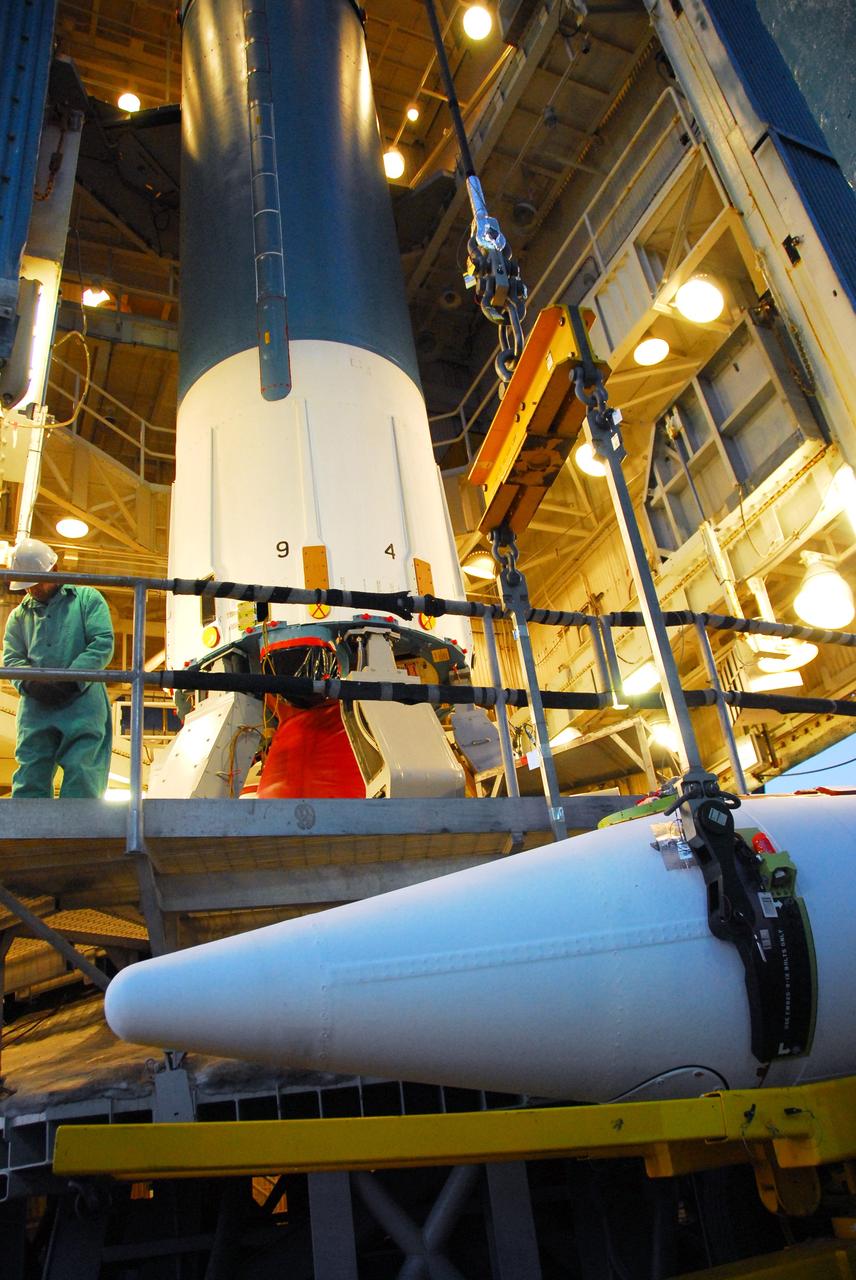
VANDENBERG AIR FORCE BASE, Calif. -- With the aid of an overhead crane workers lift one of three United Launch Alliance Delta II solid rocket motors into the service tower at NASA's Space Launch Complex-2 (SLC-2) at Vandenberg Air Force Base in California. Following final tests, the spacecraft will be integrated to the Delta II in preparation for the targeted June launch. Aquarius, the NASA-built instrument on the SAC-D spacecraft will provide new insights into how variations in ocean surface salinity relate to fundamental climate processes on its three-year mission. Photo credit: NASA/VAFB
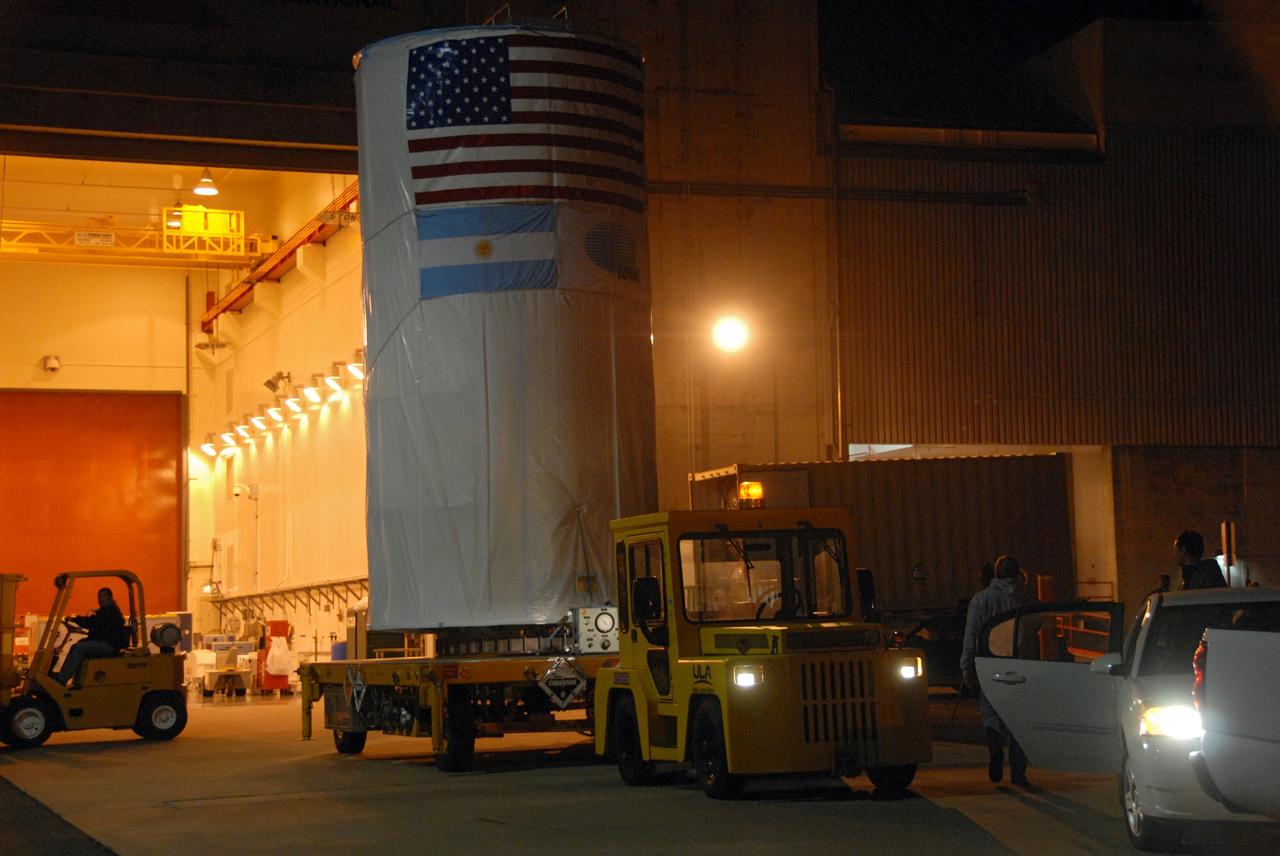
VANDENBERG AIR FORCE BASE, Calif. -- The Aquarius/SAC-D spacecraft, secured inside its payload transportation canister, is being transferred to NASA's Space Launch Complex-2 (SLC-2) at Vandenberg Air Force Base in California. There, the spacecraft will be integrated to a United Launch Alliance Delta II rocket in preparation for the targeted June liftoff. Aquarius, the NASA-built instrument on the SAC-D spacecraft, will provide new insights into how variations in ocean surface salinity relate to fundamental climate processes on its three-year mission. Photo credit: NASA/VAFB

VANDENBERG AIR FORCE BASE, Calif. -- The first stage of the United Launch Alliance Delta II rocket that will carry the Aquarius/SAC-D satellite into low Earth orbit arrives to the launch pad at NASA's Space Launch Complex-2 (SLC-2) at Vandenberg Air Force Base in California. Following final tests, the spacecraft will be integrated to the Delta II in preparation for the targeted June launch. Aquarius, the NASA-built primary instrument on the SAC-D spacecraft, on its three-year mission, will provide new insights into how variations in ocean surface salinity relate to fundamental climate processes. Photo credit: NASA/VAFB
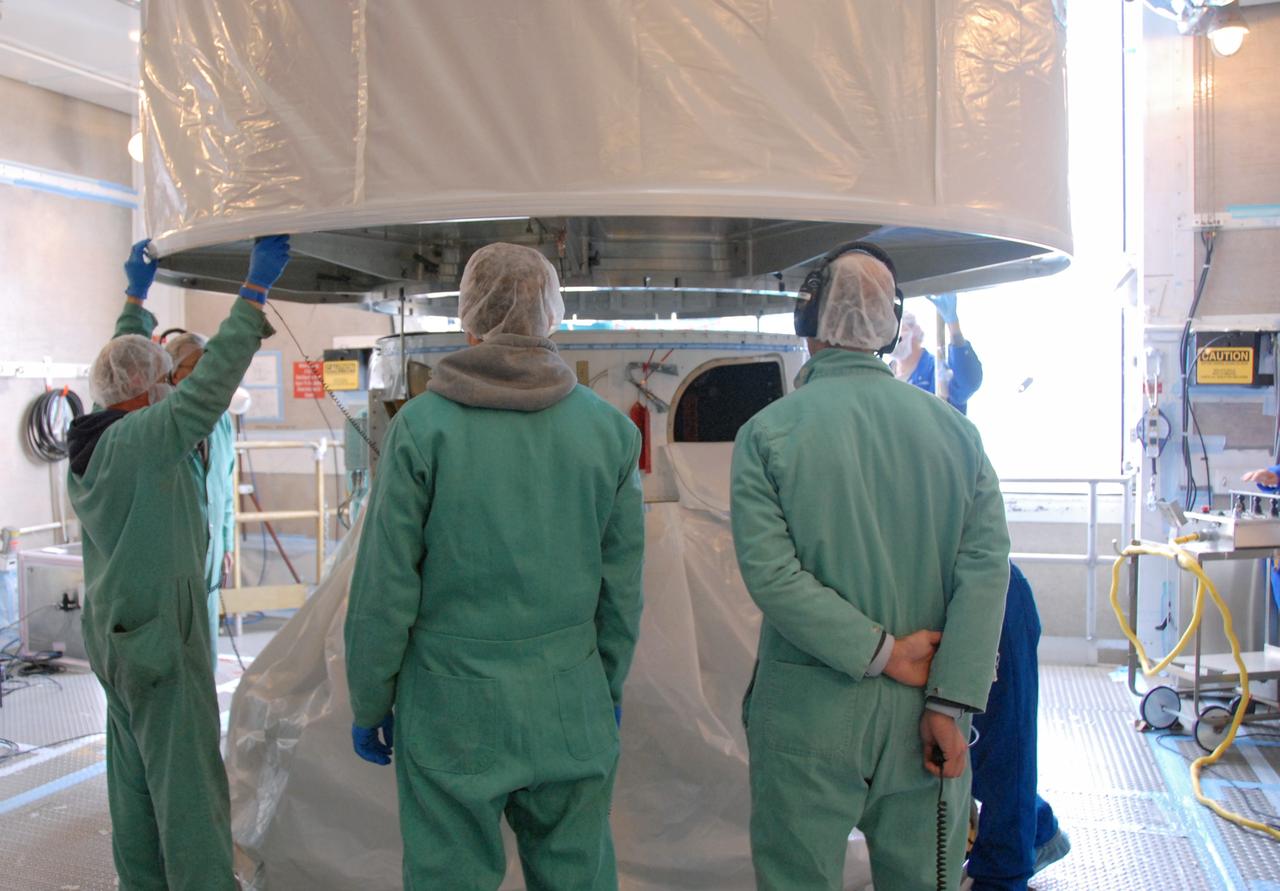
VANDENBERG AIR FORCE BASE, Calif. -- Workers remove the payload transportation canister from the Aquarius/SAC-D spacecraft, after it was lifted into the mobile service tower at NASA's Space Launch Complex-2 (SLC-2) at Vandenberg Air Force Base in California. There, the spacecraft will be integrated to a United Launch Alliance Delta II rocket in preparation for the targeted June liftoff. Aquarius, the NASA-built instrument on the SAC-D spacecraft, will provide new insights into how variations in ocean surface salinity relate to fundamental climate processes on its three-year mission. Photo credit: NASA/VAFB
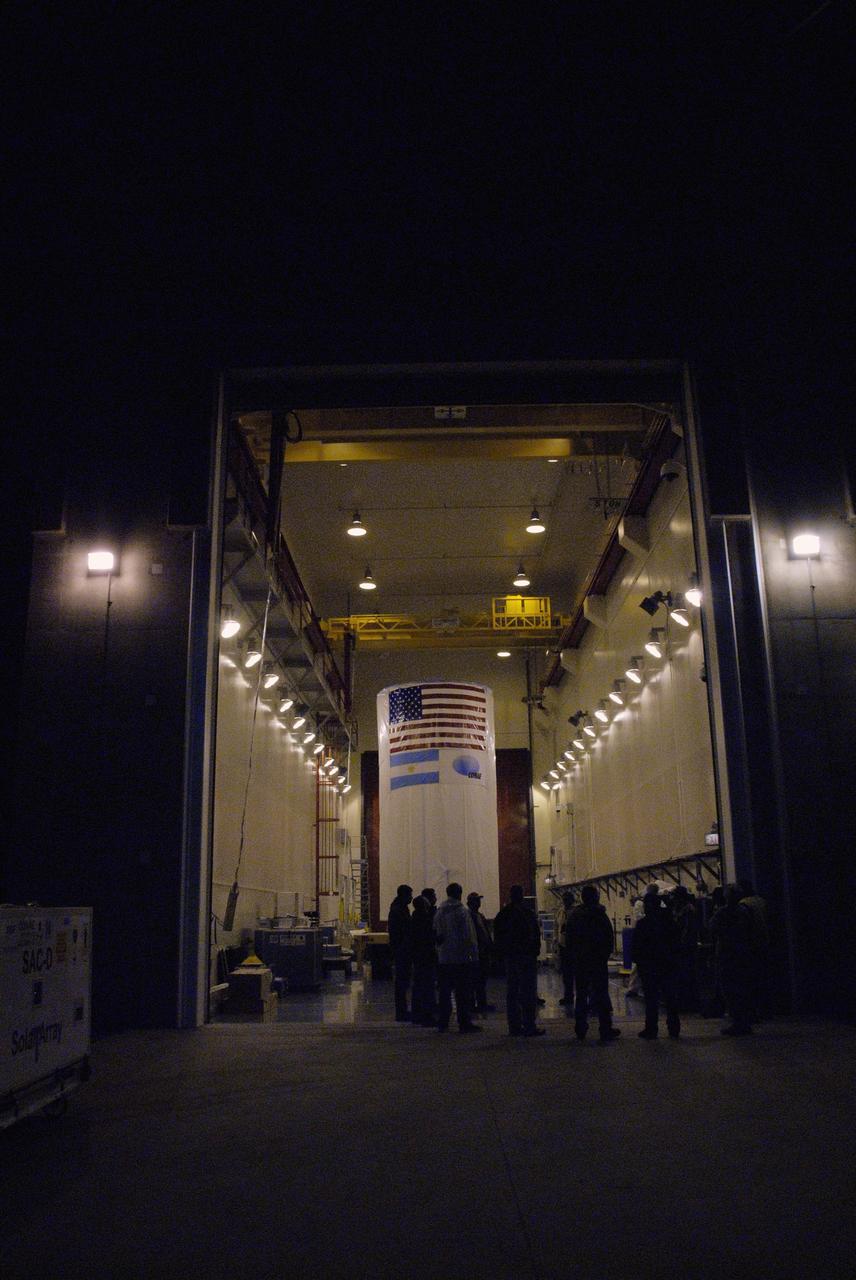
VANDENBERG AIR FORCE BASE, Calif. -- The Aquarius/SAC-D spacecraft is secured inside its payload transportation canister for transfer to NASA's Space Launch Complex-2 (SLC-2) at Vandenberg Air Force Base in California. There, the spacecraft will be integrated to a United Launch Alliance Delta II rocket in preparation for the targeted June liftoff. Aquarius, the NASA-built instrument on the SAC-D spacecraft, will provide new insights into how variations in ocean surface salinity relate to fundamental climate processes on its three-year mission. Photo credit: NASA/VAFB
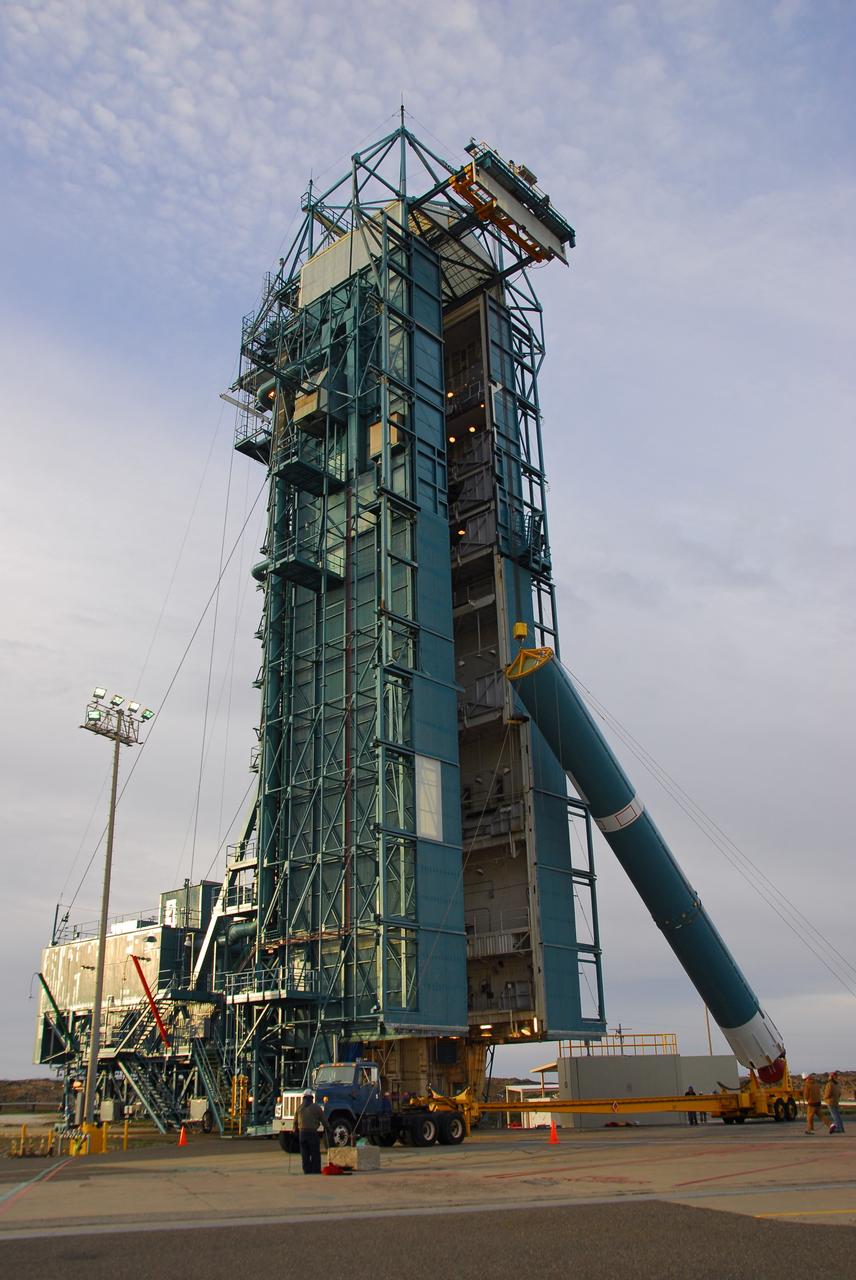
VANDENBERG AIR FORCE BASE, Calif. -- With the aid of an overhead crane, workers lift the first stage of the United Launch Alliance Delta II rocket that will carry the Aquarius/SAC-D spacecraft into low Earth orbit, into the service tower at NASA's Space Launch Complex-2 (SLC-2) at Vandenberg Air Force Base in California. Following final tests, the spacecraft will be integrated to the Delta II in preparation for the targeted June launch. Aquarius, the NASA-built instrument on the SAC-D spacecraft, on its three-year mission, will provide new insights into how variations in ocean surface salinity relate to fundamental climate processes. Photo credit: NASA/VAFB
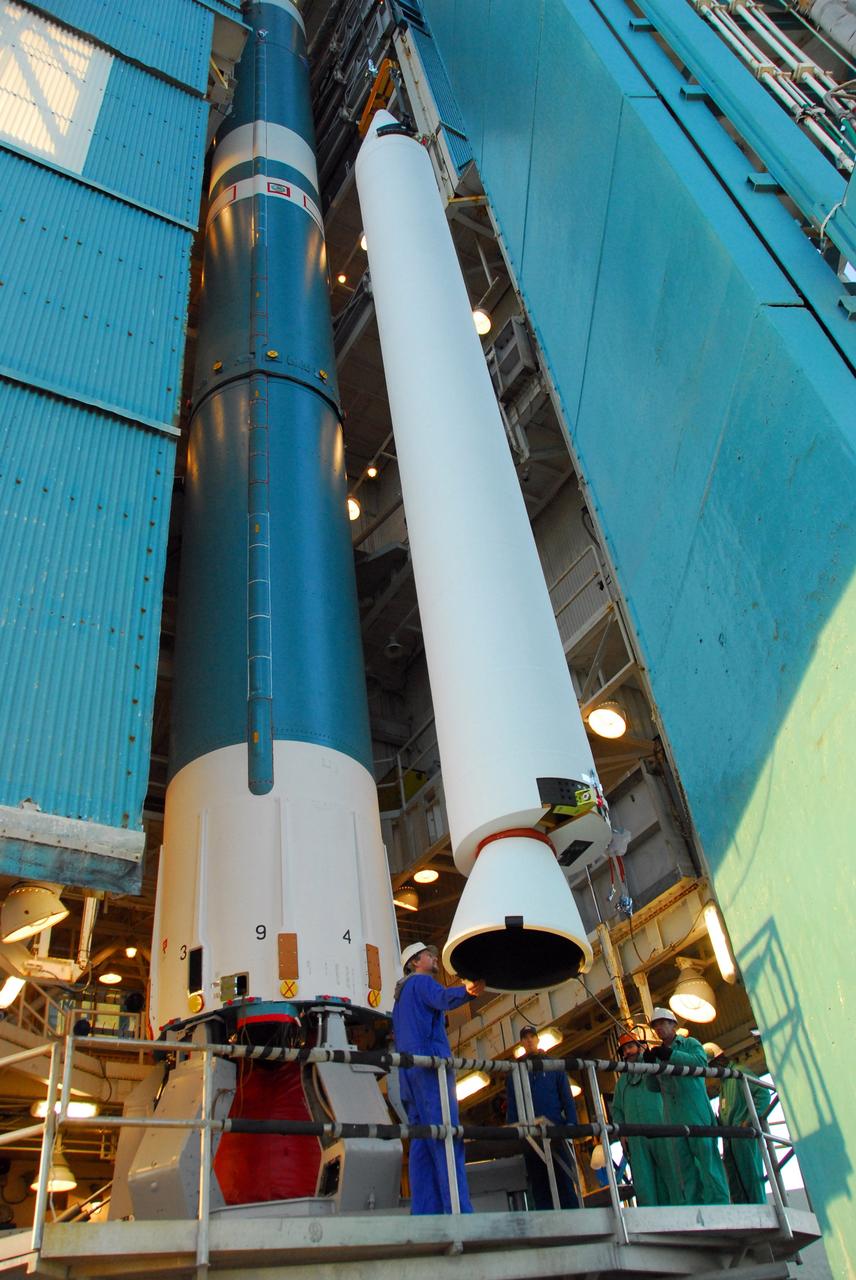
VANDENBERG AIR FORCE BASE, Calif. -- With the aid of an overhead crane workers lift one of three United Launch Alliance Delta II solid rocket motors into the service tower at NASA's Space Launch Complex-2 (SLC-2) at Vandenberg Air Force Base in California. Following final tests, the spacecraft will be integrated to the Delta II in preparation for the targeted June launch. Aquarius, the NASA-built instrument on the SAC-D spacecraft will provide new insights into how variations in ocean surface salinity relate to fundamental climate processes on its three-year mission. Photo credit: NASA/VAFB
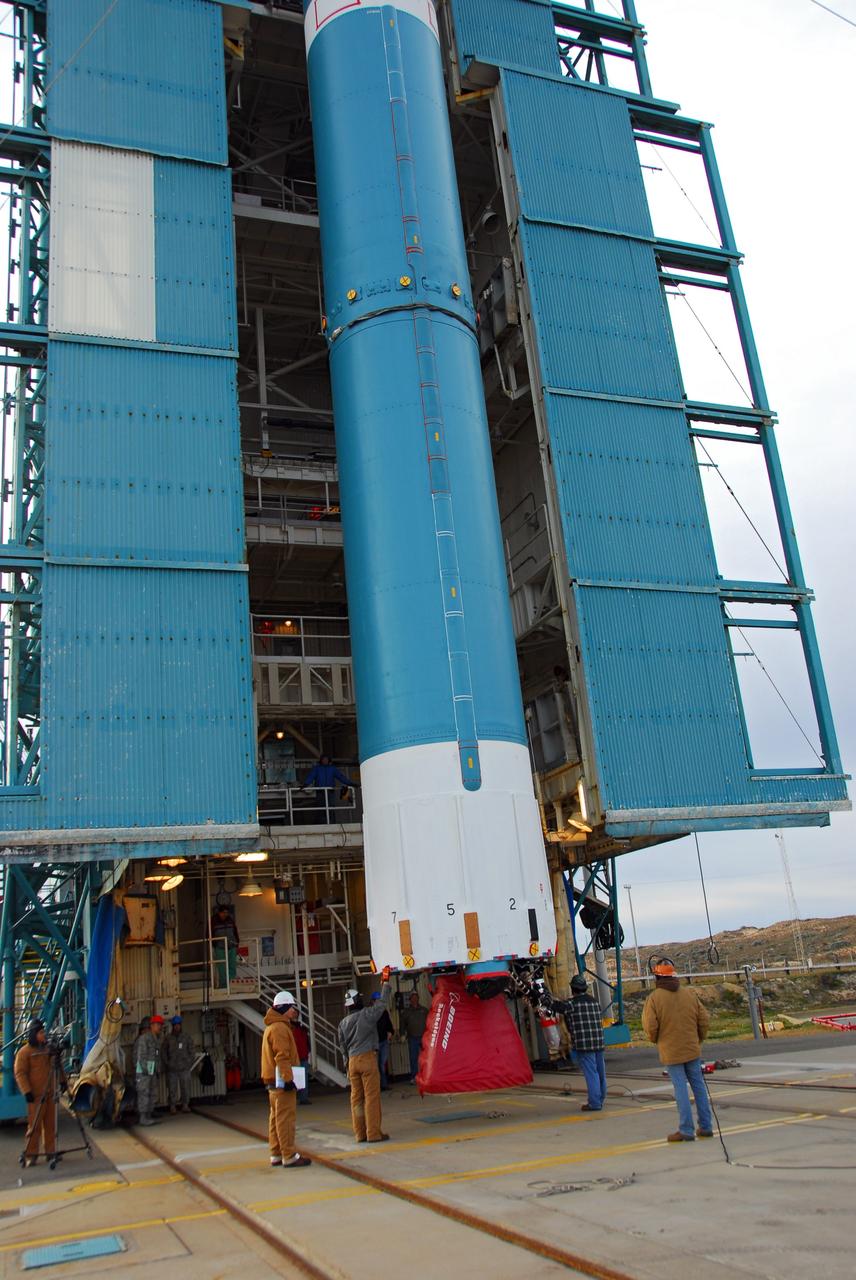
VANDENBERG AIR FORCE BASE, Calif. -- With the aid of an overhead crane, workers guide the first stage of the United Launch Alliance Delta II rocket that will carry the Aquarius/SAC-D spacecraft into low Earth orbit, into the service tower at NASA's Space Launch Complex-2 (SLC-2) at Vandenberg Air Force Base in California. Following final tests, the spacecraft will be integrated to the Delta II in preparation for the targeted June launch. Aquarius, the NASA-built instrument on the SAC-D spacecraft, on its three-year mission, will provide new insights into how variations in ocean surface salinity relate to fundamental climate processes. Photo credit: NASA/VAFB
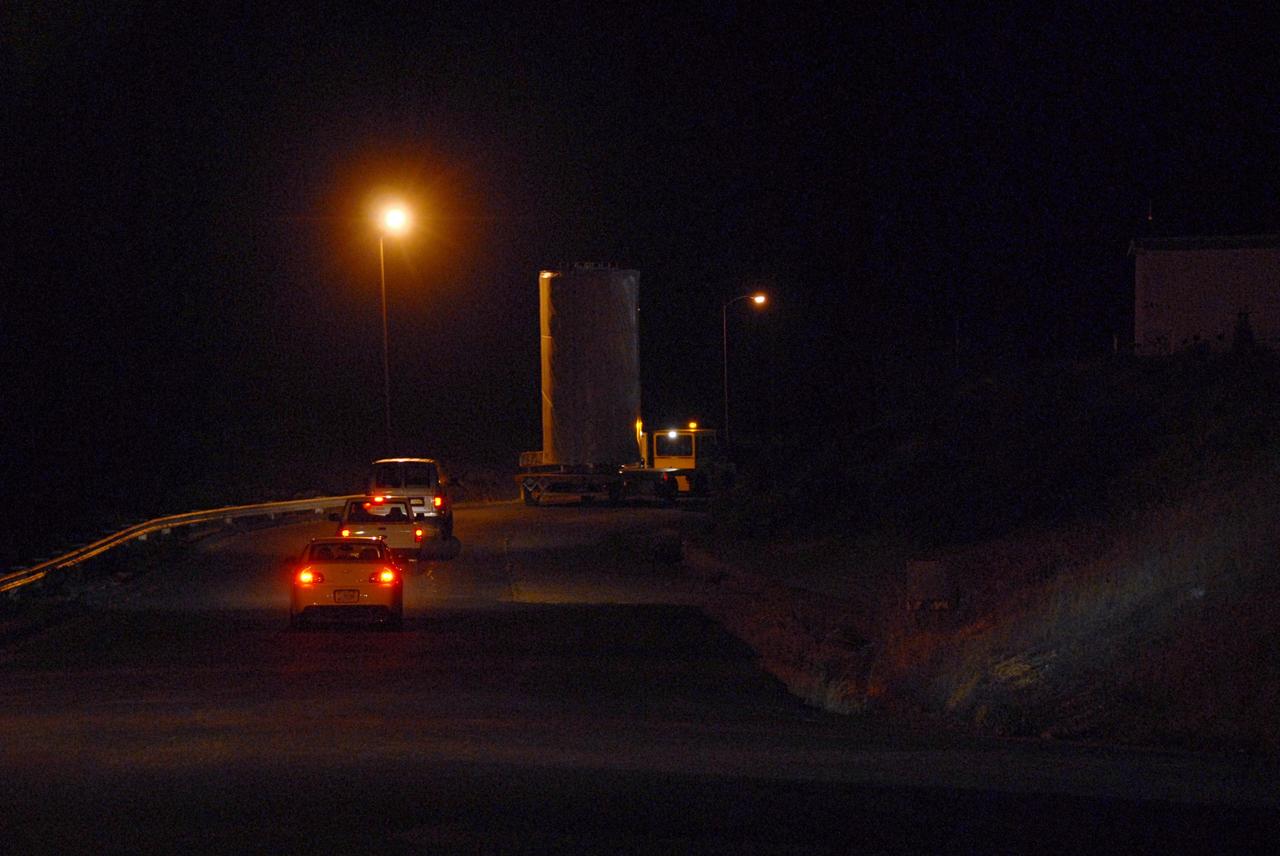
VANDENBERG AIR FORCE BASE, Calif. -- The Aquarius/SAC-D spacecraft, secured inside its payload transportation canister, is being transferred to NASA's Space Launch Complex-2 (SLC-2) at Vandenberg Air Force Base in California. There, the spacecraft will be integrated to a United Launch Alliance Delta II rocket in preparation for the targeted June liftoff. Aquarius, the NASA-built instrument on the SAC-D spacecraft, will provide new insights into how variations in ocean surface salinity relate to fundamental climate processes on its three-year mission. Photo credit: NASA/VAFB
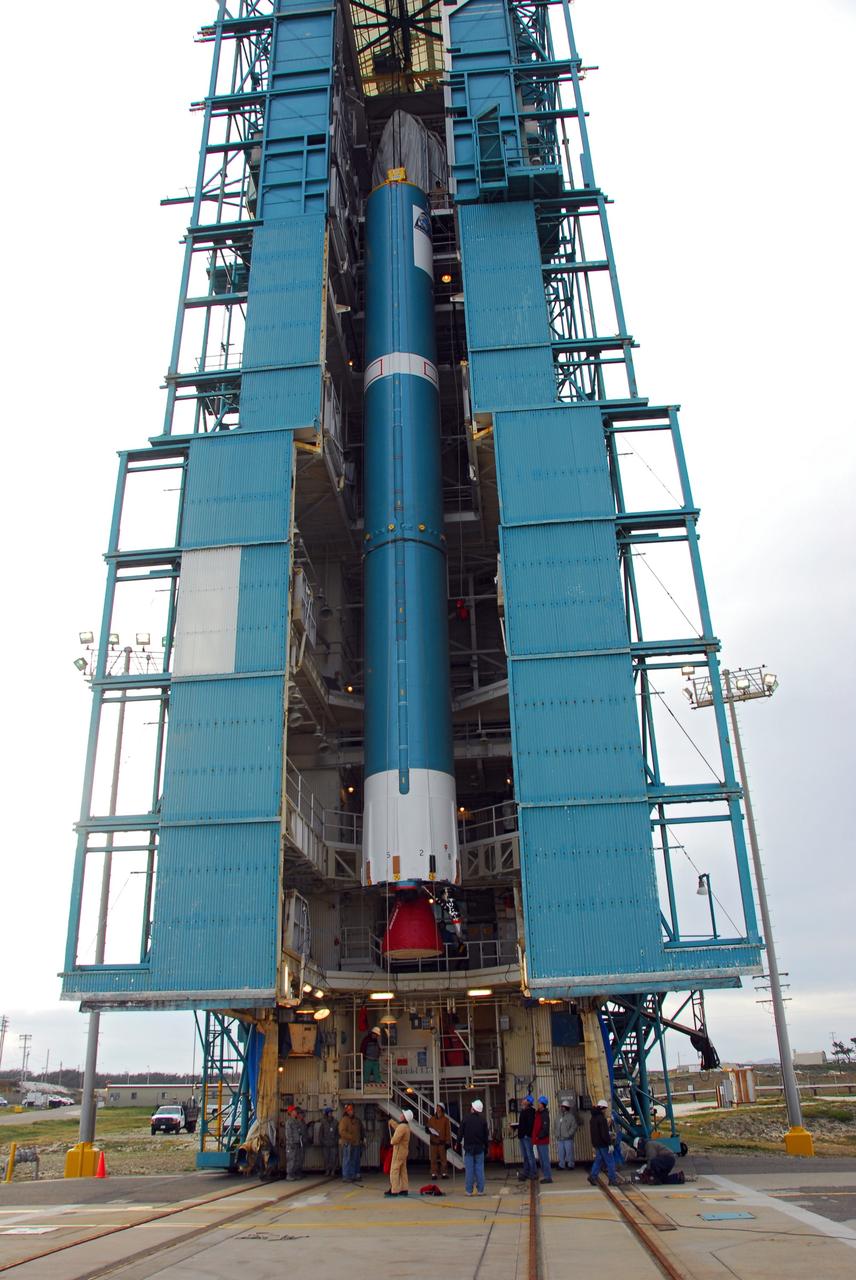
VANDENBERG AIR FORCE BASE, Calif. -- With the aid of an overhead crane, workers guide the first stage of the United Launch Alliance Delta II rocket that will carry the Aquarius/SAC-D spacecraft into low Earth orbit, into the service tower at NASA's Space Launch Complex-2 (SLC-2) at Vandenberg Air Force Base in California. Following final tests, the spacecraft will be integrated to the Delta II in preparation for the targeted June launch. Aquarius, the NASA-built instrument on the SAC-D spacecraft, on its three-year mission, will provide new insights into how variations in ocean surface salinity relate to fundamental climate processes. Photo credit: NASA/VAFB
VANDENBERG AIR FORCE BASE, Calif. -- Workers prepare the first stage of the United Launch Alliance Delta II rocket that will carry the Aquarius/SAC-D spacecraft into low Earth orbit, for its vertical lift into the service tower at NASA's Space Launch Complex-2 (SLC-2) at Vandenberg Air Force Base in California. Following final tests, the spacecraft will be integrated to the Delta II in preparation for the targeted June launch. Aquarius, the NASA-built instrument on the SAC-D spacecraft, on its three-year mission, will provide new insights into how variations in ocean surface salinity relate to fundamental climate processes. Photo credit: NASA/VAFB
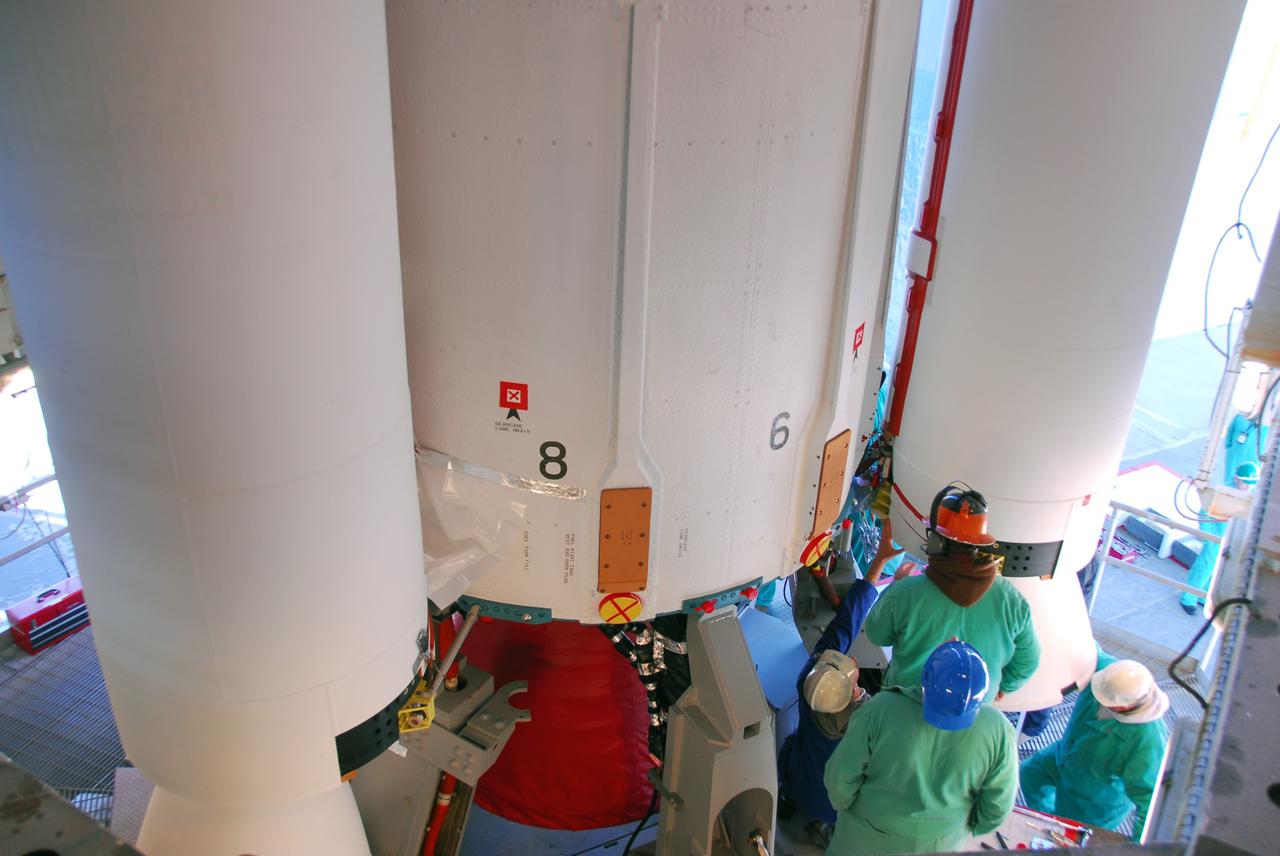
VANDENBERG AIR FORCE BASE, Calif. -- Workers attach one of three solid rocket motors to a United Launch Alliance Delta II launch vehicle in the service tower at NASA's Space Launch Complex-2 (SLC-2) at Vandenberg Air Force Base in California. Following final tests, the spacecraft will be integrated to the Delta II in preparation for the targeted June launch. Aquarius, the NASA-built instrument on the SAC-D spacecraft will provide new insights into how variations in ocean surface salinity relate to fundamental climate processes on its three-year mission. Photo credit: NASA/VAFB
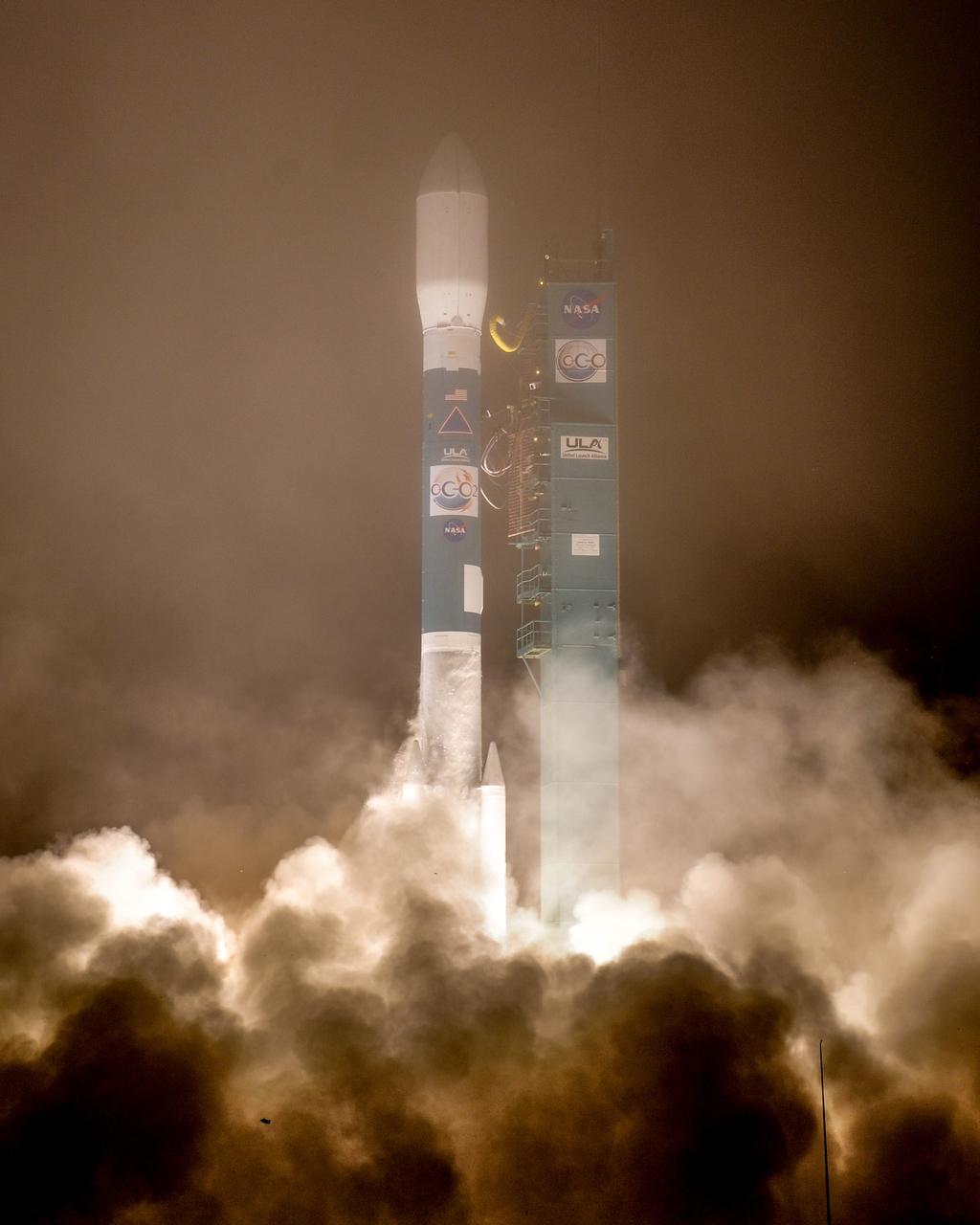
VANDENBERG AIR FORCE BASE, Calif. – At Space Launch Complex 2 on Vandenberg Air Force Base in California, an exhaust cloud builds around the United Launch Alliance Delta II rocket carrying NASA's Orbiting Carbon Observatory-2, or OCO-2, into space. Launch was on schedule at 5:56 a.m. EDT on July 2 following the repair of the pad's water suppression system, which failed on the first launch attempt July 1. OCO-2 is NASA’s first mission dedicated to studying atmospheric carbon dioxide, the leading human-produced greenhouse gas driving changes in Earth’s climate. OCO-2 will provide a new tool for understanding the human and natural sources of carbon dioxide emissions and the natural "sinks" that absorb carbon dioxide and help control its buildup. The observatory will measure the global geographic distribution of these sources and sinks and study their changes over time. To learn more about OCO-2, visit http://www.nasa.gov/oco2. Photo credit: NASA/30th Space Communication Squadron
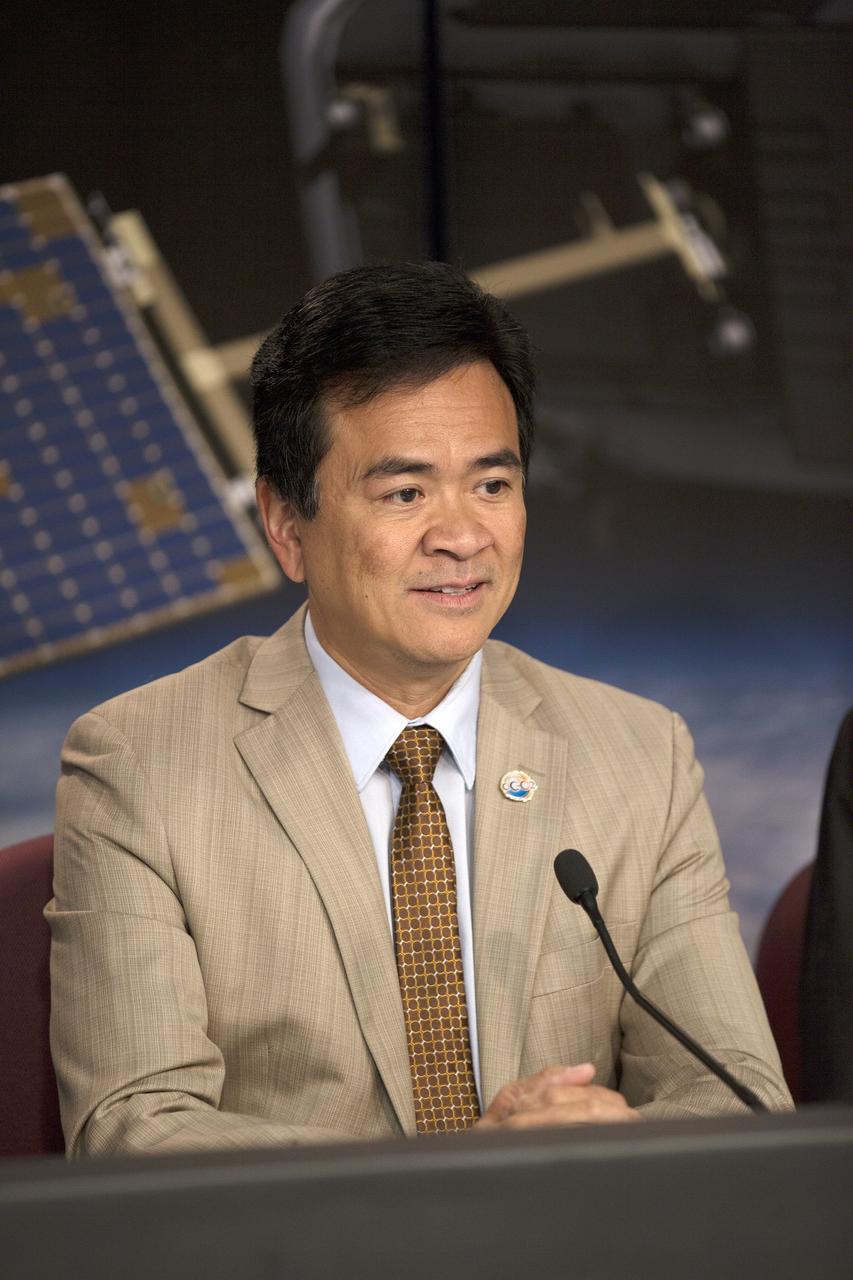
VANDENBERG AIR FORCE BASE, Calif. – Ralph Basilio, project manager for NASA's Orbiting Carbon Observatory-2, or OCO-2, from NASA's Jet Propulsion Laboratory participates in a post-launch news conference at Vandenberg Air Force Base in California following the successful launch of the satellite. Liftoff of OCO-2 from Space Launch Complex 2 aboard a United Launch Alliance Delta II rocket was on schedule at 5:56 a.m. EDT on July 2 following the repair of the pad's water suppression system, which failed on the first launch attempt July 1. OCO-2 is NASA’s first mission dedicated to studying atmospheric carbon dioxide, the leading human-produced greenhouse gas driving changes in Earth’s climate. OCO-2 will provide a new tool for understanding the human and natural sources of carbon dioxide emissions and the natural "sinks" that absorb carbon dioxide and help control its buildup. The observatory will measure the global geographic distribution of these sources and sinks and study their changes over time. To learn more about OCO-2, visit http://www.nasa.gov/oco2. Photo credit: NASA/Kim Shiflett
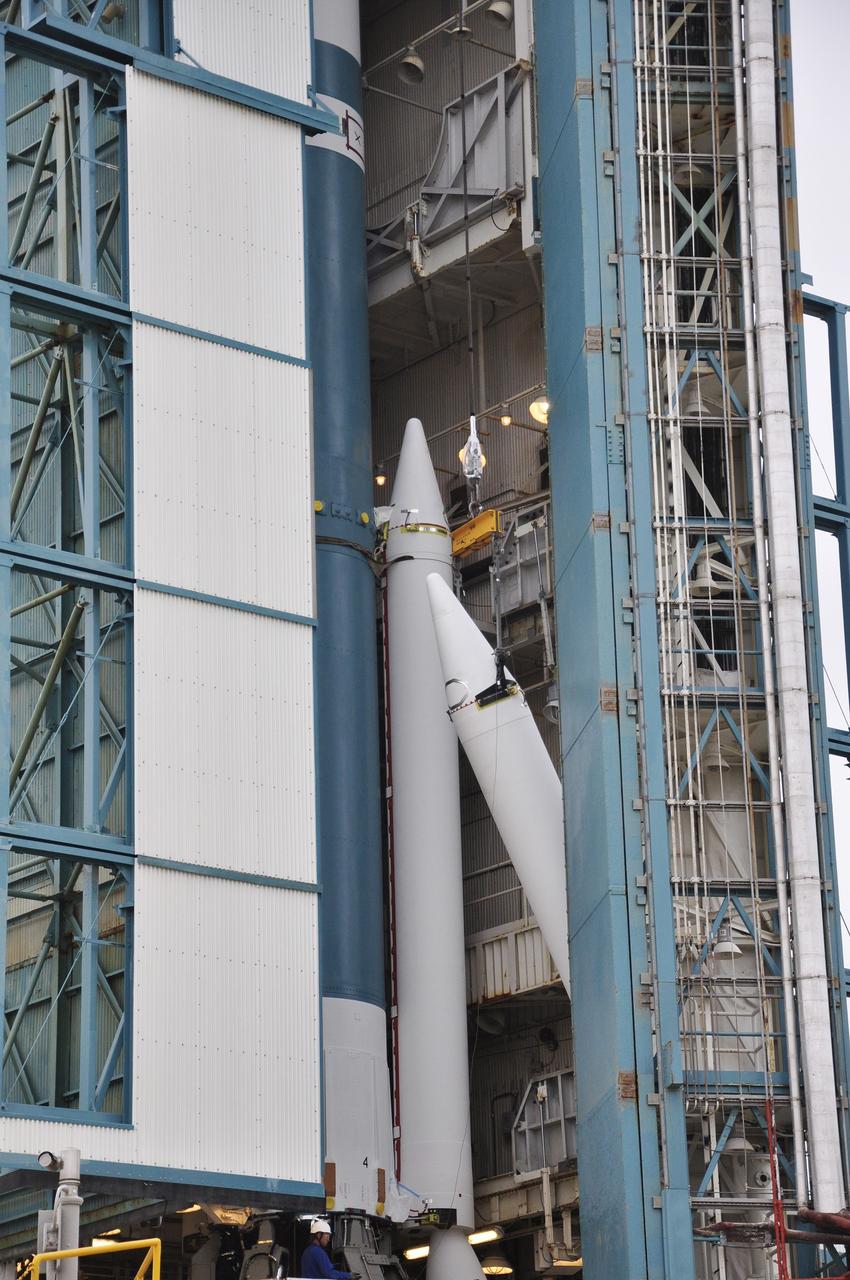
VANDENBERG AIR FORCE BASE, Calif. – The third solid rocket motor, or SRM, for NASA's Orbiting Carbon Observatory-2 mission, or OCO-2, is lifted into place beside the Delta II first stage, with two SRMs already attached, in the mobile service tower at Space Launch Complex 2 on Vandenberg Air Force Base in California. Operations are underway to attach the rocket's three SRMs, known as graphite epoxy motors, to its first stage. OCO-2 is scheduled to launch into a polar Earth orbit aboard a United Launch Alliance Delta II 7320-10C rocket in July. Once in orbit, OCO-2 will collect precise global measurements of carbon dioxide in the Earth's atmosphere and provide scientists with a better idea of the chemical compound's impacts on climate change. Scientists will analyze this data to improve our understanding of the natural processes and human activities that regulate the abundance and distribution of this important atmospheric gas. To learn more about OCO-2, visit http://oco.jpl.nasa.gov. Photo credit: NASA/Randy Beaudoin
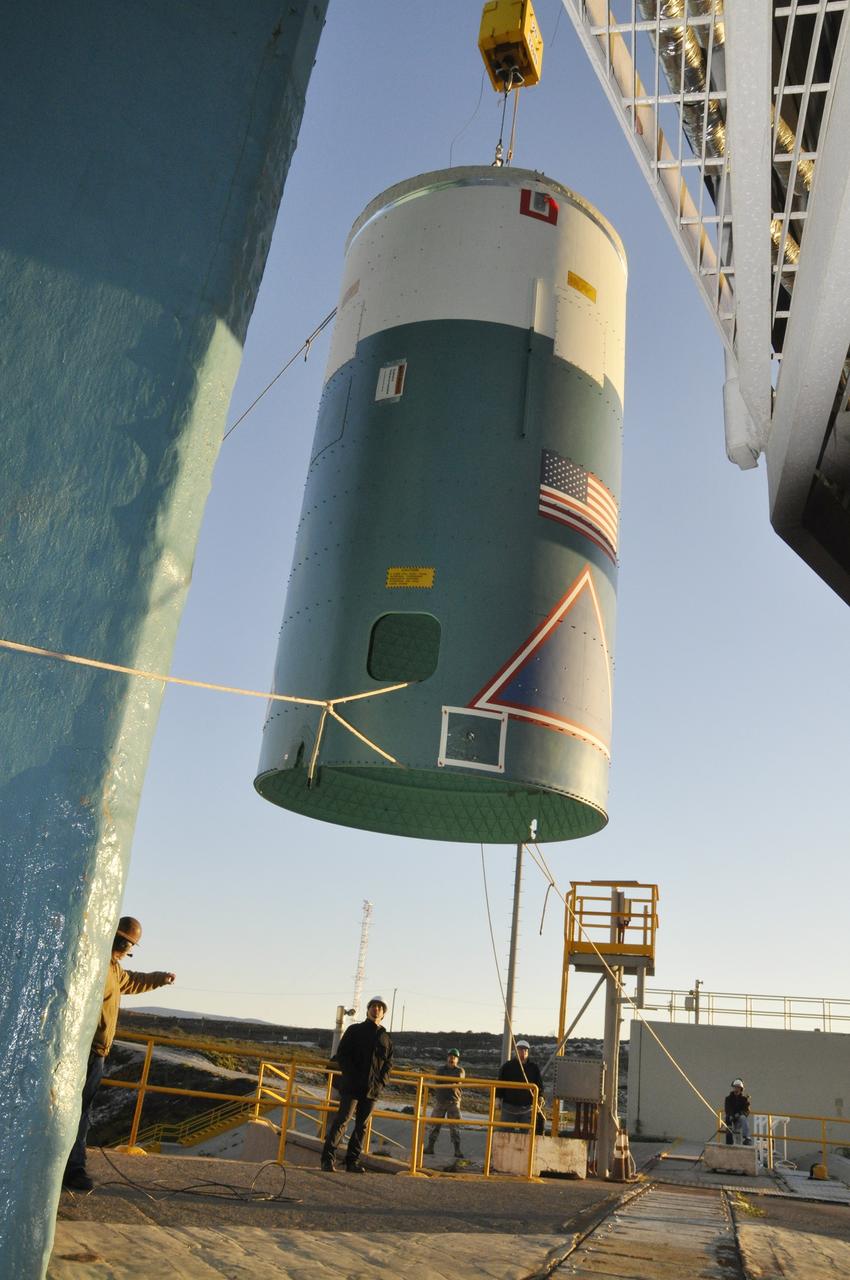
VANDENBERG AIR FORCE BASE, Calif. – A crane lifts the interstage adapter, or ISA, for NASA's Orbiting Carbon Observatory-2 mission, or OCO-2, up the side of the mobile service tower at Space Launch Complex 2 on Vandenberg Air Force Base in California. OCO-2 is scheduled to launch into a polar Earth orbit aboard a United Launch Alliance Delta II 7320-10C rocket in July. The ISA is the interface between the Delta II first and second stages. The second stage engine fits within the ISA. Once in orbit, OCO-2 will collect precise global measurements of carbon dioxide in the Earth's atmosphere and provide scientists with a better idea of the chemical compound's impacts on climate change. Scientists will analyze this data to improve our understanding of the natural processes and human activities that regulate the abundance and distribution of this important atmospheric gas. To learn more about OCO-2, visit http://oco.jpl.nasa.gov. Photo credit: NASA/Randy Beaudoin
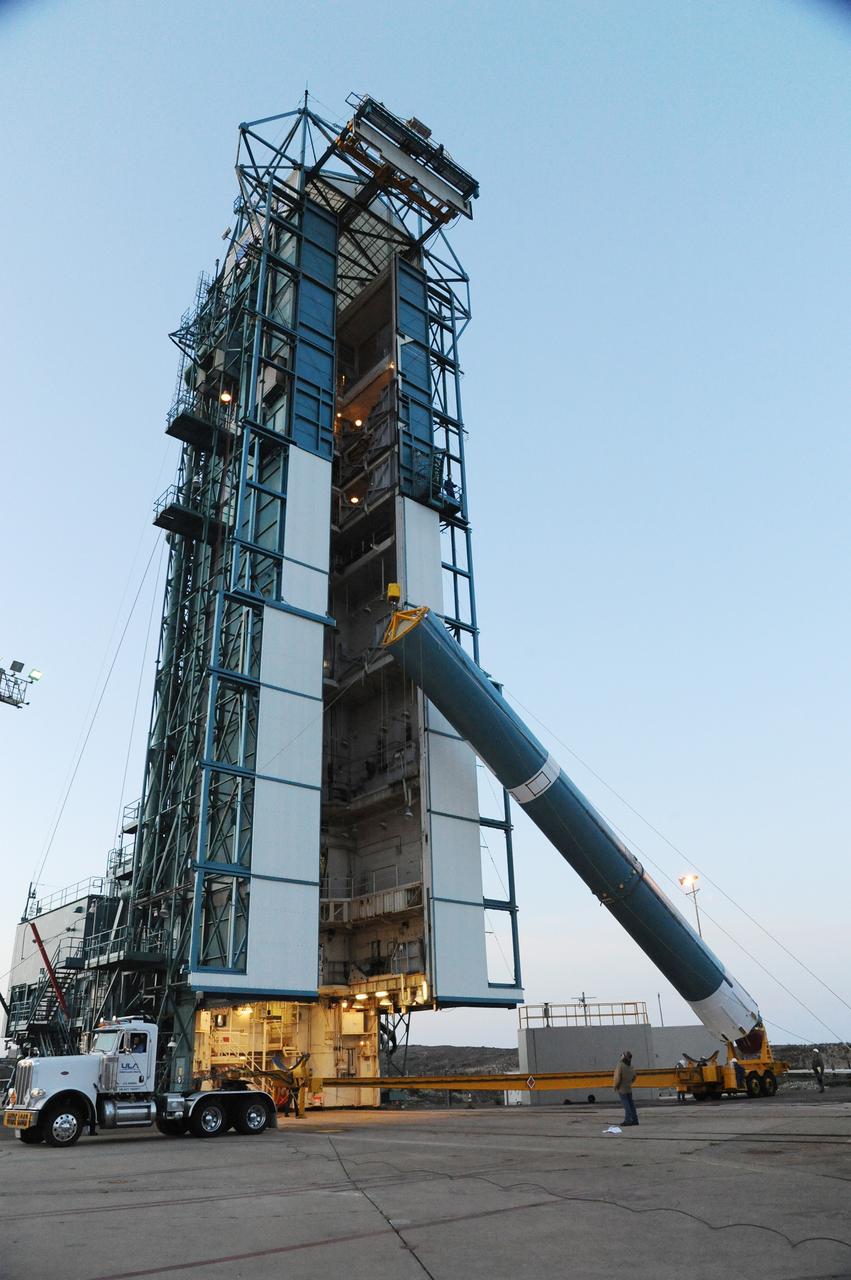
VANDENBERG AIR FORCE BASE, Calif. – The United Launch Alliance Delta II rocket for NASA's Orbiting Carbon Observatory-2 mission, or OCO-2, is lifted into a vertical position beside the mobile service tower at Space Launch Complex 2 on Vandenberg Air Force Base in California. Launch is scheduled for July 1, 2014. The observatory will collect precise global measurements of carbon dioxide in the Earth's atmosphere and provide scientists with a better idea of the chemical compound's impacts on climate change. Scientists will analyze this data to improve our understanding of the natural processes and human activities that regulate the abundance and distribution of this important atmospheric gas. To learn more about OCO-2, visit http://oco.jpl.nasa.gov. Photo credit: NASA/Mark Mackley, 30th Space Wing

VANDENBERG AIR FORCE BASE, Calif. – NASA's Orbiting Carbon Observatory-2, or OCO-2, stands ready for launch aboard a United Launch Alliance Delta II rocket following rollback of the mobile service tower on Space Launch Complex 2 on Vandenberg Air Force Base in California. Launch of OCO-2 is scheduled for 5:56 a.m. EDT on July 2 following the repair of the pad's water suppression system, which failed on the first launch attempt July 1. OCO-2 is NASA’s first mission dedicated to studying atmospheric carbon dioxide, the leading human-produced greenhouse gas driving changes in Earth’s climate. OCO-2 will provide a new tool for understanding the human and natural sources of carbon dioxide emissions and the natural "sinks" that absorb carbon dioxide and help control its buildup. The observatory will measure the global geographic distribution of these sources and sinks and study their changes over time. To learn more about OCO-2, visit http://www.nasa.gov/oco2. Photo credit: NASA/Kim Shiflett

VANDENBERG AIR FORCE BASE, Calif. – The United Launch Alliance Delta II rocket lifts off through the fog at Space Launch Complex 2 on Vandenberg Air Force Base in California, engines blazing, carrying NASA's Orbiting Carbon Observatory-2, or OCO-2, to orbit. Launch was on schedule at 5:56 a.m. EDT on July 2 following the repair of the pad's water suppression system, which failed on the first launch attempt July 1. OCO-2 is NASA’s first mission dedicated to studying atmospheric carbon dioxide, the leading human-produced greenhouse gas driving changes in Earth’s climate. OCO-2 will provide a new tool for understanding the human and natural sources of carbon dioxide emissions and the natural "sinks" that absorb carbon dioxide and help control its buildup. The observatory will measure the global geographic distribution of these sources and sinks and study their changes over time. To learn more about OCO-2, visit http://www.nasa.gov/oco2. Photo credit: NASA/30th Space Communication Squadron
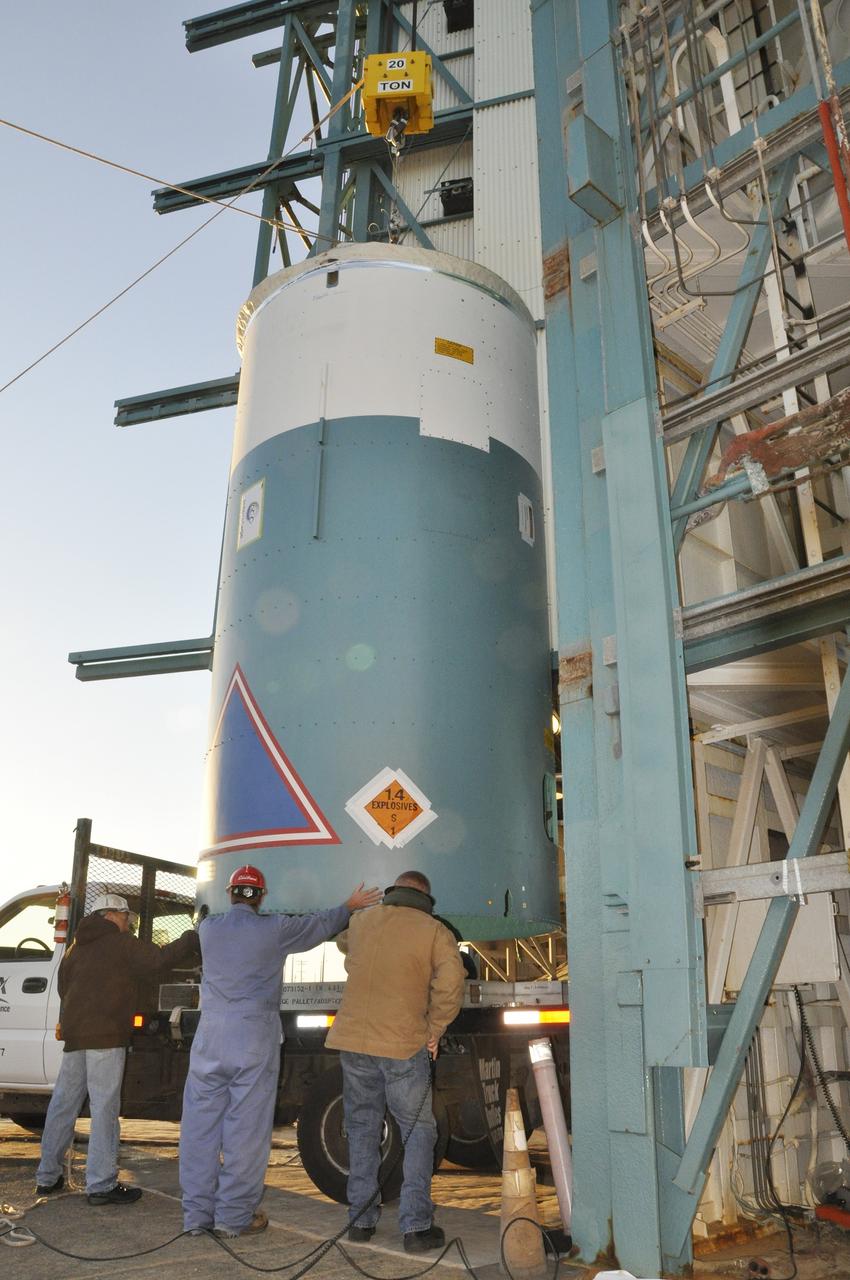
VANDENBERG AIR FORCE BASE, Calif. – Workers steady the interstage adapter, or ISA, for NASA's Orbiting Carbon Observatory-2 mission, or OCO-2, as a crane lifts it from its transporter next to the mobile service tower at Space Launch Complex 2 on Vandenberg Air Force Base in California. OCO-2 is scheduled to launch into a polar Earth orbit aboard a United Launch Alliance Delta II 7320-10C rocket in July. The ISA is the interface between the Delta II first and second stages. The second stage engine fits within the ISA. Once in orbit, OCO-2 will collect precise global measurements of carbon dioxide in the Earth's atmosphere and provide scientists with a better idea of the chemical compound's impacts on climate change. Scientists will analyze this data to improve our understanding of the natural processes and human activities that regulate the abundance and distribution of this important atmospheric gas. To learn more about OCO-2, visit http://oco.jpl.nasa.gov. Photo credit: NASA/Randy Beaudoin
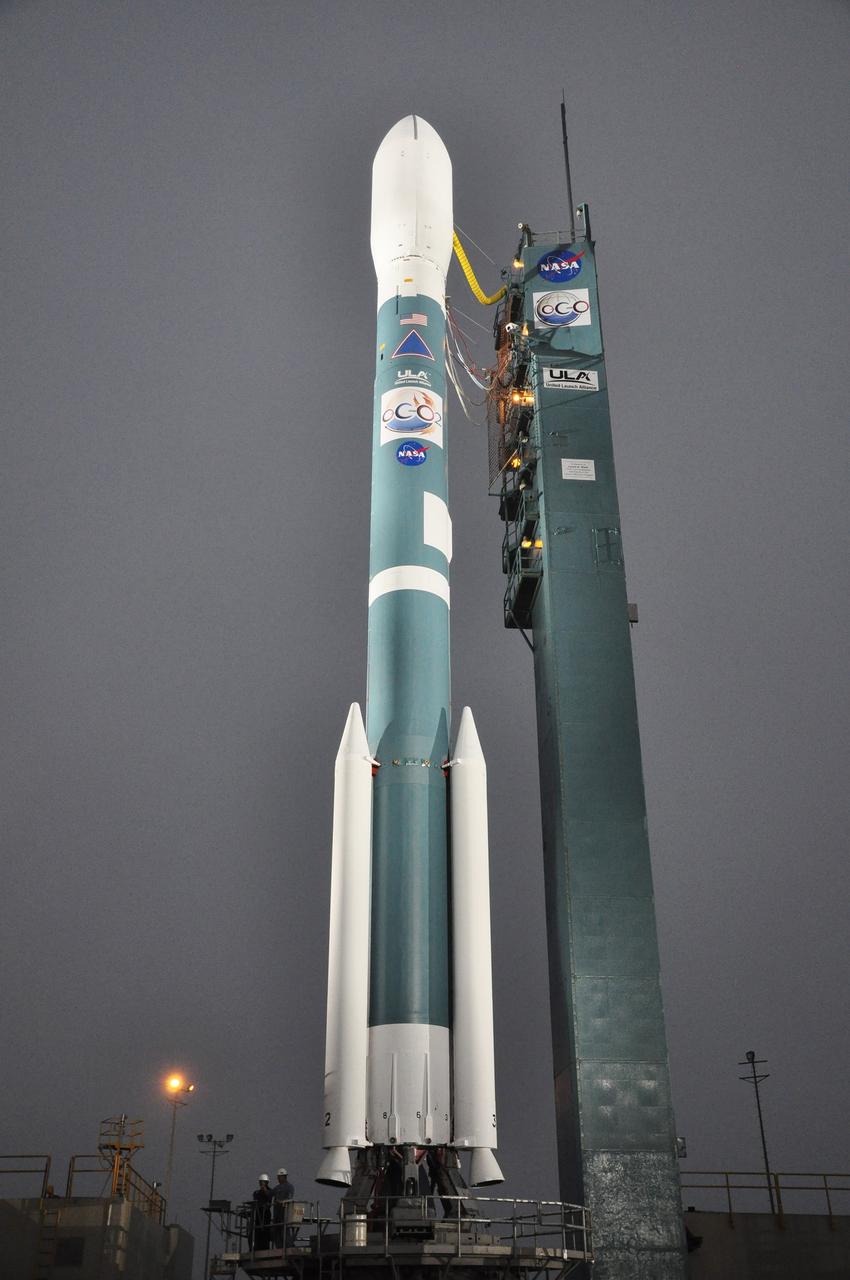
VANDENBERG AIR FORCE BASE, Calif. – At Vandenberg Air Force Base in California, the United Launch Alliance Delta II rocket carrying NASA's Orbiting Carbon Observatory-2, or OCO-2, awaits loading of its cryogenic propellants following rollback of the mobile service tower on Space Launch Complex 2. Launch is scheduled for 5:56 a.m. EDT on July 1. OCO-2 is NASA’s first mission dedicated to studying atmospheric carbon dioxide, the leading human-produced greenhouse gas driving changes in Earth’s climate. OCO-2 will provide a new tool for understanding the human and natural sources of carbon dioxide emissions and the natural "sinks" that absorb carbon dioxide and help control its buildup. The observatory will measure the global geographic distribution of these sources and sinks and study their changes over time. To learn more about OCO-2, visit http://www.nasa.gov/oco2. Photo credit: NASA/Randy Beaudoin
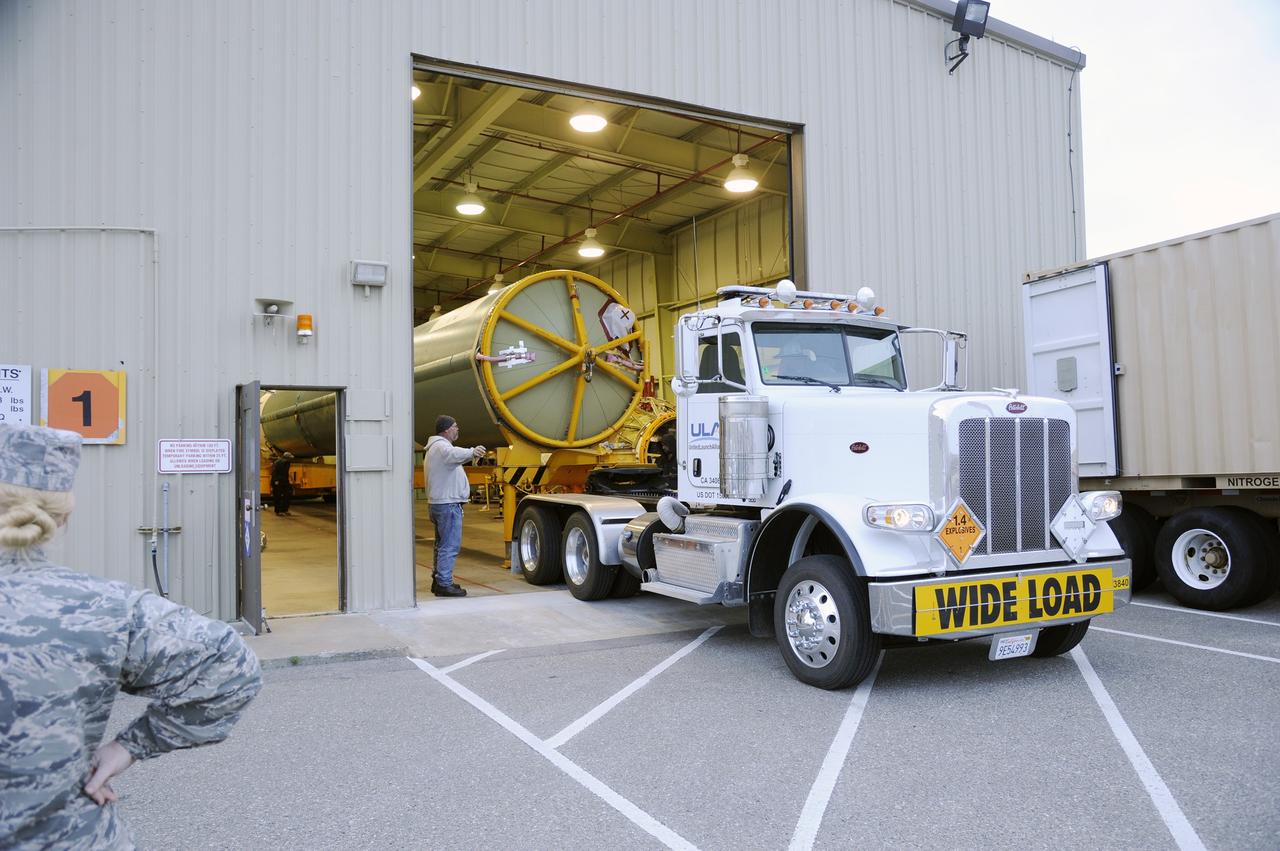
VANDENBERG AIR FORCE BASE, Calif. – The Delta first-stage booster for NASA's Orbiting Carbon Observatory-2 mission, or OCO-2, rolls into position through the open door of the Horizontal Processing Facility at Space Launch Complex 2 on Vandenberg Air Force Base in California. OCO-2 is scheduled to launch aboard a United Launch Alliance Delta II rocket on July 1, 2014. The observatory will collect precise global measurements of carbon dioxide in the Earth's atmosphere and provide scientists with a better idea of the chemical compound's impacts on climate change. Scientists will analyze this data to improve our understanding of the natural processes and human activities that regulate the abundance and distribution of this important atmospheric gas. To learn more about OCO-2, visit http://oco.jpl.nasa.gov. Photo credit: NASA/D. Liberotti, 30th Space Wing, VAFB
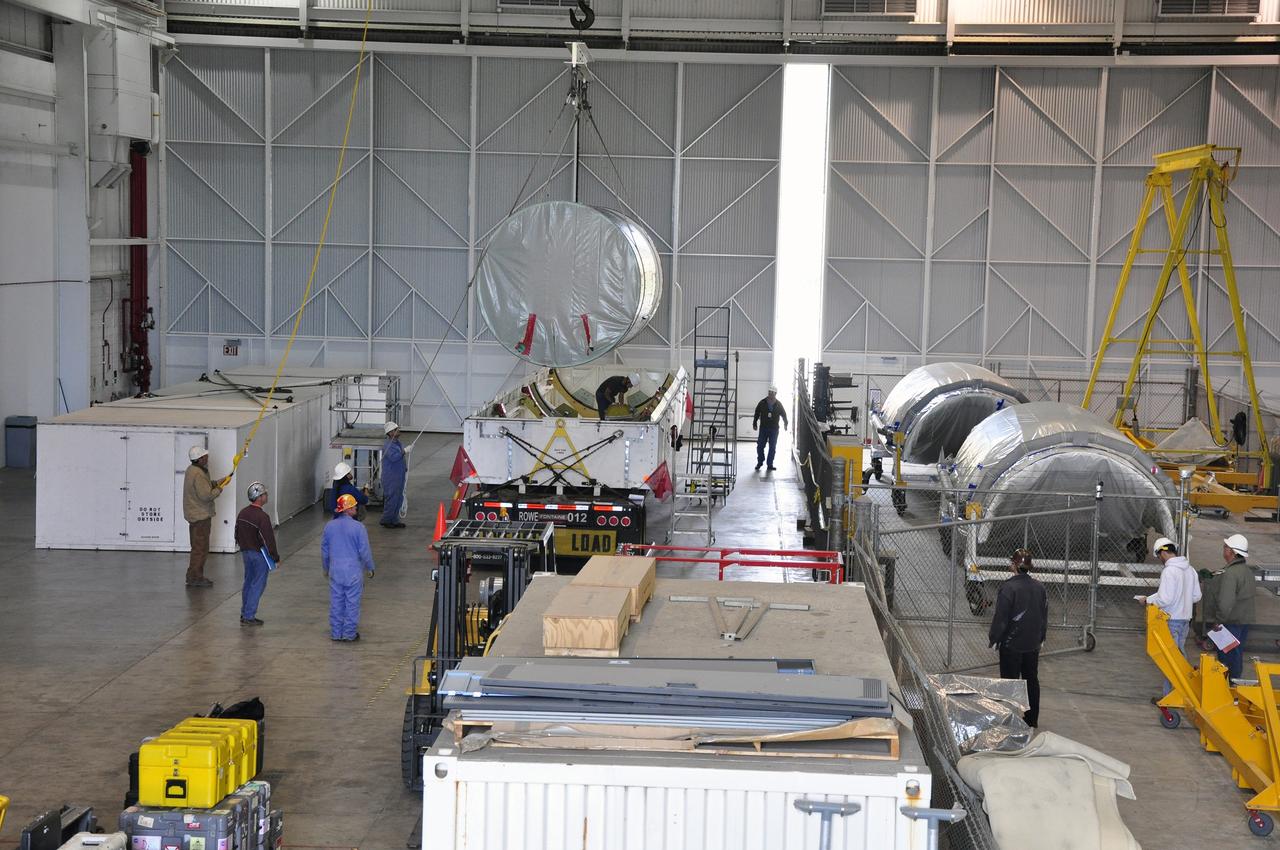
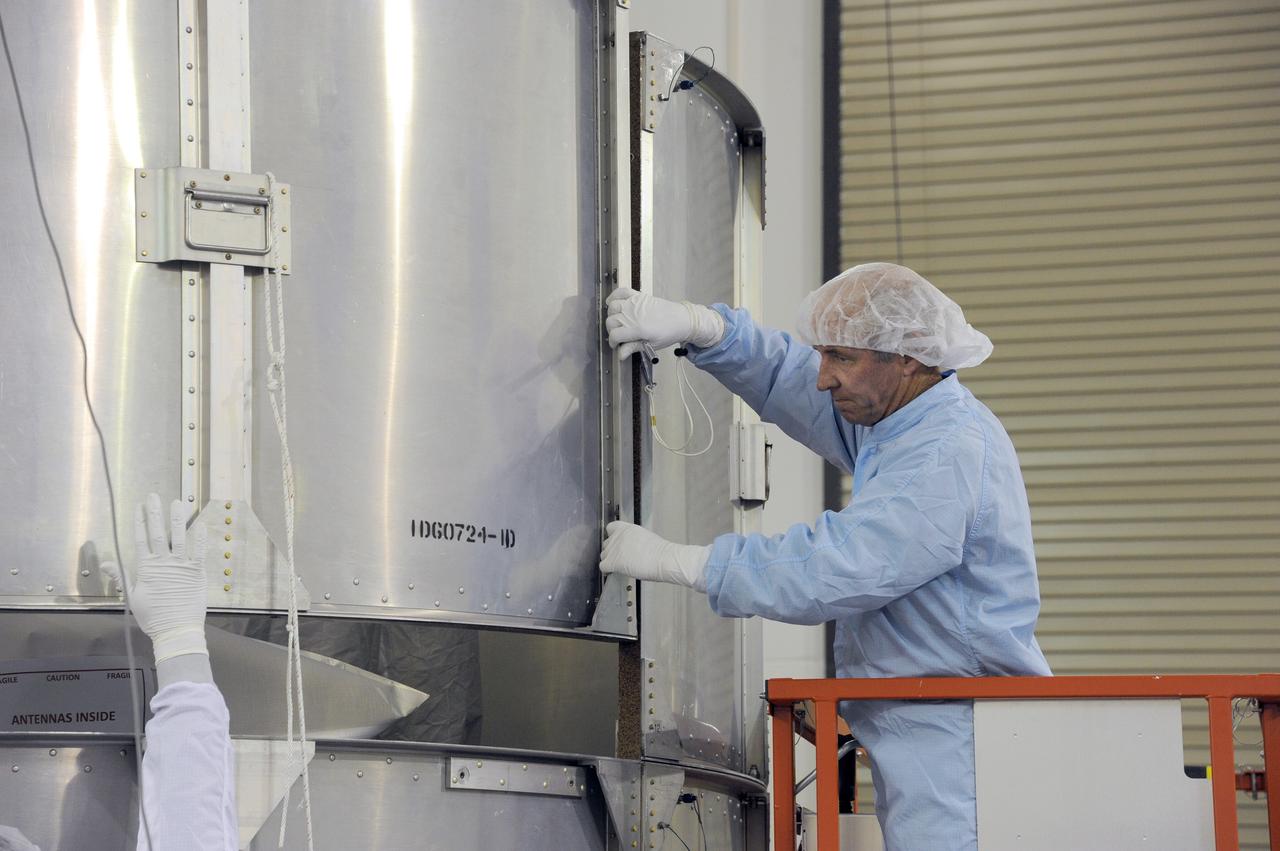
VANDENBERG AIR FORCE BASE, Calif. – The canister containing the interstage adapter, or ISA, for NASA's Soil Moisture Active Passive mission, or SMAP, is lifted out of its transportation trailer in the high bay of the Building 836 hangar on south Vandenberg Air Force Base in California. A United Launch Alliance Delta II rocket will loft SMAP into orbit from Vandenberg's Space Launch Complex 2. The ISA connects the Delta II first and second stages and encloses the second stage engine and thrust section. The spacecraft will provide global measurements of soil moisture and its freeze/thaw state. These measurements will be used to enhance understanding of processes that link the water, energy and carbon cycles, and to extend the capabilities of weather and climate prediction models. The data returned also will be used to quantify net carbon flux in boreal landscapes and to develop improved flood prediction and drought monitoring capabilities. Launch is scheduled for November 2014. To learn more about SMAP, visit http://smap.jpl.nasa.gov. Photo credit: NASA/Randy Beaudoin
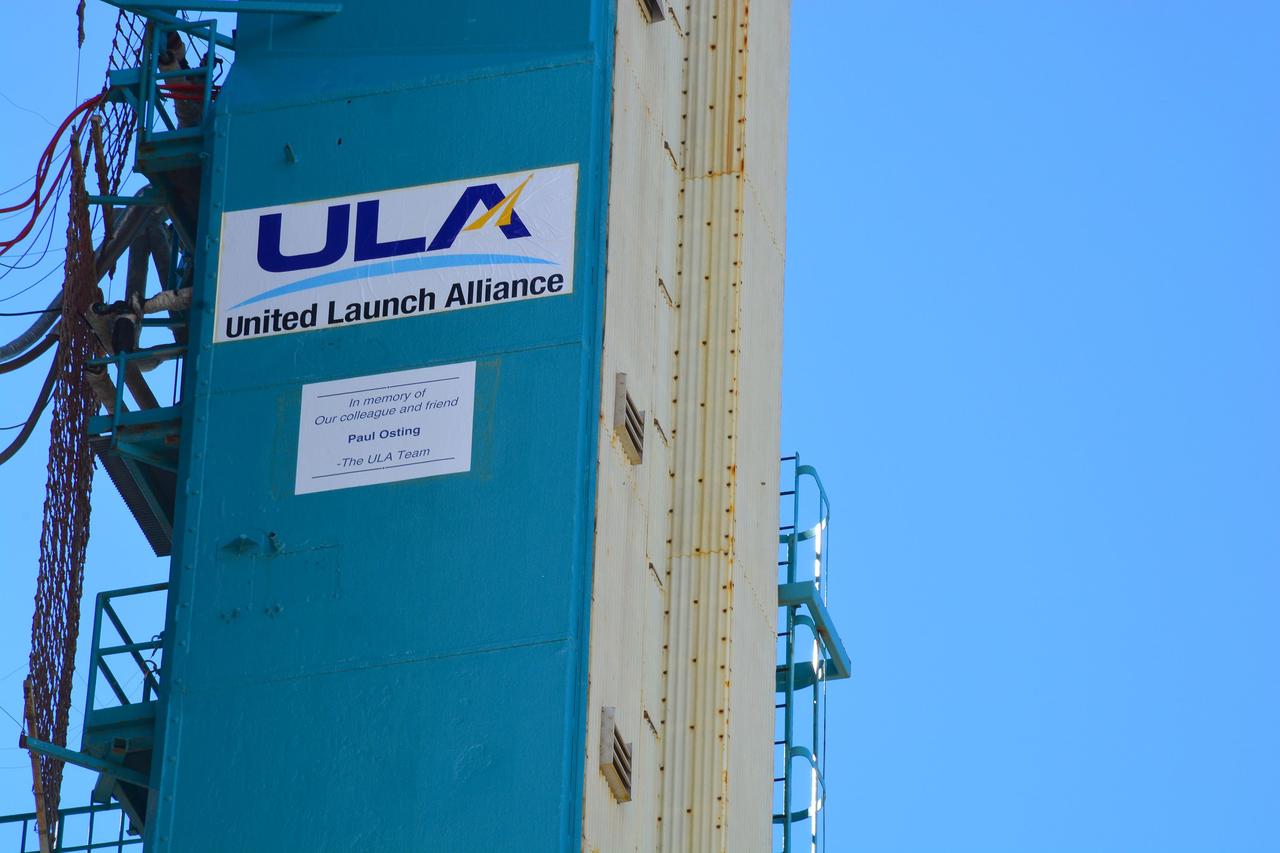
VANDENBERG AFB, California – Detail of mission and NASA logos at Space Launch Complex-2 at Vandenberg AFB, California - the launch site for NASA's SMAP spacecraft. For more, go to www.nasa.gov/smap Photo credit: NASA/Randy Beaudoin
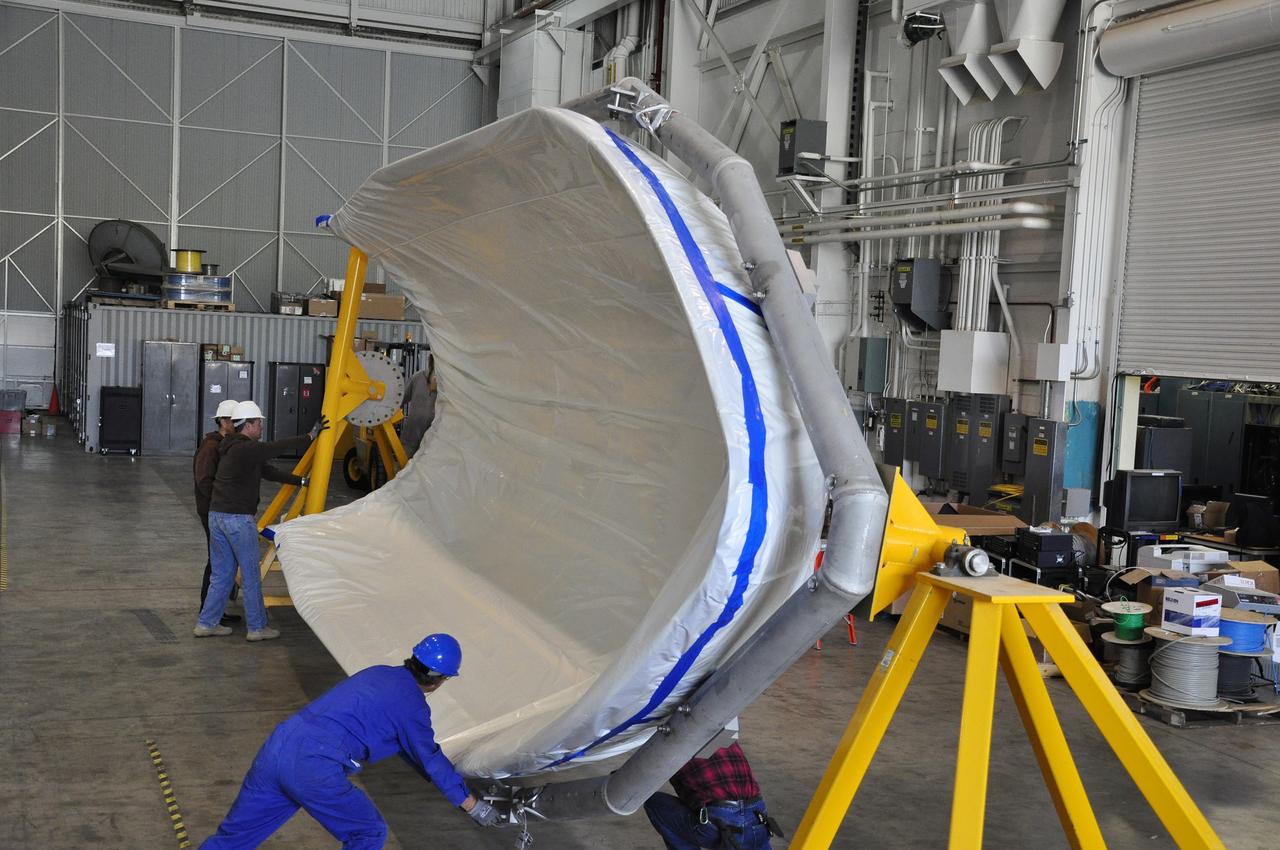
VANDENBERG AIR FORCE BASE, Calif. – Workers rotate a section of the fairing for NASA's Soil Moisture Active Passive mission, or SMAP, in a lifting device in the Building 836 high bay on Vandenberg Air Force Base in California. The fairing will protect the SMAP spacecraft from the heat and aerodynamic pressure generated during its ascent to orbit aboard a United Launch Alliance Delta II rocket from Space Launch Complex 2. SMAP will provide global measurements of soil moisture and its freeze/thaw state. These measurements will be used to enhance understanding of processes that link the water, energy and carbon cycles, and to extend the capabilities of weather and climate prediction models. SMAP data will also be used to quantify net carbon flux in boreal landscapes and to develop improved flood prediction and drought monitoring capabilities. Launch is scheduled for November 2014. To learn more about SMAP, visit http://smap.jpl.nasa.gov. Photo credit: NASA/Randy Beaudoin
VANDENBERG AFB, California – Technicians and engineers place a transportation canister around NASA's SMAP spacecraft so it can be taken from the Astrotech processing facility to Space Launch Complex-2 for placement atop a Delta II rocket for launch. For more, go to www.nasa.gov/smap Photo credit: USAF/John Davila
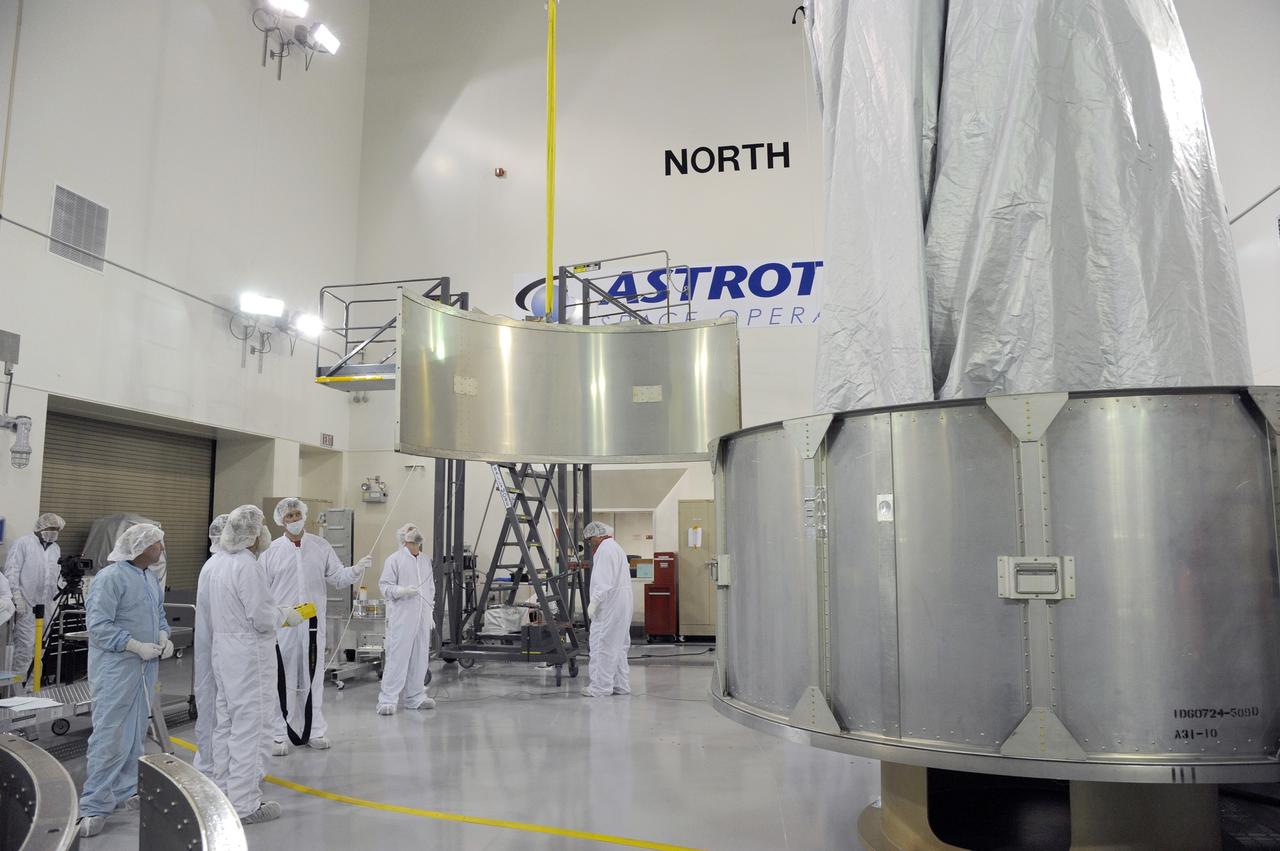
VANDENBERG AFB, California – Technicians and engineers place a transportation canister around NASA's SMAP spacecraft so it can be taken from the Astrotech processing facility to Space Launch Complex-2 for placement atop a Delta II rocket for launch. For more, go to www.nasa.gov/smap Photo credit: USAF/John Davila
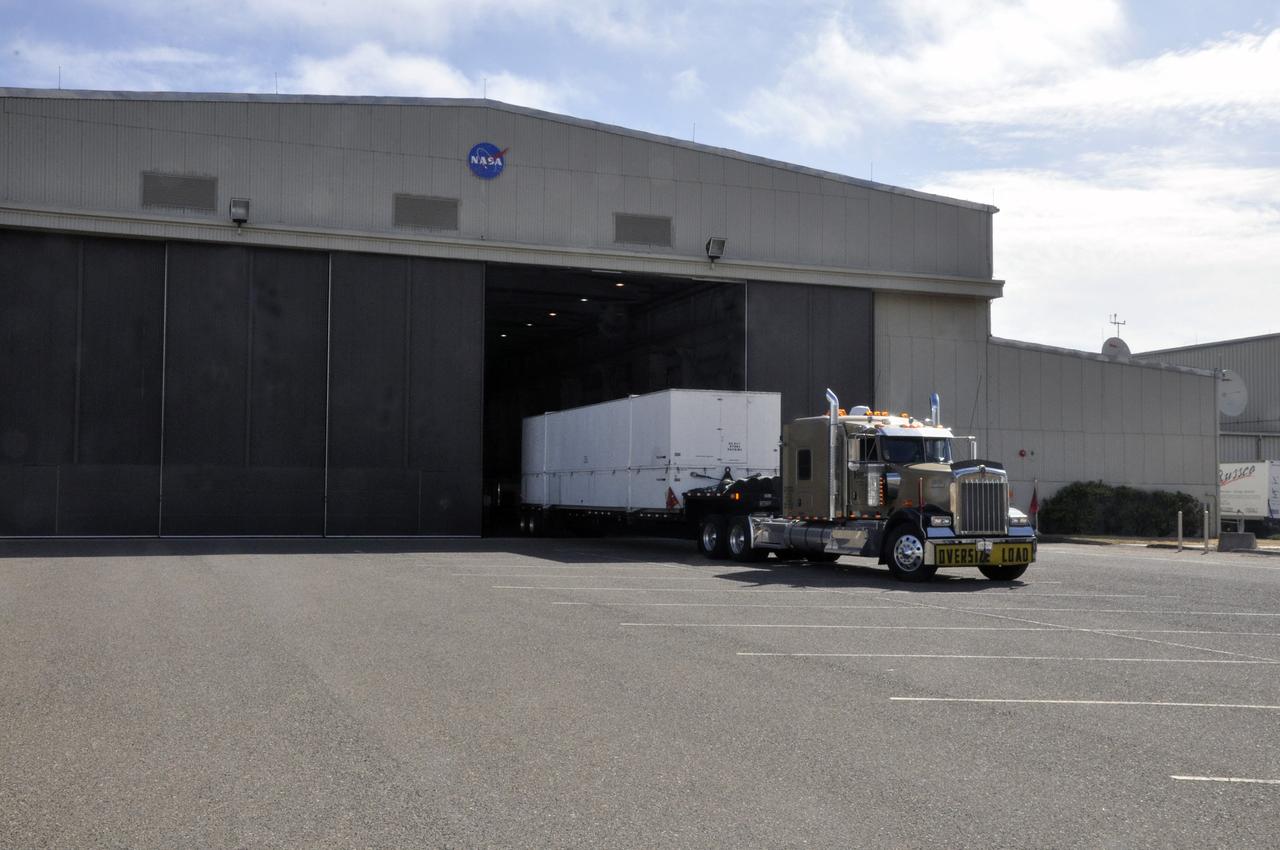
VANDENBERG AIR FORCE BASE, Calif. –The interstage adapter, or ISA, for NASA's Soil Moisture Active Passive mission, or SMAP, arrives at the Building 836 hangar on south Vandenberg Air Force Base in California. A United Launch Alliance Delta II rocket will loft SMAP into orbit from Vandenberg's Space Launch Complex 2. The ISA connects the Delta II first and second stages and encloses the second stage engine and thrust section. The spacecraft will provide global measurements of soil moisture and its freeze/thaw state. These measurements will be used to enhance understanding of processes that link the water, energy and carbon cycles, and to extend the capabilities of weather and climate prediction models. The data returned also will be used to quantify net carbon flux in boreal landscapes and to develop improved flood prediction and drought monitoring capabilities. Launch is scheduled for November 2014. To learn more about SMAP, visit http://smap.jpl.nasa.gov. Photo credit: NASA/Randy Beaudoin
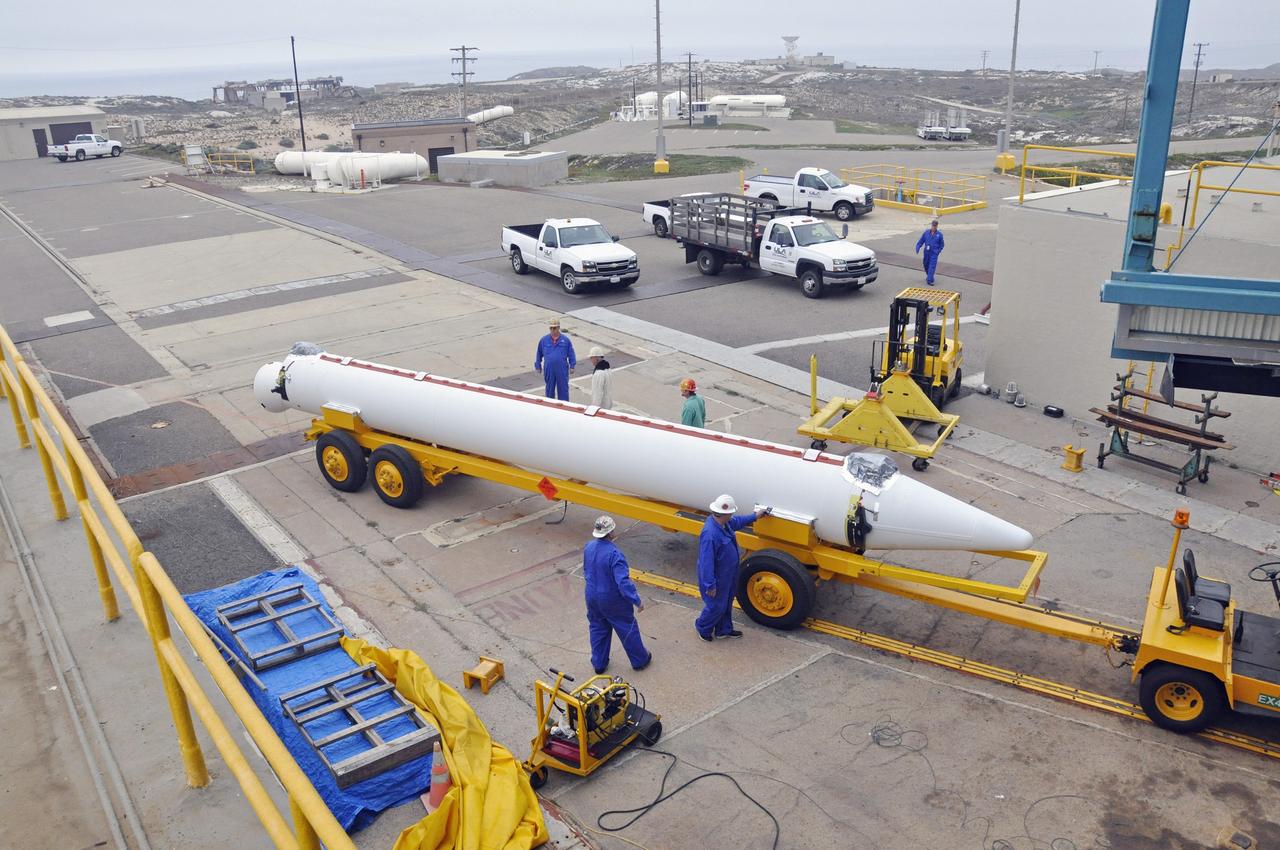
VANDENBERG AIR FORCE BASE, Calif. – A second solid rocket motor, or SRM, for NASA's Orbiting Carbon Observatory-2 mission, or OCO-2, is towed to Space Launch Complex 2 on Vandenberg Air Force Base in California. Operations are underway to attach the Delta II rocket's three SRMs, known as graphite epoxy motors, to the rocket's first stage. OCO-2 is scheduled to launch into a polar Earth orbit aboard a United Launch Alliance Delta II 7320-10C rocket in July. Once in orbit, OCO-2 will collect precise global measurements of carbon dioxide in the Earth's atmosphere and provide scientists with a better idea of the chemical compound's impacts on climate change. Scientists will analyze this data to improve our understanding of the natural processes and human activities that regulate the abundance and distribution of this important atmospheric gas. To learn more about OCO-2, visit http://oco.jpl.nasa.gov. Photo credit: NASA/Randy Beaudoin
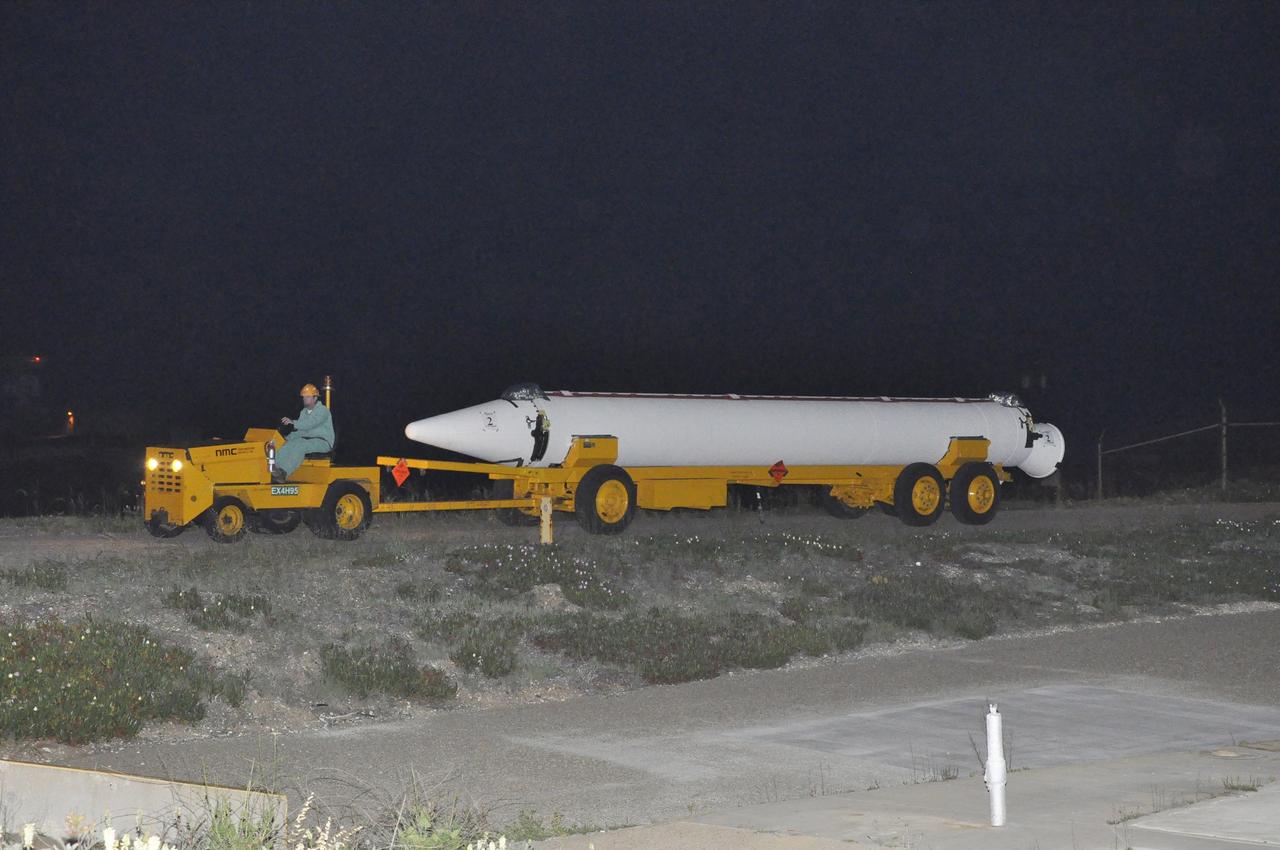
VANDENBERG AIR FORCE BASE, Calif. – A solid rocket motor, or SRM, for NASA's Orbiting Carbon Observatory-2 mission, or OCO-2, is towed to Space Launch Complex 2 on Vandenberg Air Force Base in California. Operations are underway to attach the Delta II rocket's three SRMs, known as graphite epoxy motors, to the rocket's first stage. OCO-2 is scheduled to launch into a polar Earth orbit aboard a United Launch Alliance Delta II 7320-10C rocket in July. Once in orbit, OCO-2 will collect precise global measurements of carbon dioxide in the Earth's atmosphere and provide scientists with a better idea of the chemical compound's impacts on climate change. Scientists will analyze this data to improve our understanding of the natural processes and human activities that regulate the abundance and distribution of this important atmospheric gas. To learn more about OCO-2, visit http://oco.jpl.nasa.gov. Photo credit: NASA/Randy Beaudoin

VANDENBERG AIR FORCE BASE, Calif. – An American flag stands sentinel on Space Launch Complex 2 on Vandenberg Air Force Base in California where NASA's Orbiting Carbon Observatory-2 mission, or OCO-2, is being prepared for launch in July aboard a United Launch Alliance Delta II rocket in the launch tower. The observatory will collect precise global measurements of carbon dioxide in the Earth's atmosphere and provide scientists with a better idea of the chemical compound's impacts on climate change. Scientists will analyze this data to improve our understanding of the natural processes and human activities that regulate the abundance and distribution of this important atmospheric gas. To learn more about OCO-2, visit http://oco.jpl.nasa.gov. Photo credit: NASA/Kim Shiflett
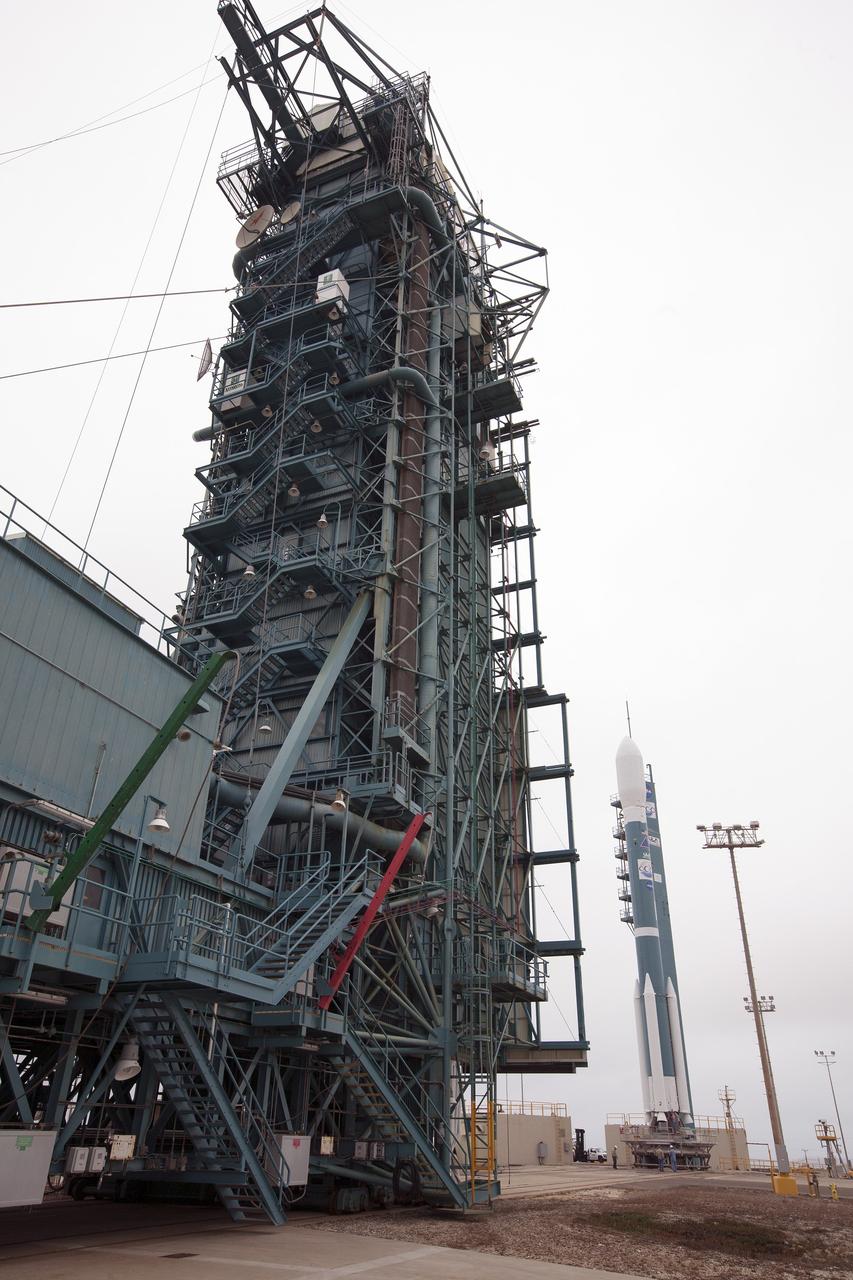
VANDENBERG AIR FORCE BASE, Calif. – The mobile service tower has been rolled back from the United Launch Alliance Delta II rocket carrying NASA's Orbiting Carbon Observatory-2, or OCO-2, on Space Launch Complex 2 at Vandenberg Air Force Base in California, one of the final steps leading up to launch. Launch of OCO-2 is scheduled for 5:56 a.m. EDT on July 2 following the repair of the pad's water suppression system, which failed on the first launch attempt July 1. OCO-2 is NASA’s first mission dedicated to studying atmospheric carbon dioxide, the leading human-produced greenhouse gas driving changes in Earth’s climate. OCO-2 will provide a new tool for understanding the human and natural sources of carbon dioxide emissions and the natural "sinks" that absorb carbon dioxide and help control its buildup. The observatory will measure the global geographic distribution of these sources and sinks and study their changes over time. To learn more about OCO-2, visit http://www.nasa.gov/oco2. Photo credit: NASA/Kim Shiflett
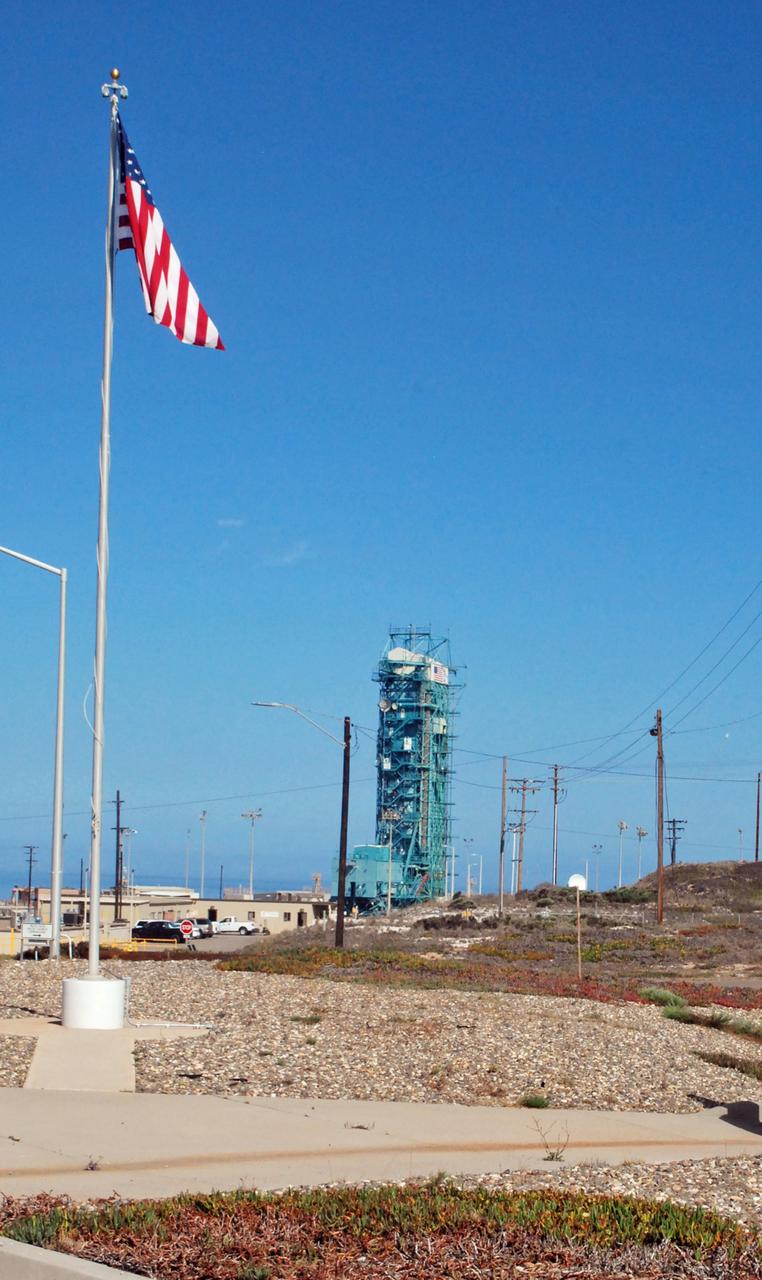
VANDENBERG AIR FORCE BASE, Calif. – Preparations are underway at Space Launch Complex 2 on Vandenberg Air Force Base in California for the arrival of the rocket components slated to launch NASA's Soil Moisture Active Passive mission, or SMAP, in November 2014. A United Launch Alliance Delta II rocket will be used to deliver SMAP into orbit. SMAP will provide global measurements of soil moisture and its freeze/thaw state. These measurements will be used to enhance understanding of processes that link the water, energy and carbon cycles, and to extend the capabilities of weather and climate prediction models. SMAP data also will be used to quantify net carbon flux in boreal landscapes and to develop improved flood prediction and drought monitoring capabilities. To learn more about SMAP, visit http://smap.jpl.nasa.gov. Photo credit: NASA/Randy Beaudoin
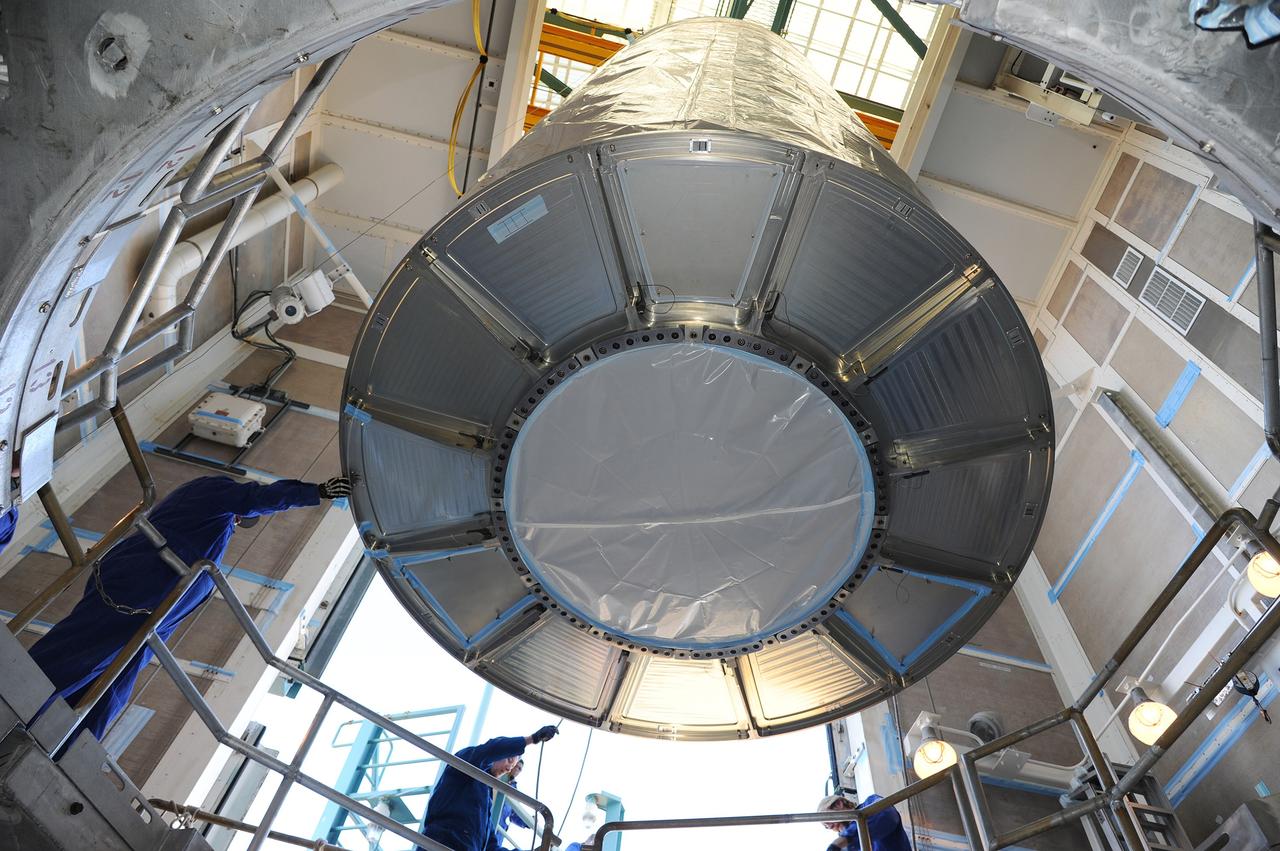
VANDENBERG AFB, California – NASA's SMAP spacecraft is positioned atop a Delta II rocket at Space Launch Complex-2 for launch. For more, go to www.nasa.gov/smap Photo credit: USAF
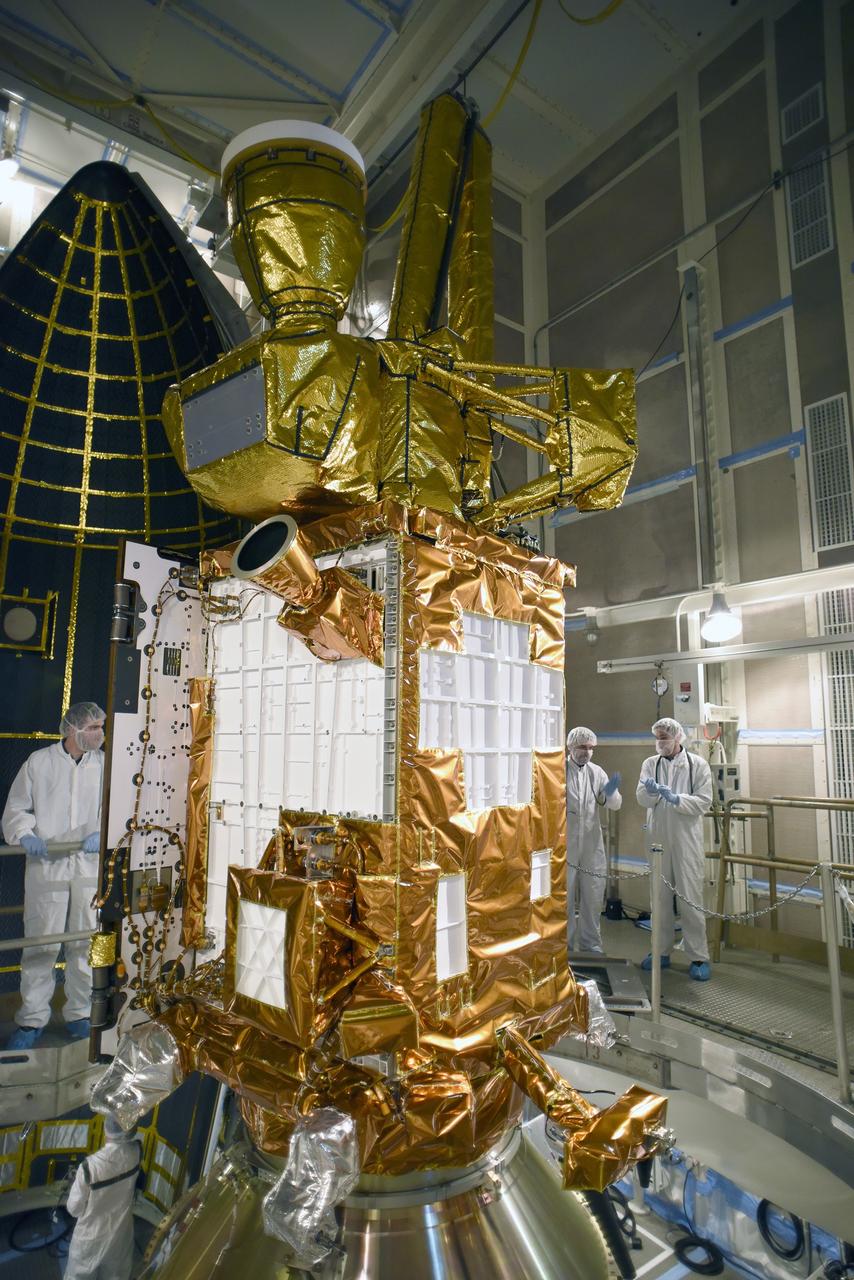
VANDENBERG AFB, California – NASA's SMAP spacecraft inside the service structure at Space Launch Complex-2 at Vandenberg AFB, California. For more, go to www.nasa.gov/smap Photo credit: USAF

VANDENBERG AIR FORCE BASE, Calif. – NASA's Orbiting Carbon Observatory-2, or OCO-2, stands ready for launch aboard a United Launch Alliance Delta II rocket following rollback of the mobile service tower on Space Launch Complex 2 on Vandenberg Air Force Base in California. Launch of OCO-2 is scheduled for 5:56 a.m. EDT on July 2 following the repair of the pad's water suppression system, which failed on the first launch attempt July 1. OCO-2 is NASA’s first mission dedicated to studying atmospheric carbon dioxide, the leading human-produced greenhouse gas driving changes in Earth’s climate. OCO-2 will provide a new tool for understanding the human and natural sources of carbon dioxide emissions and the natural "sinks" that absorb carbon dioxide and help control its buildup. The observatory will measure the global geographic distribution of these sources and sinks and study their changes over time. To learn more about OCO-2, visit http://www.nasa.gov/oco2. Photo credit: NASA/Randy Beaudoin
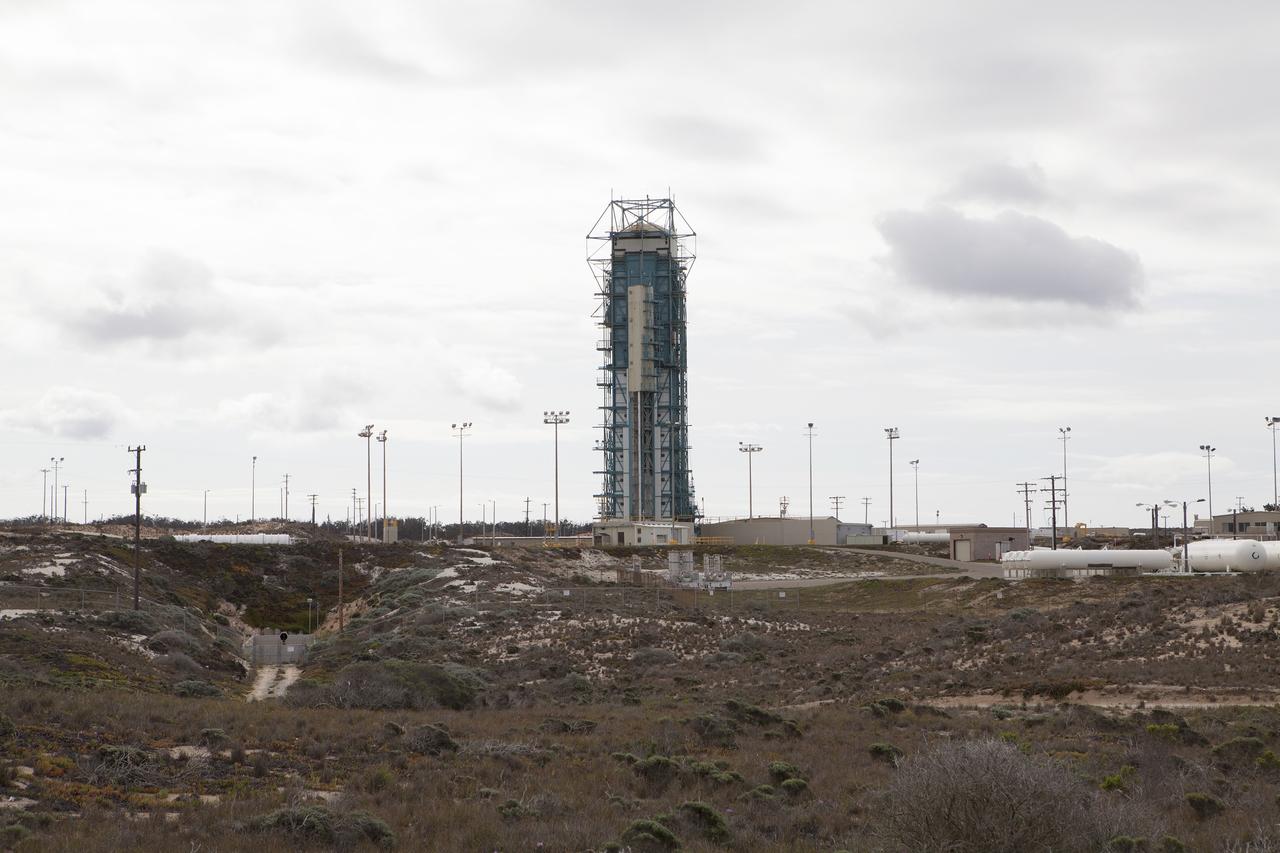
VANDENBERG AIR FORCE BASE, Calif. – Processing is underway at Space Launch Complex 2 on Vandenberg Air Force Base in California for the upcoming launch of NASA's Orbiting Carbon Observatory-2 mission, or OCO-2, aboard a United Launch Alliance Delta II rocket in July. The observatory will collect precise global measurements of carbon dioxide in the Earth's atmosphere and provide scientists with a better idea of the chemical compound's impacts on climate change. Scientists will analyze this data to improve our understanding of the natural processes and human activities that regulate the abundance and distribution of this important atmospheric gas. To learn more about OCO-2, visit http://oco.jpl.nasa.gov. Photo credit: NASA/Kim Shiflett
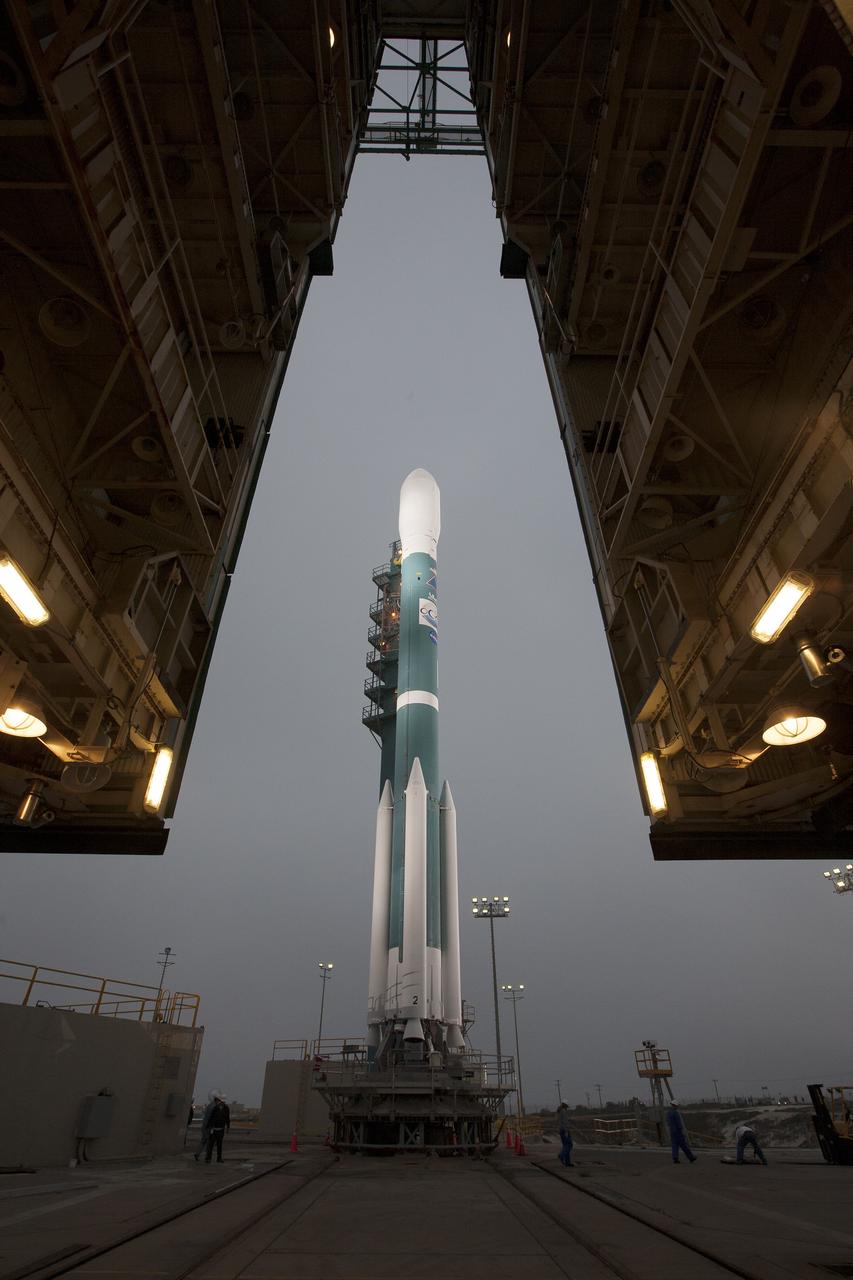
VANDENBERG AIR FORCE BASE, Calif. – NASA's Orbiting Carbon Observatory-2, or OCO-2, stands ready for launch aboard a United Launch Alliance Delta II rocket following rollback of the mobile service tower on Space Launch Complex 2 on Vandenberg Air Force Base in California. Launch is scheduled for 5:56 a.m. EDT on July 1. OCO-2 is NASA’s first mission dedicated to studying atmospheric carbon dioxide, the leading human-produced greenhouse gas driving changes in Earth’s climate. OCO-2 will provide a new tool for understanding the human and natural sources of carbon dioxide emissions and the natural "sinks" that absorb carbon dioxide and help control its buildup. The observatory will measure the global geographic distribution of these sources and sinks and study their changes over time. To learn more about OCO-2, visit http://www.nasa.gov/oco2. Photo credit: NASA/Kim Shiflett
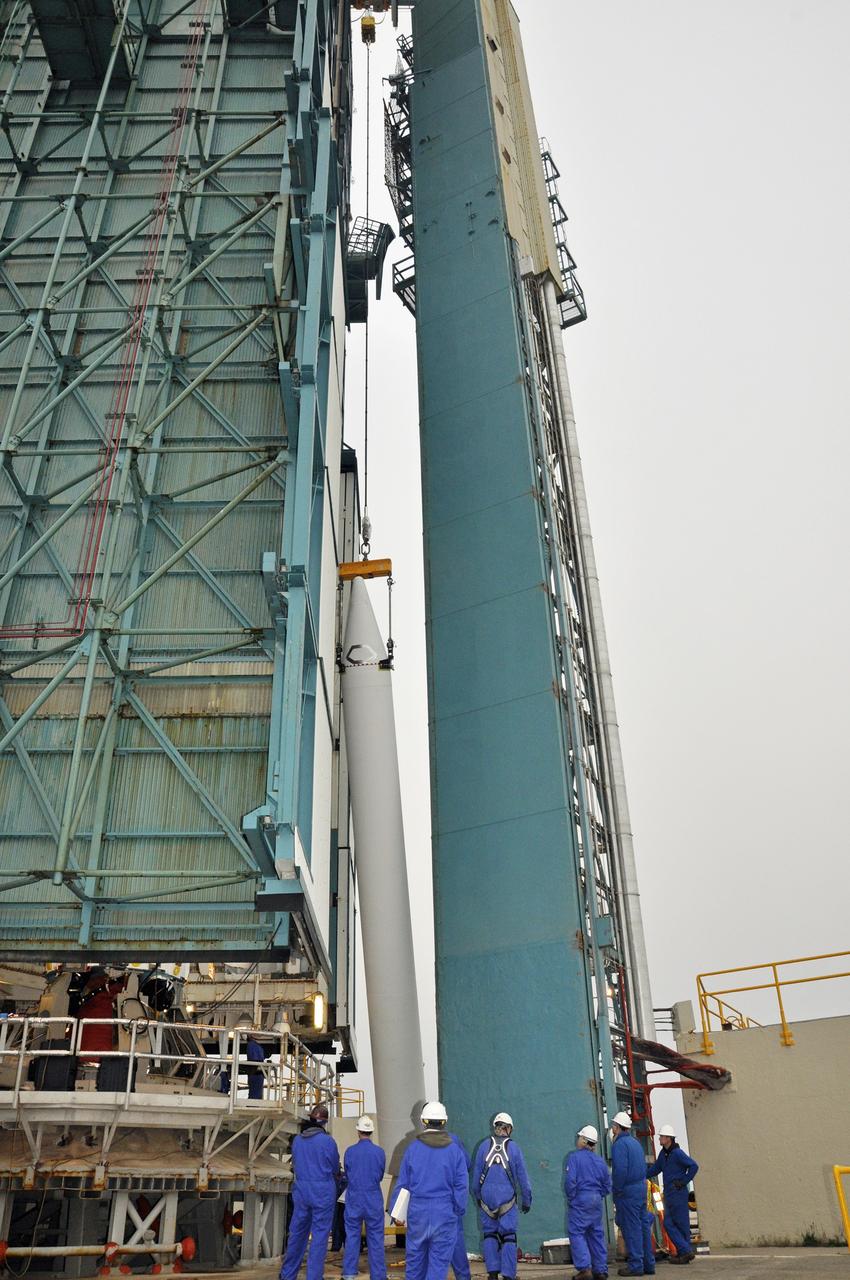
VANDENBERG AIR FORCE BASE, Calif. – Workers monitor the solid rocket motor, or SRM, for NASA's Orbiting Carbon Observatory-2 mission, or OCO-2, as it is lifted into a vertical position beside the mobile service tower at Space Launch Complex 2 on Vandenberg Air Force Base in California. Operations are underway to attach the Delta II rocket's three SRMs, known as graphite epoxy motors, to the rocket's first stage. OCO-2 is scheduled to launch into a polar Earth orbit aboard a United Launch Alliance Delta II 7320-10C rocket in July. Once in orbit, OCO-2 will collect precise global measurements of carbon dioxide in the Earth's atmosphere and provide scientists with a better idea of the chemical compound's impacts on climate change. Scientists will analyze this data to improve our understanding of the natural processes and human activities that regulate the abundance and distribution of this important atmospheric gas. To learn more about OCO-2, visit http://oco.jpl.nasa.gov. Photo credit: NASA/Randy Beaudoin
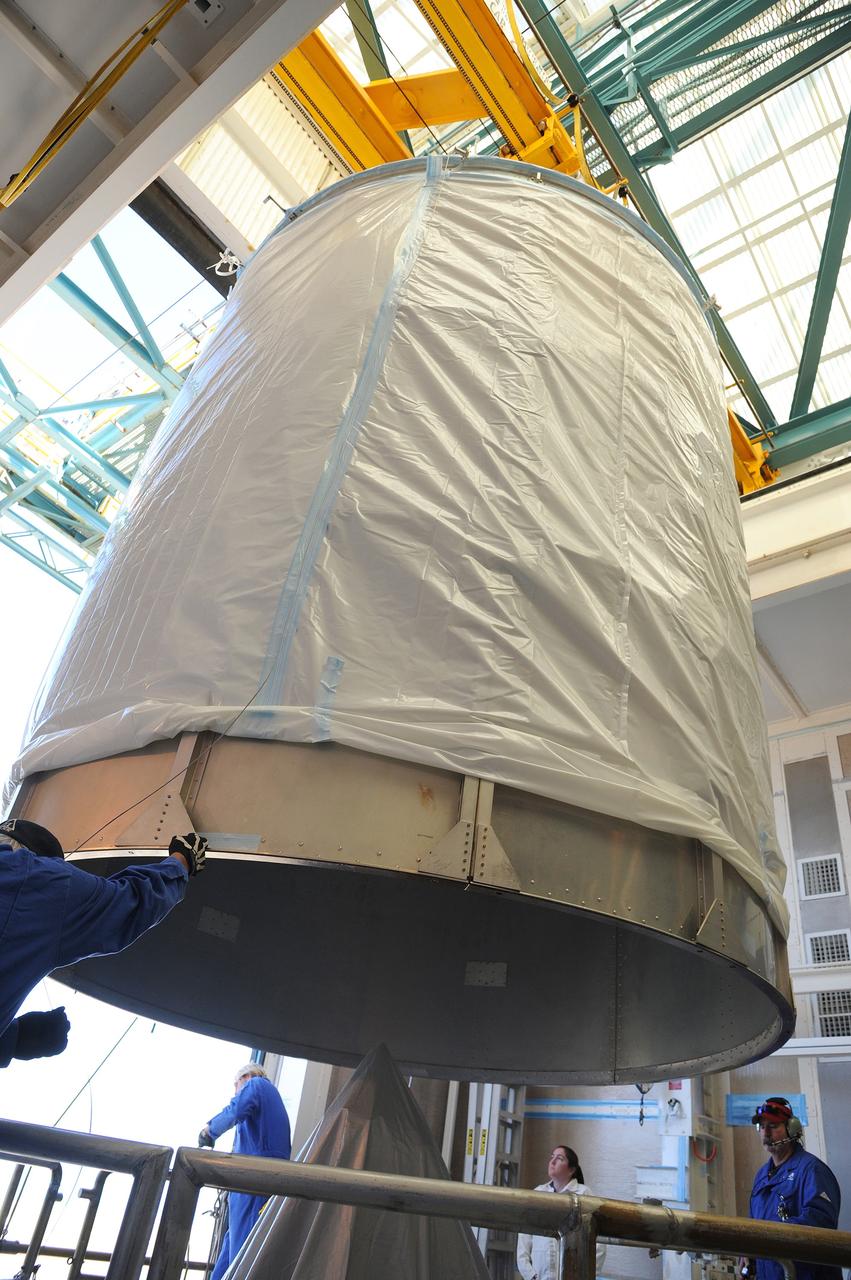
VANDENBERG AFB, California – The transportation canister is removed from around NASA's SMAP spacecraft after positioning the satellite atop a Delta II rocket at Space Launch Complex-2 for launch. For more, go to www.nasa.gov/smap Photo credit: USAF

VANDENBERG AIR FORCE BASE, Calif. – At Space Launch Complex 2 on Vandenberg Air Force Base in California, an exhaust cloud builds around the United Launch Alliance Delta II rocket carrying NASA's Orbiting Carbon Observatory-2, or OCO-2, into space. ): Launch was on schedule at 5:56 a.m. EDT on July 2 following the repair of the pad's water suppression system, which failed on the first launch attempt July 1. OCO-2 is NASA’s first mission dedicated to studying atmospheric carbon dioxide, the leading human-produced greenhouse gas driving changes in Earth’s climate. OCO-2 will provide a new tool for understanding the human and natural sources of carbon dioxide emissions and the natural "sinks" that absorb carbon dioxide and help control its buildup. The observatory will measure the global geographic distribution of these sources and sinks and study their changes over time. To learn more about OCO-2, visit http://www.nasa.gov/oco2. Photo credit: NASA

VANDENBERG AIR FORCE BASE, Calif. – A half section of the 10-foot-diameter fairing for NASA's Soil Moisture Active Passive mission, or SMAP, glides across the floor of the Building 836 high bay on south Vandenberg Air Force Base in California with the aid of an overhead crane. The fairing will protect the SMAP spacecraft from the heat and aerodynamic pressure generated during its ascent to orbit aboard a United Launch Alliance Delta II rocket from Space Launch Complex 2. SMAP will provide global measurements of soil moisture and its freeze/thaw state. These measurements will be used to enhance understanding of processes that link the water, energy and carbon cycles, and to extend the capabilities of weather and climate prediction models. SMAP data will also be used to quantify net carbon flux in boreal landscapes and to develop improved flood prediction and drought monitoring capabilities. Launch is scheduled for November 2014. To learn more about SMAP, visit http://smap.jpl.nasa.gov. Photo credit: NASA/U.S. Air Force 30th Space Wing
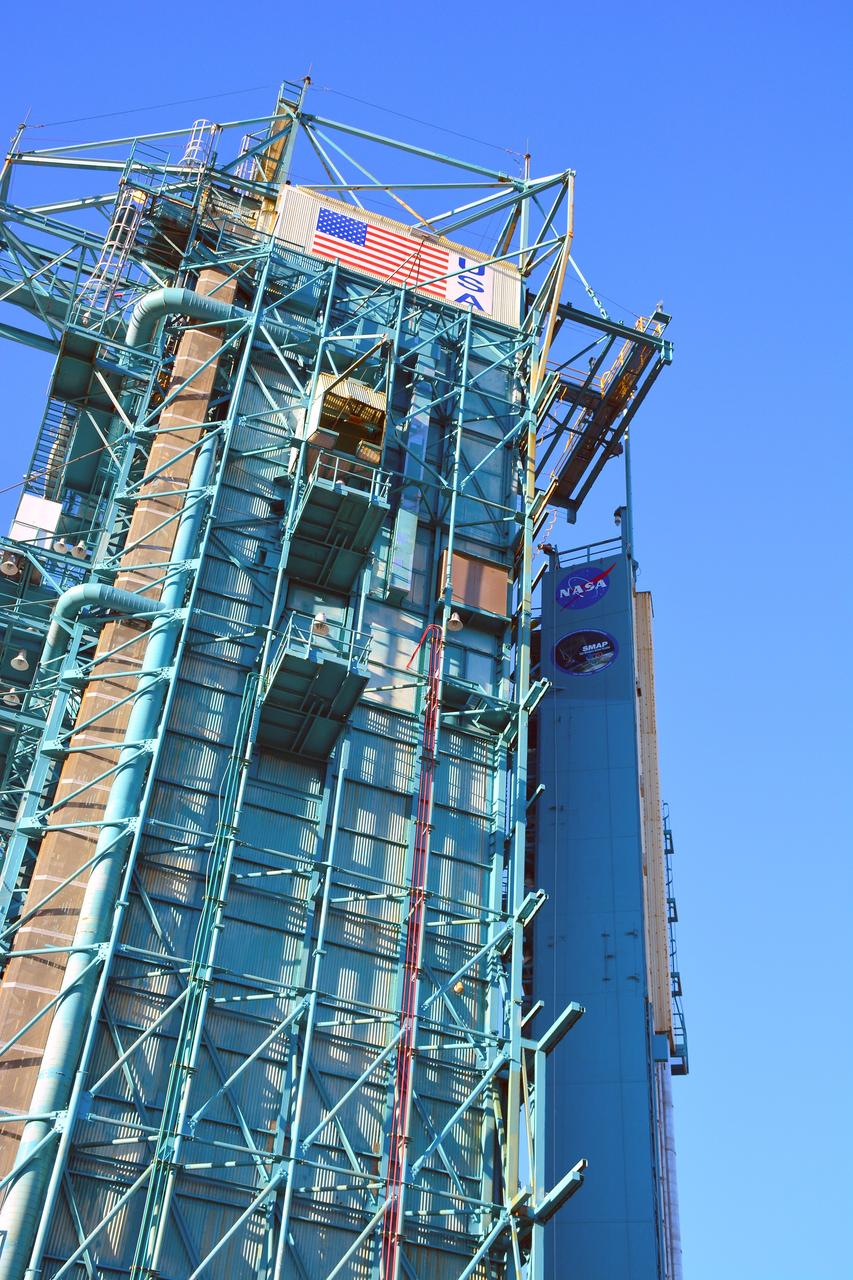
VANDENBERG AFB, California – Space Launch Complex-2 at Vandenberg AFB, California, is the launch site for NASA's SMAP spacecraft. For more, go to www.nasa.gov/smap Photo credit: NASA/Randy Beaudoin

VANDENBERG AIR FORCE BASE, Calif. – The United Launch Alliance Delta II rocket lifts off through the fog at Space Launch Complex 2 on Vandenberg Air Force Base in California, engines blazing, carrying NASA's Orbiting Carbon Observatory-2, or OCO-2, to orbit. Launch was on schedule at 5:56 a.m. EDT on July 2 following the repair of the pad's water suppression system, which failed on the first launch attempt July 1. OCO-2 is NASA’s first mission dedicated to studying atmospheric carbon dioxide, the leading human-produced greenhouse gas driving changes in Earth’s climate. OCO-2 will provide a new tool for understanding the human and natural sources of carbon dioxide emissions and the natural "sinks" that absorb carbon dioxide and help control its buildup. The observatory will measure the global geographic distribution of these sources and sinks and study their changes over time. To learn more about OCO-2, visit http://www.nasa.gov/oco2. Photo credit: NASA/30th Space Communication Squadron
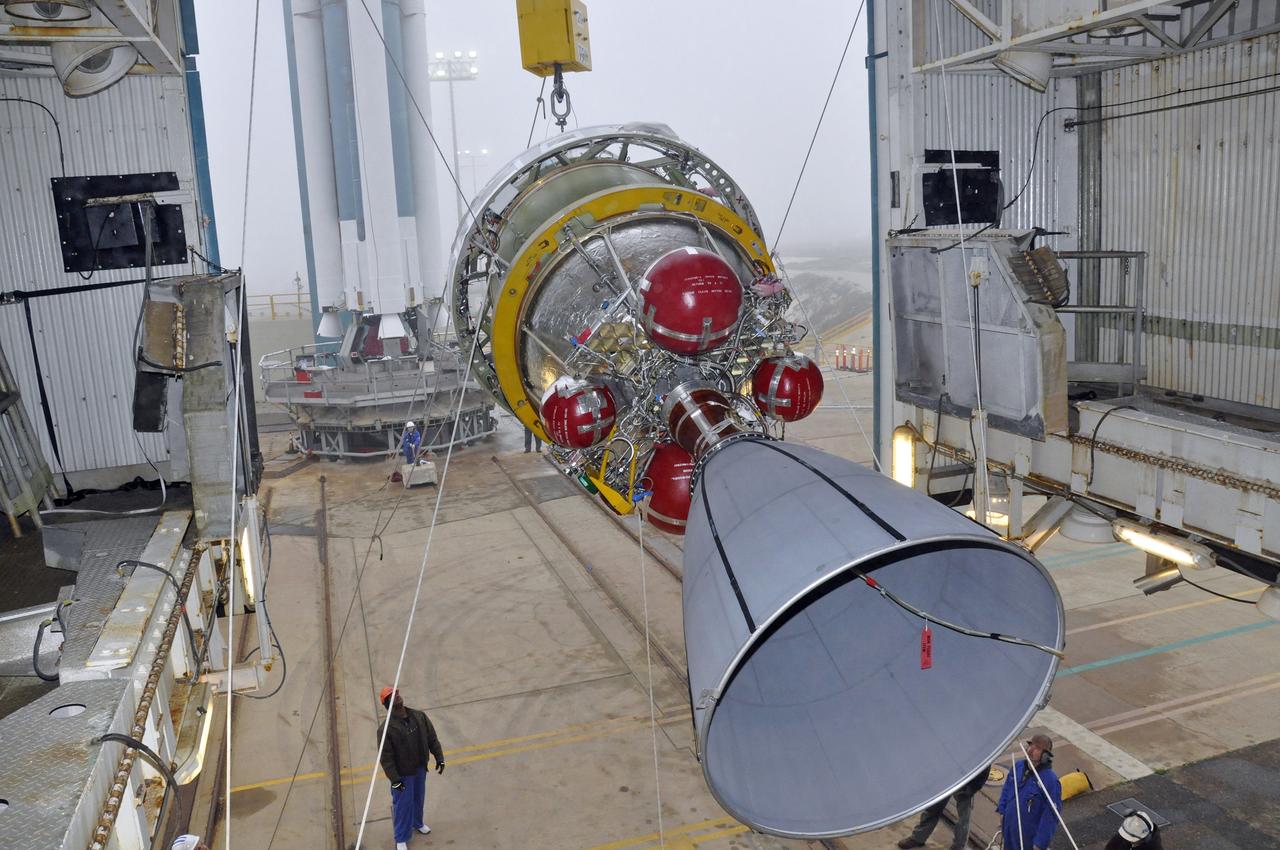
VANDENBERG AIR FORCE BASE, Calif. – The Delta II second stage for NASA's Orbiting Carbon Observatory-2 mission, or OCO-2, is lifted into the mobile service tower at Space Launch Complex 2 on Vandenberg Air Force Base in California. Operations are underway to mate the second stage of the rocket to the first stage already in place on the launch stand. OCO-2 is scheduled to launch aboard a United Launch Alliance Delta II rocket in July. The rocket's second stage will insert OCO-2 into a polar Earth orbit. OCO-2 will collect precise global measurements of carbon dioxide in the Earth's atmosphere and provide scientists with a better idea of the chemical compound's impacts on climate change. Scientists will analyze this data to improve our understanding of the natural processes and human activities that regulate the abundance and distribution of this important atmospheric gas. To learn more about OCO-2, visit http://oco.jpl.nasa.gov. Photo credit: NASA/Randy Beaudoin
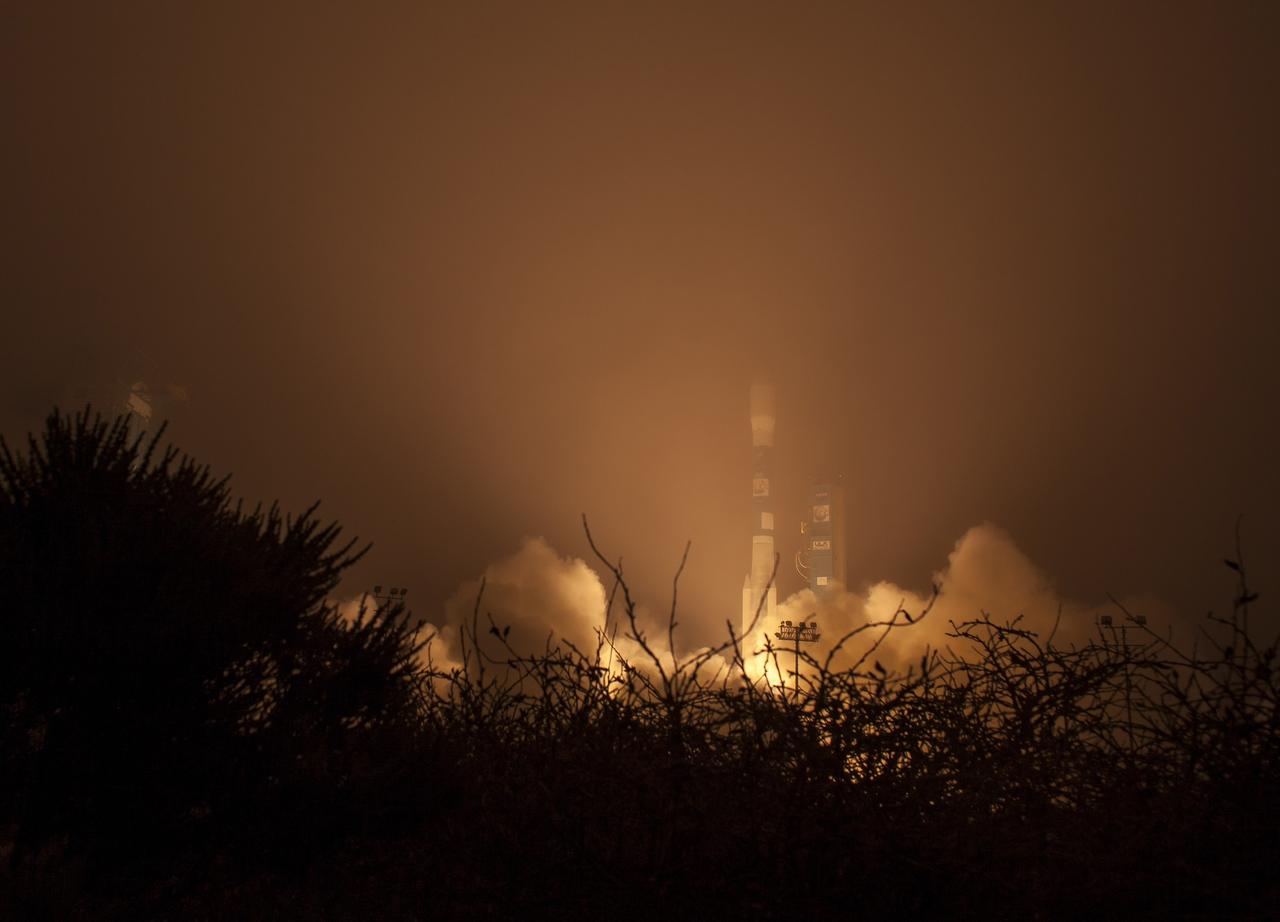
VANDENBERG AIR FORCE BASE, Calif. – A United Launch Alliance Delta II rocket launches with the Orbiting Carbon Observatory-2, or OCO-2, satellite onboard from Space Launch Complex 2 at Vandenberg Air Force Base in California on Wednesday, July 2, 2014. OCO-2 will measure the global distribution of carbon dioxide, the leading human-produced greenhouse gas driving changes in Earth’s climate. Photo Credit: NASA/Bill Ingalls
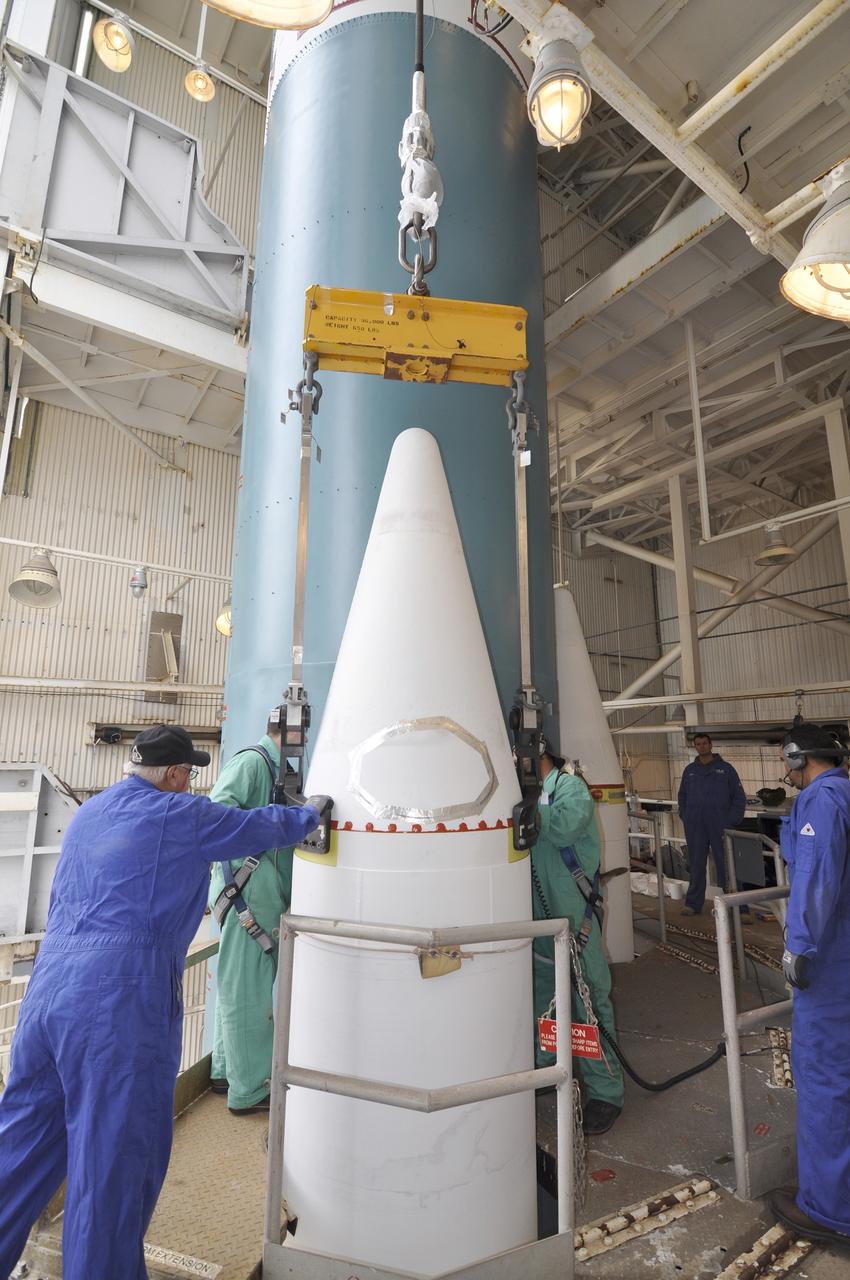
VANDENBERG AIR FORCE BASE, Calif. – Workers secure the second solid rocket motor for the Delta II rocket for NASA's Soil Moisture Active Passive mission, or SMAP, onto the rocket's first stage in the mobile service tower at Space Launch Complex 2 on Vandenberg Air Force Base in California. SMAP will be launched on a Delta II 7320 configuration vehicle featuring a United Launch Alliance first stage booster powered by an Aerojet Rocketdyne RS-27A main engine and three Alliant Techsystems, or ATK, strap-on solid rocket motors. Once on station in Earth orbit, SMAP will provide global measurements of soil moisture and its freeze/thaw state. These measurements will be used to enhance understanding of processes that link the water, energy and carbon cycles, and to extend the capabilities of weather and climate prediction models. SMAP data also will be used to quantify net carbon flux in boreal landscapes and to develop improved flood prediction and drought monitoring capabilities. Launch is scheduled for no earlier than November 2014. To learn more about SMAP, visit http://smap.jpl.nasa.gov. Photo credit: NASA/Randy Beaudoin
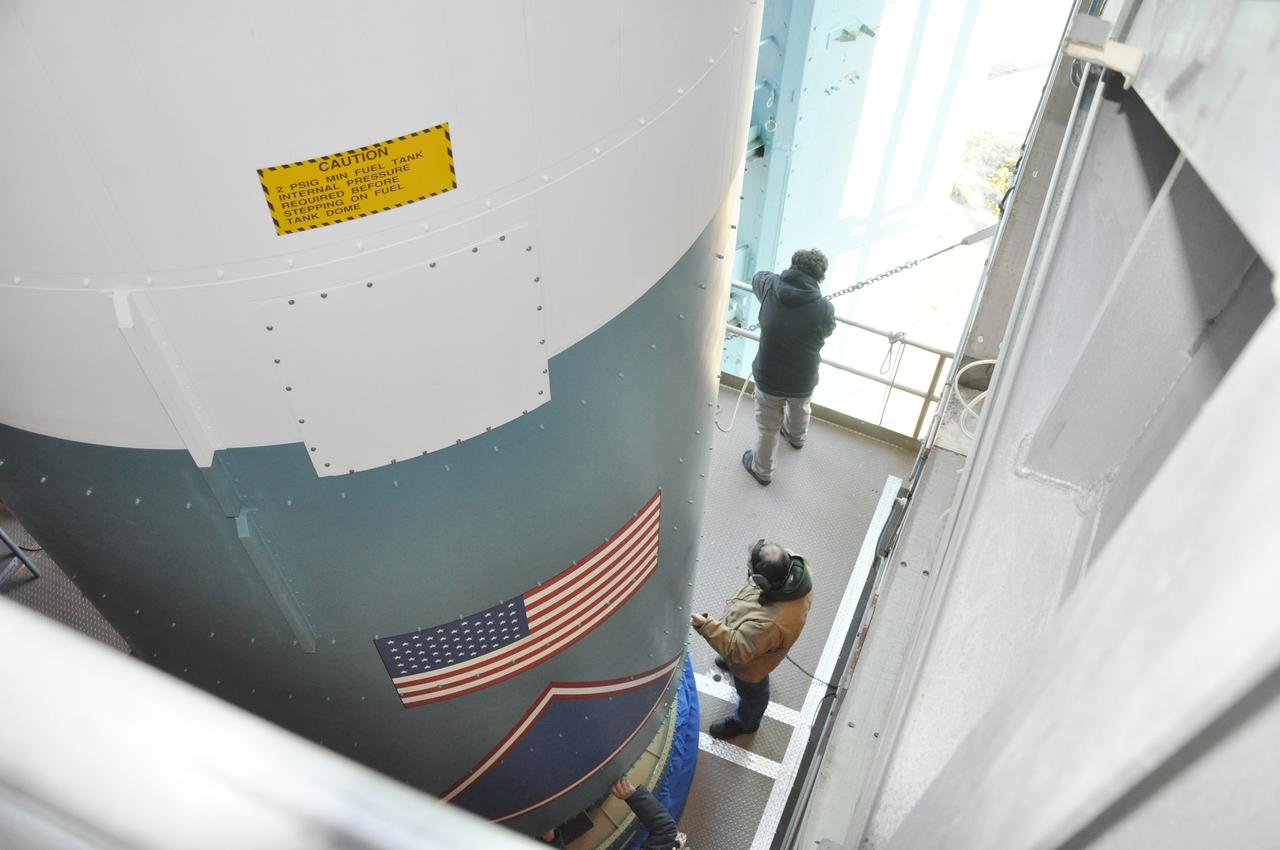
VANDENBERG AIR FORCE BASE, Calif. – Preparations are underway to connect the Delta II first stage for NASA's Orbiting Carbon Observatory-2 mission, or OCO-2, to the interstage adapter, or ISA, newly delivered to the environmental enclosure, or clean room, near the top of the mobile service tower at Space Launch Complex 2 on Vandenberg Air Force Base in California. OCO-2 is scheduled to launch into a polar Earth orbit aboard a United Launch Alliance Delta II 7320-10C rocket in July. The ISA is the interface between the Delta II first and second stages. The second stage engine fits within the ISA. Once in orbit, OCO-2 will collect precise global measurements of carbon dioxide in the Earth's atmosphere and provide scientists with a better idea of the chemical compound's impacts on climate change. Scientists will analyze this data to improve our understanding of the natural processes and human activities that regulate the abundance and distribution of this important atmospheric gas. To learn more about OCO-2, visit http://oco.jpl.nasa.gov. Photo credit: NASA/Randy Beaudoin
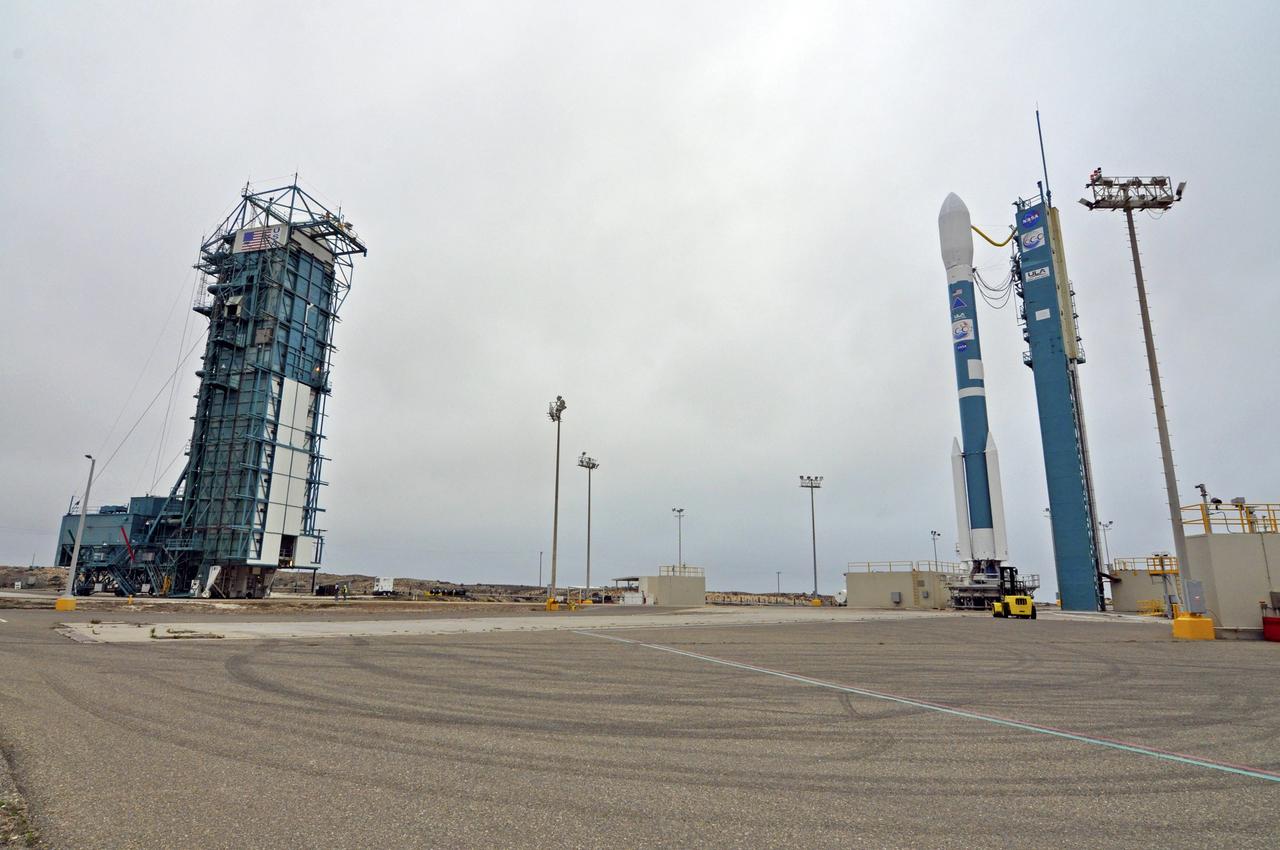
VANDENBERG AIR FORCE BASE, Calif. – NASA's Orbiting Carbon Observatory-2, or OCO-2, stands ready for launch aboard a United Launch Alliance Delta II rocket following rollback of the mobile service tower on Space Launch Complex 2 on Vandenberg Air Force Base in California. Launch of OCO-2 is scheduled for 5:56 a.m. EDT on July 2 following the repair of the pad's water suppression system, which failed on the first launch attempt July 1. OCO-2 is NASA’s first mission dedicated to studying atmospheric carbon dioxide, the leading human-produced greenhouse gas driving changes in Earth’s climate. OCO-2 will provide a new tool for understanding the human and natural sources of carbon dioxide emissions and the natural "sinks" that absorb carbon dioxide and help control its buildup. The observatory will measure the global geographic distribution of these sources and sinks and study their changes over time. To learn more about OCO-2, visit http://www.nasa.gov/oco2. Photo credit: NASA/Randy Beaudoin
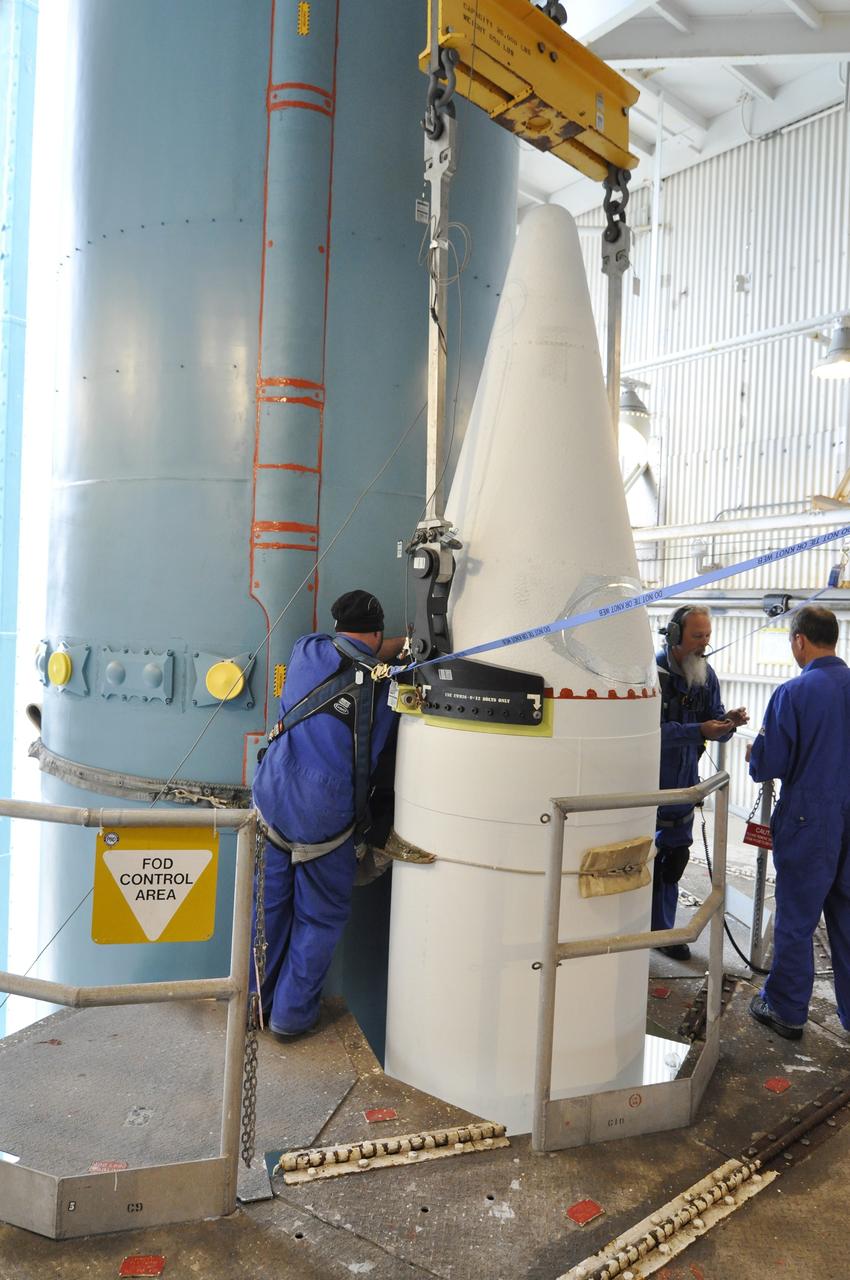
VANDENBERG AIR FORCE BASE, Calif. – Workers complete the task of attaching a solid rocket motor, or SRM, for NASA's Orbiting Carbon Observatory-2 mission, or OCO-2, to the Delta II first stage in the mobile service tower at Space Launch Complex 2 on Vandenberg Air Force Base in California. Operations are underway to attach the rocket's three SRMs, known as graphite epoxy motors, to its first stage. OCO-2 is scheduled to launch into a polar Earth orbit aboard a United Launch Alliance Delta II 7320-10C rocket in July. Once in orbit, OCO-2 will collect precise global measurements of carbon dioxide in the Earth's atmosphere and provide scientists with a better idea of the chemical compound's impacts on climate change. Scientists will analyze this data to improve our understanding of the natural processes and human activities that regulate the abundance and distribution of this important atmospheric gas. To learn more about OCO-2, visit http://oco.jpl.nasa.gov. Photo credit: NASA/Randy Beaudoin
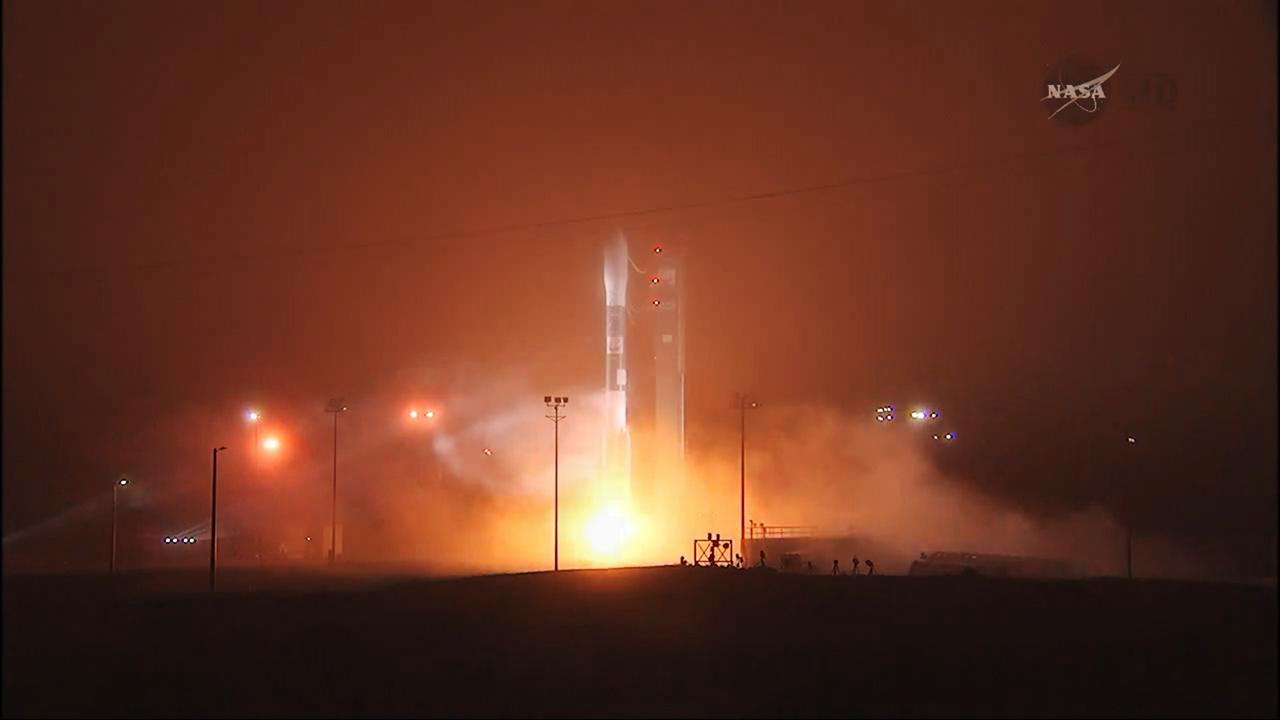
VANDENBERG AIR FORCE BASE, Calif. – The United Launch Alliance Delta II rocket lifts off through the fog at Space Launch Complex 2 on Vandenberg Air Force Base in California, engines blazing, carrying NASA's Orbiting Carbon Observatory-2, or OCO-2, to orbit. ): Launch was on schedule at 5:56 a.m. EDT on July 2 following the repair of the pad's water suppression system, which failed on the first launch attempt July 1. OCO-2 is NASA’s first mission dedicated to studying atmospheric carbon dioxide, the leading human-produced greenhouse gas driving changes in Earth’s climate. OCO-2 will provide a new tool for understanding the human and natural sources of carbon dioxide emissions and the natural "sinks" that absorb carbon dioxide and help control its buildup. The observatory will measure the global geographic distribution of these sources and sinks and study their changes over time. To learn more about OCO-2, visit http://www.nasa.gov/oco2. Photo credit: NASA
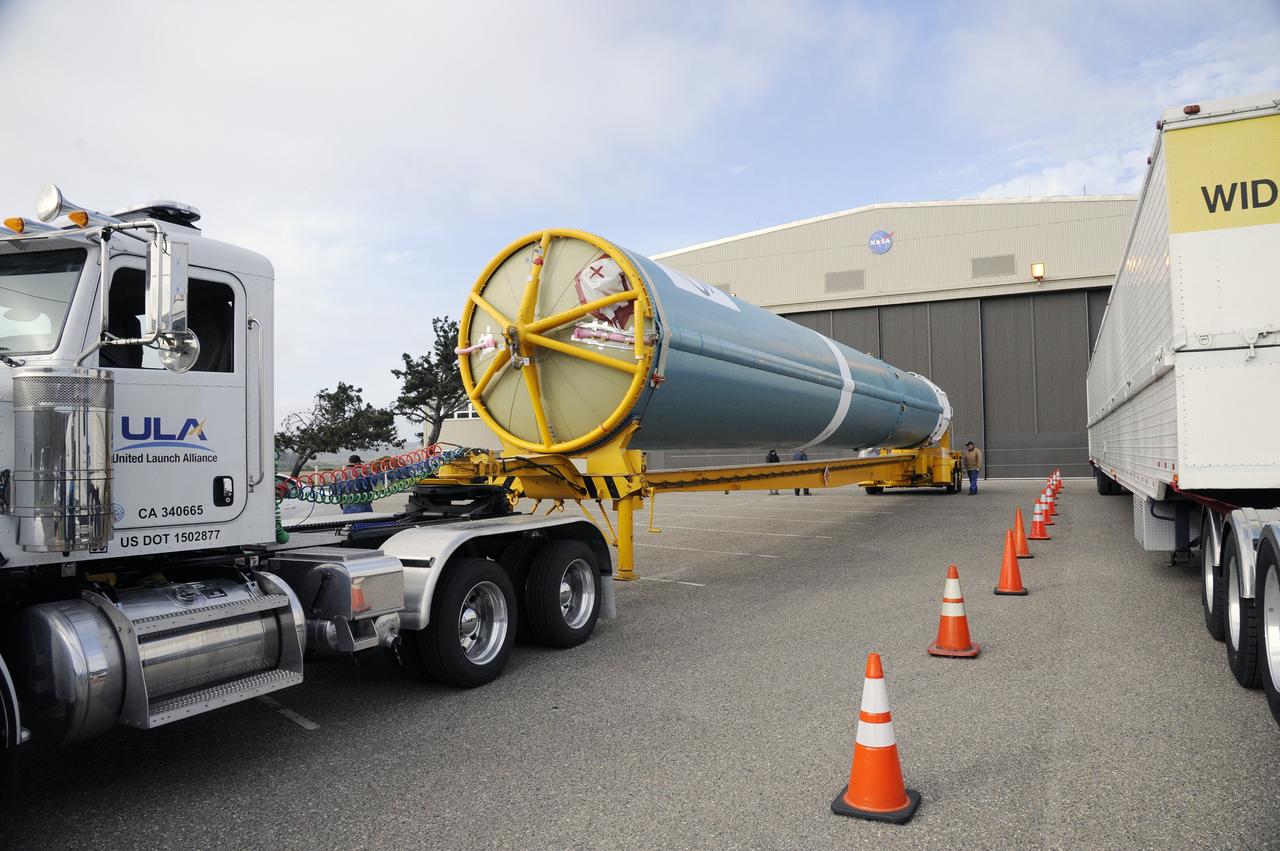
VANDENBERG AIR FORCE BASE, Calif. – The Delta first-stage booster for NASA's Orbiting Carbon Observatory-2 mission, or OCO-2, rolls out of the Building 836 hangar for its trip along the roads on Vandenberg Air Force Base in California to the Horizontal Processing Facility at Space Launch Complex 2. OCO-2 is scheduled to launch aboard a United Launch Alliance Delta II rocket on July 1, 2014. The observatory will collect precise global measurements of carbon dioxide in the Earth's atmosphere and provide scientists with a better idea of the chemical compound's impacts on climate change. Scientists will analyze this data to improve our understanding of the natural processes and human activities that regulate the abundance and distribution of this important atmospheric gas. To learn more about OCO-2, visit http://oco.jpl.nasa.gov. Photo credit: NASA/D. Liberotti, 30th Space Wing, VAFB
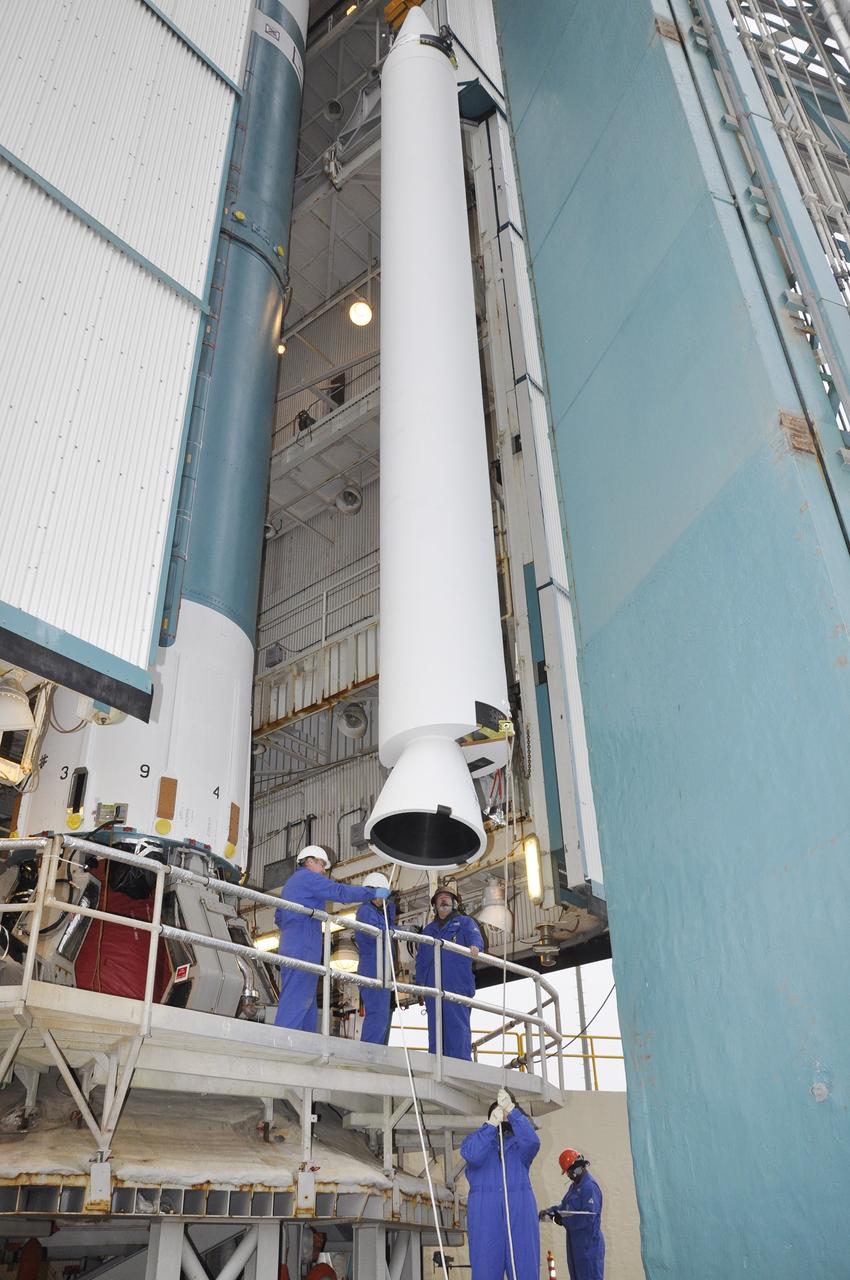
VANDENBERG AIR FORCE BASE, Calif. – A solid rocket motor, or SRM, for NASA's Orbiting Carbon Observatory-2 mission, or OCO-2, is lifted into the mobile service tower at Space Launch Complex 2 on Vandenberg Air Force Base in California. Operations are underway to attach the Delta II rocket's three SRMs, known as graphite epoxy motors, to the rocket's first stage in place in the tower. OCO-2 is scheduled to launch into a polar Earth orbit aboard a United Launch Alliance Delta II 7320-10C rocket in July. Once in orbit, OCO-2 will collect precise global measurements of carbon dioxide in the Earth's atmosphere and provide scientists with a better idea of the chemical compound's impacts on climate change. Scientists will analyze this data to improve our understanding of the natural processes and human activities that regulate the abundance and distribution of this important atmospheric gas. To learn more about OCO-2, visit http://oco.jpl.nasa.gov. Photo credit: NASA/Randy Beaudoin
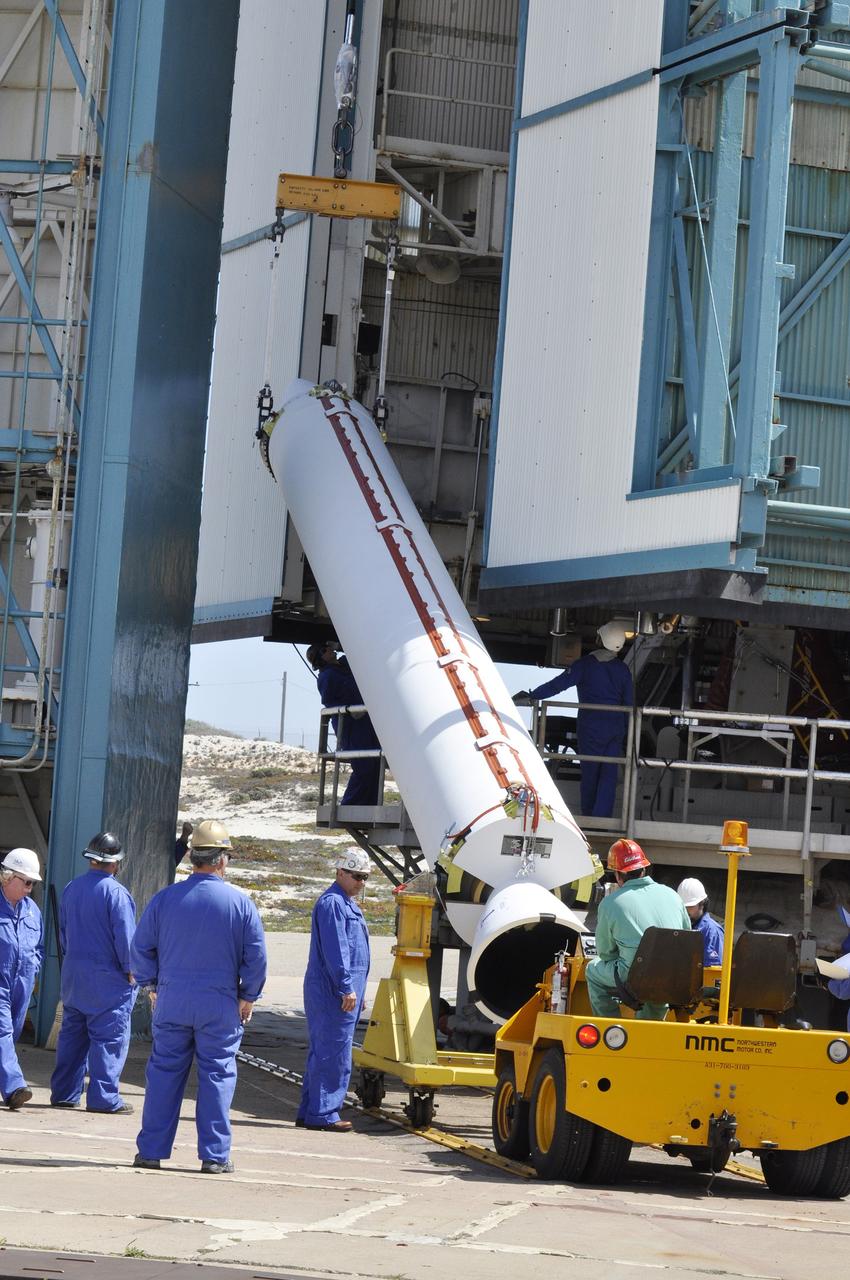
VANDENBERG AIR FORCE BASE, Calif. – A crane lifts the second solid rocket motor, or SRM, for NASA's Orbiting Carbon Observatory-2 mission, or OCO-2, into a vertical position beside the mobile service tower at Space Launch Complex 2 on Vandenberg Air Force Base in California. Operations are underway to attach the Delta II rocket's three SRMs, known as graphite epoxy motors, to its first stage. OCO-2 is scheduled to launch into a polar Earth orbit aboard a United Launch Alliance Delta II 7320-10C rocket in July. Once in orbit, OCO-2 will collect precise global measurements of carbon dioxide in the Earth's atmosphere and provide scientists with a better idea of the chemical compound's impacts on climate change. Scientists will analyze this data to improve our understanding of the natural processes and human activities that regulate the abundance and distribution of this important atmospheric gas. To learn more about OCO-2, visit http://oco.jpl.nasa.gov. Photo credit: NASA/Randy Beaudoin
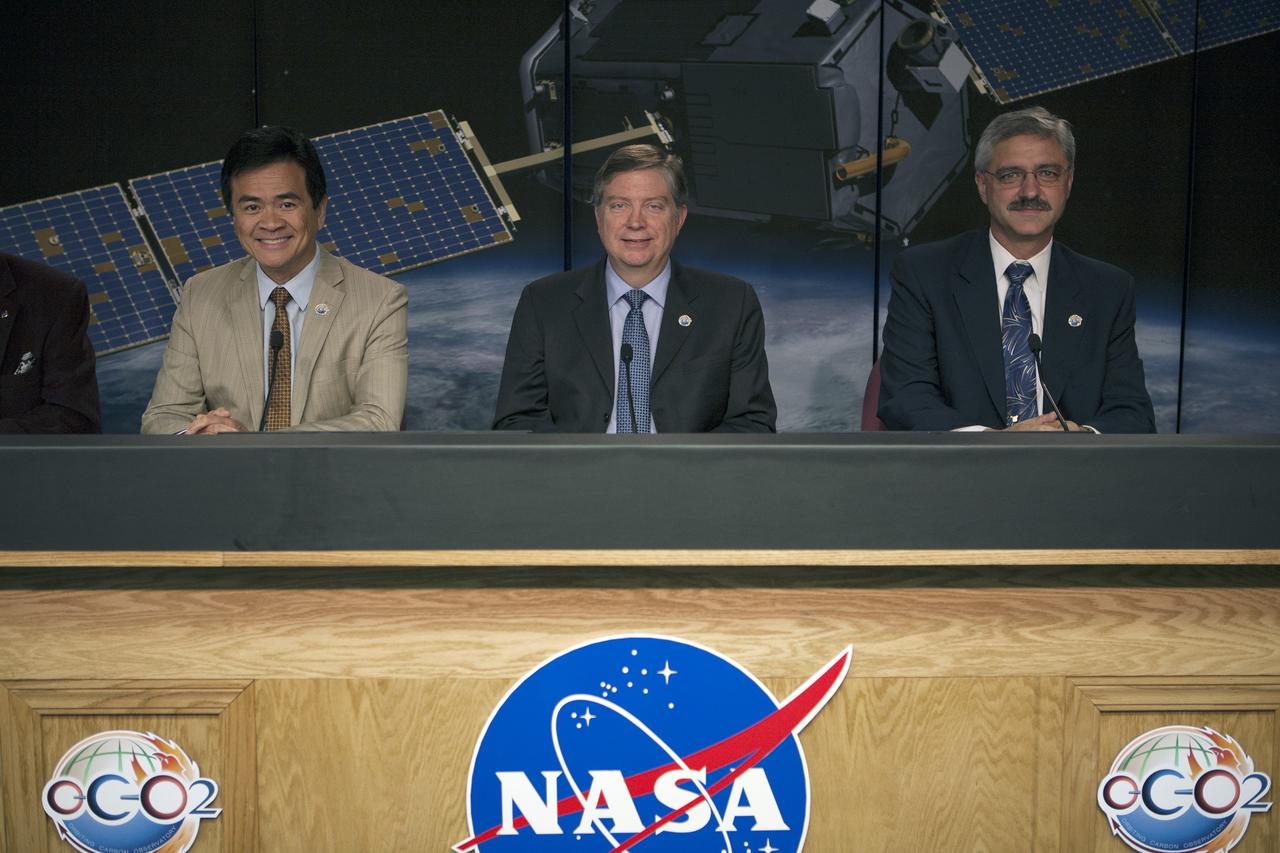
VANDENBERG AIR FORCE BASE, Calif. – A post-launch news conference is held at Vandenberg Air Force Base in California following the successful launch of NASA's Orbiting Carbon Observatory-2, or OCO-2. From left are Ralph Basilio, OCO-2 project manager at NASA's Jet Propulsion Laboratory Mike Miller, senior vice president, Science and Environmental Satellite Programs, Orbital Sciences Space Systems Group and Geoff Yoder, deputy associate administrator for Programs, Science Mission Directorate, NASA Headquarters. Liftoff of OCO-2 from Space Launch Complex 2 aboard a United Launch Alliance Delta II rocket was on schedule at 5:56 a.m. EDT on July 2 following the repair of the pad's water suppression system, which failed on the first launch attempt July 1. OCO-2 is NASA’s first mission dedicated to studying atmospheric carbon dioxide, the leading human-produced greenhouse gas driving changes in Earth’s climate. OCO-2 will provide a new tool for understanding the human and natural sources of carbon dioxide emissions and the natural "sinks" that absorb carbon dioxide and help control its buildup. The observatory will measure the global geographic distribution of these sources and sinks and study their changes over time. To learn more about OCO-2, visit http://www.nasa.gov/oco2. Photo credit: NASA/Kim Shiflett
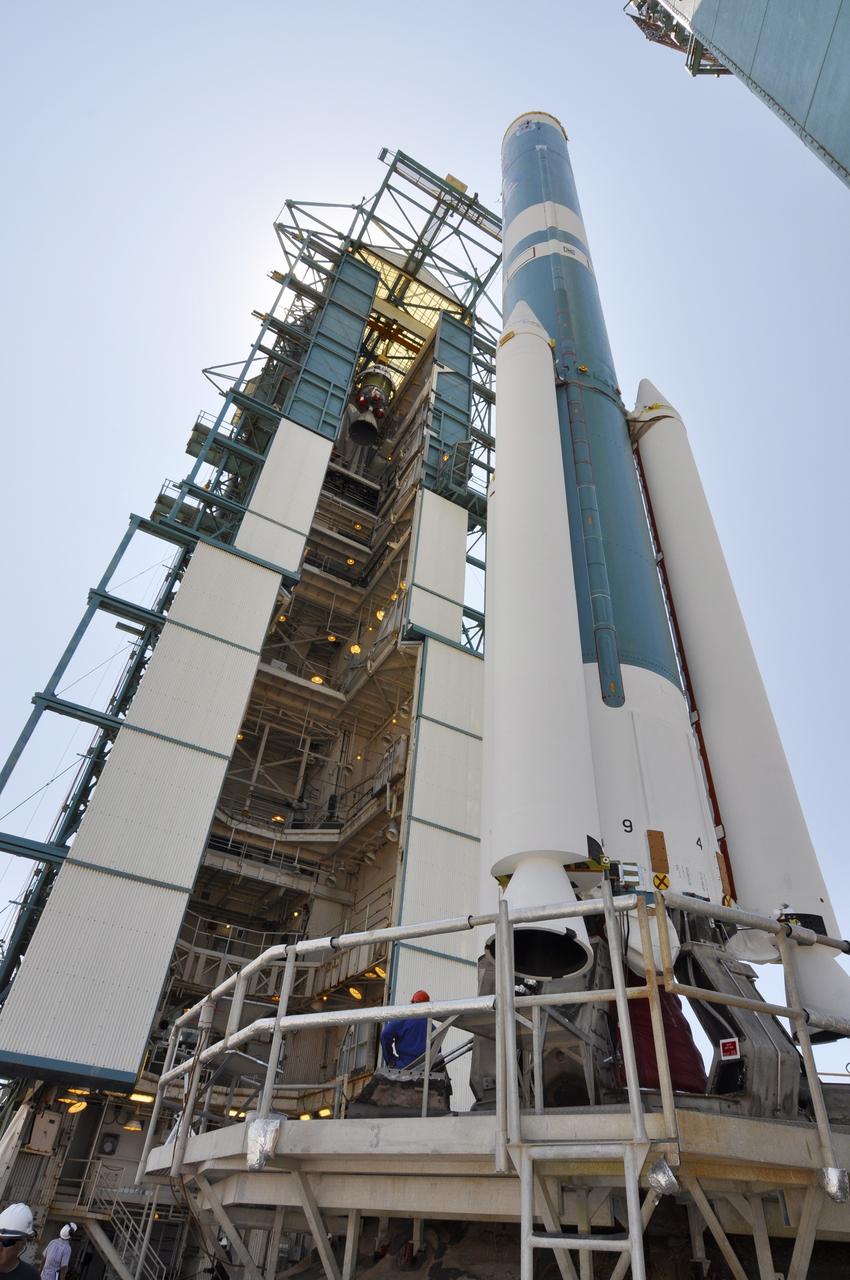
VANDENBERG AIR FORCE BASE, Calif. – The second stage of the Delta II rocket for NASA's Soil Moisture Active Passive mission, or SMAP, is transferred into the top of the mobile service tower at Space Launch Complex 2 on Vandenberg Air Force Base in California. Operations are underway to install the second stage atop the rocket's first stage. SMAP will launch on a Delta II 7320 configuration vehicle featuring a United Launch Alliance first stage booster powered by an Aerojet Rocketdyne RS-27A main engine and three Alliant Techsystems, or ATK, strap-on solid rocket motors. Once on station in Earth orbit, SMAP will provide global measurements of soil moisture and its freeze/thaw state. These measurements will be used to enhance understanding of processes that link the water, energy and carbon cycles, and to extend the capabilities of weather and climate prediction models. SMAP data also will be used to quantify net carbon flux in boreal landscapes and to develop improved flood prediction and drought monitoring capabilities. Launch is scheduled for no earlier than November 2014. To learn more about SMAP, visit http://smap.jpl.nasa.gov. Photo credit: NASA/Randy Beaudoin
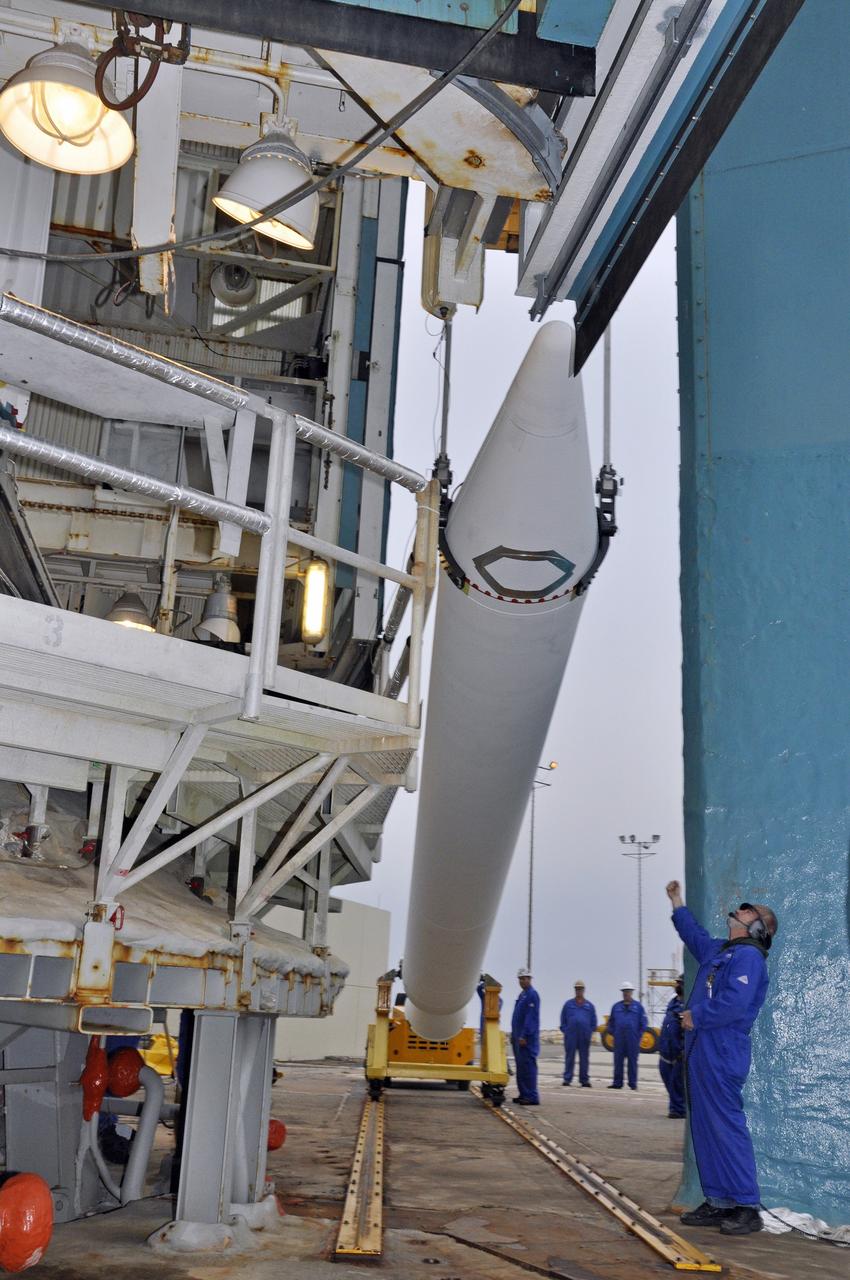
VANDENBERG AIR FORCE BASE, Calif. – A crane lifts the solid rocket motor, or SRM, for NASA's Orbiting Carbon Observatory-2 mission, or OCO-2, following its delivery to the mobile service tower at Space Launch Complex 2 on Vandenberg Air Force Base in California. Operations are underway to attach the Delta II rocket's three SRMs, known as graphite epoxy motors, to the rocket's first stage. OCO-2 is scheduled to launch into a polar Earth orbit aboard a United Launch Alliance Delta II 7320-10C rocket in July. Once in orbit, OCO-2 will collect precise global measurements of carbon dioxide in the Earth's atmosphere and provide scientists with a better idea of the chemical compound's impacts on climate change. Scientists will analyze this data to improve our understanding of the natural processes and human activities that regulate the abundance and distribution of this important atmospheric gas. To learn more about OCO-2, visit http://oco.jpl.nasa.gov. Photo credit: NASA/Randy Beaudoin
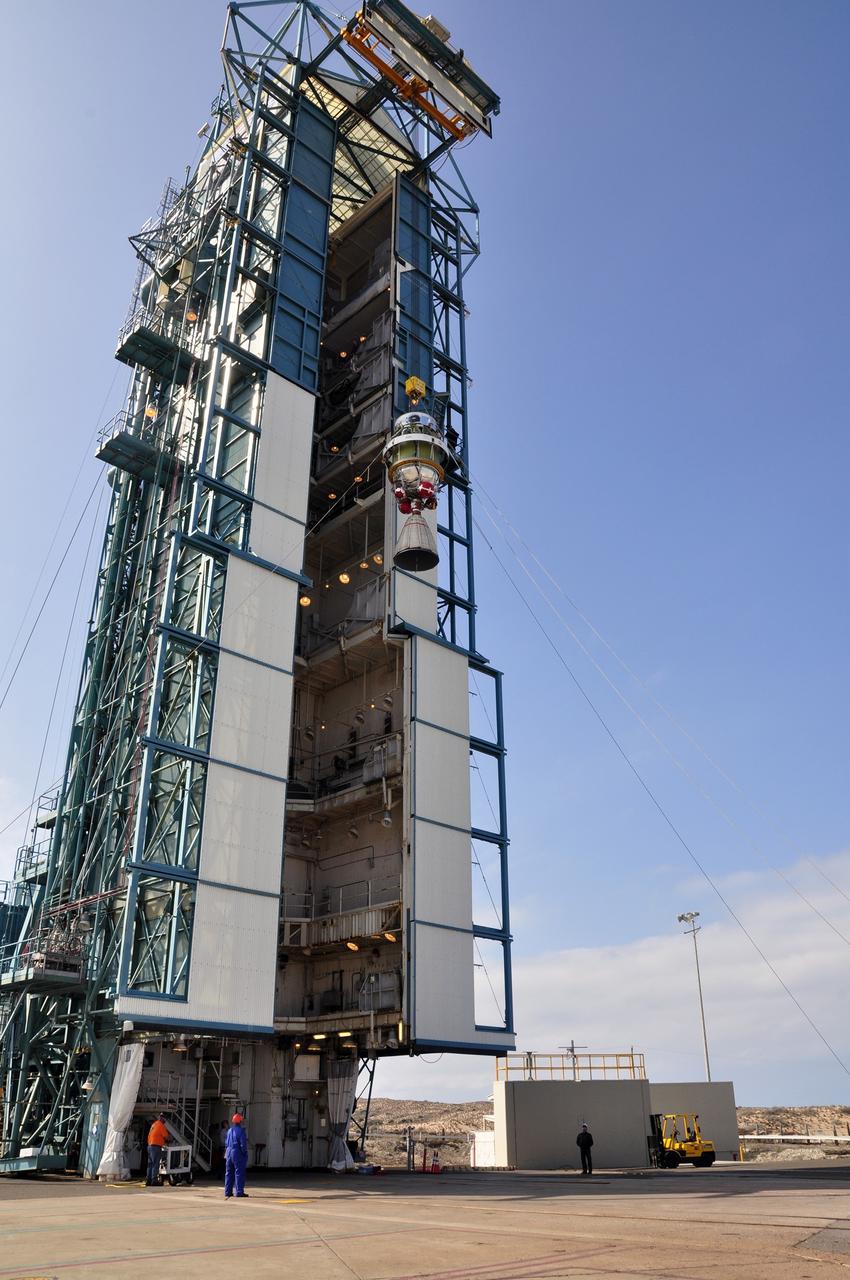
VANDENBERG AIR FORCE BASE, Calif. – A crane hoists the second stage of the Delta II rocket for NASA's Soil Moisture Active Passive mission, or SMAP, to the top of the mobile service tower at Space Launch Complex 2 on Vandenberg Air Force Base in California. Operations are underway to install the second stage atop the rocket's first stage. SMAP will launch on a Delta II 7320 configuration vehicle featuring a United Launch Alliance first stage booster powered by an Aerojet Rocketdyne RS-27A main engine and three Alliant Techsystems, or ATK, strap-on solid rocket motors. Once on station in Earth orbit, SMAP will provide global measurements of soil moisture and its freeze/thaw state. These measurements will be used to enhance understanding of processes that link the water, energy and carbon cycles, and to extend the capabilities of weather and climate prediction models. SMAP data also will be used to quantify net carbon flux in boreal landscapes and to develop improved flood prediction and drought monitoring capabilities. Launch is scheduled for no earlier than November 2014. To learn more about SMAP, visit http://smap.jpl.nasa.gov. Photo credit: NASA/Randy Beaudoin
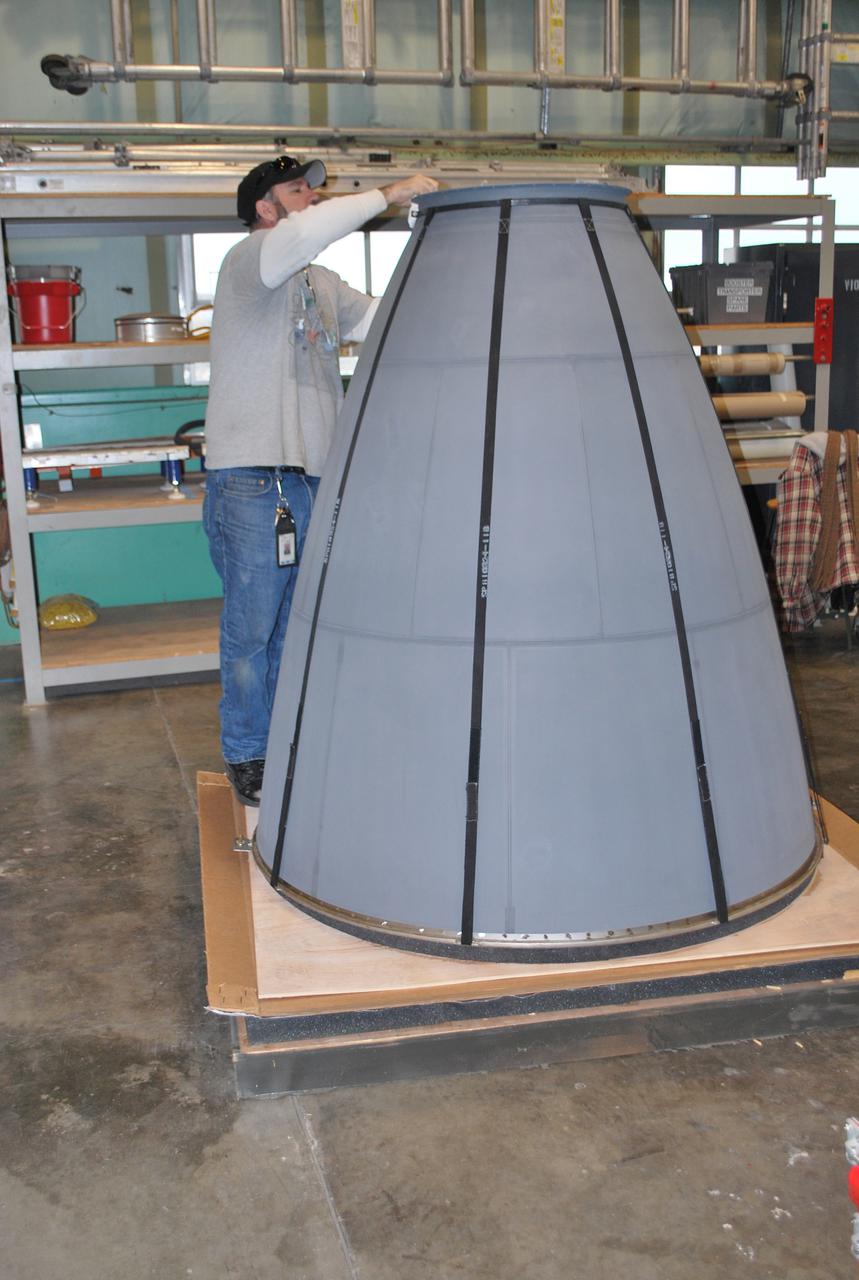
VANDENBERG AIR FORCE BASE, Calif. – In the Horizontal Processing Facility at Space Launch Complex 2 on Vandenberg Air Force Base in California, preparations are underway to install the engine bell around the second-stage nozzle of the Delta II rocket for NASA's Orbiting Carbon Observatory-2 mission, or OCO-2. OCO-2 is scheduled to launch aboard a United Launch Alliance Delta II rocket from Space Launch Complex 2 in July. The rocket's second stage will insert OCO-2 into a polar Earth orbit. OCO-2 will collect precise global measurements of carbon dioxide in the Earth's atmosphere and provide scientists with a better idea of the chemical compound's impacts on climate change. Scientists will analyze this data to improve our understanding of the natural processes and human activities that regulate the abundance and distribution of this important atmospheric gas. To learn more about OCO-2, visit http:__oco.jpl.nasa.gov. Photo credit: NASA_Randy Beaudoin
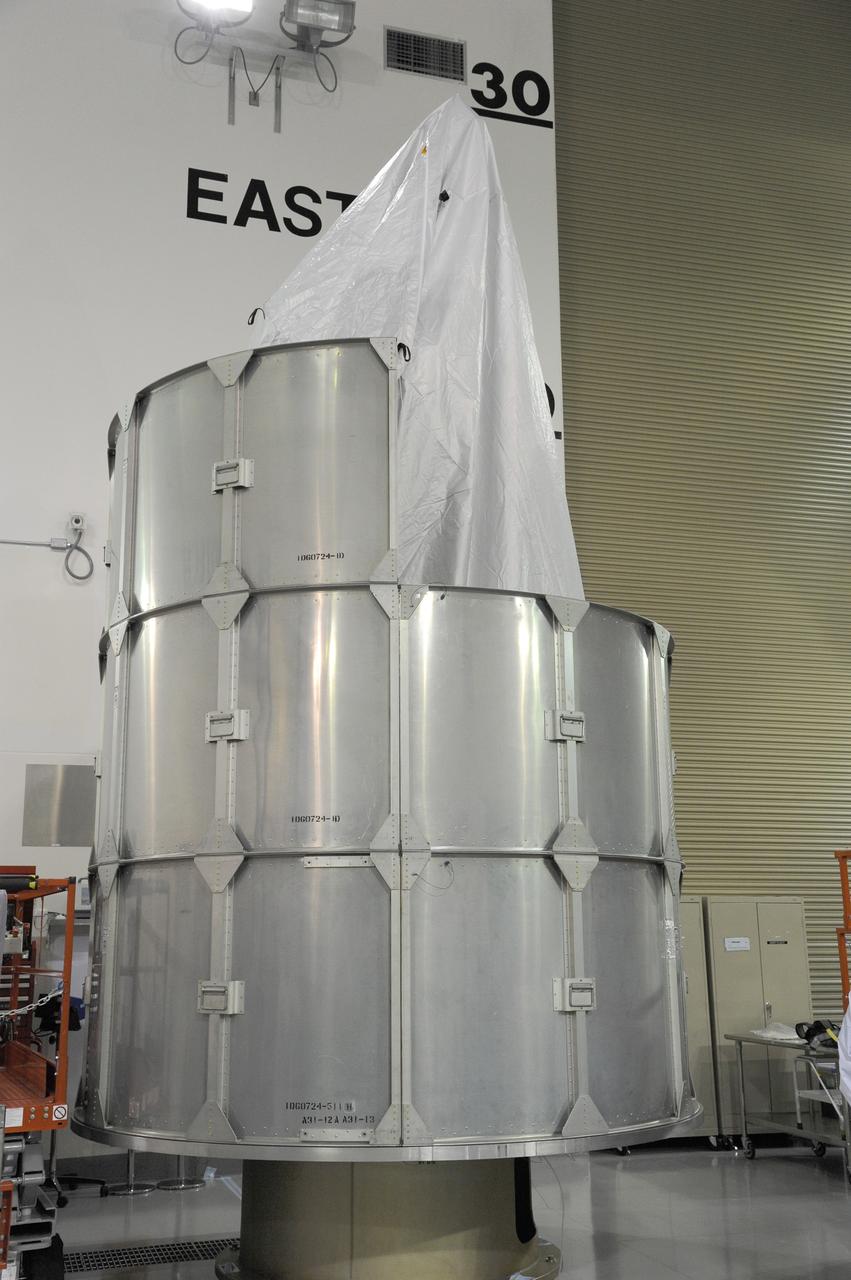
VANDENBERG AFB, California – Technicians and engineers place a transportation canister around NASA's SMAP spacecraft so it can be taken from the Astrotech processing facility to Space Launch Complex-2 for placement atop a Delta II rocket for launch. For more, go to www.nasa.gov/smap Photo credit: USAF/John Davila
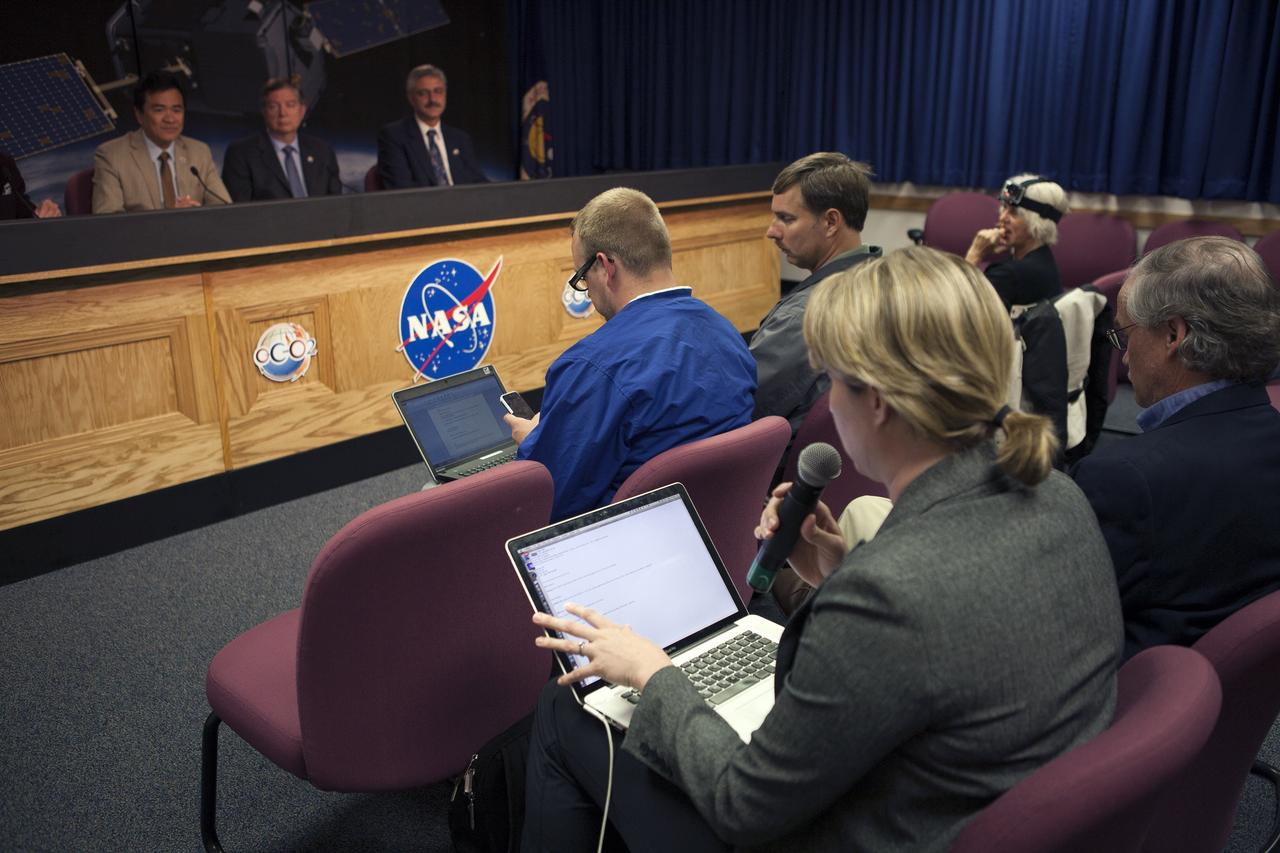
VANDENBERG AIR FORCE BASE, Calif. – Representatives of news and social media outlets participate in a post-launch news conference at Vandenberg Air Force Base in California following the successful launch of NASA's Orbiting Carbon Observatory-2, or OCO-2. On the dais, from left, are Ralph Basilio, OCO-2 project manager at NASA's Jet Propulsion Laboratory Mike Miller, senior vice president, Science and Environmental Satellite Programs, Orbital Sciences Space Systems Group and Geoff Yoder, deputy associate administrator for Programs, Science Mission Directorate, NASA Headquarters. Liftoff of OCO-2 from Space Launch Complex 2 aboard a United Launch Alliance Delta II rocket was on schedule at 5:56 a.m. EDT on July 2 following the repair of the pad's water suppression system, which failed on the first launch attempt July 1. OCO-2 is NASA’s first mission dedicated to studying atmospheric carbon dioxide, the leading human-produced greenhouse gas driving changes in Earth’s climate. OCO-2 will provide a new tool for understanding the human and natural sources of carbon dioxide emissions and the natural "sinks" that absorb carbon dioxide and help control its buildup. The observatory will measure the global geographic distribution of these sources and sinks and study their changes over time. To learn more about OCO-2, visit http://www.nasa.gov/oco2. Photo credit: NASA/Kim Shiflett

VANDENBERG AIR FORCE BASE, Calif. – The Delta first-stage booster for NASA's Orbiting Carbon Observatory-2 mission, or OCO-2, rests on its hardware transportation cradle in the Horizontal Processing Facility at Space Launch Complex 2 on Vandenberg Air Force Base in California. OCO-2 is scheduled to launch aboard a United Launch Alliance Delta II rocket on July 1, 2014. The observatory will collect precise global measurements of carbon dioxide in the Earth's atmosphere and provide scientists with a better idea of the chemical compound's impacts on climate change. Scientists will analyze this data to improve our understanding of the natural processes and human activities that regulate the abundance and distribution of this important atmospheric gas. To learn more about OCO-2, visit http://oco.jpl.nasa.gov. Photo credit: NASA/D. Liberotti, 30th Space Wing, VAFB
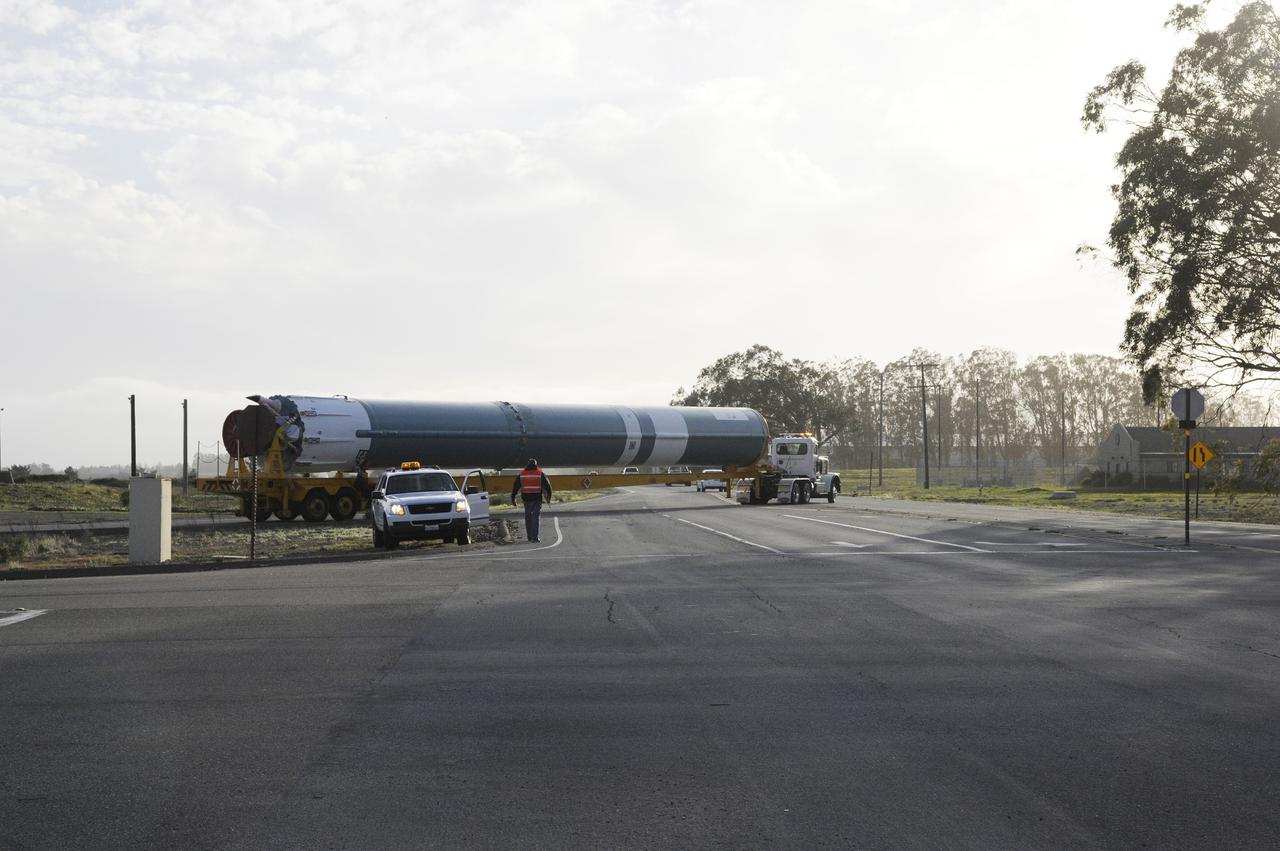
VANDENBERG AIR FORCE BASE, Calif. – The Delta first-stage booster for NASA's Orbiting Carbon Observatory-2 mission, or OCO-2, makes its way past a security guard as it travels along the roads at Vandenberg Air Force Base in California on its move from the Building 836 hangar to the Horizontal Processing Facility at Space Launch Complex 2. OCO-2 is scheduled to launch aboard a United Launch Alliance Delta II rocket on July 1, 2014. The observatory will collect precise global measurements of carbon dioxide in the Earth's atmosphere and provide scientists with a better idea of the chemical compound's impacts on climate change. Scientists will analyze this data to improve our understanding of the natural processes and human activities that regulate the abundance and distribution of this important atmospheric gas. To learn more about OCO-2, visit http://oco.jpl.nasa.gov. Photo credit: NASA/D. Liberotti, 30th Space Wing, VAFB
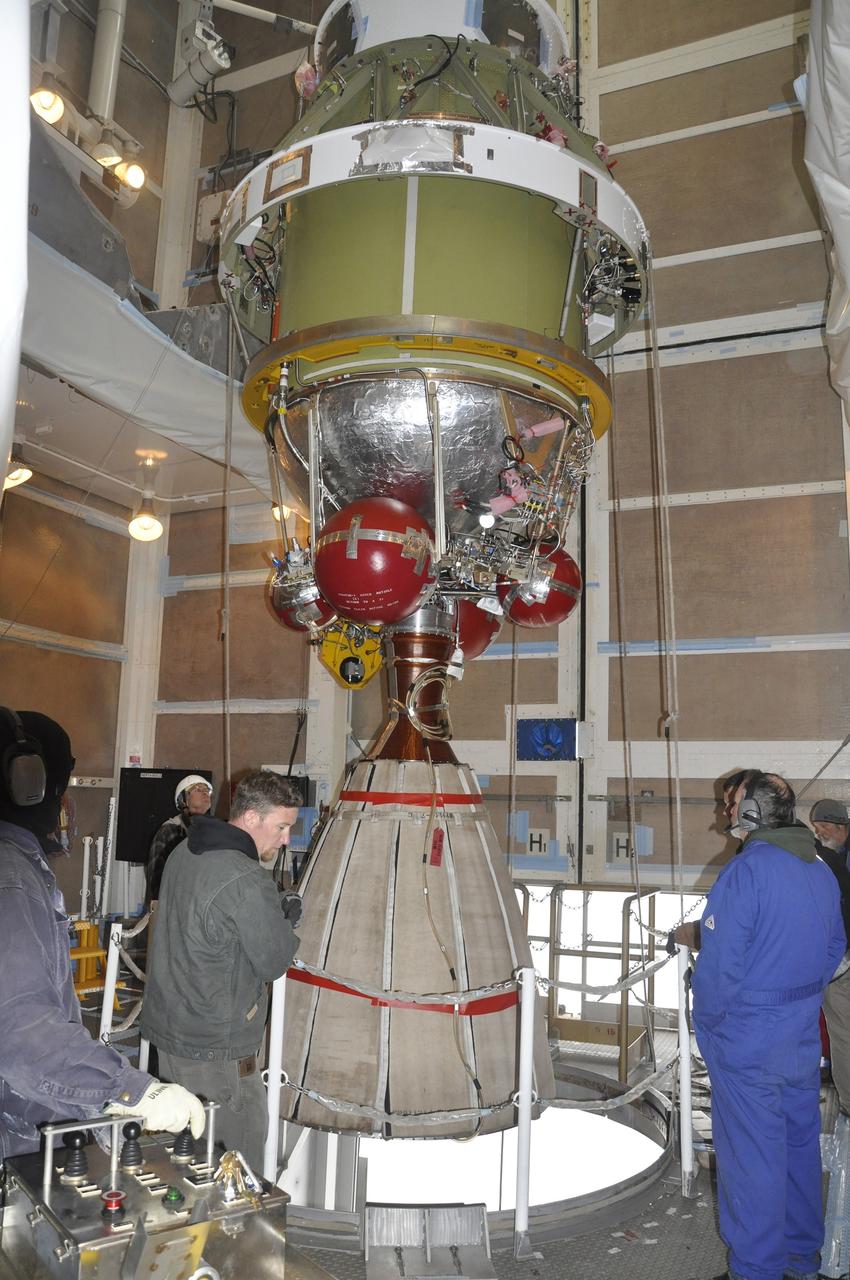
VANDENBERG AIR FORCE BASE, Calif. – Workers monitor the Delta II second stage for NASA's Orbiting Carbon Observatory-2 mission, or OCO-2, as it is lifted into position for mating with the rocket's first stage in the mobile service tower at Space Launch Complex 2 on Vandenberg Air Force Base in California. OCO-2 is scheduled to launch aboard a United Launch Alliance Delta II rocket in July. The rocket's second stage will insert OCO-2 into a polar Earth orbit. OCO-2 will collect precise global measurements of carbon dioxide in the Earth's atmosphere and provide scientists with a better idea of the chemical compound's impacts on climate change. Scientists will analyze this data to improve our understanding of the natural processes and human activities that regulate the abundance and distribution of this important atmospheric gas. To learn more about OCO-2, visit http://oco.jpl.nasa.gov. Photo credit: NASA/Randy Beaudoin
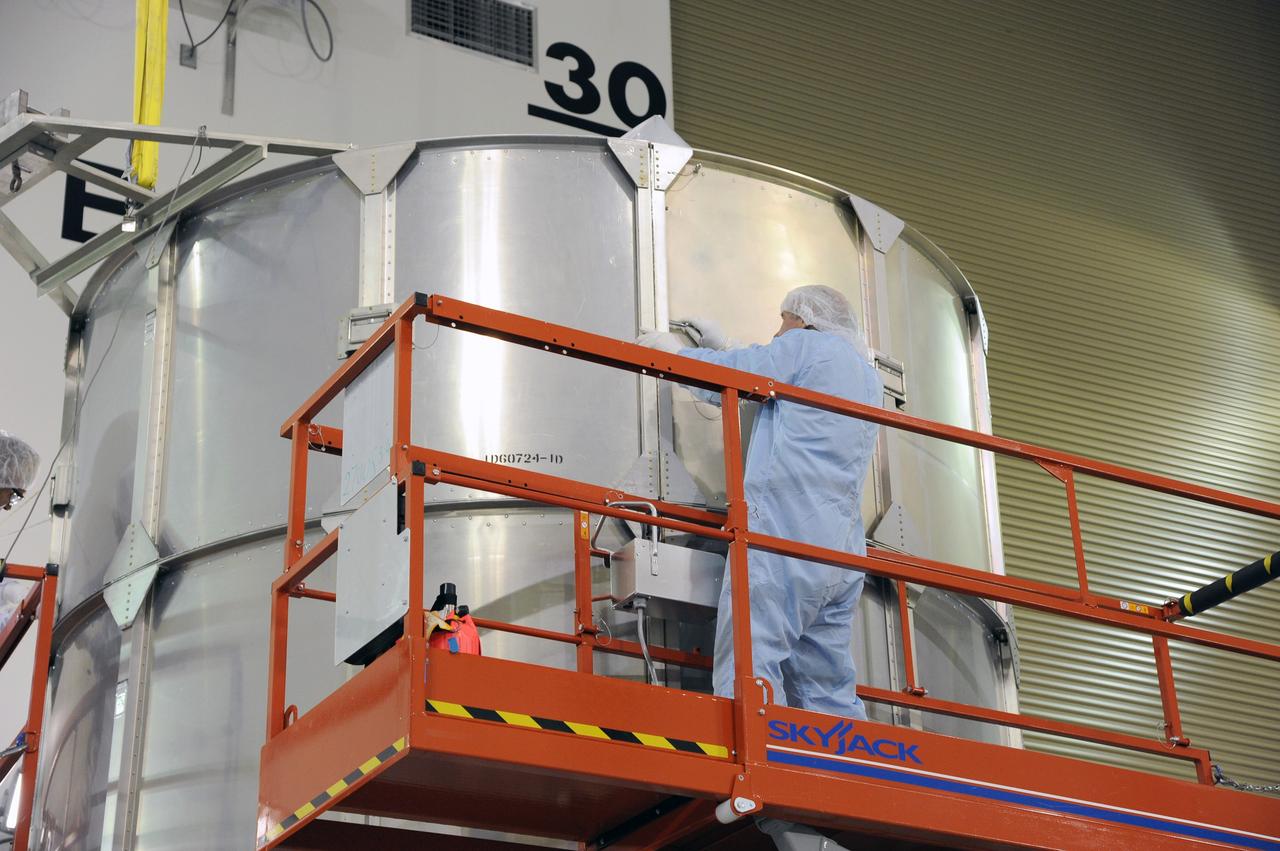
VANDENBERG AFB, California – Technicians and engineers place a transportation canister around NASA's SMAP spacecraft so it can be taken from the Astrotech processing facility to Space Launch Complex-2 for placement atop a Delta II rocket for launch. For more, go to www.nasa.gov/smap Photo credit: USAF/John Davila
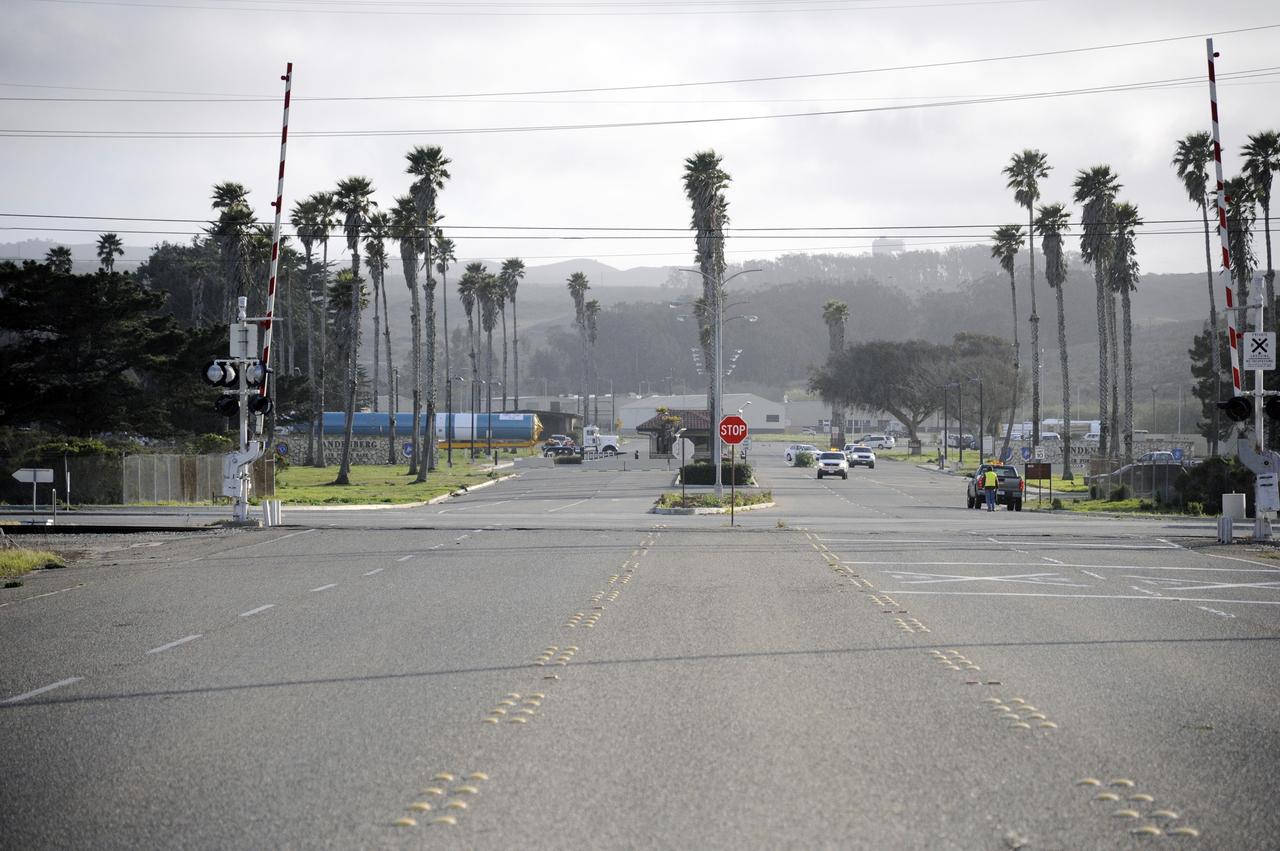
VANDENBERG AIR FORCE BASE, Calif. – The Delta first-stage booster for NASA's Orbiting Carbon Observatory-2 mission, or OCO-2, noses its way into the traffic on the roads at Vandenberg Air Force Base in California on its move from the Building 836 hangar to the Horizontal Processing Facility at Space Launch Complex 2. OCO-2 is scheduled to launch aboard a United Launch Alliance Delta II rocket on July 1, 2014. The observatory will collect precise global measurements of carbon dioxide in the Earth's atmosphere and provide scientists with a better idea of the chemical compound's impacts on climate change. Scientists will analyze this data to improve our understanding of the natural processes and human activities that regulate the abundance and distribution of this important atmospheric gas. To learn more about OCO-2, visit http://oco.jpl.nasa.gov. Photo credit: NASA/D. Liberotti, 30th Space Wing, VAFB
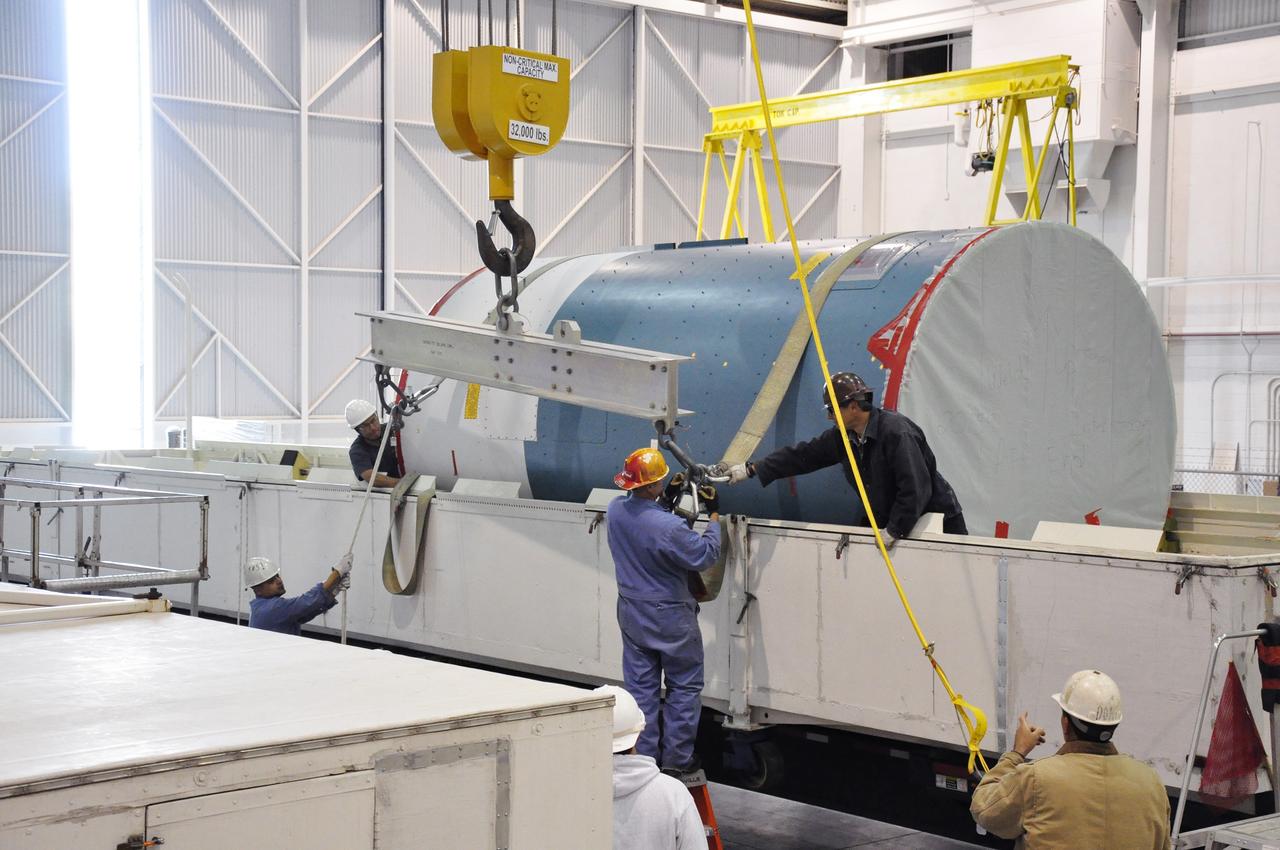
VANDENBERG AIR FORCE BASE, Calif. – Workers attach the canister containing the interstage adapter, or ISA, for NASA's Soil Moisture Active Passive mission, or SMAP, to a lifting device in the high bay of the Building 836 hangar on south Vandenberg Air Force Base in California. A United Launch Alliance Delta II rocket will loft SMAP into orbit from Vandenberg's Space Launch Complex 2. The ISA connects the Delta II first and second stages and encloses the second stage engine and thrust section. The spacecraft will provide global measurements of soil moisture and its freeze/thaw state. These measurements will be used to enhance understanding of processes that link the water, energy and carbon cycles, and to extend the capabilities of weather and climate prediction models. The data returned also will be used to quantify net carbon flux in boreal landscapes and to develop improved flood prediction and drought monitoring capabilities. Launch is scheduled for November 2014. To learn more about SMAP, visit http://smap.jpl.nasa.gov. Photo credit: NASA/Randy Beaudoin
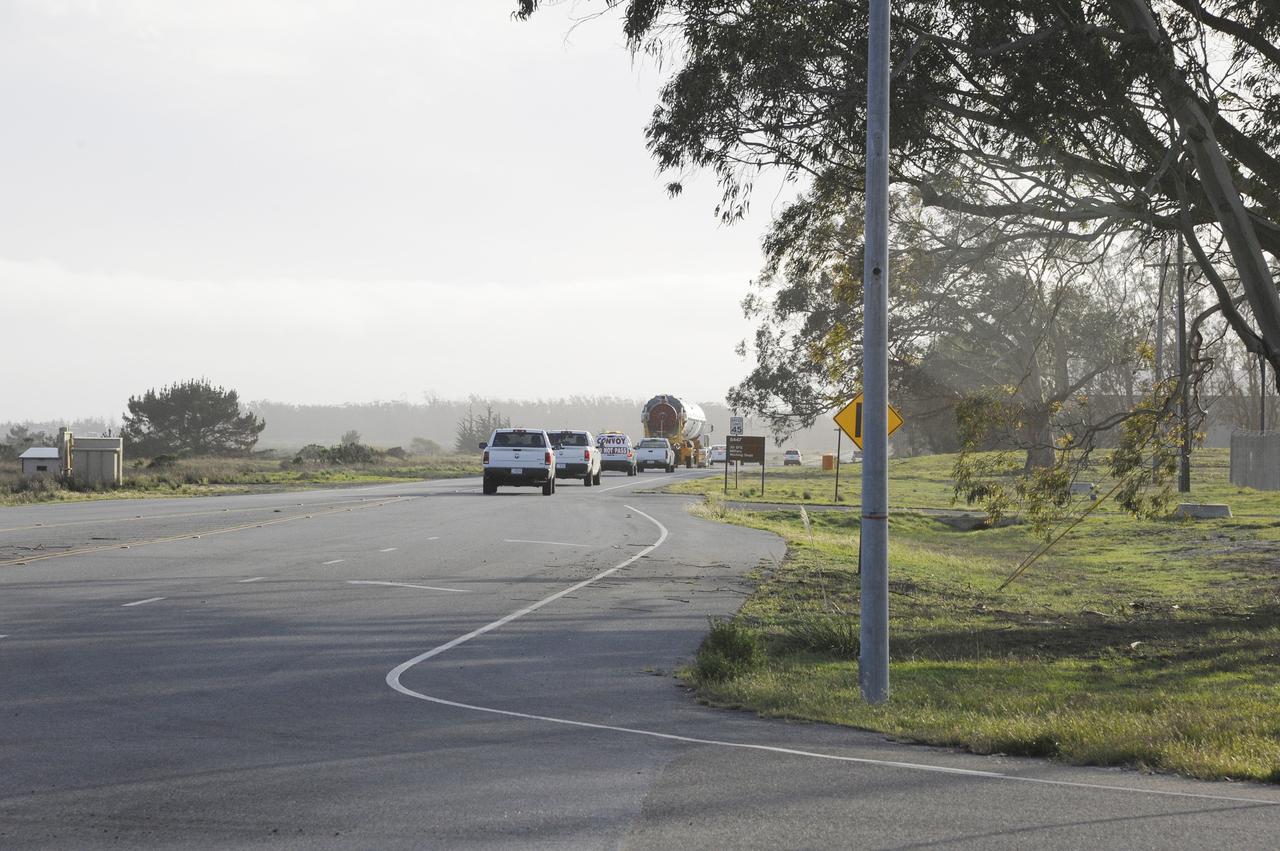
VANDENBERG AIR FORCE BASE, Calif. – The Delta first-stage booster for NASA's Orbiting Carbon Observatory-2 mission, or OCO-2, is escorted along the roads at Vandenberg Air Force Base in California on its move from the Building 836 hangar to the Horizontal Processing Facility at Space Launch Complex 2. OCO-2 is scheduled to launch aboard a United Launch Alliance Delta II rocket on July 1, 2014. The observatory will collect precise global measurements of carbon dioxide in the Earth's atmosphere and provide scientists with a better idea of the chemical compound's impacts on climate change. Scientists will analyze this data to improve our understanding of the natural processes and human activities that regulate the abundance and distribution of this important atmospheric gas. To learn more about OCO-2, visit http://oco.jpl.nasa.gov. Photo credit: NASA/D. Liberotti, 30th Space Wing, VAFB
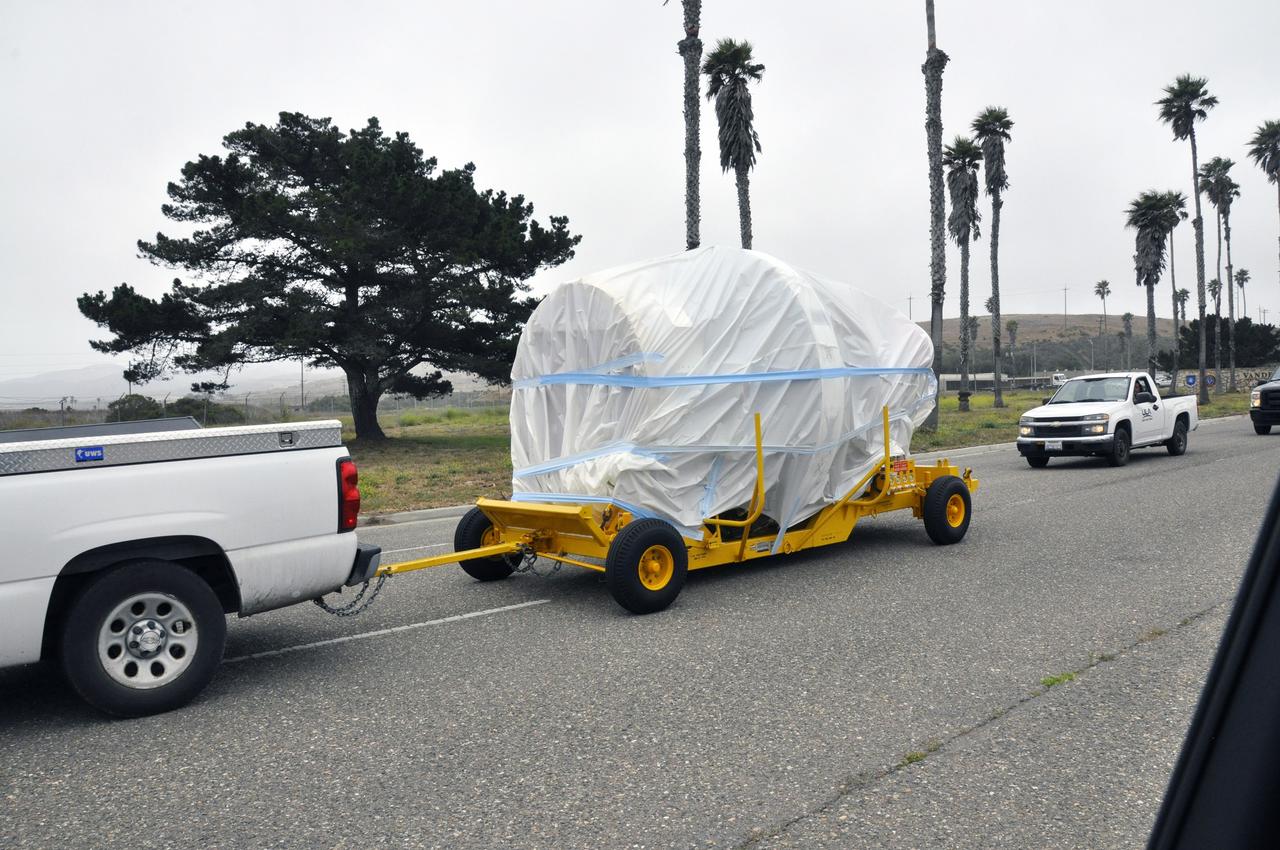
VANDENBERG AIR FORCE BASE, Calif. – The second stage, or upper stage, of a United Launch Alliance Delta II rocket is on its way from Building 836 on south Vandenberg Air Force Base in California to the Horizontal Processing Facility at Space Launch Complex 2. The Delta II rocket will be used to deliver NASA's Soil Moisture Active Passive mission, or SMAP, into orbit. SMAP will provide global measurements of soil moisture and its freeze/thaw state. These measurements will be used to enhance understanding of processes that link the water, energy and carbon cycles, and to extend the capabilities of weather and climate prediction models. SMAP data also will be used to quantify net carbon flux in boreal landscapes and to develop improved flood prediction and drought monitoring capabilities. Launch is scheduled for November 2014. To learn more about SMAP, visit http://smap.jpl.nasa.gov. Photo credit: NASA/Randy Beaudoin
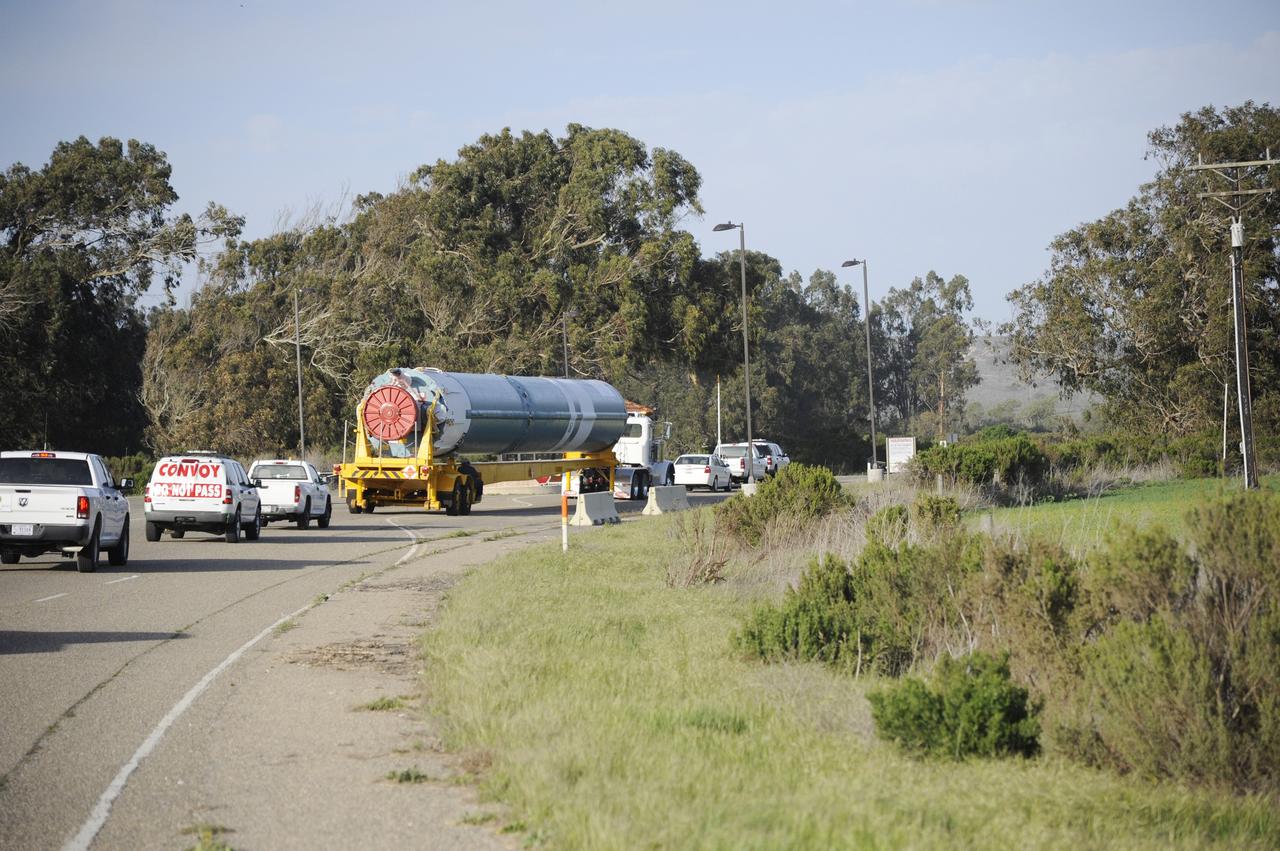
VANDENBERG AIR FORCE BASE, Calif. – The Delta first-stage booster for NASA's Orbiting Carbon Observatory-2 mission, or OCO-2, winds its way along the roads at Vandenberg Air Force Base in California on its move from the Building 836 hangar to the Horizontal Processing Facility at Space Launch Complex 2. OCO-2 is scheduled to launch aboard a United Launch Alliance Delta II rocket on July 1, 2014. The observatory will collect precise global measurements of carbon dioxide in the Earth's atmosphere and provide scientists with a better idea of the chemical compound's impacts on climate change. Scientists will analyze this data to improve our understanding of the natural processes and human activities that regulate the abundance and distribution of this important atmospheric gas. To learn more about OCO-2, visit http://oco.jpl.nasa.gov. Photo credit: NASA/D. Liberotti, 30th Space Wing, VAFB
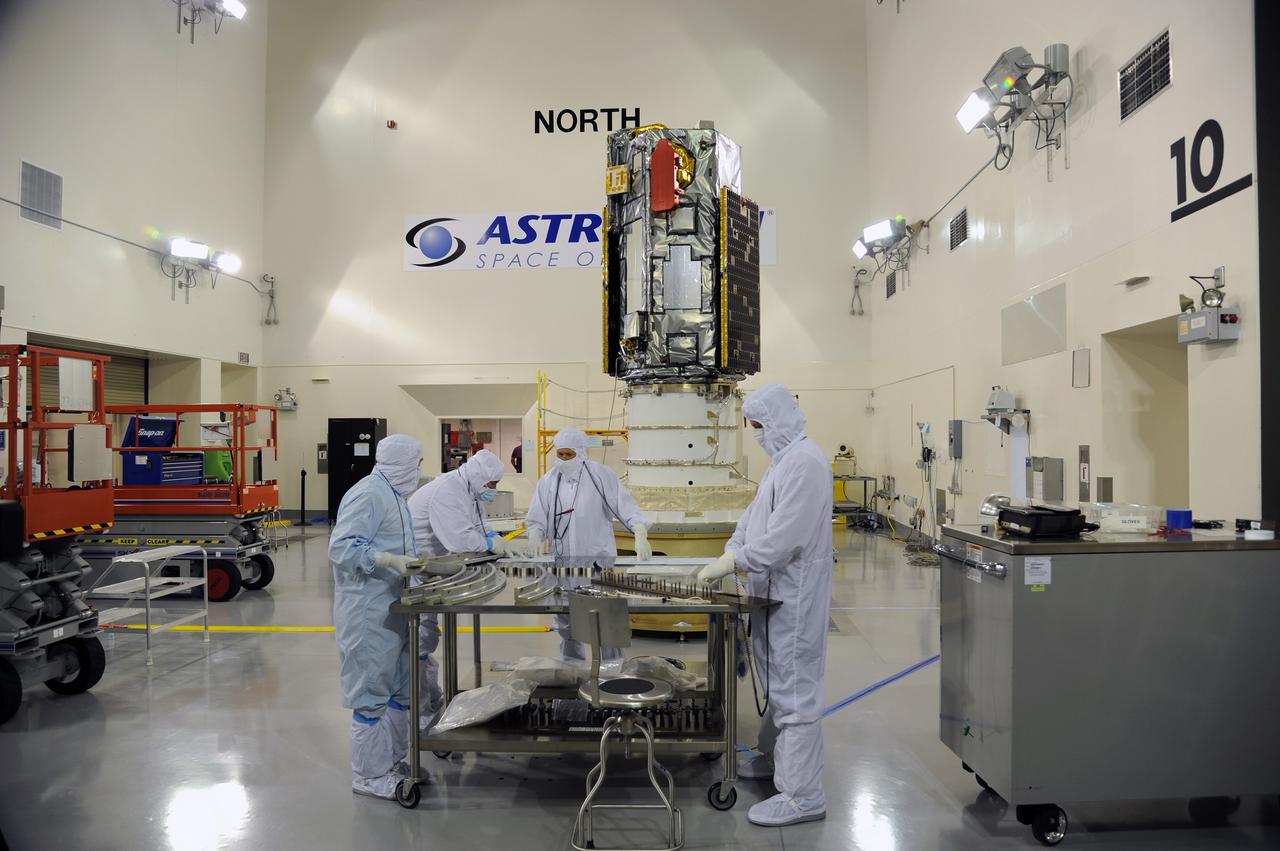
VANDENBERG AIR FORCE BASE, Calif. – Technicians in the Astrotech Payload Processing Facility on Vandenberg Air Force Base in California make final preparations to transport NASA's Orbiting Carbon Observatory-2, or OCO-2, to Space Launch Complex 2 for enclosure in the Delta II payload fairing. Launch aboard a United Launch Alliance Delta II rocket is scheduled for 5:56 a.m. EDT on July 1. OCO-2 is NASA’s first mission dedicated to studying atmospheric carbon dioxide, the leading human-produced greenhouse gas driving changes in Earth’s climate. OCO-2 will provide a new tool for understanding the human and natural sources of carbon dioxide emissions and the natural "sinks" that absorb carbon dioxide and help control its buildup. The observatory will measure the global geographic distribution of these sources and sinks and study their changes over time. To learn more about OCO-2, visit http://oco.jpl.nasa.gov. Photo credit: NASA/30th Space Wing, U.S. Air Force
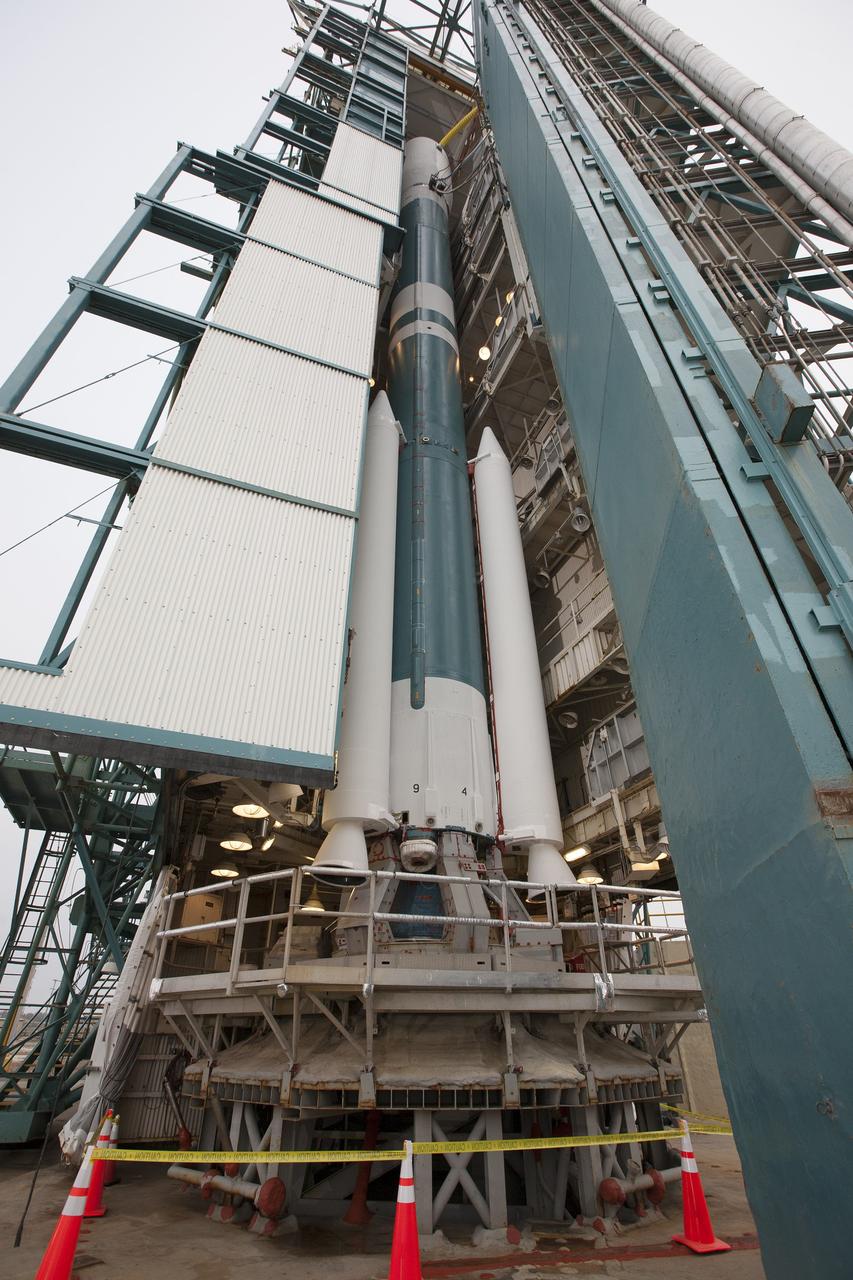
VANDENBERG AIR FORCE BASE, Calif. – The mobile service tower on Space Launch Complex 2 at Vandenberg Air Force Base in California begins to roll back from the United Launch Alliance Delta II rocket with NASA's Orbiting Carbon Observatory-2, or OCO-2, aboard. Launch is scheduled for 5:56 a.m. EDT on July 1. OCO-2 is NASA’s first mission dedicated to studying atmospheric carbon dioxide, the leading human-produced greenhouse gas driving changes in Earth’s climate. OCO-2 will provide a new tool for understanding the human and natural sources of carbon dioxide emissions and the natural "sinks" that absorb carbon dioxide and help control its buildup. The observatory will measure the global geographic distribution of these sources and sinks and study their changes over time. To learn more about OCO-2, visit http://www.nasa.gov/oco2. Photo credit: NASA/Kim Shiflett

VANDENBERG AIR FORCE BASE, Calif. – The Delta first-stage booster for NASA's Orbiting Carbon Observatory-2 mission, or OCO-2, is escorted through the traffic on the roads at Vandenberg Air Force Base in California on its move from the Building 836 hangar to the Horizontal Processing Facility at Space Launch Complex 2. OCO-2 is scheduled to launch aboard a United Launch Alliance Delta II rocket on July 1, 2014. The observatory will collect precise global measurements of carbon dioxide in the Earth's atmosphere and provide scientists with a better idea of the chemical compound's impacts on climate change. Scientists will analyze this data to improve our understanding of the natural processes and human activities that regulate the abundance and distribution of this important atmospheric gas. To learn more about OCO-2, visit http://oco.jpl.nasa.gov. Photo credit: NASA/D. Liberotti, 30th Space Wing, VAFB
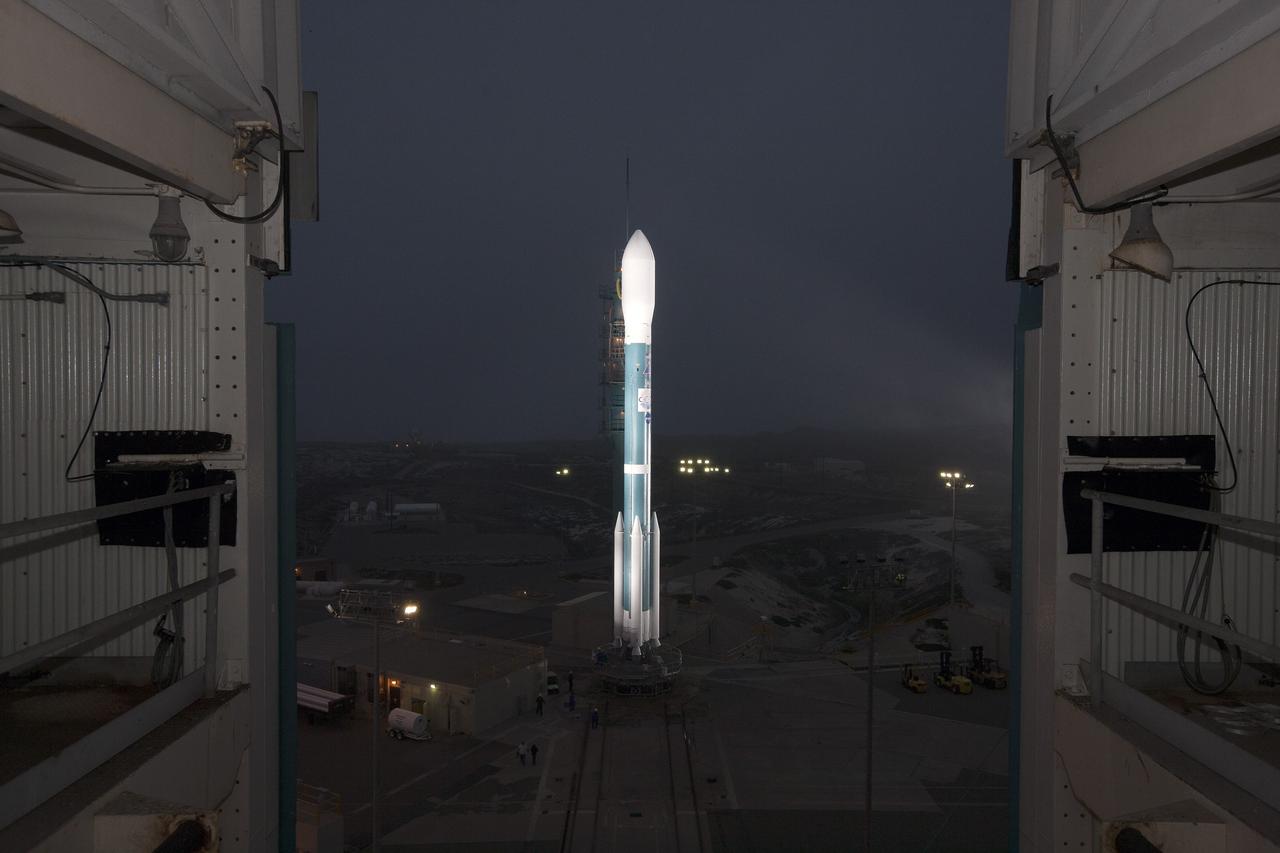
VANDENBERG AIR FORCE BASE, Calif. – The mobile service tower has been rolled back from the United Launch Alliance Delta II rocket carrying NASA's Orbiting Carbon Observatory-2, or OCO-2, on Space Launch Complex 2 at Vandenberg Air Force Base in California, one of the final steps leading up to launch. Launch is scheduled for 5:56 a.m. EDT on July 1. OCO-2 is NASA’s first mission dedicated to studying atmospheric carbon dioxide, the leading human-produced greenhouse gas driving changes in Earth’s climate. OCO-2 will provide a new tool for understanding the human and natural sources of carbon dioxide emissions and the natural "sinks" that absorb carbon dioxide and help control its buildup. The observatory will measure the global geographic distribution of these sources and sinks and study their changes over time. To learn more about OCO-2, visit http://www.nasa.gov/oco2. Photo credit: NASA/Kim Shiflett
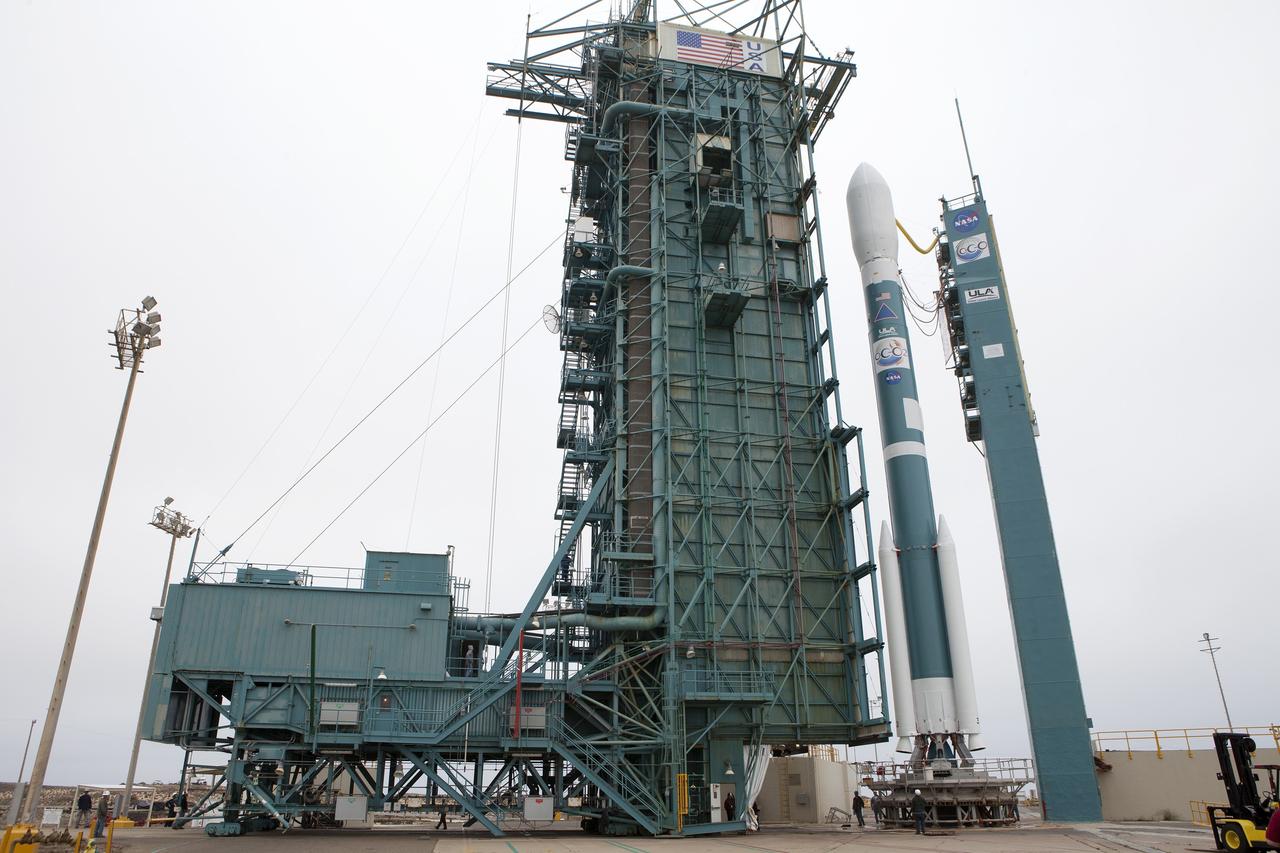
VANDENBERG AIR FORCE BASE, Calif. – The mobile service tower on Space Launch Complex 2 at Vandenberg Air Force Base in California rolls away from the United Launch Alliance Delta II rocket carrying NASA's Orbiting Carbon Observatory-2, or OCO-2. Launch of OCO-2 is scheduled for 5:56 a.m. EDT on July 2 following the repair of the pad's water suppression system, which failed on the first launch attempt July 1. OCO-2 is NASA’s first mission dedicated to studying atmospheric carbon dioxide, the leading human-produced greenhouse gas driving changes in Earth’s climate. OCO-2 will provide a new tool for understanding the human and natural sources of carbon dioxide emissions and the natural "sinks" that absorb carbon dioxide and help control its buildup. The observatory will measure the global geographic distribution of these sources and sinks and study their changes over time. To learn more about OCO-2, visit http://www.nasa.gov/oco2. Photo credit: NASA/Kim Shiflett
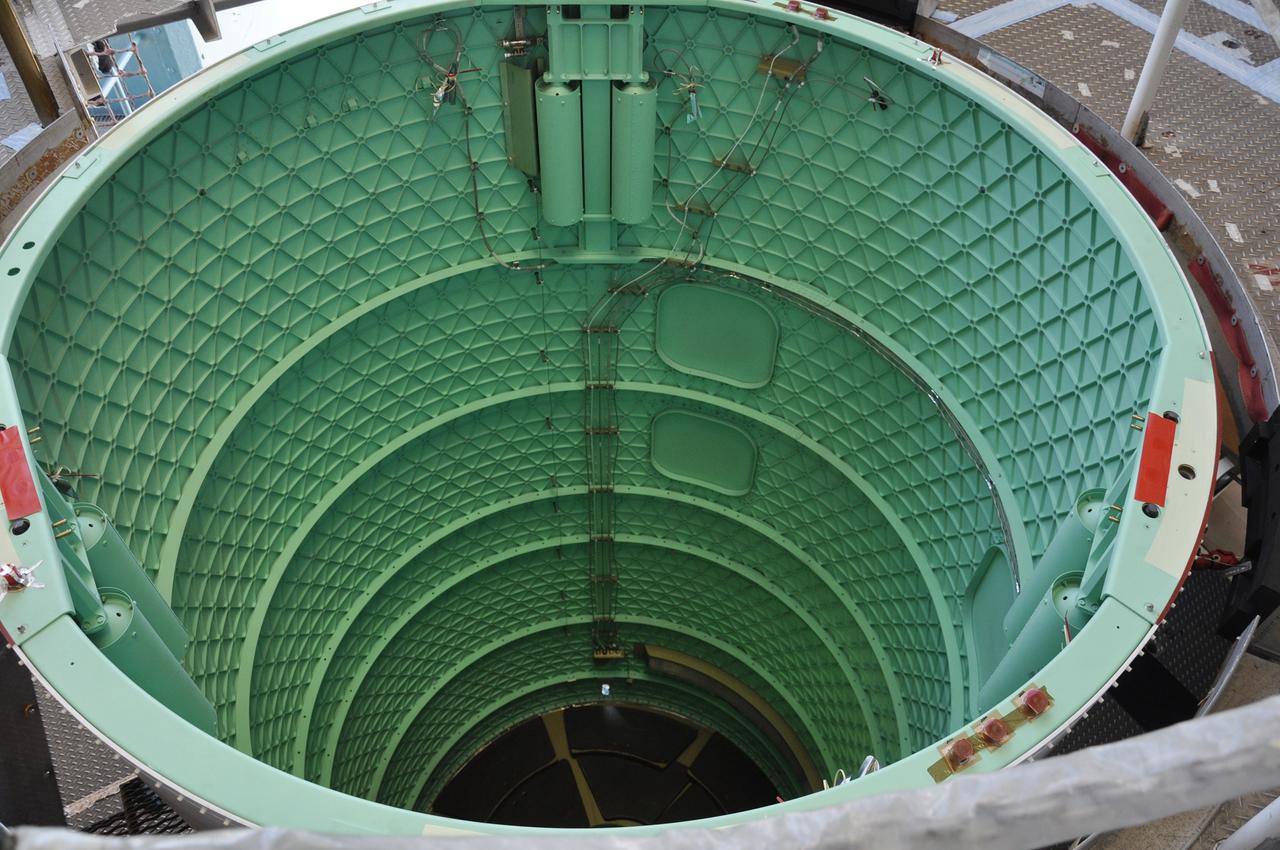
VANDENBERG AIR FORCE BASE, Calif. – The interstage adapter, or ISA, for NASA's Orbiting Carbon Observatory-2 mission, or OCO-2, is connected to the Delta II first stage in the mobile service tower at Space Launch Complex 2 on Vandenberg Air Force Base in California and ready for delivery of the rocket's second stage. OCO-2 is scheduled to launch into a polar Earth orbit aboard a United Launch Alliance Delta II 7320-10C rocket in July. The ISA is the interface between the Delta II first and second stages. The second stage engine fits within the ISA. Once in orbit, OCO-2 will collect precise global measurements of carbon dioxide in the Earth's atmosphere and provide scientists with a better idea of the chemical compound's impacts on climate change. Scientists will analyze this data to improve our understanding of the natural processes and human activities that regulate the abundance and distribution of this important atmospheric gas. To learn more about OCO-2, visit http://oco.jpl.nasa.gov. Photo credit: NASA/Randy Beaudoin
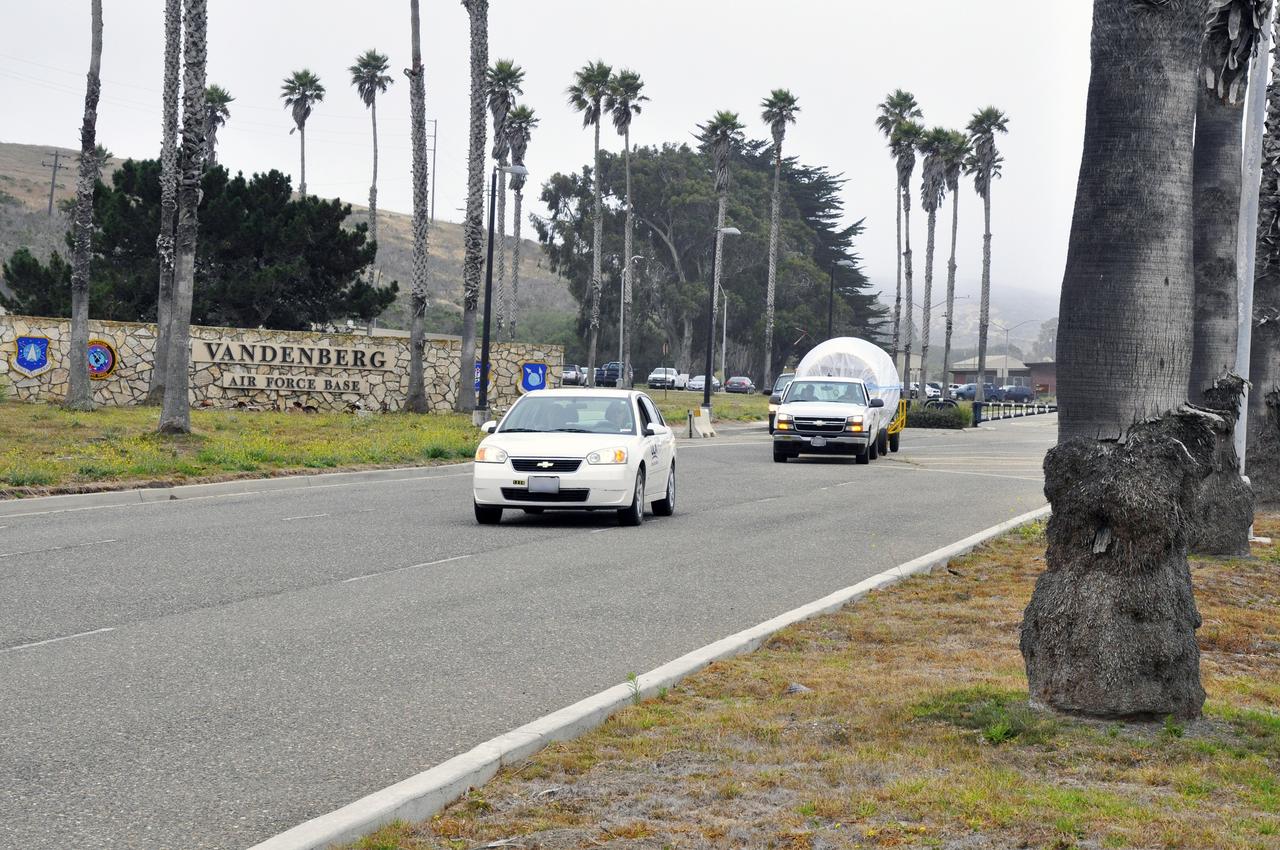
VANDENBERG AIR FORCE BASE, Calif. – The second stage, or upper stage, of a United Launch Alliance Delta II rocket begins its journey from Building 836 on south Vandenberg Air Force Base in California to the Horizontal Processing Facility at Space Launch Complex 2. The Delta II rocket will be used to deliver NASA's Soil Moisture Active Passive mission, or SMAP, into orbit. SMAP will provide global measurements of soil moisture and its freeze/thaw state. These measurements will be used to enhance understanding of processes that link the water, energy and carbon cycles, and to extend the capabilities of weather and climate prediction models. SMAP data also will be used to quantify net carbon flux in boreal landscapes and to develop improved flood prediction and drought monitoring capabilities. Launch is scheduled for November 2014. To learn more about SMAP, visit http://smap.jpl.nasa.gov. Photo credit: NASA/Randy Beaudoin
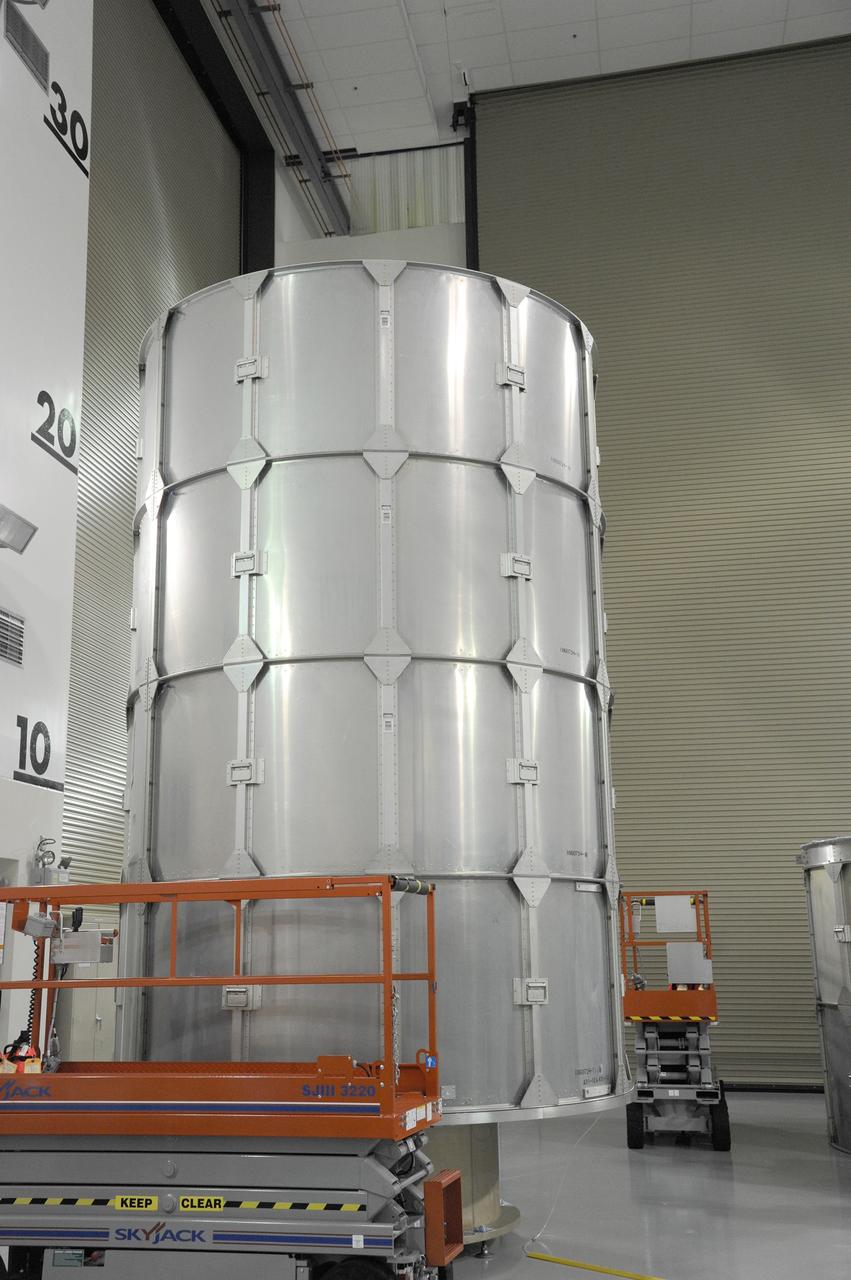
VANDENBERG AFB, California – Technicians and engineers place a transportation canister around NASA's SMAP spacecraft so it can be taken from the Astrotech processing facility to Space Launch Complex-2 for placement atop a Delta II rocket for launch. For more, go to www.nasa.gov/smap Photo credit: USAF/John Davila
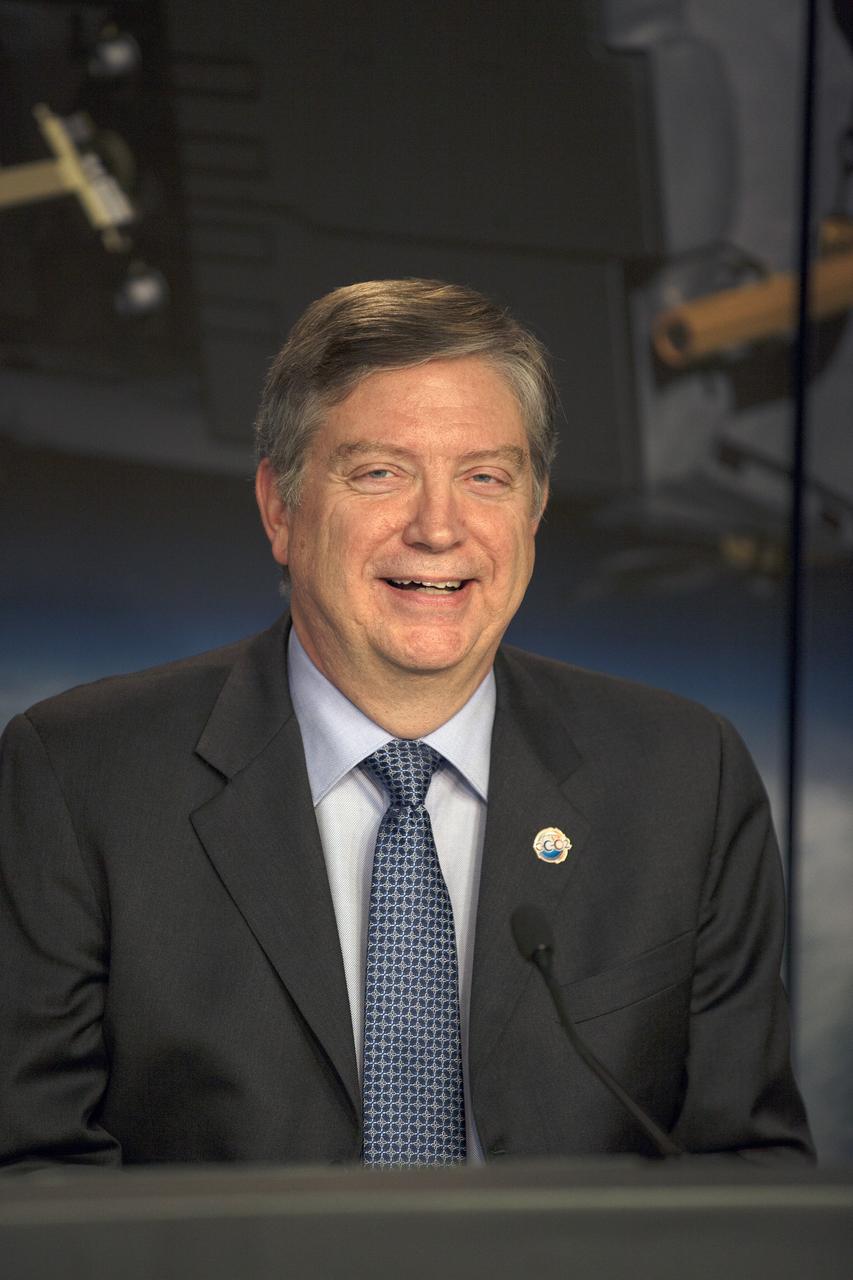
VANDENBERG AIR FORCE BASE, Calif. – Mike Miller, senior vice president, Science and Environmental Satellite Programs, Orbital Sciences Space Systems Group, participates in a post-launch news conference at Vandenberg Air Force Base in California following the successful launch of NASA's Orbiting Carbon Observatory-2, or OCO-2. Orbital Sciences built the satellite for NASA. Liftoff of OCO-2 from Space Launch Complex 2 aboard a United Launch Alliance Delta II rocket was on schedule at 5:56 a.m. EDT on July 2 following the repair of the pad's water suppression system, which failed on the first launch attempt July 1. OCO-2 is NASA’s first mission dedicated to studying atmospheric carbon dioxide, the leading human-produced greenhouse gas driving changes in Earth’s climate. OCO-2 will provide a new tool for understanding the human and natural sources of carbon dioxide emissions and the natural "sinks" that absorb carbon dioxide and help control its buildup. The observatory will measure the global geographic distribution of these sources and sinks and study their changes over time. To learn more about OCO-2, visit http://www.nasa.gov/oco2. Photo credit: NASA/Kim Shiflett
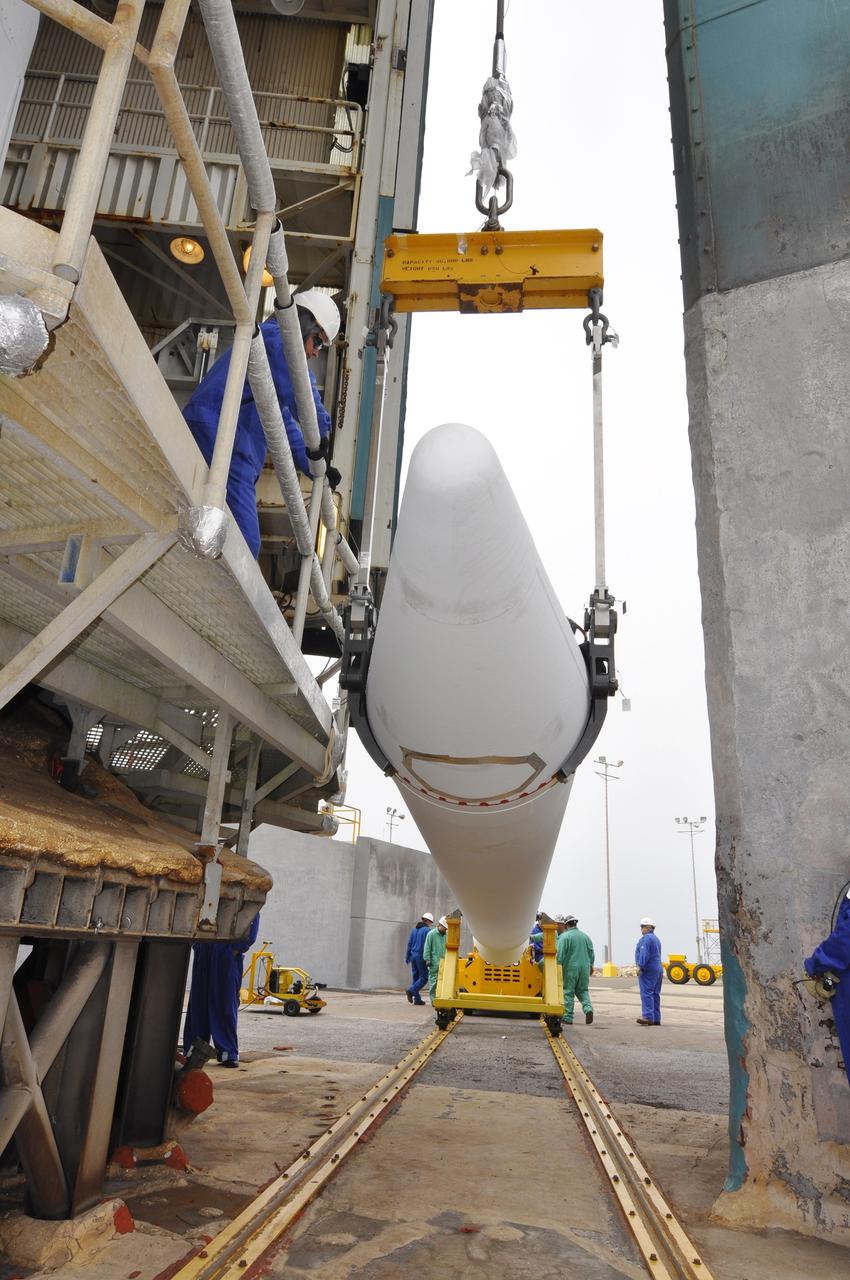
VANDENBERG AIR FORCE BASE, Calif. – A second solid rocket motor for the Delta II rocket for NASA's Soil Moisture Active Passive mission, or SMAP, is raised into a vertical position at the mobile service tower at Space Launch Complex 2 on Vandenberg Air Force Base in California. SMAP will be launched on a Delta II 7320 configuration vehicle featuring a United Launch Alliance first stage booster powered by an Aerojet Rocketdyne RS-27A main engine and three Alliant Techsystems, or ATK, strap-on solid rocket motors. Once on station in Earth orbit, SMAP will provide global measurements of soil moisture and its freeze/thaw state. These measurements will be used to enhance understanding of processes that link the water, energy and carbon cycles, and to extend the capabilities of weather and climate prediction models. SMAP data also will be used to quantify net carbon flux in boreal landscapes and to develop improved flood prediction and drought monitoring capabilities. Launch is scheduled for no earlier than November 2014. To learn more about SMAP, visit http://smap.jpl.nasa.gov. Photo credit: NASA/Randy Beaudoin
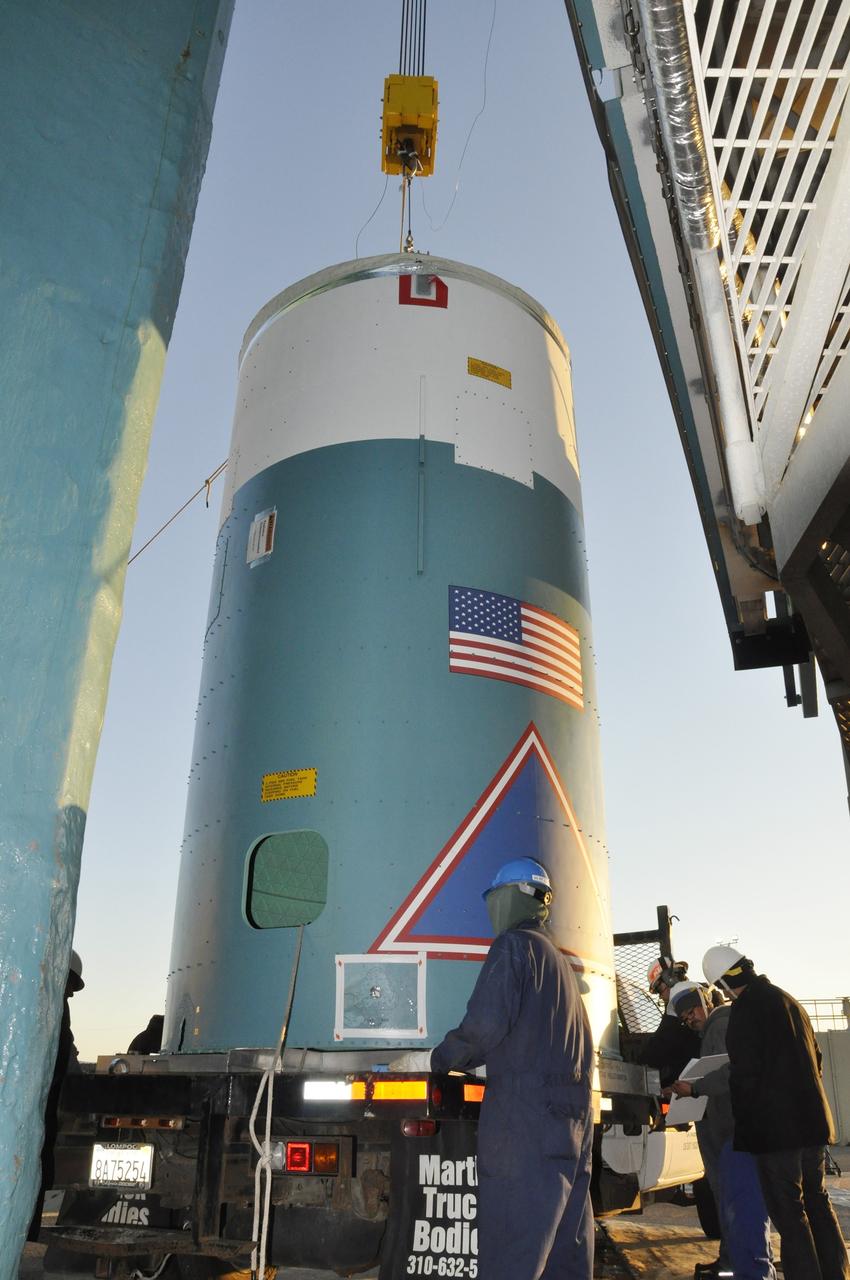
VANDENBERG AIR FORCE BASE, Calif. – Workers prepare to lift the interstage adapter, or ISA, for NASA's Orbiting Carbon Observatory-2 mission, or OCO-2, by crane into the mobile service tower at Space Launch Complex 2 on Vandenberg Air Force Base in California. OCO-2 is scheduled to launch into a polar Earth orbit aboard a United Launch Alliance Delta II 7320-10C rocket in July. The ISA is the interface between the Delta II first and second stages. The second stage engine fits within the ISA. Once in orbit, OCO-2 will collect precise global measurements of carbon dioxide in the Earth's atmosphere and provide scientists with a better idea of the chemical compound's impacts on climate change. Scientists will analyze this data to improve our understanding of the natural processes and human activities that regulate the abundance and distribution of this important atmospheric gas. To learn more about OCO-2, visit http://oco.jpl.nasa.gov. Photo credit: NASA/Randy Beaudoin

VANDENBERG AIR FORCE BASE, Calif. – In the Astrotech payload processing facility on Vandenberg Air Force Base in California, technicians monitor the transportation canister containing NASA's Soil Moisture Active Passive, or SMAP, spacecraft as it is lowered onto a transporter for its move to the launch pad. SMAP will launch on a United Launch Alliance Delta II 7320 configuration vehicle featuring a United Launch Alliance first stage booster powered by an Aerojet Rocketdyne RS-27A main engine and three Alliant Techsystems, or ATK, strap-on solid rocket motors. Once on station in Earth orbit, SMAP will provide global measurements of soil moisture and its freeze/thaw state. These measurements will be used to enhance understanding of processes that link the water, energy and carbon cycles, and to extend the capabilities of weather and climate prediction models. SMAP data also will be used to quantify net carbon flux in boreal landscapes and to develop improved flood prediction and drought monitoring capabilities. Launch from Space Launch Complex 2 is targeted for Jan. 29. To learn more about SMAP, visit http://www.nasa.gov/smap. Photo credit: NASA/U.S. Air Force Photo Squadron
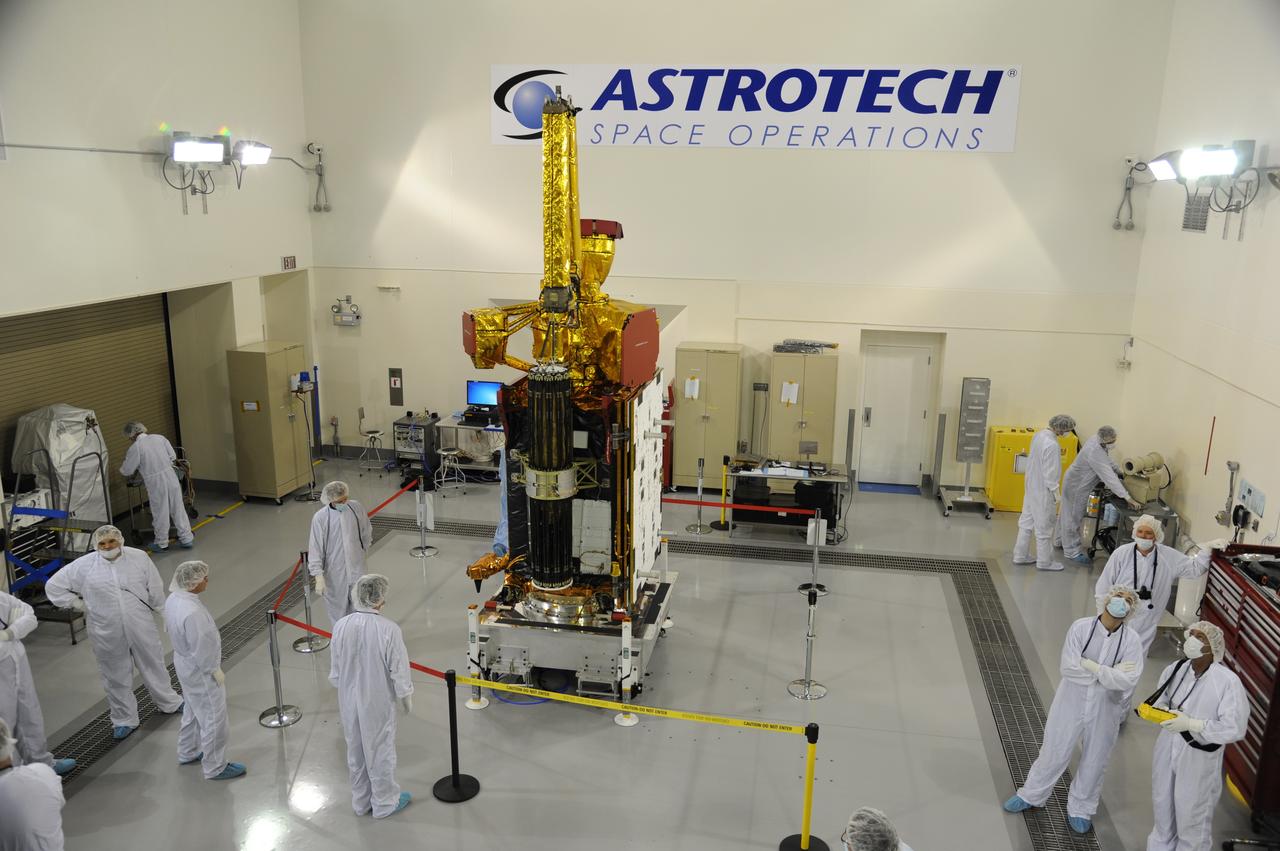
VANDENBERG AIR FORCE BASE, Calif. – Preparations are underway to weigh NASA's Soil Moisture Active Passive, or SMAP, spacecraft in the clean room of the Astrotech payload processing facility on Vandenberg Air Force Base in California. The weighing of a spacecraft is standard procedure during prelaunch processing. SMAP will launch on a Delta II 7320 configuration vehicle featuring a United Launch Alliance first stage booster powered by an Aerojet Rocketdyne RS-27A main engine and three Alliant Techsystems, or ATK, strap-on solid rocket motors. Once on station in Earth orbit, SMAP will provide global measurements of soil moisture and its freeze/thaw state. NASA's Jet Propulsion Laboratory that built the observatory and its radar instrument also is responsible for SMAP project management and mission operations. Launch from Space Launch Complex 2 is targeted for Jan. 29, 2015. To learn more about SMAP, visit http://smap.jpl.nasa.gov. Photo credit: NASA/Randy Beaudoin
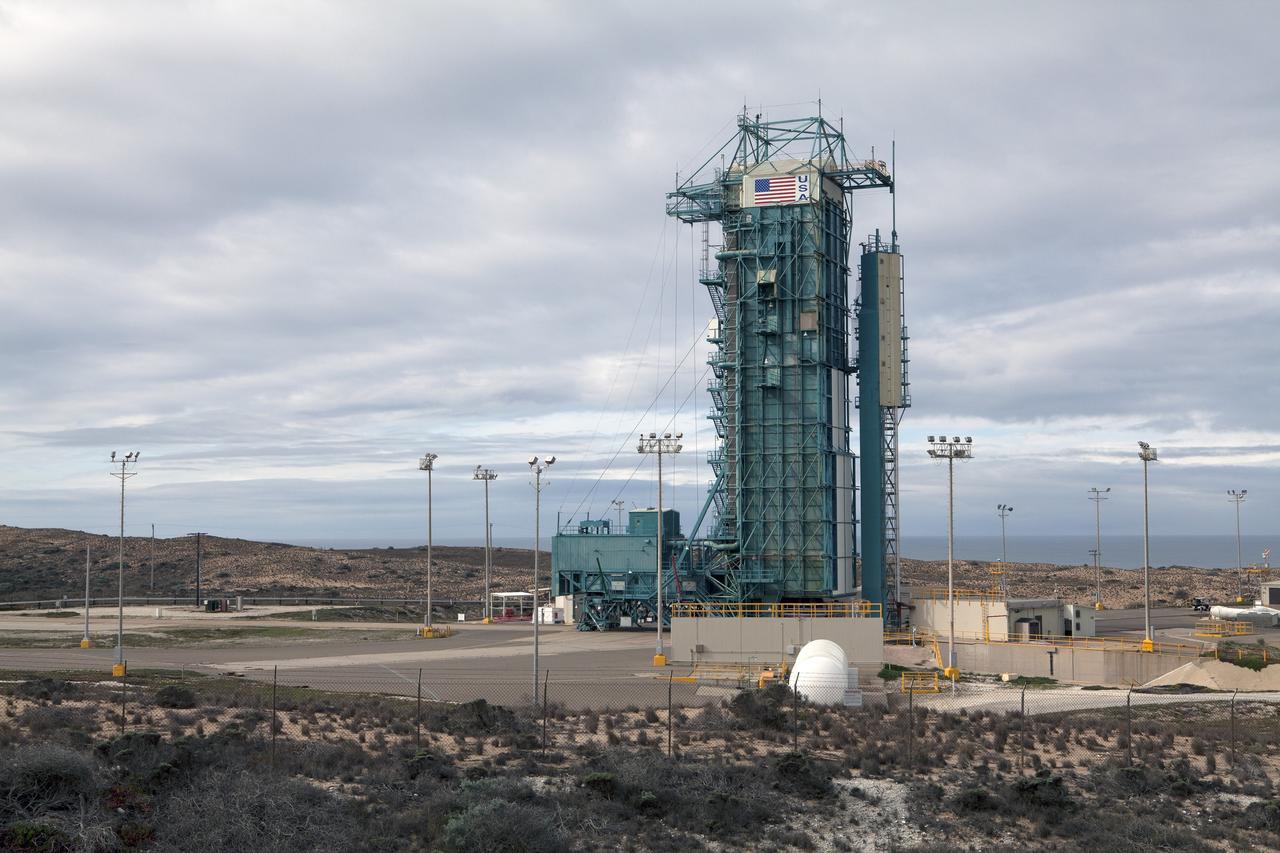
VANDENBERG AIR FORCE BASE, Calif. – Processing is underway at Space Launch Complex 2 on Vandenberg Air Force Base in California for the upcoming launch of NASA's Orbiting Carbon Observatory-2 mission, or OCO-2, aboard a United Launch Alliance Delta II rocket in July. The observatory will collect precise global measurements of carbon dioxide in the Earth's atmosphere and provide scientists with a better idea of the chemical compound's impacts on climate change. Scientists will analyze this data to improve our understanding of the natural processes and human activities that regulate the abundance and distribution of this important atmospheric gas. To learn more about OCO-2, visit http://oco.jpl.nasa.gov. Photo credit: NASA/Kim Shiflett
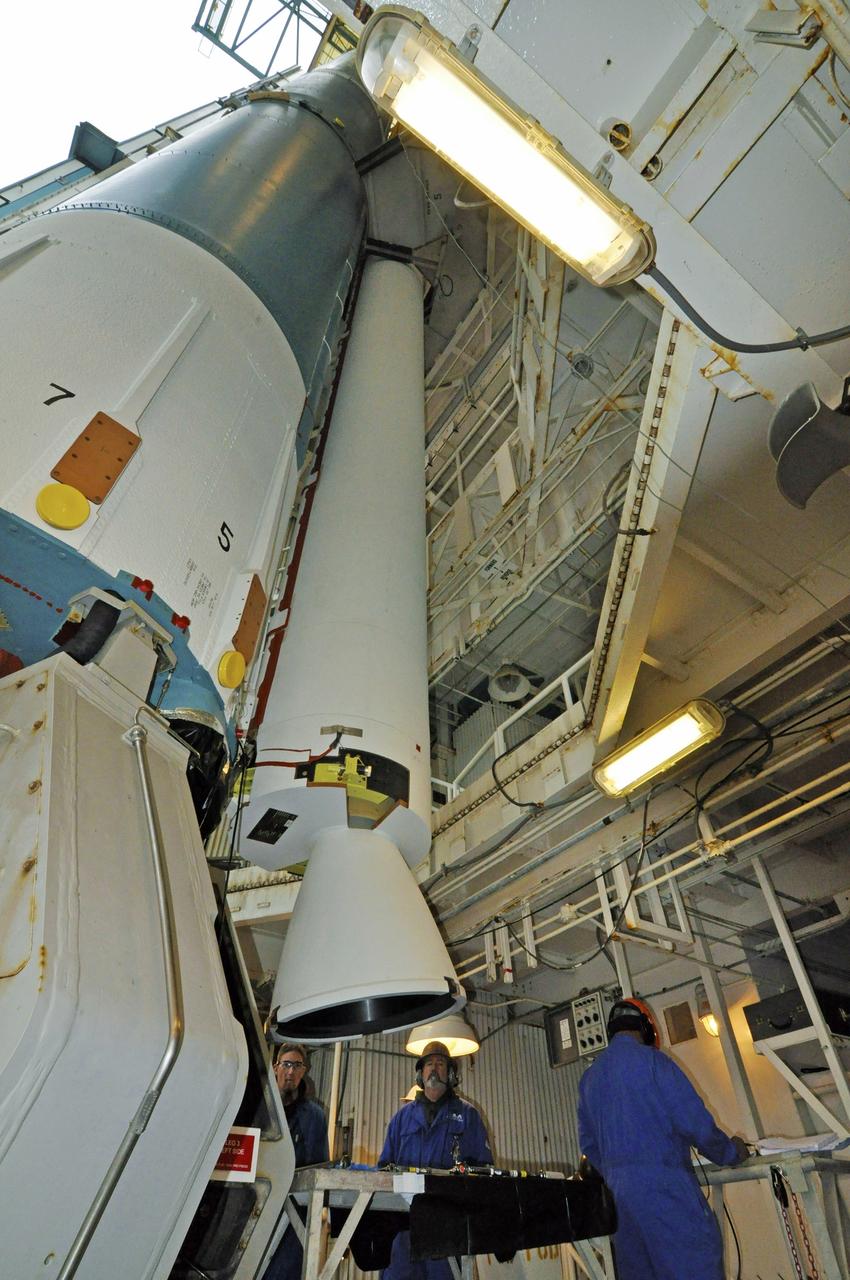
VANDENBERG AIR FORCE BASE, Calif. – The first solid rocket motor, or SRM, for NASA's Orbiting Carbon Observatory-2 mission, or OCO-2, has been attached to the Delta II first stage in the mobile service tower at Space Launch Complex 2 on Vandenberg Air Force Base in California. Operations are underway to attach the rocket's three SRMs, known as graphite epoxy motors, to its first stage. OCO-2 is scheduled to launch into a polar Earth orbit aboard a United Launch Alliance Delta II 7320-10C rocket in July. Once in orbit, OCO-2 will collect precise global measurements of carbon dioxide in the Earth's atmosphere and provide scientists with a better idea of the chemical compound's impacts on climate change. Scientists will analyze this data to improve our understanding of the natural processes and human activities that regulate the abundance and distribution of this important atmospheric gas. To learn more about OCO-2, visit http://oco.jpl.nasa.gov. Photo credit: NASA/Randy Beaudoin
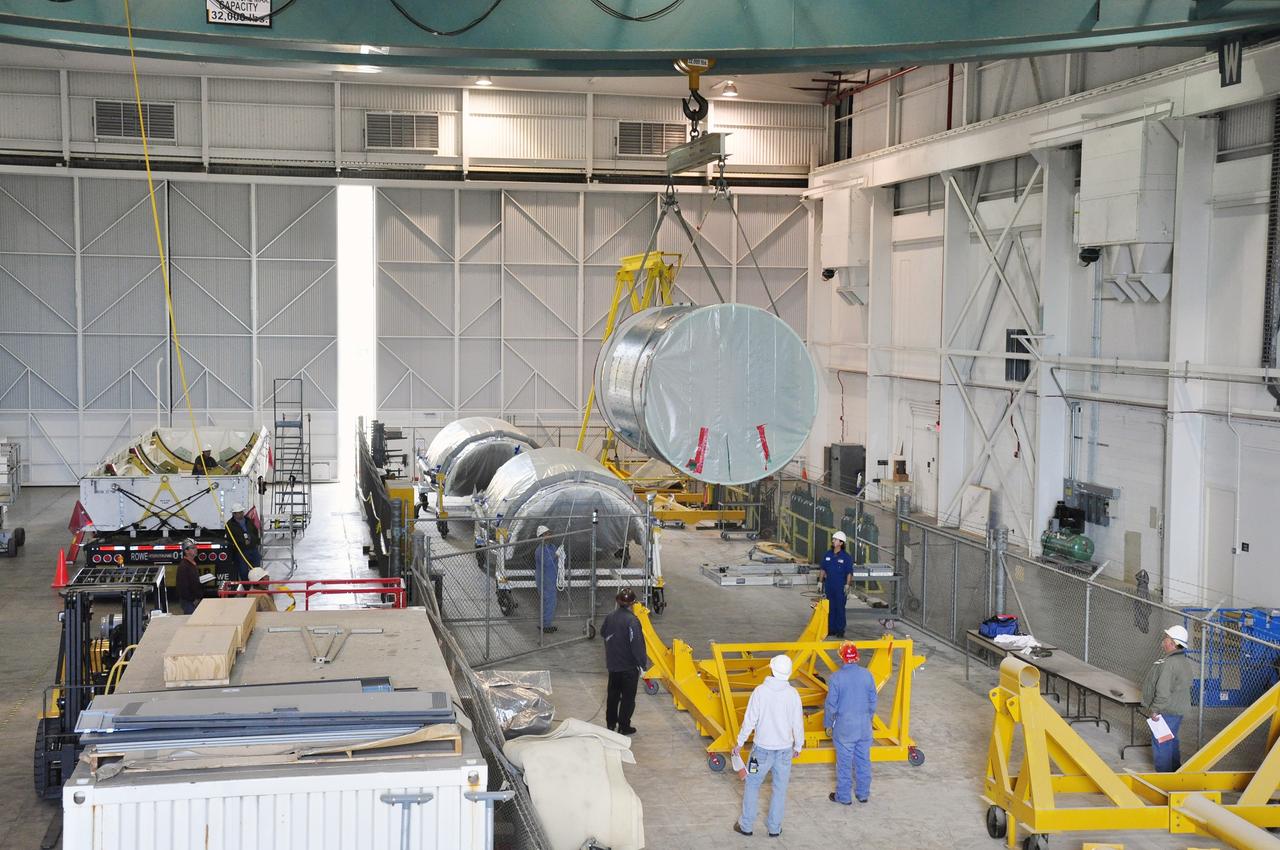
VANDENBERG AIR FORCE BASE, Calif. – The canister containing the interstage adapter, or ISA, for NASA's Soil Moisture Active Passive mission, or SMAP, glides toward a flight hardware cradle in the high bay of the Building 836 hangar on south Vandenberg Air Force Base in California. A United Launch Alliance Delta II rocket will loft SMAP into orbit from Vandenberg's Space Launch Complex 2. The ISA connects the Delta II first and second stages and encloses the second stage engine and thrust section. The spacecraft will provide global measurements of soil moisture and its freeze/thaw state. These measurements will be used to enhance understanding of processes that link the water, energy and carbon cycles, and to extend the capabilities of weather and climate prediction models. The data returned also will be used to quantify net carbon flux in boreal landscapes and to develop improved flood prediction and drought monitoring capabilities. Launch is scheduled for November 2014. To learn more about SMAP, visit http://smap.jpl.nasa.gov. Photo credit: NASA/Randy Beaudoin
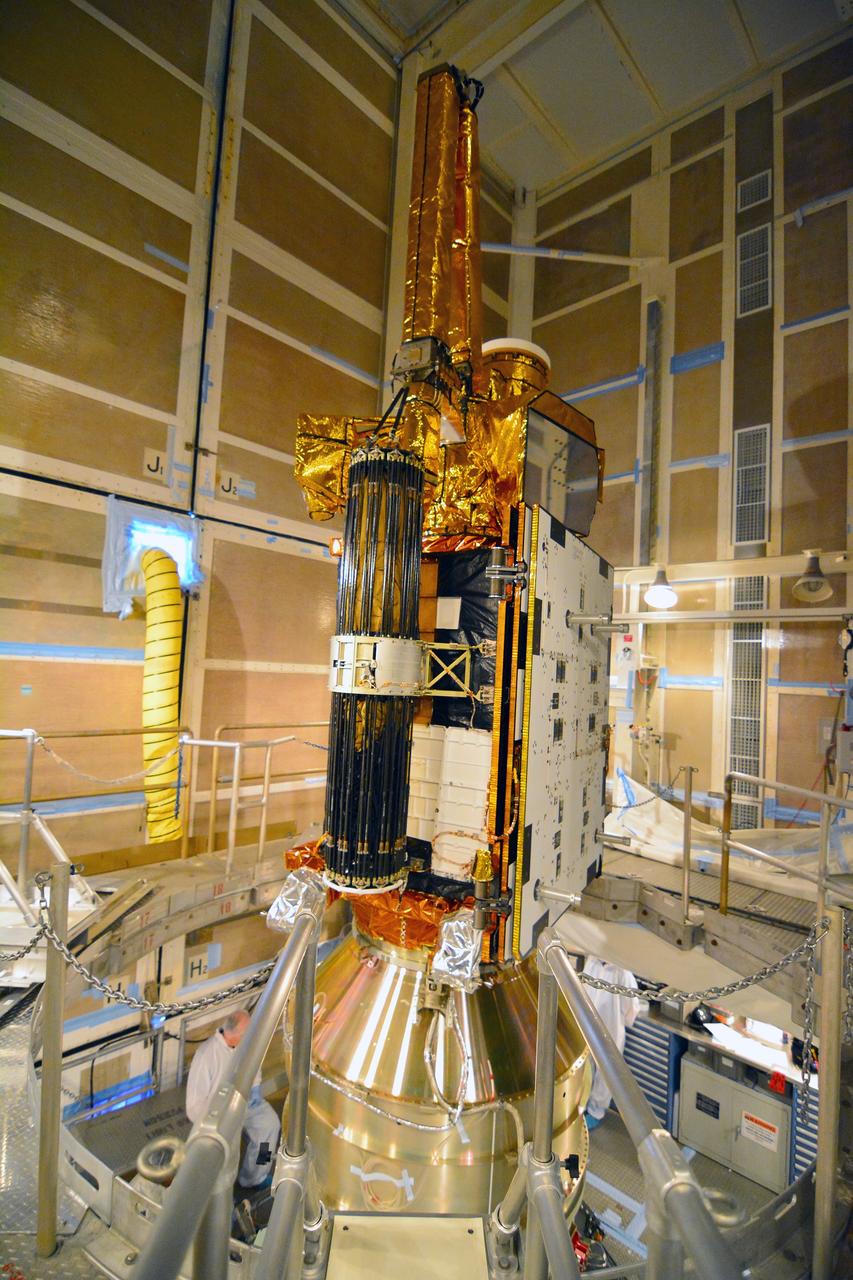
VANDENBERG AFB, California – NASA's SMAP spacecraft inside the service structure at Space Launch Complex-2 at Vandenberg AFB, California. For more, go to www.nasa.gov/smap Photo credit: NASA/Randy Beaudoin
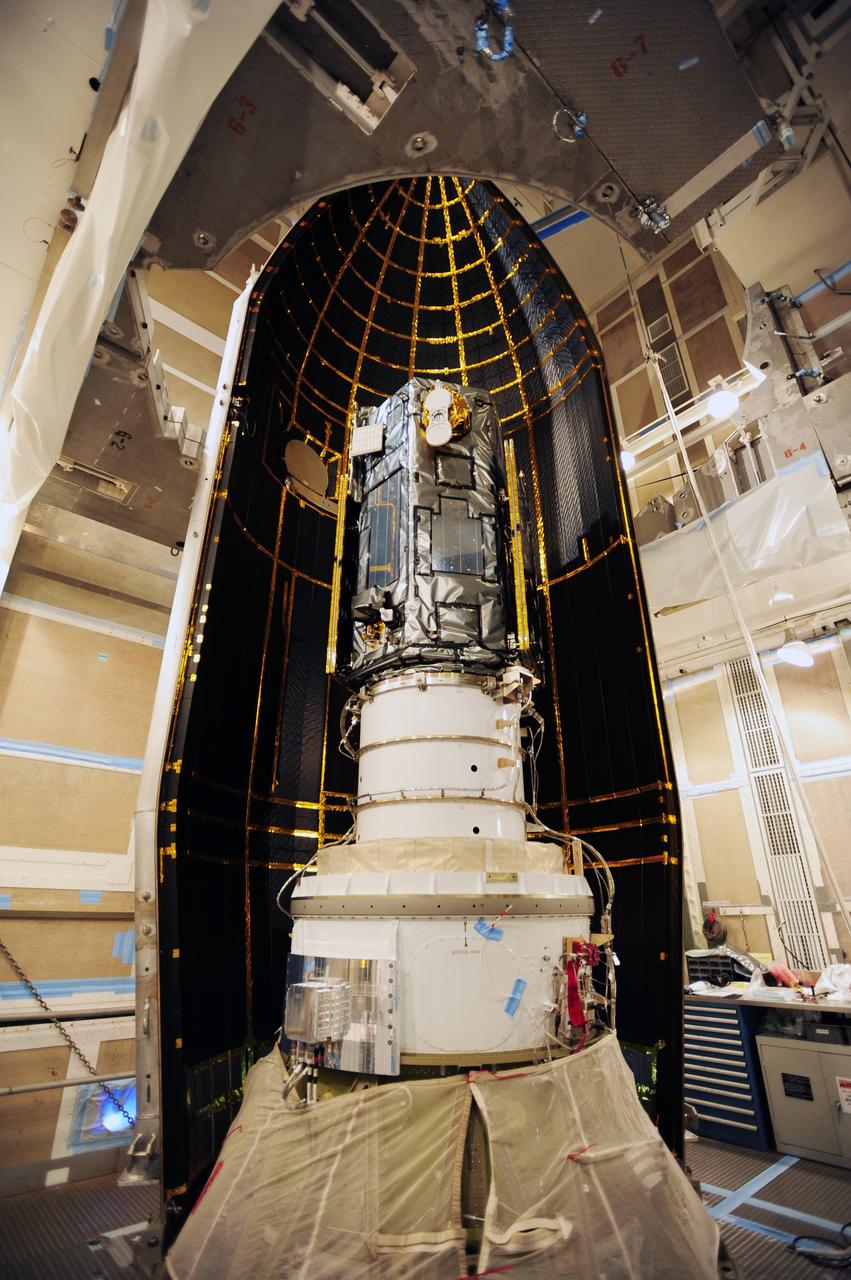
VANDENBERG AIR FORCE BASE, Calif. – Half of the Delta II payload fairing for NASA's Orbiting Carbon Observatory-2, or OCO-2, is secured around the spacecraft in the mobile service tower at Space Launch Complex 2 on Vandenberg Air Force Base in California. The fairing will protect OCO-2 during launch aboard a United Launch Alliance Delta II rocket, scheduled for 5:56 a.m. EDT on July 1. OCO-2 is NASA’s first mission dedicated to studying atmospheric carbon dioxide, the leading human-produced greenhouse gas driving changes in Earth’s climate. OCO-2 will provide a new tool for understanding the human and natural sources of carbon dioxide emissions and the natural "sinks" that absorb carbon dioxide and help control its buildup. The observatory will measure the global geographic distribution of these sources and sinks and study their changes over time. To learn more about OCO-2, visit http://oco.jpl.nasa.gov. Photo credit: NASA/30th Space Wing, U.S. Air Force