
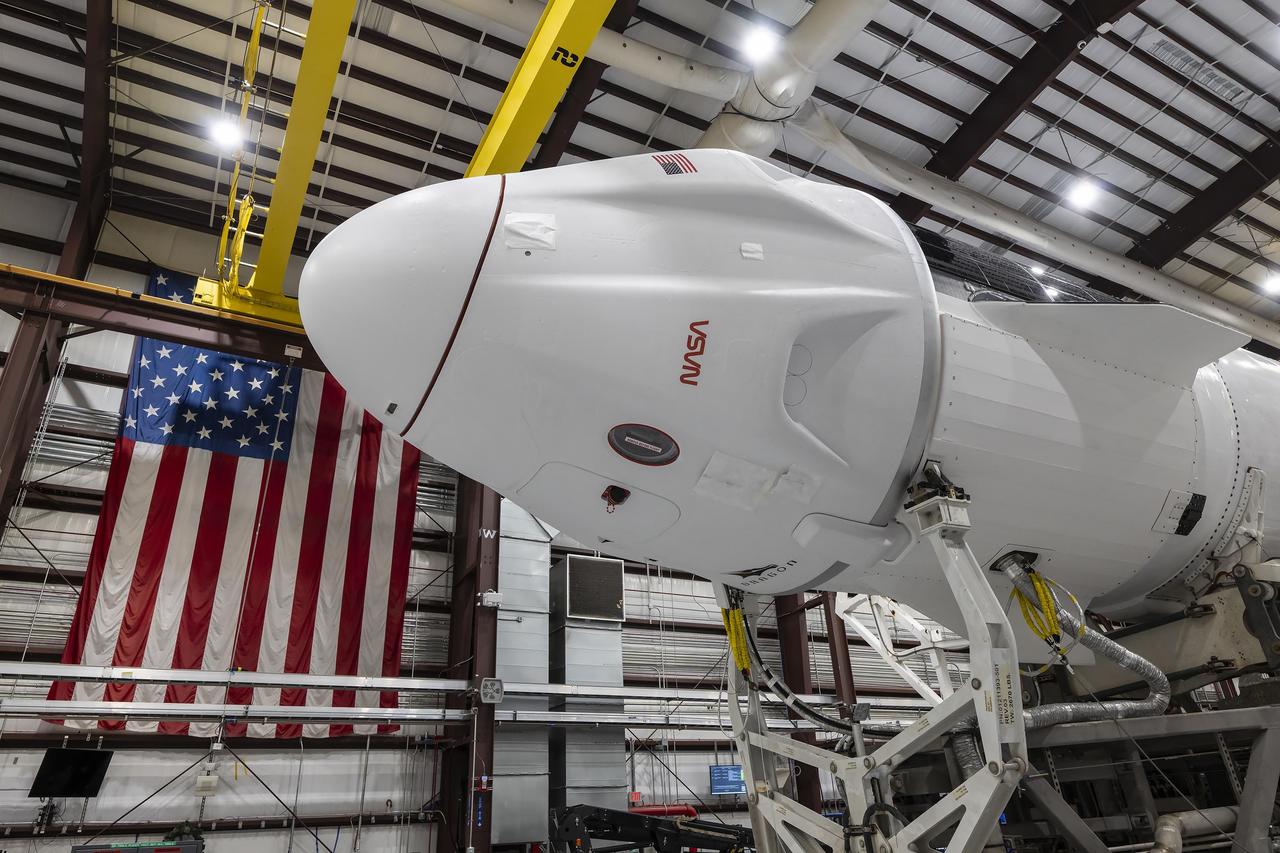
SpaceX’s Dragon spacecraft for NASA’s SpaceX Crew-9 mission arrives at SpaceX’s hangar at Space Launch Complex-40 at Cape Canaveral Space Force Station in Florida on Friday, Sept. 20, 2024, after a short journey from a nearby processing facility. NASA astronaut Nick Hague and Roscosmos cosmonaut Aleksandr Gorbunov will launch to the International Space Station aboard SpaceX’s Dragon spacecraft and Falcon 9 rocket no earlier than 2:05 p.m. EDT Thursday, Sept. 26, 2024. Crew-9 is the ninth crew rotation mission with SpaceX to the space station as part of the agency’s Commercial Crew Program.
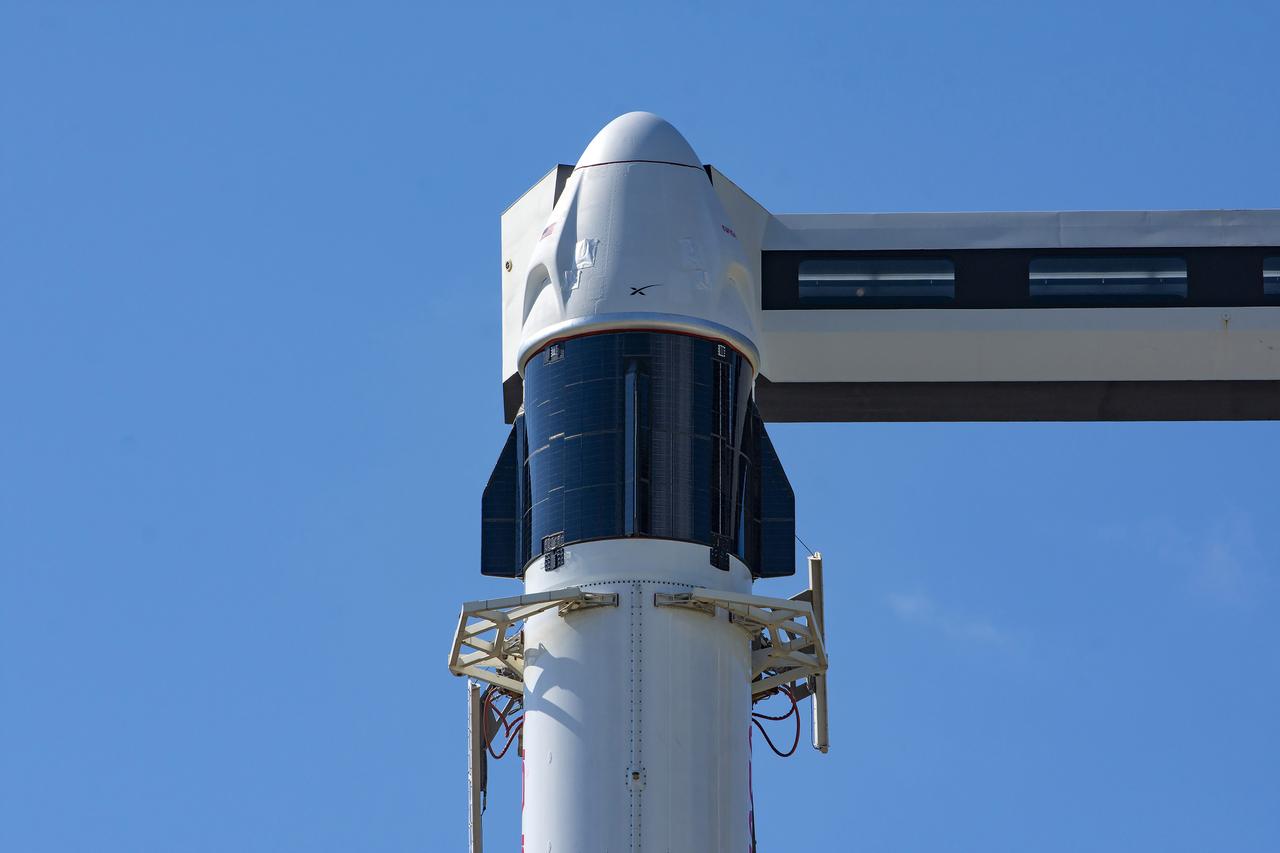
SpaceX’s Falcon 9 rocket, with the Dragon spacecraft atop, is vertical at the launch pad of Space Launch Complex-40 at Cape Canaveral Space Force Station in Florida on Tuesday, Sept. 24, 2024, ahead of NASA’s SpaceX Crew-9 launch to the International Space Station. NASA astronaut Nick Hague, commander, and Roscosmos cosmonaut Aleksandr Gorbunov, mission specialist, will launch to the orbiting laboratory on the company’s ninth crew rotation flight for NASA as part of the agency’s Commercial Crew Program.
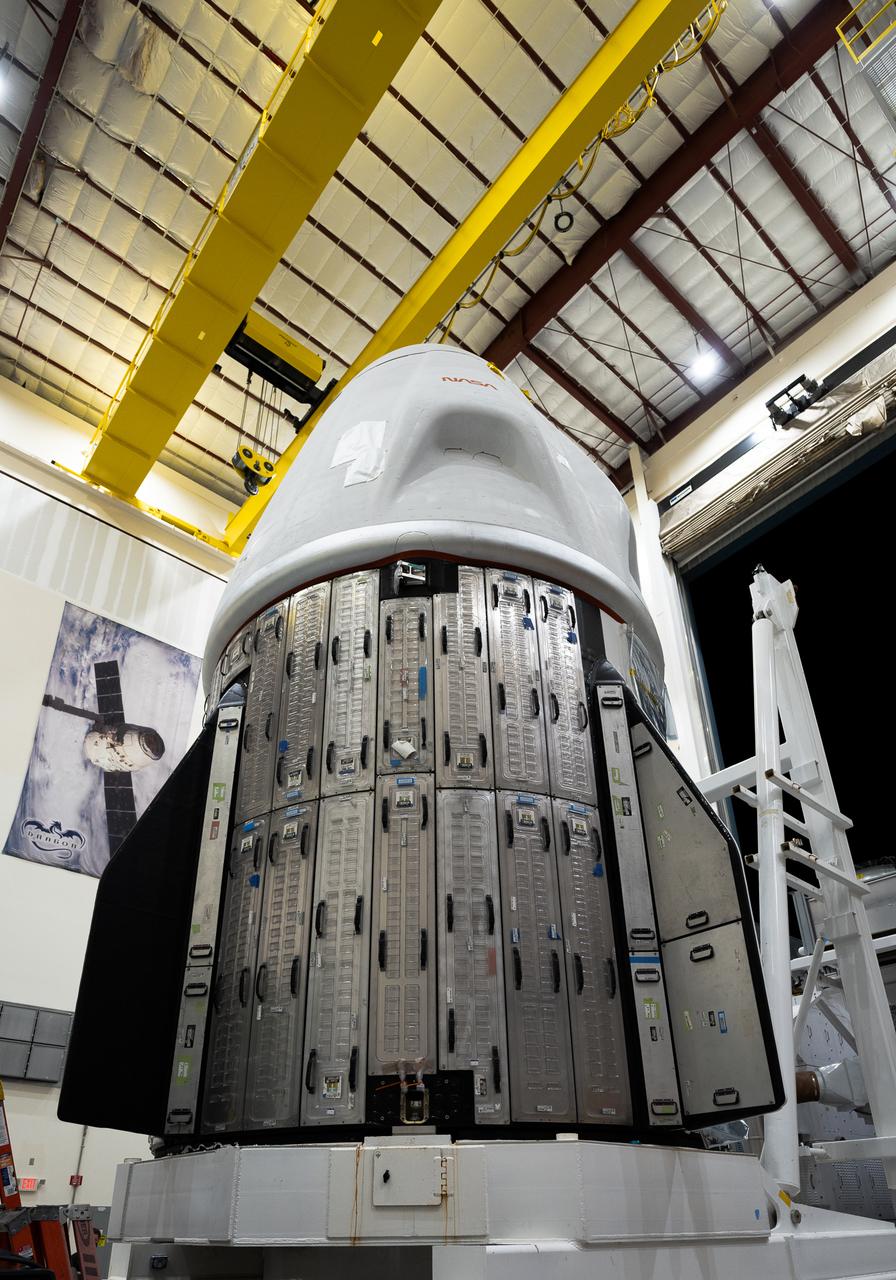
SpaceX’s Dragon spacecraft for NASA’s SpaceX Crew-9 mission arrives at SpaceX’s hangar at Space Launch Complex-40 at Cape Canaveral Space Force Station in Florida on Friday, Sept. 20, 2024, after a short journey from a nearby processing facility. NASA astronaut Nick Hague and Roscosmos cosmonaut Aleksandr Gorbunov will launch to the International Space Station aboard SpaceX’s Dragon spacecraft and Falcon 9 rocket no earlier than 2:05 p.m. EDT Thursday, Sept. 26, 2024. Crew-9 is the ninth crew rotation mission with SpaceX to the space station as part of the agency’s Commercial Crew Program.
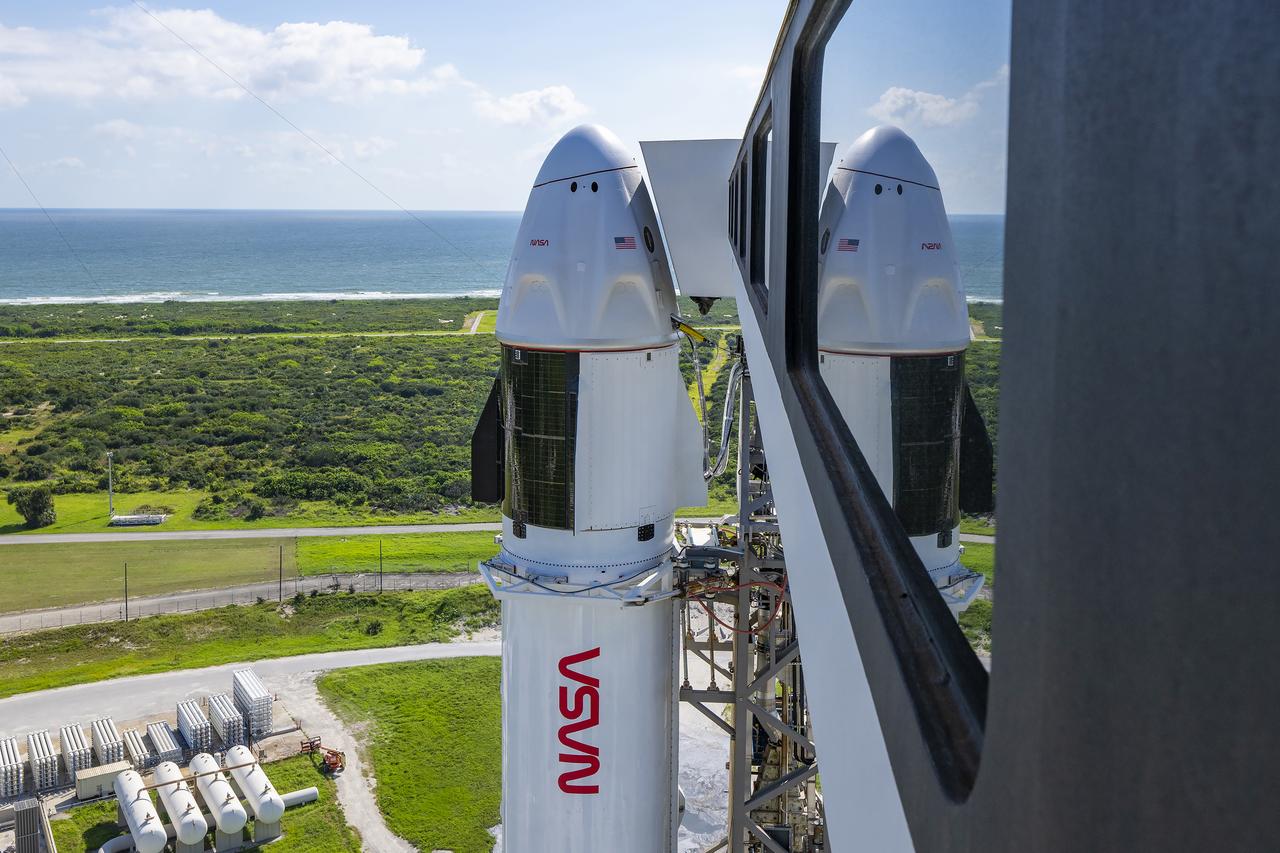
SpaceX’s Falcon 9 rocket, with the Dragon spacecraft atop, is vertical at the launch pad of Space Launch Complex-40 at Cape Canaveral Space Force Station in Florida on Tuesday, Sept. 24, 2024, ahead of NASA’s SpaceX Crew-9 launch to the International Space Station. NASA astronaut Nick Hague, commander, and Roscosmos cosmonaut Aleksandr Gorbunov, mission specialist, will launch to the orbiting laboratory on the company’s ninth crew rotation flight for NASA as part of the agency’s Commercial Crew Program.
As preparations continue for NASA’s SpaceX Crew-9 mission, a SpaceX Falcon 9 rocket with the company's Dragon spacecraft is rolled out to the launch pad of Space Launch Complex-40 at Cape Canaveral Space Force Station in Florida on Tuesday, Sept. 24, 2024. NASA astronaut Nick Hague, commander, and Roscosmos cosmonaut Aleksandr Gorbunov, mission specialist, will launch to the International Space Station on the company’s ninth crew rotation flight for NASA as part of the agency’s Commercial Crew Program.
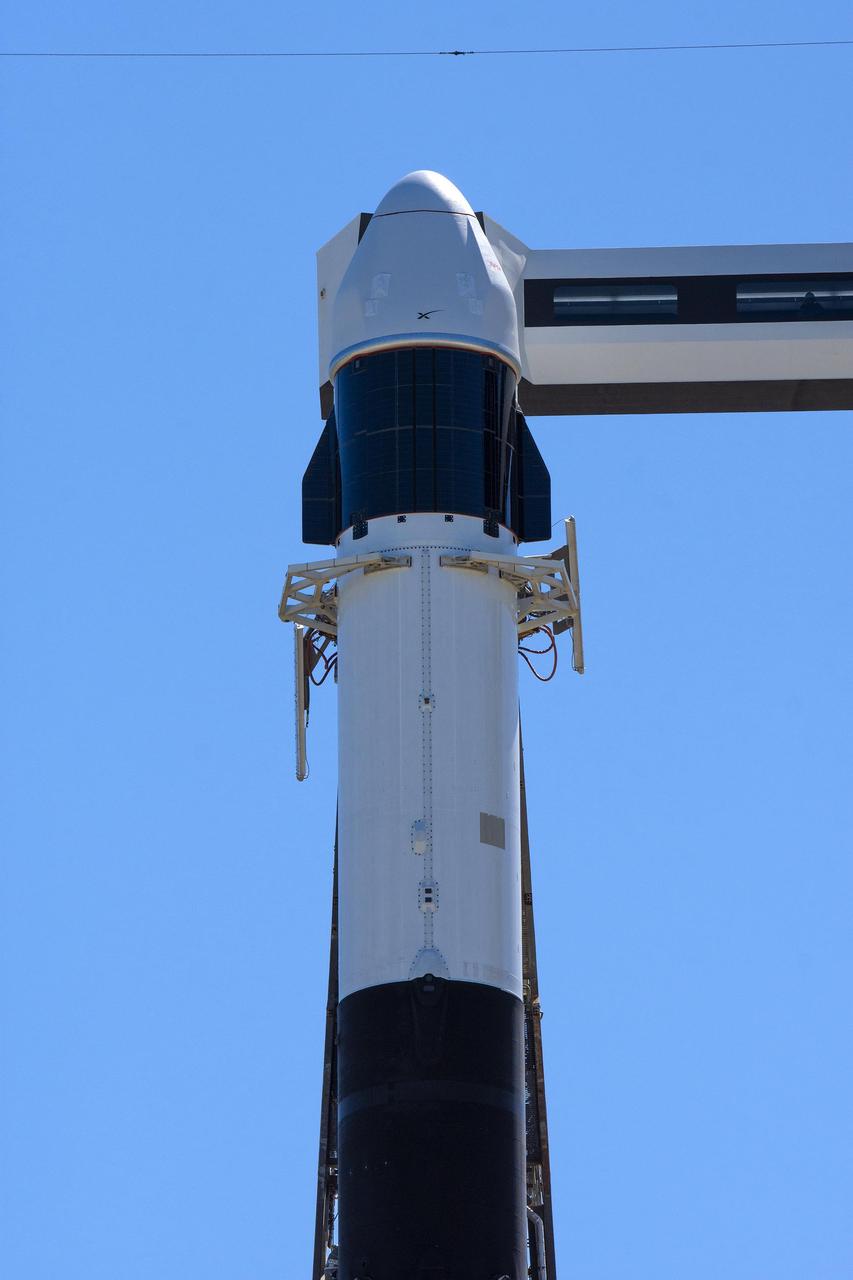
Seen here is an up-close view of the SpaceX Dragon spacecraft atop the company’s Falcon 9 rocket after being raised to a vertical position at Space Launch Complex 40 at Cape Canaveral Space Force Station in Florida on Tuesday, March 19, 2024, in preparation for the 30th commercial resupply services launch to the International Space Station. NASA and partner research flying aboard the mission includes a look at plant metabolism in space and a set of new sensors for free-flying Astrobee robots to provide 3D mapping capabilities. Other studies include a fluid physics study that could benefit solar cell technology and a university project from CSA (Canadian Space Agency) that will monitor sea ice and ocean conditions. Liftoff is scheduled for 4:55 p.m. EDT on Thursday, March 21, 2024.
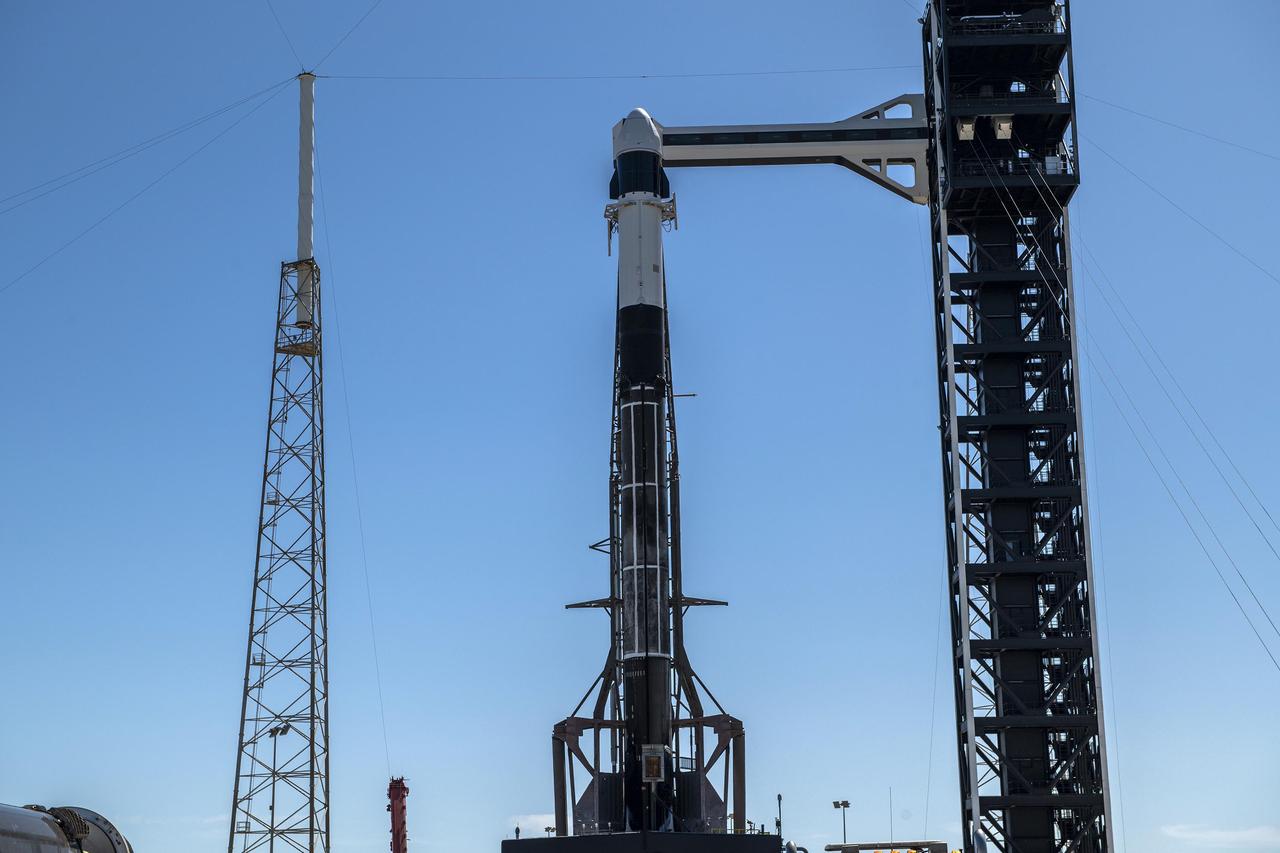
A SpaceX Falcon 9 rocket, with the company’s Dragon spacecraft atop, stands in a vertical position at Space Launch Complex 40 at Cape Canaveral Space Force Station in Florida on Tuesday, March 19, 2024, in preparation for the 30th commercial resupply services launch to the International Space Station. NASA and partner research flying aboard the mission includes a look at plant metabolism in space and a set of new sensors for free-flying Astrobee robots to provide 3D mapping capabilities. Other studies include a fluid physics study that could benefit solar cell technology and a university project from CSA (Canadian Space Agency) that will monitor sea ice and ocean conditions. Liftoff is scheduled for 4:55 p.m. EDT on Thursday, March 21, 2024.
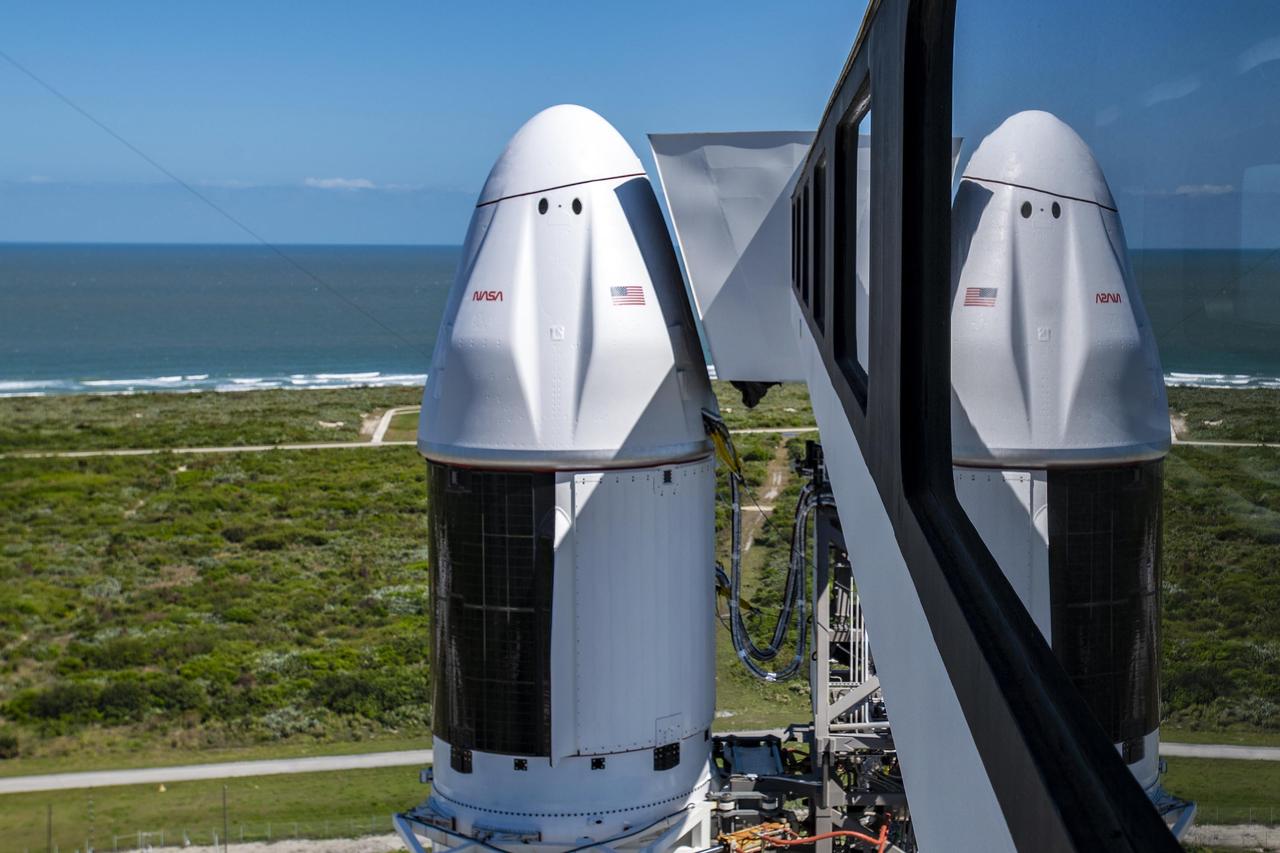
Seen here is an up-close view of the SpaceX Dragon spacecraft atop the company’s Falcon 9 rocket after being raised to a vertical position at Space Launch Complex 40 at Cape Canaveral Space Force Station in Florida on Tuesday, March 19, 2024, in preparation for the 30th commercial resupply services launch to the International Space Station. NASA and partner research flying aboard the mission includes a look at plant metabolism in space and a set of new sensors for free-flying Astrobee robots to provide 3D mapping capabilities. Other studies include a fluid physics study that could benefit solar cell technology and a university project from CSA (Canadian Space Agency) that will monitor sea ice and ocean conditions. Liftoff is scheduled for 4:55 p.m. EDT on Thursday, March 21, 2024.
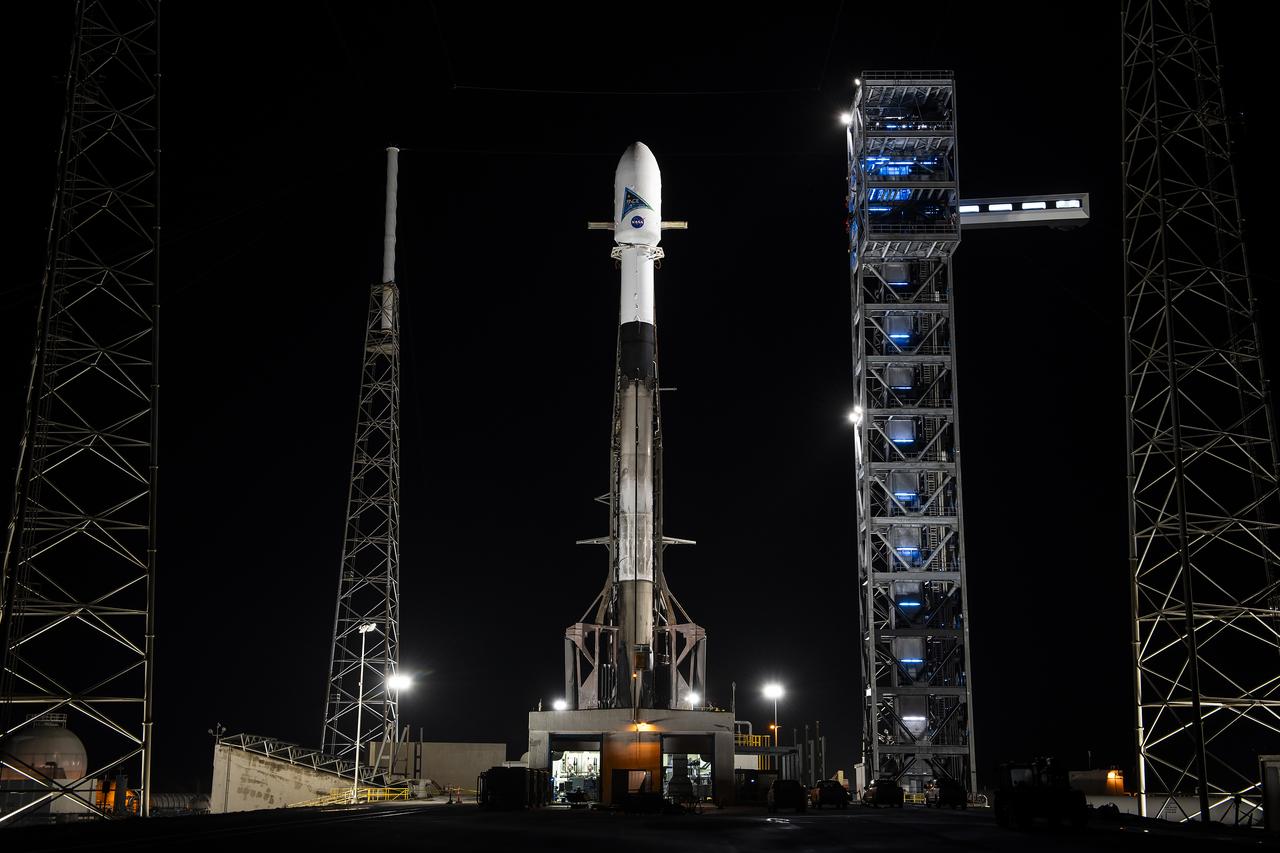
A SpaceX Falcon 9 rocket with NASA’s PACE (Plankton, Aerosol, Cloud, ocean Ecosystem) spacecraft encapsulated atop is raised to a vertical position at Space Launch Complex 40 at Cape Canaveral Space Force Station in Florida on Monday, Feb. 5, 2024. PACE is NASA’s newest earth-observing satellite that will help increase our understanding of Earth’s oceans, atmosphere, and climate by delivering hyperspectral observations of microscopic marine organisms called phytoplankton as well new data on clouds and aerosols. Liftoff of the PACE mission is set for no earlier than 1:33 a.m. EST on Tuesday, Feb. 6, 2024.

A SpaceX Falcon 9 rocket with NASA’s PACE (Plankton, Aerosol, Cloud, ocean Ecosystem) spacecraft encapsulated atop is raised to a vertical position at Space Launch Complex 40 at Cape Canaveral Space Force Station in Florida on Monday, Feb. 5, 2024. PACE is NASA’s newest earth-observing satellite that will help increase our understanding of Earth’s oceans, atmosphere, and climate by delivering hyperspectral observations of microscopic marine organisms called phytoplankton as well new data on clouds and aerosols. Liftoff of the PACE mission is set for no earlier than 1:33 a.m. EST on Tuesday, Feb. 6, 2024.
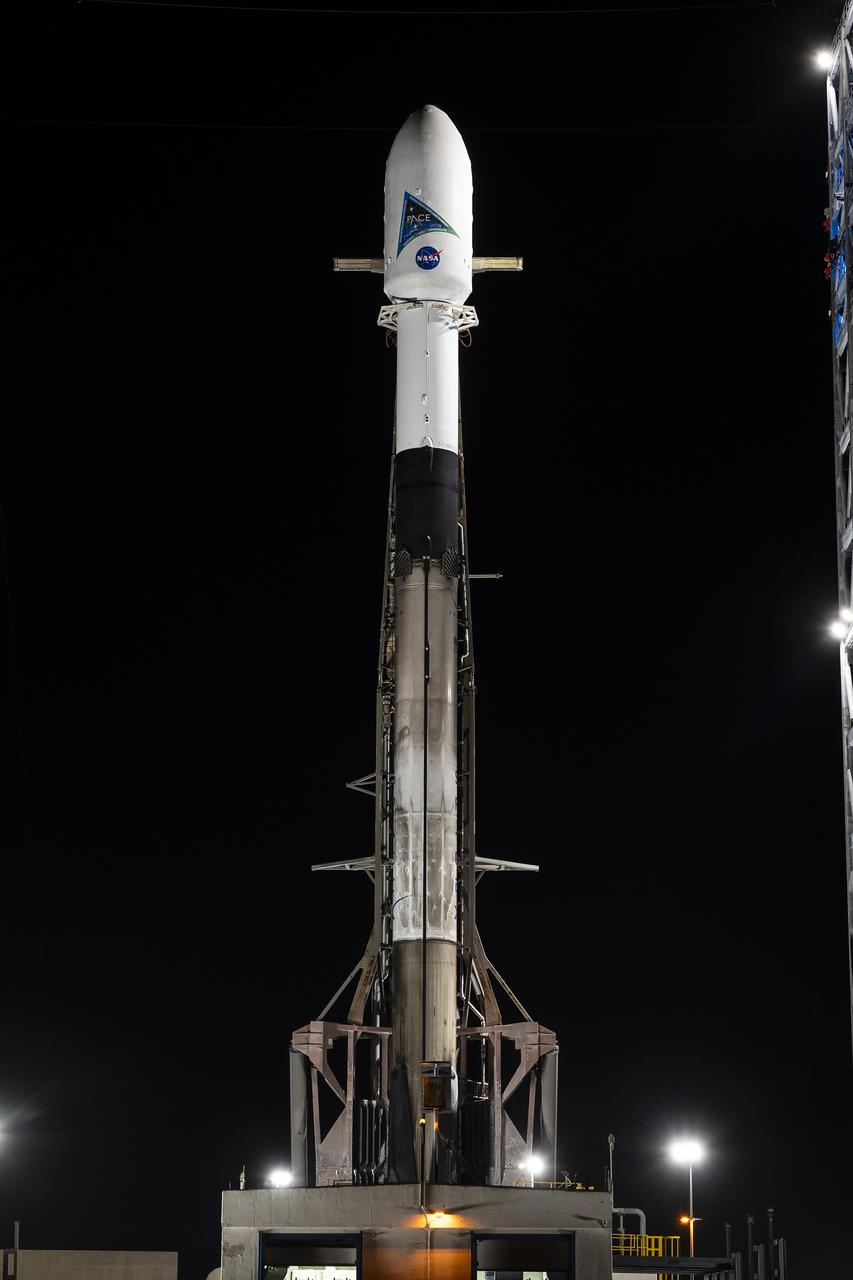
A SpaceX Falcon 9 rocket with NASA’s PACE (Plankton, Aerosol, Cloud, ocean Ecosystem) spacecraft encapsulated atop is raised to a vertical position at Space Launch Complex 40 at Cape Canaveral Space Force Station in Florida on Monday, Feb. 5, 2024. PACE is NASA’s newest earth-observing satellite that will help increase our understanding of Earth’s oceans, atmosphere, and climate by delivering hyperspectral observations of microscopic marine organisms called phytoplankton as well new data on clouds and aerosols. Liftoff of the PACE mission is set for no earlier than 1:33 a.m. EST on Tuesday, Feb. 6, 2024.

A SpaceX Falcon 9 rocket with NASA’s PACE (Plankton, Aerosol, Cloud, ocean Ecosystem) spacecraft encapsulated atop is raised to a vertical position at Space Launch Complex 40 at Cape Canaveral Space Force Station in Florida on Monday, Feb. 5, 2024. PACE is NASA’s newest earth-observing satellite that will help increase our understanding of Earth’s oceans, atmosphere, and climate by delivering hyperspectral observations of microscopic marine organisms called phytoplankton as well new data on clouds and aerosols. Liftoff of the PACE mission is set for no earlier than 1:33 a.m. EST on Tuesday, Feb. 6, 2024.
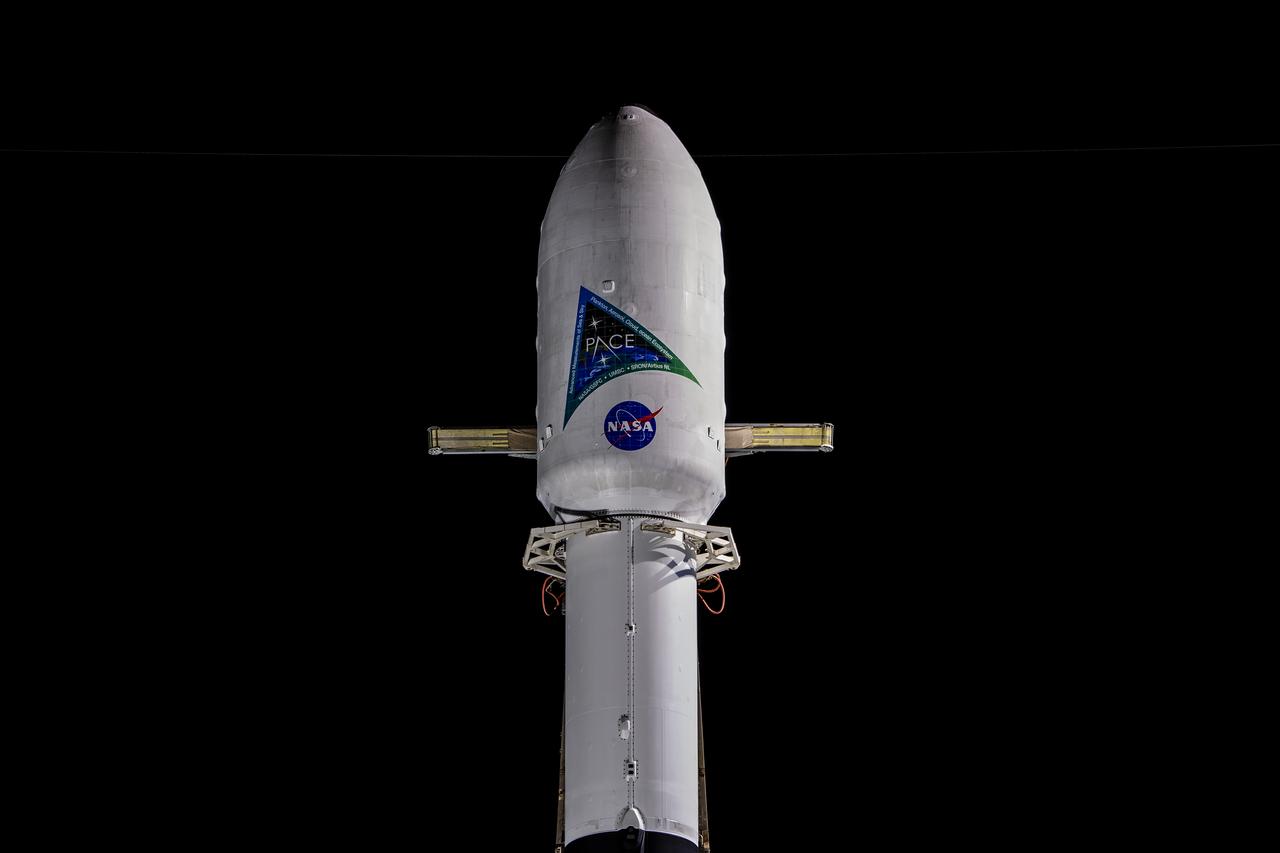
A SpaceX Falcon 9 rocket with NASA’s PACE (Plankton, Aerosol, Cloud, ocean Ecosystem) spacecraft encapsulated atop is raised to a vertical position at Space Launch Complex 40 at Cape Canaveral Space Force Station in Florida on Monday, Feb. 5, 2024. PACE is NASA’s newest earth-observing satellite that will help increase our understanding of Earth’s oceans, atmosphere, and climate by delivering hyperspectral observations of microscopic marine organisms called phytoplankton as well new data on clouds and aerosols. Liftoff of the PACE mission is set for no earlier than 1:33 a.m. EST on Tuesday, Feb. 6, 2024.

A SpaceX Falcon 9 rocket with NASA’s PACE (Plankton, Aerosol, Cloud, ocean Ecosystem) spacecraft encapsulated atop is raised to a vertical position at Space Launch Complex 40 at Cape Canaveral Space Force Station in Florida on Monday, Feb. 5, 2024. PACE is NASA’s newest earth-observing satellite that will help increase our understanding of Earth’s oceans, atmosphere, and climate by delivering hyperspectral observations of microscopic marine organisms called phytoplankton as well new data on clouds and aerosols. Liftoff of the PACE mission is set for no earlier than 1:33 a.m. EST on Tuesday, Feb. 6, 2024.

A SpaceX Falcon 9 rocket with NASA’s PACE (Plankton, Aerosol, Cloud, ocean Ecosystem) spacecraft encapsulated atop is raised to a vertical position at Space Launch Complex 40 at Cape Canaveral Space Force Station in Florida on Monday, Feb. 5, 2024. PACE is NASA’s newest earth-observing satellite that will help increase our understanding of Earth’s oceans, atmosphere, and climate by delivering hyperspectral observations of microscopic marine organisms called phytoplankton as well new data on clouds and aerosols. Liftoff of the PACE mission is set for no earlier than 1:33 a.m. EST on Tuesday, Feb. 6, 2024.
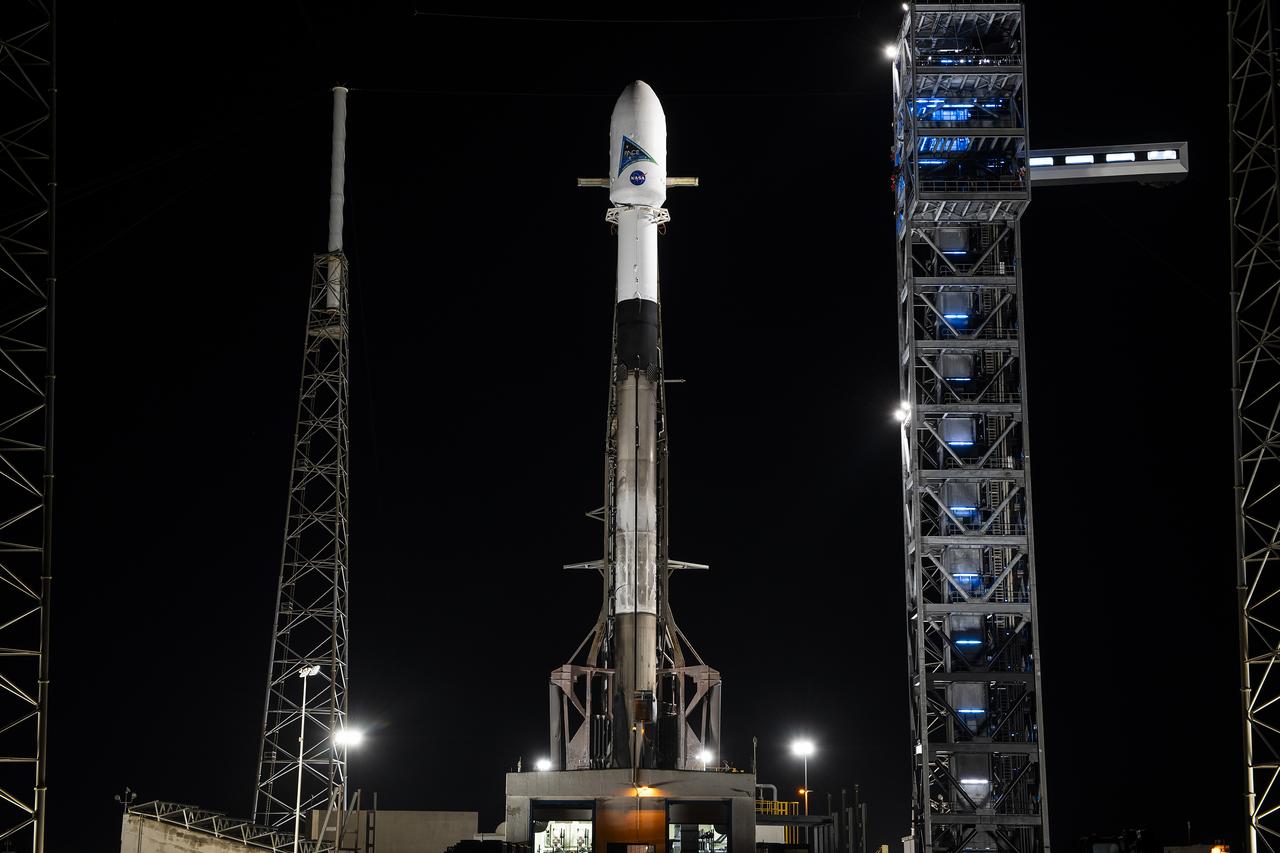
A SpaceX Falcon 9 rocket with NASA’s PACE (Plankton, Aerosol, Cloud, ocean Ecosystem) spacecraft encapsulated atop is raised to a vertical position at Space Launch Complex 40 at Cape Canaveral Space Force Station in Florida on Monday, Feb. 5, 2024. PACE is NASA’s newest earth-observing satellite that will help increase our understanding of Earth’s oceans, atmosphere, and climate by delivering hyperspectral observations of microscopic marine organisms called phytoplankton as well new data on clouds and aerosols. Liftoff of the PACE mission is set for no earlier than 1:33 a.m. EST on Tuesday, Feb. 6, 2024.
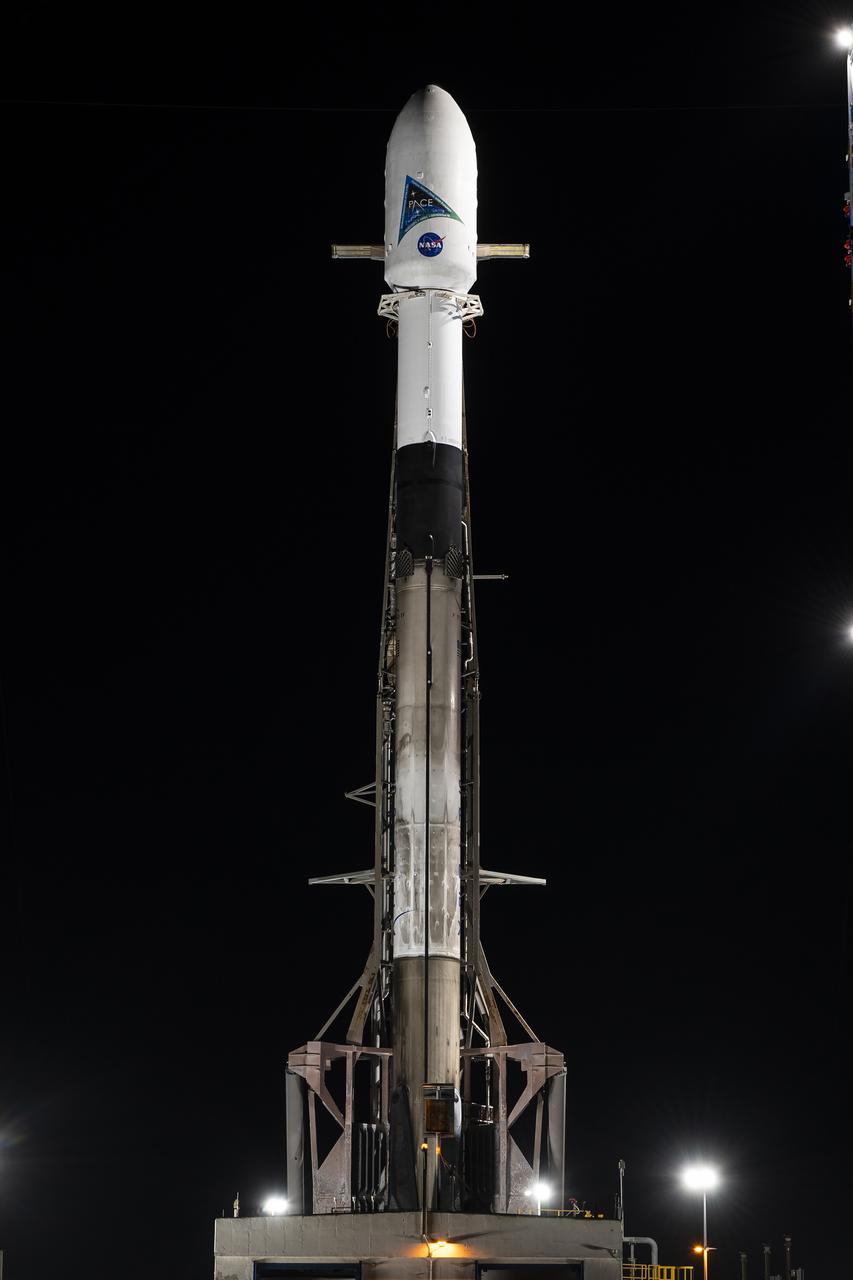
A SpaceX Falcon 9 rocket with NASA’s PACE (Plankton, Aerosol, Cloud, ocean Ecosystem) spacecraft encapsulated atop is raised to a vertical position at Space Launch Complex 40 at Cape Canaveral Space Force Station in Florida on Monday, Feb. 5, 2024. PACE is NASA’s newest earth-observing satellite that will help increase our understanding of Earth’s oceans, atmosphere, and climate by delivering hyperspectral observations of microscopic marine organisms called phytoplankton as well new data on clouds and aerosols. Liftoff of the PACE mission is set for no earlier than 1:33 a.m. EST on Tuesday, Feb. 6, 2024.
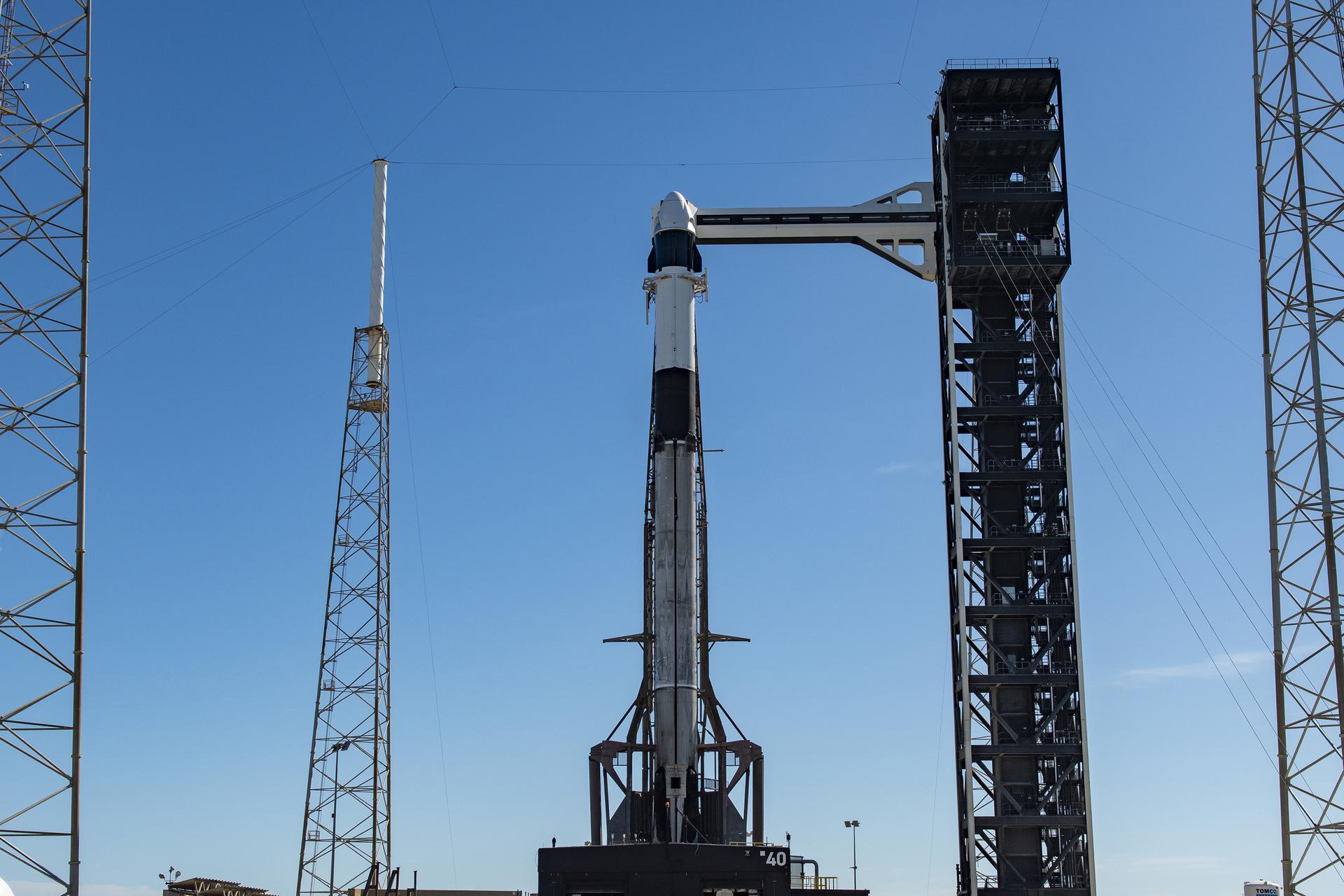
Ahead of launch of NASA’s SpaceX Crew-13 mission, a SpaceX Falcon 9 rocket, with the Dragon spacecraft atop, is vertical at the launch pad of Space Launch Complex 40 at Cape Canaveral Space Force Station in Florida on Sunday, Sept. 27, 2026. NASA astronauts Jessica Watkins and Luke Delaney, CSA (Canadian Space Agency) astronaut Joshua Kutryk, and Roscosmos cosmonaut Sergey Teteryatnikov are scheduled to launch at 11:10 a.m. EDT on Thursday, Oct. 1 to the International Space Station for the 13th crew rotation mission as part of NASA’s Commercial Crew Program.
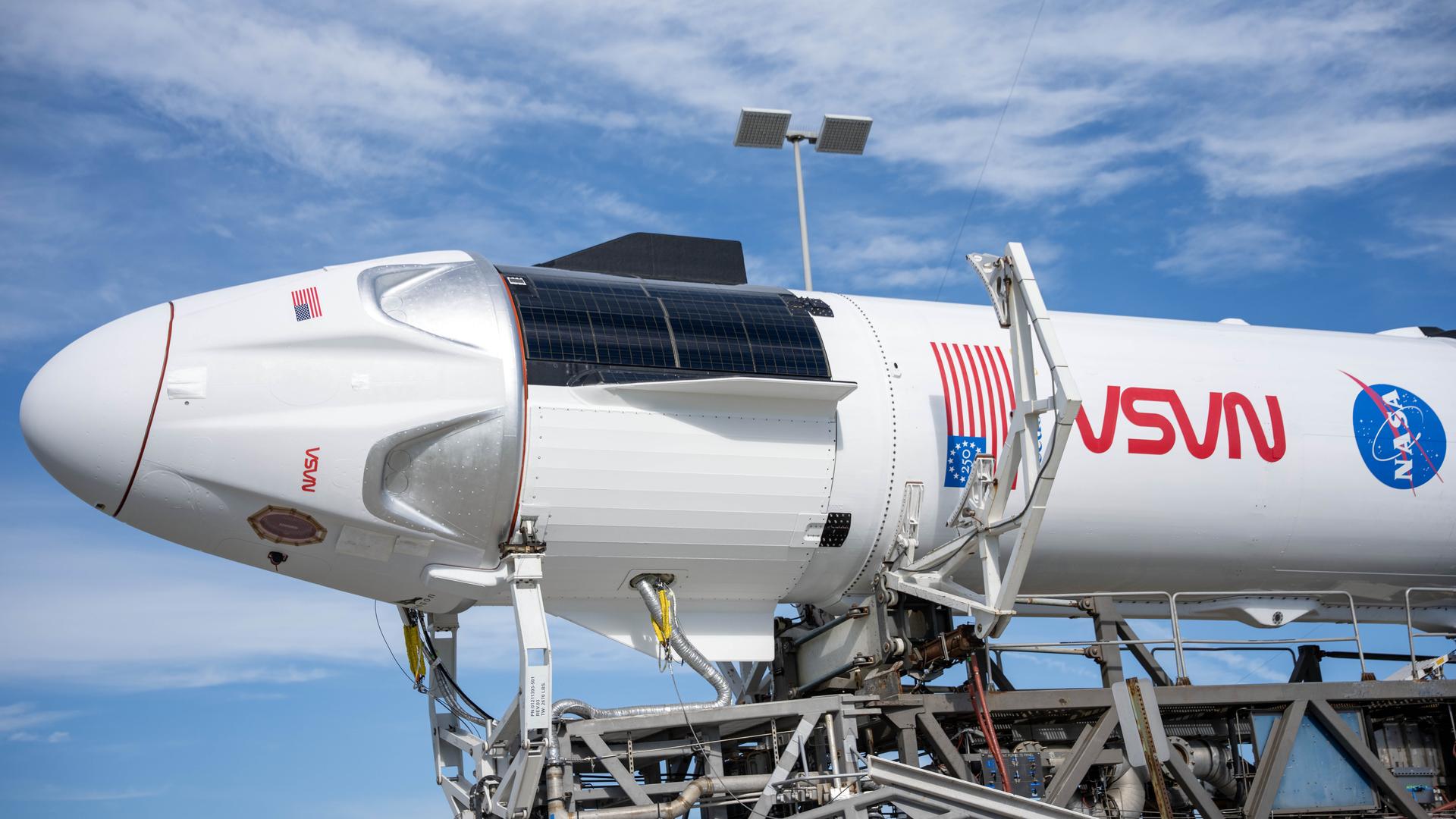
A SpaceX Dragon spacecraft atop the company’s Falcon 9 rocket rolls to the launch pad at Space Launch Complex 40 at Cape Canaveral Space Force Station in Florida on Sunday, Sept. 27, 2026, for NASA’s SpaceX Crew-13 mission. NASA astronauts Jessica Watkins and Luke Delaney, CSA (Canadian Space Agency) astronaut Joshua Kutryk, and Roscosmos cosmonaut Sergey Teteryatnikov are scheduled to launch at 11:10 a.m. EDT on Thursday, Oct. 1, to the International Space Station for the 13th crew rotation mission as part of NASA’s Commercial Crew Program.
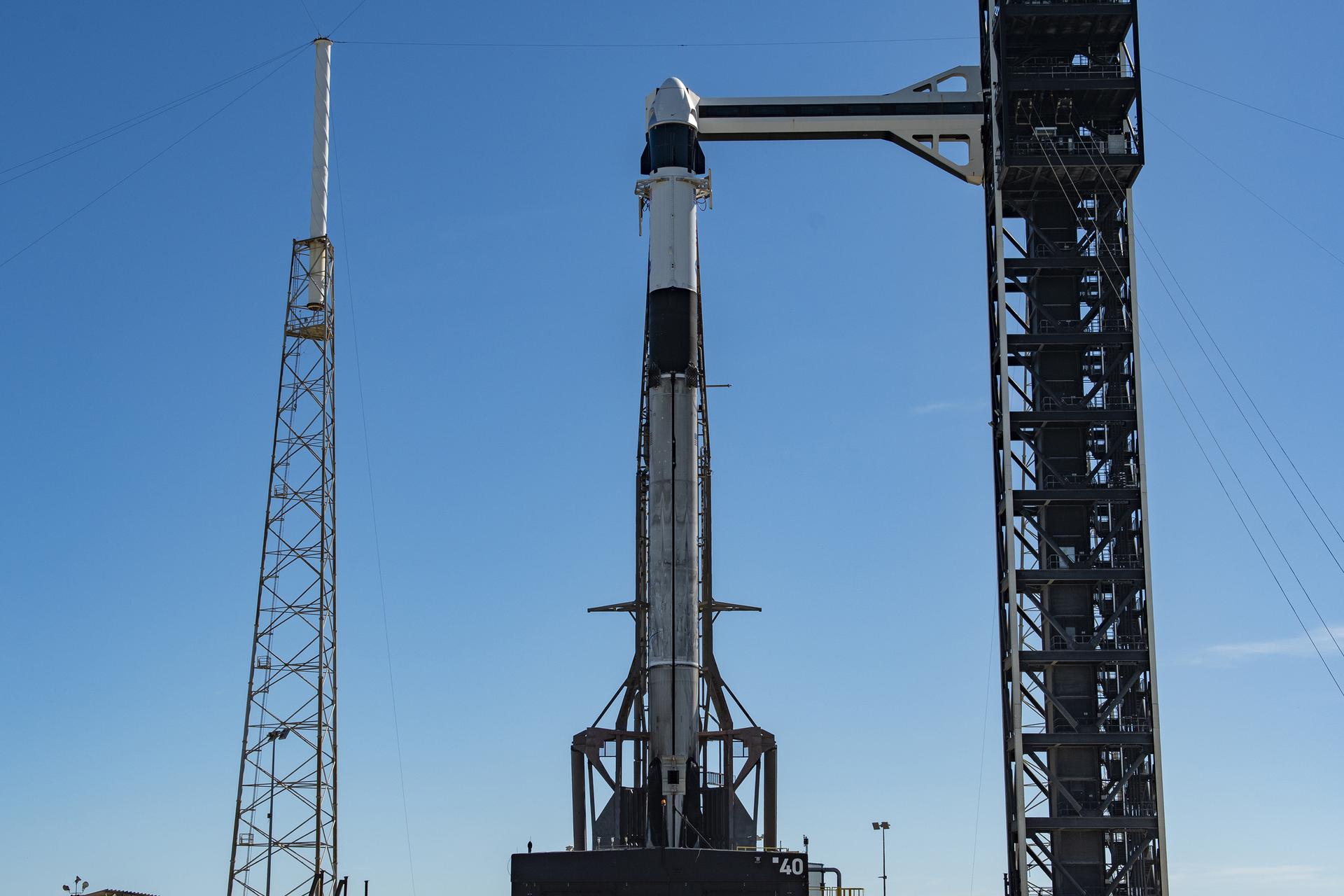
Ahead of launch of NASA’s SpaceX Crew-13 mission, a SpaceX Falcon 9 rocket, with the Dragon spacecraft atop, is vertical at the launch pad of Space Launch Complex 40 at Cape Canaveral Space Force Station in Florida on Sunday, Sept. 27, 2026. NASA astronauts Jessica Watkins and Luke Delaney, CSA (Canadian Space Agency) astronaut Joshua Kutryk, and Roscosmos cosmonaut Sergey Teteryatnikov are scheduled to launch at 11:10 a.m. EDT on Thursday, Oct. 1 to the International Space Station for the 13th crew rotation mission as part of NASA’s Commercial Crew Program.
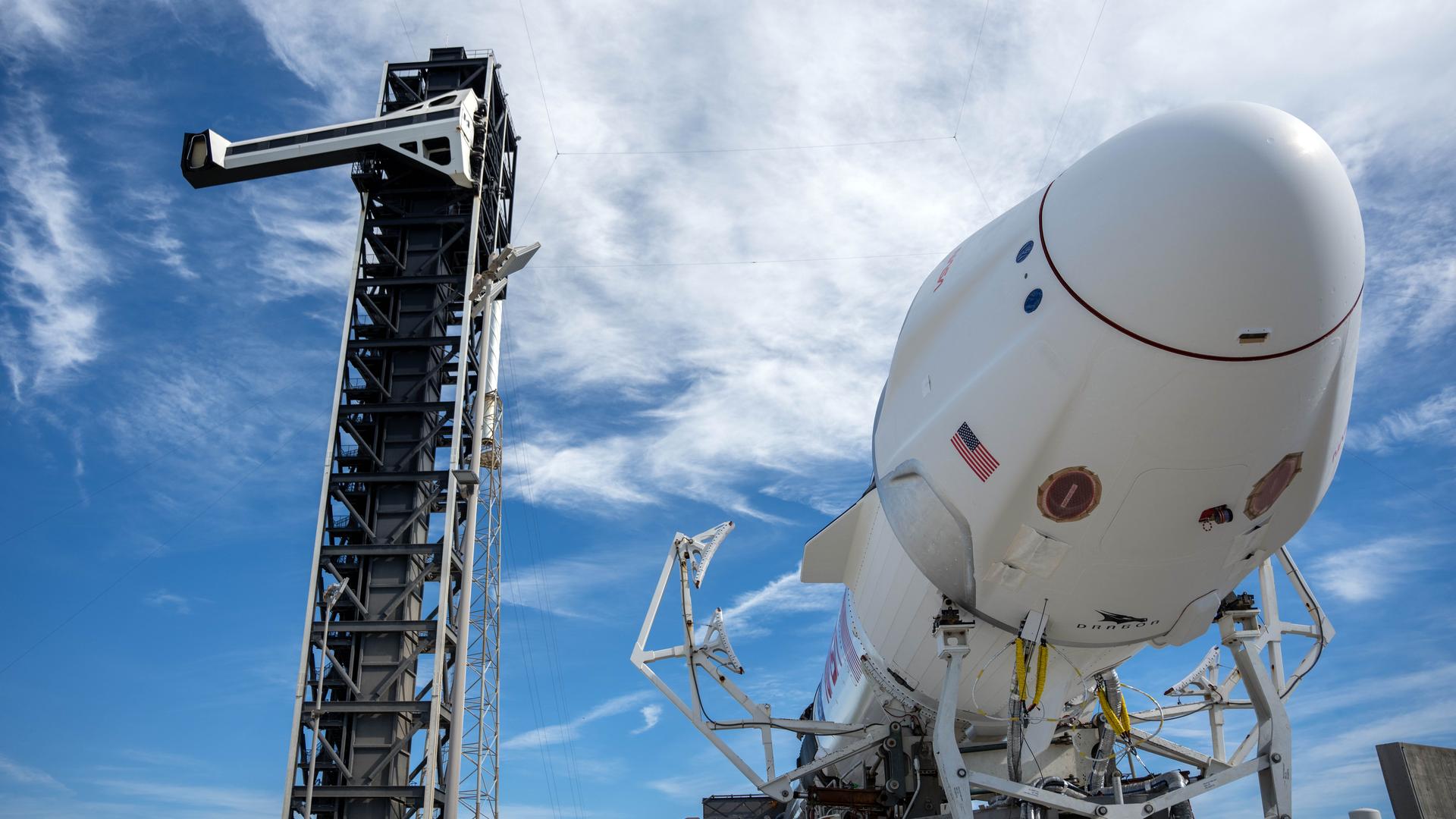
A SpaceX Dragon spacecraft atop the company’s Falcon 9 rocket rolls to the launch pad at Space Launch Complex 40 at Cape Canaveral Space Force Station in Florida on Sunday, Sept. 27, 2026, for NASA’s SpaceX Crew-13 mission. NASA astronauts Jessica Watkins and Luke Delaney, CSA (Canadian Space Agency) astronaut Joshua Kutryk, and Roscosmos cosmonaut Sergey Teteryatnikov are scheduled to launch at 11:10 a.m. EDT on Thursday, Oct. 1, to the International Space Station for the 13th crew rotation mission as part of NASA’s Commercial Crew Program.
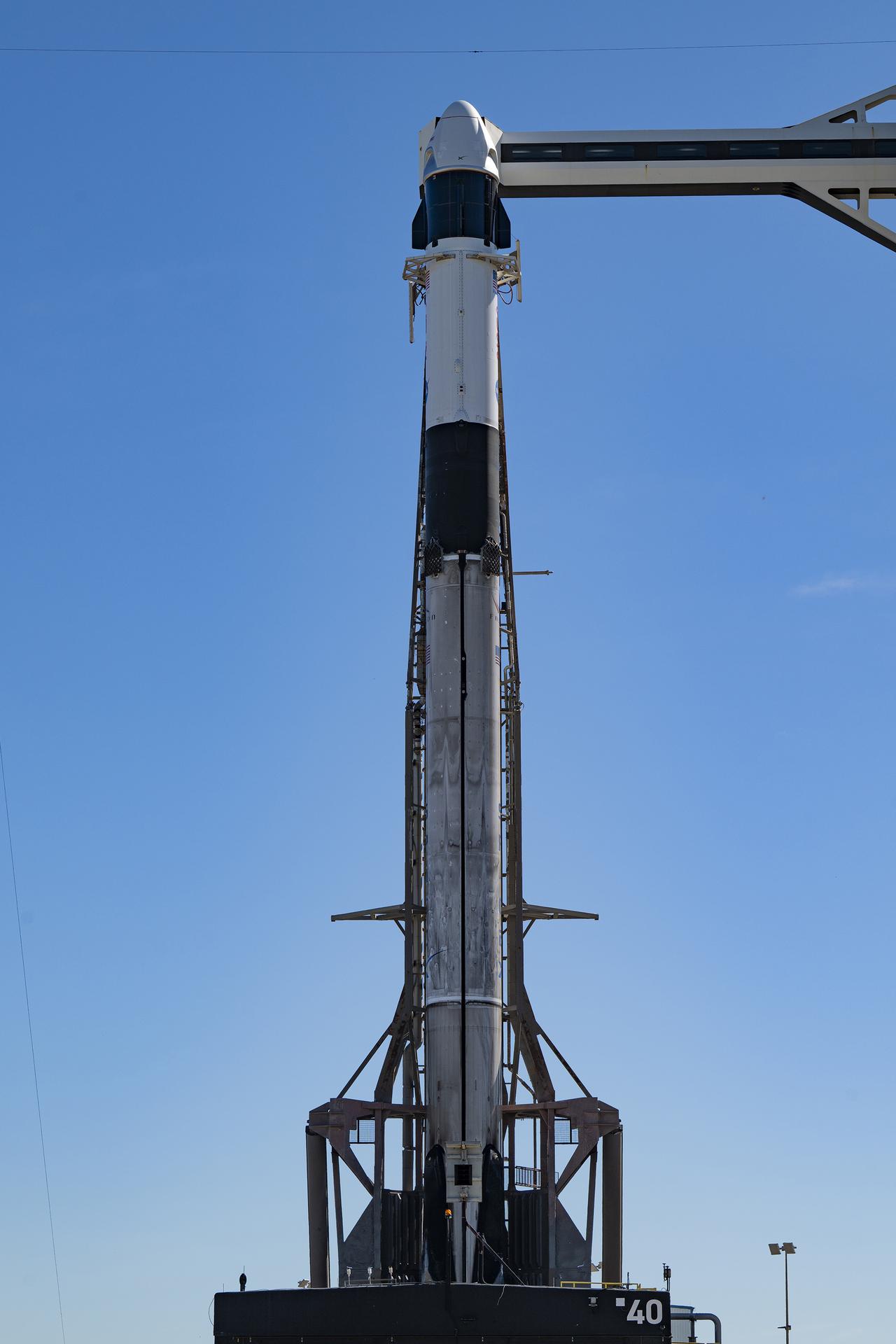
Ahead of launch of NASA’s SpaceX Crew-13 mission, a SpaceX Falcon 9 rocket, with the Dragon spacecraft atop, is vertical at the launch pad of Space Launch Complex 40 at Cape Canaveral Space Force Station in Florida on Sunday, Sept. 27, 2026. NASA astronauts Jessica Watkins and Luke Delaney, CSA (Canadian Space Agency) astronaut Joshua Kutryk, and Roscosmos cosmonaut Sergey Teteryatnikov are scheduled to launch at 11:10 a.m. EDT on Thursday, Oct. 1 to the International Space Station for the 13th crew rotation mission as part of NASA’s Commercial Crew Program.
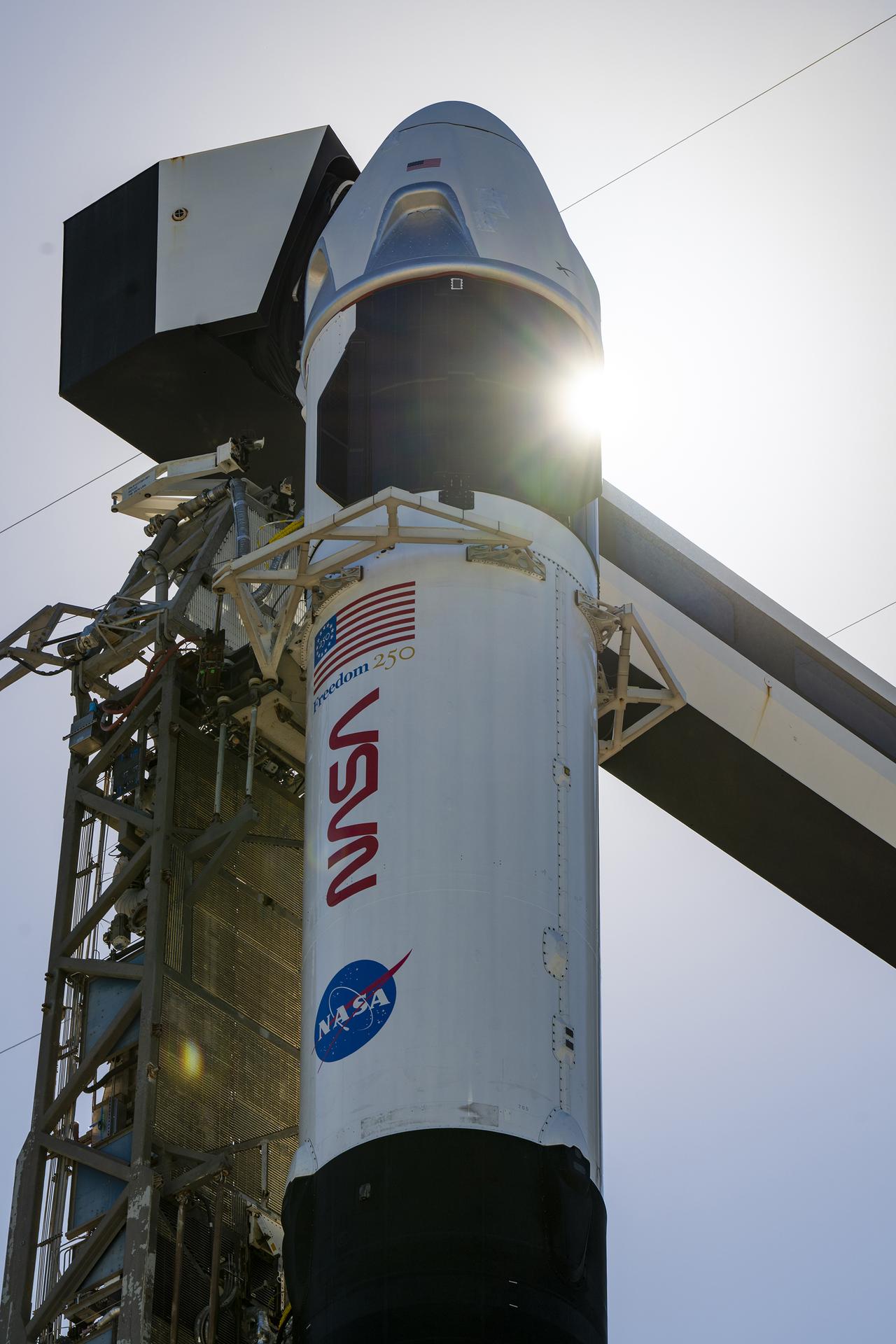
Ahead of launch of NASA’s SpaceX Crew-13 mission, a SpaceX Falcon 9 rocket, with the Dragon spacecraft atop, is vertical at the launch pad of Space Launch Complex 40 at Cape Canaveral Space Force Station in Florida on Sunday, Sept. 27, 2026. NASA astronauts Jessica Watkins and Luke Delaney, CSA (Canadian Space Agency) astronaut Joshua Kutryk, and Roscosmos cosmonaut Sergey Teteryatnikov are scheduled to launch at 11:10 a.m. EDT on Thursday, Oct. 1 to the International Space Station for the 13th crew rotation mission as part of NASA’s Commercial Crew Program.
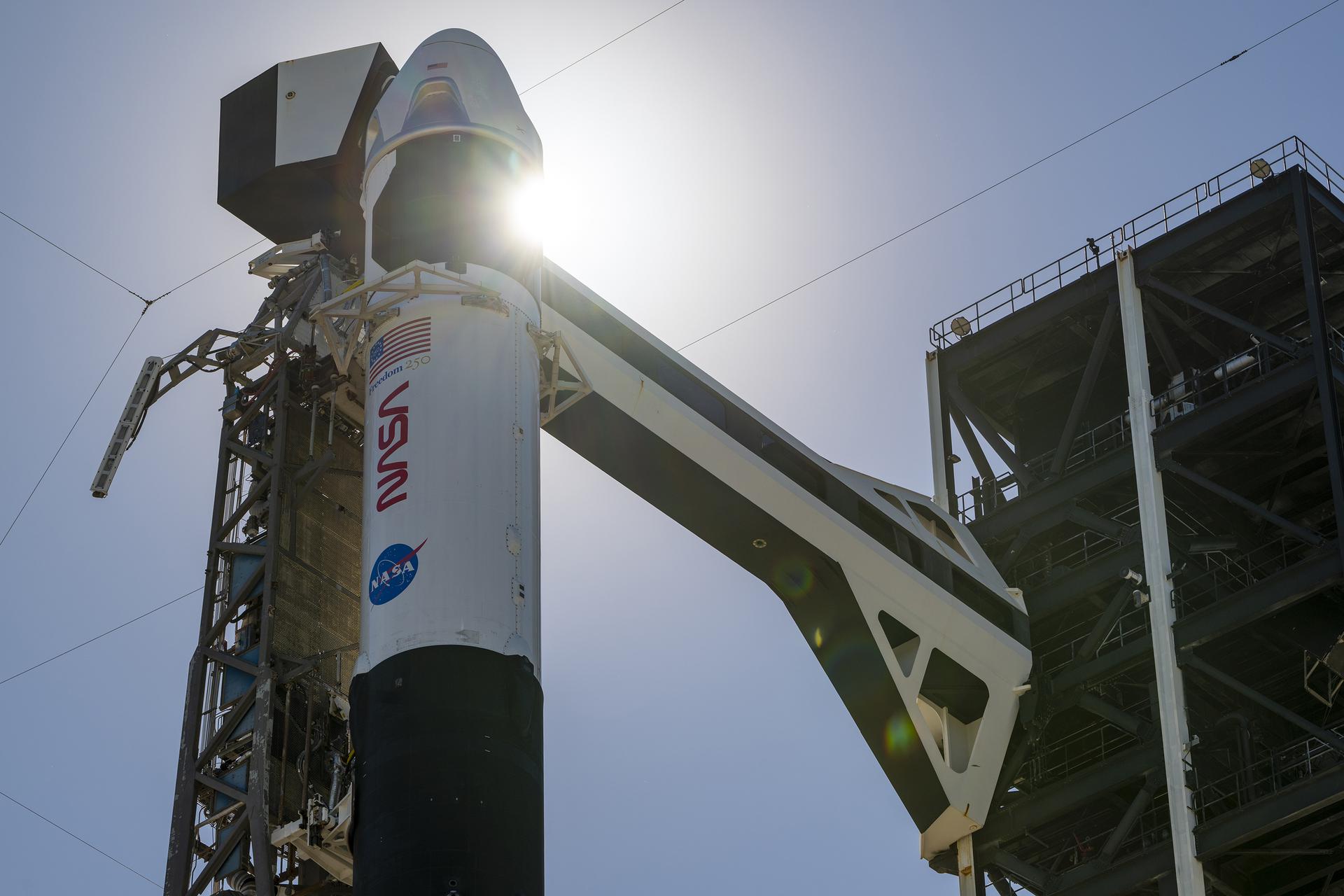
Ahead of launch of NASA’s SpaceX Crew-13 mission, a SpaceX Falcon 9 rocket, with the Dragon spacecraft atop, is vertical at the launch pad of Space Launch Complex 40 at Cape Canaveral Space Force Station in Florida on Sunday, Sept. 27, 2026. NASA astronauts Jessica Watkins and Luke Delaney, CSA (Canadian Space Agency) astronaut Joshua Kutryk, and Roscosmos cosmonaut Sergey Teteryatnikov are scheduled to launch at 11:10 a.m. EDT on Thursday, Oct. 1 to the International Space Station for the 13th crew rotation mission as part of NASA’s Commercial Crew Program.
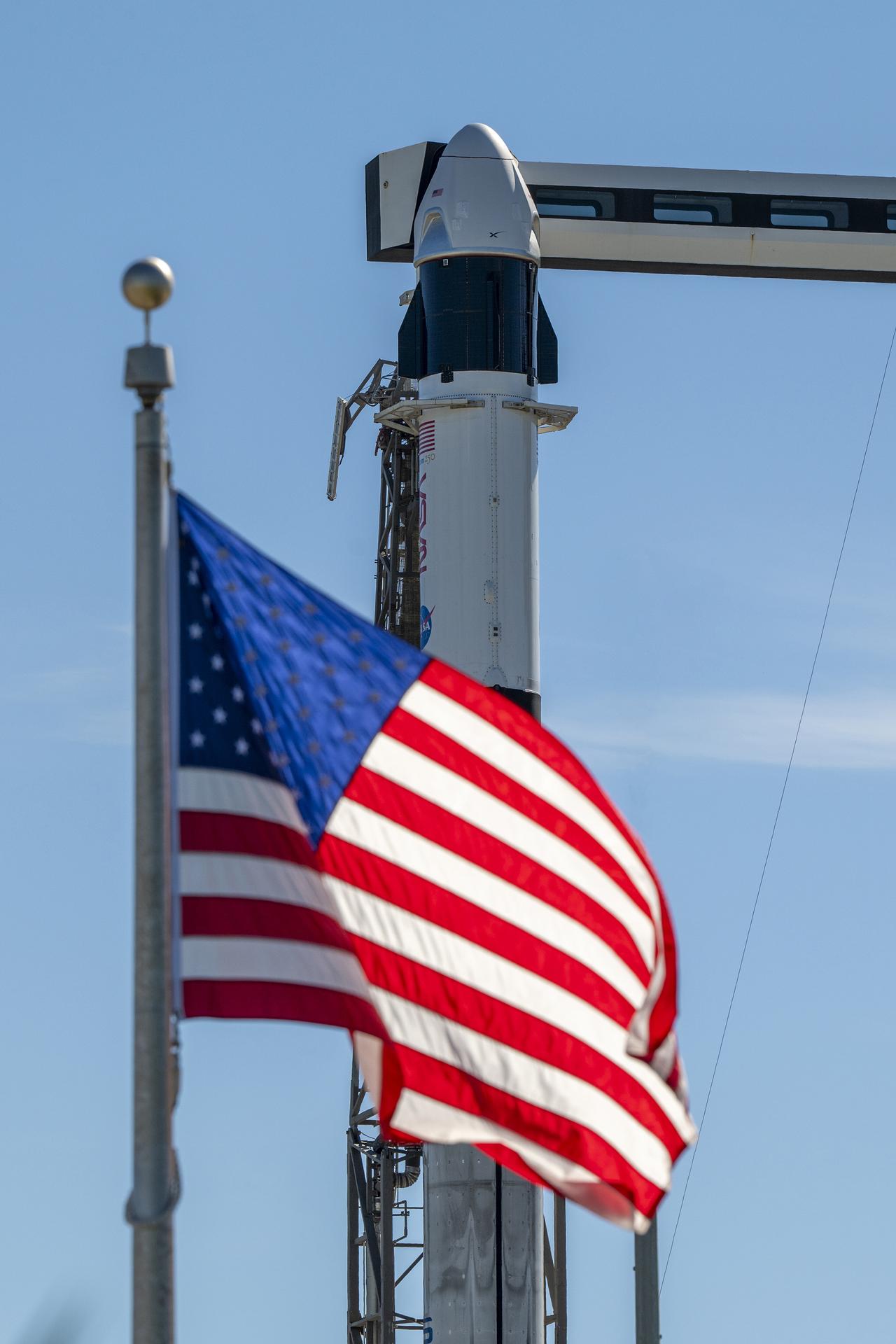
Ahead of launch of NASA’s SpaceX Crew-13 mission, a SpaceX Falcon 9 rocket, with the Dragon spacecraft atop, is vertical at the launch pad of Space Launch Complex 40 at Cape Canaveral Space Force Station in Florida on Sunday, Sept. 27, 2026. NASA astronauts Jessica Watkins and Luke Delaney, CSA (Canadian Space Agency) astronaut Joshua Kutryk, and Roscosmos cosmonaut Sergey Teteryatnikov are scheduled to launch at 11:10 a.m. EDT on Thursday, Oct. 1 to the International Space Station for the 13th crew rotation mission as part of NASA’s Commercial Crew Program.
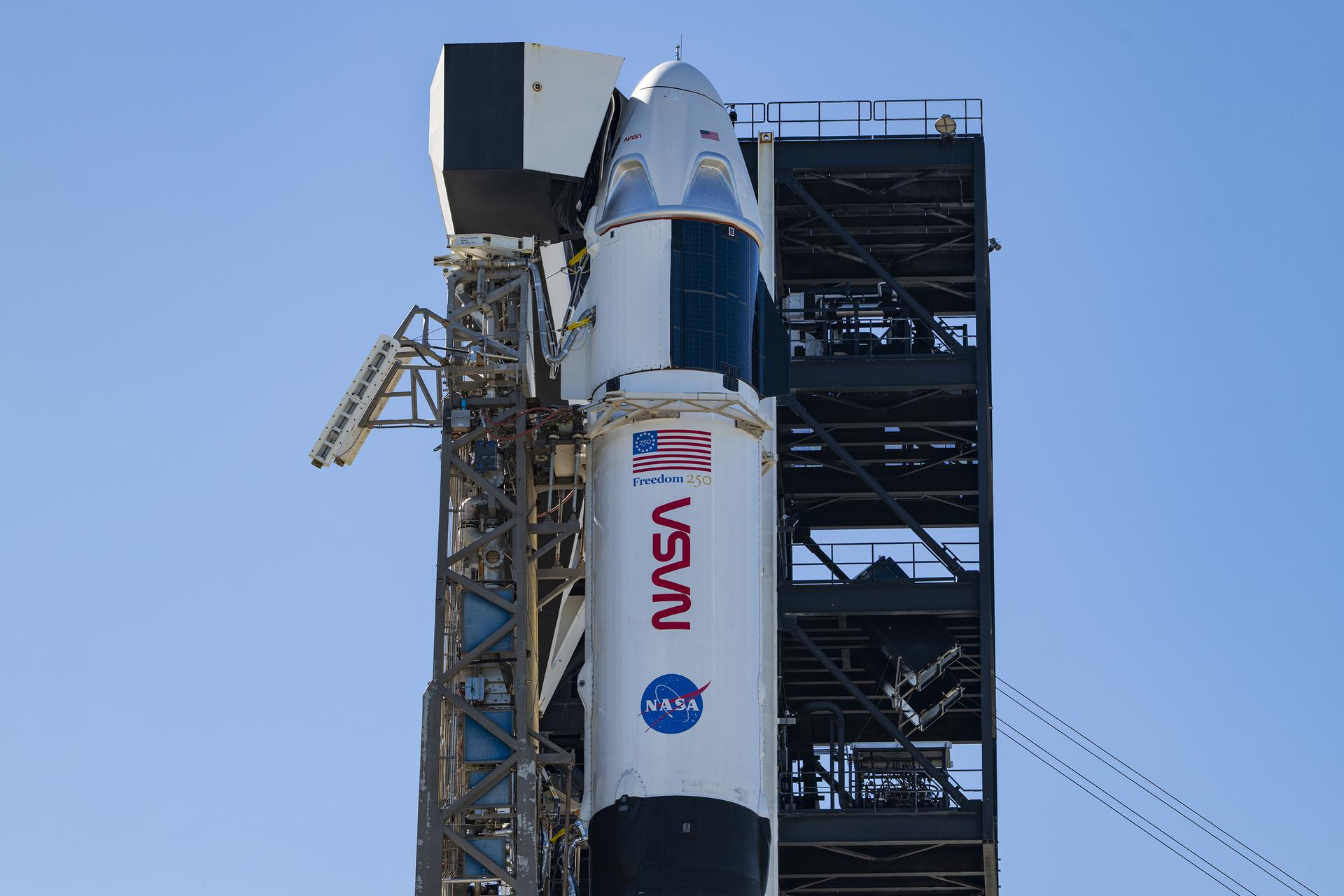
Ahead of launch of NASA’s SpaceX Crew-13 mission, a SpaceX Falcon 9 rocket, with the Dragon spacecraft atop, is vertical at the launch pad of Space Launch Complex 40 at Cape Canaveral Space Force Station in Florida on Sunday, Sept. 27, 2026. NASA astronauts Jessica Watkins and Luke Delaney, CSA (Canadian Space Agency) astronaut Joshua Kutryk, and Roscosmos cosmonaut Sergey Teteryatnikov are scheduled to launch at 11:10 a.m. EDT on Thursday, Oct. 1 to the International Space Station for the 13th crew rotation mission as part of NASA’s Commercial Crew Program.
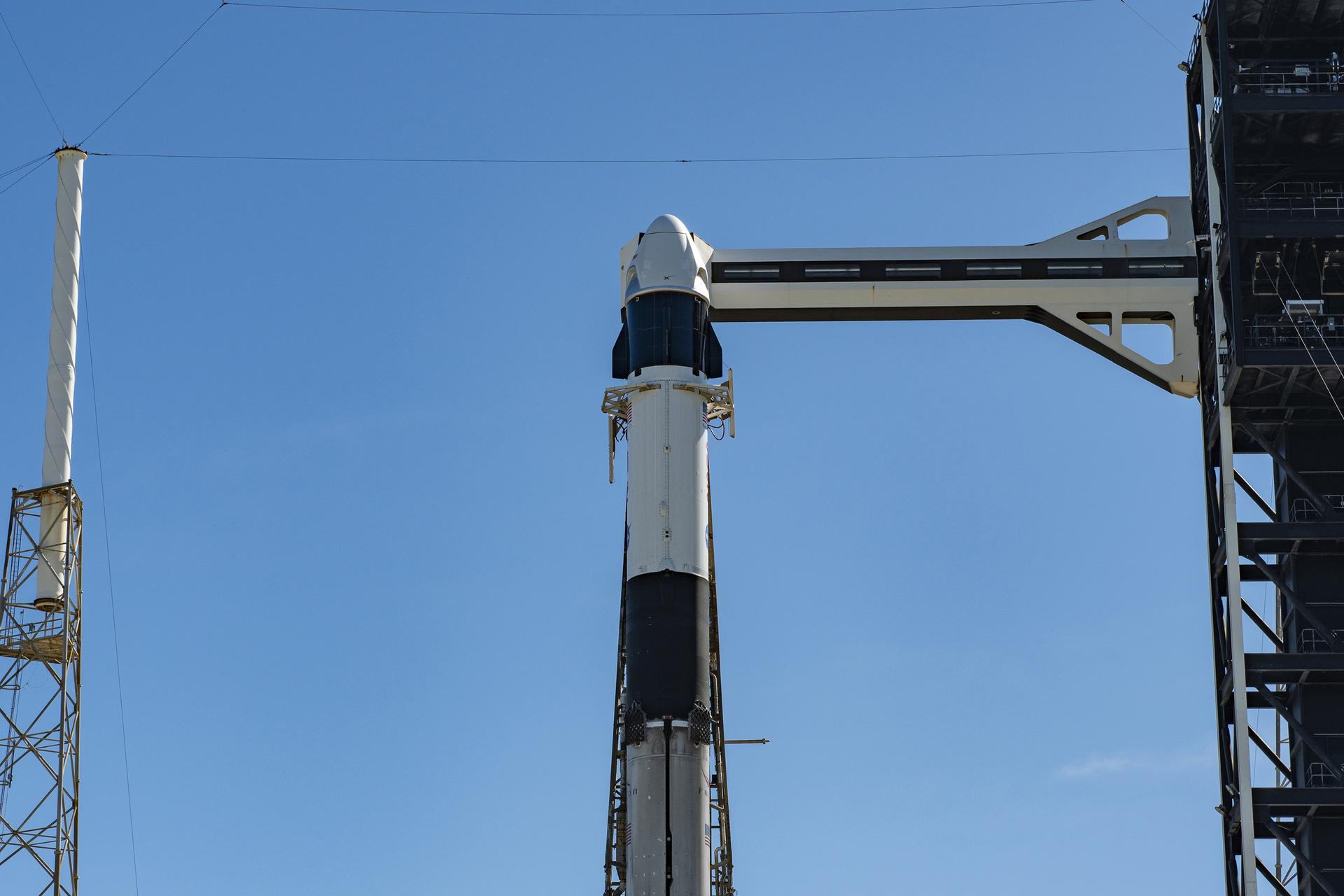
Ahead of launch of NASA’s SpaceX Crew-13 mission, a SpaceX Falcon 9 rocket, with the Dragon spacecraft atop, is vertical at the launch pad of Space Launch Complex 40 at Cape Canaveral Space Force Station in Florida on Sunday, Sept. 27, 2026. NASA astronauts Jessica Watkins and Luke Delaney, CSA (Canadian Space Agency) astronaut Joshua Kutryk, and Roscosmos cosmonaut Sergey Teteryatnikov are scheduled to launch at 11:10 a.m. EDT on Thursday, Oct. 1 to the International Space Station for the 13th crew rotation mission as part of NASA’s Commercial Crew Program.
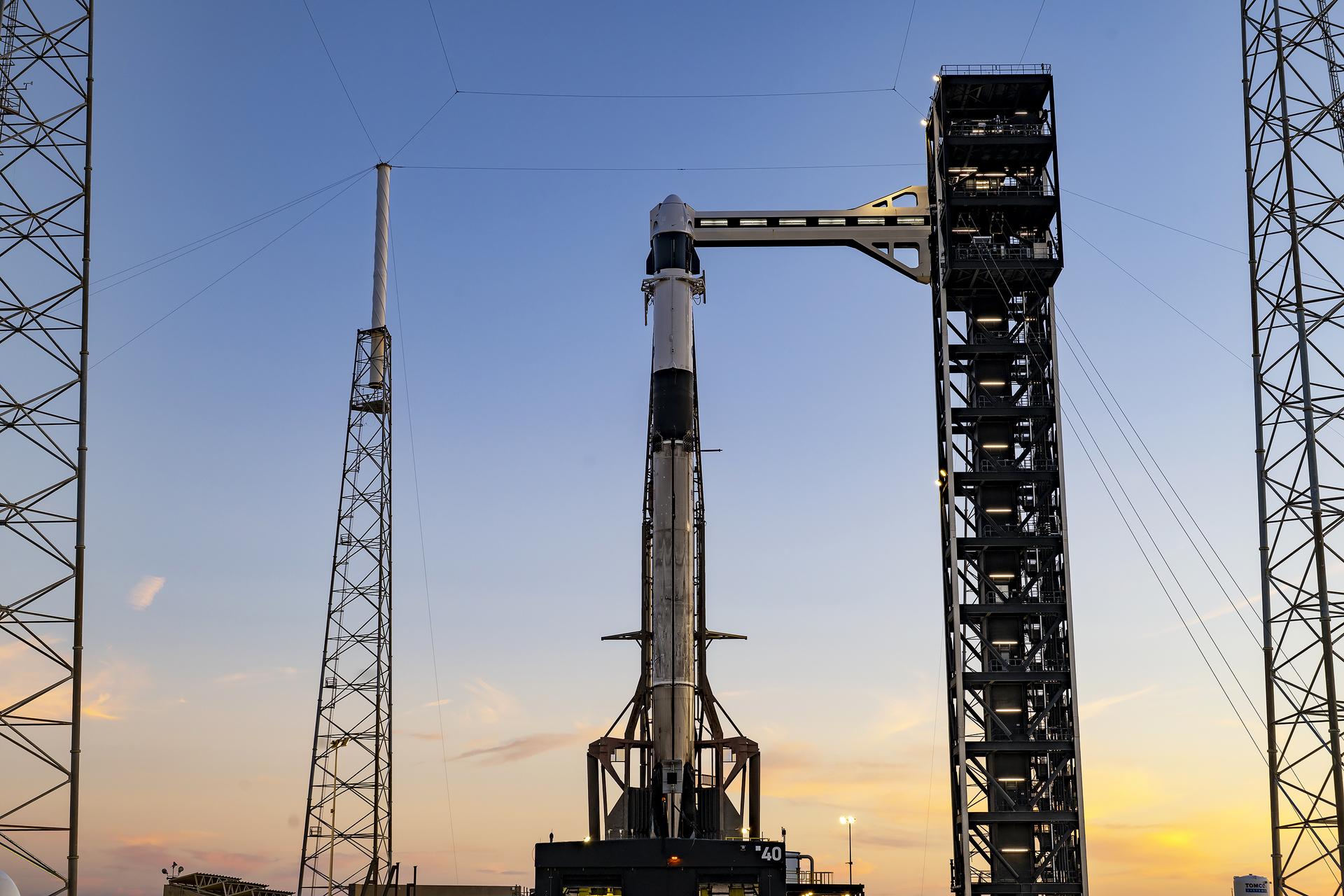
Ahead of launch of NASA’s SpaceX Crew-13 mission, a SpaceX Falcon 9 rocket, with the Dragon spacecraft atop, is vertical at the launch pad of Space Launch Complex 40 at Cape Canaveral Space Force Station in Florida on Sunday, Sept. 27, 2026. NASA astronauts Jessica Watkins and Luke Delaney, CSA (Canadian Space Agency) astronaut Joshua Kutryk, and Roscosmos cosmonaut Sergey Teteryatnikov are scheduled to launch at 11:10 a.m. EDT on Thursday, Oct. 1 to the International Space Station for the 13th crew rotation mission as part of NASA’s Commercial Crew Program.
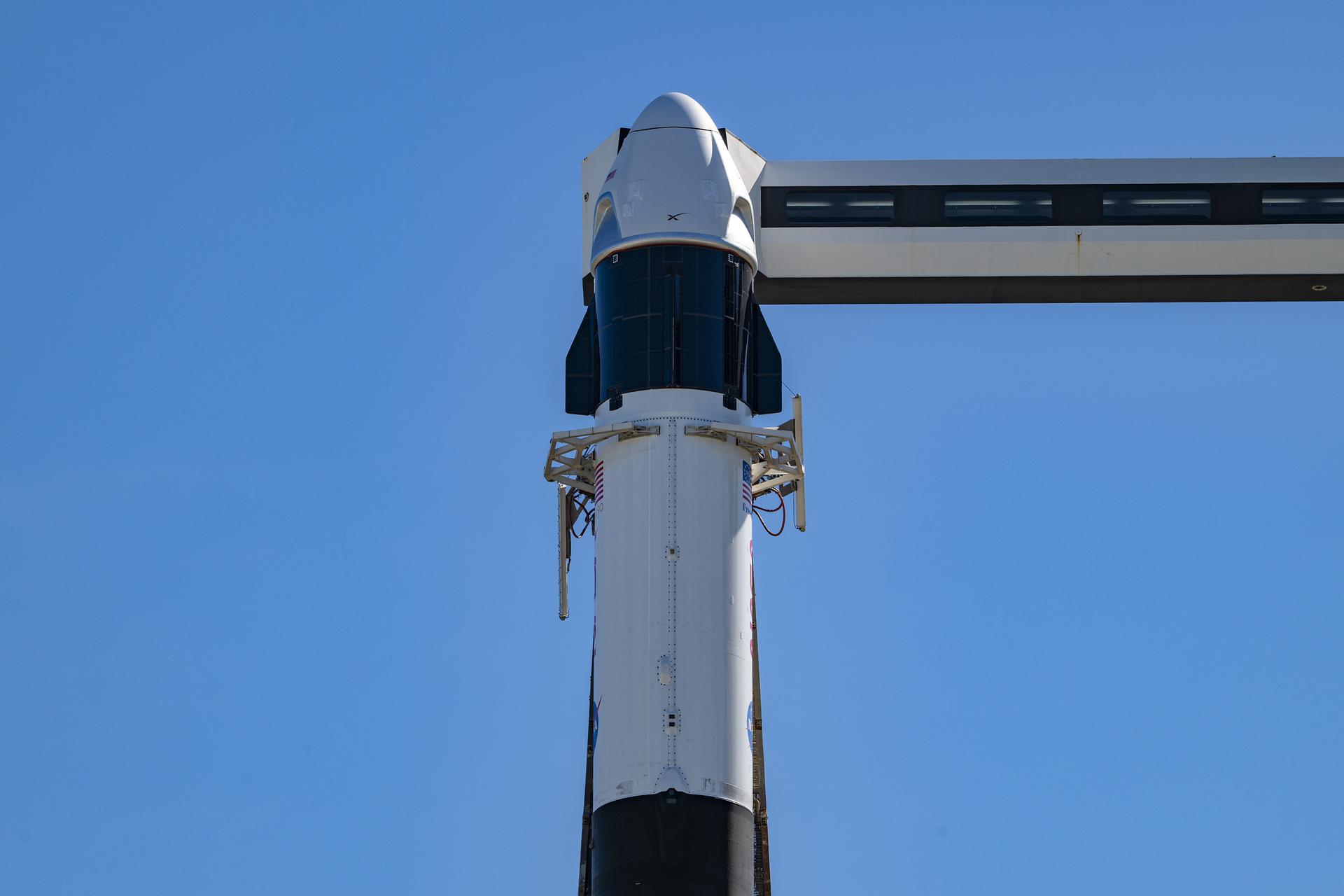
Ahead of launch of NASA’s SpaceX Crew-13 mission, a SpaceX Falcon 9 rocket, with the Dragon spacecraft atop, is vertical at the launch pad of Space Launch Complex 40 at Cape Canaveral Space Force Station in Florida on Sunday, Sept. 27, 2026. NASA astronauts Jessica Watkins and Luke Delaney, CSA (Canadian Space Agency) astronaut Joshua Kutryk, and Roscosmos cosmonaut Sergey Teteryatnikov are scheduled to launch at 11:10 a.m. EDT on Thursday, Oct. 1 to the International Space Station for the 13th crew rotation mission as part of NASA’s Commercial Crew Program.
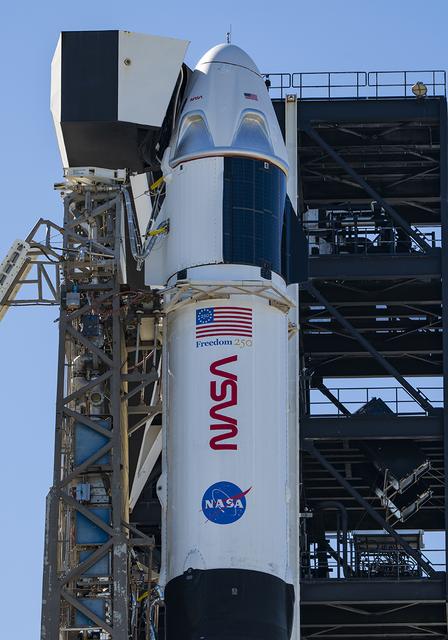
Ahead of launch of NASA’s SpaceX Crew-13 mission, a SpaceX Falcon 9 rocket, with the Dragon spacecraft atop, is vertical at the launch pad of Space Launch Complex 40 at Cape Canaveral Space Force Station in Florida on Sunday, Sept. 27, 2026. NASA astronauts Jessica Watkins and Luke Delaney, CSA (Canadian Space Agency) astronaut Joshua Kutryk, and Roscosmos cosmonaut Sergey Teteryatnikov are scheduled to launch at 11:10 a.m. EDT on Thursday, Oct. 1 to the International Space Station for the 13th crew rotation mission as part of NASA’s Commercial Crew Program.
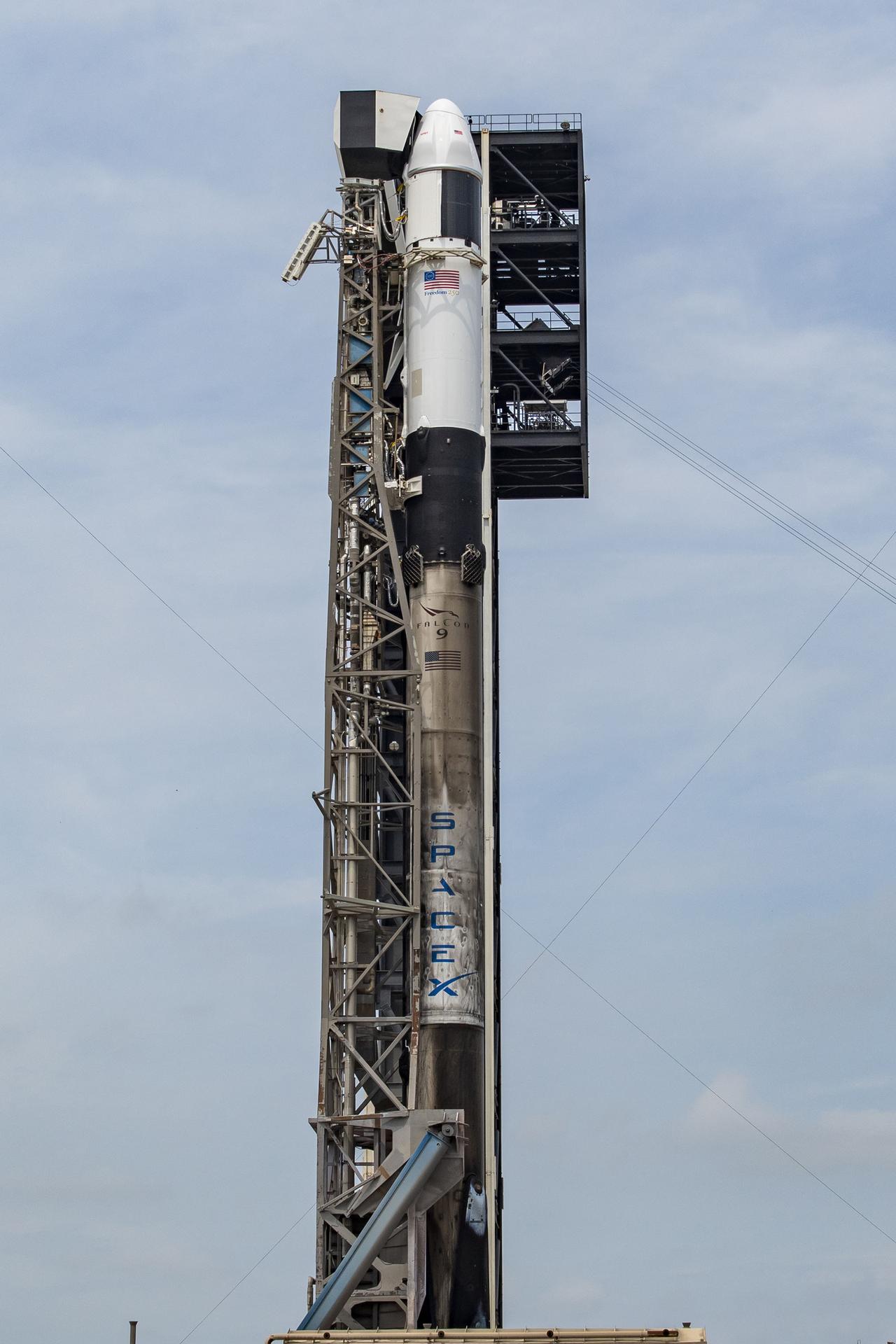
A SpaceX Falcon 9 rocket, with the company’s Dragon spacecraft atop, stands in a vertical position at Space Launch Complex 40 at Cape Canaveral Space Force Station in Florida on Monday, May 11, 2026, in preparation for the company’s 34th commercial resupply services launch to the International Space Station for NASA. Dragon will deliver about 6,500 pounds of science investigations, supplies, and equipment to the International Space Station. NASA and SpaceX are targeting liftoff at 6:50 p.m. EDT, Wednesday, May 13.
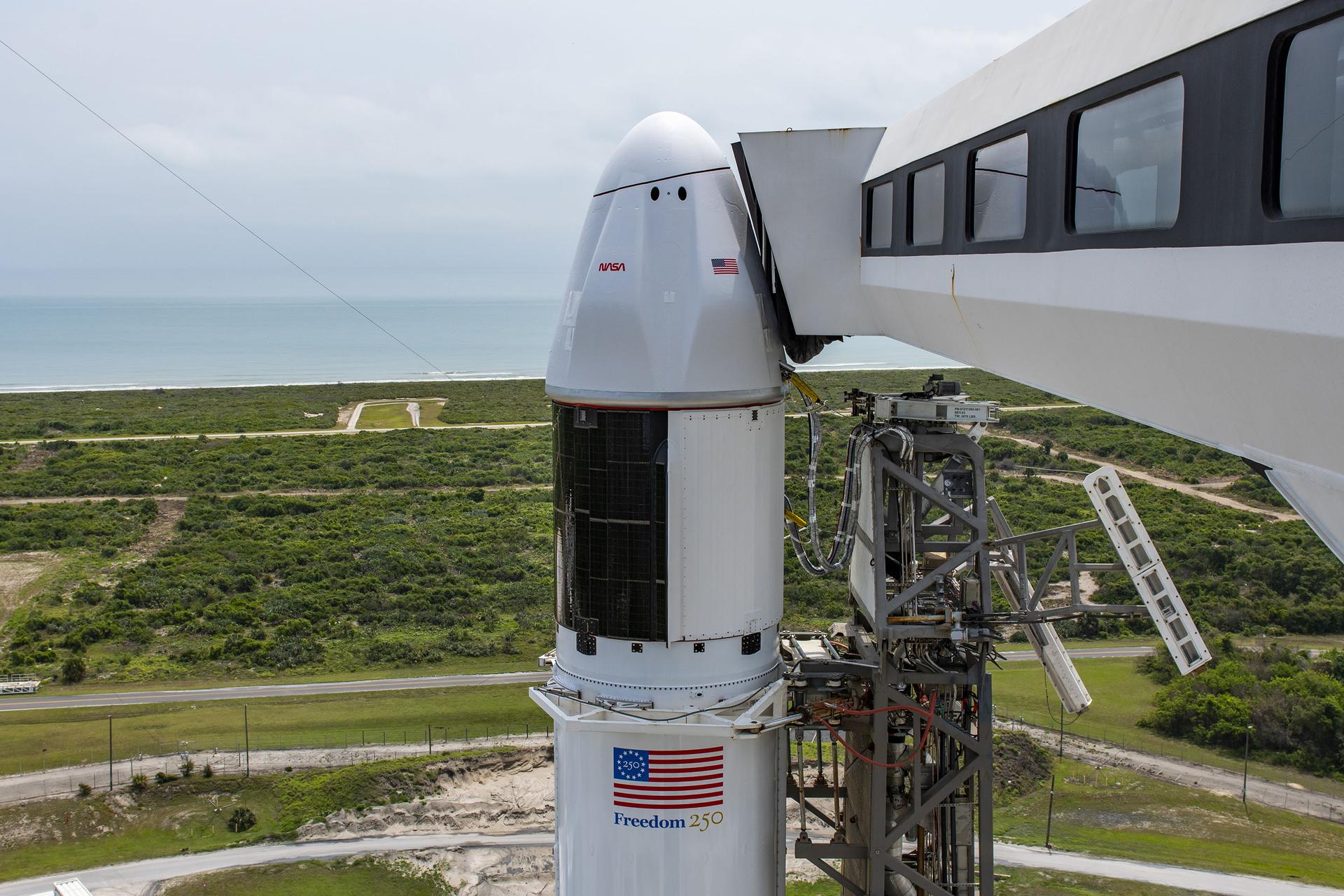
A SpaceX Falcon 9 rocket, with the company’s Dragon spacecraft atop, stands in a vertical position at Space Launch Complex 40 at Cape Canaveral Space Force Station in Florida on Monday, May 11, 2026, in preparation for the company’s 34th commercial resupply services launch to the International Space Station for NASA. Dragon will deliver about 6,500 pounds of science investigations, supplies, and equipment to the International Space Station. NASA and SpaceX are targeting liftoff at 6:50 p.m. EDT, Wednesday, May 13.
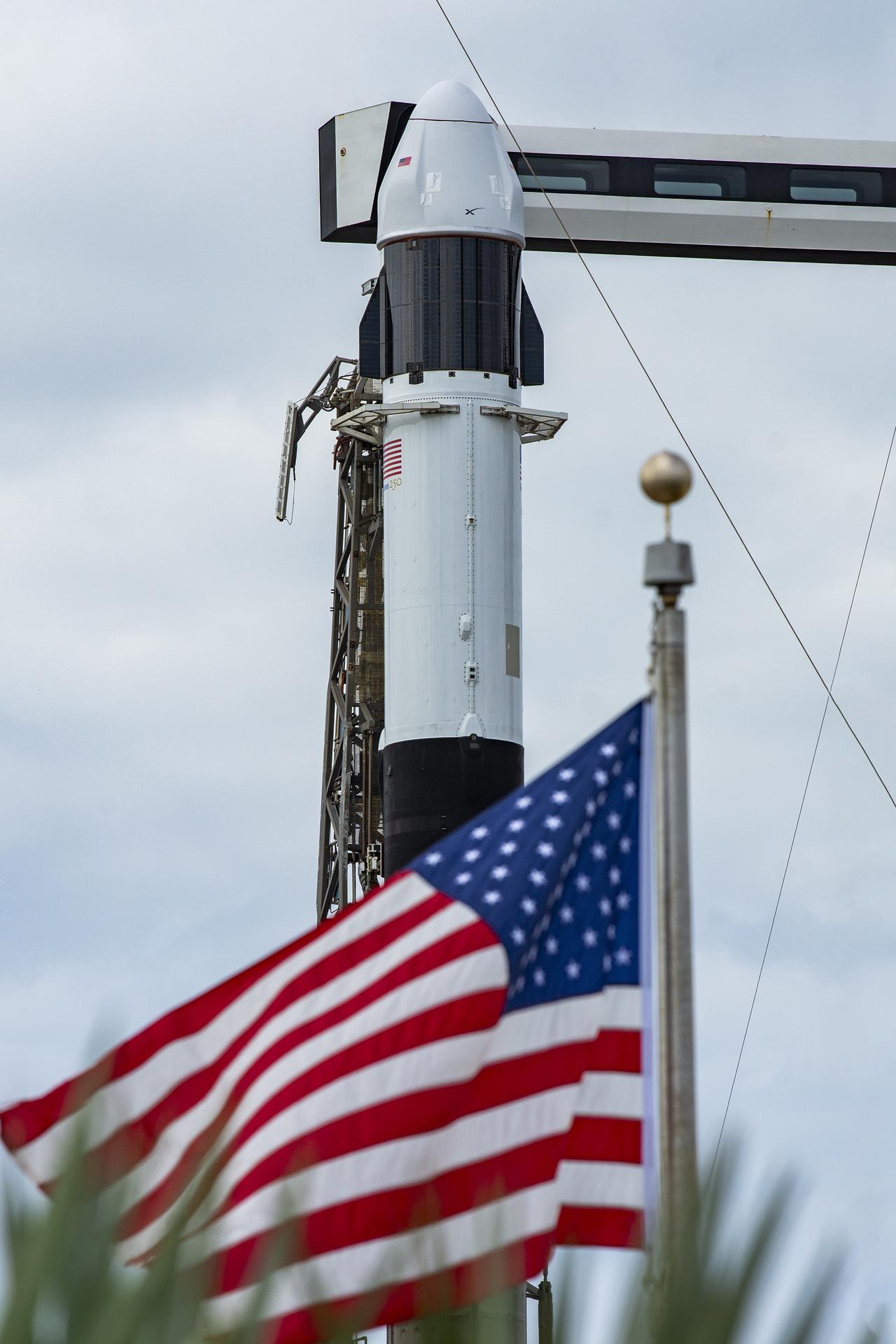
A SpaceX Falcon 9 rocket, with the company’s Dragon spacecraft atop, stands in a vertical position at Space Launch Complex 40 at Cape Canaveral Space Force Station in Florida on Wednesday, May 13, 2026, in preparation for the company’s 34th commercial resupply services launch to the International Space Station for NASA. Dragon will deliver about 6,500 pounds of science investigations, supplies, and equipment to the International Space Station. NASA and SpaceX are targeting liftoff at 6:50 p.m. EDT, Wednesday May 13.
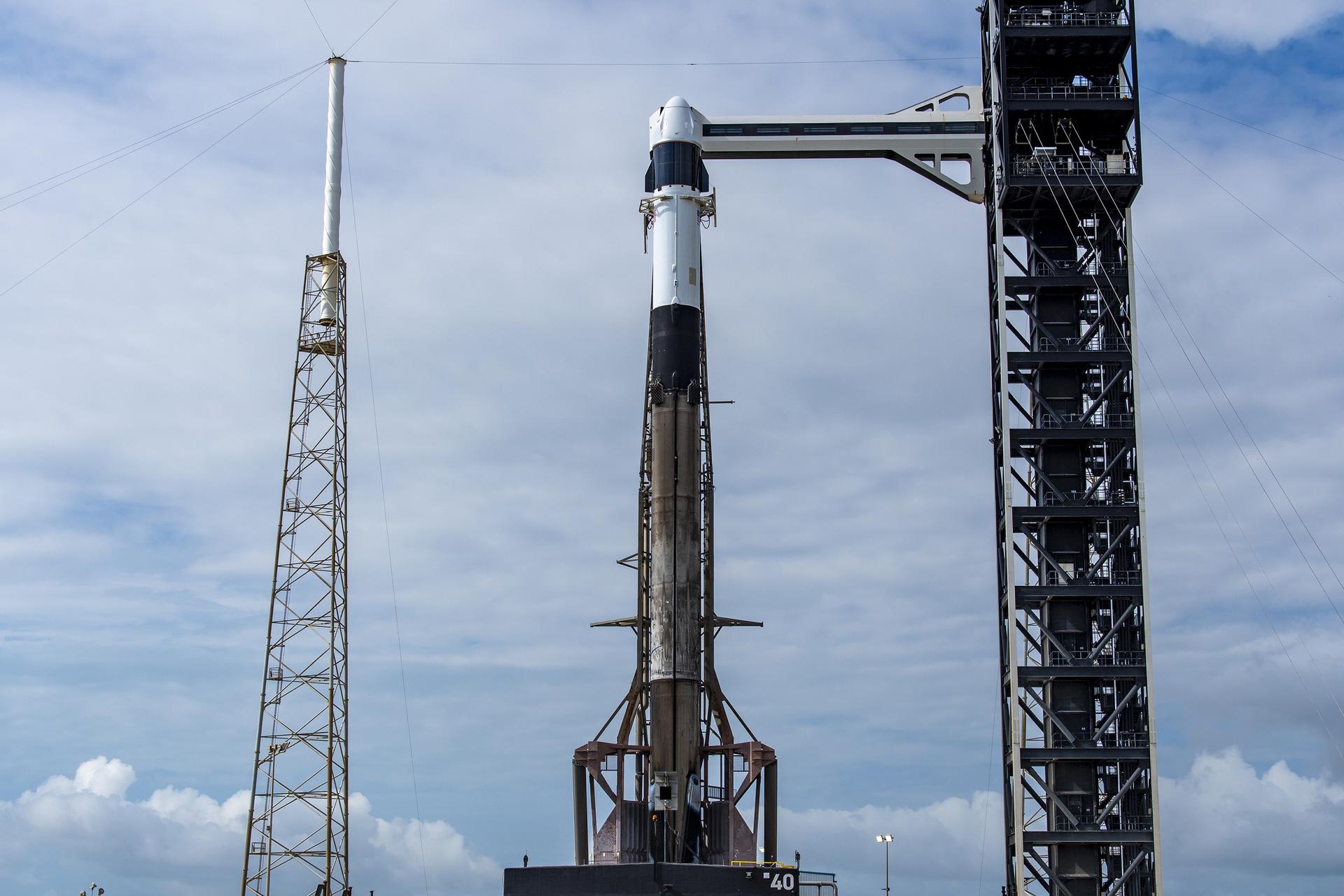
A SpaceX Falcon 9 rocket, with the company’s Dragon spacecraft atop, stands in a vertical position at Space Launch Complex 40 at Cape Canaveral Space Force Station in Florida on Wednesday, May 13, 2026, in preparation for the company’s 34th commercial resupply services launch to the International Space Station for NASA. Dragon will deliver about 6,500 pounds of science investigations, supplies, and equipment to the International Space Station. NASA and SpaceX are targeting liftoff at 6:50 p.m. EDT, Wednesday May 13.
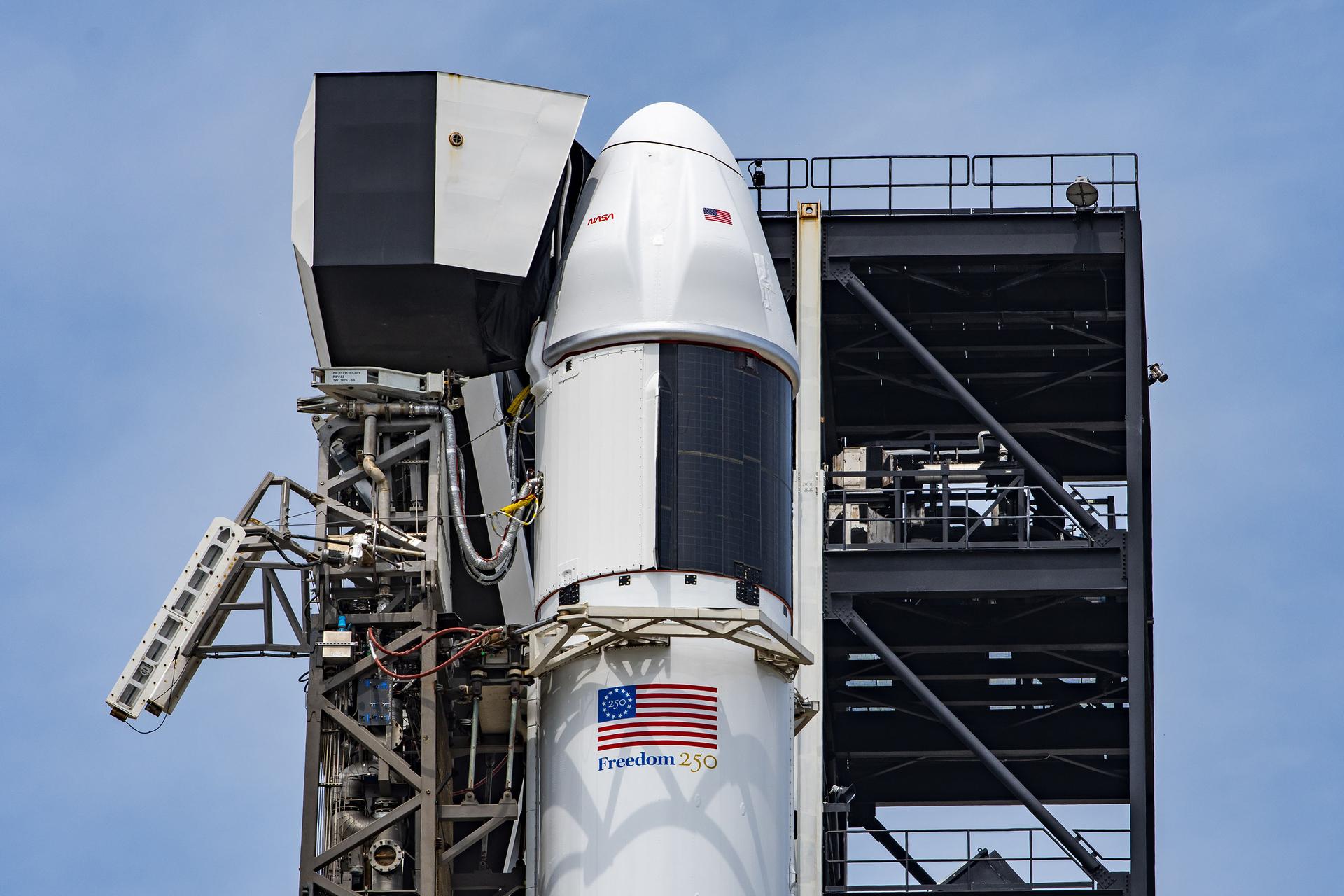
A SpaceX Falcon 9 rocket, with the company’s Dragon spacecraft atop, stands in a vertical position at Space Launch Complex 40 at Cape Canaveral Space Force Station in Florida on Monday, May 11, 2026, in preparation for the company’s 34th commercial resupply services launch to the International Space Station for NASA. Dragon will deliver about 6,500 pounds of science investigations, supplies, and equipment to the International Space Station. NASA and SpaceX are targeting liftoff at 6:50 p.m. EDT, Wednesday, May 13.
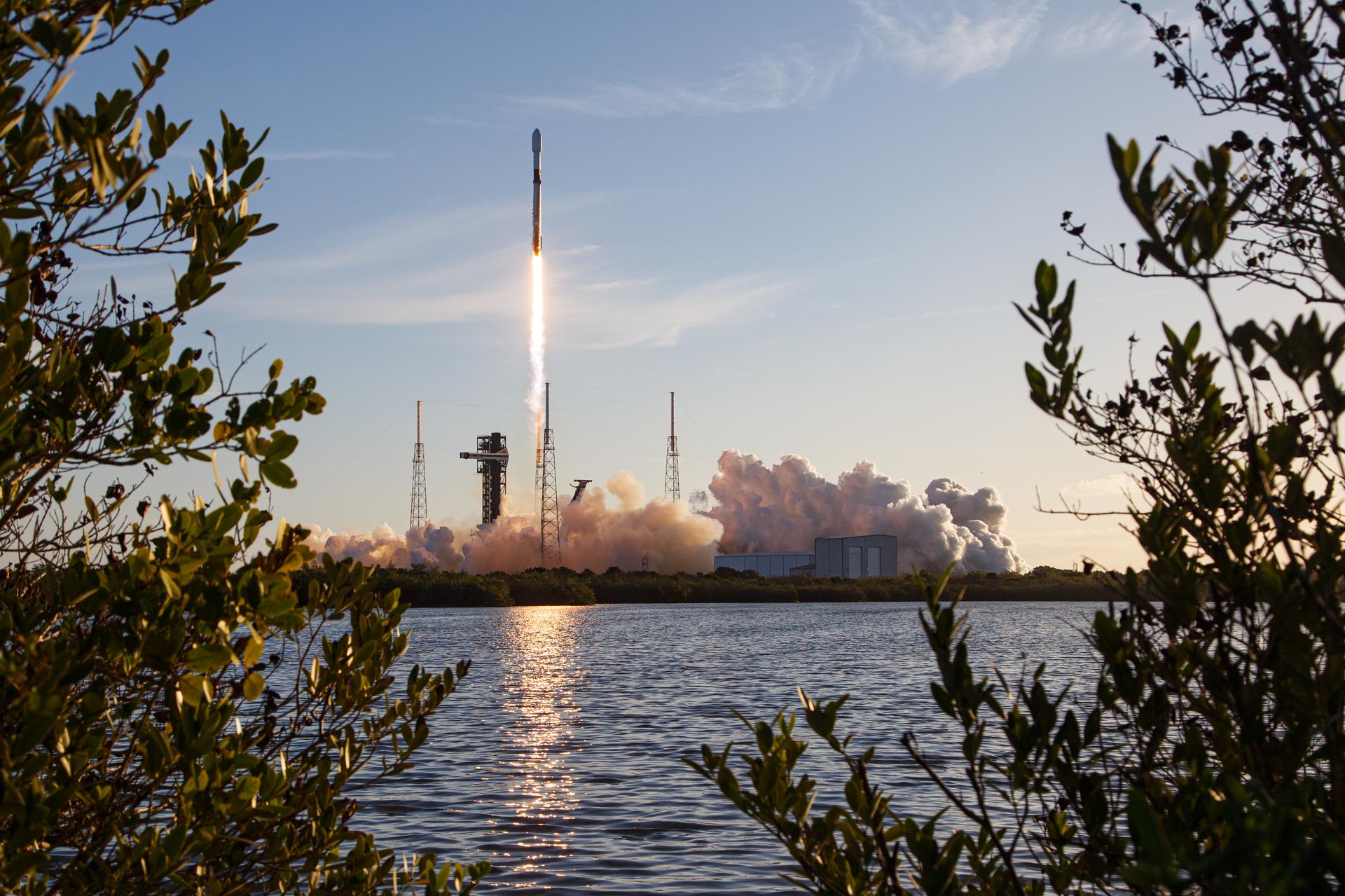
NASA’s Northrop Grumman Commercial Resupply Services 24 mission or Northrop Grumman CRS-24, launches Saturday, April 11, 2026, aboard the company’s Cygnus XL spacecraft atop a SpaceX Falcon 9 rocket from Space Launch Complex 40 at Cape Canaveral Space Force Station in Florida. The resupply mission will deliver approximately 11,000 pounds of science and supplies to the International Space Station.
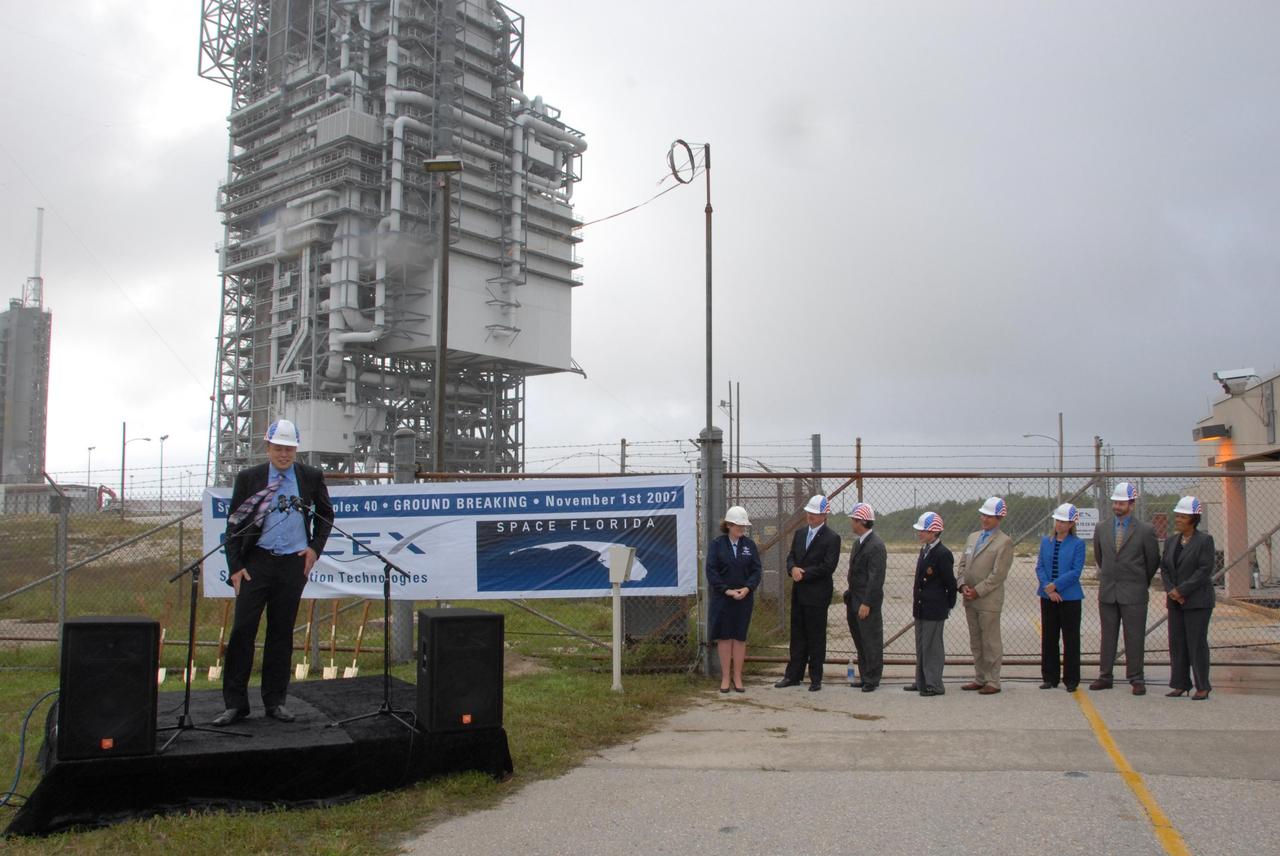
KENNEDY SPACE CENTER, FLA. -- At ground-breaking ceremonies for SpaceX's new Falcon 9 rocket launch facilities at Space Launch Complex 40 at Cape Canaveral, Elon Musk, founder and CEO of Space Exploration Technologies, talks about opportunity for both SpaceX and the 45th Space Wing that the new facility will provide. As part of NASA’s Commercial Orbital Transportation Services, or COTS, competition, SpaceX will launch a Falcon 9 with a cargo-carrying payload on a series of three demonstration missions from Cape Canaveral to the International Space Station, culminating with the delivery of supplies to the $100 billion dollar orbiting laboratory. SpaceX intends to demonstrate its launch, maneuvering, berthing and return abilities by 2009 – a year before NASA has scheduled the conclusion of Space Shuttle operations. Photo credit: NASA/George Shelton
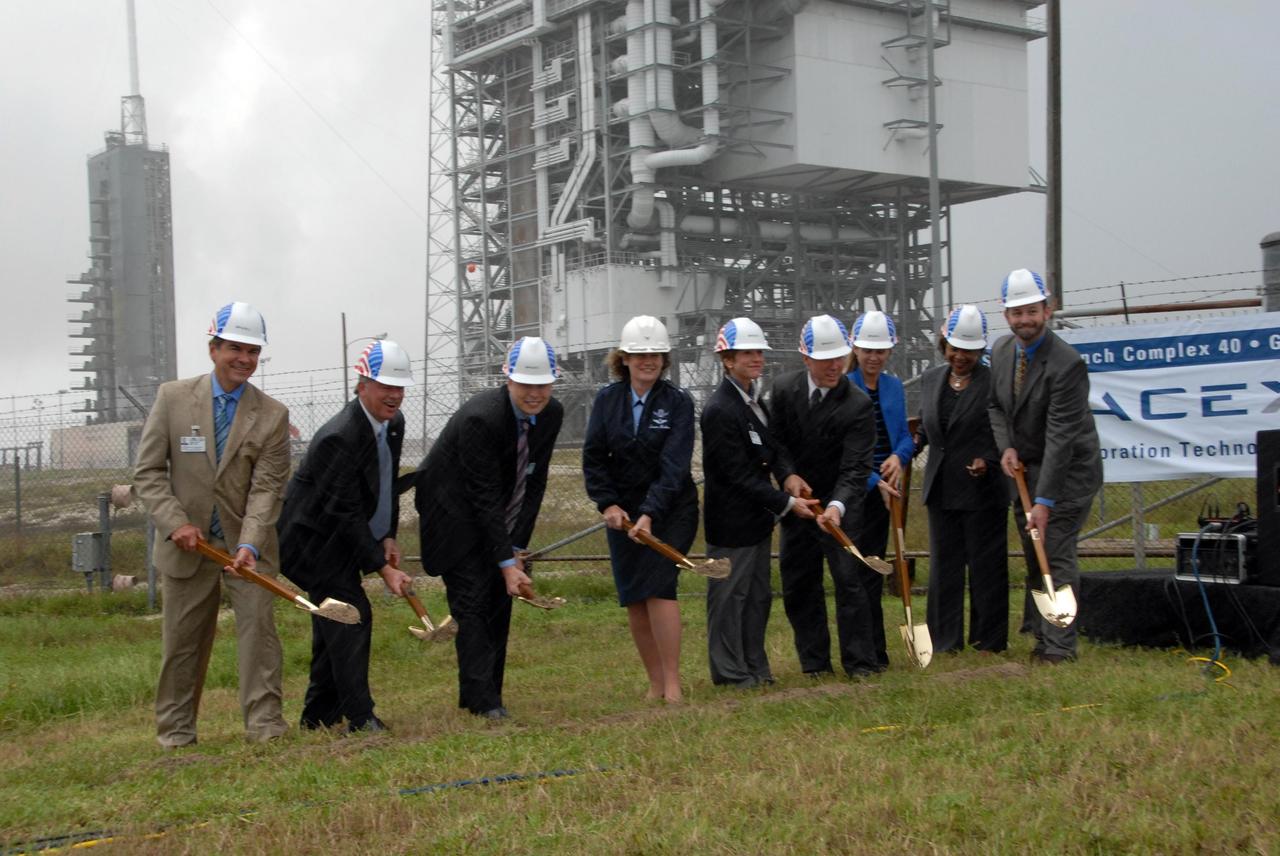
KENNEDY SPACE CENTER, FLA. -- Ready to put spades to work at ground-breaking ceremonies for SpaceX's new Falcon 9 rocket launch facilities at Space Launch Complex 40 at Cape Canaveral are (from left) Thad Altman, Florida State representative; Jeff Kottkamp, Florida State Lt. Governor; Elon Musk, founder and CEO of Space Exploration Technologies; Brig. Gen. Susan J. Helms, commander of the U.S. Air Force 45th Space Wing; Lynda Weatherman, Brevard County Economic Development Commission CEO and president; Steve Koehler, president of Space Florida; Janet Petro, deputy director of NASA Kennedy Space Center; Patricia Grace Smith, FAA associate administrator for Commercial Space Transportation; and Steve Cain, NASA Kennedy Space Center COTS project manager. As part of NASA’s Commercial Orbital Transportation Services, or COTS, competition, SpaceX will launch a Falcon 9 with a cargo-carrying payload on a series of three demonstration missions from Cape Canaveral to the International Space Station, culminating with the delivery of supplies to the $100 billion dollar orbiting laboratory. SpaceX intends to demonstrate its launch, maneuvering, berthing and return abilities by 2009 – a year before NASA has scheduled the conclusion of Space Shuttle operations. Photo credit: NASA/George Shelton

KENNEDY SPACE CENTER, FLA. -- At ground-breaking ceremonies for SpaceX's new Falcon 9 rocket launch facilities at Space Launch Complex 40 at Cape Canaveral, Brig. Gen. Susan J. Helms (left) talks about the opportunity for both SpaceX and the 45th Space Wing. As part of NASA’s Commercial Orbital Transportation Services, or COTS, competition, SpaceX will launch a Falcon 9 with a cargo-carrying payload on a series of three demonstration missions from Cape Canaveral to the International Space Station, culminating with the delivery of supplies to the $100 billion dollar orbiting laboratory. SpaceX intends to demonstrate its launch, maneuvering, berthing and return abilities by 2009 – a year before NASA has scheduled the conclusion of Space Shuttle operations. Photo credit: NASA/George Shelton
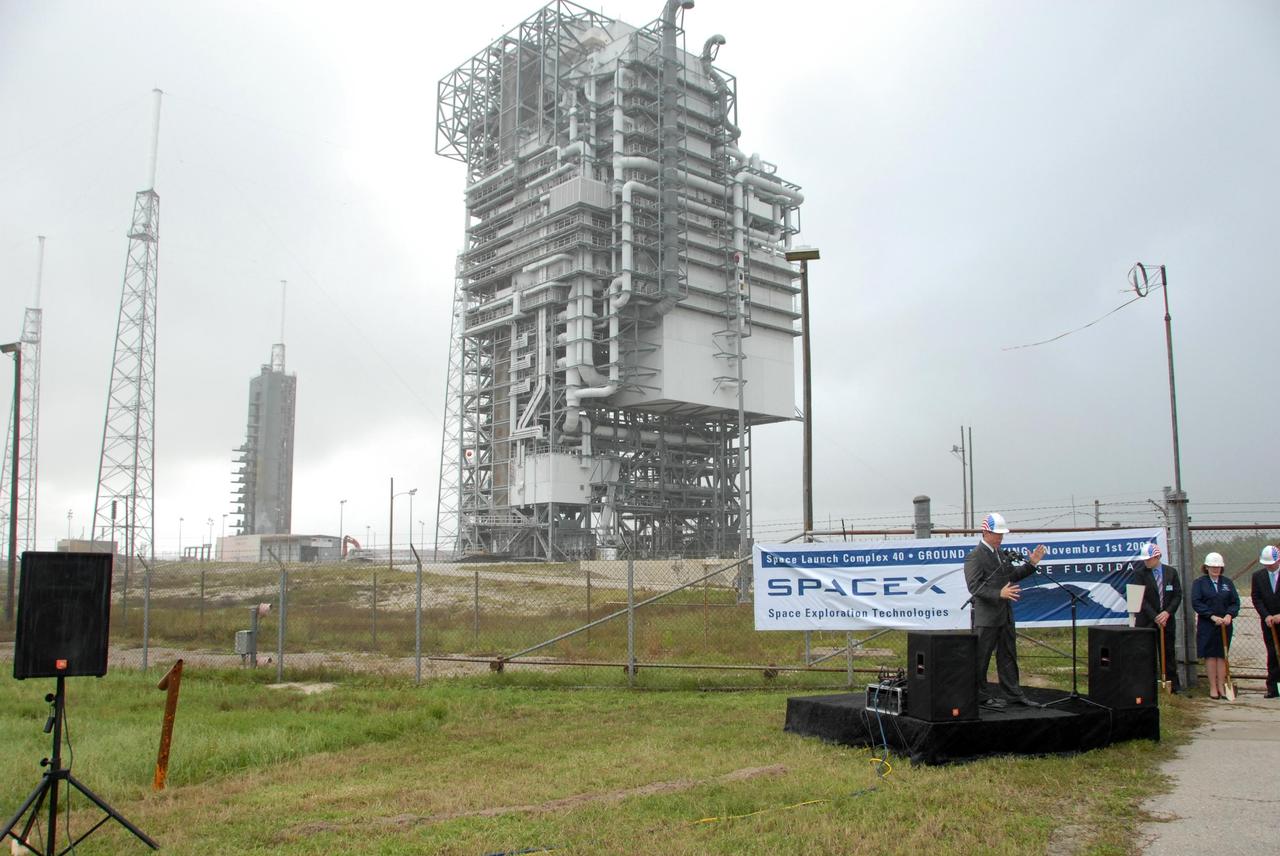
KENNEDY SPACE CENTER, FLA. -- At ground-breaking ceremonies for SpaceX's new Falcon 9 rocket launch facilities at Space Launch Complex 40 at Cape Canaveral, Steve Koehler, president of Space Florida, talks about the opportunity for both SpaceX and the 45th Space Wing that the new facility will provide As part of NASA’s Commercial Orbital Transportation Services, or COTS, competition, SpaceX will launch a Falcon 9 with a cargo-carrying payload on a series of three demonstration missions from Cape Canaveral to the International Space Station, culminating with the delivery of supplies to the $100 billion dollar orbiting laboratory. SpaceX intends to demonstrate its launch, maneuvering, berthing and return abilities by 2009 – a year before NASA has scheduled the conclusion of Space Shuttle operations. Photo credit: NASA/George Shelton
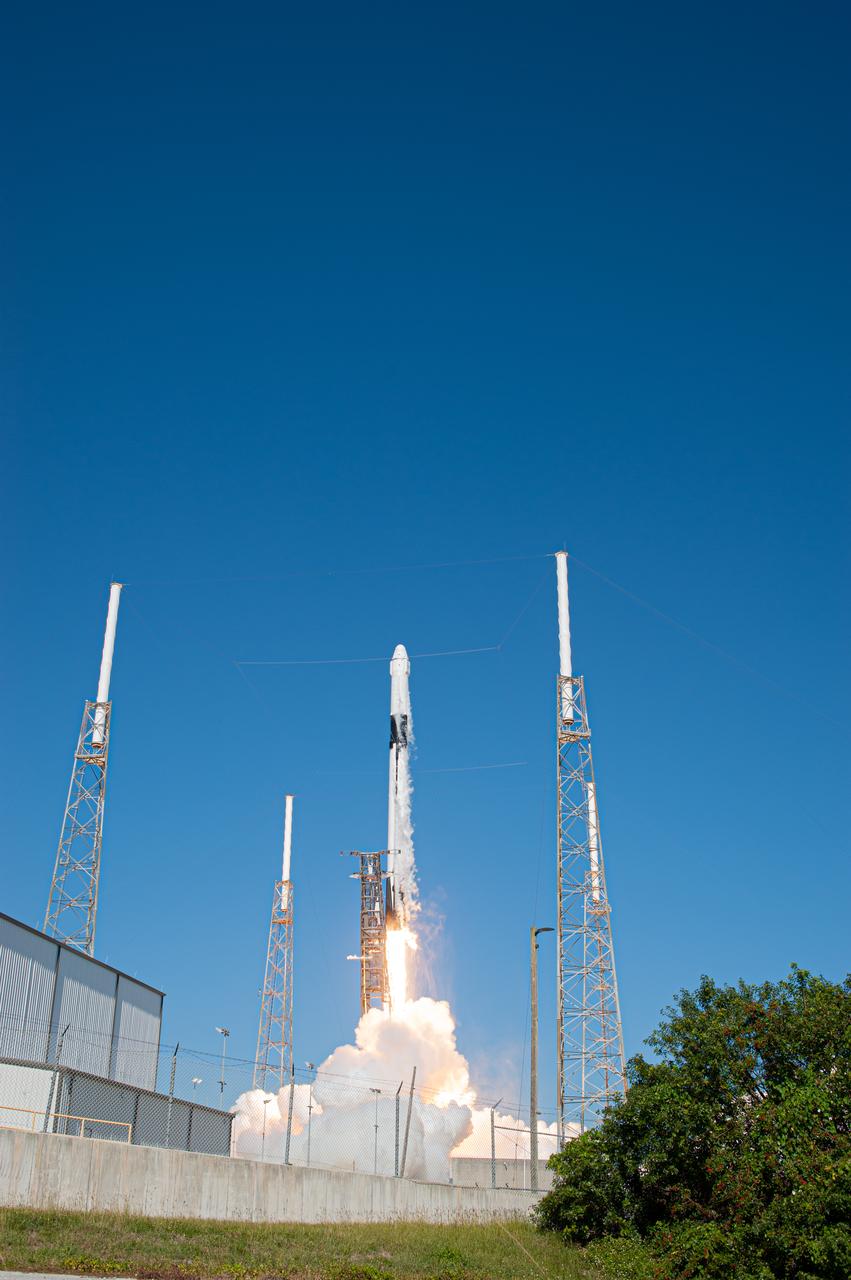
The SpaceX Falcon 9 rocket with the Dragon cargo module climbs upward after liftoff from Space Launch Complex 40 on Cape Canaveral Air Force Station in Florida in the early afternoon on Dec. 5, 2019. Liftoff was at 12:29 p.m. EST. This is SpaceX’s 19th Commercial Resupply Services (CRS-19) mission for NASA to the International Space Station. The Dragon cargo module will deliver more than 5,700 pounds of science and research, crew supplies and vehicle hardware to the orbital laboratory and its crew.
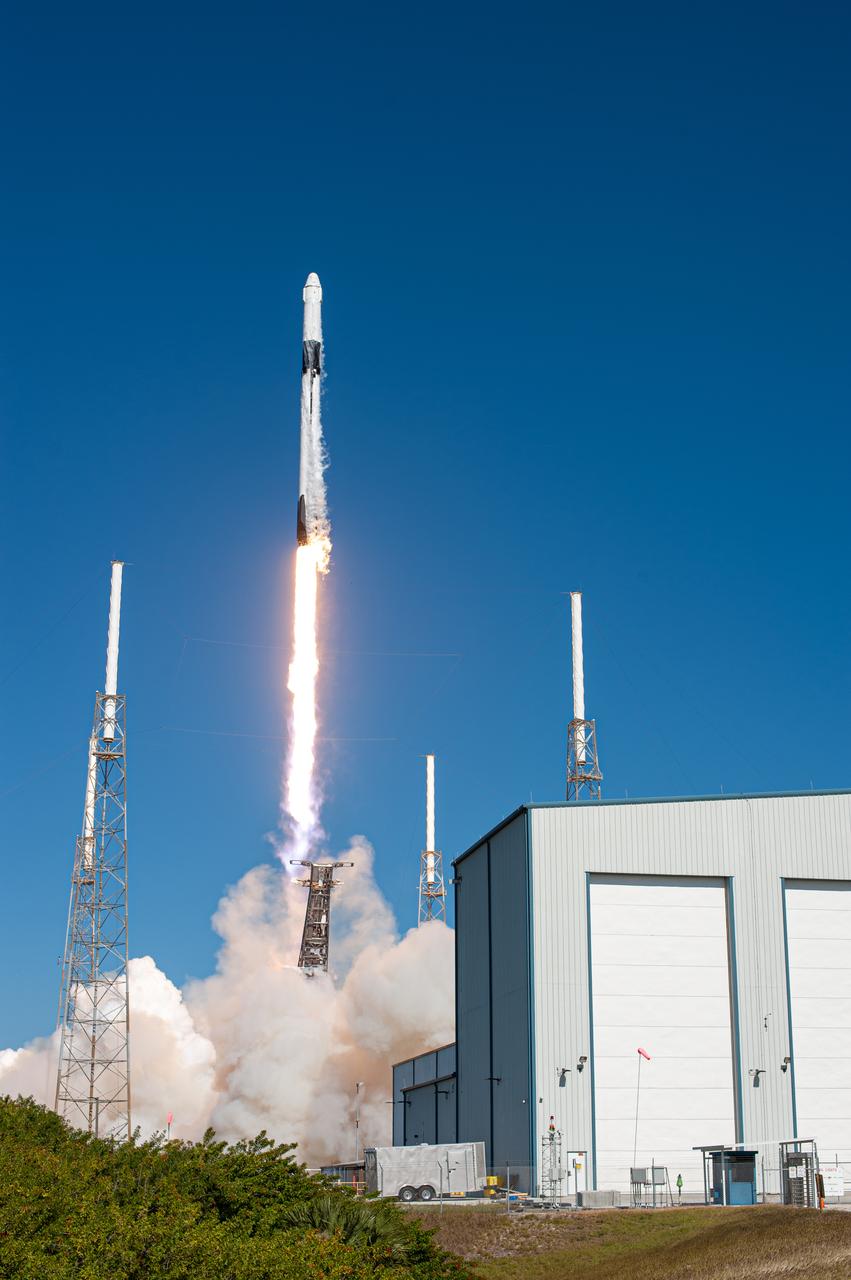
The SpaceX Falcon 9 rocket with the Dragon cargo module climbs upward after liftoff from Space Launch Complex 40 on Cape Canaveral Air Force Station in Florida in the early afternoon on Dec. 5, 2019. Liftoff was at 12:29 p.m. EST. This is SpaceX’s 19th Commercial Resupply Services (CRS-19) mission for NASA to the International Space Station. The Dragon cargo module will deliver more than 5,700 pounds of science and research, crew supplies and vehicle hardware to the orbital laboratory and its crew.
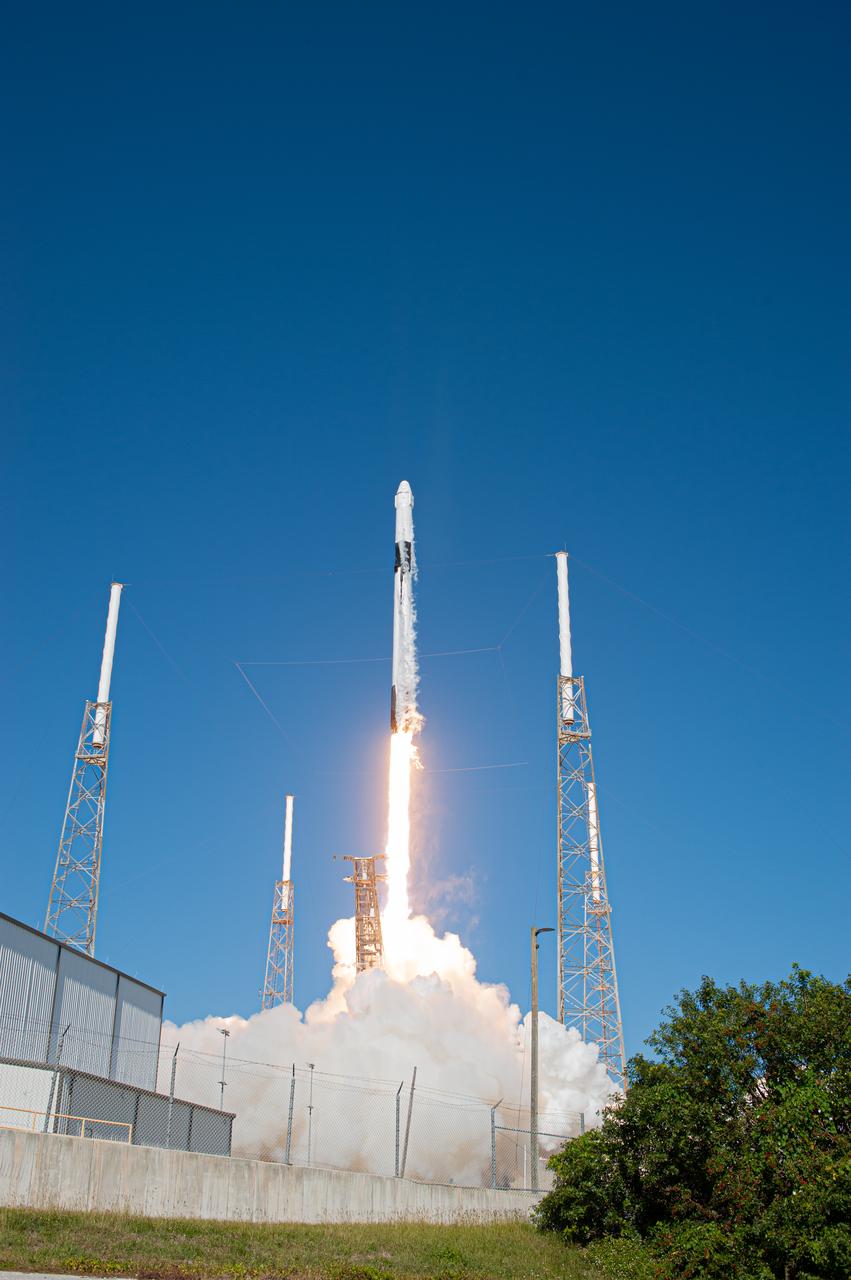
The SpaceX Falcon 9 rocket with the Dragon cargo module climbs upward after liftoff from Space Launch Complex 40 on Cape Canaveral Air Force Station in Florida in the early afternoon on Dec. 5, 2019. Liftoff was at 12:29 p.m. EST. This is SpaceX’s 19th Commercial Resupply Services (CRS-19) mission for NASA to the International Space Station. The Dragon cargo module will deliver more than 5,700 pounds of science and research, crew supplies and vehicle hardware to the orbital laboratory and its crew.
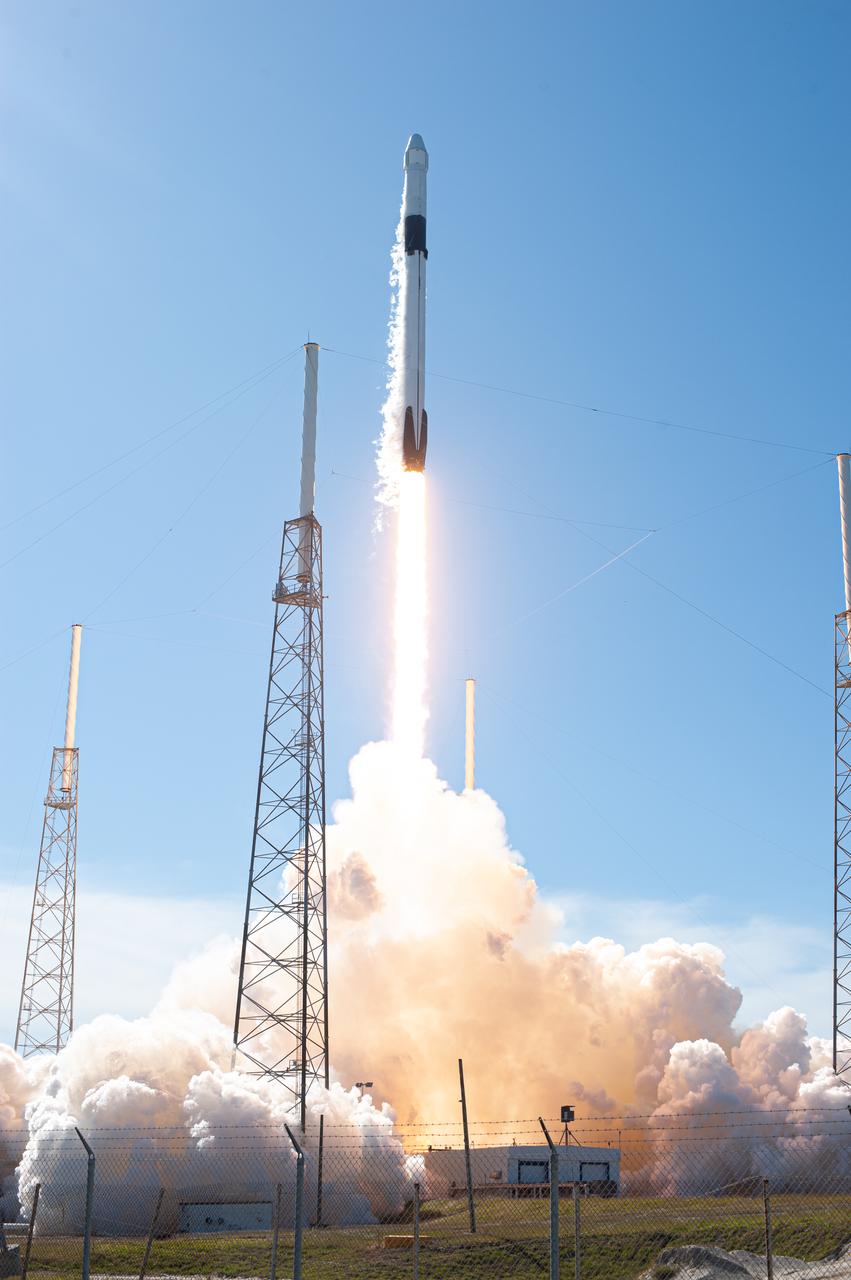
The SpaceX Falcon 9 rocket with the Dragon cargo module lifts off Space Launch Complex 40 on Cape Canaveral Air Force Station in Florida in the early afternoon on Dec. 5, 2019. Liftoff was at 12:29 p.m. EST. This is SpaceX’s 19th Commercial Resupply Services (CRS-19) mission for NASA to the International Space Station. The Dragon cargo module will deliver more than 5,700 pounds of science and research, crew supplies and vehicle hardware to the orbital laboratory and its crew.
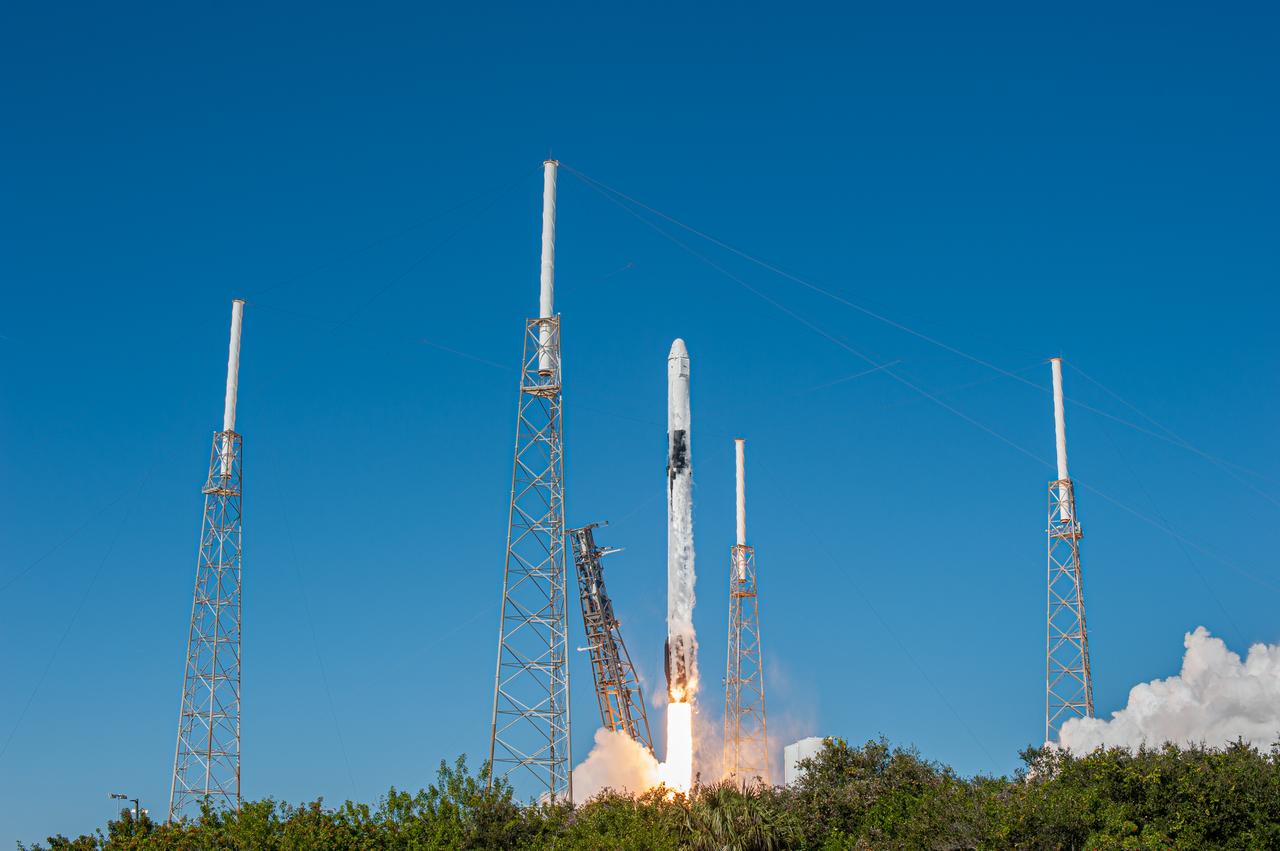
The SpaceX Falcon 9 rocket with the Dragon cargo module lifts off Space Launch Complex 40 on Cape Canaveral Air Force Station in Florida in the early afternoon on Dec. 5, 2019. Liftoff was at 12:29 p.m. EST. This is SpaceX’s 19th Commercial Resupply Services (CRS-19) mission for NASA to the International Space Station. The Dragon cargo module will deliver more than 5,700 pounds of science and research, crew supplies and vehicle hardware to the orbital laboratory and its crew.
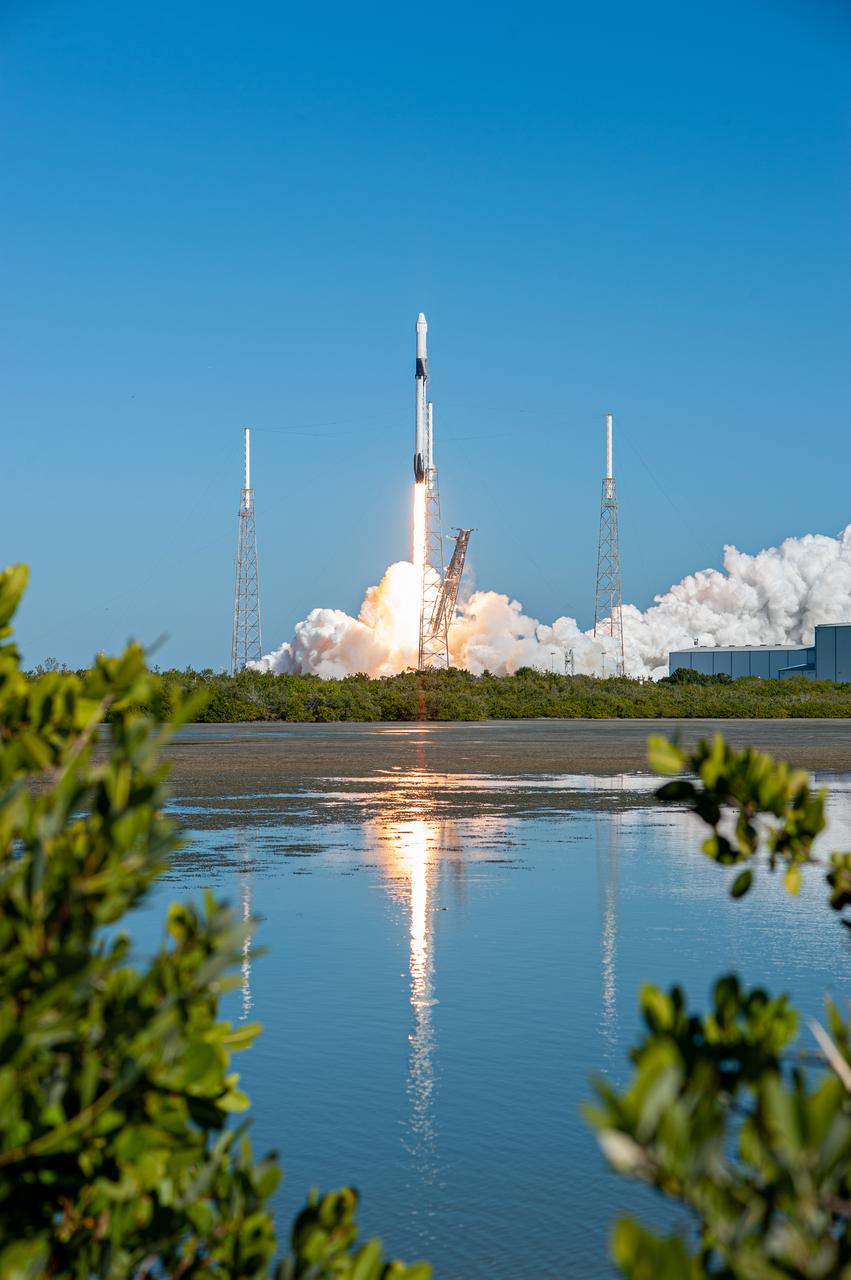
The SpaceX Falcon 9 rocket with the Dragon cargo module climbs upward after liftoff from Space Launch Complex 40 on Cape Canaveral Air Force Station in Florida in the early afternoon on Dec. 5, 2019. Liftoff was at 12:29 p.m. EST. This is SpaceX’s 19th Commercial Resupply Services (CRS-19) mission for NASA to the International Space Station. The Dragon cargo module will deliver more than 5,700 pounds of science and research, crew supplies and vehicle hardware to the orbital laboratory and its crew.
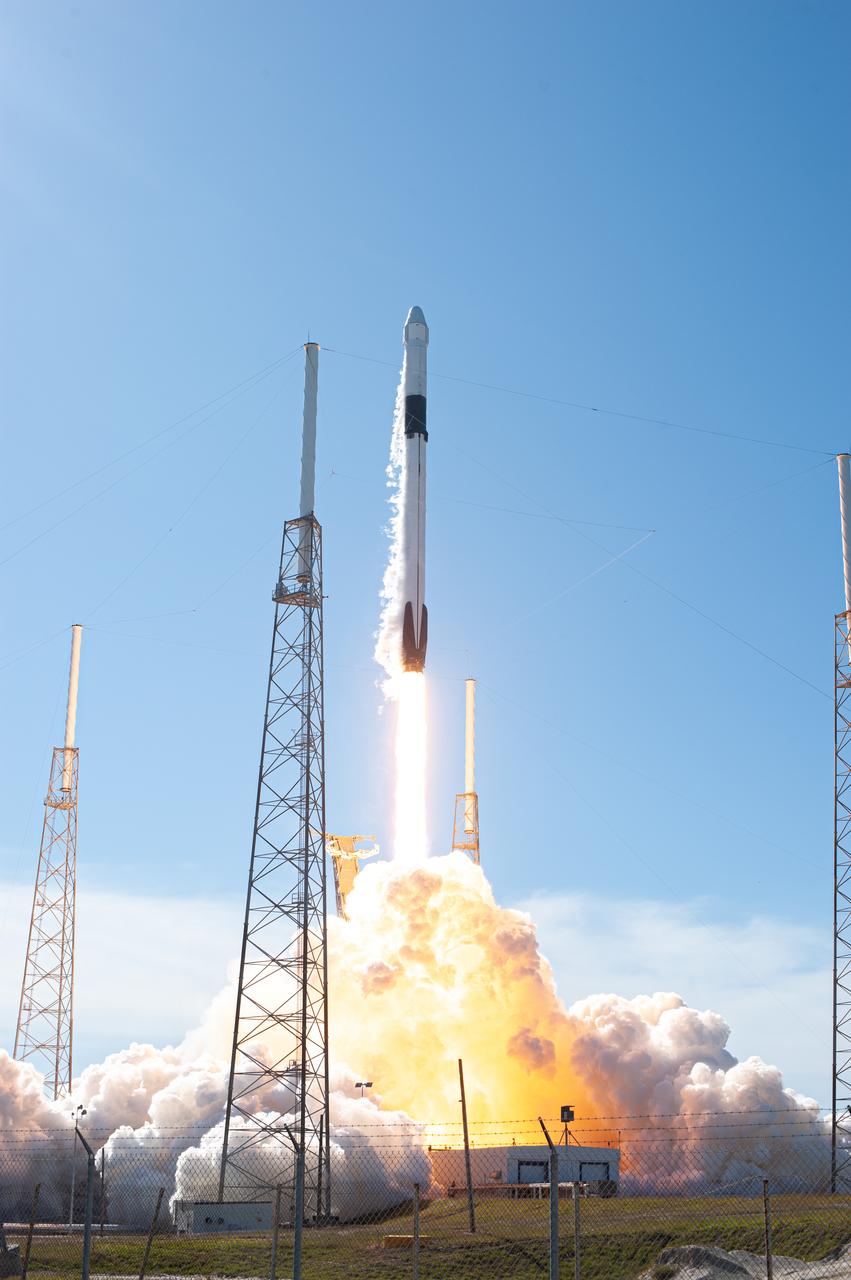
The SpaceX Falcon 9 rocket with the Dragon cargo module lifts off Space Launch Complex 40 on Cape Canaveral Air Force Station in Florida in the early afternoon on Dec. 5, 2019. Liftoff was at 12:29 p.m. EST. This is SpaceX’s 19th Commercial Resupply Services (CRS-19) mission for NASA to the International Space Station. The Dragon cargo module will deliver more than 5,700 pounds of science and research, crew supplies and vehicle hardware to the orbital laboratory and its crew.

The SpaceX Falcon 9 rocket with the Dragon cargo module lifts off Space Launch Complex 40 on Cape Canaveral Air Force Station in Florida in the early afternoon on Dec. 5, 2019. Liftoff was at 12:29 p.m. EST. This is SpaceX’s 19th Commercial Resupply Services (CRS-19) mission for NASA to the International Space Station. The Dragon cargo module will deliver more than 5,700 pounds of science and research, crew supplies and vehicle hardware to the orbital laboratory and its crew.
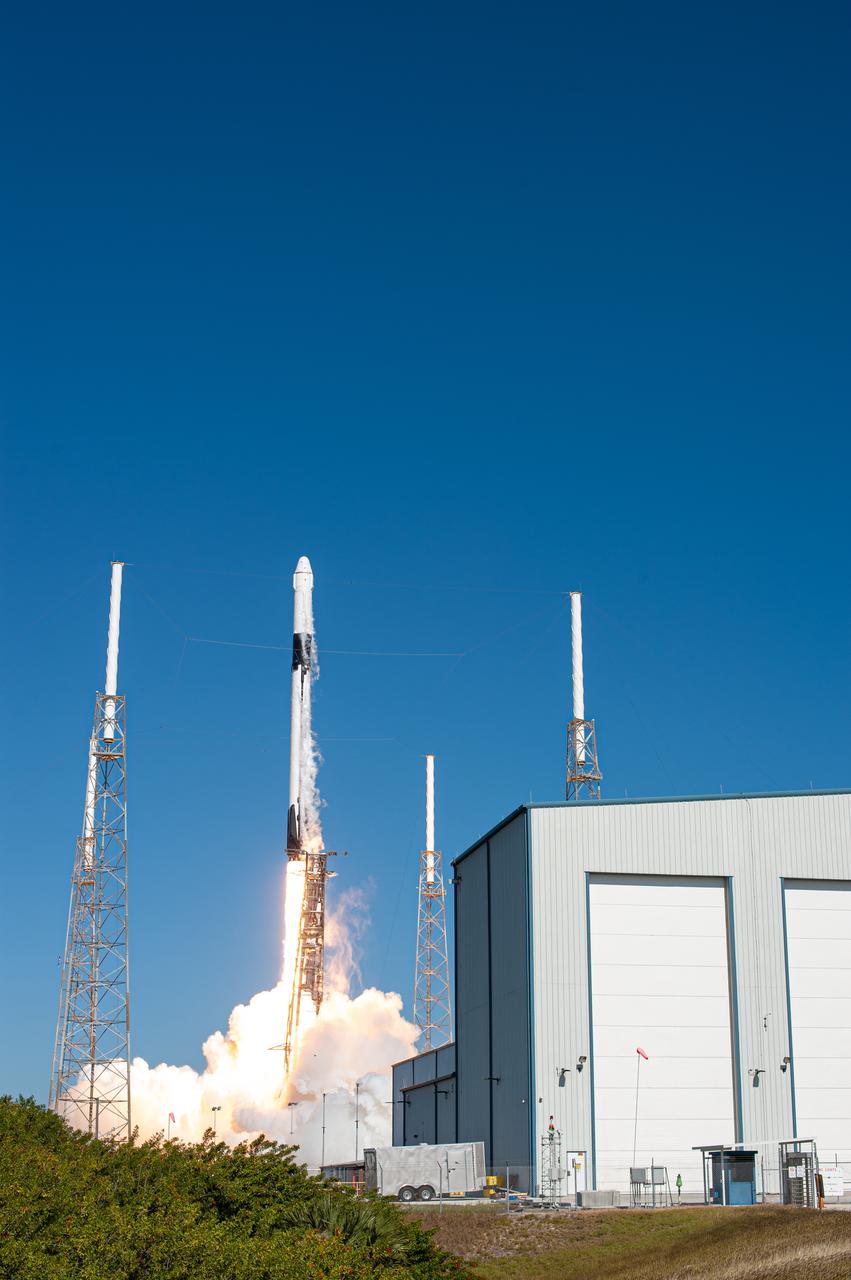
The SpaceX Falcon 9 rocket with the Dragon cargo module climbs upward after liftoff from Space Launch Complex 40 on Cape Canaveral Air Force Station in Florida in the early afternoon on Dec. 5, 2019. Liftoff was at 12:29 p.m. EST. This is SpaceX’s 19th Commercial Resupply Services (CRS-19) mission for NASA to the International Space Station. The Dragon cargo module will deliver more than 5,700 pounds of science and research, crew supplies and vehicle hardware to the orbital laboratory and its crew.

The SpaceX Falcon 9 rocket with the Dragon cargo module climbs upward after liftoff from Space Launch Complex 40 on Cape Canaveral Air Force Station in Florida in the early afternoon on Dec. 5, 2019. Liftoff was at 12:29 p.m. EST. This is SpaceX’s 19th Commercial Resupply Services (CRS-19) mission for NASA to the International Space Station. The Dragon cargo module will deliver more than 5,700 pounds of science and research, crew supplies and vehicle hardware to the orbital laboratory and its crew.
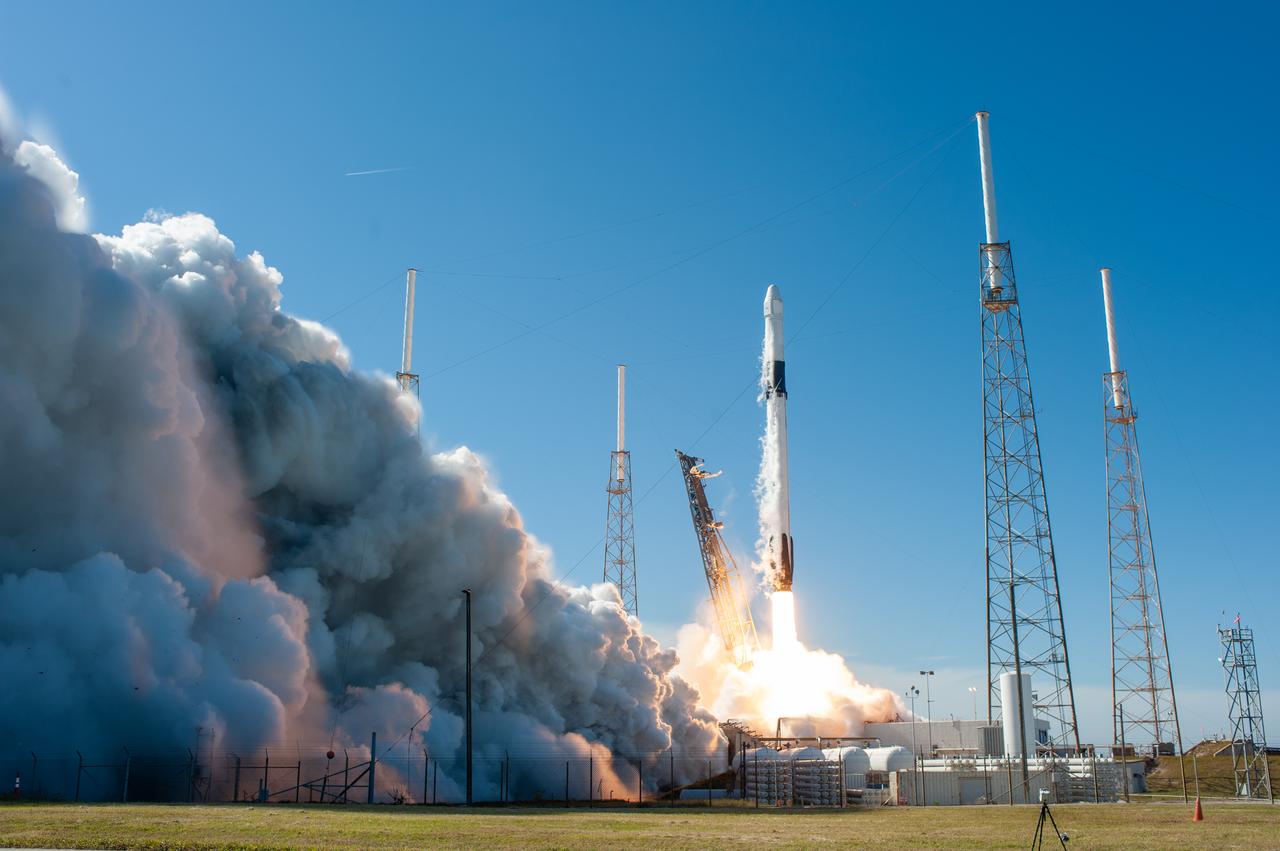
The SpaceX Falcon 9 rocket with the Dragon cargo module lifts off Space Launch Complex 40 on Cape Canaveral Air Force Station in Florida in the early afternoon on Dec. 5, 2019. Liftoff was at 12:29 p.m. EST. This is SpaceX’s 19th Commercial Resupply Services (CRS-19) mission for NASA to the International Space Station. The Dragon cargo module will deliver more than 5,700 pounds of science and research, crew supplies and vehicle hardware to the orbital laboratory and its crew.
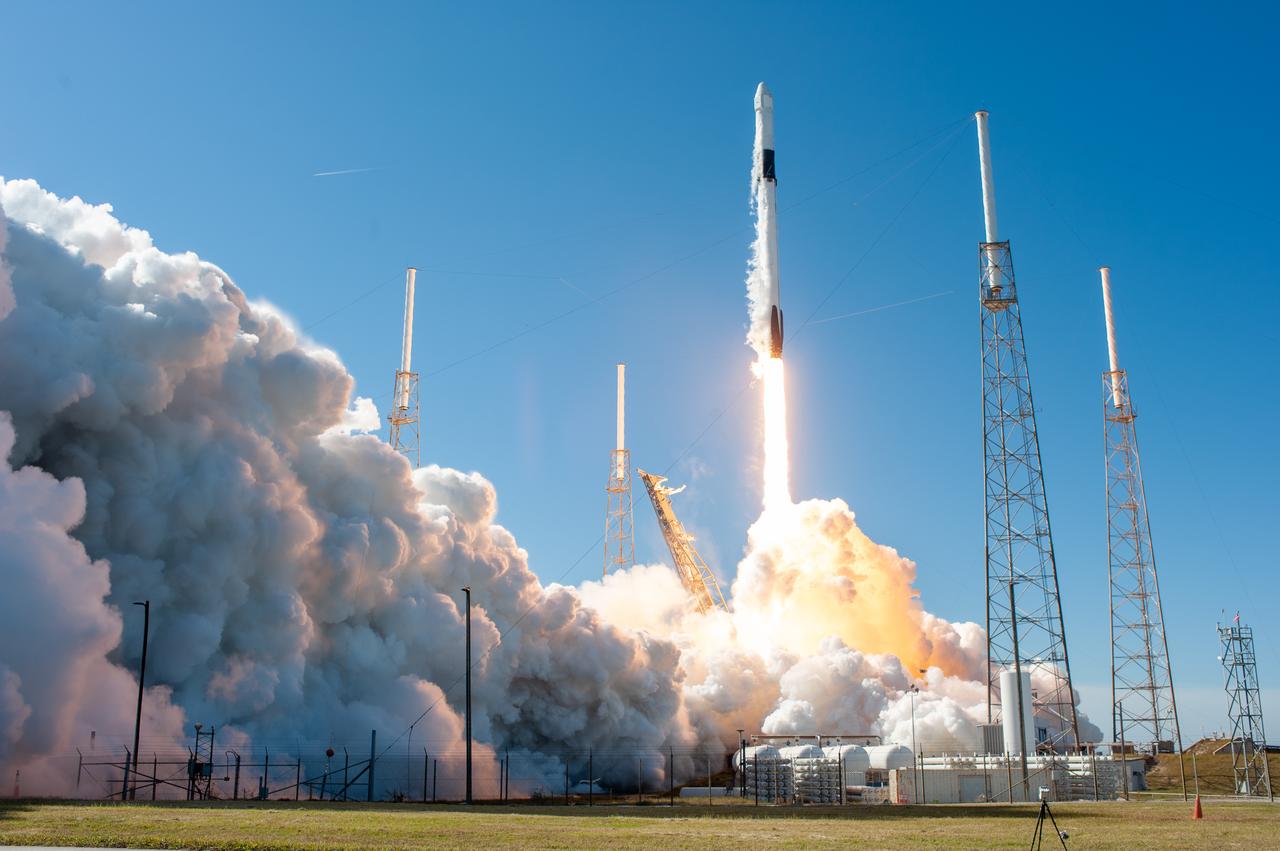
The SpaceX Falcon 9 rocket with the Dragon cargo module lifts off Space Launch Complex 40 on Cape Canaveral Air Force Station in Florida in the early afternoon on Dec. 5, 2019. Liftoff was at 12:29 p.m. EST. This is SpaceX’s 19th Commercial Resupply Services (CRS-19) mission for NASA to the International Space Station. The Dragon cargo module will deliver more than 5,700 pounds of science and research, crew supplies and vehicle hardware to the orbital laboratory and its crew.
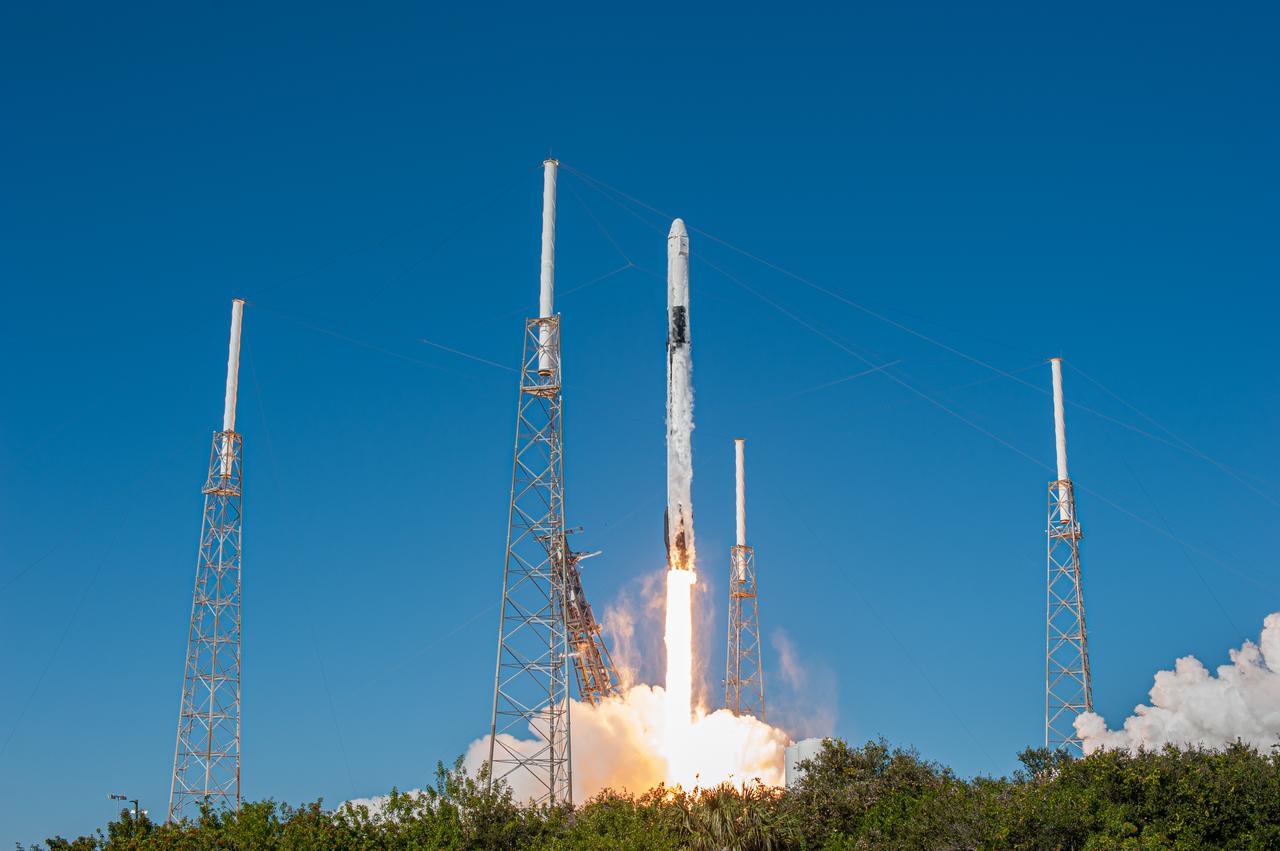
The SpaceX Falcon 9 rocket with the Dragon cargo module lifts off Space Launch Complex 40 on Cape Canaveral Air Force Station in Florida in the early afternoon on Dec. 5, 2019. Liftoff was at 12:29 p.m. EST. This is SpaceX’s 19th Commercial Resupply Services (CRS-19) mission for NASA to the International Space Station. The Dragon cargo module will deliver more than 5,700 pounds of science and research, crew supplies and vehicle hardware to the orbital laboratory and its crew.
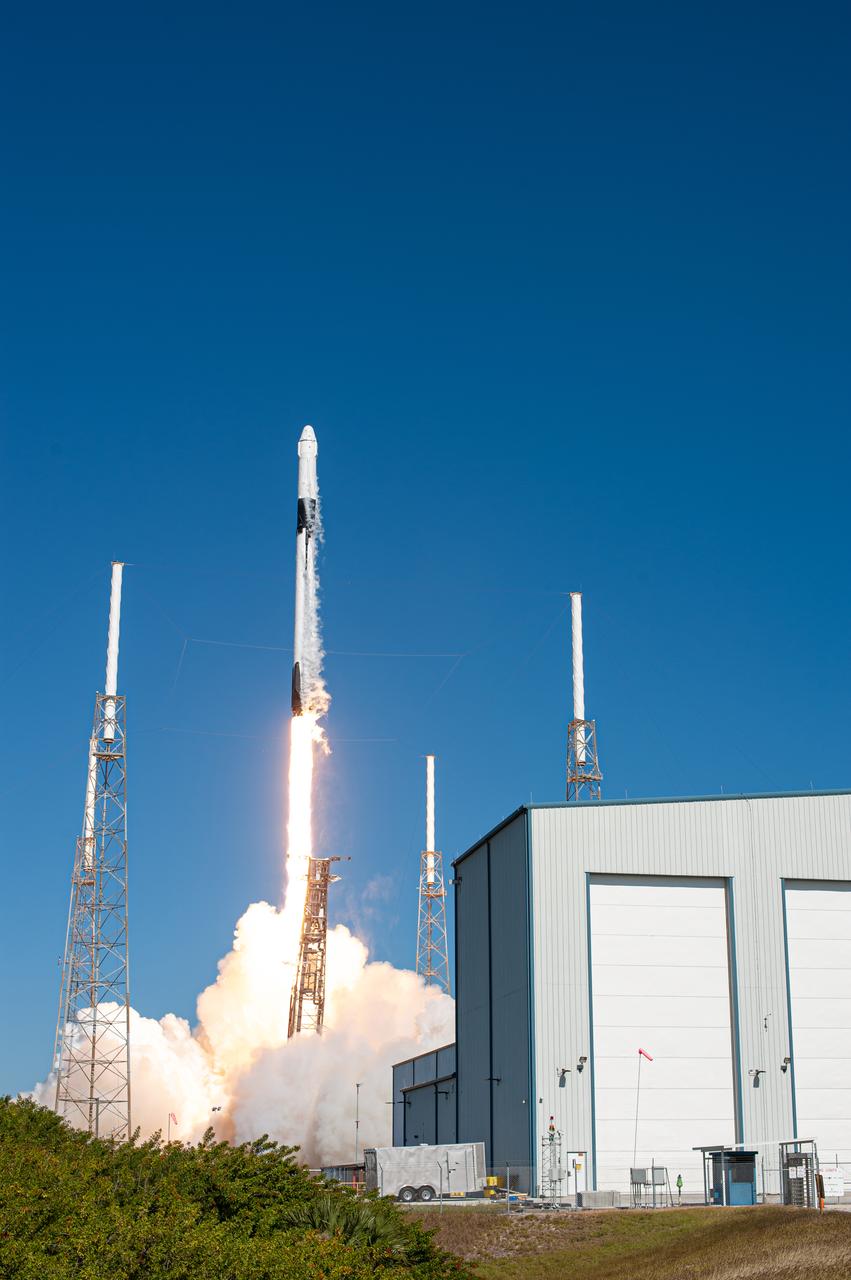
The SpaceX Falcon 9 rocket with the Dragon cargo module climbs upward after liftoff from Space Launch Complex 40 on Cape Canaveral Air Force Station in Florida in the early afternoon on Dec. 5, 2019. Liftoff was at 12:29 p.m. EST. This is SpaceX’s 19th Commercial Resupply Services (CRS-19) mission for NASA to the International Space Station. The Dragon cargo module will deliver more than 5,700 pounds of science and research, crew supplies and vehicle hardware to the orbital laboratory and its crew.
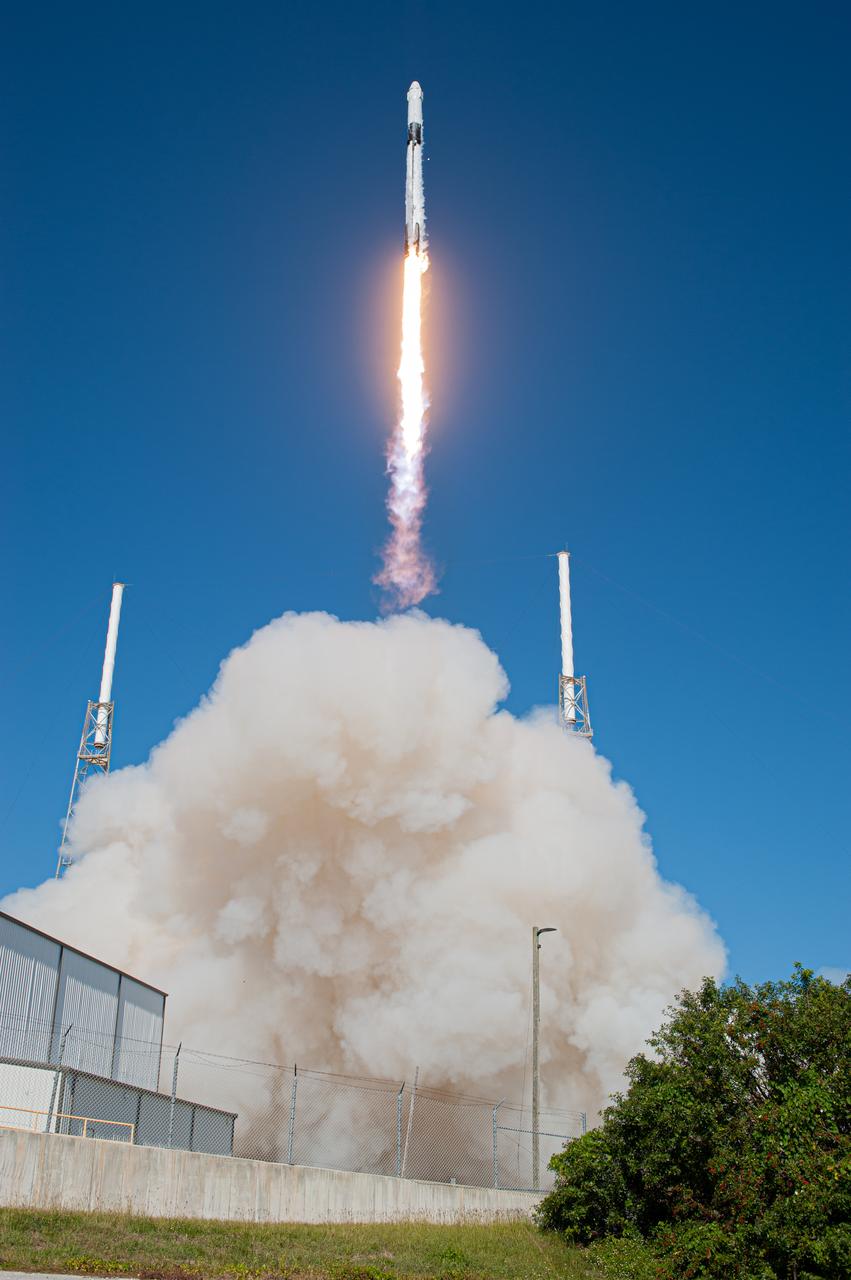
The SpaceX Falcon 9 rocket with the Dragon cargo module climbs upward after liftoff from Space Launch Complex 40 on Cape Canaveral Air Force Station in Florida in the early afternoon on Dec. 5, 2019. Liftoff was at 12:29 p.m. EST. This is SpaceX’s 19th Commercial Resupply Services (CRS-19) mission for NASA to the International Space Station. The Dragon cargo module will deliver more than 5,700 pounds of science and research, crew supplies and vehicle hardware to the orbital laboratory and its crew.
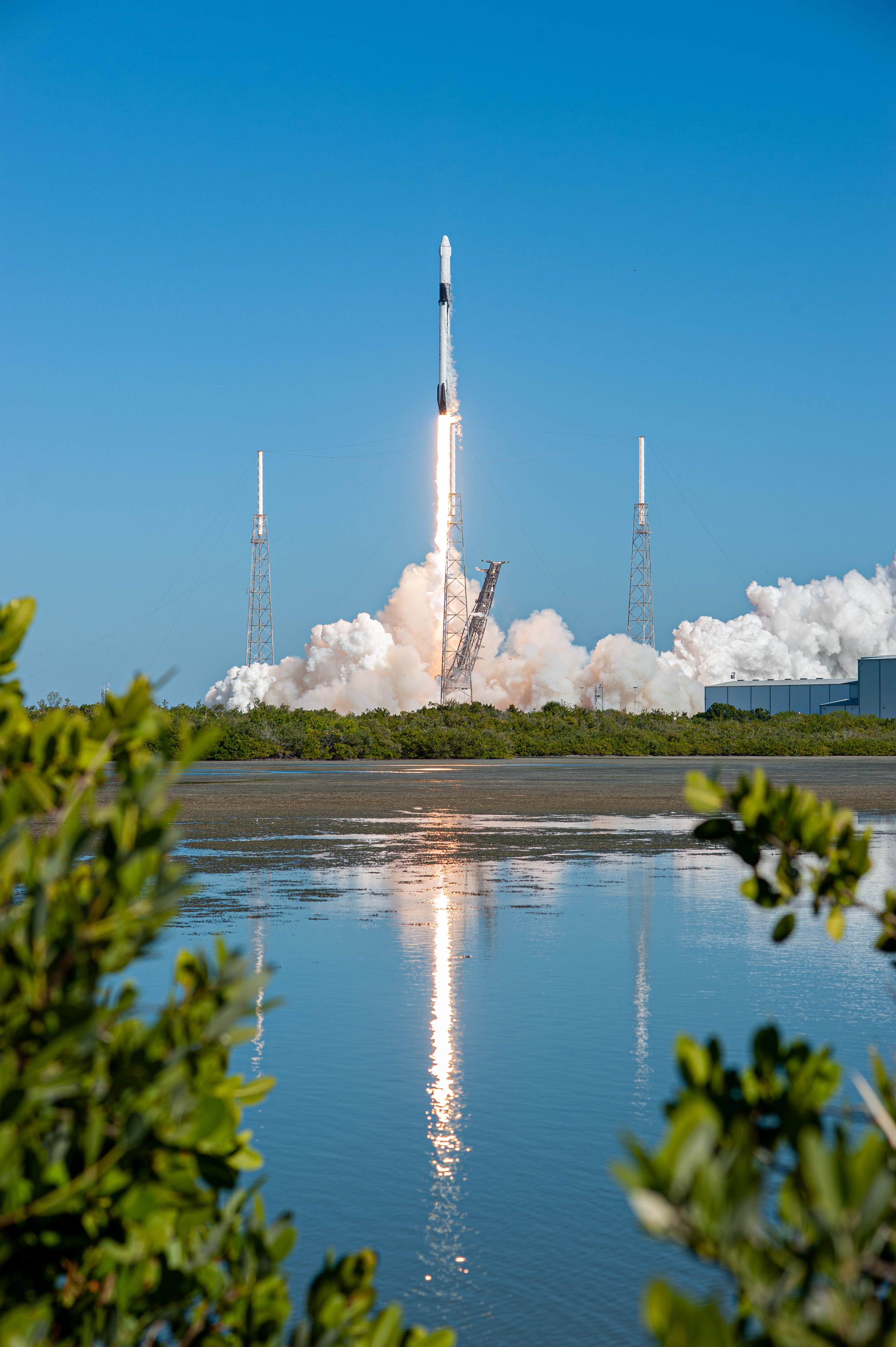
The SpaceX Falcon 9 rocket with the Dragon cargo module climbs upward after liftoff from Space Launch Complex 40 on Cape Canaveral Air Force Station in Florida in the early afternoon on Dec. 5, 2019. Liftoff was at 12:29 p.m. EST. This is SpaceX’s 19th Commercial Resupply Services (CRS-19) mission for NASA to the International Space Station. The Dragon cargo module will deliver more than 5,700 pounds of science and research, crew supplies and vehicle hardware to the orbital laboratory and its crew.
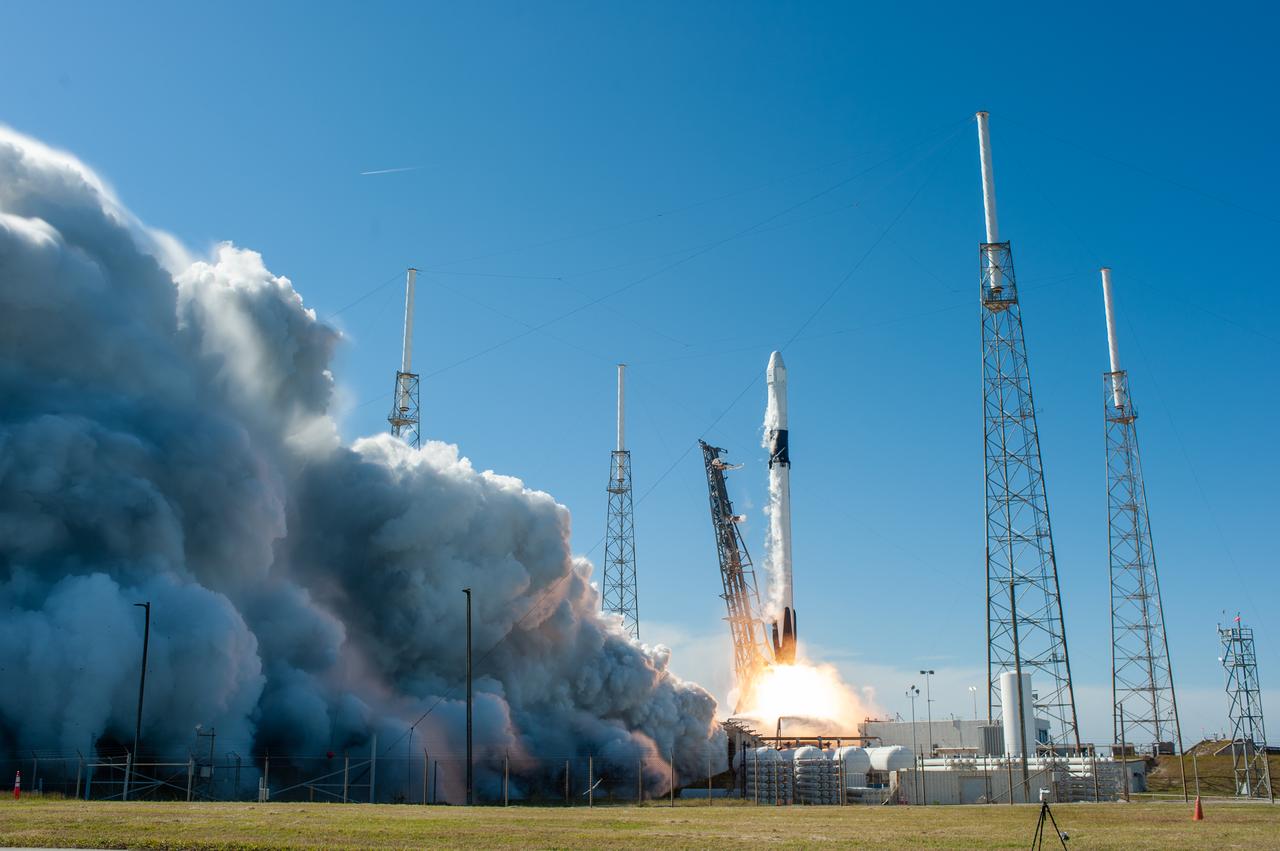
The SpaceX Falcon 9 rocket with the Dragon cargo module lifts off Space Launch Complex 40 on Cape Canaveral Air Force Station in Florida in the early afternoon on Dec. 5, 2019. Liftoff was at 12:29 p.m. EST. This is SpaceX’s 19th Commercial Resupply Services (CRS-19) mission for NASA to the International Space Station. The Dragon cargo module will deliver more than 5,700 pounds of science and research, crew supplies and vehicle hardware to the orbital laboratory and its crew.
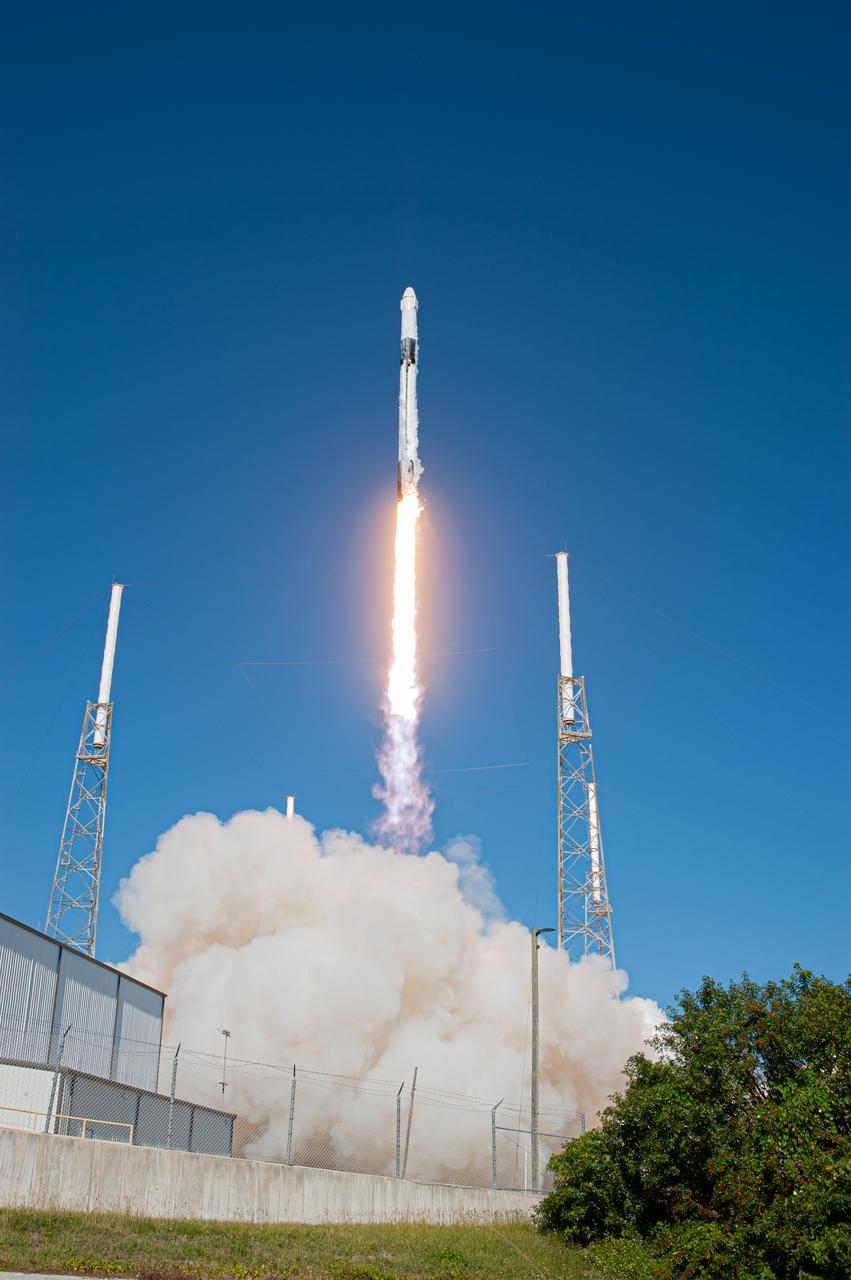
The SpaceX Falcon 9 rocket with the Dragon cargo module climbs upward after liftoff from Space Launch Complex 40 on Cape Canaveral Air Force Station in Florida in the early afternoon on Dec. 5, 2019. Liftoff was at 12:29 p.m. EST. This is SpaceX’s 19th Commercial Resupply Services (CRS-19) mission for NASA to the International Space Station. The Dragon cargo module will deliver more than 5,700 pounds of science and research, crew supplies and vehicle hardware to the orbital laboratory and its crew.
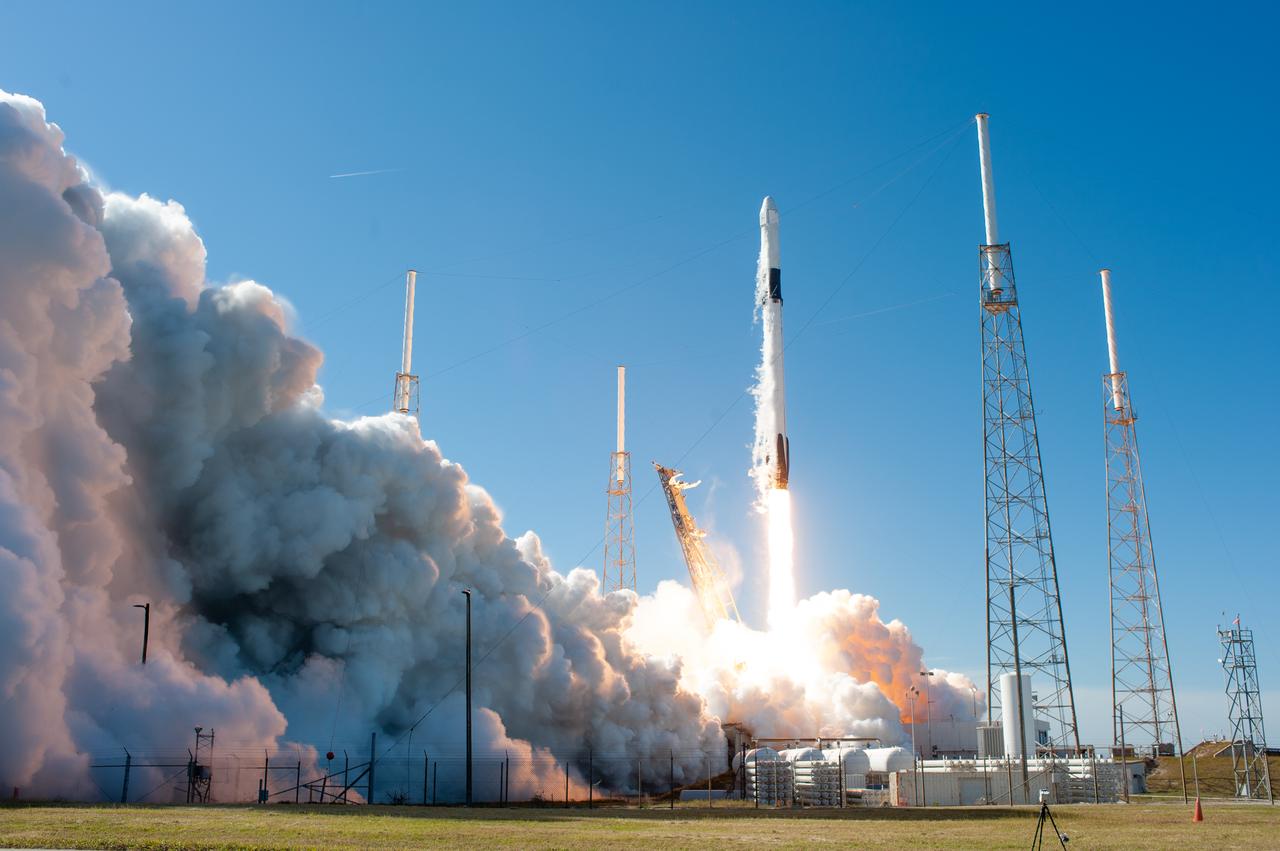
The SpaceX Falcon 9 rocket with the Dragon cargo module lifts off Space Launch Complex 40 on Cape Canaveral Air Force Station in Florida in the early afternoon on Dec. 5, 2019. Liftoff was at 12:29 p.m. EST. This is SpaceX’s 19th Commercial Resupply Services (CRS-19) mission for NASA to the International Space Station. The Dragon cargo module will deliver more than 5,700 pounds of science and research, crew supplies and vehicle hardware to the orbital laboratory and its crew.
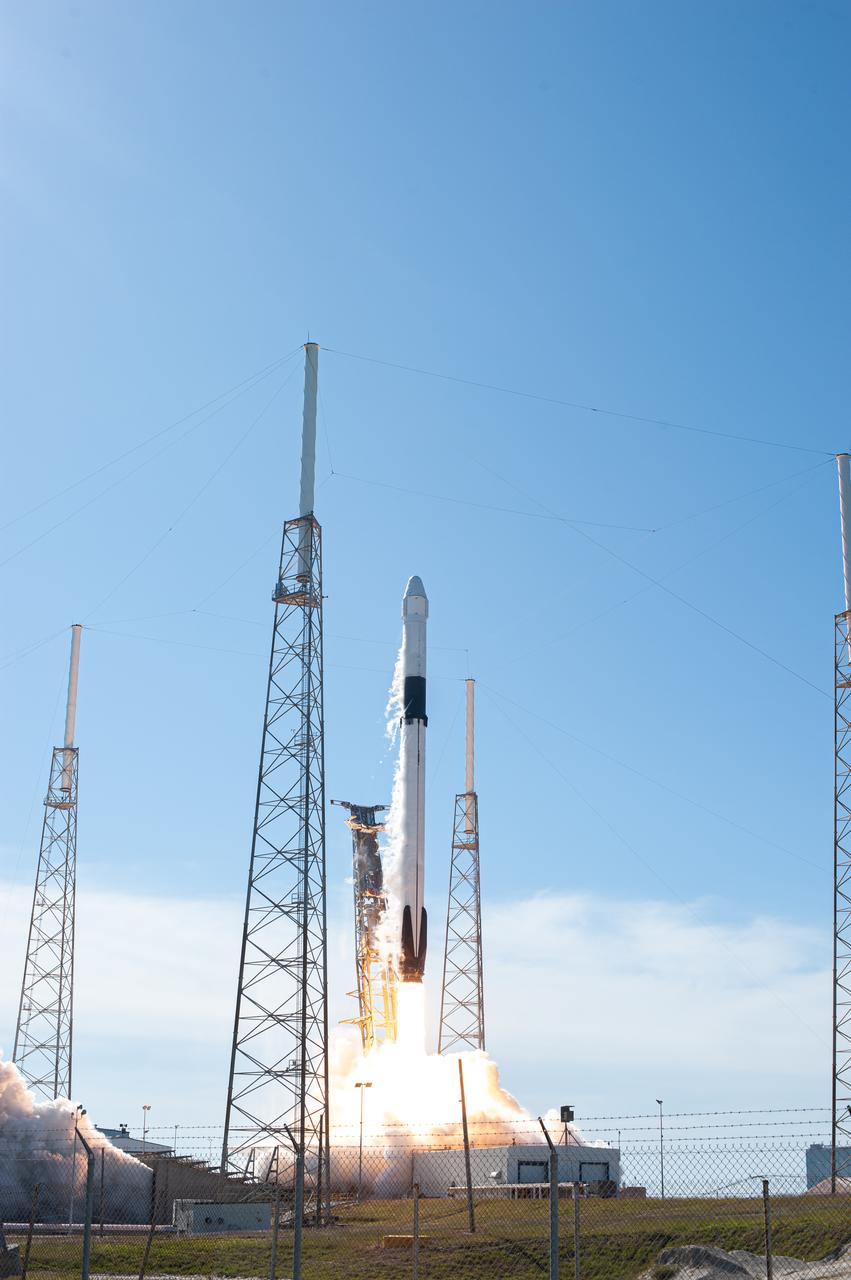
The SpaceX Falcon 9 rocket with the Dragon cargo module lifts off Space Launch Complex 40 on Cape Canaveral Air Force Station in Florida in the early afternoon on Dec. 5, 2019. Liftoff was at 12:29 p.m. EST. This is SpaceX’s 19th Commercial Resupply Services (CRS-19) mission for NASA to the International Space Station. The Dragon cargo module will deliver more than 5,700 pounds of science and research, crew supplies and vehicle hardware to the orbital laboratory and its crew.
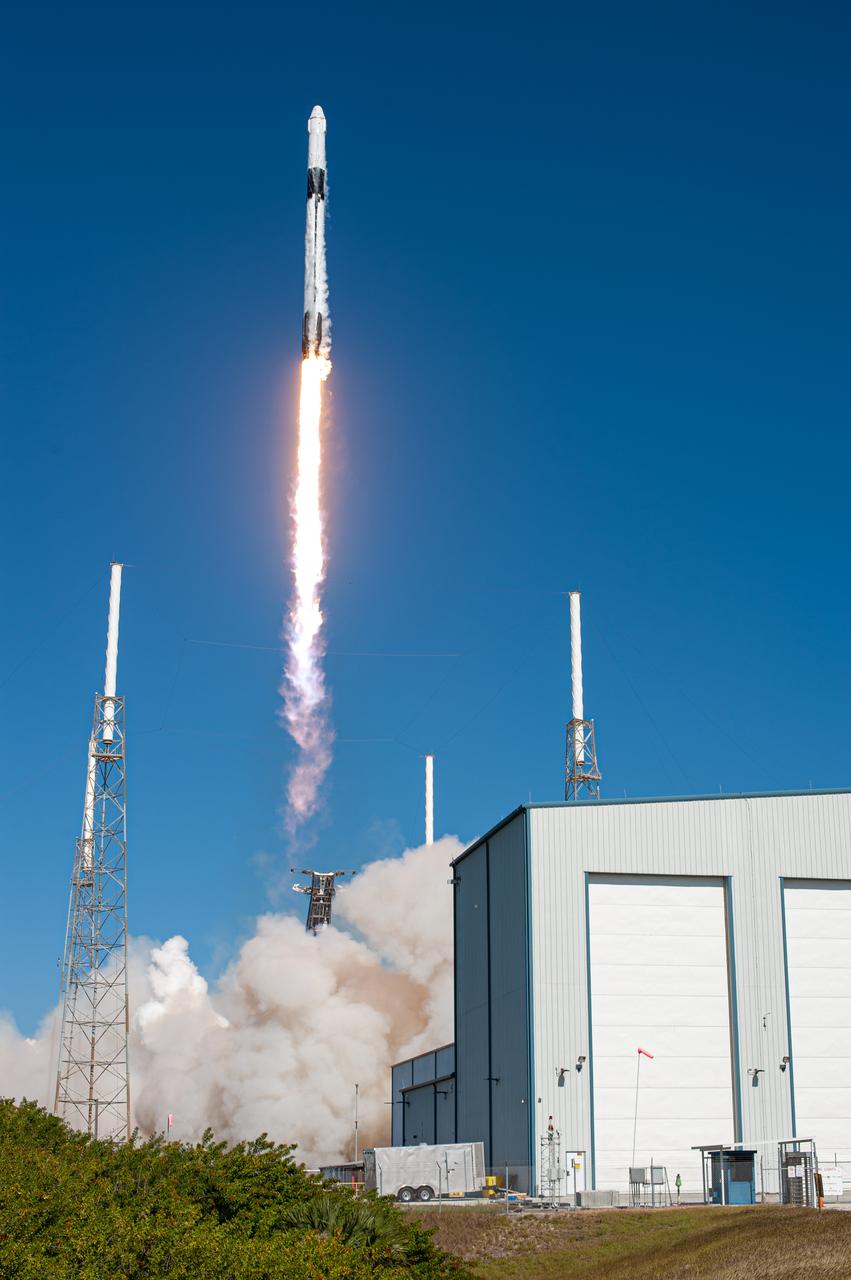
The SpaceX Falcon 9 rocket with the Dragon cargo module climbs upward after liftoff from Space Launch Complex 40 on Cape Canaveral Air Force Station in Florida in the early afternoon on Dec. 5, 2019. Liftoff was at 12:29 p.m. EST. This is SpaceX’s 19th Commercial Resupply Services (CRS-19) mission for NASA to the International Space Station. The Dragon cargo module will deliver more than 5,700 pounds of science and research, crew supplies and vehicle hardware to the orbital laboratory and its crew.
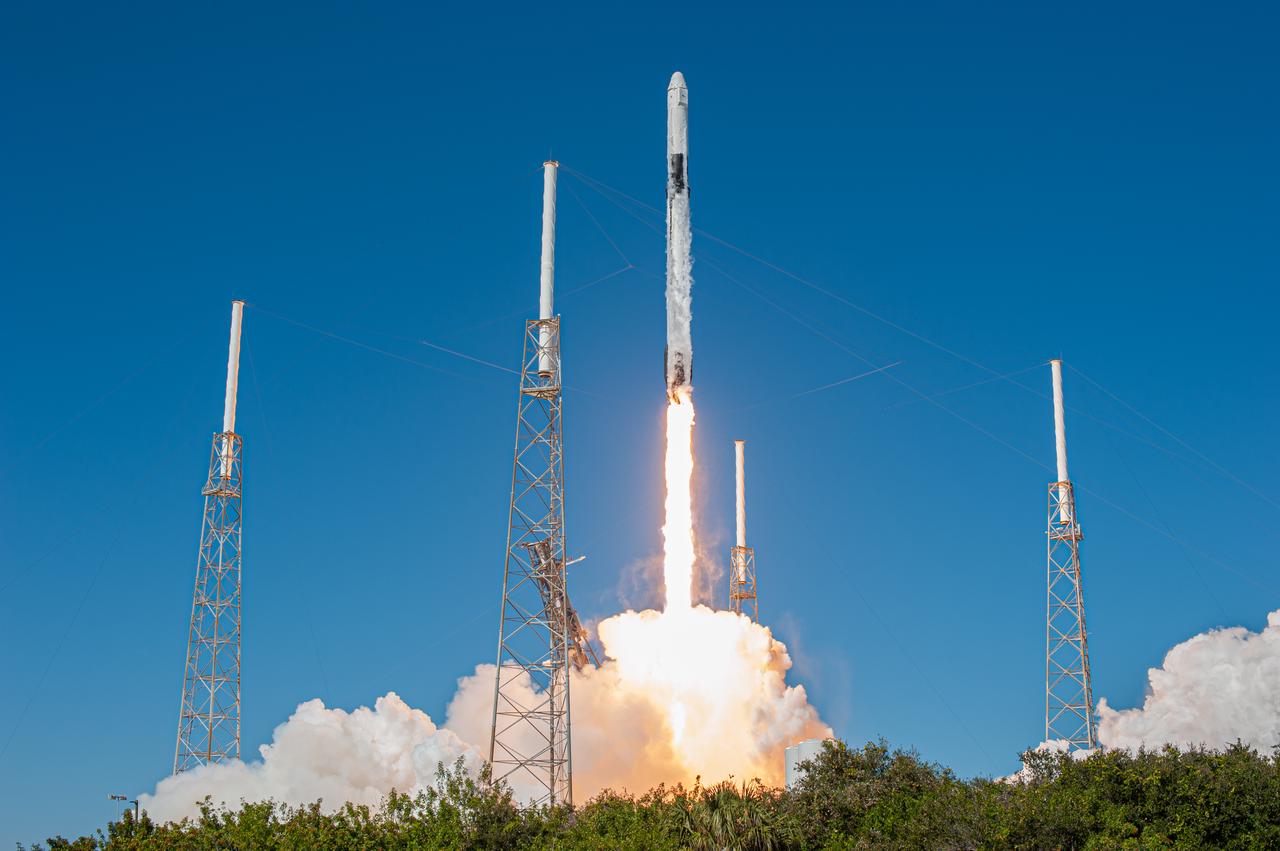
The SpaceX Falcon 9 rocket with the Dragon cargo module lifts off Space Launch Complex 40 on Cape Canaveral Air Force Station in Florida in the early afternoon on Dec. 5, 2019. Liftoff was at 12:29 p.m. EST. This is SpaceX’s 19th Commercial Resupply Services (CRS-19) mission for NASA to the International Space Station. The Dragon cargo module will deliver more than 5,700 pounds of science and research, crew supplies and vehicle hardware to the orbital laboratory and its crew.
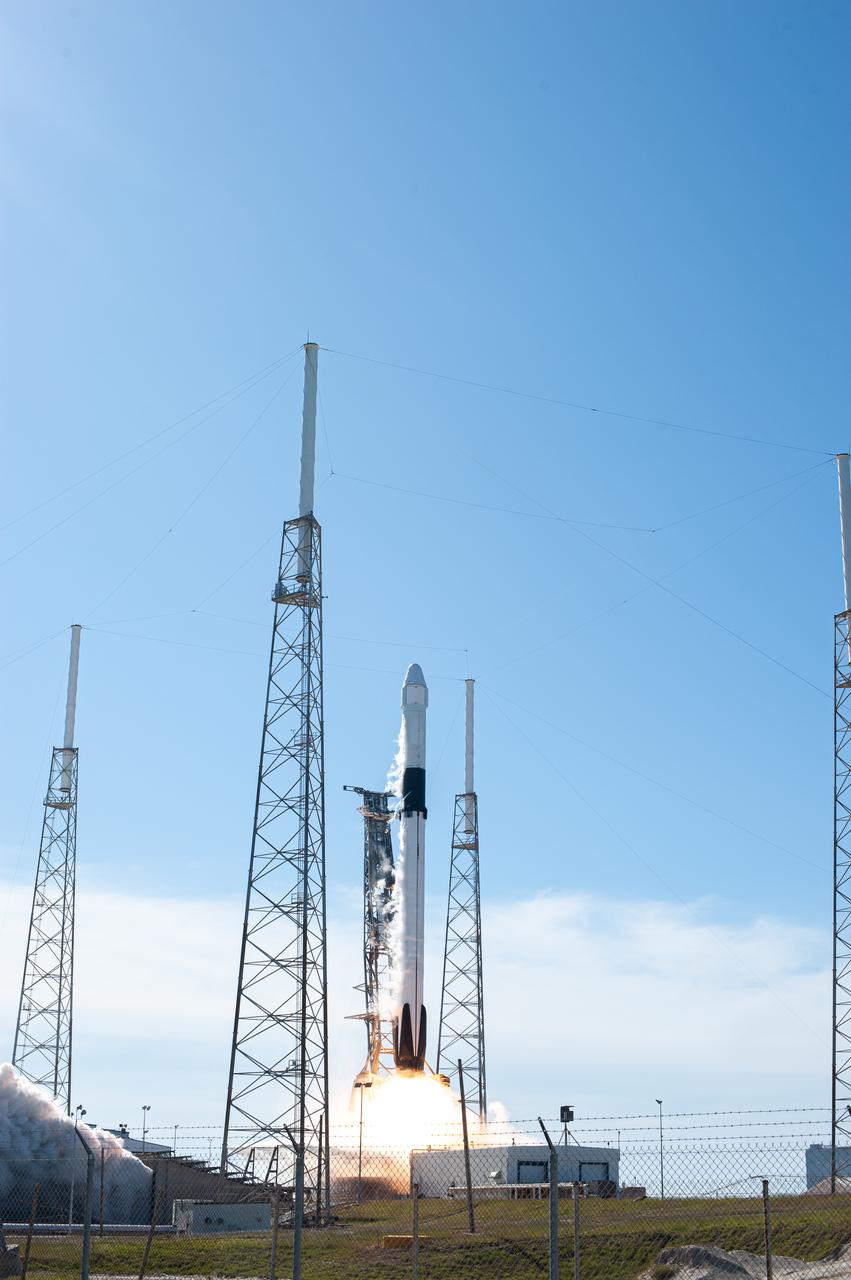
The SpaceX Falcon 9 rocket with the Dragon cargo module lifts off Space Launch Complex 40 on Cape Canaveral Air Force Station in Florida in the early afternoon on Dec. 5, 2019. Liftoff was at 12:29 p.m. EST. This is SpaceX’s 19th Commercial Resupply Services (CRS-19) mission for NASA to the International Space Station. The Dragon cargo module will deliver more than 5,700 pounds of science and research, crew supplies and vehicle hardware to the orbital laboratory and its crew.
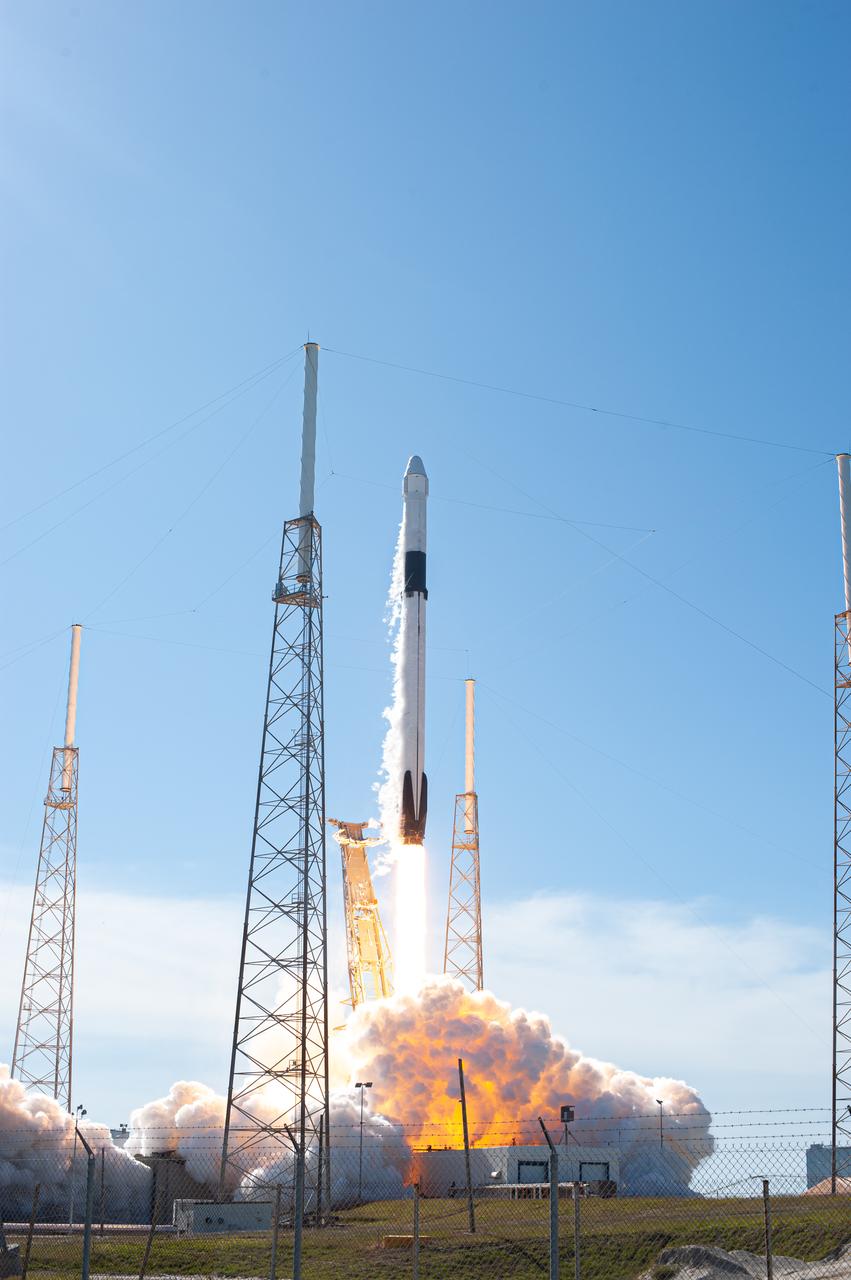
The SpaceX Falcon 9 rocket with the Dragon cargo module lifts off Space Launch Complex 40 on Cape Canaveral Air Force Station in Florida in the early afternoon on Dec. 5, 2019. Liftoff was at 12:29 p.m. EST. This is SpaceX’s 19th Commercial Resupply Services (CRS-19) mission for NASA to the International Space Station. The Dragon cargo module will deliver more than 5,700 pounds of science and research, crew supplies and vehicle hardware to the orbital laboratory and its crew.
The SpaceX Falcon 9 rocket with the Dragon cargo module lifts off Space Launch Complex 40 on Cape Canaveral Air Force Station in Florida in the early afternoon on Dec. 5, 2019. Liftoff was at 12:29 p.m. EST. This is SpaceX’s 19th Commercial Resupply Services (CRS-19) mission for NASA to the International Space Station. The Dragon cargo module will deliver more than 5,700 pounds of science and research, crew supplies and vehicle hardware to the orbital laboratory and its crew.
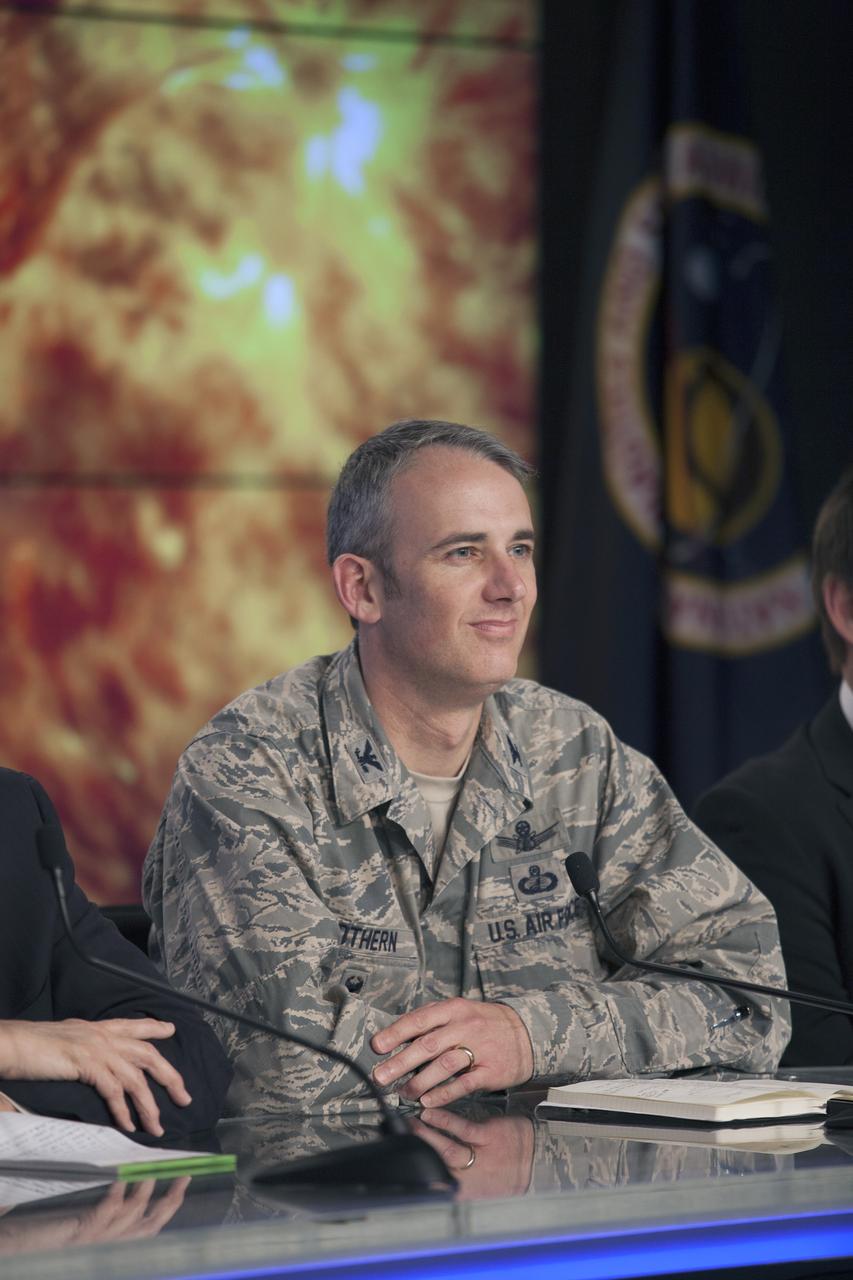
CAPE CANAVERAL, Fla. – Col. D. Jason Cothern, Space Demonstrations Division chief at Kirtland Air Force Base in Albuquerque, New Mexico, listens to a question from a member of the news media during a briefing regarding NOAA’s Deep Space Climate Observatory spacecraft, or DSCOVR. DSCOVR will launch aboard a SpaceX Falcon 9 rocket. The mission is a partnership between NOAA, NASA and the U.S. Air Force. DSCOVR will maintain the nation's real-time solar wind monitoring capabilities which are critical to the accuracy and lead time of NOAA's space weather alerts and forecasts. To learn more about DSCOVR, visit http://www.nesdis.noaa.gov/DSCOVR. Photo credit: NASA/Kim Shiflett
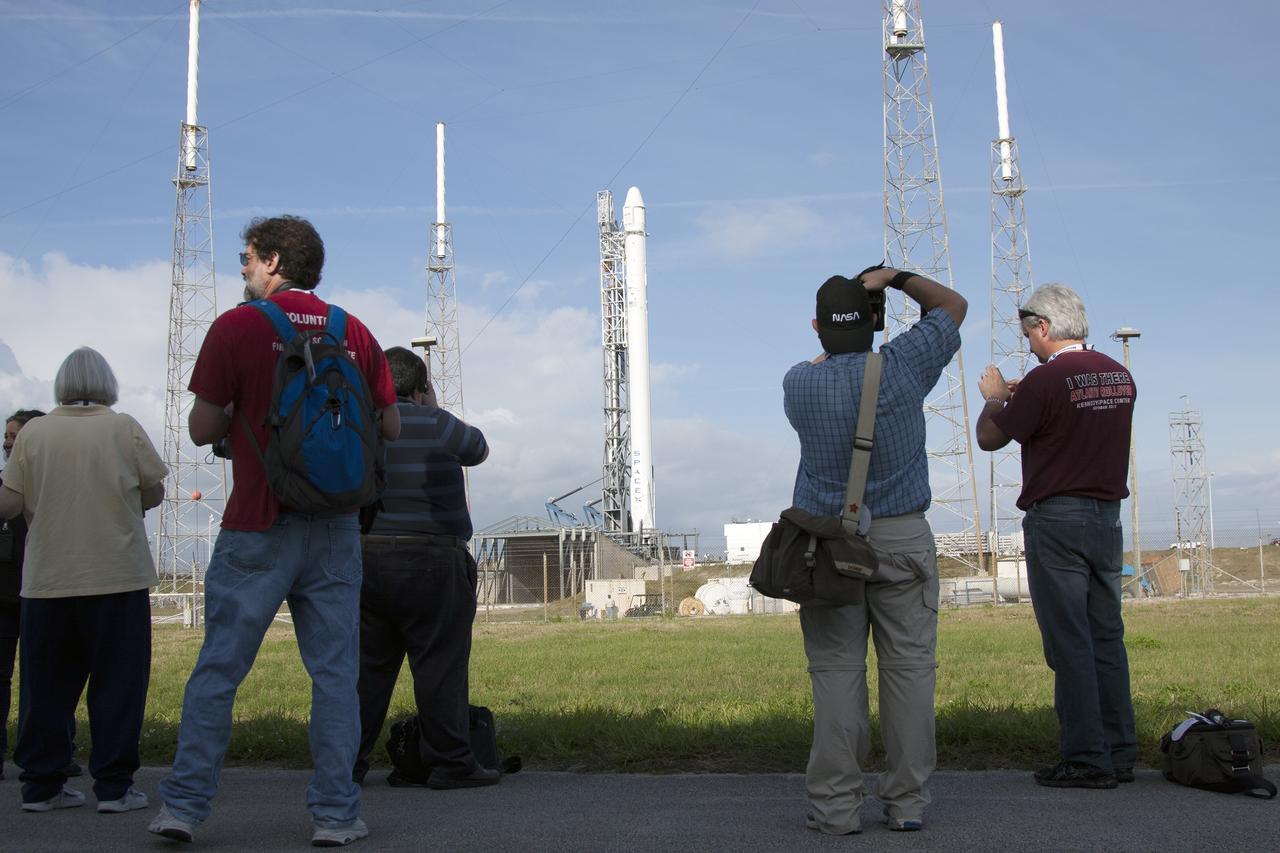
CAPE CANAVERAL, Fla. - Social media representatives photograph the SpaceX Falcon 9 rocket and Dragon Capsule on Space Launch Complex 40 on Cape Canaveral Air Force Station in Florida. NASA Social participants are given the same access as news media in an effort to align the experience of social media representatives with those of traditional media, including the opportunity to view a launch of SpaceX’s Falcon 9 rocket, tour NASA facilities at Kennedy Space Center, speak with representatives from both NASA and SpaceX, view and take photographs of the SpaceX launch pad, meet fellow space enthusiasts who are active on social media and meet members of SpaceX and NASA's social media teams. Scheduled for launch at about 4:58 p.m. EDT April 14, Dragon will be making its fourth trip to the space station. The SpaceX-3 mission, carrying almost 2.5 tons of supplies, technology and science experiments, is the third of 12 flights under NASA's Commercial Resupply Services contract to resupply the orbiting laboratory. For more information, visit http://www.nasa.gov/mission_pages/station/structure/launch/index.html Photo credit: NASA/Glenn Benson
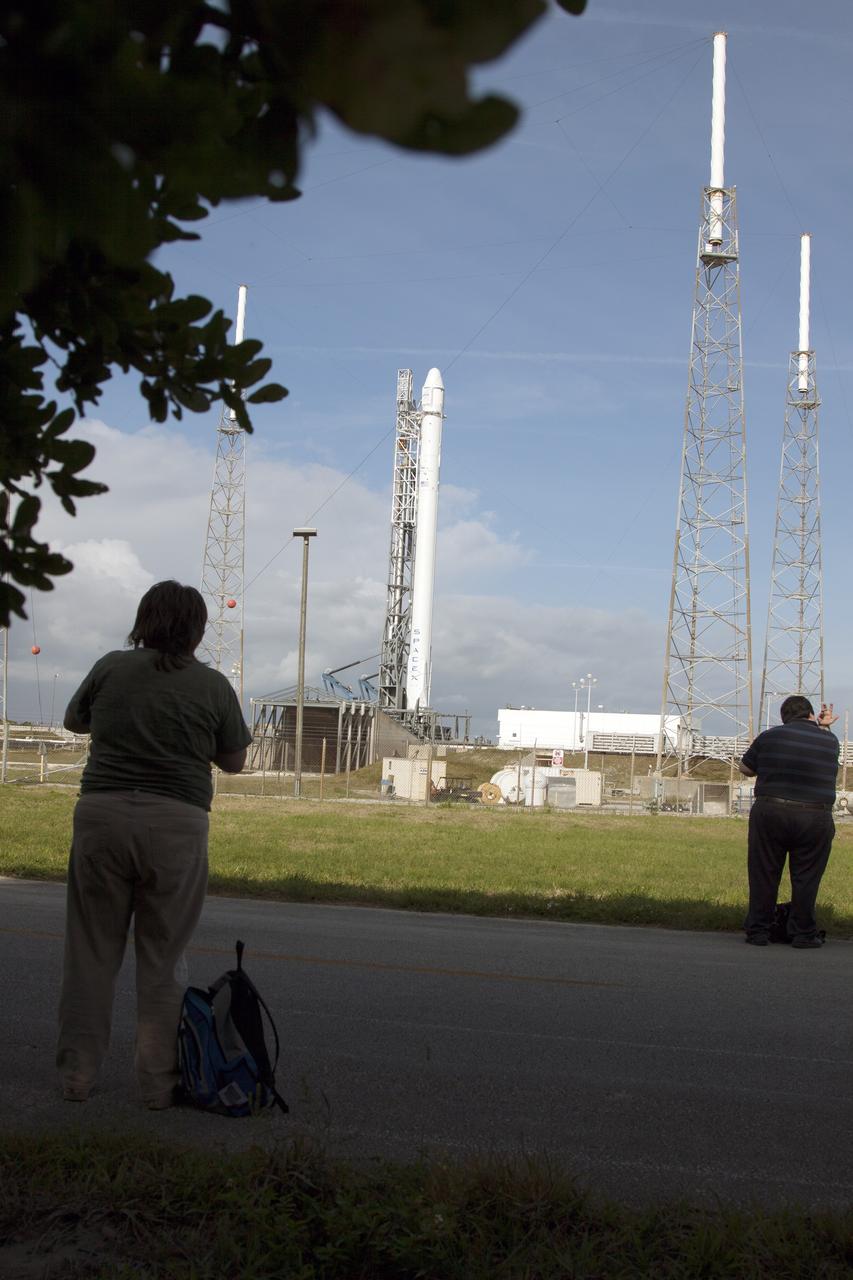
CAPE CANAVERAL, Fla. - Social media representatives photograph the SpaceX Falcon 9 rocket and Dragon Capsule on Space Launch Complex 40 on Cape Canaveral Air Force Station in Florida. NASA Social participants are given the same access as news media in an effort to align the experience of social media representatives with those of traditional media, including the opportunity to view a launch of SpaceX’s Falcon 9 rocket, tour NASA facilities at Kennedy Space Center, speak with representatives from both NASA and SpaceX, view and take photographs of the SpaceX launch pad, meet fellow space enthusiasts who are active on social media and meet members of SpaceX and NASA's social media teams. Scheduled for launch at about 4:58 p.m. EDT April 14, Dragon will be making its fourth trip to the space station. The SpaceX-3 mission, carrying almost 2.5 tons of supplies, technology and science experiments, is the third of 12 flights under NASA's Commercial Resupply Services contract to resupply the orbiting laboratory. For more information, visit http://www.nasa.gov/mission_pages/station/structure/launch/index.html Photo credit: NASA/Glenn Benson
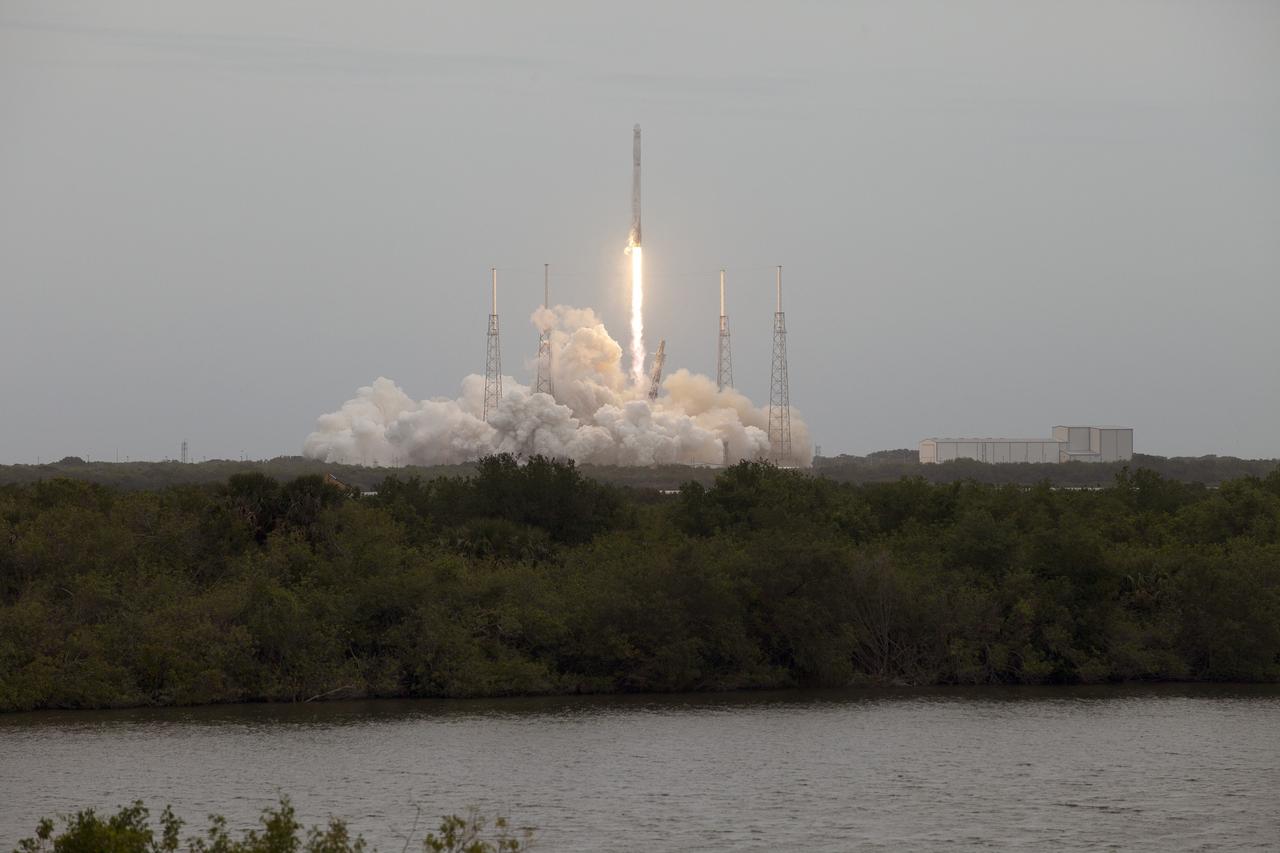
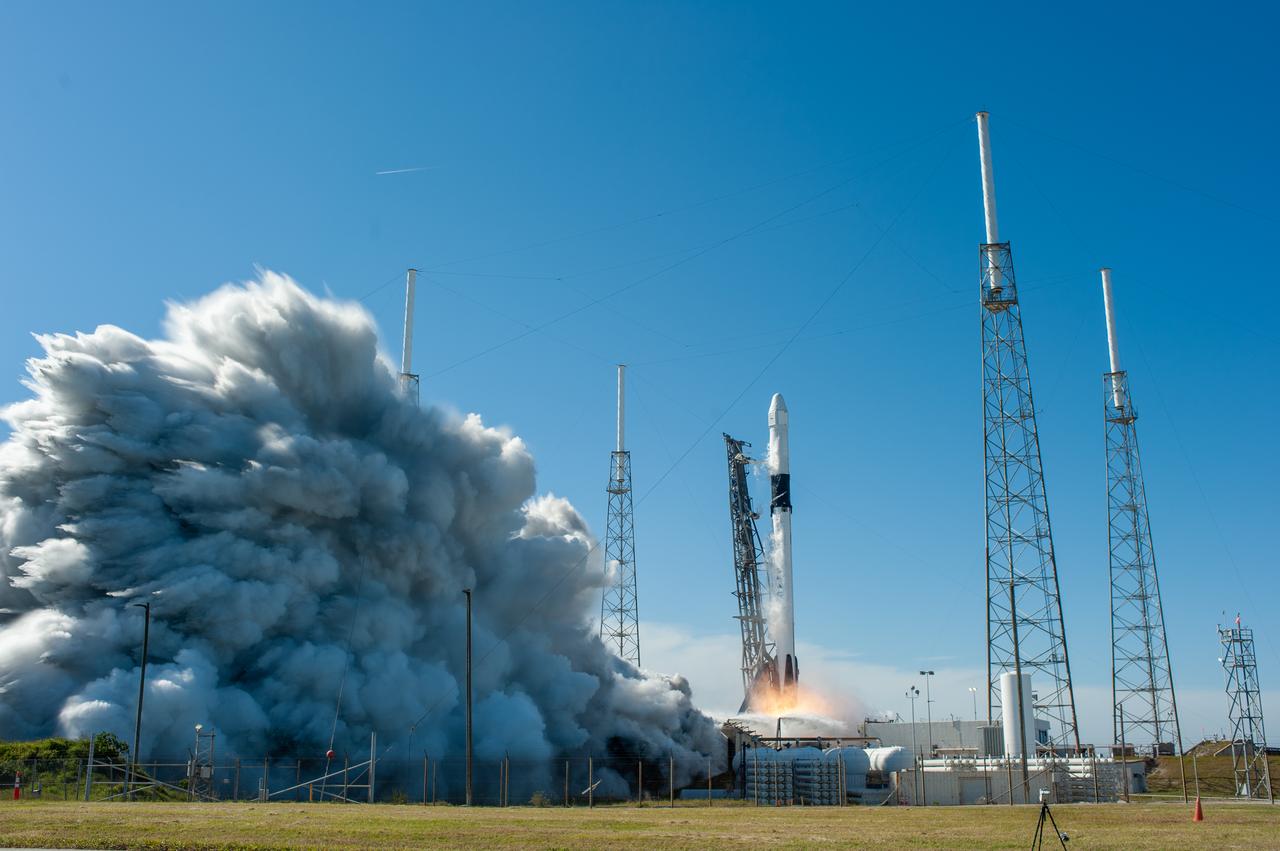
CAPE CANAVERAL, Fla. - An exhaust cloud builds under the Falcon 9 rocket on Space Launch Complex 40 on Cape Canaveral Air Force Station as the SpaceX-3 mission lifts off, carrying the Dragon resupply spacecraft to the International Space Station. Liftoff was during an instantaneous window at 3:25 p.m. EDT. Dragon is making its fourth trip to the space station. The SpaceX-3 mission, carrying almost 2.5 tons of supplies, technology and science experiments, is the third of 12 flights through a $1.6 billion NASA Commercial Resupply Services contract. Dragon's cargo will support more than 150 experiments that will be conducted during the station's Expeditions 39 and 40. For more information, visit http://www.nasa.gov/mission_pages/station/structure/launch/index.html. Photo credit: NASA/Dan Casper
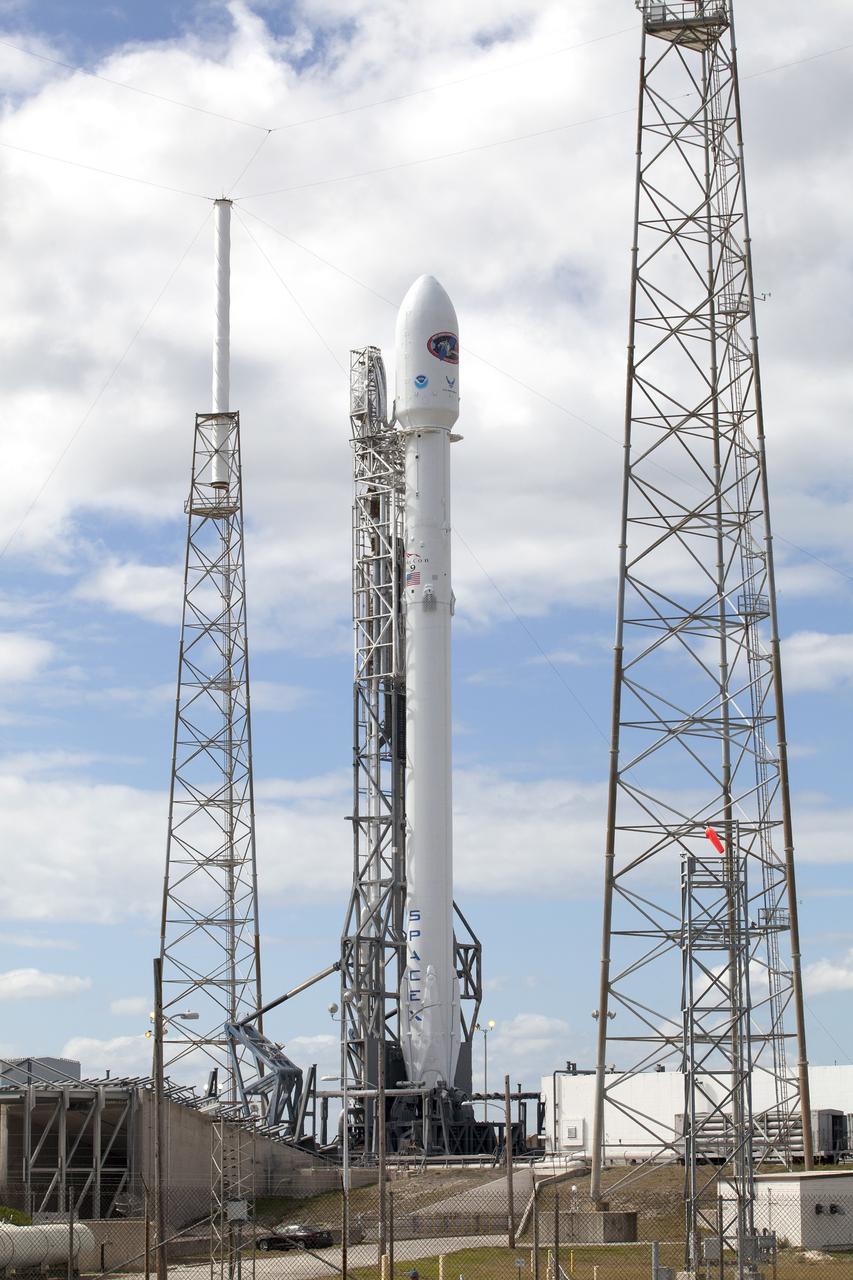
CAPE CANAVERAL, Fla. – CAPE CANAVERAL, Fla. – Backdropped by a blue sky streaked with white clouds, the SpaceX Falcon 9 rocket set to launch NOAA’s Deep Space Climate Observatory spacecraft, or DSCOVR, is flanked by lightning masts at Space Launch Complex 40 at Cape Canaveral Air Force Station in Florida. DSCOVR is a partnership between NOAA, NASA and the U.S. Air Force. DSCOVR will maintain the nation's real-time solar wind monitoring capabilities which are critical to the accuracy and lead time of NOAA's space weather alerts and forecasts. To learn more about DSCOVR, visit http://www.nesdis.noaa.gov/DSCOVR. Photo credit: NASA/Kim Shiflett
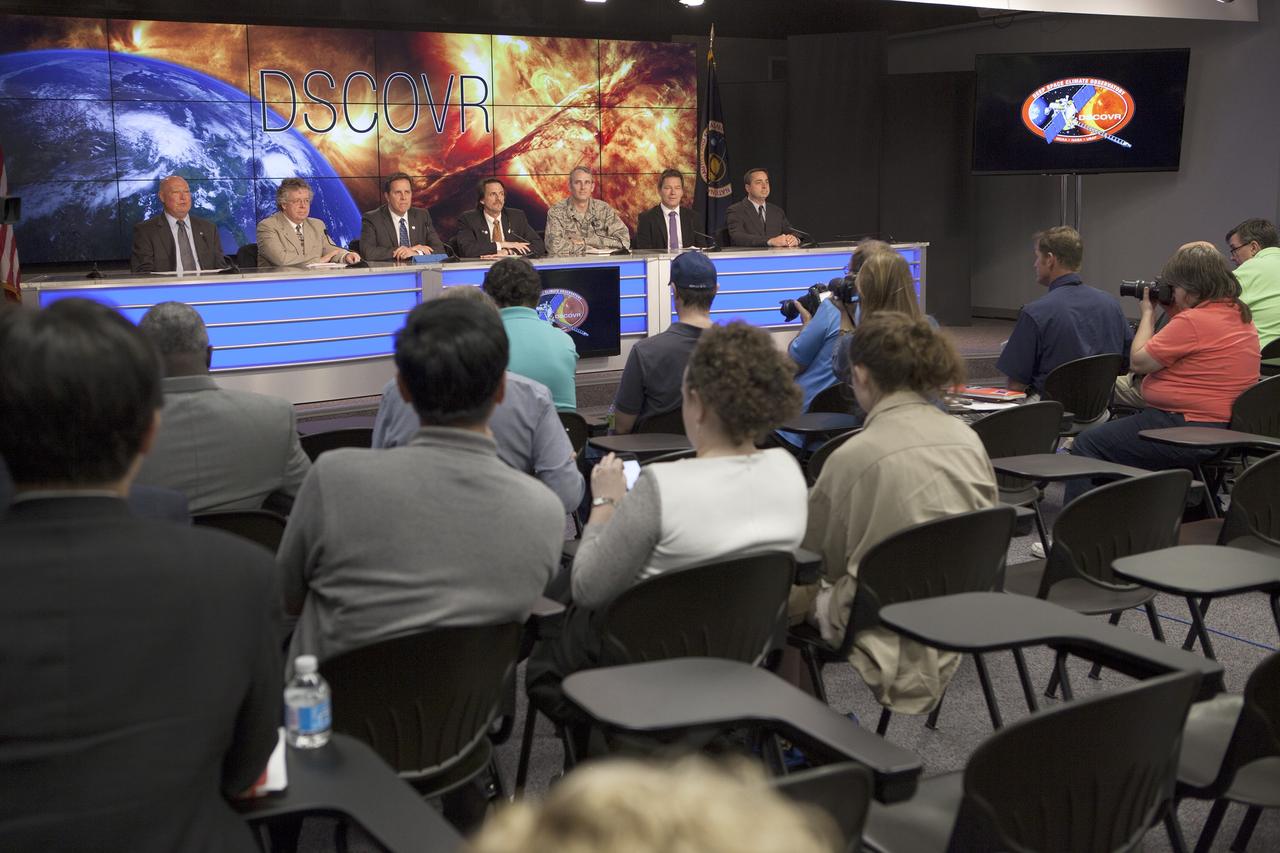
CAPE CANAVERAL, Fla. – A prelaunch briefing at NASA’s Kennedy Space Center in Florida brings media up to date on preparations for the liftoff of NOAA’s Deep Space Climate Observatory spacecraft, or DSCOVR. From left are Michael Curie, moderator, NASA Public Affairs, Stephen Volz, assistant administrator of the NOAA Satellite and Information Service, Tom Berger, director of the NOAA Space Weather Prediction Center, Steven Clarke, NASA Joint Agency Satellite Division director for the agency’s Science Mission Directorate, Col. D. Jason Cothern, Space Demonstrations Division chief at Kirtland Air Force Base in Albuquerque, New Mexico, and Hans Koenigsmann, vice president of mission assurance at SpaceX, and Mike McAleenan, launch weather officer with the U.S. Air Force 45th Weather Squadron. DSCOVR will launch aboard a SpaceX Falcon 9 rocket. The mission is a partnership between NOAA, NASA and the U.S. Air Force. DSCOVR will maintain the nation's real-time solar wind monitoring capabilities which are critical to the accuracy and lead time of NOAA's space weather alerts and forecasts. To learn more about DSCOVR, visit http://www.nesdis.noaa.gov/DSCOVR. Photo credit: NASA/Kim Shiflett
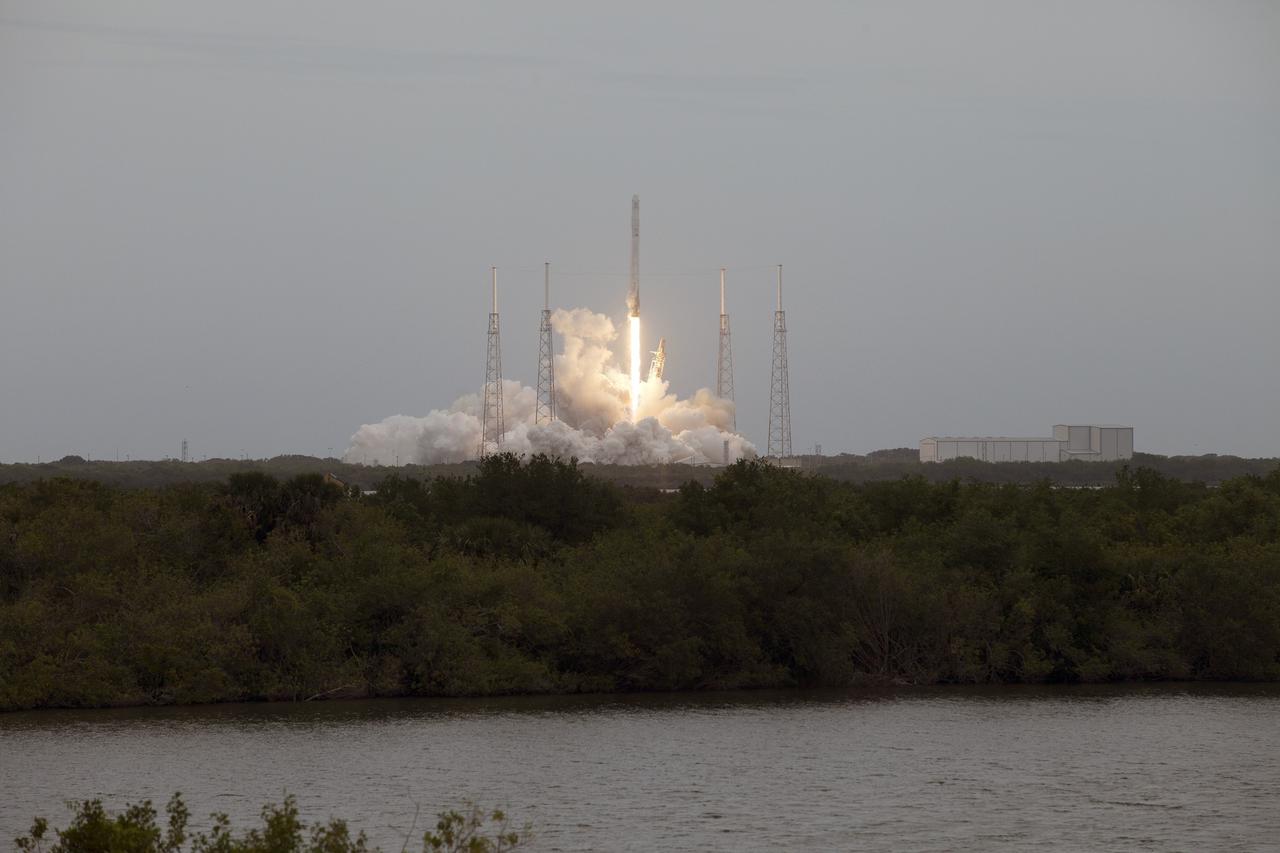
CAPE CANAVERAL, Fla. - Nine rocket engines roar to life on the SpaceX Falcon 9 rocket, lifting it off Space Launch Complex 40 on Cape Canaveral Air Force Station and boosting the Dragon resupply spacecraft to the International Space Station. Liftoff was at 3:25 p.m. EDT. Dragon is making its fourth trip to the space station. The SpaceX-3 mission, carrying almost 2.5 tons of supplies, technology and science experiments, is the third of 12 flights through a $1.6 billion NASA Commercial Resupply Services contract. Dragon's cargo will support more than 150 experiments that will be conducted during the station's Expeditions 39 and 40. For more information, visit http://www.nasa.gov/mission_pages/station/structure/launch/index.html. Photo credit: NASA/Dan Casper
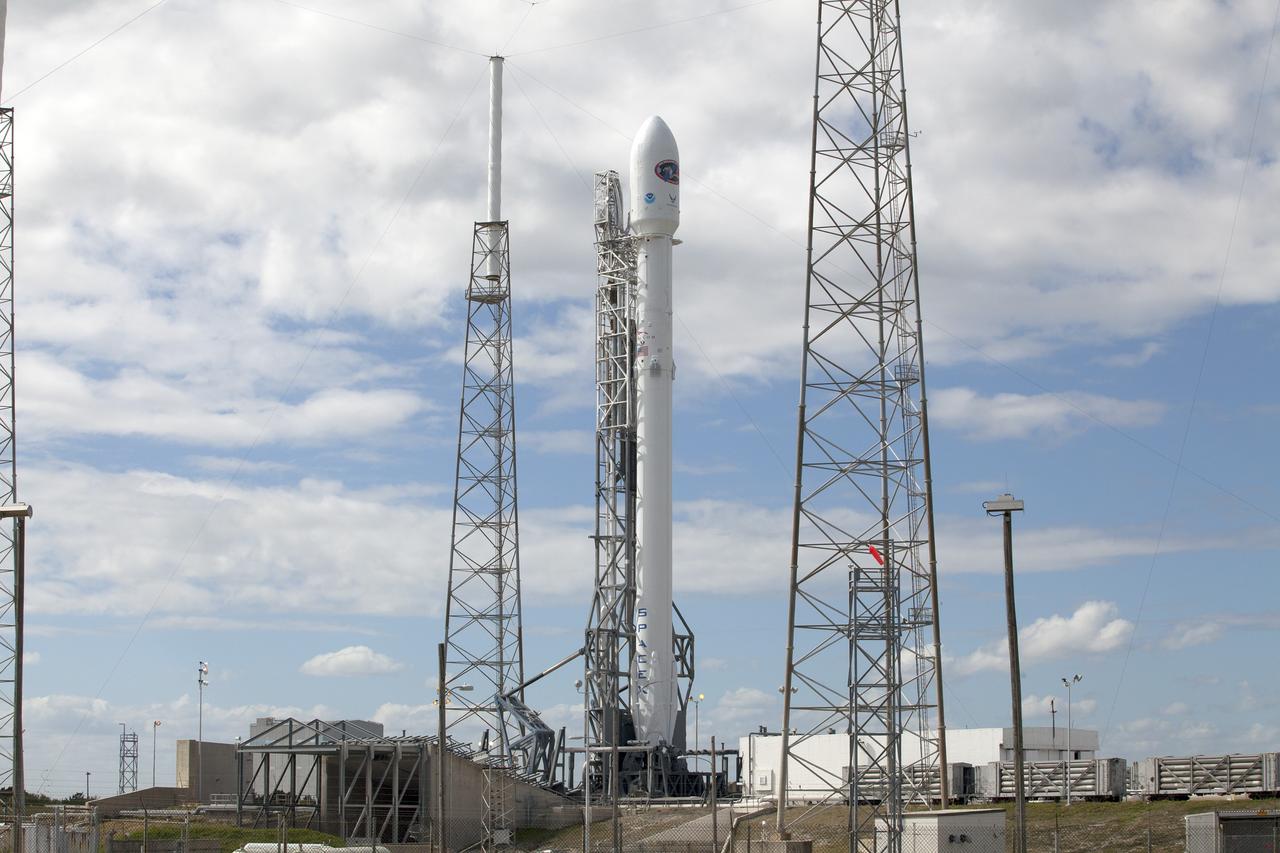
CAPE CANAVERAL, Fla. – The SpaceX Falcon 9 rocket set to launch NOAA’s Deep Space Climate Observatory spacecraft, or DSCOVR, awaits liftoff at 6:10 p.m. EST from Space Launch Complex 40 at Cape Canaveral Air Force Station in Florida. DSCOVR is a partnership between NOAA, NASA and the U.S. Air Force. DSCOVR will maintain the nation's real-time solar wind monitoring capabilities which are critical to the accuracy and lead time of NOAA's space weather alerts and forecasts. To learn more about DSCOVR, visit http://www.nesdis.noaa.gov/DSCOVR. Photo credit: NASA/Kim Shiflett
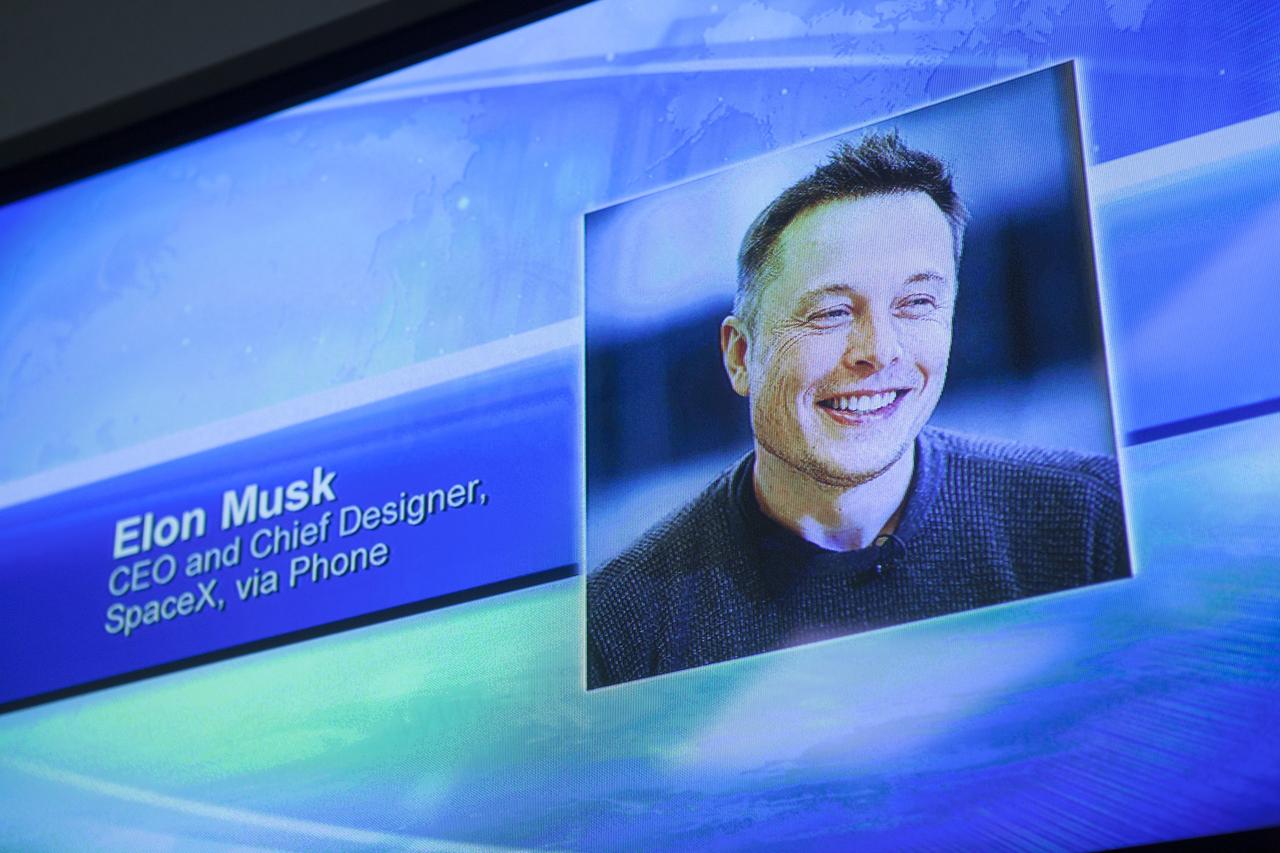
CAPE CANAVERAL, Fla. - An image of SpaceX CEO and chief designer Elon Musk is displayed in the NASA Press Site news auditorium at Kennedy Space Center in Florida during a SpaceX-3 post-launch news conference. Musk participated in the conference by telephone. SpaceX-3 launched at 3:25 p.m. EDT aboard a Falcon 9 rocket carrying a Dragon capsule from Space Launch Complex 40 on Cape Canaveral Air Force Station. Dragon is making its fourth trip to the space station. The SpaceX-3 mission, carrying almost 2.5 tons of supplies, technology and science experiments, is the third of 12 flights through a $1.6 billion NASA Commercial Resupply Services contract. Dragon's cargo will support more than 150 experiments that will be conducted during the station's Expeditions 39 and 40. For more information, visit http://www.nasa.gov/mission_pages/station/structure/launch/index.html. Photo credit: NASA/Kim Shiflett
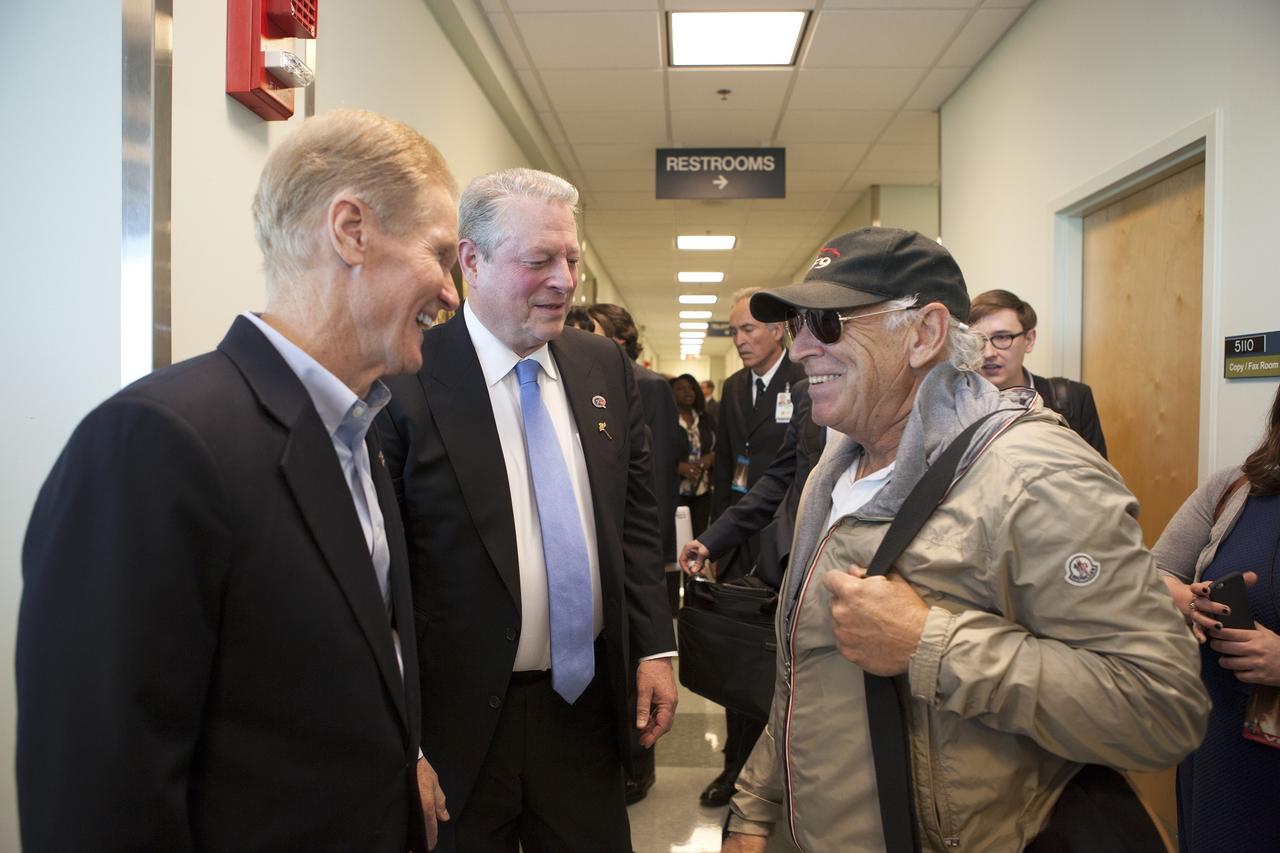
Sen. Bill Nelson, left, and former Vice President Al Gore greet singer Jimmy Buffett, right, at NASA’s Kennedy Space Center in Florida prior to the planned liftoff of NOAA’s Deep Space Climate Observatory mission, or DSCOVR. DSCOVR will launch aboard a SpaceX Falcon 9 rocket. The mission is a partnership between NOAA, NASA and the U.S. Air Force. DSCOVR will maintain the nation's real-time solar wind monitoring capabilities which are critical to the accuracy and lead time of NOAA's space weather alerts and forecasts. To learn more about DSCOVR, visit http://www.nesdis.noaa.gov/DSCOVR. Photo credit: NASA/Kim Shiflett
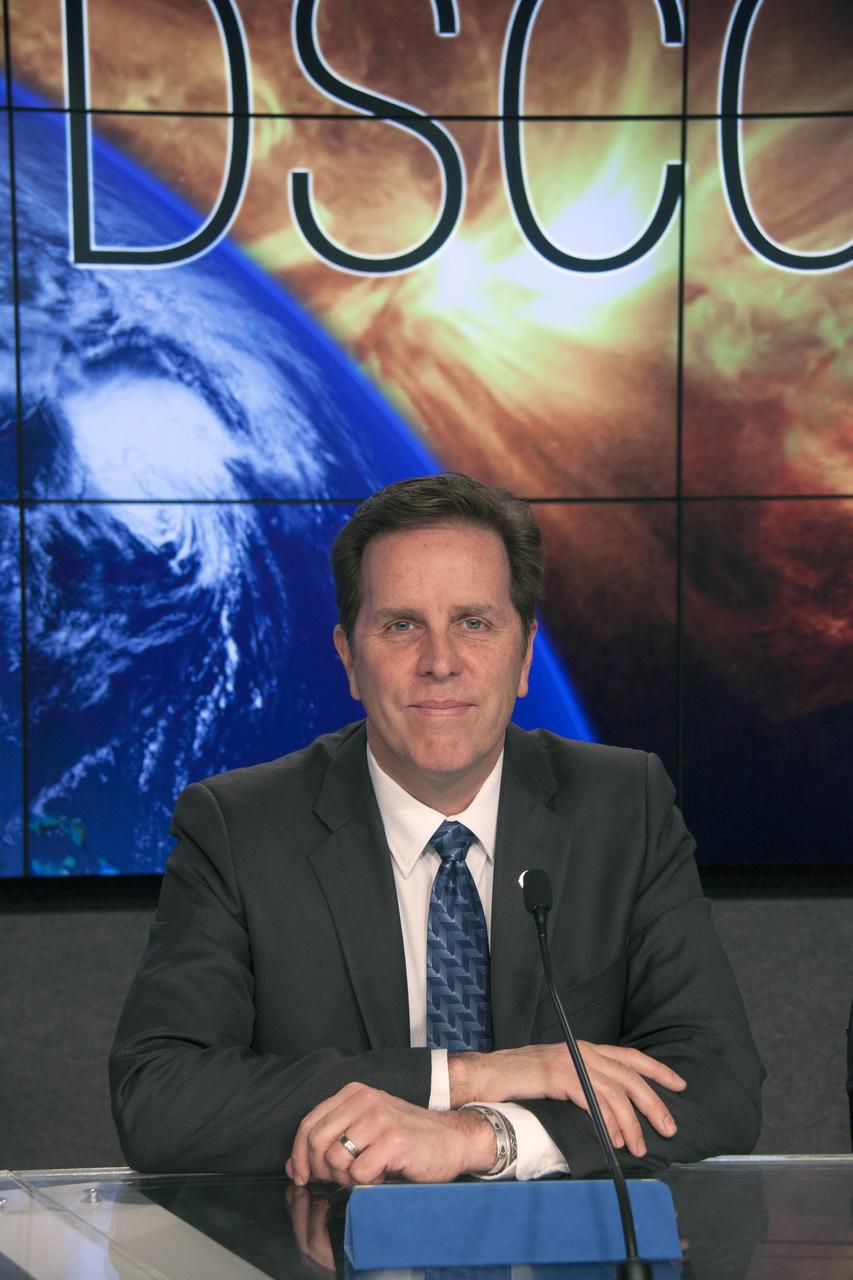
CAPE CANAVERAL, Fla. – Tom Berger, director of the NOAA Space Weather Prediction Center, prepares to brief media on preparations for the liftoff of NOAA’s Deep Space Climate Observatory spacecraft, or DSCOVR. DSCOVR will launch aboard a SpaceX Falcon 9 rocket. The mission is a partnership between NOAA, NASA and the U.S. Air Force. DSCOVR will maintain the nation's real-time solar wind monitoring capabilities which are critical to the accuracy and lead time of NOAA's space weather alerts and forecasts. To learn more about DSCOVR, visit http://www.nesdis.noaa.gov/DSCOVR. Photo credit: NASA/Jim Grossman
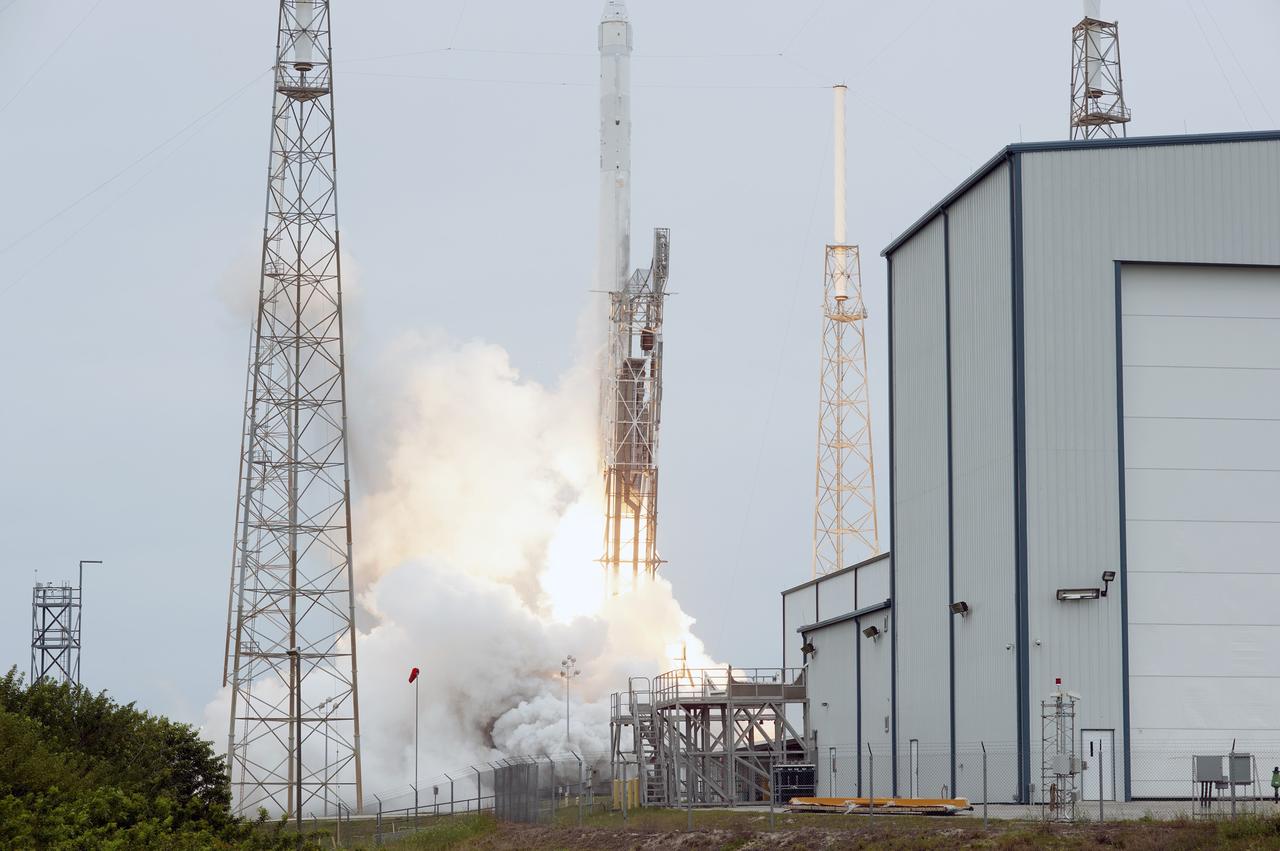
CAPE CANAVERAL, Fla. - An exhaust cloud forms around the Falcon 9 rocket at Space Launch Complex 40 on Cape Canaveral Air Force Station as the SpaceX-3 mission lifts off, carrying the Dragon resupply spacecraft to the International Space Station. Launch was during an instantaneous window at 3:25 p.m. EDT. Dragon is making its fourth trip to the space station. The SpaceX-3 mission, carrying almost 2.5 tons of supplies, technology and science experiments, is the third of 12 flights through a $1.6 billion NASA Commercial Resupply Services contract. Dragon's cargo will support more than 150 experiments that will be conducted during the station's Expeditions 39 and 40. For more information, visit http://www.nasa.gov/mission_pages/station/structure/launch/index.html. Photo credit: NASA/Tony Gray and Tim Powers
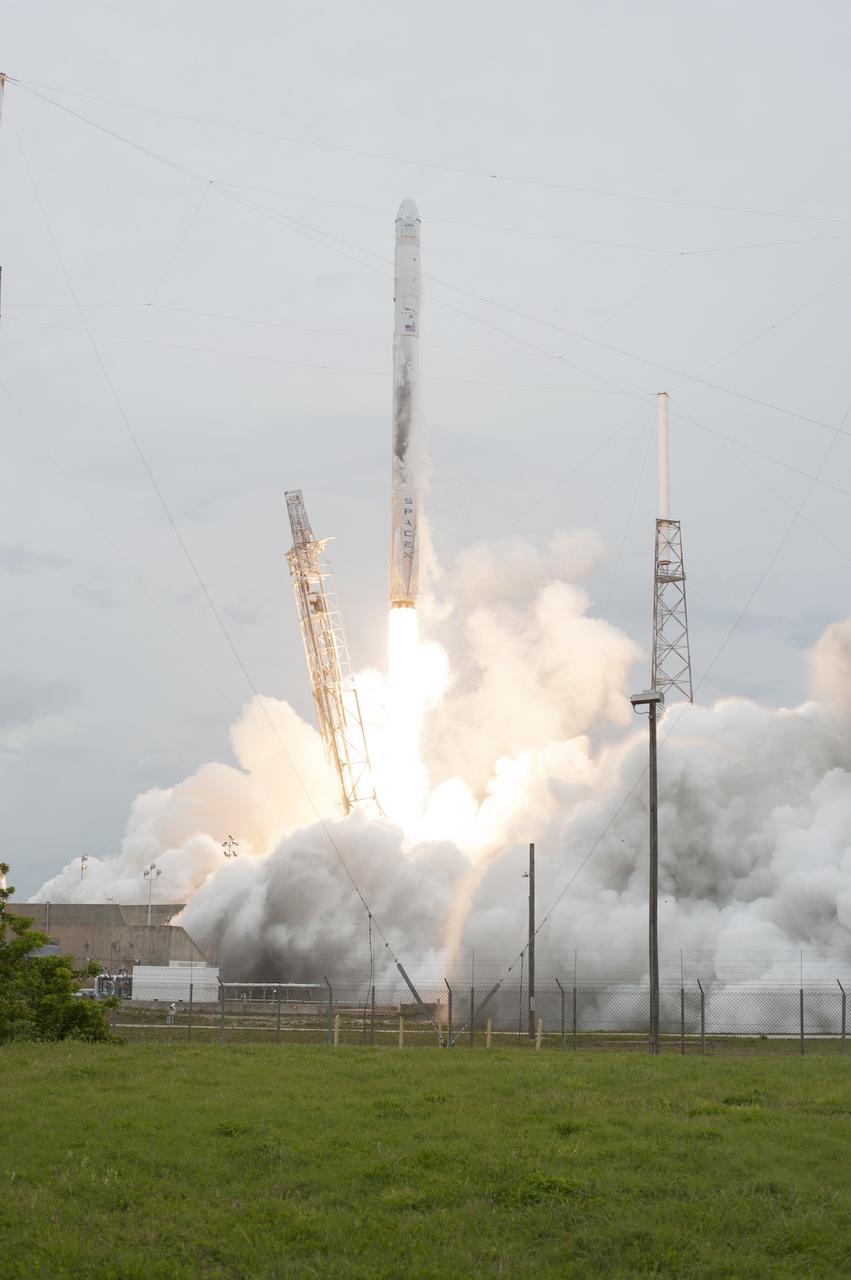
CAPE CANAVERAL, Fla. - The SpaceX Falcon 9 rocket rises above the lightning masts on Space Launch Complex 40 at Cape Canaveral Air Force Station, as the SpaceX-3 mission begins, carrying the Dragon resupply spacecraft to the International Space Station. Liftoff was during an instantaneous window at 3:25 p.m. EDT. Dragon is making its fourth trip to the space station. The SpaceX-3 mission, carrying almost 2.5 tons of supplies, technology and science experiments, is the third of 12 flights through a $1.6 billion NASA Commercial Resupply Services contract. Dragon's cargo will support more than 150 experiments that will be conducted during the station's Expeditions 39 and 40. For more information, visit http://www.nasa.gov/mission_pages/station/structure/launch/index.html. Photo credit: NASA/Tony Gray and Tim Powers
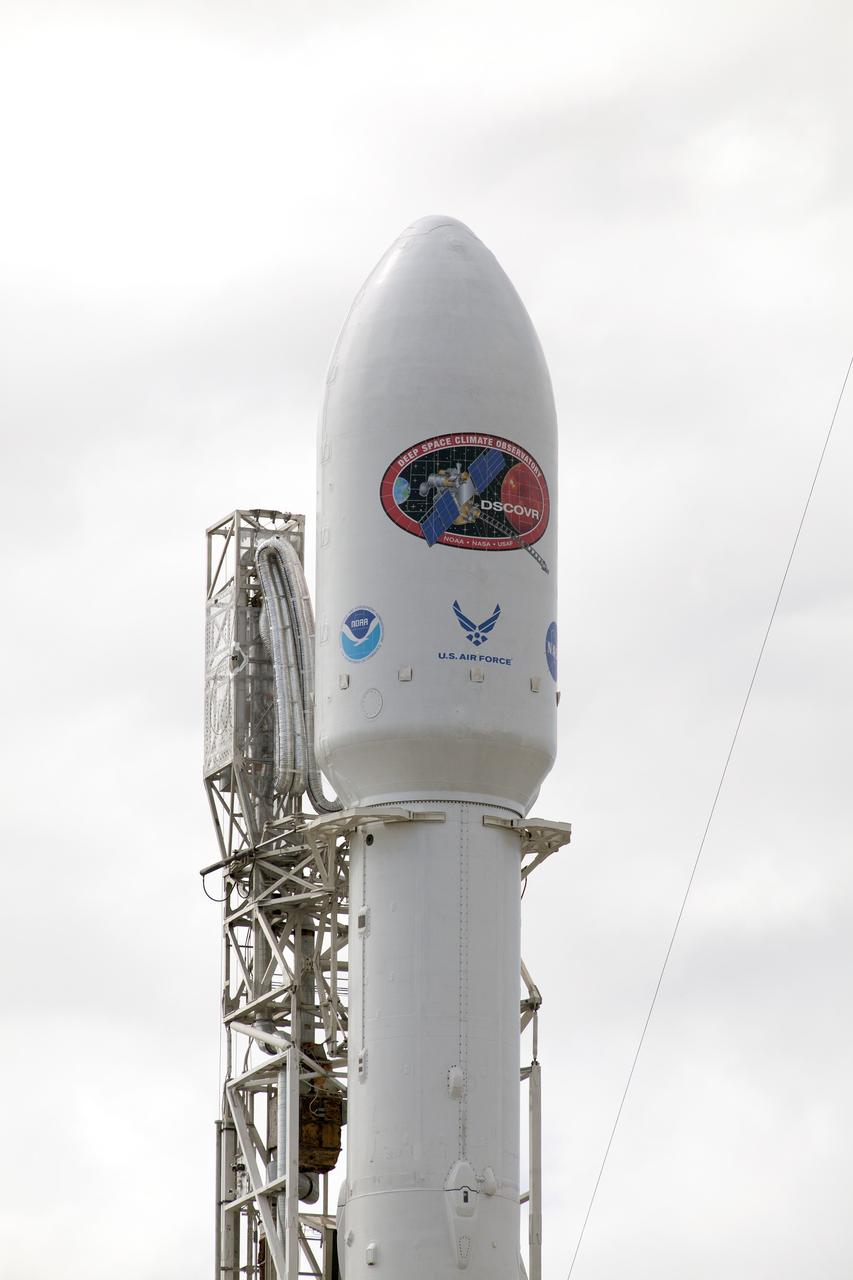
CAPE CANAVERAL, Fla. – The payload fairing protecting NOAA’s Deep Space Climate Observatory spacecraft, or DSCOVR, tops the SpaceX Falcon 9 rocket set to lift off at 6:10 p.m. EST from Space Launch Complex 40 at Cape Canaveral Air Force Station in Florida. DSCOVR is a partnership between NOAA, NASA and the U.S. Air Force. DSCOVR will maintain the nation's real-time solar wind monitoring capabilities which are critical to the accuracy and lead time of NOAA's space weather alerts and forecasts. To learn more about DSCOVR, visit http://www.nesdis.noaa.gov/DSCOVR. Photo credit: NASA/Kim Shiflett
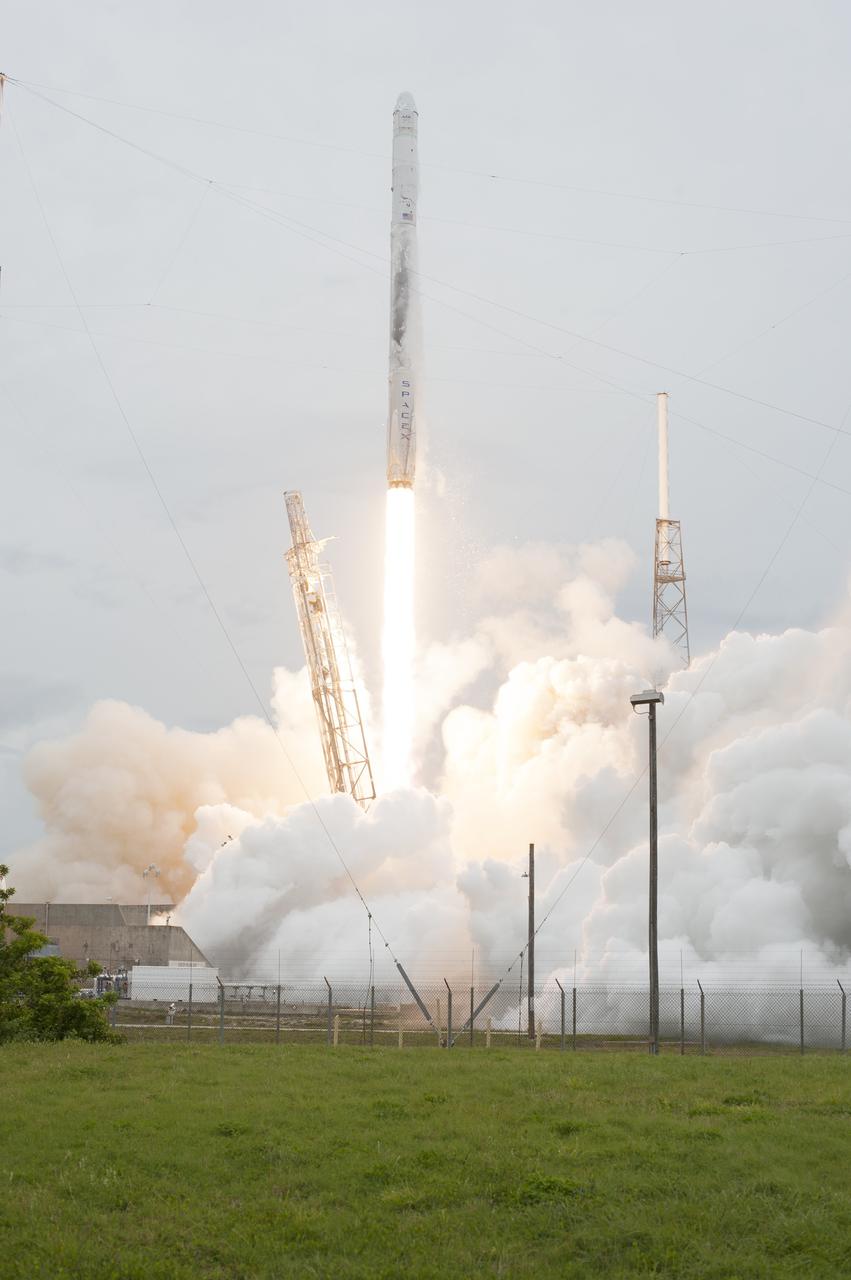
CAPE CANAVERAL, Fla. - The SpaceX-3 mission soars into the clouds over Space Launch Complex 40 on Cape Canaveral Air Force Station aboard a Falcon 9 rocket, carrying the Dragon resupply spacecraft to the International Space Station. Liftoff was during an instantaneous window at 3:25 p.m. EDT. Dragon is making its fourth trip to the space station. The SpaceX-3 mission, carrying almost 2.5 tons of supplies, technology and science experiments, is the third of 12 flights through a $1.6 billion NASA Commercial Resupply Services contract. Dragon's cargo will support more than 150 experiments that will be conducted during the station's Expeditions 39 and 40. For more information, visit http://www.nasa.gov/mission_pages/station/structure/launch/index.html. Photo credit: NASA/Tony Gray and Tim Powers
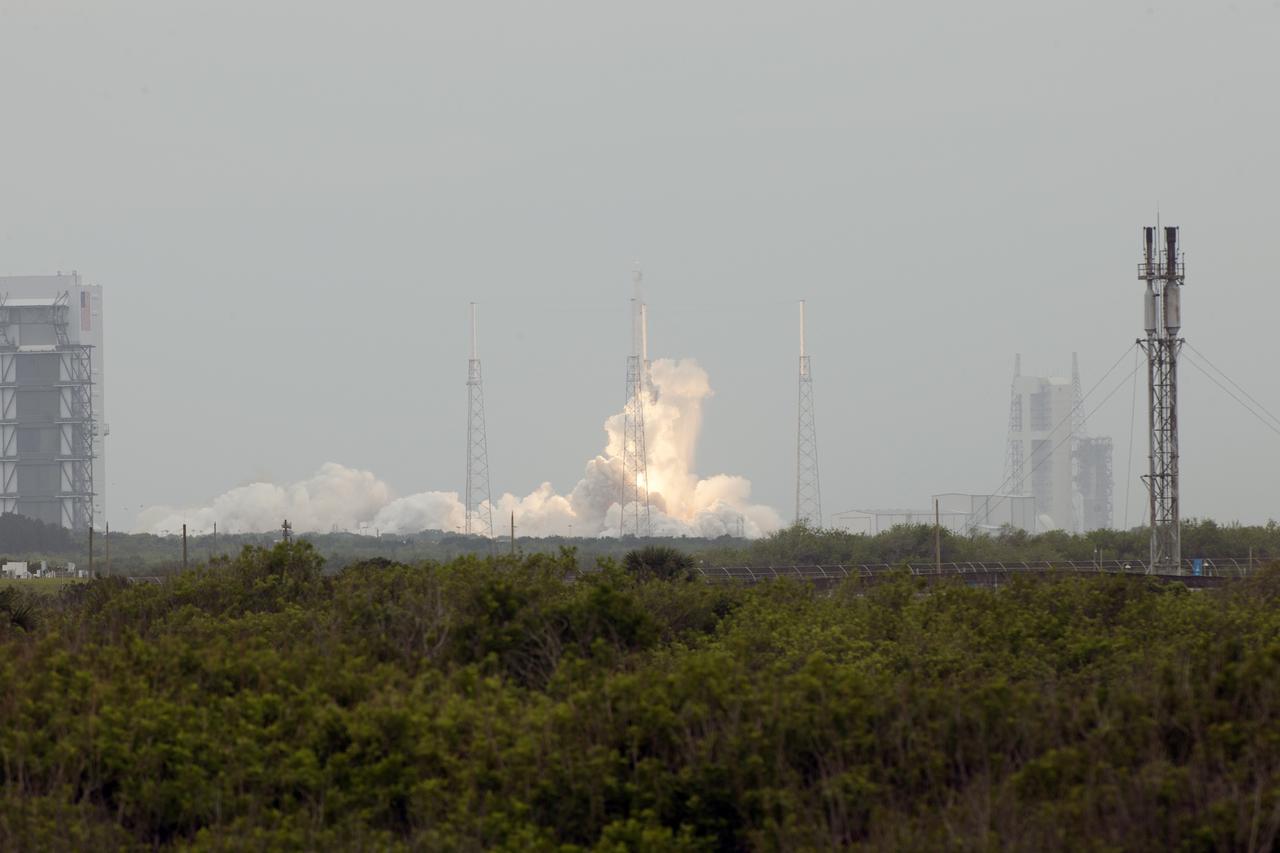
CAPE CANAVERAL, Fla. - The SpaceX-3 mission lifts off from Space Launch Complex 40 on Cape Canaveral Air Force Station aboard a Falcon 9 rocket, carrying the Dragon resupply spacecraft to the International Space Station. Liftoff was at 3:25 p.m. EDT. Dragon is making its fourth trip to the space station. The SpaceX-3 mission, carrying almost 2.5 tons of supplies, technology and science experiments, is the third of 12 flights through a $1.6 billion NASA Commercial Resupply Services contract. Dragon's cargo will support more than 150 experiments that will be conducted during the station's Expeditions 39 and 40. For more information, visit http://www.nasa.gov/mission_pages/station/structure/launch/index.html. Photo credit: NASA/George Roberts
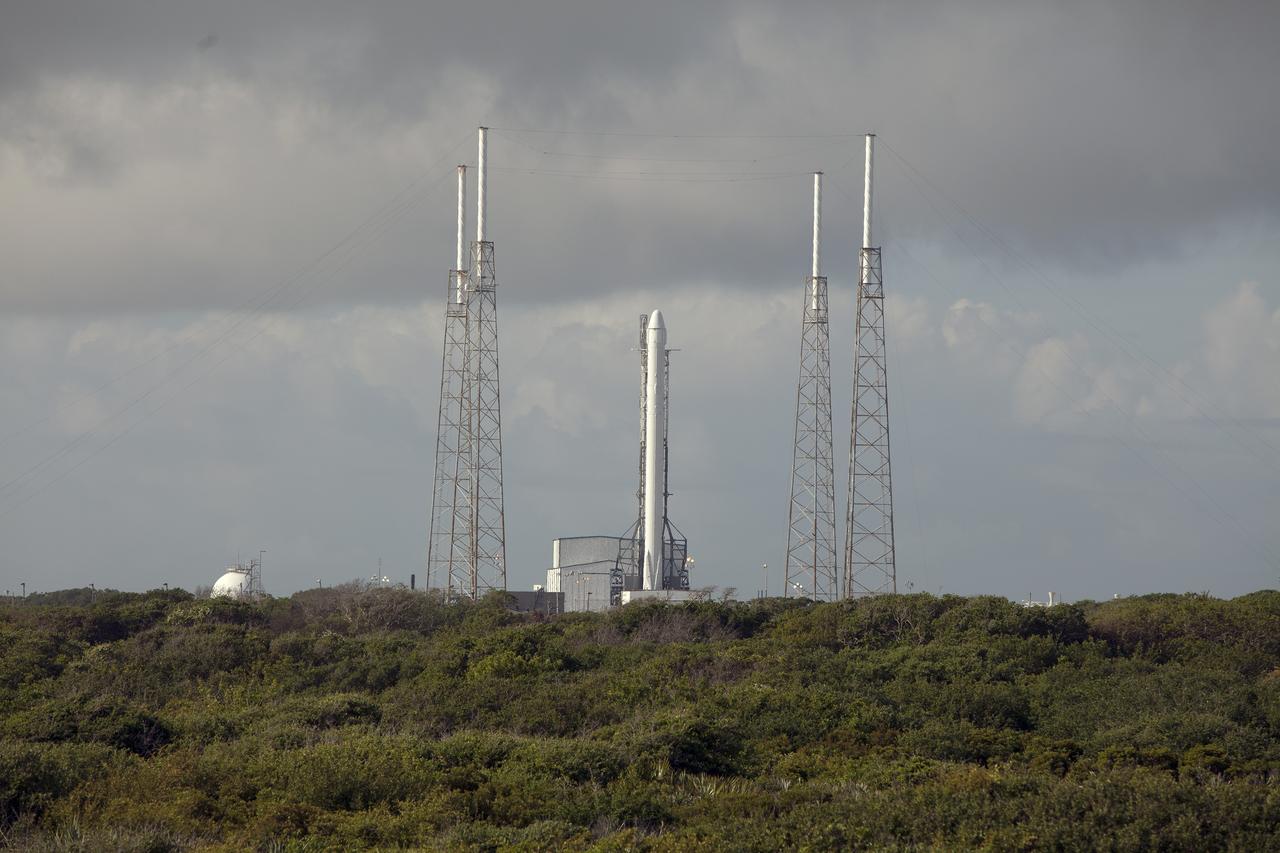
CAPE CANAVERAL, Fla. - Preparations are underway at Space Launch Complex 40 on Cape Canaveral Air Force Station in Florida to launch a SpaceX Falcon 9 rocket and a Dragon capsule on its third commercial resupply mission to deliver about 5,000 pounds of cargo to the International Space Station. Scheduled for launch at about 4:58 p.m. EDT April 14, Dragon will be making its fourth trip to the space station. The SpaceX-3 mission, carrying almost 2.5 tons of supplies, technology and science experiments, is the third of 12 flights under NASA's Commercial Resupply Services contract to resupply the orbiting laboratory. For more information, visit http://www.nasa.gov/mission_pages/station/structure/launch/index.html Photo credit: NASA/Glenn Benson
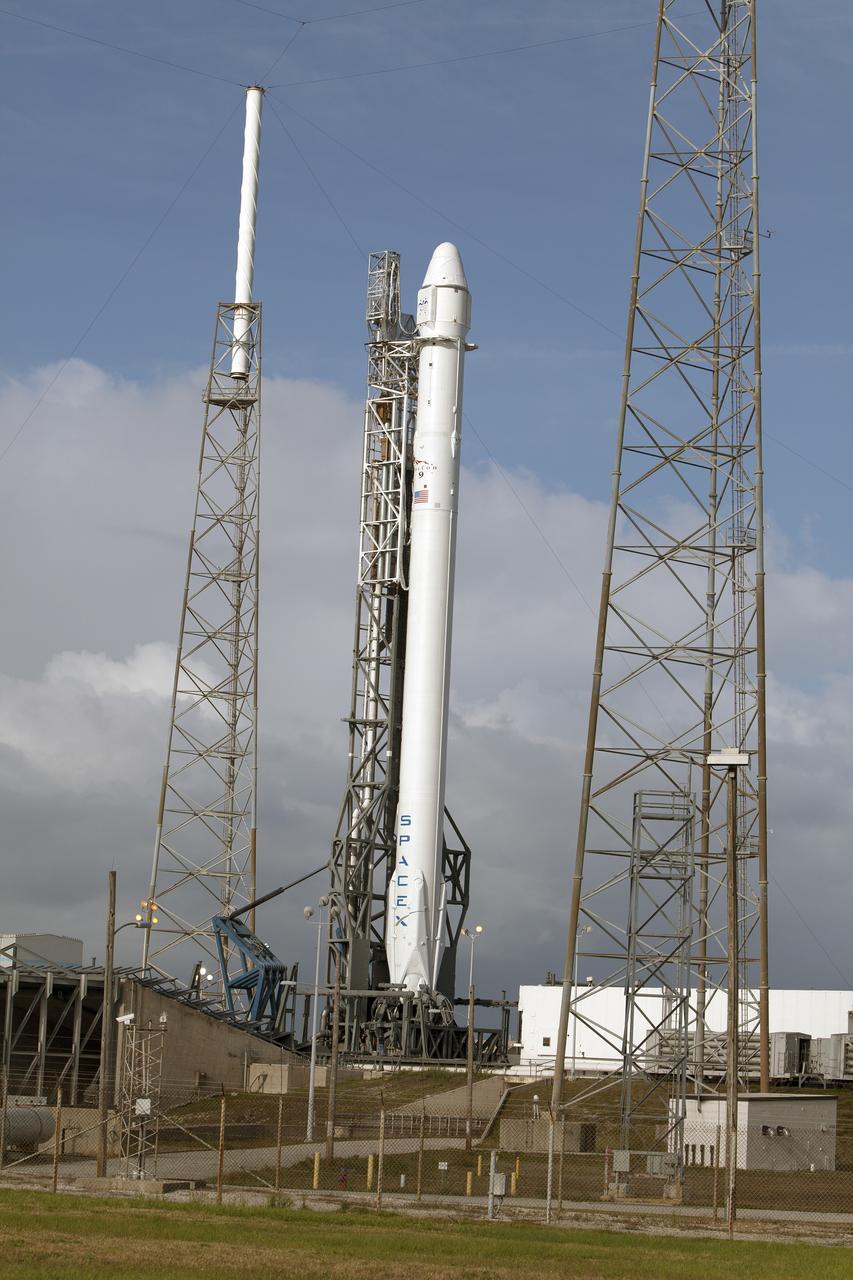
CAPE CANAVERAL, Fla. - At Space Launch Complex 40 on Cape Canaveral Air Force Station in Florida, a SpaceX Falcon 9 rocket stands ready to boost a Dragon capsule on its third commercial resupply mission to deliver about 5,000 pounds of cargo to the International Space Station. Scheduled for launch at about 4:58 p.m. EDT April 14, Dragon will be making its fourth trip to the space station. The SpaceX-3 mission, carrying almost 2.5 tons of supplies, technology and science experiments, is the third of 12 flights under NASA's Commercial Resupply Services contract to resupply the orbiting laboratory. For more information, visit http://www.nasa.gov/mission_pages/station/structure/launch/index.html Photo credit: NASA/Glenn Benson
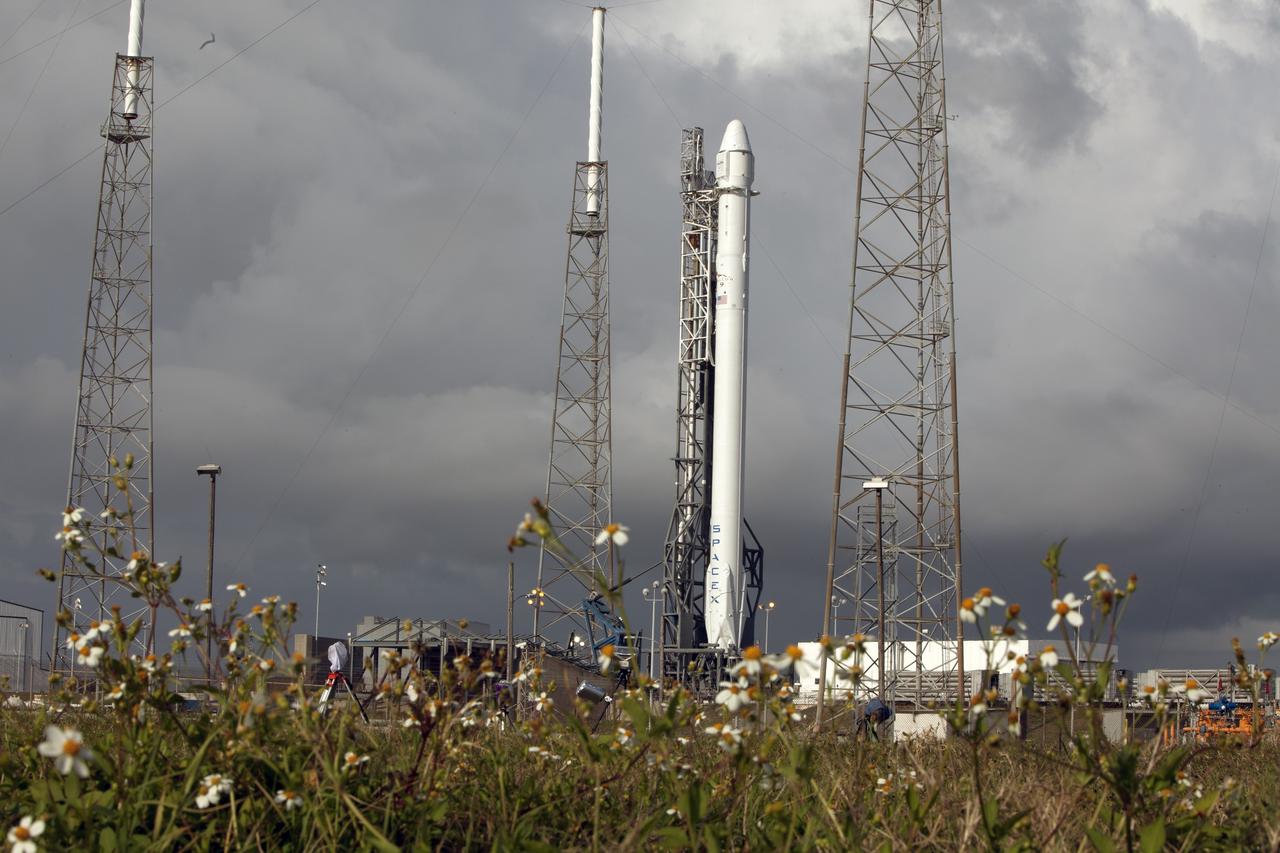
CAPE CANAVERAL, Fla. - Early morning showers pass by Space Launch Complex 40 on Cape Canaveral Air Force Station in Florida on launch day for a SpaceX Falcon 9 rocket and a Dragon capsule on its third commercial resupply mission to deliver about 5,000 pounds of cargo to the International Space Station. Scheduled for launch at about 4:58 p.m. EDT April 14, Dragon will be making its fourth trip to the space station. The SpaceX-3 mission, carrying almost 2.5 tons of supplies, technology and science experiments, is the third of 12 flights under NASA's Commercial Resupply Services contract to resupply the orbiting laboratory. For more information, visit http://www.nasa.gov/mission_pages/station/structure/launch/index.html Photo credit: NASA/Glenn Benson
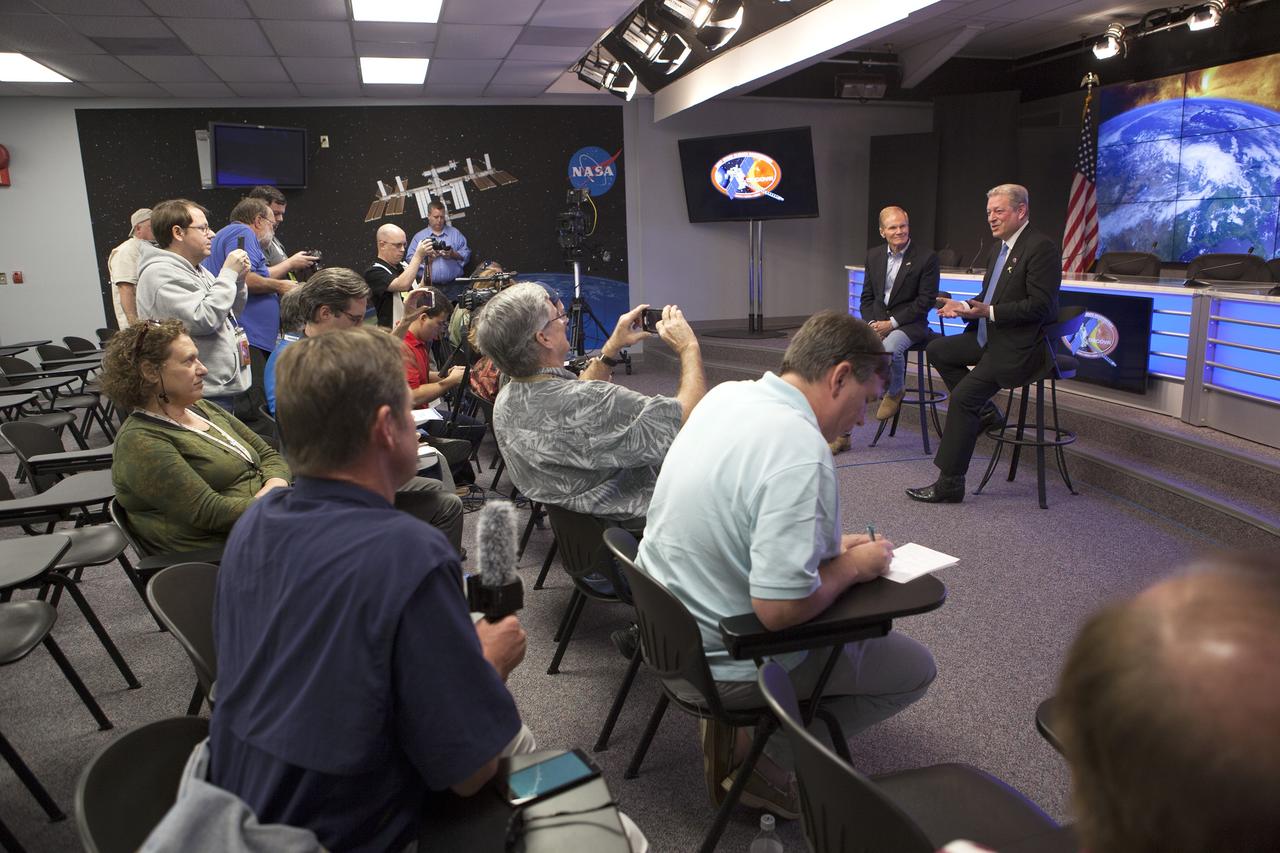
CAPE CANAVERAL, Fla. – Members of the news media listen and take photos at NASA’s Kennedy Space Center in Florida as Sen. Bill Nelson, left, and former Vice President Al Gore, right, answer questions prior to the planned liftoff of NOAA’s Deep Space Climate Observatory spacecraft, or DSCOVR. DSCOVR will launch aboard a SpaceX Falcon 9 rocket. The mission is a partnership between NOAA, NASA and the U.S. Air Force. DSCOVR will maintain the nation's real-time solar wind monitoring capabilities which are critical to the accuracy and lead time of NOAA's space weather alerts and forecasts. To learn more about DSCOVR, visit http://www.nesdis.noaa.gov/DSCOVR. Photo credit: NASA/Kim Shiflett
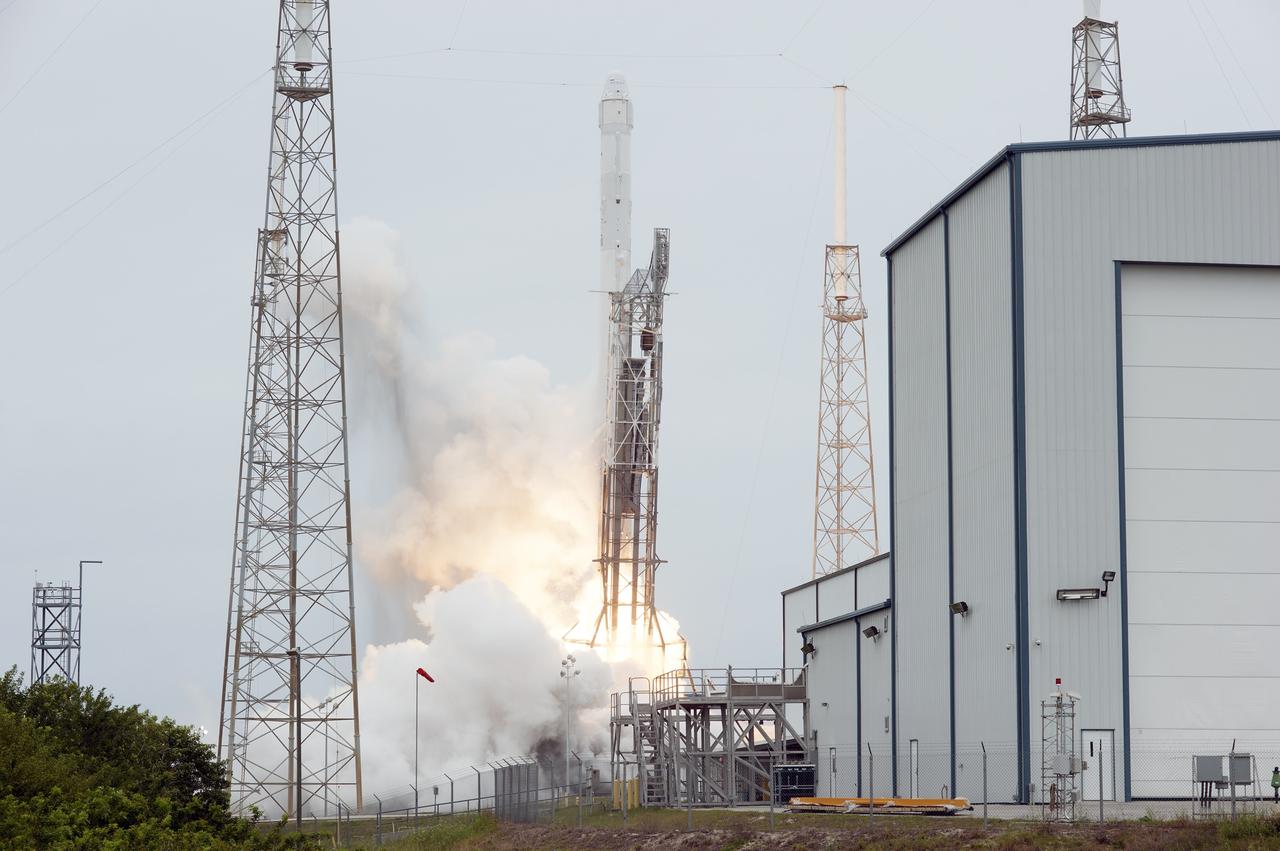
CAPE CANAVERAL, Fla. - As nine engines ignite under the SpaceX Falcon 9, the rocket springs to life at Space Launch Complex 40 on Cape Canaveral Air Force Station, boosting the Dragon resupply spacecraft on the SpaceX-3 mission to the International Space Station. Launch was at 3:25 p.m. EDT. Dragon is making its fourth trip to the space station. The SpaceX-3 mission, carrying almost 2.5 tons of supplies, technology and science experiments, is the third of 12 flights through a $1.6 billion NASA Commercial Resupply Services contract. Dragon's cargo will support more than 150 experiments that will be conducted during the station's Expeditions 39 and 40. For more information, visit http://www.nasa.gov/mission_pages/station/structure/launch/index.html. Photo credit: NASA/Tony Gray and Tim Powers
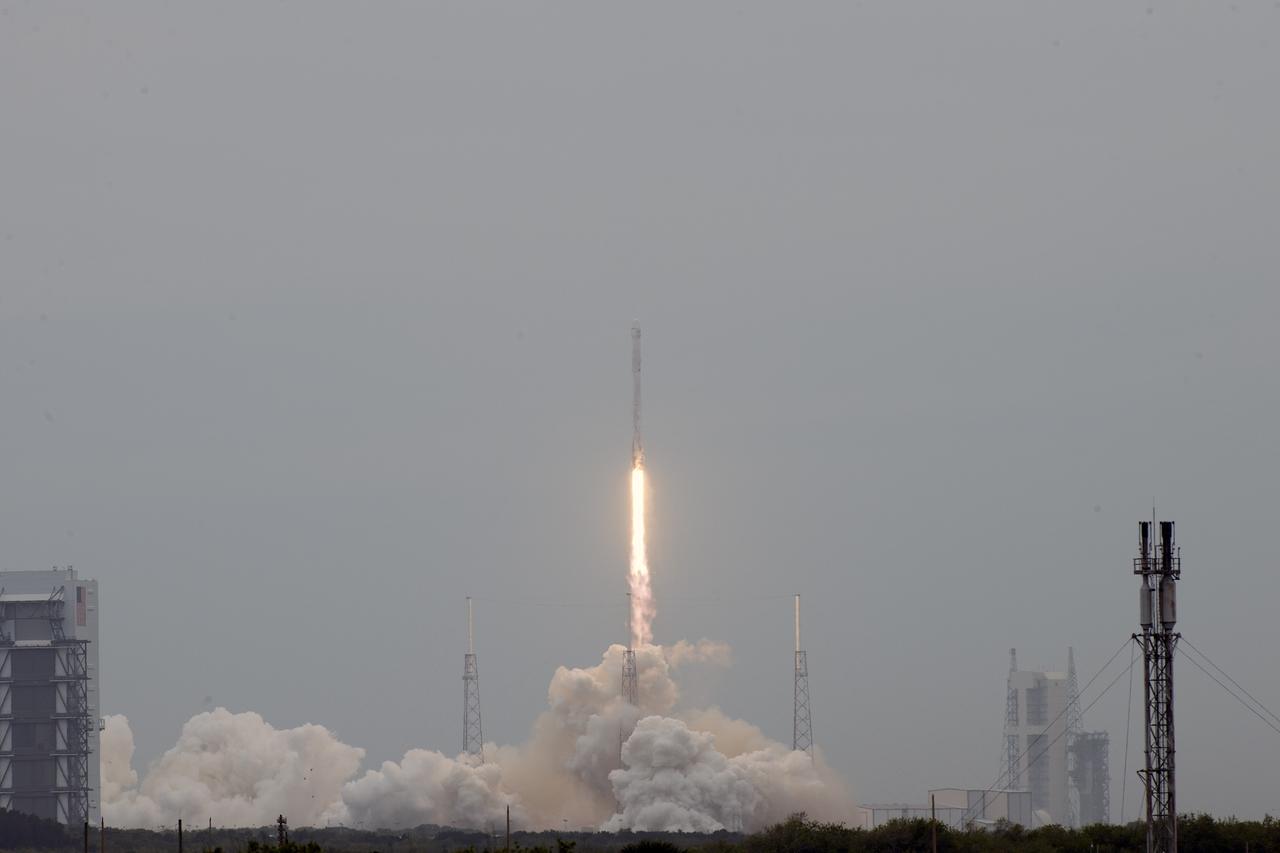
CAPE CANAVERAL, Fla. - The SpaceX-3 mission lifts off into the clouds over Space Launch Complex 40 on Cape Canaveral Air Force Station aboard a Falcon 9 rocket, carrying the Dragon resupply spacecraft to the International Space Station. Liftoff was during an instantaneous window at 3:25 p.m. EDT. Dragon is making its fourth trip to the space station. The SpaceX-3 mission, carrying almost 2.5 tons of supplies, technology and science experiments, is the third of 12 flights through a $1.6 billion NASA Commercial Resupply Services contract. Dragon's cargo will support more than 150 experiments that will be conducted during the station's Expeditions 39 and 40. For more information, visit http://www.nasa.gov/mission_pages/station/structure/launch/index.html. Photo credit: NASA/George Roberts
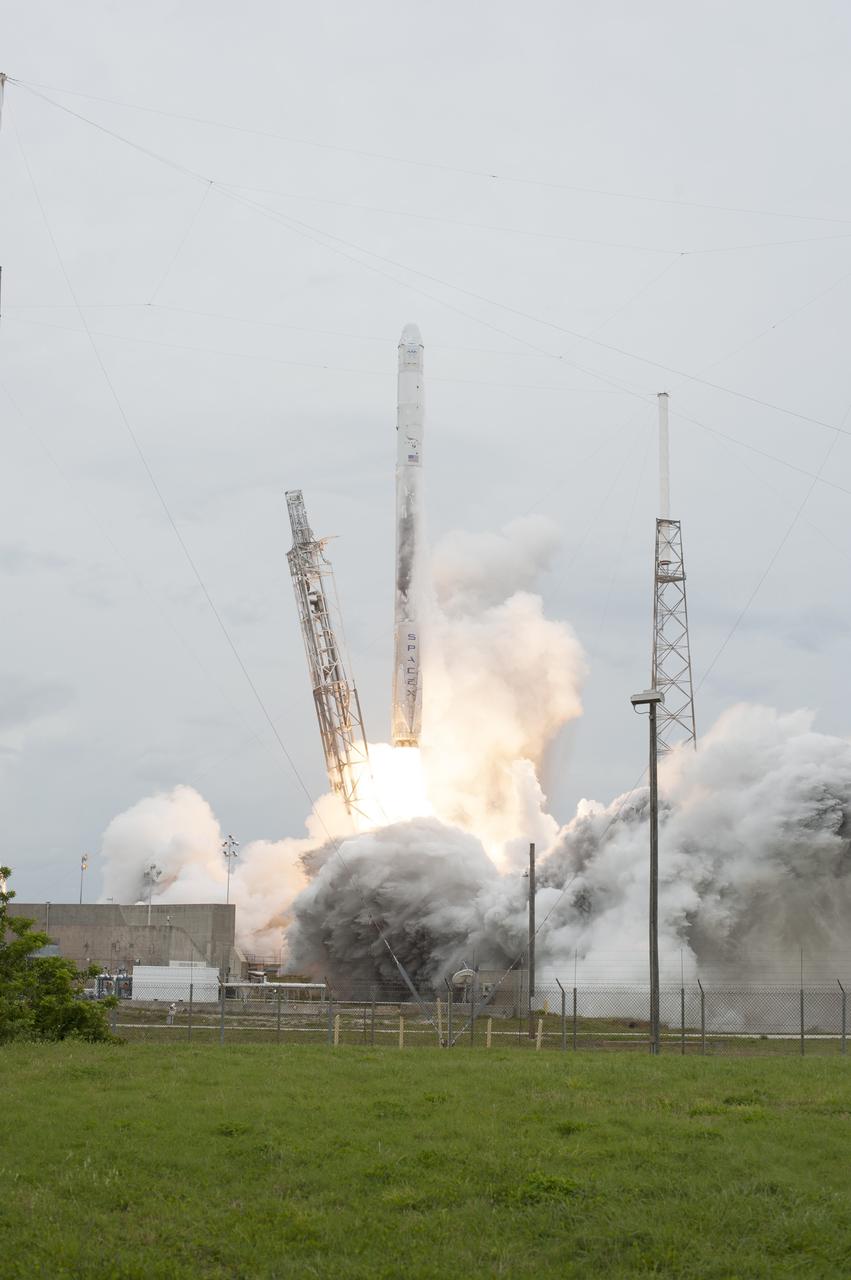
CAPE CANAVERAL, Fla. - An exhaust cloud builds under the Falcon 9 rocket on Space Launch Complex 40 on Cape Canaveral Air Force Station as the SpaceX-3 mission lifts off, carrying the Dragon resupply spacecraft to the International Space Station. Liftoff was during an instantaneous window at 3:25 p.m. EDT. Dragon is making its fourth trip to the space station. The SpaceX-3 mission, carrying almost 2.5 tons of supplies, technology and science experiments, is the third of 12 flights through a $1.6 billion NASA Commercial Resupply Services contract. Dragon's cargo will support more than 150 experiments that will be conducted during the station's Expeditions 39 and 40. For more information, visit http://www.nasa.gov/mission_pages/station/structure/launch/index.html. Photo credit: NASA/Tony Gray and Tim Powers
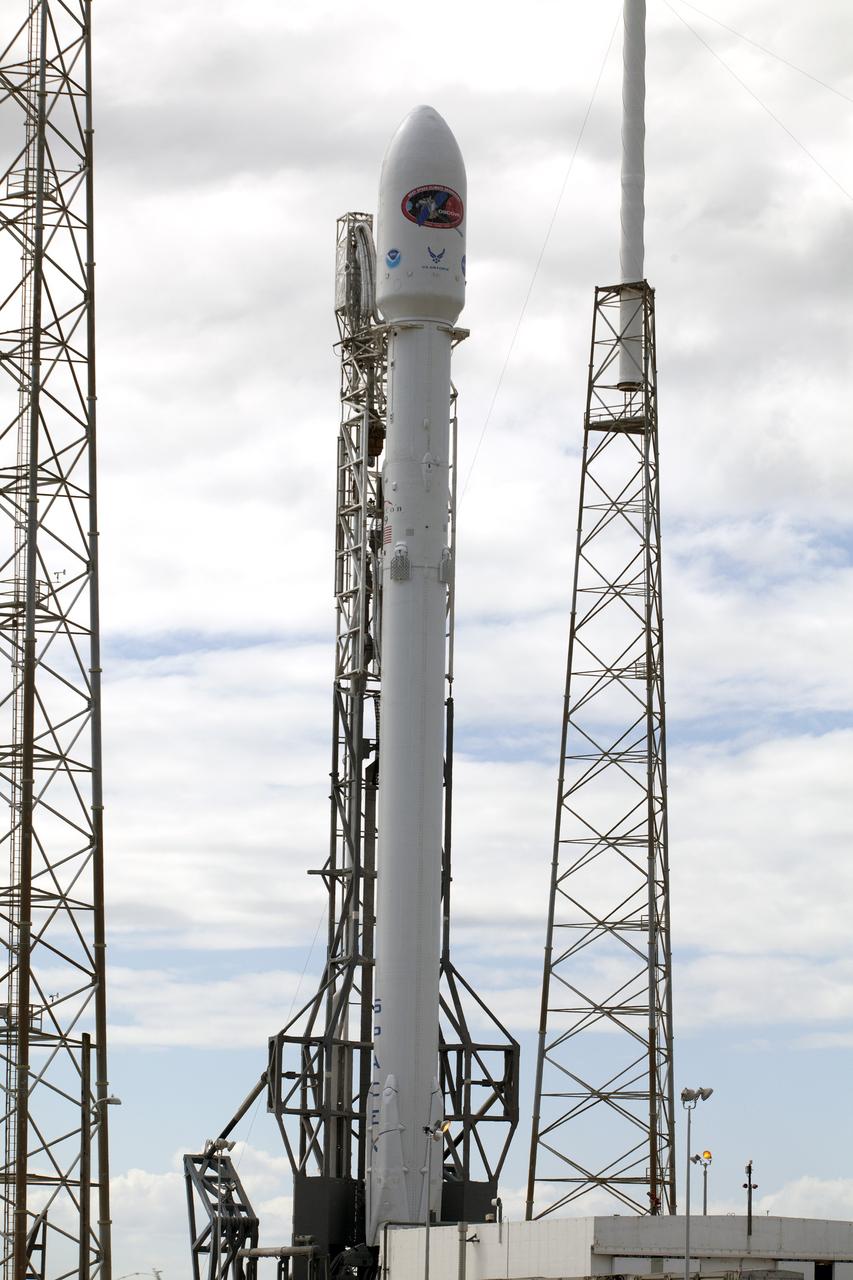
CAPE CANAVERAL, Fla. – The SpaceX Falcon 9 rocket set to launch NOAA’s Deep Space Climate Observatory spacecraft, or DSCOVR, is flanked by lightning masts at Space Launch Complex 40 at Cape Canaveral Air Force Station in Florida. DSCOVR is a partnership between NOAA, NASA and the U.S. Air Force. DSCOVR will maintain the nation's real-time solar wind monitoring capabilities which are critical to the accuracy and lead time of NOAA's space weather alerts and forecasts. To learn more about DSCOVR, visit http://www.nesdis.noaa.gov/DSCOVR. Photo credit: NASA/Kim Shiflett
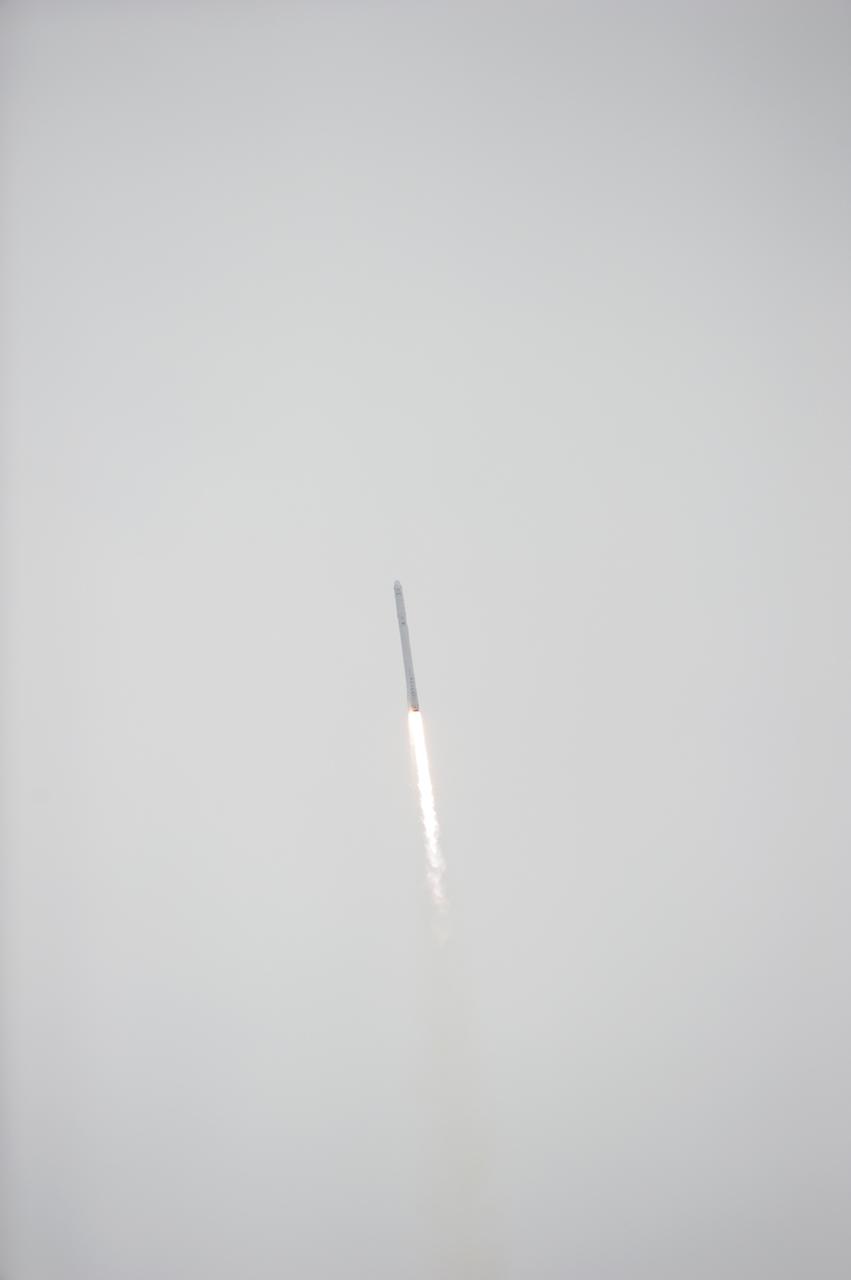
CAPE CANAVERAL, Fla. - The SpaceX-3 mission lifts off through the clouds over Space Launch Complex 40 on Cape Canaveral Air Force Station aboard a Falcon 9 rocket, carrying the Dragon resupply spacecraft to the International Space Station. Liftoff was during an instantaneous window at 3:25 p.m. EDT. Dragon is making its fourth trip to the space station. The SpaceX-3 mission, carrying almost 2.5 tons of supplies, technology and science experiments, is the third of 12 flights under NASA's Commercial Resupply Services contract to resupply the orbiting laboratory. For more information, visit http://www.nasa.gov/mission_pages/station/structure/launch/index.html. Photo credit: NASA/Kim Shiflett
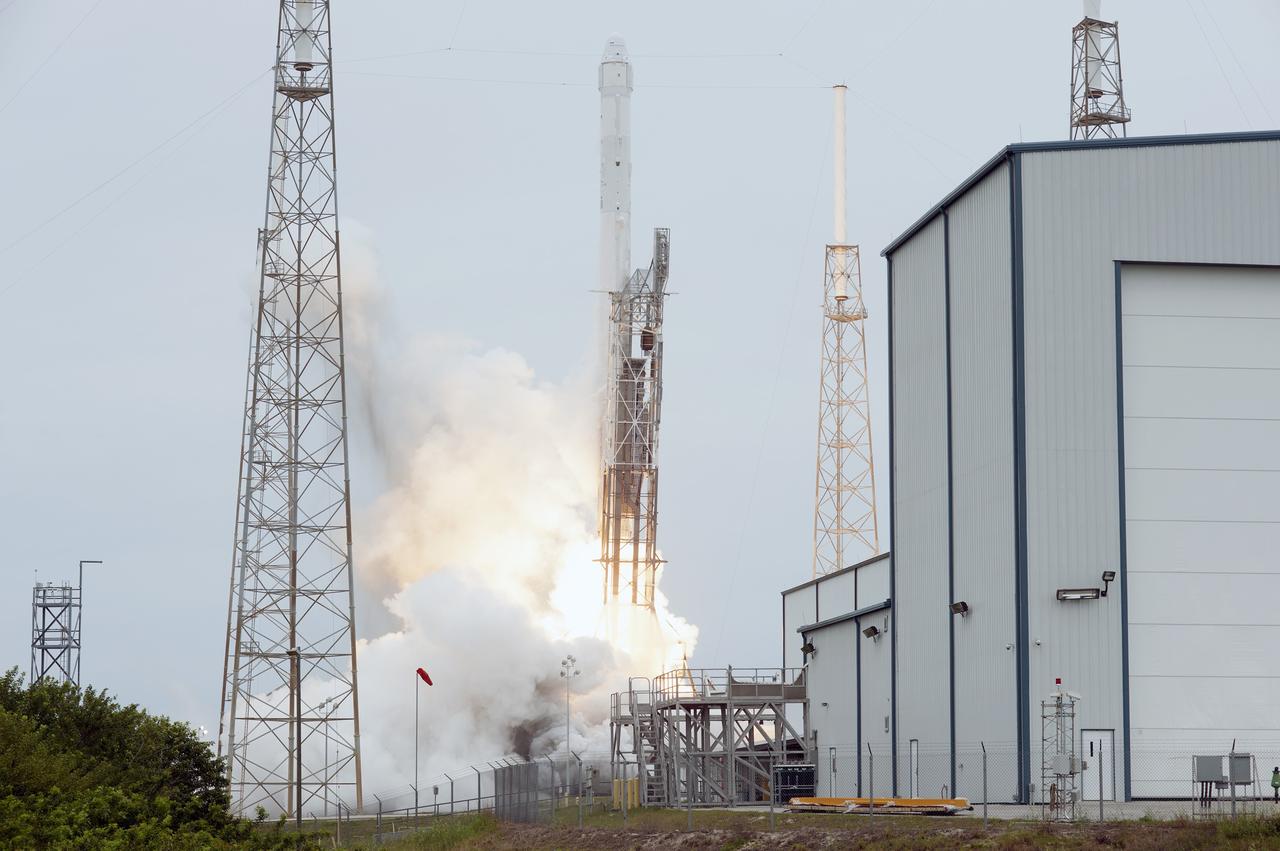
CAPE CANAVERAL, Fla. - An exhaust cloud forms under the Falcon 9 rocket on Space Launch Complex 40 on Cape Canaveral Air Force Station as the SpaceX-3 mission lifts off, carrying the Dragon resupply spacecraft to the International Space Station. Liftoff was during an instantaneous window at 3:25 p.m. EDT. Dragon is making its fourth trip to the space station. The SpaceX-3 mission, carrying almost 2.5 tons of supplies, technology and science experiments, is the third of 12 flights through a $1.6 billion NASA Commercial Resupply Services contract. Dragon's cargo will support more than 150 experiments that will be conducted during the station's Expeditions 39 and 40. For more information, visit http://www.nasa.gov/mission_pages/station/structure/launch/index.html. Photo credit: NASA/Tony Gray and Tim Powers
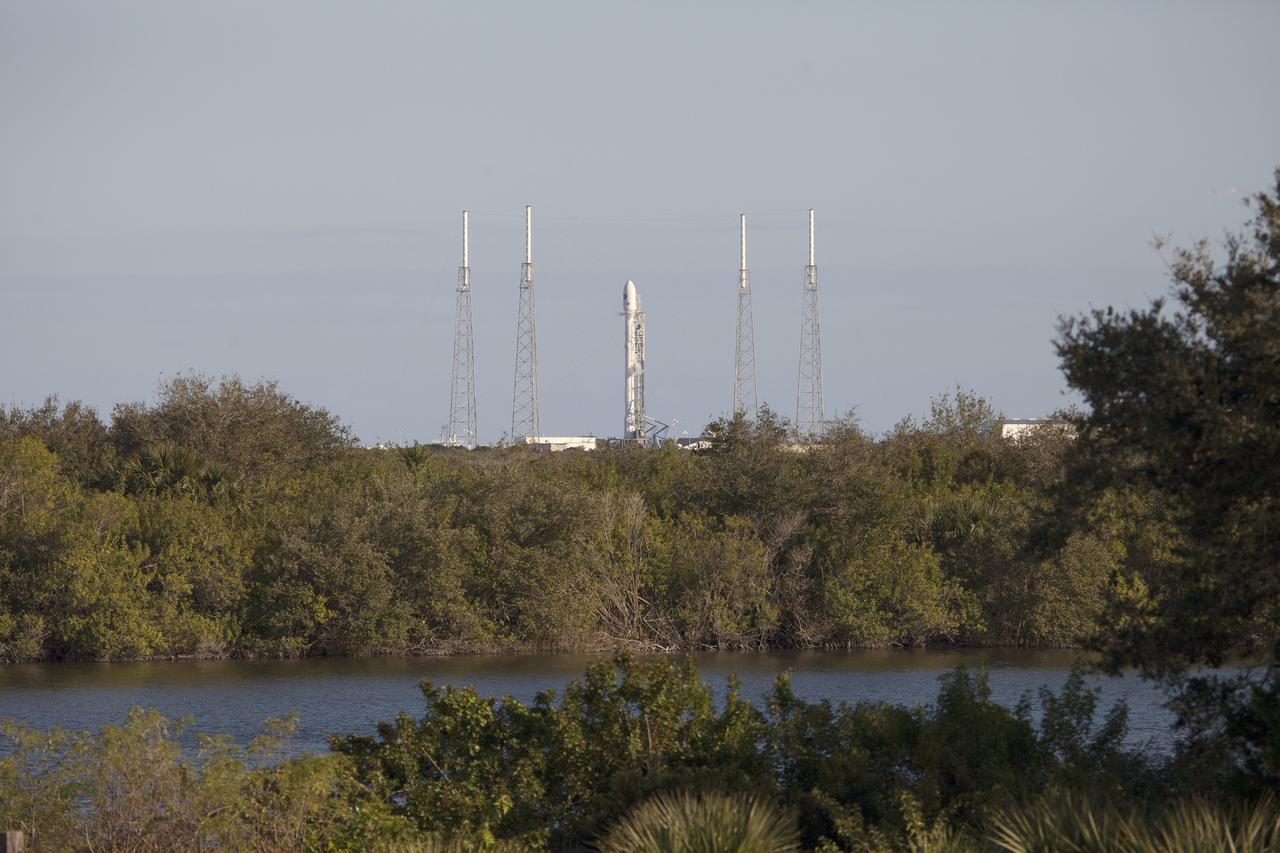
The SpaceX Falcon 9 rocket set to launch NOAA’s Deep Space Climate Observatory spacecraft, or DSCOVR, stands at Space Launch Complex 40 at Florida’s Cape Canaveral Air Force Station during the mission’s first launch attempt. The mission is a partnership between NOAA, NASA and the U.S. Air Force. DSCOVR will maintain the nation's real-time solar wind monitoring capabilities which are critical to the accuracy and lead time of NOAA's space weather alerts and forecasts. To learn more about DSCOVR, visit http://www.nesdis.noaa.gov/DSCOVR. Photo credit: NASA/Ben Smegelsky
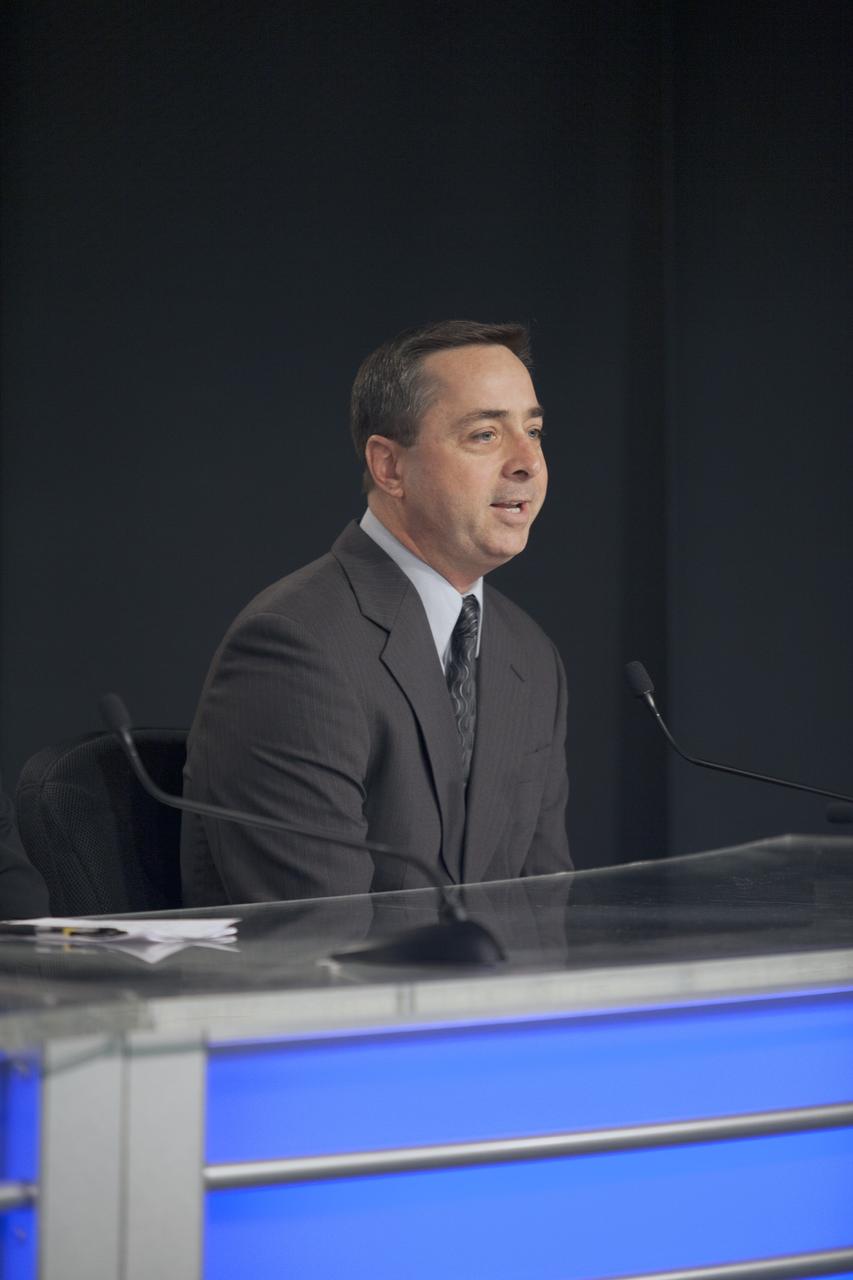
CAPE CANAVERAL, Fla. – Mike McAleenan, launch weather officer with the U.S. Air Force 45th Weather Squadron, provides an on the launch-day forecast during a briefing regarding NOAA’s Deep Space Climate Observatory spacecraft, or DSCOVR. DSCOVR will launch aboard a SpaceX Falcon 9 rocket. The mission is a partnership between NOAA, NASA and the U.S. Air Force. DSCOVR will maintain the nation's real-time solar wind monitoring capabilities which are critical to the accuracy and lead time of NOAA's space weather alerts and forecasts. To learn more about DSCOVR, visit http://www.nesdis.noaa.gov/DSCOVR. Photo credit: NASA/Kim Shiflett
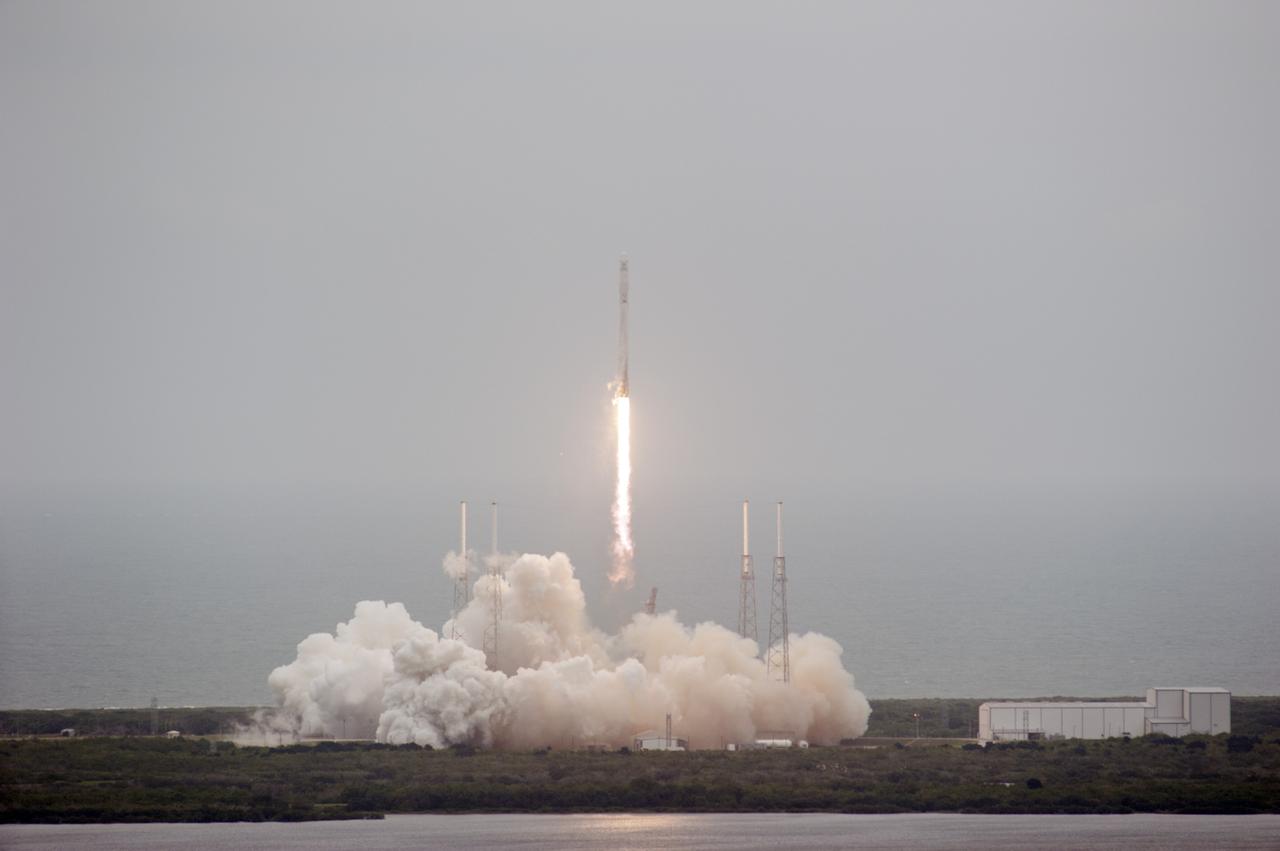
CAPE CANAVERAL, Fla. - The SpaceX Falcon 9 rocket rises above the lightning masts on Space Launch Complex 40 at Cape Canaveral Air Force Station, carrying the Dragon resupply spacecraft to the International Space Station. Liftoff was during an instantaneous window at 3:25 p.m. EDT. Dragon is making its fourth trip to the space station. The SpaceX-3 mission, carrying almost 2.5 tons of supplies, technology and science experiments, is the third of 12 flights under NASA's Commercial Resupply Services contract to resupply the orbiting laboratory. For more information, visit http://www.nasa.gov/mission_pages/station/structure/launch/index.html. Photo credit: NASA/Kim Shiflett
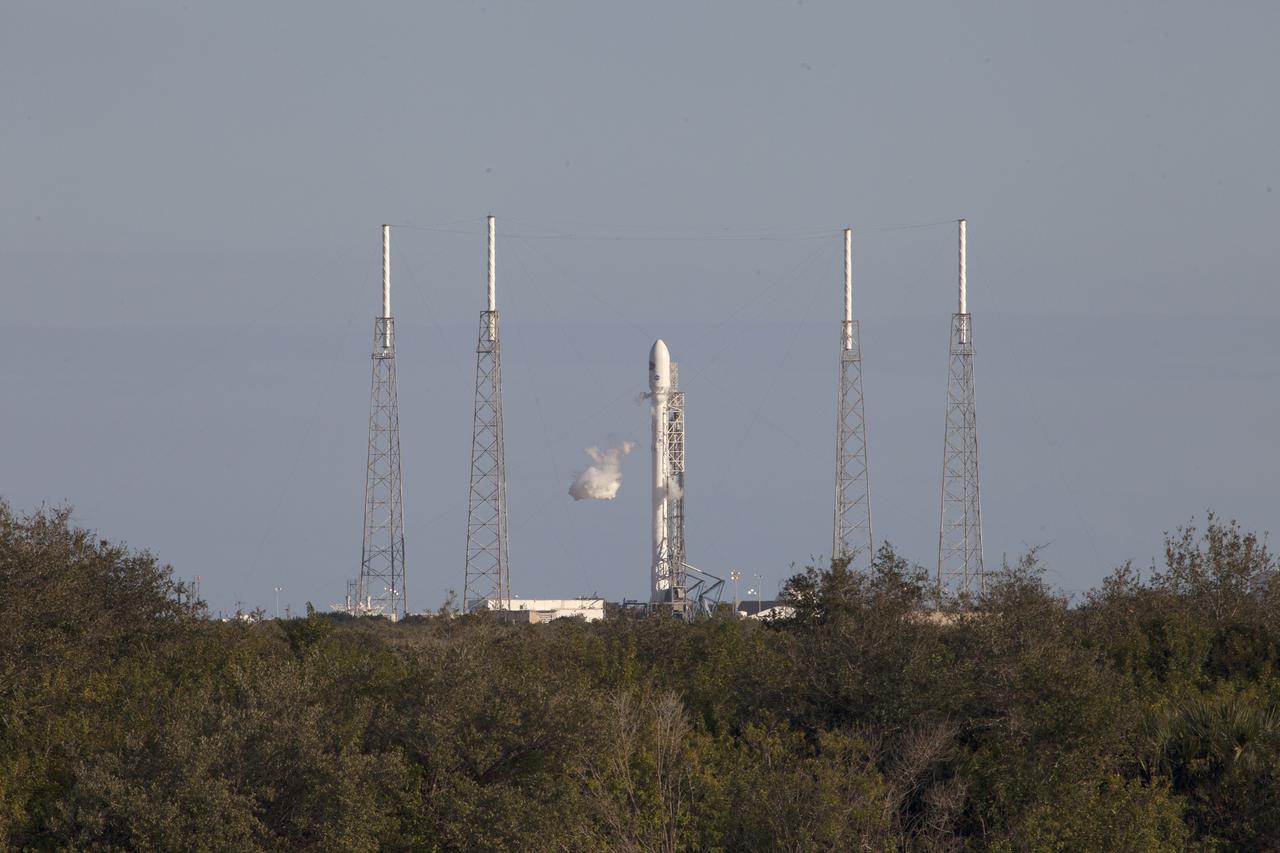
Gaseous oxygen vents away from the SpaceX Falcon 9 rocket standing at Space Launch Complex 40 at Florida’s Cape Canaveral Air Force Station during the first launch attempt for NOAA’s Deep Space Climate Observatory spacecraft, or DSCOVR. The mission is a partnership between NOAA, NASA and the U.S. Air Force. DSCOVR will maintain the nation's real-time solar wind monitoring capabilities which are critical to the accuracy and lead time of NOAA's space weather alerts and forecasts. To learn more about DSCOVR, visit http://www.nesdis.noaa.gov/DSCOVR. Photo credit: NASA/Ben Smegelsky
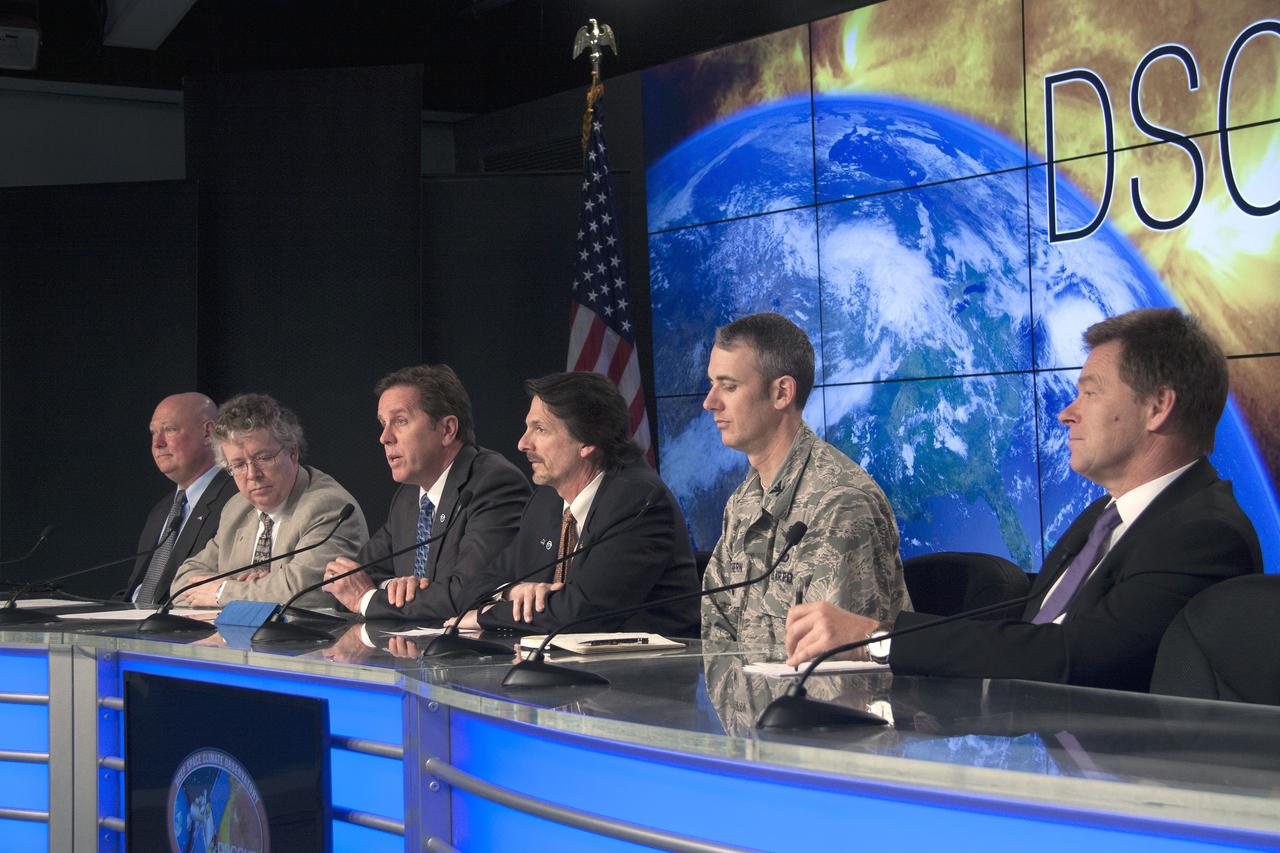
CAPE CANAVERAL, Fla. – A prelaunch briefing at NASA’s Kennedy Space Center in Florida brings media up to date on preparations for the liftoff of NOAA’s Deep Space Climate Observatory spacecraft, or DSCOVR. From left are Michael Curie, moderator, NASA Public Affairs, Stephen Volz, assistant administrator of the NOAA Satellite and Information Service, Tom Berger, director of the NOAA Space Weather Prediction Center, Steven Clarke, NASA Joint Agency Satellite Division director for the agency’s Science Mission Directorate, Col. D. Jason Cothern, Space Demonstrations Division chief at Kirtland Air Force Base in Albuquerque, New Mexico, and Hans Koenigsmann, vice president of mission assurance at SpaceX. DSCOVR will launch aboard a SpaceX Falcon 9 rocket. The mission is a partnership between NOAA, NASA and the U.S. Air Force. DSCOVR will maintain the nation's real-time solar wind monitoring capabilities which are critical to the accuracy and lead time of NOAA's space weather alerts and forecasts. To learn more about DSCOVR, visit http://www.nesdis.noaa.gov/DSCOVR. Photo credit: NASA/Jim Grossman
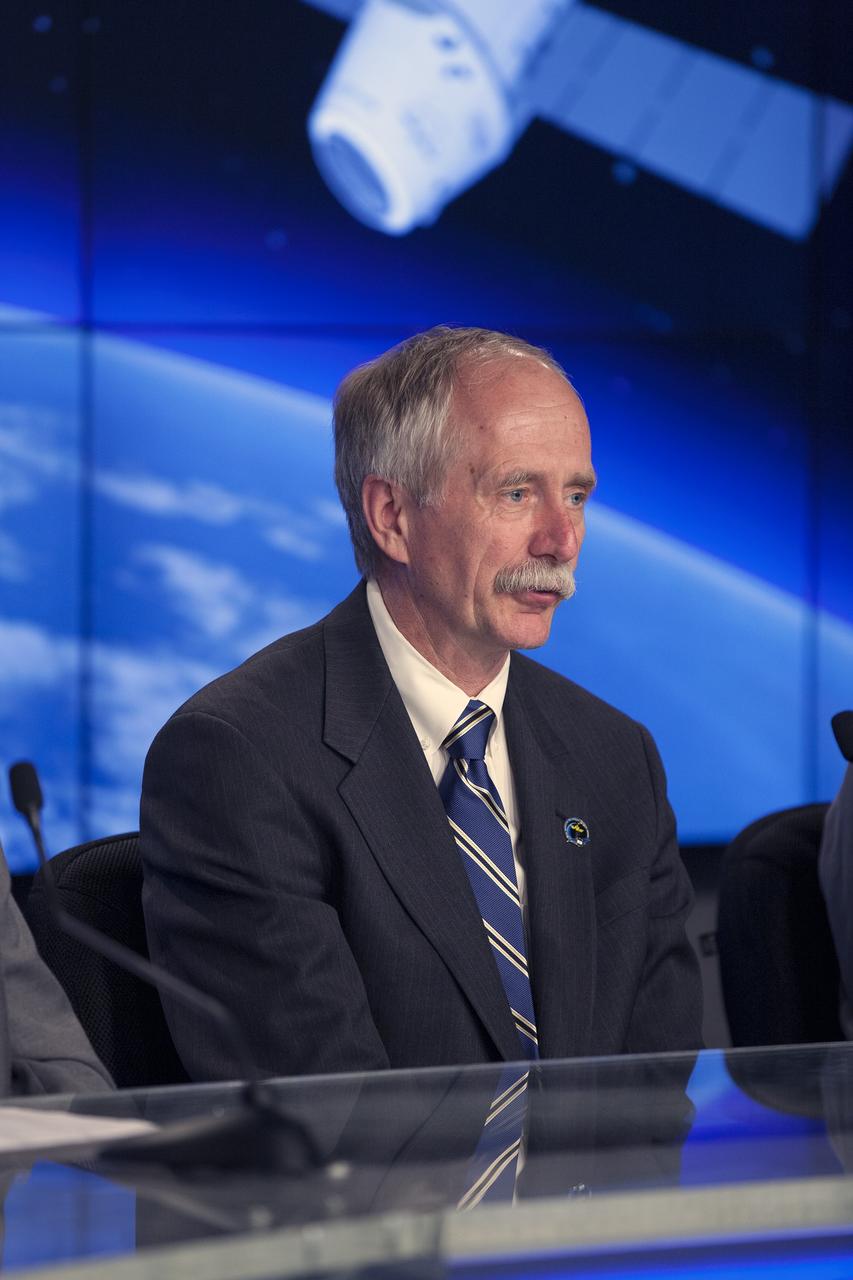
CAPE CANAVERAL, Fla. - NASA Associate Administrator for Human Exploration and Operations William Gersteinmeier participates in a SpaceX-3 post-launch news conference in the NASA Press Site television auditorium at Kennedy Space Center in Florida. SpaceX-3 launched at 3:25 p.m. EDT aboard a Falcon 9 rocket carrying a Dragon capsule from Space Launch Complex 40 on Cape Canaveral Air Force Station. Dragon is making its fourth trip to the space station. The SpaceX-3 mission, carrying almost 2.5 tons of supplies, technology and science experiments, is the third of 12 flights through a $1.6 billion NASA Commercial Resupply Services contract. Dragon's cargo will support more than 150 experiments that will be conducted during the station's Expeditions 39 and 40. For more information, visit http://www.nasa.gov/mission_pages/station/structure/launch/index.html. Photo credit: NASA/Kim Shiflett
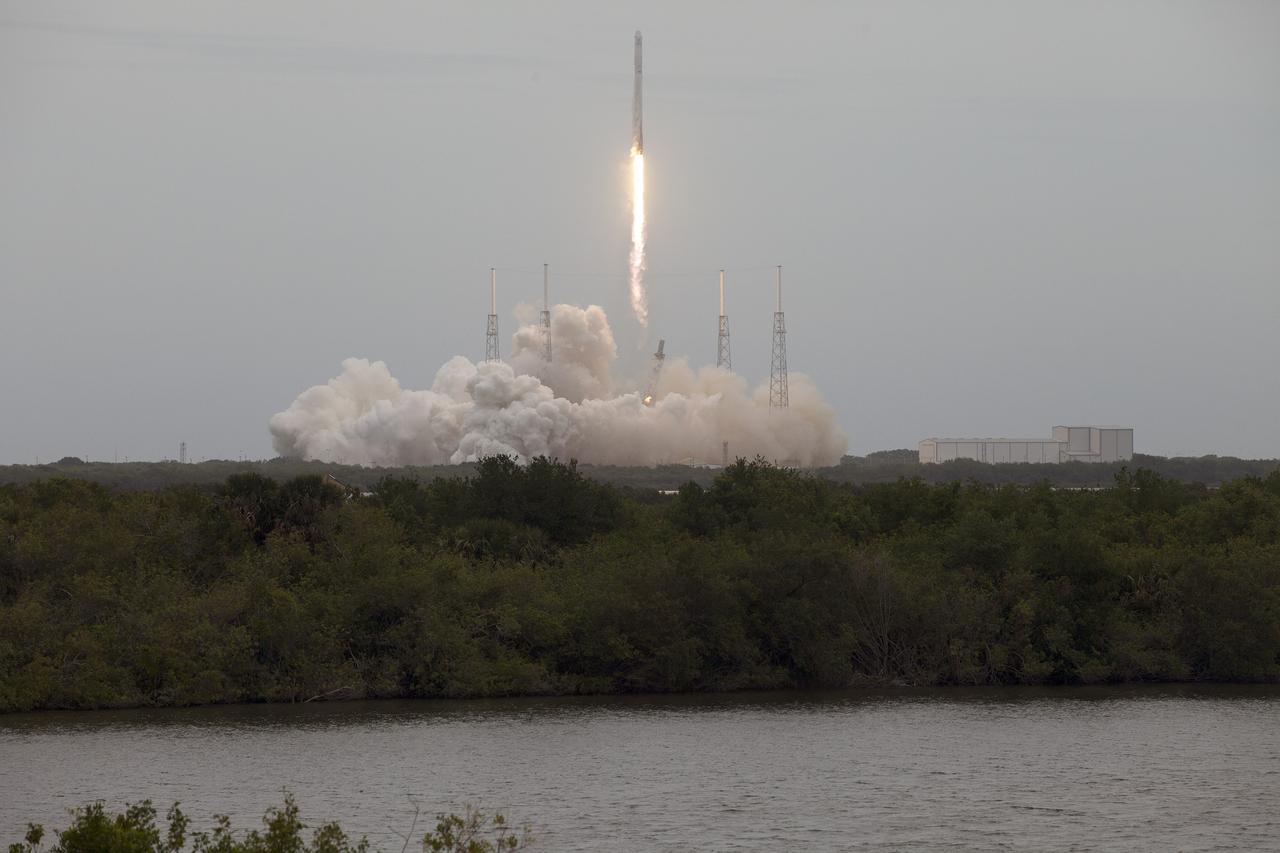
CAPE CANAVERAL, Fla. - The SpaceX-3 mission soars into the clouds over Space Launch Complex 40 on Cape Canaveral Air Force Station aboard a Falcon 9 rocket, carrying the Dragon resupply spacecraft to the International Space Station. Liftoff was during an instantaneous window at 3:25 p.m. EDT. Dragon is making its fourth trip to the space station. The SpaceX-3 mission, carrying almost 2.5 tons of supplies, technology and science experiments, is the third of 12 flights through a $1.6 billion NASA Commercial Resupply Services contract. Dragon's cargo will support more than 150 experiments that will be conducted during the station's Expeditions 39 and 40. For more information, visit http://www.nasa.gov/mission_pages/station/structure/launch/index.html. Photo credit: NASA/Dan Casper
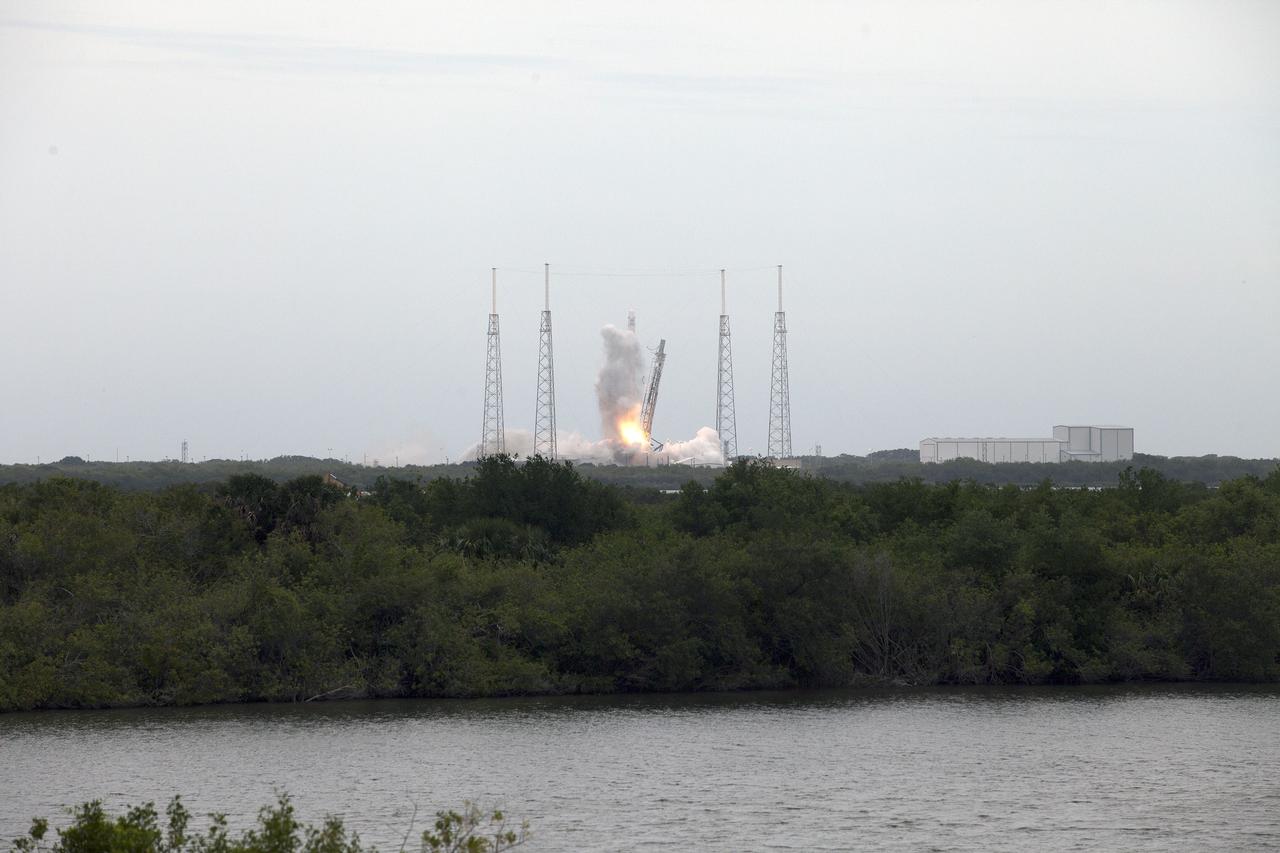
CAPE CANAVERAL, Fla. - The SpaceX-3 mission lifts off through the clouds over Space Launch Complex 40 on Cape Canaveral Air Force Station aboard a Falcon 9 rocket, carrying the Dragon resupply spacecraft to the International Space Station. Liftoff was during an instantaneous window at 3:25 p.m. EDT. Dragon is making its fourth trip to the space station. The SpaceX-3 mission, carrying almost 2.5 tons of supplies, technology and science experiments, is the third of 12 flights through a $1.6 billion NASA Commercial Resupply Services contract. Dragon's cargo will support more than 150 experiments that will be conducted during the station's Expeditions 39 and 40. For more information, visit http://www.nasa.gov/mission_pages/station/structure/launch/index.html. Photo credit: NASA/Dan Casper
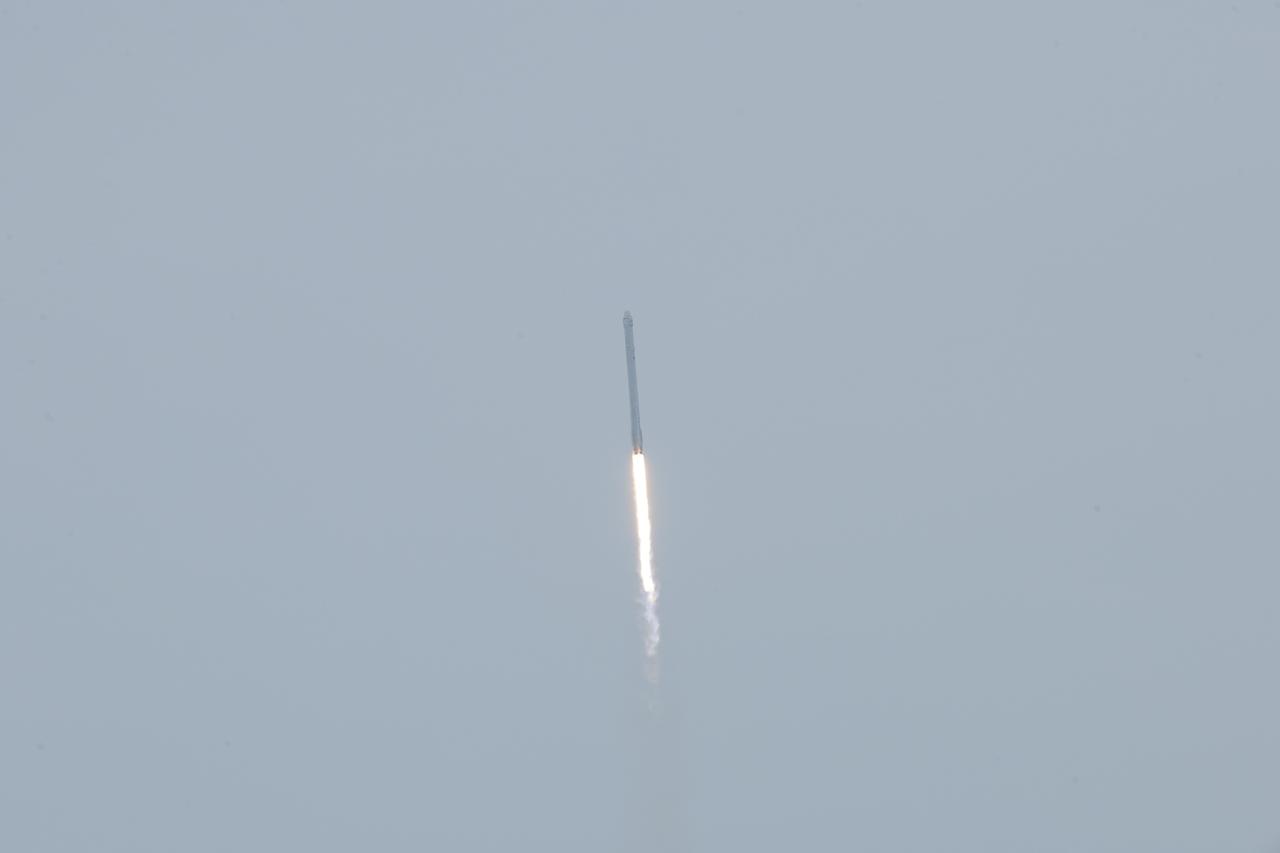
CAPE CANAVERAL, Fla. - Try as it may, the weather could not stop the launch of the SpaceX Falcon 9 rocket from Space Launch Complex 40 on Cape Canaveral Air Force Station, carrying the Dragon resupply spacecraft to the International Space Station. Liftoff was at 3:25 p.m. EDT. Dragon is making its fourth trip to the space station. The SpaceX-3 mission, carrying almost 2.5 tons of supplies, technology and science experiments, is the third of 12 flights through a $1.6 billion NASA Commercial Resupply Services contract. Dragon's cargo will support more than 150 experiments that will be conducted during the station's Expeditions 39 and 40. For more information, visit http://www.nasa.gov/mission_pages/station/structure/launch/index.html. Photo credit: NASA/George Roberts