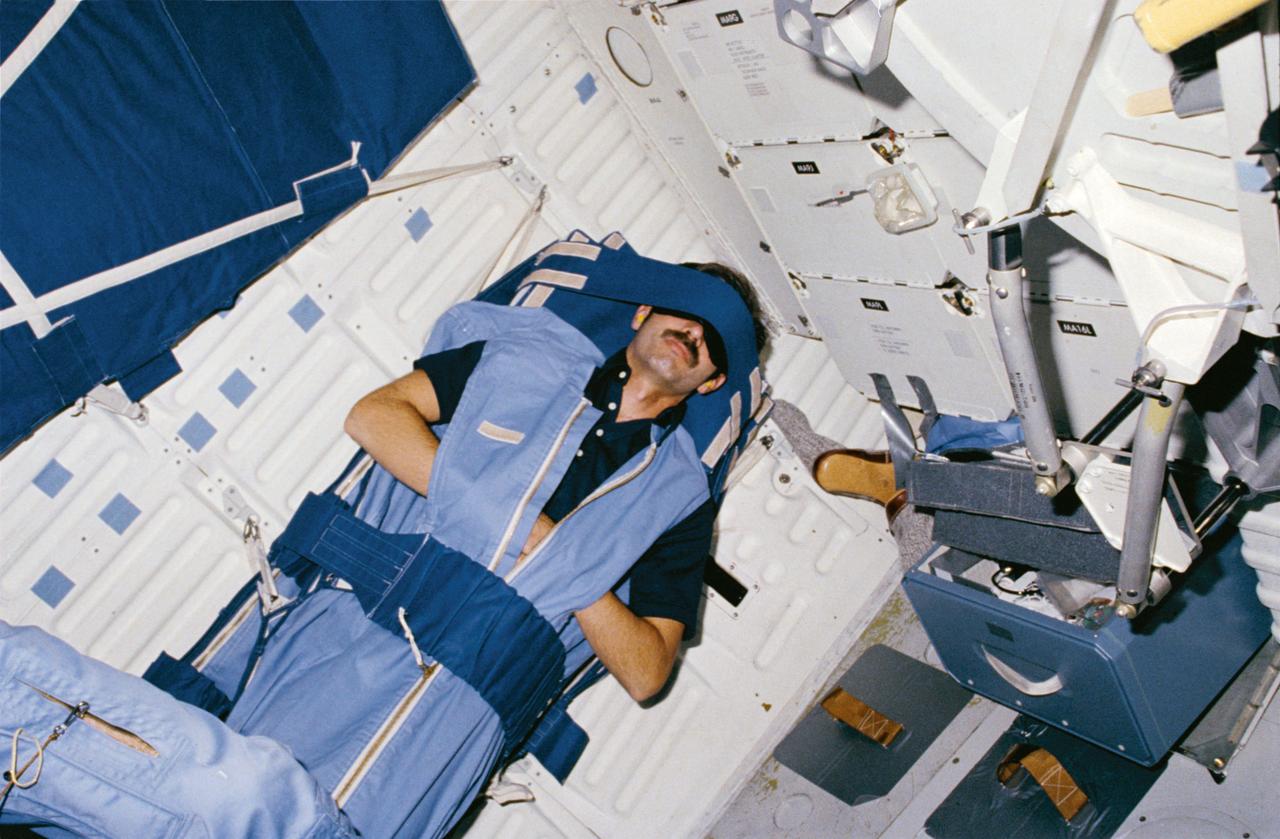
STS008-05-145 (5 Sept 1983) --- On middeck (MDK), Mission Specialist (MS) Gardner sleeps in sleep restraint attached to starboard wall. Open airlock hatch, airlock hatch hinge, and free-floating footwear appear in view.

STS007-06-0314 (18-24 June 1983) --- Astronaut John M. Fabian, STS-7 mission specialist, sleeps in a zip-up blue sleep restraint device in the locker area of the Earth-orbiting space shuttle Challenger's middeck. The frame was exposed with a 35mm camera. Photo credit: NASA

SL3-111-1505 (July-September 1973) --- View of scientist-astronaut Owen K. Garriott, Skylab 3 science pilot, in his sleep restraints in the crew quarters of the Orbital Workshop (OWS). Photo credit: NASA
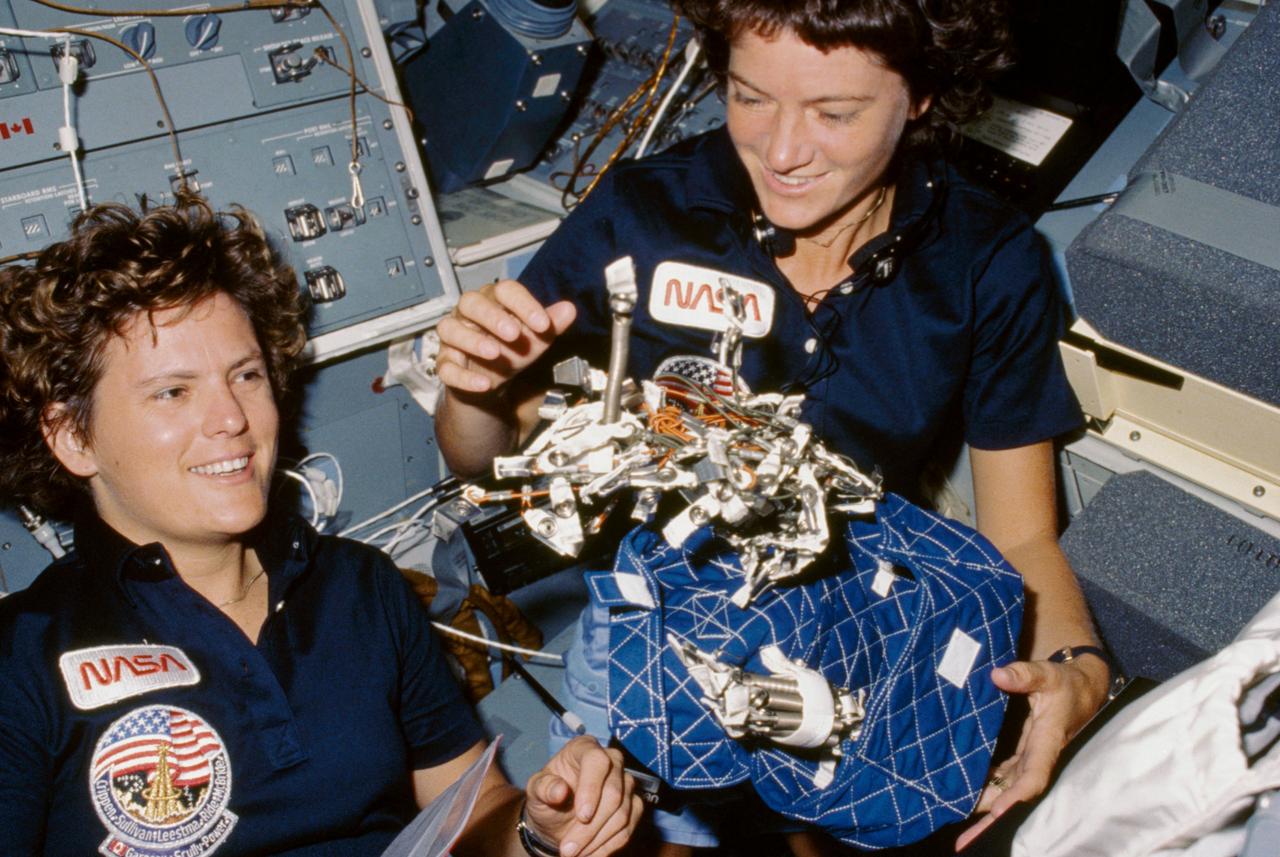
41G-07-021 (5-13 October 1984) --- Astronauts Kathryn D. Sullivan, left, and Sally K. Ride show off what appears to be a "bag of worms", a product of their creativity. The "bag" is a sleep restraint and the majority of the "worms" are springs and clips used with the sleep restraint in its normal application. Clamps, a bungee cord and Velcro strips are other recognizable items in the "creation".

Scientist-Astronaut Joseph P. Kerwin, Skylab 2 science pilot, is photographed strapped into the sleep restraint in the crew quarters of the Orbital Workshop of the Skylab 1 and 2 space station cluster in Earth orbit. Kerwin is wearing the special cap which contains biomedical instrumentation for the M133 Sleep Monitoring Experiment. The purpose of the M133 experiment is to evaluate quantity and quality of sleep during prolonged space flight by the analysis of electroencephalographic (EEG) and electrooculographic (EOG) activity.
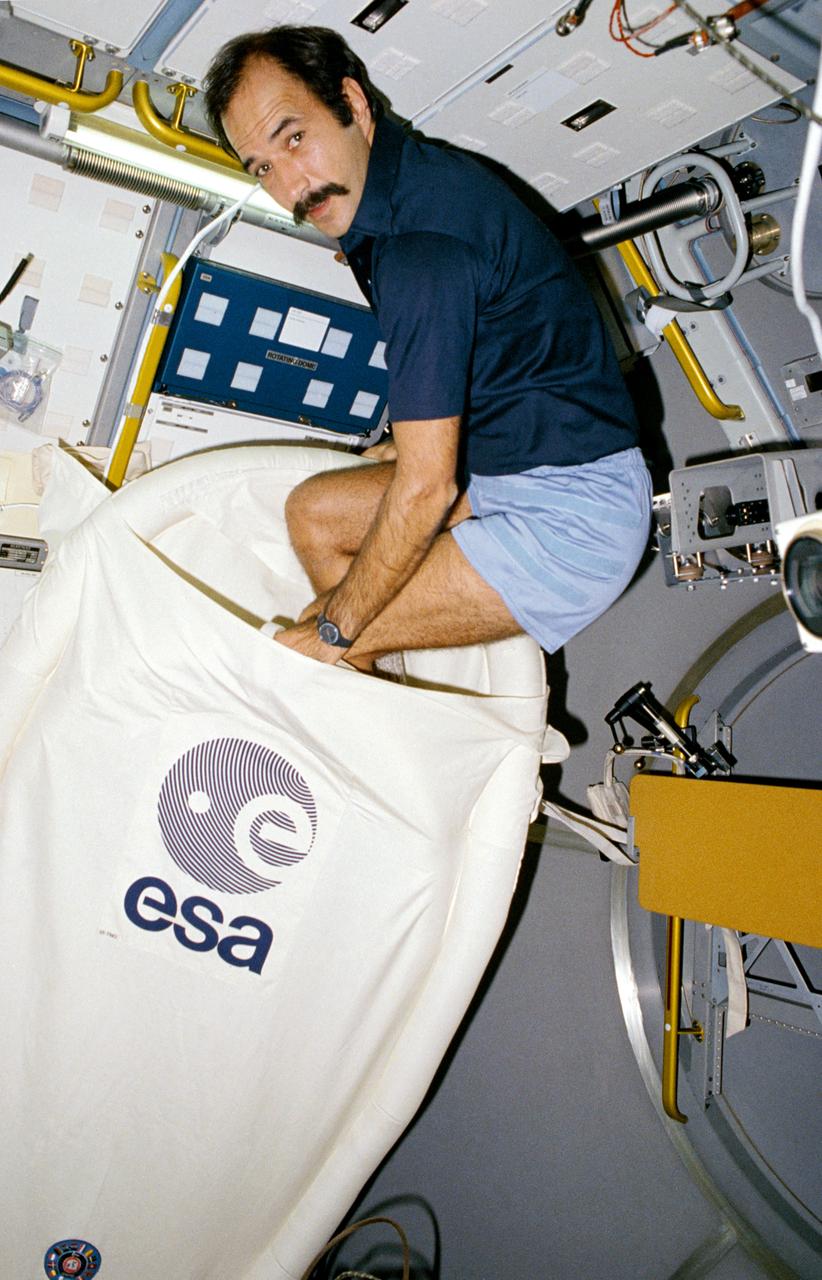
61A-08-018 (30 Oct.-6 Nov. 1985) --- Wubbo J. Ockels, a Dutch scientists representing the European Space Agency (ESA), crawls from an unique sleeping restraint in D-1 science module. Unlike the other crewmembers on STS 61A, Ockels did not sleep in the middeck of the Challenger. Ockels proposed this concept of sleeping facility and the actual hardware was developed by the Technisch Natur Wetenschappelyk Onderzoek (TNO), a Dutch government organization.
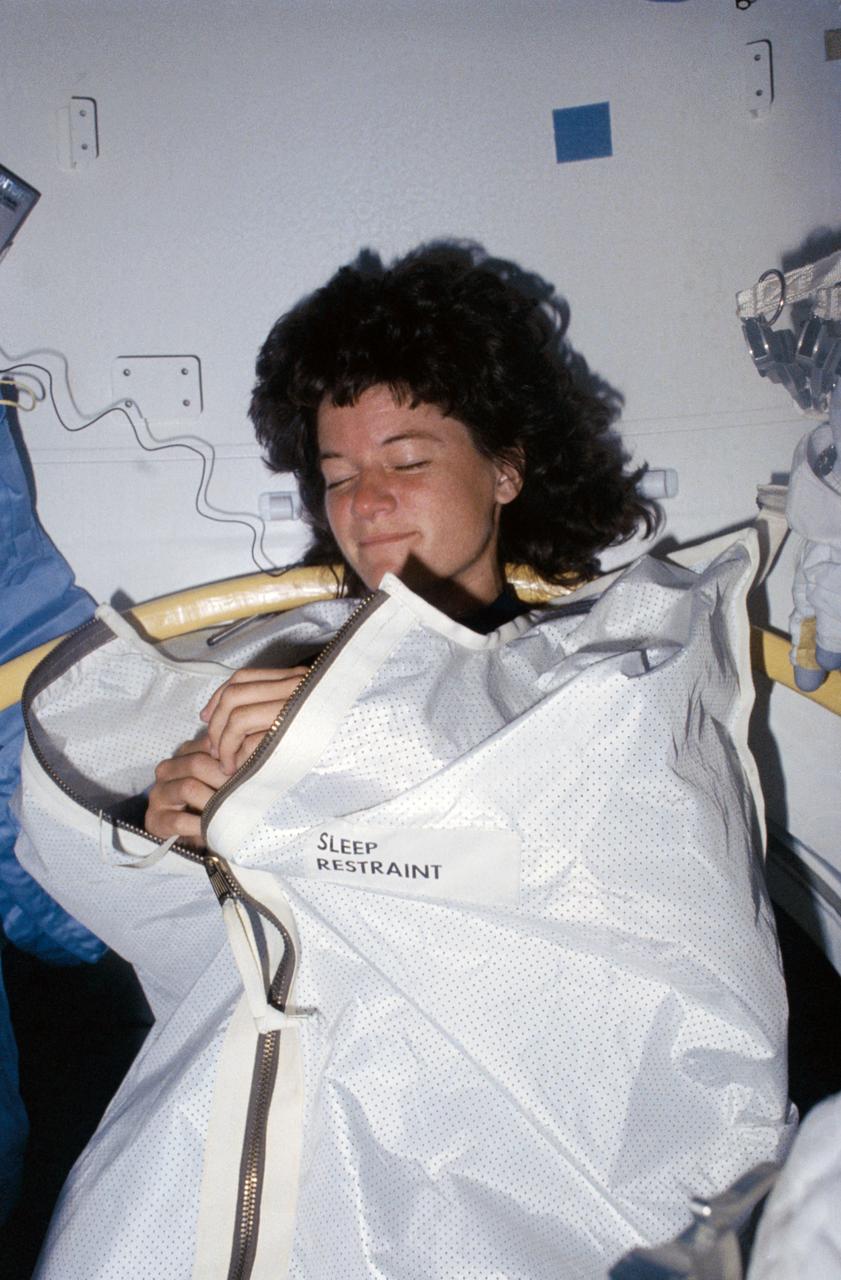
STS007-26-1438 (18-24 June 1983) --- Astronaut Sally K. Ride, mission specialist, was captured at her sleep station in the Space Shuttle Challenger's middeck by a fellow crew member using a 35mm camera. This method of sleep is just one used by the 20 astronauts who have now flown aboard NASA's first two Space Shuttle Orbiters. Some astronauts choose to sleep in various positions with either their feet or upper bodies or both anchored and others elect to use the sleep restraint device demonstrated here by Dr. Ride.

STS070-334-031 (13-22 JULY 1995) --- Astronaut Kevin R. Kregel demonstrates the new shuttle sleep restraints on the space shuttle Discovery?s middeck. During an August 11, 1995, post flight presentation to fellow employees at the Johnson Space Center (JSC), the STS-70 pilot discussed features of the device and lauded its ability to add comfort for crew members.
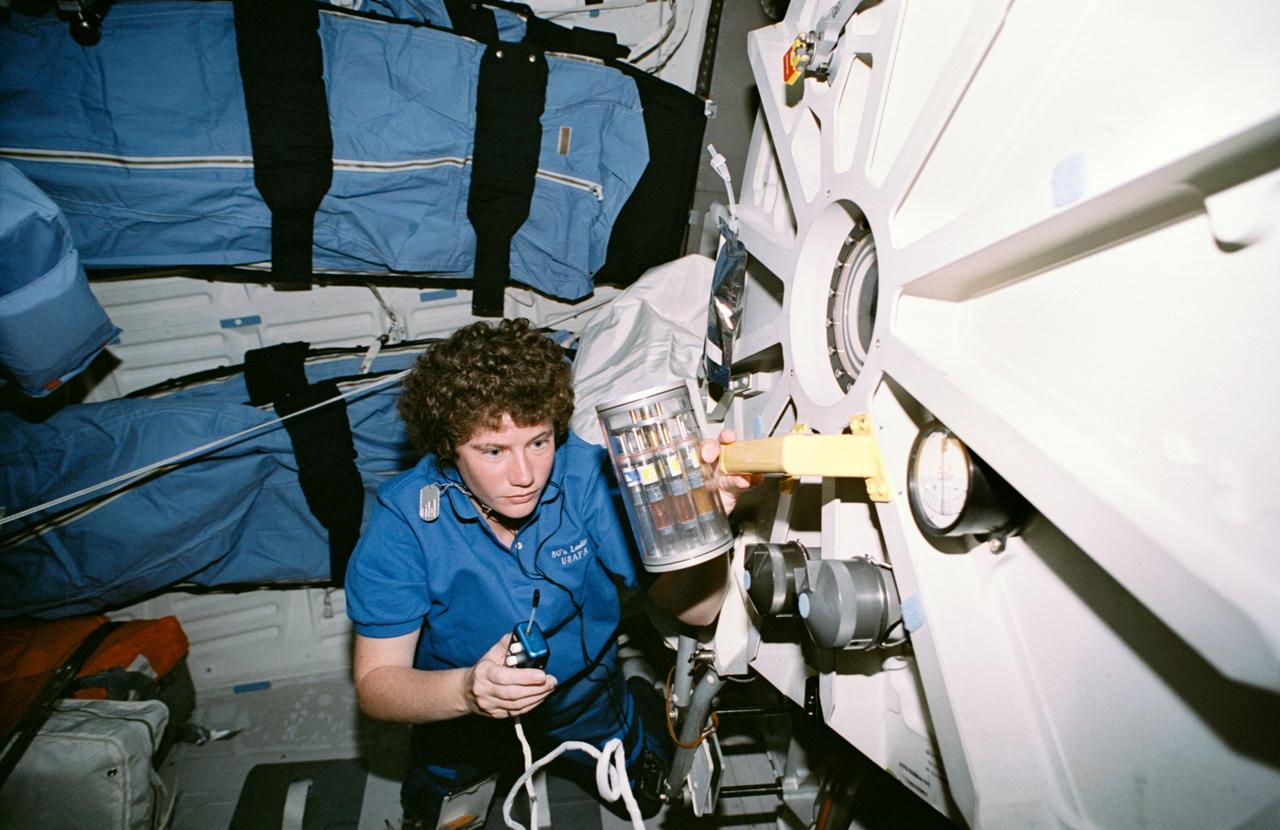
STS054-30-009 (13 Jan 1993) --- Astronaut Susan J. Helms communicates with ground controllers about the Commercial Generic Bioprocessing Apparatus (CGBA) on Endeavour's middeck. The mission specialist holds samples from the CGBA in her left hand. Sleep restraints can be seen in their temporary stow position in the left part of the frame, near the airlock hatch. Also onboard the spacecraft for the six-day mission were astronauts John H. Casper, Donald R. McMonagle, Gregory J. Harbaugh and Mario Runco Jr.
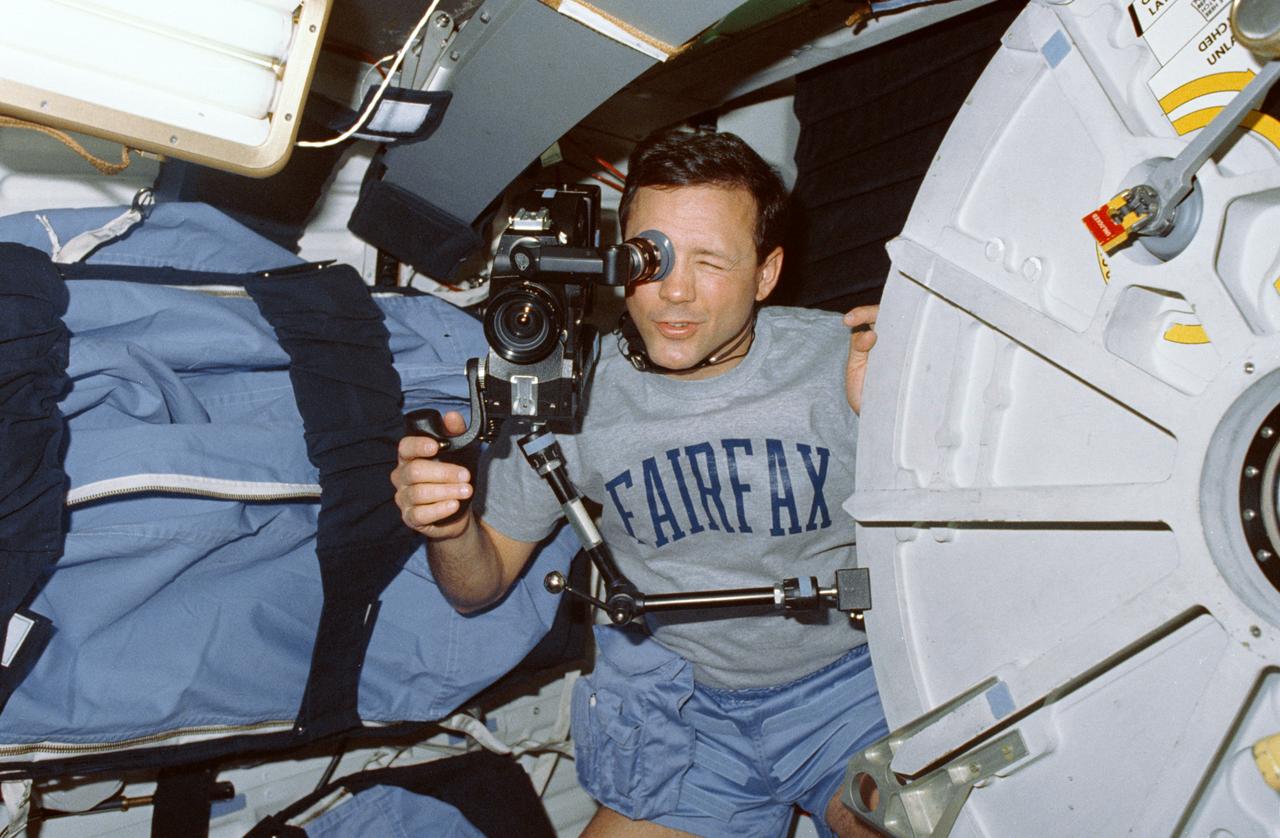
STS-36 Mission Specialist (MS) Pierre J. Thuot operates 16mm ARRIFLEX motion picture camera mounted on the open airlock hatch via a bracket. Thuot uses the camera to record activity of his fellow STS-36 crewmembers on the middeck of Atlantis, Orbiter Vehicle (OV) 104. Positioned between the airlock hatch and the starboard wall-mounted sleep restraints, Thuot, wearing a FAIRFAX t-shirt, squints into the cameras eye piece. Thuot and four other astronauts spent four days, 10 hours and 19 minutes aboard OV-104 for the Department of Defense (DOD) devoted mission.
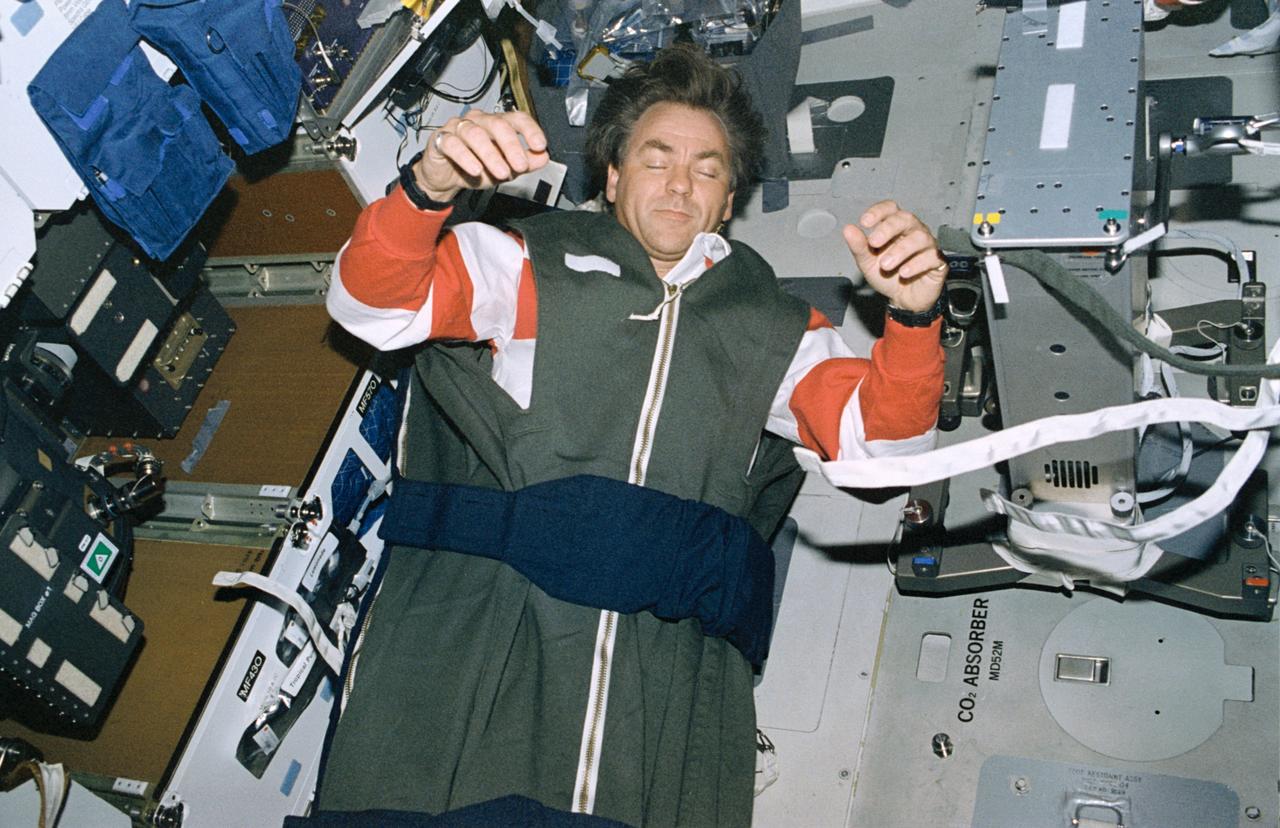
STS085-327-026 (7 - 19 August 1997) --- Payload specialist Bjarni V. Tryggvason, representing the Canadian Space Agency (CSA), sleeps on the Space Shuttle Discovery's mid-deck floor. Tryggvason elected to not use a pillow, allowing his head to float freely in the Microgravity environment.
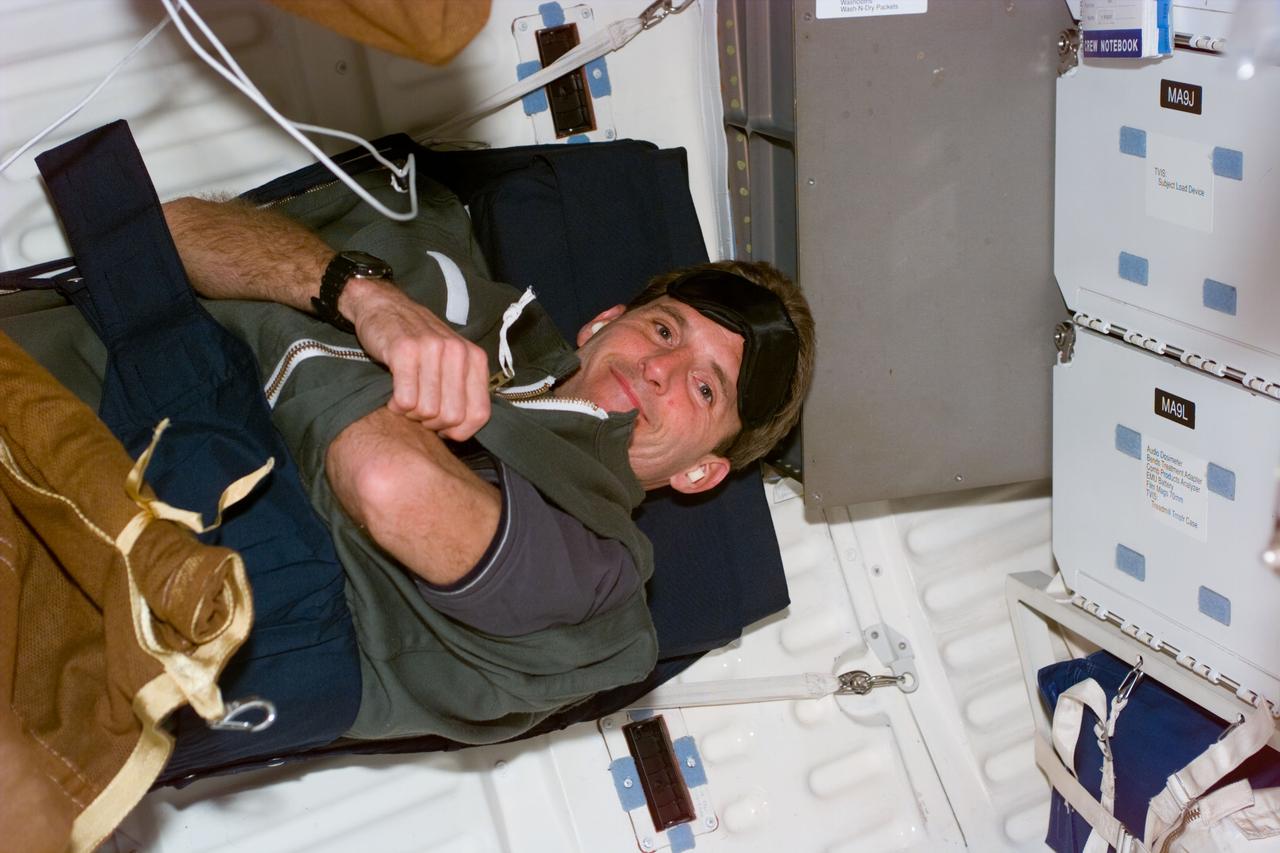
STS081-E-5006 (12 Jan. 1997) --- Aboard the Space Shuttle Atlantis on its first day in orbit for the mission, astronaut Jerry M. Linenger, mission specialist, has arranged his sleep station to his liking and prepares for his first rest period. Linenger and five crew mates are flying the Spacehab Double Module (DM), replete with supplies for the three-man crew aboard Russia's Mir Space Station with which Atlantis will be docking later in the week. Linenger will trade places with John E. Blaha marking the second such exchange of American astronaut - cosmonaut guest researcher's aboard Mir. Blaha had replaced Shannon W. Lucid in September of 1996. The scene was recorded with an Electronic Still Camera (ESC) and later downlinked to flight controllers in Houston, Texas.

STS007-26-1439 (18-24 June 1983) --- Astronaut John M. Fabian, STS-7 mission specialist, is captured with a 35mm camera at his sleep station in the middeck of the Earth-orbiting space shuttle Challenger. This scene was selected by the five-member astronaut crew for showing at its July 1, 1983 Post Flight Press Conference (PFPC) at the Johnson Space Center's (JSC) main auditorium. Photo credit: NASA
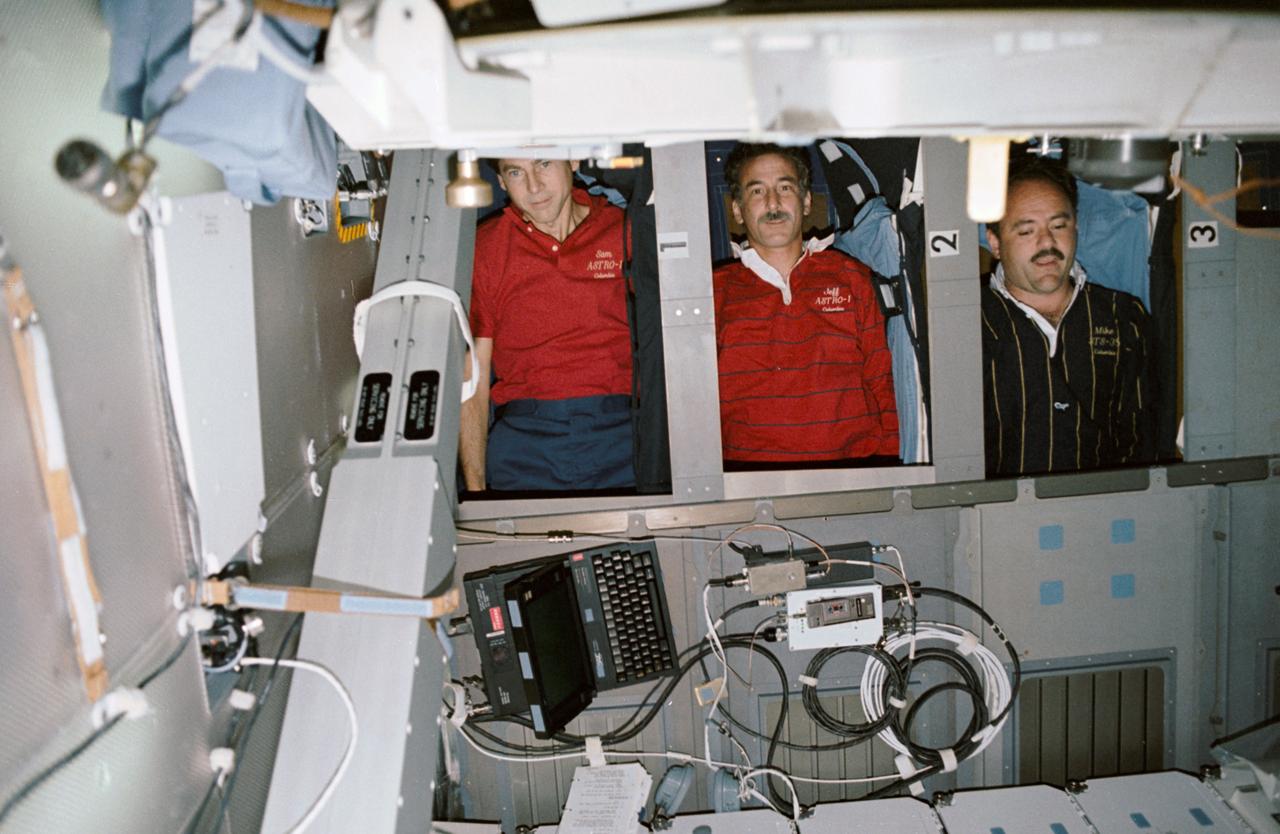
Though they are not actually asleep, three STS-35 crewmembers demonstrate the bunk-style sleep compartments onboard Columbia's, Orbiter Vehicle (OV) 102's, middeck. From top to bottom are Payload Specialist Samuel T. Durrance, Mission Specialist (MS) Jeffrey A. Hoffman, and MS John M. Lounge. At the left is the shuttle amateur radio experiment (SAREX). The crew escape pole (CES) is visible overhead and the open airlock hatch in the foreground. The sleep station is located against the middeck starboard wall.
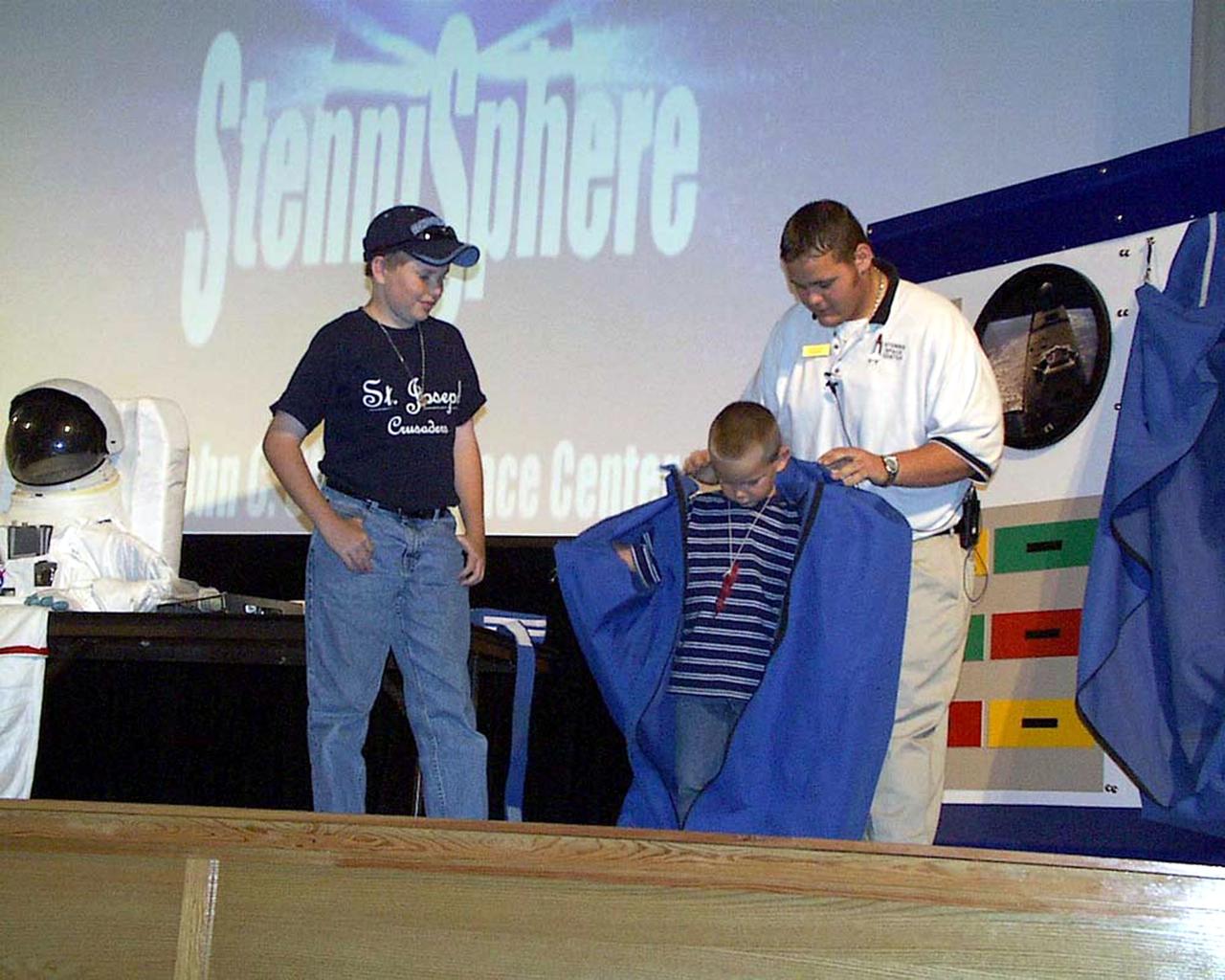
Students try on a sleep restraint like the ones used by astronauts. This demonstration is part of a program called 'Living and Working in Space,' that is presented by NASA's Stennis Space Center in the StenniSphere Auditorium and in the community.
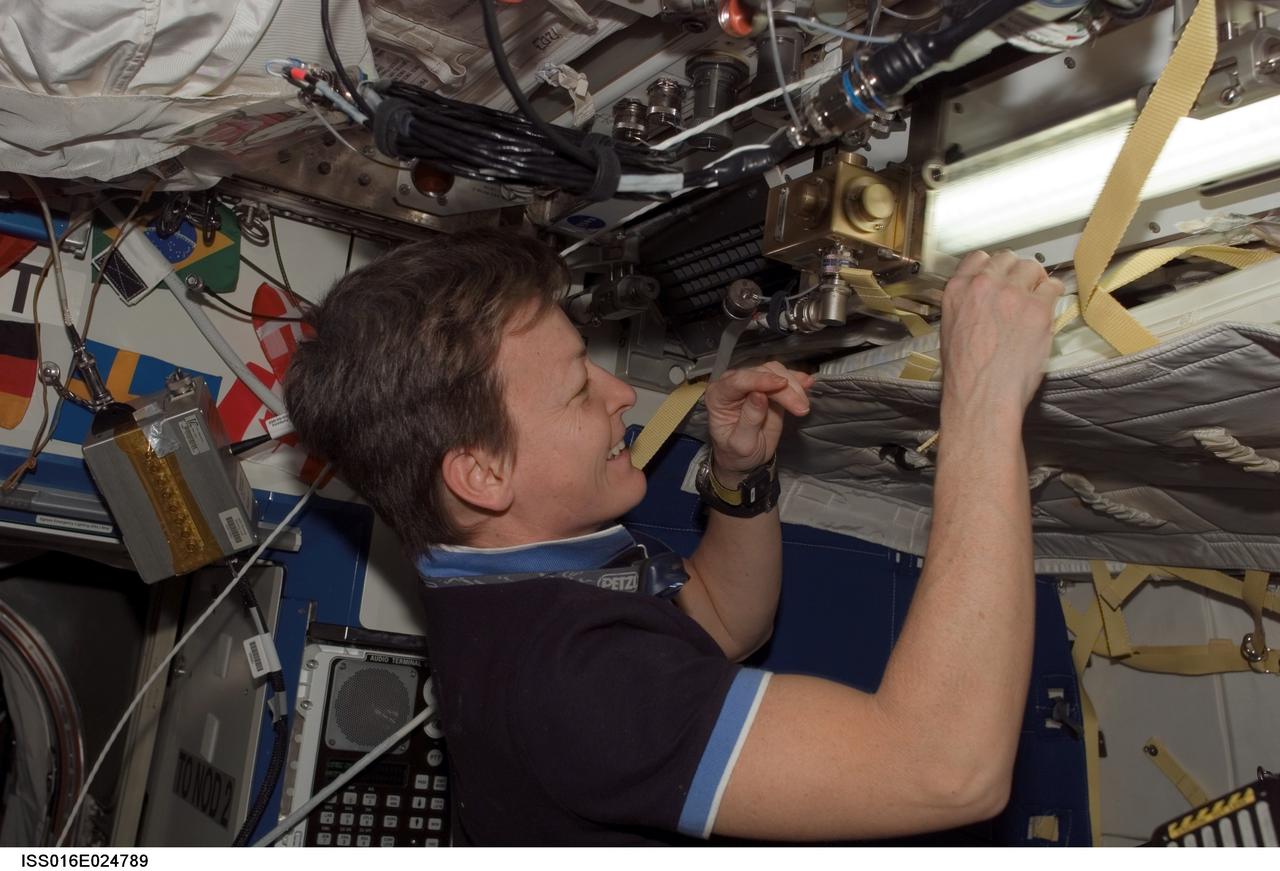
ISS016-E-024789 (18 Jan. 2008) --- Astronaut Peggy Whitson, Expedition 16 commander, prepares to retrieve a sleep restraint device from a stowage location on the Earth-orbiting International Space Station.
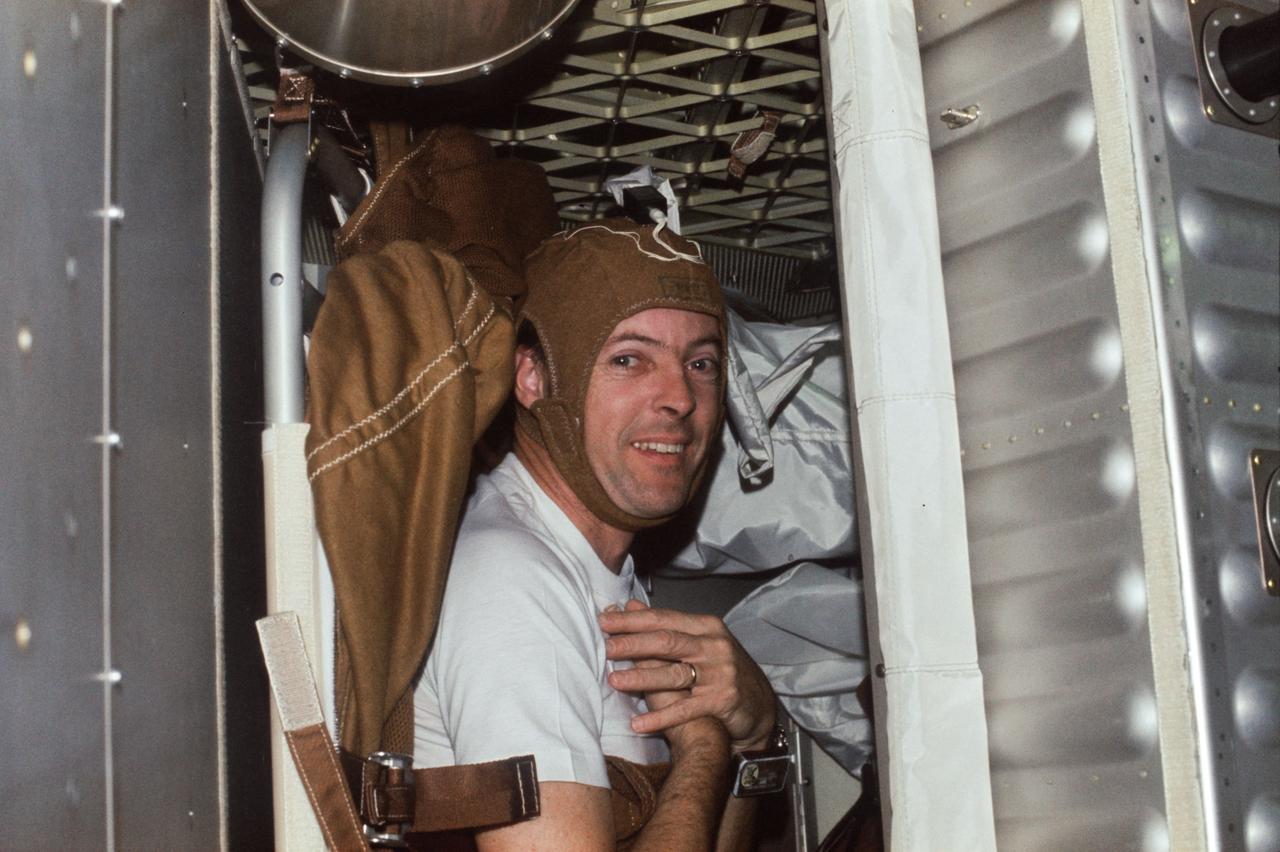
SL2-X3-205 (June 1973) --- Scientist-astronaut Joseph P. Kerwin, Skylab 2 science pilot, is photographed strapped into the sleep restraint in the crew quarters of the Orbital Workshop of the Skylab 1 & 2 space station cluster in Earth orbit. Kerwin is wearing the special cap which contains biomedical instrumentation for the M133 Sleep Monitoring Experiment. The purpose of the M133 experiment is to evaluate quantity and quality of sleep during prolonged space flight by the analysis of electroencephalographic (EEG) and electrooculographic (EOG) activity. Photo credit: NASA
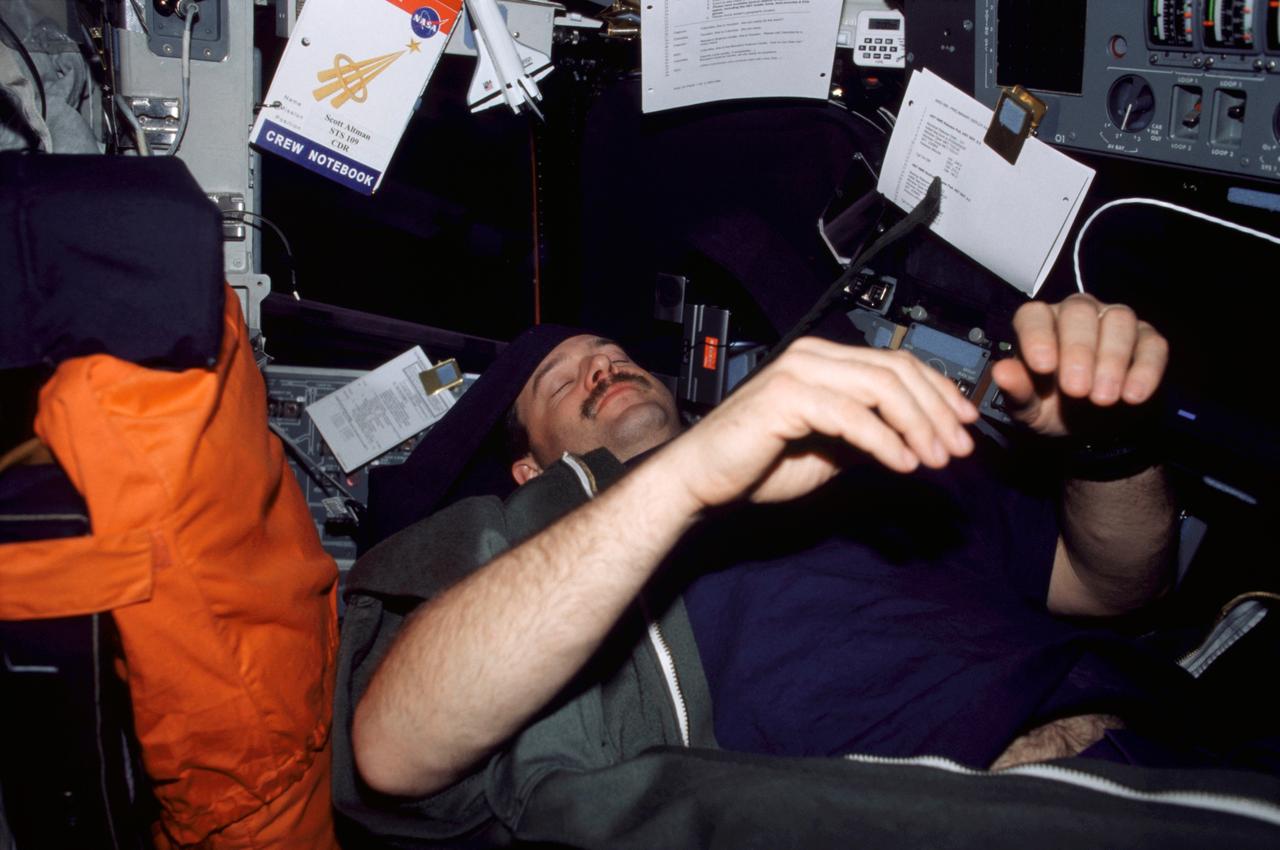
STS109-335-020 (1-12 March 2002) --- Astronaut Scott D. Altman, STS-109 mission commander, sleeps on the flight deck of the Space Shuttle Columbia.
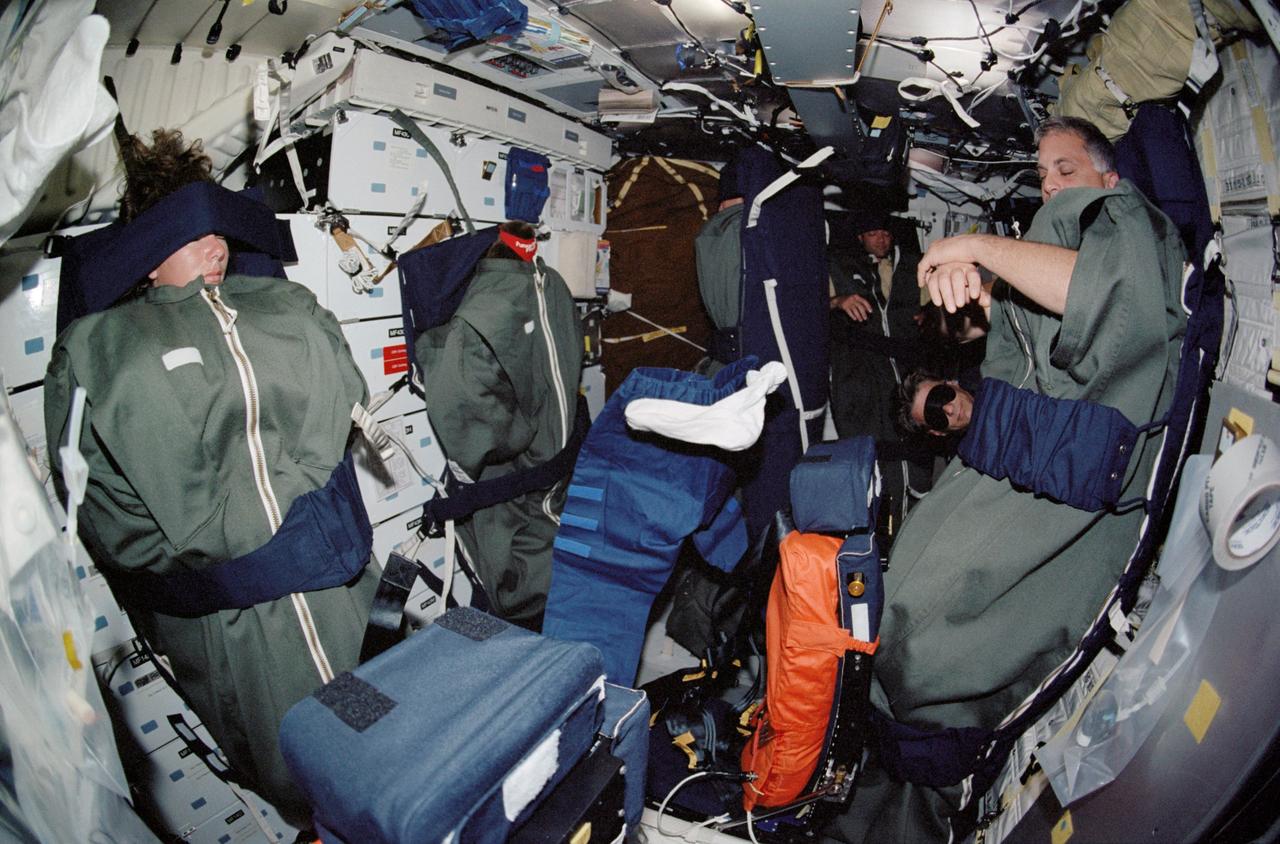
STS112-345-028 (7-18 October 2002) --- The STS-112 crewmembers sleep on the middeck of the Space Shuttle Atlantis. Pictured are astronauts Sandra H. Magnus, David A. Wolf, Piers J. Sellers, mission specialists, and Jeffrey S. Ashby, mission commander.
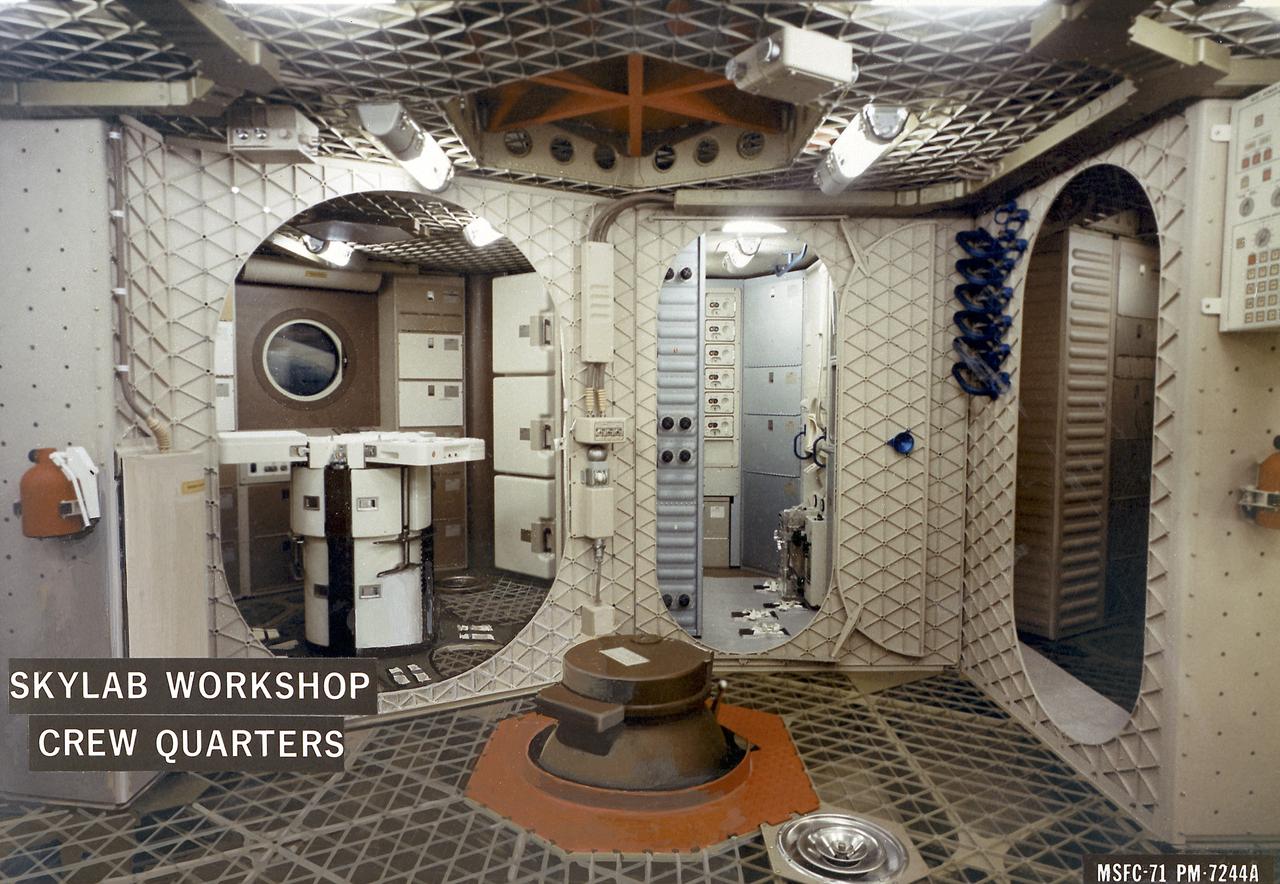
The wardroom deck of the Orbital Workshop, showing the living quarters arrangement, is seen here in good detail. From left to right is the dining area, waste management, and sleeping quarters. Portable restraints are on the wall beside the sleeping quarters. The ergometer for the vectorcardiograph (Experiment - M093) and lower-body Negative Pressure (Experiment M092) unit, used in some of the medical experiments, are in the foreground. The round brown object in the center of the room is the trash disposal airlock.
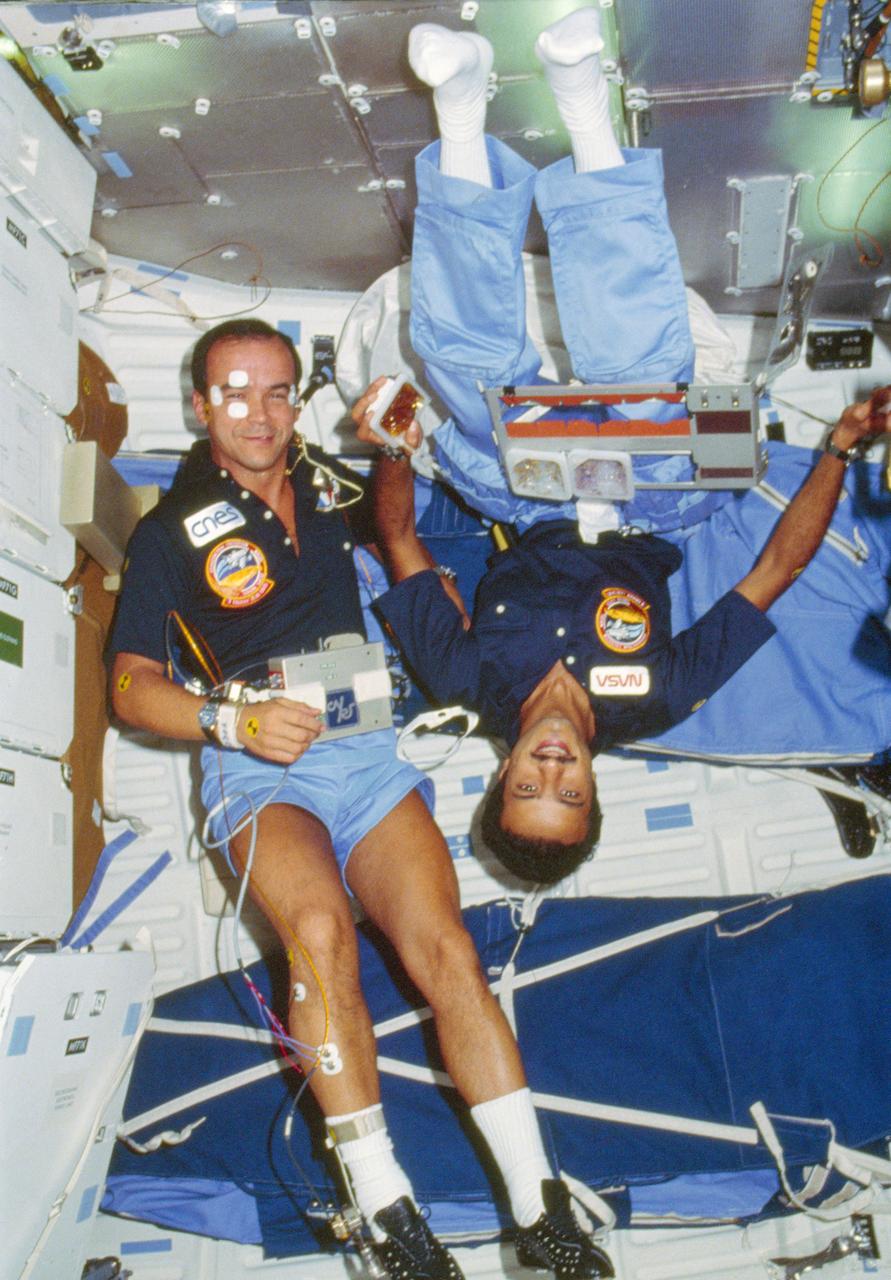
51G-102-035 (17-24 June 1985) --- The two payload specialists for the week-long flight share a middeck scene on the earth-orbiting Discovery. Sultan Salman Abdelazize Al-Saud (left) is in the midst of a meal while Patrick Baudry conducts a phase of the French Postural Experiment (FPE) on himself. Sleep restraints are in the background.
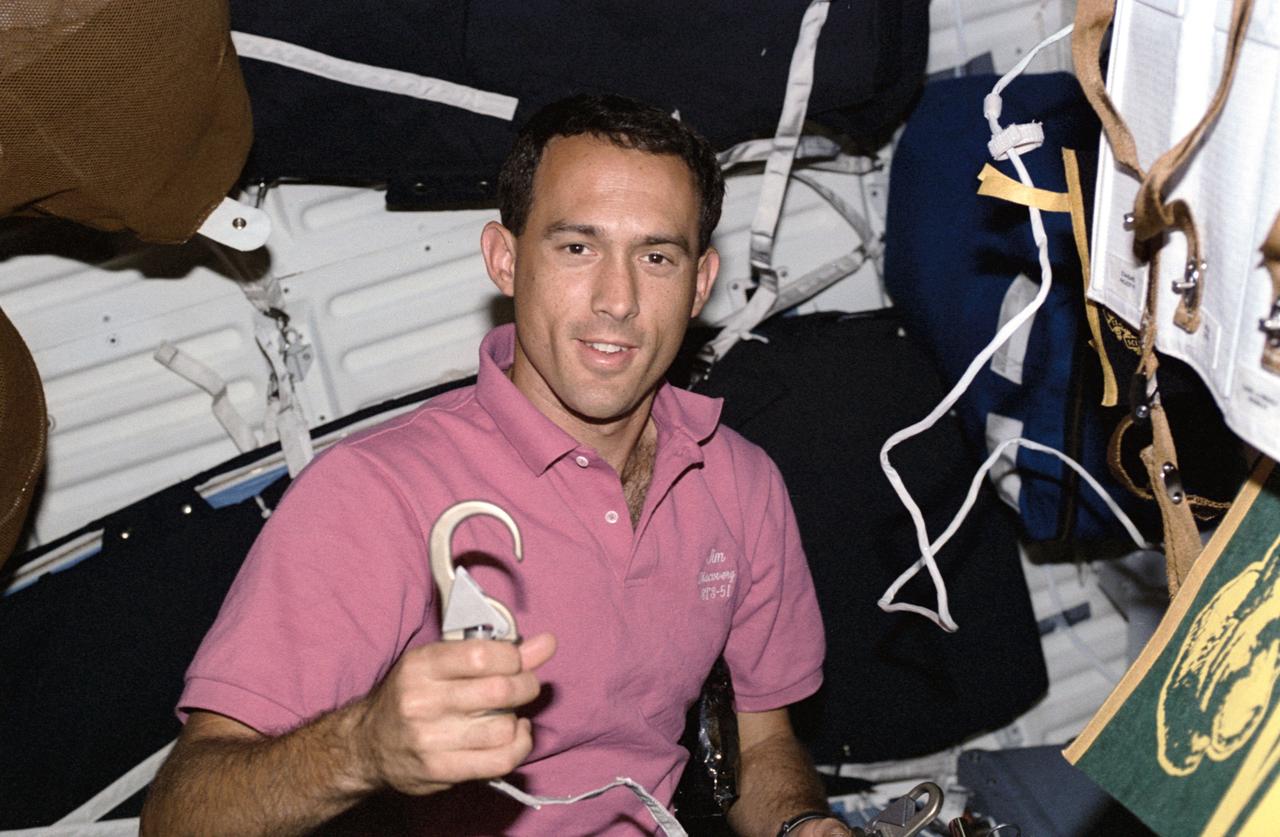
STS051-26-002 (12-22 Sept 1993) --- Astronaut James H. Newman, mission specialist, shows off a latch hook for a tether device used during the STS-51 extravehicular activity (EVA) on September 16, 1993. Newman, on Discovery's middeck, appears surrounded by sleep restraints.
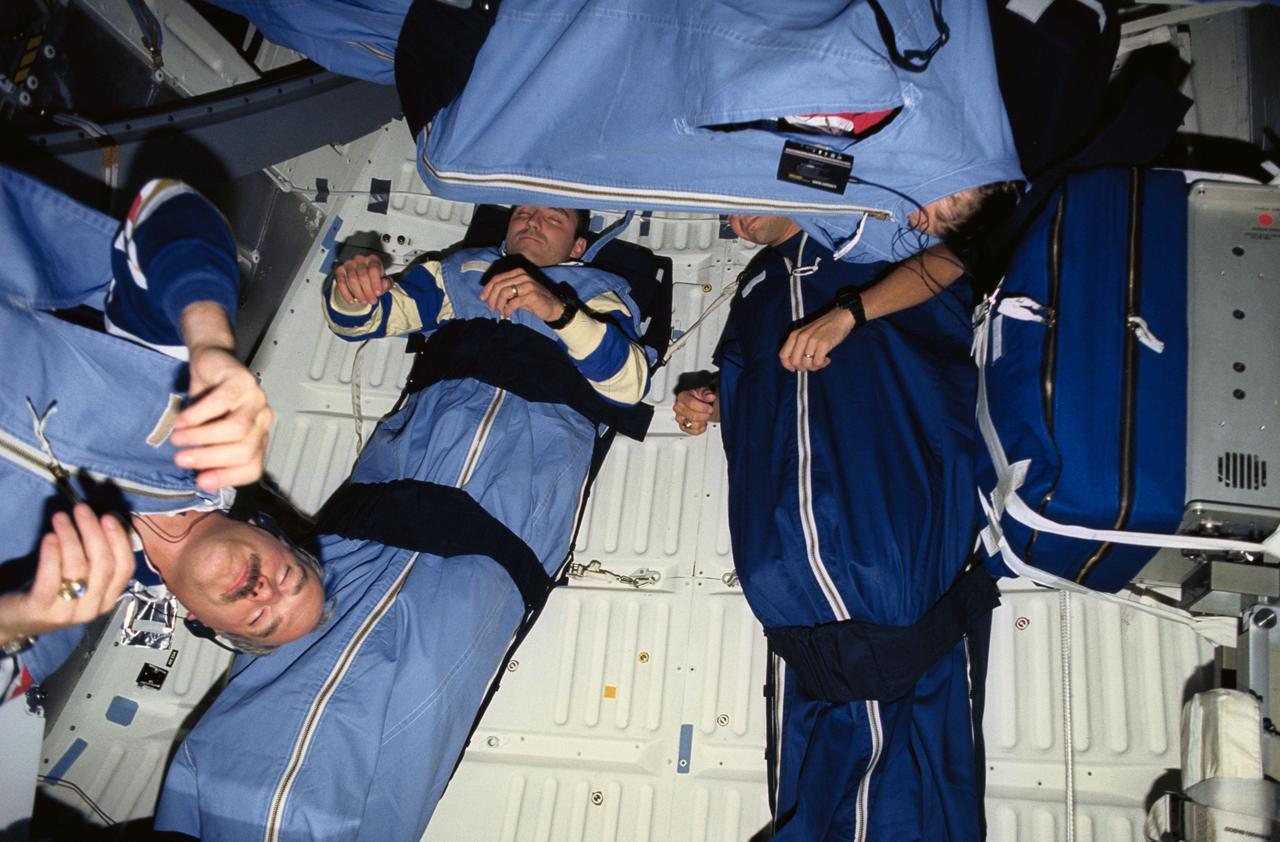
STS051-20-037 (12-22 Sept 1993) --- Four of the five astronaut crew members were photographed during one of their sleep periods on the Space Shuttle Discovery's mid-deck. At bottom center, astronaut Frank L. Culbertson, Jr., mission commander, is barely visible, with most of his body zipped securely in the sleep restraint. Others, left to right, are astronauts Daniel W. Bursch and Carl E. Walz, mission specialists, and William F. Readdy, pilot. The photograph was taken by astronaut James H. Newman, mission specialist.
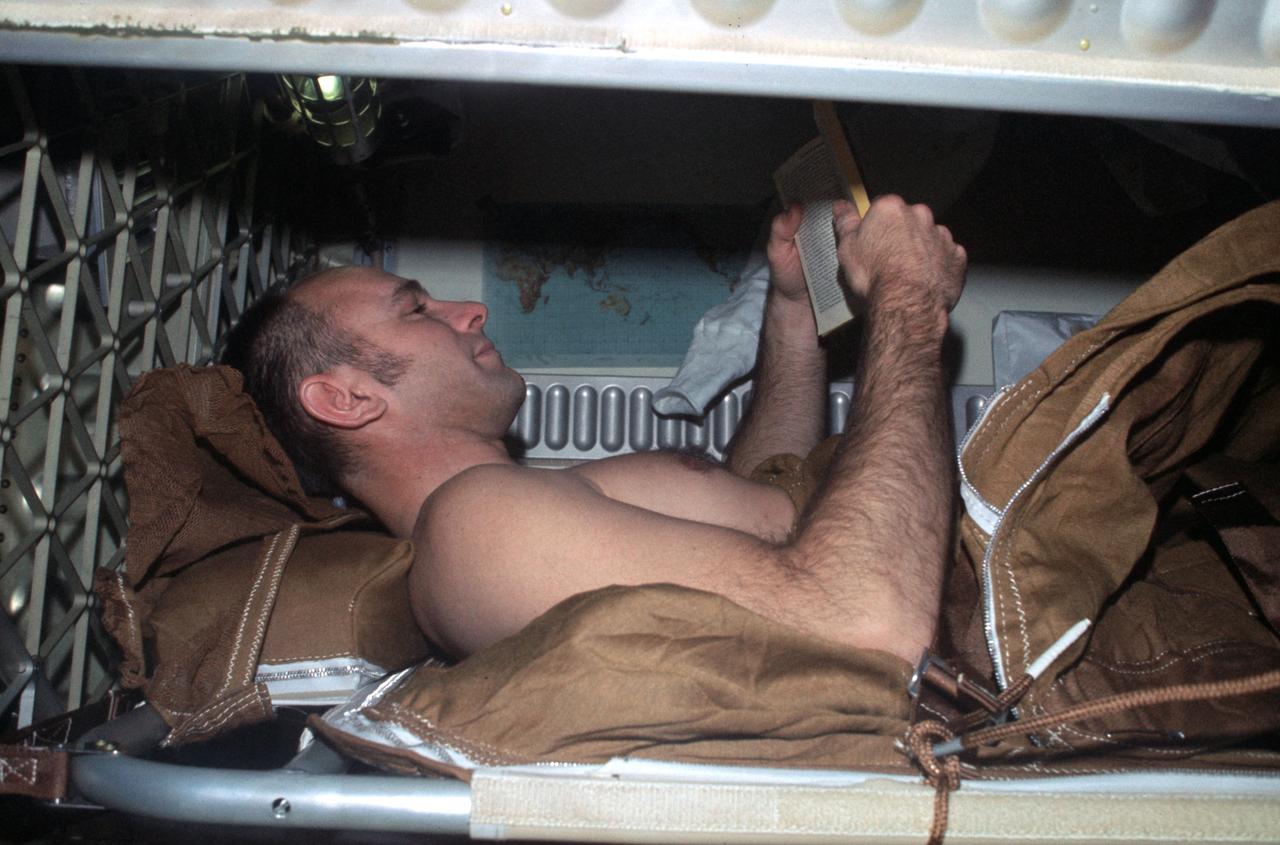
SL3-112-1527 (July-September 1973) --- View of astronaut Alan L. Bean, Skylab 3 commander, in his sleep compartment, reading a book. Photo credit: NASA
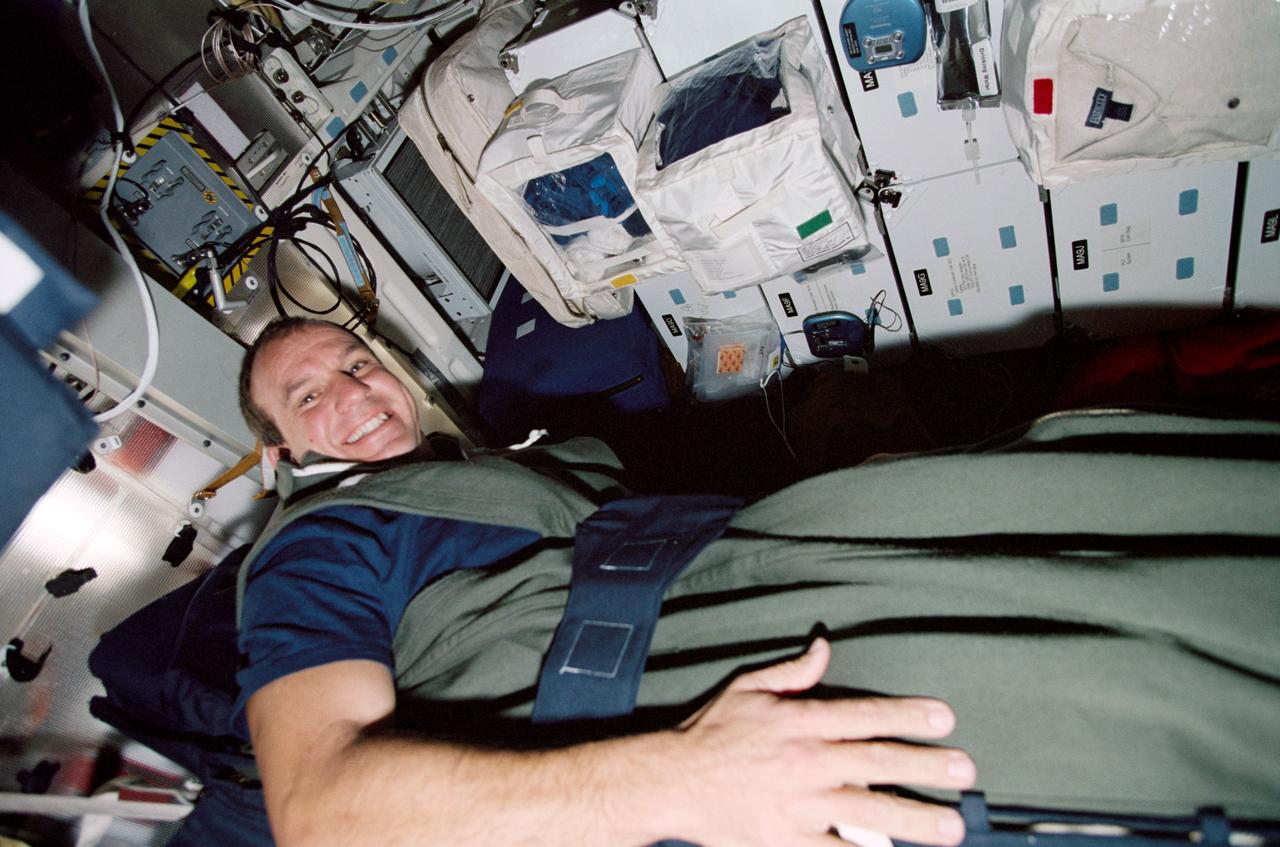
STS097-327-027 (30 Nov.-11 Dec. 2000) --- Astronaut Michael J. Bloomfield, STS-97 pilot, prepares for his sleep shift on the middeck of the Earth-orbiting Space Shuttle Endeavour.
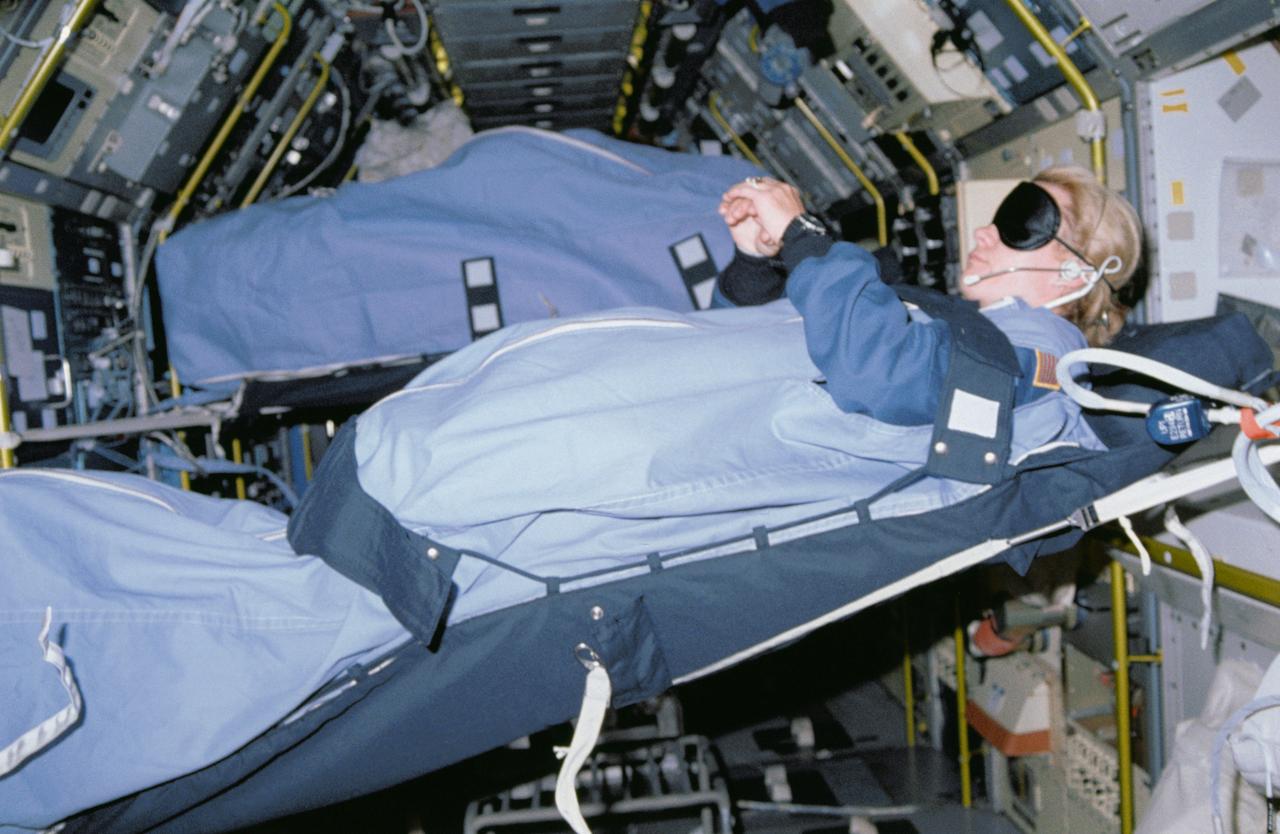
STS040-31-020 (5-14 June 1991) --- During the nine-day mission, some of the crew slept in the SLS-1 module. Astronaut Rhea Seddon, using various restraints, sleeps horizontally in this scene. The image was one of 25 visuals used by the STS-40 crew at its Post Flight Press Conference (PFPC) on June 28, 1991.
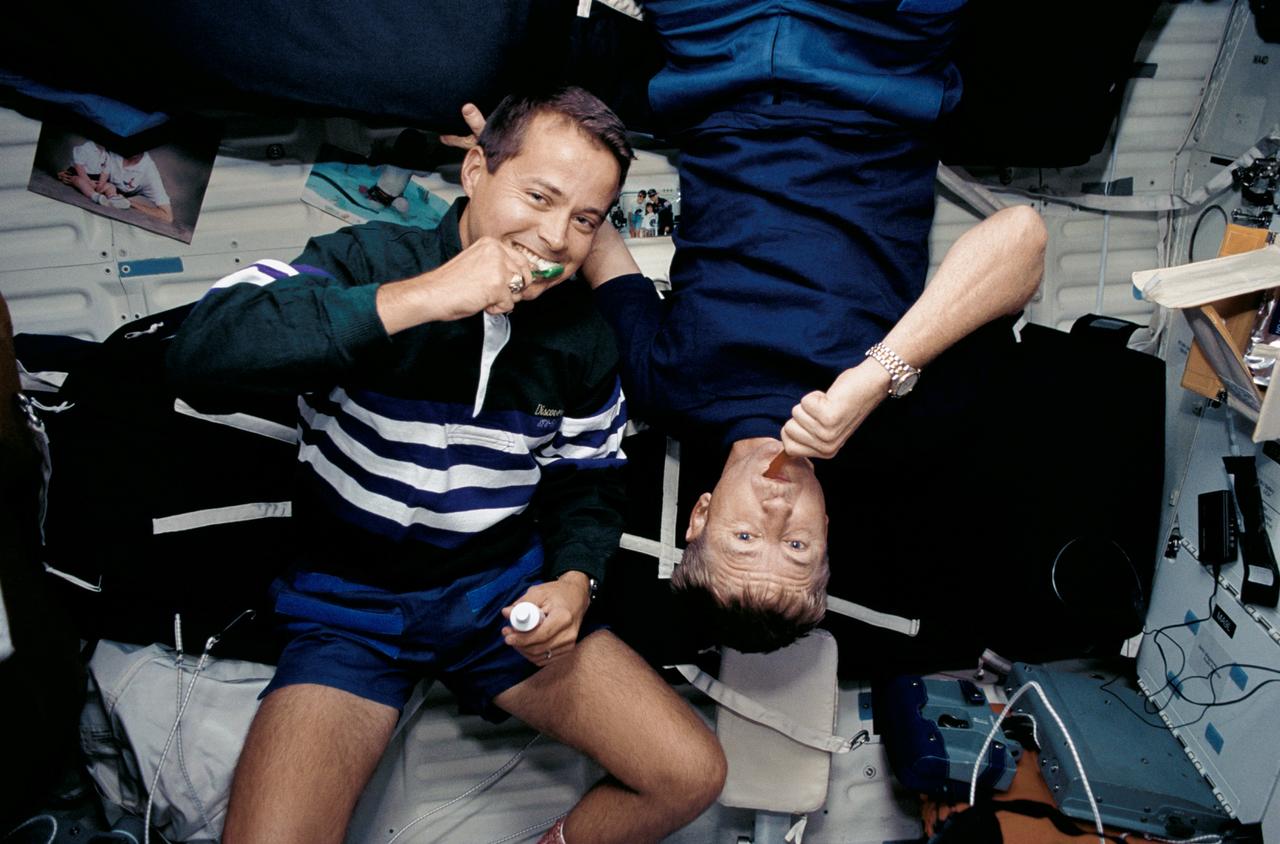
STS051-10-025 (12-22 Sept. 1993) --- (Orient Photo With Hygiene Kit At Right Center). Astronauts Frank L. Culbertson (right), mission commander, and Daniel W. Bursch, mission specialist, brush their teeth on Space Shuttle Discovery's middeck. Two sleep restraints form part of the backdrop for the photograph. The two were joined by three other NASA astronauts for almost ten full days in space for the STS-51 mission.
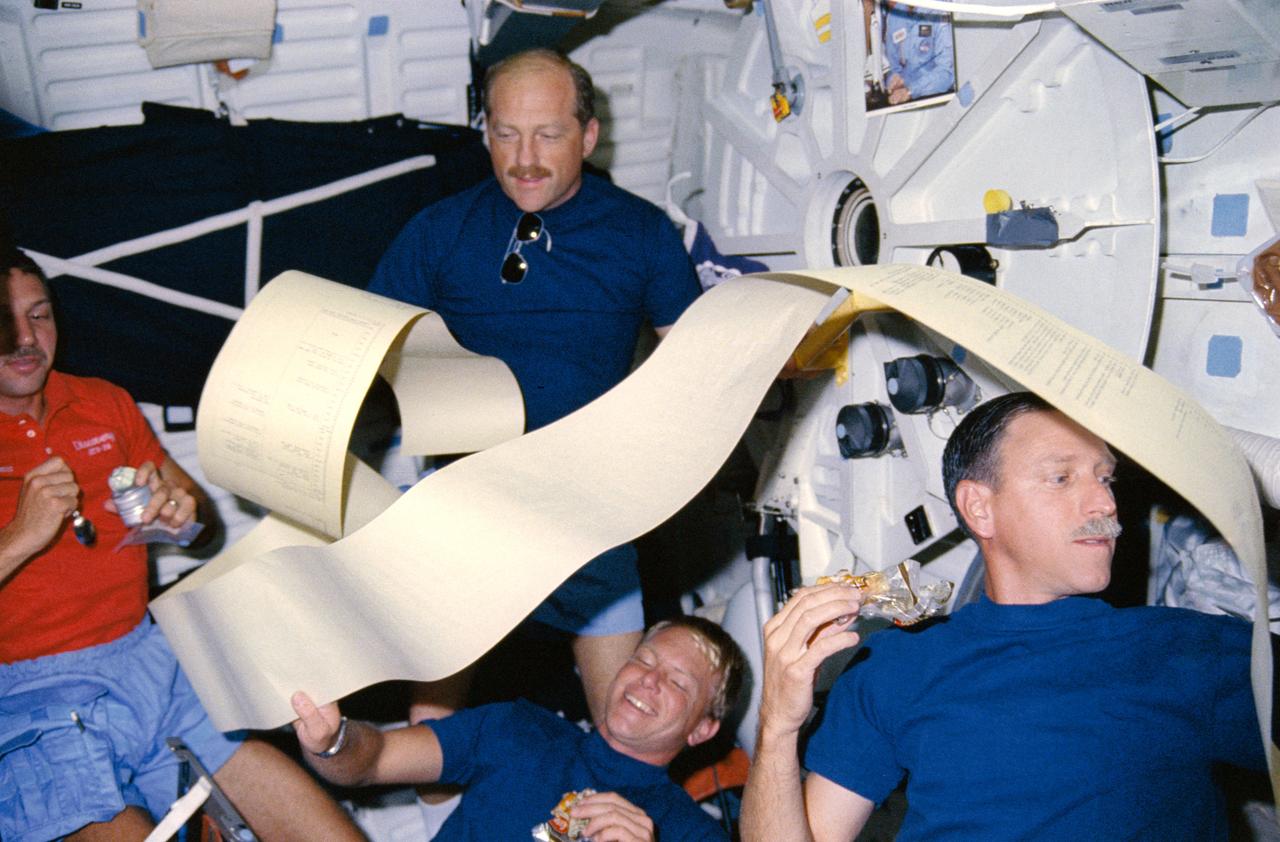
STS026-03-019 (3 Oct 1988) --- STS-26 Commander Frederick H. Hauck (center) reviews lengthy text and graphics system (TAGS) printout as it drifts across the middeck while his fellow crewmembers (left to right) Mission Specialist (MS) David C. Hilmers, MS George D. Nelson, and Pilot Richard O. Covey eat various snack items. The open airlock hatch and the sleep restraints on the starboard wall are visible in the background.
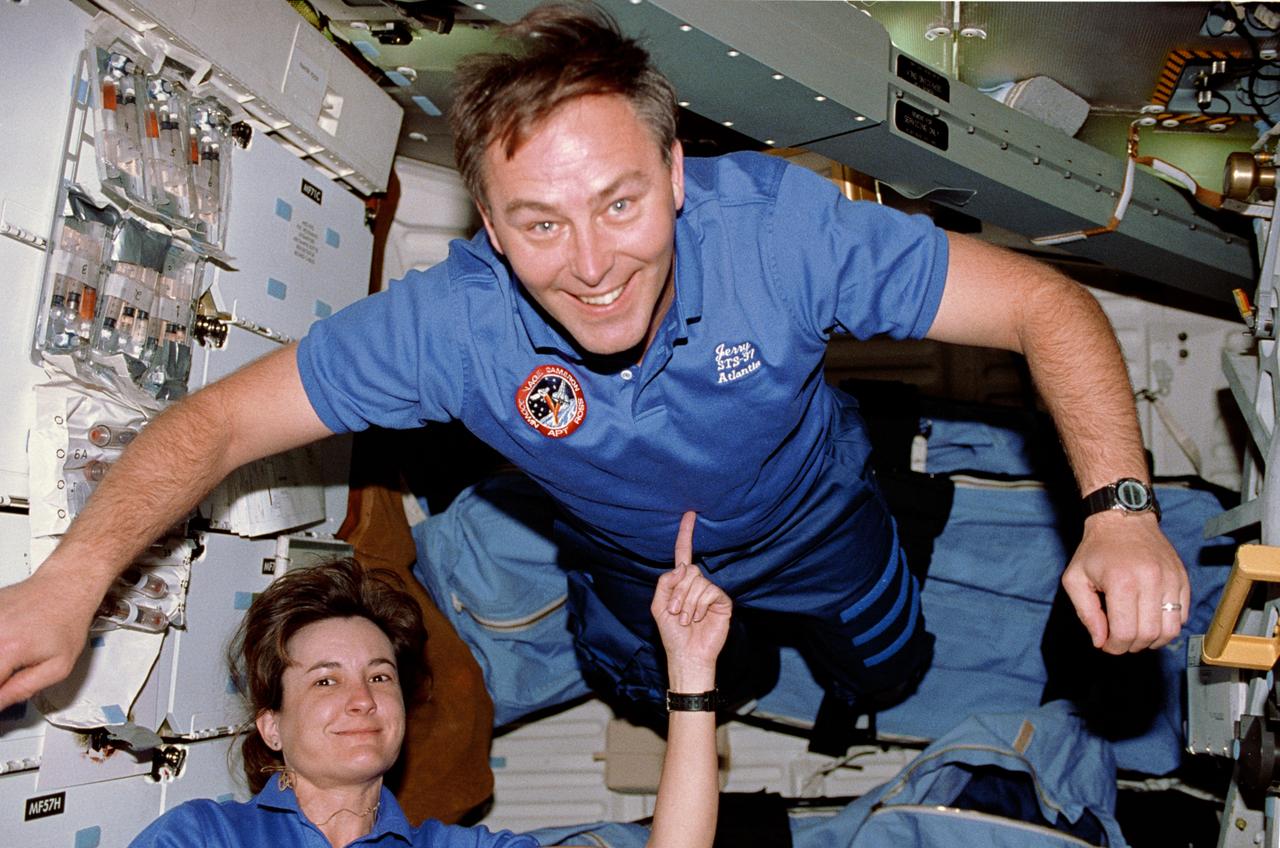
STS037-29-002 (5-11 April 1991) --- Astronauts Linda M. Godwin and Jerry L. Ross perform a balancing act on Atlantis' middeck. With little effort Godwin is able to hold Ross up near the ceiling with her index finger. Although the area the two occupy is very small, a number of articles are seen, including two sleep restraints, the escape pole and Bioserve ITA Materials Dispersion Apparatus bioprocessing test bed (attached to stowage lockers at left). This was one of the visuals used by the STS-37 crewmembers during their April 19 post-flight press conference at the Johnson Space Center (JSC).
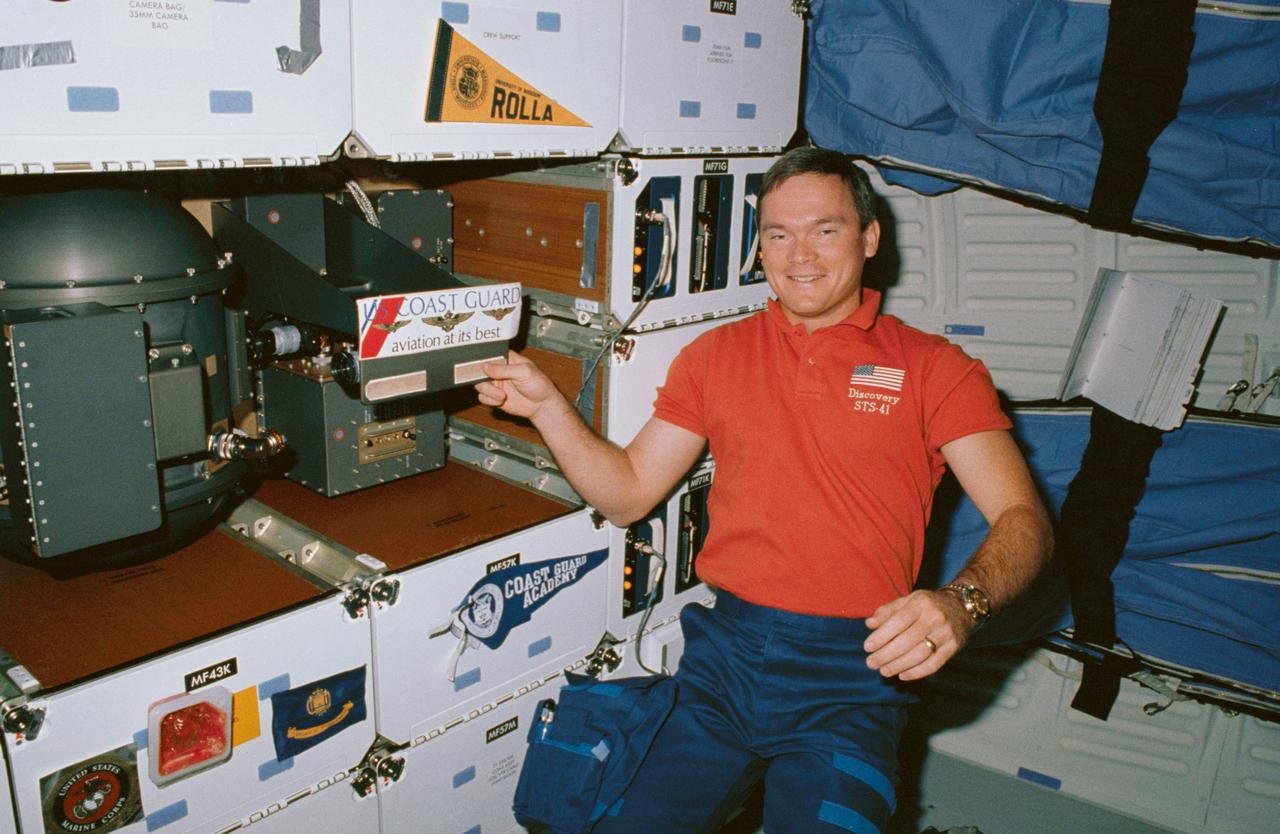
STS041-06-029 (10 Oct 1990) --- STS-41 Mission Specialist (MS) Bruce E. Melnick, who is a graduate of the Coast Guard Academy and the first ever active Coast Guardsman to fly in space, draws attention to his branch of the service, while posing next to a banner from his Alma Mater (on locker MF57K) and a United States (U.S.) Coast Guard decal (on the Solid Surface Combustion Experiment (SSCE)). Behind Melnick are the starboard wall-mounted sleep restraints. Insignias belonging to other crewmembers are displayed on the lockers including University of Missouri Rolla and U.S. Marine Corps.
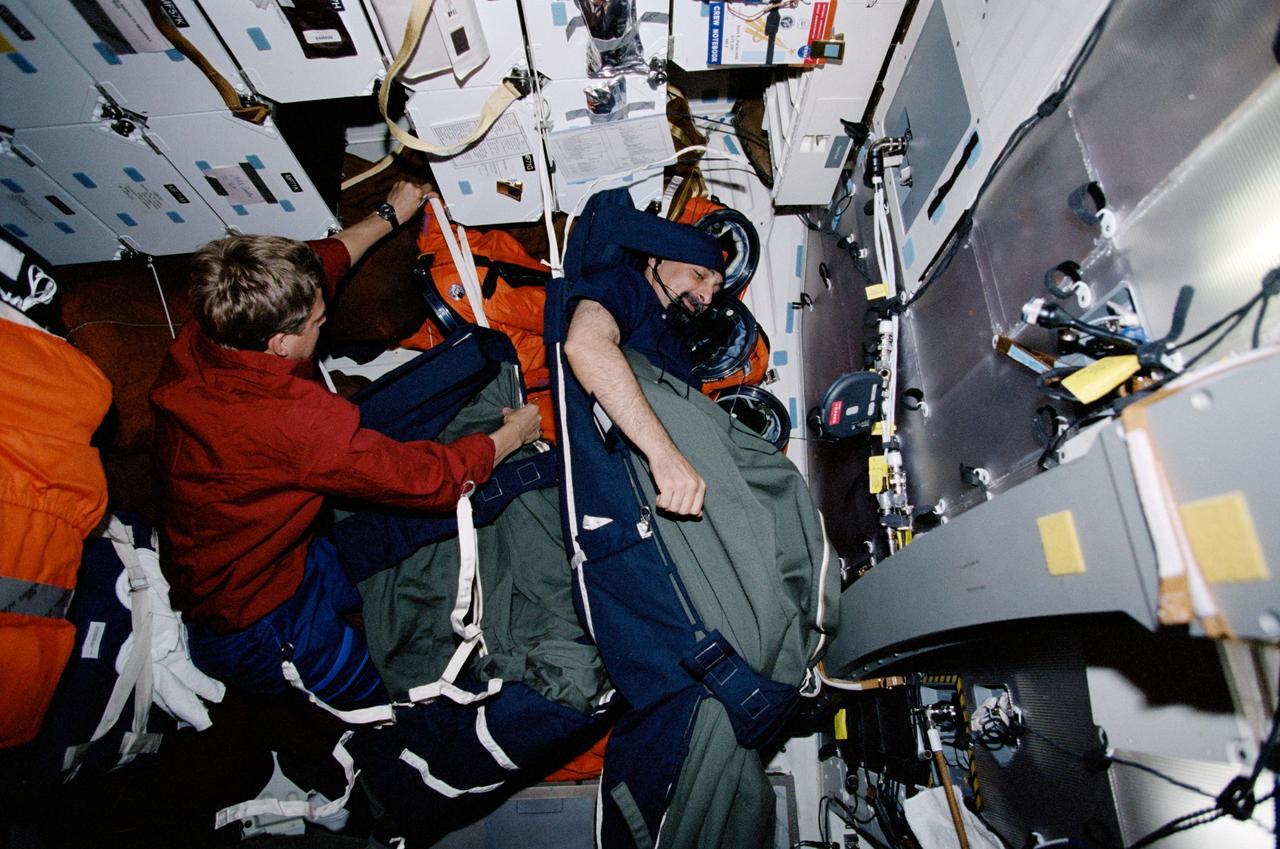
STS100-363-012 (19 April-1 May 2001) --- Astronaut Umberto Guidoni, STS-100 mission specialist, sleeps while astronaut Scott E. Parazynski, mission specialist, prepares for his sleep shift on the Space Shuttle Endeavour's middeck.
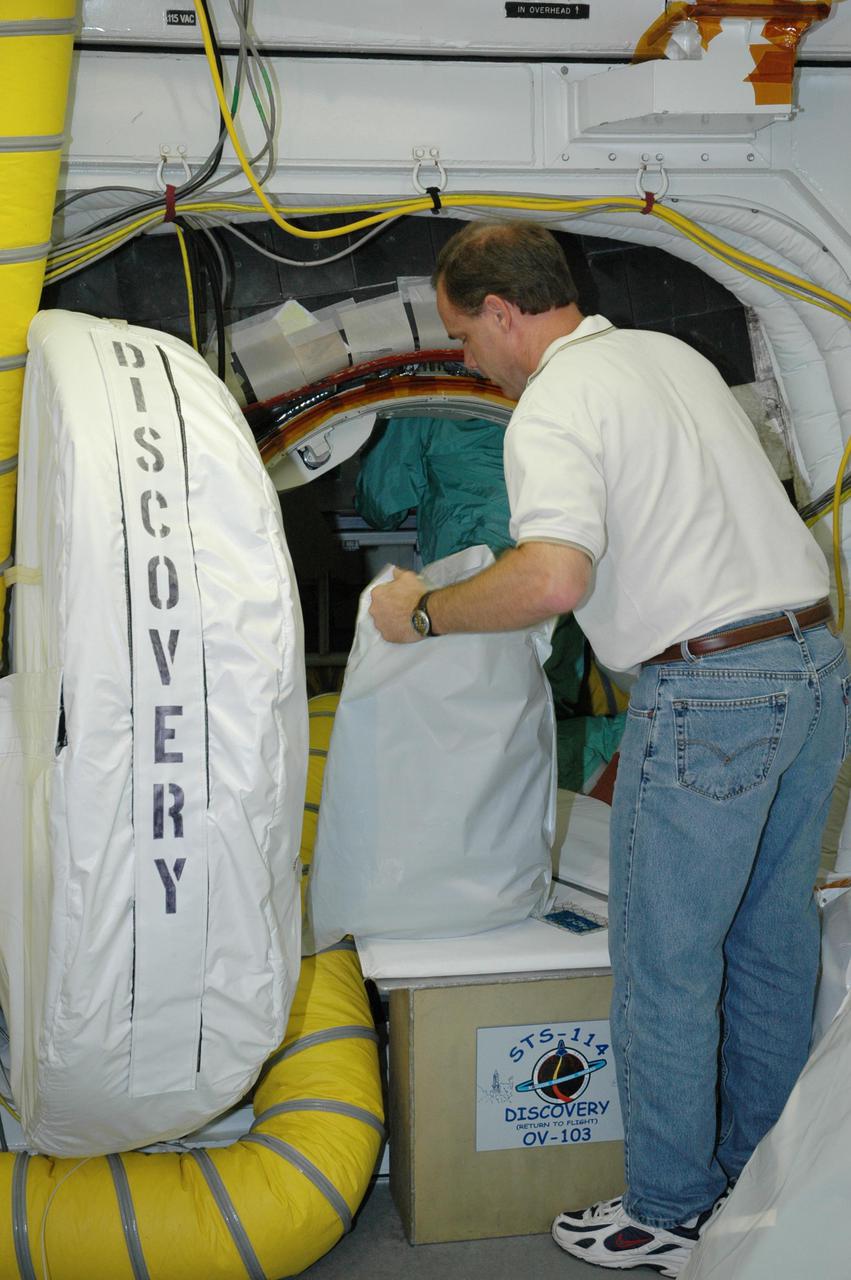
KENNEDY SPACE CENTER, FLA. - At Launch Pad 39B, United Space Alliance Flight Crew Systems engineer John Biegert uncovers a sleep restraint to be installed inside Space Shuttle Discovery, a final step in launch preparations. Launch of Discovery on its Return to Flight mission STS-114 is set for July 13, just days away. During its 12-day mission, Discovery’s seven-person crew will test new hardware and techniques to improve Shuttle safety, as well as deliver supplies to the International Space Station. Discovery’s payloads include the Multi-Purpose Logistics Module Raffaello, the Lightweight Multi-Purpose Experiment Support Structure Carrier (LMC), and the External Stowage Platform-2 (ESP-2). Raffaello will deliver supplies to the International Space Station including food, clothing and research equipment. The LMC will carry a replacement Control Moment Gyroscope and a tile repair sample box. The ESP-2 is outfitted with replacement parts.
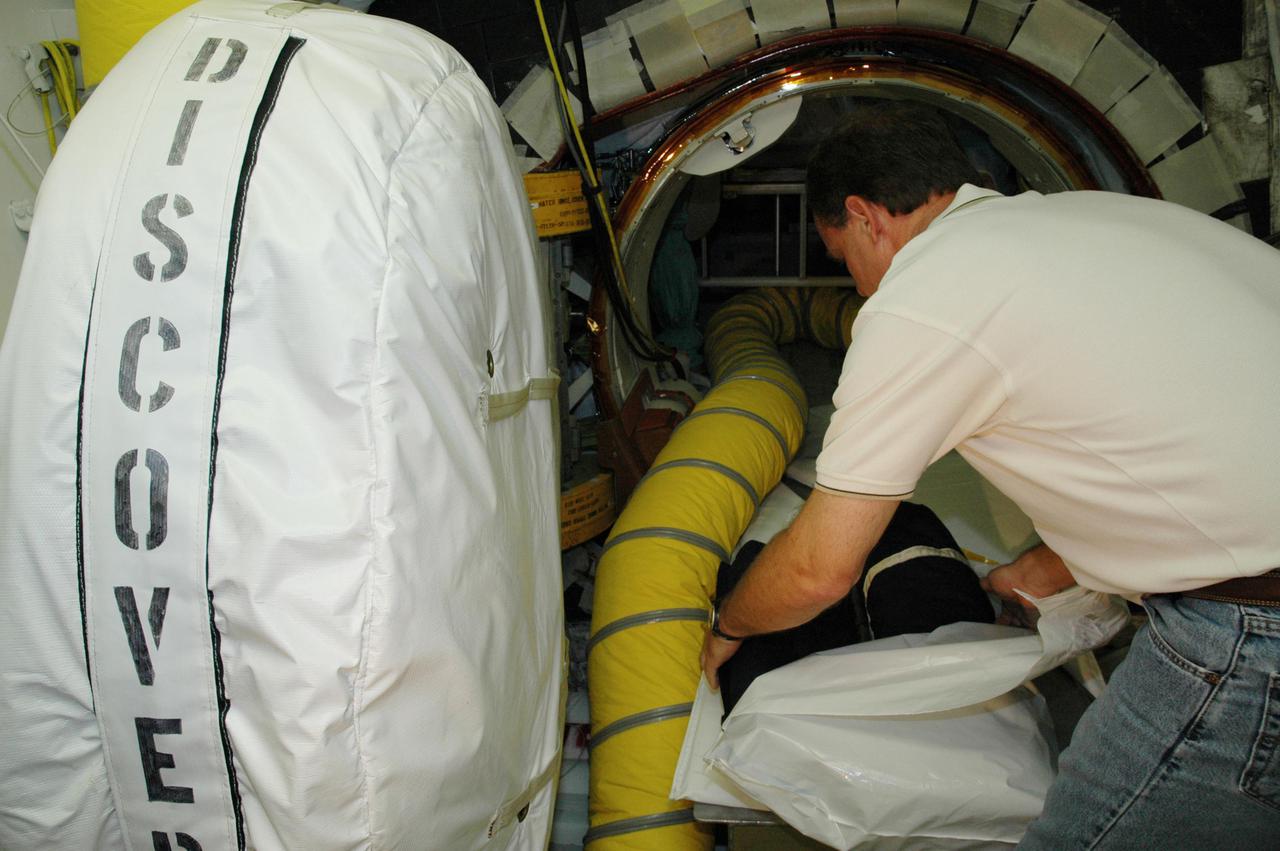
KENNEDY SPACE CENTER, FLA. - At Launch Pad 39B, United Space Alliance Flight Crew Systems engineer John Biegert passes a sleep restraint to a technician inside Space Shuttle Discovery for installation, a final step in launch preparations. Launch of Discovery on its Return to Flight mission STS-114 is set for July 13, just days away. During its 12-day mission, Discovery’s seven-person crew will test new hardware and techniques to improve Shuttle safety, as well as deliver supplies to the International Space Station. Discovery’s payloads include the Multi-Purpose Logistics Module Raffaello, the Lightweight Multi-Purpose Experiment Support Structure Carrier (LMC), and the External Stowage Platform-2 (ESP-2). Raffaello will deliver supplies to the International Space Station including food, clothing and research equipment. The LMC will carry a replacement Control Moment Gyroscope and a tile repair sample box. The ESP-2 is outfitted with replacement parts.