
CAPE CANAVERAL, Fla. – At NASA’s Kennedy Space Center in Florida, technicians and engineers monitor the progress as the Project Morpheus prototype lander is attached to a tether and raised from a transportable launch platform positioned at the north end of the Shuttle Landing Facility. The lander will undergo a tethered test that includes lifting it 20 feet by crane, ascending another 10 feet, maneuvering backwards 10 feet, and then flying forward and descending to its original position, landing at the end of the tether. Testing of the prototype lander was performed at NASA’s Johnson Space Center in Houston in preparation for tethered and free flight testing at Kennedy. The landing facility will provide the lander with the kind of field necessary for realistic testing, complete with rocks, craters and hazards to avoid. Morpheus utilizes an autonomous landing and hazard avoidance technology, or ALHAT, payload that will allow it to navigate to clear landing sites amidst rocks, craters and other hazards during its descent. Project Morpheus is being managed under the Advanced Exploration Systems, or AES, Division in NASA’s Human Exploration and Operations Mission Directorate. The efforts in AES pioneer new approaches for rapidly developing prototype systems, demonstrating key capabilities and validating operational concepts for future human missions beyond Earth orbit. For more information on Project Morpheus, visit http://morpheuslander.jsc.nasa.gov. Photo credit: NASA/Daniel Casper
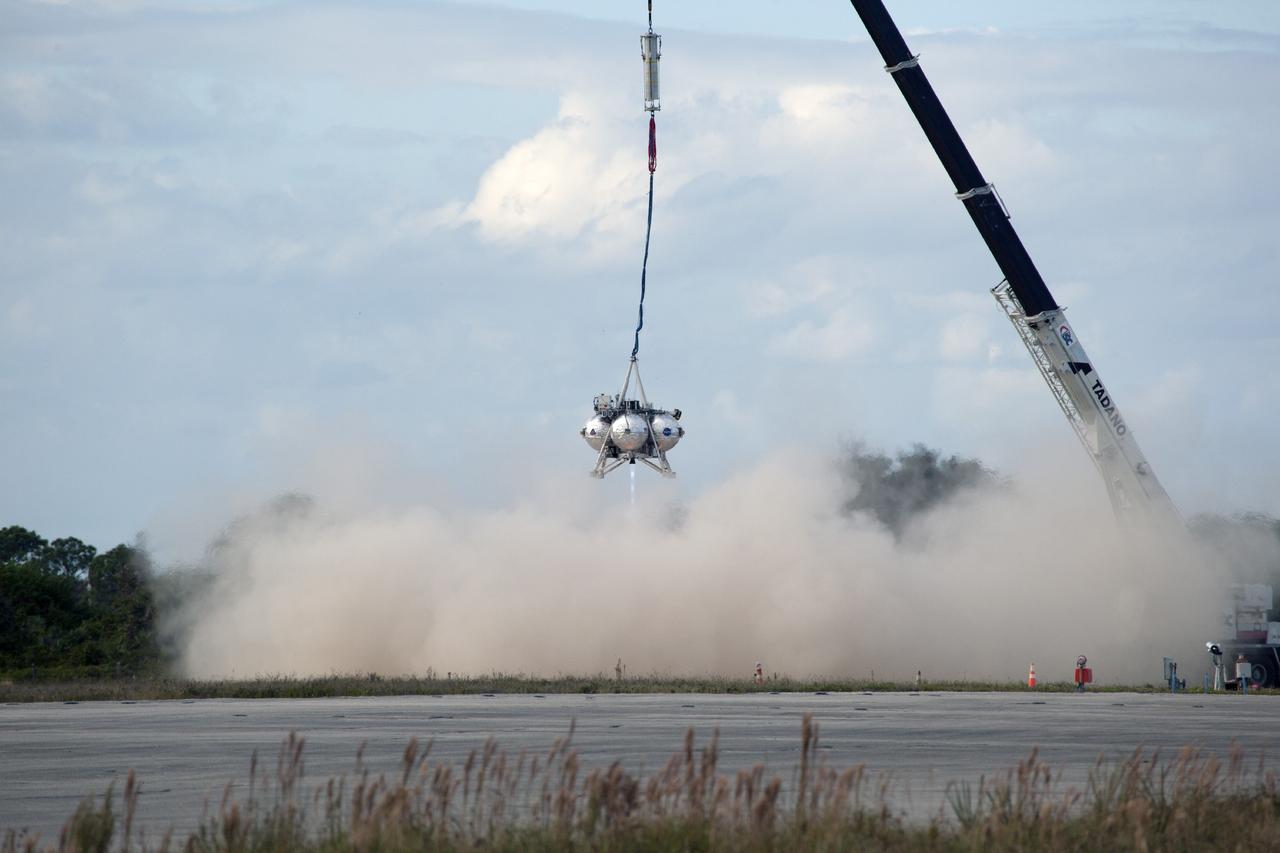
CAPE CANAVERAL, Fla. – At NASA’s Kennedy Space Center in Florida, smoke fills the air as the Project Morpheus prototype lander’s engine fires during a tether test at the north end of the Shuttle Landing Facility. During the test, the lander is lifted 20 feet by crane, and will ascend another 10 feet, maneuver backwards 10 feet, and then fly forward and descend to its original position, landing at the end of the tether onto a transportable launch platform. Testing of the prototype lander was performed at NASA’s Johnson Space Center in Houston in preparation for tethered and free flight testing at Kennedy. The landing facility will provide the lander with the kind of field necessary for realistic testing, complete with rocks, craters and hazards to avoid. Morpheus utilizes an autonomous landing and hazard avoidance technology, or ALHAT, payload that will allow it to navigate to clear landing sites amidst rocks, craters and other hazards during its descent. Project Morpheus is being managed under the Advanced Exploration Systems, or AES, Division in NASA’s Human Exploration and Operations Mission Directorate. The efforts in AES pioneer new approaches for rapidly developing prototype systems, demonstrating key capabilities and validating operational concepts for future human missions beyond Earth orbit. For more information on Project Morpheus, visit http://morpheuslander.jsc.nasa.gov. Photo credit: NASA/Daniel Casper

CAPE CANAVERAL, Fla. – At NASA’s Kennedy Space Center in Florida, the Project Morpheus prototype lander’s engine begins to fire during a tether test at the north end of the Shuttle Landing Facility. During the test, the lander is lifted 20 feet by crane, and will ascend another 10 feet, maneuver backwards 10 feet, and then fly forward and descend to its original position, landing at the end of the tether onto a transportable launch platform. Testing of the prototype lander was performed at NASA’s Johnson Space Center in Houston in preparation for tethered and free flight testing at Kennedy. The landing facility will provide the lander with the kind of field necessary for realistic testing, complete with rocks, craters and hazards to avoid. Morpheus utilizes an autonomous landing and hazard avoidance technology, or ALHAT, payload that will allow it to navigate to clear landing sites amidst rocks, craters and other hazards during its descent. Project Morpheus is being managed under the Advanced Exploration Systems, or AES, Division in NASA’s Human Exploration and Operations Mission Directorate. The efforts in AES pioneer new approaches for rapidly developing prototype systems, demonstrating key capabilities and validating operational concepts for future human missions beyond Earth orbit. For more information on Project Morpheus, visit http://morpheuslander.jsc.nasa.gov. Photo credit: NASA/Daniel Casper
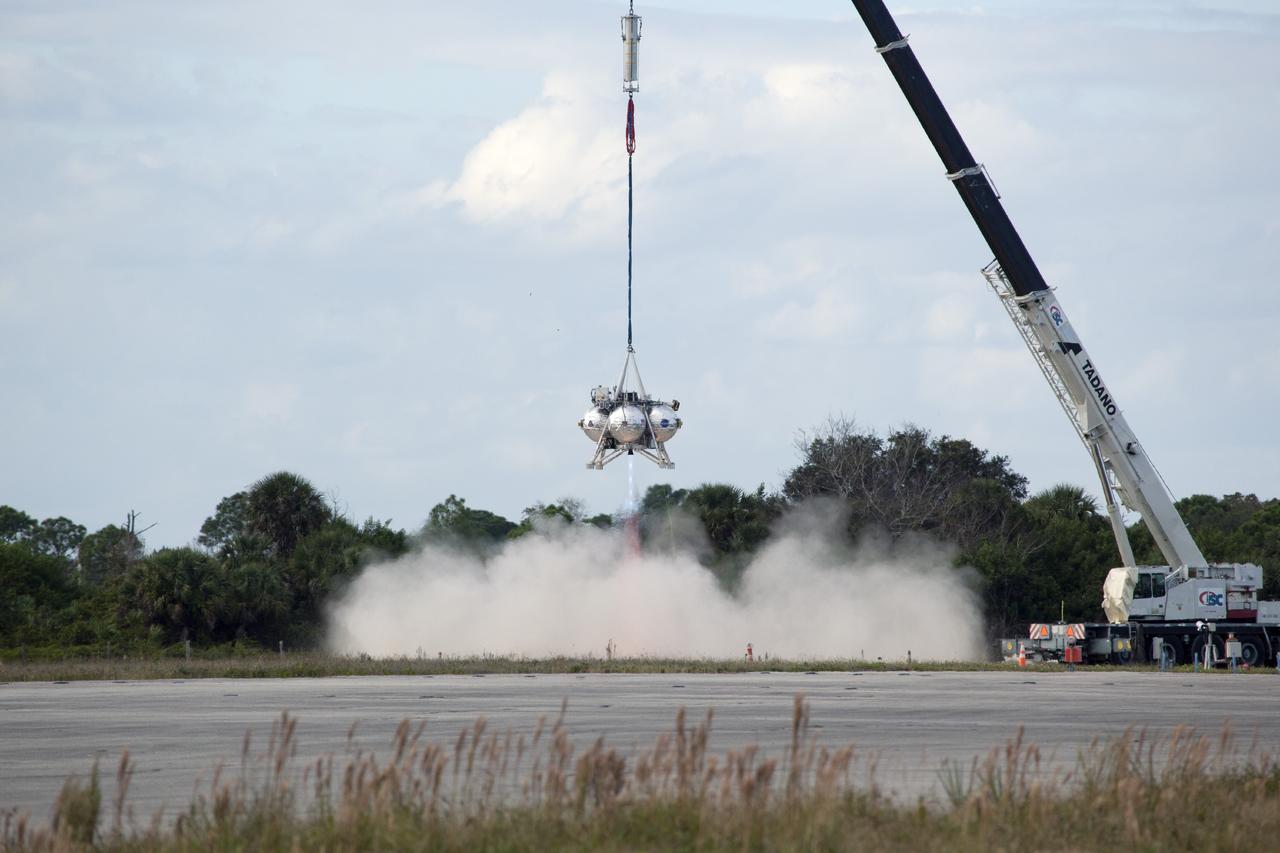
CAPE CANAVERAL, Fla. – At NASA’s Kennedy Space Center in Florida, the Project Morpheus prototype lander’s engine begins to fire during a tether test at the north end of the Shuttle Landing Facility. During the test, the lander is lifted 20 feet by crane, and will ascend another 10 feet, maneuver backwards 10 feet, and then fly forward and descend to its original position, landing at the end of the tether onto a transportable launch platform. Testing of the prototype lander was performed at NASA’s Johnson Space Center in Houston in preparation for tethered and free flight testing at Kennedy. The landing facility will provide the lander with the kind of field necessary for realistic testing, complete with rocks, craters and hazards to avoid. Morpheus utilizes an autonomous landing and hazard avoidance technology, or ALHAT, payload that will allow it to navigate to clear landing sites amidst rocks, craters and other hazards during its descent. Project Morpheus is being managed under the Advanced Exploration Systems, or AES, Division in NASA’s Human Exploration and Operations Mission Directorate. The efforts in AES pioneer new approaches for rapidly developing prototype systems, demonstrating key capabilities and validating operational concepts for future human missions beyond Earth orbit. For more information on Project Morpheus, visit http://morpheuslander.jsc.nasa.gov. Photo credit: NASA/Daniel Casper
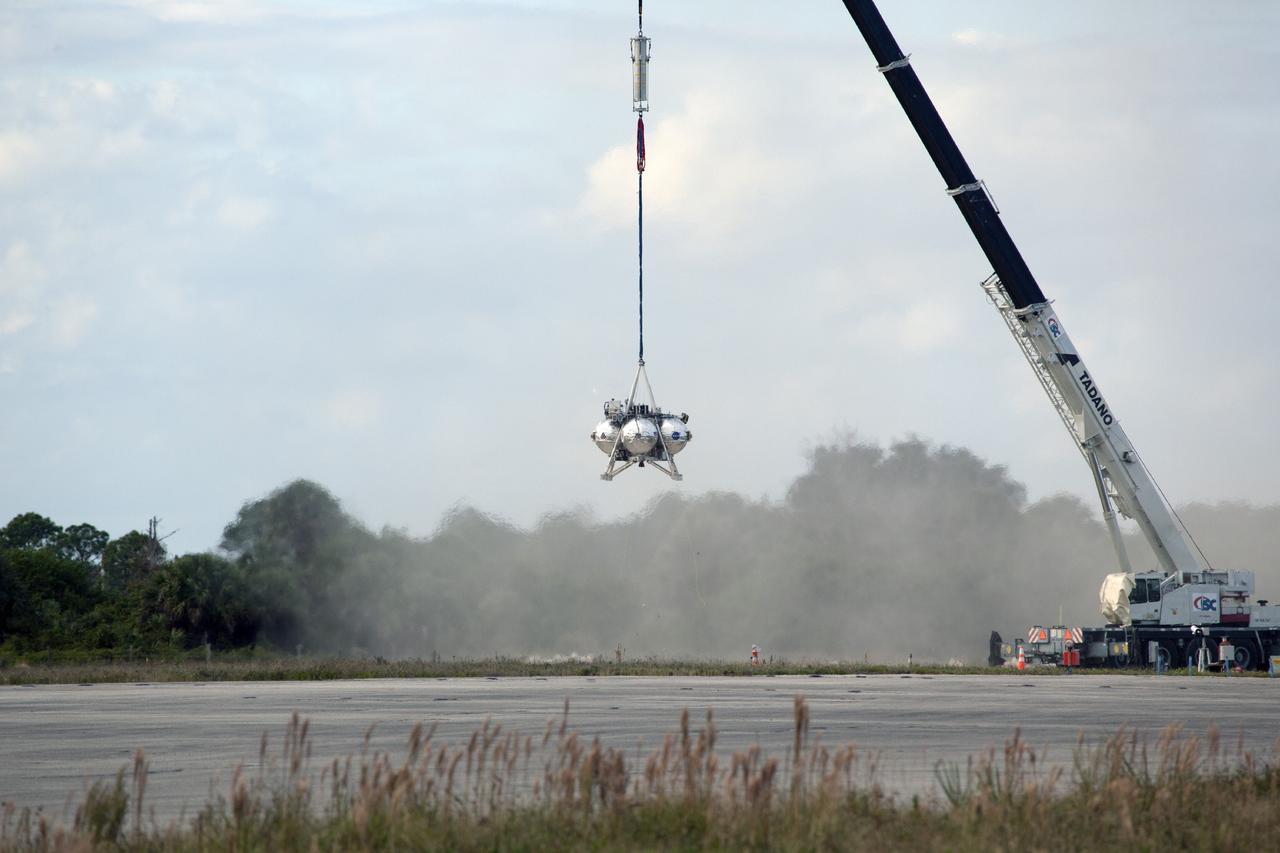
CAPE CANAVERAL, Fla. – At NASA’s Kennedy Space Center in Florida, the Project Morpheus prototype lander’s engine has completed its firing during a tether test at the north end of the Shuttle Landing Facility. During the test, the lander was lifted 20 feet by crane, and then ascended another 10 feet, maneuvered backwards 10 feet, and then flew forward. It will descend to its original position, landing at the end of the tether onto a transportable launch platform. Testing of the prototype lander was performed at NASA’s Johnson Space Center in Houston in preparation for tethered and free flight testing at Kennedy. The landing facility will provide the lander with the kind of field necessary for realistic testing, complete with rocks, craters and hazards to avoid. Morpheus utilizes an autonomous landing and hazard avoidance technology, or ALHAT, payload that will allow it to navigate to clear landing sites amidst rocks, craters and other hazards during its descent. Project Morpheus is being managed under the Advanced Exploration Systems, or AES, Division in NASA’s Human Exploration and Operations Mission Directorate. The efforts in AES pioneer new approaches for rapidly developing prototype systems, demonstrating key capabilities and validating operational concepts for future human missions beyond Earth orbit. For more information on Project Morpheus, visit http://morpheuslander.jsc.nasa.gov. Photo credit: NASA/Daniel Casper
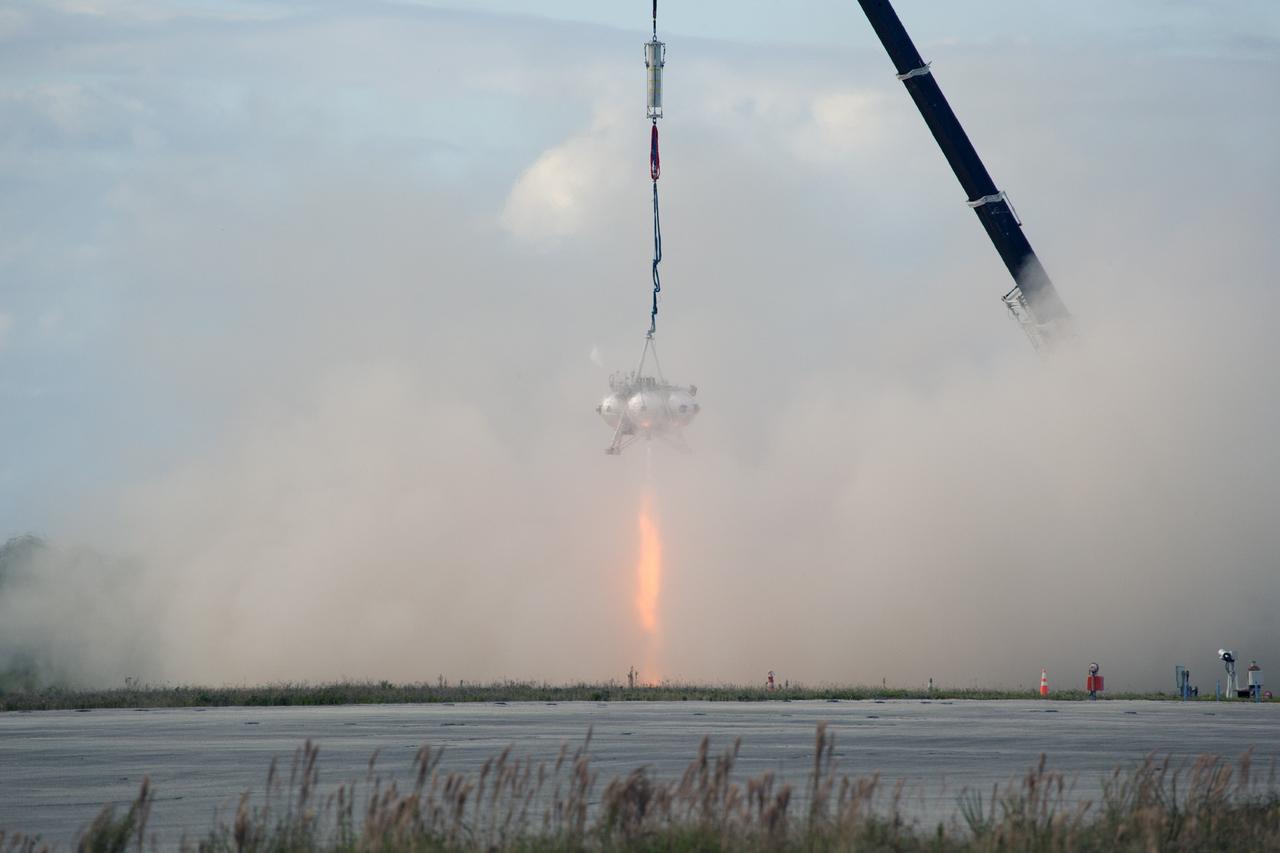
CAPE CANAVERAL, Fla. – At NASA’s Kennedy Space Center in Florida, smoke fills the air as the Project Morpheus prototype lander’s engine fires during a tether test at the north end of the Shuttle Landing Facility. During the test, the lander was lifted 20 feet by crane, and then ascended another 10 feet. The lander will maneuver backwards 10 feet, and then fly forward and descend to its original position, landing at the end of the tether onto a transportable launch platform. Testing of the prototype lander was performed at NASA’s Johnson Space Center in Houston in preparation for tethered and free flight testing at Kennedy. The landing facility will provide the lander with the kind of field necessary for realistic testing, complete with rocks, craters and hazards to avoid. Morpheus utilizes an autonomous landing and hazard avoidance technology, or ALHAT, payload that will allow it to navigate to clear landing sites amidst rocks, craters and other hazards during its descent. Project Morpheus is being managed under the Advanced Exploration Systems, or AES, Division in NASA’s Human Exploration and Operations Mission Directorate. The efforts in AES pioneer new approaches for rapidly developing prototype systems, demonstrating key capabilities and validating operational concepts for future human missions beyond Earth orbit. For more information on Project Morpheus, visit http://morpheuslander.jsc.nasa.gov. Photo credit: NASA/Daniel Casper
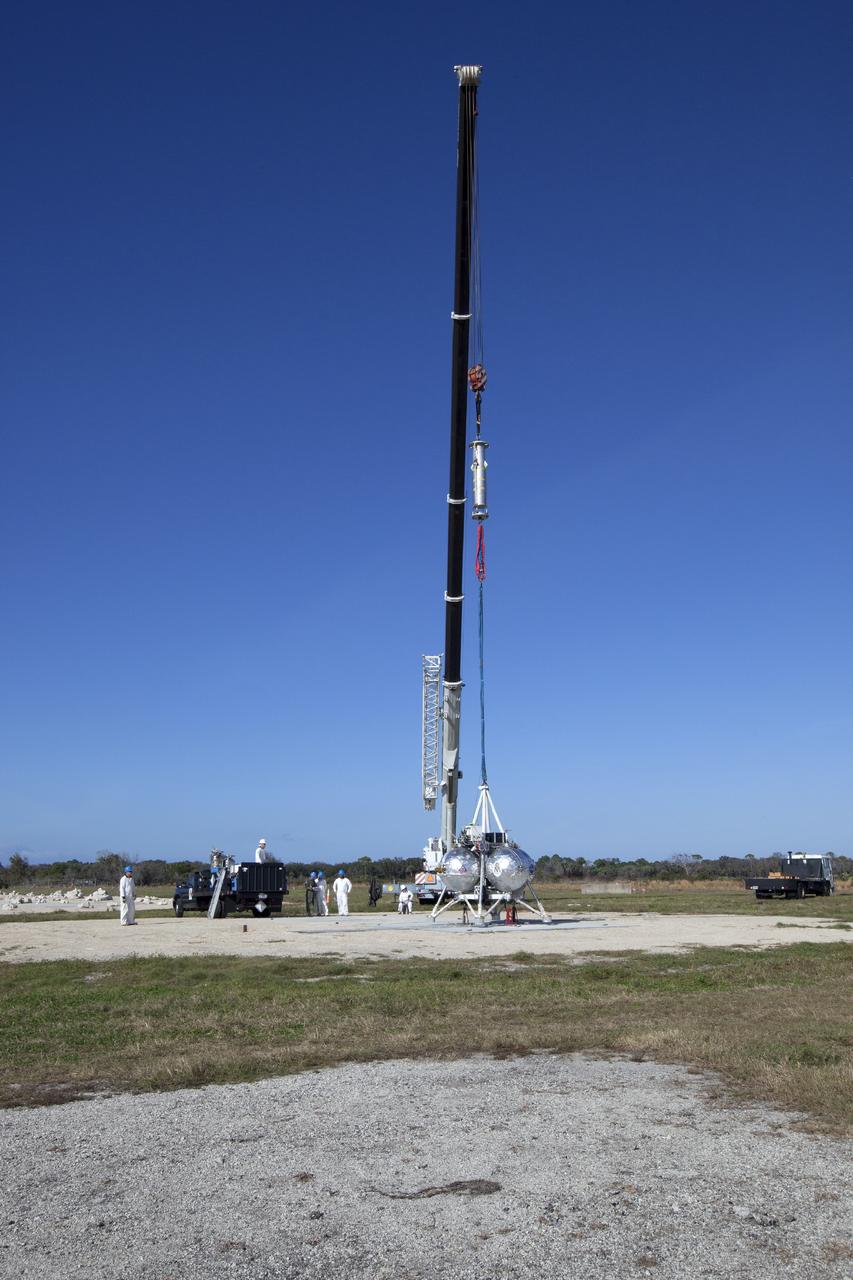
CAPE CANAVERAL, Fla. – At NASA’s Kennedy Space Center in Florida, the Project Morpheus prototype lander has been attached to a tether and is being prepared for a tether test on a transportable launch platform positioned at the north end of the Shuttle Landing Facility. The tether test includes lifting the lander 20 feet by crane, ascending another 10 feet, maneuvering backwards 10 feet, and then flying forward and descending to its original position, landing at the end of the tether. Testing of the prototype lander was performed at NASA’s Johnson Space Center in Houston in preparation for tethered and free flight testing at Kennedy. The landing facility will provide the lander with the kind of field necessary for realistic testing, complete with rocks, craters and hazards to avoid. Morpheus utilizes an autonomous landing and hazard avoidance technology, or ALHAT, payload that will allow it to navigate to clear landing sites amidst rocks, craters and other hazards during its descent. Project Morpheus is being managed under the Advanced Exploration Systems, or AES, Division in NASA’s Human Exploration and Operations Mission Directorate. The efforts in AES pioneer new approaches for rapidly developing prototype systems, demonstrating key capabilities and validating operational concepts for future human missions beyond Earth orbit. For more information on Project Morpheus, visit http://morpheuslander.jsc.nasa.gov. Photo credit: NASA/Daniel Casper
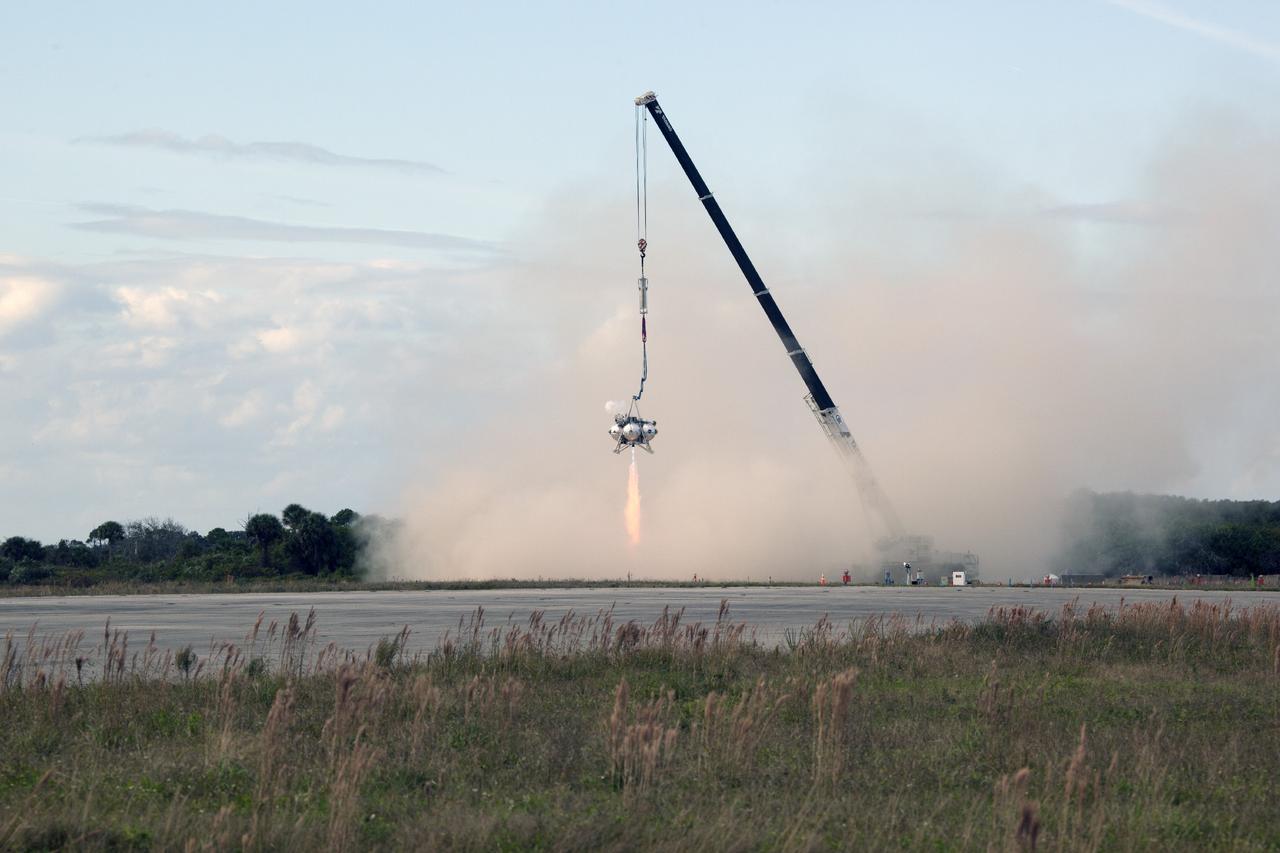
CAPE CANAVERAL, Fla. – At NASA’s Kennedy Space Center in Florida, smoke fills the air as the Project Morpheus prototype lander’s engine fires during a tether test at the north end of the Shuttle Landing Facility. During the test, the lander was lifted 20 feet by crane, and then ascended another 10 feet, maneuvered backwards 10 feet, and then flew forward. It will descend to its original position, landing at the end of the tether onto a transportable launch platform. Testing of the prototype lander was performed at NASA’s Johnson Space Center in Houston in preparation for tethered and free flight testing at Kennedy. The landing facility will provide the lander with the kind of field necessary for realistic testing, complete with rocks, craters and hazards to avoid. Morpheus utilizes an autonomous landing and hazard avoidance technology, or ALHAT, payload that will allow it to navigate to clear landing sites amidst rocks, craters and other hazards during its descent. Project Morpheus is being managed under the Advanced Exploration Systems, or AES, Division in NASA’s Human Exploration and Operations Mission Directorate. The efforts in AES pioneer new approaches for rapidly developing prototype systems, demonstrating key capabilities and validating operational concepts for future human missions beyond Earth orbit. For more information on Project Morpheus, visit http://morpheuslander.jsc.nasa.gov. Photo credit: NASA/Daniel Casper
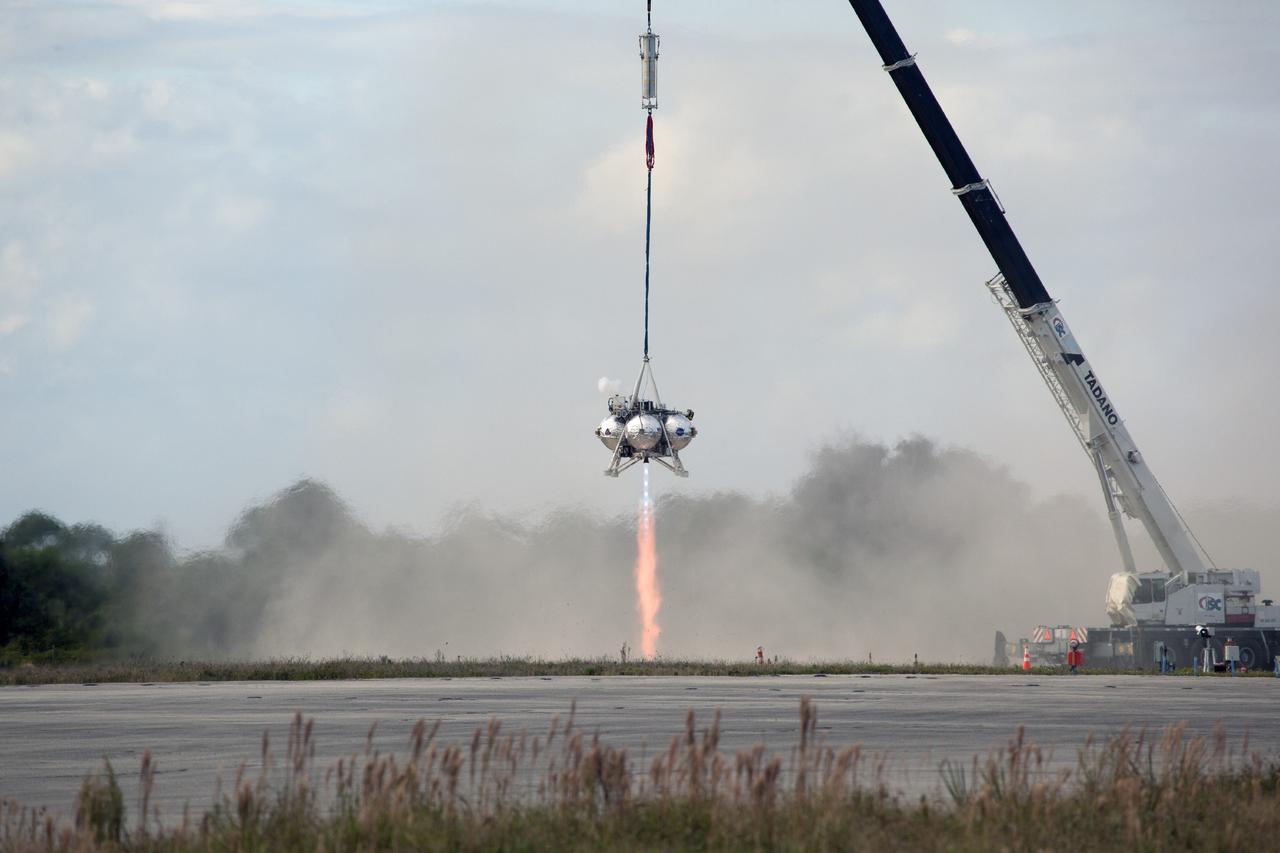
CAPE CANAVERAL, Fla. – At NASA’s Kennedy Space Center in Florida, smoke fills the air as the Project Morpheus prototype lander’s engine fires during a tether test at the north end of the Shuttle Landing Facility. During the test, the lander was lifted 20 feet by crane, and then ascended another 10 feet, maneuvered backwards 10 feet, and then flew forward. It will descend to its original position, landing at the end of the tether onto a transportable launch platform. Testing of the prototype lander was performed at NASA’s Johnson Space Center in Houston in preparation for tethered and free flight testing at Kennedy. The landing facility will provide the lander with the kind of field necessary for realistic testing, complete with rocks, craters and hazards to avoid. Morpheus utilizes an autonomous landing and hazard avoidance technology, or ALHAT, payload that will allow it to navigate to clear landing sites amidst rocks, craters and other hazards during its descent. Project Morpheus is being managed under the Advanced Exploration Systems, or AES, Division in NASA’s Human Exploration and Operations Mission Directorate. The efforts in AES pioneer new approaches for rapidly developing prototype systems, demonstrating key capabilities and validating operational concepts for future human missions beyond Earth orbit. For more information on Project Morpheus, visit http://morpheuslander.jsc.nasa.gov. Photo credit: NASA/Daniel Casper
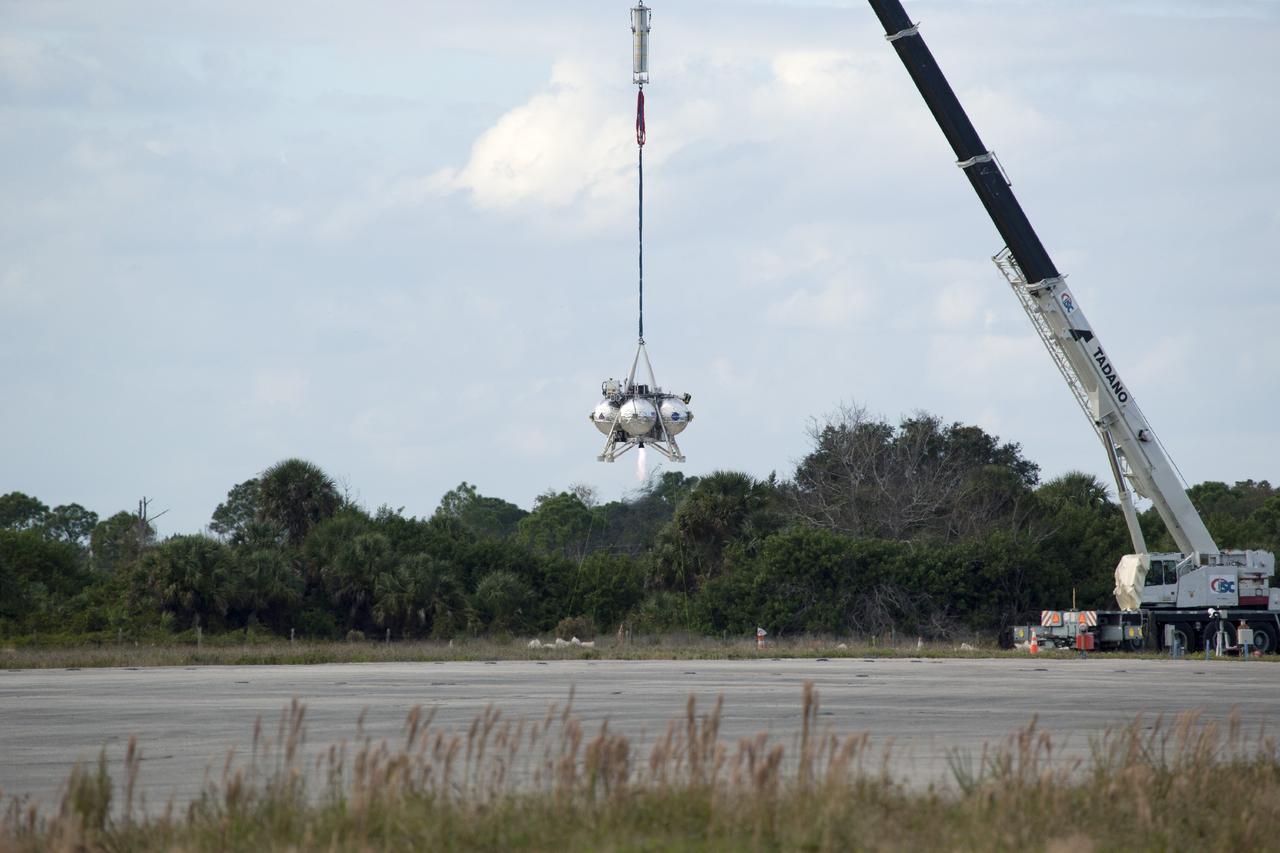
CAPE CANAVERAL, Fla. – At NASA’s Kennedy Space Center in Florida, the Project Morpheus prototype lander has been lifted by a tether and hovers above a transportable launch platform positioned at the north end of the Shuttle Landing Facility. The lander’s engine begins firing for a tethered test that includes lifting it 20 feet by crane, ascending another 10 feet, maneuvering backwards 10 feet, and then flying forward and descending to its original position, landing at the end of the tether. Testing of the prototype lander was performed at NASA’s Johnson Space Center in Houston in preparation for tethered and free flight testing at Kennedy. The landing facility will provide the lander with the kind of field necessary for realistic testing, complete with rocks, craters and hazards to avoid. Morpheus utilizes an autonomous landing and hazard avoidance technology, or ALHAT, payload that will allow it to navigate to clear landing sites amidst rocks, craters and other hazards during its descent. Project Morpheus is being managed under the Advanced Exploration Systems, or AES, Division in NASA’s Human Exploration and Operations Mission Directorate. The efforts in AES pioneer new approaches for rapidly developing prototype systems, demonstrating key capabilities and validating operational concepts for future human missions beyond Earth orbit. For more information on Project Morpheus, visit http://morpheuslander.jsc.nasa.gov. Photo credit: NASA/Daniel Casper
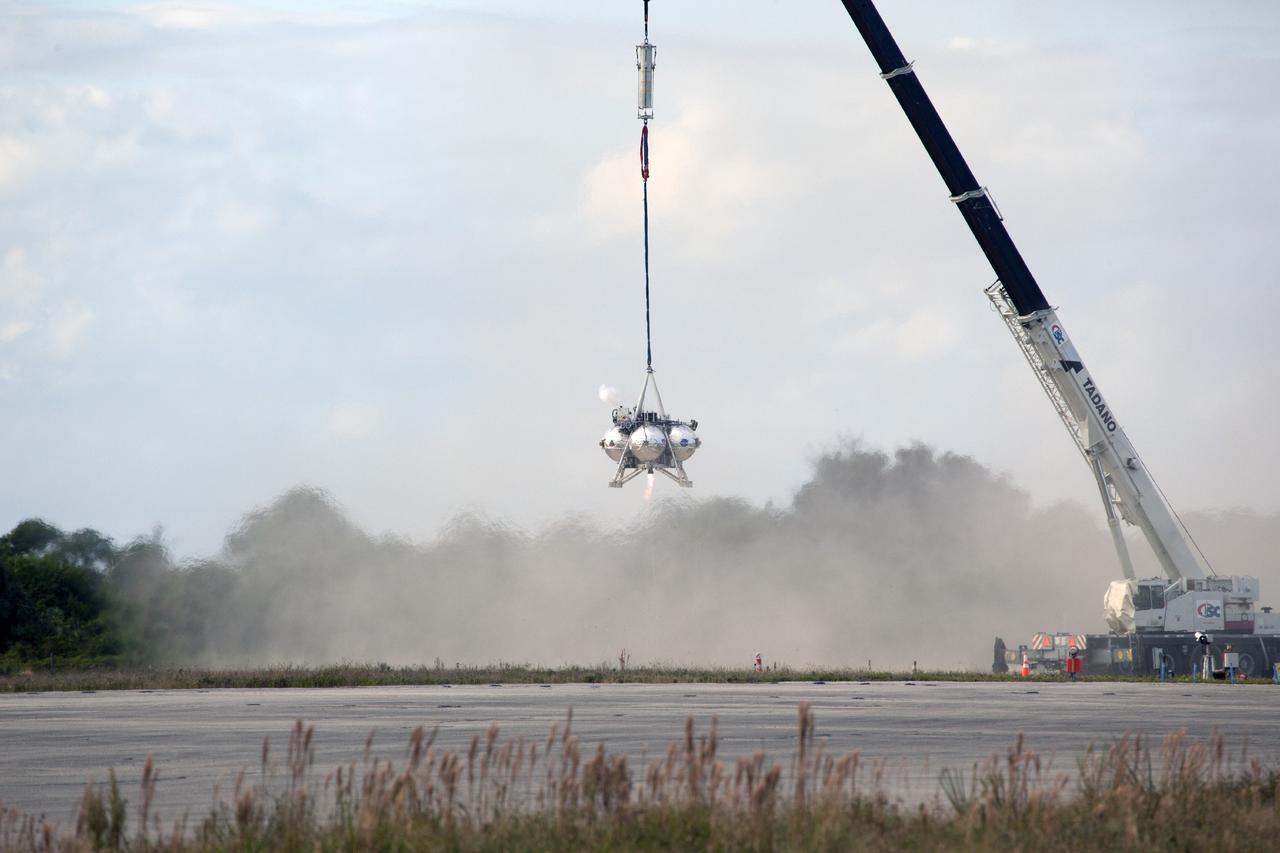
CAPE CANAVERAL, Fla. – At NASA’s Kennedy Space Center in Florida, smoke fills the air as the Project Morpheus prototype lander’s engine fires during a tether test at the north end of the Shuttle Landing Facility. During the test, the lander was lifted 20 feet by crane, and then ascended another 10 feet, maneuvered backwards 10 feet, and then flew forward. It will descend to its original position, landing at the end of the tether onto a transportable launch platform. Testing of the prototype lander was performed at NASA’s Johnson Space Center in Houston in preparation for tethered and free flight testing at Kennedy. The landing facility will provide the lander with the kind of field necessary for realistic testing, complete with rocks, craters and hazards to avoid. Morpheus utilizes an autonomous landing and hazard avoidance technology, or ALHAT, payload that will allow it to navigate to clear landing sites amidst rocks, craters and other hazards during its descent. Project Morpheus is being managed under the Advanced Exploration Systems, or AES, Division in NASA’s Human Exploration and Operations Mission Directorate. The efforts in AES pioneer new approaches for rapidly developing prototype systems, demonstrating key capabilities and validating operational concepts for future human missions beyond Earth orbit. For more information on Project Morpheus, visit http://morpheuslander.jsc.nasa.gov. Photo credit: NASA/Daniel Casper
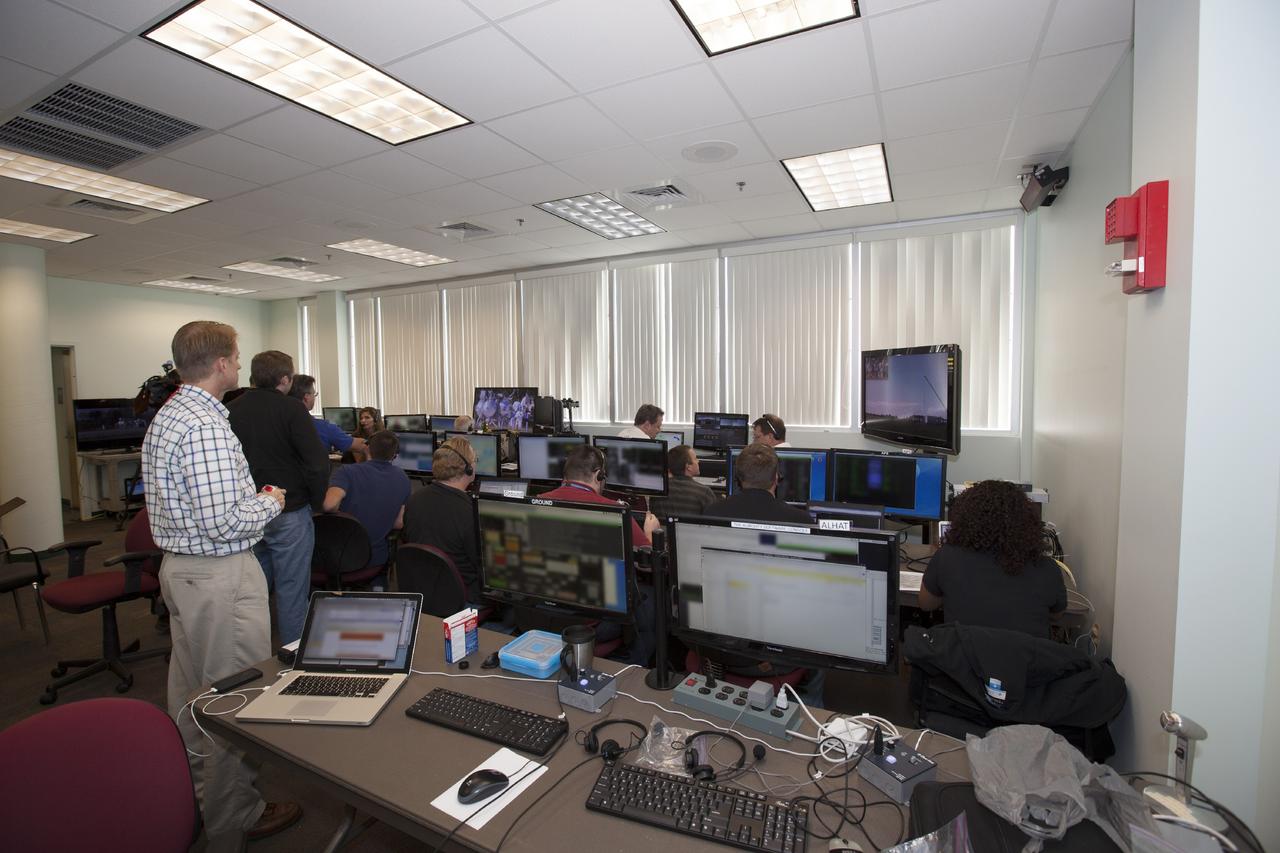
CAPE CANAVERAL, Fla. – Inside a control room at NASA’s Kennedy Space Center in Florida, engineers monitor the progress as the Project Morpheus prototype lander is being prepared for a tether test on a transportable launch platform positioned at the north end of the Shuttle Landing Facility. The tethered test will include lifting it 20 feet by crane, ascending another 10 feet, maneuvering backwards 10 feet, and then flying forward and descending to its original position, landing at the end of the tether. Testing of the prototype lander was performed at NASA’s Johnson Space Center in Houston in preparation for tethered and free flight testing at Kennedy. The landing facility will provide the lander with the kind of field necessary for realistic testing, complete with rocks, craters and hazards to avoid. Morpheus utilizes an autonomous landing and hazard avoidance technology, or ALHAT, payload that will allow it to navigate to clear landing sites amidst rocks, craters and other hazards during its descent. Project Morpheus is being managed under the Advanced Exploration Systems, or AES, Division in NASA’s Human Exploration and Operations Mission Directorate. The efforts in AES pioneer new approaches for rapidly developing prototype systems, demonstrating key capabilities and validating operational concepts for future human missions beyond Earth orbit. For more information on Project Morpheus, visit http://morpheuslander.jsc.nasa.gov. Photo credit: NASA/Daniel Casper
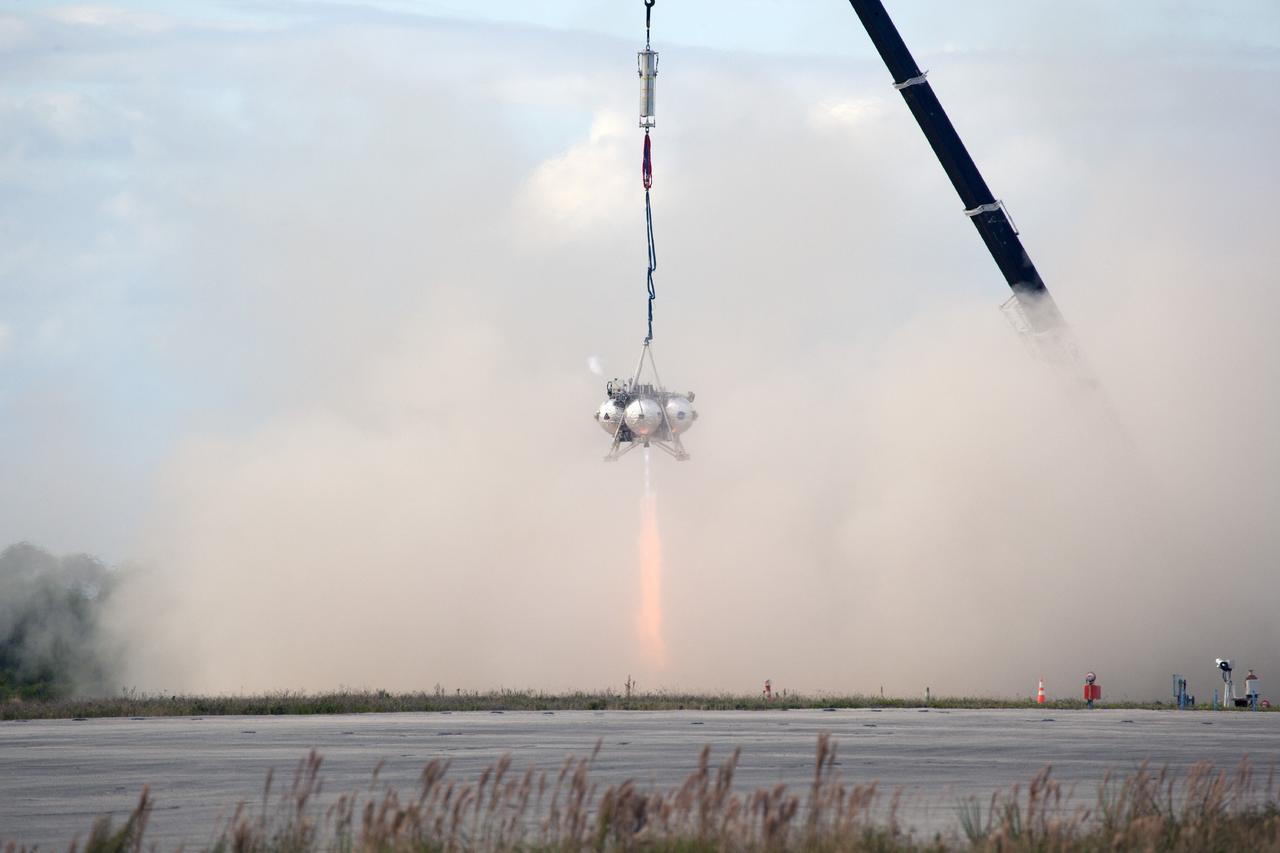
CAPE CANAVERAL, Fla. – At NASA’s Kennedy Space Center in Florida, smoke fills the air as the Project Morpheus prototype lander’s engine fires during a tether test at the north end of the Shuttle Landing Facility. During the test, the lander was lifted 20 feet by crane, and then ascended another 10 feet, maneuvered backwards 10 feet, and then flew forward. It will descend to its original position, landing at the end of the tether onto a transportable launch platform. Testing of the prototype lander was performed at NASA’s Johnson Space Center in Houston in preparation for tethered and free flight testing at Kennedy. The landing facility will provide the lander with the kind of field necessary for realistic testing, complete with rocks, craters and hazards to avoid. Morpheus utilizes an autonomous landing and hazard avoidance technology, or ALHAT, payload that will allow it to navigate to clear landing sites amidst rocks, craters and other hazards during its descent. Project Morpheus is being managed under the Advanced Exploration Systems, or AES, Division in NASA’s Human Exploration and Operations Mission Directorate. The efforts in AES pioneer new approaches for rapidly developing prototype systems, demonstrating key capabilities and validating operational concepts for future human missions beyond Earth orbit. For more information on Project Morpheus, visit http://morpheuslander.jsc.nasa.gov. Photo credit: NASA/Daniel Casper
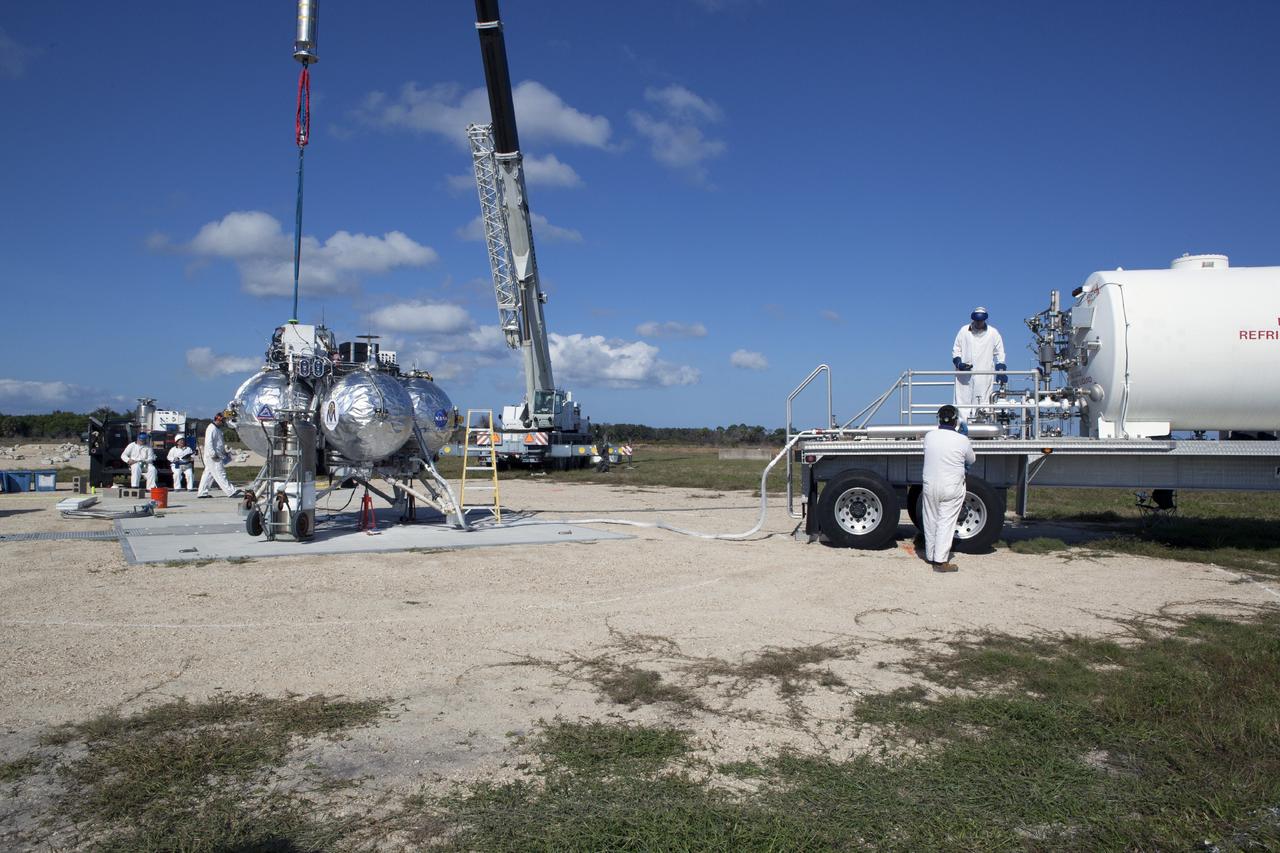
CAPE CANAVERAL, Fla. – At NASA’s Kennedy Space Center in Florida, the Project Morpheus prototype lander is being prepared for a tethered test on a transportable launch platform positioned at the north end of the Shuttle Landing Facility. The tethered test will include lifting it 20 feet by crane, ascending another 10 feet, maneuvering backwards 10 feet, and then flying forward and descending to its original position, landing at the end of the tether. Testing of the prototype lander was performed at NASA’s Johnson Space Center in Houston in preparation for tethered and free flight testing at Kennedy. The landing facility will provide the lander with the kind of field necessary for realistic testing, complete with rocks, craters and hazards to avoid. Morpheus utilizes an autonomous landing and hazard avoidance technology, or ALHAT, payload that will allow it to navigate to clear landing sites amidst rocks, craters and other hazards during its descent. Project Morpheus is being managed under the Advanced Exploration Systems, or AES, Division in NASA’s Human Exploration and Operations Mission Directorate. The efforts in AES pioneer new approaches for rapidly developing prototype systems, demonstrating key capabilities and validating operational concepts for future human missions beyond Earth orbit. For more information on Project Morpheus, visit http://morpheuslander.jsc.nasa.gov. Photo credit: NASA/Daniel Casper
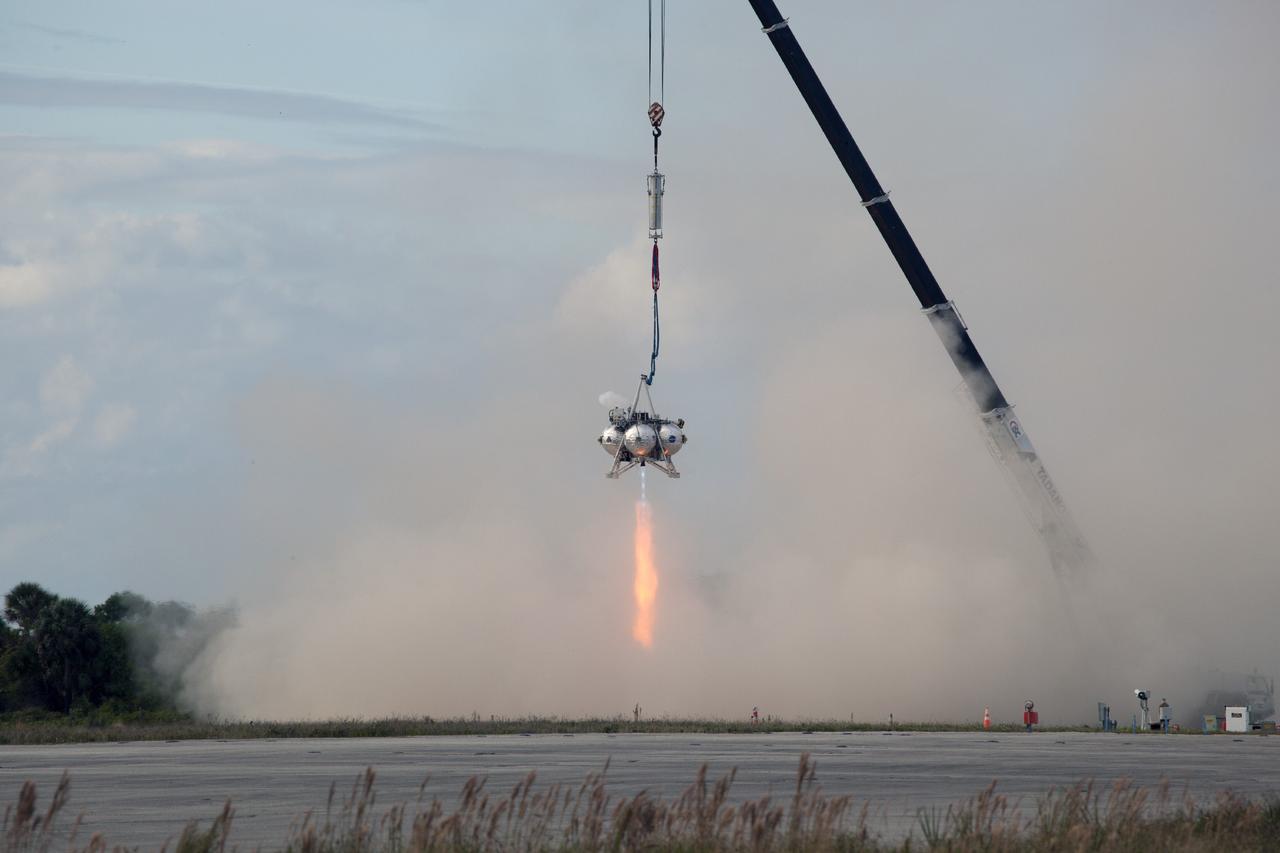
CAPE CANAVERAL, Fla. – At NASA’s Kennedy Space Center in Florida, smoke fills the air as the Project Morpheus prototype lander’s engine fires during a tether test at the north end of the Shuttle Landing Facility. During the test, the lander was lifted 20 feet by crane, and then ascended another 10 feet, maneuvered backwards 10 feet, and then flew forward. It will descend to its original position, landing at the end of the tether onto a transportable launch platform. Testing of the prototype lander was performed at NASA’s Johnson Space Center in Houston in preparation for tethered and free flight testing at Kennedy. The landing facility will provide the lander with the kind of field necessary for realistic testing, complete with rocks, craters and hazards to avoid. Morpheus utilizes an autonomous landing and hazard avoidance technology, or ALHAT, payload that will allow it to navigate to clear landing sites amidst rocks, craters and other hazards during its descent. Project Morpheus is being managed under the Advanced Exploration Systems, or AES, Division in NASA’s Human Exploration and Operations Mission Directorate. The efforts in AES pioneer new approaches for rapidly developing prototype systems, demonstrating key capabilities and validating operational concepts for future human missions beyond Earth orbit. For more information on Project Morpheus, visit http://morpheuslander.jsc.nasa.gov. Photo credit: NASA/Daniel Casper
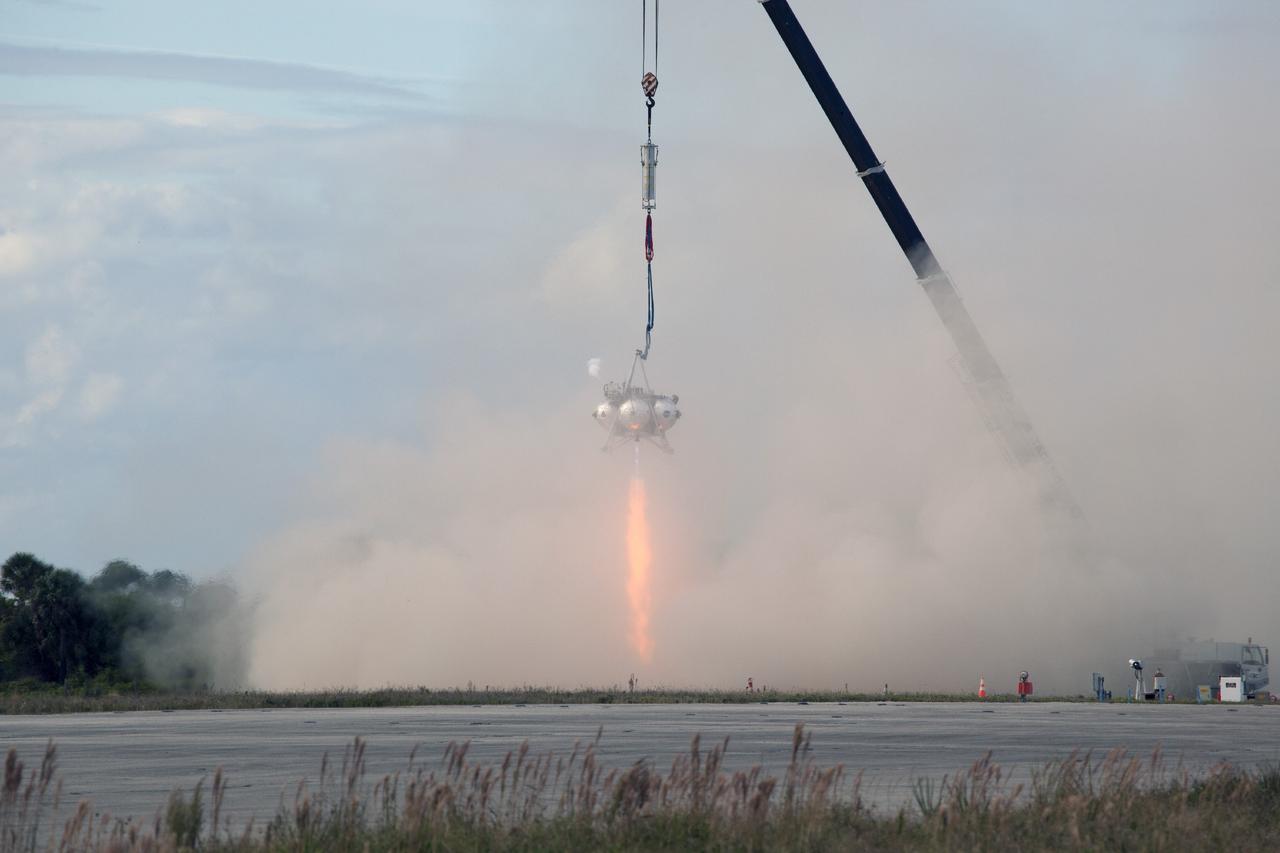
CAPE CANAVERAL, Fla. – At NASA’s Kennedy Space Center in Florida, smoke fills the air as the Project Morpheus prototype lander’s engine fires during a tether test at the north end of the Shuttle Landing Facility. During the test, the lander was lifted 20 feet by crane, and then ascended another 10 feet, maneuvered backwards 10 feet, and then flew forward. It will descend to its original position, landing at the end of the tether onto a transportable launch platform. Testing of the prototype lander was performed at NASA’s Johnson Space Center in Houston in preparation for tethered and free flight testing at Kennedy. The landing facility will provide the lander with the kind of field necessary for realistic testing, complete with rocks, craters and hazards to avoid. Morpheus utilizes an autonomous landing and hazard avoidance technology, or ALHAT, payload that will allow it to navigate to clear landing sites amidst rocks, craters and other hazards during its descent. Project Morpheus is being managed under the Advanced Exploration Systems, or AES, Division in NASA’s Human Exploration and Operations Mission Directorate. The efforts in AES pioneer new approaches for rapidly developing prototype systems, demonstrating key capabilities and validating operational concepts for future human missions beyond Earth orbit. For more information on Project Morpheus, visit http://morpheuslander.jsc.nasa.gov. Photo credit: NASA/Daniel Casper
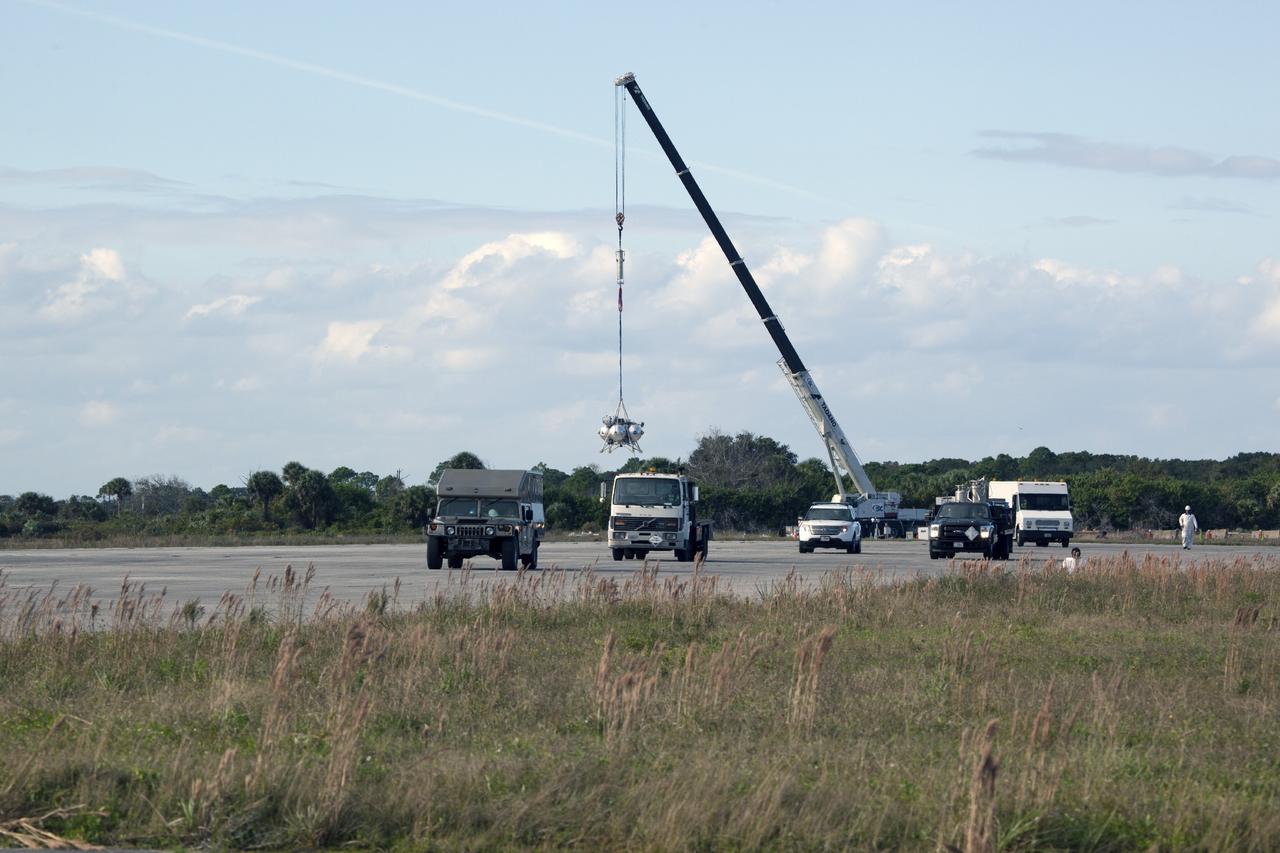
CAPE CANAVERAL, Fla. – At NASA’s Kennedy Space Center in Florida, the Project Morpheus prototype lander has been attached to a tether and is being raised from a transportable launch platform positioned at the north end of the Shuttle Landing Facility. The tethered test includes lifting the lander 20 feet by crane, ascending another 10 feet, maneuvering backwards 10 feet, and then flying forward and descending to its original position, landing at the end of the tether. Testing of the prototype lander was performed at NASA’s Johnson Space Center in Houston in preparation for tethered and free flight testing at Kennedy. The landing facility will provide the lander with the kind of field necessary for realistic testing, complete with rocks, craters and hazards to avoid. Morpheus utilizes an autonomous landing and hazard avoidance technology, or ALHAT, payload that will allow it to navigate to clear landing sites amidst rocks, craters and other hazards during its descent. Project Morpheus is being managed under the Advanced Exploration Systems, or AES, Division in NASA’s Human Exploration and Operations Mission Directorate. The efforts in AES pioneer new approaches for rapidly developing prototype systems, demonstrating key capabilities and validating operational concepts for future human missions beyond Earth orbit. For more information on Project Morpheus, visit http://morpheuslander.jsc.nasa.gov. Photo credit: NASA/Daniel Casper