
KENNEDY SPACE CENTER, FLA. -- After the mission STS-122 crew's arrival at NASA's Kennedy Space Center, Mission Specialist Hans Schlegel is introduced during a media opportunity on the Shuttle Landing Facility. Schlegel represents the European Space Agency. The crew's arrival signals the imminent launch of space shuttle Atlantis on mission STS-122. The launch countdown begins at 7 p.m. Dec. 3. Launch is scheduled for 4:31 p.m. EST on Dec. 6. Atlantis will carry the Columbus Lab, Europe's largest contribution to the construction of the International Space Station. It will support scientific and technological research in a microgravity environment. Columbus, a program of ESA, is a multifunctional, pressurized laboratory that will be permanently attached to Node 2 of the space station to carry out experiments in materials science, fluid physics and biosciences, as well as to perform a number of technological applications. Photo credit: NASA/Kim Shiflett
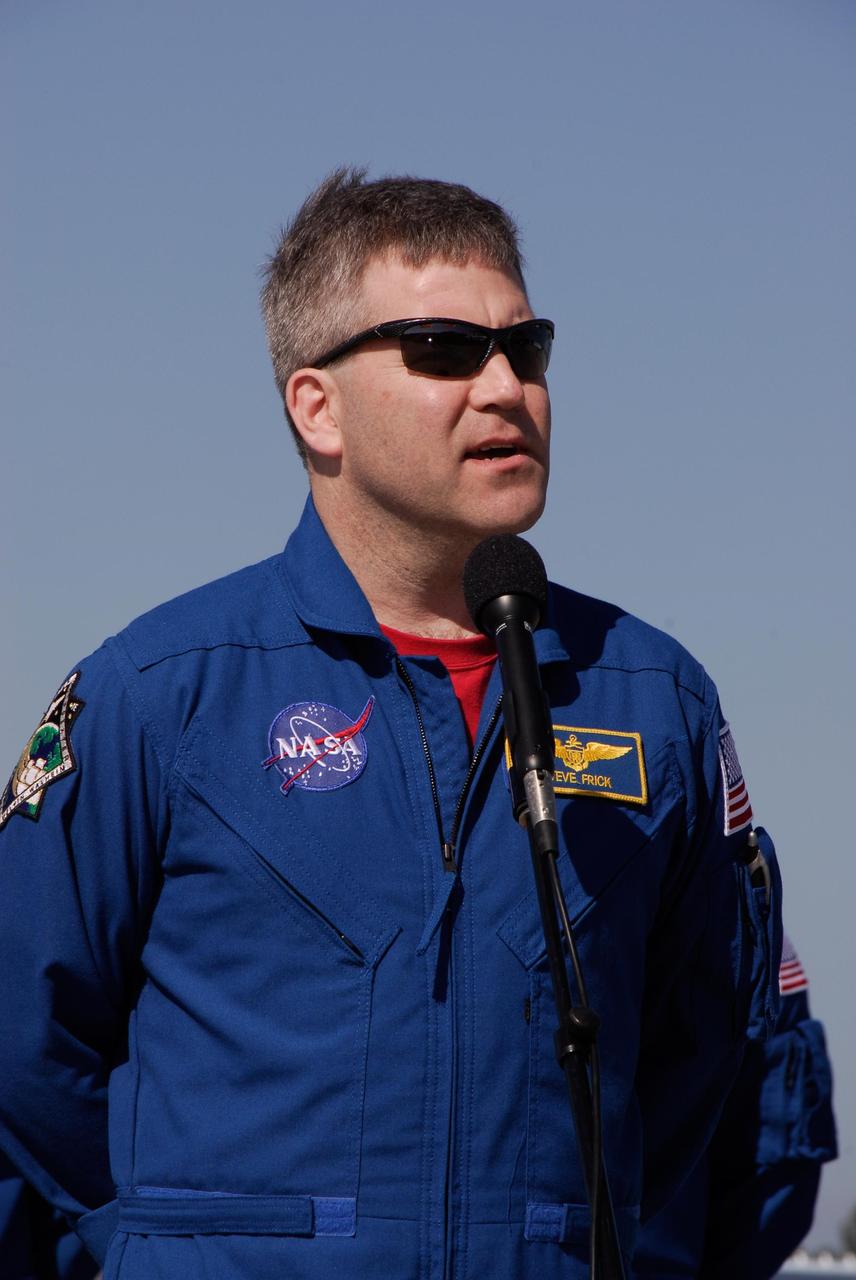
KENNEDY SPACE CENTER, FLA. -- After arrival at NASA's Kennedy Space Center, STS-122 Commander Steve Frick talks to the media on the Shuttle Landing Facility. The crew's arrival signals the imminent launch of space shuttle Atlantis on mission STS-122. The launch countdown begins at 7 p.m. Dec. 3. Launch is scheduled for 4:31 p.m. EST on Dec. 6. Atlantis will carry the Columbus Lab, Europe's largest contribution to the construction of the International Space Station. It will support scientific and technological research in a microgravity environment. Columbus, a program of ESA, is a multifunctional, pressurized laboratory that will be permanently attached to Node 2 of the space station to carry out experiments in materials science, fluid physics and biosciences, as well as to perform a number of technological applications. Photo credit: NASA/Kim Shiflett
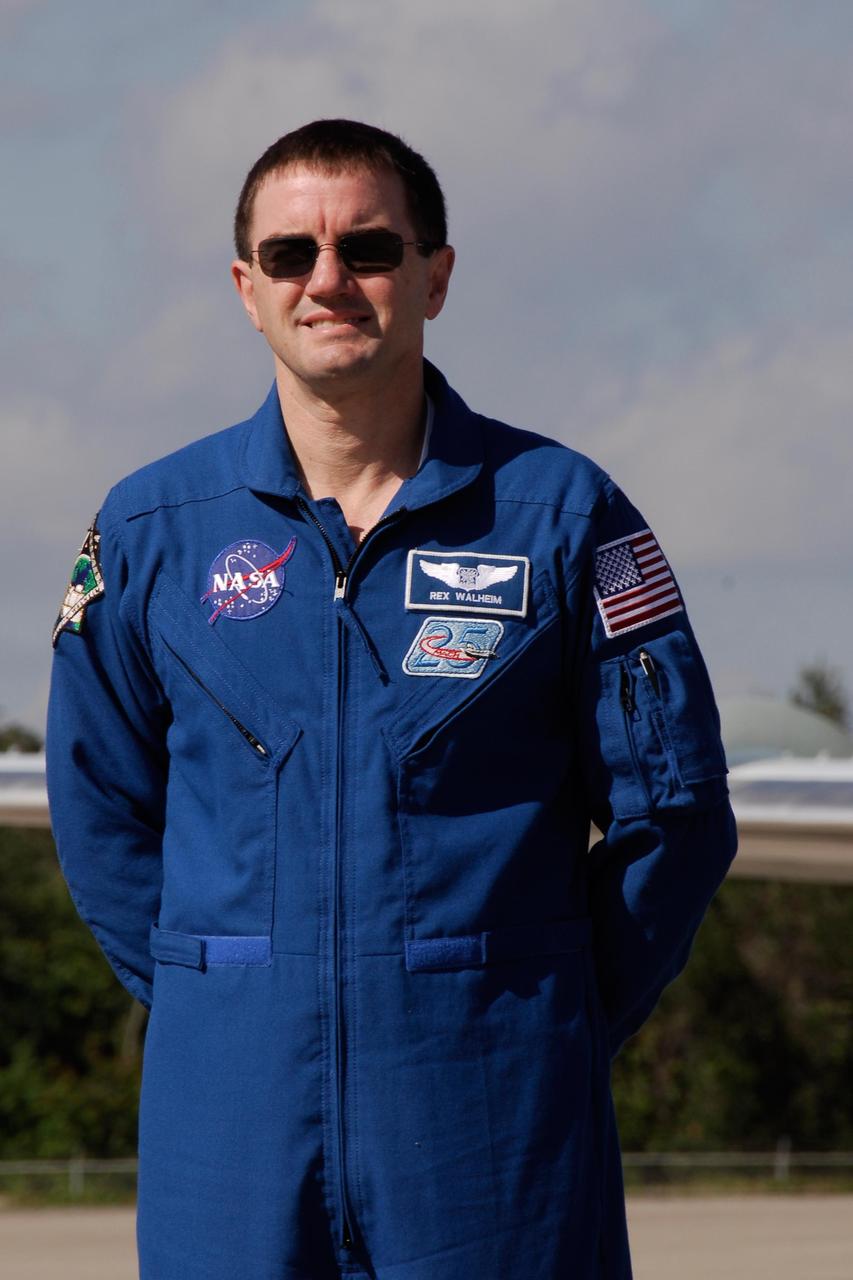
KENNEDY SPACE CENTER, FLA. -- After the mission STS-122 crew's arrival at NASA's Kennedy Space Center, Mission Specialist Rex Walheim is introduced during a media opportunity on the Shuttle Landing Facility. The crew's arrival signals the imminent launch of space shuttle Atlantis on mission STS-122. The launch countdown begins at 7 p.m. Dec. 3. Launch is scheduled for 4:31 p.m. EST on Dec. 6. Atlantis will carry the Columbus Lab, Europe's largest contribution to the construction of the International Space Station. It will support scientific and technological research in a microgravity environment. Columbus, a program of ESA, is a multifunctional, pressurized laboratory that will be permanently attached to Node 2 of the space station to carry out experiments in materials science, fluid physics and biosciences, as well as to perform a number of technological applications. Photo credit: NASA/Kim Shiflett
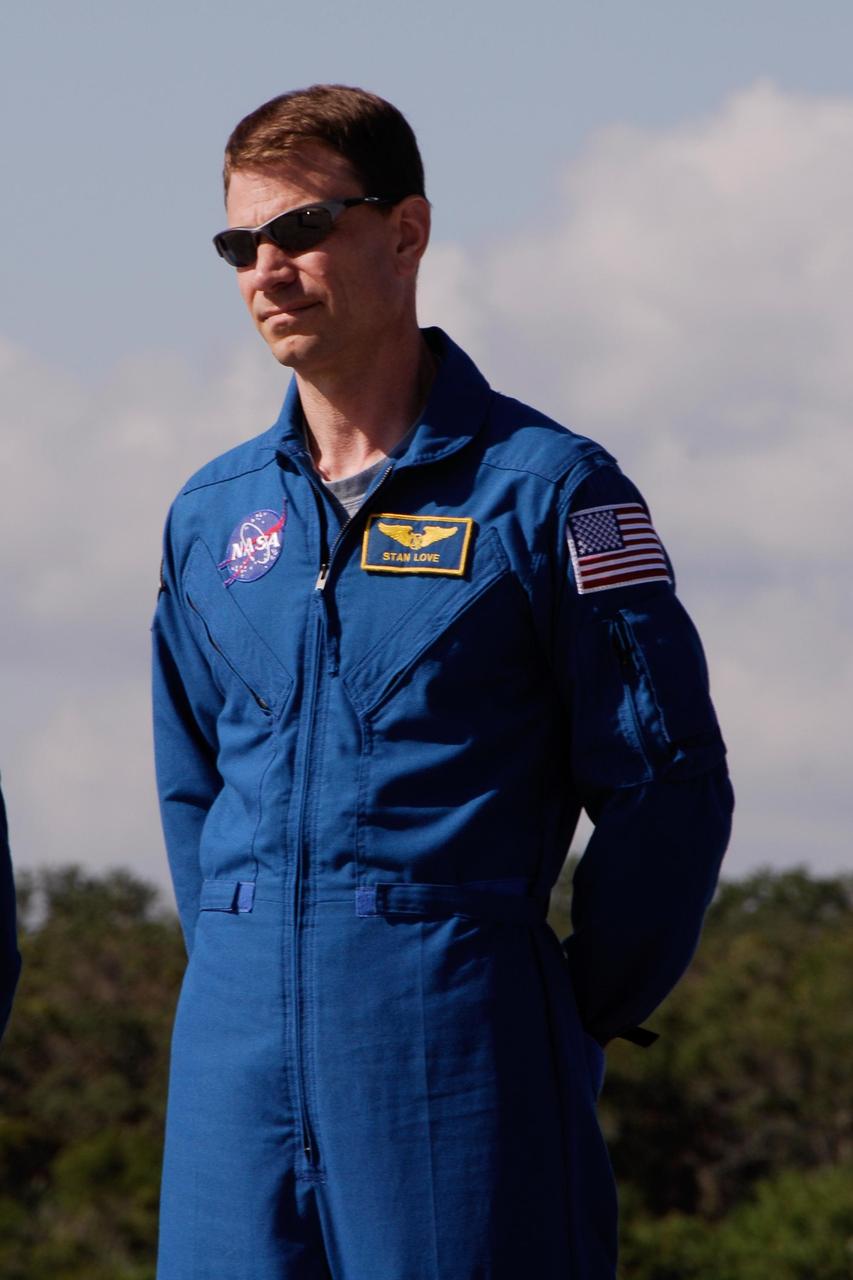
KENNEDY SPACE CENTER, FLA. -- After the mission STS-122 crew's arrival at NASA's Kennedy Space Center, Mission Specialist Stanley Love is introduced during a media opportunity on the Shuttle Landing Facility. The crew's arrival signals the imminent launch of space shuttle Atlantis on mission STS-122. The launch countdown begins at 7 p.m. Dec. 3. Launch is scheduled for 4:31 p.m. EST on Dec. 6. Atlantis will carry the Columbus Lab, Europe's largest contribution to the construction of the International Space Station. It will support scientific and technological research in a microgravity environment. Columbus, a program of ESA, is a multifunctional, pressurized laboratory that will be permanently attached to Node 2 of the space station to carry out experiments in materials science, fluid physics and biosciences, as well as to perform a number of technological applications. Photo credit: NASA/Kim Shiflett

KENNEDY SPACE CENTER, FLA. -- After the mission STS-122 crew's arrival at NASA's Kennedy Space Center, Mission Specialist Leland Melvin is introduced during a media opportunity on the Shuttle Landing Facility. The crew's arrival signals the imminent launch of space shuttle Atlantis on mission STS-122. The launch countdown begins at 7 p.m. Dec. 3. Launch is scheduled for 4:31 p.m. EST on Dec. 6. Atlantis will carry the Columbus Lab, Europe's largest contribution to the construction of the International Space Station. It will support scientific and technological research in a microgravity environment. Columbus, a program of ESA, is a multifunctional, pressurized laboratory that will be permanently attached to Node 2 of the space station to carry out experiments in materials science, fluid physics and biosciences, as well as to perform a number of technological applications. Photo credit: NASA/Kim Shiflett

KENNEDY SPACE CENTER, FLA. -- After the mission STS-122 crew's arrival at NASA's Kennedy Space Center, Mission Specialist Leopold Eyharts is introduced during a media opportunity on the Shuttle Landing Facility. Eyharts, who represents the European Space Agency, will remain on the International Space Station while Atlantis returns flight engineer Daniel Tani. The crew's arrival signals the imminent launch of space shuttle Atlantis on mission STS-122. The launch countdown begins at 7 p.m. Dec. 3. Launch is scheduled for 4:31 p.m. EST on Dec. 6. Endeavour will carry the Columbus Lab, Europe's largest contribution to the construction of the International Space Station. It will support scientific and technological research in a microgravity environment. Columbus, a program of ESA, is a multifunctional, pressurized laboratory that will be permanently attached to Node 2 of the space station to carry out experiments in materials science, fluid physics and biosciences, as well as to perform a number of technological applications. Photo credit: NASA/Kim Shiflett

KENNEDY SPACE CENTER, FLA. -- After arrival at NASA's Kennedy Space Center, STS-122 Pilot Alan Poindexter talks to the media on the Shuttle Landing Facility. The crew's arrival signals the imminent launch of space shuttle Atlantis on mission STS-122. The launch countdown begins at 7 p.m. Dec. 3. Launch is scheduled for 4:31 p.m. EST on Dec. 6. Atlantis will carry the Columbus Lab, Europe's largest contribution to the construction of the International Space Station. It will support scientific and technological research in a microgravity environment. Columbus, a program of ESA, is a multifunctional, pressurized laboratory that will be permanently attached to Node 2 of the space station to carry out experiments in materials science, fluid physics and biosciences, as well as to perform a number of technological applications. Photo credit: NASA/Kim Shiflett
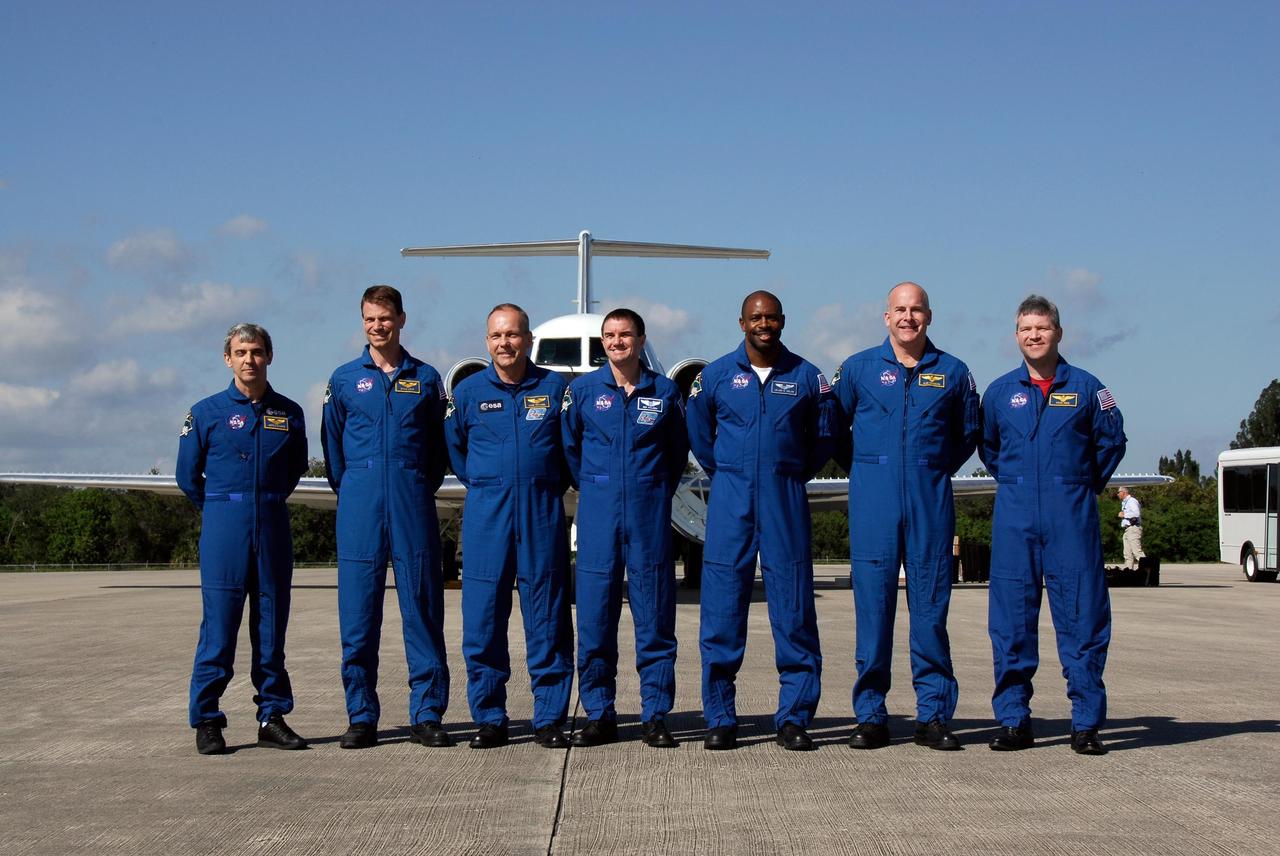
KENNEDY SPACE CENTER, FLA. -- The STS-122 crew pose on the Shuttle Landing Facility at NASA's Kennedy Space Center after their arrival for launch. From left are Mission Specialists Leopold Eyharts, Stanley Love, Hans Schlegel, Rex Walheim and Leland Melvin, and Pilot Alan Poindexter and Commander Steve Frick. Eyharts and Schlegel represent the European Space Agency. Eyharts will remain on the International Space Station while Atlantis returns flight engineer Daniel Tani. The crew's arrival signals the imminent launch of space shuttle Atlantis on mission STS-122. The launch countdown begins at 7 p.m. Dec. 3. Launch is scheduled for 4:31 p.m. EST on Dec. 6. Atlantis will carry the Columbus Lab, Europe's largest contribution to the construction of the International Space Station. It will support scientific and technological research in a microgravity environment. Columbus, a program of ESA, is a multifunctional, pressurized laboratory that will be permanently attached to Node 2 of the space station to carry out experiments in materials science, fluid physics and biosciences, as well as to perform a number of technological applications. Photo credit: NASA/Kim Shiflett
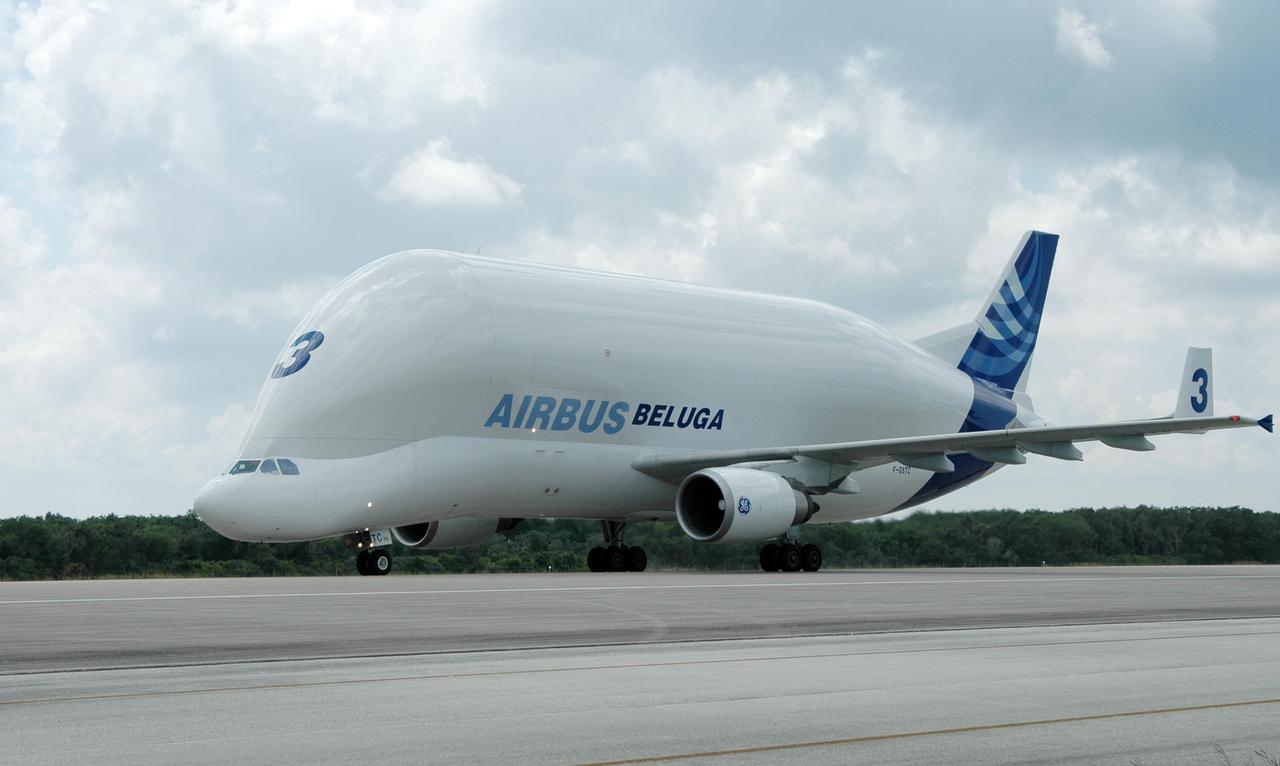
KENNEDY SPACE CENTER, FLA. - A Beluga aircraft taxis on the runway at the Shuttle Landing Facility on NASA's Kennedy Space Center. The Beluga carries the European Space Agency's research laboratory, designated Columbus, flown to Kennedy from its manufacturer in Germany. The module will be prepared for delivery to the International Space Station on a future space shuttle mission. Columbus will expand the research facilities of the station and provide researchers with the ability to conduct numerous experiments in the area of life, physical and materials sciences. Photo credit: NASA/Jim Grossmann
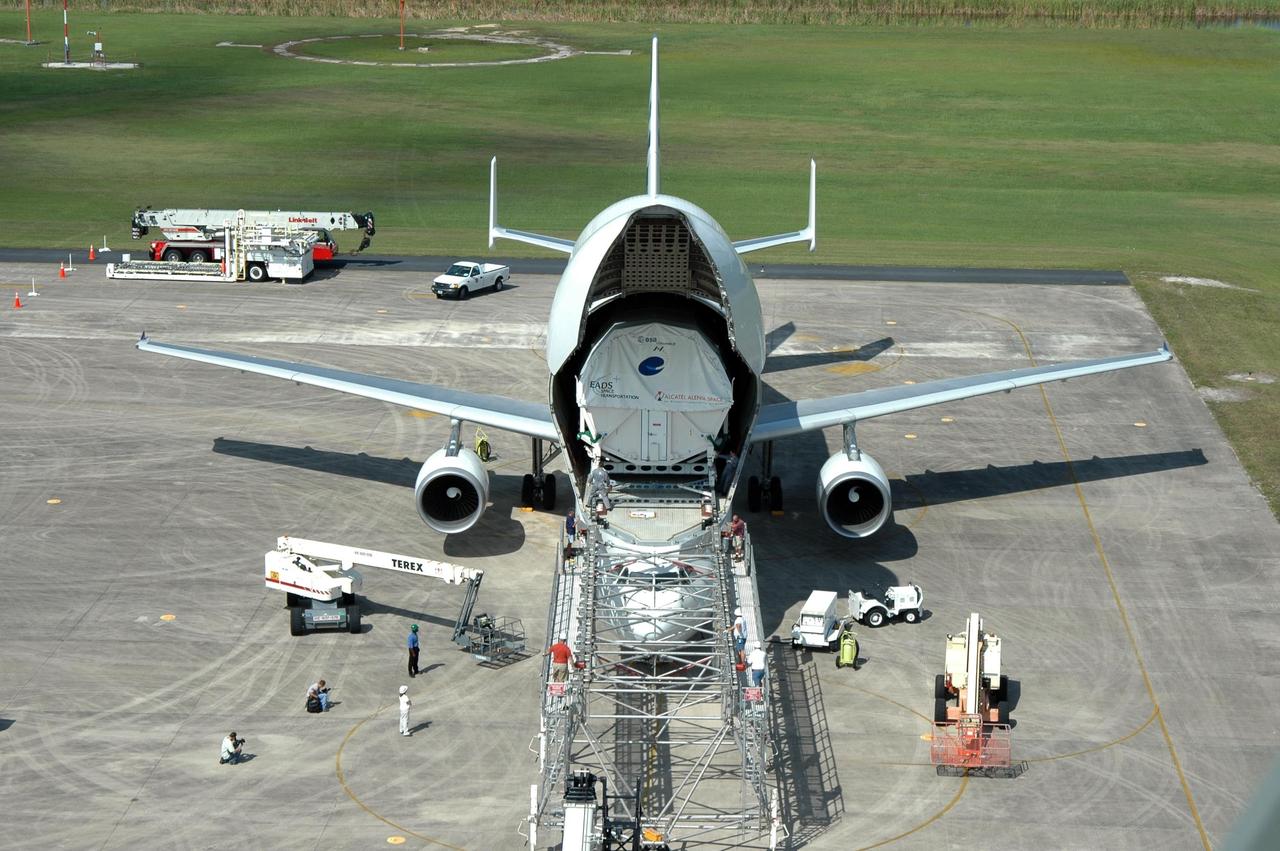
KENNEDY SPACE CENTER, FLA. - At the Shuttle Landing Facility, the European Space Agency's research laboratory, designated Columbus, is being offloaded onto an Airbus Transport International platform. The module will be lifted onto a flat bed truck and transported to the Space Station Processing Facility. There the module will be prepared for delivery to the International Space Station on a future space shuttle mission. Columbus will expand the research facilities of the station and provide researchers with the ability to conduct numerous experiments in the area of life, physical and materials sciences. Photo credit: NASA/Jim Grossmann
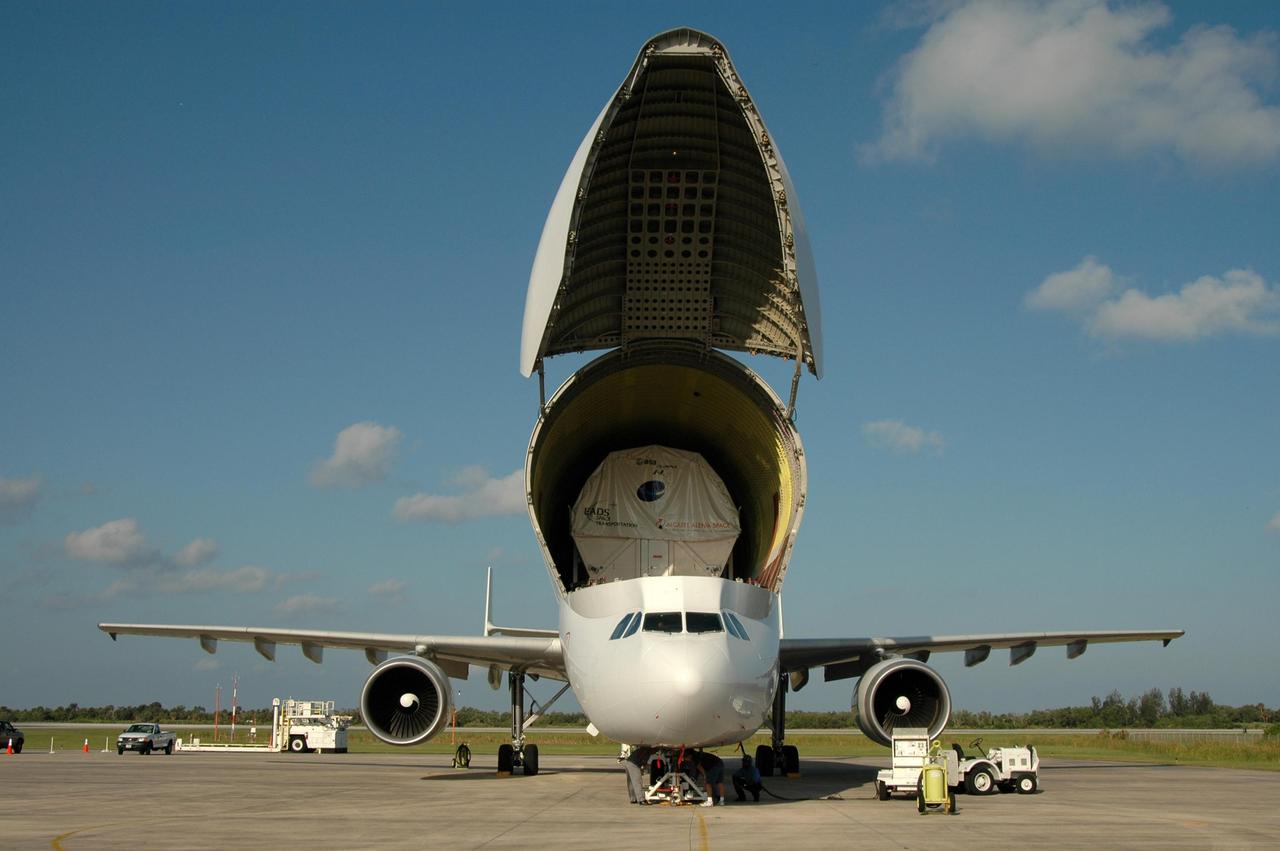
KENNEDY SPACE CENTER, FLA. - At the Shuttle Landing Facility, the European Space Agency's research laboratory, designated Columbus, slides out onto an Airbus Transport International platform that will lower it to the ground. The module will then be lifted onto a flat bed truck and transported to the Space Station Processing Facility. There the module will be prepared for delivery to the International Space Station on a future space shuttle mission. Columbus will expand the research facilities of the station and provide researchers with the ability to conduct numerous experiments in the area of life, physical and materials sciences. Photo credit: NASA/Jim Grossmann

KENNEDY SPACE CENTER, FLA. - A Beluga aircraft parks near the mate/demate device at the Shuttle Landing Facility on NASA's Kennedy Space Center. The Beluga carries the European Space Agency's research laboratory, designated Columbus, flown to Kennedy from its manufacturer in Germany. The module will be prepared for delivery to the International Space Station on a future space shuttle mission. Columbus will expand the research facilities of the station and provide researchers with the ability to conduct numerous experiments in the area of life, physical and materials sciences. Photo credit: NASA/Jim Grossmann
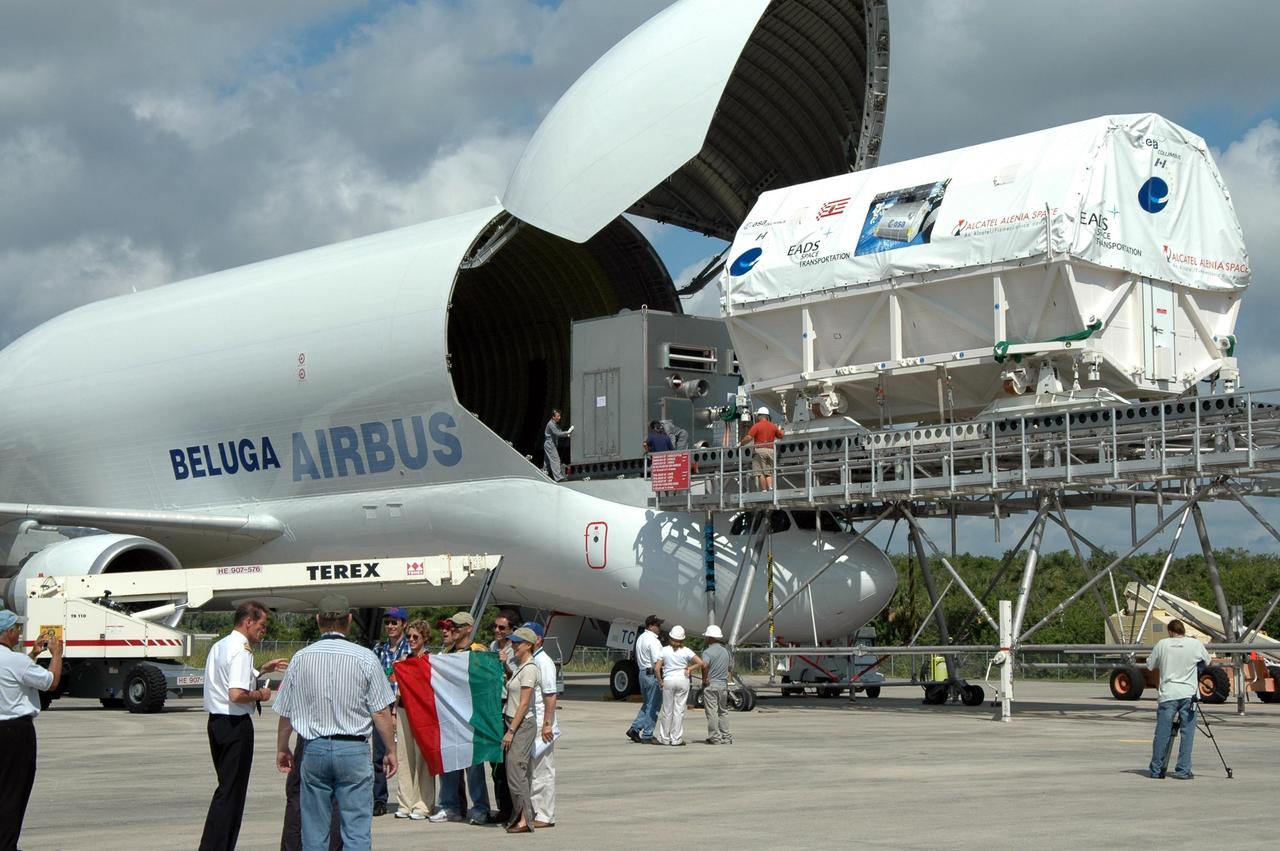
KENNEDY SPACE CENTER, FLA. - At the Shuttle Landing Facility, the European Space Agency's research laboratory, designated Columbus, has been offloaded onto an Airbus Transport International platform. The module will be lifted onto a flat bed truck and transported to the Space Station Processing Facility. There the module will be prepared for delivery to the International Space Station on a future space shuttle mission. Columbus will expand the research facilities of the station and provide researchers with the ability to conduct numerous experiments in the area of life, physical and materials sciences. Photo credit: NASA/Jim Grossmann

KENNEDY SPACE CENTER, FLA. - At the Shuttle Landing Facility, an Airbus Transport International platform is moved in front of the nose of the Beluga airbus in order to offload the European Space Agency's research laboratory, designated Columbus. After being unloaded, the module will be transported to the Space Station Processing Facility. There the module will be prepared for delivery to the International Space Station on a future space shuttle mission. Columbus will expand the research facilities of the station and provide researchers with the ability to conduct numerous experiments in the area of life, physical and materials sciences. Photo credit: NASA/Jim Grossmann
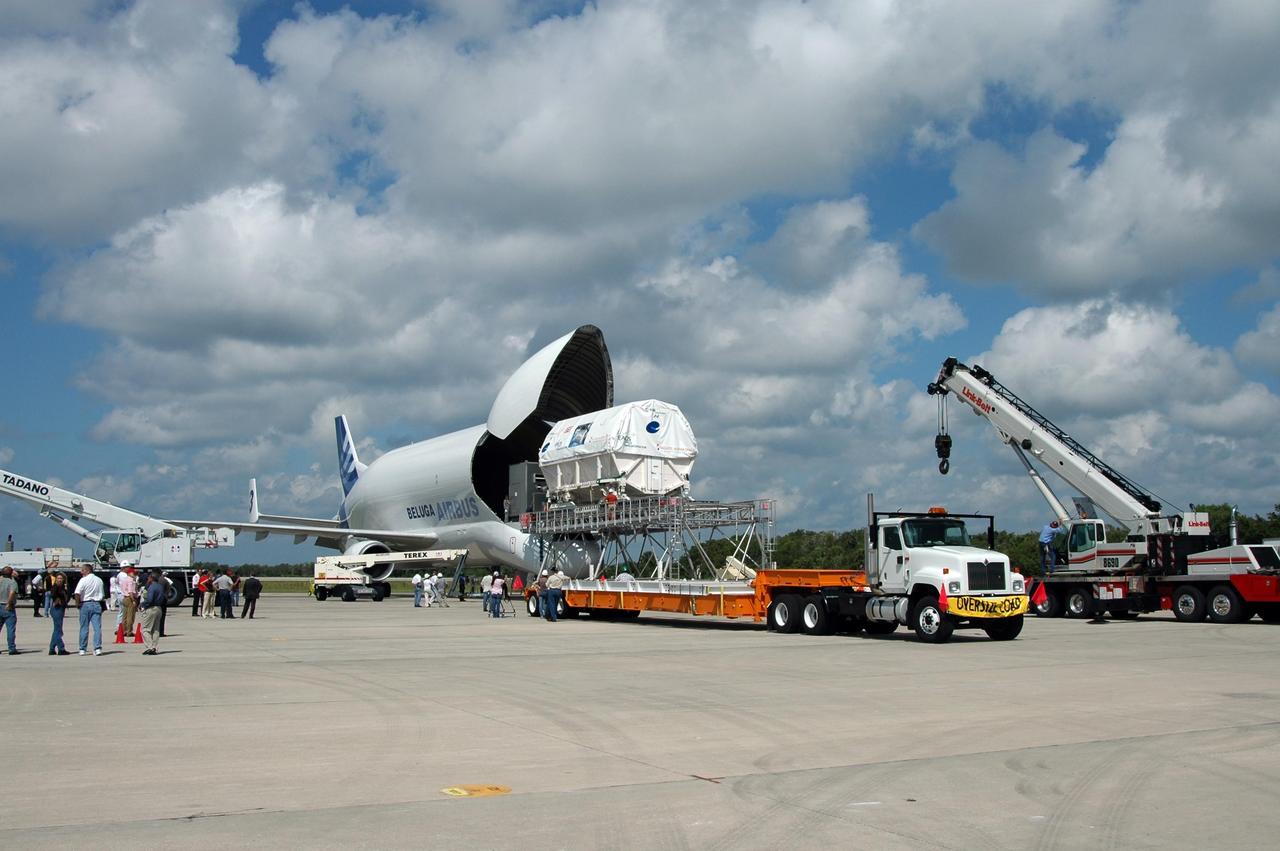
KENNEDY SPACE CENTER, FLA. - At the Shuttle Landing Facility, the European Space Agency's research laboratory, designated Columbus, slides out onto an Airbus Transport International platform. The module will be lifted onto a flat bed truck and transported to the Space Station Processing Facility. There the module will be prepared for delivery to the International Space Station on a future space shuttle mission. Columbus will expand the research facilities of the station and provide researchers with the ability to conduct numerous experiments in the area of life, physical and materials sciences. Photo credit: NASA/Jim Grossmann
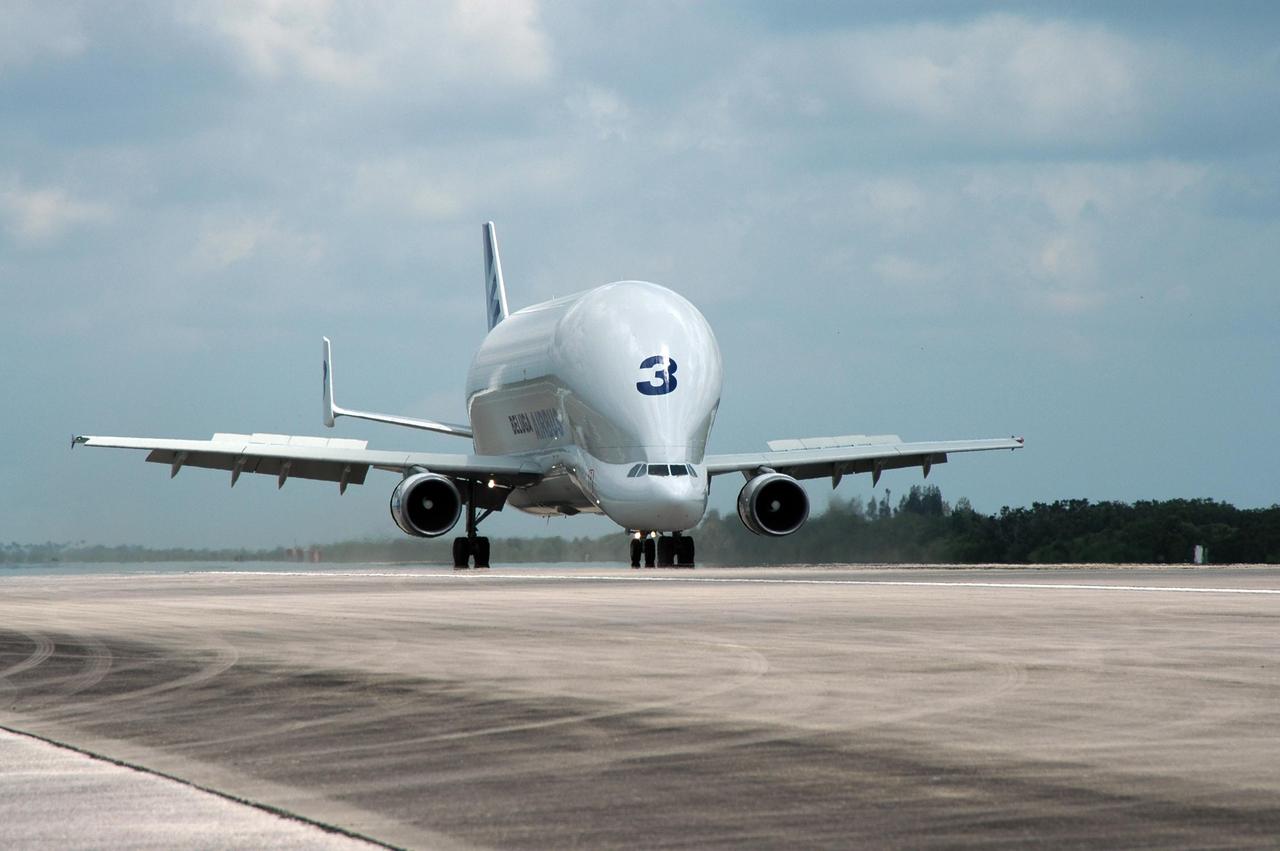
KENNEDY SPACE CENTER, FLA. - A Beluga aircraft arrives at the Shuttle Landing Facility on NASA's Kennedy Space Center. The Beluga carries the European Space Agency's research laboratory, designated Columbus, flown to Kennedy from its manufacturer in Germany. The module will be prepared for delivery to the International Space Station on a future space shuttle mission. Columbus will expand the research facilities of the station and provide researchers with the ability to conduct numerous experiments in the area of life, physical and materials sciences. Photo credit: NASA/Jim Grossmann
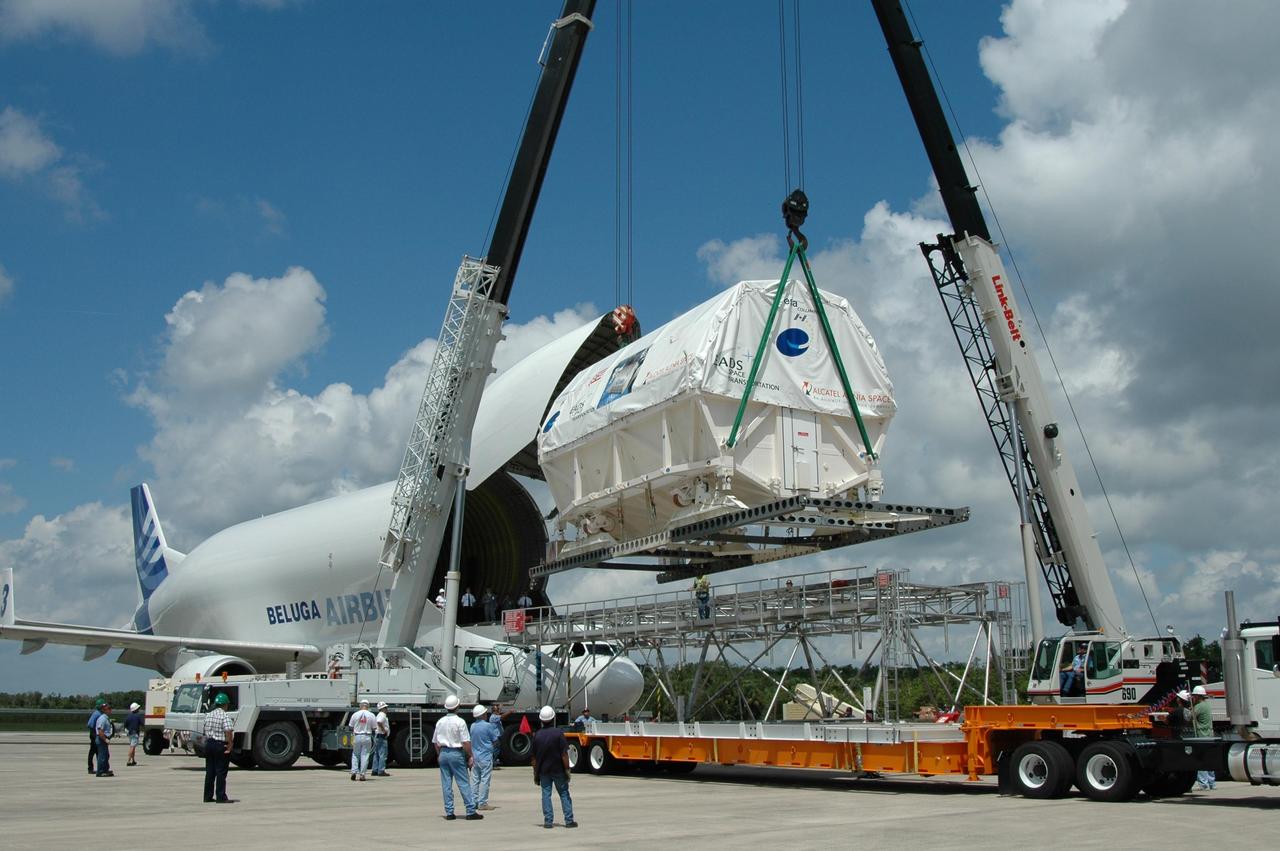
KENNEDY SPACE CENTER, FLA. - At the Shuttle Landing Facility, a crane lifts Columbus, the European Space Agency's research laboratory, off an Airbus Transport International platform toward a flat bed truck. The truck will transport the module to the Space Station Processing Facility at NASA's Kennedy Space Center. The module arrived on a Beluga Airbus May 30 at NASA's Kennedy Space Center from the manufacturer in Germany. In the SSPF, the module will be prepared for delivery to the International Space Station on a future space shuttle mission. Columbus will expand the research facilities of the station and provide researchers with the ability to conduct numerous experiments in the area of life, physical and materials sciences. Photo credit: NASA/Jim Grossmann
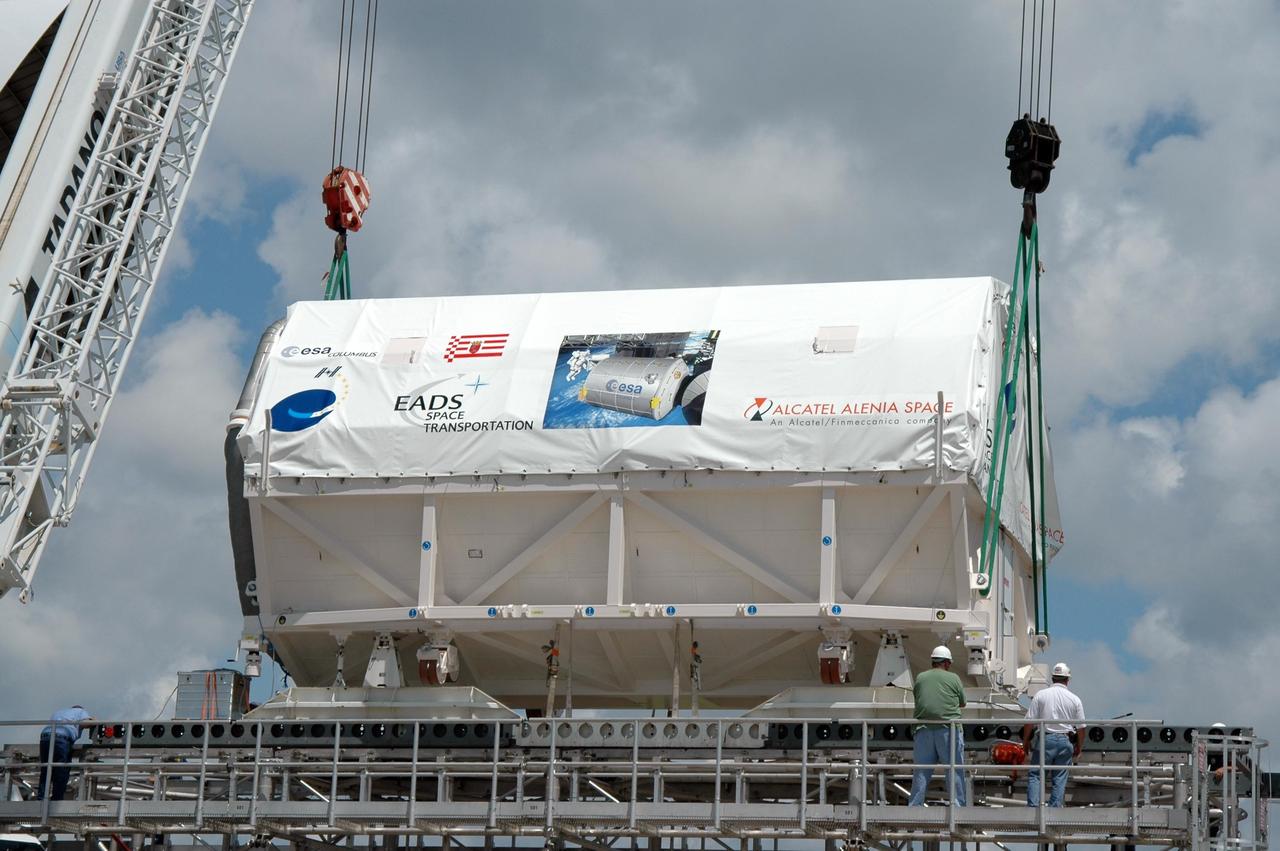
KENNEDY SPACE CENTER, FLA. - At the Shuttle Landing Facility, a crane lifts Columbus, the European Space Agency's research laboratory, off an Airbus Transport International platform to place it onto a flat bed truck. The module will be transported to the Space Station Processing Facility at NASA's Kennedy Space Center. The module arrived on a Beluga Airbus May 30 at NASA's Kennedy Space Center from the manufacturer in Germany. In the SSPF, the module will be prepared for delivery to the International Space Station on a future space shuttle mission. Columbus will expand the research facilities of the station and provide researchers with the ability to conduct numerous experiments in the area of life, physical and materials sciences. Photo credit: NASA/Jim Grossmann
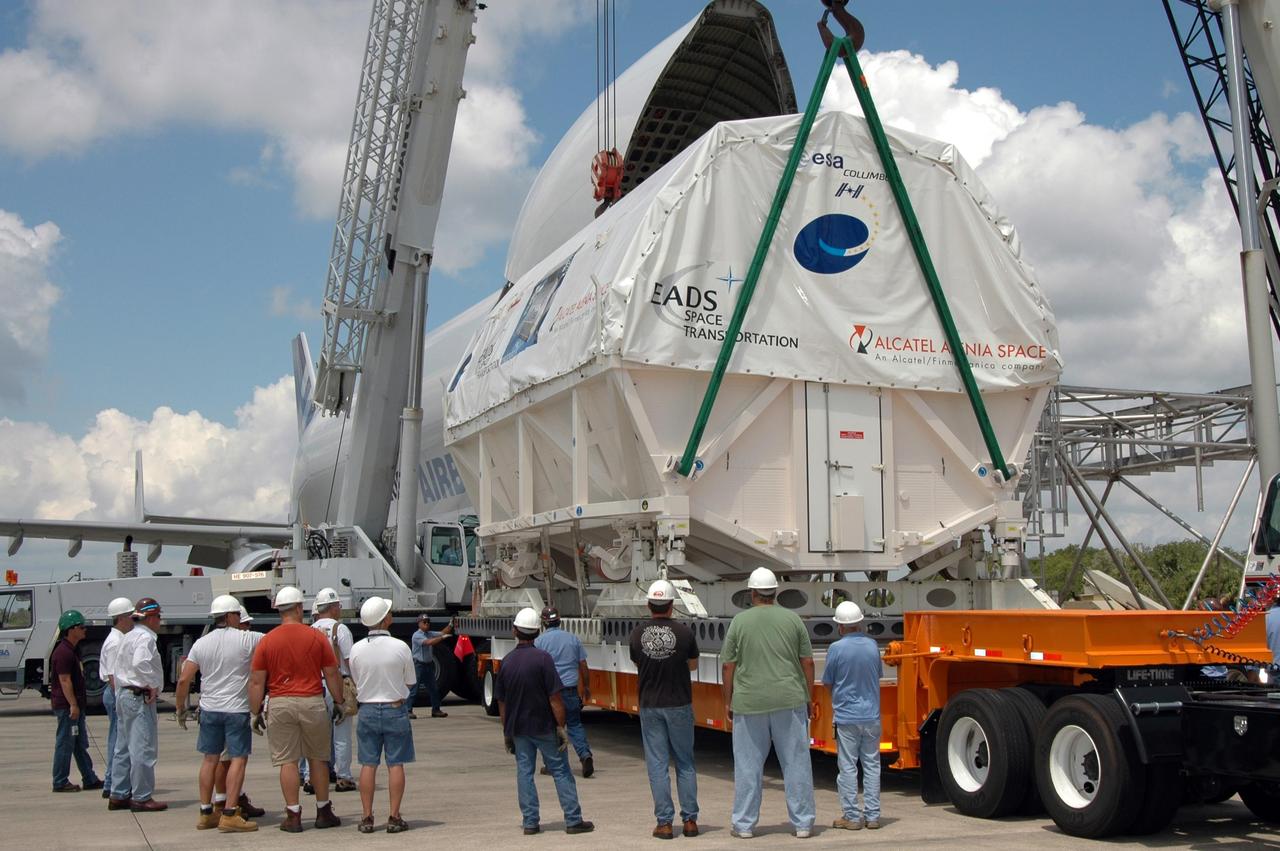
KENNEDY SPACE CENTER, FLA. - At the Shuttle Landing Facility, a crane settles Columbus, the European Space Agency's research laboratory, onto a flat bed truck. The truck will transport the module to the Space Station Processing Facility at NASA's Kennedy Space Center. The module arrived on a Beluga Airbus May 30 at NASA's Kennedy Space Center from the manufacturer in Germany. In the SSPF, the module will be prepared for delivery to the International Space Station on a future space shuttle mission. Columbus will expand the research facilities of the station and provide researchers with the ability to conduct numerous experiments in the area of life, physical and materials sciences. Photo credit: NASA/Jim Grossmann
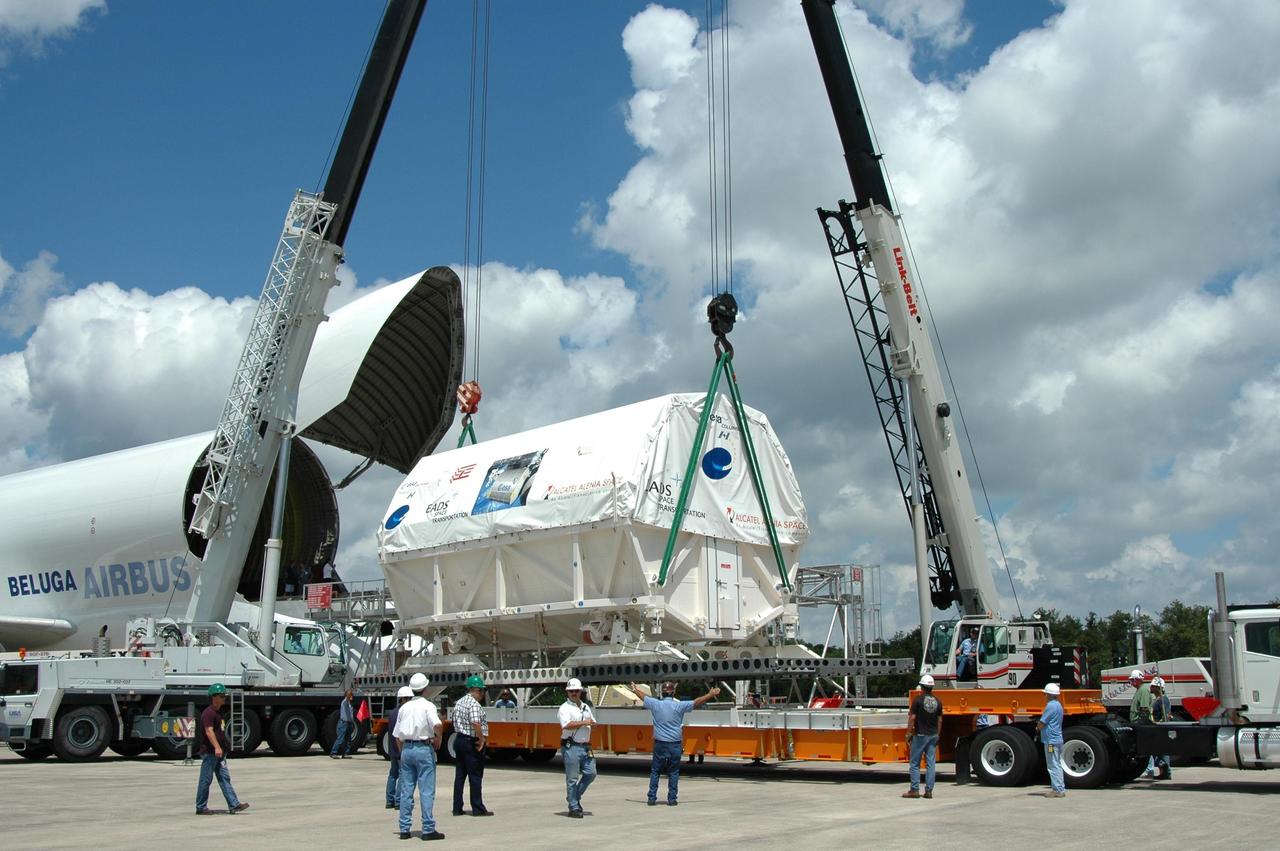
KENNEDY SPACE CENTER, FLA. - At the Shuttle Landing Facility, a crane lowers Columbus, the European Space Agency's research laboratory, toward a flat bed truck. The truck will transport the module to the Space Station Processing Facility at NASA's Kennedy Space Center. The module arrived on a Beluga Airbus May 30 at NASA's Kennedy Space Center from the manufacturer in Germany. In the SSPF, the module will be prepared for delivery to the International Space Station on a future space shuttle mission. Columbus will expand the research facilities of the station and provide researchers with the ability to conduct numerous experiments in the area of life, physical and materials sciences. Photo credit: NASA/Jim Grossmann
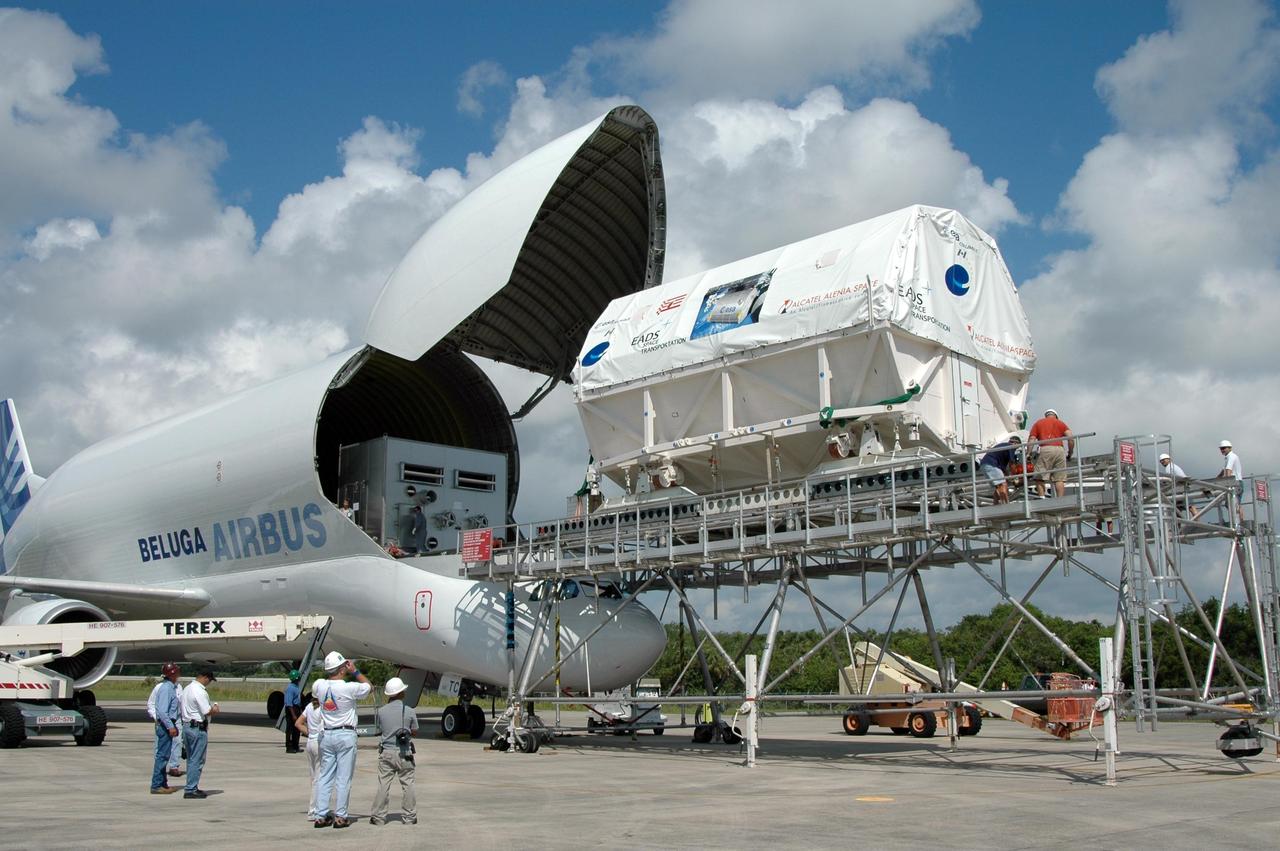
KENNEDY SPACE CENTER, FLA. - At the Shuttle Landing Facility, the European Space Agency's research laboratory, designated Columbus, has been offloaded onto an Airbus Transport International platform. The module will be lifted off the platform onto a flat bed truck and transported to the Space Station Processing Facility at NASA's Kennedy Space Center. The module arrived on a Beluga Airbus May 30 at NASA's Kennedy Space Center from the manufacturer in Germany. In the SSPF, the module will be prepared for delivery to the International Space Station on a future space shuttle mission. Columbus will expand the research facilities of the station and provide researchers with the ability to conduct numerous experiments in the area of life, physical and materials sciences. Photo credit: NASA/Jim Grossmann
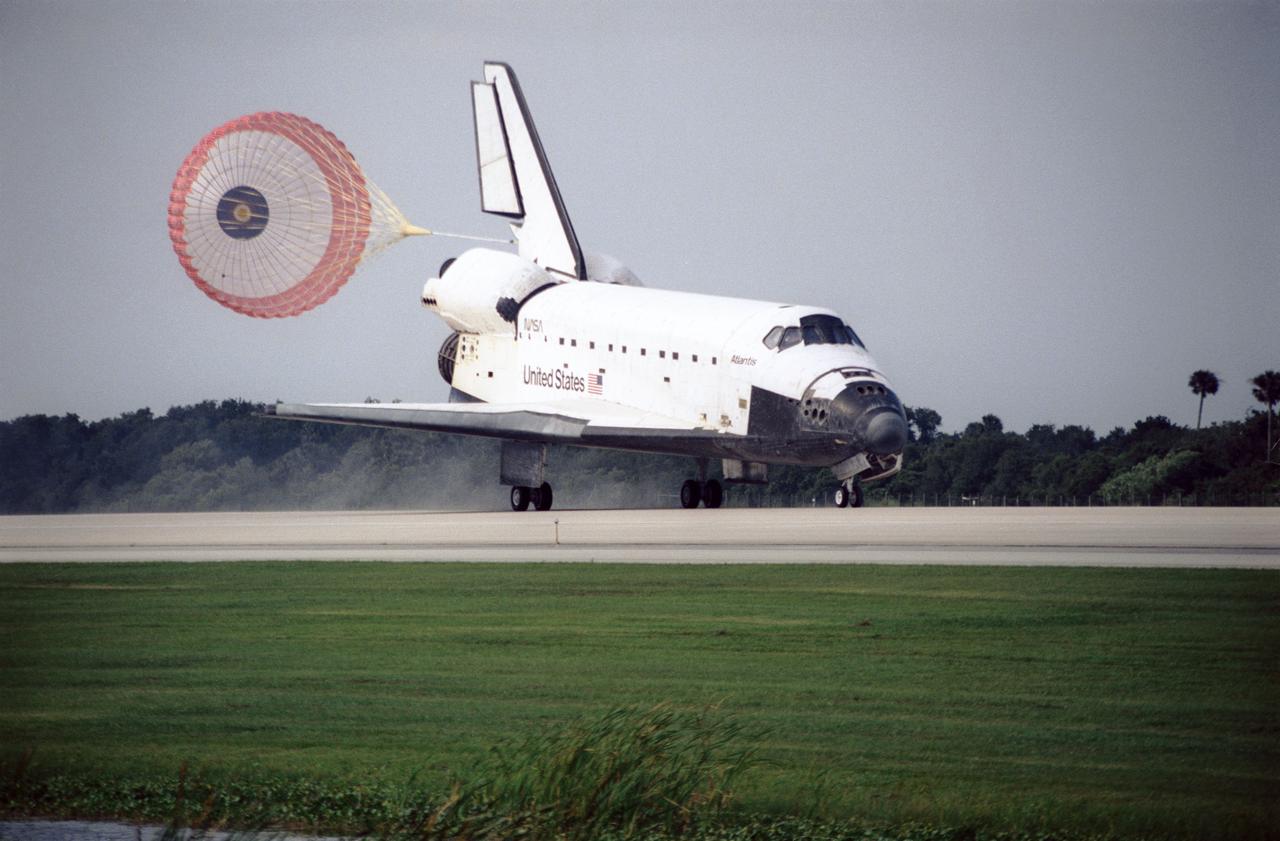
STS084-S-010 (24 May 1997) --- The drag chute on the Space Shuttle Atlantis is deployed as the Space Shuttle touches down on Runway 33 of the Kennedy Space Center (KSC) Shuttle Landing Facility (SLF). The landing, at 9:27:44 a.m. (EDT), May 24, 1997, brought to a completion the nine-day mission. This touchdown marked the 37th landing at KSC in the 16-year history of the Space Transportation System (STS) and it also marked the return of astronaut Jerry M. Linenger to Earth following almost four months aboard Russia's Mir Space Station. Onboard for the landing were astronauts Charles J. Precourt, Eileen M. Collins, Jean-Fran?ois Clervoy, Carlos I. Noriega, Edward T. Lu, Linenger and Elena V. Kondakova. Clervoy is with the European Space Agency (ESA) and Kondakova represents the Russian Space Agency (RSA).
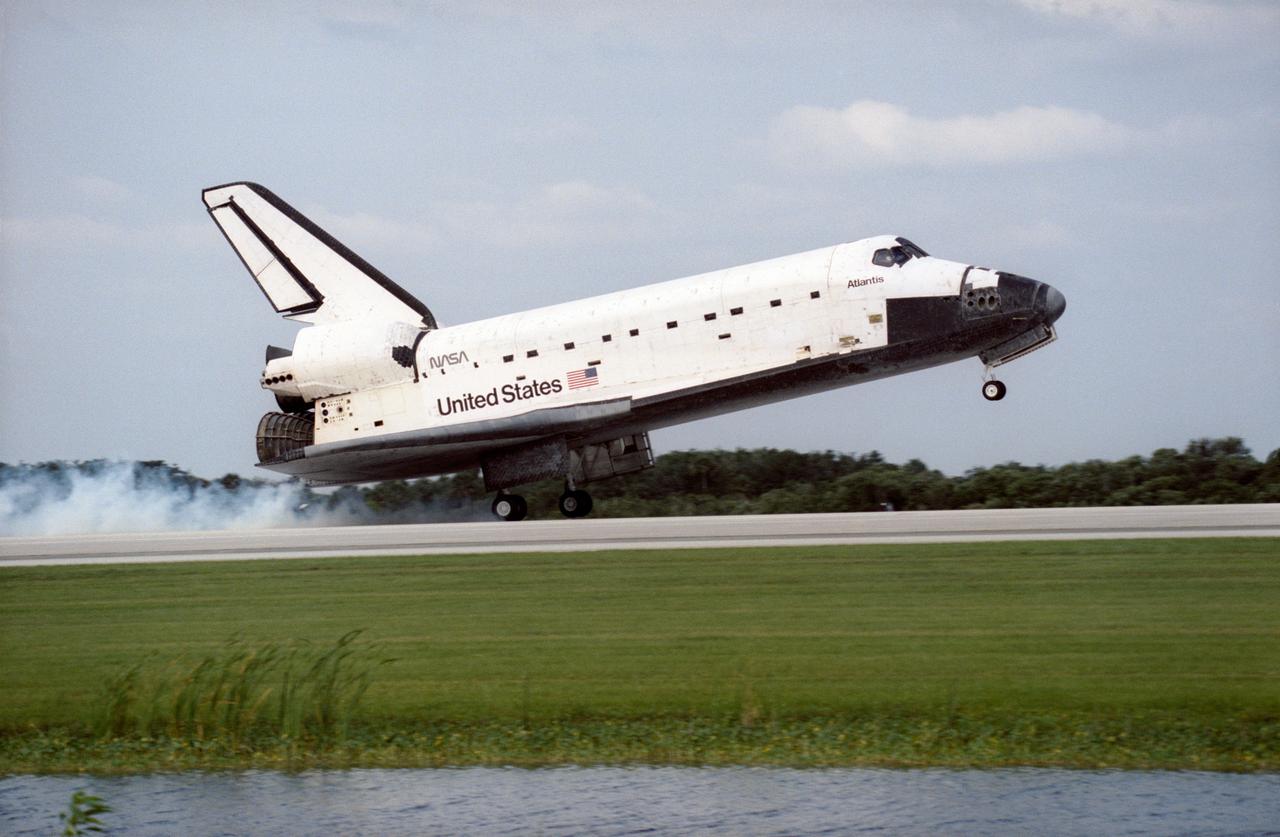
STS084-S-012 (24 May 1997) --- The Space Shuttle Atlantis touches down on Runway 33 of the Kennedy Space Center (KSC) Shuttle Landing Facility (SLF), bringing to a completion the nine-day mission. Main gear touchdown was at 9:27:44 a.m. (EDT), May 24, 1997. This touchdown marked the 37th landing at KSC in the 16-year history of the Space Transportation System (STS) and it also marked the return of astronaut Jerry M. Linenger to Earth following almost four months aboard Russia's Mir Space Station. Onboard for the landing were astronauts Charles J. Precourt, Eileen M. Collins, Jean-Fran?ois Clervoy, Carlos I. Noriega, Edward T. Lu, Linenger and Elena V. Kondakova. Clervoy is with the European Space Agency (ESA) and Kondakova represents the Russian Space Agency (RSA).
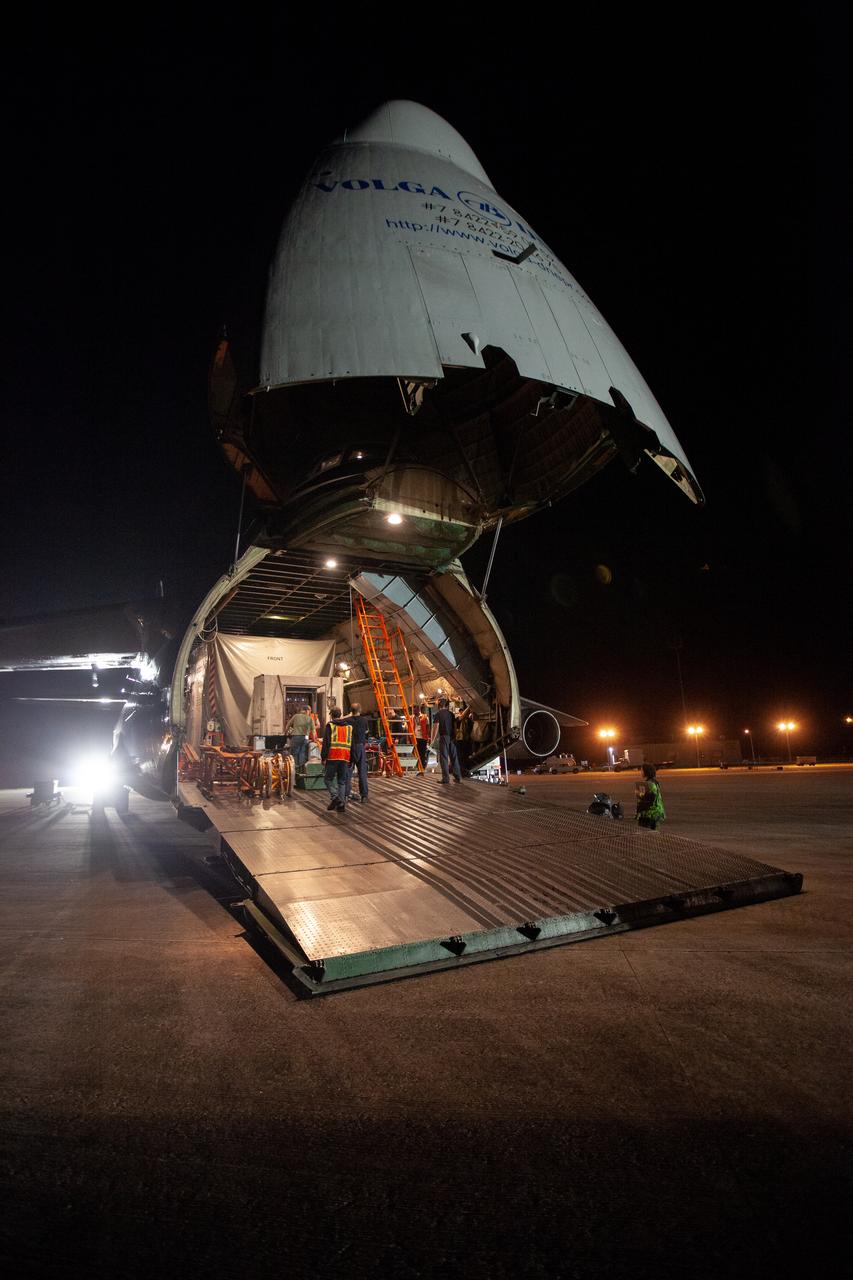
The Solar Orbiter spacecraft is moved out of an Antonov An-124 cargo plane at NASA Kennedy Space Center’s Launch and Landing Facility on Nov. 1, 2019. The spacecraft was delivered to the Florida spaceport from Munich, Germany, then transported to the Astrotech Space Operations facility in nearby Titusville. Solar Orbiter is a European Space Agency mission with strong NASA participation. The mission aims to study the Sun, its outer atmosphere and solar winds. The spacecraft will provide the first images of the Sun’s poles. NASA’s Launch Services Program based at Kennedy is managing the launch. Liftoff is scheduled for Feb. 5, 2020, from Cape Canaveral Air Force Station aboard a United Launch Alliance Atlas V rocket.
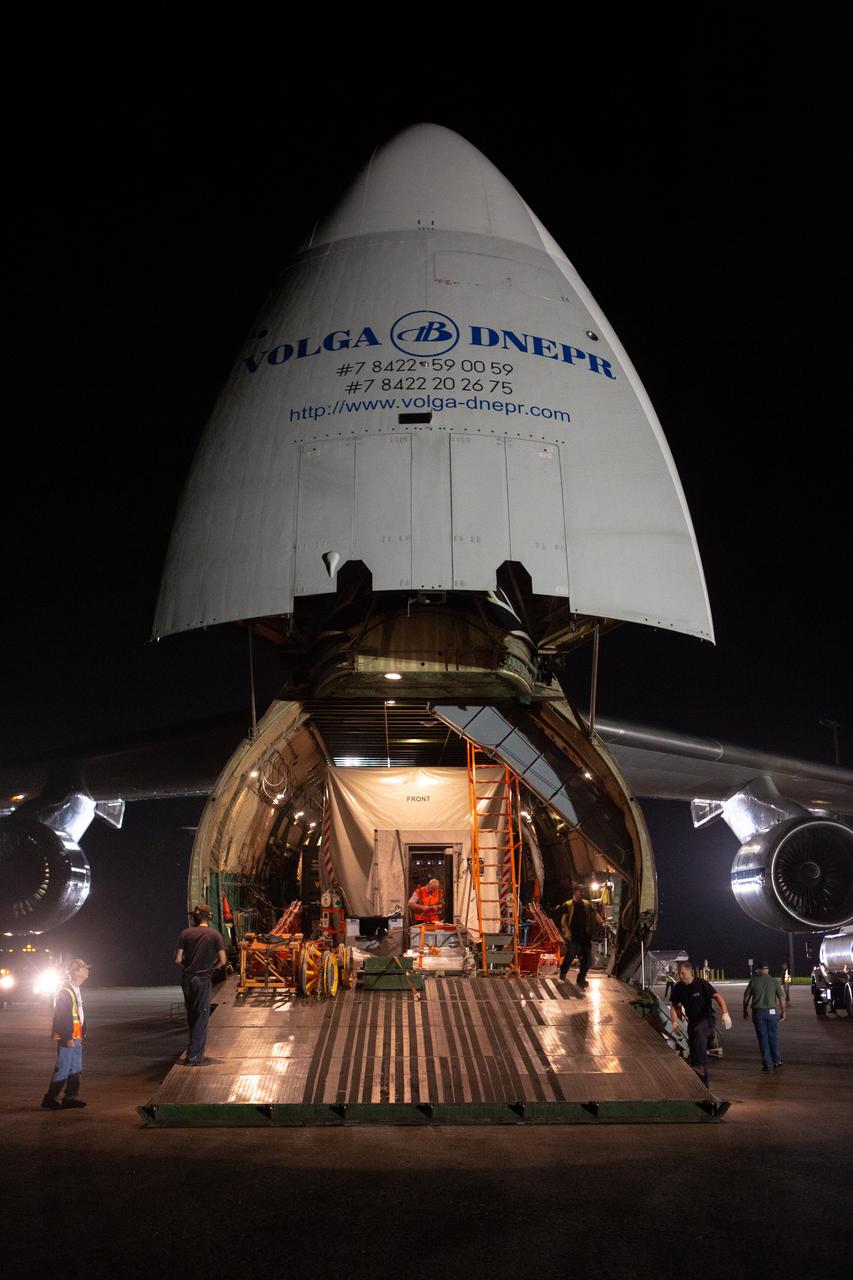
The Solar Orbiter spacecraft has arrived aboard an Antonov An-124 cargo plane at NASA Kennedy Space Center’s Launch and Landing Facility on Nov. 1, 2019. The spacecraft was delivered to the Florida spaceport from Munich, Germany, then transported to the Astrotech Space Operations facility in nearby Titusville. Solar Orbiter is a European Space Agency mission with strong NASA participation. The mission aims to study the Sun, its outer atmosphere and solar winds. The spacecraft will provide the first images of the Sun’s poles. NASA’s Launch Services Program based at Kennedy is managing the launch. Liftoff is scheduled for Feb. 5, 2020, from Cape Canaveral Air Force Station aboard a United Launch Alliance Atlas V rocket.
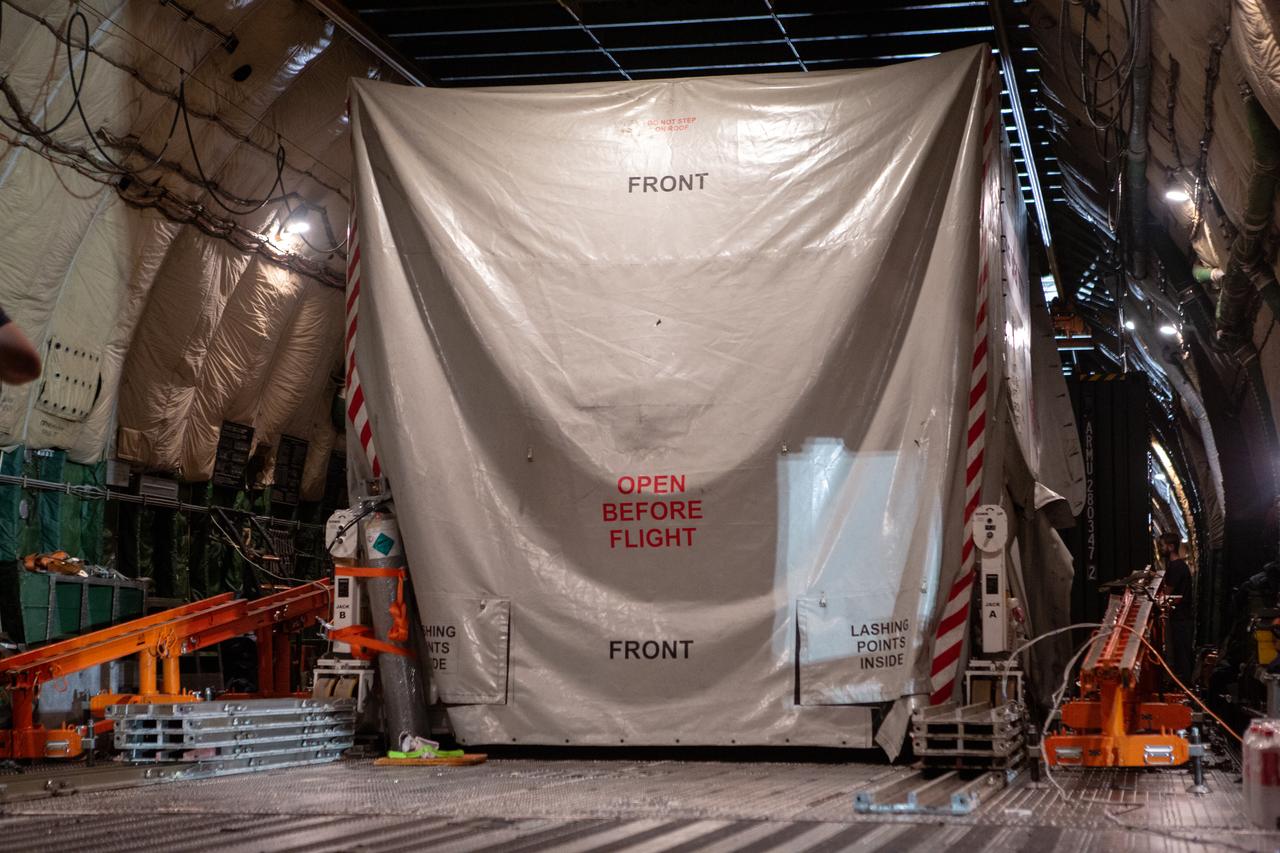
The Solar Orbiter spacecraft is moved out of an Antonov An-124 cargo plane at NASA Kennedy Space Center’s Launch and Landing Facility on Nov. 1, 2019. The spacecraft was delivered to the Florida spaceport from Munich, Germany, then transported to the Astrotech Space Operations facility in nearby Titusville. Solar Orbiter is a European Space Agency mission with strong NASA participation. The mission aims to study the Sun, its outer atmosphere and solar winds. The spacecraft will provide the first images of the Sun’s poles. NASA’s Launch Services Program based at Kennedy is managing the launch. Liftoff is scheduled for Feb. 5, 2020, from Cape Canaveral Air Force Station aboard a United Launch Alliance Atlas V rocket.
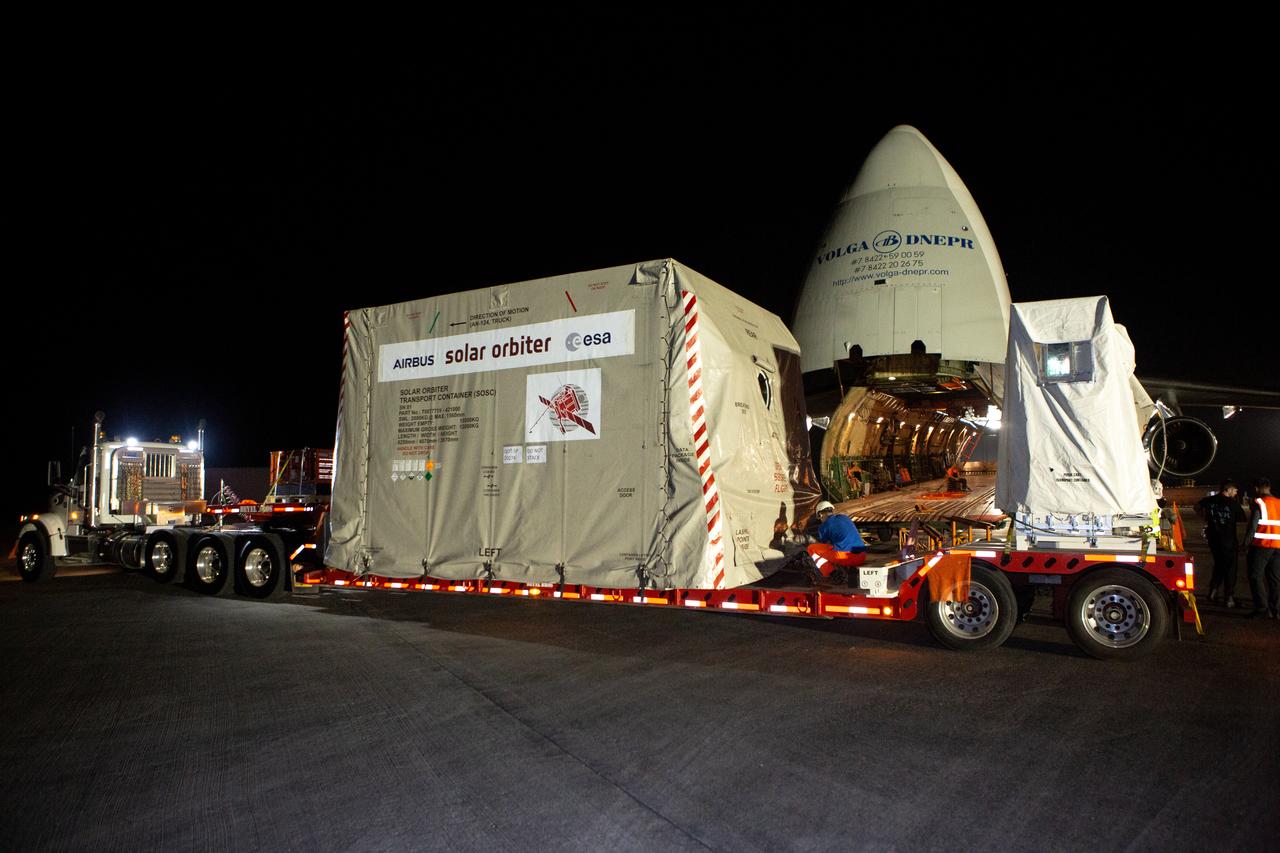
The Solar Orbiter spacecraft is placed on a truck for transportation from the Launch and Landing Facility at NASA’s Kennedy Space Center in Florida to the Astrotech Space Operations facility in nearby Titusville on Nov. 1, 2019. The spacecraft was delivered to the Florida spaceport aboard an Antonov An-124 cargo plane from Munich, Germany. Solar Orbiter is a European Space Agency mission with strong NASA participation. The mission aims to study the Sun, its outer atmosphere and solar winds. The spacecraft will provide the first images of the Sun’s poles. NASA’s Launch Services Program based at Kennedy is managing the launch. Liftoff is scheduled for Feb. 5, 2020, from Cape Canaveral Air Force Station aboard a United Launch Alliance Atlas V rocket.
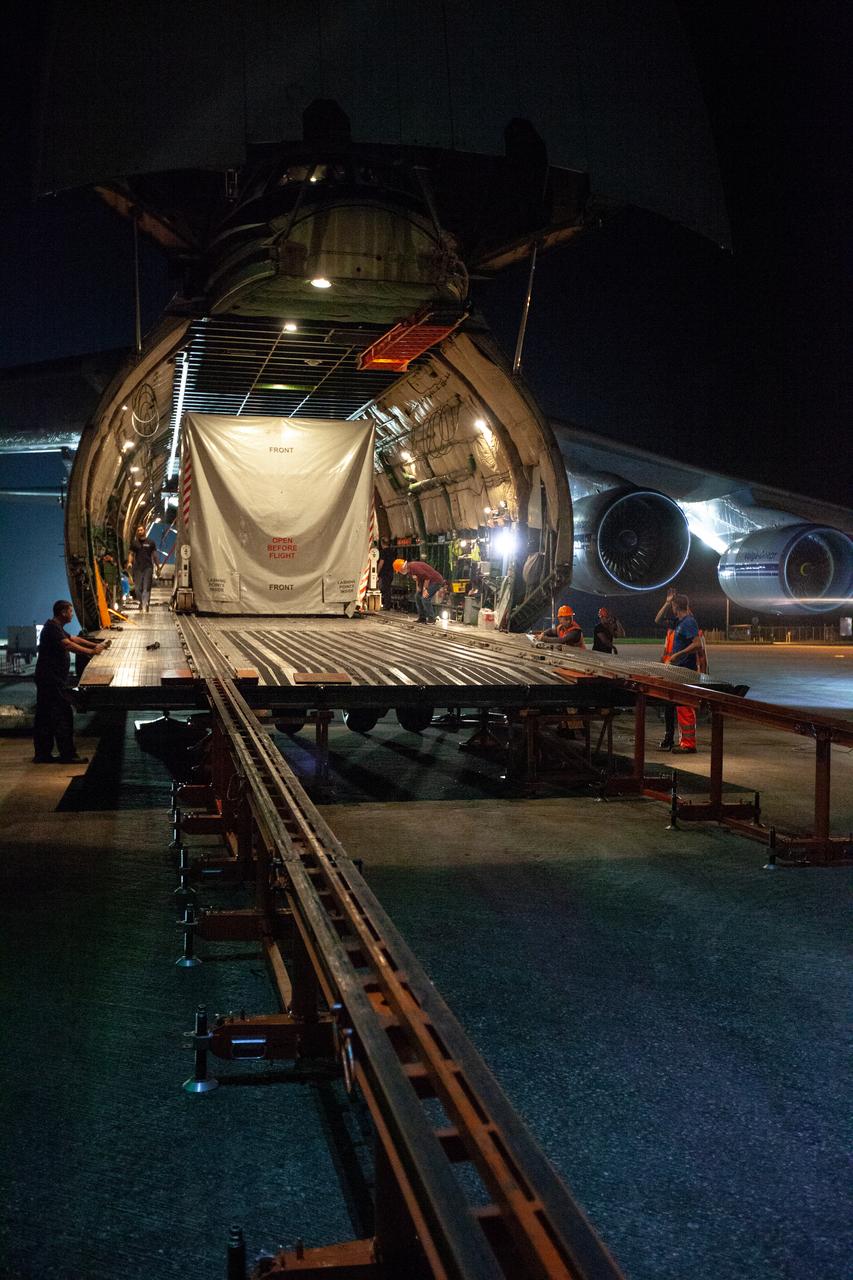
The Solar Orbiter spacecraft is moved out of an Antonov An-124 cargo plane at NASA Kennedy Space Center’s Launch and Landing Facility on Nov. 1, 2019. The spacecraft was delivered to the Florida spaceport from Munich, Germany, then transported to the Astrotech Space Operations facility in nearby Titusville. Solar Orbiter is a European Space Agency mission with strong NASA participation. The mission aims to study the Sun, its outer atmosphere and solar winds. The spacecraft will provide the first images of the Sun’s poles. NASA’s Launch Services Program based at Kennedy is managing the launch. Liftoff is scheduled for Feb. 5, 2020, from Cape Canaveral Air Force Station aboard a United Launch Alliance Atlas V rocket.
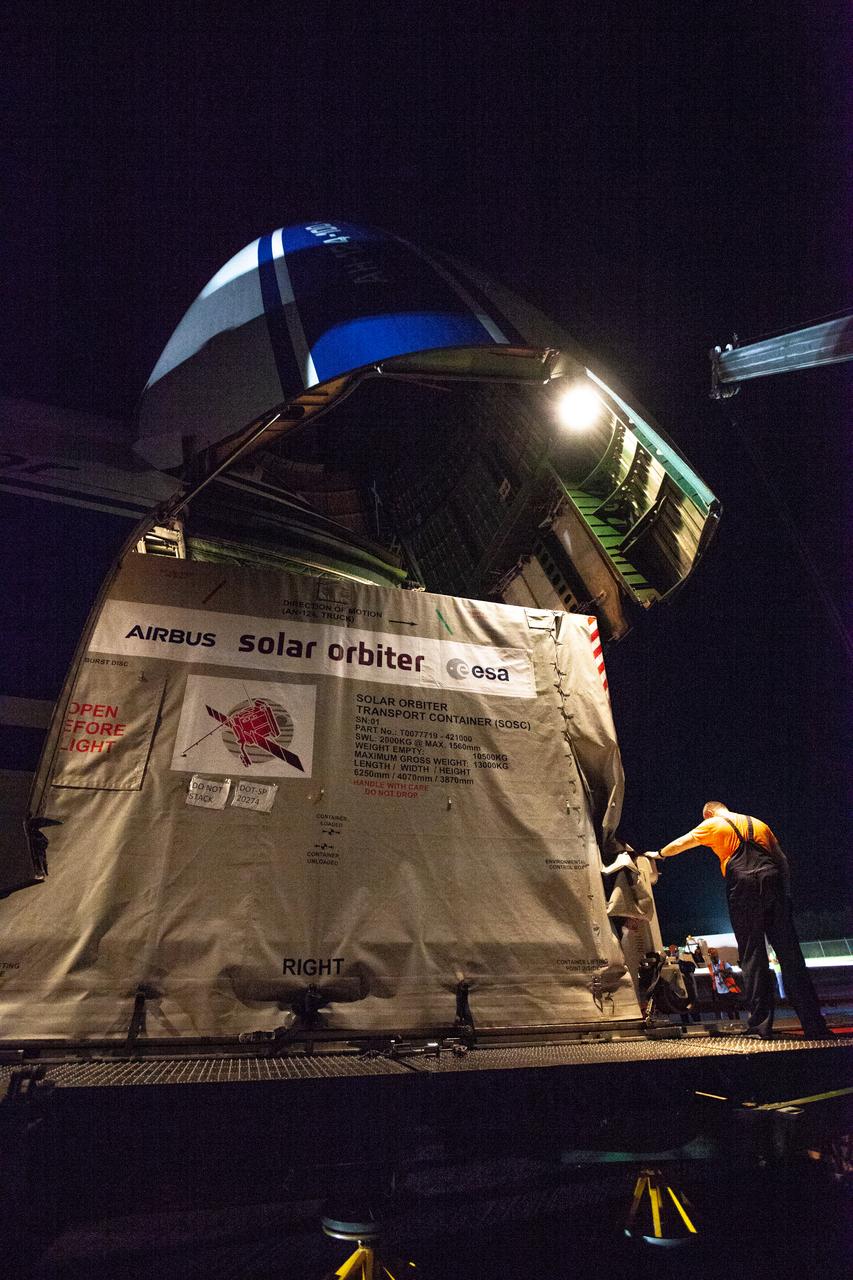
The Solar Orbiter spacecraft is moved out of an Antonov An-124 cargo plane at NASA Kennedy Space Center’s Launch and Landing Facility on Nov. 1, 2019. The spacecraft was delivered to the Florida spaceport from Munich, Germany, then transported to the Astrotech Space Operations facility in nearby Titusville. Solar Orbiter is a European Space Agency mission with strong NASA participation. The mission aims to study the Sun, its outer atmosphere and solar winds. The spacecraft will provide the first images of the Sun’s poles. NASA’s Launch Services Program based at Kennedy is managing the launch. Liftoff is scheduled for Feb. 5, 2020, from Cape Canaveral Air Force Station aboard a United Launch Alliance Atlas V rocket.
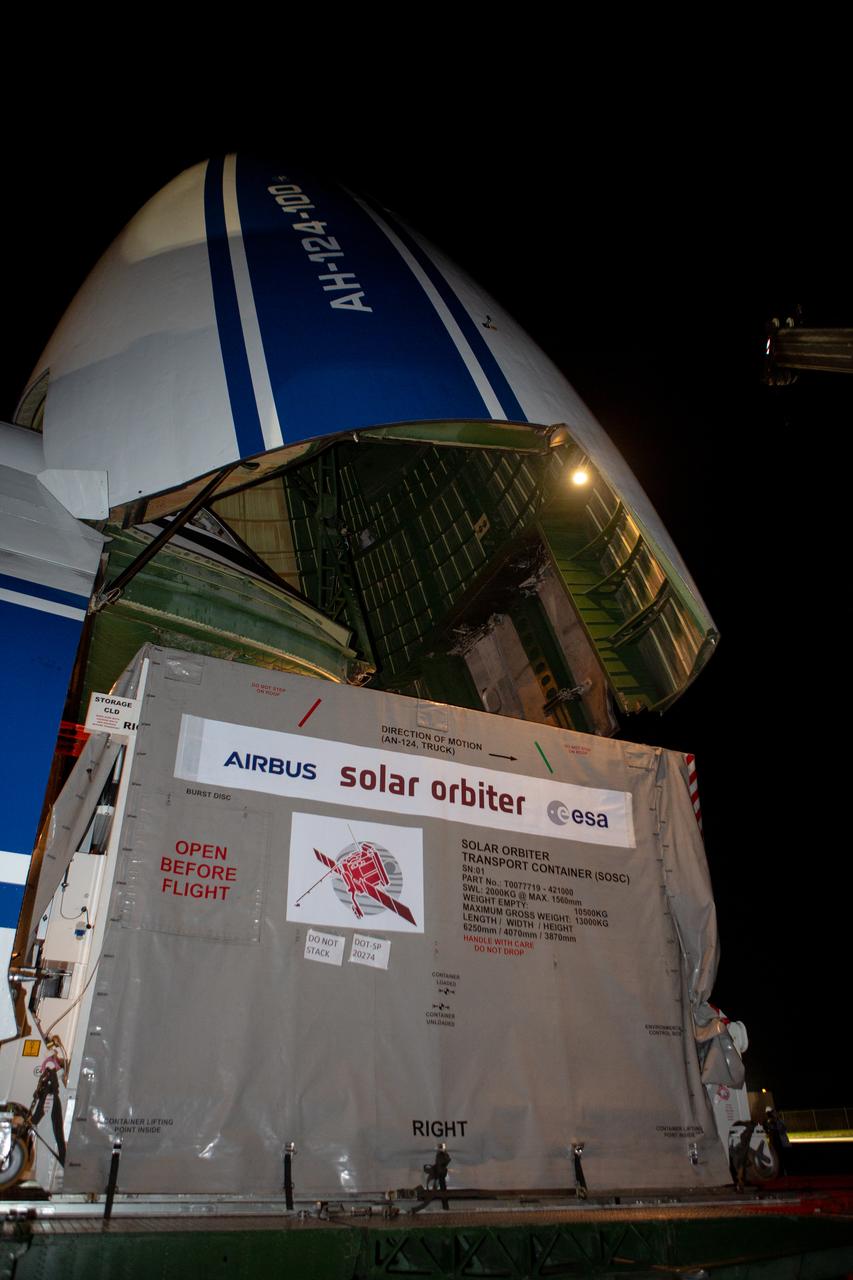
The Solar Orbiter spacecraft is placed on a truck for transportation from the Launch and Landing Facility at NASA’s Kennedy Space Center in Florida to the Astrotech Space Operations facility in nearby Titusville on Nov. 1, 2019. The spacecraft was delivered to the Florida spaceport aboard an Antonov An-124 cargo plane from Munich, Germany. Solar Orbiter is a European Space Agency mission with strong NASA participation. The mission aims to study the Sun, its outer atmosphere and solar winds. The spacecraft will provide the first images of the Sun’s poles. NASA’s Launch Services Program based at Kennedy is managing the launch. Liftoff is scheduled for Feb. 5, 2020, from Cape Canaveral Air Force Station aboard a United Launch Alliance Atlas V rocket.
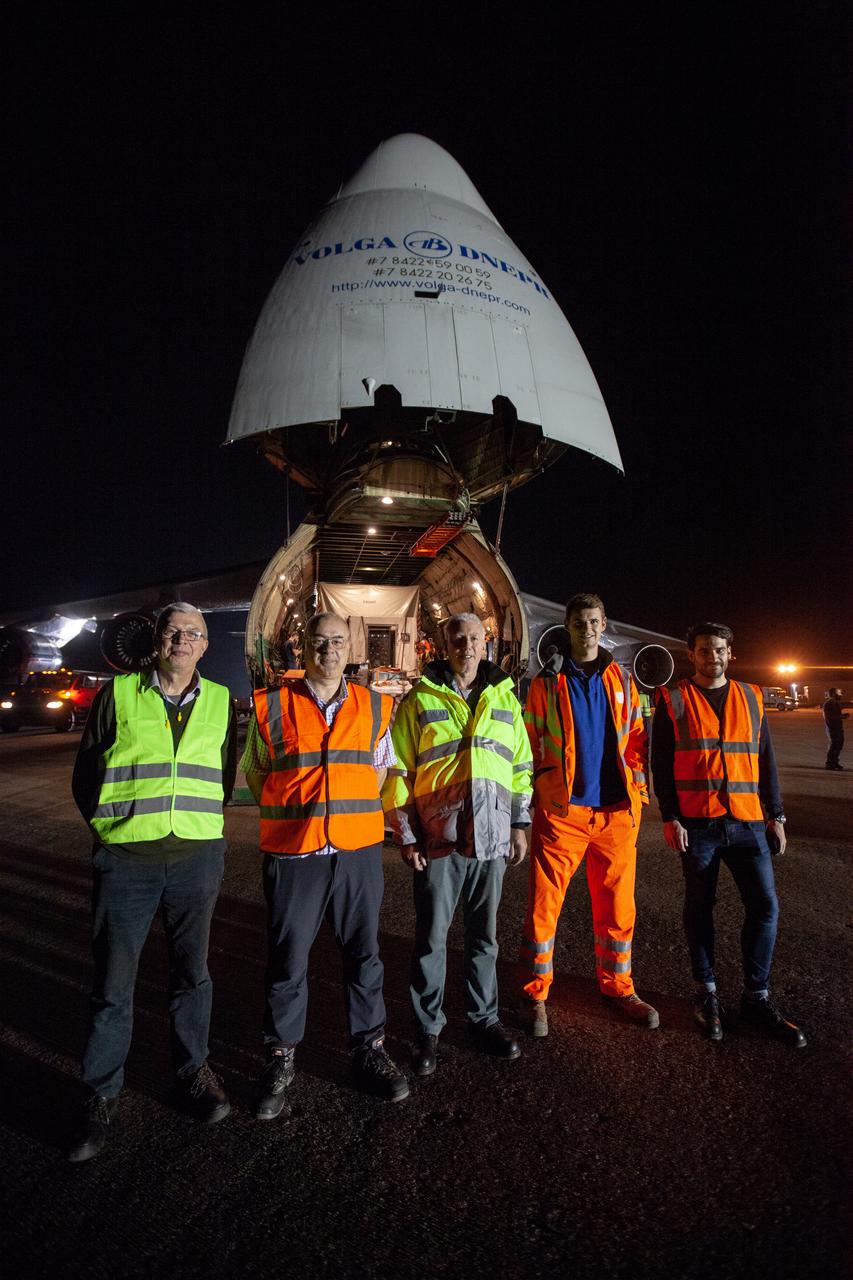
Members of the European Space Agency (ESA)/Airbus Defence and Space team pause for a photo at NASA Kennedy Space Center’s Launch and Landing Facility during the arrival of the Solar Orbiter spacecraft on Nov. 1, 2019. The spacecraft was delivered to the Florida spaceport aboard an Antonov An-124 cargo plane from Munich, Germany, then transported to the Astrotech Space Operations facility in nearby Titusville. Solar Orbiter is a European Space Agency mission with strong NASA participation. The mission aims to study the Sun, its outer atmosphere and solar winds. The spacecraft will provide the first images of the Sun’s poles. NASA’s Launch Services Program based at Kennedy is managing the launch. Liftoff is scheduled for Feb. 5, 2020, from Cape Canaveral Air Force Station aboard a United Launch Alliance Atlas V rocket.
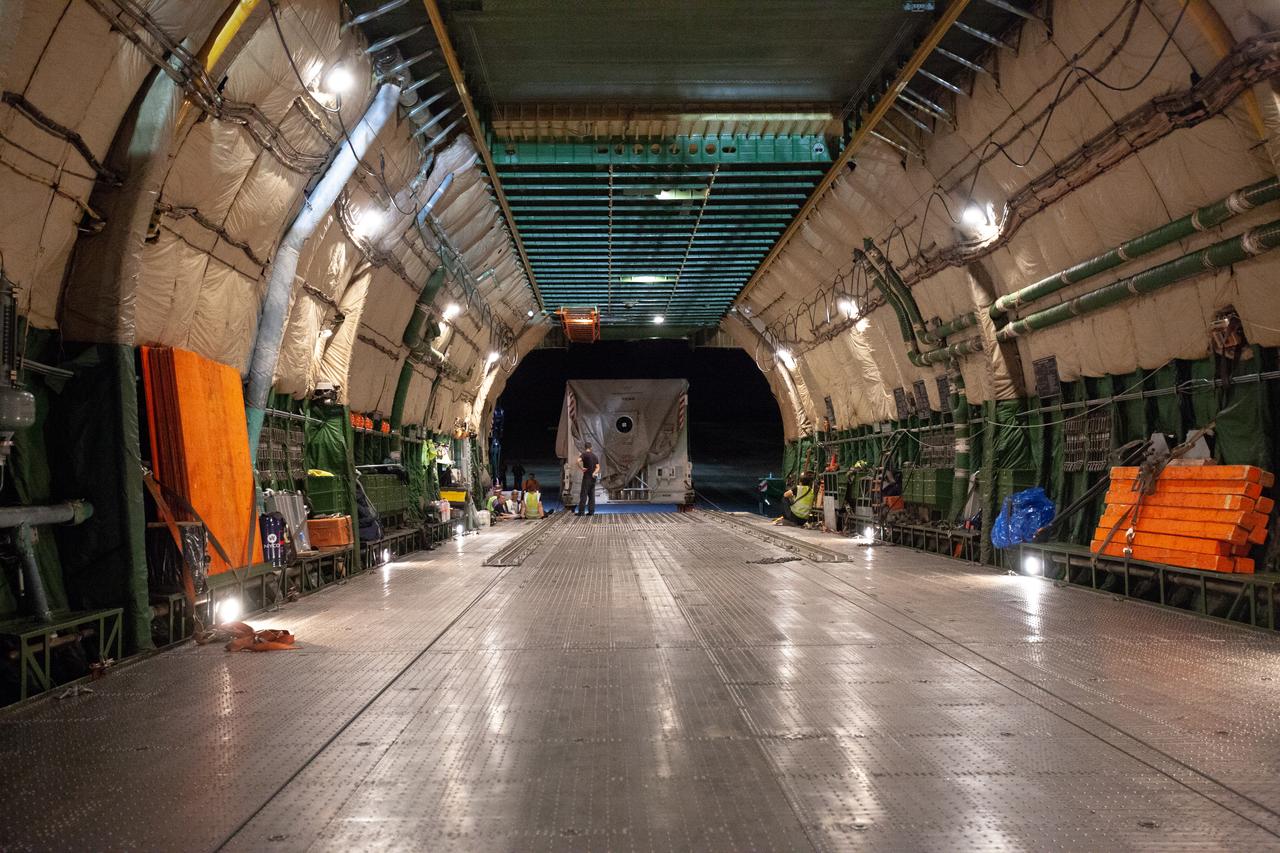
The Solar Orbiter spacecraft is moved out of the cavernous interior of an Antonov An-124 cargo plane at NASA Kennedy Space Center’s Launch and Landing Facility on Nov. 1, 2019. The spacecraft was delivered to the Florida spaceport from Munich, Germany, then transported to the Astrotech Space Operations facility in nearby Titusville. Solar Orbiter is a European Space Agency mission with strong NASA participation. The mission aims to study the Sun, its outer atmosphere and solar winds. The spacecraft will provide the first images of the Sun’s poles. NASA’s Launch Services Program based at Kennedy is managing the launch. Liftoff is scheduled for Feb. 5, 2020, from Cape Canaveral Air Force Station aboard a United Launch Alliance Atlas V rocket.
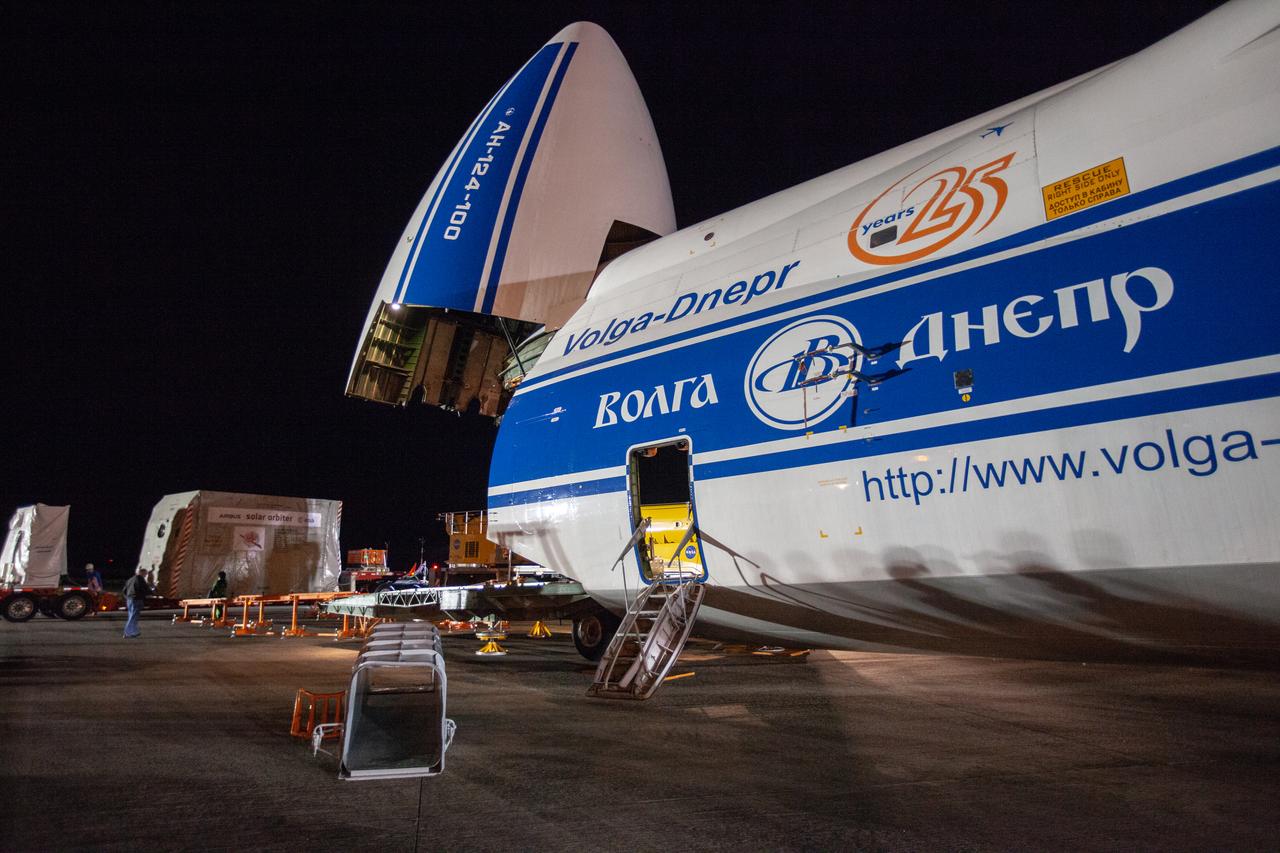
An Antonov An-124 cargo plane, foreground, is seen at NASA Kennedy Space Center’s Launch and Landing Facility on Nov. 1, 2019 after delivering the Solar Orbiter spacecraft from Munich, Germany. The spacecraft was placed on a truck for transportation from the Florida spaceport to the Astrotech Space Operations facility in nearby Titusville. Solar Orbiter is a European Space Agency mission with strong NASA participation. The mission aims to study the Sun, its outer atmosphere and solar winds. The spacecraft will provide the first images of the Sun’s poles. NASA’s Launch Services Program based at Kennedy is managing the launch. Liftoff is scheduled for Feb. 5, 2020, from Cape Canaveral Air Force Station aboard a United Launch Alliance Atlas V rocket.
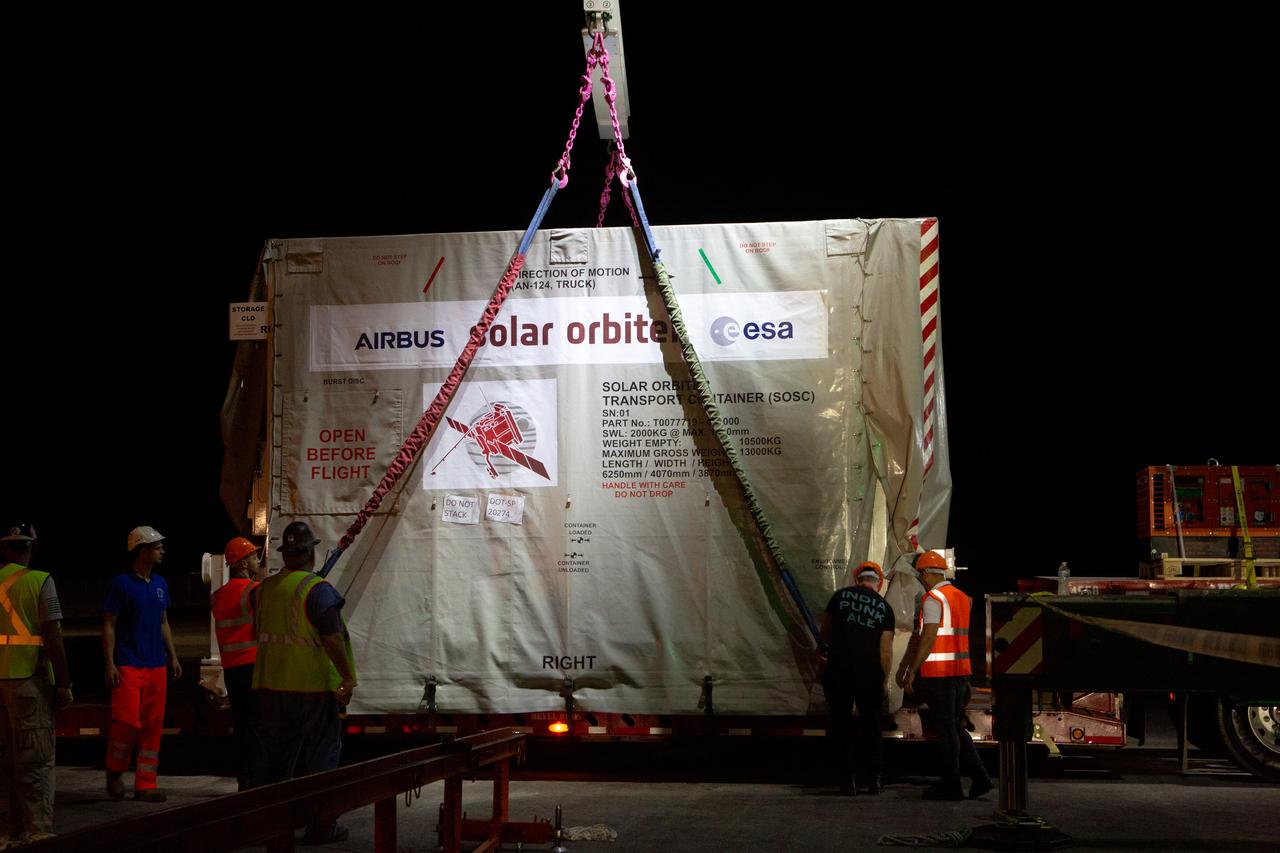
A crane carefully places the Solar Orbiter spacecraft on a truck for transportation from the Launch and Landing Facility at NASA’s Kennedy Space Center in Florida to the Astrotech Space Operations facility in nearby Titusville on Nov. 1, 2019. The spacecraft was delivered to the Florida spaceport aboard an Antonov An-124 cargo plane from Munich, Germany. Solar Orbiter is a European Space Agency mission with strong NASA participation. The mission aims to study the Sun, its outer atmosphere and solar winds. The spacecraft will provide the first images of the Sun’s poles. NASA’s Launch Services Program based at Kennedy is managing the launch. Liftoff is scheduled for Feb. 5, 2020, from Cape Canaveral Air Force Station aboard a United Launch Alliance Atlas V rocket.
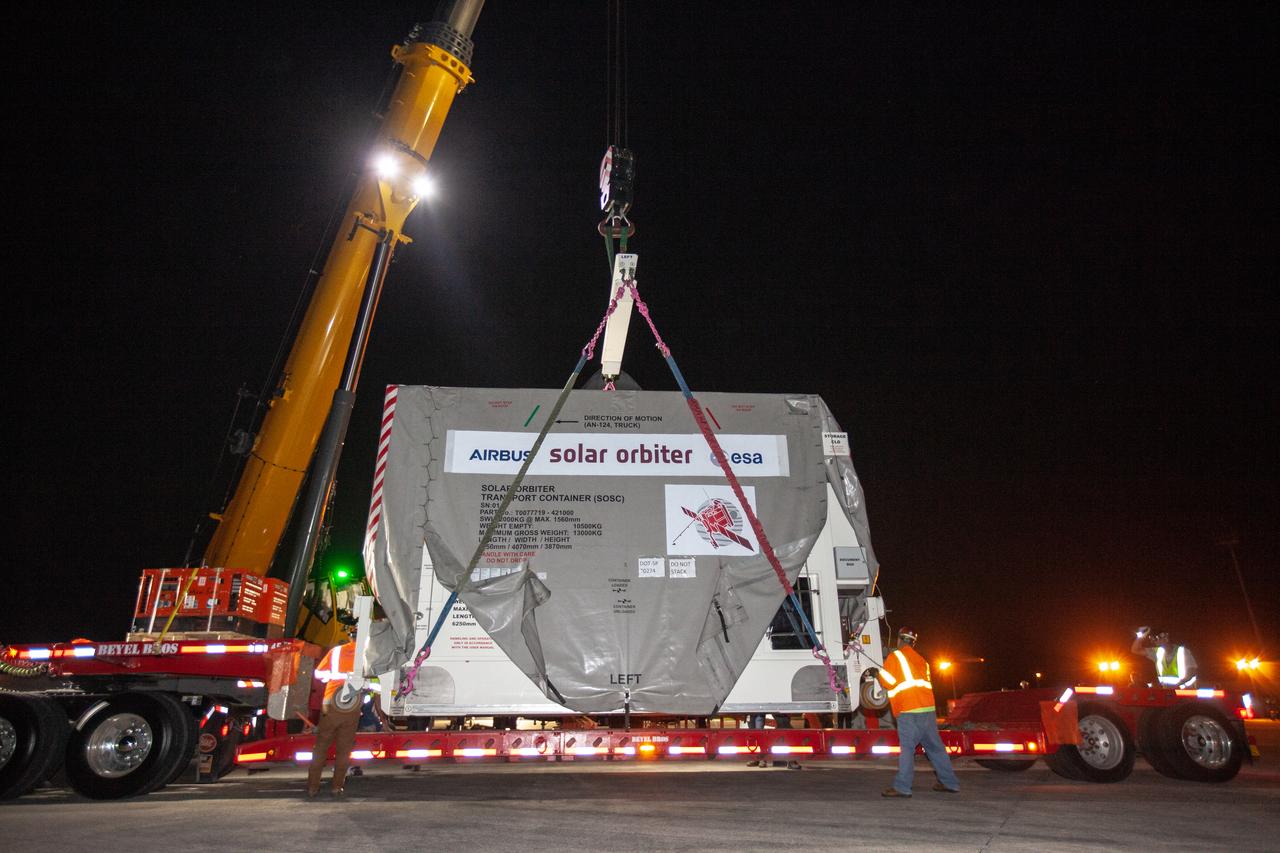
A crane carefully places the Solar Orbiter spacecraft on a truck for transportation from the Launch and Landing Facility at NASA’s Kennedy Space Center in Florida to the Astrotech Space Operations facility in nearby Titusville on Nov. 1, 2019. The spacecraft was delivered to the Florida spaceport aboard an Antonov An-124 cargo plane from Munich, Germany. Solar Orbiter is a European Space Agency mission with strong NASA participation. The mission aims to study the Sun, its outer atmosphere and solar winds. The spacecraft will provide the first images of the Sun’s poles. NASA’s Launch Services Program based at Kennedy is managing the launch. Liftoff is scheduled for Feb. 5, 2020, from Cape Canaveral Air Force Station aboard a United Launch Alliance Atlas V rocket.
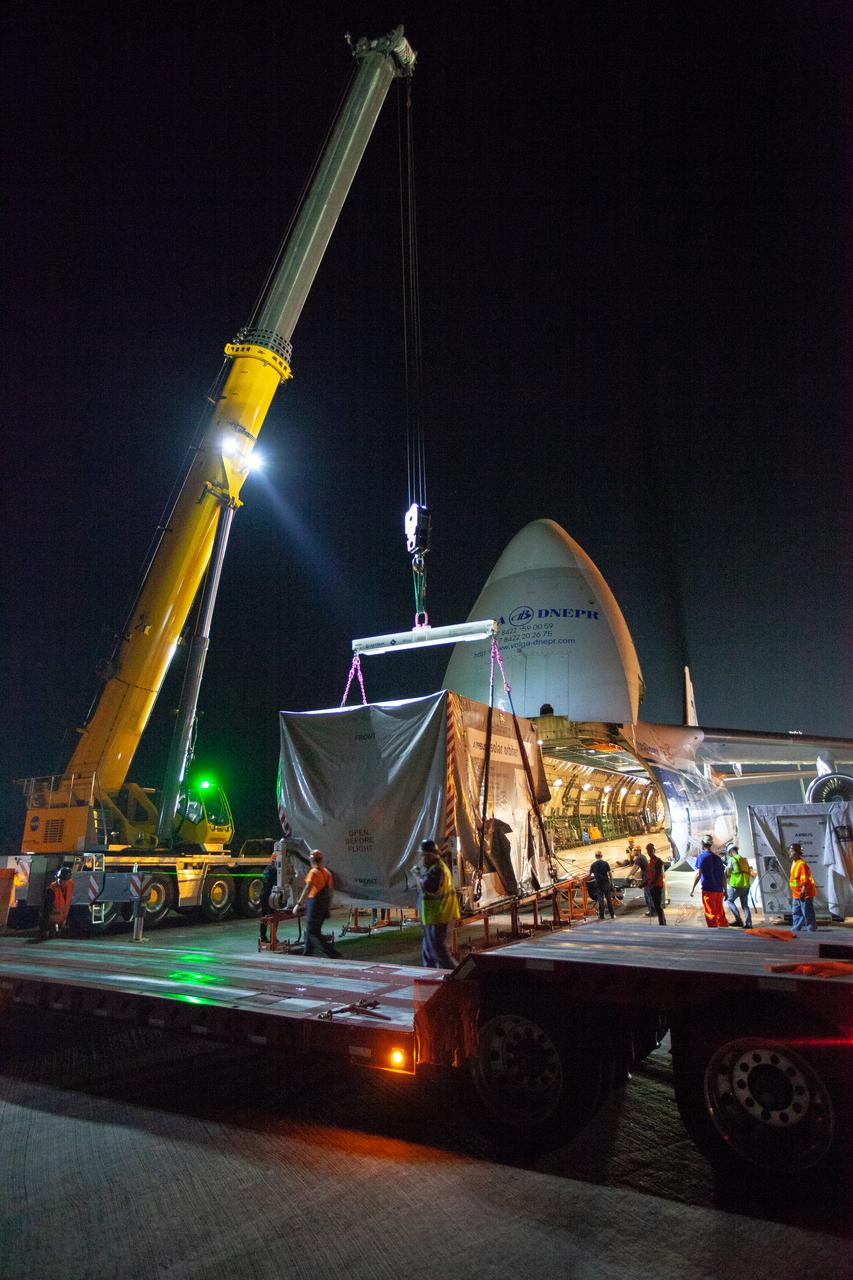
A crane carefully places the Solar Orbiter spacecraft on a truck for transportation from the Launch and Landing Facility at NASA’s Kennedy Space Center in Florida to the Astrotech Space Operations facility in nearby Titusville on Nov. 1, 2019. The spacecraft was delivered to the Florida spaceport aboard an Antonov An-124 cargo plane from Munich, Germany. Solar Orbiter is a European Space Agency mission with strong NASA participation. The mission aims to study the Sun, its outer atmosphere and solar winds. The spacecraft will provide the first images of the Sun’s poles. NASA’s Launch Services Program based at Kennedy is managing the launch. Liftoff is scheduled for Feb. 5, 2020, from Cape Canaveral Air Force Station aboard a United Launch Alliance Atlas V rocket.
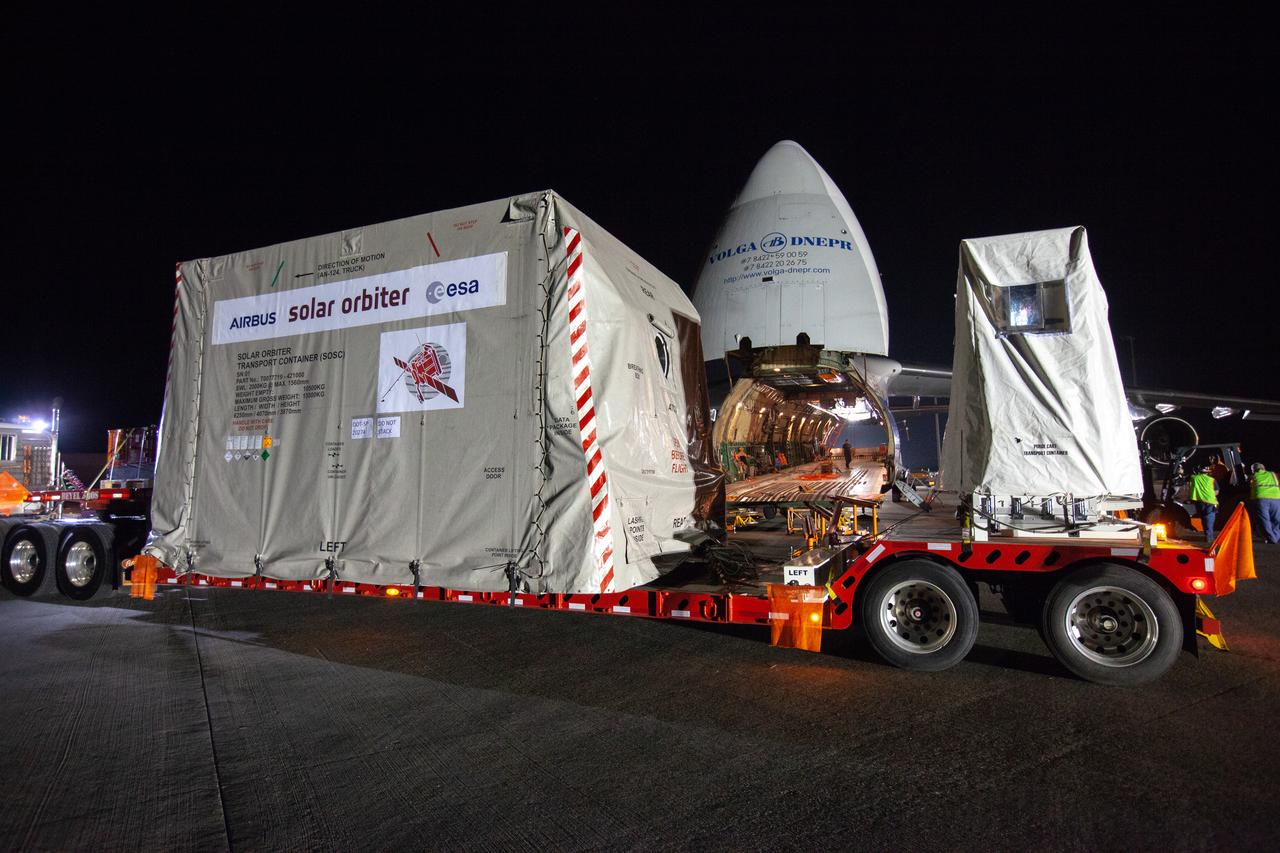
The Solar Orbiter spacecraft is placed on a truck for transportation from the Launch and Landing Facility at NASA’s Kennedy Space Center in Florida to the Astrotech Space Operations facility in nearby Titusville on Nov. 1, 2019. The spacecraft was delivered to the Florida spaceport aboard an Antonov An-124 cargo plane from Munich, Germany. Solar Orbiter is a European Space Agency mission with strong NASA participation. The mission aims to study the Sun, its outer atmosphere and solar winds. The spacecraft will provide the first images of the Sun’s poles. NASA’s Launch Services Program based at Kennedy is managing the launch. Liftoff is scheduled for Feb. 5, 2020, from Cape Canaveral Air Force Station aboard a United Launch Alliance Atlas V rocket.
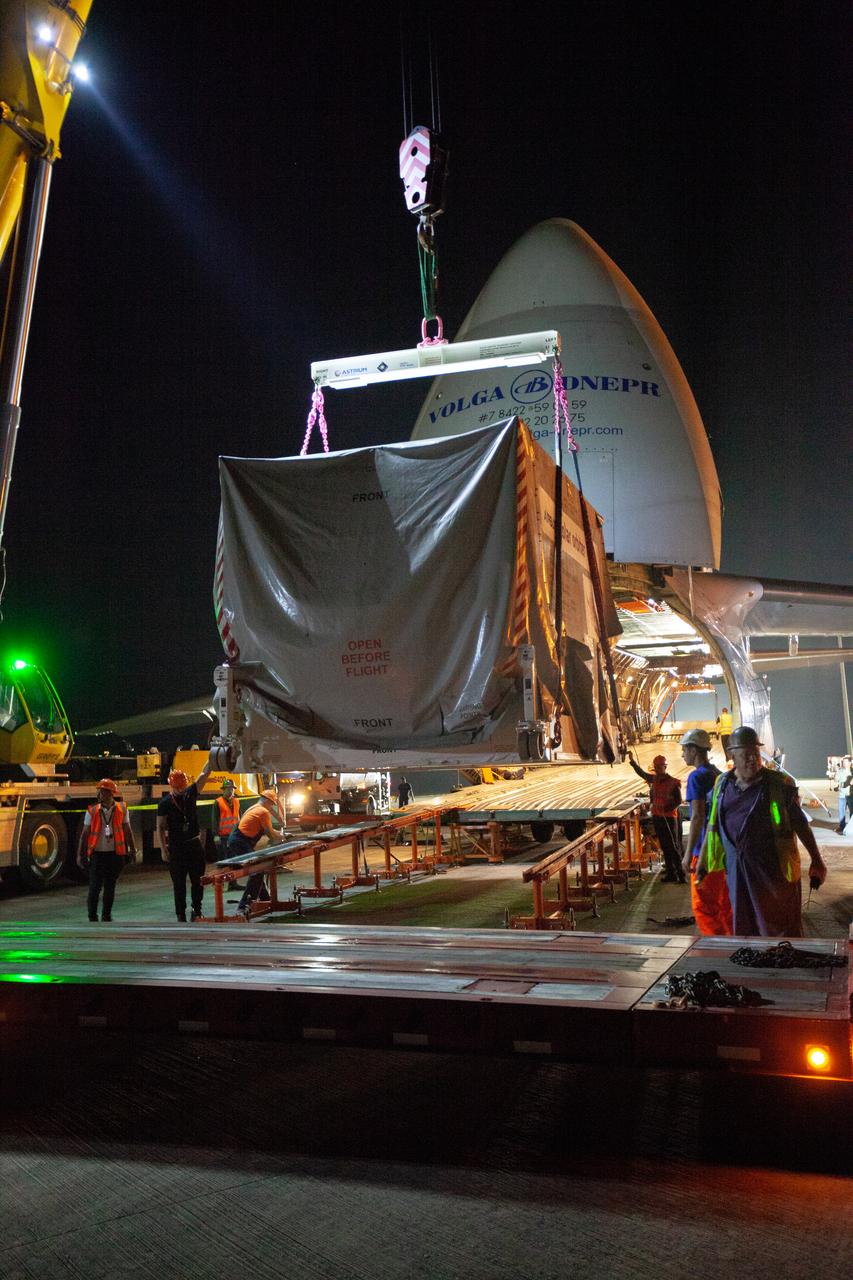
A crane carefully places the Solar Orbiter spacecraft on a truck for transportation from the Launch and Landing Facility at NASA’s Kennedy Space Center in Florida to the Astrotech Space Operations facility in nearby Titusville on Nov. 1, 2019. The spacecraft was delivered to the Florida spaceport aboard an Antonov An-124 cargo plane from Munich, Germany. Solar Orbiter is a European Space Agency mission with strong NASA participation. The mission aims to study the Sun, its outer atmosphere and solar winds. The spacecraft will provide the first images of the Sun’s poles. NASA’s Launch Services Program based at Kennedy is managing the launch. Liftoff is scheduled for Feb. 5, 2020, from Cape Canaveral Air Force Station aboard a United Launch Alliance Atlas V rocket.
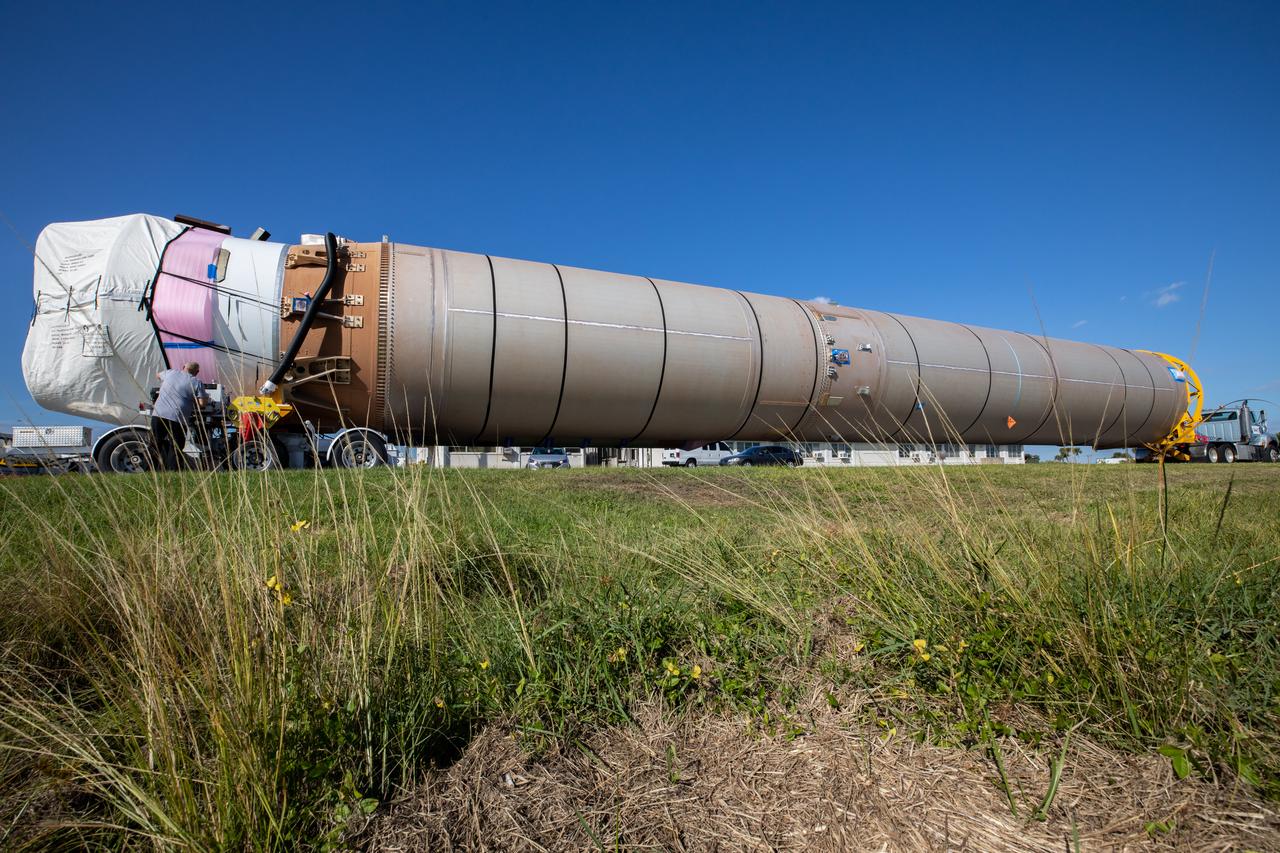
The United Launch Alliance Atlas V booster that will launch the Solar Orbiter spacecraft is transported by truck from Port Canaveral to the Atlas Spaceflight Operations Center at Florida’s Cape Canaveral Air Force Station on Nov. 21, 2019. The company’s Rocketship vessel carried the booster from its manufacturing facility in Decatur, Alabama, to the port. Solar Orbiter is a European Space Agency mission with strong NASA participation. The mission aims to study the Sun, its outer atmosphere and solar winds. The spacecraft will provide the first images of the Sun’s poles. NASA’s Launch Services Program based at Kennedy is managing the launch. Liftoff is scheduled for Feb. 5, 2020, from Launch Complex 41 at Cape Canaveral Air Force Station aboard the ULA Atlas V rocket.
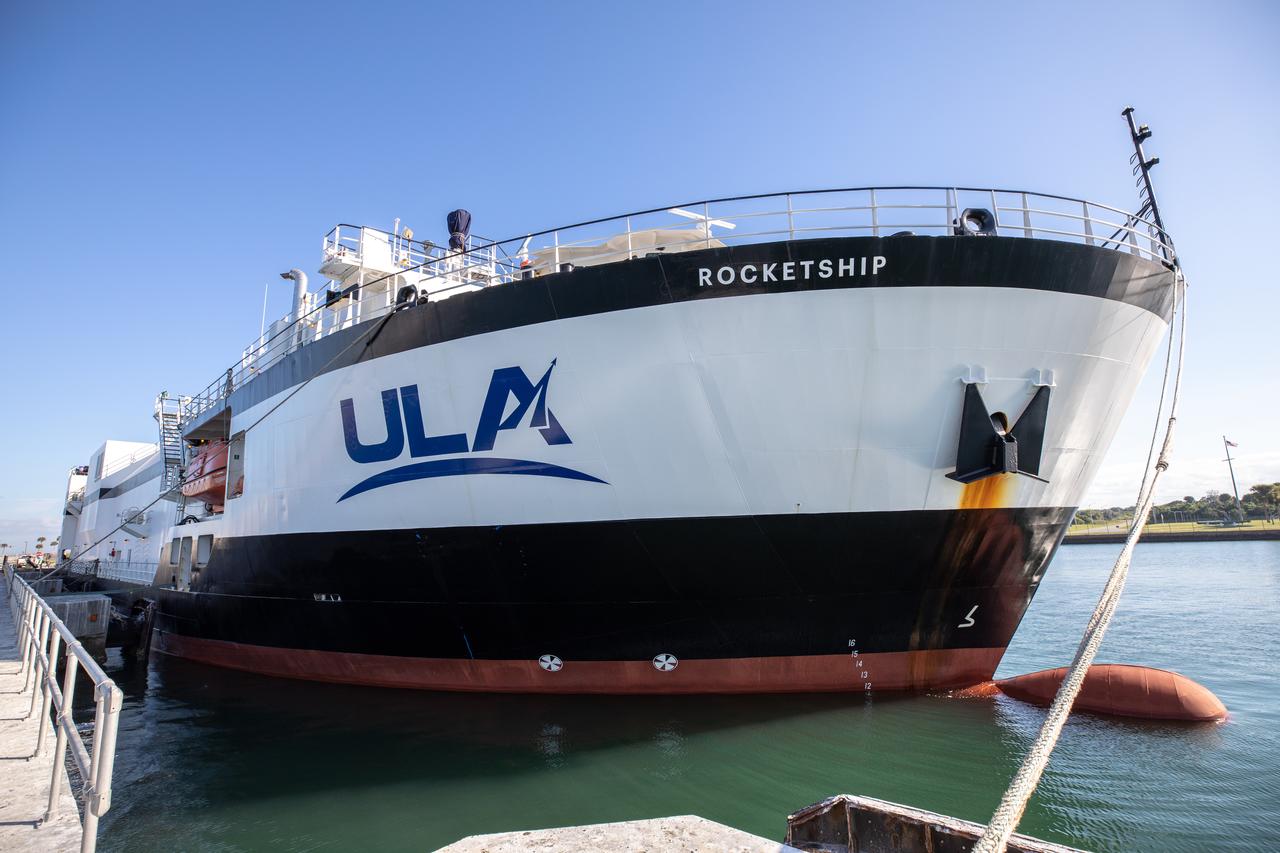
The United Launch Alliance cargo vessel, Rocketship, is docked at Florida’s Port Canaveral on Nov. 21, 2019, after arriving with the Atlas V booster and Centaur upper stage that will launch the Solar Orbiter spacecraft. Once offloaded, the booster was transported to the Atlas Spaceflight Operations Center and the Centaur was transported to a separate facility, both at nearby Cape Canaveral Air Force Station. Solar Orbiter is a European Space Agency mission with strong NASA participation. The mission aims to study the Sun, its outer atmosphere and solar winds. The spacecraft will provide the first images of the Sun’s poles. NASA’s Launch Services Program based at Kennedy is managing the launch. Liftoff is scheduled for Feb. 5, 2020, from Cape Canaveral Air Force Station aboard the ULA Atlas V rocket.
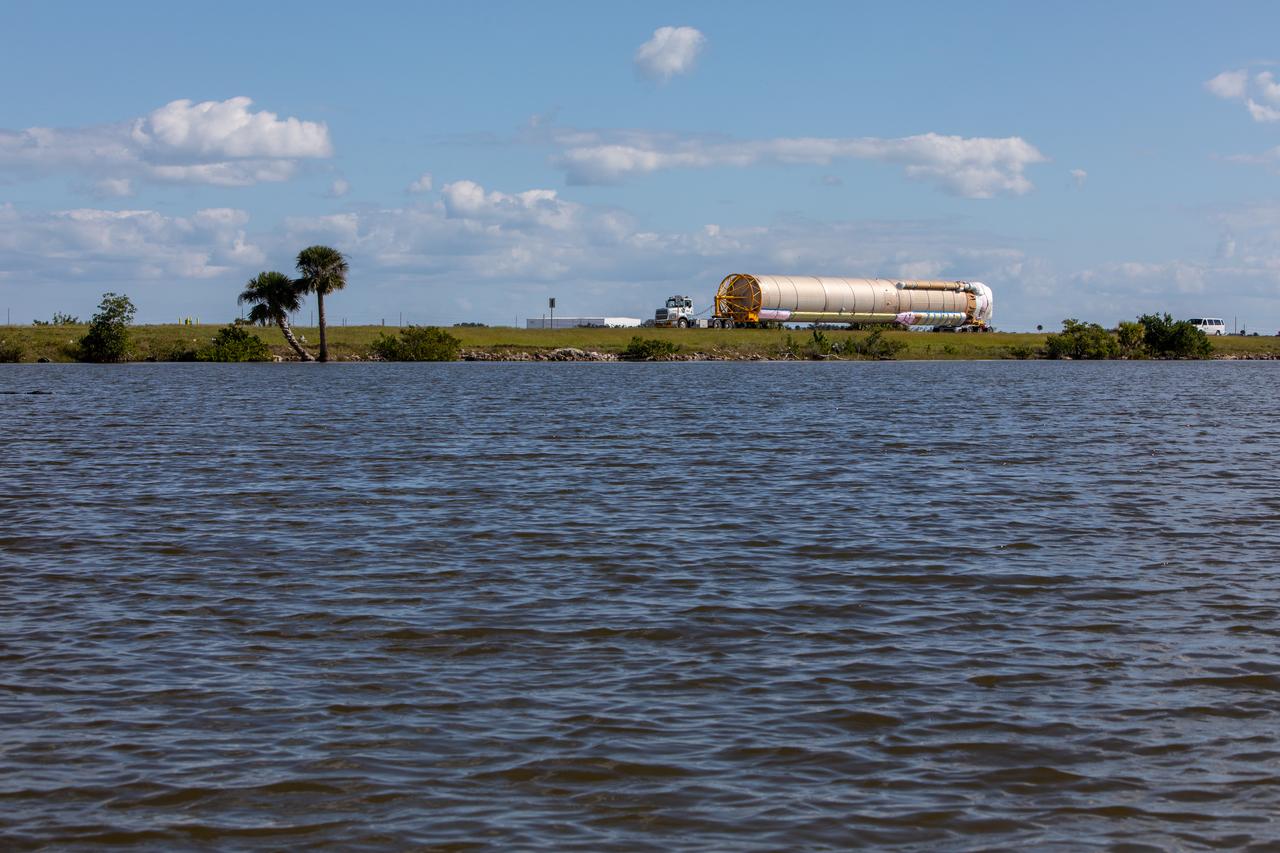
The United Launch Alliance Atlas V booster that will launch the Solar Orbiter spacecraft is transported by truck from Port Canaveral to the Atlas Spaceflight Operations Center at Florida’s Cape Canaveral Air Force Station on Nov. 21, 2019. The company’s Rocketship vessel carried the booster from its manufacturing facility in Decatur, Alabama, to the port. Solar Orbiter is a European Space Agency mission with strong NASA participation. The mission aims to study the Sun, its outer atmosphere and solar winds. The spacecraft will provide the first images of the Sun’s poles. NASA’s Launch Services Program based at Kennedy is managing the launch. Liftoff is scheduled for Feb. 5, 2020, from Launch Complex 41 at Cape Canaveral Air Force Station aboard the ULA Atlas V rocket.
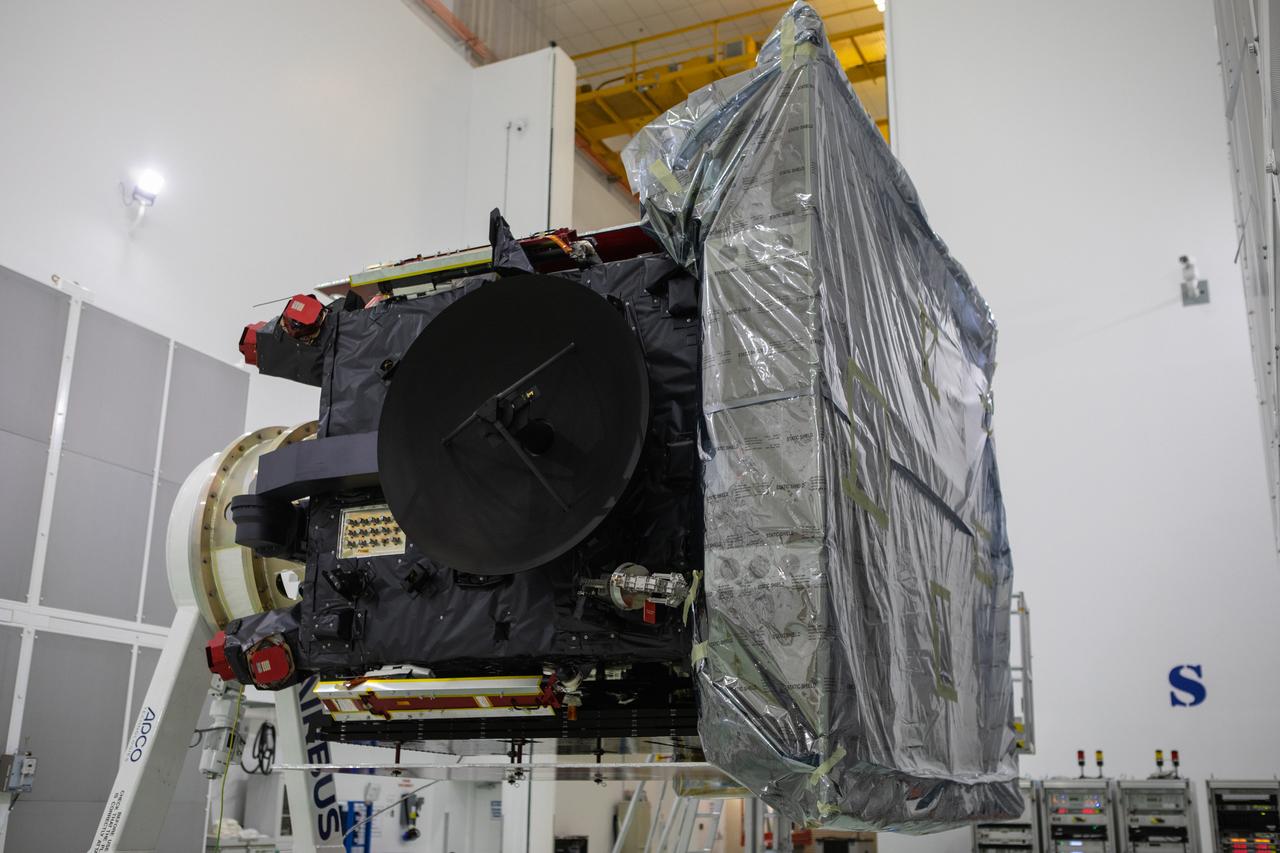
The Solar Orbiter spacecraft has been removed from its shipping container inside the Astrotech Space Operations facility in Titusville, Florida, on Nov. 18, 2019. The spacecraft was flown aboard an Antonov cargo aircraft from Munich, Germany, arriving at NASA’s Kennedy Space Center on Nov. 1, 2019. Solar Orbiter is a European Space Agency mission with strong NASA participation. The mission aims to study the Sun, its outer atmosphere and solar winds. The spacecraft will provide the first images of the Sun’s poles. NASA’s Launch Services Program based at Kennedy is managing the launch. Liftoff is scheduled for Feb. 5, 2020, from Cape Canaveral Air Force Station aboard a United Launch Alliance Atlas V rocket.
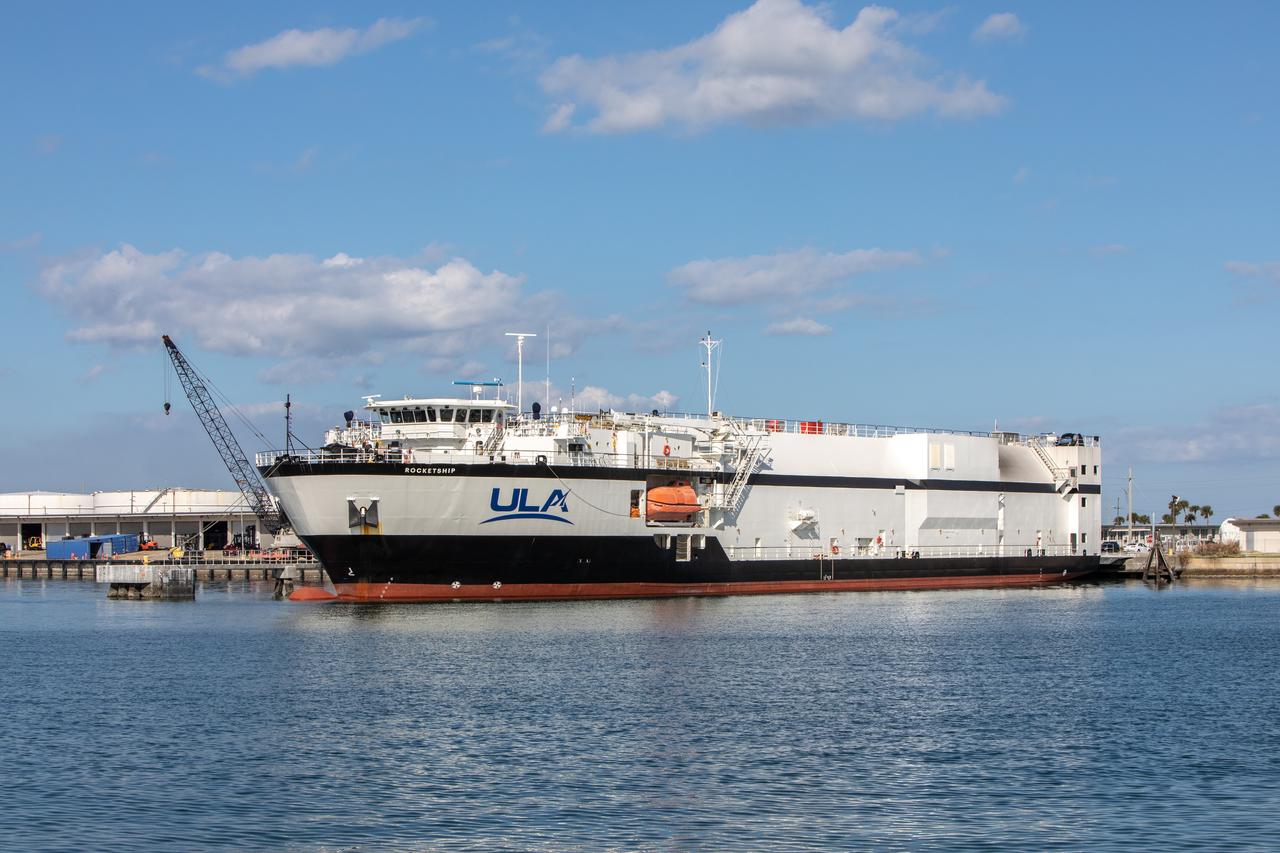
The United Launch Alliance cargo vessel, Rocketship, is docked at Florida’s Port Canaveral on Nov. 21, 2019, after arriving with the Atlas V booster and Centaur upper stage that will launch the Solar Orbiter spacecraft. Once offloaded, the booster was transported to the Atlas Spaceflight Operations Center and the Centaur was transported to a separate facility, both at nearby Cape Canaveral Air Force Station. Solar Orbiter is a European Space Agency mission with strong NASA participation. The mission aims to study the Sun, its outer atmosphere and solar winds. The spacecraft will provide the first images of the Sun’s poles. NASA’s Launch Services Program based at Kennedy is managing the launch. Liftoff is scheduled for Feb. 5, 2020, from Cape Canaveral Air Force Station aboard the ULA Atlas V rocket.
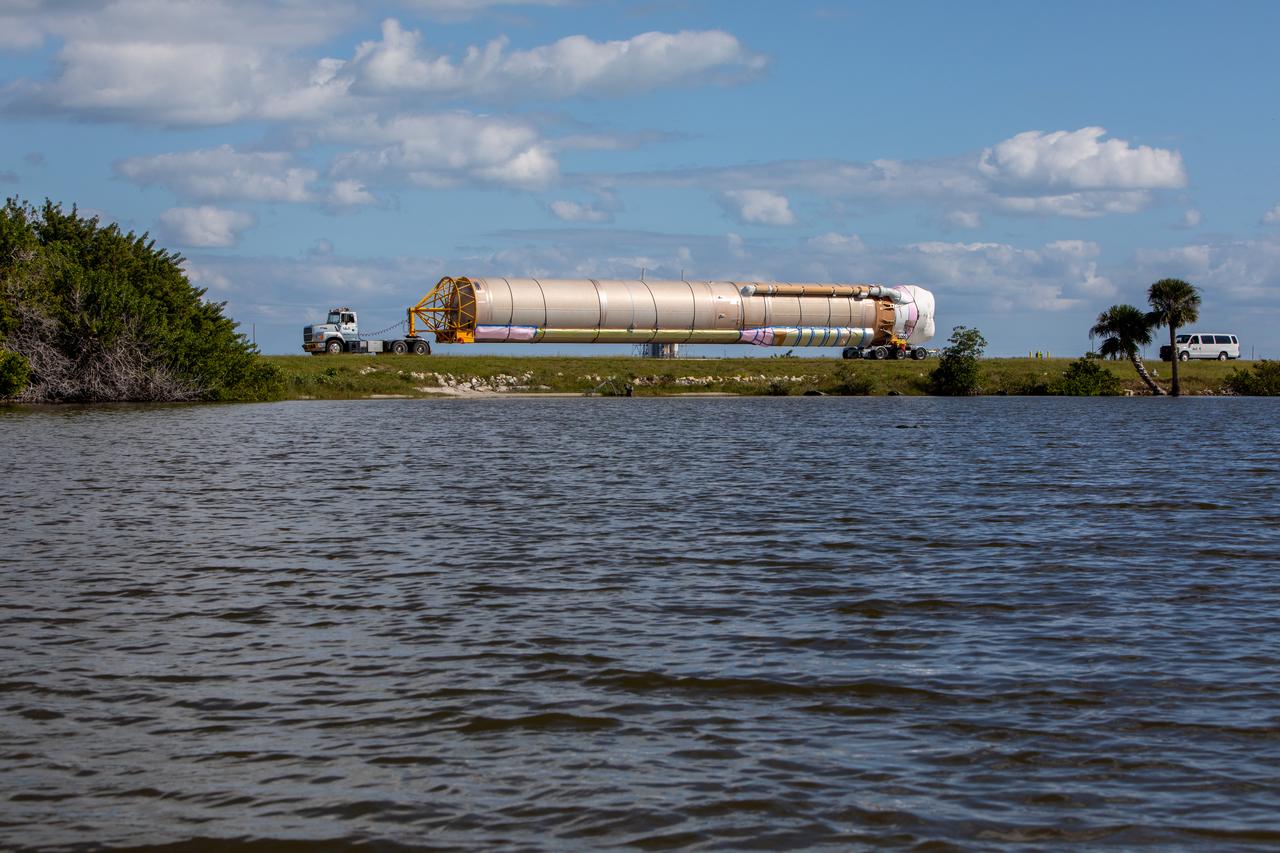
The United Launch Alliance Atlas V booster that will launch the Solar Orbiter spacecraft is transported by truck from Port Canaveral to the Atlas Spaceflight Operations Center at Florida’s Cape Canaveral Air Force Station on Nov. 21, 2019. The company’s Rocketship vessel carried the booster from its manufacturing facility in Decatur, Alabama, to the port. Solar Orbiter is a European Space Agency mission with strong NASA participation. The mission aims to study the Sun, its outer atmosphere and solar winds. The spacecraft will provide the first images of the Sun’s poles. NASA’s Launch Services Program based at Kennedy is managing the launch. Liftoff is scheduled for Feb. 5, 2020, from Launch Complex 41 at Cape Canaveral Air Force Station aboard the ULA Atlas V rocket.
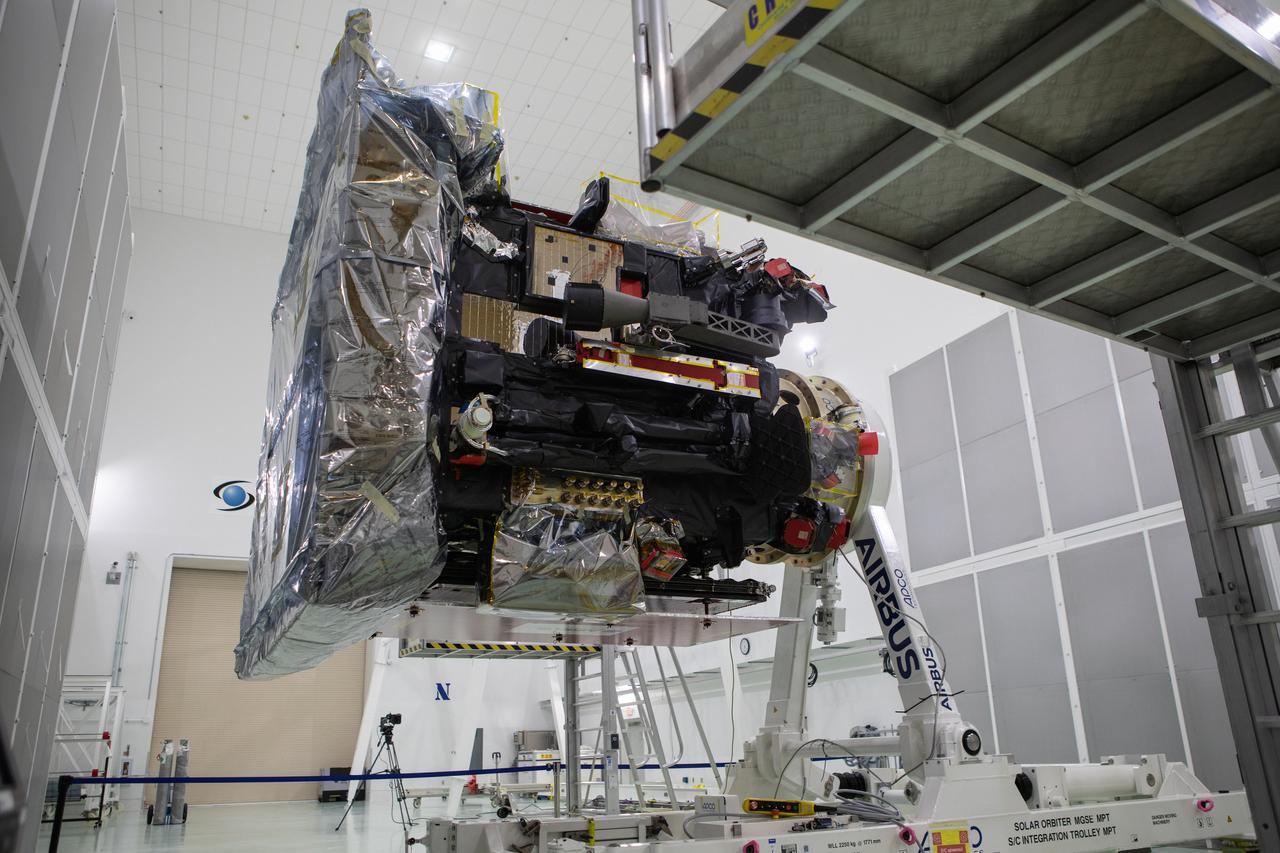
The Solar Orbiter spacecraft has been removed from its shipping container inside the Astrotech Space Operations facility in Titusville, Florida, on Nov. 18, 2019. The spacecraft was flown aboard an Antonov cargo aircraft from Munich, Germany, arriving at NASA’s Kennedy Space Center on Nov. 1, 2019. Solar Orbiter is a European Space Agency mission with strong NASA participation. The mission aims to study the Sun, its outer atmosphere and solar winds. The spacecraft will provide the first images of the Sun’s poles. NASA’s Launch Services Program based at Kennedy is managing the launch. Liftoff is scheduled for Feb. 5, 2020, from Cape Canaveral Air Force Station aboard a United Launch Alliance Atlas V rocket.
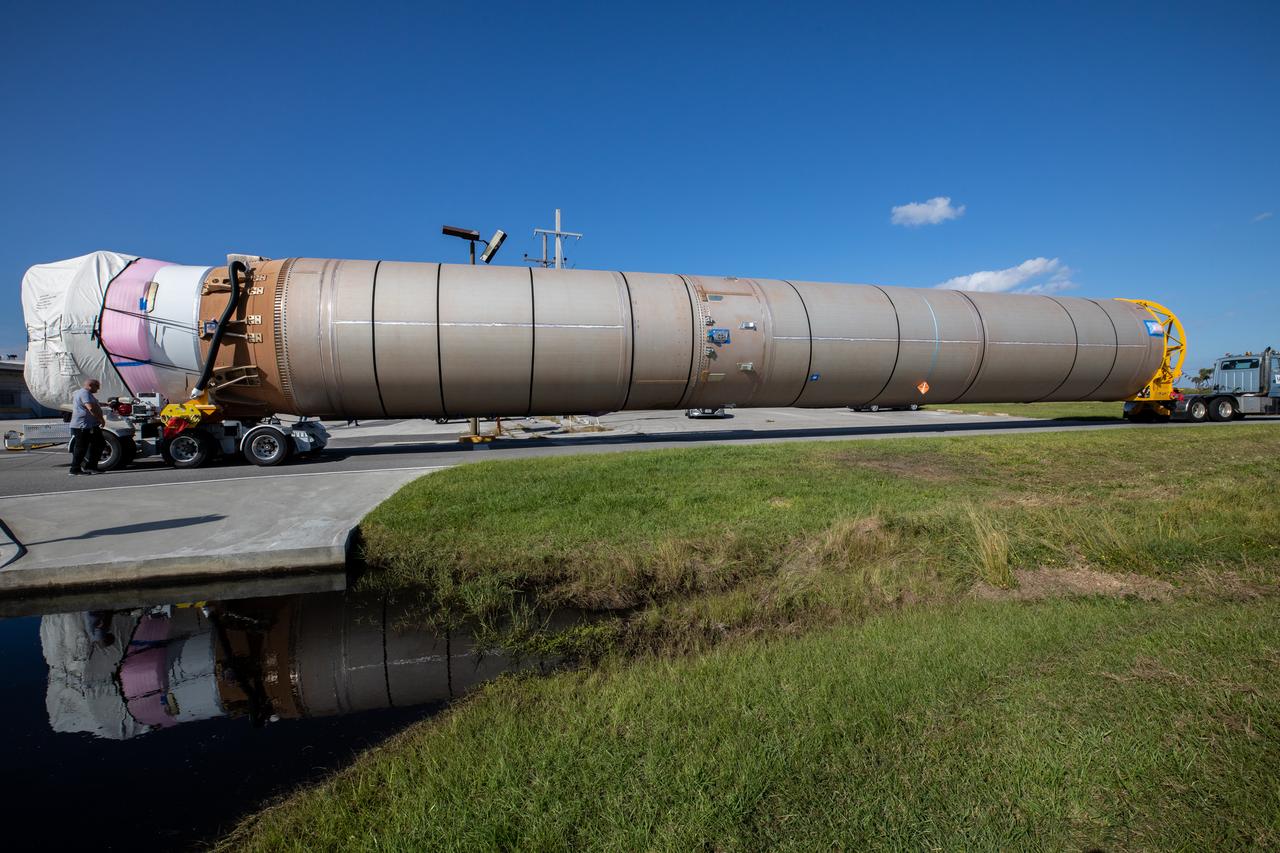
The United Launch Alliance Atlas V booster that will launch the Solar Orbiter spacecraft is transported by truck from Port Canaveral to the Atlas Spaceflight Operations Center at Florida’s Cape Canaveral Air Force Station on Nov. 21, 2019. The company’s Rocketship vessel carried the booster from its manufacturing facility in Decatur, Alabama, to the port. Solar Orbiter is a European Space Agency mission with strong NASA participation. The mission aims to study the Sun, its outer atmosphere and solar winds. The spacecraft will provide the first images of the Sun’s poles. NASA’s Launch Services Program based at Kennedy is managing the launch. Liftoff is scheduled for Feb. 5, 2020, from Launch Complex 41 at Cape Canaveral Air Force Station aboard the ULA Atlas V rocket.
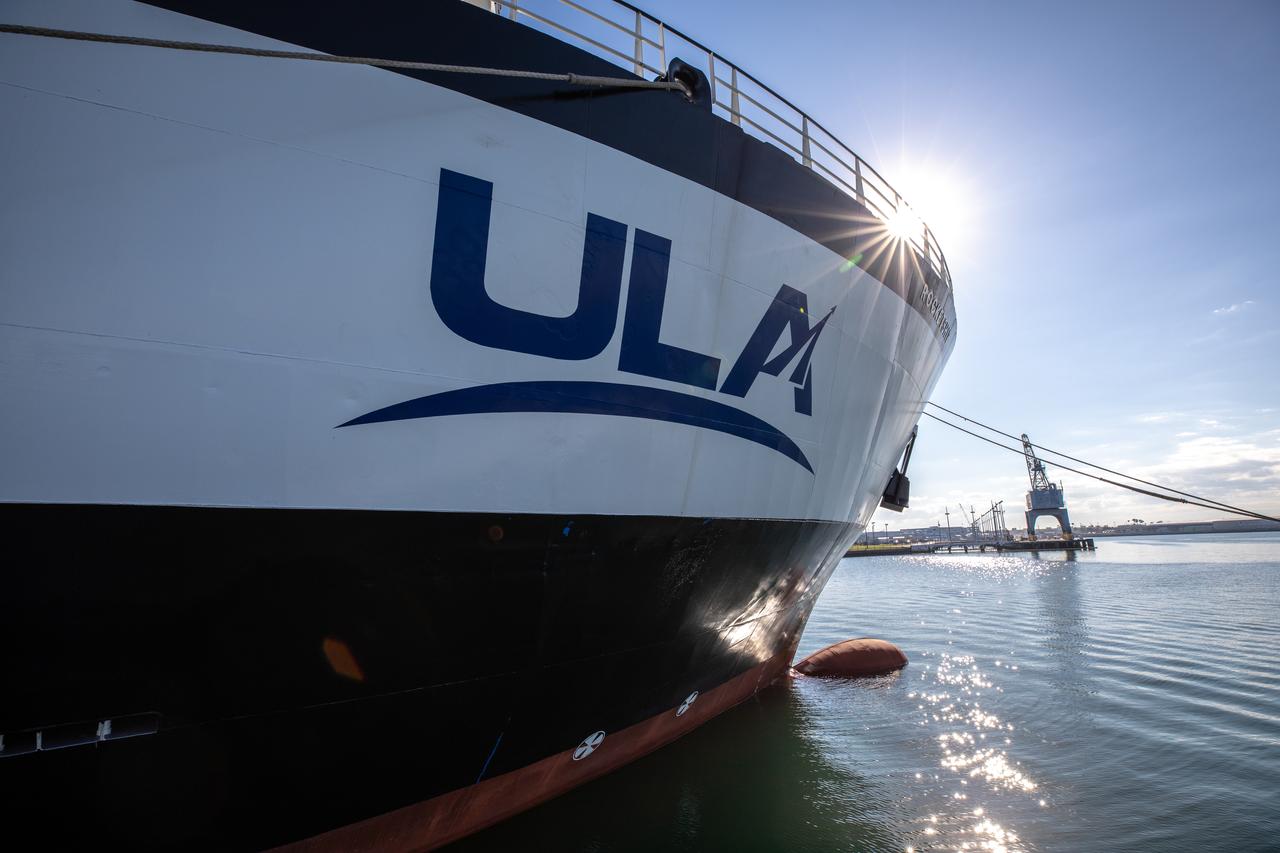
The United Launch Alliance cargo vessel, Rocketship, is docked at Florida’s Port Canaveral on Nov. 21, 2019, after arriving with the Atlas V booster and Centaur upper stage that will launch the Solar Orbiter spacecraft. Once offloaded, the booster was transported to the Atlas Spaceflight Operations Center and the Centaur was transported to a separate facility, both at nearby Cape Canaveral Air Force Station. Solar Orbiter is a European Space Agency mission with strong NASA participation. The mission aims to study the Sun, its outer atmosphere and solar winds. The spacecraft will provide the first images of the Sun’s poles. NASA’s Launch Services Program based at Kennedy is managing the launch. Liftoff is scheduled for Feb. 5, 2020, from Cape Canaveral Air Force Station aboard the ULA Atlas V rocket.
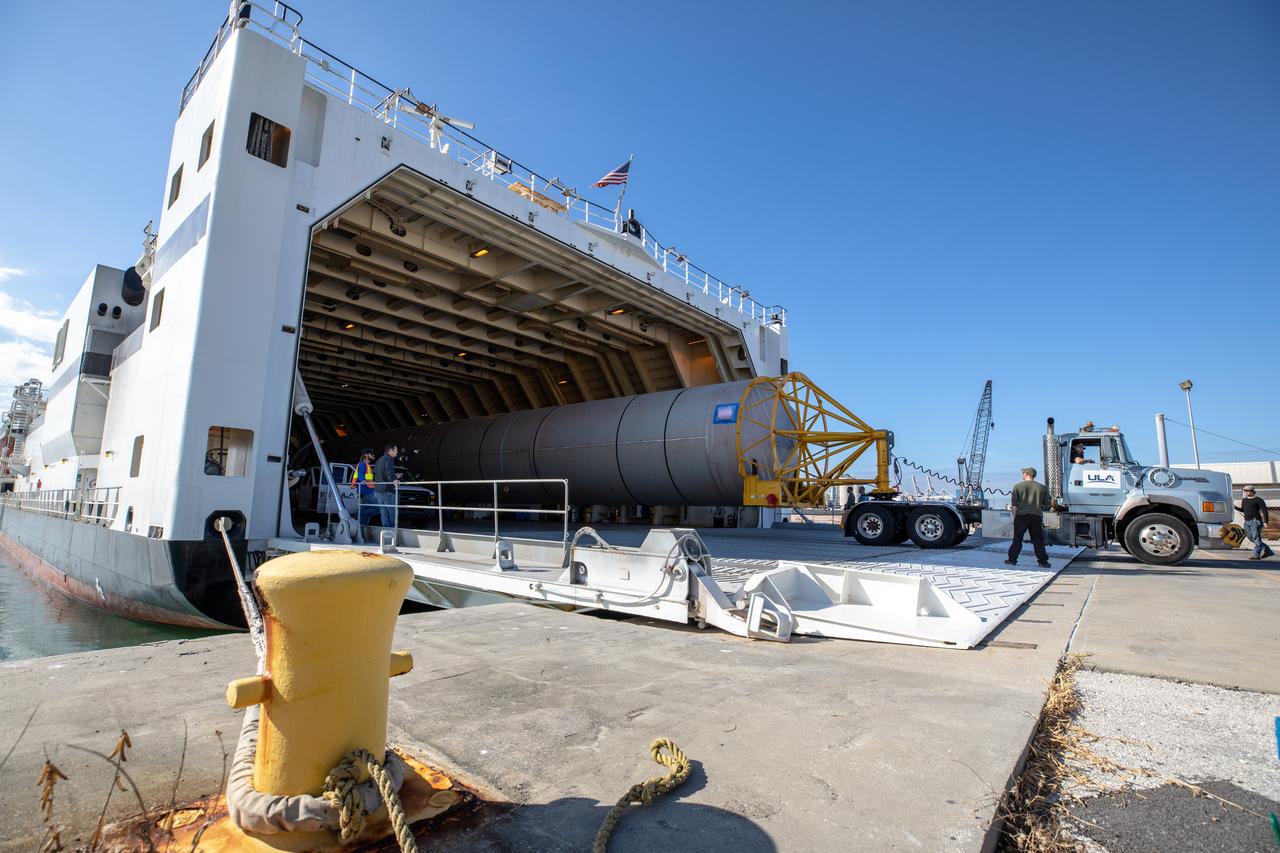
The United Launch Alliance Atlas V booster that will launch the Solar Orbiter spacecraft is removed from the company’s Rocketship vessel upon its arrival at Florida’s Port Canaveral on Nov. 21, 2019. Once offloaded, the booster was transported to the Atlas Spaceflight Operations Center at nearby Cape Canaveral Air Force Station. Solar Orbiter is a European Space Agency mission with strong NASA participation. The mission aims to study the Sun, its outer atmosphere and solar winds. The spacecraft will provide the first images of the Sun’s poles. NASA’s Launch Services Program based at Kennedy is managing the launch. Liftoff is scheduled for Feb. 5, 2020, from Launch Complex 41 at Cape Canaveral Air Force Station aboard the ULA Atlas V rocket.
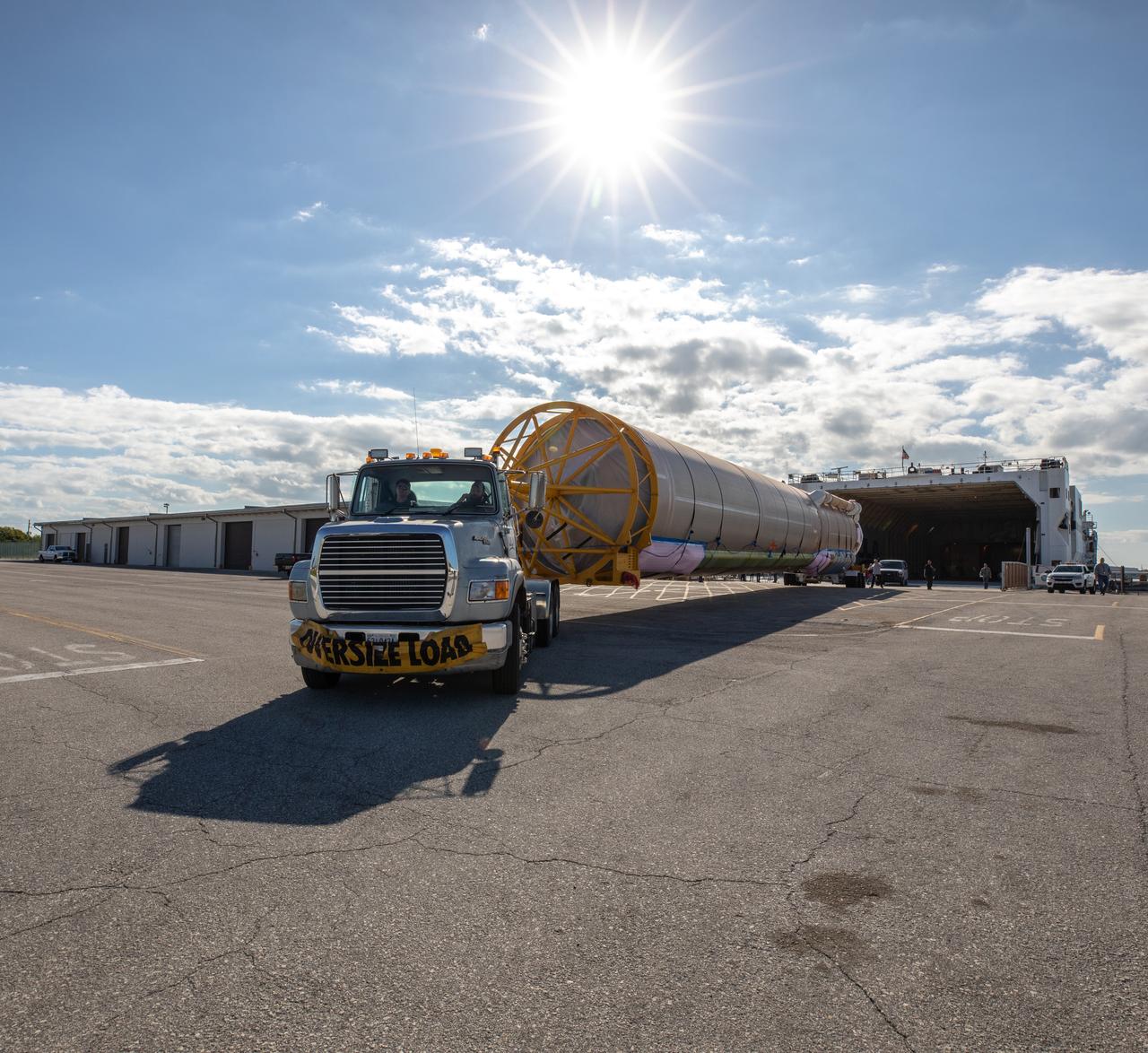
The United Launch Alliance Atlas V booster that will launch the Solar Orbiter spacecraft is removed from the company’s Rocketship vessel upon its arrival at Florida’s Port Canaveral on Nov. 21, 2019. Once offloaded, the booster was transported to the Atlas Spaceflight Operations Center at nearby Cape Canaveral Air Force Station. Solar Orbiter is a European Space Agency mission with strong NASA participation. The mission aims to study the Sun, its outer atmosphere and solar winds. The spacecraft will provide the first images of the Sun’s poles. NASA’s Launch Services Program based at Kennedy is managing the launch. Liftoff is scheduled for Feb. 5, 2020, from Launch Complex 41 at Cape Canaveral Air Force Station aboard the ULA Atlas V rocket.
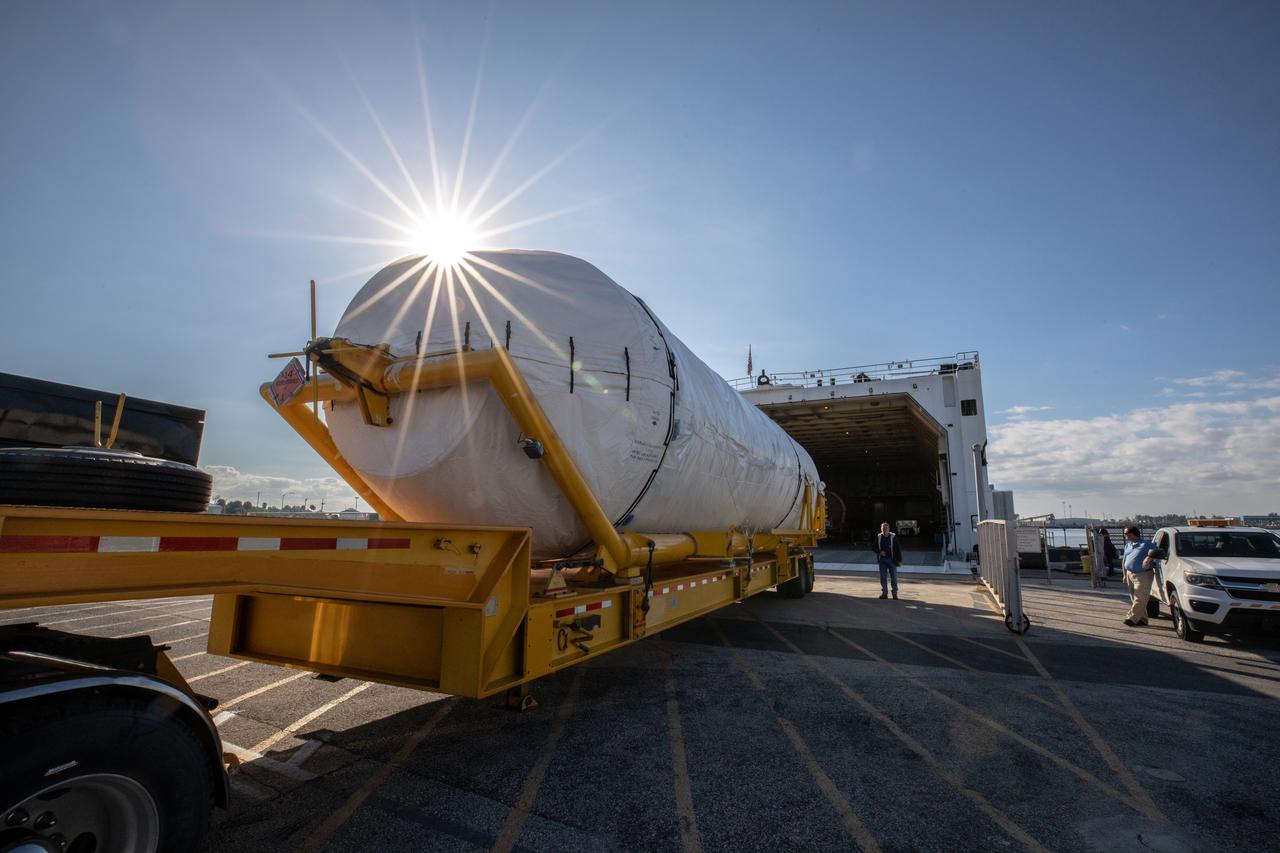
The United Launch Alliance Centaur upper stage that will help launch the Solar Orbiter spacecraft is removed from the company’s Rocketship vessel upon its arrival at Florida’s Port Canaveral on Nov. 21, 2019. Also onboard is the Atlas V rocket’s first-stage booster. Once offloaded, the booster was transported to the Atlas Spaceflight Operations Center and the Centaur was transported to a separate facility, both at nearby Cape Canaveral Air Force Station. Solar Orbiter is a European Space Agency mission with strong NASA participation. The mission aims to study the Sun, its outer atmosphere and solar winds. The spacecraft will provide the first images of the Sun’s poles. NASA’s Launch Services Program based at Kennedy is managing the launch. Liftoff is scheduled for Feb. 5, 2020, from Launch Complex 41 at Cape Canaveral Air Force Station aboard the ULA Atlas V rocket.
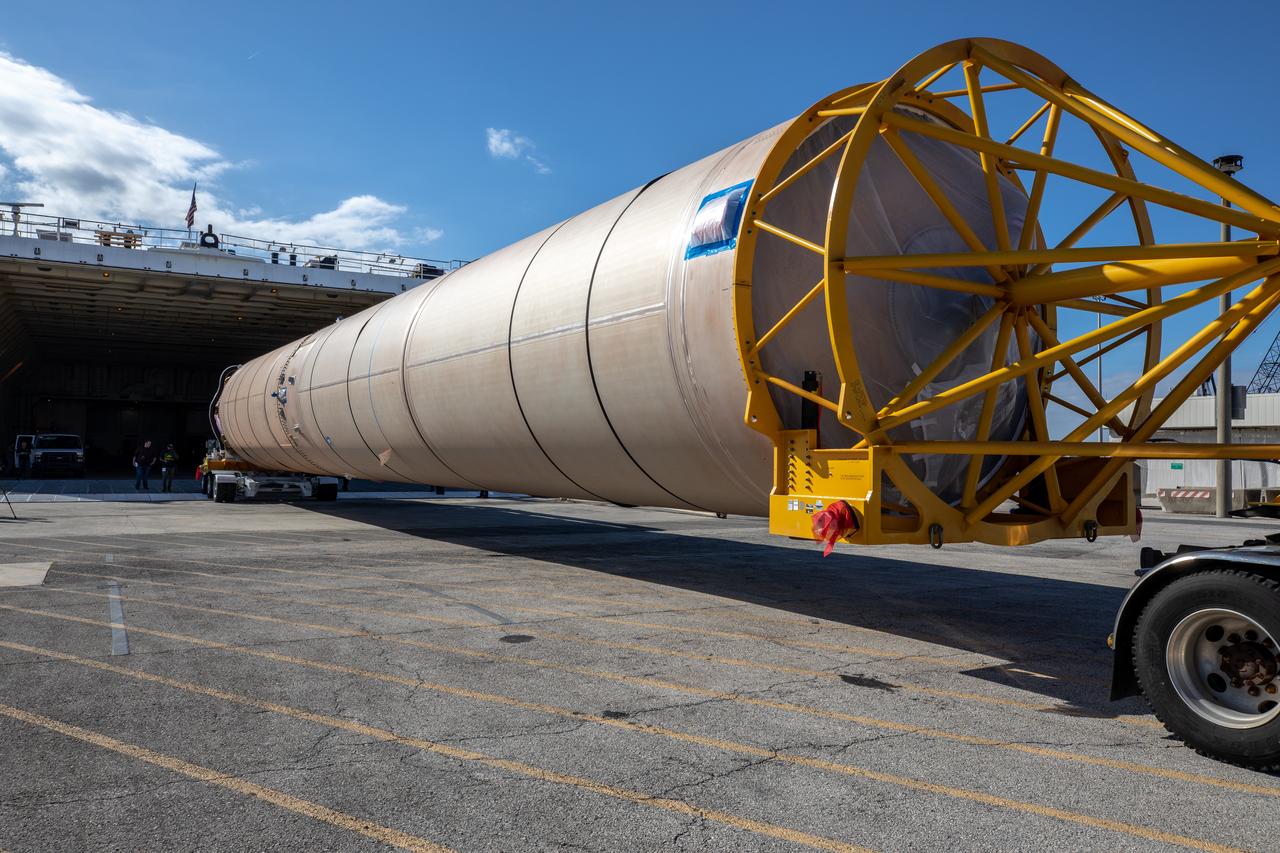
The United Launch Alliance Atlas V booster that will launch the Solar Orbiter spacecraft is removed from the company’s Rocketship vessel upon its arrival at Florida’s Port Canaveral on Nov. 21, 2019. Once offloaded, the booster was transported to the Atlas Spaceflight Operations Center at nearby Cape Canaveral Air Force Station. Solar Orbiter is a European Space Agency mission with strong NASA participation. The mission aims to study the Sun, its outer atmosphere and solar winds. The spacecraft will provide the first images of the Sun’s poles. NASA’s Launch Services Program based at Kennedy is managing the launch. Liftoff is scheduled for Feb. 5, 2020, from Launch Complex 41 at Cape Canaveral Air Force Station aboard the ULA Atlas V rocket.
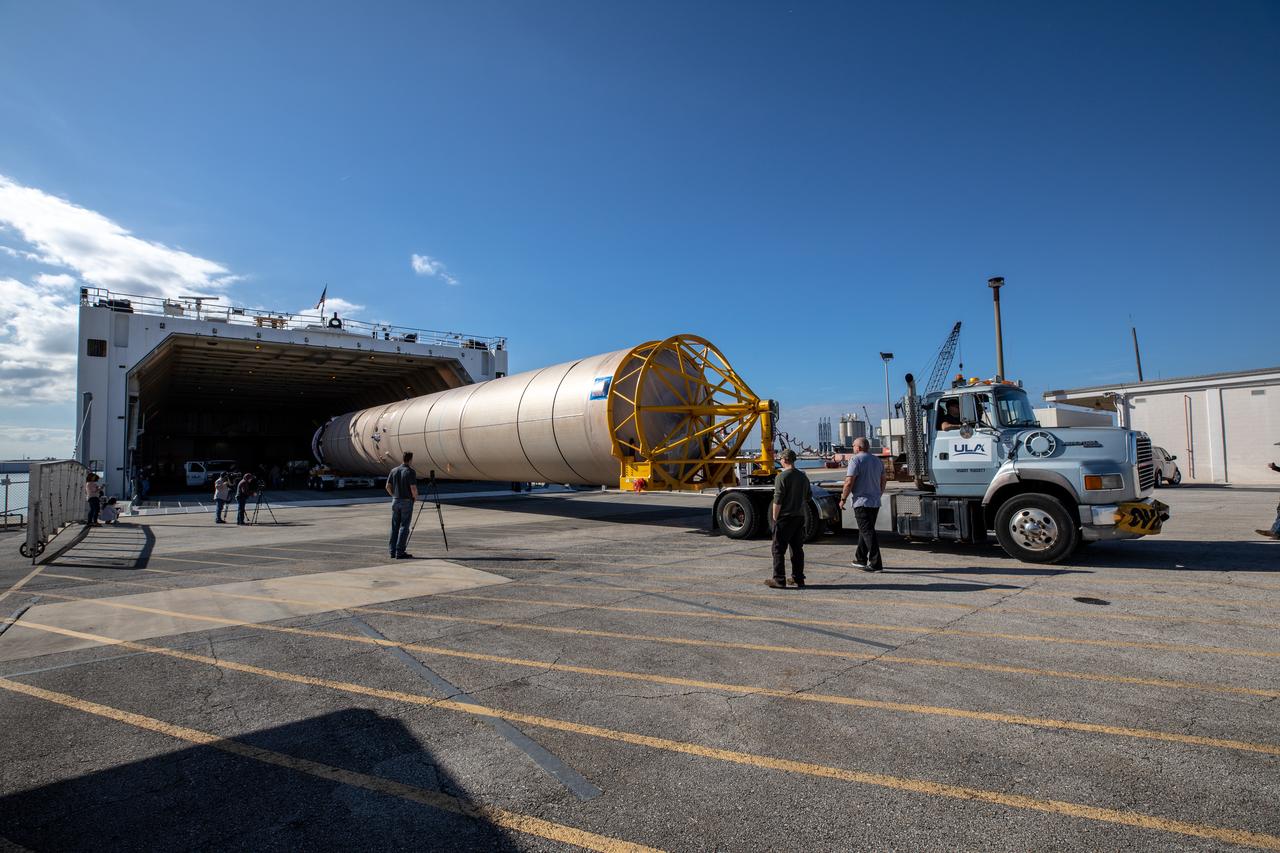
The United Launch Alliance Atlas V booster that will launch the Solar Orbiter spacecraft is removed from the company’s Rocketship vessel upon its arrival at Florida’s Port Canaveral on Nov. 21, 2019. Once offloaded, the booster was transported to the Atlas Spaceflight Operations Center at nearby Cape Canaveral Air Force Station. Solar Orbiter is a European Space Agency mission with strong NASA participation. The mission aims to study the Sun, its outer atmosphere and solar winds. The spacecraft will provide the first images of the Sun’s poles. NASA’s Launch Services Program based at Kennedy is managing the launch. Liftoff is scheduled for Feb. 5, 2020, from Launch Complex 41 at Cape Canaveral Air Force Station aboard the ULA Atlas V rocket.
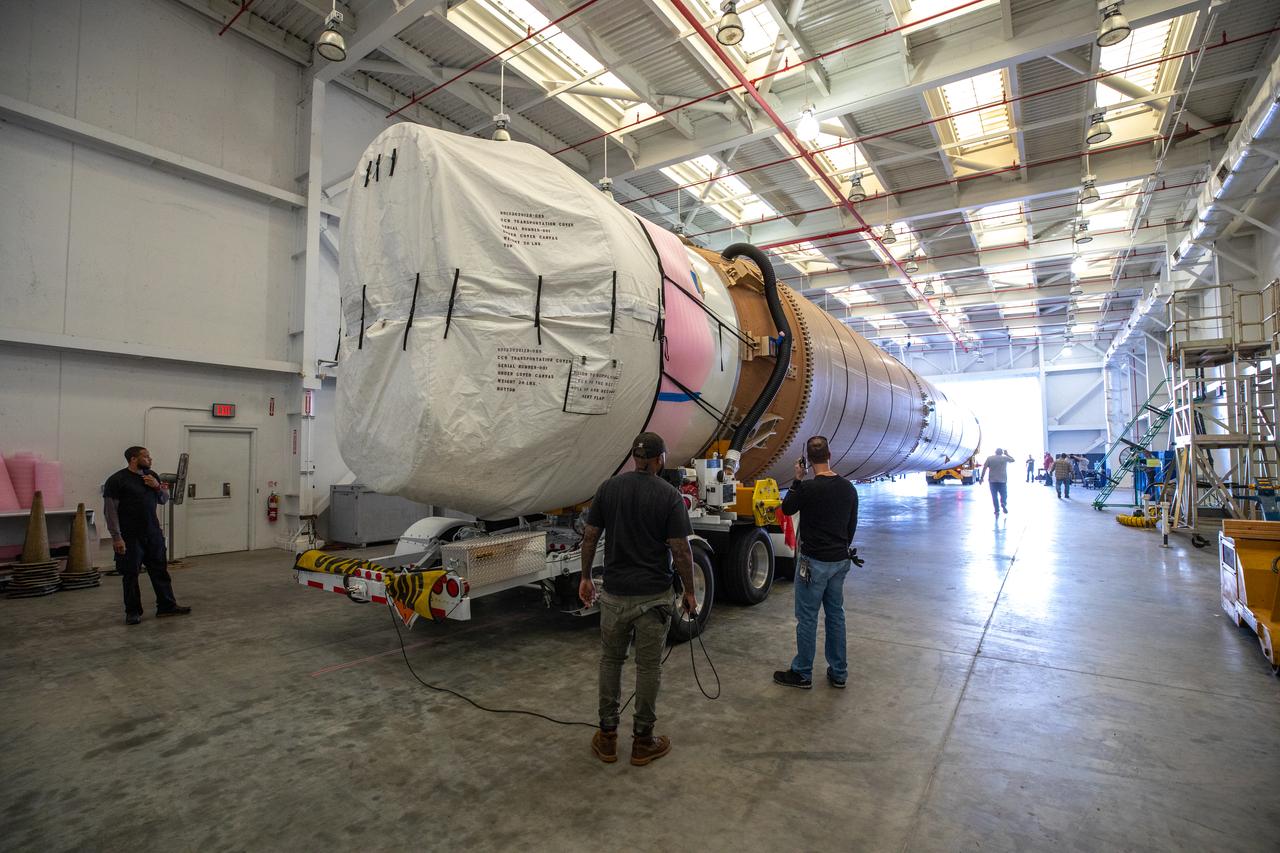
The United Launch Alliance Atlas V booster that will launch the Solar Orbiter spacecraft is delivered by truck to the Atlas Spaceflight Operations Center at Florida’s Cape Canaveral Air Force Station on Nov. 21, 2019. The company’s Rocketship vessel carried the booster from its manufacturing facility in Decatur, Alabama, to Port Canaveral. Solar Orbiter is a European Space Agency mission with strong NASA participation. The mission aims to study the Sun, its outer atmosphere and solar winds. The spacecraft will provide the first images of the Sun’s poles. NASA’s Launch Services Program based at Kennedy is managing the launch. Liftoff is scheduled for Feb. 5, 2020, from Launch Complex 41 at Cape Canaveral Air Force Station aboard the ULA Atlas V rocket.
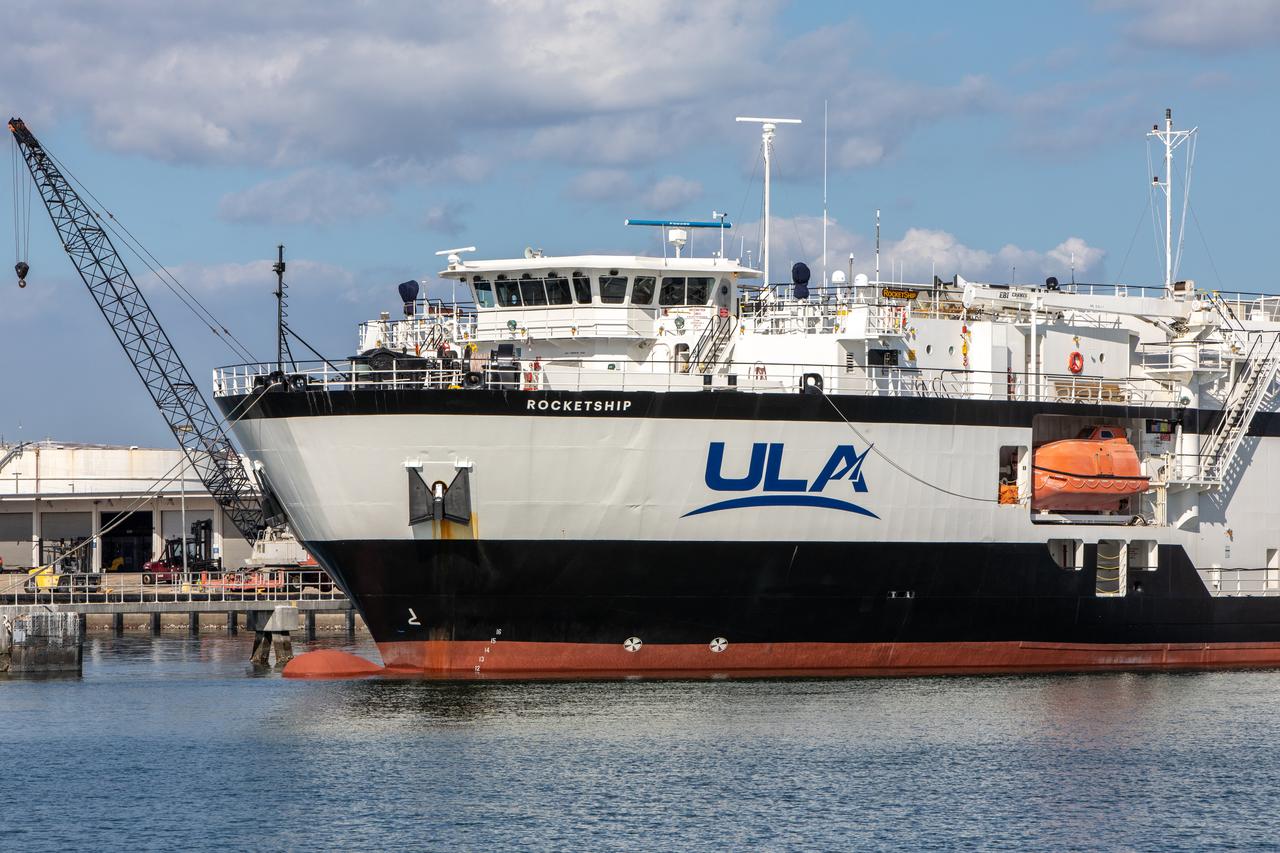
The United Launch Alliance cargo vessel, Rocketship, is docked at Florida’s Port Canaveral on Nov. 21, 2019, after arriving with the Atlas V booster and Centaur upper stage that will launch the Solar Orbiter spacecraft. Once offloaded, the booster was transported to the Atlas Spaceflight Operations Center and the Centaur was transported to a separate facility, both at nearby Cape Canaveral Air Force Station. Solar Orbiter is a European Space Agency mission with strong NASA participation. The mission aims to study the Sun, its outer atmosphere and solar winds. The spacecraft will provide the first images of the Sun’s poles. NASA’s Launch Services Program based at Kennedy is managing the launch. Liftoff is scheduled for Feb. 5, 2020, from Cape Canaveral Air Force Station aboard the ULA Atlas V rocket.
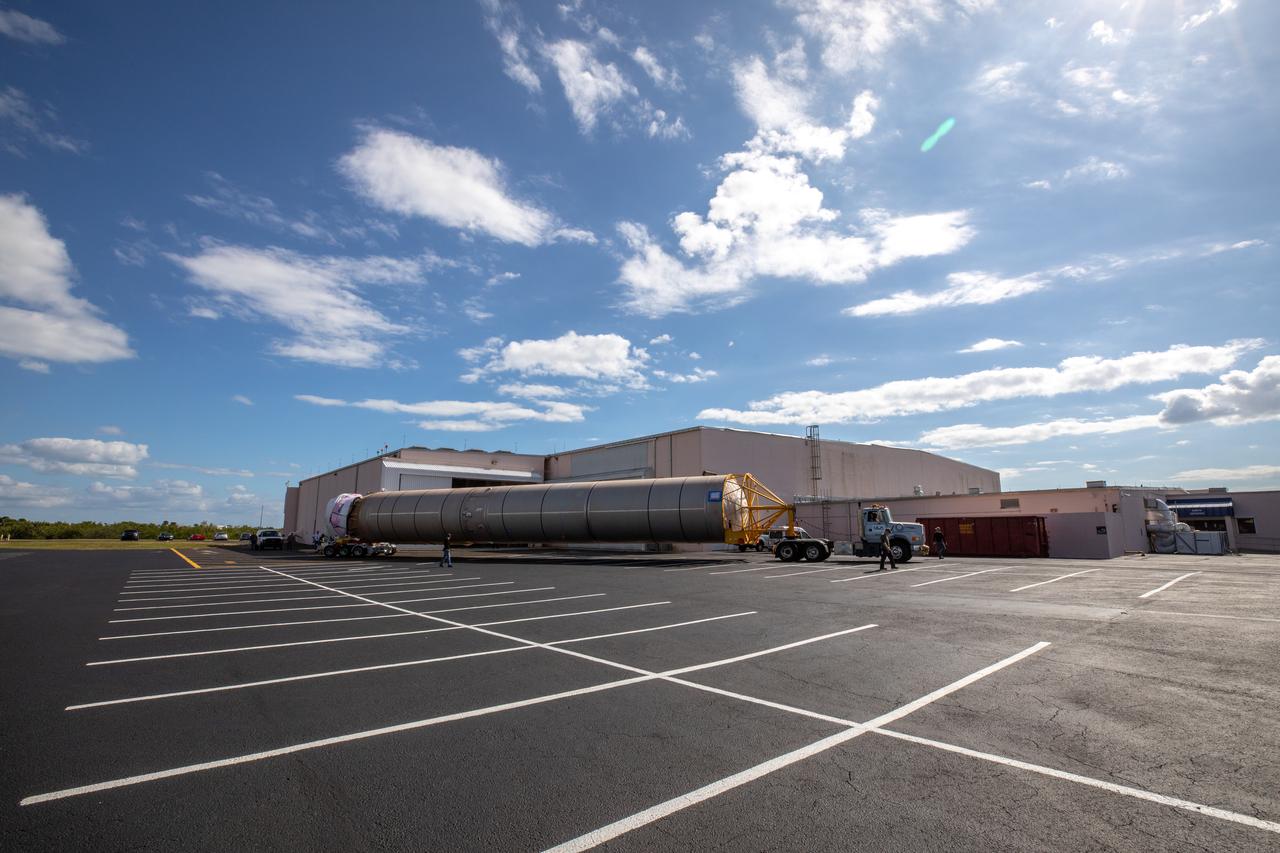
The United Launch Alliance Atlas V booster that will launch the Solar Orbiter spacecraft is delivered by truck to the Atlas Spaceflight Operations Center at Florida’s Cape Canaveral Air Force Station on Nov. 21, 2019. The company’s Rocketship vessel carried the booster from its manufacturing facility in Decatur, Alabama, to Port Canaveral. Solar Orbiter is a European Space Agency mission with strong NASA participation. The mission aims to study the Sun, its outer atmosphere and solar winds. The spacecraft will provide the first images of the Sun’s poles. NASA’s Launch Services Program based at Kennedy is managing the launch. Liftoff is scheduled for Feb. 5, 2020, from Launch Complex 41 at Cape Canaveral Air Force Station aboard the ULA Atlas V rocket.
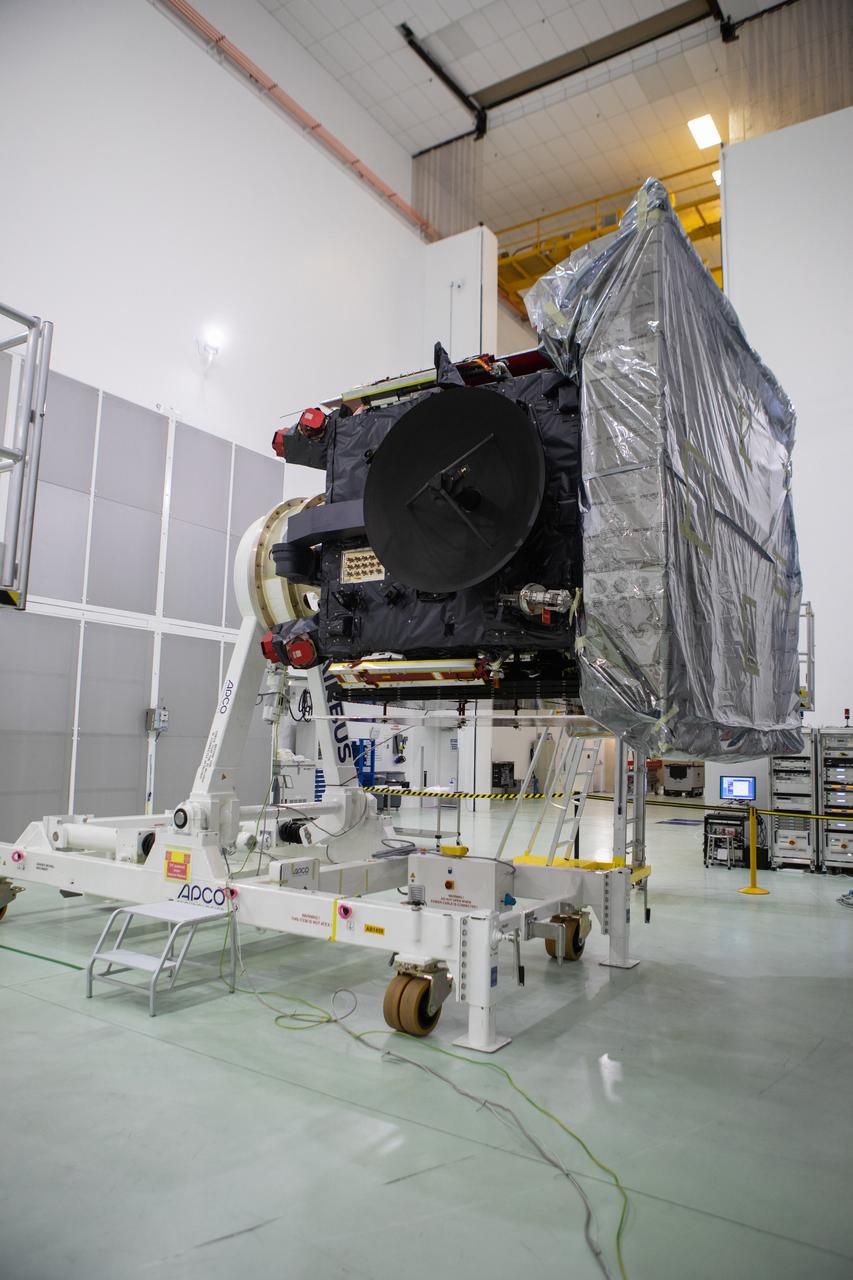
The Solar Orbiter spacecraft was removed from its shipping container inside the Astrotech Space Operations facility in Titusville, Florida, on Nov. 18, 2019. The spacecraft was flown aboard an Antonov cargo aircraft from Munich, Germany, arriving at NASA’s Kennedy Space Center on Nov. 1, 2019. Solar Orbiter is a European Space Agency mission with strong NASA participation. The mission aims to study the Sun, its outer atmosphere and solar winds. The spacecraft will provide the first images of the Sun’s poles. NASA’s Launch Services Program based at Kennedy is managing the launch. Liftoff is scheduled for Feb. 5, 2020, from Cape Canaveral Air Force Station aboard a United Launch Alliance Atlas V rocket.
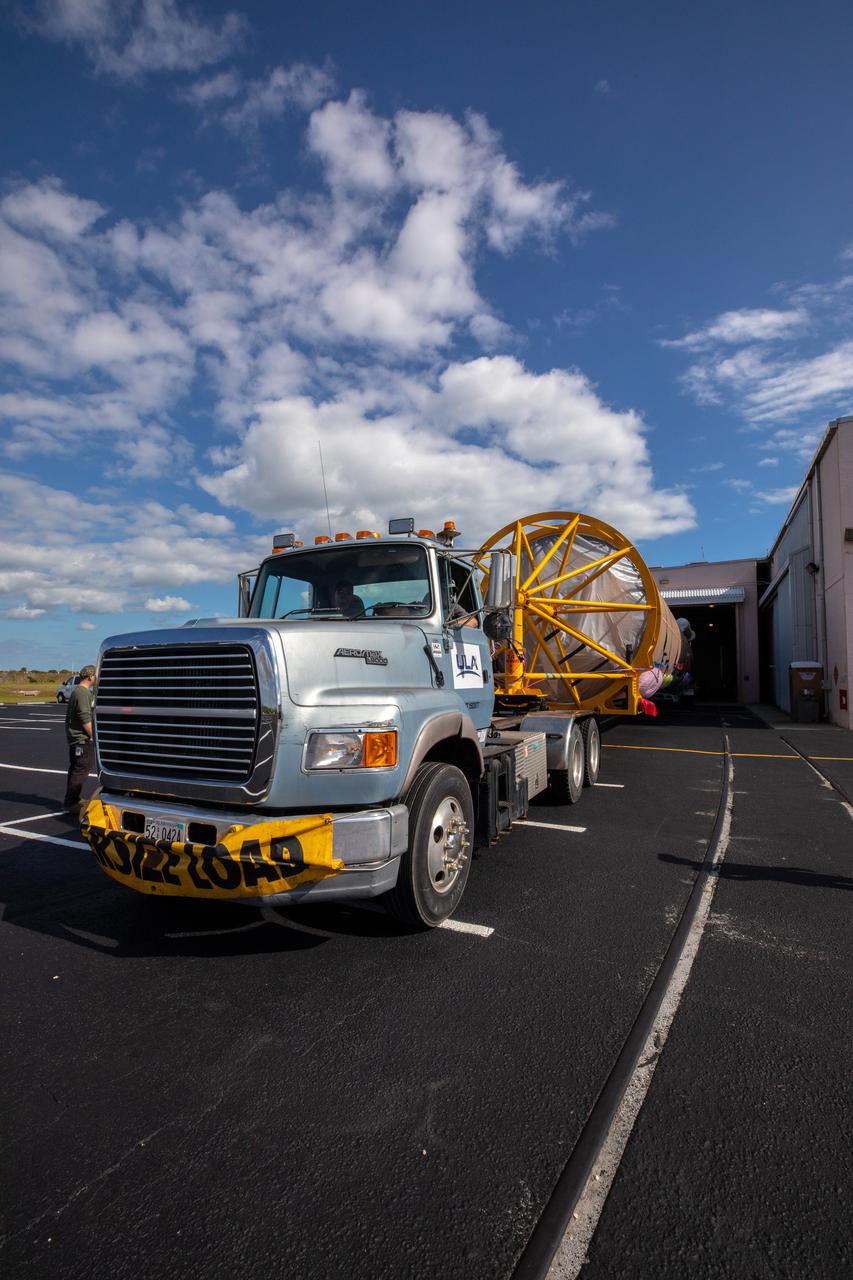
The United Launch Alliance Atlas V booster that will launch the Solar Orbiter spacecraft is delivered by truck to the Atlas Spaceflight Operations Center at Florida’s Cape Canaveral Air Force Station on Nov. 21, 2019. The company’s Rocketship vessel carried the booster from its manufacturing facility in Decatur, Alabama, to Port Canaveral. Solar Orbiter is a European Space Agency mission with strong NASA participation. The mission aims to study the Sun, its outer atmosphere and solar winds. The spacecraft will provide the first images of the Sun’s poles. NASA’s Launch Services Program based at Kennedy is managing the launch. Liftoff is scheduled for Feb. 5, 2020, from Launch Complex 41 at Cape Canaveral Air Force Station aboard the ULA Atlas V rocket.
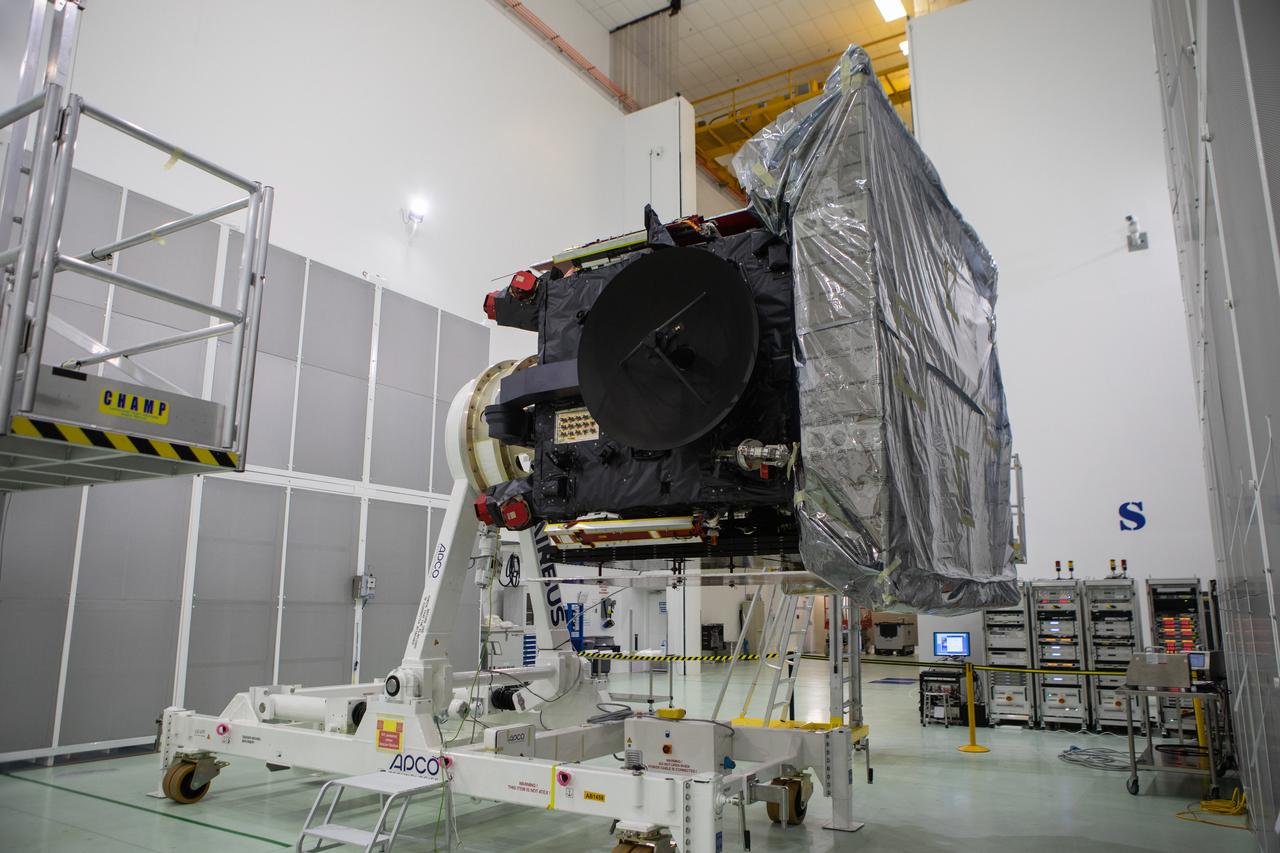
The Solar Orbiter spacecraft has been removed from its shipping container inside the Astrotech Space Operations facility in Titusville, Florida, on Nov. 18, 2019. The spacecraft was flown aboard an Antonov cargo aircraft from Munich, Germany, arriving at NASA’s Kennedy Space Center on Nov. 1, 2019. Solar Orbiter is a European Space Agency mission with strong NASA participation. The mission aims to study the Sun, its outer atmosphere and solar winds. The spacecraft will provide the first images of the Sun’s poles. NASA’s Launch Services Program based at Kennedy is managing the launch. Liftoff is scheduled for Feb. 5, 2020, from Cape Canaveral Air Force Station aboard a United Launch Alliance Atlas V rocket.
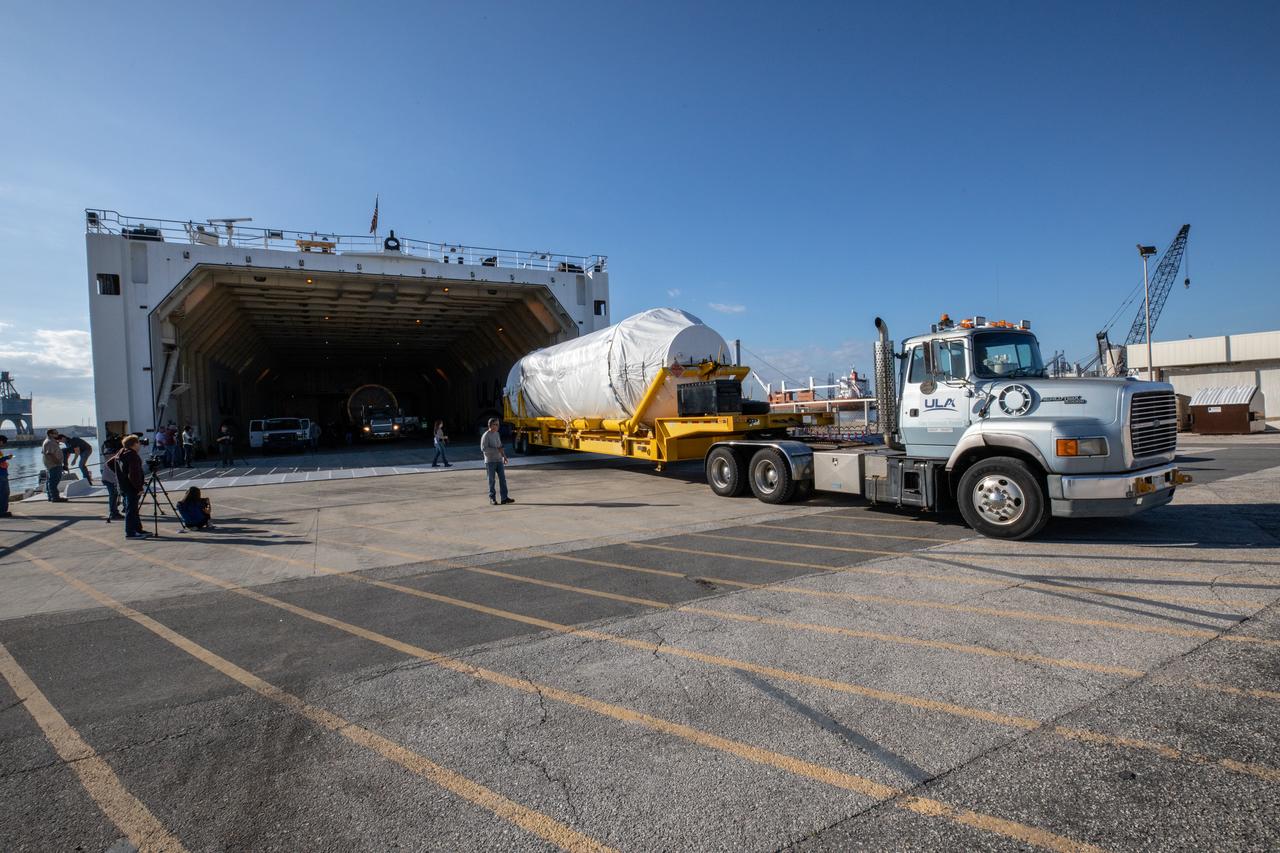
The United Launch Alliance Centaur upper stage that will help launch the Solar Orbiter spacecraft is removed from the company’s Rocketship vessel upon its arrival at Florida’s Port Canaveral on Nov. 21, 2019. Also onboard is the Atlas V rocket’s first-stage booster. Once offloaded, the booster was transported to the Atlas Spaceflight Operations Center and the Centaur was transported to a separate facility, both at nearby Cape Canaveral Air Force Station. Solar Orbiter is a European Space Agency mission with strong NASA participation. The mission aims to study the Sun, its outer atmosphere and solar winds. The spacecraft will provide the first images of the Sun’s poles. NASA’s Launch Services Program based at Kennedy is managing the launch. Liftoff is scheduled for Feb. 5, 2020, from Launch Complex 41 at Cape Canaveral Air Force Station aboard the ULA Atlas V rocket.
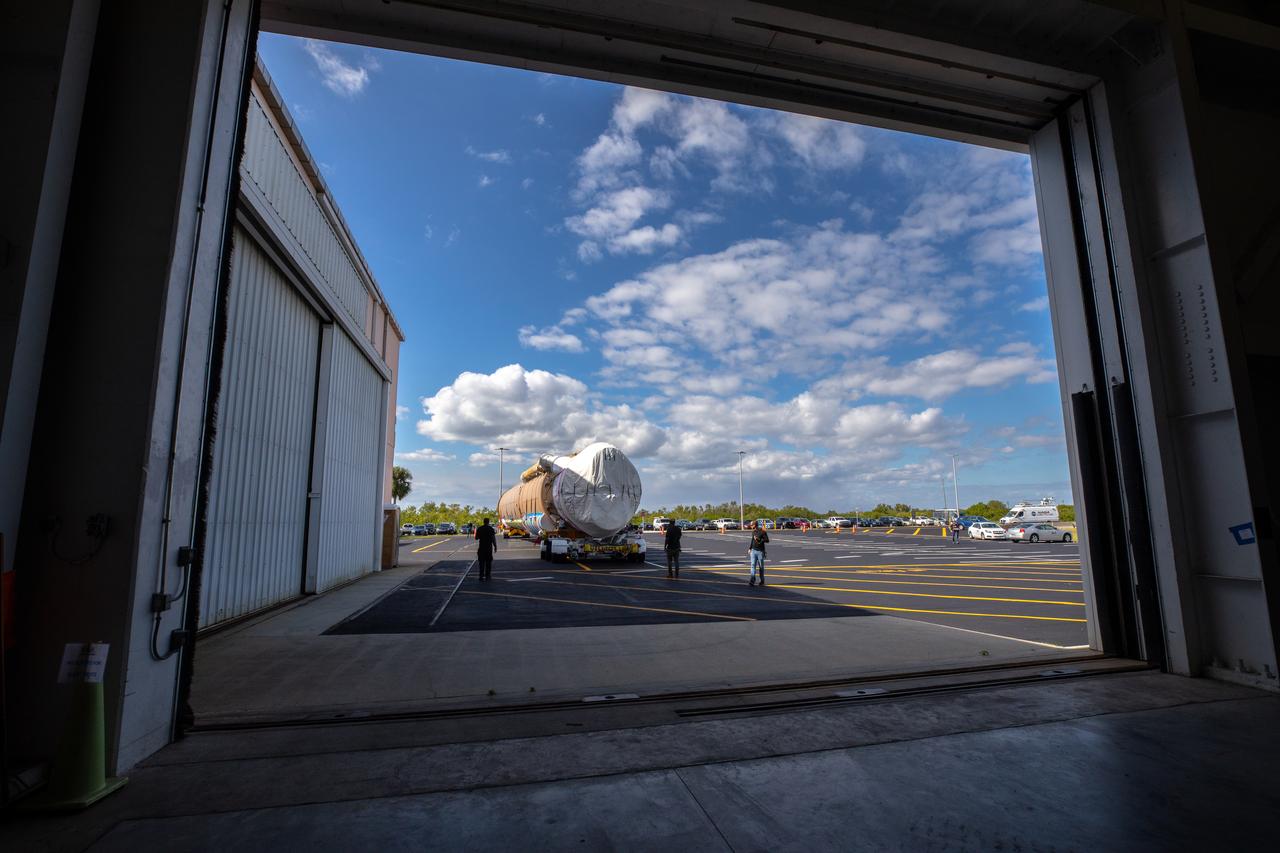
The United Launch Alliance Atlas V booster that will launch the Solar Orbiter spacecraft is delivered by truck to the Atlas Spaceflight Operations Center at Florida’s Cape Canaveral Air Force Station on Nov. 21, 2019. The company’s Rocketship vessel carried the booster from its manufacturing facility in Decatur, Alabama, to Port Canaveral. Solar Orbiter is a European Space Agency mission with strong NASA participation. The mission aims to study the Sun, its outer atmosphere and solar winds. The spacecraft will provide the first images of the Sun’s poles. NASA’s Launch Services Program based at Kennedy is managing the launch. Liftoff is scheduled for Feb. 5, 2020, from Launch Complex 41 at Cape Canaveral Air Force Station aboard the ULA Atlas V rocket.
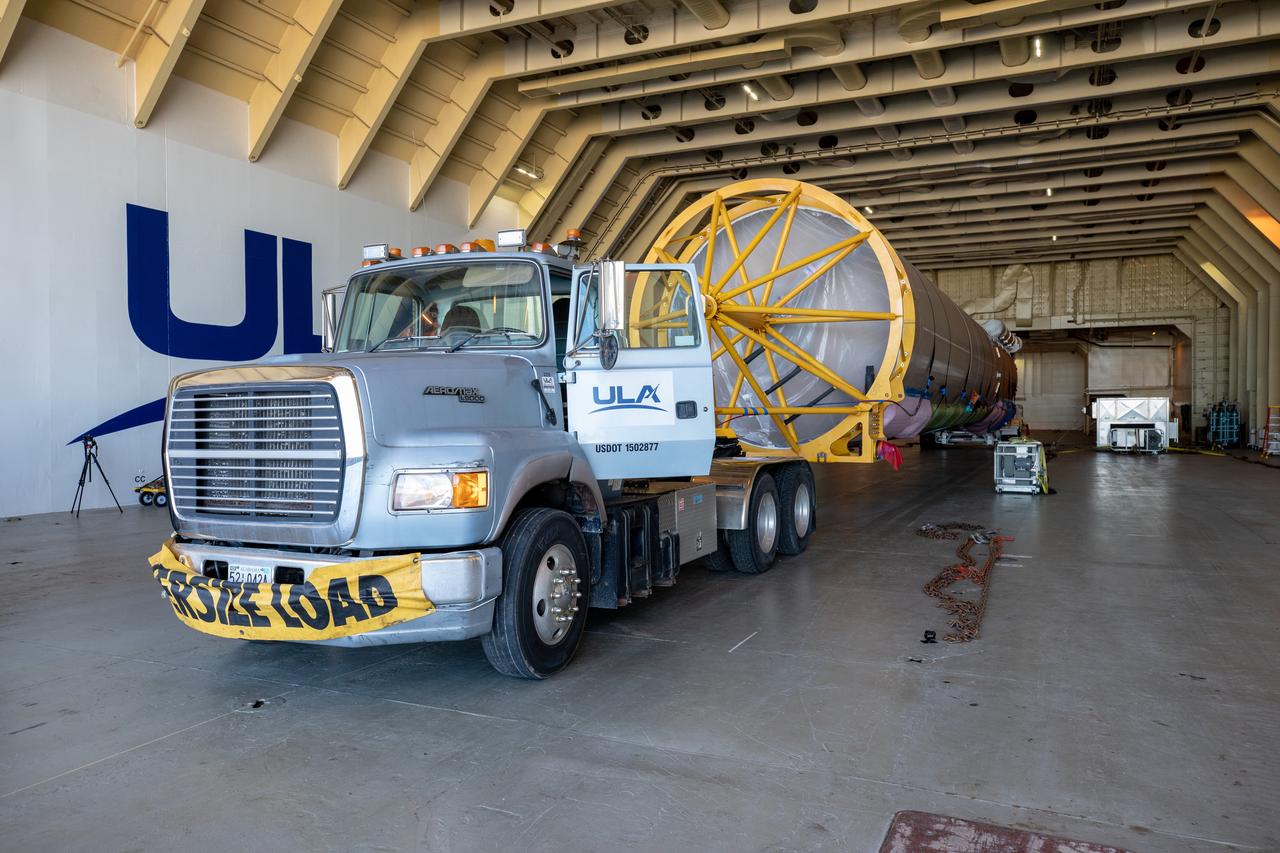
The United Launch Alliance Atlas V booster that will launch the Solar Orbiter spacecraft is removed from the company’s Rocketship vessel upon its arrival at Florida’s Port Canaveral on Nov. 21, 2019. Once offloaded, the booster was transported to the Atlas Spaceflight Operations Center at nearby Cape Canaveral Air Force Station. Solar Orbiter is a European Space Agency mission with strong NASA participation. The mission aims to study the Sun, its outer atmosphere and solar winds. The spacecraft will provide the first images of the Sun’s poles. NASA’s Launch Services Program based at Kennedy is managing the launch. Liftoff is scheduled for Feb. 5, 2020, from Launch Complex 41 at Cape Canaveral Air Force Station aboard the ULA Atlas V rocket.
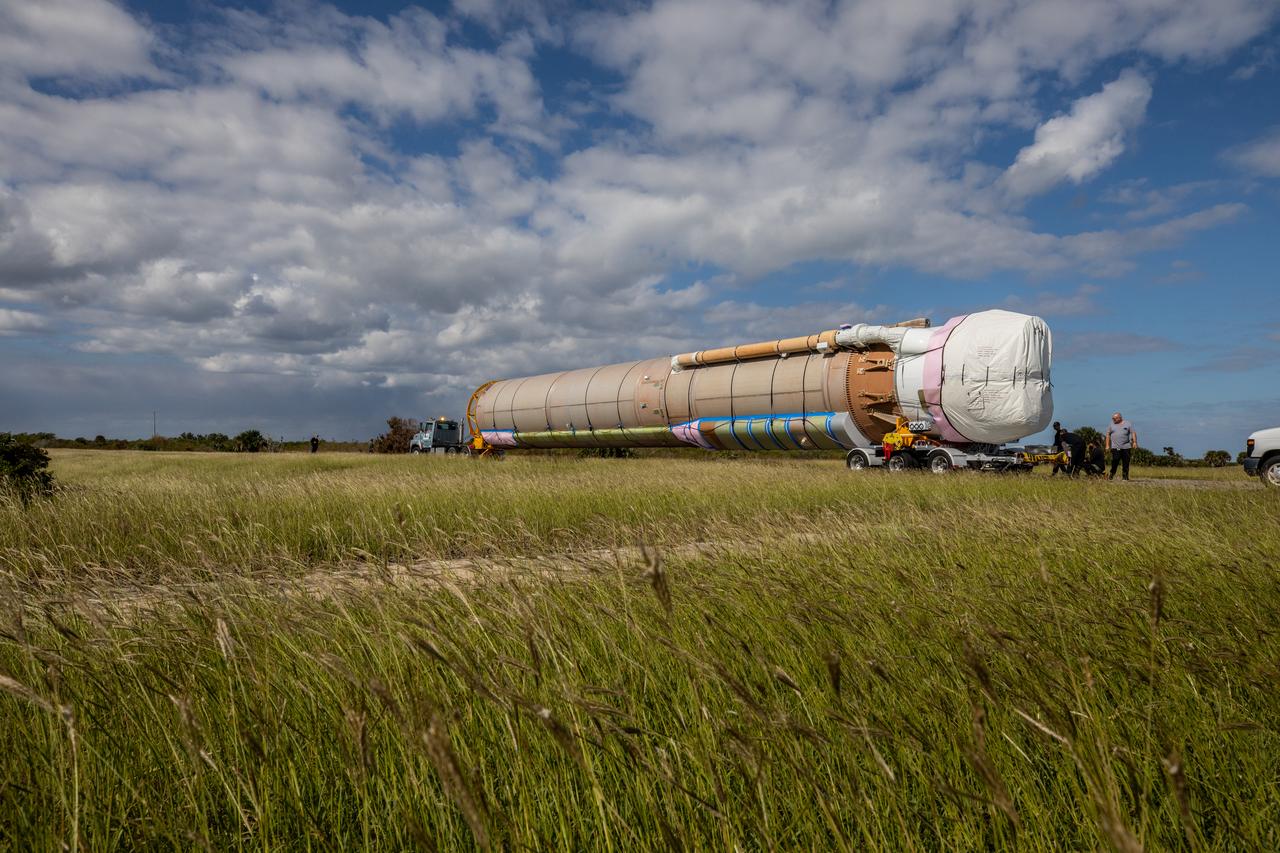
The United Launch Alliance Atlas V booster that will launch the Solar Orbiter spacecraft is transported by truck from Port Canaveral to the Atlas Spaceflight Operations Center at Florida’s Cape Canaveral Air Force Station on Nov. 21, 2019. The company’s Rocketship vessel carried the booster from its manufacturing facility in Decatur, Alabama, to the port. Solar Orbiter is a European Space Agency mission with strong NASA participation. The mission aims to study the Sun, its outer atmosphere and solar winds. The spacecraft will provide the first images of the Sun’s poles. NASA’s Launch Services Program based at Kennedy is managing the launch. Liftoff is scheduled for Feb. 5, 2020, from Launch Complex 41 at Cape Canaveral Air Force Station aboard the ULA Atlas V rocket.
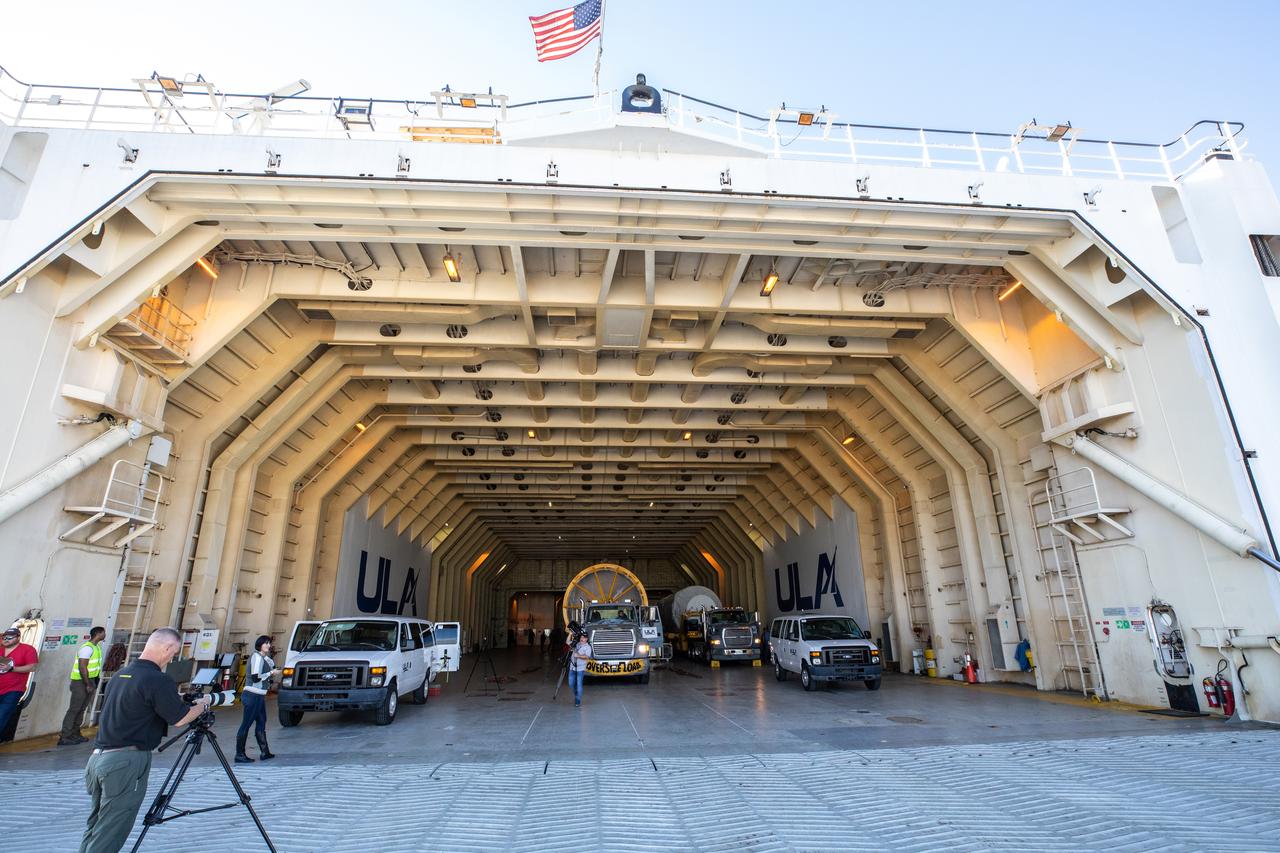
The United Launch Alliance cargo vessel, Rocketship, is opened at Florida’s Port Canaveral on Nov. 21, 2019, carrying the Atlas V booster and Centaur upper stage that will launch the Solar Orbiter spacecraft. Once offloaded, the booster was transported to the Atlas Spaceflight Operations Center and the Centaur was transported to a separate facility, both at nearby Cape Canaveral Air Force Station. Solar Orbiter is a European Space Agency mission with strong NASA participation. The mission aims to study the Sun, its outer atmosphere and solar winds. The spacecraft will provide the first images of the Sun’s poles. NASA’s Launch Services Program based at Kennedy is managing the launch. Liftoff is scheduled for Feb. 5, 2020, from Cape Canaveral Air Force Station aboard the ULA Atlas V rocket.
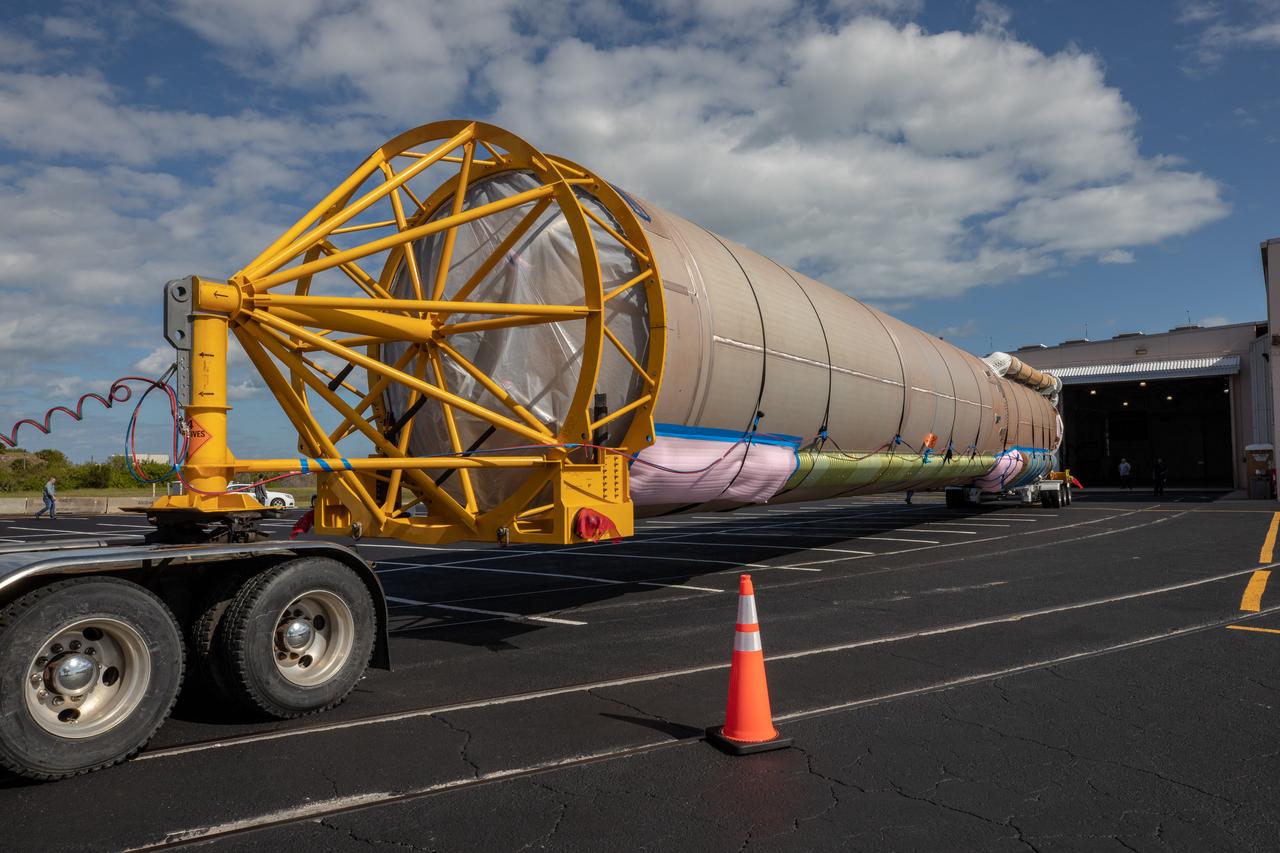
The United Launch Alliance Atlas V booster that will launch the Solar Orbiter spacecraft is delivered by truck to the Atlas Spaceflight Operations Center at Florida’s Cape Canaveral Air Force Station on Nov. 21, 2019. The company’s Rocketship vessel carried the booster from its manufacturing facility in Decatur, Alabama, to Port Canaveral. Solar Orbiter is a European Space Agency mission with strong NASA participation. The mission aims to study the Sun, its outer atmosphere and solar winds. The spacecraft will provide the first images of the Sun’s poles. NASA’s Launch Services Program based at Kennedy is managing the launch. Liftoff is scheduled for Feb. 5, 2020, from Launch Complex 41 at Cape Canaveral Air Force Station aboard the ULA Atlas V rocket.
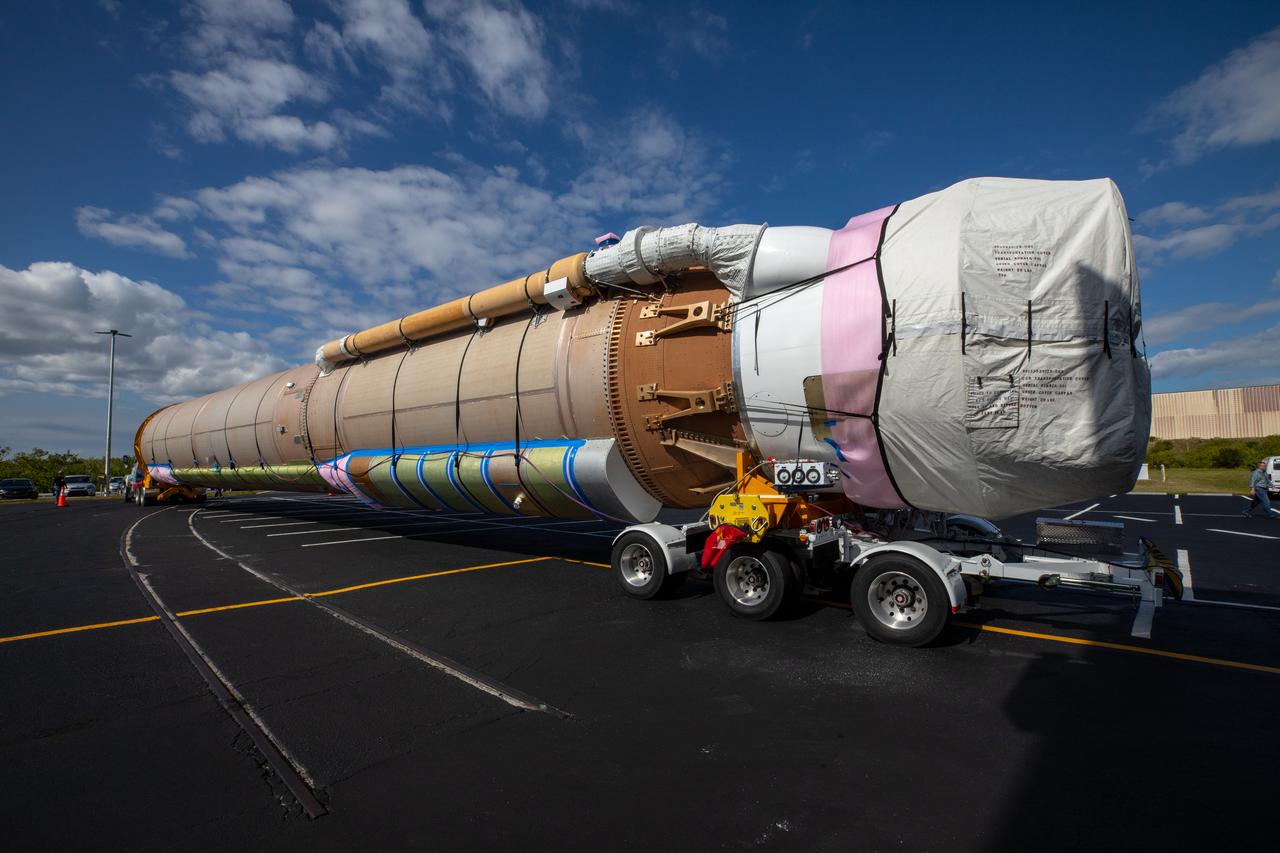
The United Launch Alliance Atlas V booster that will launch the Solar Orbiter spacecraft is delivered by truck to the Atlas Spaceflight Operations Center at Florida’s Cape Canaveral Air Force Station on Nov. 21, 2019. The company’s Rocketship vessel carried the booster from its manufacturing facility in Decatur, Alabama, to Port Canaveral. Solar Orbiter is a European Space Agency mission with strong NASA participation. The mission aims to study the Sun, its outer atmosphere and solar winds. The spacecraft will provide the first images of the Sun’s poles. NASA’s Launch Services Program based at Kennedy is managing the launch. Liftoff is scheduled for Feb. 5, 2020, from Launch Complex 41 at Cape Canaveral Air Force Station aboard the ULA Atlas V rocket.