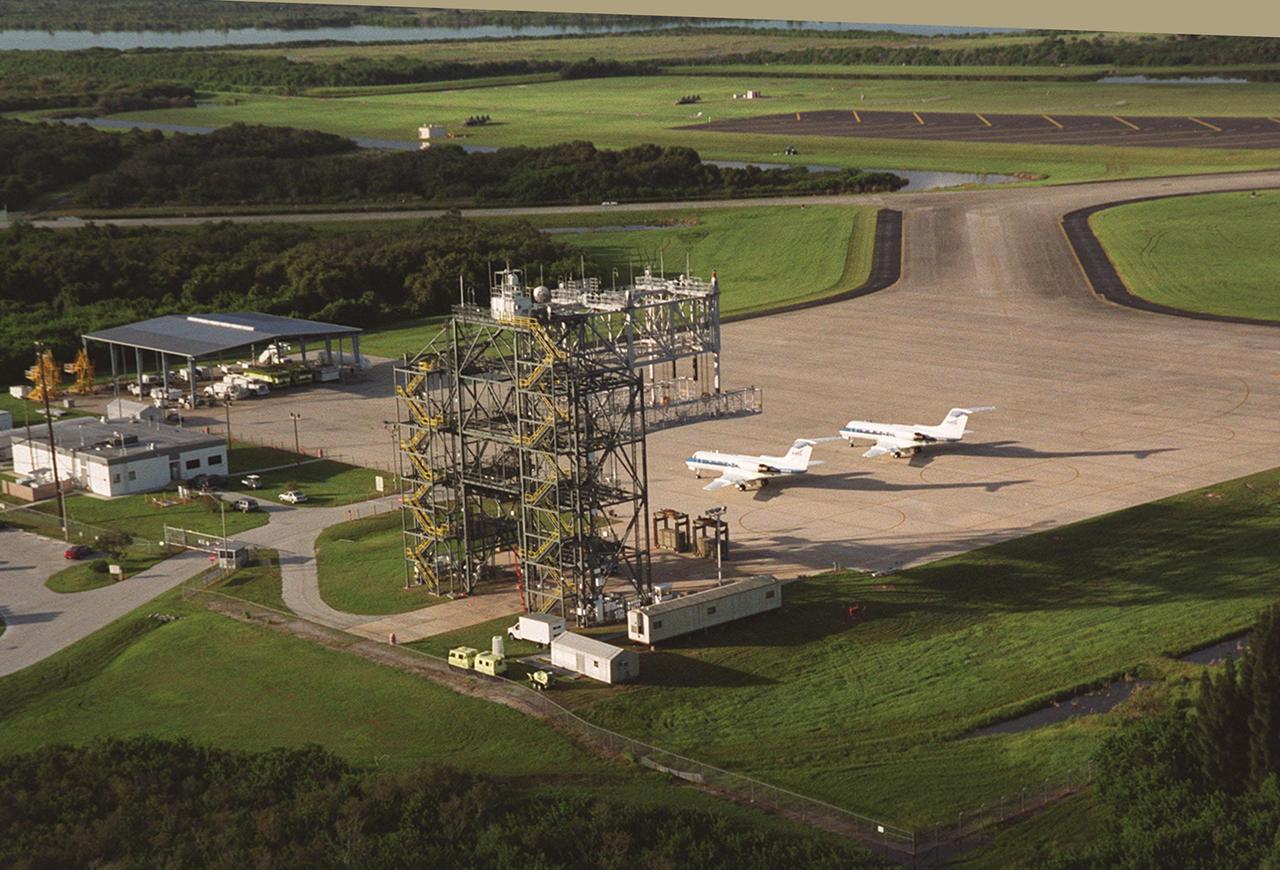
An aerial view of the Shuttle Landing Facility shows the Mate/Demate device in the foreground, with two Shuttle Training Aircraft (STA) on the ground behind it. Visible in the background is the runway and the taxi way leading from the SLF to the right. The STAs are Grumman Gulfstream 2 aircraft with converted cockpits that emulate those in the Shuttles for practice landings at the SLF.
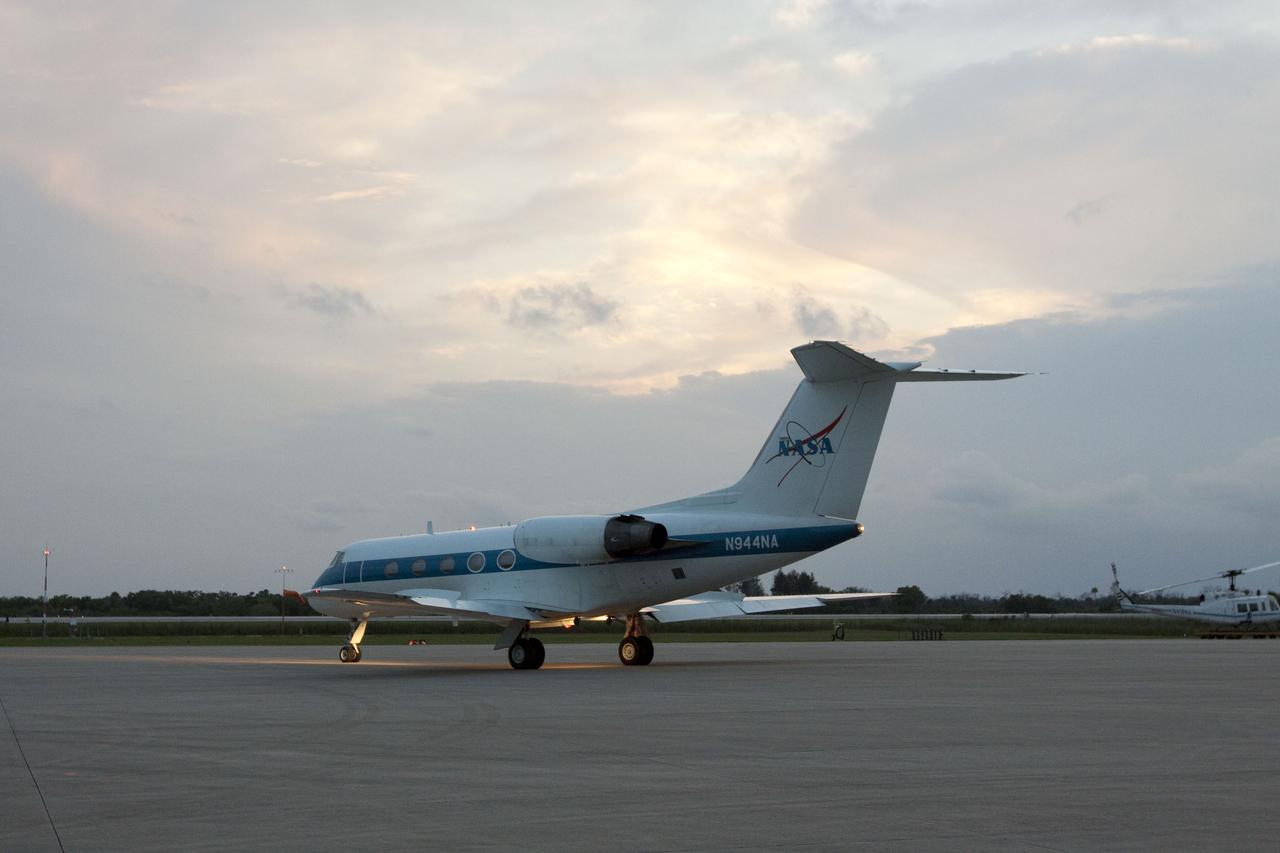
STS-132 TCDT - SUITED STA'S AT SLF
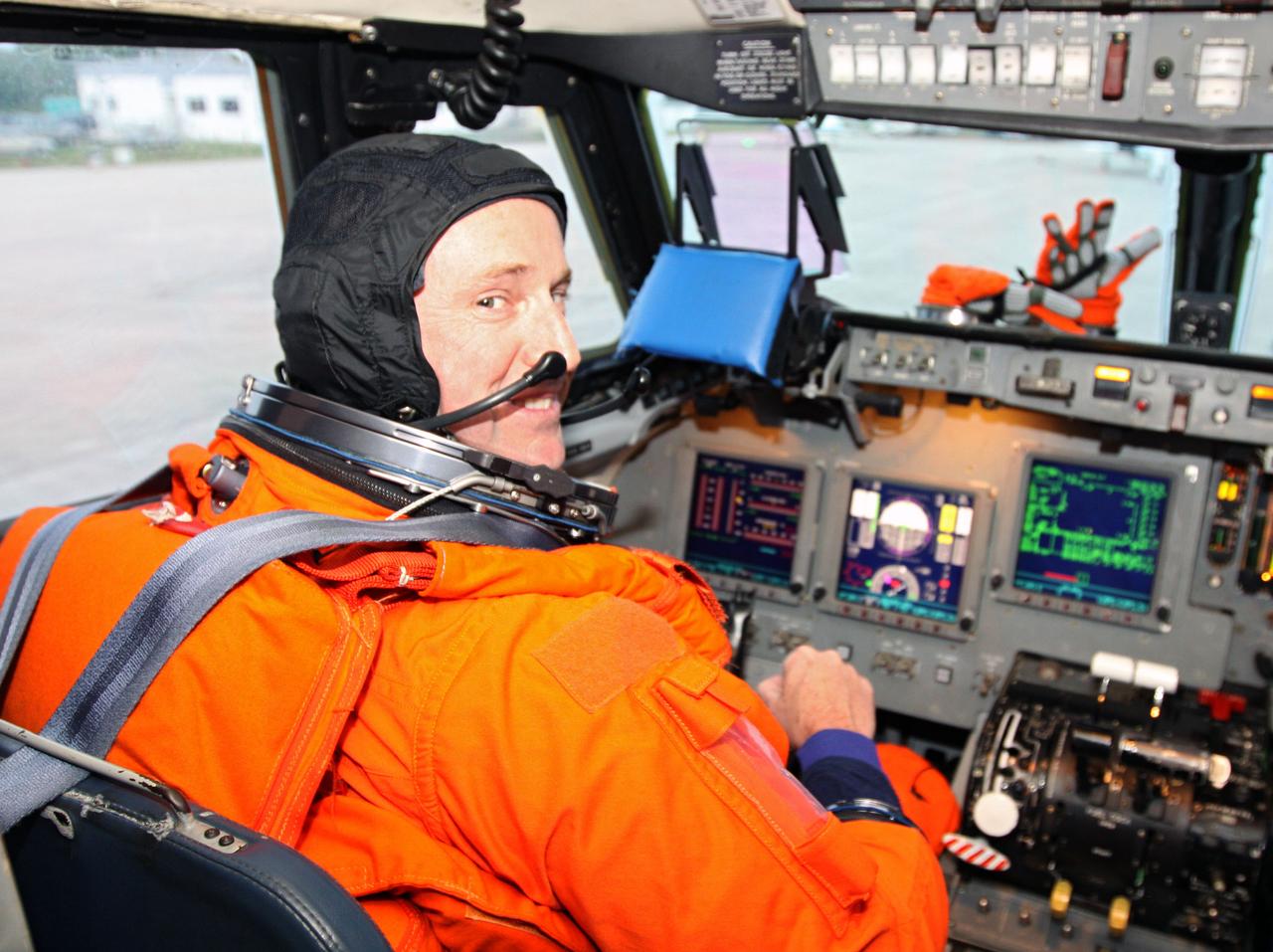
STS-132 TCDT - SUITED STA'S AT SLF
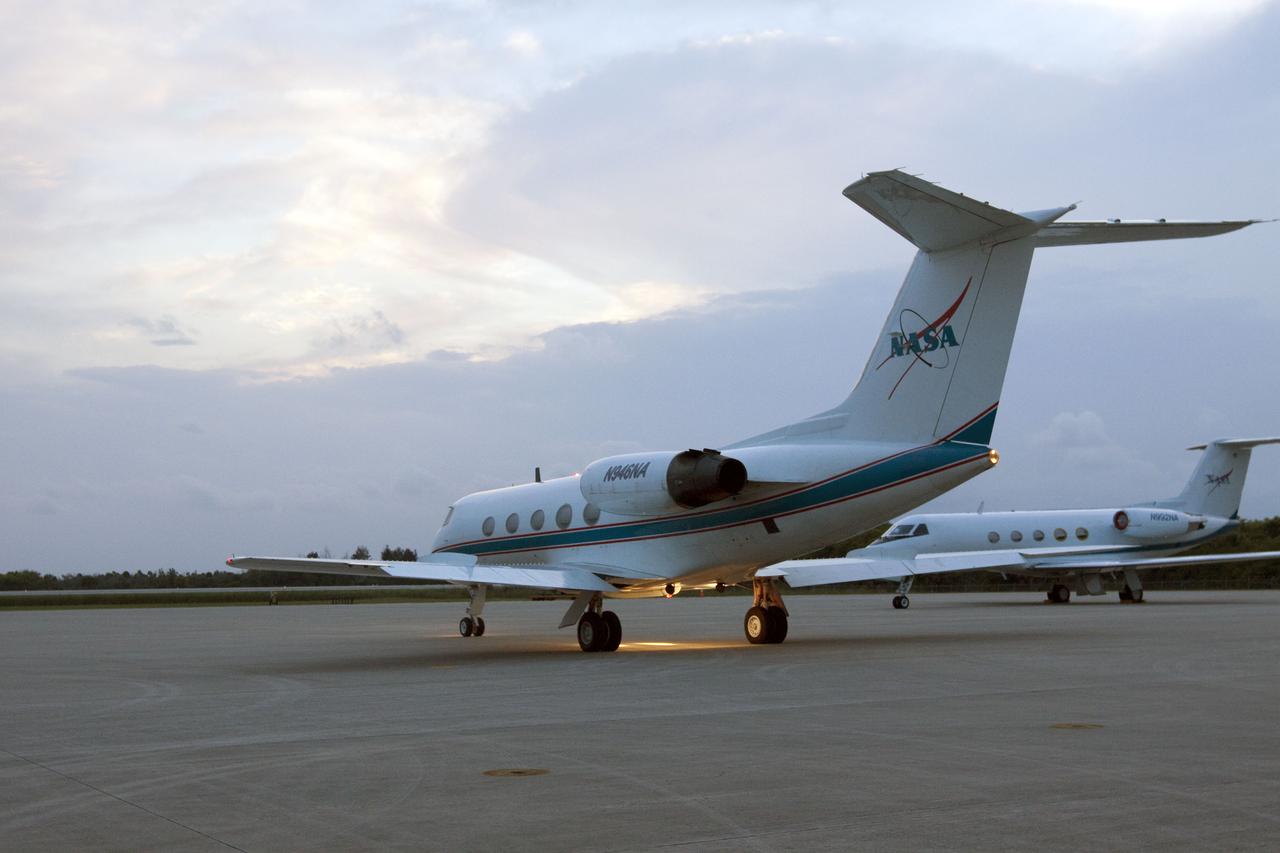
STS-132 TCDT - SUITED STA'S AT SLF
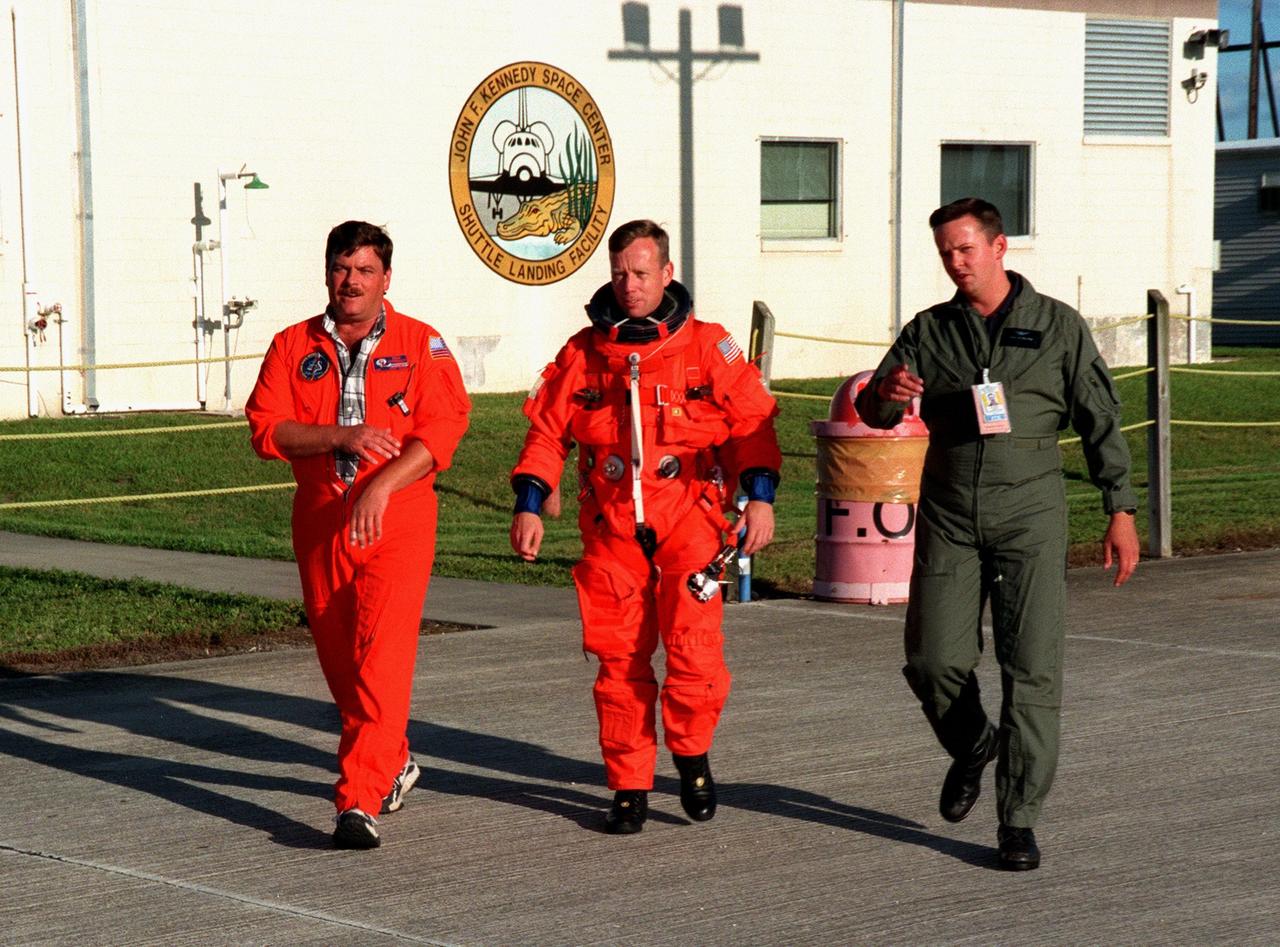
STS-95 Pilot Steven K. Lindsey leaves the Shuttle Landing Facility (SLF) enroute to the Shuttle Training Aircraft (STA). He is accompanied by two suit technicians, Mike Birkenseher (left) and Paul Reylea (right). Lindsey will be practicing Shuttle landing and takeoffs at the SLF on the STA, which is designed to fly like the Shuttle, prior to launch. STS-95 is expected to launch at 2 p.m. EST on Oct. 29, last 8 days, 21 hours and 49 minutes, and land at 11:49 a.m. EST on Nov. 7
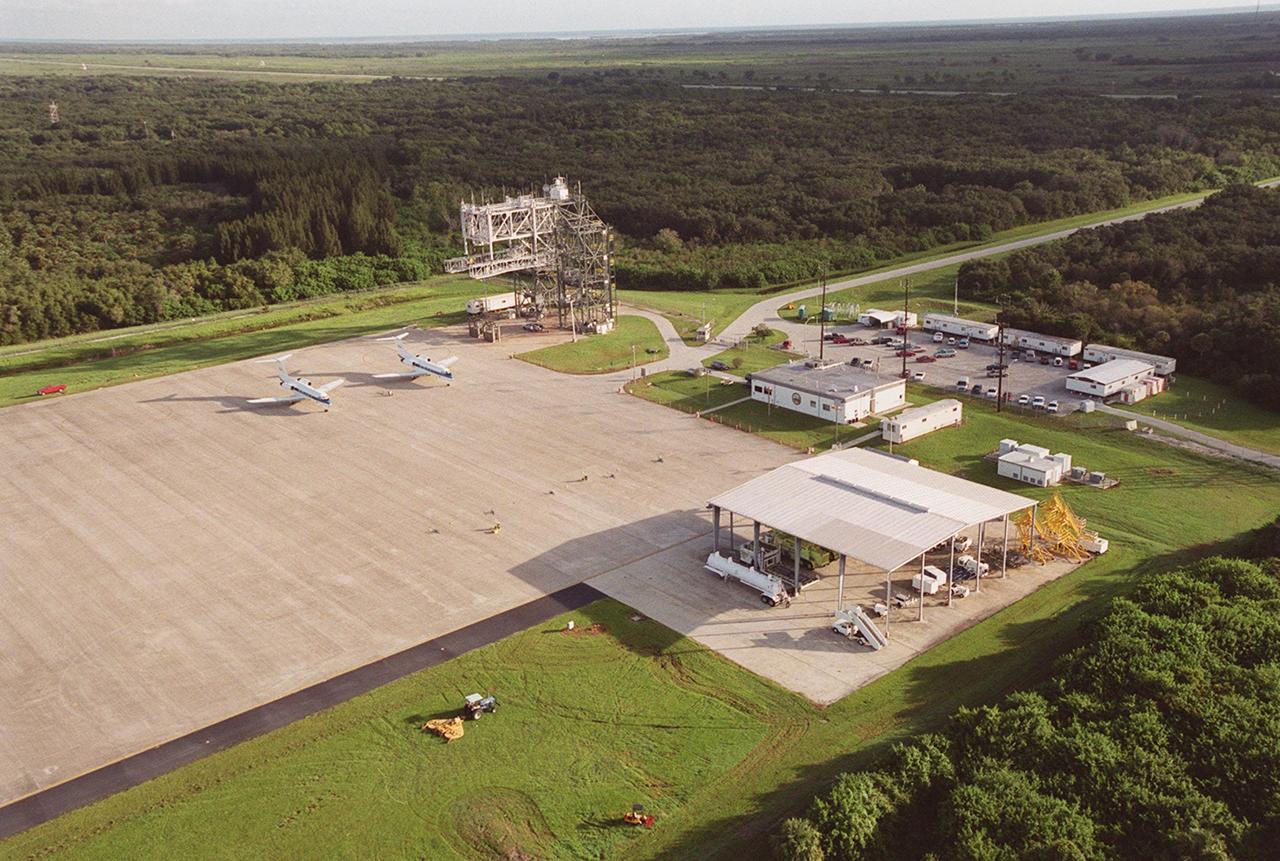
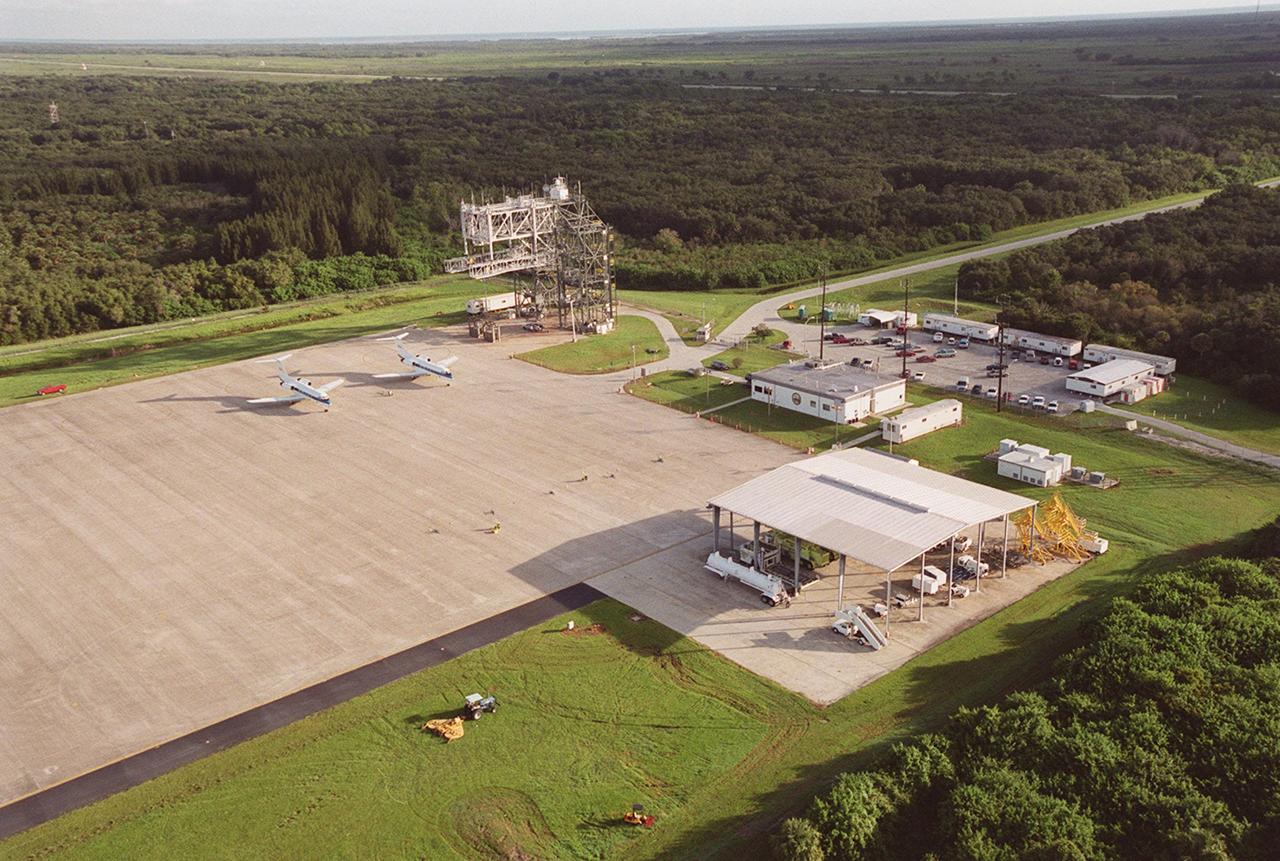
KENNEDY SPACE CENTER, FLA. -- This aerial view of the Shuttle Landing Facility (SLF) faces northeast, with the Atlantic Ocean in the distance. In the center is the apron of the SLF with two Shuttle Training Aircraft (STA) parked there, the mate/demate device behind them, a shelter for fuel trucks (foreground), and an administrative building between. The STAs are Grumman Gulfstream 2 aircraft with converted cockpits that emulate those in the Shuttles for practice landings at the SLF. The mate/demate device is used to lift the orbiter onto or off a Shuttle Carrier Aircraft when it has to be ferried to or from KSC
KENNEDY SPACE CENTER, FLA. -- This aerial view of the Shuttle Landing Facility (SLF) faces northeast, with the Atlantic Ocean in the distance. In the center is the apron of the SLF with two Shuttle Training Aircraft (STA) parked there, the mate/demate device behind them, a shelter for fuel trucks (foreground), and an administrative building between. The STAs are Grumman Gulfstream 2 aircraft with converted cockpits that emulate those in the Shuttles for practice landings at the SLF. The mate/demate device is used to lift the orbiter onto or off a Shuttle Carrier Aircraft when it has to be ferried to or from KSC
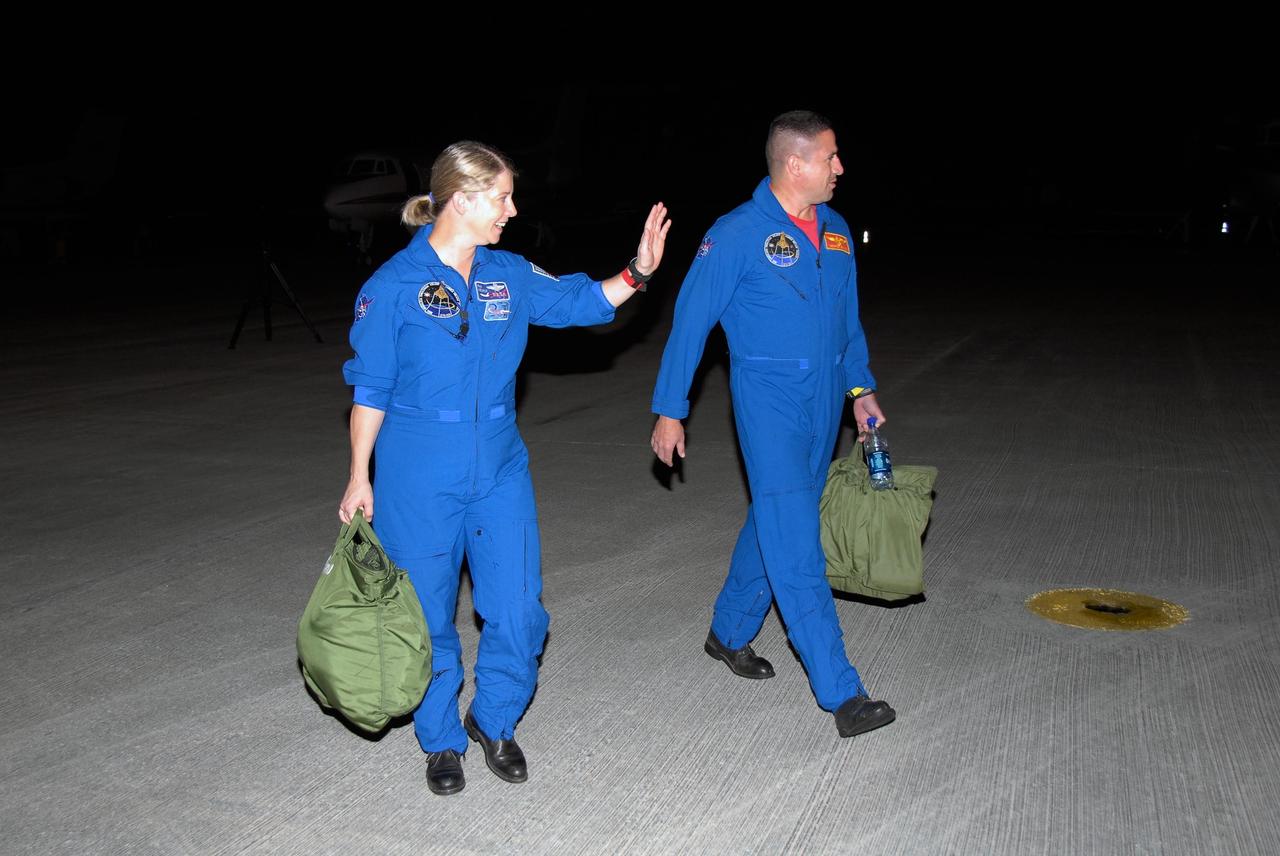
KENNEDY SPACE CENTER, FLA. -- STS-120 Commander Pam Melroy and Pilot George Zamka return to crew quarters after disembarking from a Shuttle Training Aircraft, or STA, on the tarmac at Kennedy Space Center's Shuttle Landing Facility. They were training for their upcoming space shuttle mission by practicing landings using an STA. Melroy is the second woman to command a shuttle mission. Also assigned to STS-120 are Mission Specialists Scott Parazynski, Stephanie Wilson, Doug Wheelock, Paolo Nespoli and Daniel Tani. Nespoli represents the European Space Agency. Tani will remain on the International Space Station as an Expedition 16 flight engineer after the STS-120 mission is complete. The mission will be the 23rd shuttle flight to the International Space Station, delivering the Italian-built U.S. Node 2, called Harmony. The crew arrived at Kennedy on Oct. 19 to prepare for launch aboard space shuttle Discovery at 11:38 a.m. EDT Oct. 23. The 14-day mission includes five spacewalks -- four by shuttle crew members and one by the station's Expedition 16 crew -- to install Harmony and move the P6 solar arrays to their permanent position and deploy them. Discovery is expected to complete its mission and return home on Nov. 6. Photo credit: NASA/Kim Shiflett
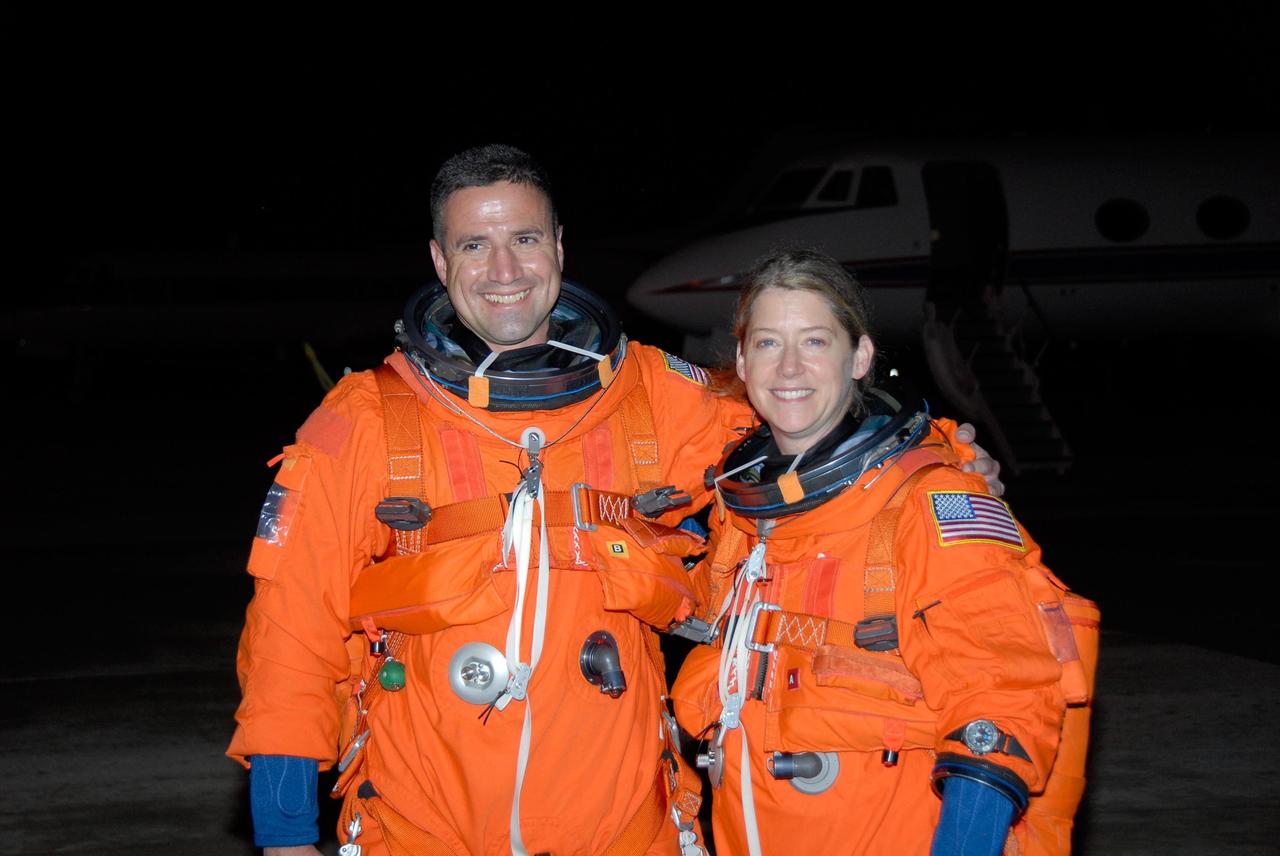
KENNEDY SPACE CENTER, FLA. -- STS-120 Pilot George Zamka and Commander Pam Melroy pose for a portrait on the tarmac at NASA Kennedy Space Center's Shuttle Landing Facility. They were training for their upcoming space shuttle mission by practicing landings in the Shuttle Training Aircraft, or STAs, behind them. Melroy is the second woman to command a shuttle mission. Also assigned to STS-120 are Mission Specialists Scott Parazynski, Stephanie Wilson, Doug Wheelock, Paolo Nespoli and Daniel Tani. Nespoli represents the European Space Agency. Tani will remain on the International Space Station as an Expedition 16 flight engineer after the STS-120 mission is complete. The mission will be the 23rd shuttle flight to the International Space Station, delivering the Italian-built U.S. Node 2, called Harmony. The crew arrived at Kennedy on Oct. 19 to prepare for launch aboard space shuttle Discovery at 11:38 a.m. EDT Oct. 23. The 14-day mission includes five spacewalks -- four by shuttle crew members and one by the station's Expedition 16 crew -- to install Harmony and move the P6 solar arrays to their permanent position and deploy them. Discovery is scheduled to complete its mission and return home on Nov. 6. Photo credit: NASA/Kim Shiflett
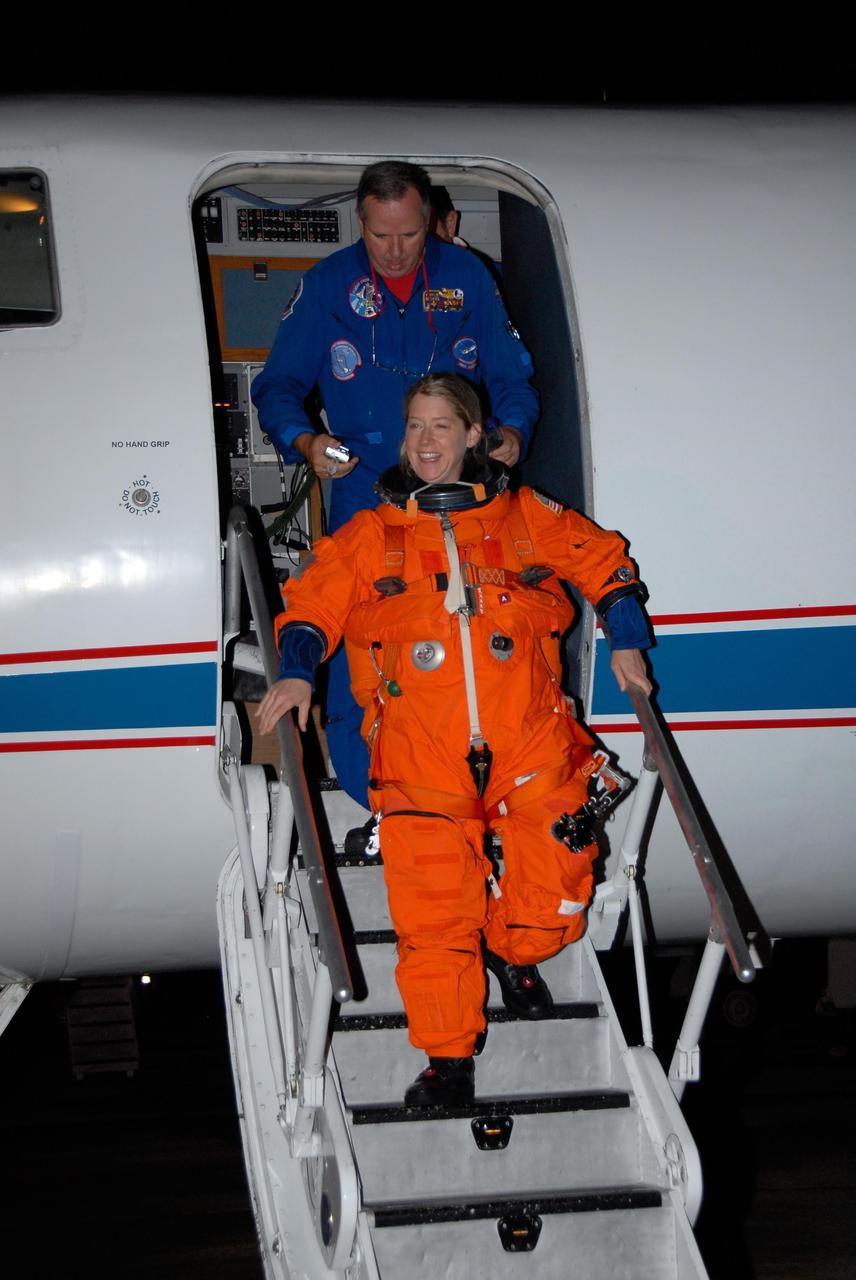
KENNEDY SPACE CENTER, FLA. -- STS-120 Commander Pam Melroy disembarks from a Shuttle Training Aircraft, or STA, at NASA Kennedy Space Center's Shuttle Landing Facility. She and STS-120 Pilot George Zamka were training for their upcoming space shuttle mission by practicing landings in STAs. Melroy is the second woman to command a shuttle mission. Also assigned to STS-120 are Mission Specialists Scott Parazynski, Stephanie Wilson, Doug Wheelock, Paolo Nespoli and Daniel Tani. Nespoli represents the European Space Agency. Tani will remain on the International Space Station as an Expedition 16 flight engineer after the STS-120 mission is complete. The mission will be the 23rd shuttle flight to the International Space Station, delivering the Italian-built U.S. Node 2, called Harmony. The crew arrived at Kennedy on Oct. 19 to prepare for launch aboard space shuttle Discovery at 11:38 a.m. EDT Oct. 23. The 14-day mission includes five spacewalks -- four by shuttle crew members and one by the station's Expedition 16 crew -- to install Harmony and move the P6 solar arrays to their permanent position and deploy them. Discovery is scheduled to complete its mission and return home on Nov. 6. Photo credit: NASA/Kim Shiflett
KENNEDY SPACE CENTER, FLA. -- STS-120 Commander Pam Melroy parks a Shuttle Training Aircraft, or STA, on the tarmac at Kennedy Space Center's Shuttle Landing Facility. She and STS-120 Pilot George Zamka are training for their upcoming space shuttle mission by practicing landings using the STA. Melroy is the second woman to command a shuttle mission. Also assigned to STS-120 are Mission Specialists Scott Parazynski, Stephanie Wilson, Doug Wheelock, Paolo Nespoli and Daniel Tani. Nespoli represents the European Space Agency. Tani will remain on the International Space Station as an Expedition 16 flight engineer after the STS-120 mission is complete. The mission will be the 23rd shuttle flight to the International Space Station, delivering the Italian-built U.S. Node 2, called Harmony. The crew arrived at Kennedy on Oct. 19 to prepare for launch aboard space shuttle Discovery at 11:38 a.m. EDT Oct. 23. The 14-day mission includes five spacewalks -- four by shuttle crew members and one by the station's Expedition 16 crew -- to install Harmony and move the P6 solar arrays to their permanent position and deploy them. Discovery is expected to complete its mission and return home on Nov. 6. Photo credit: NASA/Kim Shiflett
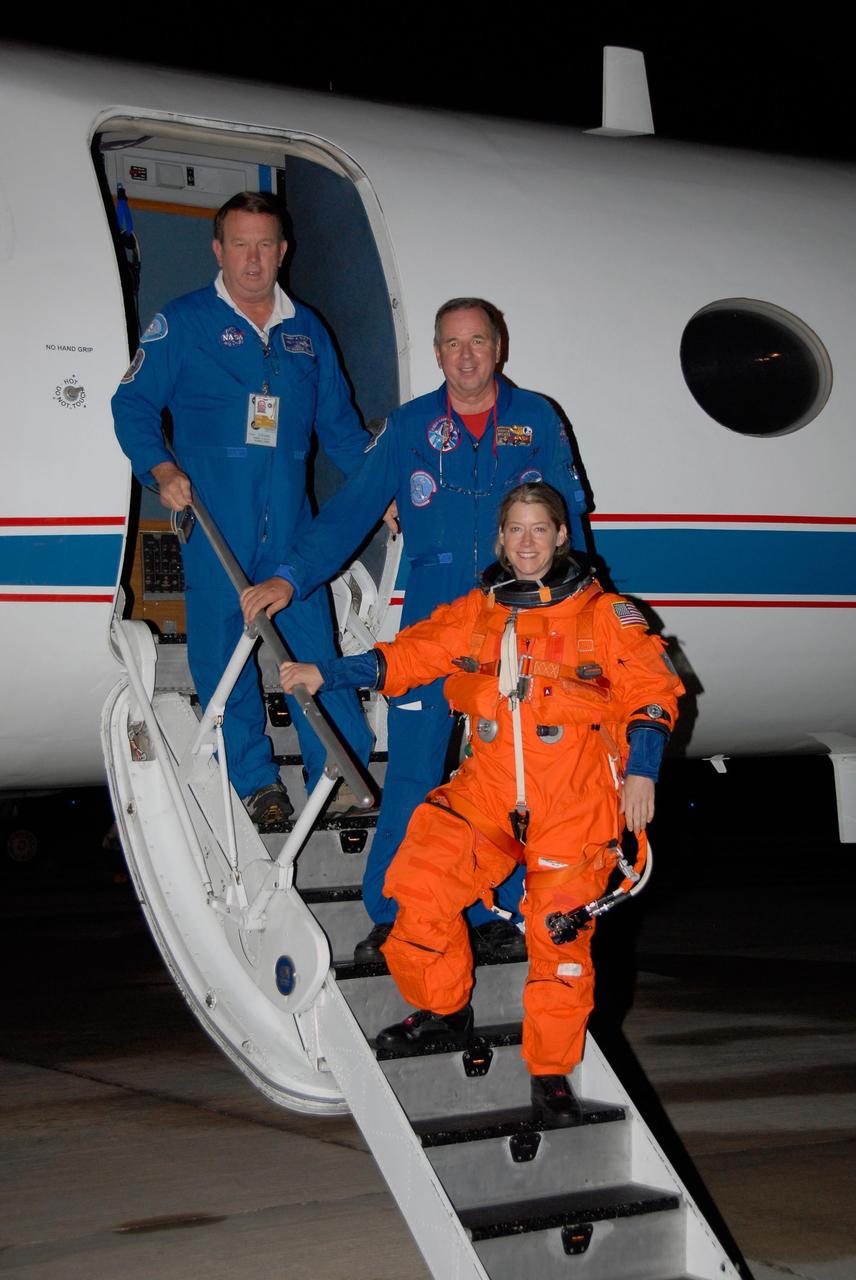
KENNEDY SPACE CENTER, FLA. -- STS-120 Commander Pam Melroy and her flight crew disembark from a Shuttle Training Aircraft, or STA, at NASA Kennedy Space Center's Shuttle Landing Facility. She and STS-120 Pilot George Zamka were training for their upcoming space shuttle mission by practicing landings in STAs. Melroy is the second woman to command a shuttle mission. Also assigned to STS-120 are Mission Specialists Scott Parazynski, Stephanie Wilson, Doug Wheelock, Paolo Nespoli and Daniel Tani. Nespoli represents the European Space Agency. Tani will remain on the International Space Station as an Expedition 16 flight engineer after the STS-120 mission is complete. The mission will be the 23rd shuttle flight to the International Space Station, delivering the Italian-built U.S. Node 2, called Harmony. The crew arrived at Kennedy on Oct. 19 to prepare for launch aboard space shuttle Discovery at 11:38 a.m. EDT Oct. 23. The 14-day mission includes five spacewalks -- four by shuttle crew members and one by the station's Expedition 16 crew -- to install Harmony and move the P6 solar arrays to their permanent position and deploy them. Discovery is scheduled to complete its mission and return home on Nov. 6. Photo credit: NASA/Kim Shiflett
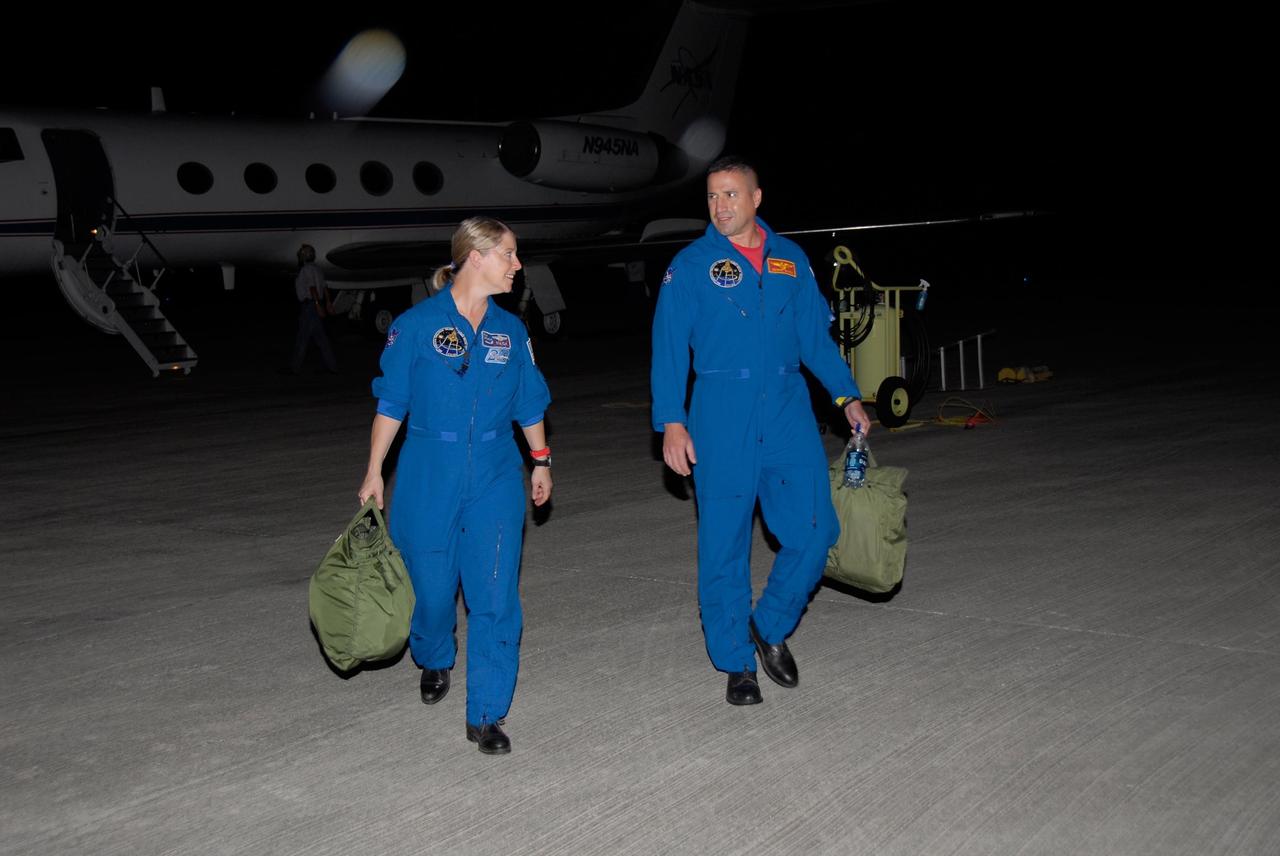
KENNEDY SPACE CENTER, FLA. -- STS-120 Commander Pam Melroy and Pilot George Zamka disembark from the Shuttle Training Aircraft, or STA, behind them on the tarmac at Kennedy Space Center's Shuttle Landing Facility. They were training for their upcoming space shuttle mission by practicing landings using the STA. Melroy is the second woman to command a shuttle mission. Also assigned to STS-120 are Mission Specialists Scott Parazynski, Stephanie Wilson, Doug Wheelock, Paolo Nespoli and Daniel Tani. Nespoli represents the European Space Agency. Tani will remain on the International Space Station as an Expedition 16 flight engineer after the STS-120 mission is complete. The mission will be the 23rd shuttle flight to the International Space Station, delivering the Italian-built U.S. Node 2, called Harmony. The crew arrived at Kennedy on Oct. 19 to prepare for launch aboard space shuttle Discovery at 11:38 a.m. EDT Oct. 23. The 14-day mission includes five spacewalks -- four by shuttle crew members and one by the station's Expedition 16 crew -- to install Harmony and move the P6 solar arrays to their permanent position and deploy them. Discovery is expected to complete its mission and return home on Nov. 6. Photo credit: NASA/Kim Shiflett
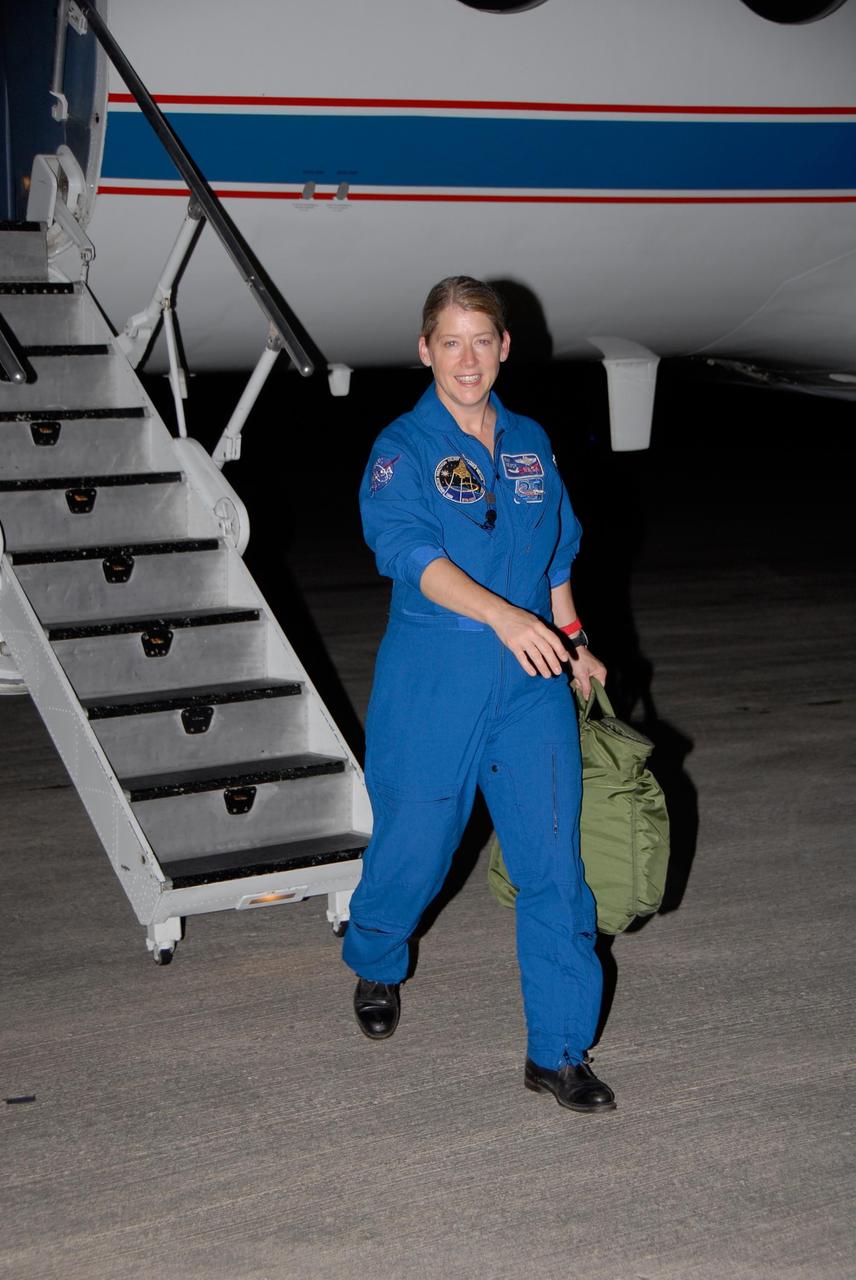
KENNEDY SPACE CENTER, FLA. -- STS-120 Commander Pam Melroy disembarks from a Shuttle Training Aircraft, or STA, on the tarmac at Kennedy Space Center's Shuttle Landing Facility. She and STS-120 Pilot George Zamka were training for their upcoming space shuttle mission by practicing landings using the STA. Melroy is the second woman to command a shuttle mission. Also assigned to STS-120 are Mission Specialists Scott Parazynski, Stephanie Wilson, Doug Wheelock, Paolo Nespoli and Daniel Tani. Nespoli represents the European Space Agency. Tani will remain on the International Space Station as an Expedition 16 flight engineer after the STS-120 mission is complete. The mission will be the 23rd shuttle flight to the International Space Station, delivering the Italian-built U.S. Node 2, called Harmony. The crew arrived at Kennedy on Oct. 19 to prepare for launch aboard space shuttle Discovery at 11:38 a.m. EDT Oct. 23. The 14-day mission includes five spacewalks -- four by shuttle crew members and one by the station's Expedition 16 crew -- to install Harmony and move the P6 solar arrays to their permanent position and deploy them. Discovery is expected to complete its mission and return home on Nov. 6. Photo credit: NASA/Kim Shiflett
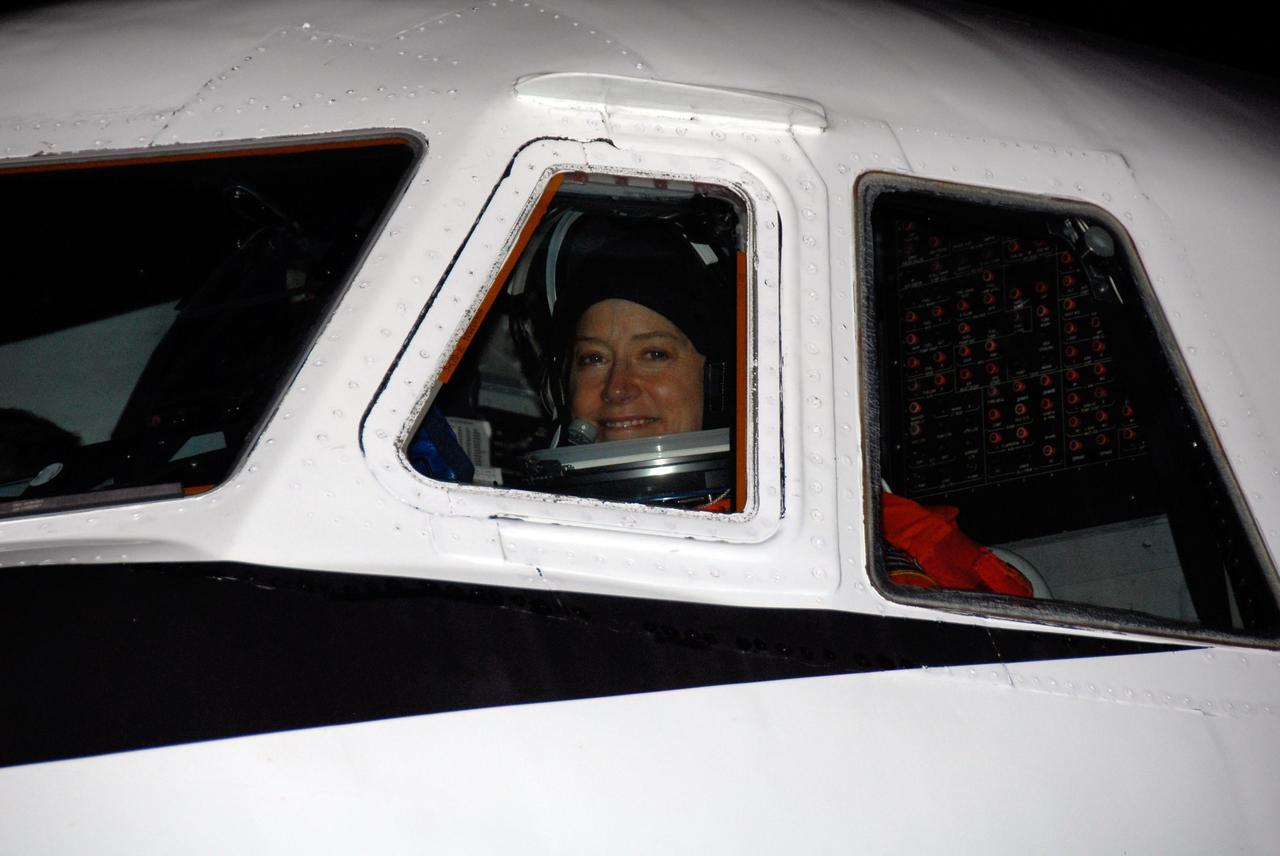
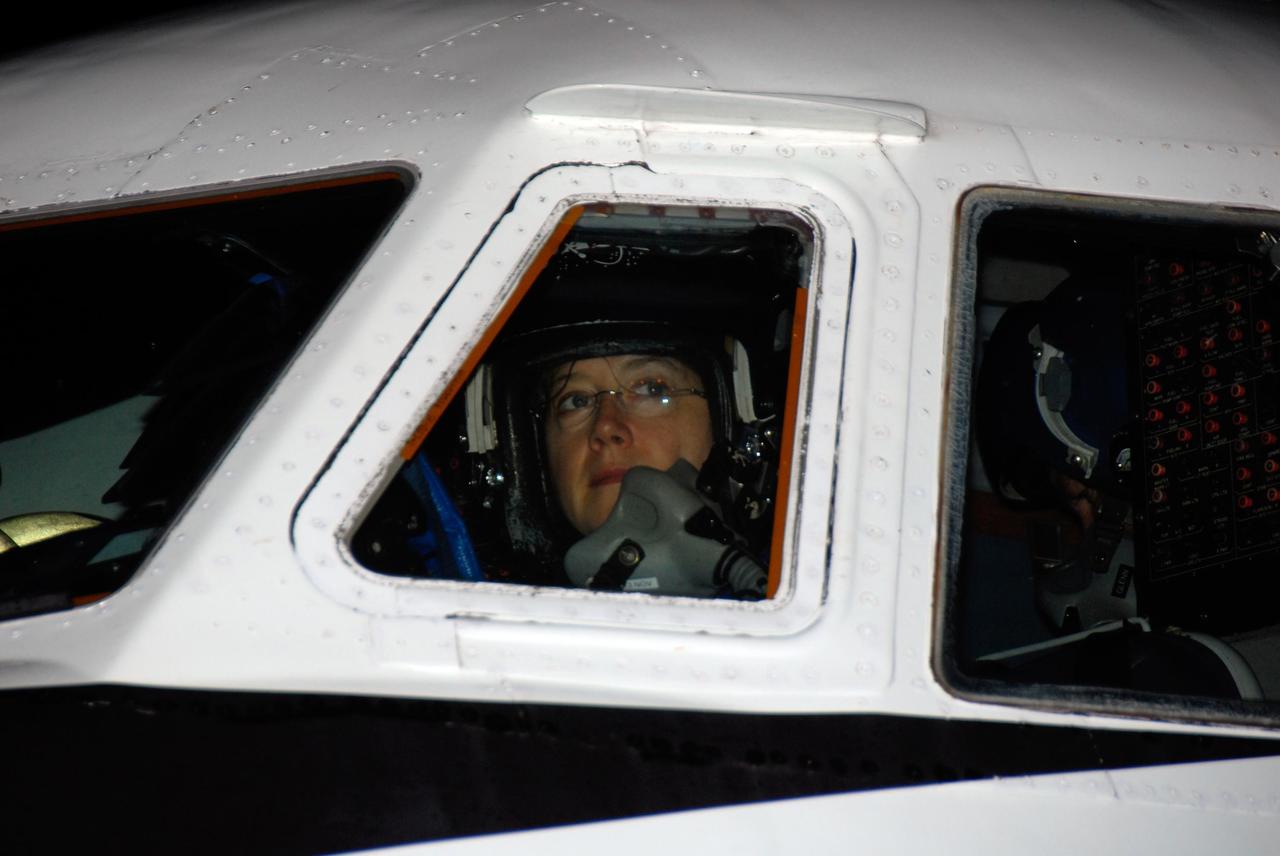
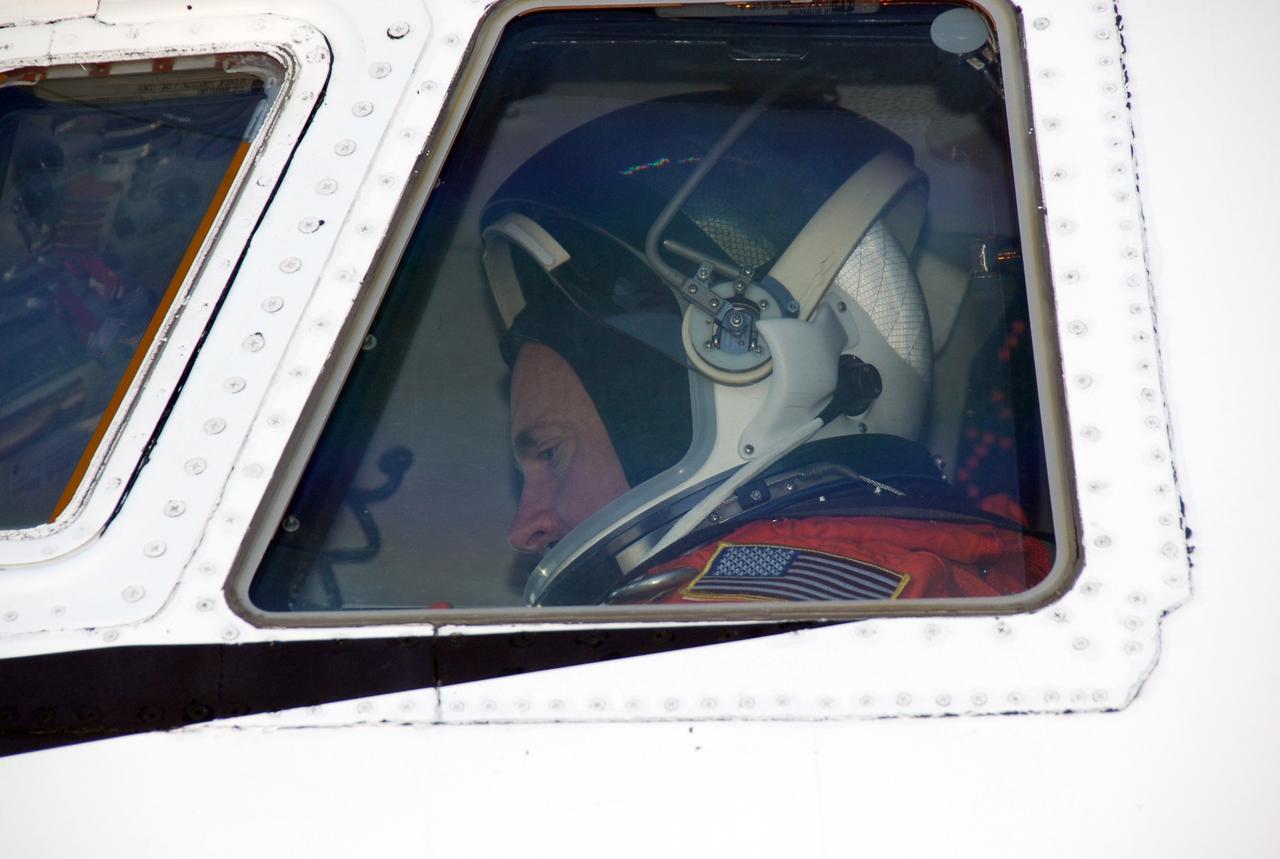
KENNEDY SPACE CENTER, FLA. -- A glimpse of STS-120 Commander Pam Melroy is caught in the cockpit of a Shuttle Training Aircraft, or STA, at NASA Kennedy Space Center's Shuttle Landing Facility. She and STS-120 Pilot George Zamka are training for their upcoming space shuttle mission by practicing landings in STAs. Melroy is the second woman to command a shuttle mission. Also assigned to STS-120 are Mission Specialists Scott Parazynski, Stephanie Wilson, Doug Wheelock, Paolo Nespoli and Daniel Tani. Nespoli represents the European Space Agency. Tani will remain on the International Space Station as an Expedition 16 flight engineer after the STS-120 mission is complete. The mission will be the 23rd shuttle flight to the International Space Station, delivering the Italian-built U.S. Node 2, called Harmony. The crew arrived at Kennedy on Oct. 19 to prepare for launch aboard space shuttle Discovery at 11:38 a.m. EDT Oct. 23. The 14-day mission includes five spacewalks -- four by shuttle crew members and one by the station's Expedition 16 crew -- to install Harmony and move the P6 solar arrays to their permanent position and deploy them. Discovery is scheduled to complete its mission and return home on Nov. 6. Photo credit: NASA/Kim Shiflett
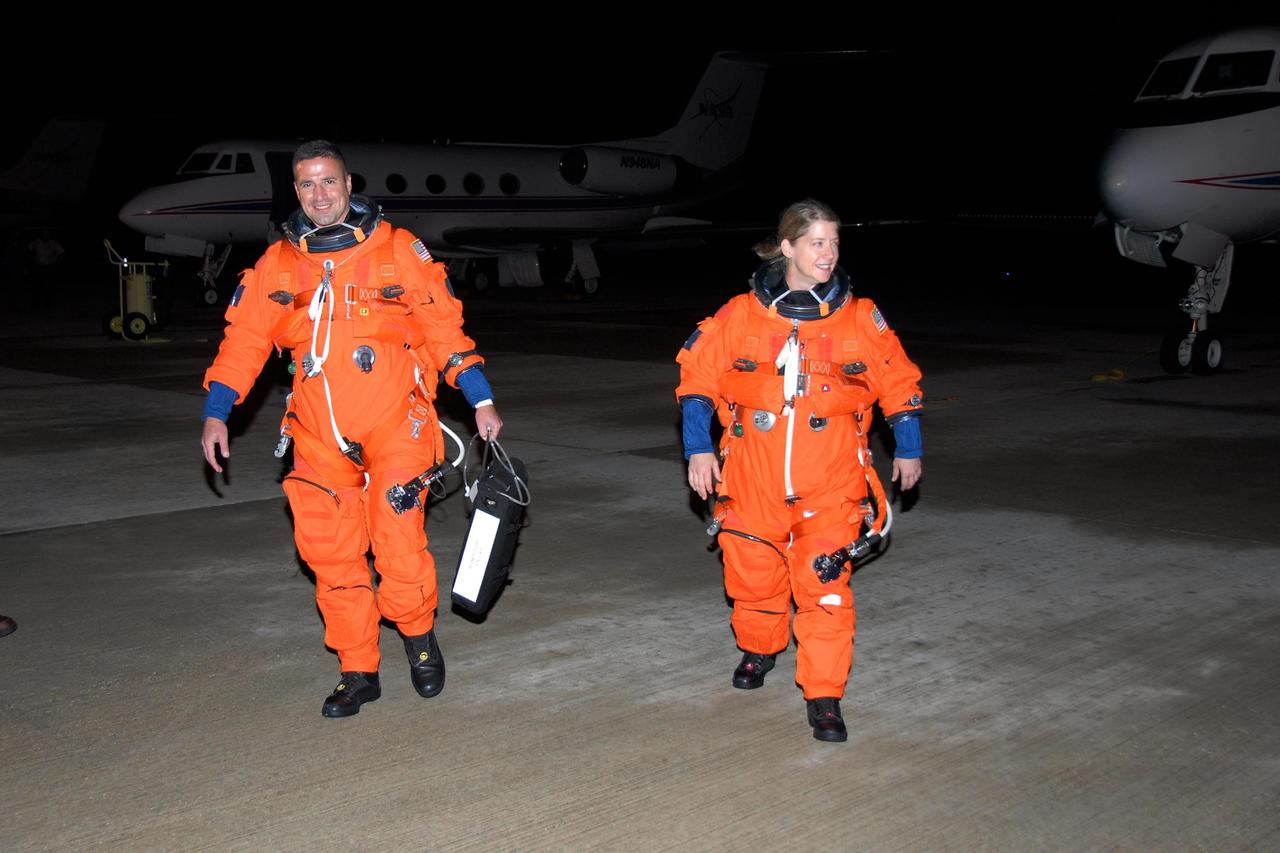
KENNEDY SPACE CENTER, FLA. -- STS-120 Commander Pam Melroy and Pilot George Zamka return to crew quarters after disembarking from the Shuttle Training Aircraft, or STAs, behind them on the tarmac at NASA Kennedy Space Center's Shuttle Landing Facility. They were training for their upcoming space shuttle mission by practicing landings in the STAs. Melroy is the second woman to command a shuttle mission. Also assigned to STS-120 are Mission Specialists Scott Parazynski, Stephanie Wilson, Doug Wheelock, Paolo Nespoli and Daniel Tani. Nespoli represents the European Space Agency. Tani will remain on the International Space Station as an Expedition 16 flight engineer after the STS-120 mission is complete. The mission will be the 23rd shuttle flight to the International Space Station, delivering the Italian-built U.S. Node 2, called Harmony. The crew arrived at Kennedy on Oct. 19 to prepare for launch aboard space shuttle Discovery at 11:38 a.m. EDT Oct. 23. The 14-day mission includes five spacewalks -- four by shuttle crew members and one by the station's Expedition 16 crew -- to install Harmony and move the P6 solar arrays to their permanent position and deploy them. Discovery is scheduled to complete its mission and return home on Nov. 6. Photo credit: NASA/Kim Shiflett
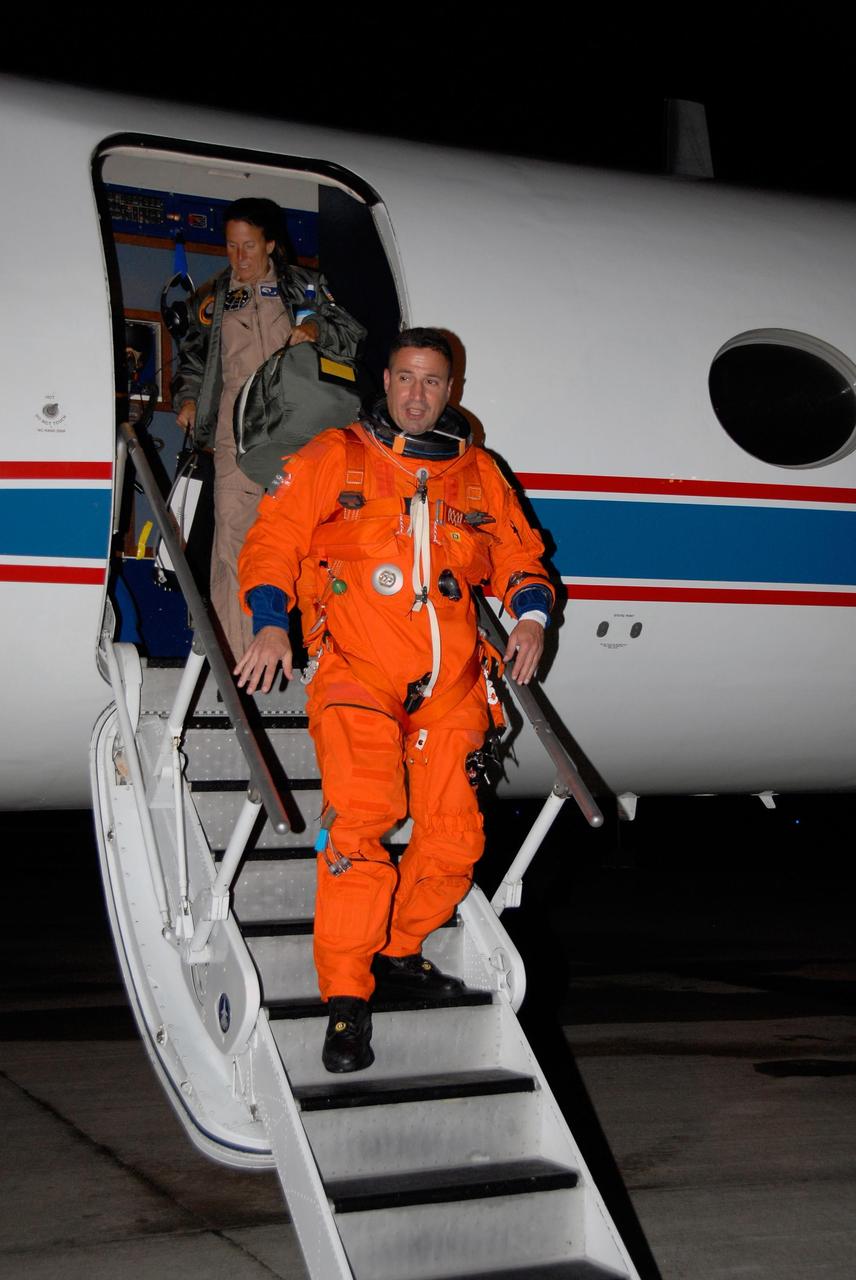
KENNEDY SPACE CENTER, FLA. -- STS-120 Pilot George Zamka disembarks from a Shuttle Training Aircraft, or STA, at NASA Kennedy Space Center's Shuttle Landing Facility. He and STS-120 Commander Pam Melroy were training for their upcoming space shuttle mission by practicing landings in STAs. Melroy is the second woman to command a shuttle mission. Also assigned to STS-120 are Mission Specialists Scott Parazynski, Stephanie Wilson, Doug Wheelock, Paolo Nespoli and Daniel Tani. Nespoli represents the European Space Agency. Tani will remain on the International Space Station as an Expedition 16 flight engineer after the STS-120 mission is complete. The mission will be the 23rd shuttle flight to the International Space Station, delivering the Italian-built U.S. Node 2, called Harmony. The crew arrived at Kennedy on Oct. 19 to prepare for launch aboard space shuttle Discovery at 11:38 a.m. EDT Oct. 23. The 14-day mission includes five spacewalks -- four by shuttle crew members and one by the station's Expedition 16 crew -- to install Harmony and move the P6 solar arrays to their permanent position and deploy them. Discovery is scheduled to complete its mission and return home on Nov. 6. Photo credit: NASA/Kim Shiflett
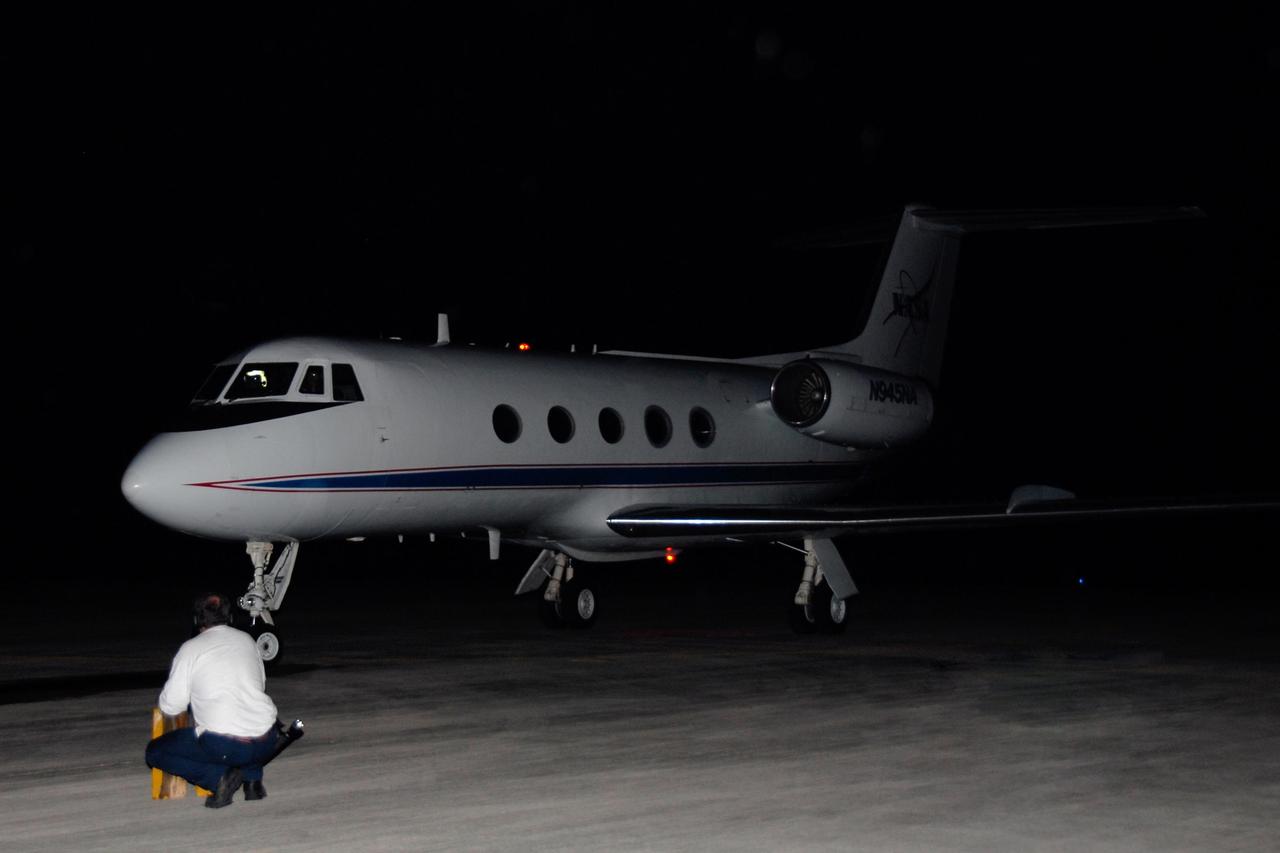
KENNEDY SPACE CENTER, FLA. -- A Shuttle Training Aircraft, or STA, parks on the tarmac at Kennedy Space Center's Shuttle Landing Facility. Aboard are STS-120 Commander Pam Melroy and Pilot George Zamka, training for their upcoming space shuttle mission by practicing landings using the STA. Melroy is the second woman to command a shuttle mission. Also assigned to STS-120 are Mission Specialists Scott Parazynski, Stephanie Wilson, Doug Wheelock, Paolo Nespoli and Daniel Tani. Nespoli represents the European Space Agency. Tani will remain on the International Space Station as an Expedition 16 flight engineer after the STS-120 mission is complete. The mission will be the 23rd shuttle flight to the International Space Station, delivering the Italian-built U.S. Node 2, called Harmony. The crew arrived at Kennedy on Oct. 19 to prepare for launch aboard space shuttle Discovery at 11:38 a.m. EDT Oct. 23. The 14-day mission includes five spacewalks -- four by shuttle crew members and one by the station's Expedition 16 crew -- to install Harmony and move the P6 solar arrays to their permanent position and deploy them. Discovery is expected to complete its mission and return home on Nov. 6. Photo credit: NASA/Kim Shiflett
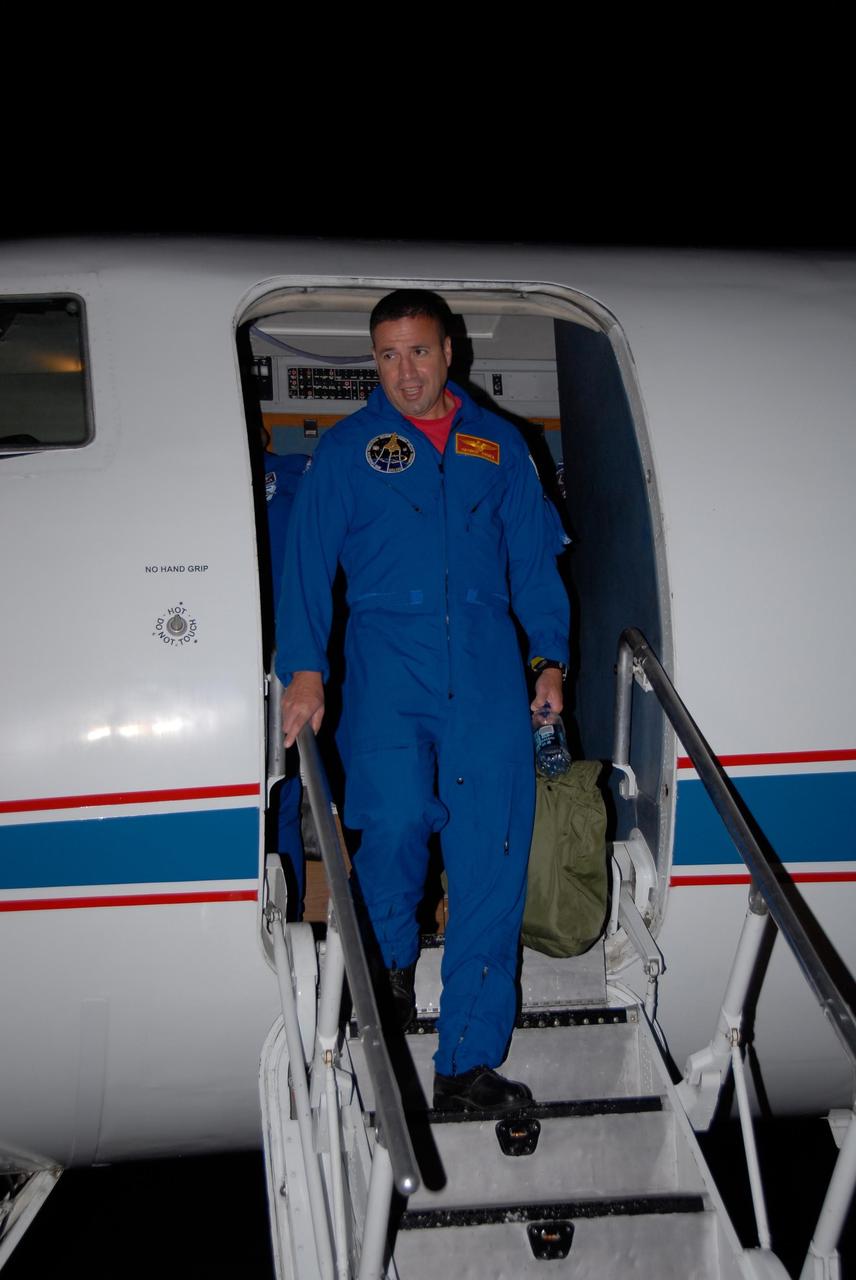
KENNEDY SPACE CENTER, FLA. -- STS-120 Pilot George Zamka disembarks from a Shuttle Training Aircraft, or STA, on the tarmac at Kennedy Space Center's Shuttle Landing Facility. He and STS-120 Commander Pam Melroy were training for their upcoming space shuttle mission by practicing landings using the STA. Melroy is the second woman to command a shuttle mission. Also assigned to STS-120 are Mission Specialists Scott Parazynski, Stephanie Wilson, Doug Wheelock, Paolo Nespoli and Daniel Tani. Nespoli represents the European Space Agency. Tani will remain on the International Space Station as an Expedition 16 flight engineer after the STS-120 mission is complete. The mission will be the 23rd shuttle flight to the International Space Station, delivering the Italian-built U.S. Node 2, called Harmony. The crew arrived at Kennedy on Oct. 19 to prepare for launch aboard space shuttle Discovery at 11:38 a.m. EDT Oct. 23. The 14-day mission includes five spacewalks -- four by shuttle crew members and one by the station's Expedition 16 crew -- to install Harmony and move the P6 solar arrays to their permanent position and deploy them. Discovery is expected to complete its mission and return home on Nov. 6. Photo credit: NASA/Kim Shiflett
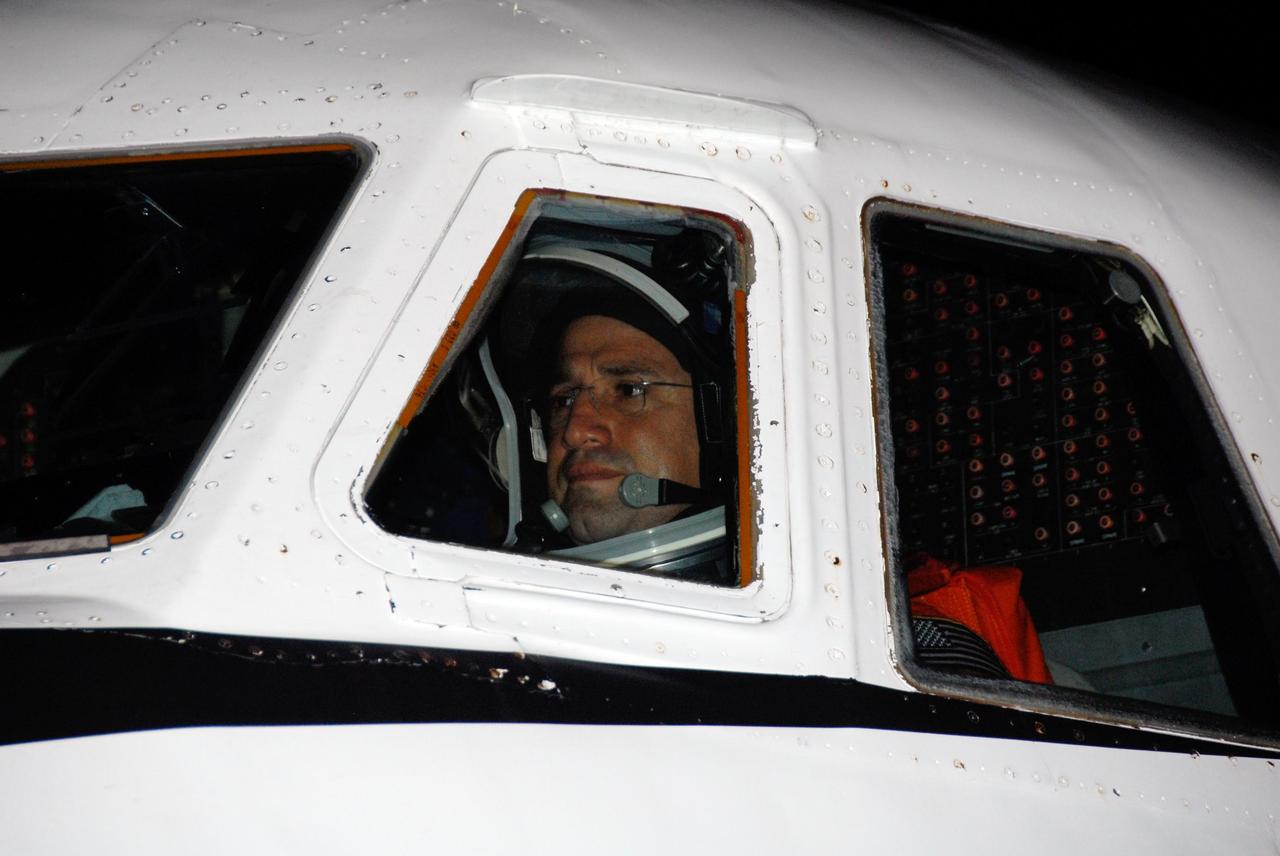
KENNEDY SPACE CENTER, FLA. -- A glimpse of STS-120 Pilot George Zamka is caught in the cockpit of a Shuttle Training Aircraft, or STA, at NASA Kennedy Space Center's Shuttle Landing Facility. He and STS-120 Commander Pam Melroy are training for their upcoming space shuttle mission by practicing landings in STAs. Melroy is the second woman to command a shuttle mission. Also assigned to STS-120 are Mission Specialists Scott Parazynski, Stephanie Wilson, Doug Wheelock, Paolo Nespoli and Daniel Tani. Nespoli represents the European Space Agency. Tani will remain on the International Space Station as an Expedition 16 flight engineer after the STS-120 mission is complete. The mission will be the 23rd shuttle flight to the International Space Station, delivering the Italian-built U.S. Node 2, called Harmony. The crew arrived at Kennedy on Oct. 19 to prepare for launch aboard space shuttle Discovery at 11:38 a.m. EDT Oct. 23. The 14-day mission includes five spacewalks -- four by shuttle crew members and one by the station's Expedition 16 crew -- to install Harmony and move the P6 solar arrays to their permanent position and deploy them. Discovery is scheduled to complete its mission and return home on Nov. 6. Photo credit: NASA/Kim Shiflett
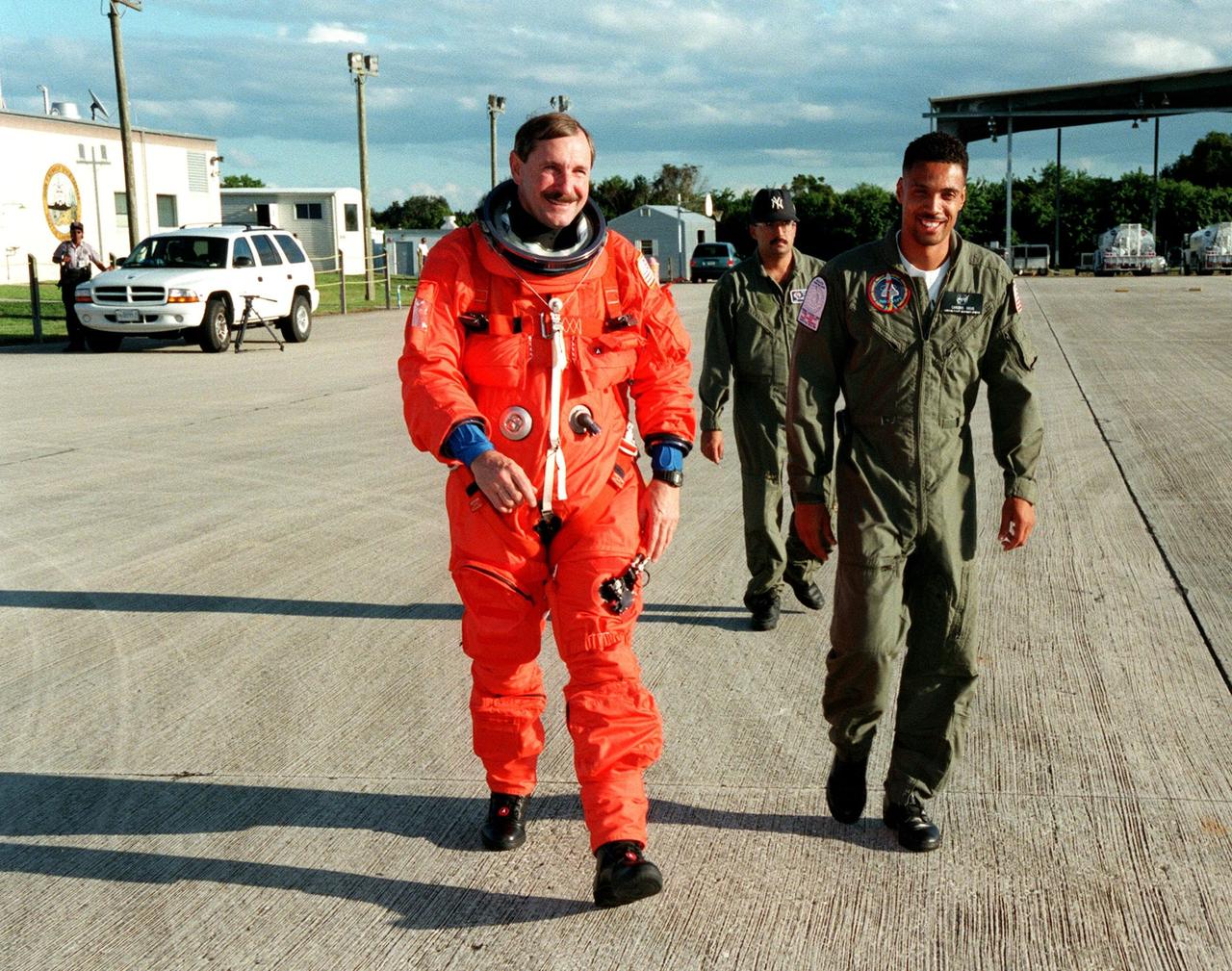
STS-95 Mission Commander Curtis L. Brown Jr. (left) leaves the Shuttle Landing Facility (SLF) enroute to the Shuttle Training Aircraft (STA). He is accompanied by two suit technicians, Ray Cuevas (middle) and Carlous Gillis (right). Brown will be practicing Shuttle landing and takeoffs at the SLF prior to launch. The STA is designed to fly like the Shuttle. STS-95 is expected to launch at 2 p.m. EST on Oct. 29, last 8 days, 21 hours and 49 minutes, and land at 11:49 a.m. EST on Nov. 7
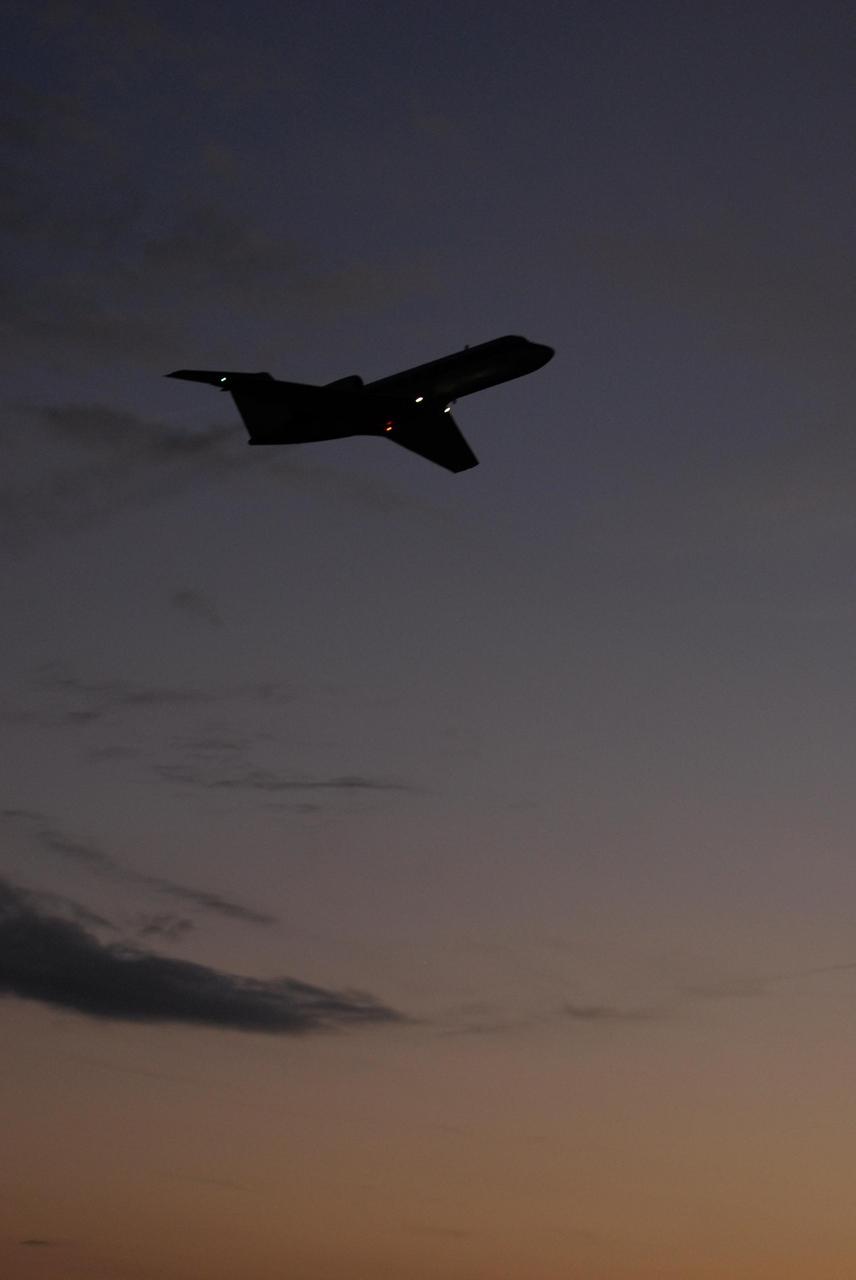
KENNEDY SPACE CENTER, FLA. -- A shuttle training aircraft, or STA, takes off from Kennedy Space Center's Shuttle Landing Facility at dusk. The STA is being used for practice flights by space shuttle Atlantis STS-122 Commander Steve Frick and Pilot Alan Poindexter. The STA is a Grumman American Aviation-built Gulf Stream II jet that was modified to simulate an orbiter's cockpit, motion and visual cues, and handling qualities. In flight, the STA duplicates the orbiter's atmospheric descent trajectory from approximately 35,000 feet altitude to landing on a runway. Because the orbiter is unpowered during re-entry and landing, its high-speed glide must be perfectly executed the first time. The training is part of terminal countdown demonstration test, or TCDT, activities. The TCDT provides astronauts and ground crews with equipment familiarization, emergency egress training and a simulated launch countdown. On mission STS-122, Atlantis will deliver the European Space Agency's Columbus module to the International Space Station. Columbus is a multifunctional, pressurized laboratory that will be permanently attached to U.S. Node 2, called Harmony, and will expand the research facilities aboard the station. Launch is targeted for Dec. 6. Photo credit: NASA/Kim Shiflett
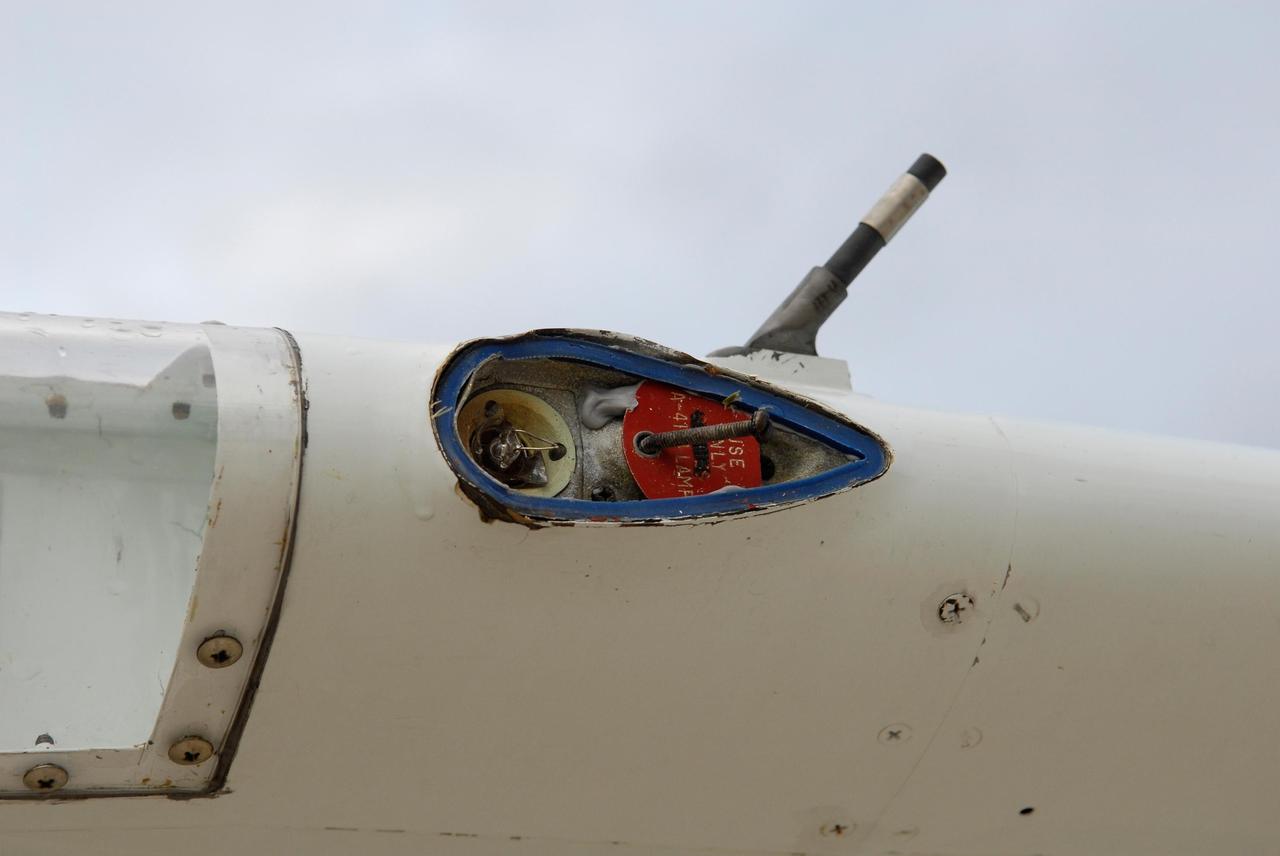
KENNEDY SPACE CENTER, FLA. -- Debris from apparent contact with a tree near Kennedy Space Center's Shuttle Landing Facility can be seen in the strobe light cavity on the left side of one of NASA's Shuttle Training Aircraft, or STA. The left position light and wing tip also received minor damage. The incident occurred during landing about 6:30 p.m. EDT Oct. 19 following a training session. An STA flight instructor was piloting the aircraft. The flight crew was unaware of any contact with the tree, and there were no injuries. Thunderstorms were in the area at the time of the incident, which is under investigation. The STA is a twin-engine Gulfstream II jet that was modified to simulate a space shuttle during landing. Photo credit: NASA/Kim Shiflett
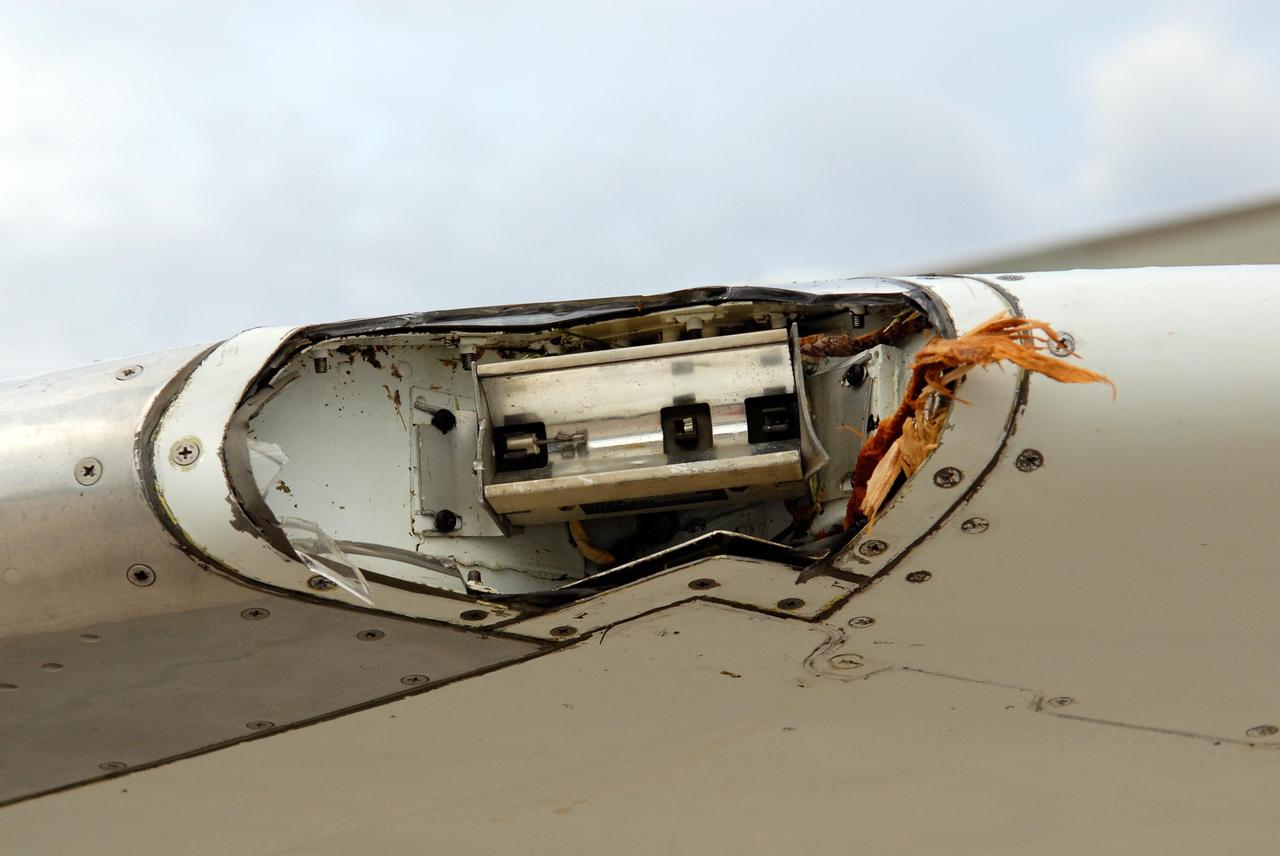
KENNEDY SPACE CENTER, FLA. -- Debris from apparent contact with a tree near Kennedy Space Center's Shuttle Landing Facility can be seen in the position light cavity on the left side of one of NASA's Shuttle Training Aircraft, or STA. The left strobe light and wing tip also received minor damage. The incident occurred during landing about 6:30 p.m. EDT Oct. 19 following a training session. An STA flight instructor was piloting the aircraft. The flight crew was unaware of any contact with the tree, and there were no injuries. Thunderstorms were in the area at the time of the incident, which is under investigation. The STA is a twin-engine Gulfstream II jet that was modified to simulate a space shuttle during landing. Photo credit: NASA/Kim Shiflett
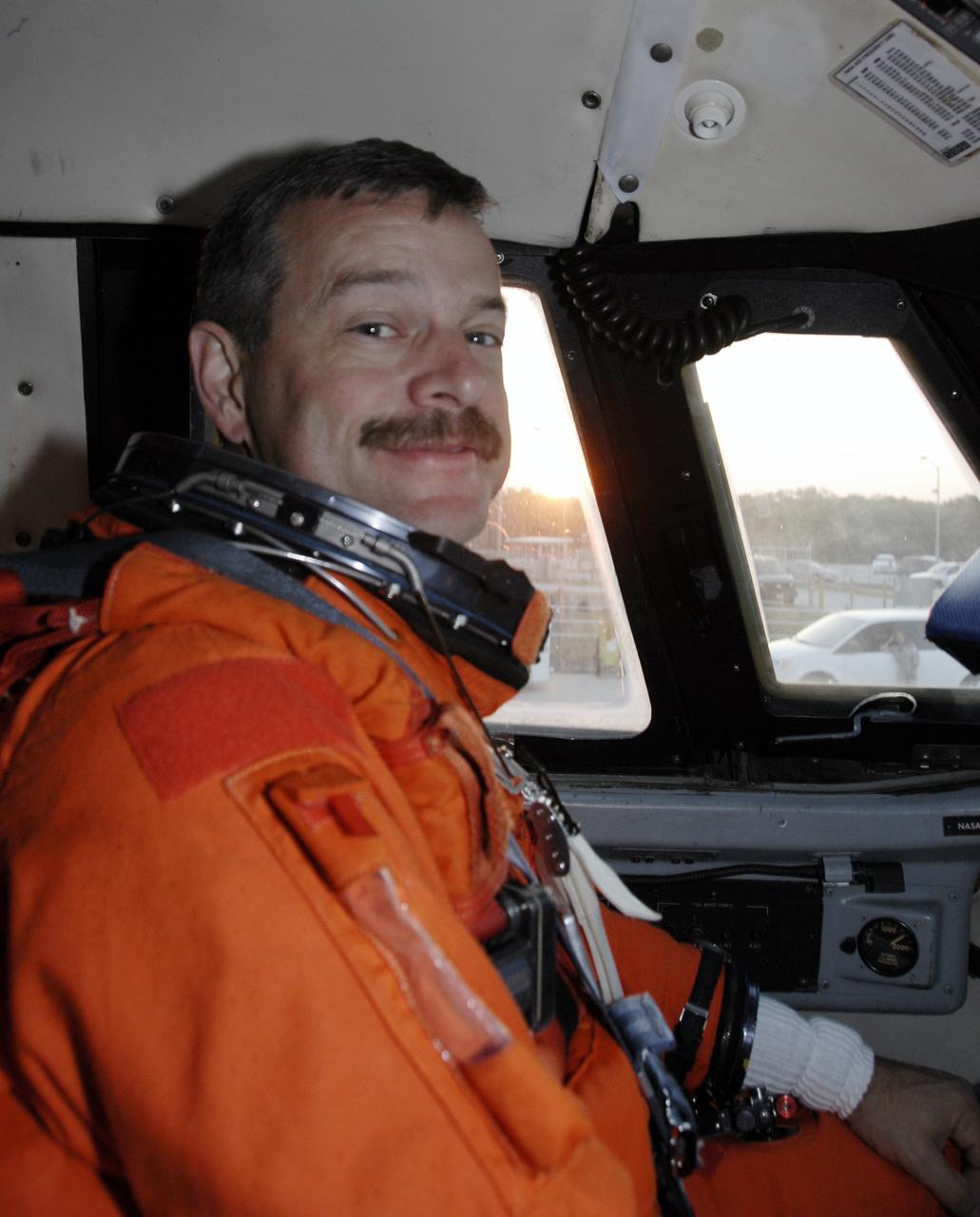
CAPE CANAVERAL, Fla. – On the Shuttle Landing Facility at NASA's Kennedy Space Center in Florida, STS-125 Commander Scott Altman, wearing his launch-and-entry suit, sits in the cockpit of the Shuttle Training Aircraft before taking off to practice shuttle landings. He is preparing for launch of space shuttle Atlantis, scheduled for 2:01 p.m. EDT on May 11. On Atlantis’ STS-125 mission, NASA's Hubble Space Telescope will be serviced for the fifth and final time. The flight will include five spacewalks during which astronauts will refurbish and upgrade the telescope with state-of-the-art science instruments. As a result, Hubble's capabilities will be expanded and its operational lifespan extended through at least 2014. Photo credit: NASA/Kim Shiflett
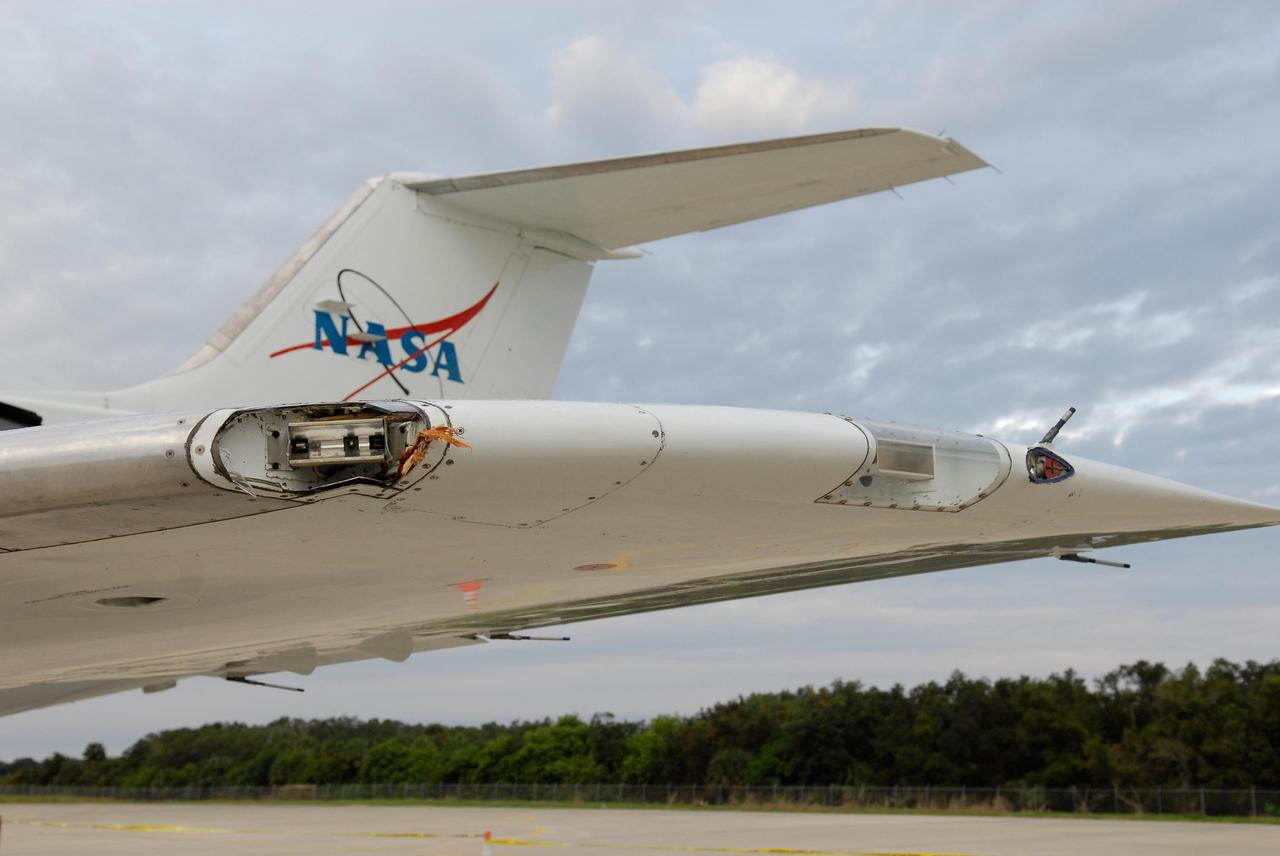
KENNEDY SPACE CENTER, FLA. -- The left position light, strobe light and wing tip of one of NASA's Shuttle Training Aircraft, or STA, show signs of minor damage from apparent contact with a tree near Kennedy Space Center's Shuttle Landing Facility. The incident occurred during landing about 6:30 p.m. EDT Oct. 19 following a training session. An STA flight instructor was piloting the aircraft. The flight crew was unaware of any contact with the tree, and there were no injuries. Thunderstorms were in the area at the time of the incident, which is under investigation. The STA is a twin-engine Gulfstream II jet that was modified to simulate a space shuttle during landing. Photo credit: NASA/Kim Shiflett

CAPE CANAVERAL, Fla. – On the Shuttle Landing Facility at NASA's Kennedy Space Center in Florida, STS-125 Commander Scott Altman, wearing his launch-and-entry suit, heads for the Shuttle Training Aircraft to practice shuttle landings in preparation for launch of space shuttle Atlantis, scheduled for 2:01 p.m. EDT on May 11. On Atlantis’ STS-125 mission, NASA's Hubble Space Telescope will be serviced for the fifth and final time. The flight will include five spacewalks during which astronauts will refurbish and upgrade the telescope with state-of-the-art science instruments. As a result, Hubble's capabilities will be expanded and its operational lifespan extended through at least 2014. Photo credit: NASA/Kim Shiflett
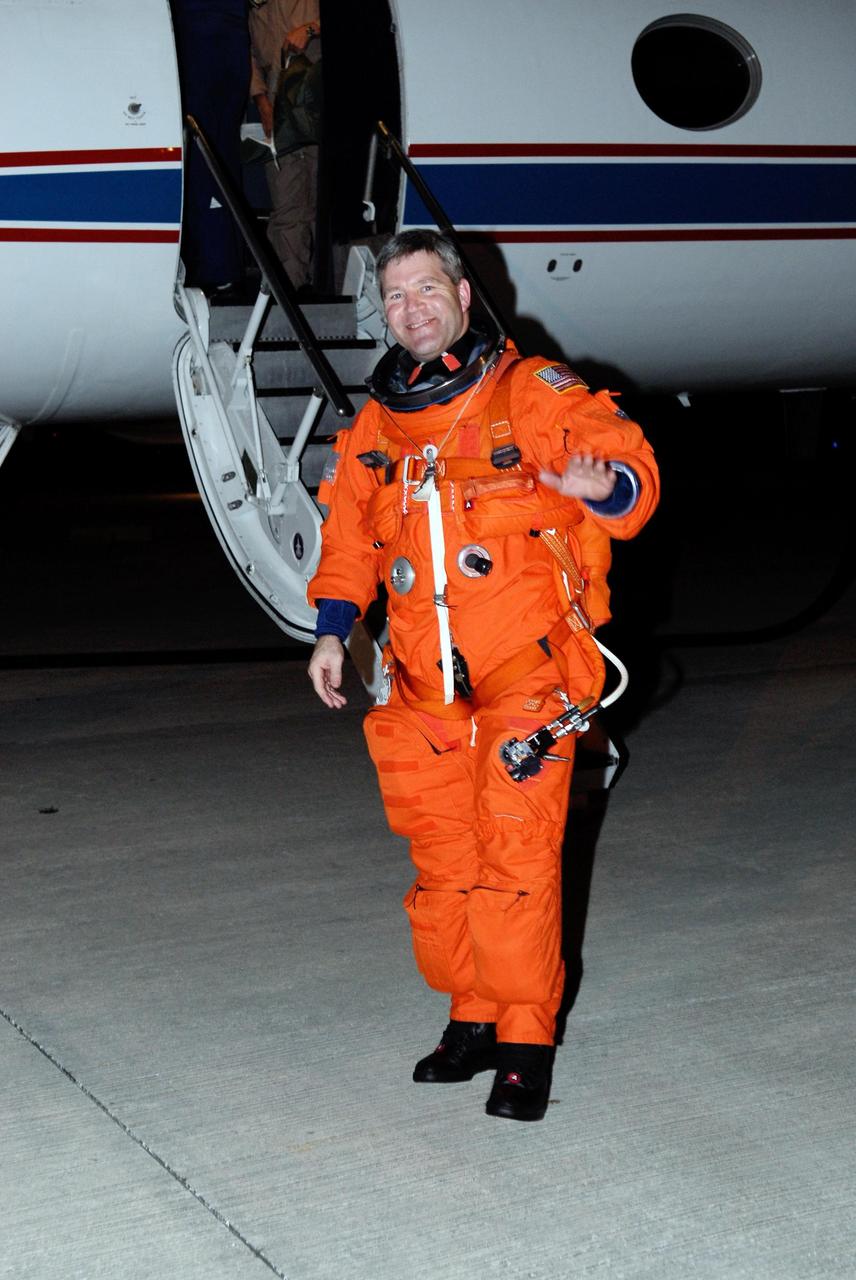
KENNEDY SPACE CENTER, FLA. -- Space shuttle Atlantis STS-122 Commander Steve Frick seems pleased with the practice session he has just completed aboard a shuttle training aircraft, or STA, at Kennedy Space Center's Shuttle Landing Facility. He and STS-122 Pilot Alan Poindexter were practicing landing the STA in preparation for their upcoming mission. The STA is a Grumman American Aviation-built Gulf Stream II jet that was modified to simulate an orbiter's cockpit, motion and visual cues, and handling qualities. In flight, the STA duplicates the orbiter's atmospheric descent trajectory from approximately 35,000 feet altitude to landing on a runway. Because the orbiter is unpowered during re-entry and landing, its high-speed glide must be perfectly executed the first time. The training is part of terminal countdown demonstration test, or TCDT, activities. The TCDT provides astronauts and ground crews with equipment familiarization, emergency egress training and a simulated launch countdown. On mission STS-122, Atlantis will deliver the European Space Agency's Columbus module to the International Space Station. Columbus is a multifunctional, pressurized laboratory that will be permanently attached to U.S. Node 2, called Harmony, and will expand the research facilities aboard the station. Launch is targeted for Dec. 6. Photo credit: NASA/Kim Shiflett
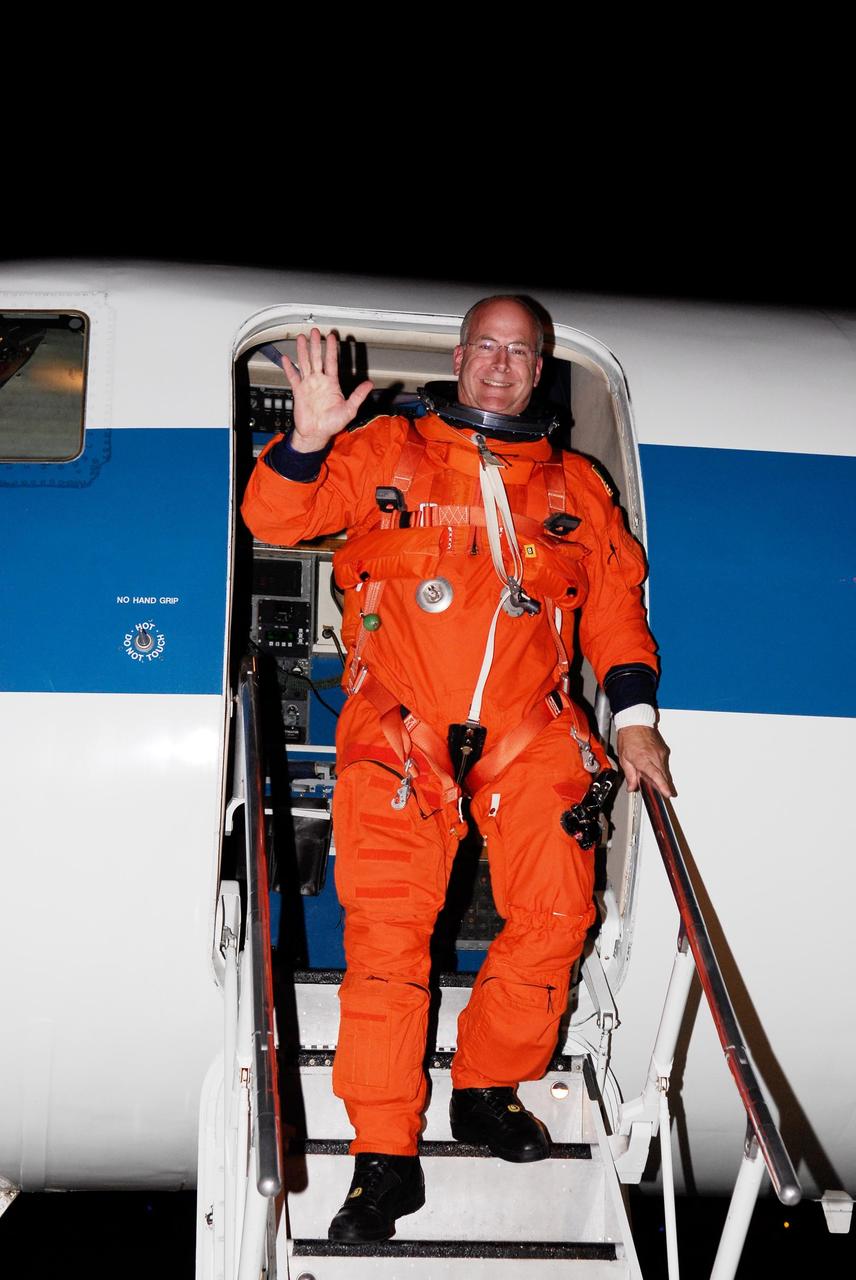
KENNEDY SPACE CENTER, FLA. -- Space shuttle Atlantis STS-122 Pilot Alan Poindexter disembarks from a shuttle training aircraft, or STA, at Kennedy Space Center's Shuttle Landing Facility. He and STS-122 Commander Steve Frick have just completed a practice session landing the STA. The STA is a Grumman American Aviation-built Gulf Stream II jet that was modified to simulate an orbiter's cockpit, motion and visual cues, and handling qualities. In flight, the STA duplicates the orbiter's atmospheric descent trajectory from approximately 35,000 feet altitude to landing on a runway. Because the orbiter is unpowered during re-entry and landing, its high-speed glide must be perfectly executed the first time. The training is part of terminal countdown demonstration test, or TCDT, activities. The TCDT provides astronauts and ground crews with equipment familiarization, emergency egress training and a simulated launch countdown. On mission STS-122, Atlantis will deliver the European Space Agency's Columbus module to the International Space Station. Columbus is a multifunctional, pressurized laboratory that will be permanently attached to U.S. Node 2, called Harmony, and will expand the research facilities aboard the station. Launch is targeted for Dec. 6. Photo credit: NASA/Kim Shiflett
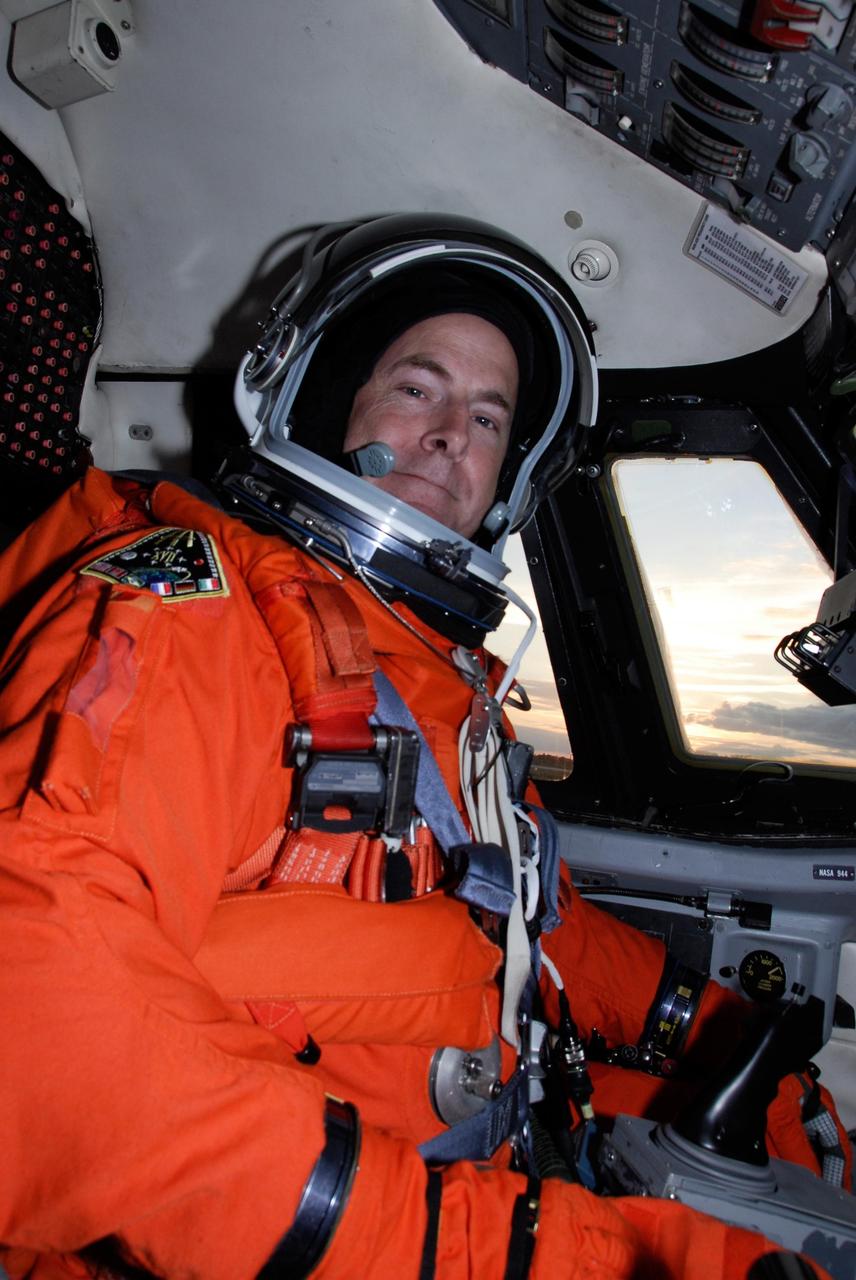
KENNEDY SPACE CENTER, FLA. -- Space shuttle Atlantis STS-122 Pilot Alan Poindexter prepares to practice shuttle landings. He is getting settled in the cockpit of a shuttle training aircraft, or STA, at Kennedy Space Center's Shuttle Landing Facility. The STA is a Grumman American Aviation-built Gulf Stream II jet that was modified to simulate an orbiter's cockpit, motion and visual cues, and handling qualities. In flight, the STA duplicates the orbiter's atmospheric descent trajectory from approximately 35,000 feet altitude to landing on a runway. Because the orbiter is unpowered during re-entry and landing, its high-speed glide must be perfectly executed the first time. The training is part of terminal countdown demonstration test, or TCDT, activities. The TCDT provides astronauts and ground crews with equipment familiarization, emergency egress training and a simulated launch countdown. On mission STS-122, Atlantis will deliver the European Space Agency's Columbus module to the International Space Station. Columbus is a multifunctional, pressurized laboratory that will be permanently attached to U.S. Node 2, called Harmony, and will expand the research facilities aboard the station. Launch is targeted for Dec. 6. Photo credit: NASA/Kim Shiflett
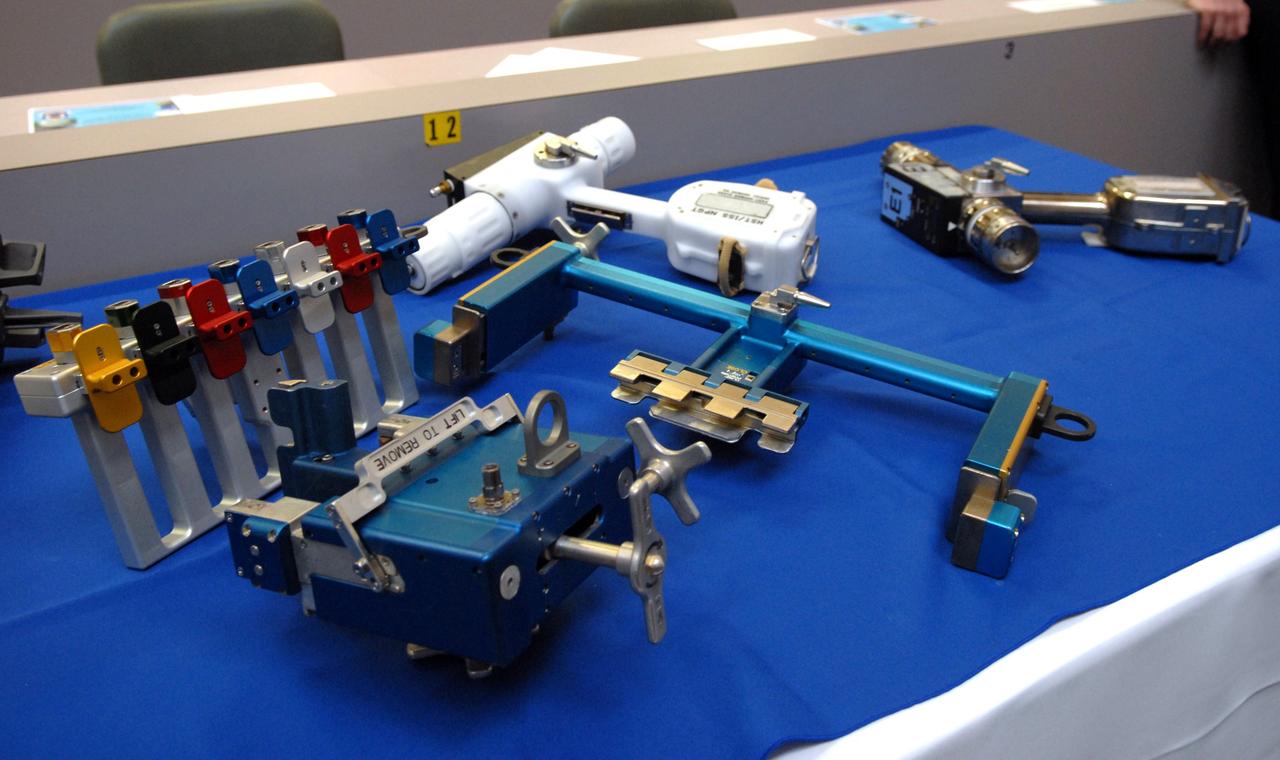
CAPE CANAVERAL, Fla. – The tools that will be used to service NASA's Hubble Space Telescope on the STS-125 mission are displayed in the NASA News Center at NASA's Kennedy Space Center in Florida. At far right is the pistol grip tool. It can install and remove instruments, drive latches and open doors. A self-contained, high-torque drive, the tool features an on-board computer that permits users to tailor its performance to the mission demands. In the foreground are the card extraction and insertion tools to enable removal of electronic cards. At top center is the plastic version of the pistol grip tool used by astronauts during practice in the water tank at NASA' Johnson Space Center. At center left is the bit caddy. On space shuttle Atlantis’ STS-125 mission, Hubble will be serviced for the fifth and final time. The flight will include five spacewalks during which astronauts will refurbish and upgrade the telescope with these state-of-the-art science instruments. As a result, Hubble's capabilities will be expanded and its operational lifespan extended through at least 2014. The payload includes a Wide Field Camera 3, fine guidance sensor and the Cosmic Origins Spectrograph. Launch is scheduled for 2:01 p.m. EDT May 11. Photo credit: NASA/Jack Pfaller
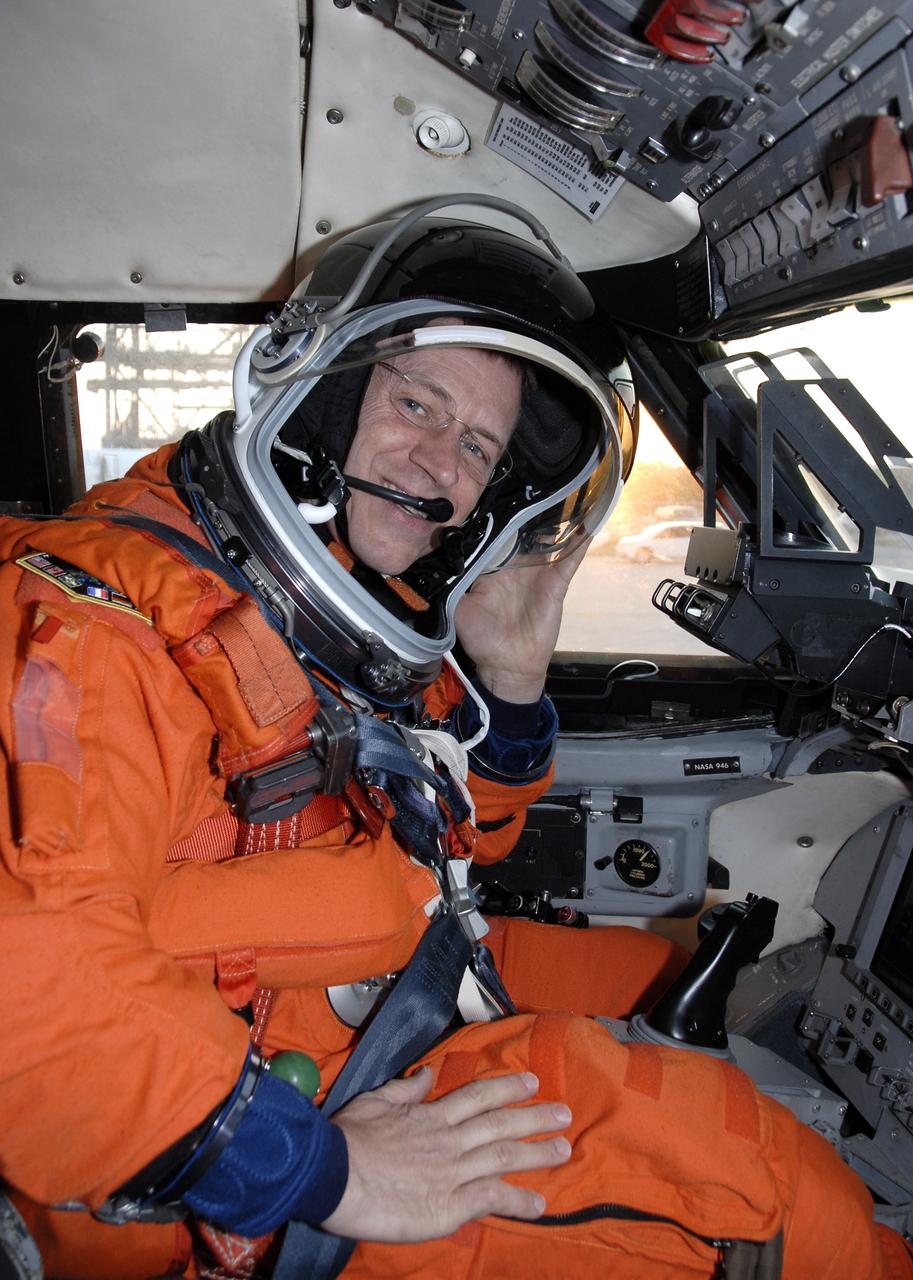
CAPE CANAVERAL, Fla. – On the Shuttle Landing Facility at NASA's Kennedy Space Center in Florida, STS-125 Pilot Gregory C. Johnson, puts on the helmet of his launch-and-entry suit while sitting in the cockpit of the Shuttle Training Aircraft. He is preparing to practice shuttle landings in preparation for launch of space shuttle Atlantis, scheduled for 2:01 p.m. EDT on May 11. On Atlantis’ STS-125 mission, NASA's Hubble Space Telescope will be serviced for the fifth and final time. The flight will include five spacewalks during which astronauts will refurbish and upgrade the telescope with state-of-the-art science instruments. As a result, Hubble's capabilities will be expanded and its operational lifespan extended through at least 2014. Photo credit: NASA/Kim Shiflett
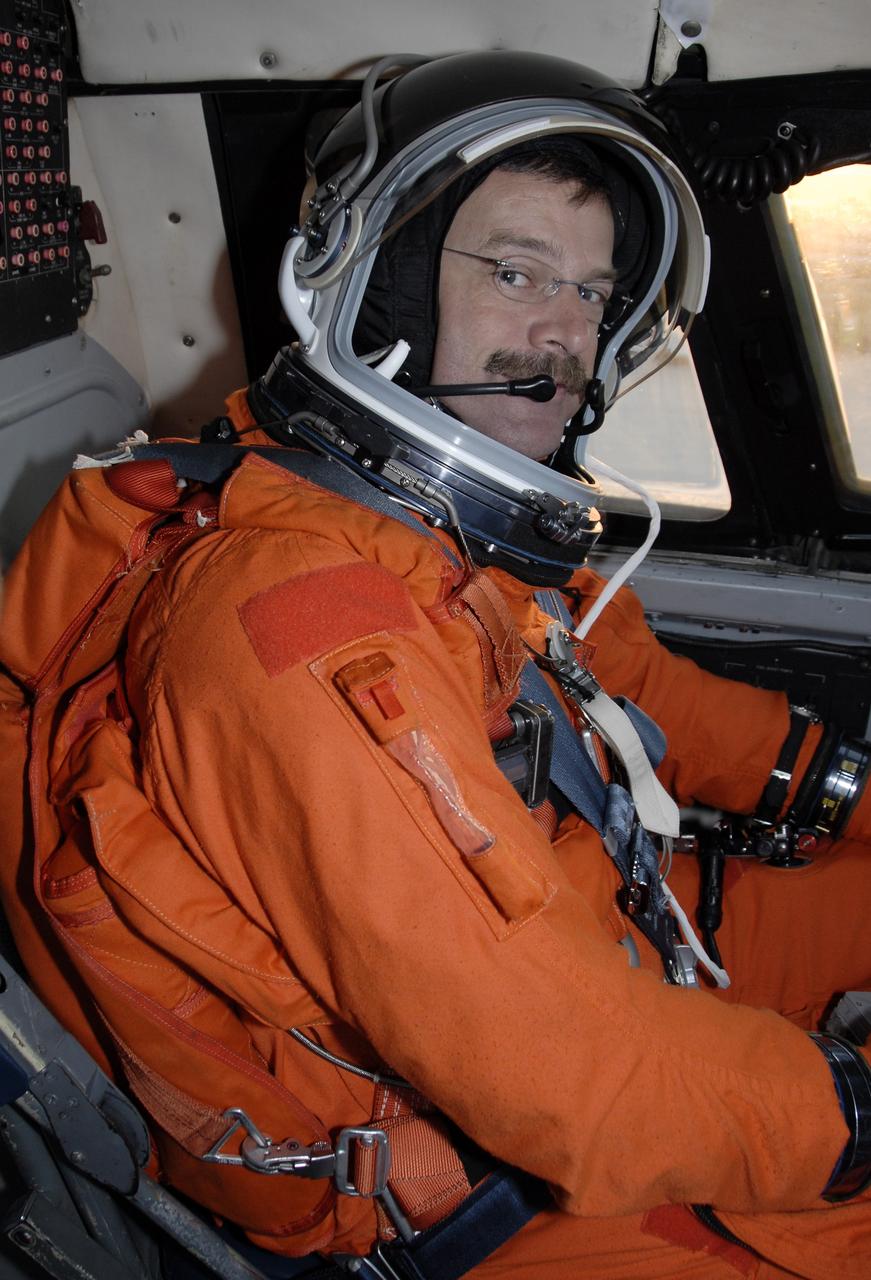
CAPE CANAVERAL, Fla. – On the Shuttle Landing Facility at NASA's Kennedy Space Center in Florida, STS-125 Commander Scott Altman is wearing his complete launch-and-entry suit in the cockpit of the Shuttle Training Aircraft. He is preparing to practice shuttle landings in preparation for launch of space shuttle Atlantis, scheduled for 2:01 p.m. EDT on May 11. On Atlantis’ STS-125 mission, NASA's Hubble Space Telescope will be serviced for the fifth and final time. The flight will include five spacewalks during which astronauts will refurbish and upgrade the telescope with state-of-the-art science instruments. As a result, Hubble's capabilities will be expanded and its operational lifespan extended through at least 2014. Photo credit: NASA/Kim Shiflett
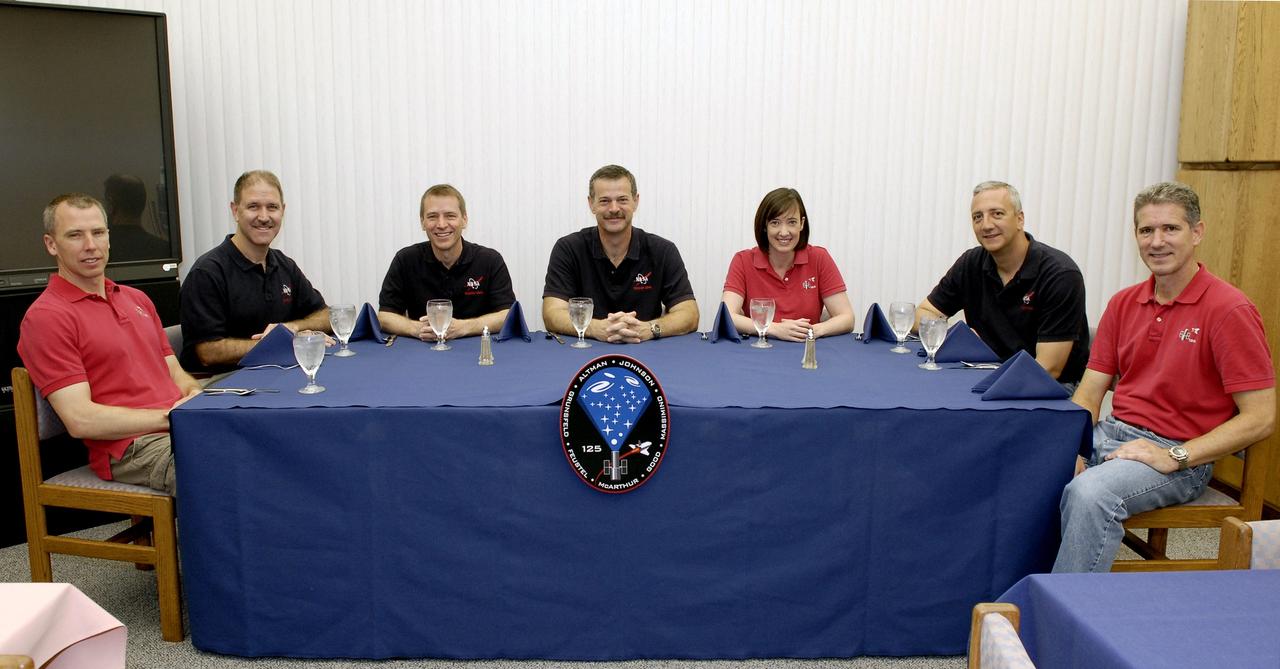
CAPE CANAVERAL, Fla. – At NASA's Kennedy Space Center in Florida, STS-125 crew members pose for the traditional portrait after breakfast on launch day. From left are Mission Specialists Andrew Feustel and John Grunsfeld, Pilot Gregory C. Johnson, Commander Scott Altman, and Mission Specialists Megan McArthur, Mike Massimino and Michael Good. The crew is preparing for liftoff aboard space shuttle Atlantis on the STS-125 mission to refurbish and upgrade NASA's Hubble Space Telescope with state-of-the-art science instruments. The payload includes a Wide Field Camera 3, fine guidance sensor and the Cosmic Origins Spectrograph. Atlantis' 11-day flight will include five spacewalks that will expand Hubble's capabilities and extend its operational lifespan through at least 2014. Launch of Atlantis is scheduled for 2:01 p.m. EDT. Photo credit: NASA/Kim Shiflett
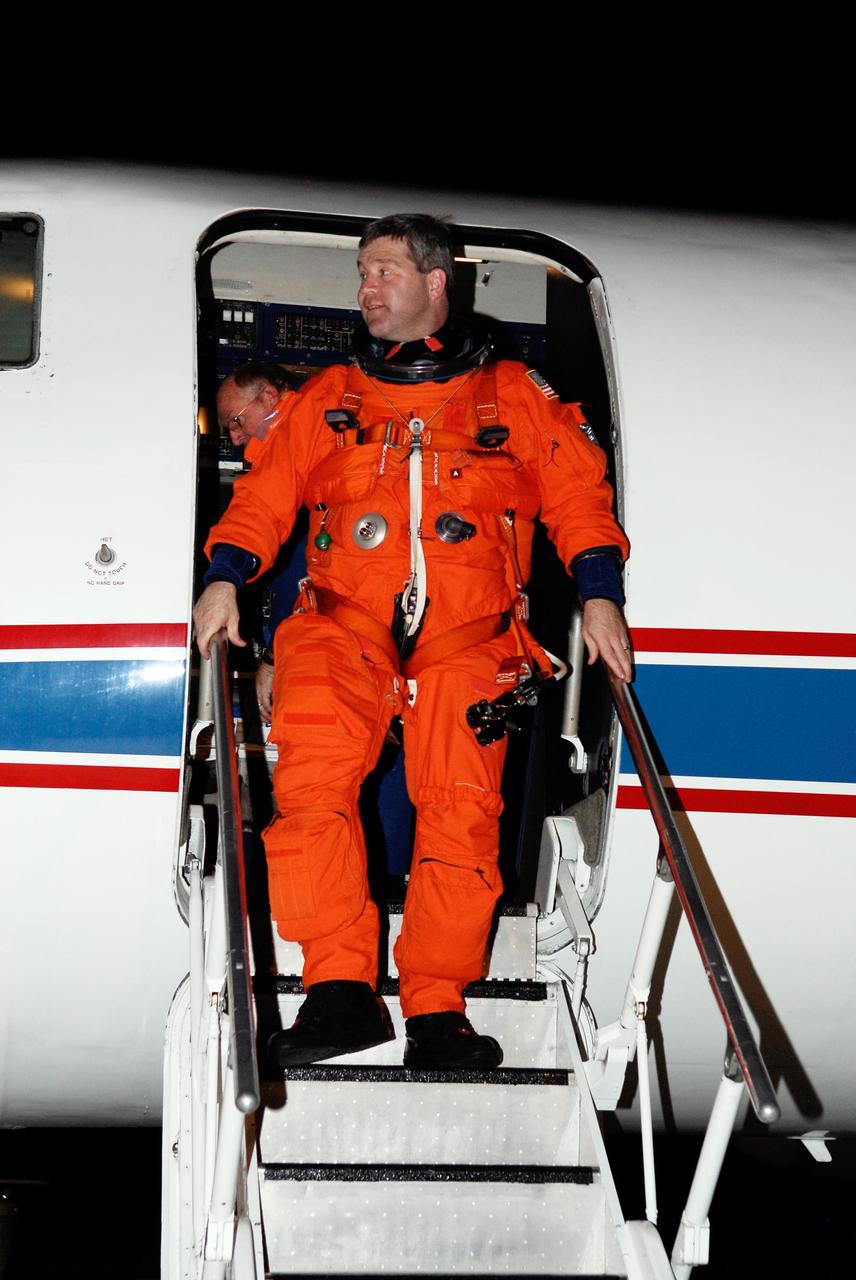
KENNEDY SPACE CENTER, FLA. -- Space shuttle Atlantis STS-122 Commander Steve Frick disembarks from a shuttle training aircraft, or STA, at Kennedy Space Center's Shuttle Landing Facility. He and STS-122 Pilot Alan Poindexter have just completed a practice session landing the STA. The STA is a Grumman American Aviation-built Gulf Stream II jet that was modified to simulate an orbiter's cockpit, motion and visual cues, and handling qualities. In flight, the STA duplicates the orbiter's atmospheric descent trajectory from approximately 35,000 feet altitude to landing on a runway. Because the orbiter is unpowered during re-entry and landing, its high-speed glide must be perfectly executed the first time. The training is part of terminal countdown demonstration test, or TCDT, activities. The TCDT provides astronauts and ground crews with equipment familiarization, emergency egress training and a simulated launch countdown. On mission STS-122, Atlantis will deliver the European Space Agency's Columbus module to the International Space Station. Columbus is a multifunctional, pressurized laboratory that will be permanently attached to U.S. Node 2, called Harmony, and will expand the research facilities aboard the station. Launch is targeted for Dec. 6. Photo credit: NASA/Kim Shiflett
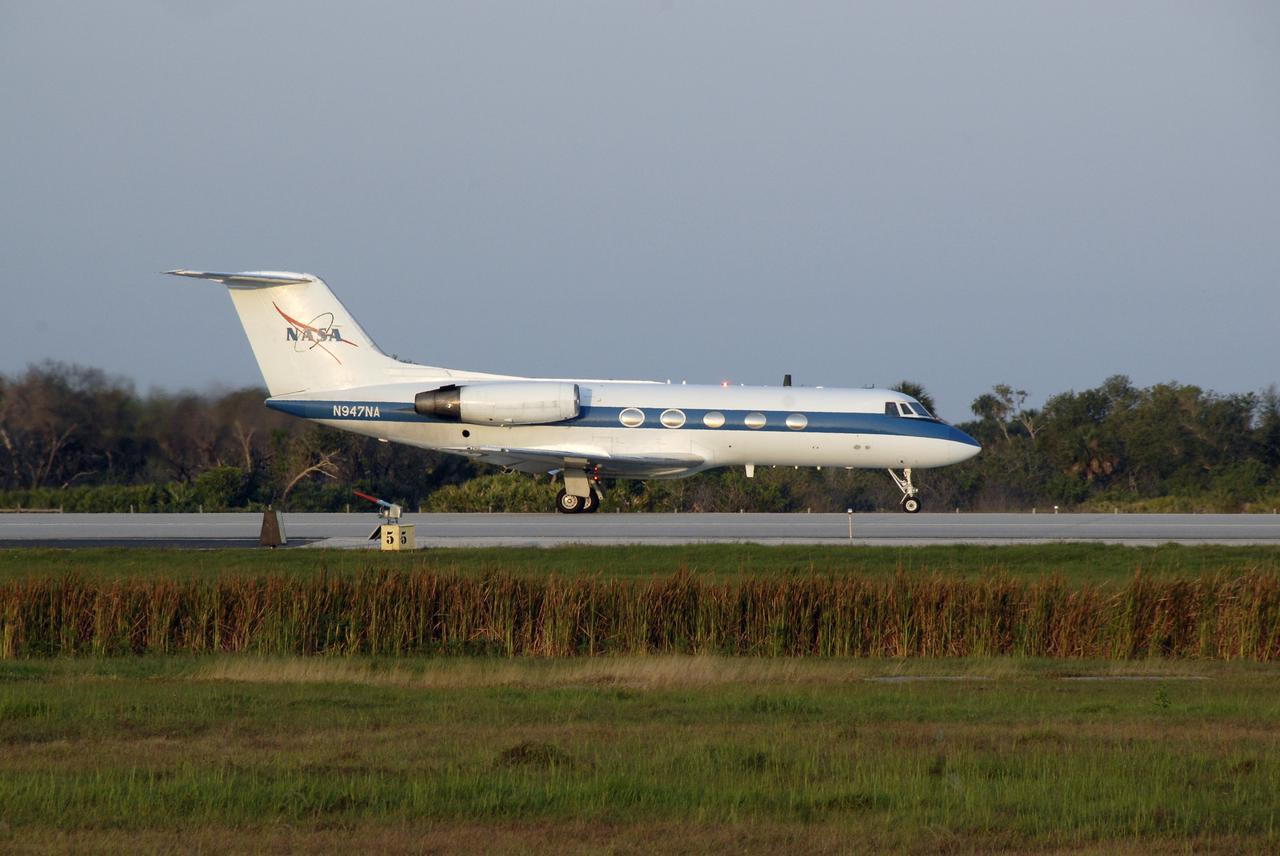
CAPE CANAVERAL, Fla. – On the runway at the Shuttle Landing Facility, or SLF, at NASA's Kennedy Space Center in Florida, the Shuttle Training Aircraft is ready for takeoff. STS-125 Commander Scott Altman and Pilot Gregory C. Johnson are practicing shuttle landings on the SLF runway in preparation for their launch on space shuttle Atlantis, scheduled for 2:01 p.m. EDT on May 11. On Atlantis’ STS-125 mission, NASA's Hubble Space Telescope will be serviced for the fifth and final time. The flight will include five spacewalks during which astronauts will refurbish and upgrade the telescope with state-of-the-art science instruments. As a result, Hubble's capabilities will be expanded and its operational lifespan extended through at least 2014. Photo credit: NASA/Kim Shiflett
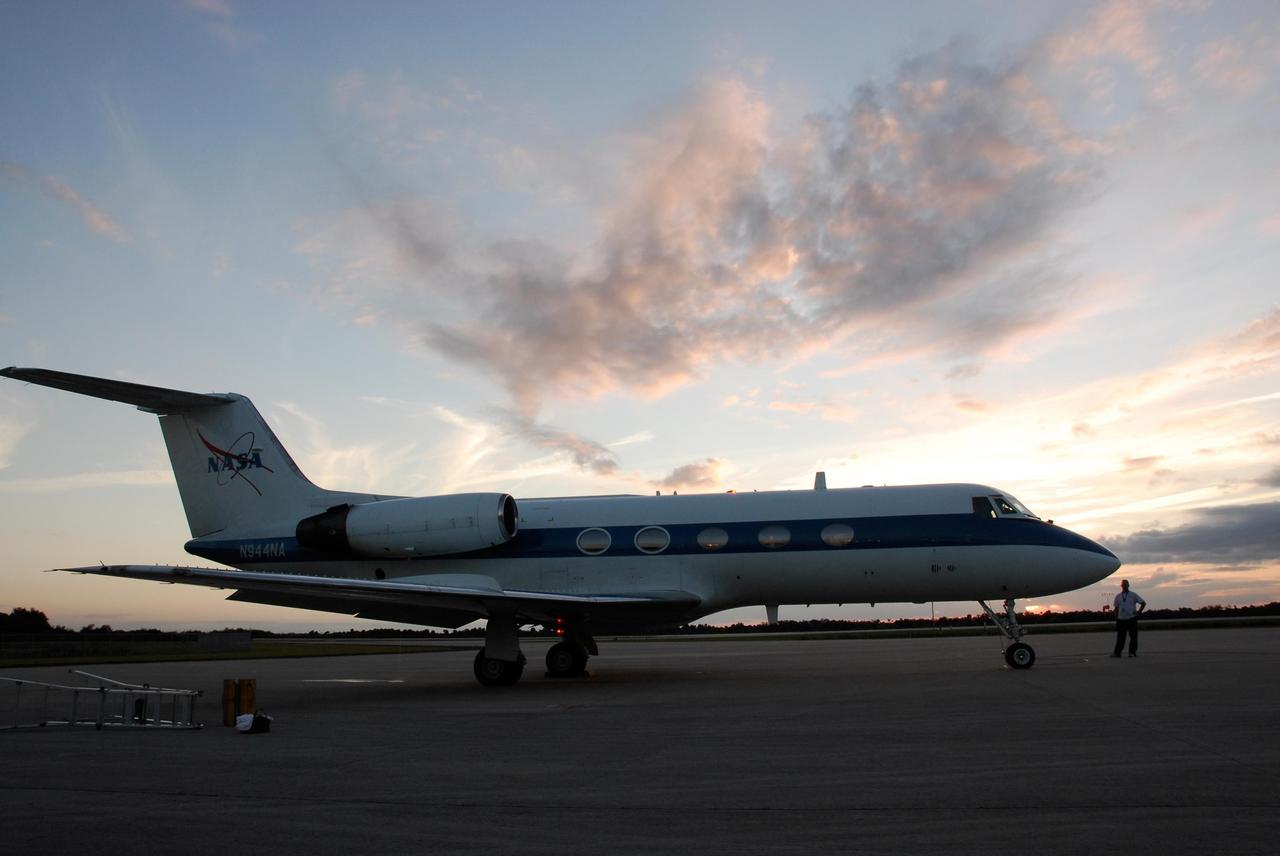
KENNEDY SPACE CENTER, FLA. -- A shuttle training aircraft, or STA, sits on the tarmac at Kennedy Space Center's Shuttle Landing Facility at dusk, ready for practice flights by space shuttle Atlantis STS-122 Commander Steve Frick and Pilot Alan Poindexter. The STA is a Grumman American Aviation-built Gulf Stream II jet that was modified to simulate an orbiter's cockpit, motion and visual cues, and handling qualities. In flight, the STA duplicates the orbiter's atmospheric descent trajectory from approximately 35,000 feet altitude to landing on a runway. Because the orbiter is unpowered during re-entry and landing, its high-speed glide must be perfectly executed the first time. The training is part of terminal countdown demonstration test, or TCDT, activities. The TCDT provides astronauts and ground crews with equipment familiarization, emergency egress training and a simulated launch countdown. On mission STS-122, Atlantis will deliver the European Space Agency's Columbus module to the International Space Station. Columbus is a multifunctional, pressurized laboratory that will be permanently attached to U.S. Node 2, called Harmony, and will expand the research facilities aboard the station. Launch is targeted for Dec. 6. Photo credit: NASA/Kim Shiflett
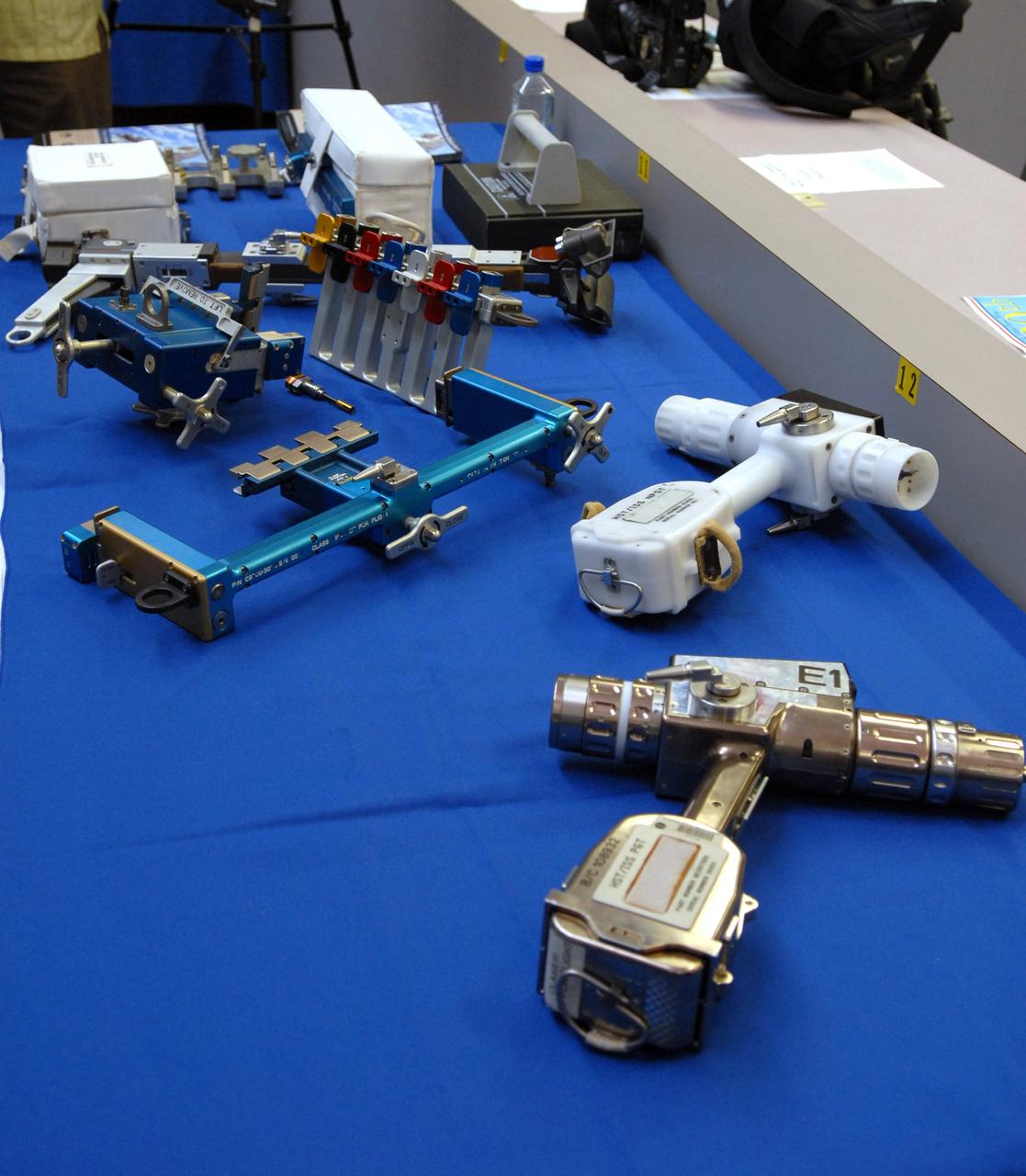
CAPE CANAVERAL, Fla. – The tools that will be used to service NASA's Hubble Space Telescope on the STS-125 mission are displayed in the NASA News Center at NASA's Kennedy Space Center in Florida. In the foreground is the pistol grip tool. It can install and remove instruments, drive latches and open doors. A self-contained, high-torque drive, the tool features an on-board computer that permits users to tailor its performance to the mission demands. Behind it is the plastic version used by astronauts during practice in the water tank at NASA' Johnson Space Center. At center left are the card extraction and insertion tools to enable removal of electronic cards. And behind those is the bit caddy. On space shuttle Atlantis’ STS-125 mission, Hubble will be serviced for the fifth and final time. The flight will include five spacewalks during which astronauts will refurbish and upgrade the telescope with these state-of-the-art science instruments. As a result, Hubble's capabilities will be expanded and its operational lifespan extended through at least 2014. The payload includes a Wide Field Camera 3, fine guidance sensor and the Cosmic Origins Spectrograph. Launch is scheduled for 2:01 p.m. EDT May 11. Photo credit: NASA/Jack Pfaller
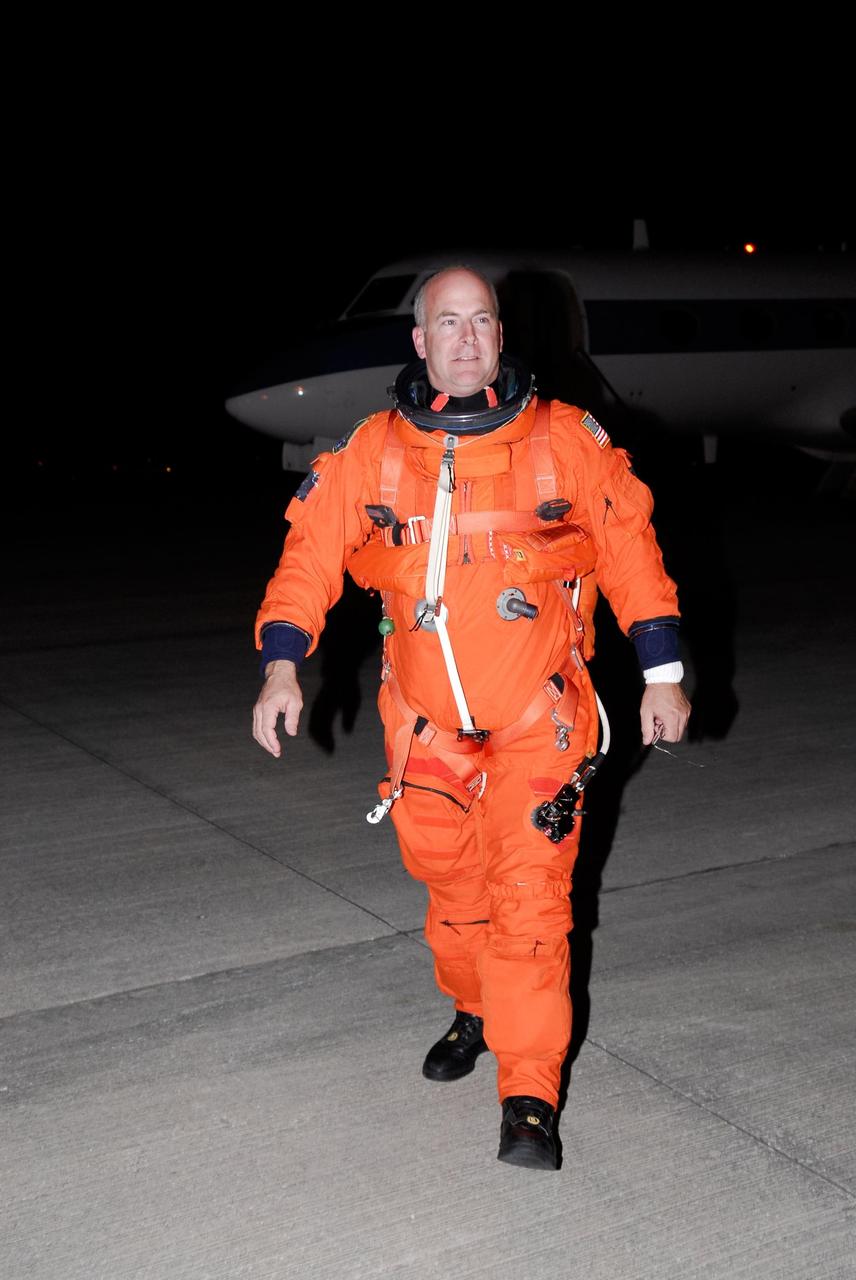
KENNEDY SPACE CENTER, FLA. -- Space shuttle Atlantis STS-122 Pilot Alan Poindexter seems satisfied with the practice session he has just completed aboard a shuttle training aircraft, or STA, at Kennedy Space Center's Shuttle Landing Facility. He and STS-122 Commander Steve Frick were practicing landing the STA in preparation for their upcoming mission. The STA is a Grumman American Aviation-built Gulf Stream II jet that was modified to simulate an orbiter's cockpit, motion and visual cues, and handling qualities. In flight, the STA duplicates the orbiter's atmospheric descent trajectory from approximately 35,000 feet altitude to landing on a runway. Because the orbiter is unpowered during re-entry and landing, its high-speed glide must be perfectly executed the first time. The training is part of terminal countdown demonstration test, or TCDT, activities. The TCDT provides astronauts and ground crews with equipment familiarization, emergency egress training and a simulated launch countdown. On mission STS-122, Atlantis will deliver the European Space Agency's Columbus module to the International Space Station. Columbus is a multifunctional, pressurized laboratory that will be permanently attached to U.S. Node 2, called Harmony, and will expand the research facilities aboard the station. Launch is targeted for Dec. 6. Photo credit: NASA/Kim Shiflett
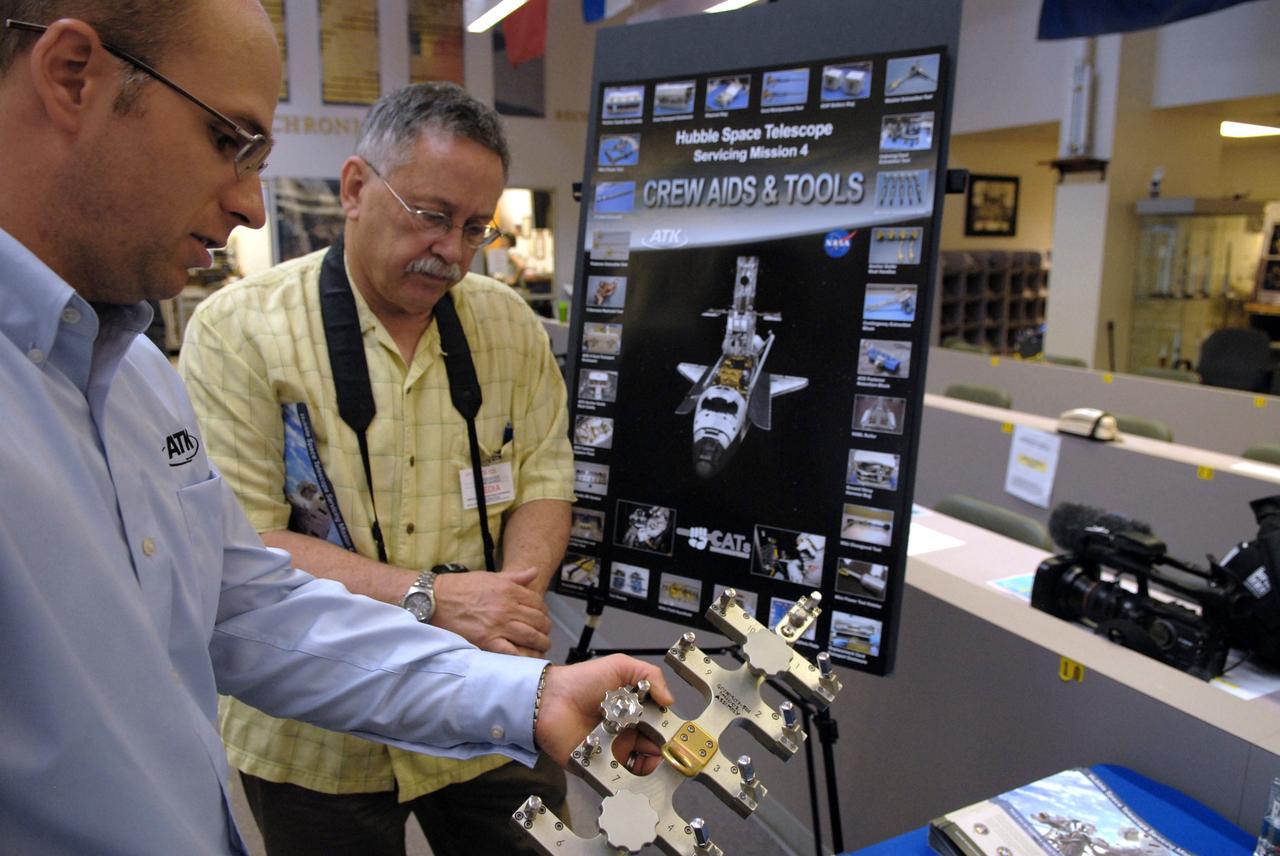
CAPE CANAVERAL, Fla. – The tools that will be used to service NASA's Hubble Space Telescope on the STS-125 mission are displayed in the NASA News Center at NASA's Kennedy Space Center in Florida. Being held in the foreground is the grid cutter tool, which will enable removal of the Electromagnetic Interference Grid from the Advanced Camera for Surveys access cover. On space shuttle Atlantis’ STS-125 mission, Hubble will be serviced for the fifth and final time. The flight will include five spacewalks during which astronauts will refurbish and upgrade the telescope with these state-of-the-art science instruments. As a result, Hubble's capabilities will be expanded and its operational lifespan extended through at least 2014. The payload includes a Wide Field Camera 3, fine guidance sensor and the Cosmic Origins Spectrograph. Launch is scheduled for 2:01 p.m. EDT May 11. Photo credit: NASA/Jack Pfaller
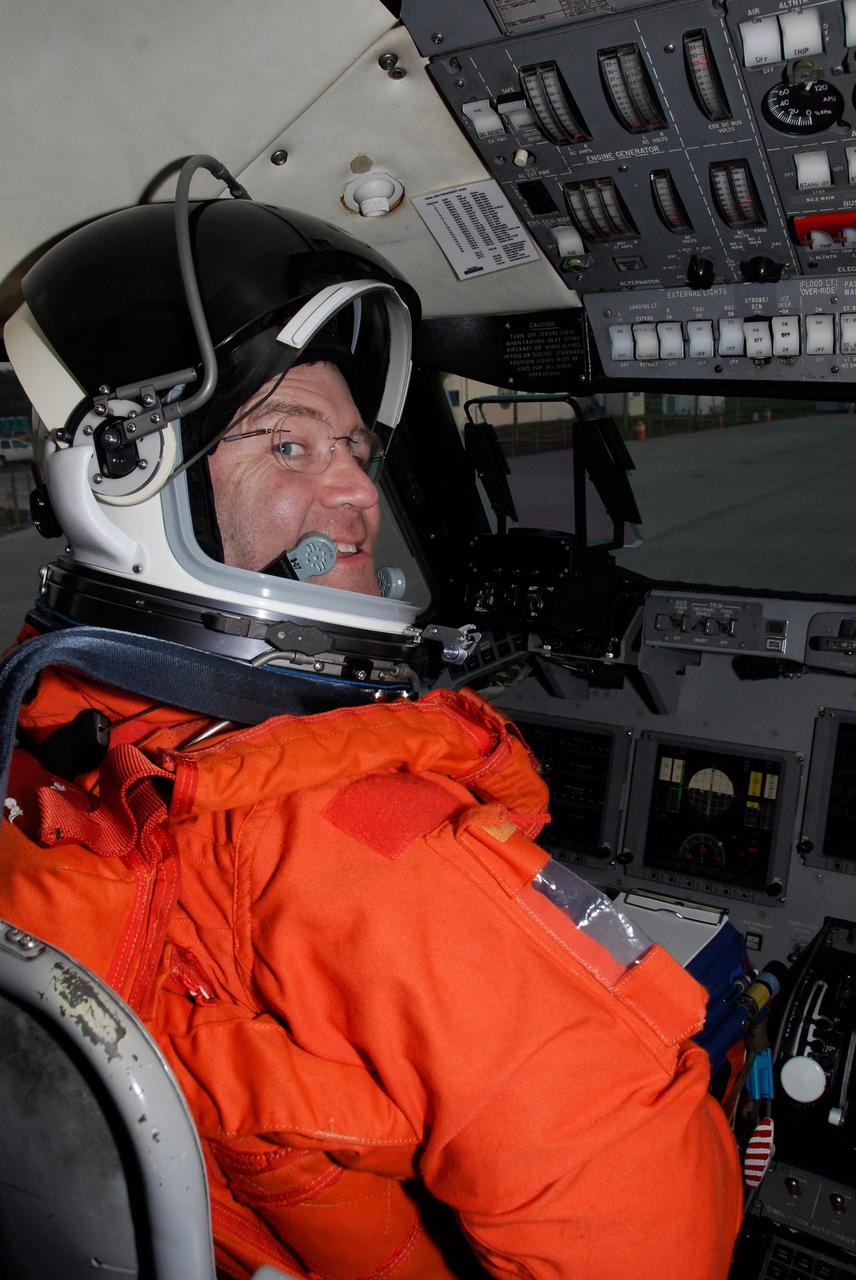
KENNEDY SPACE CENTER, FLA. -- Space shuttle Atlantis STS-122 Commander Steve Frick prepares to practice shuttle landings. He is sitting in the cockpit of a shuttle training aircraft, or STA, at Kennedy Space Center's Shuttle Landing Facility. The STA is a Grumman American Aviation-built Gulf Stream II jet that was modified to simulate an orbiter's cockpit, motion and visual cues, and handling qualities. In flight, the STA duplicates the orbiter's atmospheric descent trajectory from approximately 35,000 feet altitude to landing on a runway. Because the orbiter is unpowered during re-entry and landing, its high-speed glide must be perfectly executed the first time. The training is part of terminal countdown demonstration test, or TCDT, activities. The TCDT provides astronauts and ground crews with equipment familiarization, emergency egress training and a simulated launch countdown. On mission STS-122, Atlantis will deliver the European Space Agency's Columbus module to the International Space Station. Columbus is a multifunctional, pressurized laboratory that will be permanently attached to U.S. Node 2, called Harmony, and will expand the research facilities aboard the station. Launch is targeted for Dec. 6. Photo credit: NASA/Kim Shiflett
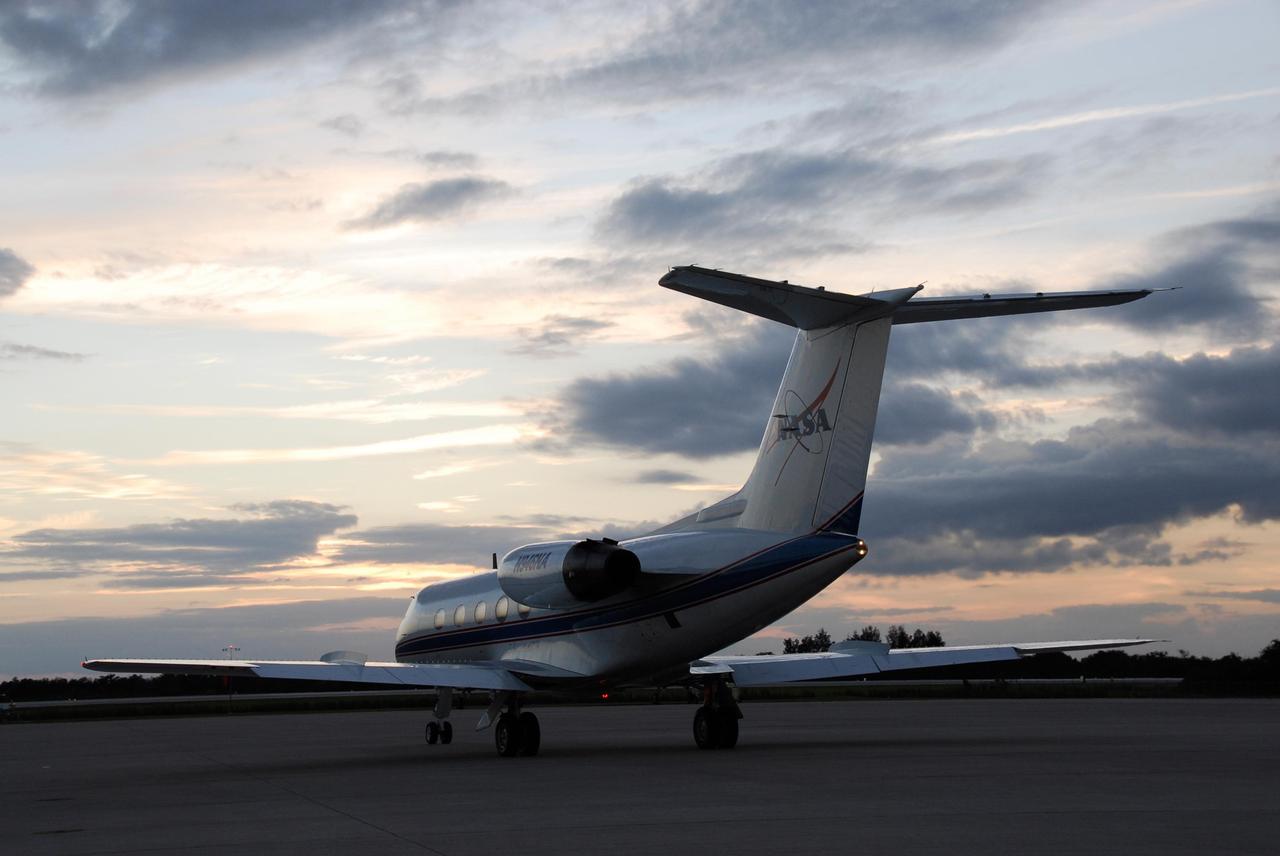
KENNEDY SPACE CENTER, FLA. -- A shuttle training aircraft, or STA, prepares for takeoff from Kennedy Space Center's Shuttle Landing Facility at dusk. The STA is being used for practice flights by space shuttle Atlantis STS-122 Commander Steve Frick and Pilot Alan Poindexter. The STA is a Grumman American Aviation-built Gulf Stream II jet that was modified to simulate an orbiter's cockpit, motion and visual cues, and handling qualities. In flight, the STA duplicates the orbiter's atmospheric descent trajectory from approximately 35,000 feet altitude to landing on a runway. Because the orbiter is unpowered during re-entry and landing, its high-speed glide must be perfectly executed the first time. The training is part of terminal countdown demonstration test, or TCDT, activities. The TCDT provides astronauts and ground crews with equipment familiarization, emergency egress training and a simulated launch countdown. On mission STS-122, Atlantis will deliver the European Space Agency's Columbus module to the International Space Station. Columbus is a multifunctional, pressurized laboratory that will be permanently attached to U.S. Node 2, called Harmony, and will expand the research facilities aboard the station. Launch is targeted for Dec. 6. Photo credit: NASA/Kim Shiflett
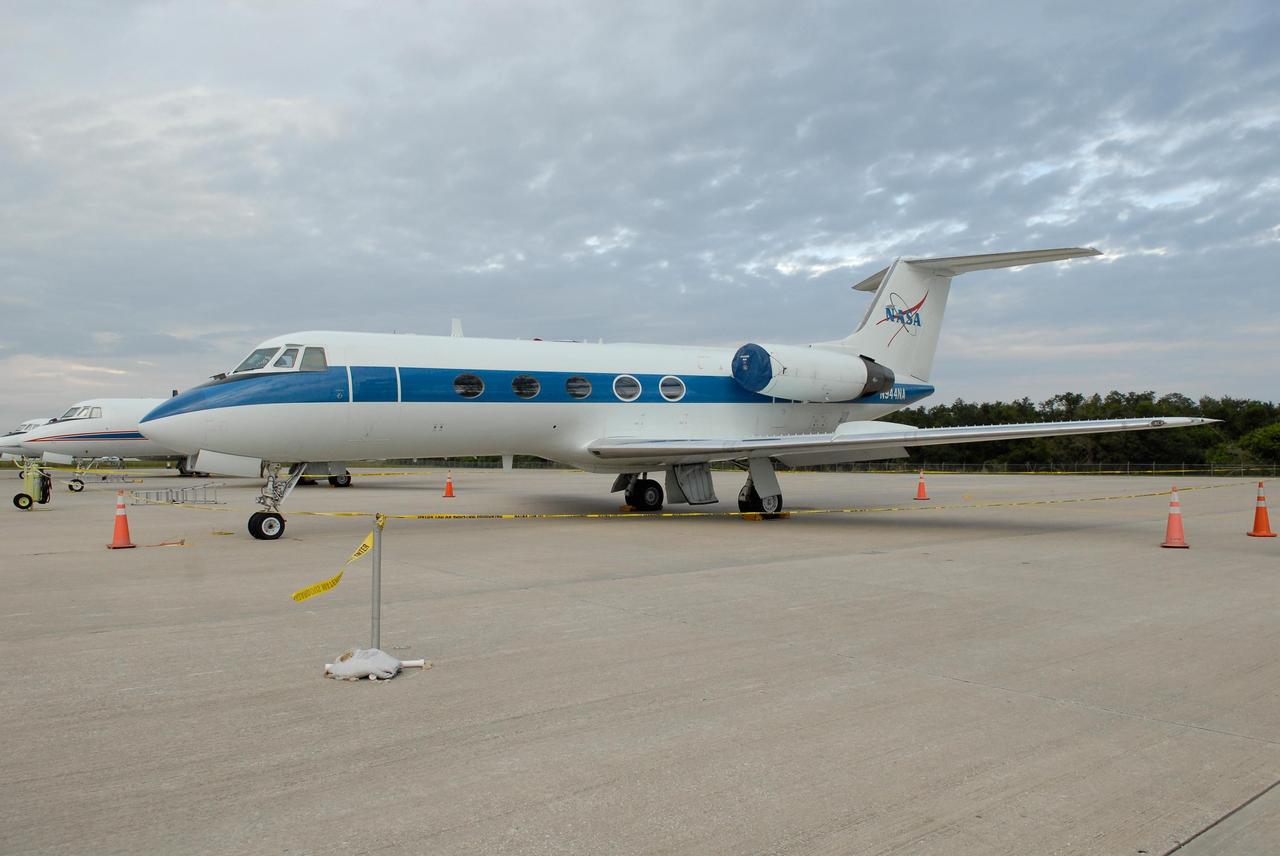
KENNEDY SPACE CENTER, FLA. -- The left position light, strobe light and wing tip of one of NASA's Shuttle Training Aircraft, or STAs, sustained minor damage from apparent contact with a tree near Kennedy Space Center's Shuttle Landing Facility. The incident occurred during landing about 6:30 p.m. EDT Oct. 19 following a training session. An STA flight instructor was piloting the aircraft. The flight crew was unaware of any contact with the tree, and there were no injuries. Thunderstorms were in the area at the time of the incident, which is under investigation. The STA is a twin-engine Gulfstream II jet that was modified to simulate a space shuttle during landing. Photo credit: NASA/Kim Shiflett
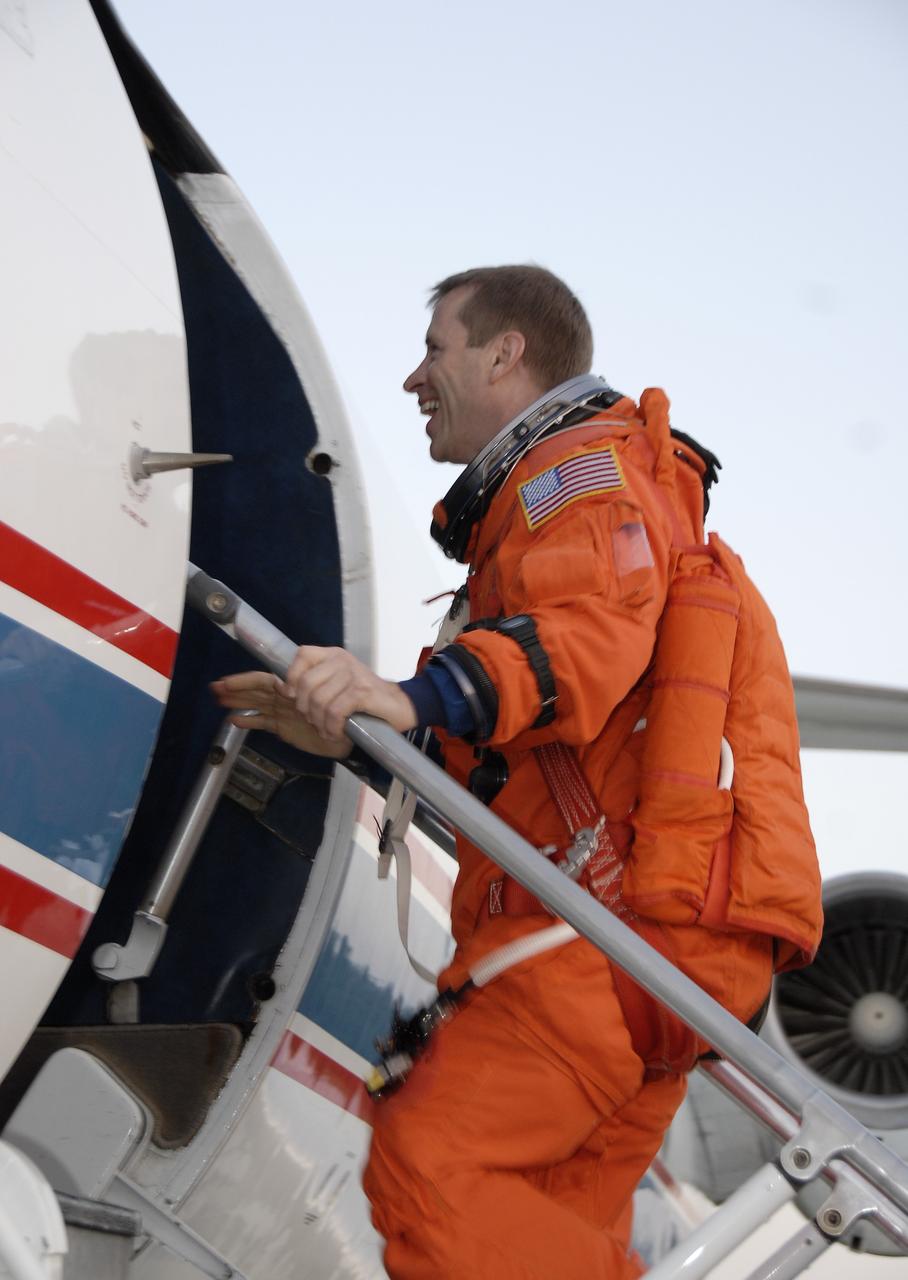
CAPE CANAVERAL, Fla. – On the Shuttle Landing Facility at NASA's Kennedy Space Center in Florida, STS-125 Pilot Gregory C. Johnson, wearing his launch-and-entry suit, heads into the Shuttle Training Aircraft to practice shuttle landings in preparation for launch of space shuttle Atlantis, scheduled for 2:01 p.m. EDT on May 11. On Atlantis’ STS-125 mission, NASA's Hubble Space Telescope will be serviced for the fifth and final time. The flight will include five spacewalks during which astronauts will refurbish and upgrade the telescope with state-of-the-art science instruments. As a result, Hubble's capabilities will be expanded and its operational lifespan extended through at least 2014. Photo credit: NASA/Kim Shiflett
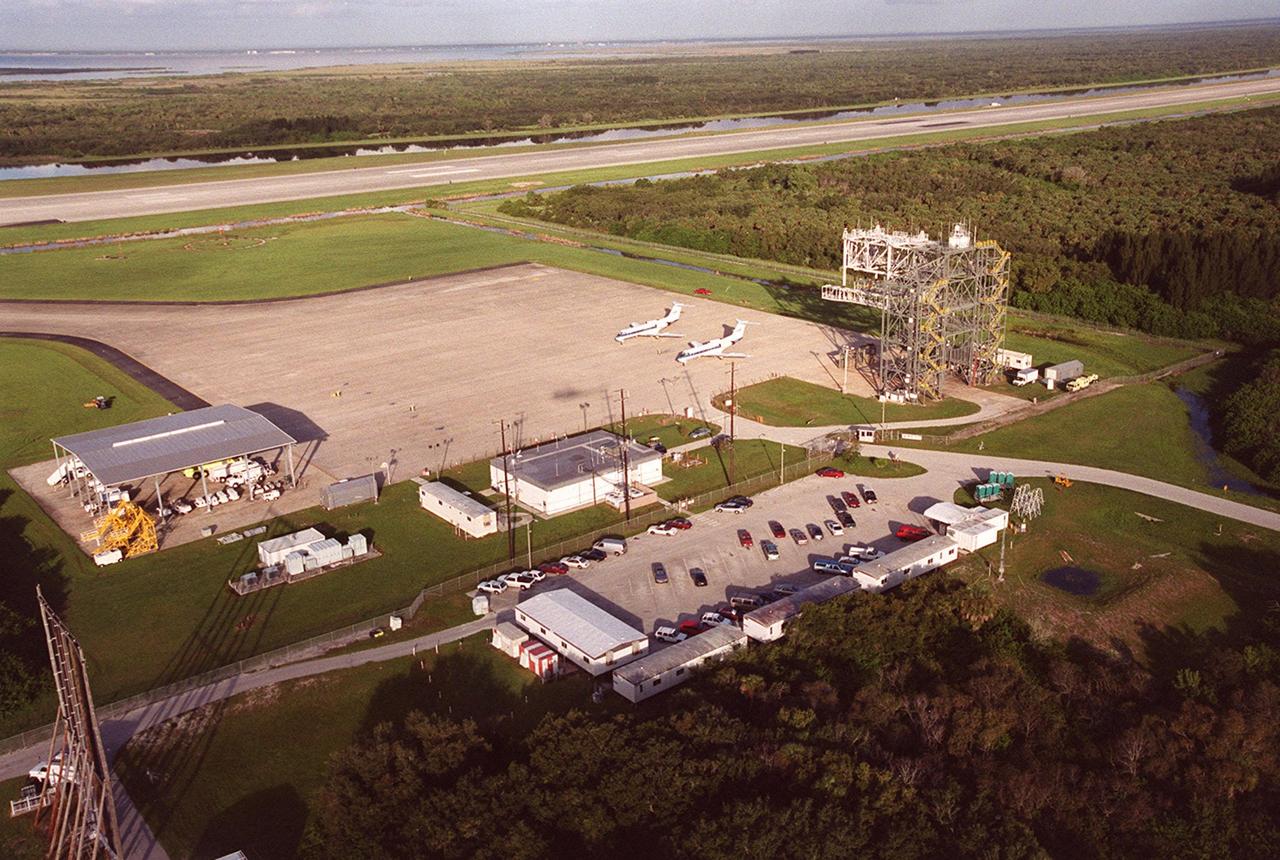
KENNEDY SPACE CENTER, FLA. -- An aerial view of the Shuttle Landing Facility shows the fuel truck shelter (left), administrative building (center) with parking lot behind it (foreground), two Shuttle Training Aircraft (STA) parked on the apron and the mate/demate device (right). In the background is the runway. The STAs are Grumman Gulfstream 2 aircraft with converted cockpits that emulate those in the Shuttles for practice landings at the SLF. The mate/demate device is used to lift the orbiter onto or off a Shuttle Carrier Aircraft when it has to be ferried to or from KSC
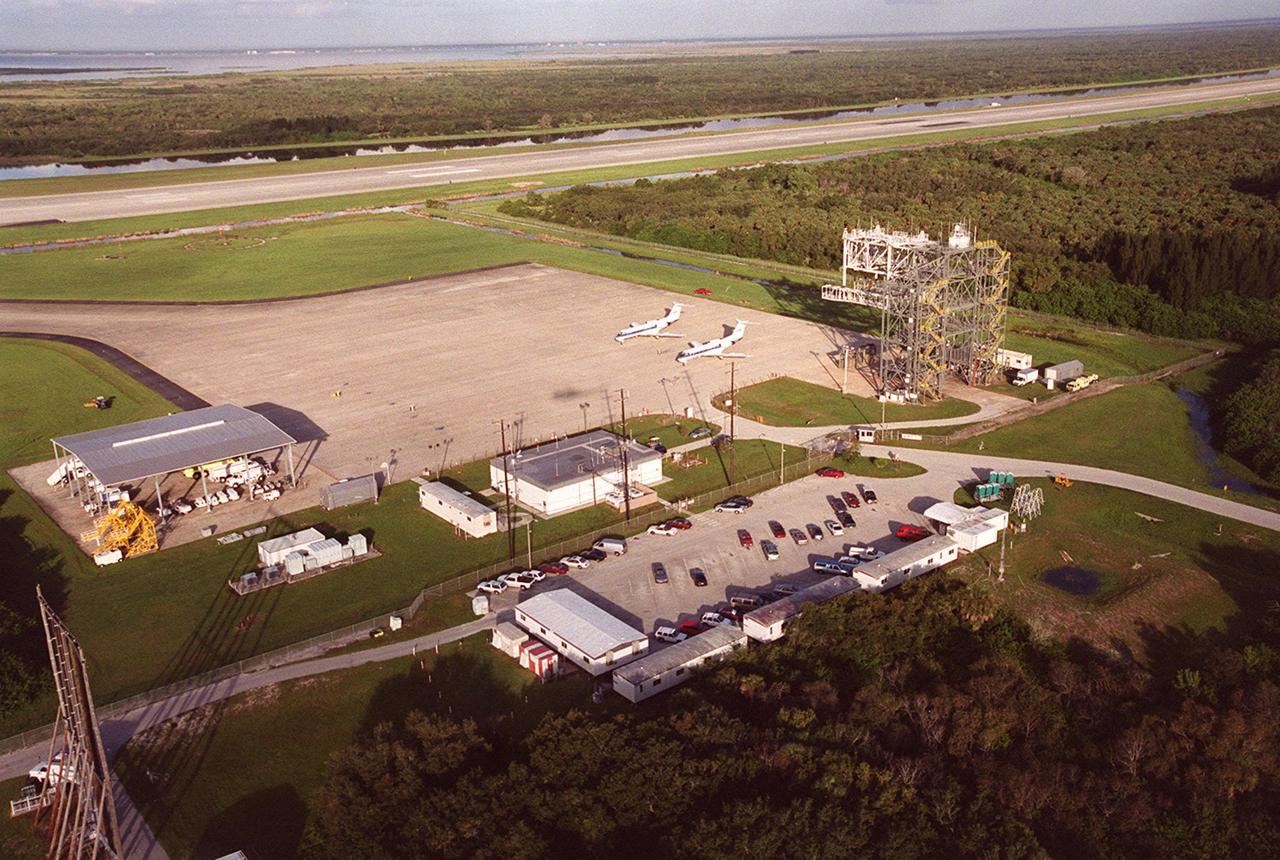
KENNEDY SPACE CENTER, FLA. -- An aerial view of the Shuttle Landing Facility shows the fuel truck shelter (left), administrative building (center) with parking lot behind it (foreground), two Shuttle Training Aircraft (STA) parked on the apron and the mate/demate device (right). In the background is the runway. The STAs are Grumman Gulfstream 2 aircraft with converted cockpits that emulate those in the Shuttles for practice landings at the SLF. The mate/demate device is used to lift the orbiter onto or off a Shuttle Carrier Aircraft when it has to be ferried to or from KSC
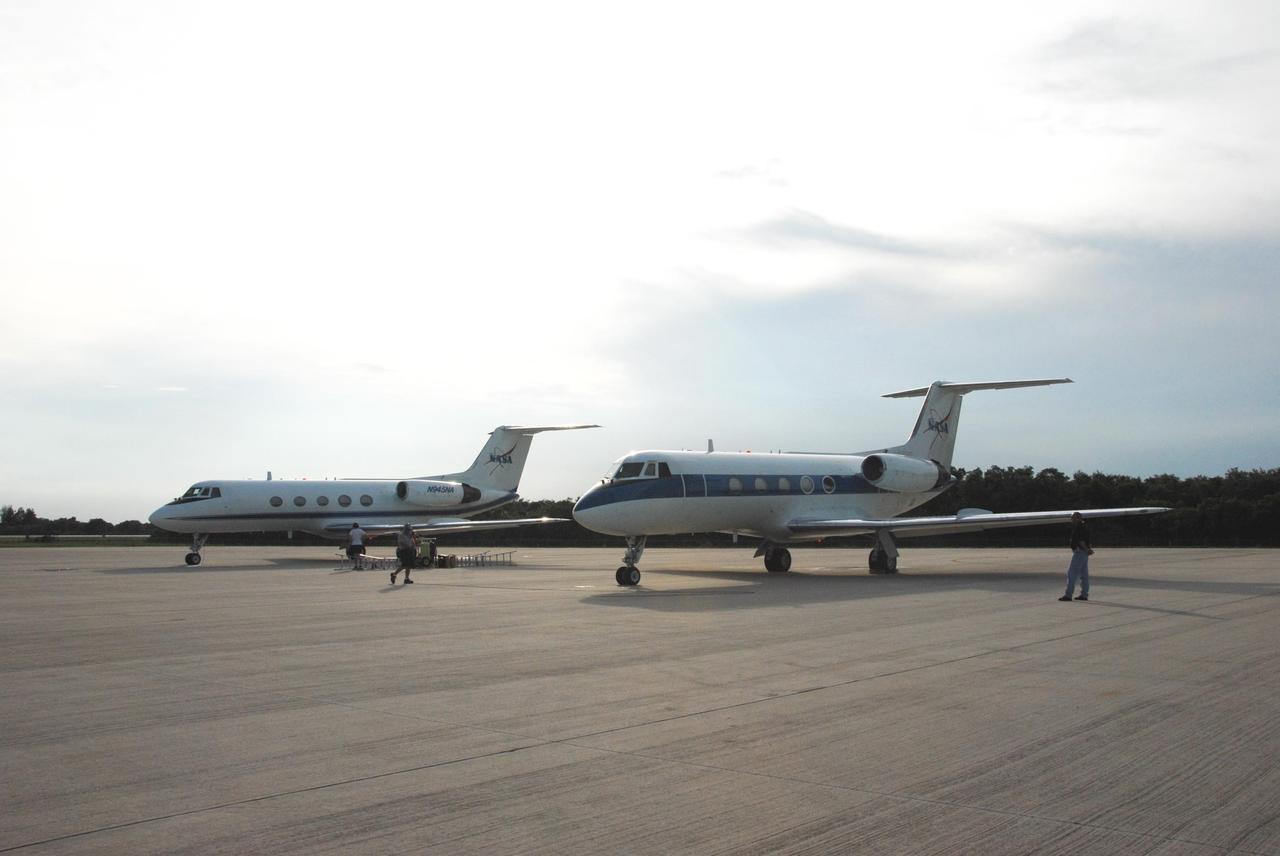
KENNEDY SPACE CENTER, Fla. -- Two shuttle training aircraft, or STAs, wait to taxi onto the runway at the Shuttle Landing Facility. STS-118 Commander Scott Kelly and Pilot Charlie Hobaugh are each piloting one of the STAs for landing practice. The practice is part of Terminal Countdown Demonstration Test, or TCDT, activities that include a simulated launch countdown. The STA is a Grumman American Aviation-built Gulf Stream II jet that was modified to simulate an orbiter's cockpit, motion and visual cues, and handling qualities. In flight, the STA duplicates the orbiter's atmospheric descent trajectory from approximately 35,000 feet altitude to landing on a runway. The STS-118 mission is the 22nd flight to the International Space Station and is targeted for launch on Aug. 7. The mission payload aboard Space Shuttle Endeavour includes the S5 truss, a SPACEHAB module and external stowage platform 3. NASA/George Shelton
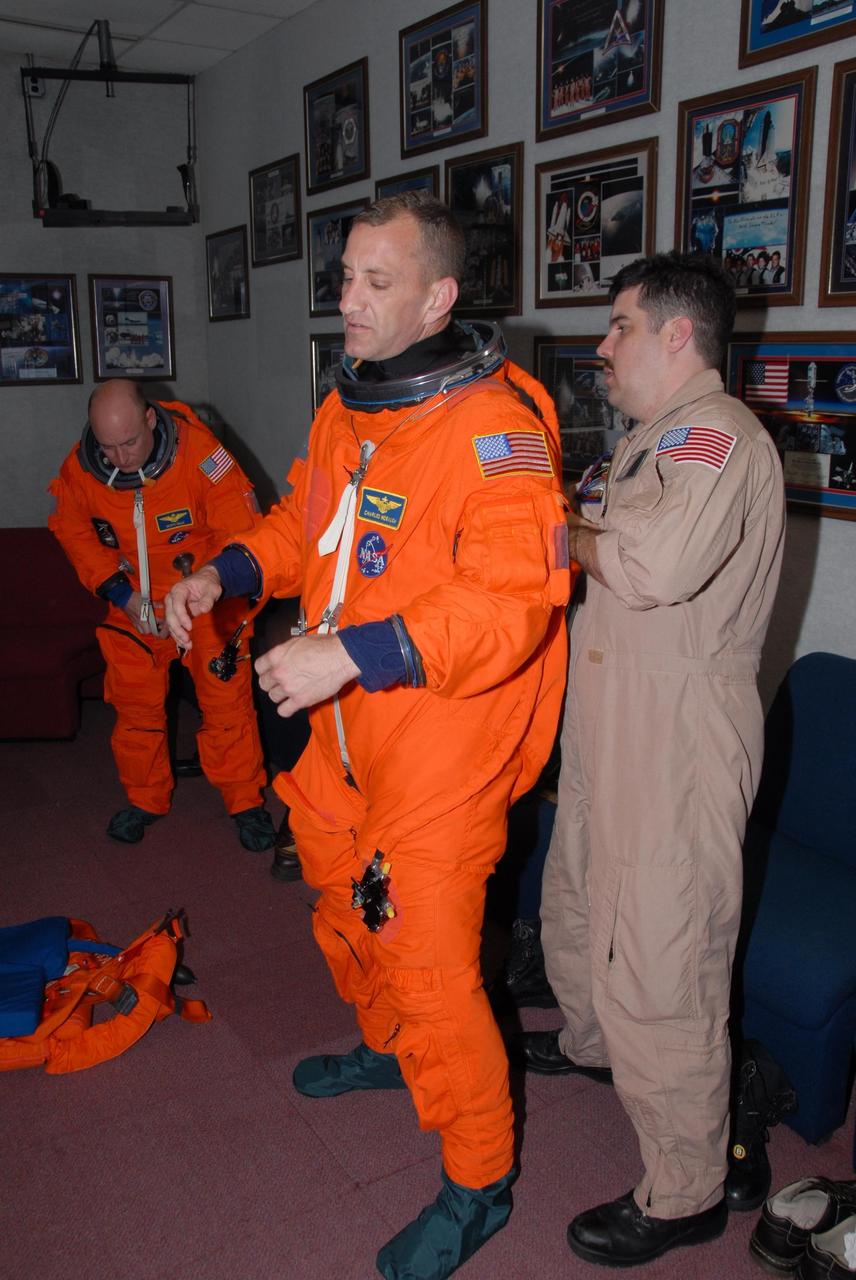
KENNEDY SPACE CENTER, Fla. -- STS-118 Commander Scott Kelly, left, and Pilot Charlie Hobaugh check the fit of their launch and entry suits. The fitting is part of the Terminal Countdown Demonstration Test, or TCDT, activities that include a simulated launch countdown. Kelly and Hobaugh are suiting up also for landing practice in the shuttle training aircraft, known as an STA. The STA is a Grumman American Aviation-built Gulf Stream II jet that was modified to simulate an orbiter's cockpit, motion and visual cues, and handling qualities. In flight, the STA duplicates the orbiter's atmospheric descent trajectory from approximately 35,000 feet altitude to landing on a runway. The STS-118 mission is the 22nd flight to the International Space Station and is targeted for launch on Aug. 7. The mission payload aboard Space Shuttle Endeavour includes the S5 truss, a SPACEHAB module and external stowage platform 3. NASA/George Shelton
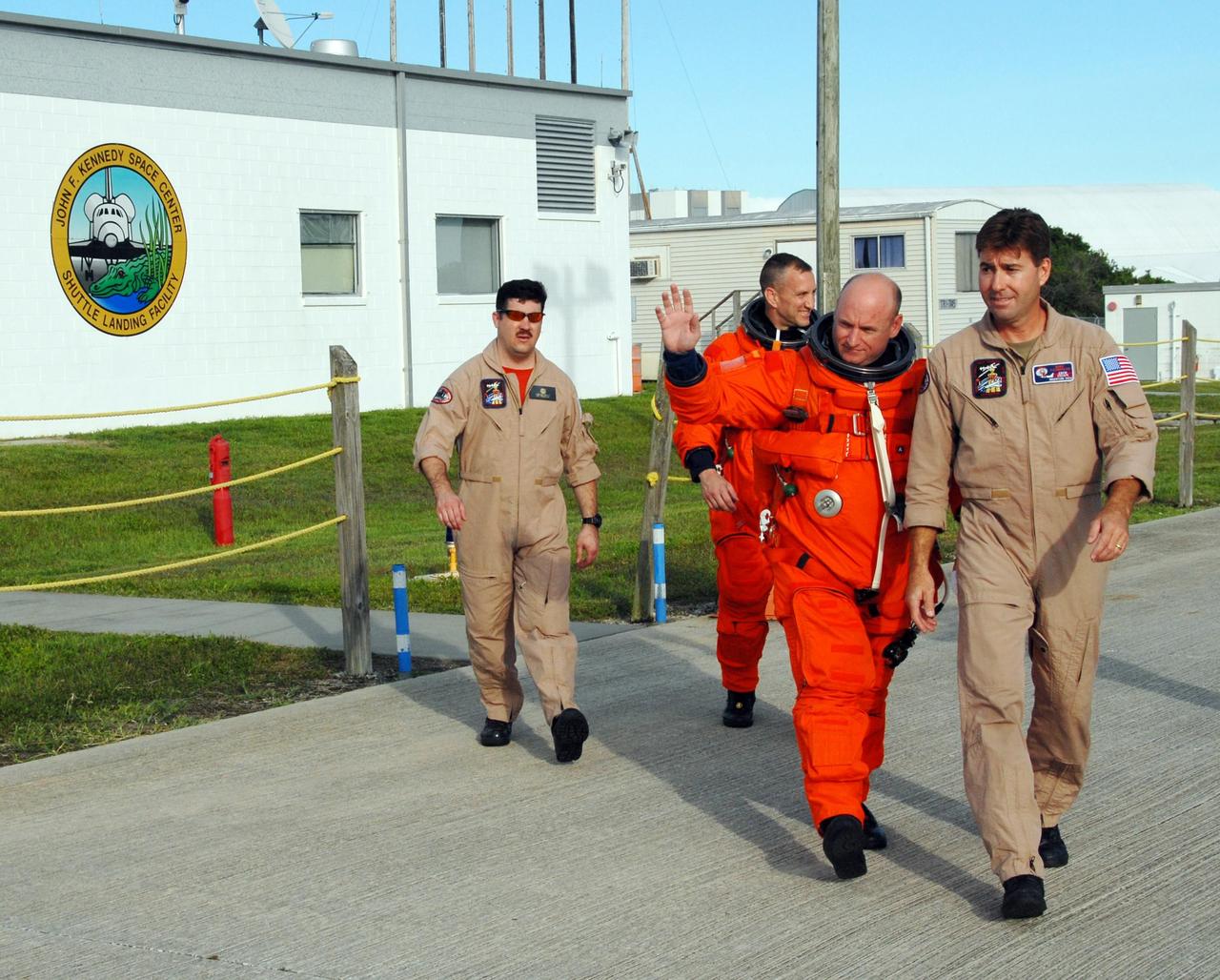
KENNEDY SPACE CENTER, Fla. -- Dressed in their launch and entry suits, STS-118 Pilot Charlie Hobaugh and Commander Scott Kelly (waving) are headed for the runway for landing practice in the shuttle training aircraft, known as an STA. The practice is part of Terminal Countdown Demonstration Test, or TCDT, activities that include a simulated launch countdown. The STA is a Grumman American Aviation-built Gulf Stream II jet that was modified to simulate an orbiter's cockpit, motion and visual cues, and handling qualities. In flight, the STA duplicates the orbiter's atmospheric descent trajectory from approximately 35,000 feet altitude to landing on a runway. The STS-118 mission is the 22nd flight to the International Space Station and is targeted for launch on Aug. 7. The mission payload aboard Space Shuttle Endeavour includes the S5 truss, a SPACEHAB module and external stowage platform 3. NASA/George Shelton

KENNEDY SPACE CENTER, Fla. -- STS-118 Commander Scott Kelly settles in his cockpit seat aboard the shuttle training aircraft, known as an STA, for landing practice. The practice is part of Terminal Countdown Demonstration Test, or TCDT, activities that include a simulated launch countdown. The STA is a Grumman American Aviation-built Gulf Stream II jet that was modified to simulate an orbiter's cockpit, motion and visual cues, and handling qualities. In flight, the STA duplicates the orbiter's atmospheric descent trajectory from approximately 35,000 feet altitude to landing on a runway. The STS-118 mission is the 22nd flight to the International Space Station and is targeted for launch on Aug. 7. The mission payload aboard Space Shuttle Endeavour includes the S5 truss, a SPACEHAB module and external stowage platform 3. NASA/George Shelton
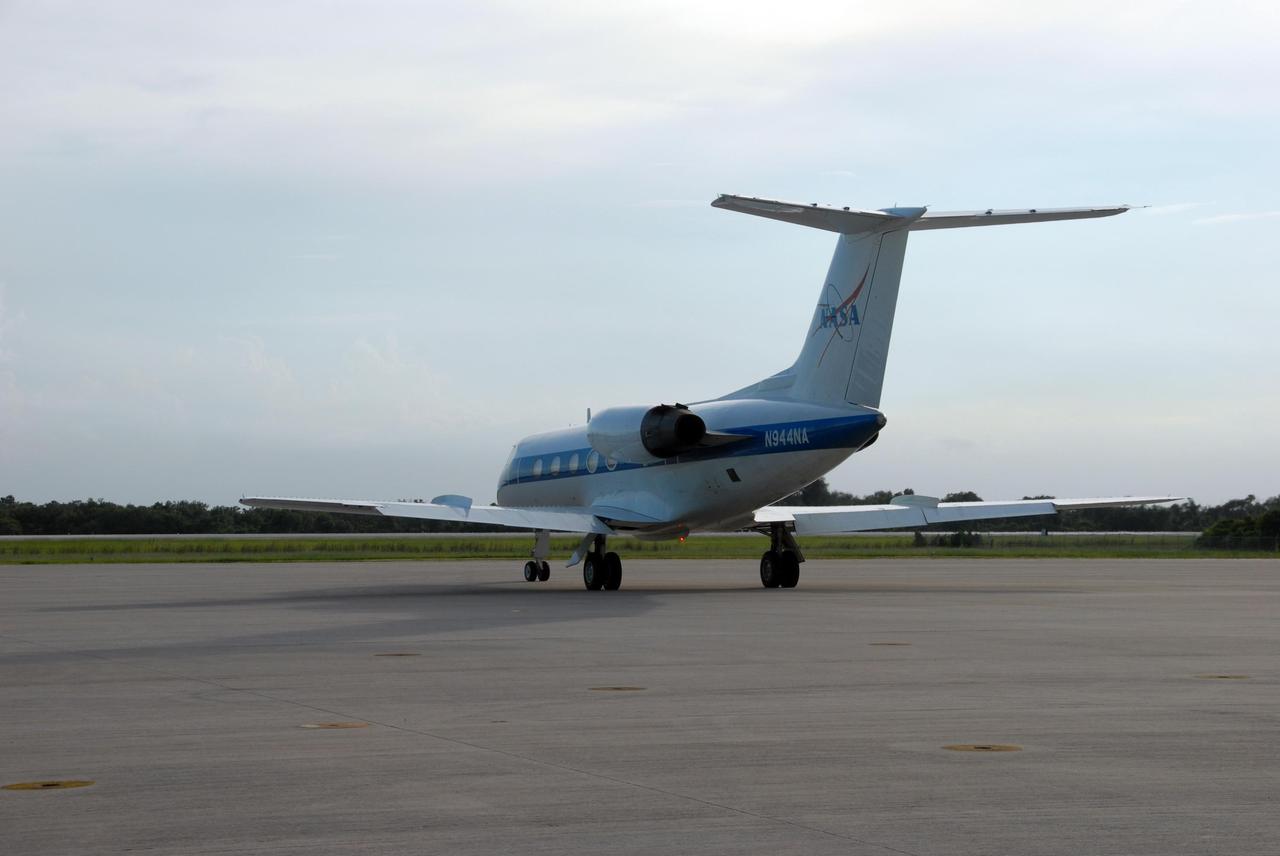
KENNEDY SPACE CENTER, Fla. -- One of two shuttle training aircraft, or STA, taxis out to the runway at the Shuttle Landing Facility. STS-118 Commander Scott Kelly and Pilot Charlie Hobaugh are each piloting one of the STAs for landing practice. The practice is part of Terminal Countdown Demonstration Test, or TCDT, activities that include a simulated launch countdown. The STA is a Grumman American Aviation-built Gulf Stream II jet that was modified to simulate an orbiter's cockpit, motion and visual cues, and handling qualities. In flight, the STA duplicates the orbiter's atmospheric descent trajectory from approximately 35,000 feet altitude to landing on a runway. The STS-118 mission is the 22nd flight to the International Space Station and is targeted for launch on Aug. 7. The mission payload aboard Space Shuttle Endeavour includes the S5 truss, a SPACEHAB module and external stowage platform 3. NASA/George Shelton
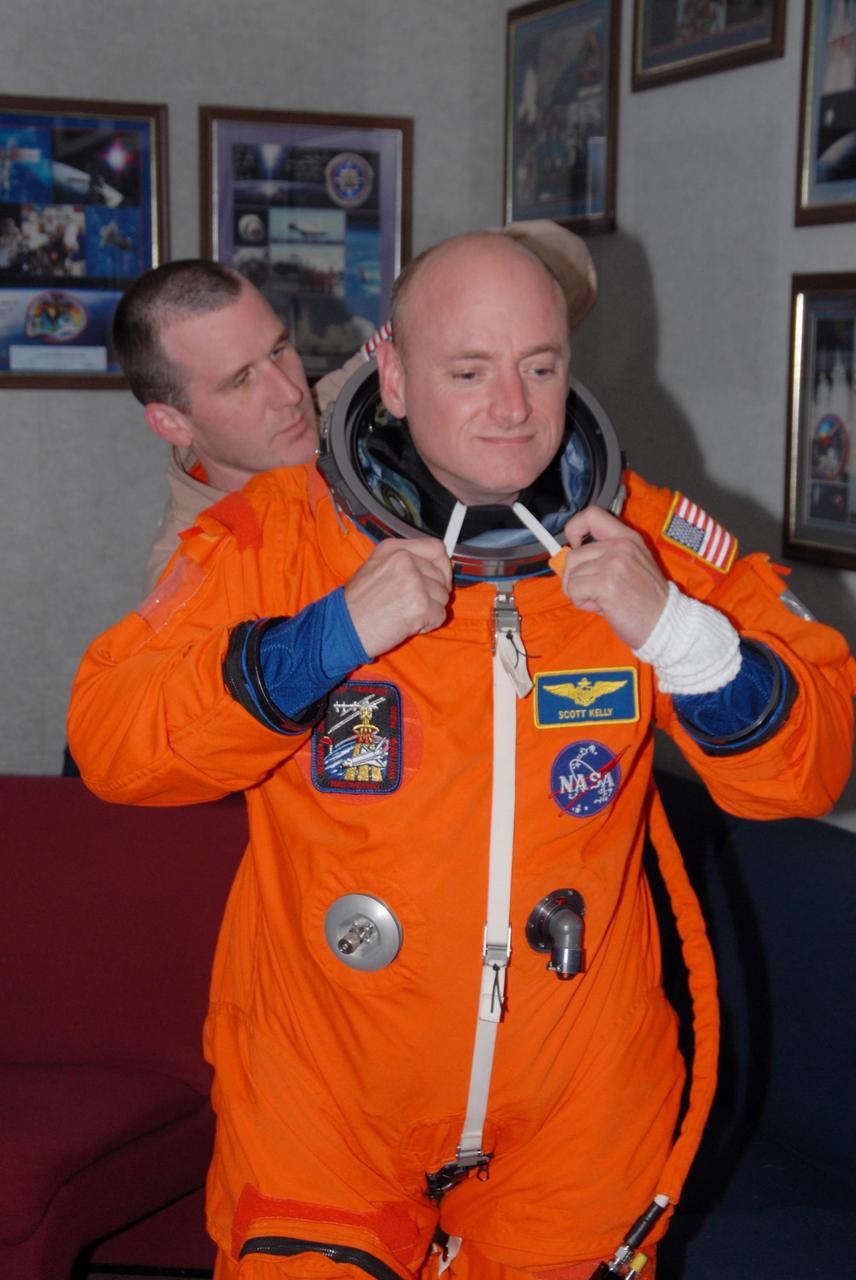
KENNEDY SPACE CENTER, Fla. -- STS-118 Commander Scott Kelly checks the fit of his launch and entry suit. The fitting is part of the Terminal Countdown Demonstration Test, or TCDT, activities that include a simulated launch countdown. Kelly is suiting up also for landing practice in the shuttle training aircraft, known as an STA. The STA is a Grumman American Aviation-built Gulf Stream II jet that was modified to simulate an orbiter's cockpit, motion and visual cues, and handling qualities. In flight, the STA duplicates the orbiter's atmospheric descent trajectory from approximately 35,000 feet altitude to landing on a runway. The STS-118 mission is the 22nd flight to the International Space Station and is targeted for launch on Aug. 7. The mission payload aboard Space Shuttle Endeavour includes the S5 truss, a SPACEHAB module and external stowage platform 3. NASA/George Shelton
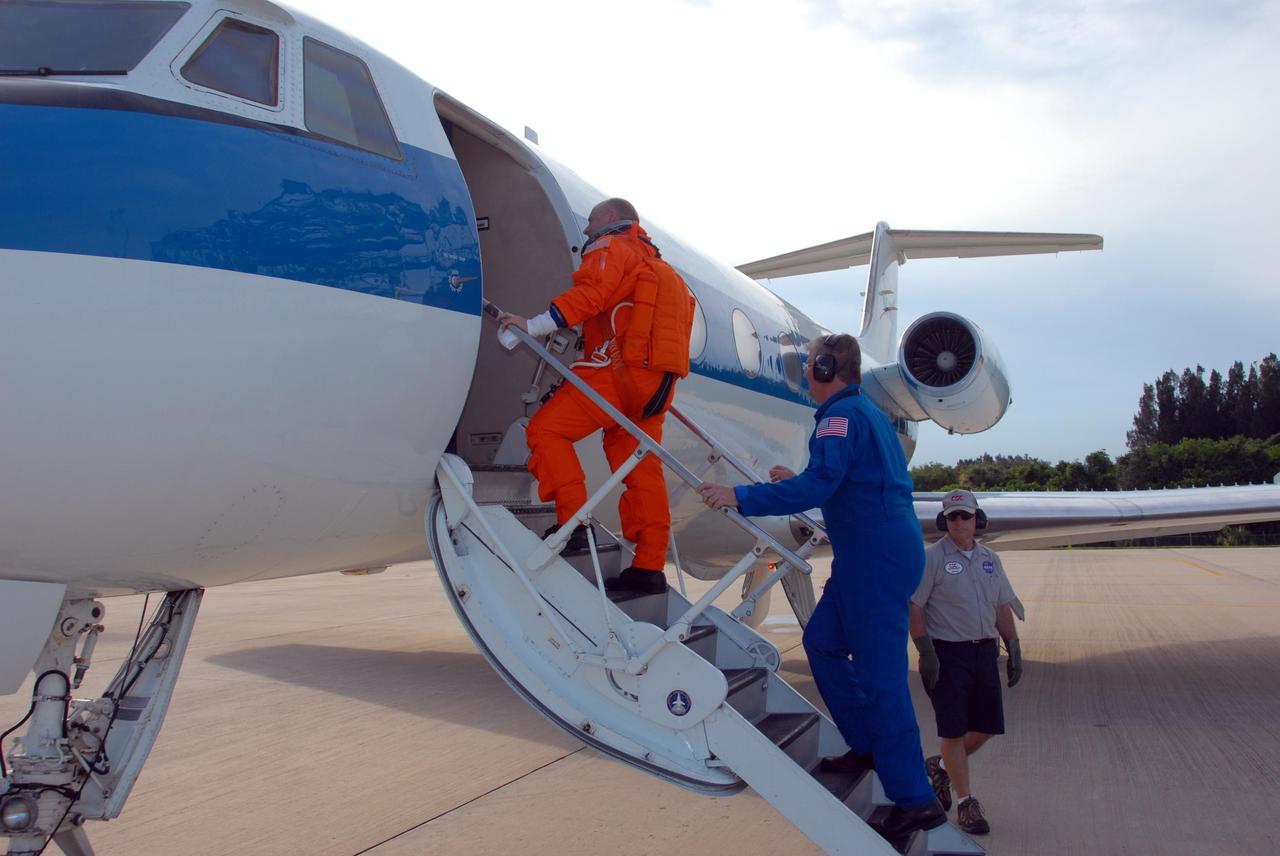
KENNEDY SPACE CENTER, Fla. -- STS-118 Commander Scott Kelly climbs aboard the shuttle training aircraft, known as an STA, for landing practice. The practice is part of Terminal Countdown Demonstration Test, or TCDT, activities that include a simulated launch countdown.The STA is a Grumman American Aviation-built Gulf Stream II jet that was modified to simulate an orbiter's cockpit, motion and visual cues, and handling qualities. In flight, the STA duplicates the orbiter's atmospheric descent trajectory from approximately 35,000 feet altitude to landing on a runway. The STS-118 mission is the 22nd flight to the International Space Station and is targeted for launch on Aug. 7. The mission payload aboard Space Shuttle Endeavour includes the S5 truss, a SPACEHAB module and external stowage platform 3. NASA/George Shelton
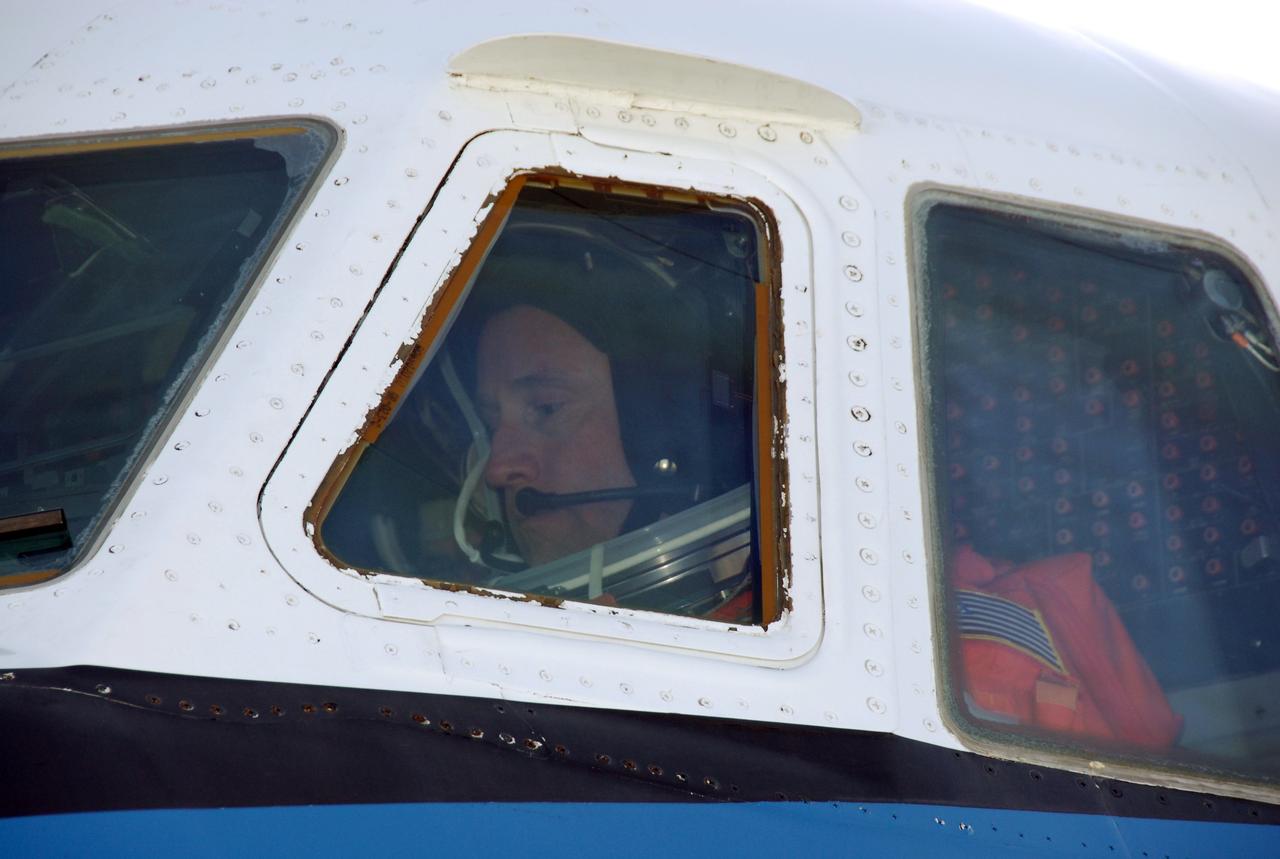
CAPE CANAVERAL, Fla. -- On the Shuttle Landing Facility at NASA's Kennedy Space Center, the commander of the STS-124 mission, Mark Kelly, sits in the cockpit of the shuttle training aircraft, or STA. He is getting ready to practice landing the shuttle on the SLF runway. The STA is a Grumman American Aviation-built Gulf Stream II jet that was modified to simulate an orbiter's cockpit, motion and visual cues, and handling qualities. In flight, the aircraft duplicates the orbiter's atmospheric descent trajectory from approximately 35,000 feet altitude to landing on a runway. Space shuttle Discovery is scheduled to lift off on the STS-124 mission at 5:02 p.m. May 31. Photo credit: NASA/Kim Shiflett
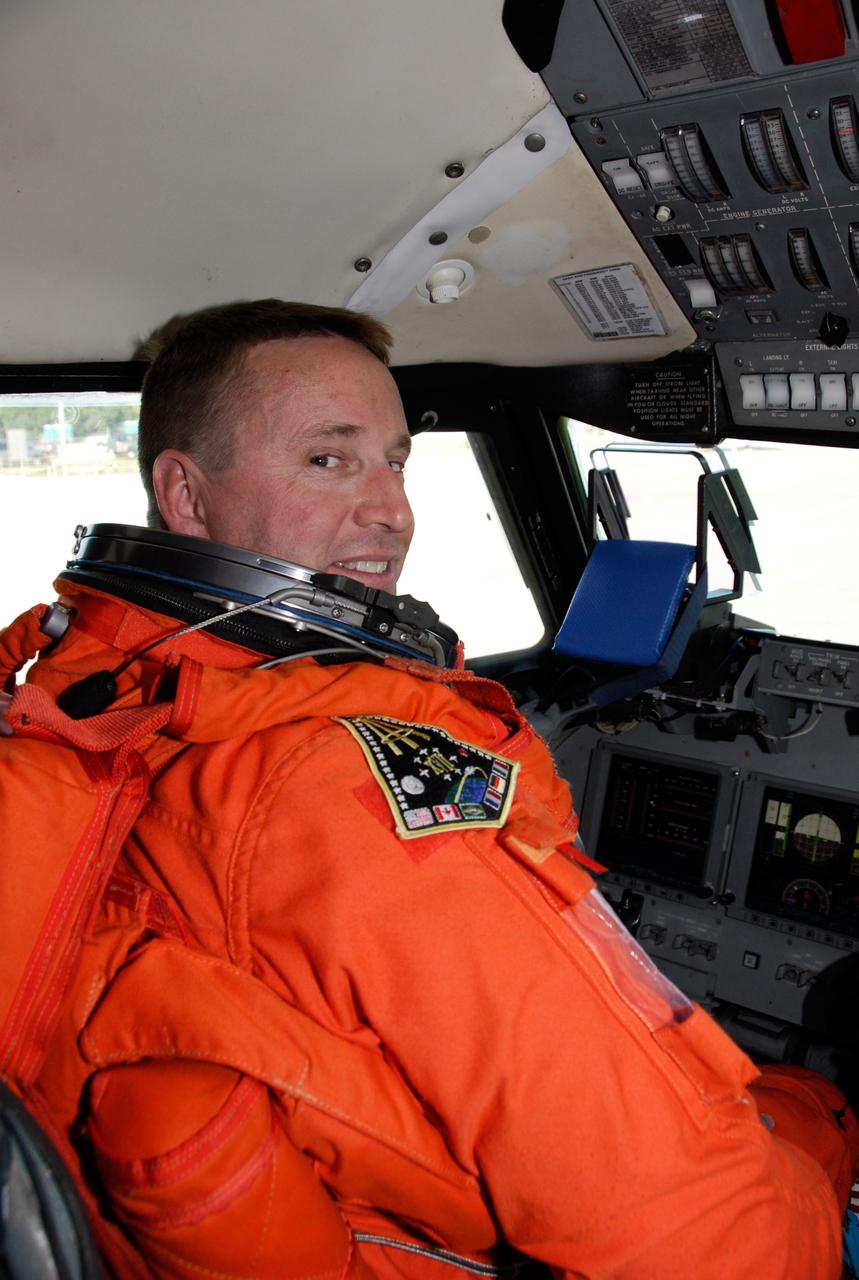
CAPE CANAVERAL, Fla. -- On the Shuttle Landing Facility at NASA's Kennedy Space Center, the commander of the STS-124 mission, Mark Kelly, sits in the cockpit of the shuttle training aircraft, or STA. He is getting ready to practice landing the shuttle on the SLF runway. The STA is a Grumman American Aviation-built Gulf Stream II jet that was modified to simulate an orbiter's cockpit, motion and visual cues, and handling qualities. In flight, the aircraft duplicates the orbiter's atmospheric descent trajectory from approximately 35,000 feet altitude to landing on a runway. Space shuttle Discovery is scheduled to lift off on the STS-124 mission at 5:02 p.m. May 31. Photo credit: NASA/Kim Shiflett
CAPE CANAVERAL, Fla. -- On the Shuttle Landing Facility at NASA's Kennedy Space Center, the pilot of the STS-124 mission, Ken Ham, sits in the cockpit of the shuttle training aircraft, or STA. He is getting ready to practice landing the shuttle on the SLF runway. The STA is a Grumman American Aviation-built Gulf Stream II jet that was modified to simulate an orbiter's cockpit, motion and visual cues, and handling qualities. In flight, the aircraft duplicates the orbiter's atmospheric descent trajectory from approximately 35,000 feet altitude to landing on a runway. Space shuttle Discovery is scheduled to lift off on the STS-124 mission at 5:02 p.m. May 31. Photo credit: NASA/Kim Shiflett
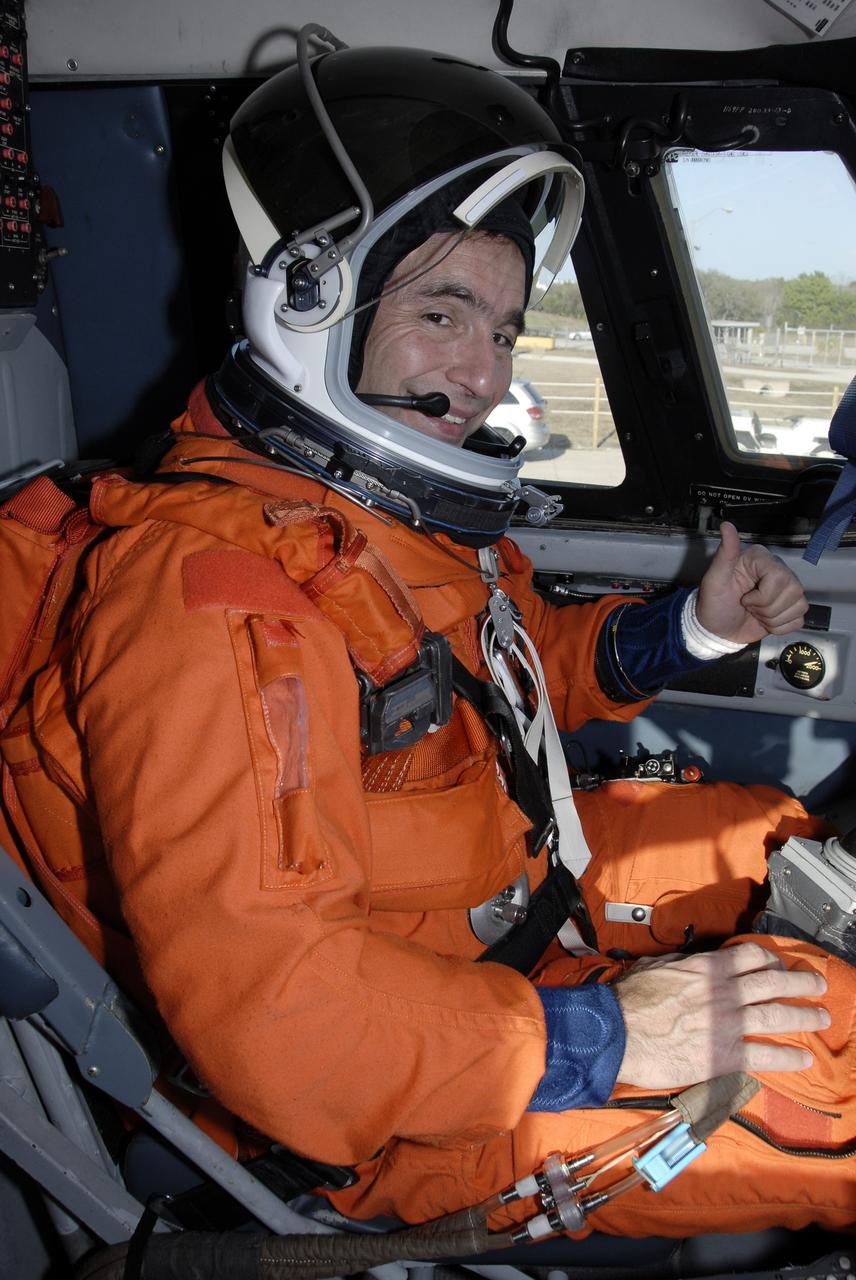
CAPE CANAVERAL, Fla. – On the Shuttle Landing Facility at NASA's Kennedy Space Center in Florida, STS-119 Commander Lee Archambault is seated in the Shuttle Training Aircraft to practice shuttle landings. The mission crew members arrived in the afternoon at Kennedy to prepare for launch. The mission is the 28th to the International Space Station and the 125th space shuttle flight. Space shuttle Discovery will deliver the final pair of power-generating solar array wings and truss element, S6. Photo credit: NASA/Kim Shiflett
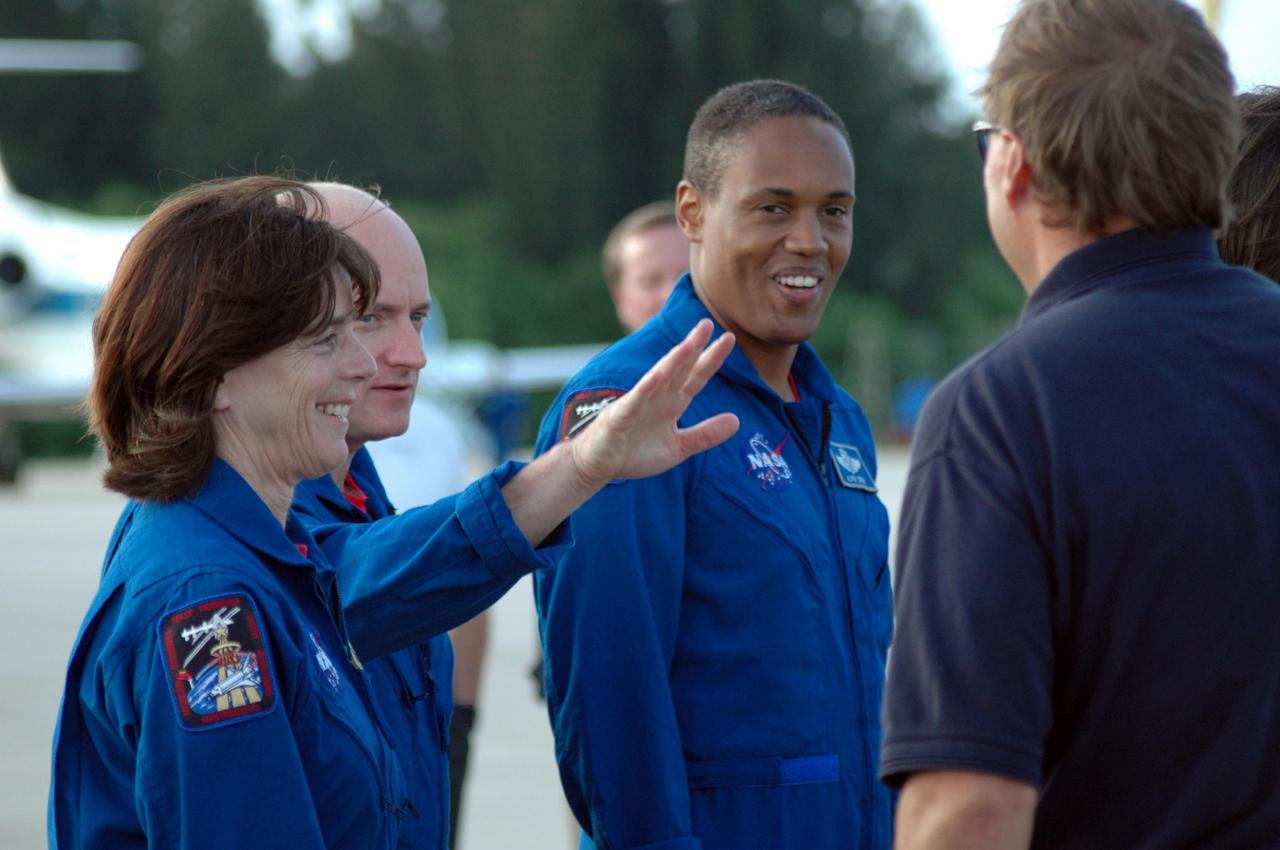
KENNEDY SPACE CENTER, Fla. -- The STS-118 crew arrives at Kennedy's Shuttle Landing Facility aboard a Shuttle Training Aircraft to take part in the Terminal Countdown Demonstration Test (TCDT), a dress rehearsal for launch. From left are Mission Specialist Barbara R. Morgan, Commander Scott Kelly and Mission Specialist Alvin Drew. Morgan joined NASA's Teacher in Space program in 1985 and was selected as an astronaut in 1998. DT activities include M-113 armored personnel carrier training, payload familiarization, emergency egress training at the pad and a simulated launch countdown. The STS-118 payload aboard Space Shuttle Endeavour includes the S5 truss, a SPACEHAB module and external stowage platform 3. The mission is the 22nd flight to the International Space Station and is targeted for launch on Aug.7. Photo credit: NASA/Ken Thornsley
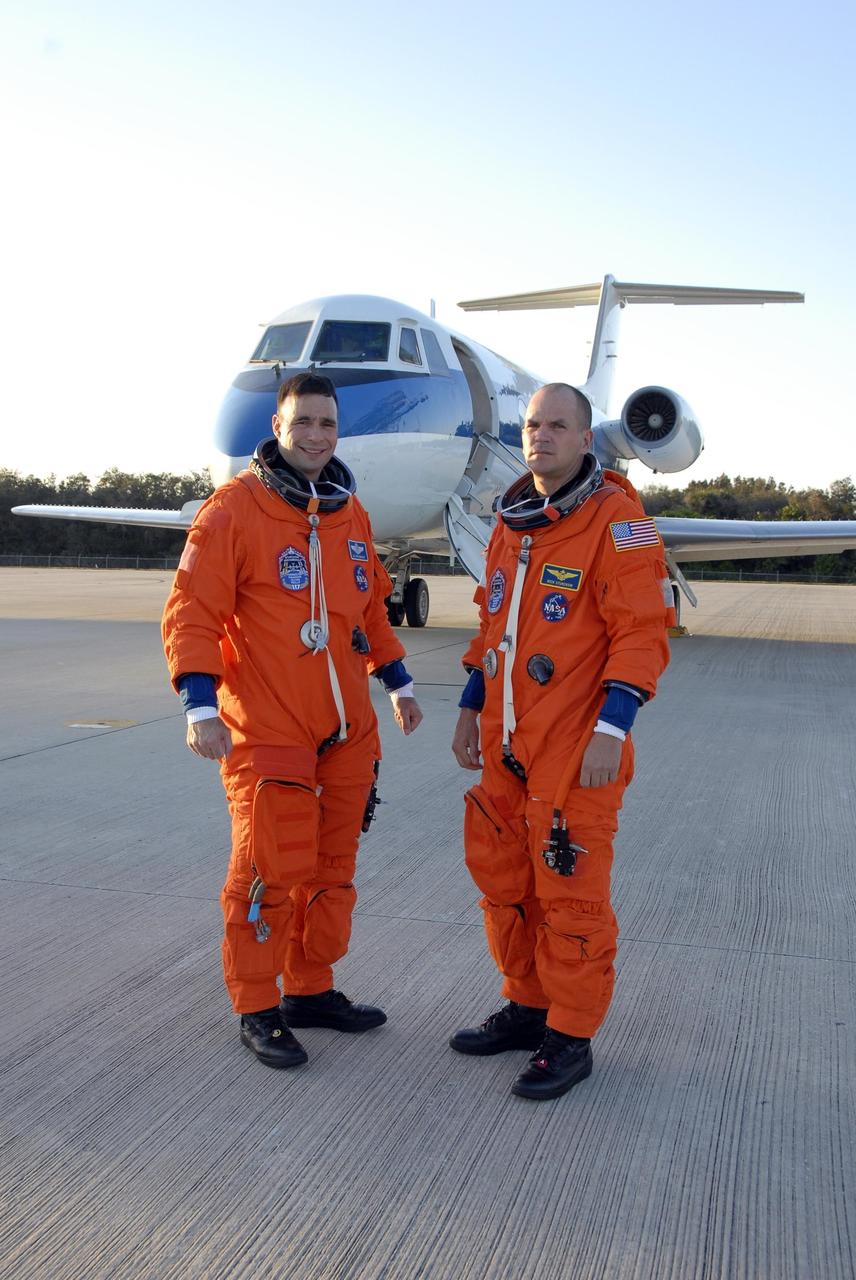
KENNEDY SPACE CENTER, FLA. -- Mission STS-117 Commander Rick Sturckow (left) and Pilot Lee Archambault, dressed in their launch suits, arrive at the Shuttle Landing Facility to begin practice flights on the shuttle training aircraft (STA) during Terminal Countdown Demonstration Test (TCDT) activities. The STA is a Grumman American Aviation-built Gulf Stream II jet that was modified to simulate an orbiter's cockpit, motion and visual cues, and handling qualities. In flight, the STA duplicates the orbiter's atmospheric descent trajectory from approximately 35,000 feet altitude to landing on a runway. Because the orbiter is unpowered during re-entry and landing, its high-speed glide must be perfectly executed the first time. The mission payload aboard Space Shuttle Atlantis is the S3/S4 integrated truss structure, along with a third set of solar arrays and batteries. The crew of six astronauts will install the truss to continue assembly of the International Space Station. STS-117 is the 118th space shuttle flight and the 21st flight to the station. Photo credit: NASA/Kim Shiflett
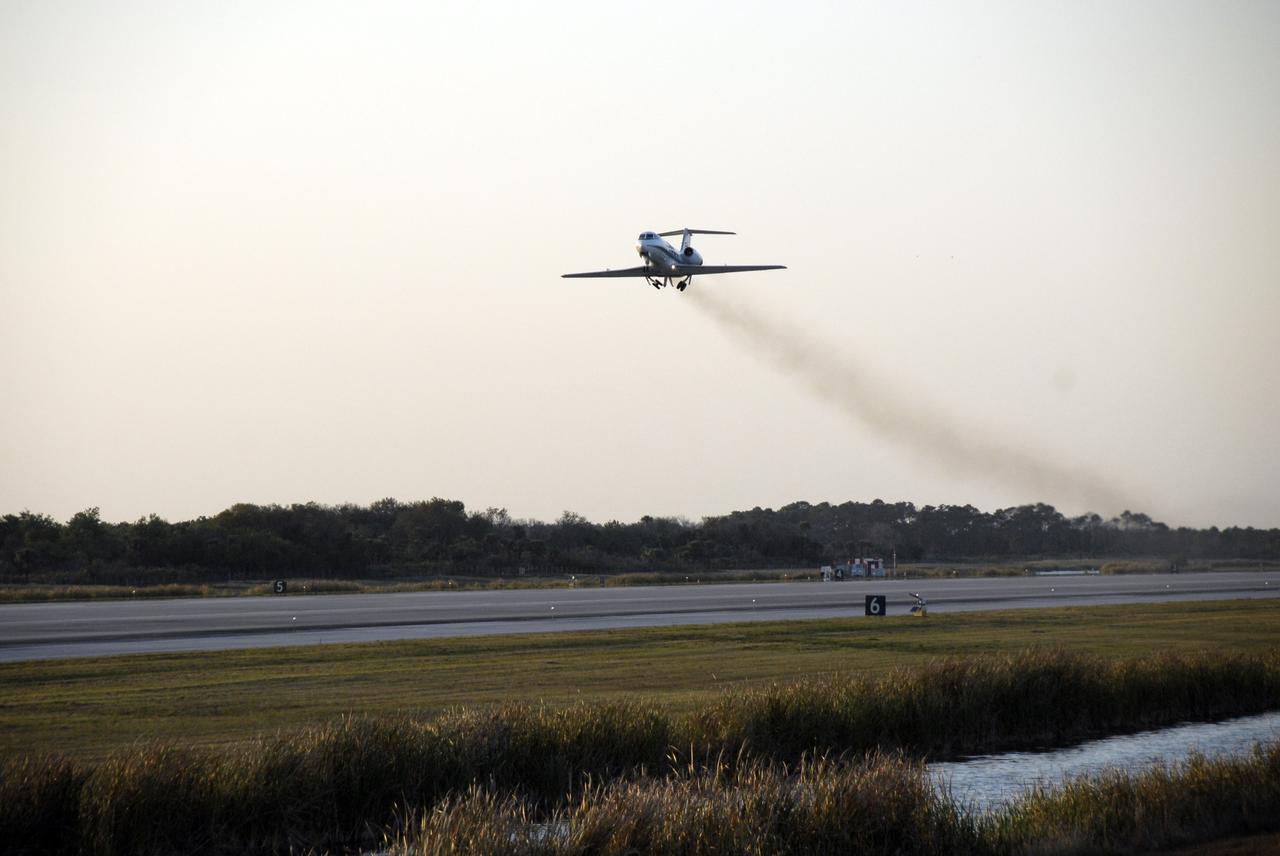
CAPE CANAVERAL, Fla. – One of the two Shuttle Training Aircraft takes off from Shuttle Landing Facility runway at NASA's Kennedy Space Center in Florida. STS-119 Commander Lee Archambault and Pilot Tony Antonelli are practicing shuttle landings on the runway. The mission crew members arrived in the afternoon at Kennedy to prepare for launch. The mission is the 28th to the International Space Station and the 125th space shuttle flight. Space shuttle Discovery will deliver the final pair of power-generating solar array wings and truss element, S6. Photo credit: NASA/Kim Shiflett
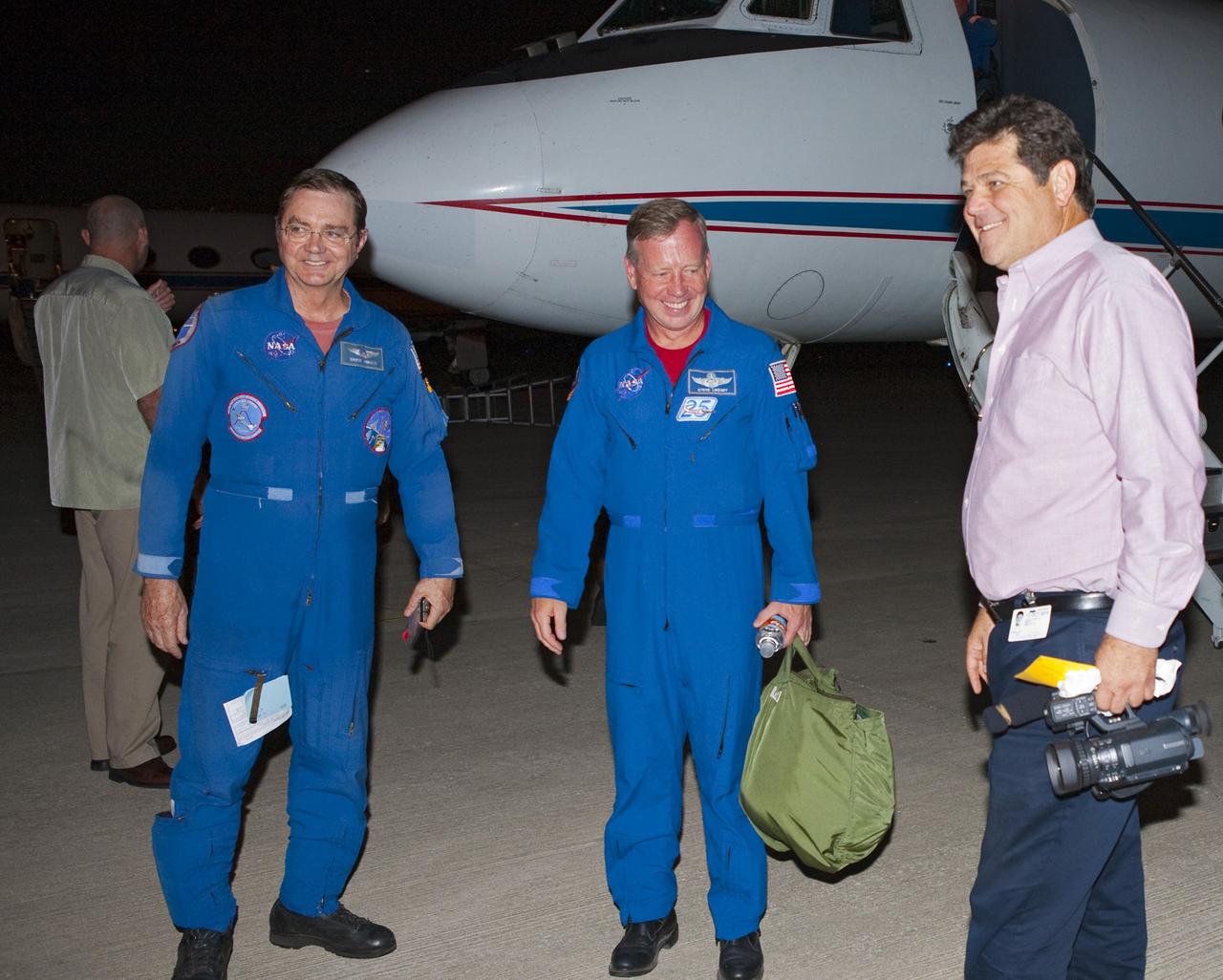
CAPE CANAVERAL, Fla. -- Instructor pilot Bruce Arnold, left, STS-133 Commander Steve Lindsey and space reporter John Zarrella exit a Shuttle Training Aircraft (STA) on the Shuttle Landing Facility runway at NASA's Kennedy Space Center in Florida. Lindsey and Pilot Eric Boe flew two Gulfstream II business jets that are modified to mimic the shuttle's handling during the final phase of landing. Practice landings are part of the Terminal Countdown Demonstration Test (TCDT), which provides each shuttle crew and launch team an opportunity to participate in various simulated activities, including equipment familiarization and emergency training at the launch pad. Space shuttle Discovery and its STS-133 crew will deliver the Permanent Multipurpose Module, packed with supplies and critical spare parts, as well as Robonaut 2, the dexterous humanoid astronaut helper, to the International Space Station. Launch is targeted for Nov. 1 at 4:40 p.m. For more information on the STS-133 mission, visit www.nasa.gov/mission_pages/shuttle/shuttlemissions/sts133/. Photo credit: NASA/Amanda Diller
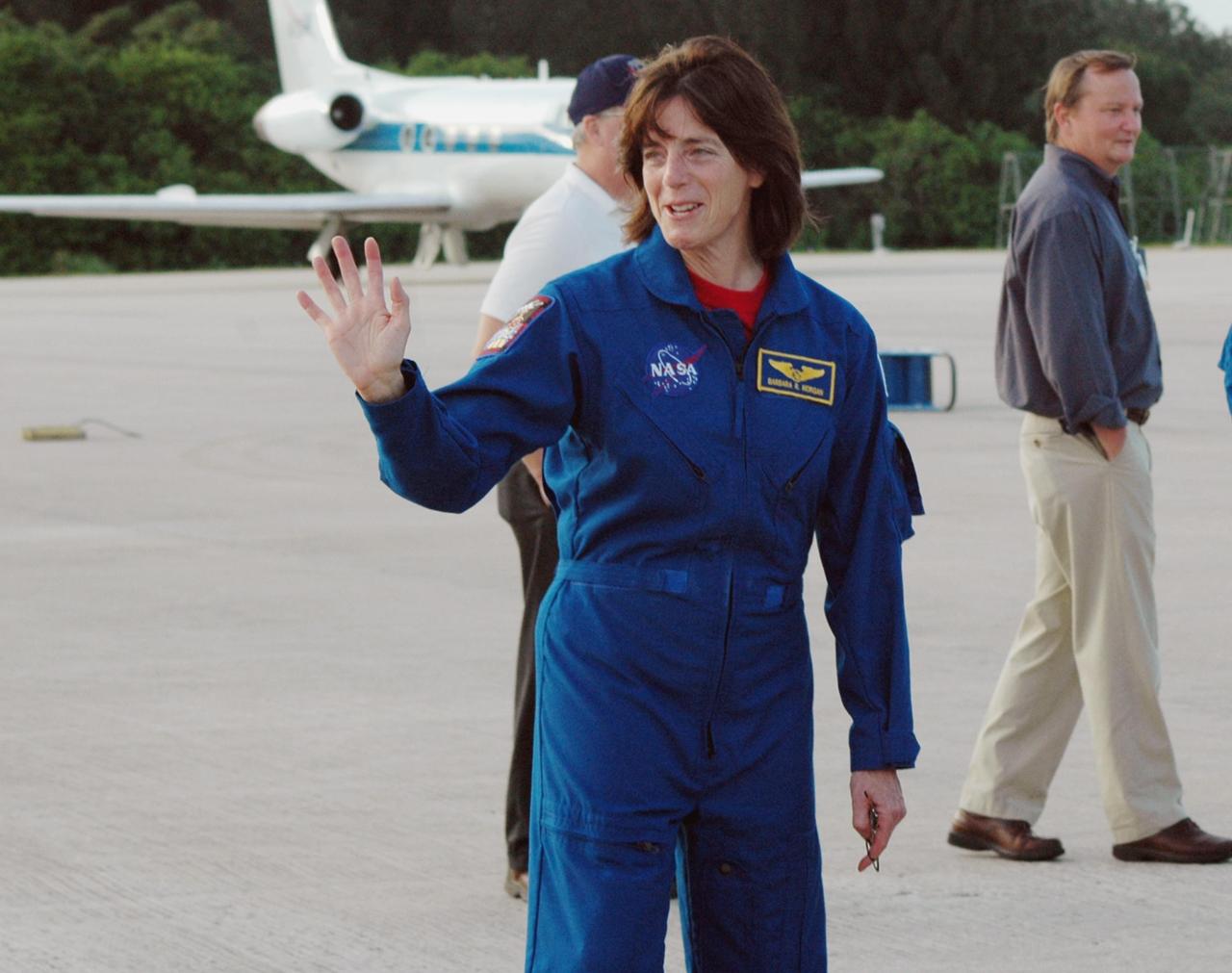
KENNEDY SPACE CENTER, Fla. -- The STS-118 crew arrives at Kennedy's Shuttle Landing Facility aboard a Shuttle Training Aircraft to take part in the Terminal Countdown Demonstration Test (TCDT), a dress rehearsal for launch. Mission Specialist Barbara R. Morgan, NASA's first educator astronaut, acknowledges those who have turned out to welcome them. TCDT activities include M-113 armored personnel carrier training, payload familiarization, emergency egress training at the pad and a simulated launch countdown. The STS-118 payload aboard Space Shuttle Endeavour includes the S5 truss, a SPACEHAB module and external stowage platform 3. The mission is the 22nd flight to the International Space Station and is targeted for launch on Aug.7. Photo credit: NASA/Ken Thornsley
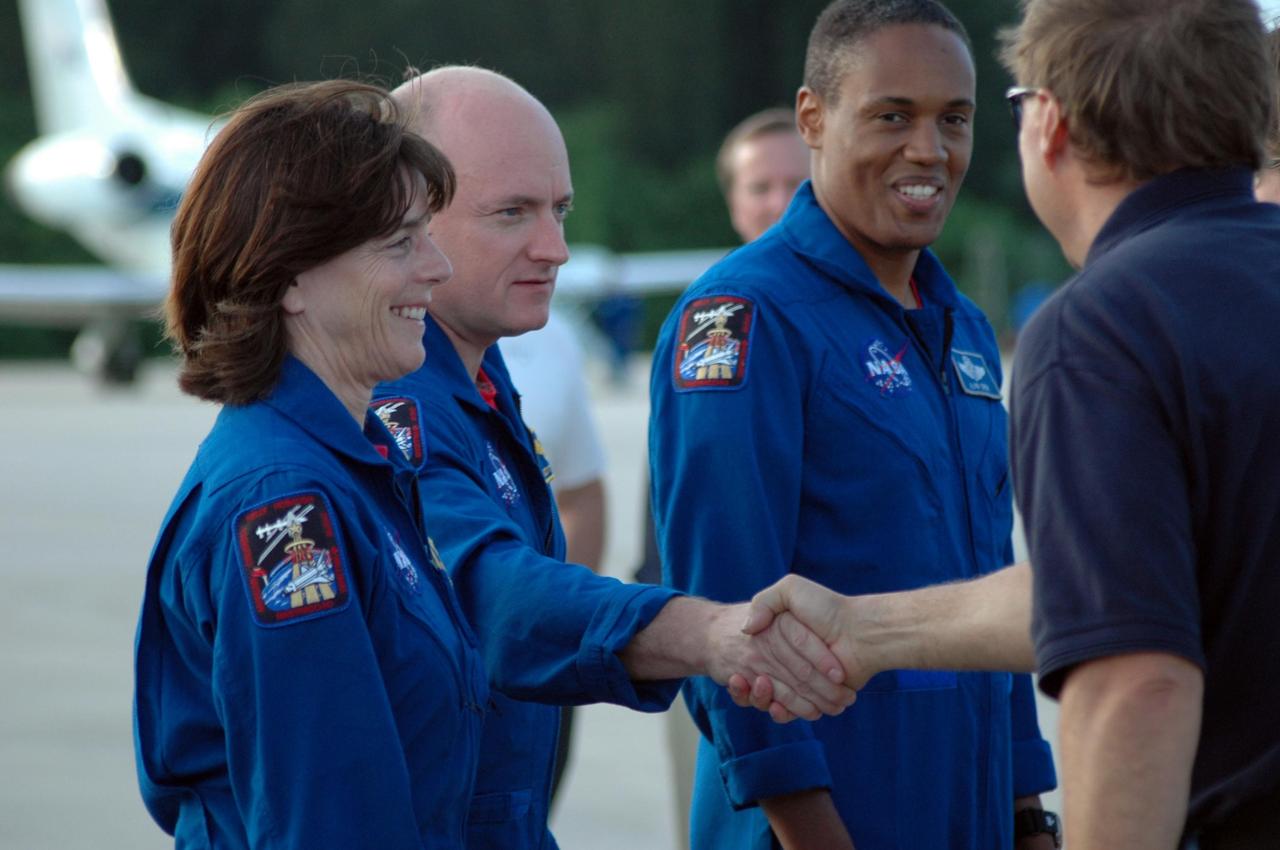
KENNEDY SPACE CENTER, Fla. -- The STS-118 crew arrives at Kennedy's Shuttle Landing Facility aboard a Shuttle Training Aircraft to take part in the Terminal Countdown Demonstration Test (TCDT), a dress rehearsal for launch. From left are Mission Specialist Barbara R. Morgan, Commander Scott Kelly and Mission Specialist Alvin Drew. Morgan joined NASA's Teacher in Space program in 1985 and was selected as an astronaut in 1998. TCDT activities include M-113 armored personnel carrier training, payload familiarization, emergency egress training at the pad and a simulated launch countdown. The STS-118 payload aboard Space Shuttle Endeavour includes the S5 truss, a SPACEHAB module and external stowage platform 3. The mission is the 22nd flight to the International Space Station and is targeted for launch on Aug.7. Photo credit: NASA/Ken Thornsley
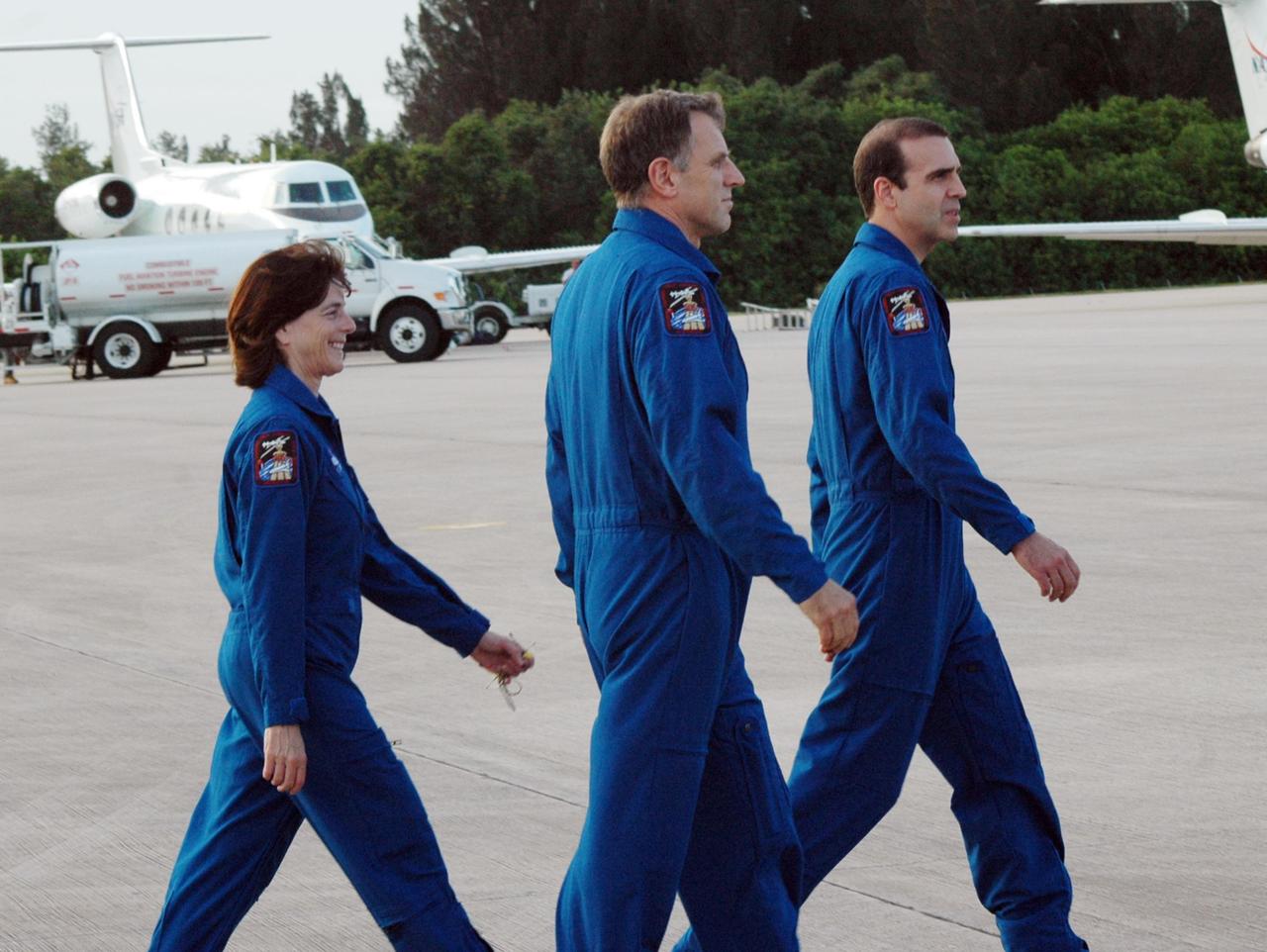
KENNEDY SPACE CENTER, Fla. -- The STS-118 crew arrives at Kennedy's Shuttle Landing Facility aboard a Shuttle Training Aircraft to take part in the Terminal Countdown Demonstration Test (TCDT), a dress rehearsal for launch. From left are Mission Specialists Barbara R. Morgan, Dave Williams and Rick Mastracchio. Williams represents the Canadian Space Agency. Morgan joined NASA's Teacher in Space program in 1985 and was selected as an astronaut in 1998. TCDT activities include M-113 armored personnel carrier training, payload familiarization, emergency egress training at the pad and a simulated launch countdown. The STS-118 payload aboard Space Shuttle Endeavour includes the S5 truss, a SPACEHAB module and external stowage platform 3. The mission is the 22nd flight to the International Space Station and is targeted for launch on Aug.7. Photo credit: NASA/Ken Thornsley

KENNEDY SPACE CENTER, FLA. -- Mission STS-117 Commander Rick Sturckow (left) and Pilot Lee Archambault arrive at the Shuttle Landing Facility to begin practice flights on the shuttle training aircraft (STA) during Terminal Countdown Demonstration Test (TCDT) activities. The STA is a Grumman American Aviation-built Gulf Stream II jet that was modified to simulate an orbiter's cockpit, motion and visual cues, and handling qualities. In flight, the STA duplicates the orbiter's atmospheric descent trajectory from approximately 35,000 feet altitude to landing on a runway. Because the orbiter is unpowered during re-entry and landing, its high-speed glide must be perfectly executed the first time. The mission payload aboard Space Shuttle Atlantis is the S3/S4 integrated truss structure, along with a third set of solar arrays and batteries. The crew of six astronauts will install the truss to continue assembly of the International Space Station. STS-117 is the 118th space shuttle flight and the 21st flight to the station. Photo credit: NASA/Kim Shiflett
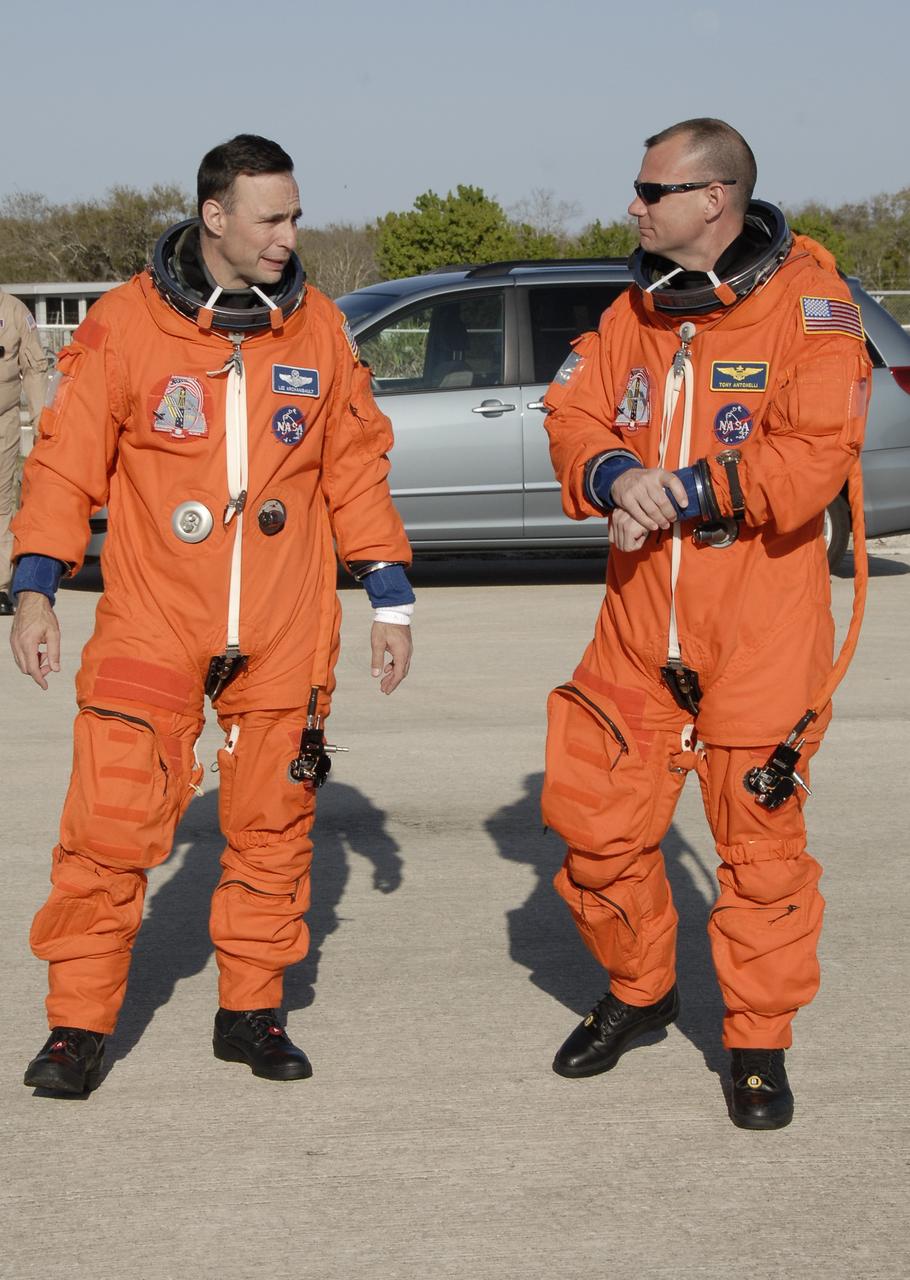
CAPE CANAVERAL, Fla. – On the Shuttle Landing Facility at NASA's Kennedy Space Center in Florida, STS-119 Commander Lee Archambault and Pilot Tony Antonelli, wearing their launch-and-entry suits, head for the Shuttle Training Aircraft to practice shuttle landings. The mission crew members arrived in the afternoon at Kennedy to prepare for launch. The mission is the 28th to the International Space Station and the 125th space shuttle flight. Space shuttle Discovery will deliver the final pair of power-generating solar array wings and truss element, S6. Photo credit: NASA/Kim Shiflett
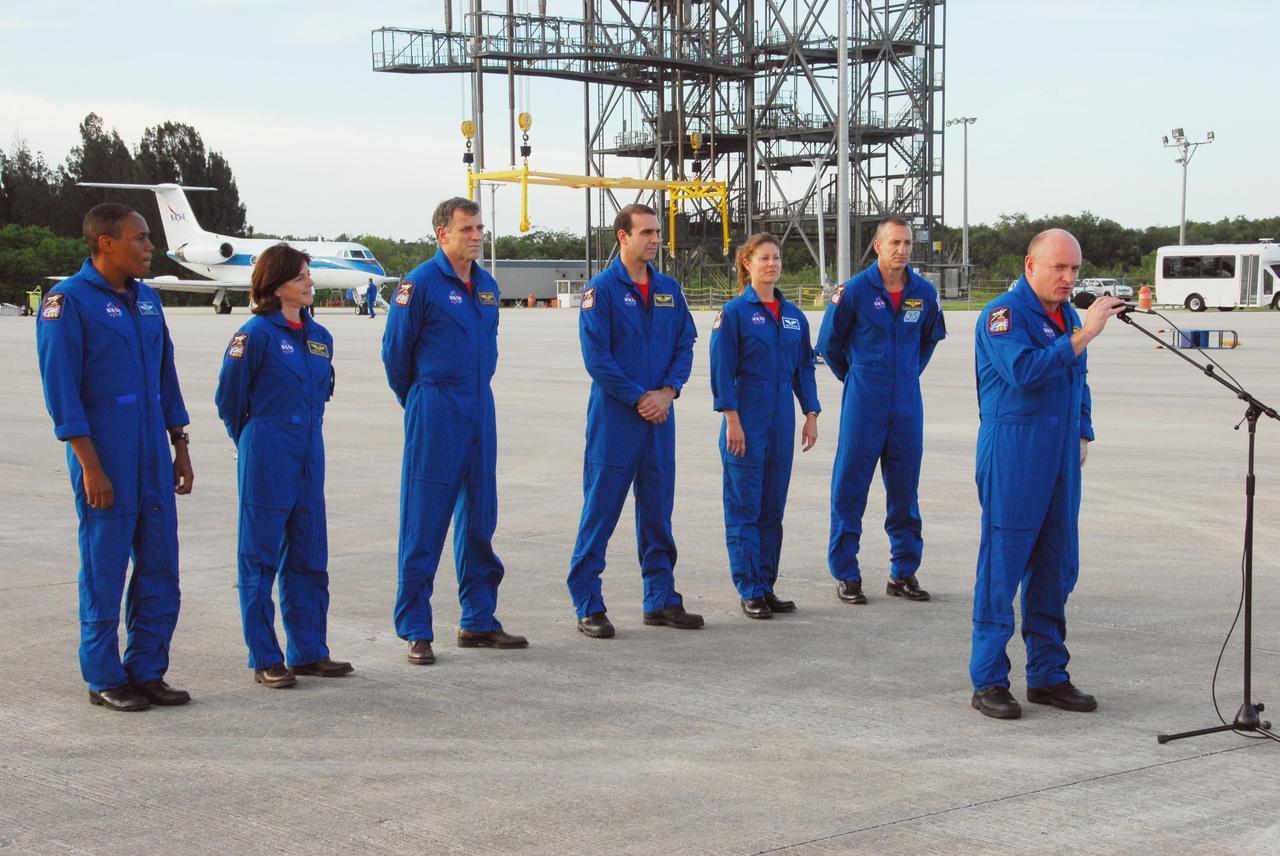
KENNEDY SPACE CENTER, Fla. -- The STS-118 crew arrives at Kennedy's Shuttle Landing Facility aboard a Shuttle Training Aircraft to take part in the Terminal Countdown Demonstration Test (TCDT), a dress rehearsal for launch. Commander Scott Kelly (at microphone) introduces his crew to media representatives on site to welcome them. From left are Mission Specialists Alvin Drew; Barbara R. Morgan; Dave Williams, representing the Canadian Space Agency; Rick Mastracchio; Tracy Caldwell; and Pilot Charlie Hobaugh. Morgan joined NASA's Teacher in Space program in 1985 and was selected as an astronaut in 1998. TCDT activities include M-113 armored personnel carrier training, payload familiarization, emergency egress training at the pad and a simulated launch countdown. The STS-118 payload aboard Space Shuttle Endeavour includes the S5 truss, a SPACEHAB module and external stowage platform 3. The mission is the 22nd flight to the International Space Station and is targeted for launch on Aug.7. Photo credit: NASA/George Shelton
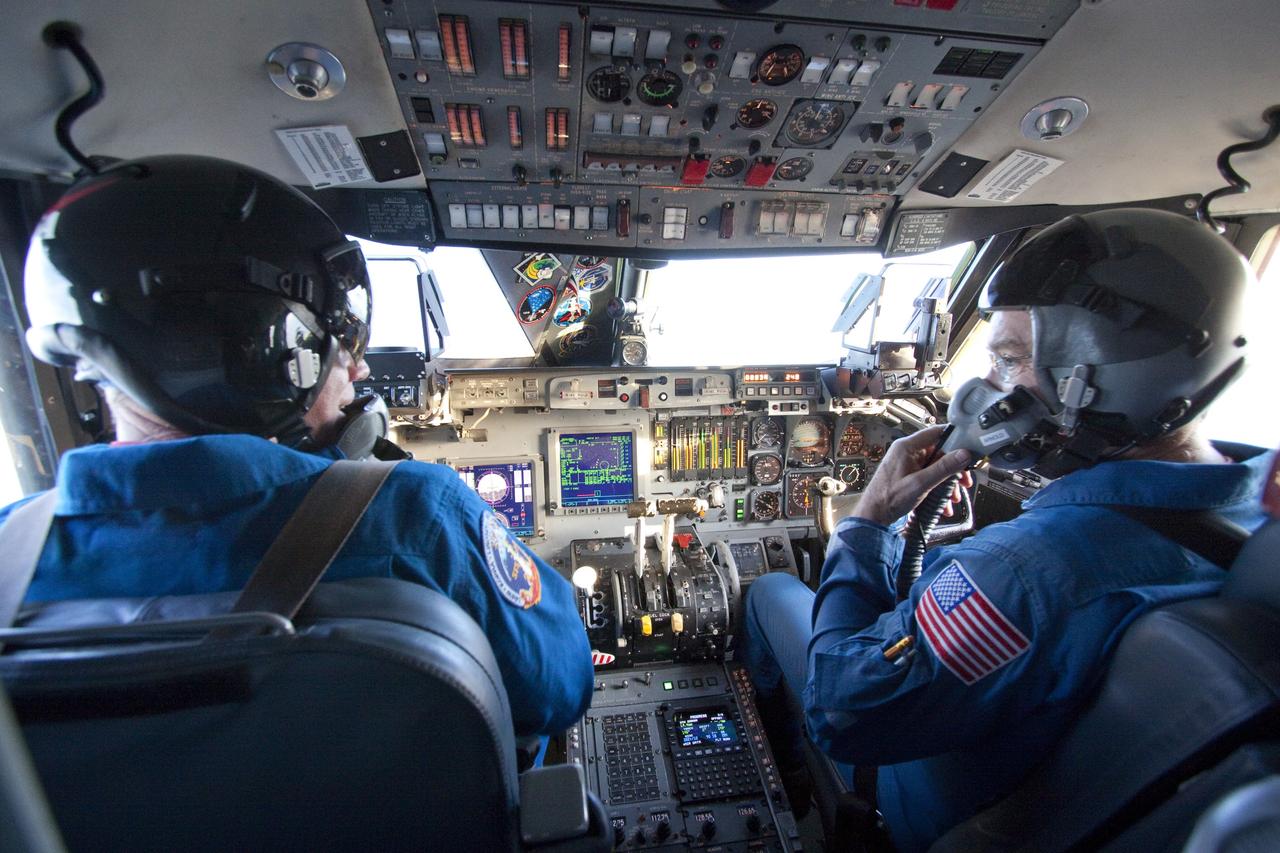
CAPE CANAVERAL, Fla. -- STS-133 Commander Steve Lindsey, left, straps in and prepares to fly touch-and-go landings in a Shuttle Training Aircraft (STA) on the Shuttle Landing Facility runway at NASA's Kennedy Space Center in Florida. At right is Bruce Arnold, an STA instructor pilot. Lindsey and STS-133 Pilot Eric Boe will fly two of the Gulfstream II business jets that are modified to mimic the shuttle's handling during the final phase of landing. Practice landings are part of the Terminal Countdown Demonstration Test (TCDT), which provides each shuttle crew and launch team an opportunity to participate in various simulated activities, including equipment familiarization and emergency training at the launch pad. Space shuttle Discovery and its STS-133 crew will deliver the Permanent Multipurpose Module, packed with supplies and critical spare parts, as well as Robonaut 2, the dexterous humanoid astronaut helper, to the International Space Station. Launch is targeted for Nov. 1 at 4:40 p.m. For more information on the STS-133 mission, visit www.nasa.gov/mission_pages/shuttle/shuttlemissions/sts133/. Photo credit: NASA/Jack Pfaller
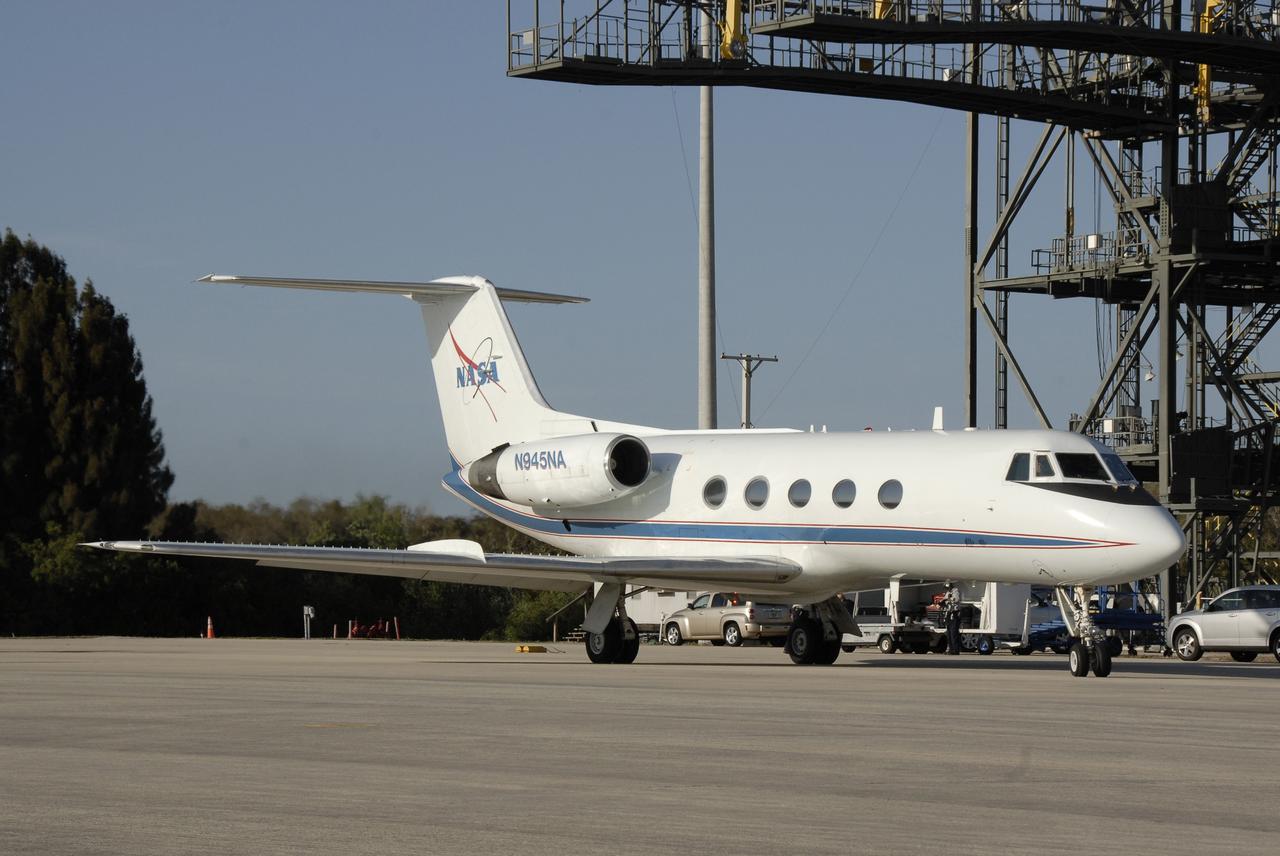
CAPE CANAVERAL, Fla. – On the Shuttle Landing Facility at NASA's Kennedy Space Center in Florida, one of the Shuttle Training Aircraft is ready for STS-119 Commander Lee Archambault or Pilot Tony Antonelli to practice shuttle landings on the Shuttle Landing Facility's runway. The mission crew members arrived in the afternoon at Kennedy to prepare for launch. The mission is the 28th to the International Space Station and the 125th space shuttle flight. Space shuttle Discovery will deliver the final pair of power-generating solar array wings and truss element, S6. Photo credit: NASA/Kim Shiflett

KENNEDY SPACE CENTER, FLA. -- The shuttle training aircraft (STA) sits on the tarmac at the Shuttle Landing Facility, ready for practice flights by Mission STS-117 Commander Rick Sturckow and Pilot Lee Archambault. The STA is a Grumman American Aviation-built Gulf Stream II jet that was modified to simulate an orbiter's cockpit, motion and visual cues, and handling qualities. In flight, the STA duplicates the orbiter's atmospheric descent trajectory from approximately 35,000 feet altitude to landing on a runway. Because the orbiter is unpowered during re-entry and landing, its high-speed glide must be perfectly executed the first time. The mission payload aboard Space Shuttle Atlantis is the S3/S4 integrated truss structure, along with a third set of solar arrays and batteries. The crew of six astronauts will install the truss to continue assembly of the International Space Station. STS-117 is the 118th space shuttle flight and the 21st flight to the station. Photo credit: NASA/Kim Shiflett
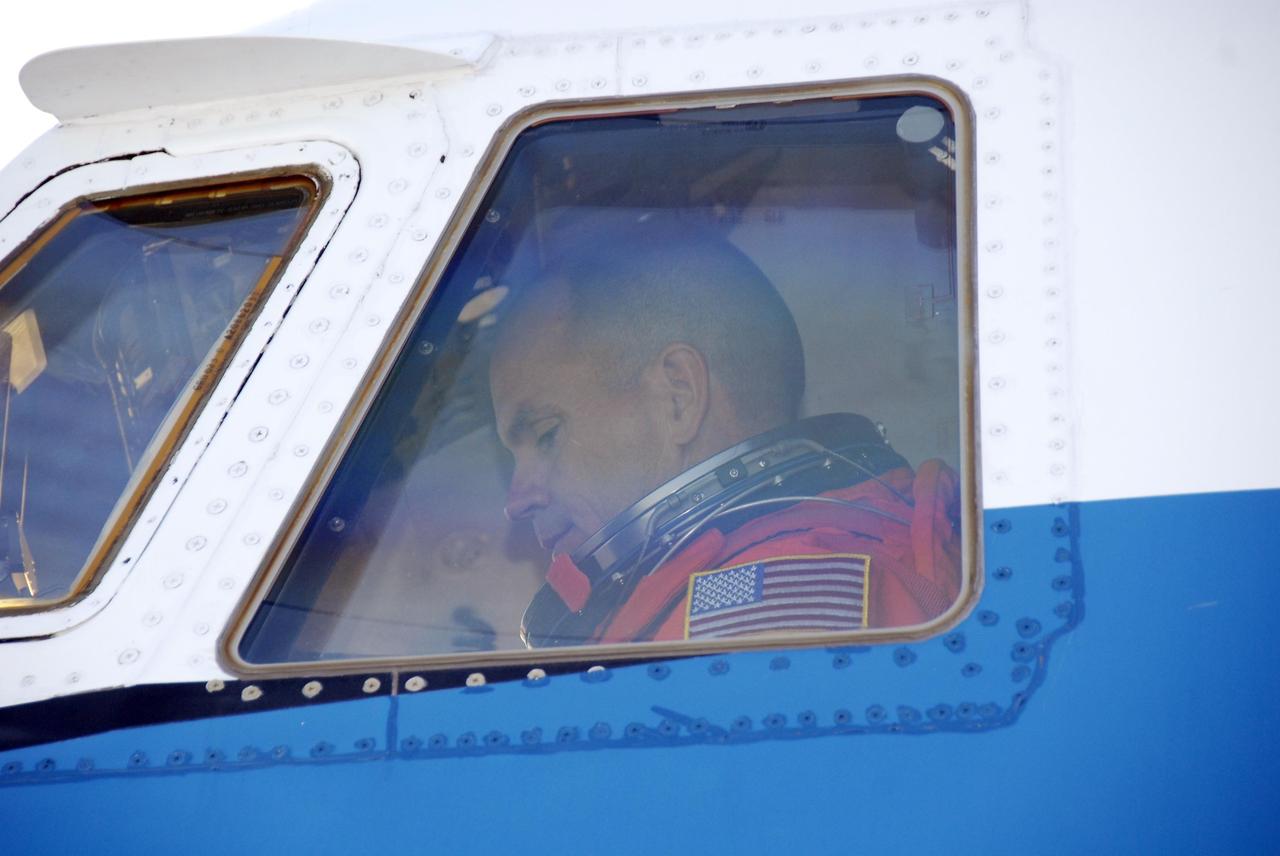
KENNEDY SPACE CENTER, FLA. -- At the Shuttle Landing Facility, Mission STS-117 Commander Rick Sturckow sits in the cockpit of the shuttle training aircraft (STA) ready to begin practice flights as part of the Terminal Countdown Demonstration Test (TCDT) activities. The STA is a Grumman American Aviation-built Gulf Stream II jet that was modified to simulate an orbiter's cockpit, motion and visual cues, and handling qualities. In flight, the STA duplicates the orbiter's atmospheric descent trajectory from approximately 35,000 feet altitude to landing on a runway. Because the orbiter is unpowered during re-entry and landing, its high-speed glide must be perfectly executed the first time. The mission payload aboard Space Shuttle Atlantis is the S3/S4 integrated truss structure, along with a third set of solar arrays and batteries. The crew of six astronauts will install the truss to continue assembly of the International Space Station. STS-117 is the 118th space shuttle flight and the 21st flight to the station. Photo credit: NASA/Kim Shiflett

KENNEDY SPACE CENTER, FLA. -- The STS-118 crew arrives at Kennedy's Shuttle Landing Facility aboard a Shuttle Training Aircraft to take part in the Terminal Countdown Demonstration Test (TCDT), a dress rehearsal for launch. Shuttle Launch Director Mike Leinbach (left) welcomes Commander Scott Kelly (right). TCDT activities include M-113 armored personnel carrier training, payload familiarization, emergency egress training at the pad and a simulated launch countdown. The STS-118 payload aboard Space Shuttle Endeavour includes the S5 truss, a SPACEHAB module and external stowage platform 3. The mission is the 22nd flight to the International Space Station and is targeted for launch on Aug.7. Photo credit: NASA/George Shelton
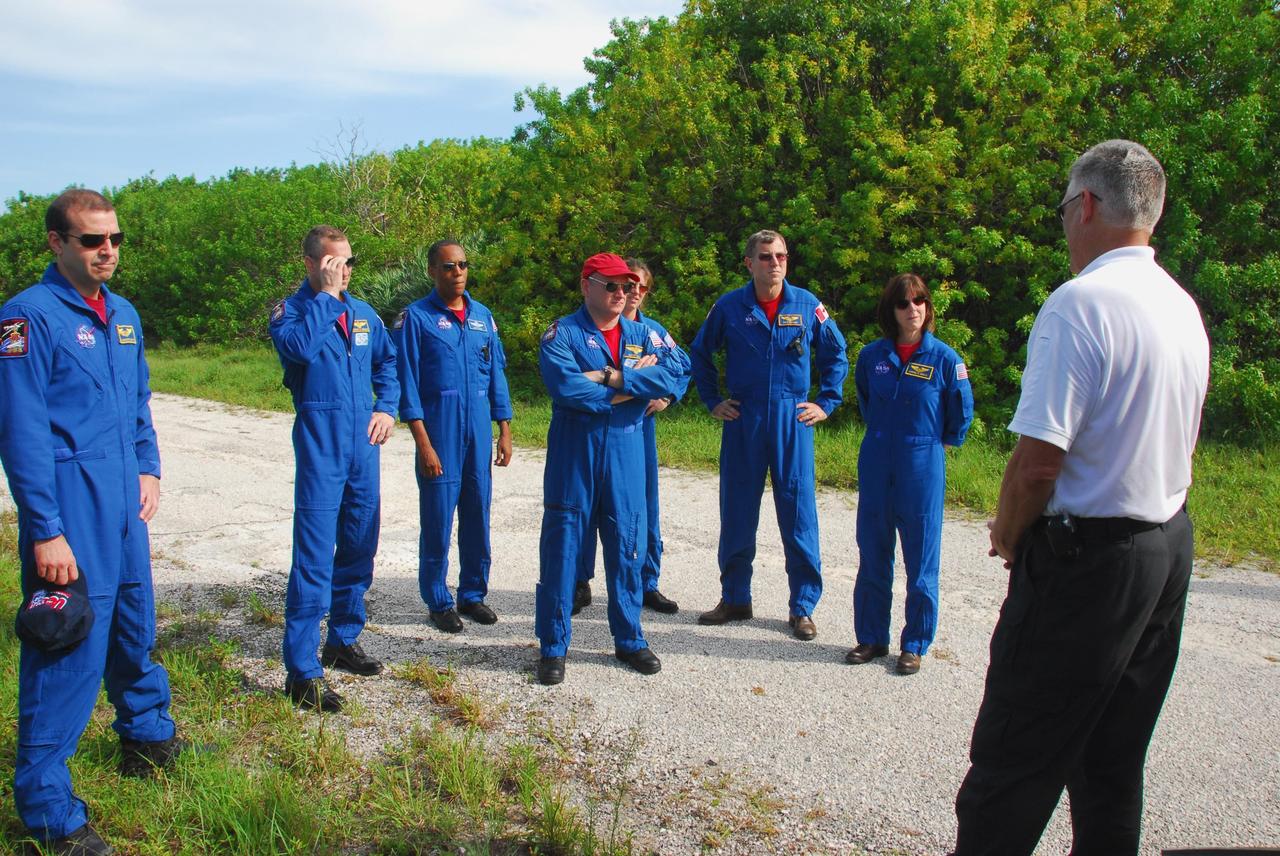
KENNEDY SPACE CENTER, Fla. -- The STS-118 crew gets instructions on emergency exit procedures from Launch Pad 39A. From left are Mission Specialist Rick Mastracchio, Pilot Charlie Hobaugh, Mission Specialist Alvin Drew, Commander Scott Kelly, and Mission Specialists Tracy Caldwell, Dave Williams and Barbara R. Morgan, whojoined NASA's Teacher in Space program in 1985. She was selected as an astronaut in 1998. TCDT activities include the M-113 training, payload familiarization, emergency egress training at the pad and a simulated launch countdown. The STS-118 payload aboard Space Shuttle Endeavour includes the S5 truss, a SPACEHAB module and external stowage platform 3. The mission is the 22nd flight to the International Space Station and is targeted for launch on Aug.7. NASA/George Shelton
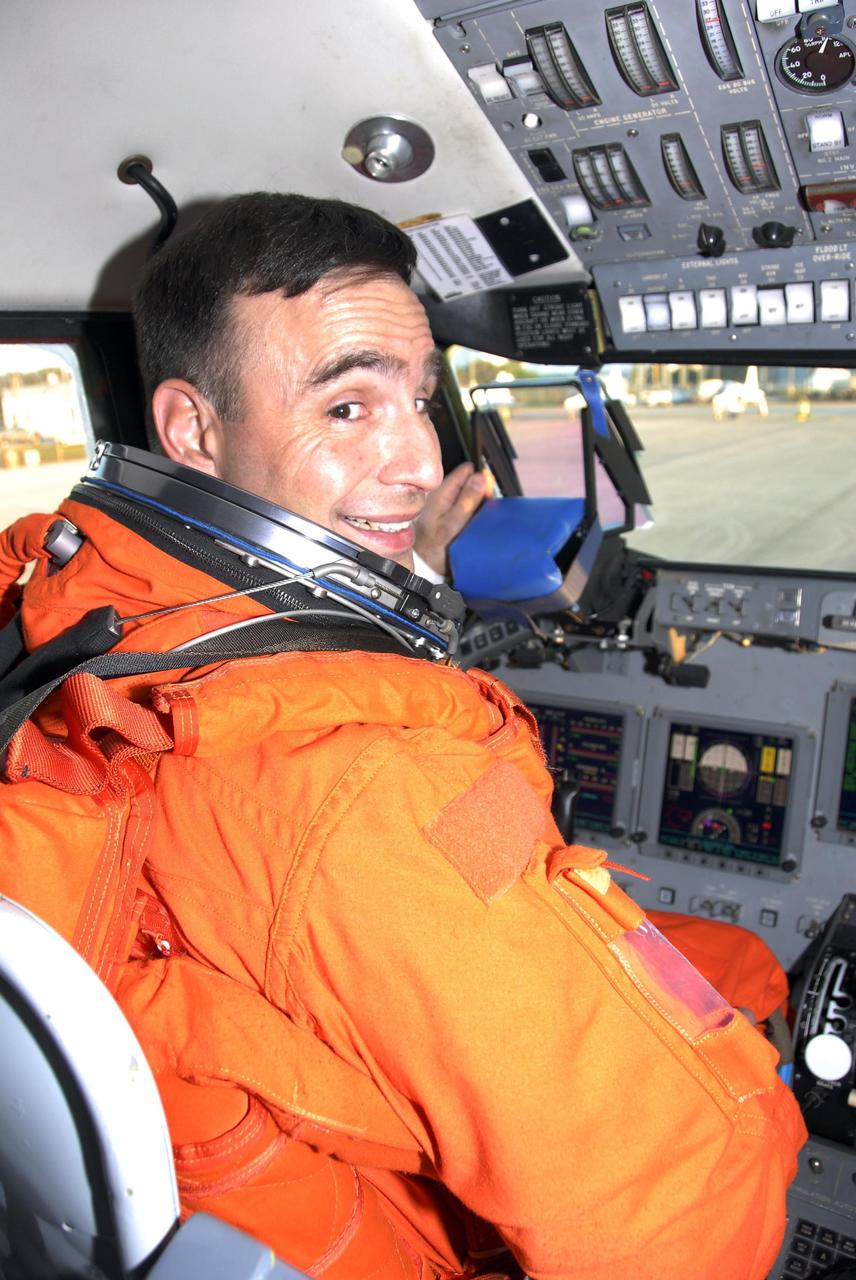
KENNEDY SPACE CENTER, FLA. -- At the Shuttle Landing Facility, Mission STS-117 Pilot Lee Archambault sits in the cockpit of the shuttle training aircraft (STA) ready to begin practice flights as part of the Terminal Countdown Demonstration Test (TCDT) activities. The STA is a Grumman American Aviation-built Gulf Stream II jet that was modified to simulate an orbiter's cockpit, motion and visual cues, and handling qualities. In flight, the STA duplicates the orbiter's atmospheric descent trajectory from approximately 35,000 feet altitude to landing on a runway. Because the orbiter is unpowered during re-entry and landing, its high-speed glide must be perfectly executed the first time. The mission payload aboard Space Shuttle Atlantis is the S3/S4 integrated truss structure, along with a third set of solar arrays and batteries. The crew of six astronauts will install the truss to continue assembly of the International Space Station. STS-117 is the 118th space shuttle flight and the 21st flight to the station. Photo credit: NASA/Kim Shiflett
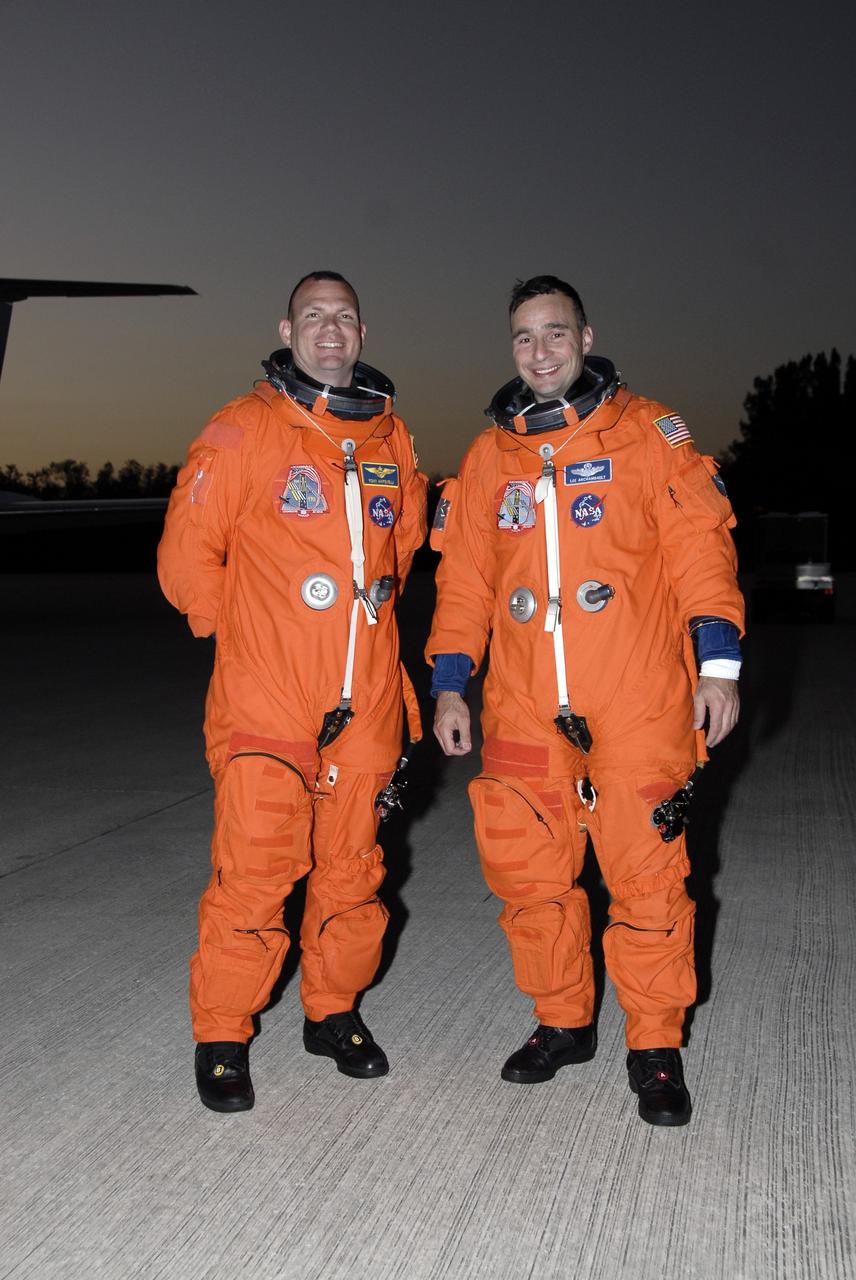
CAPE CANAVERAL, Fla. – STS-119 Pilot Tony Antonelli (left) and Commander Lee Archambault happily pose for a photo after practicing shuttle landings in Shuttle Training Aircraft at NASA's Kennedy Space Center in Florida. The mission crew members arrived in the afternoon at Kennedy to prepare for launch. The mission is the 28th to the International Space Station and the 125th space shuttle flight. Space shuttle Discovery will deliver the final pair of power-generating solar array wings and truss element, S6. Photo credit: NASA/Kim Shiflett
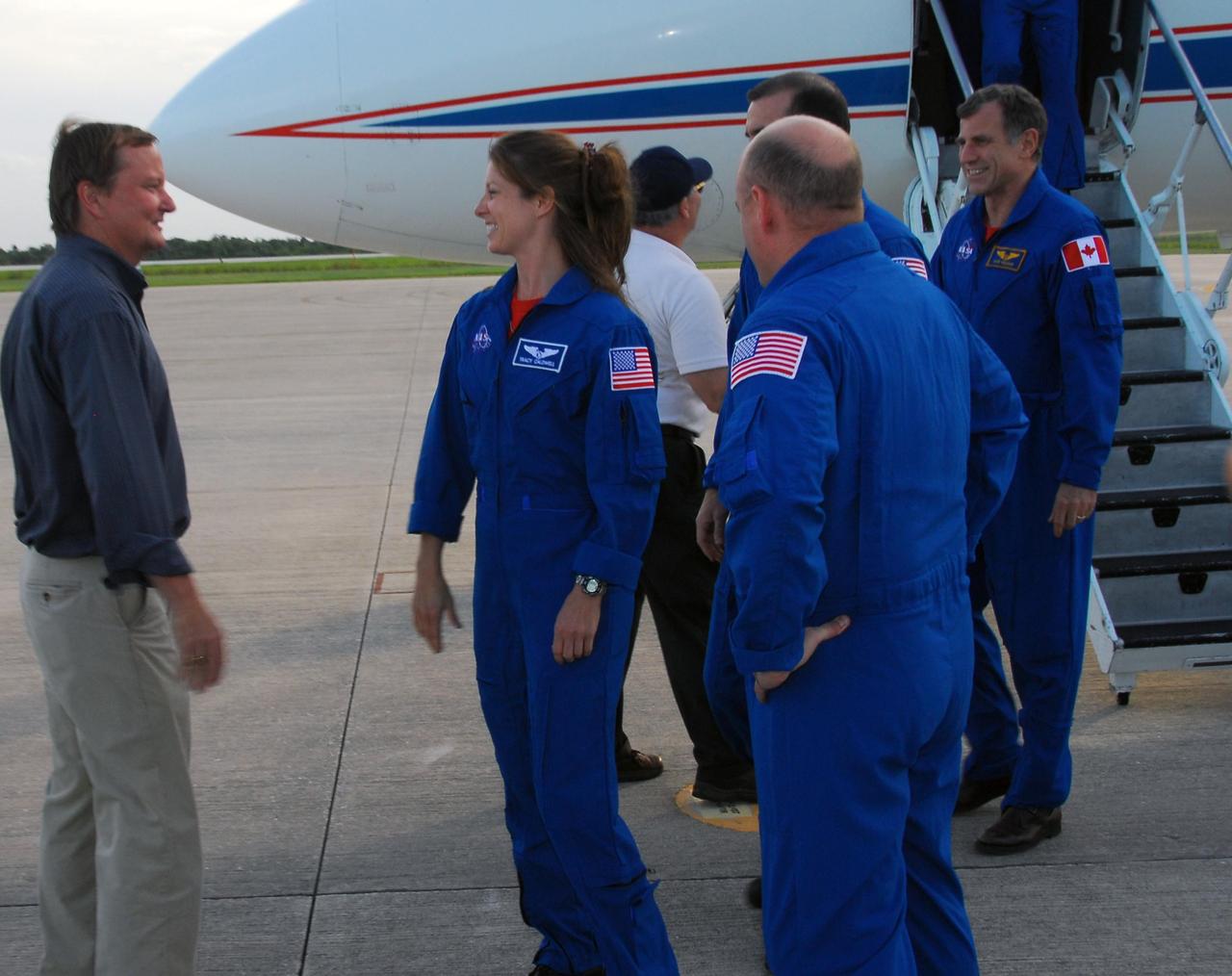
KENNEDY SPACE CENTER, Fla. -- The STS-118 crew arrives at Kennedy's Shuttle Landing Facility aboard a Shuttle Training Aircraft to take part in the Terminal Countdown Demonstration Test (TCDT), a dress rehearsal for launch. Shuttle Launch Director Mike Leinbach (left) welcomes Mission Specialists Tracy Caldwell, Rick Mastracchio and Dave Williams of the Canadian Space Agency, as Commander Scott Kelly (back to camera) looks on. TCDT activities include M-113 armored personnel carrier training, payload familiarization, emergency egress training at the pad and a simulated launch countdown. The STS-118 payload aboard Space Shuttle Endeavour includes the S5 truss, a SPACEHAB module and external stowage platform 3. The mission is the 22nd flight to the International Space Station and is targeted for launch on Aug.7. Photo credit: NASA/George Shelton
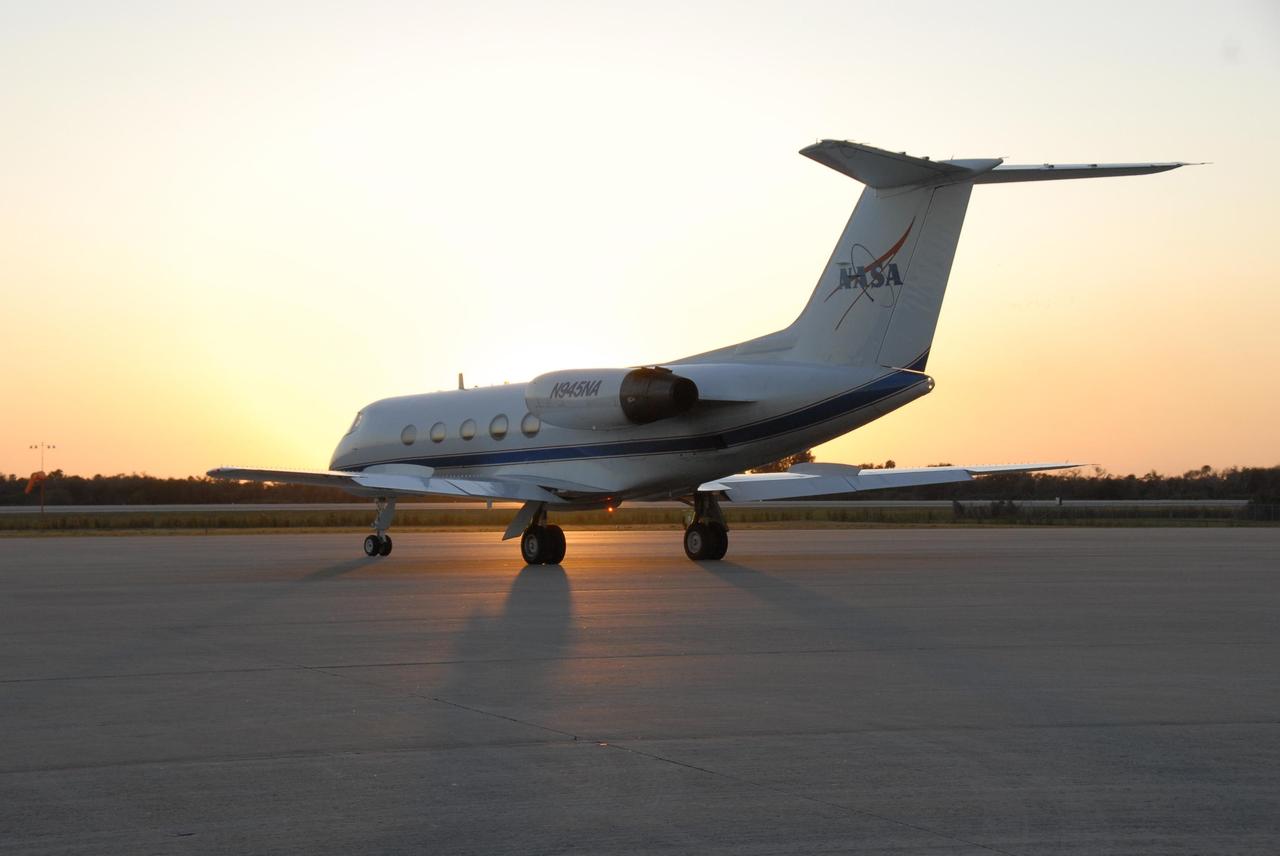
KENNEDY SPACE CENTER, FLA. -- With the sun just peaking above the horizon, the shuttle training aircraft (STA) sits on the tarmac at the Shuttle Landing Facility, ready for practice flights by Mission STS-117 Commander Rick Sturckow and Pilot Lee Archambault. The STA is a Grumman American Aviation-built Gulf Stream II jet that was modified to simulate an orbiter's cockpit, motion and visual cues, and handling qualities. In flight, the STA duplicates the orbiter's atmospheric descent trajectory from approximately 35,000 feet altitude to landing on a runway. Because the orbiter is unpowered during re-entry and landing, its high-speed glide must be perfectly executed the first time. The mission payload aboard Space Shuttle Atlantis is the S3/S4 integrated truss structure, along with a third set of solar arrays and batteries. The crew of six astronauts will install the truss to continue assembly of the International Space Station. STS-117 is the 118th space shuttle flight and the 21st flight to the station. Photo credit: NASA/Kim Shiflett
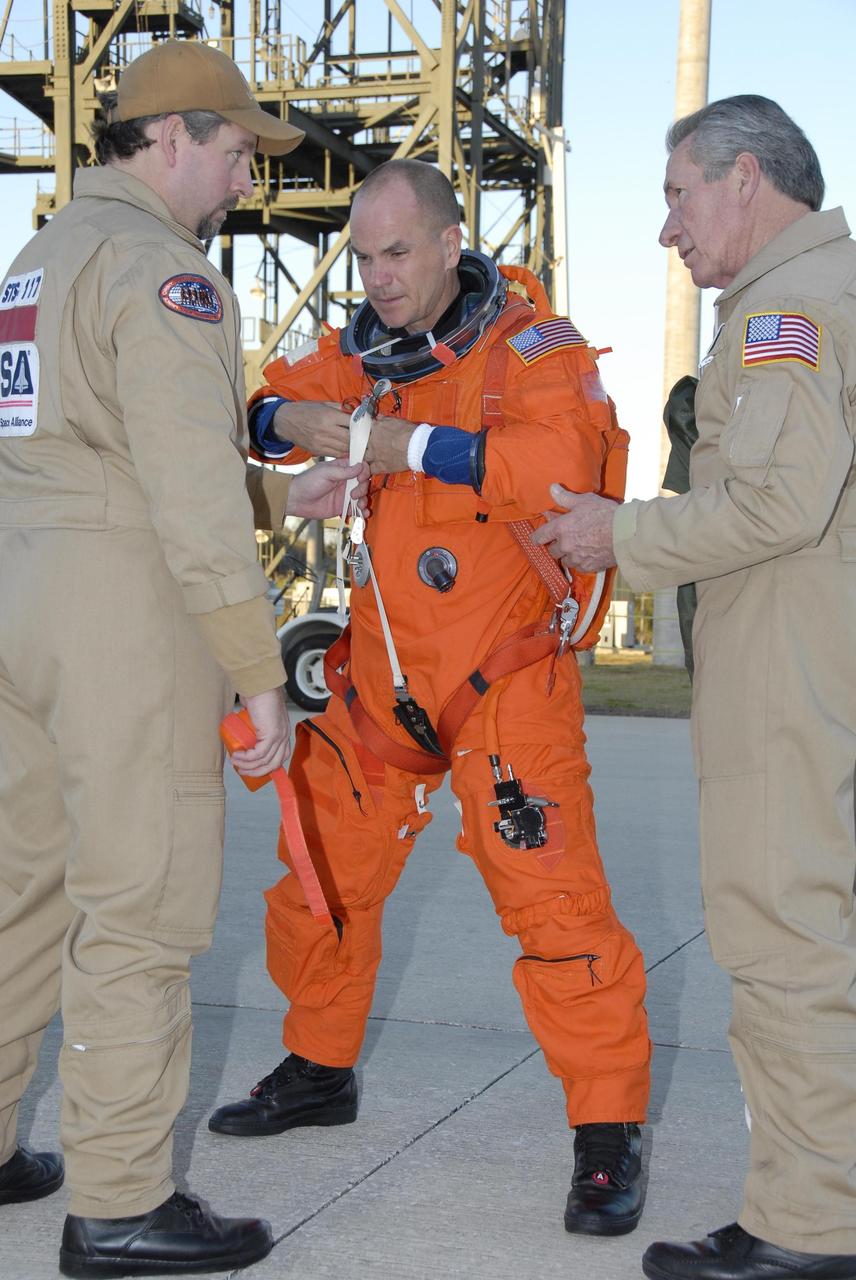
KENNEDY SPACE CENTER, FLA. -- Mission STS-117 Commander Rick Sturckow, dressed in his launch suit, prepares to begin practice flights on the shuttle training aircraft (STA) at the Shuttle Landing Facility during Terminal Countdown Demonstration Test (TCDT) activities. The STA is a Grumman American Aviation-built Gulf Stream II jet that was modified to simulate an orbiter's cockpit, motion and visual cues, and handling qualities. In flight, the STA duplicates the orbiter's atmospheric descent trajectory from approximately 35,000 feet altitude to landing on a runway. Because the orbiter is unpowered during re-entry and landing, its high-speed glide must be perfectly executed the first time. The mission payload aboard Space Shuttle Atlantis is the S3/S4 integrated truss structure, along with a third set of solar arrays and batteries. The crew of six astronauts will install the truss to continue assembly of the International Space Station. STS-117 is the 118th space shuttle flight and the 21st flight to the station. Photo credit: NASA/Kim Shiflett
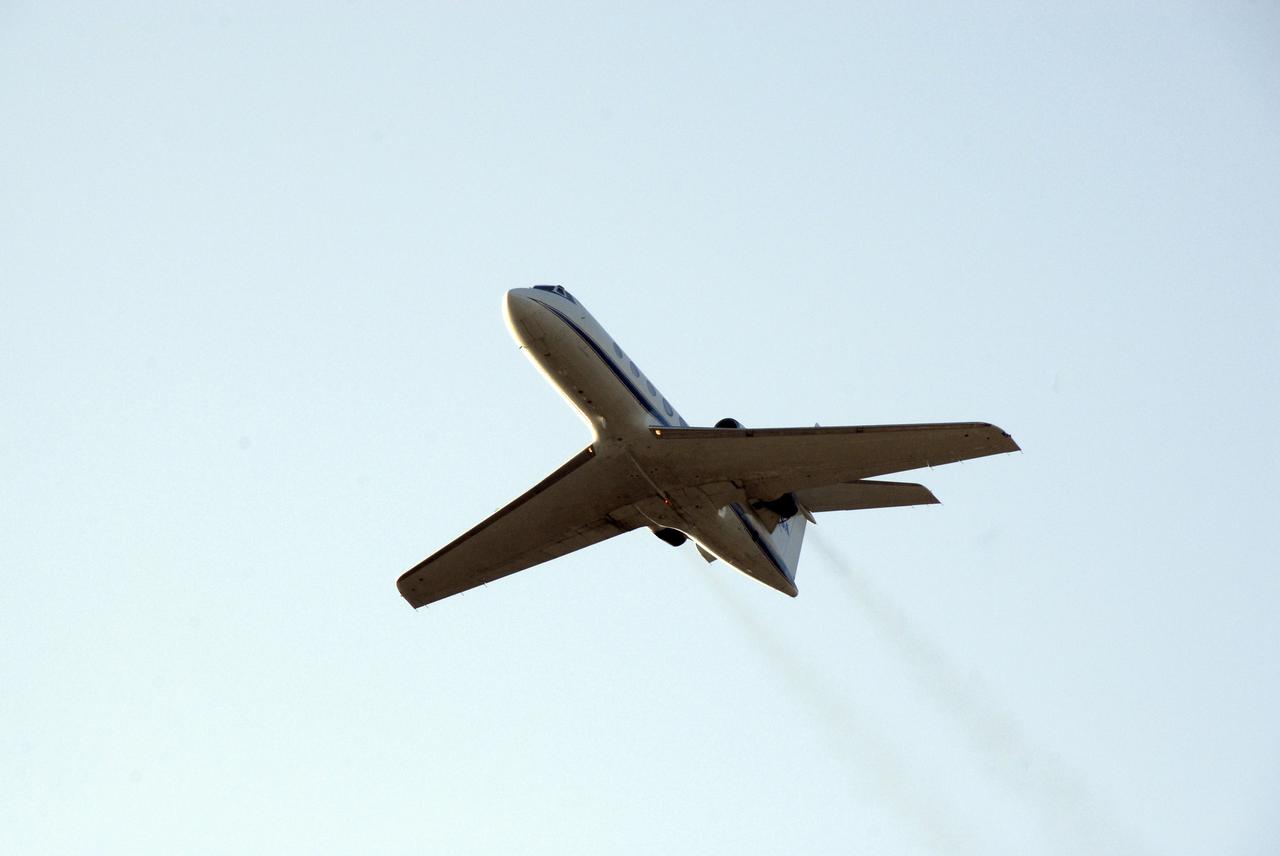
CAPE CANAVERAL, Fla. – One of the two Shuttle Training Aircraft flies over the Shuttle Landing Facility at NASA's Kennedy Space Center in Florida. STS-119 Commander Lee Archambault and Pilot Tony Antonelli are practicing shuttle landings on the SLF runway. The mission crew members arrived in the afternoon at Kennedy to prepare for launch. The mission is the 28th to the International Space Station and the 125th space shuttle flight. Space shuttle Discovery will deliver the final pair of power-generating solar array wings and truss element, S6. Photo credit: NASA/Kim Shiflett
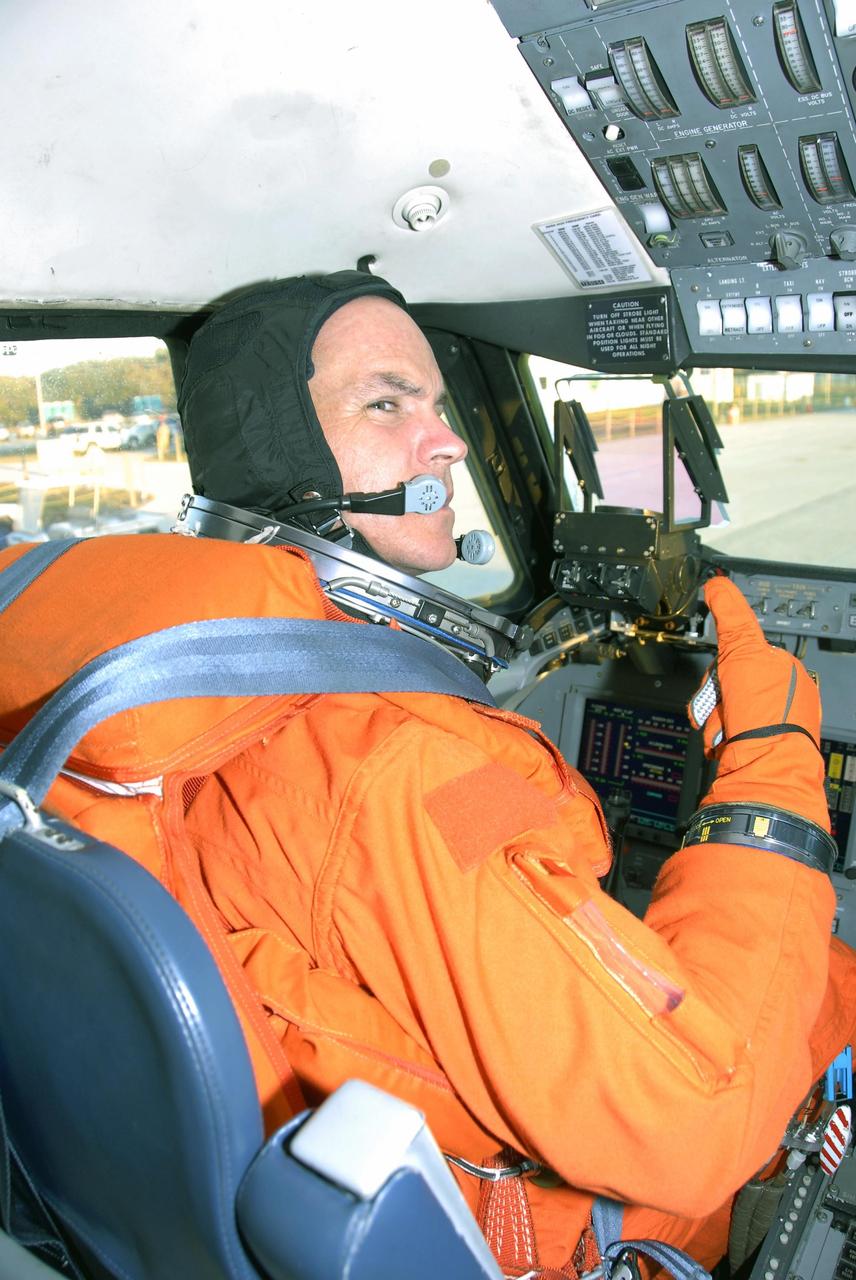
KENNEDY SPACE CENTER, FLA. -- At the Shuttle Landing Facility, Mission STS-117 Commander Rick Sturckow sits in the cockpit of the shuttle training aircraft (STA) ready to begin practice flights as part of the Terminal Countdown Demonstration Test (TCDT) activities. The STA is a Grumman American Aviation-built Gulf Stream II jet that was modified to simulate an orbiter's cockpit, motion and visual cues, and handling qualities. In flight, the STA duplicates the orbiter's atmospheric descent trajectory from approximately 35,000 feet altitude to landing on a runway. Because the orbiter is unpowered during re-entry and landing, its high-speed glide must be perfectly executed the first time. The mission payload aboard Space Shuttle Atlantis is the S3/S4 integrated truss structure, along with a third set of solar arrays and batteries. The crew of six astronauts will install the truss to continue assembly of the International Space Station. STS-117 is the 118th space shuttle flight and the 21st flight to the station. Photo credit: NASA/Kim Shiflett
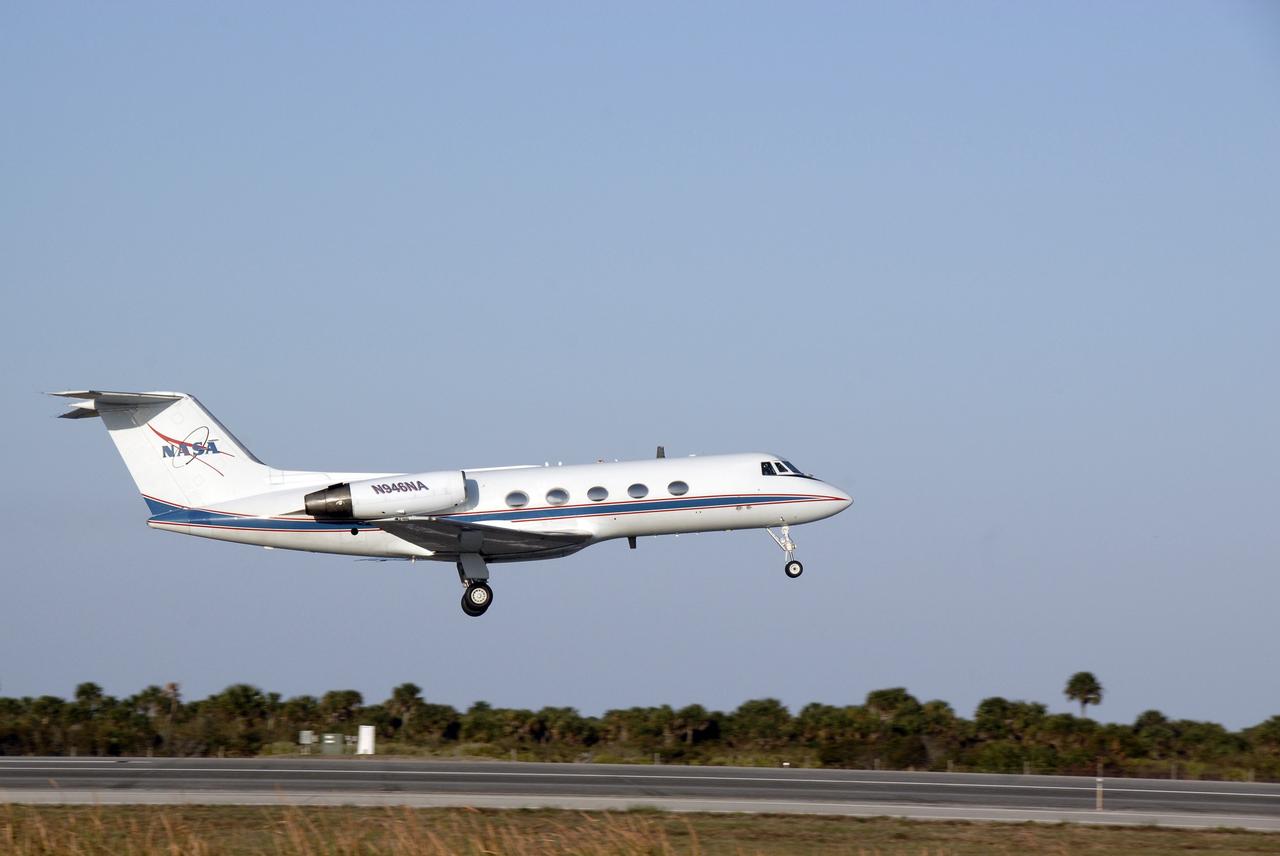
CAPE CANAVERAL, Fla. – One of the two Shuttle Training Aircraft approaches touchdown on the Shuttle Landing Facility runway at NASA's Kennedy Space Center in Florida. STS-119 Commander Lee Archambault and Pilot Tony Antonelli are practicing shuttle landings on the runway. The mission crew members arrived in the afternoon at Kennedy to prepare for launch. The mission is the 28th to the International Space Station and the 125th space shuttle flight. Space shuttle Discovery will deliver the final pair of power-generating solar array wings and truss element, S6. Photo credit: NASA/Kim Shiflett
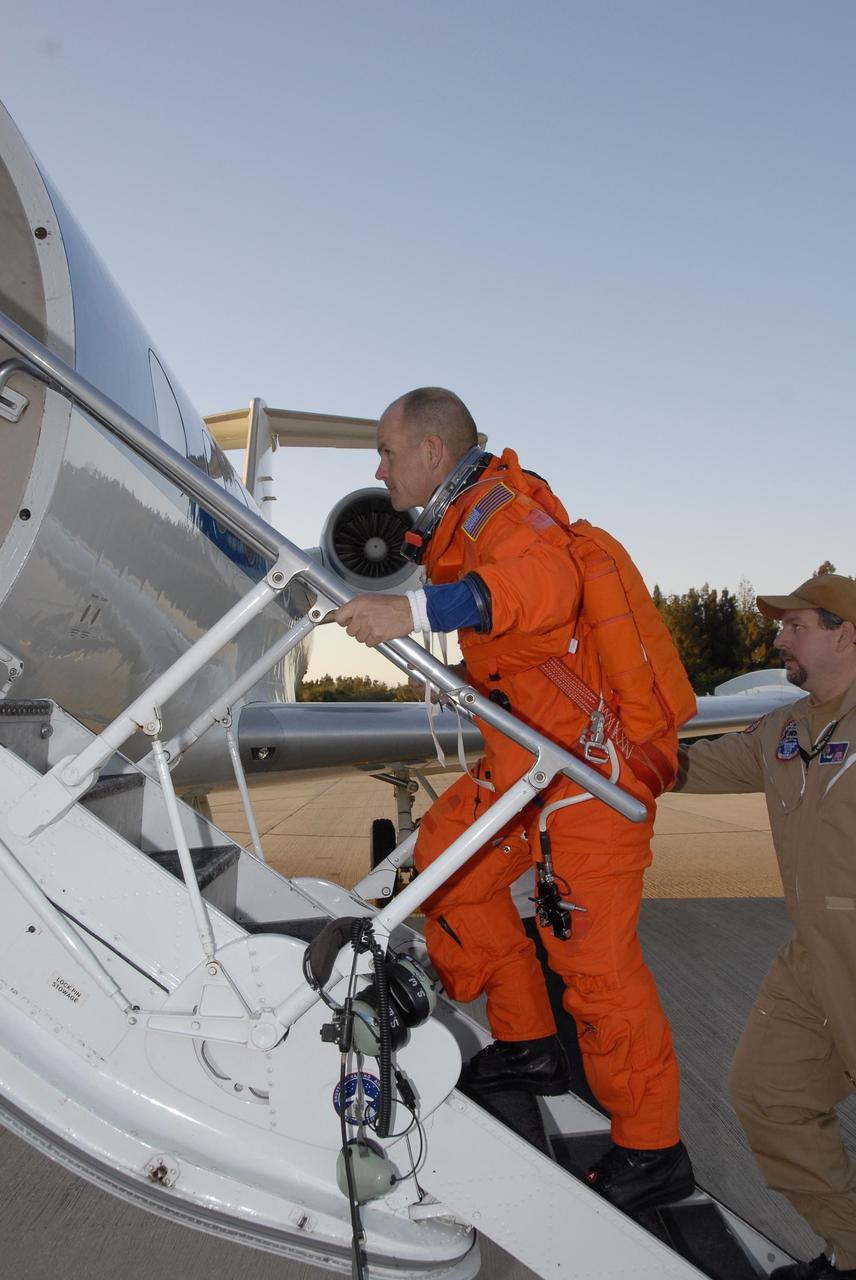
KENNEDY SPACE CENTER, FLA. -- At the Shuttle Landing Facility, Mission STS-117 Commander Rick Sturckow is ready to begin practice flights on the shuttle training aircraft (STA) during Terminal Countdown Demonstration Test (TCDT) Activities. The STA is a Grumman American Aviation-built Gulf Stream II jet that was modified to simulate an orbiter's cockpit, motion and visual cues, and handling qualities. In flight, the STA duplicates the orbiter's atmospheric descent trajectory from approximately 35,000 feet altitude to landing on a runway. Because the orbiter is unpowered during re-entry and landing, its high-speed glide must be perfectly executed the first time. The mission payload aboard Space Shuttle Atlantis is the S3/S4 integrated truss structure, along with a third set of solar arrays and batteries. The crew of six astronauts will install the truss to continue assembly of the International Space Station. STS-117 is the 118th space shuttle flight and the 21st flight to the station. Photo credit: NASA/Kim Shiflett
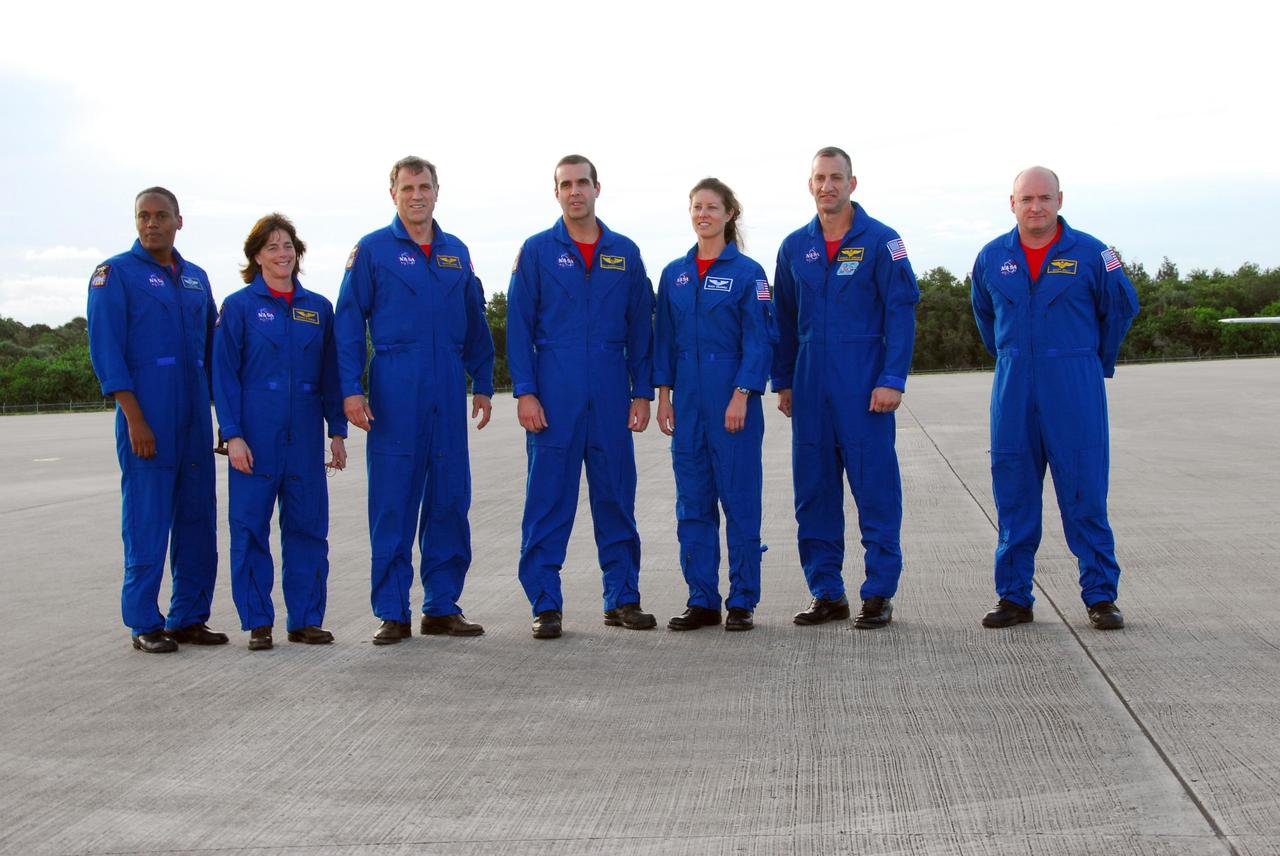
KENNEDY SPACE CENTER, Fla. -- The STS-118 crew arrives at Kennedy's Shuttle Landing Facility aboard a Shuttle Training Aircraft to take part in the Terminal Countdown Demonstration Test (TCDT), a dress rehearsal for launch. From left are Mission Specialists Alvin Drew; Barbara R. Morgan; Dave Williams, representing the Canadian Space Agency; Rick Mastracchio; Tracy Caldwell; Pilot Charlie Hobaugh and Commander Scott Kelly. Morgan joined NASA's Teacher in Space program in 1985 and was selected as an astronaut in 1998. TCDT activities include M-113 armored personnel carrier training, payload familiarization, emergency egress training at the pad and a simulated launch countdown. The STS-118 payload aboard Space Shuttle Endeavour includes the S5 truss, a SPACEHAB module and external stowage platform 3. The mission is the 22nd flight to the International Space Station and is targeted for launch on Aug.7. Photo credit: NASA/George Shelton
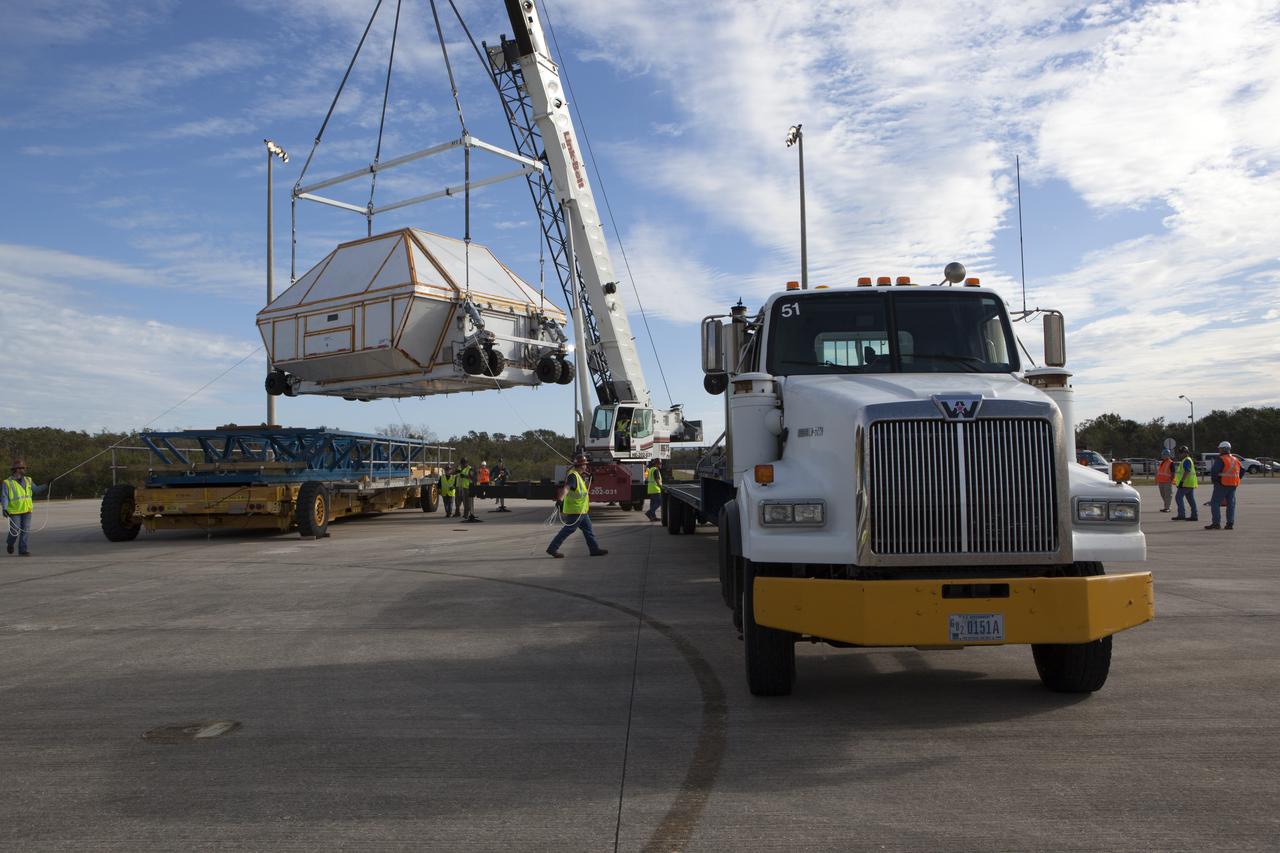
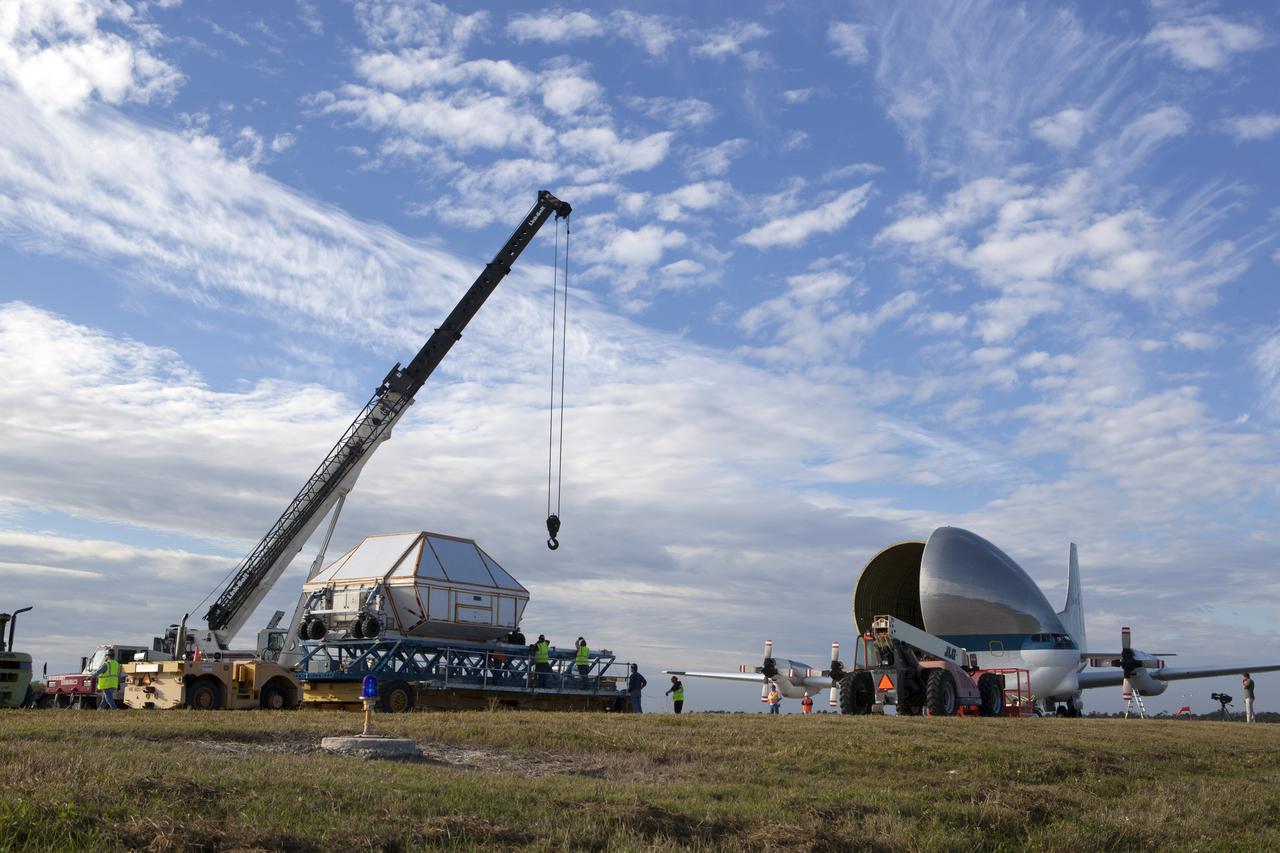
After arriving at the Shuttle Landing Facility operated by Space Florida at NASA's Kennedy Space Center in Florida, the agency's Super Guppy aircraft was opened and the container holding the Orion crew module structural test article (STA) was offloaded. A crane has lifted the container for placement on a transporter. The test article will be moved to the Neil Armstrong Operations and Checkout Building high bay for further testing. The Orion spacecraft will launch atop NASA’s Space Launch System rocket on EM-1, its first deep space mission, in late 2018.
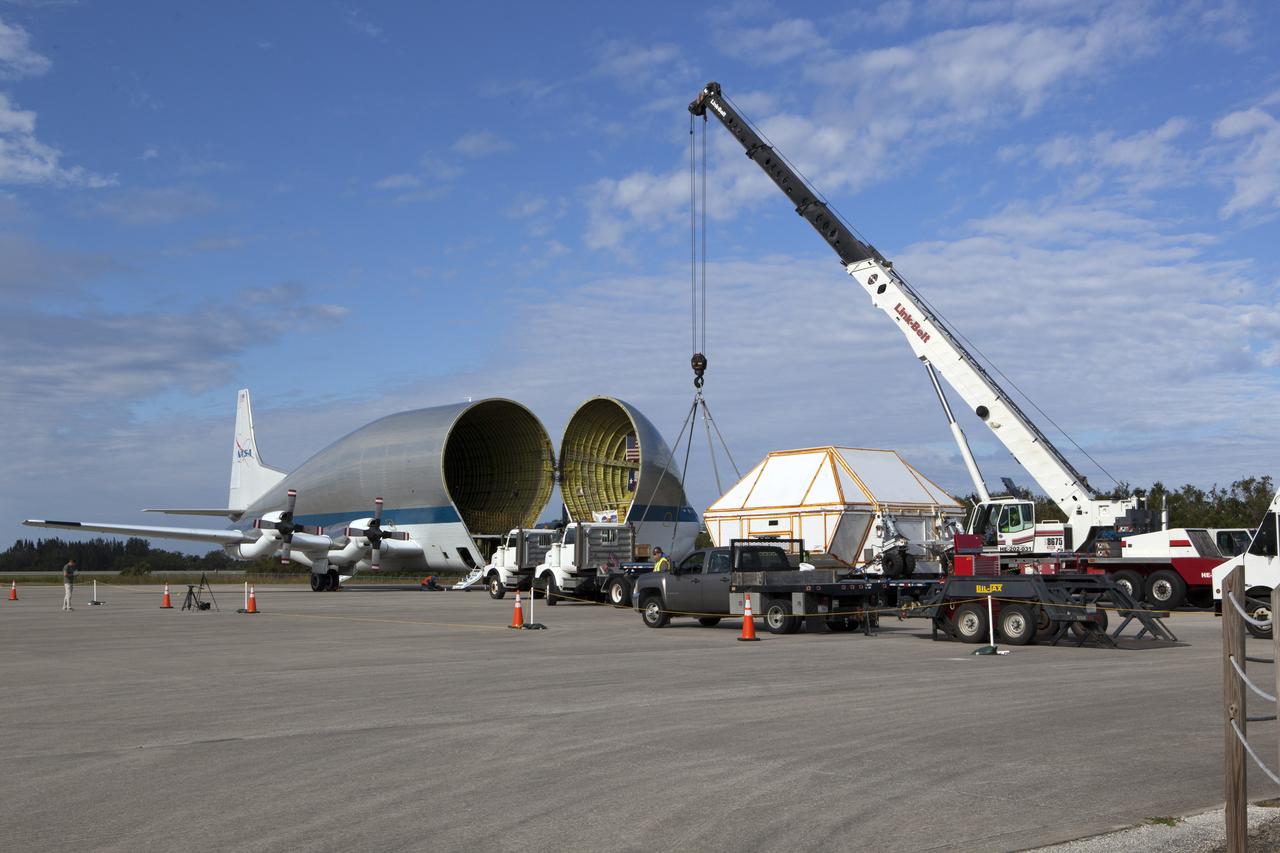
After arriving at the Shuttle Landing Facility operated by Space Florida at NASA's Kennedy Space Center in Florida, the agency's Super Guppy aircraft was opened and the container holding the Orion crew module structural test article (STA) was offloaded. A crane was used to lower the container onto a transporter. The test article will be moved to the Neil Armstrong Operations and Checkout Building high bay for further testing. The Orion spacecraft will launch atop NASA’s Space Launch System rocket on EM-1, its first deep space mission, in late 2018.
After arriving at the Shuttle Landing Facility operated by Space Florida at NASA's Kennedy Space Center in Florida, the agency's Super Guppy aircraft was opened and the container holding the Orion crew module structural test article (STA) was offloaded. The test article will be transported to the Neil Armstrong Operations and Checkout Building high bay for further testing. The Orion spacecraft will launch atop NASA’s Space Launch System rocket on EM-1, its first deep space mission, in late 2018.
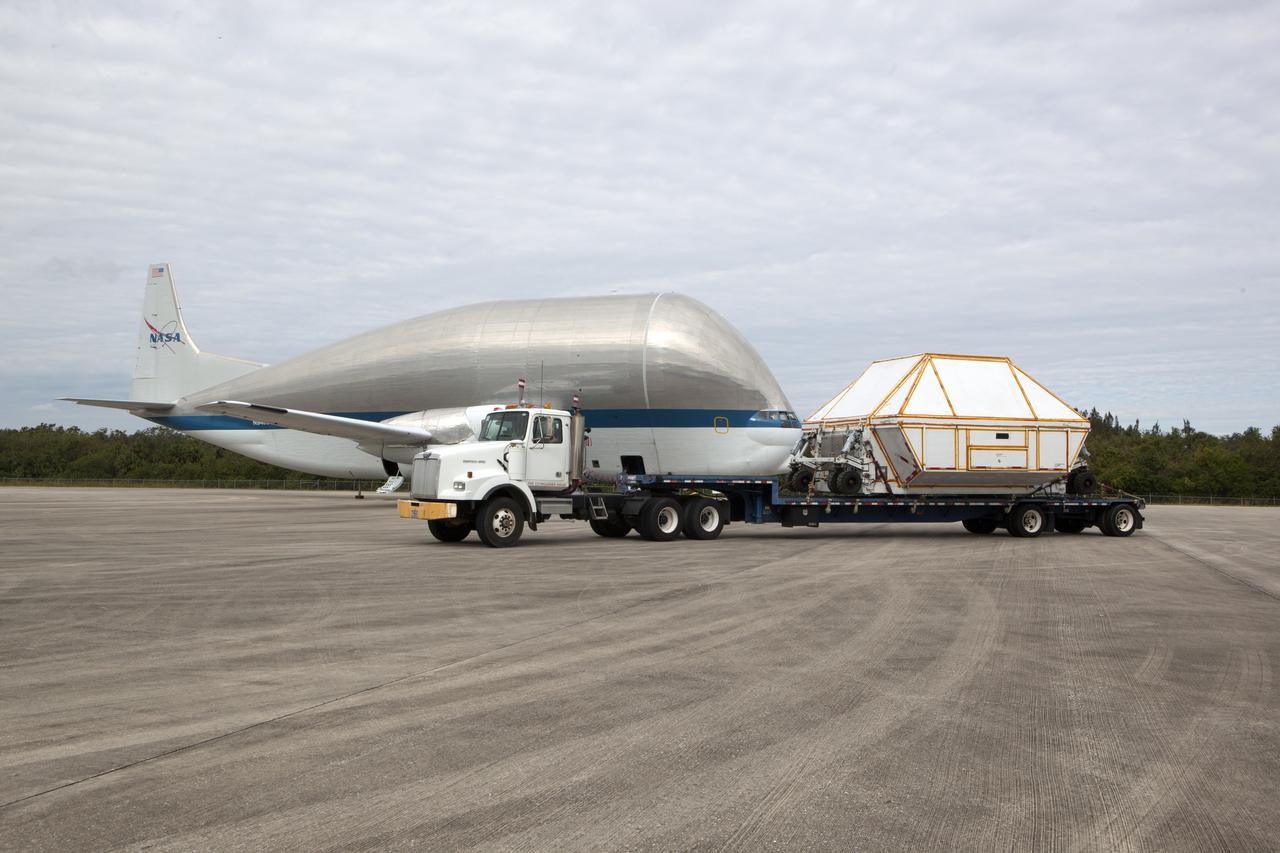
After arriving at the Shuttle Landing Facility operated by Space Florida at NASA's Kennedy Space Center in Florida, the agency's Super Guppy aircraft was opened and the container holding the Orion crew module structural test article (STA) was offloaded. A crane was used to lower the container for placement on a transporter. The Super Guppy has been closed. The test article will be moved to the Neil Armstrong Operations and Checkout Building high bay for further testing. The Orion spacecraft will launch atop NASA’s Space Launch System rocket on EM-1, its first deep space mission, in late 2018.
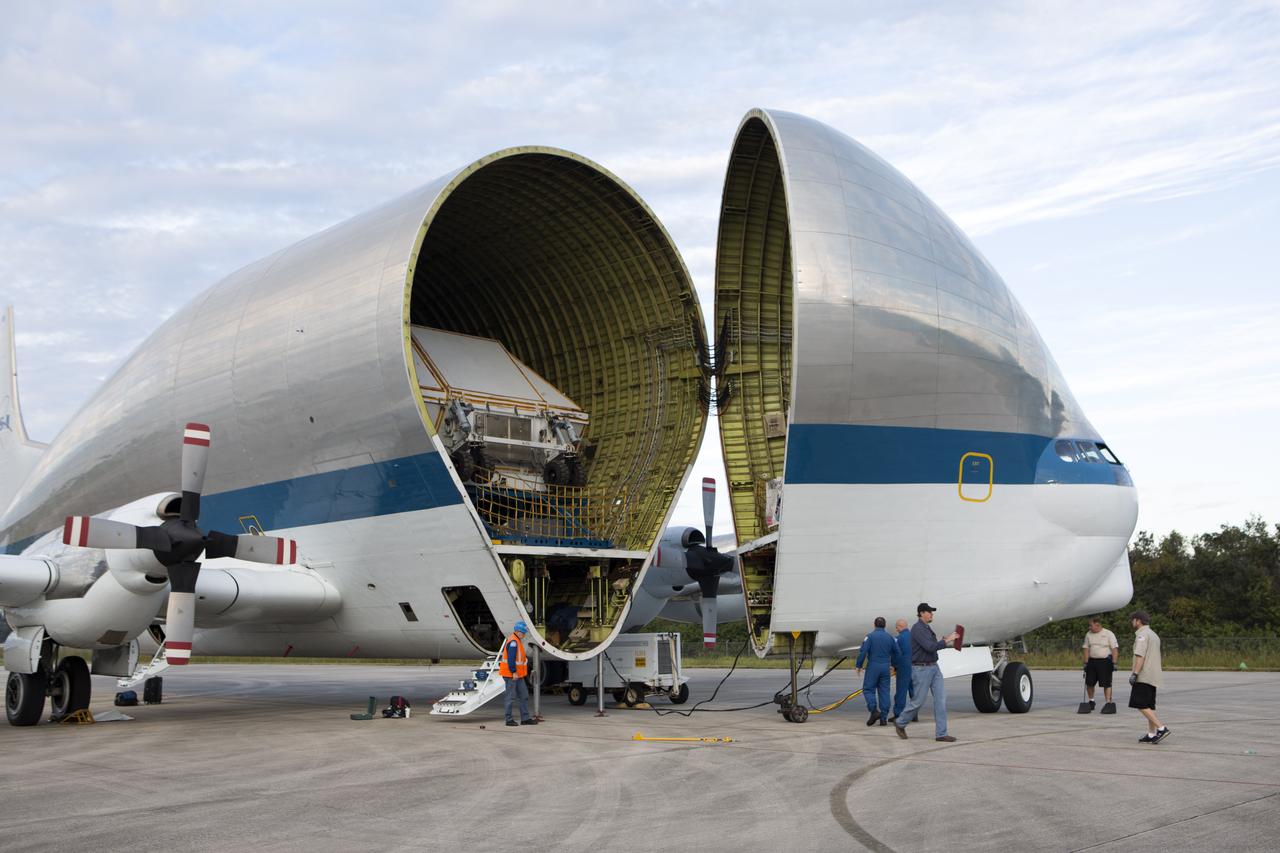
NASA’s Super Guppy aircraft, carrying the Orion crew module structural test article (STA), arrived at the Shuttle Landing Facility operated by Space Florida at NASA’s Kennedy Space Center in Florida. The unique aircraft is being opened to offload the STA. The test article will be transported to the Neil Armstrong Operations and Checkout Building high bay for further testing. The Orion spacecraft will launch atop NASA’s Space Launch System rocket on EM-1, its first deep space mission, in late 2018.
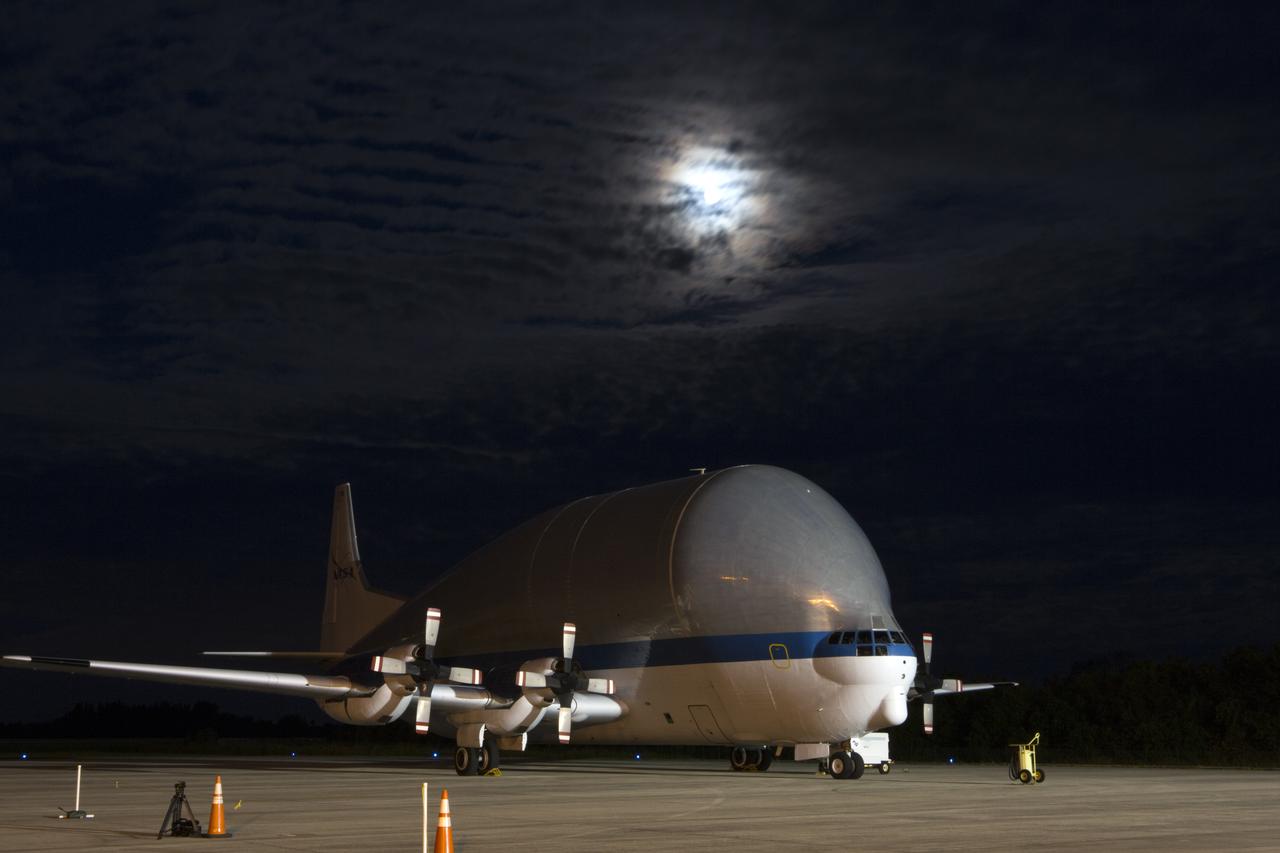
NASA’s Super Guppy aircraft, carrying the Orion crew module structural test article (STA), arrives at the Shuttle Landing Facility operated by Space Florida at NASA’s Kennedy Space Center in Florida. The STA will be offloaded and transported to the Neil Armstrong Operations and Checkout Building high bay for further testing. The Orion spacecraft will launch atop NASA’s Space Launch System rocket on EM-1, its first deep space mission, in late 2018.
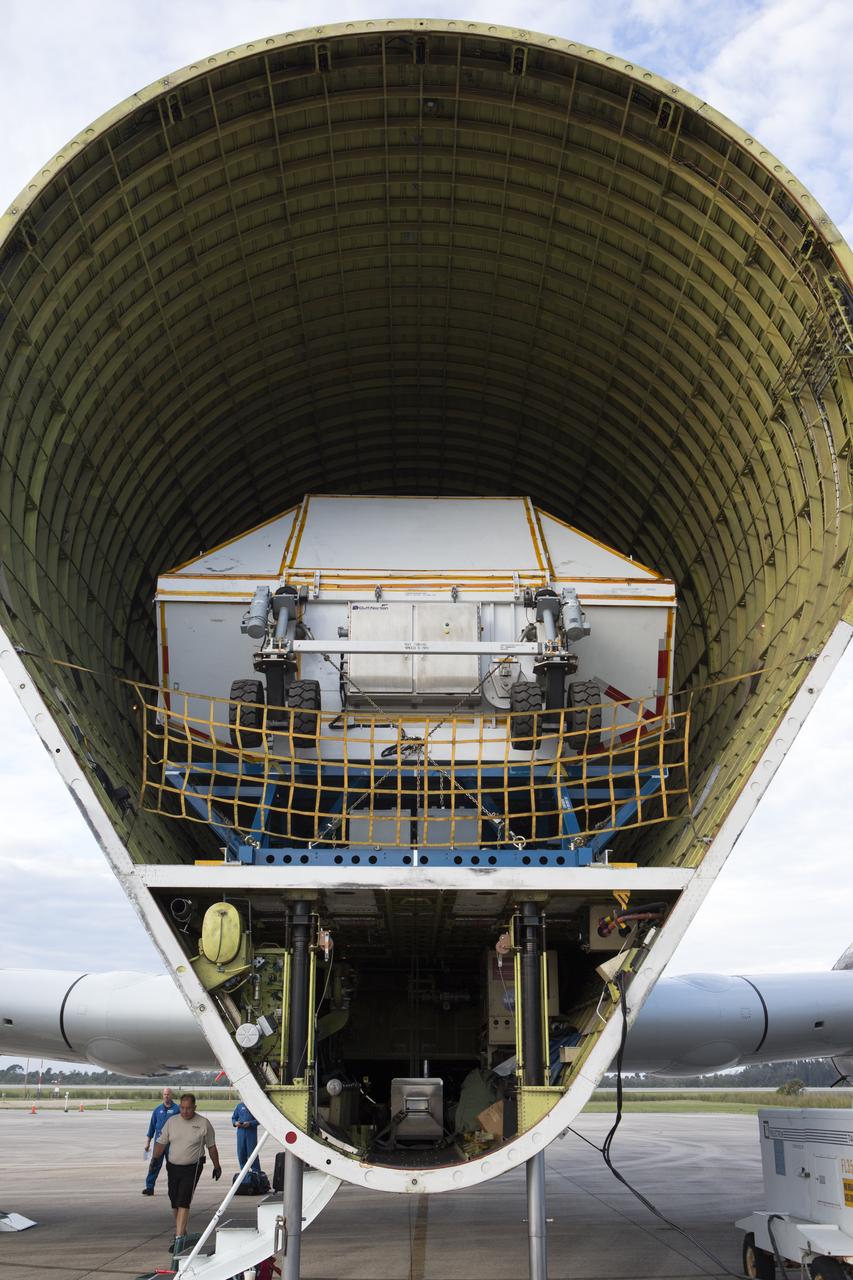
NASA’s Super Guppy aircraft, carrying the Orion crew module structural test article, arrived at the Shuttle Landing Facility operated by Space Florida at NASA’s Kennedy Space Center in Florida. The unique aircraft has been opened to reveal the container holding the STA. The test article will be transported to the Neil Armstrong Operations and Checkout Building high bay for further testing. The Orion spacecraft will launch atop NASA’s Space Launch System rocket on EM-1, its first deep space mission, in late 2018.
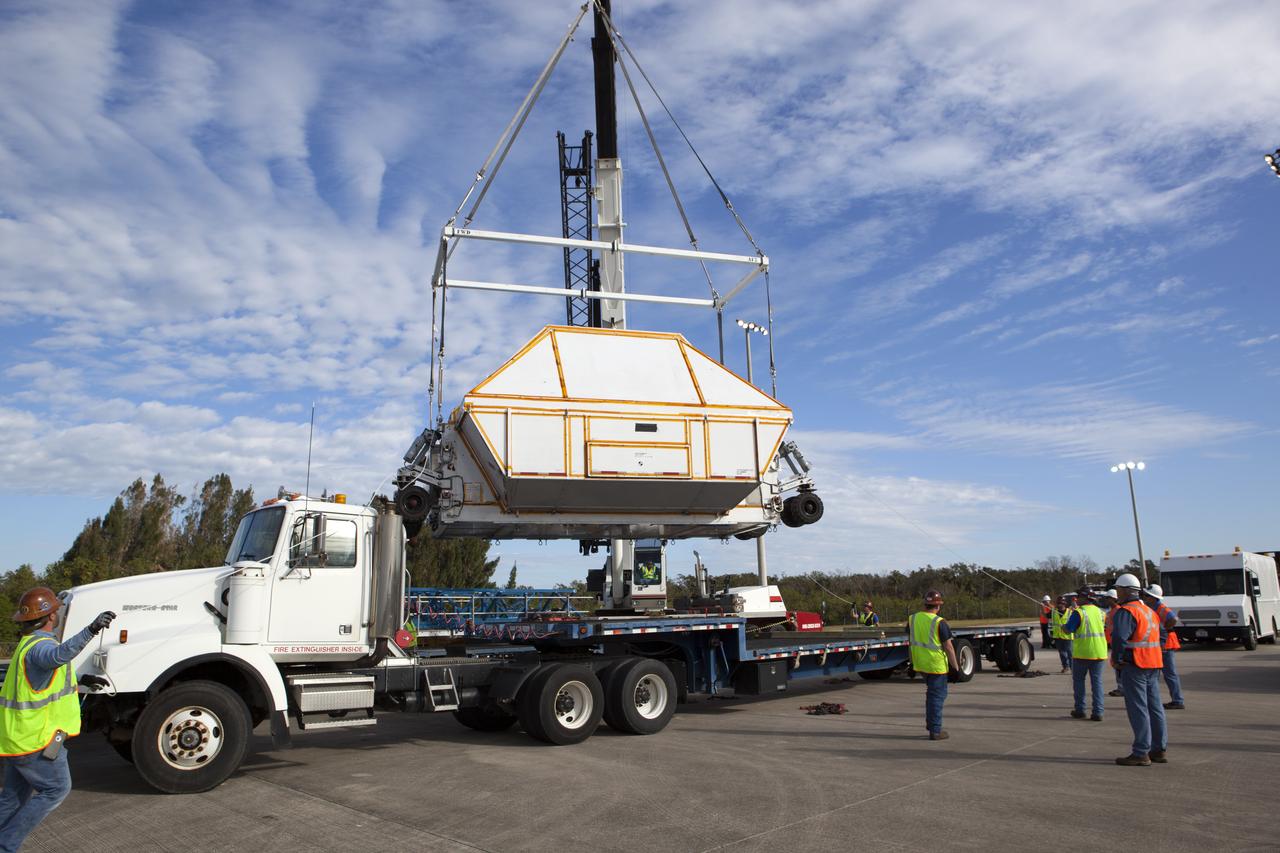
After arriving at the Shuttle Landing Facility operated by Space Florida at NASA's Kennedy Space Center in Florida, the agency's Super Guppy aircraft was opened and the container holding the Orion crew module structural test article (STA) was offloaded. A crane is used to lower the container for placement on a transporter. The test article will be moved to the Neil Armstrong Operations and Checkout Building high bay for further testing. The Orion spacecraft will launch atop NASA’s Space Launch System rocket on EM-1, its first deep space mission, in late 2018.
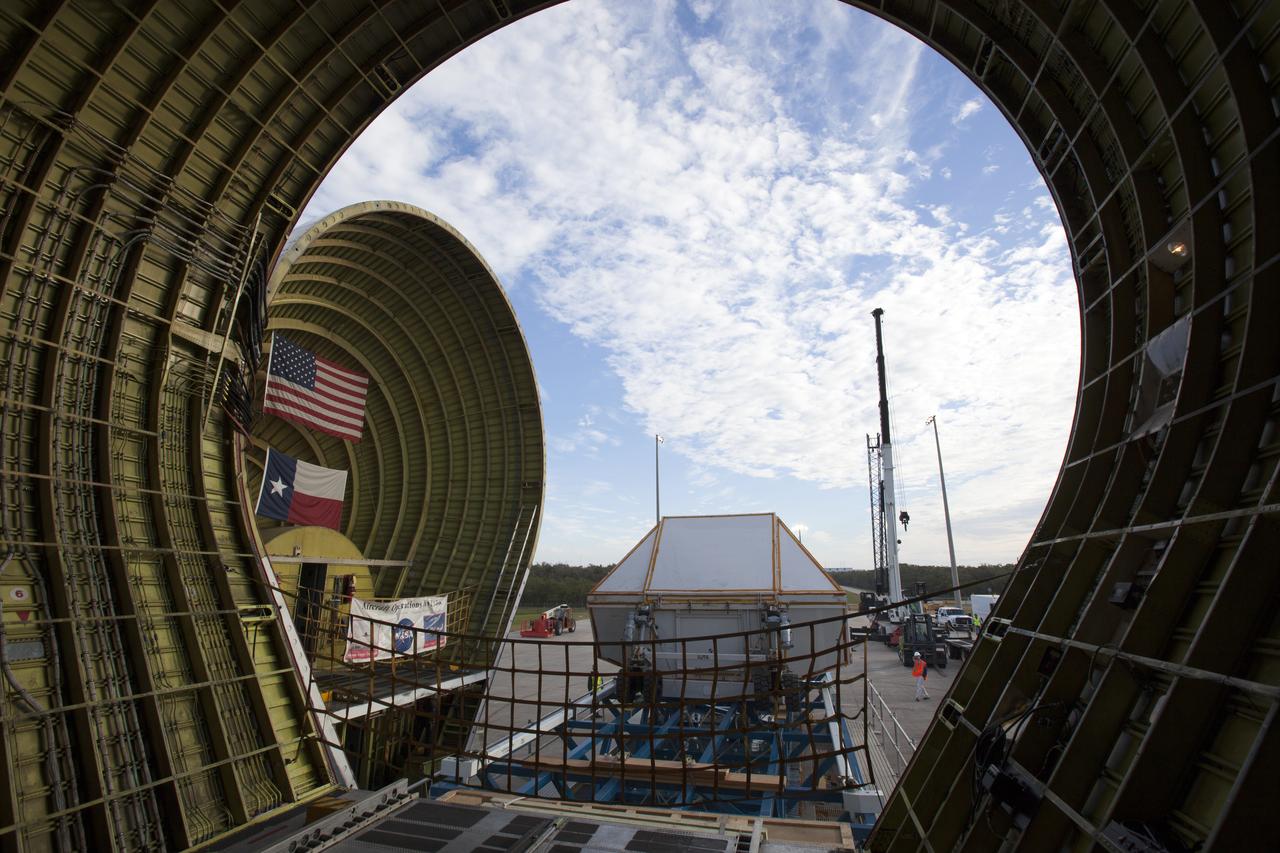
After arriving at the Shuttle Landing Facility operated by Space Florida at NASA's Kennedy Space Center in Florida, the agency's Super Guppy aircraft has been opened and the container holding the Orion crew module structural test article (STA) is being offloaded. The test article will be transported to the Neil Armstrong Operations and Checkout Building high bay for further testing. The Orion spacecraft will launch atop NASA’s Space Launch System rocket on EM-1, its first deep space mission, in late 2018.
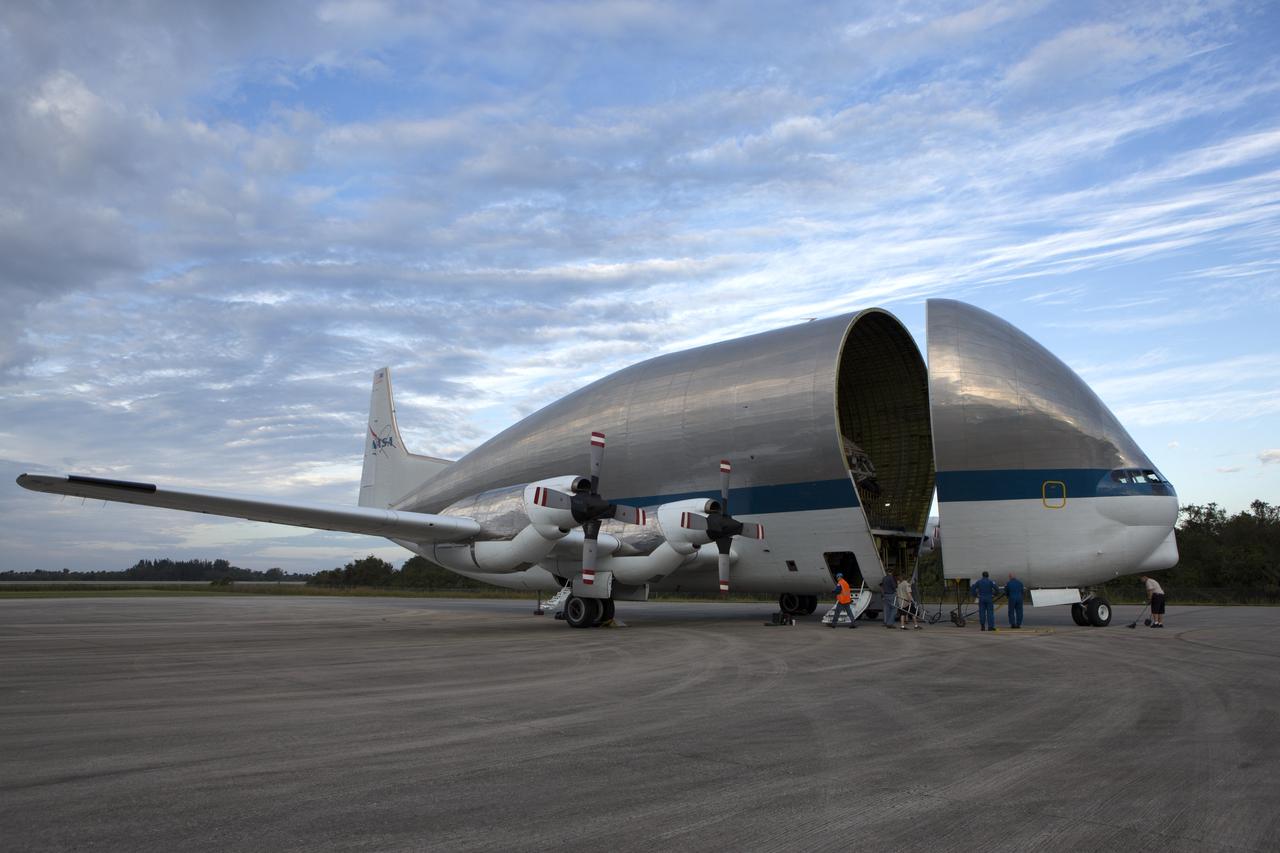
NASA’s Super Guppy aircraft, carrying the Orion crew module structural test article (STA), arrived at the Shuttle Landing Facility operated by Space Florida at NASA’s Kennedy Space Center in Florida. The front of the unique aircraft is being opened to offload the STA. The test article will be transported to the Neil Armstrong Operations and Checkout Building high bay for further testing. The Orion spacecraft will launch atop NASA’s Space Launch System rocket on EM-1, its first deep space mission, in late 2018.
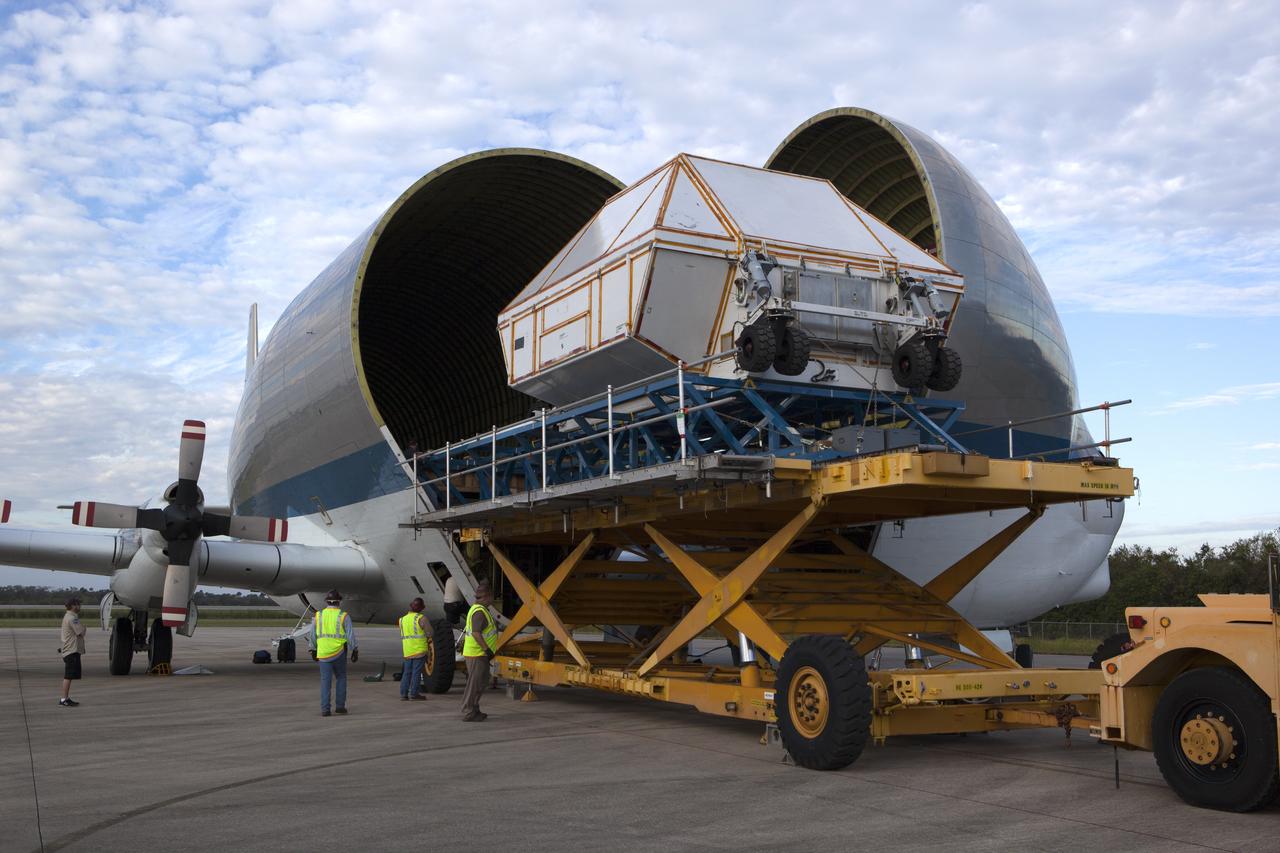
After arriving at the Shuttle Landing Facility operated by Space Florida at NASA's Kennedy Space Center in Florida, the agency's Super Guppy aircraft has been opened and the container holding the Orion crew module structural test article (STA) is being offloaded. The test article will be transported to the Neil Armstrong Operations and Checkout Building high bay for further testing. The Orion spacecraft will launch atop NASA’s Space Launch System rocket on EM-1, its first deep space mission, in late 2018. Photo credit: NASA/Ben Smegelsky
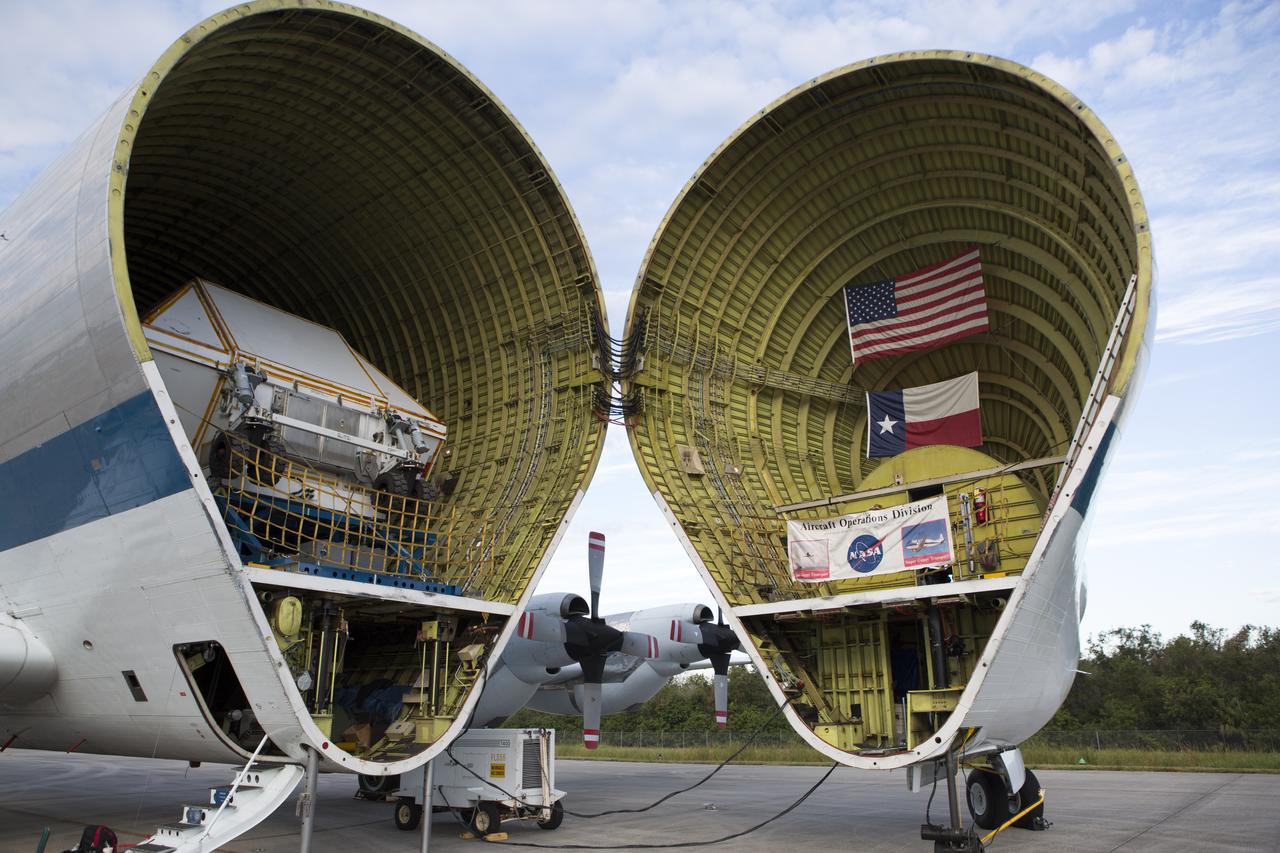
NASA’s Super Guppy aircraft, carrying the Orion crew module structural test article, arrived at the Shuttle Landing Facility operated by Space Florida at NASA’s Kennedy Space Center in Florida. The unique aircraft has been opened to reveal the container holding the STA. The test article will be transported to the Neil Armstrong Operations and Checkout Building high bay for further testing. The Orion spacecraft will launch atop NASA’s Space Launch System rocket on EM-1, its first deep space mission, in late 2018.
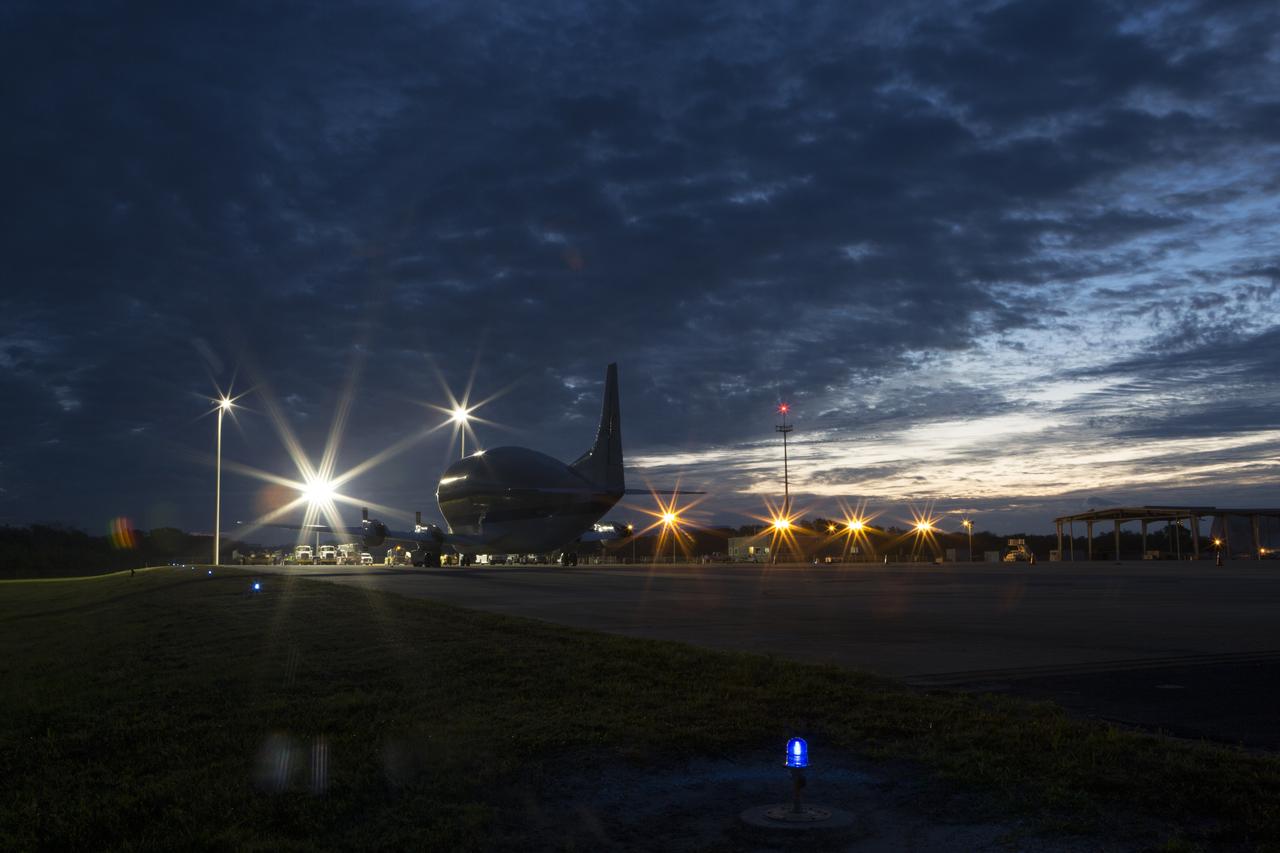
NASA’s Super Guppy aircraft, carrying the Orion crew module structural test article (STA), arrives at the Shuttle Landing Facility operated by Space Florida at NASA’s Kennedy Space Center in Florida. The STA will be offloaded and transported to the Neil Armstrong Operations and Checkout Building high bay for further testing. The Orion spacecraft will launch atop NASA’s Space Launch System rocket on EM-1, its first deep space mission, in late 2018.