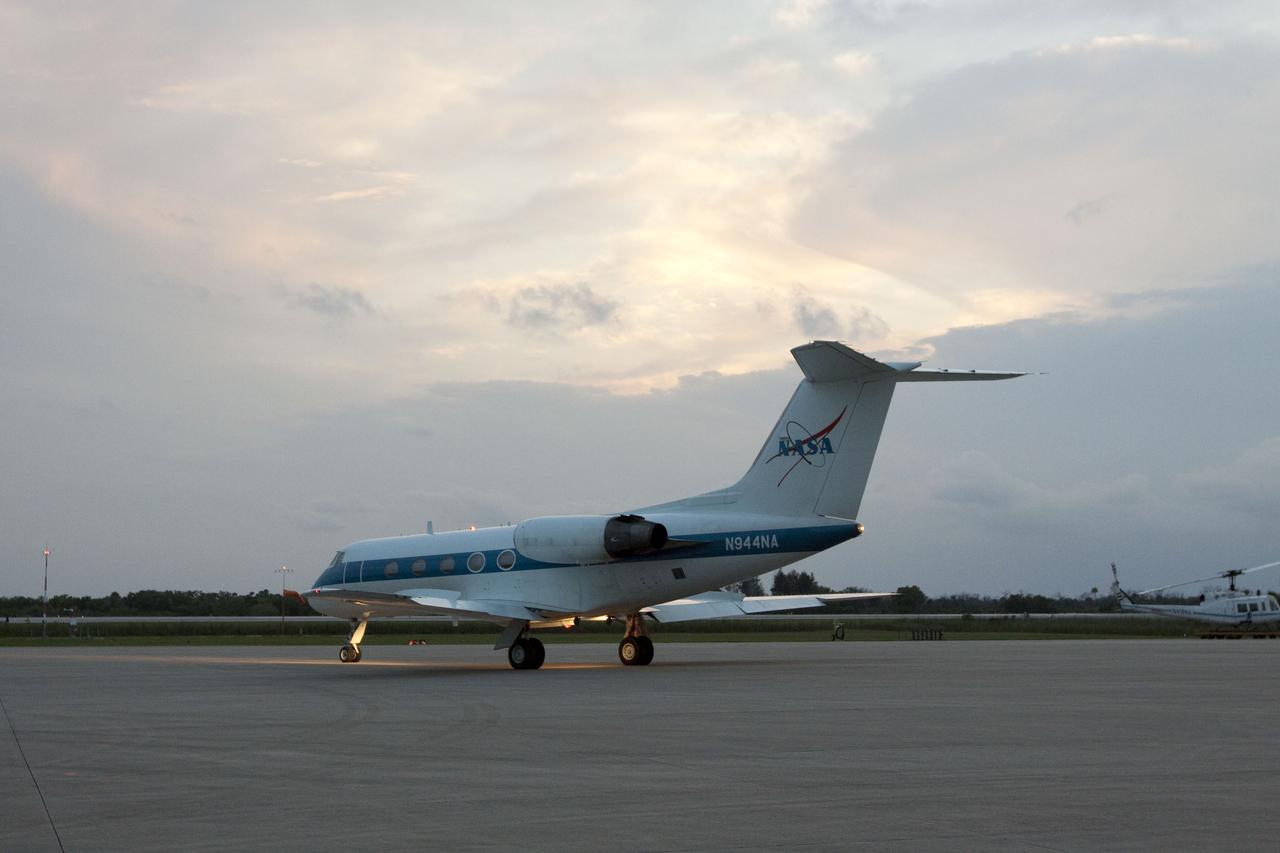
STS-132 TCDT - SUITED STA'S AT SLF
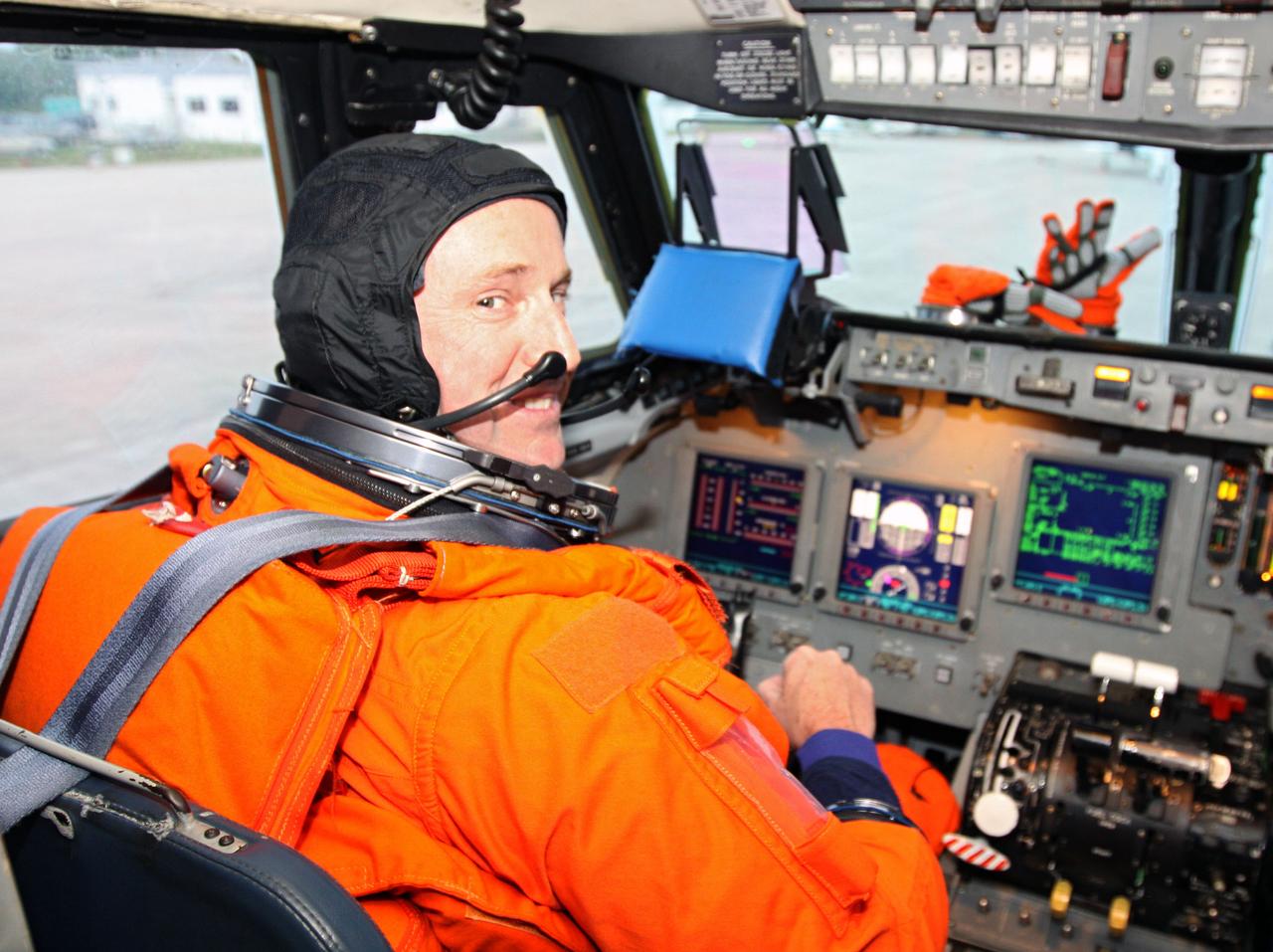
STS-132 TCDT - SUITED STA'S AT SLF
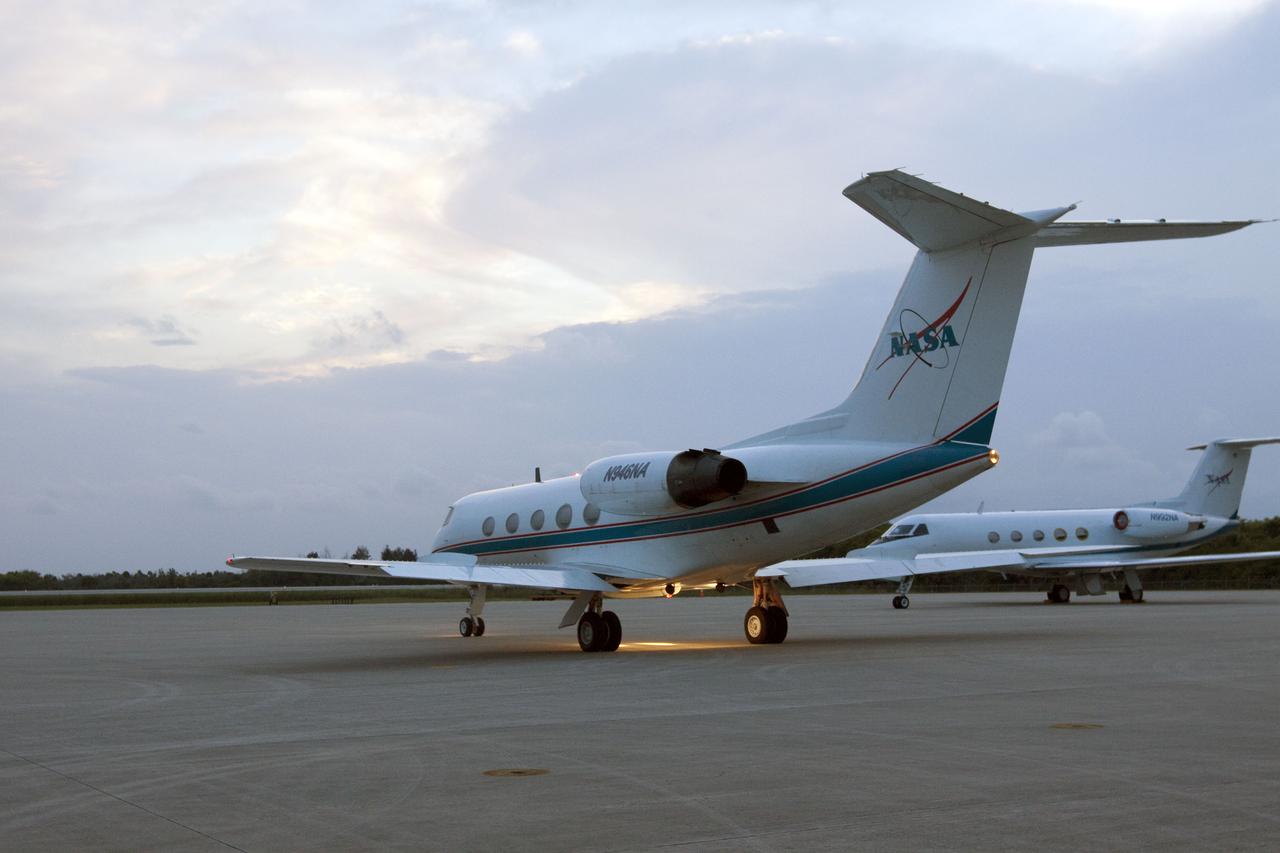
STS-132 TCDT - SUITED STA'S AT SLF
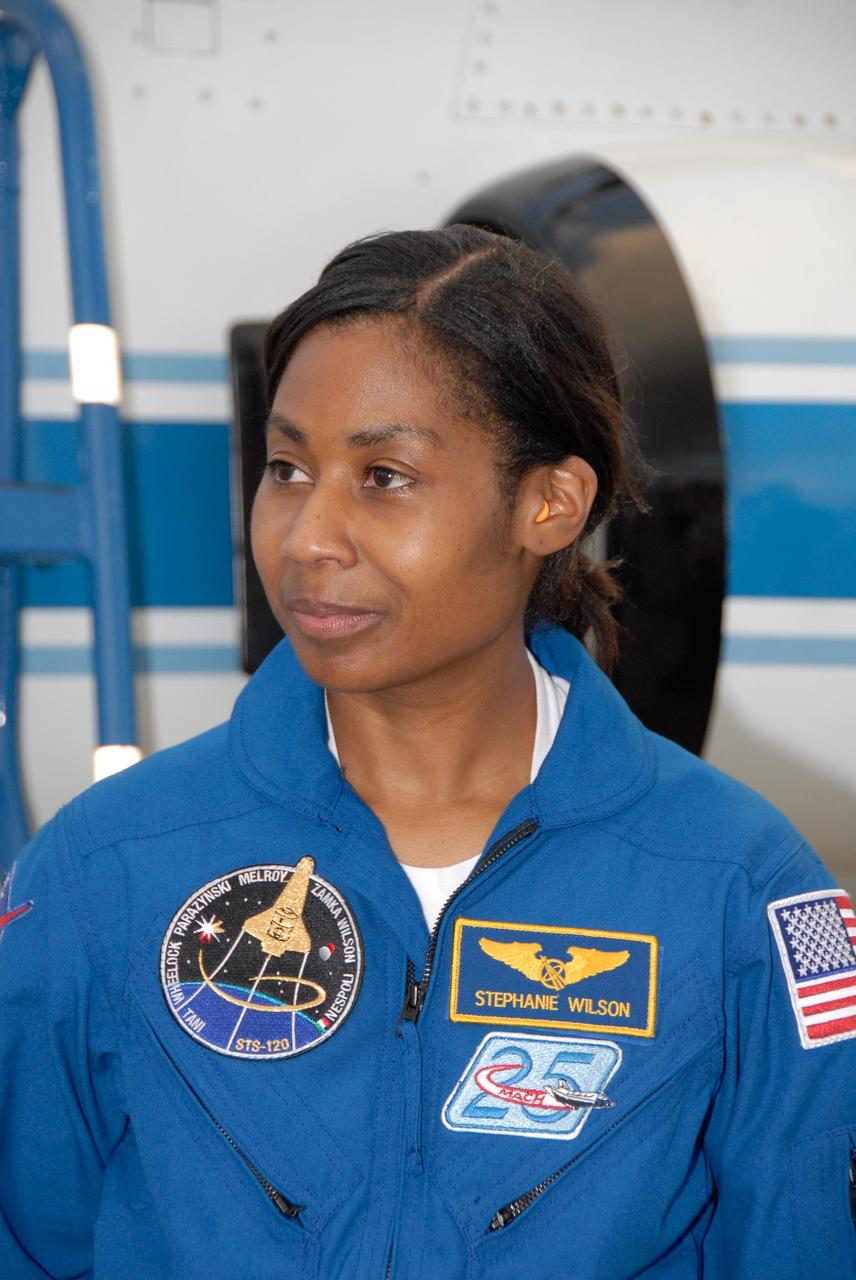
KENNEDY SPACE CENTER, FLA. -- The crew members of mission STS-120 arrive at NASA's Kennedy Space Center Shuttle Landing Facility aboard T-38 jet aircraft to take part in terminal countdown demonstration test activities. Mission Specialist Stephanie Wilson, seen here, will be making her second shuttle flight. The terminal countdown demonstration test provides astronauts and ground crews an opportunity to participate in various simulated countdown activities, including equipment familiarization and emergency training. The STS-120 mission will deliver the U.S. Node 2 module, named Harmony, aboard space shuttle Discovery to the International Space Station. Launch of Discovery on mission STS-120 is targeted for Oct. 23 at 11:38 a.m. EDT on a 14-day mission to the International Space Station. Photo credit: NASA/Kim Shiflett
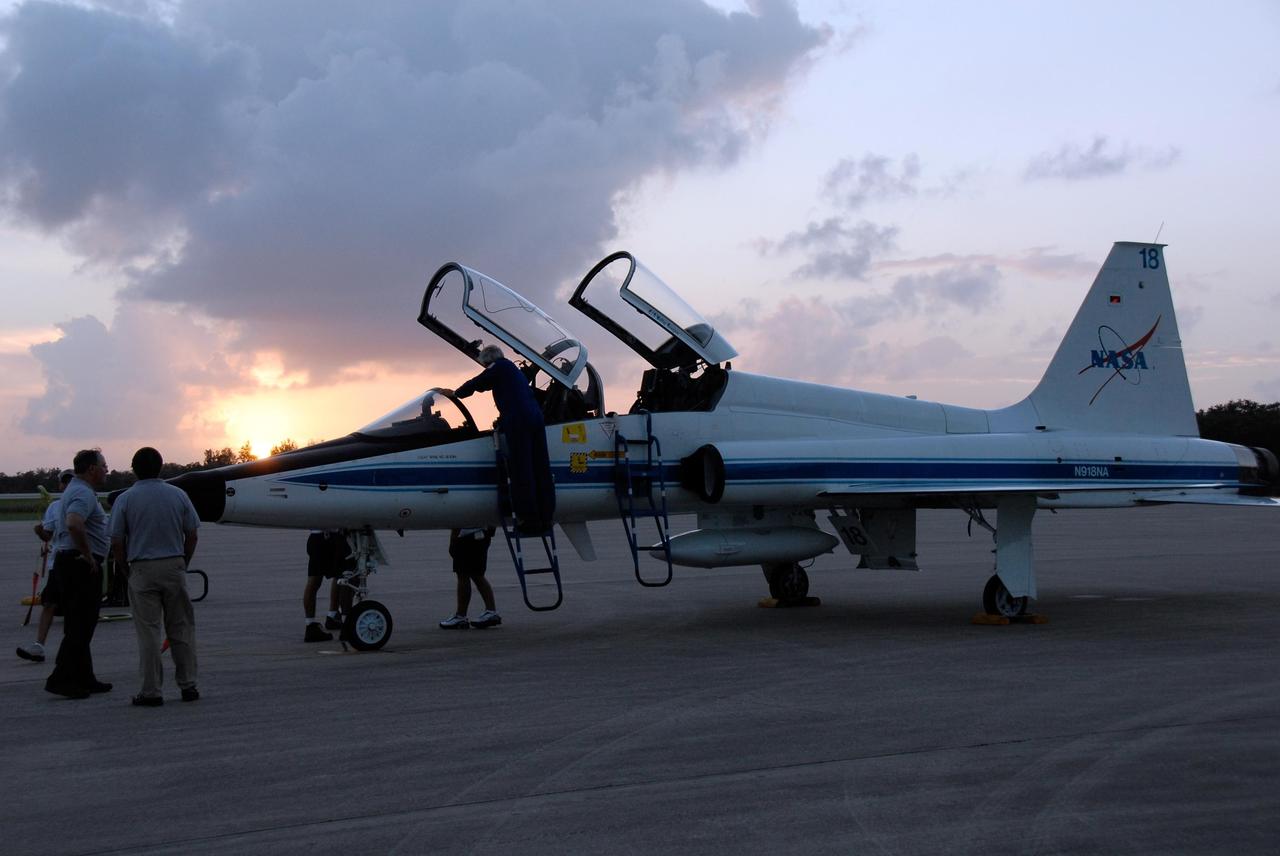
KENNEDY SPACE CENTER, FLA. -- The crew members of mission STS-120 arrive at NASA's Kennedy Space Center Shuttle Landing Facility aboard T-38 jet aircraft to take part in terminal countdown demonstration test activities. The T-38 jet aircraft on which Mission Specialist Doug Wheelock arrived is shown here. Wheelock will be making his first shuttle flight and will perform three spacewalks during the STS-120 mission. The terminal countdown demonstration test provides astronauts and ground crews an opportunity to participate in various simulated countdown activities, including equipment familiarization and emergency training. The STS-120 mission will deliver the U.S. Node 2 module, named Harmony, aboard space shuttle Discovery to the International Space Station. Launch of Discovery on mission STS-120 is targeted for Oct. 23 at 11:38 a.m. EDT on a 14-day mission to the International Space Station. Photo credit: NASA/Kim Shiflett
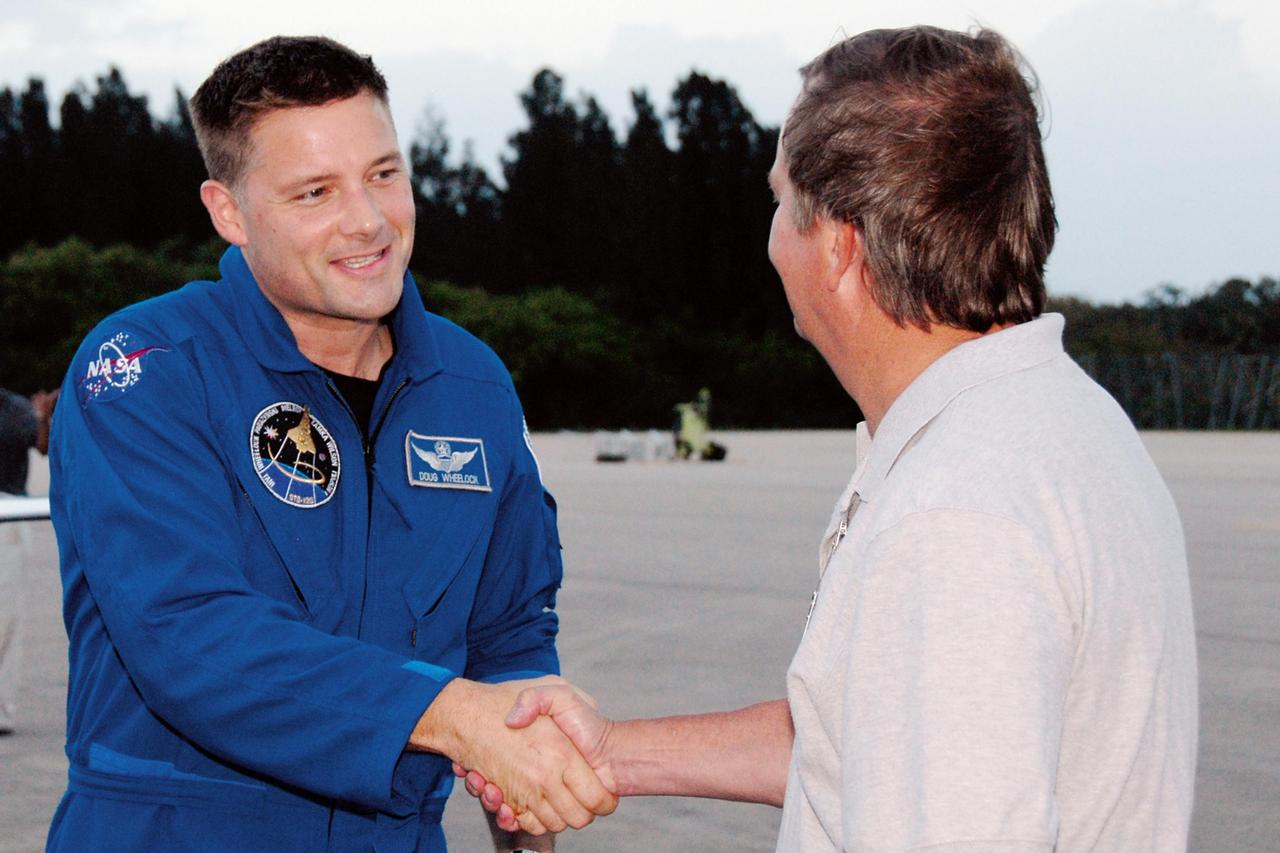
KENNEDY SPACE CENTER, FLA. -- The crew members of mission STS-120 arrive at NASA's Kennedy Space Center Shuttle Landing Facility aboard T-38 jet aircraft to take part in terminal countdown demonstration test activities. Mission Specialist Doug Wheelock, who will be making his first shuttle flight, is welcomed by Shuttle Launch Director Michael Leinbach, at right. The terminal countdown demonstration test provides astronauts and ground crews an opportunity to participate in various simulated countdown activities, including equipment familiarization and emergency training. The STS-120 mission will deliver the U.S. Node 2 module, named Harmony, aboard space shuttle Discovery to the International Space Station. Launch of Discovery on mission STS-120 is targeted for Oct. 23 at 11:38 a.m. EDT on a 14-day mission to the International Space Station. Photo credit: NASA/Kim Shiflett
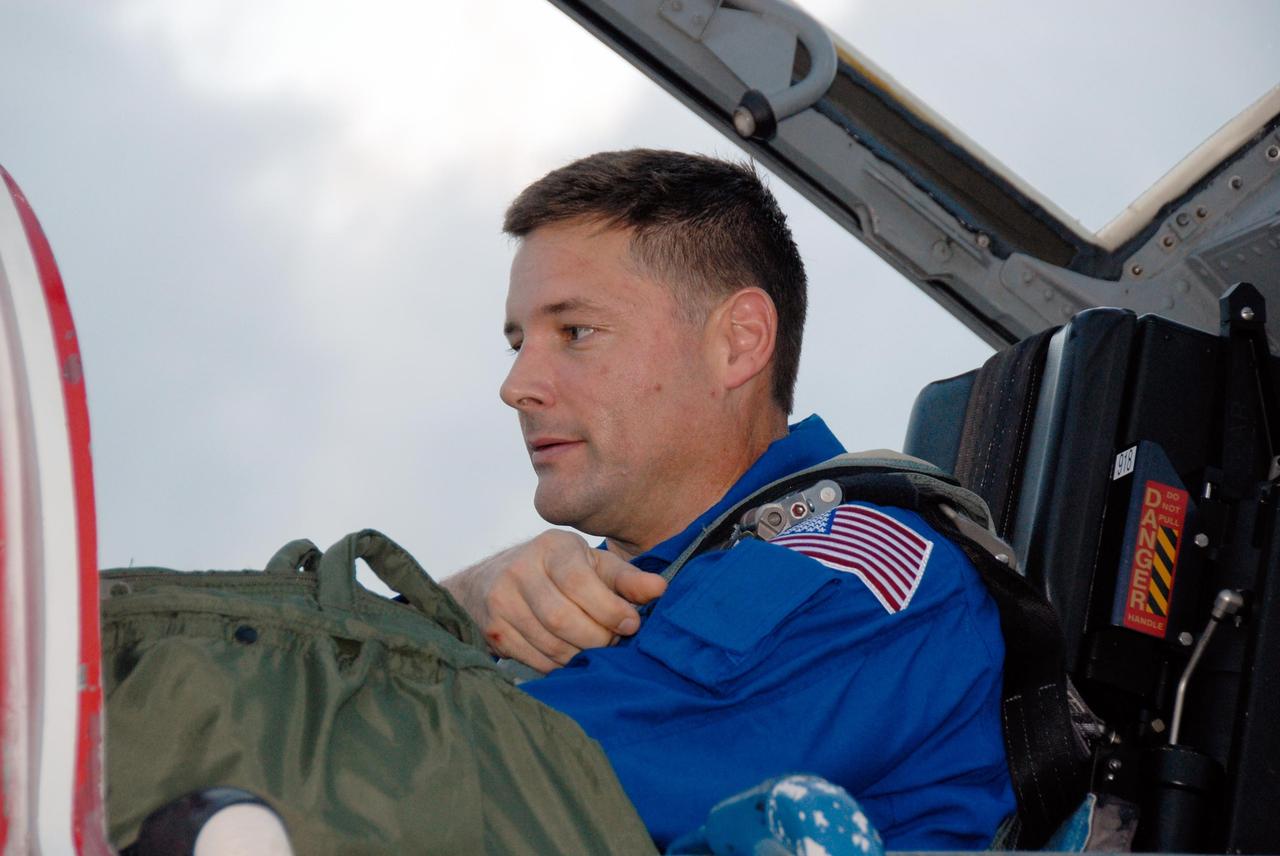
KENNEDY SPACE CENTER, FLA. -- The crew members of mission STS-120 arrive at NASA's Kennedy Space Center Shuttle Landing Facility aboard T-38 jet aircraft to take part in terminal countdown demonstration test activities. Mission Specialist Doug Wheelock, seen here, will be making his first shuttle flight. The terminal countdown demonstration test provides astronauts and ground crews an opportunity to participate in various simulated countdown activities, including equipment familiarization and emergency training. The STS-120 mission will deliver the U.S. Node 2 module, named Harmony, aboard space shuttle Discovery to the International Space Station. Launch of Discovery on mission STS-120 is targeted for Oct. 23 at 11:38 a.m. EDT on a 14-day mission to the International Space Station. Photo credit: NASA/Kim Shiflett
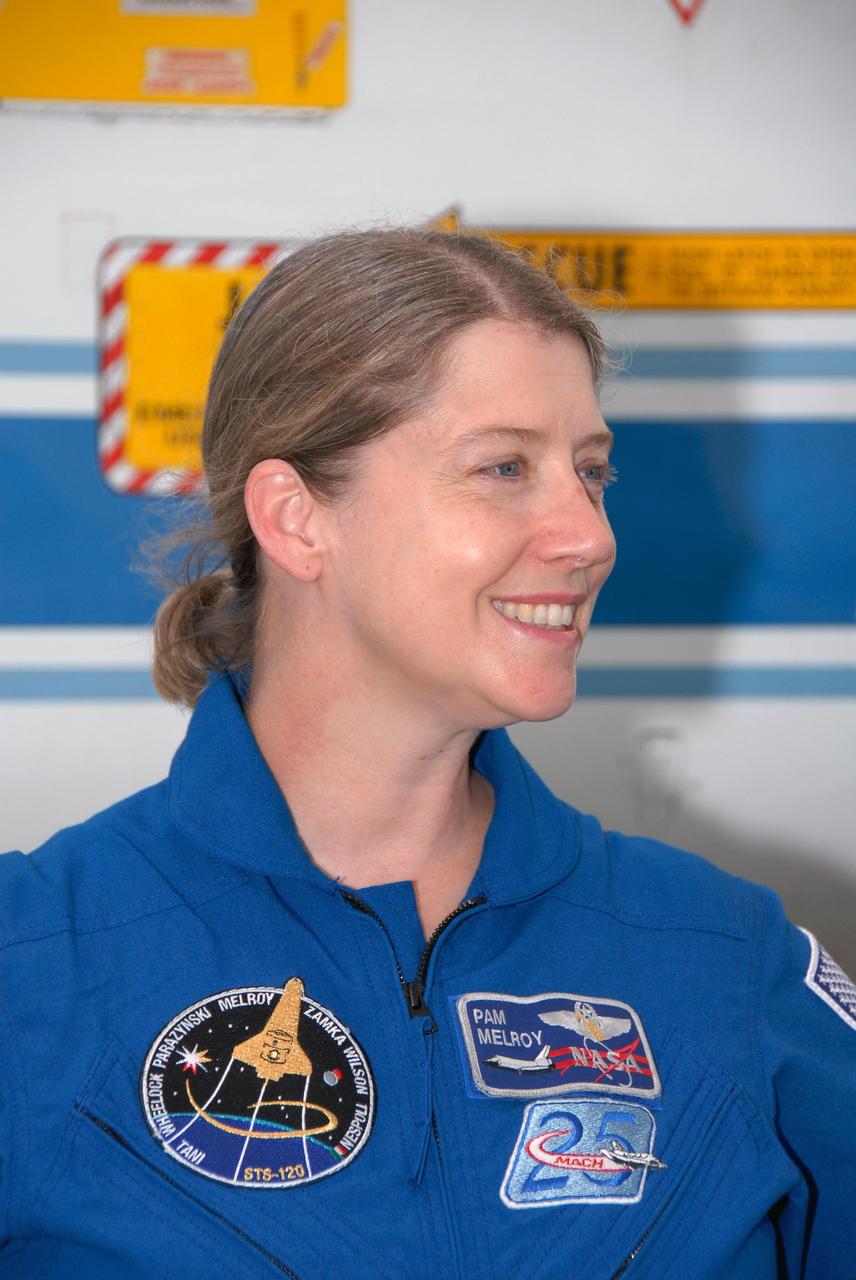
KENNEDY SPACE CENTER, FLA. -- The crew members of mission STS-120 arrive at NASA's Kennedy Space Center Shuttle Landing Facility aboard T-38 jet aircraft to take part in terminal countdown demonstration test activities. Commander Pam Melroy, seen here, will be making her third shuttle flight. She is the second woman to command a shuttle mission. The terminal countdown demonstration test provides astronauts and ground crews an opportunity to participate in various simulated countdown activities, including equipment familiarization and emergency training. The STS-120 mission will deliver the U.S. Node 2 module, named Harmony, aboard space shuttle Discovery to the International Space Station. Launch of Discovery on mission STS-120 is targeted for Oct. 23 at 11:38 a.m. EDT on a 14-day mission to the International Space Station. Photo credit: NASA/Kim Shiflett
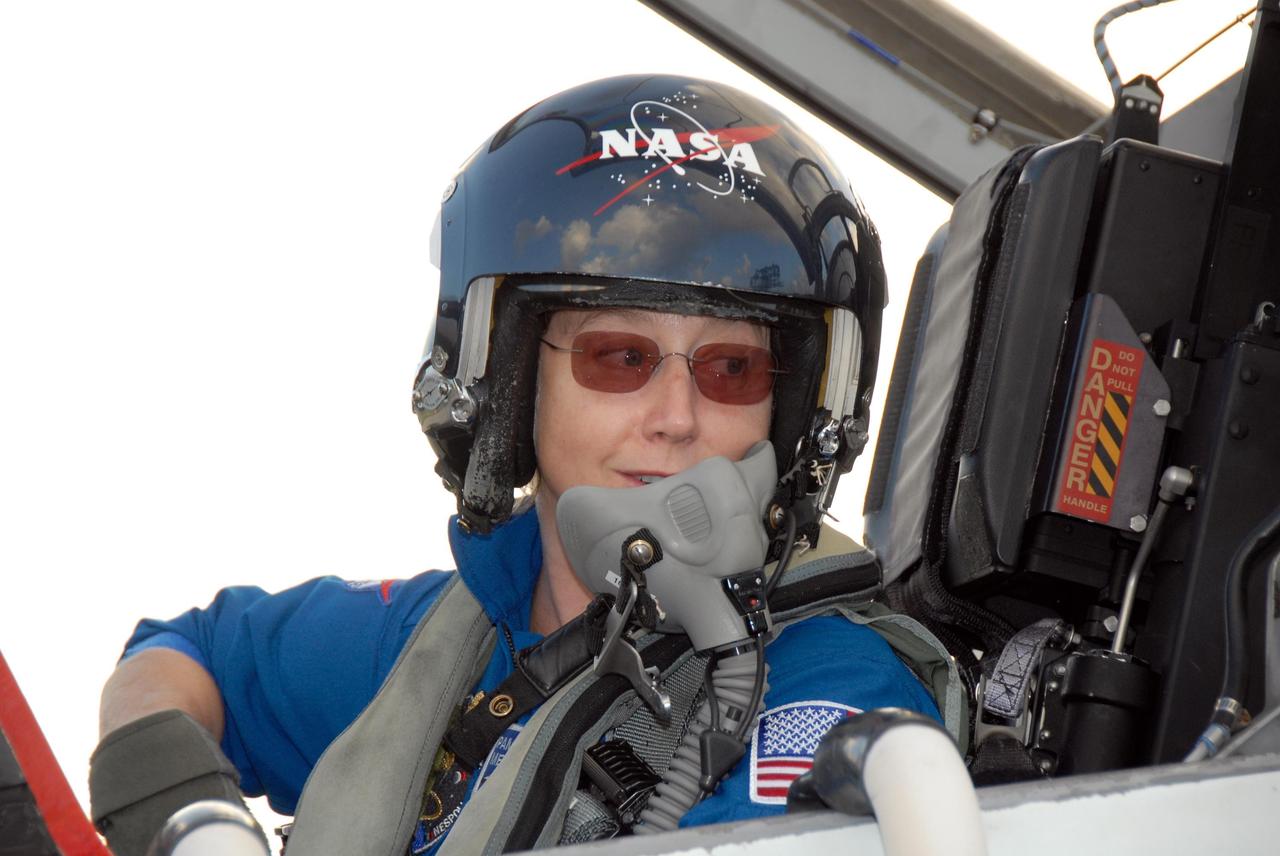
KENNEDY SPACE CENTER, FLA. -- The crew members of mission STS-120 arrive at NASA's Kennedy Space Center Shuttle Landing Facility aboard T-38 jet aircraft to take part in terminal countdown demonstration test activities. Commander Pam Melroy, who will be making her third shuttle flight, prepares to exit the plane. The terminal countdown demonstration test provides astronauts and ground crews an opportunity to participate in various simulated countdown activities, including equipment familiarization and emergency training. The STS-120 mission will deliver the U.S. Node 2 module, named Harmony, aboard space shuttle Discovery to the International Space Station. Launch of Discovery on mission STS-120 is targeted for Oct. 23 at 11:38 a.m. EDT on a 14-day mission to the International Space Station. Photo credit: NASA/Kim Shiflett
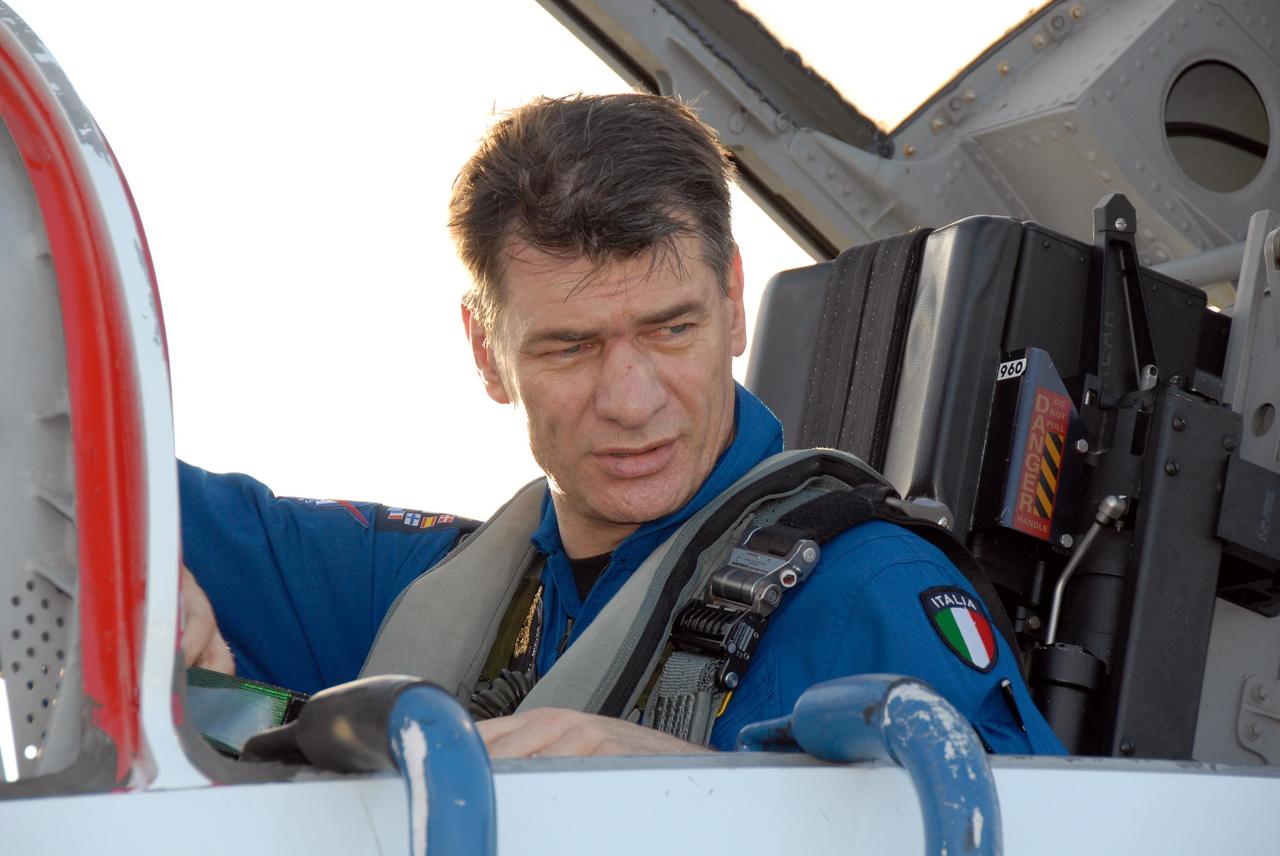
KENNEDY SPACE CENTER, FLA. -- The crew members of mission STS-120 arrive at NASA's Kennedy Space Center Shuttle Landing Facility aboard T-38 jet aircraft to take part in terminal countdown demonstration test activities. Mission Specialist Paolo Nespoli, representing the European Space Agency on his first shuttle flight, prepares to exit the plane. The terminal countdown demonstration test provides astronauts and ground crews an opportunity to participate in various simulated countdown activities, including equipment familiarization and emergency training. The STS-120 mission will deliver the U.S. Node 2 module, named Harmony, aboard space shuttle Discovery to the International Space Station. Launch of Discovery on mission STS-120 is targeted for Oct. 23 at 11:38 a.m. EDT on a 14-day mission to the International Space Station. Photo credit: NASA/Kim Shiflett
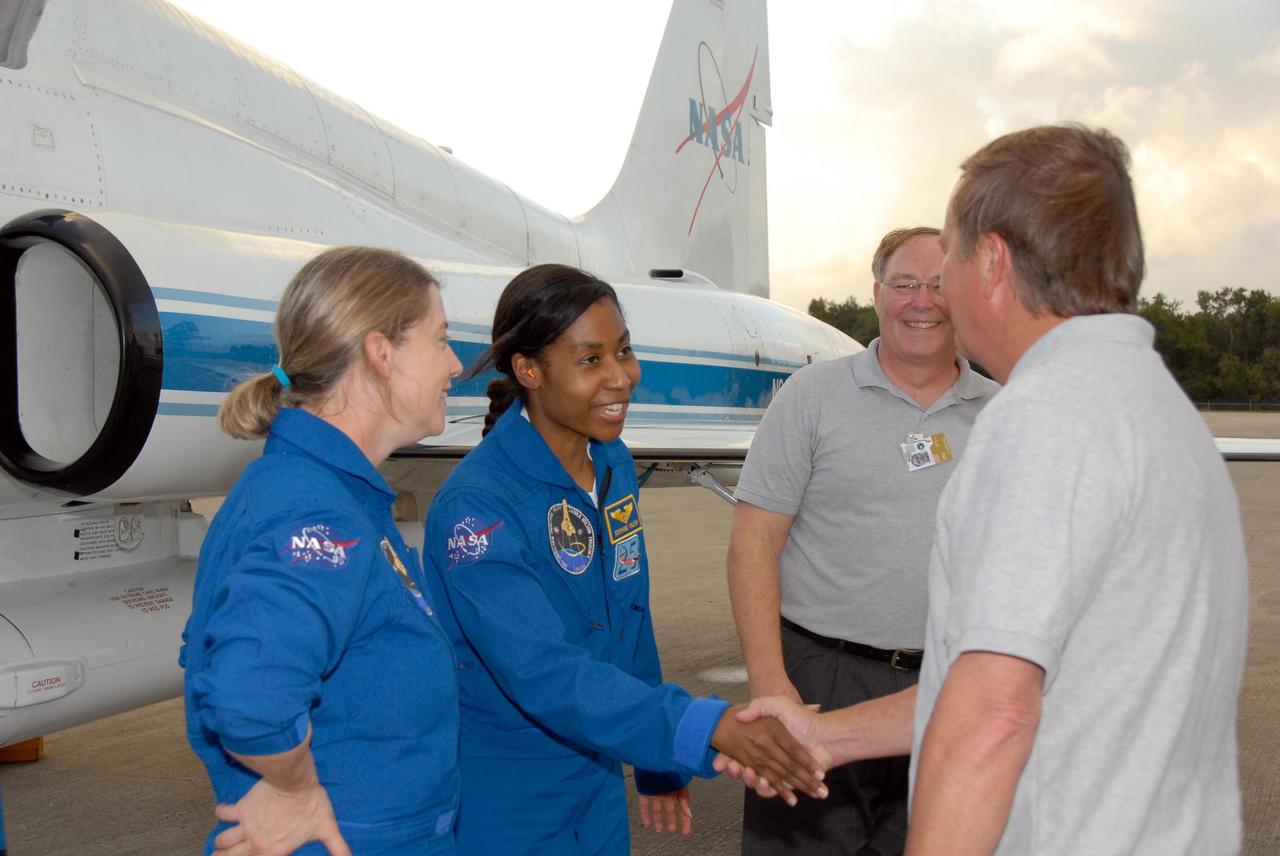
KENNEDY SPACE CENTER, FLA. -- The crew members of mission STS-120 arrive at NASA's Kennedy Space Center Shuttle Landing Facility aboard T-38 jet aircraft to take part in terminal countdown demonstration test activities. Shuttle Launch Director Michael Leinbach shakes hands with Mission Specialist Stephanie Wilson, who will be making her second shuttle flight, as Commander Pam Melroy, at left, looks on. The terminal countdown demonstration test provides astronauts and ground crews an opportunity to participate in various simulated countdown activities, including equipment familiarization and emergency training. The STS-120 mission will deliver the U.S. Node 2 module, named Harmony, aboard space shuttle Discovery to the International Space Station. Launch of Discovery on mission STS-120 is targeted for Oct. 23 at 11:38 a.m. EDT on a 14-day mission to the International Space Station. Photo credit: NASA/Kim Shiflett
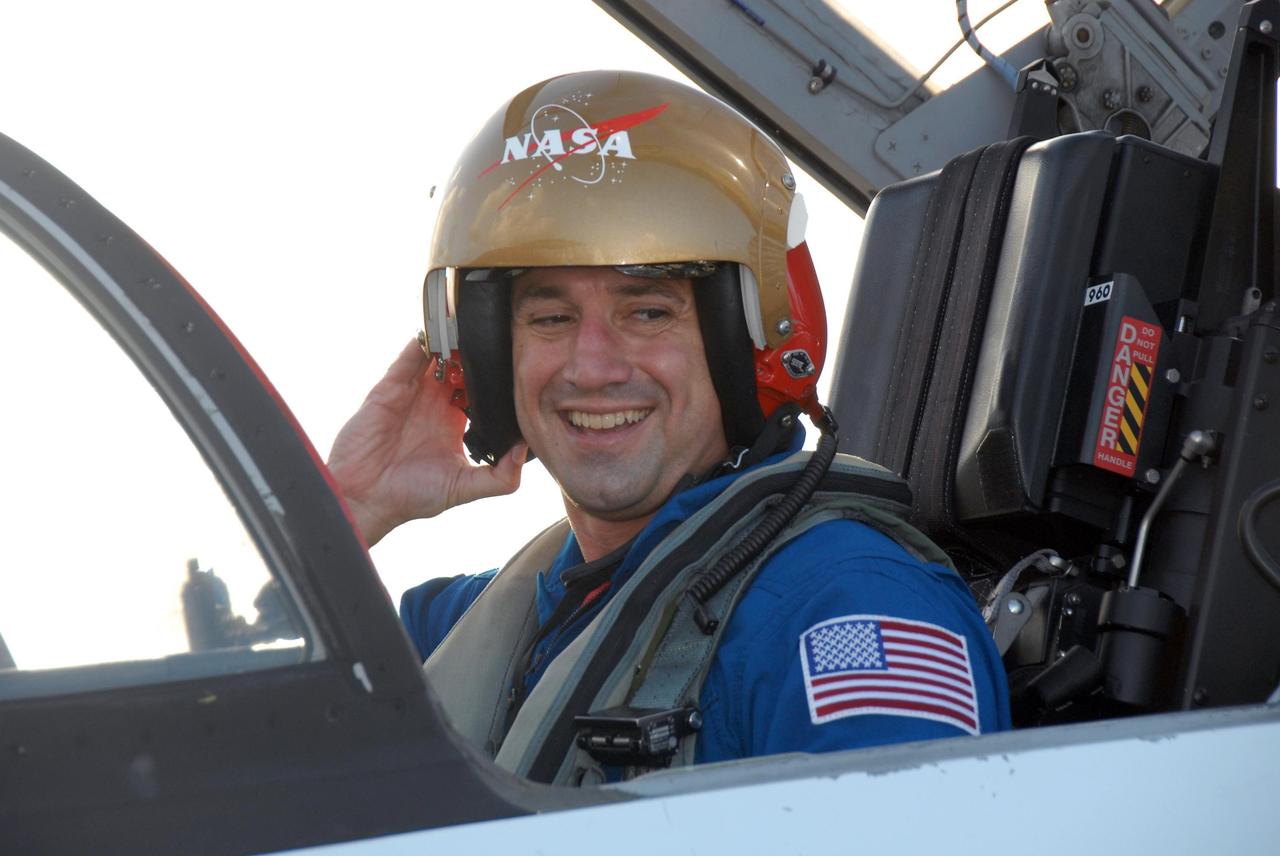
KENNEDY SPACE CENTER, FLA. -- The crew members of mission STS-120 arrive at NASA's Kennedy Space Center Shuttle Landing Facility aboard T-38 jet aircraft to take part in terminal countdown demonstration test activities. Pilot George Zamka, who will be making his first shuttle flight, prepares to exit the plane. The terminal countdown demonstration test provides astronauts and ground crews an opportunity to participate in various simulated countdown activities, including equipment familiarization and emergency training. The STS-120 mission will deliver the U.S. Node 2 module, named Harmony, aboard space shuttle Discovery to the International Space Station. Launch of Discovery on mission STS-120 is targeted for Oct. 23 at 11:38 a.m. EDT on a 14-day mission to the International Space Station. Photo credit: NASA/Kim Shiflett
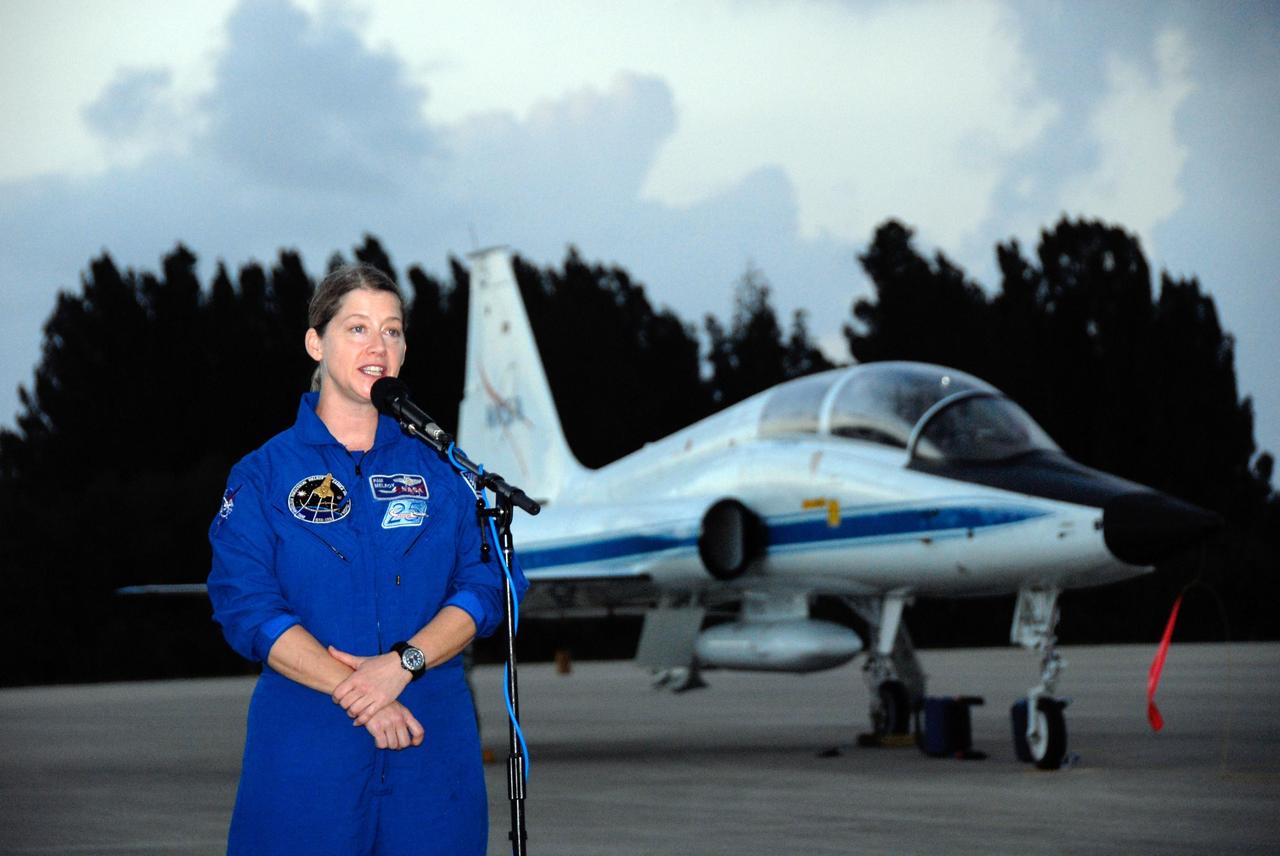
KENNEDY SPACE CENTER, FLA. -- STS-120 Commander Pam Melroy addresses the media following the arrival of the STS-120 crew at NASA's Kennedy Space Center Shuttle Landing Facility aboard T-38 jet aircraft. The crew is at Kennedy to take part in terminal countdown demonstration test activities and also includes Pilot George Zamka and Mission Specialists Paolo Nespoli, Doug Wheelock, Stephanie Wilson, Scott Parazynski and Daniel Tani, who will remain of the International Space Station as a member of the Expedition 16 crew. The terminal countdown demonstration test provides astronauts and ground crews an opportunity to participate in various simulated countdown activities, including equipment familiarization and emergency training. The STS-120 mission will deliver the U.S. Node 2 module, named Harmony, aboard space shuttle Discovery to the International Space Station. Launch of Discovery on mission STS-120 is targeted for Oct. 23 at 11:38 a.m. EDT on a 14-day mission to the International Space Station. Photo credit: NASA/Kim Shiflett
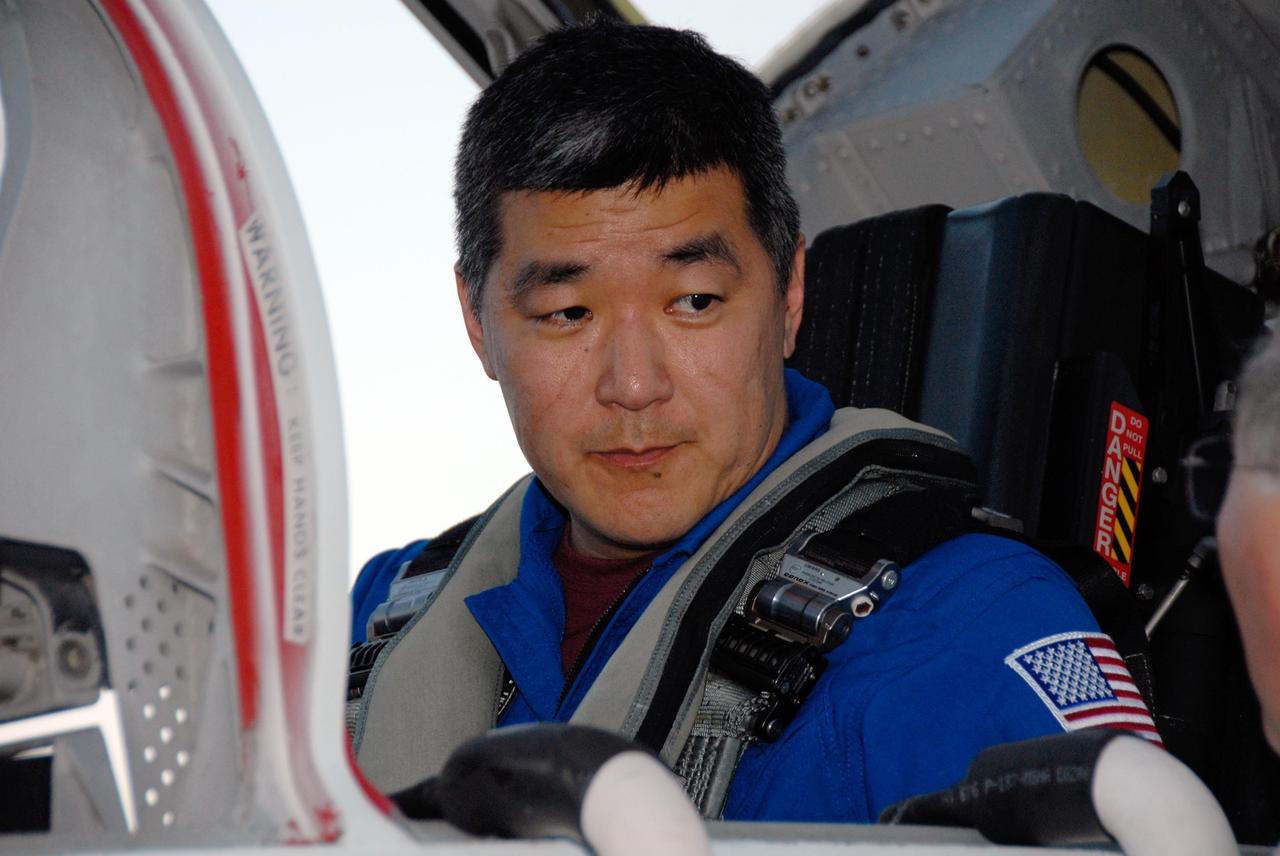
KENNEDY SPACE CENTER, FLA. -- The crew members of mission STS-120 arrive at NASA's Kennedy Space Center Shuttle Landing Facility aboard T-38 jet aircraft to take part in terminal countdown demonstration test activities. Mission Specialist Daniel Tani, shown here, will be making his second shuttle flight and remain on the International Space Station as a member of the Expedition 16 crew. The terminal countdown demonstration test provides astronauts and ground crews an opportunity to participate in various simulated countdown activities, including equipment familiarization and emergency training. The STS-120 mission will deliver the U.S. Node 2 module, named Harmony, aboard space shuttle Discovery to the International Space Station. Launch of Discovery on mission STS-120 is targeted for Oct. 23 at 11:38 a.m. EDT on a 14-day mission to the International Space Station. Photo credit: NASA/Kim Shiflett
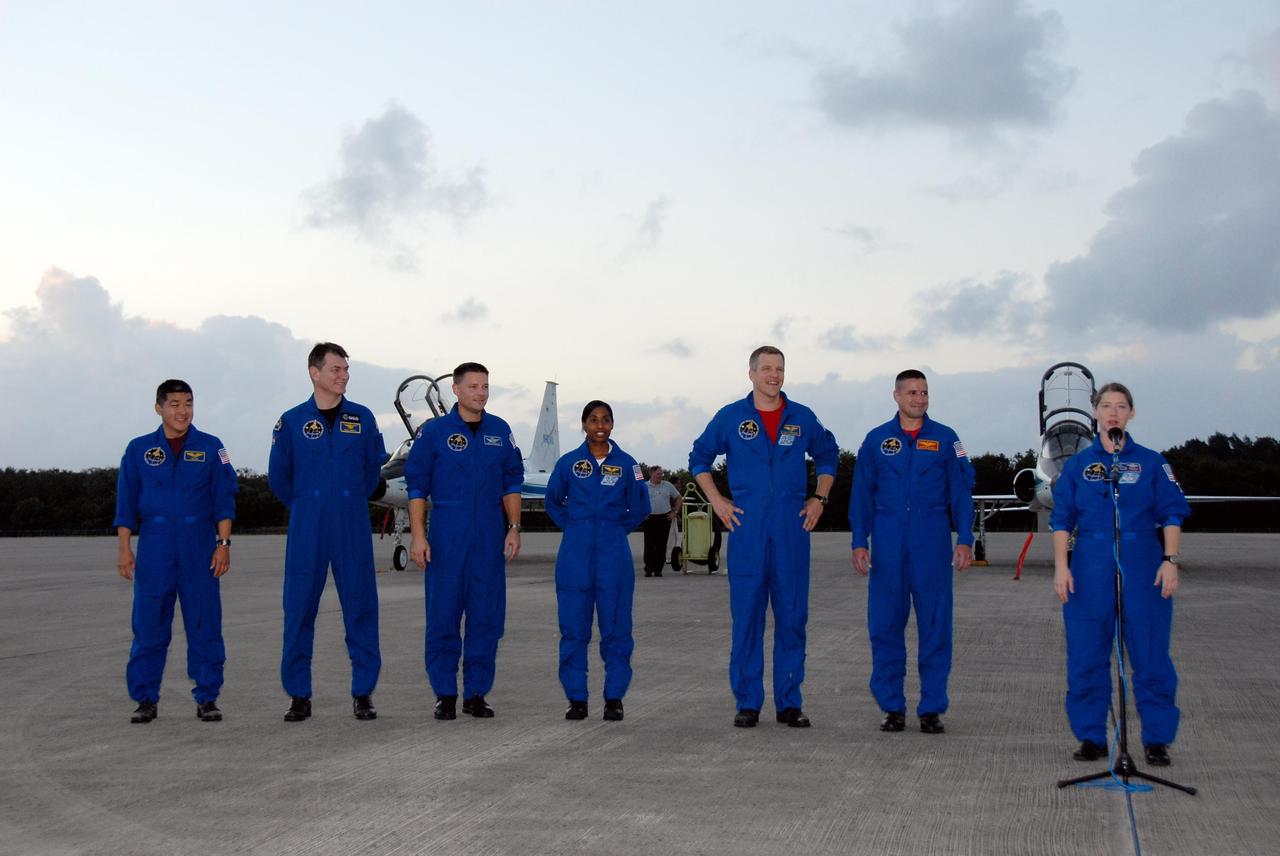
KENNEDY SPACE CENTER, FLA. -- The crew members of mission STS-120 speak to the media following their arrival at NASA's Kennedy Space Center Shuttle Landing Facility aboard T-38 jet aircraft to take part in terminal countdown demonstration test activities. From left are Mission Specialists Daniel Tani, Paolo Nespoli, Doug Wheelock, Stephanie Wilson, Scott Parazynski; Pilot George Zamka and Commander Pam Melroy. The terminal countdown demonstration test provides astronauts and ground crews an opportunity to participate in various simulated countdown activities, including equipment familiarization and emergency training. The STS-120 mission will deliver the U.S. Node 2 module, named Harmony, aboard space shuttle Discovery to the International Space Station. Launch of Discovery on mission STS-120 is targeted for Oct. 23 at 11:38 a.m. EDT on a 14-day mission to the International Space Station. Photo credit: NASA/Kim Shiflett
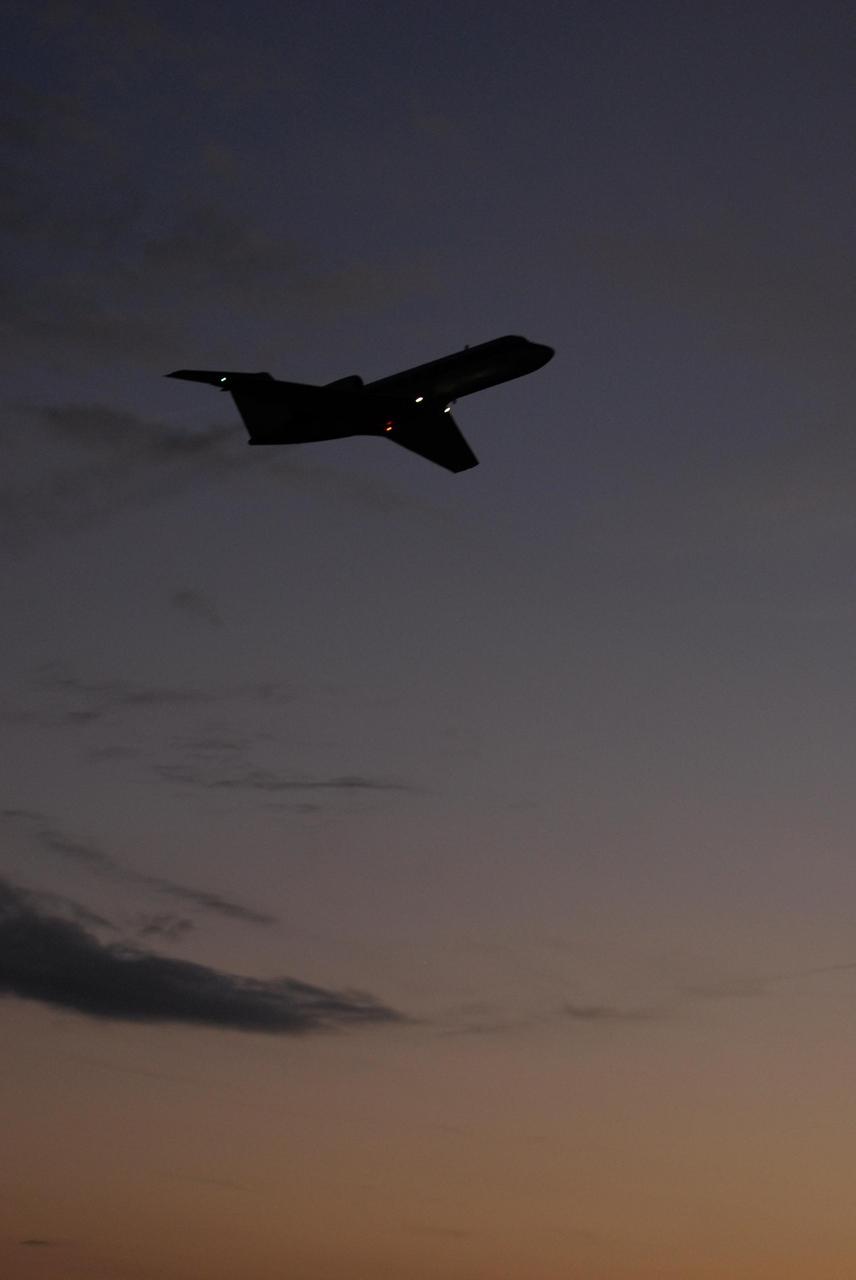
KENNEDY SPACE CENTER, FLA. -- A shuttle training aircraft, or STA, takes off from Kennedy Space Center's Shuttle Landing Facility at dusk. The STA is being used for practice flights by space shuttle Atlantis STS-122 Commander Steve Frick and Pilot Alan Poindexter. The STA is a Grumman American Aviation-built Gulf Stream II jet that was modified to simulate an orbiter's cockpit, motion and visual cues, and handling qualities. In flight, the STA duplicates the orbiter's atmospheric descent trajectory from approximately 35,000 feet altitude to landing on a runway. Because the orbiter is unpowered during re-entry and landing, its high-speed glide must be perfectly executed the first time. The training is part of terminal countdown demonstration test, or TCDT, activities. The TCDT provides astronauts and ground crews with equipment familiarization, emergency egress training and a simulated launch countdown. On mission STS-122, Atlantis will deliver the European Space Agency's Columbus module to the International Space Station. Columbus is a multifunctional, pressurized laboratory that will be permanently attached to U.S. Node 2, called Harmony, and will expand the research facilities aboard the station. Launch is targeted for Dec. 6. Photo credit: NASA/Kim Shiflett
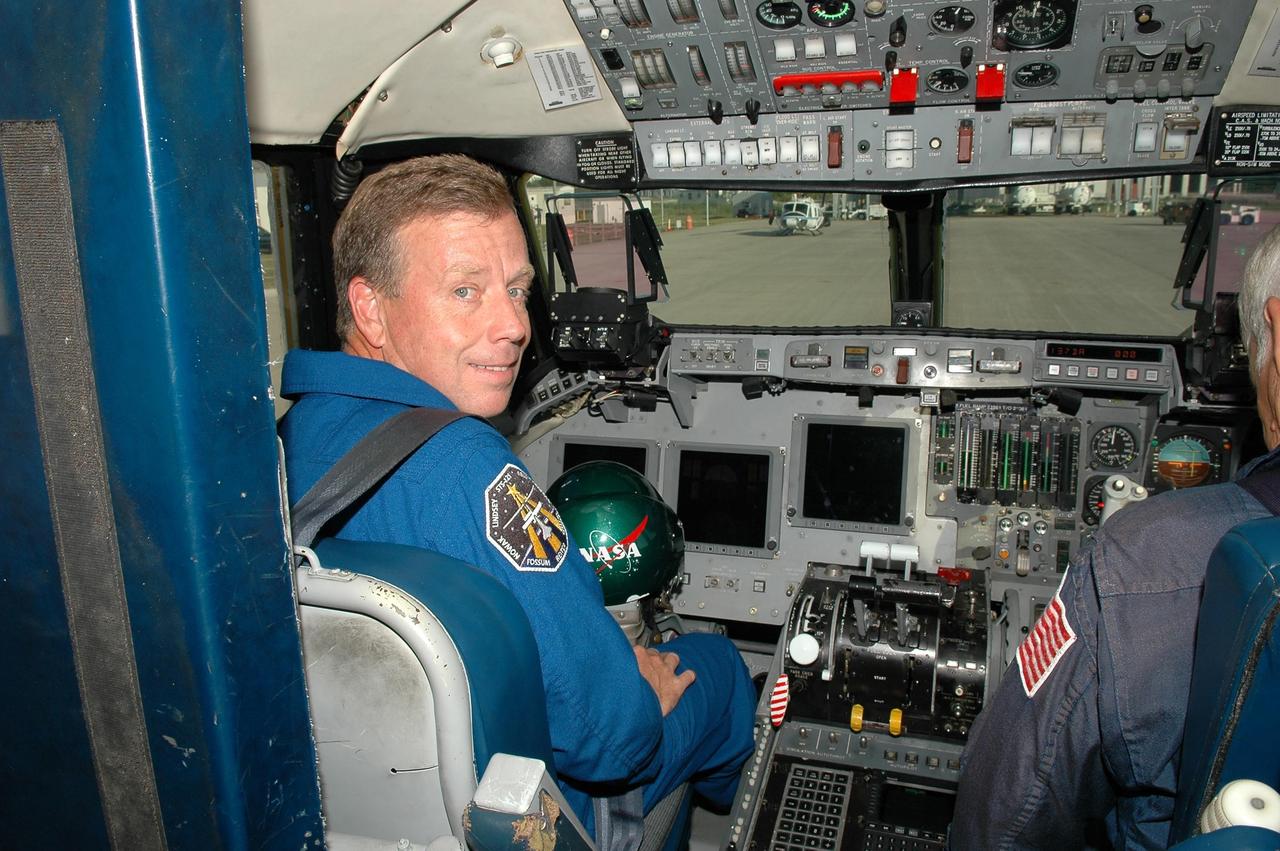
KENNEDY SPACE CENTER, FLA. - At the Shuttle Landing Facility, STS-121 Commander Steven Lindsey gets ready for a training flight in a Shuttle Training Aircraft (STA). He will be practicing landing the orbiter using the STA, which is a modified Grumman American Aviation-built Gulf Stream II jet that was modified to simulate an orbiter’s cockpit, motion and visual cues, and handling qualities. In flight, the STA duplicates the orbiter’s atmospheric descent trajectory from approximately 35,000 feet altitude to landing on a runway. Because the orbiter is unpowered during re-entry and landing, its high-speed glide must be perfectly executed the first time. Space Shuttle Discovery is scheduled to launch July 1 on mission STS-121. Photo credit: NASA/Kim Shiflett
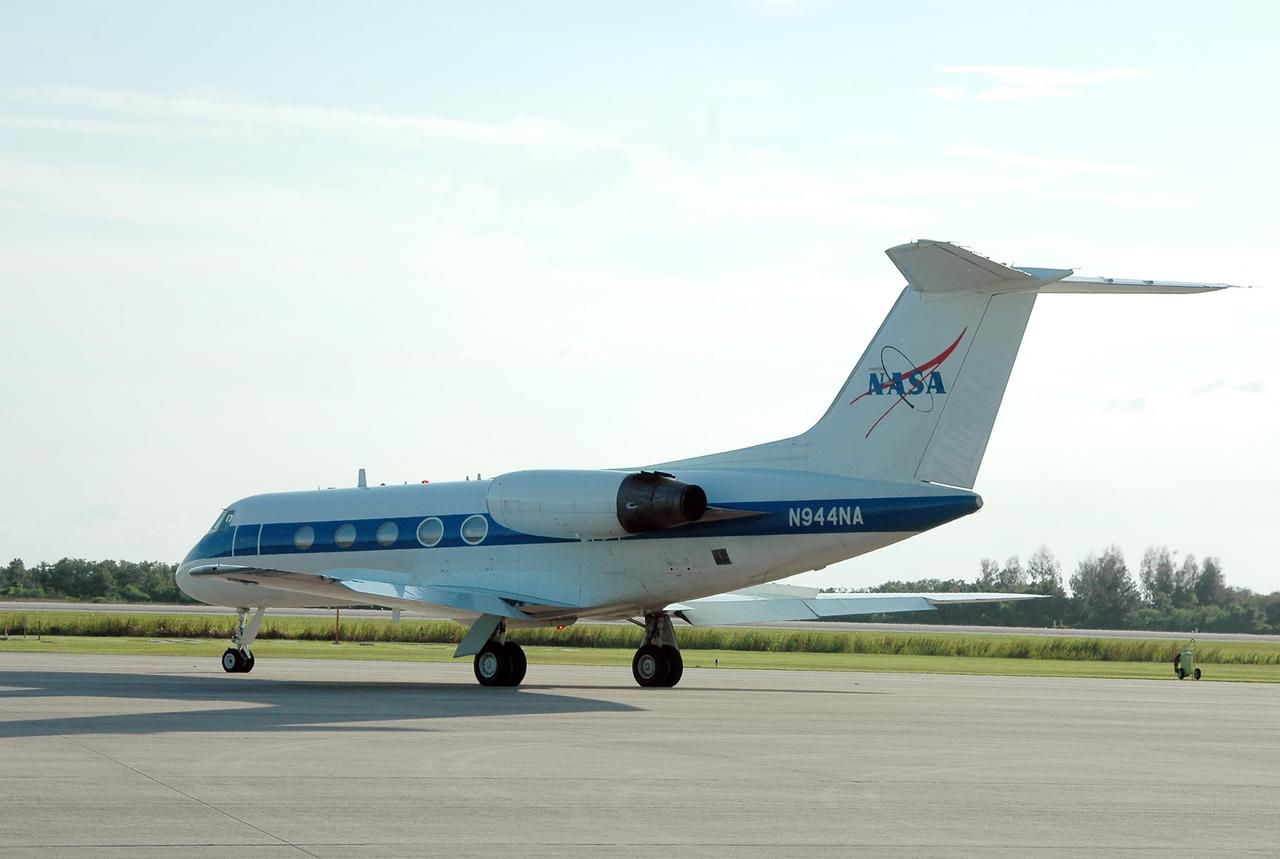
KENNEDY SPACE CENTER, FLA. - At the Shuttle Landing Facility, the Shuttle Training Aircraft (STA) taxis to the runway with the STS-121 pilot and commander in the cockpit for practice flights. The STA is a modified Grumman American Aviation-built Gulf Stream II jet that was modified to simulate an orbiter’s cockpit, motion and visual cues, and handling qualities. In flight, the STA duplicates the orbiter’s atmospheric descent trajectory from approximately 35,000 feet altitude to landing on a runway. Because the orbiter is unpowered during re-entry and landing, its high-speed glide must be perfectly executed the first time. Space Shuttle Discovery is scheduled to launch July 1 on mission STS-121. Photo credit: NASA/Kim Shiflett
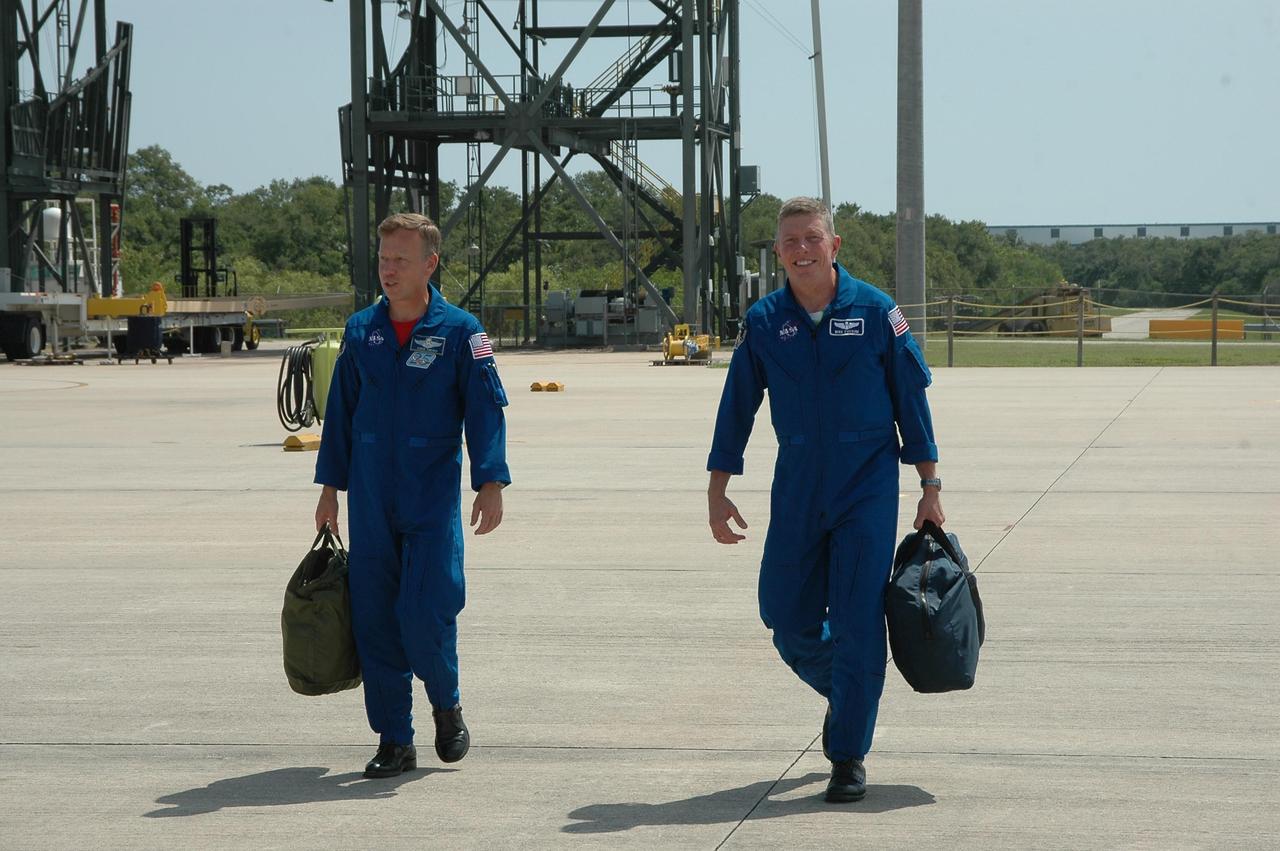
KENNEDY SPACE CENTER, FLA. - After a three-day series of Terminal Countdown Demonstration Test (TCDT) activities, the crew of mission STS-121 are leaving NASA's Kennedy Space Center to return to Houston. Walking to the plane at the Shuttle Landing Facility are Commander Steven Lindsey (left) and Mission Specialist Michael Fossum. The TCDT includes equipment familiarization, emergency egress training and a simulated launch countdown. Mission STS-121 is scheduled to launch July 1. Photo credit: NASA/Kim Shiflett
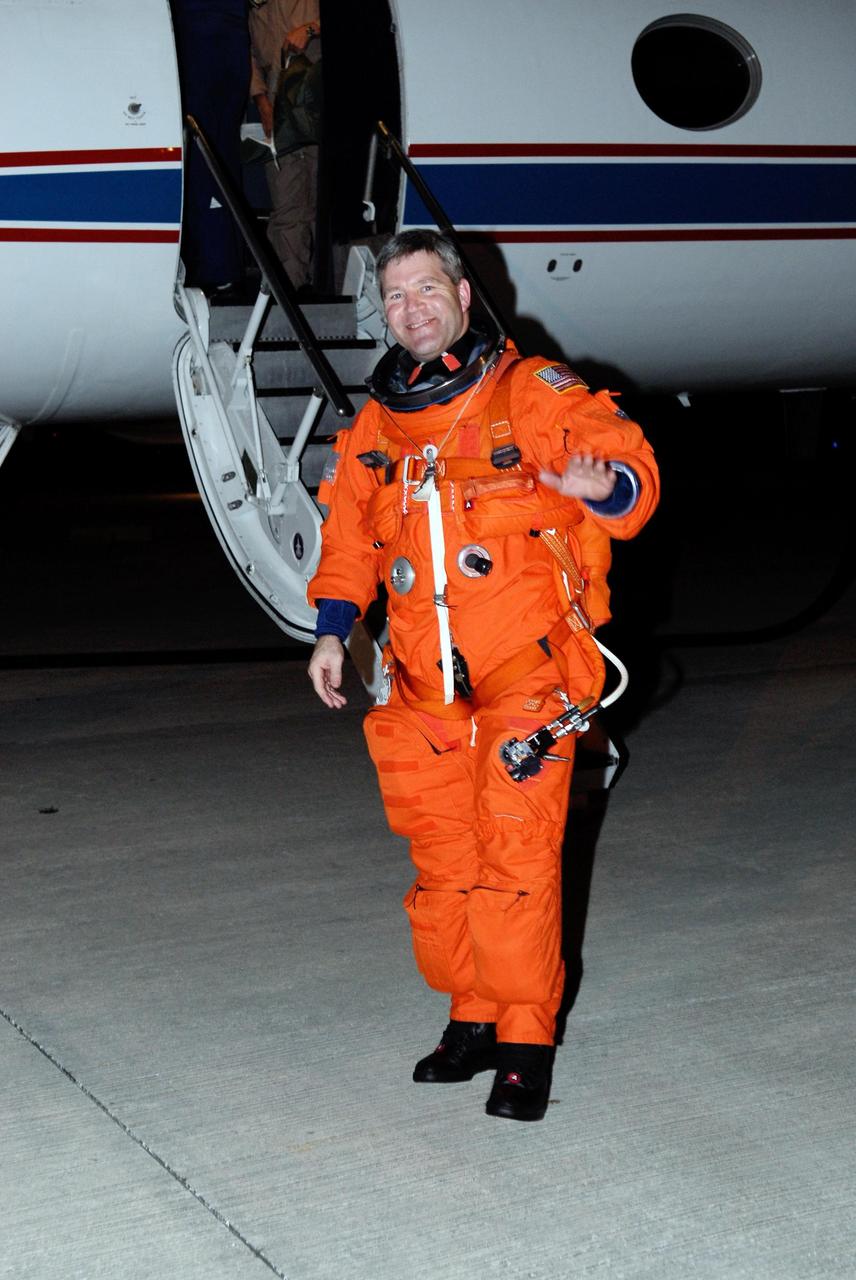
KENNEDY SPACE CENTER, FLA. -- Space shuttle Atlantis STS-122 Commander Steve Frick seems pleased with the practice session he has just completed aboard a shuttle training aircraft, or STA, at Kennedy Space Center's Shuttle Landing Facility. He and STS-122 Pilot Alan Poindexter were practicing landing the STA in preparation for their upcoming mission. The STA is a Grumman American Aviation-built Gulf Stream II jet that was modified to simulate an orbiter's cockpit, motion and visual cues, and handling qualities. In flight, the STA duplicates the orbiter's atmospheric descent trajectory from approximately 35,000 feet altitude to landing on a runway. Because the orbiter is unpowered during re-entry and landing, its high-speed glide must be perfectly executed the first time. The training is part of terminal countdown demonstration test, or TCDT, activities. The TCDT provides astronauts and ground crews with equipment familiarization, emergency egress training and a simulated launch countdown. On mission STS-122, Atlantis will deliver the European Space Agency's Columbus module to the International Space Station. Columbus is a multifunctional, pressurized laboratory that will be permanently attached to U.S. Node 2, called Harmony, and will expand the research facilities aboard the station. Launch is targeted for Dec. 6. Photo credit: NASA/Kim Shiflett
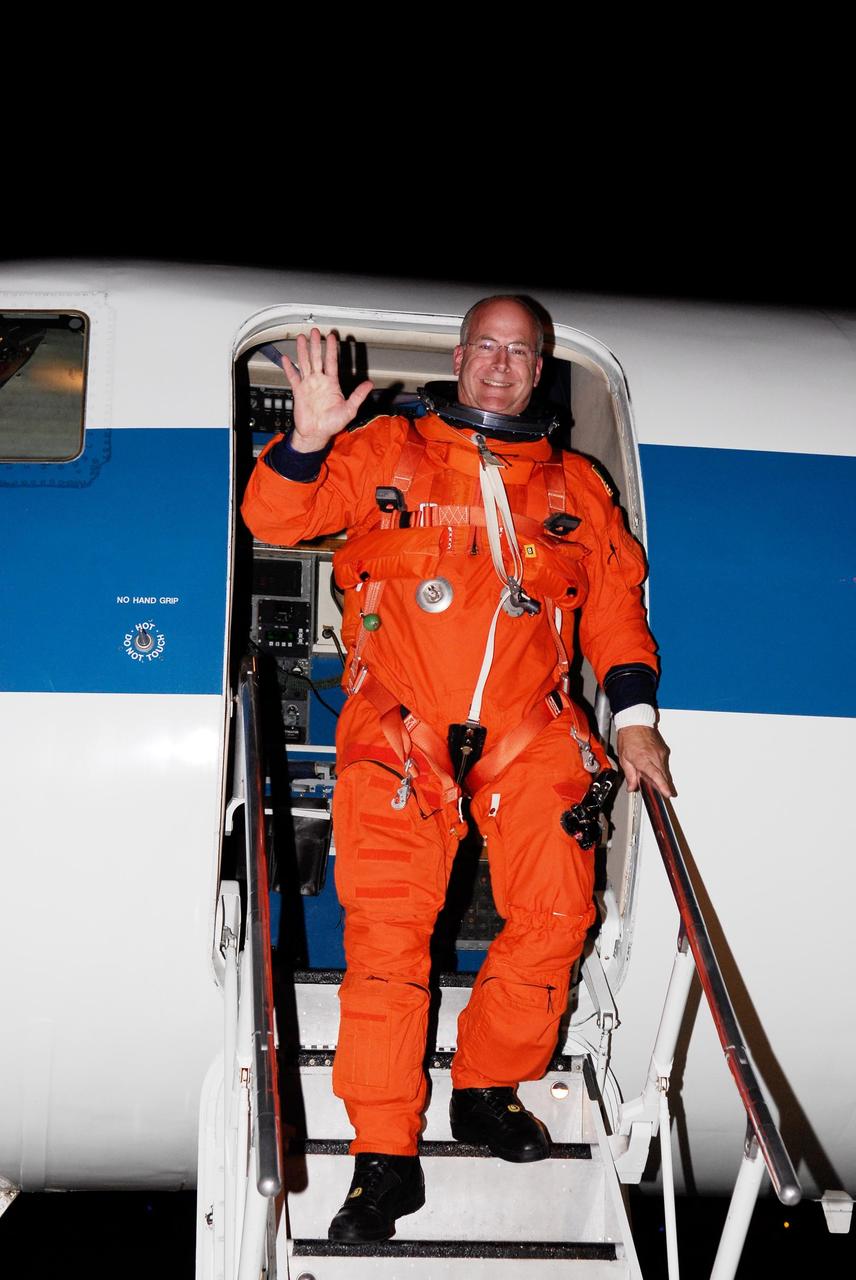
KENNEDY SPACE CENTER, FLA. -- Space shuttle Atlantis STS-122 Pilot Alan Poindexter disembarks from a shuttle training aircraft, or STA, at Kennedy Space Center's Shuttle Landing Facility. He and STS-122 Commander Steve Frick have just completed a practice session landing the STA. The STA is a Grumman American Aviation-built Gulf Stream II jet that was modified to simulate an orbiter's cockpit, motion and visual cues, and handling qualities. In flight, the STA duplicates the orbiter's atmospheric descent trajectory from approximately 35,000 feet altitude to landing on a runway. Because the orbiter is unpowered during re-entry and landing, its high-speed glide must be perfectly executed the first time. The training is part of terminal countdown demonstration test, or TCDT, activities. The TCDT provides astronauts and ground crews with equipment familiarization, emergency egress training and a simulated launch countdown. On mission STS-122, Atlantis will deliver the European Space Agency's Columbus module to the International Space Station. Columbus is a multifunctional, pressurized laboratory that will be permanently attached to U.S. Node 2, called Harmony, and will expand the research facilities aboard the station. Launch is targeted for Dec. 6. Photo credit: NASA/Kim Shiflett
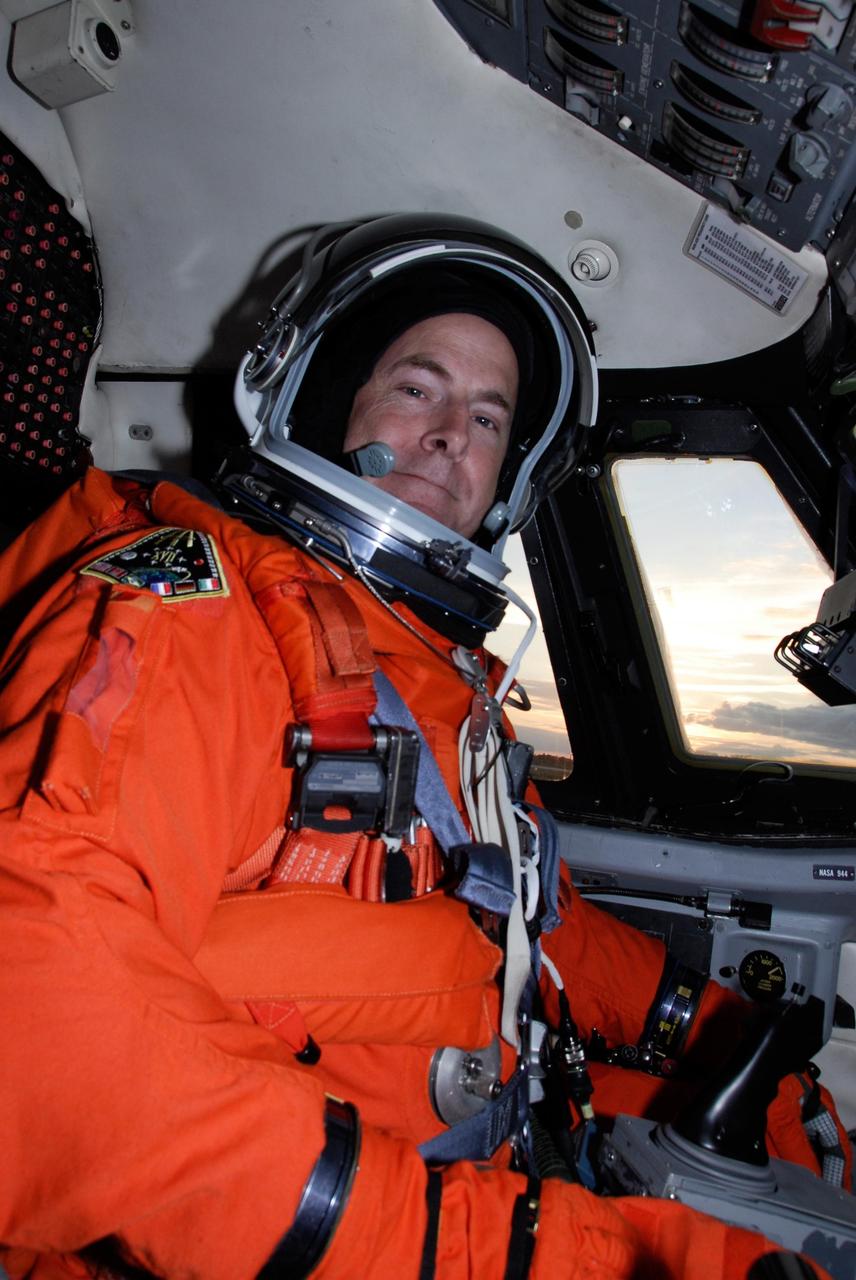
KENNEDY SPACE CENTER, FLA. -- Space shuttle Atlantis STS-122 Pilot Alan Poindexter prepares to practice shuttle landings. He is getting settled in the cockpit of a shuttle training aircraft, or STA, at Kennedy Space Center's Shuttle Landing Facility. The STA is a Grumman American Aviation-built Gulf Stream II jet that was modified to simulate an orbiter's cockpit, motion and visual cues, and handling qualities. In flight, the STA duplicates the orbiter's atmospheric descent trajectory from approximately 35,000 feet altitude to landing on a runway. Because the orbiter is unpowered during re-entry and landing, its high-speed glide must be perfectly executed the first time. The training is part of terminal countdown demonstration test, or TCDT, activities. The TCDT provides astronauts and ground crews with equipment familiarization, emergency egress training and a simulated launch countdown. On mission STS-122, Atlantis will deliver the European Space Agency's Columbus module to the International Space Station. Columbus is a multifunctional, pressurized laboratory that will be permanently attached to U.S. Node 2, called Harmony, and will expand the research facilities aboard the station. Launch is targeted for Dec. 6. Photo credit: NASA/Kim Shiflett
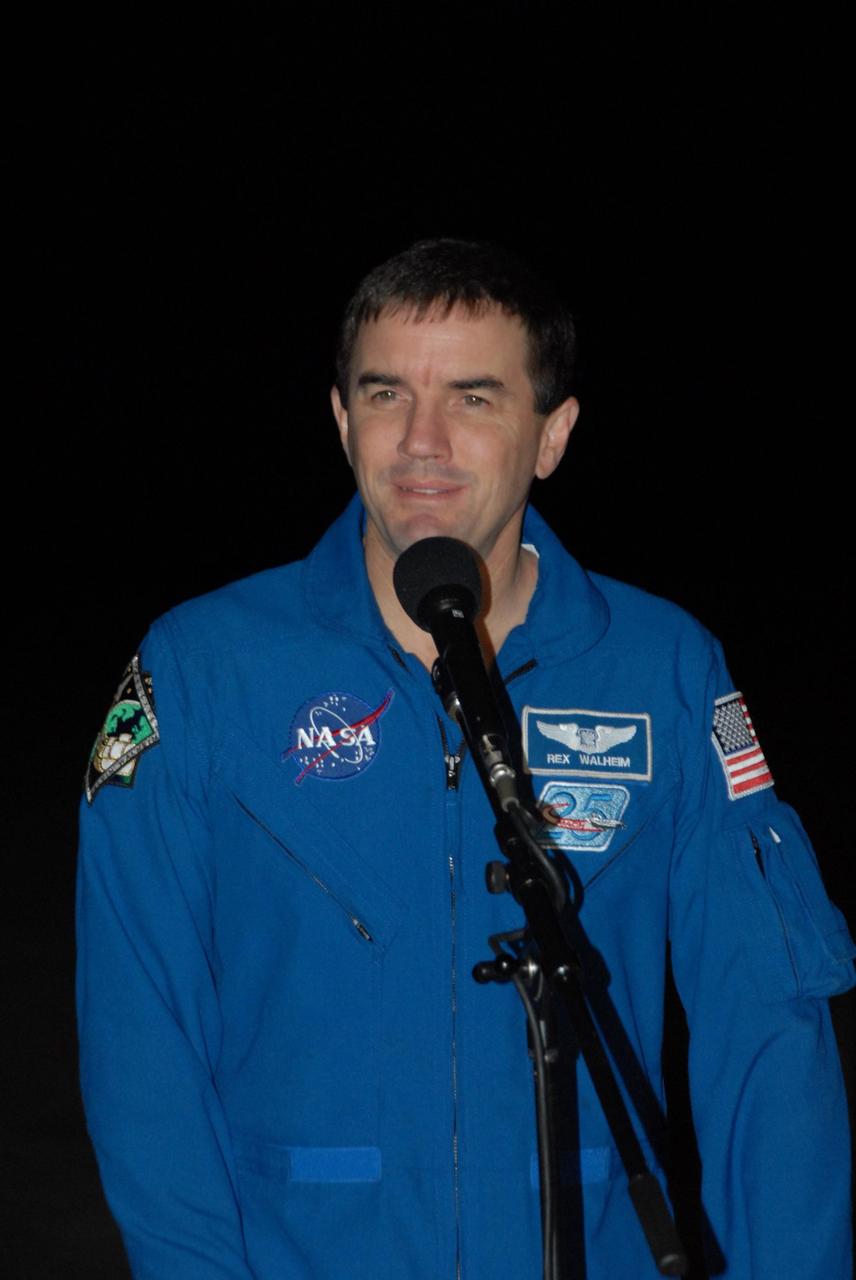
KENNEDY SPACE CENTER, FLA. -- Space shuttle Atlantis STS-122 Mission Specialist Rex Walheim talks to the media at Kennedy Space Center's Shuttle Landing Facility following his arrival to participate in three days of terminal countdown demonstration test, or TCDT, activities. The TCDT provides astronauts and ground crews with equipment familiarization, emergency egress training and a simulated launch countdown. On mission STS-122, Atlantis will deliver the Columbus module to the International Space Station. The European Space Agency's largest single contribution to the station, Columbus is a multifunctional, pressurized laboratory that will be permanently attached to U.S. Node 2, called Harmony. The laboratory will expand the research facilities aboard the station, providing crew members and scientists from around the world the ability to conduct a variety of experiments in the physical, materials and life sciences. Photo credit: NASA/George Shelton
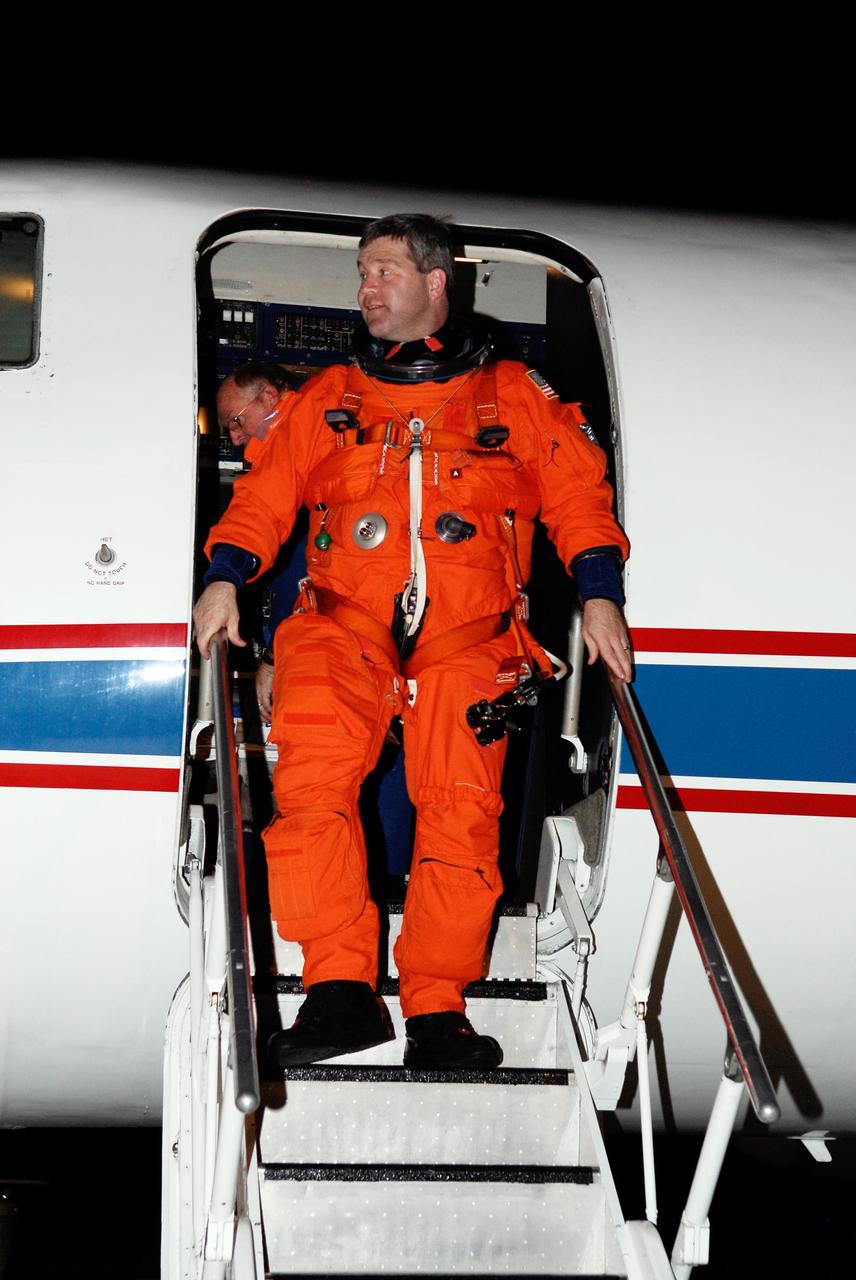
KENNEDY SPACE CENTER, FLA. -- Space shuttle Atlantis STS-122 Commander Steve Frick disembarks from a shuttle training aircraft, or STA, at Kennedy Space Center's Shuttle Landing Facility. He and STS-122 Pilot Alan Poindexter have just completed a practice session landing the STA. The STA is a Grumman American Aviation-built Gulf Stream II jet that was modified to simulate an orbiter's cockpit, motion and visual cues, and handling qualities. In flight, the STA duplicates the orbiter's atmospheric descent trajectory from approximately 35,000 feet altitude to landing on a runway. Because the orbiter is unpowered during re-entry and landing, its high-speed glide must be perfectly executed the first time. The training is part of terminal countdown demonstration test, or TCDT, activities. The TCDT provides astronauts and ground crews with equipment familiarization, emergency egress training and a simulated launch countdown. On mission STS-122, Atlantis will deliver the European Space Agency's Columbus module to the International Space Station. Columbus is a multifunctional, pressurized laboratory that will be permanently attached to U.S. Node 2, called Harmony, and will expand the research facilities aboard the station. Launch is targeted for Dec. 6. Photo credit: NASA/Kim Shiflett
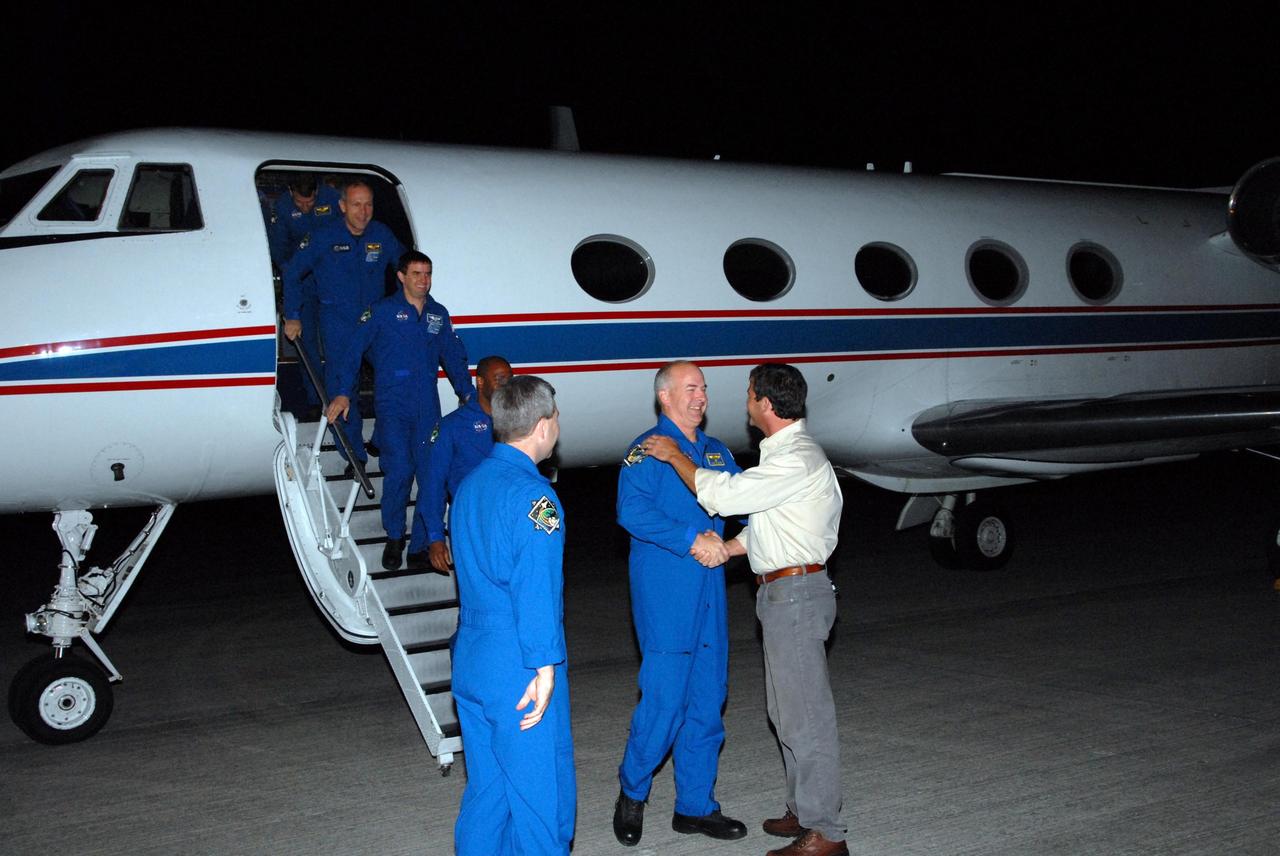
KENNEDY SPACE CENTER, FLA. -- The astronauts assigned to the space shuttle Atlantis STS-122 crew arrive at Kennedy Space Center's Shuttle Landing Facility aboard a Gulfstream shuttle training aircraft to participate in three days of terminal countdown demonstration test, or TCDT, activities. STS-122 Launch Director Doug Lyons greets Pilot Alan Poindexter as Commander Steve Frick looks on. Disembarking are Mission Specialists Leland Melvin, Rex Walheim, Hans Schlegel of the European Space Agency and Stanley Love. The TCDT provides astronauts and ground crews with equipment familiarization, emergency egress training and a simulated launch countdown. On mission STS-122, Atlantis will deliver the Columbus module to the International Space Station. The European Space Agency's largest single contribution to the station, Columbus is a multifunctional, pressurized laboratory that will be permanently attached to U.S. Node 2, called Harmony. The laboratory will expand the research facilities aboard the station, providing crew members and scientists from around the world the ability to conduct a variety of experiments in the physical, materials and life sciences. Photo credit: NASA/George Shelton
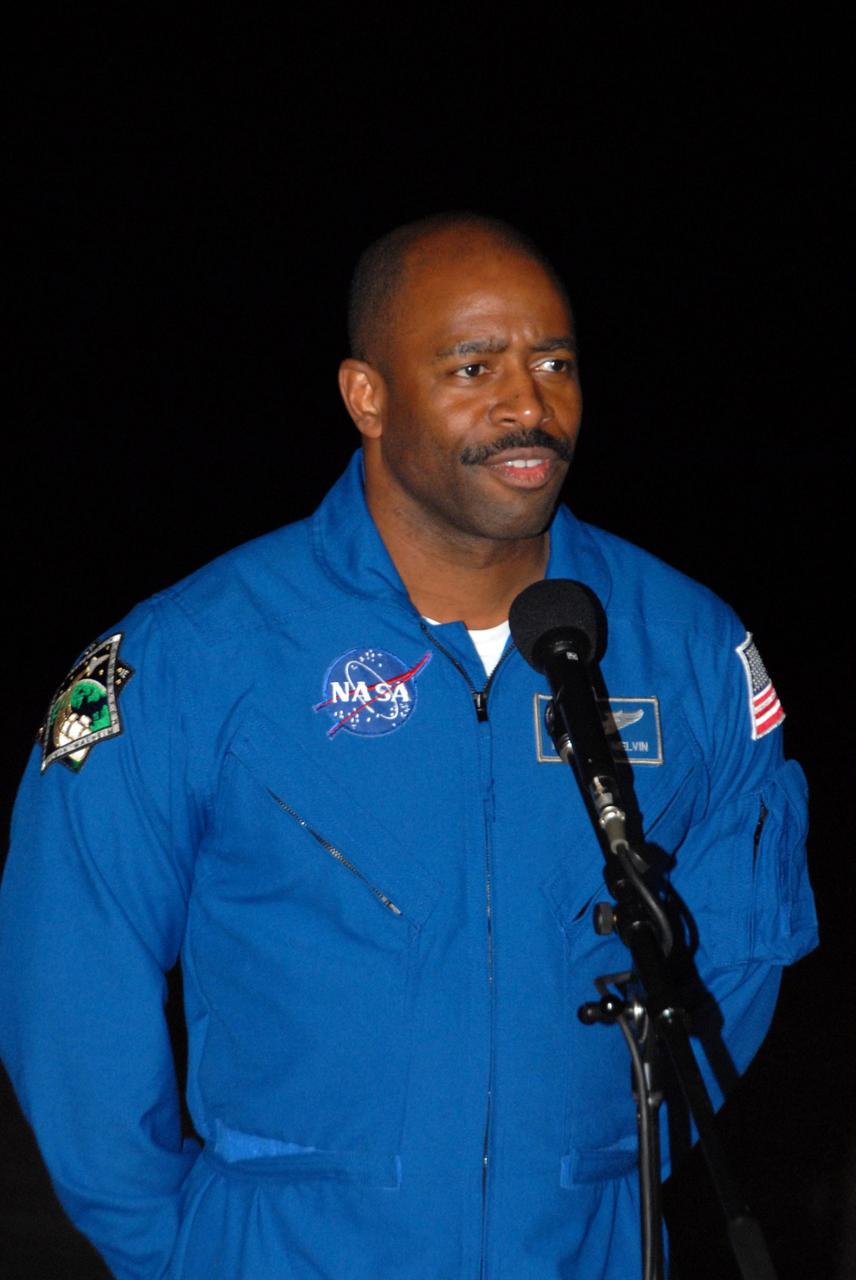
KENNEDY SPACE CENTER, FLA. -- Space shuttle Atlantis STS-122 Mission Specialist Leland Melvin talks to the media at Kennedy Space Center's Shuttle Landing Facility following his arrival to participate in three days of terminal countdown demonstration test, or TCDT, activities. The TCDT provides astronauts and ground crews with equipment familiarization, emergency egress training and a simulated launch countdown. On mission STS-122, Atlantis will deliver the Columbus module to the International Space Station. The European Space Agency's largest single contribution to the station, Columbus is a multifunctional, pressurized laboratory that will be permanently attached to U.S. Node 2, called Harmony. The laboratory will expand the research facilities aboard the station, providing crew members and scientists from around the world the ability to conduct a variety of experiments in the physical, materials and life sciences. Photo credit: NASA/George Shelton

KENNEDY SPACE CENTER, FLA. - The plane carrying the crew of mission STS-121 taxis onto the Shuttle Landing Facility at NASA's Kennedy Space Center. The crew was at the Center for a three-day series of Terminal Countdown Demonstration Test (TCDT) activities. The TCDT includes equipment familiarization, emergency egress training and a simulated launch countdown. Mission STS-121 is scheduled to launch July 1. Photo credit: NASA/Kim Shiflett
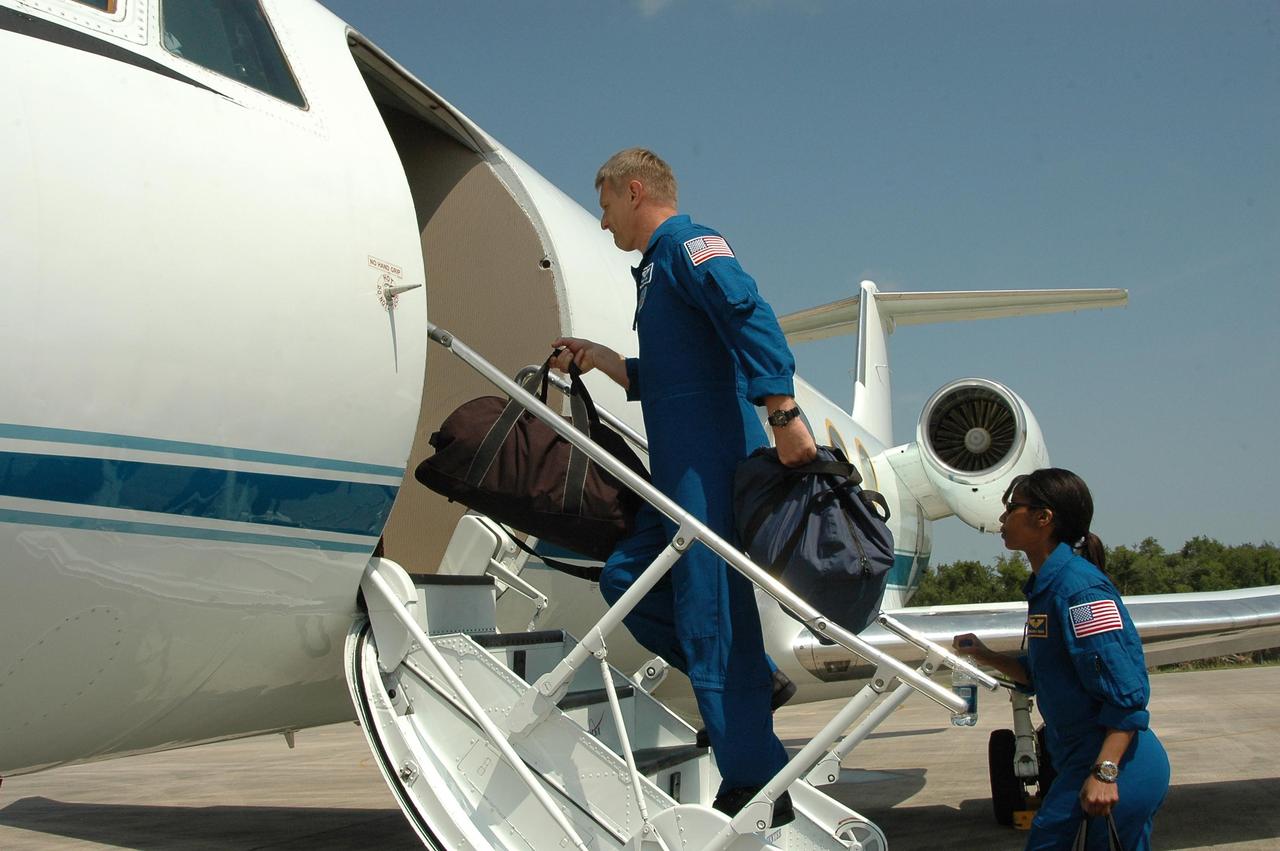
KENNEDY SPACE CENTER, FLA. - After a three-day series of Terminal Countdown Demonstration Test (TCDT) activities, the crew of mission STS-121 are leaving NASA's Kennedy Space Center to return to Houston. Boarding the plane at the Shuttle Landing Facility are Mission Specialists Piers Sellers and Stephanie Wilson. The TCDT includes equipment familiarization, emergency egress training and a simulated launch countdown. Mission STS-121 is scheduled to launch July 1. Photo credit: NASA/Kim Shiflett
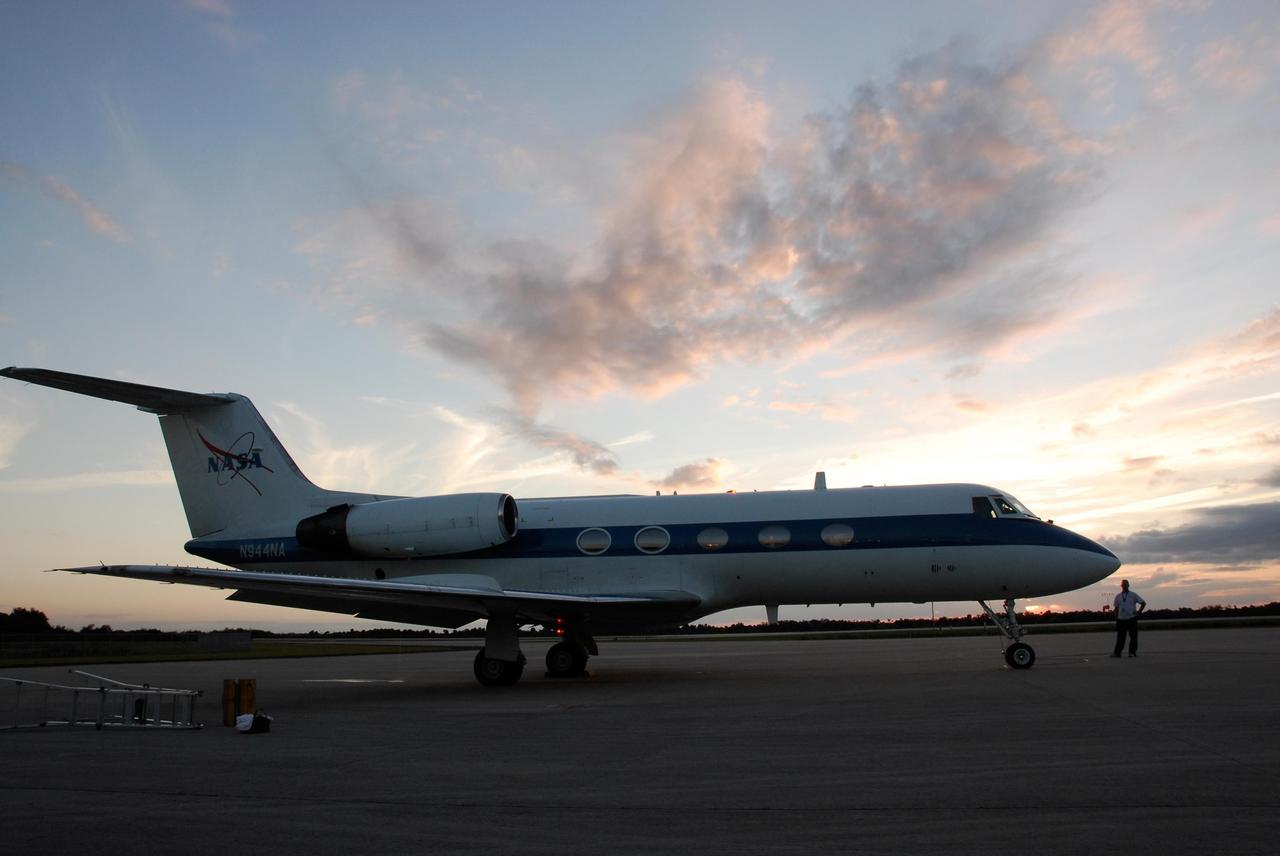
KENNEDY SPACE CENTER, FLA. -- A shuttle training aircraft, or STA, sits on the tarmac at Kennedy Space Center's Shuttle Landing Facility at dusk, ready for practice flights by space shuttle Atlantis STS-122 Commander Steve Frick and Pilot Alan Poindexter. The STA is a Grumman American Aviation-built Gulf Stream II jet that was modified to simulate an orbiter's cockpit, motion and visual cues, and handling qualities. In flight, the STA duplicates the orbiter's atmospheric descent trajectory from approximately 35,000 feet altitude to landing on a runway. Because the orbiter is unpowered during re-entry and landing, its high-speed glide must be perfectly executed the first time. The training is part of terminal countdown demonstration test, or TCDT, activities. The TCDT provides astronauts and ground crews with equipment familiarization, emergency egress training and a simulated launch countdown. On mission STS-122, Atlantis will deliver the European Space Agency's Columbus module to the International Space Station. Columbus is a multifunctional, pressurized laboratory that will be permanently attached to U.S. Node 2, called Harmony, and will expand the research facilities aboard the station. Launch is targeted for Dec. 6. Photo credit: NASA/Kim Shiflett
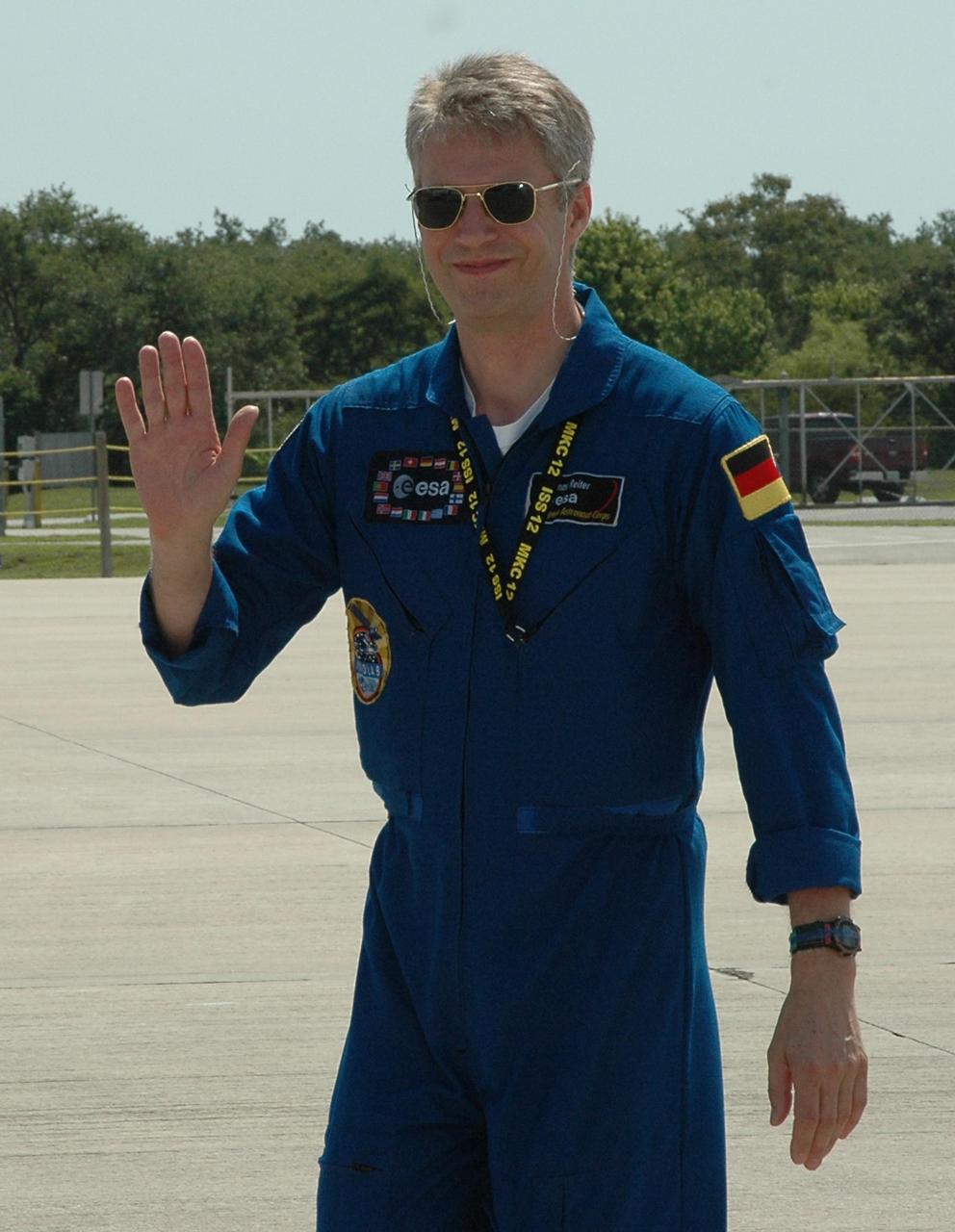
KENNEDY SPACE CENTER, FLA. - After a three-day series of Terminal Countdown Demonstration Test (TCDT) activities, the crew of mission STS-121 are leaving NASA's Kennedy Space Center to return to Houston. Waving on his way to the plane at the Shuttle Landing Facility is Thomas Reiter of Germany, who represents the European Space Agency. The TCDT includes equipment familiarization, emergency egress training and a simulated launch countdown. Mission STS-121 is scheduled to launch July 1. Photo credit: NASA/Kim Shiflett
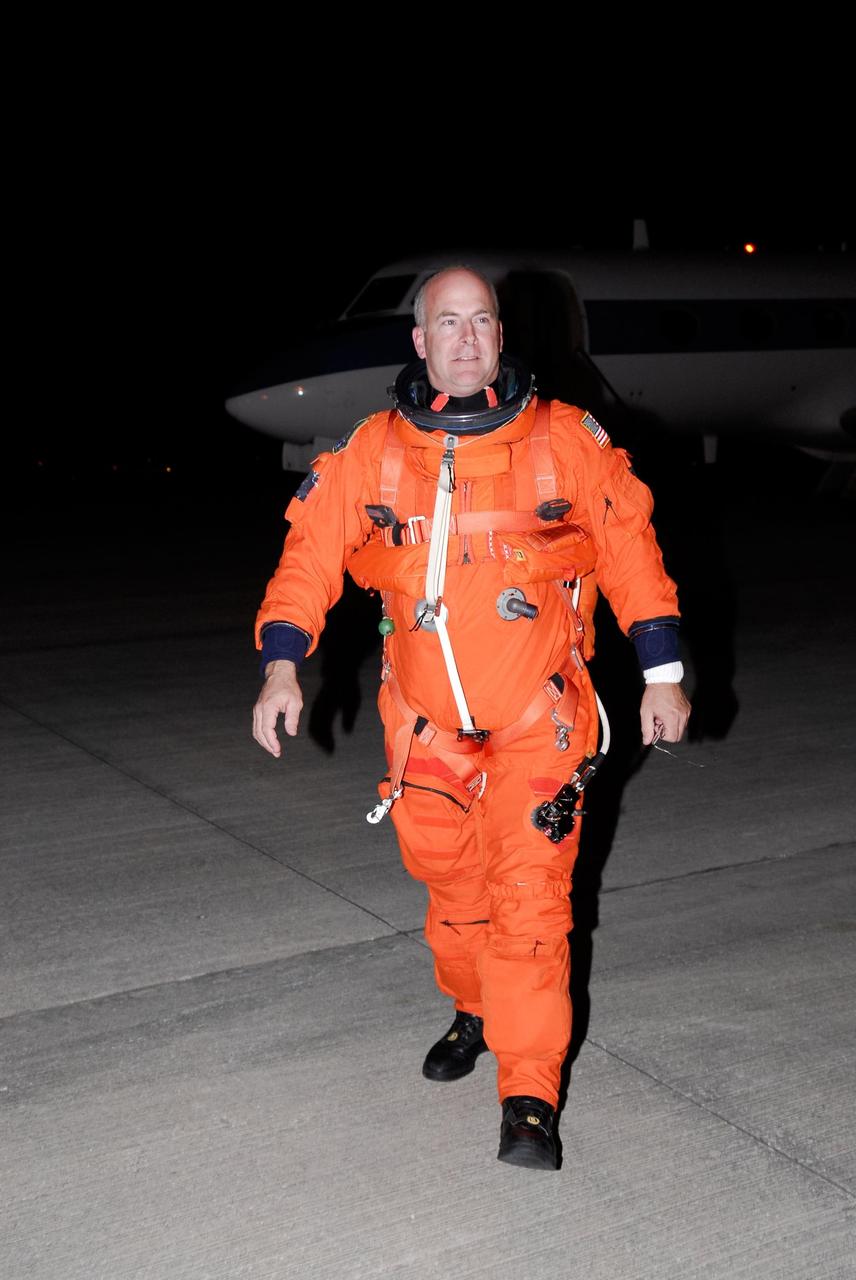
KENNEDY SPACE CENTER, FLA. -- Space shuttle Atlantis STS-122 Pilot Alan Poindexter seems satisfied with the practice session he has just completed aboard a shuttle training aircraft, or STA, at Kennedy Space Center's Shuttle Landing Facility. He and STS-122 Commander Steve Frick were practicing landing the STA in preparation for their upcoming mission. The STA is a Grumman American Aviation-built Gulf Stream II jet that was modified to simulate an orbiter's cockpit, motion and visual cues, and handling qualities. In flight, the STA duplicates the orbiter's atmospheric descent trajectory from approximately 35,000 feet altitude to landing on a runway. Because the orbiter is unpowered during re-entry and landing, its high-speed glide must be perfectly executed the first time. The training is part of terminal countdown demonstration test, or TCDT, activities. The TCDT provides astronauts and ground crews with equipment familiarization, emergency egress training and a simulated launch countdown. On mission STS-122, Atlantis will deliver the European Space Agency's Columbus module to the International Space Station. Columbus is a multifunctional, pressurized laboratory that will be permanently attached to U.S. Node 2, called Harmony, and will expand the research facilities aboard the station. Launch is targeted for Dec. 6. Photo credit: NASA/Kim Shiflett
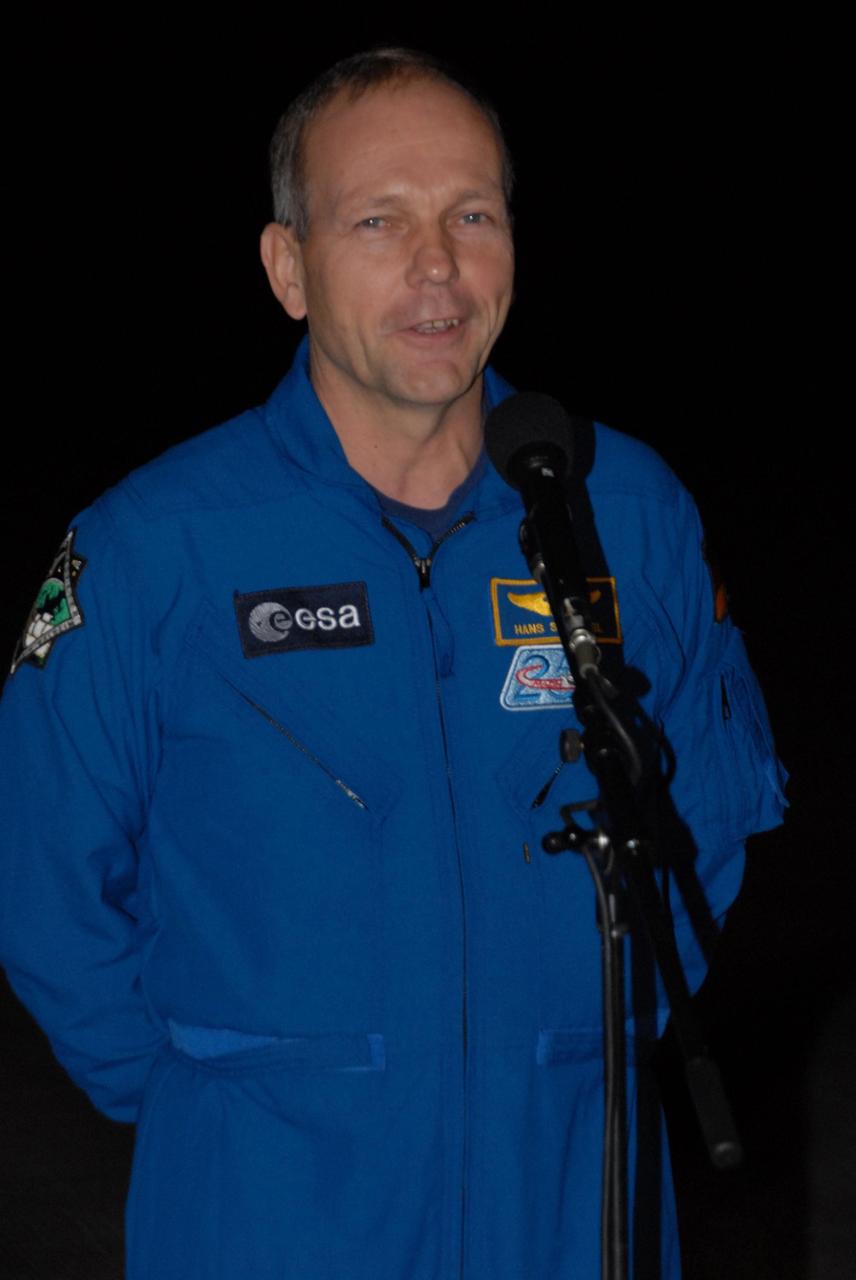
KENNEDY SPACE CENTER, FLA. -- Space shuttle Atlantis STS-122 Mission Specialist Hans Schlegel, of the European Space Agency, talks to the media at Kennedy Space Center's Shuttle Landing Facility following his arrival to participate in three days of terminal countdown demonstration test, or TCDT, activities. The TCDT provides astronauts and ground crews with equipment familiarization, emergency egress training and a simulated launch countdown. On mission STS-122, Atlantis will deliver the Columbus module to the International Space Station. The European Space Agency's largest single contribution to the station, Columbus is a multifunctional, pressurized laboratory that will be permanently attached to U.S. Node 2, called Harmony. The laboratory will expand the research facilities aboard the station, providing crew members and scientists from around the world the ability to conduct a variety of experiments in the physical, materials and life sciences. Photo credit: NASA/George Shelton
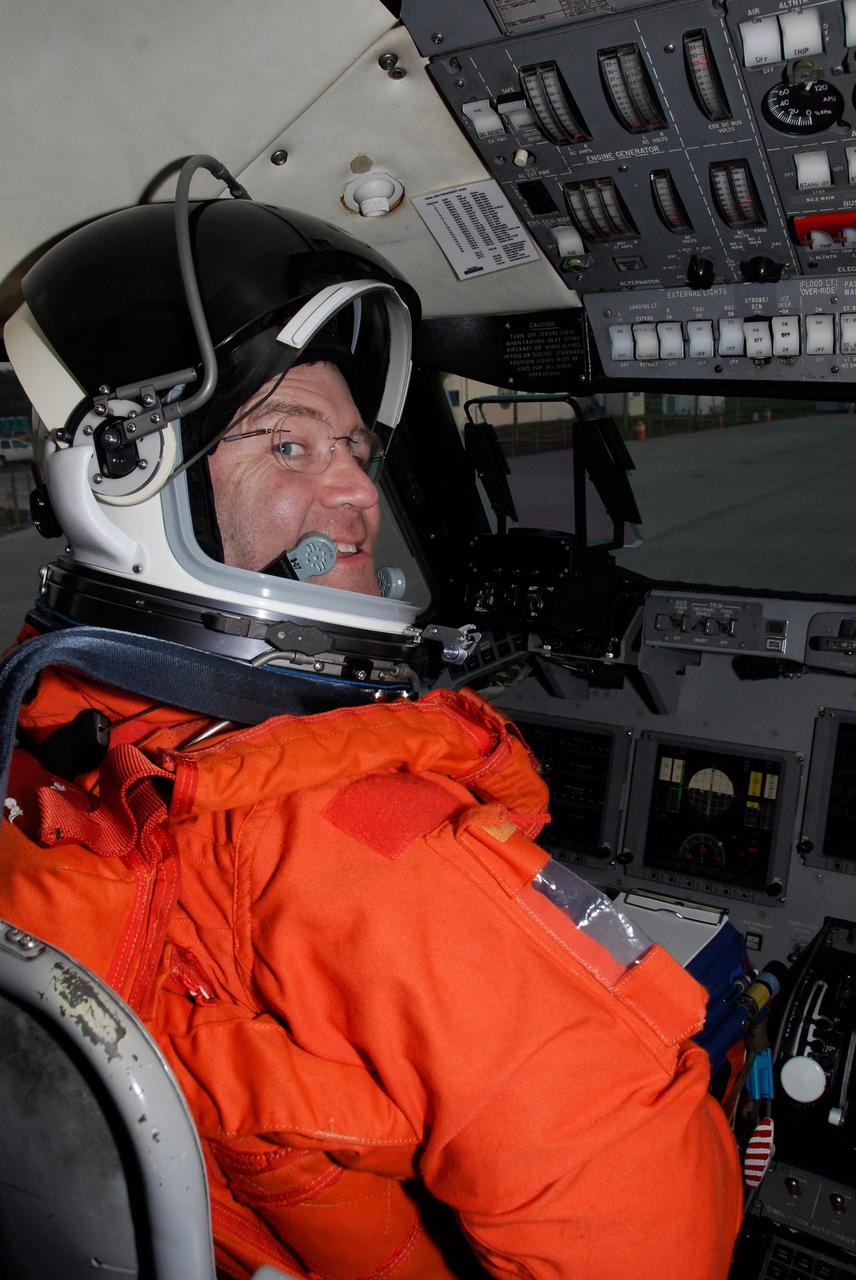
KENNEDY SPACE CENTER, FLA. -- Space shuttle Atlantis STS-122 Commander Steve Frick prepares to practice shuttle landings. He is sitting in the cockpit of a shuttle training aircraft, or STA, at Kennedy Space Center's Shuttle Landing Facility. The STA is a Grumman American Aviation-built Gulf Stream II jet that was modified to simulate an orbiter's cockpit, motion and visual cues, and handling qualities. In flight, the STA duplicates the orbiter's atmospheric descent trajectory from approximately 35,000 feet altitude to landing on a runway. Because the orbiter is unpowered during re-entry and landing, its high-speed glide must be perfectly executed the first time. The training is part of terminal countdown demonstration test, or TCDT, activities. The TCDT provides astronauts and ground crews with equipment familiarization, emergency egress training and a simulated launch countdown. On mission STS-122, Atlantis will deliver the European Space Agency's Columbus module to the International Space Station. Columbus is a multifunctional, pressurized laboratory that will be permanently attached to U.S. Node 2, called Harmony, and will expand the research facilities aboard the station. Launch is targeted for Dec. 6. Photo credit: NASA/Kim Shiflett
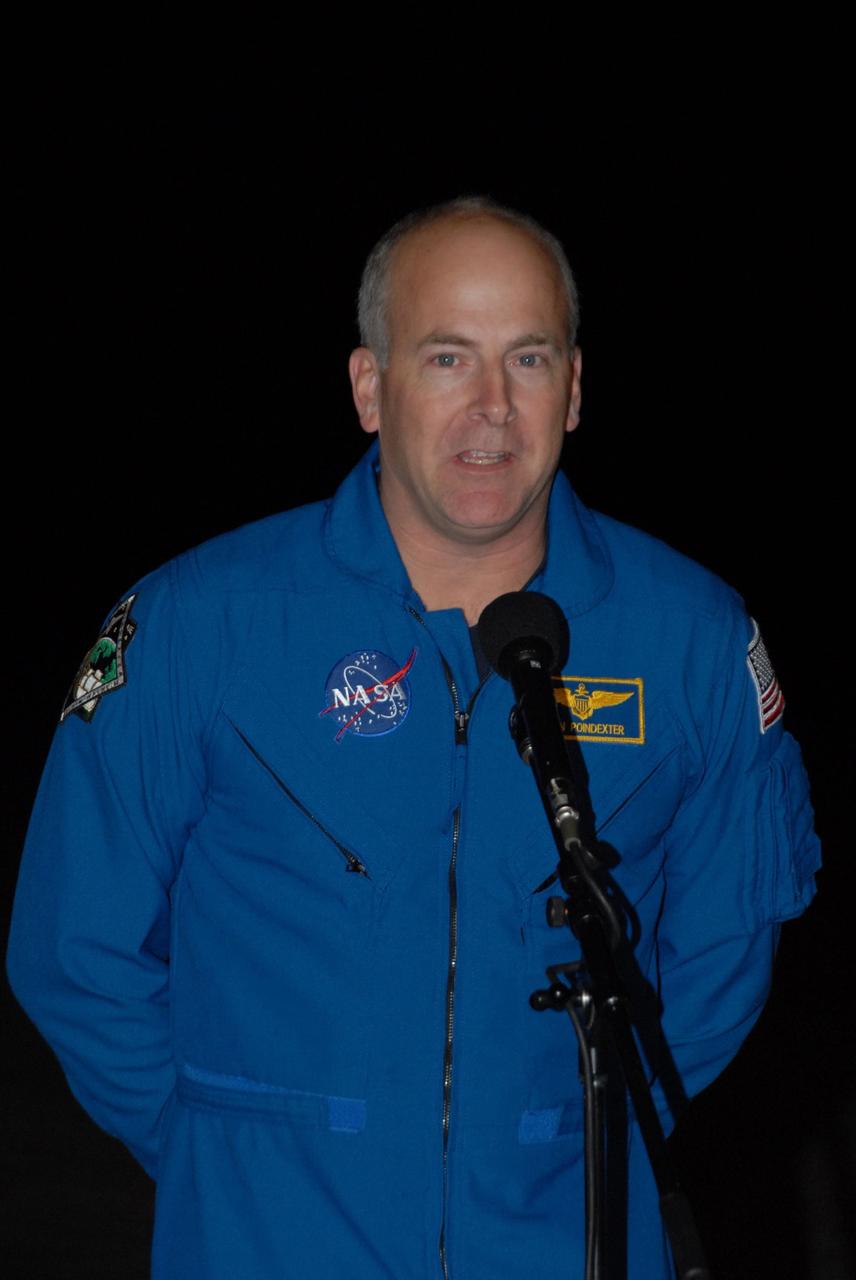
KENNEDY SPACE CENTER, FLA. -- Space shuttle Atlantis STS-122 Pilot Alan Poindexter talks to the media at Kennedy Space Center's Shuttle Landing Facility following his arrival to participate in three days of terminal countdown demonstration test, or TCDT, activities. The TCDT provides astronauts and ground crews with equipment familiarization, emergency egress training and a simulated launch countdown. On mission STS-122, Atlantis will deliver the Columbus module to the International Space Station. The European Space Agency's largest single contribution to the station, Columbus is a multifunctional, pressurized laboratory that will be permanently attached to U.S. Node 2, called Harmony. The laboratory will expand the research facilities aboard the station, providing crew members and scientists from around the world the ability to conduct a variety of experiments in the physical, materials and life sciences. Photo credit: NASA/George Shelton
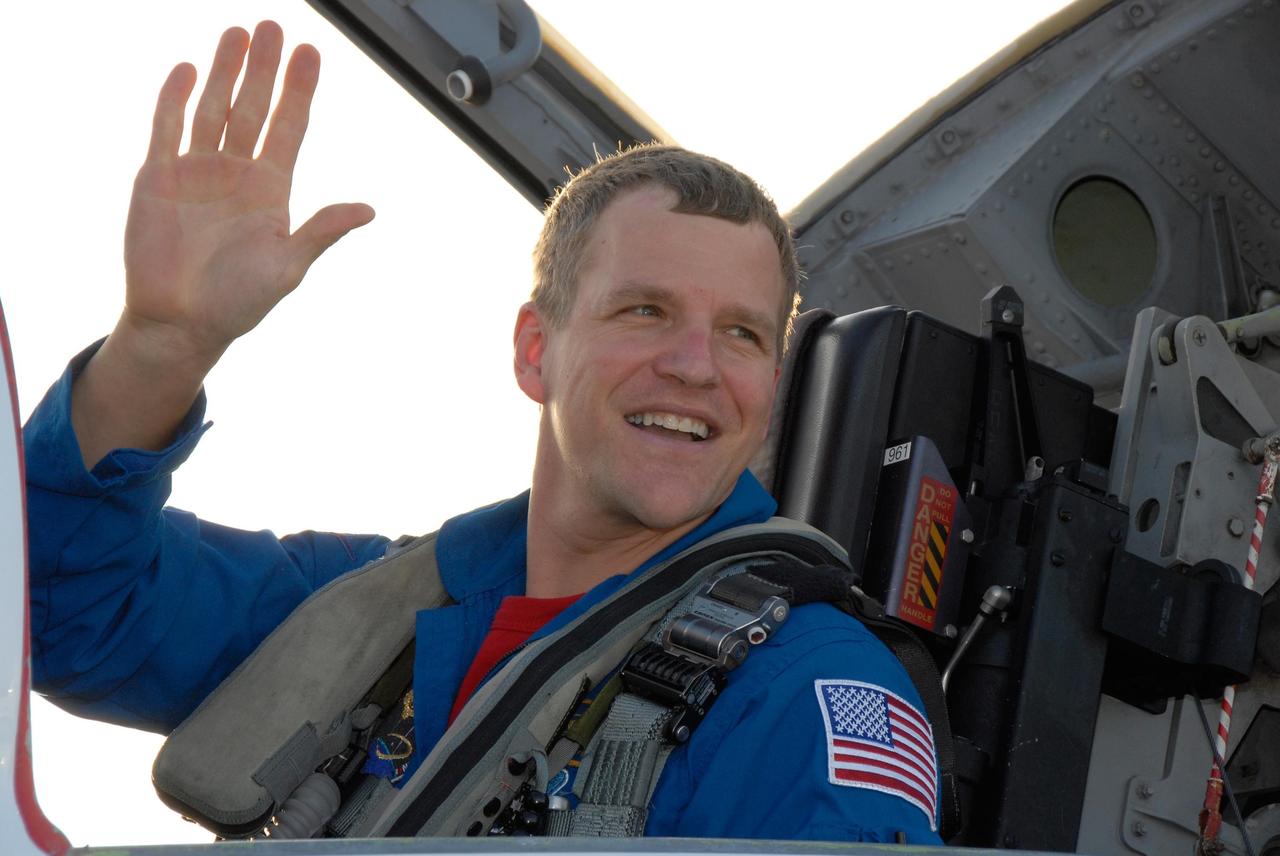
KENNEDY SPACE CENTER, FLA. -- The crew members of mission STS-120 arrive at NASA's Kennedy Space Center Shuttle Landing Facility aboard T-38 jet aircraft to take part in terminal countdown demonstration test activities. Mission Specialist Scott Parazynski, who will be making his fifth shuttle flight, waves to those on hand to greet him. The terminal countdown demonstration test provides astronauts and ground crews an opportunity to participate in various simulated countdown activities, including equipment familiarization and emergency training. The STS-120 mission will deliver the U.S. Node 2 module, named Harmony, aboard space shuttle Discovery to the International Space Station. Launch of Discovery on mission STS-120 is targeted for Oct. 23 at 11:38 a.m. EDT on a 14-day mission to the International Space Station. Photo credit: NASA/Kim Shiflett
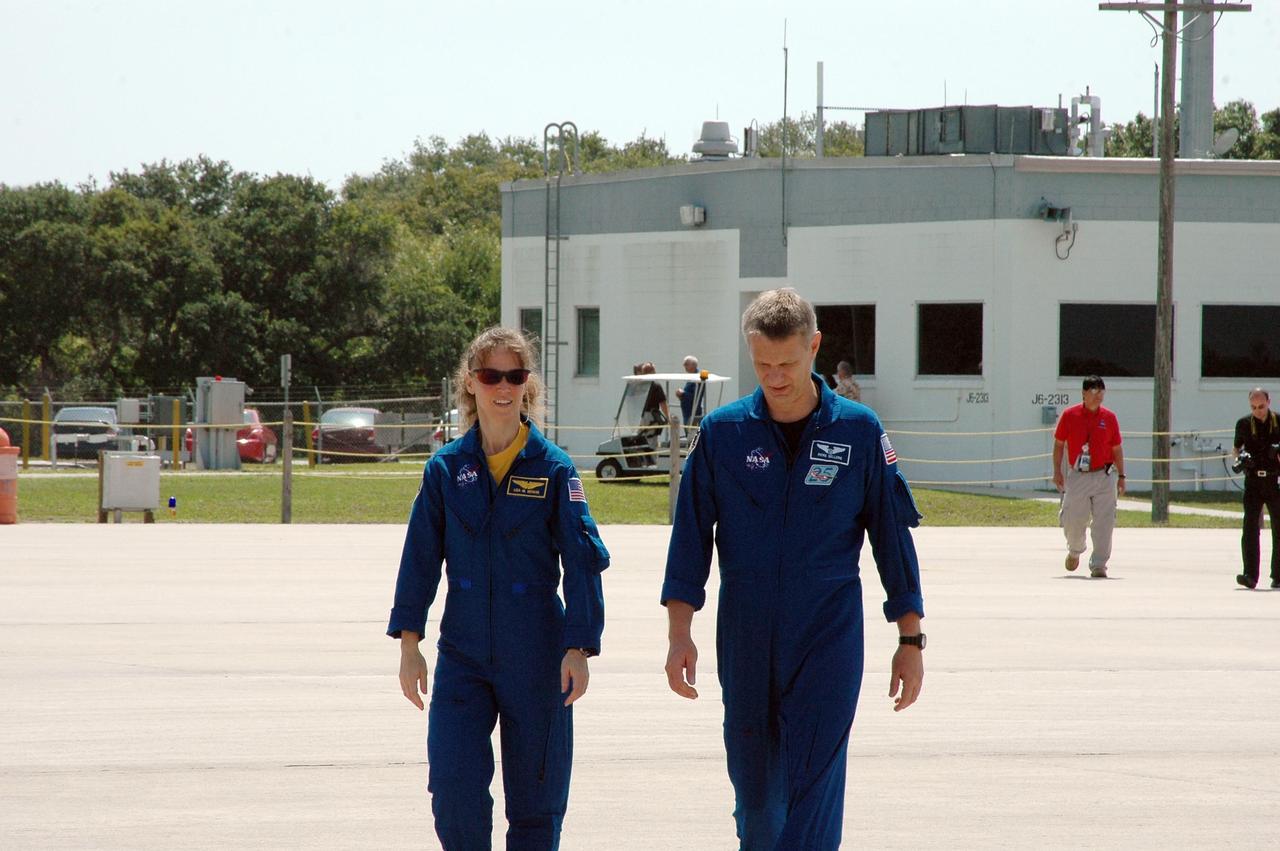
KENNEDY SPACE CENTER, FLA. - After a three-day series of Terminal Countdown Demonstration Test (TCDT) activities, the crew of mission STS-121 are leaving NASA's Kennedy Space Center to return to Houston. Walking toward the plane at the Shuttle Landing Facility are Mission Specialists Lisa Nowak and Piers Sellers. The TCDT includes equipment familiarization, emergency egress training and a simulated launch countdown. Mission STS-121 is scheduled to launch July 1. Photo credit: NASA/Kim Shiflett

KENNEDY SPACE CENTER, FLA. - At the Shuttle Landing Facility, the Shuttle Training Aircraft (STA) waits for the STS-121 pilot and commander to begin their practice flights. The STA is a modified Grumman American Aviation-built Gulf Stream II jet that was modified to simulate an orbiter’s cockpit, motion and visual cues, and handling qualities. In flight, the STA duplicates the orbiter’s atmospheric descent trajectory from approximately 35,000 feet altitude to landing on a runway. Because the orbiter is unpowered during re-entry and landing, its high-speed glide must be perfectly executed the first time. Space Shuttle Discovery is scheduled to launch July 1 on mission STS-121. Photo credit: NASA/Kim Shiflett
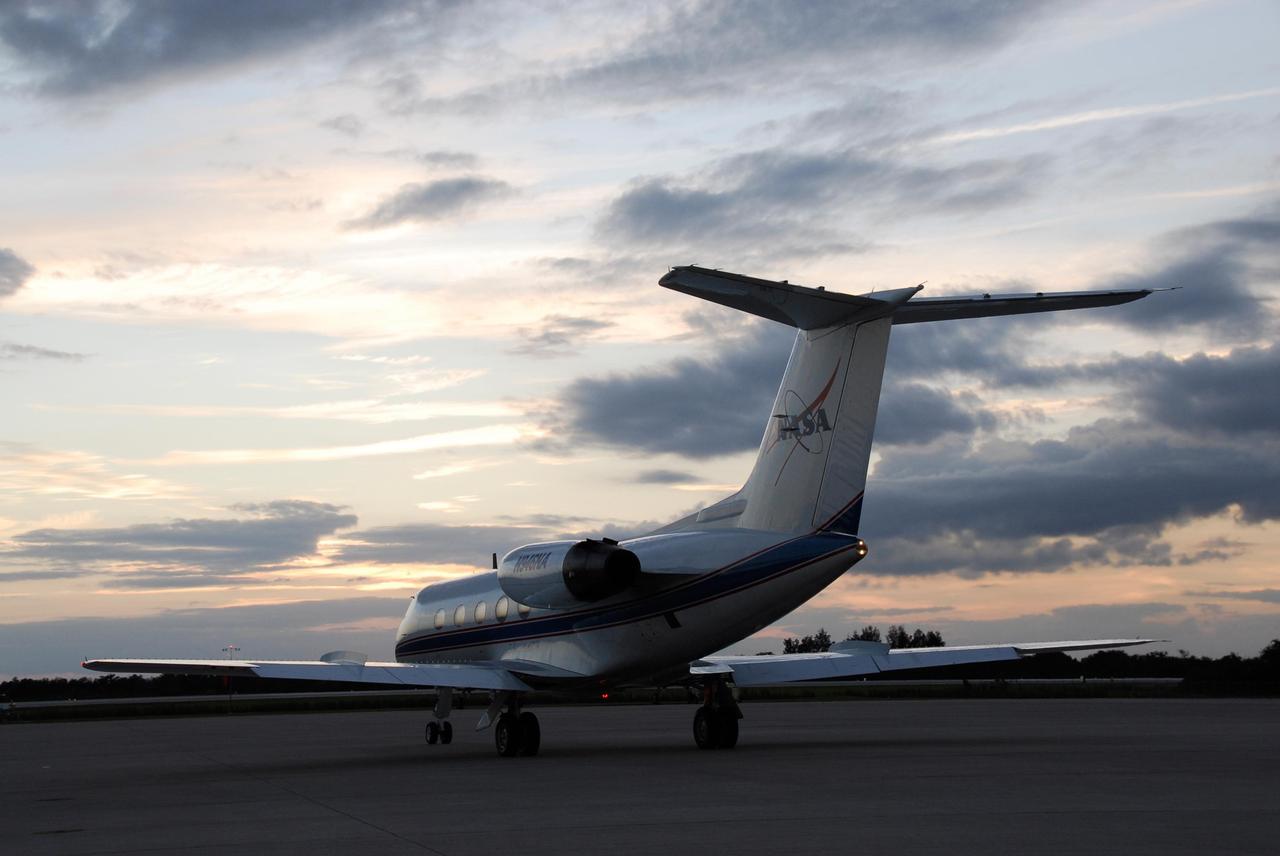
KENNEDY SPACE CENTER, FLA. -- A shuttle training aircraft, or STA, prepares for takeoff from Kennedy Space Center's Shuttle Landing Facility at dusk. The STA is being used for practice flights by space shuttle Atlantis STS-122 Commander Steve Frick and Pilot Alan Poindexter. The STA is a Grumman American Aviation-built Gulf Stream II jet that was modified to simulate an orbiter's cockpit, motion and visual cues, and handling qualities. In flight, the STA duplicates the orbiter's atmospheric descent trajectory from approximately 35,000 feet altitude to landing on a runway. Because the orbiter is unpowered during re-entry and landing, its high-speed glide must be perfectly executed the first time. The training is part of terminal countdown demonstration test, or TCDT, activities. The TCDT provides astronauts and ground crews with equipment familiarization, emergency egress training and a simulated launch countdown. On mission STS-122, Atlantis will deliver the European Space Agency's Columbus module to the International Space Station. Columbus is a multifunctional, pressurized laboratory that will be permanently attached to U.S. Node 2, called Harmony, and will expand the research facilities aboard the station. Launch is targeted for Dec. 6. Photo credit: NASA/Kim Shiflett
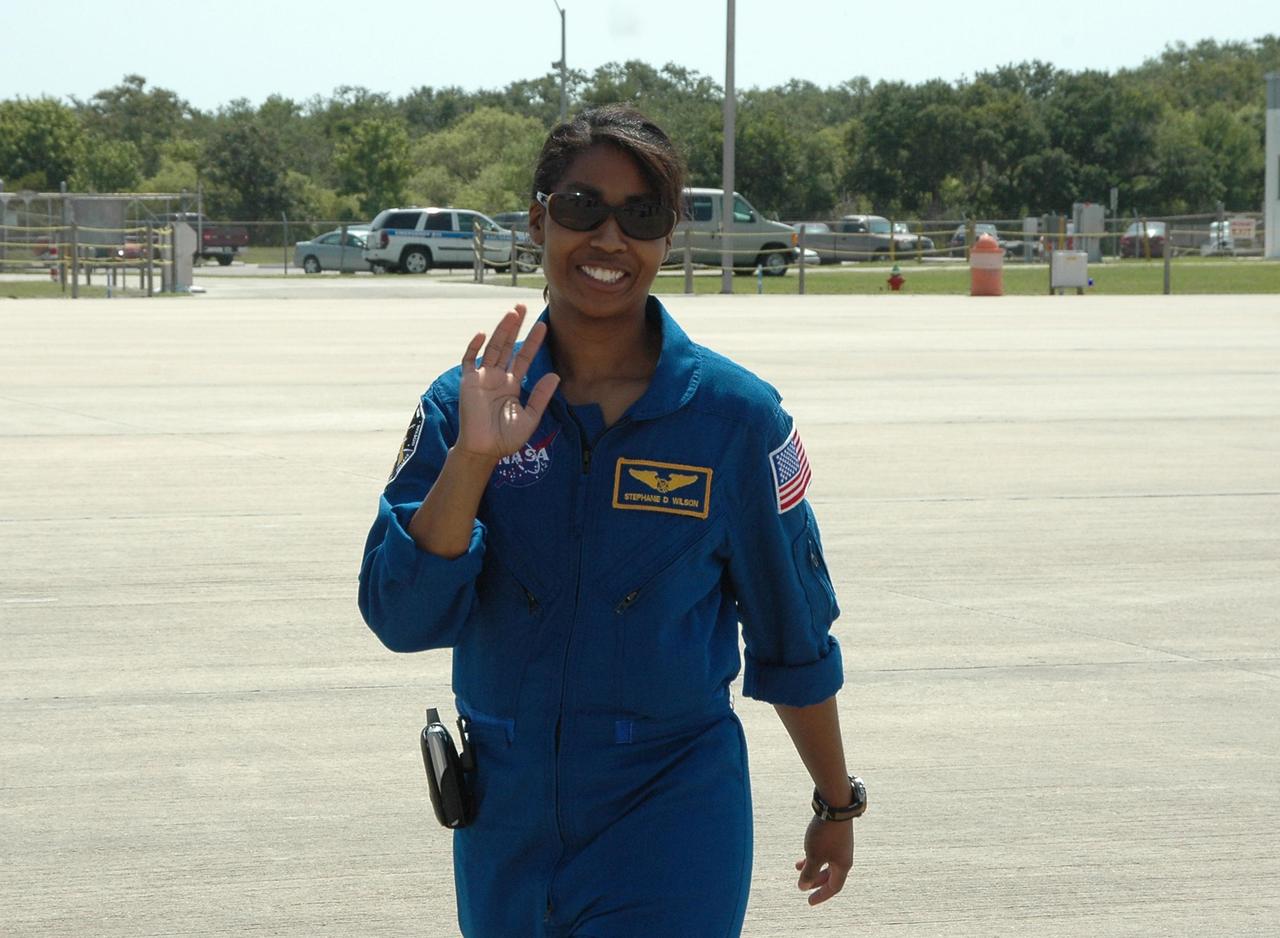
KENNEDY SPACE CENTER, FLA. - After a three-day series of Terminal Countdown Demonstration Test (TCDT) activities, the crew of mission STS-121 are leaving NASA's Kennedy Space Center to return to Houston. Waving on her way to the plane at the Shuttle Landing Facility is Mission Specialist Stephanie Wilson. The TCDT includes equipment familiarization, emergency egress training and a simulated launch countdown. Mission STS-121 is scheduled to launch July 1. Photo credit: NASA/Kim Shiflett
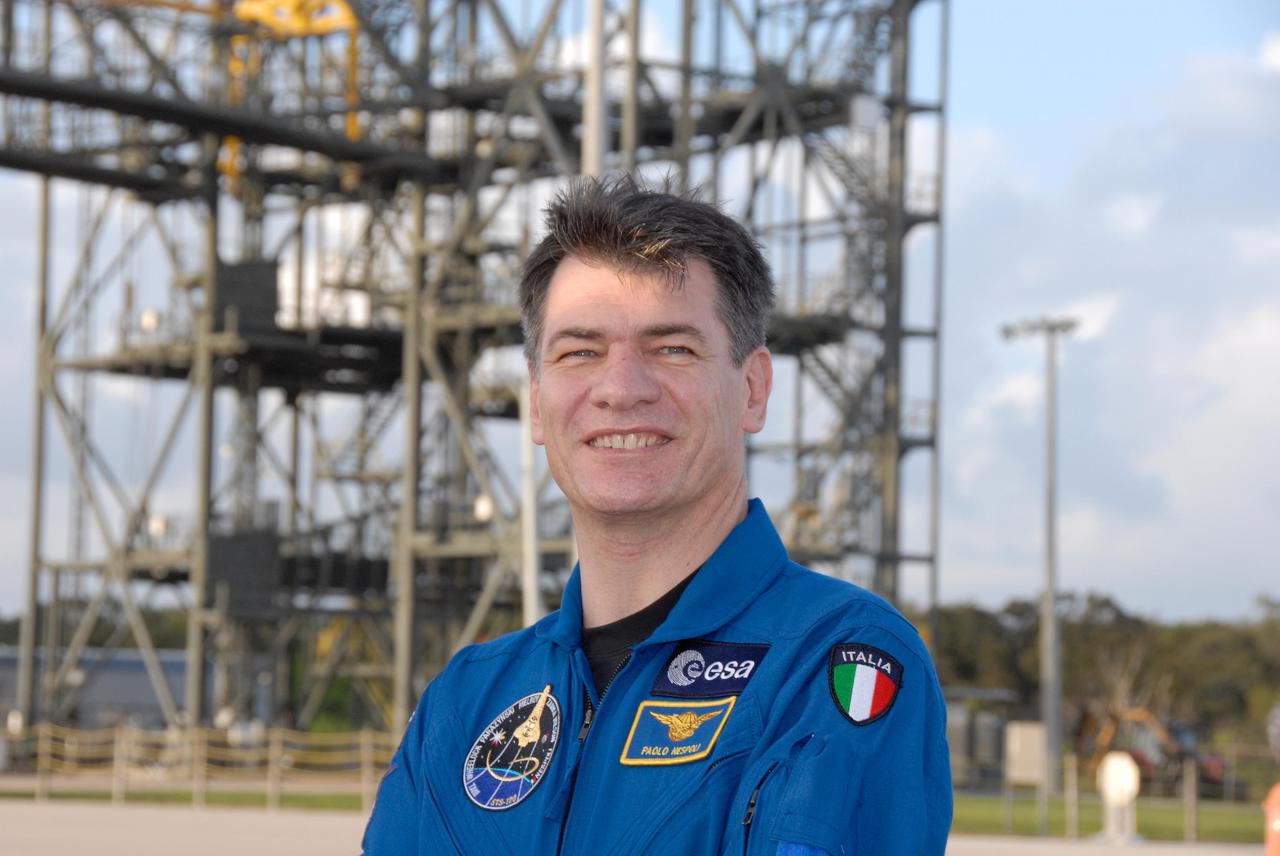
KENNEDY SPACE CENTER, FLA. -- The crew members of mission STS-120 arrive at NASA's Kennedy Space Center Shuttle Landing Facility aboard T-38 jet aircraft to take part in terminal countdown demonstration test activities. Mission Specialist Paolo Nespoli, representing the European Space Agency on his first shuttle flight, is seen here with the space shuttle mate-demate device in the background. The terminal countdown demonstration test provides astronauts and ground crews an opportunity to participate in various simulated countdown activities, including equipment familiarization and emergency training. The STS-120 mission will deliver the U.S. Node 2 module, named Harmony, aboard space shuttle Discovery to the International Space Station. Launch of Discovery on mission STS-120 is targeted for Oct. 23 at 11:38 a.m. EDT on a 14-day mission to the International Space Station. Photo credit: NASA_Kim Shiflett
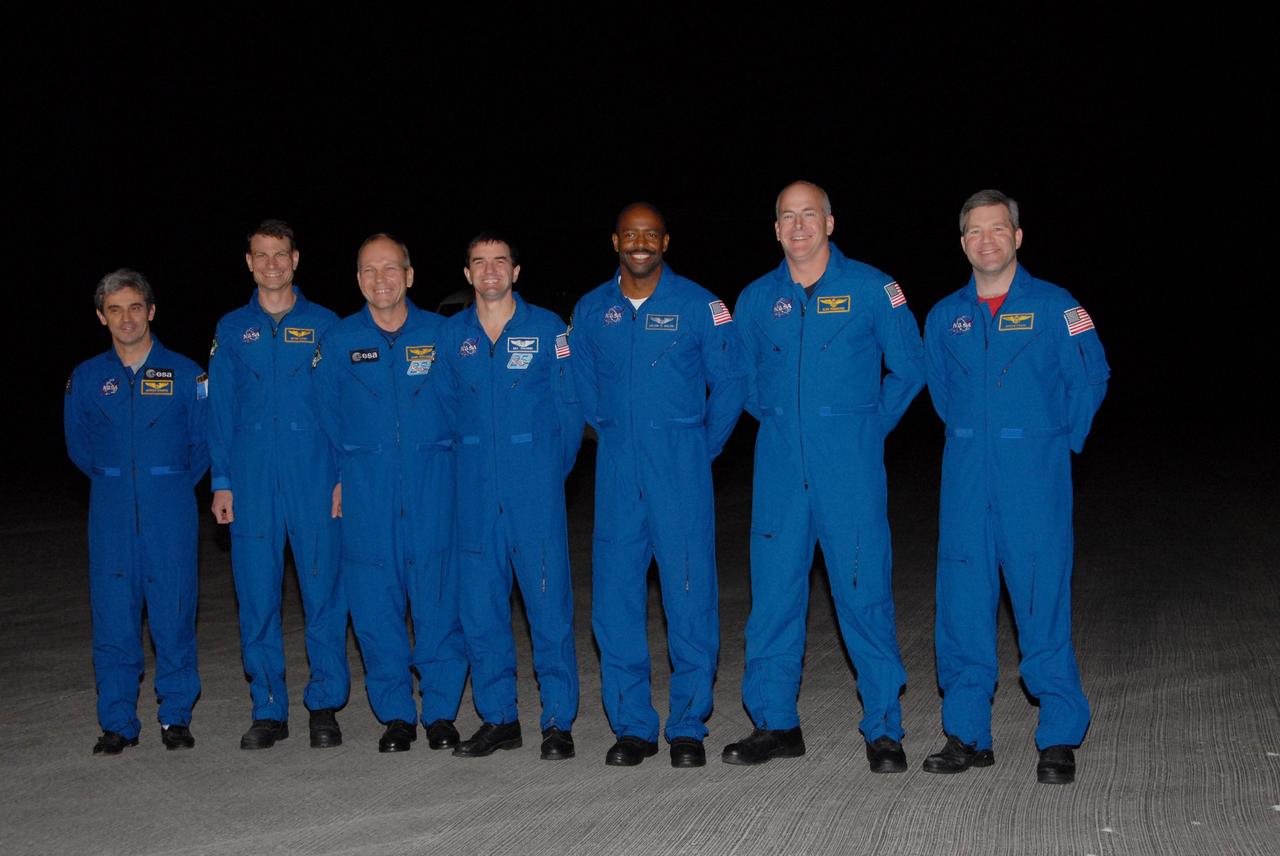
KENNEDY SPACE CENTER, FLA. -- The astronauts assigned to the space shuttle Atlantis STS-122 crew arrive at Kennedy Space Center's Shuttle Landing Facility aboard a Gulfstream shuttle training aircraft to participate in three days of terminal countdown demonstration test, or TCDT, activities. From left are Mission Specialist Leopold Eyharts, a European Space Agency astronaut who will remain on the International Space Station as a flight engineer for Expedition 16; Mission Specialists Stanley Love, Hans Schlegel of the European Space Agency, Rex Walheim and Leland Melvin; Pilot Alan Poindexter; and Commander Steve Frick. The TCDT provides astronauts and ground crews with equipment familiarization, emergency egress training and a simulated launch countdown. On mission STS-122, Atlantis will deliver the Columbus module to the International Space Station. The European Space Agency's largest single contribution to the station, Columbus is a multifunctional, pressurized laboratory that will be permanently attached to U.S. Node 2, called Harmony. The laboratory will expand the research facilities aboard the station, providing crew members and scientists from around the world the ability to conduct a variety of experiments in the physical, materials and life sciences. Photo credit: NASA/George Shelton
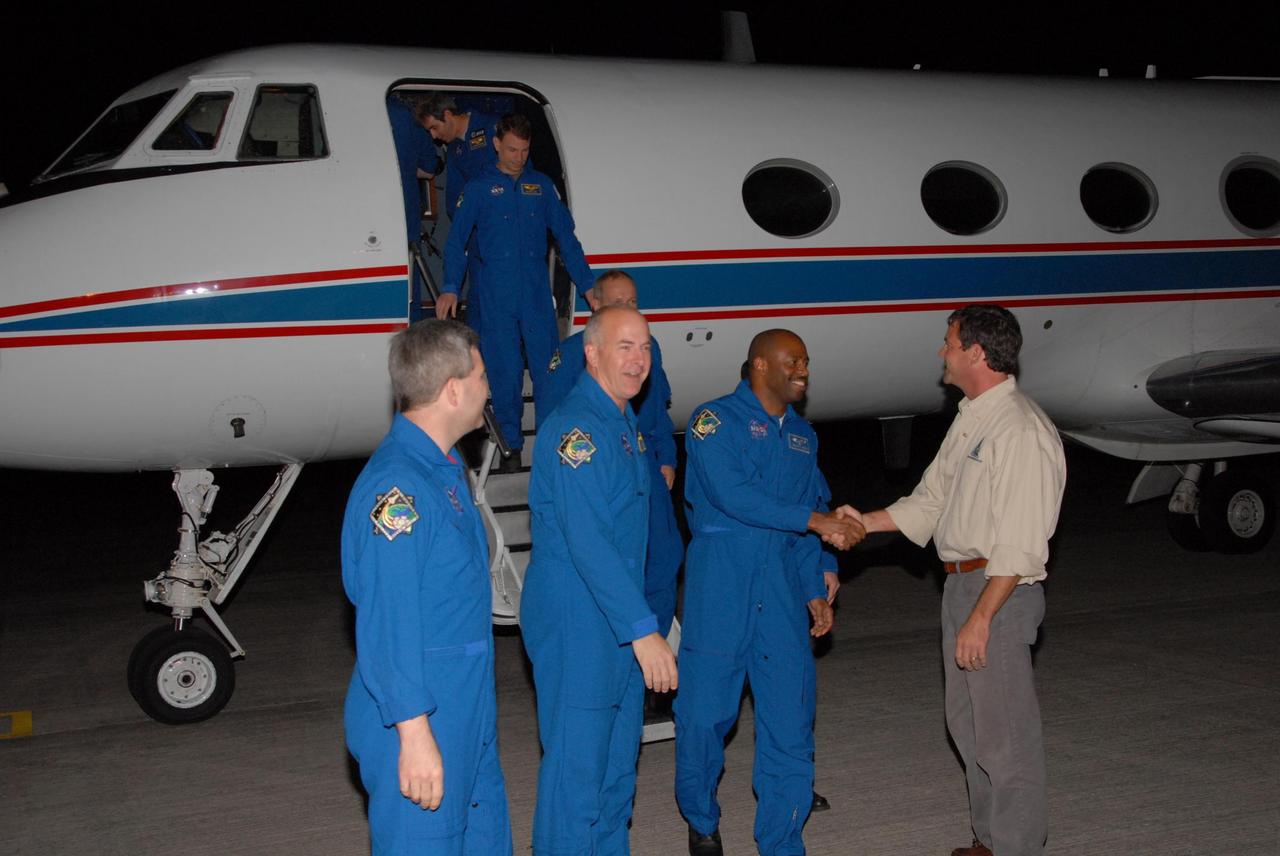
KENNEDY SPACE CENTER, FLA. -- The astronauts assigned to the space shuttle Atlantis STS-122 crew arrive at Kennedy Space Center's Shuttle Landing Facility aboard a Gulfstream shuttle training aircraft to participate in three days of terminal countdown demonstration test, or TCDT, activities. STS-122 Launch Director Doug Lyons greets Mission Specialist Leland Melvin as Commander Steve Frick and Pilot Alan Poindexter look on. Disembarking are Mission Specialists Hans Schlegel of the European Space Agency, Stanley Love and Leopold Eyharts, a European Space Agency astronaut who will remain on the International Space Station as a flight engineer for Expedition 16. The TCDT provides astronauts and ground crews with equipment familiarization, emergency egress training and a simulated launch countdown. On mission STS-122, Atlantis will deliver the Columbus module to the International Space Station. The European Space Agency's largest single contribution to the station, Columbus is a multifunctional, pressurized laboratory that will be permanently attached to U.S. Node 2, called Harmony. The laboratory will expand the research facilities aboard the station, providing crew members and scientists from around the world the ability to conduct a variety of experiments in the physical, materials and life sciences. Photo credit: NASA/George Shelton
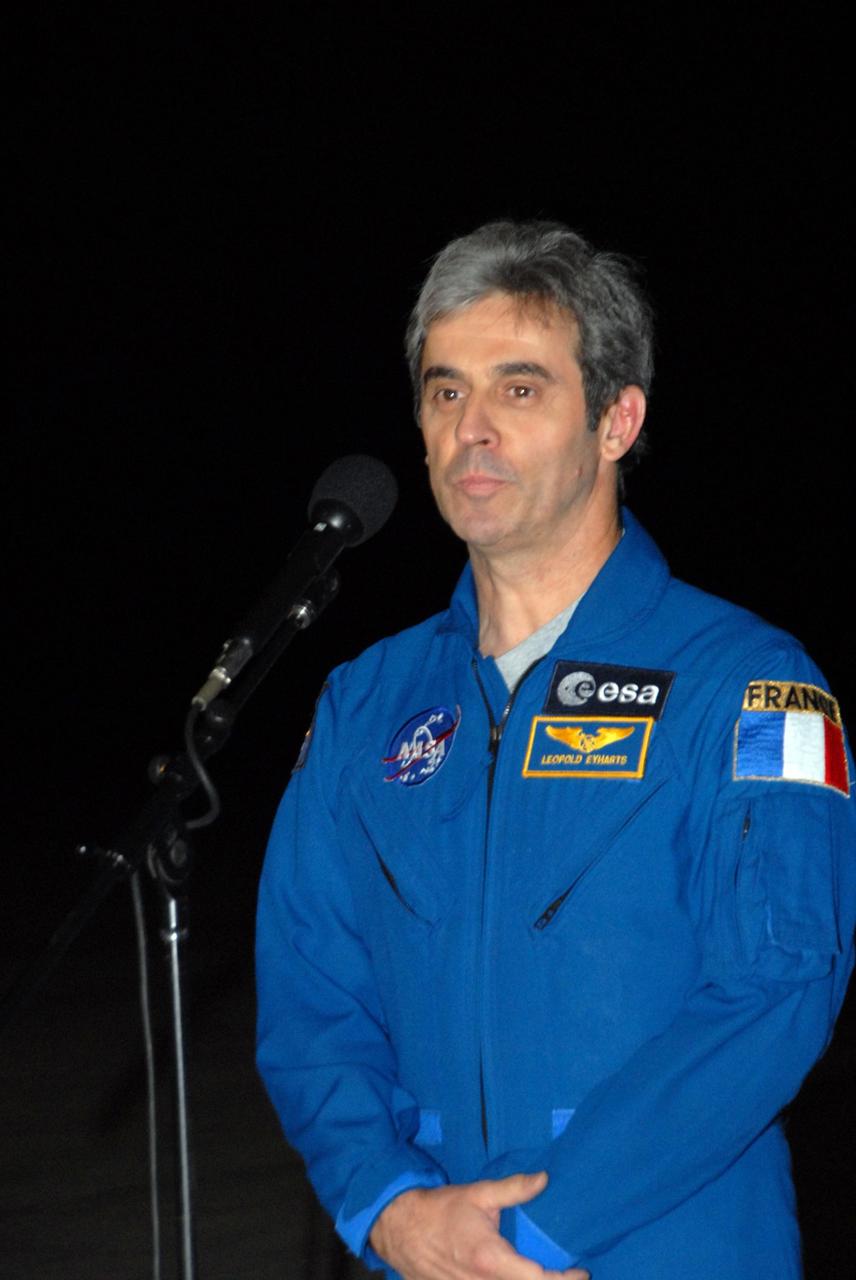
KENNEDY SPACE CENTER, FLA. -- Space shuttle Atlantis STS-122 Mission Specialist Leopold Eyharts, of the European Space Agency, talks to the media at Kennedy Space Center's Shuttle Landing Facility following his arrival to participate in three days of terminal countdown demonstration test, or TCDT, activities. Eyharts will remain on the International Space Station as a flight engineer for Expedition 16 following the STS-122 mission. The TCDT provides astronauts and ground crews with equipment familiarization, emergency egress training and a simulated launch countdown. On mission STS-122, Atlantis will deliver the Columbus module to the International Space Station. The European Space Agency's largest single contribution to the station, Columbus is a multifunctional, pressurized laboratory that will be permanently attached to U.S. Node 2, called Harmony. The laboratory will expand the research facilities aboard the station, providing crew members and scientists from around the world the ability to conduct a variety of experiments in the physical, materials and life sciences. Photo credit: NASA/George Shelton
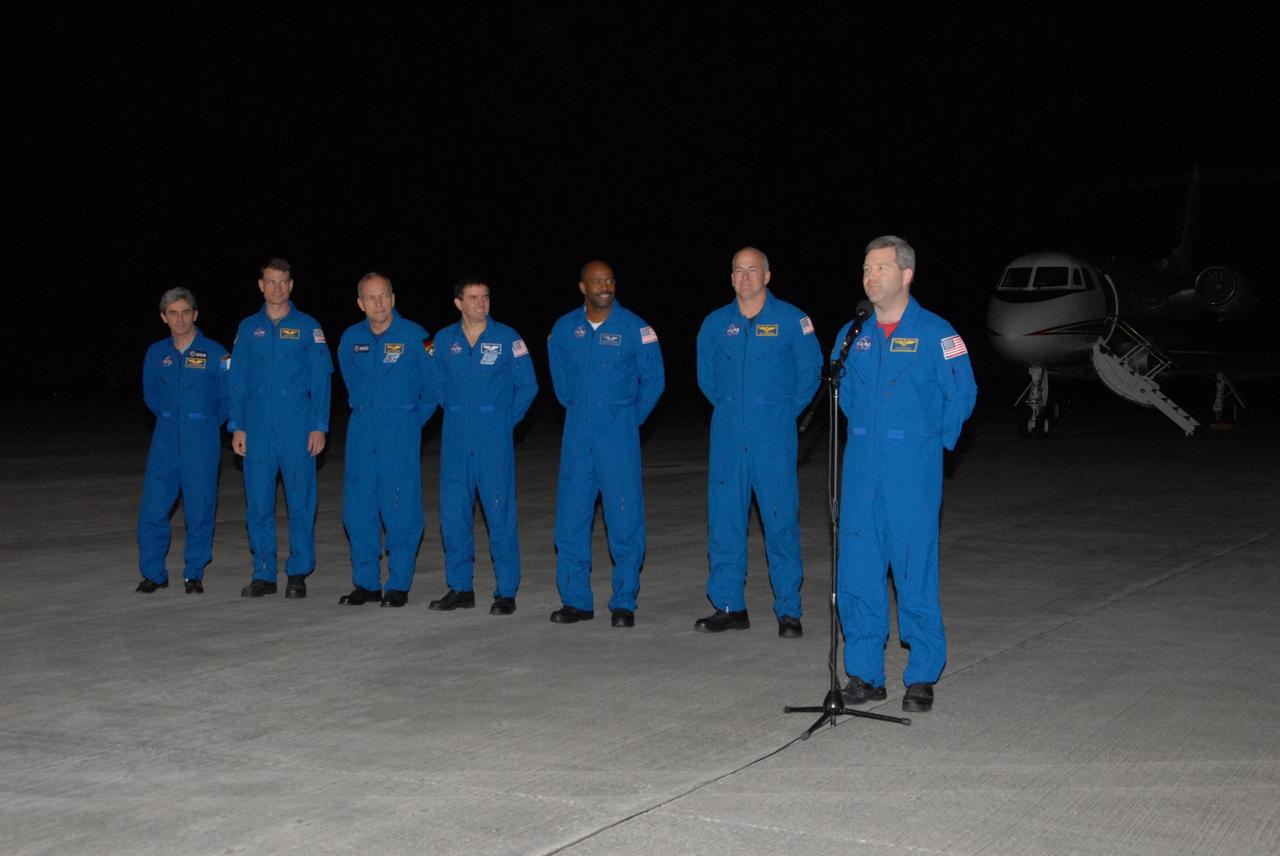
KENNEDY SPACE CENTER, FLA. -- Space shuttle Atlantis STS-122 Commander Steve Frick, at the microphone, addresses the media at Kennedy Space Center's Shuttle Landing Facility following his arrival to participate in three days of terminal countdown demonstration test, or TCDT, activities. Other STS-122 crew members are, from left, Mission Specialist Leopold Eyharts, a European Space Agency astronaut who will remain on the International Space Station as a flight engineer for Expedition 16; Mission Specialists Stanley Love, Hans Schlegel of the European Space Agency, Rex Walheim and Leland Melvin; and Pilot Alan Poindexter. The TCDT provides astronauts and ground crews with equipment familiarization, emergency egress training and a simulated launch countdown. On mission STS-122, Atlantis will deliver the Columbus module to the International Space Station. The European Space Agency's largest single contribution to the station, Columbus is a multifunctional, pressurized laboratory that will be permanently attached to U.S. Node 2, called Harmony. The laboratory will expand the research facilities aboard the station, providing crew members and scientists from around the world the ability to conduct a variety of experiments in the physical, materials and life sciences. Photo credit: NASA/George Shelton
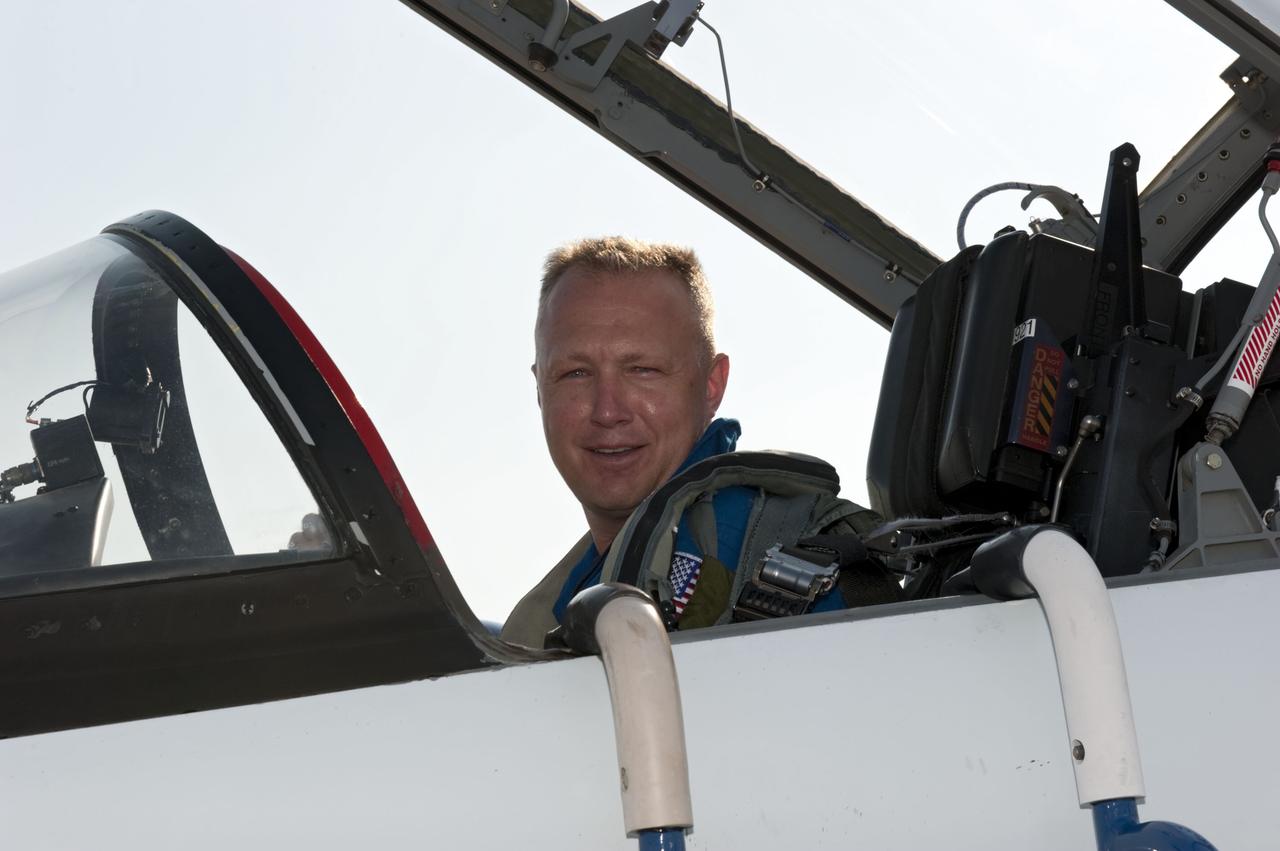
CAPE CANAVERAL, Fla. -- At the Shuttle Landing Facility at NASA's Kennedy Space Center in Florida, STS-135 Pilot Doug Hurley arrived aboard a T-38 jet. The STS-135 crew is at Kennedy to participate in a launch countdown dress rehearsal called the Terminal Countdown Demonstration Test (TCDT) and related training in preparation for the upcoming STS-135 mission. Ferguson, Pilot Doug Hurley and Mission Specialists Sandy Magnus and Rex Walheim are targeted to lift off July 8, taking with them the Raffaello multi-purpose logistics module packed with supplies and spare parts to the International Space Station. The STS-135 mission also will fly a system to investigate the potential for robotically refueling existing satellites and return a failed ammonia pump module to help NASA better understand the failure mechanism and improve pump designs for future systems. STS-135 will be the 33rd flight of Atlantis, the 37th shuttle mission to the space station, and the 135th and final mission of NASA's Space Shuttle Program. For more information visit, www.nasa.gov/mission_pages/shuttle/shuttlemissions/sts135/index.html. Photo credit: NASA/Kim Shiflett
CAPE CANAVERAL, Fla. -- STS-135 Commander Chris Ferguson prepares to perform touch-and-go landings aboard one of two Shuttle Training Aircrafts (STA) on the Shuttle Landing Facility runway at NASA's Kennedy Space Center in Florida. An STA is a Gulfstream II jet that is modified to mimic the shuttle's handling during the final phase of landing. Ferguson and Hurley will practice landings as part of standard training before space shuttle Atlantis' launch to the International Space Station. Atlantis and its crew are targeted to lift off July 8, to deliver the Raffaello multi-purpose logistics module packed with supplies and spare parts to the station. The STS-135 mission also will fly a system to investigate the potential for robotically refueling existing satellites and return a failed ammonia pump module to help NASA better understand the failure mechanism and improve pump designs for future systems. STS-135 will be the 33rd flight of Atlantis, the 37th shuttle mission to the space station, and the 135th and final mission of NASA's Space Shuttle Program. For more information visit, www.nasa.gov/mission_pages/shuttle/shuttlemissions/sts135/index.html. Photo credit: NASA/Troy Cryder

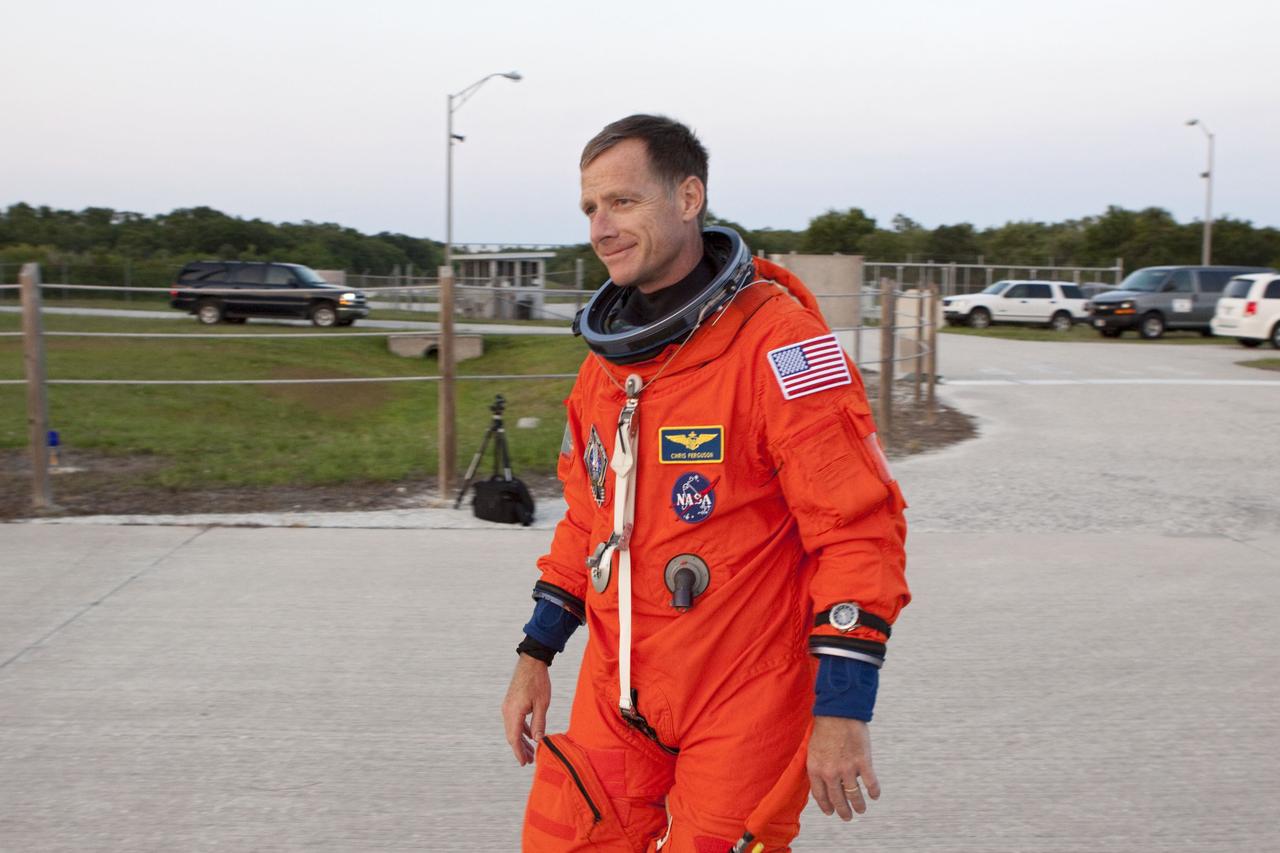
CAPE CANAVERAL, Fla. -- At the Shuttle Landing Facility at NASA's Kennedy Space Center in Florida, STS-135 Commander Chris Ferguson arrived aboard a T-38 jet along with his crew to participate in a launch countdown dress rehearsal called the Terminal Countdown Demonstration Test (TCDT) and related training in preparation for the upcoming STS-135 mission. Ferguson, Pilot Doug Hurley and Mission Specialists Sandy Magnus and Rex Walheim are targeted to lift off July 8, taking with them the Raffaello multi-purpose logistics module packed with supplies and spare parts to the International Space Station. The STS-135 mission also will fly a system to investigate the potential for robotically refueling existing satellites and return a failed ammonia pump module to help NASA better understand the failure mechanism and improve pump designs for future systems. STS-135 will be the 33rd flight of Atlantis, the 37th shuttle mission to the space station, and the 135th and final mission of NASA's Space Shuttle Program. For more information visit, www.nasa.gov/mission_pages/shuttle/shuttlemissions/sts135/index.html. Photo credit: NASA/Kim Shiflett
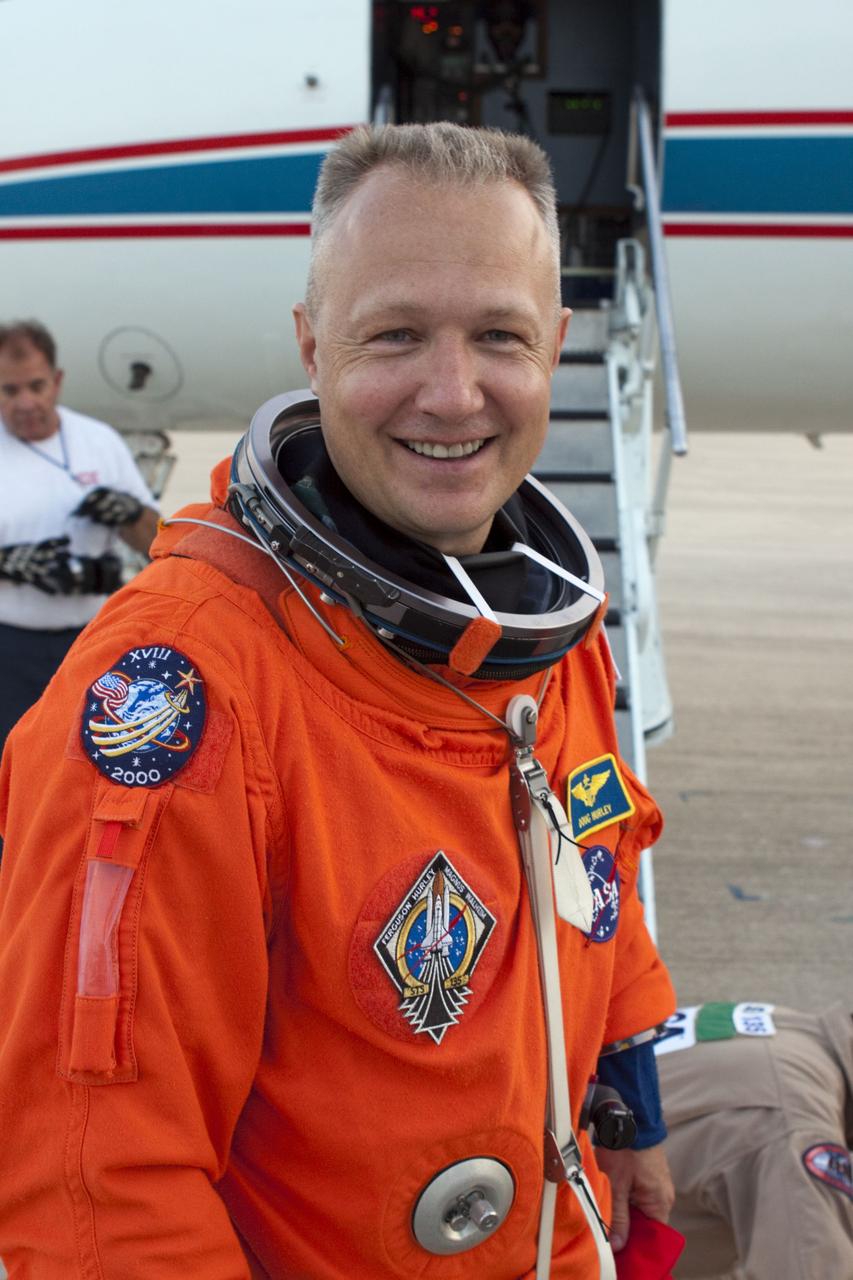
CAPE CANAVERAL, Fla. -- STS-135 Pilot Doug Hurley prepares to perform touch-and-go landings aboard one of two Shuttle Training Aircrafts (STA) on the Shuttle Landing Facility runway at NASA's Kennedy Space Center in Florida. An STA is a Gulfstream II jet that is modified to mimic the shuttle's handling during the final phase of landing. Ferguson and Hurley will practice landings as part of standard training before space shuttle Atlantis' launch to the International Space Station. Atlantis and its crew are targeted to lift off July 8, to deliver the Raffaello multi-purpose logistics module packed with supplies and spare parts to the station. The STS-135 mission also will fly a system to investigate the potential for robotically refueling existing satellites and return a failed ammonia pump module to help NASA better understand the failure mechanism and improve pump designs for future systems. STS-135 will be the 33rd flight of Atlantis, the 37th shuttle mission to the space station, and the 135th and final mission of NASA's Space Shuttle Program. For more information visit, www.nasa.gov/mission_pages/shuttle/shuttlemissions/sts135/index.html. Photo credit: NASA/Troy Cryder
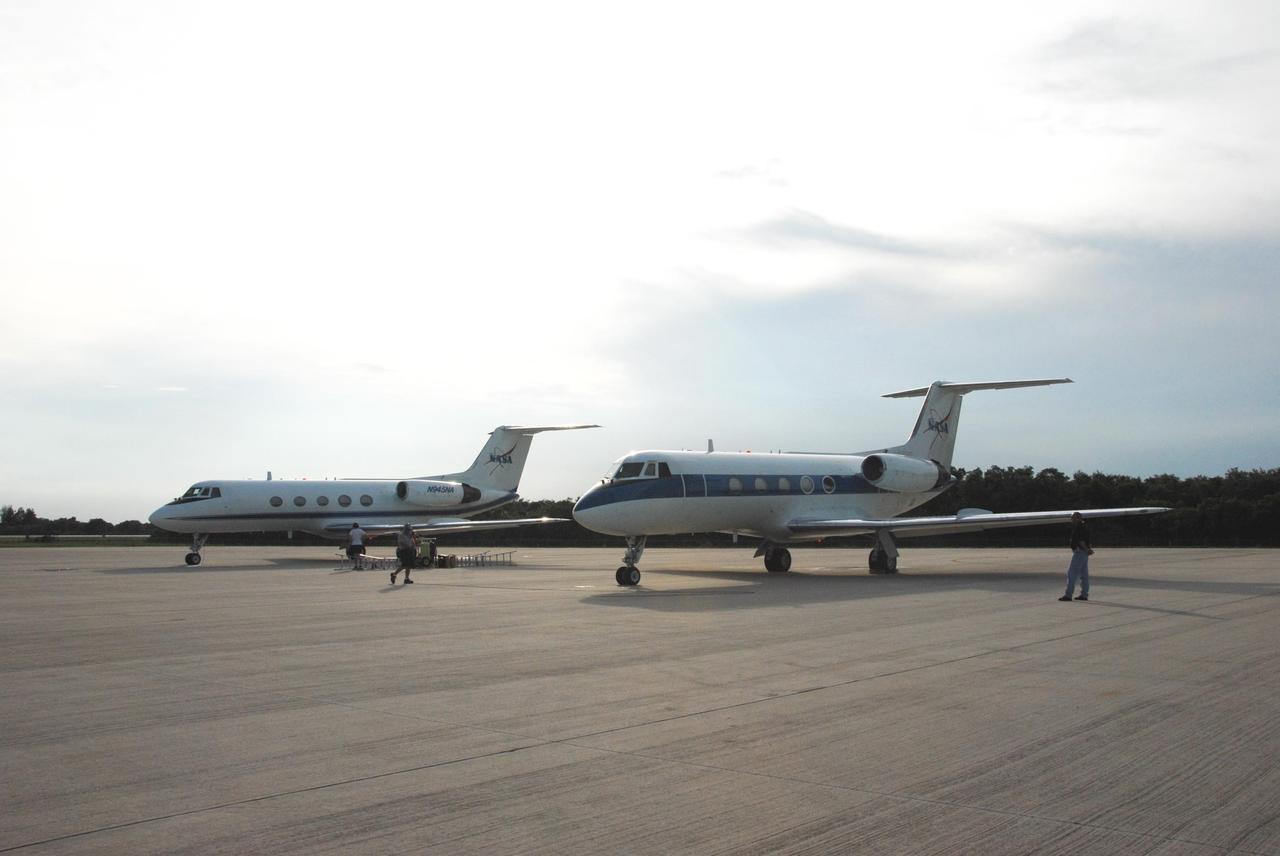
KENNEDY SPACE CENTER, Fla. -- Two shuttle training aircraft, or STAs, wait to taxi onto the runway at the Shuttle Landing Facility. STS-118 Commander Scott Kelly and Pilot Charlie Hobaugh are each piloting one of the STAs for landing practice. The practice is part of Terminal Countdown Demonstration Test, or TCDT, activities that include a simulated launch countdown. The STA is a Grumman American Aviation-built Gulf Stream II jet that was modified to simulate an orbiter's cockpit, motion and visual cues, and handling qualities. In flight, the STA duplicates the orbiter's atmospheric descent trajectory from approximately 35,000 feet altitude to landing on a runway. The STS-118 mission is the 22nd flight to the International Space Station and is targeted for launch on Aug. 7. The mission payload aboard Space Shuttle Endeavour includes the S5 truss, a SPACEHAB module and external stowage platform 3. NASA/George Shelton
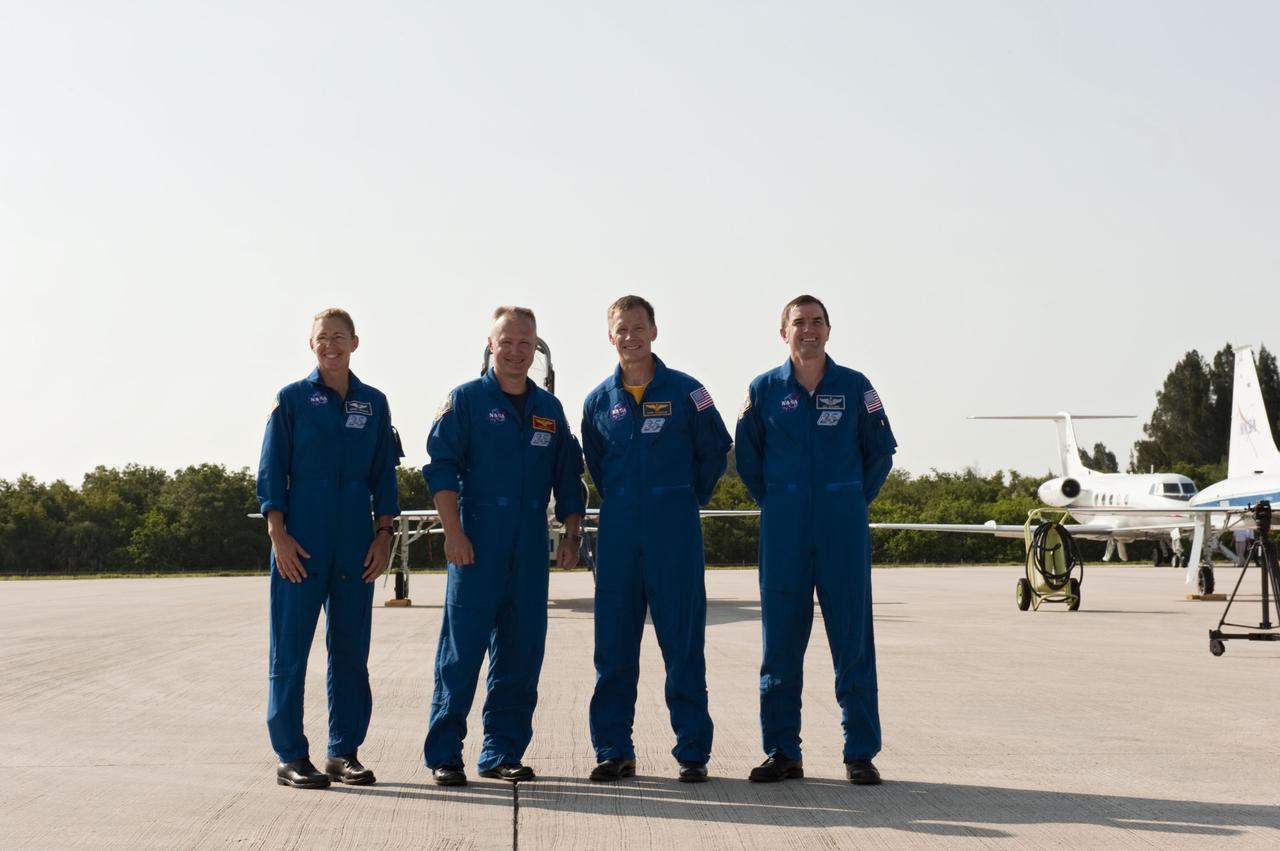
CAPE CANAVERAL, Fla. -- Space shuttle Atlantis' STS-135 crew members pose for a group photo on the Shuttle Landing Facility at NASA's Kennedy Space Center in Florida. From left are Mission Specialist Sandy Magnus, Pilot Doug Hurley, Commander Chris Ferguson and Mission Specialist Rex Walheim. The crew arrived at Kennedy at about 5:30 p.m. EDT to participate in a launch countdown dress rehearsal called the Terminal Countdown Demonstration Test (TCDT) and related training in preparation for the upcoming STS-135 mission. Targeted to lift off July 8, the Atlantis crew will deliver the Raffaello multi-purpose logistics module packed with supplies and spare parts to the International Space Station. Atlantis also will fly a system to investigate the potential for robotically refueling existing satellites and return a failed ammonia pump module to help NASA better understand the failure mechanism and improve pump designs for future systems. STS-135 will be the 33rd flight of Atlantis, the 37th shuttle mission to the station, and the 135th and final mission of NASA's Space Shuttle Program. For more information visit, www.nasa.gov/mission_pages/shuttle/shuttlemissions/sts135/index.html. Photo credit: NASA/Kim Shiflett
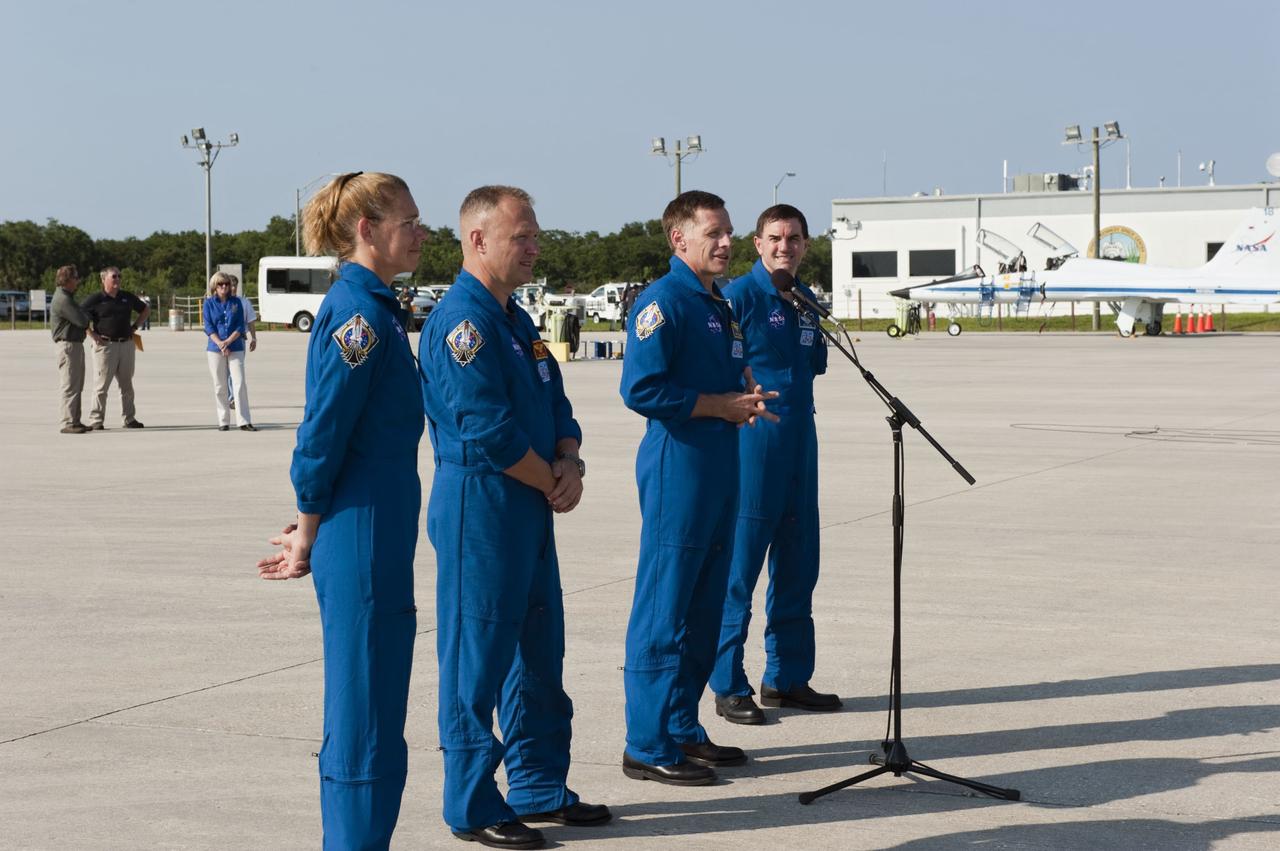
CAPE CANAVERAL, Fla. -- Space shuttle Atlantis' STS-135 crew address the media on the Shuttle Landing Facility at NASA's Kennedy Space Center in Florida. From left are Mission Specialist Sandy Magnus, Pilot Doug Hurley, Commander Chris Ferguson and Mission Specialist Rex Walheim. While at Kennedy, Atlantis' crew will participate in a launch countdown dress rehearsal called the Terminal Countdown Demonstration Test (TCDT) and related training in preparation for the upcoming STS-135 mission. The STS-135 crew members are targeted to lift off on July 8, taking with them the Raffaello multi-purpose logistics module packed with supplies, logistics and spare parts to the International Space Station. The STS-135 mission also will fly a system to investigate the potential for robotically refueling existing satellites and return a failed ammonia pump module to help NASA better understand the failure mechanism and improve pump designs for future systems. STS-135 will be the 33rd flight of Atlantis, the 37th shuttle mission to the space station, and the 135th and final mission of NASA's Space Shuttle Program. For more information visit, www.nasa.gov/mission_pages/shuttle/shuttlemissions/sts135/index.html. Photo credit: NASA/Kim Shiflett

CAPE CANAVERAL, Fla. -- At the Shuttle Landing Facility at NASA's Kennedy Space Center in Florida, the STS-135 crew members arrived aboard their T-38 jets at about 5:30 p.m. EDT to participate in a launch countdown dress rehearsal called the Terminal Countdown Demonstration Test (TCDT) and related training in preparation for the upcoming STS-135 mission. Commander Chris Ferguson, Pilot Doug Hurley and Mission Specialists Sandy Magnus and Rex Walheim are targeted to lift off July 8, taking with them the Raffaello multi-purpose logistics module packed with supplies and spare parts to the International Space Station. The STS-135 mission also will fly a system to investigate the potential for robotically refueling existing satellites and return a failed ammonia pump module to help NASA better understand the failure mechanism and improve pump designs for future systems. STS-135 will be the 33rd flight of Atlantis, the 37th shuttle mission to the space station, and the 135th and final mission of NASA's Space Shuttle Program. For more information visit, www.nasa.gov/mission_pages/shuttle/shuttlemissions/sts135/index.html. Photo credit: NASA/Kim Shiflett
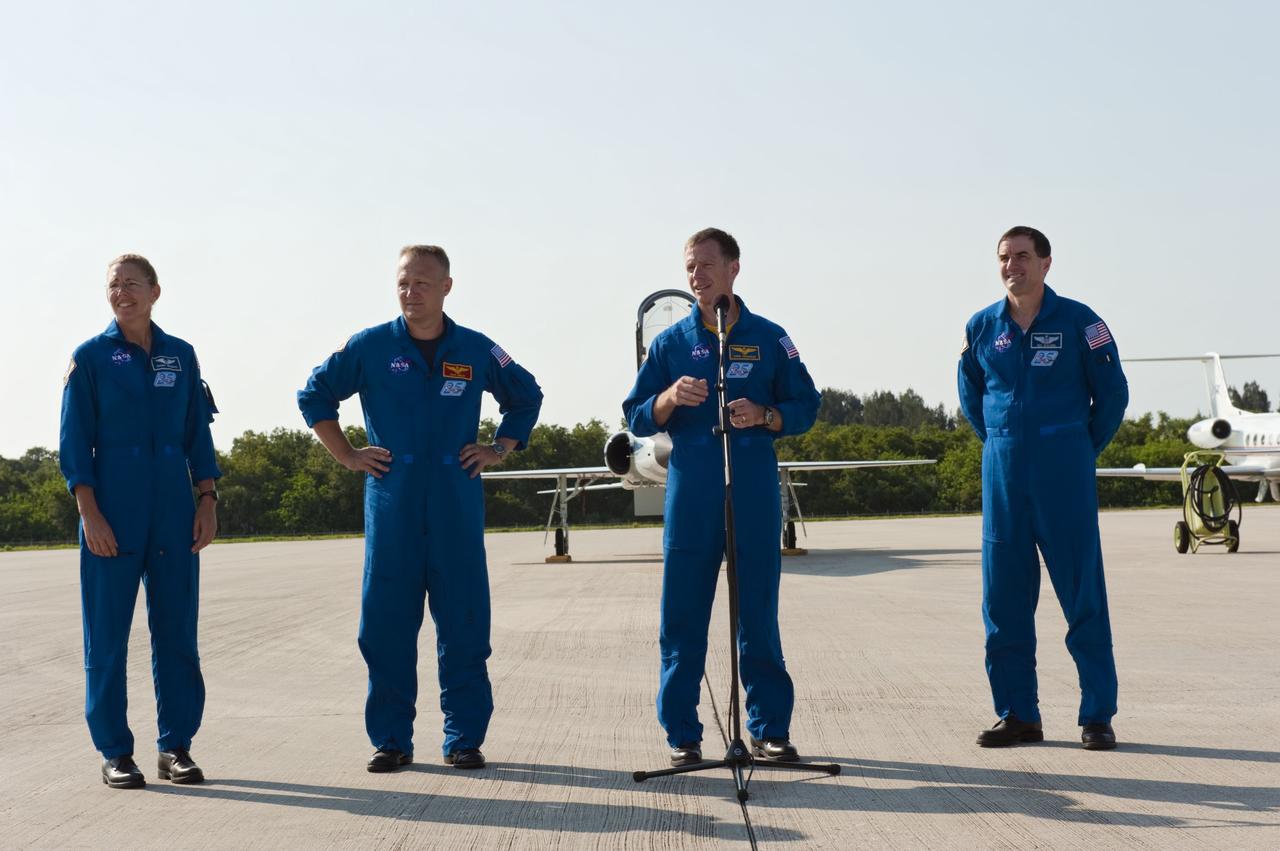
CAPE CANAVERAL, Fla. -- Space shuttle Atlantis' STS-135 crew members address the media on the Shuttle Landing Facility at NASA's Kennedy Space Center in Florida. From left are Mission Specialist Sandy Magnus, Pilot Doug Hurley, Commander Chris Ferguson and Mission Specialist Rex Walheim. The crew arrived at Kennedy at about 5:30 p.m. EDT to participate in a launch countdown dress rehearsal called the Terminal Countdown Demonstration Test (TCDT) and related training in preparation for the upcoming STS-135 mission. Atlantis and its crew are targeted to lift off July 8, taking with them the Raffaello multi-purpose logistics module packed with supplies and spare parts to the International Space Station. The STS-135 mission also will fly a system to investigate the potential for robotically refueling existing satellites and return a failed ammonia pump module to help NASA better understand the failure mechanism and improve pump designs for future systems. STS-135 will be the 33rd flight of Atlantis, the 37th shuttle mission to the International Space Station, and the 135th and final mission of NASA's Space Shuttle Program. For more information visit, www.nasa.gov/mission_pages/shuttle/shuttlemissions/sts135/index.html. Photo credit: NASA/Kim Shiflett
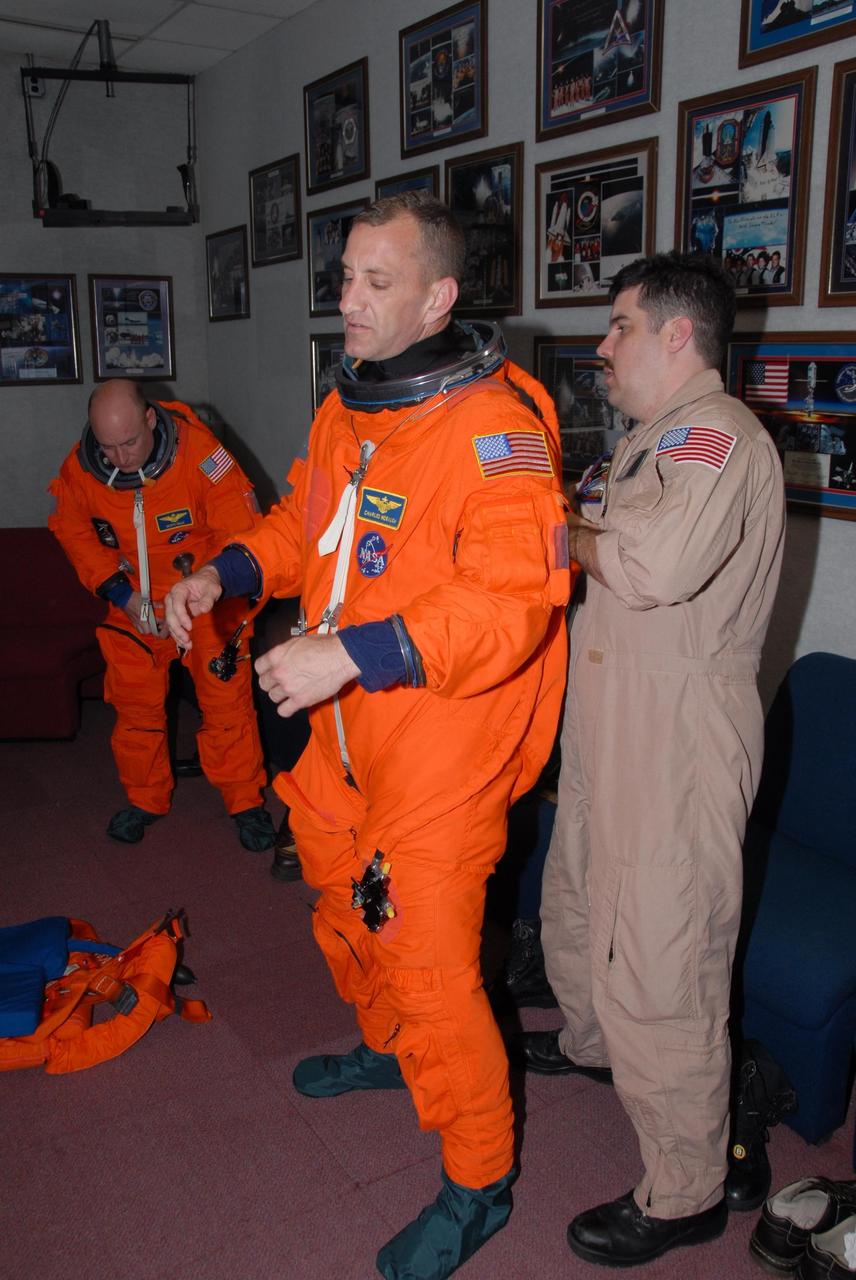
KENNEDY SPACE CENTER, Fla. -- STS-118 Commander Scott Kelly, left, and Pilot Charlie Hobaugh check the fit of their launch and entry suits. The fitting is part of the Terminal Countdown Demonstration Test, or TCDT, activities that include a simulated launch countdown. Kelly and Hobaugh are suiting up also for landing practice in the shuttle training aircraft, known as an STA. The STA is a Grumman American Aviation-built Gulf Stream II jet that was modified to simulate an orbiter's cockpit, motion and visual cues, and handling qualities. In flight, the STA duplicates the orbiter's atmospheric descent trajectory from approximately 35,000 feet altitude to landing on a runway. The STS-118 mission is the 22nd flight to the International Space Station and is targeted for launch on Aug. 7. The mission payload aboard Space Shuttle Endeavour includes the S5 truss, a SPACEHAB module and external stowage platform 3. NASA/George Shelton
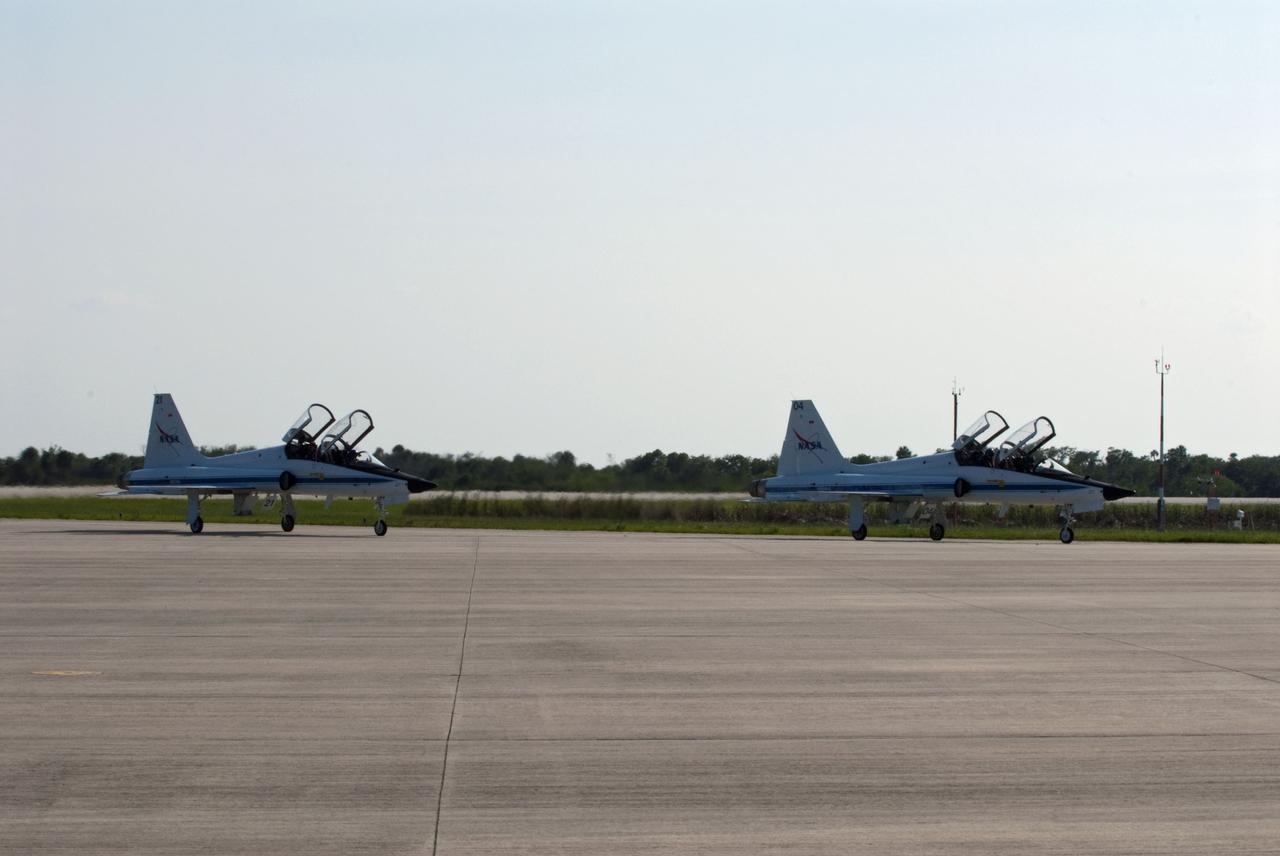
CAPE CANAVERAL, Fla. -- At the Shuttle Landing Facility at NASA's Kennedy Space Center in Florida, space shuttle Atlantis' crew members begin to arrive aboard their T-38 jets. The astronauts are at Kennedy to participate in a launch countdown dress rehearsal called the Terminal Countdown Demonstration Test (TCDT) and related training in preparation for the upcoming STS-135 mission. Atlantis and its crew are targeted to lift off July 8, delivering the Raffaello multi-purpose logistics module packed with supplies, logistics and spare parts to the International Space Station. The STS-135 mission also will fly a system to investigate the potential for robotically refueling existing satellites and return a failed ammonia pump module to help NASA better understand the failure mechanism and improve pump designs for future systems. STS-135 will be the 33rd flight of Atlantis, the 37th shuttle mission to the space station, and the 135th and final mission of NASA's Space Shuttle Program. For more information visit, www.nasa.gov/mission_pages/shuttle/shuttlemissions/sts135/index.html. Photo credit: NASA/Kim Shiflett
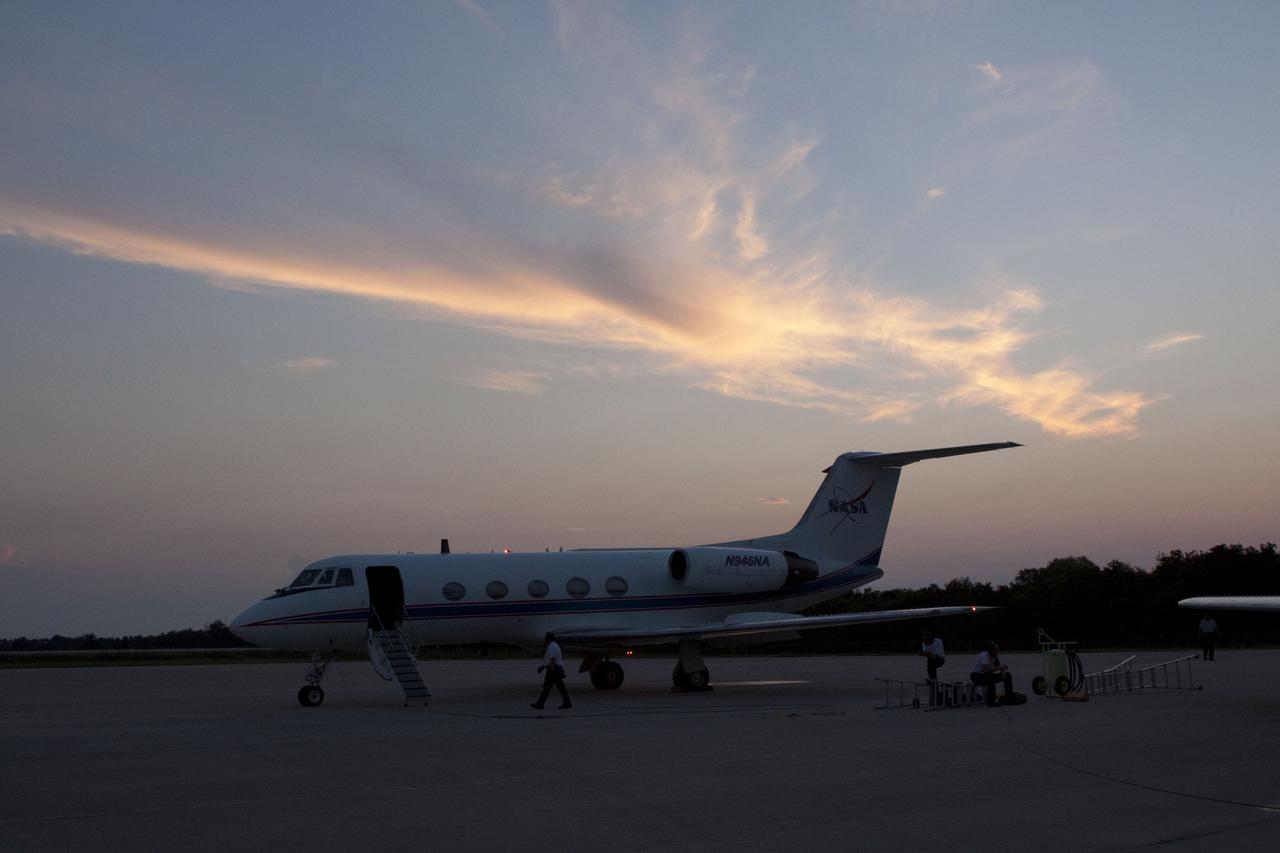
CAPE CANAVERAL, Fla. -- STS-135 Commander Chris Ferguson and Pilot Doug Hurley will perform touch-and-go landings aboard their Shuttle Training Aircrafts (STA) on the Shuttle Landing Facility runway at NASA's Kennedy Space Center in Florida. An STA is a Gulfstream II jet that is modified to mimic the shuttle's handling during the final phase of landing. Ferguson and Hurley will practice landings as part of standard training before space shuttle Atlantis' launch to the International Space Station. Atlantis and its crew are targeted to lift off July 8, to deliver the Raffaello multi-purpose logistics module packed with supplies and spare parts to the station. The STS-135 mission also will fly a system to investigate the potential for robotically refueling existing satellites and return a failed ammonia pump module to help NASA better understand the failure mechanism and improve pump designs for future systems. STS-135 will be the 33rd flight of Atlantis, the 37th shuttle mission to the space station, and the 135th and final mission of NASA's Space Shuttle Program. For more information visit, www.nasa.gov/mission_pages/shuttle/shuttlemissions/sts135/index.html. Photo credit: NASA/Troy Cryder
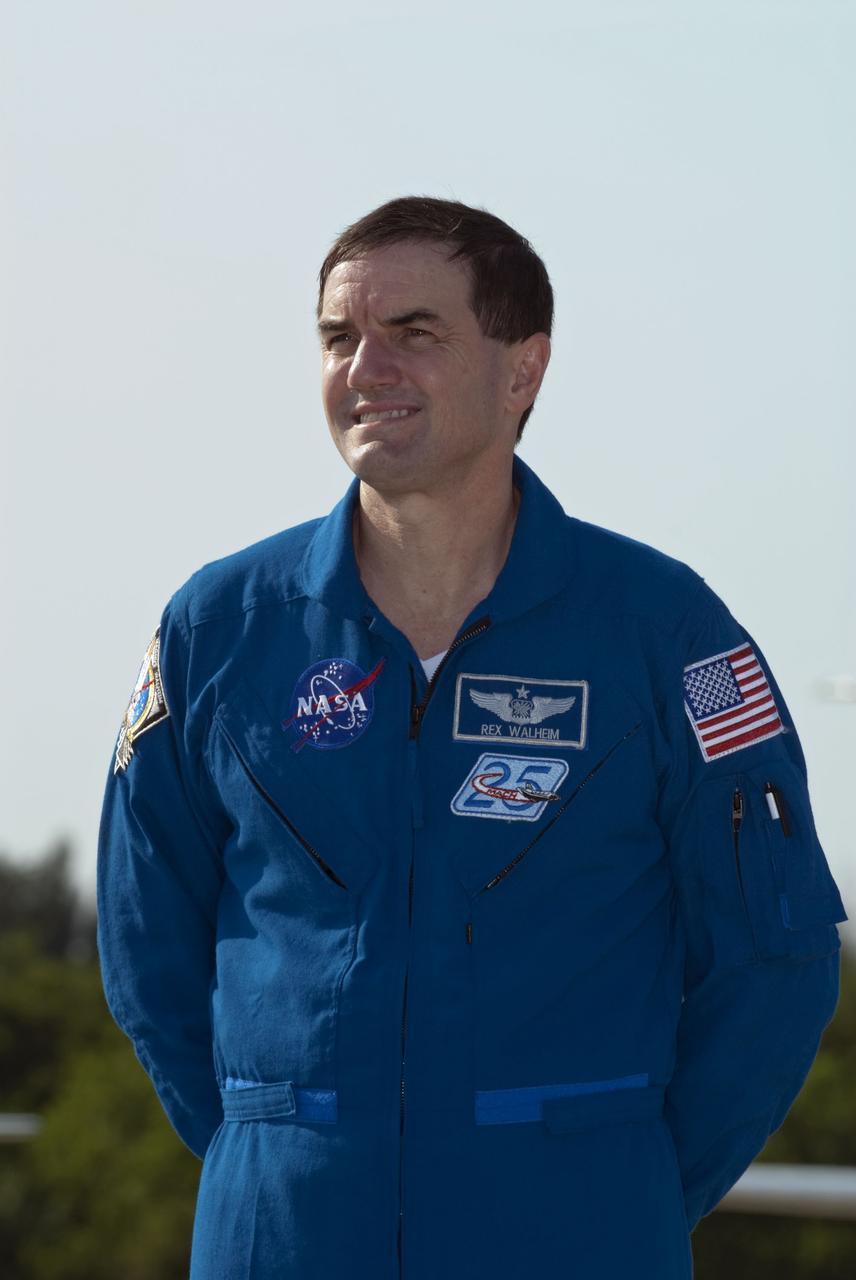
CAPE CANAVERAL, Fla. -- At the Shuttle Landing Facility at NASA's Kennedy Space Center in Florida, STS-135 Mission Specialist Rex Walheim pauses for a photo. The space shuttle Atlantis crew members arrived at Kennedy at about 5:30 p.m. EDT to participate in a launch countdown dress rehearsal called the Terminal Countdown Demonstration Test (TCDT) and related training in preparation for the upcoming STS-135 mission. Atlantis and its crew is targeted to lift off July 8, taking with them the Raffaello multi-purpose logistics module packed with supplies, logistics and spare parts to the International Space Station. The STS-135 mission also will fly a system to investigate the potential for robotically refueling existing satellites and return a failed ammonia pump module to help NASA better understand the failure mechanism and improve pump designs for future systems. STS-135 will be the 33rd flight of Atlantis, the 37th shuttle mission to the space station, and the 135th and final mission of NASA's Space Shuttle Program. For more information visit, www.nasa.gov/mission_pages/shuttle/shuttlemissions/sts135/index.html. Photo credit: NASA/Kim Shiflett
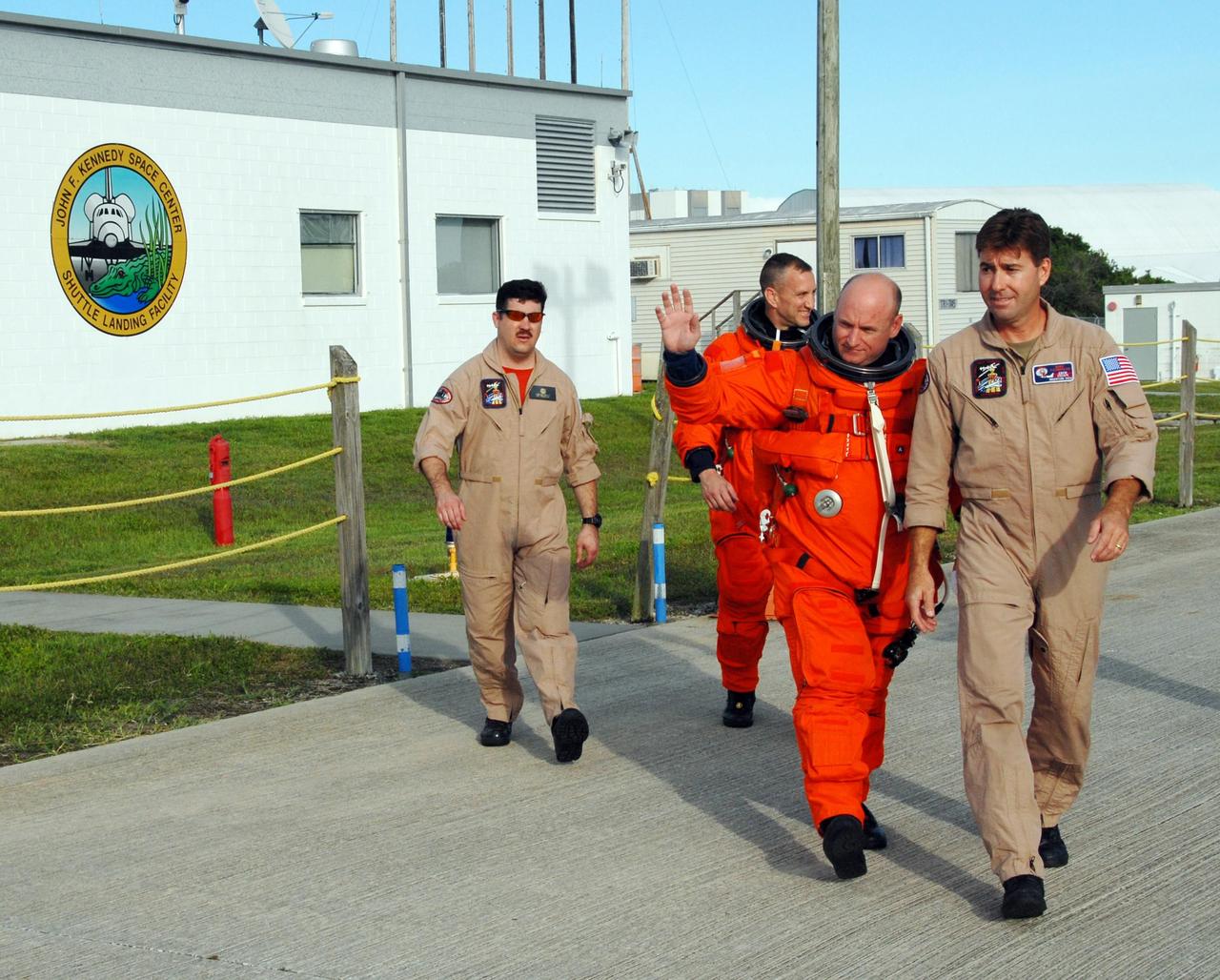
KENNEDY SPACE CENTER, Fla. -- Dressed in their launch and entry suits, STS-118 Pilot Charlie Hobaugh and Commander Scott Kelly (waving) are headed for the runway for landing practice in the shuttle training aircraft, known as an STA. The practice is part of Terminal Countdown Demonstration Test, or TCDT, activities that include a simulated launch countdown. The STA is a Grumman American Aviation-built Gulf Stream II jet that was modified to simulate an orbiter's cockpit, motion and visual cues, and handling qualities. In flight, the STA duplicates the orbiter's atmospheric descent trajectory from approximately 35,000 feet altitude to landing on a runway. The STS-118 mission is the 22nd flight to the International Space Station and is targeted for launch on Aug. 7. The mission payload aboard Space Shuttle Endeavour includes the S5 truss, a SPACEHAB module and external stowage platform 3. NASA/George Shelton
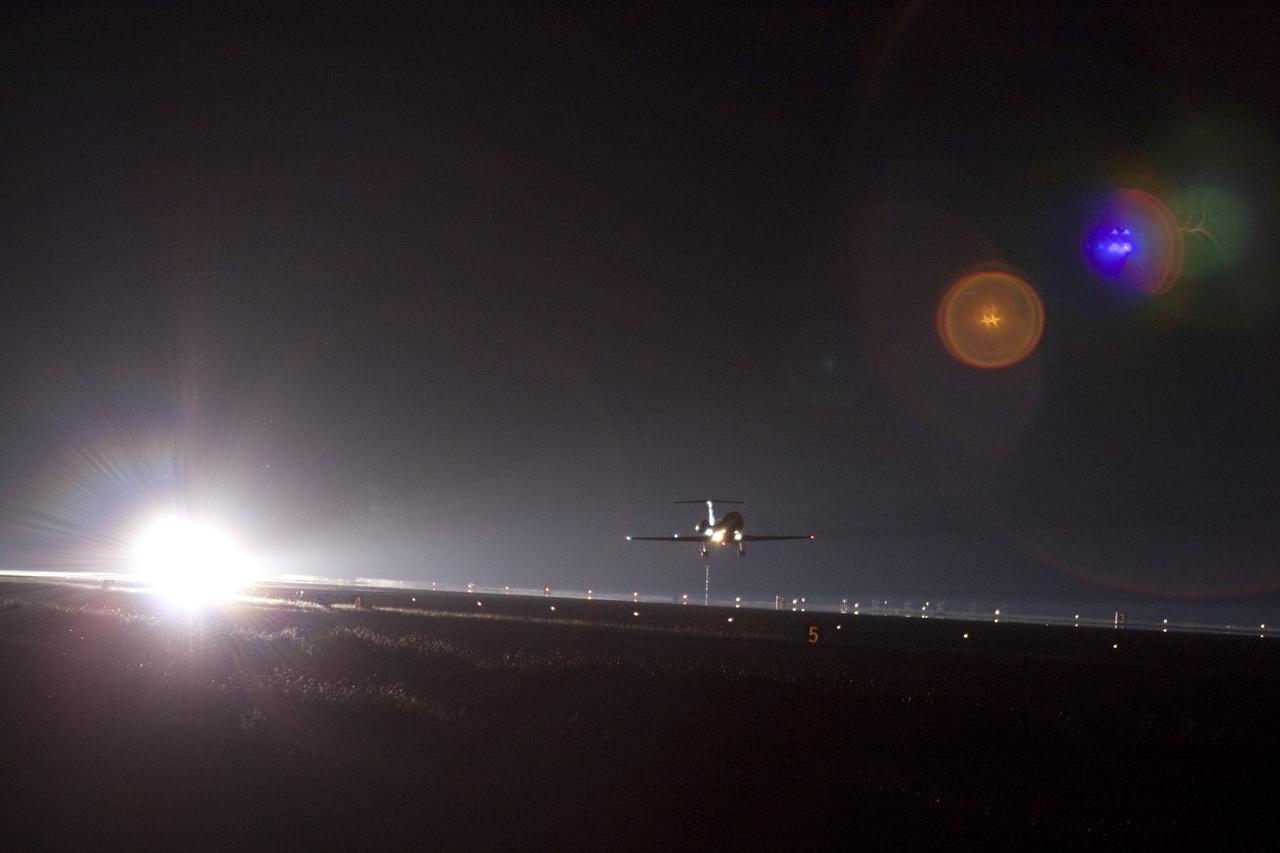
CAPE CANAVERAL, Fla. -- STS-135 Commander Chris Ferguson and Pilot Doug Hurley take off from the Shuttle Landing Facility runway at NASA's Kennedy Space Center in Florida to perform touch-and-go landings aboard their Shuttle Training Aircrafts (STA). An STA is a Gulfstream II jet that is modified to mimic the shuttle's handling during the final phase of landing. Ferguson and Hurley will practice landings as part of standard training before space shuttle Atlantis' launch to the International Space Station. Atlantis and its crew are targeted to lift off July 8, to deliver the Raffaello multi-purpose logistics module packed with supplies and spare parts to the station. The STS-135 mission also will fly a system to investigate the potential for robotically refueling existing satellites and return a failed ammonia pump module to help NASA better understand the failure mechanism and improve pump designs for future systems. STS-135 will be the 33rd flight of Atlantis, the 37th shuttle mission to the space station, and the 135th and final mission of NASA's Space Shuttle Program. For more information visit, www.nasa.gov/mission_pages/shuttle/shuttlemissions/sts135/index.html. Photo credit: NASA/Troy Cryder
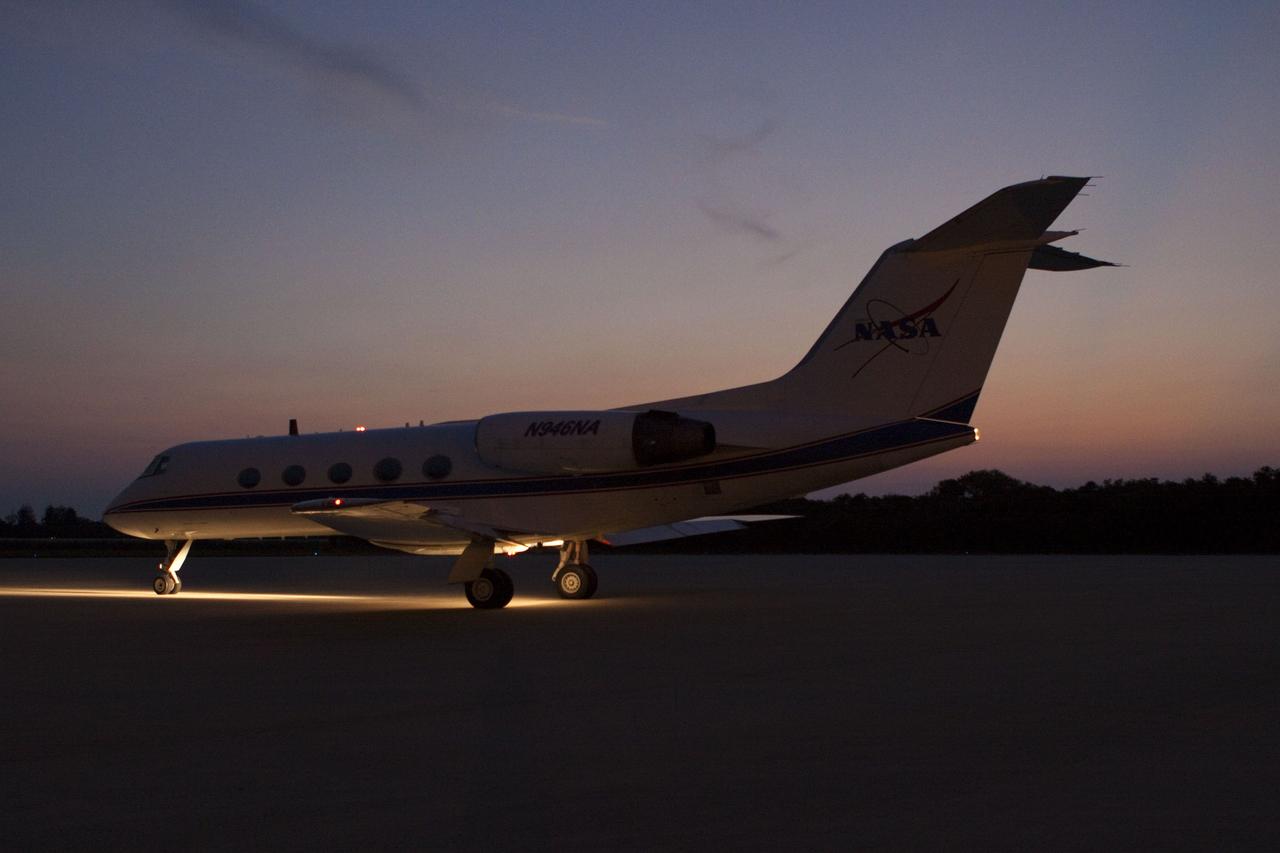
CAPE CANAVERAL, Fla. -- STS-135 Commander Chris Ferguson and Pilot Doug Hurley are ready to take off from the Shuttle Landing Facility runway at NASA's Kennedy Space Center in Florida to perform touch-and-go landings aboard their Shuttle Training Aircrafts (STA). An STA is a Gulfstream II jet that is modified to mimic the shuttle's handling during the final phase of landing. Ferguson and Hurley will practice landings as part of standard training before space shuttle Atlantis' launch to the International Space Station. Atlantis and its crew are targeted to lift off July 8, to deliver the Raffaello multi-purpose logistics module packed with supplies and spare parts to the station. The STS-135 mission also will fly a system to investigate the potential for robotically refueling existing satellites and return a failed ammonia pump module to help NASA better understand the failure mechanism and improve pump designs for future systems. STS-135 will be the 33rd flight of Atlantis, the 37th shuttle mission to the space station, and the 135th and final mission of NASA's Space Shuttle Program. For more information visit, www.nasa.gov/mission_pages/shuttle/shuttlemissions/sts135/index.html. Photo credit: NASA/Troy Cryder

KENNEDY SPACE CENTER, Fla. -- STS-118 Commander Scott Kelly settles in his cockpit seat aboard the shuttle training aircraft, known as an STA, for landing practice. The practice is part of Terminal Countdown Demonstration Test, or TCDT, activities that include a simulated launch countdown. The STA is a Grumman American Aviation-built Gulf Stream II jet that was modified to simulate an orbiter's cockpit, motion and visual cues, and handling qualities. In flight, the STA duplicates the orbiter's atmospheric descent trajectory from approximately 35,000 feet altitude to landing on a runway. The STS-118 mission is the 22nd flight to the International Space Station and is targeted for launch on Aug. 7. The mission payload aboard Space Shuttle Endeavour includes the S5 truss, a SPACEHAB module and external stowage platform 3. NASA/George Shelton
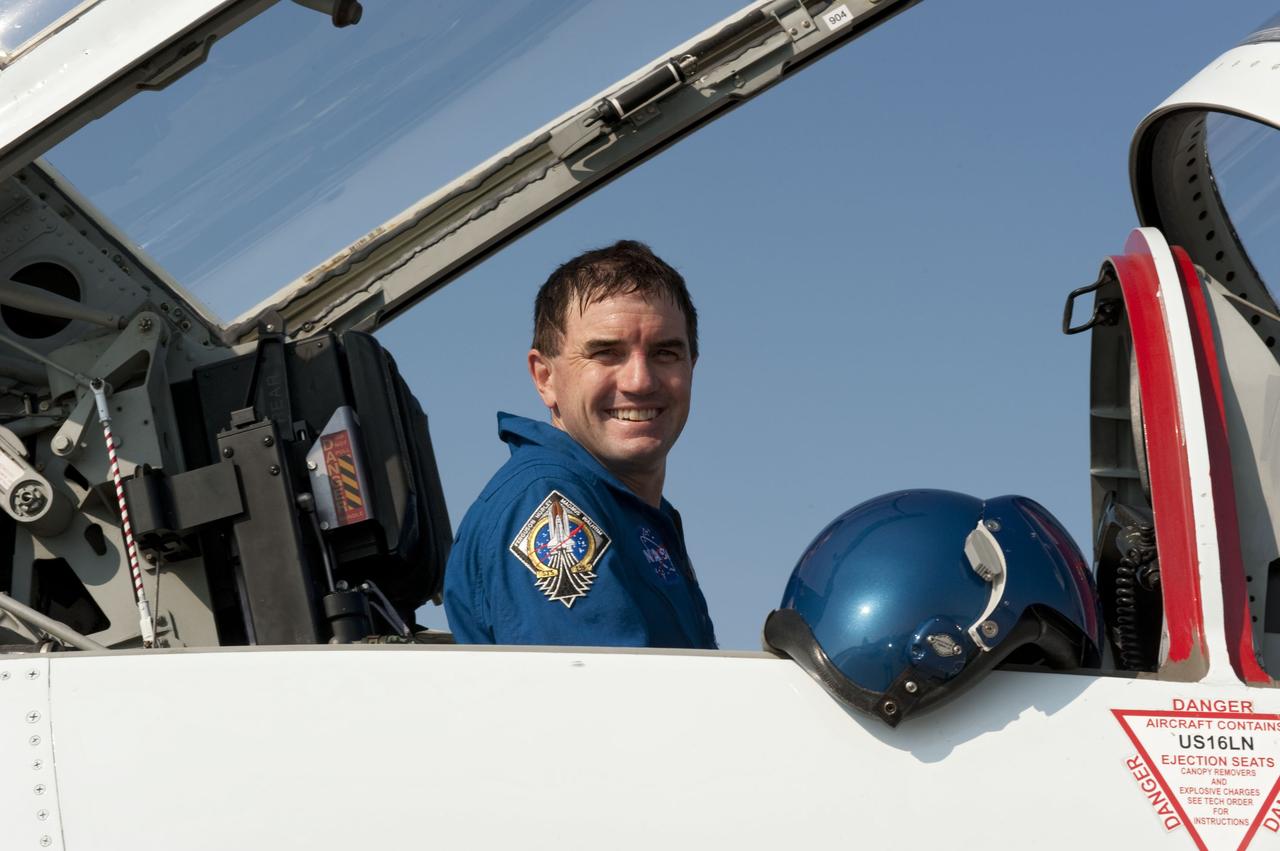
CAPE CANAVERAL, Fla. -- At the Shuttle Landing Facility at NASA's Kennedy Space Center in Florida, STS-135 Mission Specialist Rex Walheim arrives aboard a T-38 jet. The crew arrived at Kennedy at about 5:30 p.m. EDT to participate in a launch countdown dress rehearsal called the Terminal Countdown Demonstration Test (TCDT) and related training in preparation for the upcoming STS-135 mission. Commander Chris Ferguson, Pilot Doug Hurley and Mission Specialists Sandy Magnus and Rex Walheim are targeted to lift off July 8, taking with them the Raffaello multi-purpose logistics module packed with supplies and spare parts to the International Space Station. The STS-135 mission also will fly a system to investigate the potential for robotically refueling existing satellites and return a failed ammonia pump module to help NASA better understand the failure mechanism and improve pump designs for future systems. STS-135 will be the 33rd flight of Atlantis, the 37th shuttle mission to the space station, and the 135th and final mission of NASA's Space Shuttle Program. For more information visit, www.nasa.gov/mission_pages/shuttle/shuttlemissions/sts135/index.html. Photo credit: NASA/Kim Shiflett
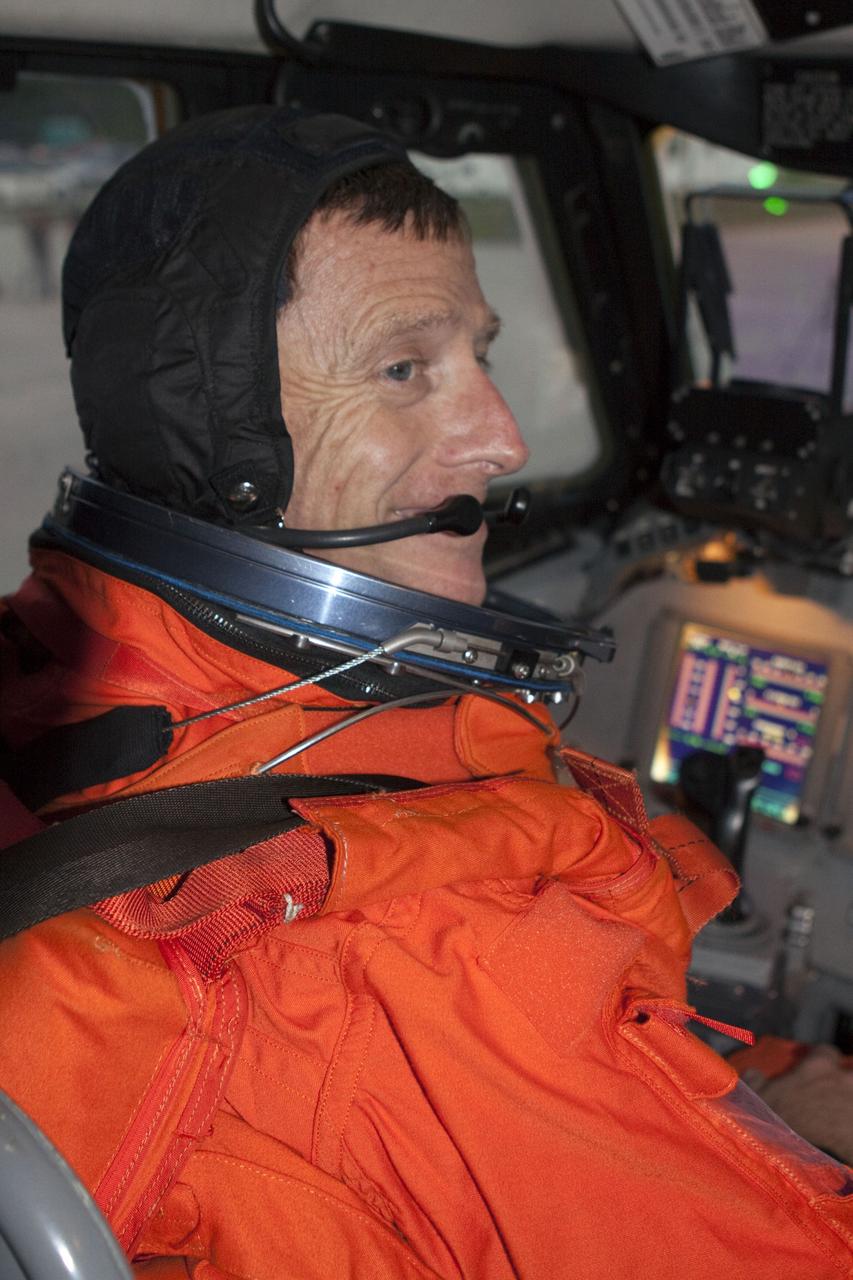
CAPE CANAVERAL, Fla. -- STS-135 Commander Chris Ferguson prepares to perform touch-and-go landings aboard one of two Shuttle Training Aircrafts (STA) on the Shuttle Landing Facility runway at NASA's Kennedy Space Center in Florida. An STA is a Gulfstream II jet that is modified to mimic the shuttle's handling during the final phase of landing. Ferguson and Hurley will practice landings as part of standard training before space shuttle Atlantis' launch to the International Space Station. Atlantis and its crew are targeted to lift off July 8, to deliver the Raffaello multi-purpose logistics module packed with supplies and spare parts to the station. The STS-135 mission also will fly a system to investigate the potential for robotically refueling existing satellites and return a failed ammonia pump module to help NASA better understand the failure mechanism and improve pump designs for future systems. STS-135 will be the 33rd flight of Atlantis, the 37th shuttle mission to the space station, and the 135th and final mission of NASA's Space Shuttle Program. For more information visit, www.nasa.gov/mission_pages/shuttle/shuttlemissions/sts135/index.html. Photo credit: NASA/Troy Cryder
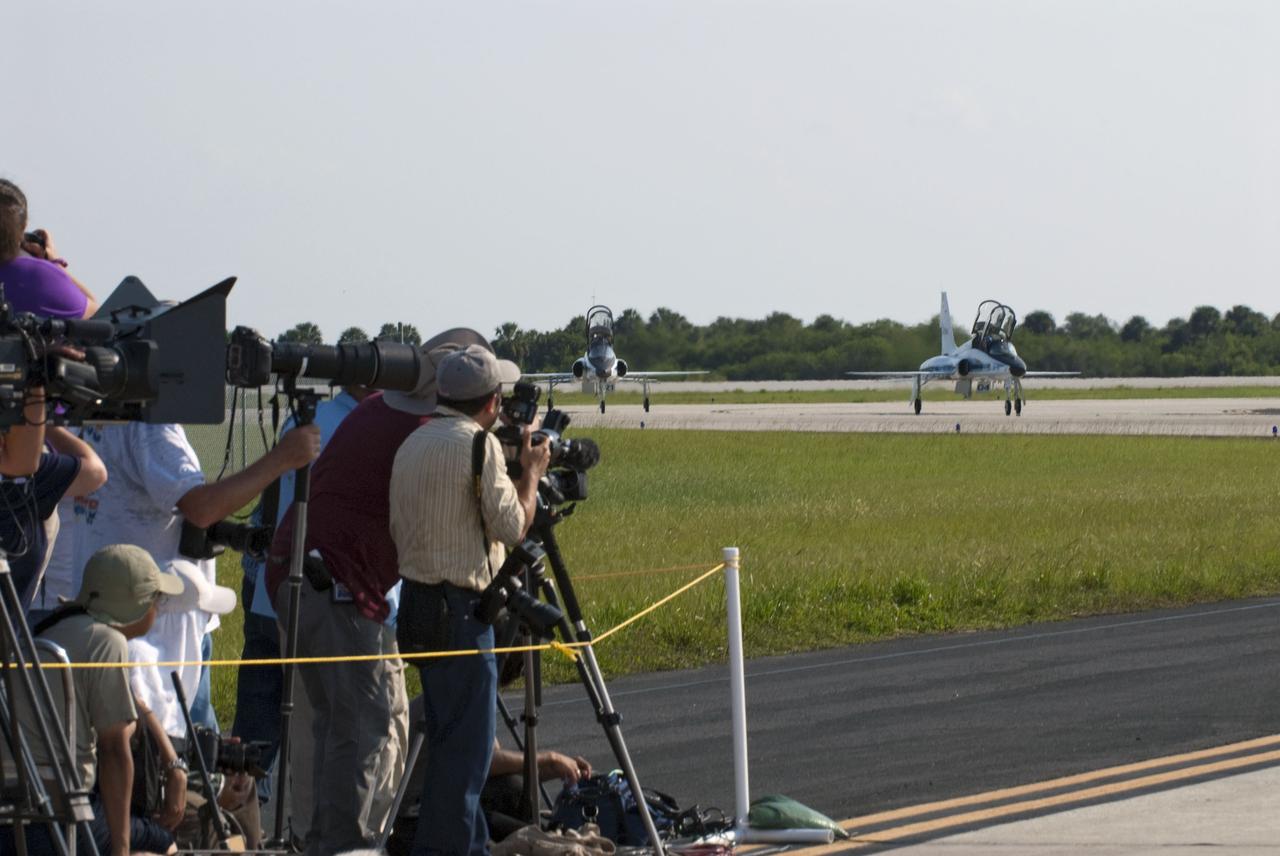
CAPE CANAVERAL, Fla. -- At the Shuttle Landing Facility at NASA's Kennedy Space Center in Florida, space shuttle Atlantis' crew members begin to arrive aboard their T-38 jets while media snap photos of their arrival. The astronauts are at Kennedy to participate in a launch countdown dress rehearsal called the Terminal Countdown Demonstration Test (TCDT) and related training in preparation for the upcoming STS-135 mission. Atlantis is targeted to lift off on July 8, taking with them the Raffaello multi-purpose logistics module packed with supplies, and spare parts to the International Space Station. The STS-135 mission also will fly a system to investigate the potential for robotically refueling existing satellites and return a failed ammonia pump module to help NASA better understand the failure mechanism and improve pump designs for future systems. STS-135 will be the 33rd flight of Atlantis, the 37th shuttle mission to the space station, and the 135th and final mission of NASA's Space Shuttle Program. For more information visit, www.nasa.gov/mission_pages/shuttle/shuttlemissions/sts135/index.html. Photo credit: NASA/Kim Shiflett
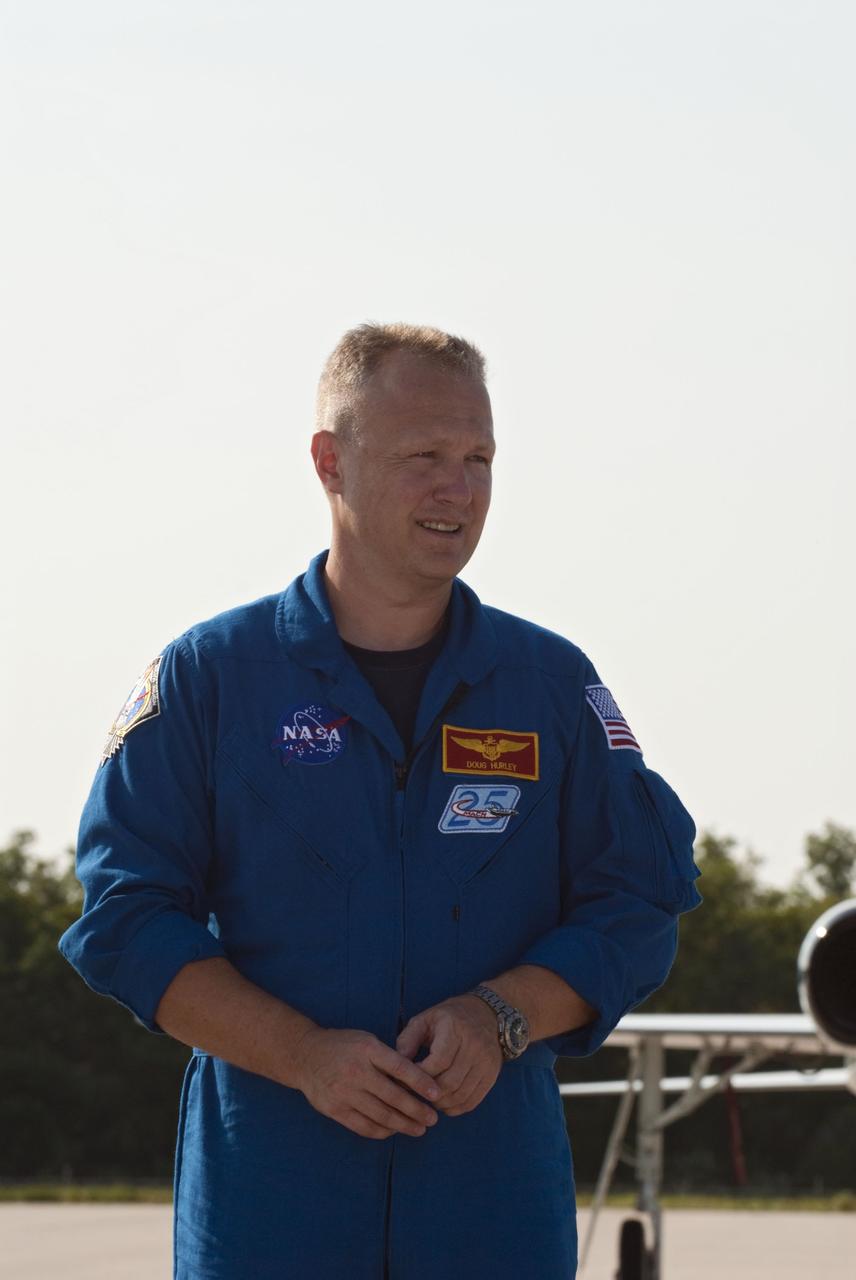
CAPE CANAVERAL, Fla. -- At the Shuttle Landing Facility at NASA's Kennedy Space Center in Florida, STS-135 Pilot Doug Hurley pauses for a photo. The space shuttle Atlantis crew arrived at Kennedy at about 5:30 p.m. EDT to participate in a launch countdown dress rehearsal called the Terminal Countdown Demonstration Test (TCDT) and related training in preparation for the upcoming STS-135 mission. Atlantis and its crew is targeted to lift off on July 8, taking with them the Raffaello multi-purpose logistics module packed with supplies and spare parts to the International Space Station. The STS-135 mission also will fly a system to investigate the potential for robotically refueling existing satellites and return a failed ammonia pump module to help NASA better understand the failure mechanism and improve pump designs for future systems. STS-135 will be the 33rd flight of Atlantis, the 37th shuttle mission to the space station, and the 135th and final mission of NASA's Space Shuttle Program. For more information visit, www.nasa.gov/mission_pages/shuttle/shuttlemissions/sts135/index.html. Photo credit: NASA/Kim Shiflett
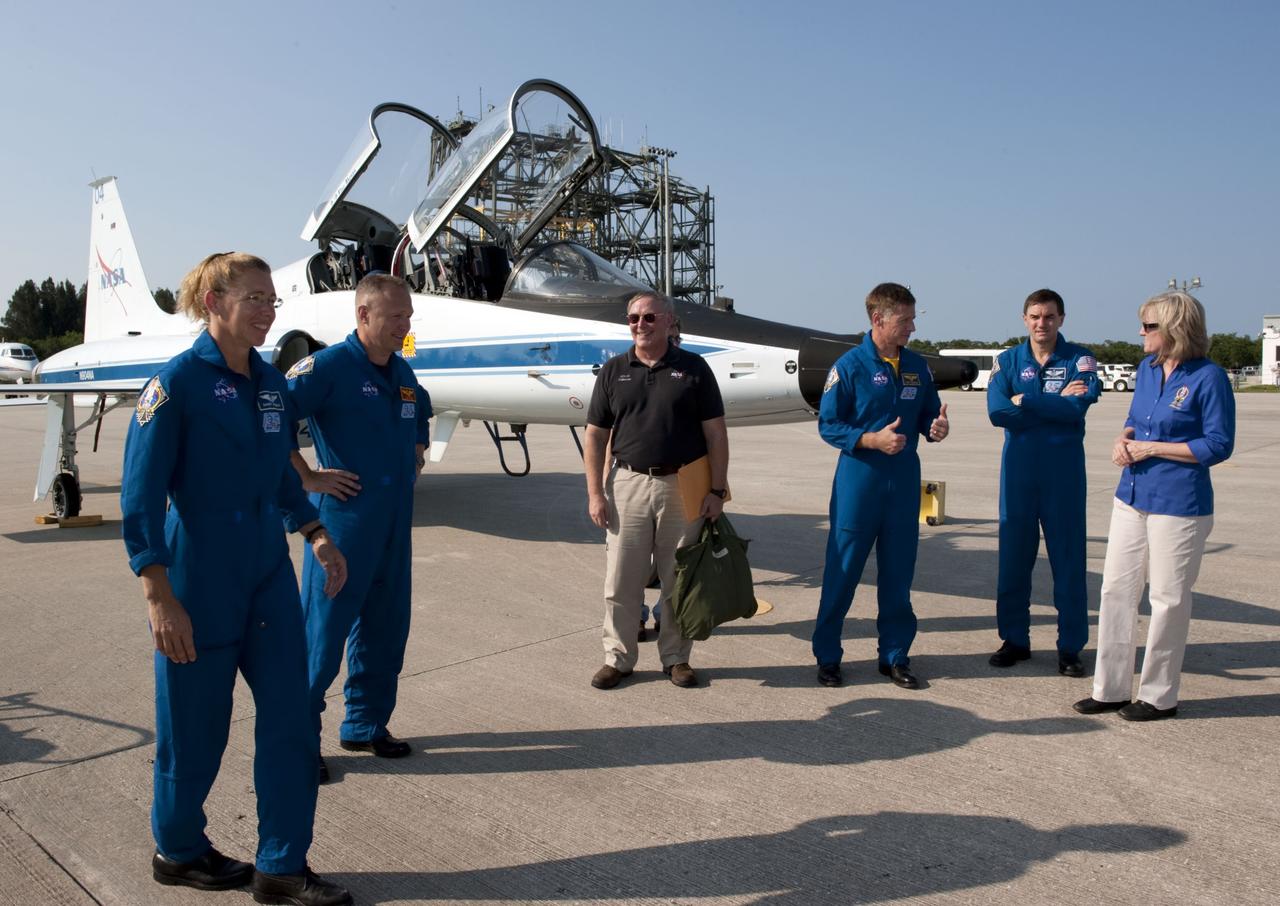
CAPE CANAVERAL, Fla. -- At the Shuttle Landing Facility at NASA's Kennedy Space Center in Florida, NASA Astronaut Jerry Ross (center) and space shuttle Atlantis' NASA Flow Director, Angie Brewer (right) are on hand greet the STS-135 crew. From left are Mission Specialist Sandy Magnus, Pilot Doug Hurley, Commander Chris Ferguson and Mission Specialist Rex Walheim. The crew arrived at Kennedy at about 5:30 p.m. EDT to participate in a launch countdown dress rehearsal called the Terminal Countdown Demonstration Test (TCDT) and related training in preparation for the upcoming STS-135 mission. Atlantis and its crew are targeted to lift off July 8, taking with them the Raffaello multi-purpose logistics module packed with supplies and spare parts to the International Space Station. The STS-135 mission also will fly a system to investigate the potential for robotically refueling existing satellites and return a failed ammonia pump module to help NASA better understand the failure mechanism and improve pump designs for future systems. STS-135 will be the 33rd flight of Atlantis, the 37th shuttle mission to the International Space Station, and the 135th and final mission of NASA's Space Shuttle Program. For more information visit, www.nasa.gov/mission_pages/shuttle/shuttlemissions/sts135/index.html. Photo credit: NASA/Kim Shiflett
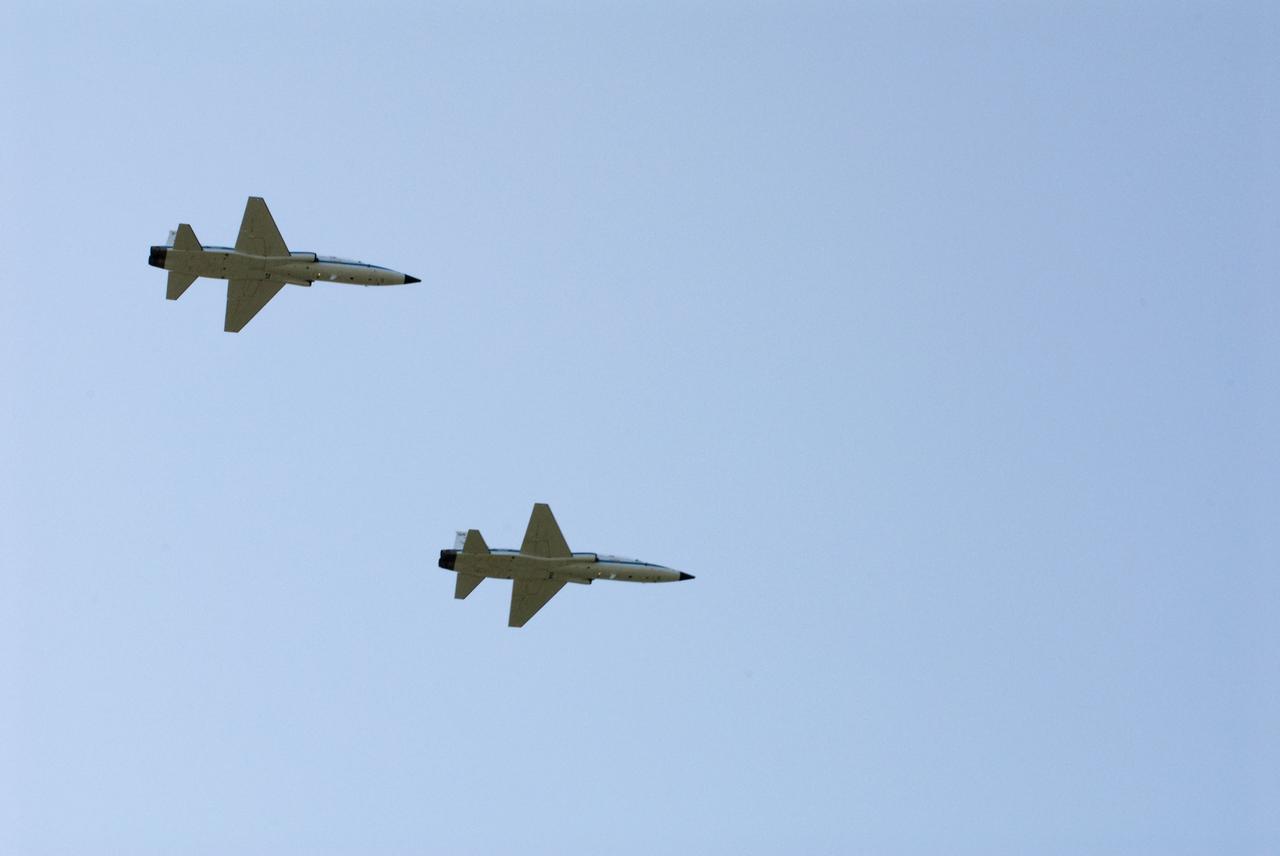
CAPE CANAVERAL, Fla. -- High above NASA's Kennedy Space Center in Florida, space shuttle Atlantis' crew members get ready to land their T-38 jets at the Shuttle Landing Facility. The astronauts are at Kennedy to participate in a launch countdown dress rehearsal called the Terminal Countdown Demonstration Test (TCDT) and related training in preparation for the upcoming STS-135 mission. Atlantis and its crew are targeted to lift off on July 8, taking with them the Raffaello multi-purpose logistics module packed with supplies, logistics and spare parts to the International Space Station. The STS-135 mission also will fly a system to investigate the potential for robotically refueling existing satellites and return a failed ammonia pump module to help NASA better understand the failure mechanism and improve pump designs for future systems. STS-135 will be the 33rd flight of Atlantis, the 37th shuttle mission to the station, and the 135th and final mission of NASA's Space Shuttle Program. For more information visit, www.nasa.gov/mission_pages/shuttle/shuttlemissions/sts135/index.html. Photo credit: NASA/Kim Shiflett
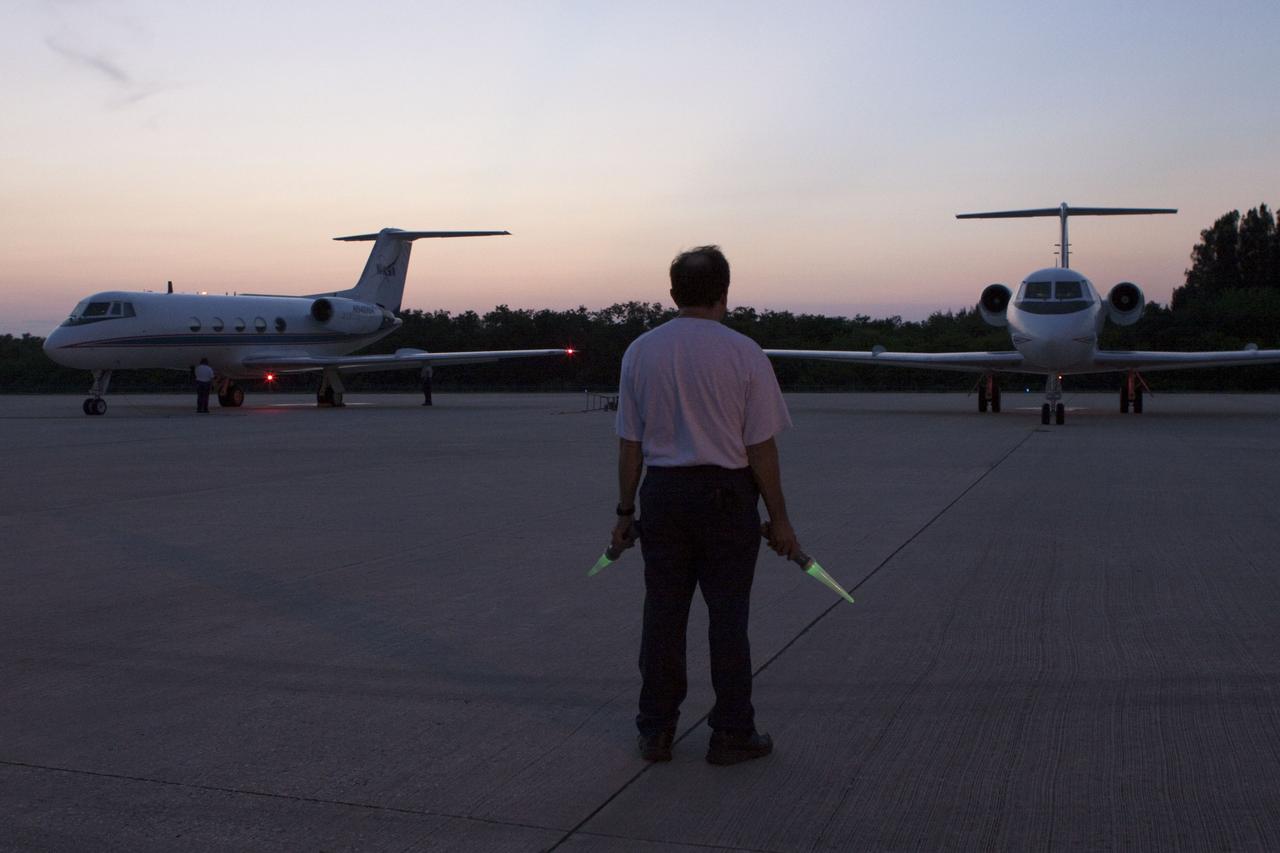
CAPE CANAVERAL, Fla. -- STS-135 Commander Chris Ferguson and Pilot Doug Hurley are signaled for takeoff from the Shuttle Landing Facility runway at NASA's Kennedy Space Center in Florida to perform touch-and-go landings aboard their Shuttle Training Aircrafts (STA). An STA is a Gulfstream II jet that is modified to mimic the shuttle's handling during the final phase of landing. Ferguson and Hurley will practice landings as part of standard training before space shuttle Atlantis' launch to the International Space Station. Atlantis and its crew are targeted to lift off July 8, to deliver the Raffaello multi-purpose logistics module packed with supplies and spare parts to the station. The STS-135 mission also will fly a system to investigate the potential for robotically refueling existing satellites and return a failed ammonia pump module to help NASA better understand the failure mechanism and improve pump designs for future systems. STS-135 will be the 33rd flight of Atlantis, the 37th shuttle mission to the space station, and the 135th and final mission of NASA's Space Shuttle Program. For more information visit, www.nasa.gov/mission_pages/shuttle/shuttlemissions/sts135/index.html. Photo credit: NASA/Troy Cryder
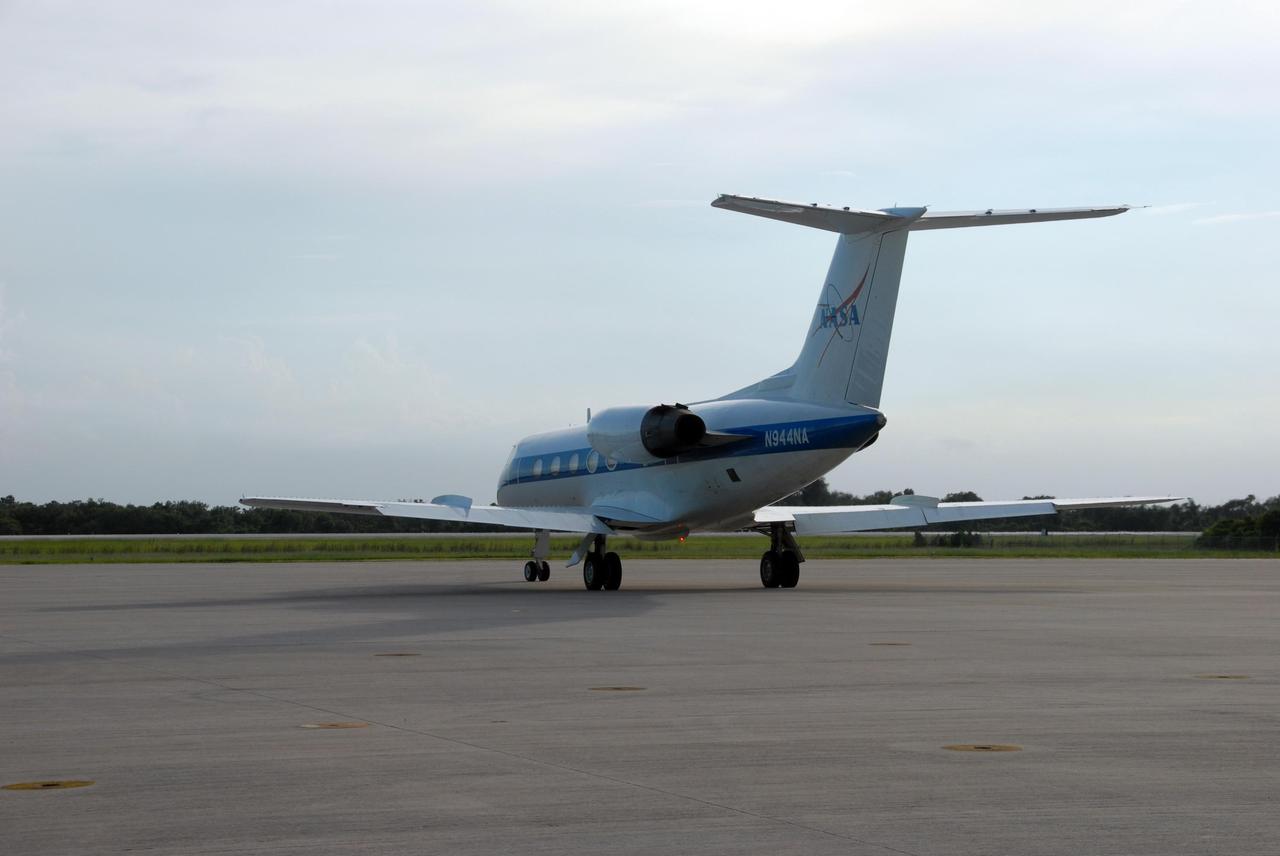
KENNEDY SPACE CENTER, Fla. -- One of two shuttle training aircraft, or STA, taxis out to the runway at the Shuttle Landing Facility. STS-118 Commander Scott Kelly and Pilot Charlie Hobaugh are each piloting one of the STAs for landing practice. The practice is part of Terminal Countdown Demonstration Test, or TCDT, activities that include a simulated launch countdown. The STA is a Grumman American Aviation-built Gulf Stream II jet that was modified to simulate an orbiter's cockpit, motion and visual cues, and handling qualities. In flight, the STA duplicates the orbiter's atmospheric descent trajectory from approximately 35,000 feet altitude to landing on a runway. The STS-118 mission is the 22nd flight to the International Space Station and is targeted for launch on Aug. 7. The mission payload aboard Space Shuttle Endeavour includes the S5 truss, a SPACEHAB module and external stowage platform 3. NASA/George Shelton
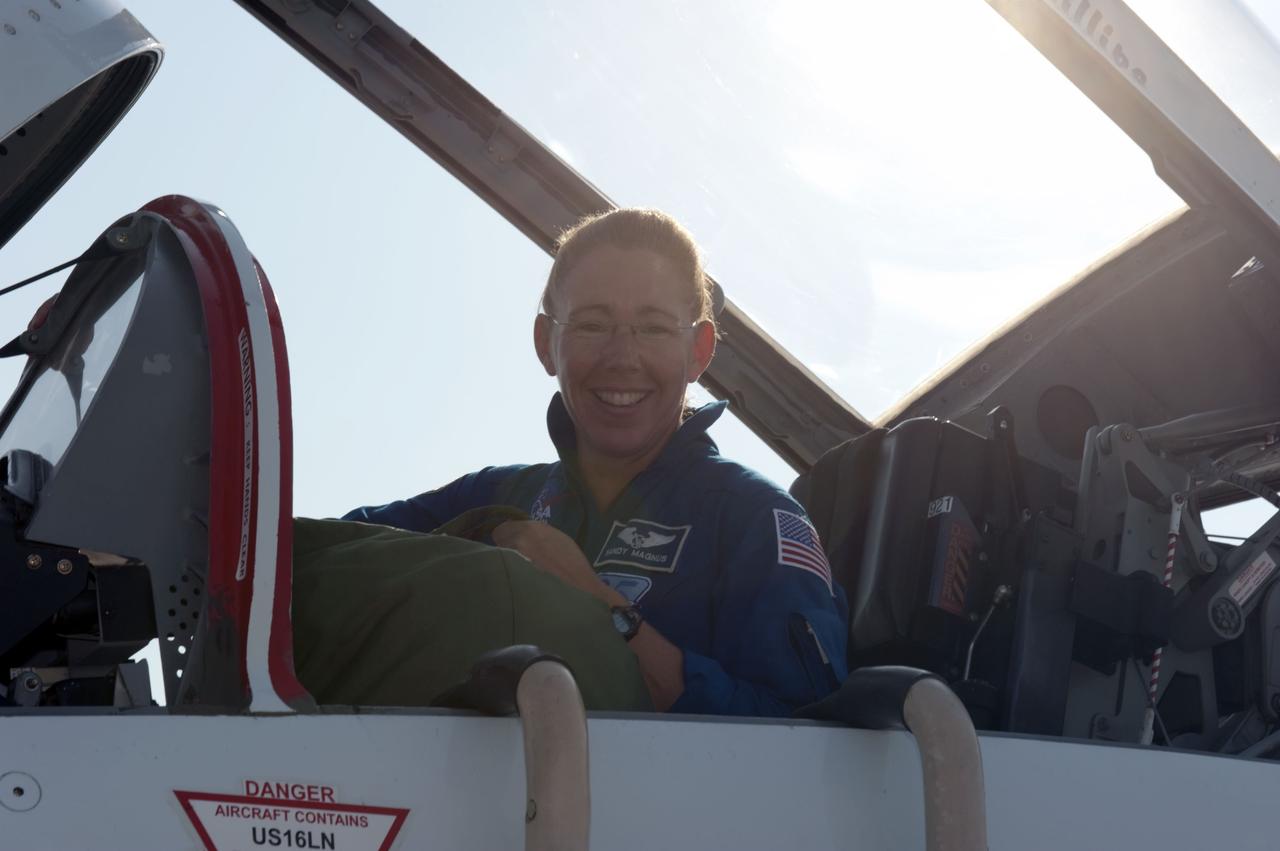
CAPE CANAVERAL, Fla. -- At the Shuttle Landing Facility at NASA's Kennedy Space Center in Florida, STS-135 Mission Specialist Sandy Magnus has arrived aboard a T-38 jet. The crew arrived at Kennedy at about 5:30 p.m. EDT to participate in a launch countdown dress rehearsal called the Terminal Countdown Demonstration Test (TCDT) and related training in preparation for the upcoming STS-135 mission. Commander Chris Ferguson, Pilot Doug Hurley and Mission Specialists Sandy Magnus and Rex Walheim are targeted to lift off July 8, taking with them the Raffaello multi-purpose logistics module packed with supplies and spare parts to the International Space Station. The STS-135 mission also will fly a system to investigate the potential for robotically refueling existing satellites and return a failed ammonia pump module to help NASA better understand the failure mechanism and improve pump designs for future systems. STS-135 will be the 33rd flight of Atlantis, the 37th shuttle mission to the space station, and the 135th and final mission of NASA's Space Shuttle Program. For more information visit, www.nasa.gov/mission_pages/shuttle/shuttlemissions/sts135/index.html. Photo credit: NASA/Kim Shiflett
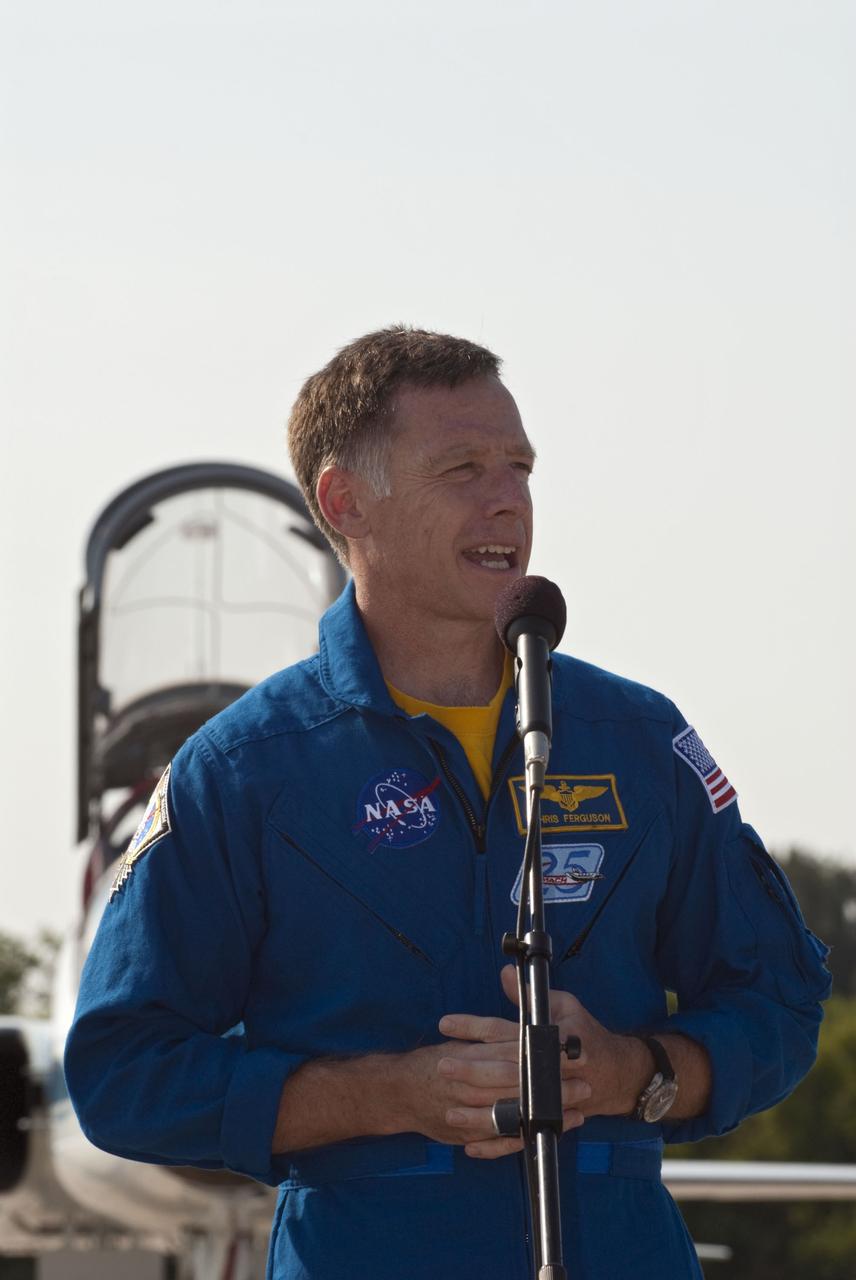
CAPE CANAVERAL, Fla. -- At the Shuttle Landing Facility at NASA's Kennedy Space Center in Florida, STS-135 Commander Chris Ferguson speaks to media. Space shuttle Atlantis' crew arrived at Kennedy at about 5:30 p.m. EDT to participate in a launch countdown dress rehearsal called the Terminal Countdown Demonstration Test (TCDT) and related training in preparation for the upcoming STS-135 mission. The STS-135 crew is targeted to lift off July 8, taking with them the Raffaello multi-purpose logistics module packed with supplies, logistics and spare parts to the International Space Station. The STS-135 mission also will fly a system to investigate the potential for robotically refueling existing satellites and return a failed ammonia pump module to help NASA better understand the failure mechanism and improve pump designs for future systems. STS-135 will be the 33rd flight of Atlantis, the 37th shuttle mission to the space station, and the 135th and final mission of NASA's Space Shuttle Program. For more information visit, www.nasa.gov/mission_pages/shuttle/shuttlemissions/sts135/index.html. Photo credit: NASA/Kim Shiflett
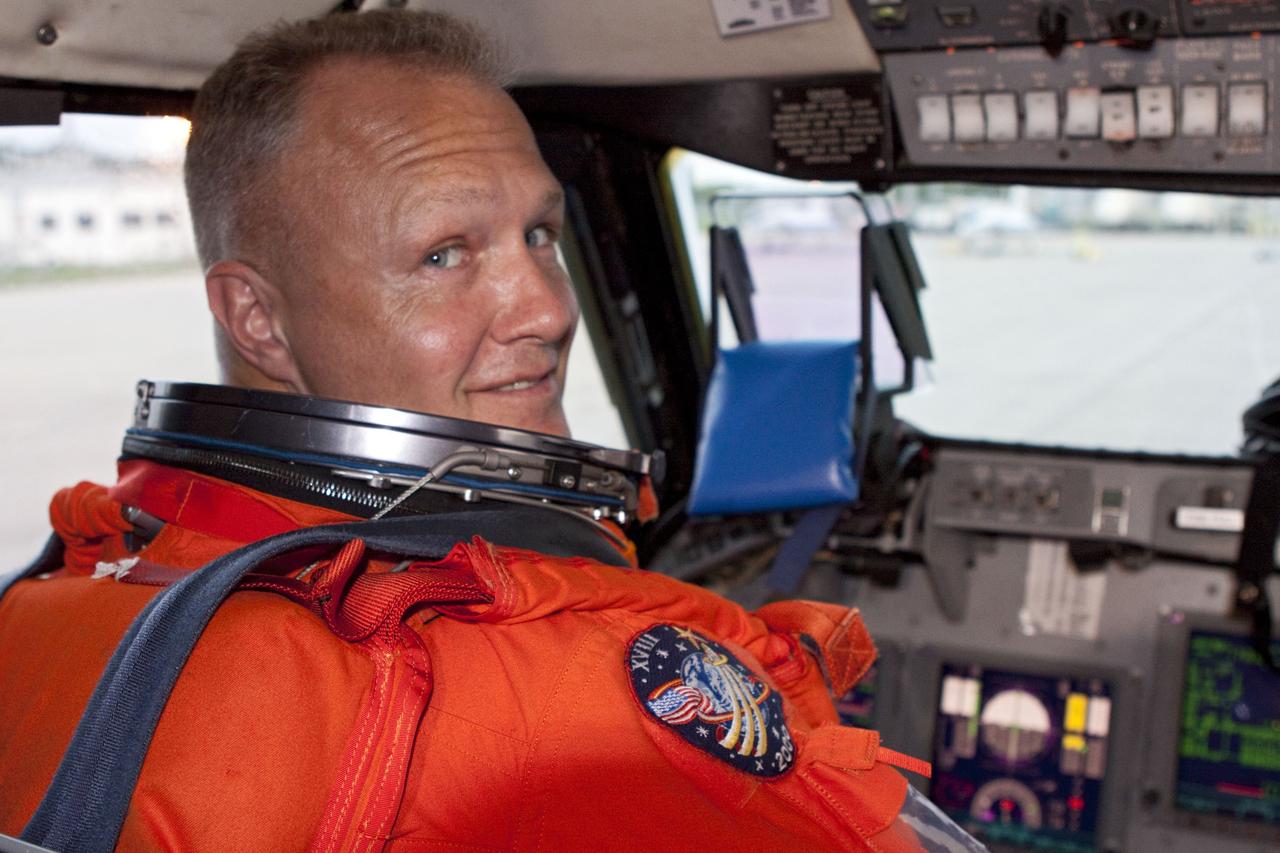
CAPE CANAVERAL, Fla. -- STS-135 Pilot Doug Hurley prepares to perform touch-and-go landings aboard one of two Shuttle Training Aircrafts (STA) on the Shuttle Landing Facility runway at NASA's Kennedy Space Center in Florida. An STA is a Gulfstream II jet that is modified to mimic the shuttle's handling during the final phase of landing. Ferguson and Hurley will practice landings as part of standard training before space shuttle Atlantis' launch to the International Space Station. Atlantis and its crew are targeted to lift off July 8, to deliver the Raffaello multi-purpose logistics module packed with supplies and spare parts to the station. The STS-135 mission also will fly a system to investigate the potential for robotically refueling existing satellites and return a failed ammonia pump module to help NASA better understand the failure mechanism and improve pump designs for future systems. STS-135 will be the 33rd flight of Atlantis, the 37th shuttle mission to the space station, and the 135th and final mission of NASA's Space Shuttle Program. For more information visit, www.nasa.gov/mission_pages/shuttle/shuttlemissions/sts135/index.html. Photo credit: NASA/Troy Cryder
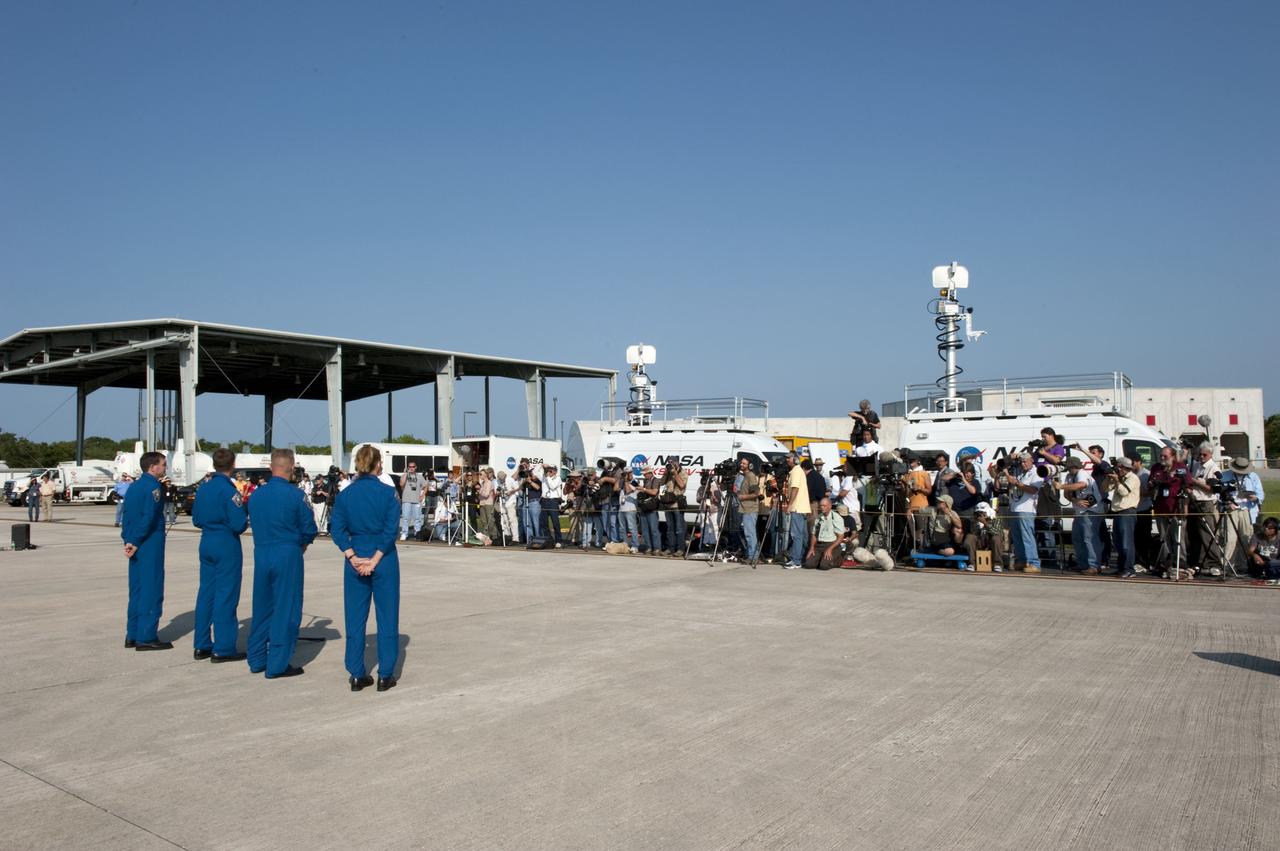
CAPE CANAVERAL, Fla. -- Space shuttle Atlantis' STS-135 crew members address the media on the Shuttle Landing Facility at NASA's Kennedy Space Center in Florida. While at Kennedy, Atlantis' crew will participate in a launch countdown dress rehearsal called the Terminal Countdown Demonstration Test (TCDT) and related training in preparation for the upcoming STS-135 mission. Atlantis and its crew are targeted to lift off on July 8, taking with them the Raffaello multi-purpose logistics module packed with supplies, logistics and spare parts to the International Space Station. The STS-135 mission also will fly a system to investigate the potential for robotically refueling existing satellites and return a failed ammonia pump module to help NASA better understand the failure mechanism and improve pump designs for future systems. STS-135 will be the 33rd flight of Atlantis, the 37th shuttle mission to the space station, and the 135th and final mission of NASA's Space Shuttle Program. For more information visit, www.nasa.gov/mission_pages/shuttle/shuttlemissions/sts135/index.html. Photo credit: NASA/Kim Shiflett
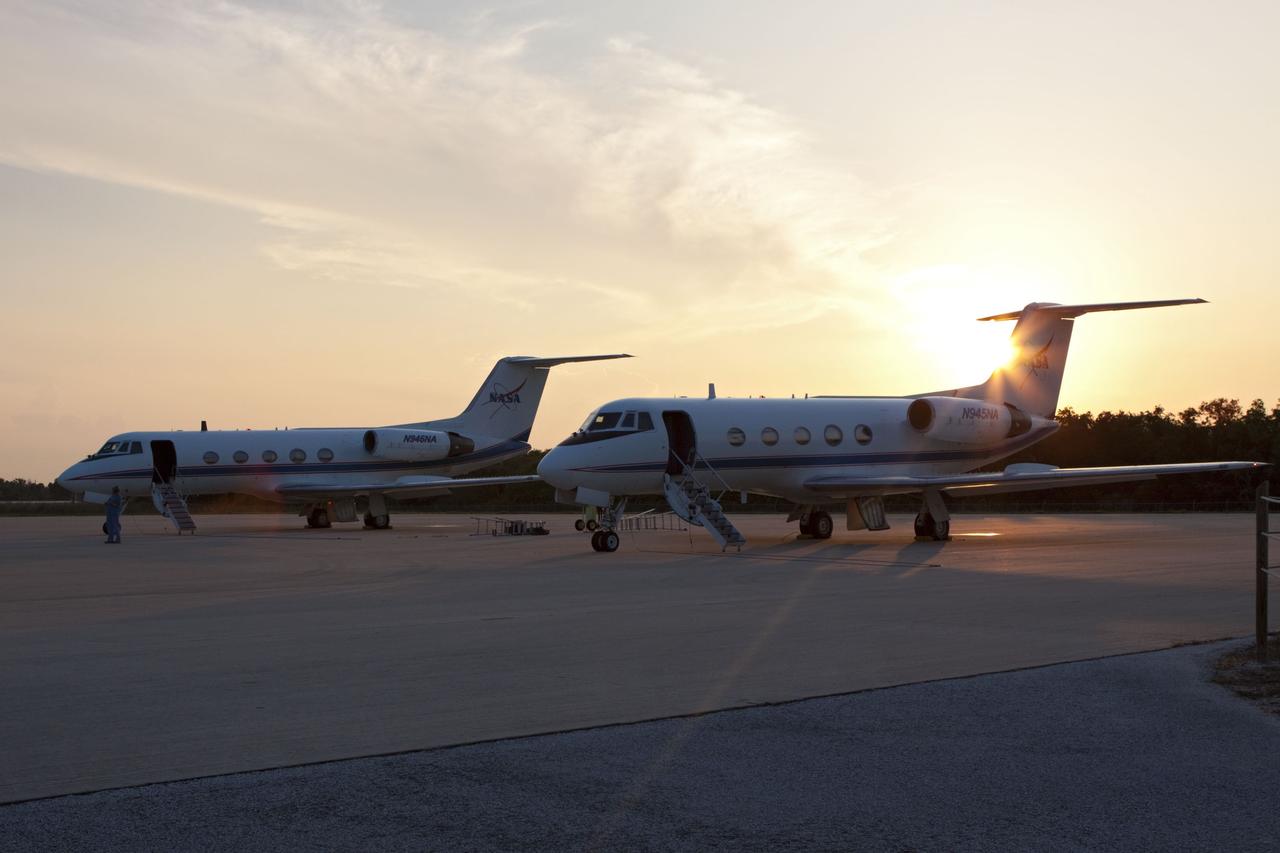
CAPE CANAVERAL, Fla. -- STS-135 Commander Chris Ferguson and Pilot Doug Hurley will perform touch-and-go landings aboard their Shuttle Training Aircrafts (STA) awaiting them on the Shuttle Landing Facility runway at NASA's Kennedy Space Center in Florida. An STA is a Gulfstream II jet that is modified to mimic the shuttle's handling during the final phase of landing. Ferguson and Hurley will practice landings as part of standard training before space shuttle Atlantis' launch to the International Space Station. Atlantis and its crew are targeted to lift off July 8, to deliver the Raffaello multi-purpose logistics module packed with supplies and spare parts to the station. The STS-135 mission also will fly a system to investigate the potential for robotically refueling existing satellites and return a failed ammonia pump module to help NASA better understand the failure mechanism and improve pump designs for future systems. STS-135 will be the 33rd flight of Atlantis, the 37th shuttle mission to the space station, and the 135th and final mission of NASA's Space Shuttle Program. For more information visit, www.nasa.gov/mission_pages/shuttle/shuttlemissions/sts135/index.html. Photo credit: NASA/Troy Cryder
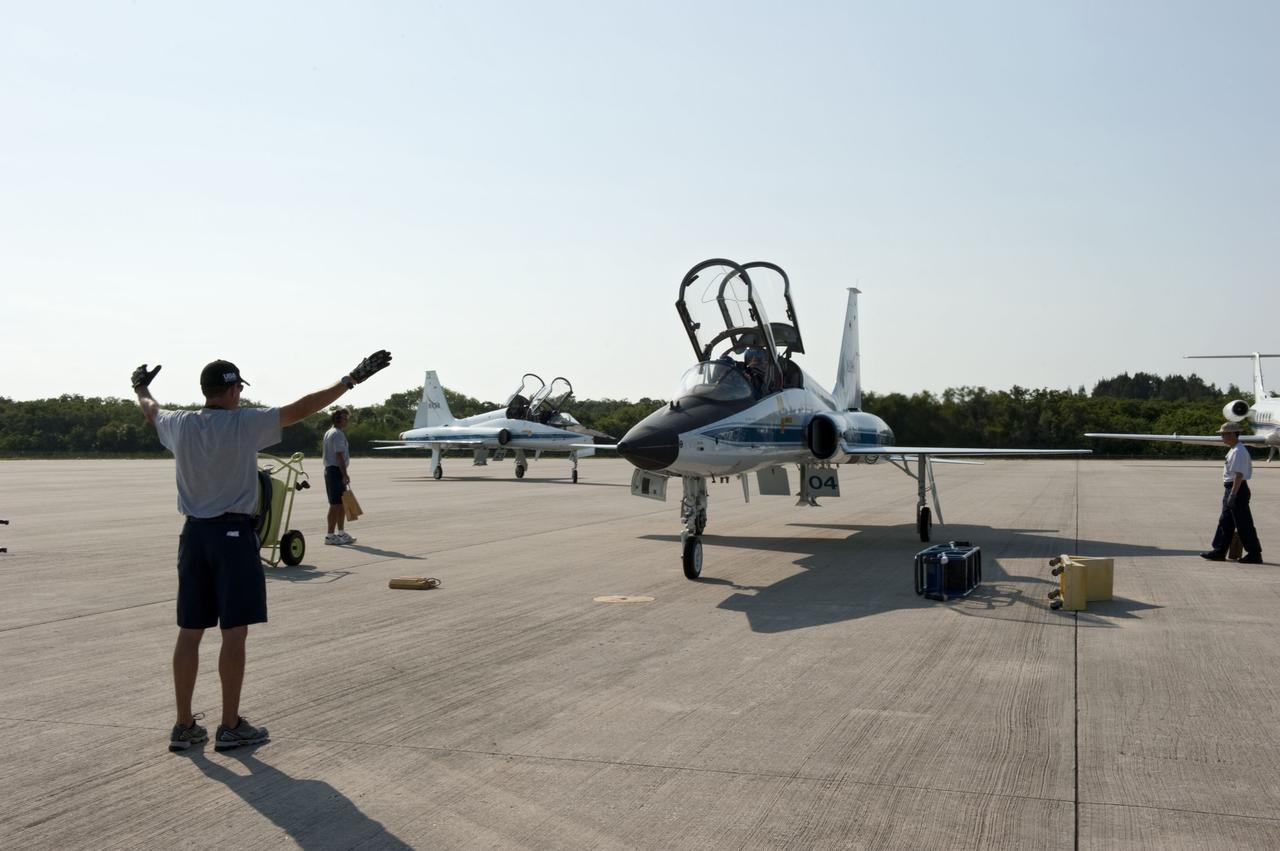
CAPE CANAVERAL, Fla. -- At the Shuttle Landing Facility at NASA's Kennedy Space Center in Florida, the STS-135 crew members arrived aboard their T-38 jets at about 5:30 p.m. EDT to participate in a launch countdown dress rehearsal called the Terminal Countdown Demonstration Test (TCDT) and related training in preparation for the upcoming STS-135 mission. Commander Chris Ferguson, Pilot Doug Hurley and Mission Specialists Sandy Magnus and Rex Walheim are targeted to lift off July 8, taking with them the Raffaello multi-purpose logistics module packed with supplies and spare parts to the International Space Station. The STS-135 mission also will fly a system to investigate the potential for robotically refueling existing satellites and return a failed ammonia pump module to help NASA better understand the failure mechanism and improve pump designs for future systems. STS-135 will be the 33rd flight of Atlantis, the 37th shuttle mission to the space station, and the 135th and final mission of NASA's Space Shuttle Program. For more information visit, www.nasa.gov/mission_pages/shuttle/shuttlemissions/sts135/index.html. Photo credit: NASA/Kim Shiflett
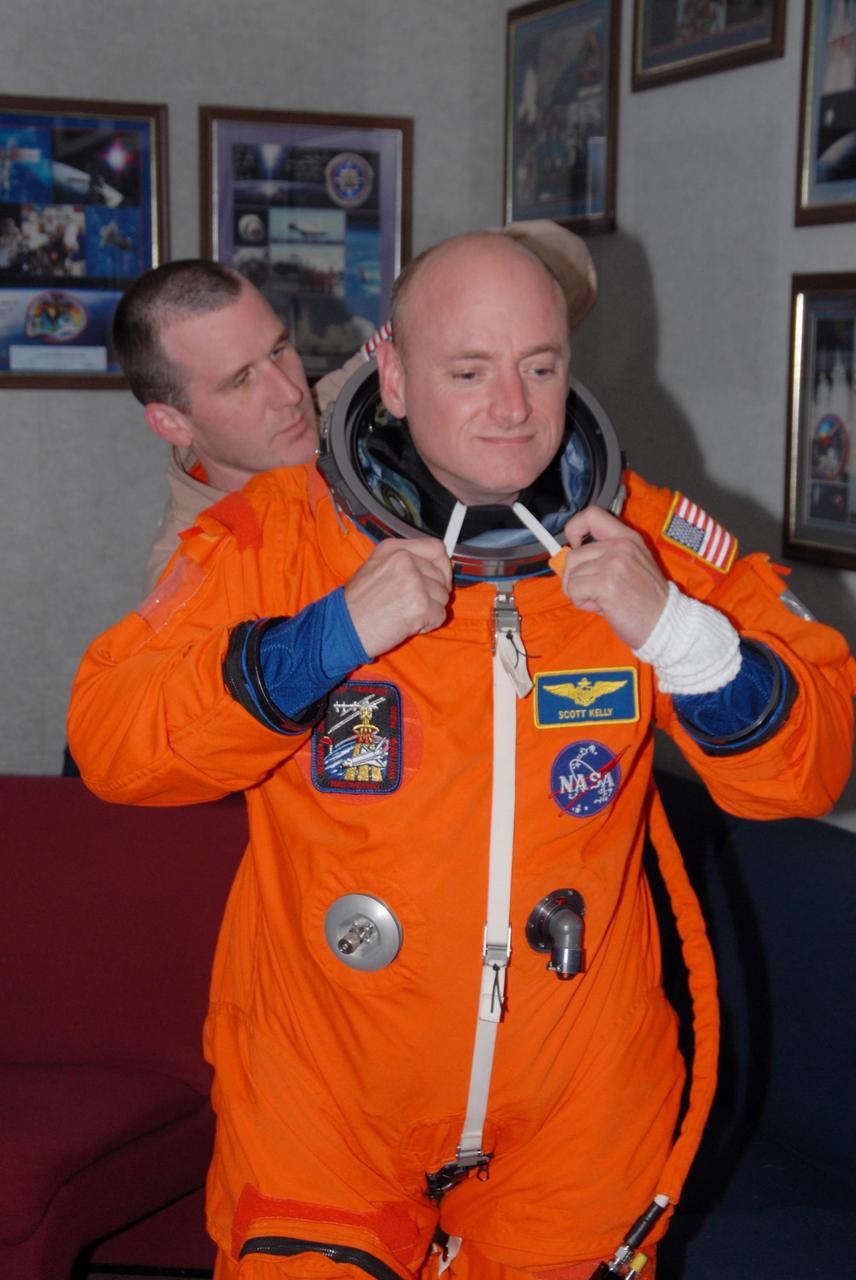
KENNEDY SPACE CENTER, Fla. -- STS-118 Commander Scott Kelly checks the fit of his launch and entry suit. The fitting is part of the Terminal Countdown Demonstration Test, or TCDT, activities that include a simulated launch countdown. Kelly is suiting up also for landing practice in the shuttle training aircraft, known as an STA. The STA is a Grumman American Aviation-built Gulf Stream II jet that was modified to simulate an orbiter's cockpit, motion and visual cues, and handling qualities. In flight, the STA duplicates the orbiter's atmospheric descent trajectory from approximately 35,000 feet altitude to landing on a runway. The STS-118 mission is the 22nd flight to the International Space Station and is targeted for launch on Aug. 7. The mission payload aboard Space Shuttle Endeavour includes the S5 truss, a SPACEHAB module and external stowage platform 3. NASA/George Shelton
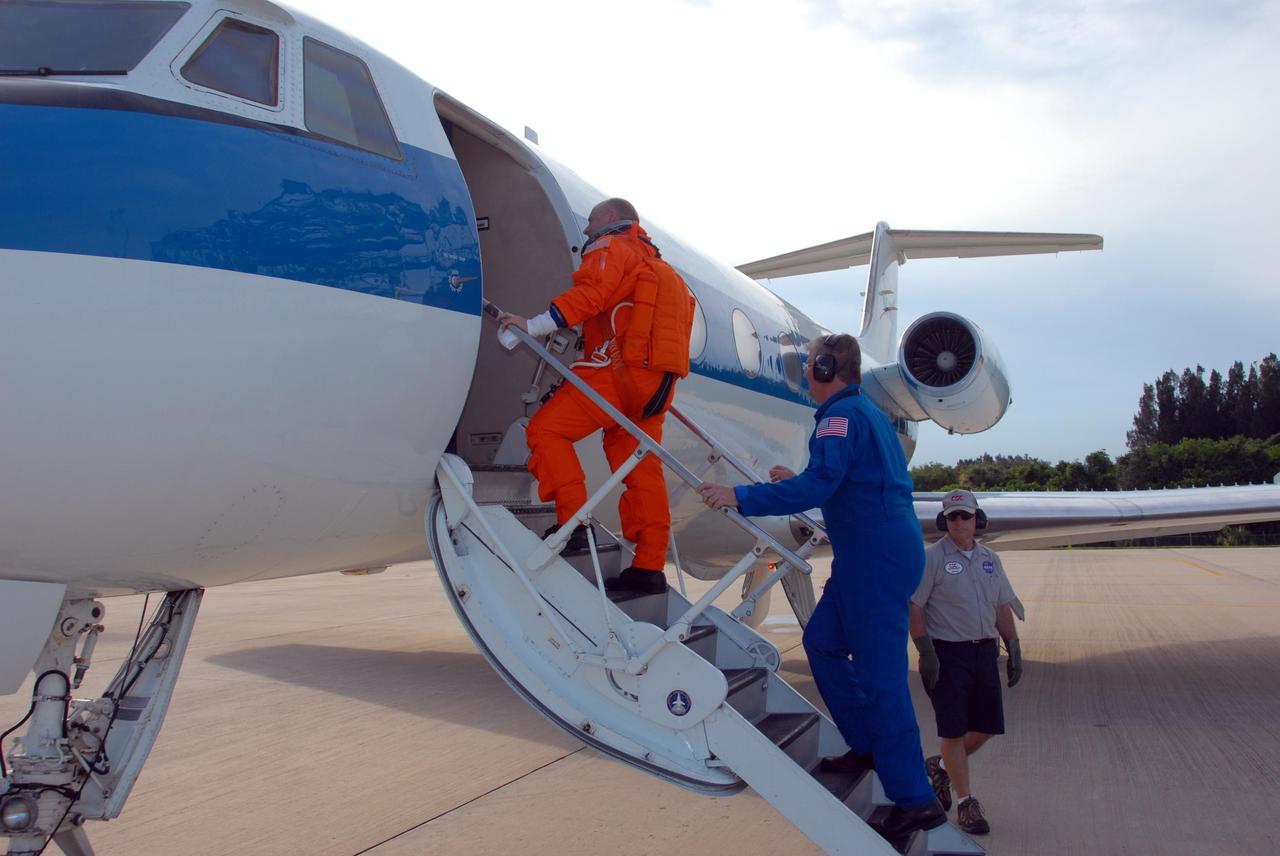
KENNEDY SPACE CENTER, Fla. -- STS-118 Commander Scott Kelly climbs aboard the shuttle training aircraft, known as an STA, for landing practice. The practice is part of Terminal Countdown Demonstration Test, or TCDT, activities that include a simulated launch countdown.The STA is a Grumman American Aviation-built Gulf Stream II jet that was modified to simulate an orbiter's cockpit, motion and visual cues, and handling qualities. In flight, the STA duplicates the orbiter's atmospheric descent trajectory from approximately 35,000 feet altitude to landing on a runway. The STS-118 mission is the 22nd flight to the International Space Station and is targeted for launch on Aug. 7. The mission payload aboard Space Shuttle Endeavour includes the S5 truss, a SPACEHAB module and external stowage platform 3. NASA/George Shelton
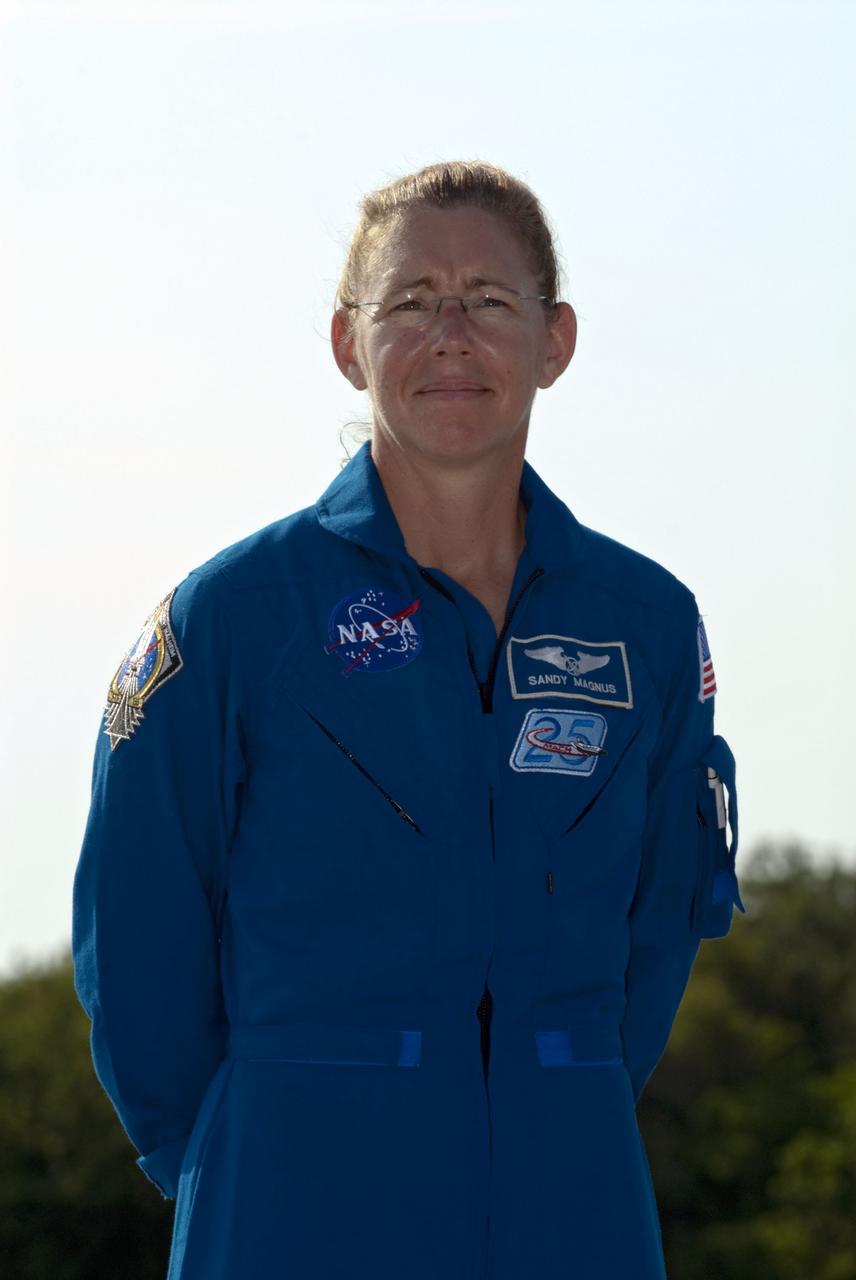
CAPE CANAVERAL, Fla. -- At the Shuttle Landing Facility at NASA's Kennedy Space Center in Florida, STS-135 Mission Specialist Sandy Magnus pauses for a photo. The space shuttle Atlantis crew arrived at Kennedy at about 5:30 p.m. EDT to participate in a launch countdown dress rehearsal called the Terminal Countdown Demonstration Test (TCDT) and related training in preparation for the upcoming STS-135 mission. Atlantis and its crew is targeted to lift off on July 8, taking with them the Raffaello multi-purpose logistics module packed with supplies and spare parts to the International Space Station. The STS-135 mission also will fly a system to investigate the potential for robotically refueling existing satellites and return a failed ammonia pump module to help NASA better understand the failure mechanism and improve pump designs for future systems. STS-135 will be the 33rd flight of Atlantis, the 37th shuttle mission to the space station, and the 135th and final mission of NASA's Space Shuttle Program. For more information visit, www.nasa.gov/mission_pages/shuttle/shuttlemissions/sts135/index.html. Photo credit: NASA/Kim Shiflett
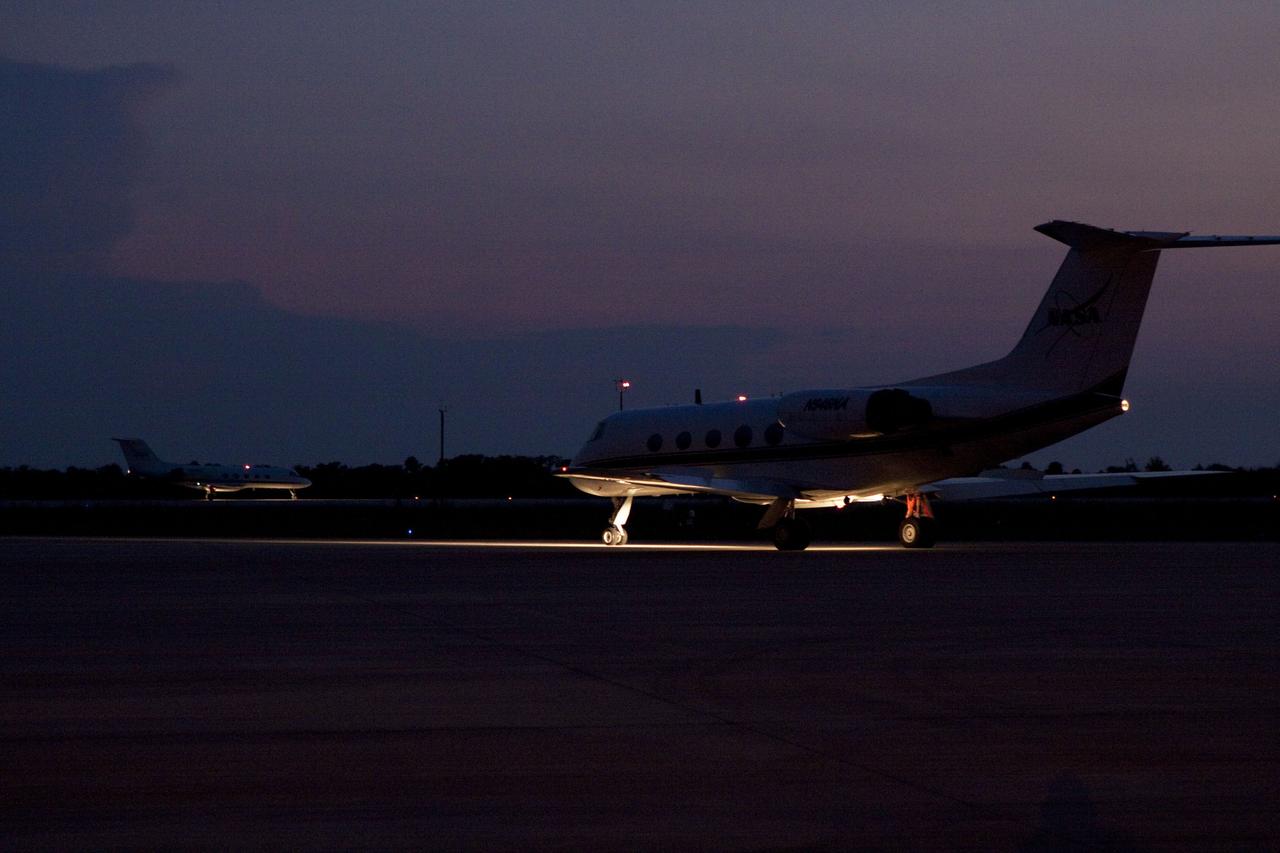
CAPE CANAVERAL, Fla. -- STS-135 Commander Chris Ferguson and Pilot Doug Hurley are ready to take off from the Shuttle Landing Facility runway at NASA's Kennedy Space Center in Florida to perform touch-and-go landings aboard their Shuttle Training Aircrafts (STA). An STA is a Gulfstream II jet that is modified to mimic the shuttle's handling during the final phase of landing. Ferguson and Hurley will practice landings as part of standard training before space shuttle Atlantis' launch to the International Space Station. Atlantis and its crew are targeted to lift off July 8, to deliver the Raffaello multi-purpose logistics module packed with supplies and spare parts to the station. The STS-135 mission also will fly a system to investigate the potential for robotically refueling existing satellites and return a failed ammonia pump module to help NASA better understand the failure mechanism and improve pump designs for future systems. STS-135 will be the 33rd flight of Atlantis, the 37th shuttle mission to the space station, and the 135th and final mission of NASA's Space Shuttle Program. For more information visit, www.nasa.gov/mission_pages/shuttle/shuttlemissions/sts135/index.html. Photo credit: NASA/Troy Cryder
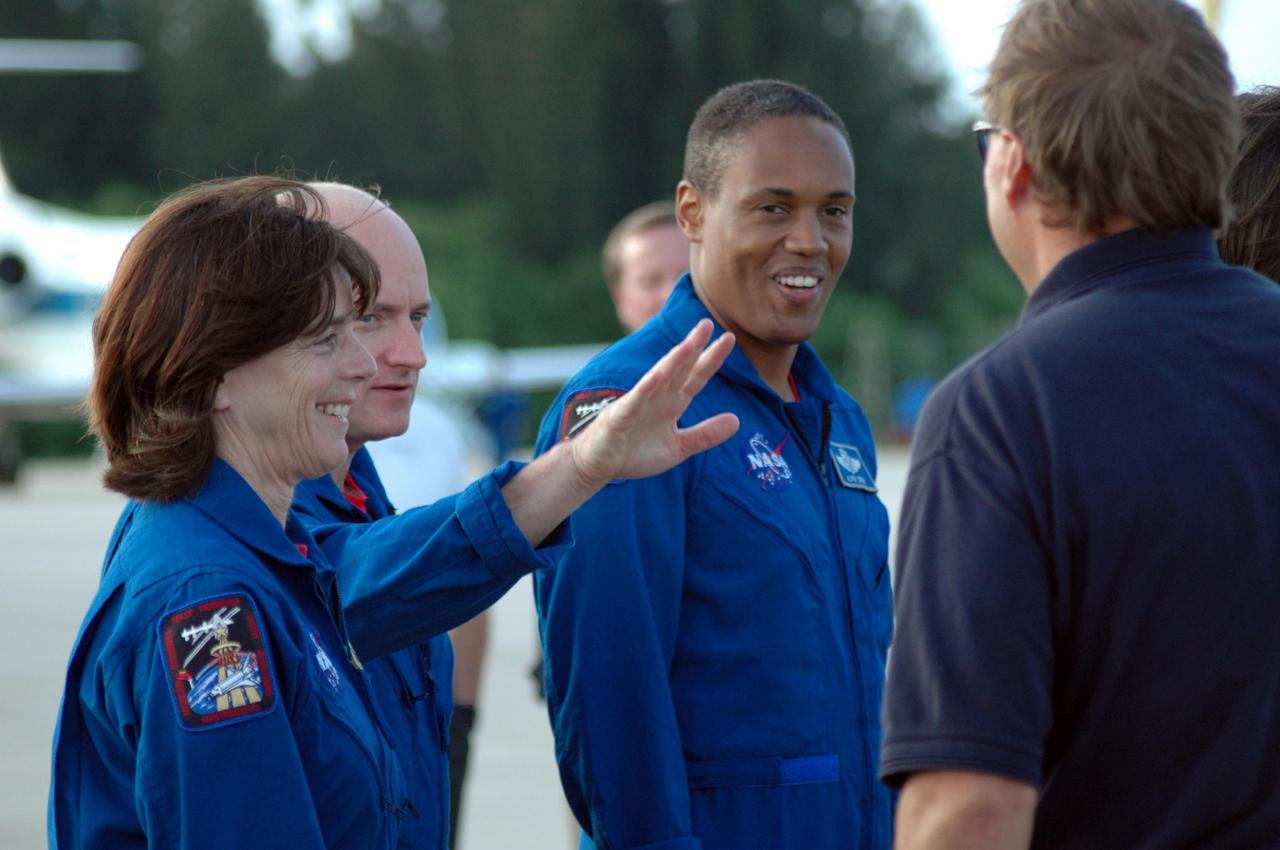
KENNEDY SPACE CENTER, Fla. -- The STS-118 crew arrives at Kennedy's Shuttle Landing Facility aboard a Shuttle Training Aircraft to take part in the Terminal Countdown Demonstration Test (TCDT), a dress rehearsal for launch. From left are Mission Specialist Barbara R. Morgan, Commander Scott Kelly and Mission Specialist Alvin Drew. Morgan joined NASA's Teacher in Space program in 1985 and was selected as an astronaut in 1998. DT activities include M-113 armored personnel carrier training, payload familiarization, emergency egress training at the pad and a simulated launch countdown. The STS-118 payload aboard Space Shuttle Endeavour includes the S5 truss, a SPACEHAB module and external stowage platform 3. The mission is the 22nd flight to the International Space Station and is targeted for launch on Aug.7. Photo credit: NASA/Ken Thornsley
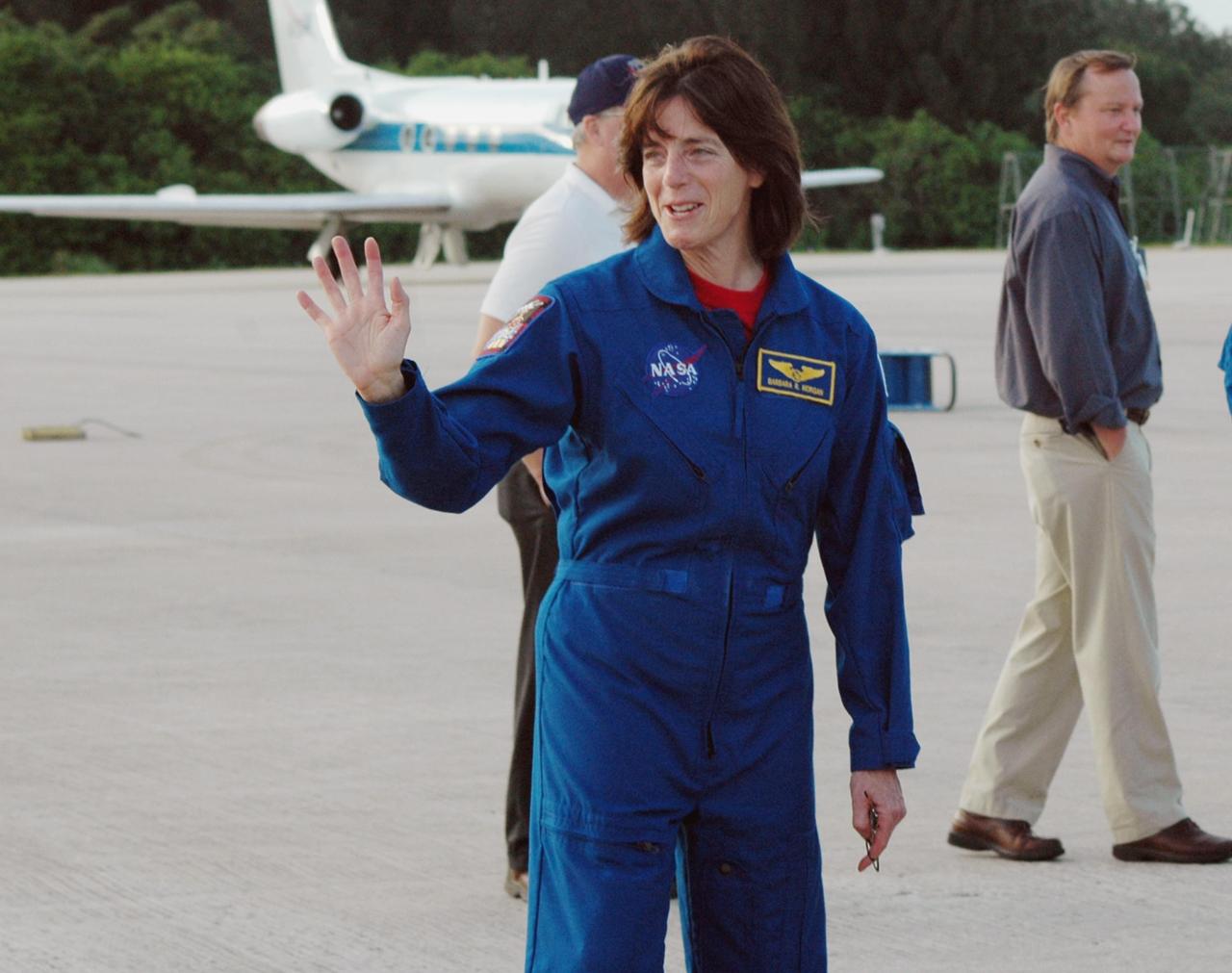
KENNEDY SPACE CENTER, Fla. -- The STS-118 crew arrives at Kennedy's Shuttle Landing Facility aboard a Shuttle Training Aircraft to take part in the Terminal Countdown Demonstration Test (TCDT), a dress rehearsal for launch. Mission Specialist Barbara R. Morgan, NASA's first educator astronaut, acknowledges those who have turned out to welcome them. TCDT activities include M-113 armored personnel carrier training, payload familiarization, emergency egress training at the pad and a simulated launch countdown. The STS-118 payload aboard Space Shuttle Endeavour includes the S5 truss, a SPACEHAB module and external stowage platform 3. The mission is the 22nd flight to the International Space Station and is targeted for launch on Aug.7. Photo credit: NASA/Ken Thornsley
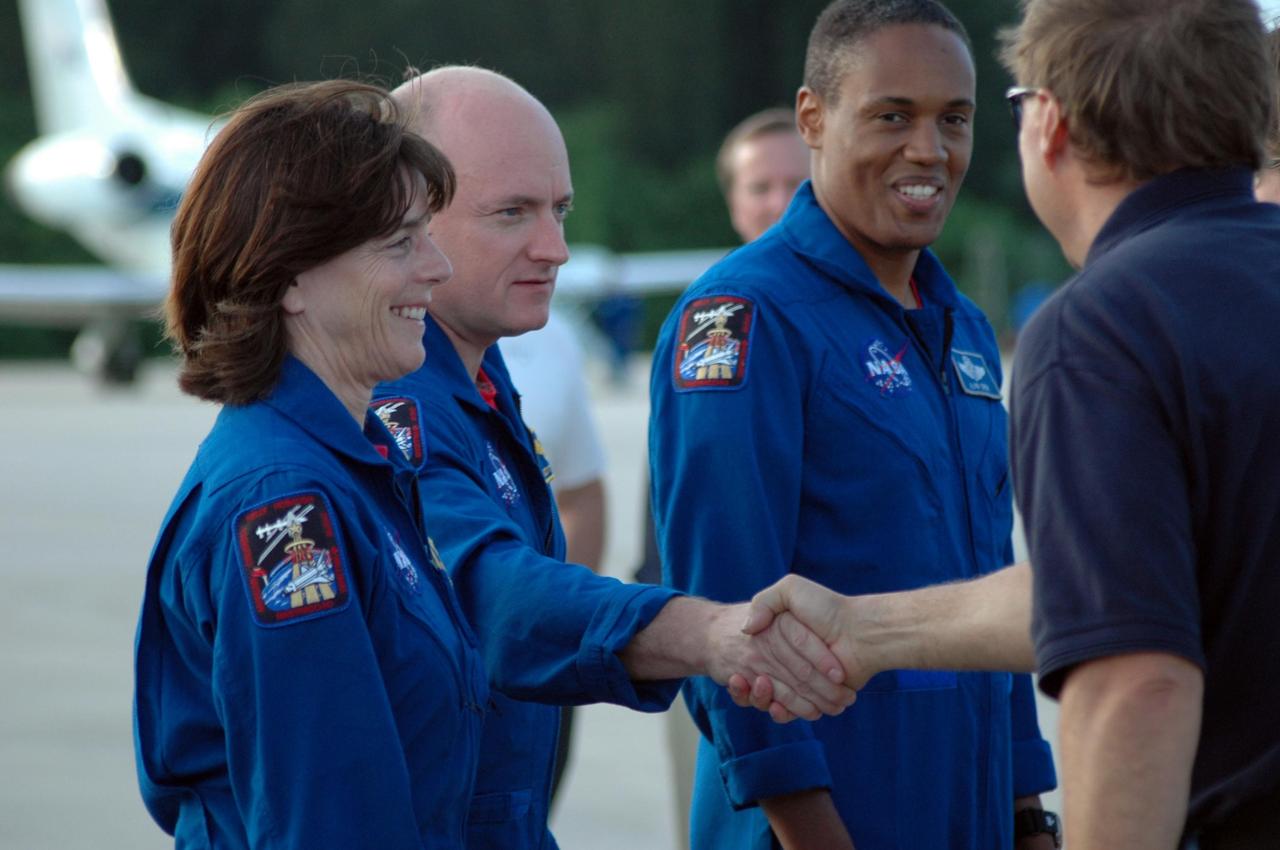
KENNEDY SPACE CENTER, Fla. -- The STS-118 crew arrives at Kennedy's Shuttle Landing Facility aboard a Shuttle Training Aircraft to take part in the Terminal Countdown Demonstration Test (TCDT), a dress rehearsal for launch. From left are Mission Specialist Barbara R. Morgan, Commander Scott Kelly and Mission Specialist Alvin Drew. Morgan joined NASA's Teacher in Space program in 1985 and was selected as an astronaut in 1998. TCDT activities include M-113 armored personnel carrier training, payload familiarization, emergency egress training at the pad and a simulated launch countdown. The STS-118 payload aboard Space Shuttle Endeavour includes the S5 truss, a SPACEHAB module and external stowage platform 3. The mission is the 22nd flight to the International Space Station and is targeted for launch on Aug.7. Photo credit: NASA/Ken Thornsley
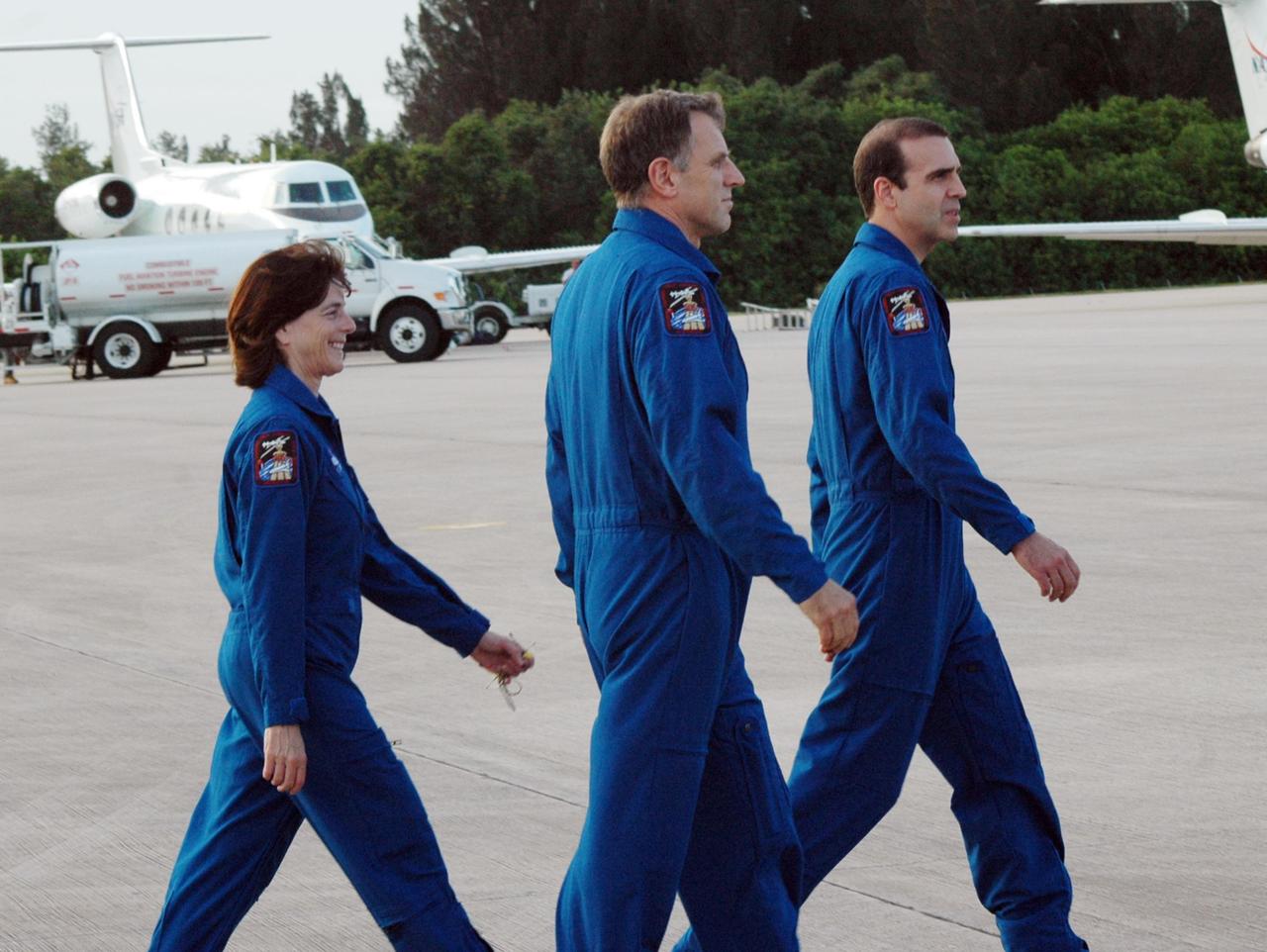
KENNEDY SPACE CENTER, Fla. -- The STS-118 crew arrives at Kennedy's Shuttle Landing Facility aboard a Shuttle Training Aircraft to take part in the Terminal Countdown Demonstration Test (TCDT), a dress rehearsal for launch. From left are Mission Specialists Barbara R. Morgan, Dave Williams and Rick Mastracchio. Williams represents the Canadian Space Agency. Morgan joined NASA's Teacher in Space program in 1985 and was selected as an astronaut in 1998. TCDT activities include M-113 armored personnel carrier training, payload familiarization, emergency egress training at the pad and a simulated launch countdown. The STS-118 payload aboard Space Shuttle Endeavour includes the S5 truss, a SPACEHAB module and external stowage platform 3. The mission is the 22nd flight to the International Space Station and is targeted for launch on Aug.7. Photo credit: NASA/Ken Thornsley
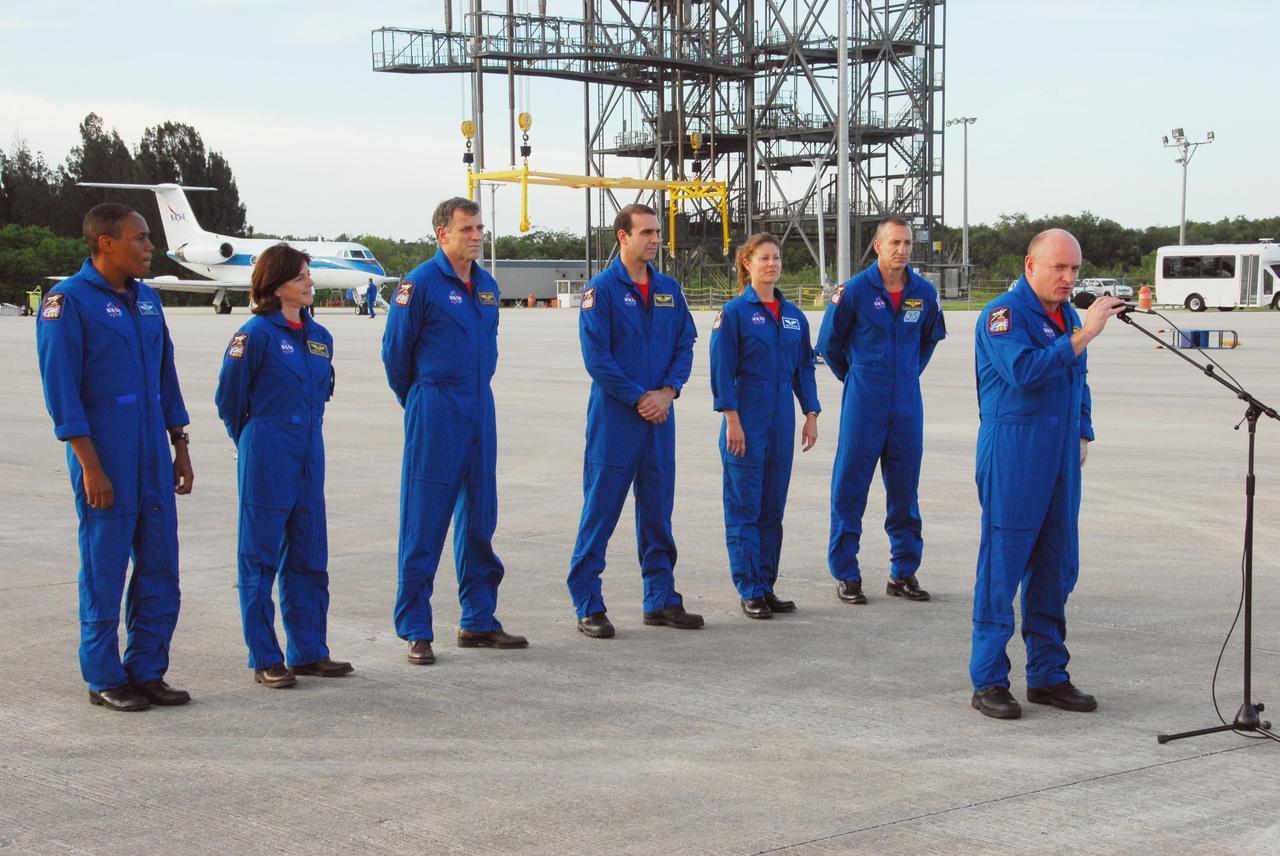
KENNEDY SPACE CENTER, Fla. -- The STS-118 crew arrives at Kennedy's Shuttle Landing Facility aboard a Shuttle Training Aircraft to take part in the Terminal Countdown Demonstration Test (TCDT), a dress rehearsal for launch. Commander Scott Kelly (at microphone) introduces his crew to media representatives on site to welcome them. From left are Mission Specialists Alvin Drew; Barbara R. Morgan; Dave Williams, representing the Canadian Space Agency; Rick Mastracchio; Tracy Caldwell; and Pilot Charlie Hobaugh. Morgan joined NASA's Teacher in Space program in 1985 and was selected as an astronaut in 1998. TCDT activities include M-113 armored personnel carrier training, payload familiarization, emergency egress training at the pad and a simulated launch countdown. The STS-118 payload aboard Space Shuttle Endeavour includes the S5 truss, a SPACEHAB module and external stowage platform 3. The mission is the 22nd flight to the International Space Station and is targeted for launch on Aug.7. Photo credit: NASA/George Shelton

KENNEDY SPACE CENTER, FLA. -- The STS-118 crew arrives at Kennedy's Shuttle Landing Facility aboard a Shuttle Training Aircraft to take part in the Terminal Countdown Demonstration Test (TCDT), a dress rehearsal for launch. Shuttle Launch Director Mike Leinbach (left) welcomes Commander Scott Kelly (right). TCDT activities include M-113 armored personnel carrier training, payload familiarization, emergency egress training at the pad and a simulated launch countdown. The STS-118 payload aboard Space Shuttle Endeavour includes the S5 truss, a SPACEHAB module and external stowage platform 3. The mission is the 22nd flight to the International Space Station and is targeted for launch on Aug.7. Photo credit: NASA/George Shelton
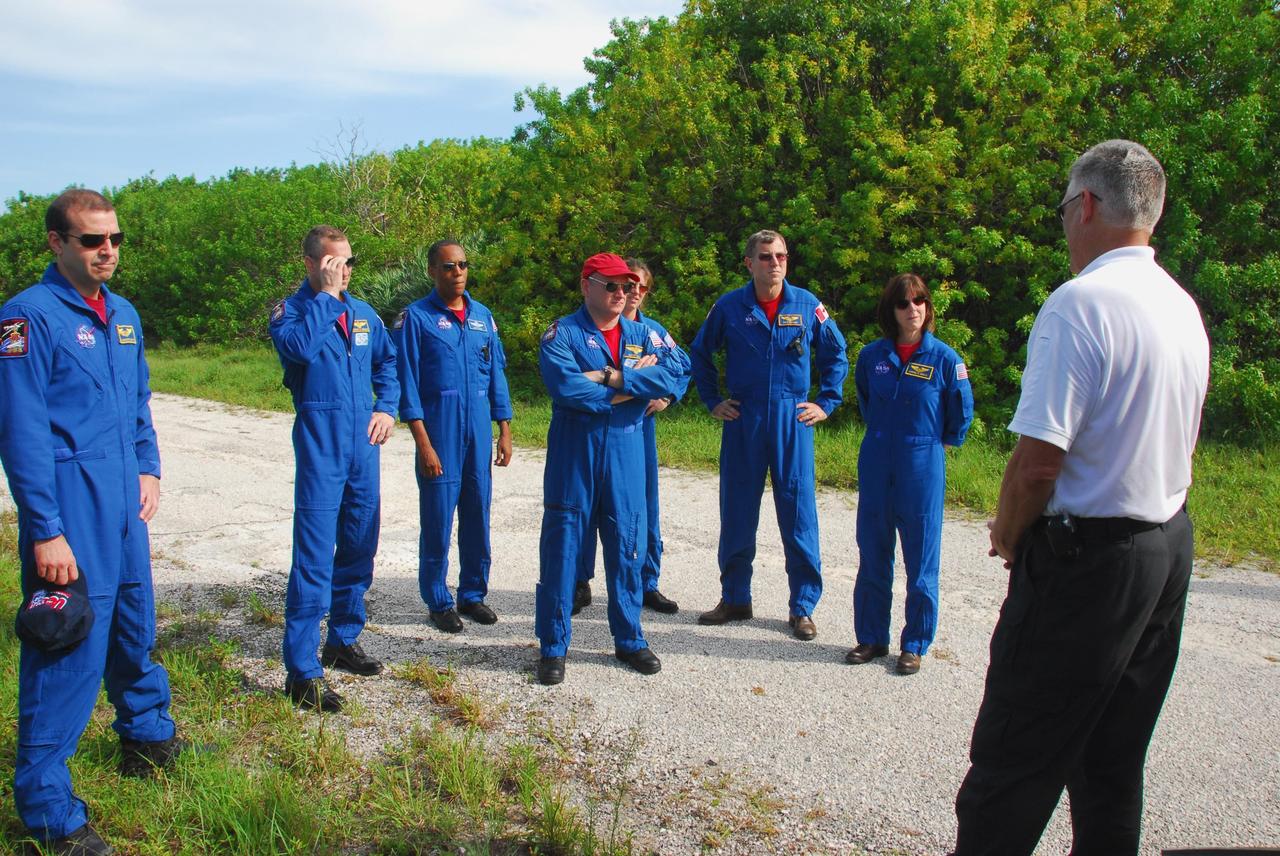
KENNEDY SPACE CENTER, Fla. -- The STS-118 crew gets instructions on emergency exit procedures from Launch Pad 39A. From left are Mission Specialist Rick Mastracchio, Pilot Charlie Hobaugh, Mission Specialist Alvin Drew, Commander Scott Kelly, and Mission Specialists Tracy Caldwell, Dave Williams and Barbara R. Morgan, whojoined NASA's Teacher in Space program in 1985. She was selected as an astronaut in 1998. TCDT activities include the M-113 training, payload familiarization, emergency egress training at the pad and a simulated launch countdown. The STS-118 payload aboard Space Shuttle Endeavour includes the S5 truss, a SPACEHAB module and external stowage platform 3. The mission is the 22nd flight to the International Space Station and is targeted for launch on Aug.7. NASA/George Shelton
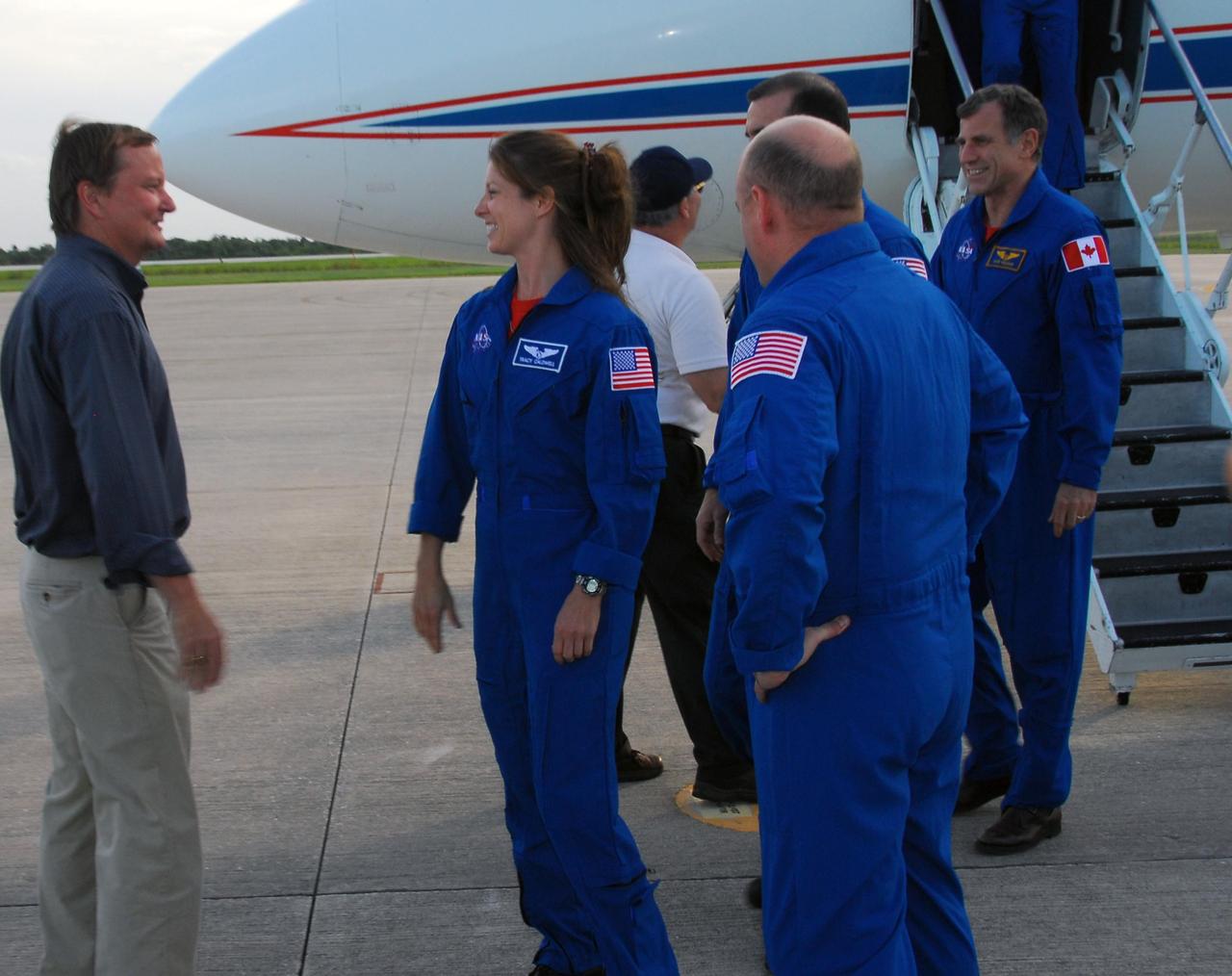
KENNEDY SPACE CENTER, Fla. -- The STS-118 crew arrives at Kennedy's Shuttle Landing Facility aboard a Shuttle Training Aircraft to take part in the Terminal Countdown Demonstration Test (TCDT), a dress rehearsal for launch. Shuttle Launch Director Mike Leinbach (left) welcomes Mission Specialists Tracy Caldwell, Rick Mastracchio and Dave Williams of the Canadian Space Agency, as Commander Scott Kelly (back to camera) looks on. TCDT activities include M-113 armored personnel carrier training, payload familiarization, emergency egress training at the pad and a simulated launch countdown. The STS-118 payload aboard Space Shuttle Endeavour includes the S5 truss, a SPACEHAB module and external stowage platform 3. The mission is the 22nd flight to the International Space Station and is targeted for launch on Aug.7. Photo credit: NASA/George Shelton
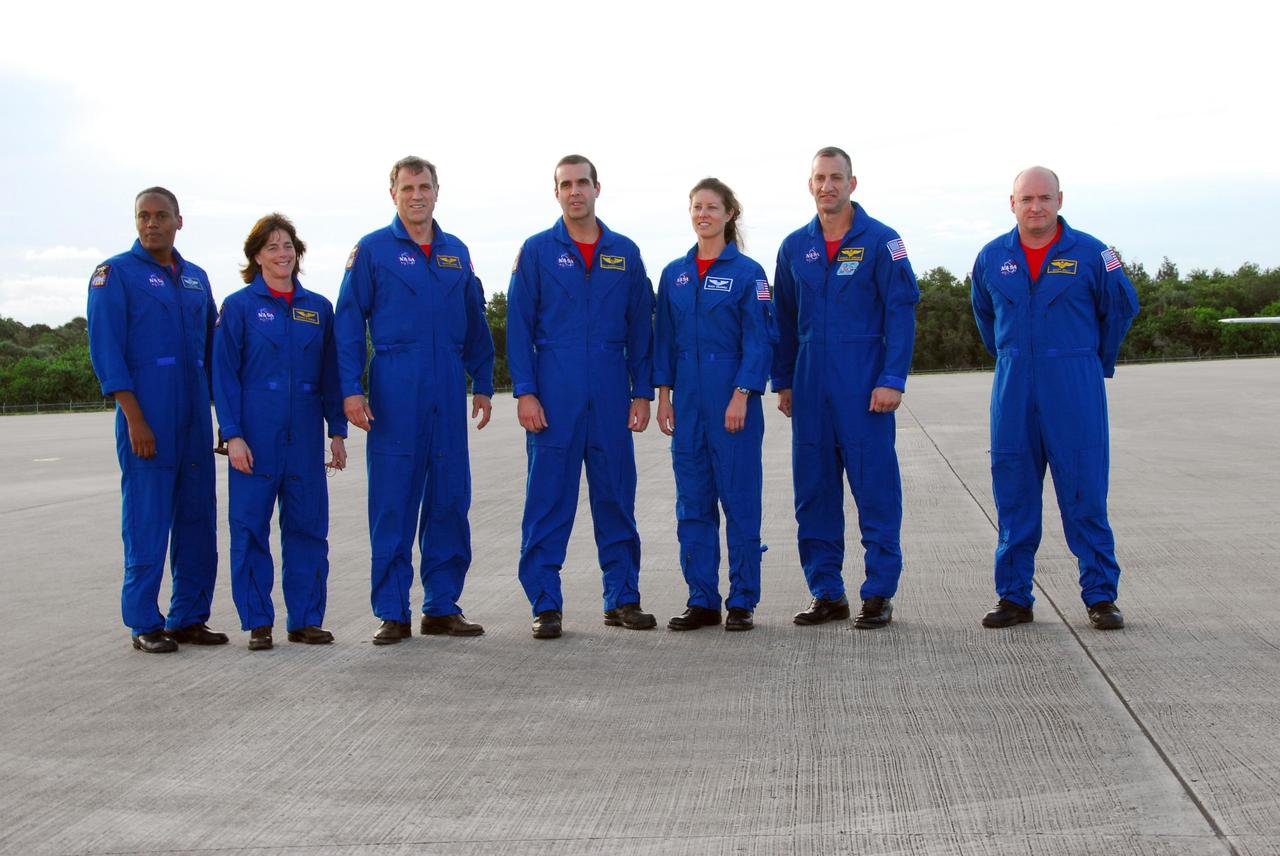
KENNEDY SPACE CENTER, Fla. -- The STS-118 crew arrives at Kennedy's Shuttle Landing Facility aboard a Shuttle Training Aircraft to take part in the Terminal Countdown Demonstration Test (TCDT), a dress rehearsal for launch. From left are Mission Specialists Alvin Drew; Barbara R. Morgan; Dave Williams, representing the Canadian Space Agency; Rick Mastracchio; Tracy Caldwell; Pilot Charlie Hobaugh and Commander Scott Kelly. Morgan joined NASA's Teacher in Space program in 1985 and was selected as an astronaut in 1998. TCDT activities include M-113 armored personnel carrier training, payload familiarization, emergency egress training at the pad and a simulated launch countdown. The STS-118 payload aboard Space Shuttle Endeavour includes the S5 truss, a SPACEHAB module and external stowage platform 3. The mission is the 22nd flight to the International Space Station and is targeted for launch on Aug.7. Photo credit: NASA/George Shelton
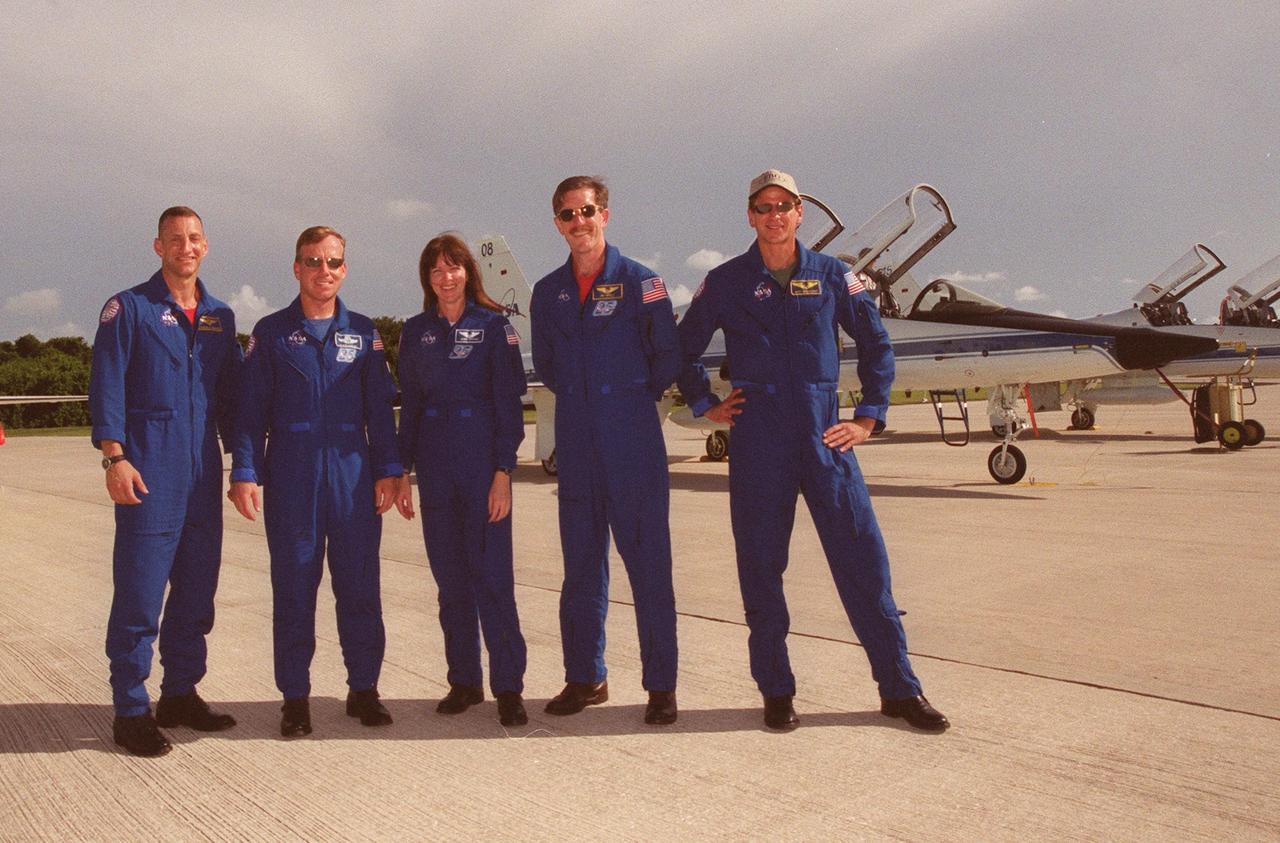
KENNEDY SPACE CENTER, Fla. -- The STS-104 crew pauses at the SLF after their arrival. Standing left to right are Pilot Charles O. Hobaugh, Commander Steven W. Lindsey and Mission Specialists Janet Lynn Kavandi, James F. Reilly and Michael L. Gernhardt. They are at KSC to take part in Terminal Countdown Demonstration Test (TCDT) Activities. The TCDT provides the crew with emergency egress training, opportunities to inspect their mission payloads in Space Shuttle Atlantis’s payload bay, and simulated countdown exercises. The launch of Atlantis on mission STS-104 is scheduled no earlier than July 12 from Launch Pad 39B. The mission is the 10th flight to the International Space Station and carries the Joint Airlock Module
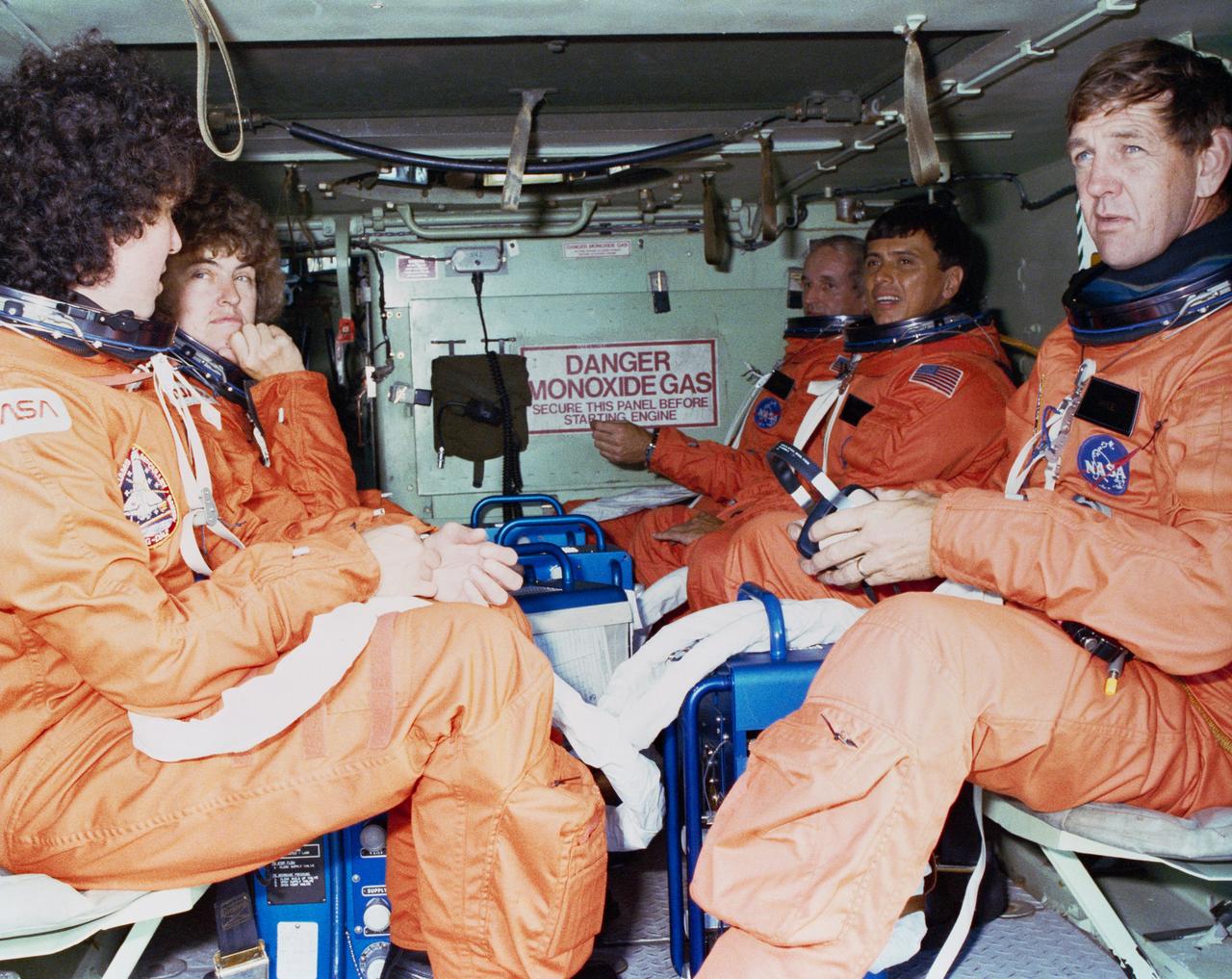
STS-34 crewmembers sit in M1-13 Armored Personnel Carrier (APC) during emergency egress training at KSC's shuttle landing facility (SLF) prior to terminal countdown demonstration test (TCDT) activities. Wearing launch and entry suits (LESs), are (from left) Mission Specialist (MS) Ellen S. Baker, MS Shannon W. Lucid, Commander Donald E. Williams (right side, in back), MS Franklin R. Chang-Diaz, and Pilot Michael J. McCulley (holding headset). View provided by KSC with alternate number KSC-89PC-871.
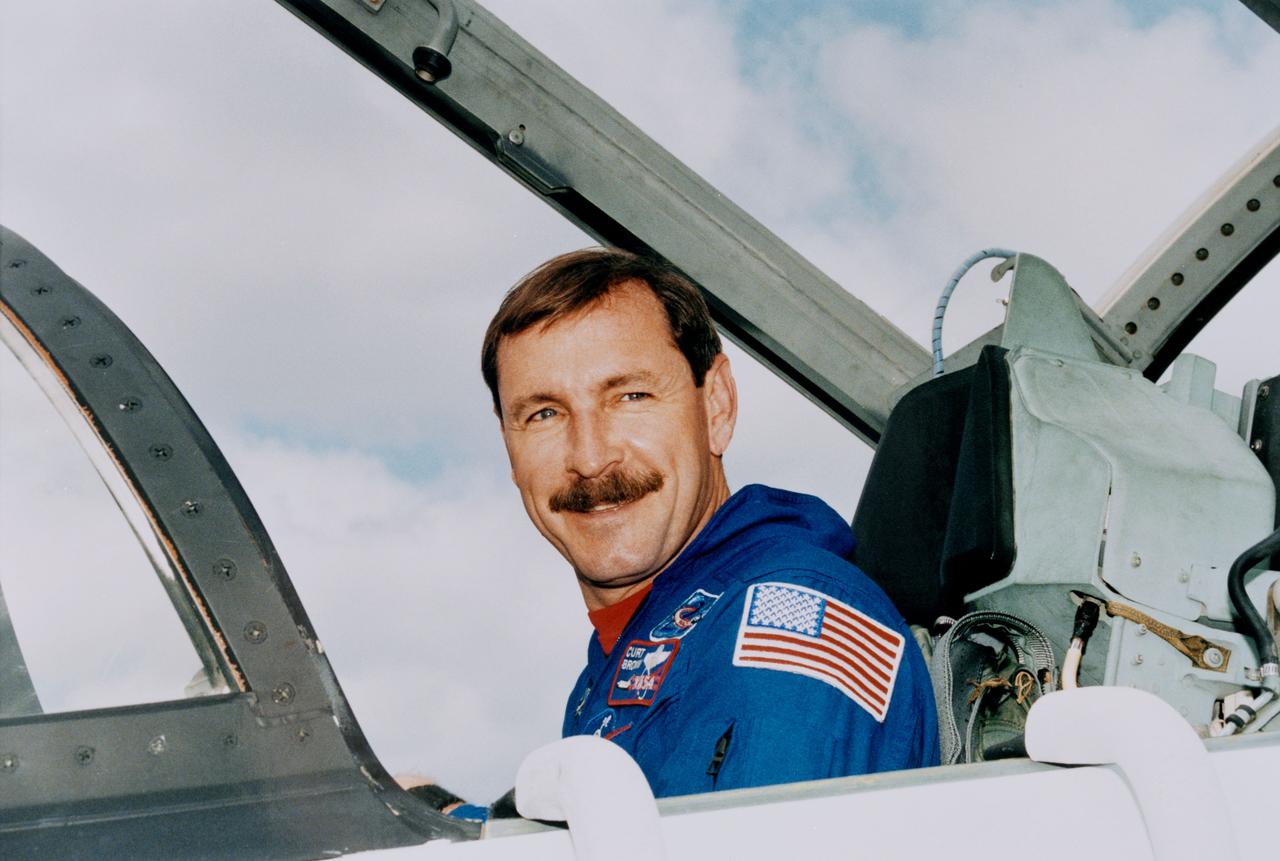
S96-08025 (22 April 1996) --- The STS-77 crew arrives at the Kennedy Space Center's (KSC) Shuttle Landing Facility (SLF) for the Terminal Countdown Demonstration Test (TCDT), a dress rehearsal for launch. Shown here is Curtis L. Brown, Jr., pilot, who will be embarking on his third spaceflight when the Space Shuttle Endeavour lifts off on the STS-77 mission in mid-May. Over the next several days, the six-member crew will participate in emergency egress training at the pad and a simulated launch countdown that includes the entire launch team.
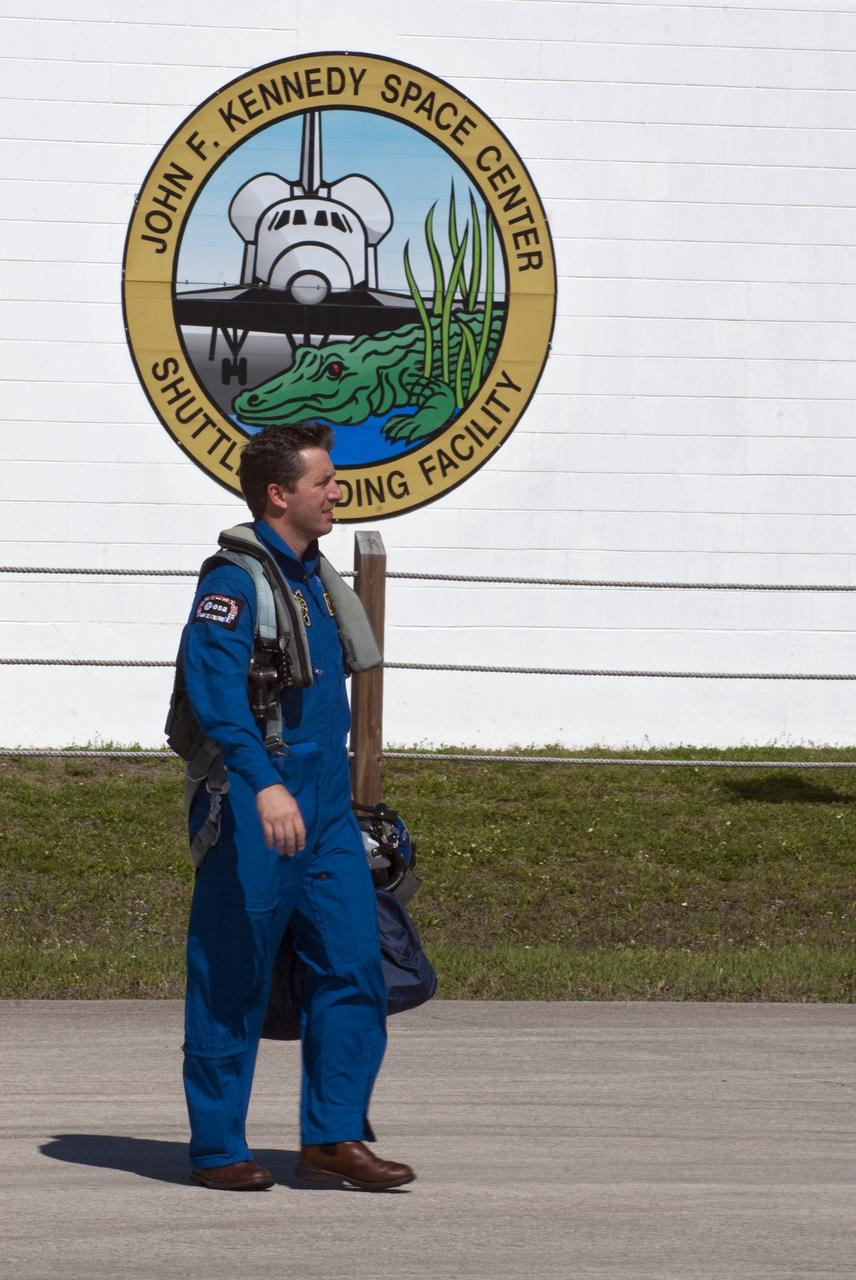
CAPE CANAVERAL, Fla. -- STS-134 Mission Specialist Roberto Vittori, with the European Space Agency, prepares to depart the Shuttle Landing Facility at NASA's Kennedy Space Center in Florida aboard a T-38 jet. While at Kennedy, space shuttle Endeavour's crew participated in a launch countdown dress rehearsal called the Terminal Countdown Demonstration Test (TCDT) and related training. Vittori will return to NASA's Johnson Space Center in Houston to resume training for the upcoming STS-134 mission. Endeavour and its six STS-134 crew members will deliver the Express Logistics Carrier-3, Alpha Magnetic Spectrometer-2 (AMS), a high-pressure gas tank, additional spare parts for the Dextre robotic helper and micrometeoroid debris shields to the International Space Station. This will be the final spaceflight for Endeavour. Launch is targeted for April 29 at 3:47 p.m. EDT. For more information visit, www.nasa.gov/mission_pages/shuttle/shuttlemissions/sts134/index.html. Photo credit: NASA/Kim Shiflett
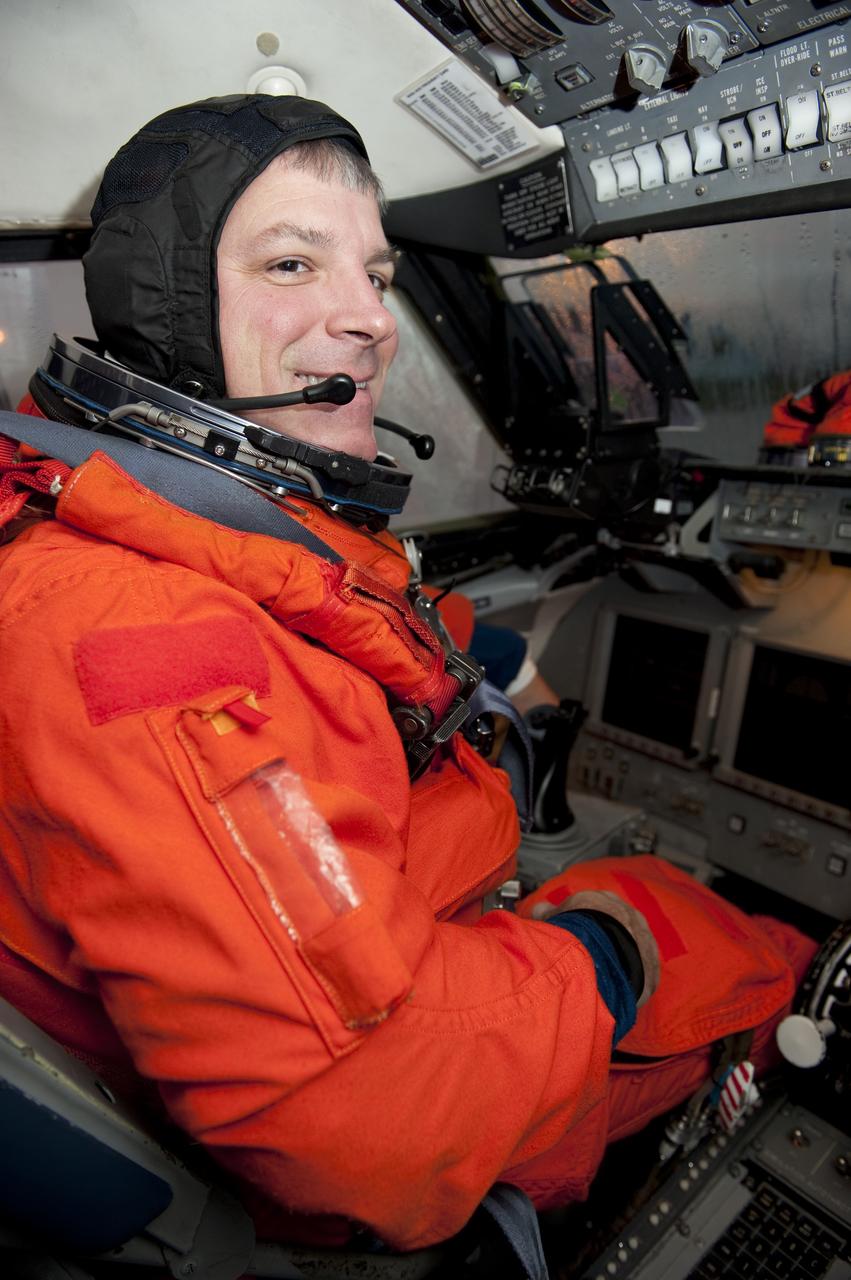
CAPE CANAVERAL, Fla. -- STS-134 Pilot Greg H. Johnson gets behind the controls of a Shuttle Training Aircraft (STA) to perform touch-and-go landings on the Shuttle Landing Facility at NASA's Kennedy Space Center in Florida. STAs are Gulfstream II business jets that are modified to mimic the shuttle's handling during the final phase of landing. Practice landings are part of standard training before space shuttle Endeavour's STS-134 launch to the International Space Station. Endeavour's six crew members are at Kennedy for the launch countdown dress rehearsal called the Terminal Countdown Demonstration Test (TCDT) and related training. Targeted to launch April 19 at 7:48 p.m. EDT, they will deliver the Express Logistics Carrier-3, Alpha Magnetic Spectrometer-2 (AMS), a high-pressure gas tank, additional spare parts for the Dextre robotic helper and micrometeoroid debris shields to the space station. This will be the final spaceflight for Endeavour. For more information visit, www.nasa.gov/mission_pages/shuttle/shuttlemissions/sts134/index.html. Photo credit: NASA/Kim Shiflett
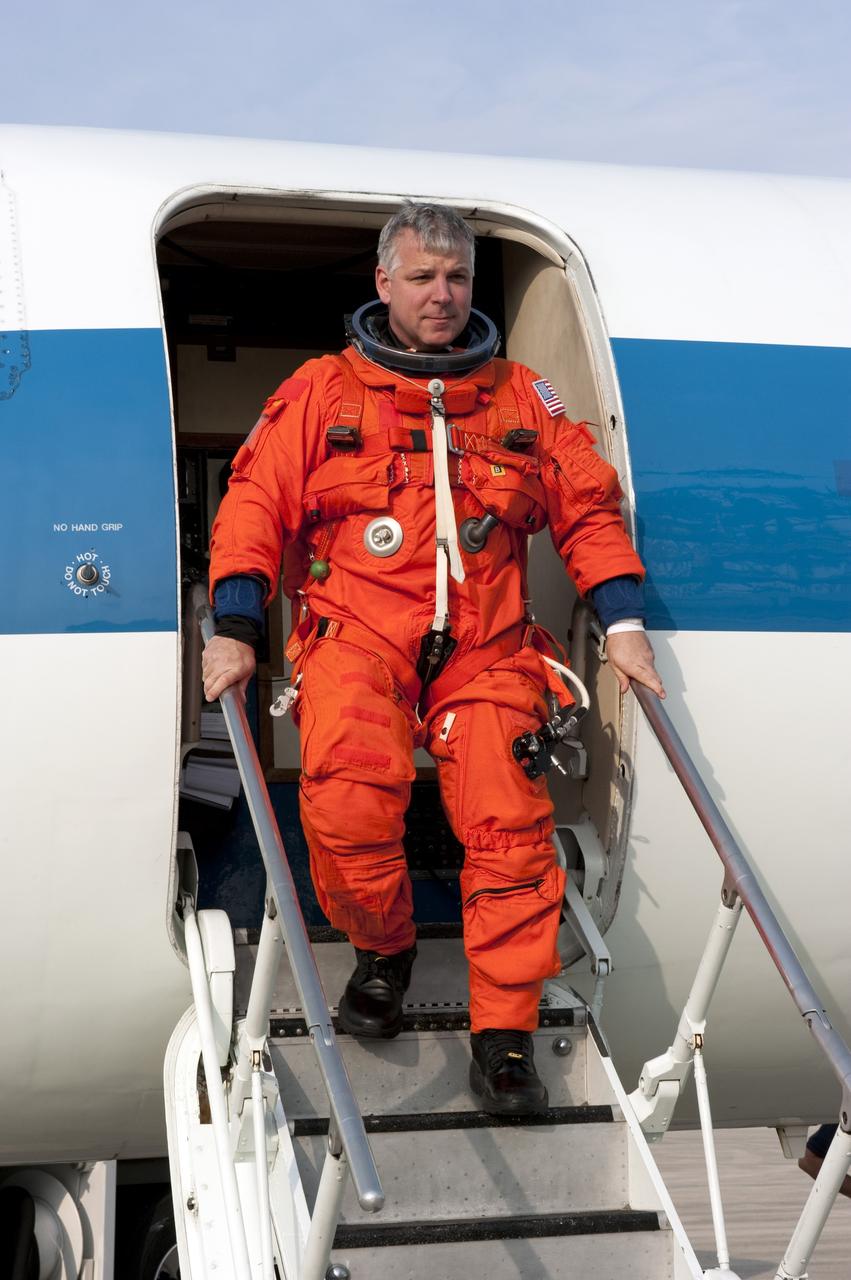
CAPE CANAVERAL, Fla. -- STS-134 Pilot Greg H. Johnson completes touch-and-go landings aboard a Shuttle Training Aircraft (STA) on the Shuttle Landing Facility at NASA's Kennedy Space Center in Florida. STAs are Gulfstream II business jets that are modified to mimic the shuttle's handling during the final phase of landing. Practice landings are part of standard training before space shuttle Endeavour's STS-134 launch to the International Space Station. Endeavour's six crew members are at Kennedy for the launch countdown dress rehearsal called the Terminal Countdown Demonstration Test (TCDT) and related training. Targeted to launch April 19 at 7:48 p.m. EDT, they will deliver the Express Logistics Carrier-3, Alpha Magnetic Spectrometer-2 (AMS), a high-pressure gas tank, additional spare parts for the Dextre robotic helper and micrometeoroid debris shields to the space station. This will be the final spaceflight for Endeavour. For more information visit, www.nasa.gov/mission_pages/shuttle/shuttlemissions/sts134/index.html. Photo credit: NASA/Kim Shiflett
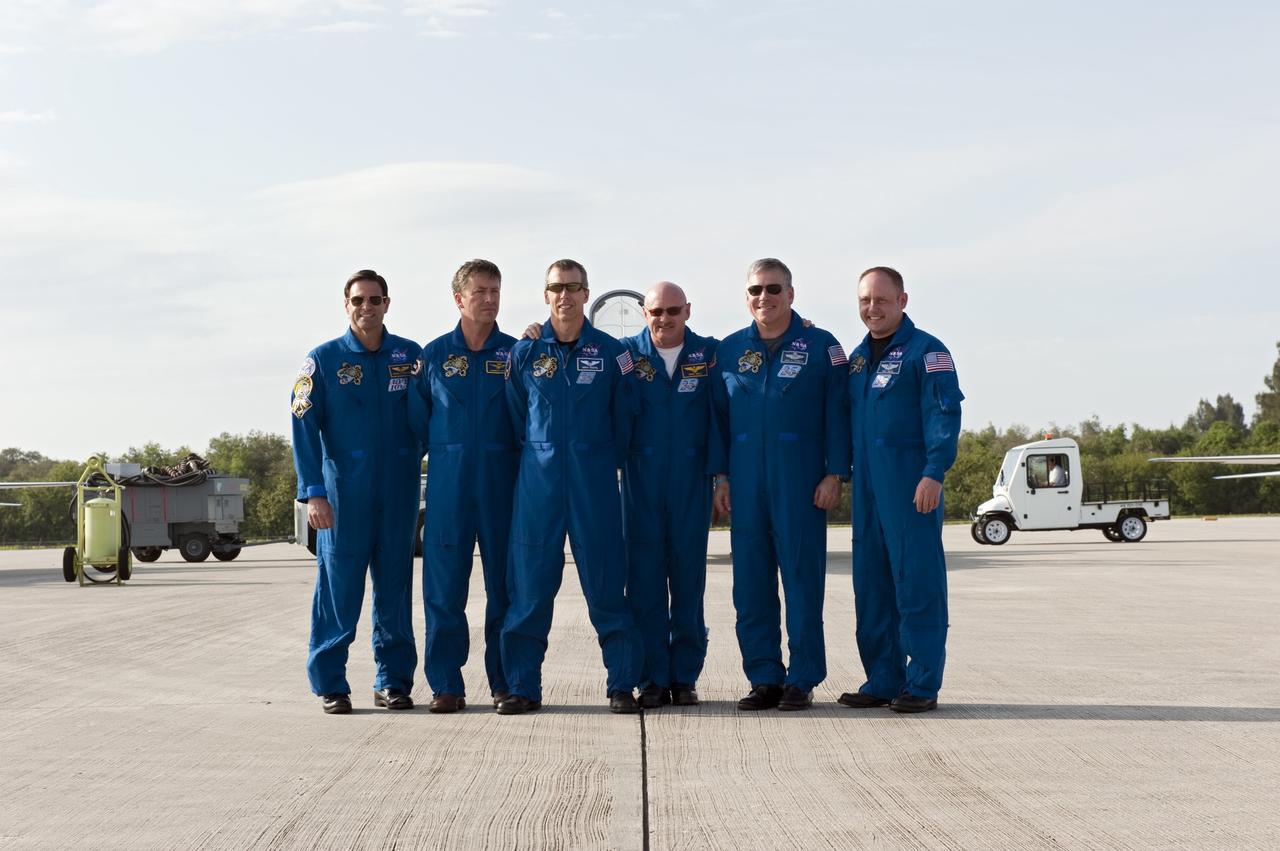
CAPE CANAVERAL, Fla. -- Space shuttle Endeavour's STS-134 crew members pose for a group photo on the Shuttle Landing Facility at NASA's Kennedy Space Center in Florida. While at Kennedy, Endeavour's crew will participate in a launch countdown dress rehearsal called the Terminal Countdown Demonstration Test (TCDT) and related training in preparation for the upcoming STS-134 mission. From left, are Mission Specialists Greg Chamitoff, European Space Agency astronaut Roberto Vittori, Andrew Feustel, Commander Mark Kelly, Pilot Greg H. Johnson, and Mission Specialist Michael Fincke. Endeavour and its six STS-134 crew members will deliver the Express Logistics Carrier-3, Alpha Magnetic Spectrometer-2 (AMS), a high-pressure gas tank, additional spare parts for the Dextre robotic helper and micrometeoroid debris shields to the International Space Station. This will be the final spaceflight for Endeavour. Launch is targeted for April 19 at 7:48 p.m. EDT. For more information visit, www.nasa.gov/mission_pages/shuttle/shuttlemissions/sts134/index.html. Photo credit: NASA/Kim Shiflett
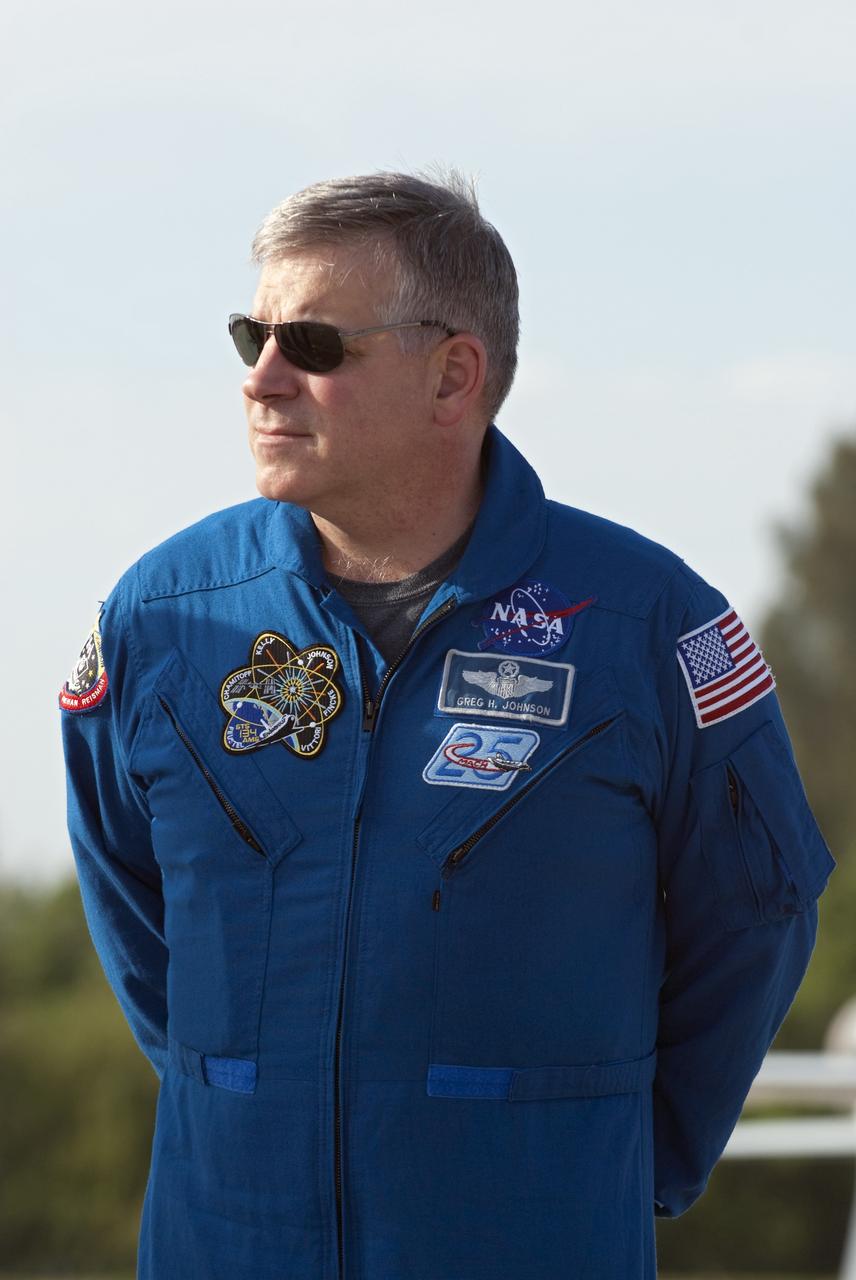
CAPE CANAVERAL, Fla. -- STS-134 Pilot Greg H. Johnson listens to Commander Mark Kelly address the media on the Shuttle Landing Facility at NASA's Kennedy Space Center in Florida. While at Kennedy, space shuttle Endeavour's crew will participate in a launch countdown dress rehearsal called the Terminal Countdown Demonstration Test (TCDT) and related training in preparation for the upcoming STS-134 mission. Endeavour and its six STS-134 crew members will deliver the Express Logistics Carrier-3, Alpha Magnetic Spectrometer-2 (AMS), a high-pressure gas tank, additional spare parts for the Dextre robotic helper and micrometeoroid debris shields to the International Space Station. This will be the final spaceflight for Endeavour. Launch is targeted for April 19 at 7:48 p.m. EDT. For more information visit, www.nasa.gov/mission_pages/shuttle/shuttlemissions/sts134/index.html. Photo credit: NASA/Kim Shiflett
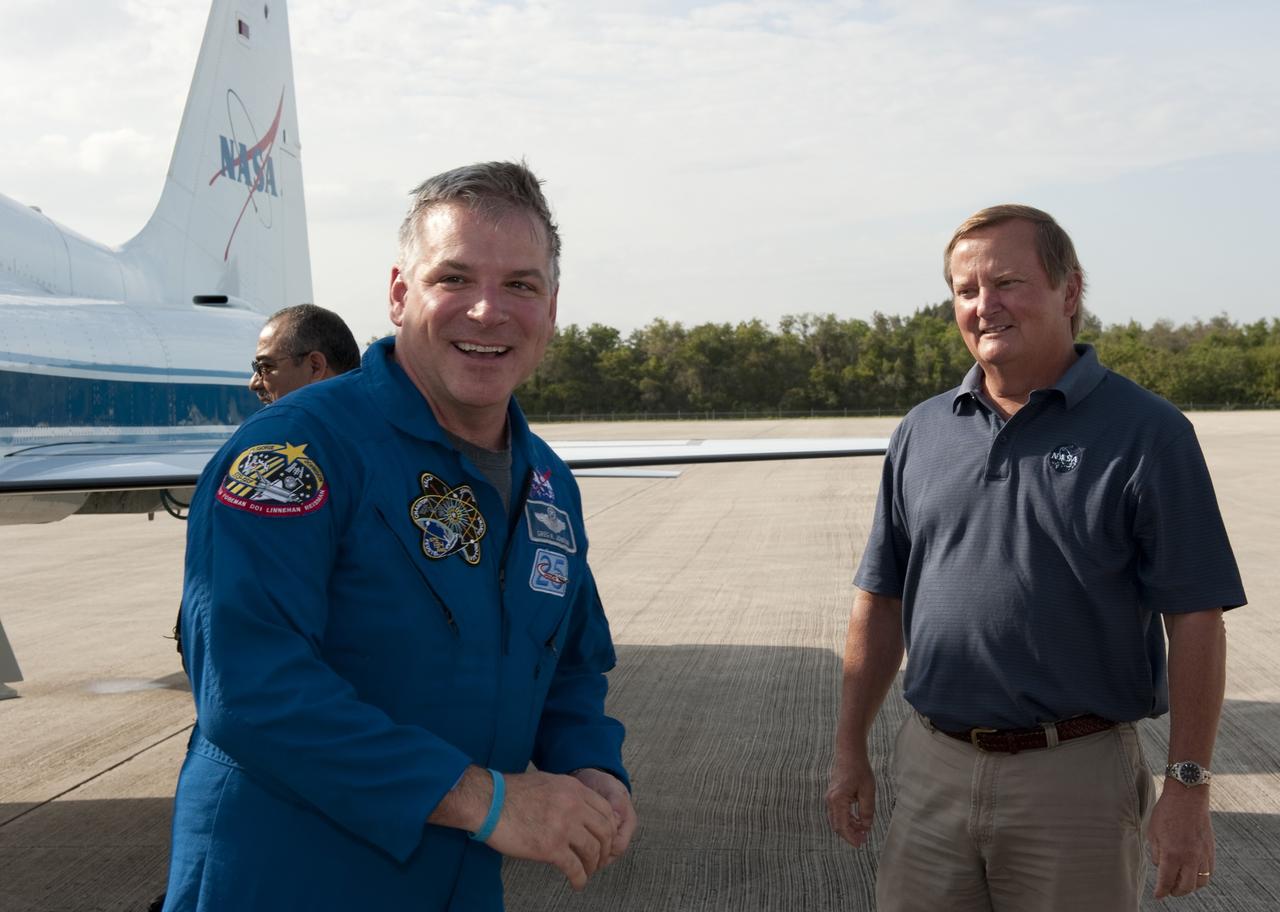
CAPE CANAVERAL, Fla. -- Shuttle Launch Director Mike Leinbach, right, is on hand to greet STS-134 Pilot Greg H. Johnson who arrived on the Shuttle Landing Facility at NASA's Kennedy Space Center in Florida aboard a T-38 jet. While at Kennedy, space shuttle Endeavour's crew will participate in a launch countdown dress rehearsal called the Terminal Countdown Demonstration Test (TCDT) and related training in preparation for the upcoming STS-134 mission. Endeavour and its six STS-134 crew members will deliver the Express Logistics Carrier-3, Alpha Magnetic Spectrometer-2 (AMS), a high-pressure gas tank, additional spare parts for the Dextre robotic helper and micrometeoroid debris shields to the International Space Station. This will be the final spaceflight for Endeavour. Launch is targeted for April 19 at 7:48 p.m. EDT. For more information visit, www.nasa.gov/mission_pages/shuttle/shuttlemissions/sts134/index.html. Photo credit: NASA/Kim Shiflett
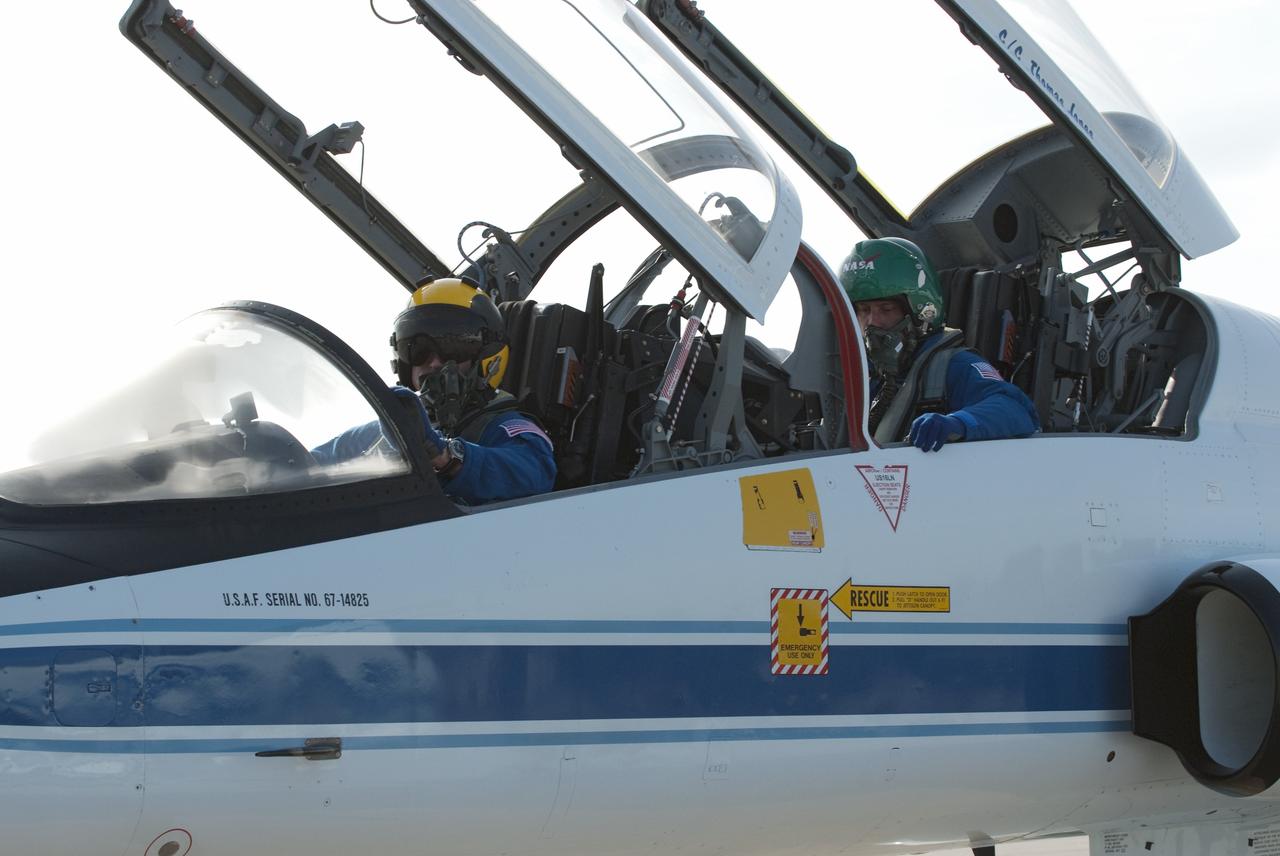
CAPE CANAVERAL, Fla. -- STS-134 Commander Mark Kelly, left, and Mission Specialist Michael Fincke arrive on the Shuttle Landing Facility at NASA's Kennedy Space Center in Florida aboard a T-38 jet. While at Kennedy, space shuttle Endeavour's crew will participate in a launch countdown dress rehearsal called the Terminal Countdown Demonstration Test (TCDT) and related training in preparation for the upcoming STS-134 mission. Endeavour and its six STS-134 crew members will deliver the Express Logistics Carrier-3, Alpha Magnetic Spectrometer-2 (AMS), a high-pressure gas tank, additional spare parts for the Dextre robotic helper and micrometeoroid debris shields to the International Space Station. This will be the final spaceflight for Endeavour. Launch is targeted for April 19 at 7:48 p.m. EDT. For more information visit, www.nasa.gov/mission_pages/shuttle/shuttlemissions/sts134/index.html. Photo credit: NASA/Kim Shiflett
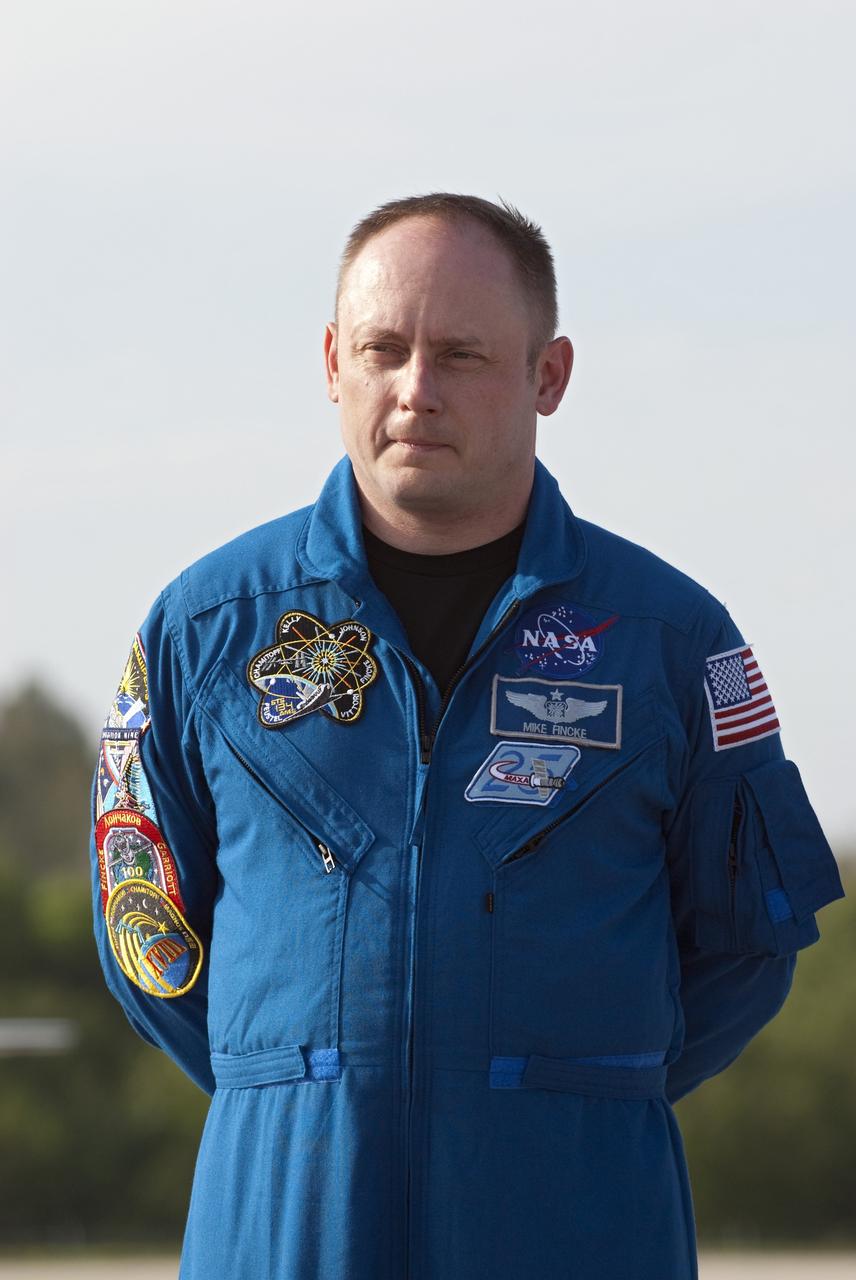
CAPE CANAVERAL, Fla. -- STS-134 Mission Specialist Michael Fincke listens to Commander Mark Kelly address the media on the Shuttle Landing Facility at NASA's Kennedy Space Center in Florida. While at Kennedy, space shuttle Endeavour's crew will participate in a launch countdown dress rehearsal called the Terminal Countdown Demonstration Test (TCDT) and related training in preparation for the upcoming STS-134 mission. Endeavour and its six STS-134 crew members will deliver the Express Logistics Carrier-3, Alpha Magnetic Spectrometer-2 (AMS), a high-pressure gas tank, additional spare parts for the Dextre robotic helper and micrometeoroid debris shields to the International Space Station. This will be the final spaceflight for Endeavour. Launch is targeted for April 19 at 7:48 p.m. EDT. For more information visit, www.nasa.gov/mission_pages/shuttle/shuttlemissions/sts134/index.html. Photo credit: NASA/Kim Shiflett
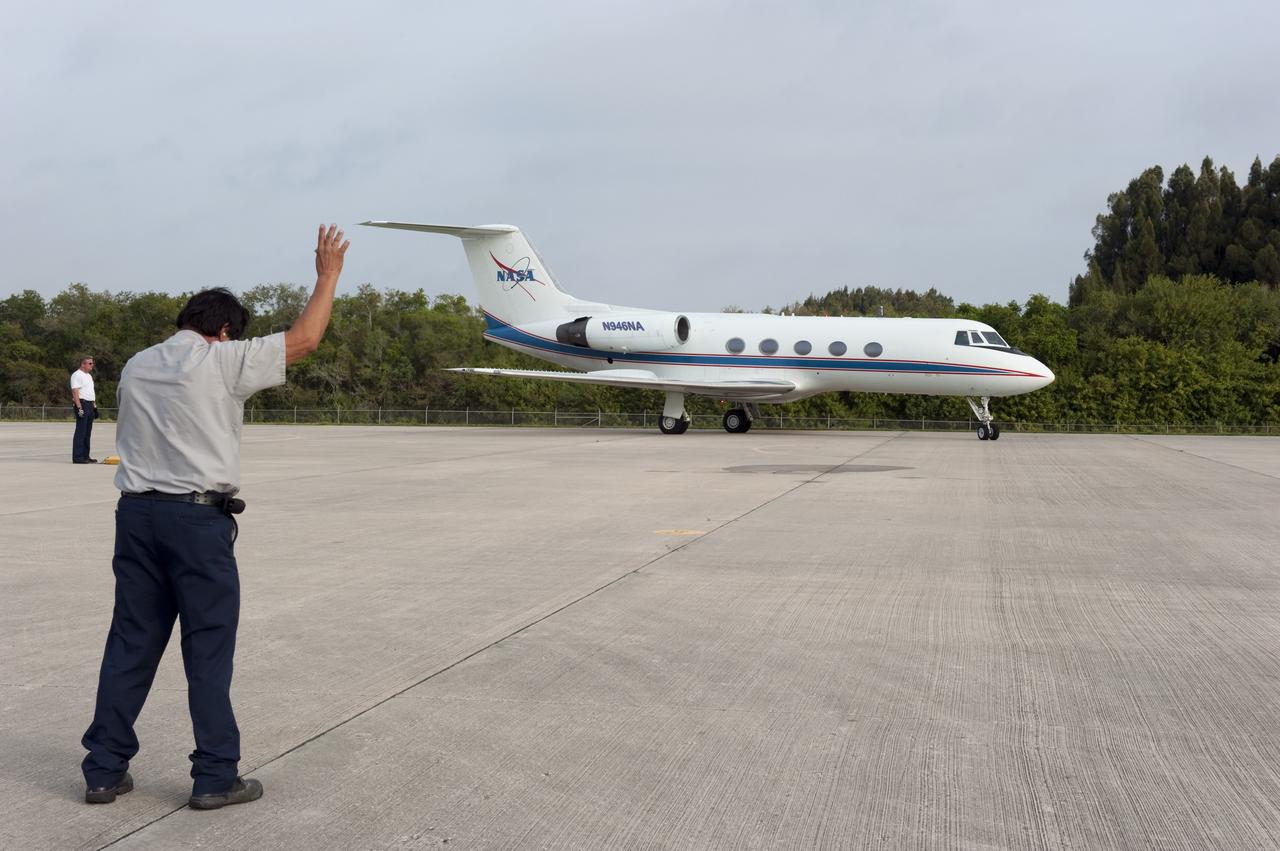
CAPE CANAVERAL, Fla. -- STS-134 Commander Mark Kelly prepares to take flight in a Shuttle Training Aircraft (STA) to perform touch-and-go landings on the Shuttle Landing Facility at NASA's Kennedy Space Center in Florida. STAs are Gulfstream II business jets that are modified to mimic the shuttle's handling during the final phase of landing. Practice landings are part of standard training before space shuttle Endeavour's STS-134 launch to the International Space Station. Endeavour's six crew members are at Kennedy for the launch countdown dress rehearsal called the Terminal Countdown Demonstration Test (TCDT) and related training. Targeted to launch April 19 at 7:48 p.m. EDT, they will deliver the Express Logistics Carrier-3, Alpha Magnetic Spectrometer-2 (AMS), a high-pressure gas tank, additional spare parts for the Dextre robotic helper and micrometeoroid debris shields to the space station. This will be the final spaceflight for Endeavour. For more information visit, www.nasa.gov/mission_pages/shuttle/shuttlemissions/sts134/index.html. Photo credit: NASA/Kim Shiflett