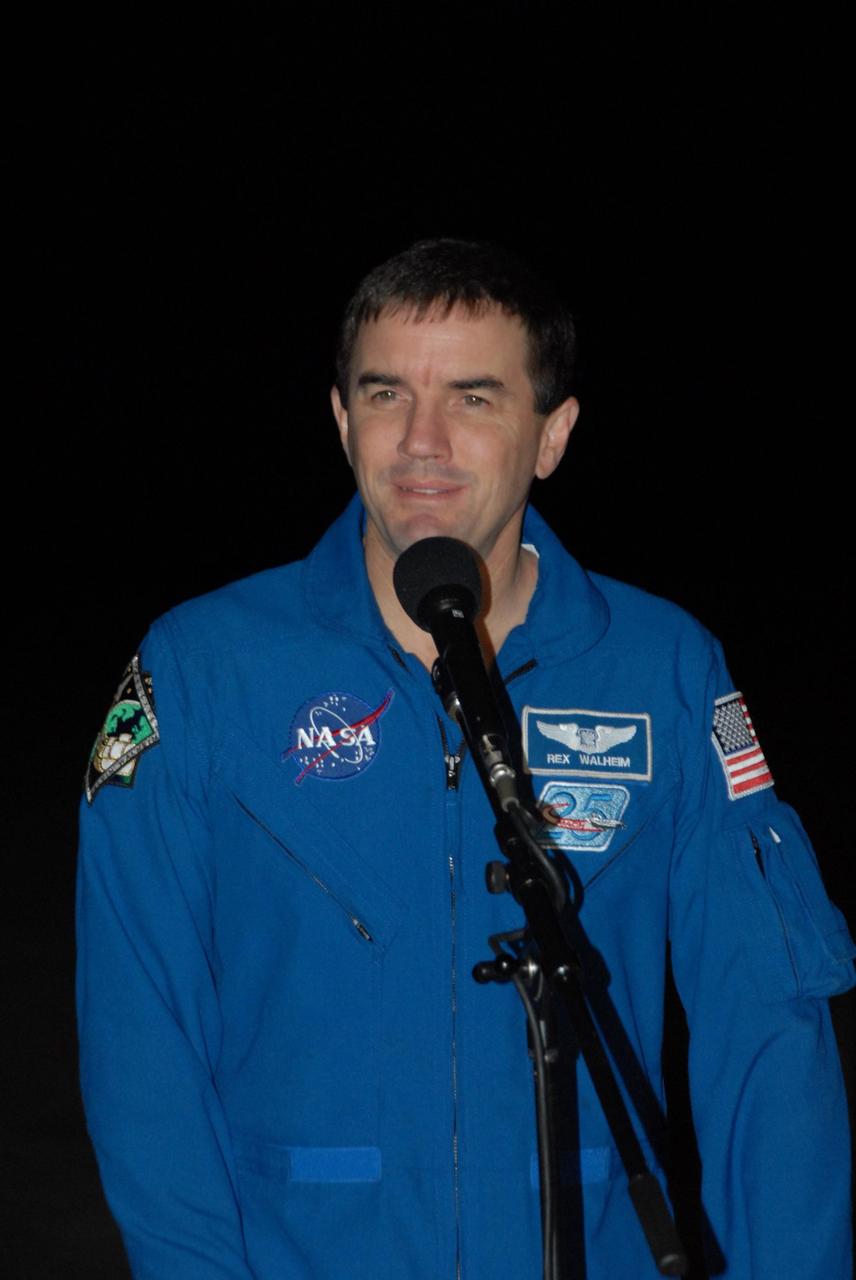
KENNEDY SPACE CENTER, FLA. -- Space shuttle Atlantis STS-122 Mission Specialist Rex Walheim talks to the media at Kennedy Space Center's Shuttle Landing Facility following his arrival to participate in three days of terminal countdown demonstration test, or TCDT, activities. The TCDT provides astronauts and ground crews with equipment familiarization, emergency egress training and a simulated launch countdown. On mission STS-122, Atlantis will deliver the Columbus module to the International Space Station. The European Space Agency's largest single contribution to the station, Columbus is a multifunctional, pressurized laboratory that will be permanently attached to U.S. Node 2, called Harmony. The laboratory will expand the research facilities aboard the station, providing crew members and scientists from around the world the ability to conduct a variety of experiments in the physical, materials and life sciences. Photo credit: NASA/George Shelton
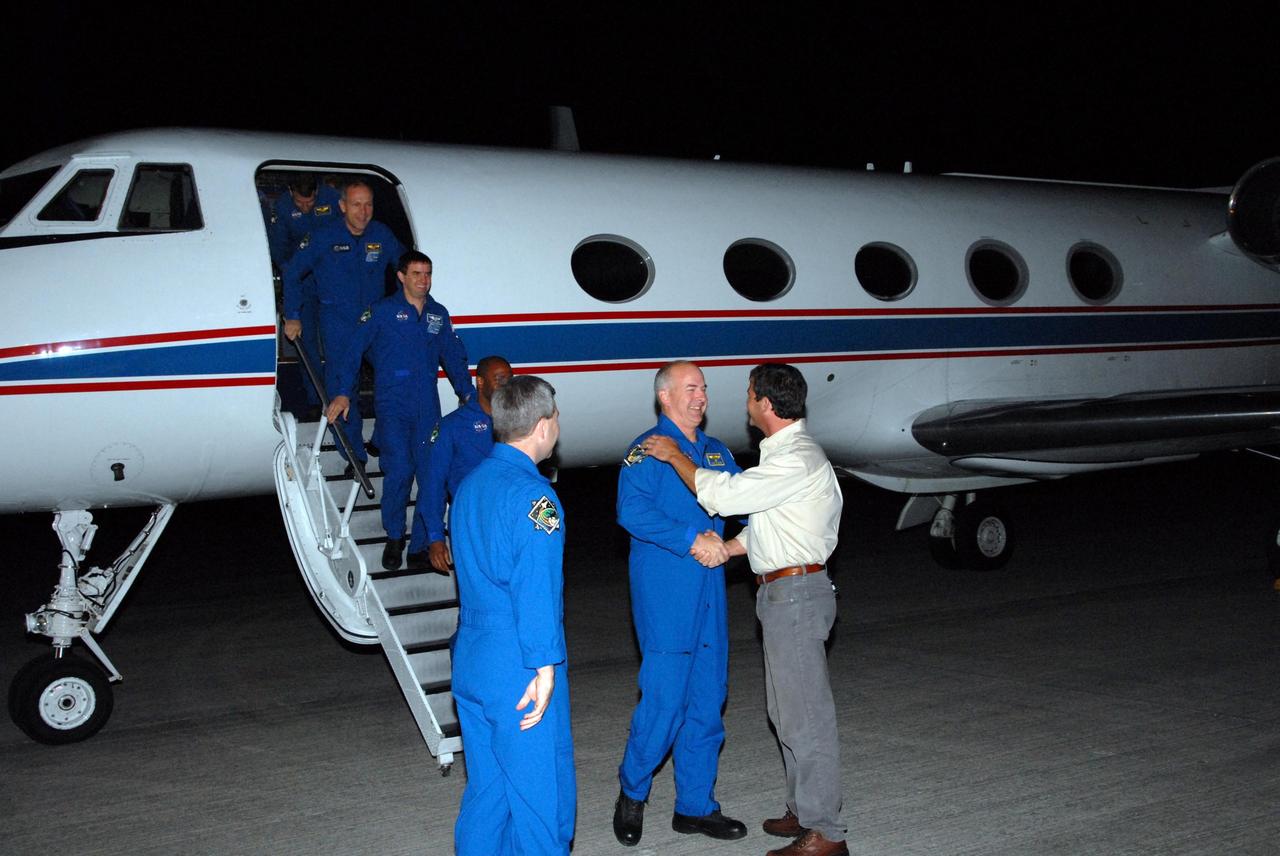
KENNEDY SPACE CENTER, FLA. -- The astronauts assigned to the space shuttle Atlantis STS-122 crew arrive at Kennedy Space Center's Shuttle Landing Facility aboard a Gulfstream shuttle training aircraft to participate in three days of terminal countdown demonstration test, or TCDT, activities. STS-122 Launch Director Doug Lyons greets Pilot Alan Poindexter as Commander Steve Frick looks on. Disembarking are Mission Specialists Leland Melvin, Rex Walheim, Hans Schlegel of the European Space Agency and Stanley Love. The TCDT provides astronauts and ground crews with equipment familiarization, emergency egress training and a simulated launch countdown. On mission STS-122, Atlantis will deliver the Columbus module to the International Space Station. The European Space Agency's largest single contribution to the station, Columbus is a multifunctional, pressurized laboratory that will be permanently attached to U.S. Node 2, called Harmony. The laboratory will expand the research facilities aboard the station, providing crew members and scientists from around the world the ability to conduct a variety of experiments in the physical, materials and life sciences. Photo credit: NASA/George Shelton
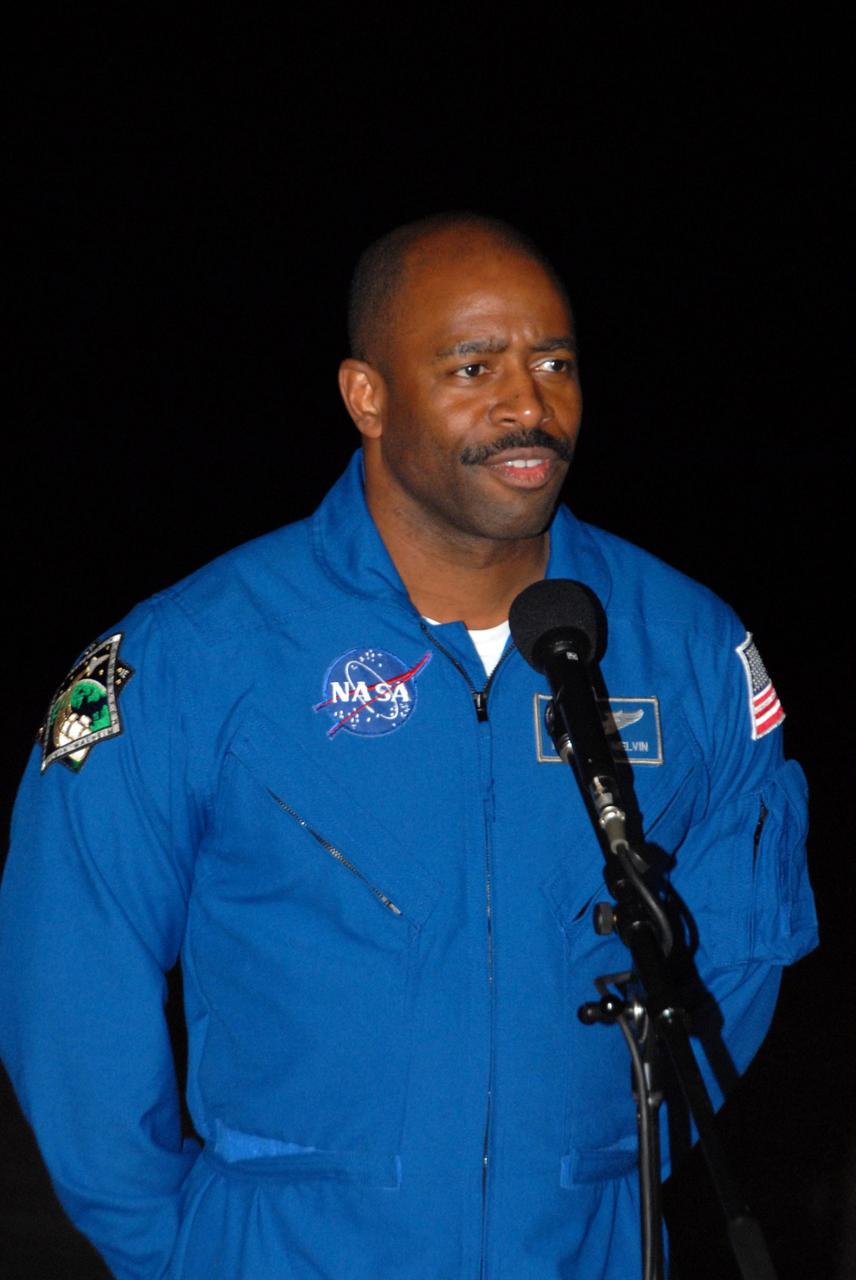
KENNEDY SPACE CENTER, FLA. -- Space shuttle Atlantis STS-122 Mission Specialist Leland Melvin talks to the media at Kennedy Space Center's Shuttle Landing Facility following his arrival to participate in three days of terminal countdown demonstration test, or TCDT, activities. The TCDT provides astronauts and ground crews with equipment familiarization, emergency egress training and a simulated launch countdown. On mission STS-122, Atlantis will deliver the Columbus module to the International Space Station. The European Space Agency's largest single contribution to the station, Columbus is a multifunctional, pressurized laboratory that will be permanently attached to U.S. Node 2, called Harmony. The laboratory will expand the research facilities aboard the station, providing crew members and scientists from around the world the ability to conduct a variety of experiments in the physical, materials and life sciences. Photo credit: NASA/George Shelton
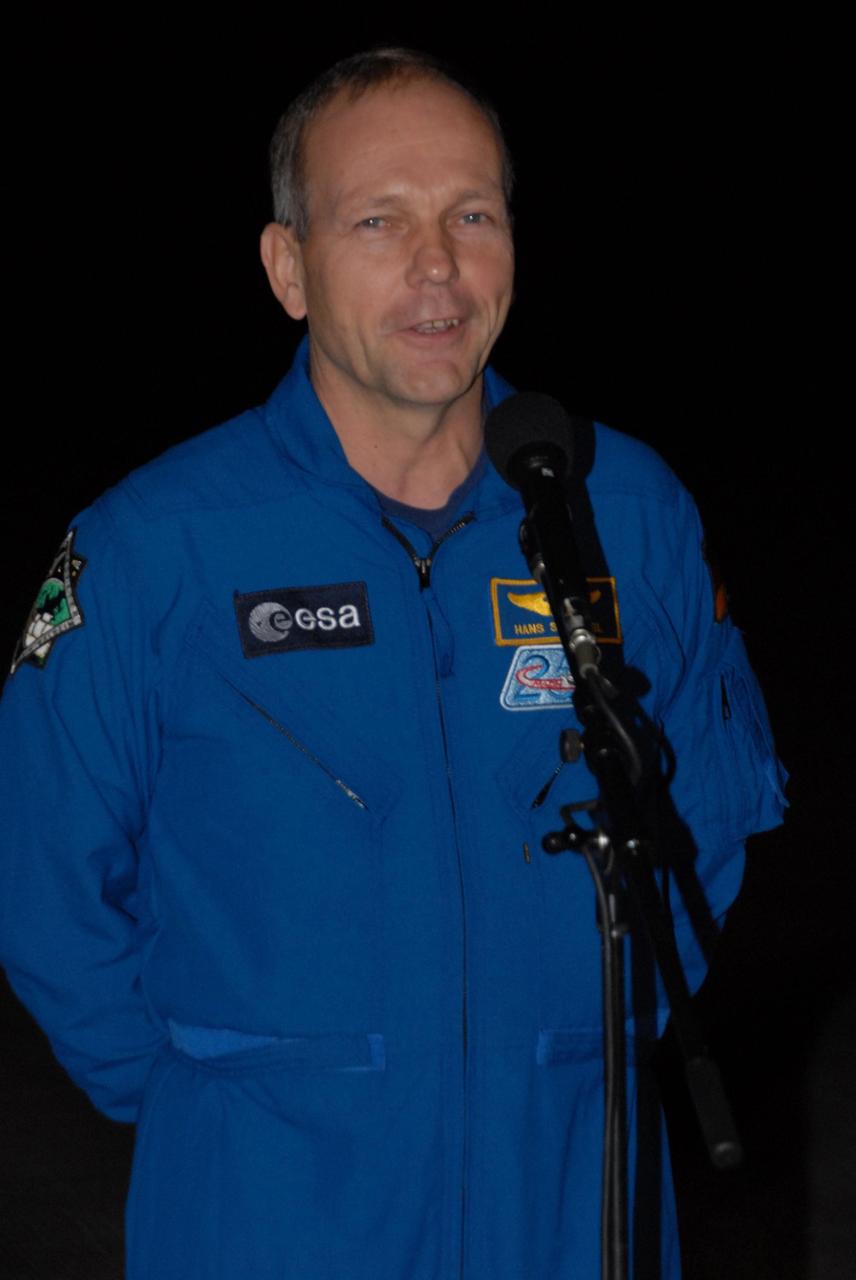
KENNEDY SPACE CENTER, FLA. -- Space shuttle Atlantis STS-122 Mission Specialist Hans Schlegel, of the European Space Agency, talks to the media at Kennedy Space Center's Shuttle Landing Facility following his arrival to participate in three days of terminal countdown demonstration test, or TCDT, activities. The TCDT provides astronauts and ground crews with equipment familiarization, emergency egress training and a simulated launch countdown. On mission STS-122, Atlantis will deliver the Columbus module to the International Space Station. The European Space Agency's largest single contribution to the station, Columbus is a multifunctional, pressurized laboratory that will be permanently attached to U.S. Node 2, called Harmony. The laboratory will expand the research facilities aboard the station, providing crew members and scientists from around the world the ability to conduct a variety of experiments in the physical, materials and life sciences. Photo credit: NASA/George Shelton
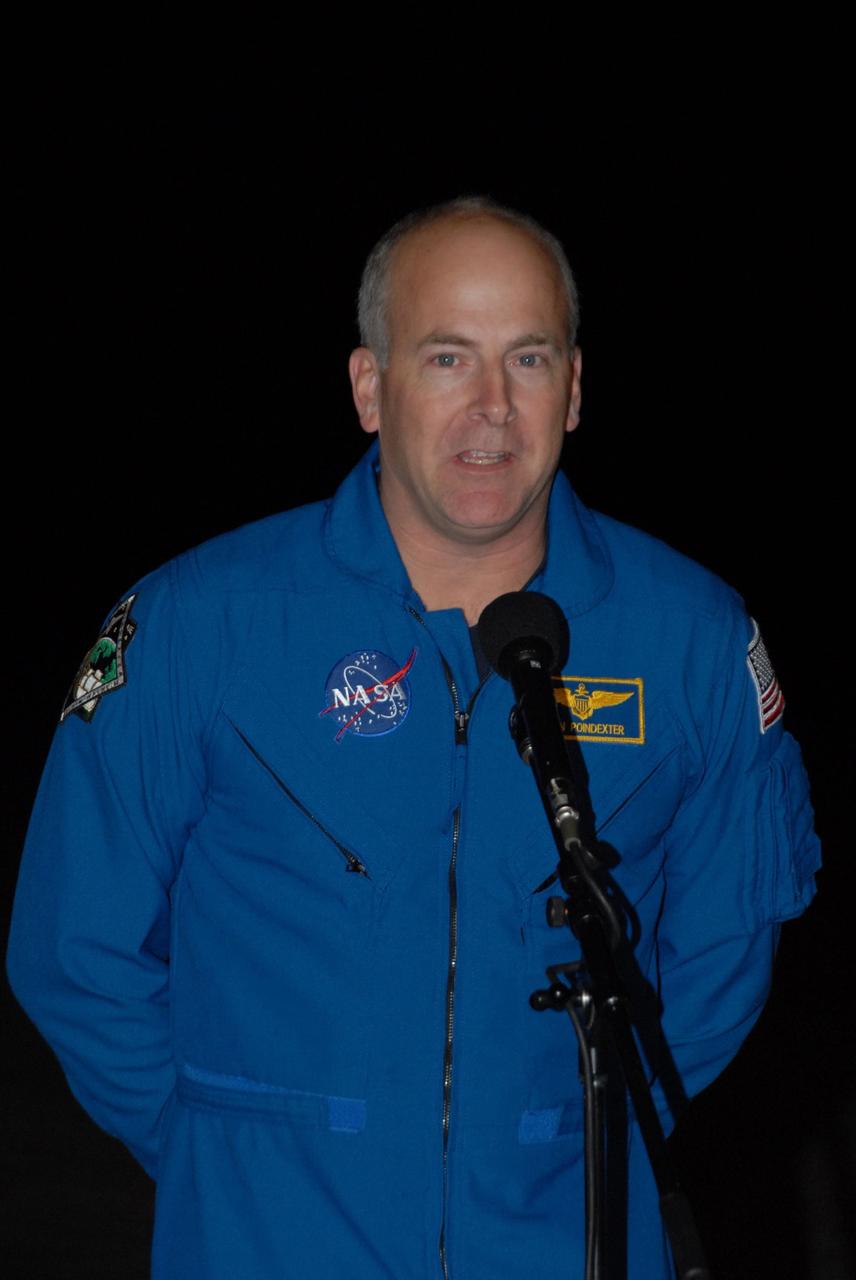
KENNEDY SPACE CENTER, FLA. -- Space shuttle Atlantis STS-122 Pilot Alan Poindexter talks to the media at Kennedy Space Center's Shuttle Landing Facility following his arrival to participate in three days of terminal countdown demonstration test, or TCDT, activities. The TCDT provides astronauts and ground crews with equipment familiarization, emergency egress training and a simulated launch countdown. On mission STS-122, Atlantis will deliver the Columbus module to the International Space Station. The European Space Agency's largest single contribution to the station, Columbus is a multifunctional, pressurized laboratory that will be permanently attached to U.S. Node 2, called Harmony. The laboratory will expand the research facilities aboard the station, providing crew members and scientists from around the world the ability to conduct a variety of experiments in the physical, materials and life sciences. Photo credit: NASA/George Shelton
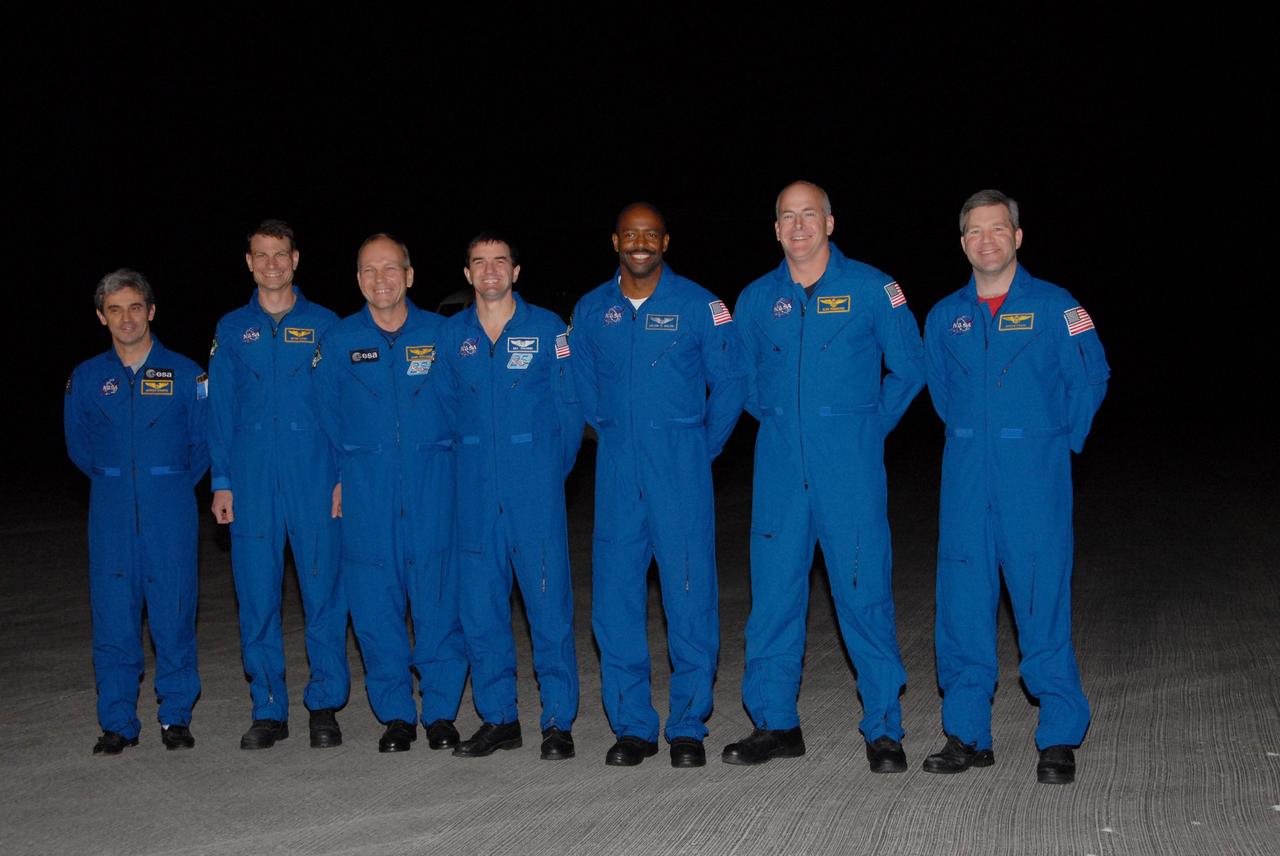
KENNEDY SPACE CENTER, FLA. -- The astronauts assigned to the space shuttle Atlantis STS-122 crew arrive at Kennedy Space Center's Shuttle Landing Facility aboard a Gulfstream shuttle training aircraft to participate in three days of terminal countdown demonstration test, or TCDT, activities. From left are Mission Specialist Leopold Eyharts, a European Space Agency astronaut who will remain on the International Space Station as a flight engineer for Expedition 16; Mission Specialists Stanley Love, Hans Schlegel of the European Space Agency, Rex Walheim and Leland Melvin; Pilot Alan Poindexter; and Commander Steve Frick. The TCDT provides astronauts and ground crews with equipment familiarization, emergency egress training and a simulated launch countdown. On mission STS-122, Atlantis will deliver the Columbus module to the International Space Station. The European Space Agency's largest single contribution to the station, Columbus is a multifunctional, pressurized laboratory that will be permanently attached to U.S. Node 2, called Harmony. The laboratory will expand the research facilities aboard the station, providing crew members and scientists from around the world the ability to conduct a variety of experiments in the physical, materials and life sciences. Photo credit: NASA/George Shelton
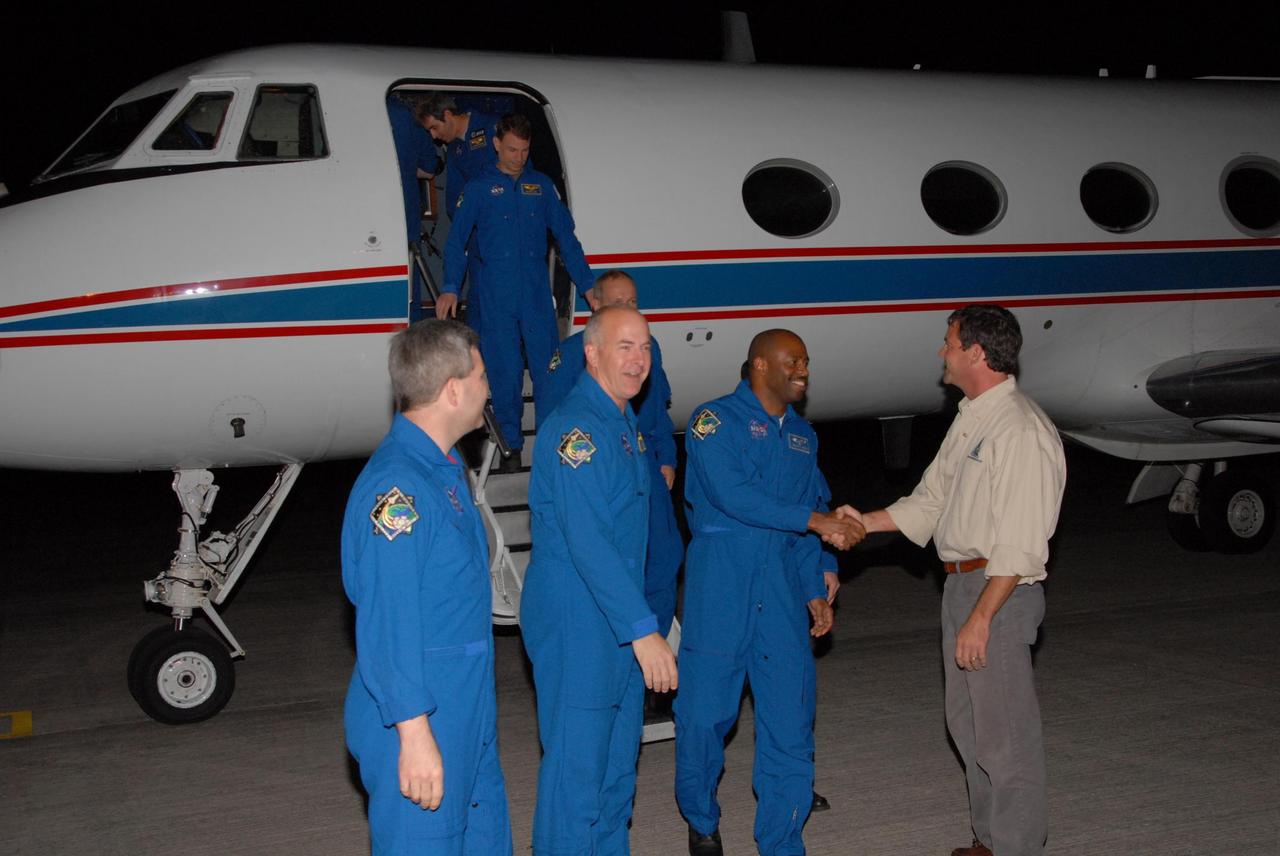
KENNEDY SPACE CENTER, FLA. -- The astronauts assigned to the space shuttle Atlantis STS-122 crew arrive at Kennedy Space Center's Shuttle Landing Facility aboard a Gulfstream shuttle training aircraft to participate in three days of terminal countdown demonstration test, or TCDT, activities. STS-122 Launch Director Doug Lyons greets Mission Specialist Leland Melvin as Commander Steve Frick and Pilot Alan Poindexter look on. Disembarking are Mission Specialists Hans Schlegel of the European Space Agency, Stanley Love and Leopold Eyharts, a European Space Agency astronaut who will remain on the International Space Station as a flight engineer for Expedition 16. The TCDT provides astronauts and ground crews with equipment familiarization, emergency egress training and a simulated launch countdown. On mission STS-122, Atlantis will deliver the Columbus module to the International Space Station. The European Space Agency's largest single contribution to the station, Columbus is a multifunctional, pressurized laboratory that will be permanently attached to U.S. Node 2, called Harmony. The laboratory will expand the research facilities aboard the station, providing crew members and scientists from around the world the ability to conduct a variety of experiments in the physical, materials and life sciences. Photo credit: NASA/George Shelton
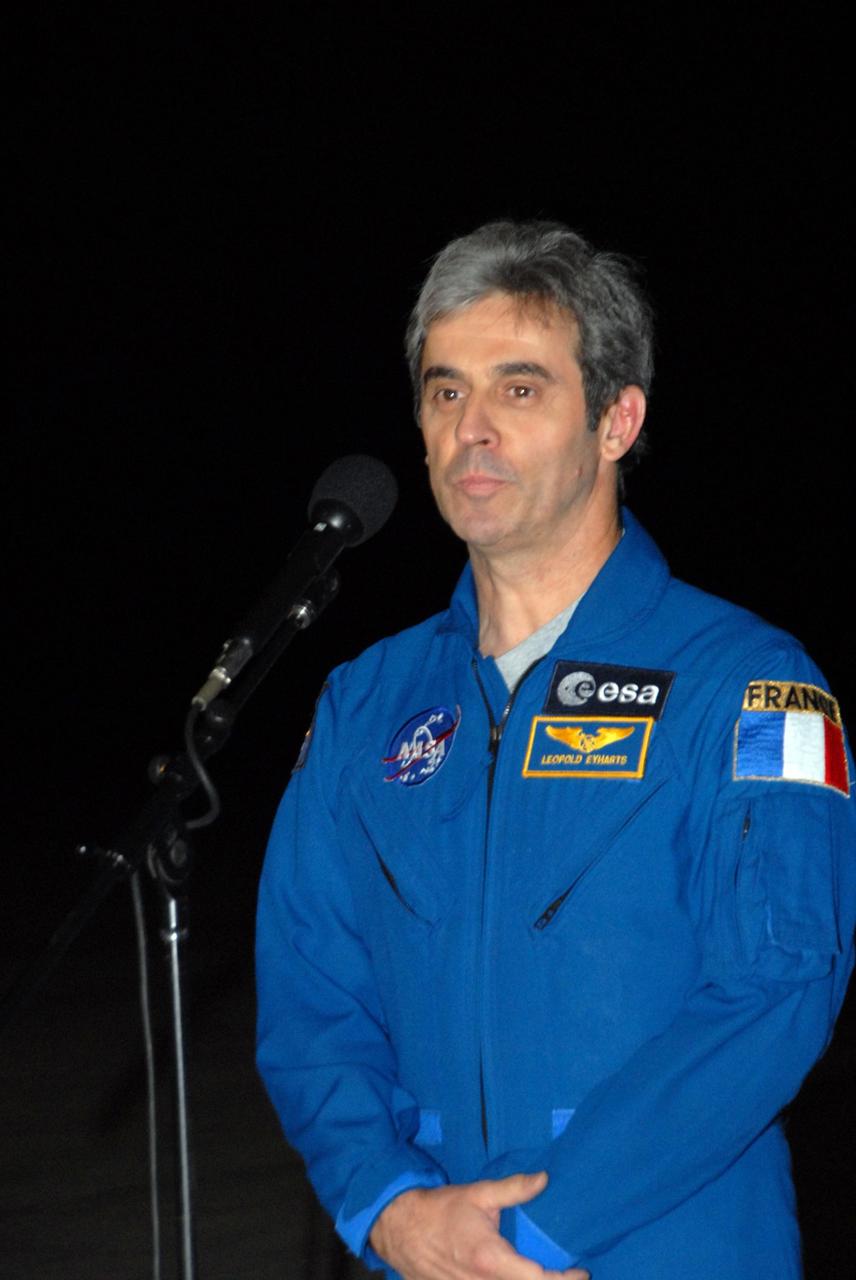
KENNEDY SPACE CENTER, FLA. -- Space shuttle Atlantis STS-122 Mission Specialist Leopold Eyharts, of the European Space Agency, talks to the media at Kennedy Space Center's Shuttle Landing Facility following his arrival to participate in three days of terminal countdown demonstration test, or TCDT, activities. Eyharts will remain on the International Space Station as a flight engineer for Expedition 16 following the STS-122 mission. The TCDT provides astronauts and ground crews with equipment familiarization, emergency egress training and a simulated launch countdown. On mission STS-122, Atlantis will deliver the Columbus module to the International Space Station. The European Space Agency's largest single contribution to the station, Columbus is a multifunctional, pressurized laboratory that will be permanently attached to U.S. Node 2, called Harmony. The laboratory will expand the research facilities aboard the station, providing crew members and scientists from around the world the ability to conduct a variety of experiments in the physical, materials and life sciences. Photo credit: NASA/George Shelton
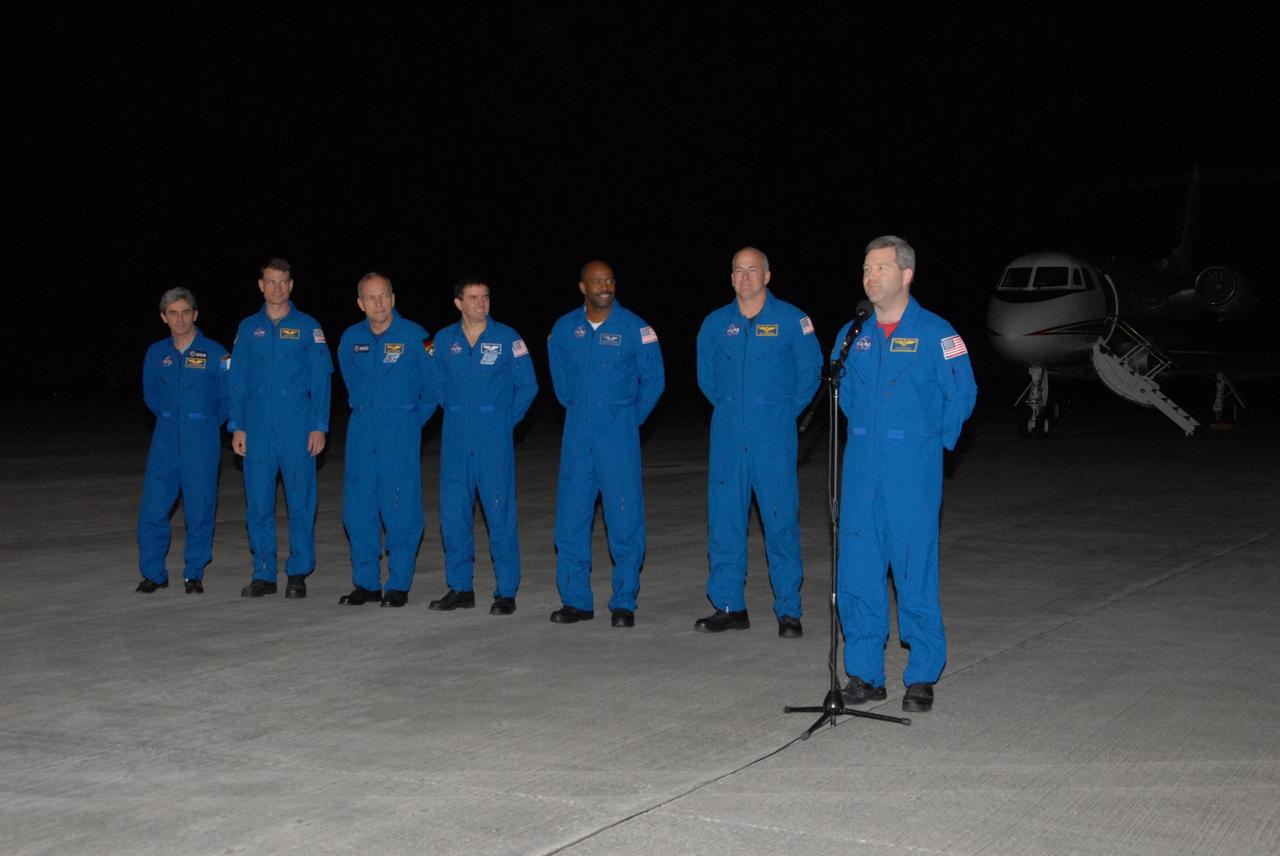
KENNEDY SPACE CENTER, FLA. -- Space shuttle Atlantis STS-122 Commander Steve Frick, at the microphone, addresses the media at Kennedy Space Center's Shuttle Landing Facility following his arrival to participate in three days of terminal countdown demonstration test, or TCDT, activities. Other STS-122 crew members are, from left, Mission Specialist Leopold Eyharts, a European Space Agency astronaut who will remain on the International Space Station as a flight engineer for Expedition 16; Mission Specialists Stanley Love, Hans Schlegel of the European Space Agency, Rex Walheim and Leland Melvin; and Pilot Alan Poindexter. The TCDT provides astronauts and ground crews with equipment familiarization, emergency egress training and a simulated launch countdown. On mission STS-122, Atlantis will deliver the Columbus module to the International Space Station. The European Space Agency's largest single contribution to the station, Columbus is a multifunctional, pressurized laboratory that will be permanently attached to U.S. Node 2, called Harmony. The laboratory will expand the research facilities aboard the station, providing crew members and scientists from around the world the ability to conduct a variety of experiments in the physical, materials and life sciences. Photo credit: NASA/George Shelton
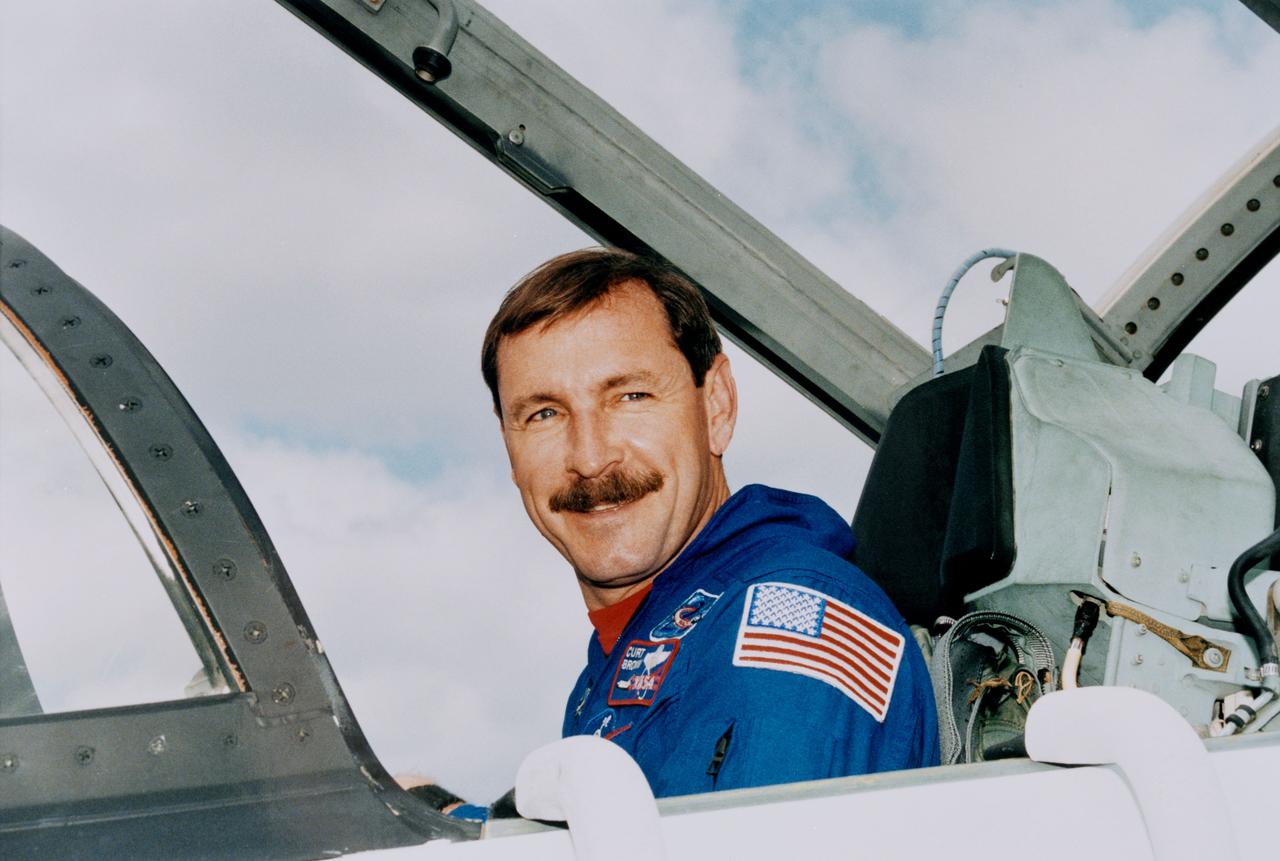
S96-08025 (22 April 1996) --- The STS-77 crew arrives at the Kennedy Space Center's (KSC) Shuttle Landing Facility (SLF) for the Terminal Countdown Demonstration Test (TCDT), a dress rehearsal for launch. Shown here is Curtis L. Brown, Jr., pilot, who will be embarking on his third spaceflight when the Space Shuttle Endeavour lifts off on the STS-77 mission in mid-May. Over the next several days, the six-member crew will participate in emergency egress training at the pad and a simulated launch countdown that includes the entire launch team.
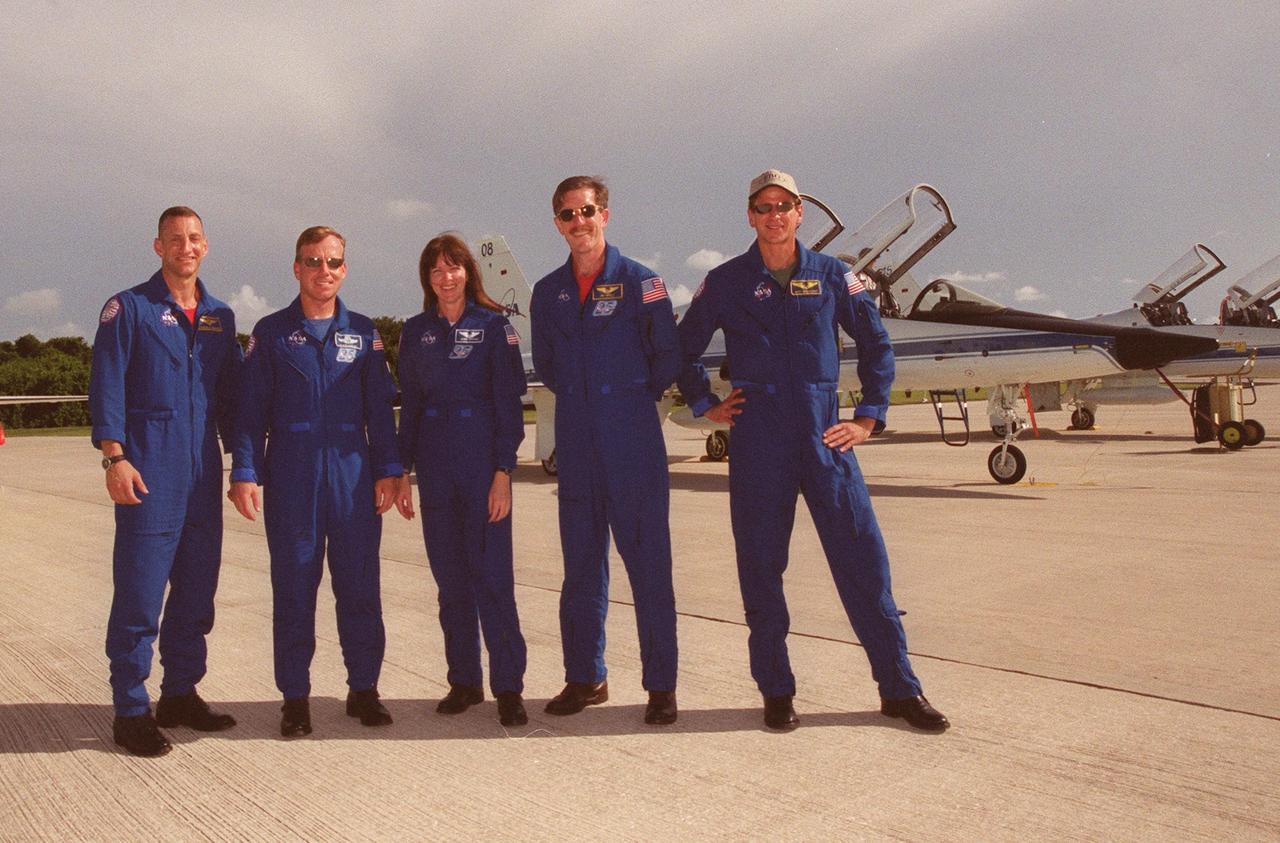
KENNEDY SPACE CENTER, Fla. -- The STS-104 crew pauses at the SLF after their arrival. Standing left to right are Pilot Charles O. Hobaugh, Commander Steven W. Lindsey and Mission Specialists Janet Lynn Kavandi, James F. Reilly and Michael L. Gernhardt. They are at KSC to take part in Terminal Countdown Demonstration Test (TCDT) Activities. The TCDT provides the crew with emergency egress training, opportunities to inspect their mission payloads in Space Shuttle Atlantis’s payload bay, and simulated countdown exercises. The launch of Atlantis on mission STS-104 is scheduled no earlier than July 12 from Launch Pad 39B. The mission is the 10th flight to the International Space Station and carries the Joint Airlock Module