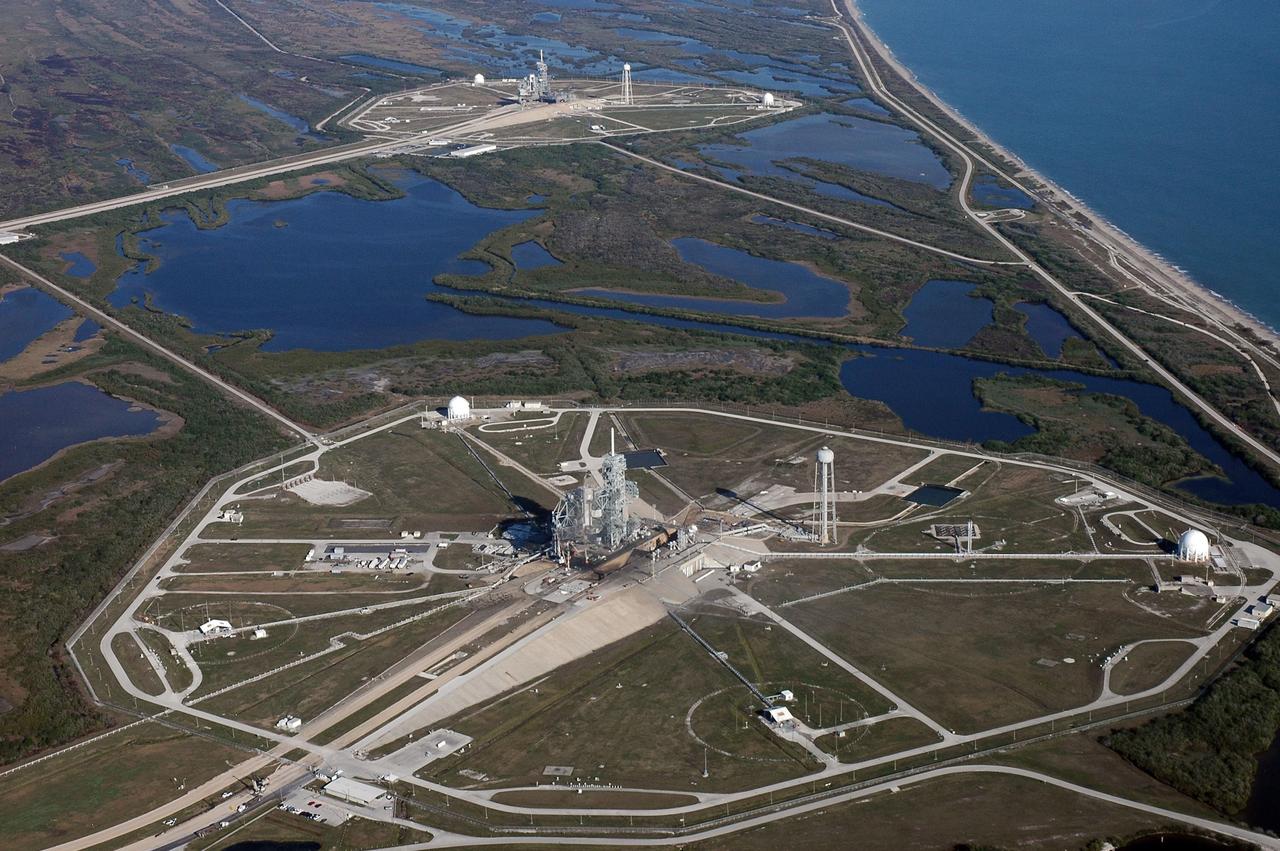
KENNEDY SPACE CENTER, FLA. - This aerial view looking north shows space shuttle Complex 39 Launch Pads A (foreground) and B at NASA's Kennedy Space Center. To the right is the Atlantic Ocean. Photo credit: Cory Huston
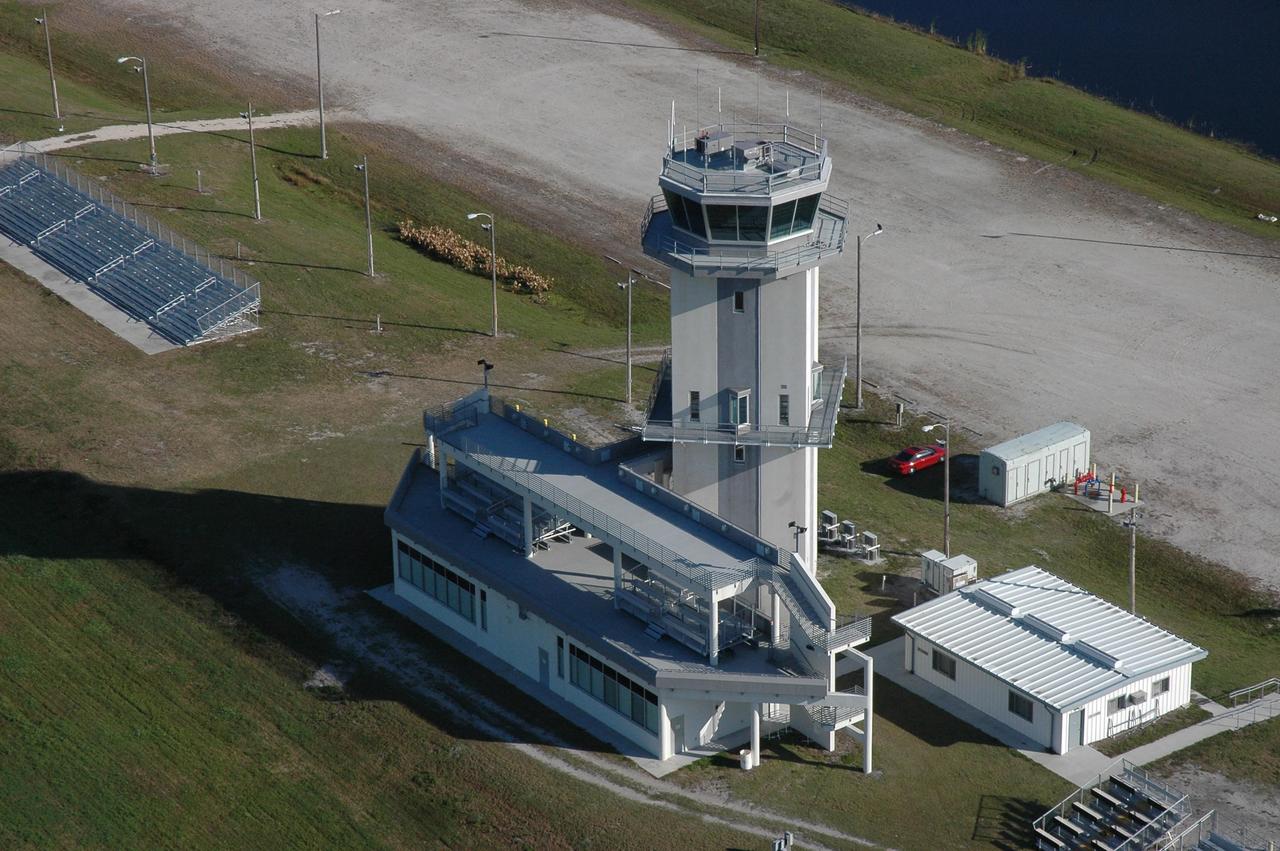
KENNEDY SPACE CENTER, FLA. - This view shows the NASA control tower at the NASA Kennedy Space Center's Shuttle Landing Facility. The site includes viewing stands at media resources inside the building in front of the tower. Photo credit: Cory Huston
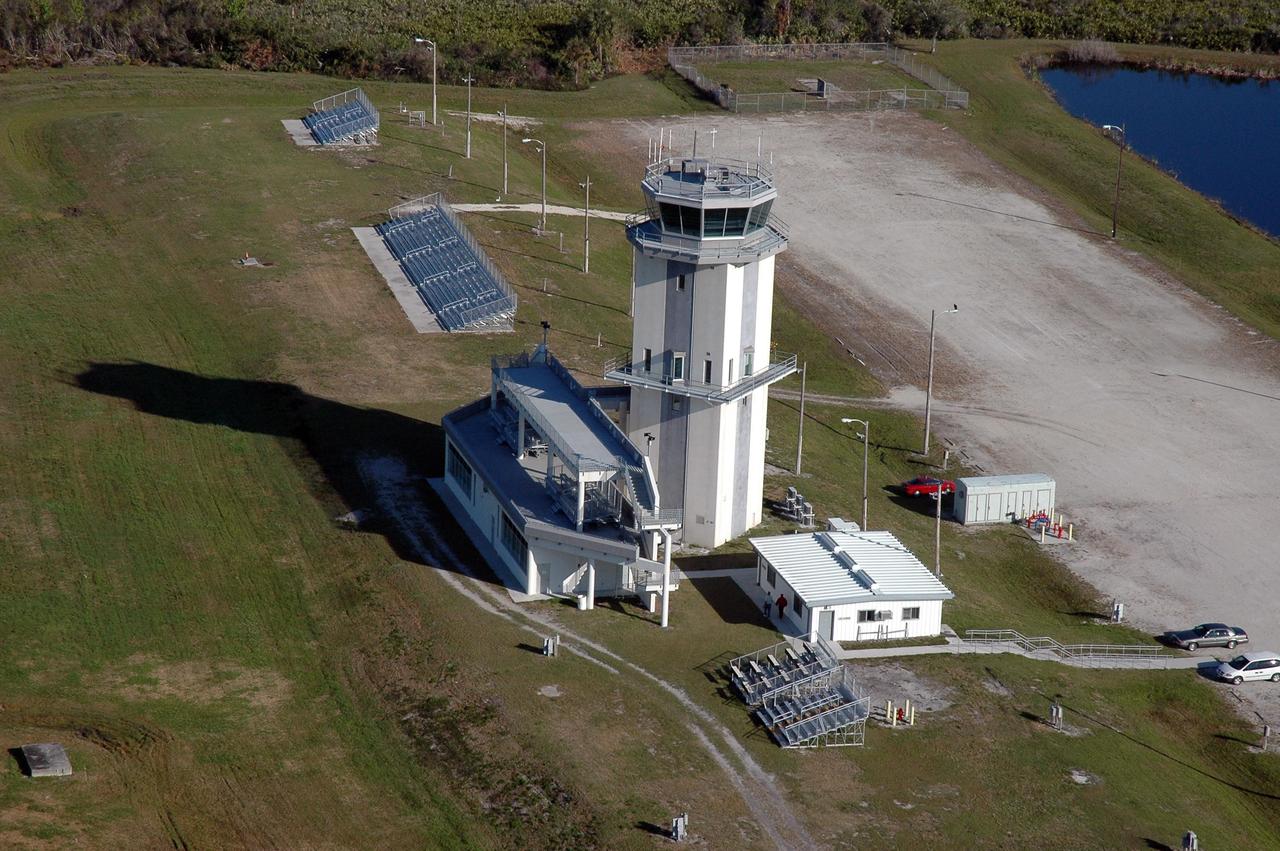
KENNEDY SPACE CENTER, FLA. - This view shows the NASA control tower at the NASA Kennedy Space Center's Shuttle Landing Facility. The site includes viewing stands at media resources inside the building in front of the tower. Photo credit: Cory Huston
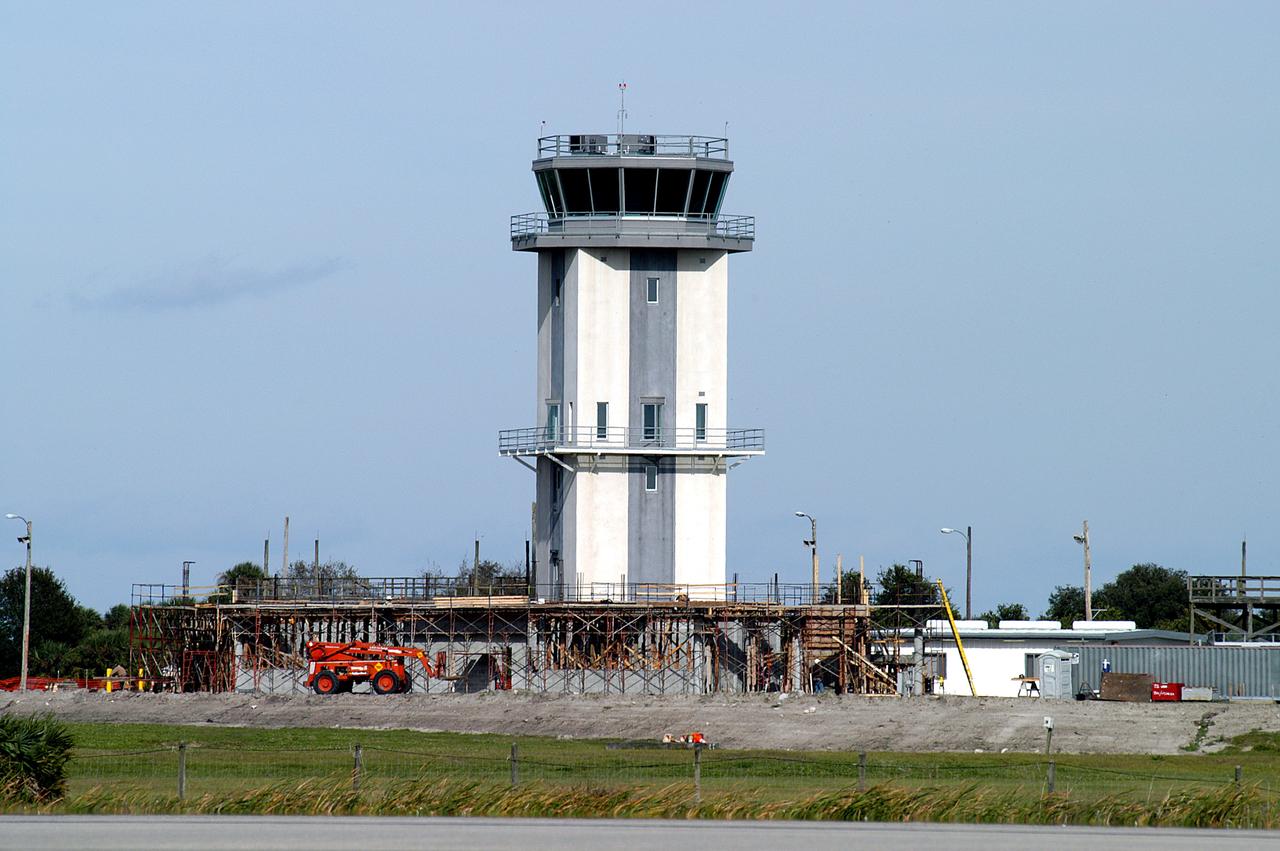
KENNEDY SPACE CENTER, FLA. -- A new control tower is nearing completion at the KSC Shuttle Landing Facility. It will replace the old tower in use since 1987. The old tower stands only 20 feet above the runway surface, too low to see the launch pads to the east. During nighttime landing operations, those inside the tower have been hindered by the eight-billion candlepower xenon lights that illuminate the runway. The new control tower is built atop an existing mound, rising nearly 100 feet over the midpoint of the runway. The height gives controllers a spectacular 360-degree view of NASA-KSC and northern Brevard County. The new facility will also replace the SLF Operations Building. The operations building is home to the Military Radar Unit that monitors NASA-KSC airspace 24 hours a day, as well as runway light controls, navigational aids, weather and wind speed instrumentation, and gate controls. In the new tower, the computer displays will be fully modernized to Federal Aviation Administration standards with touch-screen technology. Construction on the new facility began in February 2003 and is nearly ready for occupancy. Only some final inspections and approvals remain. A support building and Public Affairs viewing deck, to be used for observing future landing operations, will be added and are already in work.
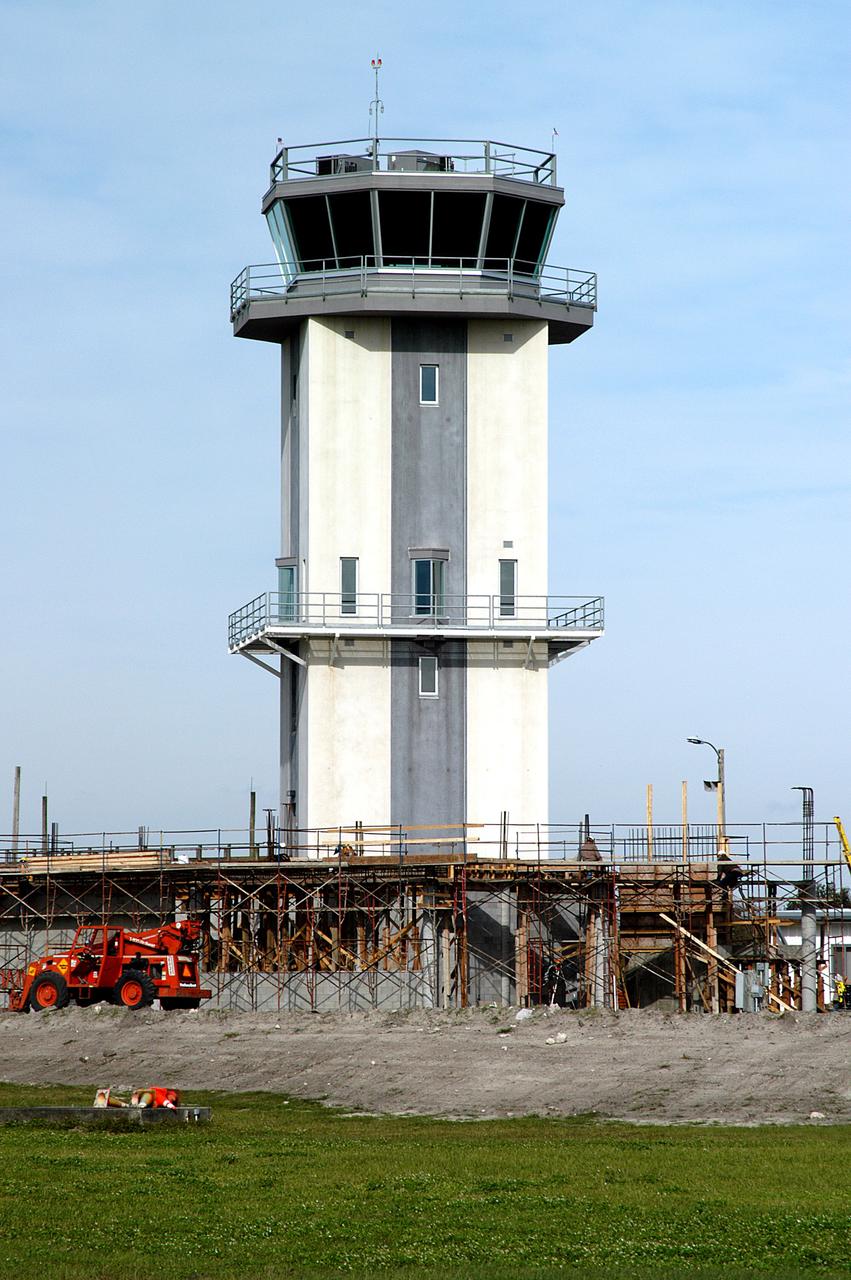
KENNEDY SPACE CENTER, FLA. -- A new control tower is nearing completion at the KSC Shuttle Landing Facility. It will replace the old tower in use since 1987. The old tower stands only 20 feet above the runway surface, too low to see the launch pads to the east. During nighttime landing operations, those inside the tower have been hindered by the eight-billion candlepower xenon lights that illuminate the runway. The new control tower is built atop an existing mound, rising nearly 100 feet over the midpoint of the runway. The height gives controllers a spectacular 360-degree view of NASA-KSC and northern Brevard County. The new facility will also replace the SLF Operations Building. The operations building is home to the Military Radar Unit that monitors NASA-KSC airspace 24 hours a day, as well as runway light controls, navigational aids, weather and wind speed instrumentation, and gate controls. In the new tower, the computer displays will be fully modernized to Federal Aviation Administration standards with touch-screen technology. Construction on the new facility began in February 2003 and is nearly ready for occupancy. Only some final inspections and approvals remain. A support building and Public Affairs viewing deck, to be used for observing future landing operations, will be added and are already in work.
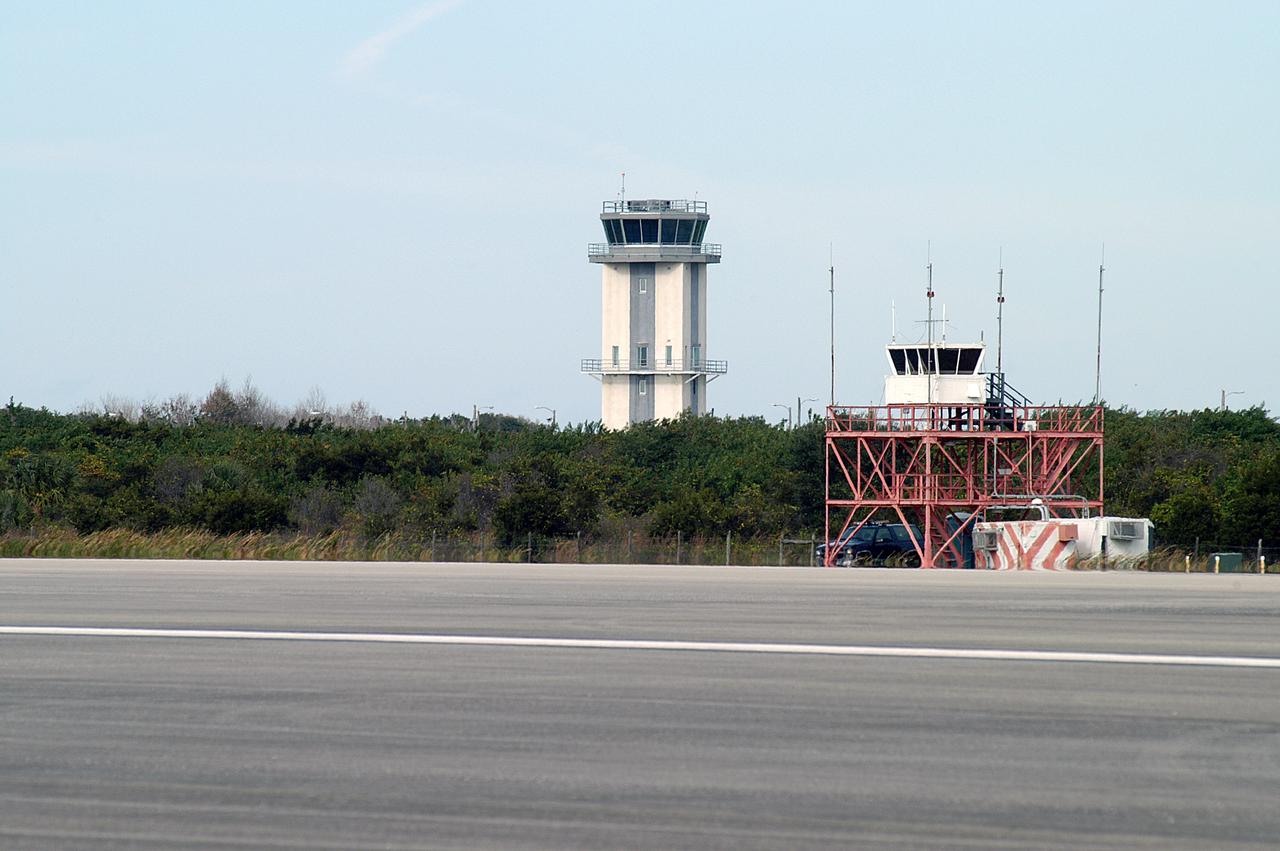
KENNEDY SPACE CENTER, FLA. -- Two control towers are seen at the edge of the KSC Shuttle Landing Facility, the old one in front and the nearly completed new tower in back. The old tower stands only 20 feet above the runway surface, too low to see the launch pads to the east. During nighttime landing operations, those inside the tower have been hindered by the eight-billion candlepower xenon lights that illuminate the runway. The new control tower is built atop an existing mound, rising nearly 100 feet over the midpoint of the runway. The height gives controllers a spectacular 360-degree view of NASA-KSC and northern Brevard County. The new facility will also replace the SLF Operations Building. The operations building is home to the Military Radar Unit that monitors NASA-KSC airspace 24 hours a day, as well as runway light controls, navigational aids, weather and wind speed instrumentation, and gate controls. In the new tower, the computer displays will be fully modernized to Federal Aviation Administration standards with touch-screen technology. Construction on the new facility began in February 2003 and is nearly ready for occupancy. Only some final inspections and approvals remain. A support building and Public Affairs viewing deck, to be used for observing future landing operations, will be added and are already in work.
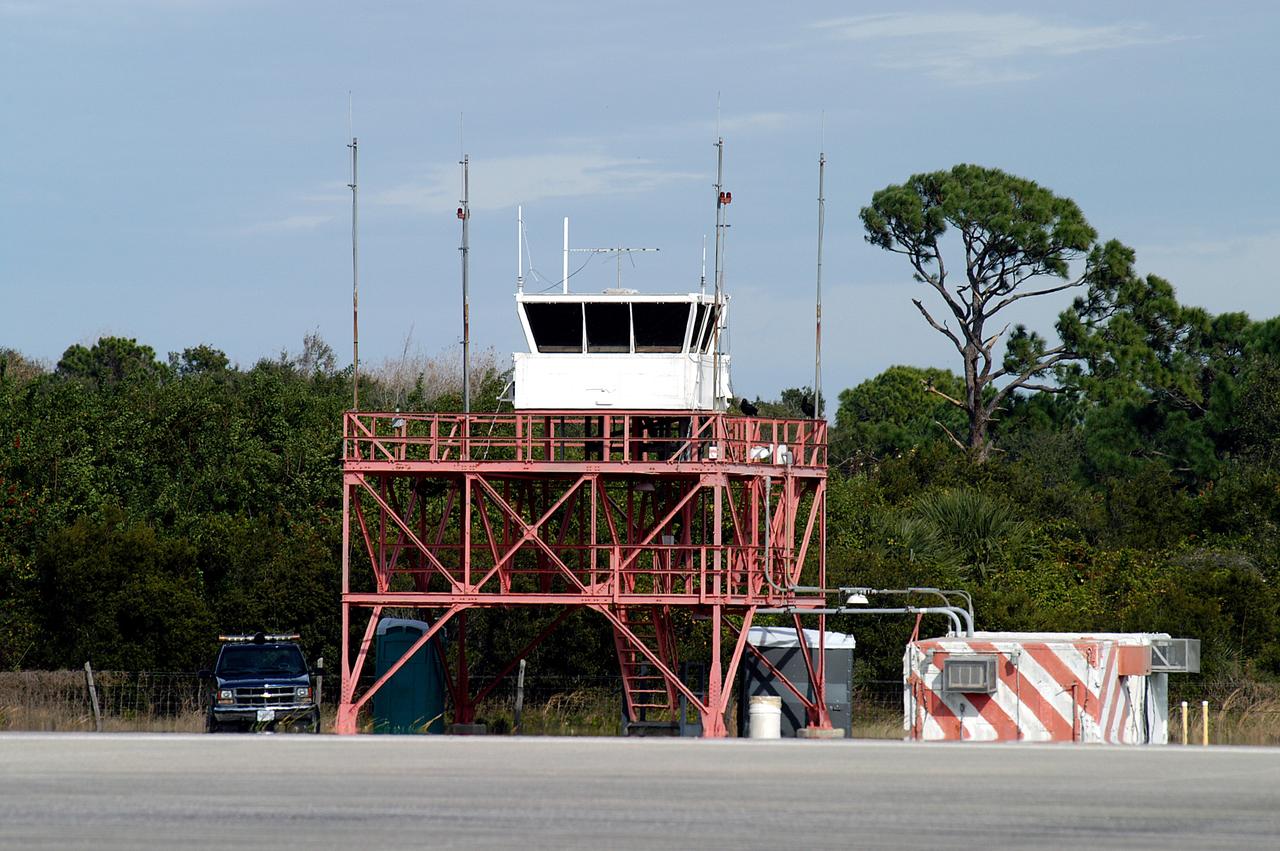
KENNEDY SPACE CENTER, FLA. -- The existing control tower seen here at the edge of the KSC Shuttle Landing Facility is being replaced. In use since 1987, the old tower stands only 20 feet above the runway surface, too low to see the launch pads to the east. During nighttime landing operations, those inside the tower have been hindered by the eight-billion candlepower xenon lights that illuminate the runway. The new control tower is built atop an existing mound, rising nearly 100 feet over the midpoint of the runway. The height gives controllers a spectacular 360-degree view of NASA-KSC and northern Brevard County. The new facility will also replace the SLF Operations Building. The operations building is home to the Military Radar Unit that monitors NASA-KSC airspace 24 hours a day, as well as runway light controls, navigational aids, weather and wind speed instrumentation, and gate controls. In the new tower, the computer displays will be fully modernized to Federal Aviation Administration standards with touch-screen technology. Construction on the new facility began in February 2003 and is nearly ready for occupancy. Only some final inspections and approvals remain. A support building and Public Affairs viewing deck, to be used for observing future landing operations, will be added and are already in work.
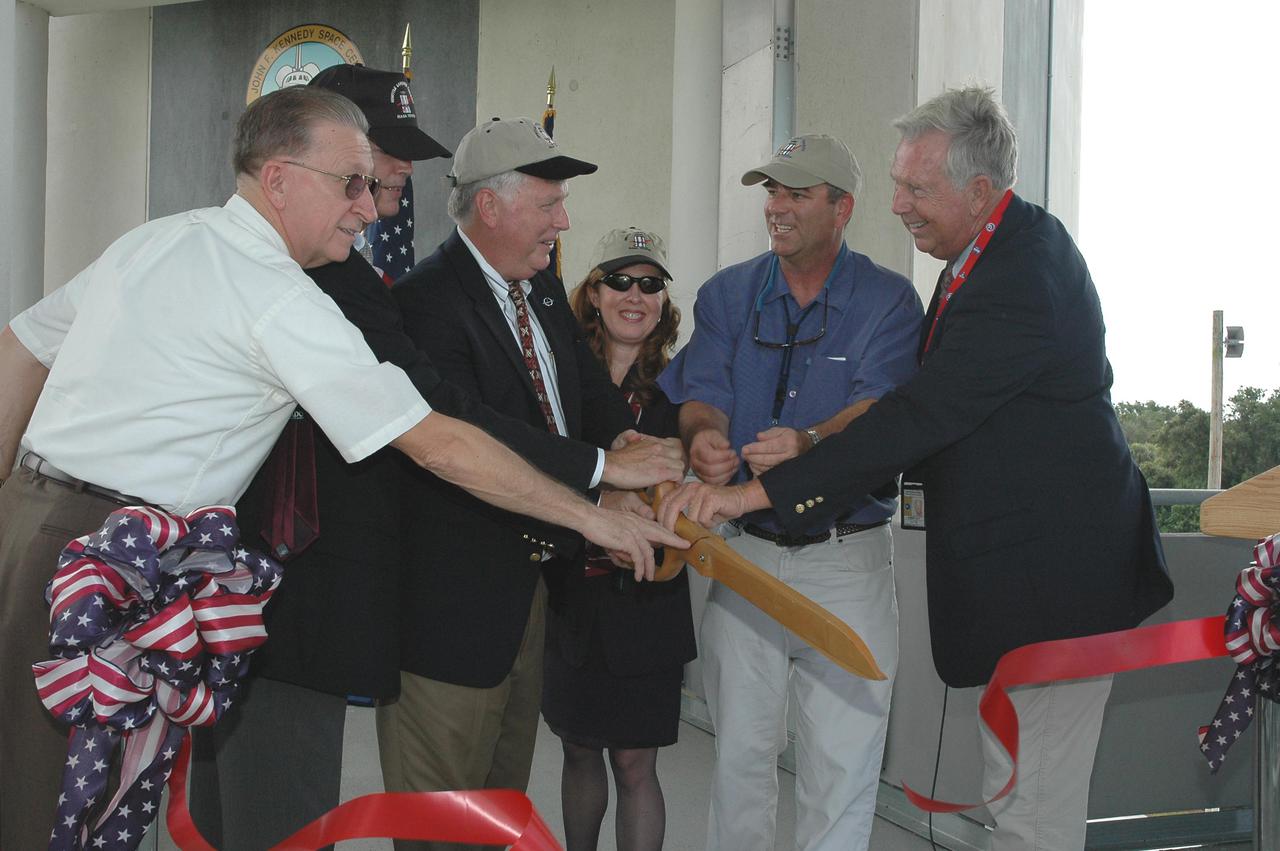
KENNEDY SPACE CENTER, FLA. - At the Shuttle Landing Facility on NASA’s Kennedy Space Center, a ribbon-cutting dedicated the new NASA Air Traffic Control Tower. From left are James H. Jones, Space Gateway Support President William A. Sample, Center Director Jim Kennedy, External Relations Director Lisa Malone, Center Operations Director Scott D. Kerr, and KSC Safety Aviation Officer Albert E. Taff. The structure rises 110 feet over the midpoint of the runway and offers air traffic controllers a magnificent 360-degree view of Kennedy Space Center, Cape Canaveral Air Force Station and north Brevard County. It replaces the small, portable tower installed at the edge of the runway in 1986. The new control tower will manage all landings and departures from the SLF, including air traffic within the Kennedy Space Center-Cape Canaveral restricted airspace. The facility provides a 24-hour weather-observing facility providing official hourly weather observations for the SLF and the Cape Canaveral vicinity, including special observations for all launches and landings. State-of-the-art, weather-observing equipment has been installed for Space Shuttle landings and for serving conventional aircraft landing at the SLF. At this location, weather observers will have a multi-directional view of the weather conditions at the runway and Launch Complex 39.
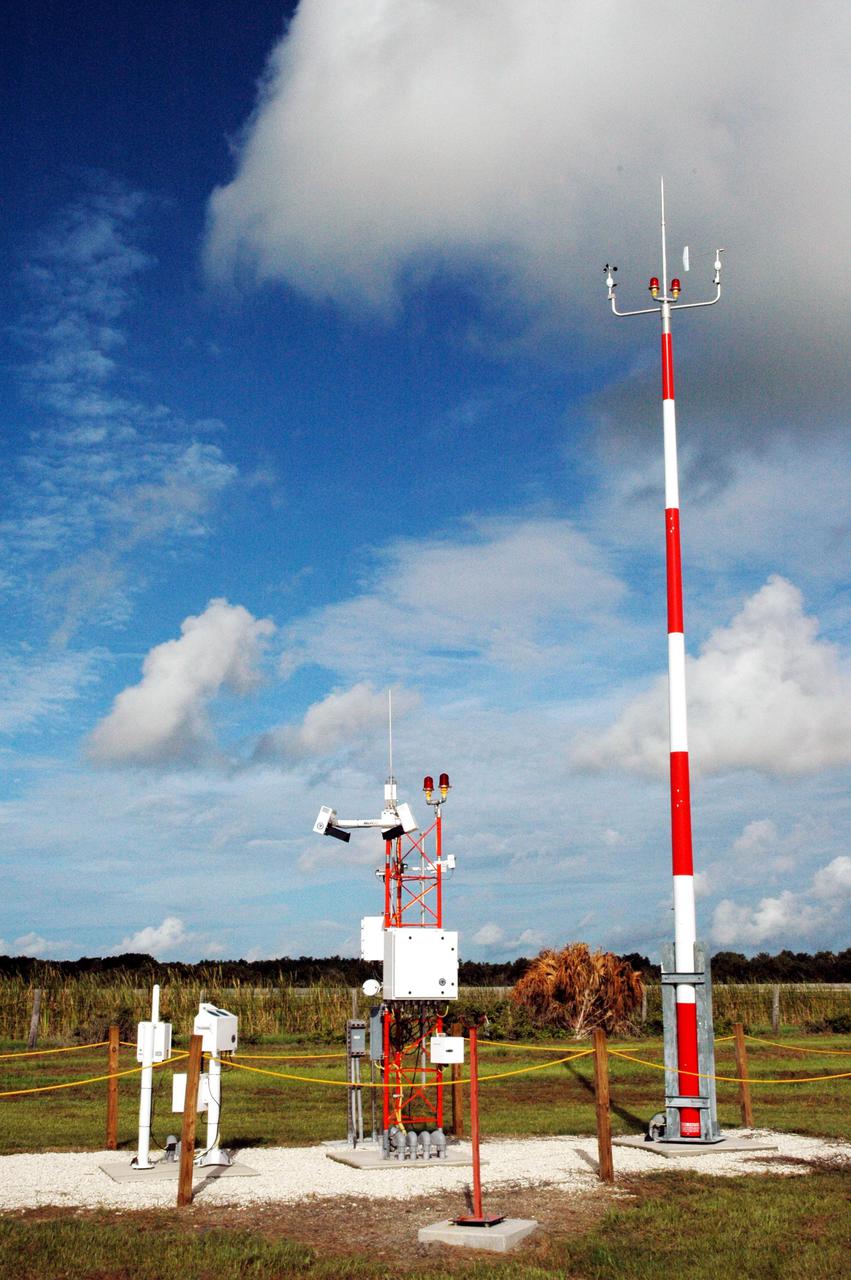
KENNEDY SPACE CENTER, FLA. - The Shuttle Landing Facility (SLF) Meteorological Observation System, a replacement for the current observing system, has been installed adjacent to the runway at midfield. It is currently undergoing final evaluation and testing before becoming operational. Sensors are also located at each end of the SLF runway. New associated computer displays will be installed in the KSC Weather Station located in the NASA control tower.
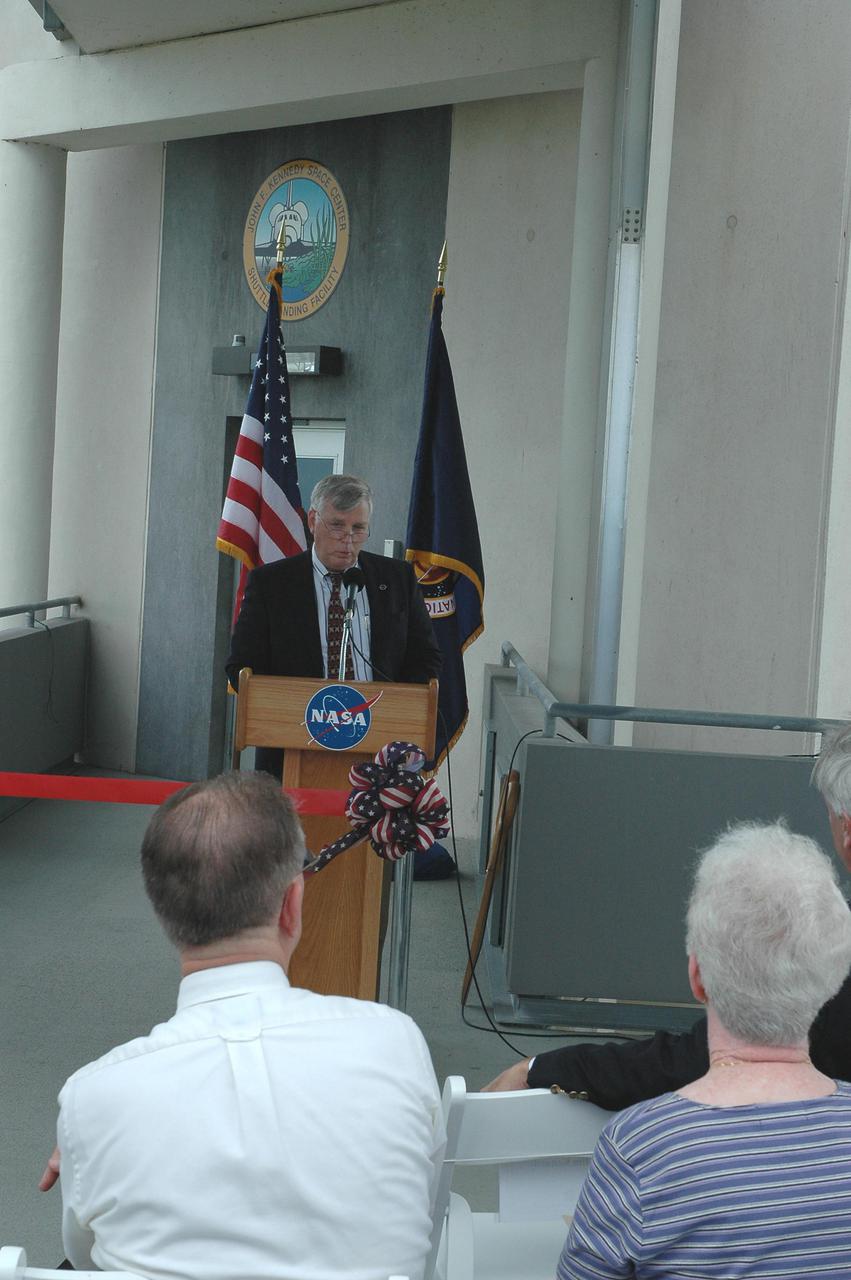
KENNEDY SPACE CENTER, FLA. - At the Shuttle Landing Facility on NASA’s Kennedy Space Center, KSC Director Jim Kennedy talks to attendees at the ribbon-cutting ceremony for the new NASA Air Traffic Control Tower. The dedication took place in the SLF’s new media facilities, which were built for the Return to Flight mission STS-114 and the landing of Shuttle Discovery. The facilities are co-located with the new control tower. The dedication and ribbon cutting were held at the base of the tower and included Center Director Jim Kennedy, Space Gateway Support President William A. Sample, External Relations Director Lisa Malone, Center Operations Director Scott D. Kerr, and KSC Safety Aviation Officer Albert E. Taff. The structure rises 110 feet over the midpoint of the runway and offers air traffic controllers a magnificent 360-degree view of Kennedy Space Center, Cape Canaveral Air Force Station and north Brevard County. It replaces the small, portable tower installed at the edge of the runway in 1986. The new control tower will manage all landings and departures from the SLF, including air traffic within the Kennedy Space Center-Cape Canaveral restricted airspace. The facility provides a 24-hour weather-observing facility providing official hourly weather observations for the SLF and the Cape Canaveral vicinity, including special observations for all launches and landings. State-of-the-art, weather-observing equipment has been installed for Space Shuttle landings and for serving conventional aircraft landing at the SLF. At this location, weather observers will have a multi-directional view of the weather conditions at the runway and Launch Complex 39.
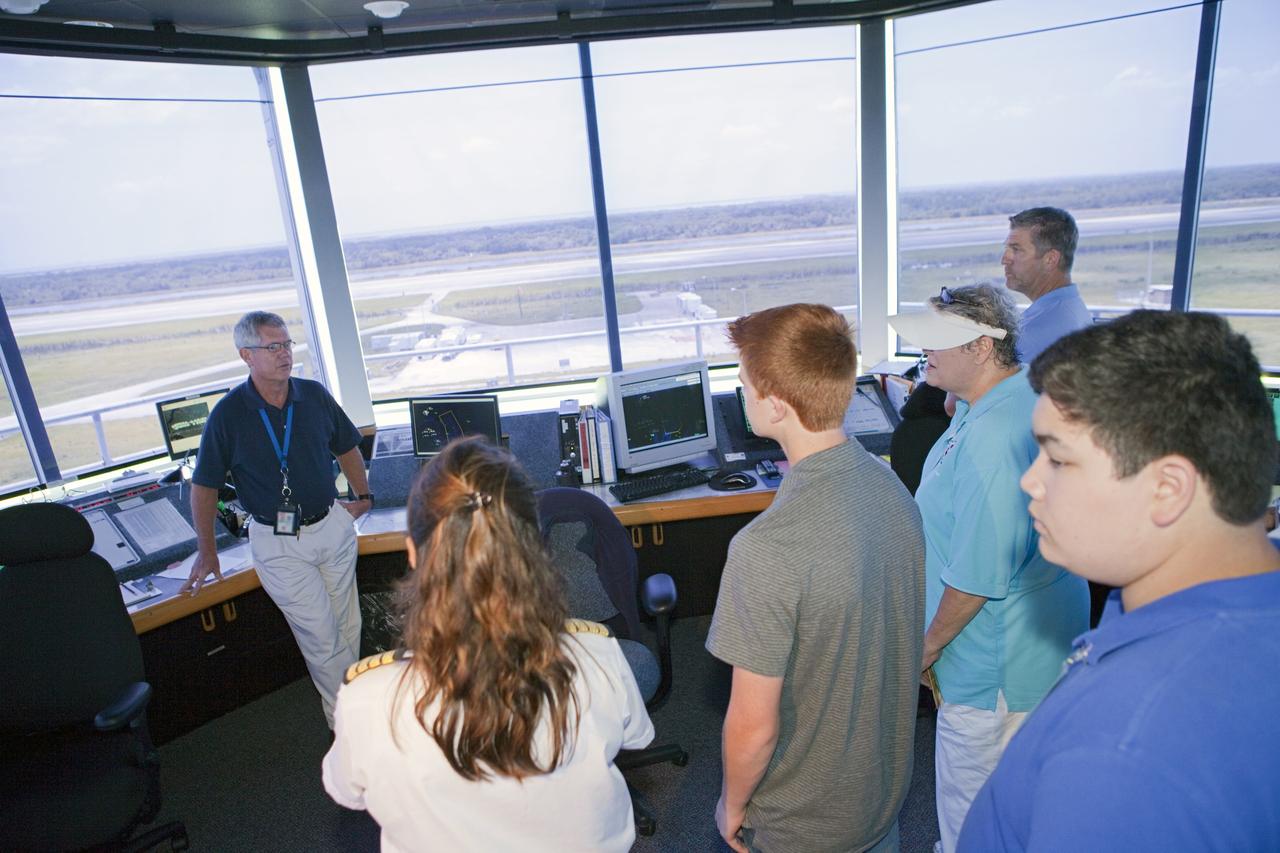
CAPE CANAVERAL, Fla. – At the Shuttle Landing Facility at NASA’s Kennedy Space Center in Florida, students and their flight instructors from Florida Tech, or FIT, in Melbourne, tour the midfield Air Traffic Control Tower. The instructors and their students arrived at the SLF in Cherokee Warrior and Cessna 172S lightweight aircraft. The middle and high school students are participating in FIT’s Av/Aero summer camp experience. They and their flight instructors toured the SLF midfield control tower, viewed F104 Starfighters and NASA Huey helicopters in the RLV Hangar, viewed the runway plaques marking wheels stop for each of the three space shuttles, and toured the Vehicle Assembly Building where space shuttle Atlantis currently is stored. Photo credit: NASA/Kim Shiflett
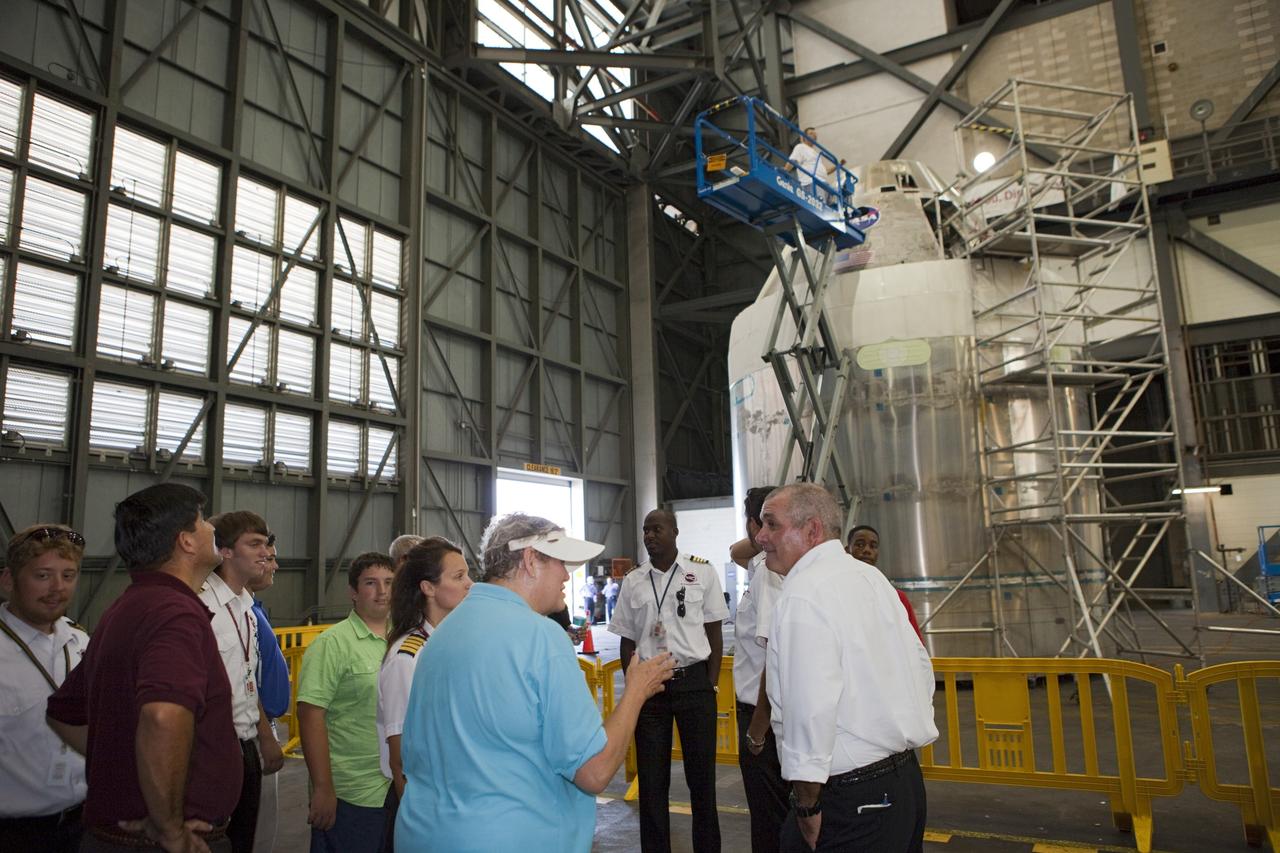
CAPE CANAVERAL, Fla. – Students and their flight instructors from Florida Tech, or FIT, in Melbourne, tour the Vehicle Assembly Building and view space shuttle Atlantis at NASA’s Kennedy Space Center in Florida. The instructors and their students arrived at the Shuttle Landing Facility, or SLF, in Cherokee Warrior and Cessna 172S lightweight aircraft. The middle and high school students are participating in FIT’s Av/Aero summer camp experience. They and their flight instructors also toured the SLF midfield control tower, viewed F104 Starfighters and NASA Huey helicopters in the RLV Hangar, and viewed the runway plaques marking wheels stop for each of the three space shuttles. Photo credit: NASA/Kim Shiflett
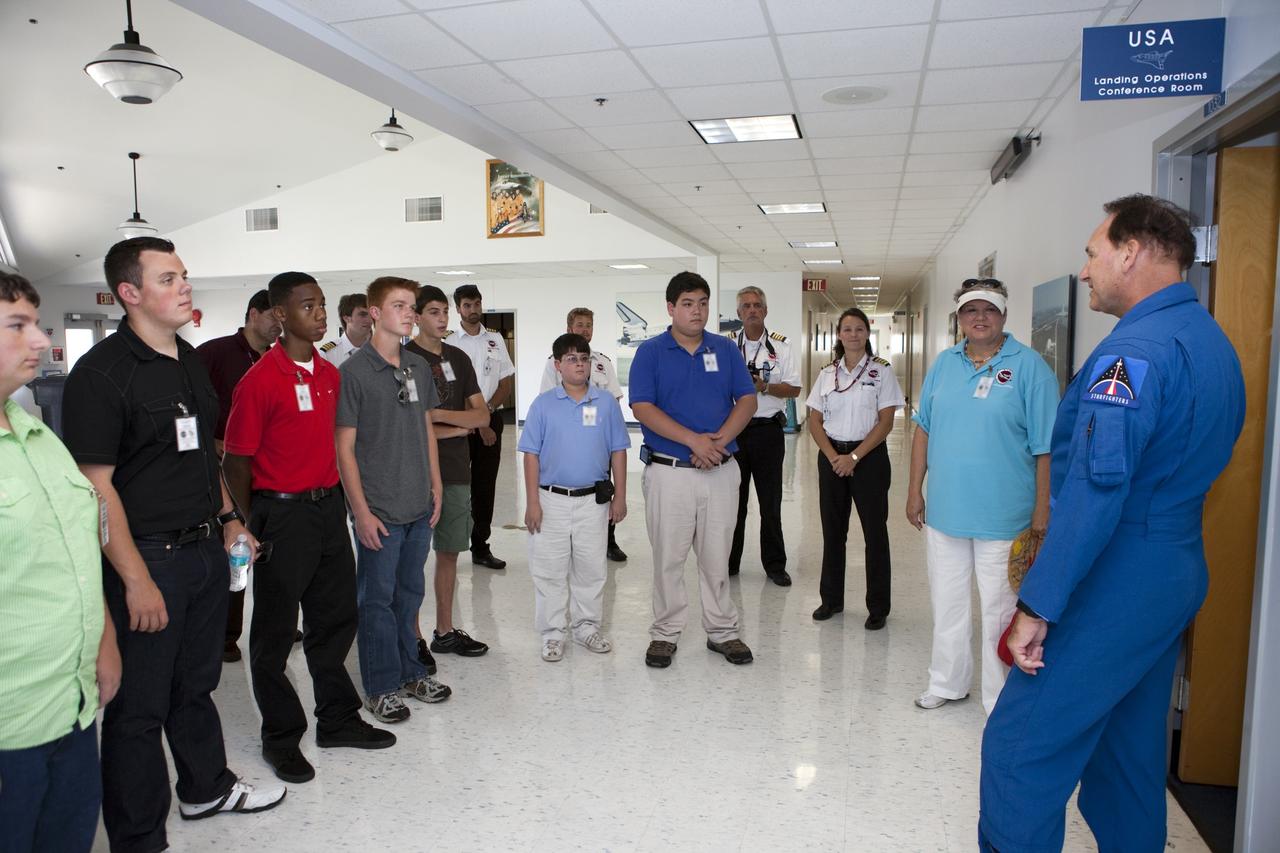
CAPE CANAVERAL, Fla. – In a support building near NASA Kennedy Space Center’s Shuttle Landing Facility, or SLF, in Florida, students and their flight instructors from Florida Tech, FIT, in Melbourne listen to F104 Starfighters Director Rick Svetkoff. The middle and high school students are participating in FIT’s Av/Aero summer camp experience. They and their flight instructors toured the SLF midfield control tower, viewed F104 Starfighters and NASA Huey helicopters in the RLV Hangar, viewed the runway plaques marking wheels stop for each of the three space shuttles, and toured the Vehicle Assembly Building where space shuttle Atlantis currently is stored. Photo credit: NASA/Kim Shiflett
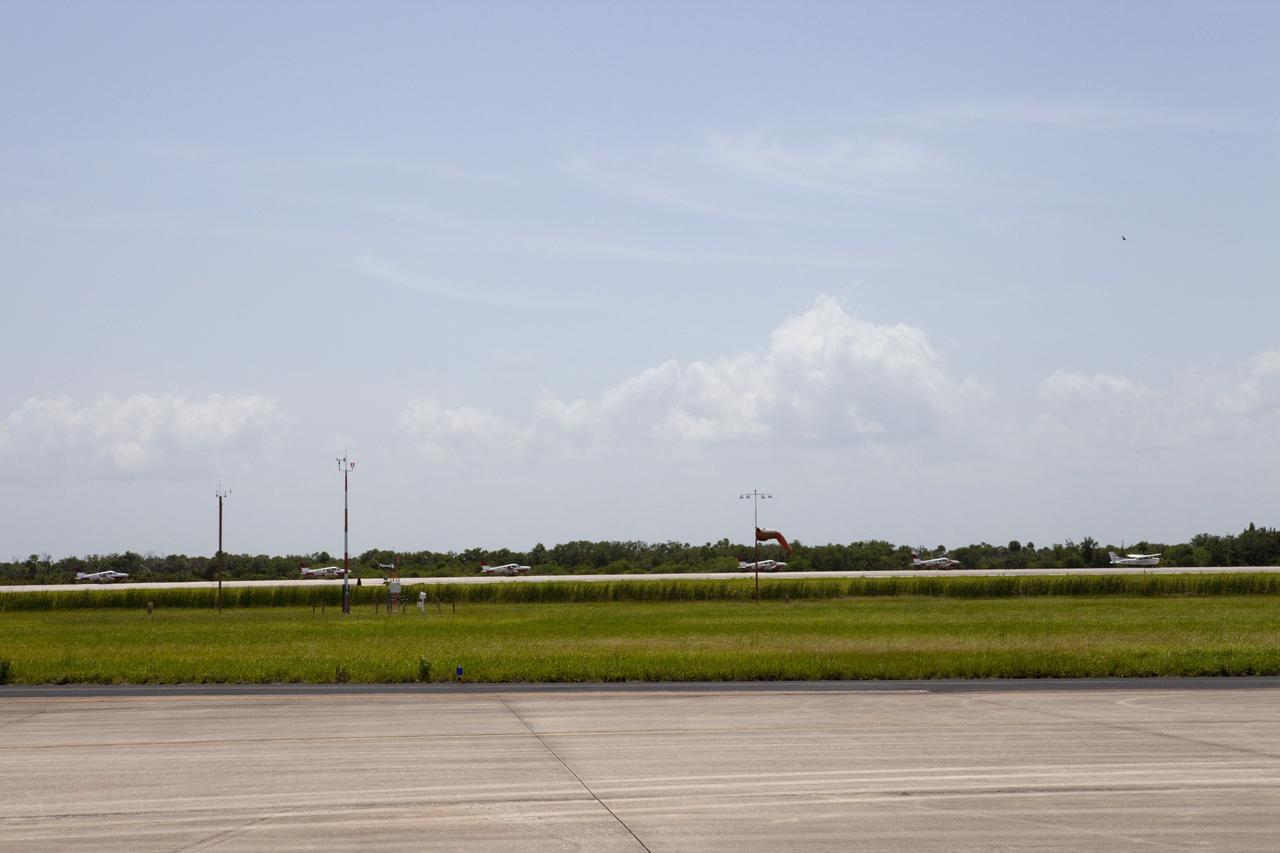
CAPE CANAVERAL, Fla. – At NASA Kennedy Space Center in Florida, flight instructors and their students from Florida Tech, or FIT, in Melbourne prepare to depart the Shuttle Landing Facility, or SLF, in Cherokee Warrior and Cessna 172S lightweight aircraft. The middle and high school students are participating in FIT’s Av/Aero summer camp experience. They and their flight instructors toured the SLF midfield control tower, viewed F104 Starfighters and NASA Huey helicopters in the RLV Hangar, viewed the runway plaques marking wheels stop for each of the three space shuttles, and toured the Vehicle Assembly Building where space shuttle Atlantis currently is stored. Photo credit: NASA/Kim Shiflett
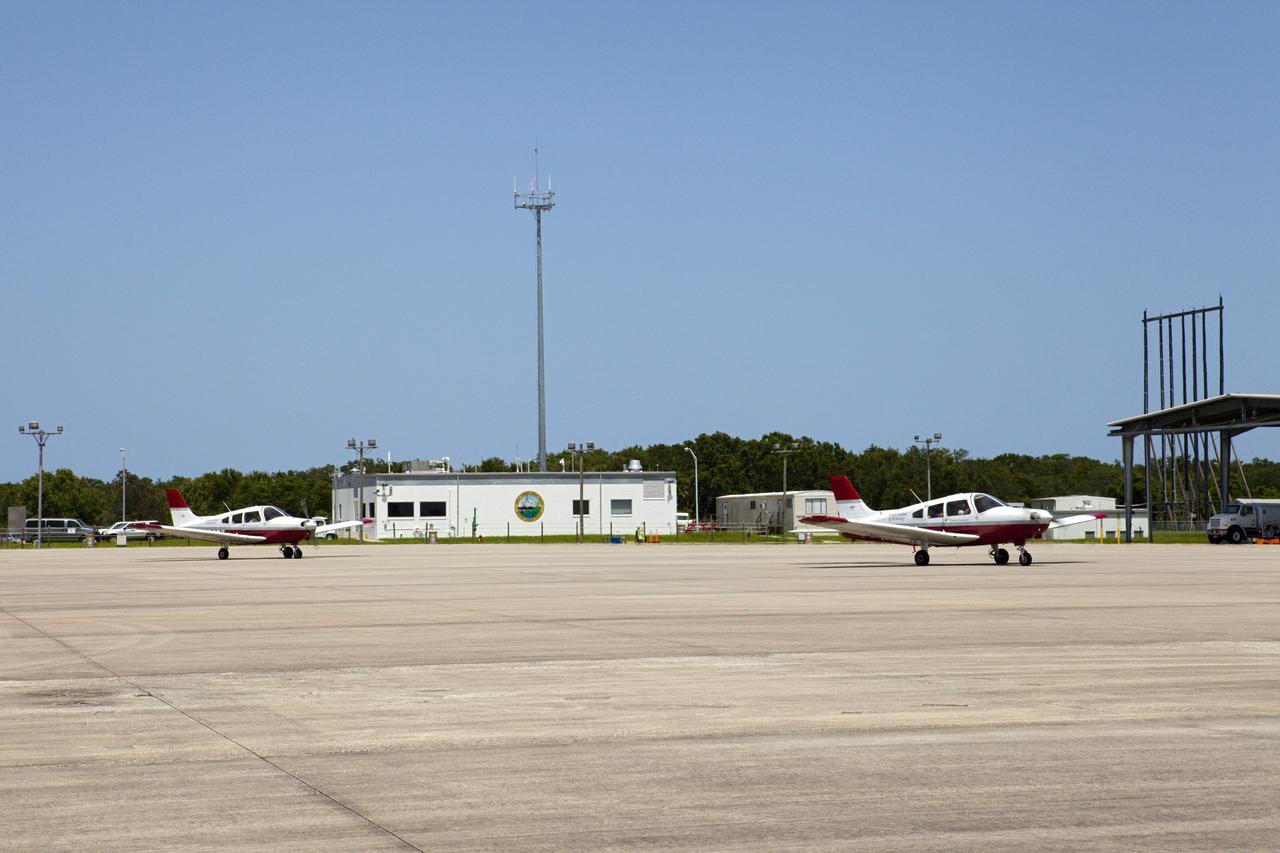
CAPE CANAVERAL, Fla. – At NASA Kennedy Space Center in Florida, flight instructors and their students from Florida Tech, or FIT, in Melbourne prepare to depart the Shuttle Landing Facility, or SLF, in Cherokee Warrior and Cessna 172S lightweight aircraft. The middle and high school students are participating in FIT’s Av/Aero summer camp experience. They and their flight instructors toured the SLF midfield control tower, viewed F104 Starfighters and NASA Huey helicopters in the RLV Hangar, viewed the runway plaques marking wheels stop for each of the three space shuttles, and toured the Vehicle Assembly Building where space shuttle Atlantis currently is stored. Photo credit: NASA/Kim Shiflett

CAPE CANAVERAL, Fla. – Students and their flight instructors from Florida Tech, or FIT, in Melbourne, tour the Vehicle Assembly Building and view space shuttle Atlantis at NASA’s Kennedy Space Center in Florida. The instructors and their students arrived at the Shuttle Landing Facility, or SLF, in Cherokee Warrior and Cessna 172S lightweight aircraft. The middle and high school students are participating in FIT’s Av/Aero summer camp experience. They and their flight instructors also toured the SLF midfield control tower, viewed F104 Starfighters and NASA Huey helicopters in the RLV Hangar, and viewed the runway plaques marking wheels stop for each of the three space shuttles. Photo credit: NASA/Kim Shiflett
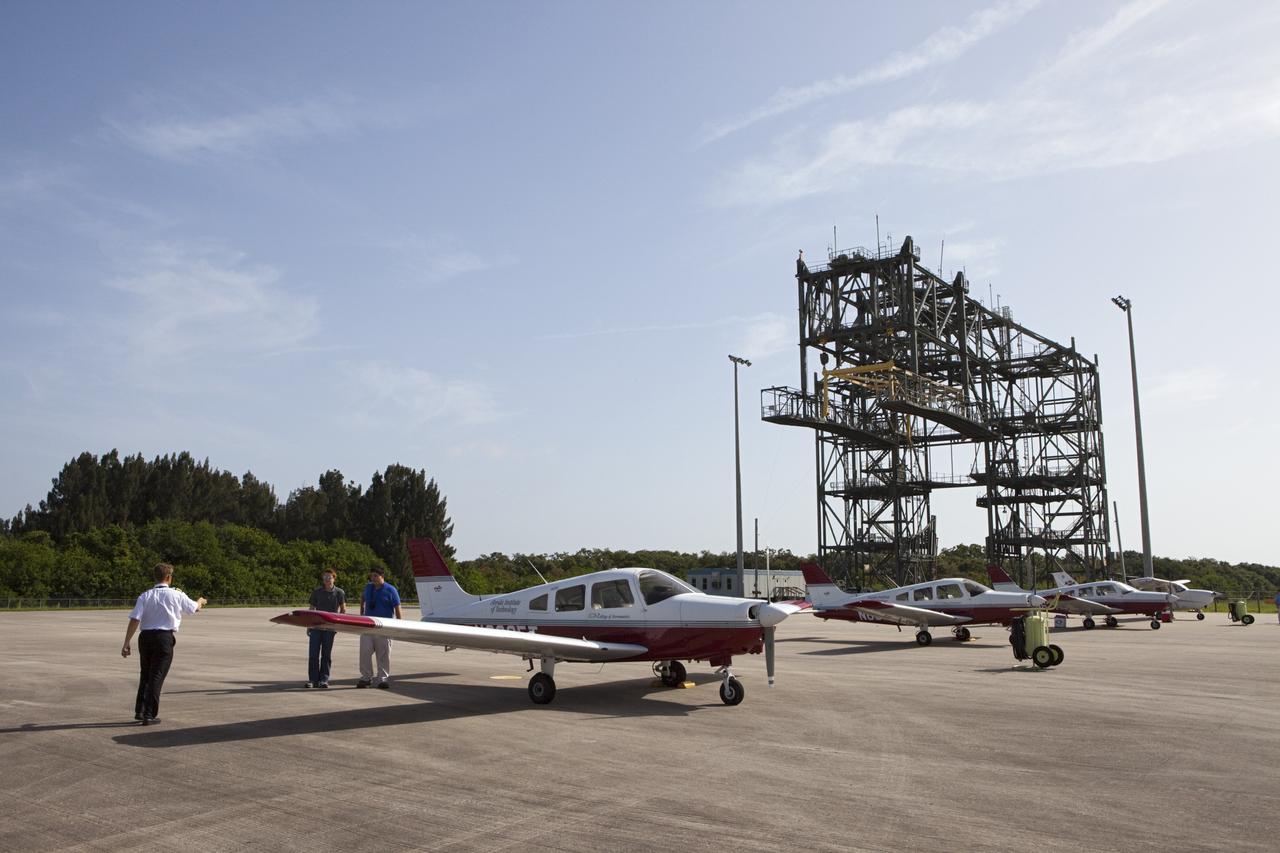
CAPE CANAVERAL, Fla. – Students and their flight instructors arrive at NASA Kennedy Space Center’s Shuttle Landing Facility, or SLF, in Florida in Cherokee Warrior and Cessna 172S lightweight aircraft from Florida Tech, or FIT, in Melbourne. The middle and high school students are participating in FIT’s Av/Aero summer camp experience. They and their flight instructors toured the SLF midfield control tower, viewed F104 Starfighters and NASA Huey helicopters in the RLV Hangar, viewed the runway plaques marking wheels stop for each of the three space shuttles, and toured the Vehicle Assembly Building where space shuttle Atlantis currently is stored. Photo credit: NASA/Kim Shiflett
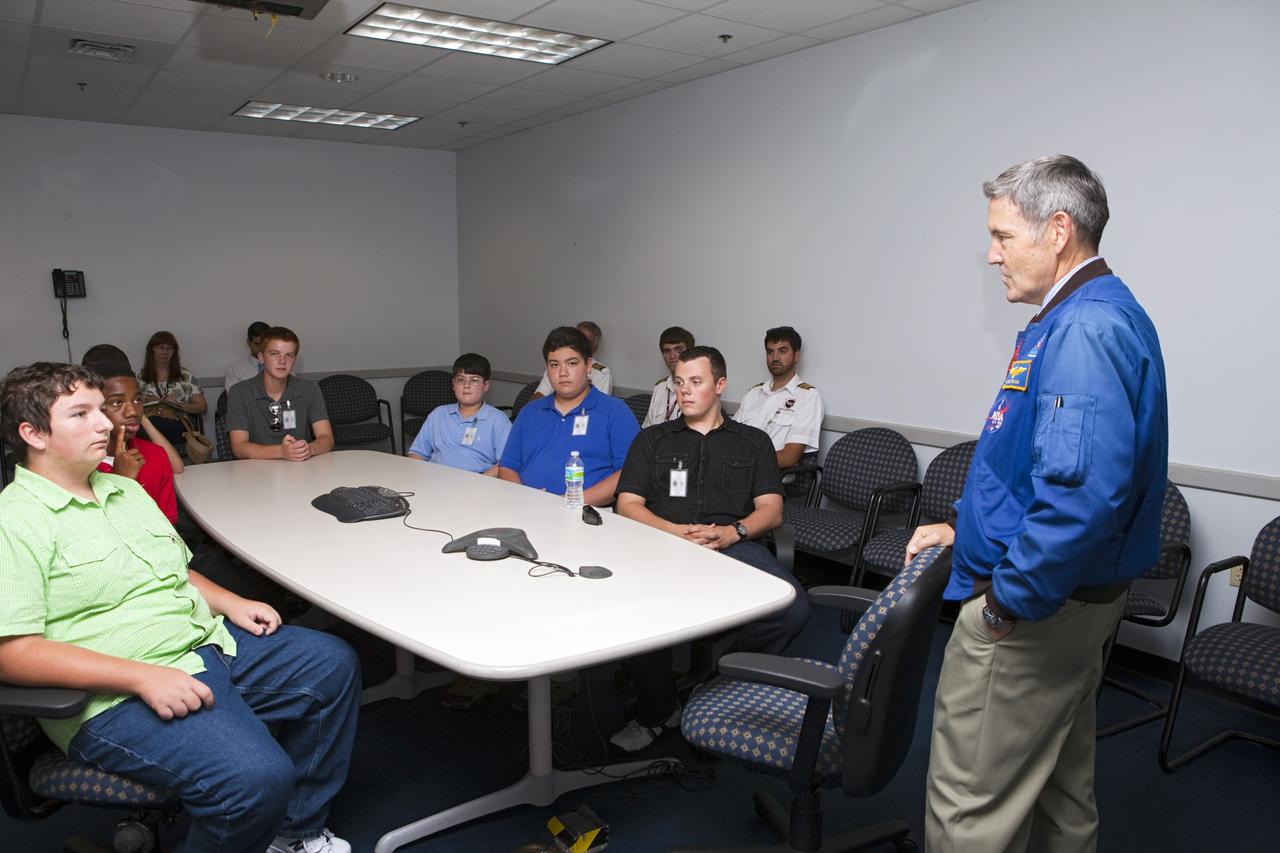
CAPE CANAVERAL, Fla. – In a support building near NASA Kennedy Space Center’s Shuttle Landing Facility, or SLF, in Florida, Center Director Bob Cabana speaks to students and their flight instructors from Florida Tech, or FIT, in Melbourne. The group arrived at the SLF in Cherokee Warrior and Cessna 172S lightweight aircraft. The middle and high school students are participating in FIT’s Av/Aero summer camp experience. They and their flight instructors toured the SLF midfield control tower, viewed F104 Starfighters and NASA Huey helicopters in the RLV Hangar, viewed the runway plaques marking wheels stop for each of the three space shuttles, and toured the Vehicle Assembly Building where space shuttle Atlantis currently is stored. Photo credit: NASA/Kim Shiflett
CAPE CANAVERAL, Fla. – Inside the RLV Hangar near NASA Kennedy Space Center’s Shuttle Landing Facility, or SLF, in Florida, students and their flight instructors from Florida Tech, FIT, in Melbourne, view F104 Starfighter aircraft and listen to Starfighter Director Rick Svetkoff. The flight instructors and their students arrived at the SLF in Cherokee Warrior and Cessna 172S lightweight aircraft. The middle and high school students are participating in FIT’s Av/Aero summer camp experience. They and their flight instructors toured the SLF midfield control tower, viewed F104 Starfighters and NASA Huey helicopters in the RLV Hangar, viewed the runway plaques marking wheels stop for each of the three space shuttles, and toured the Vehicle Assembly Building where space shuttle Atlantis currently is stored. Photo credit: NASA/Kim Shiflett
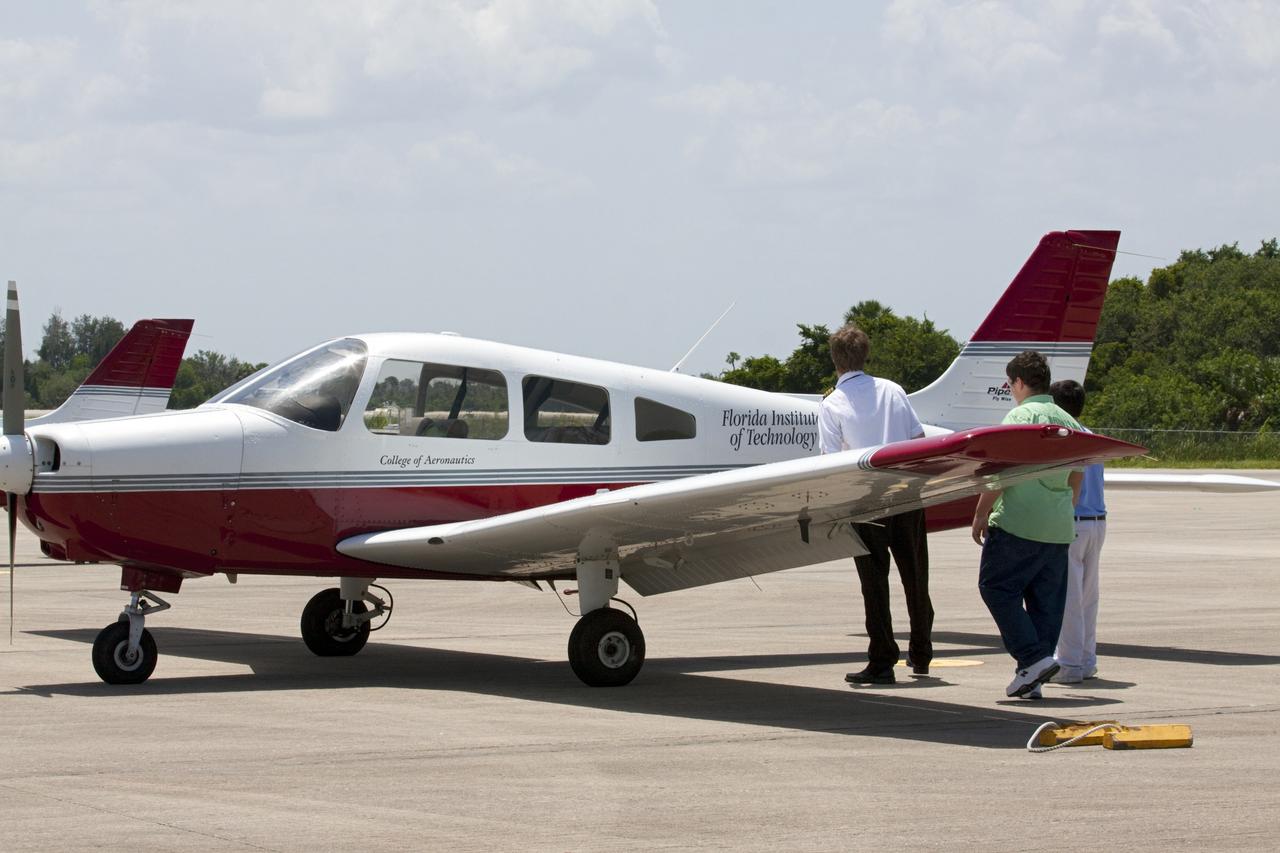
CAPE CANAVERAL, Fla. – At NASA Kennedy Space Center’s Shuttle Landing Facility, or SLF, in Florida, a flight instructor and his students inspect the lightweight aircraft they flew in earlier in the day from Florida Tech, or FIT, in Melbourne. Several instructors and their students arrived at the SLF in Cherokee Warrior and Cessna 172S lightweight aircraft. The middle and high school students are participating in FIT’s Av/Aero summer camp experience. They and their flight instructors toured the SLF midfield control tower, viewed F104 Starfighters and NASA Huey helicopters in the RLV Hangar, viewed the runway plaques marking wheels stop for each of the three space shuttles, and toured the Vehicle Assembly Building where space shuttle Atlantis currently is stored. Photo credit: NASA/Kim Shiflett
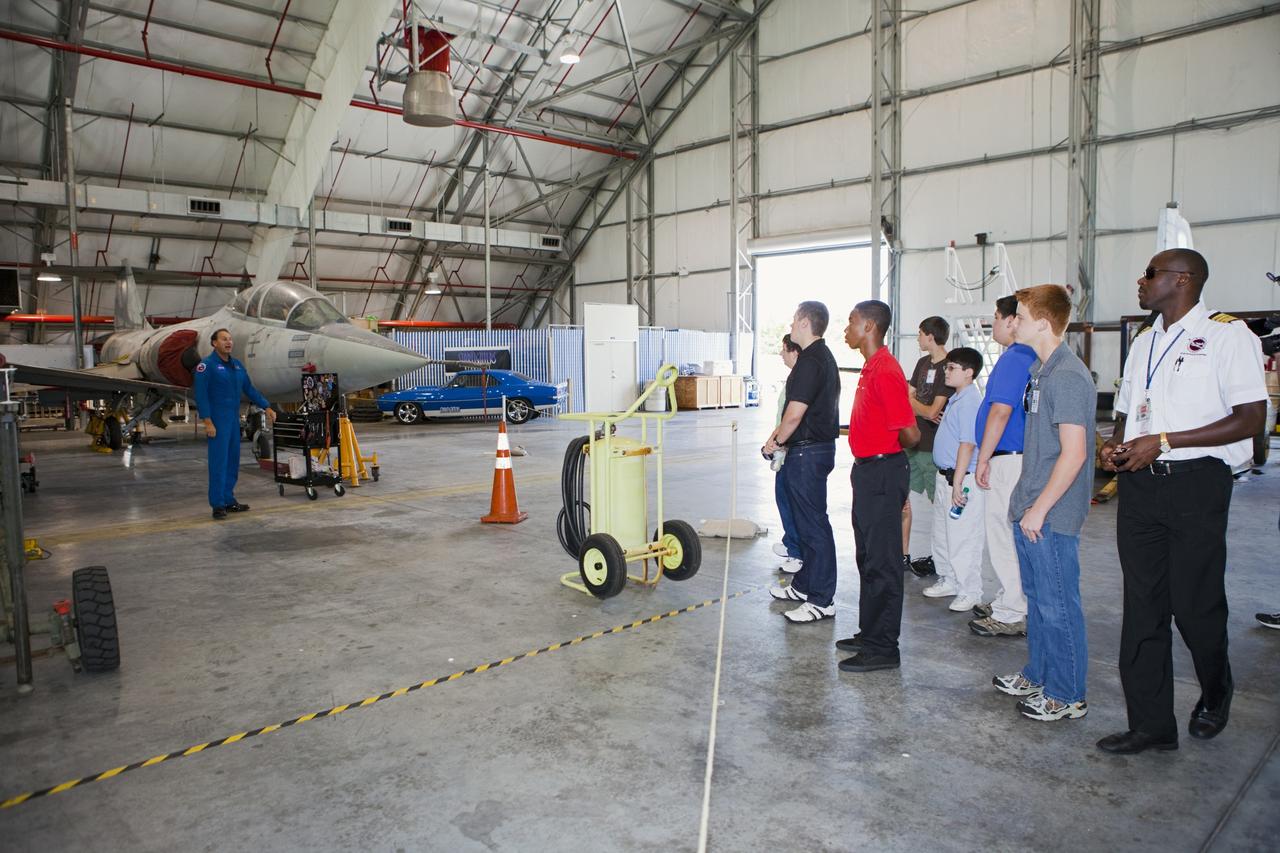
CAPE CANAVERAL, Fla. – Inside the RLV Hangar near NASA Kennedy Space Center’s Shuttle Landing Facility, or SLF, in Florida, students and their flight instructors from Florida Tech, FIT, in Melbourne view F104 Starfighter aircraft and hear a presentation from Starfighter Director Rick Svetkoff. The group arrived at the SLF in Cherokee Warrior and Cessna 172S lightweight aircraft. The middle and high school students are participating in FIT’s Av/Aero summer camp experience. They and their flight instructors toured the SLF midfield control tower, viewed F104 Starfighters and NASA Huey helicopters in the RLV Hangar, viewed the runway plaques marking wheels stop for each of the three space shuttles, and toured the Vehicle Assembly Building where space shuttle Atlantis currently is stored. Photo credit: NASA/Kim Shiflett
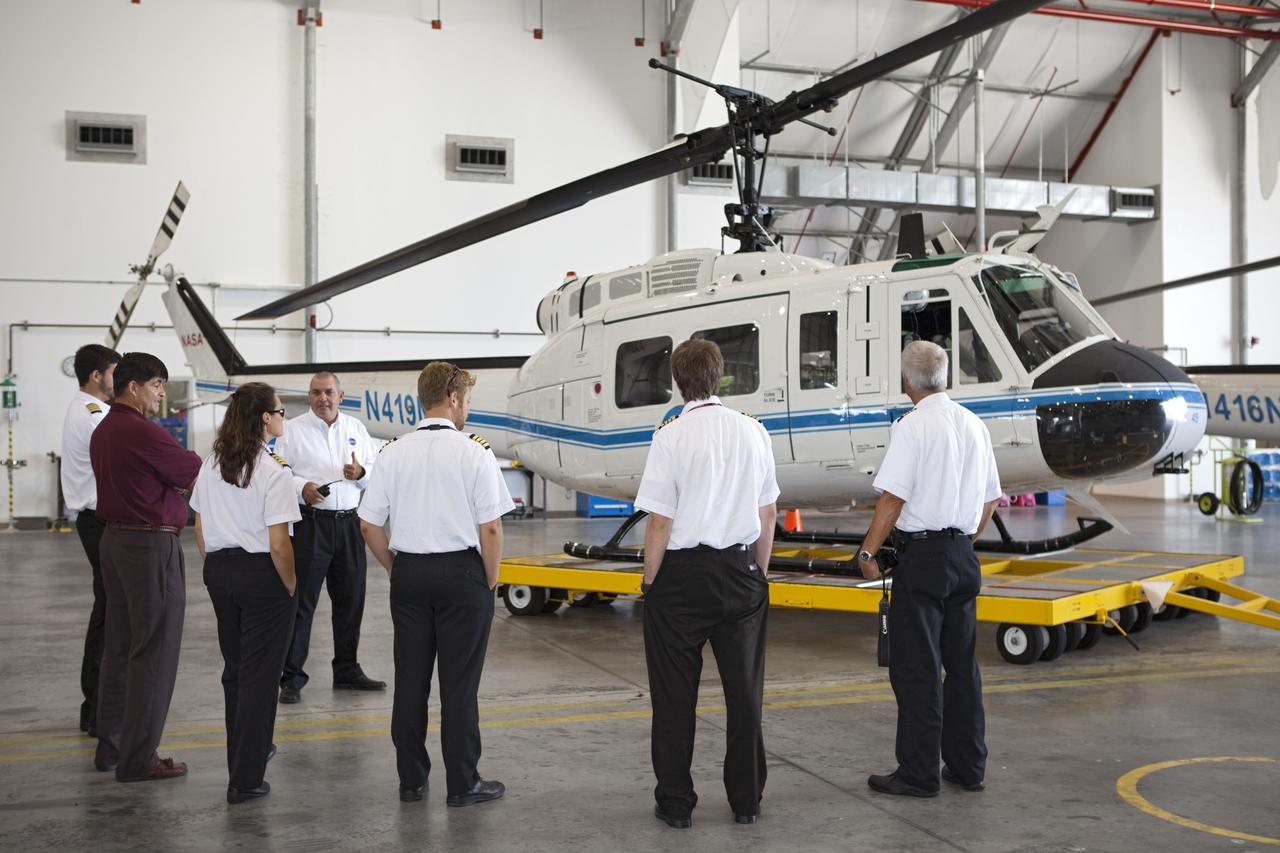
CAPE CANAVERAL, Fla. – Inside the RLV Hangar near NASA Kennedy Space Center’s Shuttle Landing Facility, or SLF, in Florida, flight instructors from Florida Tech, FIT, in Melbourne, listen to NASA Aviation Safety Officer Joe Torsani and view a NASA Huey helicopter. At left, in the red shirt is Glenn Vera, director of FIT Aviation. The flight instructors and their students arrived at the SLF in Cherokee Warrior and Cessna 172S lightweight aircraft. The middle and high school students are participating in FIT’s Av/Aero summer camp experience. They and their flight instructors toured the SLF midfield control tower, viewed F104 Starfighters and NASA Huey helicopters in the RLV Hangar, viewed the runway plaques marking wheels stop for each of the three space shuttles, and toured the Vehicle Assembly Building where space shuttle Atlantis currently is stored. Photo credit: NASA/Kim Shiflett
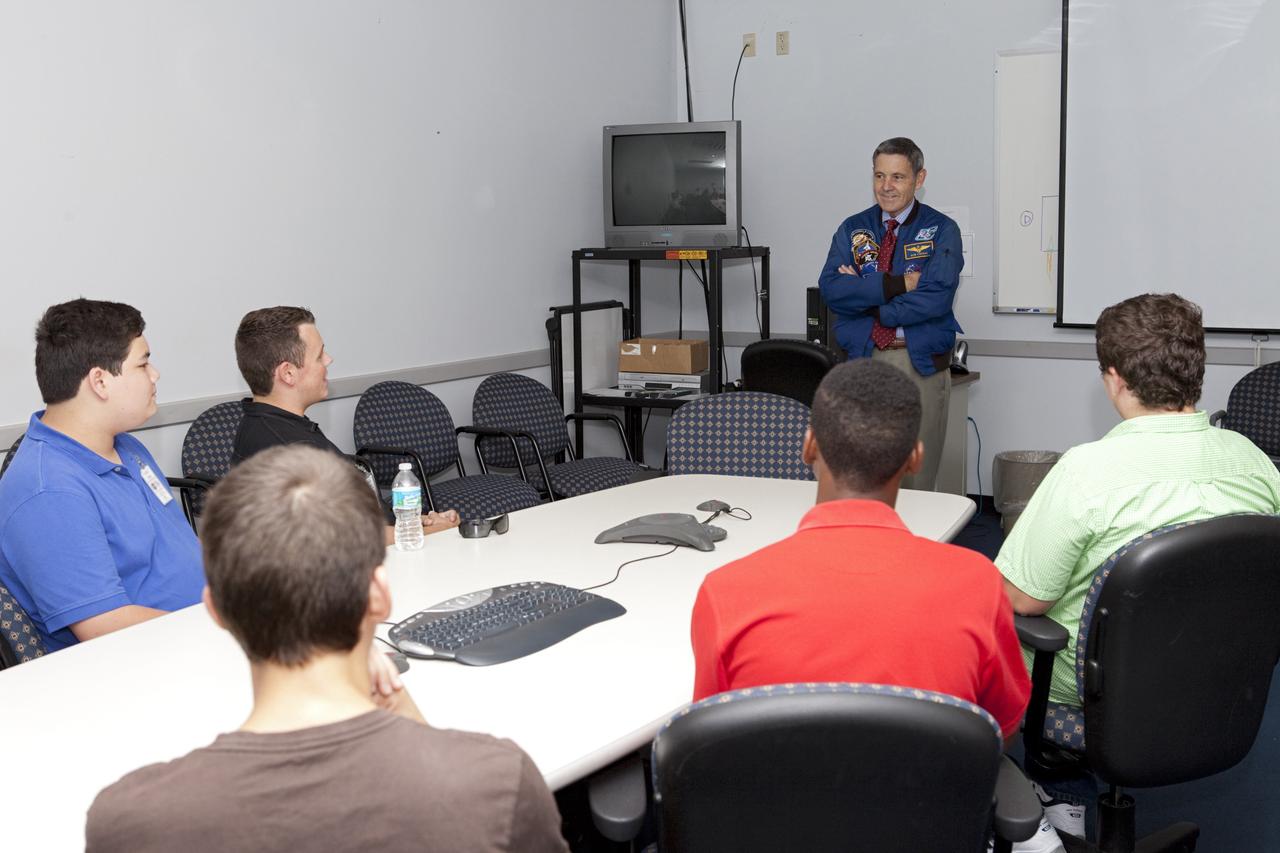
CAPE CANAVERAL, Fla. – In a support building near NASA Kennedy Space Center’s Shuttle Landing Facility, or SLF, in Florida, Center Director Bob Cabana speaks to students and their flight instructors from Florida Tech, or FIT, in Melbourne. The group arrived at the SLF in Cherokee Warrior and Cessna 172S lightweight aircraft.. The middle and high school students are participating in FIT’s Av/Aero summer camp experience. They and their flight instructors toured the SLF midfield control tower, viewed F104 Starfighters and NASA Huey helicopters in the RLV Hangar, viewed the runway plaques marking wheels stop for each of the three space shuttles, and toured the Vehicle Assembly Building where space shuttle Atlantis currently is stored. Photo credit: NASA/Kim Shiflett
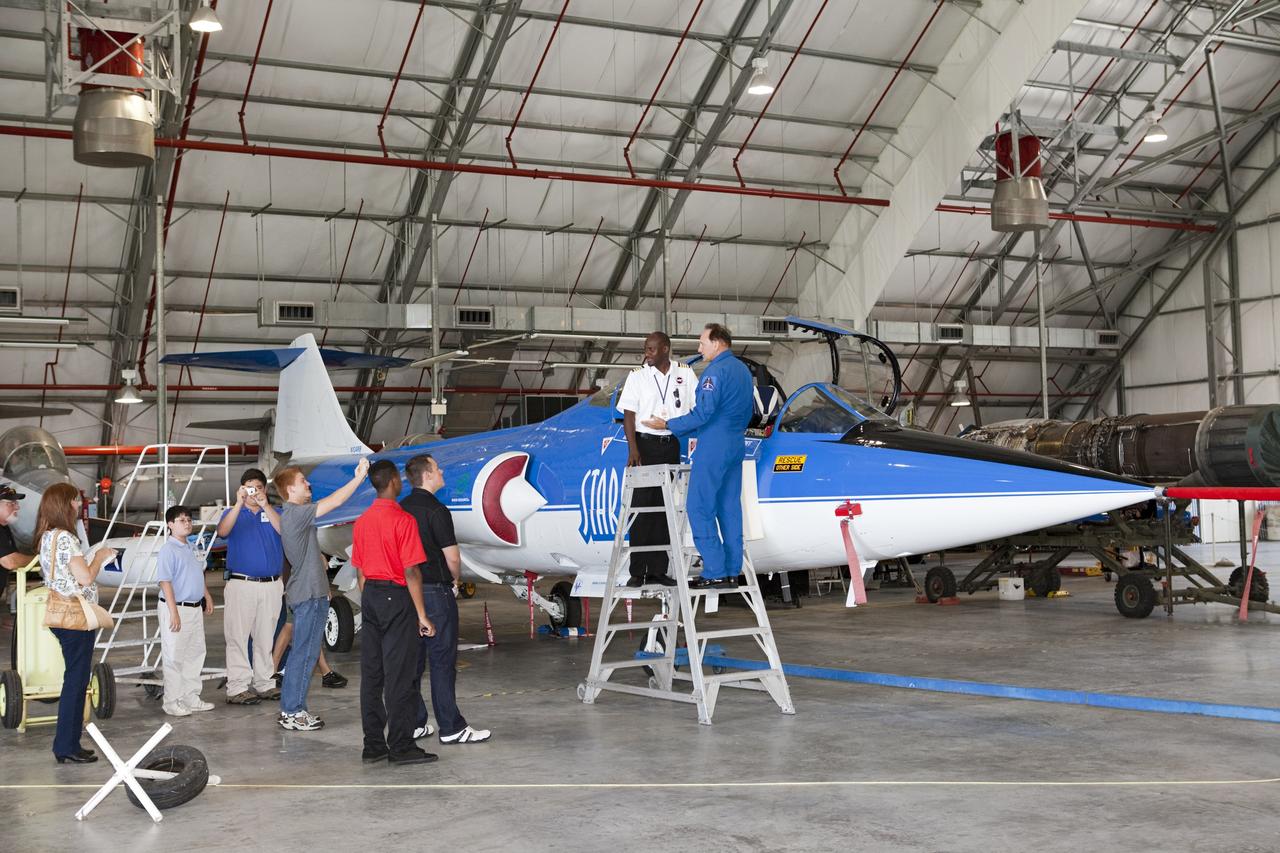
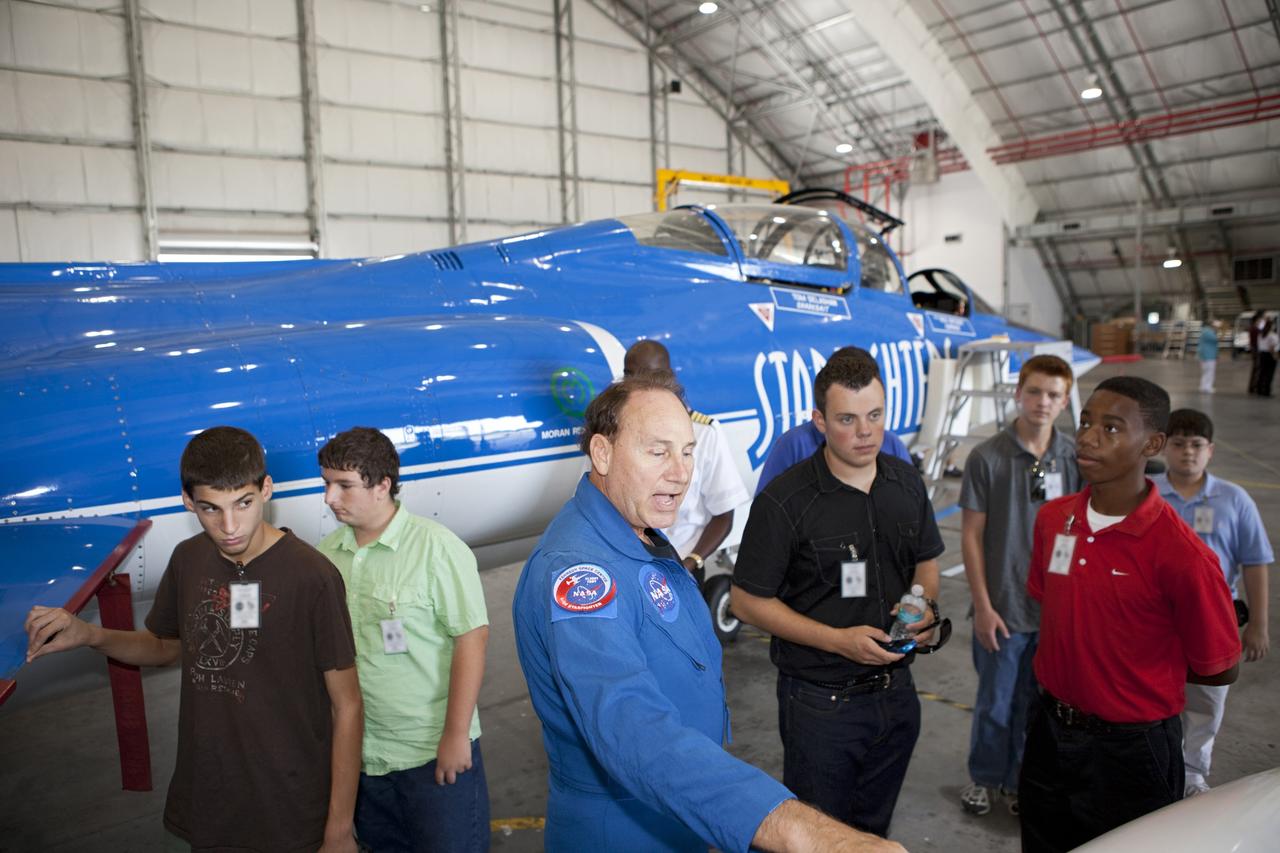
CAPE CANAVERAL, Fla. – Inside the RLV Hangar near NASA Kennedy Space Center’s Shuttle Landing Facility, or SLF, in Florida, Florida Tech, or FIT, Aviation Program Supervisor Tennesse Garvey, at left on the ladder, and several students view an F104 Starfighter. At right, on the ladder is Starfighter Director Rick Svetkoff. The FIT aviation instructors and their students arrived at the SLF in Cherokee Warrior and Cessna 172S lightweight aircraft. The middle and high school students are participating in FIT’s Av/Aero summer camp experience. They and their flight instructors toured the SLF midfield control tower, viewed F104 Starfighters and NASA Huey helicopters in the RLV Hangar, viewed the runway plaques marking wheels stop for each of the three space shuttles, and toured the Vehicle Assembly Building where space shuttle Atlantis currently is stored. Photo credit: NASA/Kim Shiflett
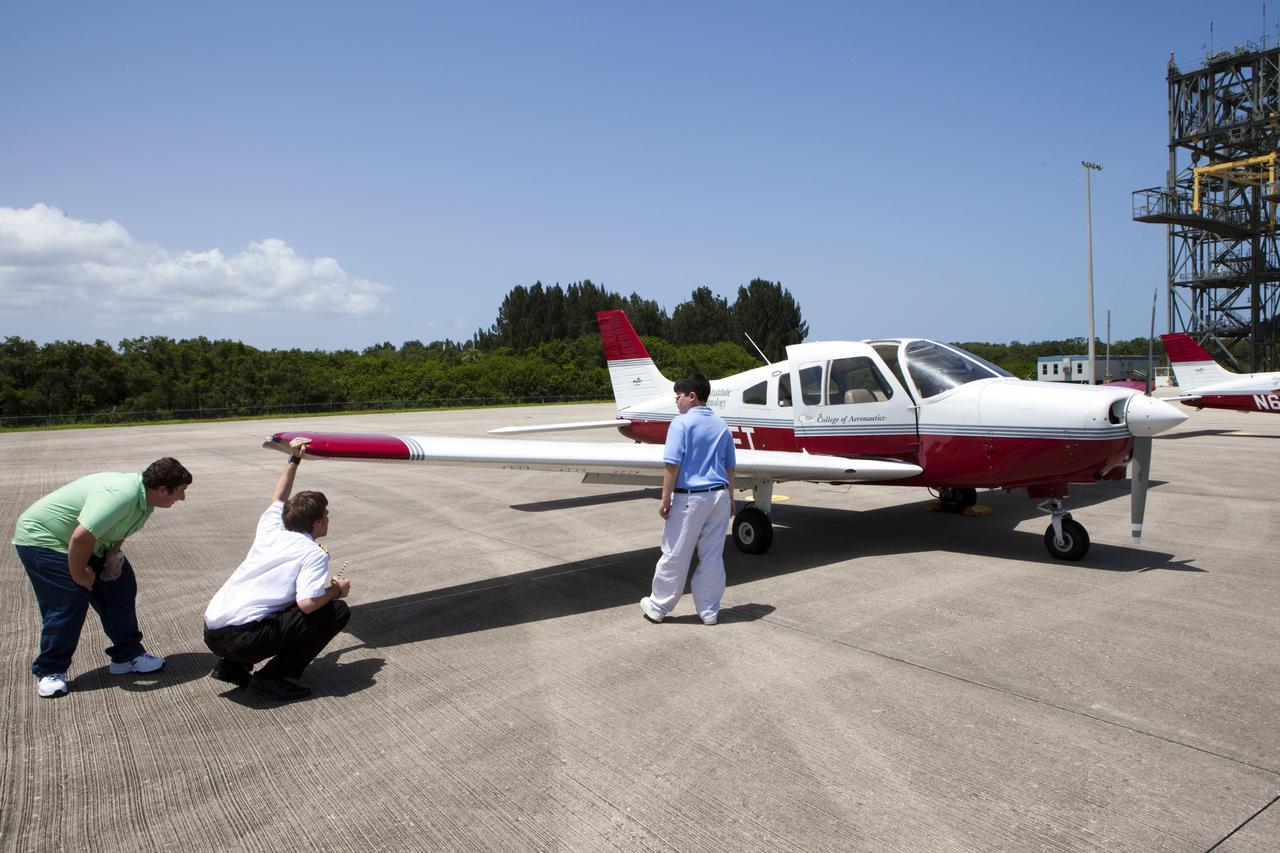
CAPE CANAVERAL, Fla. – At NASA Kennedy Space Center’s Shuttle Landing Facility, or SLF, in Florida, a flight instructor and his students inspect the lightweight aircraft they flew in earlier in the day from Florida Tech, or FIT, in Melbourne. Several instructors and their students arrived at the SLF in Cherokee Warrior and Cessna 172S lightweight aircraft. The middle and high school students are participating in FIT’s Av/Aero summer camp experience. They and their flight instructors toured the SLF midfield control tower, viewed F104 Starfighters and NASA Huey helicopters in the RLV Hangar, viewed the runway plaques marking wheels stop for each of the three space shuttles, and toured the Vehicle Assembly Building where space shuttle Atlantis currently is stored. Photo credit: NASA/Kim Shiflett
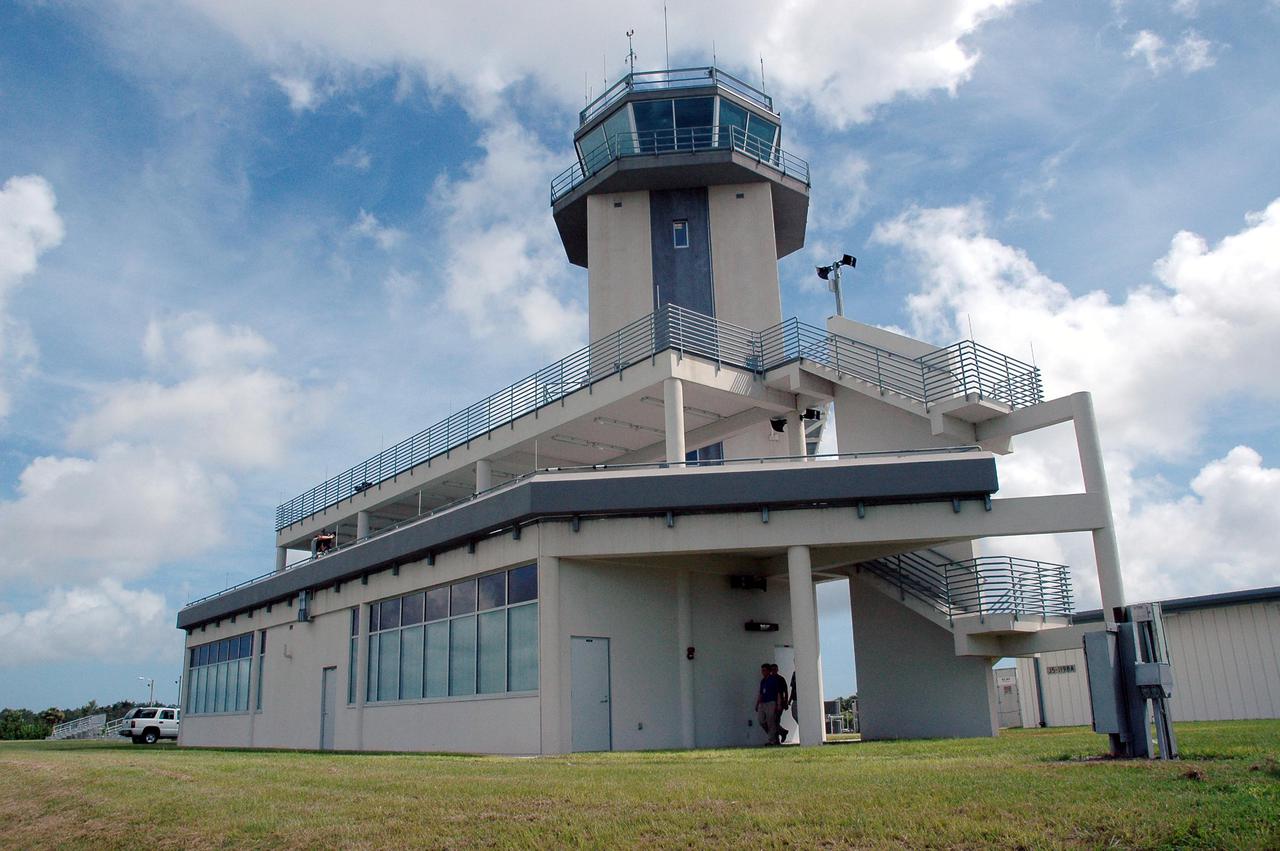
KENNEDY SPACE CENTER, FLA. - At the Shuttle Landing Facility on NASA’s Kennedy Space Center, this new media building features a new Air Traffic Control Tower. The facility was dedicated in a ribbon-cutting ceremony July 8 that included Center Director Jim Kennedy, Space Gateway Support President William A. Sample, External Relations Director Lisa Malone, Center Operations Director Scott D. Kerr, and KSC Safety Aviation Officer Albert E. Taff. The facility was built for the Return to Flight mission STS-114 and the landing of Shuttle Discovery. The structure rises 110 feet over the midpoint of the runway and offers air traffic controllers a magnificent 360-degree view of Kennedy Space Center, Cape Canaveral Air Force Station and north Brevard County. It replaces the small, portable tower installed at the edge of the runway in 1986. The new control tower will manage all landings and departures from the SLF, including air traffic within the Kennedy Space Center-Cape Canaveral restricted airspace. The facility provides a 24-hour weather-observing facility providing official hourly weather observations for the SLF and the Cape Canaveral vicinity, including special observations for all launches and landings. State-of-the-art, weather-observing equipment has been installed for Space Shuttle landings and for serving conventional aircraft landing at the SLF. At this location, weather observers will have a multi-directional view of the weather conditions at the runway and Launch Complex 39.
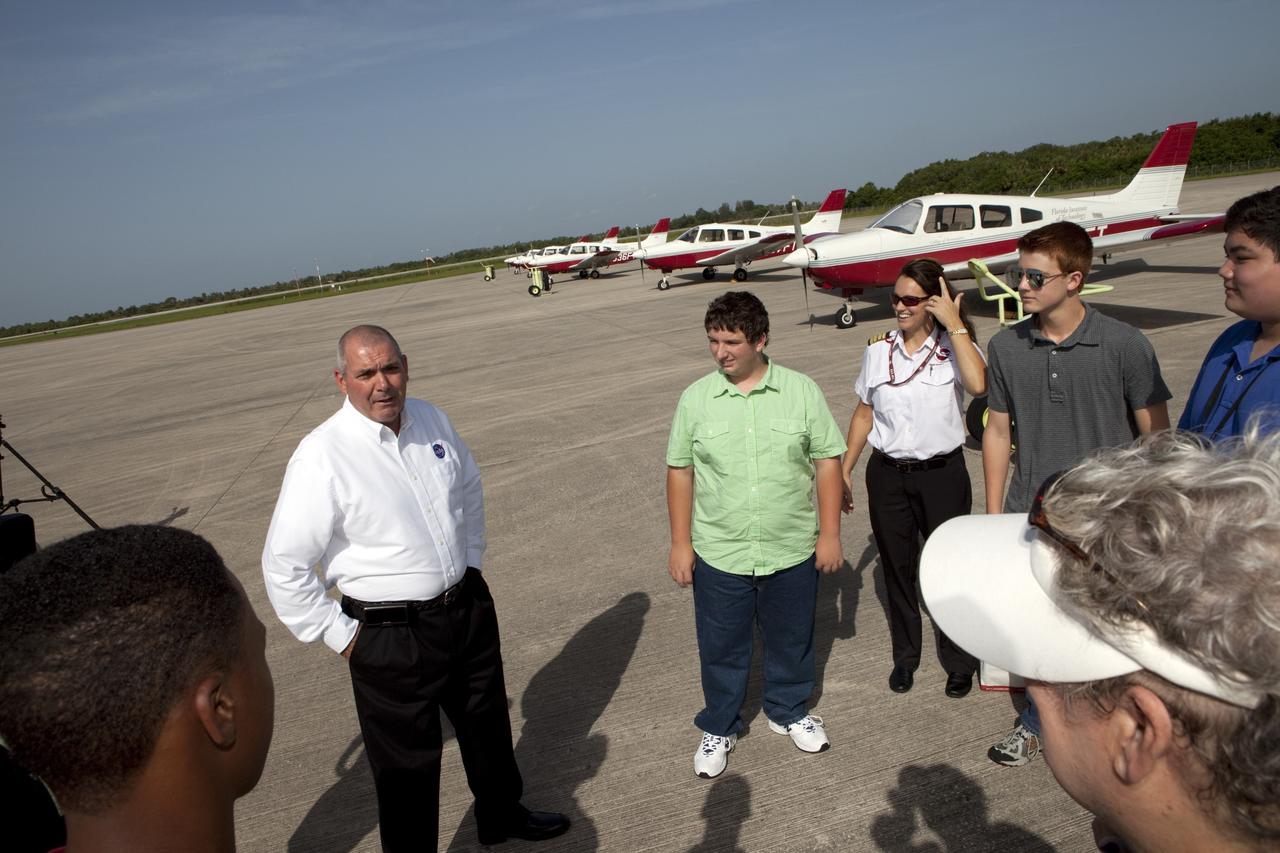
CAPE CANAVERAL, Fla. – At NASA Kennedy Space Center’s Shuttle Landing Facility, or SLF, in Florida, NASA Aviation Safety Officer Joe Torsani, at left, speaks with students and their flight instructors after they arrived in Cherokee Warrior and Cessna 172S lightweight aircraft from Florida Tech, FIT, in Melbourne. The middle and high school students are participating in FIT’s Av/Aero summer camp experience. They and their flight instructors toured the SLF midfield control tower, viewed F104 Starfighters and NASA Huey helicopters in the RLV Hangar, viewed the runway plaques marking wheels stop for each of the three space shuttles, and toured the Vehicle Assembly Building where space shuttle Atlantis currently is stored. Photo credit: NASA/Kim Shiflett
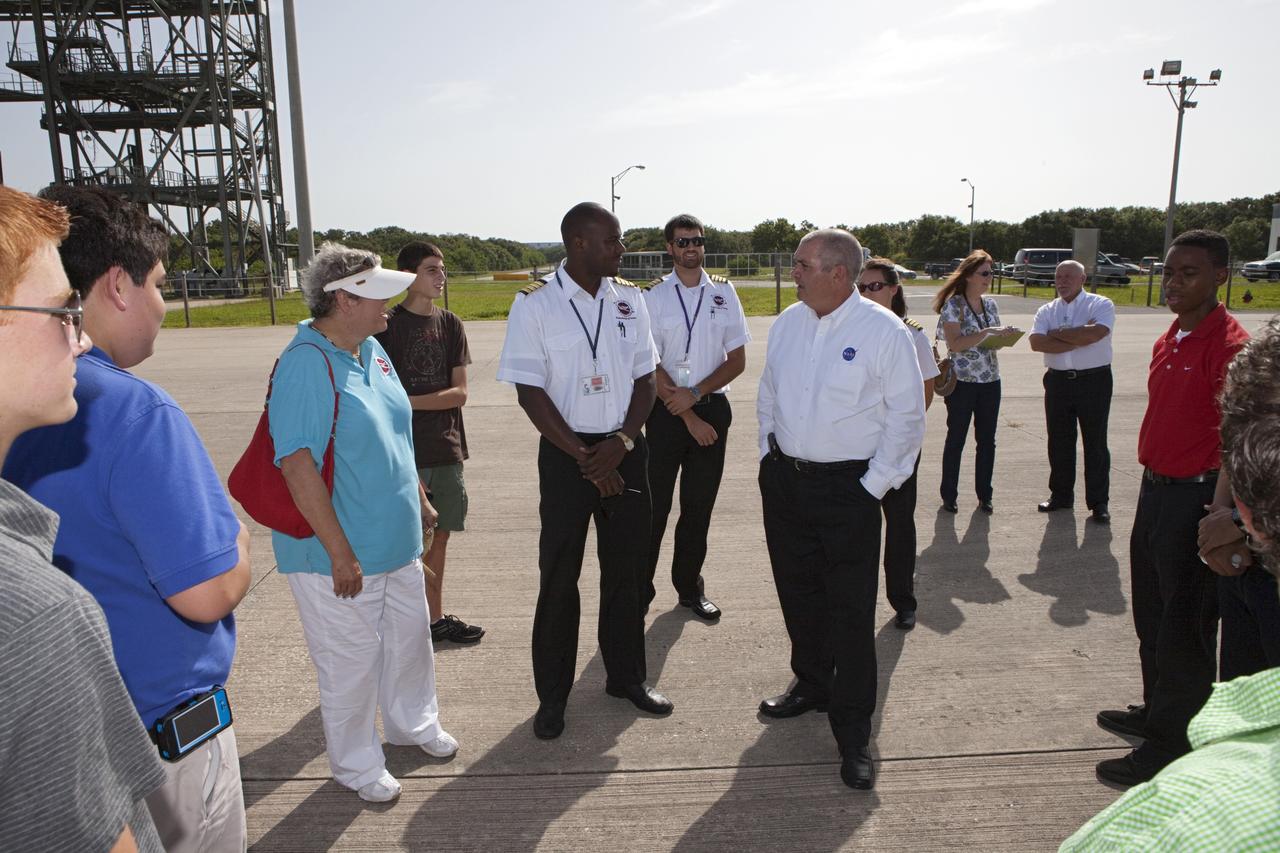
CAPE CANAVERAL, Fla. – At NASA Kennedy Space Center’s Shuttle Landing Facility, or SLF, in Florida, NASA Aviation Safety Officer Joe Torsani, at right, speaks with students and their flight instructors after they arrived in Cherokee Warrior and Cessna 172S lightweight aircraft from Florida Tech, or FIT, in Melbourne. The middle and high school students are participating in FIT’s Av/Aero summer camp experience. They and their flight instructors toured the SLF midfield control tower, viewed F104 Starfighters and NASA Huey helicopters in the RLV Hangar, viewed the runway plaques marking wheels stop for each of the three space shuttles, and toured the Vehicle Assembly Building where space shuttle Atlantis currently is stored. Photo credit: NASA/Kim Shiflett
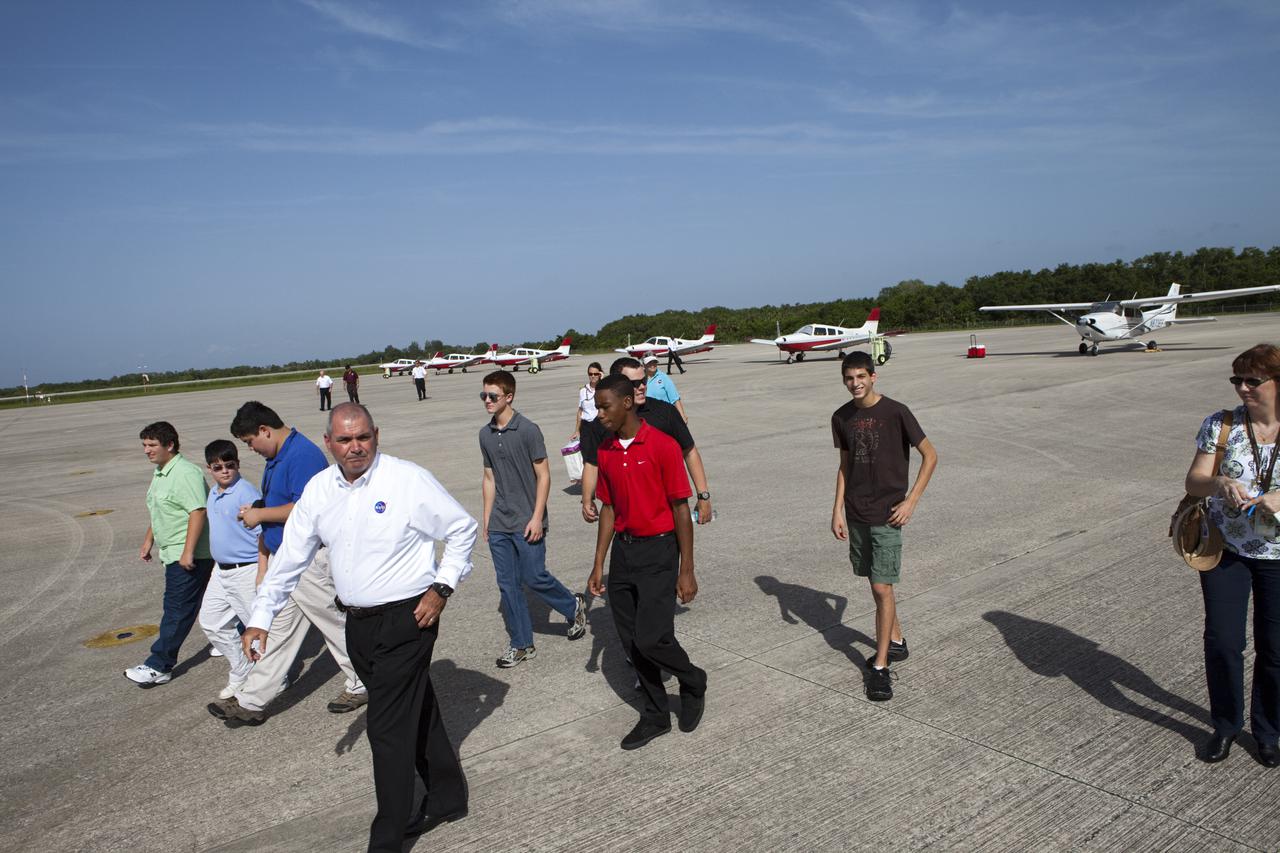
CAPE CANAVERAL, Fla. – At NASA Kennedy Space Center’s Shuttle Landing Facility, or SLF, in Florida, NASA Aviation Safety Officer Joe Torsani walks with students and their flight instructors after they arrived in Cherokee Warrior and Cessna 172S lightweight aircraft from Florida Tech, or FIT, in Melbourne. The middle and high school students are participating in FIT’s Av_Aero summer camp experience. They and their flight instructors toured the SLF midfield control tower, viewed F104 Starfighters and NASA Huey helicopters in the RLV Hangar, viewed the runway plaques marking wheels stop for each of the three space shuttles, and toured the Vehicle Assembly Building where space shuttle Atlantis currently is stored. Photo credit: NASA_Kim Shiflett
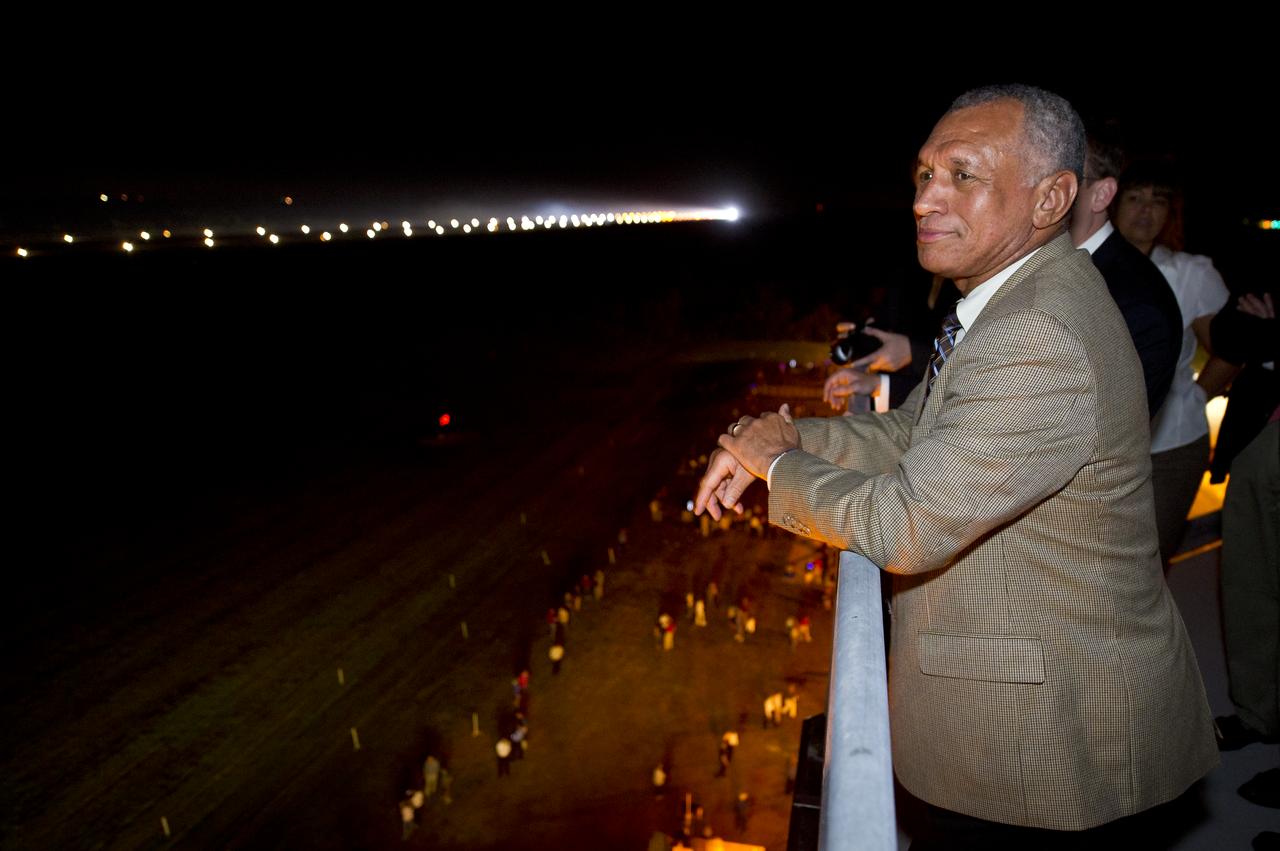
NASA Administrator Charles Bolden looks at the Space Shuttle Endeavour (STS-134) from the air traffic control tower at the Shuttle Landing Facility (SLF) shortly after Endeavour made its final landing at the Kennedy Space Center, Wednesday, June 1, 2011, in Cape Canaveral, Fla. Endeavour, after completing a 16-day mission to outfit the International Space Station, spent 299 days in space and traveled more than 122.8 million miles during its 25 flights. It launched on its first mission on May 7, 1992. Photo Credit: (NASA/Bill Ingalls)
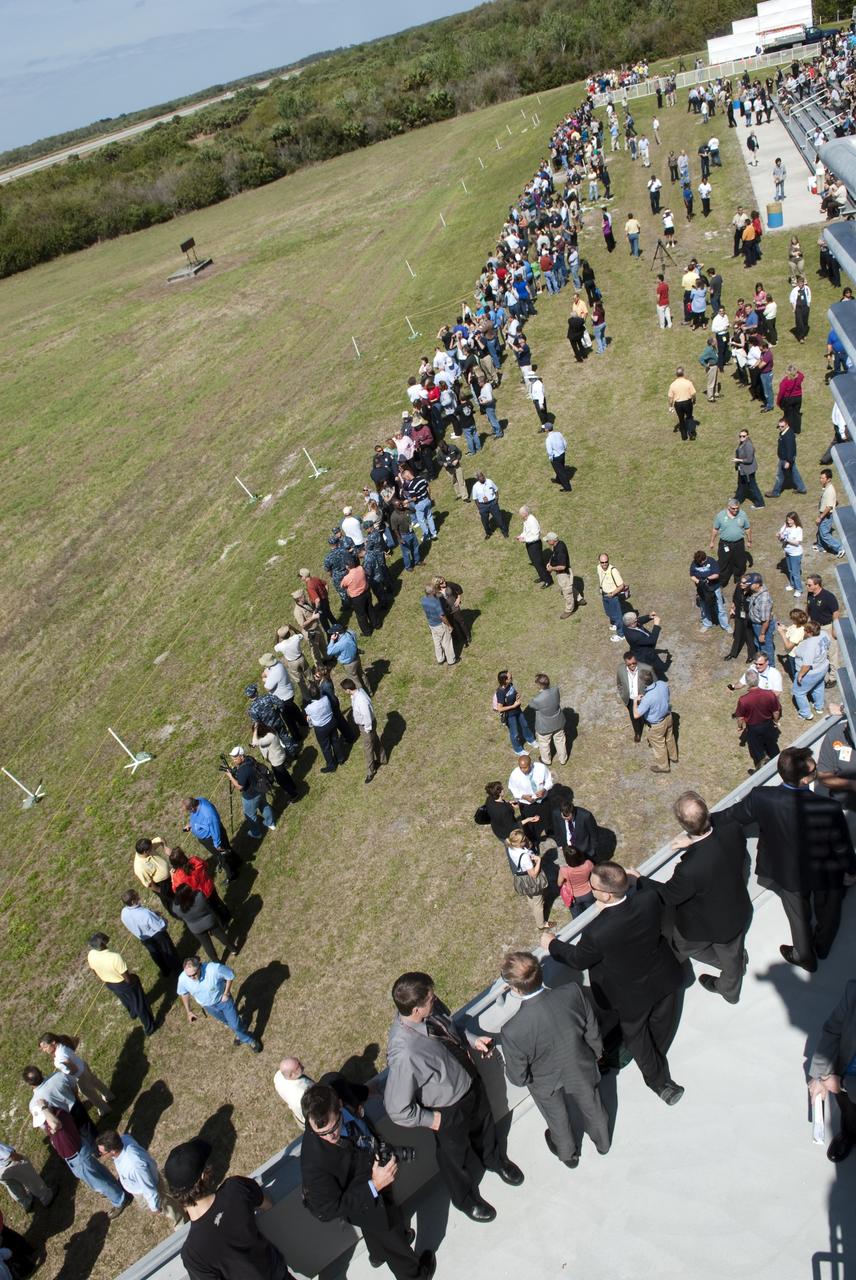
CAPE CANAVERAL, Fla. -- At NASA's Kennedy Space Center in Florida, invited guests, managers and employees gather near the Air Traffic Control Tower at the Shuttle Landing Facility (SLF) to watch shuttle Discovery return from space for the last time. Discovery touched down on Runway 15 at 11:57 a.m. EST, completing the 13-day STS-133 mission to the International Space Station. Discovery and its six-member crew delivered the Permanent Multipurpose Module, packed with supplies and critical spare parts, as well as Robonaut 2, the dexterous humanoid astronaut helper, to the orbiting outpost. STS-133 was Discovery's 39th and final mission. This was the 133rd Space Shuttle Program mission and the 35th shuttle voyage to the space station. Photo credit: NASA/Jim Grossmann
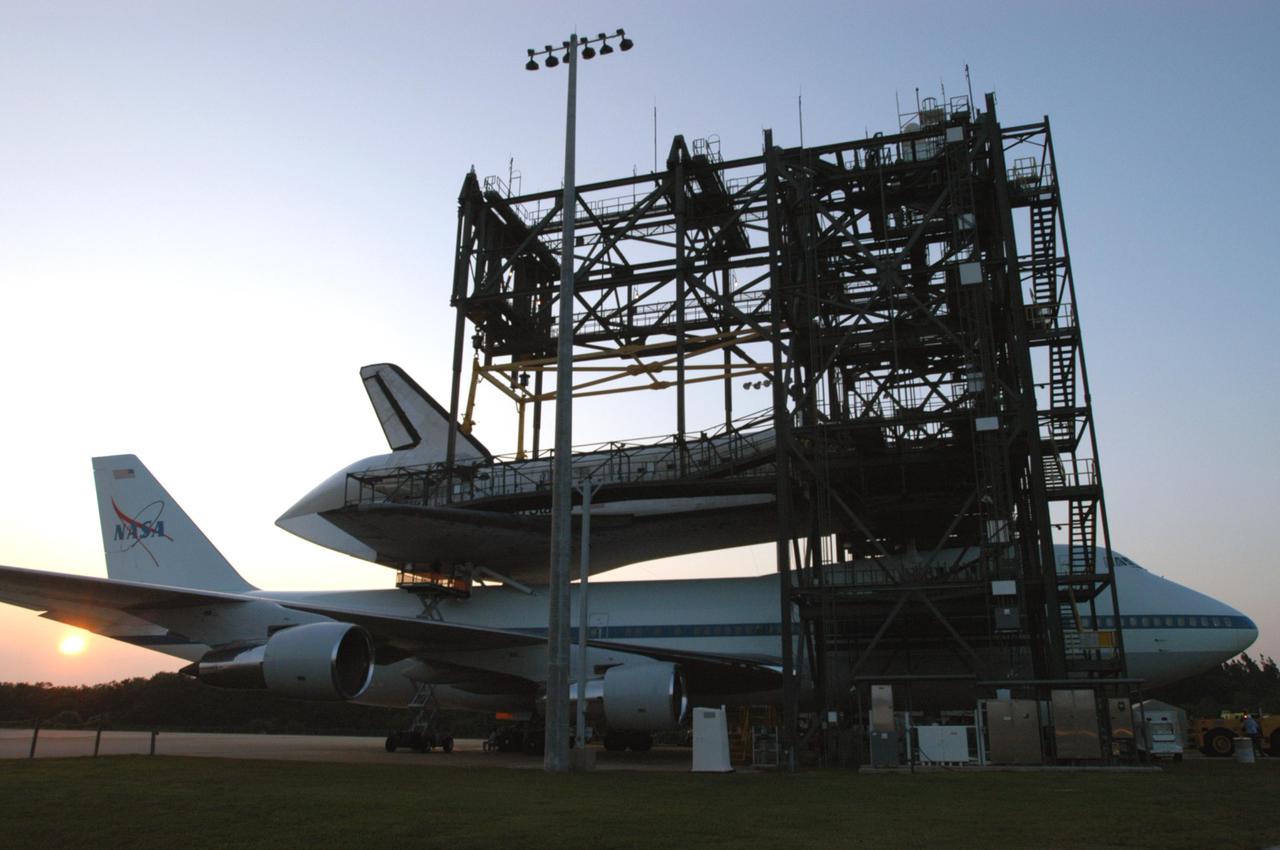
KENNEDY SPACE CENTER, FLA. - The sun is setting behind the tail of the Shuttle Carrier Aircraft, a modified Boeing 747, and orbiter Discovery where they are parked in the mate_demate device. Discovery was returned to Kennedy Space Center on a ferry flight from Edwards Air Force Base in California, where it landed Aug. 9 after 13 days in space on mission STS-114. In the mate_demate device, a horizontal structure mounted at the 80-foot level between two towers controls and guides a large lift beam that attaches to the orbiter to raise and lower it. Once Discovery is lifted off the back of the SCA, the 747 can then roll away and the orbiter will be lowered to the ground. It will then be towed from the SLF to the Orbiter Processing Facility. Once inside the OPF, the payload bay doors will be opened and the MPLM Raffaello brought back from the International Space Station will be unloaded and transferred to the Space Station Processing Facility. This concludes mission STS-114.
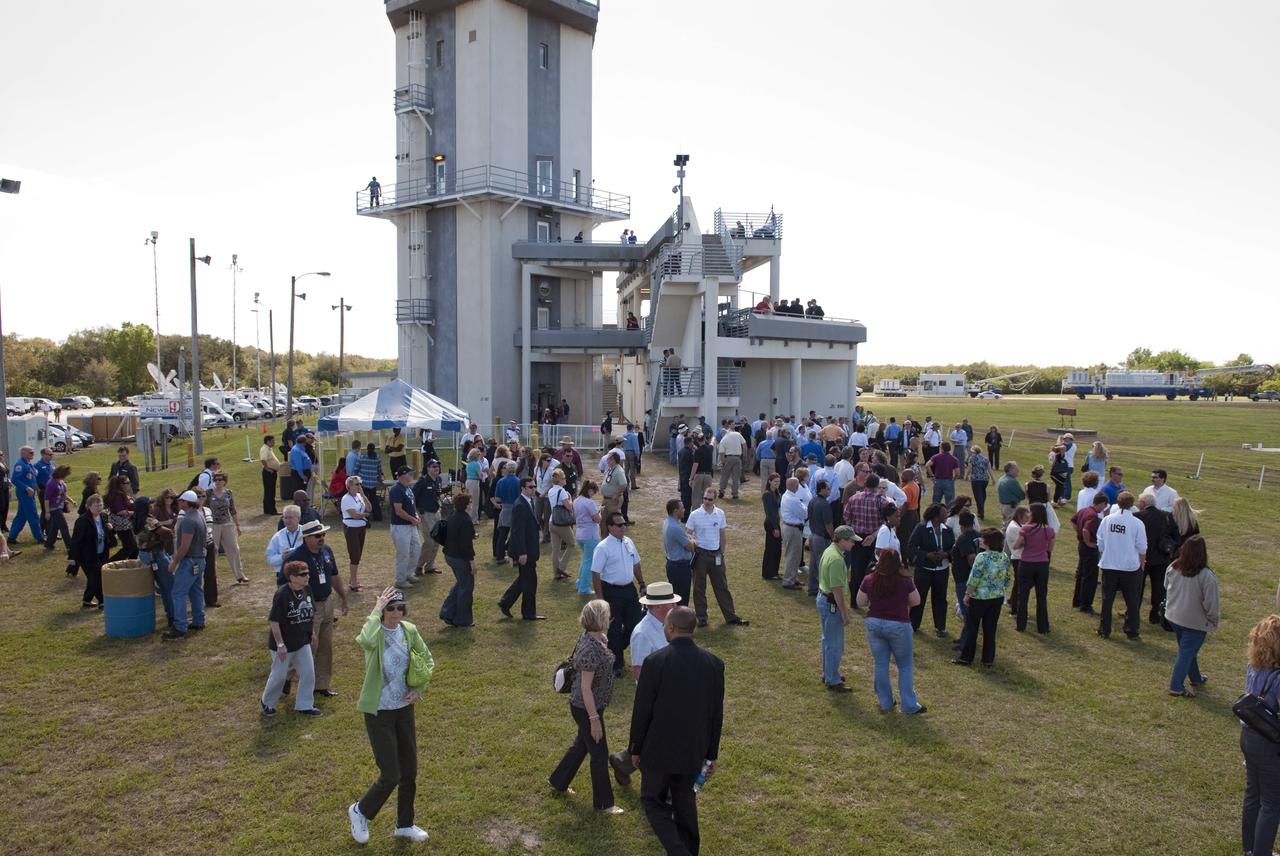
CAPE CANAVERAL, Fla. -- At NASA's Kennedy Space Center in Florida, invited guests, managers and employees gather near the Air Traffic Control Tower at the Shuttle Landing Facility (SLF) to watch shuttle Discovery return from space for the last time. Discovery touched down on Runway 15 at 11:57 a.m. EST, completing the 13-day STS-133 mission to the International Space Station. Discovery and its six-member crew delivered the Permanent Multipurpose Module, packed with supplies and critical spare parts, as well as Robonaut 2, the dexterous humanoid astronaut helper, to the orbiting outpost. STS-133 was Discovery's 39th and final mission. This was the 133rd Space Shuttle Program mission and the 35th shuttle voyage to the space station. Photo credit: NASA/Jim Grossmann
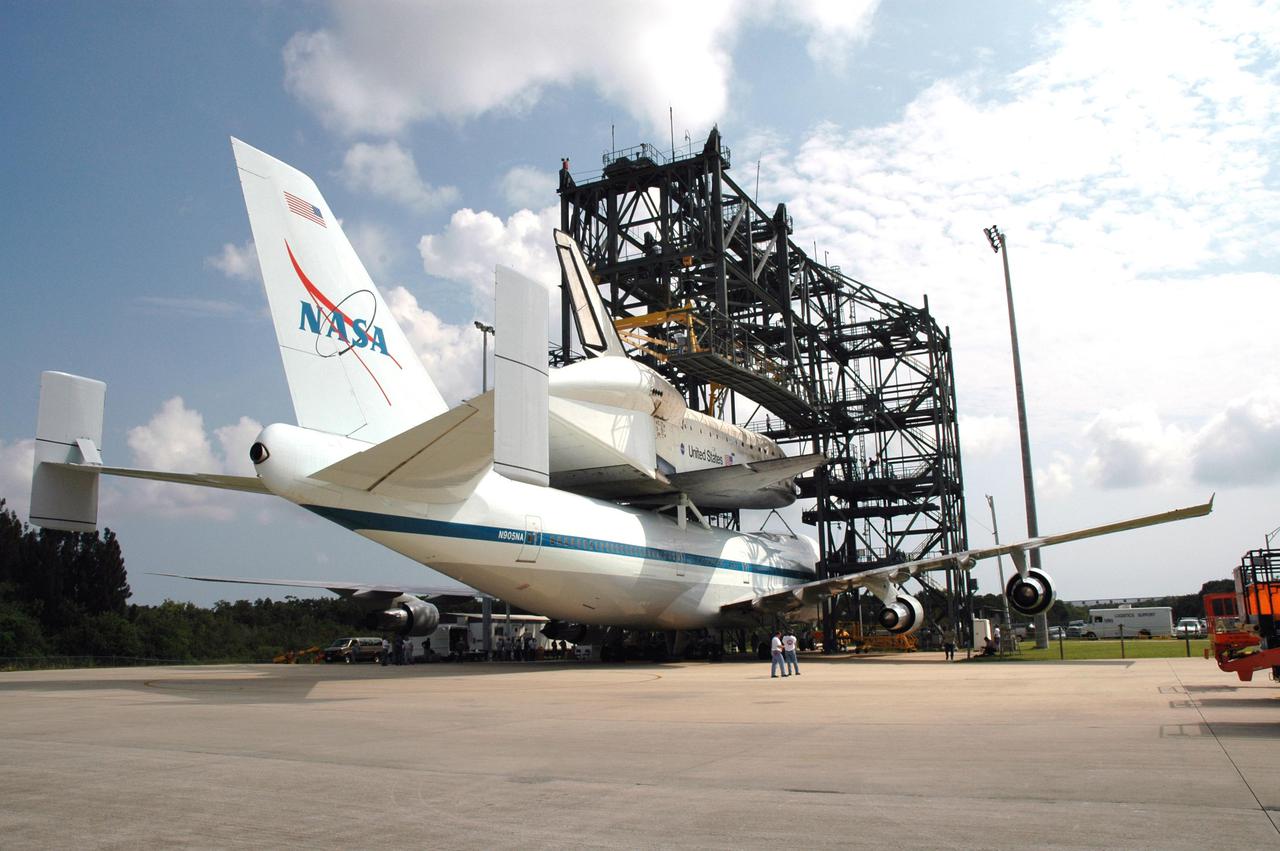
KENNEDY SPACE CENTER, FLA. - The orbiter Discovery on top of the Shuttle Carrier Aircraft, a modified Boeing 747, is towed into the mate_demate device at NASA Kennedy Space Center’s Shuttle Landing Facility. Discovery was returned to Kennedy Space Center on a ferry flight from Edwards Air Force Base in California, where it landed Aug. 9 after 13 days in space on mission STS-114. In the mate_demate device, a horizontal structure mounted at the 80-foot level between two towers controls and guides a large lift beam that attaches to the orbiter to raise and lower it. Once Discovery is lifted off the back of the SCA, the 747 can then roll away and the orbiter will be lowered to the ground. It will then be towed from the SLF to the Orbiter Processing Facility. Once inside the OPF, the payload bay doors will be opened and the MPLM Raffaello brought back from the International Space Station will be unloaded and transferred to the Space Station Processing Facility. This concludes mission STS-114.
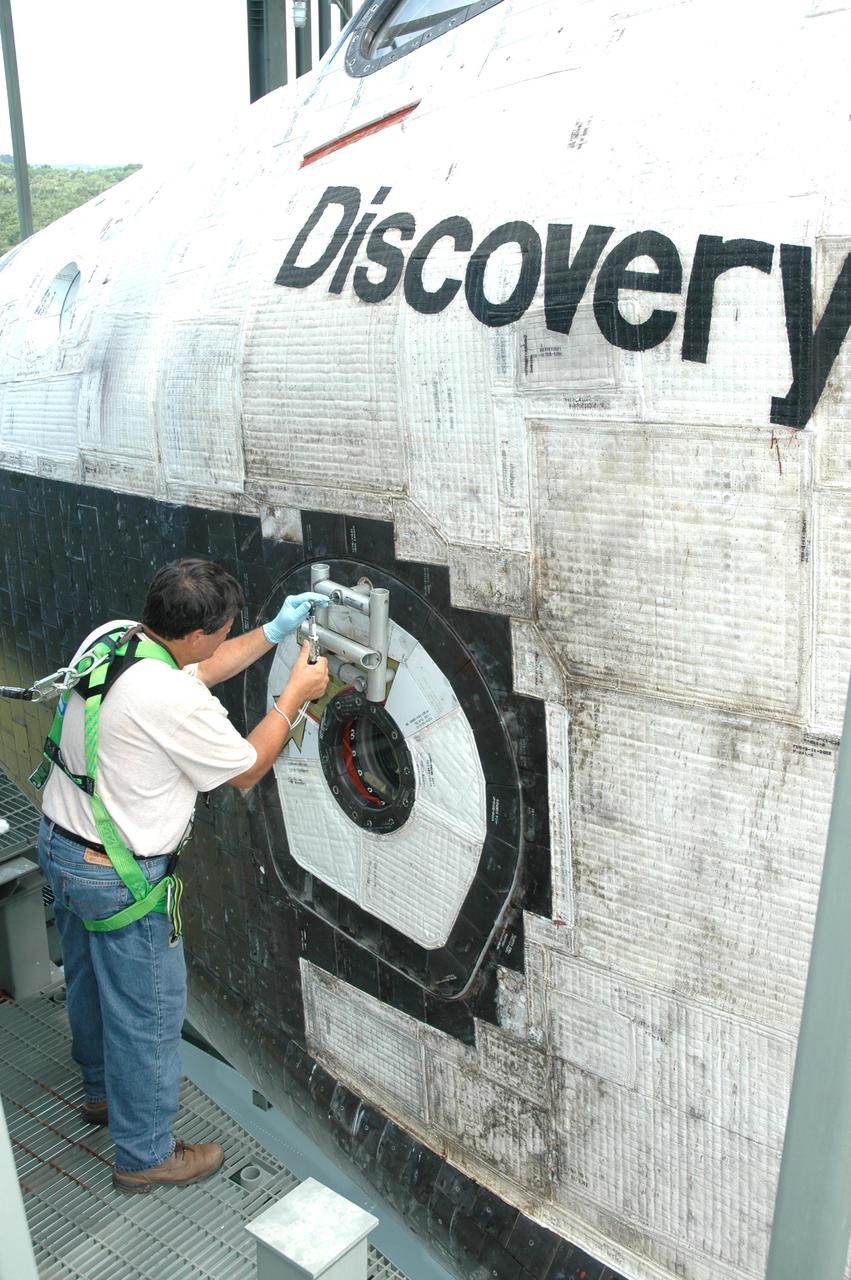
KENNEDY SPACE CENTER, FLA. - At NASA Kennedy Space Center’s Shuttle Landing Facility, a worker begins preparing the orbiter Discovery for demating. Discovery was returned to Kennedy Space Center on a ferry flight from Edwards Air Force Base in California, where it landed Aug. 9 after 13 days in space on mission STS-114. In the mate_demate device, a horizontal structure mounted at the 80-foot level between two towers controls and guides a large lift beam that attaches to the orbiter to raise and lower it. Once Discovery is lifted off the back of the SCA, the 747 can then roll away and the orbiter will be lowered to the ground. It will then be towed from the SLF to the Orbiter Processing Facility. Once inside the OPF, the payload bay doors will be opened and the MPLM Raffaello brought back from the International Space Station will be unloaded and transferred to the Space Station Processing Facility. This concludes mission STS-114.
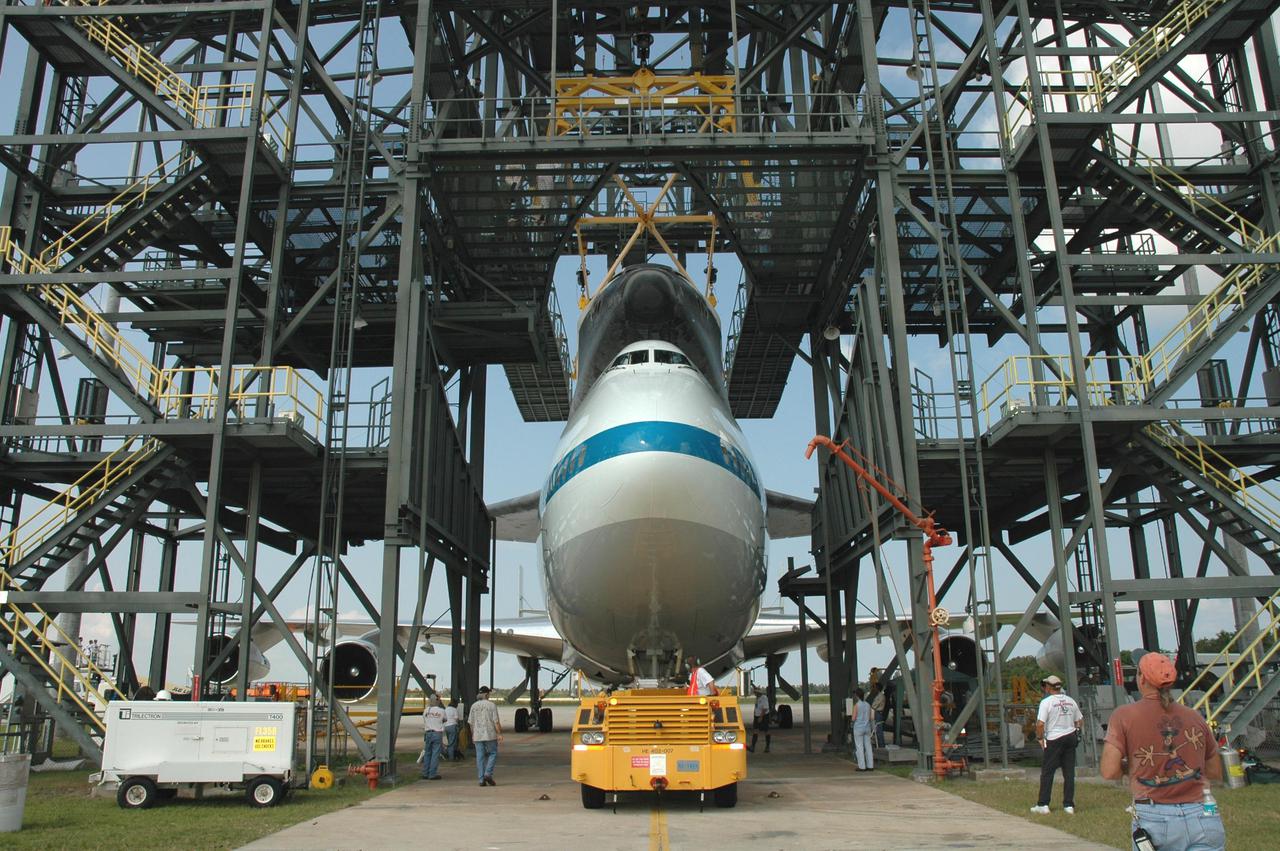
KENNEDY SPACE CENTER, FLA. - The Shuttle Carrier Aircraft, a modified Boeing 747, with the orbiter Discovery on top is towed into the mate_demate device at NASA Kennedy Space Center’s Shuttle Landing Facility. Discovery was returned to Kennedy Space Center on a ferry flight from Edwards Air Force Base in California, where it landed Aug. 9 after 13 days in space on mission STS-114. In the mate_demate device, a horizontal structure mounted at the 80-foot level between two towers controls and guides a large lift beam that attaches to the orbiter to raise and lower it. Once Discovery is lifted off the back of the SCA, the 747 can then roll away and the orbiter will be lowered to the ground. It will then be towed from the SLF to the Orbiter Processing Facility. Once inside the OPF, the payload bay doors will be opened and the MPLM Raffaello brought back from the International Space Station will be unloaded and transferred to the Space Station Processing Facility. This concludes mission STS-114.
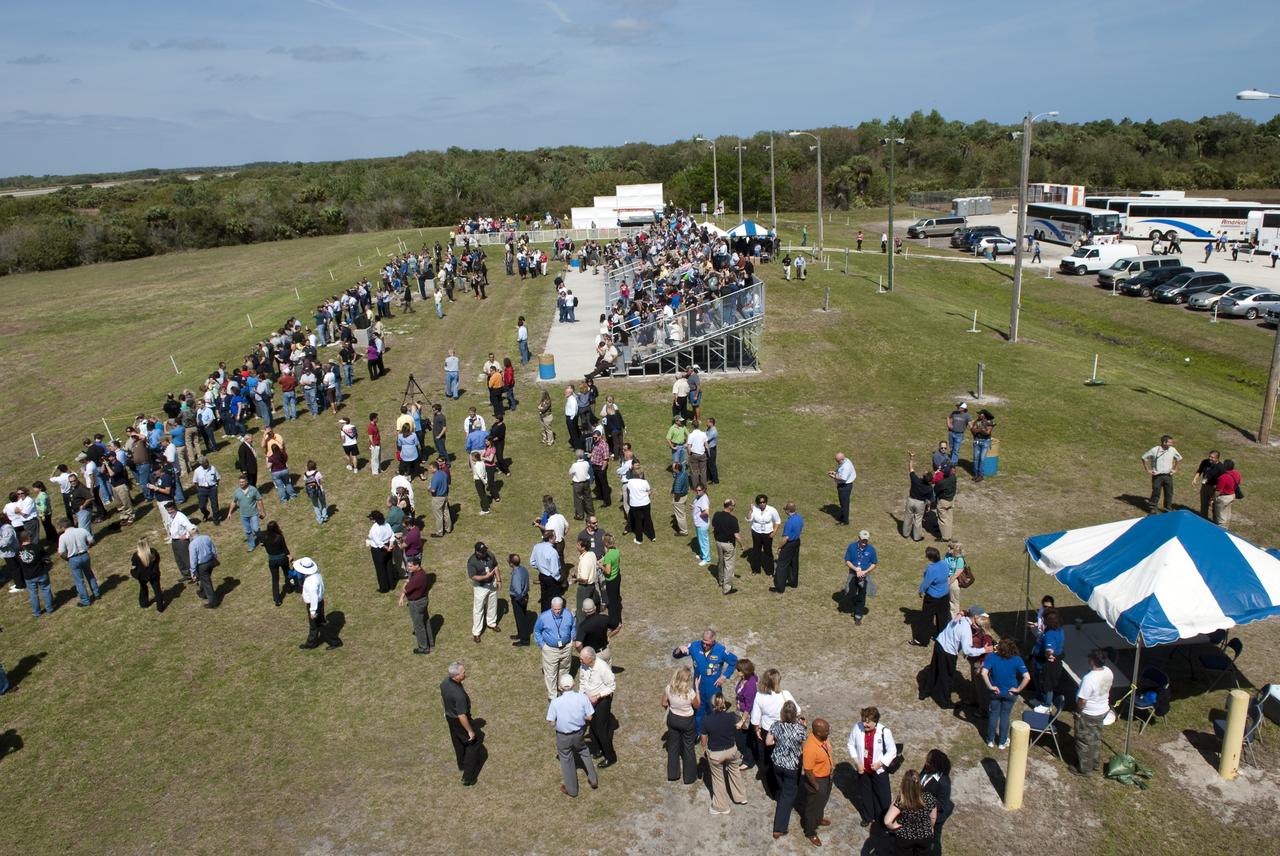
CAPE CANAVERAL, Fla. -- At NASA's Kennedy Space Center in Florida, invited guests, managers and employees gather near the Air Traffic Control Tower at the Shuttle Landing Facility (SLF) to watch shuttle Discovery return from space for the last time. Discovery touched down on Runway 15 at 11:57 a.m. EST, completing the 13-day STS-133 mission to the International Space Station. Discovery and its six-member crew delivered the Permanent Multipurpose Module, packed with supplies and critical spare parts, as well as Robonaut 2, the dexterous humanoid astronaut helper, to the orbiting outpost. STS-133 was Discovery's 39th and final mission. This was the 133rd Space Shuttle Program mission and the 35th shuttle voyage to the space station. Photo credit: NASA/Jim Grossmann
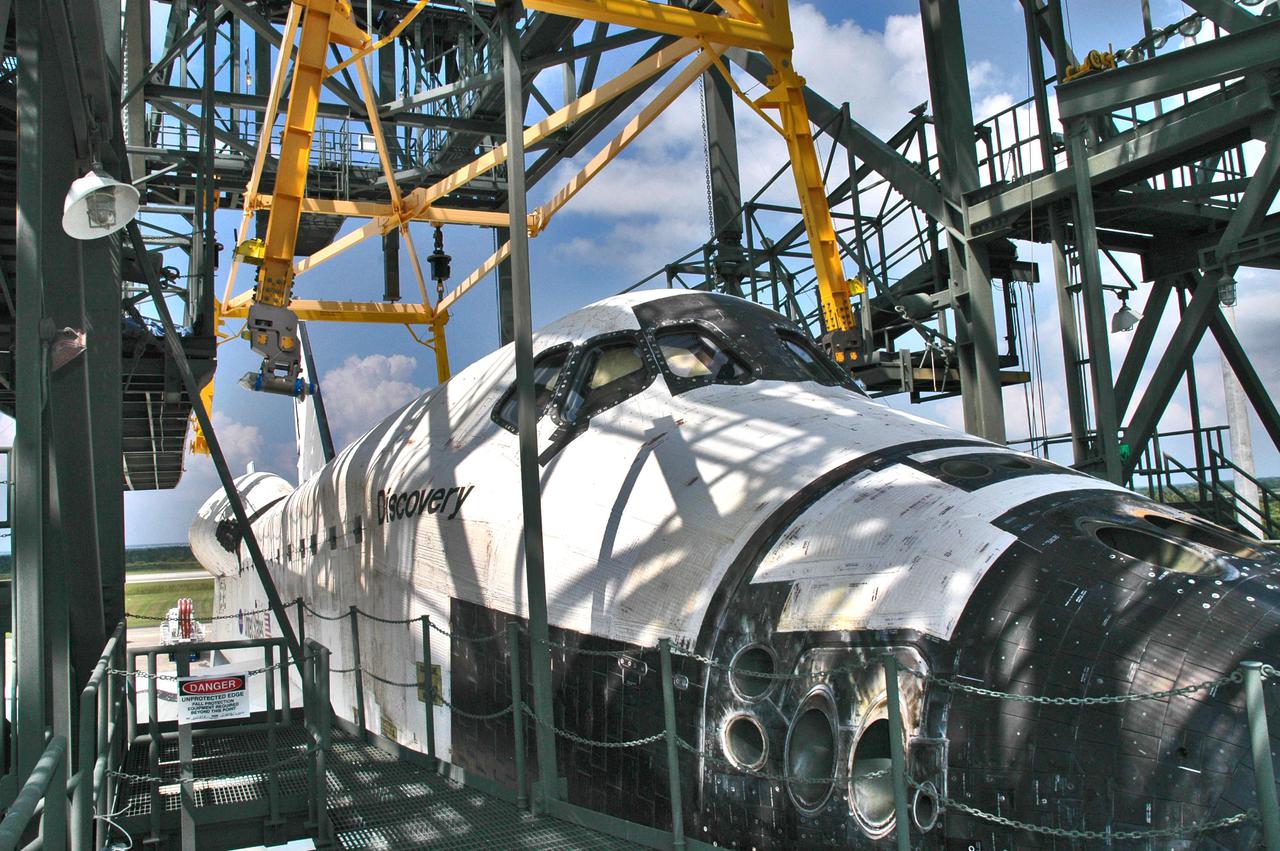
KENNEDY SPACE CENTER, FLA. - The orbiter Discovery on top of the Shuttle Carrier Aircraft, a modified Boeing 747, is in place under the mate_demate device at NASA Kennedy Space Center’s Shuttle Landing Facility. Discovery was returned to Kennedy Space Center on a ferry flight from Edwards Air Force Base in California, where it landed Aug. 9 after 13 days in space on mission STS-114. In the mate_demate device, a horizontal structure mounted at the 80-foot level between two towers controls and guides a large lift beam that attaches to the orbiter to raise and lower it. Once Discovery is lifted off the back of the SCA, the 747 can then roll away and the orbiter will be lowered to the ground. It will then be towed from the SLF to the Orbiter Processing Facility. Once inside the OPF, the payload bay doors will be opened and the MPLM Raffaello brought back from the International Space Station will be unloaded and transferred to the Space Station Processing Facility. This concludes mission STS-114.
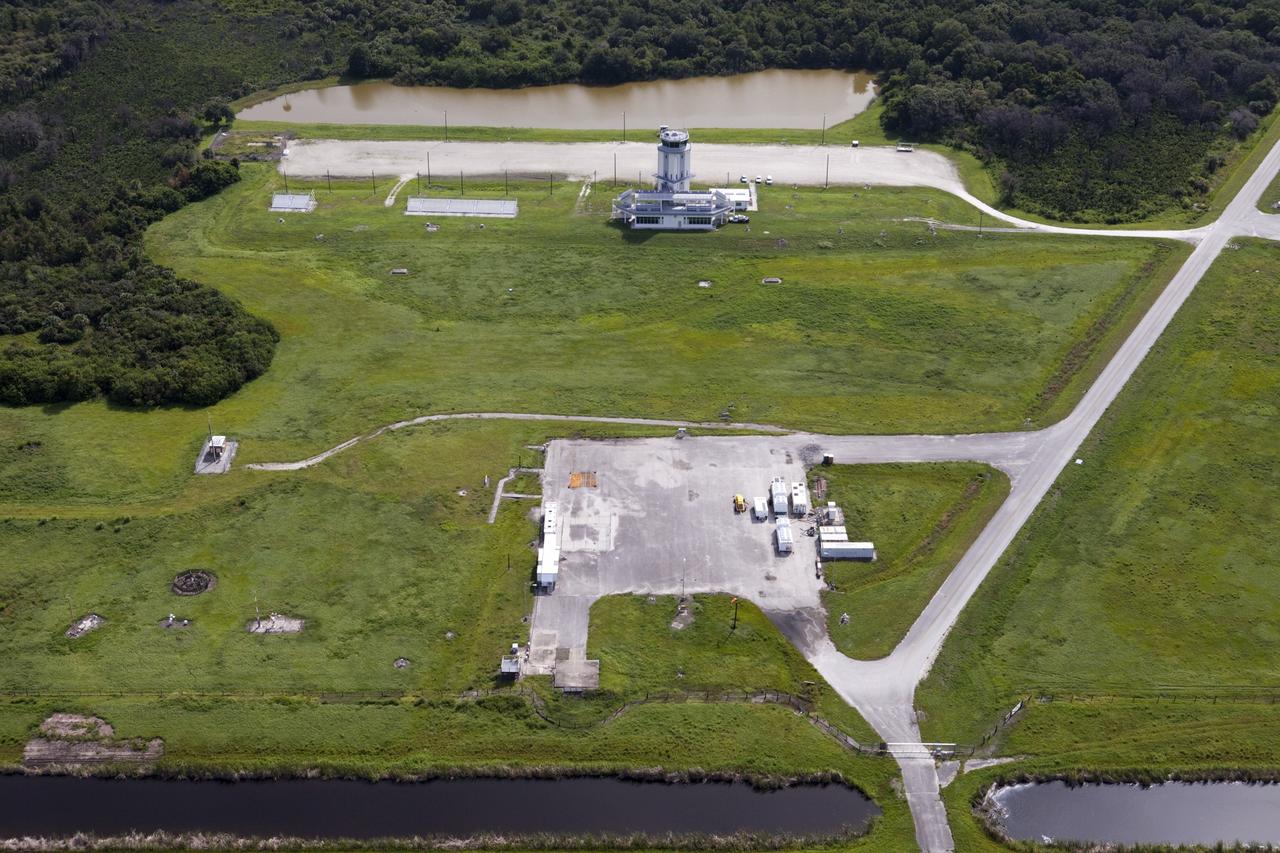
CAPE CANAVERAL, Fla. – This aerial view shows the Shuttle Landing Facility’s air traffic control tower at the Kennedy Space Center in Florida. Just below the tower is the mid-field park site used for runway support vehicles. At the north end of the runway, a rock and crater-filled planetary scape has been built so engineers can test the Autonomous Landing and Hazard Avoidance Technology, or ALHAT system on the Project Morpheus lander. Testing will demonstrate ALHAT’s ability to provide required navigation data negotiating the Morpheus lander away from risks during descent. Checkout of the prototype lander has been ongoing at NASA’s Johnson Space Center in Houston in preparation for its first free flight. The SLF site will provide the lander with the kind of field necessary for realistic testing. Project Morpheus is one of 20 small projects comprising the Advanced Exploration Systems, or AES, program in NASA’s Human Exploration and Operations Mission Directorate. AES projects pioneer new approaches for rapidly developing prototype systems, demonstrating key capabilities and validating operational concepts for future human missions beyond Earth orbit. For more information on Project Morpheus, visit http://www.nasa.gov/centers/johnson/exploration/morpheus/index.html Photo credit: NASA/Kim Shiflett
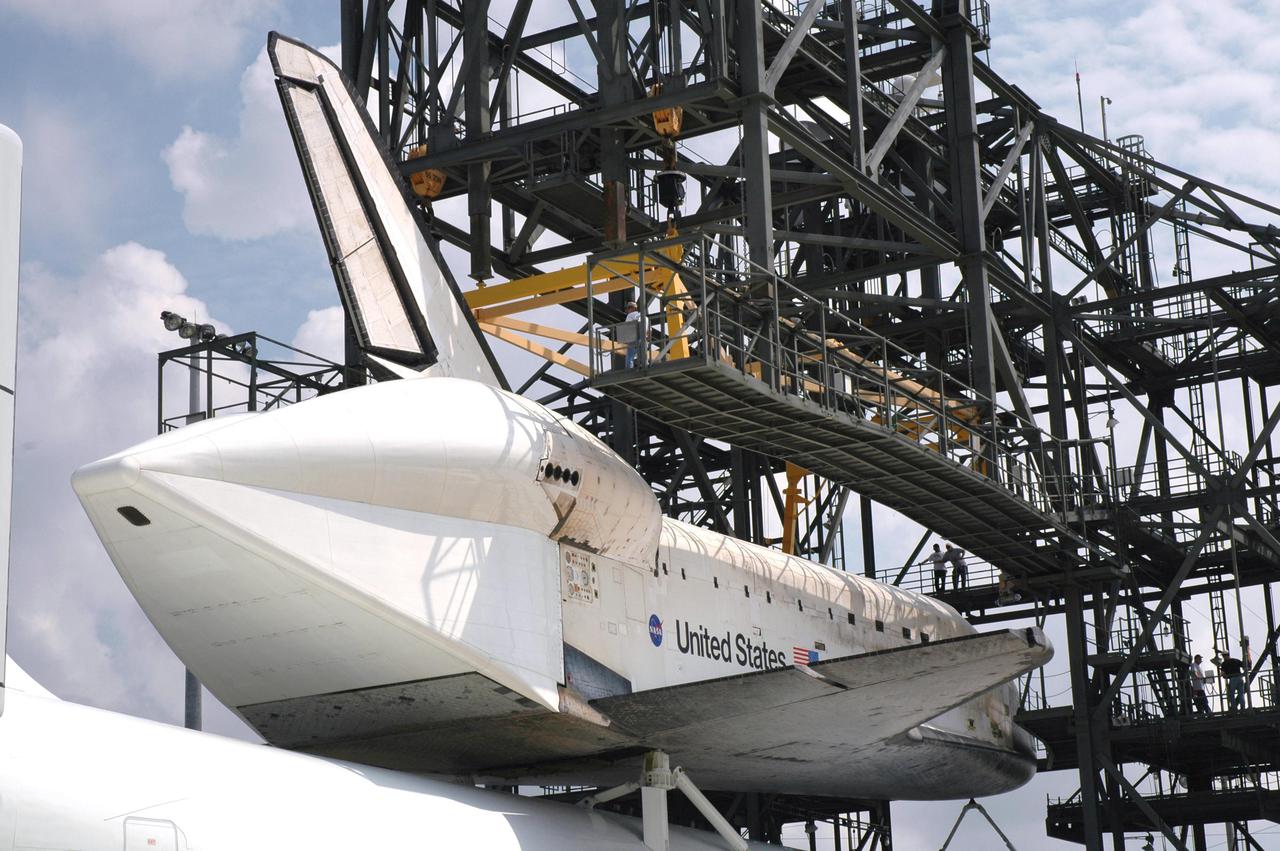
KENNEDY SPACE CENTER, FLA. - The orbiter Discovery on top of the Shuttle Carrier Aircraft, a modified Boeing 747, is towed into the mate_demate device at NASA Kennedy Space Center’s Shuttle Landing Facility. Visible in the closeup is the tail cone that covers the main engines during the ferry flight. Discovery was returned to Kennedy Space Center on a ferry flight from Edwards Air Force Base in California, where it landed Aug. 9 after 13 days in space on mission STS-114. In the mate_demate device, a horizontal structure mounted at the 80-foot level between two towers controls and guides a large lift beam that attaches to the orbiter to raise and lower it. Once Discovery is lifted off the back of the SCA, the 747 can then roll away and the orbiter will be lowered to the ground. It will then be towed from the SLF to the Orbiter Processing Facility. Once inside the OPF, the payload bay doors will be opened and the MPLM Raffaello brought back from the International Space Station will be unloaded and transferred to the Space Station Processing Facility. This concludes mission STS-114.
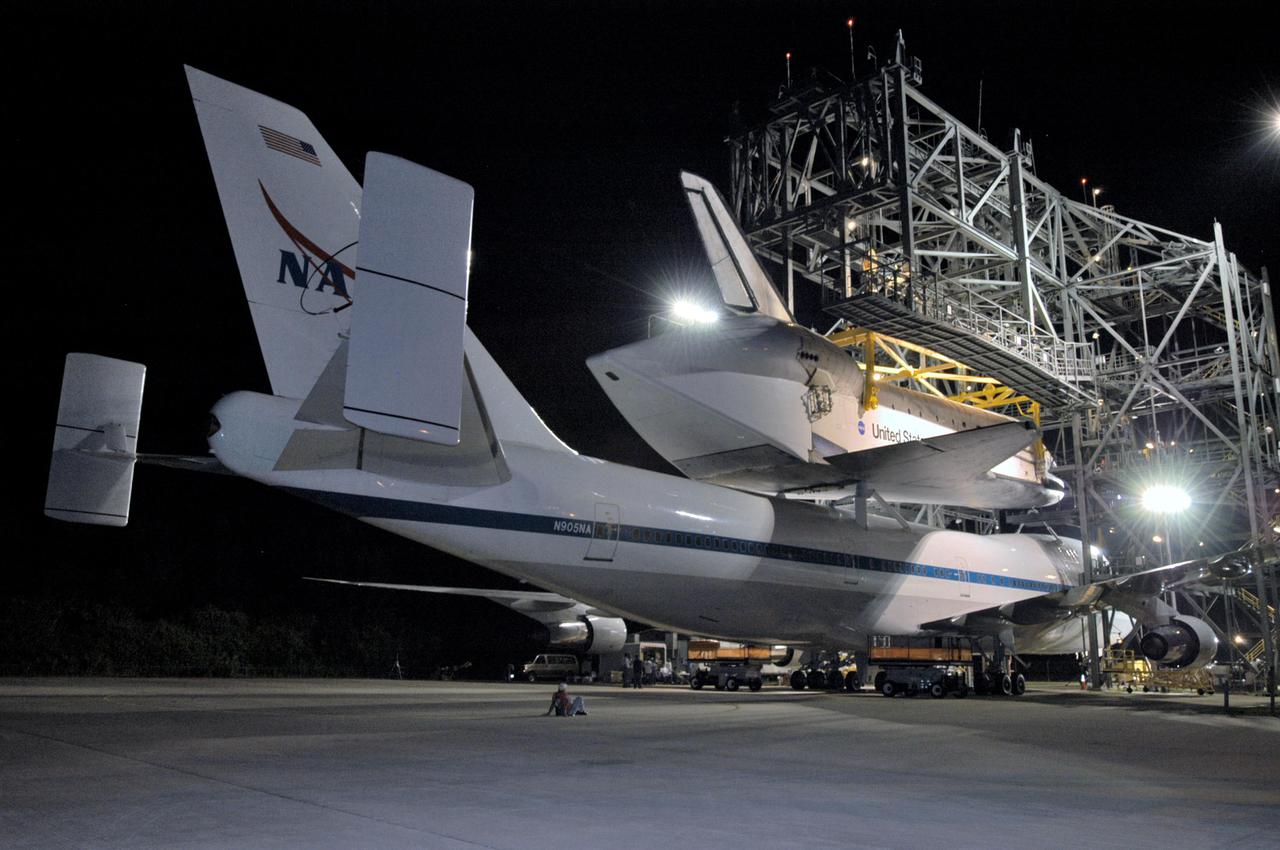
KENNEDY SPACE CENTER, FLA. - Near midnight, lights from the mate_demate device at NASA Kennedy Space Center’s Shuttle Landing Facility shine on the orbiter Discovery on top of the Shuttle Carrier Aircraft, a modified Boeing 747. Discovery was returned to Kennedy Space Center on a ferry flight from Edwards Air Force Base in California, where it landed Aug. 9 after 13 days in space on mission STS-114. In the mate_demate device, a horizontal structure mounted at the 80-foot level between two towers controls and guides a large lift beam that attaches to the orbiter to raise and lower it. Once Discovery is lifted off the back of the SCA, the 747 can then roll away and the orbiter will be lowered to the ground. It will then be towed from the SLF to the Orbiter Processing Facility. Once inside the OPF, the payload bay doors will be opened and the MPLM Raffaello brought back from the International Space Station will be unloaded and transferred to the Space Station Processing Facility. This concludes mission STS-114.
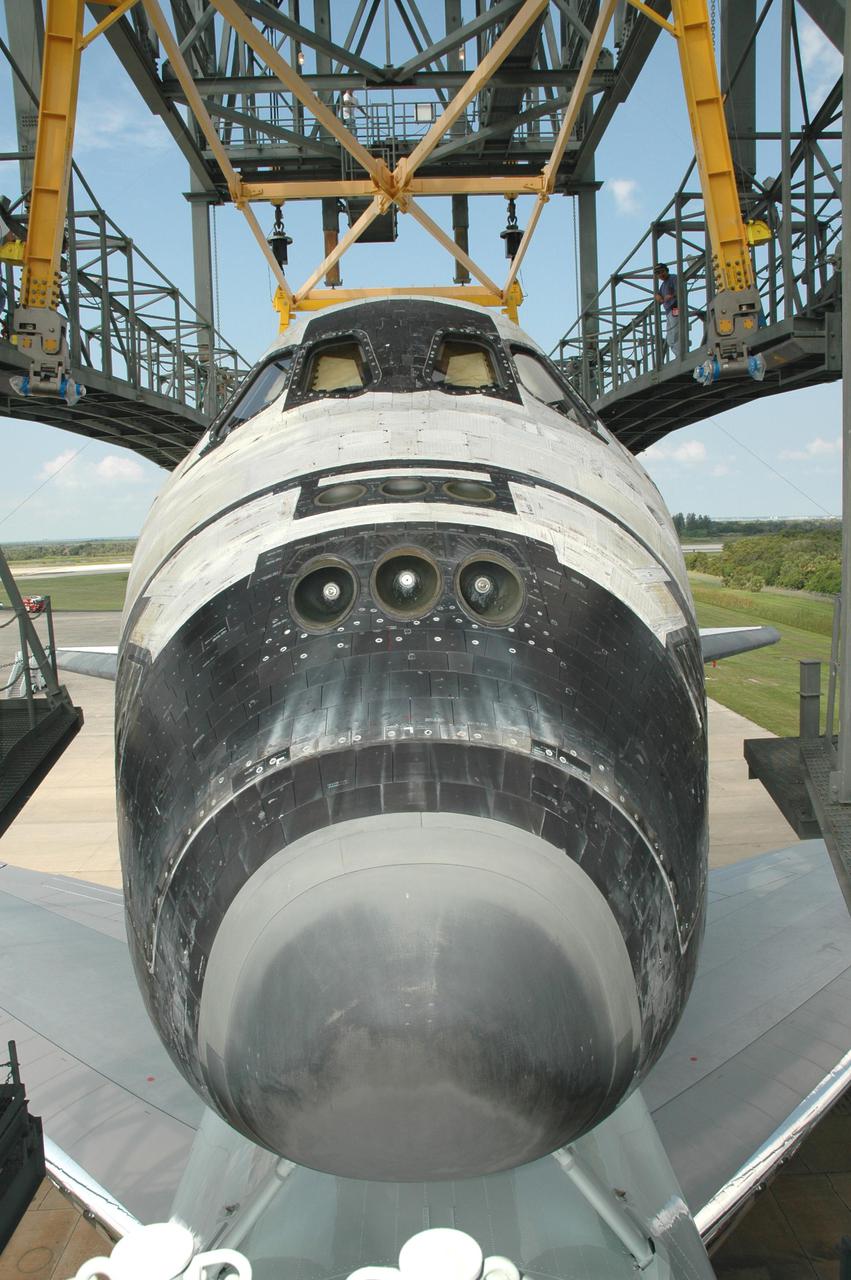
KENNEDY SPACE CENTER, FLA. - This view shows the orbiter Discovery on top of the Shuttle Carrier Aircraft, a modified Boeing 747, being towed into the mate_demate device at NASA Kennedy Space Center’s Shuttle Landing Facility. Discovery was returned to Kennedy Space Center on a ferry flight from Edwards Air Force Base in California, where it landed Aug. 9 after 13 days in space on mission STS-114. In the mate_demate device, a horizontal structure mounted at the 80-foot level between two towers controls and guides a large lift beam that attaches to the orbiter to raise and lower it. Once Discovery is lifted off the back of the SCA, the 747 can then roll away and the orbiter will be lowered to the ground. It will then be towed from the SLF to the Orbiter Processing Facility. Once inside the OPF, the payload bay doors will be opened and the MPLM Raffaello brought back from the International Space Station will be unloaded and transferred to the Space Station Processing Facility. This concludes mission STS-114.
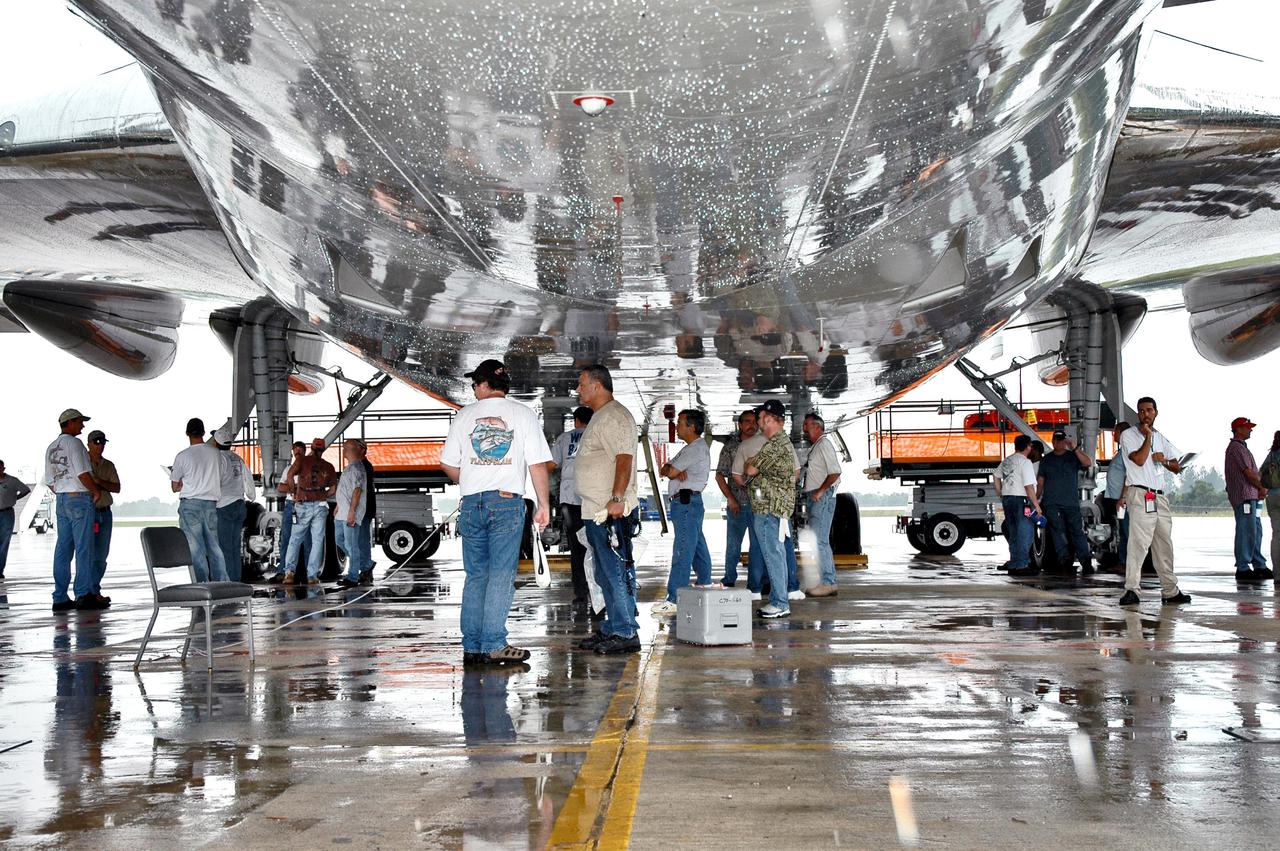
KENNEDY SPACE CENTER, FLA. - At NASA Kennedy Space Center’s Shuttle Landing Facility, workers secure the Shuttle Carrier Aircraft, a modified Boeing 747, on the ground under the mate_demate device. The orbiter Discovery is still on top of the aircraft. Discovery was returned to Kennedy Space Center on a ferry flight from Edwards Air Force Base in California, where it landed Aug. 9 after 13 days in space on mission STS-114. In the mate_demate device, a horizontal structure mounted at the 80-foot level between two towers controls and guides a large lift beam that attaches to the orbiter to raise and lower it. Once Discovery is lifted off the back of the SCA, the 747 can then roll away and the orbiter will be lowered to the ground. It will then be towed from the SLF to the Orbiter Processing Facility. Once inside the OPF, the payload bay doors will be opened and the MPLM Raffaello brought back from the International Space Station will be unloaded and transferred to the Space Station Processing Facility. This concludes mission STS-114.
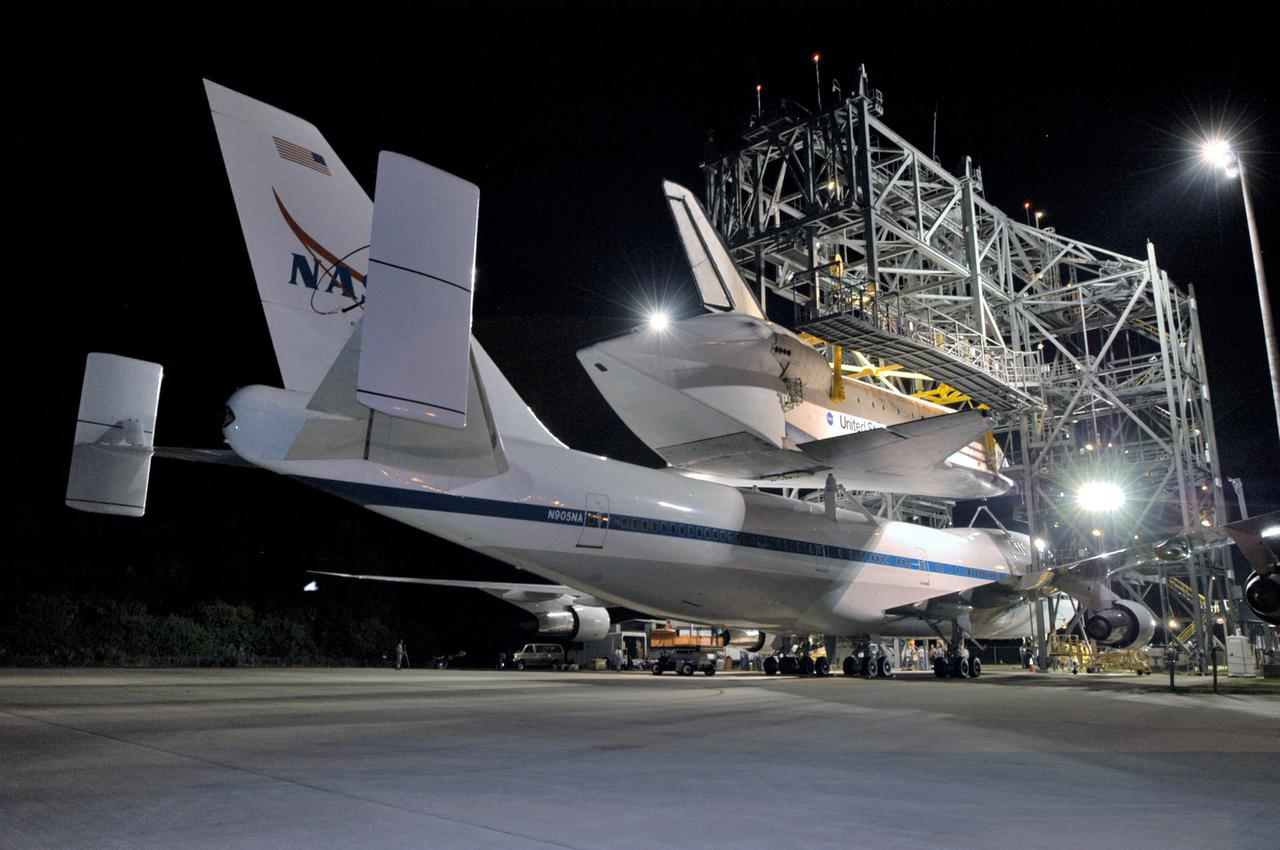
KENNEDY SPACE CENTER, FLA. - In the early morning hours at NASA Kennedy Space Center’s Shuttle Landing Facility, the orbiter Discovery is being demated from the Shuttle Carrier Aircraft, a modified Boeing 747, beneath it. Discovery was returned to Kennedy Space Center on a ferry flight from Edwards Air Force Base in California, where it landed Aug. 9 after 13 days in space on mission STS-114. In the mate_demate device, a horizontal structure mounted at the 80-foot level between two towers controls and guides a large lift beam that attaches to the orbiter to raise and lower it. Once Discovery is lifted off the back of the SCA, the 747 can then roll away and the orbiter will be lowered to the ground. It will then be towed from the SLF to the Orbiter Processing Facility. Once inside the OPF, the payload bay doors will be opened and the MPLM Raffaello brought back from the International Space Station will be unloaded and transferred to the Space Station Processing Facility. This concludes mission STS-114.

KENNEDY SPACE CENTER, FLA. - The orbiter Discovery on top of the Shuttle Carrier Aircraft, a modified Boeing 747, is towed into the mate_demate device at NASA Kennedy Space Center’s Shuttle Landing Facility. Visible on the orbiter is the tail cone that covers the main engines during the ferry flight. Discovery was returned to Kennedy Space Center on a ferry flight from Edwards Air Force Base in California, where it landed Aug. 9 after 13 days in space on mission STS-114. In the mate_demate device, a horizontal structure mounted at the 80-foot level between two towers controls and guides a large lift beam that attaches to the orbiter to raise and lower it. Once Discovery is lifted off the back of the SCA, the 747 can then roll away and the orbiter will be lowered to the ground. It will then be towed from the SLF to the Orbiter Processing Facility. Once inside the OPF, the payload bay doors will be opened and the MPLM Raffaello brought back from the International Space Station will be unloaded and transferred to the Space Station Processing Facility. This concludes mission STS-114.
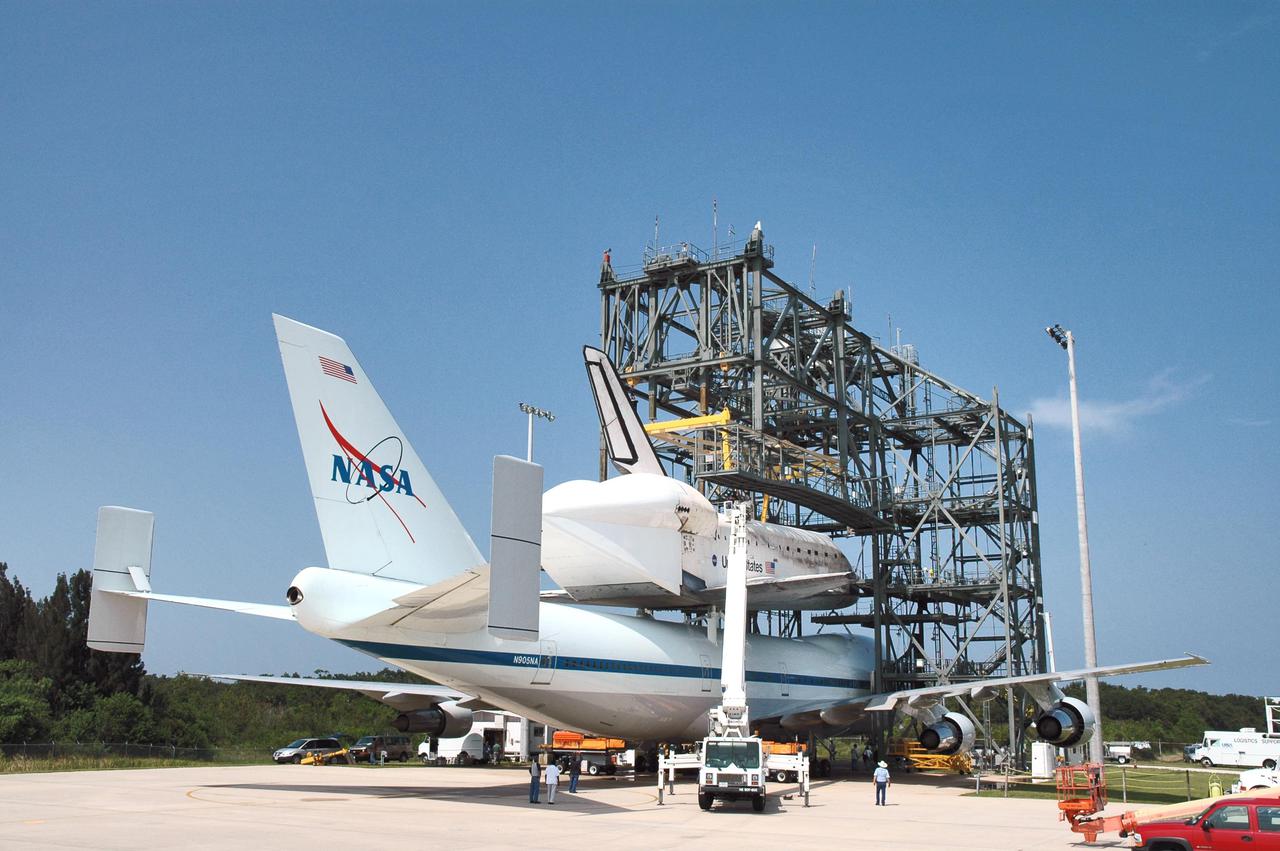
KENNEDY SPACE CENTER, FLA. - At NASA Kennedy Space Center’s Shuttle Landing Facility, the Shuttle Carrier Aircraft, a modified Boeing 747, and orbiter Discovery on top, remain in the mate_demate device while Discovery is prepared for demating. Discovery was returned to Kennedy Space Center on a ferry flight from Edwards Air Force Base in California, where it landed Aug. 9 after 13 days in space on mission STS-114. In the mate_demate device, a horizontal structure mounted at the 80-foot level between two towers controls and guides a large lift beam that attaches to the orbiter to raise and lower it. Once Discovery is lifted off the back of the SCA, the 747 can then roll away and the orbiter will be lowered to the ground. It will then be towed from the SLF to the Orbiter Processing Facility. Once inside the OPF, the payload bay doors will be opened and the MPLM Raffaello brought back from the International Space Station will be unloaded and transferred to the Space Station Processing Facility. This concludes mission STS-114.