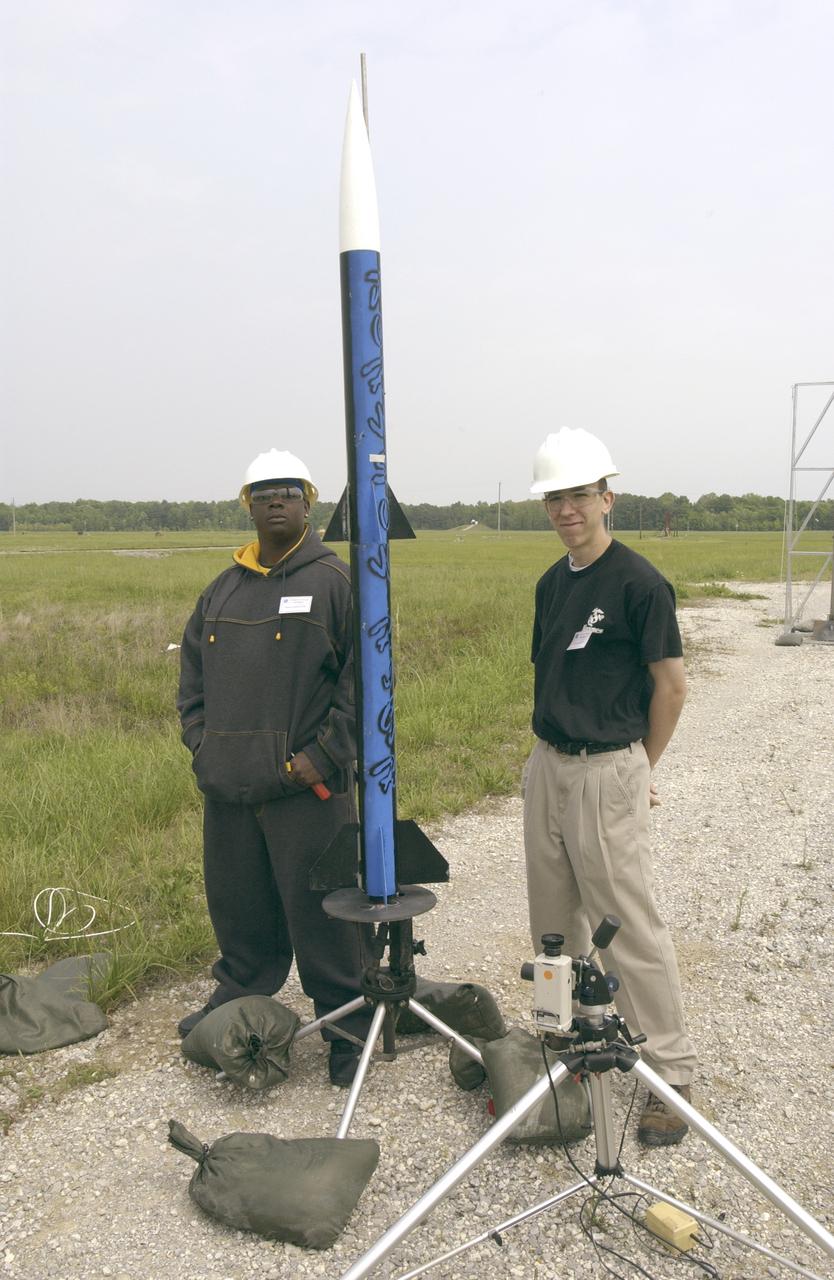
Filled with anticipation, students from three Huntsville area high schools: Randolph, Sparkman and Johnson High Schools, counted down to launch the rockets they designed and built at the Army test site on Redstone Arsenal in Huntsville, Alabama. The projected two-mile high launch culminated more than a year's work and demonstrated the student team's ability to meet the challenge set by the Marshall Space Flight Center's (MSFC) Student Launch Initiative (SLI) program to apply science and math to experience, judgment, and common sense, and proved to NASA officials that they have successfully built reusable launch vehicles (RLVs), another challenge set by NASA's SLI program. MSFC's SLI program is an educational effort that aims to motivate students to pursue careers in science, math, and engineering. It provides them with hands-on, practical aerospace experience. In this picture, two Johnson High School students pose with their rocket.
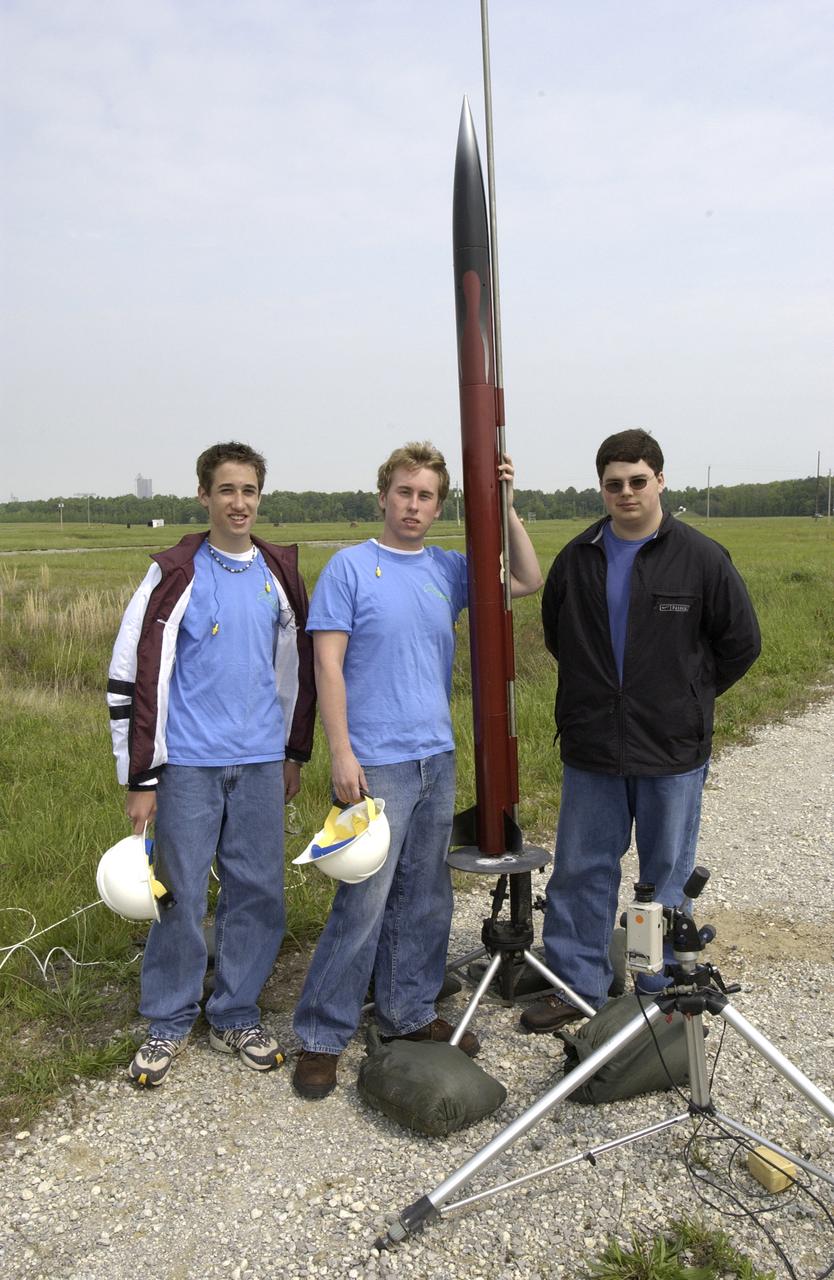
Filled with anticipation, students from three Huntsville area high schools: Randolph, Sparkman, and Johnson High Schools, counted down to launch the rockets they designed and built at the Army test site on Redstone Arsenal in Huntsville, Alabama. The projected two-mile high launch culminated more than a year's work and demonstrated the student team's ability to meet the challenge set by the Marshall Space Flight Center's (MSFC) Student Launch Initiative (SLI) program to apply science and math to experience, judgment, and common sense, and proved to NASA officials that they have successfully built reusable launch vehicles (RLVs), another challenge set by NASA's SLI program. MSFC's SLI program is an educational effort that aims to motivate students to pursue careers in science, math, and engineering. It provides them with hands-on, practical aerospace experience. In this picture, three Sparkman High School students pose with their rocket.
NASA's Marshall Space Flight Center in Huntsville, Alabama, manages the Space Launch Initiative (SLI), NASA's priority developmental program focused on empowering America's leadership in space. SLI includes commercial, higher education, and defense partnerships and contracts to offer widespread participation in both the risk and success of developing our nation's next-generation reusable launch vehicle. This photo depicts an artist's concept of a future second-generation launch vehicle. For the SLI, architecture definition includes all components of the next-generation reusable launch system: Earth-to-orbit vehicles (the Space Shuttle is the first generation earth-to-orbit vehicle), crew transfer vehicles, transfer stages, ground processing systems, flight operations systems, and development of business case strategies. Three contractor teams have each been funded to develop potential second- generation reusable launch system architectures: The Boeing Company of Seal Beach, California; Lockheed Martin Corporation of Denver, Colorado along with a team including Northrop Grumman of El Segundo, California; and Orbital Sciences Corporation of Dulles, Virginia.
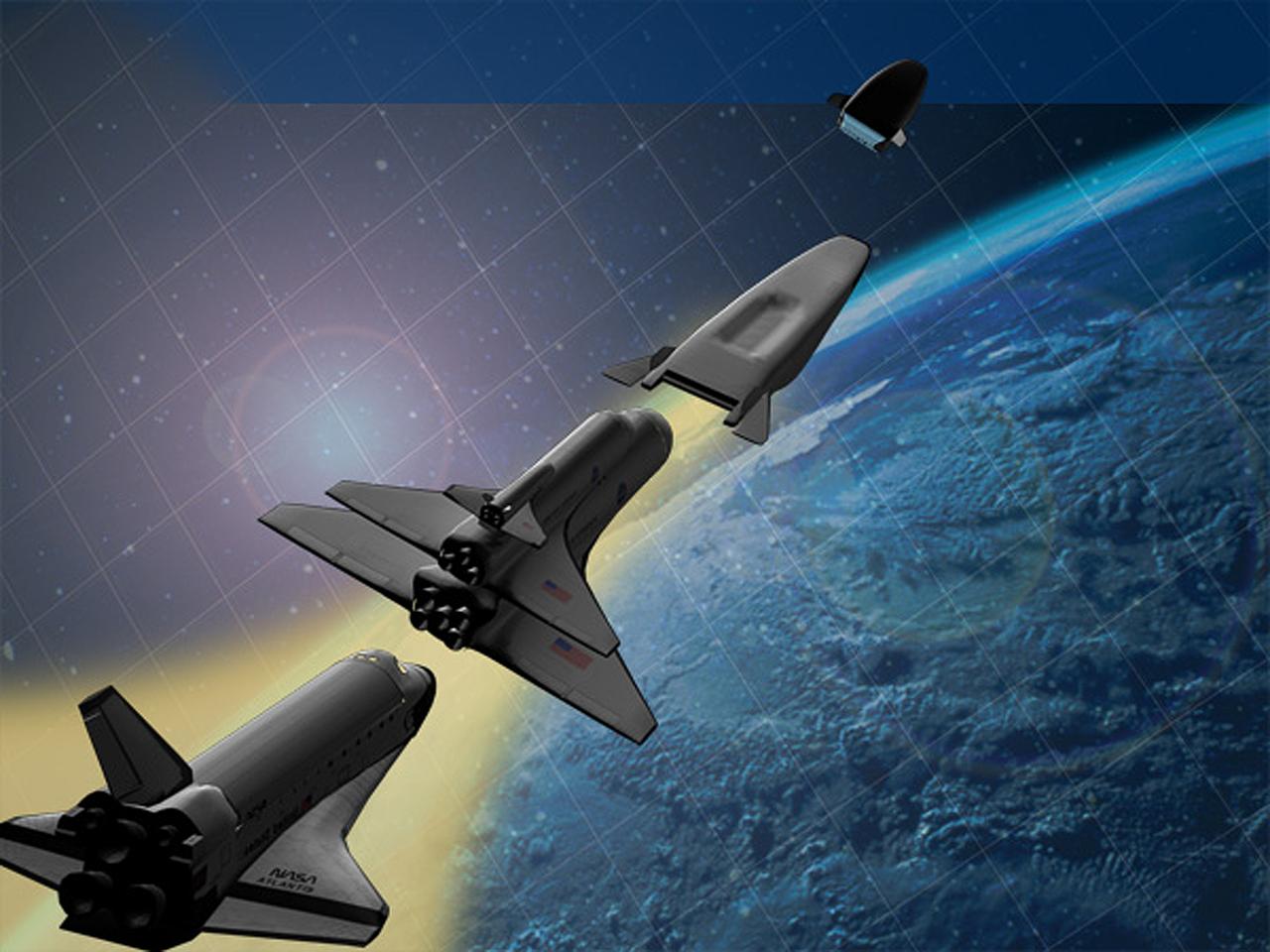
NASA's Marshall Space Flight Center in Huntsville, Alabama, manages the Space Launch Initiative (SLI), NASA's priority developmental program focused on empowering America's leadership in space. SLI includes commercial, higher education and defense partnerships and contracts to offer widespread participation in both the risk and success of developing our nation's next-generation reusable launch vehicle. This photo depicts an artist's concept of a future second-generation launch vehicle during separation of stages. For SLI, architecture definition includes all components of the next-generation reusable launch system: Earth-to-orbit vehicles (the Space Shuttle is the first-generation earth-to-orbit vehicle), crew transfer vehicles, transfer stages, ground processing systems, flight operations systems, and development of business case strategies. Three contractor teams have each been funded to develop potential second generation reusable launch system architectures: The Boeing Company of Seal Beach, California; Lockheed Martin Corporation of Denver, Colorado; a team including Northrop Grumman of El Segundo, California; and Orbital Sciences Corporation of Dulles, Virginia.
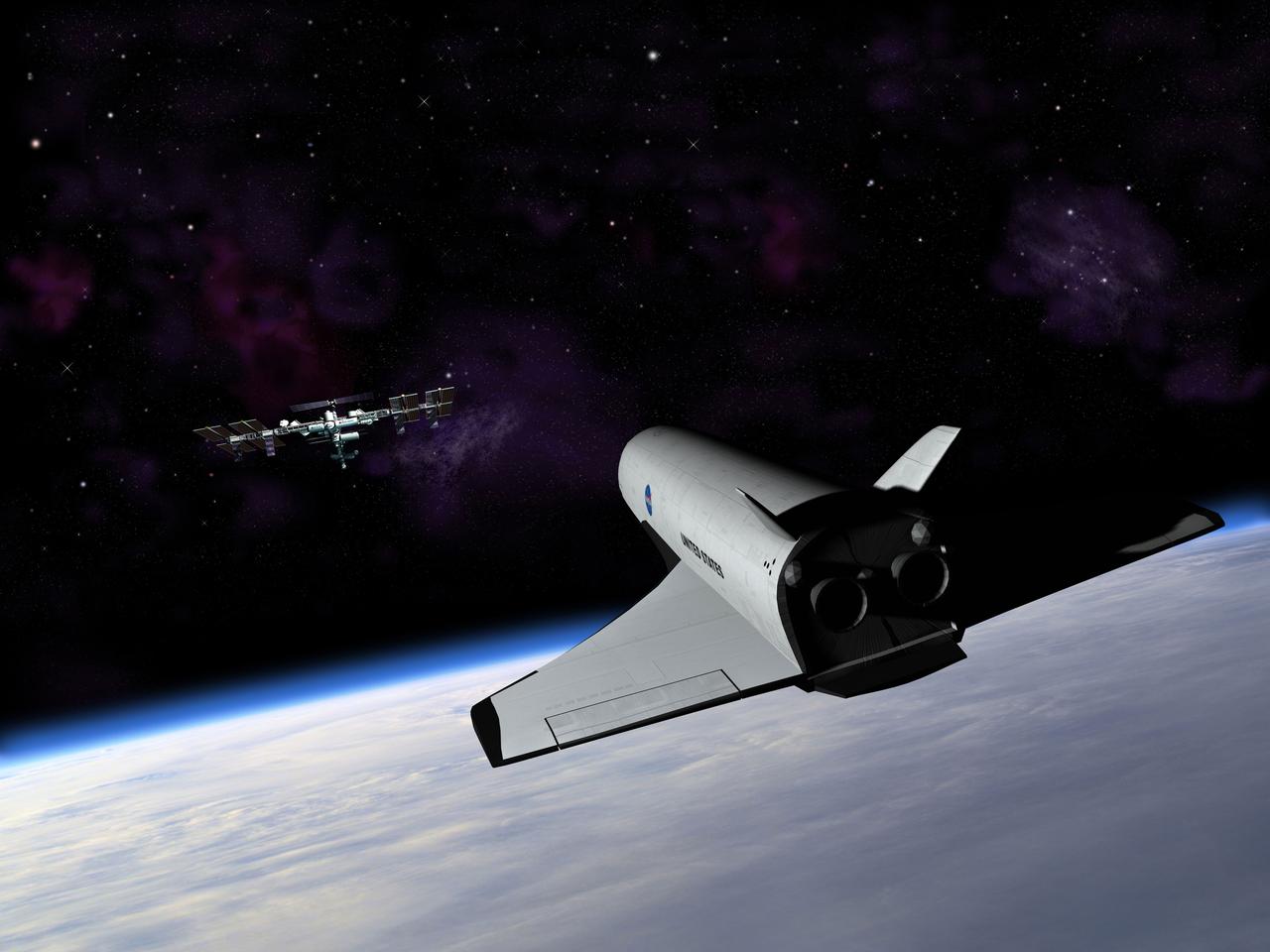
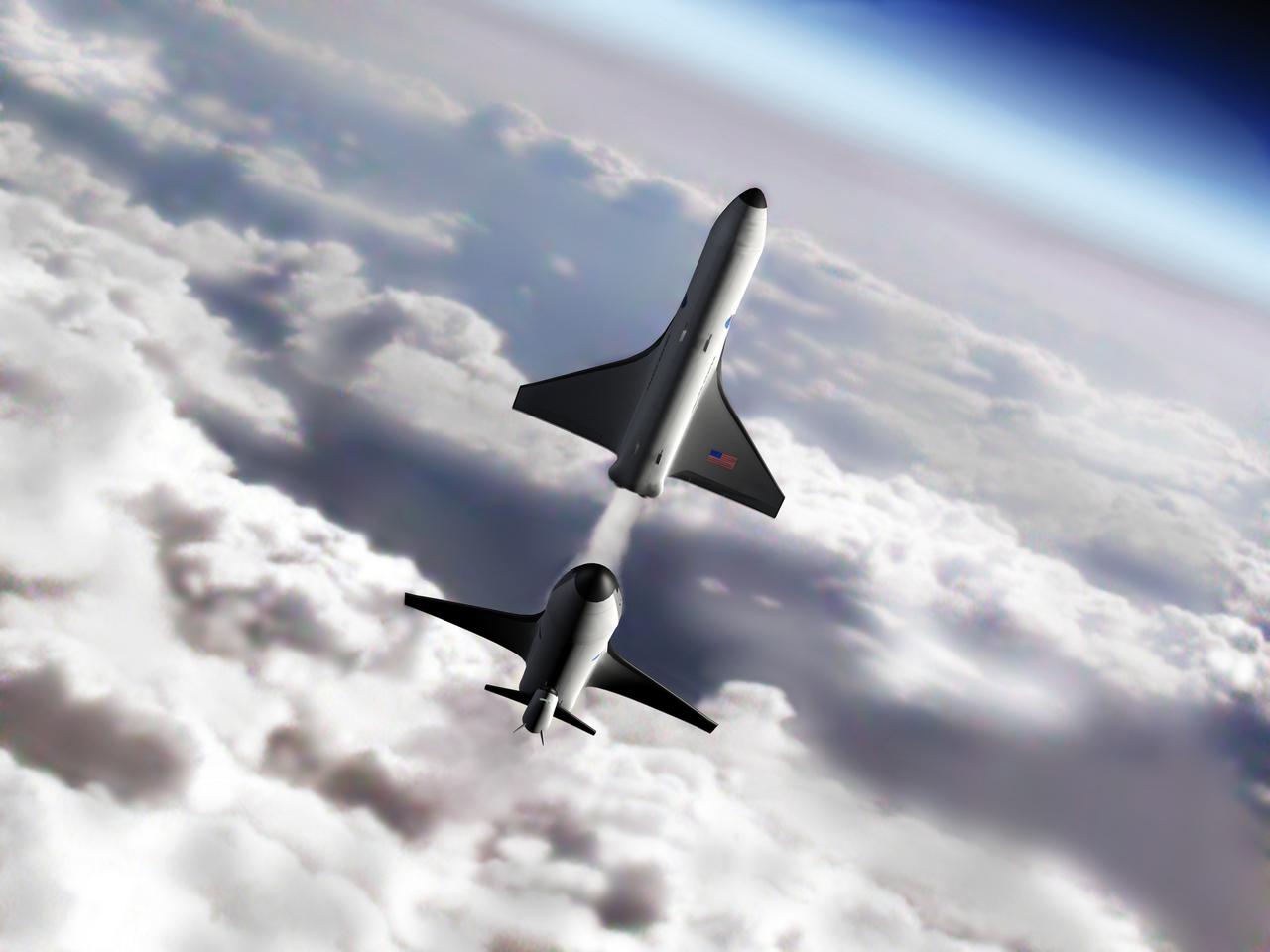
NASA's Marshall Space Flight Center in Huntsville, Alabama, manages the Space Launch Initiative (SLI), NASA's priority developmental program focused on empowering America's leadership in space. SLI includes commercial, higher education, and Defense partnerships and contracts to offer widespread participation in both the risk and success of developing our nation's next-generation reusable launch vehicle. This photo depicts an artist's concept of a future second-generation launch vehicle enroute to the International Space Station. For the SLI, architecture definition includes all components of the next-generation reusable launch system: Earth-to-orbit vehicles (the Space Shuttle is the first generation earth-to-orbit vehicle), crew transfer vehicles, transfer stages, ground processing systems, flight operations systems, and development of business case strategies. Three contractor teams have each been funded to develop potential second-generation reusable launch system architectures: The Boeing Company of Seal Beach, California; Lockheed Martin Corporation of Denver, Colorado along with a team including Northrop Grumman of El Segundo, California; and Orbital Sciences Corporation of Dulles, Virginia.
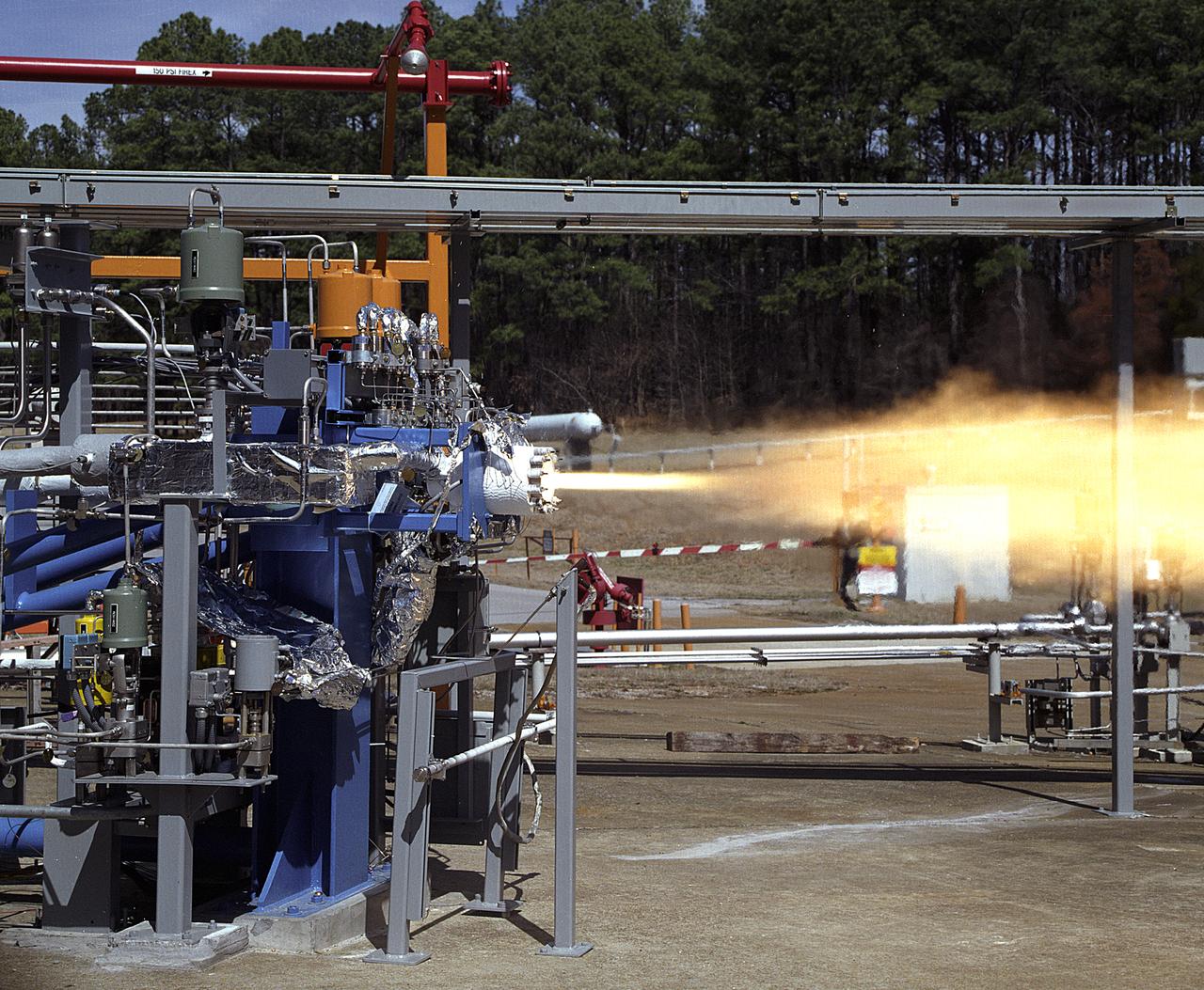
NASA's Marshall Space Flight Center (MSFC) in Huntsville, Alabama, has begun a series of engine tests on the Reaction Control Engine developed by TRW Space and Electronics for NASA's Space Launch Initiative (SLI). SLI is a technology development effort aimed at improving the safety, reliability, and cost effectiveness of space travel for reusable launch vehicles. The engine in this photo, the first engine tested at MSFC that includes SLI technology, was tested for two seconds at a chamber pressure of 185 pounds per square inch absolute (psia). Propellants used were liquid oxygen as an oxidizer and liquid hydrogen as fuel. Designed to maneuver vehicles in orbit, the engine is used as an auxiliary propulsion system for docking, reentry, fine-pointing, and orbit transfer while the vehicle is in orbit. The Reaction Control Engine has two unique features. It uses nontoxic chemicals as propellants, which creates a safer environment with less maintenance and quicker turnaround time between missions, and it operates in dual thrust modes, combining two engine functions into one engine. The engine operates at both 25 and 1,000 pounds of force, reducing overall propulsion weight and allowing vehicles to easily maneuver in space. The force of low level thrust allows the vehicle to fine-point maneuver and dock, while the force of the high level thrust is used for reentry, orbital transfer, and course positioning.
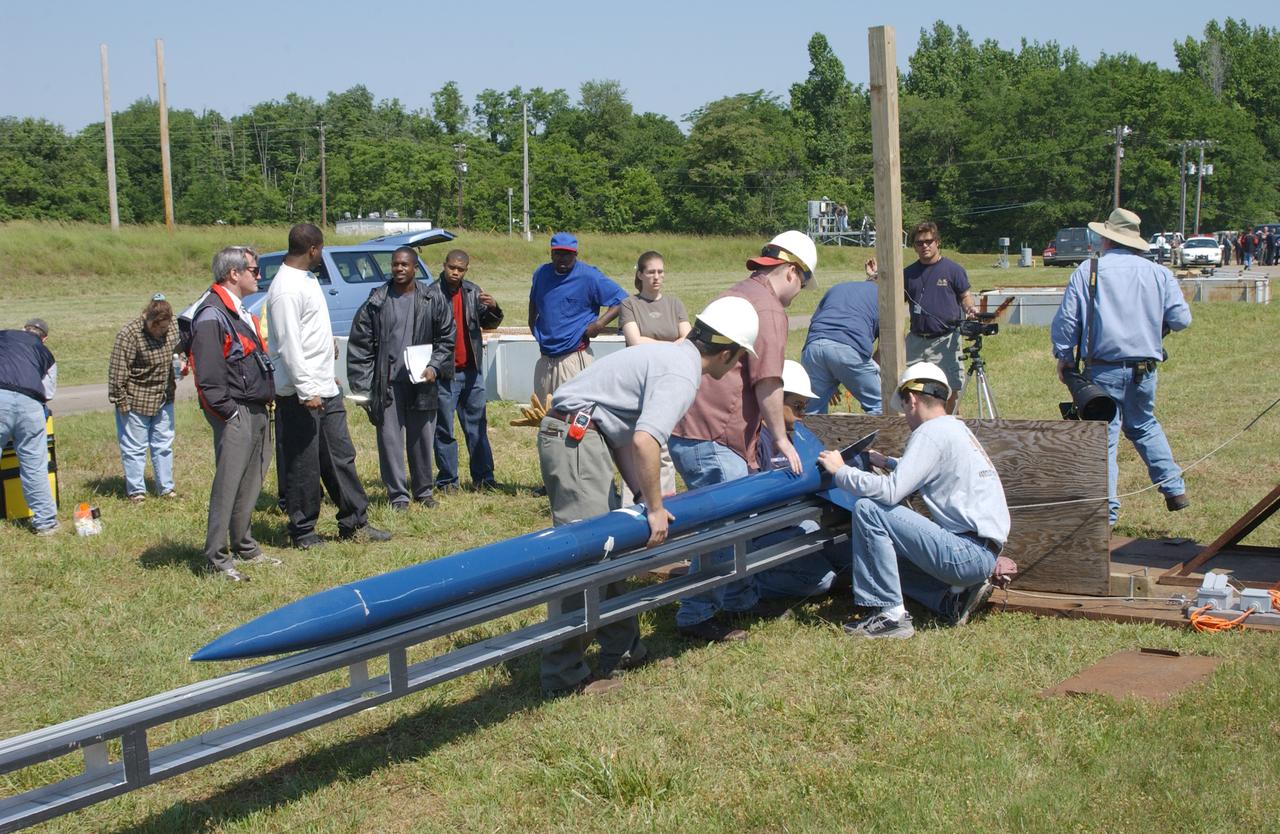
Filled with anticipation, students from two local universities, the University of Alabama in Huntsville (UAH), and Alabama Agricultural Mechanical University (AM), counted down to launch the rockets they designed and built at the Army test site on Redstone Arsenal in Huntsville, Alabama. The projected two-mile high launch culminated more than a year's work and demonstrated the student team's ability to meet the challenge set by the Marshall Space Flight Center's (MSFC) Student Launch Initiative (SLI) program to apply science and math to experience, judgment, and common sense, and proved to NASA officials that they have successfully built reusable launch vehicles (RLVs), another challenge set by NASA's SLI program. MSFC's SLI program is an educational effort that aims to motivate students to pursue careers in science, math, and engineering. It provides the students with hands-on, practical aerospace experience. In this picture, the University students prepare their rocket for launch. Students at UAH built the rocket and AM students developed its scientific payload, an experiment that measures the amount of hydrogen produced during electroplating with nickel in a brief period of micrgravity.
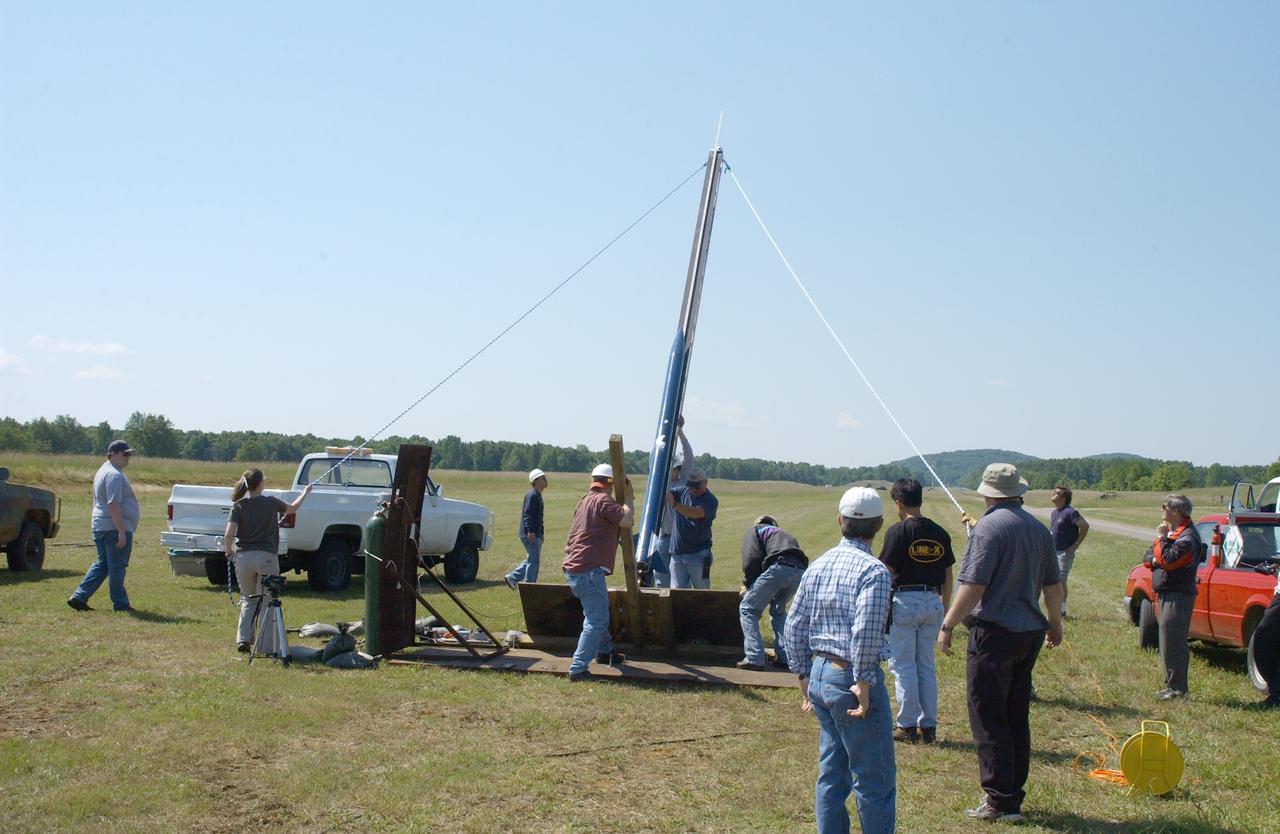
Filled with anticipation, students from two local universities, the University of Alabama in Huntsville (UAH), and Alabama Agricultural Mechanical University (AM), counted down to launch the rockets they designed and built at the Army test site on Redstone Arsenal in Huntsville, Alabama. The projected two-mile high launch culminated more than a year's work and demonstrated the student team's ability to meet the challenge set by the Marshall Space Flight Center's (MSFC) Student Launch Initiative (SLI) Program to apply science and math to experience, judgment, and common sense, and proved to NASA officials that they have successfully built reusable launch vehicles (RLVs), another challenge set by NASA's SLI program. MSFC's SLI program is an educational effort that aims to motivate students to pursue careers in science, math, and engineering. It provides the students with hands-on, practical aerospace experience. In this picture, the university students prepare their rocket for flight on the launch pad. Students at UAH built the rocket and AM students developed its scientific payload, an experiment that measures the amount of hydrogen produced during electroplating with nickel in a brief period of micrgravity.
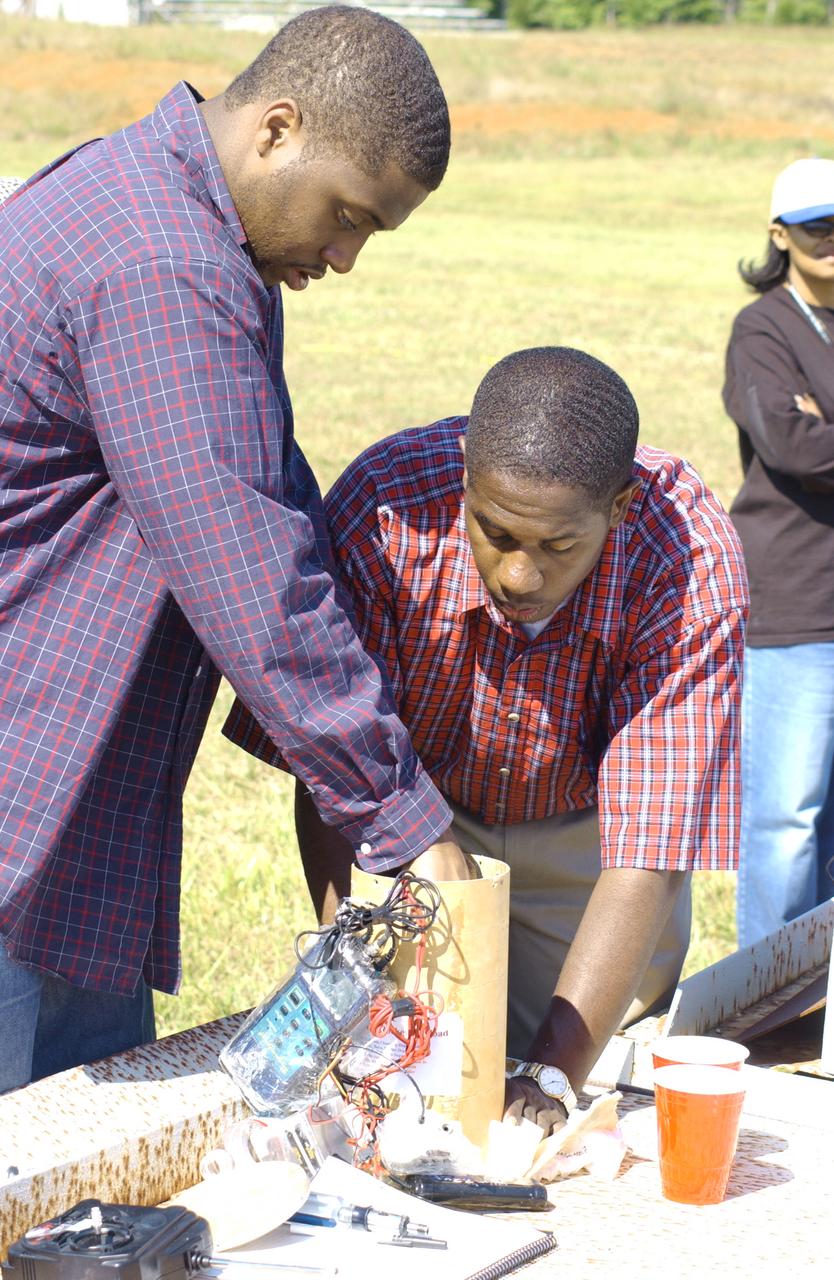
Filled with anticipation, students from two local universities, the University of Alabama in Huntsville (UAH), and Alabama Agricultural Mechanical University (AM), counted down to launch the rockets they designed and built at the Army test site on Redstone Arsenal in Huntsville, Alabama. The projected two-mile high launch culminated more than a year's work and demonstrated the student team's ability to meet the challenge set by the Marshall Space Flight Center's (MSFC) Student Launch Initiative (SLI) program to apply science and math to experience, judgment, and common sense, and proved to NASA officials that they have successfully built reusable launch vehicles (RLVs), another challenge set by NASA's SLI program. MSFC's SLI program is an educational effort that aims to motivate students to pursue careers in science, math, and engineering. It provides the students with hands-on, practical aerospace experience. UAH students designed and built the rocket and AM students designed the payload. In this picture, AM students prepare their payload, an experiment that measures the amount of hydrogen produced during electroplating with nickel in a brief period of micrgravity, prior to launch.
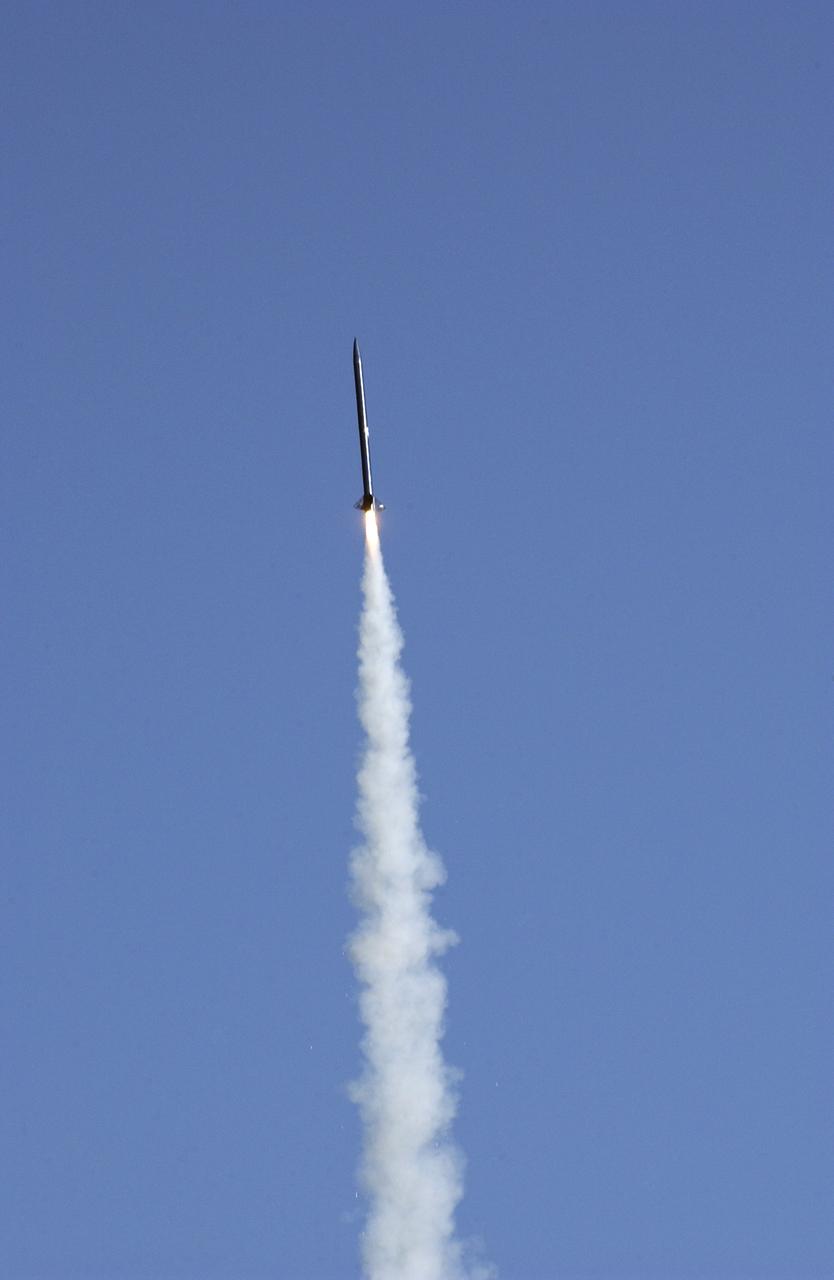
Filled with anticipation, students from two local universities, the University of Alabama in Huntsville (UAH), and Alabama Agricultural Mechanical University (AM), counted down to launch the rockets they designed and built at the Army test site on Redstone Arsenal in Huntsville, Alabama. The projected two-mile high launch culminated more than a year's work and demonstrated the student team's ability to meet the challenge set by the Marshall Space Flight Center's (MSFC) Student Launch Initiative (SLI) program to apply science and math to experience, judgment, and common sense, and proved to NASA officials that they have successfully built reusable launch vehicles (RLVs), another challenge set by NASA's SLI program. MSFC's SLI program is an educational effort that aims to motivate students to pursue careers in science, math, and engineering. It provides the students with hands-on, practical aerospace experience. In this picture, the combined efforts of students from UAH and AM sent this rocket soaring into flight. Students at UAH built the rocket and AM students developed its scientific payload, an experiment that measures the amount of hydrogen produced during electroplating with nickel in a brief period of micrgravity.
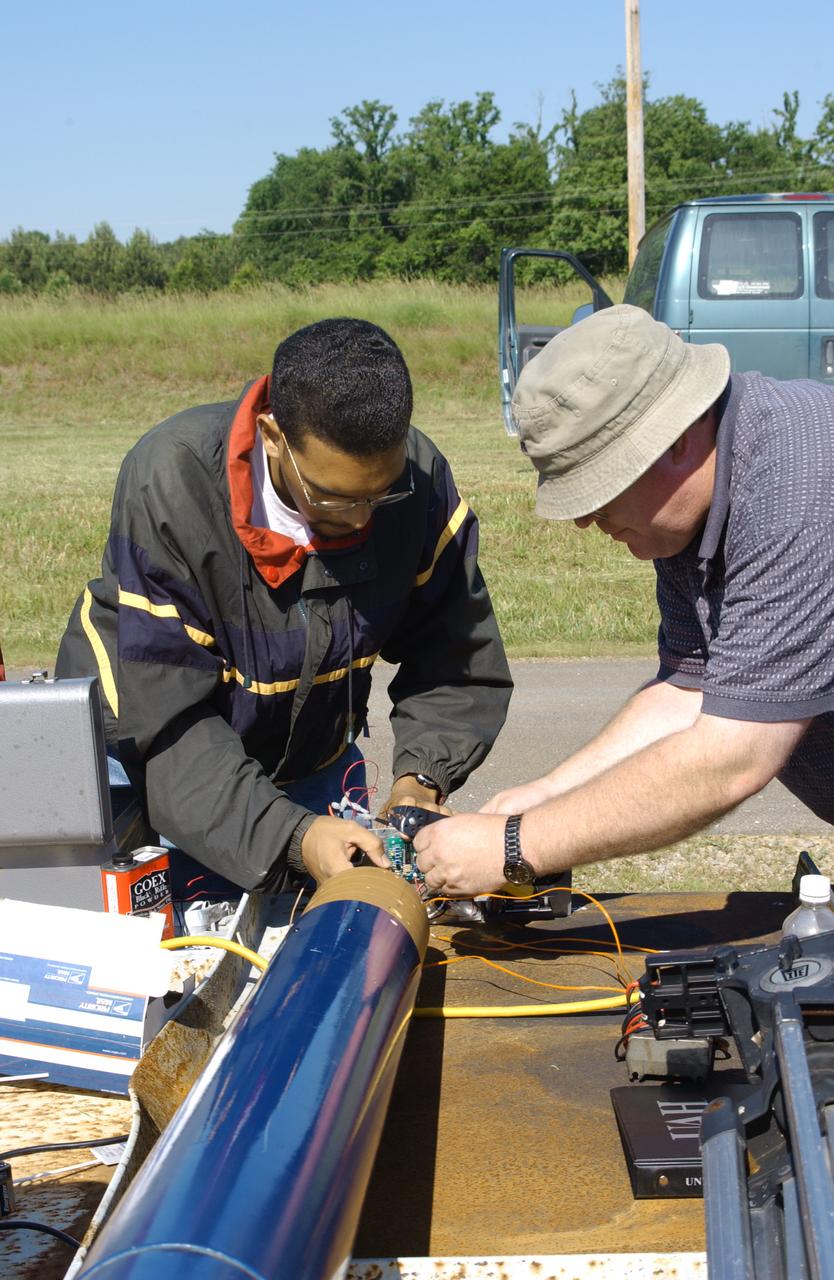
Filled with anticipation, students from two local universities, the University of Alabama in Huntsville (UAH), and Alabama Agricultural Mechanical University (AM), counted down to launch the rockets they designed and built at the Army test site on Redstone Arsenal in Huntsville, Alabama. The projected two-mile high launch culminated more than a year's work and demonstrated the student team's ability to meet the challenge set by the Marshall Space Flight Center's (MSFC) Student Launch Initiative (SLI) program to apply science and math to experience, judgment, and common sense, and proved to NASA officials that they have successfully built reusable launch vehicles (RLVs), another challenge set by NASA's SLI program. MSFC's SLI program is an educational effort that aims to motivate students to pursue careers in science, math, and engineering. It provides the students with hands-on, practical aerospace experience. In this picture, a student from AM and his mentor install their payload into the launch vehicle which was built by the team of UAH students. The scientific payload, developed and built by the team of AM students, measured the amount of hydrogen produced during electroplating with nickel in a brief period of micrgravity.
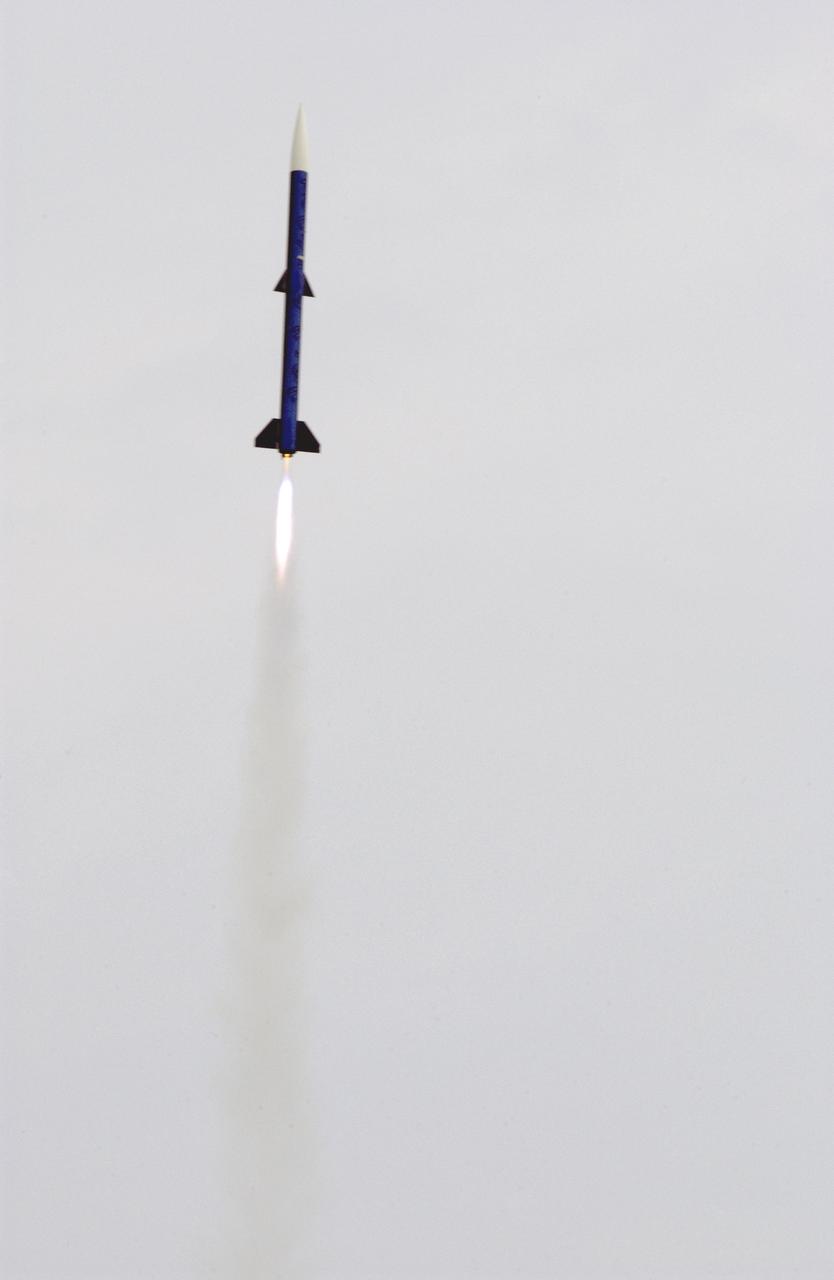
Filled with anticipation, students from three Huntsville area high schools: Randolph, Sparkman, and Johnson High Schools, counted down to launch the rockets they designed and built at the Army test site on Redstone Arsenal in Huntsville, Alabama. The projected two-mile high launch culminated more than a year's work and demonstrated the student team's ability to meet the challenge set by the Marshall Space Flight Center's (MSFC) Student Launch Initiative program to apply science and math to experience, judgment, and common sense, and proved to NASA officials that they have successfully built reusable launch vehicles (RLVs), another challenge set by NASA's SLI program. MSFC's SLI program is an educational effort that aims to motivate students to pursue careers in science, math, and engineering. It provides hands-on, practical aerospace experience. In this picture, a rocket built by Johnson High School students soars to it projected designation.
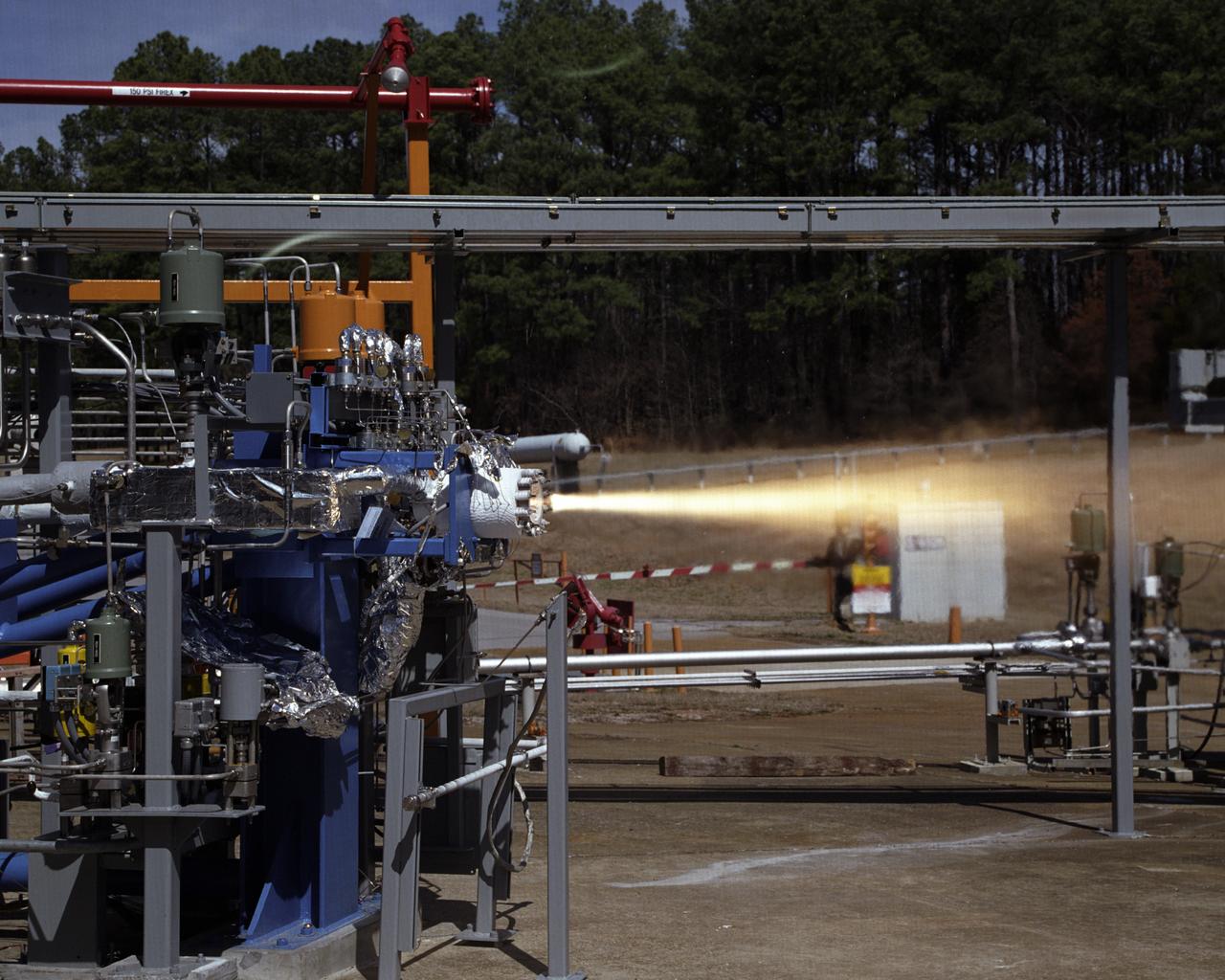
Engineers at the Marshall Space Flight Center (MSFC) have begun a series of engine tests on a new breed of space propulsion: a Reaction Control Engine developed for the Space Launch Initiative (SLI). The engine, developed by TRW Space and Electronics of Redondo Beach, California, is an auxiliary propulsion engine designed to maneuver vehicles in orbit. It is used for docking, reentry, attitude control, and fine-pointing while the vehicle is in orbit. The engine uses nontoxic chemicals as propellants, a feature that creates a safer environment for ground operators, lowers cost, and increases efficiency with less maintenance and quicker turnaround time between missions. Testing includes 30 hot-firings. This photograph shows the first engine test performed at MSFC that includes SLI technology. Another unique feature of the Reaction Control Engine is that it operates at dual thrust modes, combining two engine functions into one engine. The engine operates at both 25 and 1,000 pounds of force, reducing overall propulsion weight and allowing vehicles to easily maneuver in space. The low-level thrust of 25 pounds of force allows the vehicle to fine-point maneuver and dock while the high-level thrust of 1,000 pounds of force is used for reentry, orbit transfer, and coarse positioning. SLI is a NASA-wide research and development program, managed by the MSFC, designed to improve safety, reliability, and cost effectiveness of space travel for second generation reusable launch vehicles.

This is a computer generated image of a Shuttle launch utilizing 2nd generation Reusable Launch Vehicle (RLV) flyback boosters, a futuristic concept that is currently undergoing study by NASA's Space Launch Initiative (SLI) Propulsion Office, managed by the Marshall Space Fight Center in Huntsville, Alabama, working in conjunction with the Agency's Glenn Research Center in Cleveland, Ohio. Currently, after providing thrust to the Space Shuttle, the solid rocket boosters are parachuted into the sea and are retrieved for reuse. The SLI is considering vehicle concepts that would fly first-stage boosters back to a designated landing site after separation from the orbital vehicle. These flyback boosters would be powered by several jet engines integrated into the booster capable of providing over 100,000 pounds of thrust. The study will determine the requirements for the engines, identify risk mitigation activities, and identify costs associated with risk mitigation and jet engine development and production, as well as determine candidate jet engine options to pursue for the flyback booster.
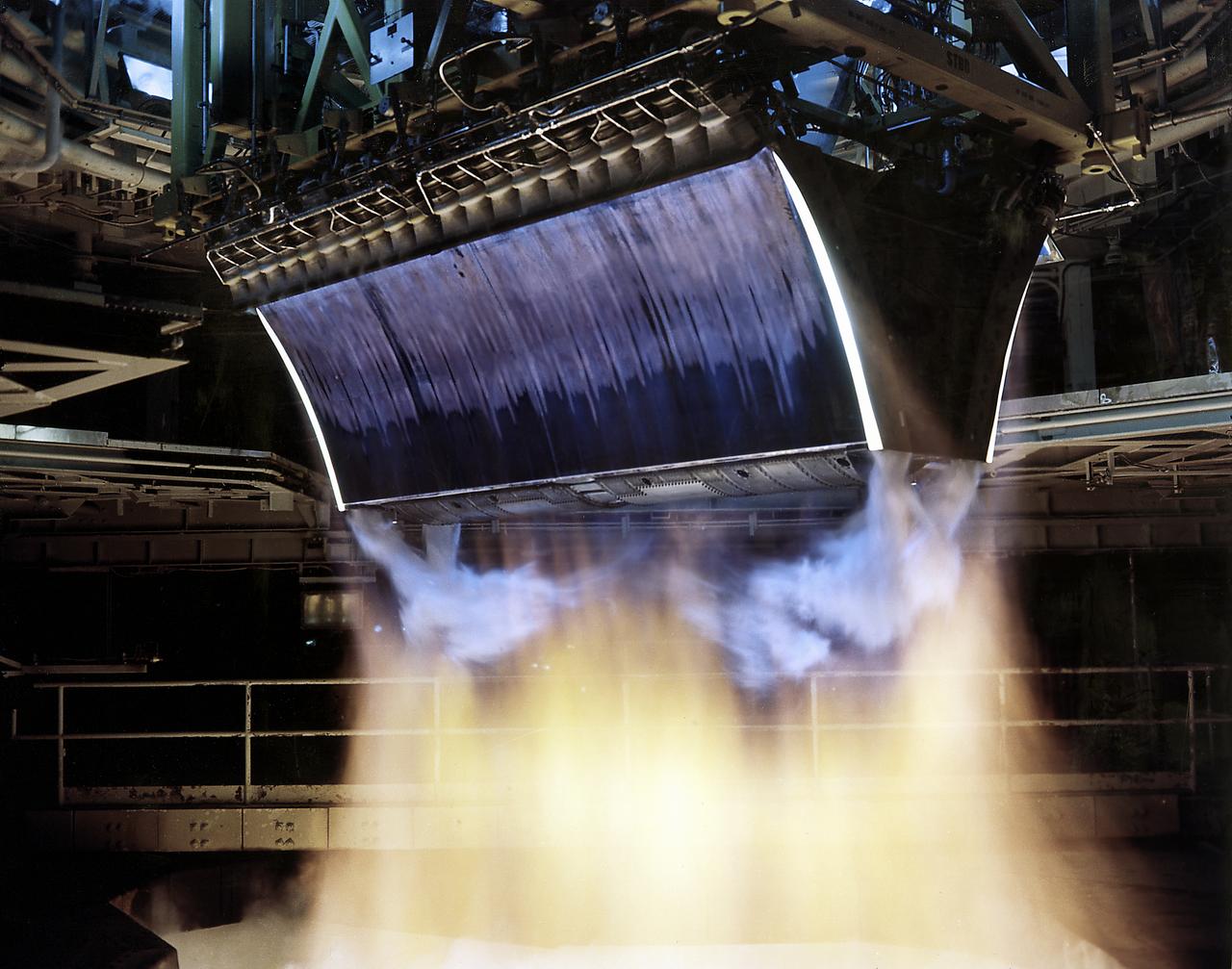
The test of twin Linear Aerospike XRS-2200 engines, originally built for the X-33 program, was performed on August 6, 2001 at NASA's Sternis Space Center, Mississippi. The engines were fired for the planned 90 seconds and reached a planned maximum power of 85 percent. NASA's Second Generation Reusable Launch Vehicle Program , also known as the Space Launch Initiative (SLI), is making advances in propulsion technology with this third and final successful engine hot fire, designed to test electro-mechanical actuators. Information learned from this hot fire test series about new electro-mechanical actuator technology, which controls the flow of propellants in rocket engines, could provide key advancements for the propulsion systems for future spacecraft. The Second Generation Reusable Launch Vehicle Program, led by NASA's Marshall Space Flight Center in Huntsville, Alabama, is a technology development program designed to increase safety and reliability while reducing costs for space travel. The X-33 program was cancelled in March 2001.
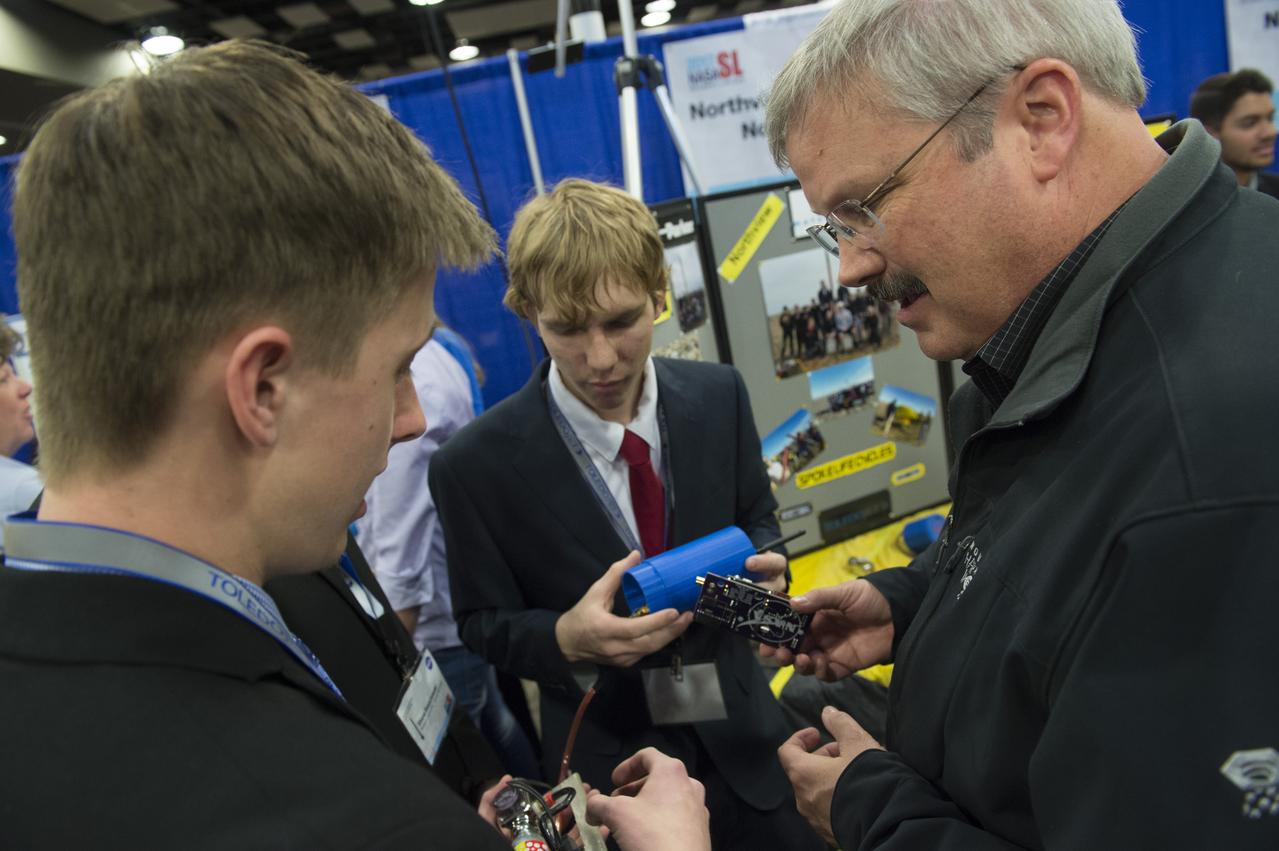
Student launch Initiative Rocket Fair participants display their rockets prior to launch day at the Von Braun Center in Huntsville, Alabama.
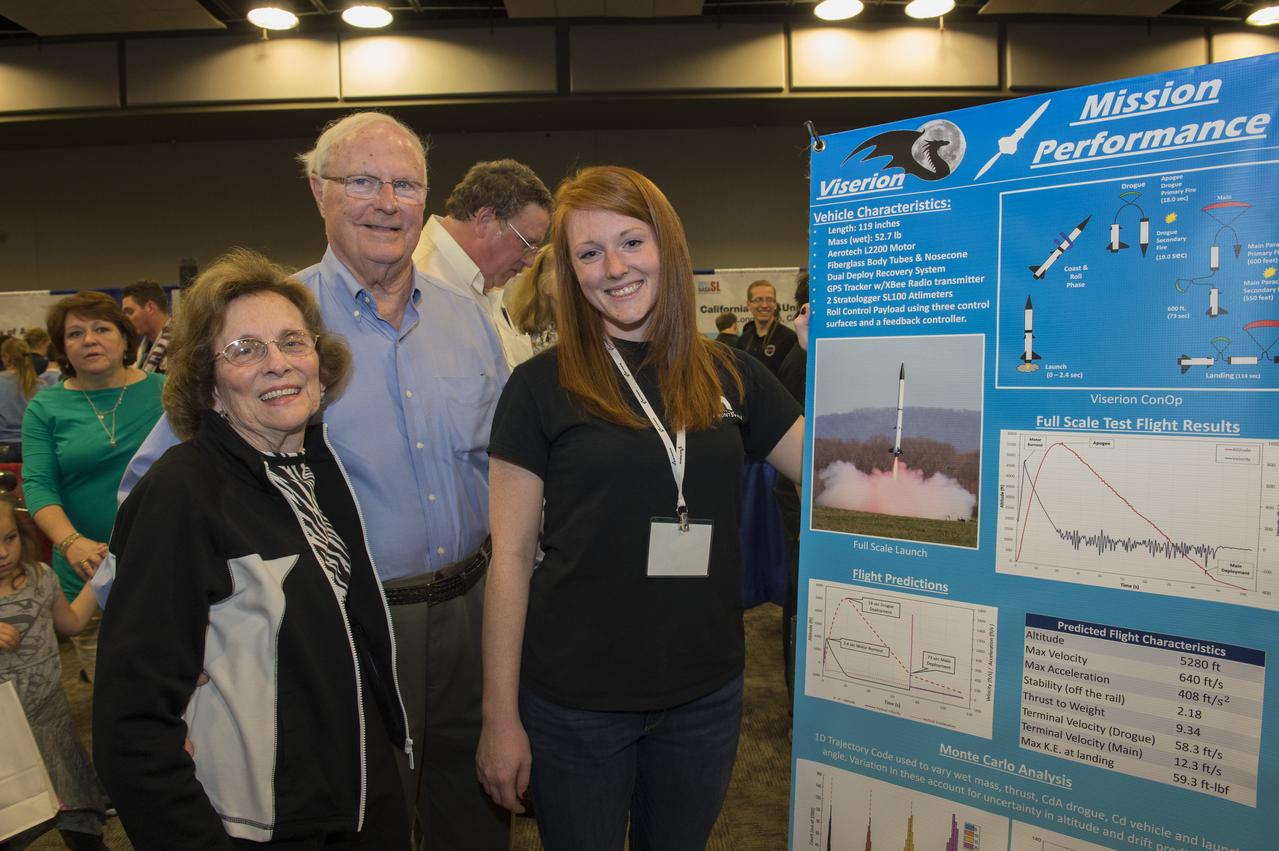
Student launch Initiative Rocket Fair participants display their rockets prior to launch day at the Von Braun Center in Huntsville, Alabama.
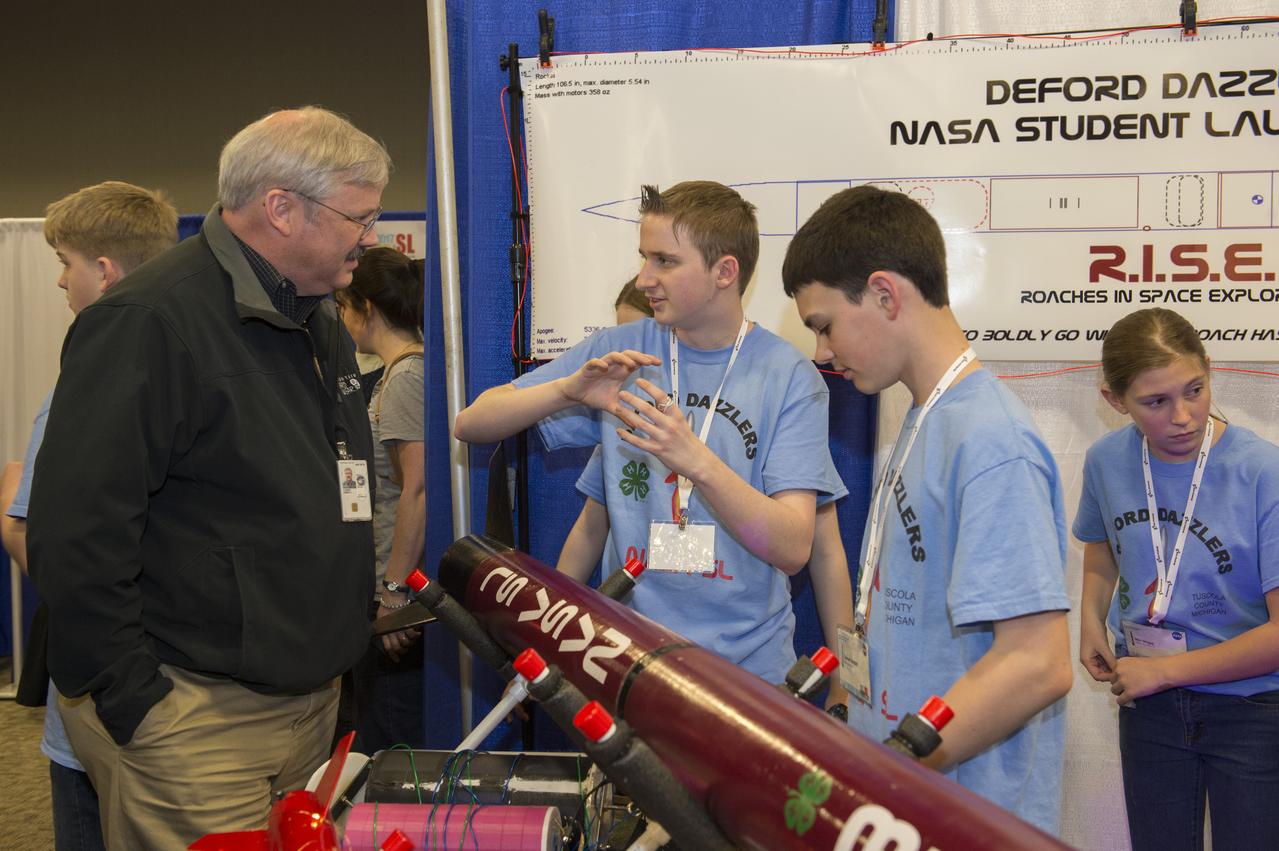
Student launch Initiative Rocket Fair participants display their rockets prior to launch day at the Von Braun Center in Huntsville, Alabama.
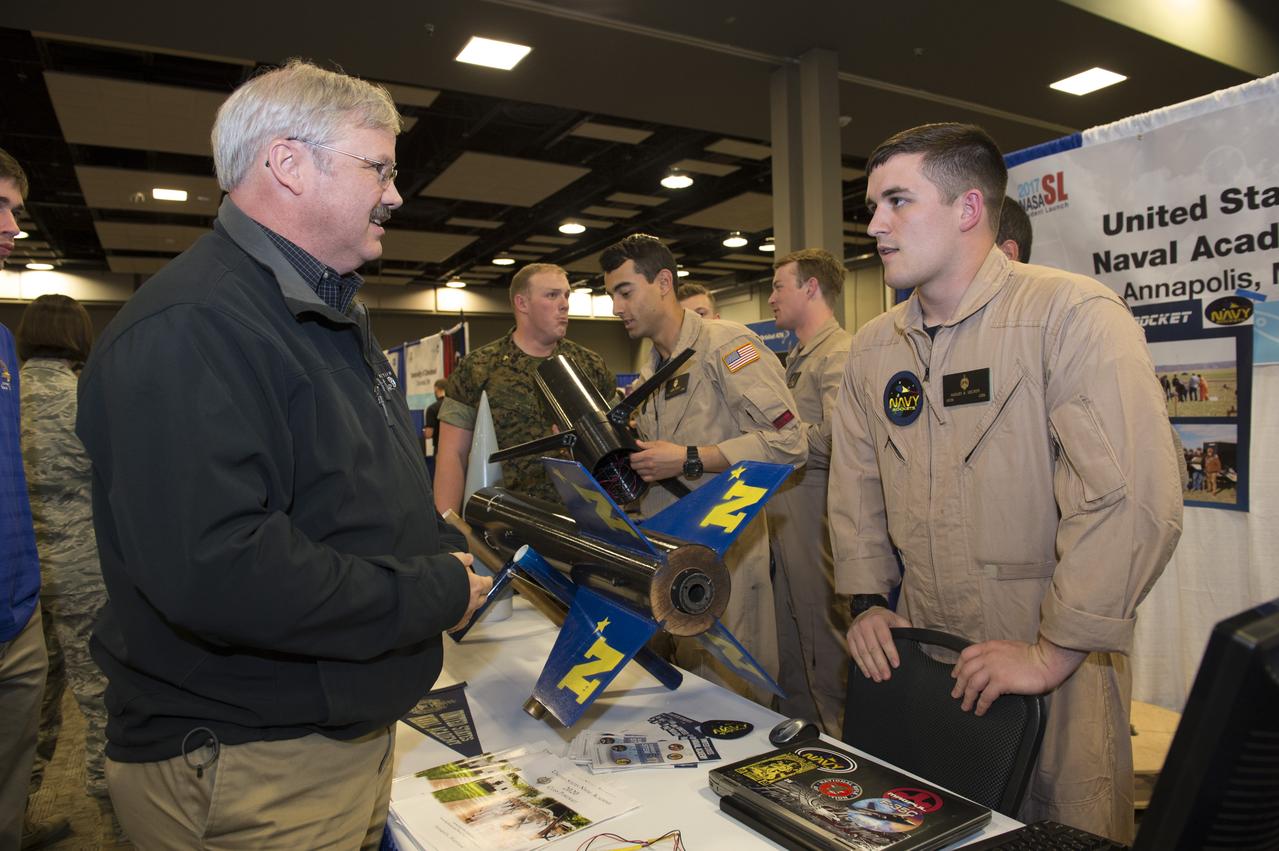
Student launch Initiative Rocket Fair participants display their rockets prior to launch day at the Von Braun Center in Huntsville, Alabama.
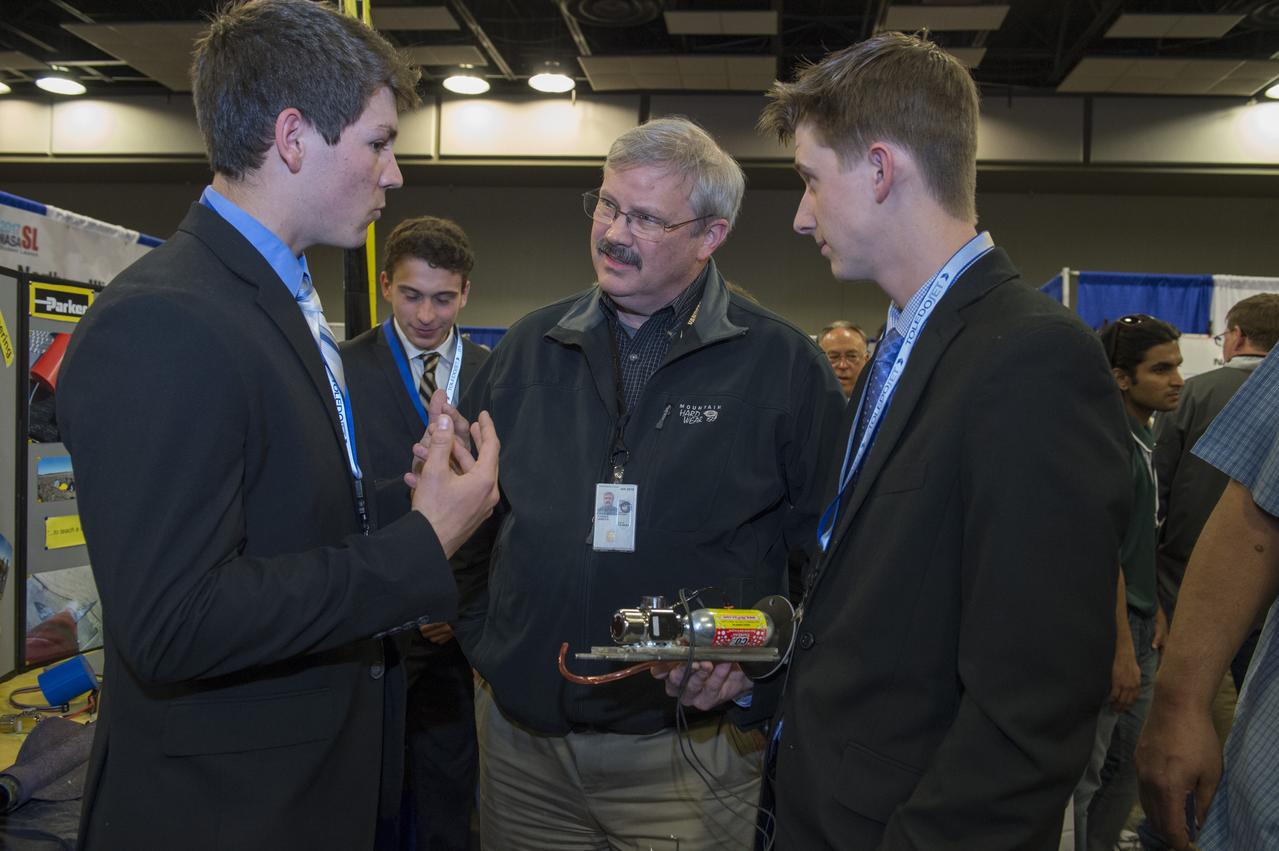
Student launch Initiative Rocket Fair participants display their rockets prior to launch day at the Von Braun Center in Huntsville, Alabama.
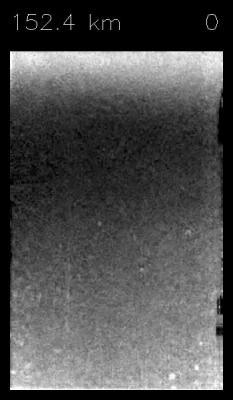
This frame from an animation is made up from a sequence of images taken by the Descent Imager/Spectral Radiometer (DISR) instrument on board ESA's Huygens probe, during its successful descent to Titan on Jan. 14, 2005. The animation is available at http://photojournal.jpl.nasa.gov/catalog/PIA07234 It shows what a passenger riding on Huygens would have seen. The sequence starts from an altitude of 152 kilometers (about 95 miles) and initially only shows a hazy view looking into thick cloud. As the probe descends, ground features can be discerned and Huygens emerges from the clouds at around 30 kilometers (about 19 miles) altitude. The ground features seem to rotate as Huygens spins slowly underits parachute. The DISR consists of a downward-looking High Resolution Imager (HRI), a Medium Resolution Imager (MRI), which looks out at an angle, and a Side Looking Imager (SLI). For this animation, most images used were captured by the HRI and MRI. Once on the ground, the final landing scene was captured by the SLI. The Descent Imager/Spectral Radiometer is one of two NASA instruments on the probe.

FOR THE FOURTH YEAR IN A ROW, VANDERBILT UNIVERSITY WON FIRST PLACE AT THE 2016 STUDENT LAUNCH CHALLENGE
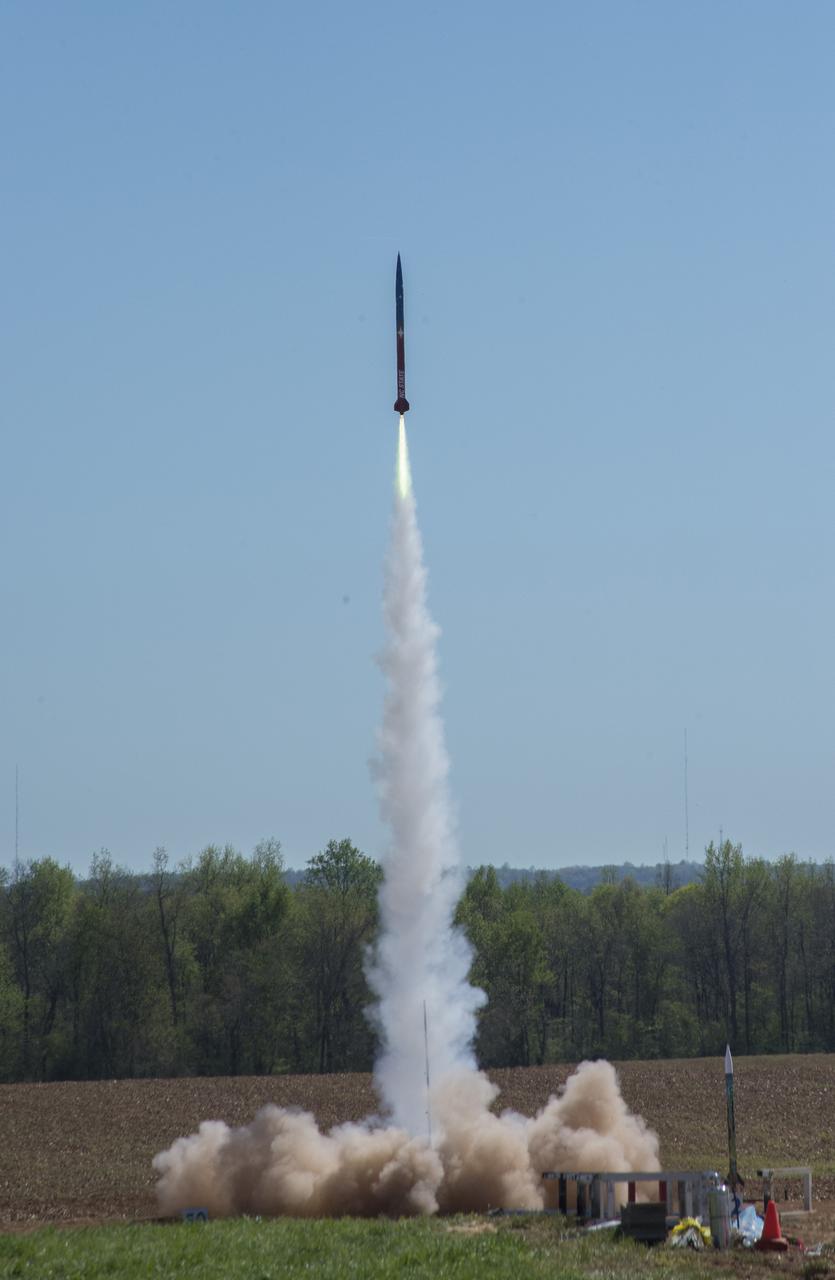
Student Launch Initiative participants launch their rockets at Bragg Farms in Toney, Alabama
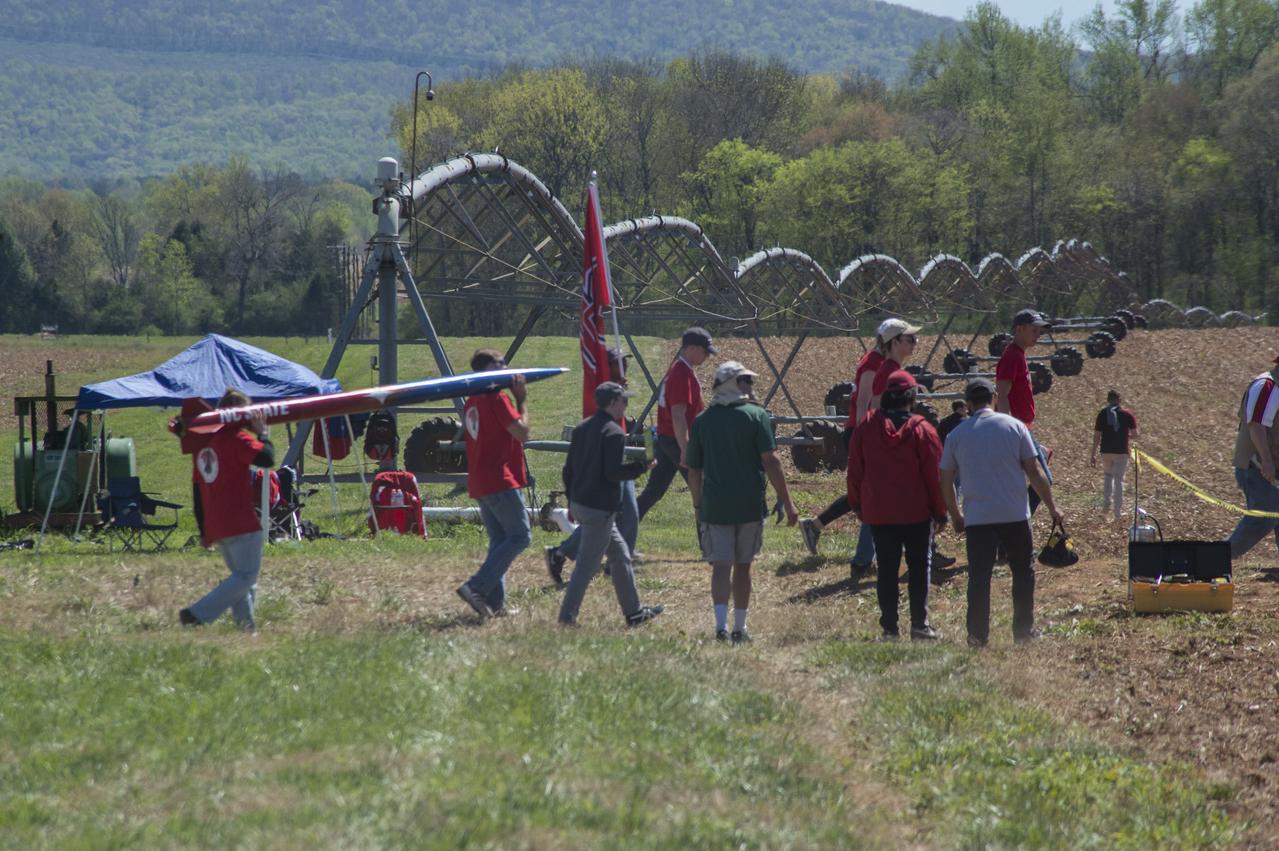
Student Launch Initiative participants launch their rockets at Bragg Farms in Toney, Alabama
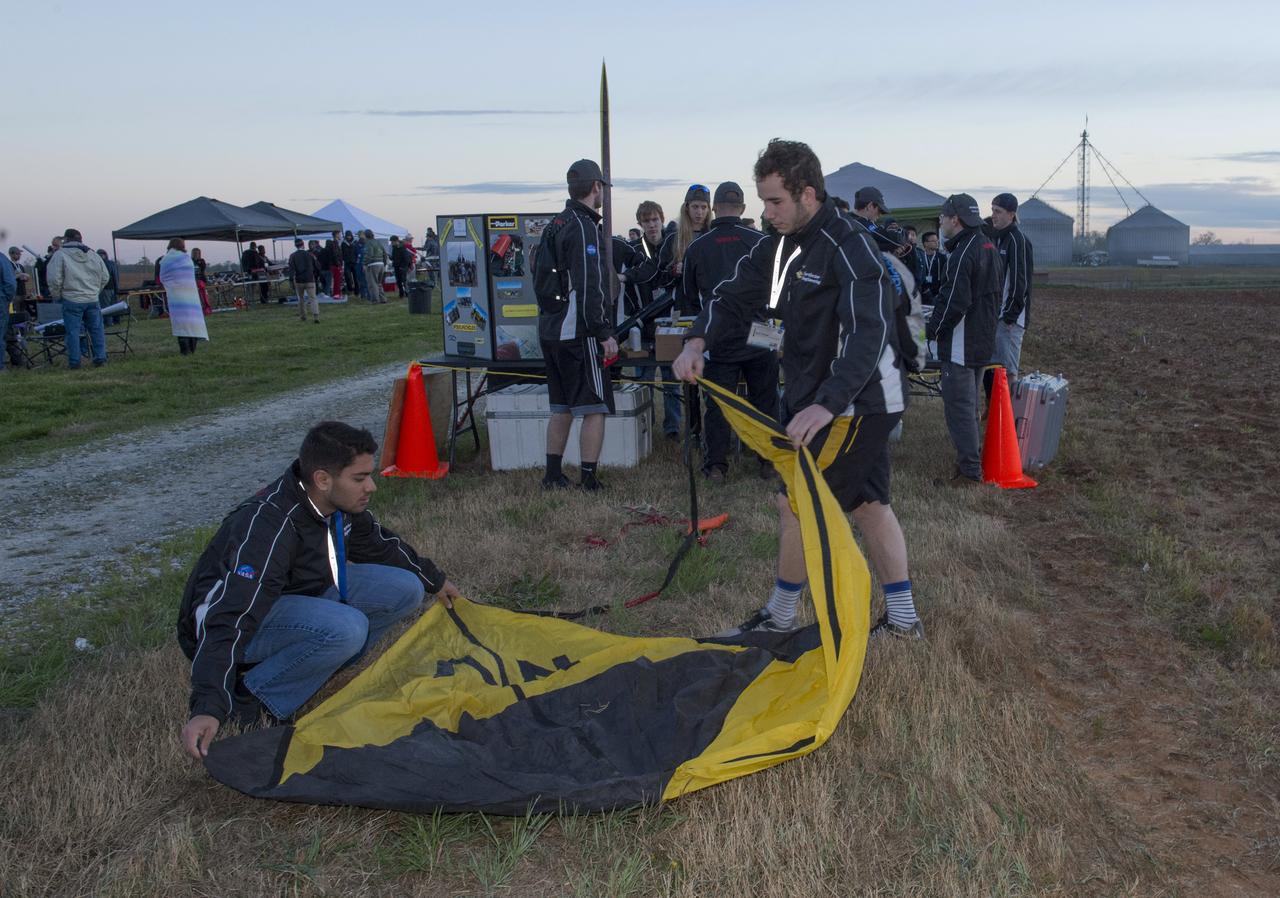
Student Launch Initiative participants launch their rockets at Bragg Farms in Toney, Alabama
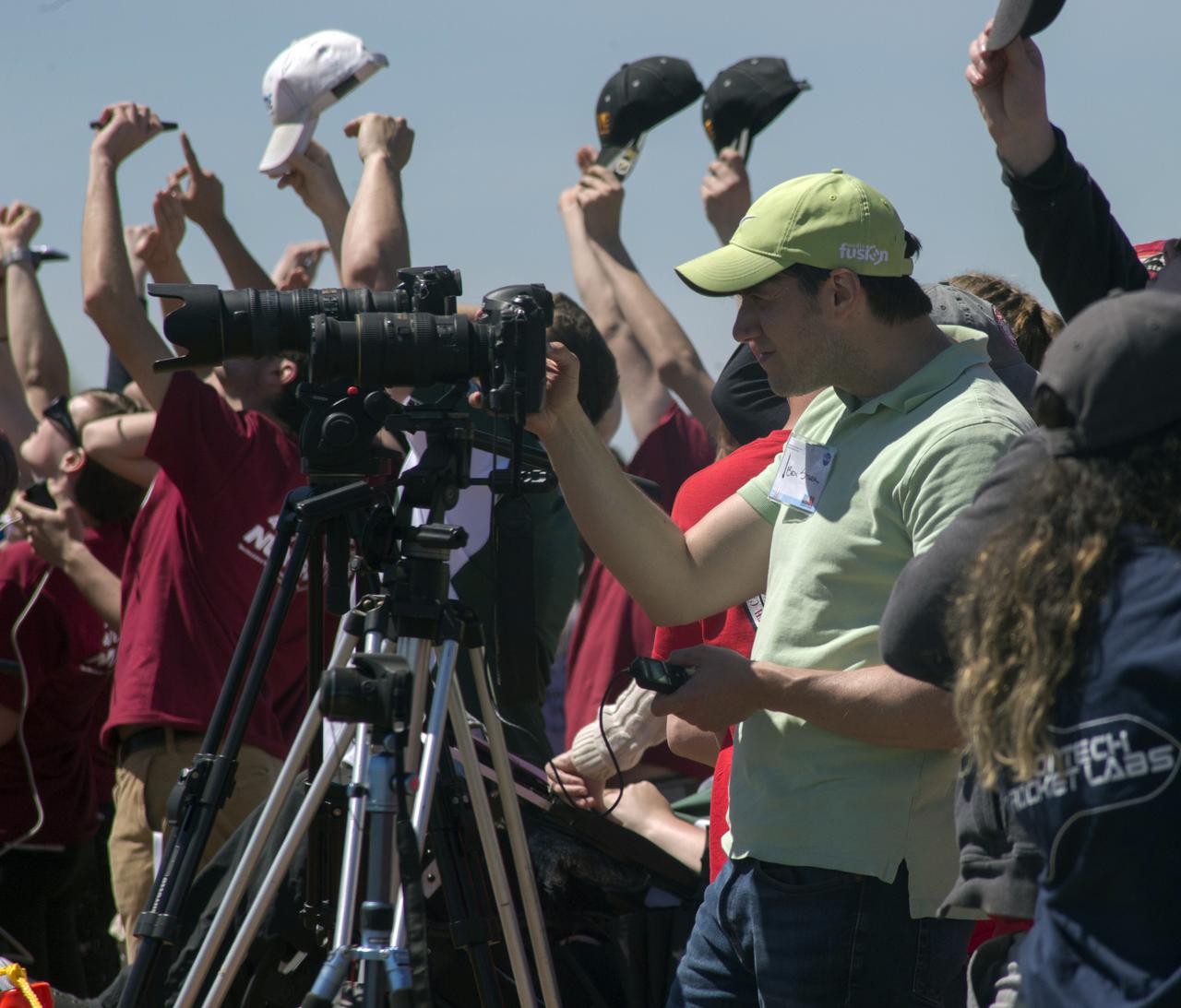
Student Launch Initiative participants launch their rockets at Bragg Farms in Toney, Alabama
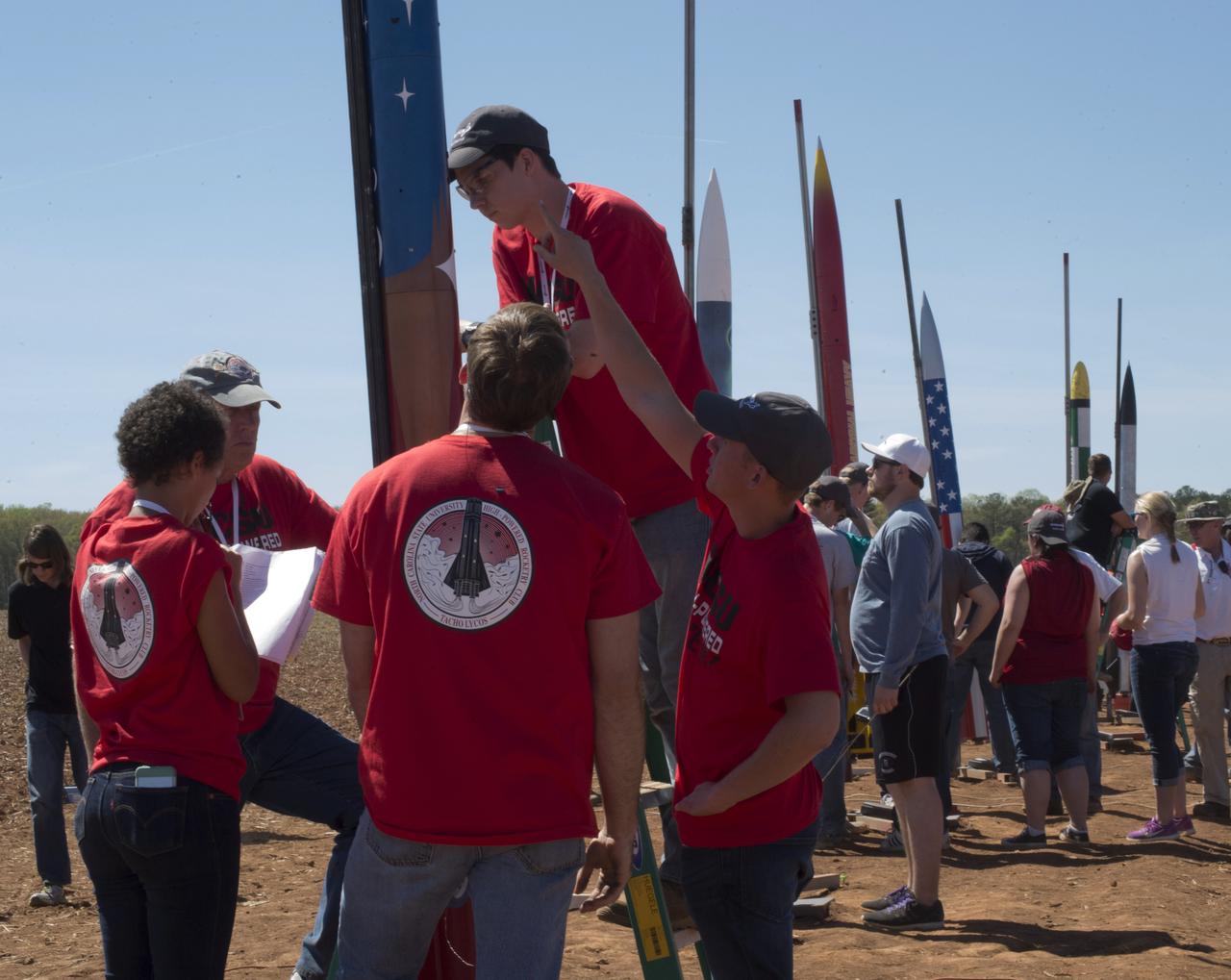
Student Launch Initiative participants launch their rockets at Bragg Farms in Toney, Alabama
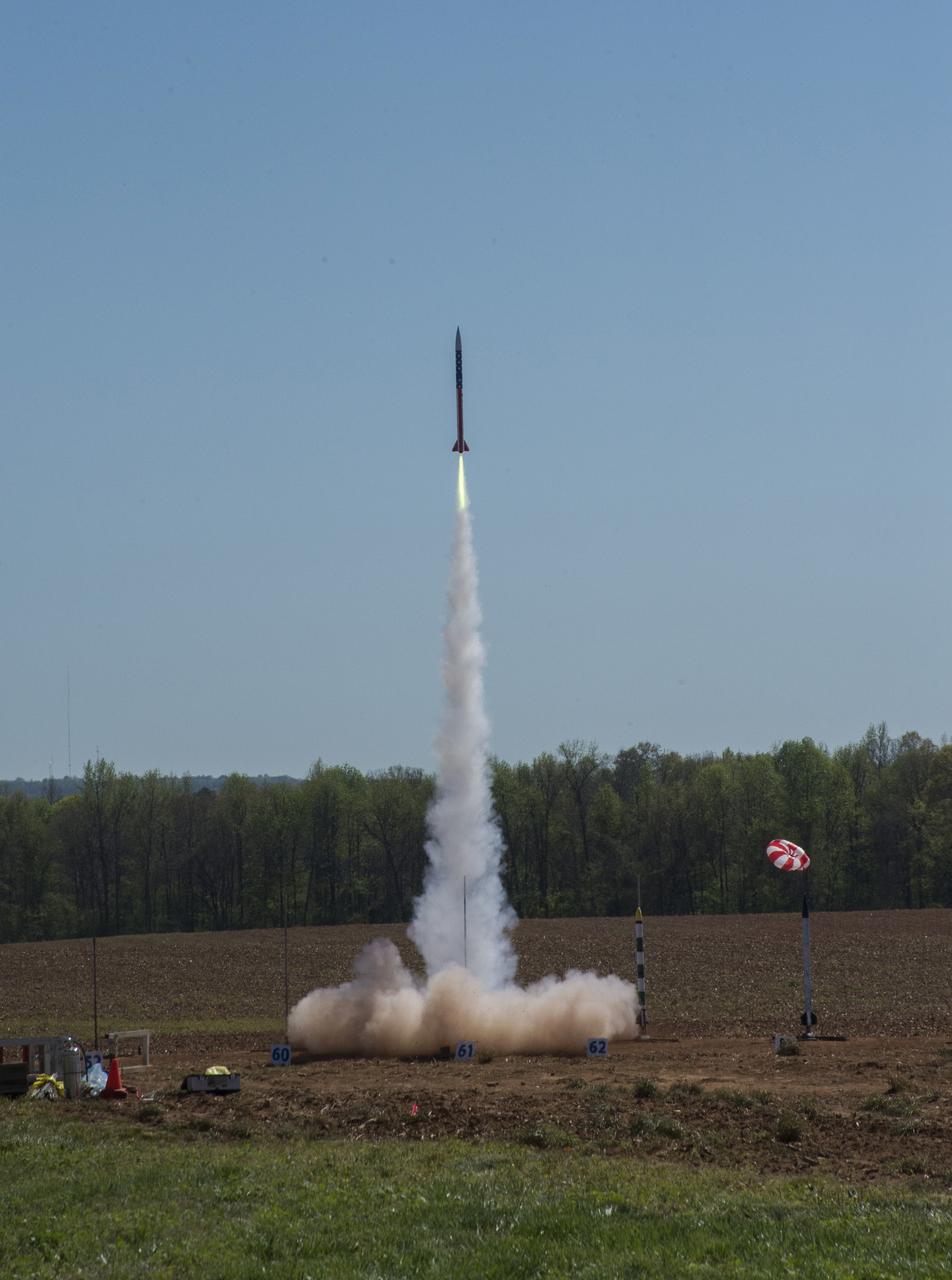
Student Launch Initiative participants launch their rockets at Bragg Farms in Toney, Alabama
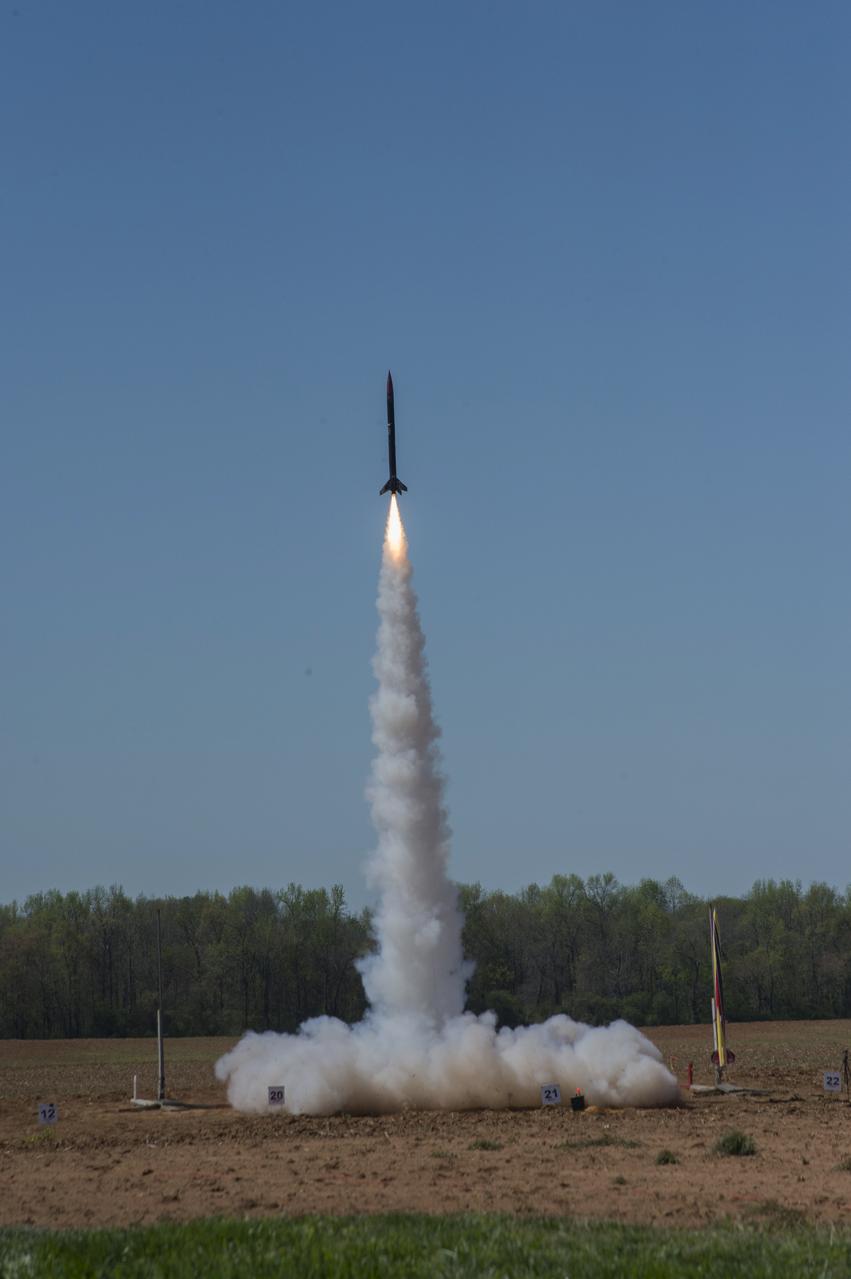
Student Launch Initiative participants launch their rockets at Bragg Farms in Toney, Alabama
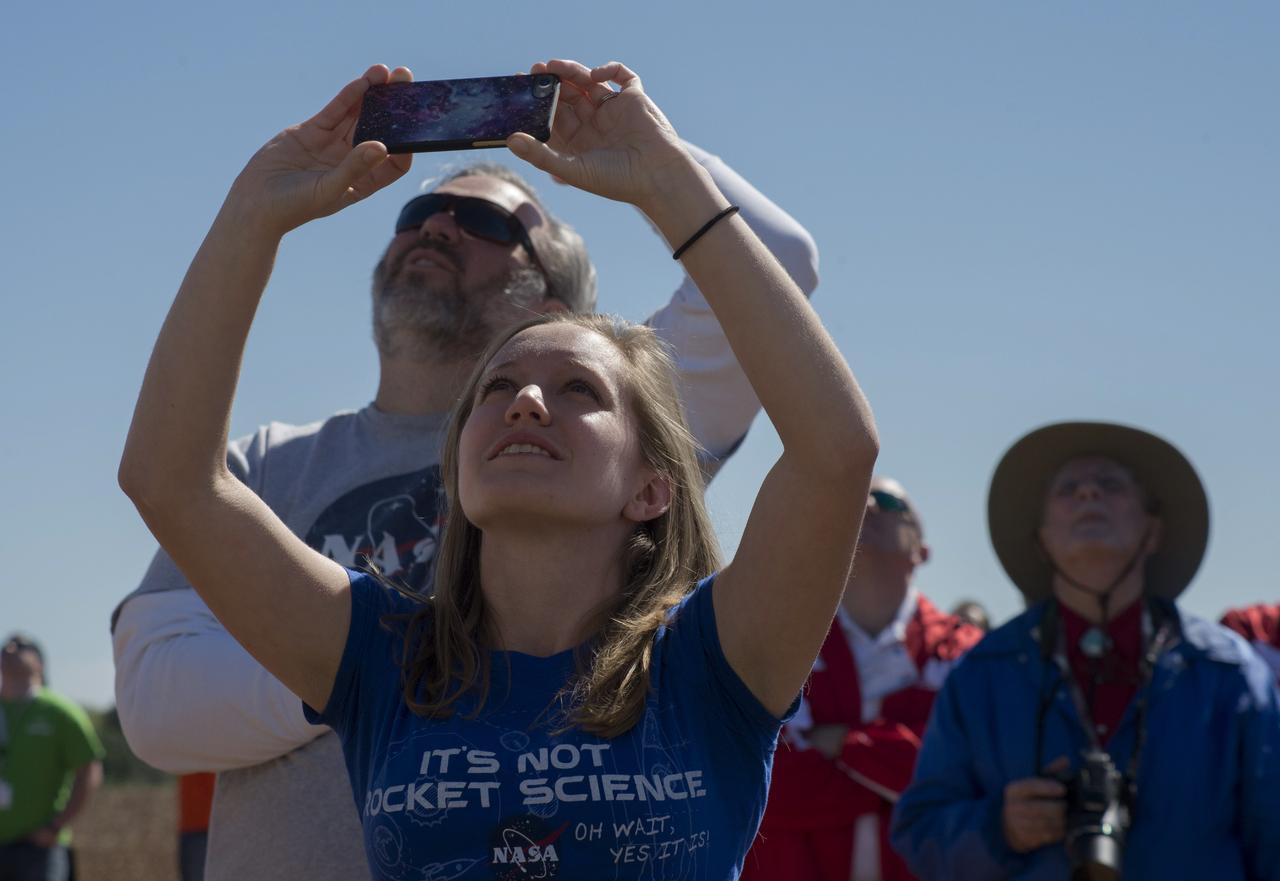
Student Launch Initiative participants launch their rockets at Bragg Farms in Toney, Alabama
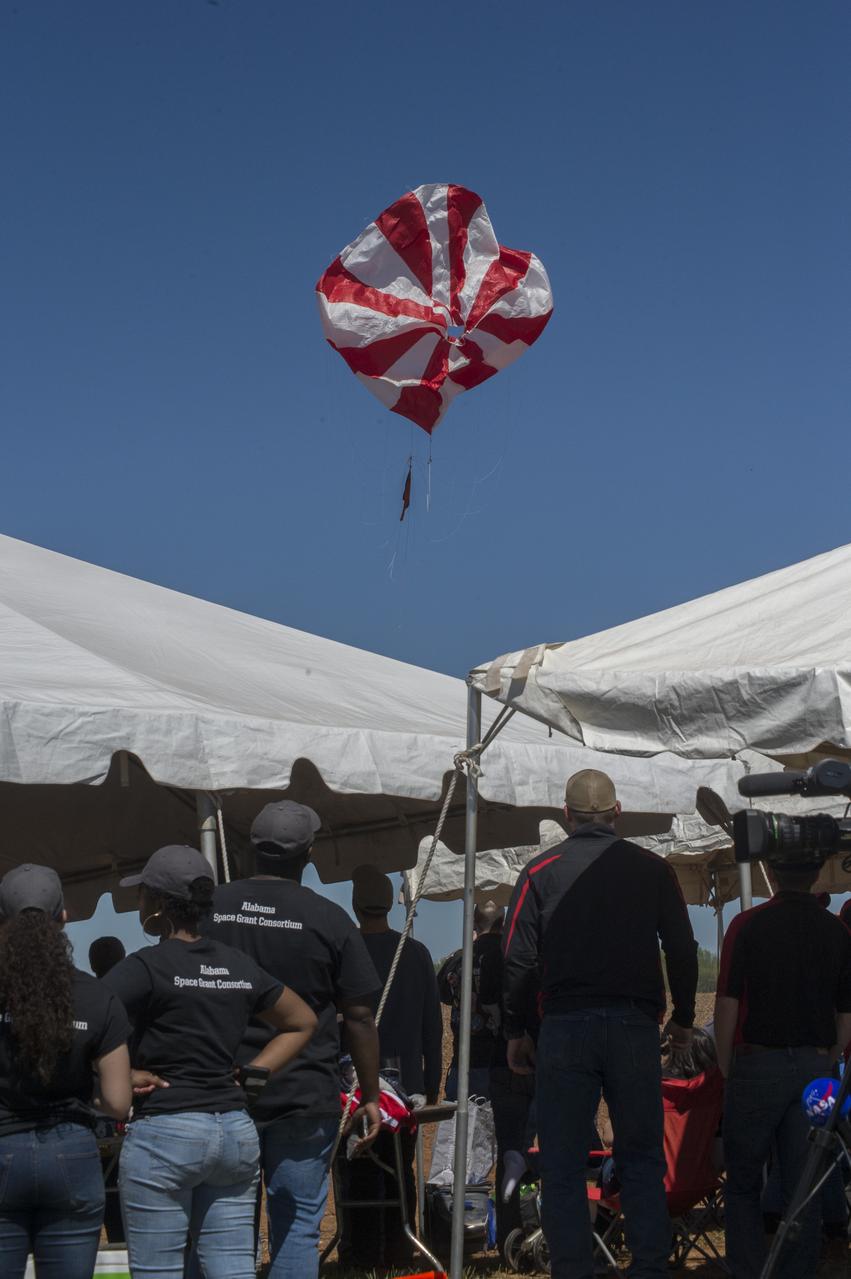
Student Launch Initiative participants launch their rockets at Bragg Farms in Toney, Alabama
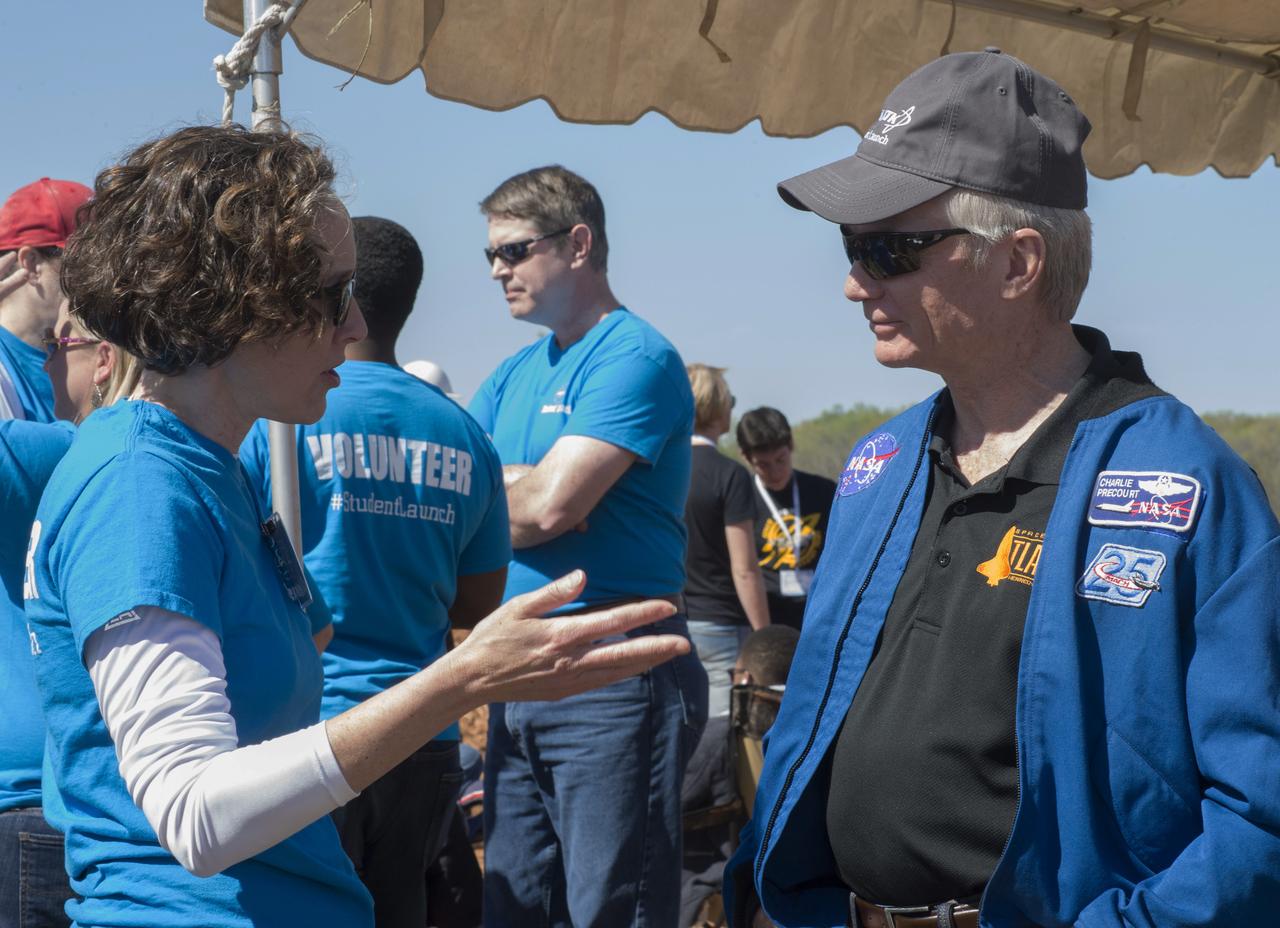
Student Launch Initiative participants launch their rockets at Bragg Farms in Toney, Alabama
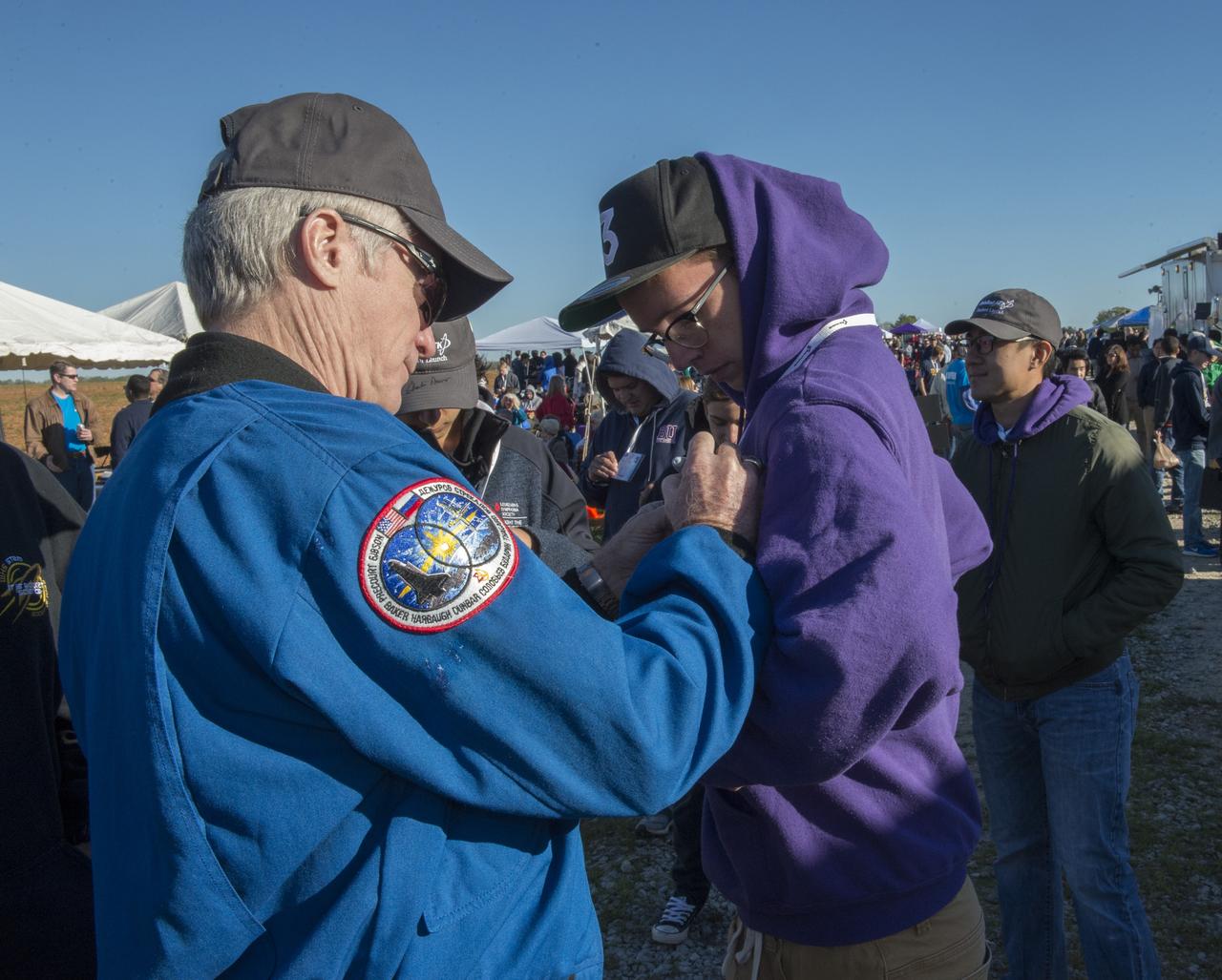
Student Launch Initiative participants launch their rockets at Bragg Farms in Toney, Alabama
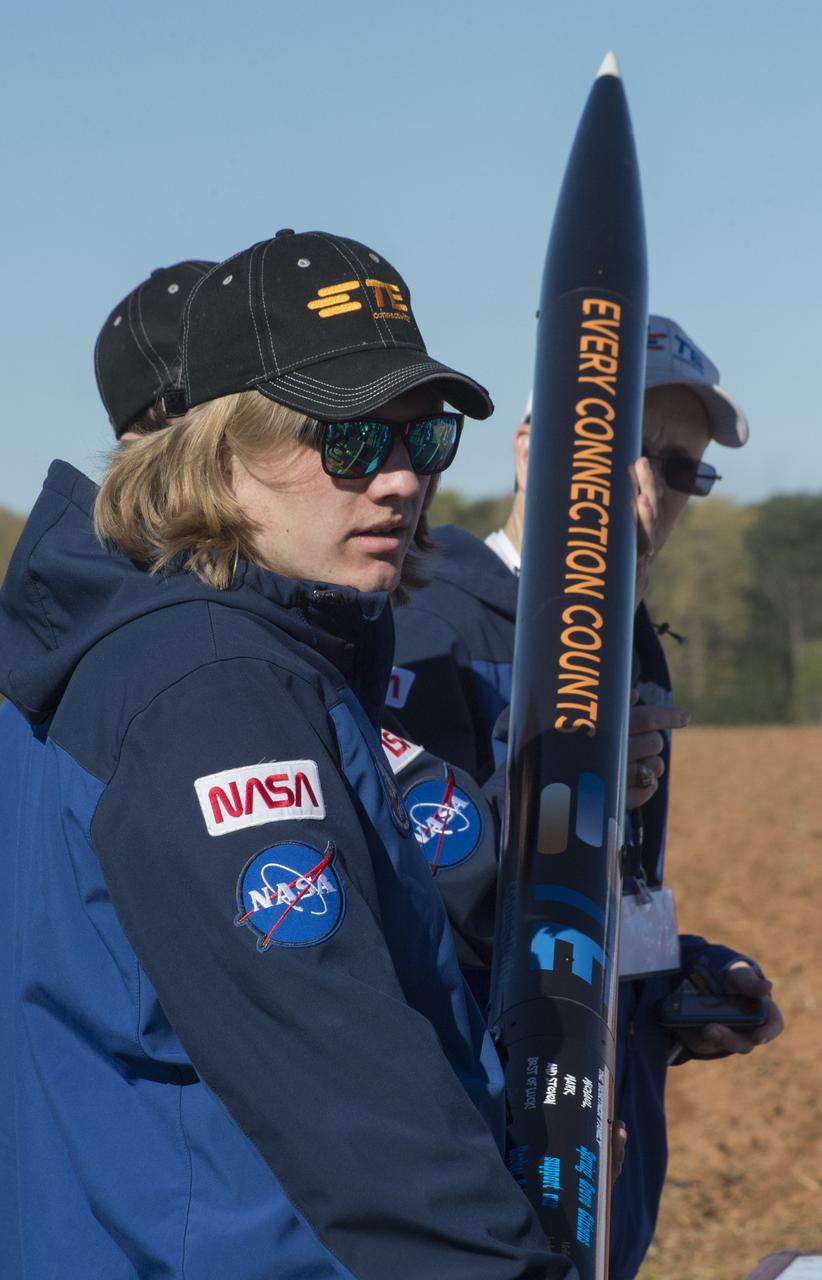
Student Launch Initiative participants launch their rockets at Bragg Farms in Toney, Alabama
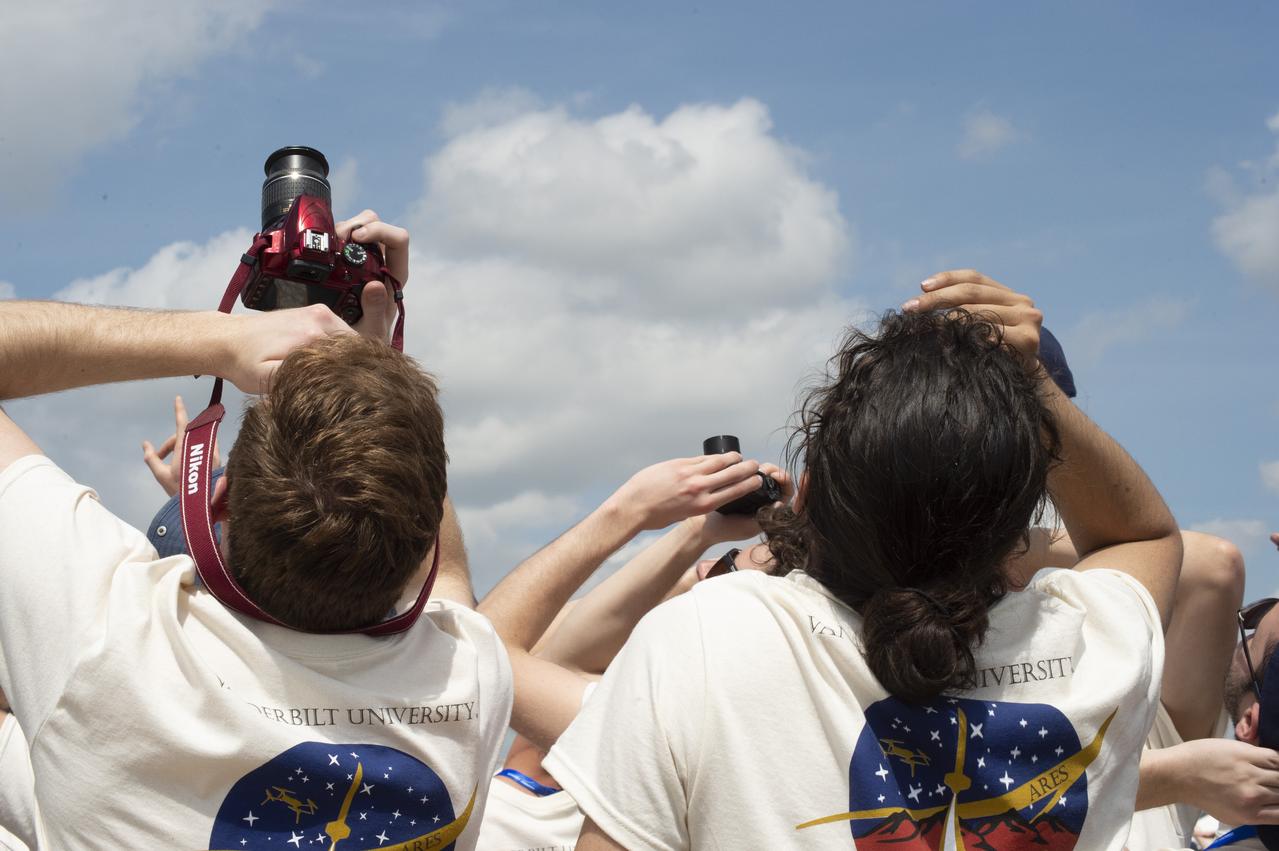
High School and College students from around the U.S. came together at Bragg Farms in Toney, Alabama for the 2019 Student Launch Initiative. The students launched their rockets to their own predetermined altitude with various payloads including remote rovers and unmanned aerial vehicles.
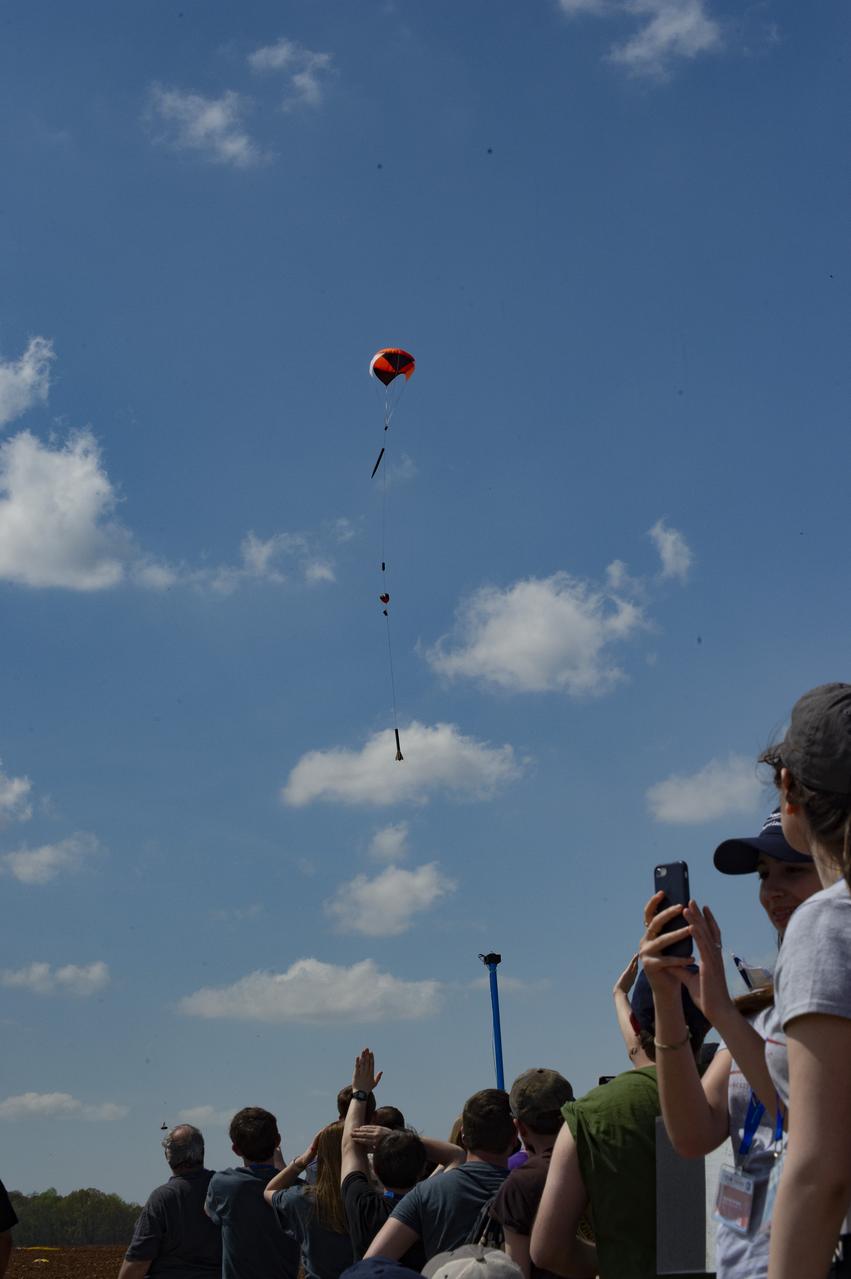
High School and College students from around the U.S. came together at Bragg Farms in Toney, Alabama for the 2019 Student Launch Initiative. The students launched their rockets to their own predetermined altitude with various payloads including remote rovers and unmanned aerial vehicles.
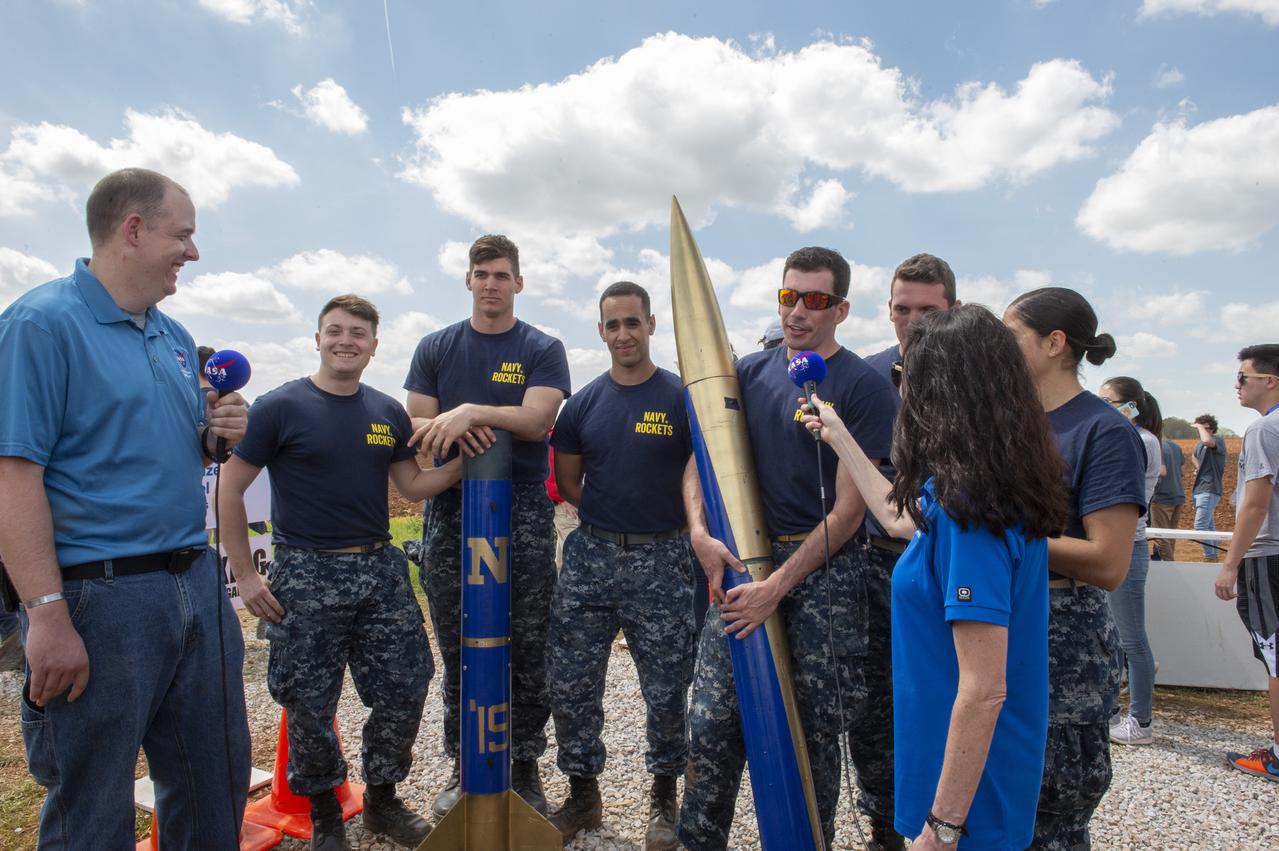
High School and College students from around the U.S. came together at Bragg Farms in Toney, Alabama for the 2019 Student Launch Initiative. The students launched their rockets to their own predetermined altitude with various payloads including remote rovers and unmanned aerial vehicles.
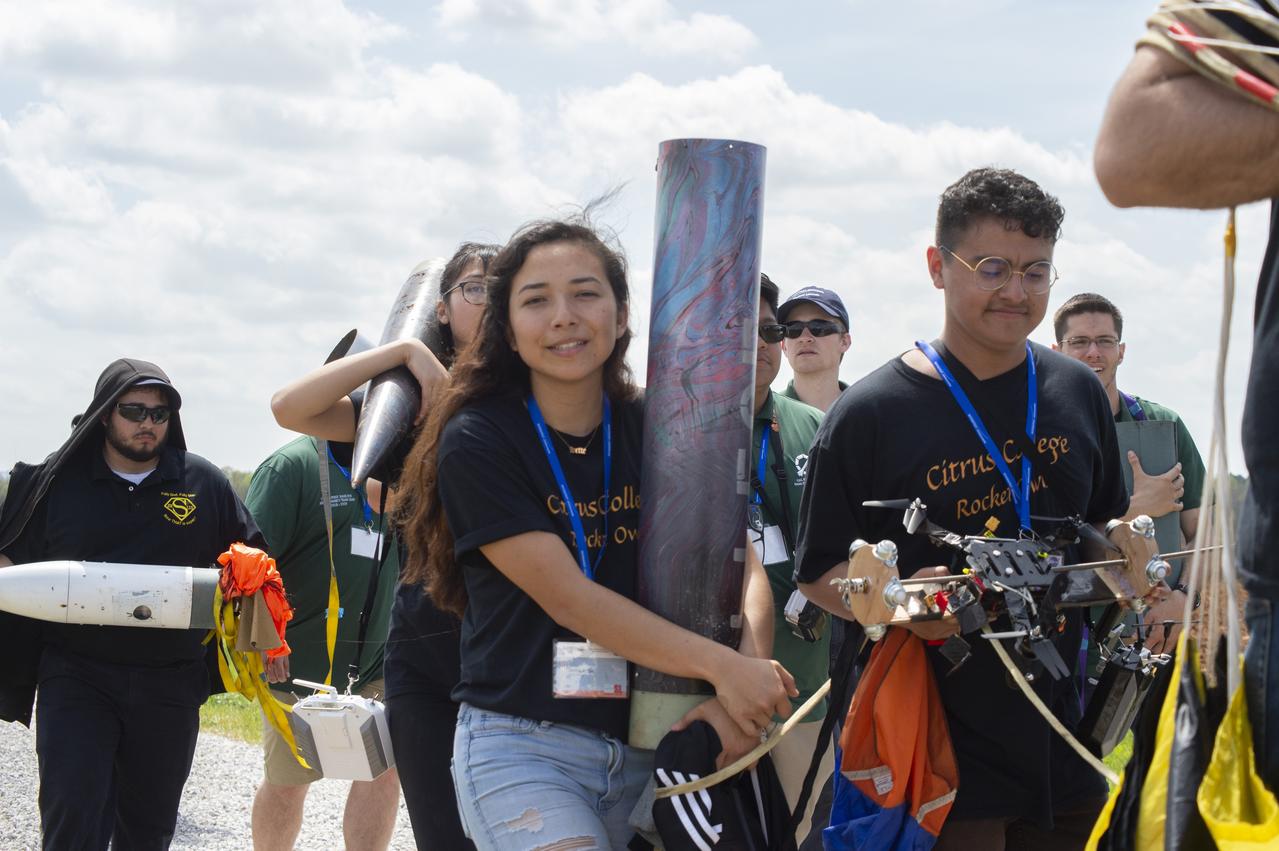
High School and College students from around the U.S. came together at Bragg Farms in Toney, Alabama for the 2019 Student Launch Initiative. The students launched their rockets to their own predetermined altitude with various payloads including remote rovers and unmanned aerial vehicles.
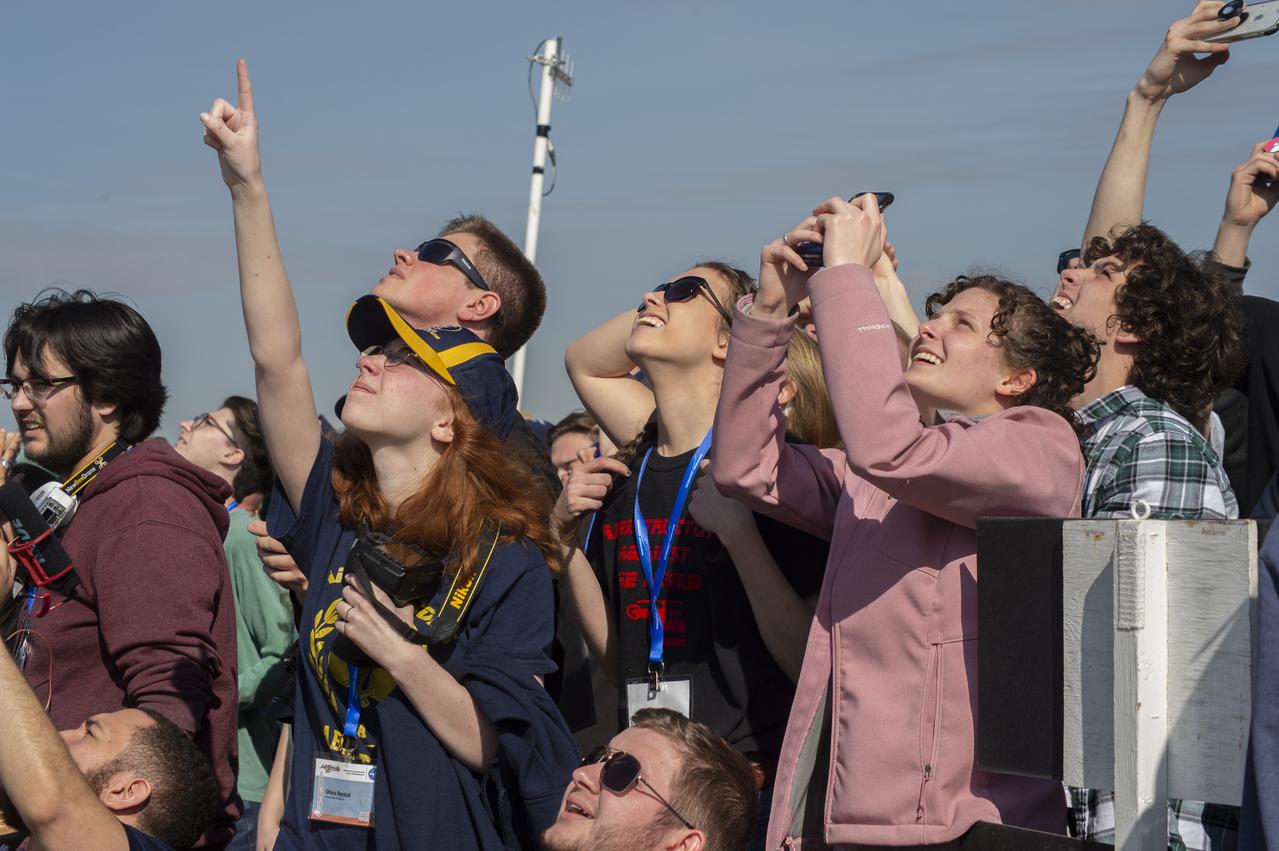
High School and College students from around the U.S. came together at Bragg Farms in Toney, Alabama for the 2019 Student Launch Initiative. The students launched their rockets to their own predetermined altitude with various payloads including remote rovers and unmanned aerial vehicles.
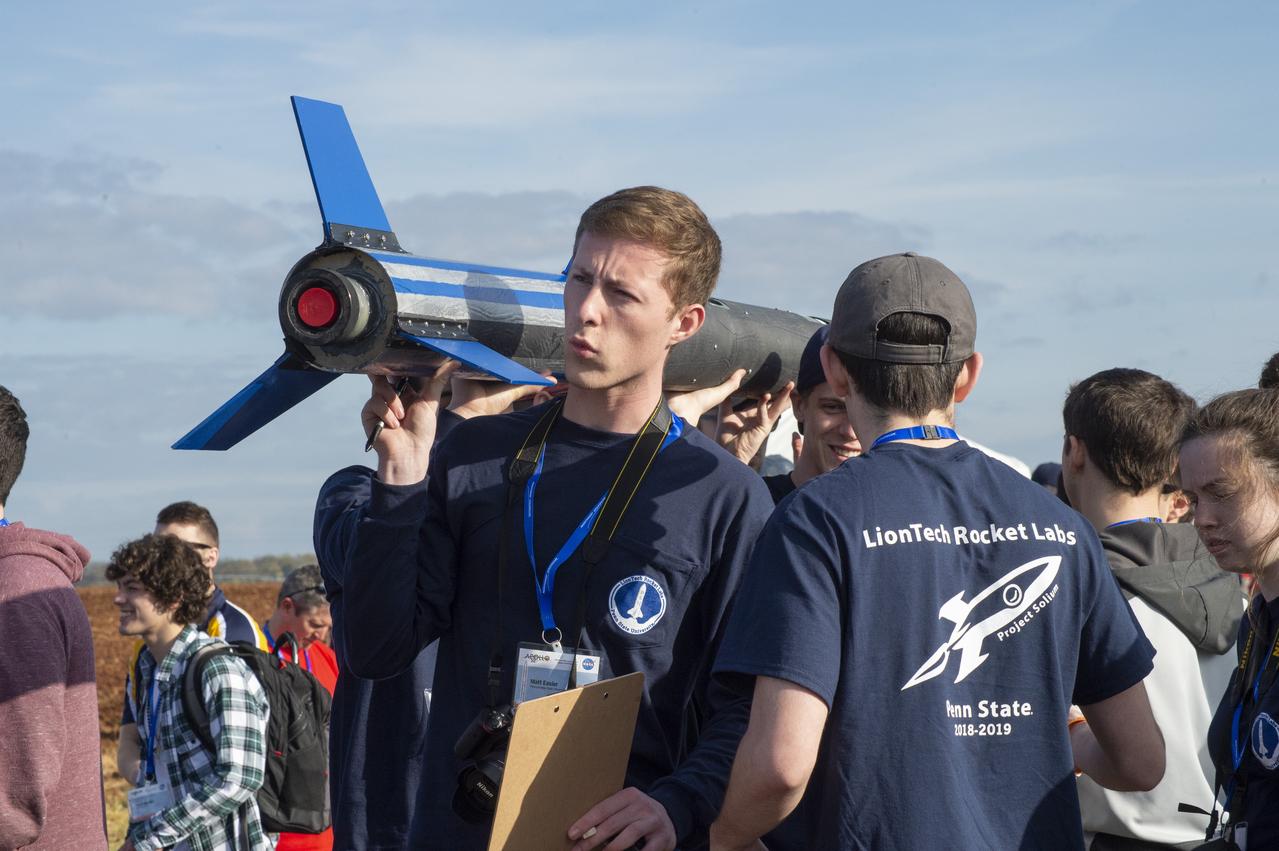
High School and College students from around the U.S. came together at Bragg Farms in Toney, Alabama for the 2019 Student Launch Initiative. The students launched their rockets to their own predetermined altitude with various payloads including remote rovers and unmanned aerial vehicles.
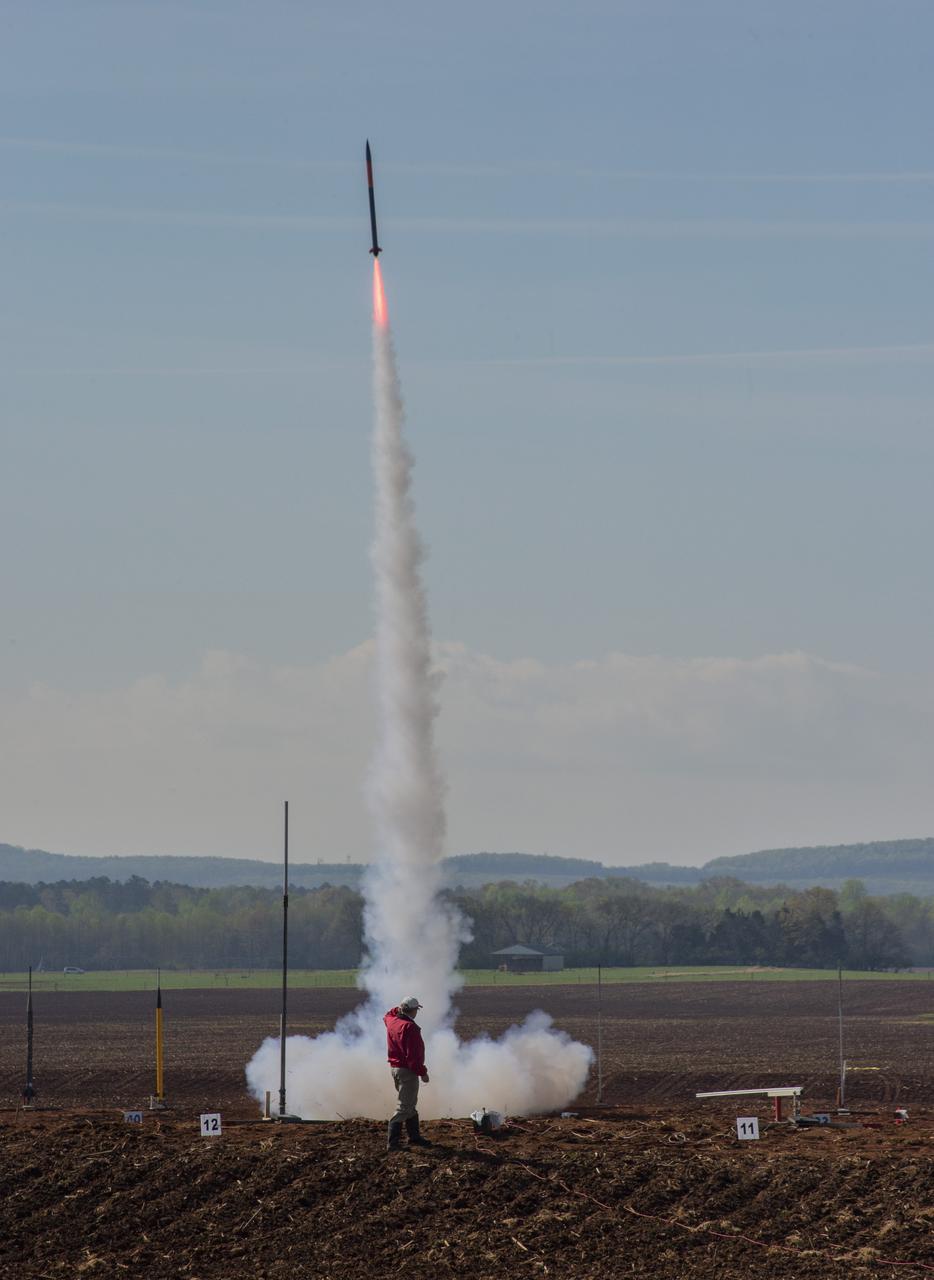
High School and College students from around the U.S. came together at Bragg Farms in Toney, Alabama for the 2019 Student Launch Initiative. The students launched their rockets to their own predetermined altitude with various payloads including remote rovers and unmanned aerial vehicles.
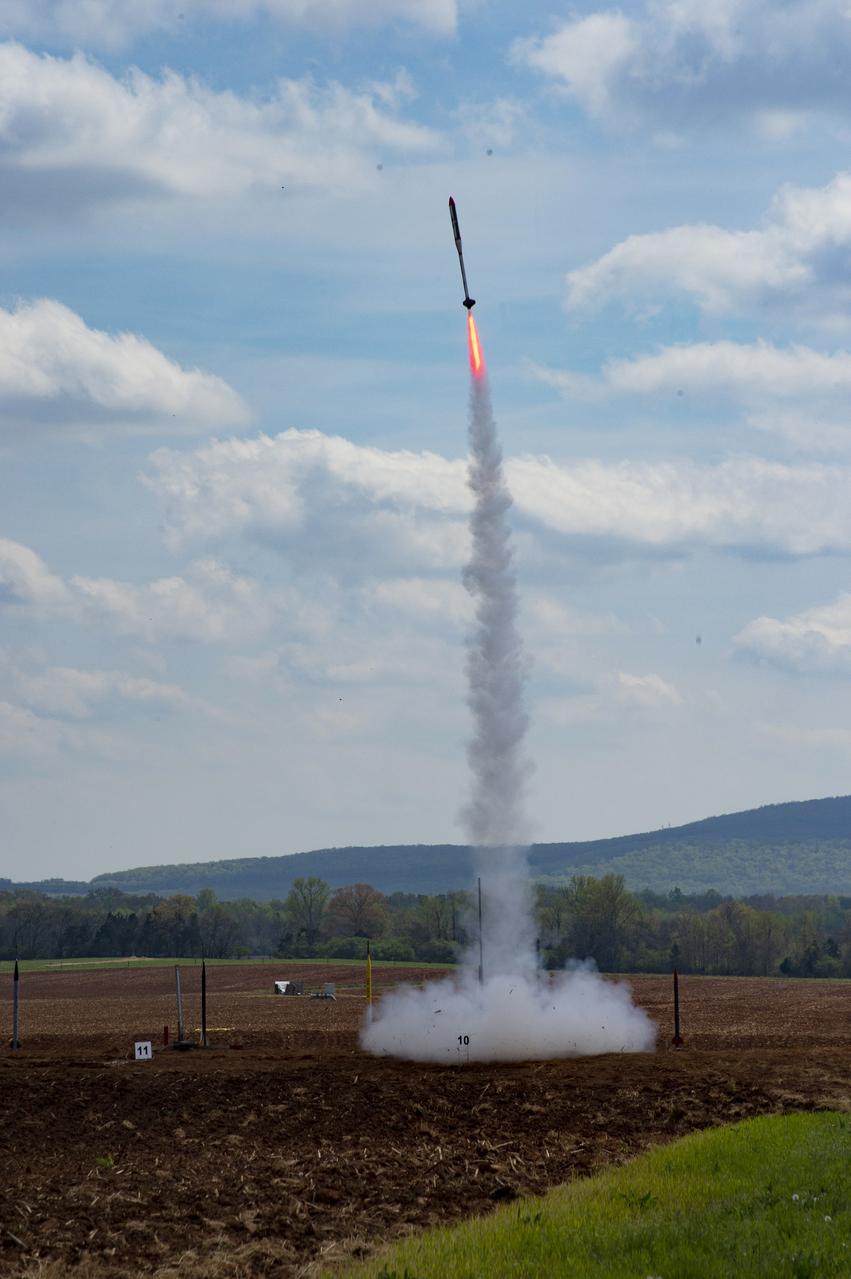
High School and College students from around the U.S. came together at Bragg Farms in Toney, Alabama for the 2019 Student Launch Initiative. The students launched their rockets to their own predetermined altitude with various payloads including remote rovers and unmanned aerial vehicles.
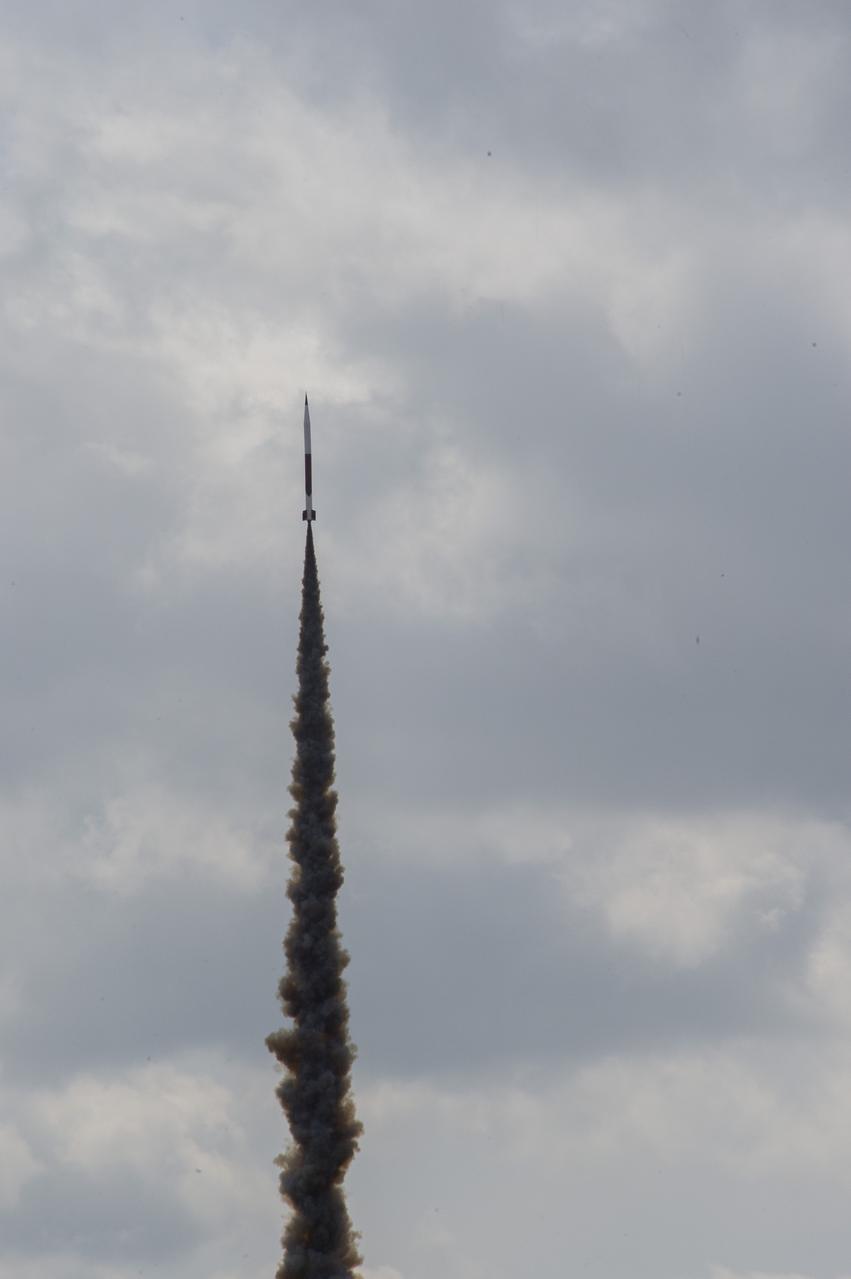
High School and College students from around the U.S. came together at Bragg Farms in Toney, Alabama for the 2019 Student Launch Initiative. The students launched their rockets to their own predetermined altitude with various payloads including remote rovers and unmanned aerial vehicles.
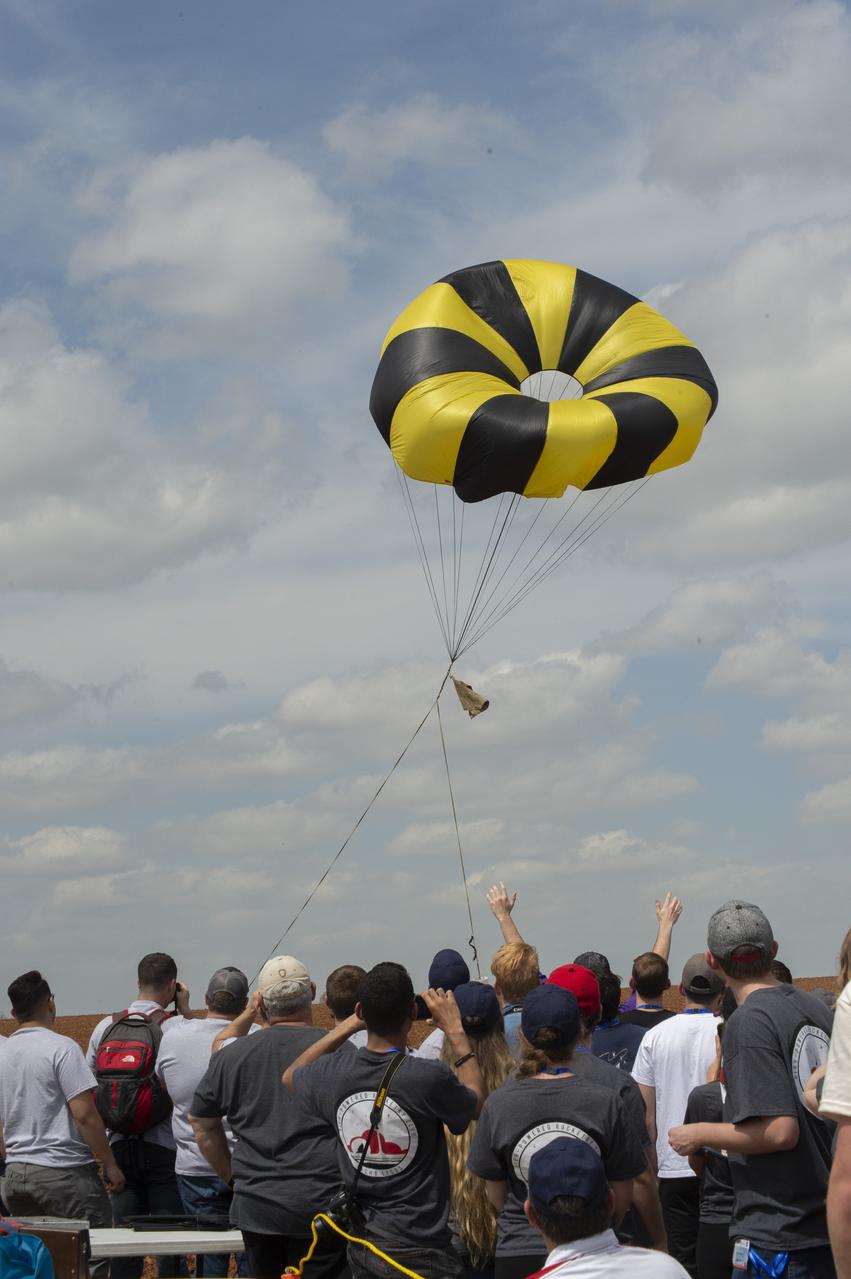
High School and College students from around the U.S. came together at Bragg Farms in Toney, Alabama for the 2019 Student Launch Initiative. The students launched their rockets to their own predetermined altitude with various payloads including remote rovers and unmanned aerial vehicles.
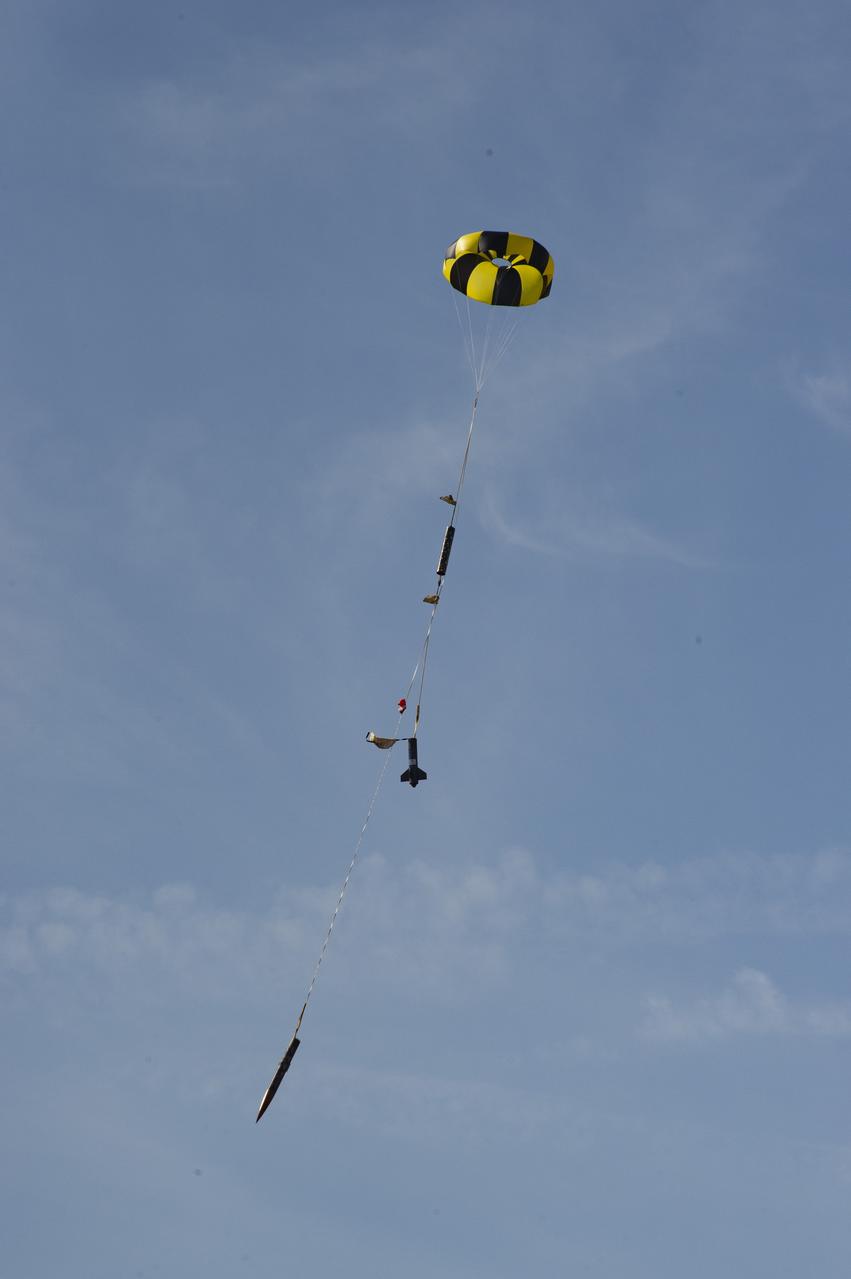
High School and College students from around the U.S. came together at Bragg Farms in Toney, Alabama for the 2019 Student Launch Initiative. The students launched their rockets to their own predetermined altitude with various payloads including remote rovers and unmanned aerial vehicles.
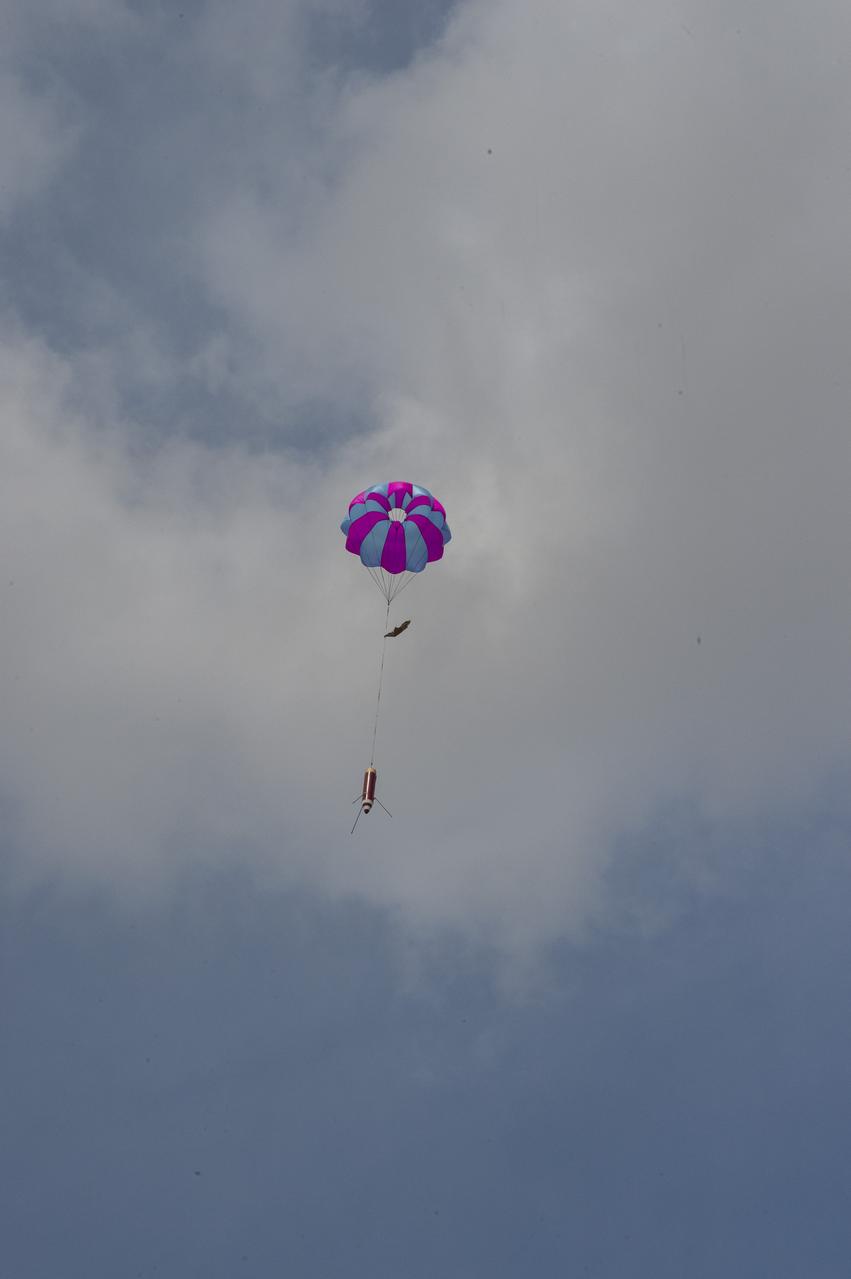
High School and College students from around the U.S. came together at Bragg Farms in Toney, Alabama for the 2019 Student Launch Initiative. The students launched their rockets to their own predetermined altitude with various payloads including remote rovers and unmanned aerial vehicles.
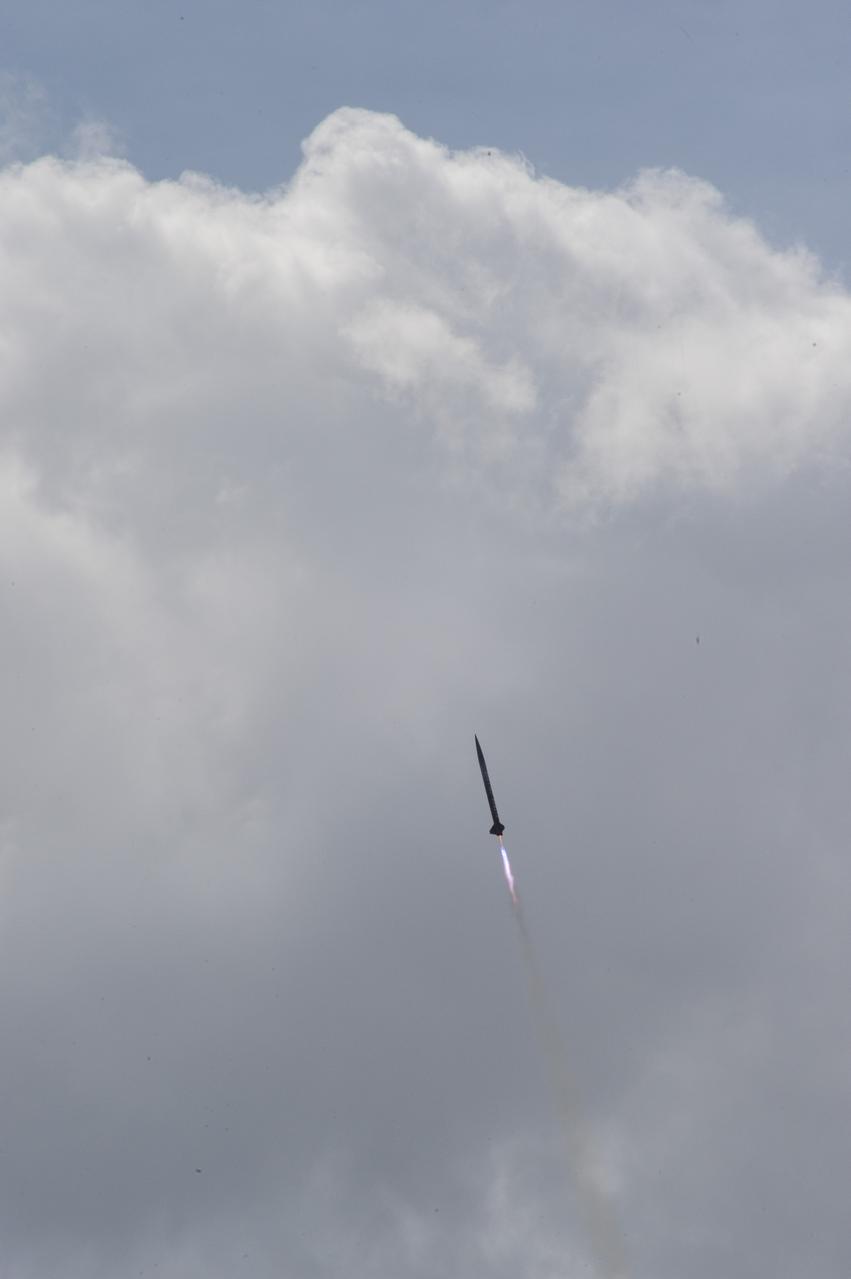
High School and College students from around the U.S. came together at Bragg Farms in Toney, Alabama for the 2019 Student Launch Initiative. The students launched their rockets to their own predetermined altitude with various payloads including remote rovers and unmanned aerial vehicles.
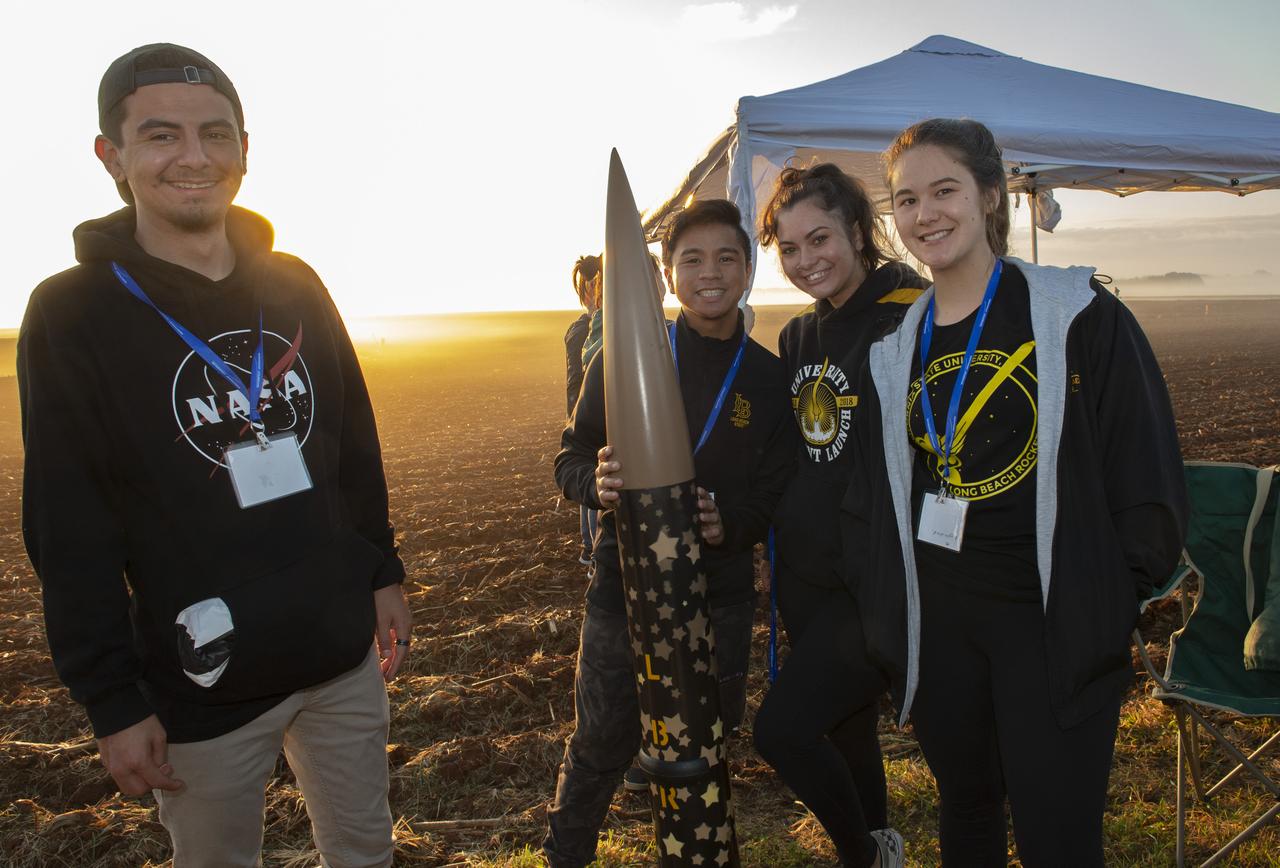
High School and College students from around the U.S. came together at Bragg Farms in Toney, Alabama for the 2019 Student Launch Initiative. The students launched their rockets to their own predetermined altitude with various payloads including remote rovers and unmanned aerial vehicles.
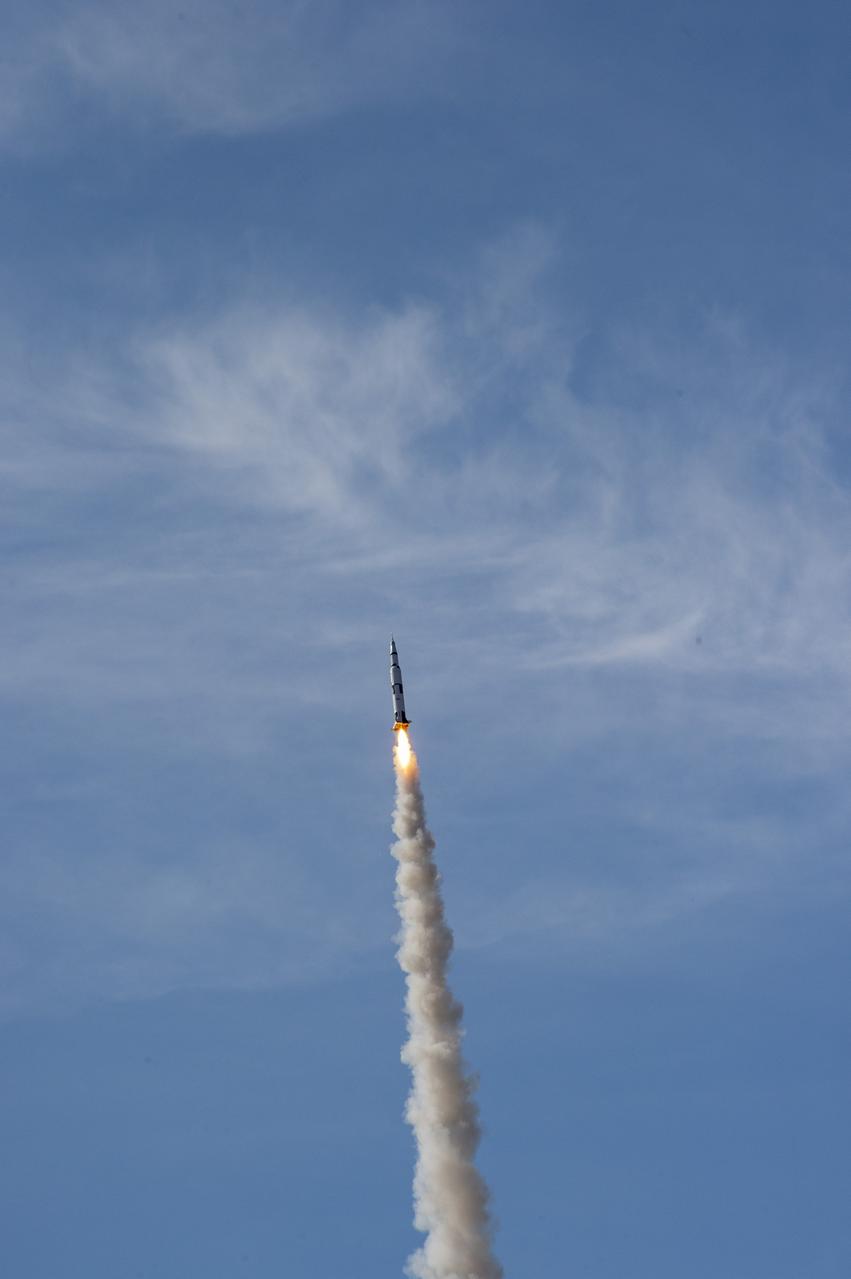
High School and College students from around the U.S. came together at Bragg Farms in Toney, Alabama for the 2019 Student Launch Initiative. The students launched their rockets to their own predetermined altitude with various payloads including remote rovers and unmanned aerial vehicles.
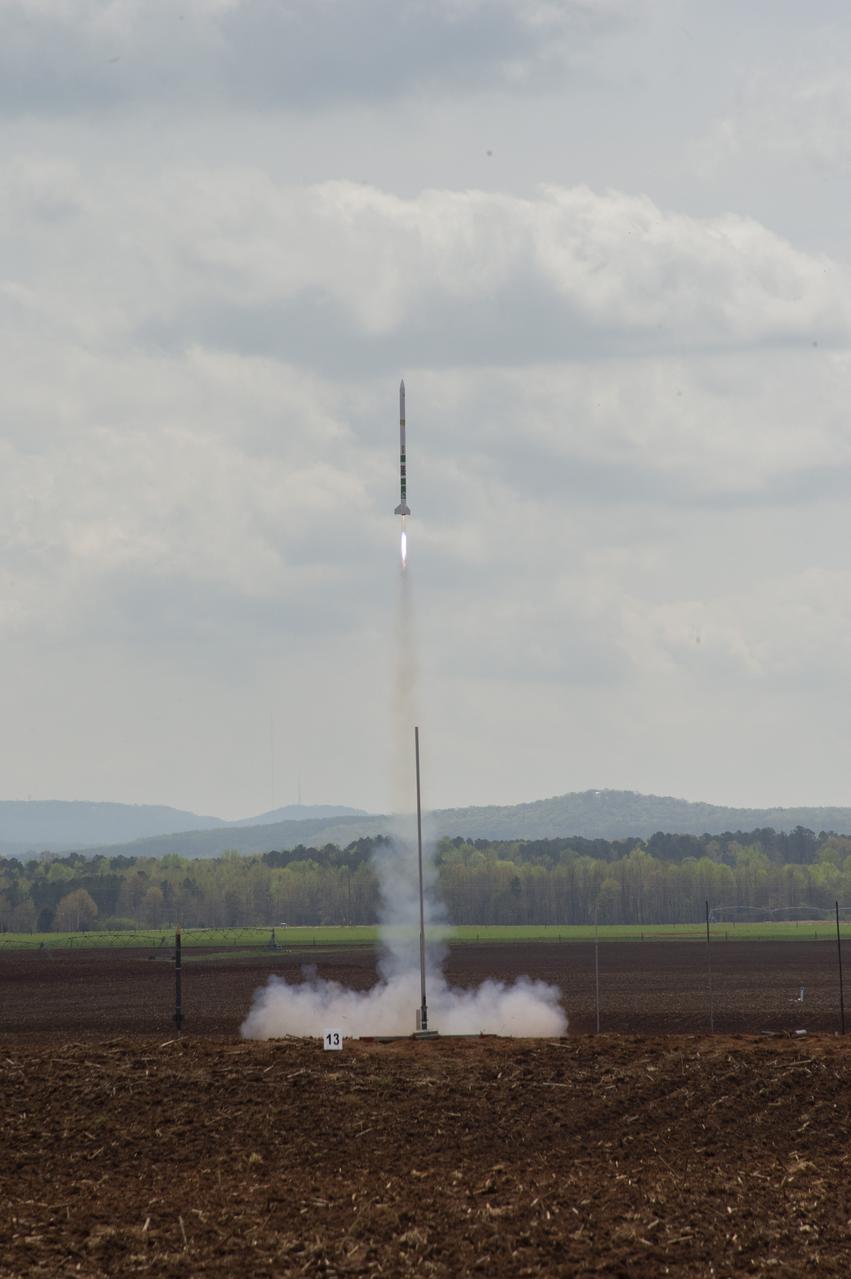
High School and College students from around the U.S. came together at Bragg Farms in Toney, Alabama for the 2019 Student Launch Initiative. The students launched their rockets to their own predetermined altitude with various payloads including remote rovers and unmanned aerial vehicles.
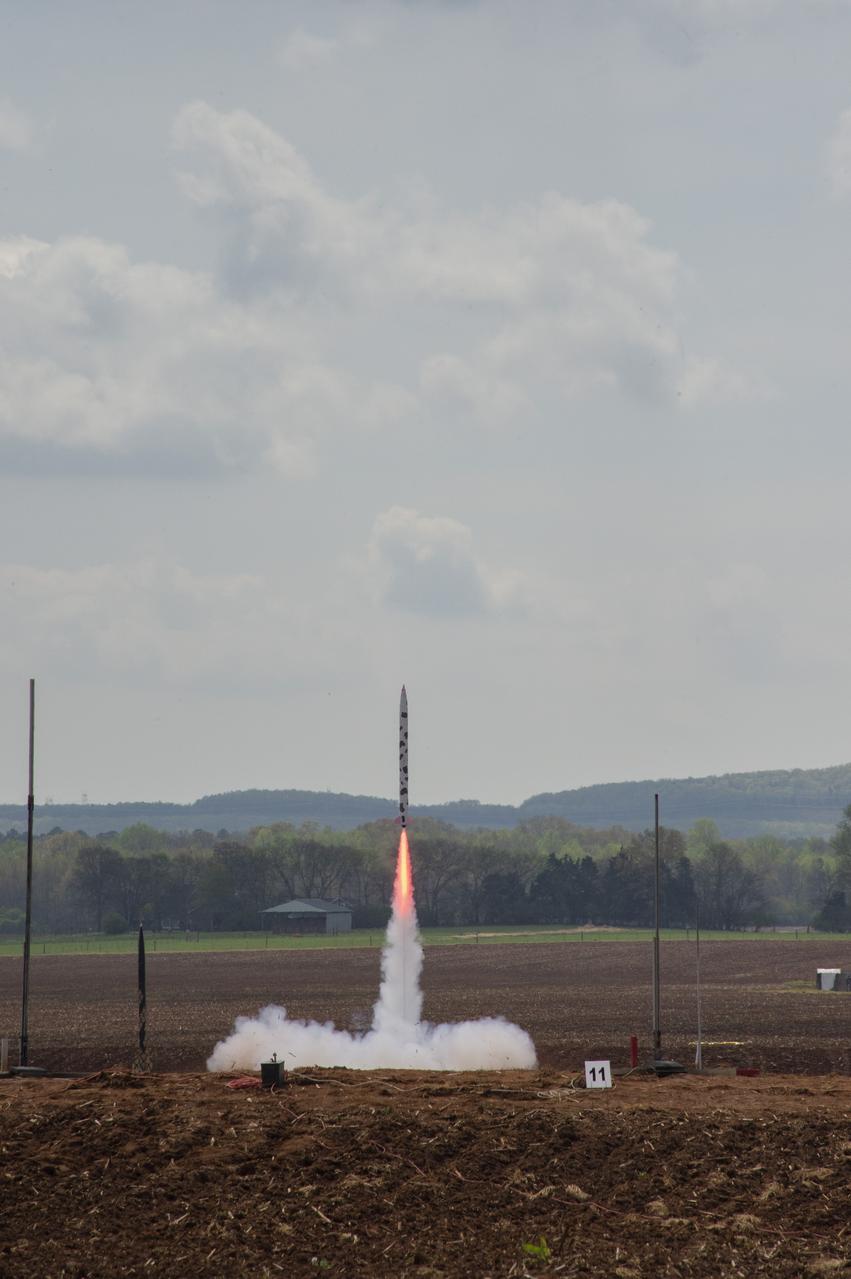
High School and College students from around the U.S. came together at Bragg Farms in Toney, Alabama for the 2019 Student Launch Initiative. The students launched their rockets to their own predetermined altitude with various payloads including remote rovers and unmanned aerial vehicles.

High School and College students from around the U.S. came together at Bragg Farms in Toney, Alabama for the 2019 Student Launch Initiative. The students launched their rockets to their own predetermined altitude with various payloads including remote rovers and unmanned aerial vehicles.
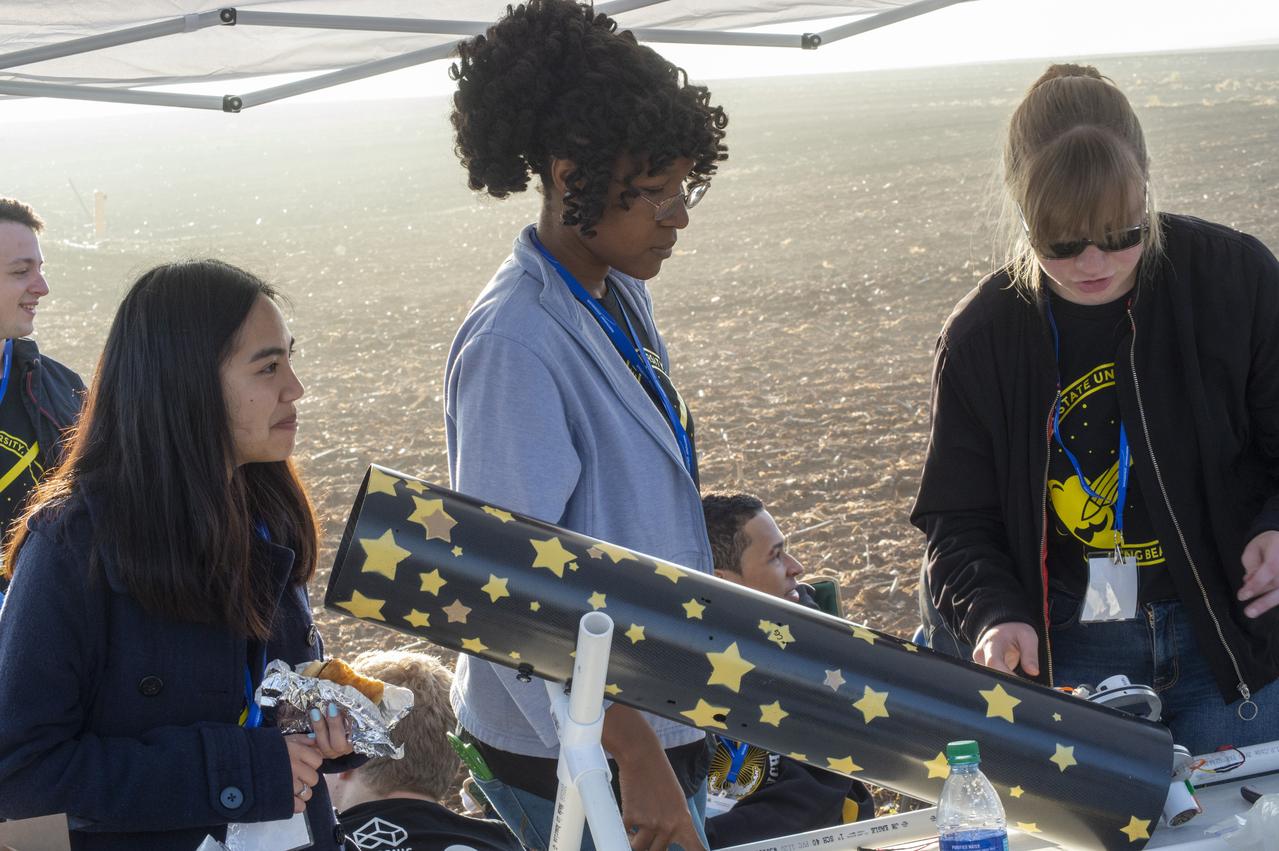
High School and College students from around the U.S. came together at Bragg Farms in Toney, Alabama for the 2019 Student Launch Initiative. The students launched their rockets to their own predetermined altitude with various payloads including remote rovers and unmanned aerial vehicles.
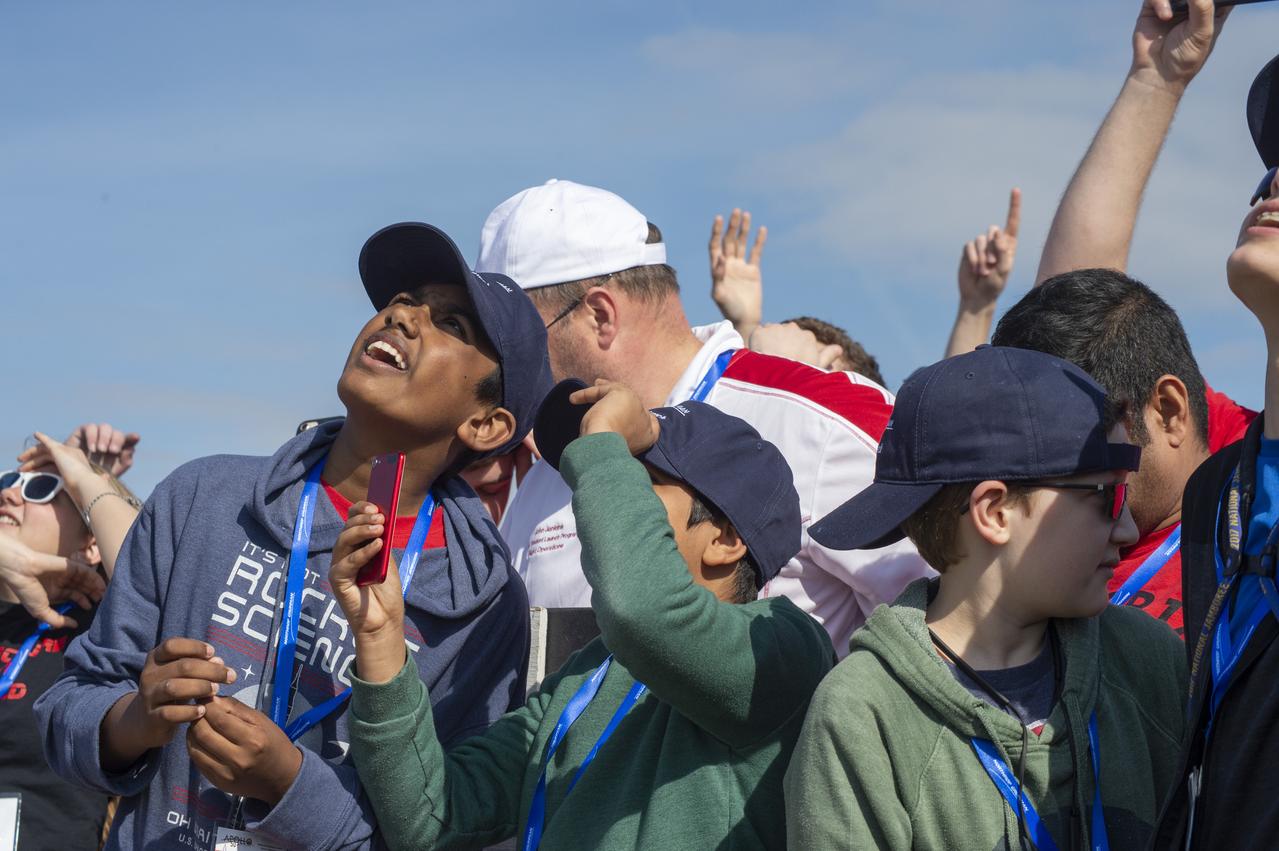
High School and College students from around the U.S. came together at Bragg Farms in Toney, Alabama for the 2019 Student Launch Initiative. The students launched their rockets to their own predetermined altitude with various payloads including remote rovers and unmanned aerial vehicles.
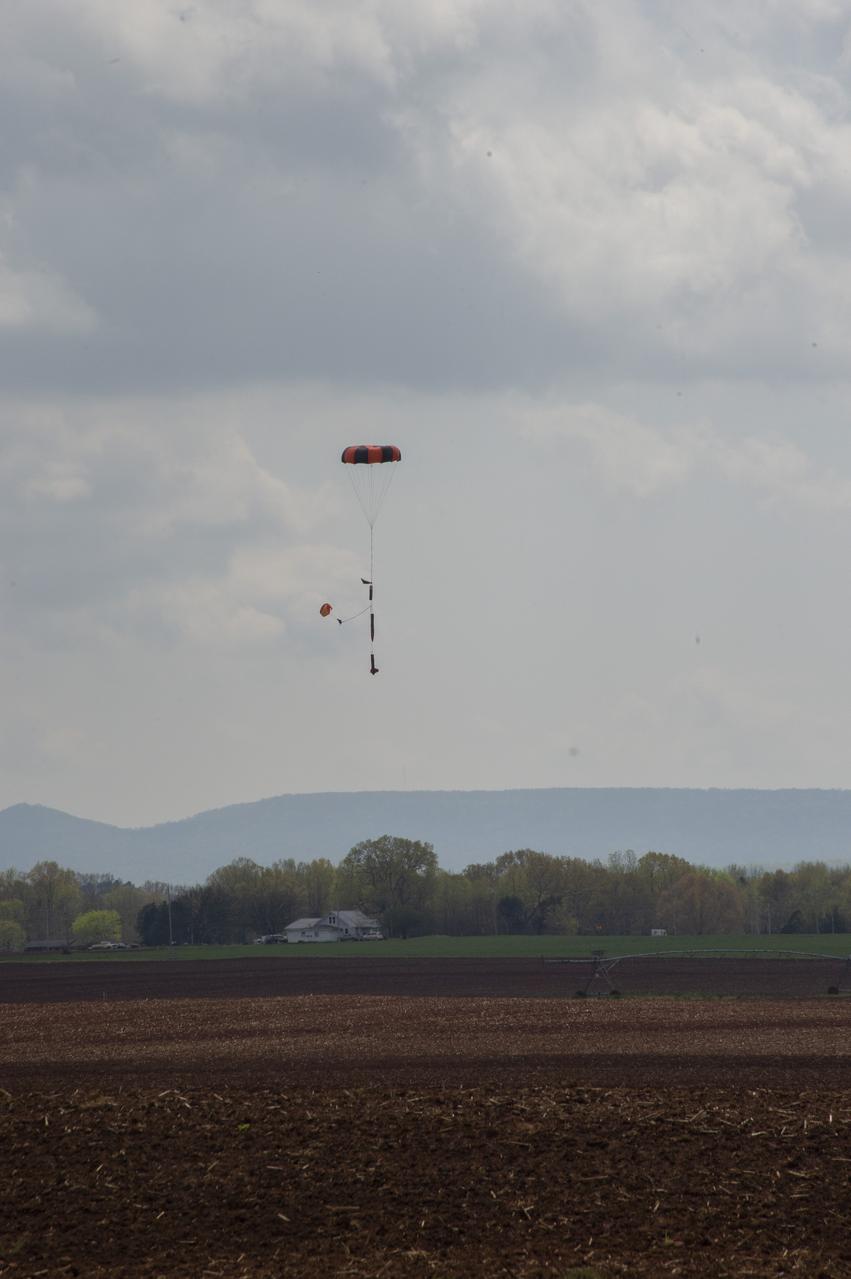
High School and College students from around the U.S. came together at Bragg Farms in Toney, Alabama for the 2019 Student Launch Initiative. The students launched their rockets to their own predetermined altitude with various payloads including remote rovers and unmanned aerial vehicles.
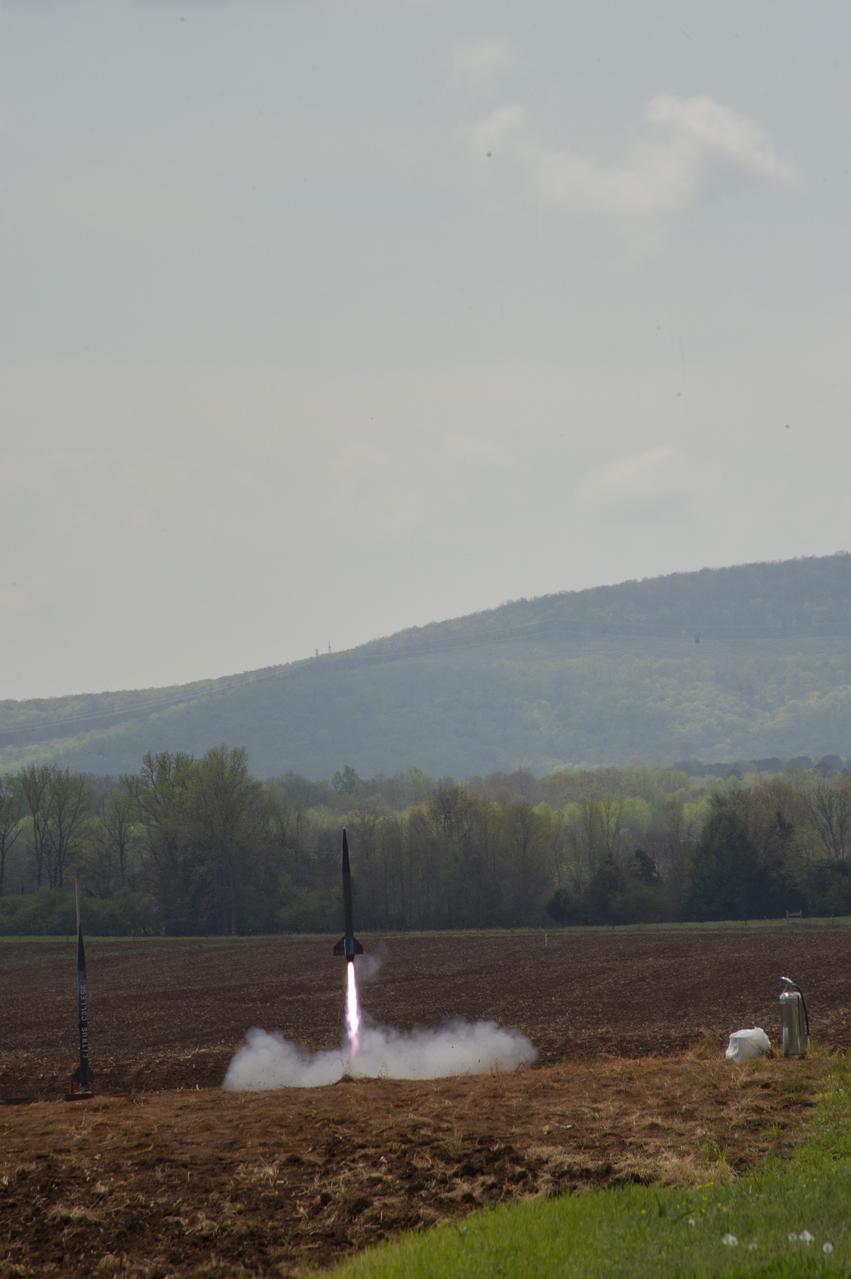
High School and College students from around the U.S. came together at Bragg Farms in Toney, Alabama for the 2019 Student Launch Initiative. The students launched their rockets to their own predetermined altitude with various payloads including remote rovers and unmanned aerial vehicles.
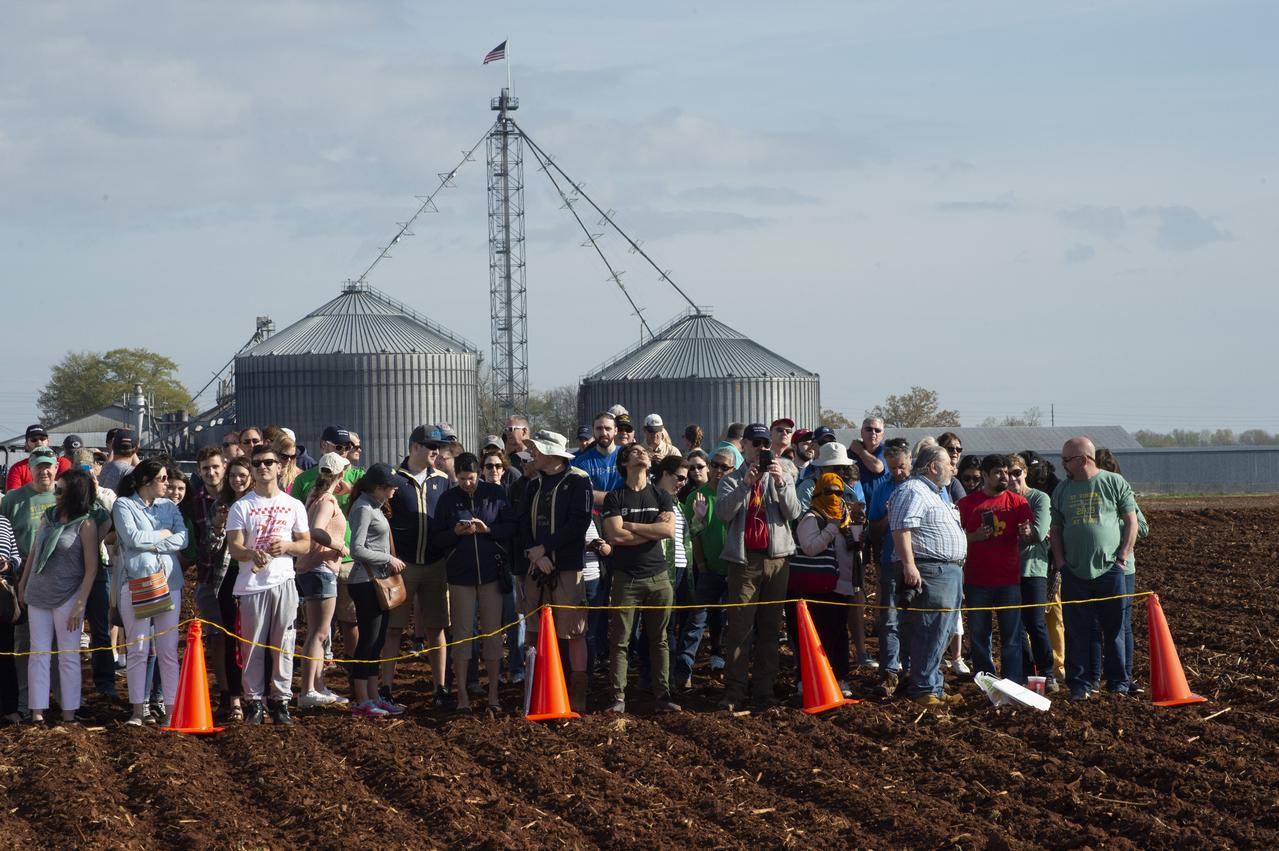
High School and College students from around the U.S. came together at Bragg Farms in Toney, Alabama for the 2019 Student Launch Initiative. The students launched their rockets to their own predetermined altitude with various payloads including remote rovers and unmanned aerial vehicles.
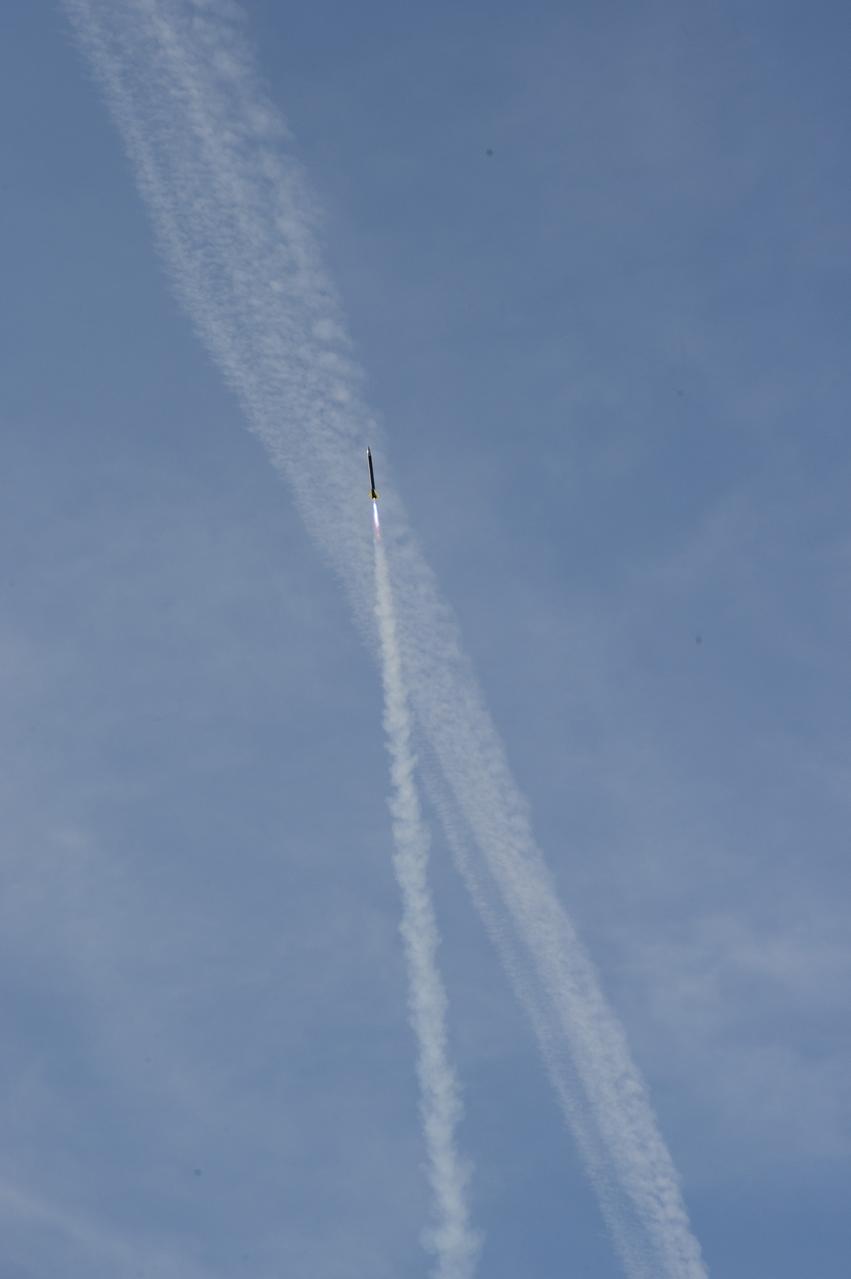
High School and College students from around the U.S. came together at Bragg Farms in Toney, Alabama for the 2019 Student Launch Initiative. The students launched their rockets to their own predetermined altitude with various payloads including remote rovers and unmanned aerial vehicles.
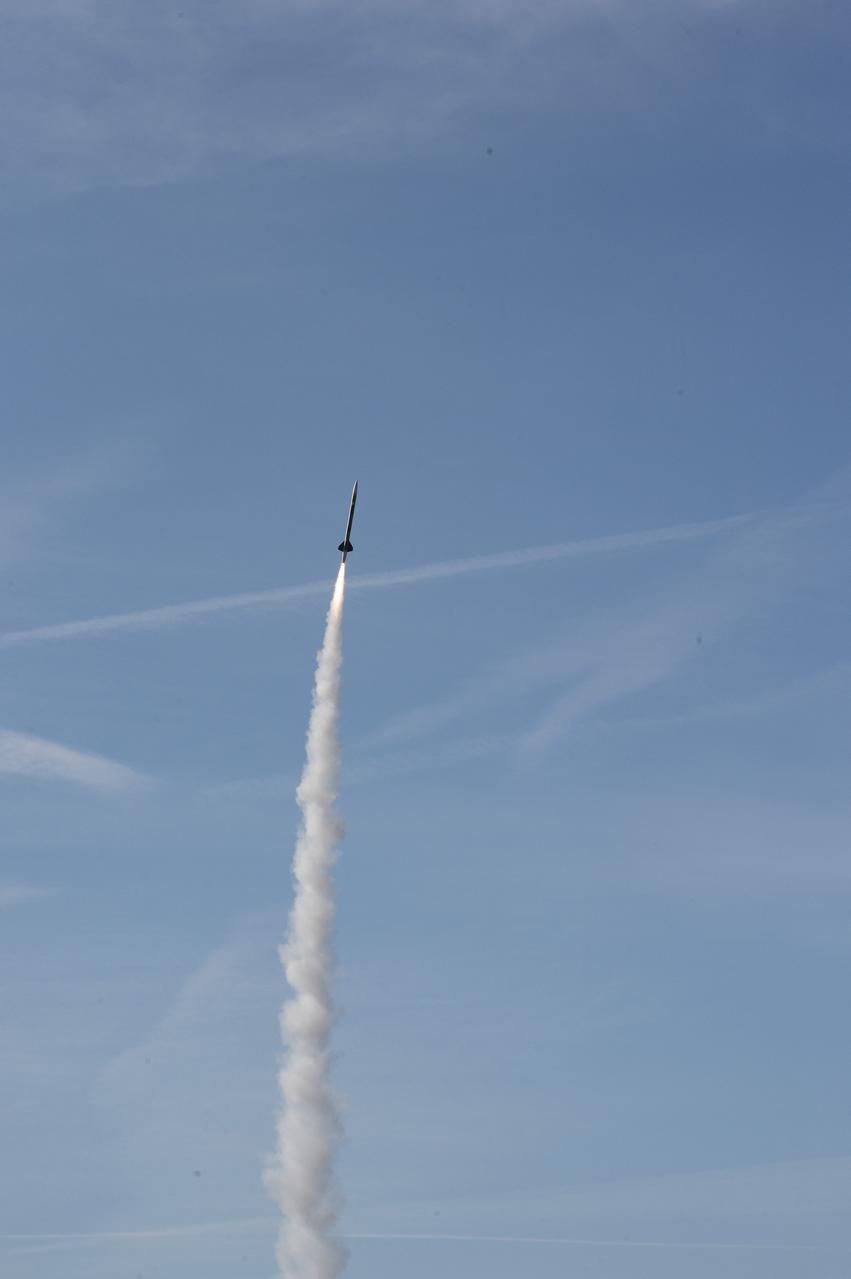
High School and College students from around the U.S. came together at Bragg Farms in Toney, Alabama for the 2019 Student Launch Initiative. The students launched their rockets to their own predetermined altitude with various payloads including remote rovers and unmanned aerial vehicles.
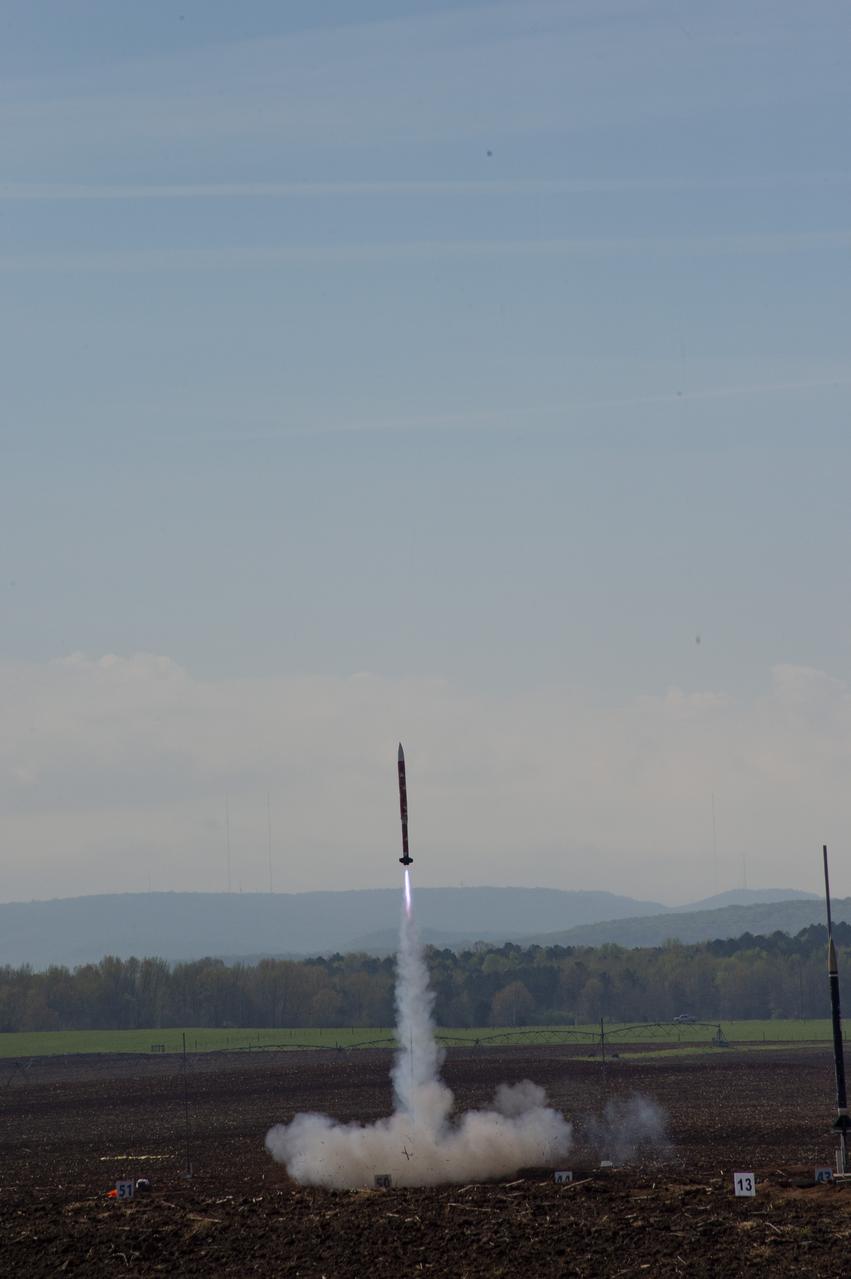
High School and College students from around the U.S. came together at Bragg Farms in Toney, Alabama for the 2019 Student Launch Initiative. The students launched their rockets to their own predetermined altitude with various payloads including remote rovers and unmanned aerial vehicles.
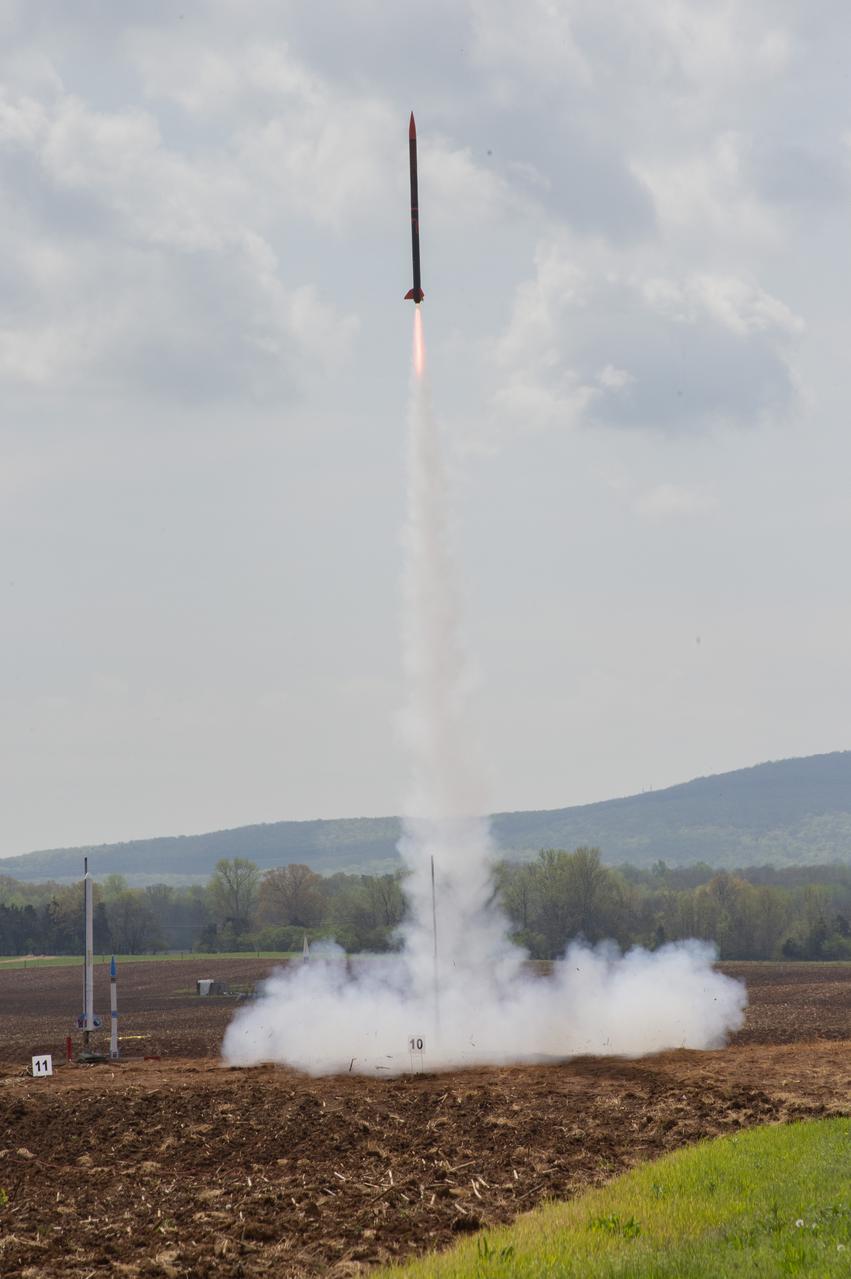
High School and College students from around the U.S. came together at Bragg Farms in Toney, Alabama for the 2019 Student Launch Initiative. The students launched their rockets to their own predetermined altitude with various payloads including remote rovers and unmanned aerial vehicles.
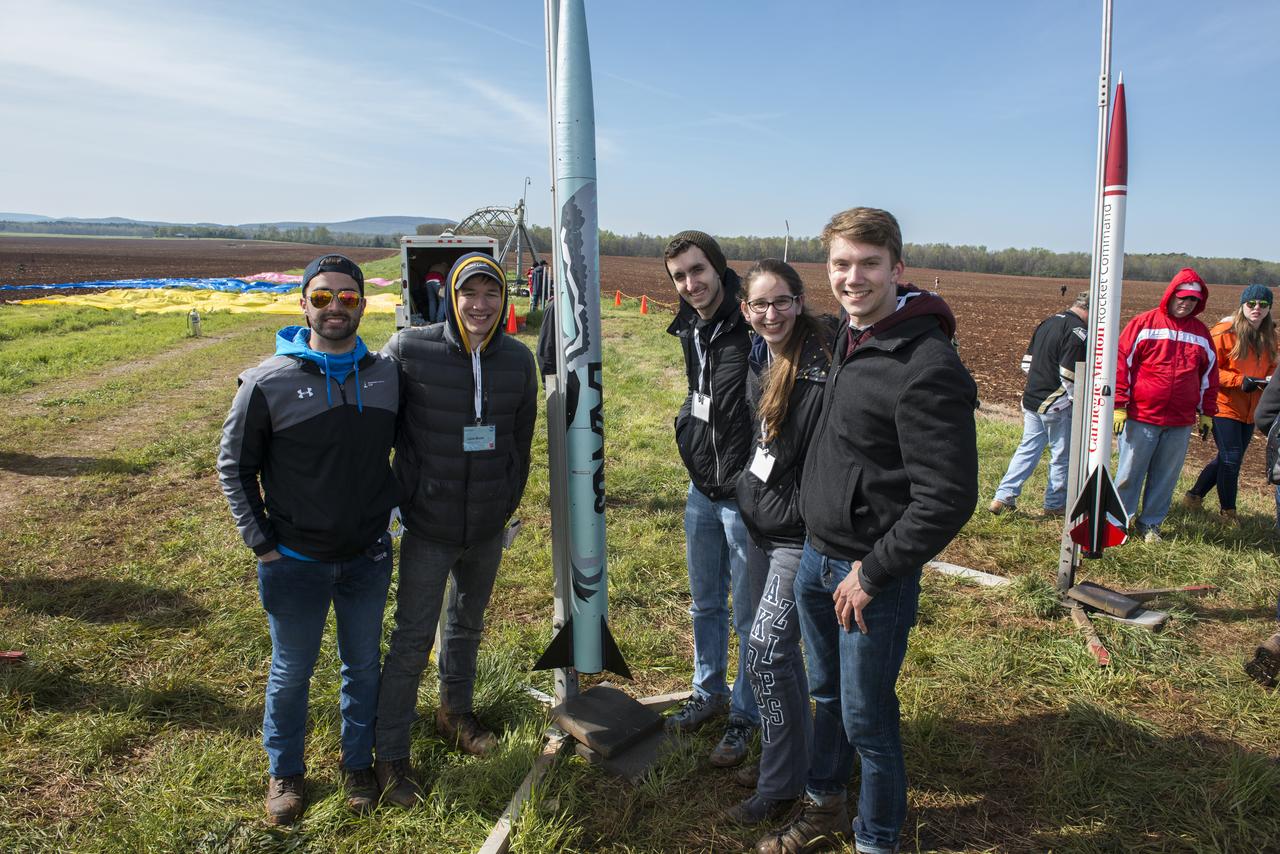
After eight months of designing, building and testing, the middle school, high school and college and university teams launched their rockets as part of NASA Student Launch on Sunday, April 8. The rockets and their payloads are designed to fly to 1-mile in altitude before deploying recovery systems that brings them safely to the ground.
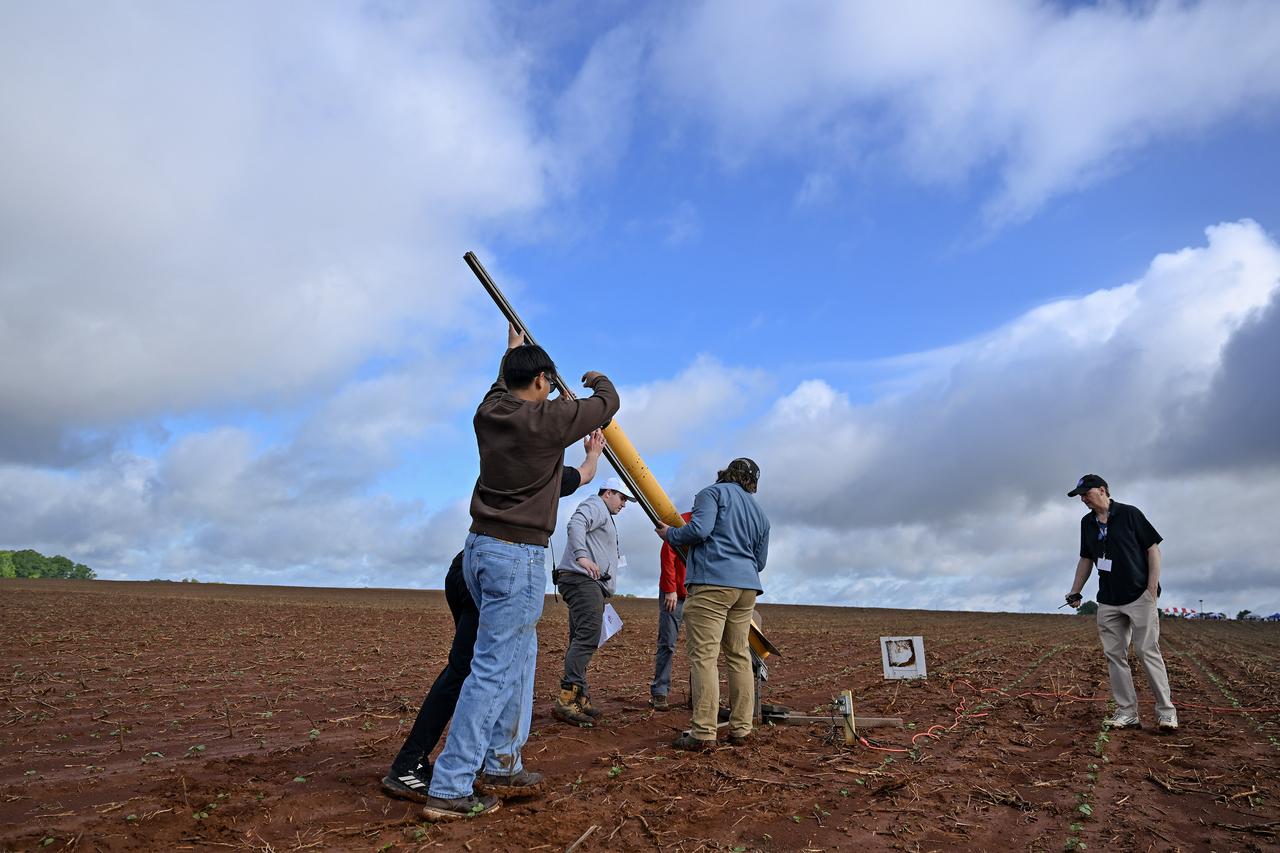
Over than 980 middle school, high school, and college students from across the nation launched more than 40 high-powered rockets just north of NASA’s Marshall Space Flight Center in Huntsville, Alabama. This year marked the 25th anniversary of the competition. To compete, students follow the NASA engineering design lifecycle by going through a series of reviews for nine months leading up to launch day. Each year, a payload challenge is issued to the university teams, and this year’s task took inspiration from the agency’s Artemis missions, where NASA will send astronauts to explore the Moon for scientific discovery, economic benefit, and to build the foundation for the first crewed missions to Mars. Teams were challenged to include “reports” from STEMnauts, non-living objects representing astronauts. The STEMnaut “crew” had to relay real-time data to the student team’s mission control, just as the Artemis astronaut crew will do as they explore the lunar surface. To learn more, visit: www.nasa.gov/studentlaunch.
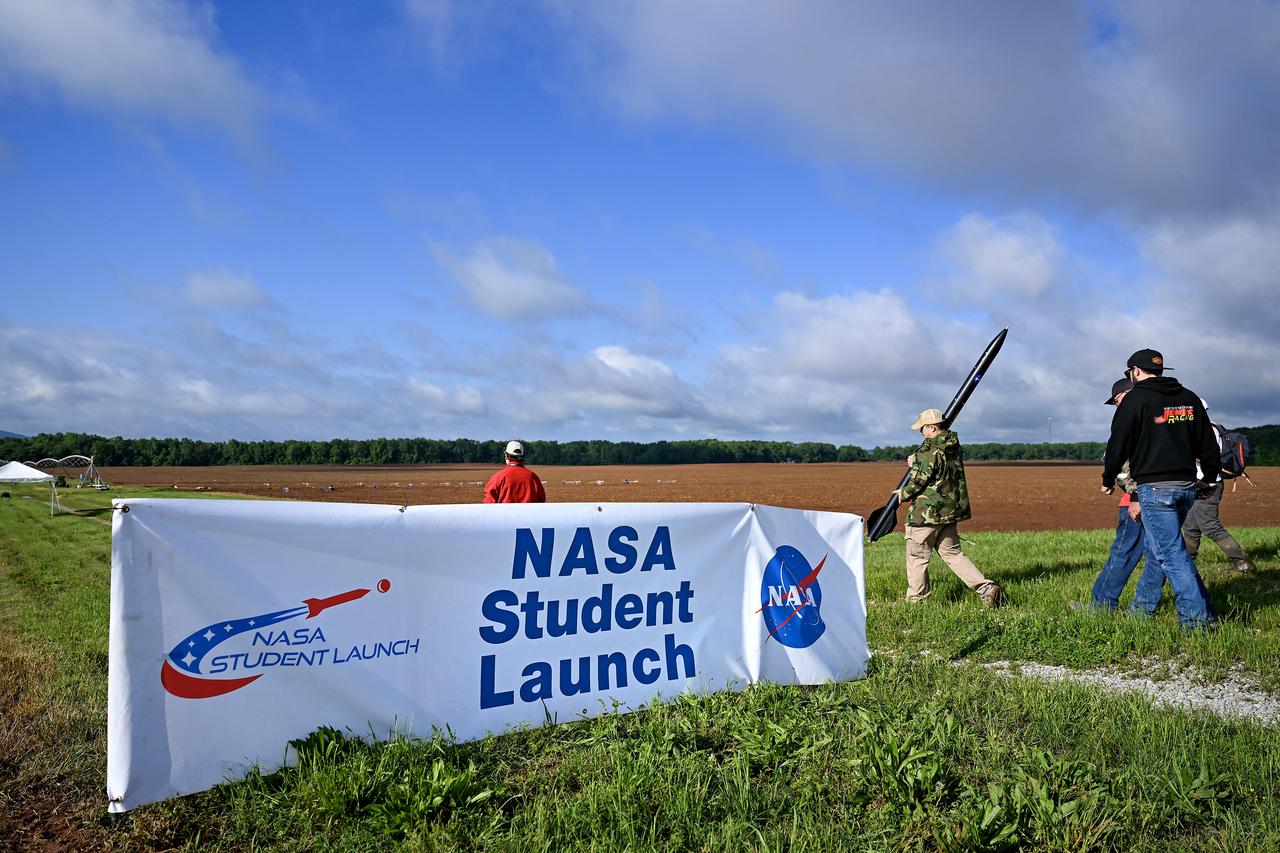
Over than 980 middle school, high school, and college students from across the nation launched more than 40 high-powered rockets just north of NASA’s Marshall Space Flight Center in Huntsville, Alabama. This year marked the 25th anniversary of the competition. To compete, students follow the NASA engineering design lifecycle by going through a series of reviews for nine months leading up to launch day. Each year, a payload challenge is issued to the university teams, and this year’s task took inspiration from the agency’s Artemis missions, where NASA will send astronauts to explore the Moon for scientific discovery, economic benefit, and to build the foundation for the first crewed missions to Mars. Teams were challenged to include “reports” from STEMnauts, non-living objects representing astronauts. The STEMnaut “crew” had to relay real-time data to the student team’s mission control, just as the Artemis astronaut crew will do as they explore the lunar surface. To learn more, visit: www.nasa.gov/studentlaunch.
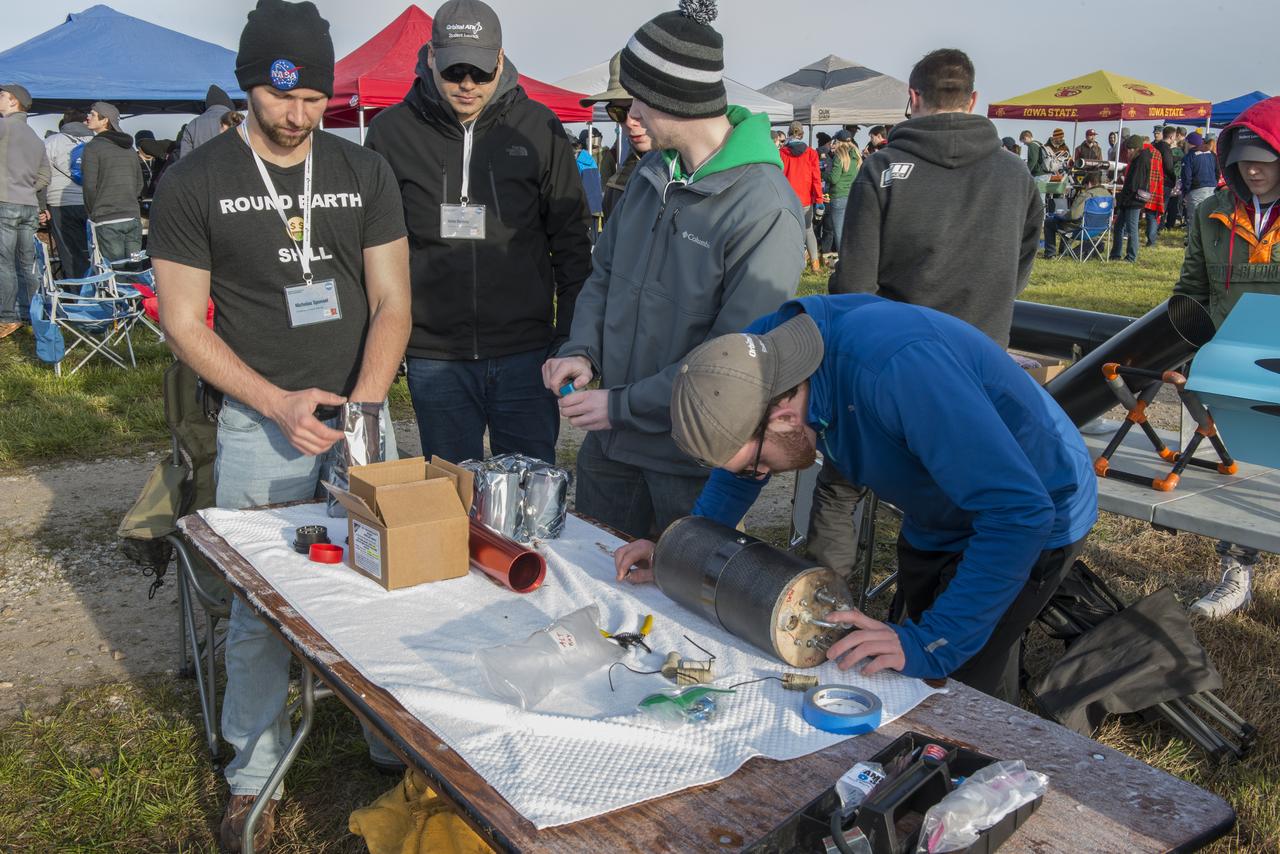
After eight months of designing, building and testing, the middle school, high school and college and university teams launched their rockets as part of NASA Student Launch on Sunday, April 8. The rockets and their payloads are designed to fly to 1-mile in altitude before deploying recovery systems that brings them safely to the ground.
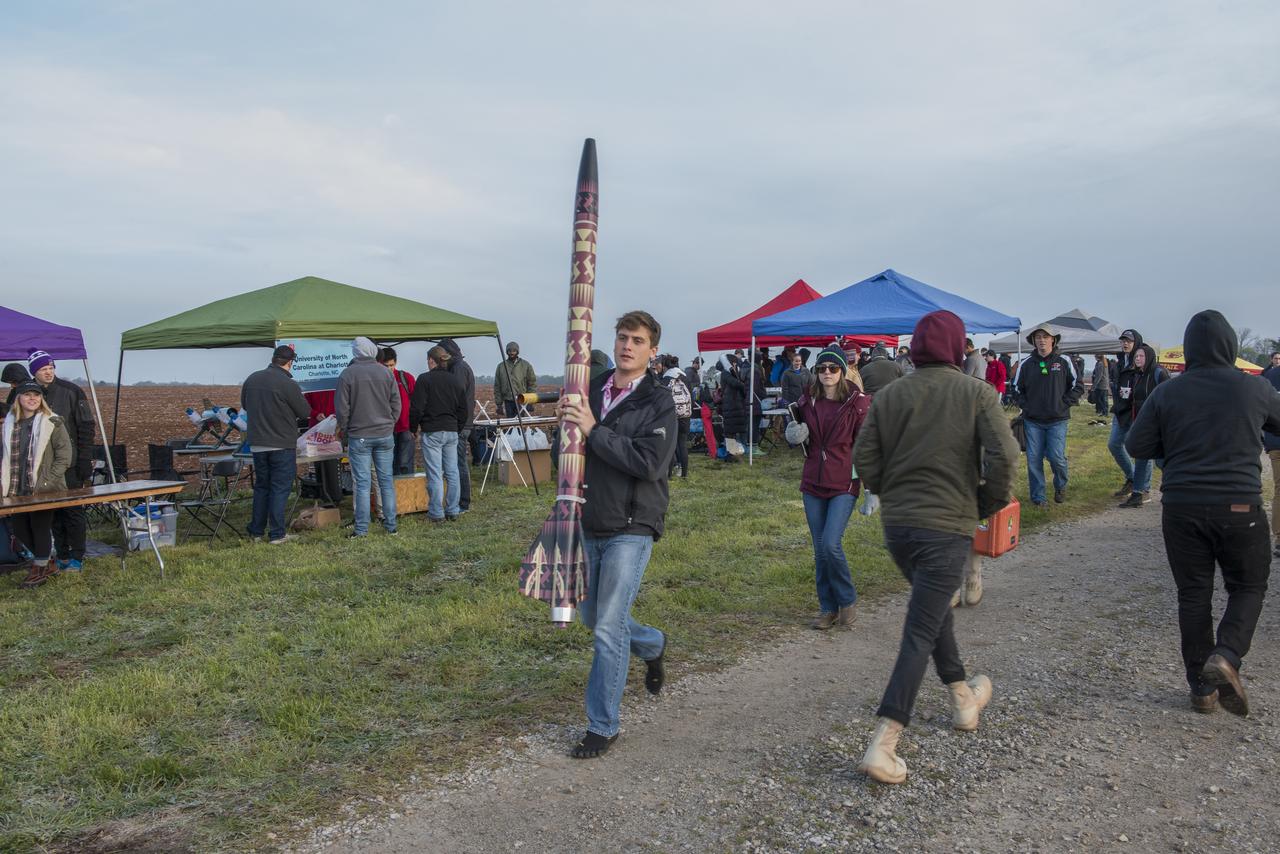
After eight months of designing, building and testing, the middle school, high school and college and university teams launched their rockets as part of NASA Student Launch on Sunday, April 8. The rockets and their payloads are designed to fly to 1-mile in altitude before deploying recovery systems that brings them safely to the ground.
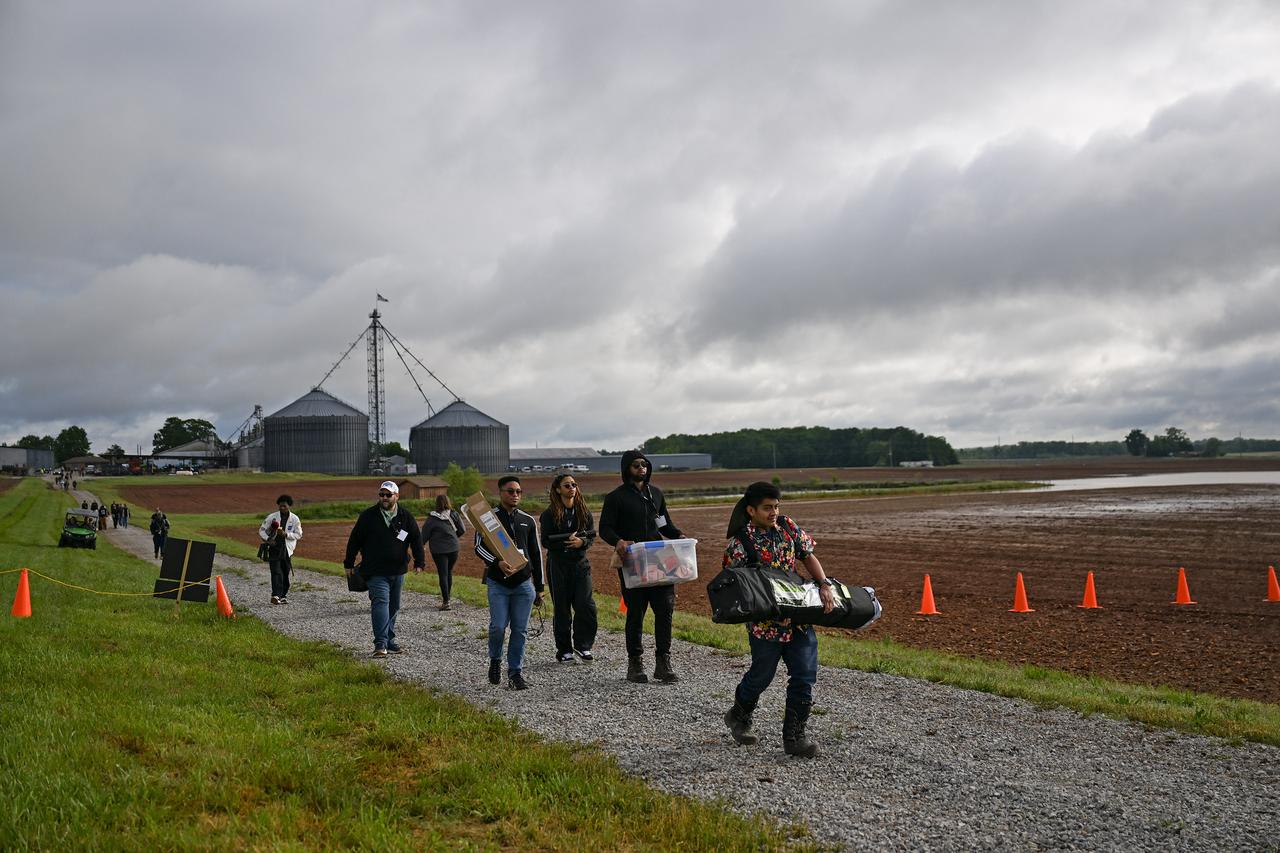
Over than 980 middle school, high school, and college students from across the nation launched more than 40 high-powered rockets just north of NASA’s Marshall Space Flight Center in Huntsville, Alabama. This year marked the 25th anniversary of the competition. To compete, students follow the NASA engineering design lifecycle by going through a series of reviews for nine months leading up to launch day. Each year, a payload challenge is issued to the university teams, and this year’s task took inspiration from the agency’s Artemis missions, where NASA will send astronauts to explore the Moon for scientific discovery, economic benefit, and to build the foundation for the first crewed missions to Mars. Teams were challenged to include “reports” from STEMnauts, non-living objects representing astronauts. The STEMnaut “crew” had to relay real-time data to the student team’s mission control, just as the Artemis astronaut crew will do as they explore the lunar surface. To learn more, visit: www.nasa.gov/studentlaunch.
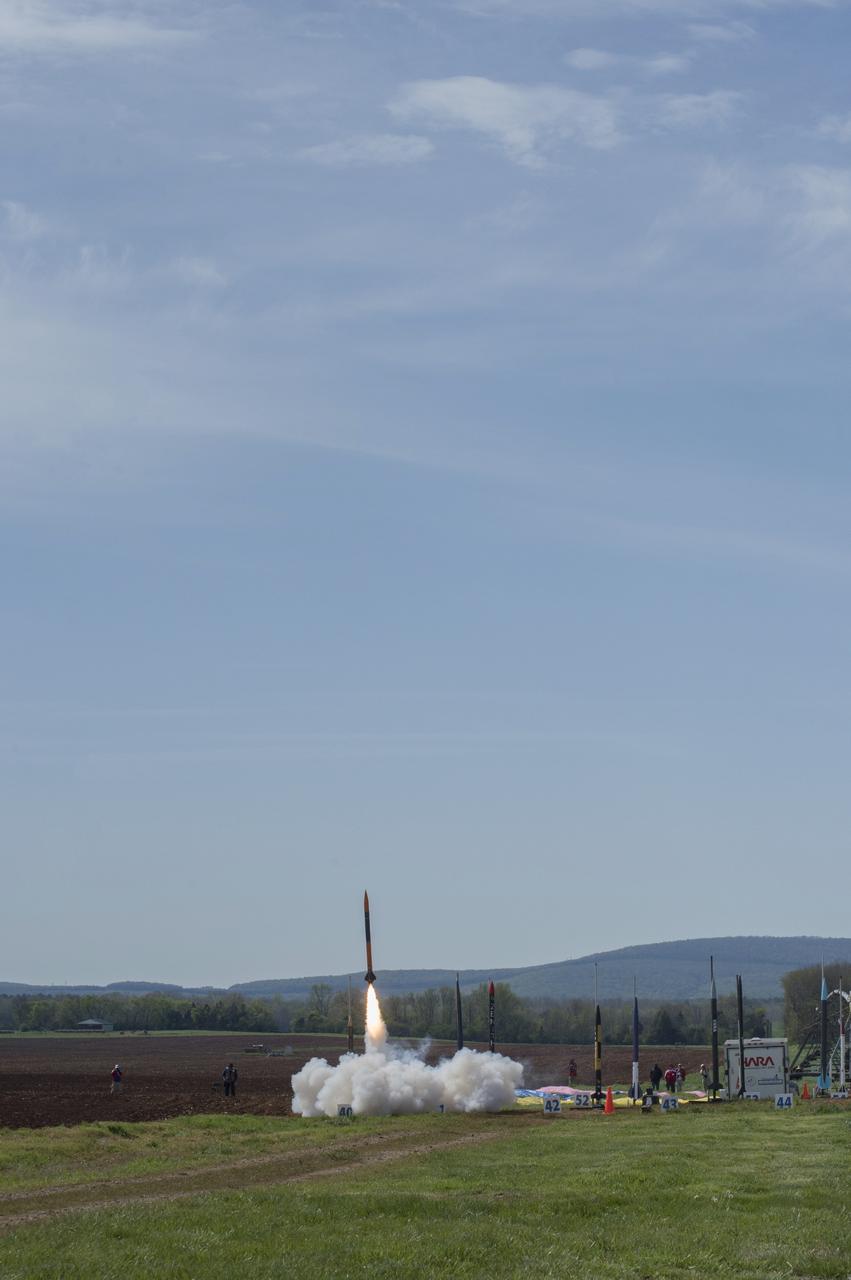
After eight months of designing, building and testing, the middle school, high school and college and university teams launched their rockets as part of NASA Student Launch on Sunday, April 8. The rockets and their payloads are designed to fly to 1-mile in altitude before deploying recovery systems that brings them safely to the ground.
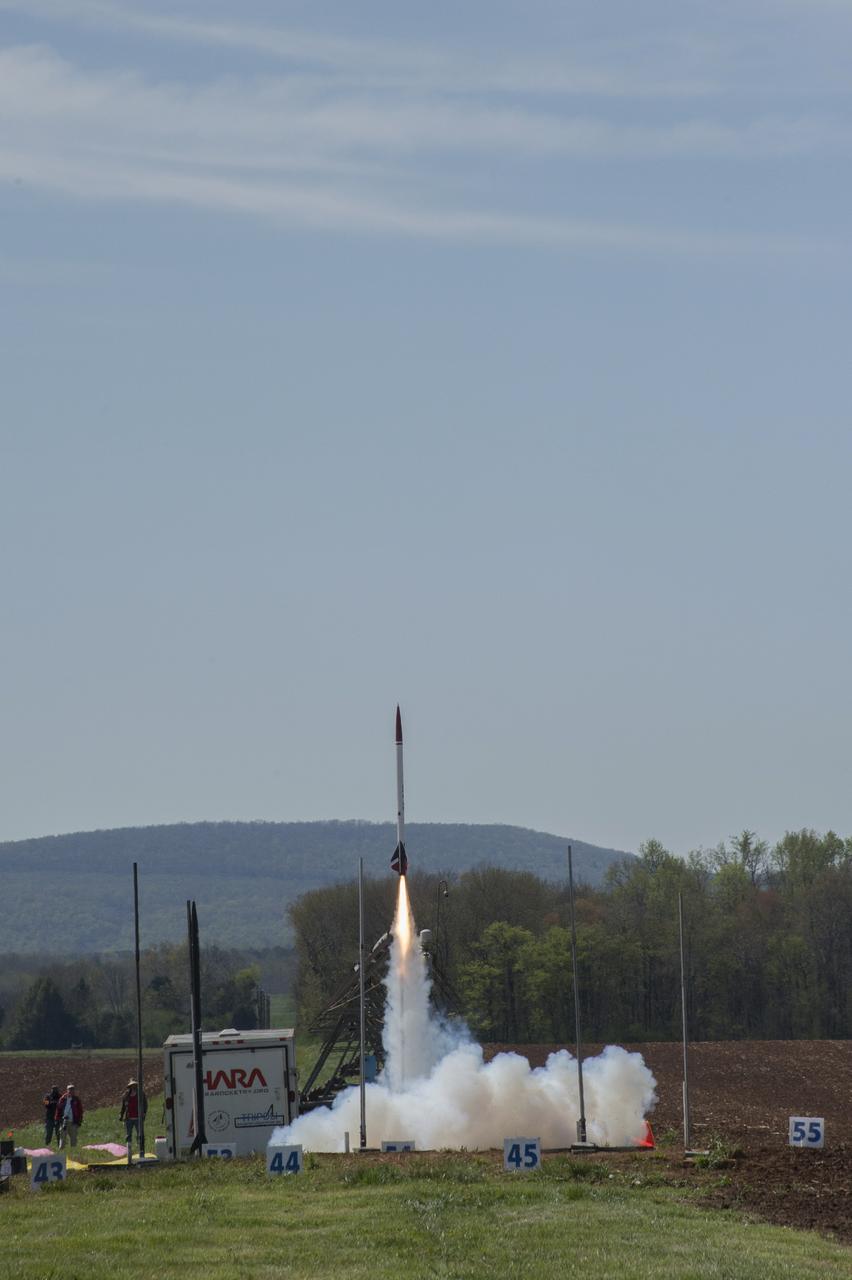
After eight months of designing, building and testing, the middle school, high school and college and university teams launched their rockets as part of NASA Student Launch on Sunday, April 8. The rockets and their payloads are designed to fly to 1-mile in altitude before deploying recovery systems that brings them safely to the ground.
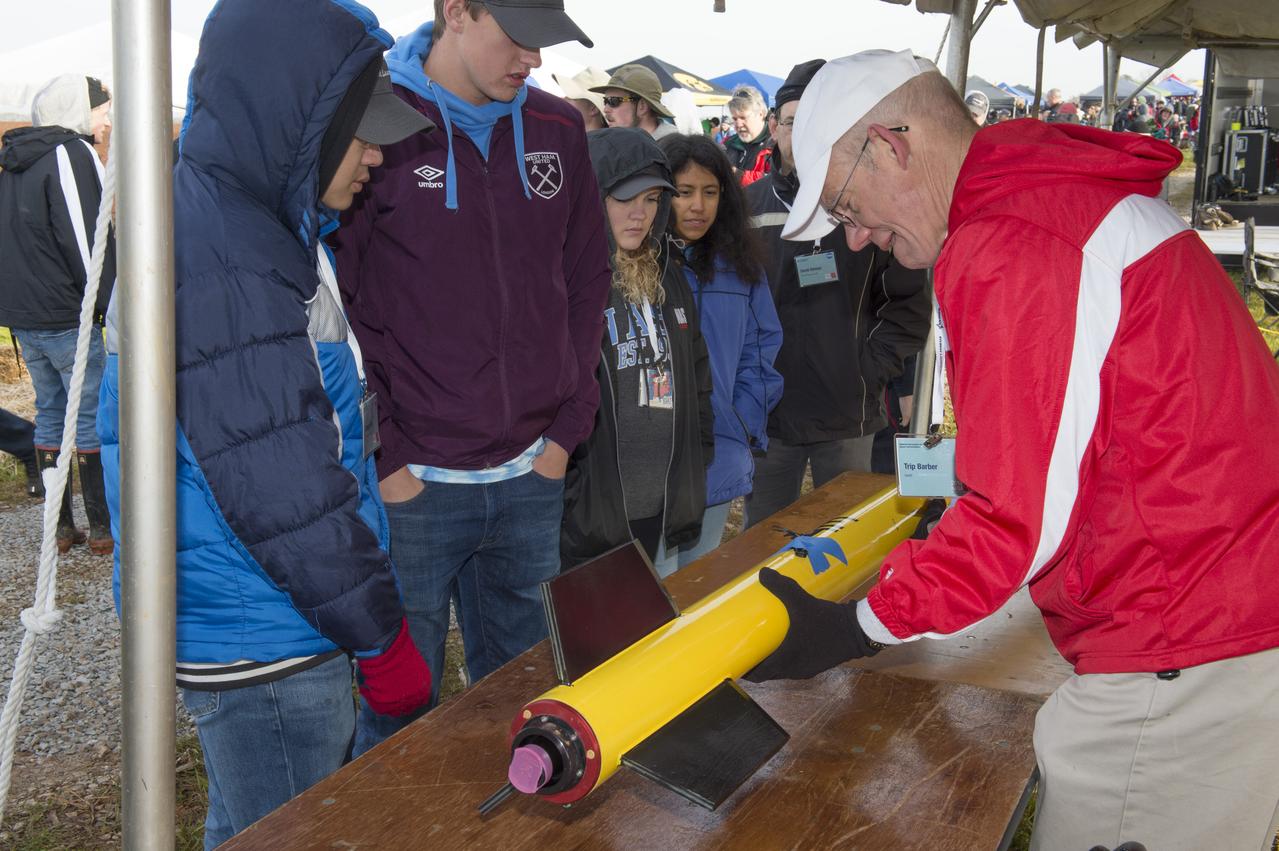
After eight months of designing, building and testing, the middle school, high school and college and university teams launched their rockets as part of NASA Student Launch on Sunday, April 8. The rockets and their payloads are designed to fly to 1-mile in altitude before deploying recovery systems that brings them safely to the ground.
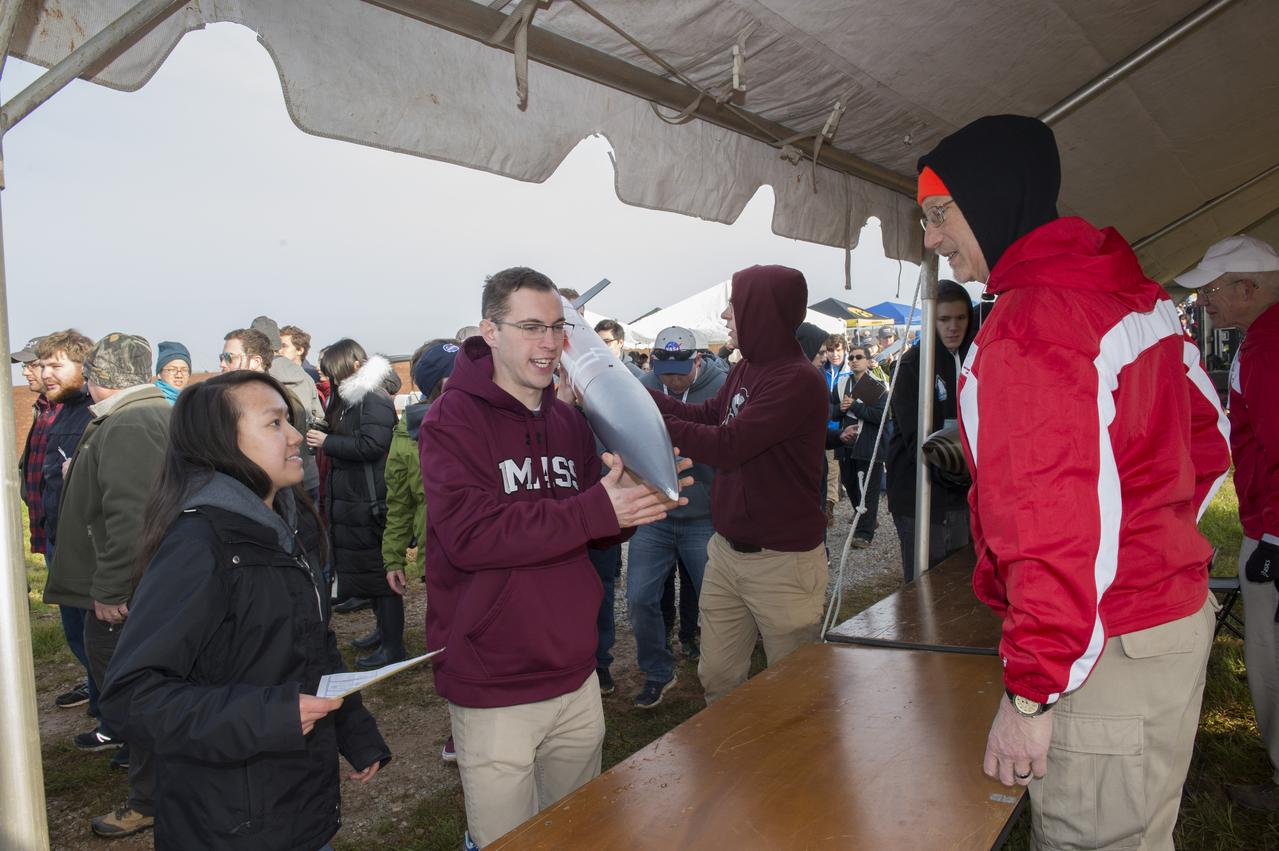
After eight months of designing, building and testing, the middle school, high school and college and university teams launched their rockets as part of NASA Student Launch on Sunday, April 8. The rockets and their payloads are designed to fly to 1-mile in altitude before deploying recovery systems that brings them safely to the ground.
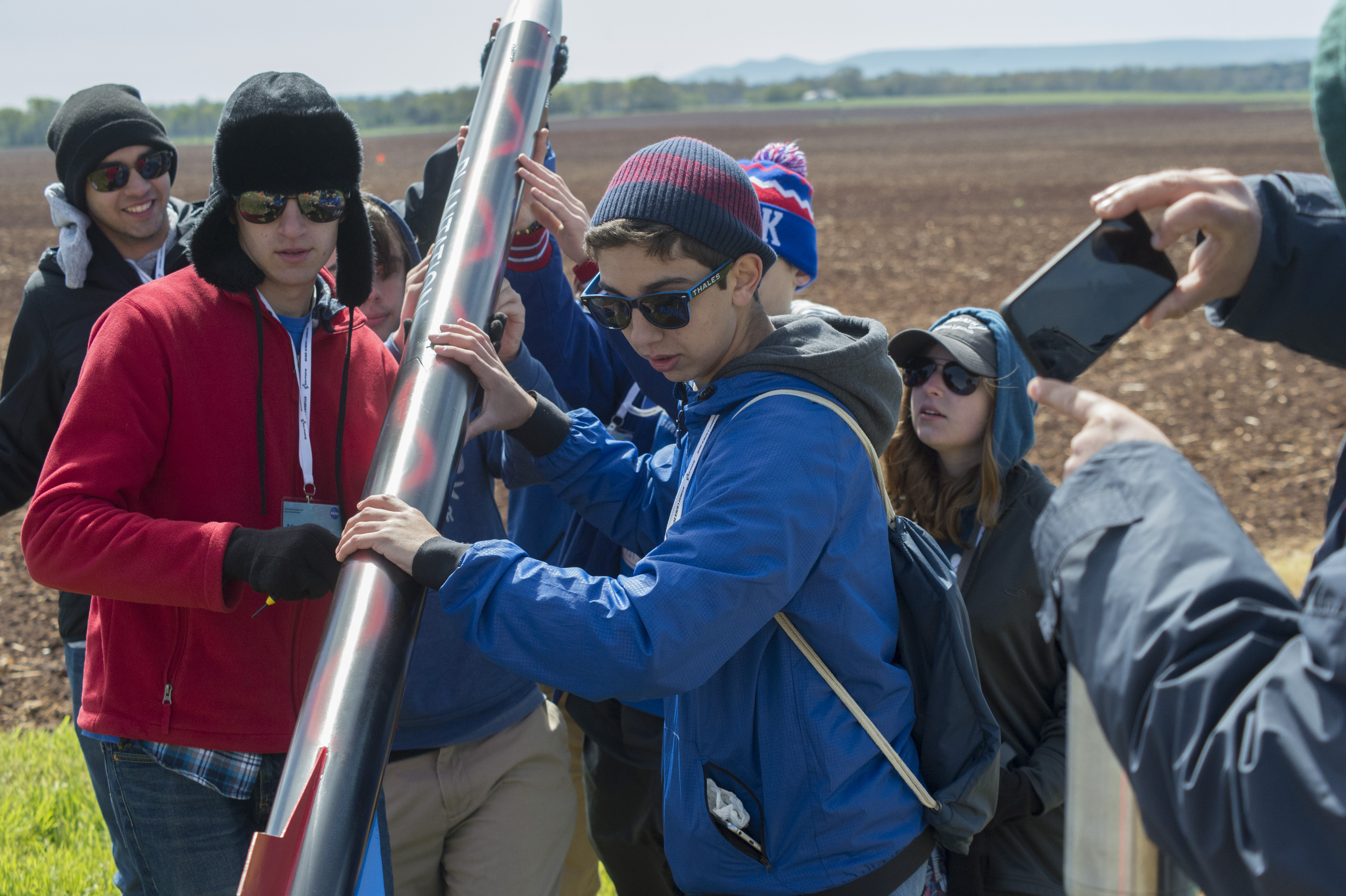
After eight months of designing, building and testing, the middle school, high school and college and university teams launched their rockets as part of NASA Student Launch on Sunday, April 8. The rockets and their payloads are designed to fly to 1-mile in altitude before deploying recovery systems that brings them safely to the ground.
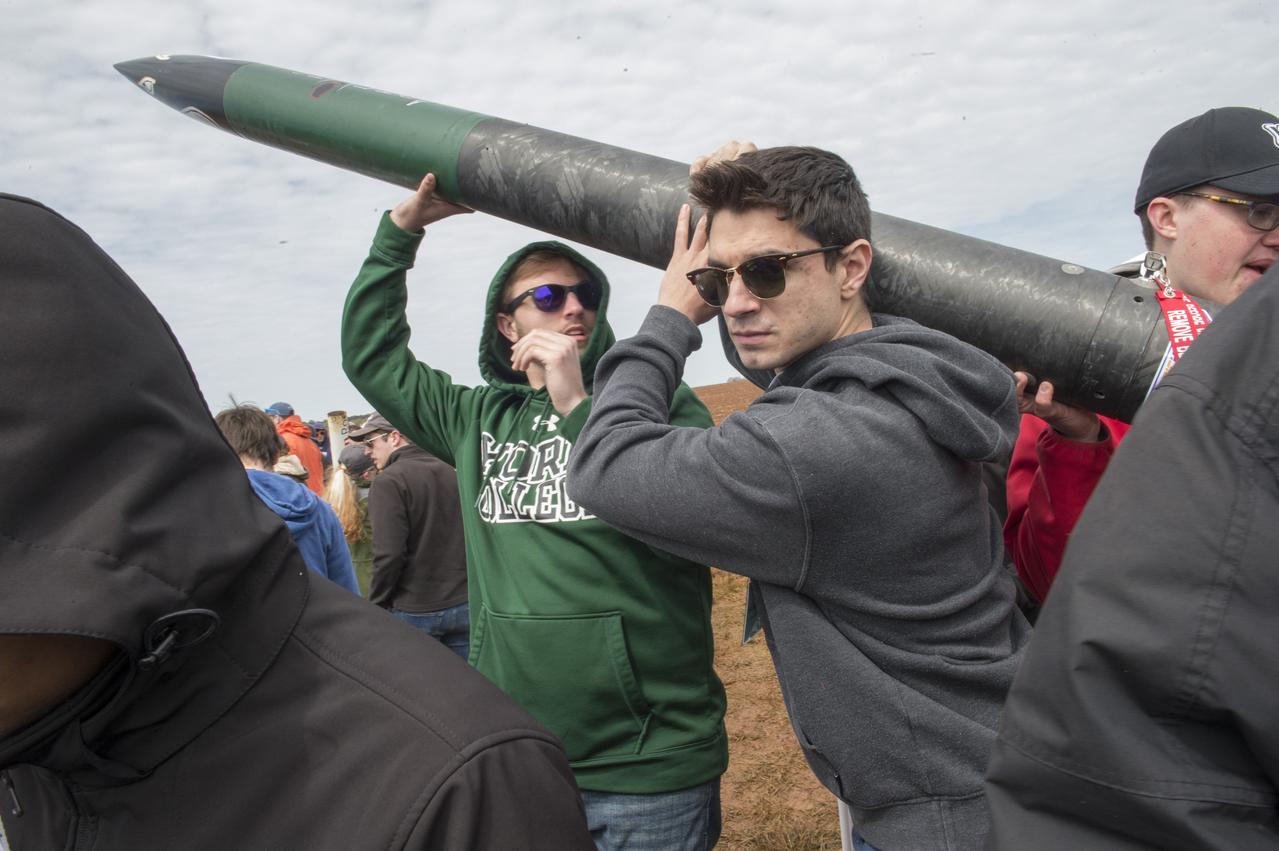
After eight months of designing, building and testing, the middle school, high school and college and university teams launched their rockets as part of NASA Student Launch on Sunday, April 8. The rockets and their payloads are designed to fly to 1-mile in altitude before deploying recovery systems that brings them safely to the ground.
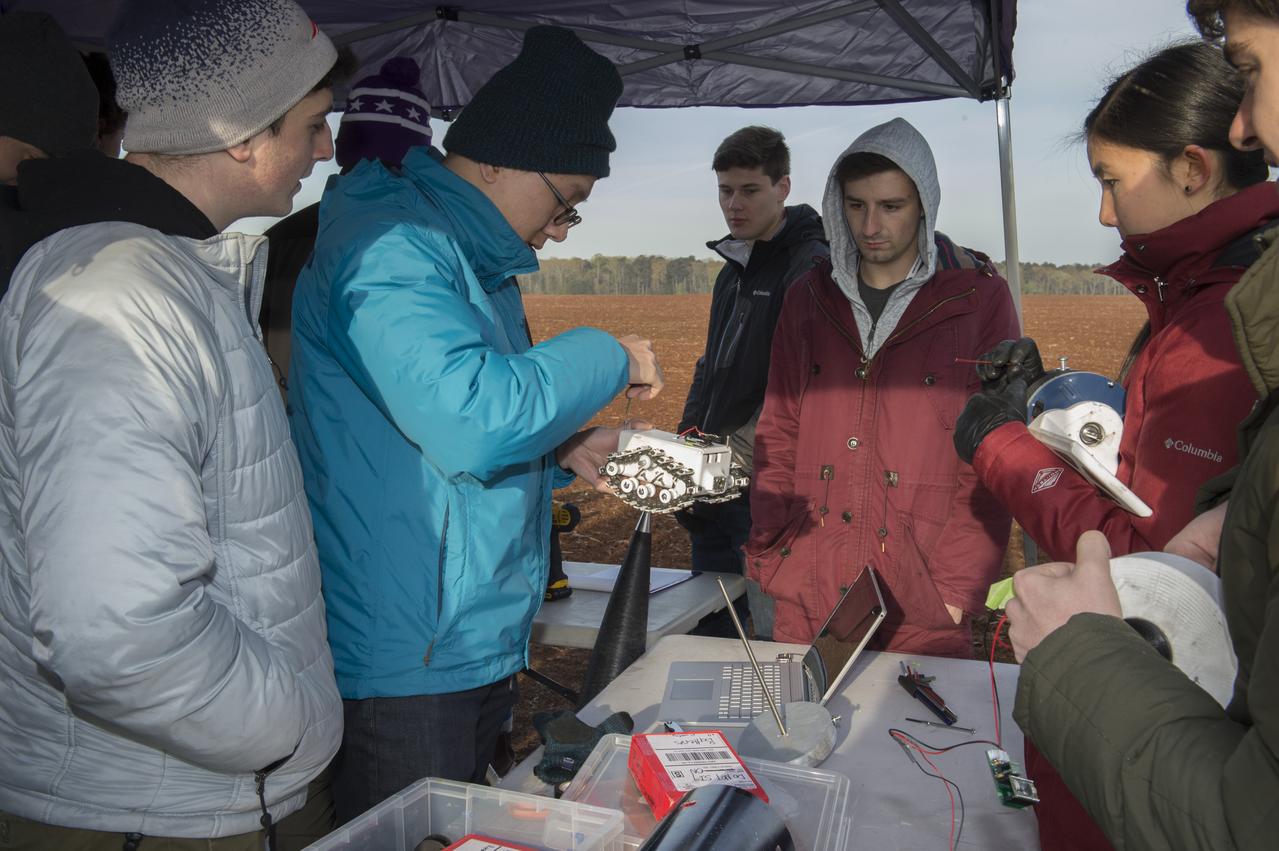
After eight months of designing, building and testing, the middle school, high school and college and university teams launched their rockets as part of NASA Student Launch on Sunday, April 8. The rockets and their payloads are designed to fly to 1-mile in altitude before deploying recovery systems that brings them safely to the ground.
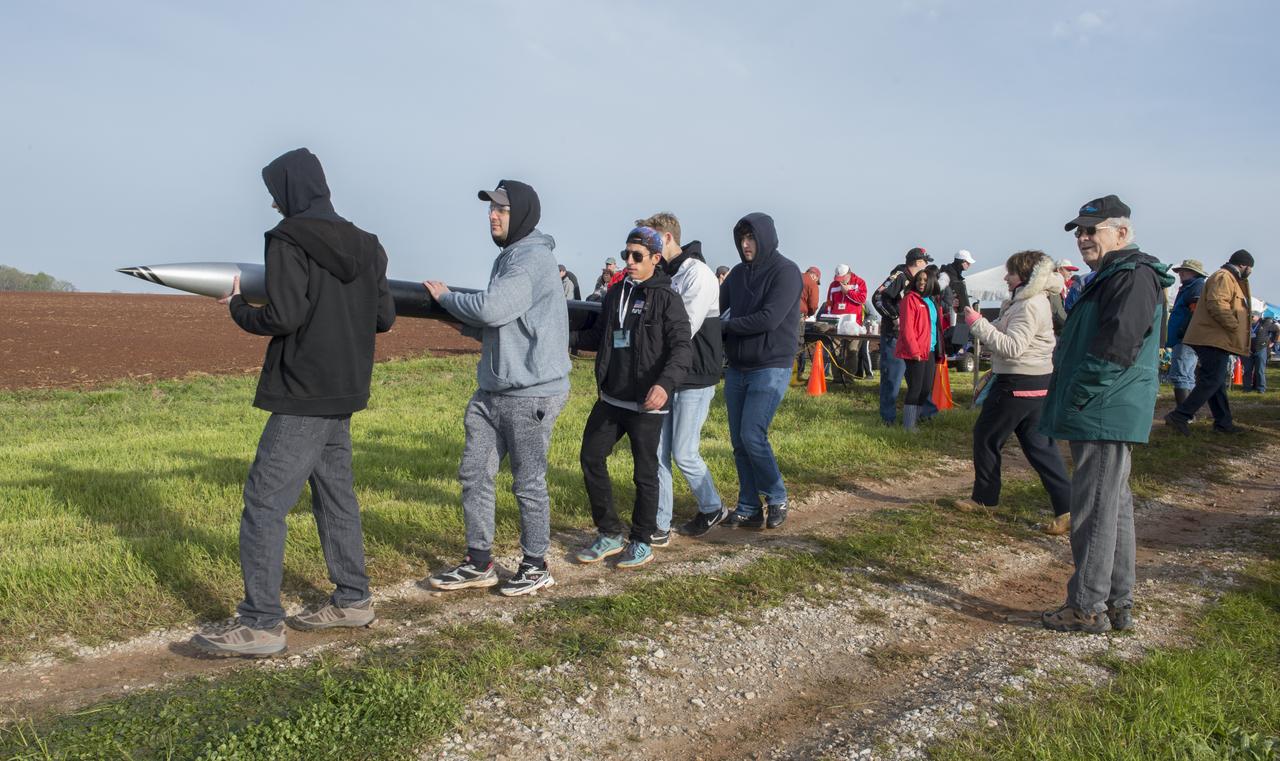
After eight months of designing, building and testing, the middle school, high school and college and university teams launched their rockets as part of NASA Student Launch on Sunday, April 8. The rockets and their payloads are designed to fly to 1-mile in altitude before deploying recovery systems that brings them safely to the ground.
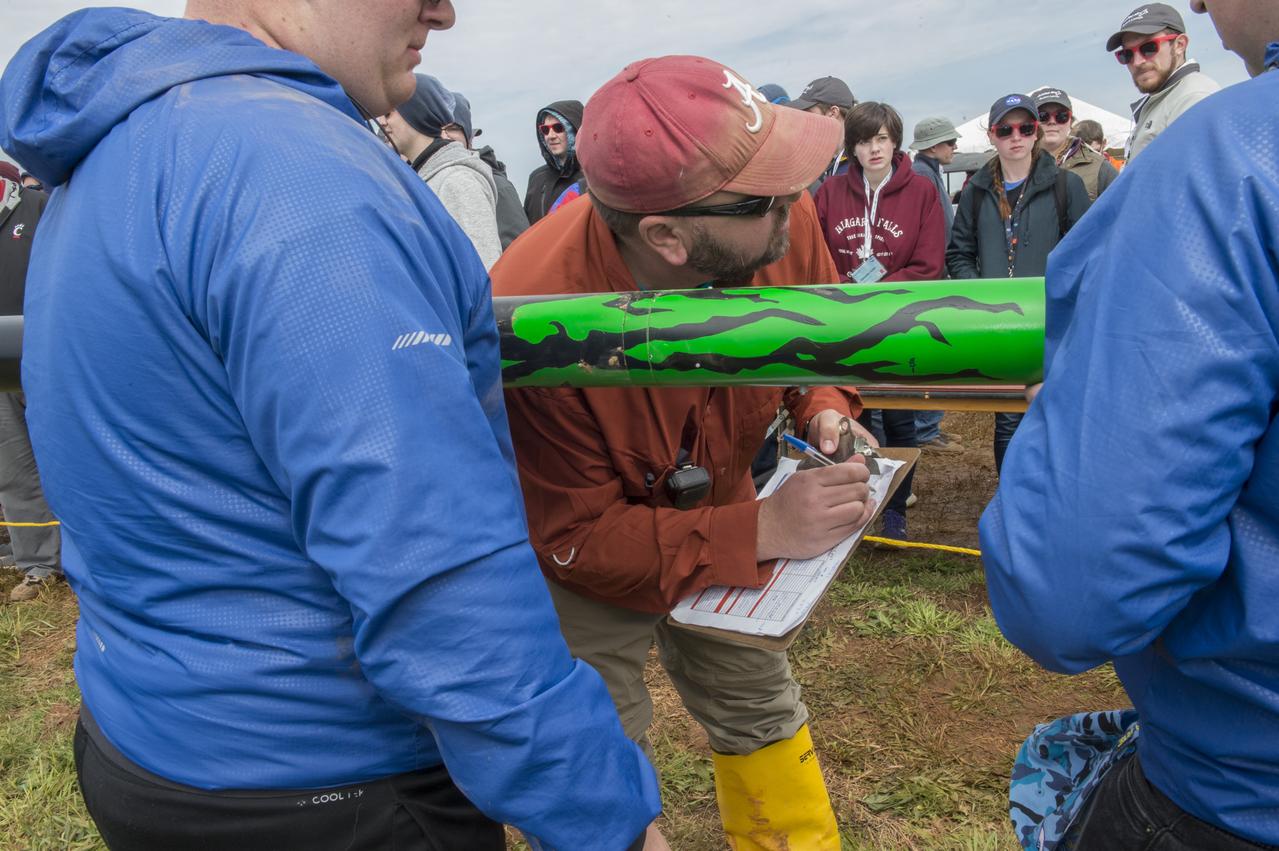
After eight months of designing, building and testing, the middle school, high school and college and university teams launched their rockets as part of NASA Student Launch on Sunday, April 8. The rockets and their payloads are designed to fly to 1-mile in altitude before deploying recovery systems that brings them safely to the ground.
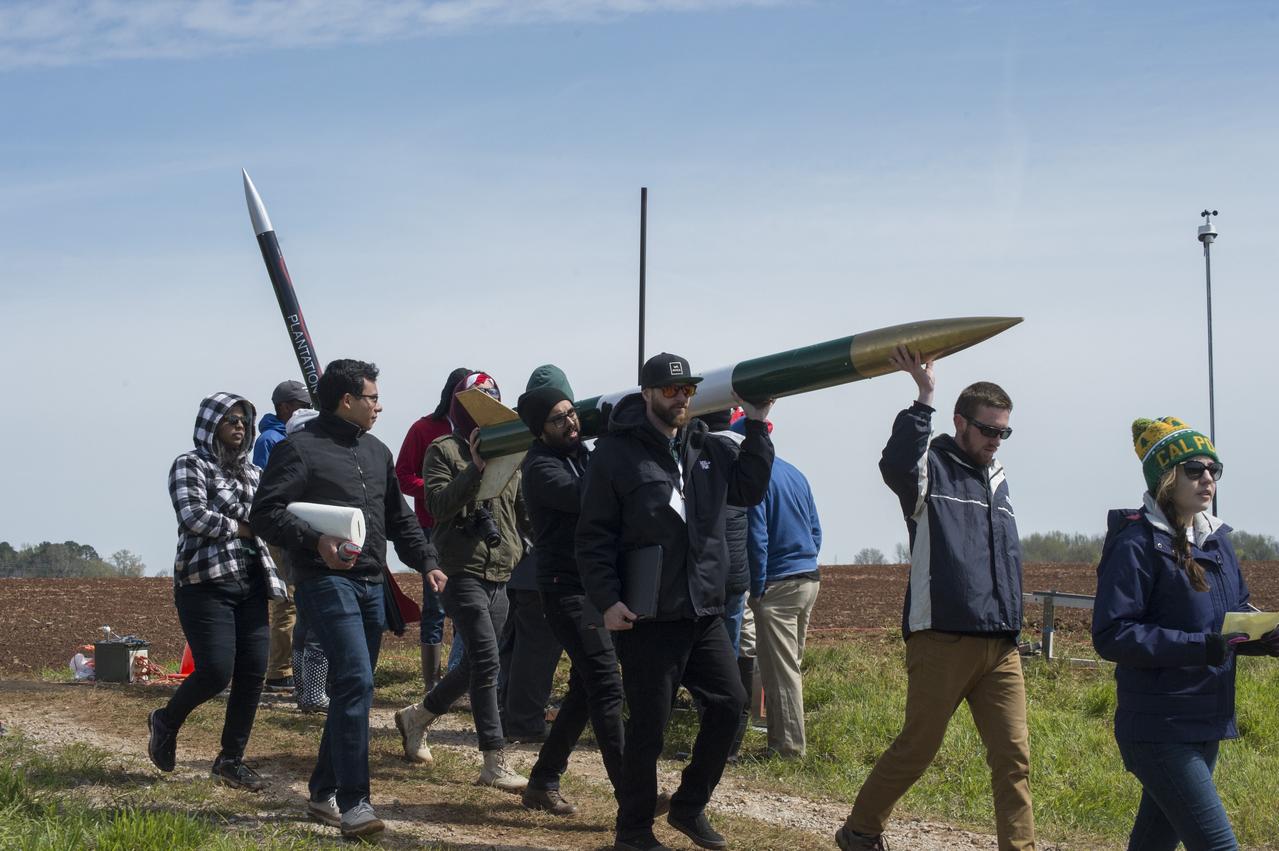
After eight months of designing, building and testing, the middle school, high school and college and university teams launched their rockets as part of NASA Student Launch on Sunday, April 8. The rockets and their payloads are designed to fly to 1-mile in altitude before deploying recovery systems that brings them safely to the ground.
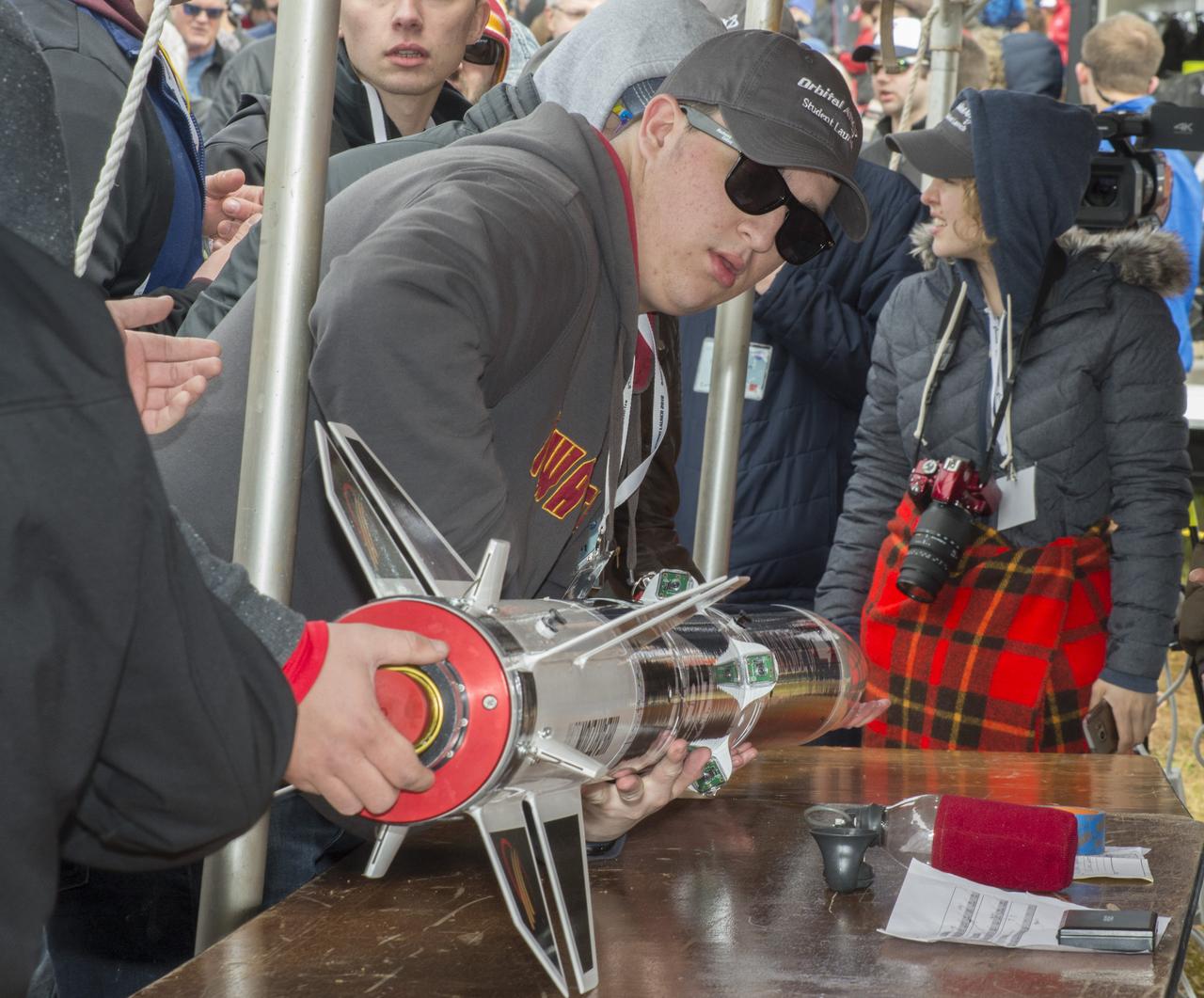
After eight months of designing, building and testing, the middle school, high school and college and university teams launched their rockets as part of NASA Student Launch on Sunday, April 8. The rockets and their payloads are designed to fly to 1-mile in altitude before deploying recovery systems that brings them safely to the ground.
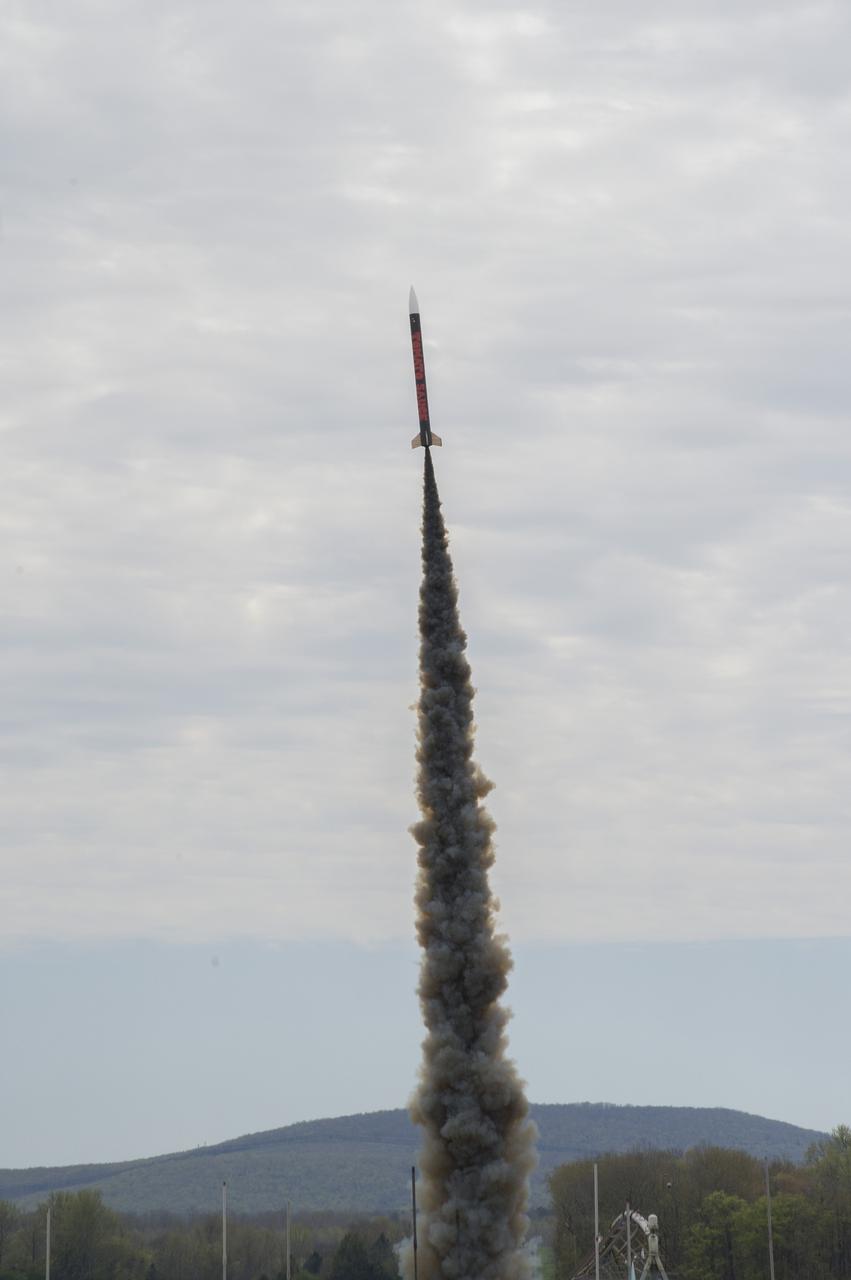
After eight months of designing, building and testing, the middle school, high school and college and university teams launched their rockets as part of NASA Student Launch on Sunday, April 8. The rockets and their payloads are designed to fly to 1-mile in altitude before deploying recovery systems that brings them safely to the ground.
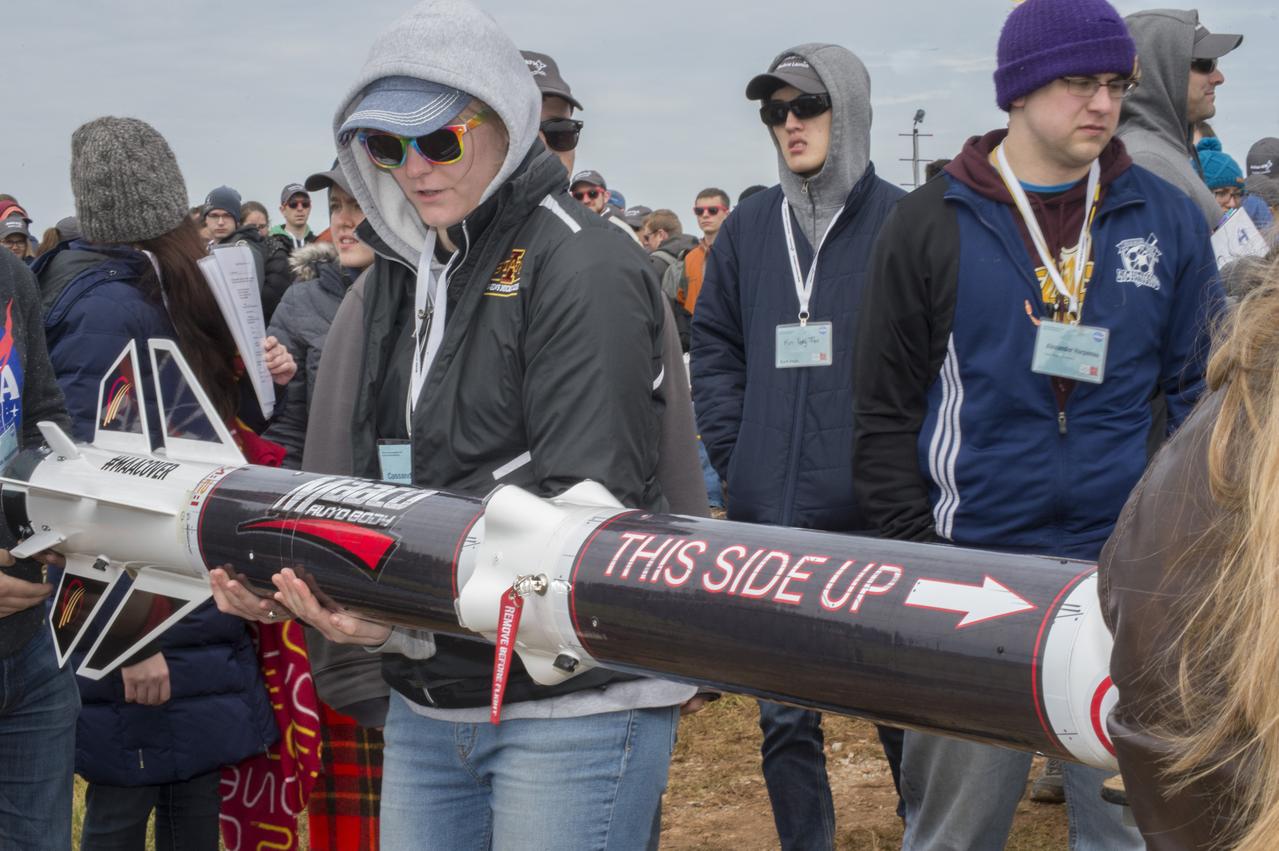
After eight months of designing, building and testing, the middle school, high school and college and university teams launched their rockets as part of NASA Student Launch on Sunday, April 8. The rockets and their payloads are designed to fly to 1-mile in altitude before deploying recovery systems that brings them safely to the ground.
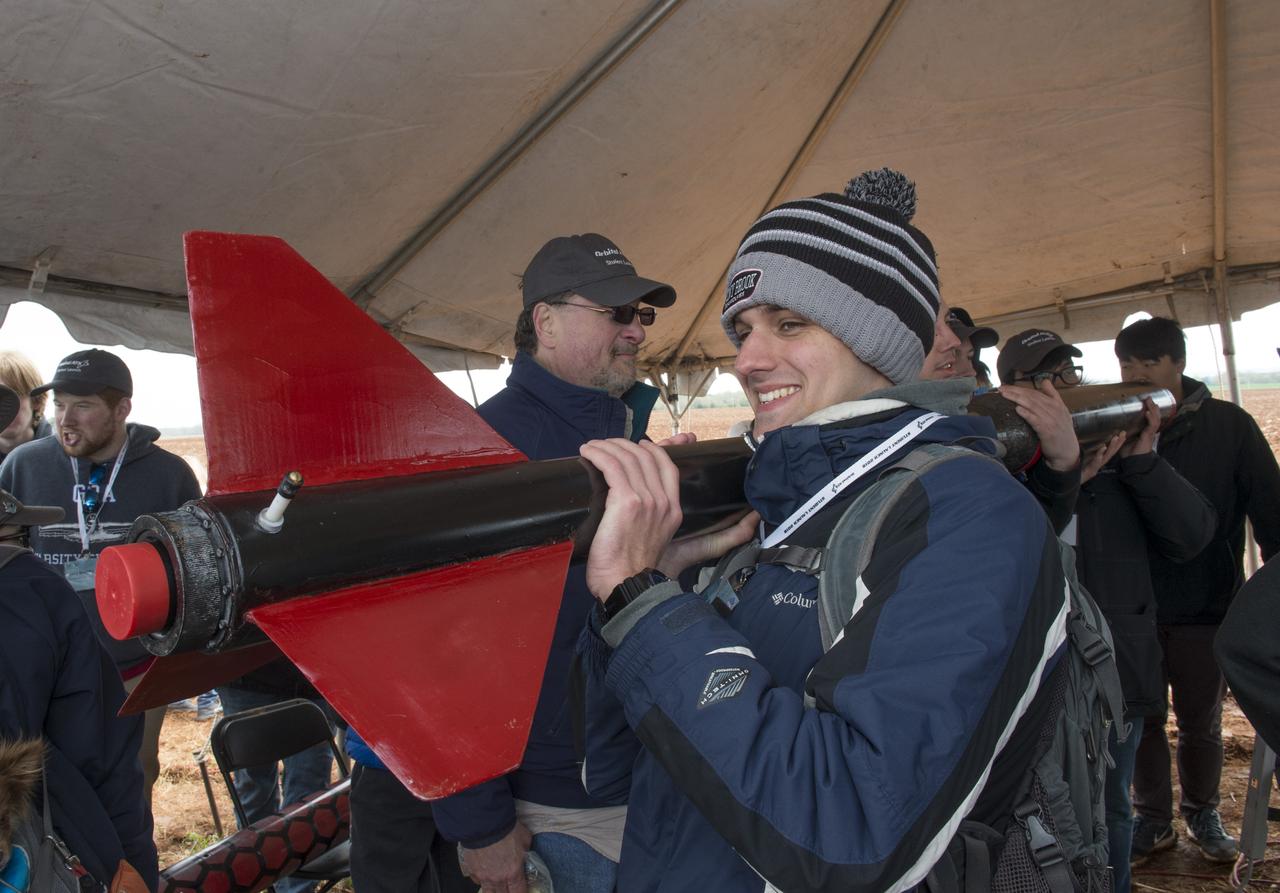
After eight months of designing, building and testing, the middle school, high school and college and university teams launched their rockets as part of NASA Student Launch on Sunday, April 8. The rockets and their payloads are designed to fly to 1-mile in altitude before deploying recovery systems that brings them safely to the ground.
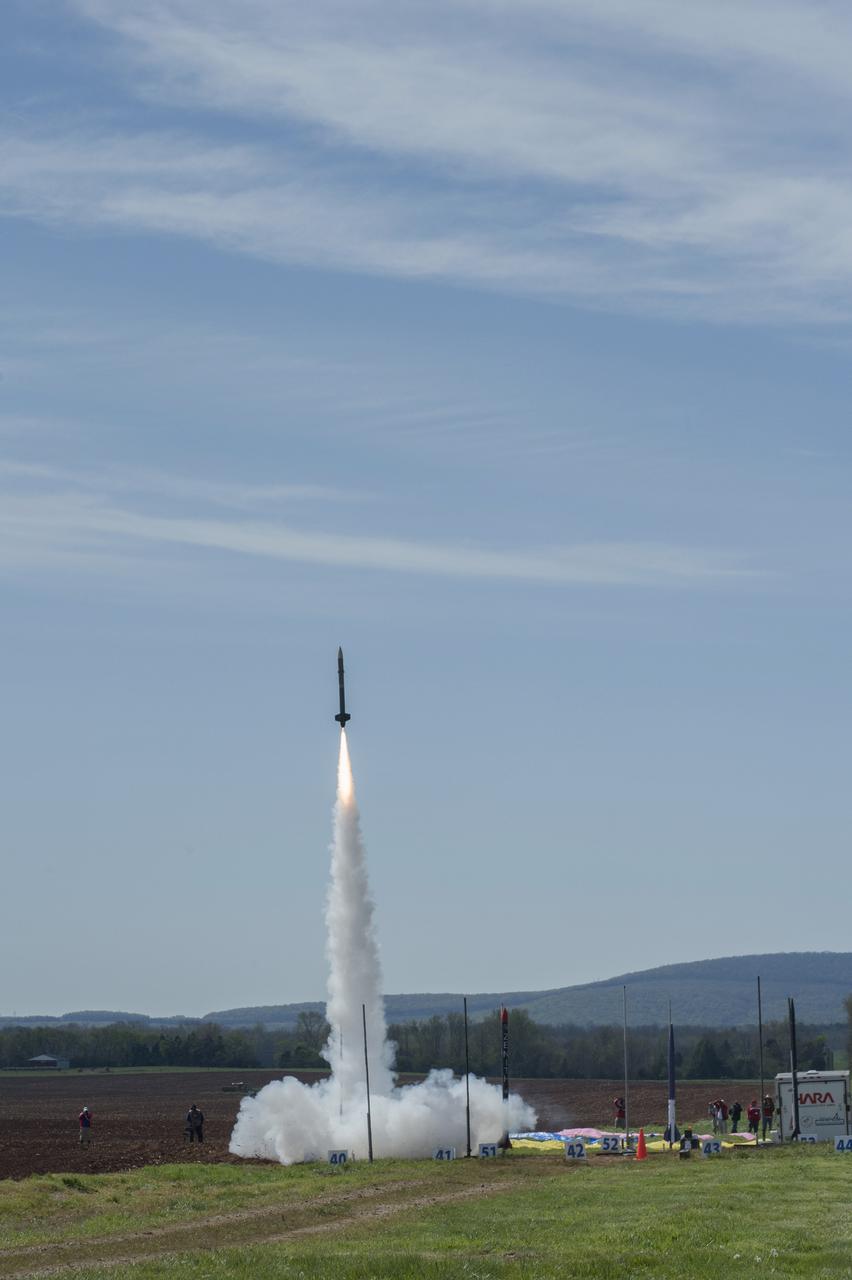
After eight months of designing, building and testing, the middle school, high school and college and university teams launched their rockets as part of NASA Student Launch on Sunday, April 8. The rockets and their payloads are designed to fly to 1-mile in altitude before deploying recovery systems that brings them safely to the ground.
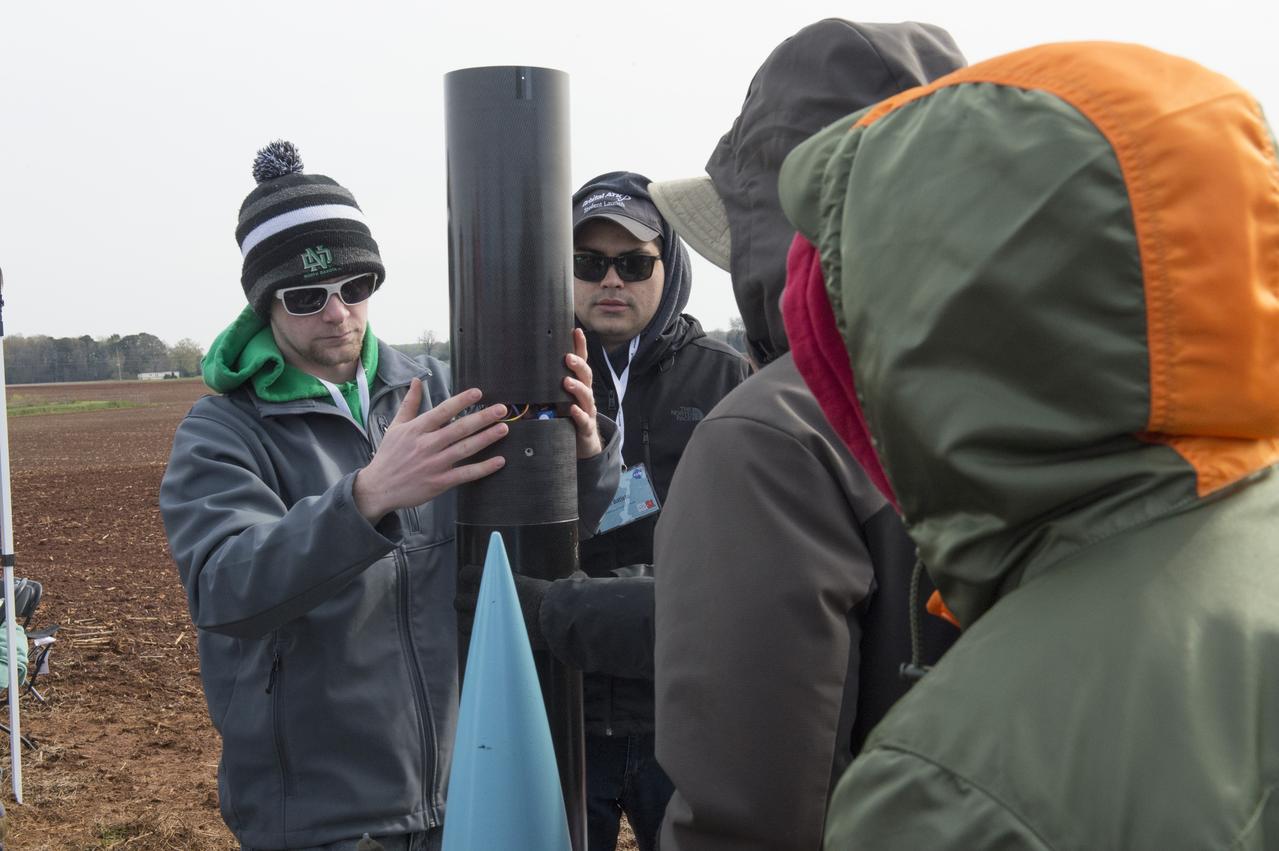
After eight months of designing, building and testing, the middle school, high school and college and university teams launched their rockets as part of NASA Student Launch on Sunday, April 8. The rockets and their payloads are designed to fly to 1-mile in altitude before deploying recovery systems that brings them safely to the ground.
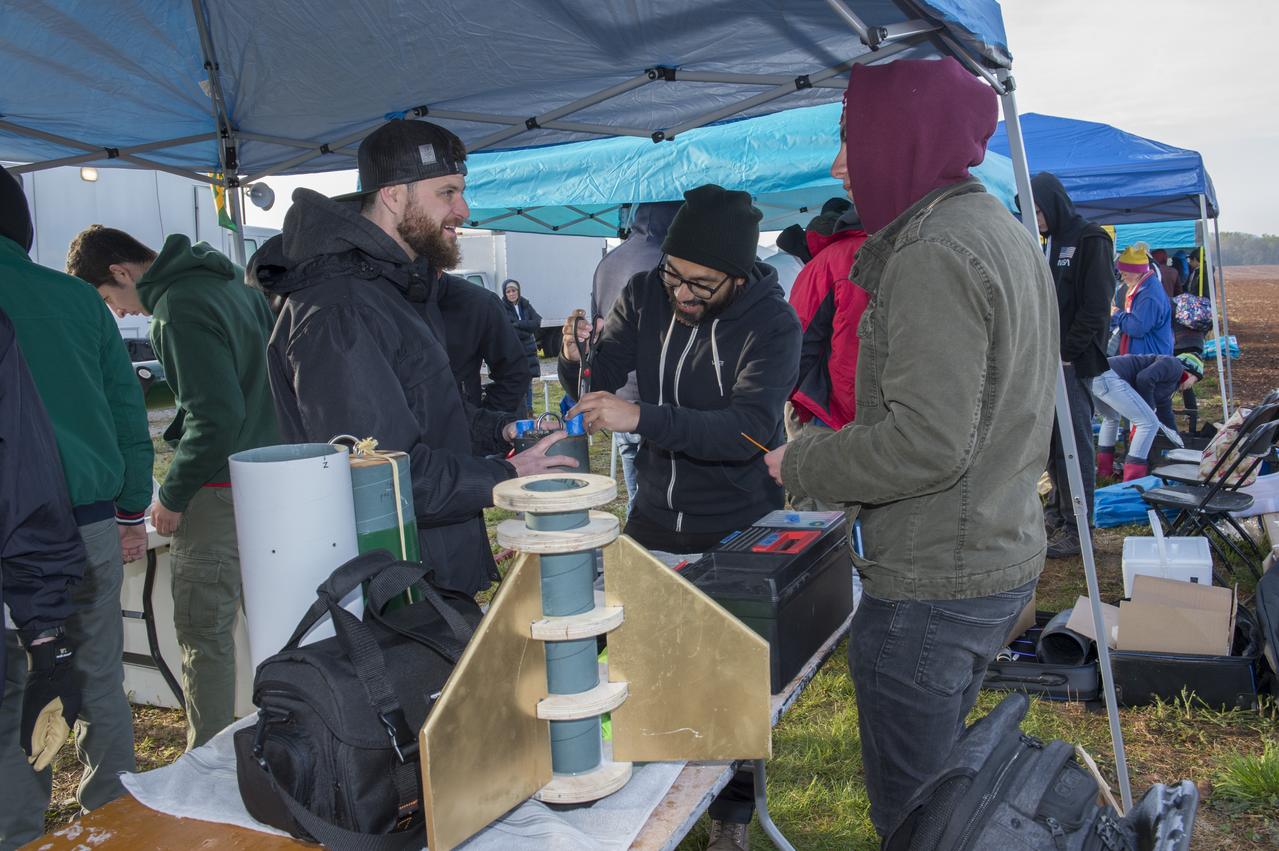
After eight months of designing, building and testing, the middle school, high school and college and university teams launched their rockets as part of NASA Student Launch on Sunday, April 8. The rockets and their payloads are designed to fly to 1-mile in altitude before deploying recovery systems that brings them safely to the ground.
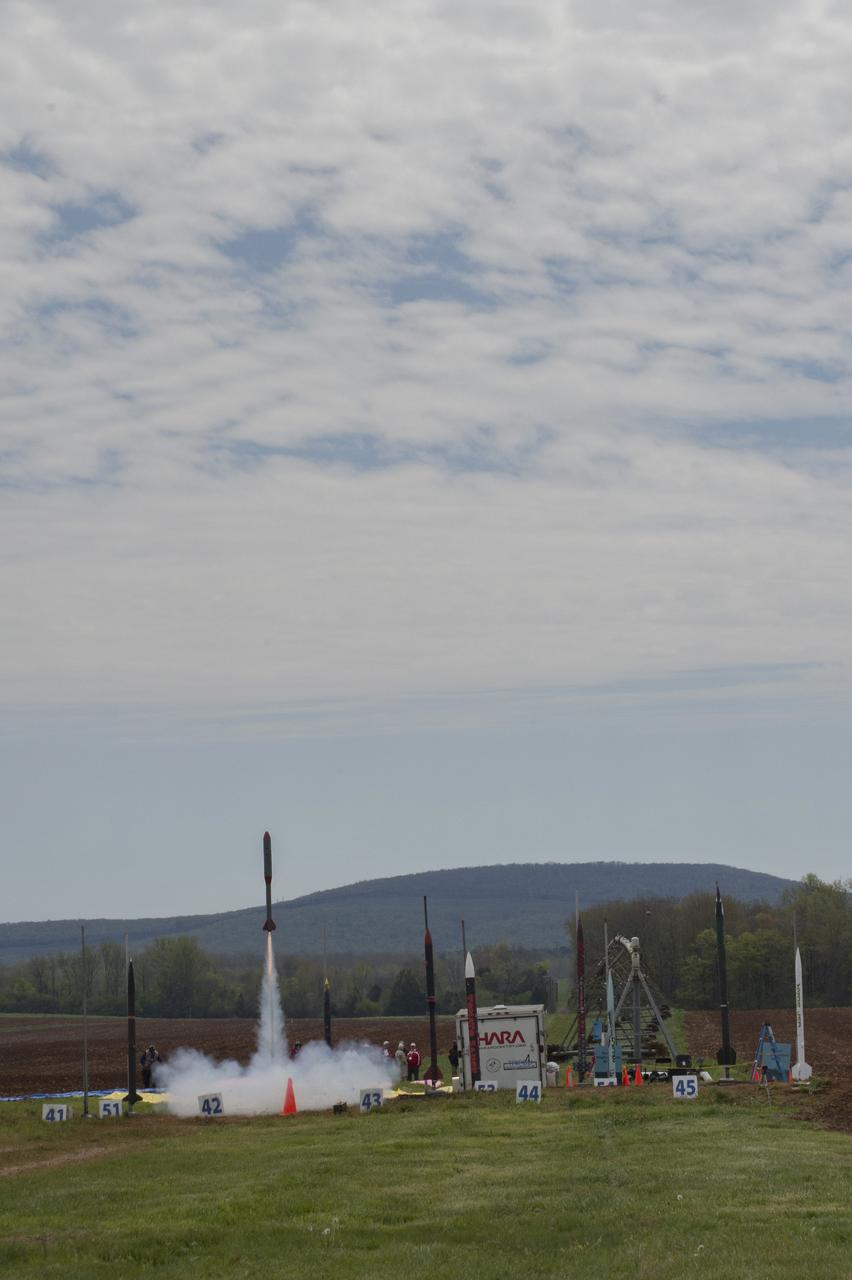
After eight months of designing, building and testing, the middle school, high school and college and university teams launched their rockets as part of NASA Student Launch on Sunday, April 8. The rockets and their payloads are designed to fly to 1-mile in altitude before deploying recovery systems that brings them safely to the ground.
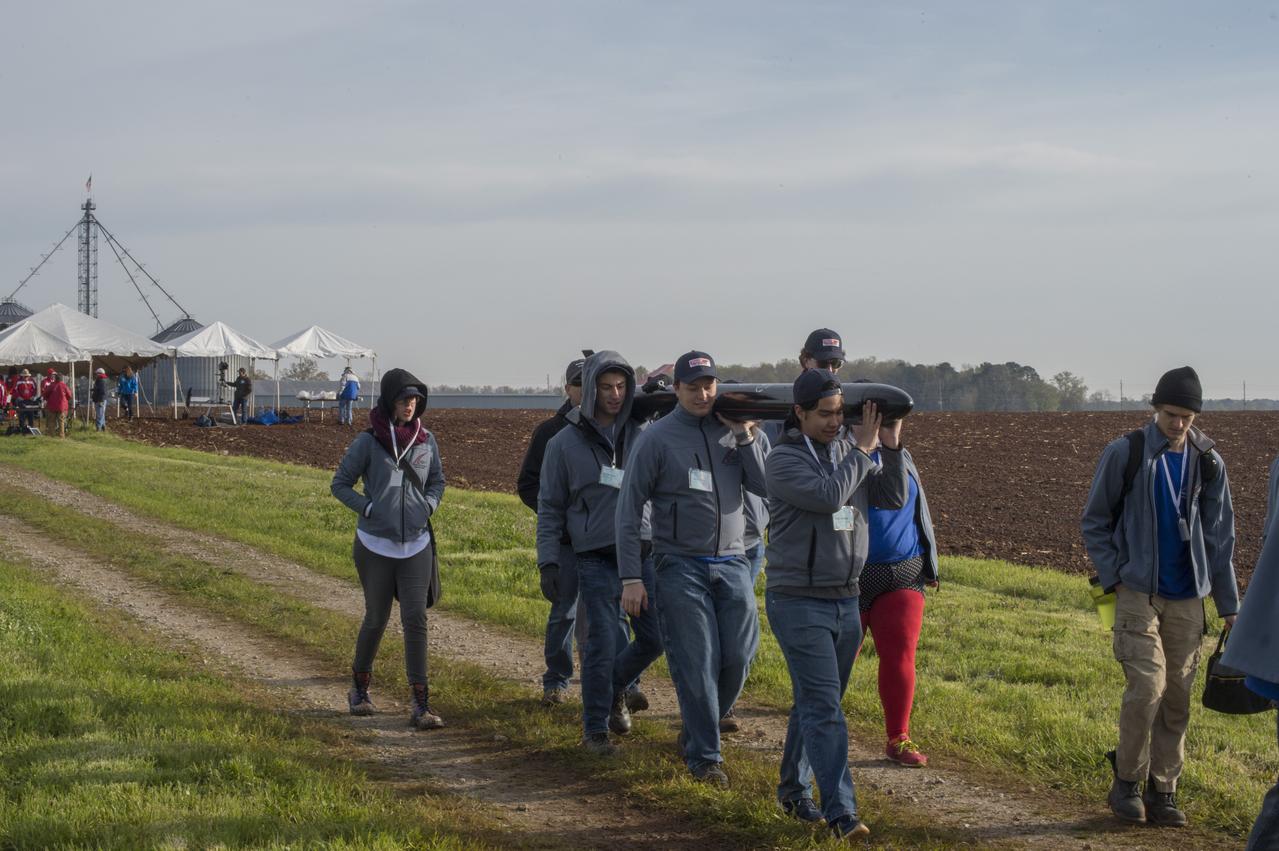
After eight months of designing, building and testing, the middle school, high school and college and university teams launched their rockets as part of NASA Student Launch on Sunday, April 8. The rockets and their payloads are designed to fly to 1-mile in altitude before deploying recovery systems that brings them safely to the ground.
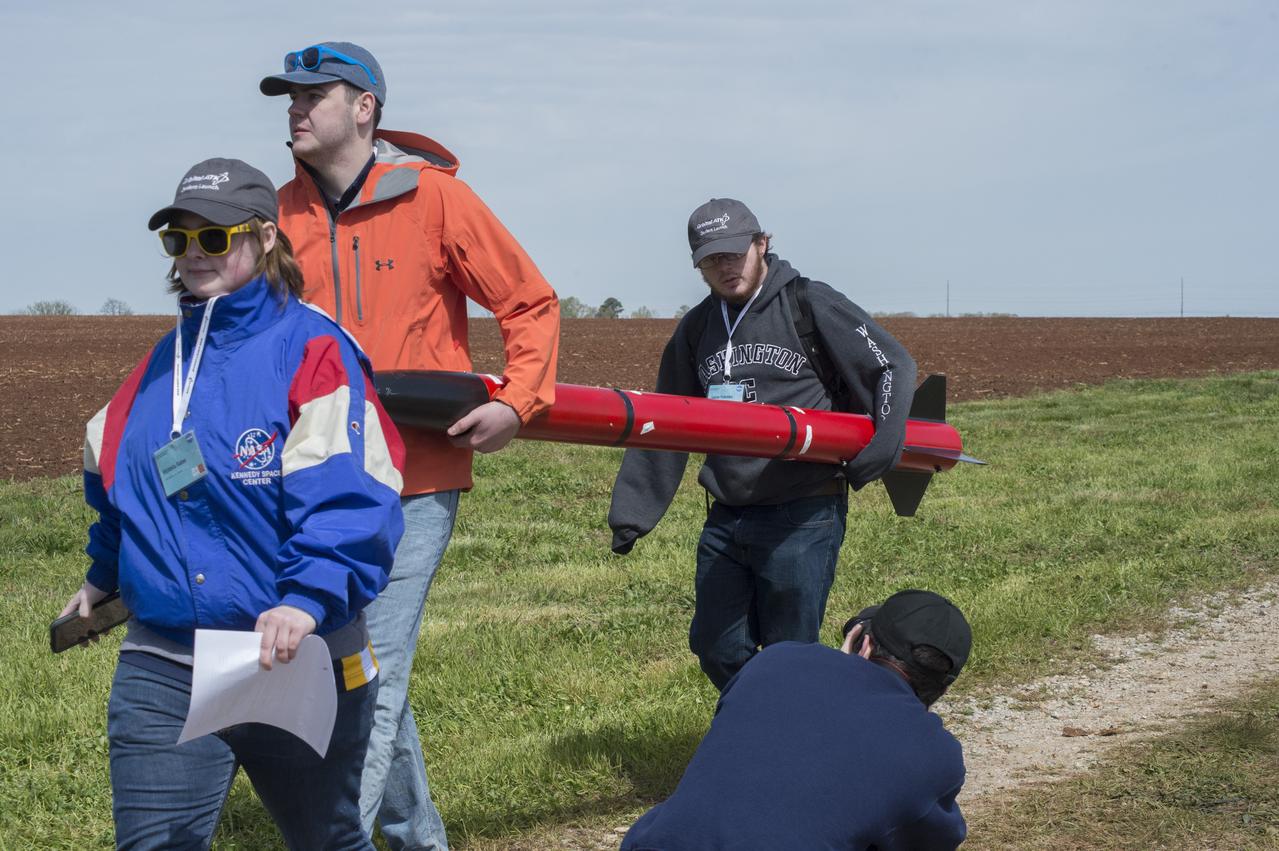
After eight months of designing, building and testing, the middle school, high school and college and university teams launched their rockets as part of NASA Student Launch on Sunday, April 8. The rockets and their payloads are designed to fly to 1-mile in altitude before deploying recovery systems that brings them safely to the ground.
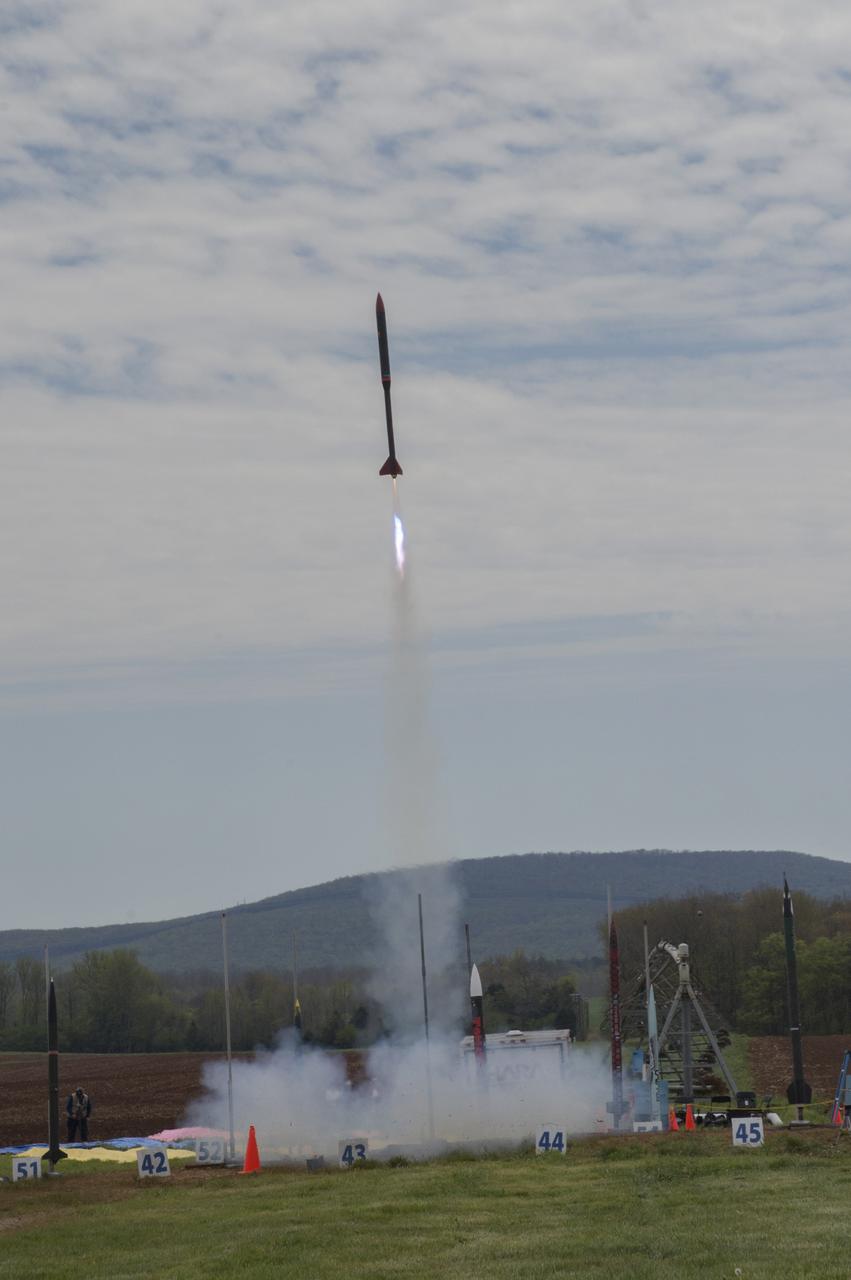
After eight months of designing, building and testing, the middle school, high school and college and university teams launched their rockets as part of NASA Student Launch on Sunday, April 8. The rockets and their payloads are designed to fly to 1-mile in altitude before deploying recovery systems that brings them safely to the ground.
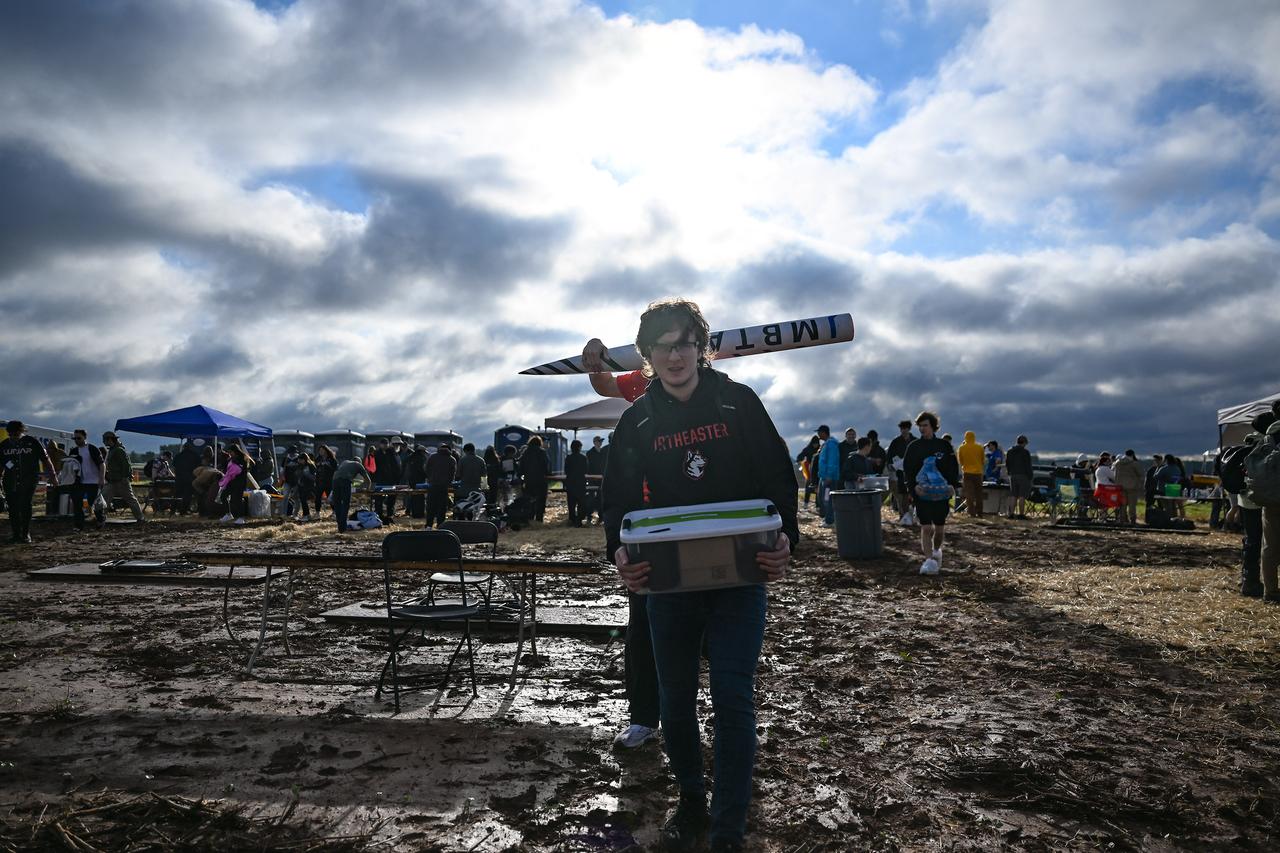
Over than 980 middle school, high school, and college students from across the nation launched more than 40 high-powered rockets just north of NASA’s Marshall Space Flight Center in Huntsville, Alabama. This year marked the 25th anniversary of the competition. To compete, students follow the NASA engineering design lifecycle by going through a series of reviews for nine months leading up to launch day. Each year, a payload challenge is issued to the university teams, and this year’s task took inspiration from the agency’s Artemis missions, where NASA will send astronauts to explore the Moon for scientific discovery, economic benefit, and to build the foundation for the first crewed missions to Mars. Teams were challenged to include “reports” from STEMnauts, non-living objects representing astronauts. The STEMnaut “crew” had to relay real-time data to the student team’s mission control, just as the Artemis astronaut crew will do as they explore the lunar surface. To learn more, visit: www.nasa.gov/studentlaunch.
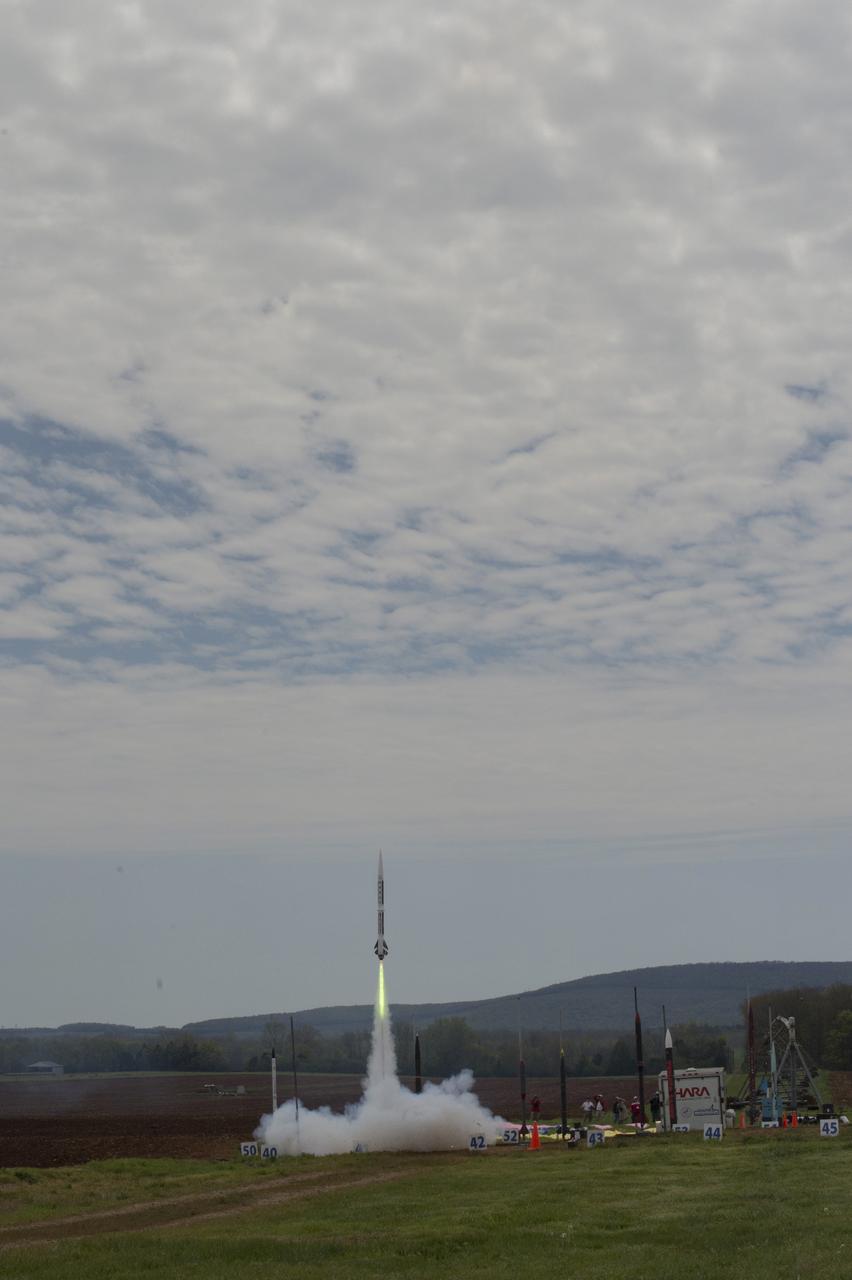
After eight months of designing, building and testing, the middle school, high school and college and university teams launched their rockets as part of NASA Student Launch on Sunday, April 8. The rockets and their payloads are designed to fly to 1-mile in altitude before deploying recovery systems that brings them safely to the ground.
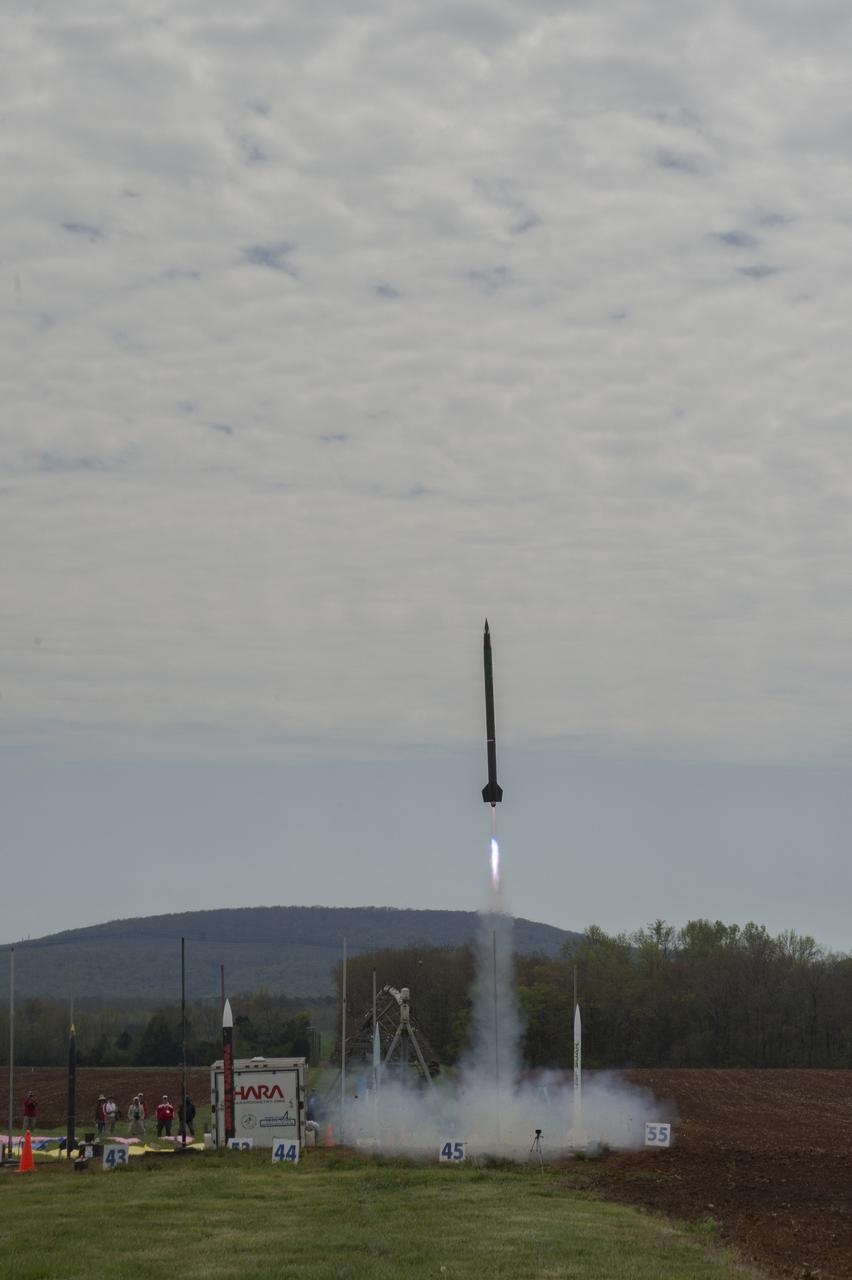
After eight months of designing, building and testing, the middle school, high school and college and university teams launched their rockets as part of NASA Student Launch on Sunday, April 8. The rockets and their payloads are designed to fly to 1-mile in altitude before deploying recovery systems that brings them safely to the ground.
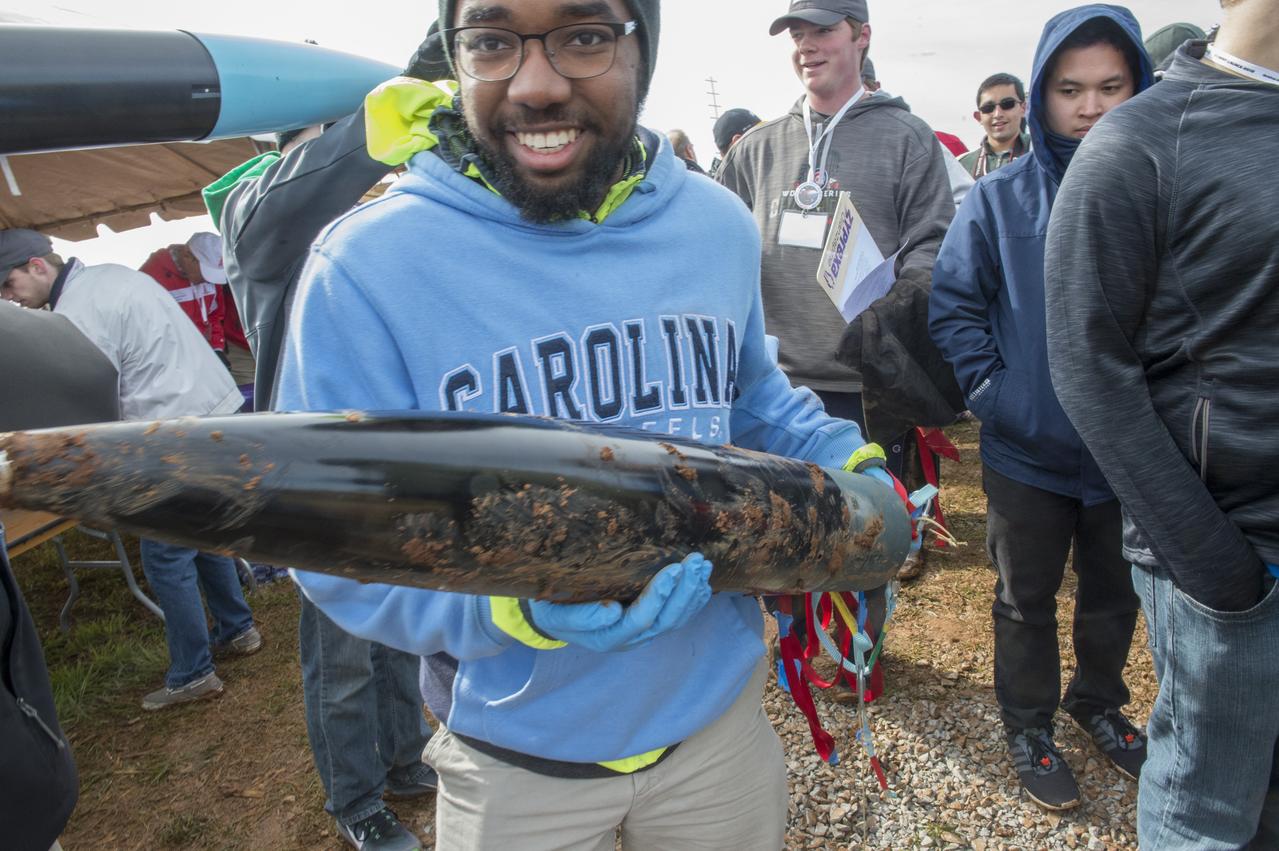
After eight months of designing, building and testing, the middle school, high school and college and university teams launched their rockets as part of NASA Student Launch on Sunday, April 8. The rockets and their payloads are designed to fly to 1-mile in altitude before deploying recovery systems that brings them safely to the ground.
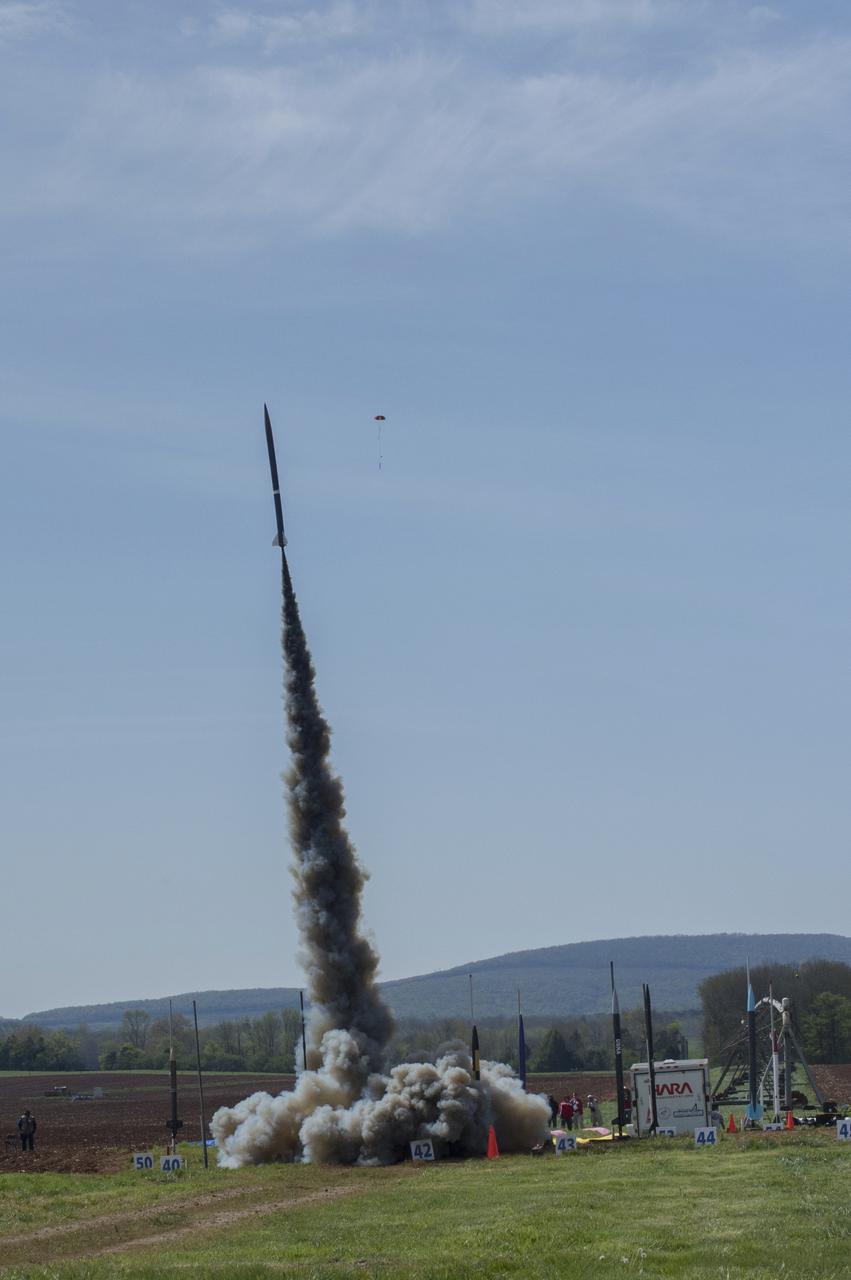
After eight months of designing, building and testing, the middle school, high school and college and university teams launched their rockets as part of NASA Student Launch on Sunday, April 8. The rockets and their payloads are designed to fly to 1-mile in altitude before deploying recovery systems that brings them safely to the ground.
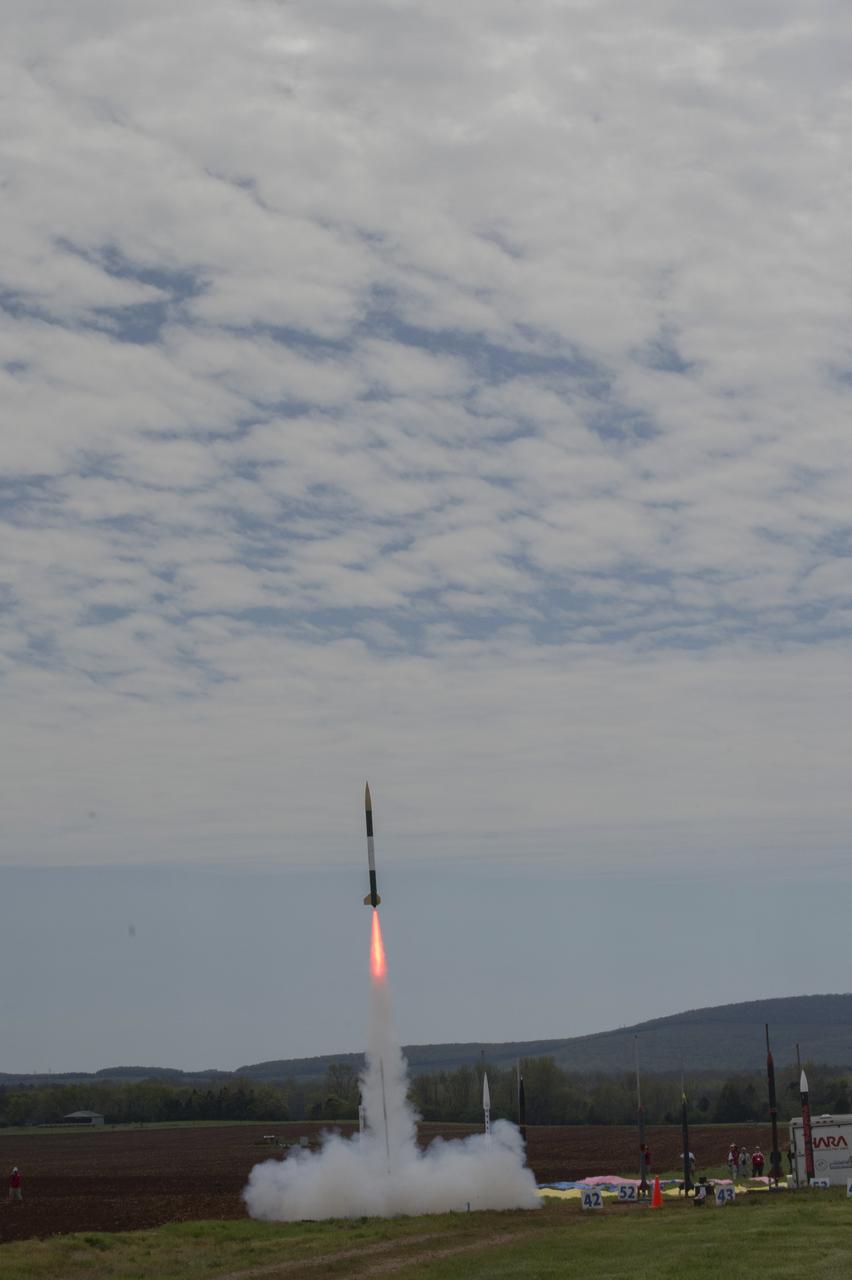
After eight months of designing, building and testing, the middle school, high school and college and university teams launched their rockets as part of NASA Student Launch on Sunday, April 8. The rockets and their payloads are designed to fly to 1-mile in altitude before deploying recovery systems that brings them safely to the ground.
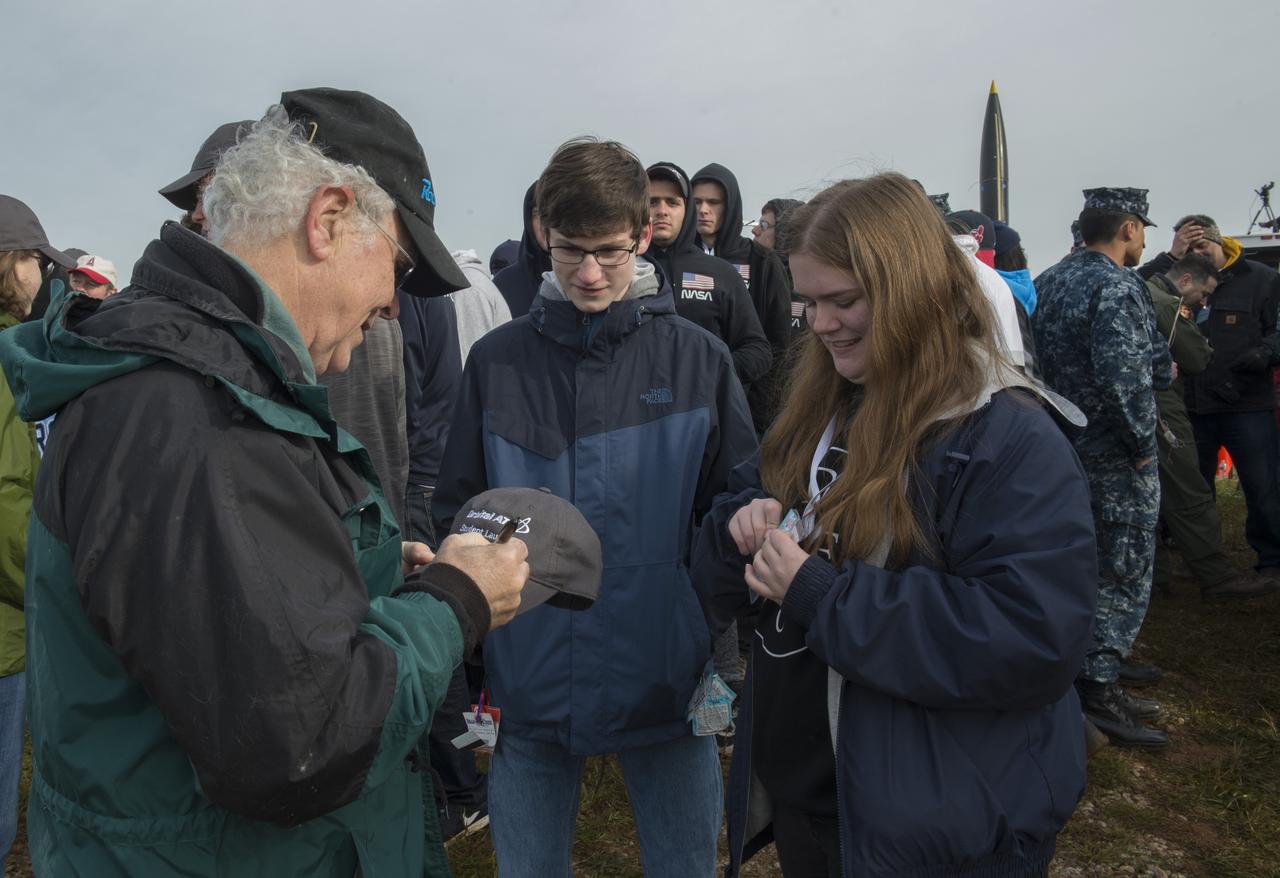
After eight months of designing, building and testing, the middle school, high school and college and university teams launched their rockets as part of NASA Student Launch on Sunday, April 8. The rockets and their payloads are designed to fly to 1-mile in altitude before deploying recovery systems that brings them safely to the ground.
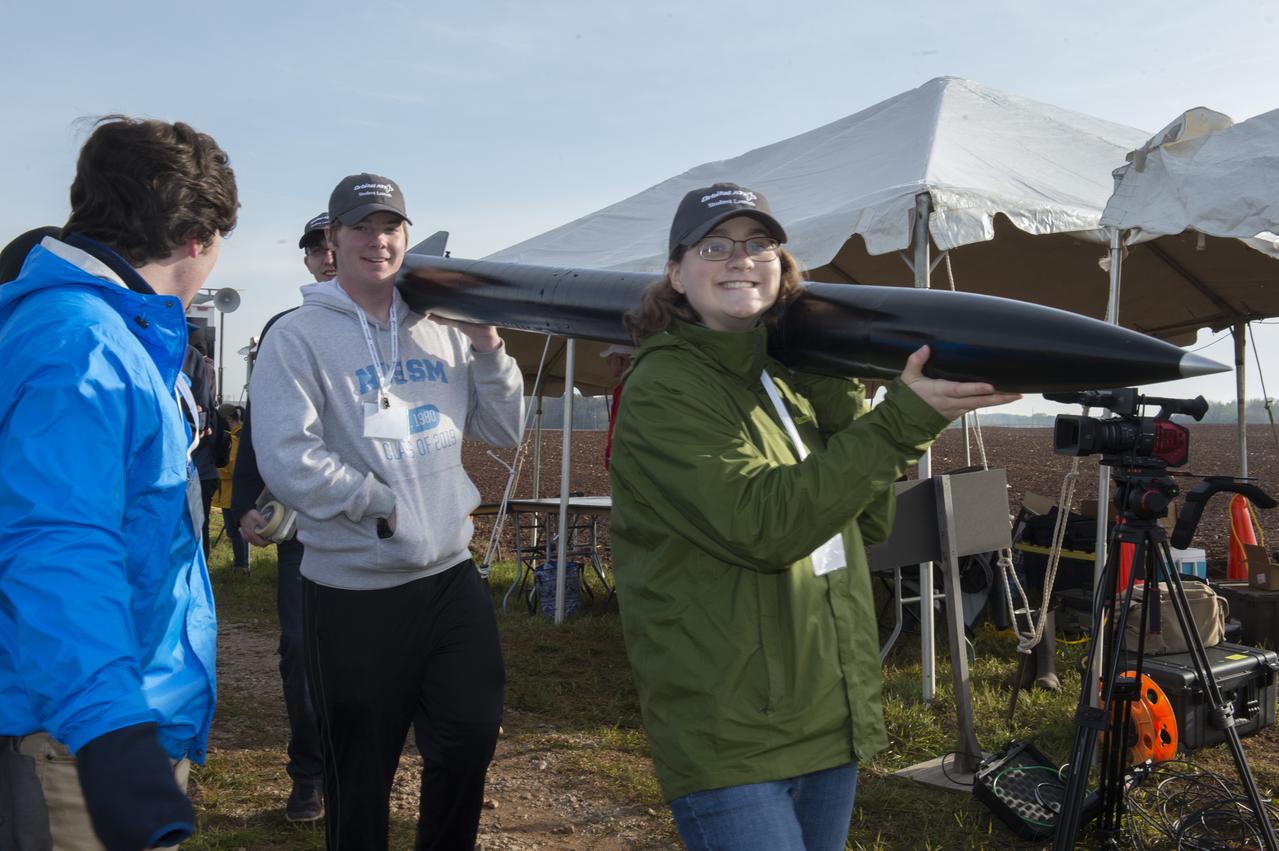
After eight months of designing, building and testing, the middle school, high school and college and university teams launched their rockets as part of NASA Student Launch on Sunday, April 8. The rockets and their payloads are designed to fly to 1-mile in altitude before deploying recovery systems that brings them safely to the ground.
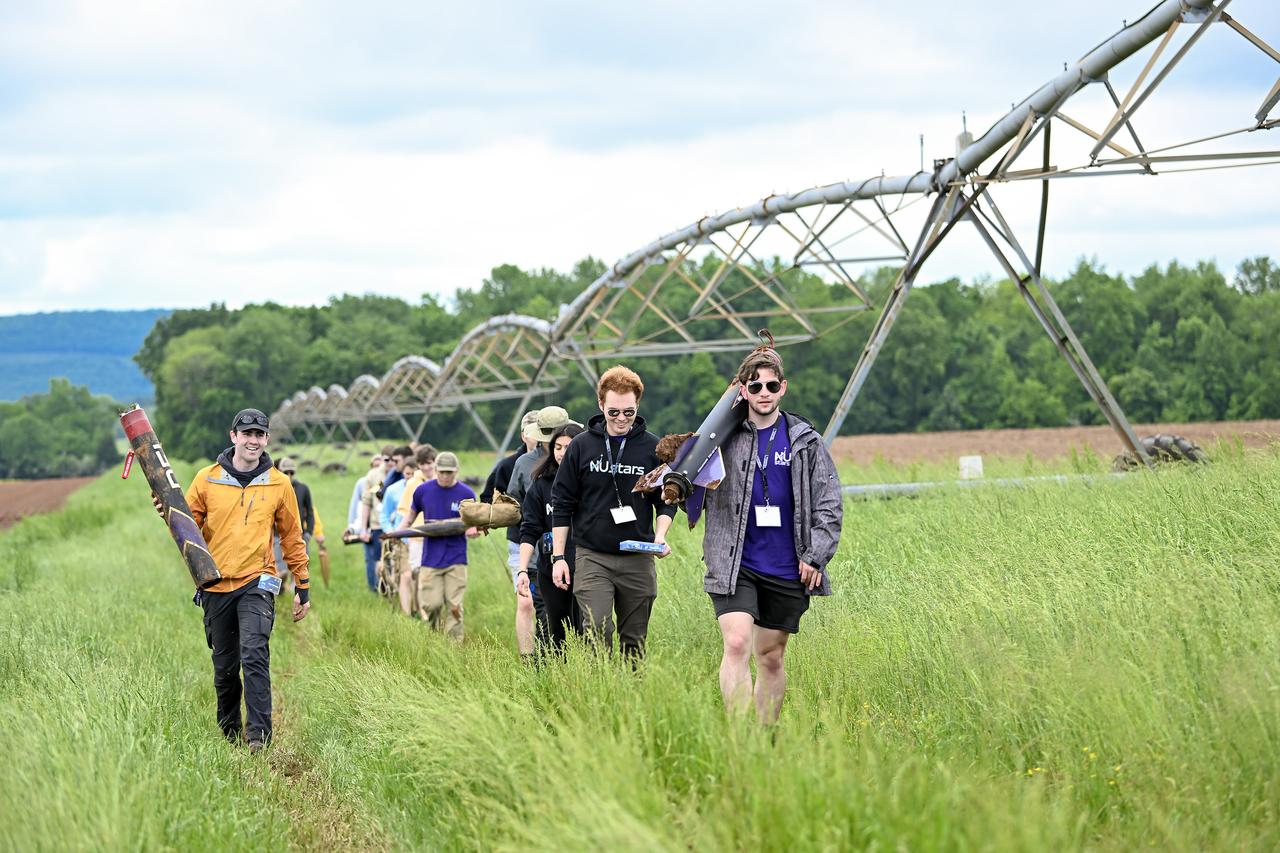
Over than 980 middle school, high school, and college students from across the nation launched more than 40 high-powered rockets just north of NASA’s Marshall Space Flight Center in Huntsville, Alabama. This year marked the 25th anniversary of the competition. To compete, students follow the NASA engineering design lifecycle by going through a series of reviews for nine months leading up to launch day. Each year, a payload challenge is issued to the university teams, and this year’s task took inspiration from the agency’s Artemis missions, where NASA will send astronauts to explore the Moon for scientific discovery, economic benefit, and to build the foundation for the first crewed missions to Mars. Teams were challenged to include “reports” from STEMnauts, non-living objects representing astronauts. The STEMnaut “crew” had to relay real-time data to the student team’s mission control, just as the Artemis astronaut crew will do as they explore the lunar surface. To learn more, visit: www.nasa.gov/studentlaunch.

After eight months of designing, building and testing, the middle school, high school and college and university teams launched their rockets as part of NASA Student Launch on Sunday, April 8. The rockets and their payloads are designed to fly to 1-mile in altitude before deploying recovery systems that brings them safely to the ground.
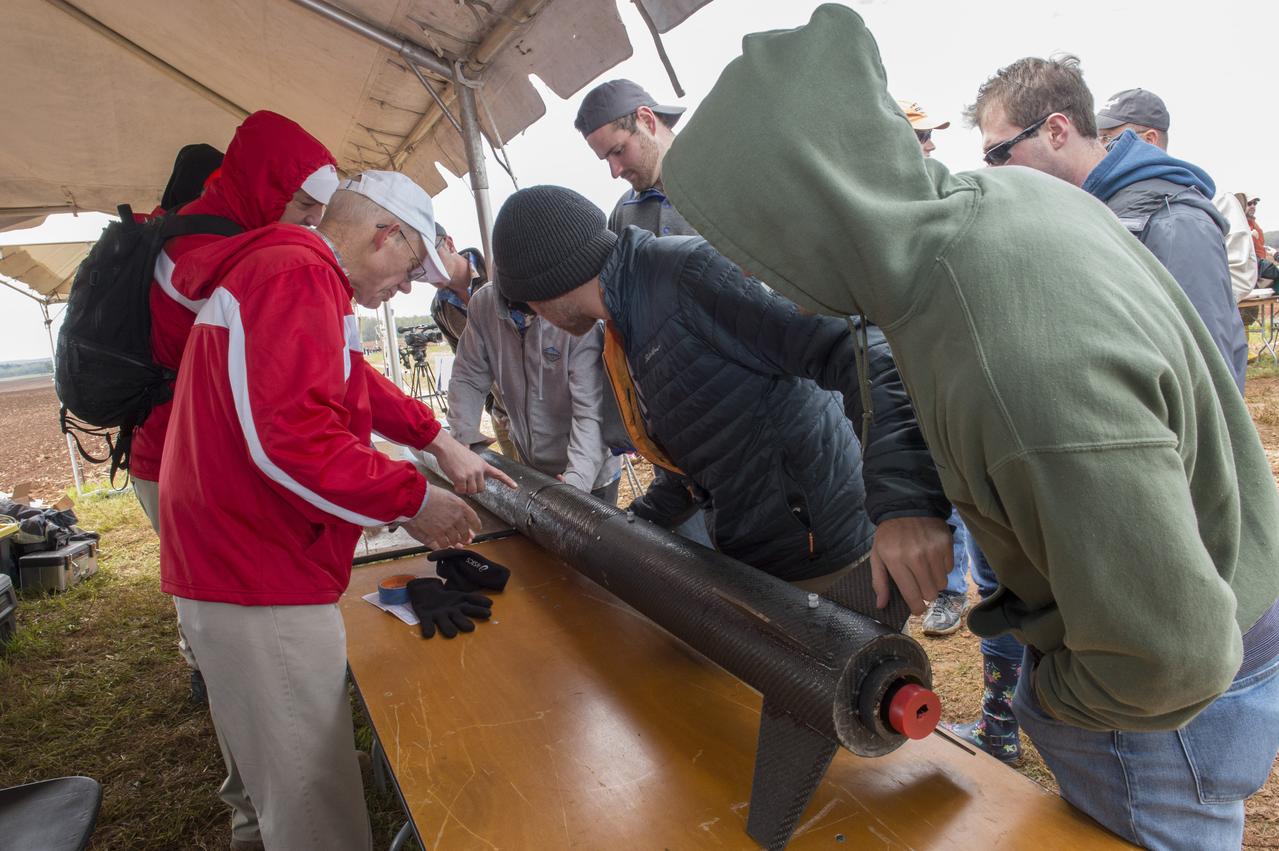
After eight months of designing, building and testing, the middle school, high school and college and university teams launched their rockets as part of NASA Student Launch on Sunday, April 8. The rockets and their payloads are designed to fly to 1-mile in altitude before deploying recovery systems that brings them safely to the ground.
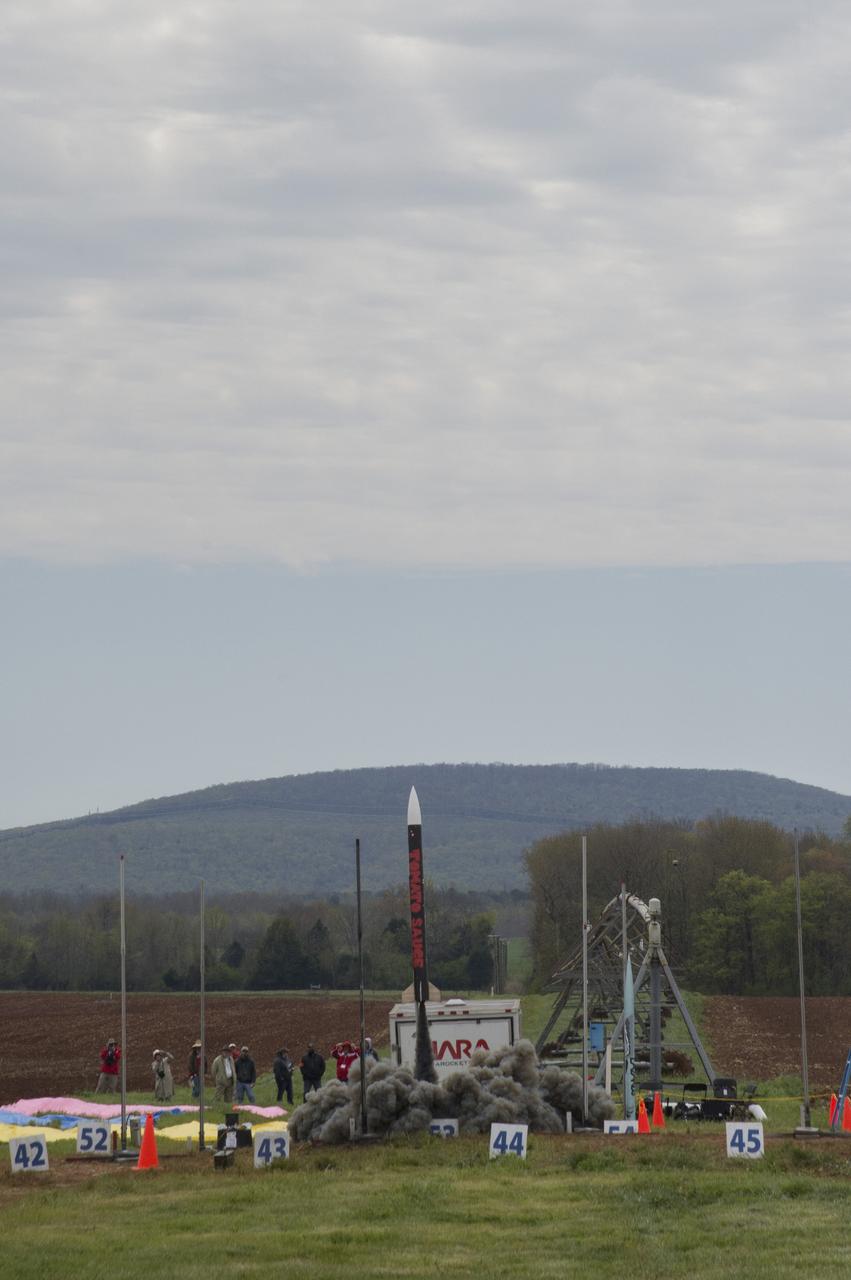
After eight months of designing, building and testing, the middle school, high school and college and university teams launched their rockets as part of NASA Student Launch on Sunday, April 8. The rockets and their payloads are designed to fly to 1-mile in altitude before deploying recovery systems that brings them safely to the ground.