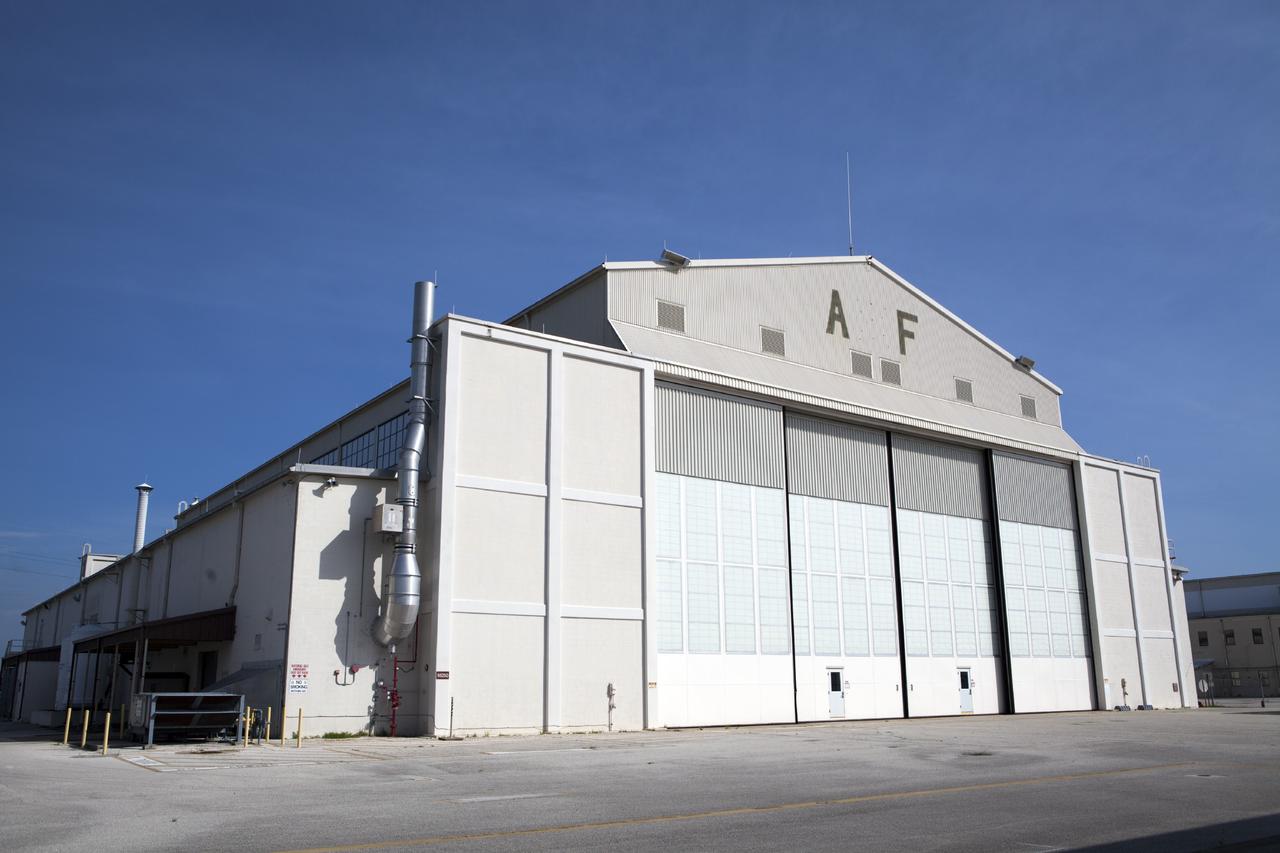
CAPE CANAVERAL, Fla. – An exterior view of Hangar AF at Cape Canaveral Air Force Station in Florida. The facility may be used by the Ground Systems Development and Operations Program at Kennedy Space Center for production activities for NASA’s Space Launch System, or SLS. The booster aft and forward skirts and case stiffener attach ring may be processed in the hangar, as well as refurbishment of the frustrum, before they are transferred to the Booster Fabrication Facility for buildup. The SLS rocket will launch the Orion spacecraft on an uncrewed flight test scheduled for 2017. Orion ’s first unpiloted test flight, Exploration Flight Test 1, is scheduled to launch in 2014 atop a Delta IV rocket. For more information, visit http://www.nasa.gov/orion. Photo credit: NASA/Dimitri Gerondidakis
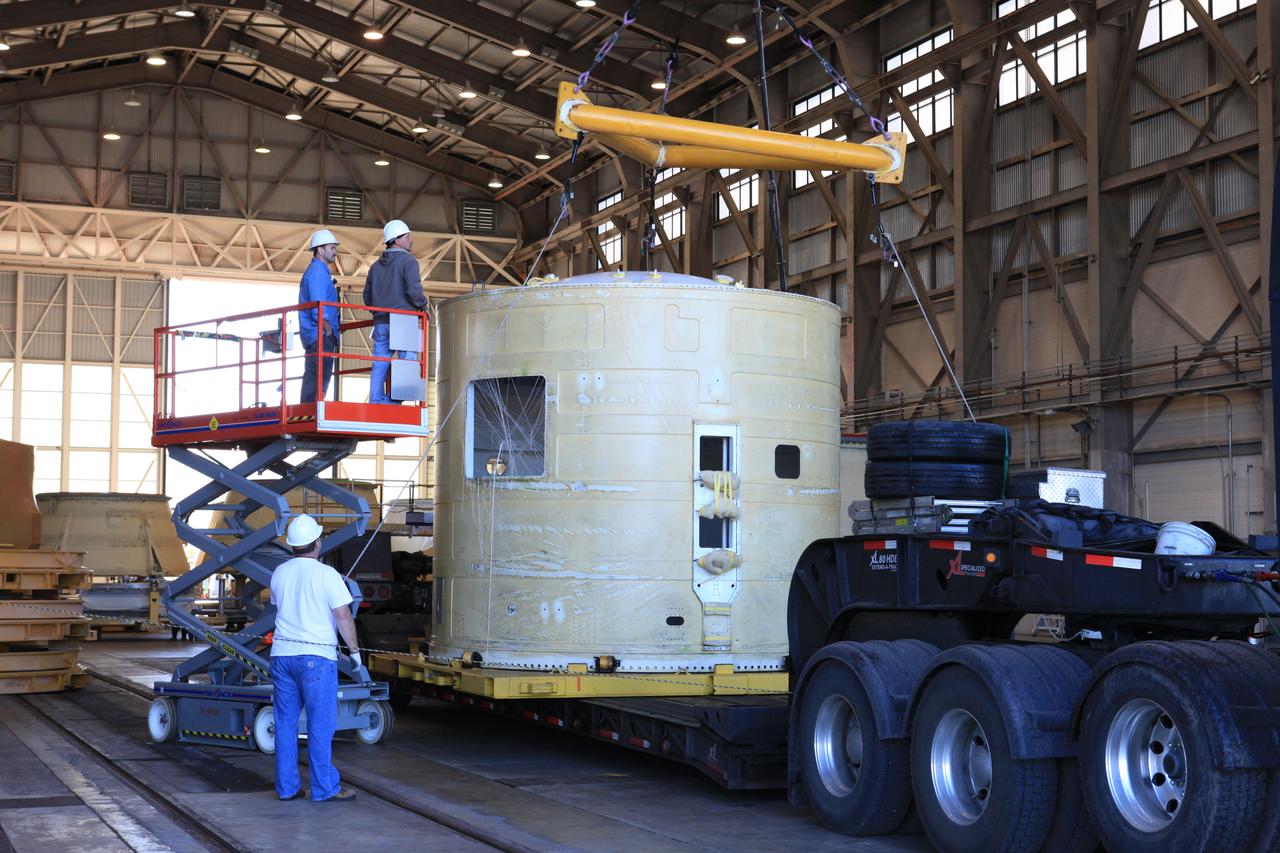
Inside the Hangar AF facility at Cape Canaveral Air Force Station in Florida, technicians with Orbital ATK monitor the progress as a crane is attached to the left-hand forward skirt for NASA's Space Launch System (SLS) solid rocket boosters. The forward skirt was transported from booster prime contractor Orbital ATK in Promontory, Utah. The forward skirt will be staged in Hangar AF where refurbishment will continue. It will be inspected and prepared for use on the left-hand solid rocket booster for Exploration Mission 1. NASA's Orion spacecraft will fly atop the SLS rocket on its first uncrewed flight test.
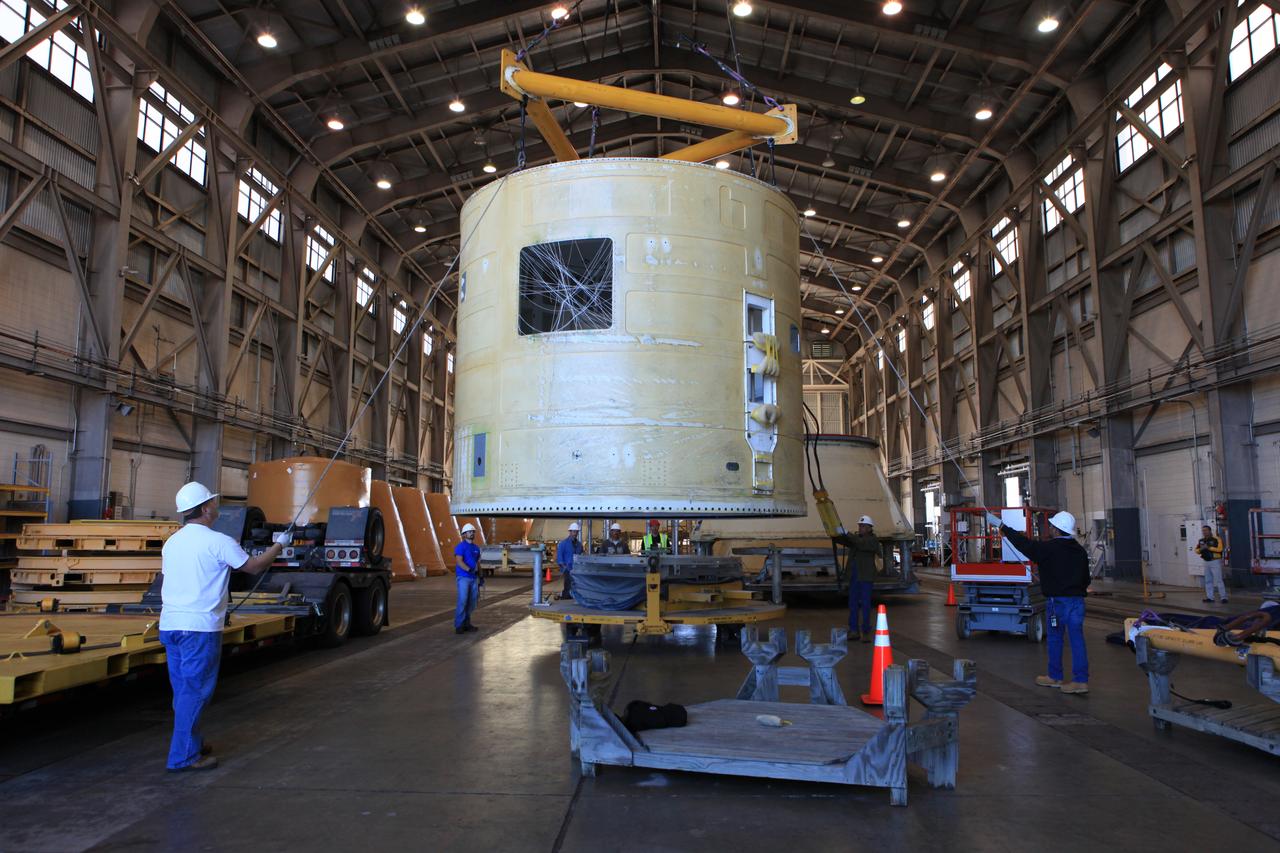
Technicians with Orbital ATK assist as a crane moves the left-hand forward skirt for NASA's Space Launch System (SLS) solid rocket boosters to a stand inside the Hangar AF facility at Cape Canaveral Air Force Station in Florida. The forward skirt was transported from booster prime contractor Orbital ATK in Promontory, Utah. The forward skirt will be staged in Hangar AF where refurbishment will continue. It will be inspected and prepared for use on the left-hand solid rocket booster for Exploration Mission 1. NASA's Orion spacecraft will fly atop the SLS rocket on its first uncrewed flight test.
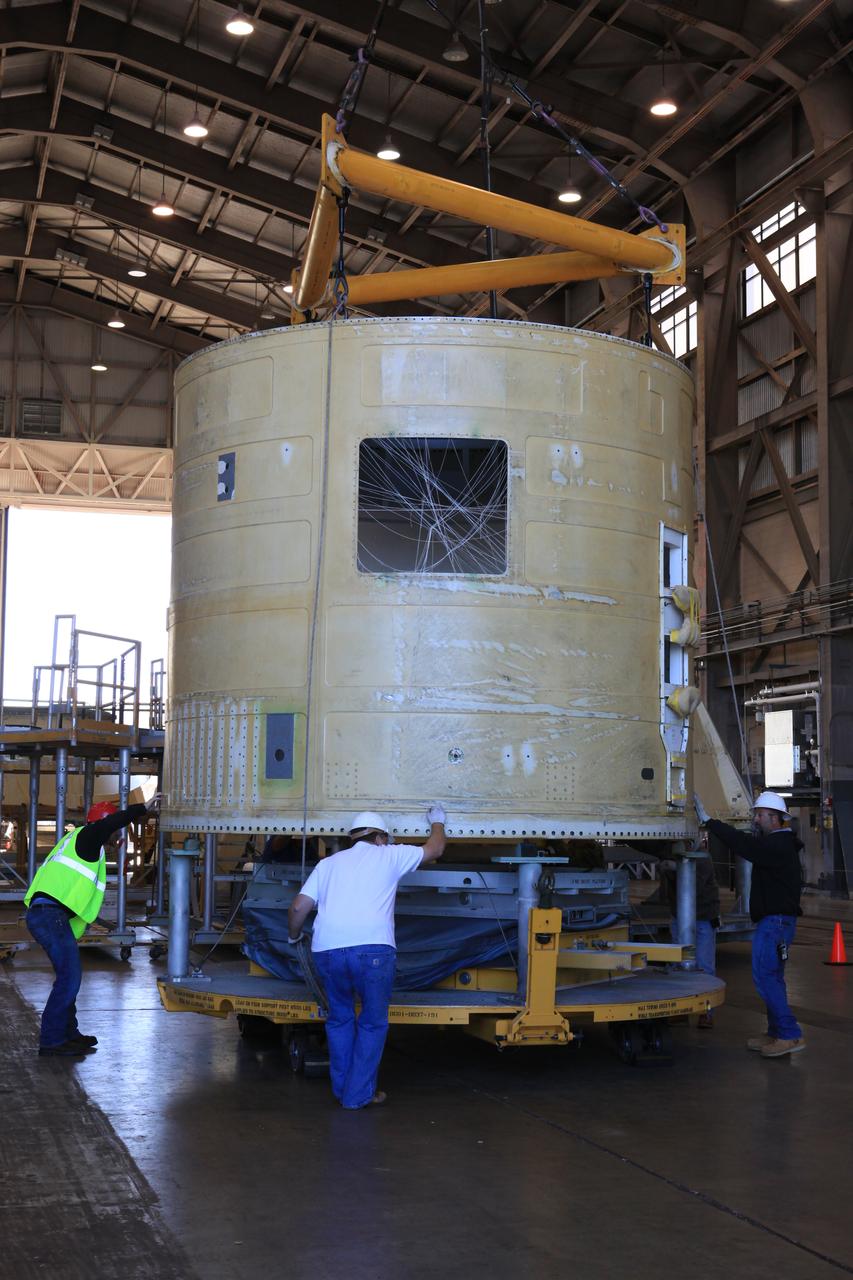
Technicians with Orbital ATK assist as a crane lowers the left-hand forward skirt for NASA's Space Launch System (SLS) solid rocket boosters onto a stand inside the Hangar AF facility at Cape Canaveral Air Force Station in Florida. The forward skirt was transported from booster prime contractor Orbital ATK in Promontory, Utah. The forward skirt will be staged in Hangar AF where refurbishment will continue. It will be inspected and prepared for use on the left-hand solid rocket booster for Exploration Mission 1. NASA's Orion spacecraft will fly atop the SLS rocket on its first uncrewed flight test.
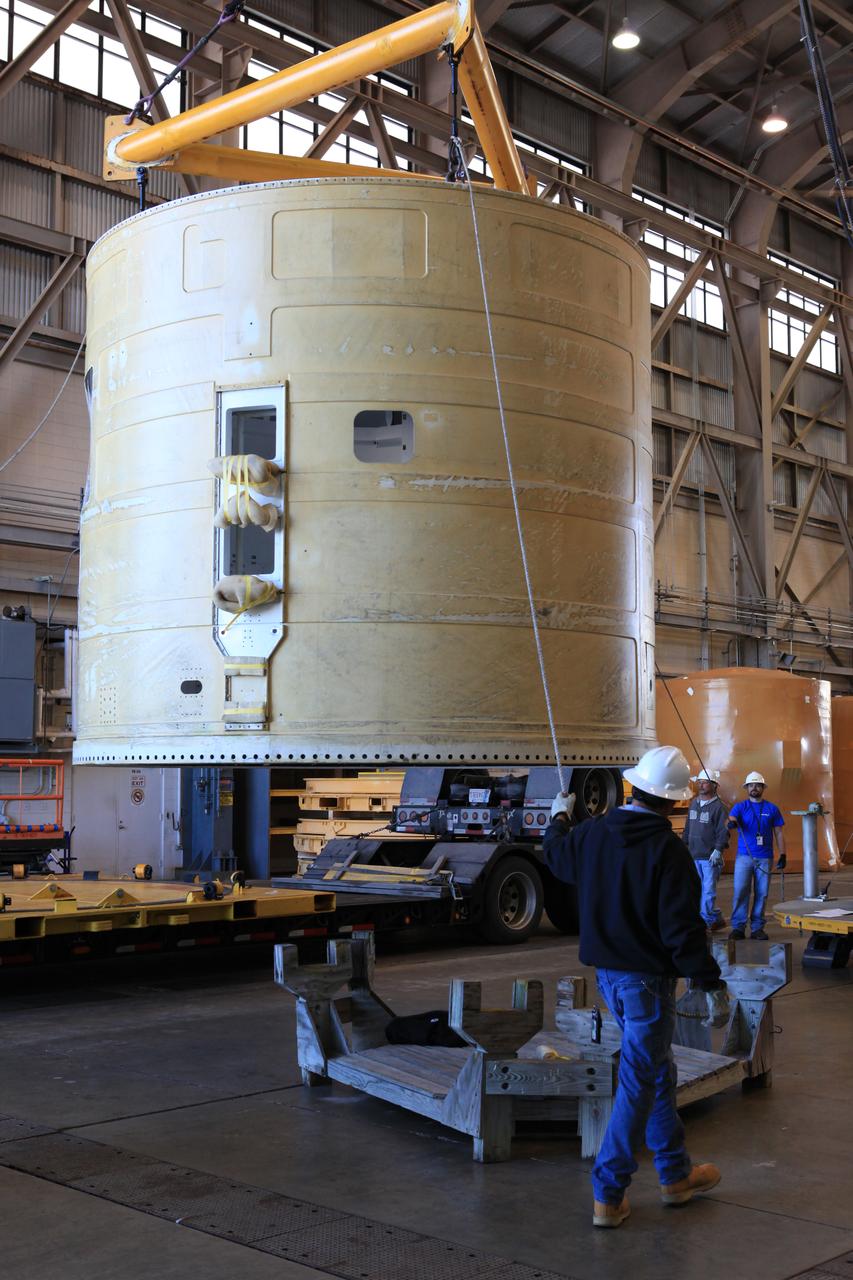
Technicians with Orbital ATK assist as a crane lifts the left-hand forward skirt for NASA's Space Launch System (SLS) solid rocket boosters away from a flatbed truck inside the Hangar AF facility at Cape Canaveral Air Force Station in Florida. The forward skirt was transported from booster prime contractor Orbital ATK in Promontory, Utah. The forward skirt will be staged in Hangar AF where refurbishment will continue. It will be inspected and prepared for use on the left-hand solid rocket booster for Exploration Mission 1. NASA's Orion spacecraft will fly atop the SLS rocket on its first uncrewed flight test.
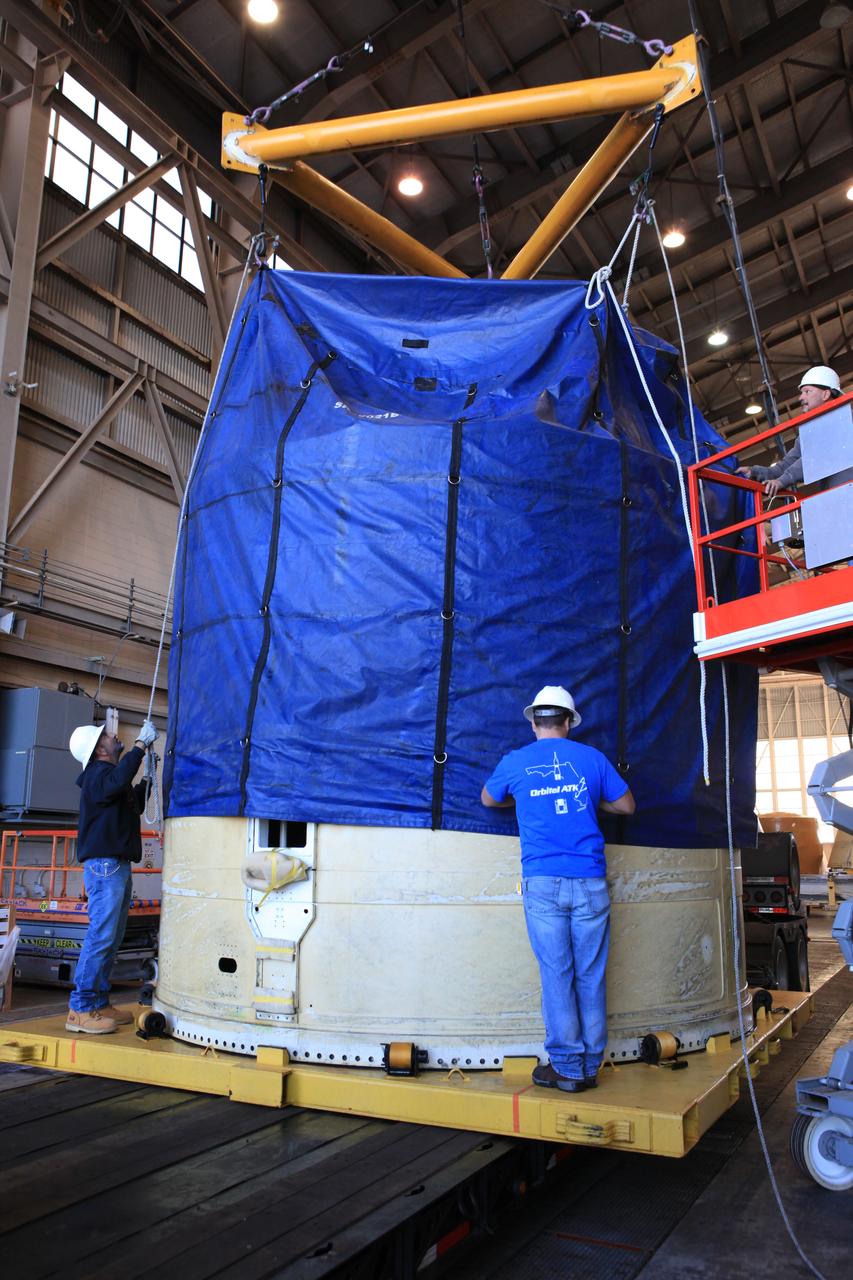
Technicians with Orbital ATK help remove the protective covering from the left-hand forward skirt for NASA's Space Launch System (SLS) solid rocket boosters inside the Hangar AF facility at Cape Canaveral Air Force Station in Florida. The forward skirt was transported from booster prime contractor Orbital ATK in Promontory, Utah. The forward skirt will be staged in Hangar AF where refurbishment will continue. It will be inspected and prepared for use on the left-hand solid rocket booster for Exploration Mission 1. NASA's Orion spacecraft will fly atop the SLS rocket on its first uncrewed flight test.
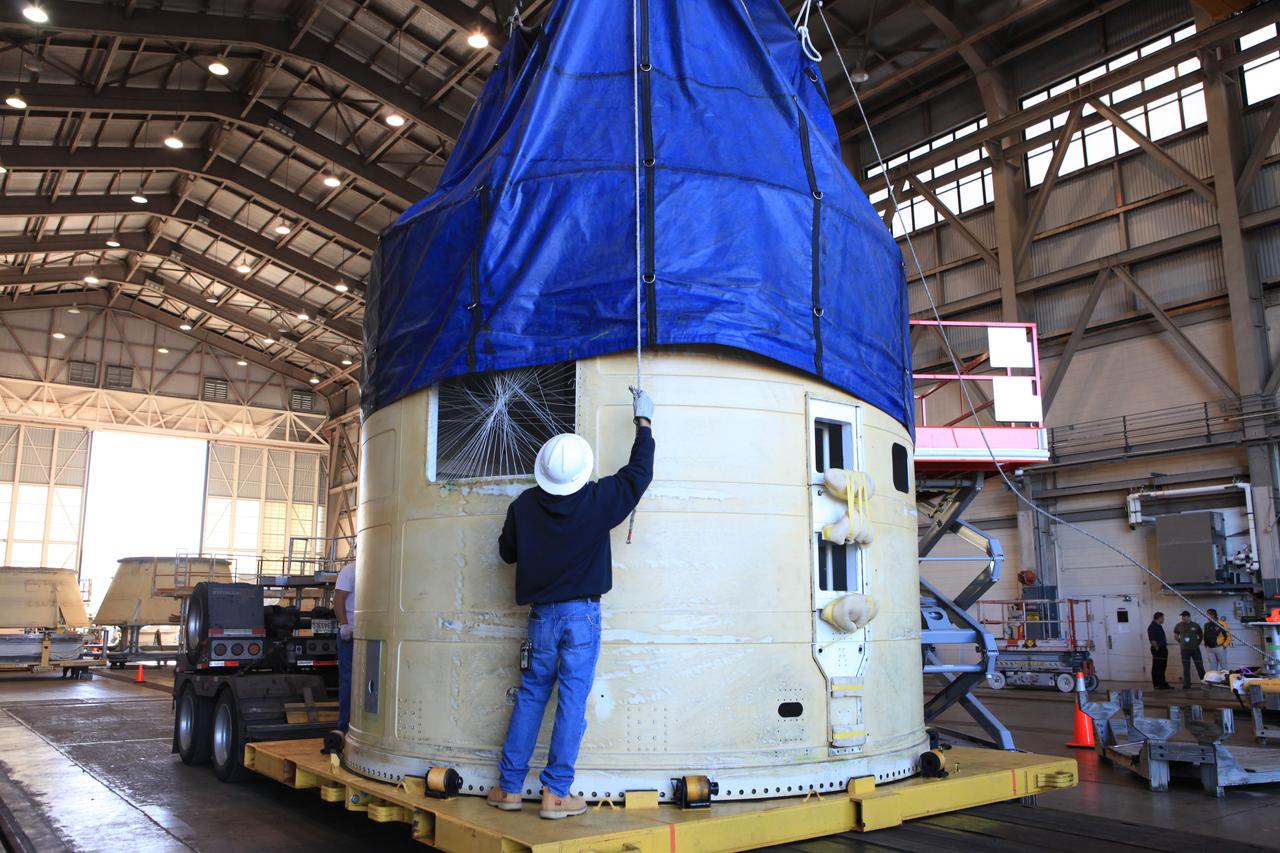
Technicians with Orbital ATK assist as a crane is used to lift the protective covering off of the left-hand forward skirt for NASA's Space Launch System (SLS) solid rocket boosters inside the Hangar AF facility at Cape Canaveral Air Force Station in Florida. The forward skirt was transported from booster prime contractor Orbital ATK in Promontory, Utah. The forward skirt will be staged in Hangar AF where refurbishment will continue. It will be inspected and prepared for use on the left-hand solid rocket booster for Exploration Mission 1. NASA's Orion spacecraft will fly atop the SLS rocket on its first uncrewed flight test.
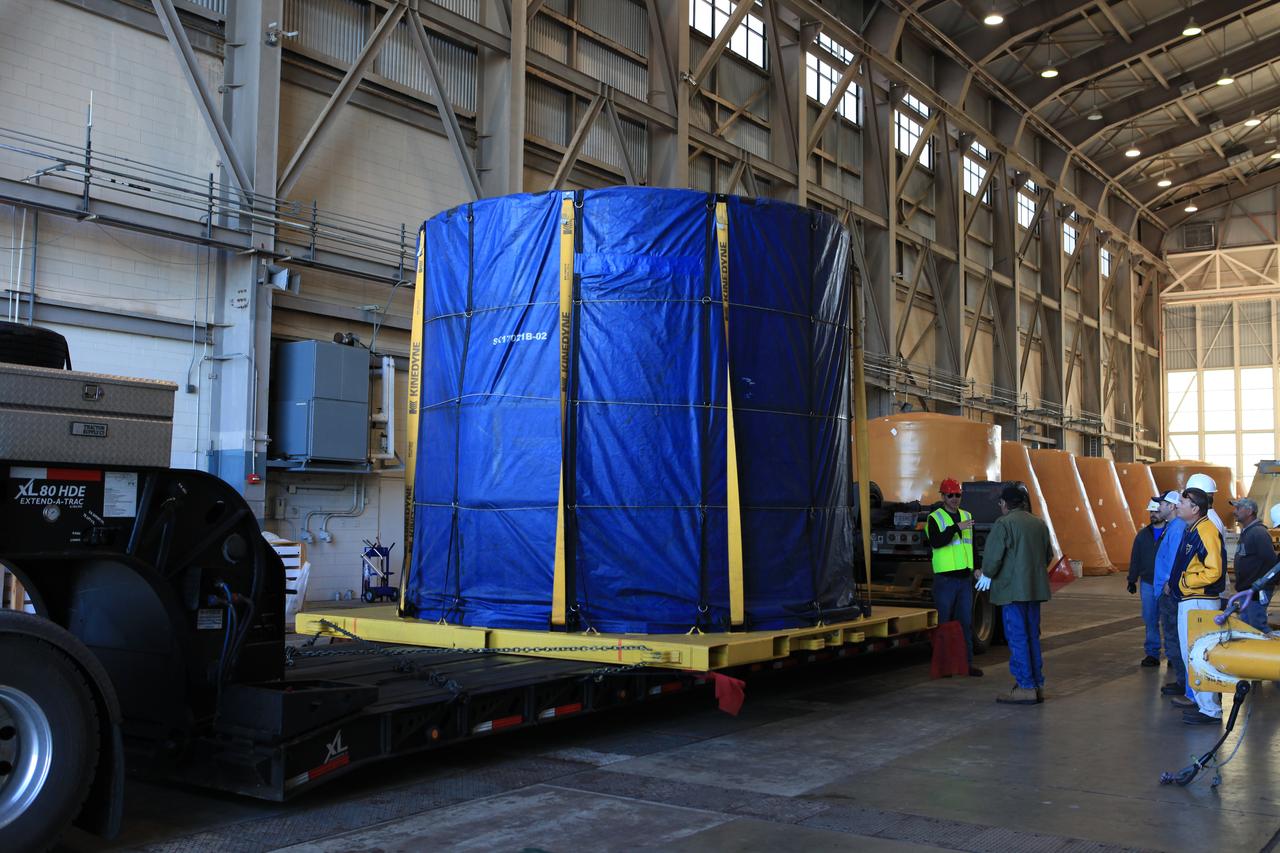
A flatbed truck carrying the left-hand forward skirt for NASA's Space Launch System (SLS) solid rocket boosters backs into the Hangar AF facility at Cape Canaveral Force Station in Florida. The forward skirt was transported from booster prime contractor Orbital ATK in Promontory, Utah. The forward skirt will be staged in Hangar AF where refurbishment will continue. It will be inspected and prepared for use on the left-hand solid rocket booster for Exploration Mission 1. NASA's Orion spacecraft will fly atop the SLS rocket on its first uncrewed flight test.
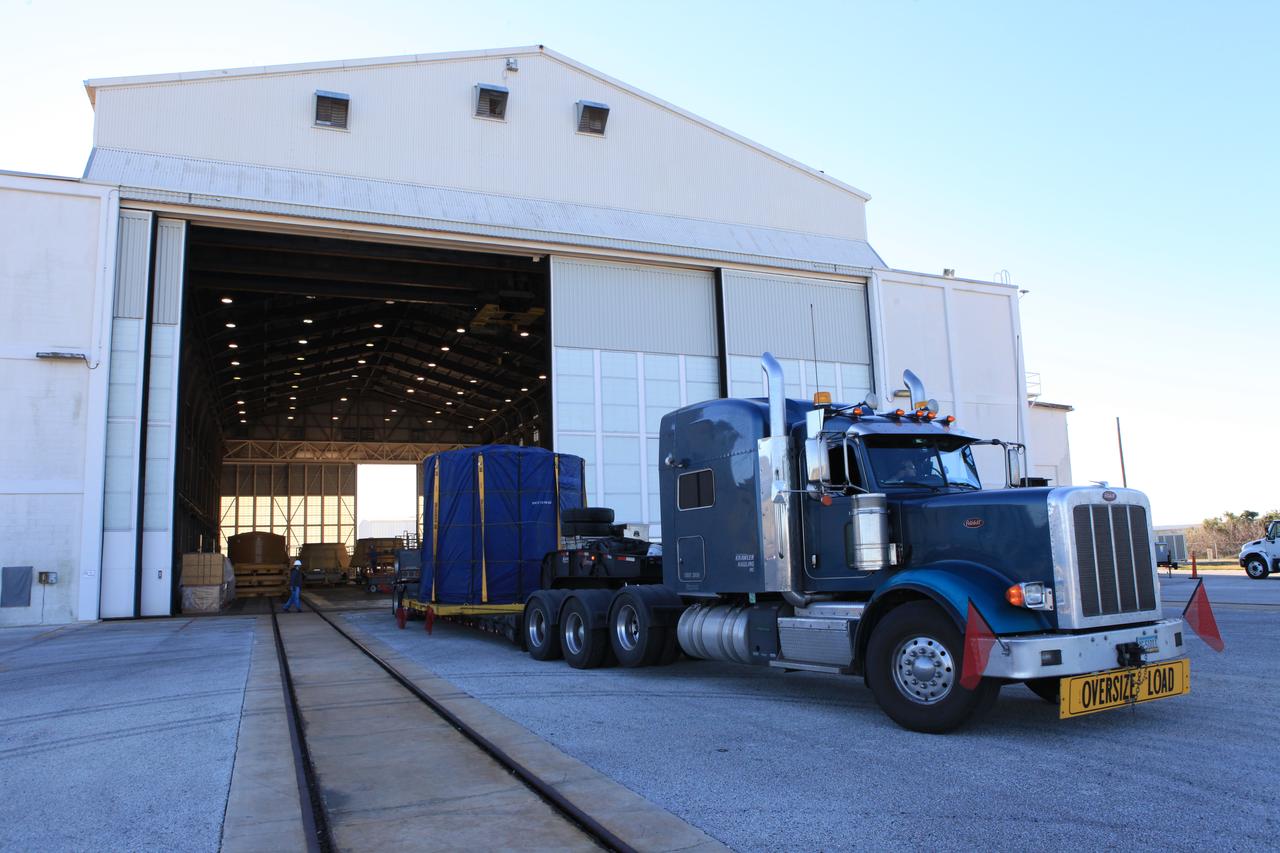
A flatbed truck carrying the left-hand forward skirt for NASA's Space Launch System (SLS) solid rocket boosters arrives at the Hangar AF facility at Cape Canaveral Air Force Station in Florida. The forward skirt was transported from booster prime contractor Orbital ATK in Promontory, Utah. The forward skirt will be staged in Hangar AF where refurbishment will continue. It will be inspected and prepared for use on the left-hand solid rocket booster for Exploration Mission 1. NASA's Orion spacecraft will fly atop the SLS rocket on its first uncrewed flight test.
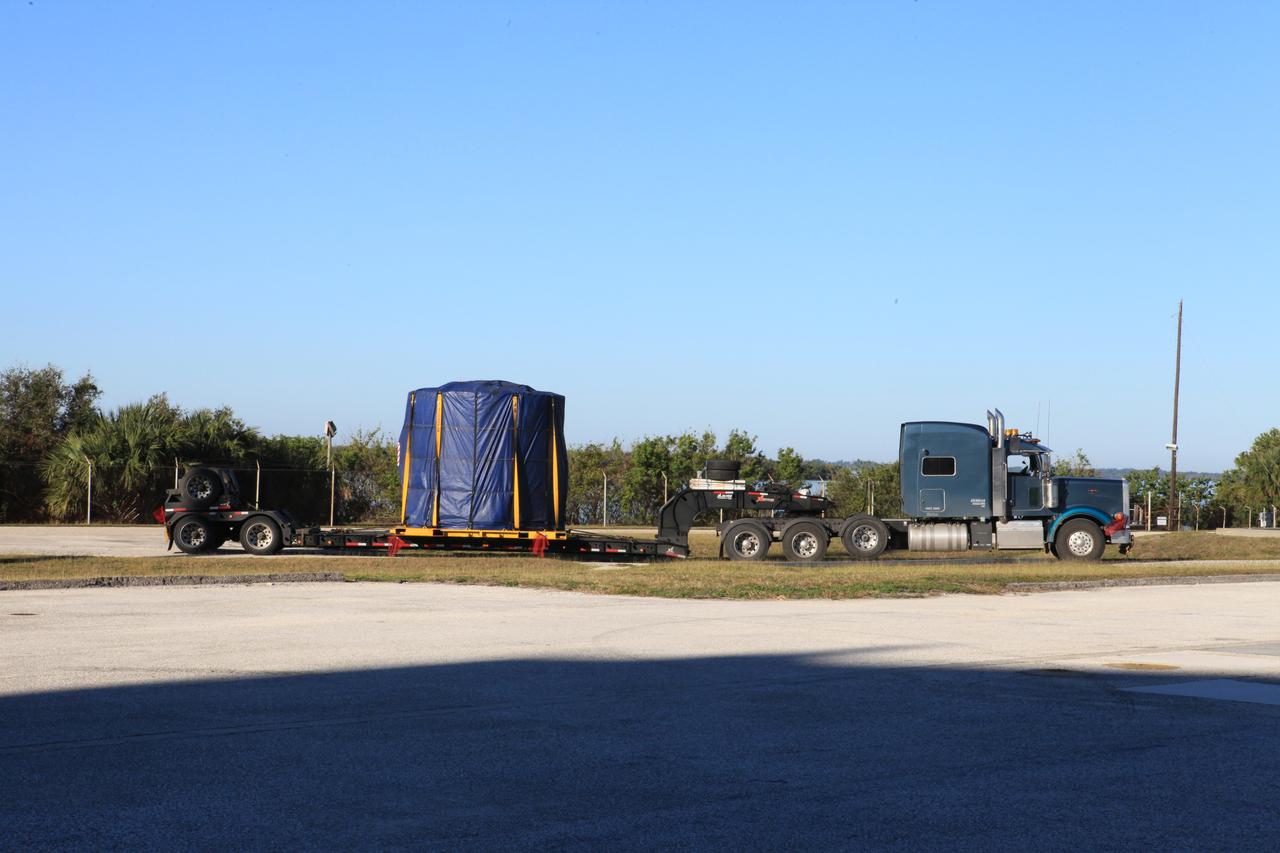
The left-hand forward skirt for NASA's Space Launch System (SLS) solid rocket boosters arrives by flatbed truck from booster prime contractor Orbital ATK in Promontory, Utah, to Cape Canaveral Air Force Station in Florida. The forward skirt will be delivered to the Hangar AF facility where refurbishment will continue. The forward skirt will be inspected and prepared for use on the left-hand solid rocket booster for Exploration Mission 1. NASA's Orion spacecraft will fly atop the SLS rocket on its first uncrewed flight test.