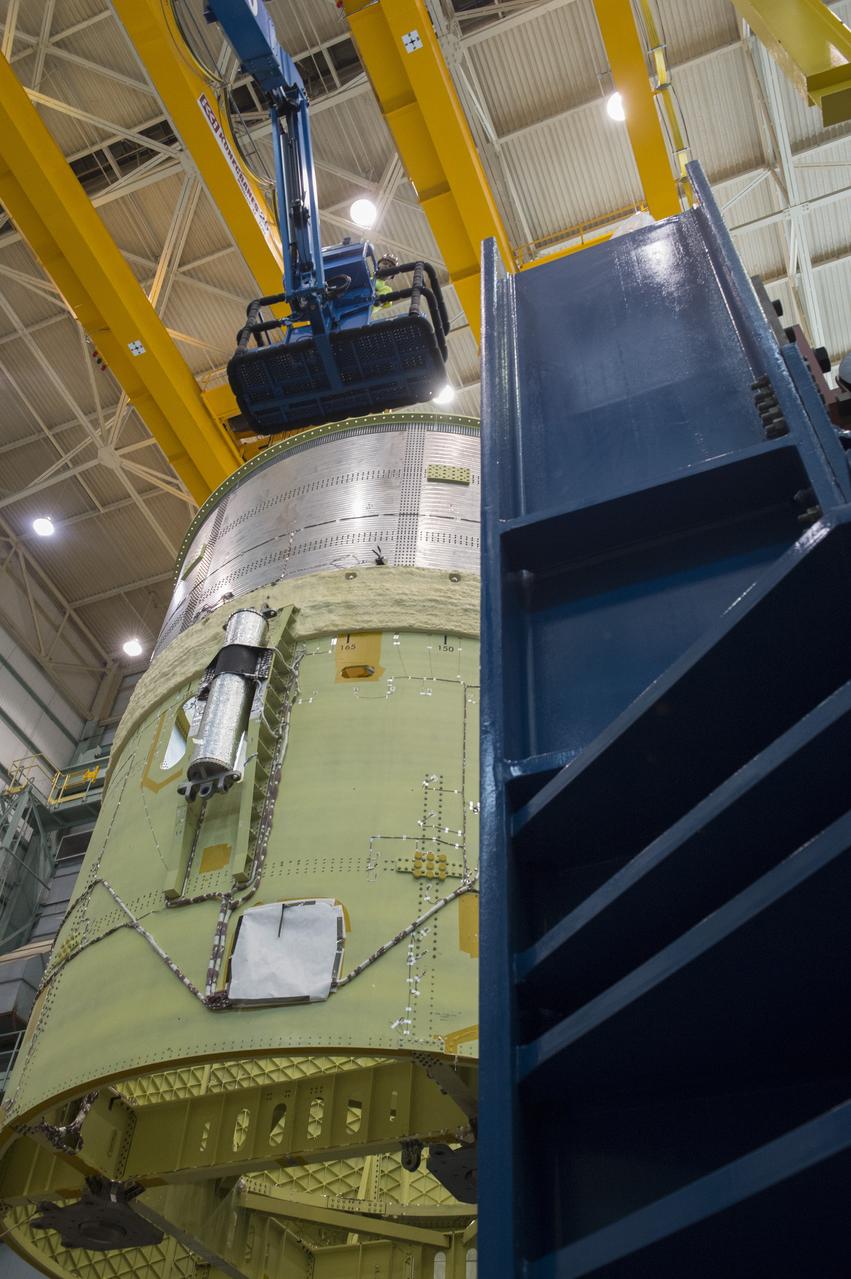
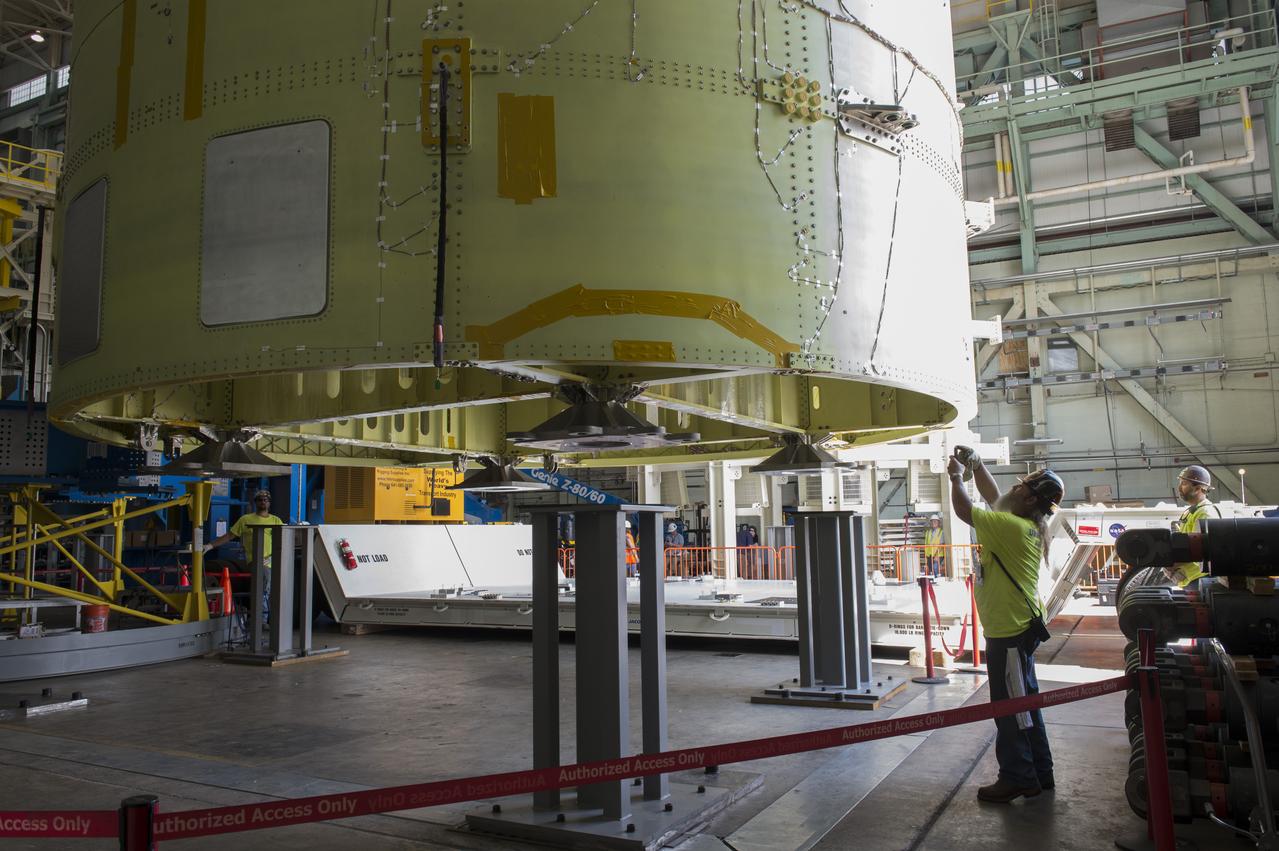
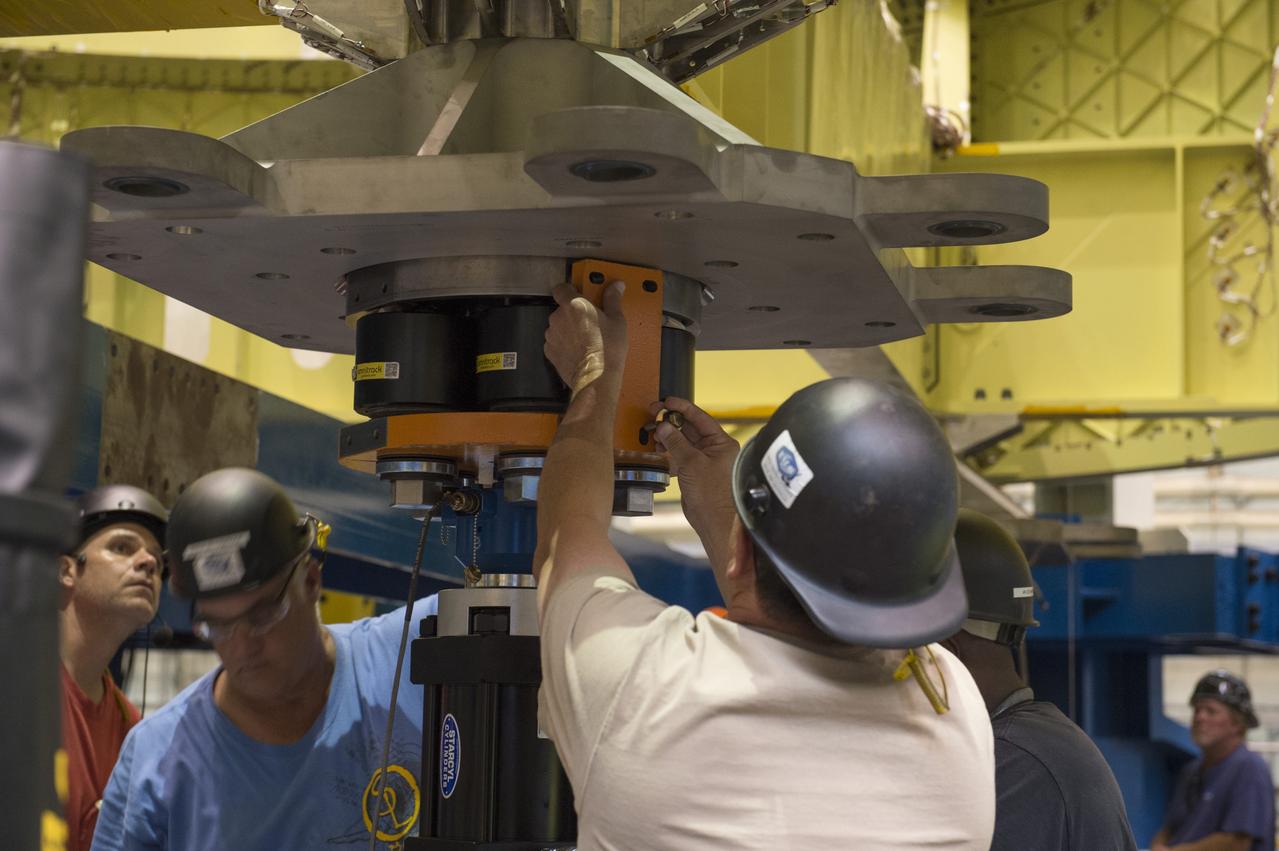
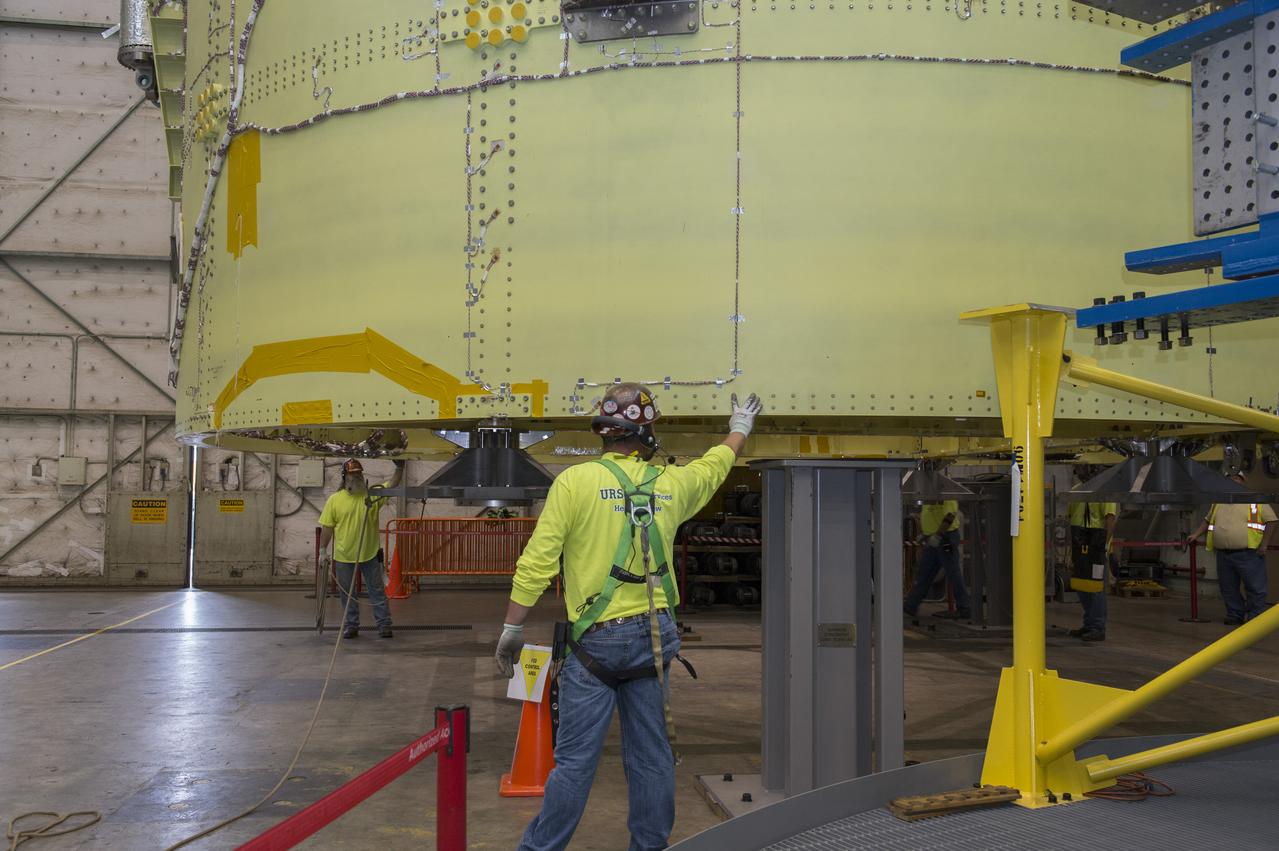
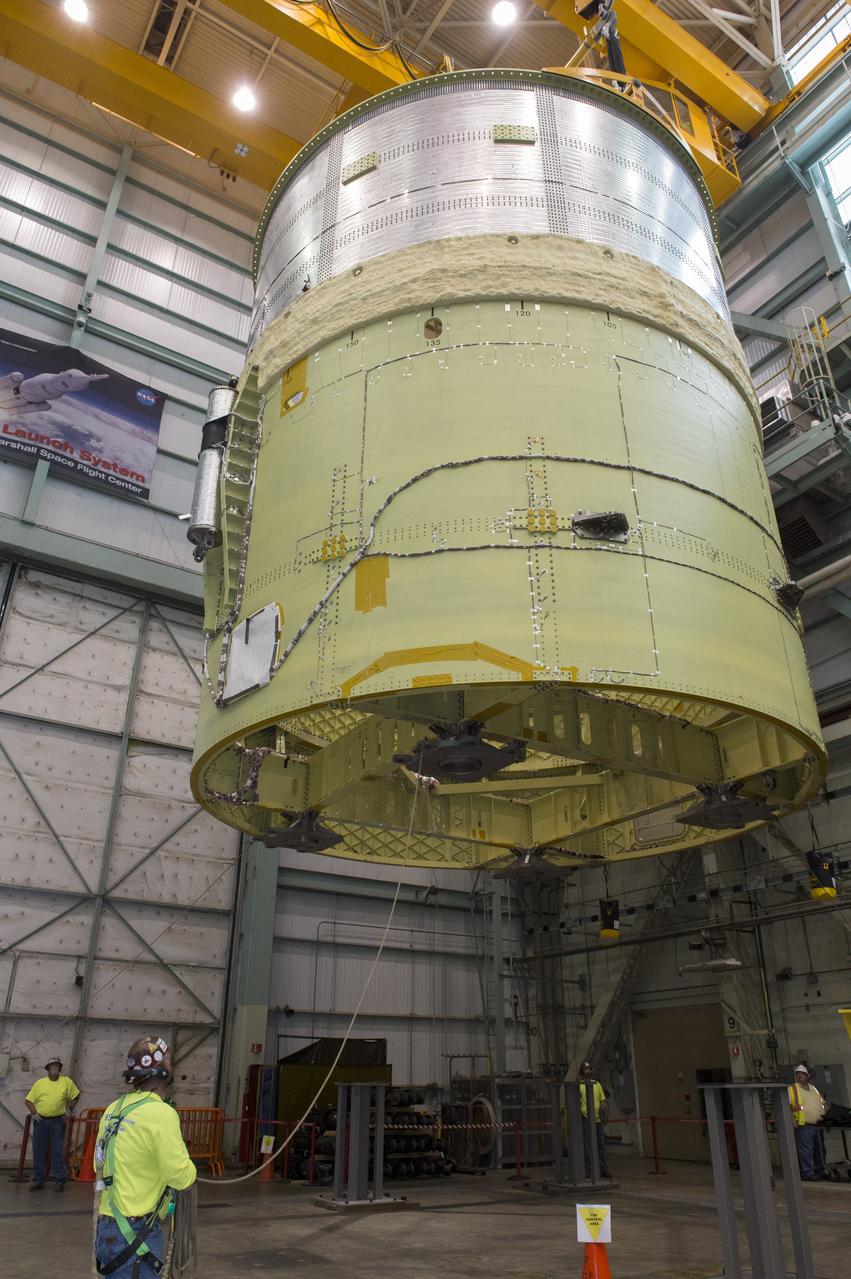
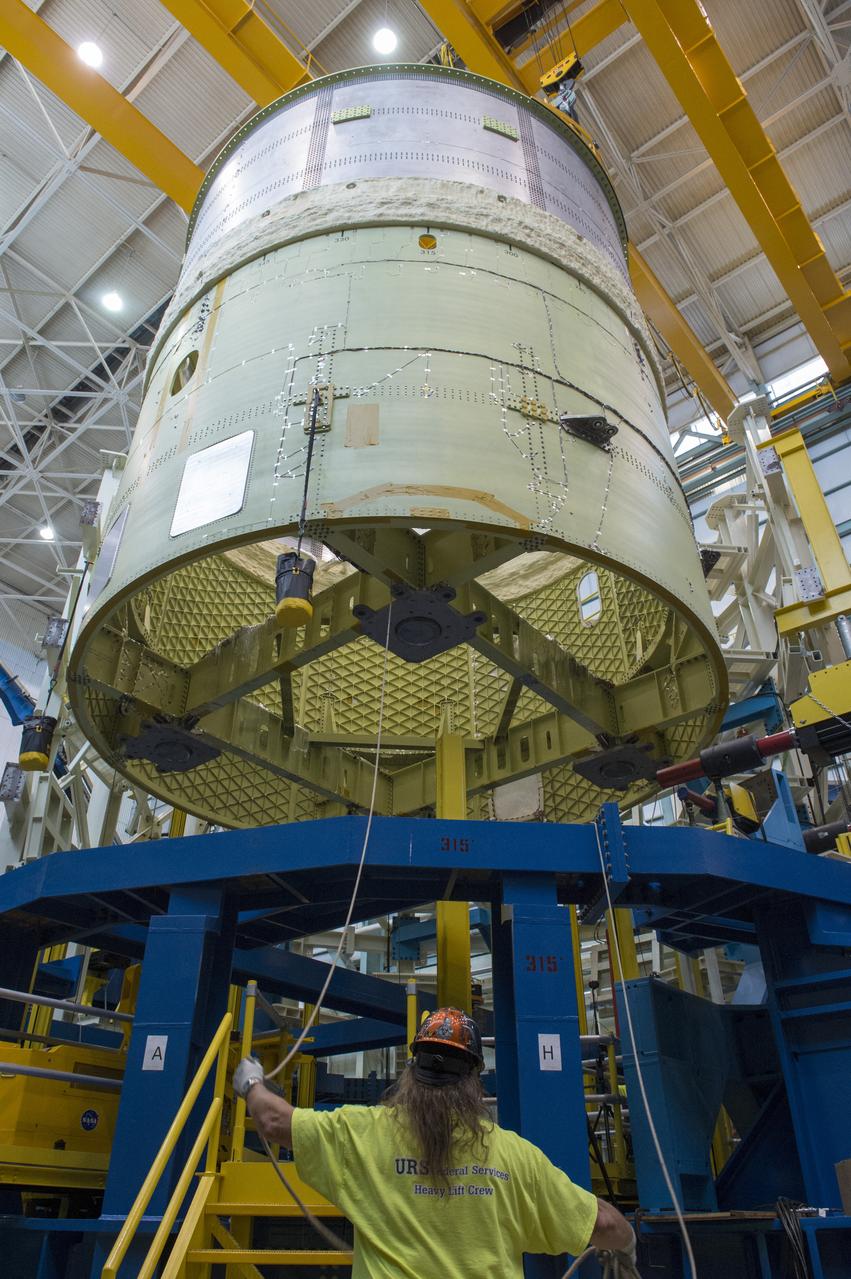
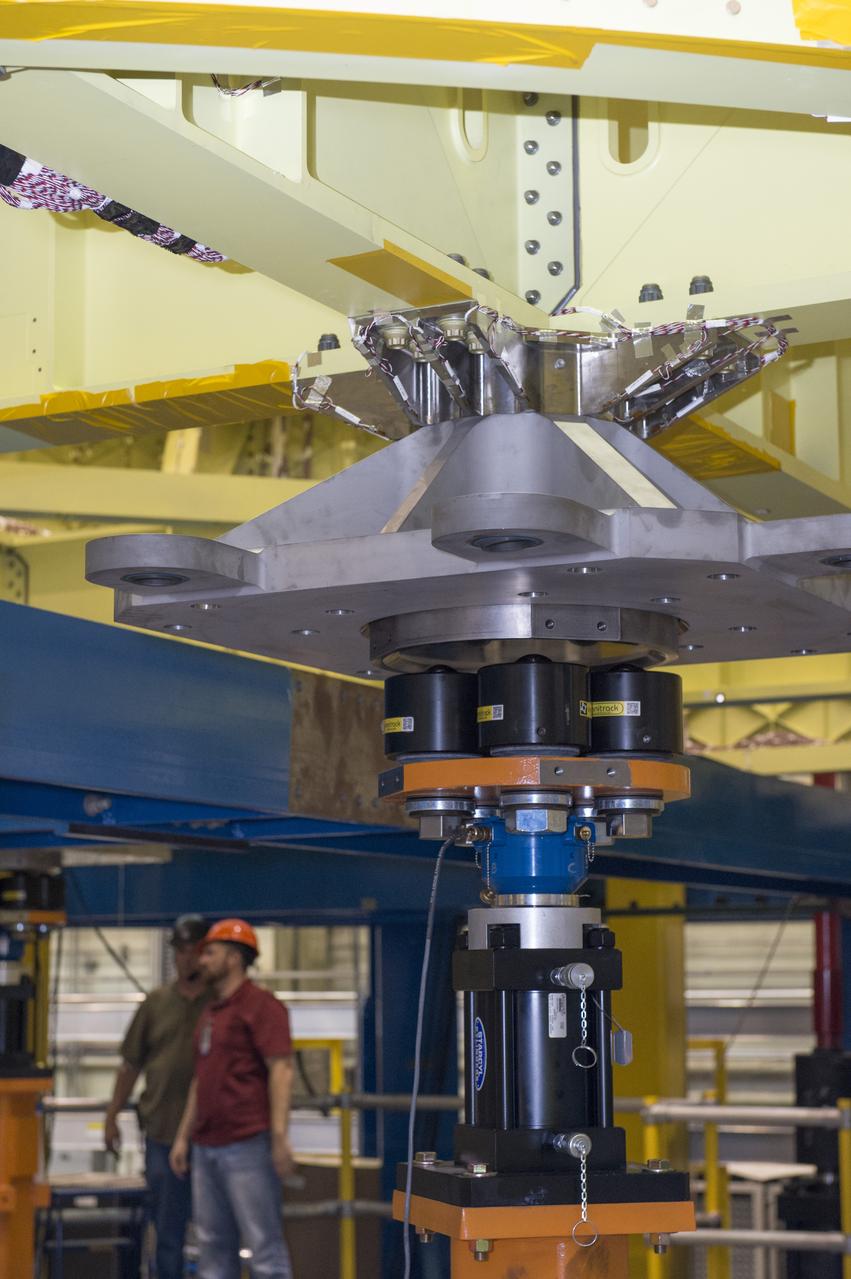
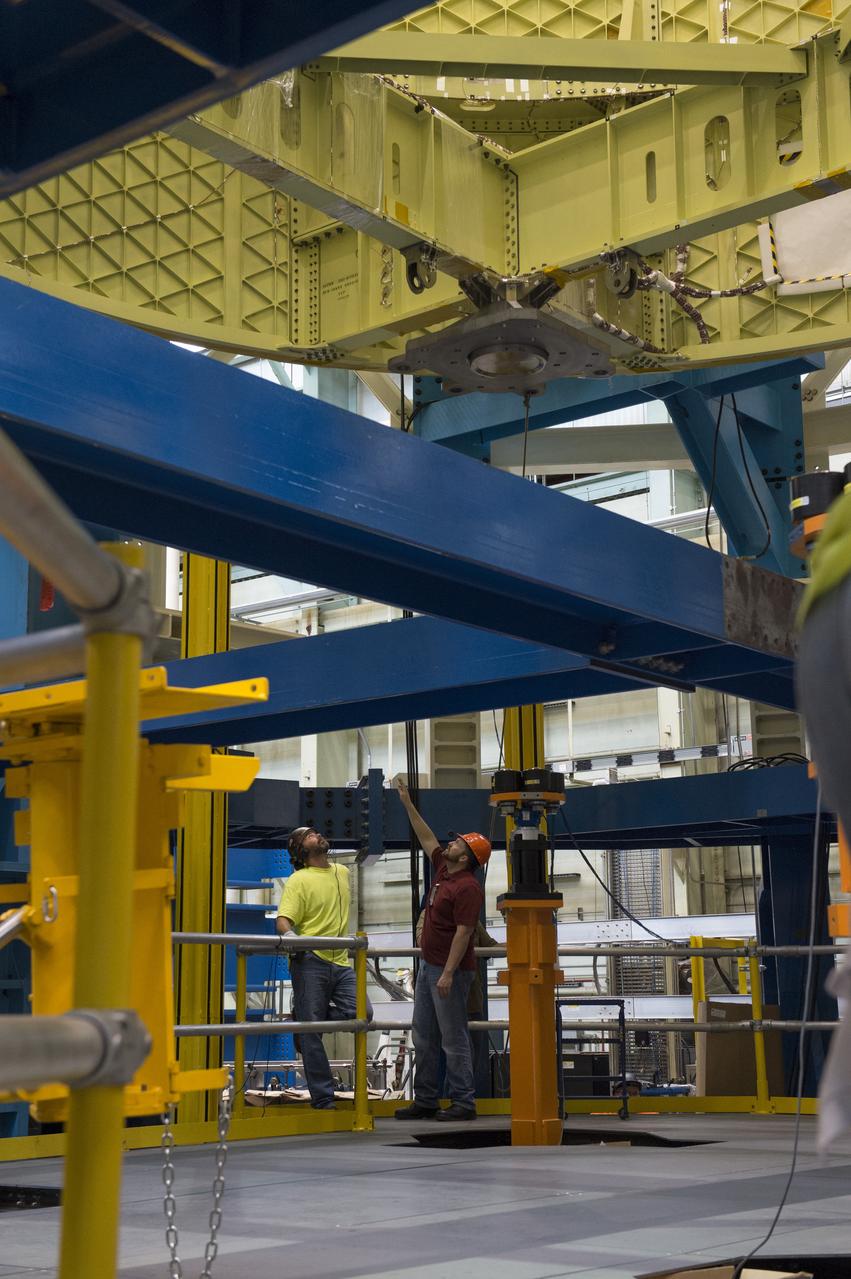
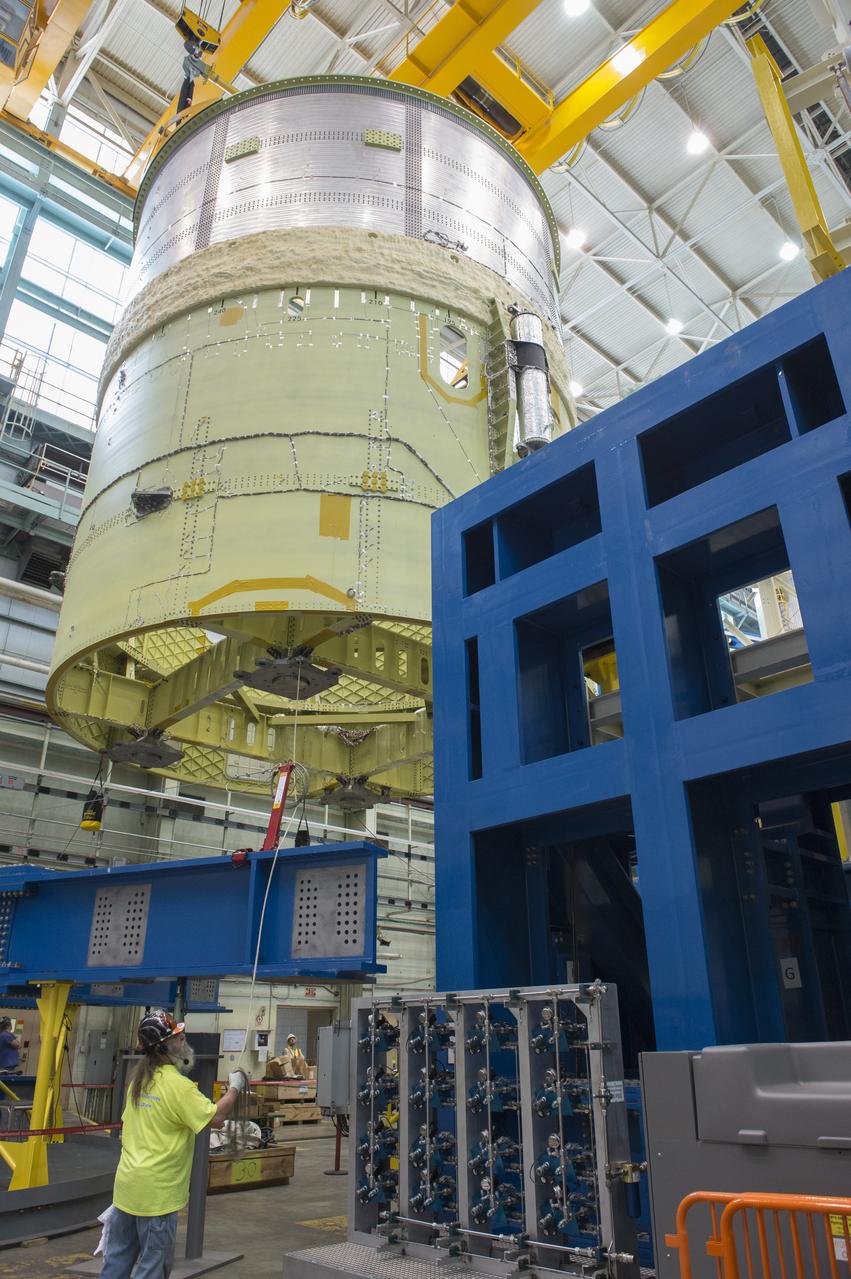
NASA engineers install test hardware for the agency's new heavy lift rocket, the Space Launch System, into a newly constructed 50-foot structural test stand at NASA's Marshall Space Flight Center. In the stand, hydraulic cylinders will be electronically controlled to push, pull, twist and bend the test article with millions of pounds of force. Engineers will record and analyze over 3,000 channels of data for each test case to verify the capabilities of the engine section and validate that the design and analysis models accurately predict the amount of loads the core stage can withstand during launch and ascent. The engine section, recently delivered via NASA's barge Pegasus from NASA's Michoud Assembly Facility, is the first of four core stage structural test articles scheduled to be delivered to Marshall for testing. The engine section, located at the bottom of SLS's massive core stage, will house the rocket's four RS-25 engines and be an attachment point for the two solid rocket boosters.
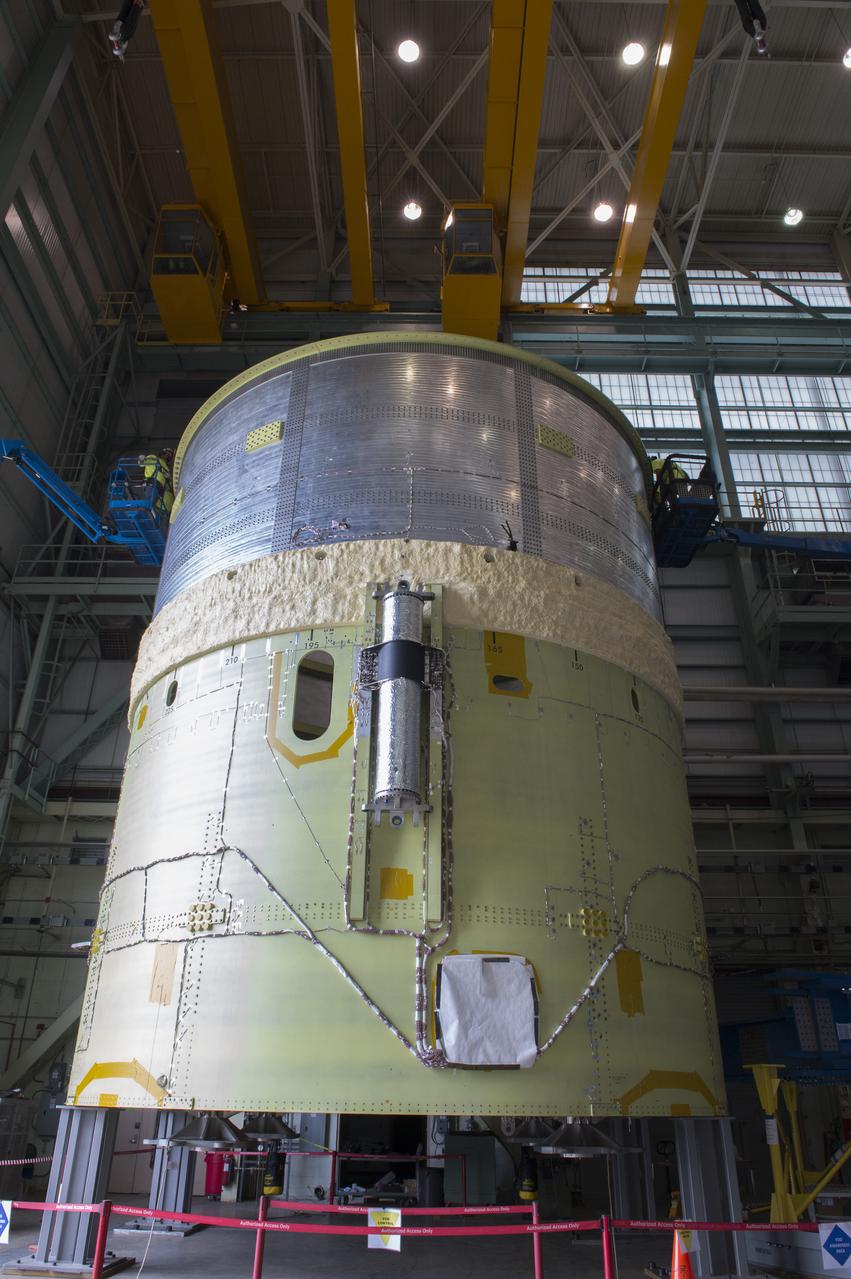
NASA engineers install test hardware for the agency's new heavy lift rocket, the Space Launch System, into a newly constructed 50-foot structural test stand at NASA's Marshall Space Flight Center. In the stand, hydraulic cylinders will be electronically controlled to push, pull, twist and bend the test article with millions of pounds of force. Engineers will record and analyze over 3,000 channels of data for each test case to verify the capabilities of the engine section and validate that the design and analysis models accurately predict the amount of loads the core stage can withstand during launch and ascent. The engine section, recently delivered via NASA's barge Pegasus from NASA's Michoud Assembly Facility, is the first of four core stage structural test articles scheduled to be delivered to Marshall for testing. The engine section, located at the bottom of SLS's massive core stage, will house the rocket's four RS-25 engines and be an attachment point for the two solid rocket boosters.
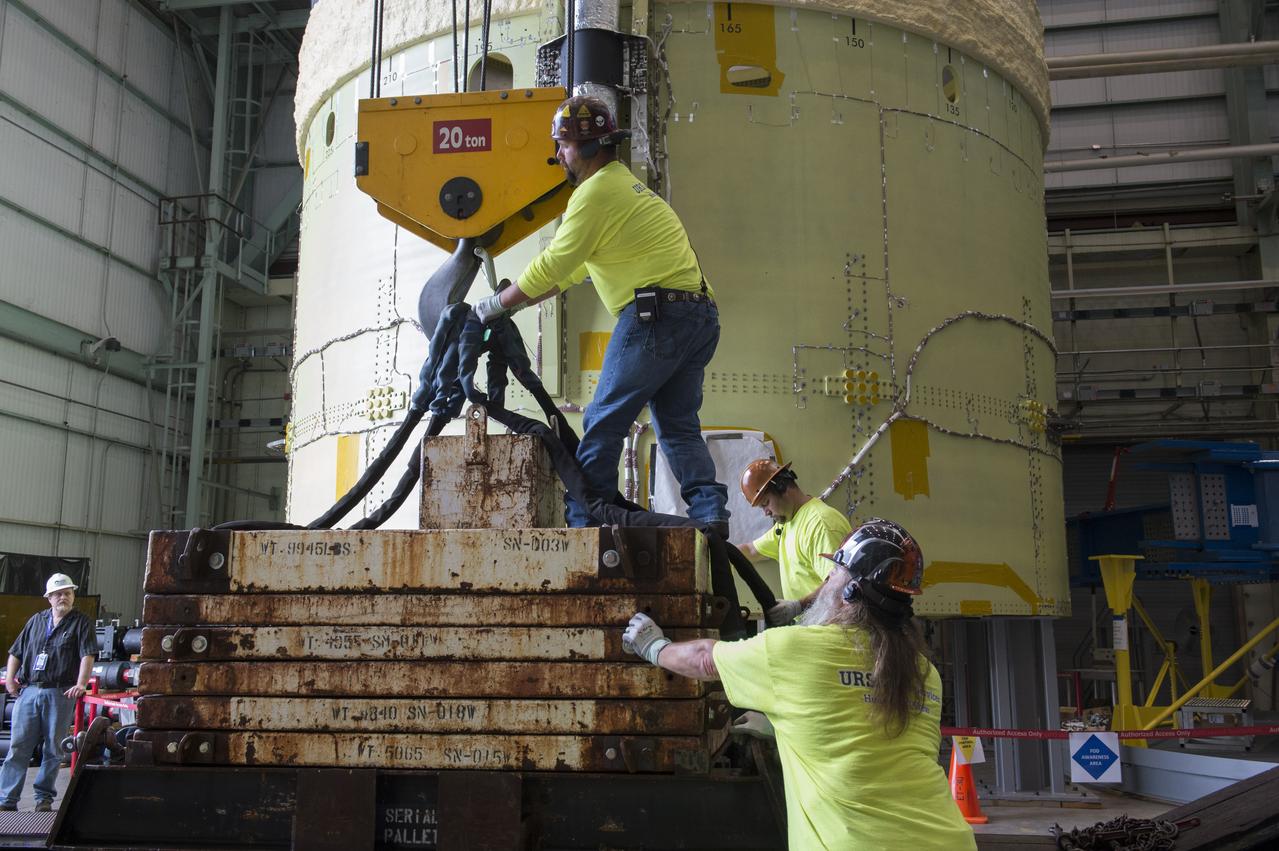
NASA engineers install test hardware for the agency's new heavy lift rocket, the Space Launch System, into a newly constructed 50-foot structural test stand at NASA's Marshall Space Flight Center. In the stand, hydraulic cylinders will be electronically controlled to push, pull, twist and bend the test article with millions of pounds of force. Engineers will record and analyze over 3,000 channels of data for each test case to verify the capabilities of the engine section and validate that the design and analysis models accurately predict the amount of loads the core stage can withstand during launch and ascent. The engine section, recently delivered via NASA's barge Pegasus from NASA's Michoud Assembly Facility, is the first of four core stage structural test articles scheduled to be delivered to Marshall for testing. The engine section, located at the bottom of SLS's massive core stage, will house the rocket's four RS-25 engines and be an attachment point for the two solid rocket boosters.
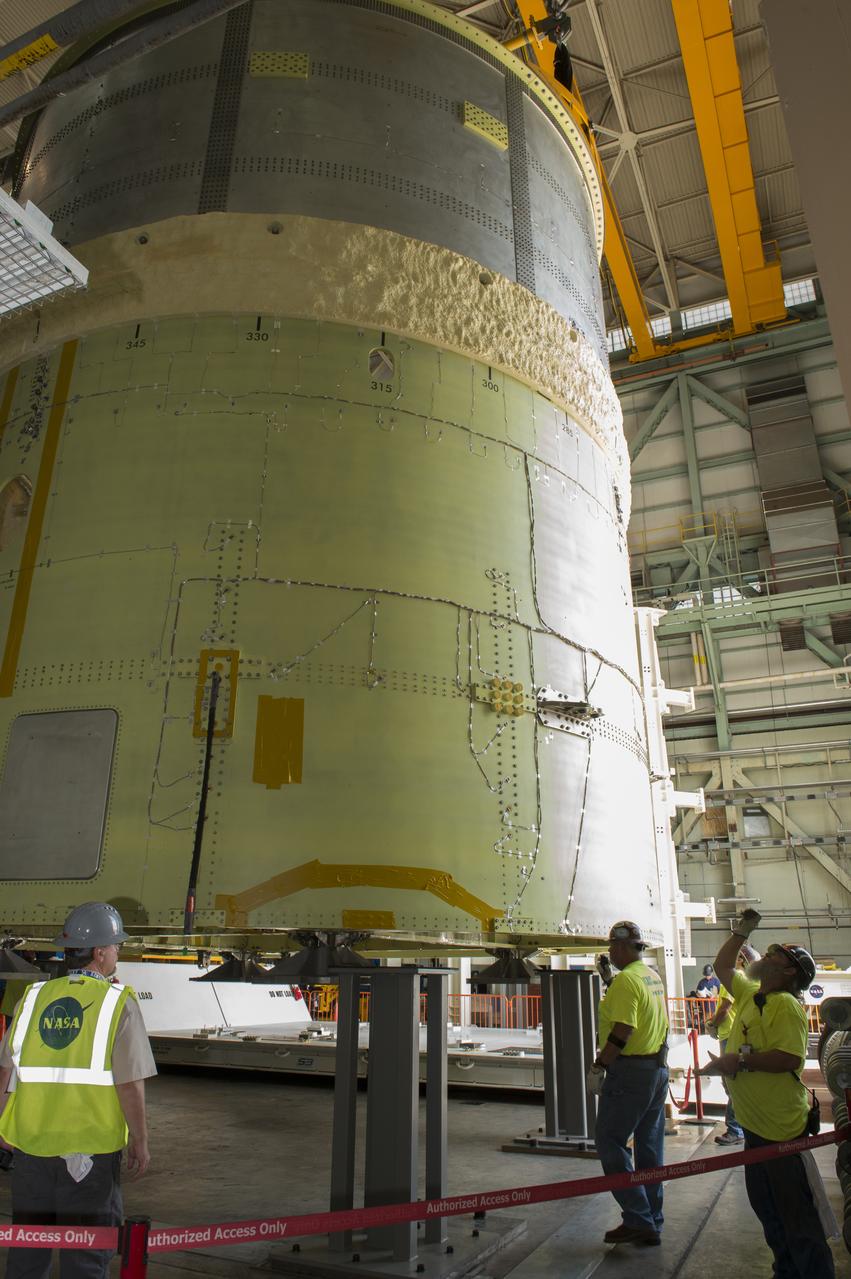
NASA engineers install test hardware for the agency's new heavy lift rocket, the Space Launch System, into a newly constructed 50-foot structural test stand at NASA's Marshall Space Flight Center. In the stand, hydraulic cylinders will be electronically controlled to push, pull, twist and bend the test article with millions of pounds of force. Engineers will record and analyze over 3,000 channels of data for each test case to verify the capabilities of the engine section and validate that the design and analysis models accurately predict the amount of loads the core stage can withstand during launch and ascent. The engine section, recently delivered via NASA's barge Pegasus from NASA's Michoud Assembly Facility, is the first of four core stage structural test articles scheduled to be delivered to Marshall for testing. The engine section, located at the bottom of SLS's massive core stage, will house the rocket's four RS-25 engines and be an attachment point for the two solid rocket boosters.
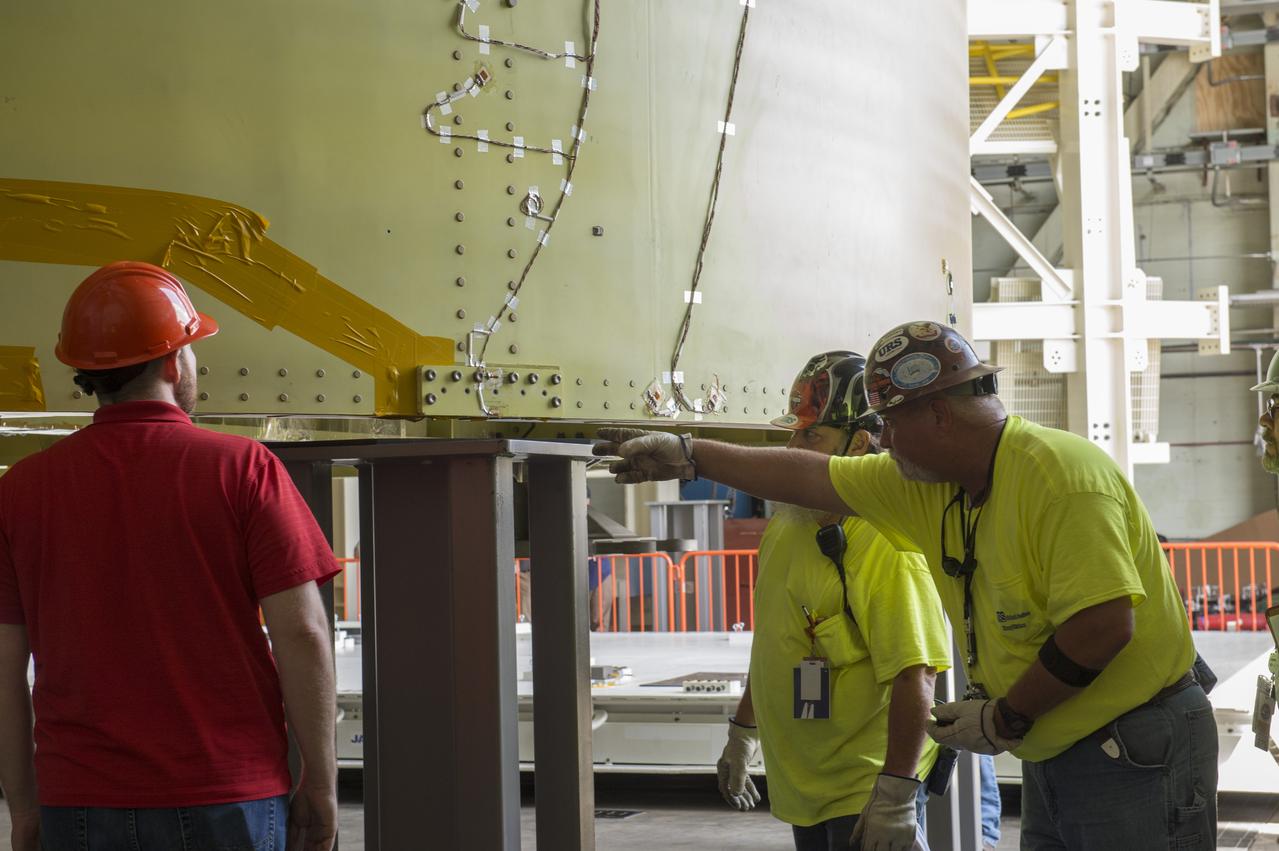
NASA engineers install test hardware for the agency's new heavy lift rocket, the Space Launch System, into a newly constructed 50-foot structural test stand at NASA's Marshall Space Flight Center. In the stand, hydraulic cylinders will be electronically controlled to push, pull, twist and bend the test article with millions of pounds of force. Engineers will record and analyze over 3,000 channels of data for each test case to verify the capabilities of the engine section and validate that the design and analysis models accurately predict the amount of loads the core stage can withstand during launch and ascent. The engine section, recently delivered via NASA's barge Pegasus from NASA's Michoud Assembly Facility, is the first of four core stage structural test articles scheduled to be delivered to Marshall for testing. The engine section, located at the bottom of SLS's massive core stage, will house the rocket's four RS-25 engines and be an attachment point for the two solid rocket boosters.
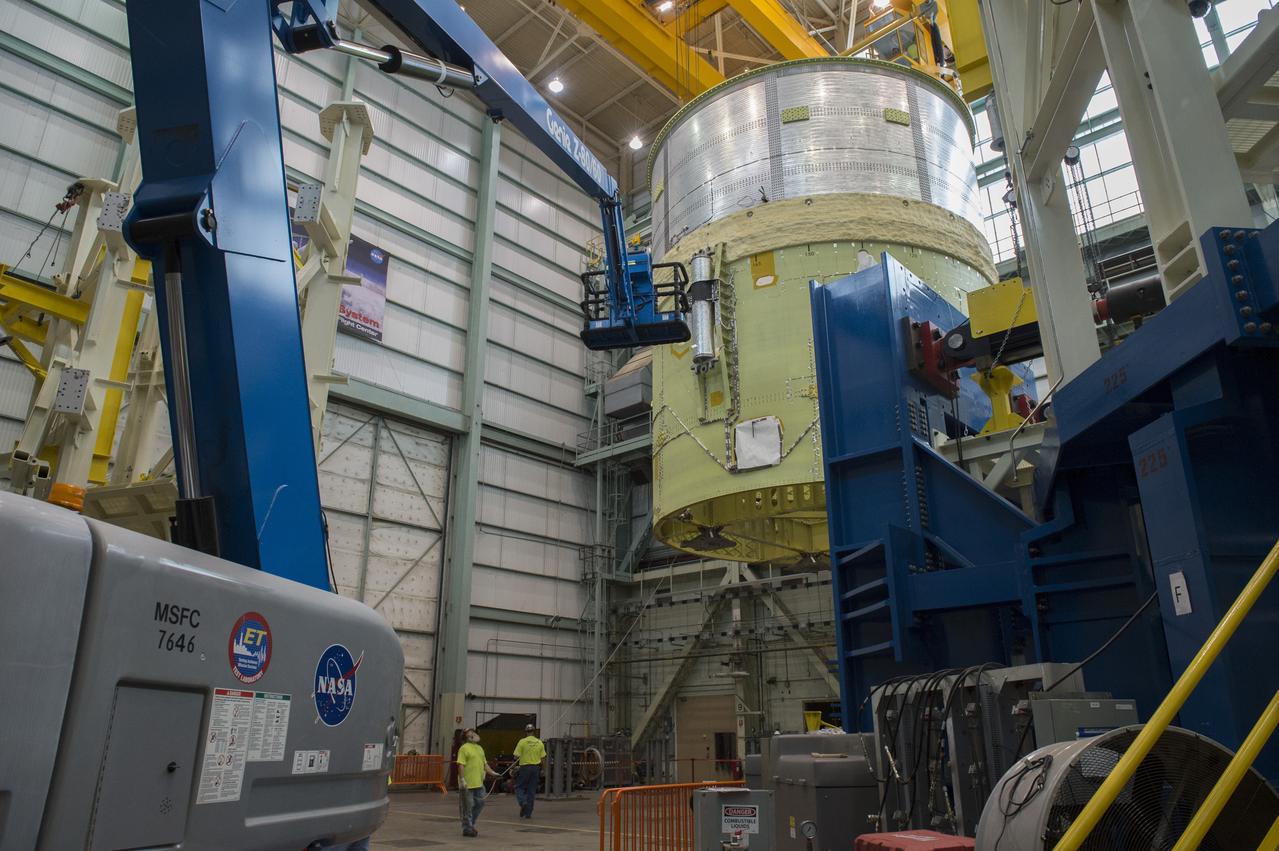
NASA engineers install test hardware for the agency's new heavy lift rocket, the Space Launch System, into a newly constructed 50-foot structural test stand at NASA's Marshall Space Flight Center. In the stand, hydraulic cylinders will be electronically controlled to push, pull, twist and bend the test article with millions of pounds of force. Engineers will record and analyze over 3,000 channels of data for each test case to verify the capabilities of the engine section and validate that the design and analysis models accurately predict the amount of loads the core stage can withstand during launch and ascent. The engine section, recently delivered via NASA's barge Pegasus from NASA's Michoud Assembly Facility, is the first of four core stage structural test articles scheduled to be delivered to Marshall for testing. The engine section, located at the bottom of SLS's massive core stage, will house the rocket's four RS-25 engines and be an attachment point for the two solid rocket boosters.

NASA engineers install test hardware for the agency's new heavy lift rocket, the Space Launch System, into a newly constructed 50-foot structural test stand at NASA's Marshall Space Flight Center. In the stand, hydraulic cylinders will be electronically controlled to push, pull, twist and bend the test article with millions of pounds of force. Engineers will record and analyze over 3,000 channels of data for each test case to verify the capabilities of the engine section and validate that the design and analysis models accurately predict the amount of loads the core stage can withstand during launch and ascent. The engine section, recently delivered via NASA's barge Pegasus from NASA's Michoud Assembly Facility, is the first of four core stage structural test articles scheduled to be delivered to Marshall for testing. The engine section, located at the bottom of SLS's massive core stage, will house the rocket's four RS-25 engines and be an attachment point for the two solid rocket boosters.
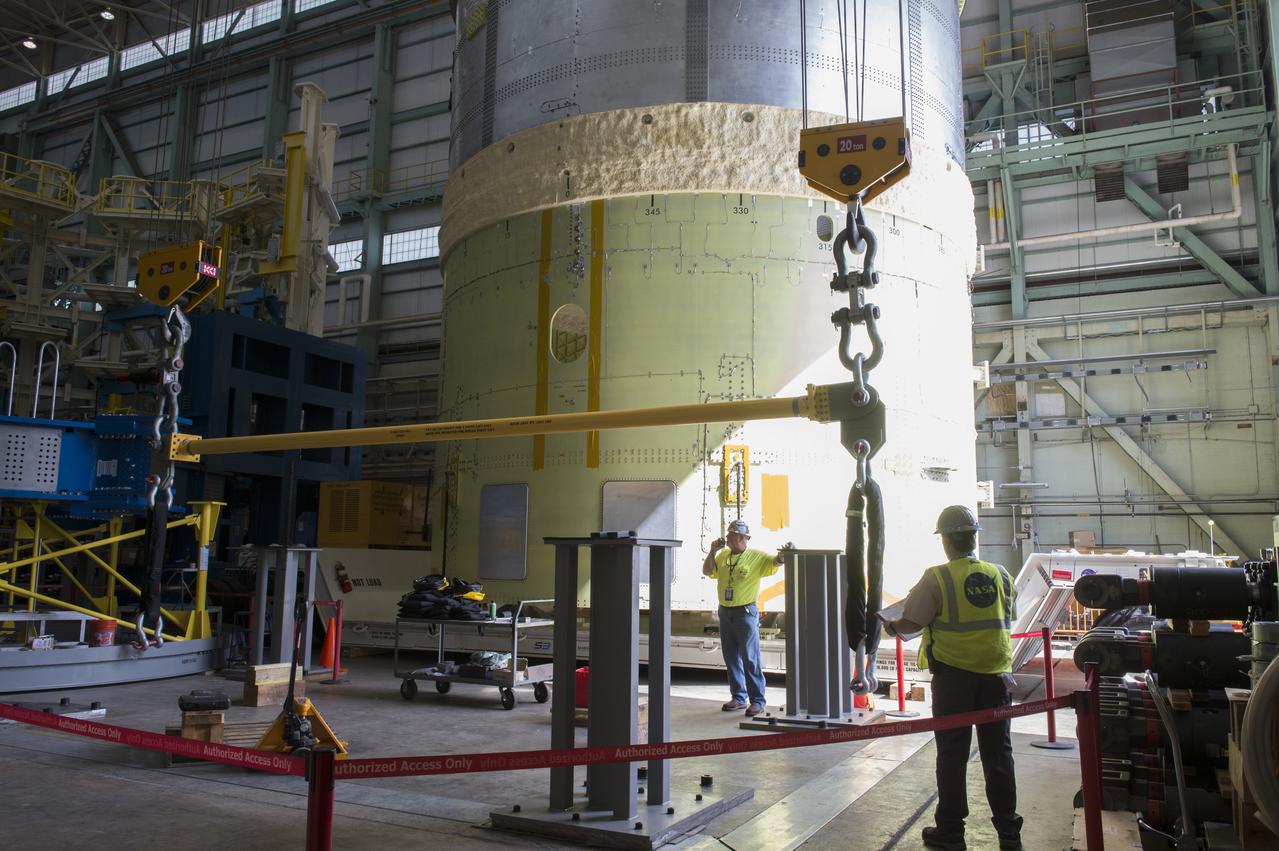
NASA engineers install test hardware for the agency's new heavy lift rocket, the Space Launch System, into a newly constructed 50-foot structural test stand at NASA's Marshall Space Flight Center. In the stand, hydraulic cylinders will be electronically controlled to push, pull, twist and bend the test article with millions of pounds of force. Engineers will record and analyze over 3,000 channels of data for each test case to verify the capabilities of the engine section and validate that the design and analysis models accurately predict the amount of loads the core stage can withstand during launch and ascent. The engine section, recently delivered via NASA's barge Pegasus from NASA's Michoud Assembly Facility, is the first of four core stage structural test articles scheduled to be delivered to Marshall for testing. The engine section, located at the bottom of SLS's massive core stage, will house the rocket's four RS-25 engines and be an attachment point for the two solid rocket boosters.
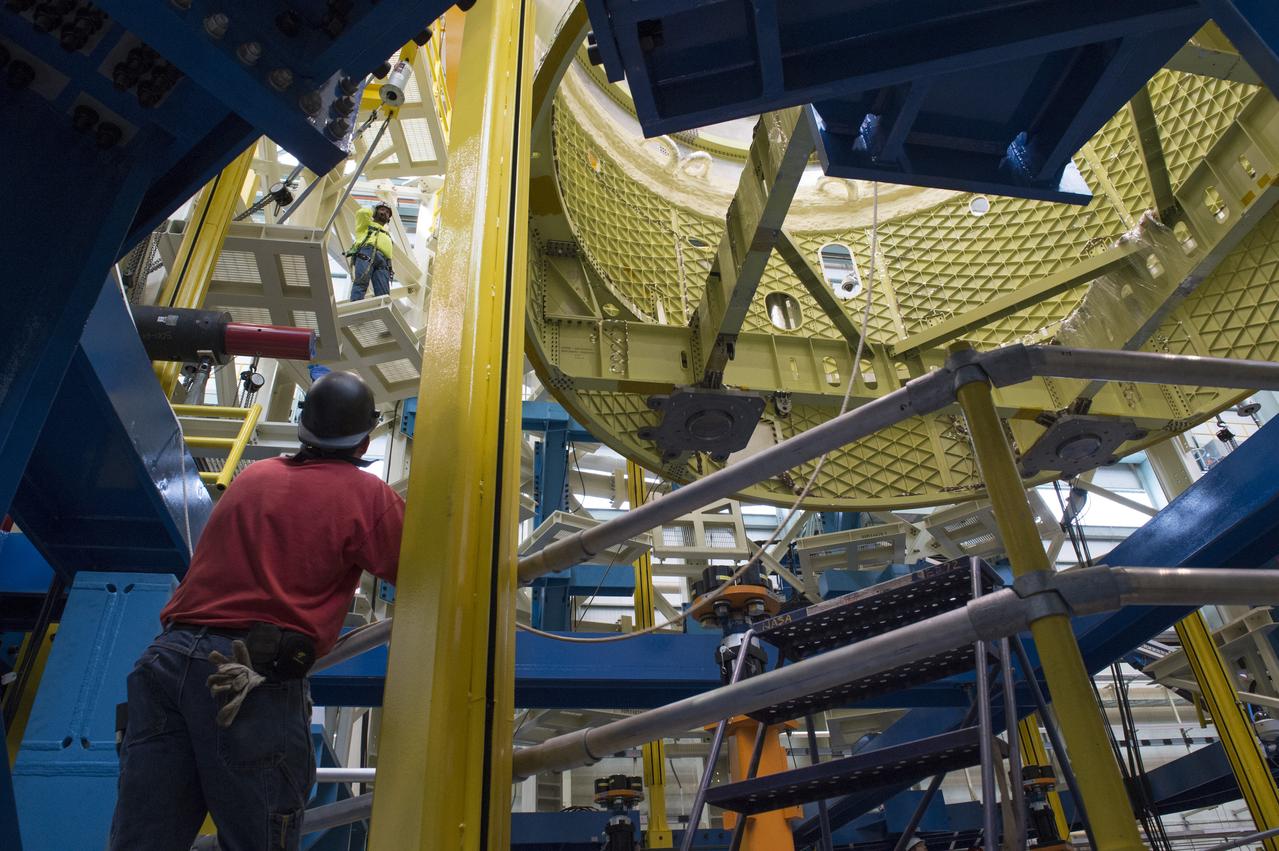
NASA engineers install test hardware for the agency's new heavy lift rocket, the Space Launch System, into a newly constructed 50-foot structural test stand at NASA's Marshall Space Flight Center. In the stand, hydraulic cylinders will be electronically controlled to push, pull, twist and bend the test article with millions of pounds of force. Engineers will record and analyze over 3,000 channels of data for each test case to verify the capabilities of the engine section and validate that the design and analysis models accurately predict the amount of loads the core stage can withstand during launch and ascent. The engine section, recently delivered via NASA's barge Pegasus from NASA's Michoud Assembly Facility, is the first of four core stage structural test articles scheduled to be delivered to Marshall for testing. The engine section, located at the bottom of SLS's massive core stage, will house the rocket's four RS-25 engines and be an attachment point for the two solid rocket boosters.
NASA engineers install test hardware for the agency's new heavy lift rocket, the Space Launch System, into a newly constructed 50-foot structural test stand at NASA's Marshall Space Flight Center. In the stand, hydraulic cylinders will be electronically controlled to push, pull, twist and bend the test article with millions of pounds of force. Engineers will record and analyze over 3,000 channels of data for each test case to verify the capabilities of the engine section and validate that the design and analysis models accurately predict the amount of loads the core stage can withstand during launch and ascent. The engine section, recently delivered via NASA's barge Pegasus from NASA's Michoud Assembly Facility, is the first of four core stage structural test articles scheduled to be delivered to Marshall for testing. The engine section, located at the bottom of SLS's massive core stage, will house the rocket's four RS-25 engines and be an attachment point for the two solid rocket boosters.
NASA engineers install test hardware for the agency's new heavy lift rocket, the Space Launch System, into a newly constructed 50-foot structural test stand at NASA's Marshall Space Flight Center. In the stand, hydraulic cylinders will be electronically controlled to push, pull, twist and bend the test article with millions of pounds of force. Engineers will record and analyze over 3,000 channels of data for each test case to verify the capabilities of the engine section and validate that the design and analysis models accurately predict the amount of loads the core stage can withstand during launch and ascent. The engine section, recently delivered via NASA's barge Pegasus from NASA's Michoud Assembly Facility, is the first of four core stage structural test articles scheduled to be delivered to Marshall for testing. The engine section, located at the bottom of SLS's massive core stage, will house the rocket's four RS-25 engines and be an attachment point for the two solid rocket boosters.
NASA engineers install test hardware for the agency's new heavy lift rocket, the Space Launch System, into a newly constructed 50-foot structural test stand at NASA's Marshall Space Flight Center. In the stand, hydraulic cylinders will be electronically controlled to push, pull, twist and bend the test article with millions of pounds of force. Engineers will record and analyze over 3,000 channels of data for each test case to verify the capabilities of the engine section and validate that the design and analysis models accurately predict the amount of loads the core stage can withstand during launch and ascent. The engine section, recently delivered via NASA's barge Pegasus from NASA's Michoud Assembly Facility, is the first of four core stage structural test articles scheduled to be delivered to Marshall for testing. The engine section, located at the bottom of SLS's massive core stage, will house the rocket's four RS-25 engines and be an attachment point for the two solid rocket boosters.
NASA engineers install test hardware for the agency's new heavy lift rocket, the Space Launch System, into a newly constructed 50-foot structural test stand at NASA's Marshall Space Flight Center. In the stand, hydraulic cylinders will be electronically controlled to push, pull, twist and bend the test article with millions of pounds of force. Engineers will record and analyze over 3,000 channels of data for each test case to verify the capabilities of the engine section and validate that the design and analysis models accurately predict the amount of loads the core stage can withstand during launch and ascent. The engine section, recently delivered via NASA's barge Pegasus from NASA's Michoud Assembly Facility, is the first of four core stage structural test articles scheduled to be delivered to Marshall for testing. The engine section, located at the bottom of SLS's massive core stage, will house the rocket's four RS-25 engines and be an attachment point for the two solid rocket boosters.
NASA engineers install test hardware for the agency's new heavy lift rocket, the Space Launch System, into a newly constructed 50-foot structural test stand at NASA's Marshall Space Flight Center. In the stand, hydraulic cylinders will be electronically controlled to push, pull, twist and bend the test article with millions of pounds of force. Engineers will record and analyze over 3,000 channels of data for each test case to verify the capabilities of the engine section and validate that the design and analysis models accurately predict the amount of loads the core stage can withstand during launch and ascent. The engine section, recently delivered via NASA's barge Pegasus from NASA's Michoud Assembly Facility, is the first of four core stage structural test articles scheduled to be delivered to Marshall for testing. The engine section, located at the bottom of SLS's massive core stage, will house the rocket's four RS-25 engines and be an attachment point for the two solid rocket boosters.
NASA engineers install test hardware for the agency's new heavy lift rocket, the Space Launch System, into a newly constructed 50-foot structural test stand at NASA's Marshall Space Flight Center. In the stand, hydraulic cylinders will be electronically controlled to push, pull, twist and bend the test article with millions of pounds of force. Engineers will record and analyze over 3,000 channels of data for each test case to verify the capabilities of the engine section and validate that the design and analysis models accurately predict the amount of loads the core stage can withstand during launch and ascent. The engine section, recently delivered via NASA's barge Pegasus from NASA's Michoud Assembly Facility, is the first of four core stage structural test articles scheduled to be delivered to Marshall for testing. The engine section, located at the bottom of SLS's massive core stage, will house the rocket's four RS-25 engines and be an attachment point for the two solid rocket boosters.
NASA engineers install test hardware for the agency's new heavy lift rocket, the Space Launch System, into a newly constructed 50-foot structural test stand at NASA's Marshall Space Flight Center. In the stand, hydraulic cylinders will be electronically controlled to push, pull, twist and bend the test article with millions of pounds of force. Engineers will record and analyze over 3,000 channels of data for each test case to verify the capabilities of the engine section and validate that the design and analysis models accurately predict the amount of loads the core stage can withstand during launch and ascent. The engine section, recently delivered via NASA's barge Pegasus from NASA's Michoud Assembly Facility, is the first of four core stage structural test articles scheduled to be delivered to Marshall for testing. The engine section, located at the bottom of SLS's massive core stage, will house the rocket's four RS-25 engines and be an attachment point for the two solid rocket boosters.
NASA engineers install test hardware for the agency's new heavy lift rocket, the Space Launch System, into a newly constructed 50-foot structural test stand at NASA's Marshall Space Flight Center. In the stand, hydraulic cylinders will be electronically controlled to push, pull, twist and bend the test article with millions of pounds of force. Engineers will record and analyze over 3,000 channels of data for each test case to verify the capabilities of the engine section and validate that the design and analysis models accurately predict the amount of loads the core stage can withstand during launch and ascent. The engine section, recently delivered via NASA's barge Pegasus from NASA's Michoud Assembly Facility, is the first of four core stage structural test articles scheduled to be delivered to Marshall for testing. The engine section, located at the bottom of SLS's massive core stage, will house the rocket's four RS-25 engines and be an attachment point for the two solid rocket boosters.
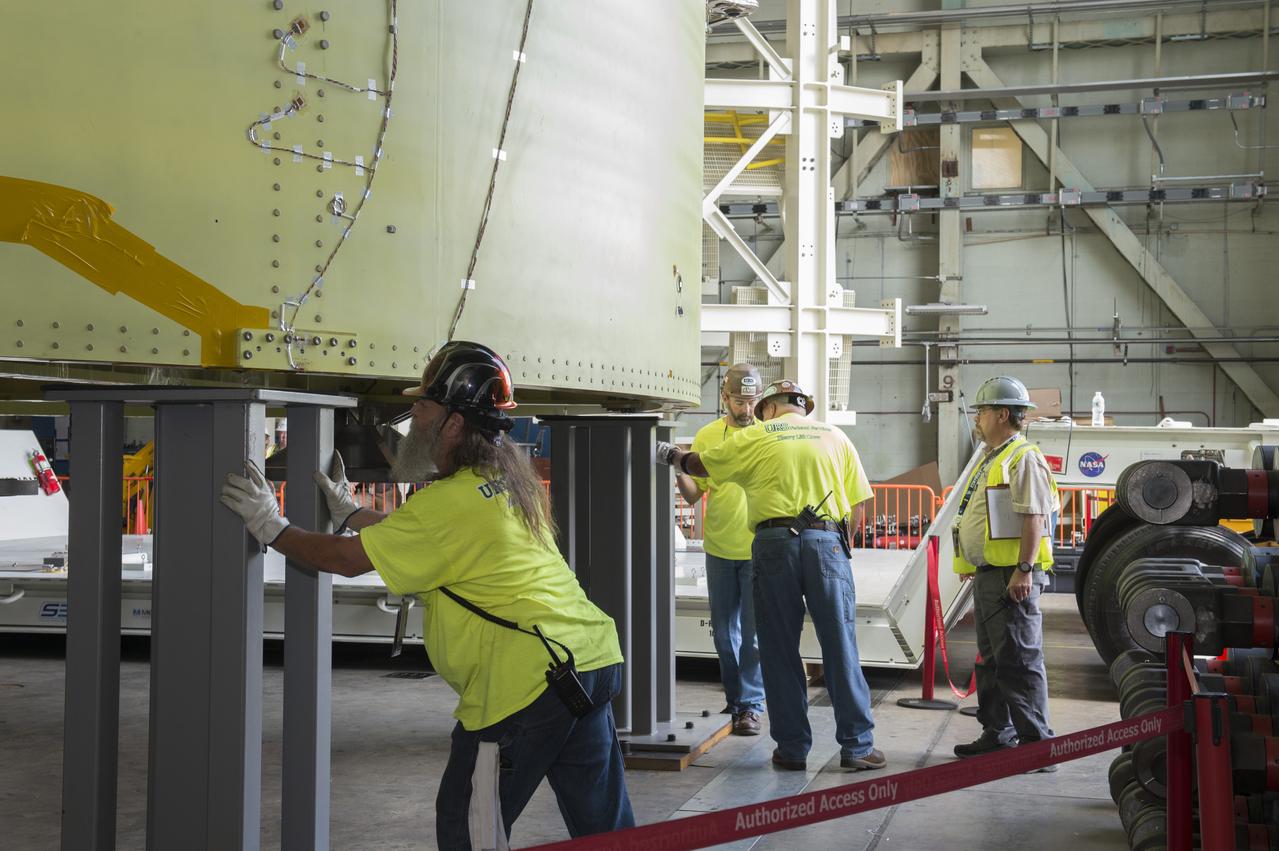
NASA engineers install test hardware for the agency's new heavy lift rocket, the Space Launch System, into a newly constructed 50-foot structural test stand at NASA's Marshall Space Flight Center. In the stand, hydraulic cylinders will be electronically controlled to push, pull, twist and bend the test article with millions of pounds of force. Engineers will record and analyze over 3,000 channels of data for each test case to verify the capabilities of the engine section and validate that the design and analysis models accurately predict the amount of loads the core stage can withstand during launch and ascent. The engine section, recently delivered via NASA's barge Pegasus from NASA's Michoud Assembly Facility, is the first of four core stage structural test articles scheduled to be delivered to Marshall for testing. The engine section, located at the bottom of SLS's massive core stage, will house the rocket's four RS-25 engines and be an attachment point for the two solid rocket boosters.
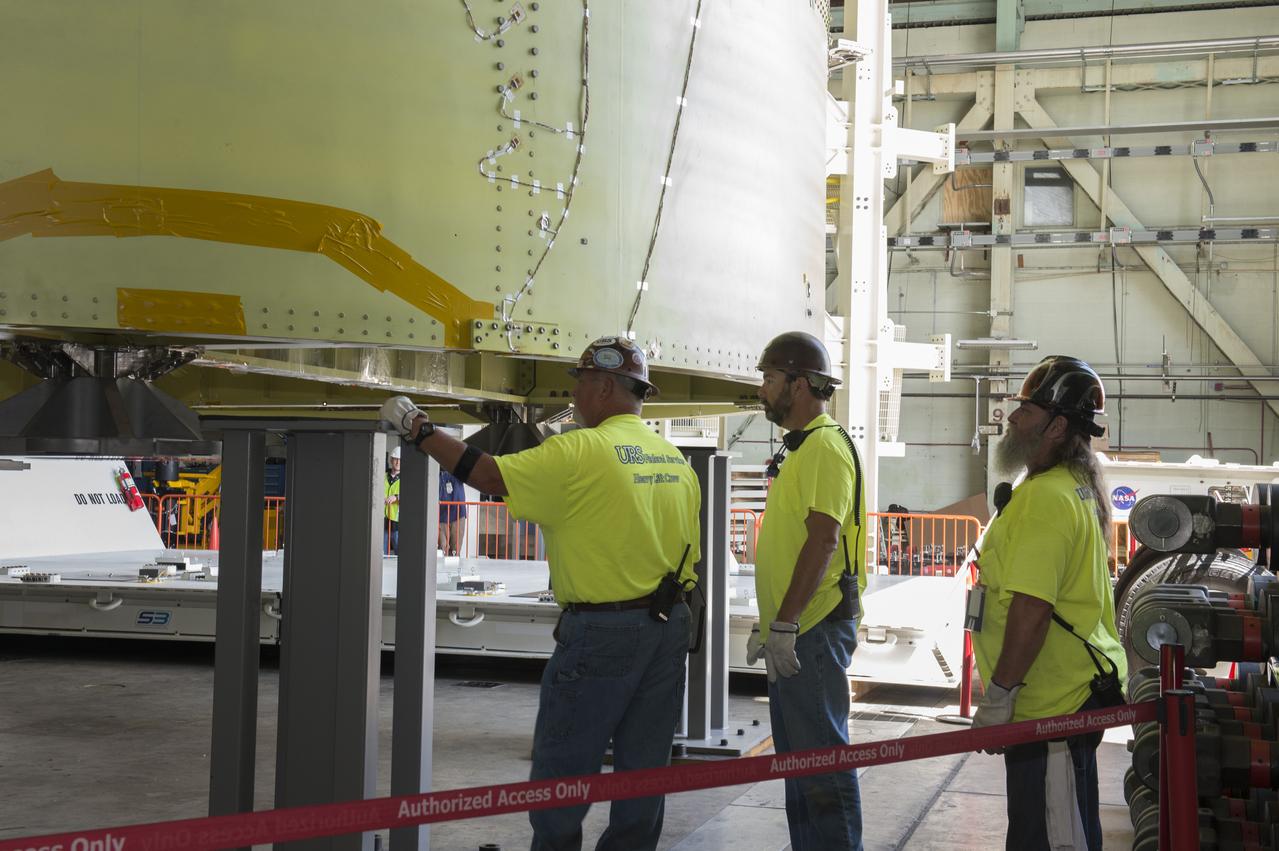
NASA engineers install test hardware for the agency's new heavy lift rocket, the Space Launch System, into a newly constructed 50-foot structural test stand at NASA's Marshall Space Flight Center. In the stand, hydraulic cylinders will be electronically controlled to push, pull, twist and bend the test article with millions of pounds of force. Engineers will record and analyze over 3,000 channels of data for each test case to verify the capabilities of the engine section and validate that the design and analysis models accurately predict the amount of loads the core stage can withstand during launch and ascent. The engine section, recently delivered via NASA's barge Pegasus from NASA's Michoud Assembly Facility, is the first of four core stage structural test articles scheduled to be delivered to Marshall for testing. The engine section, located at the bottom of SLS's massive core stage, will house the rocket's four RS-25 engines and be an attachment point for the two solid rocket boosters.

NASA engineers install test hardware for the agency's new heavy lift rocket, the Space Launch System, into a newly constructed 50-foot structural test stand at NASA's Marshall Space Flight Center. In the stand, hydraulic cylinders will be electronically controlled to push, pull, twist and bend the test article with millions of pounds of force. Engineers will record and analyze over 3,000 channels of data for each test case to verify the capabilities of the engine section and validate that the design and analysis models accurately predict the amount of loads the core stage can withstand during launch and ascent. The engine section, recently delivered via NASA's barge Pegasus from NASA's Michoud Assembly Facility, is the first of four core stage structural test articles scheduled to be delivered to Marshall for testing. The engine section, located at the bottom of SLS's massive core stage, will house the rocket's four RS-25 engines and be an attachment point for the two solid rocket boosters.
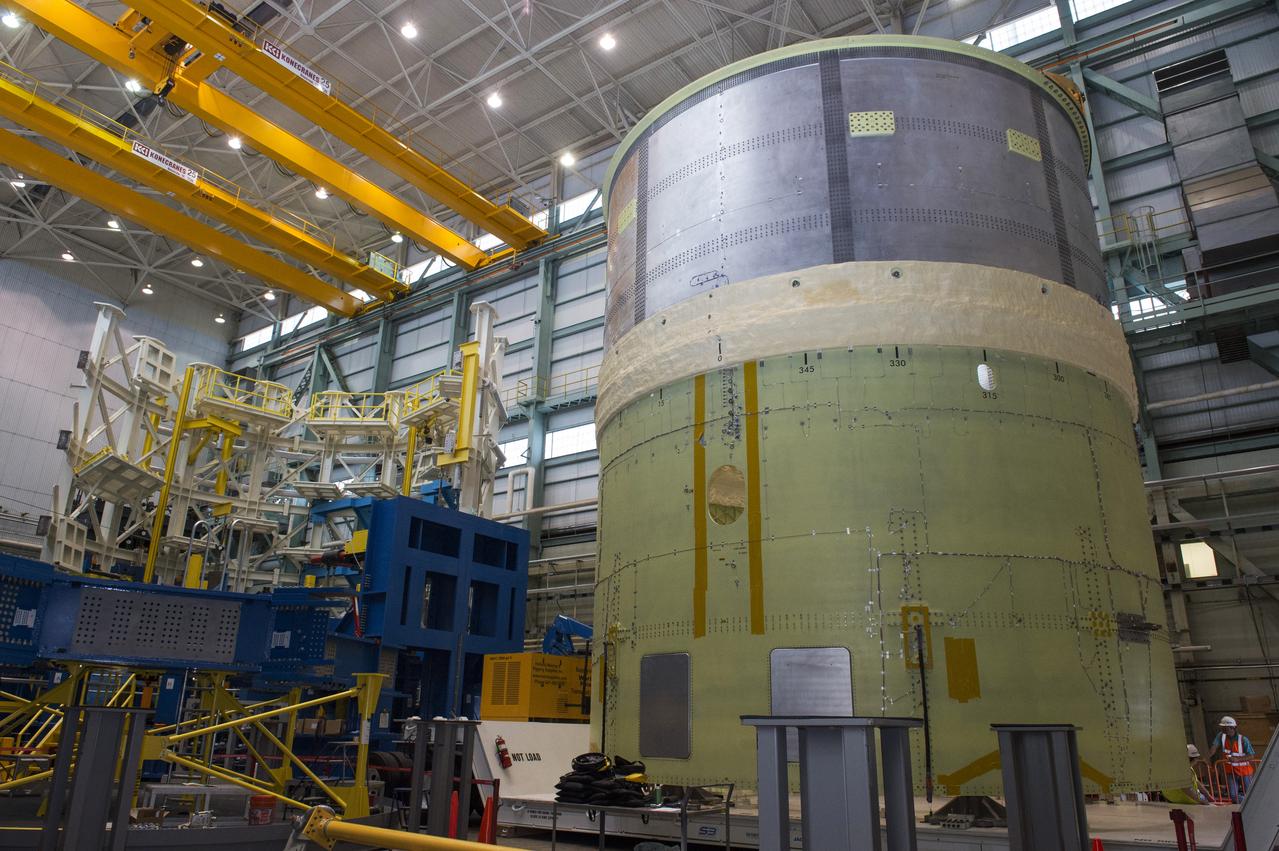
NASA engineers install test hardware for the agency's new heavy lift rocket, the Space Launch System, into a newly constructed 50-foot structural test stand at NASA's Marshall Space Flight Center. In the stand, hydraulic cylinders will be electronically controlled to push, pull, twist and bend the test article with millions of pounds of force. Engineers will record and analyze over 3,000 channels of data for each test case to verify the capabilities of the engine section and validate that the design and analysis models accurately predict the amount of loads the core stage can withstand during launch and ascent. The engine section, recently delivered via NASA's barge Pegasus from NASA's Michoud Assembly Facility, is the first of four core stage structural test articles scheduled to be delivered to Marshall for testing. The engine section, located at the bottom of SLS's massive core stage, will house the rocket's four RS-25 engines and be an attachment point for the two solid rocket boosters.
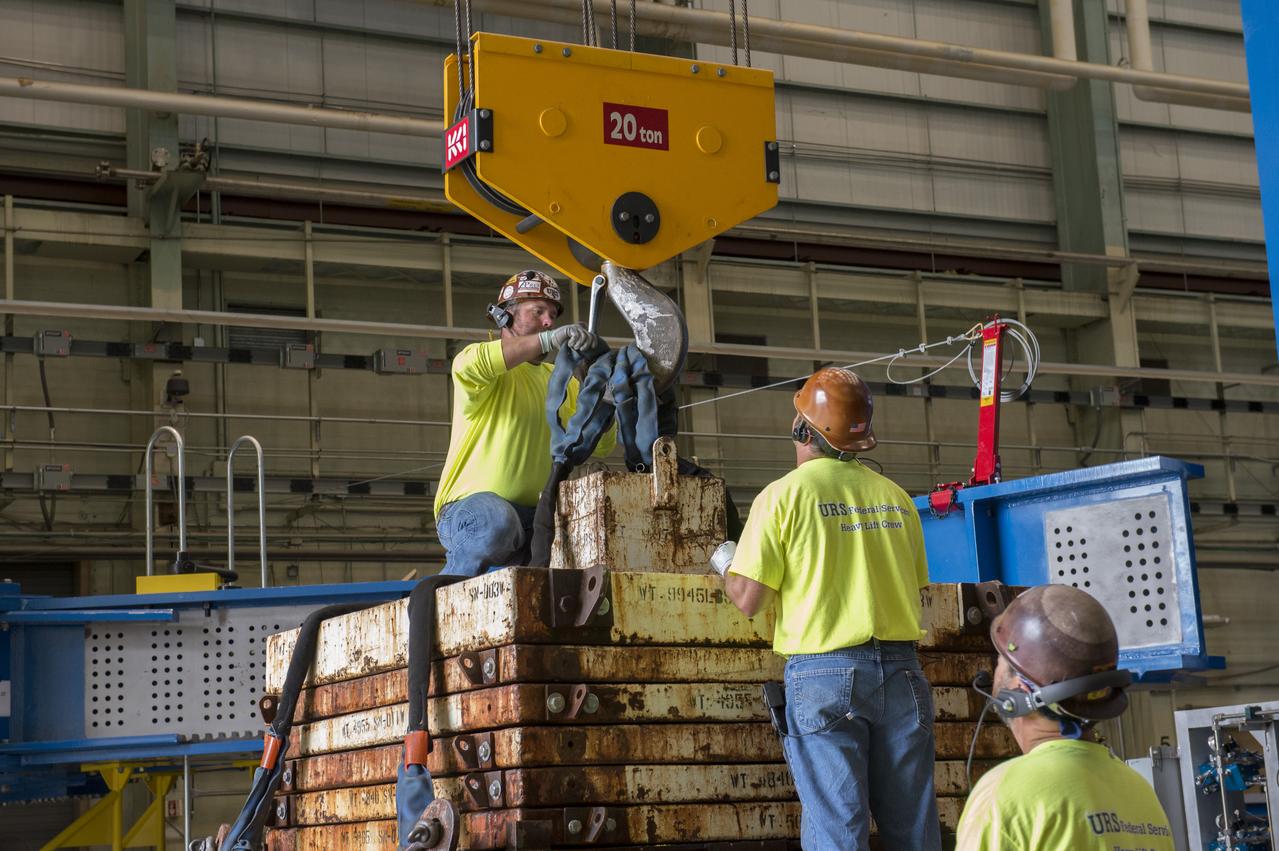
NASA engineers install test hardware for the agency's new heavy lift rocket, the Space Launch System, into a newly constructed 50-foot structural test stand at NASA's Marshall Space Flight Center. In the stand, hydraulic cylinders will be electronically controlled to push, pull, twist and bend the test article with millions of pounds of force. Engineers will record and analyze over 3,000 channels of data for each test case to verify the capabilities of the engine section and validate that the design and analysis models accurately predict the amount of loads the core stage can withstand during launch and ascent. The engine section, recently delivered via NASA's barge Pegasus from NASA's Michoud Assembly Facility, is the first of four core stage structural test articles scheduled to be delivered to Marshall for testing. The engine section, located at the bottom of SLS's massive core stage, will house the rocket's four RS-25 engines and be an attachment point for the two solid rocket boosters.
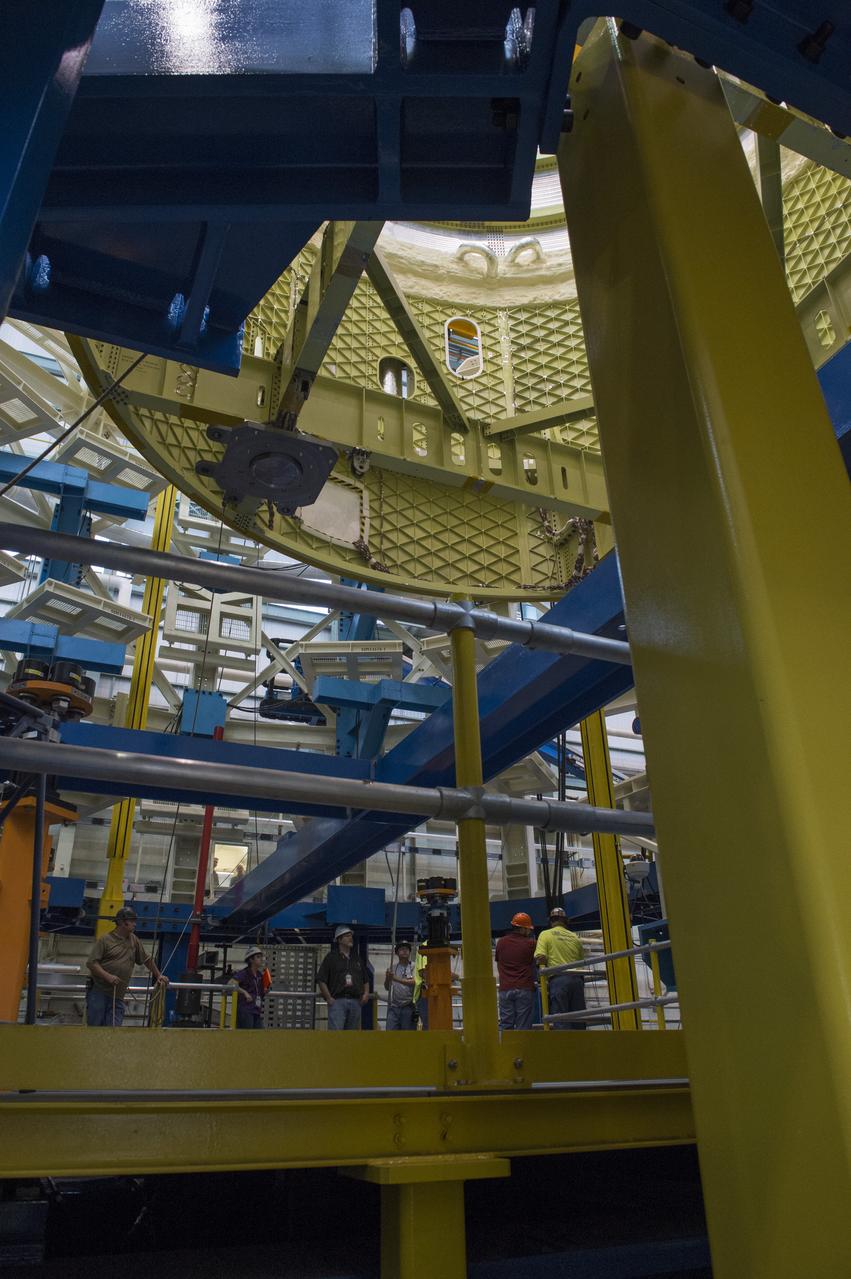
NASA engineers install test hardware for the agency's new heavy lift rocket, the Space Launch System, into a newly constructed 50-foot structural test stand at NASA's Marshall Space Flight Center. In the stand, hydraulic cylinders will be electronically controlled to push, pull, twist and bend the test article with millions of pounds of force. Engineers will record and analyze over 3,000 channels of data for each test case to verify the capabilities of the engine section and validate that the design and analysis models accurately predict the amount of loads the core stage can withstand during launch and ascent. The engine section, recently delivered via NASA's barge Pegasus from NASA's Michoud Assembly Facility, is the first of four core stage structural test articles scheduled to be delivered to Marshall for testing. The engine section, located at the bottom of SLS's massive core stage, will house the rocket's four RS-25 engines and be an attachment point for the two solid rocket boosters.
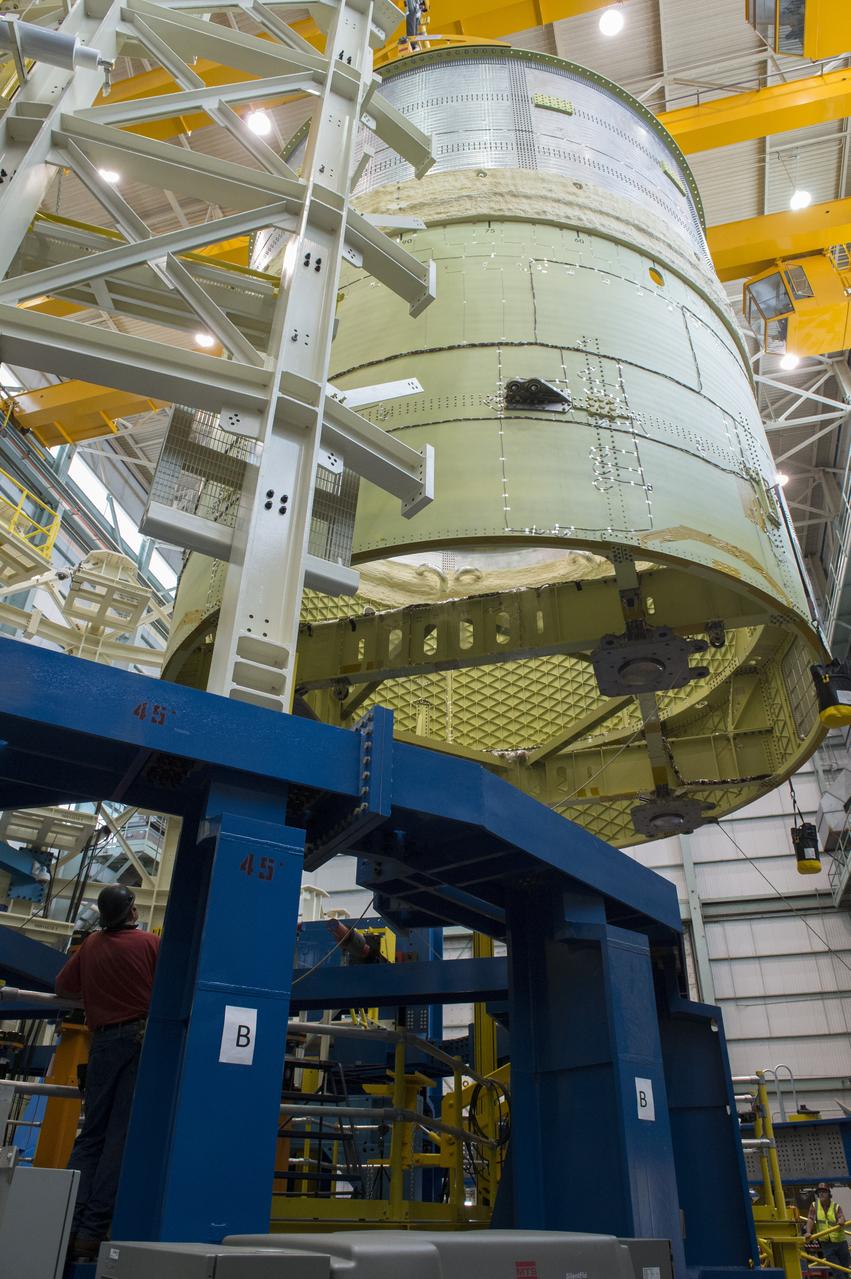
NASA engineers install test hardware for the agency's new heavy lift rocket, the Space Launch System, into a newly constructed 50-foot structural test stand at NASA's Marshall Space Flight Center. In the stand, hydraulic cylinders will be electronically controlled to push, pull, twist and bend the test article with millions of pounds of force. Engineers will record and analyze over 3,000 channels of data for each test case to verify the capabilities of the engine section and validate that the design and analysis models accurately predict the amount of loads the core stage can withstand during launch and ascent. The engine section, recently delivered via NASA's barge Pegasus from NASA's Michoud Assembly Facility, is the first of four core stage structural test articles scheduled to be delivered to Marshall for testing. The engine section, located at the bottom of SLS's massive core stage, will house the rocket's four RS-25 engines and be an attachment point for the two solid rocket boosters.

NASA engineers install test hardware for the agency's new heavy lift rocket, the Space Launch System, into a newly constructed 50-foot structural test stand at NASA's Marshall Space Flight Center. In the stand, hydraulic cylinders will be electronically controlled to push, pull, twist and bend the test article with millions of pounds of force. Engineers will record and analyze over 3,000 channels of data for each test case to verify the capabilities of the engine section and validate that the design and analysis models accurately predict the amount of loads the core stage can withstand during launch and ascent. The engine section, recently delivered via NASA's barge Pegasus from NASA's Michoud Assembly Facility, is the first of four core stage structural test articles scheduled to be delivered to Marshall for testing. The engine section, located at the bottom of SLS's massive core stage, will house the rocket's four RS-25 engines and be an attachment point for the two solid rocket boosters.
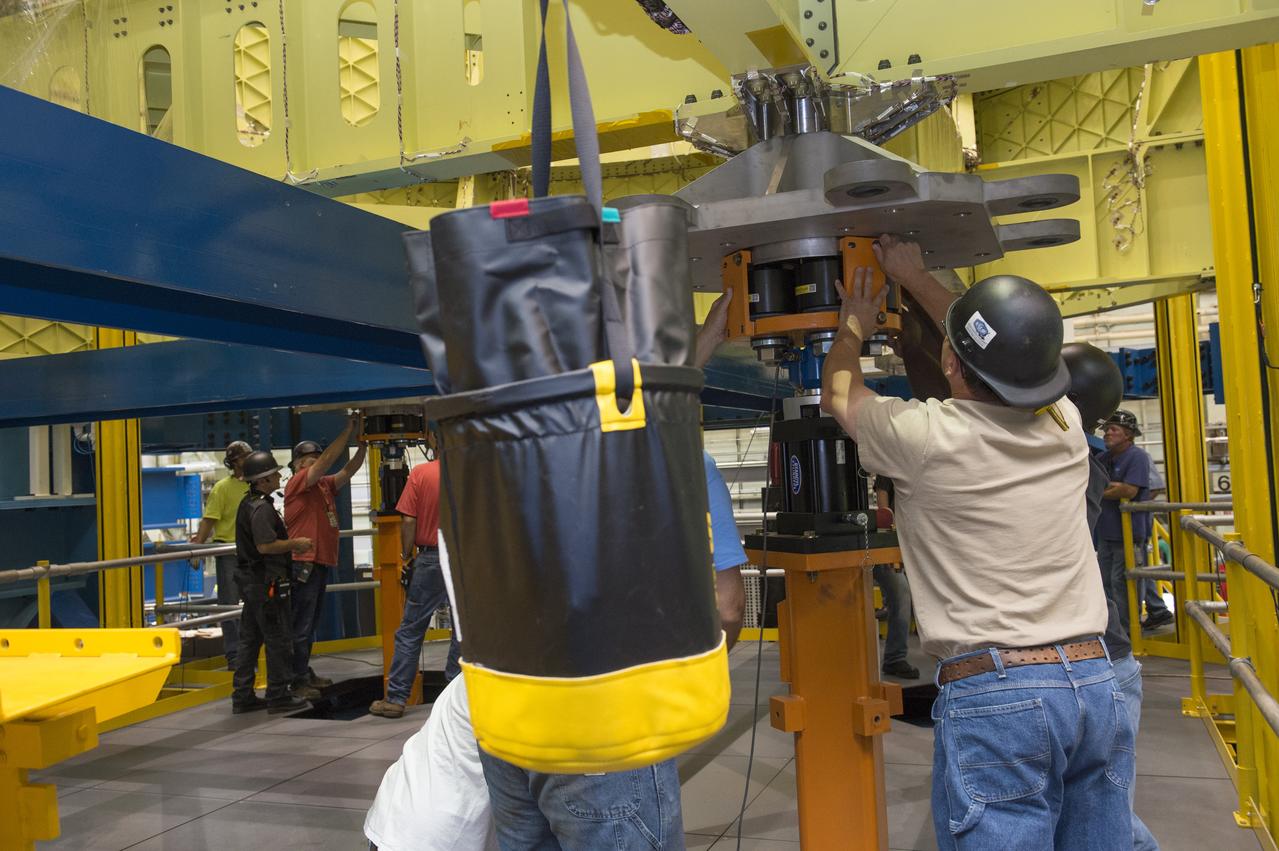
NASA engineers install test hardware for the agency's new heavy lift rocket, the Space Launch System, into a newly constructed 50-foot structural test stand at NASA's Marshall Space Flight Center. In the stand, hydraulic cylinders will be electronically controlled to push, pull, twist and bend the test article with millions of pounds of force. Engineers will record and analyze over 3,000 channels of data for each test case to verify the capabilities of the engine section and validate that the design and analysis models accurately predict the amount of loads the core stage can withstand during launch and ascent. The engine section, recently delivered via NASA's barge Pegasus from NASA's Michoud Assembly Facility, is the first of four core stage structural test articles scheduled to be delivered to Marshall for testing. The engine section, located at the bottom of SLS's massive core stage, will house the rocket's four RS-25 engines and be an attachment point for the two solid rocket boosters.
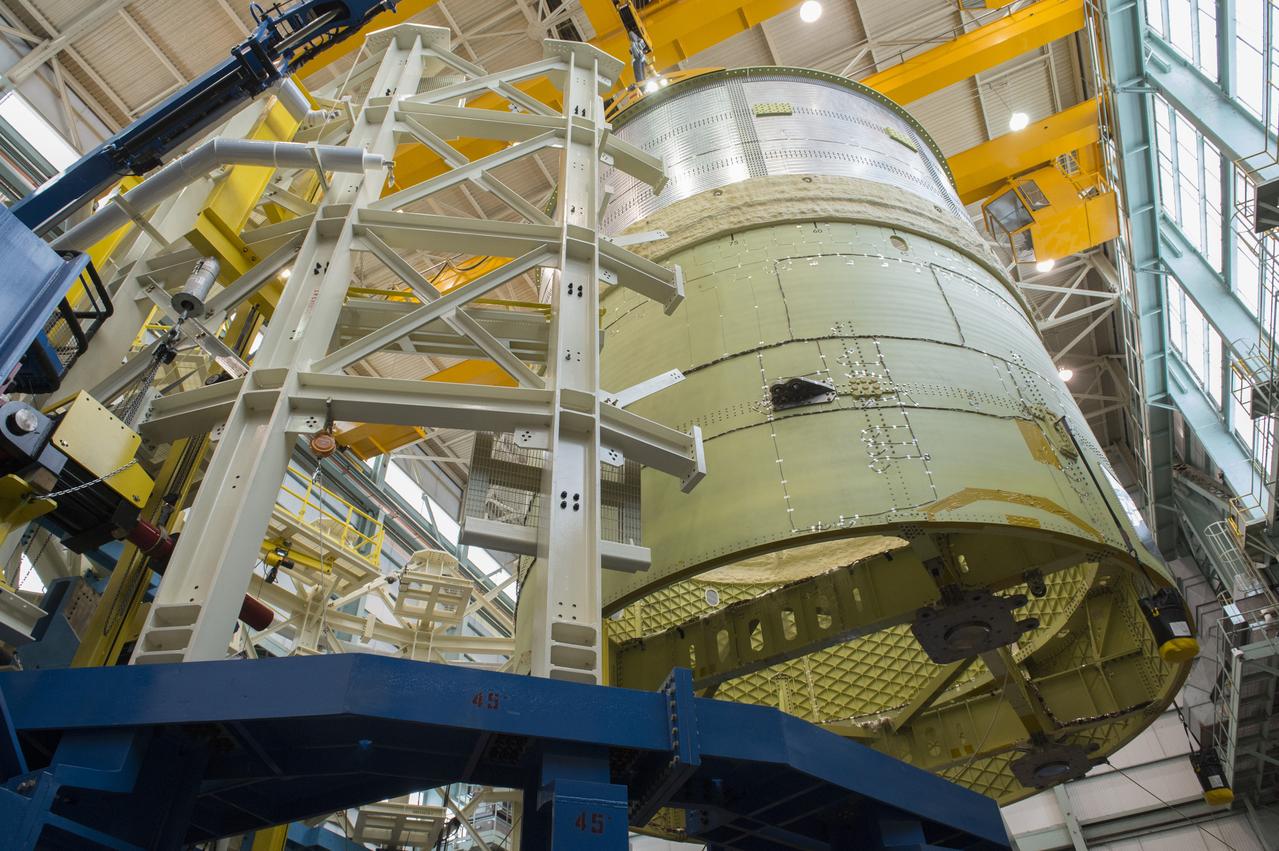
NASA engineers install test hardware for the agency's new heavy lift rocket, the Space Launch System, into a newly constructed 50-foot structural test stand at NASA's Marshall Space Flight Center. In the stand, hydraulic cylinders will be electronically controlled to push, pull, twist and bend the test article with millions of pounds of force. Engineers will record and analyze over 3,000 channels of data for each test case to verify the capabilities of the engine section and validate that the design and analysis models accurately predict the amount of loads the core stage can withstand during launch and ascent. The engine section, recently delivered via NASA's barge Pegasus from NASA's Michoud Assembly Facility, is the first of four core stage structural test articles scheduled to be delivered to Marshall for testing. The engine section, located at the bottom of SLS's massive core stage, will house the rocket's four RS-25 engines and be an attachment point for the two solid rocket boosters.
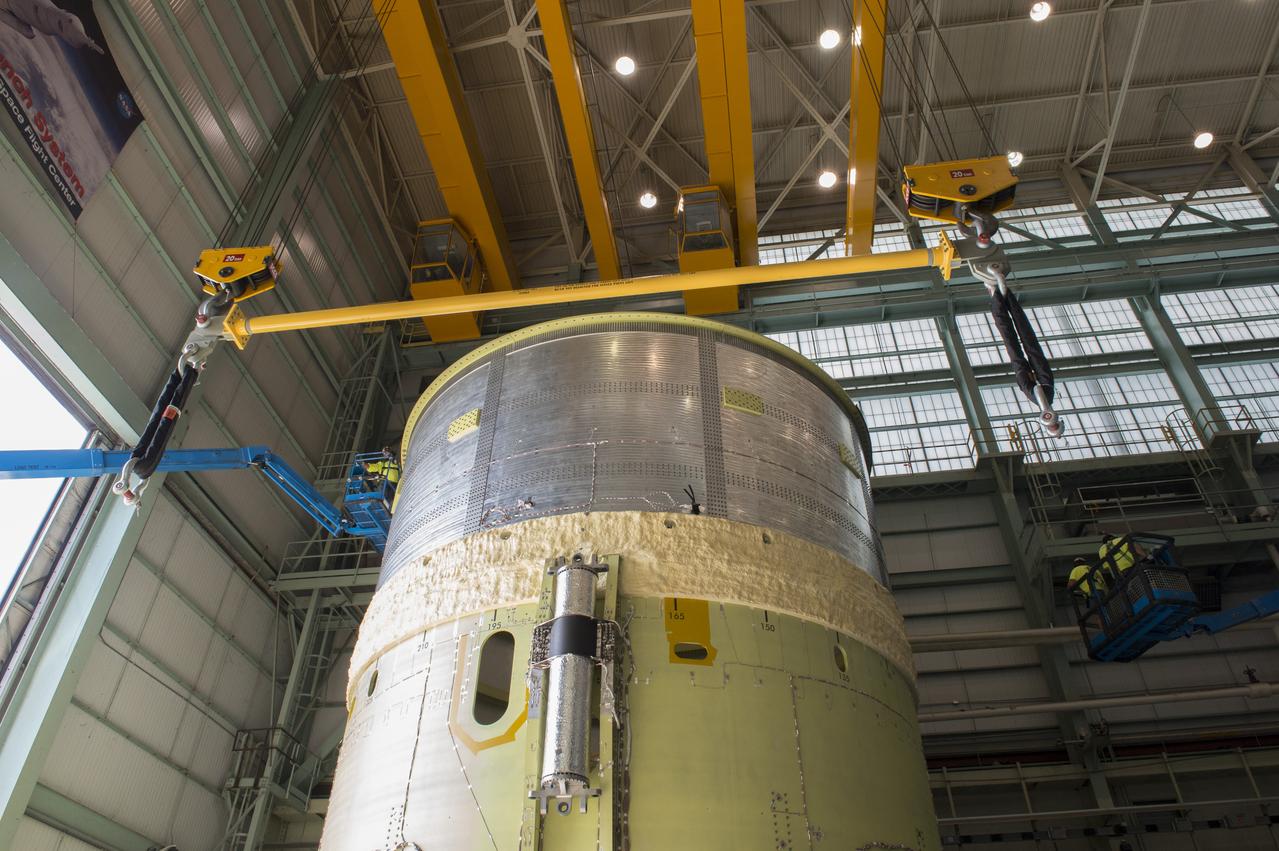
NASA engineers install test hardware for the agency's new heavy lift rocket, the Space Launch System, into a newly constructed 50-foot structural test stand at NASA's Marshall Space Flight Center. In the stand, hydraulic cylinders will be electronically controlled to push, pull, twist and bend the test article with millions of pounds of force. Engineers will record and analyze over 3,000 channels of data for each test case to verify the capabilities of the engine section and validate that the design and analysis models accurately predict the amount of loads the core stage can withstand during launch and ascent. The engine section, recently delivered via NASA's barge Pegasus from NASA's Michoud Assembly Facility, is the first of four core stage structural test articles scheduled to be delivered to Marshall for testing. The engine section, located at the bottom of SLS's massive core stage, will house the rocket's four RS-25 engines and be an attachment point for the two solid rocket boosters.
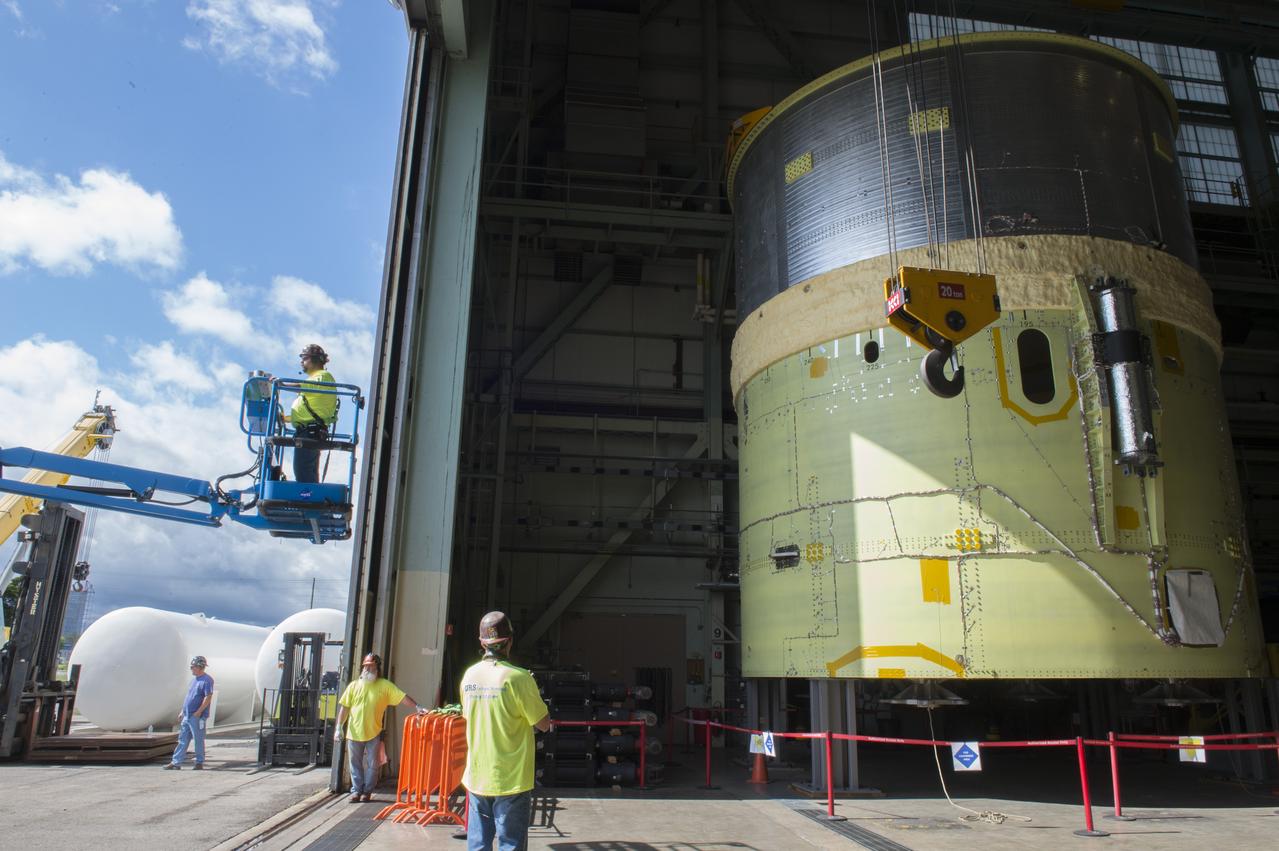
NASA engineers install test hardware for the agency's new heavy lift rocket, the Space Launch System, into a newly constructed 50-foot structural test stand at NASA's Marshall Space Flight Center. In the stand, hydraulic cylinders will be electronically controlled to push, pull, twist and bend the test article with millions of pounds of force. Engineers will record and analyze over 3,000 channels of data for each test case to verify the capabilities of the engine section and validate that the design and analysis models accurately predict the amount of loads the core stage can withstand during launch and ascent. The engine section, recently delivered via NASA's barge Pegasus from NASA's Michoud Assembly Facility, is the first of four core stage structural test articles scheduled to be delivered to Marshall for testing. The engine section, located at the bottom of SLS's massive core stage, will house the rocket's four RS-25 engines and be an attachment point for the two solid rocket boosters.
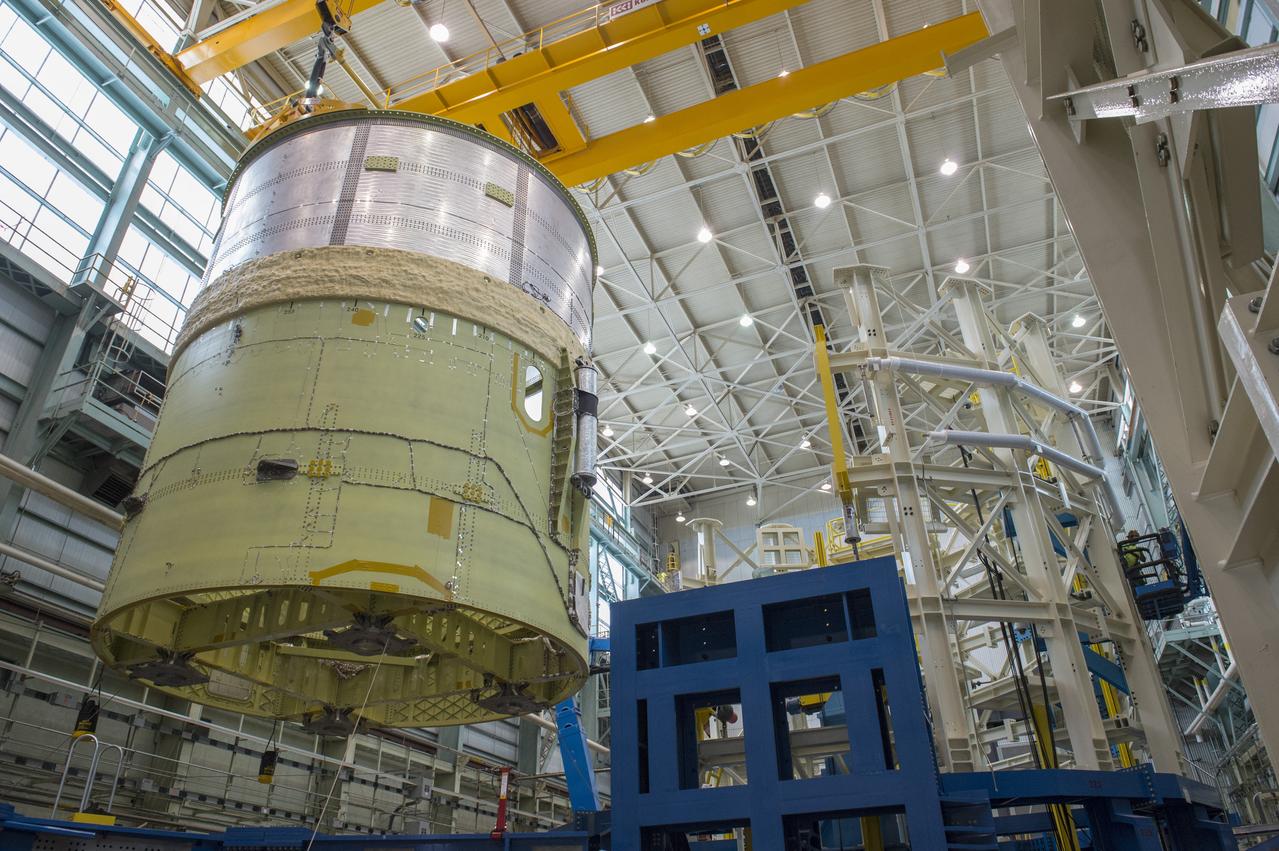
NASA engineers install test hardware for the agency's new heavy lift rocket, the Space Launch System, into a newly constructed 50-foot structural test stand at NASA's Marshall Space Flight Center. In the stand, hydraulic cylinders will be electronically controlled to push, pull, twist and bend the test article with millions of pounds of force. Engineers will record and analyze over 3,000 channels of data for each test case to verify the capabilities of the engine section and validate that the design and analysis models accurately predict the amount of loads the core stage can withstand during launch and ascent. The engine section, recently delivered via NASA's barge Pegasus from NASA's Michoud Assembly Facility, is the first of four core stage structural test articles scheduled to be delivered to Marshall for testing. The engine section, located at the bottom of SLS's massive core stage, will house the rocket's four RS-25 engines and be an attachment point for the two solid rocket boosters.
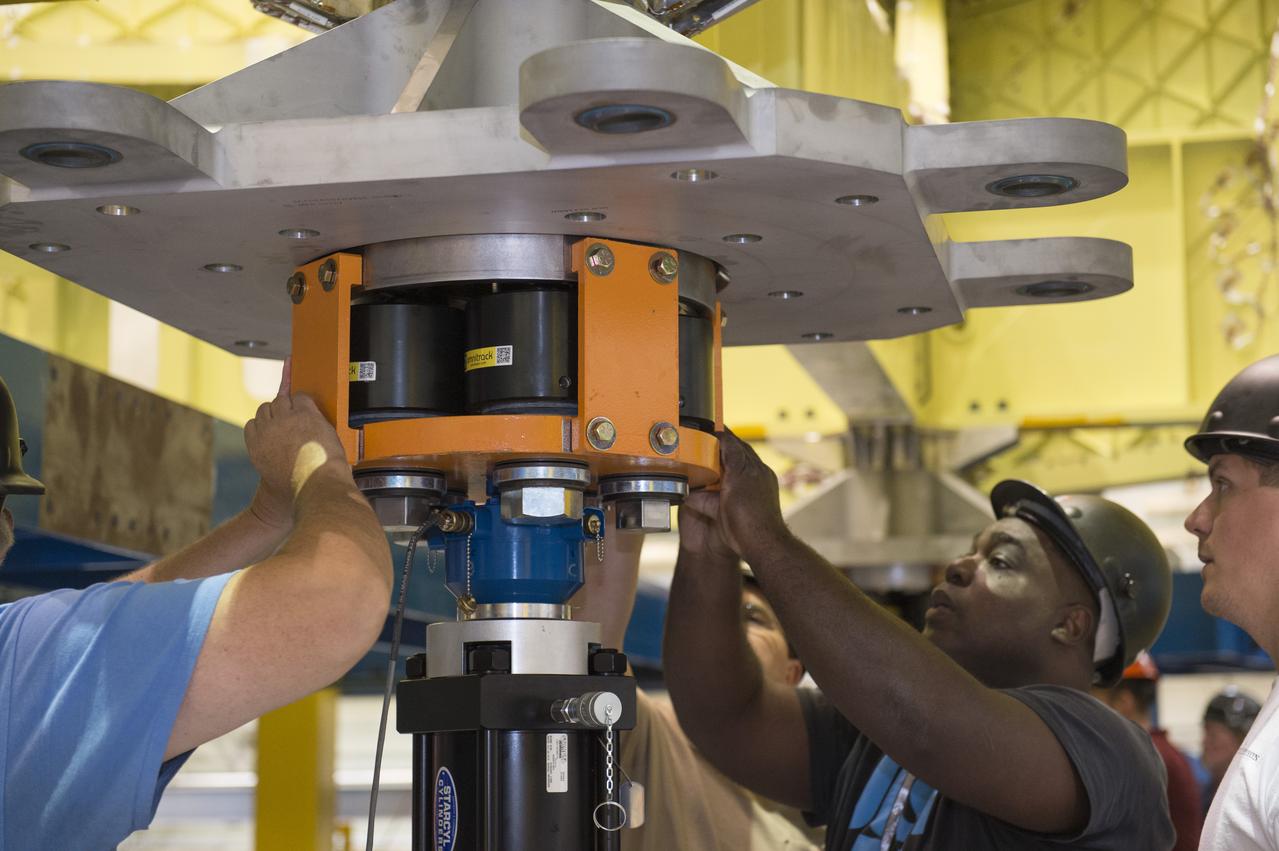
NASA engineers install test hardware for the agency's new heavy lift rocket, the Space Launch System, into a newly constructed 50-foot structural test stand at NASA's Marshall Space Flight Center. In the stand, hydraulic cylinders will be electronically controlled to push, pull, twist and bend the test article with millions of pounds of force. Engineers will record and analyze over 3,000 channels of data for each test case to verify the capabilities of the engine section and validate that the design and analysis models accurately predict the amount of loads the core stage can withstand during launch and ascent. The engine section, recently delivered via NASA's barge Pegasus from NASA's Michoud Assembly Facility, is the first of four core stage structural test articles scheduled to be delivered to Marshall for testing. The engine section, located at the bottom of SLS's massive core stage, will house the rocket's four RS-25 engines and be an attachment point for the two solid rocket boosters.
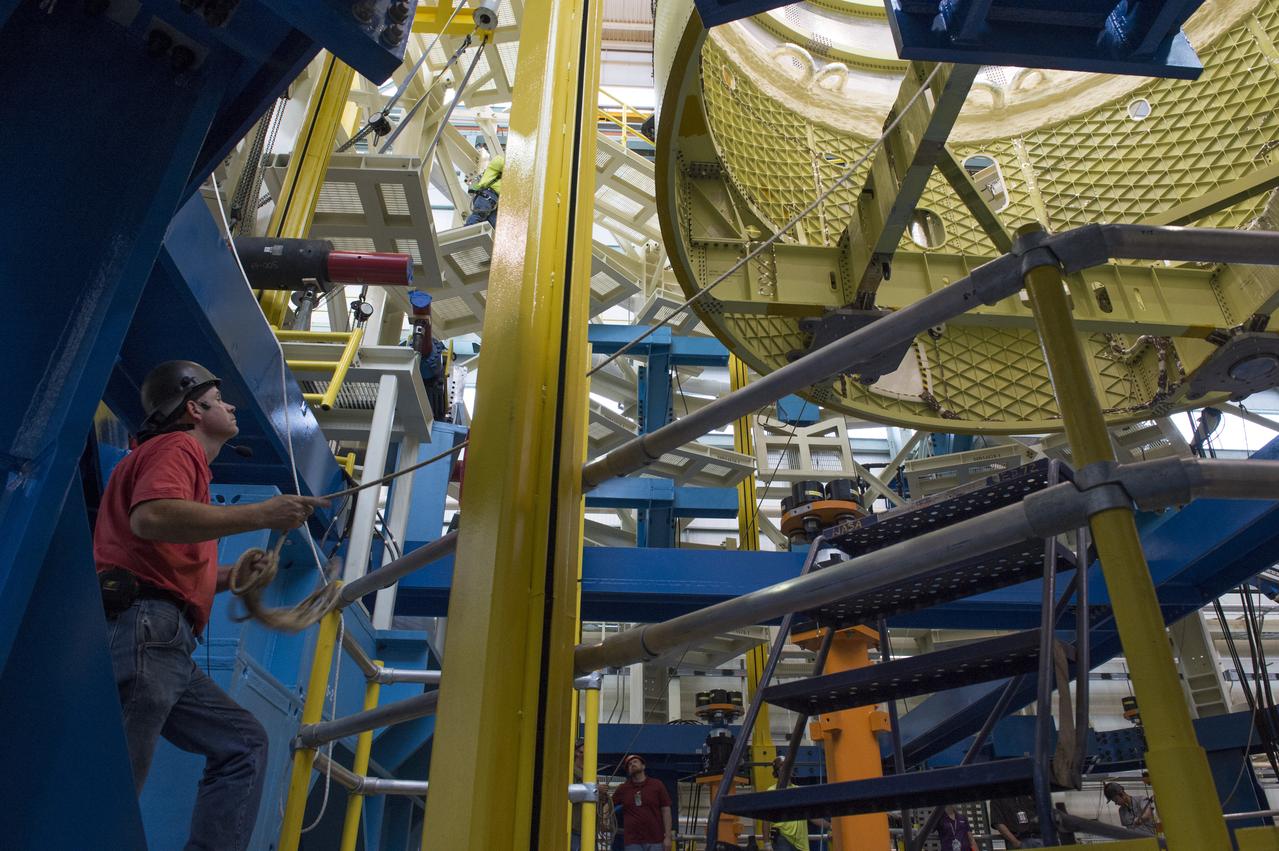
NASA engineers install test hardware for the agency's new heavy lift rocket, the Space Launch System, into a newly constructed 50-foot structural test stand at NASA's Marshall Space Flight Center. In the stand, hydraulic cylinders will be electronically controlled to push, pull, twist and bend the test article with millions of pounds of force. Engineers will record and analyze over 3,000 channels of data for each test case to verify the capabilities of the engine section and validate that the design and analysis models accurately predict the amount of loads the core stage can withstand during launch and ascent. The engine section, recently delivered via NASA's barge Pegasus from NASA's Michoud Assembly Facility, is the first of four core stage structural test articles scheduled to be delivered to Marshall for testing. The engine section, located at the bottom of SLS's massive core stage, will house the rocket's four RS-25 engines and be an attachment point for the two solid rocket boosters.
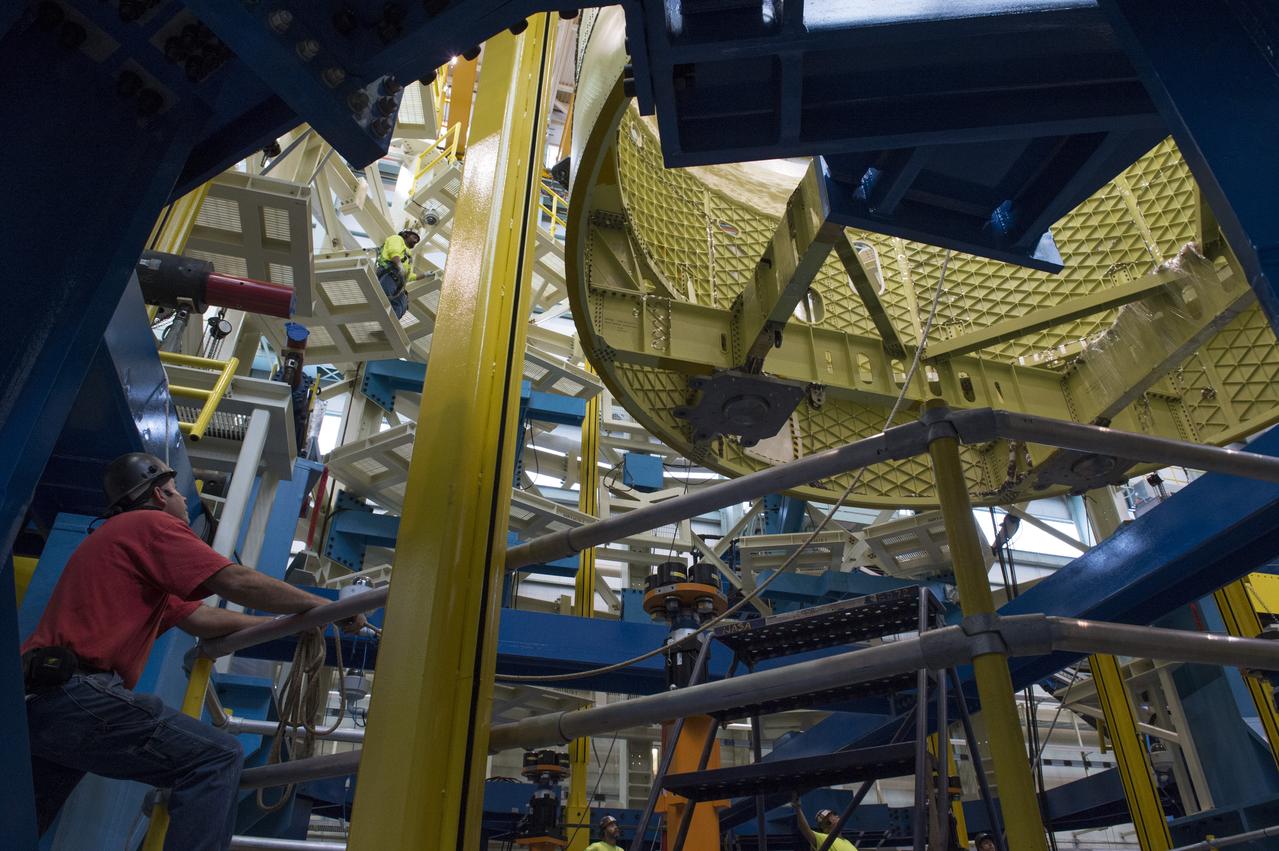
NASA engineers install test hardware for the agency's new heavy lift rocket, the Space Launch System, into a newly constructed 50-foot structural test stand at NASA's Marshall Space Flight Center. In the stand, hydraulic cylinders will be electronically controlled to push, pull, twist and bend the test article with millions of pounds of force. Engineers will record and analyze over 3,000 channels of data for each test case to verify the capabilities of the engine section and validate that the design and analysis models accurately predict the amount of loads the core stage can withstand during launch and ascent. The engine section, recently delivered via NASA's barge Pegasus from NASA's Michoud Assembly Facility, is the first of four core stage structural test articles scheduled to be delivered to Marshall for testing. The engine section, located at the bottom of SLS's massive core stage, will house the rocket's four RS-25 engines and be an attachment point for the two solid rocket boosters.

NASA engineers install test hardware for the agency's new heavy lift rocket, the Space Launch System, into a newly constructed 50-foot structural test stand at NASA's Marshall Space Flight Center. In the stand, hydraulic cylinders will be electronically controlled to push, pull, twist and bend the test article with millions of pounds of force. Engineers will record and analyze over 3,000 channels of data for each test case to verify the capabilities of the engine section and validate that the design and analysis models accurately predict the amount of loads the core stage can withstand during launch and ascent. The engine section, recently delivered via NASA's barge Pegasus from NASA's Michoud Assembly Facility, is the first of four core stage structural test articles scheduled to be delivered to Marshall for testing. The engine section, located at the bottom of SLS's massive core stage, will house the rocket's four RS-25 engines and be an attachment point for the two solid rocket boosters.
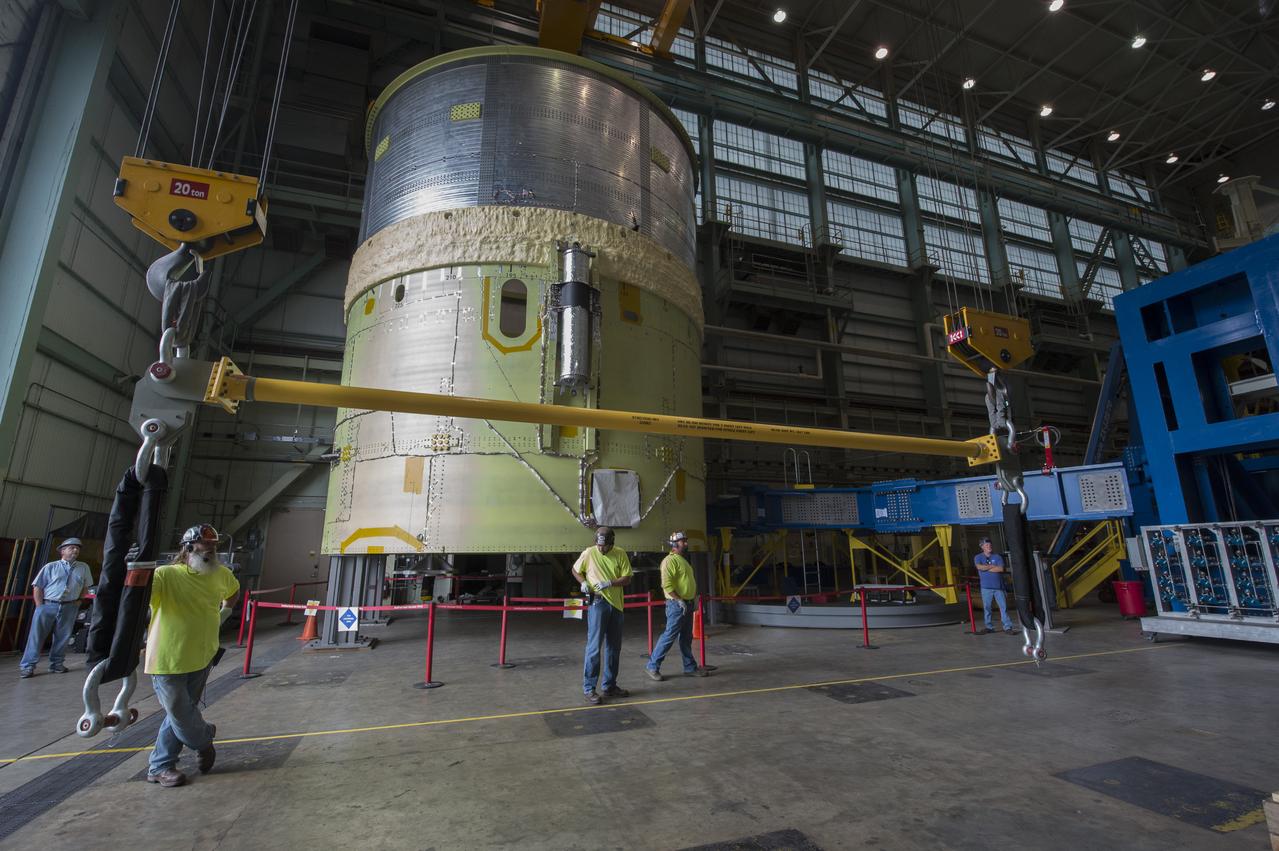
NASA engineers install test hardware for the agency's new heavy lift rocket, the Space Launch System, into a newly constructed 50-foot structural test stand at NASA's Marshall Space Flight Center. In the stand, hydraulic cylinders will be electronically controlled to push, pull, twist and bend the test article with millions of pounds of force. Engineers will record and analyze over 3,000 channels of data for each test case to verify the capabilities of the engine section and validate that the design and analysis models accurately predict the amount of loads the core stage can withstand during launch and ascent. The engine section, recently delivered via NASA's barge Pegasus from NASA's Michoud Assembly Facility, is the first of four core stage structural test articles scheduled to be delivered to Marshall for testing. The engine section, located at the bottom of SLS's massive core stage, will house the rocket's four RS-25 engines and be an attachment point for the two solid rocket boosters.
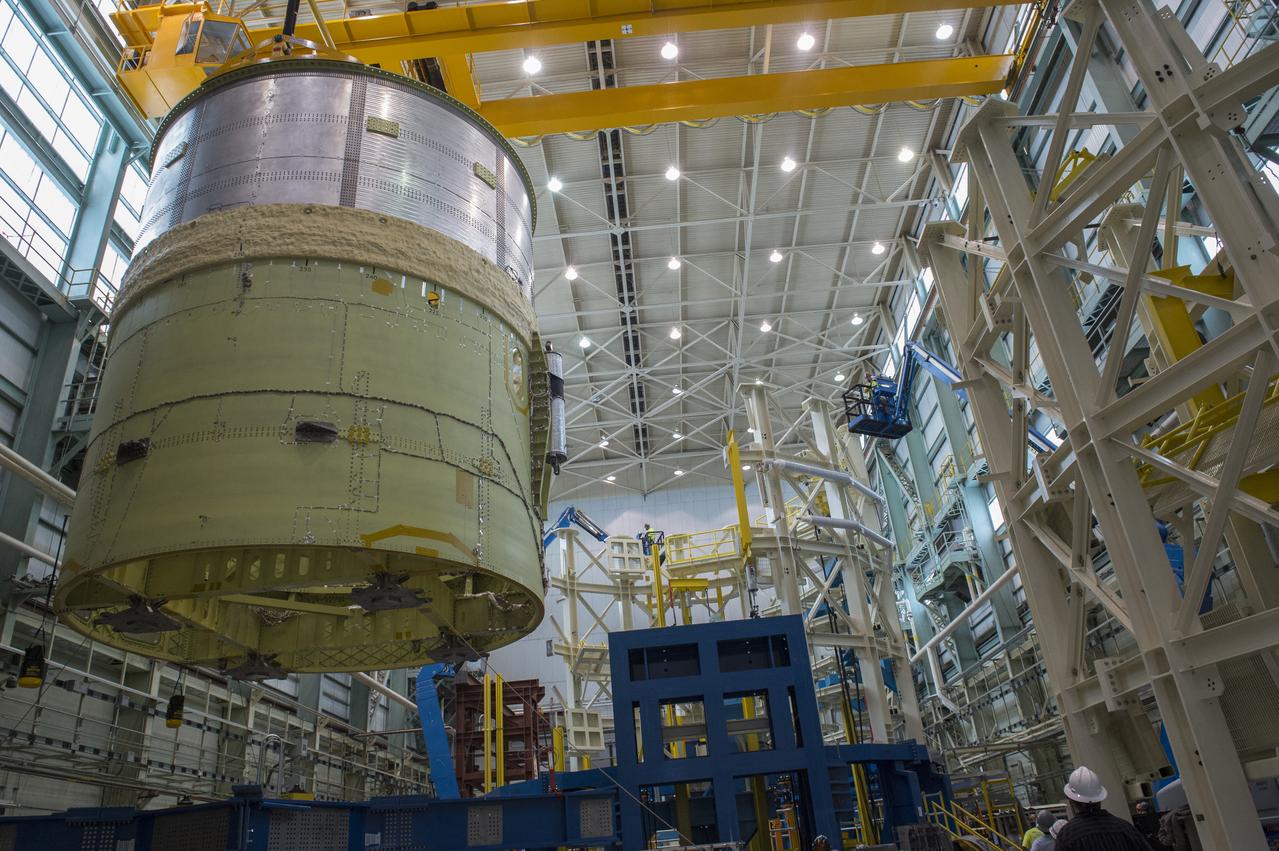
NASA engineers install test hardware for the agency's new heavy lift rocket, the Space Launch System, into a newly constructed 50-foot structural test stand at NASA's Marshall Space Flight Center. In the stand, hydraulic cylinders will be electronically controlled to push, pull, twist and bend the test article with millions of pounds of force. Engineers will record and analyze over 3,000 channels of data for each test case to verify the capabilities of the engine section and validate that the design and analysis models accurately predict the amount of loads the core stage can withstand during launch and ascent. The engine section, recently delivered via NASA's barge Pegasus from NASA's Michoud Assembly Facility, is the first of four core stage structural test articles scheduled to be delivered to Marshall for testing. The engine section, located at the bottom of SLS's massive core stage, will house the rocket's four RS-25 engines and be an attachment point for the two solid rocket boosters.
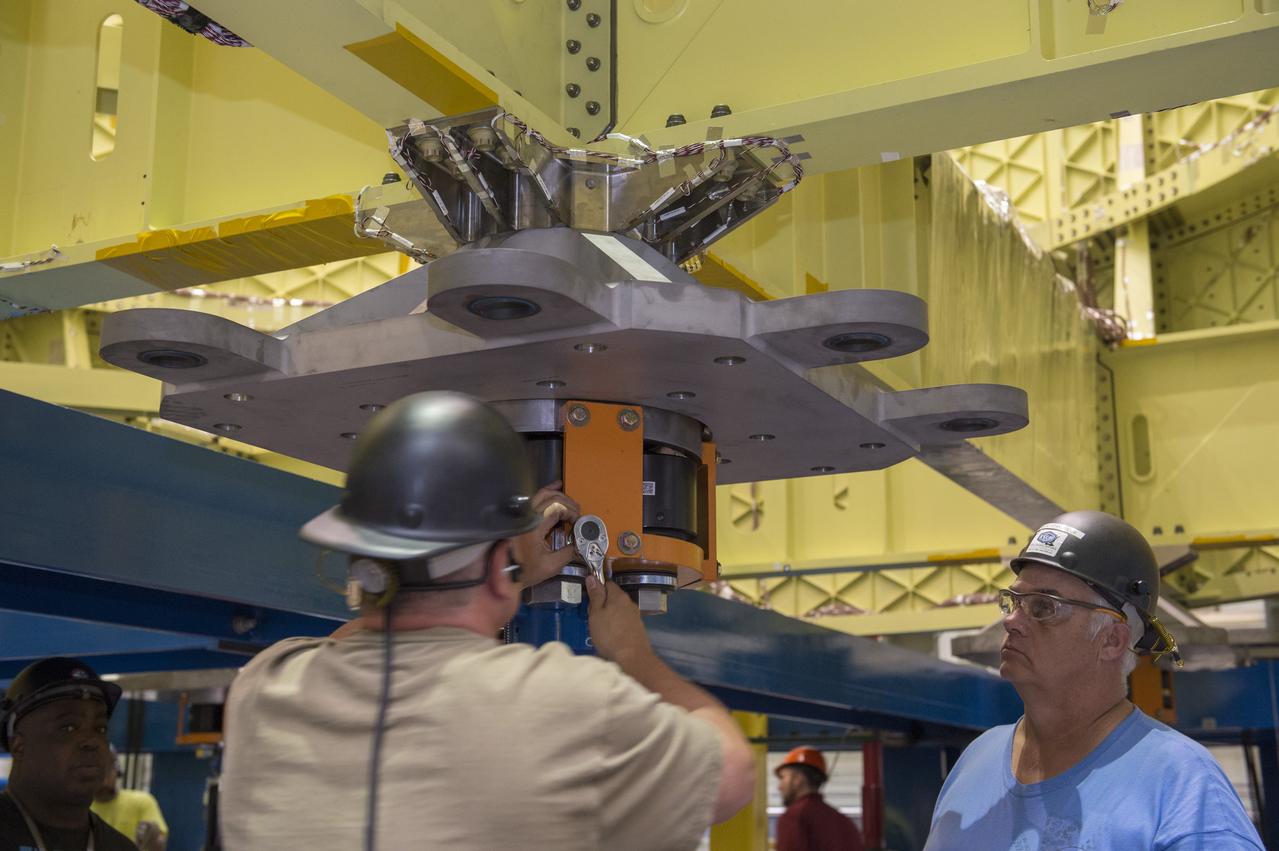
NASA engineers install test hardware for the agency's new heavy lift rocket, the Space Launch System, into a newly constructed 50-foot structural test stand at NASA's Marshall Space Flight Center. In the stand, hydraulic cylinders will be electronically controlled to push, pull, twist and bend the test article with millions of pounds of force. Engineers will record and analyze over 3,000 channels of data for each test case to verify the capabilities of the engine section and validate that the design and analysis models accurately predict the amount of loads the core stage can withstand during launch and ascent. The engine section, recently delivered via NASA's barge Pegasus from NASA's Michoud Assembly Facility, is the first of four core stage structural test articles scheduled to be delivered to Marshall for testing. The engine section, located at the bottom of SLS's massive core stage, will house the rocket's four RS-25 engines and be an attachment point for the two solid rocket boosters.
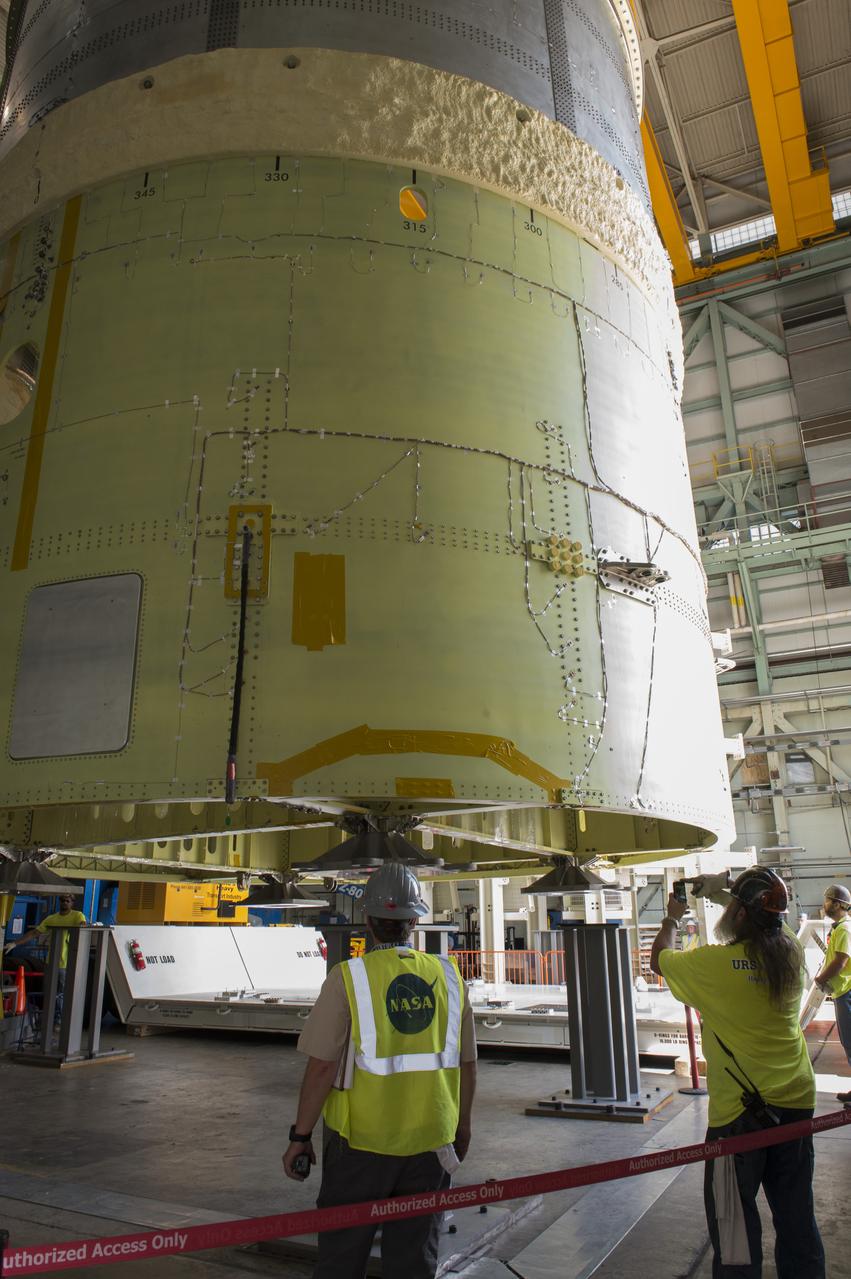
NASA engineers install test hardware for the agency's new heavy lift rocket, the Space Launch System, into a newly constructed 50-foot structural test stand at NASA's Marshall Space Flight Center. In the stand, hydraulic cylinders will be electronically controlled to push, pull, twist and bend the test article with millions of pounds of force. Engineers will record and analyze over 3,000 channels of data for each test case to verify the capabilities of the engine section and validate that the design and analysis models accurately predict the amount of loads the core stage can withstand during launch and ascent. The engine section, recently delivered via NASA's barge Pegasus from NASA's Michoud Assembly Facility, is the first of four core stage structural test articles scheduled to be delivered to Marshall for testing. The engine section, located at the bottom of SLS's massive core stage, will house the rocket's four RS-25 engines and be an attachment point for the two solid rocket boosters.
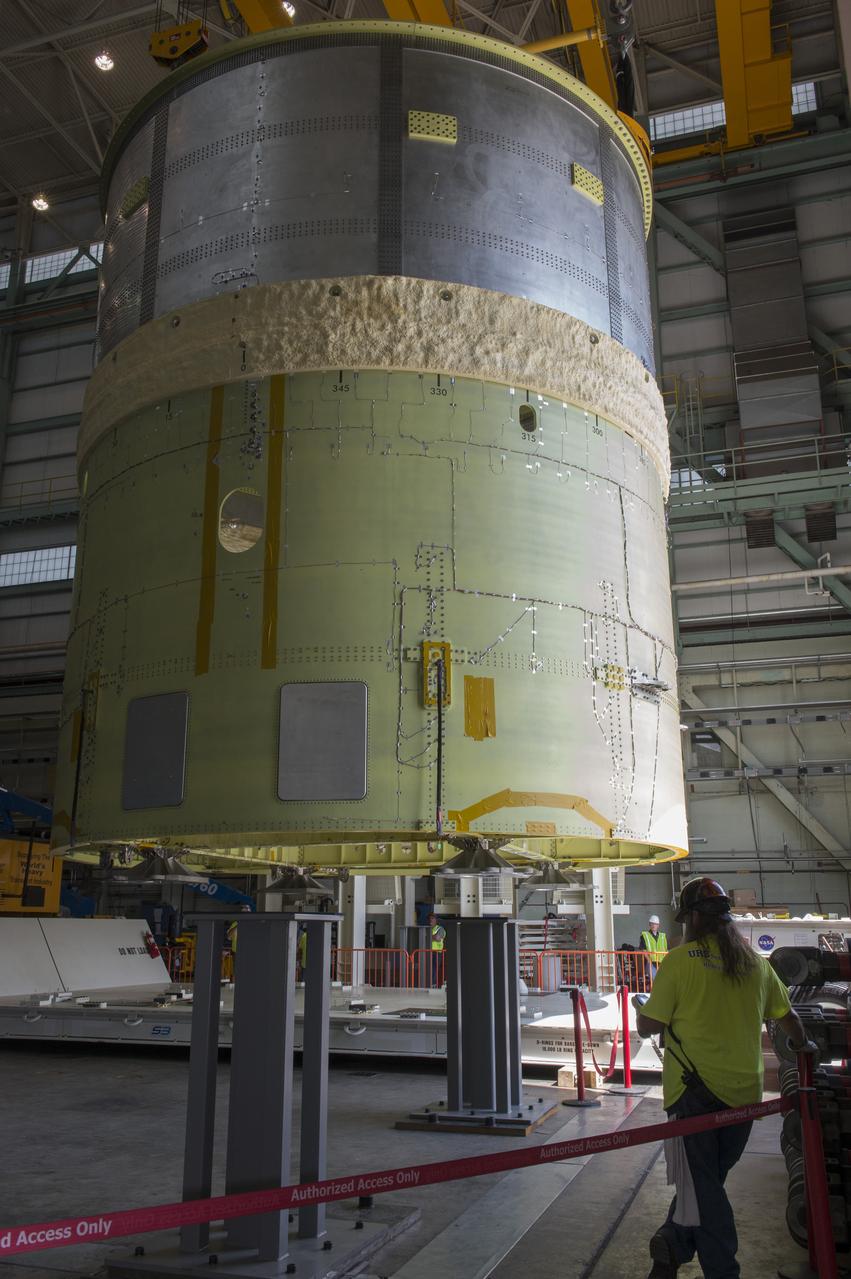
NASA engineers install test hardware for the agency's new heavy lift rocket, the Space Launch System, into a newly constructed 50-foot structural test stand at NASA's Marshall Space Flight Center. In the stand, hydraulic cylinders will be electronically controlled to push, pull, twist and bend the test article with millions of pounds of force. Engineers will record and analyze over 3,000 channels of data for each test case to verify the capabilities of the engine section and validate that the design and analysis models accurately predict the amount of loads the core stage can withstand during launch and ascent. The engine section, recently delivered via NASA's barge Pegasus from NASA's Michoud Assembly Facility, is the first of four core stage structural test articles scheduled to be delivered to Marshall for testing. The engine section, located at the bottom of SLS's massive core stage, will house the rocket's four RS-25 engines and be an attachment point for the two solid rocket boosters.
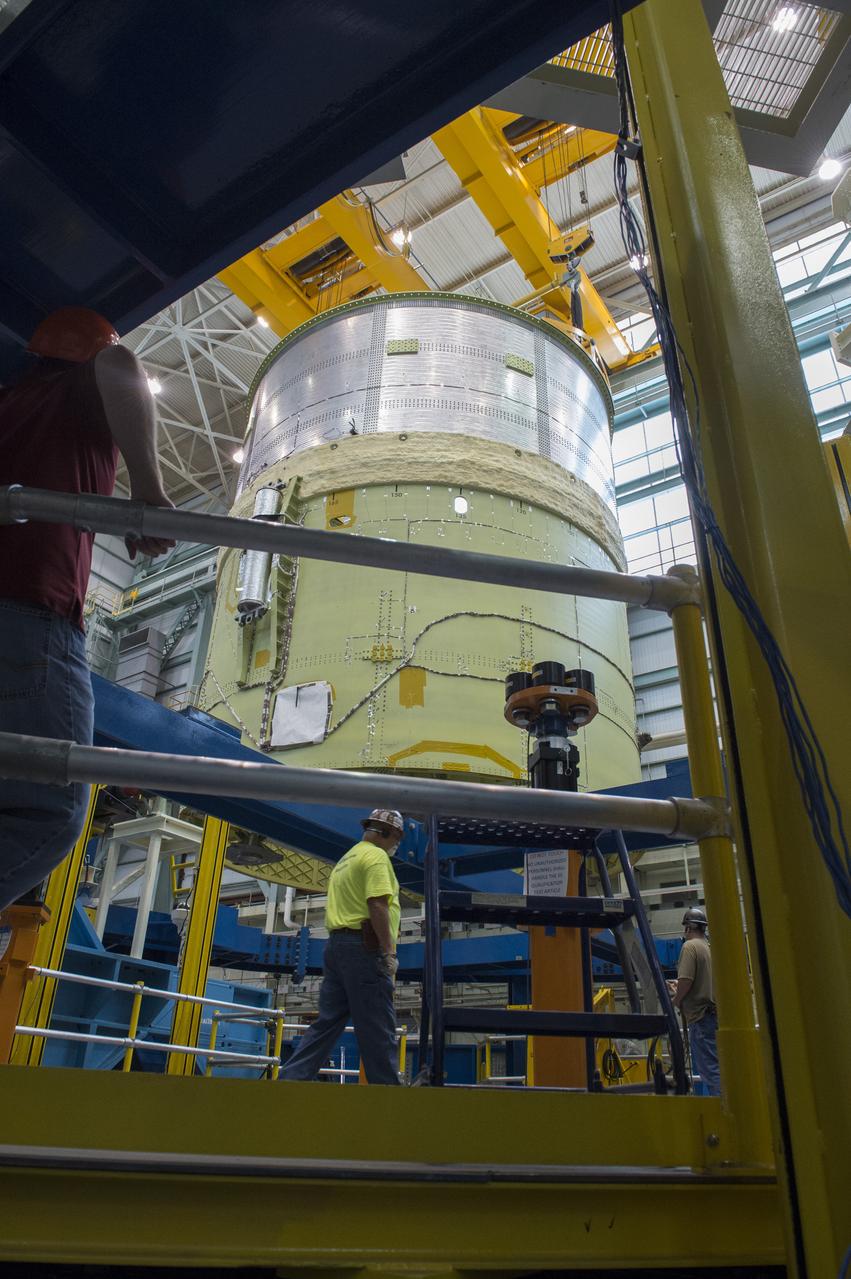
NASA engineers install test hardware for the agency's new heavy lift rocket, the Space Launch System, into a newly constructed 50-foot structural test stand at NASA's Marshall Space Flight Center. In the stand, hydraulic cylinders will be electronically controlled to push, pull, twist and bend the test article with millions of pounds of force. Engineers will record and analyze over 3,000 channels of data for each test case to verify the capabilities of the engine section and validate that the design and analysis models accurately predict the amount of loads the core stage can withstand during launch and ascent. The engine section, recently delivered via NASA's barge Pegasus from NASA's Michoud Assembly Facility, is the first of four core stage structural test articles scheduled to be delivered to Marshall for testing. The engine section, located at the bottom of SLS's massive core stage, will house the rocket's four RS-25 engines and be an attachment point for the two solid rocket boosters.
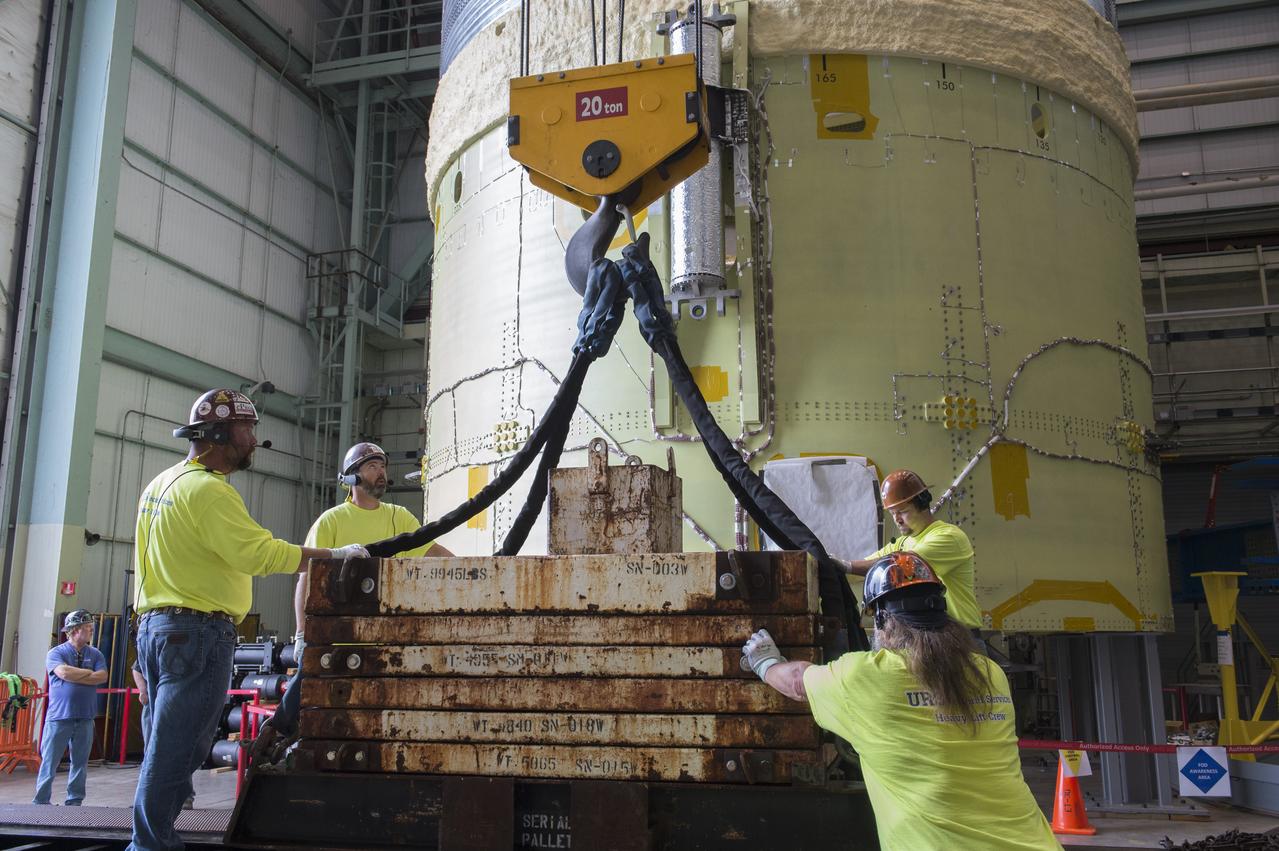
NASA engineers install test hardware for the agency's new heavy lift rocket, the Space Launch System, into a newly constructed 50-foot structural test stand at NASA's Marshall Space Flight Center. In the stand, hydraulic cylinders will be electronically controlled to push, pull, twist and bend the test article with millions of pounds of force. Engineers will record and analyze over 3,000 channels of data for each test case to verify the capabilities of the engine section and validate that the design and analysis models accurately predict the amount of loads the core stage can withstand during launch and ascent. The engine section, recently delivered via NASA's barge Pegasus from NASA's Michoud Assembly Facility, is the first of four core stage structural test articles scheduled to be delivered to Marshall for testing. The engine section, located at the bottom of SLS's massive core stage, will house the rocket's four RS-25 engines and be an attachment point for the two solid rocket boosters.
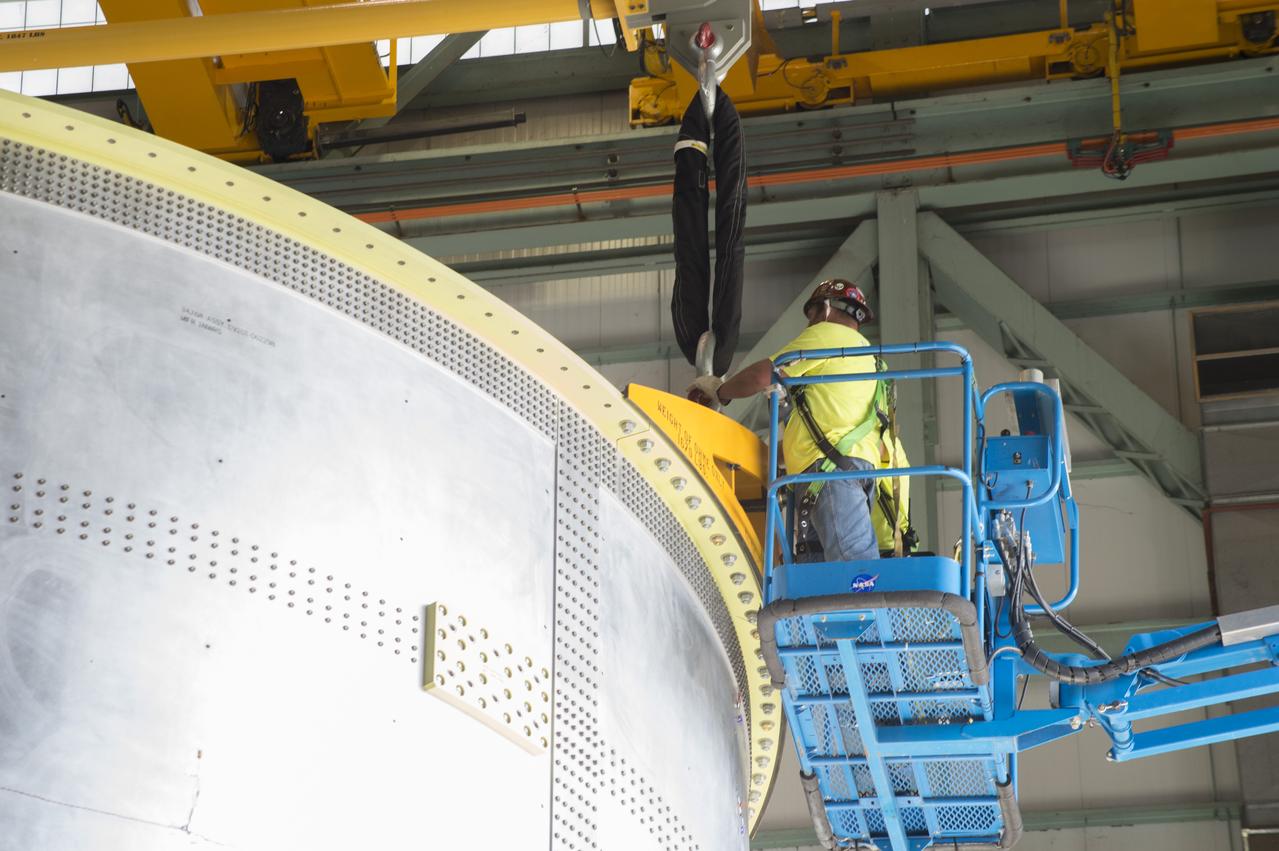
NASA engineers install test hardware for the agency's new heavy lift rocket, the Space Launch System, into a newly constructed 50-foot structural test stand at NASA's Marshall Space Flight Center. In the stand, hydraulic cylinders will be electronically controlled to push, pull, twist and bend the test article with millions of pounds of force. Engineers will record and analyze over 3,000 channels of data for each test case to verify the capabilities of the engine section and validate that the design and analysis models accurately predict the amount of loads the core stage can withstand during launch and ascent. The engine section, recently delivered via NASA's barge Pegasus from NASA's Michoud Assembly Facility, is the first of four core stage structural test articles scheduled to be delivered to Marshall for testing. The engine section, located at the bottom of SLS's massive core stage, will house the rocket's four RS-25 engines and be an attachment point for the two solid rocket boosters.
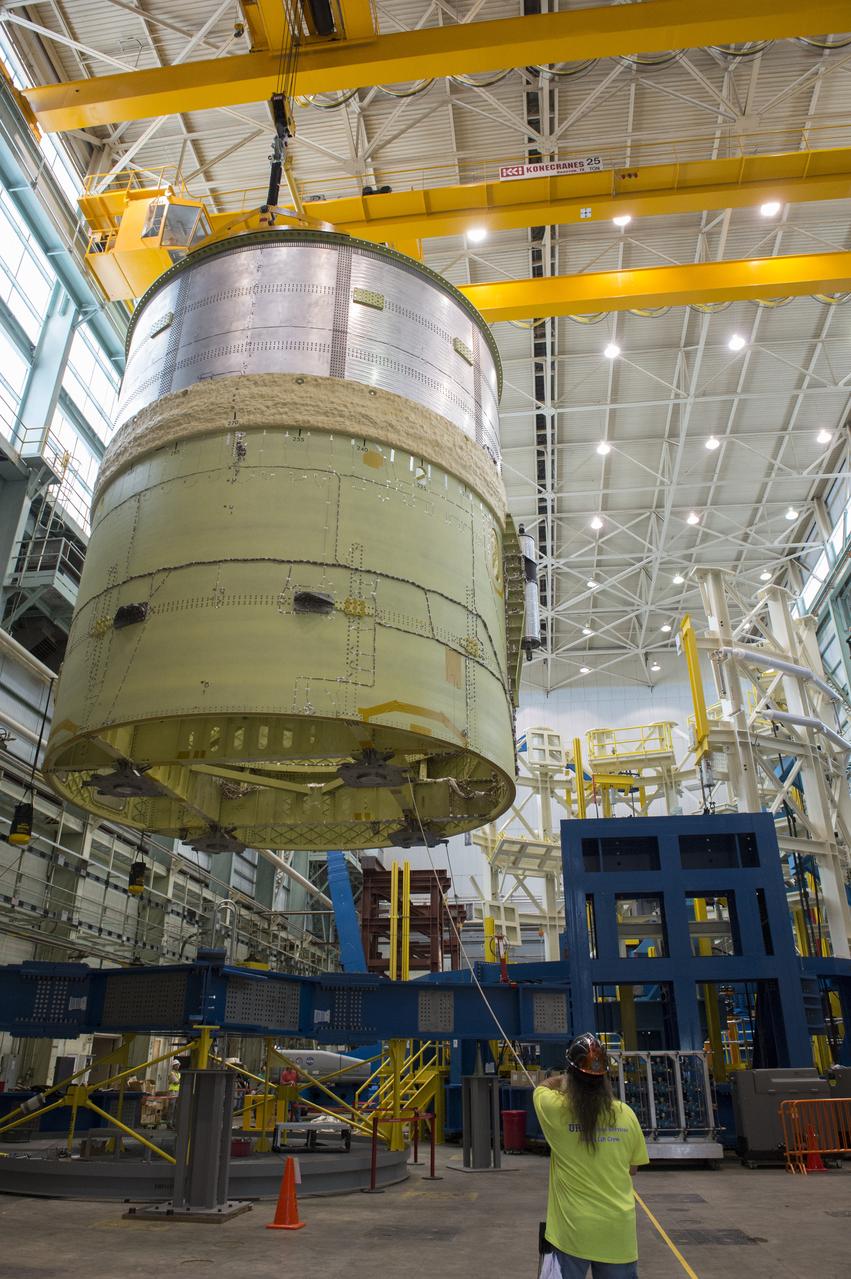
NASA engineers install test hardware for the agency's new heavy lift rocket, the Space Launch System, into a newly constructed 50-foot structural test stand at NASA's Marshall Space Flight Center. In the stand, hydraulic cylinders will be electronically controlled to push, pull, twist and bend the test article with millions of pounds of force. Engineers will record and analyze over 3,000 channels of data for each test case to verify the capabilities of the engine section and validate that the design and analysis models accurately predict the amount of loads the core stage can withstand during launch and ascent. The engine section, recently delivered via NASA's barge Pegasus from NASA's Michoud Assembly Facility, is the first of four core stage structural test articles scheduled to be delivered to Marshall for testing. The engine section, located at the bottom of SLS's massive core stage, will house the rocket's four RS-25 engines and be an attachment point for the two solid rocket boosters.
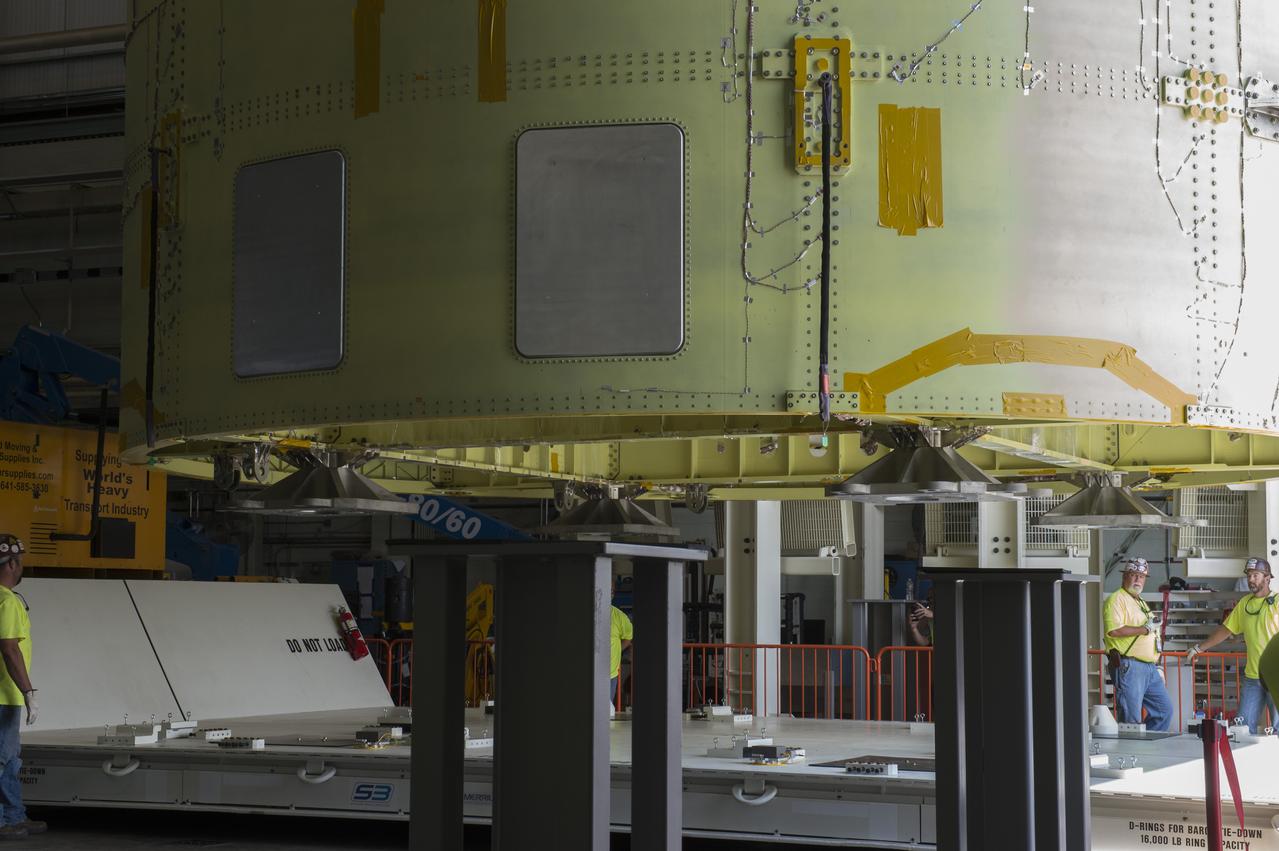
NASA engineers install test hardware for the agency's new heavy lift rocket, the Space Launch System, into a newly constructed 50-foot structural test stand at NASA's Marshall Space Flight Center. In the stand, hydraulic cylinders will be electronically controlled to push, pull, twist and bend the test article with millions of pounds of force. Engineers will record and analyze over 3,000 channels of data for each test case to verify the capabilities of the engine section and validate that the design and analysis models accurately predict the amount of loads the core stage can withstand during launch and ascent. The engine section, recently delivered via NASA's barge Pegasus from NASA's Michoud Assembly Facility, is the first of four core stage structural test articles scheduled to be delivered to Marshall for testing. The engine section, located at the bottom of SLS's massive core stage, will house the rocket's four RS-25 engines and be an attachment point for the two solid rocket boosters.
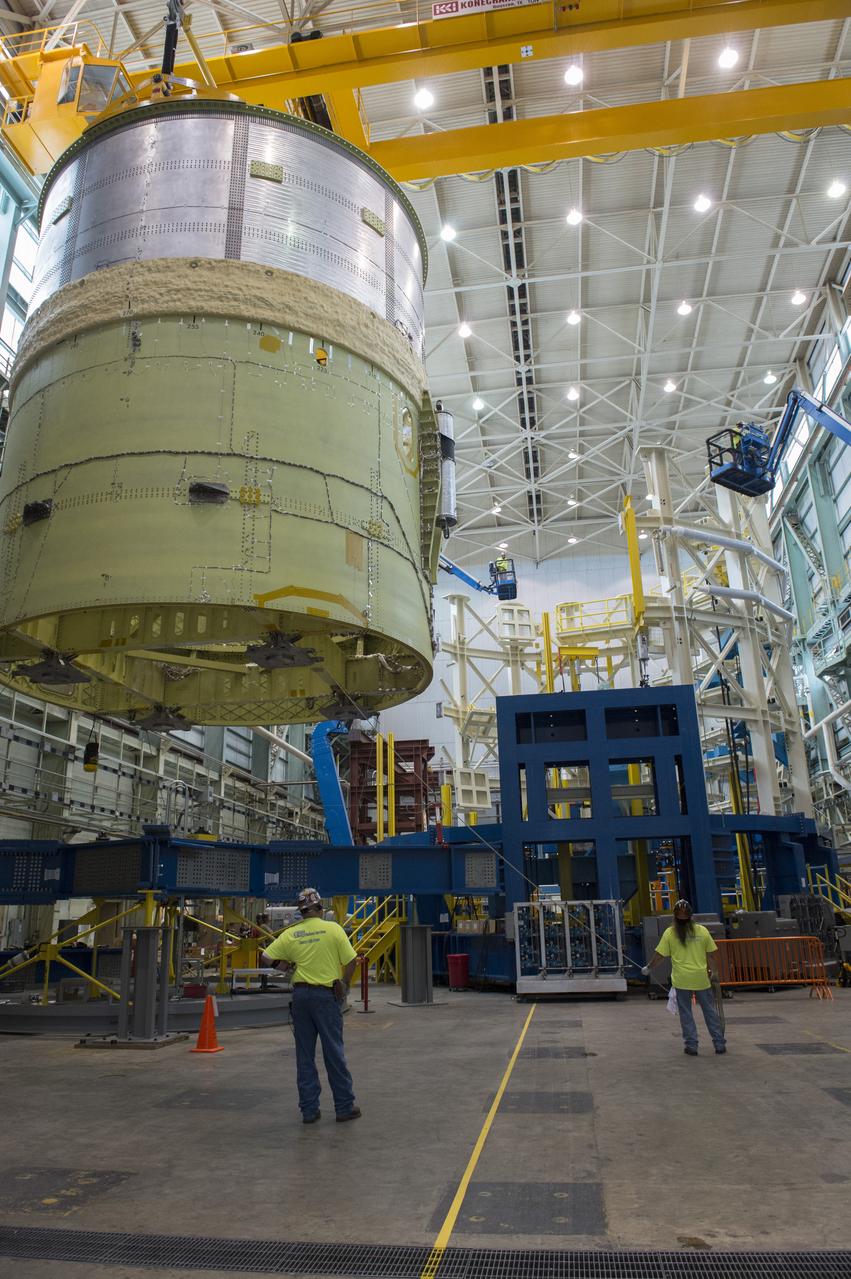
NASA engineers install test hardware for the agency's new heavy lift rocket, the Space Launch System, into a newly constructed 50-foot structural test stand at NASA's Marshall Space Flight Center. In the stand, hydraulic cylinders will be electronically controlled to push, pull, twist and bend the test article with millions of pounds of force. Engineers will record and analyze over 3,000 channels of data for each test case to verify the capabilities of the engine section and validate that the design and analysis models accurately predict the amount of loads the core stage can withstand during launch and ascent. The engine section, recently delivered via NASA's barge Pegasus from NASA's Michoud Assembly Facility, is the first of four core stage structural test articles scheduled to be delivered to Marshall for testing. The engine section, located at the bottom of SLS's massive core stage, will house the rocket's four RS-25 engines and be an attachment point for the two solid rocket boosters.
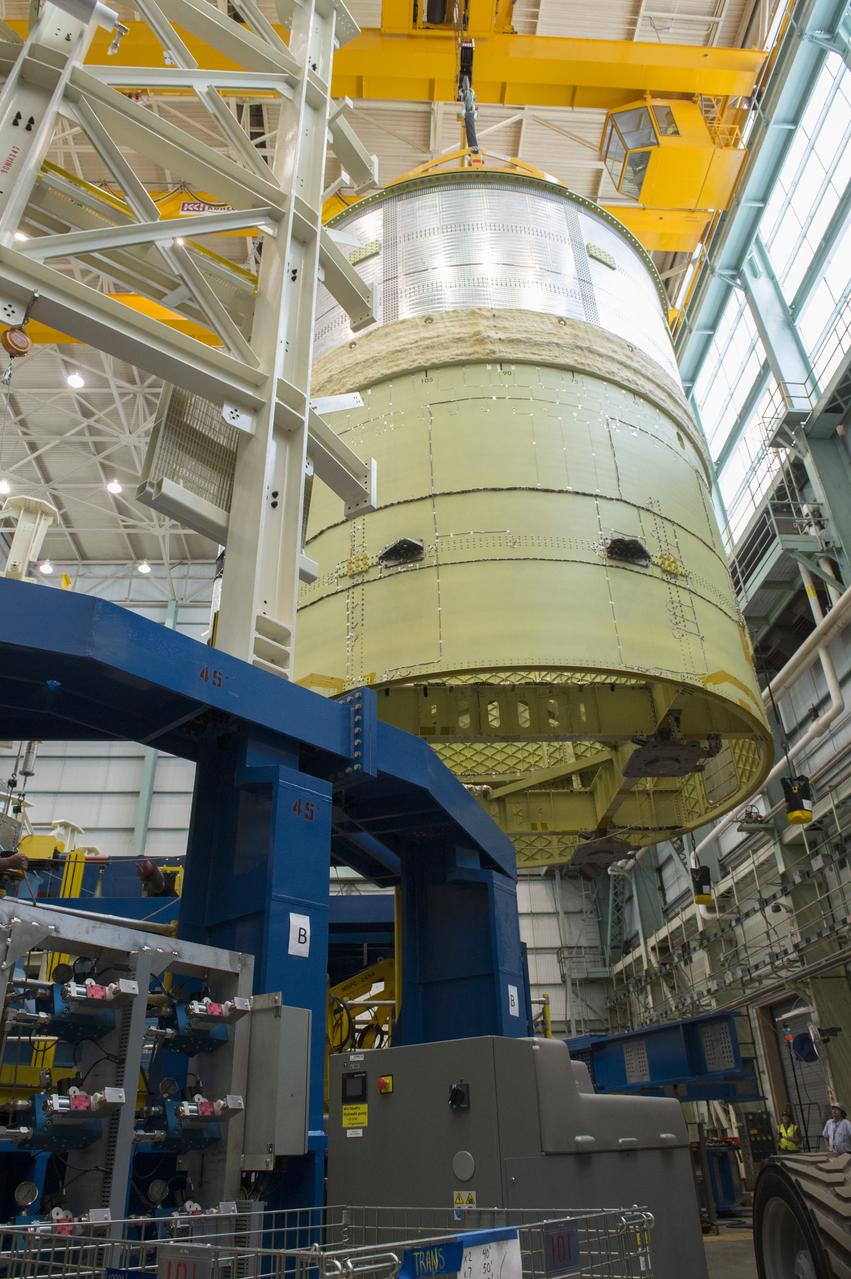
NASA engineers install test hardware for the agency's new heavy lift rocket, the Space Launch System, into a newly constructed 50-foot structural test stand at NASA's Marshall Space Flight Center. In the stand, hydraulic cylinders will be electronically controlled to push, pull, twist and bend the test article with millions of pounds of force. Engineers will record and analyze over 3,000 channels of data for each test case to verify the capabilities of the engine section and validate that the design and analysis models accurately predict the amount of loads the core stage can withstand during launch and ascent. The engine section, recently delivered via NASA's barge Pegasus from NASA's Michoud Assembly Facility, is the first of four core stage structural test articles scheduled to be delivered to Marshall for testing. The engine section, located at the bottom of SLS's massive core stage, will house the rocket's four RS-25 engines and be an attachment point for the two solid rocket boosters.
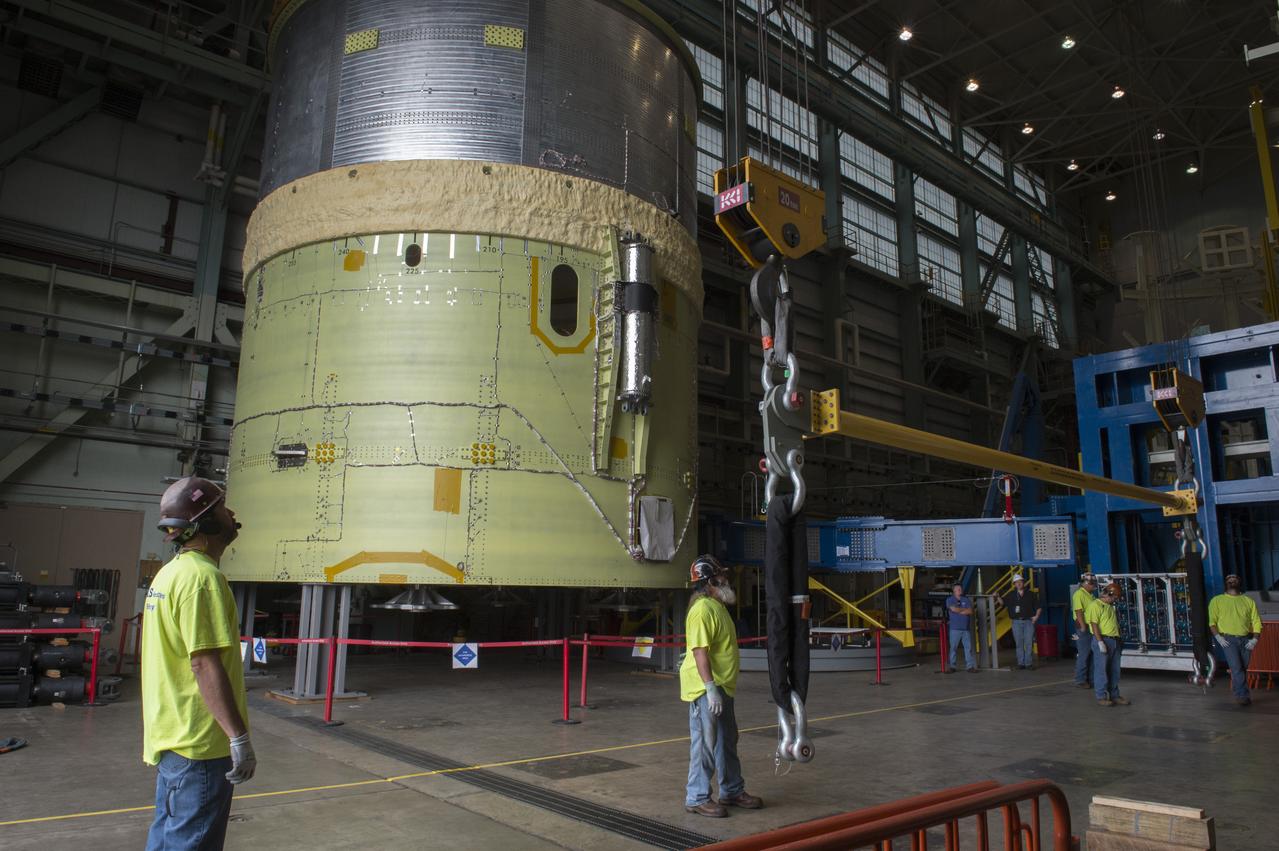
NASA engineers install test hardware for the agency's new heavy lift rocket, the Space Launch System, into a newly constructed 50-foot structural test stand at NASA's Marshall Space Flight Center. In the stand, hydraulic cylinders will be electronically controlled to push, pull, twist and bend the test article with millions of pounds of force. Engineers will record and analyze over 3,000 channels of data for each test case to verify the capabilities of the engine section and validate that the design and analysis models accurately predict the amount of loads the core stage can withstand during launch and ascent. The engine section, recently delivered via NASA's barge Pegasus from NASA's Michoud Assembly Facility, is the first of four core stage structural test articles scheduled to be delivered to Marshall for testing. The engine section, located at the bottom of SLS's massive core stage, will house the rocket's four RS-25 engines and be an attachment point for the two solid rocket boosters.
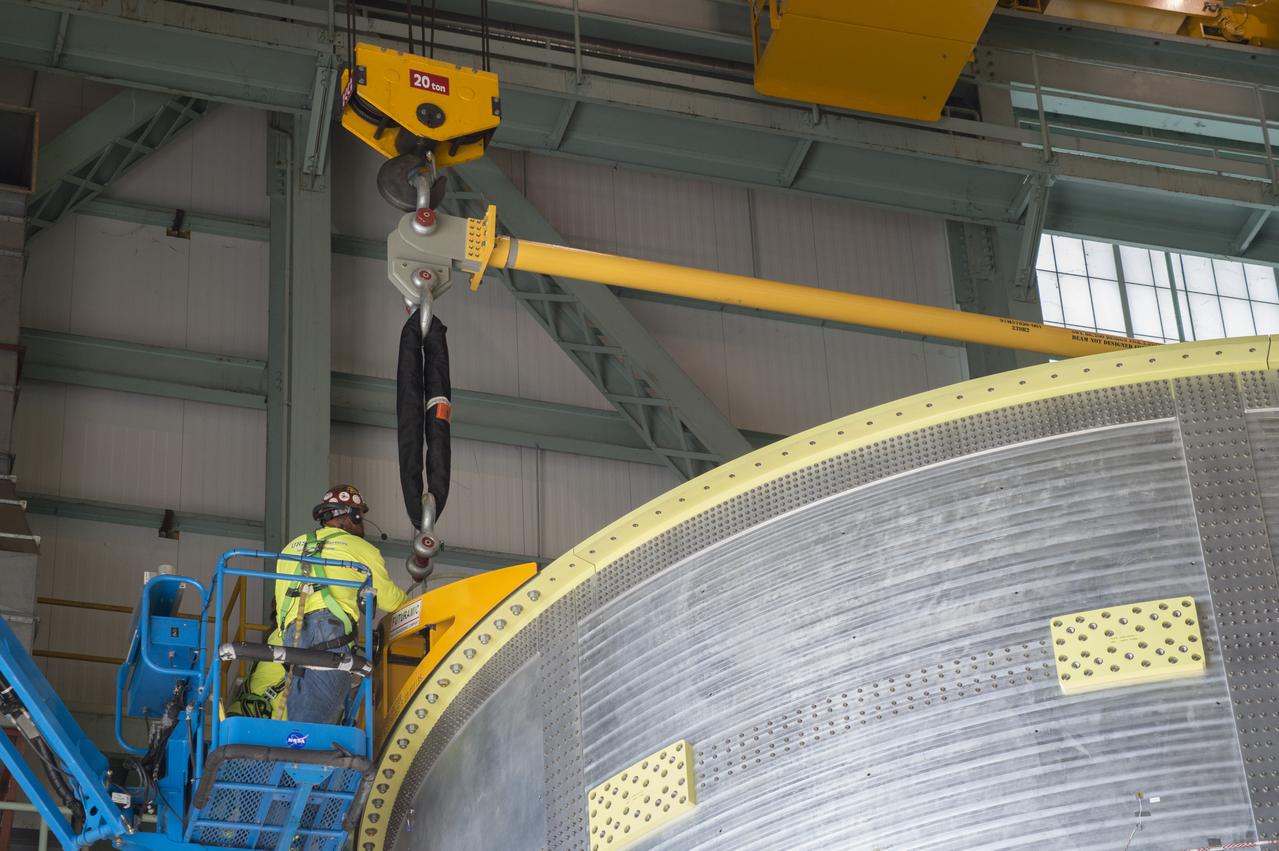
NASA engineers install test hardware for the agency's new heavy lift rocket, the Space Launch System, into a newly constructed 50-foot structural test stand at NASA's Marshall Space Flight Center. In the stand, hydraulic cylinders will be electronically controlled to push, pull, twist and bend the test article with millions of pounds of force. Engineers will record and analyze over 3,000 channels of data for each test case to verify the capabilities of the engine section and validate that the design and analysis models accurately predict the amount of loads the core stage can withstand during launch and ascent. The engine section, recently delivered via NASA's barge Pegasus from NASA's Michoud Assembly Facility, is the first of four core stage structural test articles scheduled to be delivered to Marshall for testing. The engine section, located at the bottom of SLS's massive core stage, will house the rocket's four RS-25 engines and be an attachment point for the two solid rocket boosters.
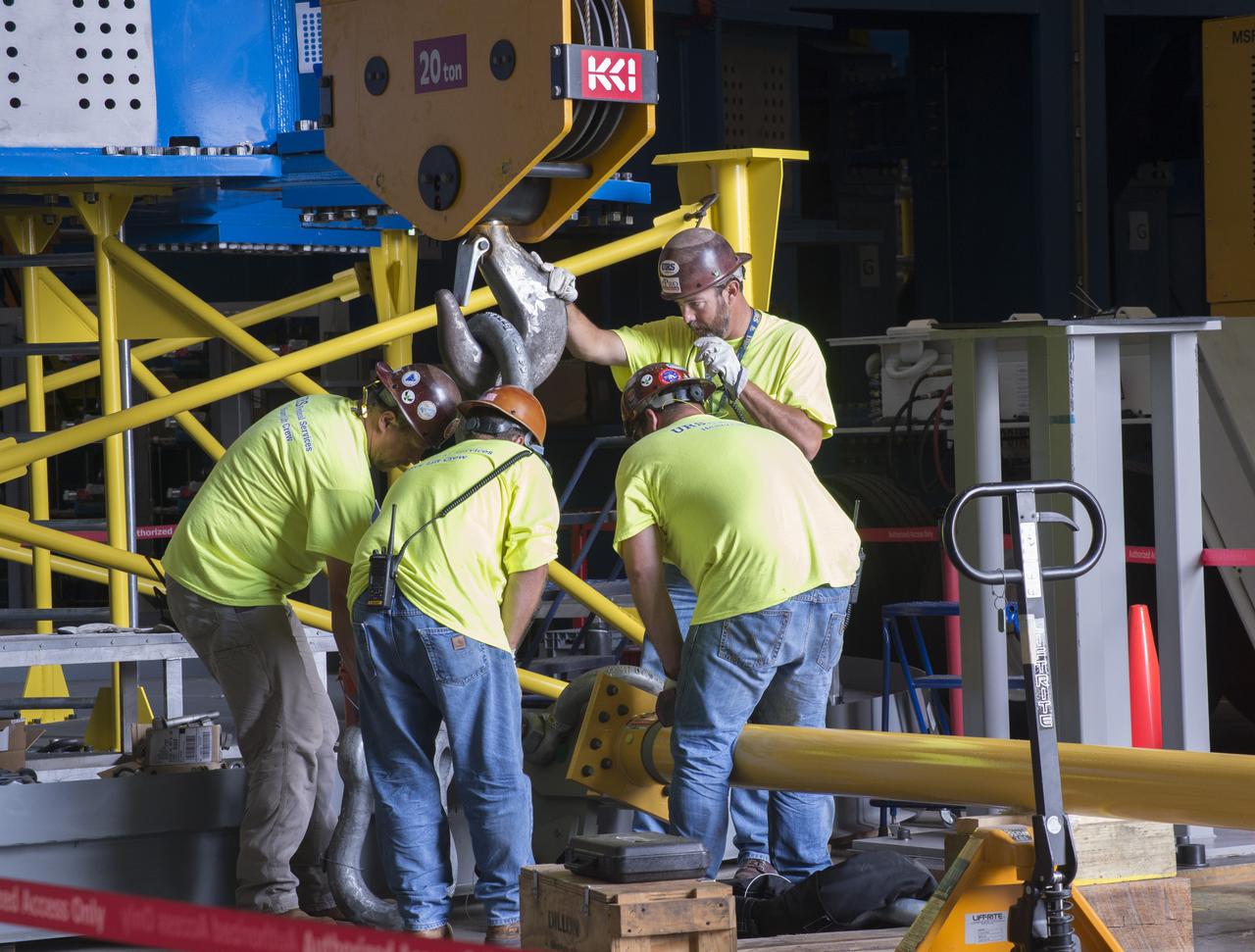
NASA engineers install test hardware for the agency's new heavy lift rocket, the Space Launch System, into a newly constructed 50-foot structural test stand at NASA's Marshall Space Flight Center. In the stand, hydraulic cylinders will be electronically controlled to push, pull, twist and bend the test article with millions of pounds of force. Engineers will record and analyze over 3,000 channels of data for each test case to verify the capabilities of the engine section and validate that the design and analysis models accurately predict the amount of loads the core stage can withstand during launch and ascent. The engine section, recently delivered via NASA's barge Pegasus from NASA's Michoud Assembly Facility, is the first of four core stage structural test articles scheduled to be delivered to Marshall for testing. The engine section, located at the bottom of SLS's massive core stage, will house the rocket's four RS-25 engines and be an attachment point for the two solid rocket boosters.
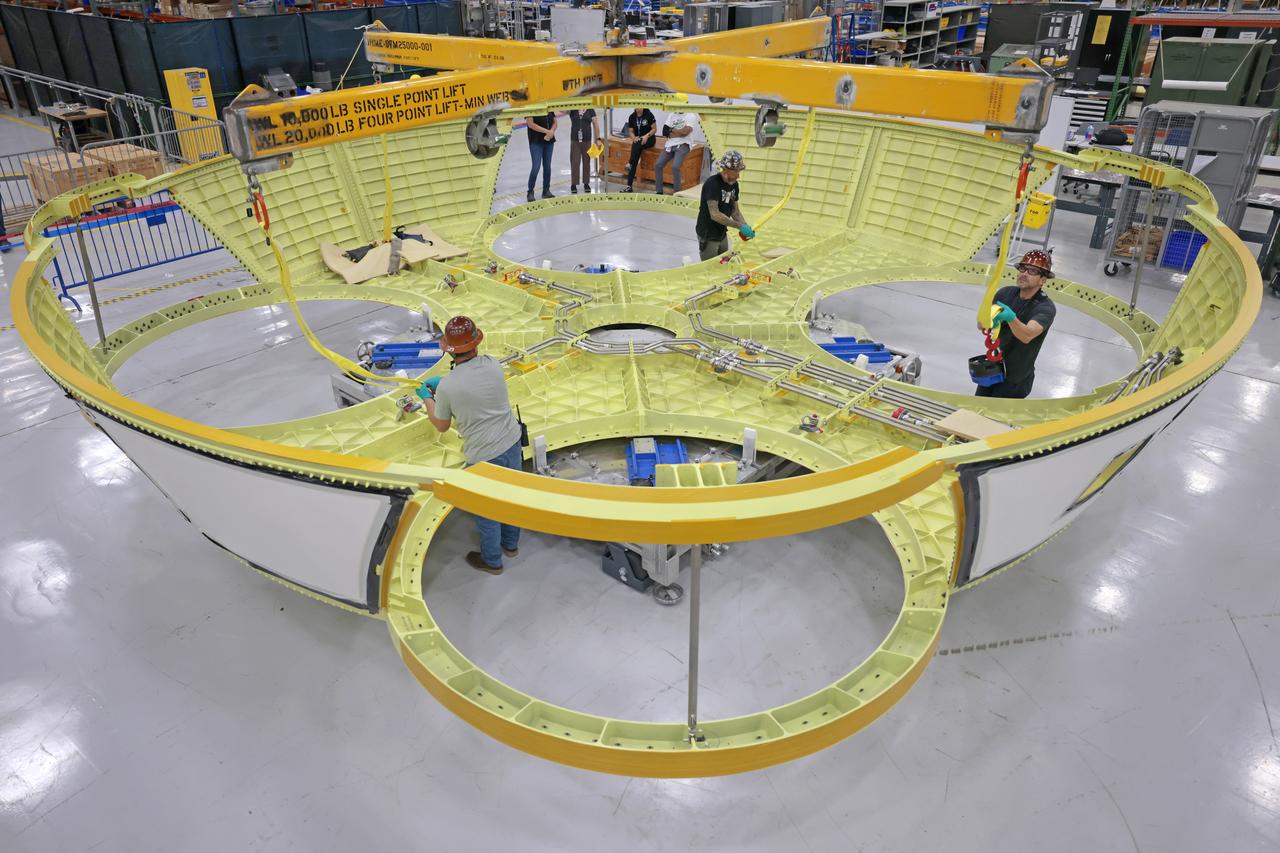
These photos show teams at NASA’s Michoud Assembly Facility in New Orleans preparing, moving, and loading the engine section boat-tail of NASA’s SLS (Space Launch System) rocket for the Artemis III mission for transportation to NASA’s Kennedy Space Center in Florida via the agency’s Pegasus barge. Inside the factory on Aug. 14 prior to the move, technicians covered the spaceflight hardware with a tarp to help protect it on its journey aboard NASA’s Pegasus barge. Crews then rolled out the hardware on Aug. 27 from the factory floor to the barge. Once in Florida, the boat-tail will be integrated with the engine section -- also manufactured at Michoud -- inside Kennedy’s Space Station Processing Facility. The engine section arrived at NASA Kennedy in Dec. 2022. Located at the bottom of the engine section, the aerodynamic boat-tail fairing channels airflow and protects the stage’s four RS-25 engines from extreme temperatures during launch. The engine section is one of five major elements that make up the 212-foot-tall rocket stage. The core stage, along with its four RS-25 engines, produce two million pounds of thrust to help launch NASA’s Orion spacecraft, astronauts, and supplies beyond Earth’s orbit and to the lunar surface for Artemis. Image credit: NASA/Michael DeMocker
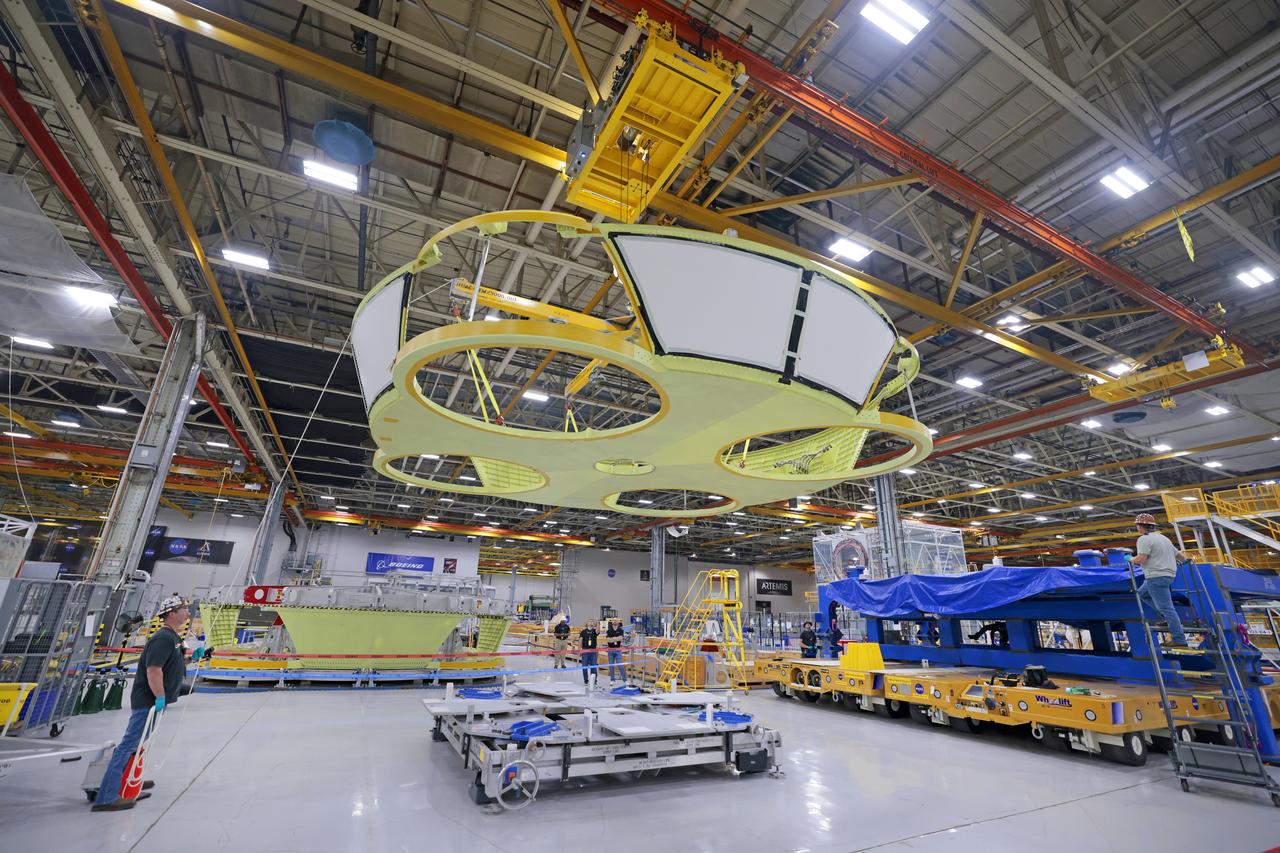
These photos show teams at NASA’s Michoud Assembly Facility in New Orleans preparing, moving, and loading the engine section boat-tail of NASA’s SLS (Space Launch System) rocket for the Artemis III mission for transportation to NASA’s Kennedy Space Center in Florida via the agency’s Pegasus barge. Inside the factory on Aug. 14 prior to the move, technicians covered the spaceflight hardware with a tarp to help protect it on its journey aboard NASA’s Pegasus barge. Crews then rolled out the hardware on Aug. 27 from the factory floor to the barge. Once in Florida, the boat-tail will be integrated with the engine section -- also manufactured at Michoud -- inside Kennedy’s Space Station Processing Facility. The engine section arrived at NASA Kennedy in Dec. 2022. Located at the bottom of the engine section, the aerodynamic boat-tail fairing channels airflow and protects the stage’s four RS-25 engines from extreme temperatures during launch. The engine section is one of five major elements that make up the 212-foot-tall rocket stage. The core stage, along with its four RS-25 engines, produce two million pounds of thrust to help launch NASA’s Orion spacecraft, astronauts, and supplies beyond Earth’s orbit and to the lunar surface for Artemis. Image credit: NASA/Michael DeMocker
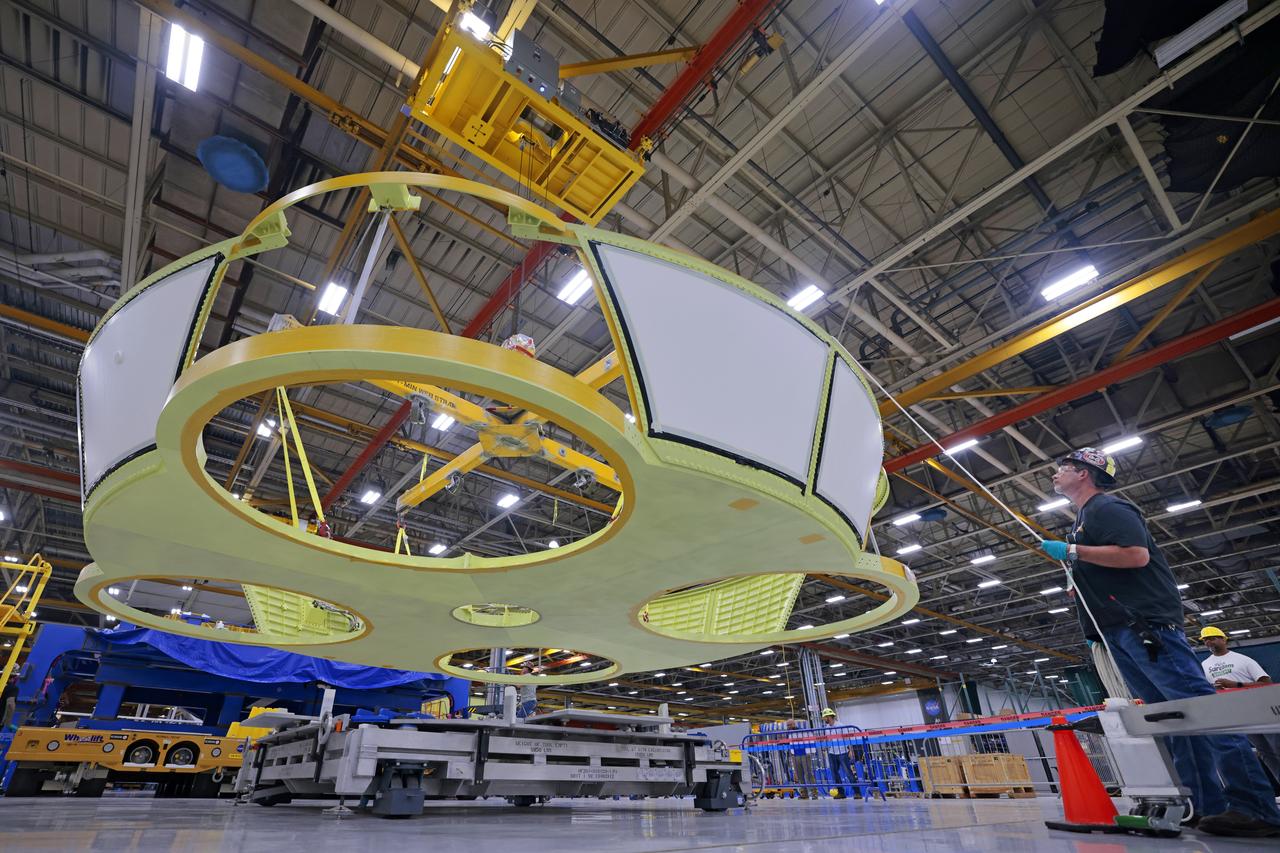
These photos show teams at NASA’s Michoud Assembly Facility in New Orleans preparing, moving, and loading the engine section boat-tail of NASA’s SLS (Space Launch System) rocket for the Artemis III mission for transportation to NASA’s Kennedy Space Center in Florida via the agency’s Pegasus barge. Inside the factory on Aug. 14 prior to the move, technicians covered the spaceflight hardware with a tarp to help protect it on its journey aboard NASA’s Pegasus barge. Crews then rolled out the hardware on Aug. 27 from the factory floor to the barge. Once in Florida, the boat-tail will be integrated with the engine section -- also manufactured at Michoud -- inside Kennedy’s Space Station Processing Facility. The engine section arrived at NASA Kennedy in Dec. 2022. Located at the bottom of the engine section, the aerodynamic boat-tail fairing channels airflow and protects the stage’s four RS-25 engines from extreme temperatures during launch. The engine section is one of five major elements that make up the 212-foot-tall rocket stage. The core stage, along with its four RS-25 engines, produce two million pounds of thrust to help launch NASA’s Orion spacecraft, astronauts, and supplies beyond Earth’s orbit and to the lunar surface for Artemis. Image credit: NASA/Michael DeMocker
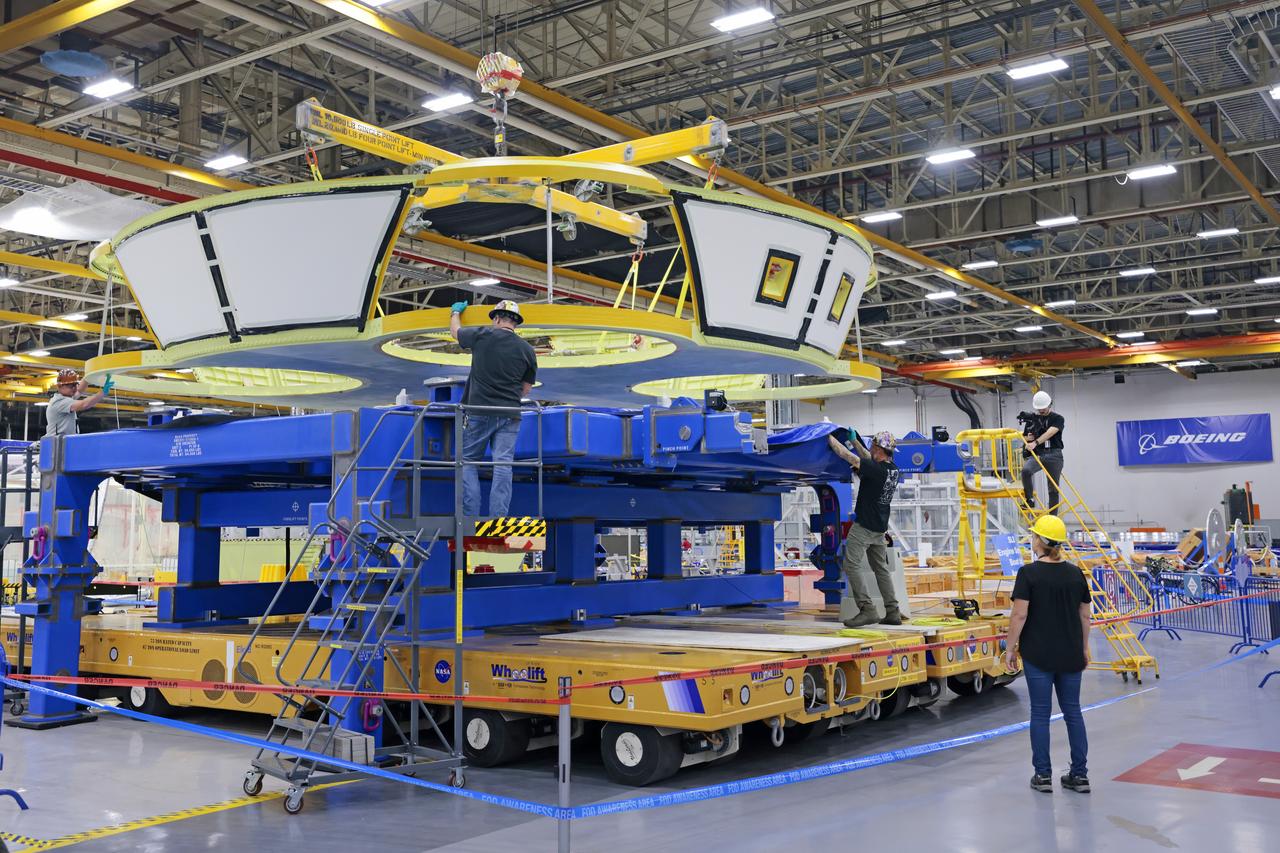
These photos show teams at NASA’s Michoud Assembly Facility in New Orleans preparing, moving, and loading the engine section boat-tail of NASA’s SLS (Space Launch System) rocket for the Artemis III mission for transportation to NASA’s Kennedy Space Center in Florida via the agency’s Pegasus barge. Inside the factory on Aug. 14 prior to the move, technicians covered the spaceflight hardware with a tarp to help protect it on its journey aboard NASA’s Pegasus barge. Crews then rolled out the hardware on Aug. 27 from the factory floor to the barge. Once in Florida, the boat-tail will be integrated with the engine section -- also manufactured at Michoud -- inside Kennedy’s Space Station Processing Facility. The engine section arrived at NASA Kennedy in Dec. 2022. Located at the bottom of the engine section, the aerodynamic boat-tail fairing channels airflow and protects the stage’s four RS-25 engines from extreme temperatures during launch. The engine section is one of five major elements that make up the 212-foot-tall rocket stage. The core stage, along with its four RS-25 engines, produce two million pounds of thrust to help launch NASA’s Orion spacecraft, astronauts, and supplies beyond Earth’s orbit and to the lunar surface for Artemis. Image credit: NASA/Michael DeMocker
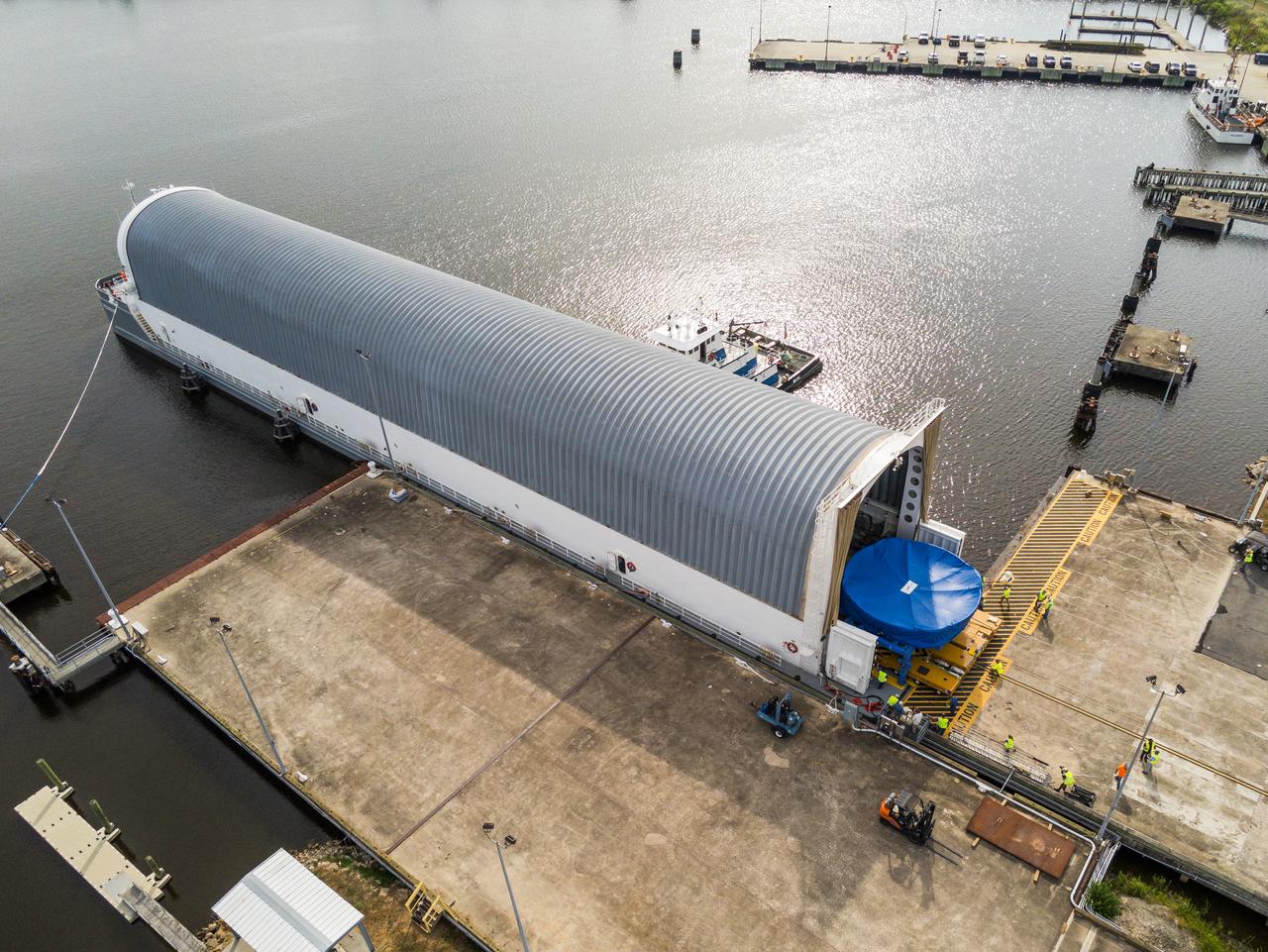
These photos and videos show teams at NASA’s Michoud Assembly Facility in New Orleans preparing, moving, and loading the engine section boat-tail of NASA’s SLS (Space Launch System) rocket for the Artemis III mission for transportation to NASA’s Kennedy Space Center in Florida via the agency’s Pegasus barge. Inside the factory on Aug. 14 prior to the move, technicians covered the spaceflight hardware with a tarp to help protect it on its journey aboard NASA’s Pegasus barge. Crews then rolled out the hardware on Aug. 27 from the factory floor to the barge. Once in Florida, the boat-tail will be integrated with the engine section -- also manufactured at Michoud -- inside Kennedy’s Space Station Processing Facility. The engine section arrived at NASA Kennedy in Dec. 2022. Located at the bottom of the engine section, the aerodynamic boat-tail fairing channels airflow and protects the stage’s four RS-25 engines from extreme temperatures during launch. The engine section is one of five major elements that make up the 212-foot-tall rocket stage. The core stage, along with its four RS-25 engines, produce two million pounds of thrust to help launch NASA’s Orion spacecraft, astronauts, and supplies beyond Earth’s orbit and to the lunar surface for Artemis.
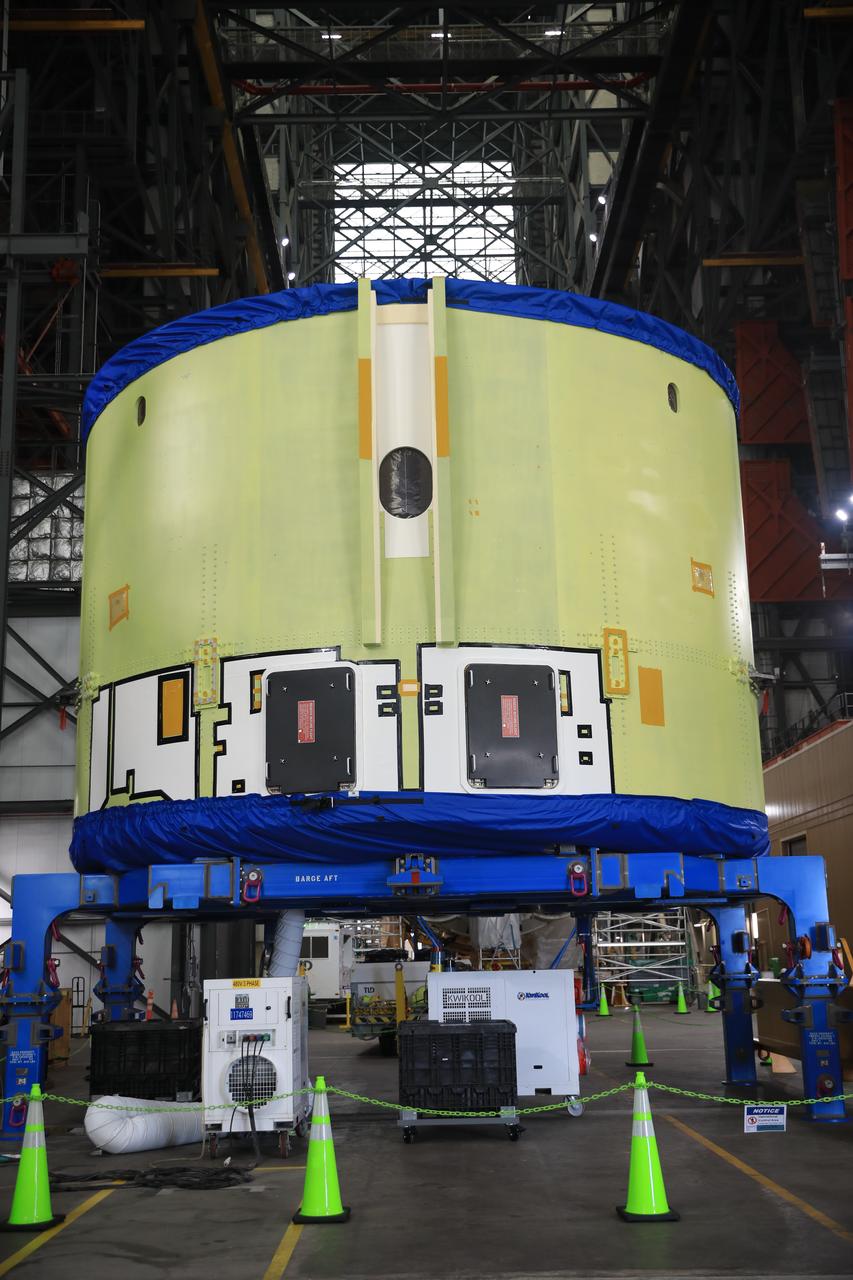
NASA’s Artemis IV SLS (Space Launch System) core stage engine section which houses the four RS-25 engines, arrives at the Vehicle Assembly Building at NASA’s Kennedy Space Center in Florida on Monday, Sept. 9, 2024. NASA’s Pegasus barge delivered the core stage engine section, along with other hardware for future Artemis campaigns, from NASA’s Michoud Assembly Facility in New Orleans, Louisiana to NASA Kennedy on Thursday, Sept. 5, 2024.
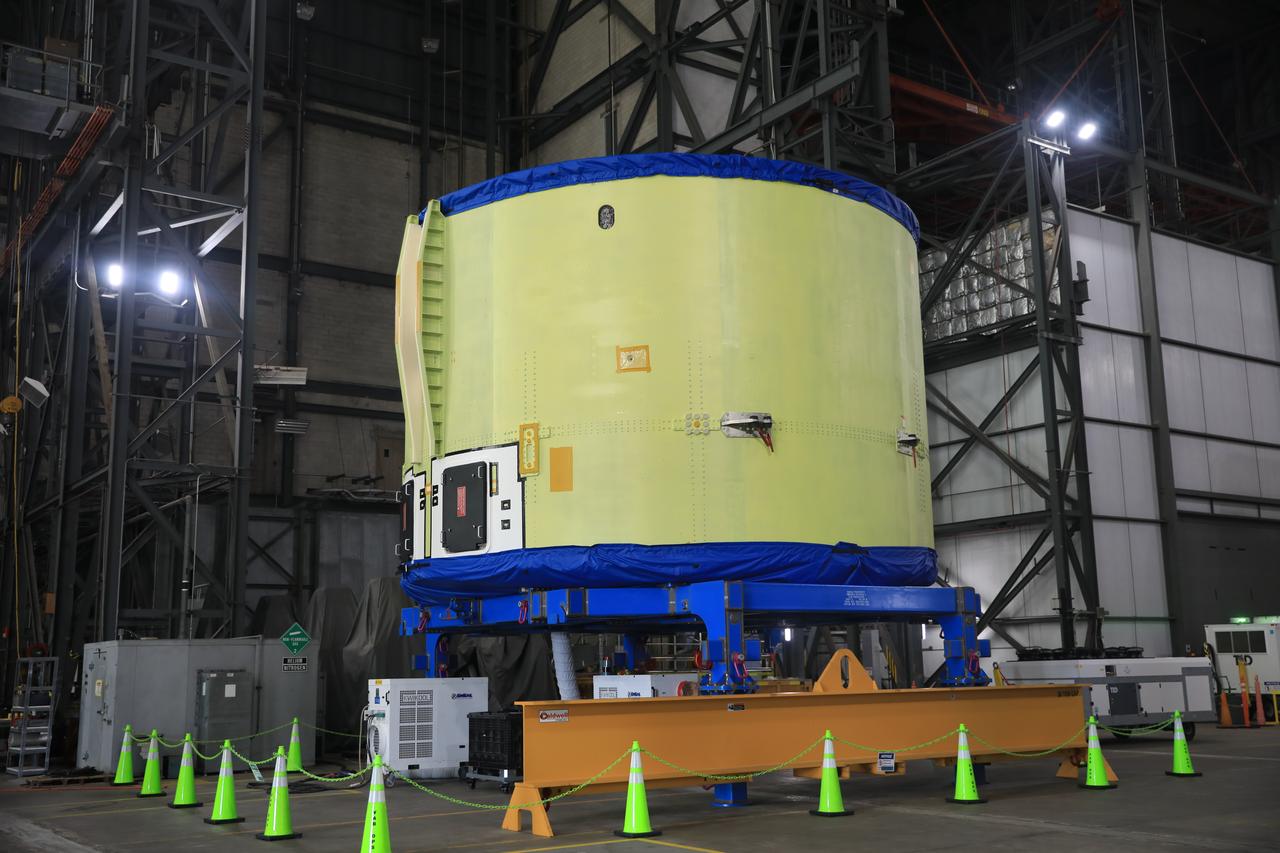
NASA’s Artemis IV SLS (Space Launch System) core stage engine section which houses the four RS-25 engines, arrives at the Vehicle Assembly Building at NASA’s Kennedy Space Center in Florida on Monday, Sept. 9, 2024. NASA’s Pegasus barge delivered the core stage engine section, along with other hardware for future Artemis campaigns, from NASA’s Michoud Assembly Facility in New Orleans, Louisiana to NASA Kennedy on Thursday, Sept. 5, 2024.

NASA’s Artemis IV SLS (Space Launch System) core stage engine section which houses the four RS-25 engines, arrives at the Vehicle Assembly Building at NASA’s Kennedy Space Center in Florida on Monday, Sept. 9, 2024. NASA’s Pegasus barge delivered the core stage engine section, along with other hardware for future Artemis campaigns, from NASA’s Michoud Assembly Facility in New Orleans, Louisiana to NASA Kennedy on Thursday, Sept. 5, 2024.
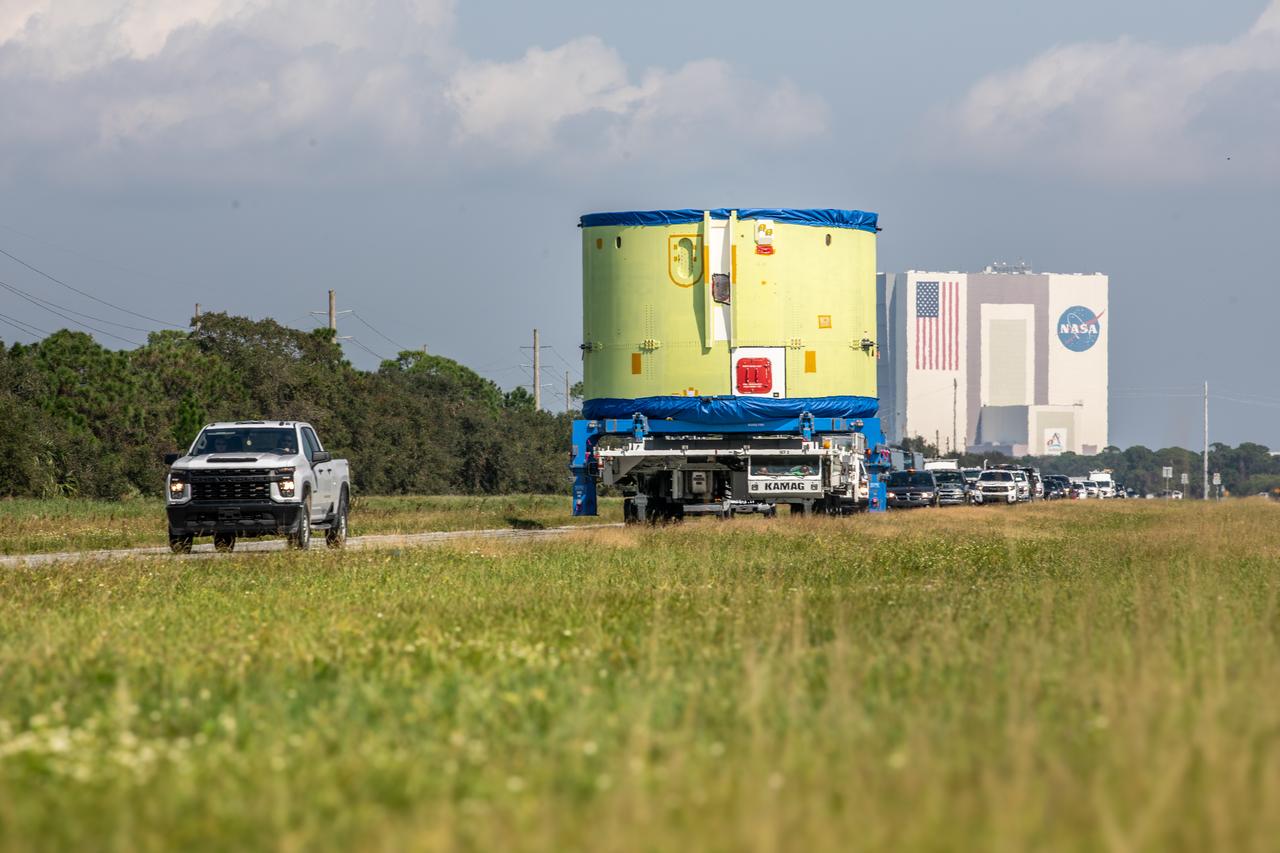
Teams from NASA’s Exploration Ground Systems transport the engine section of the agency’s Artemis IV SLS (Space Launch System) core stage from the Vehicle Assembly Building at NASA’s Kennedy Space Center in Florida to the spaceport’s Space Systems Processing Facility (SSPF) on Tuesday, Oct. 15, 2024. NASA’s Pegasus barge delivered the core stage engine section housing the four RS-25 engines from NASA’s Michoud Assembly Facility in New Orleans, Louisiana to NASA Kennedy on Thursday, Sept. 5, 2024. The engine section is one the most complex and intricate parts of the rocket stage that will help power the Artemis missions to the Moon.
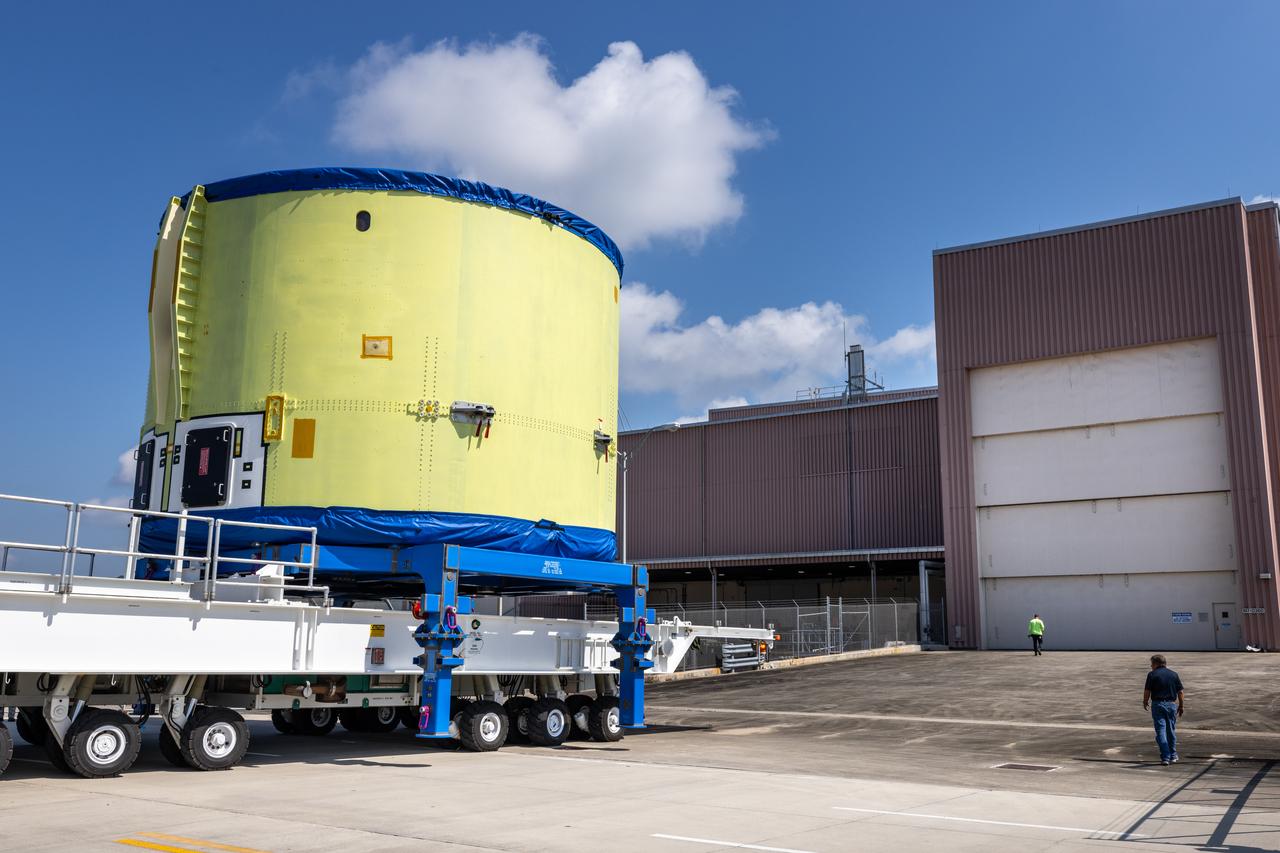
The engine section of NASA’s Artemis IV SLS (Space Launch System) core stage arrives at the Space Systems Processing Facility (SSPF) at NASA’s Kennedy Space Center in Florida on Tuesday, Oct. 15, 2024, after being transported from the spaceport’s Vehicle Assembly Building. NASA’s Pegasus barge delivered the core stage engine section housing the four RS-25 engines from NASA’s Michoud Assembly Facility in New Orleans, Louisiana to NASA Kennedy on Thursday, Sept. 5, 2024. The engine section is one the most complex and intricate parts of the rocket stage that will help power the Artemis missions to the Moon.
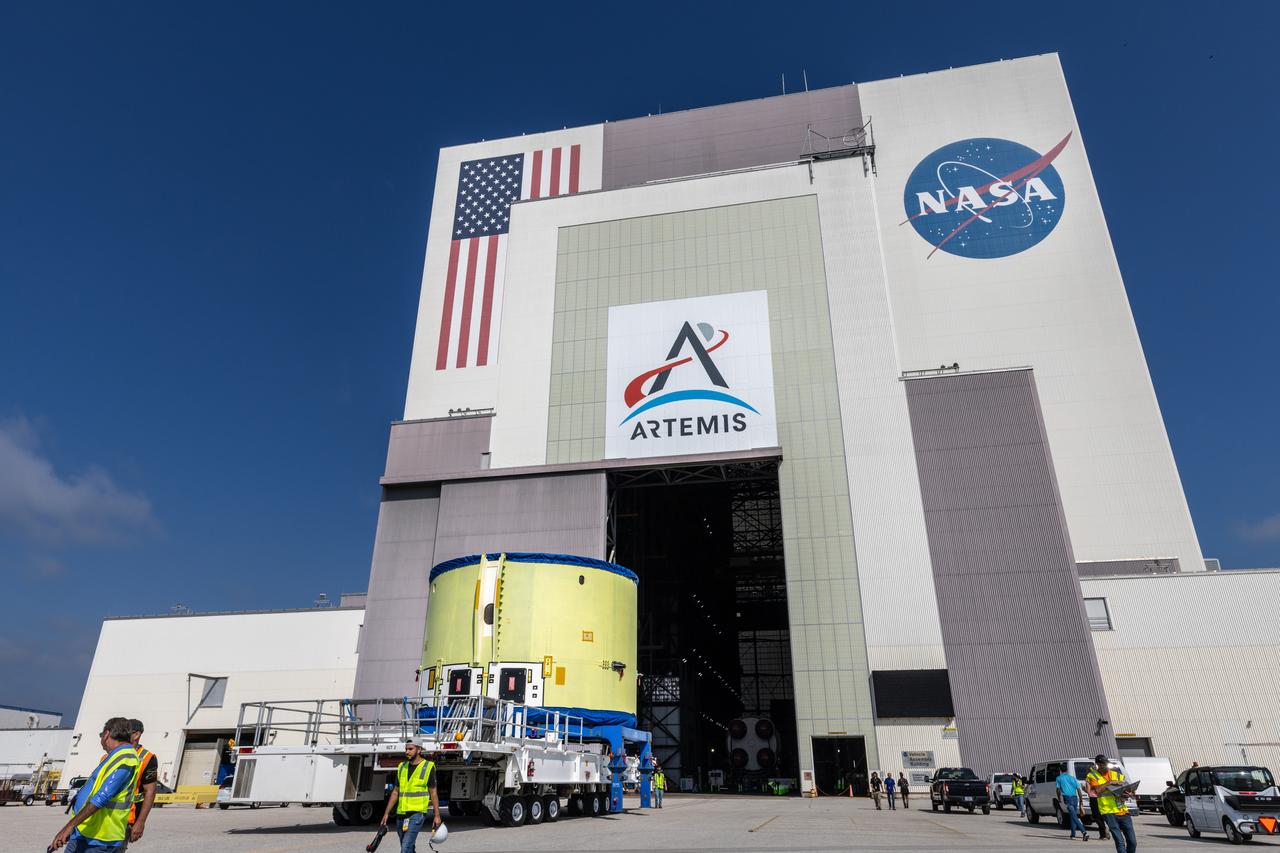
Teams from NASA’s Exploration Ground Systems transport the engine section of the agency’s Artemis IV SLS (Space Launch System) core stage from the Vehicle Assembly Building at NASA’s Kennedy Space Center in Florida to the spaceport’s Space Systems Processing Facility (SSPF) on Tuesday, Oct. 15, 2024. NASA’s Pegasus barge delivered the core stage engine section housing the four RS-25 engines from NASA’s Michoud Assembly Facility in New Orleans, Louisiana to NASA Kennedy on Thursday, Sept. 5, 2024. The engine section is one the most complex and intricate parts of the rocket stage that will help power the Artemis missions to the Moon.
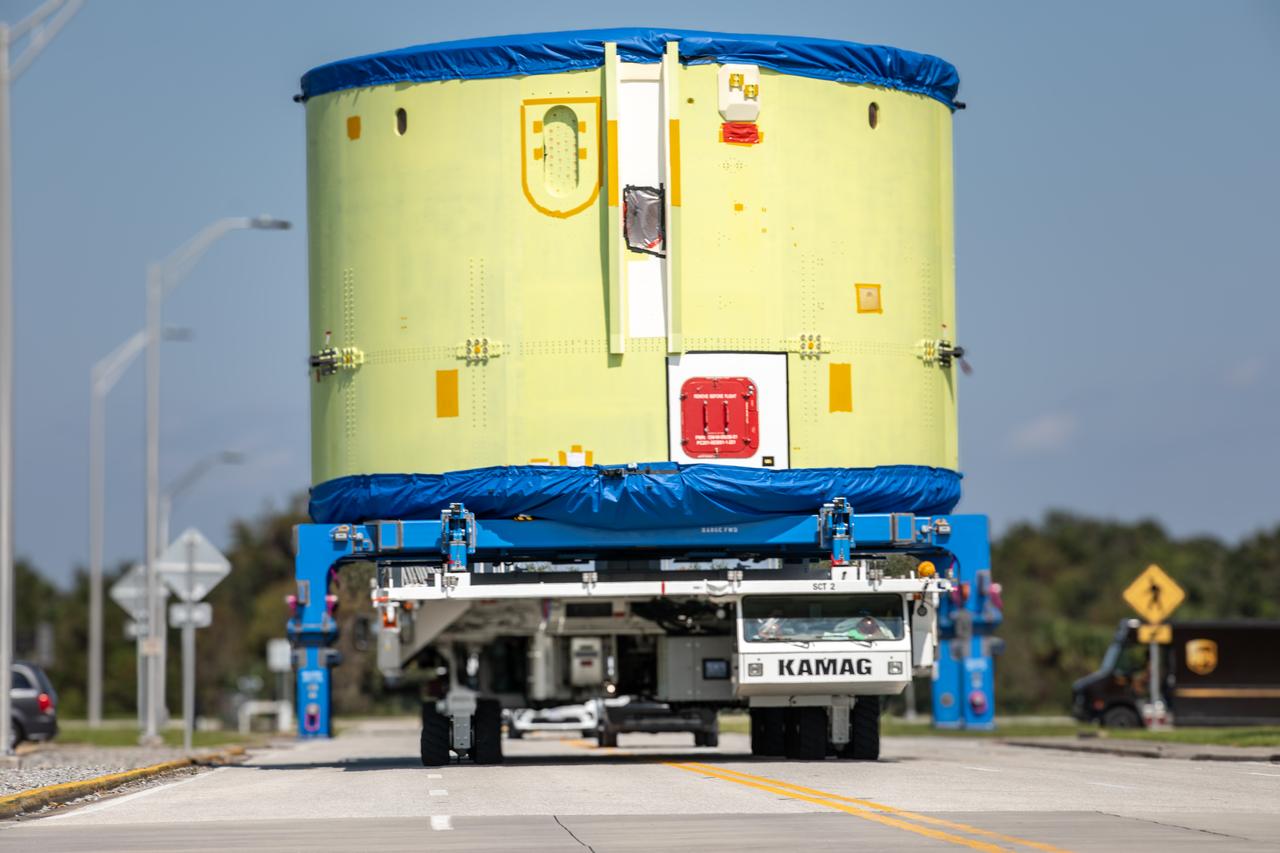
Teams from NASA’s Exploration Ground Systems transport the engine section of the agency’s Artemis IV SLS (Space Launch System) core stage from the Vehicle Assembly Building at NASA’s Kennedy Space Center in Florida to the spaceport’s Space Systems Processing Facility (SSPF) on Tuesday, Oct. 15, 2024. NASA’s Pegasus barge delivered the core stage engine section housing the four RS-25 engines from NASA’s Michoud Assembly Facility in New Orleans, Louisiana to NASA Kennedy on Thursday, Sept. 5, 2024. The engine section is one the most complex and intricate parts of the rocket stage that will help power the Artemis missions to the Moon.
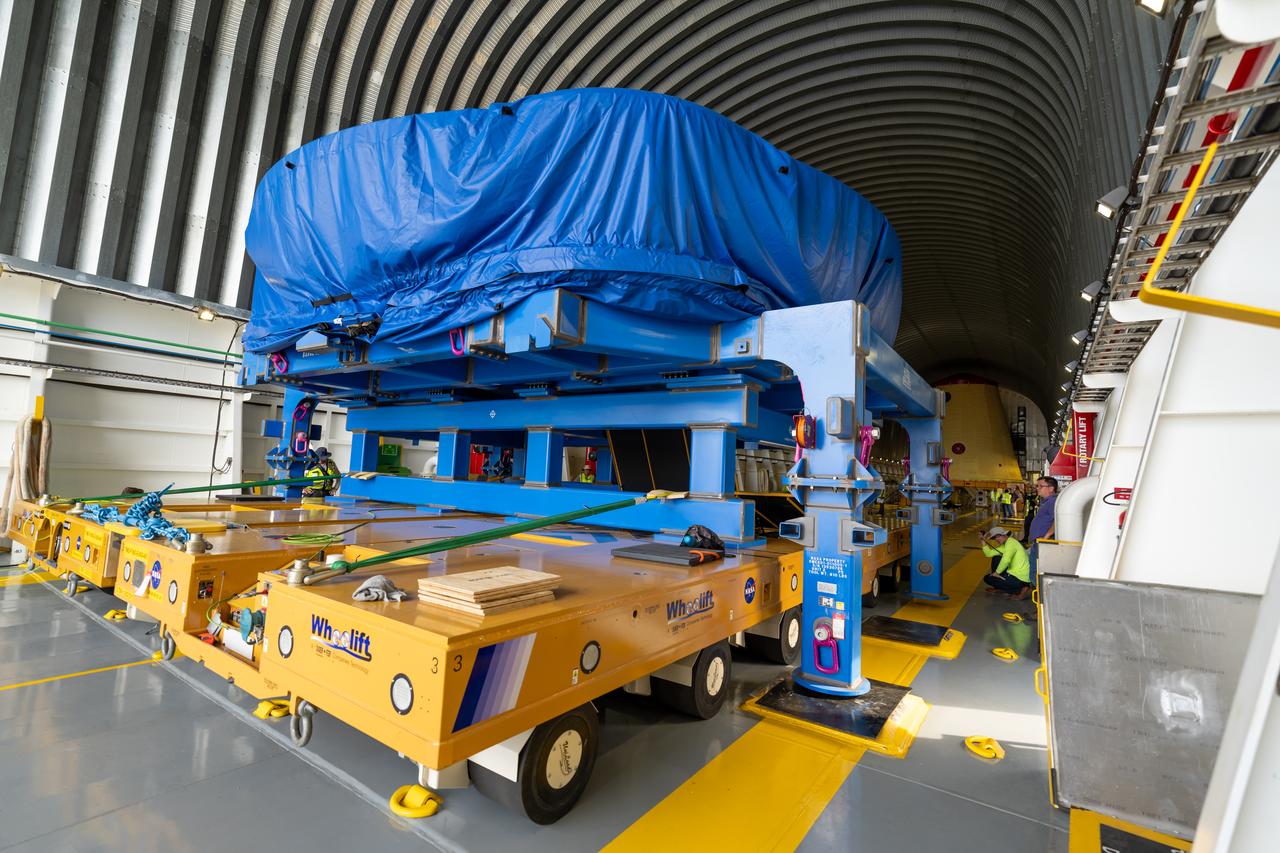
These photos and videos show teams at NASA’s Michoud Assembly Facility in New Orleans preparing, moving, and loading the engine section boat-tail of NASA’s SLS (Space Launch System) rocket for the Artemis III mission for transportation to NASA’s Kennedy Space Center in Florida via the agency’s Pegasus barge. Inside the factory on Aug. 14 prior to the move, technicians covered the spaceflight hardware with a tarp to help protect it on its journey aboard NASA’s Pegasus barge. Crews then rolled out the hardware on Aug. 27 from the factory floor to the barge. Once in Florida, the boat-tail will be integrated with the engine section -- also manufactured at Michoud -- inside Kennedy’s Space Station Processing Facility. The engine section arrived at NASA Kennedy in Dec. 2022. Located at the bottom of the engine section, the aerodynamic boat-tail fairing channels airflow and protects the stage’s four RS-25 engines from extreme temperatures during launch. The engine section is one of five major elements that make up the 212-foot-tall rocket stage. The core stage, along with its four RS-25 engines, produce two million pounds of thrust to help launch NASA’s Orion spacecraft, astronauts, and supplies beyond Earth’s orbit and to the lunar surface for Artemis.
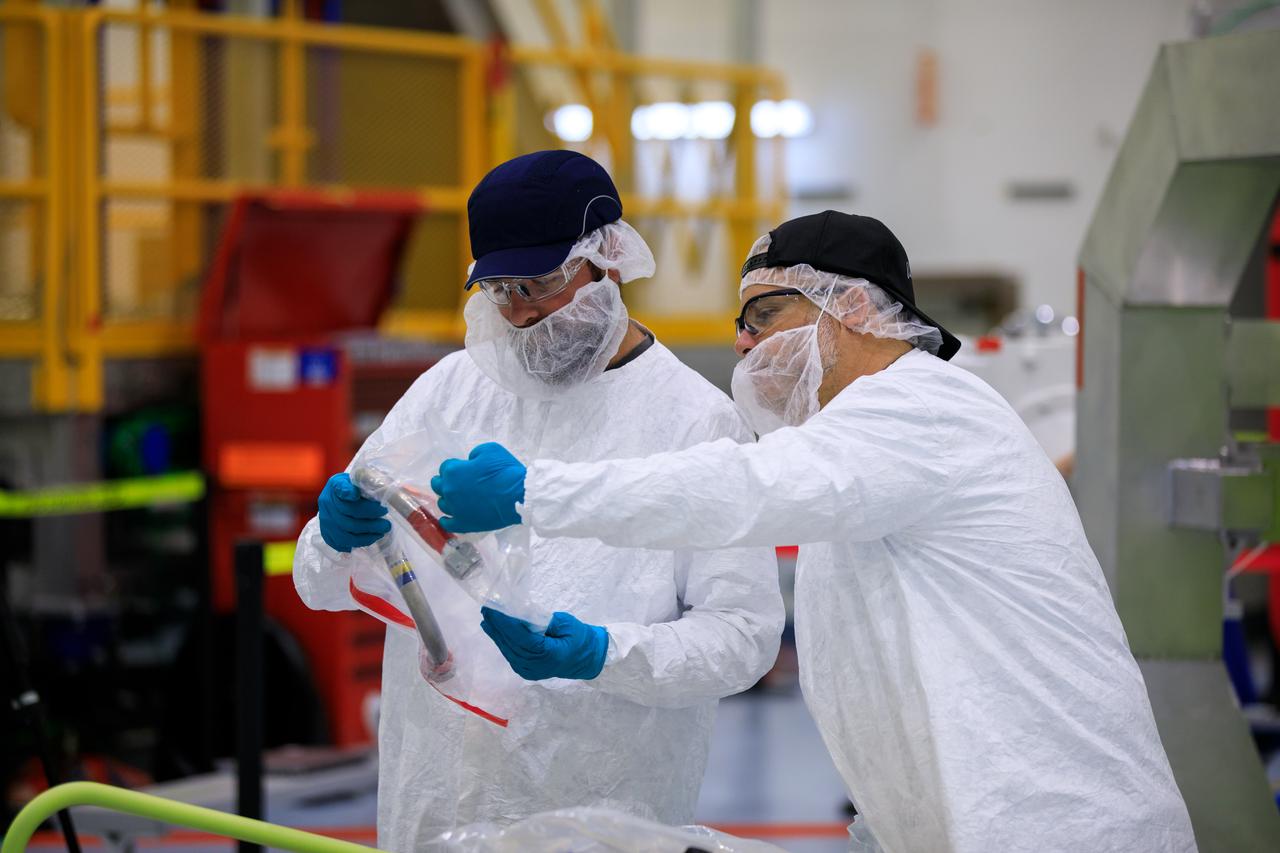
The engine section for NASA’s SLS (Space Launch System) rocket for the Artemis III mission is being processed inside the high bay of the Space Station Processing Facility at NASA’s Kennedy Space Center in Florida on June 15. NASA and Boeing, the SLS core stage lead contractor, are installing tubing within the structure. The engine section is one of five major elements that makes up the SLS rocket’s 212-foot-tall core stage. It houses the rocket’s four RS-25 engines and vital systems for mounting, controlling, and delivering fuel from the stage’s two massive liquid propellant tanks to the engines. The engine section is one the most complex and intricate parts of the rocket stage that will help to power the Artemis missions to the Moon. NASA’s Pegasus barge delivered the SLS engine section for Artemis III from NASA’s Michoud Assembly Facility in New Orleans in December 2022. Beginning with Artemis III, technicians at the spaceport will finish outfitting the engine section before integrating it with the rest of the rocket stage. In tandem, teams at Michoud will continue to manufacture the major core stage structures.