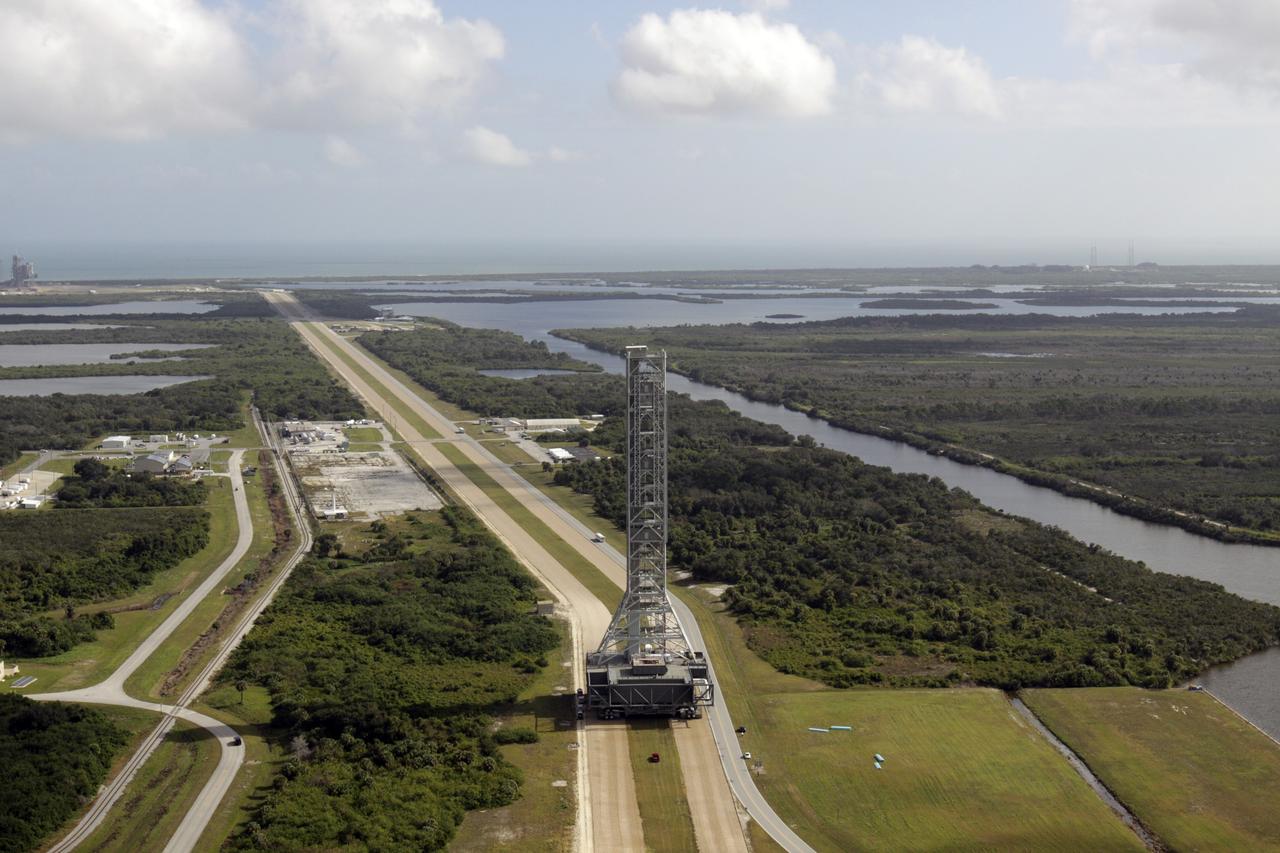
CAPE CANAVERAL, Fla. – On the crawlerway at NASA's Kennedy Space Center in Florida, an aerial view shows the mobile launcher (ML) as it rolls out aboard the crawler-transporter moving from next to Kennedy's Vehicle Assembly Building to Launch Pad 39B, a distance of 4.2 miles. Data on the ML will be collected from structural and functional engineering tests and used for the next phases of construction. The 355-foot-tall ML structure, which took about two years to construct, is being modified to support NASA’s Space Launch System (SLS), the heavy-lift rocket that will launch astronauts farther into space than ever before. SLS will also create high-quality jobs here at home, and provide the cornerstone for America's future human space exploration efforts. Photo credit: NASA/Kim Shiflett
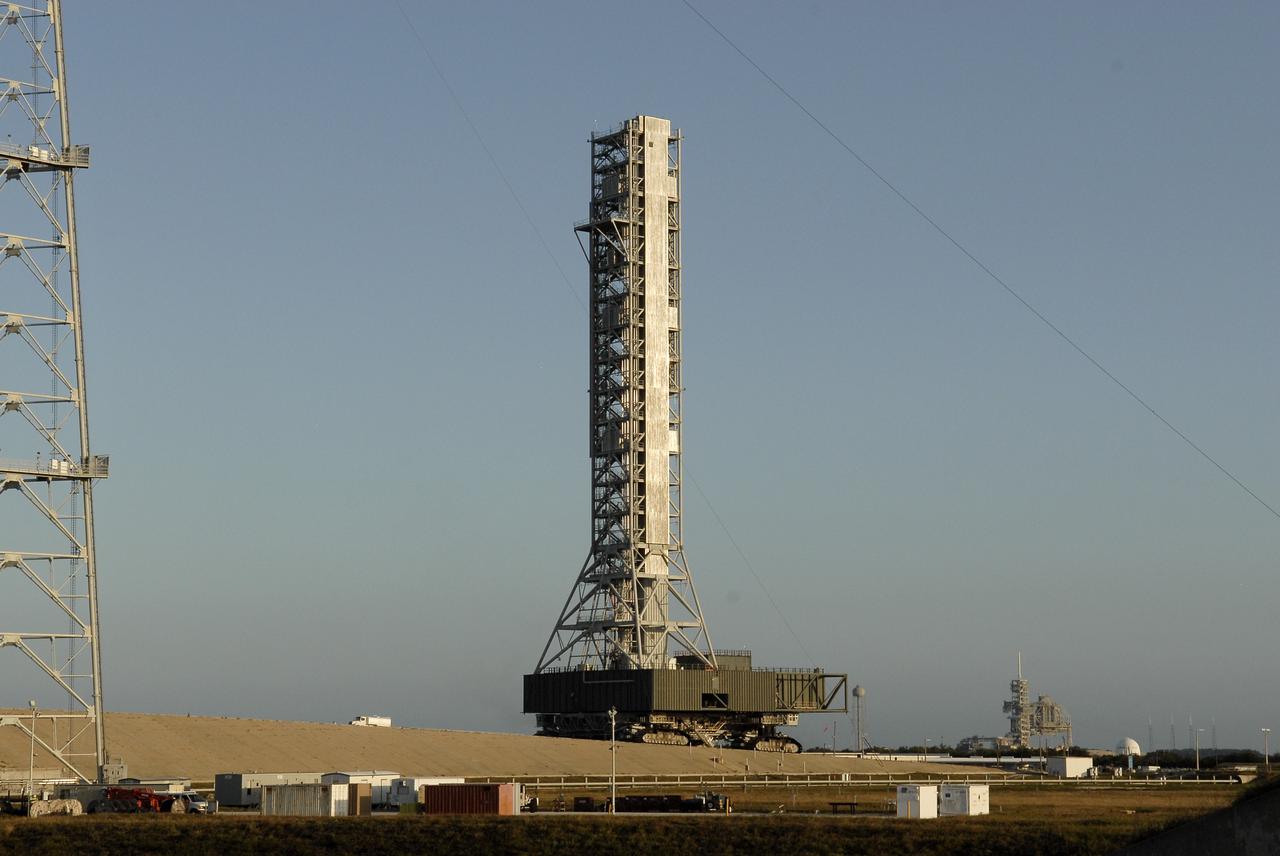
CAPE CANAVERAL, Fla. – At NASA’s Kennedy Space Center in Florida, the mobile launcher (ML) is nearing completion of its 4.2-mile journey to Launch Pad 39B. The launcher rolled out aboard a crawler-transporter from next to Kennedy's Vehicle Assembly Building to the pad at about 9:15 a.m. EST. Data on the ML will be collected from structural and functional engineering tests and used for the next phases of construction overseen by NASA’s 21st Century Ground Systems Program. To the right in the background is Launch Pad 39A. The 355-foot-tall ML structure, which took about two years to construct, is being modified to support NASA’s Space Launch System (SLS), the heavy-lift rocket that will launch astronauts farther into space than ever before. SLS will also create high-quality jobs here at home, and provide the cornerstone for America's future human space exploration efforts. Photo credit: NASA/Charisse Nahser
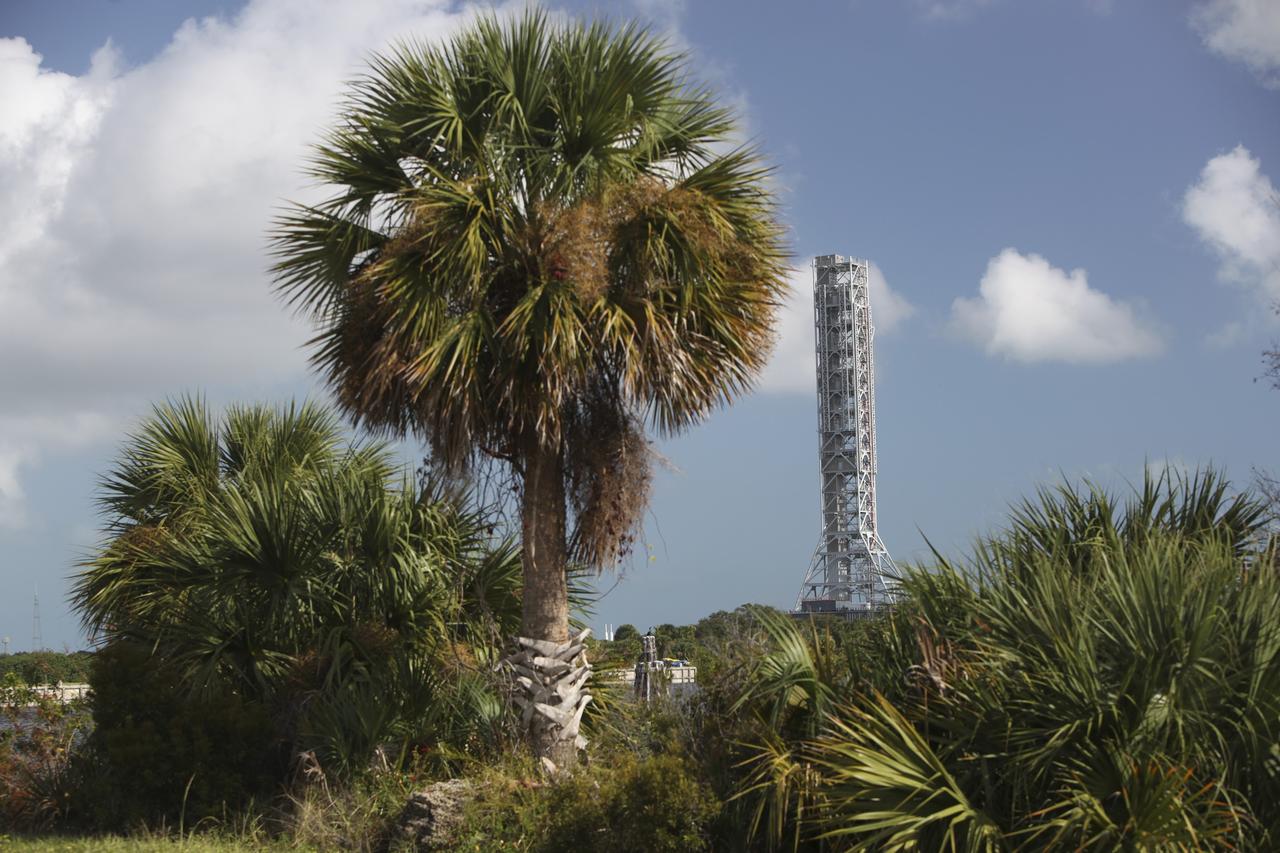
CAPE CANAVERAL, Fla. – The natural vegetation at NASA's Kennedy Space Center in Florida frames the Mobile Launcher (ML) as it rolls out aboard a crawler-transporter from next to Kennedy's Vehicle Assembly Building to Launch Pad 39B, a distance of 4.2 miles. Data on the ML will be collected from structural and functional engineering tests and used for the next phases of construction. The 355-foot-tall ML structure, which took about two years to construct, is being modified to support NASA’s Space Launch System (SLS), the heavy-lift rocket that will launch astronauts farther into space than ever before. SLS will also create high-quality jobs here at home, and provide the cornerstone for America's future human space exploration efforts. Photo credit: NASA/Dimitri Gerondidakis
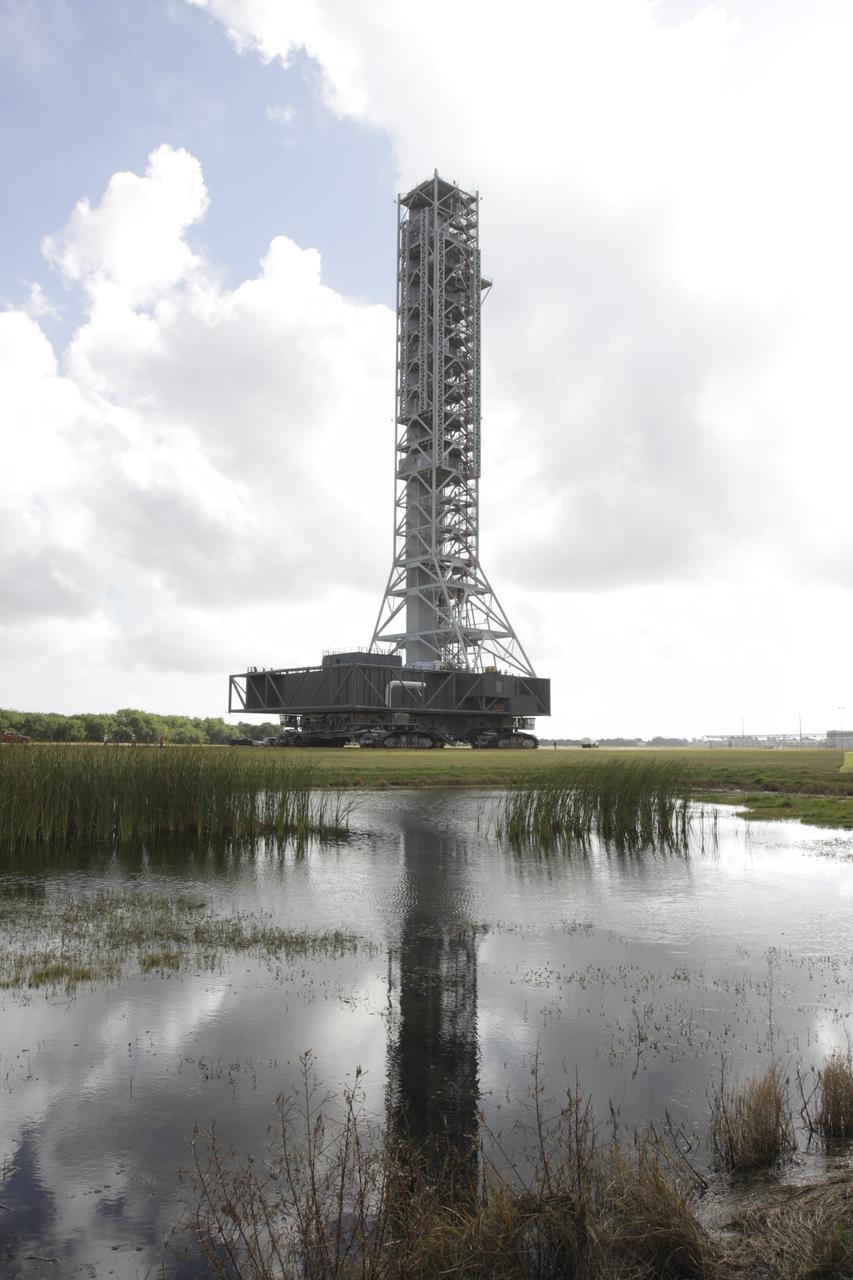
CAPE CANAVERAL, Fla. – At NASA’s Kennedy Space Center in Florida, the Mobile Launcher (ML) is reflected in a pond as the crawler-transporter moves the ML from next to Kennedy's Vehicle Assembly Building to Launch Pad 39B, a distance of 4.2 miles. Data on the ML will be collected from structural and functional engineering tests and used for the next phases of construction. The 355-foot-tall ML structure, which took about two years to construct, is being modified to support NASA’s Space Launch System (SLS), the heavy-lift rocket that will launch astronauts farther into space than ever before. SLS will also create high-quality jobs here at home, and provide the cornerstone for America's future human space exploration efforts. Photo credit: NASA/Kim Shiflett
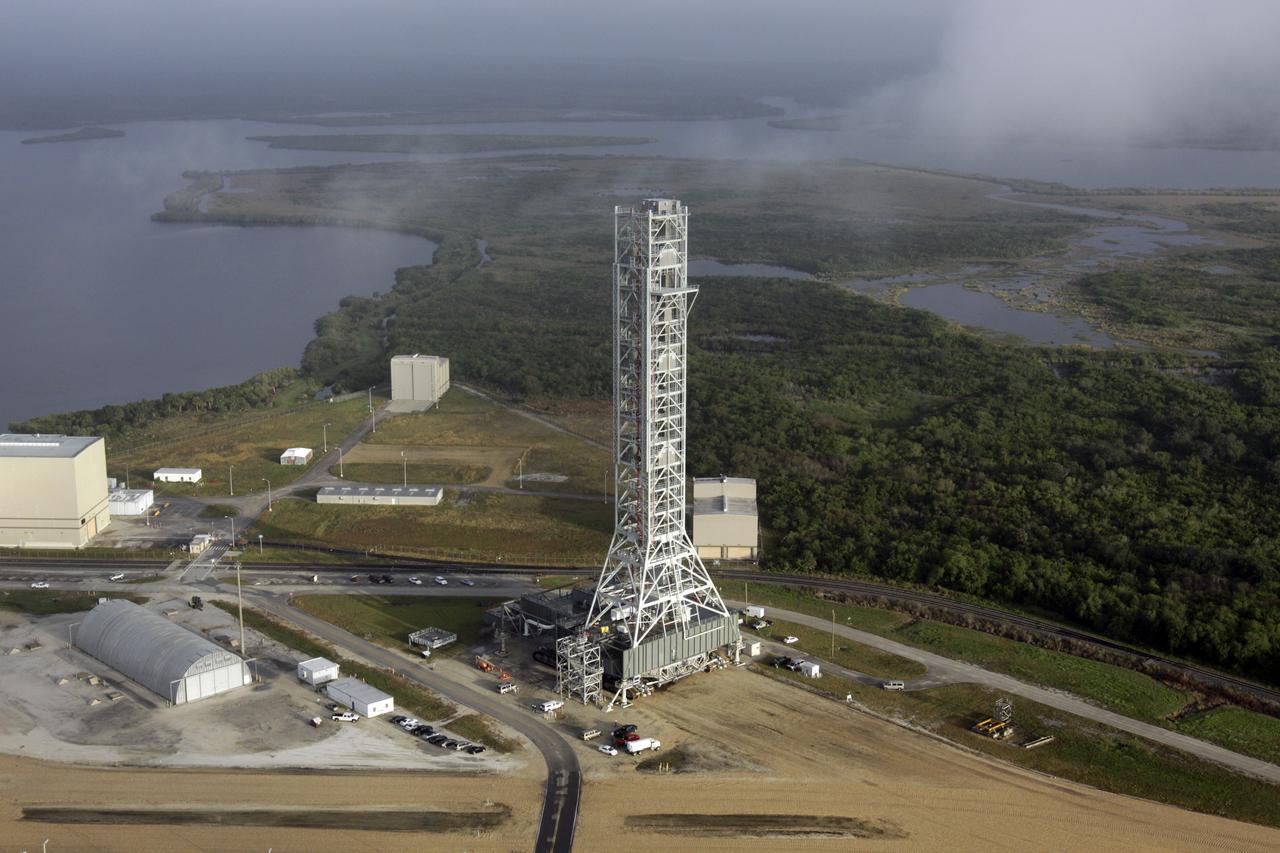
CAPE CANAVERAL, Fla. – At NASA's Kennedy Space Center in Florida, this aerial view taken from atop the Vehicle Assembly Building shows the mobile launcher (ML) as it begins its move aboard a crawler-transporter from next to Kennedy's Vehicle Assembly Building to Launch Pad 39B, a distance of 4.2 miles. Data on the ML will be collected from structural and functional engineering tests and used for the next phases of construction. The 355-foot-tall ML structure, which took about two years to construct, is being modified to support NASA’s Space Launch System (SLS), the heavy-lift rocket that will launch astronauts farther into space than ever before. SLS will also create high-quality jobs here at home, and provide the cornerstone for America's future human space exploration efforts. Photo credit: NASA/Kim Shiflett
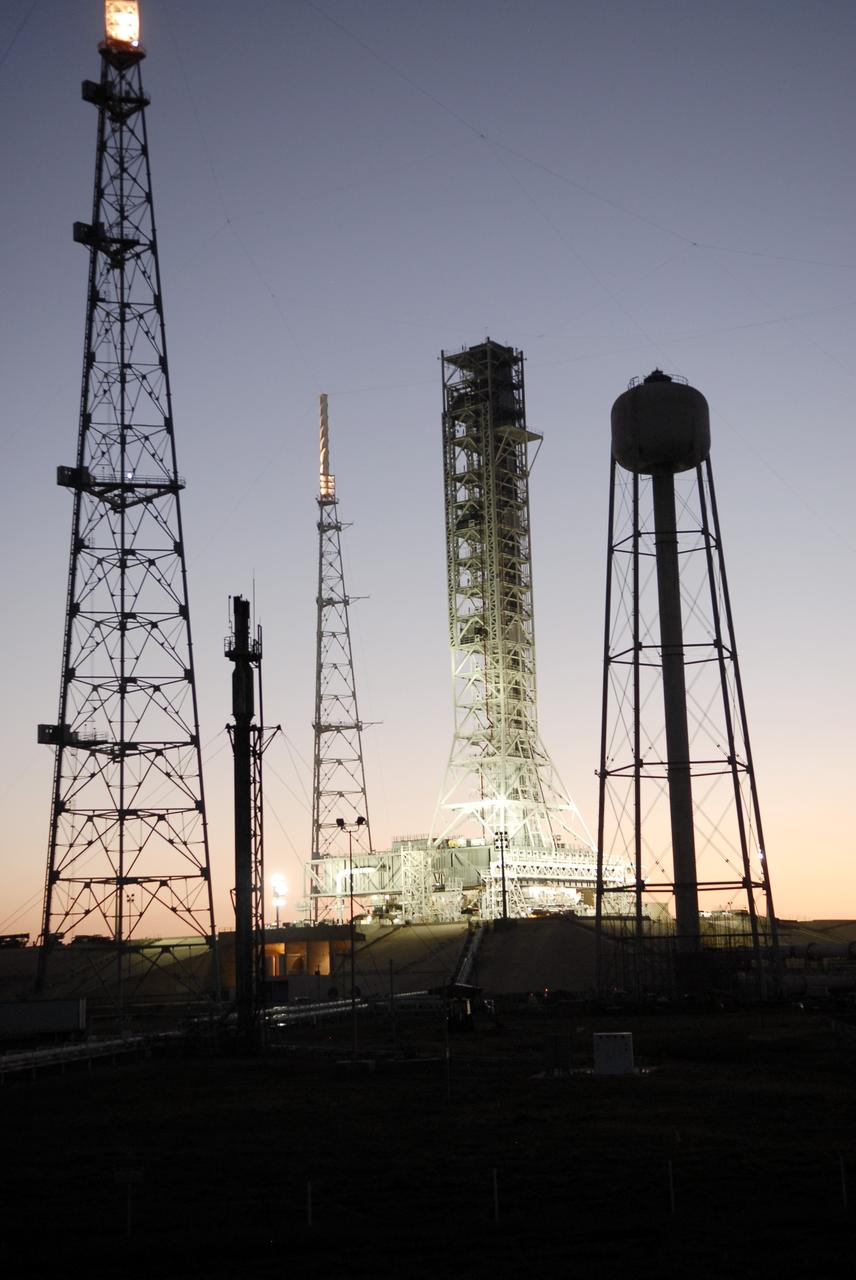
CAPE CANAVERAL, Fla. – At NASA’s Kennedy Space Center in Florida, lights illuminate the mobile launcher (ML) at Launch Pad 39B after completing its 4.2-mile journey to the pad. The launcher rolled out aboard a crawler-transporter from next to Kennedy's Vehicle Assembly Building to the pad at about 9:15 a.m. EST with the launcher arriving at the pad at 6:29 p.m. Data on the ML will be collected from structural and functional engineering tests and used for the next phases of construction overseen by NASA’s 21st Century Ground Systems Program. The 355-foot-tall ML structure, which took about two years to construct, is being modified to support NASA’s Space Launch System (SLS), the heavy-lift rocket that will launch astronauts farther into space than ever before. SLS will also create high-quality jobs here at home, and provide the cornerstone for America's future human space exploration efforts. Photo credit: NASA/Charisse Nahser
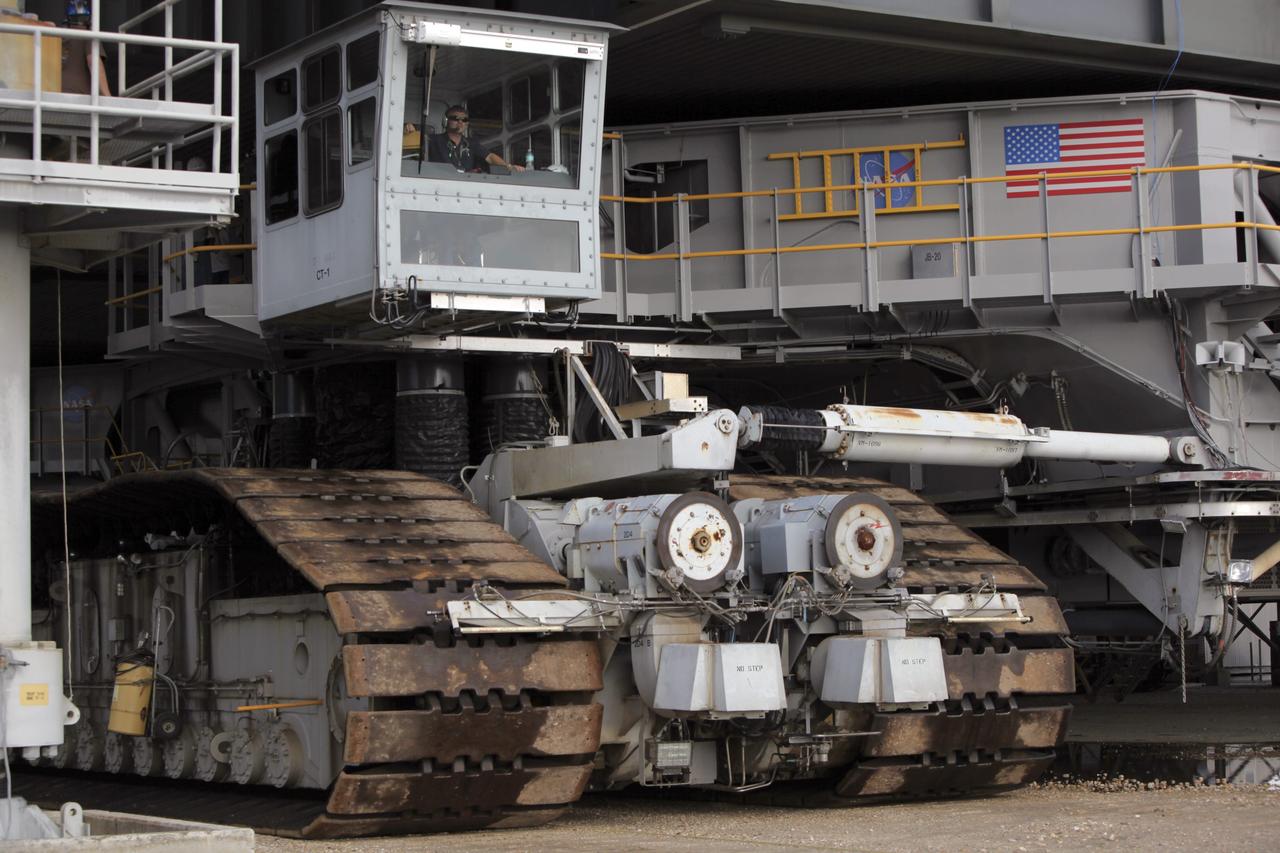
CAPE CANAVERAL, Fla. – At NASA’s Kennedy Space Center in Florida, the crawler-transporter is being prepared to move the mobile launcher (ML) from next to Kennedy's Vehicle Assembly Building to Launch Pad 39B, a distance of 4.2 miles. Data on the ML will be collected from structural and functional engineering tests and used for the next phases of construction. The 355-foot-tall ML structure, which took about two years to construct, is being modified to support NASA’s Space Launch System (SLS), the heavy-lift rocket that will launch astronauts farther into space than ever before. SLS will also create high-quality jobs here at home, and provide the cornerstone for America's future human space exploration efforts. Photo credit: NASA/Dimitri Gerondidakis
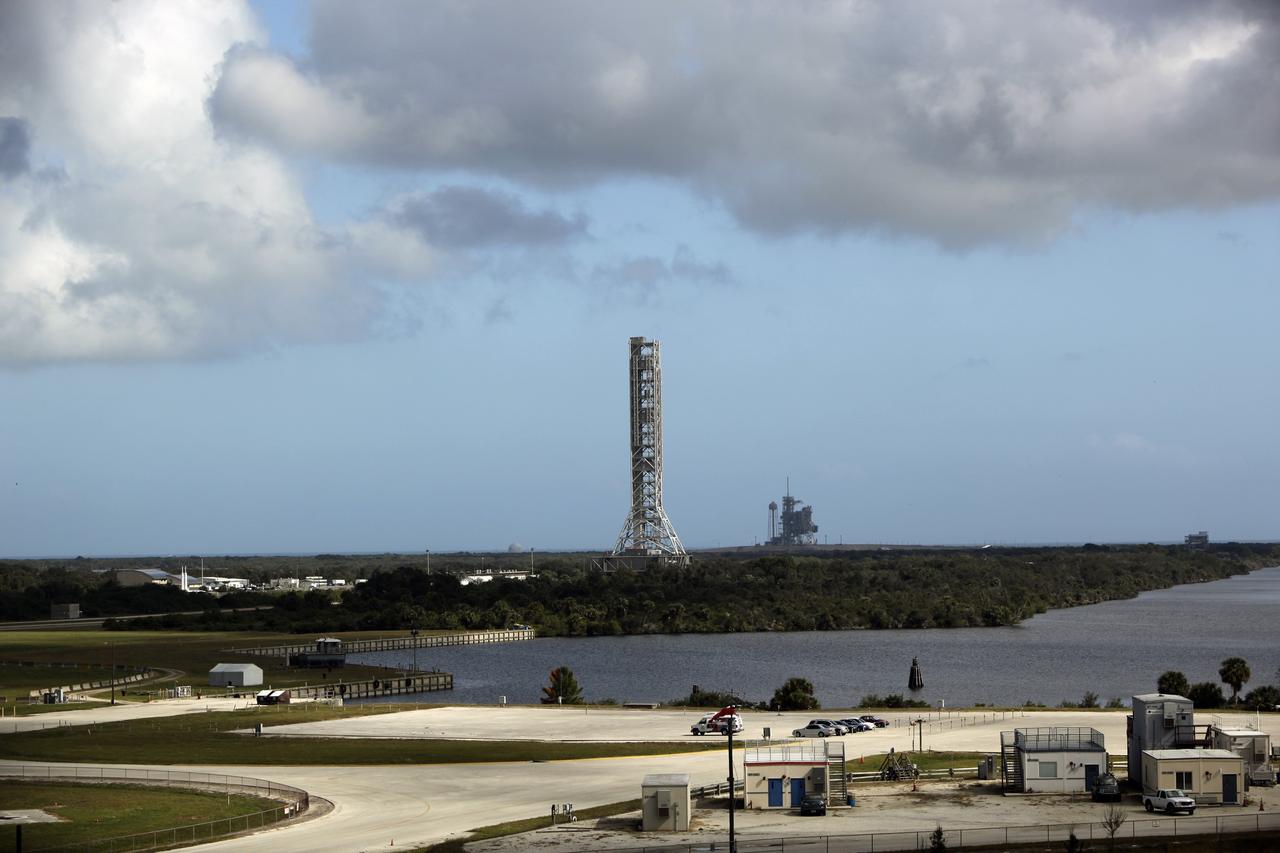
CAPE CANAVERAL, Fla. – At NASA's Kennedy Space Center in Florida, an aerial view shows the mobile launcher (ML) as it rolls out aboard the crawler-transporter moving from next to Kennedy's Vehicle Assembly Building to Launch Pad 39B, a distance of 4.2 miles. Data on the ML will be collected from structural and functional engineering tests and used for the next phases of construction. In the distance is Launch Pad 39A. The 355-foot-tall ML structure, which took about two years to construct, is being modified to support NASA’s Space Launch System (SLS), the heavy-lift rocket that will launch astronauts farther into space than ever before. SLS will also create high-quality jobs here at home, and provide the cornerstone for America's future human space exploration efforts. Photo credit: NASA/Dimitri Gerondidakis
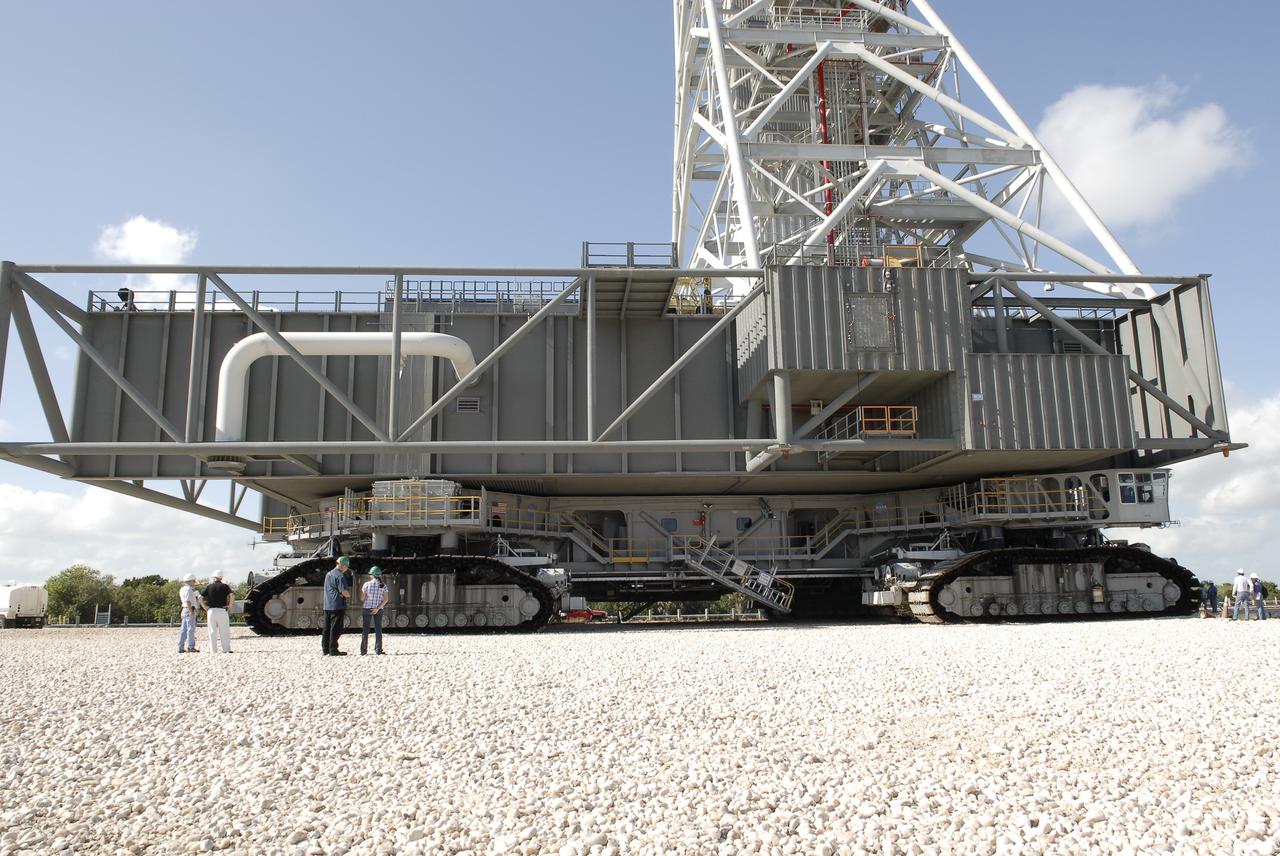
CAPE CANAVERAL, Fla. – On the crawlerway at NASA’s Kennedy Space Center in Florida, technicians confer before the crawler-transporter as it rolls out the mobile launcher (ML) from next to Kennedy's Vehicle Assembly Building to Launch Pad 39B, a distance of 4.2 miles. Rollout began at about 9:15 a.m. EST. Data on the ML will be collected from structural and functional engineering tests and used for the next phases of construction overseen by NASA’s 21st Century Ground Systems Program. The 355-foot-tall ML structure, which took about two years to construct, is being modified to support NASA’s Space Launch System (SLS), the heavy-lift rocket that will launch astronauts farther into space than ever before. SLS will also create high-quality jobs here at home, and provide the cornerstone for America's future human space exploration efforts. Photo credit: NASA/Charisse Nahser
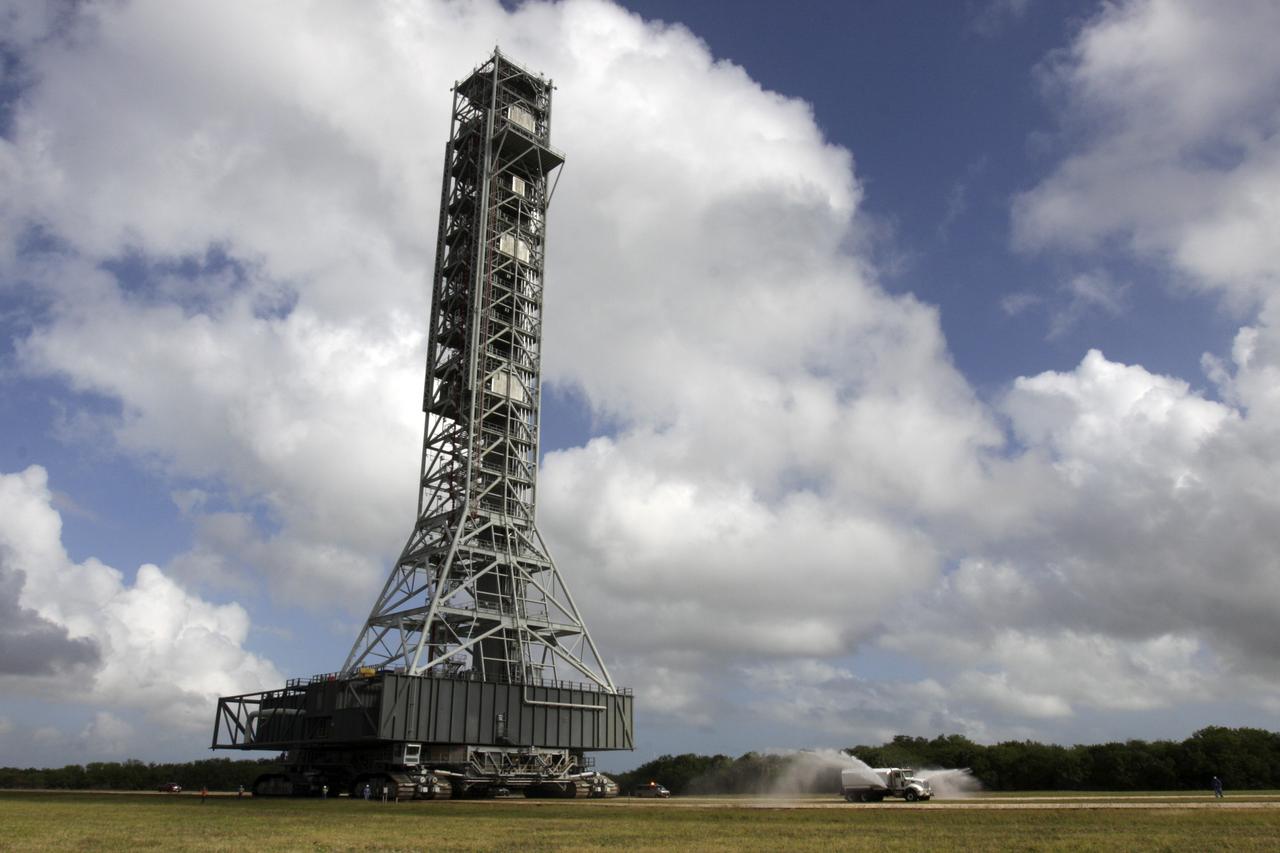
CAPE CANAVERAL, Fla. – At NASA’s Kennedy Space Center in Florida, a water truck leads the way spraying water on the dry crawlerway to reduce dust particles in the air, as the mobile launcher (ML) moves aboard the crawler-transporter. The ML is moving from next to Kennedy's Vehicle Assembly Building to Launch Pad 39B, a distance of 4.2 miles. Data on the ML will be collected from structural and functional engineering tests and used for the next phases of construction. The 355-foot-tall ML structure, which took about two years to construct, is being modified to support NASA’s Space Launch System (SLS), the heavy-lift rocket that will launch astronauts farther into space than ever before. SLS will also create high-quality jobs here at home, and provide the cornerstone for America's future human space exploration efforts. Photo credit: NASA/Kim Shiflett
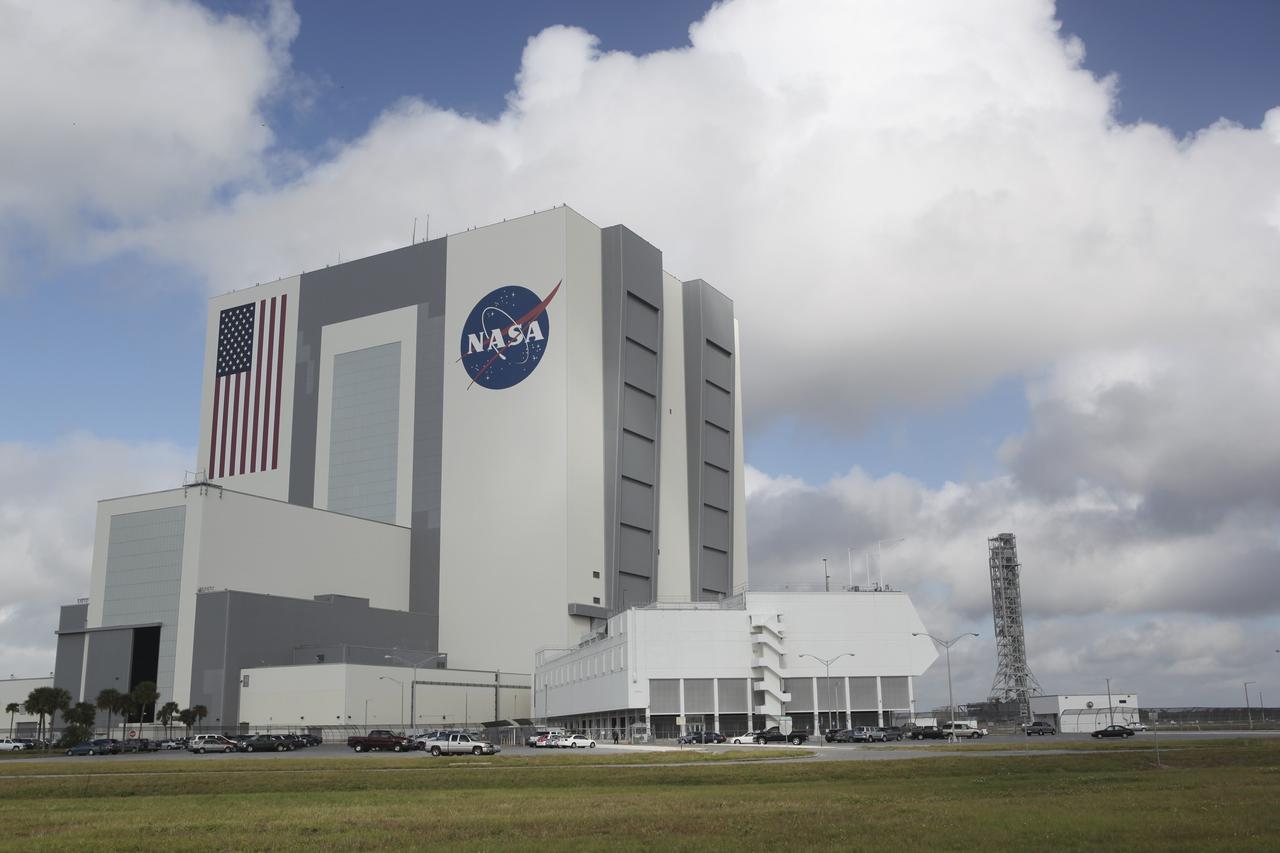
CAPE CANAVERAL, Fla. – At NASA’s Kennedy Space Center in Florida, the mobile launcher (ML) is being prepared for its move aboard a crawler-transporter from next to Kennedy's Vehicle Assembly Building to Launch Pad 39B, a distance of 4.2 miles. Data on the ML will be collected from structural and functional engineering tests and used for the next phases of construction. The 355-foot-tall ML structure, which took about two years to construct, is being modified to support NASA’s Space Launch System (SLS), the heavy-lift rocket that will launch astronauts farther into space than ever before. SLS will also create high-quality jobs here at home, and provide the cornerstone for America's future human space exploration efforts. Photo credit: NASA/Dimitri Gerondidakis
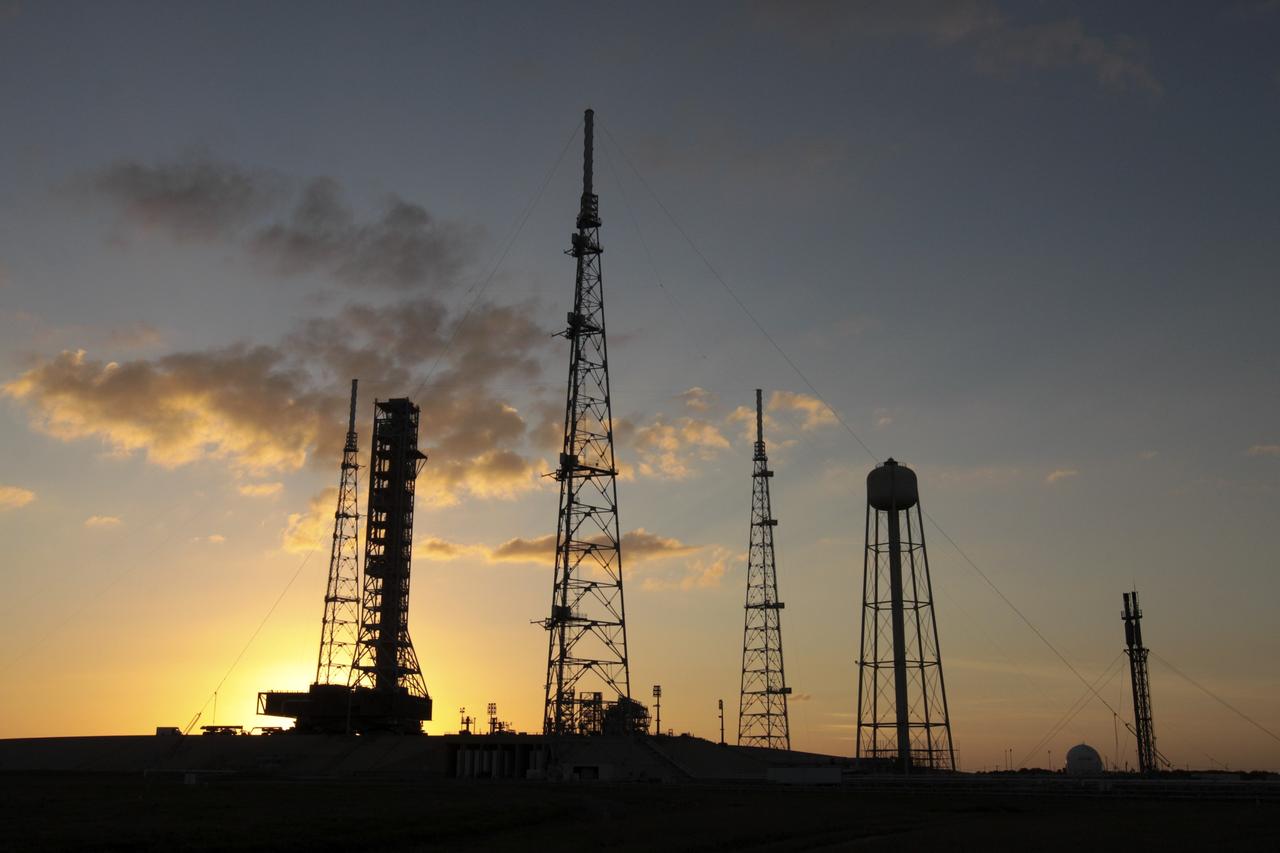
CAPE CANAVERAL, Fla. – With the sun setting in the background at NASA’s Kennedy Space Center in Florida, the mobile launcher (ML) is nearing completion of its 4.2-mile journey to Launch Pad 39B. The ML rolled out aboard a crawler-transporter from next to Kennedy's Vehicle Assembly Building to the pad at about 9:15 a.m. EST. Data on the ML will be collected from structural and functional engineering tests and used for the next phases of construction overseen by NASA’s 21st Century Ground Systems Program. The 355-foot-tall ML structure, which took about two years to construct, is being modified to support NASA’s Space Launch System (SLS), the heavy-lift rocket that will launch astronauts farther into space than ever before. SLS will also create high-quality jobs here at home, and provide the cornerstone for America's future human space exploration efforts. Photo credit: NASA/Kim Shiflett
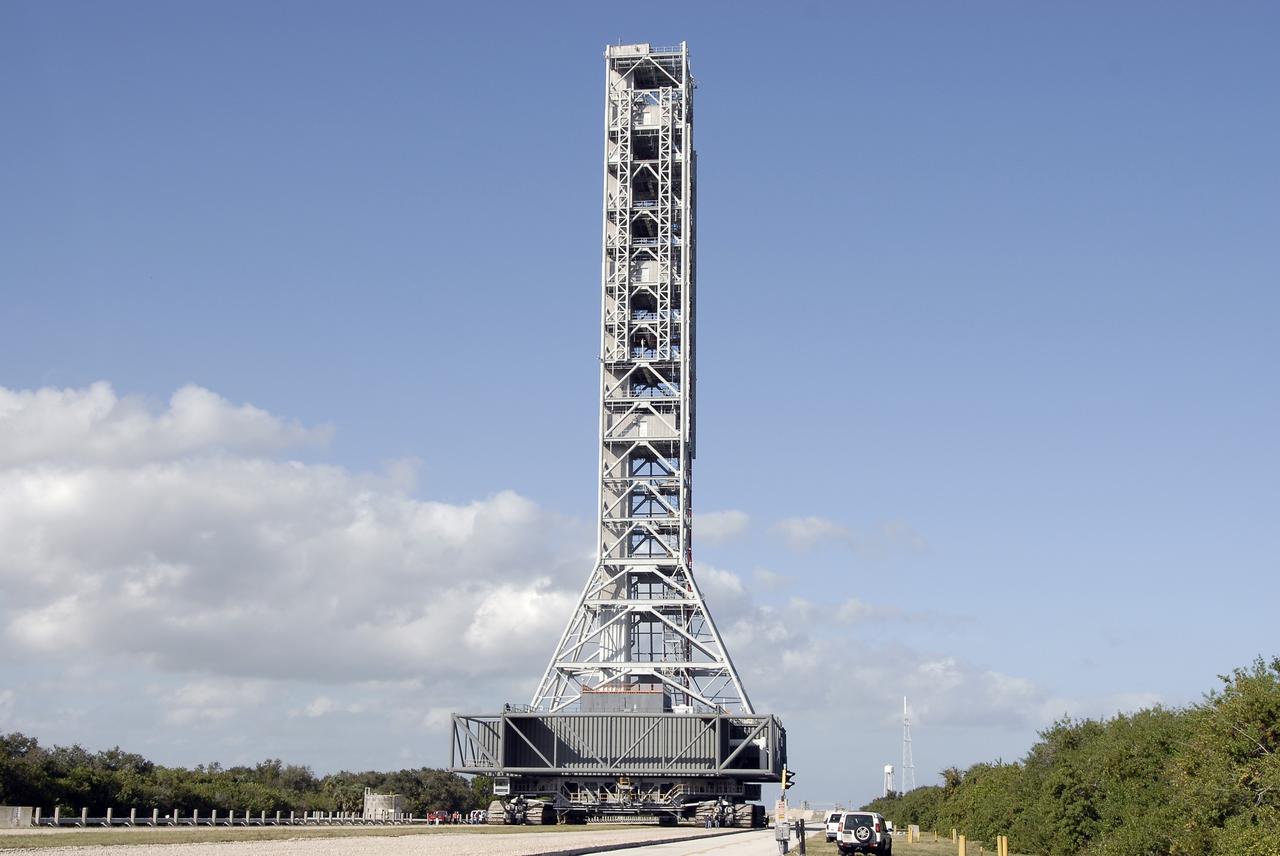
CAPE CANAVERAL, Fla. – On the crawlerway at NASA's Kennedy Space Center in Florida, the mobile launcher (ML) rolls out aboard a crawler-transporter from next to Kennedy's Vehicle Assembly Building to Launch Pad 39B, a distance of 4.2 miles. Rollout began at about 9:15 a.m. EST. Data on the ML will be collected from structural and functional engineering tests and used for the next phases of construction overseen by NASA’s 21st Century Ground Systems Program. The 355-foot-tall ML structure, which took about two years to construct, is being modified to support NASA’s Space Launch System (SLS), the heavy-lift rocket that will launch astronauts farther into space than ever before. SLS will also create high-quality jobs here at home, and provide the cornerstone for America's future human space exploration efforts. Photo credit: NASA/Charisse Nahser
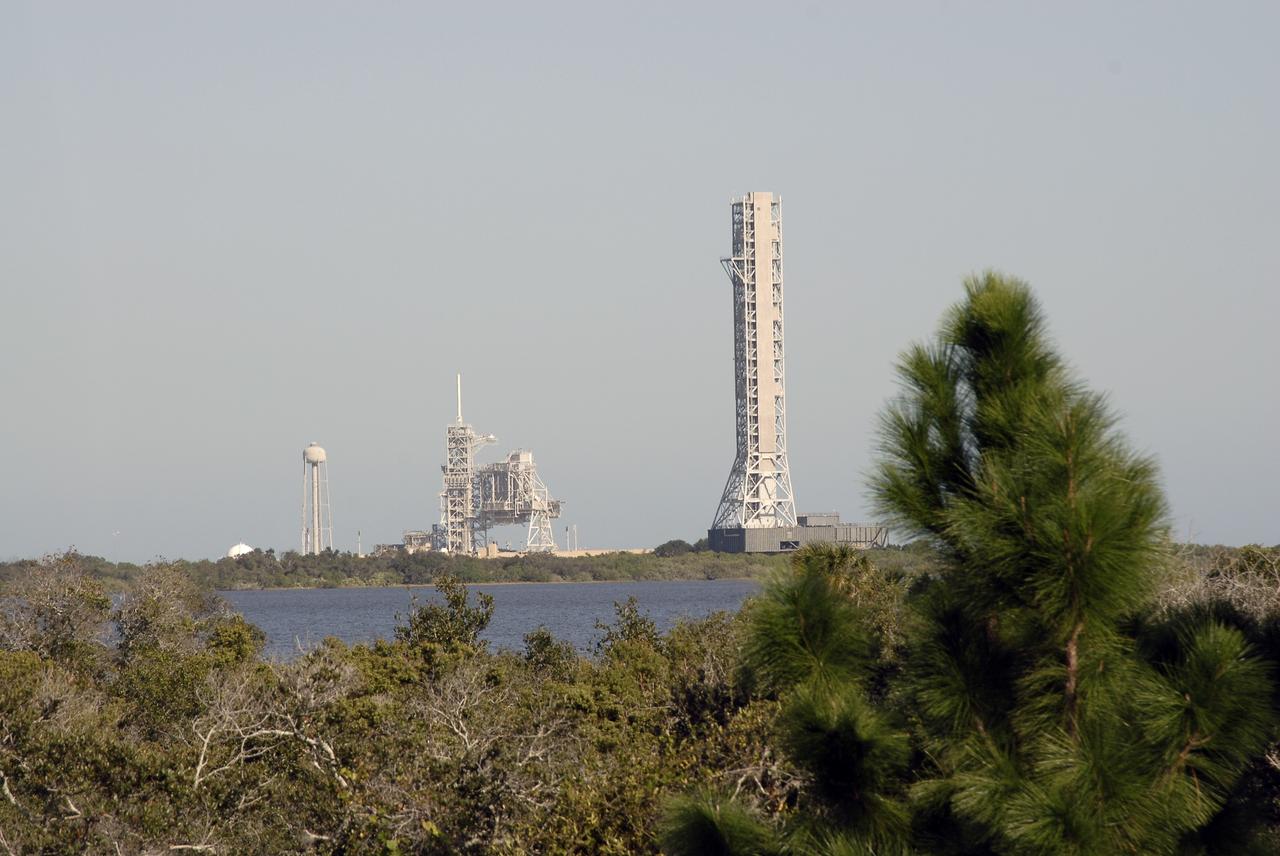
CAPE CANAVERAL, Fla. – The natural vegetation at NASA's Kennedy Space Center in Florida frames the mobile launcher (ML) as it rolls out aboard a crawler-transporter from next to Kennedy's Vehicle Assembly Building to Launch Pad 39B, a distance of 4.2 miles. Rollout began at about 9:15 a.m. EST. Data on the ML will be collected from structural and functional engineering tests and used for the next phases of construction overseen by NASA’s 21st Century Ground Systems Program. To the left of the launcher is Launch Pad 39A. The 355-foot-tall ML structure, which took about two years to construct, is being modified to support NASA’s Space Launch System (SLS), the heavy-lift rocket that will launch astronauts farther into space than ever before. SLS will also create high-quality jobs here at home, and provide the cornerstone for America's future human space exploration efforts. Photo credit: NASA/Charisse Nahser
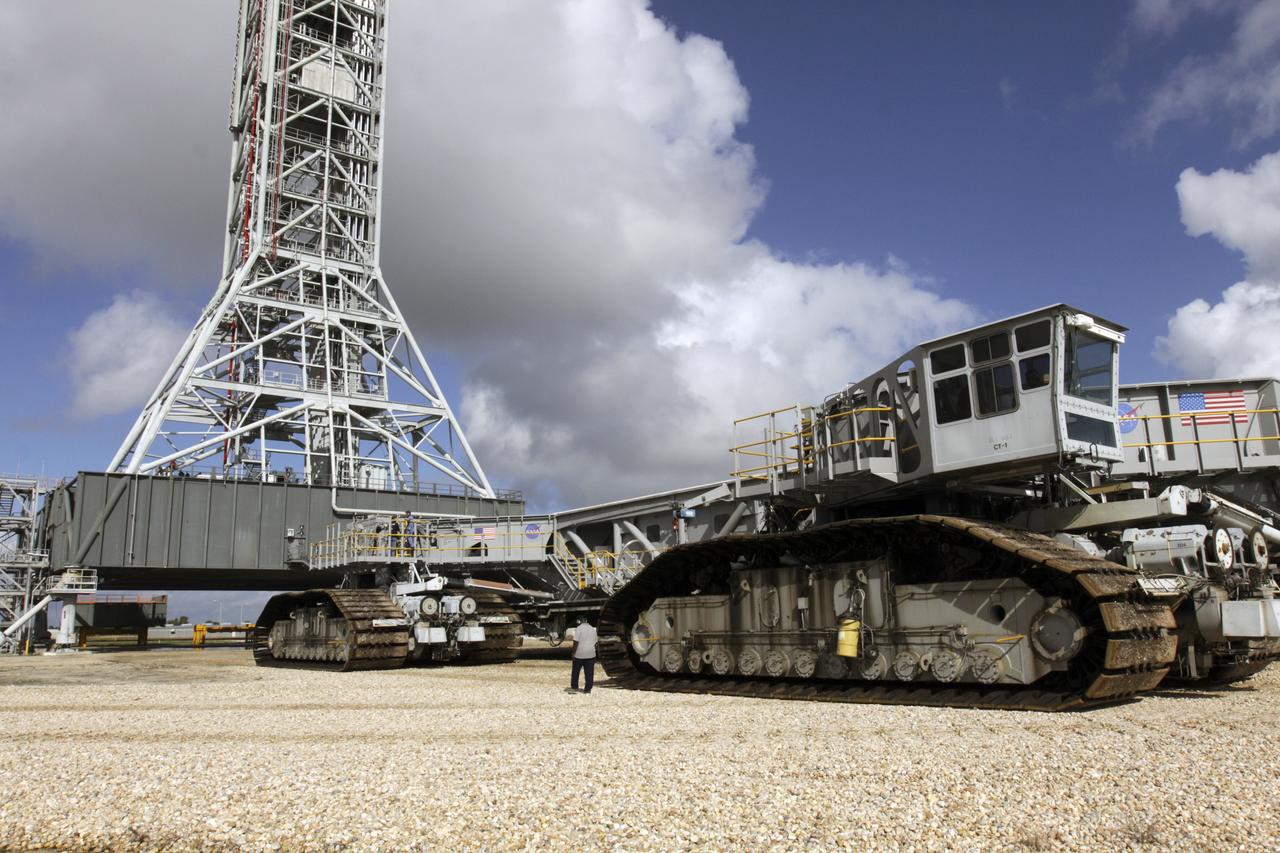
CAPE CANAVERAL, Fla. – At NASA's Kennedy Space Center in Florida, the mobile launcher (ML) is being prepared for its move aboard a crawler-transporter from next to Kennedy's Vehicle Assembly Building to Launch Pad 39B, a distance of 4.2 miles. Data on the ML will be collected from structural and functional engineering tests and used for the next phases of construction. The 355-foot-tall ML, which took about two years to construct, is being modified to support NASA's Space Launch System (SLS), the heavy-lift rocket that will launch astronauts farther into space than ever before. SLS will also create high-quality jobs here at home, and provide the cornerstone for America's future human space exploration efforts. For more information on SLS, visit http://www.nasa.gov/sls. Photo credit: NASA/Kim Shiflett
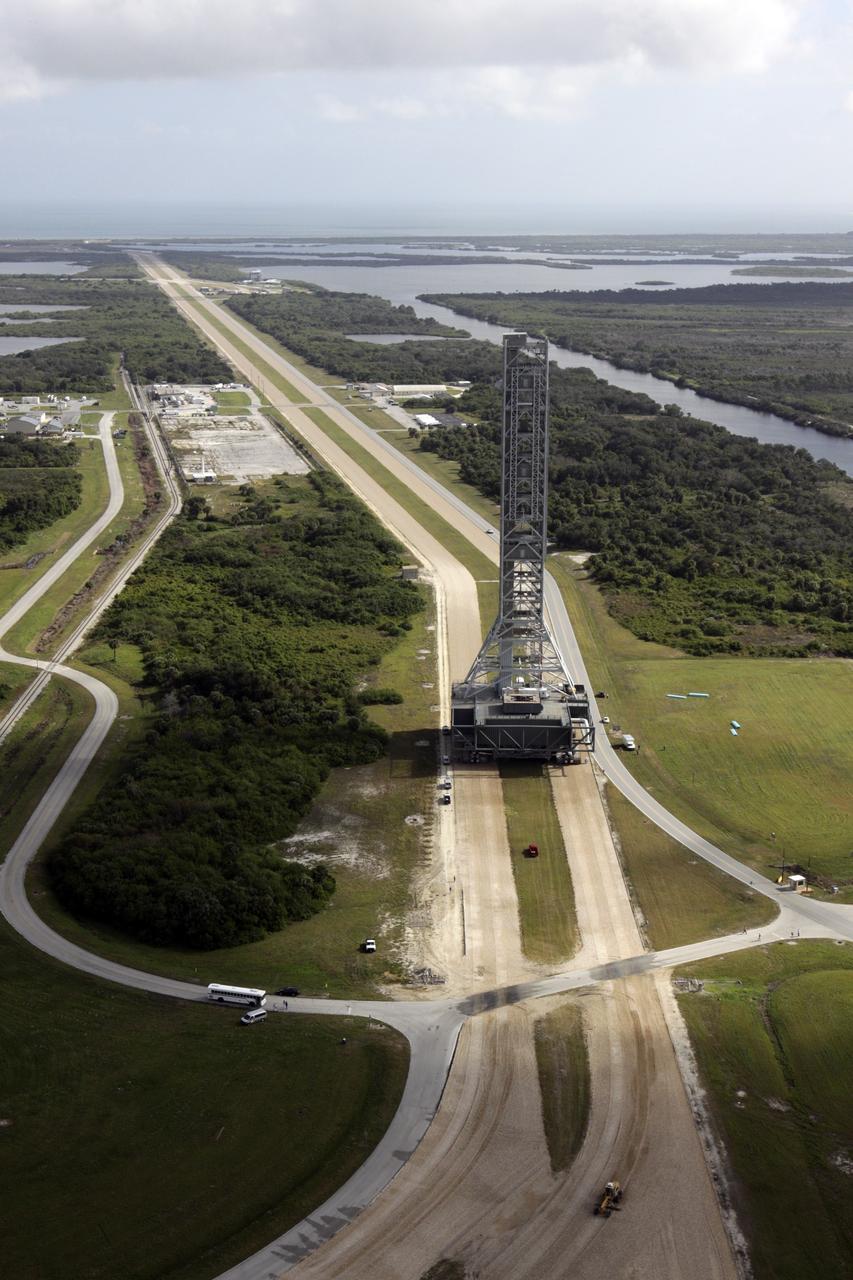
CAPE CANAVERAL, Fla. – On the crawlerway at NASA's Kennedy Space Center in Florida, an aerial view shows the mobile launcher (ML) as it rolls out aboard the crawler-transporter moving from next to Kennedy's Vehicle Assembly Building to Launch Pad 39B, a distance of 4.2 miles. Data on the ML will be collected from structural and functional engineering tests and used for the next phases of construction. The 355-foot-tall ML structure, which took about two years to construct, is being modified to support NASA’s Space Launch System (SLS), the heavy-lift rocket that will launch astronauts farther into space than ever before. SLS will also create high-quality jobs here at home, and provide the cornerstone for America's future human space exploration efforts. Photo credit: NASA/Kim Shiflett
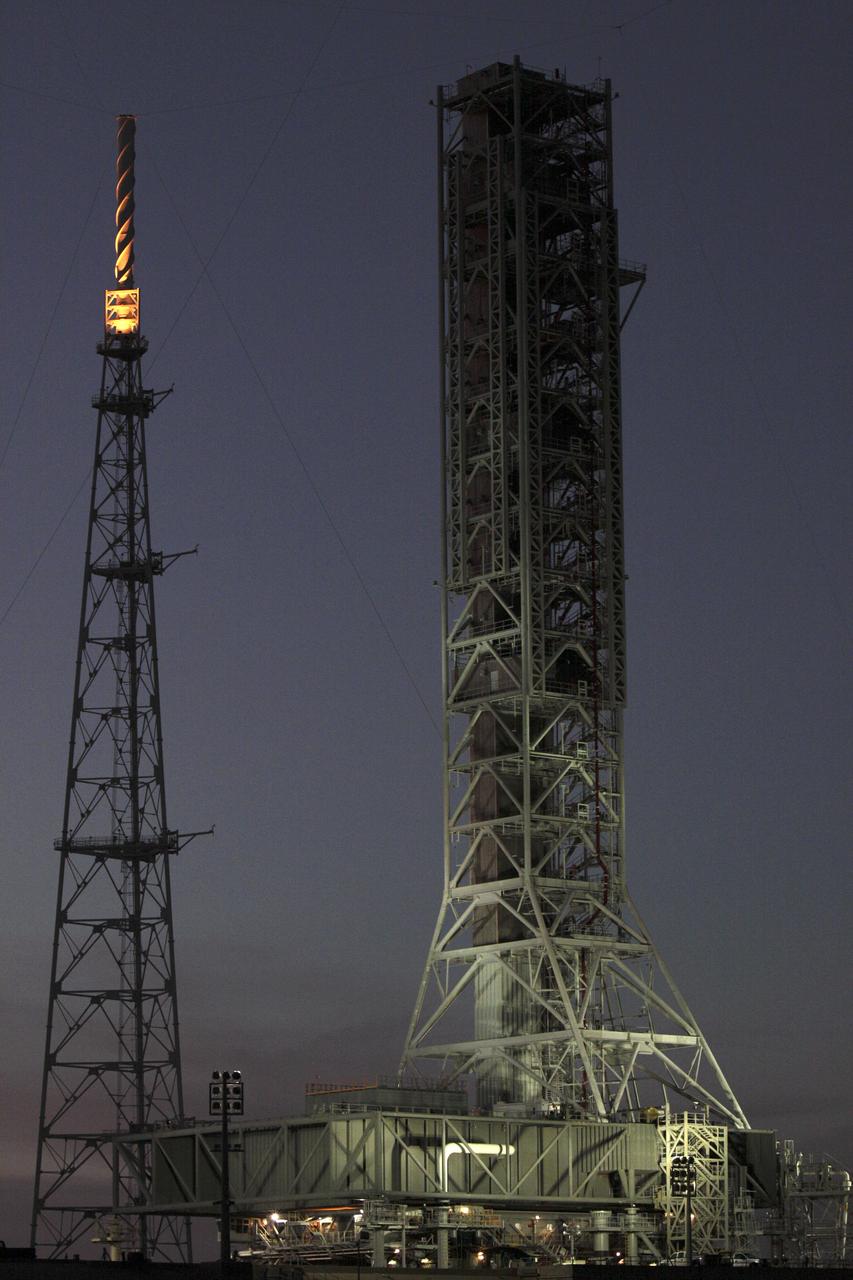
CAPE CANAVERAL, Fla. – At Launch Pad 39B at NASA’s Kennedy Space Center in Florida, the mobile launcher (ML) has completed its 4.2-mile journey. The ML rolled out aboard a crawler-transporter from next to Kennedy's Vehicle Assembly Building to the pad at about 9:15 a.m. EST with the launcher arriving at the pad at 6:29 p.m. Data on the ML will be collected from structural and functional engineering tests and used for the next phases of construction overseen by NASA’s 21st Century Ground Systems Program. The 355-foot-tall ML structure, which took about two years to construct, is being modified to support NASA’s Space Launch System (SLS), the heavy-lift rocket that will launch astronauts farther into space than ever before. SLS will also create high-quality jobs here at home, and provide the cornerstone for America's future human space exploration efforts. Photo credit: NASA/Kim Shiflett
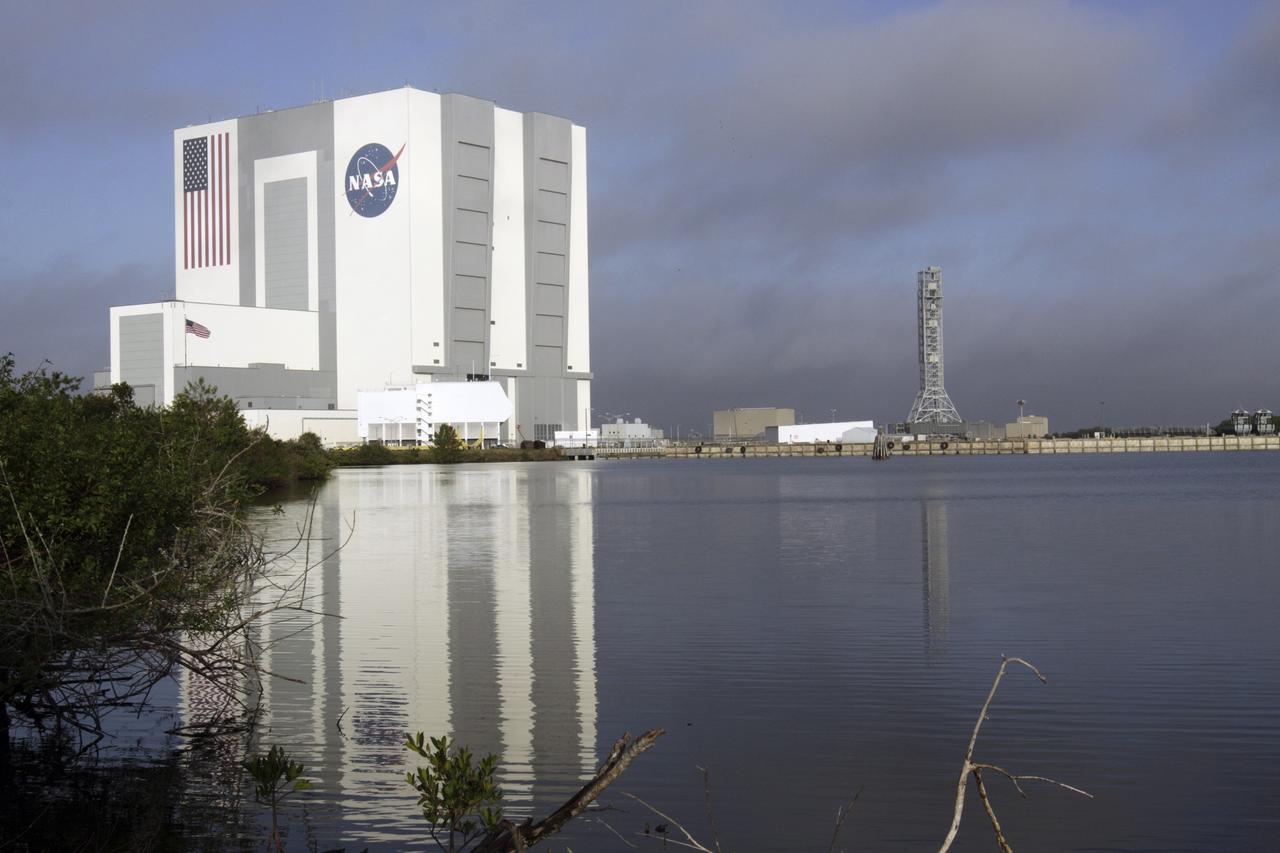
CAPE CANAVERAL, Fla. – At NASA’s Kennedy Space Center in Florida, the Vehicle Assembly Building and Mobile Launcher (ML) are reflected in the water as the crawler-transporter begins to move the ML from next to Kennedy's Vehicle Assembly Building to Launch Pad 39B, a distance of 4.2 miles. Data on the ML will be collected from structural and functional engineering tests and used for the next phases of construction. The 355-foot-tall ML structure, which took about two years to construct, is being modified to support NASA’s Space Launch System (SLS), the heavy-lift rocket that will launch astronauts farther into space than ever before. SLS will also create high-quality jobs here at home, and provide the cornerstone for America's future human space exploration efforts. Photo credit: NASA/Kim Shiflett
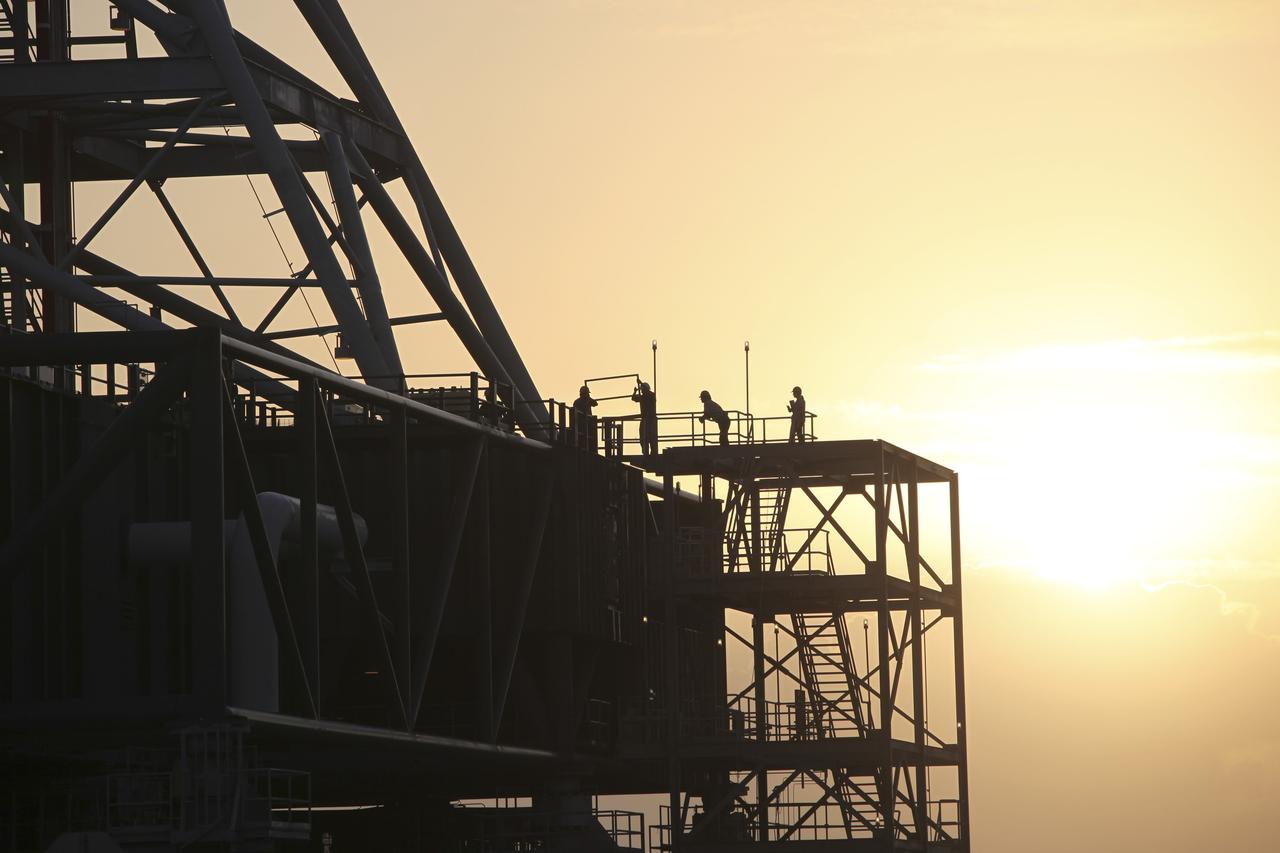
CAPE CANAVERAL, Fla. – At NASA’s Kennedy Space Center in Florida, technicians monitor nearby as the mobile launcher (ML) is being prepared for its move aboard a crawler-transporter from next to Kennedy's Vehicle Assembly Building to Launch Pad 39B, a distance of 4.2 miles. Data on the ML will be collected from structural and functional engineering tests and used for the next phases of construction. The 355-foot-tall ML structure, which took about two years to construct, is being modified to support NASA’s Space Launch System (SLS), the heavy-lift rocket that will launch astronauts farther into space than ever before. SLS will also create high-quality jobs here at home, and provide the cornerstone for America's future human space exploration efforts. Photo credit: NASA/Dimitri Gerondidakis
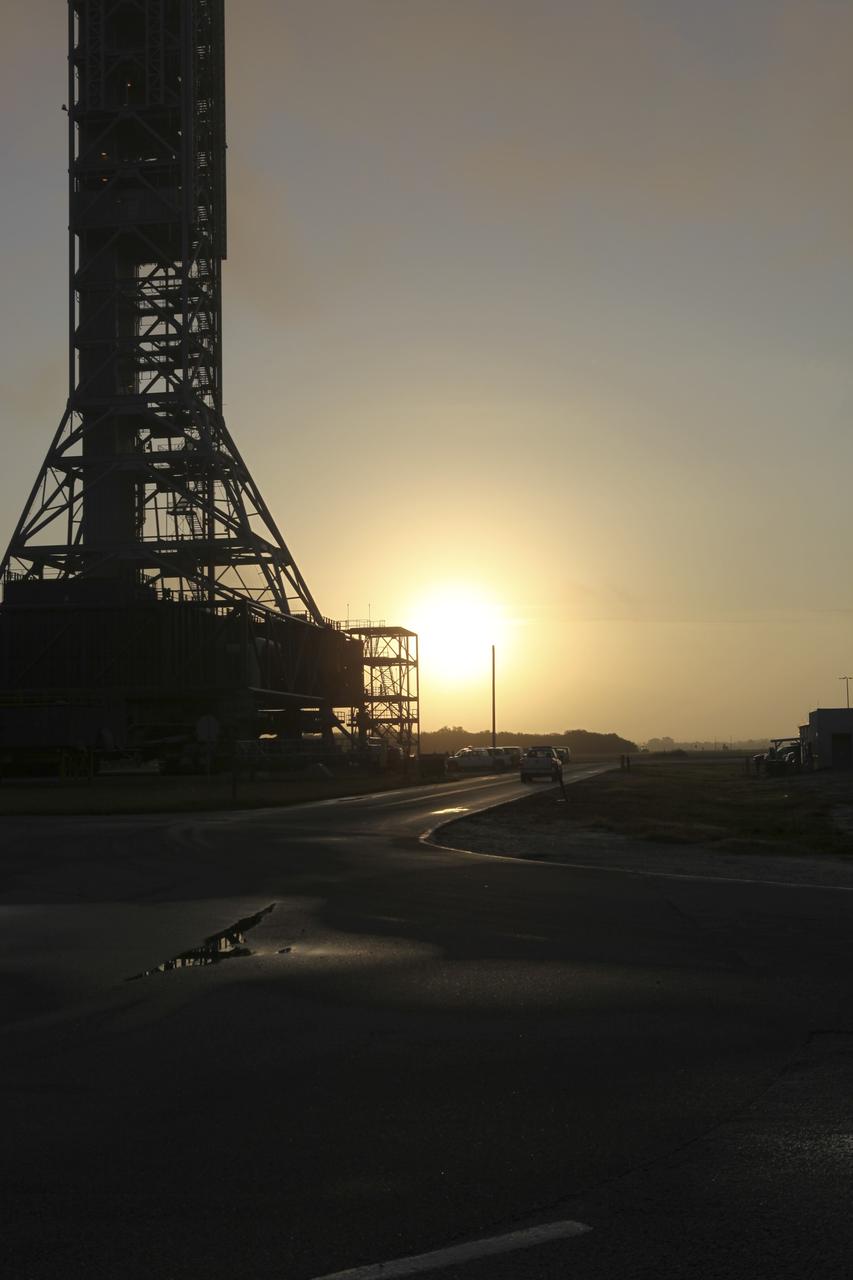
CAPE CANAVERAL, Fla. – At NASA’s Kennedy Space Center in Florida, the sun makes an appearance through the haze as the mobile launcher (ML) is being prepared for its move aboard a crawler-transporter from next to Kennedy's Vehicle Assembly Building to Launch Pad 39B, a distance of 4.2 miles. Data on the ML will be collected from structural and functional engineering tests and used for the next phases of construction. The 355-foot-tall ML structure, which took about two years to construct, is being modified to support NASA’s Space Launch System (SLS), the heavy-lift rocket that will launch astronauts farther into space than ever before. SLS will also create high-quality jobs here at home, and provide the cornerstone for America's future human space exploration efforts. Photo credit: NASA/Dimitri Gerondidakis
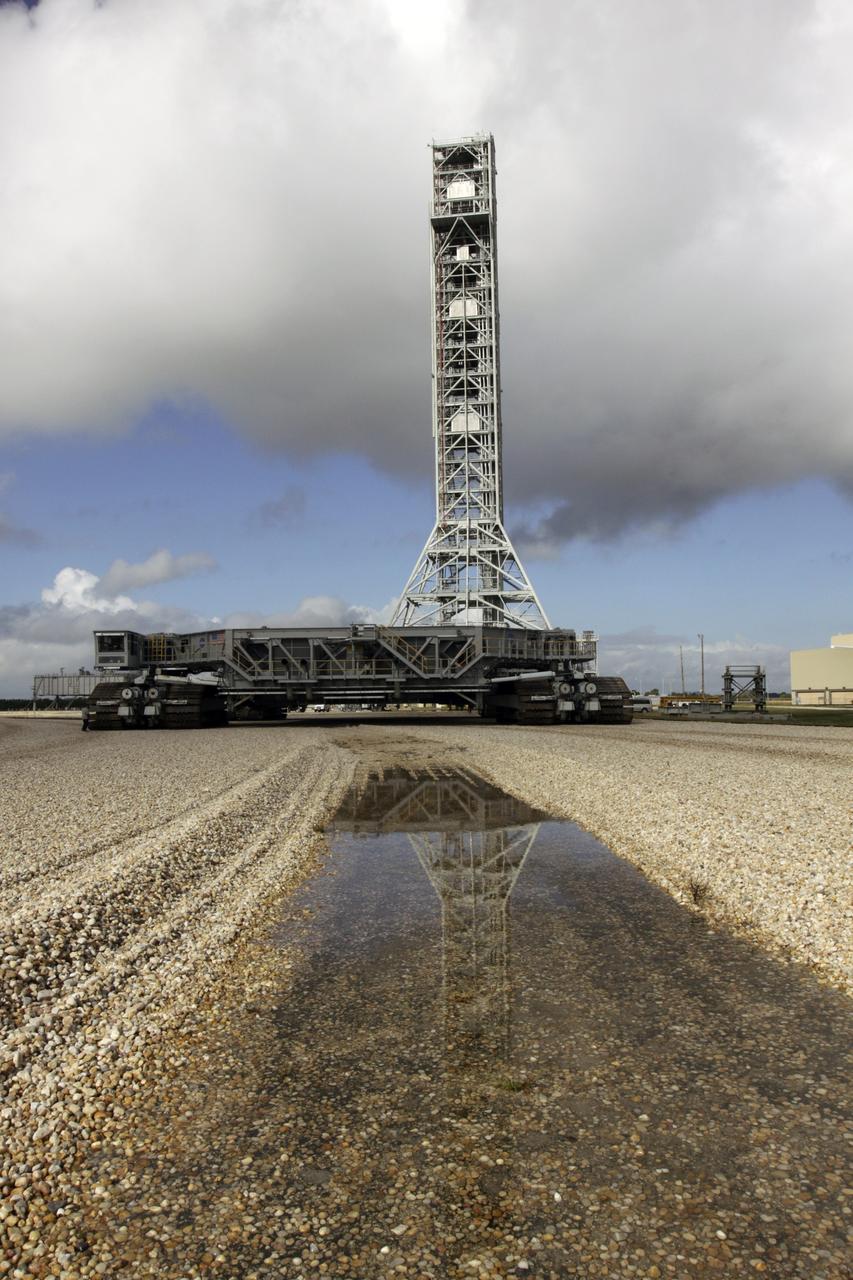
CAPE CANAVERAL, Fla. – At NASA's Kennedy Space Center in Florida, the mobile launcher (ML) is being prepared for its move aboard a crawler-transporter from next to Kennedy's Vehicle Assembly Building to Launch Pad 39B, a distance of 4.2 miles. Data on the ML will be collected from structural and functional engineering tests and used for the next phases of construction. The 355-foot-tall ML, which took about two years to construct, is being modified to support NASA's Space Launch System (SLS), the heavy-lift rocket that will launch astronauts farther into space than ever before. SLS will also create high-quality jobs here at home, and provide the cornerstone for America's future human space exploration efforts. For more information on SLS, visit http://www.nasa.gov/sls. Photo credit: NASA/Kim Shiflett
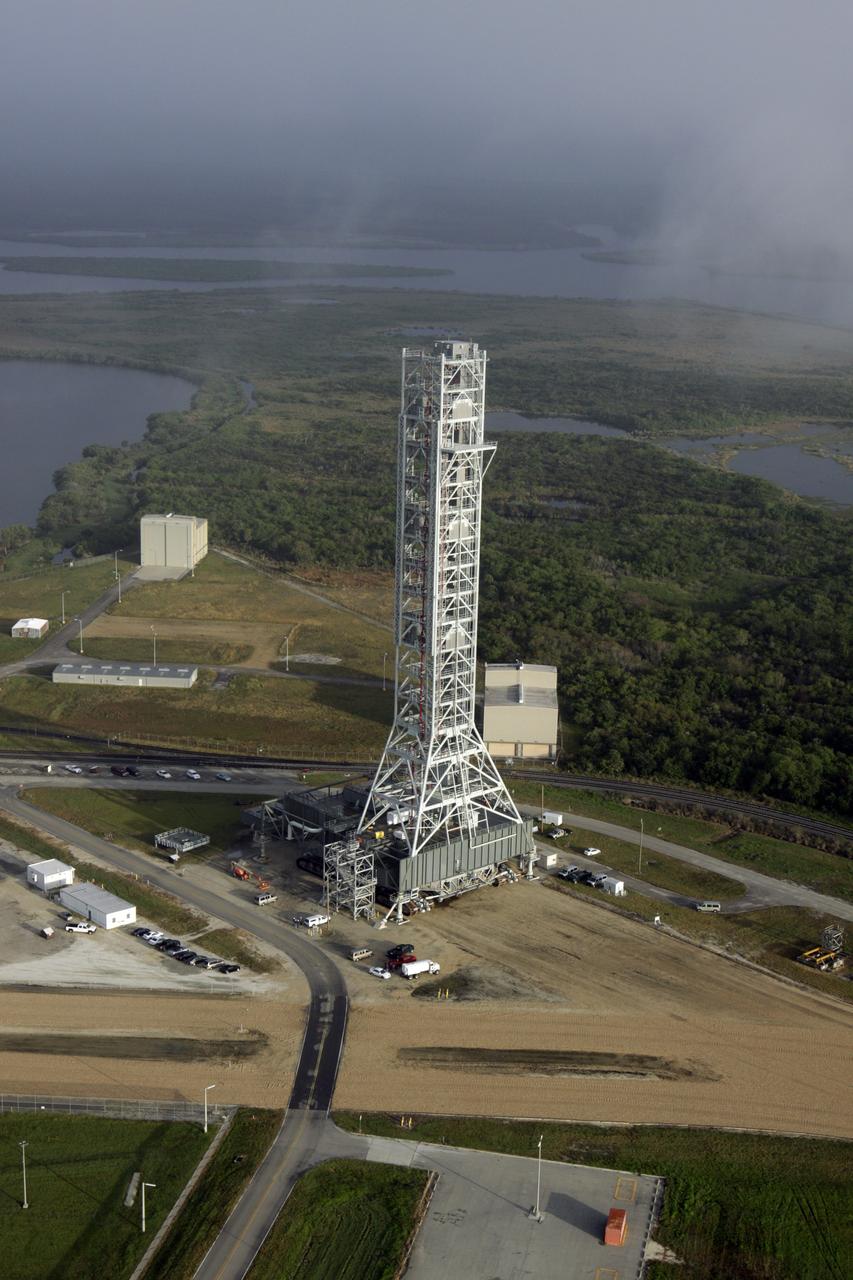
CAPE CANAVERAL, Fla. – At NASA's Kennedy Space Center in Florida, this aerial view taken from atop the Vehicle Assembly Building shows the mobile launcher (ML) as it begins its move aboard a crawler-transporter from next to Kennedy's Vehicle Assembly Building to Launch Pad 39B, a distance of 4.2 miles. Data on the ML will be collected from structural and functional engineering tests and used for the next phases of construction. The 355-foot-tall ML structure, which took about two years to construct, is being modified to support NASA’s Space Launch System (SLS), the heavy-lift rocket that will launch astronauts farther into space than ever before. SLS will also create high-quality jobs here at home, and provide the cornerstone for America's future human space exploration efforts. Photo credit: NASA/Kim Shiflett
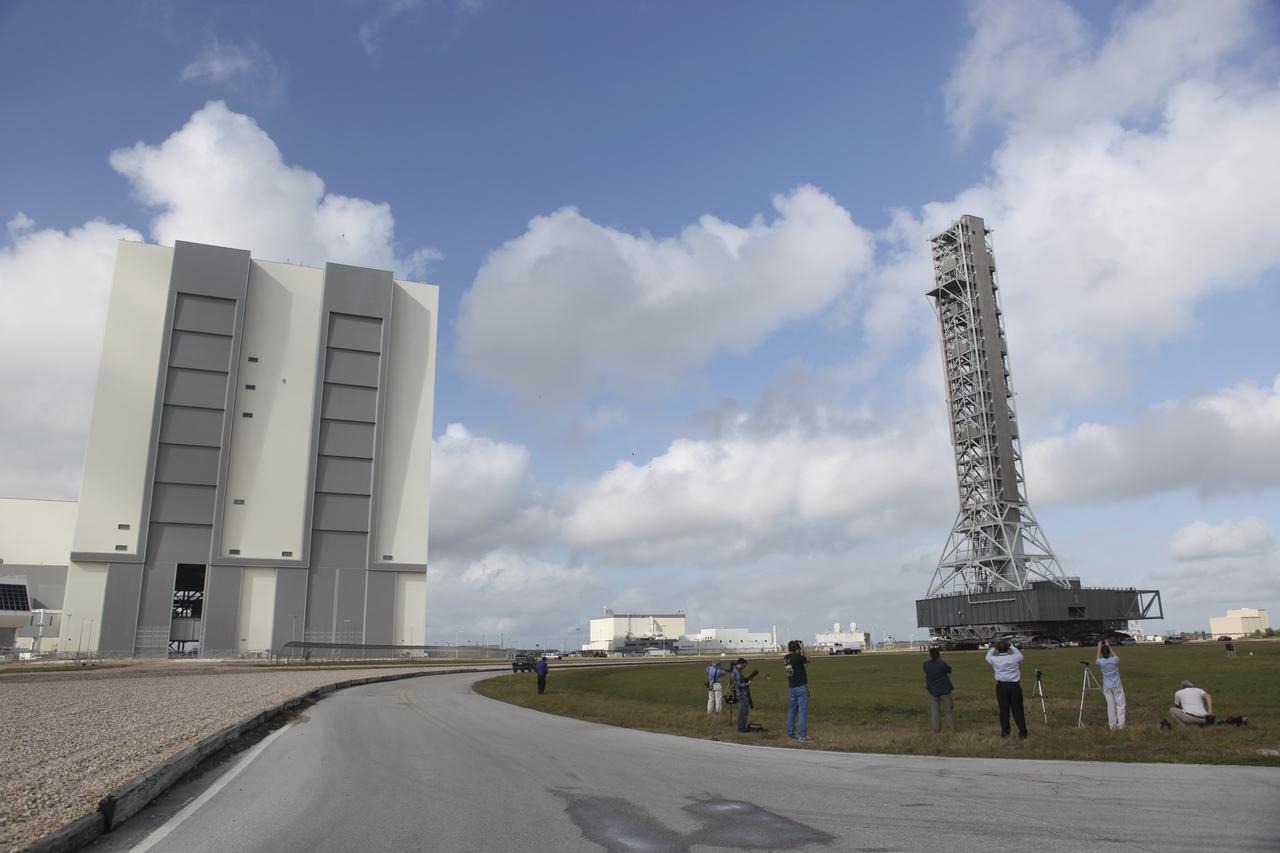
CAPE CANAVERAL, Fla. – At NASA’s Kennedy Space Center in Florida, media stand near the crawlerway taking pictures as the mobile launcher (ML) begins its move aboard a crawler-transporter from next to Kennedy's Vehicle Assembly Building to Launch Pad 39B, a distance of 4.2 miles. Data on the ML will be collected from structural and functional engineering tests and used for the next phases of construction. The 355-foot-tall ML structure, which took about two years to construct, is being modified to support NASA’s Space Launch System (SLS), the heavy-lift rocket that will launch astronauts farther into space than ever before. SLS will also create high-quality jobs here at home, and provide the cornerstone for America's future human space exploration efforts. Photo credit: NASA/Dimitri Gerondidakis
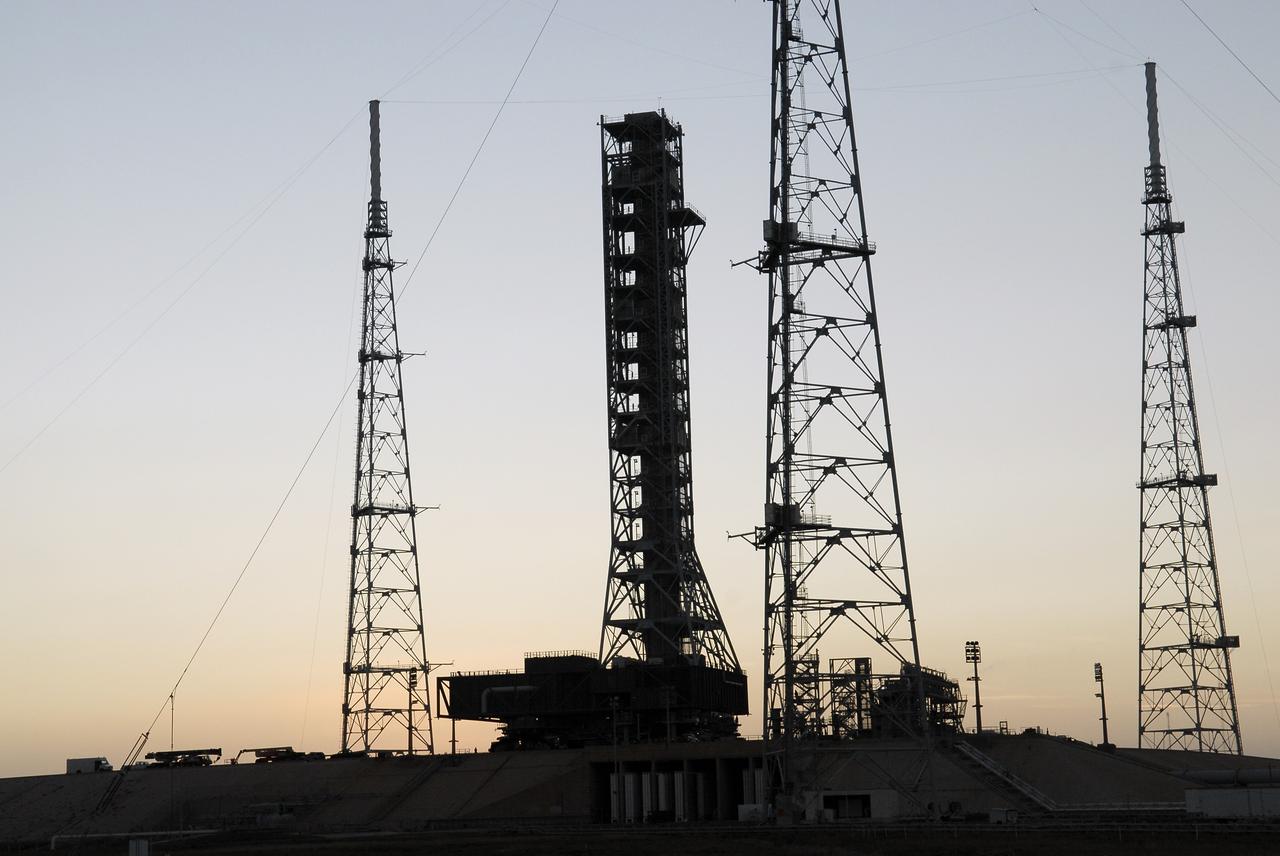
CAPE CANAVERAL, Fla. – With the sun setting in the background at NASA’s Kennedy Space Center in Florida, the mobile launcher (ML) is nearing completion of its 4.2-mile journey to Launch Pad 39B. The launcher rolled out aboard a crawler-transporter from next to Kennedy's Vehicle Assembly Building to the pad at about 9:15 a.m. EST. Data on the ML will be collected from structural and functional engineering tests and used for the next phases of construction overseen by NASA’s 21st Century Ground Systems Program. The 355-foot-tall ML structure, which took about two years to construct, is being modified to support NASA’s Space Launch System (SLS), the heavy-lift rocket that will launch astronauts farther into space than ever before. SLS will also create high-quality jobs here at home, and provide the cornerstone for America's future human space exploration efforts. Photo credit: NASA/Charisse Nahser
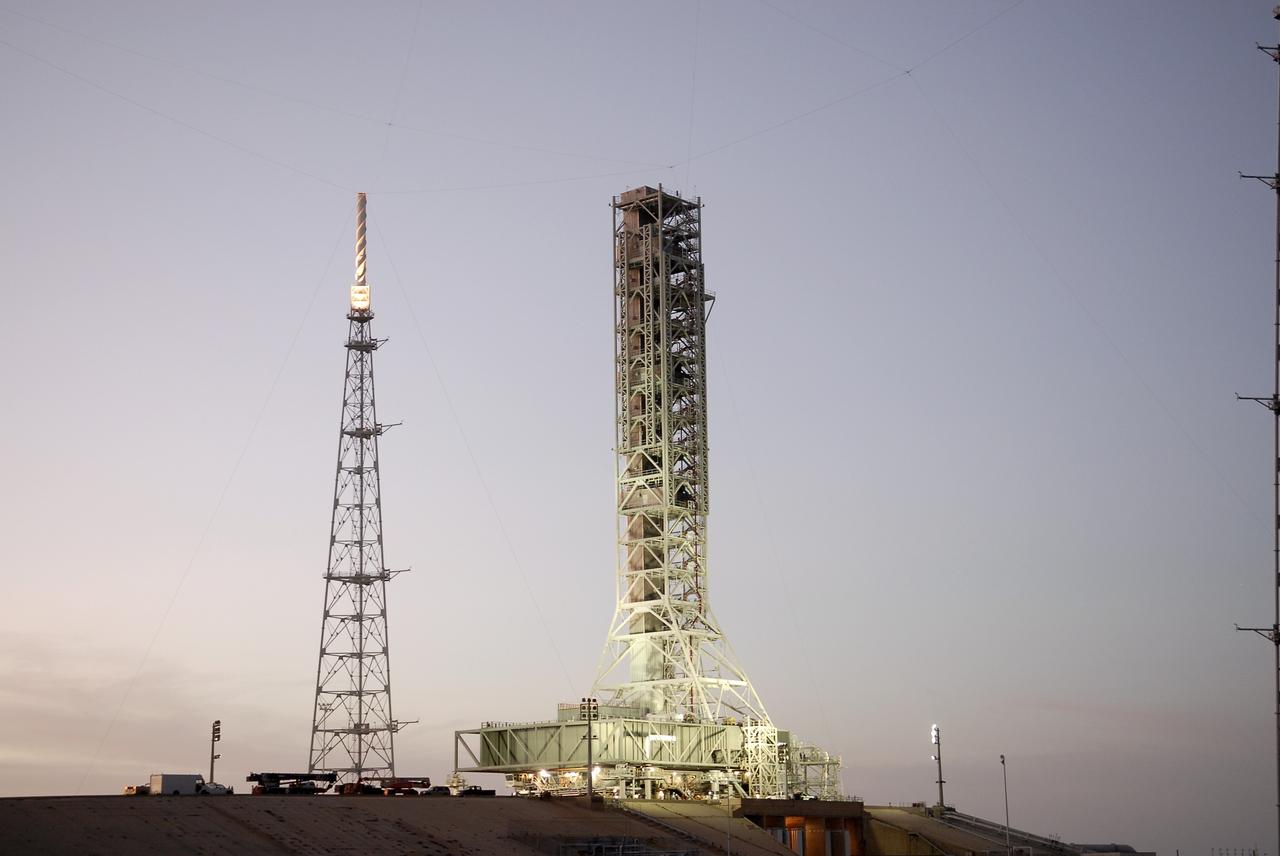
CAPE CANAVERAL, Fla. – At NASA’s Kennedy Space Center in Florida, lights illuminate the mobile launcher (ML) at Launch Pad 39B after completing its 4.2 mile journey to the pad. The launcher rolled out aboard a crawler-transporter from next to Kennedy's Vehicle Assembly Building to the pad at about 9:15 a.m. EST with the launcher arriving at the pad at 6:29 p.m. Data on the ML will be collected from structural and functional engineering tests and used for the next phases of construction overseen by NASA’s 21st Century Ground Systems Program. The 355-foot-tall ML structure, which took about two years to construct, is being modified to support NASA’s Space Launch System (SLS), the heavy-lift rocket that will launch astronauts farther into space than ever before. SLS will also create high-quality jobs here at home, and provide the cornerstone for America's future human space exploration efforts. Photo credit: NASA/Charisse Nahser
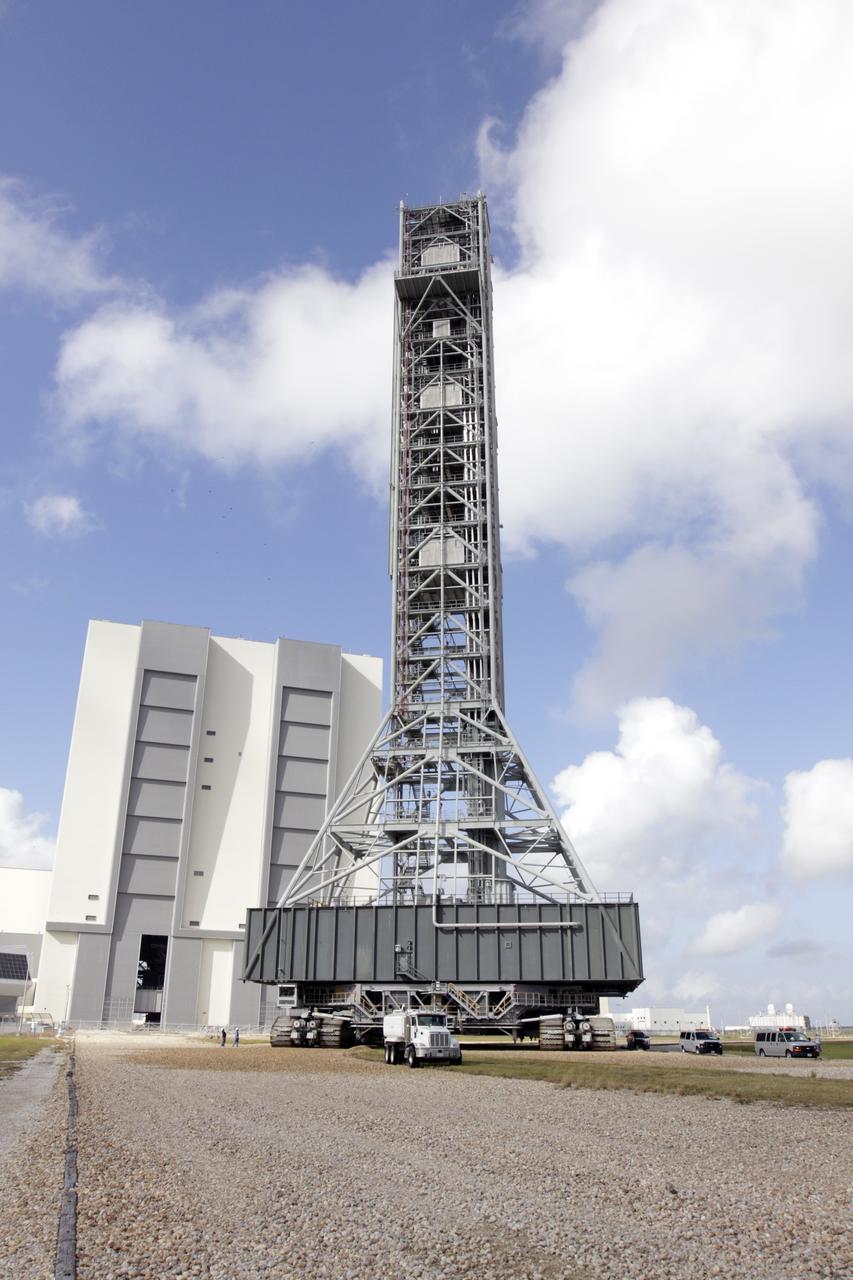
CAPE CANAVERAL, Fla. – At NASA’s Kennedy Space Center in Florida, technicians monitor nearby as the mobile launcher (ML), sitting atop the crawler-transporter, begins its move from next to Kennedy's Vehicle Assembly Building (seen in the background) to Launch Pad 39B, a distance of 4.2 miles. Data on the ML will be collected from structural and functional engineering tests and used for the next phases of construction. The 355-foot-tall ML structure, which took about two years to construct, is being modified to support NASA’s Space Launch System (SLS), the heavy-lift rocket that will launch astronauts farther into space than ever before. SLS will also create high-quality jobs here at home, and provide the cornerstone for America's future human space exploration efforts. Photo credit: NASA/Kim Shiflett
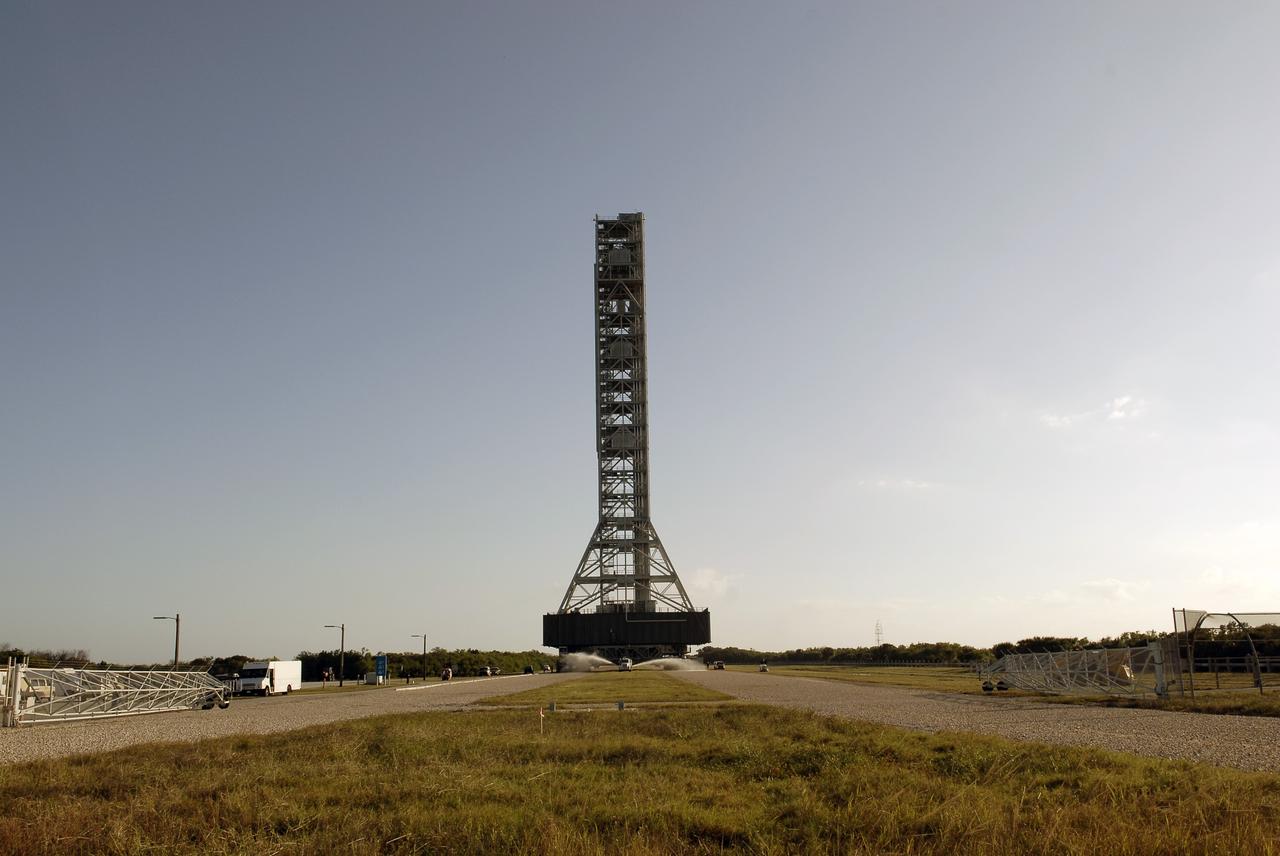
CAPE CANAVERAL, Fla. – A water truck leads the way, spraying water on the dry crawlerway to reduce dust particles in the air at NASA's Kennedy Space Center in Florida, as the mobile launcher (ML) rolls out aboard a crawler-transporter from next to Kennedy's Vehicle Assembly Building to Launch Pad 39B, a distance of 4.2 miles. Rollout began at about 9:15 a.m. EST. Data on the ML will be collected from structural and functional engineering tests and used for the next phases of construction overseen by NASA’s 21st Century Ground Systems Program. The 355-foot-tall ML structure, which took about two years to construct, is being modified to support NASA’s Space Launch System (SLS), the heavy-lift rocket that will launch astronauts farther into space than ever before. SLS will also create high-quality jobs here at home, and provide the cornerstone for America's future human space exploration efforts. Photo credit: NASA/Charisse Nahser
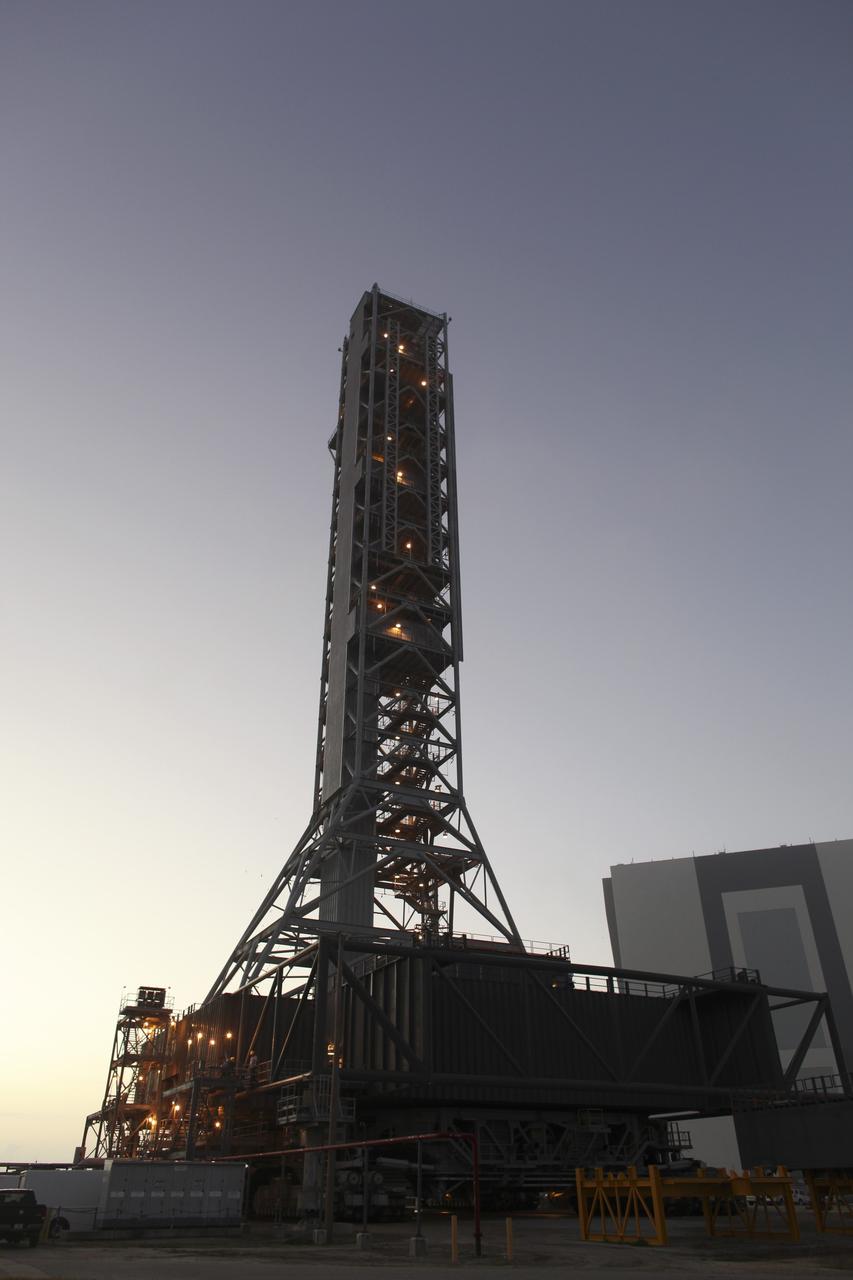
CAPE CANAVERAL, Fla. – At NASA’s Kennedy Space Center in Florida, the mobile launcher (ML) is being prepared for its move aboard a crawler-transporter from next to Kennedy's Vehicle Assembly Building to Launch Pad 39B, a distance of 4.2 miles. Data on the ML will be collected from structural and functional engineering tests and used for the next phases of construction. The 355-foot-tall ML structure, which took about two years to construct, is being modified to support NASA’s Space Launch System (SLS), the heavy-lift rocket that will launch astronauts farther into space than ever before. SLS will also create high-quality jobs here at home, and provide the cornerstone for America's future human space exploration efforts. Photo credit: NASA/Dimitri Gerondidakis
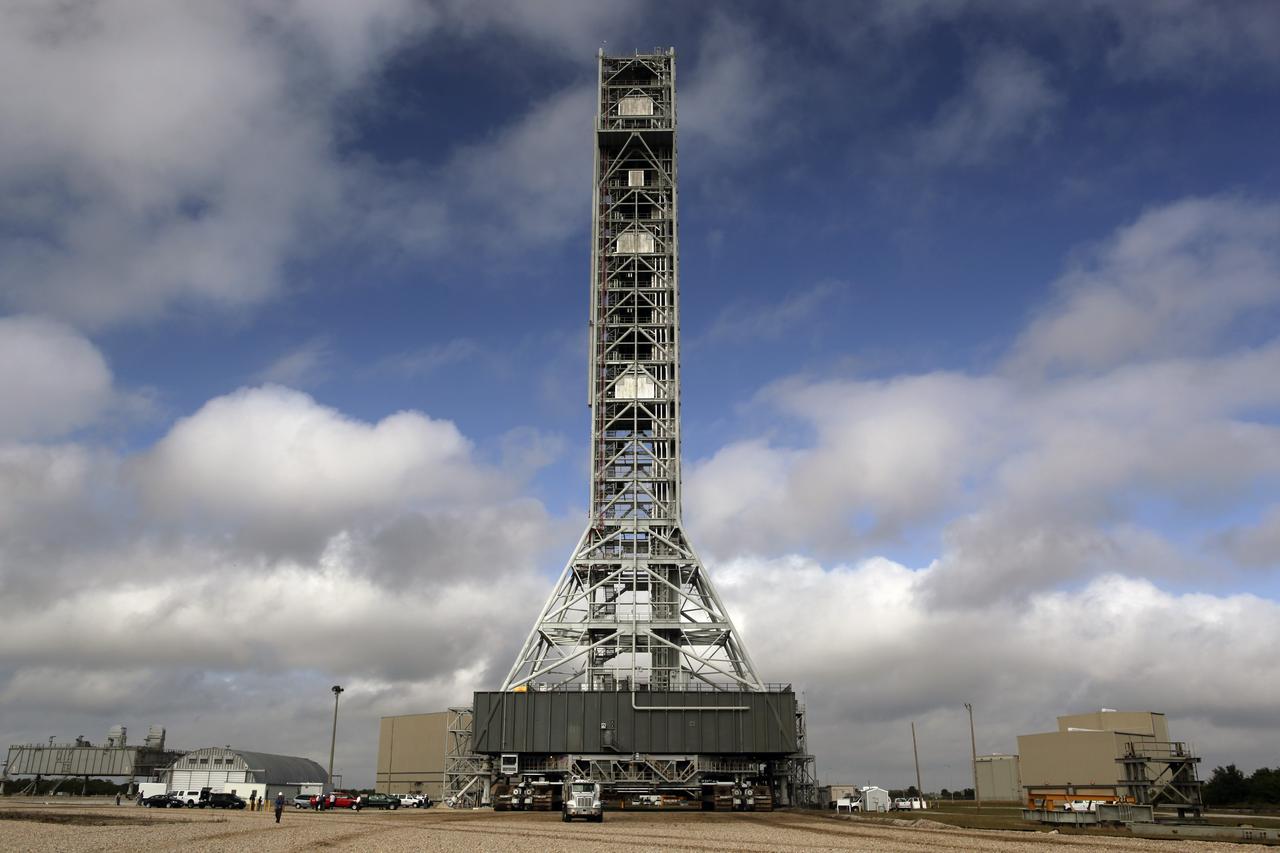
CAPE CANAVERAL, Fla. – At NASA’s Kennedy Space Center in Florida, the mobile launcher (ML) begins its move aboard a crawler-transporter from next to Kennedy's Vehicle Assembly Building to Launch Pad 39B, a distance of 4.2 miles. Data on the ML will be collected from structural and functional engineering tests and used for the next phases of construction. The 355-foot-tall ML structure, which took about two years to construct, is being modified to support NASA’s Space Launch System (SLS), the heavy-lift rocket that will launch astronauts farther into space than ever before. SLS will also create high-quality jobs here at home, and provide the cornerstone for America's future human space exploration efforts. Photo credit: NASA/Dimitri Gerondidakis
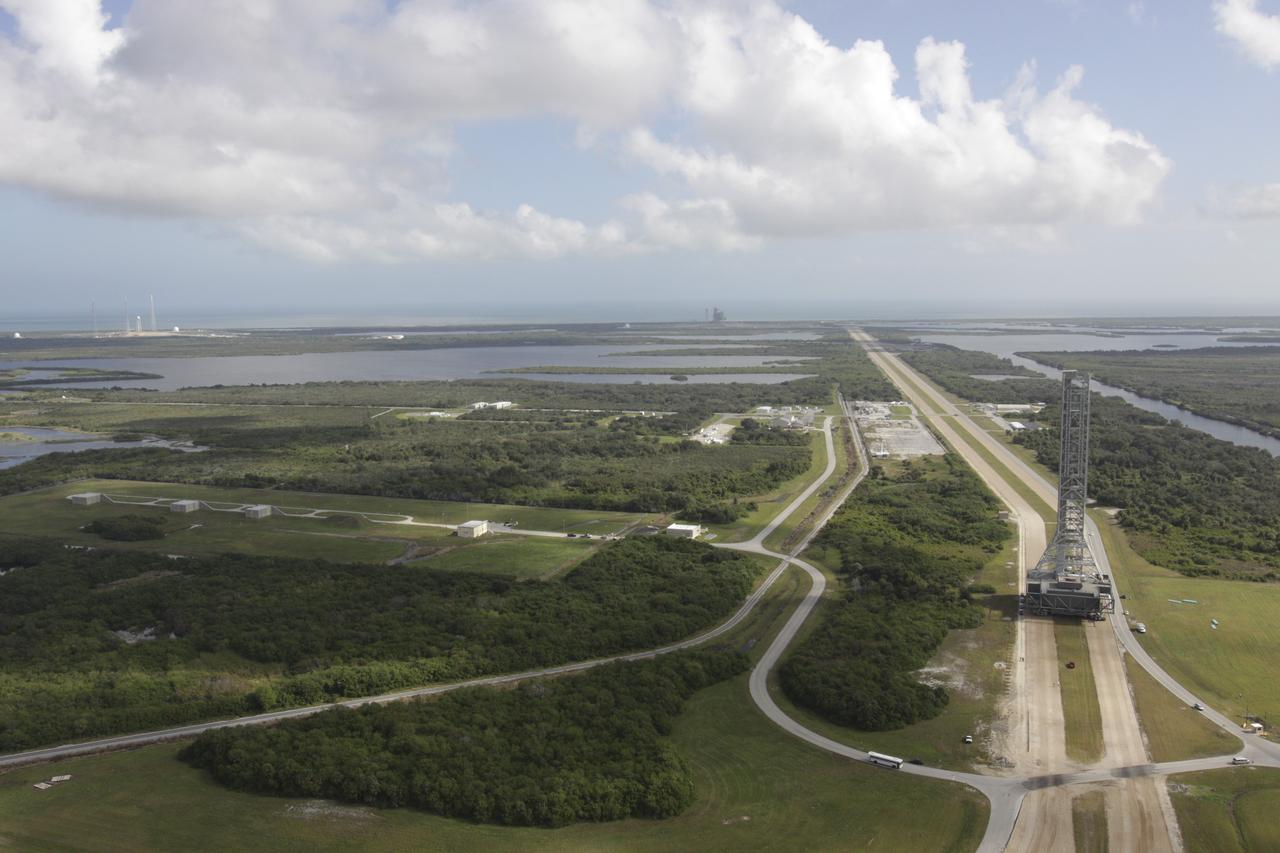
CAPE CANAVERAL, Fla. – On the crawlerway at NASA's Kennedy Space Center in Florida, an aerial view shows the mobile launcher (ML) as it rolls out aboard the crawler-transporter moving from next to Kennedy's Vehicle Assembly Building to Launch Pad 39B, a distance of 4.2 miles. Data on the ML will be collected from structural and functional engineering tests and used for the next phases of construction. The 355-foot-tall ML structure, which took about two years to construct, is being modified to support NASA’s Space Launch System (SLS), the heavy-lift rocket that will launch astronauts farther into space than ever before. SLS will also create high-quality jobs here at home, and provide the cornerstone for America's future human space exploration efforts. Photo credit: NASA/Kim Shiflett
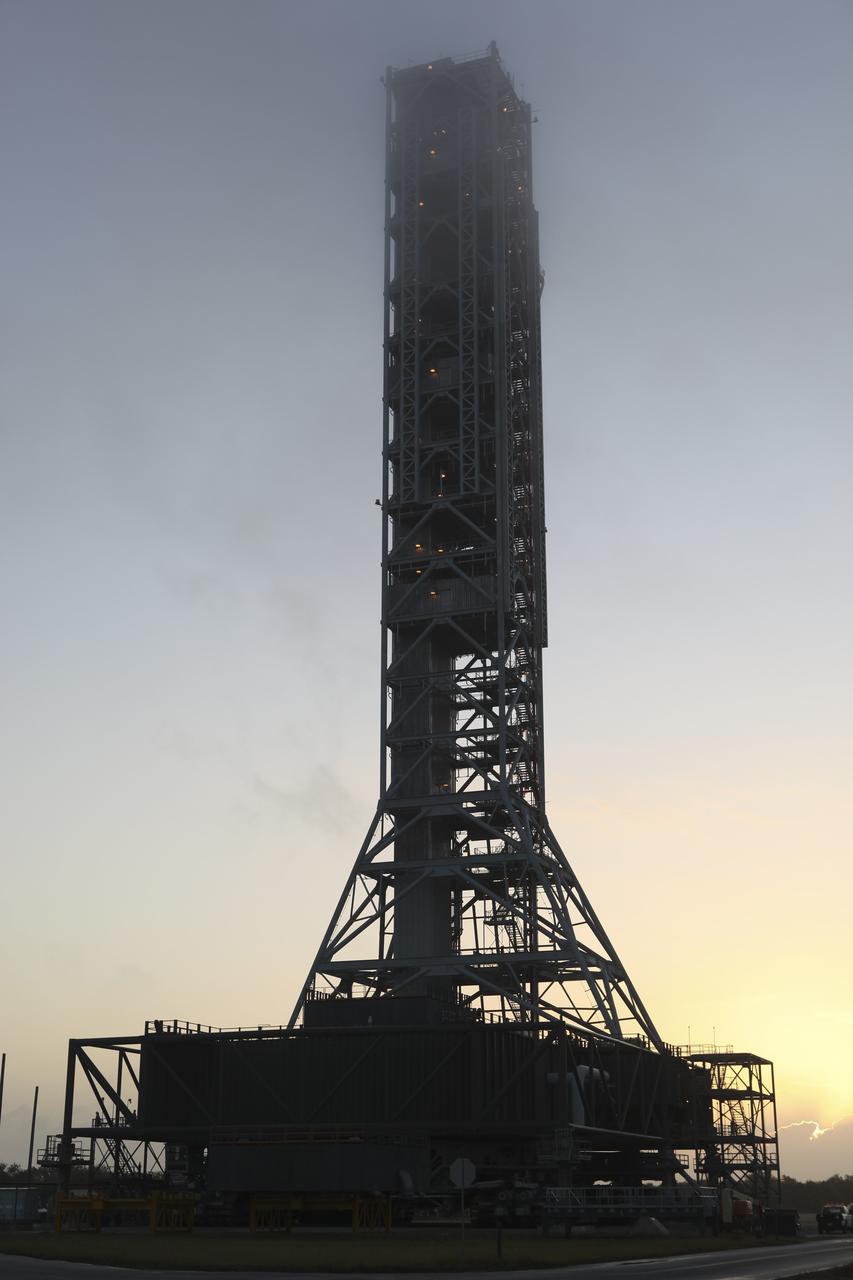
CAPE CANAVERAL, Fla. – At NASA’s Kennedy Space Center in Florida, the sun makes an appearance through the haze as the mobile launcher (ML) is being prepared for its move aboard a crawler-transporter from next to Kennedy's Vehicle Assembly Building to Launch Pad 39B, a distance of 4.2 miles. Data on the ML will be collected from structural and functional engineering tests and used for the next phases of construction. The 355-foot-tall ML structure, which took about two years to construct, is being modified to support NASA’s Space Launch System (SLS), the heavy-lift rocket that will launch astronauts farther into space than ever before. SLS will also create high-quality jobs here at home, and provide the cornerstone for America's future human space exploration efforts. Photo credit: NASA/Dimitri Gerondidakis
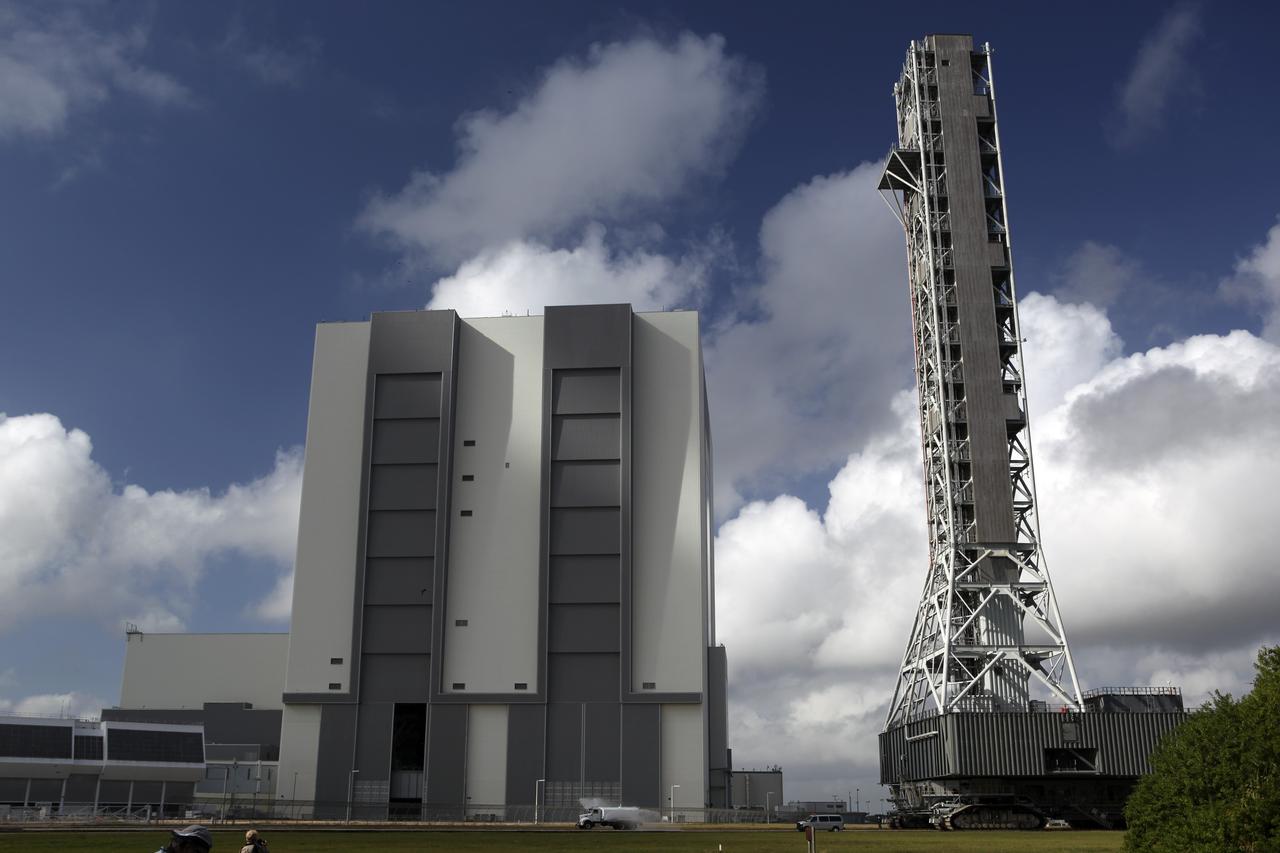
CAPE CANAVERAL, Fla. – At NASA’s Kennedy Space Center in Florida, a water truck leads the way spraying water on the dry crawlerway to reduce dust particles in the air, as the mobile launcher (ML) begins its move aboard a crawler-transporter. The ML is moving from next to Kennedy's Vehicle Assembly Building to Launch Pad 39B, a distance of 4.2 miles. Data on the ML will be collected from structural and functional engineering tests and used for the next phases of construction. The 355-foot-tall ML structure, which took about two years to construct, is being modified to support NASA’s Space Launch System (SLS), the heavy-lift rocket that will launch astronauts farther into space than ever before. SLS will also create high-quality jobs here at home, and provide the cornerstone for America's future human space exploration efforts. Photo credit: NASA/Dimitri Gerondidakis
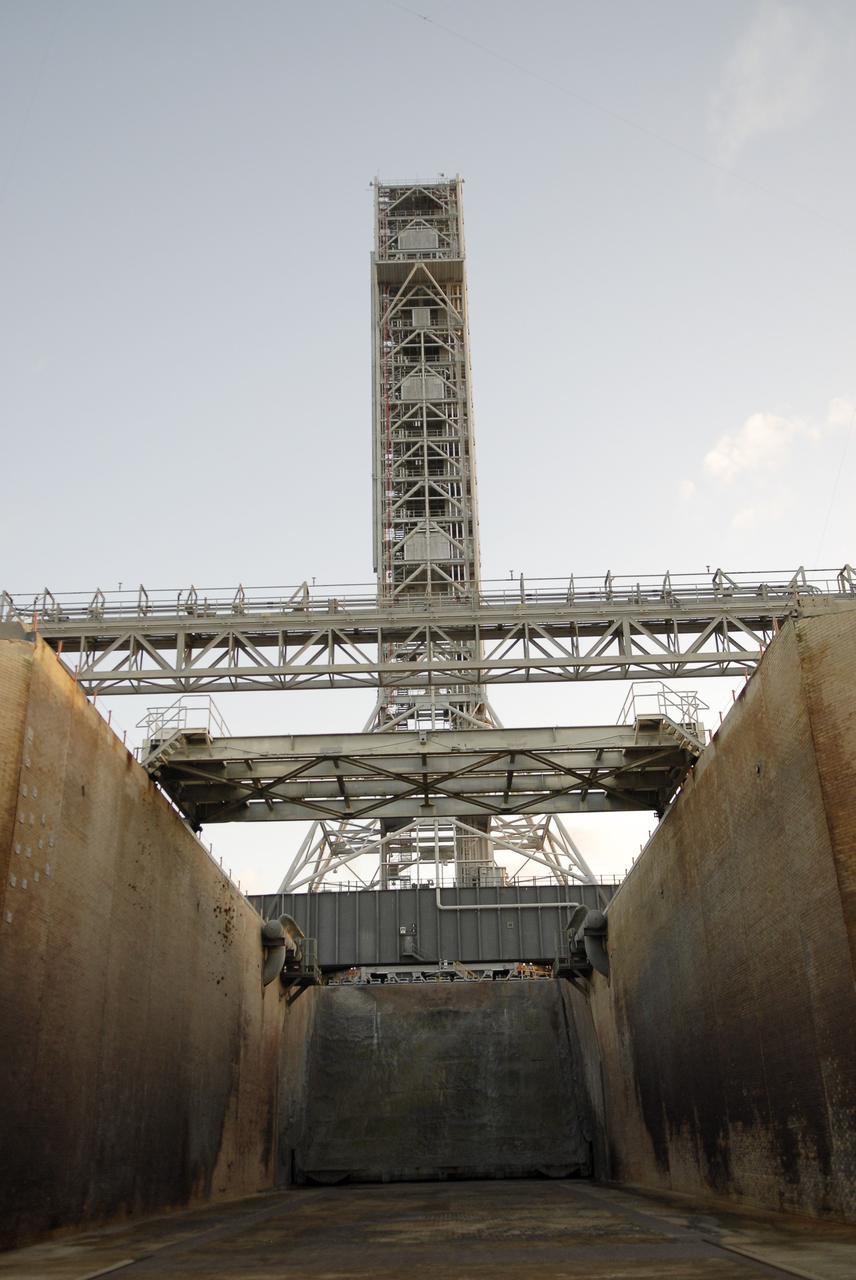
CAPE CANAVERAL, Fla. – At NASA’s Kennedy Space Center in Florida, taken from inside the flame trench, the camera captures a unique view of the mobile launcher (ML) as it nears completion of its 4.2-mile journey to Launch Pad 39B. The launcher rolled out aboard a crawler-transporter from next to Kennedy's Vehicle Assembly Building to the pad at about 9:15 a.m. EST. Data on the ML will be collected from structural and functional engineering tests and used for the next phases of construction overseen by NASA’s 21st Century Ground Systems Program. The 355-foot-tall ML structure, which took about two years to construct, is being modified to support NASA’s Space Launch System (SLS), the heavy-lift rocket that will launch astronauts farther into space than ever before. SLS will also create high-quality jobs here at home, and provide the cornerstone for America's future human space exploration efforts. Photo credit: NASA/Charisse Nahser
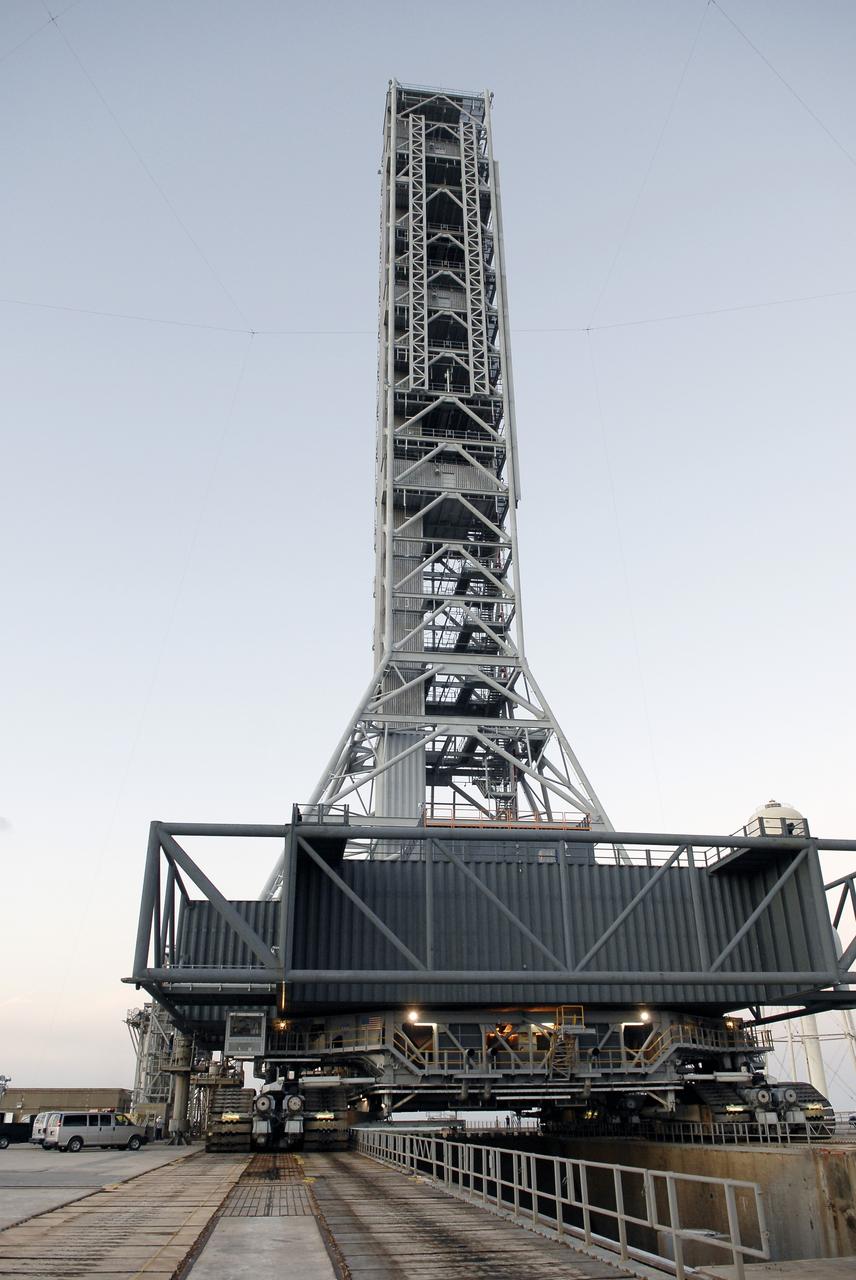
CAPE CANAVERAL, Fla. – At Launch Pad 39B at NASA’s Kennedy Space Center in Florida, the mobile launcher (ML) has completed its 4.2-mile journey. The launcher rolled out aboard a crawler-transporter from next to Kennedy's Vehicle Assembly Building to the pad at about 9:15 a.m. EST with the launcher arriving at the pad at 6:29 p.m. Data on the ML will be collected from structural and functional engineering tests and used for the next phases of construction overseen by NASA’s 21st Century Ground Systems Program. The 355-foot-tall ML structure, which took about two years to construct, is being modified to support NASA’s Space Launch System (SLS), the heavy-lift rocket that will launch astronauts farther into space than ever before. SLS will also create high-quality jobs here at home, and provide the cornerstone for America's future human space exploration efforts. Photo credit: NASA/Charisse Nahser
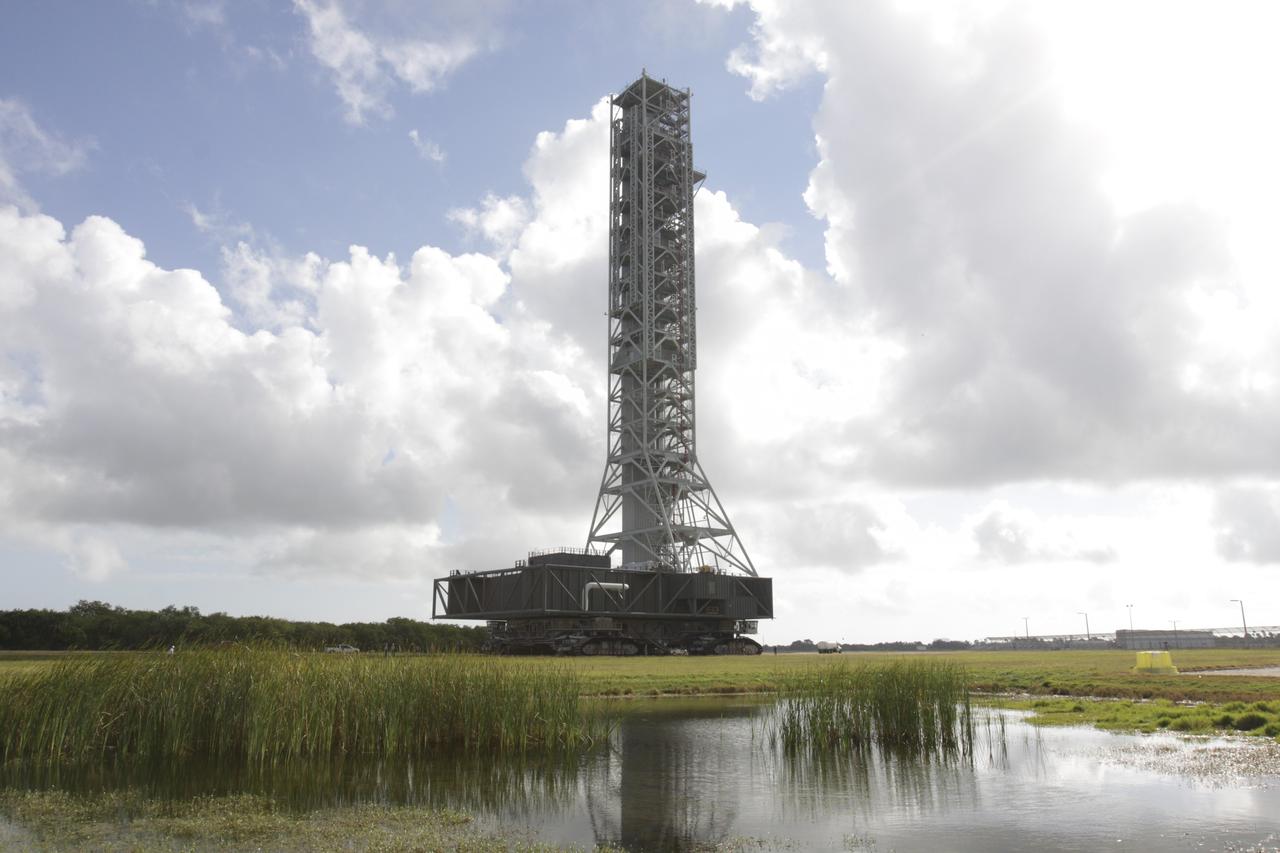
CAPE CANAVERAL, Fla. – At NASA’s Kennedy Space Center in Florida, the Mobile Launcher (ML) is reflected in a pond as the crawler-transporter moves the ML from next to Kennedy's Vehicle Assembly Building to Launch Pad 39B, a distance of 4.2 miles. Data on the ML will be collected from structural and functional engineering tests and used for the next phases of construction. The 355-foot-tall ML structure, which took about two years to construct, is being modified to support NASA’s Space Launch System (SLS), the heavy-lift rocket that will launch astronauts farther into space than ever before. SLS will also create high-quality jobs here at home, and provide the cornerstone for America's future human space exploration efforts. Photo credit: NASA/Kim Shiflett
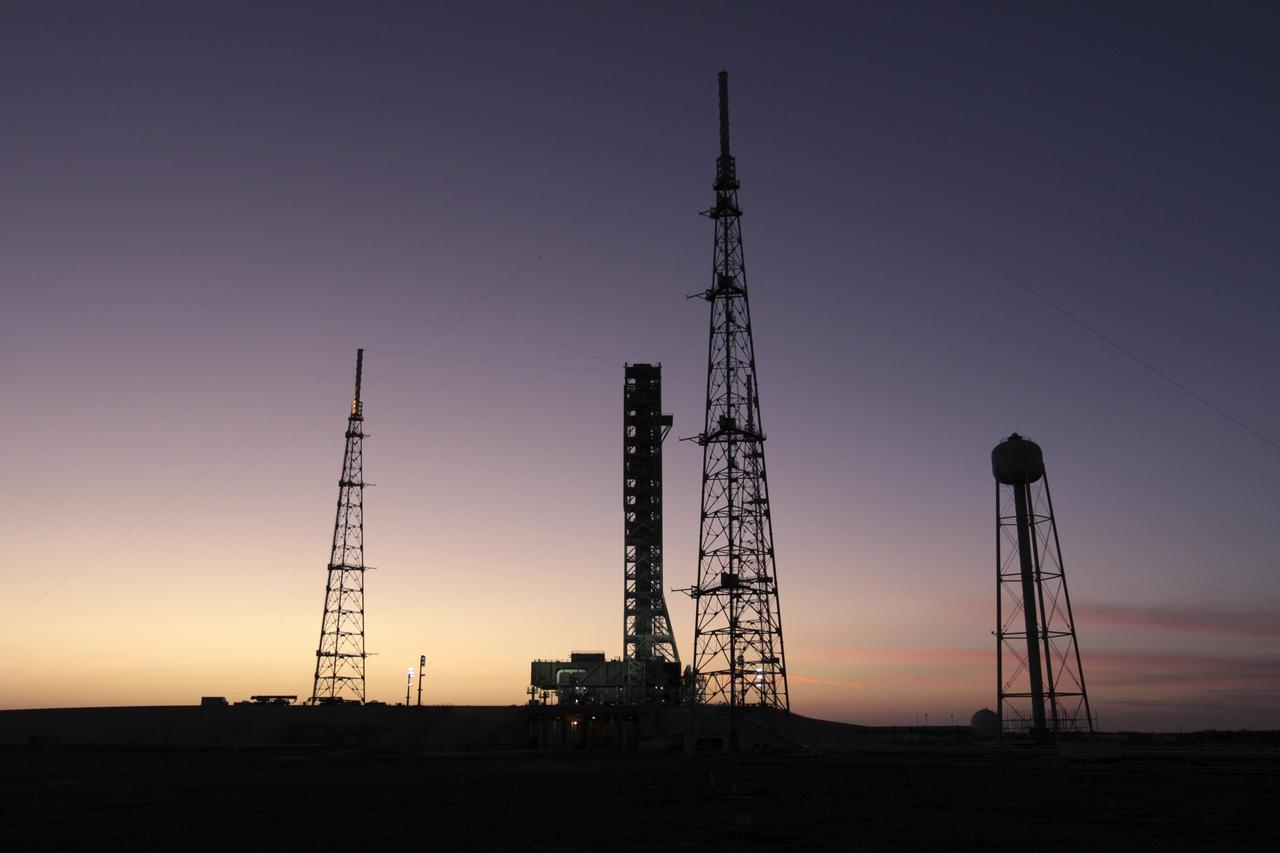
CAPE CANAVERAL, Fla. – With the sun setting in the background at NASA’s Kennedy Space Center in Florida, the mobile launcher (ML) is nearing completion of its 4.2-mile journey to Launch Pad 39B. The ML rolled out aboard a crawler-transporter from next to Kennedy's Vehicle Assembly Building to the pad at about 9:15 a.m. EST. Data on the ML will be collected from structural and functional engineering tests and used for the next phases of construction overseen by NASA’s 21st Century Ground Systems Program. The 355-foot-tall ML structure, which took about two years to construct, is being modified to support NASA’s Space Launch System (SLS), the heavy-lift rocket that will launch astronauts farther into space than ever before. SLS will also create high-quality jobs here at home, and provide the cornerstone for America's future human space exploration efforts. Photo credit: NASA/Kim Shiflett
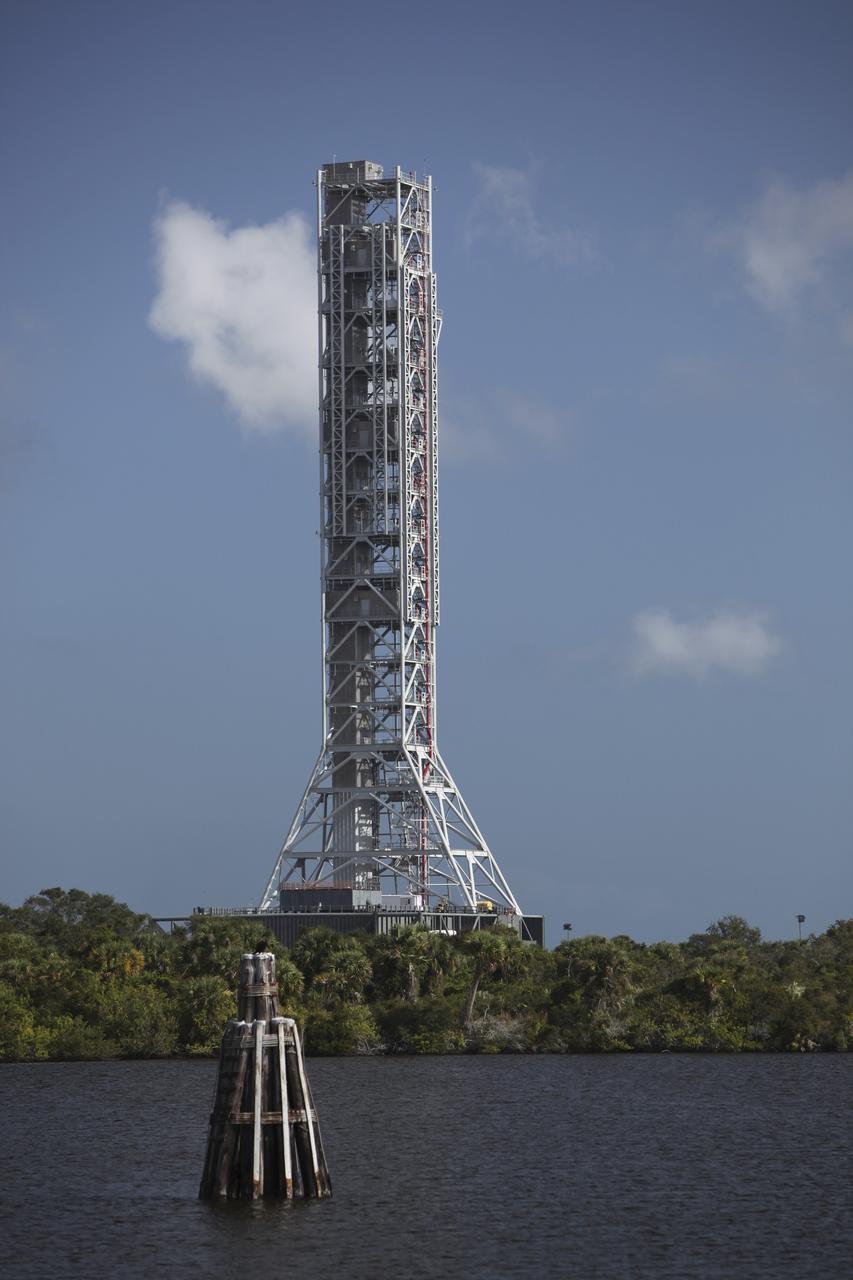
CAPE CANAVERAL, Fla. – At NASA's Kennedy Space Center in Florida, the Mobile Launcher (ML) rises above the natural vegetation as it rolls out aboard a crawler-transporter from next to Kennedy's Vehicle Assembly Building to Launch Pad 39B, a distance of 4.2 miles. Data on the ML will be collected from structural and functional engineering tests and used for the next phases of construction. The 355-foot-tall ML structure, which took about two years to construct, is being modified to support NASA’s Space Launch System (SLS), the heavy-lift rocket that will launch astronauts farther into space than ever before. SLS will also create high-quality jobs here at home, and provide the cornerstone for America's future human space exploration efforts. Photo credit: NASA/Dimitri Gerondidakis
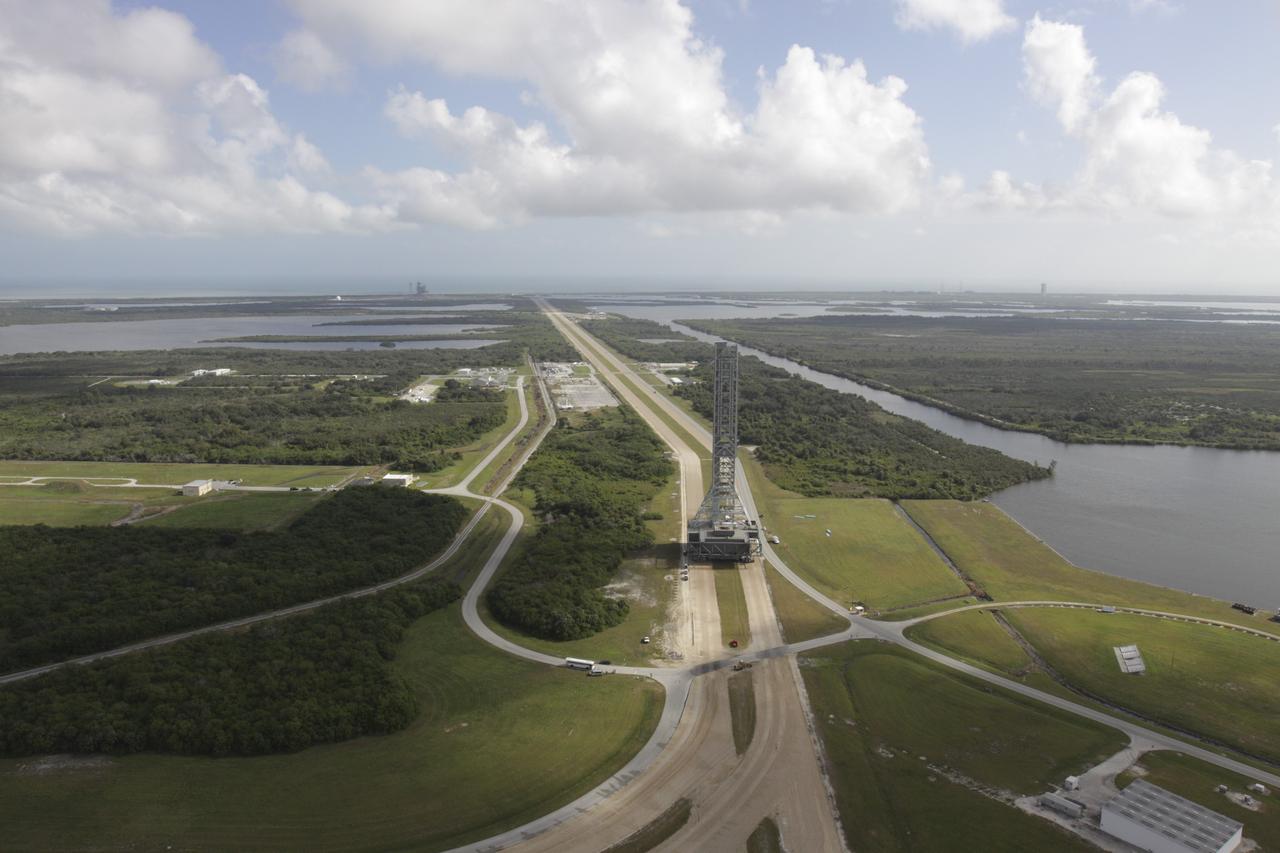
CAPE CANAVERAL, Fla. – On the crawlerway at NASA's Kennedy Space Center in Florida, an aerial view shows the mobile launcher (ML) as it rolls out aboard the crawler-transporter moving from next to Kennedy's Vehicle Assembly Building to Launch Pad 39B, a distance of 4.2 miles. Data on the ML will be collected from structural and functional engineering tests and used for the next phases of construction. The 355-foot-tall ML structure, which took about two years to construct, is being modified to support NASA’s Space Launch System (SLS), the heavy-lift rocket that will launch astronauts farther into space than ever before. SLS will also create high-quality jobs here at home, and provide the cornerstone for America's future human space exploration efforts. Photo credit: NASA/Kim Shiflett
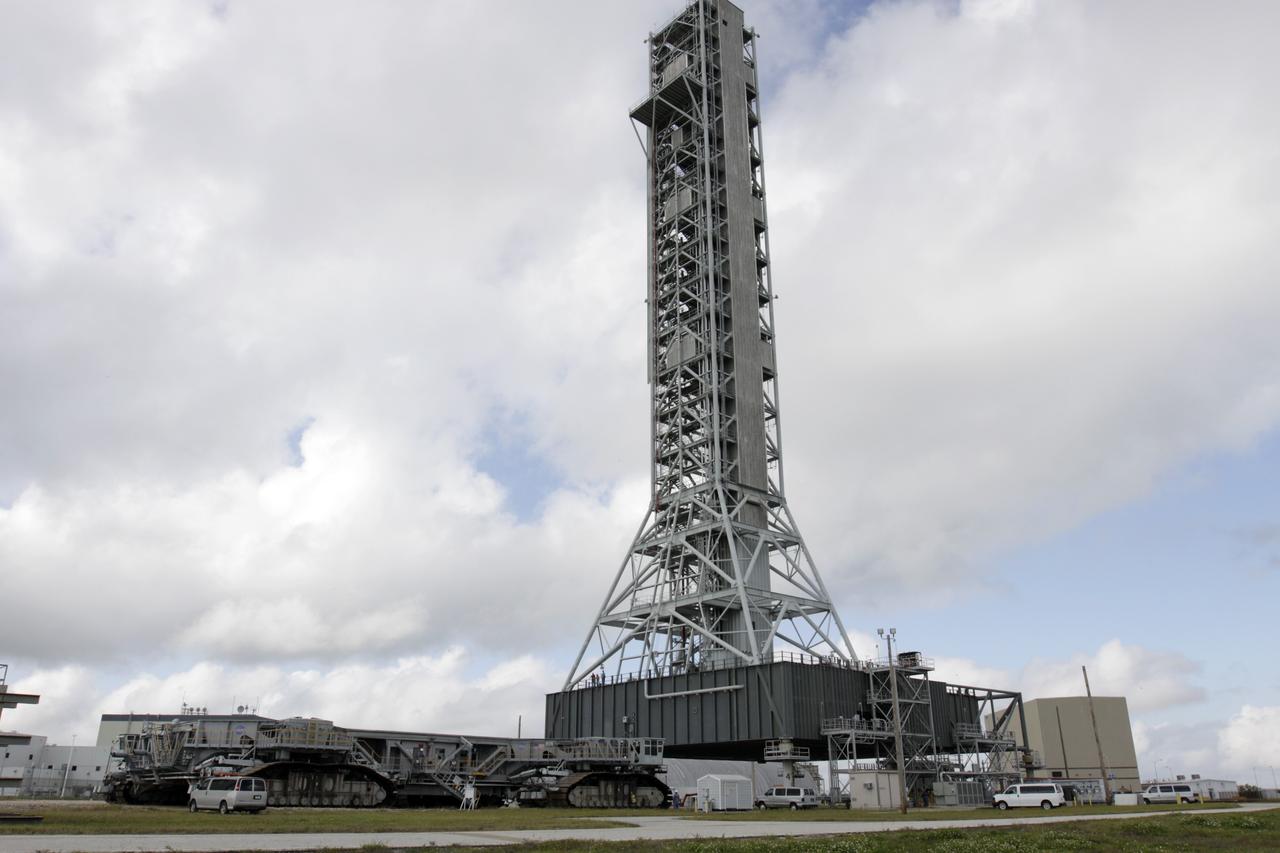
CAPE CANAVERAL, Fla. – At NASA's Kennedy Space Center in Florida, the mobile launcher (ML) is being prepared for its move aboard a crawler-transporter from next to Kennedy's Vehicle Assembly Building to Launch Pad 39B, a distance of 4.2 miles. Data on the ML will be collected from structural and functional engineering tests and used for the next phases of construction. The 355-foot-tall ML, which took about two years to construct, is being modified to support NASA's Space Launch System (SLS), the heavy-lift rocket that will launch astronauts farther into space than ever before. SLS will also create high-quality jobs here at home, and provide the cornerstone for America's future human space exploration efforts. For more information on SLS, visit http://www.nasa.gov/sls. Photo credit: NASA/Kim Shiflett
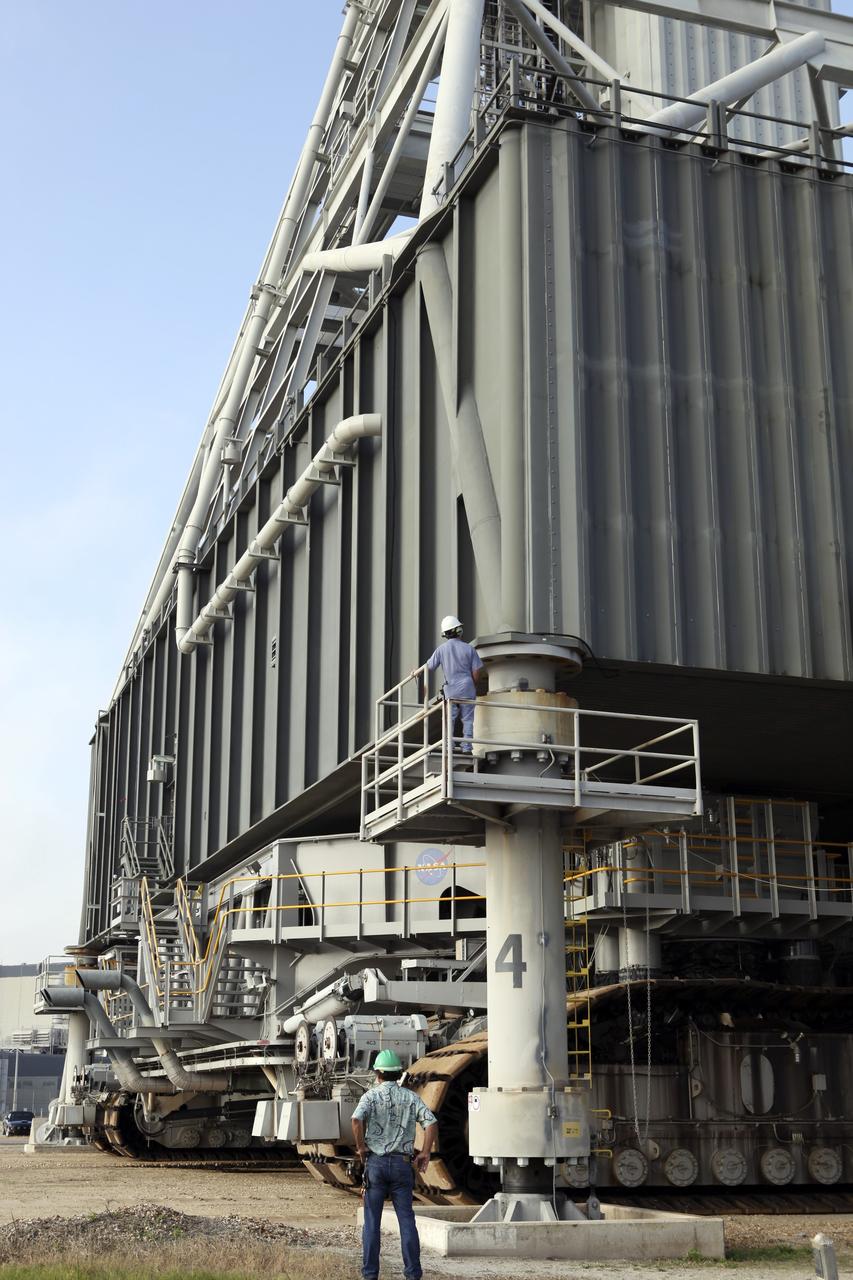
CAPE CANAVERAL, Fla. – At NASA’s Kennedy Space Center in Florida, the camera captures a unique view of the crawler-transporter as it is prepared to move the mobile launcher (ML) from next to Kennedy's Vehicle Assembly Building to Launch Pad 39B, a distance of 4.2 miles. Data on the ML will be collected from structural and functional engineering tests and used for the next phases of construction. The 355-foot-tall ML structure, which took about two years to construct, is being modified to support NASA’s Space Launch System (SLS), the heavy-lift rocket that will launch astronauts farther into space than ever before. SLS will also create high-quality jobs here at home, and provide the cornerstone for America's future human space exploration efforts. Photo credit: NASA/Dimitri Gerondidakis
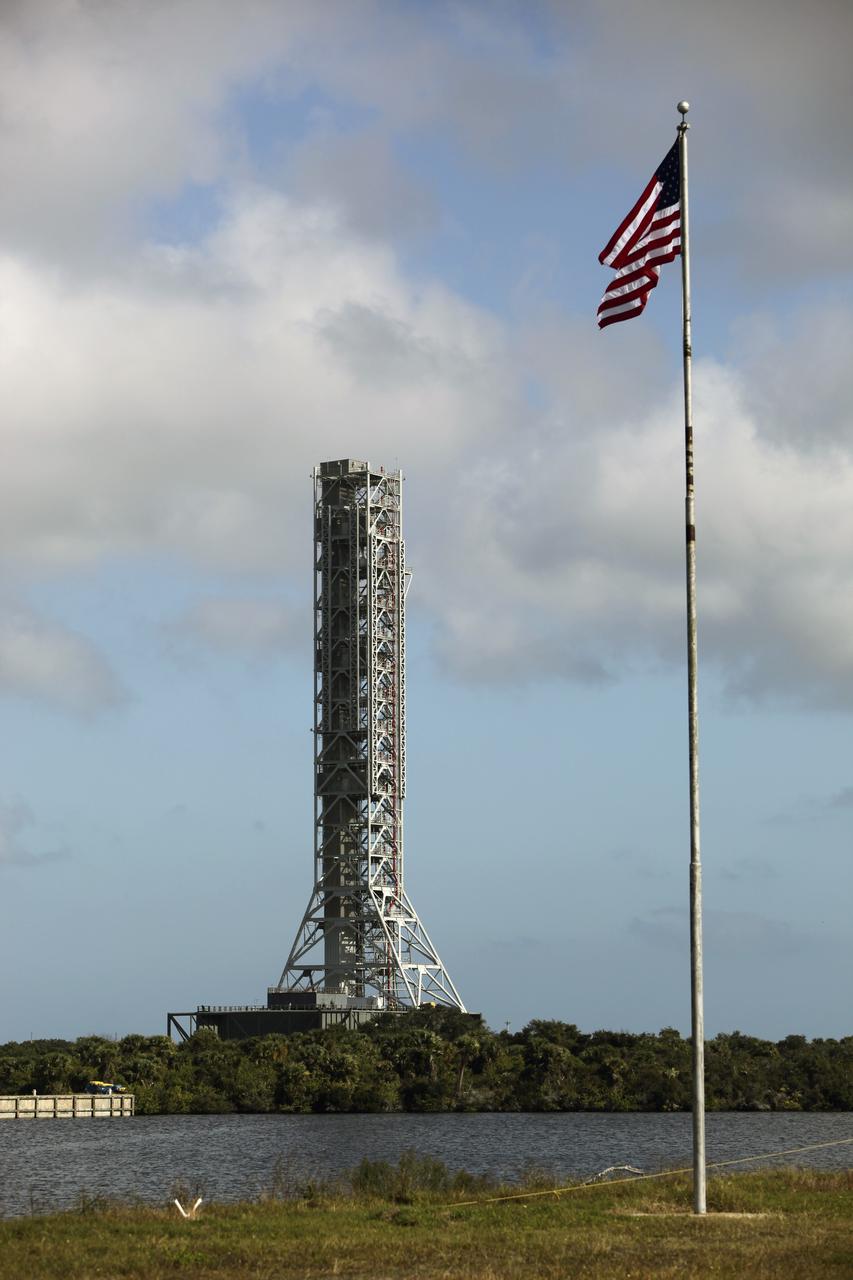
CAPE CANAVERAL, Fla. – As the American flag waves in the foreground at NASA’s Kennedy Space Center in Florida, the mobile launcher (ML) rolls out aboard a crawler-transporter from next to Kennedy's Vehicle Assembly Building to Launch Pad 39B, a distance of 4.2 miles. Data on the ML will be collected from structural and functional engineering tests and used for the next phases of construction. The 355-foot-tall ML structure, which took about two years to construct, is being modified to support NASA’s Space Launch System (SLS), the heavy-lift rocket that will launch astronauts farther into space than ever before. SLS will also create high-quality jobs here at home, and provide the cornerstone for America's future human space exploration efforts. Photo credit: NASA/Dimitri Gerondidakis
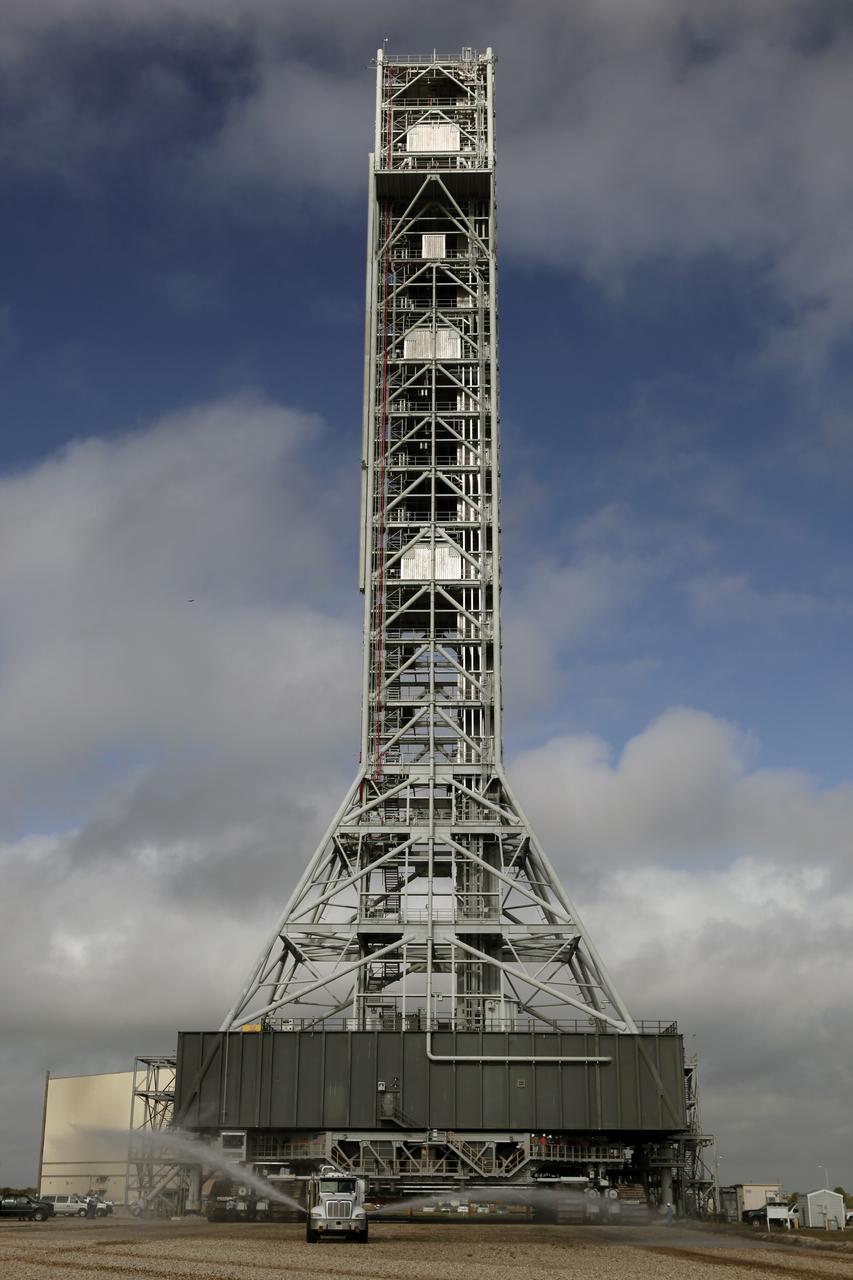
CAPE CANAVERAL, Fla. – At NASA’s Kennedy Space Center in Florida, a water truck leads the way spraying water on the dry crawlerway to reduce dust particles in the air, as the mobile launcher (ML) begins its move aboard a crawler-transporter. The ML is moving from next to Kennedy's Vehicle Assembly Building to Launch Pad 39B, a distance of 4.2 miles. Data on the ML will be collected from structural and functional engineering tests and used for the next phases of construction. The 355-foot-tall ML structure, which took about two years to construct, is being modified to support NASA’s Space Launch System (SLS), the heavy-lift rocket that will launch astronauts farther into space than ever before. SLS will also create high-quality jobs here at home, and provide the cornerstone for America's future human space exploration efforts. Photo credit: NASA/Dimitri Gerondidakis
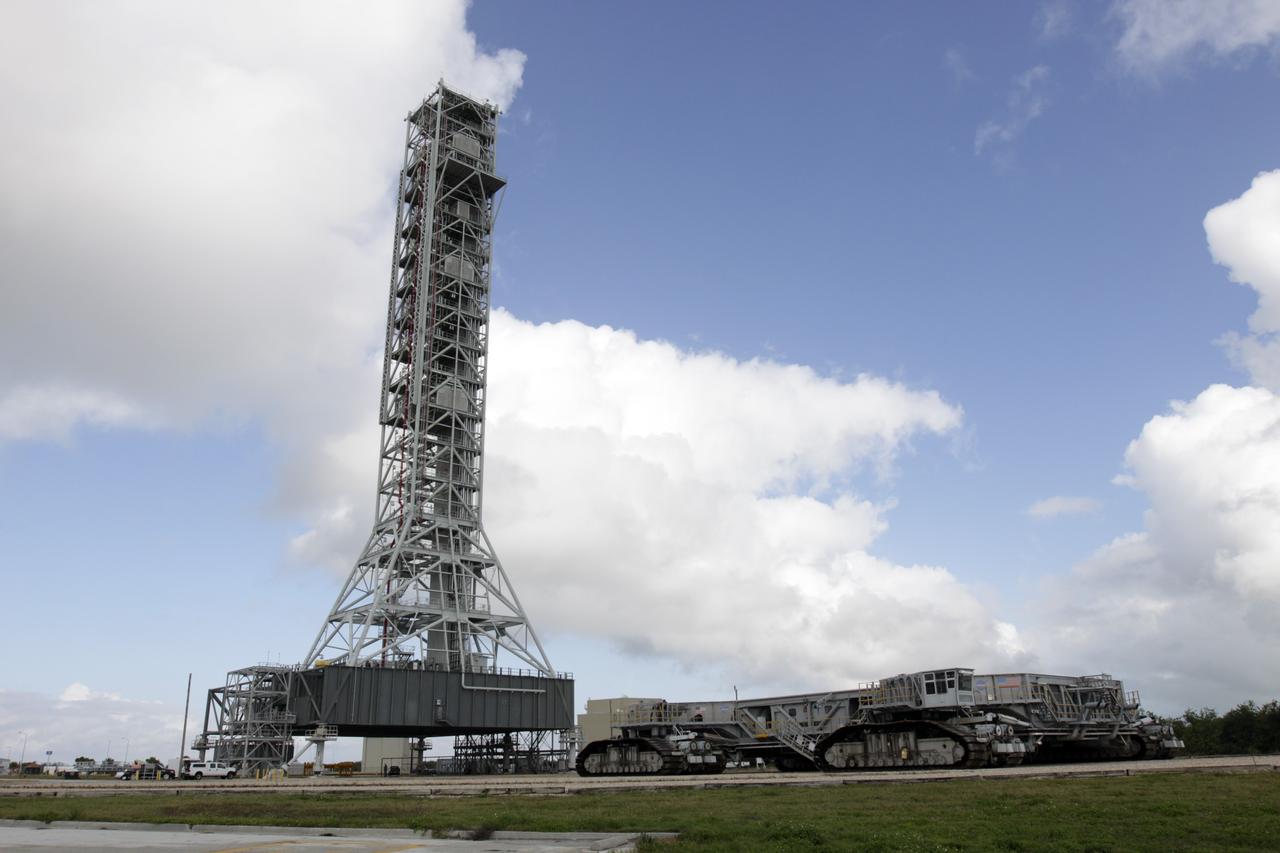
CAPE CANAVERAL, Fla. – At NASA's Kennedy Space Center in Florida, the mobile launcher (ML) is being prepared for its move aboard a crawler-transporter from next to Kennedy's Vehicle Assembly Building to Launch Pad 39B, a distance of 4.2 miles. Data on the ML will be collected from structural and functional engineering tests and used for the next phases of construction. The 355-foot-tall ML, which took about two years to construct, is being modified to support NASA's Space Launch System (SLS), the heavy-lift rocket that will launch astronauts farther into space than ever before. SLS will also create high-quality jobs here at home, and provide the cornerstone for America's future human space exploration efforts. For more information on SLS, visit http://www.nasa.gov/sls. Photo credit: NASA/Kim Shiflett
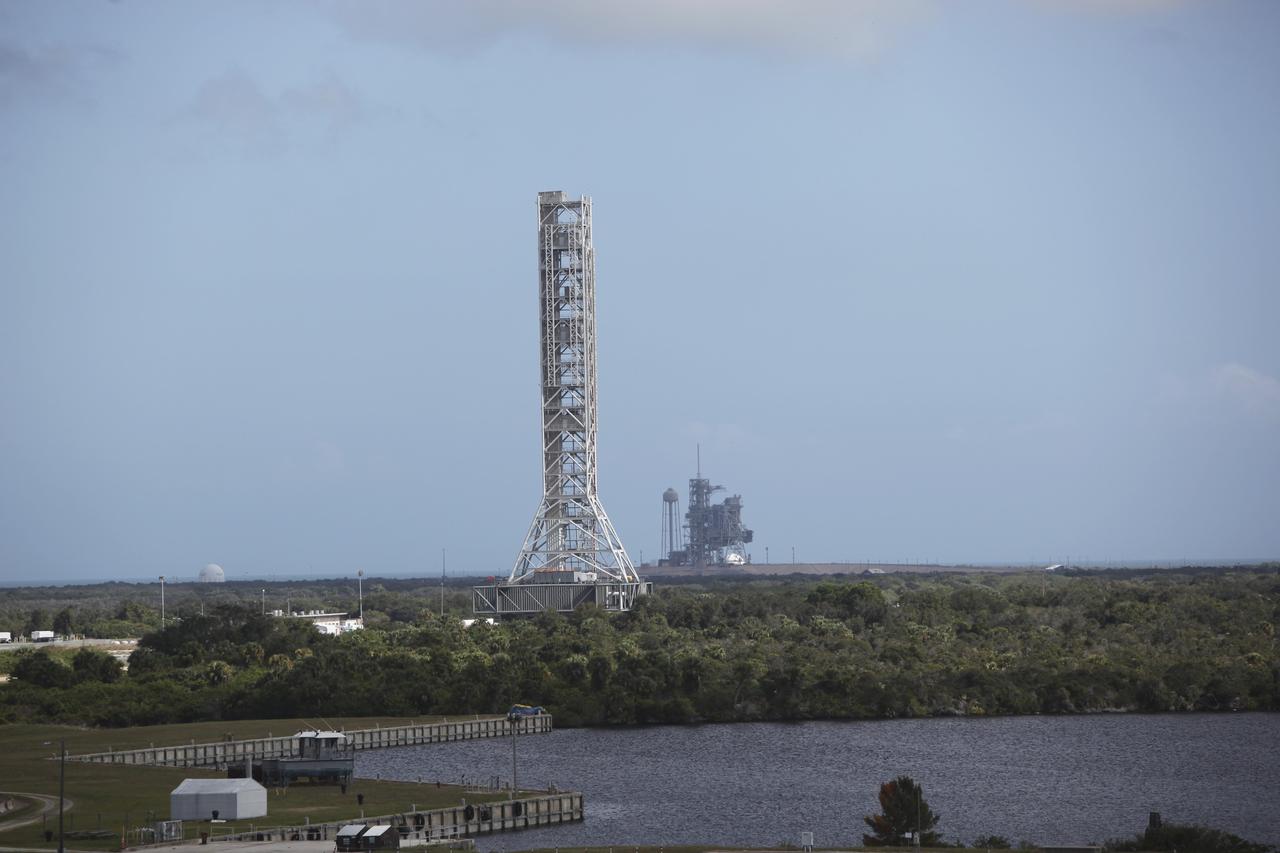
CAPE CANAVERAL, Fla. – At NASA's Kennedy Space Center in Florida, an aerial view shows the mobile launcher (ML) as it rolls out aboard the crawler-transporter moving from next to Kennedy's Vehicle Assembly Building to Launch Pad 39B, a distance of 4.2 miles. Data on the ML will be collected from structural and functional engineering tests and used for the next phases of construction. In the distance is Launch Pad 39A. The 355-foot-tall ML structure, which took about two years to construct, is being modified to support NASA’s Space Launch System (SLS), the heavy-lift rocket that will launch astronauts farther into space than ever before. SLS will also create high-quality jobs here at home, and provide the cornerstone for America's future human space exploration efforts. Photo credit: NASA/Dimitri Gerondidakis