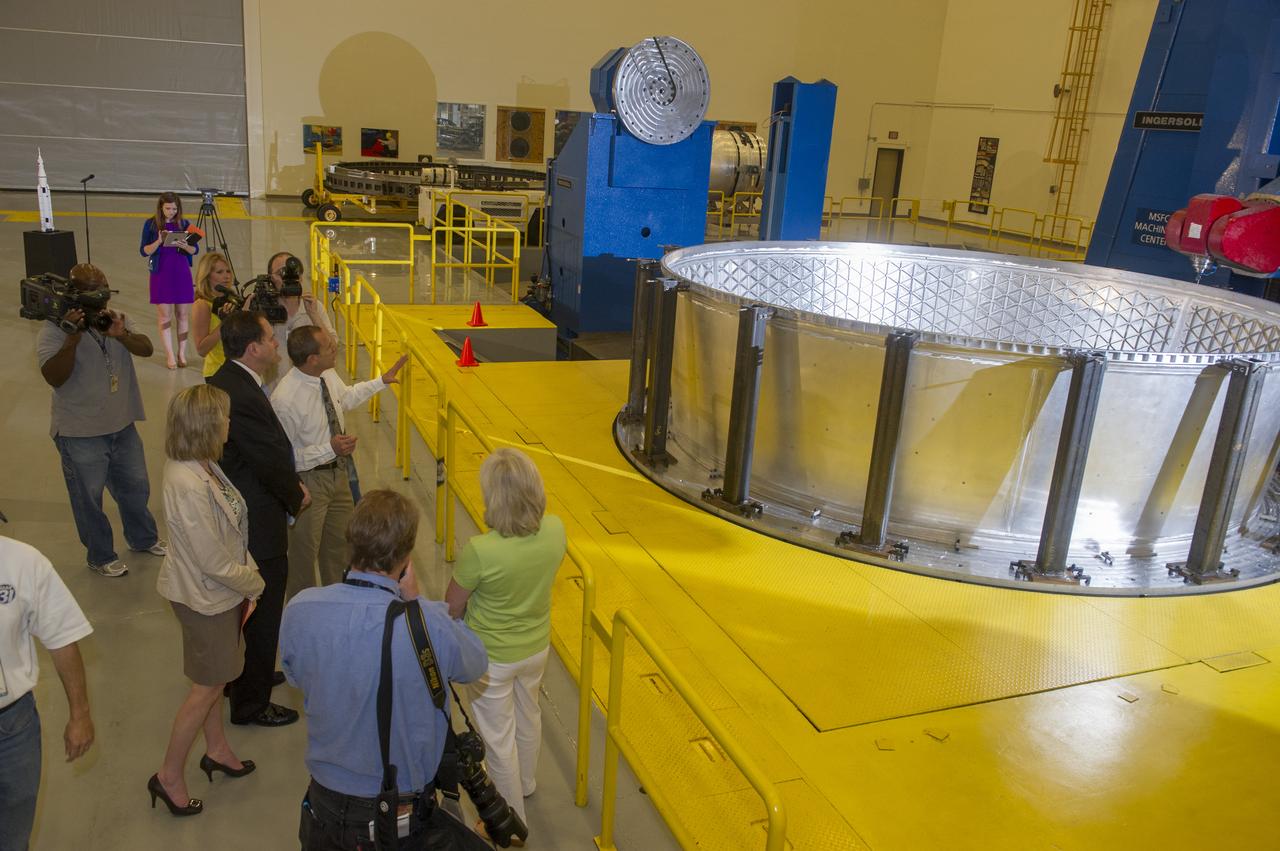
DAVID BEAMAN, MANAGER OF THE SPACECRAFT & PAYLOAD INTEGRATION OFFICE AT NASA'S SPACE LAUNCH SYSTEM, DISCUSSES THE FINER POINTS OF THE CONSTRUCTIONS OF THE SLS ADAPTER RING WITH NASA ASSOCIATE ADMINISTRATOR ROBERT LIGHTFOOT DURING MR. LIGHTFOOT'S VISIT TO THE MARSHALL SPACE FLIGHT CENTER
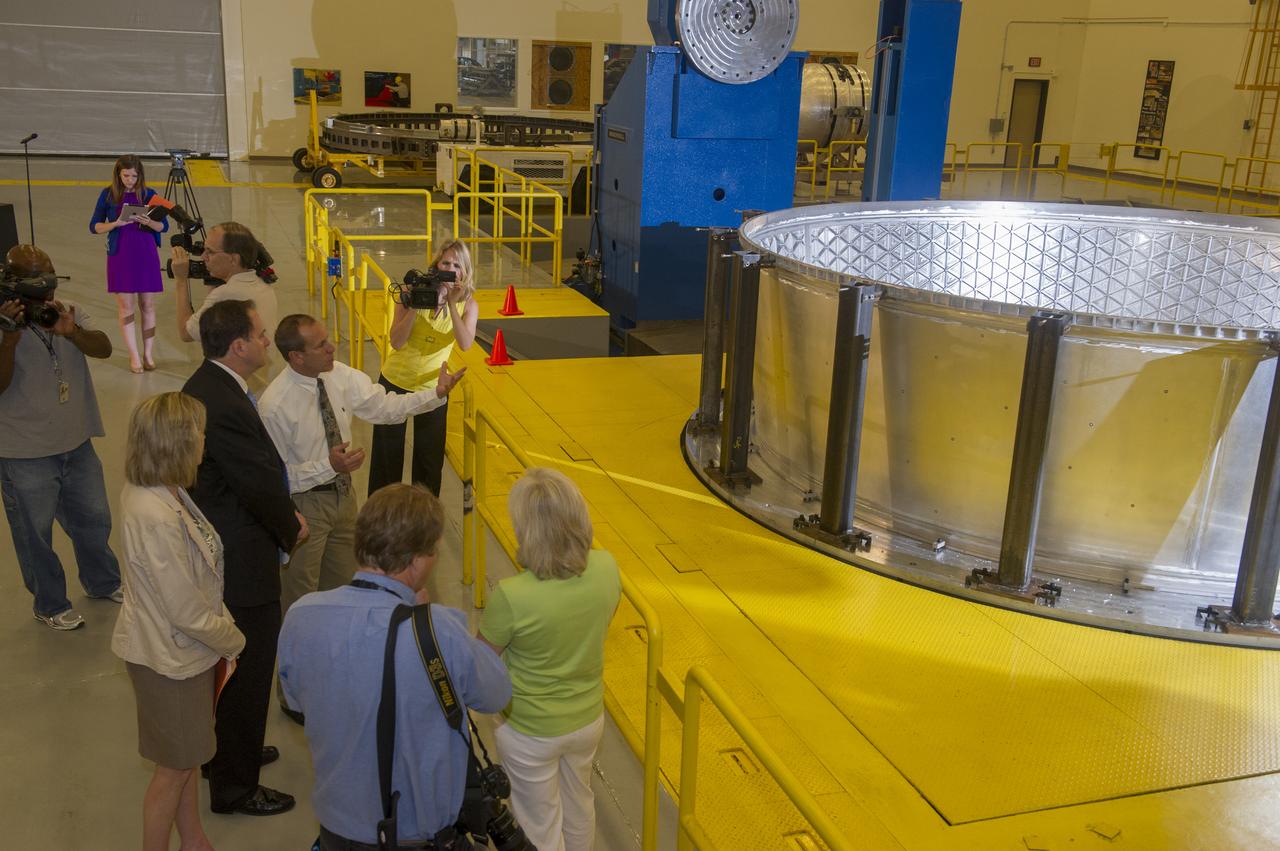
DAVID BEAMAN, MANAGER OF THE SPACECRAFT & PAYLOAD INTEGRATION OFFICE AT NASA'S SPACE LAUNCH SYSTEM, DISCUSSES THE FINER POINTS OF THE CONSTRUCTIONS OF THE SLS ADAPTER RING WITH NASA ASSOCIATE ADMINISTRATOR ROBERT LIGHTFOOT DURING MR. LIGHTFOOT'S VISIT TO THE MARSHALL SPACE FLIGHT CENTER
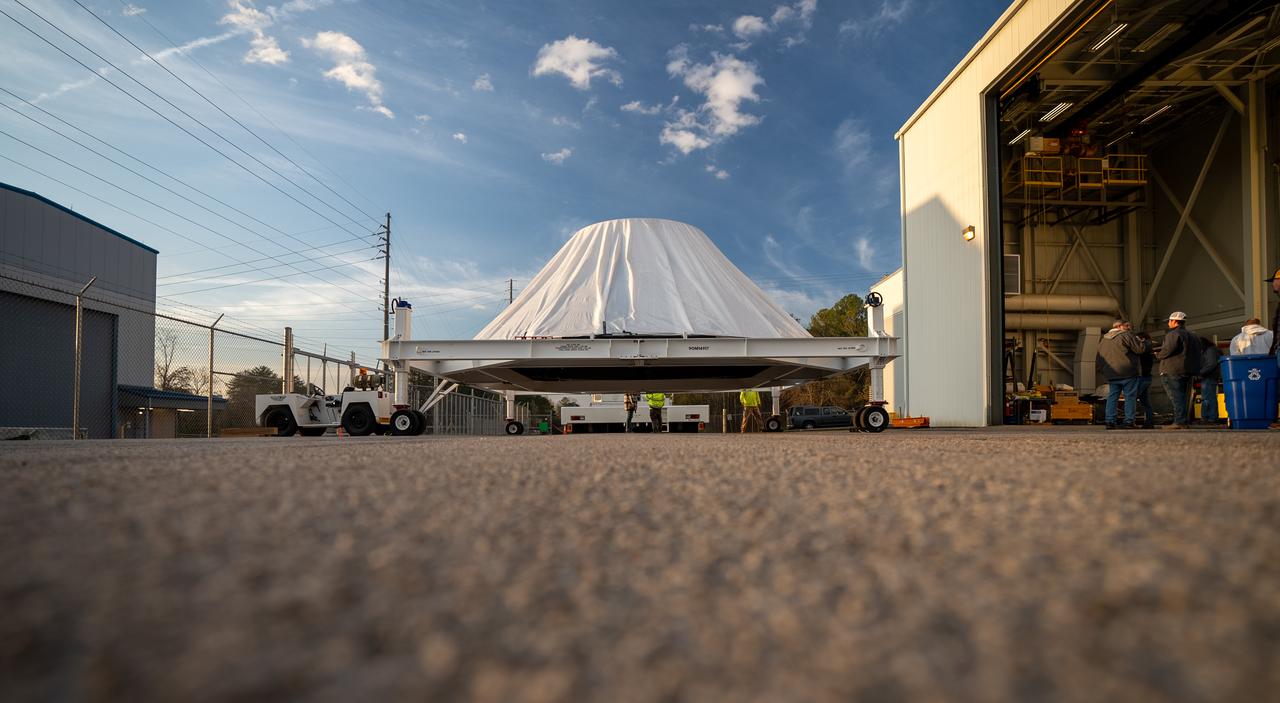
These photos and videos show how crews at NASA’s Marshall Space Flight Center in Huntsville, Alabama, moved and installed the payload adapter that will be used in the Block 1B configuration of the SLS (Space Launch System) rocket from Building 4708, where it was manufactured, into Structural Test Stand 4697 at NASA’s Marshall Space Flight Center on March 13. Teams at Marshall will begin structural testing the engineering development unit of the payload adapter – an exact replica of the flight version of the hardware – this spring. The cone-shaped payload adapter is about 8.5 feet tall and features two metal rings and eight composite panels. The adapter, which will debut on NASA’s Artemis IV mission, is an evolution from the Orion stage adapter used in the Block 1 configuration of the first three Artemis missions. It will be housed inside the universal stage adapter atop the rocket’s more powerful in-space stage, called the exploration upper stage. The payload adapter, like the launch vehicle stage adapter and the Orion stage adapter, is fully manufactured and tested at Marshall, which manages the SLS Program. NASA is working to land the first woman, first person of color, and its first international partner astronaut on the Moon under Artemis. SLS is part of NASA’s backbone for deep space exploration, along with the Orion spacecraft and Gateway in orbit around the Moon and commercial human landing systems, next-generational spacesuits, and rovers on the lunar surface. SLS is the only rocket that can send Orion, astronauts, and supplies to the Moon in a single launch.
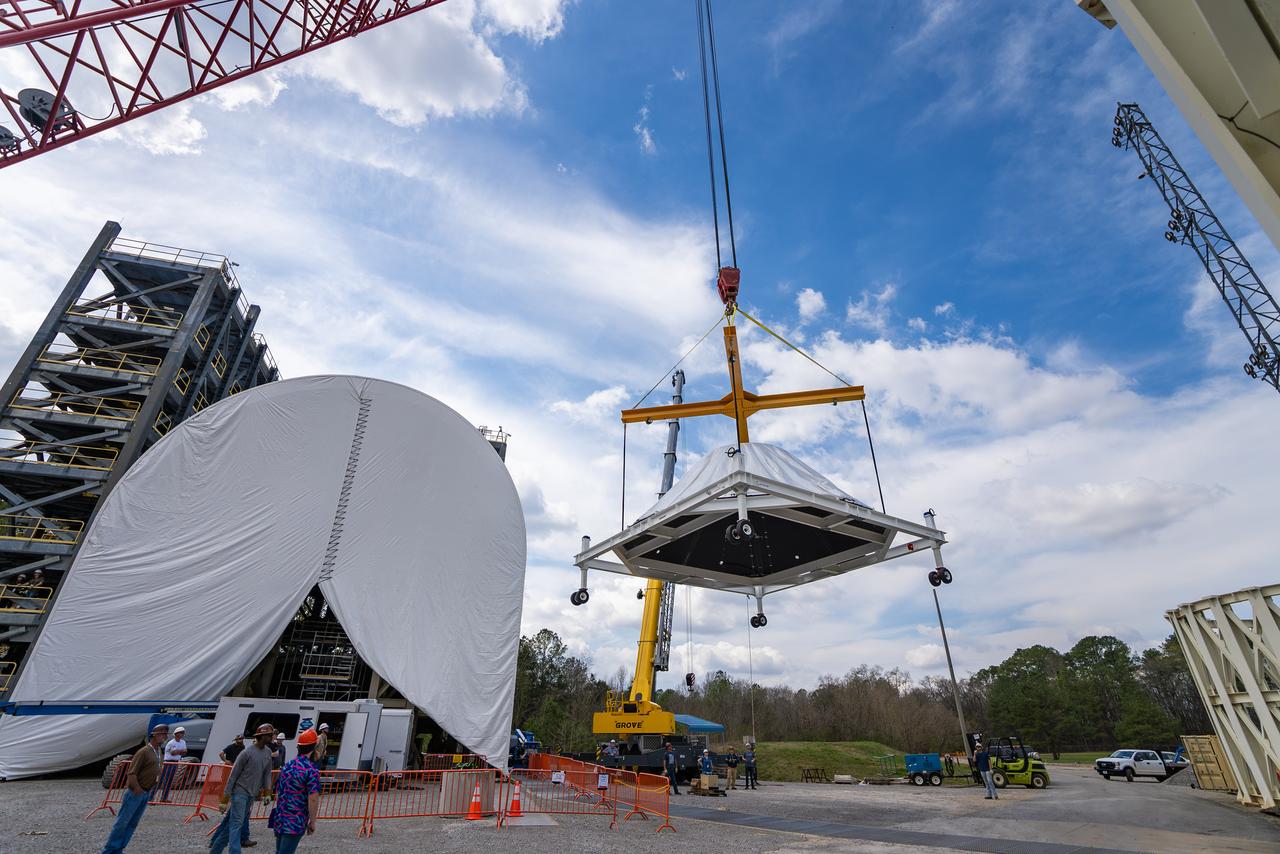
These photos and videos show how crews at NASA’s Marshall Space Flight Center in Huntsville, Alabama, moved and installed the payload adapter that will be used in the Block 1B configuration of the SLS (Space Launch System) rocket from Building 4708, where it was manufactured, into Structural Test Stand 4697 at NASA’s Marshall Space Flight Center on March 13. Teams at Marshall will begin structural testing the engineering development unit of the payload adapter – an exact replica of the flight version of the hardware – this spring. The cone-shaped payload adapter is about 8.5 feet tall and features two metal rings and eight composite panels. The adapter, which will debut on NASA’s Artemis IV mission, is an evolution from the Orion stage adapter used in the Block 1 configuration of the first three Artemis missions. It will be housed inside the universal stage adapter atop the rocket’s more powerful in-space stage, called the exploration upper stage. The payload adapter, like the launch vehicle stage adapter and the Orion stage adapter, is fully manufactured and tested at Marshall, which manages the SLS Program. NASA is working to land the first woman, first person of color, and its first international partner astronaut on the Moon under Artemis. SLS is part of NASA’s backbone for deep space exploration, along with the Orion spacecraft and Gateway in orbit around the Moon and commercial human landing systems, next-generational spacesuits, and rovers on the lunar surface. SLS is the only rocket that can send Orion, astronauts, and supplies to the Moon in a single launch.
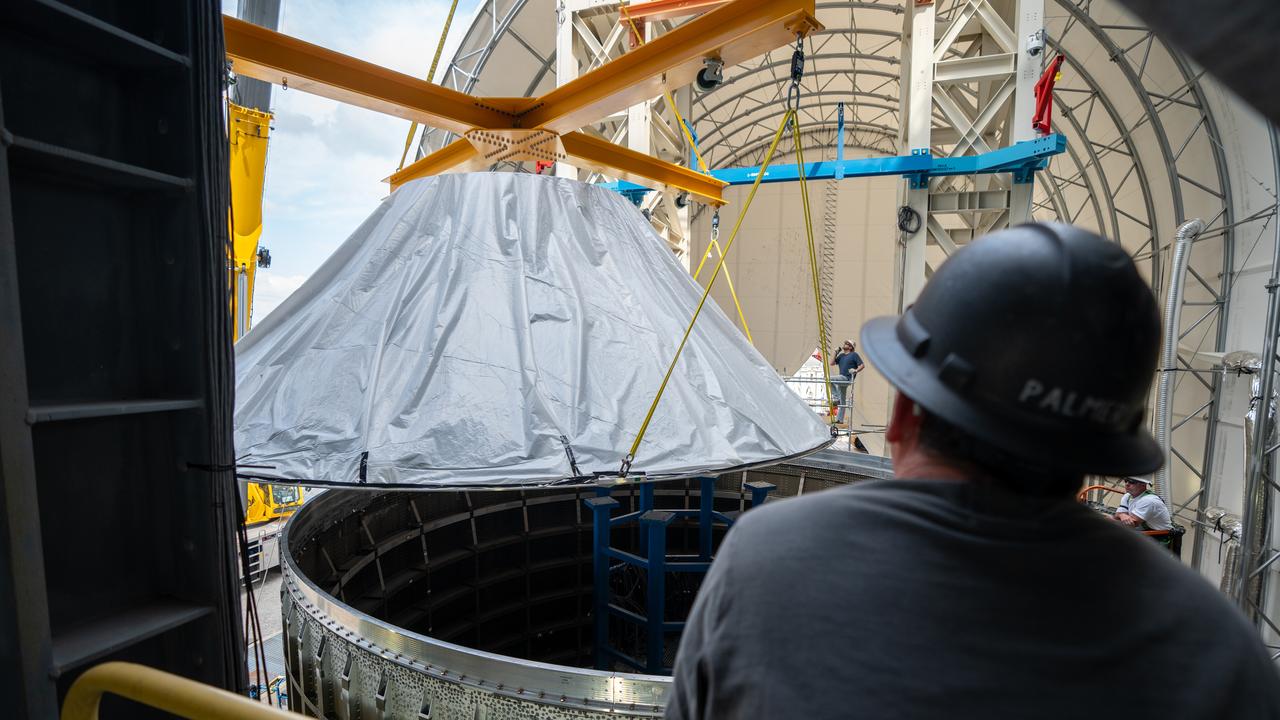
These photos and videos show how crews at NASA’s Marshall Space Flight Center in Huntsville, Alabama, moved and installed the payload adapter that will be used in the Block 1B configuration of the SLS (Space Launch System) rocket from Building 4708, where it was manufactured, into Structural Test Stand 4697 at NASA’s Marshall Space Flight Center on March 13. Teams at Marshall will begin structural testing the engineering development unit of the payload adapter – an exact replica of the flight version of the hardware – this spring. The cone-shaped payload adapter is about 8.5 feet tall and features two metal rings and eight composite panels. The adapter, which will debut on NASA’s Artemis IV mission, is an evolution from the Orion stage adapter used in the Block 1 configuration of the first three Artemis missions. It will be housed inside the universal stage adapter atop the rocket’s more powerful in-space stage, called the exploration upper stage. The payload adapter, like the launch vehicle stage adapter and the Orion stage adapter, is fully manufactured and tested at Marshall, which manages the SLS Program. NASA is working to land the first woman, first person of color, and its first international partner astronaut on the Moon under Artemis. SLS is part of NASA’s backbone for deep space exploration, along with the Orion spacecraft and Gateway in orbit around the Moon and commercial human landing systems, next-generational spacesuits, and rovers on the lunar surface. SLS is the only rocket that can send Orion, astronauts, and supplies to the Moon in a single launch.
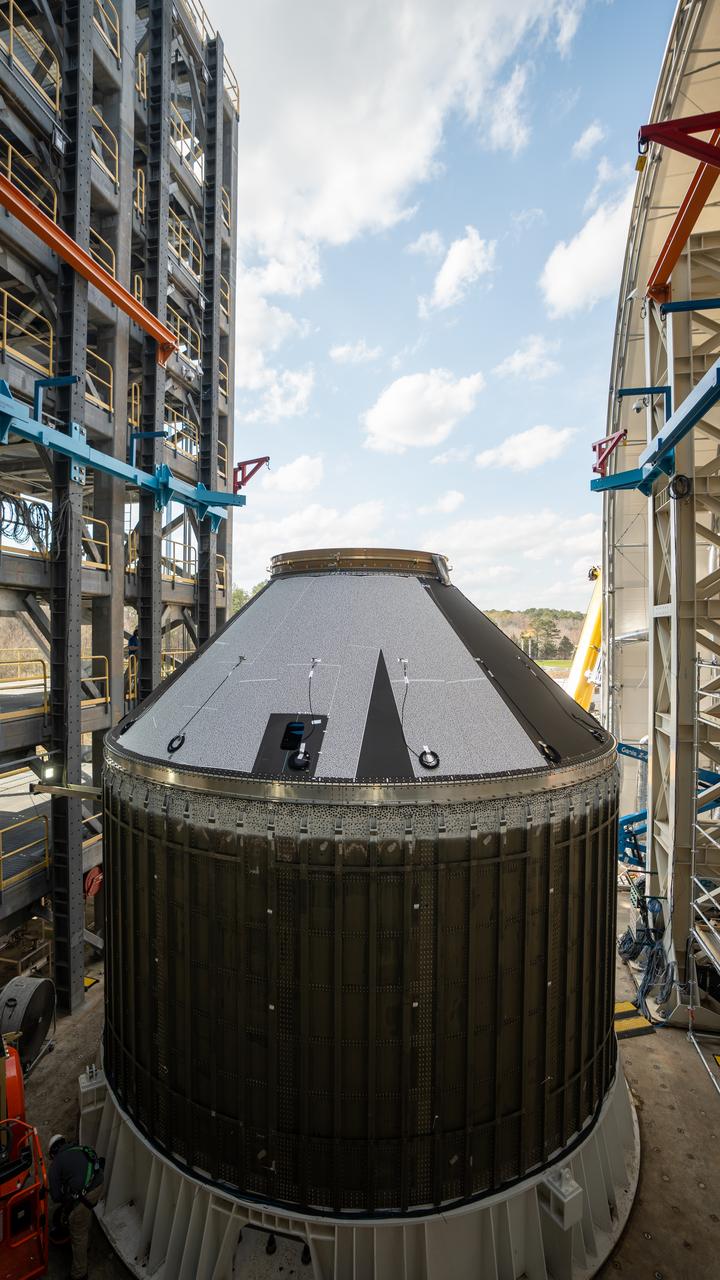
These photos and videos show how crews at NASA’s Marshall Space Flight Center in Huntsville, Alabama, moved and installed the payload adapter that will be used in the Block 1B configuration of the SLS (Space Launch System) rocket from Building 4708, where it was manufactured, into Structural Test Stand 4697 at NASA’s Marshall Space Flight Center on March 13. Teams at Marshall will begin structural testing the engineering development unit of the payload adapter – an exact replica of the flight version of the hardware – this spring. The cone-shaped payload adapter is about 8.5 feet tall and features two metal rings and eight composite panels. The adapter, which will debut on NASA’s Artemis IV mission, is an evolution from the Orion stage adapter used in the Block 1 configuration of the first three Artemis missions. It will be housed inside the universal stage adapter atop the rocket’s more powerful in-space stage, called the exploration upper stage. The payload adapter, like the launch vehicle stage adapter and the Orion stage adapter, is fully manufactured and tested at Marshall, which manages the SLS Program. NASA is working to land the first woman, first person of color, and its first international partner astronaut on the Moon under Artemis. SLS is part of NASA’s backbone for deep space exploration, along with the Orion spacecraft and Gateway in orbit around the Moon and commercial human landing systems, next-generational spacesuits, and rovers on the lunar surface. SLS is the only rocket that can send Orion, astronauts, and supplies to the Moon in a single launch.
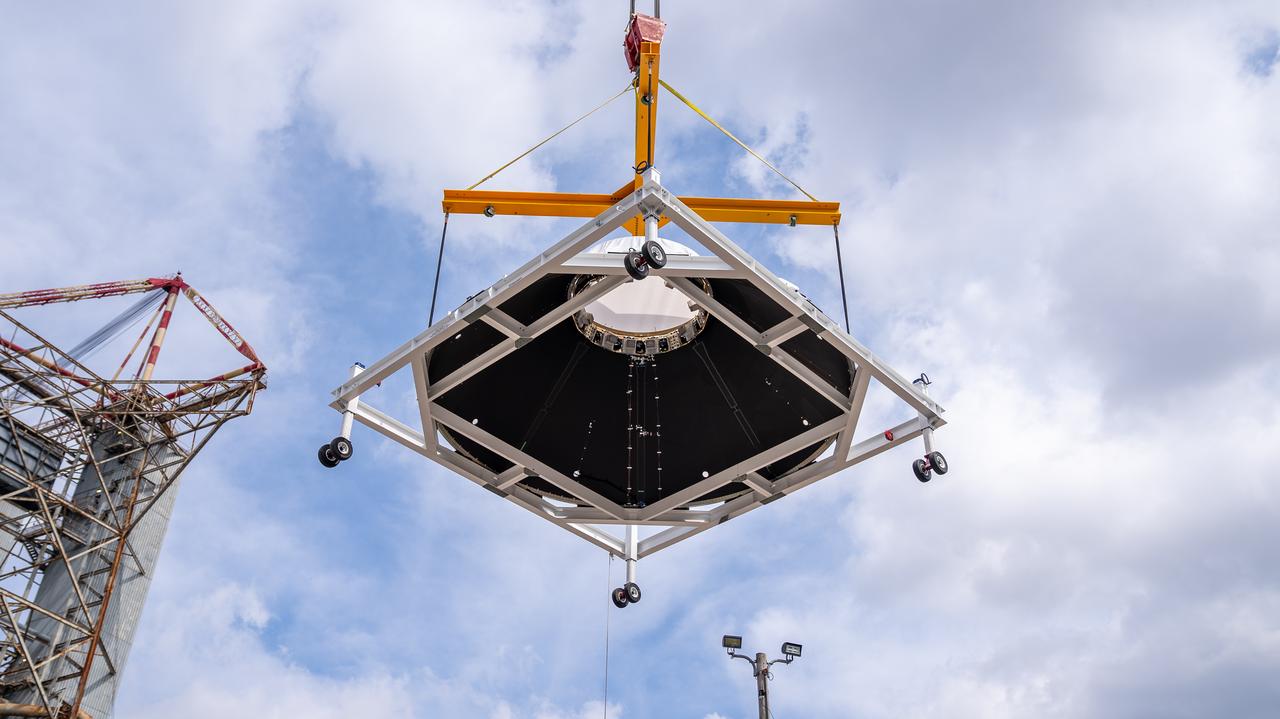
These photos and videos show how crews at NASA’s Marshall Space Flight Center in Huntsville, Alabama, moved and installed the payload adapter that will be used in the Block 1B configuration of the SLS (Space Launch System) rocket from Building 4708, where it was manufactured, into Structural Test Stand 4697 at NASA’s Marshall Space Flight Center on March 13. Teams at Marshall will begin structural testing the engineering development unit of the payload adapter – an exact replica of the flight version of the hardware – this spring. The cone-shaped payload adapter is about 8.5 feet tall and features two metal rings and eight composite panels. The adapter, which will debut on NASA’s Artemis IV mission, is an evolution from the Orion stage adapter used in the Block 1 configuration of the first three Artemis missions. It will be housed inside the universal stage adapter atop the rocket’s more powerful in-space stage, called the exploration upper stage. The payload adapter, like the launch vehicle stage adapter and the Orion stage adapter, is fully manufactured and tested at Marshall, which manages the SLS Program. NASA is working to land the first woman, first person of color, and its first international partner astronaut on the Moon under Artemis. SLS is part of NASA’s backbone for deep space exploration, along with the Orion spacecraft and Gateway in orbit around the Moon and commercial human landing systems, next-generational spacesuits, and rovers on the lunar surface. SLS is the only rocket that can send Orion, astronauts, and supplies to the Moon in a single launch.
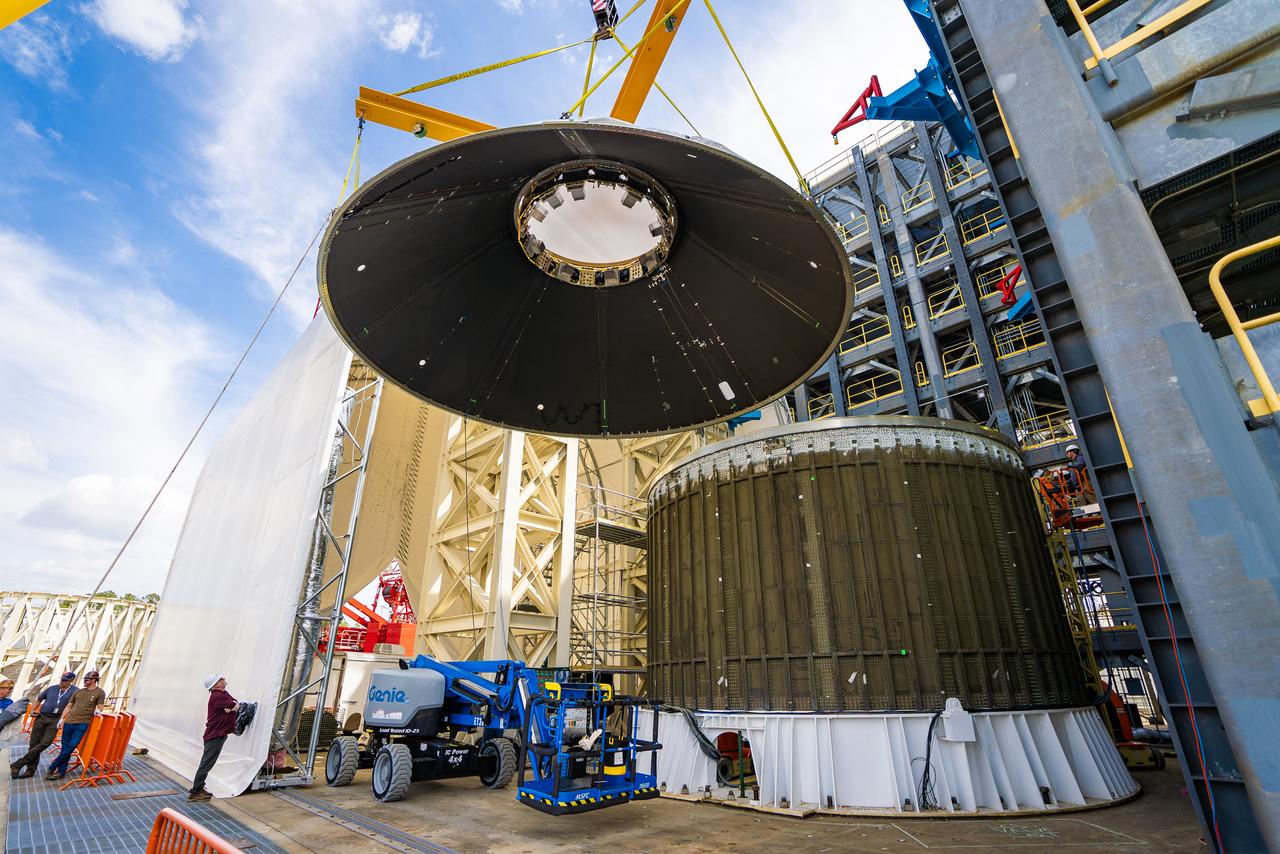
These photos and videos show how crews at NASA’s Marshall Space Flight Center in Huntsville, Alabama, moved and installed the payload adapter that will be used in the Block 1B configuration of the SLS (Space Launch System) rocket from Building 4708, where it was manufactured, into Structural Test Stand 4697 at NASA’s Marshall Space Flight Center on March 13. Teams at Marshall will begin structural testing the engineering development unit of the payload adapter – an exact replica of the flight version of the hardware – this spring. The cone-shaped payload adapter is about 8.5 feet tall and features two metal rings and eight composite panels. The adapter, which will debut on NASA’s Artemis IV mission, is an evolution from the Orion stage adapter used in the Block 1 configuration of the first three Artemis missions. It will be housed inside the universal stage adapter atop the rocket’s more powerful in-space stage, called the exploration upper stage. The payload adapter, like the launch vehicle stage adapter and the Orion stage adapter, is fully manufactured and tested at Marshall, which manages the SLS Program. NASA is working to land the first woman, first person of color, and its first international partner astronaut on the Moon under Artemis. SLS is part of NASA’s backbone for deep space exploration, along with the Orion spacecraft and Gateway in orbit around the Moon and commercial human landing systems, next-generational spacesuits, and rovers on the lunar surface. SLS is the only rocket that can send Orion, astronauts, and supplies to the Moon in a single launch.
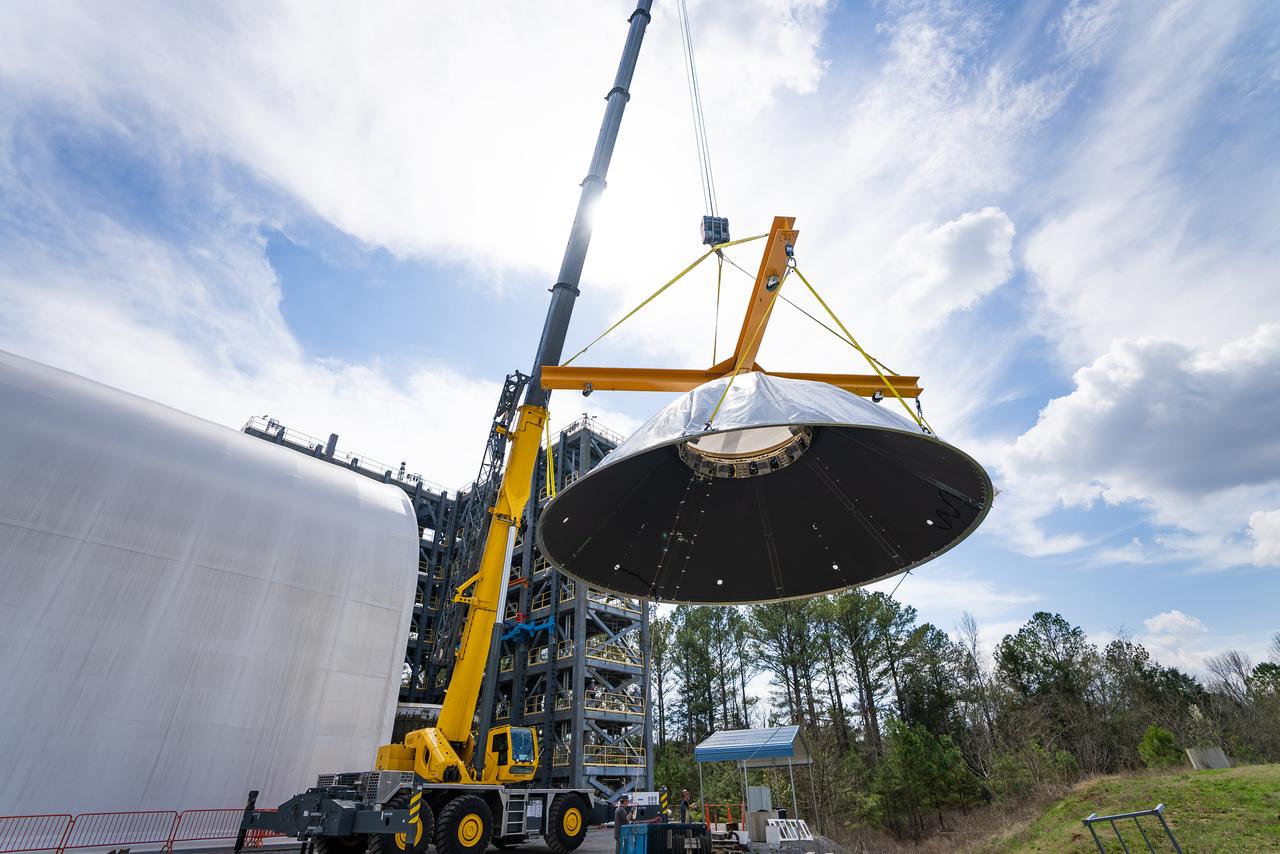
These photos and videos show how crews at NASA’s Marshall Space Flight Center in Huntsville, Alabama, moved and installed the payload adapter that will be used in the Block 1B configuration of the SLS (Space Launch System) rocket from Building 4708, where it was manufactured, into Structural Test Stand 4697 at NASA’s Marshall Space Flight Center on March 13. Teams at Marshall will begin structural testing the engineering development unit of the payload adapter – an exact replica of the flight version of the hardware – this spring. The cone-shaped payload adapter is about 8.5 feet tall and features two metal rings and eight composite panels. The adapter, which will debut on NASA’s Artemis IV mission, is an evolution from the Orion stage adapter used in the Block 1 configuration of the first three Artemis missions. It will be housed inside the universal stage adapter atop the rocket’s more powerful in-space stage, called the exploration upper stage. The payload adapter, like the launch vehicle stage adapter and the Orion stage adapter, is fully manufactured and tested at Marshall, which manages the SLS Program. NASA is working to land the first woman, first person of color, and its first international partner astronaut on the Moon under Artemis. SLS is part of NASA’s backbone for deep space exploration, along with the Orion spacecraft and Gateway in orbit around the Moon and commercial human landing systems, next-generational spacesuits, and rovers on the lunar surface. SLS is the only rocket that can send Orion, astronauts, and supplies to the Moon in a single launch.
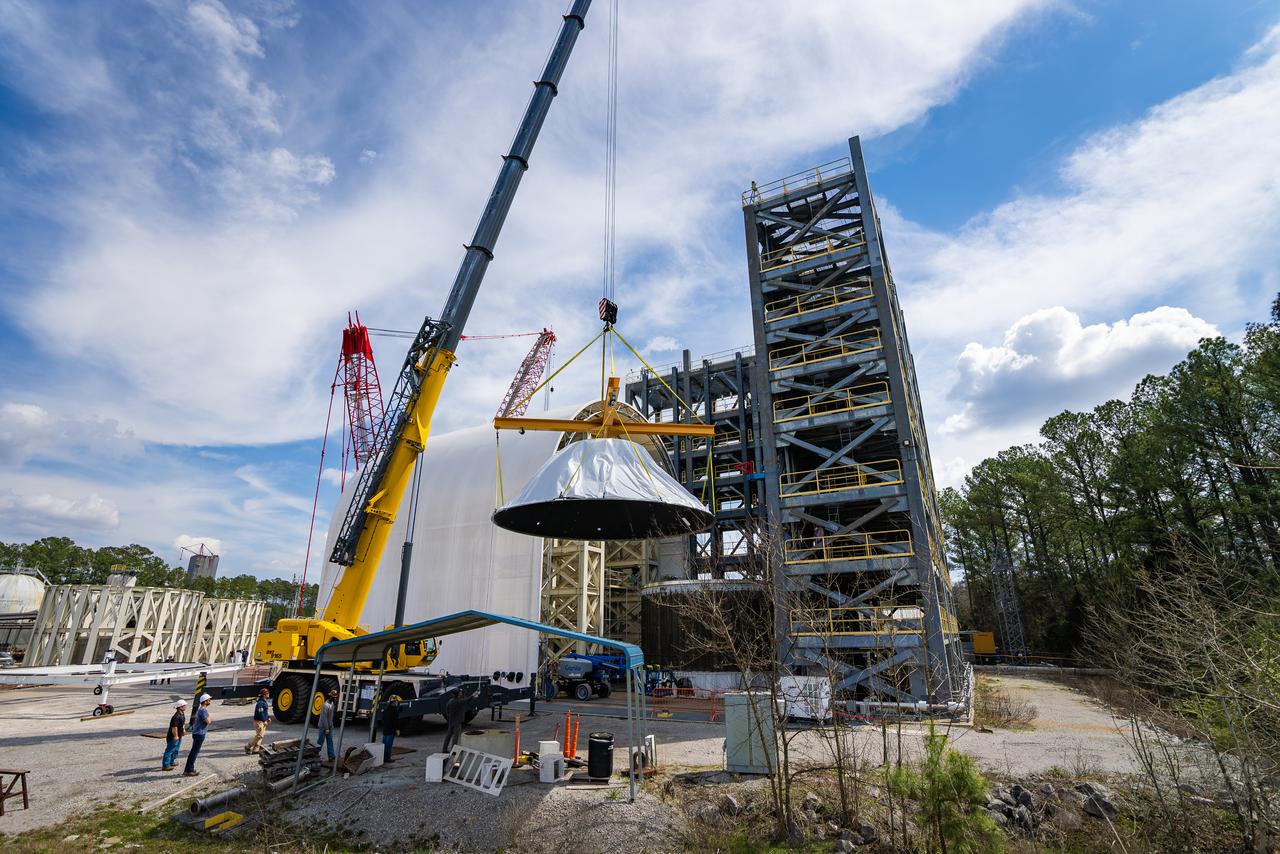
These photos and videos show how crews at NASA’s Marshall Space Flight Center in Huntsville, Alabama, moved and installed the payload adapter that will be used in the Block 1B configuration of the SLS (Space Launch System) rocket from Building 4708, where it was manufactured, into Structural Test Stand 4697 at NASA’s Marshall Space Flight Center on March 13. Teams at Marshall will begin structural testing the engineering development unit of the payload adapter – an exact replica of the flight version of the hardware – this spring. The cone-shaped payload adapter is about 8.5 feet tall and features two metal rings and eight composite panels. The adapter, which will debut on NASA’s Artemis IV mission, is an evolution from the Orion stage adapter used in the Block 1 configuration of the first three Artemis missions. It will be housed inside the universal stage adapter atop the rocket’s more powerful in-space stage, called the exploration upper stage. The payload adapter, like the launch vehicle stage adapter and the Orion stage adapter, is fully manufactured and tested at Marshall, which manages the SLS Program. NASA is working to land the first woman, first person of color, and its first international partner astronaut on the Moon under Artemis. SLS is part of NASA’s backbone for deep space exploration, along with the Orion spacecraft and Gateway in orbit around the Moon and commercial human landing systems, next-generational spacesuits, and rovers on the lunar surface. SLS is the only rocket that can send Orion, astronauts, and supplies to the Moon in a single launch.
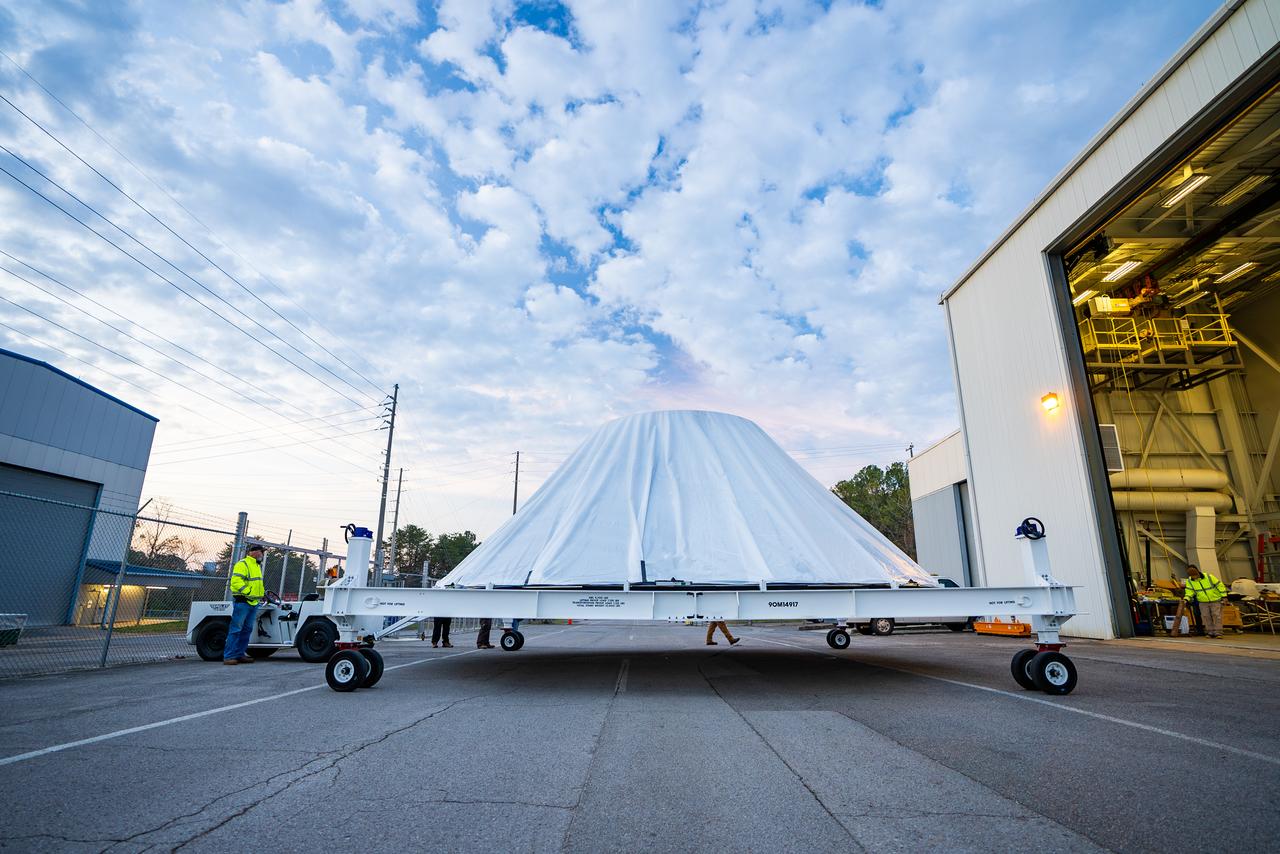
These photos and videos show how crews at NASA’s Marshall Space Flight Center in Huntsville, Alabama, moved and installed the payload adapter that will be used in the Block 1B configuration of the SLS (Space Launch System) rocket from Building 4708, where it was manufactured, into Structural Test Stand 4697 at NASA’s Marshall Space Flight Center on March 13. Teams at Marshall will begin structural testing the engineering development unit of the payload adapter – an exact replica of the flight version of the hardware – this spring. The cone-shaped payload adapter is about 8.5 feet tall and features two metal rings and eight composite panels. The adapter, which will debut on NASA’s Artemis IV mission, is an evolution from the Orion stage adapter used in the Block 1 configuration of the first three Artemis missions. It will be housed inside the universal stage adapter atop the rocket’s more powerful in-space stage, called the exploration upper stage. The payload adapter, like the launch vehicle stage adapter and the Orion stage adapter, is fully manufactured and tested at Marshall, which manages the SLS Program. NASA is working to land the first woman, first person of color, and its first international partner astronaut on the Moon under Artemis. SLS is part of NASA’s backbone for deep space exploration, along with the Orion spacecraft and Gateway in orbit around the Moon and commercial human landing systems, next-generational spacesuits, and rovers on the lunar surface. SLS is the only rocket that can send Orion, astronauts, and supplies to the Moon in a single launch.
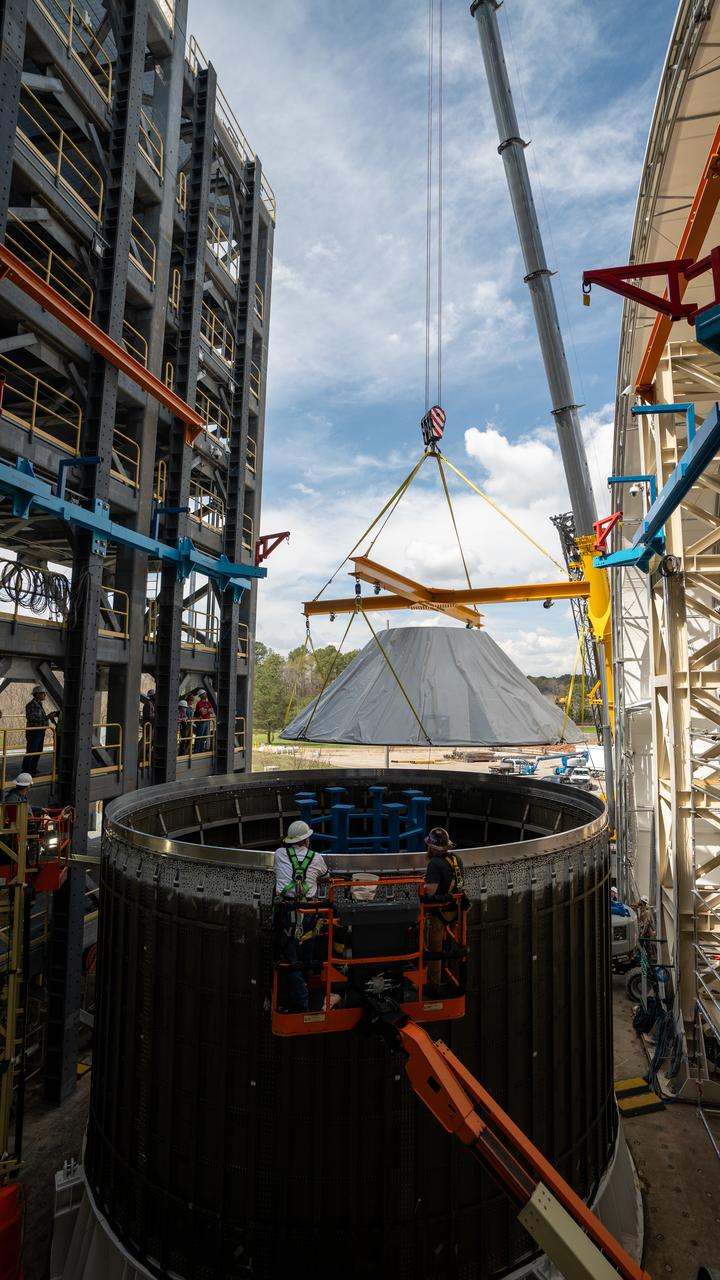
These photos and videos show how crews at NASA’s Marshall Space Flight Center in Huntsville, Alabama, moved and installed the payload adapter that will be used in the Block 1B configuration of the SLS (Space Launch System) rocket from Building 4708, where it was manufactured, into Structural Test Stand 4697 at NASA’s Marshall Space Flight Center on March 13. Teams at Marshall will begin structural testing the engineering development unit of the payload adapter – an exact replica of the flight version of the hardware – this spring. The cone-shaped payload adapter is about 8.5 feet tall and features two metal rings and eight composite panels. The adapter, which will debut on NASA’s Artemis IV mission, is an evolution from the Orion stage adapter used in the Block 1 configuration of the first three Artemis missions. It will be housed inside the universal stage adapter atop the rocket’s more powerful in-space stage, called the exploration upper stage. The payload adapter, like the launch vehicle stage adapter and the Orion stage adapter, is fully manufactured and tested at Marshall, which manages the SLS Program. NASA is working to land the first woman, first person of color, and its first international partner astronaut on the Moon under Artemis. SLS is part of NASA’s backbone for deep space exploration, along with the Orion spacecraft and Gateway in orbit around the Moon and commercial human landing systems, next-generational spacesuits, and rovers on the lunar surface. SLS is the only rocket that can send Orion, astronauts, and supplies to the Moon in a single launch.
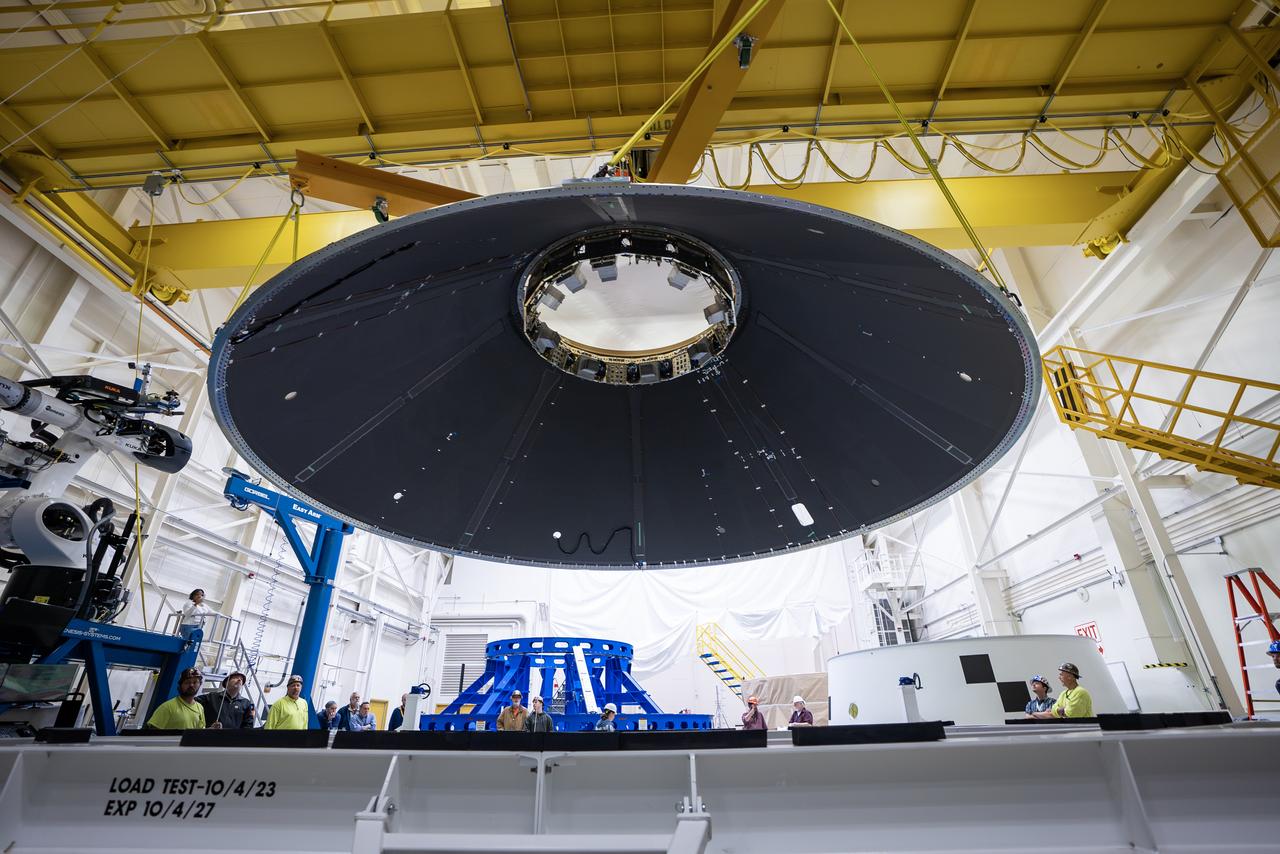
These photos and videos show how NASA manufactured and prepared to transport the payload adapter in February inside Building 4708 at NASA’s Marshall Space Flight Center in Huntsville, Alabama. Prior to moving the hardware for testing, teams installed the New Explorations Secondary Transport component, called the NEST, into the top of the engineering development unit. The NEST component will allow the hardware to hold a series of secondary payloads, or small satellites. The cone-shaped payload adapter is about 8.5 feet tall and features two metal rings and eight composite panels. The adapter, which will debut on NASA’s Artemis IV mission, is an evolution from the Orion stage adapter used in the Block 1 configuration of the rocket for the first three Artemis missions. It will be housed inside the universal stage adapter atop the rocket’s more powerful in-space stage, called the exploration upper stage. The payload adapter, like the launch vehicle stage adapter and the Orion stage adapter, is fully manufactured and tested at Marshall, which manages the SLS Program. NASA is working to land the first woman, first person of color, and its first international partner astronaut on the Moon under Artemis. SLS is part of NASA’s backbone for deep space exploration, along with the Orion spacecraft and Gateway in orbit around the Moon and commercial human landing systems, next-generational spacesuits, and rovers on the lunar surface. SLS is the only rocket that can send Orion, astronauts, and supplies to the Moon in a single launch.

These photos show highlights from Artemis II NASA astronauts Victor Glover, Reid Wiseman, and Christina Koch of NASA and CSA (Canadian Space Agency) astronaut Jeremy Hansen visit to NASA’s Marshall Space Flight Center in Huntsville, Alabama, Nov. 27. The crew met and spoke to employees and viewed facilities for SLS (Space Launch System) rocket. All four astronauts signed the Orion stage adapter (OSA), a small ring structure that connects SLS to NASA’s Orion spacecraft, that will be used for Artemis II. Koch and Wiseman also visited the Systems Integration Lab, where SLS flight software testing is conducted. The four astronauts will launch atop SLS inside Orion to venture around the Moon on Artemis II, the first crewed flight for Artemis.
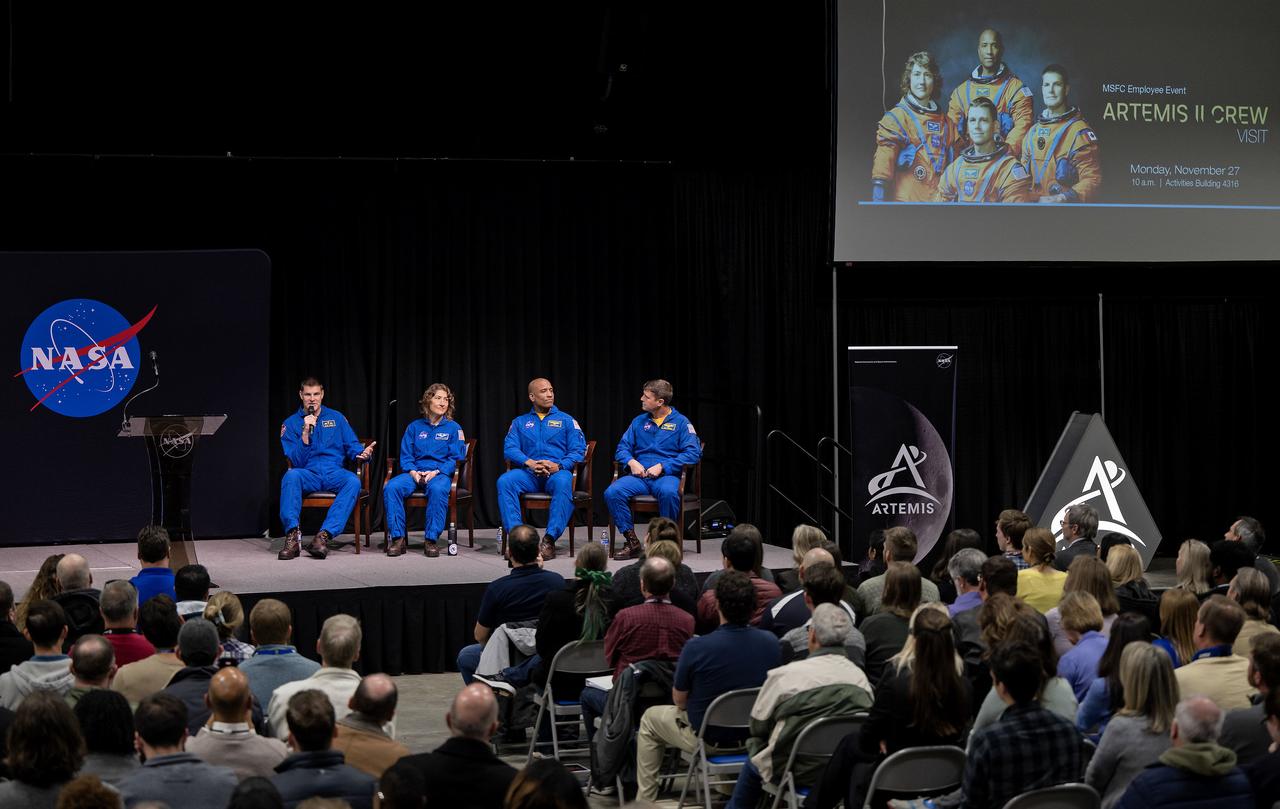
These photos show highlights from Artemis II NASA astronauts Victor Glover, Reid Wiseman, and Christina Koch of NASA and CSA (Canadian Space Agency) astronaut Jeremy Hansen visit to NASA’s Marshall Space Flight Center in Huntsville, Alabama, Nov. 27. The crew met and spoke to employees and viewed facilities for SLS (Space Launch System) rocket. All four astronauts signed the Orion stage adapter (OSA), a small ring structure that connects SLS to NASA’s Orion spacecraft, that will be used for Artemis II. Koch and Wiseman also visited the Systems Integration Lab, where SLS flight software testing is conducted. The four astronauts will launch atop SLS inside Orion to venture around the Moon on Artemis II, the first crewed flight for Artemis.
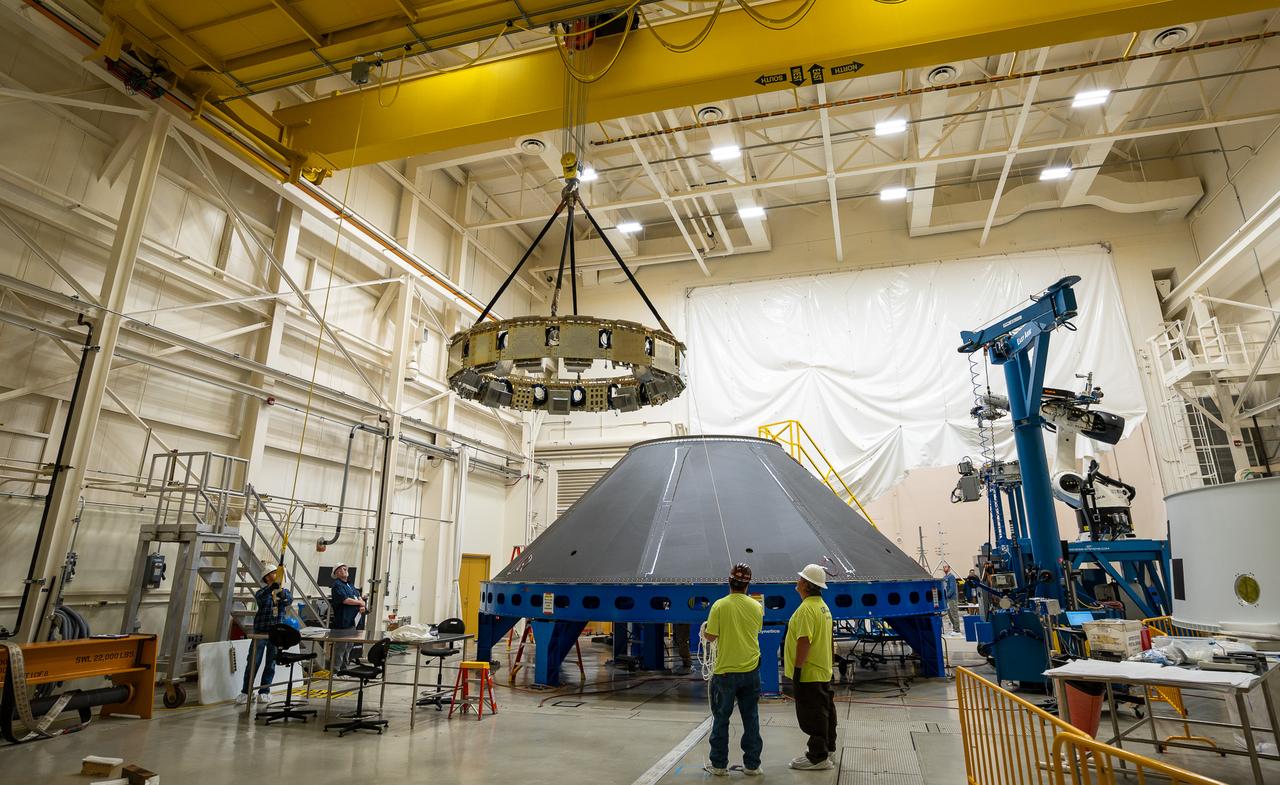
These photos and videos show how NASA manufactured and prepared to transport the payload adapter in February inside Building 4708 at NASA’s Marshall Space Flight Center in Huntsville, Alabama. Prior to moving the hardware for testing, teams installed the New Explorations Secondary Transport component, called the NEST, into the top of the engineering development unit. The NEST component will allow the hardware to hold a series of secondary payloads, or small satellites. The cone-shaped payload adapter is about 8.5 feet tall and features two metal rings and eight composite panels. The adapter, which will debut on NASA’s Artemis IV mission, is an evolution from the Orion stage adapter used in the Block 1 configuration of the rocket for the first three Artemis missions. It will be housed inside the universal stage adapter atop the rocket’s more powerful in-space stage, called the exploration upper stage. The payload adapter, like the launch vehicle stage adapter and the Orion stage adapter, is fully manufactured and tested at Marshall, which manages the SLS Program. NASA is working to land the first woman, first person of color, and its first international partner astronaut on the Moon under Artemis. SLS is part of NASA’s backbone for deep space exploration, along with the Orion spacecraft and Gateway in orbit around the Moon and commercial human landing systems, next-generational spacesuits, and rovers on the lunar surface. SLS is the only rocket that can send Orion, astronauts, and supplies to the Moon in a single launch.
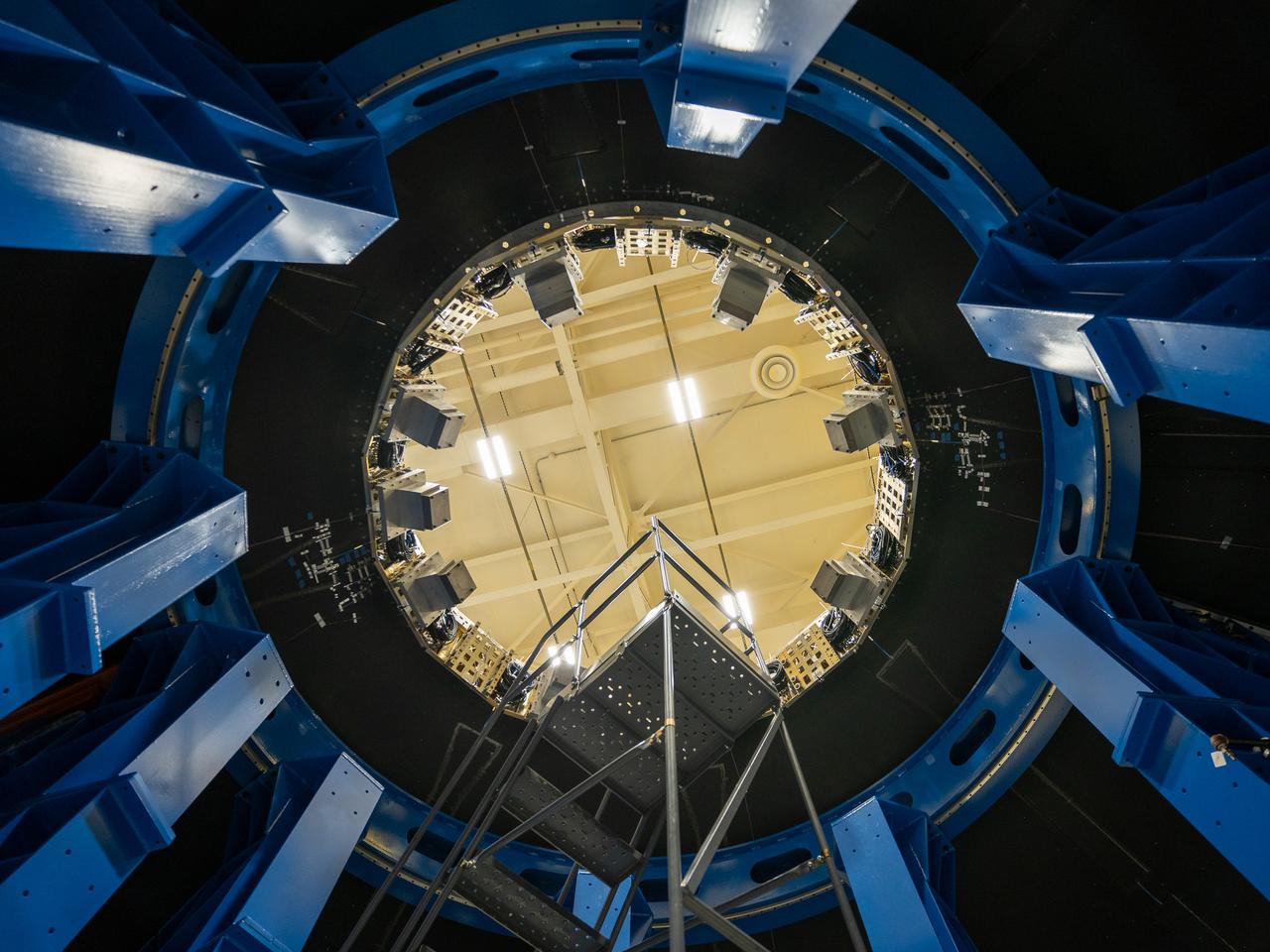
These photos and videos show how NASA manufactured and prepared to transport the payload adapter in February inside Building 4708 at NASA’s Marshall Space Flight Center in Huntsville, Alabama. Prior to moving the hardware for testing, teams installed the New Explorations Secondary Transport component, called the NEST, into the top of the engineering development unit. The NEST component will allow the hardware to hold a series of secondary payloads, or small satellites. The cone-shaped payload adapter is about 8.5 feet tall and features two metal rings and eight composite panels. The adapter, which will debut on NASA’s Artemis IV mission, is an evolution from the Orion stage adapter used in the Block 1 configuration of the rocket for the first three Artemis missions. It will be housed inside the universal stage adapter atop the rocket’s more powerful in-space stage, called the exploration upper stage. The payload adapter, like the launch vehicle stage adapter and the Orion stage adapter, is fully manufactured and tested at Marshall, which manages the SLS Program. NASA is working to land the first woman, first person of color, and its first international partner astronaut on the Moon under Artemis. SLS is part of NASA’s backbone for deep space exploration, along with the Orion spacecraft and Gateway in orbit around the Moon and commercial human landing systems, next-generational spacesuits, and rovers on the lunar surface. SLS is the only rocket that can send Orion, astronauts, and supplies to the Moon in a single launch.
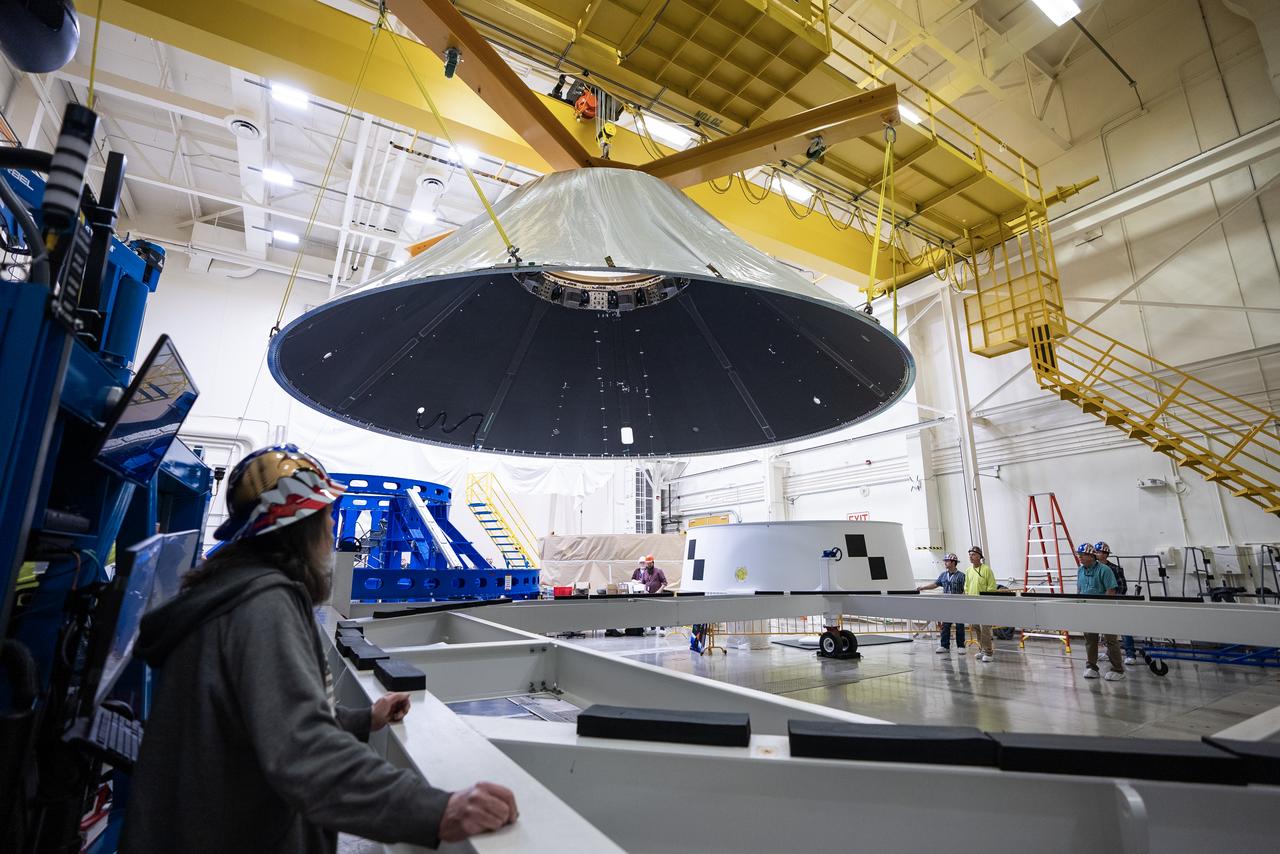
These photos and videos show how NASA manufactured and prepared to transport the payload adapter in February inside Building 4708 at NASA’s Marshall Space Flight Center in Huntsville, Alabama. Prior to moving the hardware for testing, teams installed the New Explorations Secondary Transport component, called the NEST, into the top of the engineering development unit. The NEST component will allow the hardware to hold a series of secondary payloads, or small satellites. The cone-shaped payload adapter is about 8.5 feet tall and features two metal rings and eight composite panels. The adapter, which will debut on NASA’s Artemis IV mission, is an evolution from the Orion stage adapter used in the Block 1 configuration of the rocket for the first three Artemis missions. It will be housed inside the universal stage adapter atop the rocket’s more powerful in-space stage, called the exploration upper stage. The payload adapter, like the launch vehicle stage adapter and the Orion stage adapter, is fully manufactured and tested at Marshall, which manages the SLS Program. NASA is working to land the first woman, first person of color, and its first international partner astronaut on the Moon under Artemis. SLS is part of NASA’s backbone for deep space exploration, along with the Orion spacecraft and Gateway in orbit around the Moon and commercial human landing systems, next-generational spacesuits, and rovers on the lunar surface. SLS is the only rocket that can send Orion, astronauts, and supplies to the Moon in a single launch.
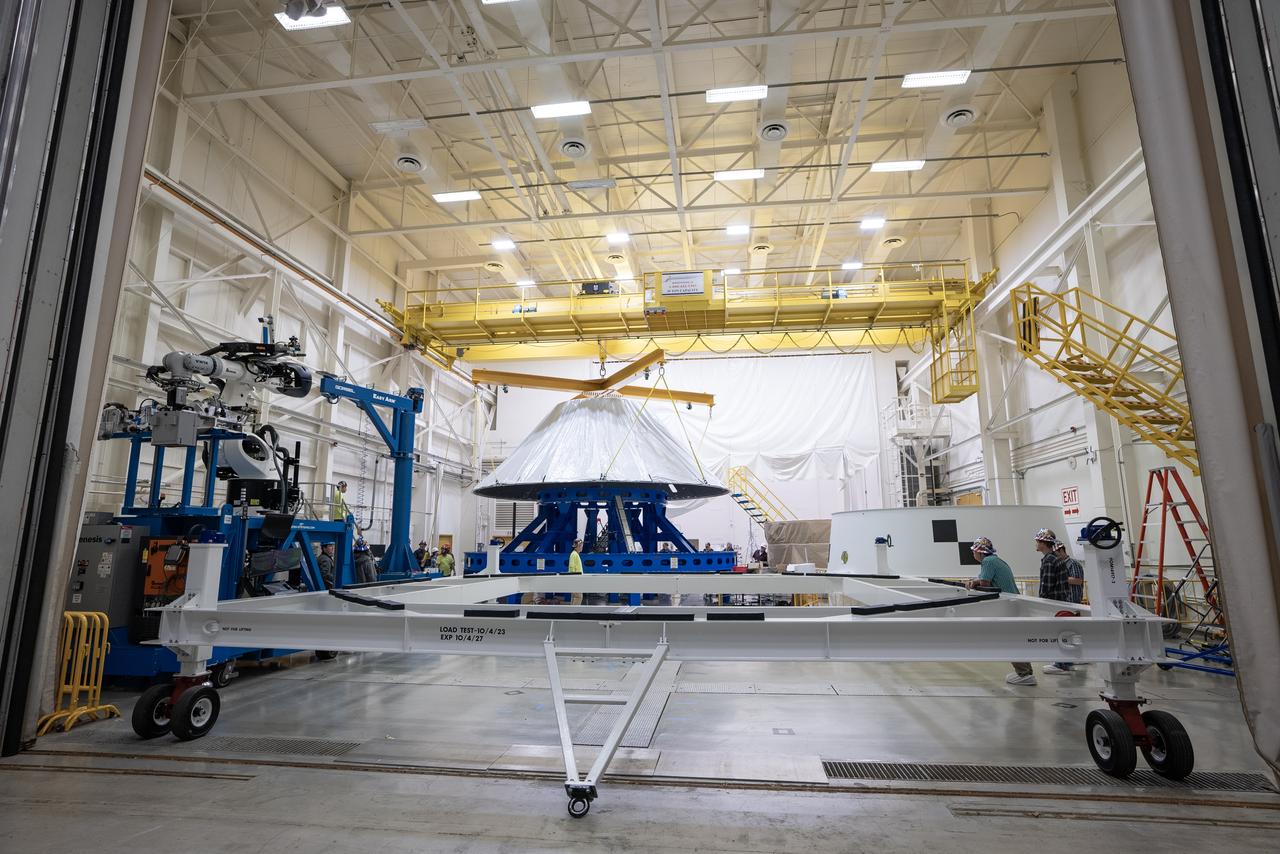
These photos and videos show how NASA manufactured and prepared to transport the payload adapter in February inside Building 4708 at NASA’s Marshall Space Flight Center in Huntsville, Alabama. Prior to moving the hardware for testing, teams installed the New Explorations Secondary Transport component, called the NEST, into the top of the engineering development unit. The NEST component will allow the hardware to hold a series of secondary payloads, or small satellites. The cone-shaped payload adapter is about 8.5 feet tall and features two metal rings and eight composite panels. The adapter, which will debut on NASA’s Artemis IV mission, is an evolution from the Orion stage adapter used in the Block 1 configuration of the rocket for the first three Artemis missions. It will be housed inside the universal stage adapter atop the rocket’s more powerful in-space stage, called the exploration upper stage. The payload adapter, like the launch vehicle stage adapter and the Orion stage adapter, is fully manufactured and tested at Marshall, which manages the SLS Program. NASA is working to land the first woman, first person of color, and its first international partner astronaut on the Moon under Artemis. SLS is part of NASA’s backbone for deep space exploration, along with the Orion spacecraft and Gateway in orbit around the Moon and commercial human landing systems, next-generational spacesuits, and rovers on the lunar surface. SLS is the only rocket that can send Orion, astronauts, and supplies to the Moon in a single launch.
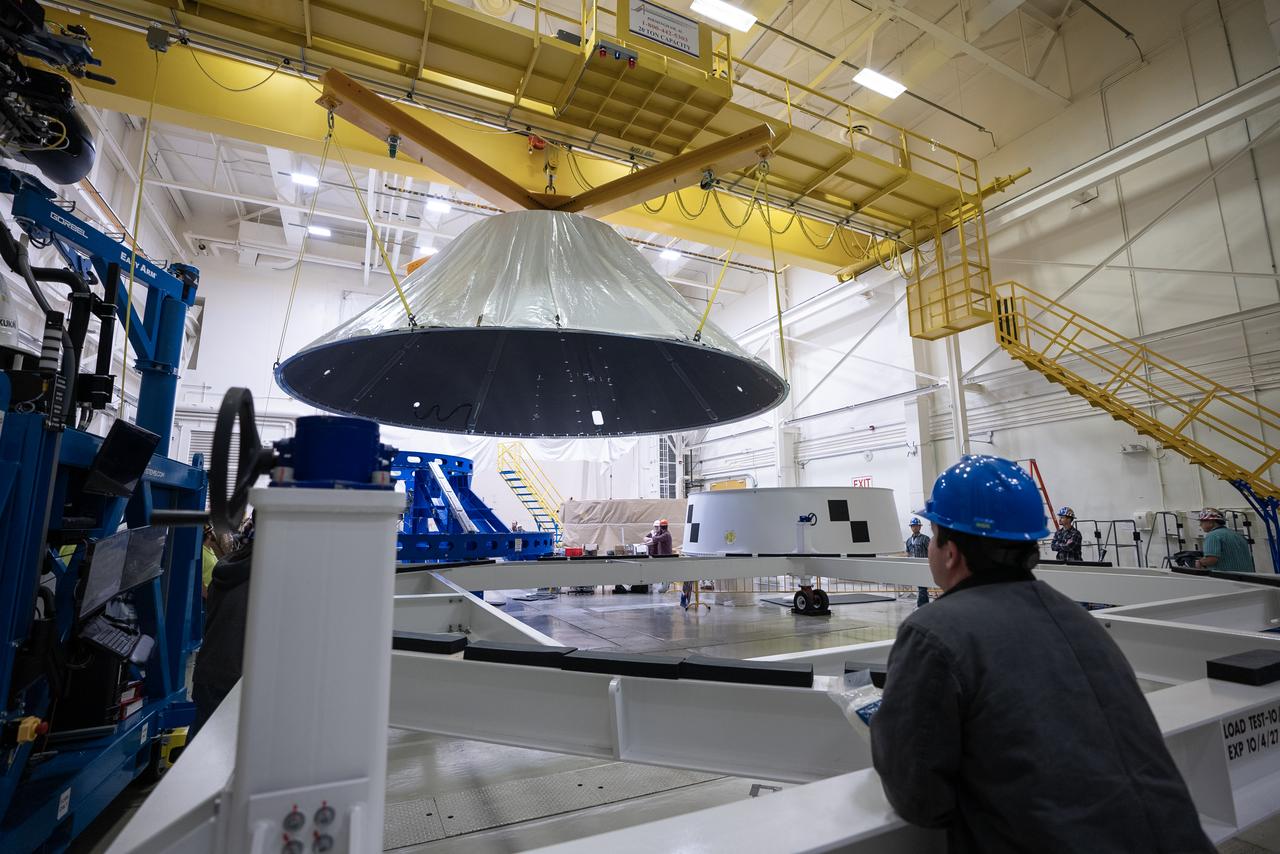
These photos and videos show how NASA manufactured and prepared to transport the payload adapter in February inside Building 4708 at NASA’s Marshall Space Flight Center in Huntsville, Alabama. Prior to moving the hardware for testing, teams installed the New Explorations Secondary Transport component, called the NEST, into the top of the engineering development unit. The NEST component will allow the hardware to hold a series of secondary payloads, or small satellites. The cone-shaped payload adapter is about 8.5 feet tall and features two metal rings and eight composite panels. The adapter, which will debut on NASA’s Artemis IV mission, is an evolution from the Orion stage adapter used in the Block 1 configuration of the rocket for the first three Artemis missions. It will be housed inside the universal stage adapter atop the rocket’s more powerful in-space stage, called the exploration upper stage. The payload adapter, like the launch vehicle stage adapter and the Orion stage adapter, is fully manufactured and tested at Marshall, which manages the SLS Program. NASA is working to land the first woman, first person of color, and its first international partner astronaut on the Moon under Artemis. SLS is part of NASA’s backbone for deep space exploration, along with the Orion spacecraft and Gateway in orbit around the Moon and commercial human landing systems, next-generational spacesuits, and rovers on the lunar surface. SLS is the only rocket that can send Orion, astronauts, and supplies to the Moon in a single launch.
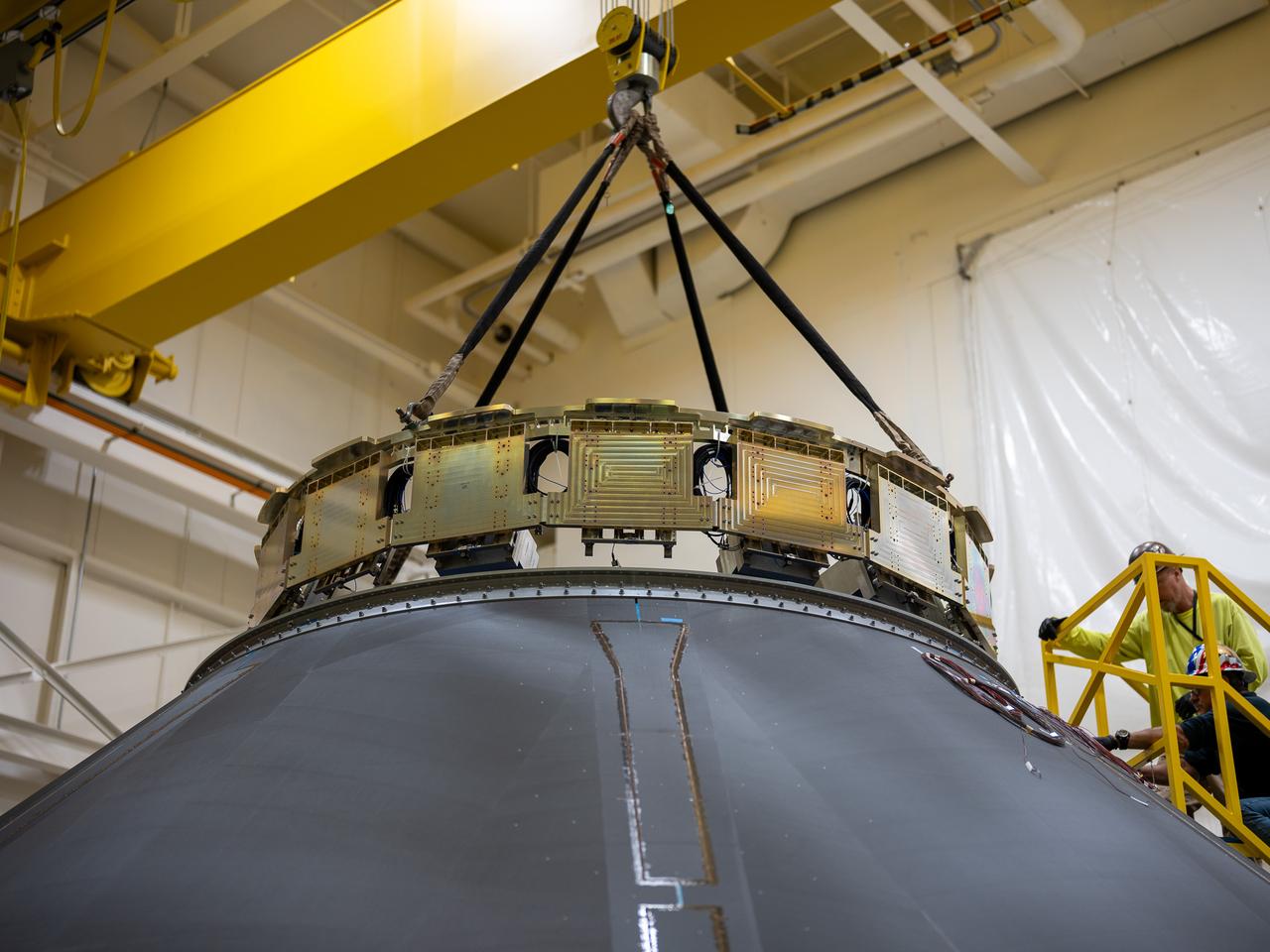
These photos and videos show how NASA manufactured and prepared to transport the payload adapter in February inside Building 4708 at NASA’s Marshall Space Flight Center in Huntsville, Alabama. Prior to moving the hardware for testing, teams installed the New Explorations Secondary Transport component, called the NEST, into the top of the engineering development unit. The NEST component will allow the hardware to hold a series of secondary payloads, or small satellites. The cone-shaped payload adapter is about 8.5 feet tall and features two metal rings and eight composite panels. The adapter, which will debut on NASA’s Artemis IV mission, is an evolution from the Orion stage adapter used in the Block 1 configuration of the rocket for the first three Artemis missions. It will be housed inside the universal stage adapter atop the rocket’s more powerful in-space stage, called the exploration upper stage. The payload adapter, like the launch vehicle stage adapter and the Orion stage adapter, is fully manufactured and tested at Marshall, which manages the SLS Program. NASA is working to land the first woman, first person of color, and its first international partner astronaut on the Moon under Artemis. SLS is part of NASA’s backbone for deep space exploration, along with the Orion spacecraft and Gateway in orbit around the Moon and commercial human landing systems, next-generational spacesuits, and rovers on the lunar surface. SLS is the only rocket that can send Orion, astronauts, and supplies to the Moon in a single launch.
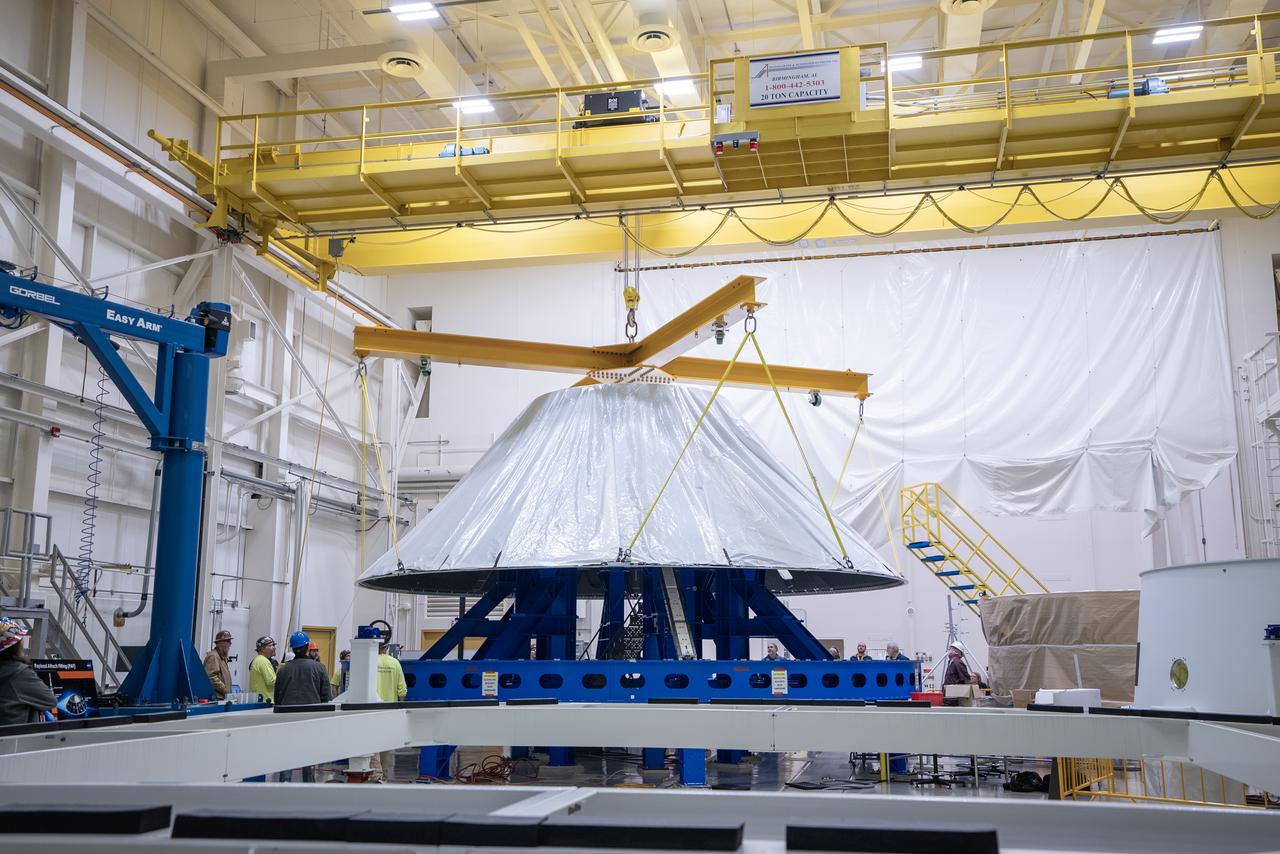
These photos and videos show how NASA manufactured and prepared to transport the payload adapter in February inside Building 4708 at NASA’s Marshall Space Flight Center in Huntsville, Alabama. Prior to moving the hardware for testing, teams installed the New Explorations Secondary Transport component, called the NEST, into the top of the engineering development unit. The NEST component will allow the hardware to hold a series of secondary payloads, or small satellites. The cone-shaped payload adapter is about 8.5 feet tall and features two metal rings and eight composite panels. The adapter, which will debut on NASA’s Artemis IV mission, is an evolution from the Orion stage adapter used in the Block 1 configuration of the rocket for the first three Artemis missions. It will be housed inside the universal stage adapter atop the rocket’s more powerful in-space stage, called the exploration upper stage. The payload adapter, like the launch vehicle stage adapter and the Orion stage adapter, is fully manufactured and tested at Marshall, which manages the SLS Program. NASA is working to land the first woman, first person of color, and its first international partner astronaut on the Moon under Artemis. SLS is part of NASA’s backbone for deep space exploration, along with the Orion spacecraft and Gateway in orbit around the Moon and commercial human landing systems, next-generational spacesuits, and rovers on the lunar surface. SLS is the only rocket that can send Orion, astronauts, and supplies to the Moon in a single launch.
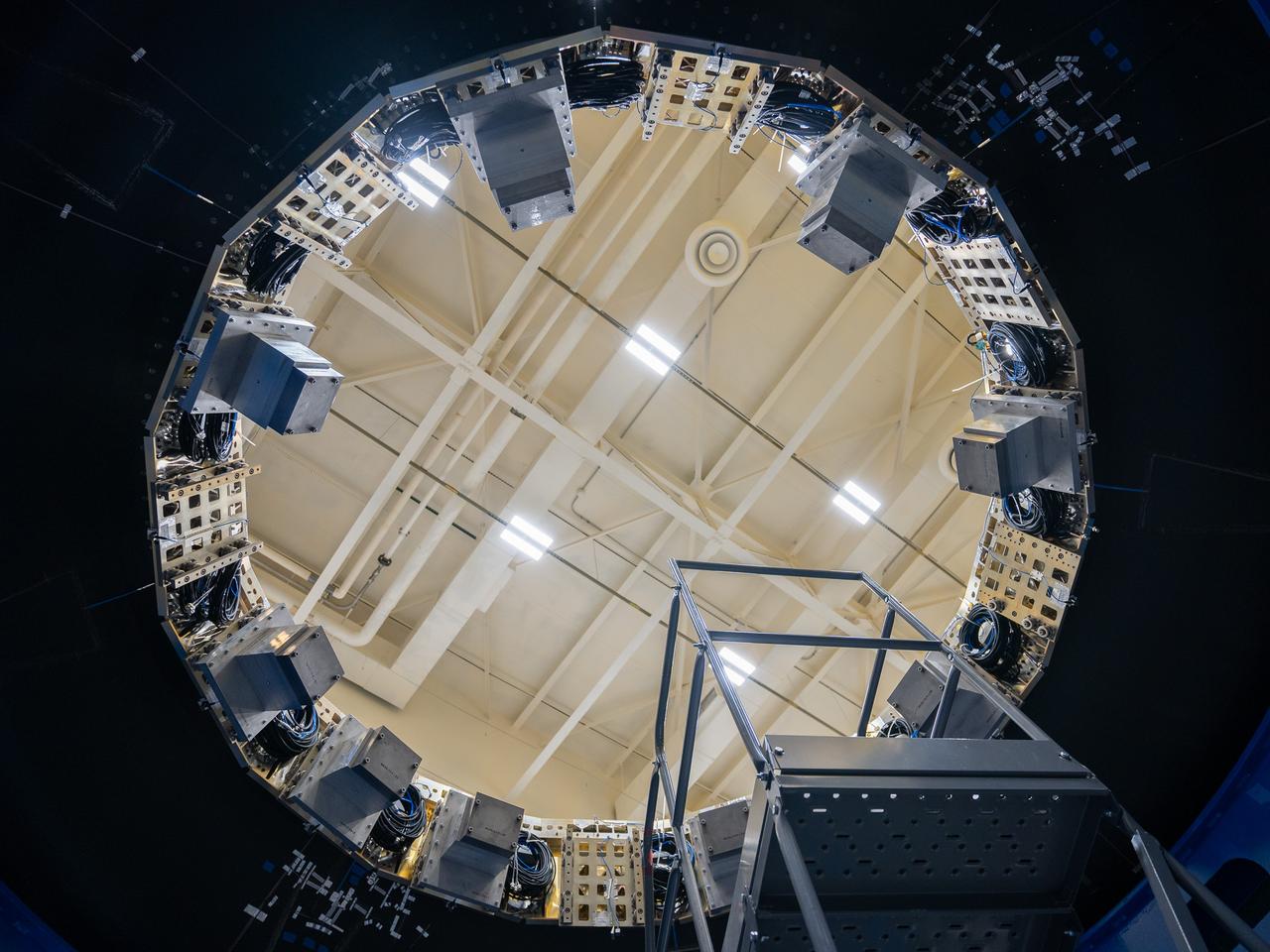
These photos and videos show how NASA manufactured and prepared to transport the payload adapter in February inside Building 4708 at NASA’s Marshall Space Flight Center in Huntsville, Alabama. Prior to moving the hardware for testing, teams installed the New Explorations Secondary Transport component, called the NEST, into the top of the engineering development unit. The NEST component will allow the hardware to hold a series of secondary payloads, or small satellites. The cone-shaped payload adapter is about 8.5 feet tall and features two metal rings and eight composite panels. The adapter, which will debut on NASA’s Artemis IV mission, is an evolution from the Orion stage adapter used in the Block 1 configuration of the rocket for the first three Artemis missions. It will be housed inside the universal stage adapter atop the rocket’s more powerful in-space stage, called the exploration upper stage. The payload adapter, like the launch vehicle stage adapter and the Orion stage adapter, is fully manufactured and tested at Marshall, which manages the SLS Program. NASA is working to land the first woman, first person of color, and its first international partner astronaut on the Moon under Artemis. SLS is part of NASA’s backbone for deep space exploration, along with the Orion spacecraft and Gateway in orbit around the Moon and commercial human landing systems, next-generational spacesuits, and rovers on the lunar surface. SLS is the only rocket that can send Orion, astronauts, and supplies to the Moon in a single launch.
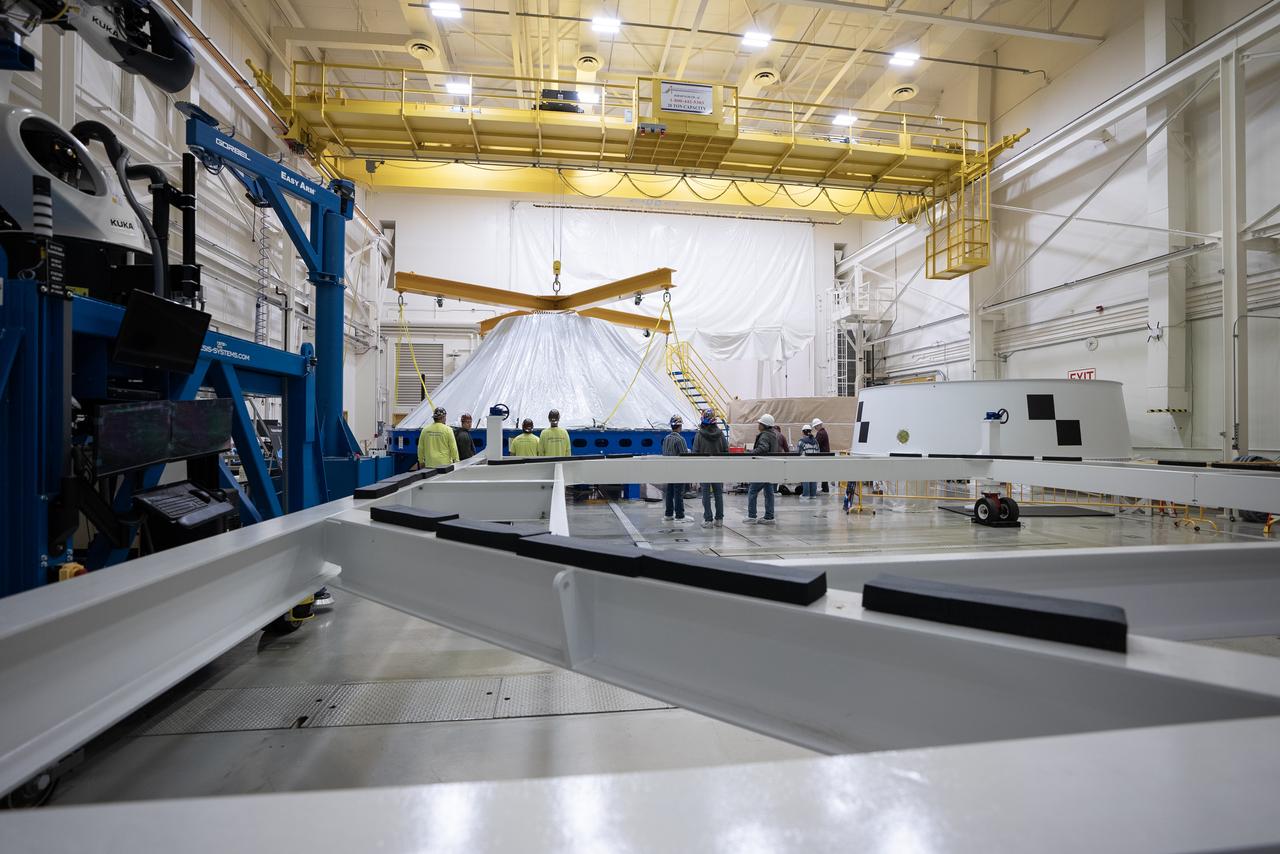
These photos and videos show how NASA manufactured and prepared to transport the payload adapter in February inside Building 4708 at NASA’s Marshall Space Flight Center in Huntsville, Alabama. Prior to moving the hardware for testing, teams installed the New Explorations Secondary Transport component, called the NEST, into the top of the engineering development unit. The NEST component will allow the hardware to hold a series of secondary payloads, or small satellites. The cone-shaped payload adapter is about 8.5 feet tall and features two metal rings and eight composite panels. The adapter, which will debut on NASA’s Artemis IV mission, is an evolution from the Orion stage adapter used in the Block 1 configuration of the rocket for the first three Artemis missions. It will be housed inside the universal stage adapter atop the rocket’s more powerful in-space stage, called the exploration upper stage. The payload adapter, like the launch vehicle stage adapter and the Orion stage adapter, is fully manufactured and tested at Marshall, which manages the SLS Program. NASA is working to land the first woman, first person of color, and its first international partner astronaut on the Moon under Artemis. SLS is part of NASA’s backbone for deep space exploration, along with the Orion spacecraft and Gateway in orbit around the Moon and commercial human landing systems, next-generational spacesuits, and rovers on the lunar surface. SLS is the only rocket that can send Orion, astronauts, and supplies to the Moon in a single launch.
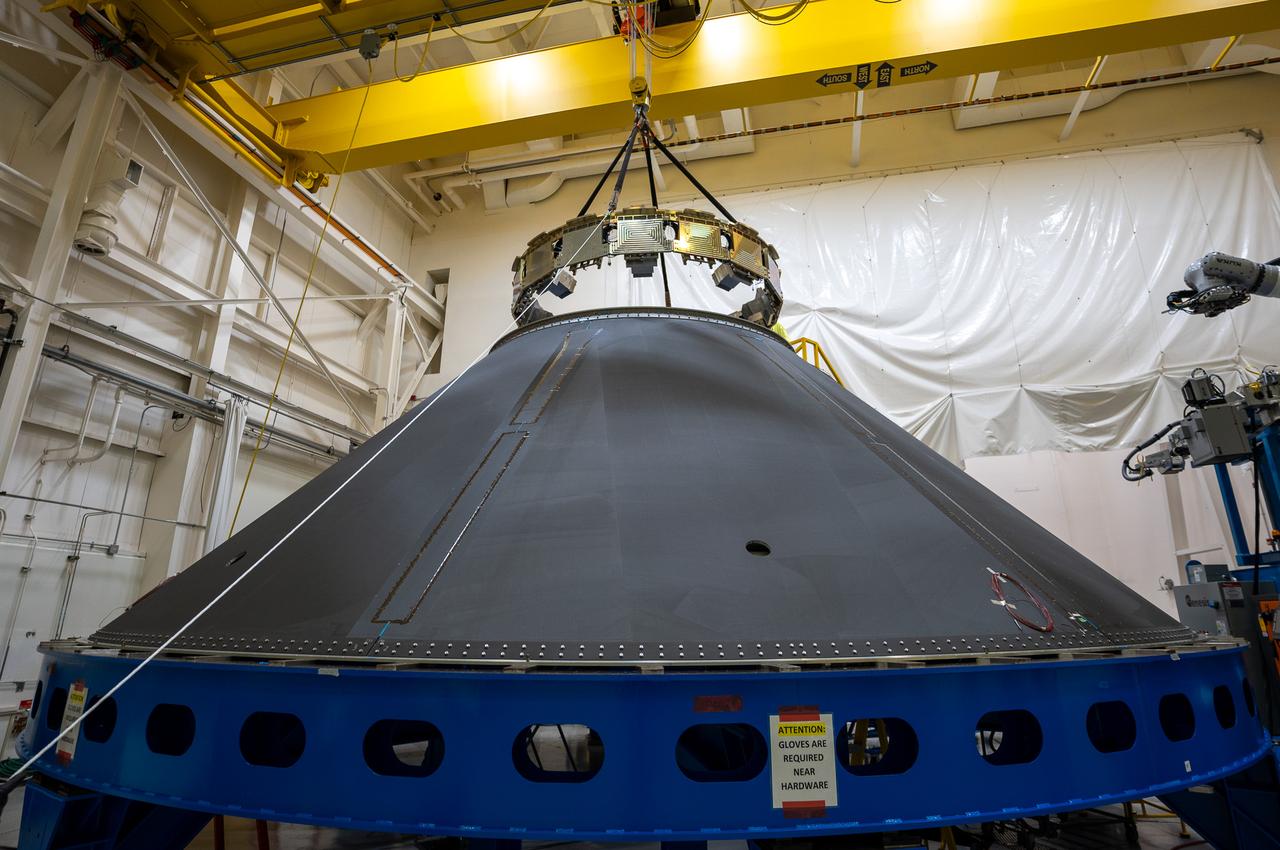
These photos and videos show how NASA manufactured and prepared to transport the payload adapter in February inside Building 4708 at NASA’s Marshall Space Flight Center in Huntsville, Alabama. Prior to moving the hardware for testing, teams installed the New Explorations Secondary Transport component, called the NEST, into the top of the engineering development unit. The NEST component will allow the hardware to hold a series of secondary payloads, or small satellites. The cone-shaped payload adapter is about 8.5 feet tall and features two metal rings and eight composite panels. The adapter, which will debut on NASA’s Artemis IV mission, is an evolution from the Orion stage adapter used in the Block 1 configuration of the rocket for the first three Artemis missions. It will be housed inside the universal stage adapter atop the rocket’s more powerful in-space stage, called the exploration upper stage. The payload adapter, like the launch vehicle stage adapter and the Orion stage adapter, is fully manufactured and tested at Marshall, which manages the SLS Program. NASA is working to land the first woman, first person of color, and its first international partner astronaut on the Moon under Artemis. SLS is part of NASA’s backbone for deep space exploration, along with the Orion spacecraft and Gateway in orbit around the Moon and commercial human landing systems, next-generational spacesuits, and rovers on the lunar surface. SLS is the only rocket that can send Orion, astronauts, and supplies to the Moon in a single launch.
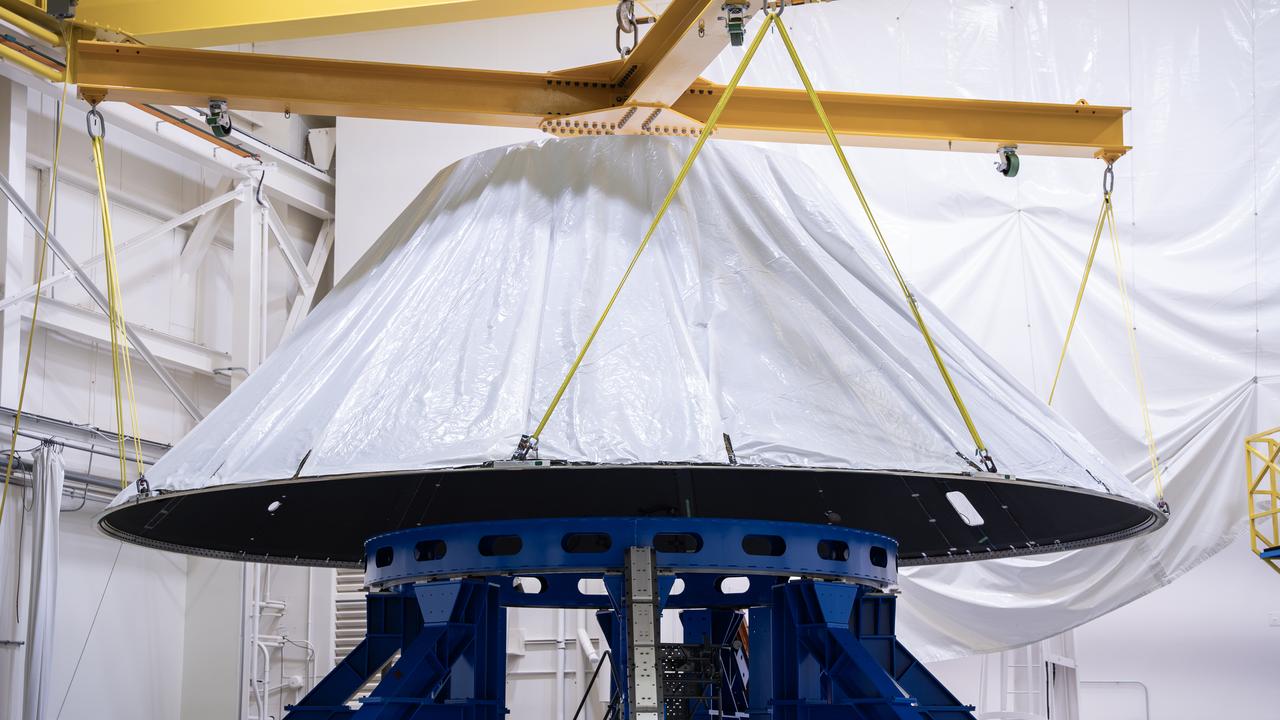
These photos and videos show how NASA manufactured and prepared to transport the payload adapter in February inside Building 4708 at NASA’s Marshall Space Flight Center in Huntsville, Alabama. Prior to moving the hardware for testing, teams installed the New Explorations Secondary Transport component, called the NEST, into the top of the engineering development unit. The NEST component will allow the hardware to hold a series of secondary payloads, or small satellites. The cone-shaped payload adapter is about 8.5 feet tall and features two metal rings and eight composite panels. The adapter, which will debut on NASA’s Artemis IV mission, is an evolution from the Orion stage adapter used in the Block 1 configuration of the rocket for the first three Artemis missions. It will be housed inside the universal stage adapter atop the rocket’s more powerful in-space stage, called the exploration upper stage. The payload adapter, like the launch vehicle stage adapter and the Orion stage adapter, is fully manufactured and tested at Marshall, which manages the SLS Program. NASA is working to land the first woman, first person of color, and its first international partner astronaut on the Moon under Artemis. SLS is part of NASA’s backbone for deep space exploration, along with the Orion spacecraft and Gateway in orbit around the Moon and commercial human landing systems, next-generational spacesuits, and rovers on the lunar surface. SLS is the only rocket that can send Orion, astronauts, and supplies to the Moon in a single launch.
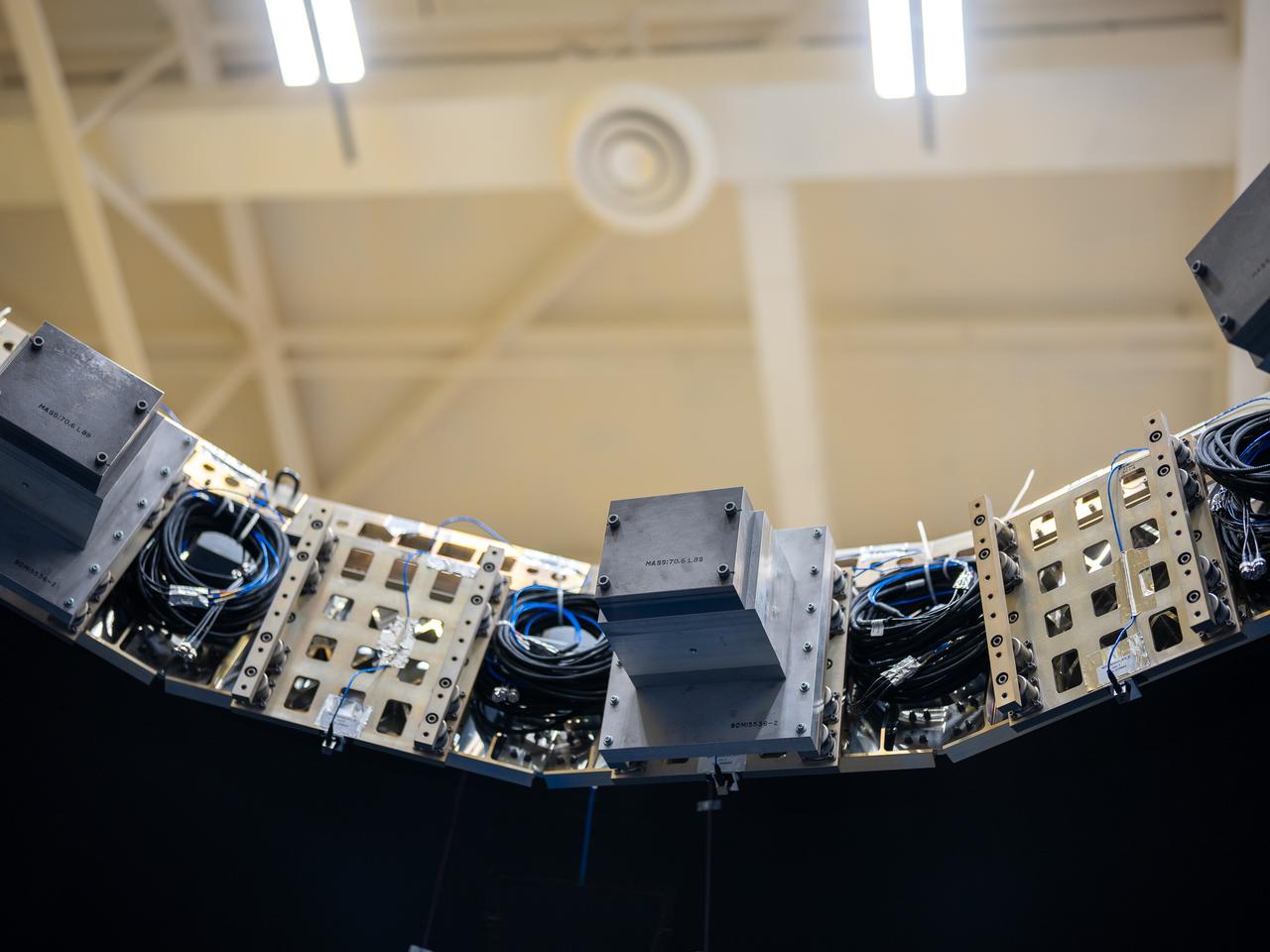
These photos and videos show how NASA manufactured and prepared to transport the payload adapter in February inside Building 4708 at NASA’s Marshall Space Flight Center in Huntsville, Alabama. Prior to moving the hardware for testing, teams installed the New Explorations Secondary Transport component, called the NEST, into the top of the engineering development unit. The NEST component will allow the hardware to hold a series of secondary payloads, or small satellites. The cone-shaped payload adapter is about 8.5 feet tall and features two metal rings and eight composite panels. The adapter, which will debut on NASA’s Artemis IV mission, is an evolution from the Orion stage adapter used in the Block 1 configuration of the rocket for the first three Artemis missions. It will be housed inside the universal stage adapter atop the rocket’s more powerful in-space stage, called the exploration upper stage. The payload adapter, like the launch vehicle stage adapter and the Orion stage adapter, is fully manufactured and tested at Marshall, which manages the SLS Program. NASA is working to land the first woman, first person of color, and its first international partner astronaut on the Moon under Artemis. SLS is part of NASA’s backbone for deep space exploration, along with the Orion spacecraft and Gateway in orbit around the Moon and commercial human landing systems, next-generational spacesuits, and rovers on the lunar surface. SLS is the only rocket that can send Orion, astronauts, and supplies to the Moon in a single launch.
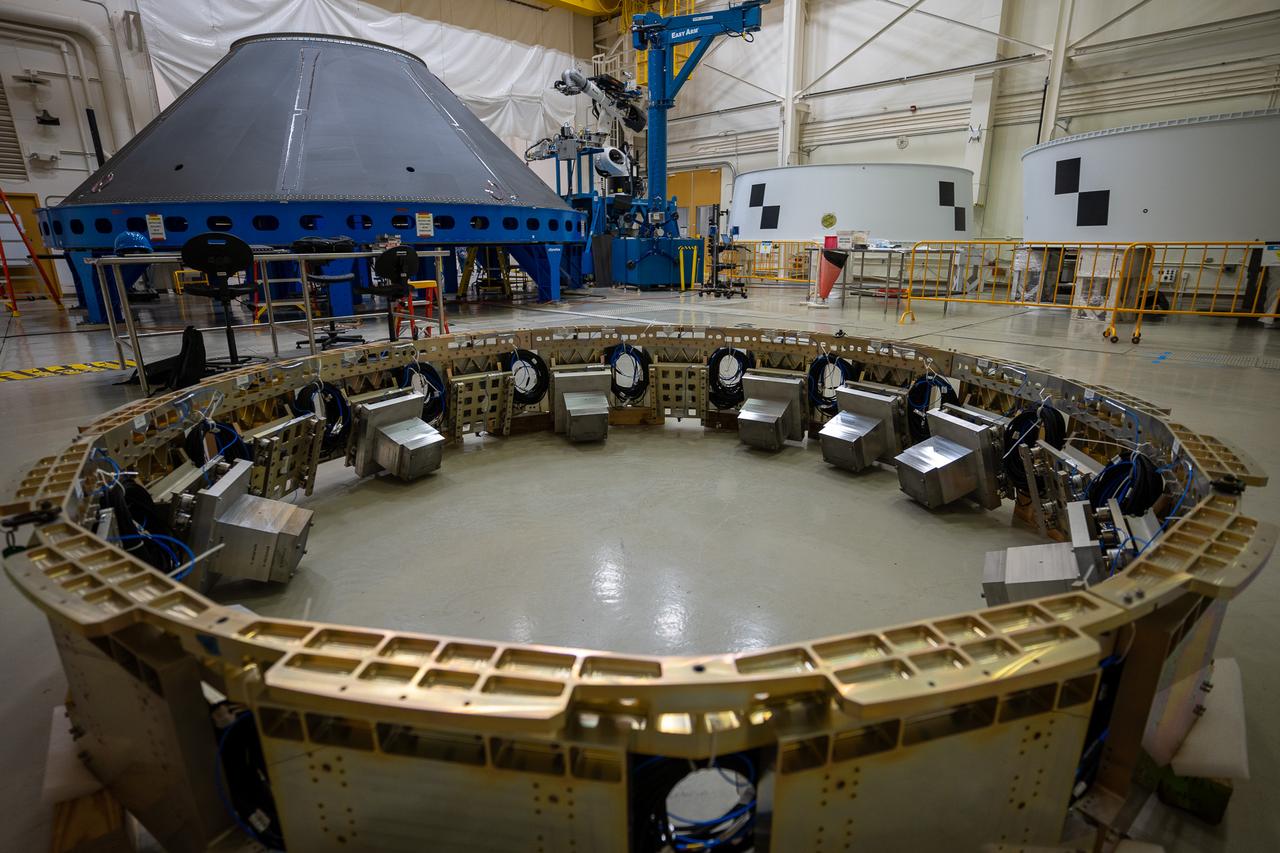
These photos and videos show how NASA manufactured and prepared to transport the payload adapter in February inside Building 4708 at NASA’s Marshall Space Flight Center in Huntsville, Alabama. Prior to moving the hardware for testing, teams installed the New Explorations Secondary Transport component, called the NEST, into the top of the engineering development unit. The NEST component will allow the hardware to hold a series of secondary payloads, or small satellites. The cone-shaped payload adapter is about 8.5 feet tall and features two metal rings and eight composite panels. The adapter, which will debut on NASA’s Artemis IV mission, is an evolution from the Orion stage adapter used in the Block 1 configuration of the rocket for the first three Artemis missions. It will be housed inside the universal stage adapter atop the rocket’s more powerful in-space stage, called the exploration upper stage. The payload adapter, like the launch vehicle stage adapter and the Orion stage adapter, is fully manufactured and tested at Marshall, which manages the SLS Program. NASA is working to land the first woman, first person of color, and its first international partner astronaut on the Moon under Artemis. SLS is part of NASA’s backbone for deep space exploration, along with the Orion spacecraft and Gateway in orbit around the Moon and commercial human landing systems, next-generational spacesuits, and rovers on the lunar surface. SLS is the only rocket that can send Orion, astronauts, and supplies to the Moon in a single launch.
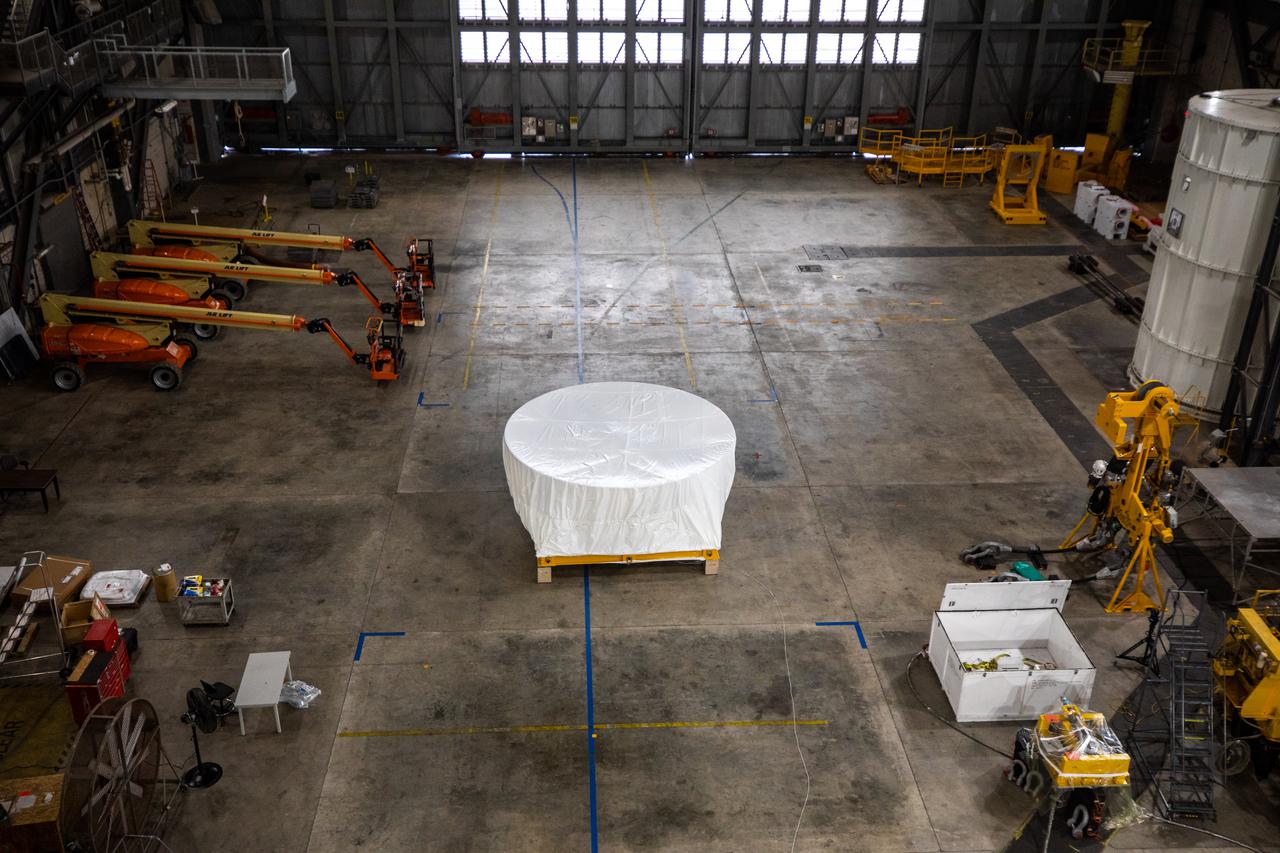
Under a protective cover, the Orion Stage Adapter (OSA) arrives in High Bay 4 of the Vehicle Assembly Building on Oct. 4, 2021, at NASA's Kennedy Space Center in Florida. Teams will lift the ring-shaped OSA, filled with shoebox-sized CubeSats, and connect it to the Interim Cryogenic Propulsion Stage (ICPS). The Orion spacecraft will be secured on top of the Space Launch System (SLS) rocket to complete the stack ahead of the Artemis I launch. This mission will be the first integrated flight test of the SLS and Orion spacecraft. In later missions, NASA will land the first woman and the first person of color on the surface of the Moon, paving the way for a long-term lunar presence and serving as a steppingstone on the way to Mars.
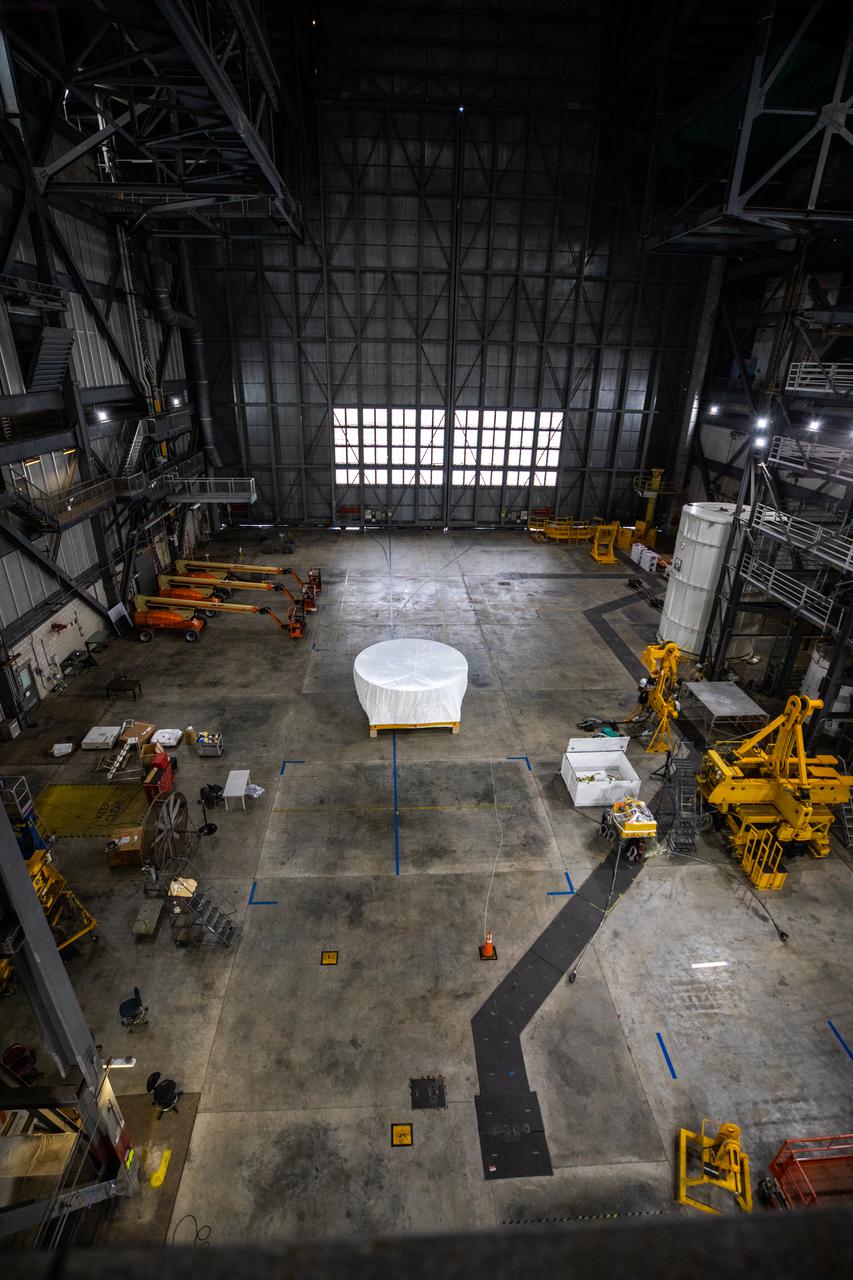
Under a protective cover, the Orion Stage Adapter (OSA) arrives in High Bay 4 of the Vehicle Assembly Building on Oct. 4, 2021, at NASA's Kennedy Space Center in Florida. Teams will lift the ring-shaped OSA, filled with shoebox-sized CubeSats, and connect it to the Interim Cryogenic Propulsion Stage (ICPS). The Orion spacecraft will be secured on top of the Space Launch System (SLS) rocket to complete the stack ahead of the Artemis I launch. This mission will be the first integrated flight test of the SLS and Orion spacecraft. In later missions, NASA will land the first woman and the first person of color on the surface of the Moon, paving the way for a long-term lunar presence and serving as a steppingstone on the way to Mars.
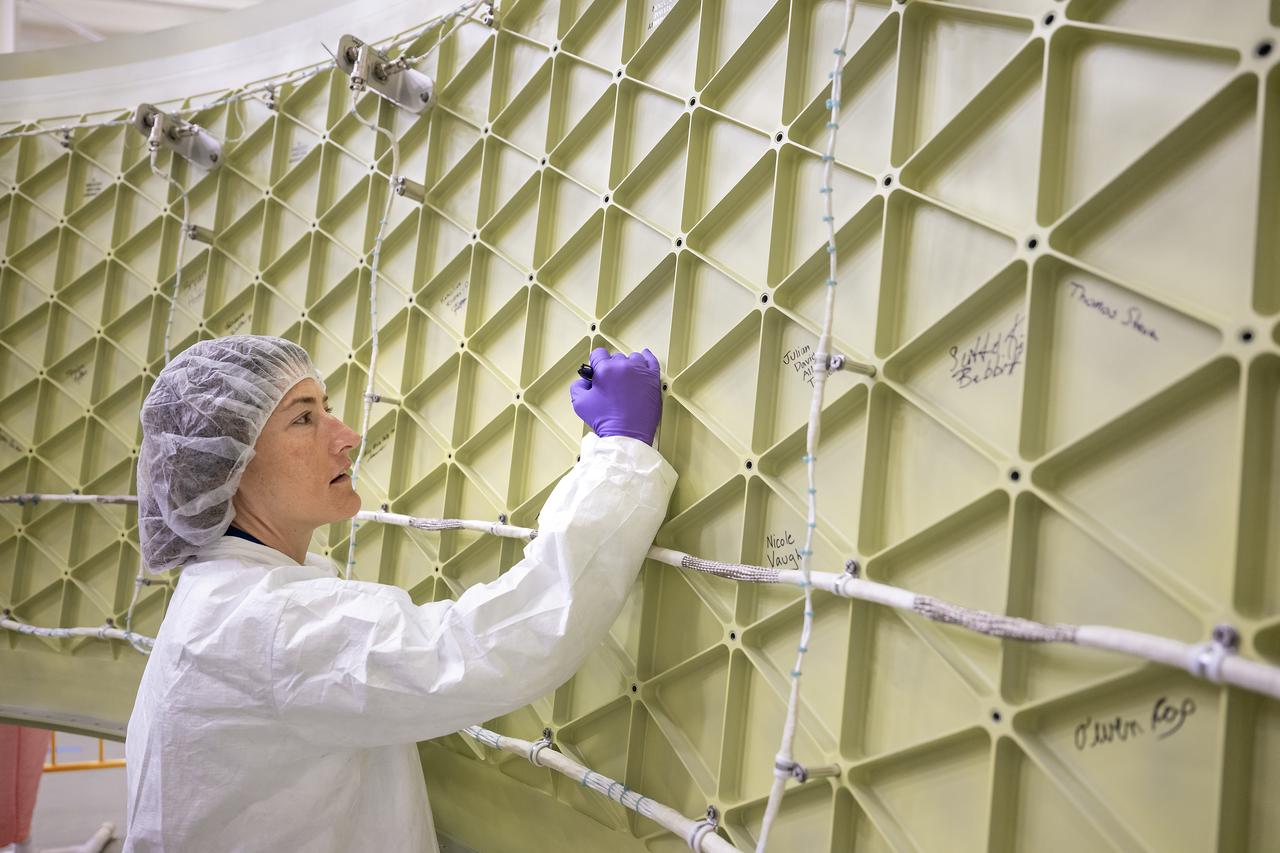
These photos show highlights from Artemis II NASA astronauts Victor Glover, Reid Wiseman, and Christina Koch of NASA and CSA (Canadian Space Agency) astronaut Jeremy Hansen visit to NASA’s Marshall Space Flight Center in Huntsville, Alabama, Nov. 27. The crew met and spoke to employees and viewed facilities for SLS (Space Launch System) rocket. All four astronauts signed the Orion stage adapter (OSA), a small ring structure that connects SLS to NASA’s Orion spacecraft, that will be used for Artemis II. Koch and Wiseman also visited the Systems Integration Lab, where SLS flight software testing is conducted. The four astronauts will launch atop SLS inside Orion to venture around the Moon on Artemis II, the first crewed flight for Artemis.
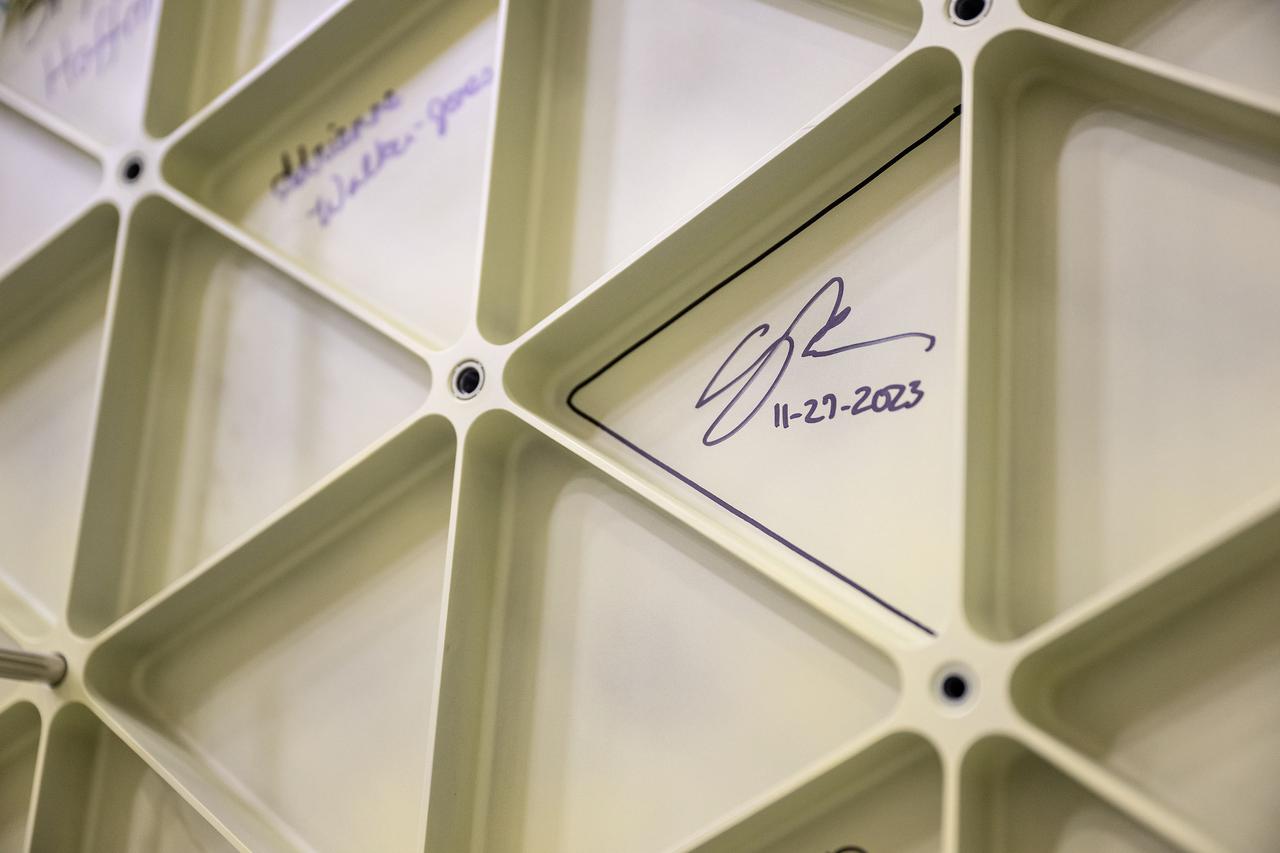
These photos show highlights from Artemis II NASA astronauts Victor Glover, Reid Wiseman, and Christina Koch of NASA and CSA (Canadian Space Agency) astronaut Jeremy Hansen visit to NASA’s Marshall Space Flight Center in Huntsville, Alabama, Nov. 27. The crew met and spoke to employees and viewed facilities for SLS (Space Launch System) rocket. All four astronauts signed the Orion stage adapter (OSA), a small ring structure that connects SLS to NASA’s Orion spacecraft, that will be used for Artemis II. Koch and Wiseman also visited the Systems Integration Lab, where SLS flight software testing is conducted. The four astronauts will launch atop SLS inside Orion to venture around the Moon on Artemis II, the first crewed flight for Artemis.
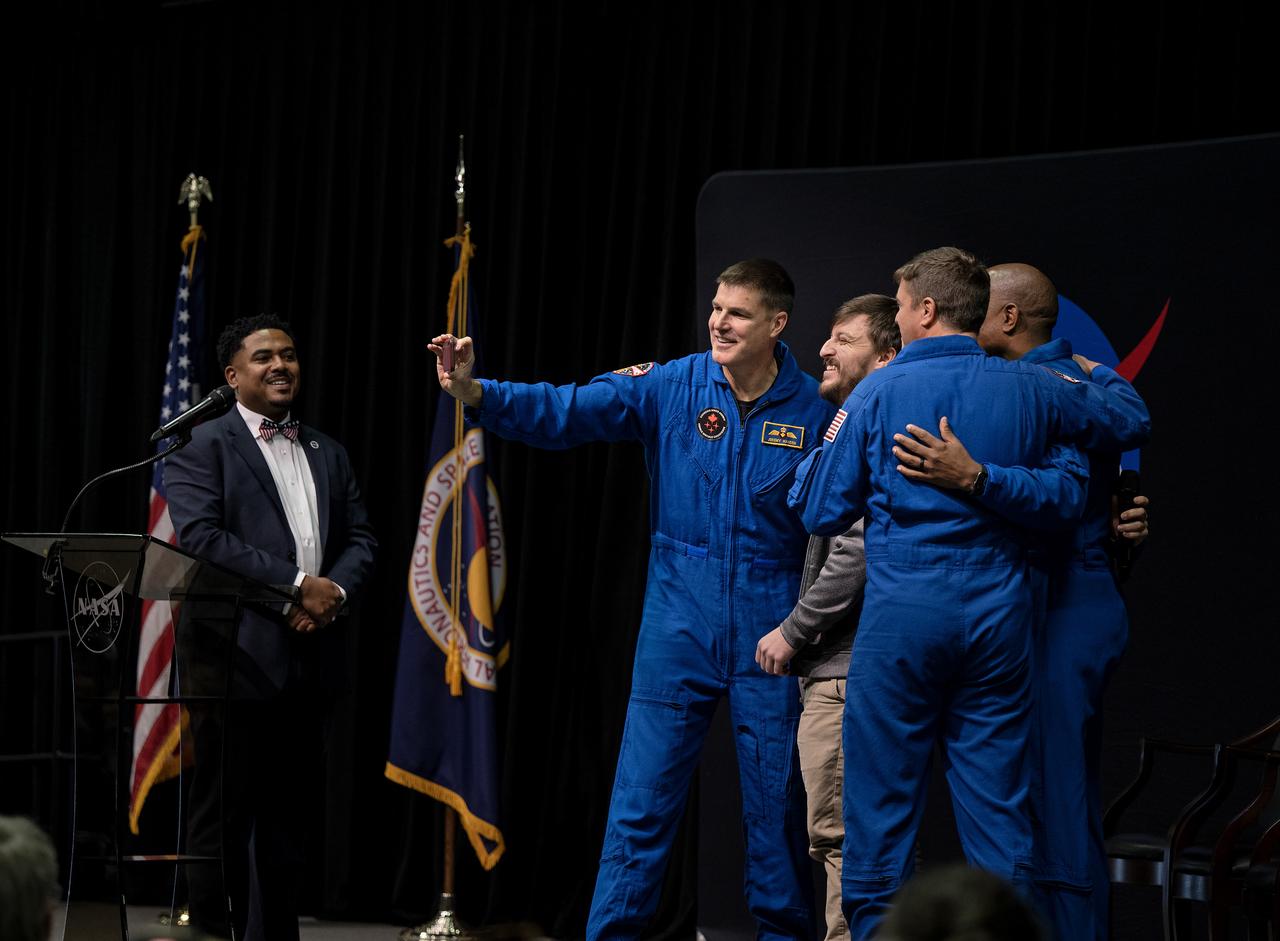
These photos show highlights from Artemis II NASA astronauts Victor Glover, Reid Wiseman, and Christina Koch of NASA and CSA (Canadian Space Agency) astronaut Jeremy Hansen visit to NASA’s Marshall Space Flight Center in Huntsville, Alabama, Nov. 27. The crew met and spoke to employees and viewed facilities for SLS (Space Launch System) rocket. All four astronauts signed the Orion stage adapter (OSA), a small ring structure that connects SLS to NASA’s Orion spacecraft, that will be used for Artemis II. Koch and Wiseman also visited the Systems Integration Lab, where SLS flight software testing is conducted. The four astronauts will launch atop SLS inside Orion to venture around the Moon on Artemis II, the first crewed flight for Artemis.
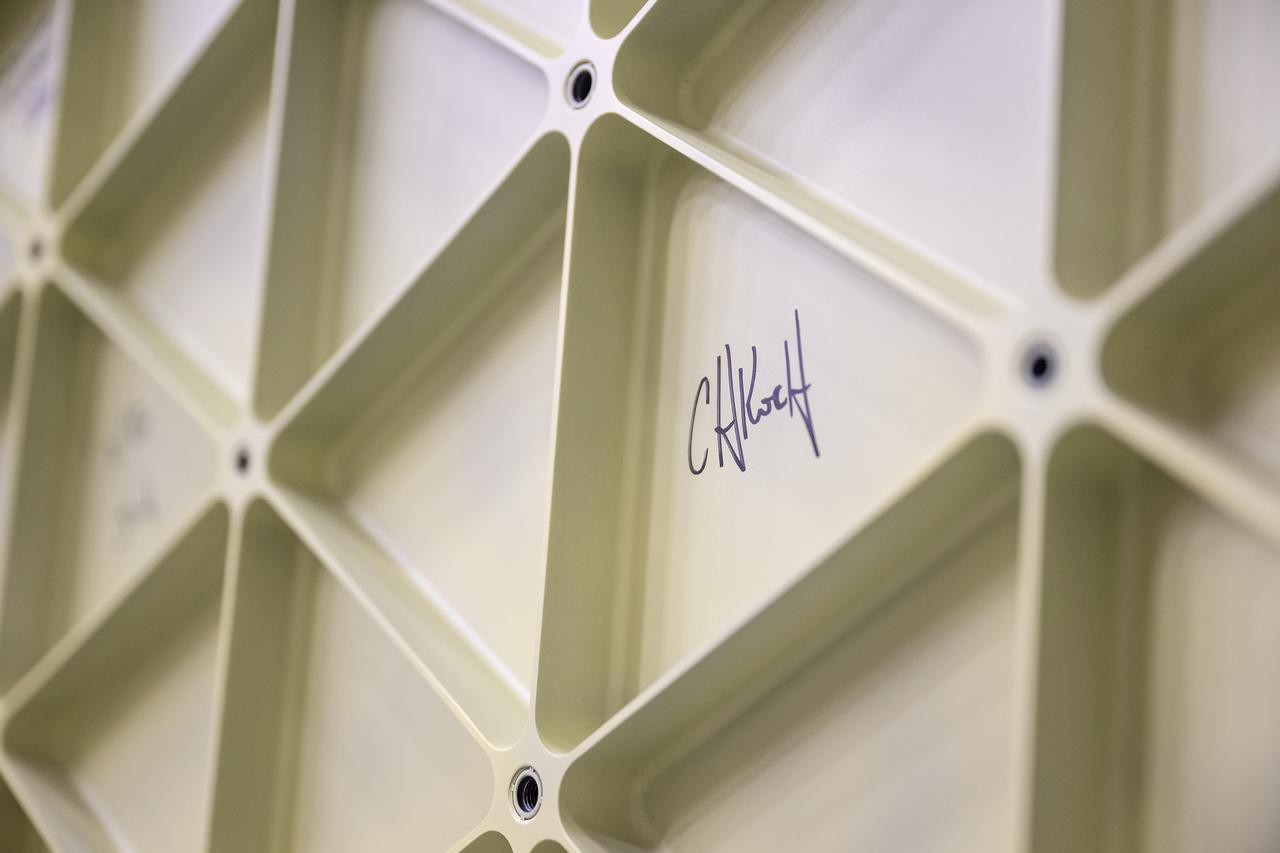
These photos show highlights from Artemis II NASA astronauts Victor Glover, Reid Wiseman, and Christina Koch of NASA and CSA (Canadian Space Agency) astronaut Jeremy Hansen visit to NASA’s Marshall Space Flight Center in Huntsville, Alabama, Nov. 27. The crew met and spoke to employees and viewed facilities for SLS (Space Launch System) rocket. All four astronauts signed the Orion stage adapter (OSA), a small ring structure that connects SLS to NASA’s Orion spacecraft, that will be used for Artemis II. Koch and Wiseman also visited the Systems Integration Lab, where SLS flight software testing is conducted. The four astronauts will launch atop SLS inside Orion to venture around the Moon on Artemis II, the first crewed flight for Artemis.
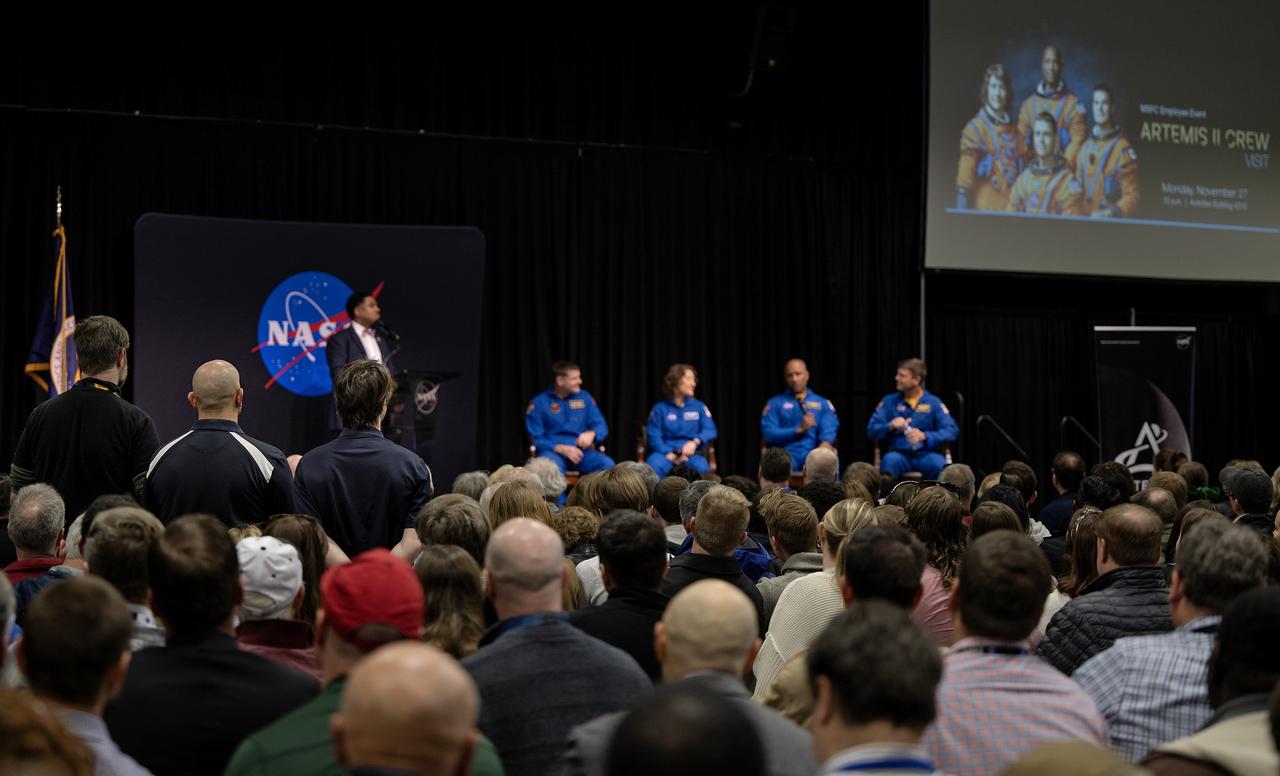
These photos show highlights from Artemis II NASA astronauts Victor Glover, Reid Wiseman, and Christina Koch of NASA and CSA (Canadian Space Agency) astronaut Jeremy Hansen visit to NASA’s Marshall Space Flight Center in Huntsville, Alabama, Nov. 27. The crew met and spoke to employees and viewed facilities for SLS (Space Launch System) rocket. All four astronauts signed the Orion stage adapter (OSA), a small ring structure that connects SLS to NASA’s Orion spacecraft, that will be used for Artemis II. Koch and Wiseman also visited the Systems Integration Lab, where SLS flight software testing is conducted. The four astronauts will launch atop SLS inside Orion to venture around the Moon on Artemis II, the first crewed flight for Artemis.
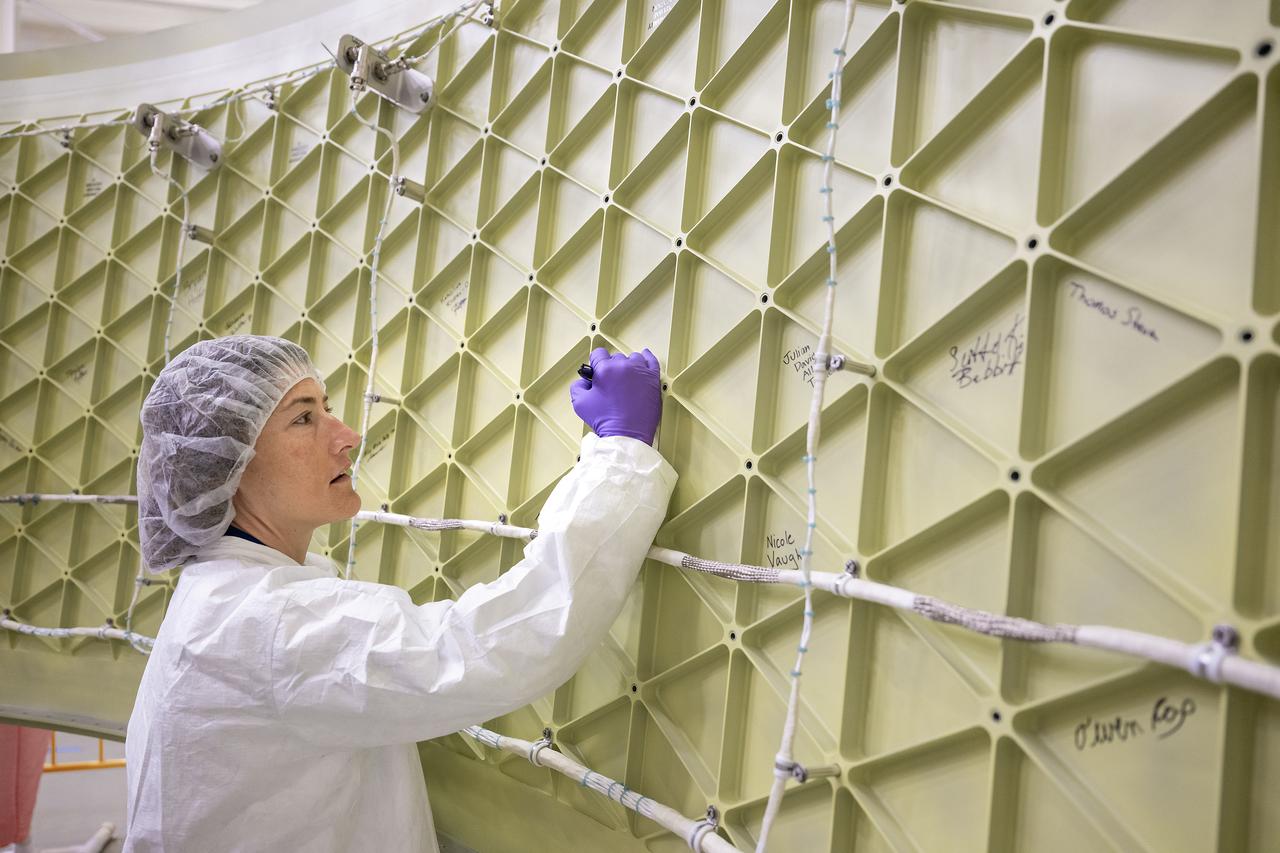
These photos show highlights from Artemis II NASA astronauts Victor Glover, Reid Wiseman, and Christina Koch of NASA and CSA (Canadian Space Agency) astronaut Jeremy Hansen visit to NASA’s Marshall Space Flight Center in Huntsville, Alabama, Nov. 27. The crew met and spoke to employees and viewed facilities for SLS (Space Launch System) rocket. All four astronauts signed the Orion stage adapter (OSA), a small ring structure that connects SLS to NASA’s Orion spacecraft, that will be used for Artemis II. Koch and Wiseman also visited the Systems Integration Lab, where SLS flight software testing is conducted. The four astronauts will launch atop SLS inside Orion to venture around the Moon on Artemis II, the first crewed flight for Artemis.
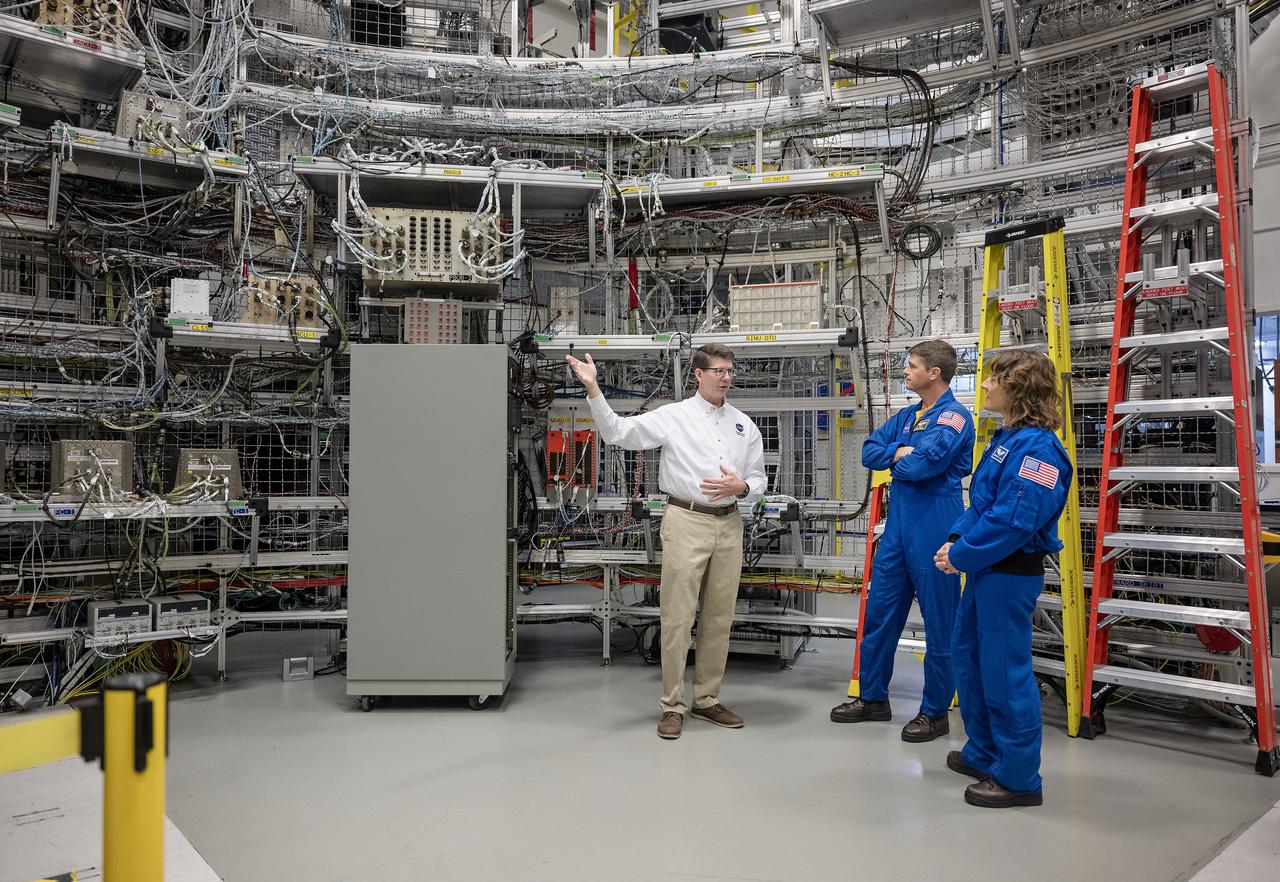
These photos show highlights from Artemis II NASA astronauts Victor Glover, Reid Wiseman, and Christina Koch of NASA and CSA (Canadian Space Agency) astronaut Jeremy Hansen visit to NASA’s Marshall Space Flight Center in Huntsville, Alabama, Nov. 27. The crew met and spoke to employees and viewed facilities for SLS (Space Launch System) rocket. All four astronauts signed the Orion stage adapter (OSA), a small ring structure that connects SLS to NASA’s Orion spacecraft, that will be used for Artemis II. Koch and Wiseman also visited the Systems Integration Lab, where SLS flight software testing is conducted. The four astronauts will launch atop SLS inside Orion to venture around the Moon on Artemis II, the first crewed flight for Artemis.
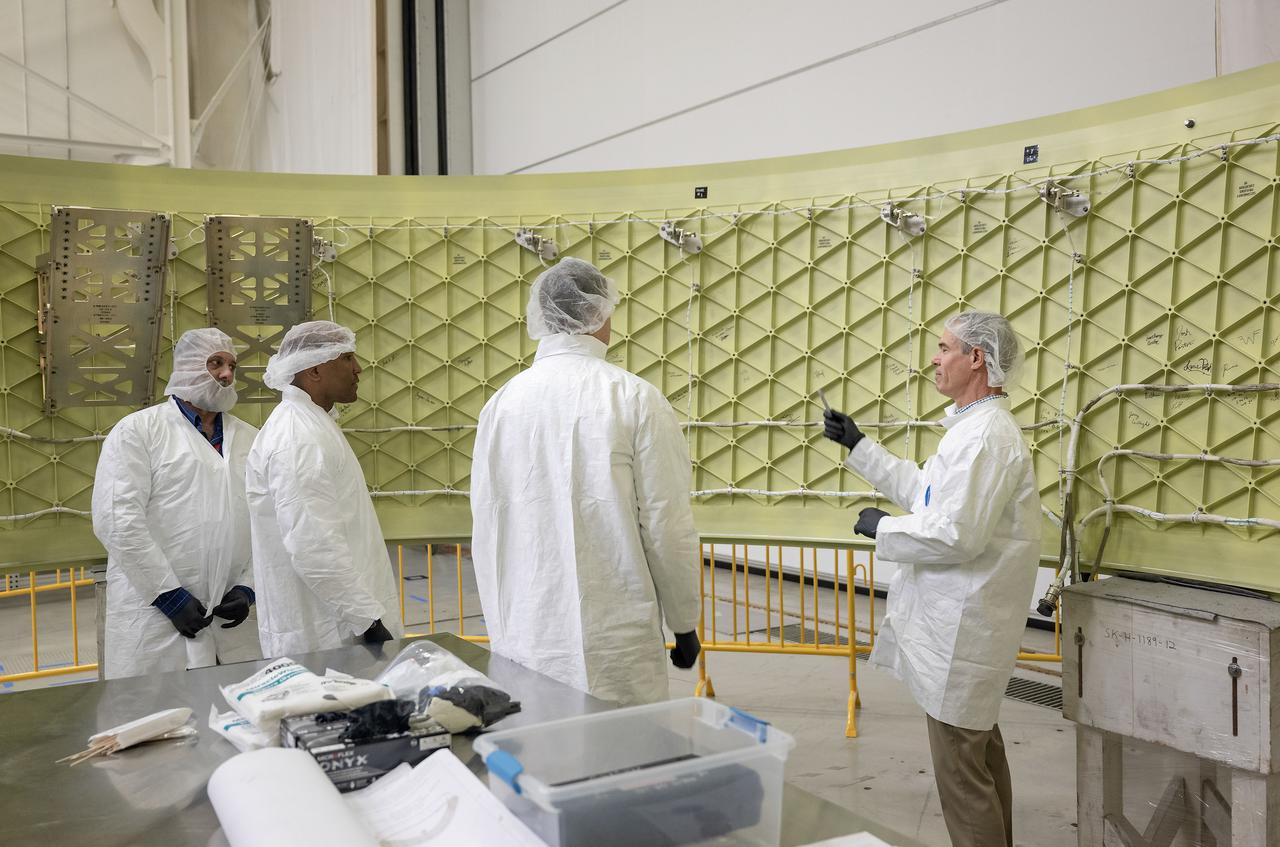
These photos show highlights from Artemis II NASA astronauts Victor Glover, Reid Wiseman, and Christina Koch of NASA and CSA (Canadian Space Agency) astronaut Jeremy Hansen visit to NASA’s Marshall Space Flight Center in Huntsville, Alabama, Nov. 27. The crew met and spoke to employees and viewed facilities for SLS (Space Launch System) rocket. All four astronauts signed the Orion stage adapter (OSA), a small ring structure that connects SLS to NASA’s Orion spacecraft, that will be used for Artemis II. Koch and Wiseman also visited the Systems Integration Lab, where SLS flight software testing is conducted. The four astronauts will launch atop SLS inside Orion to venture around the Moon on Artemis II, the first crewed flight for Artemis.
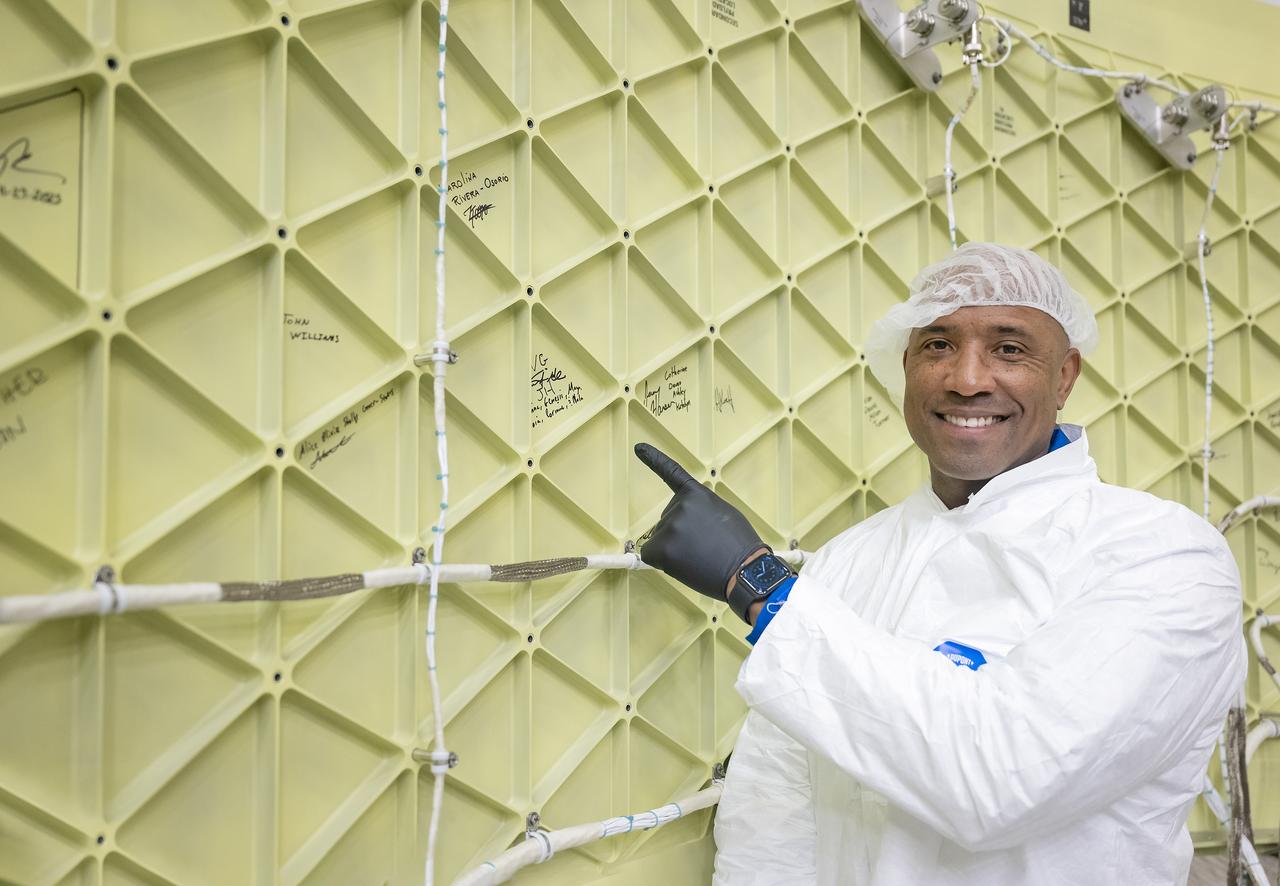
These photos show highlights from Artemis II NASA astronauts Victor Glover, Reid Wiseman, and Christina Koch of NASA and CSA (Canadian Space Agency) astronaut Jeremy Hansen visit to NASA’s Marshall Space Flight Center in Huntsville, Alabama, Nov. 27. The crew met and spoke to employees and viewed facilities for SLS (Space Launch System) rocket. All four astronauts signed the Orion stage adapter (OSA), a small ring structure that connects SLS to NASA’s Orion spacecraft, that will be used for Artemis II. Koch and Wiseman also visited the Systems Integration Lab, where SLS flight software testing is conducted. The four astronauts will launch atop SLS inside Orion to venture around the Moon on Artemis II, the first crewed flight for Artemis.
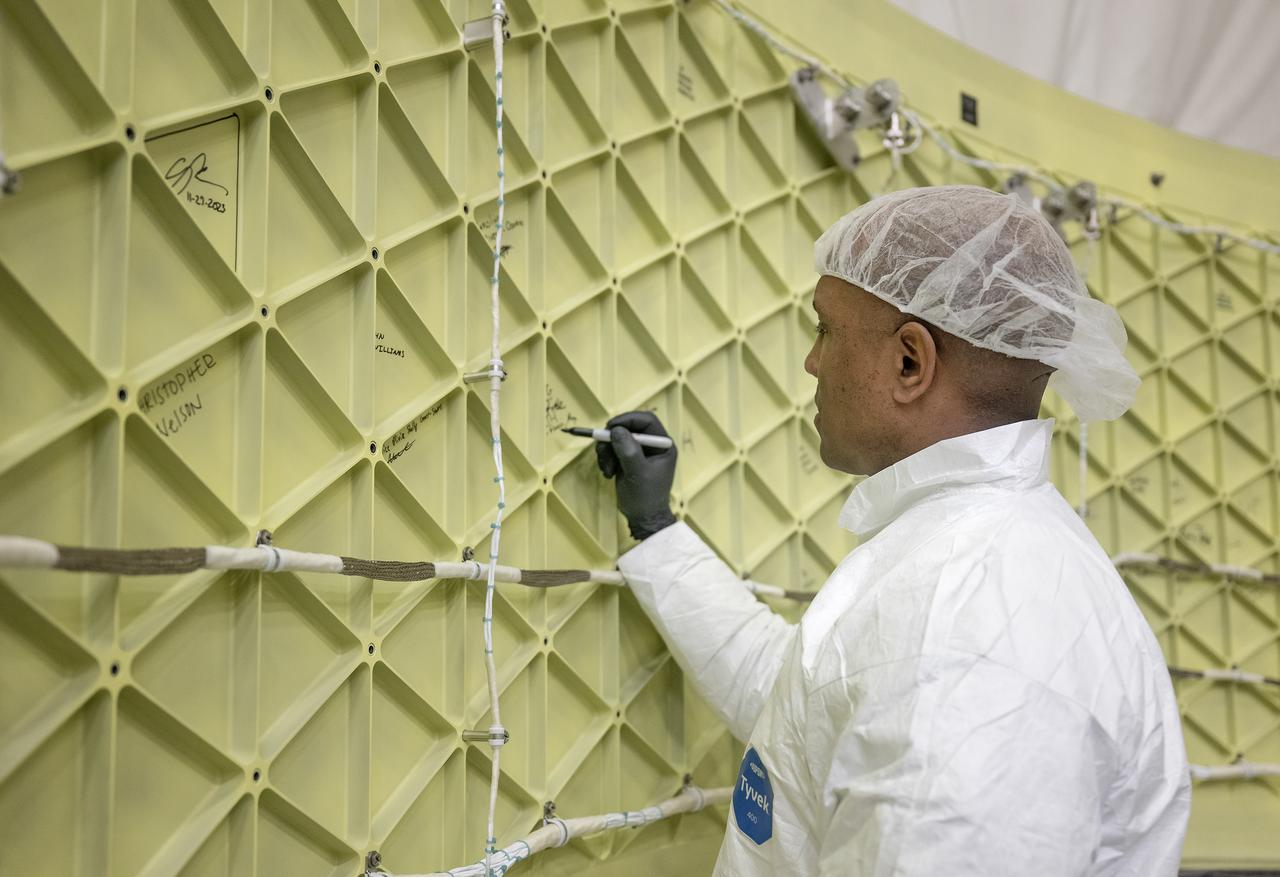
These photos show highlights from Artemis II NASA astronauts Victor Glover, Reid Wiseman, and Christina Koch of NASA and CSA (Canadian Space Agency) astronaut Jeremy Hansen visit to NASA’s Marshall Space Flight Center in Huntsville, Alabama, Nov. 27. The crew met and spoke to employees and viewed facilities for SLS (Space Launch System) rocket. All four astronauts signed the Orion stage adapter (OSA), a small ring structure that connects SLS to NASA’s Orion spacecraft, that will be used for Artemis II. Koch and Wiseman also visited the Systems Integration Lab, where SLS flight software testing is conducted. The four astronauts will launch atop SLS inside Orion to venture around the Moon on Artemis II, the first crewed flight for Artemis.
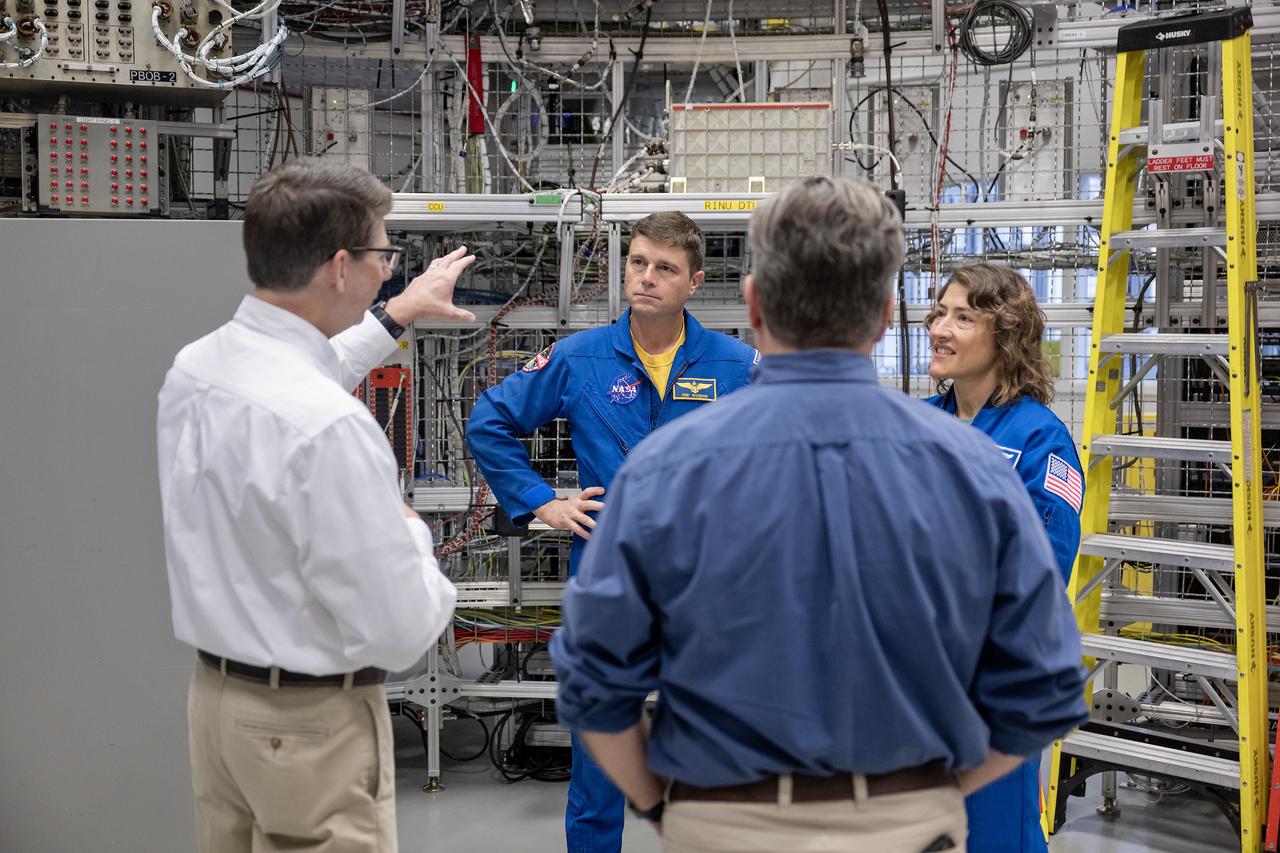
These photos show highlights from Artemis II NASA astronauts Victor Glover, Reid Wiseman, and Christina Koch of NASA and CSA (Canadian Space Agency) astronaut Jeremy Hansen visit to NASA’s Marshall Space Flight Center in Huntsville, Alabama, Nov. 27. The crew met and spoke to employees and viewed facilities for SLS (Space Launch System) rocket. All four astronauts signed the Orion stage adapter (OSA), a small ring structure that connects SLS to NASA’s Orion spacecraft, that will be used for Artemis II. Koch and Wiseman also visited the Systems Integration Lab, where SLS flight software testing is conducted. The four astronauts will launch atop SLS inside Orion to venture around the Moon on Artemis II, the first crewed flight for Artemis.
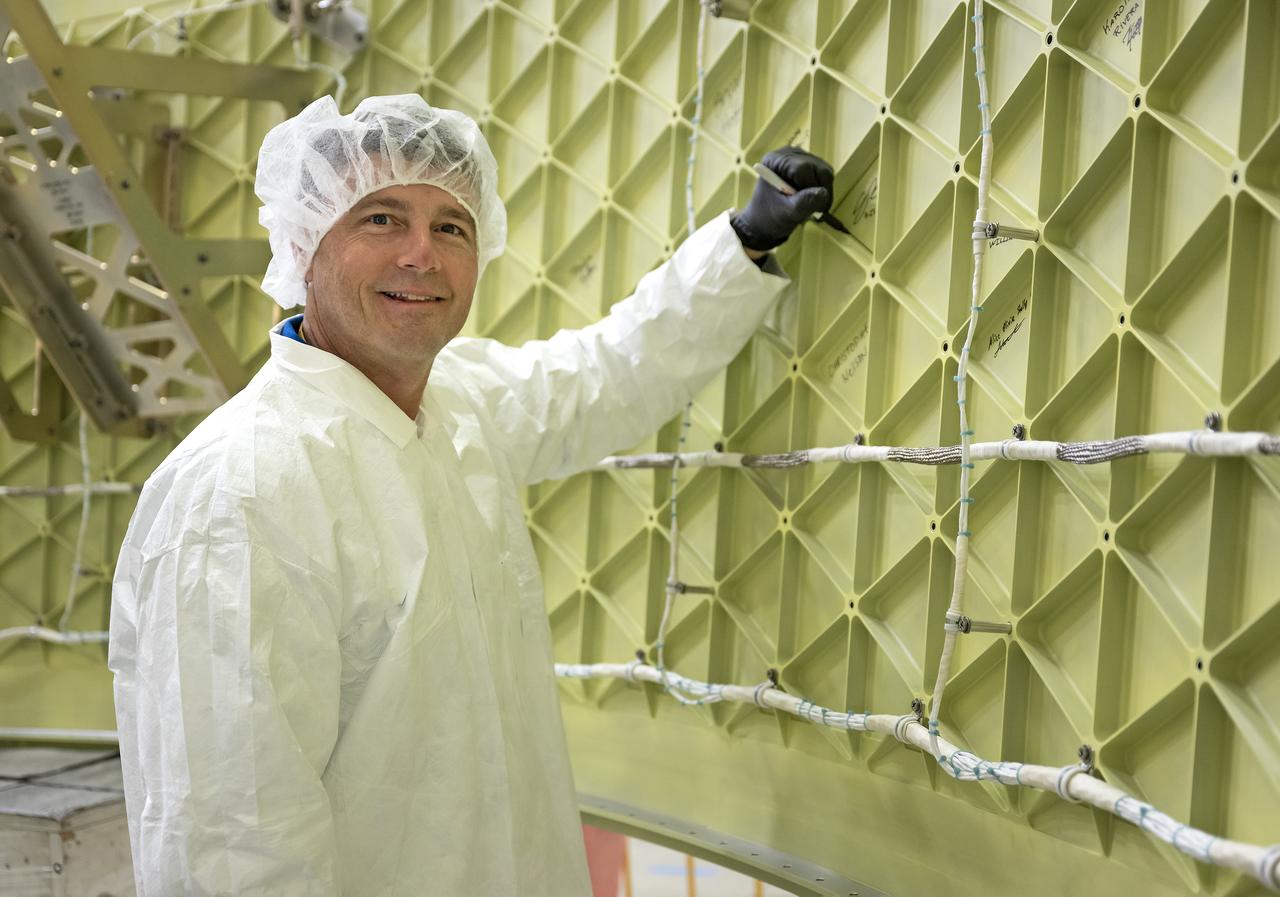
These photos show highlights from Artemis II NASA astronauts Victor Glover, Reid Wiseman, and Christina Koch of NASA and CSA (Canadian Space Agency) astronaut Jeremy Hansen visit to NASA’s Marshall Space Flight Center in Huntsville, Alabama, Nov. 27. The crew met and spoke to employees and viewed facilities for SLS (Space Launch System) rocket. All four astronauts signed the Orion stage adapter (OSA), a small ring structure that connects SLS to NASA’s Orion spacecraft, that will be used for Artemis II. Koch and Wiseman also visited the Systems Integration Lab, where SLS flight software testing is conducted. The four astronauts will launch atop SLS inside Orion to venture around the Moon on Artemis II, the first crewed flight for Artemis.
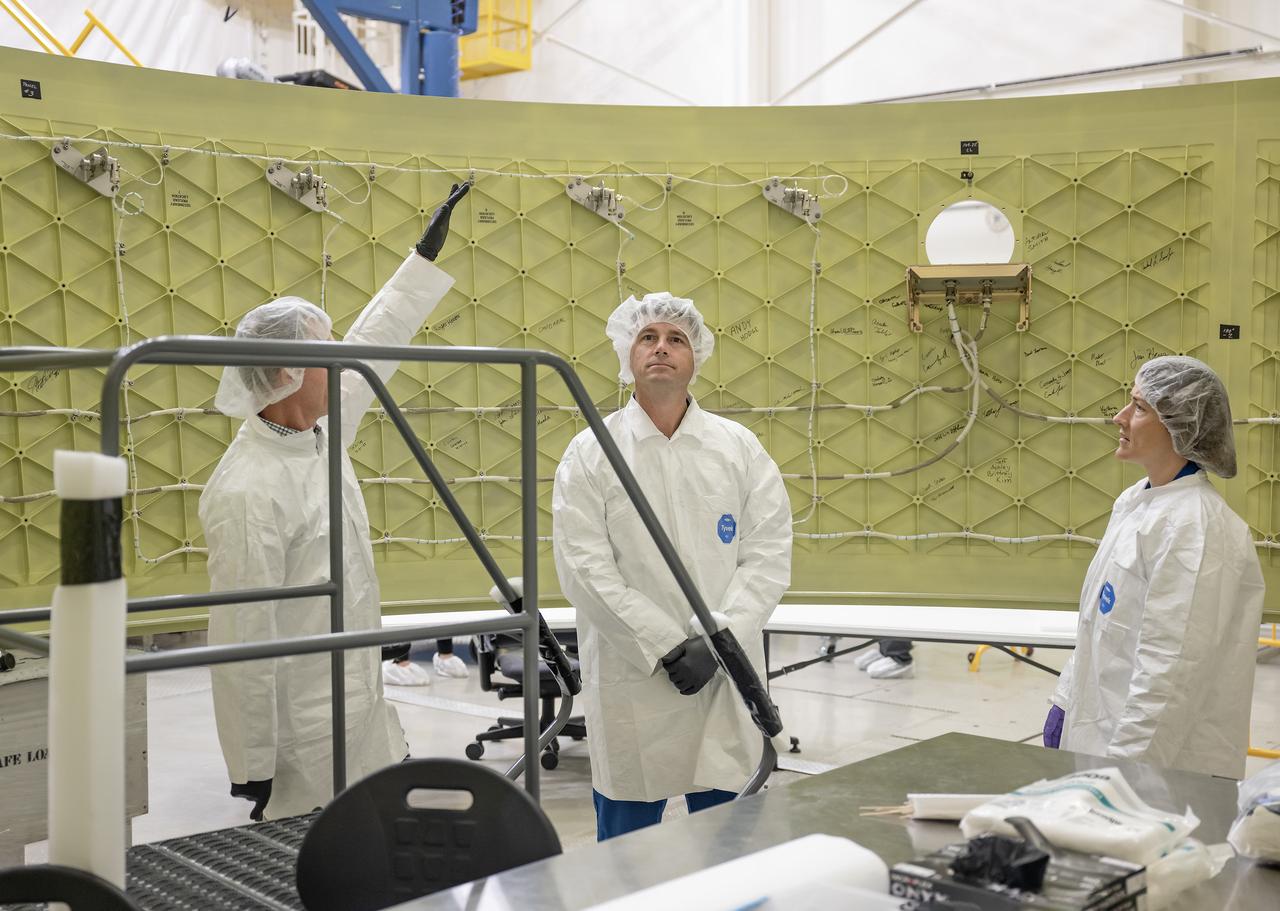
These photos show highlights from Artemis II NASA astronauts Victor Glover, Reid Wiseman, and Christina Koch of NASA and CSA (Canadian Space Agency) astronaut Jeremy Hansen visit to NASA’s Marshall Space Flight Center in Huntsville, Alabama, Nov. 27. The crew met and spoke to employees and viewed facilities for SLS (Space Launch System) rocket. All four astronauts signed the Orion stage adapter (OSA), a small ring structure that connects SLS to NASA’s Orion spacecraft, that will be used for Artemis II. Koch and Wiseman also visited the Systems Integration Lab, where SLS flight software testing is conducted. The four astronauts will launch atop SLS inside Orion to venture around the Moon on Artemis II, the first crewed flight for Artemis.

These photos show highlights from Artemis II NASA astronauts Victor Glover, Reid Wiseman, and Christina Koch of NASA and CSA (Canadian Space Agency) astronaut Jeremy Hansen visit to NASA’s Marshall Space Flight Center in Huntsville, Alabama, Nov. 27. The crew met and spoke to employees and viewed facilities for SLS (Space Launch System) rocket. All four astronauts signed the Orion stage adapter (OSA), a small ring structure that connects SLS to NASA’s Orion spacecraft, that will be used for Artemis II. Koch and Wiseman also visited the Systems Integration Lab, where SLS flight software testing is conducted. The four astronauts will launch atop SLS inside Orion to venture around the Moon on Artemis II, the first crewed flight for Artemis.
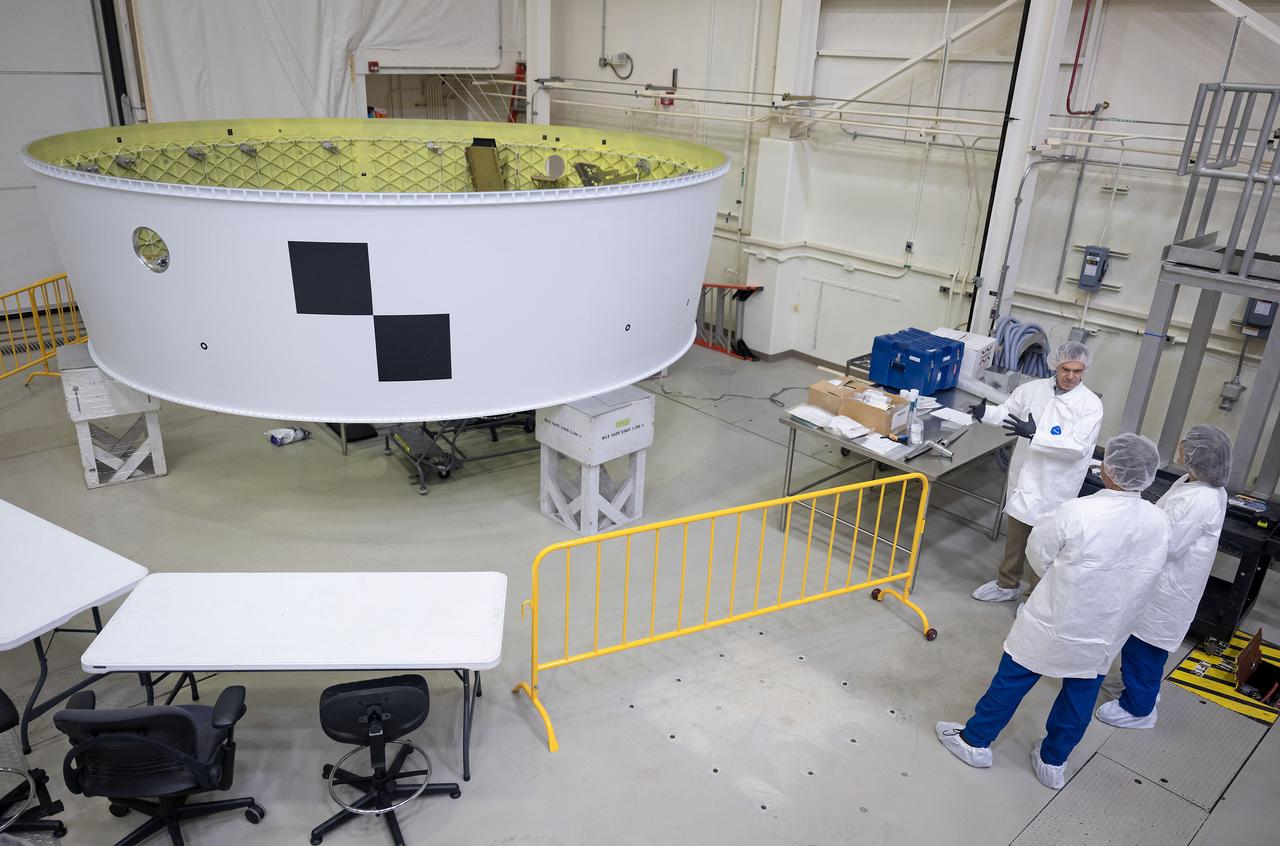
These photos show highlights from Artemis II NASA astronauts Victor Glover, Reid Wiseman, and Christina Koch of NASA and CSA (Canadian Space Agency) astronaut Jeremy Hansen visit to NASA’s Marshall Space Flight Center in Huntsville, Alabama, Nov. 27. The crew met and spoke to employees and viewed facilities for SLS (Space Launch System) rocket. All four astronauts signed the Orion stage adapter (OSA), a small ring structure that connects SLS to NASA’s Orion spacecraft, that will be used for Artemis II. Koch and Wiseman also visited the Systems Integration Lab, where SLS flight software testing is conducted. The four astronauts will launch atop SLS inside Orion to venture around the Moon on Artemis II, the first crewed flight for Artemis.
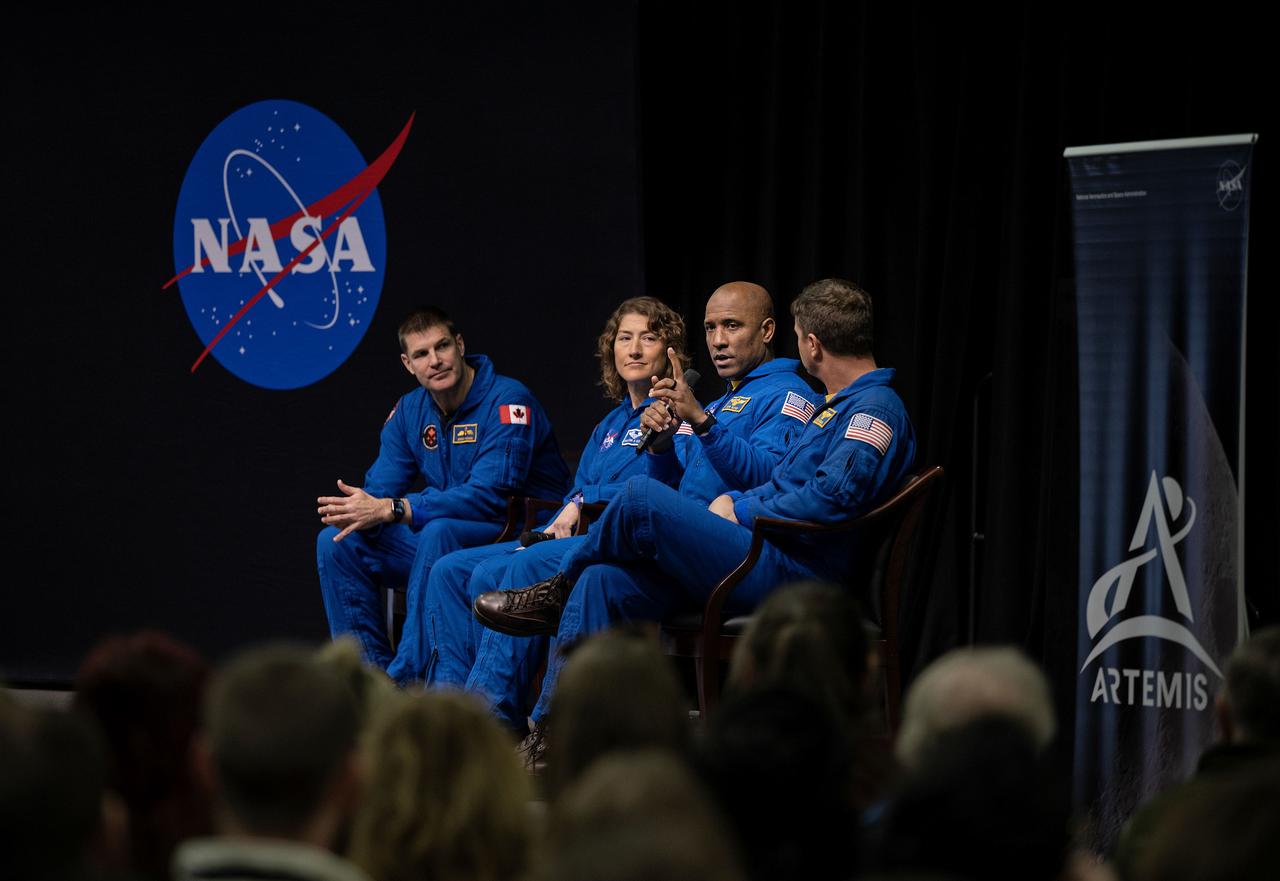
These photos show highlights from Artemis II NASA astronauts Victor Glover, Reid Wiseman, and Christina Koch of NASA and CSA (Canadian Space Agency) astronaut Jeremy Hansen visit to NASA’s Marshall Space Flight Center in Huntsville, Alabama, Nov. 27. The crew met and spoke to employees and viewed facilities for SLS (Space Launch System) rocket. All four astronauts signed the Orion stage adapter (OSA), a small ring structure that connects SLS to NASA’s Orion spacecraft, that will be used for Artemis II. Koch and Wiseman also visited the Systems Integration Lab, where SLS flight software testing is conducted. The four astronauts will launch atop SLS inside Orion to venture around the Moon on Artemis II, the first crewed flight for Artemis.

These photos show highlights from Artemis II NASA astronauts Victor Glover, Reid Wiseman, and Christina Koch of NASA and CSA (Canadian Space Agency) astronaut Jeremy Hansen visit to NASA’s Marshall Space Flight Center in Huntsville, Alabama, Nov. 27. The crew met and spoke to employees and viewed facilities for SLS (Space Launch System) rocket. All four astronauts signed the Orion stage adapter (OSA), a small ring structure that connects SLS to NASA’s Orion spacecraft, that will be used for Artemis II. Koch and Wiseman also visited the Systems Integration Lab, where SLS flight software testing is conducted. The four astronauts will launch atop SLS inside Orion to venture around the Moon on Artemis II, the first crewed flight for Artemis.
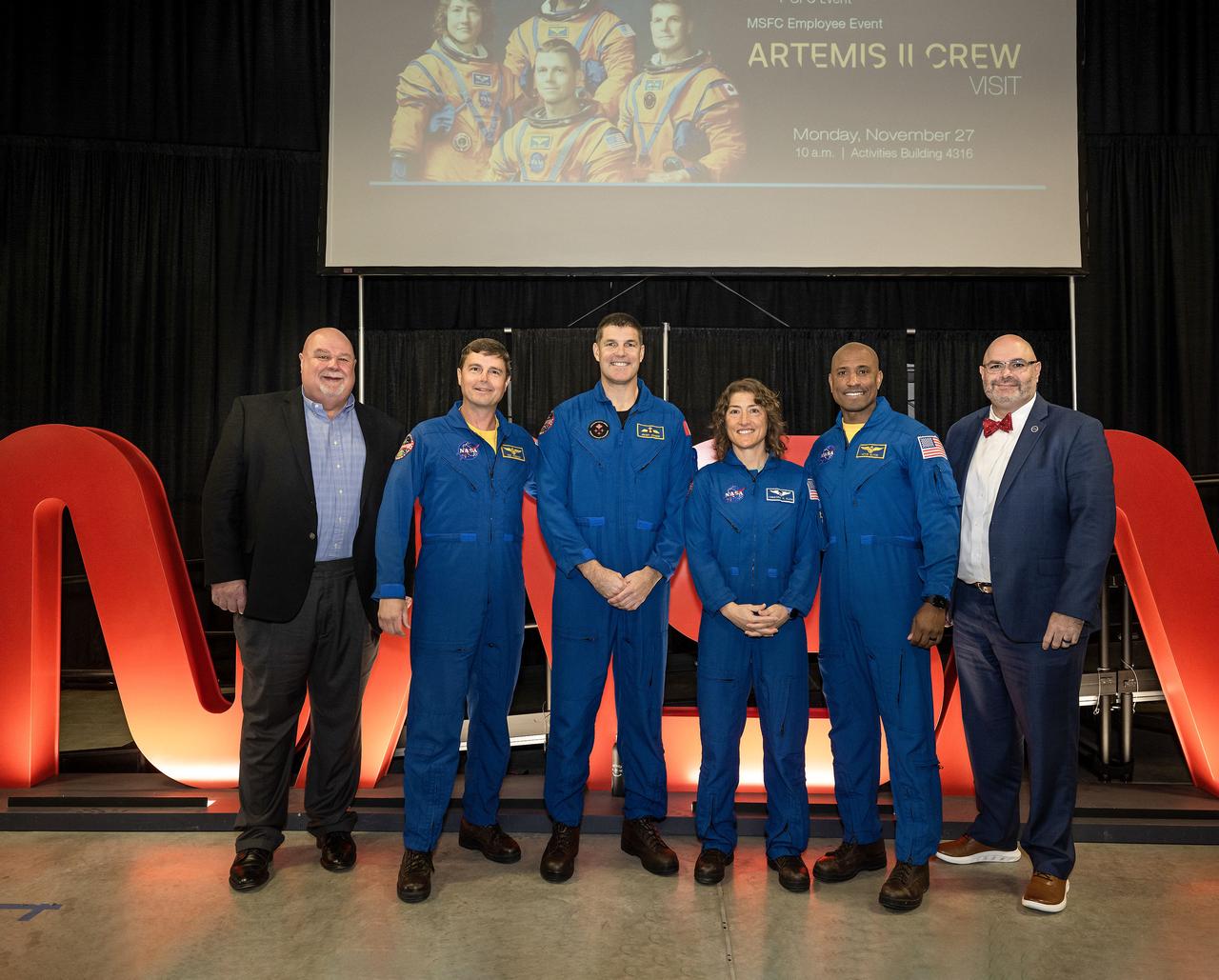
These photos show highlights from Artemis II NASA astronauts Victor Glover, Reid Wiseman, and Christina Koch of NASA and CSA (Canadian Space Agency) astronaut Jeremy Hansen visit to NASA’s Marshall Space Flight Center in Huntsville, Alabama, Nov. 27. The crew met and spoke to employees and viewed facilities for SLS (Space Launch System) rocket. All four astronauts signed the Orion stage adapter (OSA), a small ring structure that connects SLS to NASA’s Orion spacecraft, that will be used for Artemis II. Koch and Wiseman also visited the Systems Integration Lab, where SLS flight software testing is conducted. The four astronauts will launch atop SLS inside Orion to venture around the Moon on Artemis II, the first crewed flight for Artemis.
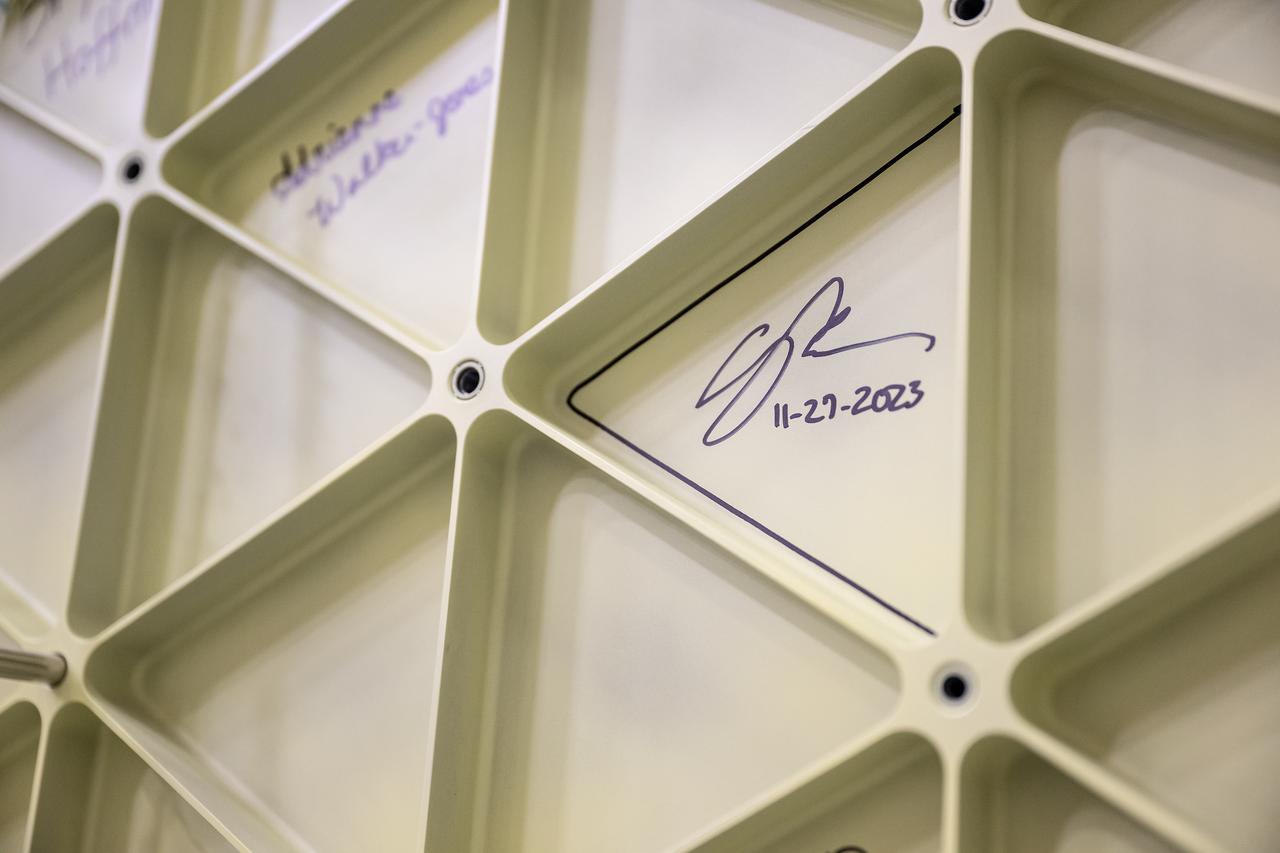
These photos show highlights from Artemis II NASA astronauts Victor Glover, Reid Wiseman, and Christina Koch of NASA and CSA (Canadian Space Agency) astronaut Jeremy Hansen visit to NASA’s Marshall Space Flight Center in Huntsville, Alabama, Nov. 27. The crew met and spoke to employees and viewed facilities for SLS (Space Launch System) rocket. All four astronauts signed the Orion stage adapter (OSA), a small ring structure that connects SLS to NASA’s Orion spacecraft, that will be used for Artemis II. Koch and Wiseman also visited the Systems Integration Lab, where SLS flight software testing is conducted. The four astronauts will launch atop SLS inside Orion to venture around the Moon on Artemis II, the first crewed flight for Artemis.
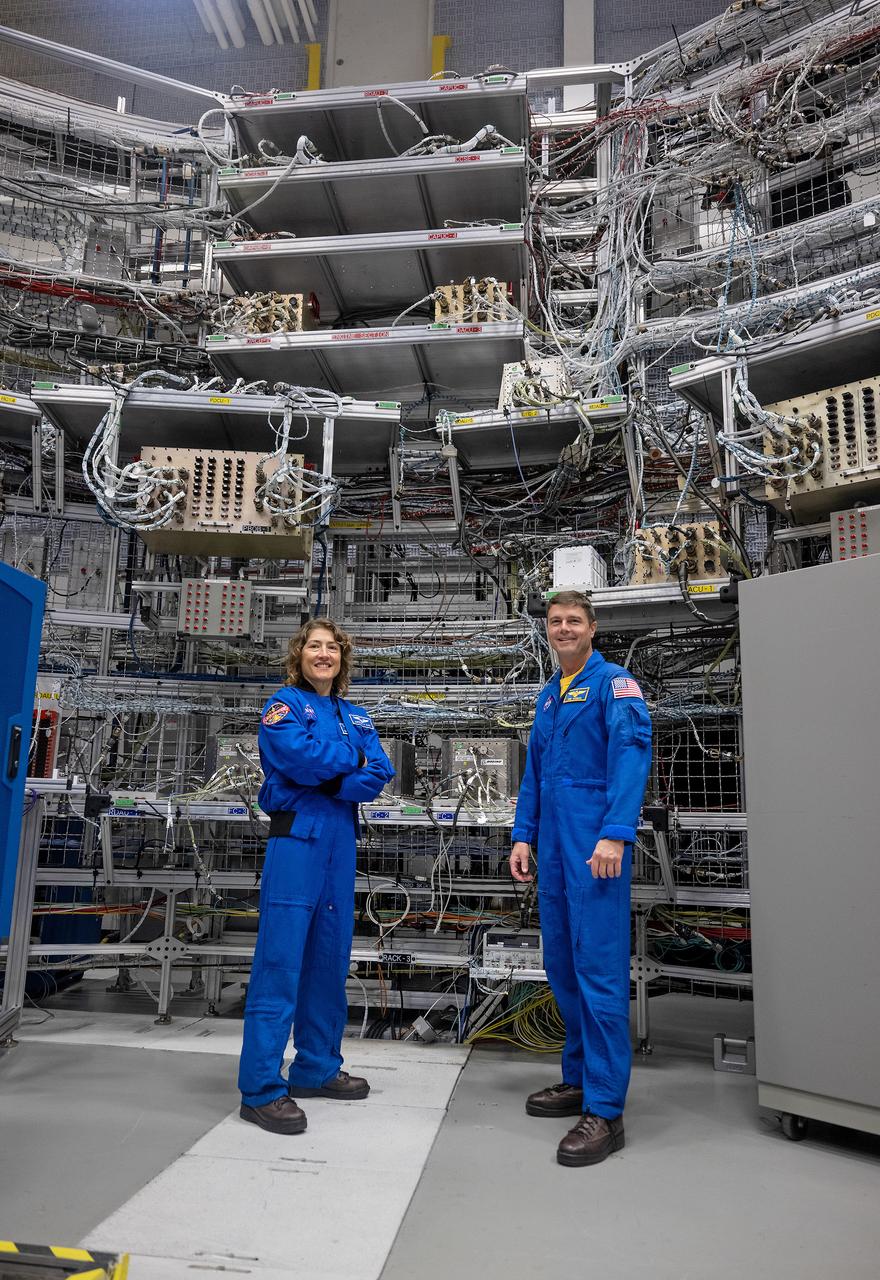
These photos show highlights from Artemis II NASA astronauts Victor Glover, Reid Wiseman, and Christina Koch of NASA and CSA (Canadian Space Agency) astronaut Jeremy Hansen visit to NASA’s Marshall Space Flight Center in Huntsville, Alabama, Nov. 27. The crew met and spoke to employees and viewed facilities for SLS (Space Launch System) rocket. All four astronauts signed the Orion stage adapter (OSA), a small ring structure that connects SLS to NASA’s Orion spacecraft, that will be used for Artemis II. Koch and Wiseman also visited the Systems Integration Lab, where SLS flight software testing is conducted. The four astronauts will launch atop SLS inside Orion to venture around the Moon on Artemis II, the first crewed flight for Artemis.
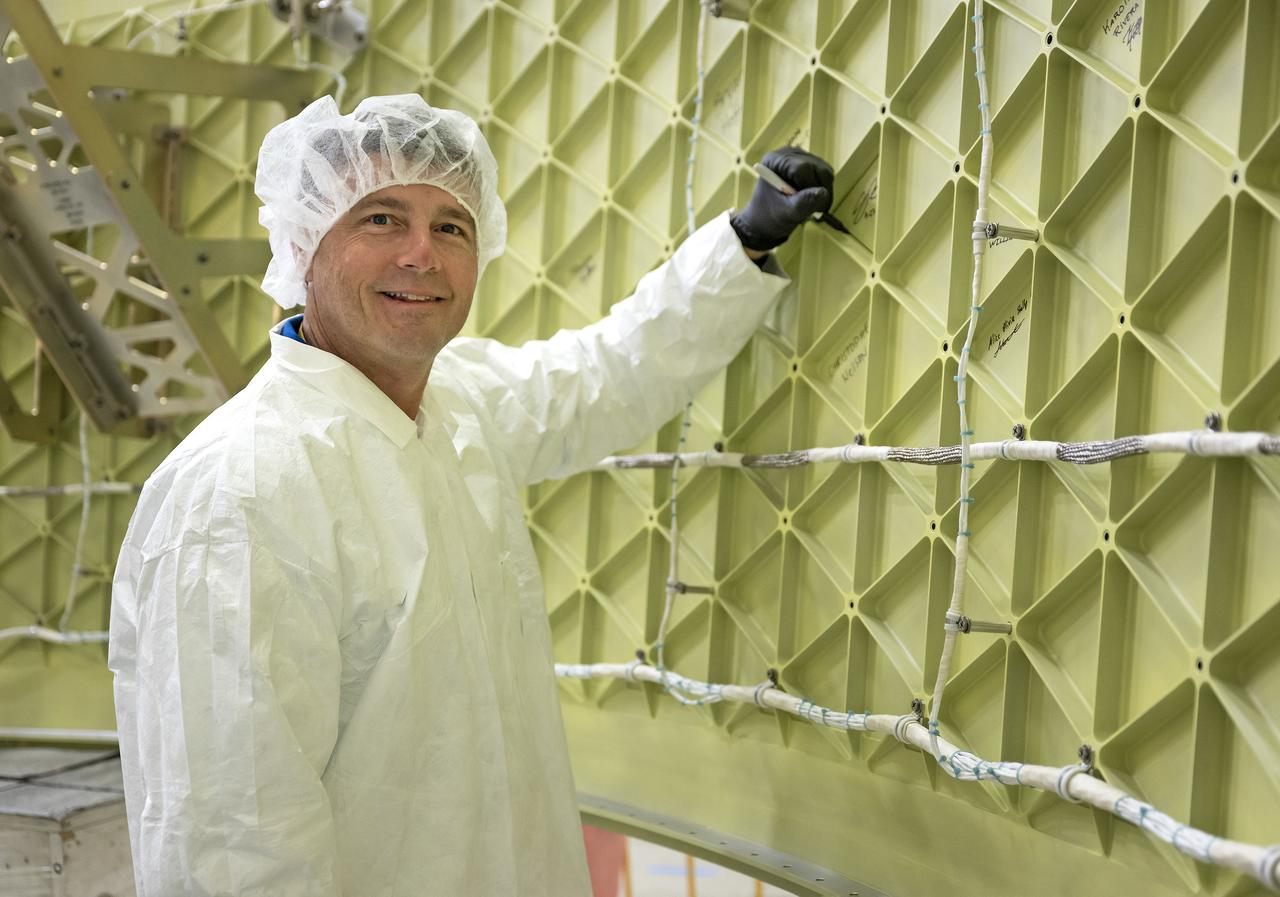
These photos show highlights from Artemis II NASA astronauts Victor Glover, Reid Wiseman, and Christina Koch of NASA and CSA (Canadian Space Agency) astronaut Jeremy Hansen visit to NASA’s Marshall Space Flight Center in Huntsville, Alabama, Nov. 27. The crew met and spoke to employees and viewed facilities for SLS (Space Launch System) rocket. All four astronauts signed the Orion stage adapter (OSA), a small ring structure that connects SLS to NASA’s Orion spacecraft, that will be used for Artemis II. Koch and Wiseman also visited the Systems Integration Lab, where SLS flight software testing is conducted. The four astronauts will launch atop SLS inside Orion to venture around the Moon on Artemis II, the first crewed flight for Artemis.

These photos show highlights from Artemis II NASA astronauts Victor Glover, Reid Wiseman, and Christina Koch of NASA and CSA (Canadian Space Agency) astronaut Jeremy Hansen visit to NASA’s Marshall Space Flight Center in Huntsville, Alabama, Nov. 27. The crew met and spoke to employees and viewed facilities for SLS (Space Launch System) rocket. All four astronauts signed the Orion stage adapter (OSA), a small ring structure that connects SLS to NASA’s Orion spacecraft, that will be used for Artemis II. Koch and Wiseman also visited the Systems Integration Lab, where SLS flight software testing is conducted. The four astronauts will launch atop SLS inside Orion to venture around the Moon on Artemis II, the first crewed flight for Artemis.
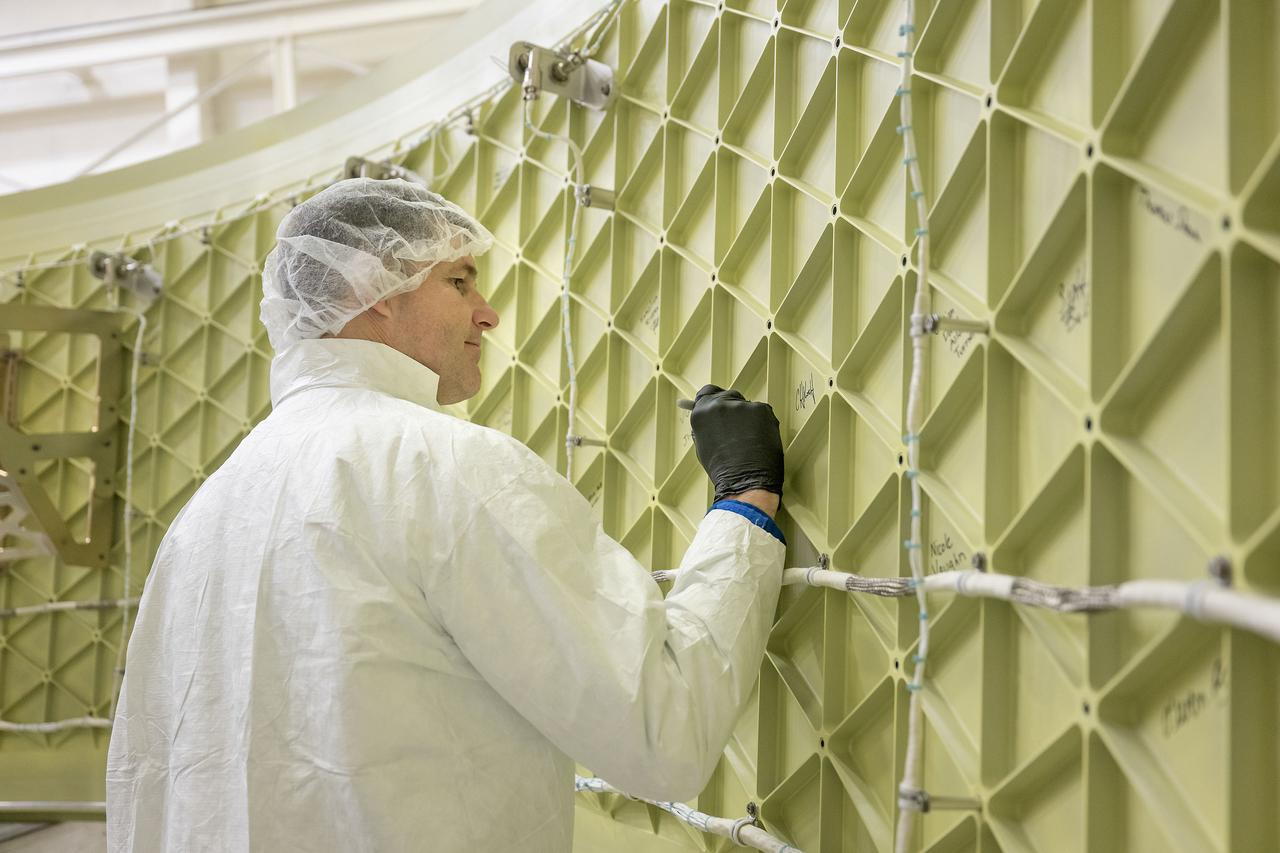
These photos show highlights from Artemis II NASA astronauts Victor Glover, Reid Wiseman, and Christina Koch of NASA and CSA (Canadian Space Agency) astronaut Jeremy Hansen visit to NASA’s Marshall Space Flight Center in Huntsville, Alabama, Nov. 27. The crew met and spoke to employees and viewed facilities for SLS (Space Launch System) rocket. All four astronauts signed the Orion stage adapter (OSA), a small ring structure that connects SLS to NASA’s Orion spacecraft, that will be used for Artemis II. Koch and Wiseman also visited the Systems Integration Lab, where SLS flight software testing is conducted. The four astronauts will launch atop SLS inside Orion to venture around the Moon on Artemis II, the first crewed flight for Artemis.
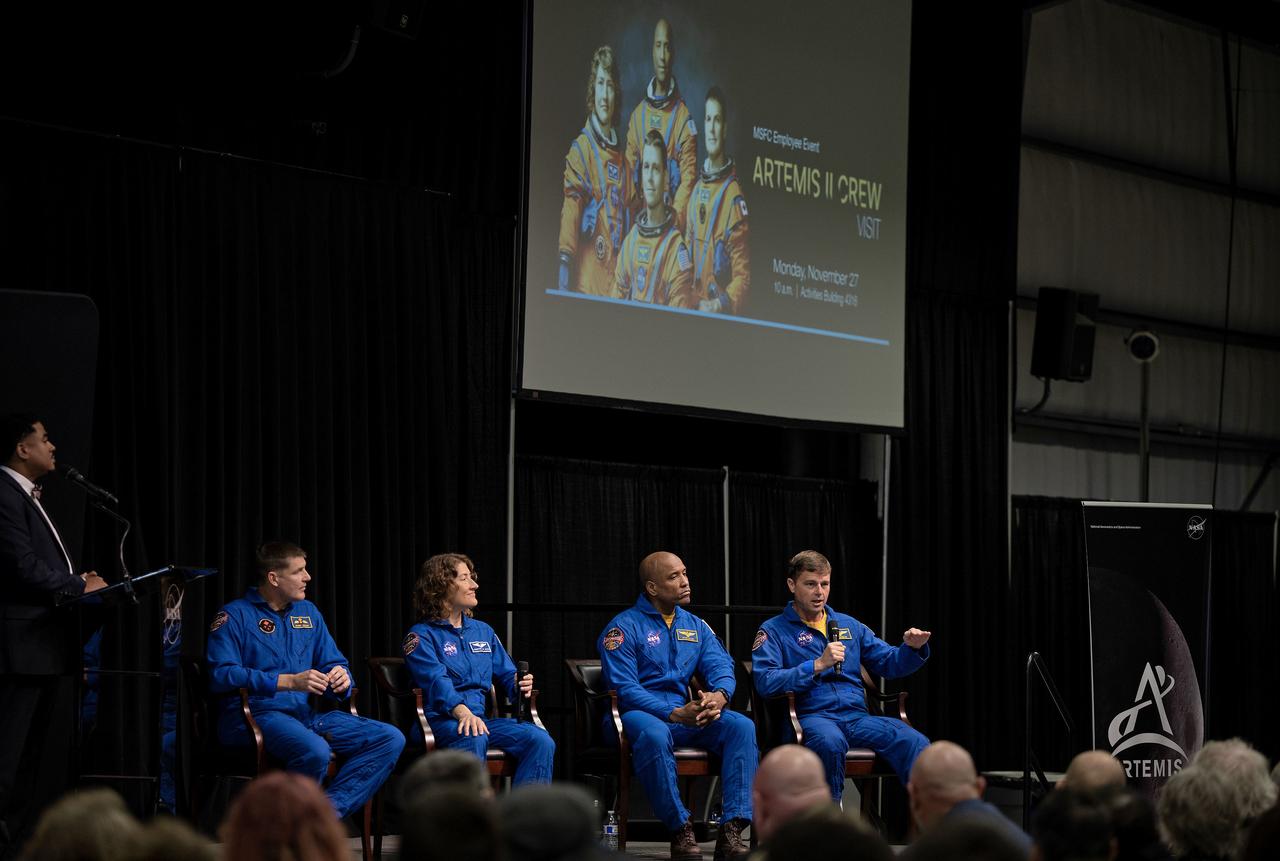
These photos show highlights from Artemis II NASA astronauts Victor Glover, Reid Wiseman, and Christina Koch of NASA and CSA (Canadian Space Agency) astronaut Jeremy Hansen visit to NASA’s Marshall Space Flight Center in Huntsville, Alabama, Nov. 27. The crew met and spoke to employees and viewed facilities for SLS (Space Launch System) rocket. All four astronauts signed the Orion stage adapter (OSA), a small ring structure that connects SLS to NASA’s Orion spacecraft, that will be used for Artemis II. Koch and Wiseman also visited the Systems Integration Lab, where SLS flight software testing is conducted. The four astronauts will launch atop SLS inside Orion to venture around the Moon on Artemis II, the first crewed flight for Artemis.
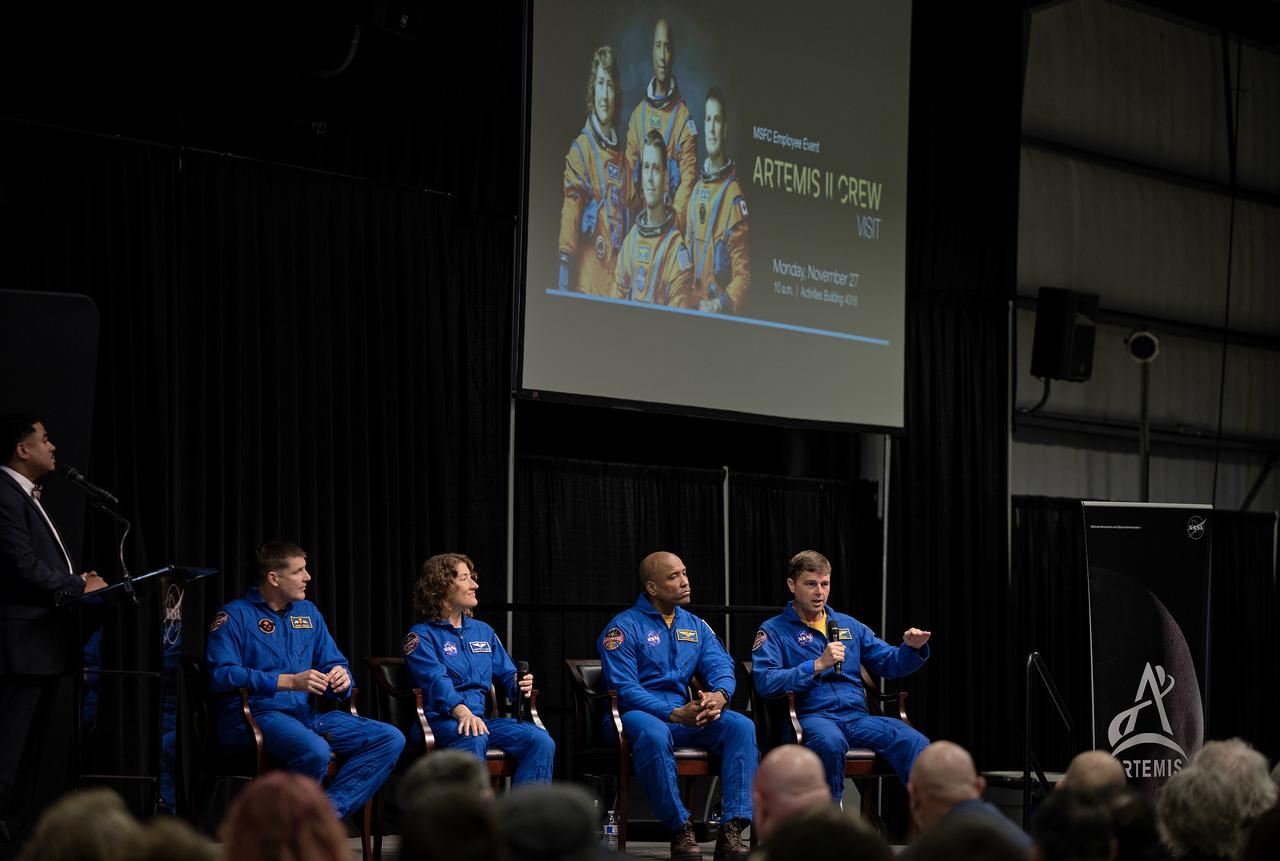
These photos show highlights from Artemis II NASA astronauts Victor Glover, Reid Wiseman, and Christina Koch of NASA and CSA (Canadian Space Agency) astronaut Jeremy Hansen visit to NASA’s Marshall Space Flight Center in Huntsville, Alabama, Nov. 27. The crew met and spoke to employees and viewed facilities for SLS (Space Launch System) rocket. All four astronauts signed the Orion stage adapter (OSA), a small ring structure that connects SLS to NASA’s Orion spacecraft, that will be used for Artemis II. Koch and Wiseman also visited the Systems Integration Lab, where SLS flight software testing is conducted. The four astronauts will launch atop SLS inside Orion to venture around the Moon on Artemis II, the first crewed flight for Artemis.
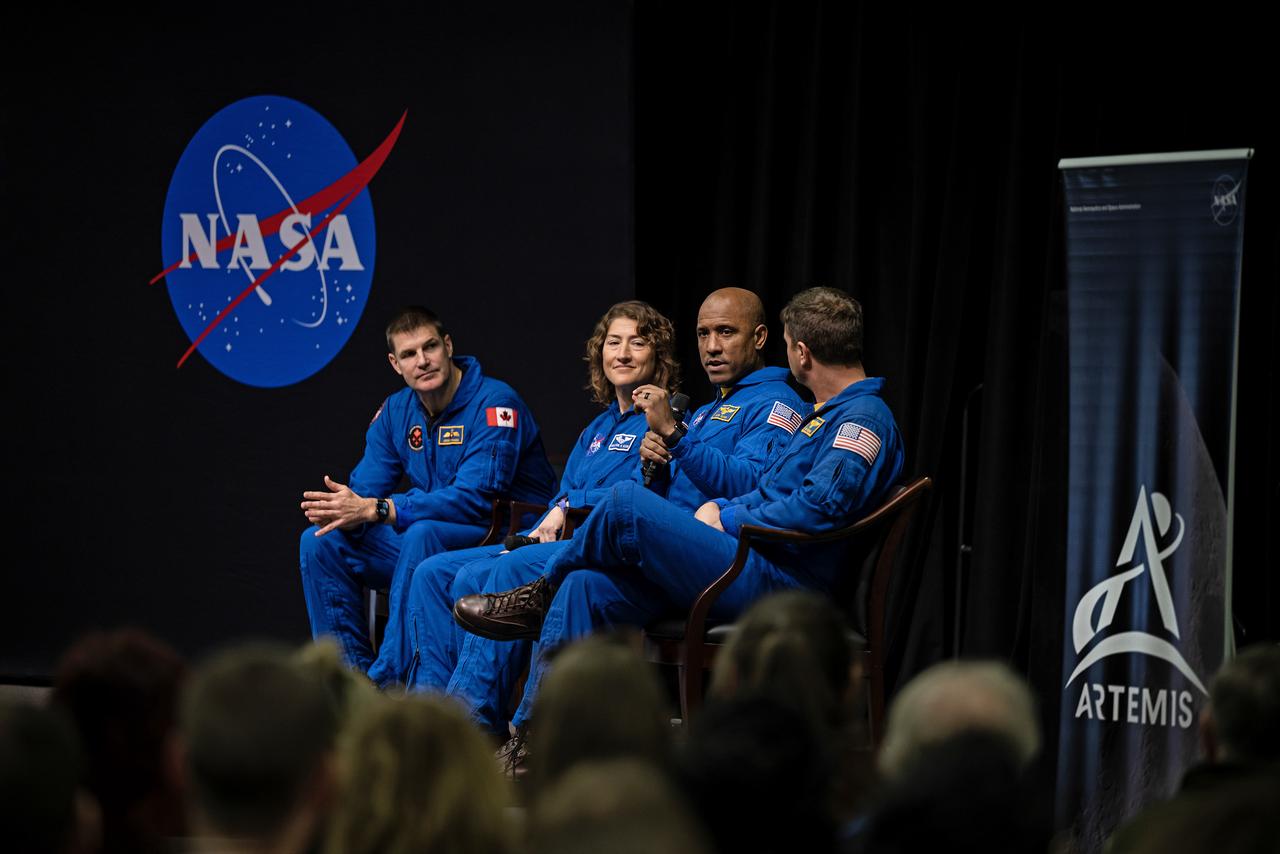
These photos show highlights from Artemis II NASA astronauts Victor Glover, Reid Wiseman, and Christina Koch of NASA and CSA (Canadian Space Agency) astronaut Jeremy Hansen visit to NASA’s Marshall Space Flight Center in Huntsville, Alabama, Nov. 27. The crew met and spoke to employees and viewed facilities for SLS (Space Launch System) rocket. All four astronauts signed the Orion stage adapter (OSA), a small ring structure that connects SLS to NASA’s Orion spacecraft, that will be used for Artemis II. Koch and Wiseman also visited the Systems Integration Lab, where SLS flight software testing is conducted. The four astronauts will launch atop SLS inside Orion to venture around the Moon on Artemis II, the first crewed flight for Artemis.
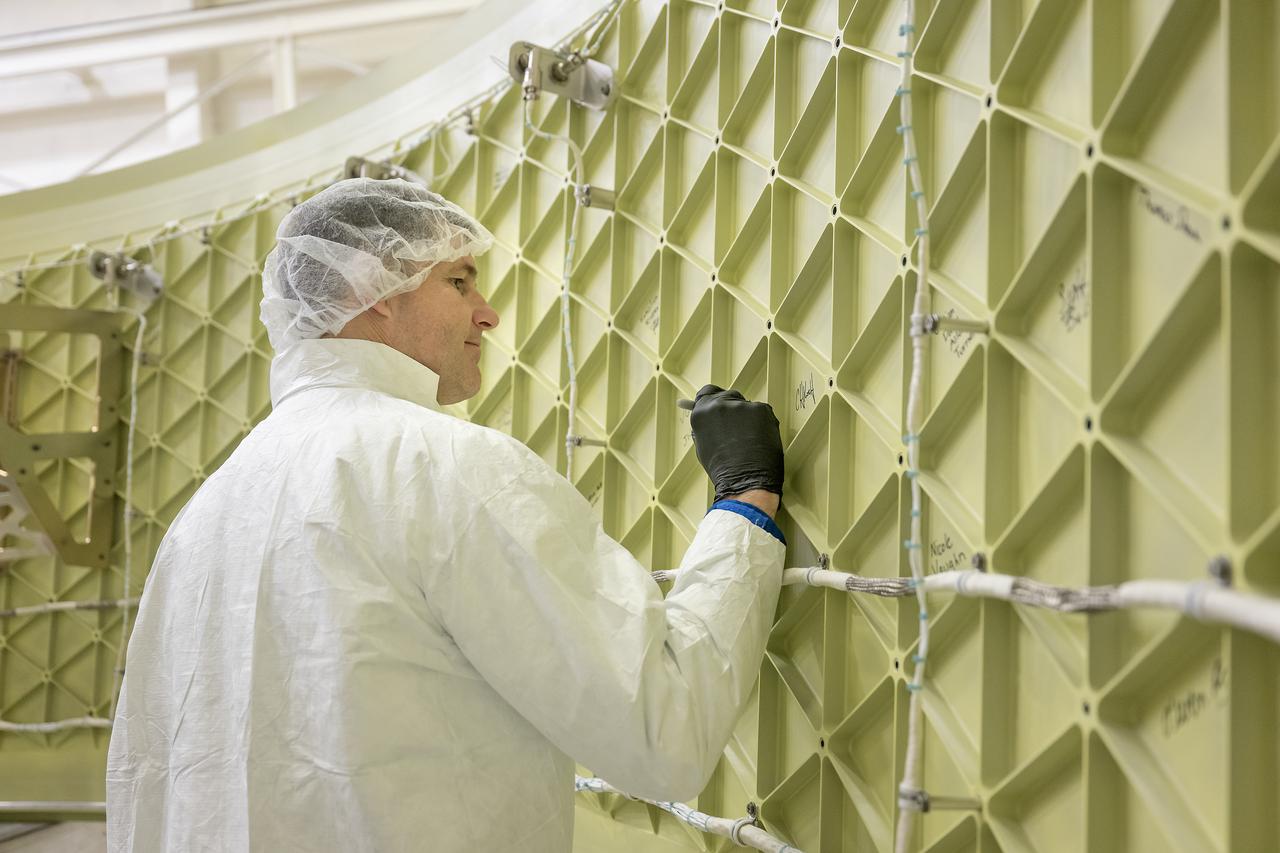
These photos show highlights from Artemis II NASA astronauts Victor Glover, Reid Wiseman, and Christina Koch of NASA and CSA (Canadian Space Agency) astronaut Jeremy Hansen visit to NASA’s Marshall Space Flight Center in Huntsville, Alabama, Nov. 27. The crew met and spoke to employees and viewed facilities for SLS (Space Launch System) rocket. All four astronauts signed the Orion stage adapter (OSA), a small ring structure that connects SLS to NASA’s Orion spacecraft, that will be used for Artemis II. Koch and Wiseman also visited the Systems Integration Lab, where SLS flight software testing is conducted. The four astronauts will launch atop SLS inside Orion to venture around the Moon on Artemis II, the first crewed flight for Artemis.
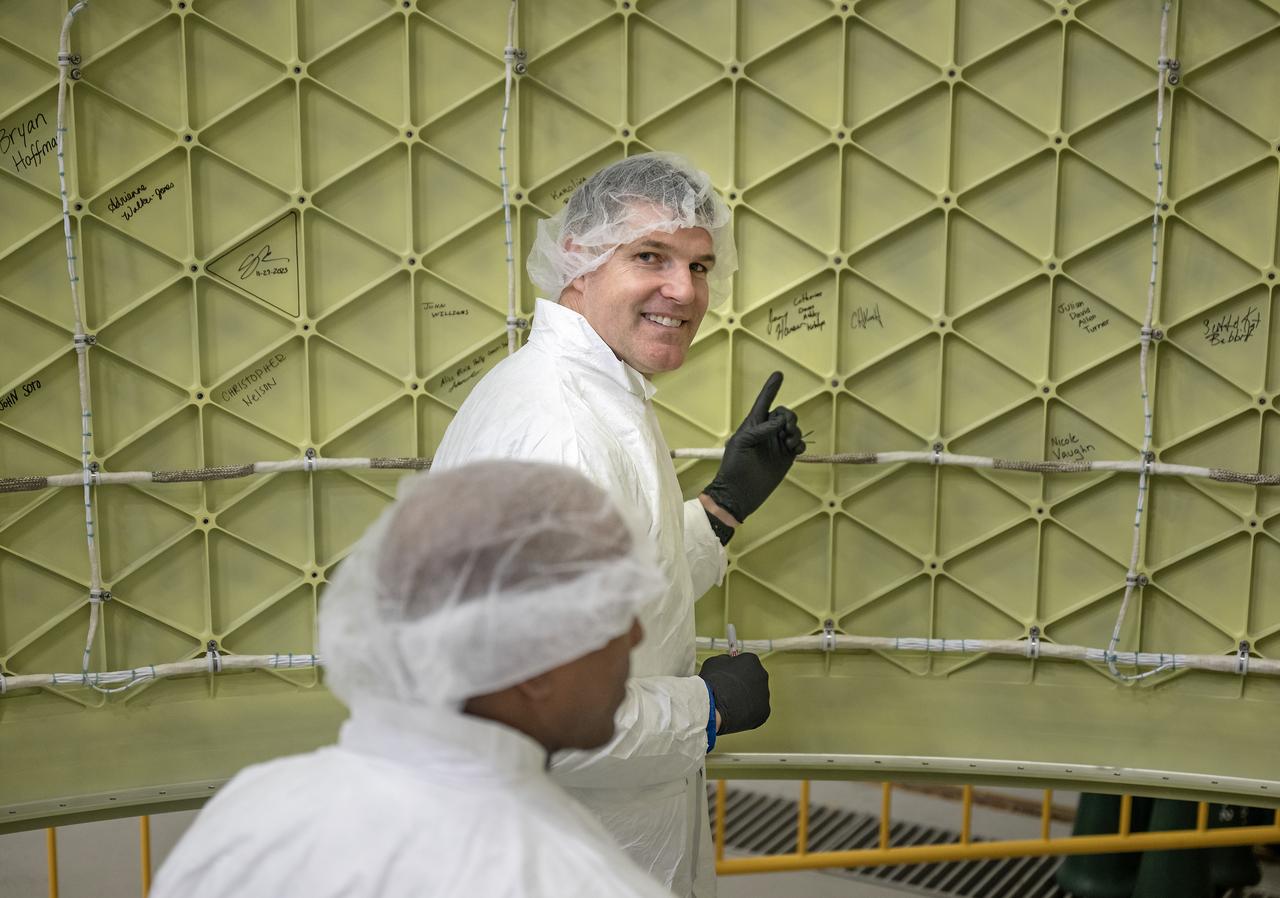
These photos show highlights from Artemis II NASA astronauts Victor Glover, Reid Wiseman, and Christina Koch of NASA and CSA (Canadian Space Agency) astronaut Jeremy Hansen visit to NASA’s Marshall Space Flight Center in Huntsville, Alabama, Nov. 27. The crew met and spoke to employees and viewed facilities for SLS (Space Launch System) rocket. All four astronauts signed the Orion stage adapter (OSA), a small ring structure that connects SLS to NASA’s Orion spacecraft, that will be used for Artemis II. Koch and Wiseman also visited the Systems Integration Lab, where SLS flight software testing is conducted. The four astronauts will launch atop SLS inside Orion to venture around the Moon on Artemis II, the first crewed flight for Artemis.
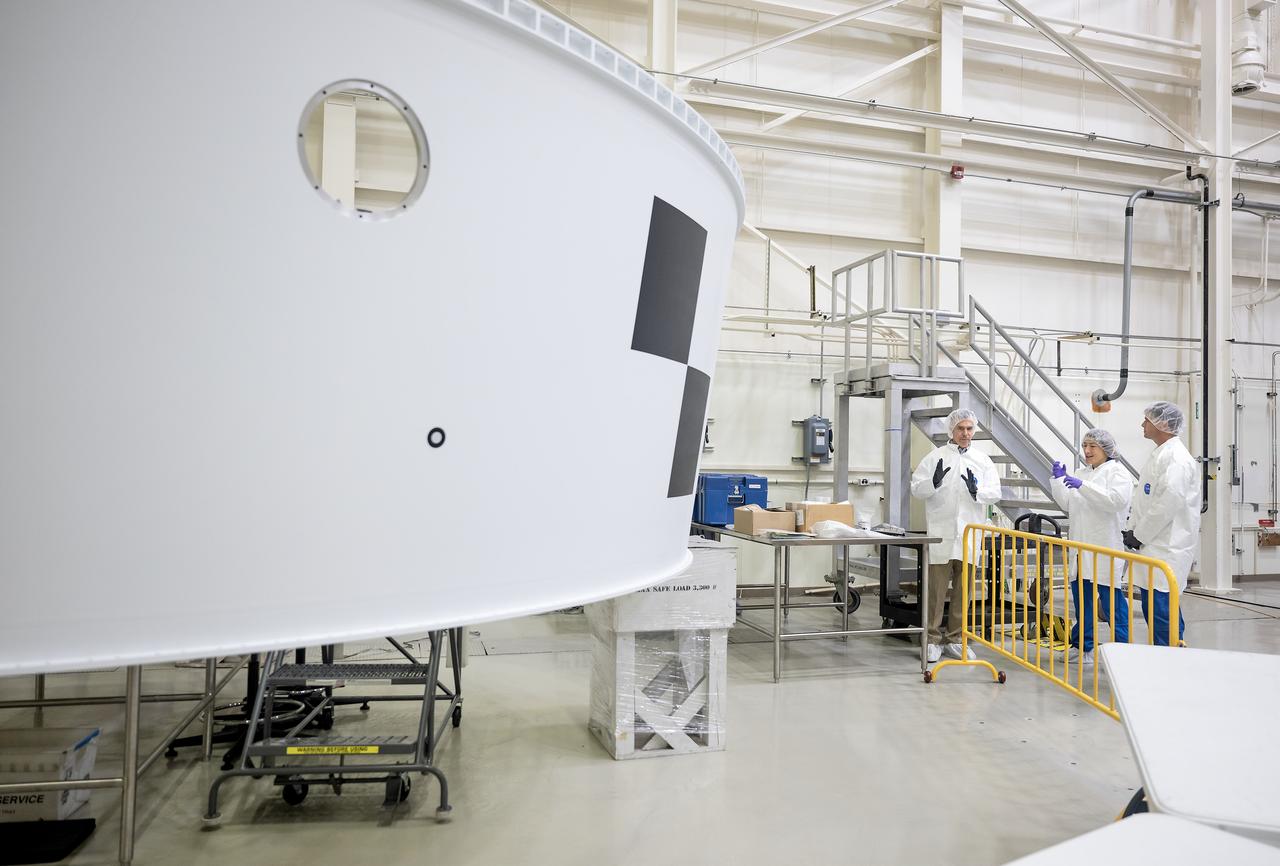
These photos show highlights from Artemis II NASA astronauts Victor Glover, Reid Wiseman, and Christina Koch of NASA and CSA (Canadian Space Agency) astronaut Jeremy Hansen visit to NASA’s Marshall Space Flight Center in Huntsville, Alabama, Nov. 27. The crew met and spoke to employees and viewed facilities for SLS (Space Launch System) rocket. All four astronauts signed the Orion stage adapter (OSA), a small ring structure that connects SLS to NASA’s Orion spacecraft, that will be used for Artemis II. Koch and Wiseman also visited the Systems Integration Lab, where SLS flight software testing is conducted. The four astronauts will launch atop SLS inside Orion to venture around the Moon on Artemis II, the first crewed flight for Artemis.
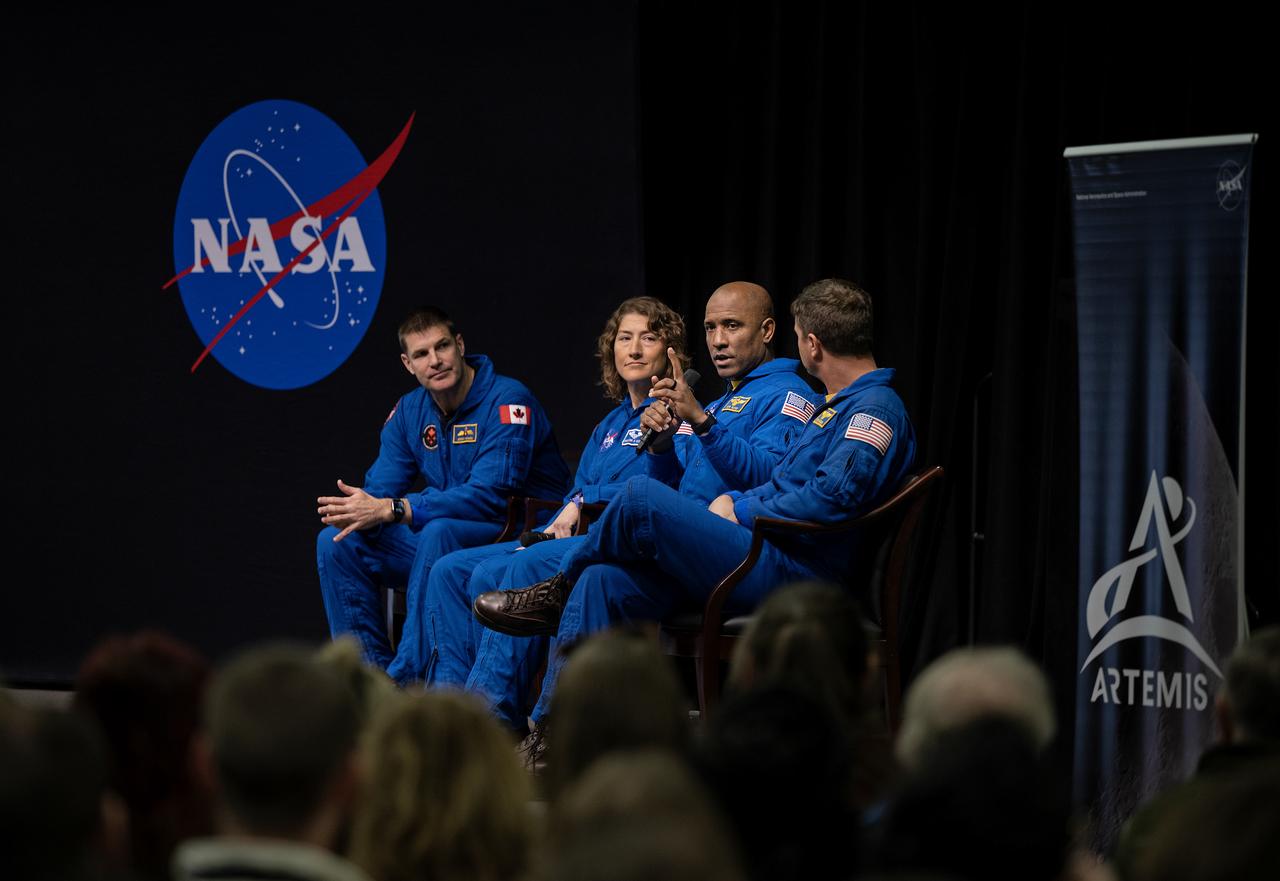
These photos show highlights from Artemis II NASA astronauts Victor Glover, Reid Wiseman, and Christina Koch of NASA and CSA (Canadian Space Agency) astronaut Jeremy Hansen visit to NASA’s Marshall Space Flight Center in Huntsville, Alabama, Nov. 27. The crew met and spoke to employees and viewed facilities for SLS (Space Launch System) rocket. All four astronauts signed the Orion stage adapter (OSA), a small ring structure that connects SLS to NASA’s Orion spacecraft, that will be used for Artemis II. Koch and Wiseman also visited the Systems Integration Lab, where SLS flight software testing is conducted. The four astronauts will launch atop SLS inside Orion to venture around the Moon on Artemis II, the first crewed flight for Artemis.
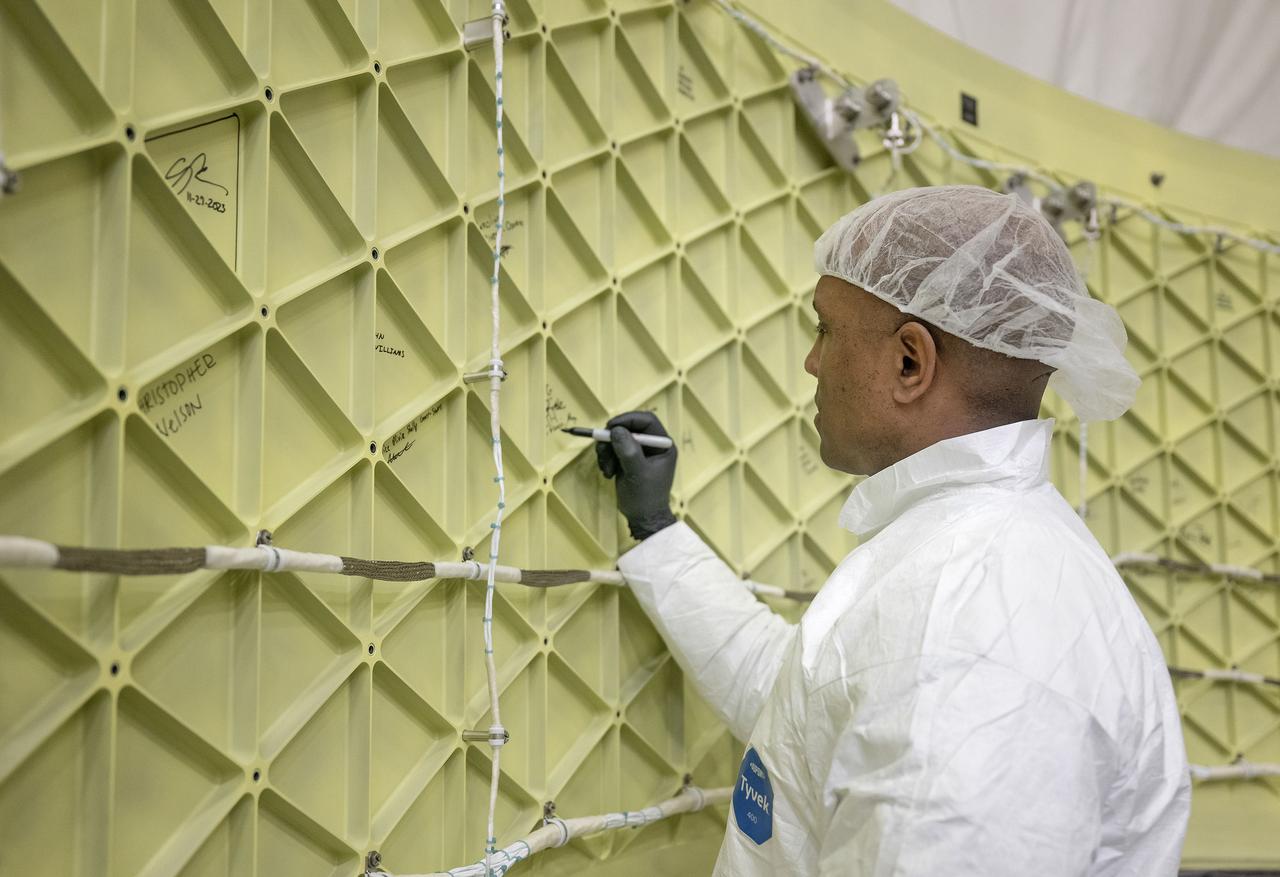
These photos show highlights from Artemis II NASA astronauts Victor Glover, Reid Wiseman, and Christina Koch of NASA and CSA (Canadian Space Agency) astronaut Jeremy Hansen visit to NASA’s Marshall Space Flight Center in Huntsville, Alabama, Nov. 27. The crew met and spoke to employees and viewed facilities for SLS (Space Launch System) rocket. All four astronauts signed the Orion stage adapter (OSA), a small ring structure that connects SLS to NASA’s Orion spacecraft, that will be used for Artemis II. Koch and Wiseman also visited the Systems Integration Lab, where SLS flight software testing is conducted. The four astronauts will launch atop SLS inside Orion to venture around the Moon on Artemis II, the first crewed flight for Artemis.
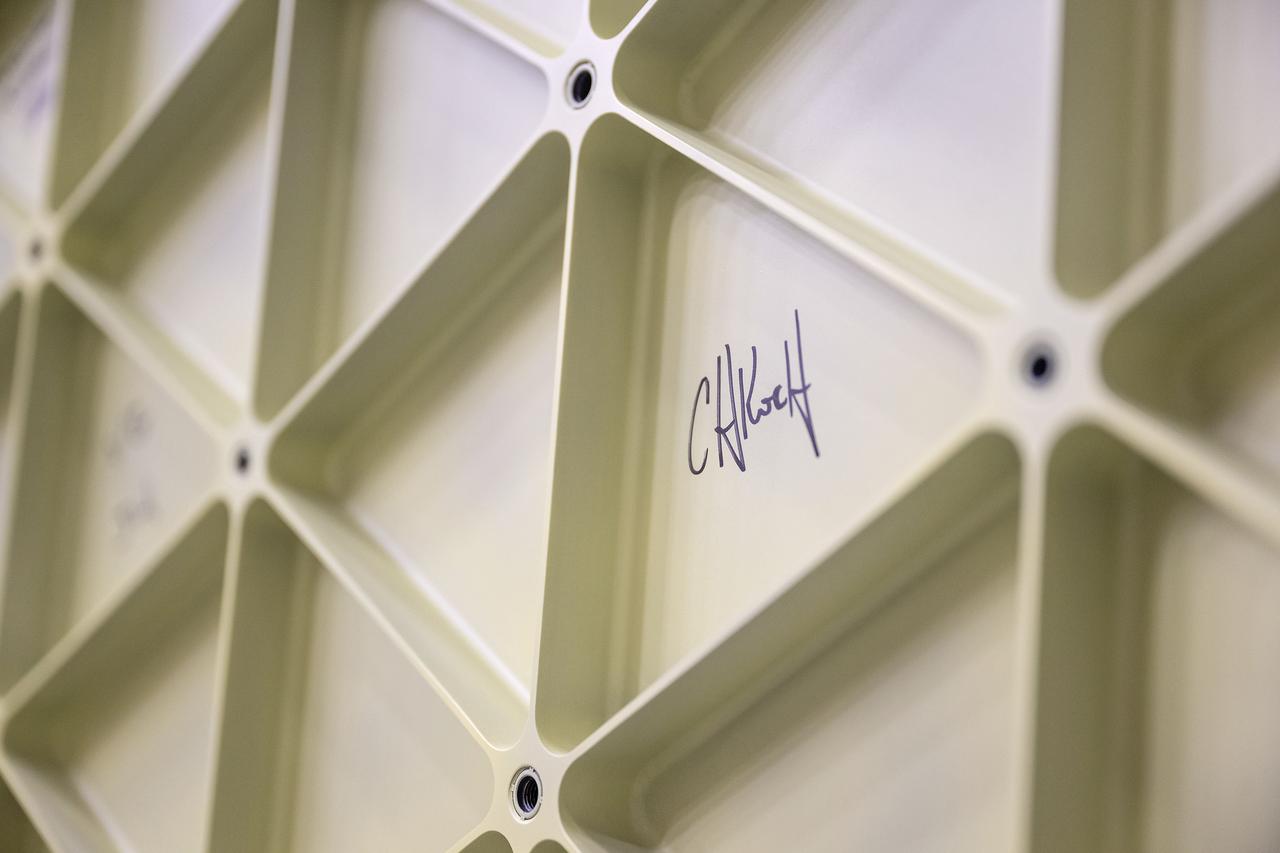
These photos show highlights from Artemis II NASA astronauts Victor Glover, Reid Wiseman, and Christina Koch of NASA and CSA (Canadian Space Agency) astronaut Jeremy Hansen visit to NASA’s Marshall Space Flight Center in Huntsville, Alabama, Nov. 27. The crew met and spoke to employees and viewed facilities for SLS (Space Launch System) rocket. All four astronauts signed the Orion stage adapter (OSA), a small ring structure that connects SLS to NASA’s Orion spacecraft, that will be used for Artemis II. Koch and Wiseman also visited the Systems Integration Lab, where SLS flight software testing is conducted. The four astronauts will launch atop SLS inside Orion to venture around the Moon on Artemis II, the first crewed flight for Artemis.
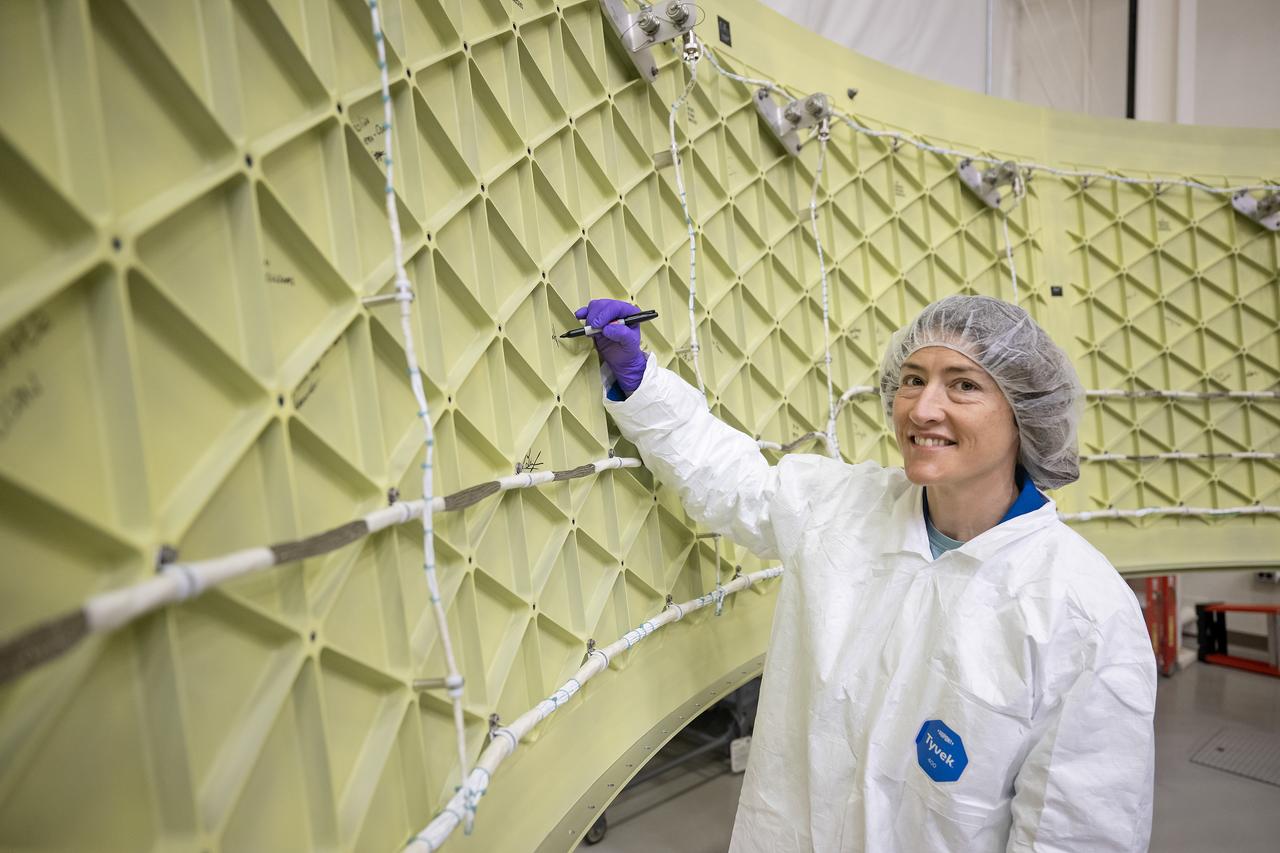
These photos show highlights from Artemis II NASA astronauts Victor Glover, Reid Wiseman, and Christina Koch of NASA and CSA (Canadian Space Agency) astronaut Jeremy Hansen visit to NASA’s Marshall Space Flight Center in Huntsville, Alabama, Nov. 27. The crew met and spoke to employees and viewed facilities for SLS (Space Launch System) rocket. All four astronauts signed the Orion stage adapter (OSA), a small ring structure that connects SLS to NASA’s Orion spacecraft, that will be used for Artemis II. Koch and Wiseman also visited the Systems Integration Lab, where SLS flight software testing is conducted. The four astronauts will launch atop SLS inside Orion to venture around the Moon on Artemis II, the first crewed flight for Artemis.
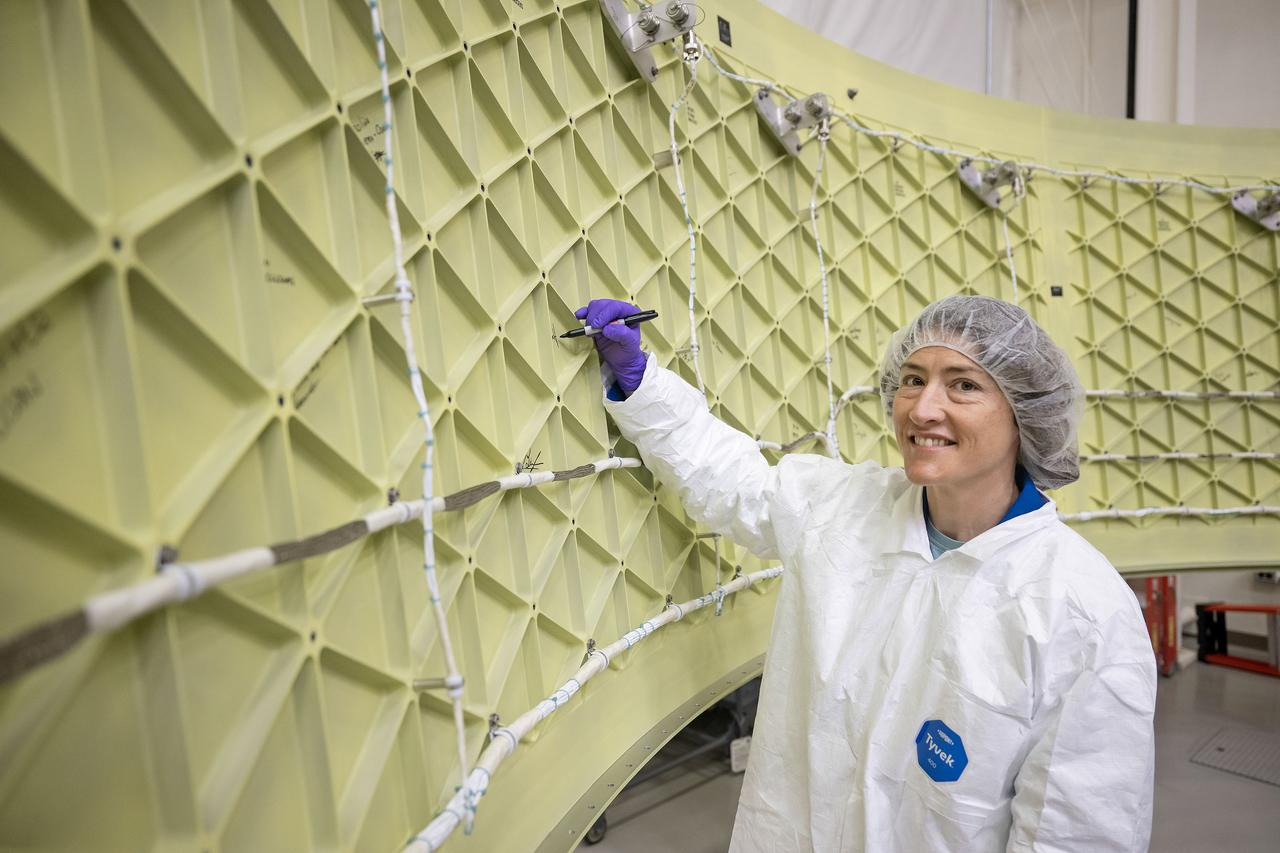
These photos show highlights from Artemis II NASA astronauts Victor Glover, Reid Wiseman, and Christina Koch of NASA and CSA (Canadian Space Agency) astronaut Jeremy Hansen visit to NASA’s Marshall Space Flight Center in Huntsville, Alabama, Nov. 27. The crew met and spoke to employees and viewed facilities for SLS (Space Launch System) rocket. All four astronauts signed the Orion stage adapter (OSA), a small ring structure that connects SLS to NASA’s Orion spacecraft, that will be used for Artemis II. Koch and Wiseman also visited the Systems Integration Lab, where SLS flight software testing is conducted. The four astronauts will launch atop SLS inside Orion to venture around the Moon on Artemis II, the first crewed flight for Artemis.
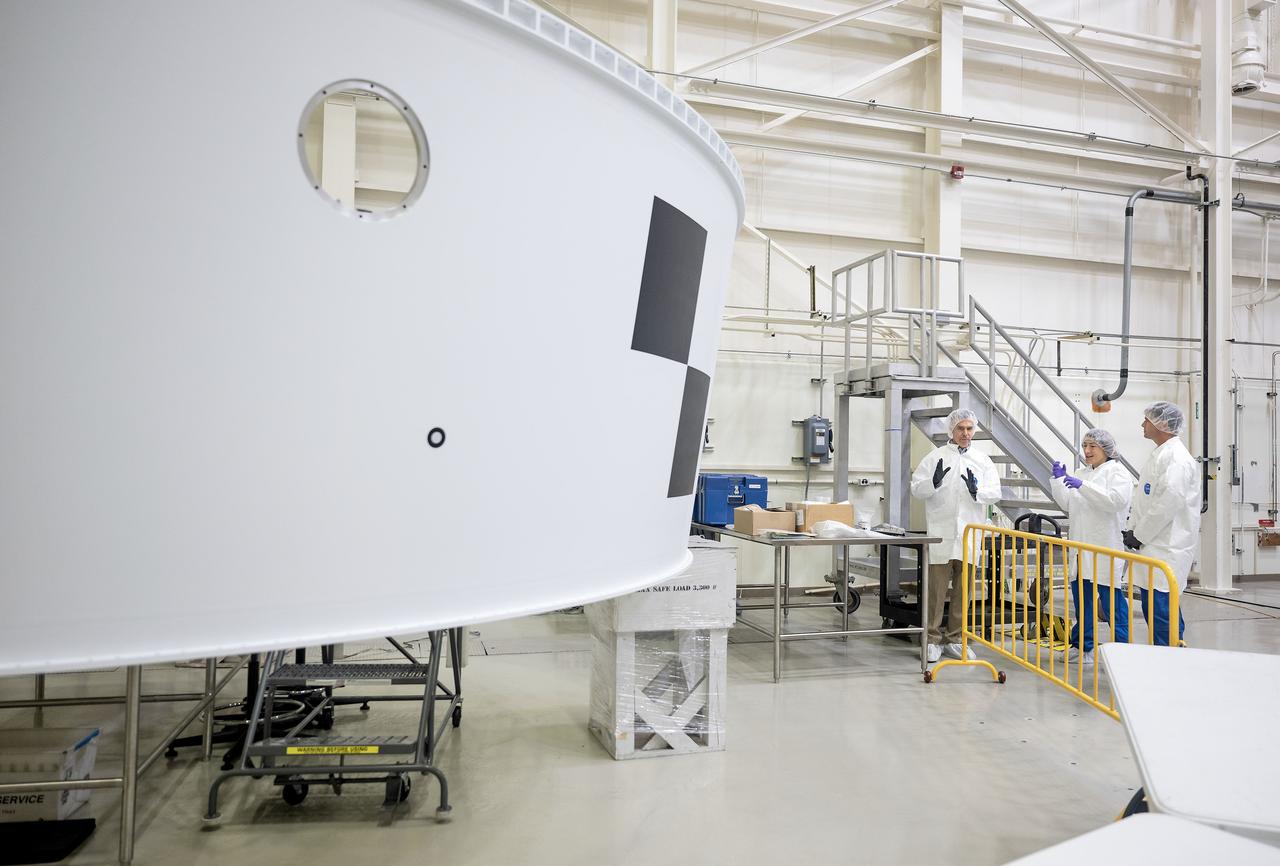
These photos show highlights from Artemis II NASA astronauts Victor Glover, Reid Wiseman, and Christina Koch of NASA and CSA (Canadian Space Agency) astronaut Jeremy Hansen visit to NASA’s Marshall Space Flight Center in Huntsville, Alabama, Nov. 27. The crew met and spoke to employees and viewed facilities for SLS (Space Launch System) rocket. All four astronauts signed the Orion stage adapter (OSA), a small ring structure that connects SLS to NASA’s Orion spacecraft, that will be used for Artemis II. Koch and Wiseman also visited the Systems Integration Lab, where SLS flight software testing is conducted. The four astronauts will launch atop SLS inside Orion to venture around the Moon on Artemis II, the first crewed flight for Artemis.
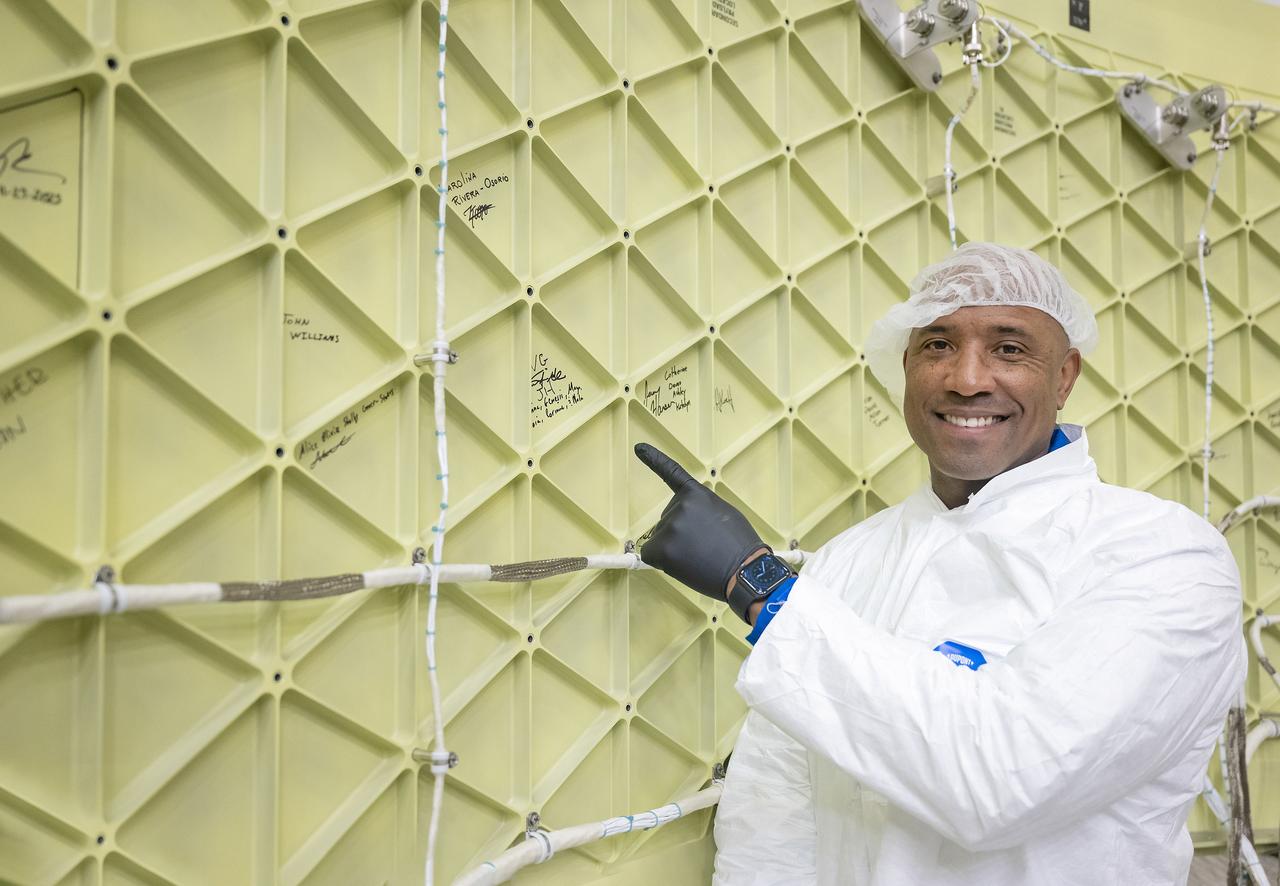
These photos show highlights from Artemis II NASA astronauts Victor Glover, Reid Wiseman, and Christina Koch of NASA and CSA (Canadian Space Agency) astronaut Jeremy Hansen visit to NASA’s Marshall Space Flight Center in Huntsville, Alabama, Nov. 27. The crew met and spoke to employees and viewed facilities for SLS (Space Launch System) rocket. All four astronauts signed the Orion stage adapter (OSA), a small ring structure that connects SLS to NASA’s Orion spacecraft, that will be used for Artemis II. Koch and Wiseman also visited the Systems Integration Lab, where SLS flight software testing is conducted. The four astronauts will launch atop SLS inside Orion to venture around the Moon on Artemis II, the first crewed flight for Artemis.

These photos show highlights from Artemis II NASA astronauts Victor Glover, Reid Wiseman, and Christina Koch of NASA and CSA (Canadian Space Agency) astronaut Jeremy Hansen visit to NASA’s Marshall Space Flight Center in Huntsville, Alabama, Nov. 27. The crew met and spoke to employees and viewed facilities for SLS (Space Launch System) rocket. All four astronauts signed the Orion stage adapter (OSA), a small ring structure that connects SLS to NASA’s Orion spacecraft, that will be used for Artemis II. Koch and Wiseman also visited the Systems Integration Lab, where SLS flight software testing is conducted. The four astronauts will launch atop SLS inside Orion to venture around the Moon on Artemis II, the first crewed flight for Artemis.
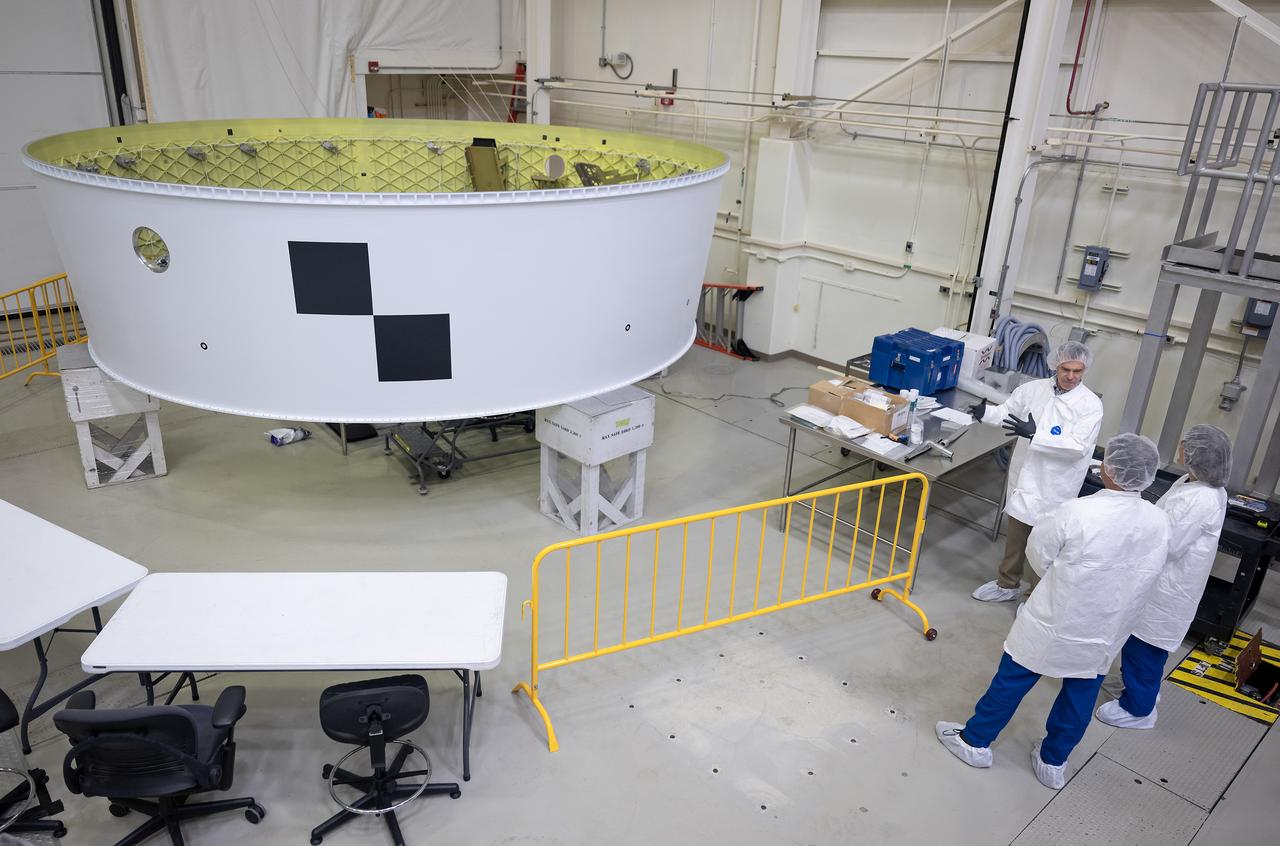
These photos show highlights from Artemis II NASA astronauts Victor Glover, Reid Wiseman, and Christina Koch of NASA and CSA (Canadian Space Agency) astronaut Jeremy Hansen visit to NASA’s Marshall Space Flight Center in Huntsville, Alabama, Nov. 27. The crew met and spoke to employees and viewed facilities for SLS (Space Launch System) rocket. All four astronauts signed the Orion stage adapter (OSA), a small ring structure that connects SLS to NASA’s Orion spacecraft, that will be used for Artemis II. Koch and Wiseman also visited the Systems Integration Lab, where SLS flight software testing is conducted. The four astronauts will launch atop SLS inside Orion to venture around the Moon on Artemis II, the first crewed flight for Artemis.
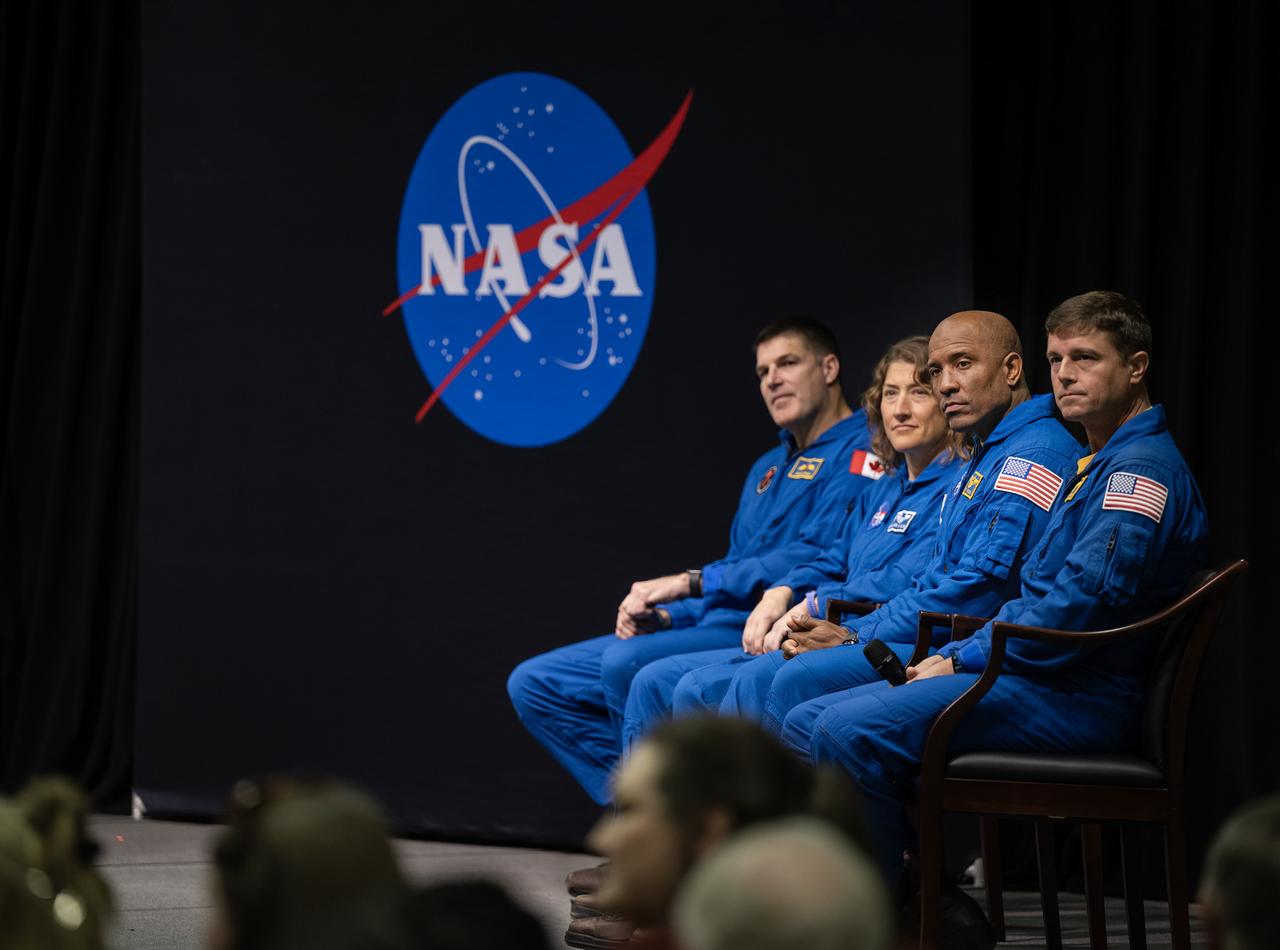
These photos show highlights from Artemis II NASA astronauts Victor Glover, Reid Wiseman, and Christina Koch of NASA and CSA (Canadian Space Agency) astronaut Jeremy Hansen visit to NASA’s Marshall Space Flight Center in Huntsville, Alabama, Nov. 27. The crew met and spoke to employees and viewed facilities for SLS (Space Launch System) rocket. All four astronauts signed the Orion stage adapter (OSA), a small ring structure that connects SLS to NASA’s Orion spacecraft, that will be used for Artemis II. Koch and Wiseman also visited the Systems Integration Lab, where SLS flight software testing is conducted. The four astronauts will launch atop SLS inside Orion to venture around the Moon on Artemis II, the first crewed flight for Artemis.
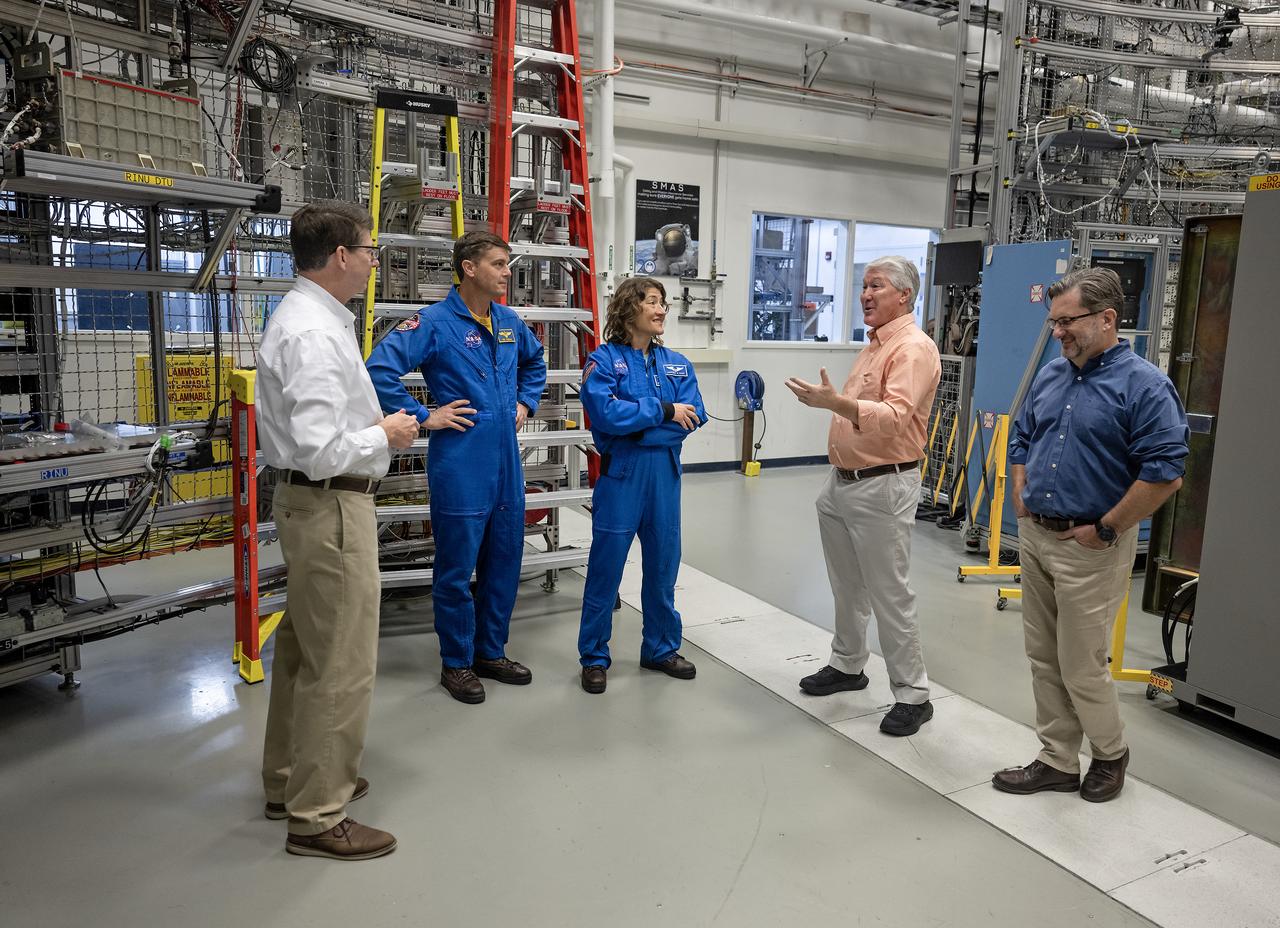
These photos show highlights from Artemis II NASA astronauts Victor Glover, Reid Wiseman, and Christina Koch of NASA and CSA (Canadian Space Agency) astronaut Jeremy Hansen visit to NASA’s Marshall Space Flight Center in Huntsville, Alabama, Nov. 27. The crew met and spoke to employees and viewed facilities for SLS (Space Launch System) rocket. All four astronauts signed the Orion stage adapter (OSA), a small ring structure that connects SLS to NASA’s Orion spacecraft, that will be used for Artemis II. Koch and Wiseman also visited the Systems Integration Lab, where SLS flight software testing is conducted. The four astronauts will launch atop SLS inside Orion to venture around the Moon on Artemis II, the first crewed flight for Artemis.
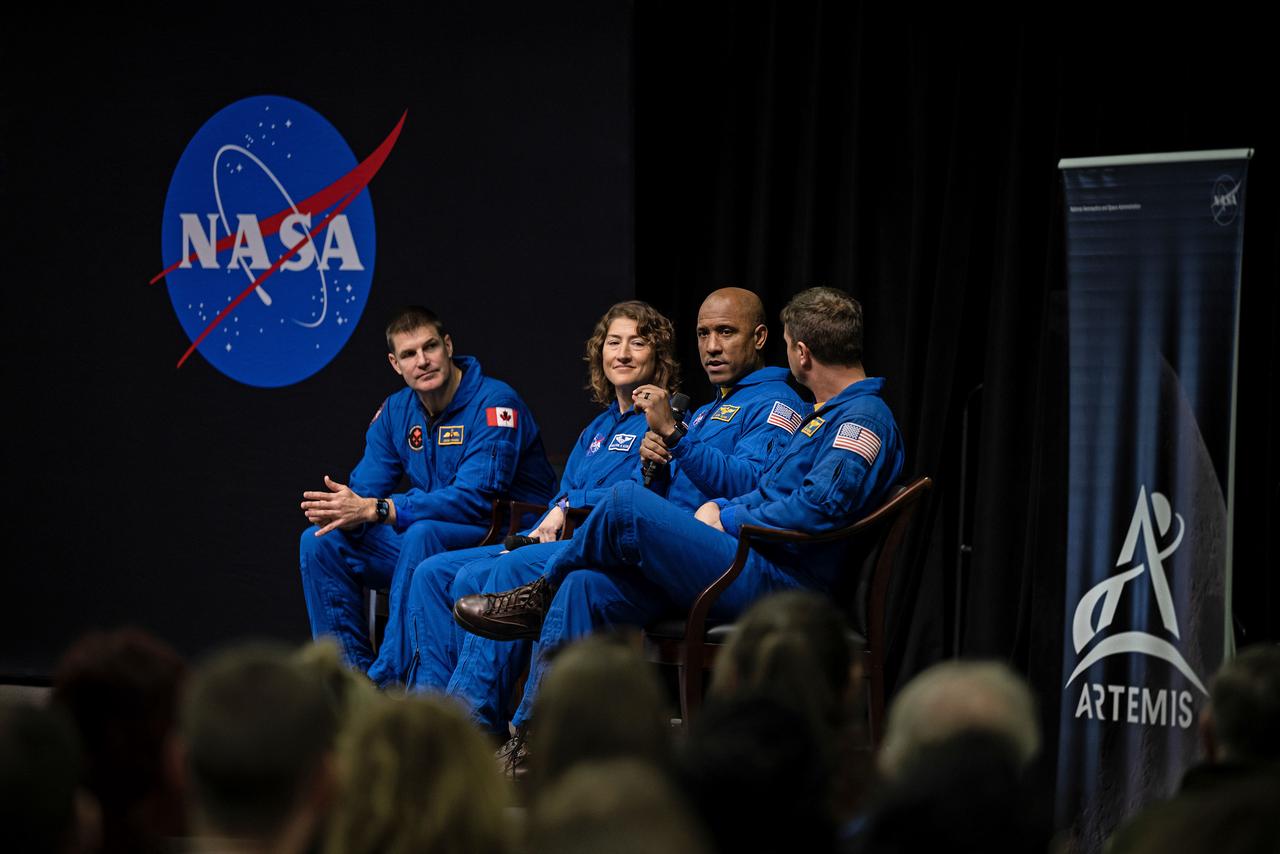
These photos show highlights from Artemis II NASA astronauts Victor Glover, Reid Wiseman, and Christina Koch of NASA and CSA (Canadian Space Agency) astronaut Jeremy Hansen visit to NASA’s Marshall Space Flight Center in Huntsville, Alabama, Nov. 27. The crew met and spoke to employees and viewed facilities for SLS (Space Launch System) rocket. All four astronauts signed the Orion stage adapter (OSA), a small ring structure that connects SLS to NASA’s Orion spacecraft, that will be used for Artemis II. Koch and Wiseman also visited the Systems Integration Lab, where SLS flight software testing is conducted. The four astronauts will launch atop SLS inside Orion to venture around the Moon on Artemis II, the first crewed flight for Artemis.
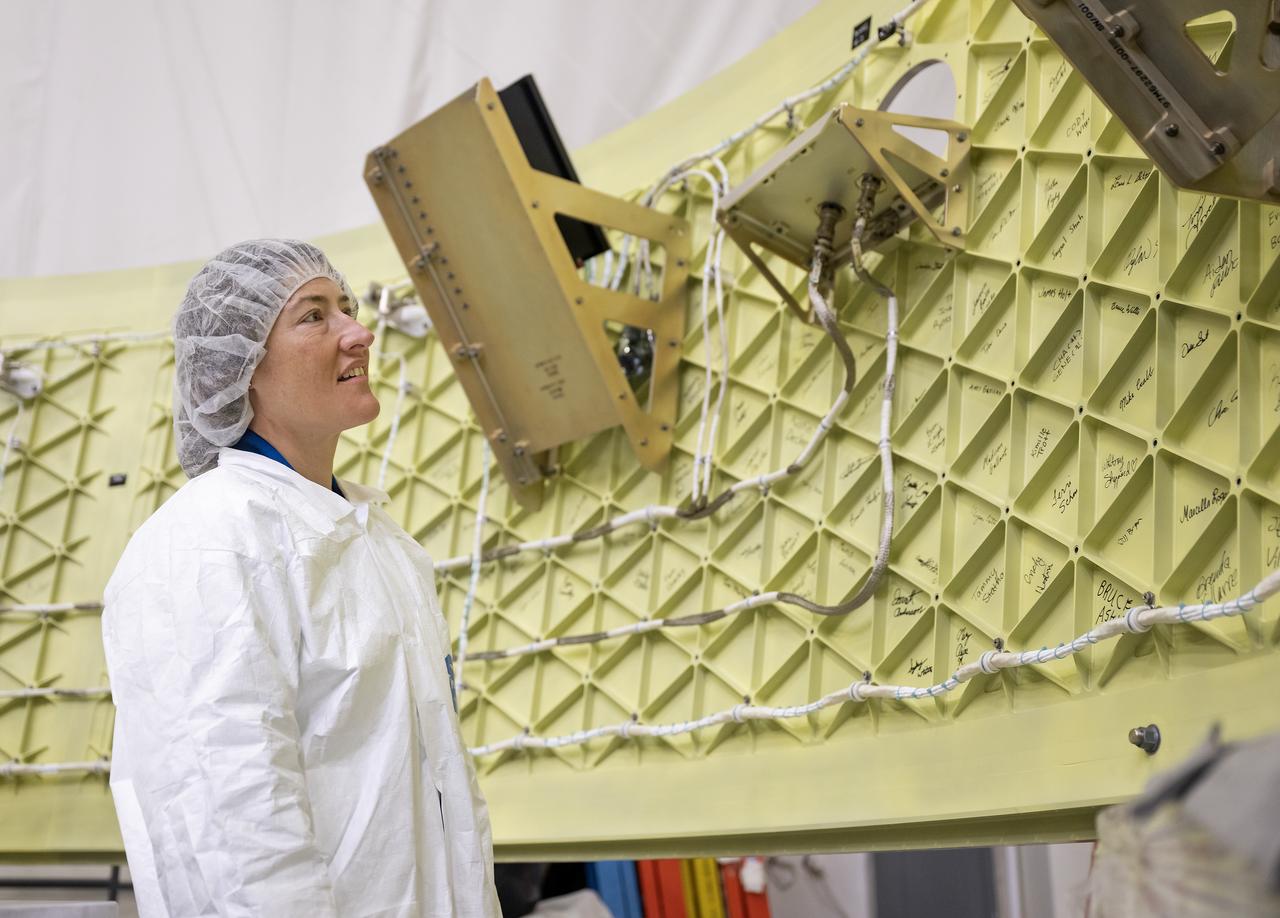
These photos show highlights from Artemis II NASA astronauts Victor Glover, Reid Wiseman, and Christina Koch of NASA and CSA (Canadian Space Agency) astronaut Jeremy Hansen visit to NASA’s Marshall Space Flight Center in Huntsville, Alabama, Nov. 27. The crew met and spoke to employees and viewed facilities for SLS (Space Launch System) rocket. All four astronauts signed the Orion stage adapter (OSA), a small ring structure that connects SLS to NASA’s Orion spacecraft, that will be used for Artemis II. Koch and Wiseman also visited the Systems Integration Lab, where SLS flight software testing is conducted. The four astronauts will launch atop SLS inside Orion to venture around the Moon on Artemis II, the first crewed flight for Artemis.

These photos show highlights from Artemis II NASA astronauts Victor Glover, Reid Wiseman, and Christina Koch of NASA and CSA (Canadian Space Agency) astronaut Jeremy Hansen visit to NASA’s Marshall Space Flight Center in Huntsville, Alabama, Nov. 27. The crew met and spoke to employees and viewed facilities for SLS (Space Launch System) rocket. All four astronauts signed the Orion stage adapter (OSA), a small ring structure that connects SLS to NASA’s Orion spacecraft, that will be used for Artemis II. Koch and Wiseman also visited the Systems Integration Lab, where SLS flight software testing is conducted. The four astronauts will launch atop SLS inside Orion to venture around the Moon on Artemis II, the first crewed flight for Artemis.
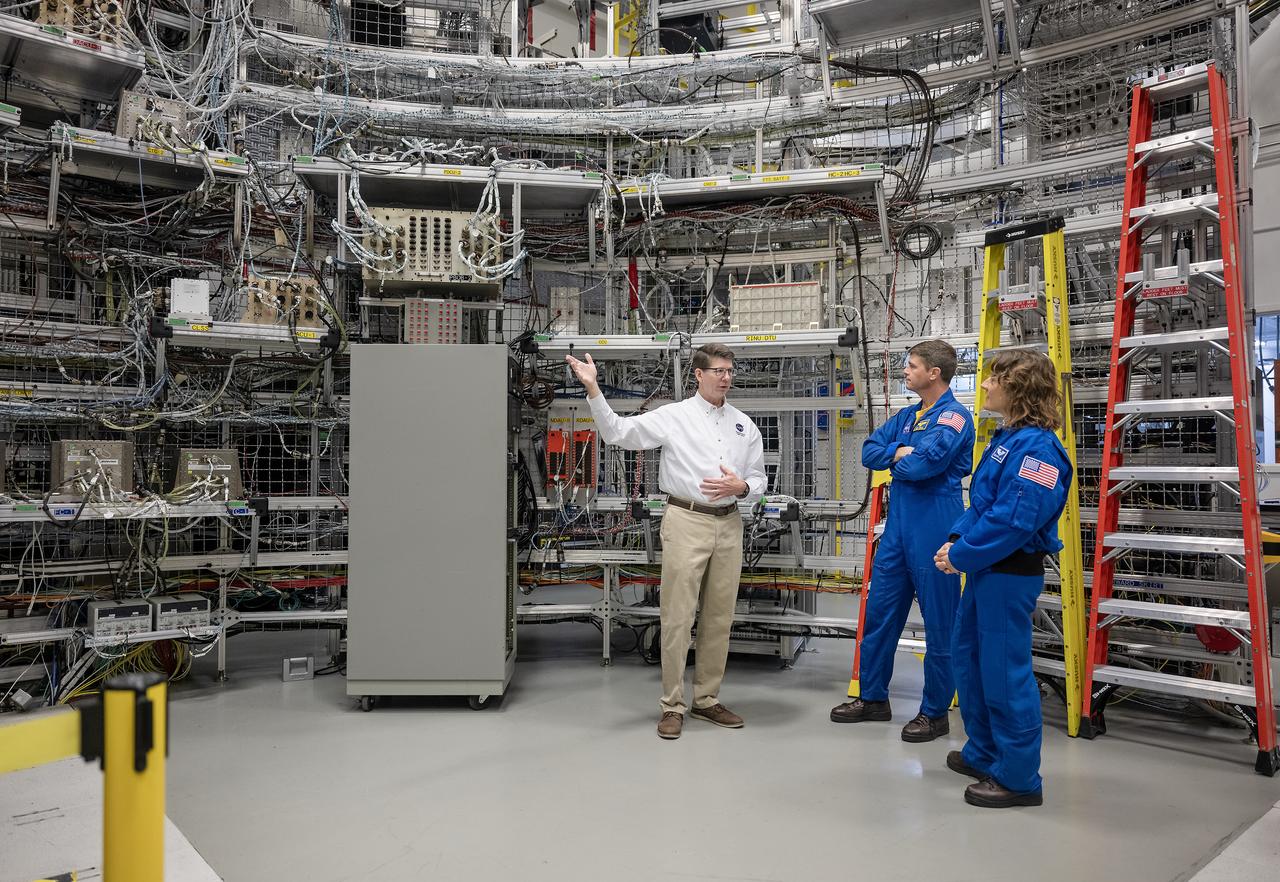
These photos show highlights from Artemis II NASA astronauts Victor Glover, Reid Wiseman, and Christina Koch of NASA and CSA (Canadian Space Agency) astronaut Jeremy Hansen visit to NASA’s Marshall Space Flight Center in Huntsville, Alabama, Nov. 27. The crew met and spoke to employees and viewed facilities for SLS (Space Launch System) rocket. All four astronauts signed the Orion stage adapter (OSA), a small ring structure that connects SLS to NASA’s Orion spacecraft, that will be used for Artemis II. Koch and Wiseman also visited the Systems Integration Lab, where SLS flight software testing is conducted. The four astronauts will launch atop SLS inside Orion to venture around the Moon on Artemis II, the first crewed flight for Artemis.
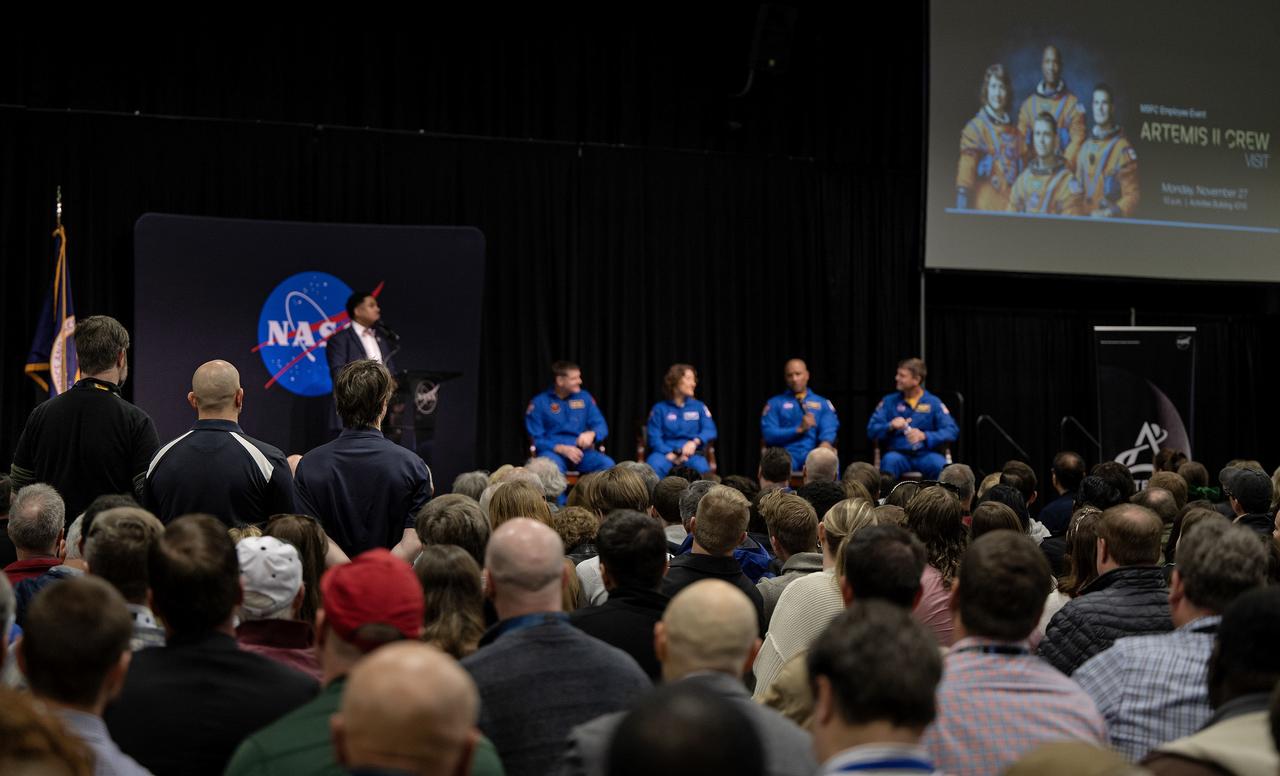
These photos show highlights from Artemis II NASA astronauts Victor Glover, Reid Wiseman, and Christina Koch of NASA and CSA (Canadian Space Agency) astronaut Jeremy Hansen visit to NASA’s Marshall Space Flight Center in Huntsville, Alabama, Nov. 27. The crew met and spoke to employees and viewed facilities for SLS (Space Launch System) rocket. All four astronauts signed the Orion stage adapter (OSA), a small ring structure that connects SLS to NASA’s Orion spacecraft, that will be used for Artemis II. Koch and Wiseman also visited the Systems Integration Lab, where SLS flight software testing is conducted. The four astronauts will launch atop SLS inside Orion to venture around the Moon on Artemis II, the first crewed flight for Artemis.

These photos show highlights from Artemis II NASA astronauts Victor Glover, Reid Wiseman, and Christina Koch of NASA and CSA (Canadian Space Agency) astronaut Jeremy Hansen visit to NASA’s Marshall Space Flight Center in Huntsville, Alabama, Nov. 27. The crew met and spoke to employees and viewed facilities for SLS (Space Launch System) rocket. All four astronauts signed the Orion stage adapter (OSA), a small ring structure that connects SLS to NASA’s Orion spacecraft, that will be used for Artemis II. Koch and Wiseman also visited the Systems Integration Lab, where SLS flight software testing is conducted. The four astronauts will launch atop SLS inside Orion to venture around the Moon on Artemis II, the first crewed flight for Artemis.
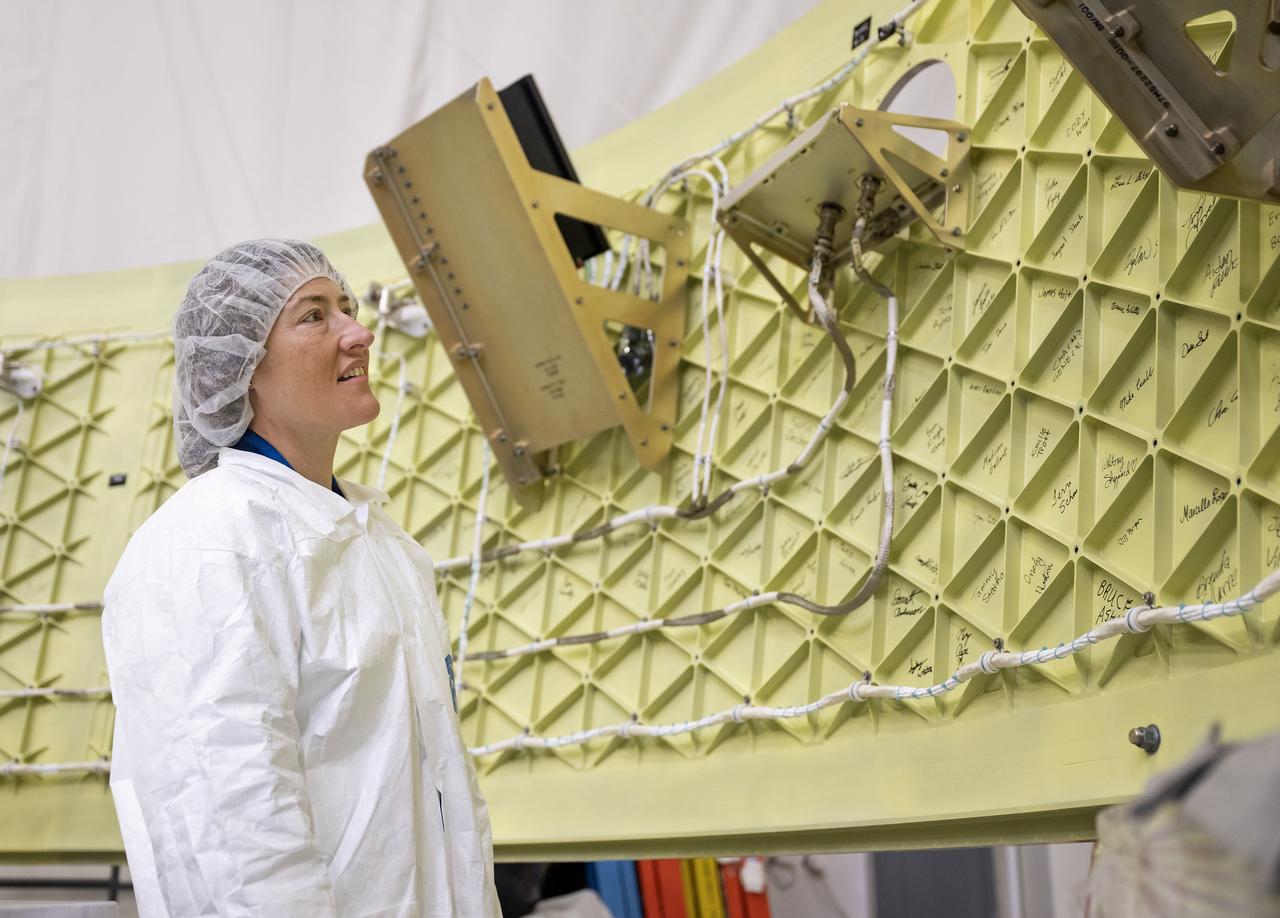
These photos show highlights from Artemis II NASA astronauts Victor Glover, Reid Wiseman, and Christina Koch of NASA and CSA (Canadian Space Agency) astronaut Jeremy Hansen visit to NASA’s Marshall Space Flight Center in Huntsville, Alabama, Nov. 27. The crew met and spoke to employees and viewed facilities for SLS (Space Launch System) rocket. All four astronauts signed the Orion stage adapter (OSA), a small ring structure that connects SLS to NASA’s Orion spacecraft, that will be used for Artemis II. Koch and Wiseman also visited the Systems Integration Lab, where SLS flight software testing is conducted. The four astronauts will launch atop SLS inside Orion to venture around the Moon on Artemis II, the first crewed flight for Artemis.

These photos show highlights from Artemis II NASA astronauts Victor Glover, Reid Wiseman, and Christina Koch of NASA and CSA (Canadian Space Agency) astronaut Jeremy Hansen visit to NASA’s Marshall Space Flight Center in Huntsville, Alabama, Nov. 27. The crew met and spoke to employees and viewed facilities for SLS (Space Launch System) rocket. All four astronauts signed the Orion stage adapter (OSA), a small ring structure that connects SLS to NASA’s Orion spacecraft, that will be used for Artemis II. Koch and Wiseman also visited the Systems Integration Lab, where SLS flight software testing is conducted. The four astronauts will launch atop SLS inside Orion to venture around the Moon on Artemis II, the first crewed flight for Artemis.
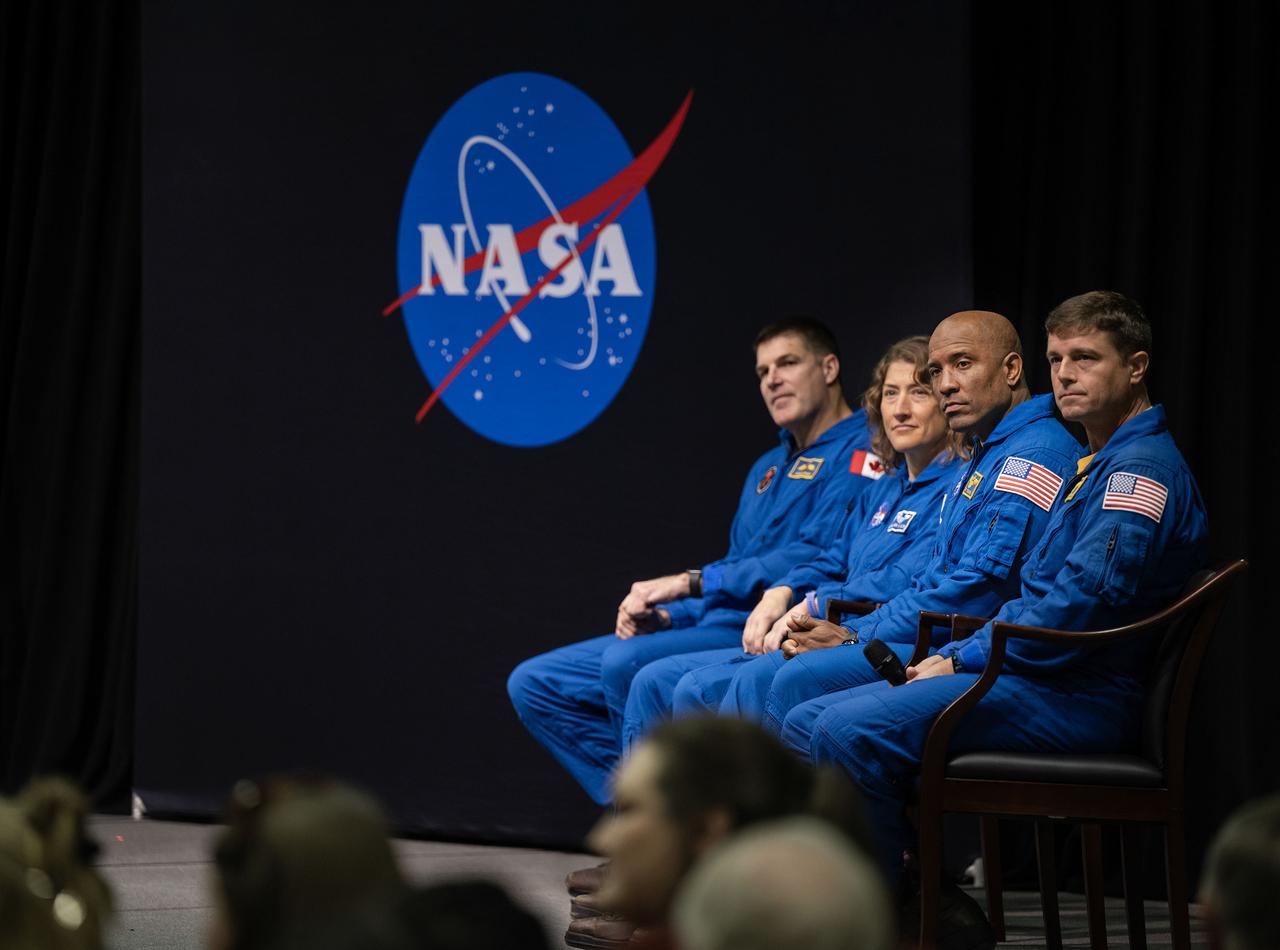
These photos show highlights from Artemis II NASA astronauts Victor Glover, Reid Wiseman, and Christina Koch of NASA and CSA (Canadian Space Agency) astronaut Jeremy Hansen visit to NASA’s Marshall Space Flight Center in Huntsville, Alabama, Nov. 27. The crew met and spoke to employees and viewed facilities for SLS (Space Launch System) rocket. All four astronauts signed the Orion stage adapter (OSA), a small ring structure that connects SLS to NASA’s Orion spacecraft, that will be used for Artemis II. Koch and Wiseman also visited the Systems Integration Lab, where SLS flight software testing is conducted. The four astronauts will launch atop SLS inside Orion to venture around the Moon on Artemis II, the first crewed flight for Artemis.

These photos show highlights from Artemis II NASA astronauts Victor Glover, Reid Wiseman, and Christina Koch of NASA and CSA (Canadian Space Agency) astronaut Jeremy Hansen visit to NASA’s Marshall Space Flight Center in Huntsville, Alabama, Nov. 27. The crew met and spoke to employees and viewed facilities for SLS (Space Launch System) rocket. All four astronauts signed the Orion stage adapter (OSA), a small ring structure that connects SLS to NASA’s Orion spacecraft, that will be used for Artemis II. Koch and Wiseman also visited the Systems Integration Lab, where SLS flight software testing is conducted. The four astronauts will launch atop SLS inside Orion to venture around the Moon on Artemis II, the first crewed flight for Artemis.
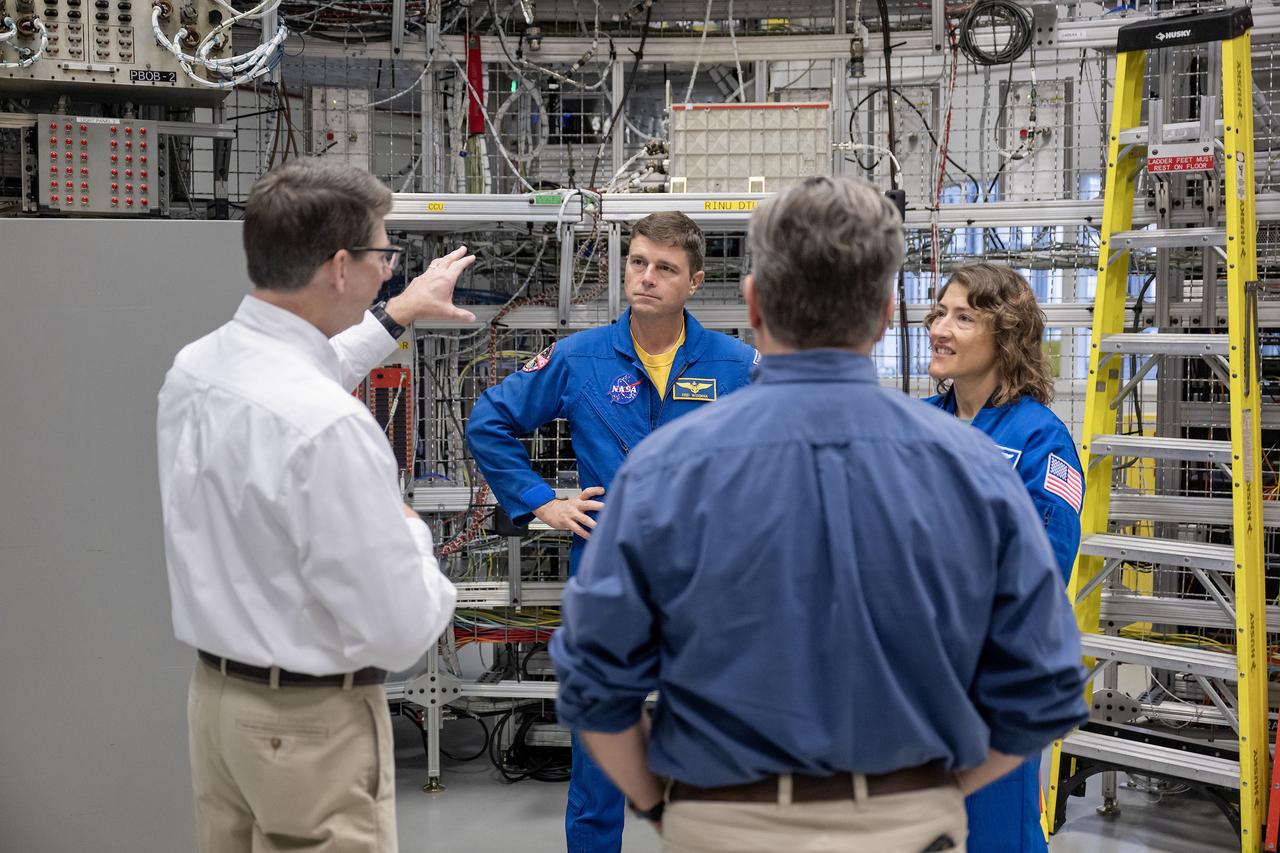
These photos show highlights from Artemis II NASA astronauts Victor Glover, Reid Wiseman, and Christina Koch of NASA and CSA (Canadian Space Agency) astronaut Jeremy Hansen visit to NASA’s Marshall Space Flight Center in Huntsville, Alabama, Nov. 27. The crew met and spoke to employees and viewed facilities for SLS (Space Launch System) rocket. All four astronauts signed the Orion stage adapter (OSA), a small ring structure that connects SLS to NASA’s Orion spacecraft, that will be used for Artemis II. Koch and Wiseman also visited the Systems Integration Lab, where SLS flight software testing is conducted. The four astronauts will launch atop SLS inside Orion to venture around the Moon on Artemis II, the first crewed flight for Artemis.
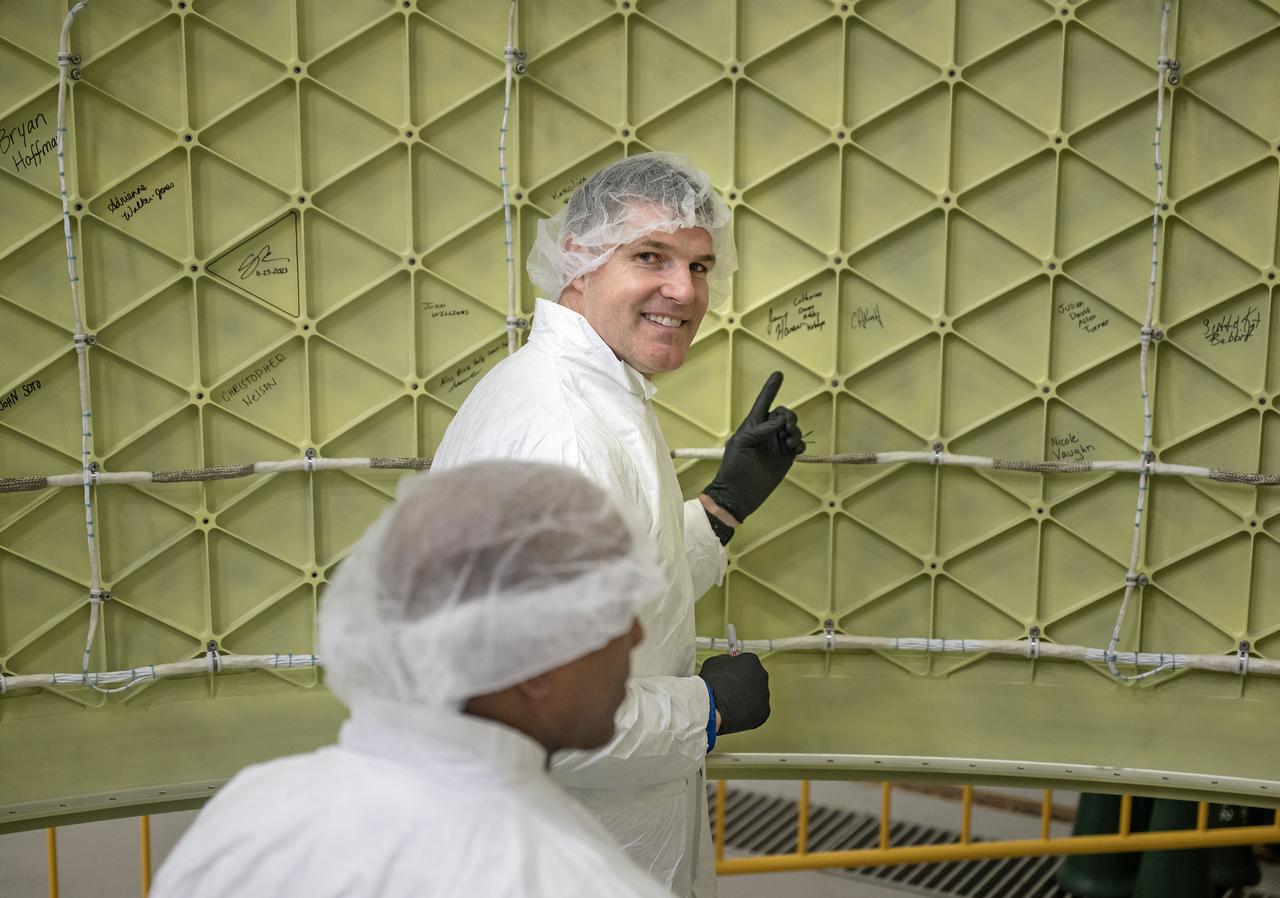
These photos show highlights from Artemis II NASA astronauts Victor Glover, Reid Wiseman, and Christina Koch of NASA and CSA (Canadian Space Agency) astronaut Jeremy Hansen visit to NASA’s Marshall Space Flight Center in Huntsville, Alabama, Nov. 27. The crew met and spoke to employees and viewed facilities for SLS (Space Launch System) rocket. All four astronauts signed the Orion stage adapter (OSA), a small ring structure that connects SLS to NASA’s Orion spacecraft, that will be used for Artemis II. Koch and Wiseman also visited the Systems Integration Lab, where SLS flight software testing is conducted. The four astronauts will launch atop SLS inside Orion to venture around the Moon on Artemis II, the first crewed flight for Artemis.
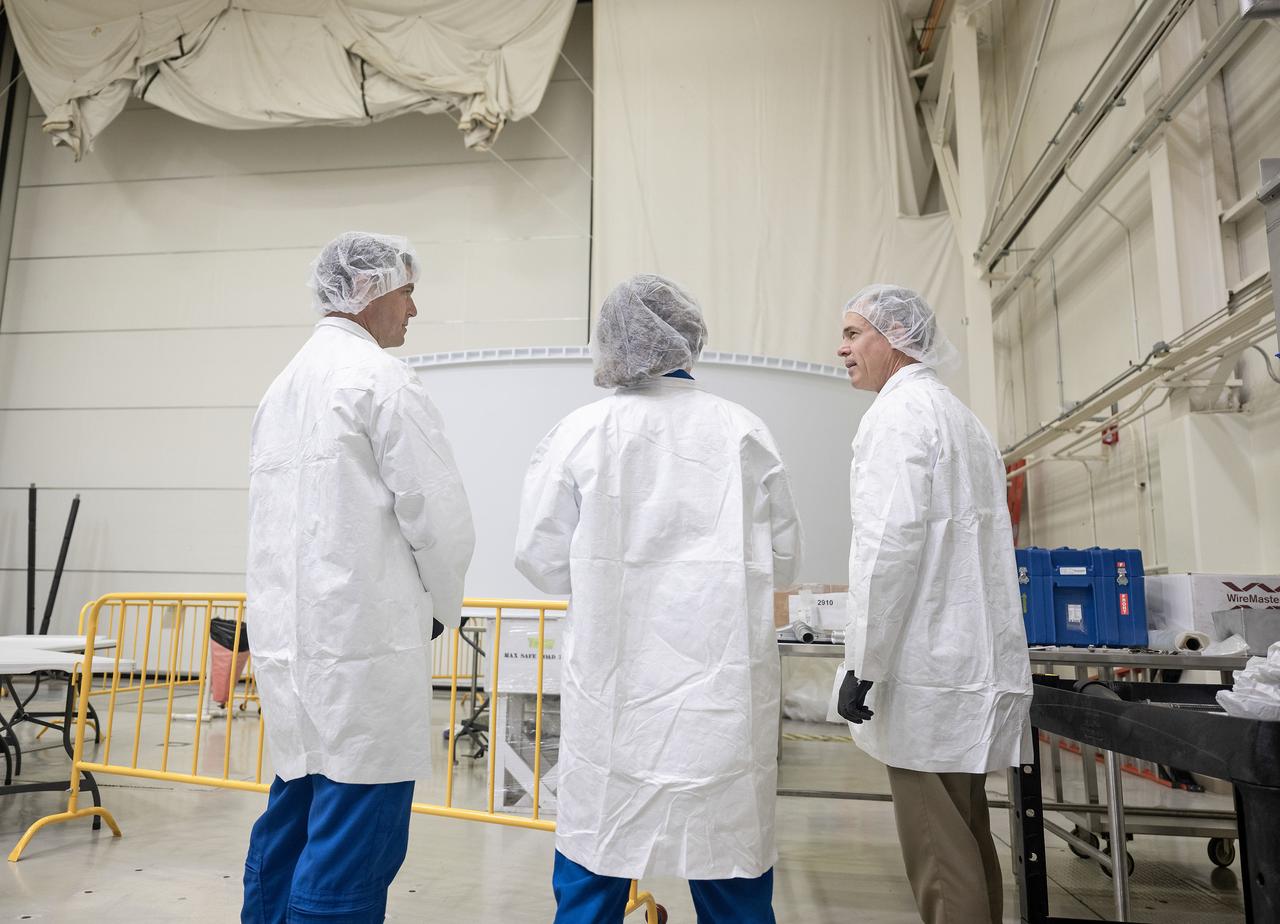
These photos show highlights from Artemis II NASA astronauts Victor Glover, Reid Wiseman, and Christina Koch of NASA and CSA (Canadian Space Agency) astronaut Jeremy Hansen visit to NASA’s Marshall Space Flight Center in Huntsville, Alabama, Nov. 27. The crew met and spoke to employees and viewed facilities for SLS (Space Launch System) rocket. All four astronauts signed the Orion stage adapter (OSA), a small ring structure that connects SLS to NASA’s Orion spacecraft, that will be used for Artemis II. Koch and Wiseman also visited the Systems Integration Lab, where SLS flight software testing is conducted. The four astronauts will launch atop SLS inside Orion to venture around the Moon on Artemis II, the first crewed flight for Artemis.

These photos show highlights from Artemis II NASA astronauts Victor Glover, Reid Wiseman, and Christina Koch of NASA and CSA (Canadian Space Agency) astronaut Jeremy Hansen visit to NASA’s Marshall Space Flight Center in Huntsville, Alabama, Nov. 27. The crew met and spoke to employees and viewed facilities for SLS (Space Launch System) rocket. All four astronauts signed the Orion stage adapter (OSA), a small ring structure that connects SLS to NASA’s Orion spacecraft, that will be used for Artemis II. Koch and Wiseman also visited the Systems Integration Lab, where SLS flight software testing is conducted. The four astronauts will launch atop SLS inside Orion to venture around the Moon on Artemis II, the first crewed flight for Artemis.
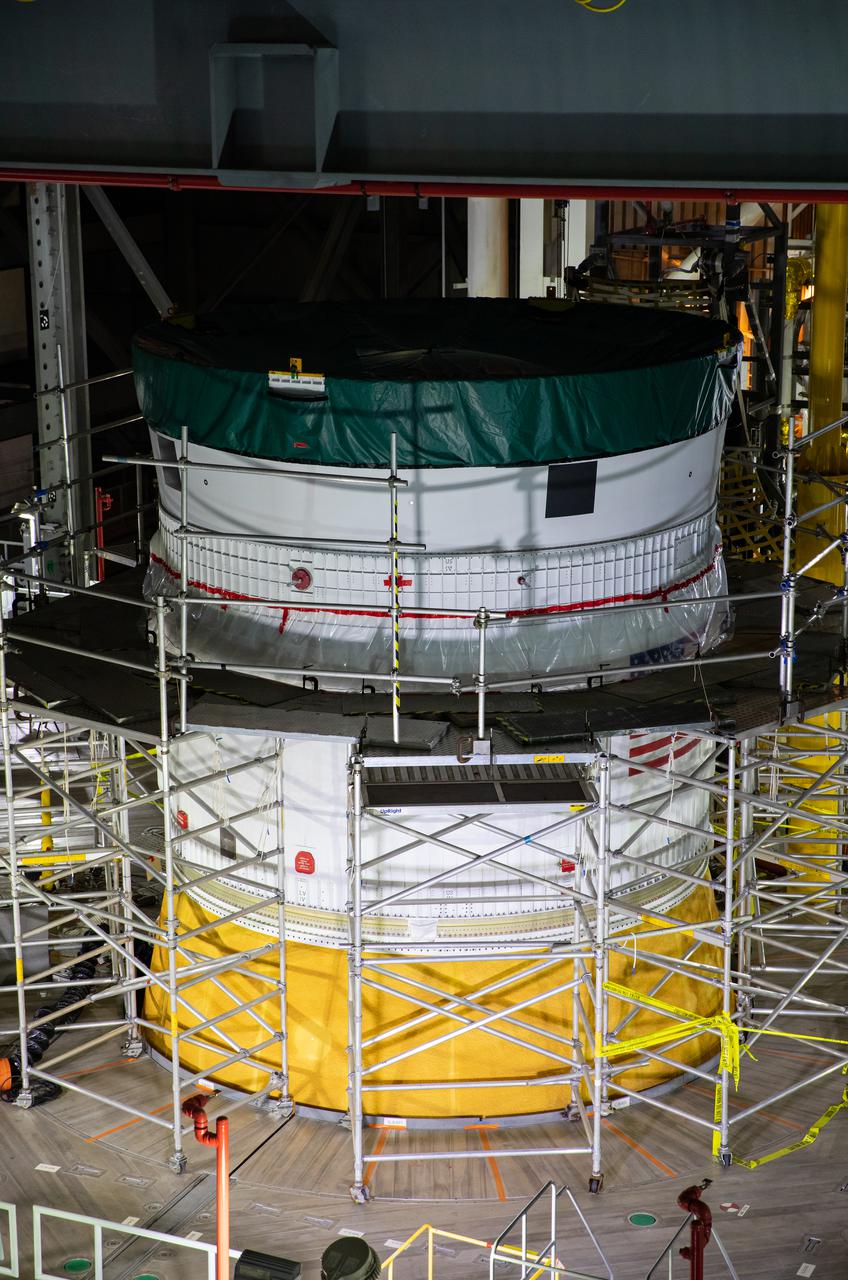
Inside NASA’s iconic Vehicle Assembly Building at Kennedy Space Center in Florida, teams from Exploration Ground Systems and contractor Jacobs mate the Orion Stage Adapter (OSA) to the Interim Cryogenic Propulsion Stage (ICPS) on top of the Space Launch System (SLS) on Oct. 9, 2021. The addition of the OSA marks the last piece of SLS rocket hardware to be added before crews soon add the Orion spacecraft and its launch abort system on top of the OSA. The ring-shaped OSA is filled with 10 shoebox-sized CubeSats that will deploy when the ICPS separates from Orion on its way to the Moon during Artemis I, which will be the first integrated flight test of the SLS and Orion spacecraft. In later missions, NASA will land the first woman and the first person of color on the surface of the Moon, paving the way for a long-term lunar presence and serving as a steppingstone on the way to Mars.
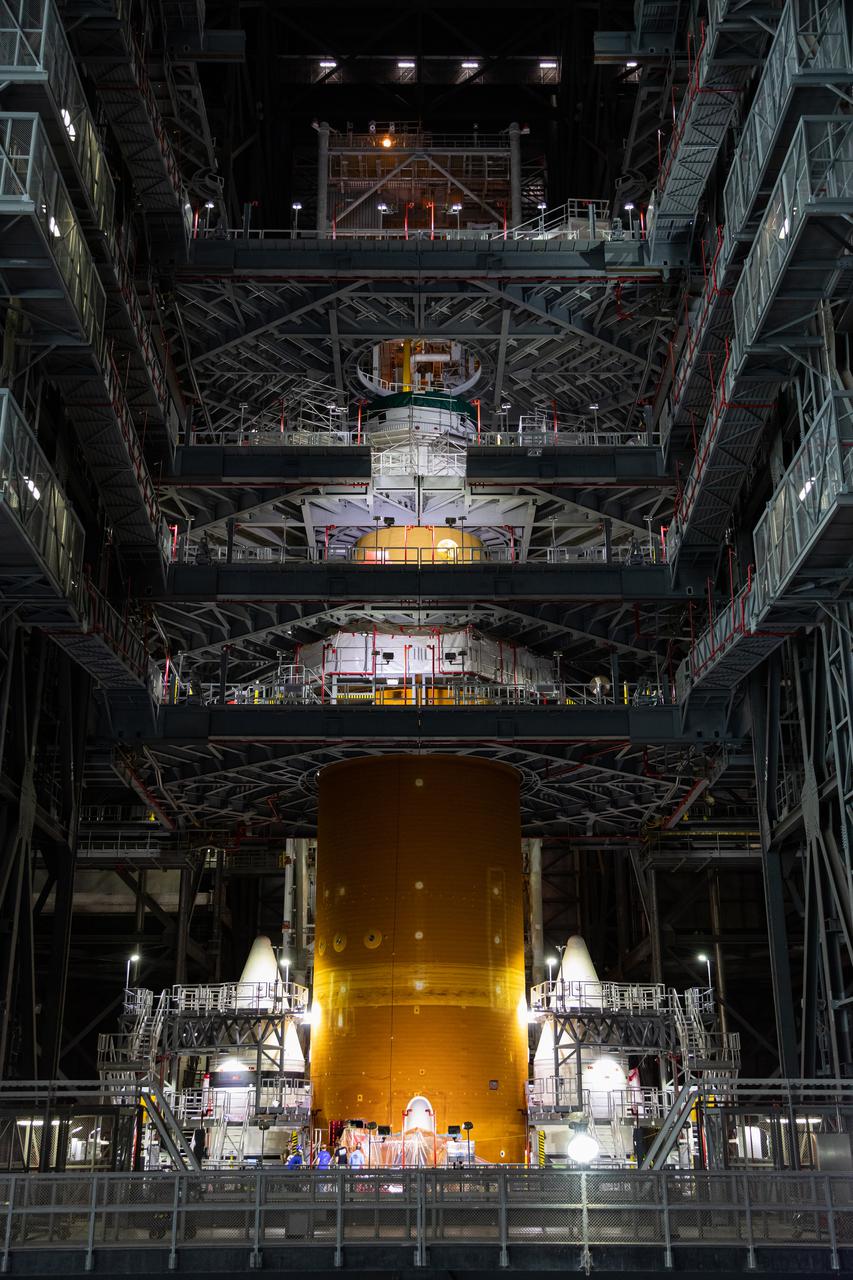
Inside NASA’s iconic Vehicle Assembly Building at Kennedy Space Center in Florida, teams from Exploration Ground Systems and contractor Jacobs mate the Orion Stage Adapter (OSA) to the Interim Cryogenic Propulsion Stage (ICPS) on top of the Space Launch System (SLS) on Oct. 9, 2021. The addition of the OSA marks the last piece of SLS rocket hardware to be added before crews soon add the Orion spacecraft and its launch abort system on top of the OSA. The ring-shaped OSA is filled with 10 shoebox-sized CubeSats that will deploy when the ICPS separates from Orion on its way to the Moon during Artemis I, which will be the first integrated flight test of the SLS and Orion spacecraft. In later missions, NASA will land the first woman and the first person of color on the surface of the Moon, paving the way for a long-term lunar presence and serving as a steppingstone on the way to Mars.
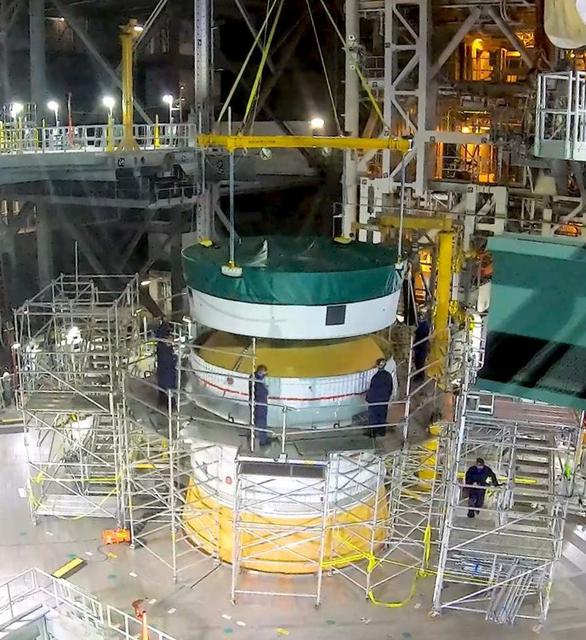
Inside NASA’s iconic Vehicle Assembly Building at Kennedy Space Center in Florida, teams from Exploration Ground Systems and contractor Jacobs mate the Orion Stage Adapter (OSA) to the interim cryogenic propulsion stage (ICPS) on top of the Space Launch System (SLS) on Oct. 9, 2021. The addition of the OSA marks the last piece of SLS rocket hardware to be added before crews soon add the Orion spacecraft and its launch abort system on top of the OSA. The ring-shaped OSA is filled with 10 shoebox-sized CubeSats that will deploy when the ICPS separates from Orion on its way to the Moon during Artemis I, which will be the first integrated flight test of the SLS and Orion spacecraft. In later missions, NASA will land the first woman and the first person of color on the surface of the Moon, paving the way for a long-term lunar presence and serving as a steppingstone on the way to Mars.
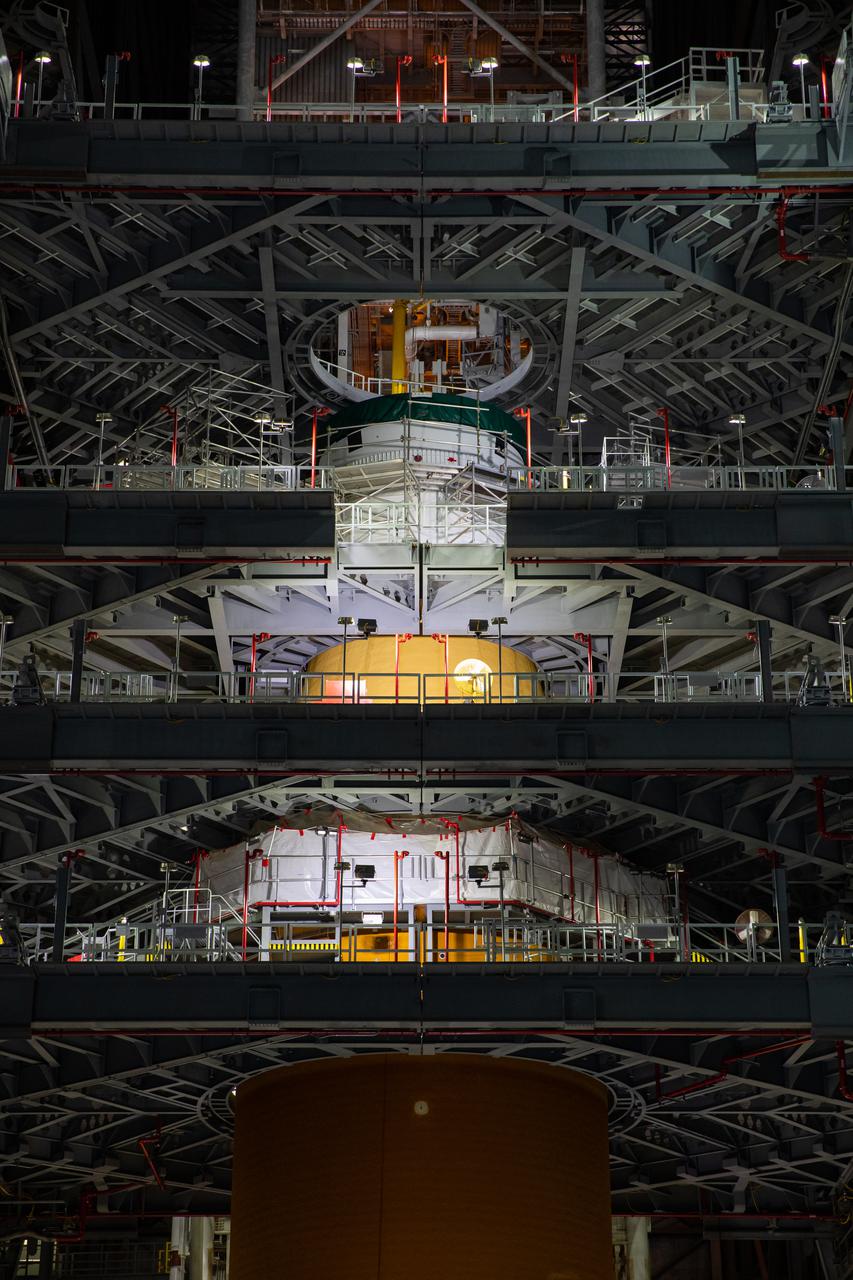
Inside NASA’s iconic Vehicle Assembly Building at Kennedy Space Center in Florida, teams from Exploration Ground Systems and contractor Jacobs mate the Orion Stage Adapter (OSA) to the Interim Cryogenic Propulsion Stage (ICPS) on top of the Space Launch System (SLS) on Oct. 9, 2021. The addition of the OSA marks the last piece of SLS rocket hardware to be added before crews soon add the Orion spacecraft and its launch abort system on top of the OSA. The ring-shaped OSA is filled with 10 shoebox-sized CubeSats that will deploy when the ICPS separates from Orion on its way to the Moon during Artemis I, which will be the first integrated flight test of the SLS and Orion spacecraft. In later missions, NASA will land the first woman and the first person of color on the surface of the Moon, paving the way for a long-term lunar presence and serving as a steppingstone on the way to Mars.

Inside NASA’s iconic Vehicle Assembly Building at Kennedy Space Center in Florida, teams from Exploration Ground Systems and contractor Jacobs mate the Orion Stage Adapter (OSA) to the Interim Cryogenic Propulsion Stage (ICPS) on top of the Space Launch System (SLS) on Oct. 9, 2021. The addition of the OSA marks the last piece of SLS rocket hardware to be added before crews soon add the Orion spacecraft and its launch abort system on top of the OSA. The ring-shaped OSA is filled with 10 shoebox-sized CubeSats that will deploy when the ICPS separates from Orion on its way to the Moon during Artemis I, which will be the first integrated flight test of the SLS and Orion spacecraft. In later missions, NASA will land the first woman and the first person of color on the surface of the Moon, paving the way for a long-term lunar presence and serving as a steppingstone on the way to Mars.
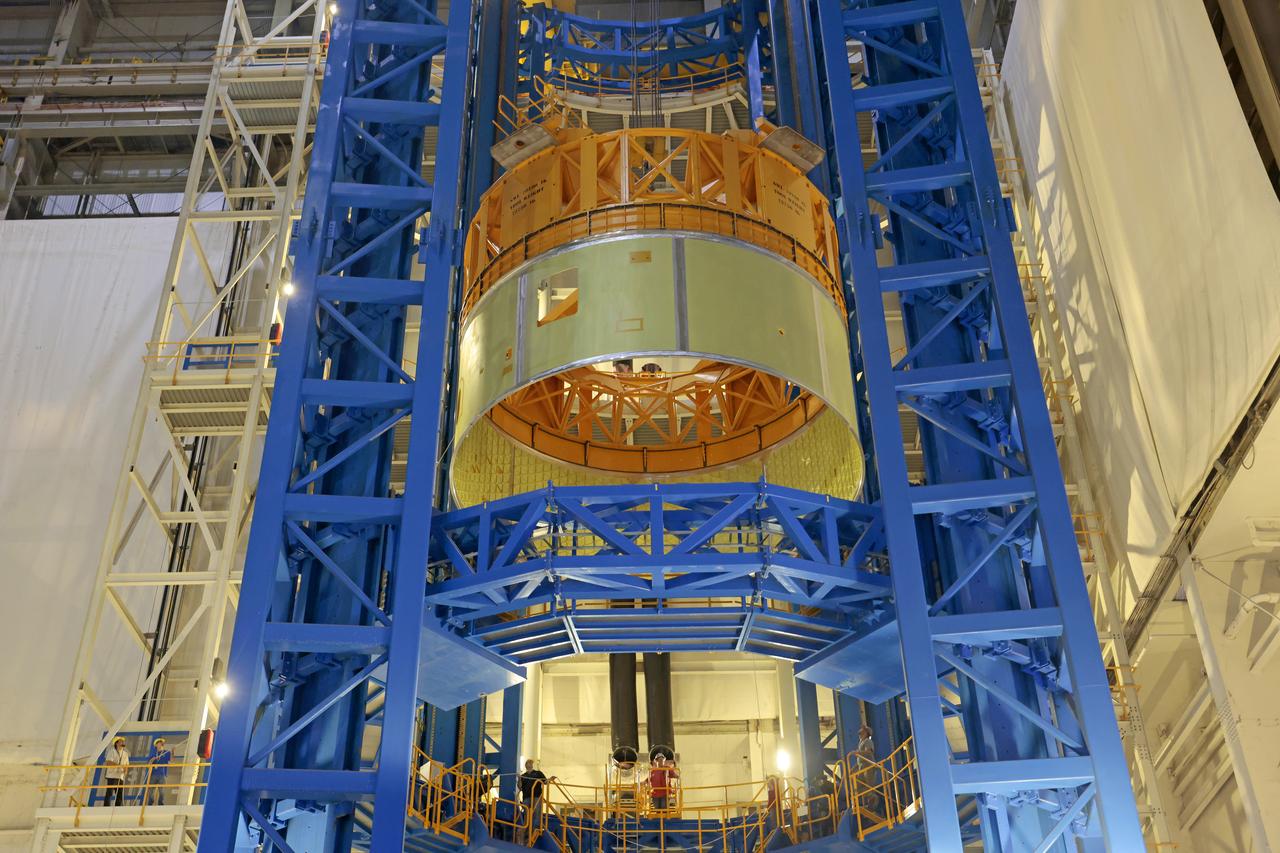
This image shows teams at NASA’s Michoud Assembly Facility in New Orleans lifting a forward skirt out of its vertical assembly center on Jan. 31, 2025. The forward skirt, which will be used on the core stage for the agency’s SLS (Space Launch System) rocket for its Artemis IV mission, houses flight computers, cameras, and avionics. While inside the vertical assembly center, technicians attached the forward skirt’s forward and aft rings, which serve as attachments points to the launch vehicle stage adapter and the liquid oxygen tank, respectively. The forward skirt is one of five major elements that make up the 212-foot-tall rocket stage. The core stage, along with its four RS-25 engines, produce more than two million pounds of thrust to help launch NASA’s Orion spacecraft, astronauts, and supplies beyond Earth’s orbit and to the lunar surface for Artemis. Image credit: NASA/Michael DeMocker
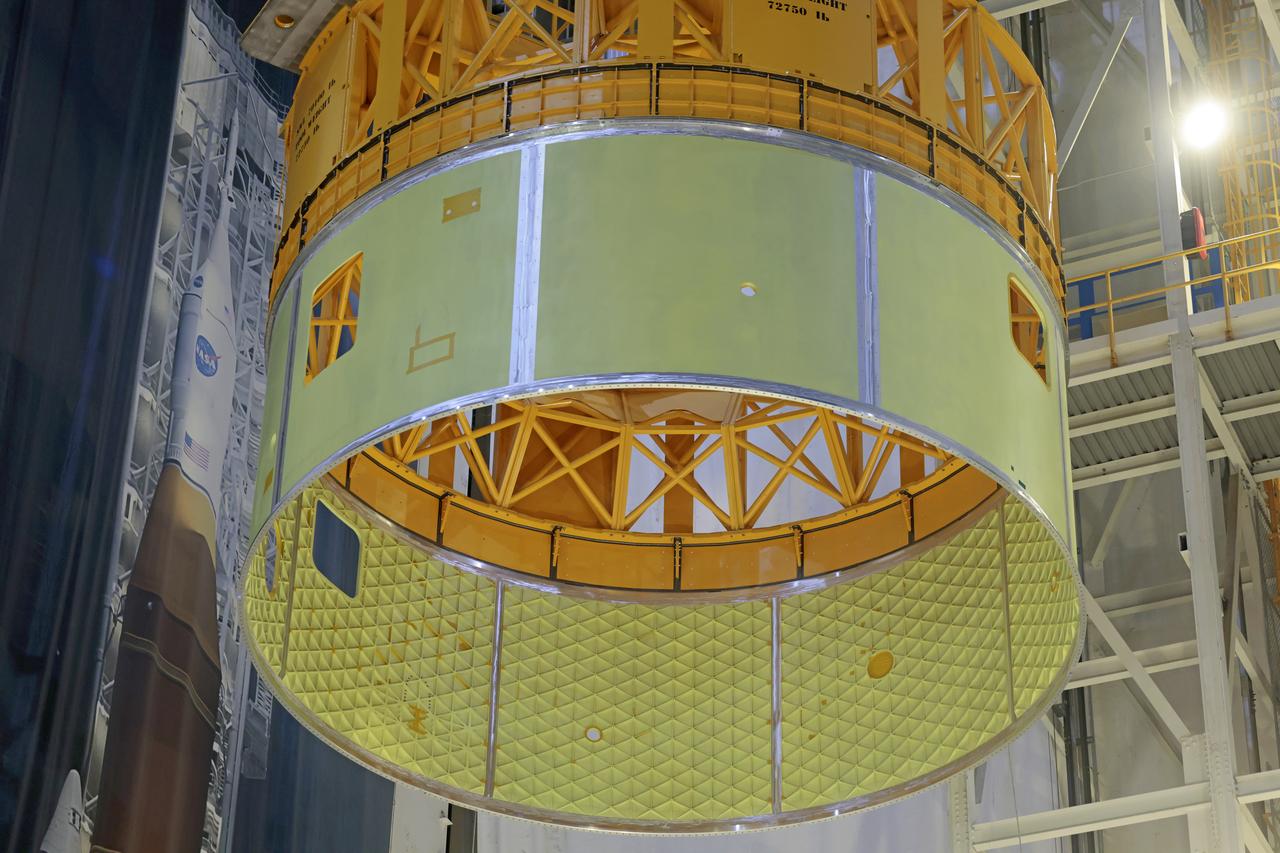
This image shows teams at NASA’s Michoud Assembly Facility in New Orleans lifting a forward skirt out of its vertical assembly center on Jan. 31, 2025. The forward skirt, which will be used on the core stage for the agency’s SLS (Space Launch System) rocket for its Artemis IV mission, houses flight computers, cameras, and avionics. While inside the vertical assembly center, technicians attached the forward skirt’s forward and aft rings, which serve as attachments points to the launch vehicle stage adapter and the liquid oxygen tank, respectively. The forward skirt is one of five major elements that make up the 212-foot-tall rocket stage. The core stage, along with its four RS-25 engines, produce more than two million pounds of thrust to help launch NASA’s Orion spacecraft, astronauts, and supplies beyond Earth’s orbit and to the lunar surface for Artemis. Image credit: NASA/Michael DeMocker

This image shows teams at NASA’s Michoud Assembly Facility in New Orleans lifting a forward skirt out of its vertical assembly center on Jan. 31, 2025. The forward skirt, which will be used on the core stage for the agency’s SLS (Space Launch System) rocket for its Artemis IV mission, houses flight computers, cameras, and avionics. While inside the vertical assembly center, technicians attached the forward skirt’s forward and aft rings, which serve as attachments points to the launch vehicle stage adapter and the liquid oxygen tank, respectively. The forward skirt is one of five major elements that make up the 212-foot-tall rocket stage. The core stage, along with its four RS-25 engines, produce more than two million pounds of thrust to help launch NASA’s Orion spacecraft, astronauts, and supplies beyond Earth’s orbit and to the lunar surface for Artemis. Image credit: NASA/Michael DeMocker
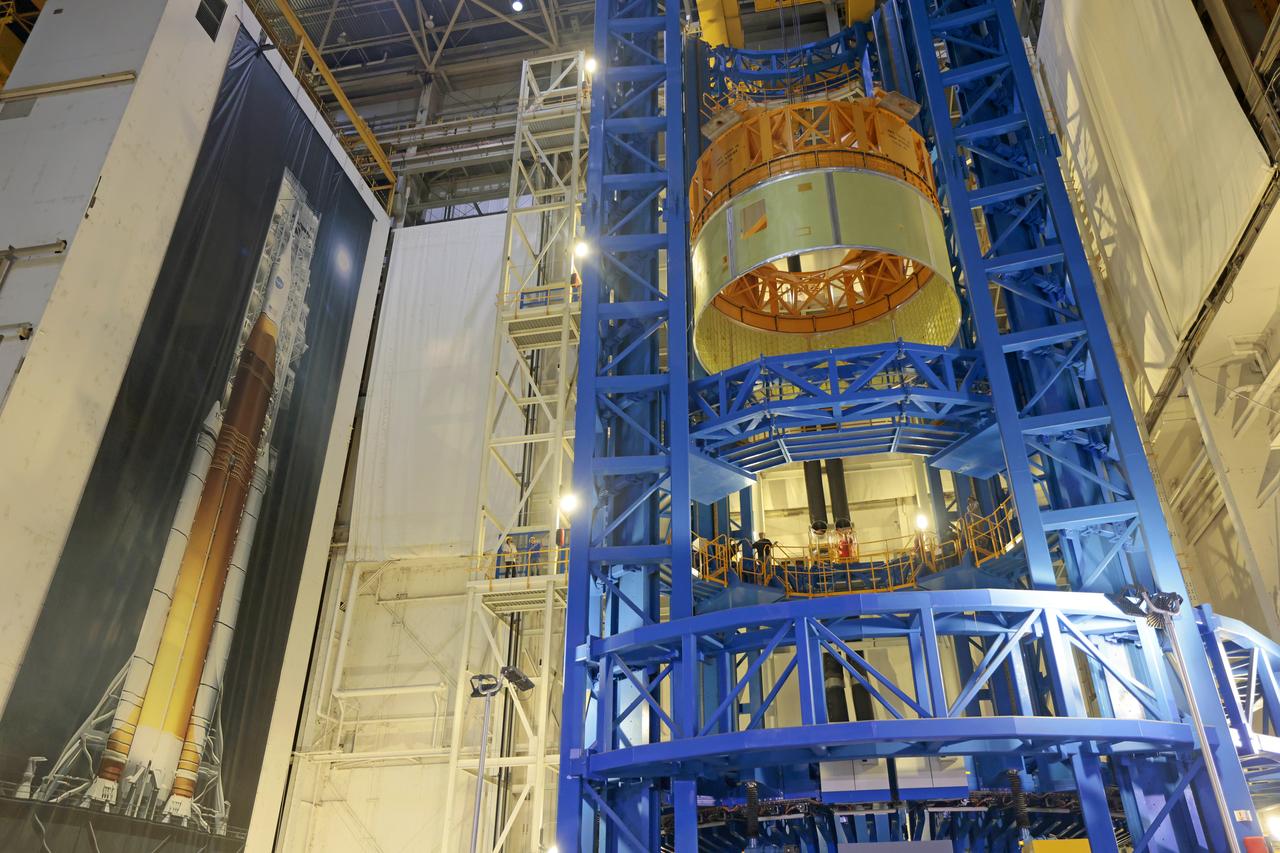
This image shows teams at NASA’s Michoud Assembly Facility in New Orleans lifting a forward skirt out of its vertical assembly center on Jan. 31, 2025. The forward skirt, which will be used on the core stage for the agency’s SLS (Space Launch System) rocket for its Artemis IV mission, houses flight computers, cameras, and avionics. While inside the vertical assembly center, technicians attached the forward skirt’s forward and aft rings, which serve as attachments points to the launch vehicle stage adapter and the liquid oxygen tank, respectively. The forward skirt is one of five major elements that make up the 212-foot-tall rocket stage. The core stage, along with its four RS-25 engines, produce more than two million pounds of thrust to help launch NASA’s Orion spacecraft, astronauts, and supplies beyond Earth’s orbit and to the lunar surface for Artemis. Image credit: NASA/Michael DeMocker