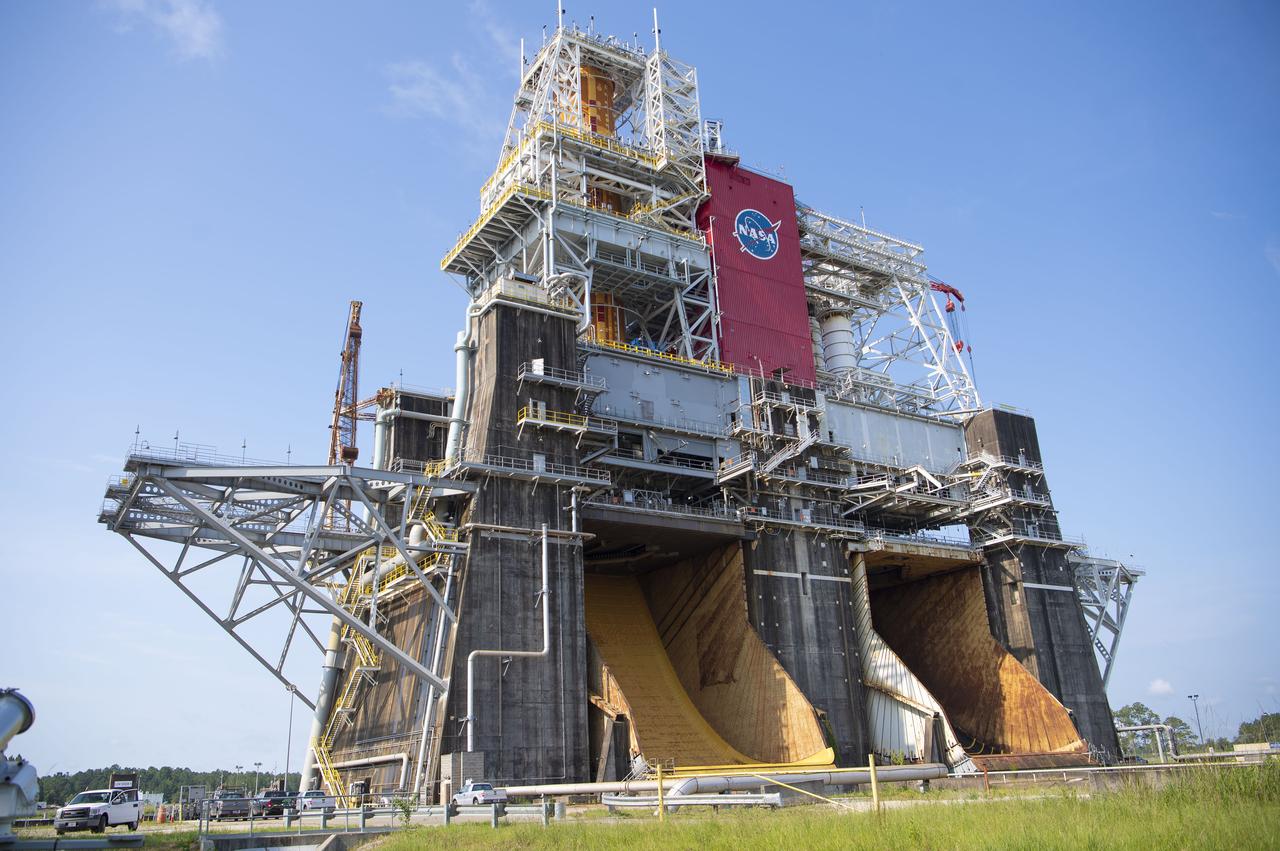
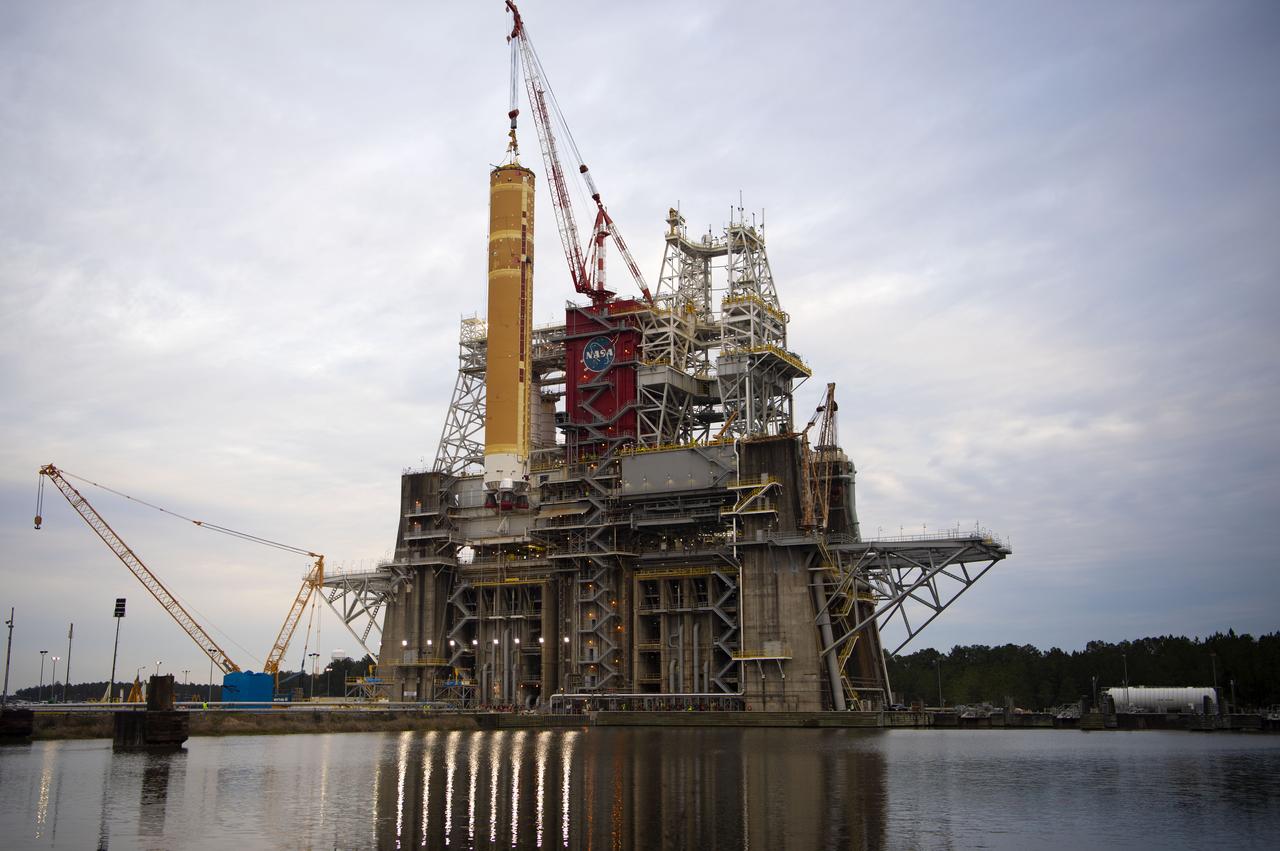
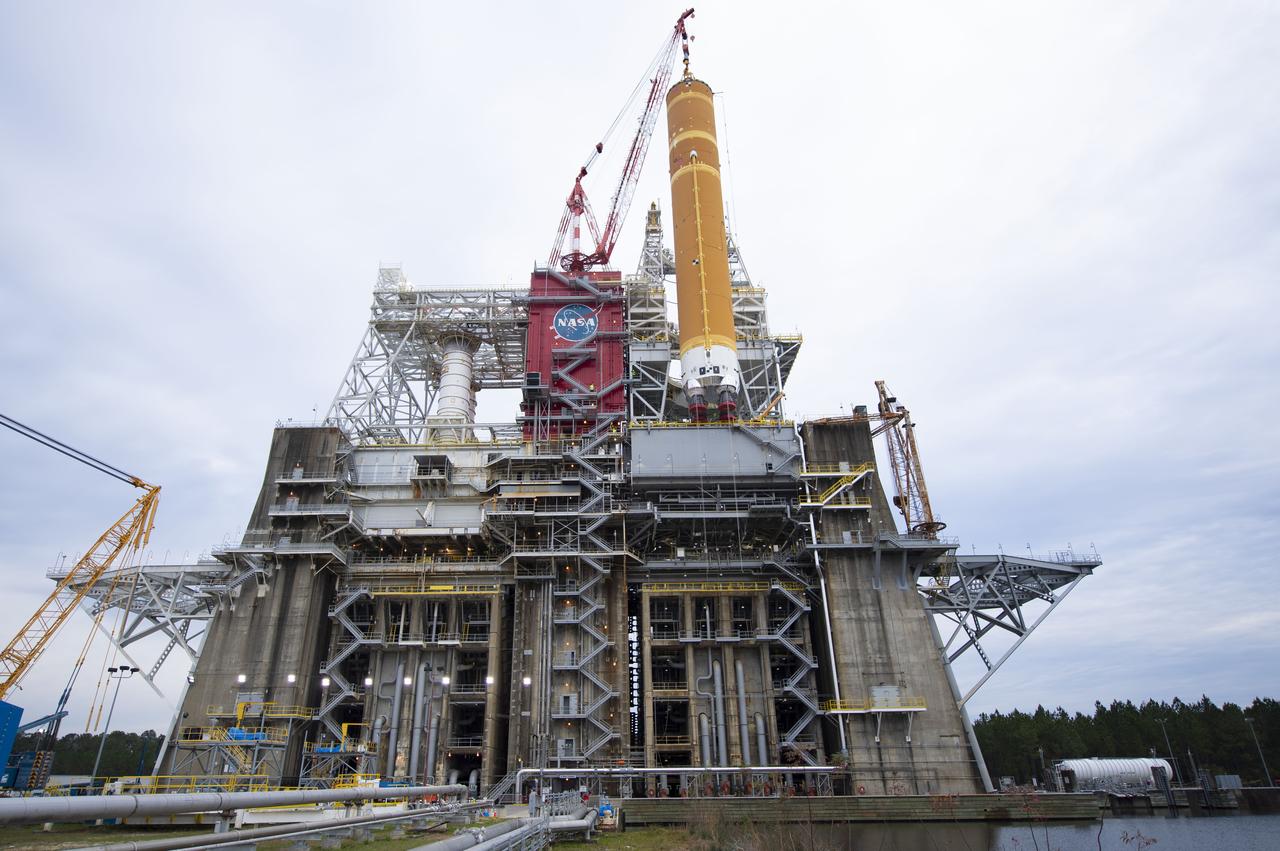
A photo from the north (flame trench) side of the B-2 Test Stand at NASA’s Stennis Space Center shows the first flight core stage for NASA’s new Space Launch System (SLS) rocket installed for Green Run testing. The SLS core stage was transported to Stennis in January to begin Green Run testing prior to its use on the Artemis I mission. NASA is building SLS to return humans, including the first woman, to the Moon as part of the Artemis program and to prepare for eventual missions to Mars. At Stennis, the SLS core stage will undergo a series of tests on its integrated systems, culminating with a hot fire of its four RS-25 engines, just as during an actual launch.
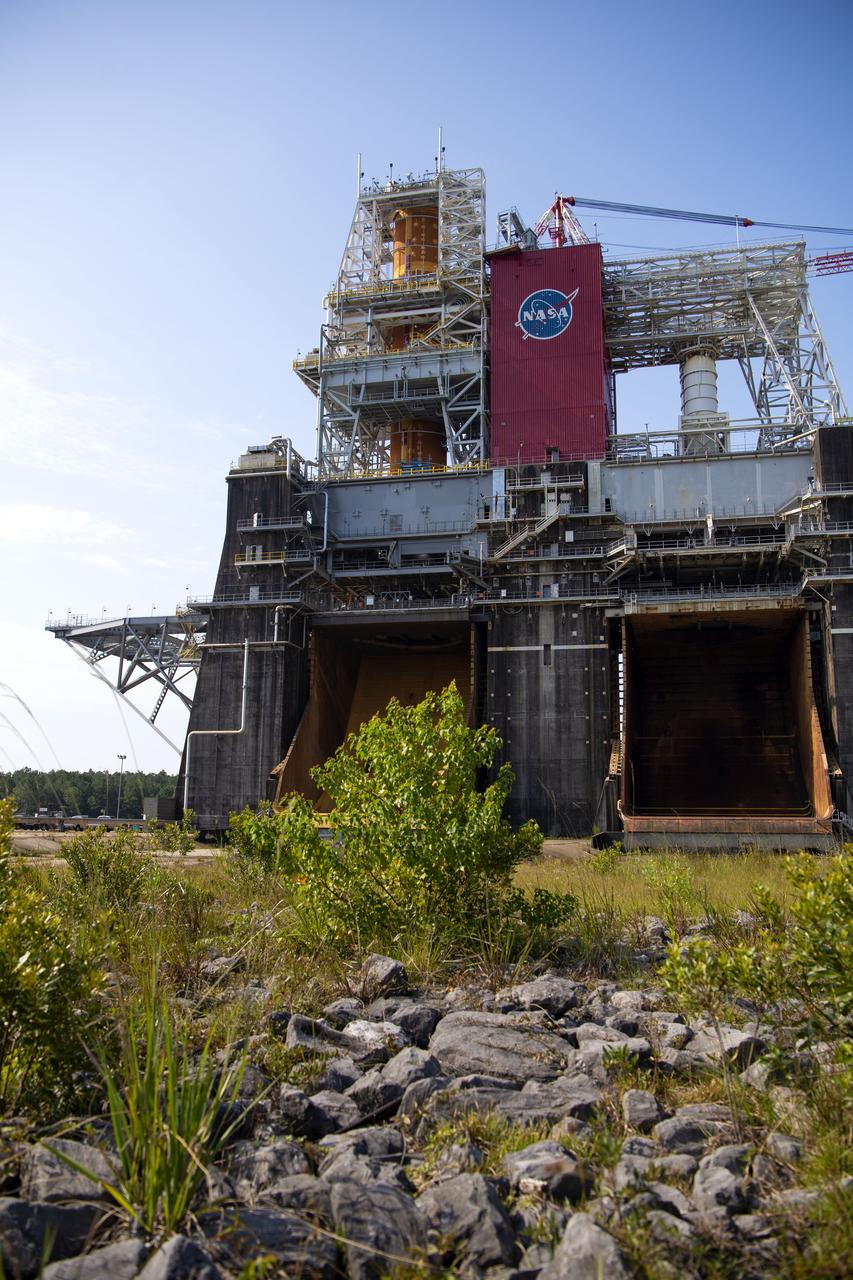
A photo from the north (flame trench) side of the B-2 Test Stand at NASA’s Stennis Space Center shows the first flight core stage for NASA’s new Space Launch System (SLS) rocket installed for Green Run testing. The SLS core stage was transported to Stennis in January to begin Green Run testing prior to its use on the Artemis I mission. NASA is building SLS to return humans, including the first woman, to the Moon as part of the Artemis program and to prepare for eventual missions to Mars. At Stennis, the SLS core stage will undergo a series of tests on its integrated systems, culminating with a hot fire of its four RS-25 engines, just as during an actual launch.
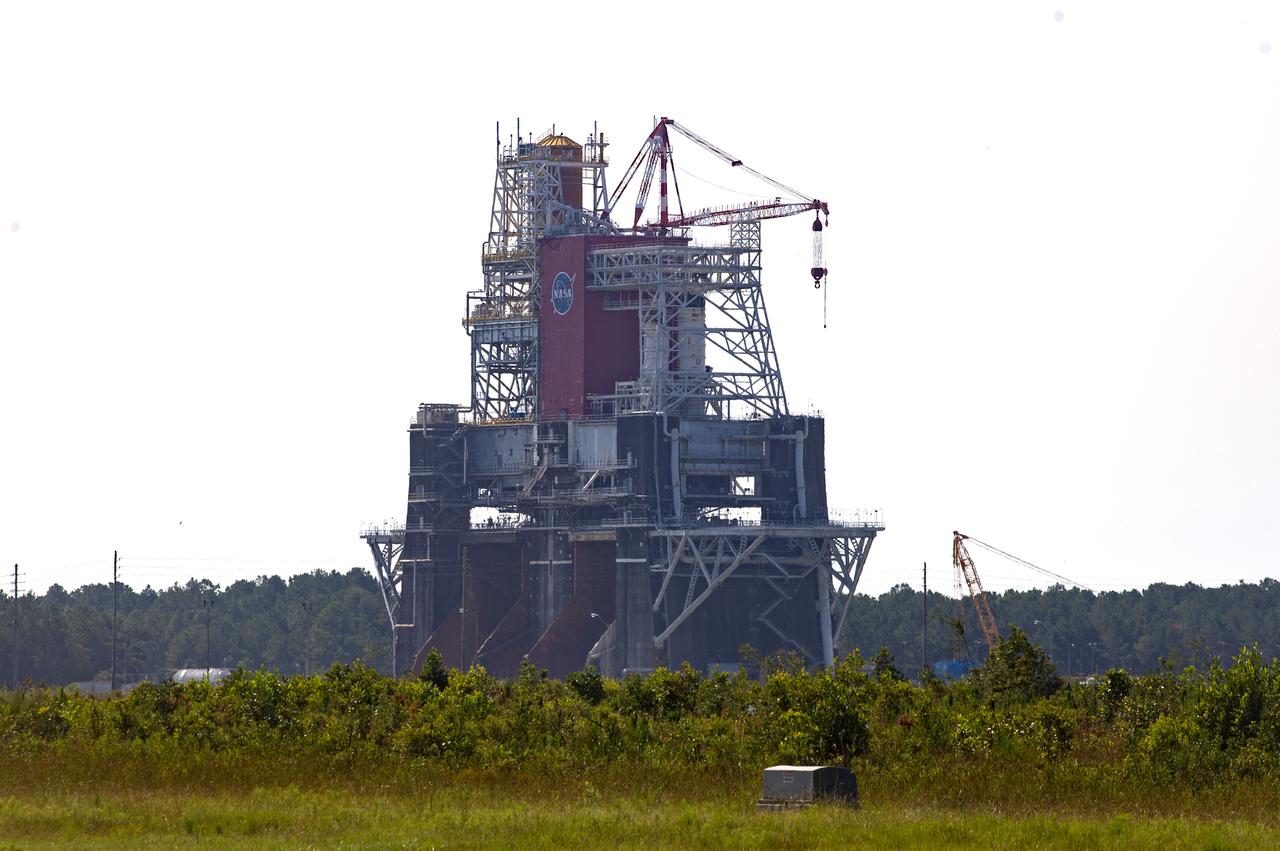
A photo from the north (flame trench) side of the B-2 Test Stand at NASA’s Stennis Space Center shows the first flight core stage for NASA’s new Space Launch System (SLS) rocket installed for Green Run testing. The SLS core stage was transported to Stennis in January to begin Green Run testing prior to its use on the Artemis I mission. NASA is building SLS to return humans, including the first woman, to the Moon as part of the Artemis program and to prepare for eventual missions to Mars. At Stennis, the SLS core stage will undergo a series of tests on its integrated systems, culminating with a hot fire of its four RS-25 engines, just as during an actual launch.
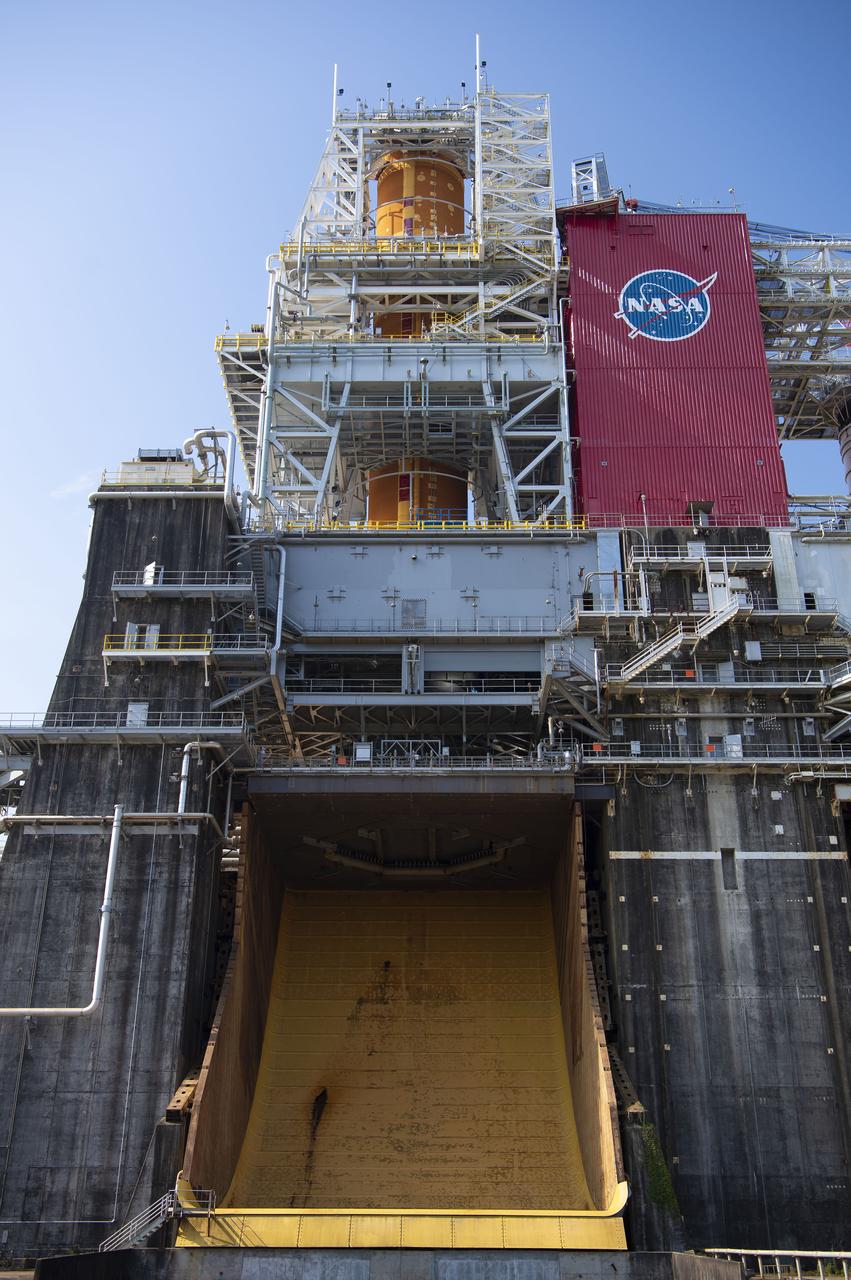
A photo from the north (flame trench) side of the B-2 Test Stand at NASA’s Stennis Space Center shows the first flight core stage for NASA’s new Space Launch System (SLS) rocket installed for Green Run testing. The SLS core stage was transported to Stennis in January to begin Green Run testing prior to its use on the Artemis I mission. NASA is building SLS to return humans, including the first woman, to the Moon as part of the Artemis program and to prepare for eventual missions to Mars. At Stennis, the SLS core stage will undergo a series of tests on its integrated systems, culminating with a hot fire of its four RS-25 engines, just as during an actual launch.
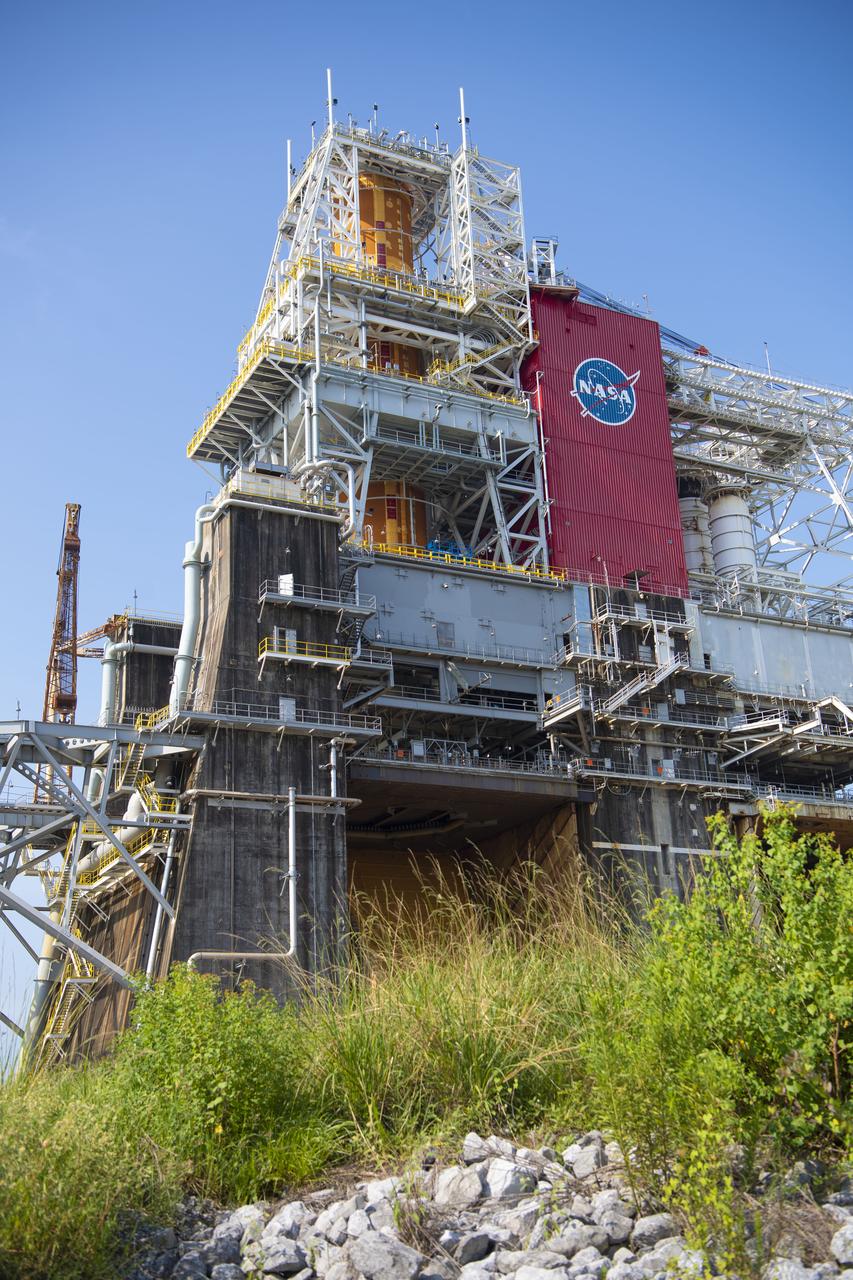
A photo from the north (flame trench) side of the B-2 Test Stand at NASA’s Stennis Space Center shows the first flight core stage for NASA’s new Space Launch System (SLS) rocket installed for Green Run testing. The SLS core stage was transported to Stennis in January to begin Green Run testing prior to its use on the Artemis I mission. NASA is building SLS to return humans, including the first woman, to the Moon as part of the Artemis program and to prepare for eventual missions to Mars. At Stennis, the SLS core stage will undergo a series of tests on its integrated systems, culminating with a hot fire of its four RS-25 engines, just as during an actual launch.
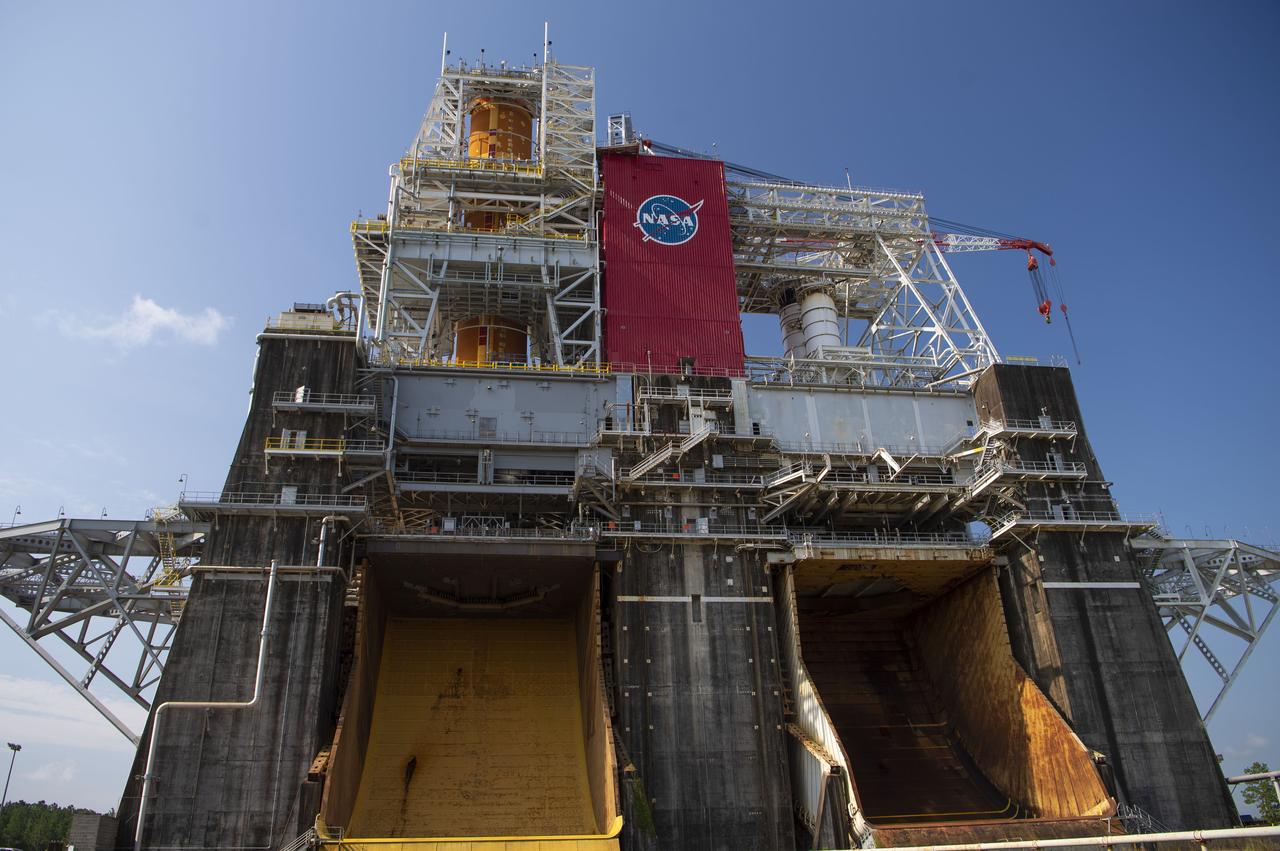
A photo from the north (flame trench) side of the B-2 Test Stand at NASA’s Stennis Space Center shows the first flight core stage for NASA’s new Space Launch System (SLS) rocket installed for Green Run testing. The SLS core stage was transported to Stennis in January to begin Green Run testing prior to its use on the Artemis I mission. NASA is building SLS to return humans, including the first woman, to the Moon as part of the Artemis program and to prepare for eventual missions to Mars. At Stennis, the SLS core stage will undergo a series of tests on its integrated systems, culminating with a hot fire of its four RS-25 engines, just as during an actual launch.
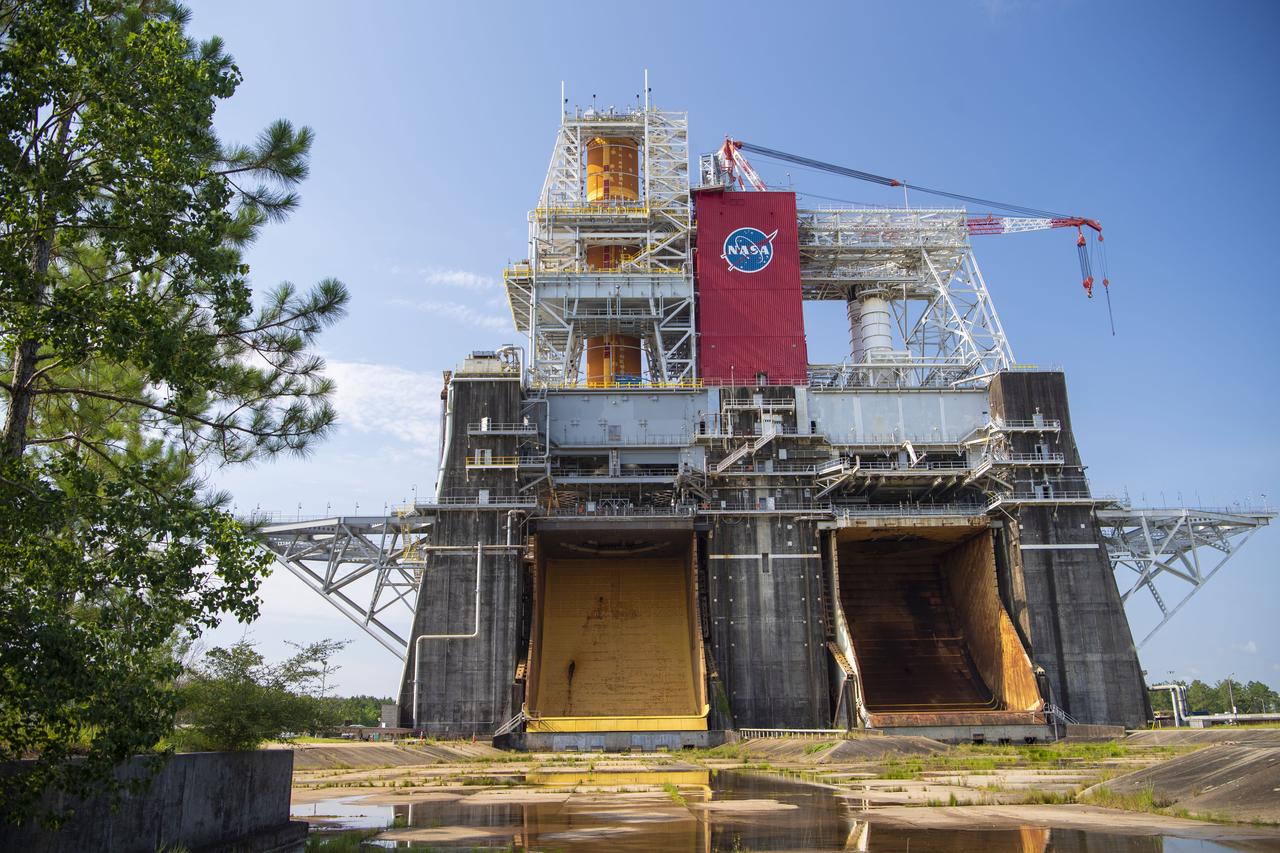
A photo from the north (flame trench) side of the B-2 Test Stand at NASA’s Stennis Space Center shows the first flight core stage for NASA’s new Space Launch System (SLS) rocket installed for Green Run testing. The SLS core stage was transported to Stennis in January to begin Green Run testing prior to its use on the Artemis I mission. NASA is building SLS to return humans, including the first woman, to the Moon as part of the Artemis program and to prepare for eventual missions to Mars. At Stennis, the SLS core stage will undergo a series of tests on its integrated systems, culminating with a hot fire of its four RS-25 engines, just as during an actual launch.
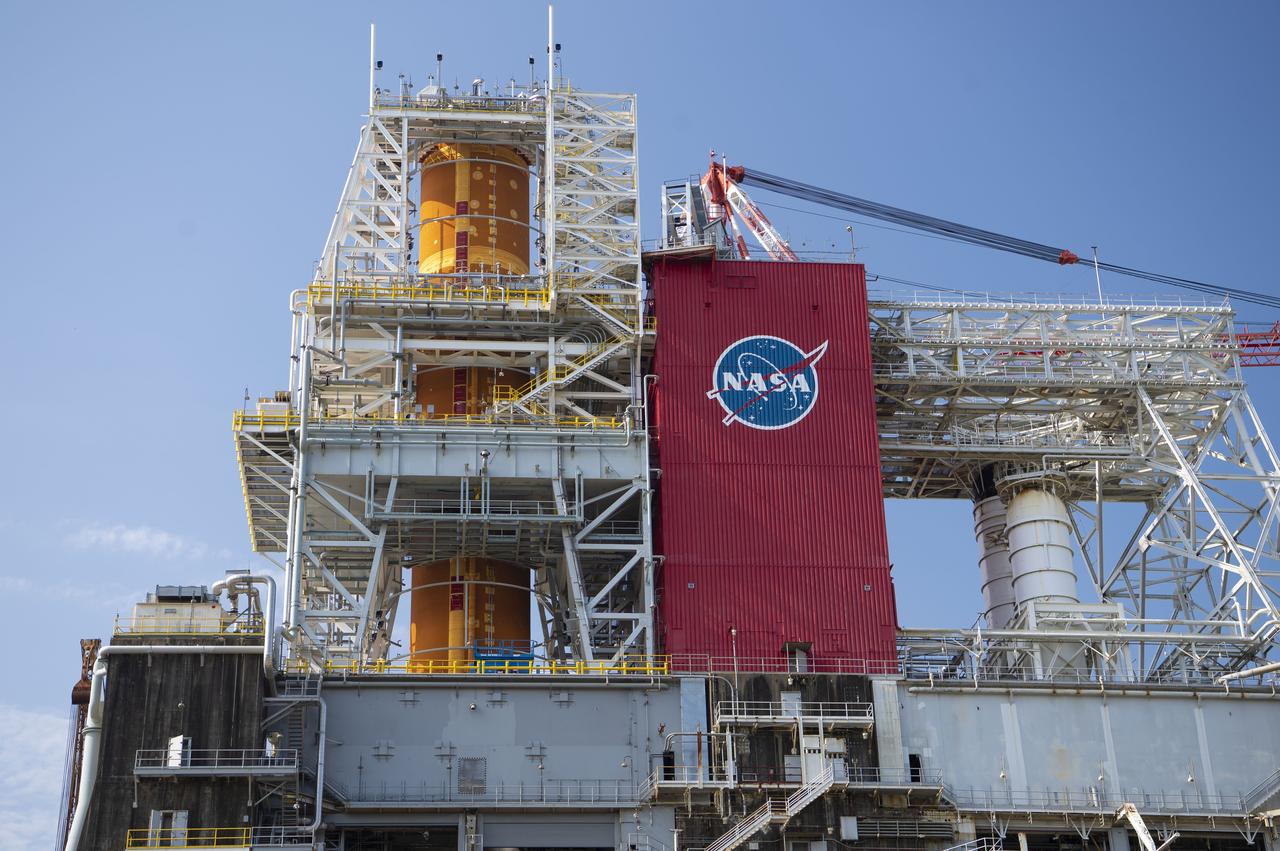
A photo from the north (flame trench) side of the B-2 Test Stand at NASA’s Stennis Space Center shows the first flight core stage for NASA’s new Space Launch System (SLS) rocket installed for Green Run testing. The SLS core stage was transported to Stennis in January to begin Green Run testing prior to its use on the Artemis I mission. NASA is building SLS to return humans, including the first woman, to the Moon as part of the Artemis program and to prepare for eventual missions to Mars. At Stennis, the SLS core stage will undergo a series of tests on its integrated systems, culminating with a hot fire of its four RS-25 engines, just as during an actual launch.
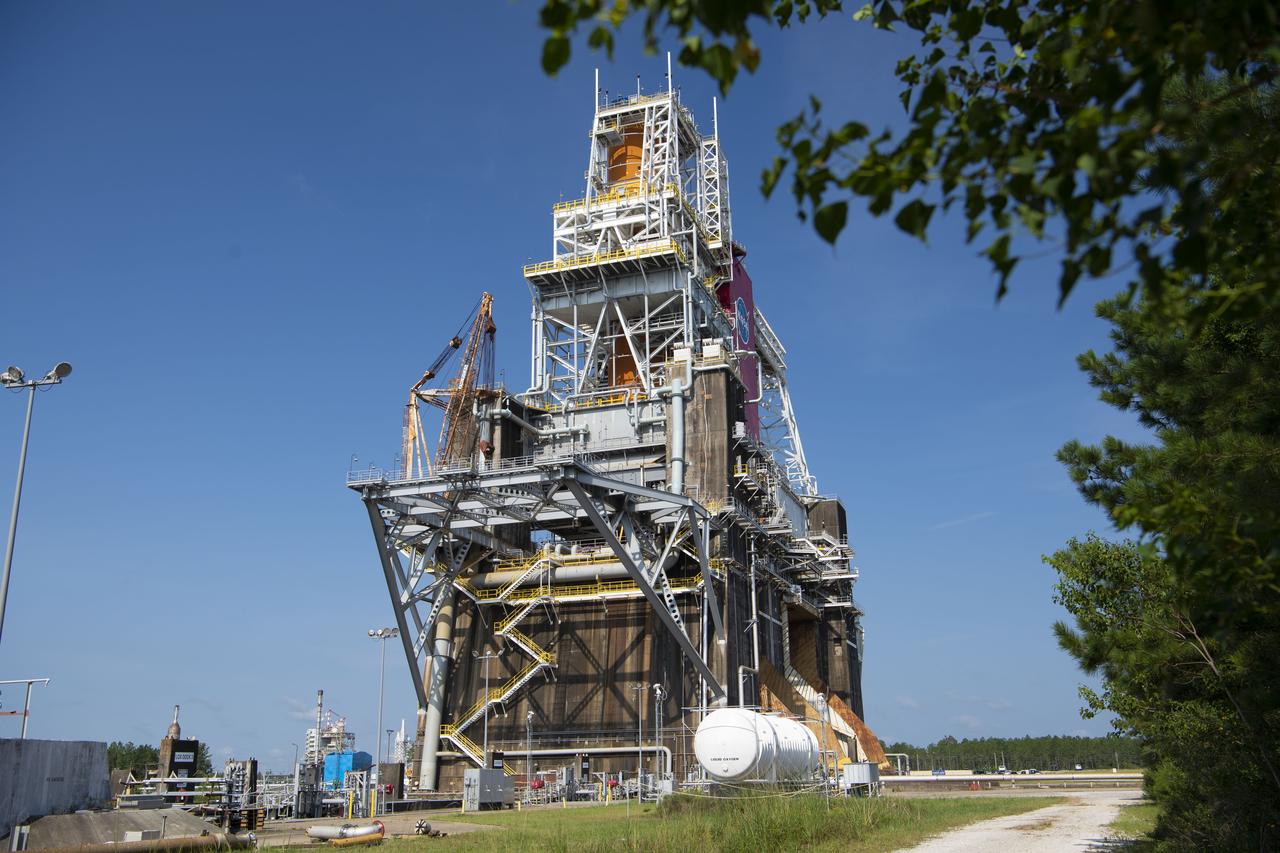
A photo from the north (flame trench) side of the B-2 Test Stand at NASA’s Stennis Space Center shows the first flight core stage for NASA’s new Space Launch System (SLS) rocket installed for Green Run testing. The SLS core stage was transported to Stennis in January to begin Green Run testing prior to its use on the Artemis I mission. NASA is building SLS to return humans, including the first woman, to the Moon as part of the Artemis program and to prepare for eventual missions to Mars. At Stennis, the SLS core stage will undergo a series of tests on its integrated systems, culminating with a hot fire of its four RS-25 engines, just as during an actual launch.
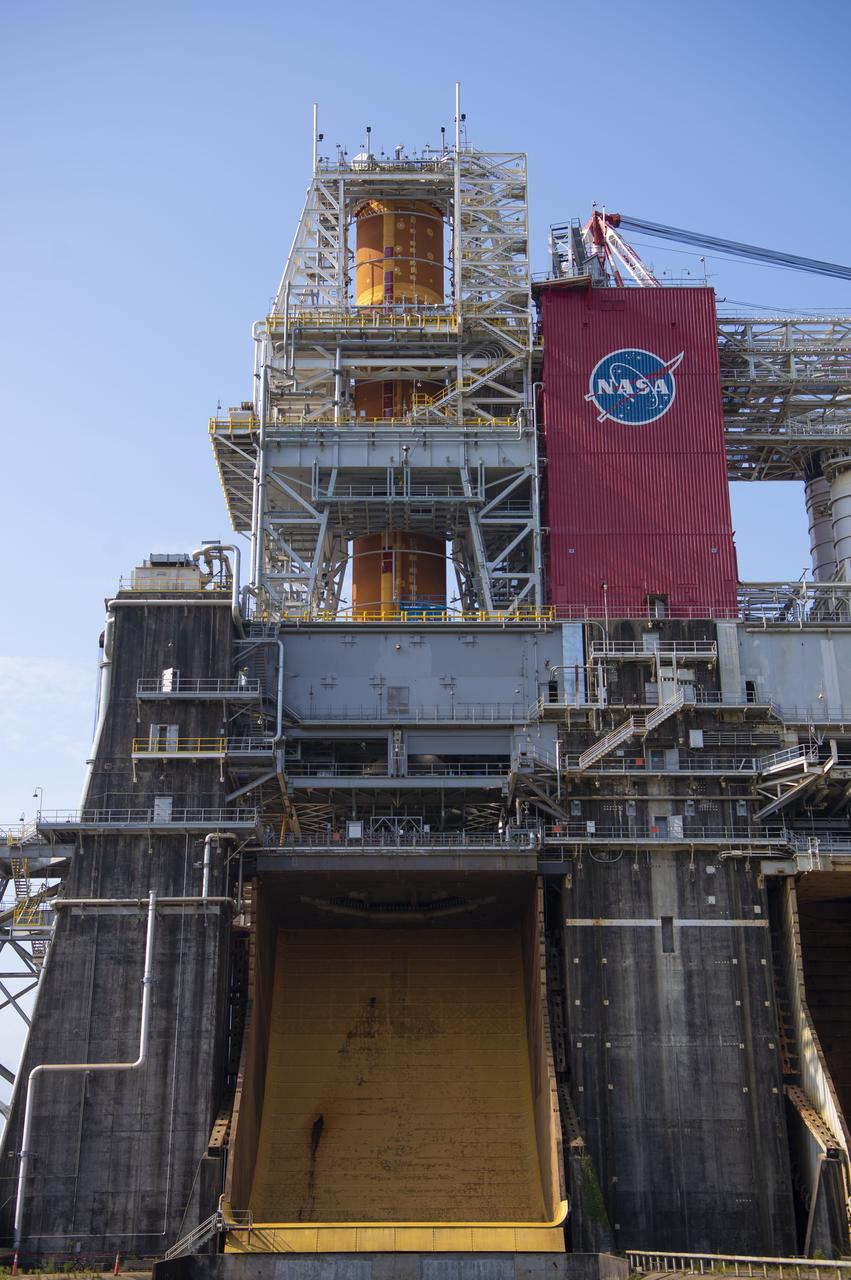
A photo from the north (flame trench) side of the B-2 Test Stand at NASA’s Stennis Space Center shows the first flight core stage for NASA’s new Space Launch System (SLS) rocket installed for Green Run testing. The SLS core stage was transported to Stennis in January to begin Green Run testing prior to its use on the Artemis I mission. NASA is building SLS to return humans, including the first woman, to the Moon as part of the Artemis program and to prepare for eventual missions to Mars. At Stennis, the SLS core stage will undergo a series of tests on its integrated systems, culminating with a hot fire of its four RS-25 engines, just as during an actual launch.
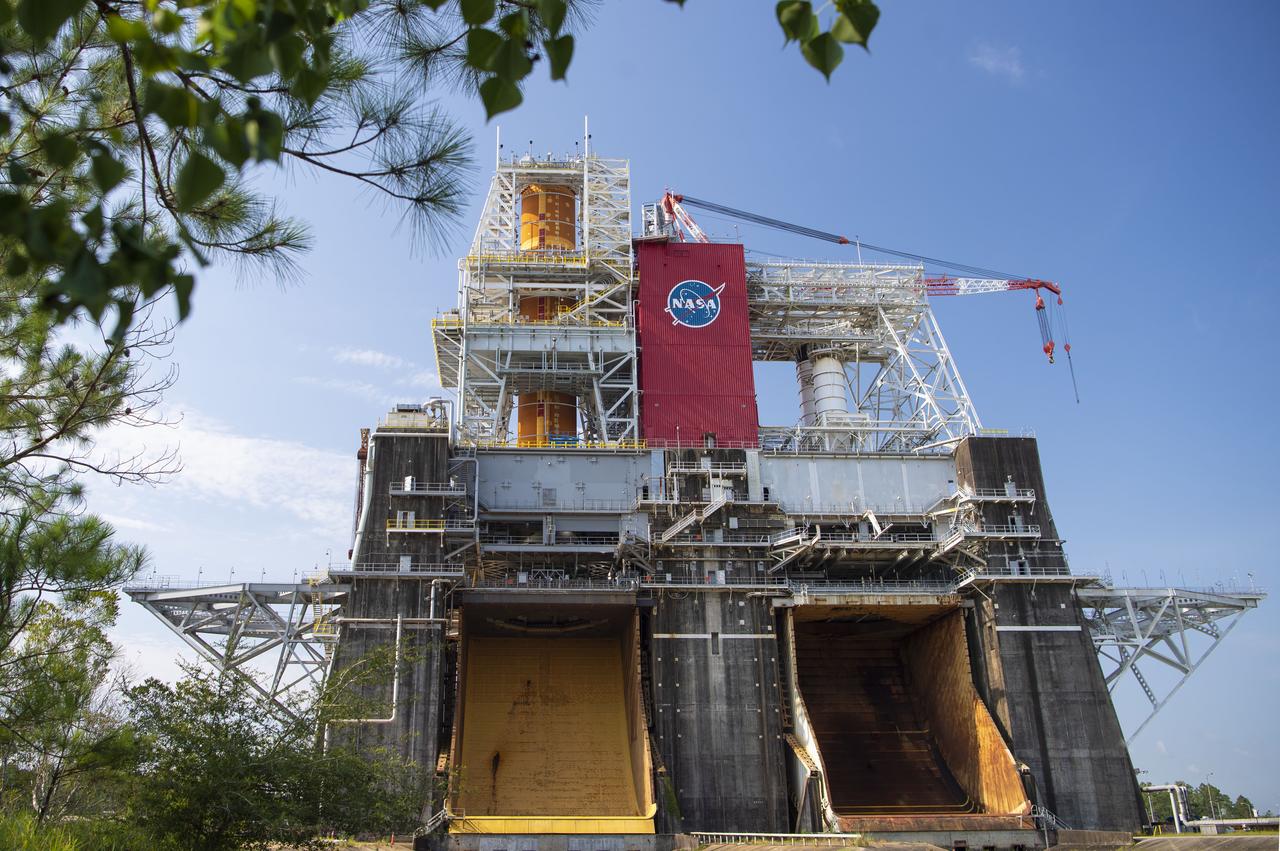
A photo from the north (flame trench) side of the B-2 Test Stand at NASA’s Stennis Space Center shows the first flight core stage for NASA’s new Space Launch System (SLS) rocket installed for Green Run testing. The SLS core stage was transported to Stennis in January to begin Green Run testing prior to its use on the Artemis I mission. NASA is building SLS to return humans, including the first woman, to the Moon as part of the Artemis program and to prepare for eventual missions to Mars. At Stennis, the SLS core stage will undergo a series of tests on its integrated systems, culminating with a hot fire of its four RS-25 engines, just as during an actual launch.
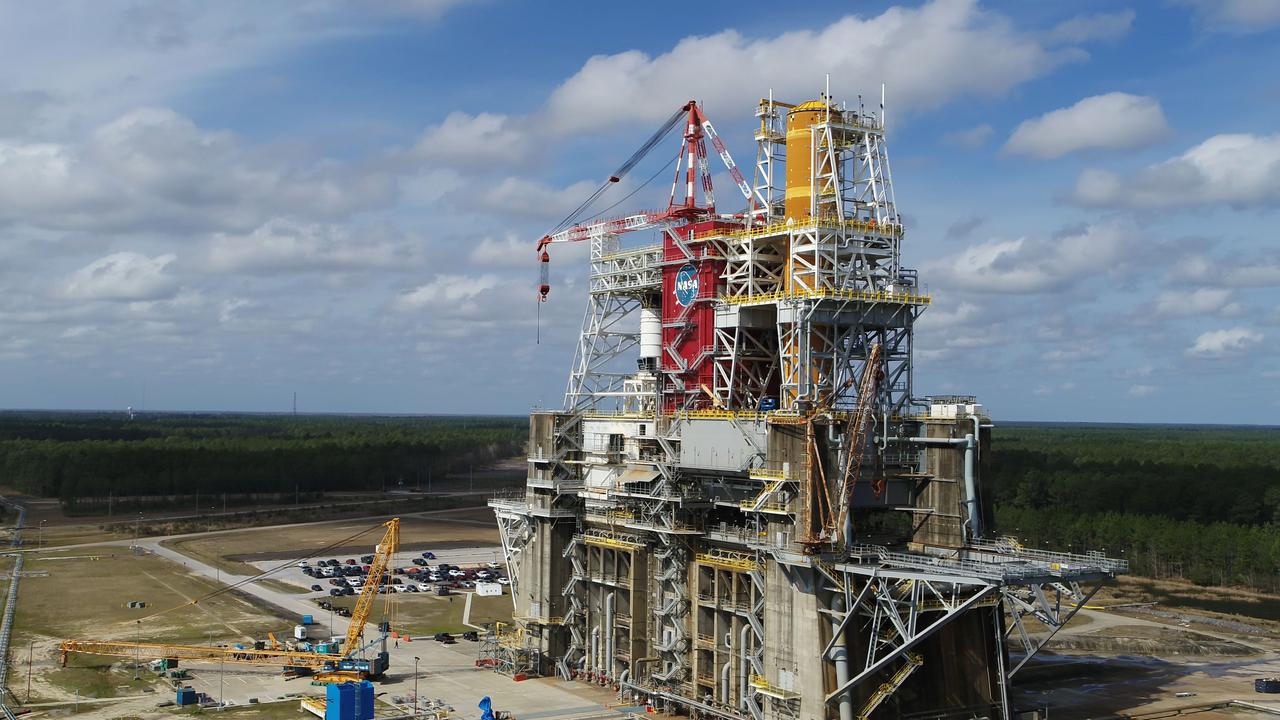
A NASA drone photo offers a bird’s-eye view of the B-2 Test Stand at NASA’s Stennis Space Center with the first flight core stage for NASA’s new Space Launch System (SLS) installed for Green Run testing. The SLS core stage is undergoing a series of tests on its integrated systems prior to its use on the Artemis I mission. NASA is building SLS to return humans, including the first woman, to the Moon as part of the Artemis program and to prepare for eventual missions to Mars. The Green Run series at Stennis culminates with a hot fire of the core stage’s four RS-25 engines, just as during an actual launch.
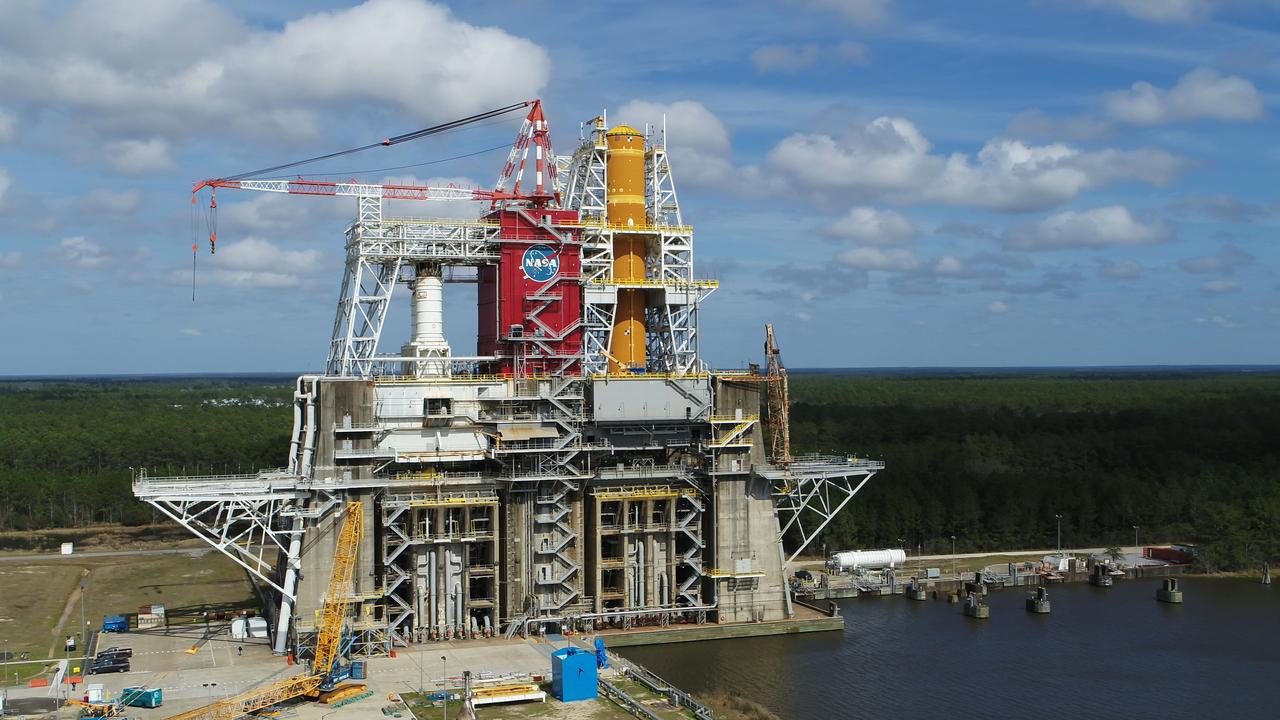
A NASA drone photo offers a bird’s-eye view of the B-2 Test Stand at NASA’s Stennis Space Center with the first flight core stage for NASA’s new Space Launch System (SLS) installed for Green Run testing. The SLS core stage is undergoing a series of tests on its integrated systems prior to its use on the Artemis I mission. NASA is building SLS to return humans, including the first woman, to the Moon as part of the Artemis program and to prepare for eventual missions to Mars. The Green Run series at Stennis culminates with a hot fire of the core stage’s four RS-25 engines, just as during an actual launch.
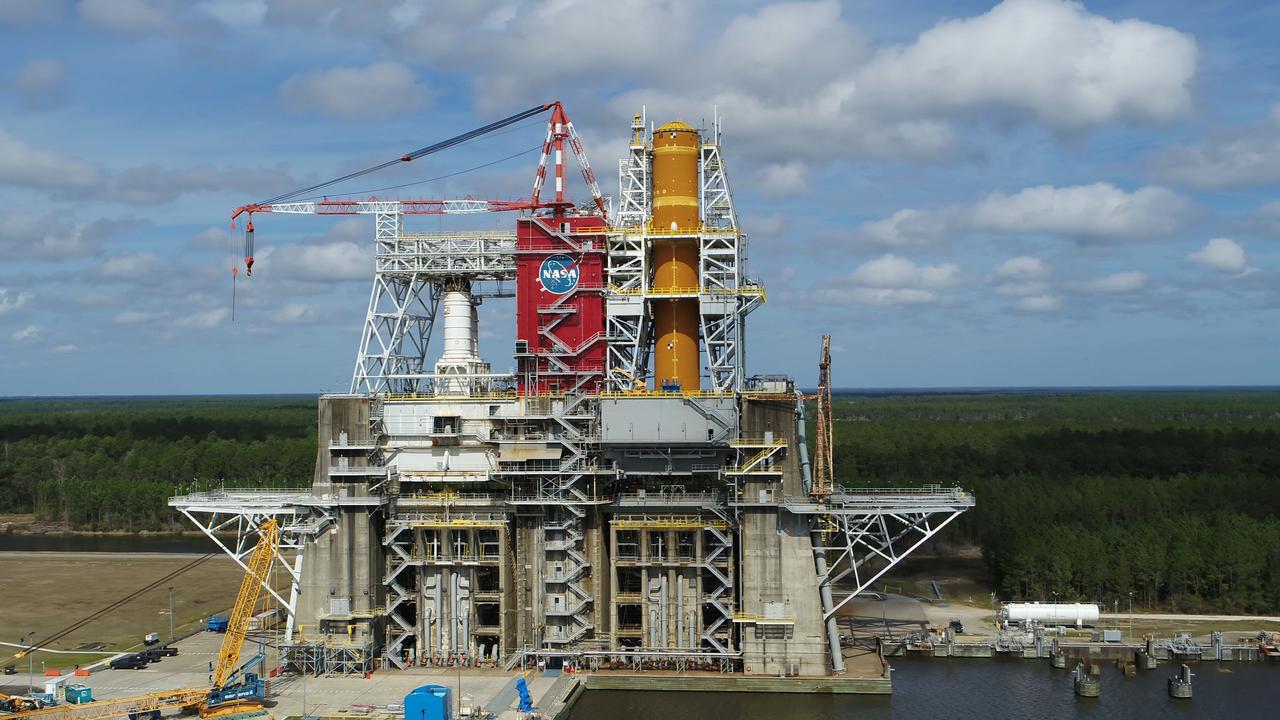
A NASA drone photo offers a bird’s-eye view of the B-2 Test Stand at NASA’s Stennis Space Center with the first flight core stage for NASA’s new Space Launch System (SLS) installed for Green Run testing. The SLS core stage is undergoing a series of tests on its integrated systems prior to its use on the Artemis I mission. NASA is building SLS to return humans, including the first woman, to the Moon as part of the Artemis program and to prepare for eventual missions to Mars. The Green Run series at Stennis culminates with a hot fire of the core stage’s four RS-25 engines, just as during an actual launch.
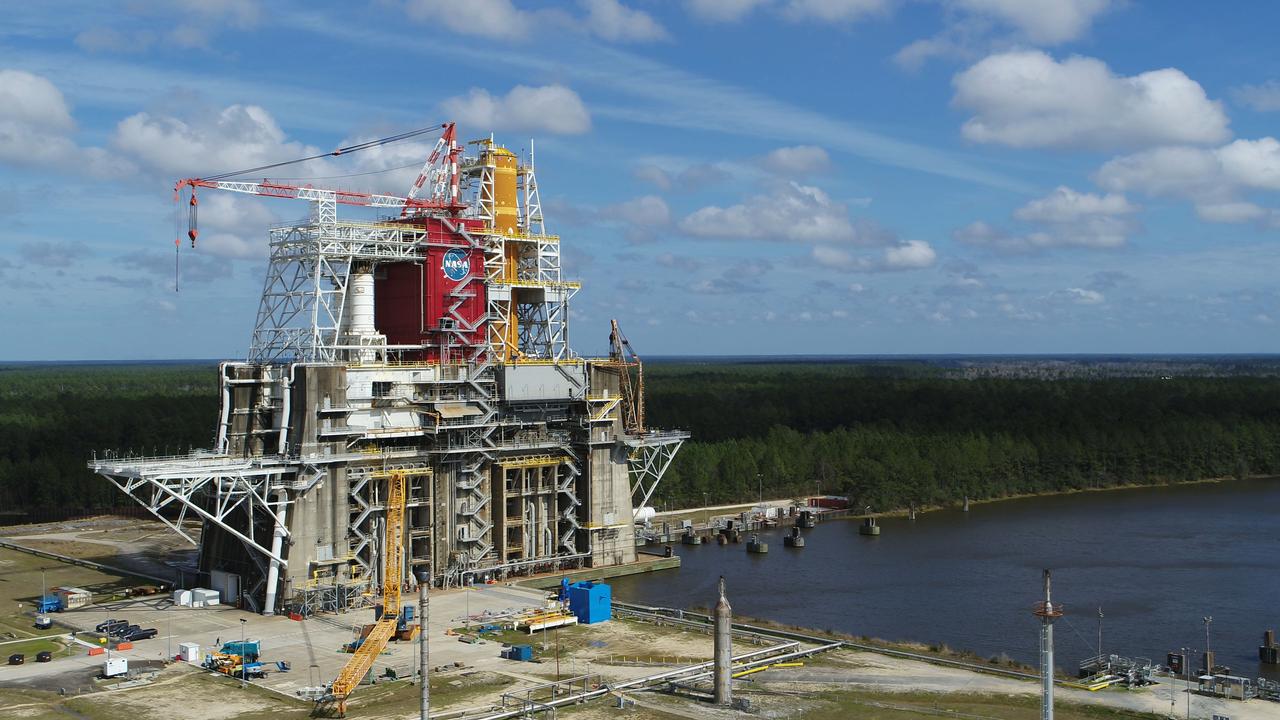
A NASA drone photo offers a bird’s-eye view of the B-2 Test Stand at NASA’s Stennis Space Center with the first flight core stage for NASA’s new Space Launch System (SLS) installed for Green Run testing. The SLS core stage is undergoing a series of tests on its integrated systems prior to its use on the Artemis I mission. NASA is building SLS to return humans, including the first woman, to the Moon as part of the Artemis program and to prepare for eventual missions to Mars. The Green Run series at Stennis culminates with a hot fire of the core stage’s four RS-25 engines, just as during an actual launch.
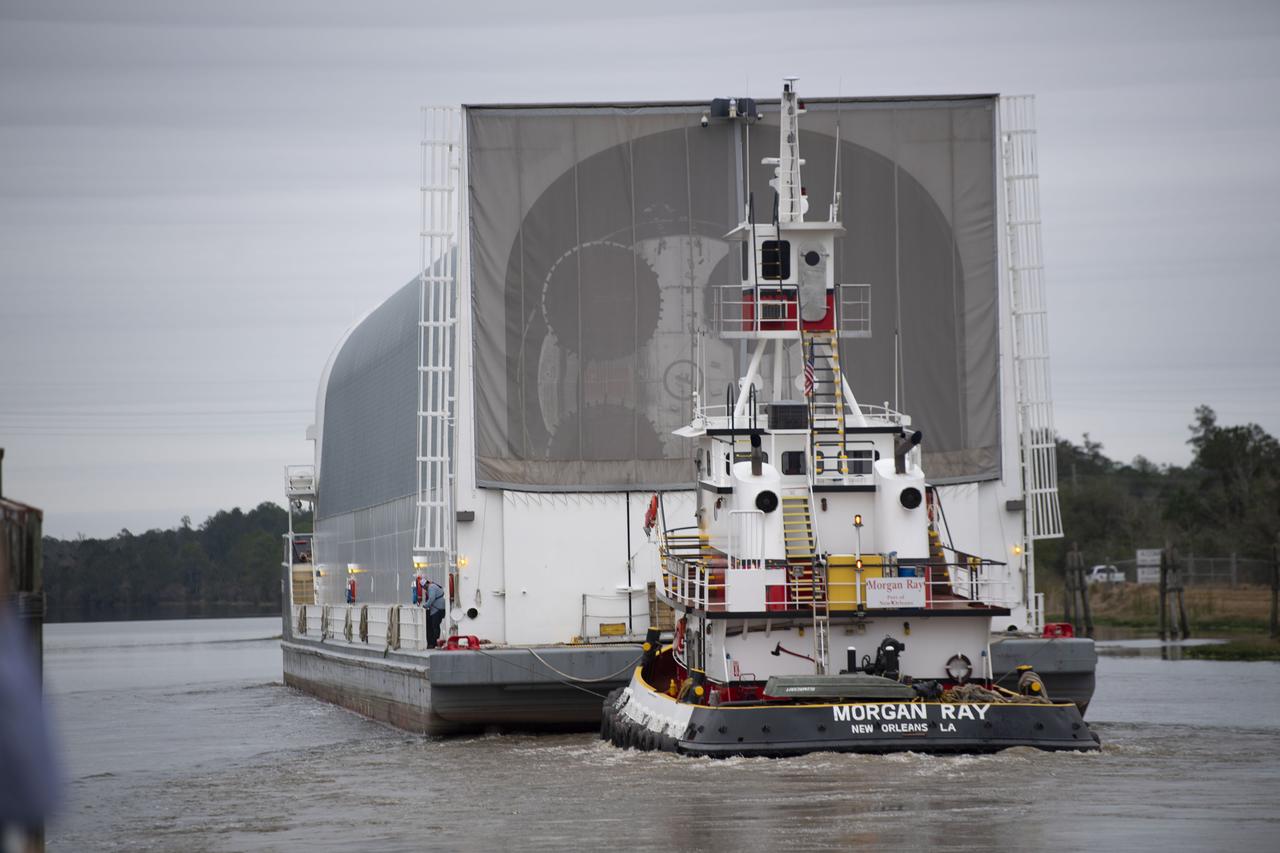
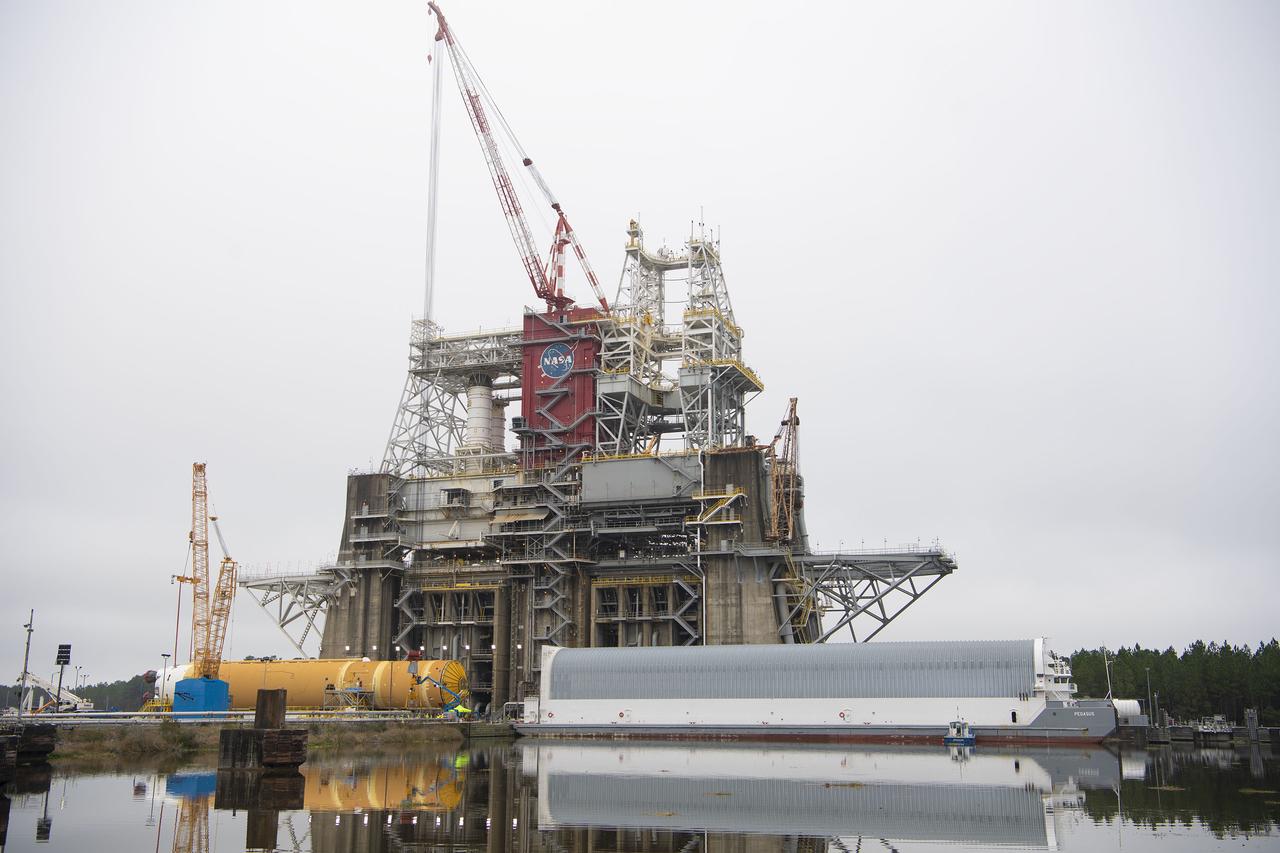
The first flight core stage for NASA’s new Space Launch System rocket arrived at Stennis Space Center on Jan. 12 for a series of tests prior to its maiden Artemis I flight. The core stage was transported from Michoud Assembly Facility in New Orleans to the B-2 Test Stand dock at Stennis aboard NASA’s Pegasus barge. Soon after arrival, the stage was rolled off of Pegasus onto the B-2 Test Stand tarmac. After the stage is lifted and installed on the B-2 stand, it will undergo a series of “Green Run” systems test that represent the first integrated testing of its sophisticated systems.
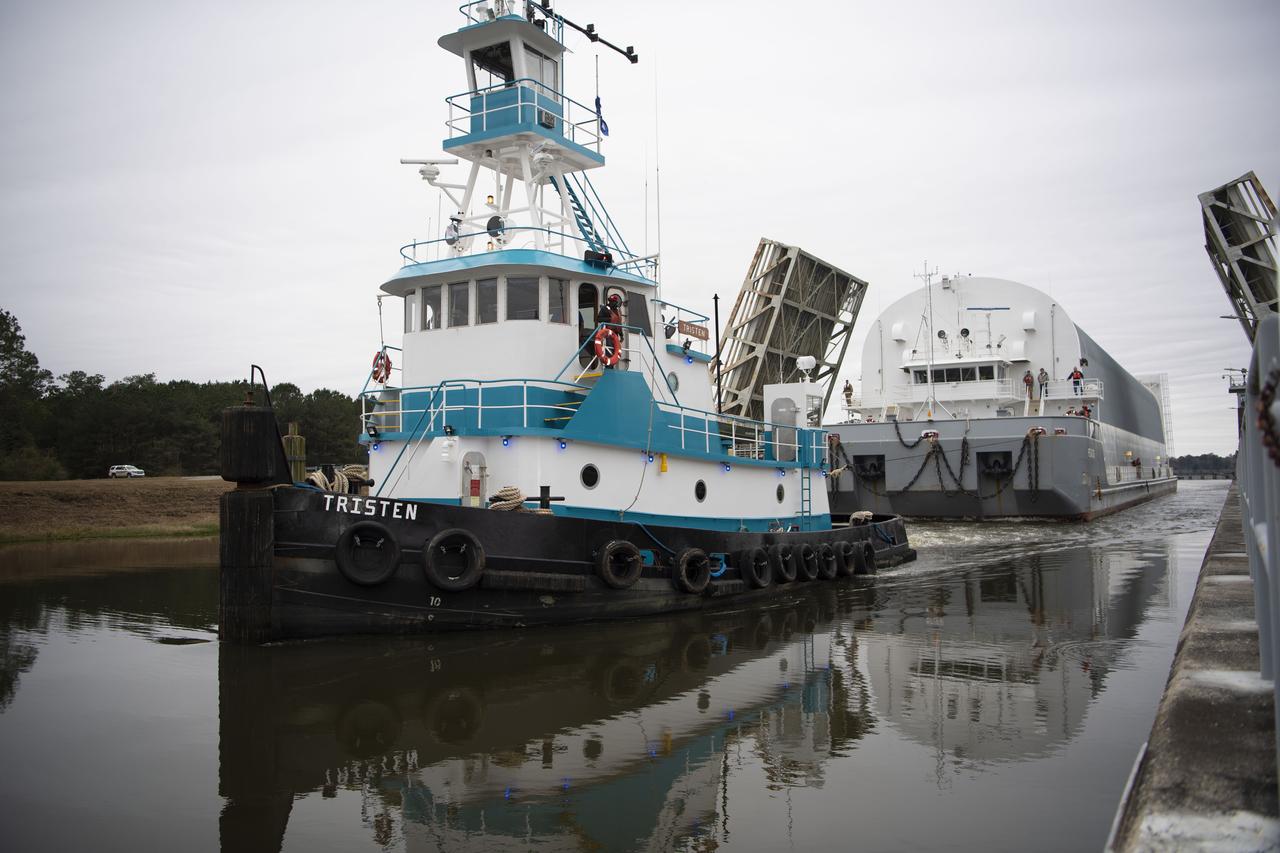
The first flight core stage for NASA’s new Space Launch System rocket arrived at Stennis Space Center on Jan. 12 for a series of tests prior to its maiden Artemis I flight. The core stage was transported from Michoud Assembly Facility in New Orleans to the B-2 Test Stand dock at Stennis aboard NASA’s Pegasus barge. Soon after arrival, the stage was rolled off of Pegasus onto the B-2 Test Stand tarmac. After the stage is lifted and installed on the B-2 stand, it will undergo a series of “Green Run” systems test that represent the first integrated testing of its sophisticated systems.
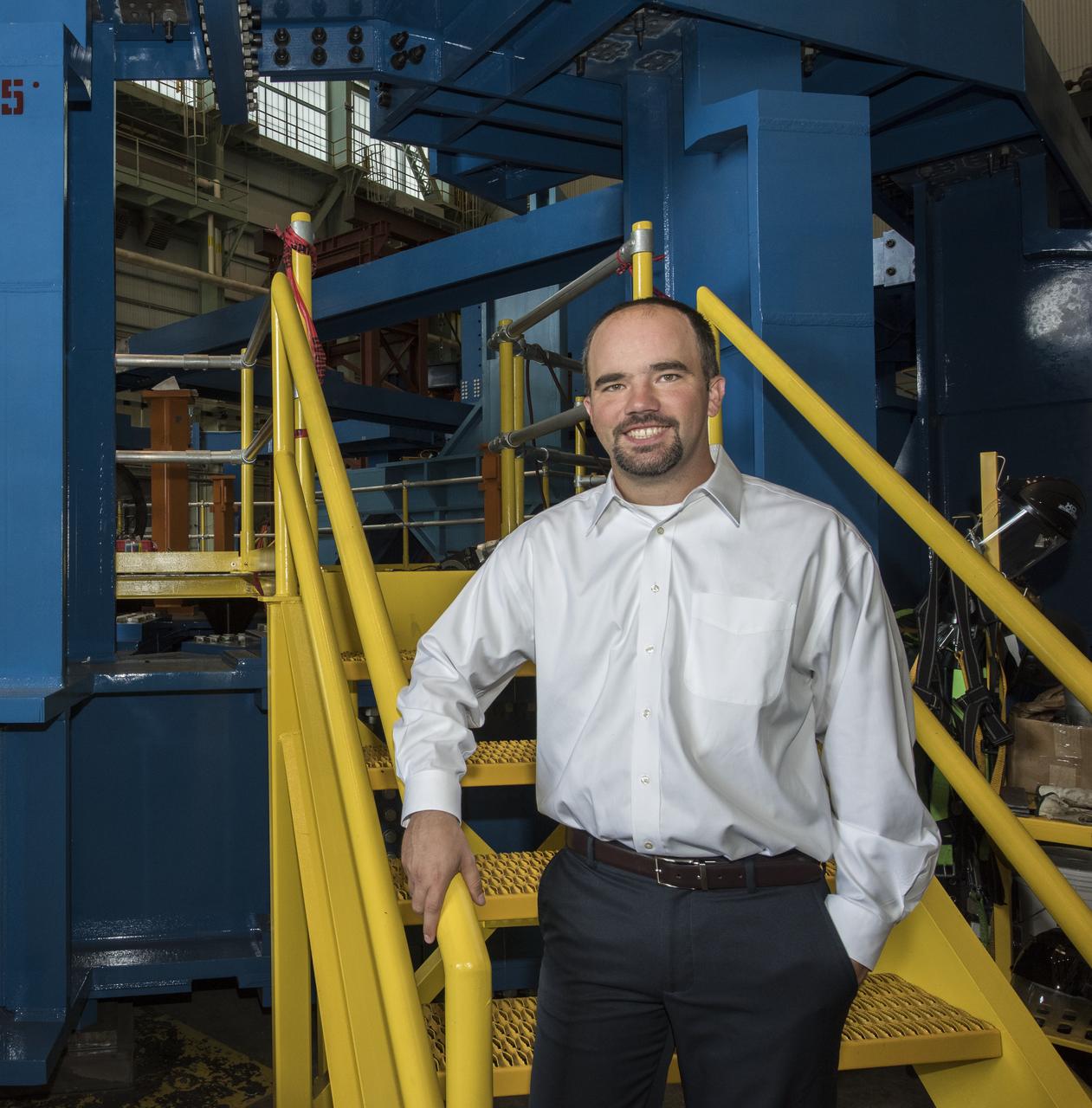
JONATHAN LOOSER, SLS CORE STAGE PROPULSION LEAD AT NASA’S MARSHALL SPACE FLIGHT CENTER IN HUNTSVILLE, ALABAMA
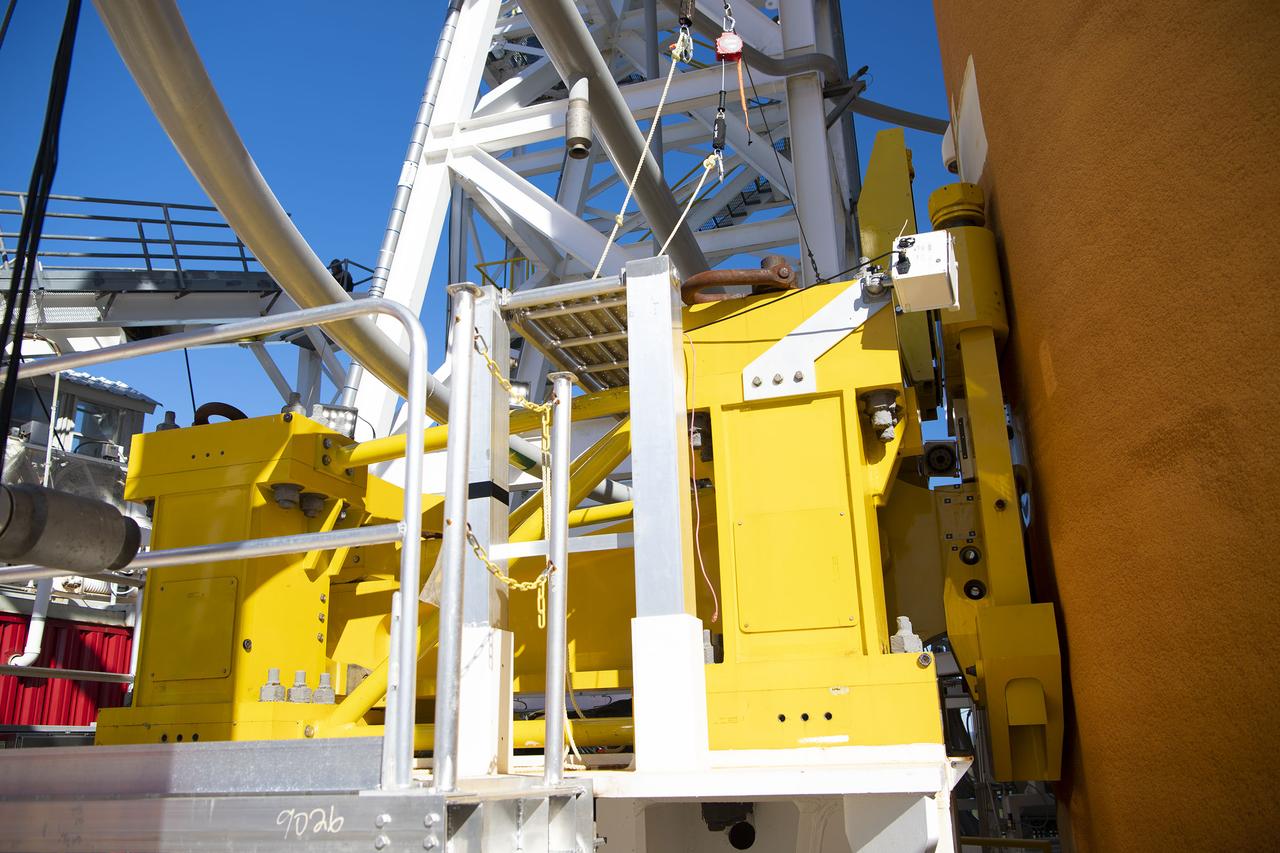
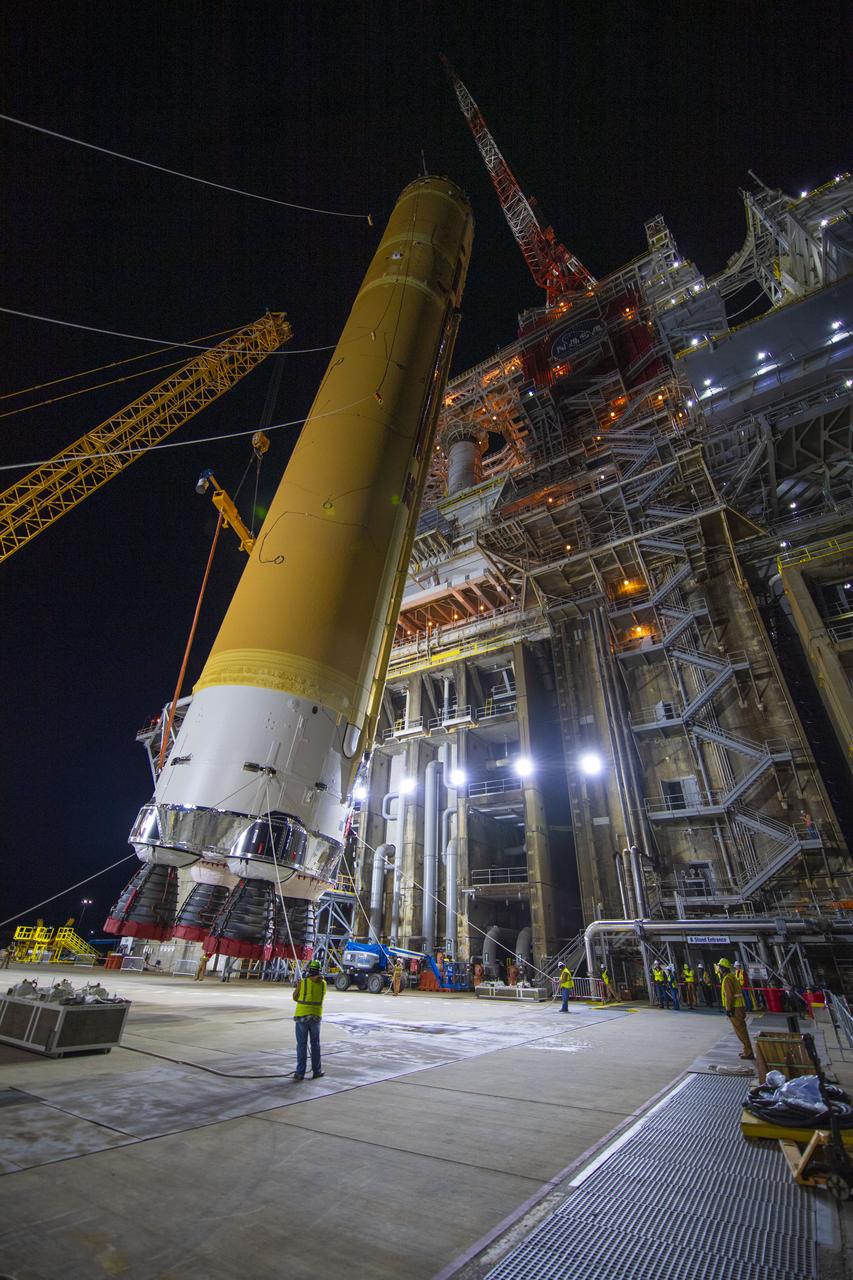
On Jan. 21-22, 2020, crews at Stennis Space Center lifted and installed the first core stage of NASA’s new Space Launch System (SLS) rocket onto the B-2 Test Stand. In upcoming months, a top-to-bottom, integrated series of Green Run tests will be conducted on the stage and its sophisticated systems. Following testing, the stage will be used to help launch the maiden Artemis I test mission of SLS and the Orion spacecraft. Through the Artemis program, NASA will send humans, including the first woman and next man, to the Moon to establish a sustainable presence.
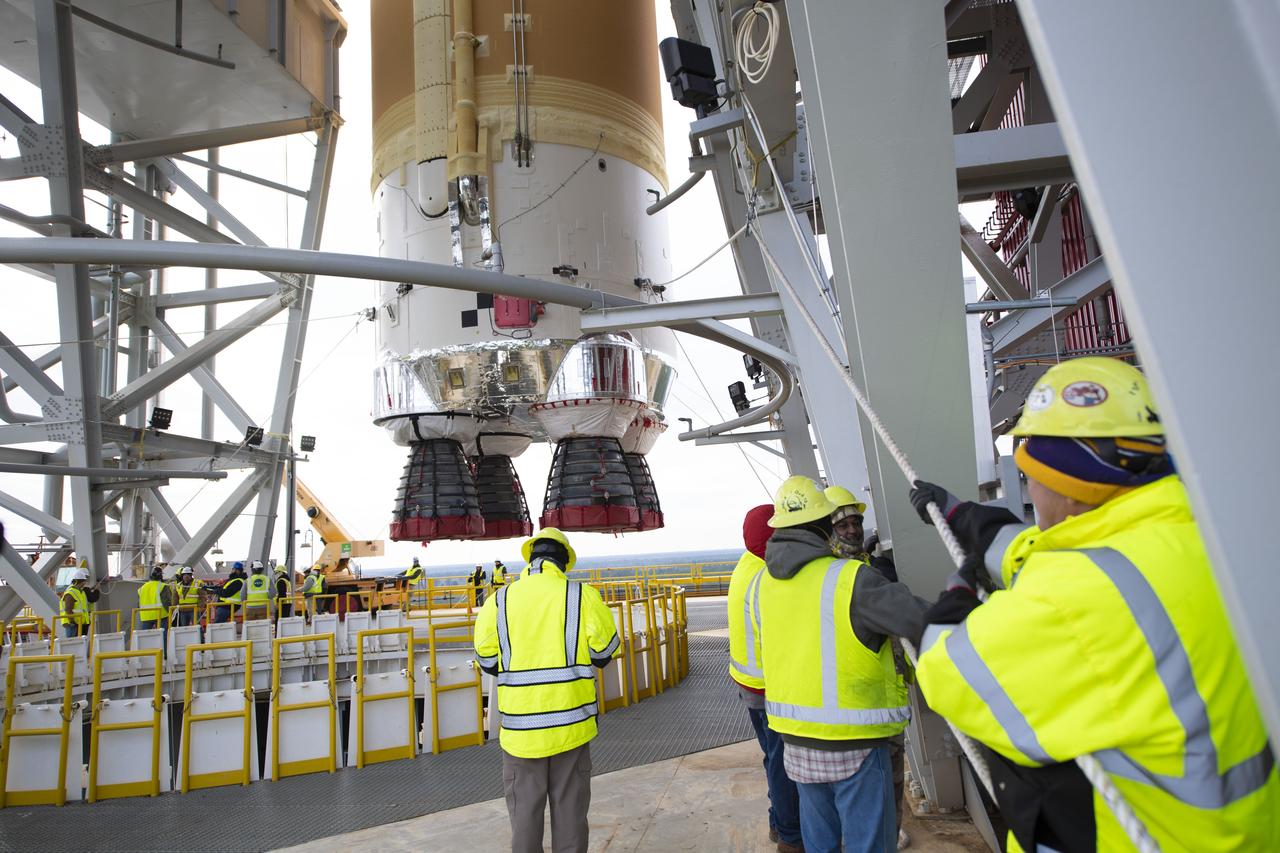
On Jan. 21-22, 2020, crews at Stennis Space Center lifted and installed the first core stage of NASA’s new Space Launch System (SLS) rocket onto the B-2 Test Stand. In upcoming months, a top-to-bottom, integrated series of Green Run tests will be conducted on the stage and its sophisticated systems. Following testing, the stage will be used to help launch the maiden Artemis I test mission of SLS and the Orion spacecraft. Through the Artemis program, NASA will send humans, including the first woman and next man, to the Moon to establish a sustainable presence.
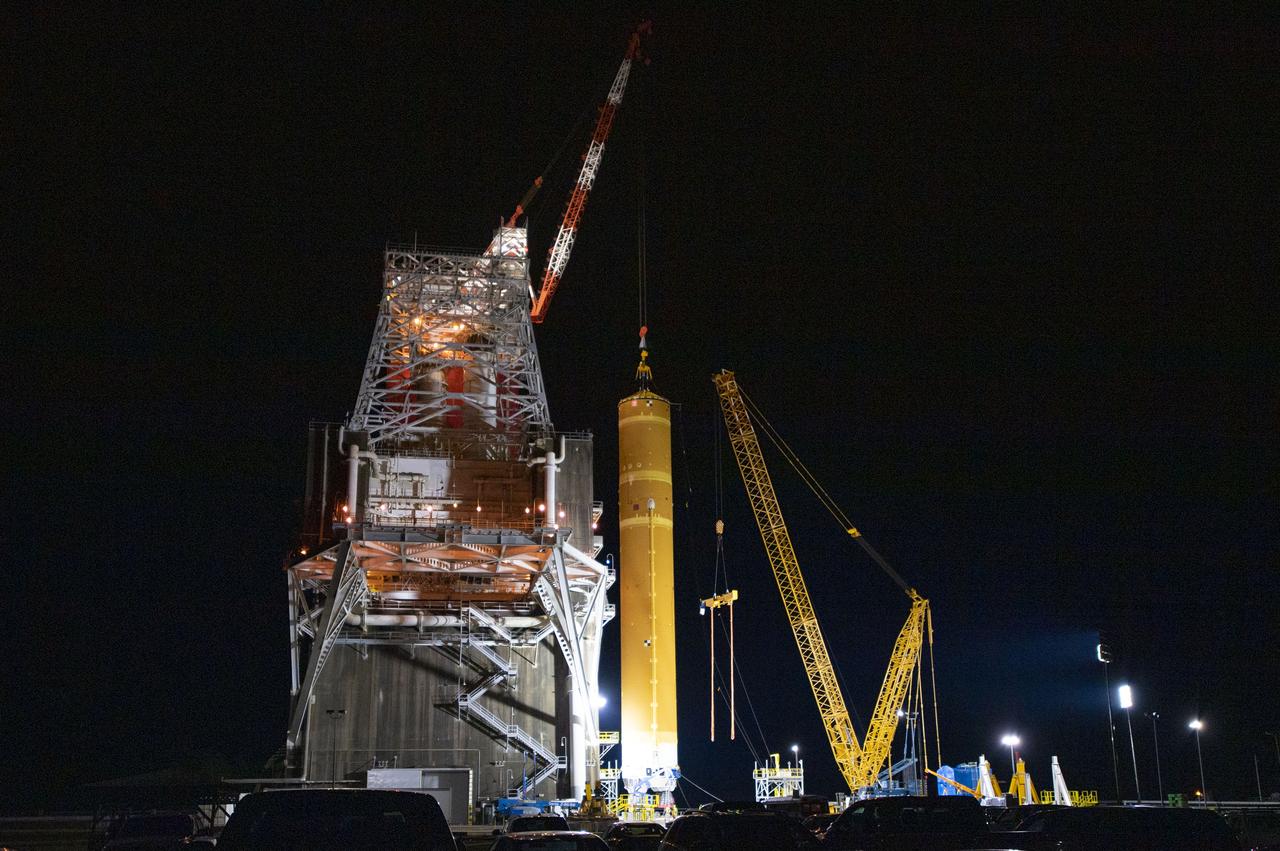
On Jan. 21-22, 2020, crews at Stennis Space Center lifted and installed the first core stage of NASA’s new Space Launch System (SLS) rocket onto the B-2 Test Stand. In upcoming months, a top-to-bottom, integrated series of Green Run tests will be conducted on the stage and its sophisticated systems. Following testing, the stage will be used to help launch the maiden Artemis I test mission of SLS and the Orion spacecraft. Through the Artemis program, NASA will send humans, including the first woman and next man, to the Moon to establish a sustainable presence.
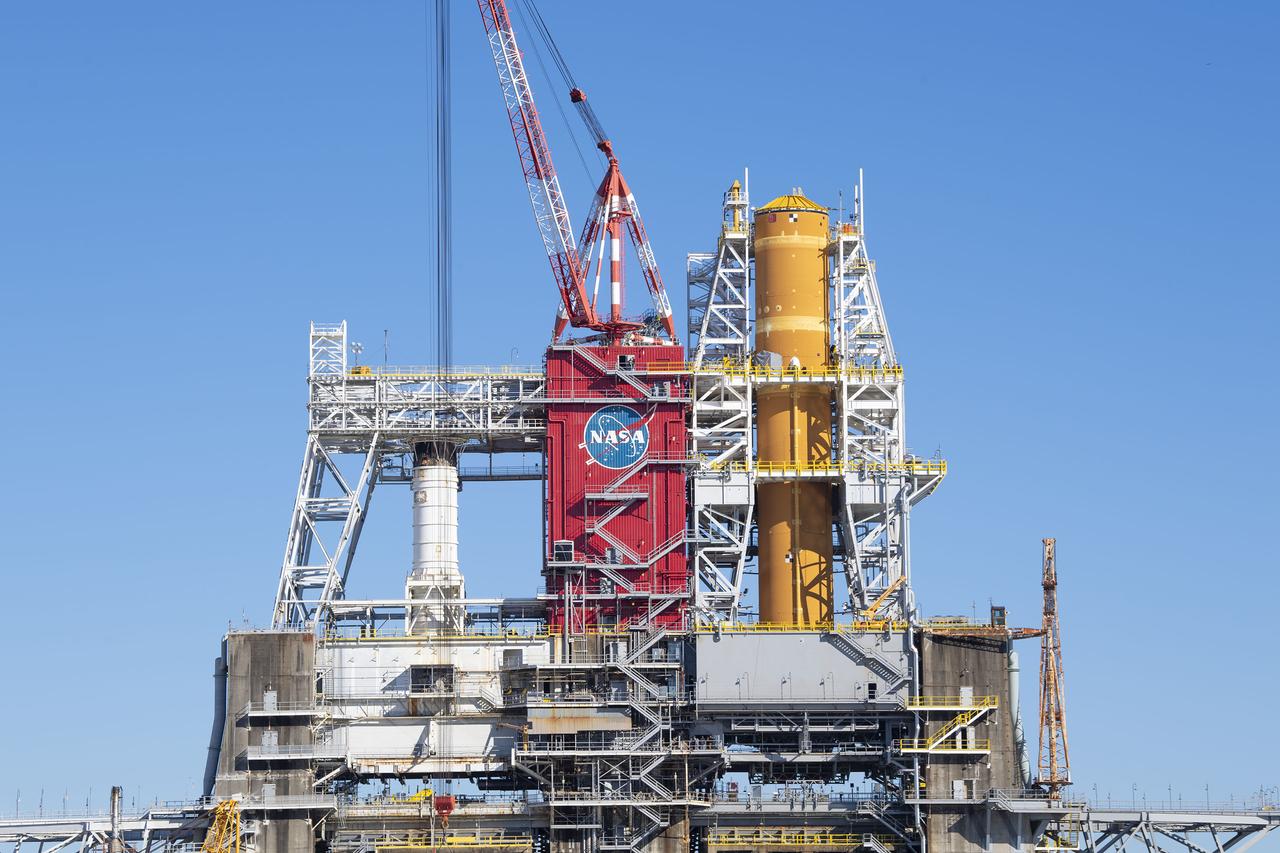
On Jan. 21-22, 2020, crews at Stennis Space Center lifted and installed the first core stage of NASA’s new Space Launch System (SLS) rocket onto the B-2 Test Stand. In upcoming months, a top-to-bottom, integrated series of Green Run tests will be conducted on the stage and its sophisticated systems. Following testing, the stage will be used to help launch the maiden Artemis I test mission of SLS and the Orion spacecraft. Through the Artemis program, NASA will send humans, including the first woman and next man, to the Moon to establish a sustainable presence.

On Jan. 21-22, 2020, crews at Stennis Space Center lifted and installed the first core stage of NASA’s new Space Launch System (SLS) rocket onto the B-2 Test Stand. In upcoming months, a top-to-bottom, integrated series of Green Run tests will be conducted on the stage and its sophisticated systems. Following testing, the stage will be used to help launch the maiden Artemis I test mission of SLS and the Orion spacecraft. Through the Artemis program, NASA will send humans, including the first woman and next man, to the Moon to establish a sustainable presence.
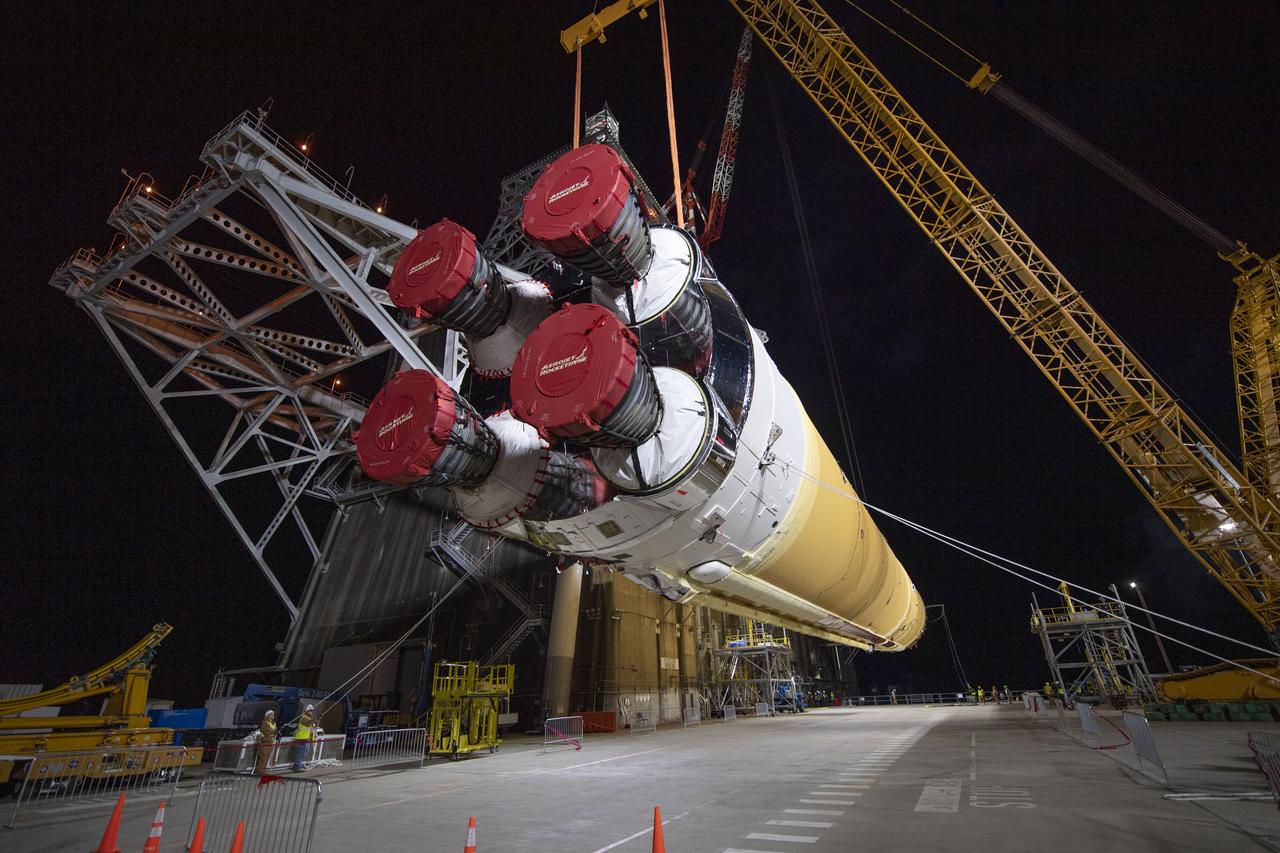
On Jan. 21-22, 2020, crews at Stennis Space Center lifted and installed the first core stage of NASA’s new Space Launch System (SLS) rocket onto the B-2 Test Stand. In upcoming months, a top-to-bottom, integrated series of Green Run tests will be conducted on the stage and its sophisticated systems. Following testing, the stage will be used to help launch the maiden Artemis I test mission of SLS and the Orion spacecraft. Through the Artemis program, NASA will send humans, including the first woman and next man, to the Moon to establish a sustainable presence.
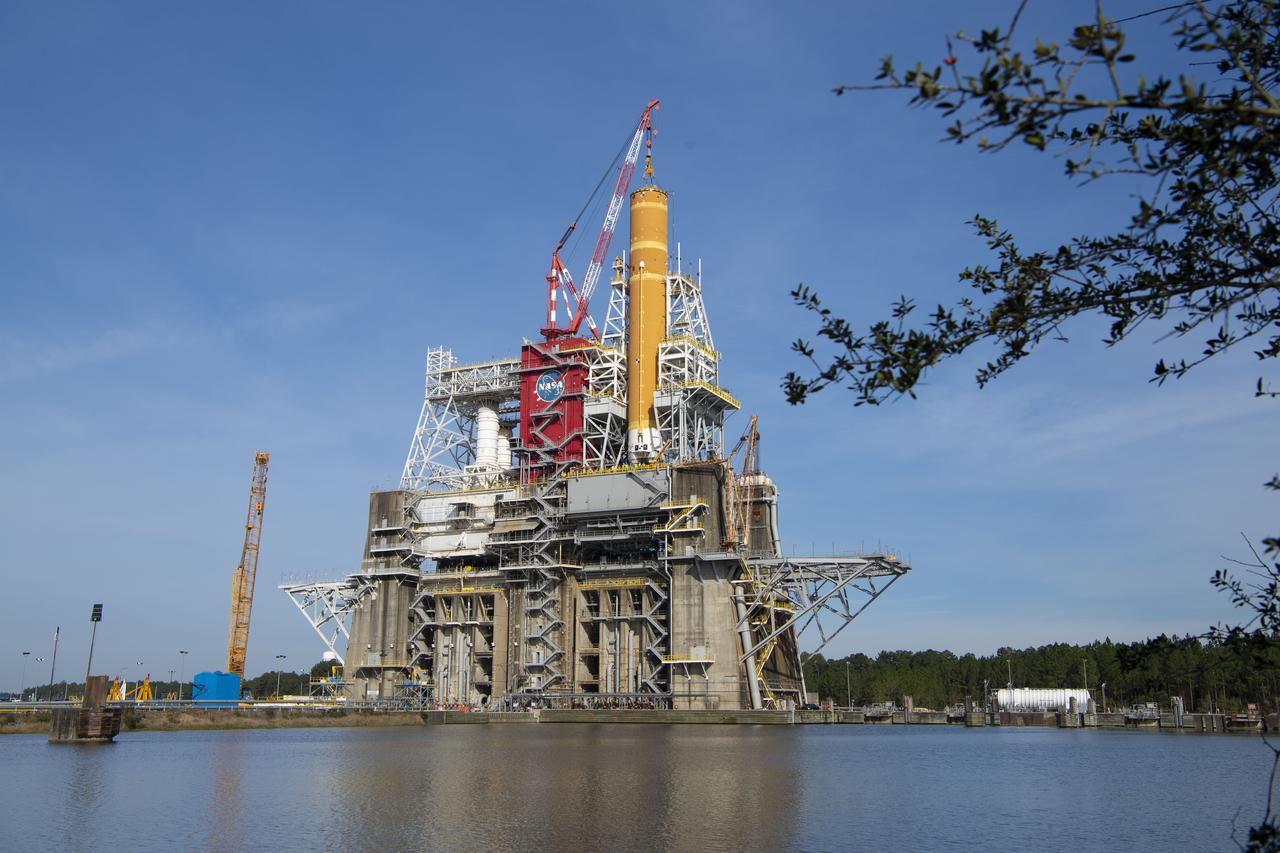
On Jan. 21-22, 2020, crews at Stennis Space Center lifted and installed the first core stage of NASA’s new Space Launch System (SLS) rocket onto the B-2 Test Stand. In upcoming months, a top-to-bottom, integrated series of Green Run tests will be conducted on the stage and its sophisticated systems. Following testing, the stage will be used to help launch the maiden Artemis I test mission of SLS and the Orion spacecraft. Through the Artemis program, NASA will send humans, including the first woman and next man, to the Moon to establish a sustainable presence.
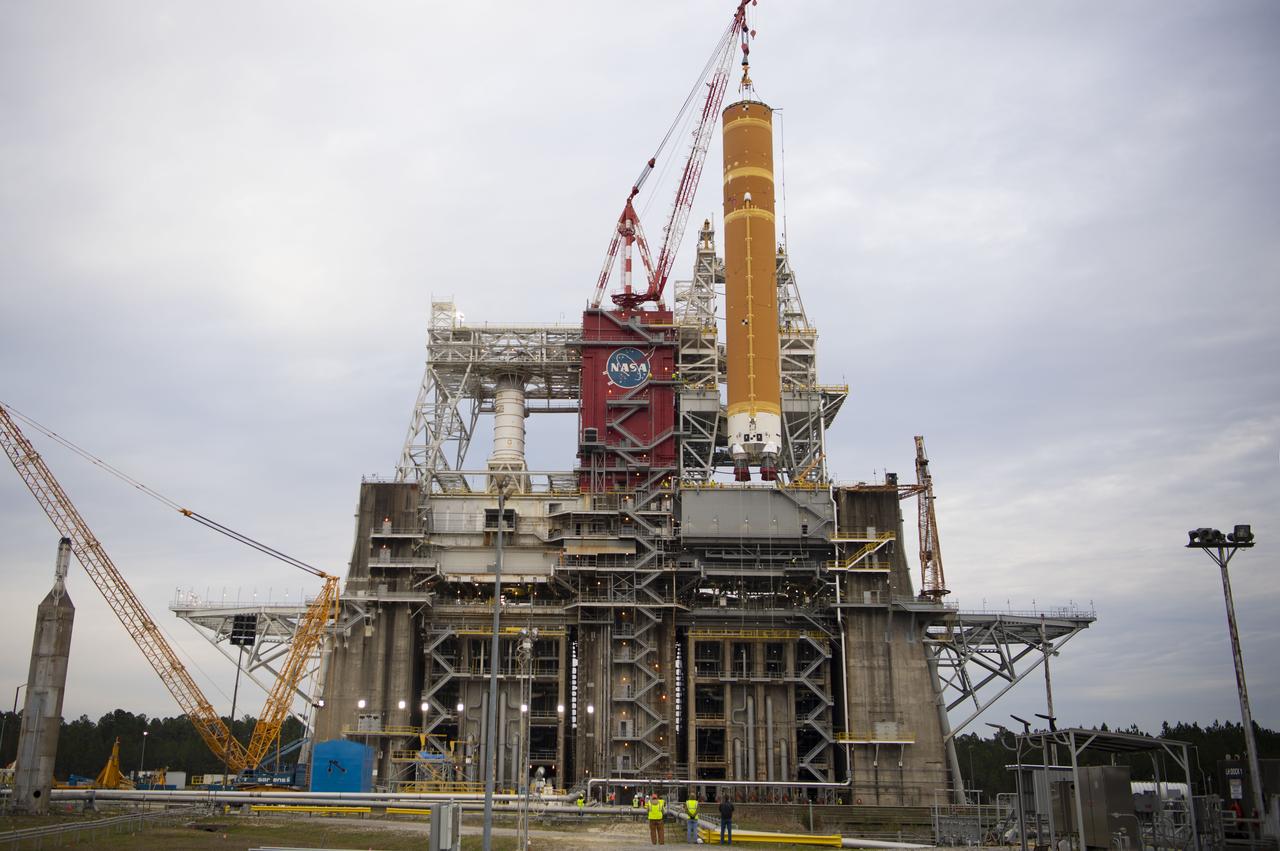
On Jan. 21-22, 2020, crews at Stennis Space Center lifted and installed the first core stage of NASA’s new Space Launch System (SLS) rocket onto the B-2 Test Stand. In upcoming months, a top-to-bottom, integrated series of Green Run tests will be conducted on the stage and its sophisticated systems. Following testing, the stage will be used to help launch the maiden Artemis I test mission of SLS and the Orion spacecraft. Through the Artemis program, NASA will send humans, including the first woman and next man, to the Moon to establish a sustainable presence.
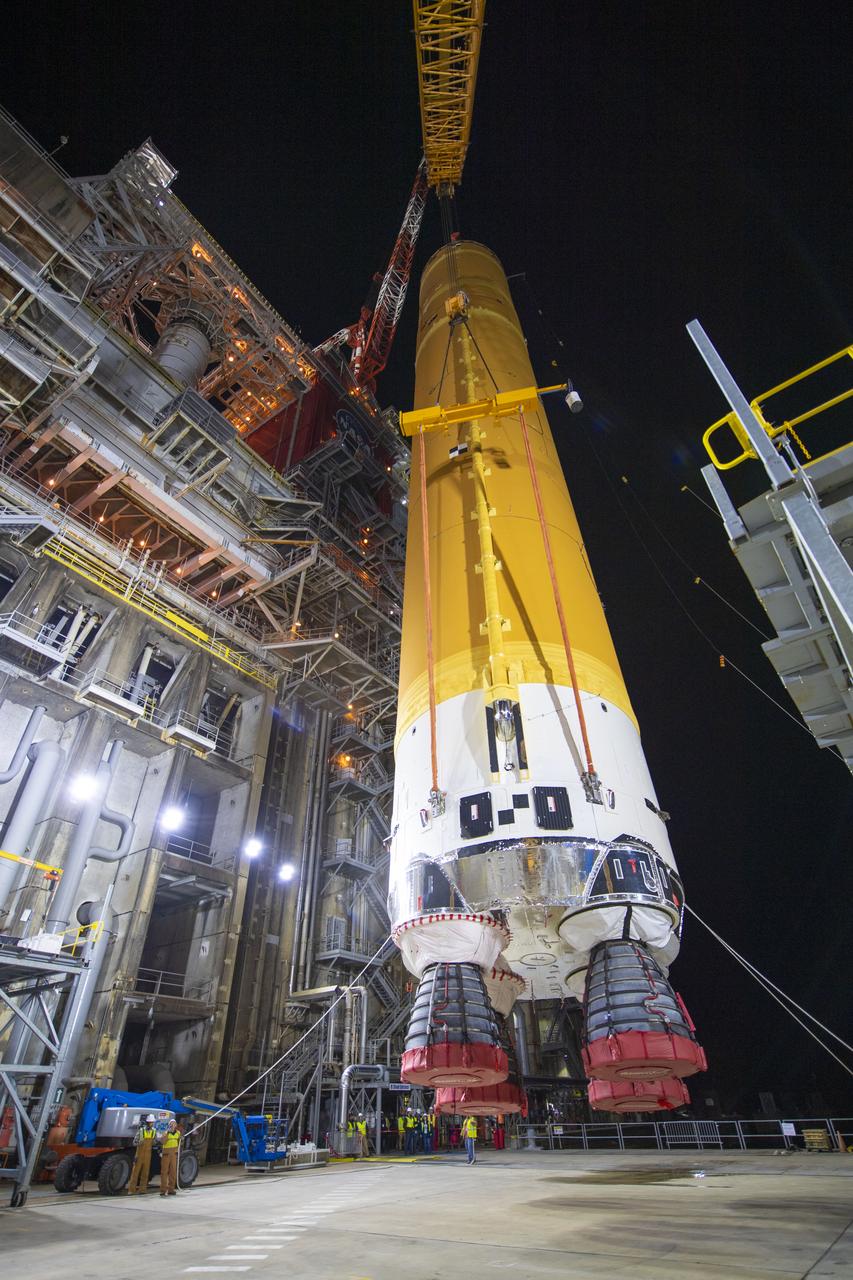
On Jan. 21-22, 2020, crews at Stennis Space Center lifted and installed the first core stage of NASA’s new Space Launch System (SLS) rocket onto the B-2 Test Stand. In upcoming months, a top-to-bottom, integrated series of Green Run tests will be conducted on the stage and its sophisticated systems. Following testing, the stage will be used to help launch the maiden Artemis I test mission of SLS and the Orion spacecraft. Through the Artemis program, NASA will send humans, including the first woman and next man, to the Moon to establish a sustainable presence.
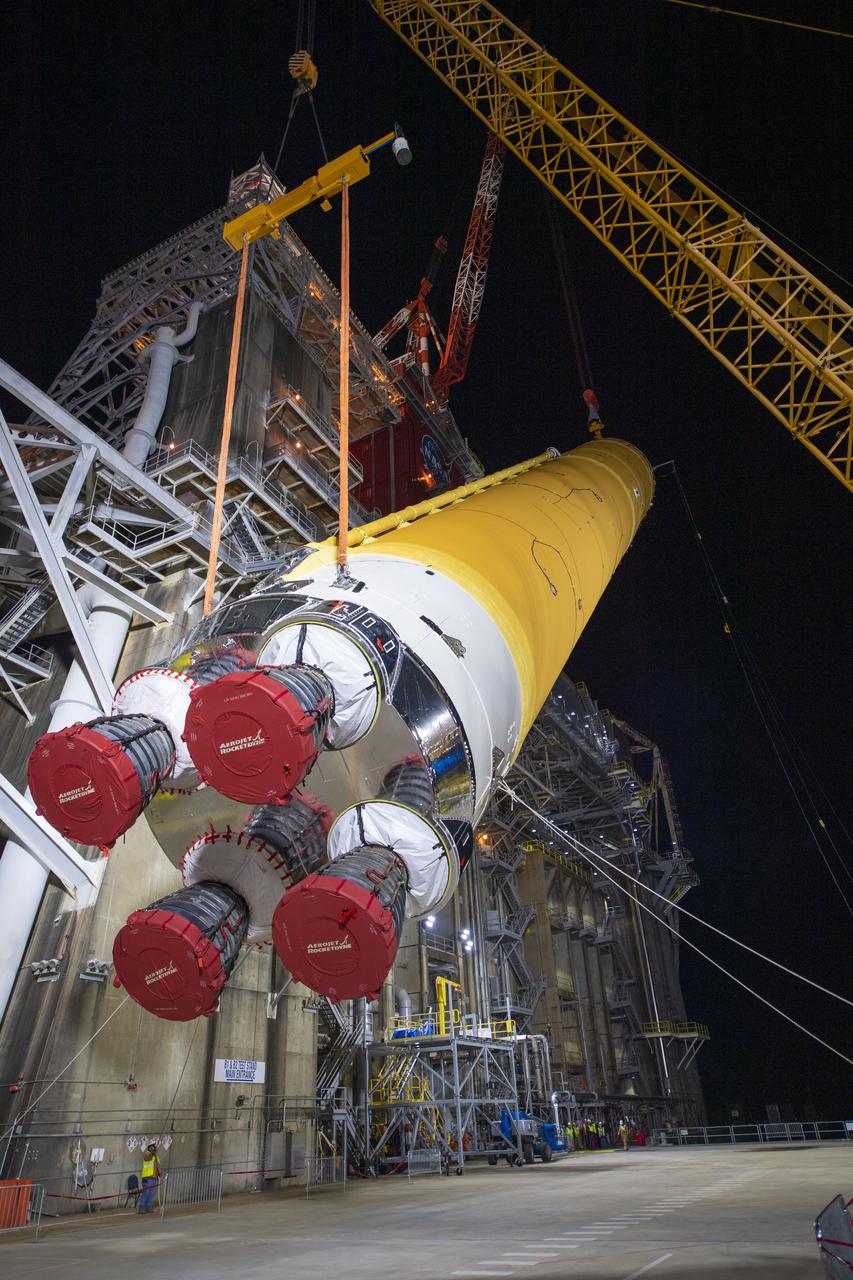
On Jan. 21-22, 2020, crews at Stennis Space Center lifted and installed the first core stage of NASA’s new Space Launch System (SLS) rocket onto the B-2 Test Stand. In upcoming months, a top-to-bottom, integrated series of Green Run tests will be conducted on the stage and its sophisticated systems. Following testing, the stage will be used to help launch the maiden Artemis I test mission of SLS and the Orion spacecraft. Through the Artemis program, NASA will send humans, including the first woman and next man, to the Moon to establish a sustainable presence.
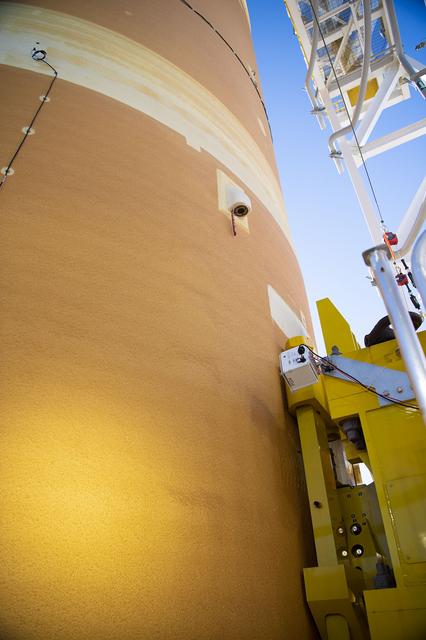
On Jan. 21-22, 2020, crews at Stennis Space Center lifted and installed the first core stage of NASA’s new Space Launch System (SLS) rocket onto the B-2 Test Stand. In upcoming months, a top-to-bottom, integrated series of Green Run tests will be conducted on the stage and its sophisticated systems. Following testing, the stage will be used to help launch the maiden Artemis I test mission of SLS and the Orion spacecraft. Through the Artemis program, NASA will send humans, including the first woman and next man, to the Moon to establish a sustainable presence.
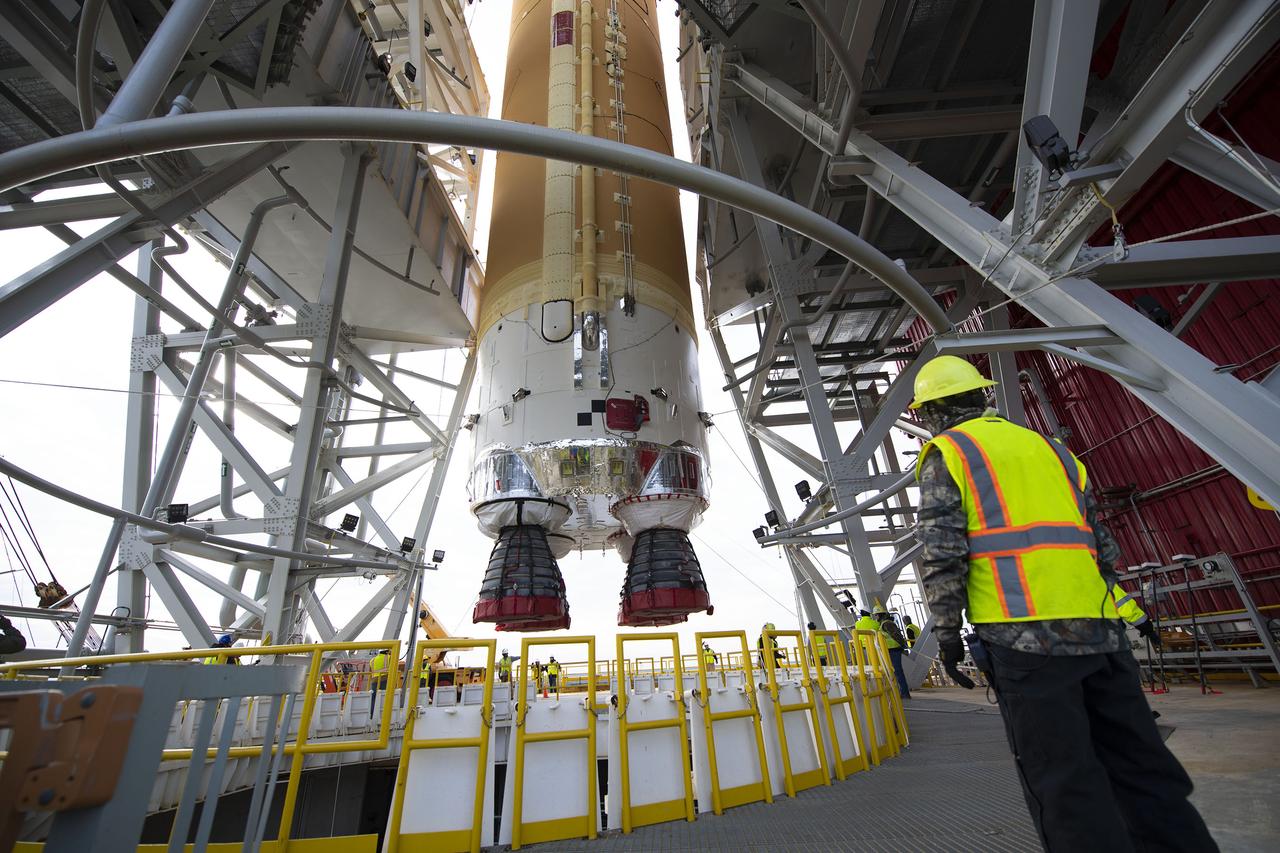
On Jan. 21-22, 2020, crews at Stennis Space Center lifted and installed the first core stage of NASA’s new Space Launch System (SLS) rocket onto the B-2 Test Stand. In upcoming months, a top-to-bottom, integrated series of Green Run tests will be conducted on the stage and its sophisticated systems. Following testing, the stage will be used to help launch the maiden Artemis I test mission of SLS and the Orion spacecraft. Through the Artemis program, NASA will send humans, including the first woman and next man, to the Moon to establish a sustainable presence.
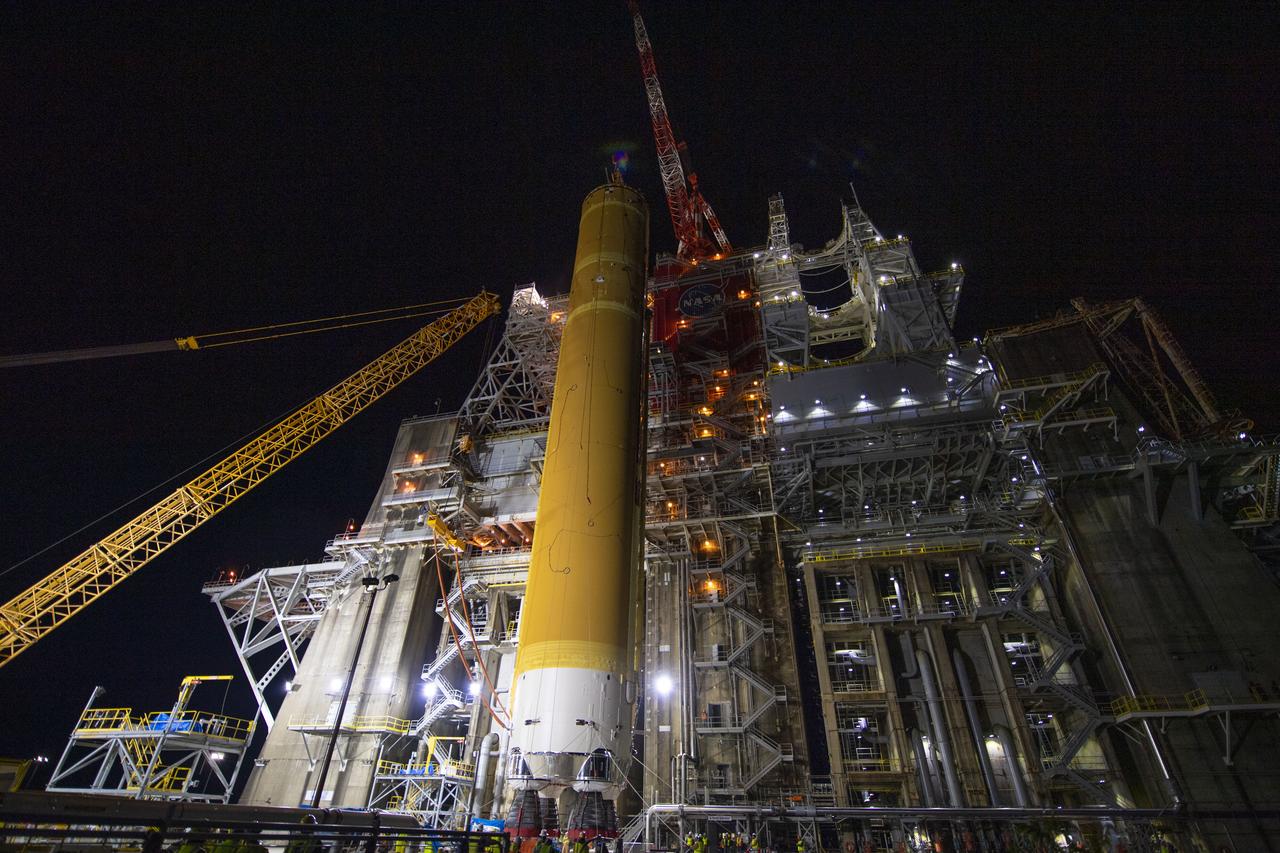
On Jan. 21-22, 2020, crews at Stennis Space Center lifted and installed the first core stage of NASA’s new Space Launch System (SLS) rocket onto the B-2 Test Stand. In upcoming months, a top-to-bottom, integrated series of Green Run tests will be conducted on the stage and its sophisticated systems. Following testing, the stage will be used to help launch the maiden Artemis I test mission of SLS and the Orion spacecraft. Through the Artemis program, NASA will send humans, including the first woman and next man, to the Moon to establish a sustainable presence.
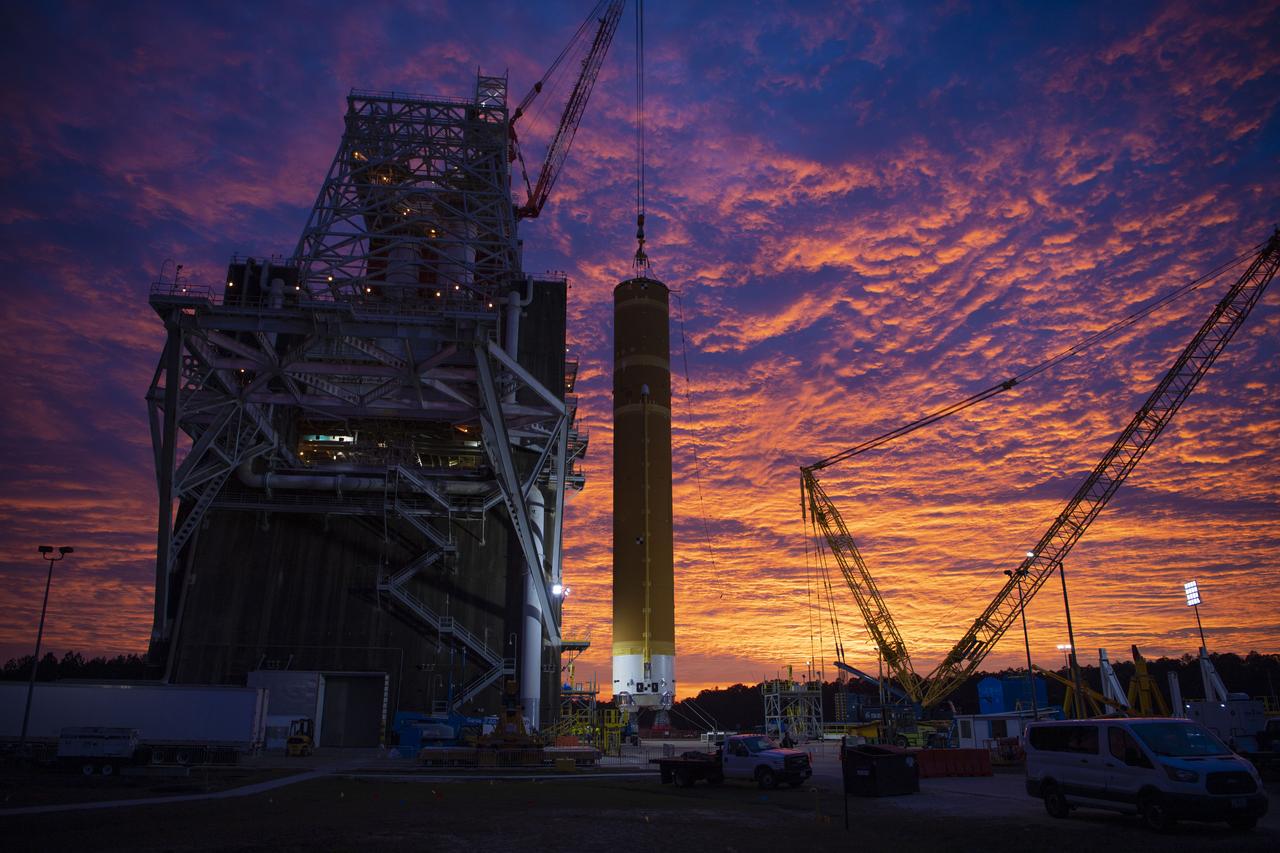
On Jan. 21-22, 2020, crews at Stennis Space Center lifted and installed the first core stage of NASA’s new Space Launch System (SLS) rocket onto the B-2 Test Stand. In upcoming months, a top-to-bottom, integrated series of Green Run tests will be conducted on the stage and its sophisticated systems. Following testing, the stage will be used to help launch the maiden Artemis I test mission of SLS and the Orion spacecraft. Through the Artemis program, NASA will send humans, including the first woman and next man, to the Moon to establish a sustainable presence.
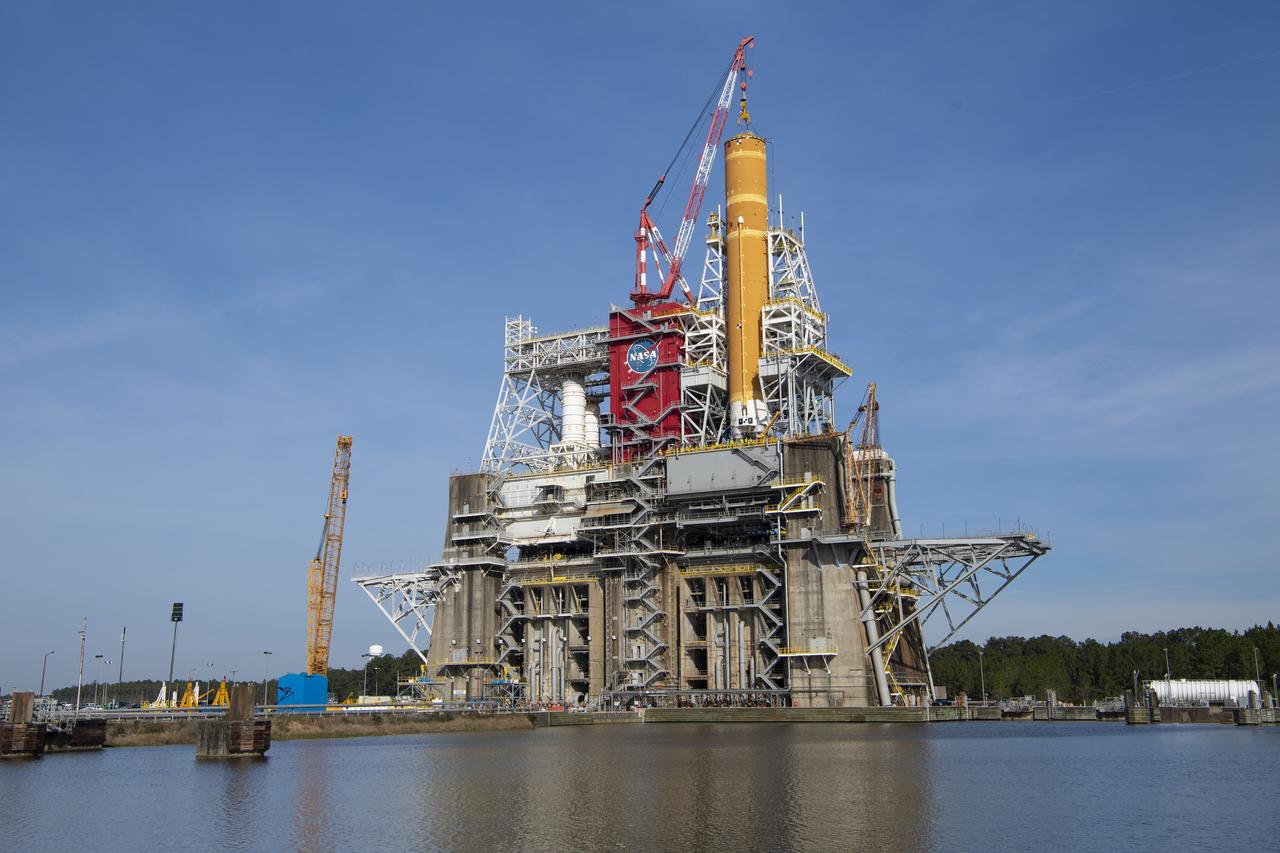
On Jan. 21-22, 2020, crews at Stennis Space Center lifted and installed the first core stage of NASA’s new Space Launch System (SLS) rocket onto the B-2 Test Stand. In upcoming months, a top-to-bottom, integrated series of Green Run tests will be conducted on the stage and its sophisticated systems. Following testing, the stage will be used to help launch the maiden Artemis I test mission of SLS and the Orion spacecraft. Through the Artemis program, NASA will send humans, including the first woman and next man, to the Moon to establish a sustainable presence.
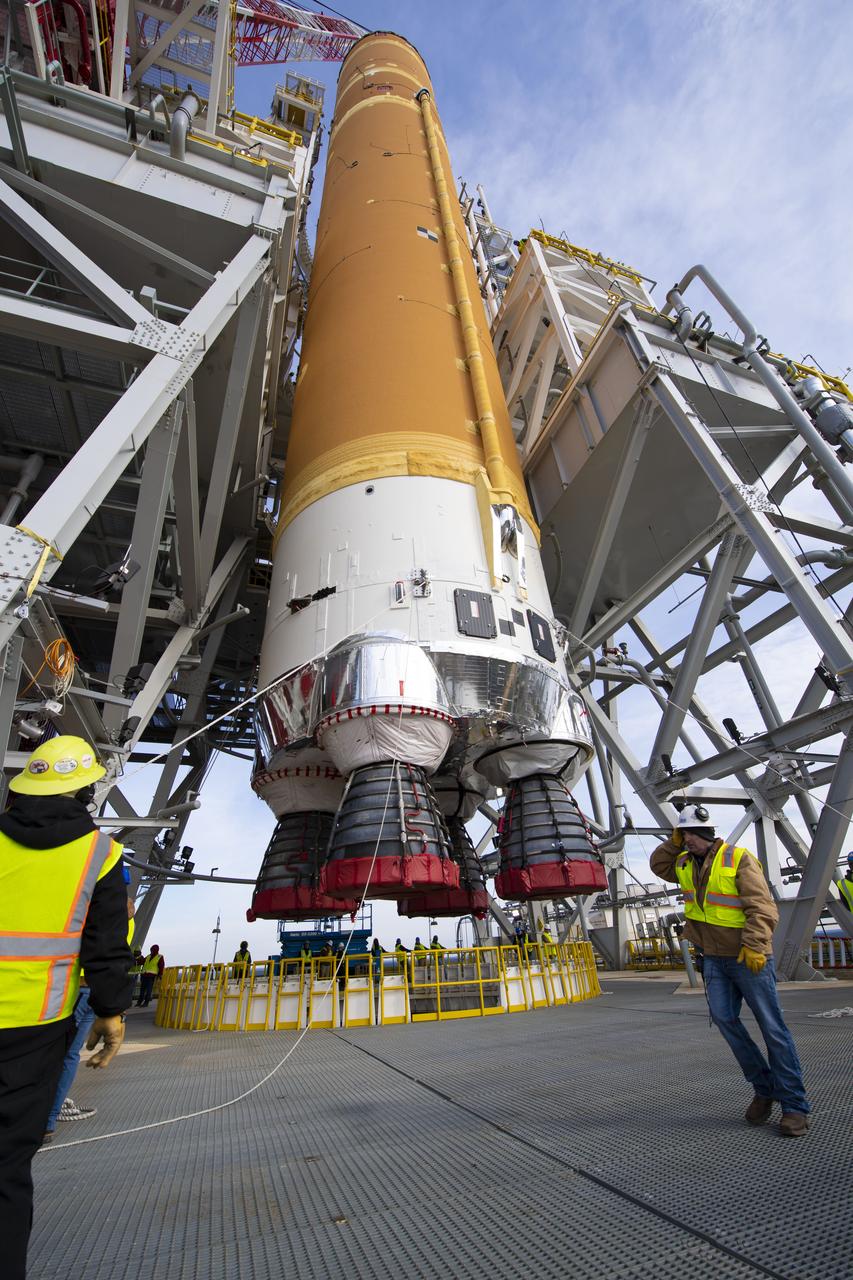
On Jan. 21-22, 2020, crews at Stennis Space Center lifted and installed the first core stage of NASA’s new Space Launch System (SLS) rocket onto the B-2 Test Stand. In upcoming months, a top-to-bottom, integrated series of Green Run tests will be conducted on the stage and its sophisticated systems. Following testing, the stage will be used to help launch the maiden Artemis I test mission of SLS and the Orion spacecraft. Through the Artemis program, NASA will send humans, including the first woman and next man, to the Moon to establish a sustainable presence.
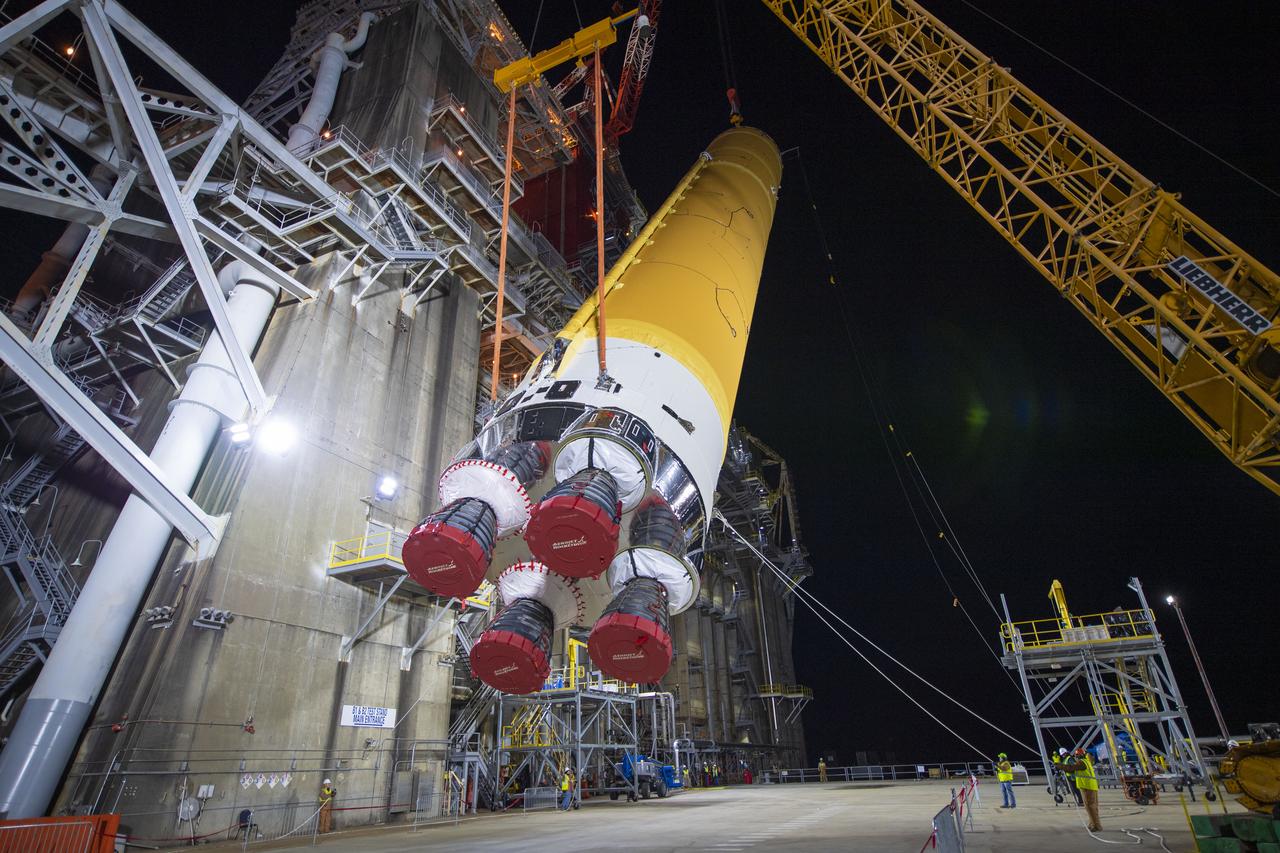
On Jan. 21-22, 2020, crews at Stennis Space Center lifted and installed the first core stage of NASA’s new Space Launch System (SLS) rocket onto the B-2 Test Stand. In upcoming months, a top-to-bottom, integrated series of Green Run tests will be conducted on the stage and its sophisticated systems. Following testing, the stage will be used to help launch the maiden Artemis I test mission of SLS and the Orion spacecraft. Through the Artemis program, NASA will send humans, including the first woman and next man, to the Moon to establish a sustainable presence.
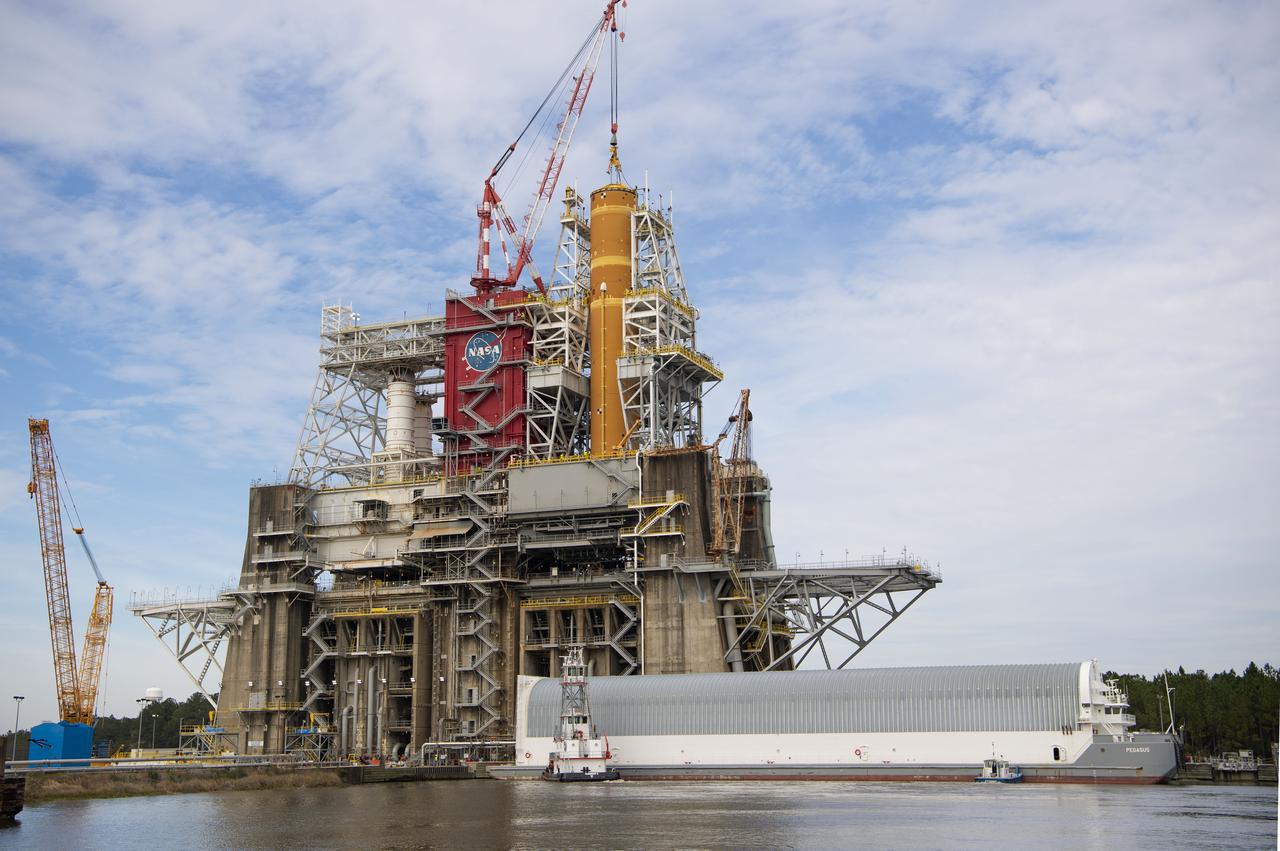
On Jan. 21-22, 2020, crews at Stennis Space Center lifted and installed the first core stage of NASA’s new Space Launch System (SLS) rocket onto the B-2 Test Stand. In upcoming months, a top-to-bottom, integrated series of Green Run tests will be conducted on the stage and its sophisticated systems. Following testing, the stage will be used to help launch the maiden Artemis I test mission of SLS and the Orion spacecraft. Through the Artemis program, NASA will send humans, including the first woman and next man, to the Moon to establish a sustainable presence.
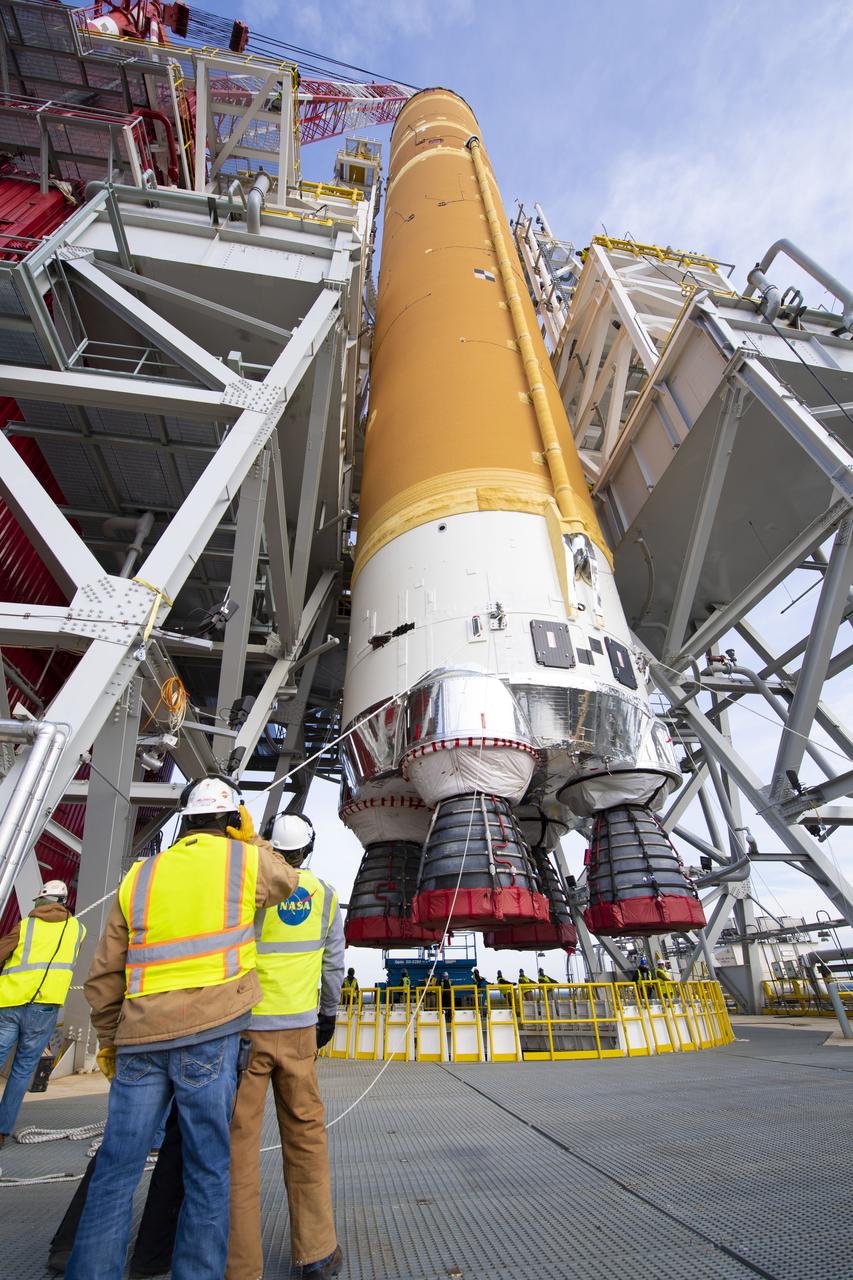
On Jan. 21-22, 2020, crews at Stennis Space Center lifted and installed the first core stage of NASA’s new Space Launch System (SLS) rocket onto the B-2 Test Stand. In upcoming months, a top-to-bottom, integrated series of Green Run tests will be conducted on the stage and its sophisticated systems. Following testing, the stage will be used to help launch the maiden Artemis I test mission of SLS and the Orion spacecraft. Through the Artemis program, NASA will send humans, including the first woman and next man, to the Moon to establish a sustainable presence.
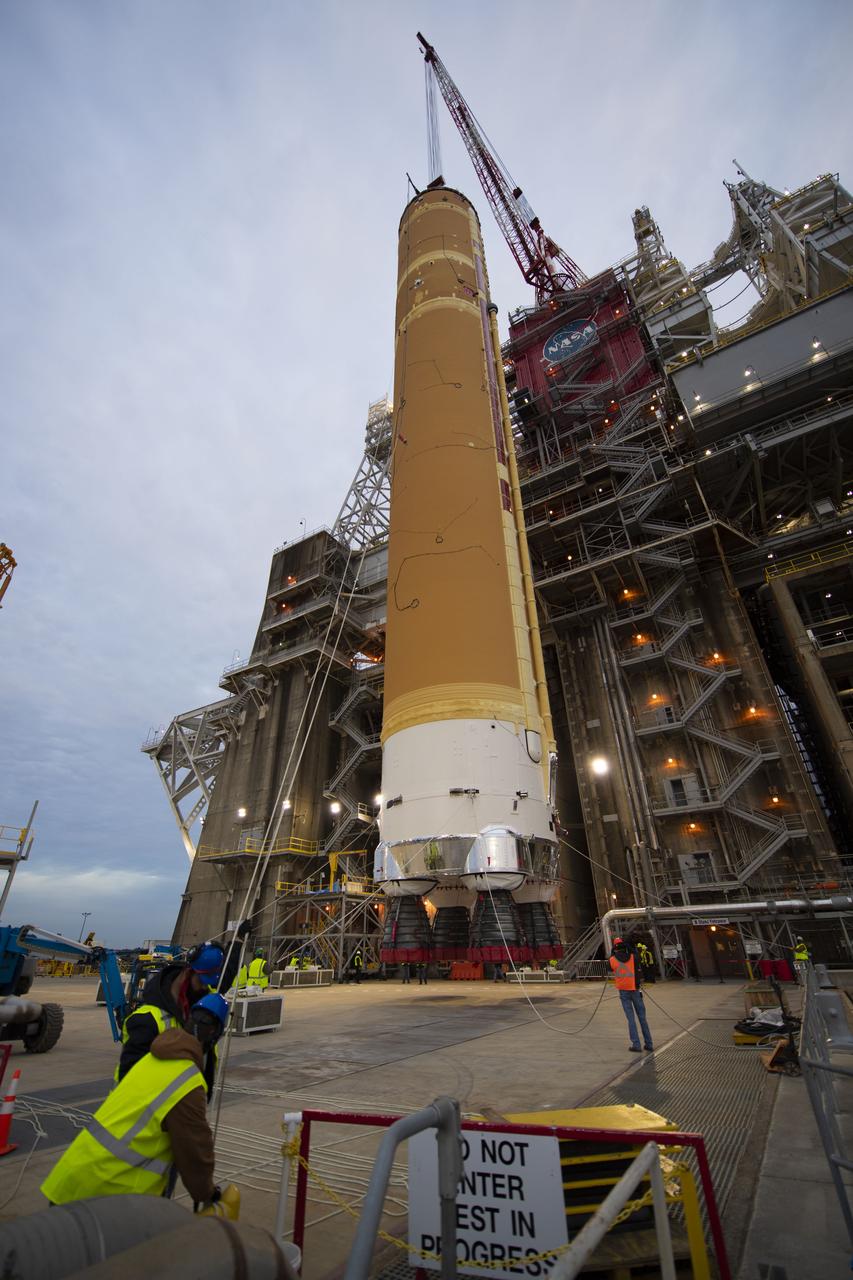
On Jan. 21-22, 2020, crews at Stennis Space Center lifted and installed the first core stage of NASA’s new Space Launch System (SLS) rocket onto the B-2 Test Stand. In upcoming months, a top-to-bottom, integrated series of Green Run tests will be conducted on the stage and its sophisticated systems. Following testing, the stage will be used to help launch the maiden Artemis I test mission of SLS and the Orion spacecraft. Through the Artemis program, NASA will send humans, including the first woman and next man, to the Moon to establish a sustainable presence.
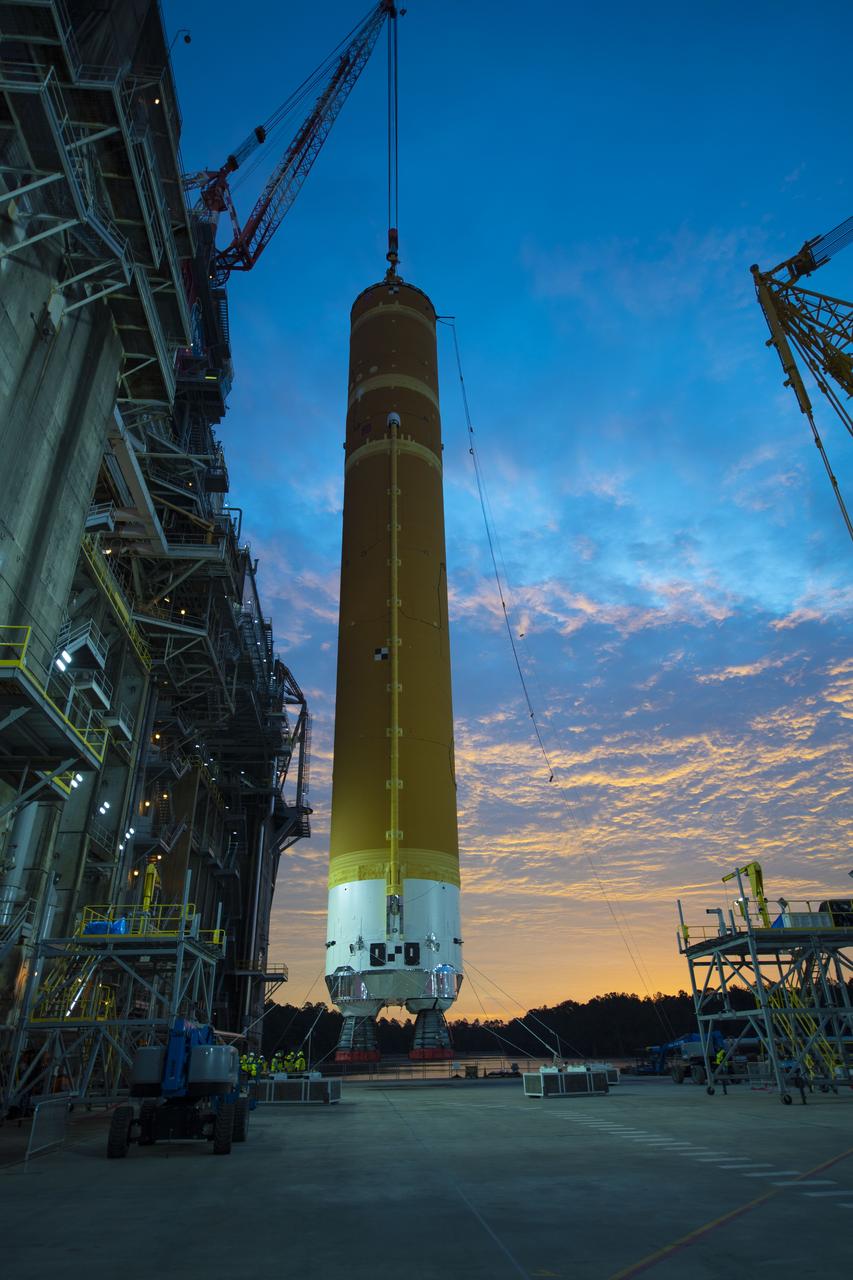
On Jan. 21-22, 2020, crews at Stennis Space Center lifted and installed the first core stage of NASA’s new Space Launch System (SLS) rocket onto the B-2 Test Stand. In upcoming months, a top-to-bottom, integrated series of Green Run tests will be conducted on the stage and its sophisticated systems. Following testing, the stage will be used to help launch the maiden Artemis I test mission of SLS and the Orion spacecraft. Through the Artemis program, NASA will send humans, including the first woman and next man, to the Moon to establish a sustainable presence.
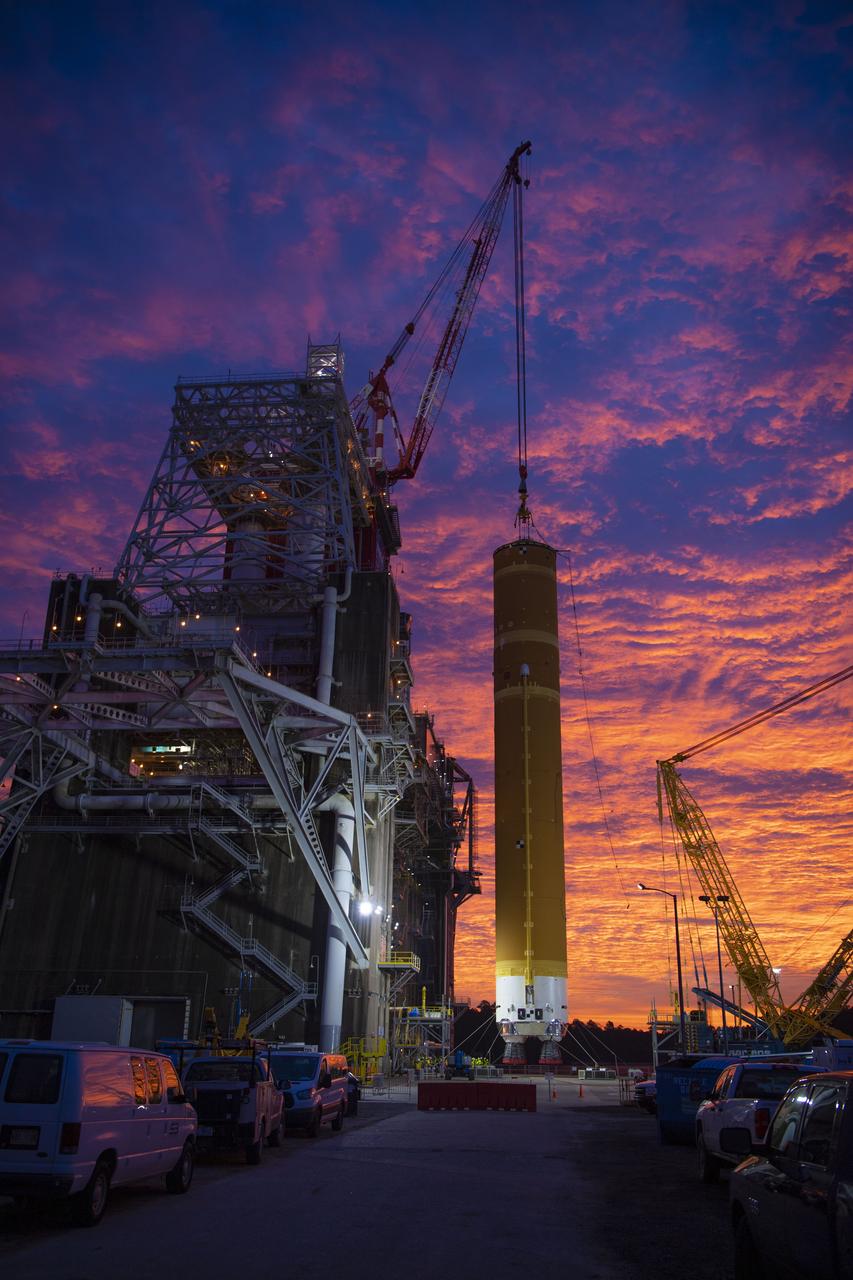
On Jan. 21-22, 2020, crews at Stennis Space Center lifted and installed the first core stage of NASA’s new Space Launch System (SLS) rocket onto the B-2 Test Stand. In upcoming months, a top-to-bottom, integrated series of Green Run tests will be conducted on the stage and its sophisticated systems. Following testing, the stage will be used to help launch the maiden Artemis I test mission of SLS and the Orion spacecraft. Through the Artemis program, NASA will send humans, including the first woman and next man, to the Moon to establish a sustainable presence.
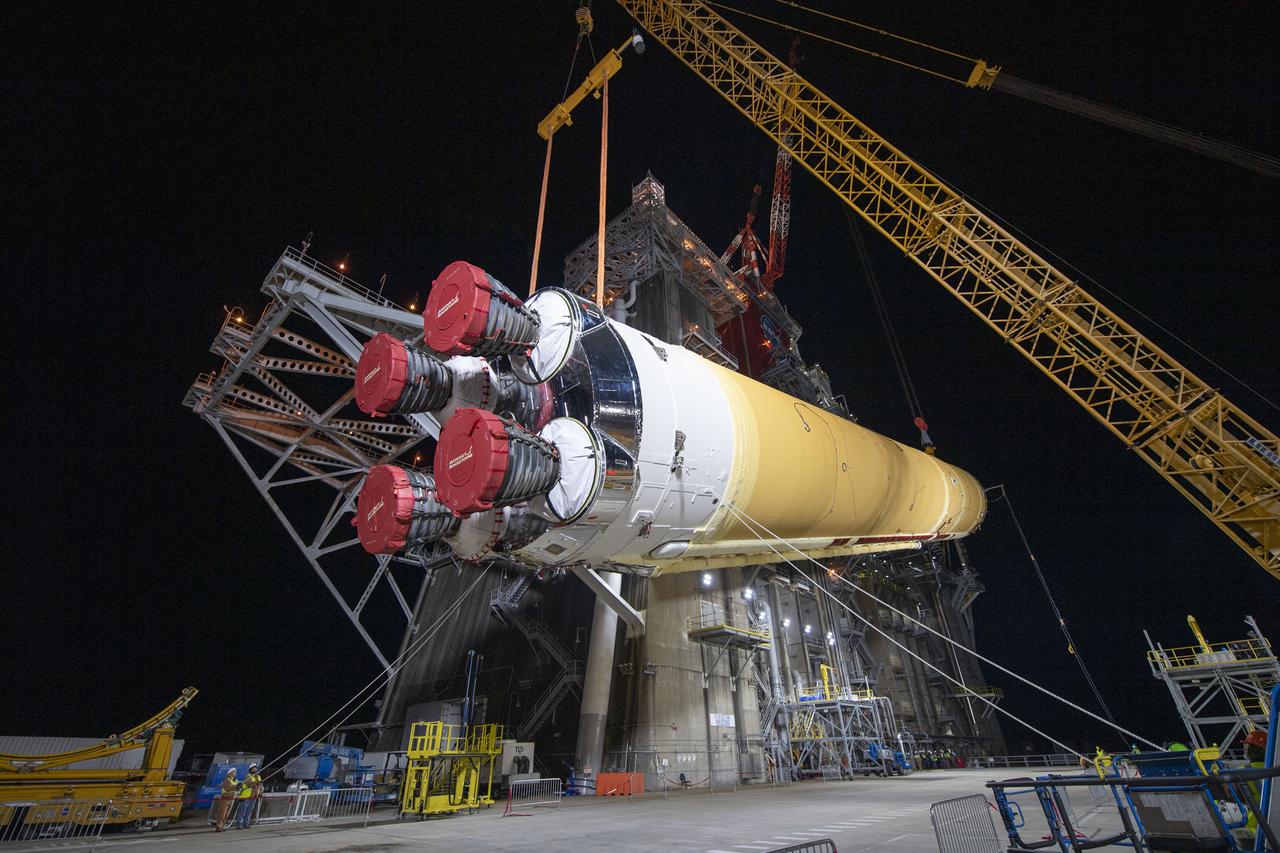
On Jan. 21-22, 2020, crews at Stennis Space Center lifted and installed the first core stage of NASA’s new Space Launch System (SLS) rocket onto the B-2 Test Stand. In upcoming months, a top-to-bottom, integrated series of Green Run tests will be conducted on the stage and its sophisticated systems. Following testing, the stage will be used to help launch the maiden Artemis I test mission of SLS and the Orion spacecraft. Through the Artemis program, NASA will send humans, including the first woman and next man, to the Moon to establish a sustainable presence.
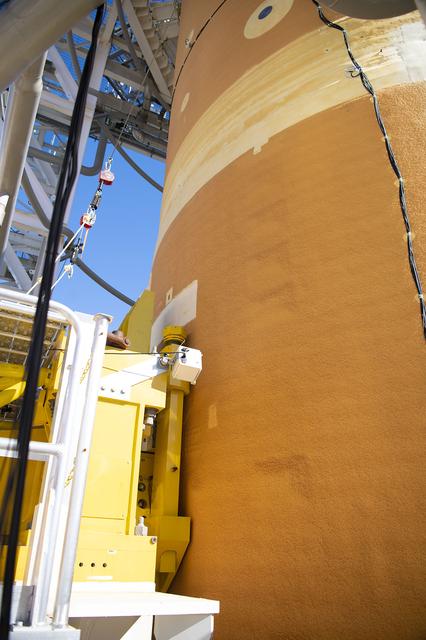
On Jan. 21-22, 2020, crews at Stennis Space Center lifted and installed the first core stage of NASA’s new Space Launch System (SLS) rocket onto the B-2 Test Stand. In upcoming months, a top-to-bottom, integrated series of Green Run tests will be conducted on the stage and its sophisticated systems. Following testing, the stage will be used to help launch the maiden Artemis I test mission of SLS and the Orion spacecraft. Through the Artemis program, NASA will send humans, including the first woman and next man, to the Moon to establish a sustainable presence.
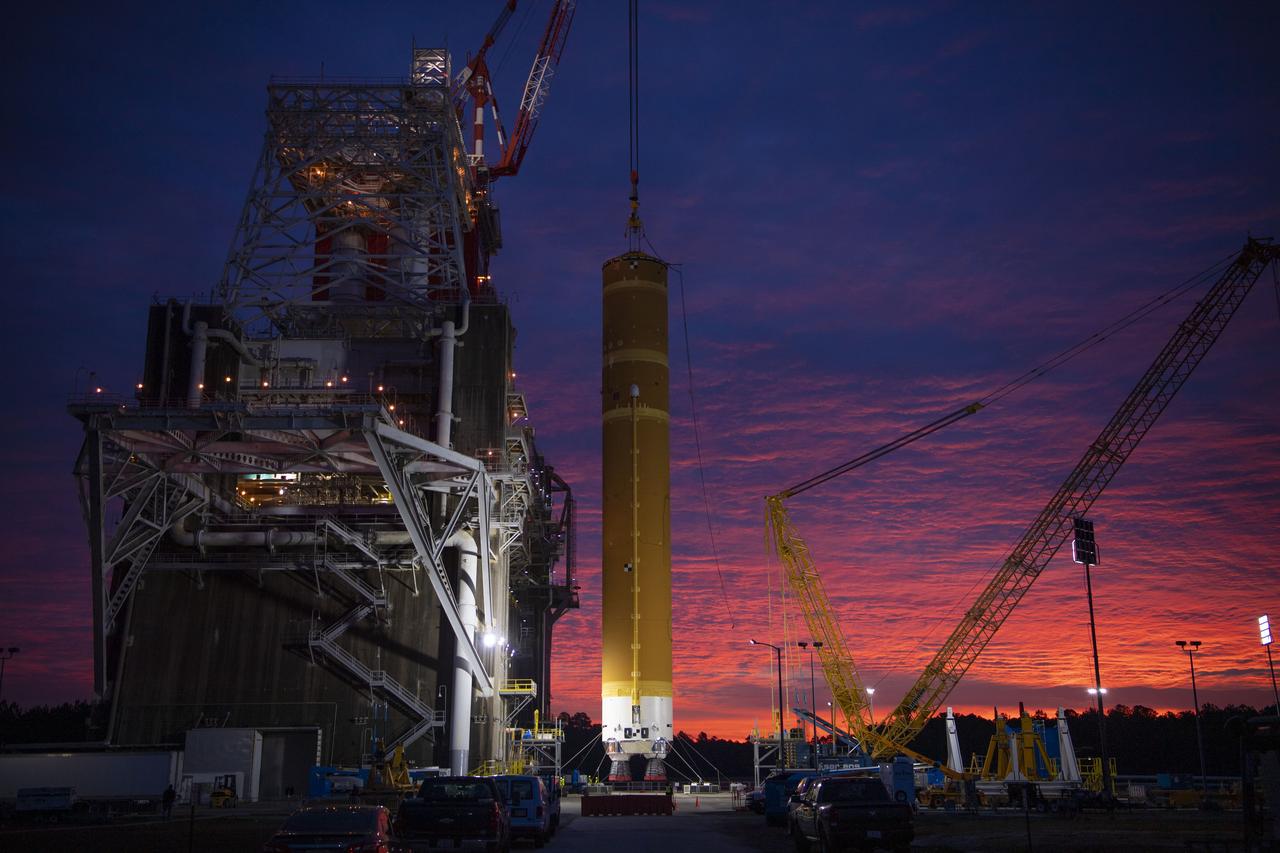
On Jan. 21-22, 2020, crews at Stennis Space Center lifted and installed the first core stage of NASA’s new Space Launch System (SLS) rocket onto the B-2 Test Stand. In upcoming months, a top-to-bottom, integrated series of Green Run tests will be conducted on the stage and its sophisticated systems. Following testing, the stage will be used to help launch the maiden Artemis I test mission of SLS and the Orion spacecraft. Through the Artemis program, NASA will send humans, including the first woman and next man, to the Moon to establish a sustainable presence.
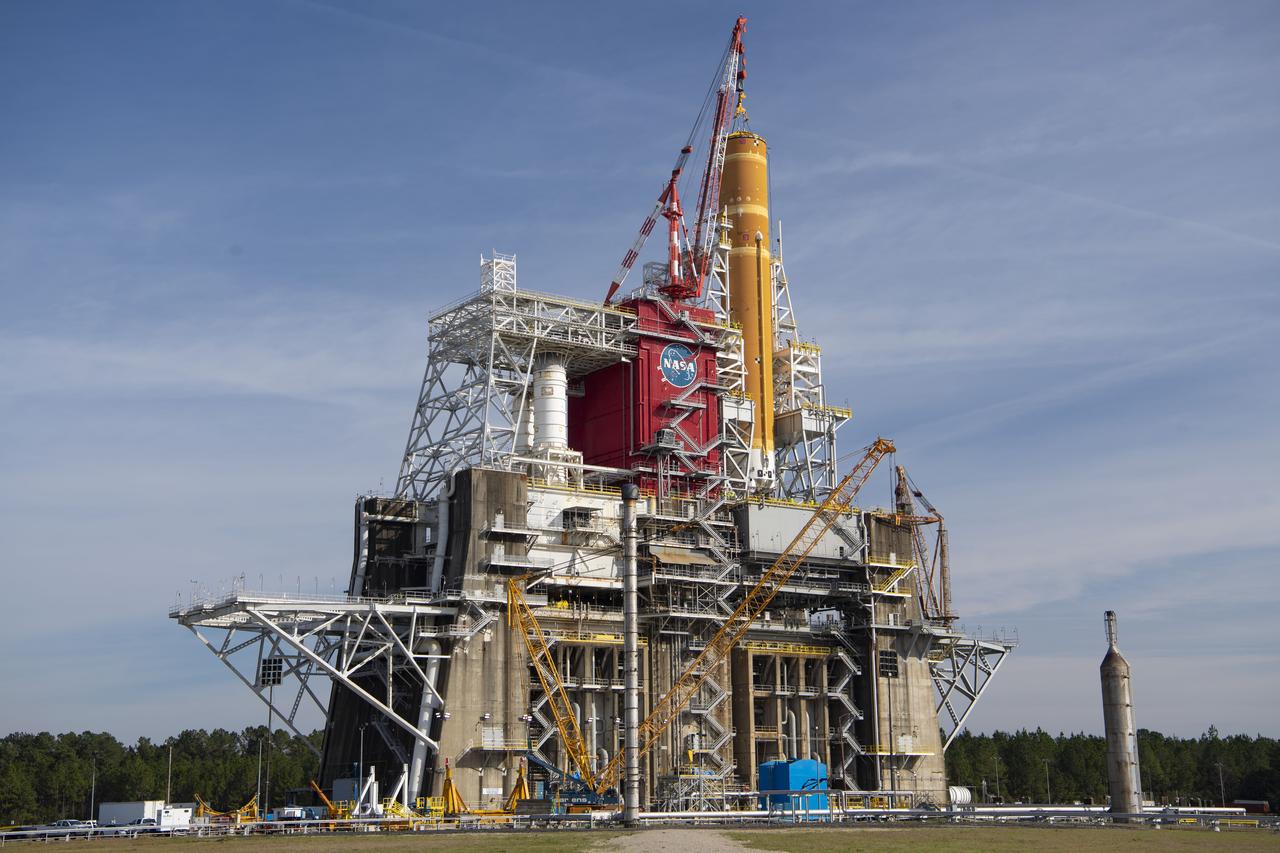
On Jan. 21-22, 2020, crews at Stennis Space Center lifted and installed the first core stage of NASA’s new Space Launch System (SLS) rocket onto the B-2 Test Stand. In upcoming months, a top-to-bottom, integrated series of Green Run tests will be conducted on the stage and its sophisticated systems. Following testing, the stage will be used to help launch the maiden Artemis I test mission of SLS and the Orion spacecraft. Through the Artemis program, NASA will send humans, including the first woman and next man, to the Moon to establish a sustainable presence.
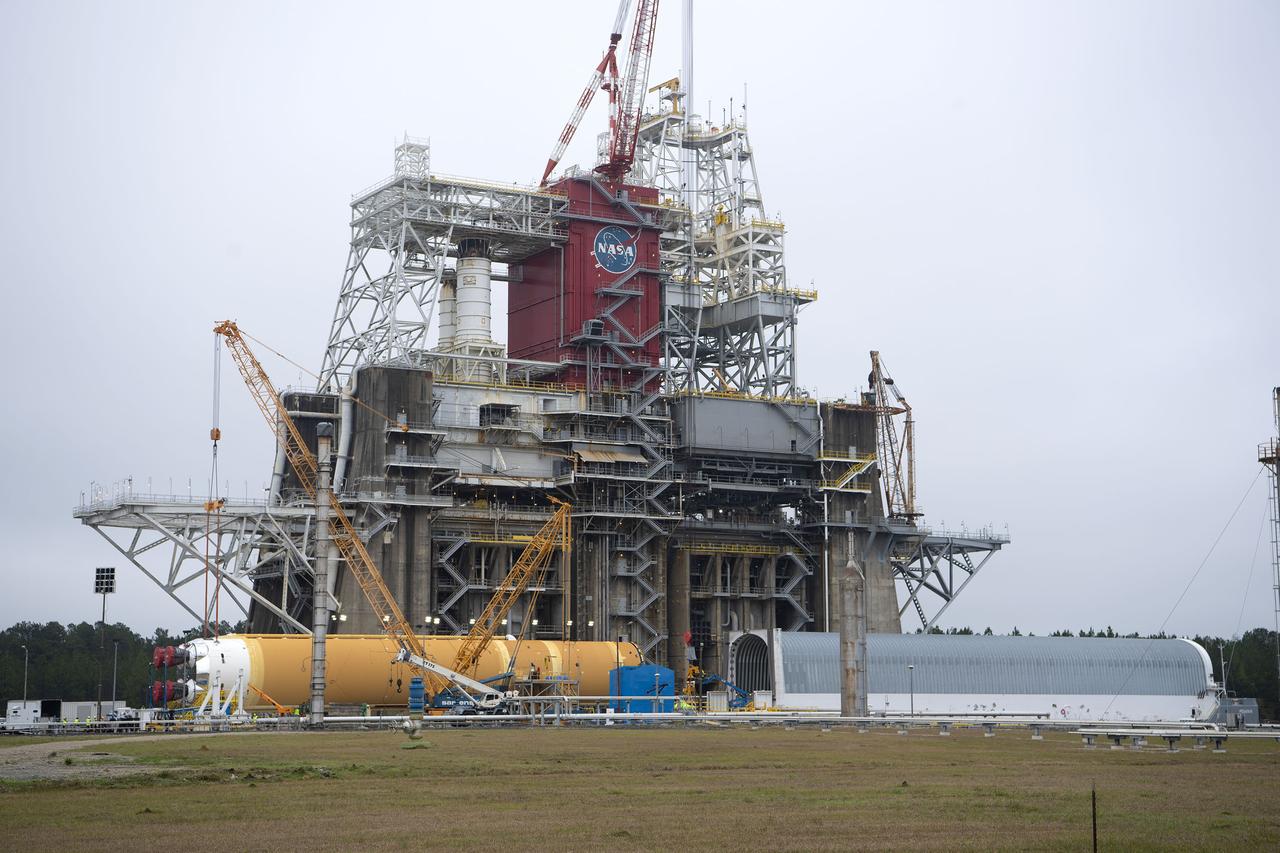
On Jan. 21-22, 2020, crews at Stennis Space Center lifted and installed the first core stage of NASA’s new Space Launch System (SLS) rocket onto the B-2 Test Stand. In upcoming months, a top-to-bottom, integrated series of Green Run tests will be conducted on the stage and its sophisticated systems. Following testing, the stage will be used to help launch the maiden Artemis I test mission of SLS and the Orion spacecraft. Through the Artemis program, NASA will send humans, including the first woman and next man, to the Moon to establish a sustainable presence.
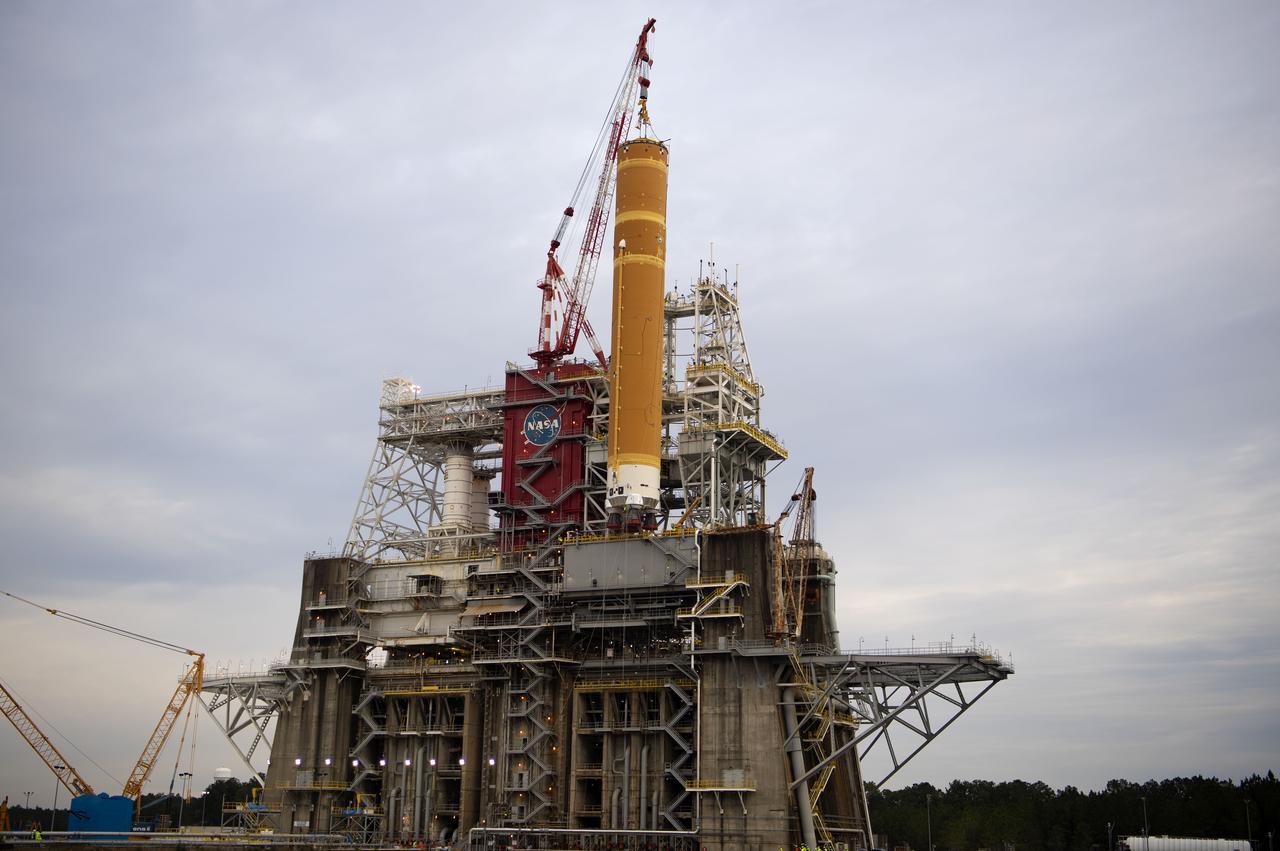
On Jan. 21-22, 2020, crews at Stennis Space Center lifted and installed the first core stage of NASA’s new Space Launch System (SLS) rocket onto the B-2 Test Stand. In upcoming months, a top-to-bottom, integrated series of Green Run tests will be conducted on the stage and its sophisticated systems. Following testing, the stage will be used to help launch the maiden Artemis I test mission of SLS and the Orion spacecraft. Through the Artemis program, NASA will send humans, including the first woman and next man, to the Moon to establish a sustainable presence.
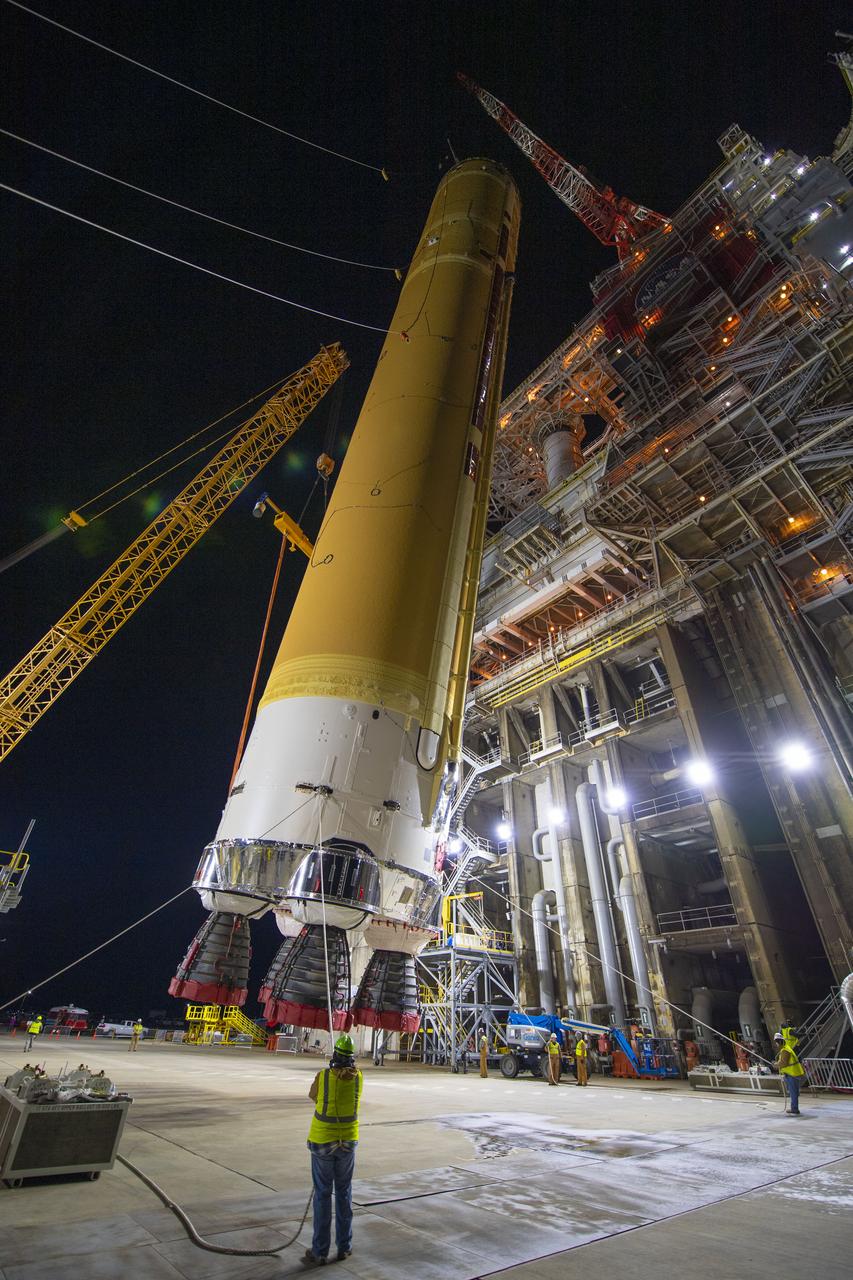
On Jan. 21-22, 2020, crews at Stennis Space Center lifted and installed the first core stage of NASA’s new Space Launch System (SLS) rocket onto the B-2 Test Stand. In upcoming months, a top-to-bottom, integrated series of Green Run tests will be conducted on the stage and its sophisticated systems. Following testing, the stage will be used to help launch the maiden Artemis I test mission of SLS and the Orion spacecraft. Through the Artemis program, NASA will send humans, including the first woman and next man, to the Moon to establish a sustainable presence.
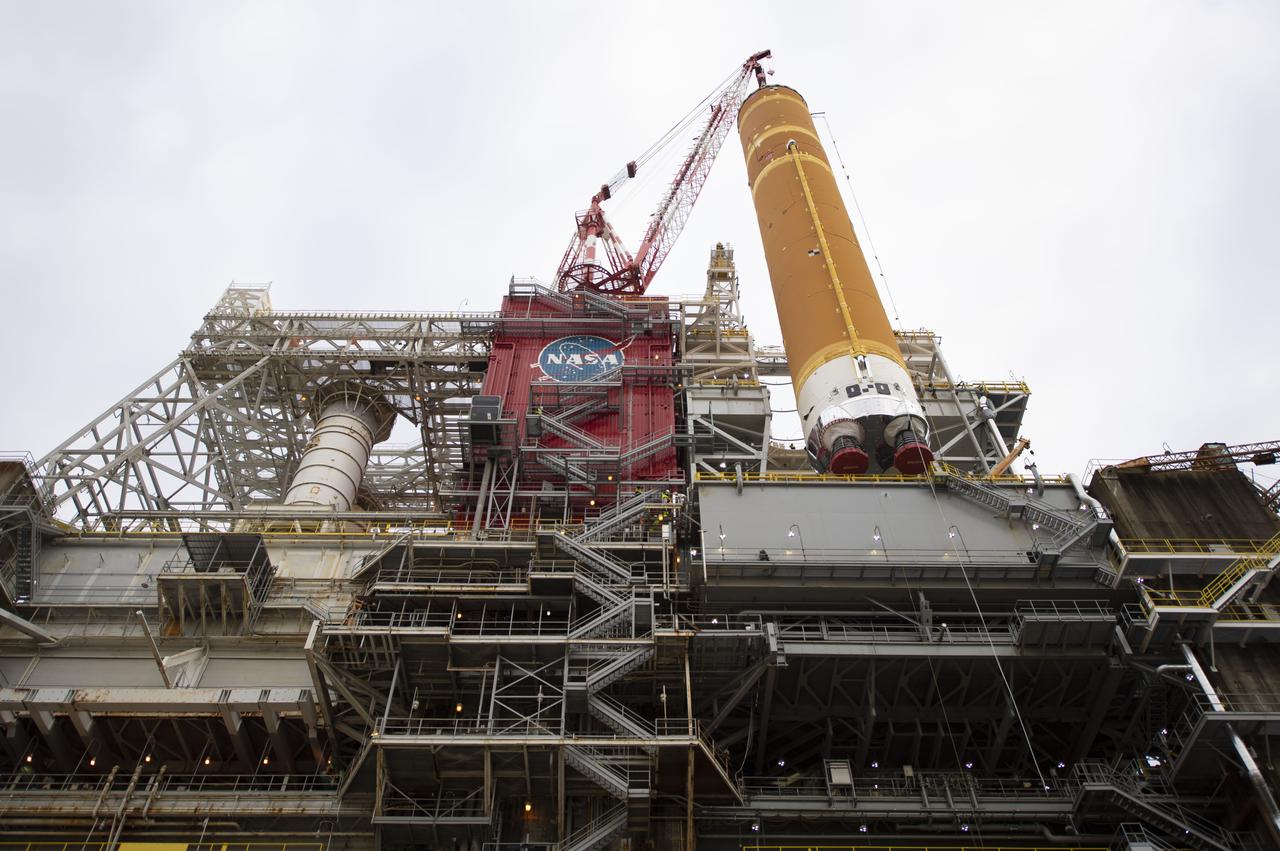
On Jan. 21-22, 2020, crews at Stennis Space Center lifted and installed the first core stage of NASA’s new Space Launch System (SLS) rocket onto the B-2 Test Stand. In upcoming months, a top-to-bottom, integrated series of Green Run tests will be conducted on the stage and its sophisticated systems. Following testing, the stage will be used to help launch the maiden Artemis I test mission of SLS and the Orion spacecraft. Through the Artemis program, NASA will send humans, including the first woman and next man, to the Moon to establish a sustainable presence.
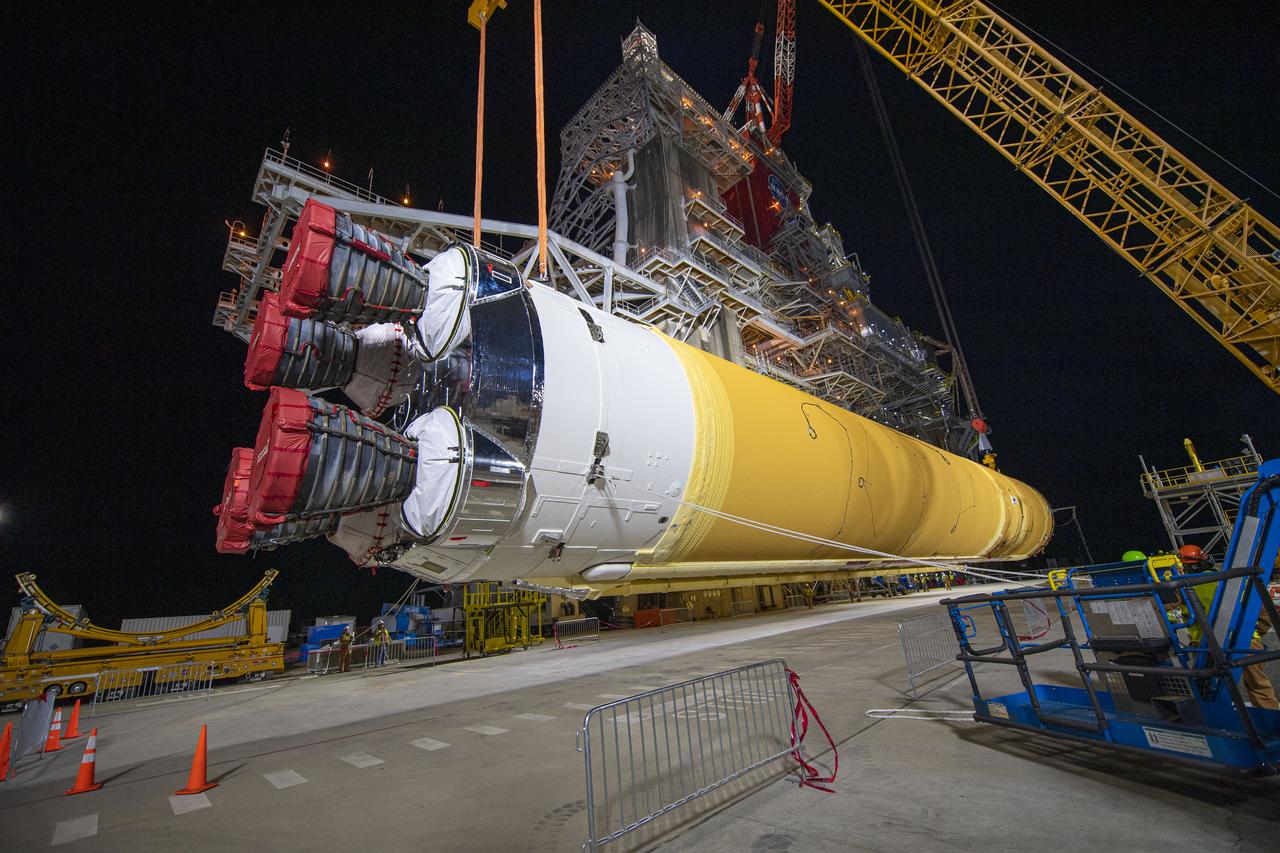
On Jan. 21-22, 2020, crews at Stennis Space Center lifted and installed the first core stage of NASA’s new Space Launch System (SLS) rocket onto the B-2 Test Stand. In upcoming months, a top-to-bottom, integrated series of Green Run tests will be conducted on the stage and its sophisticated systems. Following testing, the stage will be used to help launch the maiden Artemis I test mission of SLS and the Orion spacecraft. Through the Artemis program, NASA will send humans, including the first woman and next man, to the Moon to establish a sustainable presence.
On Jan. 21-22, 2020, crews at Stennis Space Center lifted and installed the first core stage of NASA’s new Space Launch System (SLS) rocket onto the B-2 Test Stand. In upcoming months, a top-to-bottom, integrated series of Green Run tests will be conducted on the stage and its sophisticated systems. Following testing, the stage will be used to help launch the maiden Artemis I test mission of SLS and the Orion spacecraft. Through the Artemis program, NASA will send humans, including the first woman and next man, to the Moon to establish a sustainable presence.
On Jan. 21-22, 2020, crews at Stennis Space Center lifted and installed the first core stage of NASA’s new Space Launch System (SLS) rocket onto the B-2 Test Stand. In upcoming months, a top-to-bottom, integrated series of Green Run tests will be conducted on the stage and its sophisticated systems. Following testing, the stage will be used to help launch the maiden Artemis I test mission of SLS and the Orion spacecraft. Through the Artemis program, NASA will send humans, including the first woman and next man, to the Moon to establish a sustainable presence.
On Jan. 21-22, 2020, crews at Stennis Space Center lifted and installed the first core stage of NASA’s new Space Launch System (SLS) rocket onto the B-2 Test Stand. In upcoming months, a top-to-bottom, integrated series of Green Run tests will be conducted on the stage and its sophisticated systems. Following testing, the stage will be used to help launch the maiden Artemis I test mission of SLS and the Orion spacecraft. Through the Artemis program, NASA will send humans, including the first woman and next man, to the Moon to establish a sustainable presence.

On Jan. 21-22, 2020, crews at Stennis Space Center lifted and installed the first core stage of NASA’s new Space Launch System (SLS) rocket onto the B-2 Test Stand. In upcoming months, a top-to-bottom, integrated series of Green Run tests will be conducted on the stage and its sophisticated systems. Following testing, the stage will be used to help launch the maiden Artemis I test mission of SLS and the Orion spacecraft. Through the Artemis program, NASA will send humans, including the first woman and next man, to the Moon to establish a sustainable presence.
On Jan. 21-22, 2020, crews at Stennis Space Center lifted and installed the first core stage of NASA’s new Space Launch System (SLS) rocket onto the B-2 Test Stand. In upcoming months, a top-to-bottom, integrated series of Green Run tests will be conducted on the stage and its sophisticated systems. Following testing, the stage will be used to help launch the maiden Artemis I test mission of SLS and the Orion spacecraft. Through the Artemis program, NASA will send humans, including the first woman and next man, to the Moon to establish a sustainable presence.
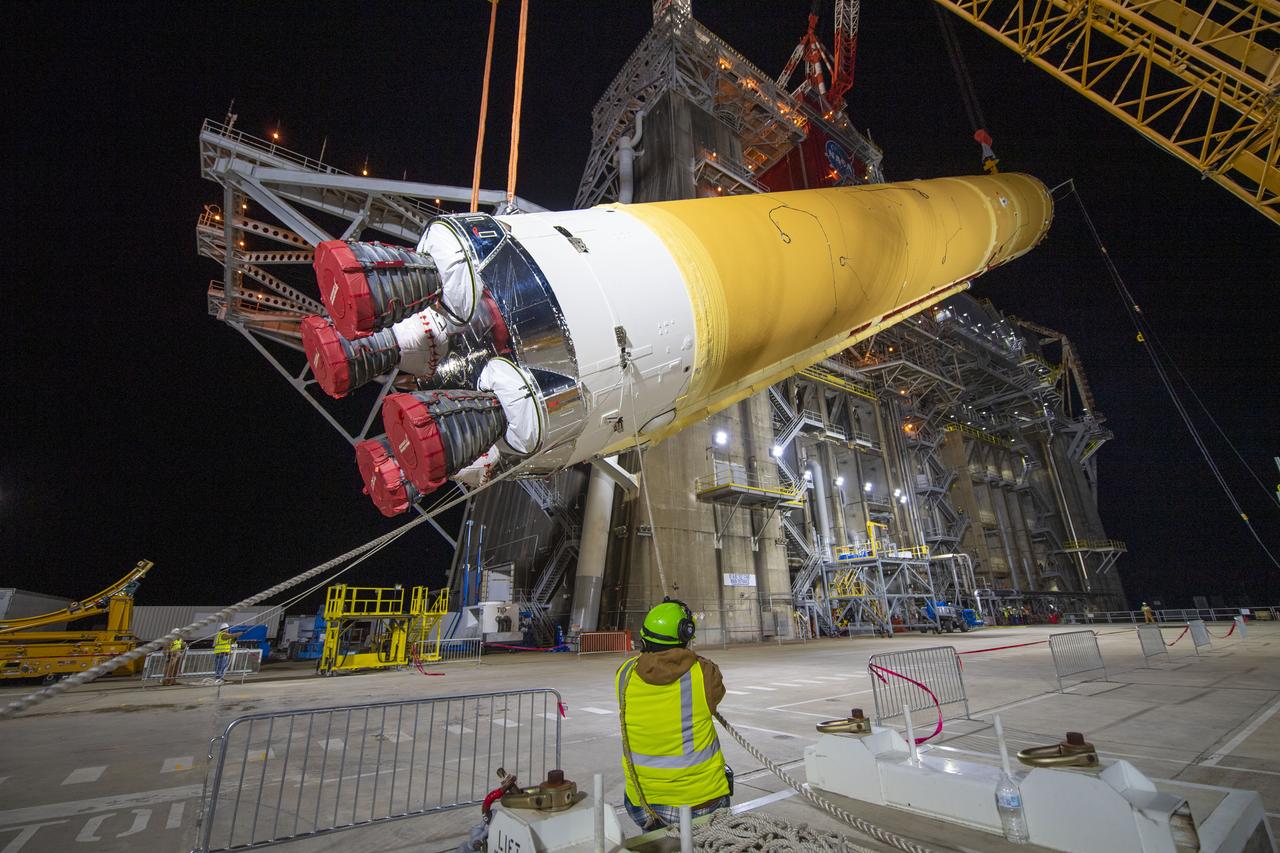
On Jan. 21-22, 2020, crews at Stennis Space Center lifted and installed the first core stage of NASA’s new Space Launch System (SLS) rocket onto the B-2 Test Stand. In upcoming months, a top-to-bottom, integrated series of Green Run tests will be conducted on the stage and its sophisticated systems. Following testing, the stage will be used to help launch the maiden Artemis I test mission of SLS and the Orion spacecraft. Through the Artemis program, NASA will send humans, including the first woman and next man, to the Moon to establish a sustainable presence.
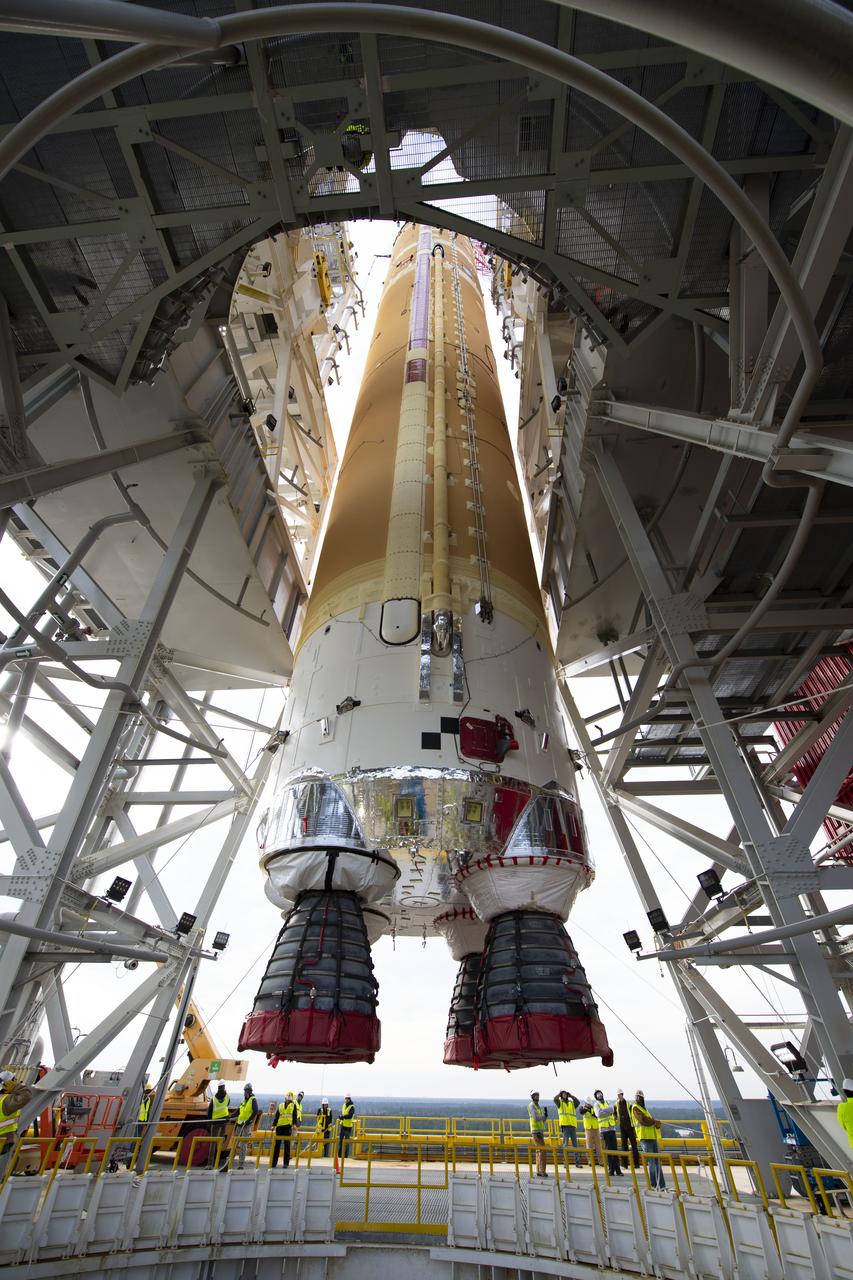
On Jan. 21-22, 2020, crews at Stennis Space Center lifted and installed the first core stage of NASA’s new Space Launch System (SLS) rocket onto the B-2 Test Stand. In upcoming months, a top-to-bottom, integrated series of Green Run tests will be conducted on the stage and its sophisticated systems. Following testing, the stage will be used to help launch the maiden Artemis I test mission of SLS and the Orion spacecraft. Through the Artemis program, NASA will send humans, including the first woman and next man, to the Moon to establish a sustainable presence.
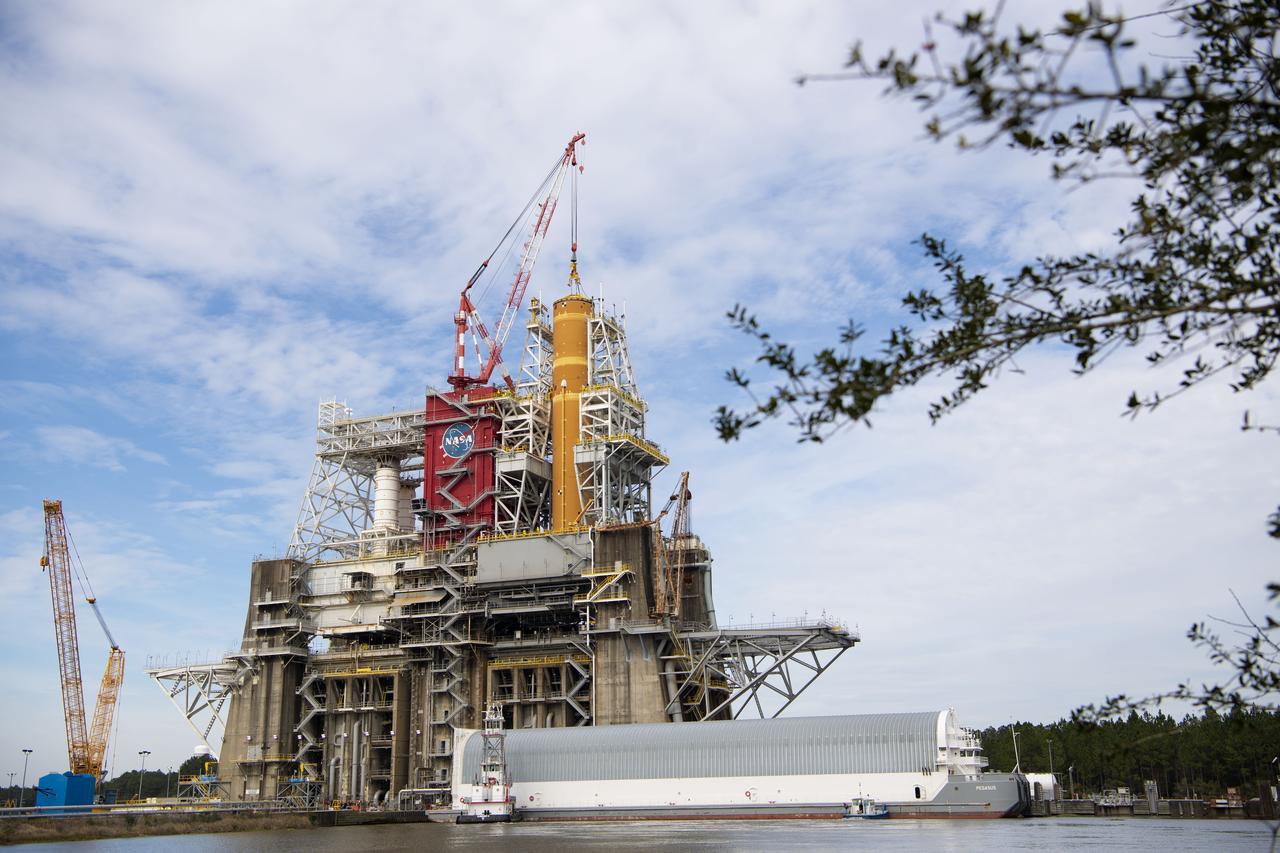
On Jan. 21-22, 2020, crews at Stennis Space Center lifted and installed the first core stage of NASA’s new Space Launch System (SLS) rocket onto the B-2 Test Stand. In upcoming months, a top-to-bottom, integrated series of Green Run tests will be conducted on the stage and its sophisticated systems. Following testing, the stage will be used to help launch the maiden Artemis I test mission of SLS and the Orion spacecraft. Through the Artemis program, NASA will send humans, including the first woman and next man, to the Moon to establish a sustainable presence.
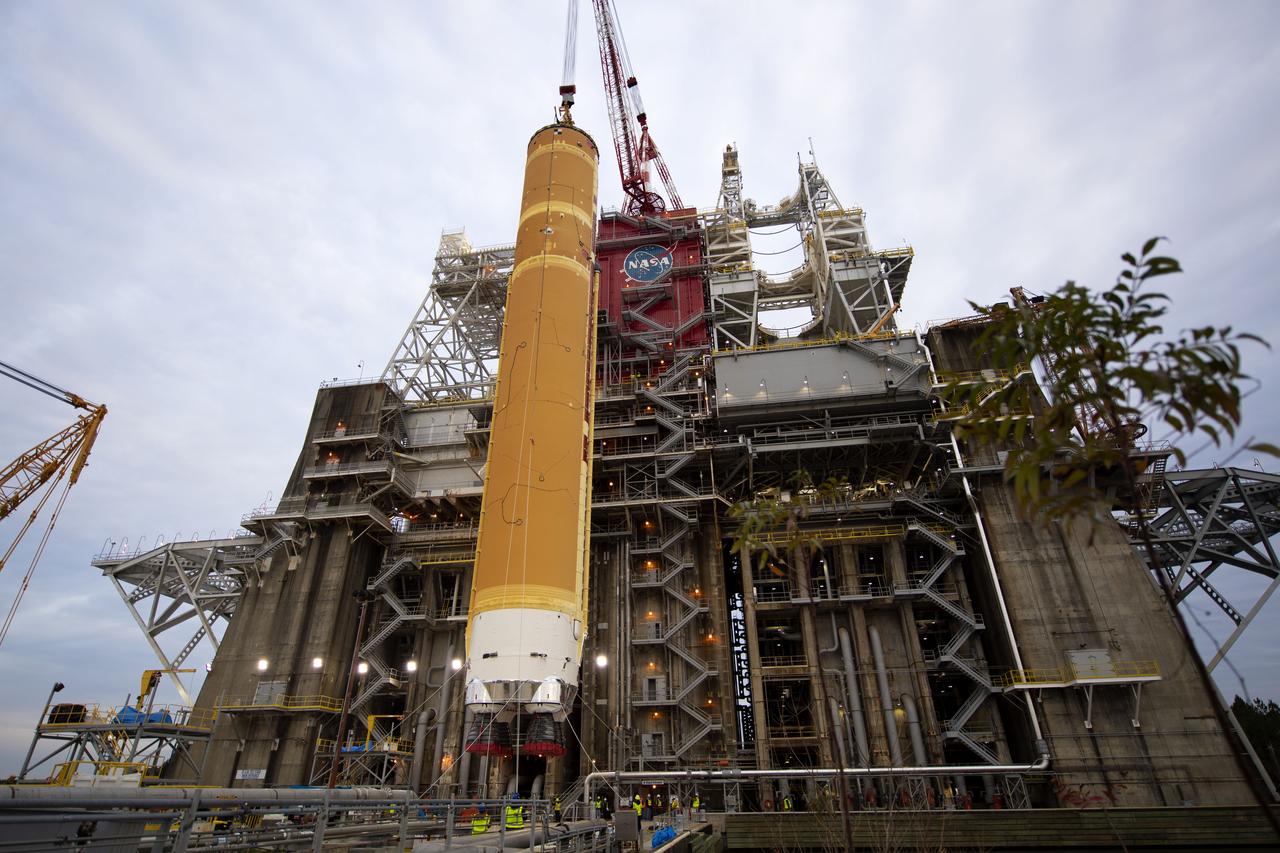
On Jan. 21-22, 2020, crews at Stennis Space Center lifted and installed the first core stage of NASA’s new Space Launch System (SLS) rocket onto the B-2 Test Stand. In upcoming months, a top-to-bottom, integrated series of Green Run tests will be conducted on the stage and its sophisticated systems. Following testing, the stage will be used to help launch the maiden Artemis I test mission of SLS and the Orion spacecraft. Through the Artemis program, NASA will send humans, including the first woman and next man, to the Moon to establish a sustainable presence.
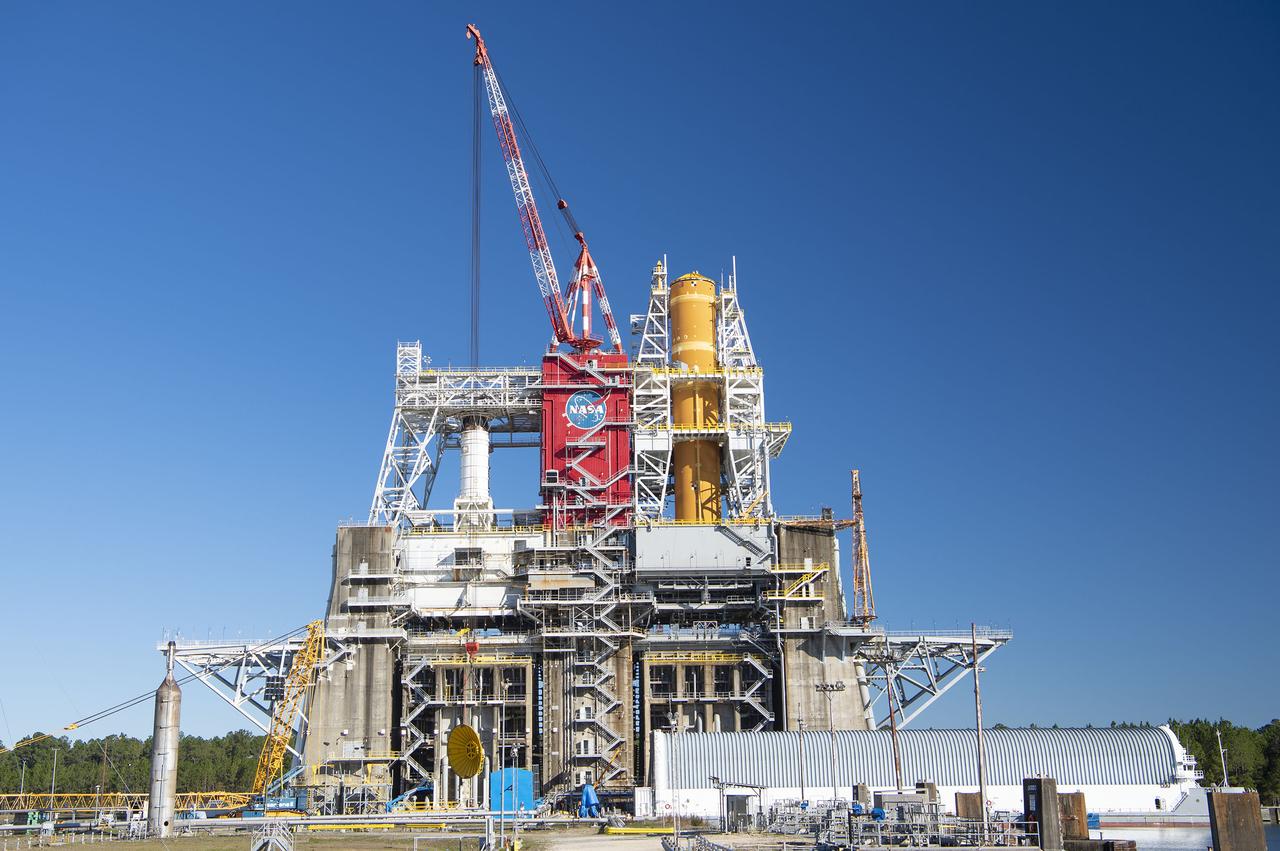
On Jan. 21-22, 2020, crews at Stennis Space Center lifted and installed the first core stage of NASA’s new Space Launch System (SLS) rocket onto the B-2 Test Stand. In upcoming months, a top-to-bottom, integrated series of Green Run tests will be conducted on the stage and its sophisticated systems. Following testing, the stage will be used to help launch the maiden Artemis I test mission of SLS and the Orion spacecraft. Through the Artemis program, NASA will send humans, including the first woman and next man, to the Moon to establish a sustainable presence.
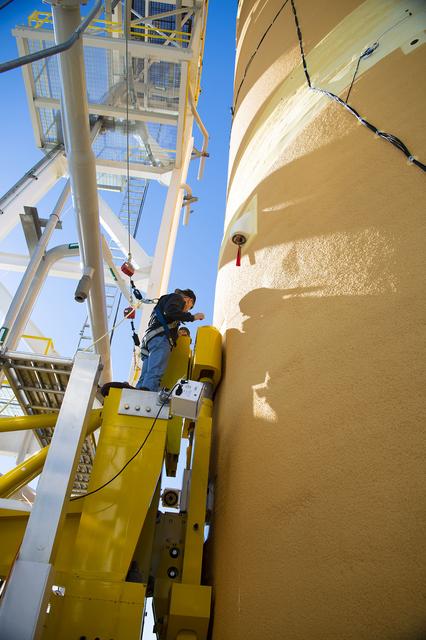
On Jan. 21-22, 2020, crews at Stennis Space Center lifted and installed the first core stage of NASA’s new Space Launch System (SLS) rocket onto the B-2 Test Stand. In upcoming months, a top-to-bottom, integrated series of Green Run tests will be conducted on the stage and its sophisticated systems. Following testing, the stage will be used to help launch the maiden Artemis I test mission of SLS and the Orion spacecraft. Through the Artemis program, NASA will send humans, including the first woman and next man, to the Moon to establish a sustainable presence.

On Jan. 21-22, 2020, crews at Stennis Space Center lifted and installed the first core stage of NASA’s new Space Launch System (SLS) rocket onto the B-2 Test Stand. In upcoming months, a top-to-bottom, integrated series of Green Run tests will be conducted on the stage and its sophisticated systems. Following testing, the stage will be used to help launch the maiden Artemis I test mission of SLS and the Orion spacecraft. Through the Artemis program, NASA will send humans, including the first woman and next man, to the Moon to establish a sustainable presence.
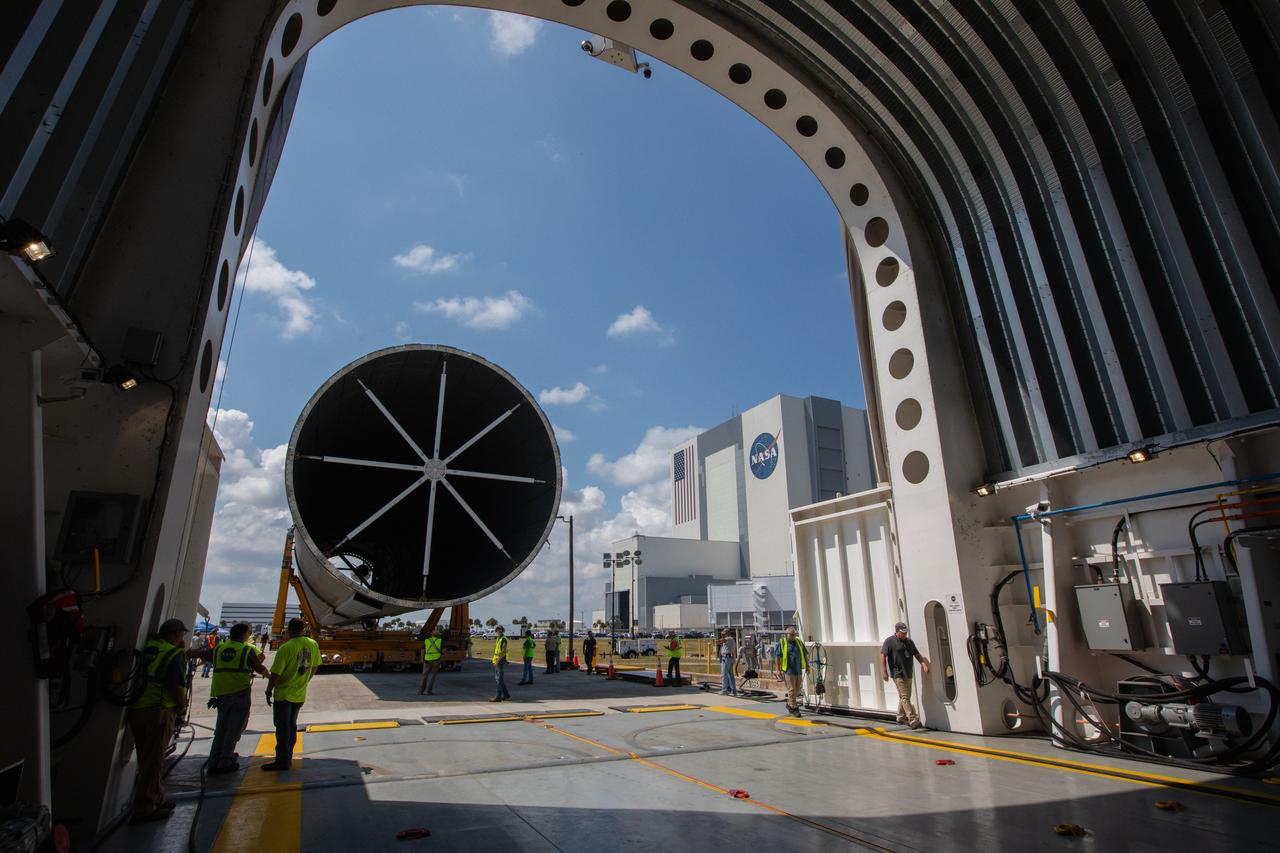
The 212-foot-long Space Launch System (SLS) rocket core stage pathfinder has been offloaded from NASA’s Pegasus Barge at Kennedy Space Center’s Launch Complex 39 turn basin wharf on Sept. 30, 2019. The Pegasus Barge made its first delivery to Kennedy in support of the agency's Artemis missions. The upgraded 310-foot-long barge arrived Sept. 27, 2019, ferrying the SLS core stage pathfinder, a full-scale mock-up of the rocket's core stage. It will be used by the Exploration Ground Systems Program and their contractor, Jacobs, to practice offloading, moving and stacking maneuvers, using important ground support equipment to train employees and certify all the equipment works properly. The pathfinder will stay at Kennedy for approximately one month before trekking back to NASA's Michoud Assembly Facility in Louisiana.
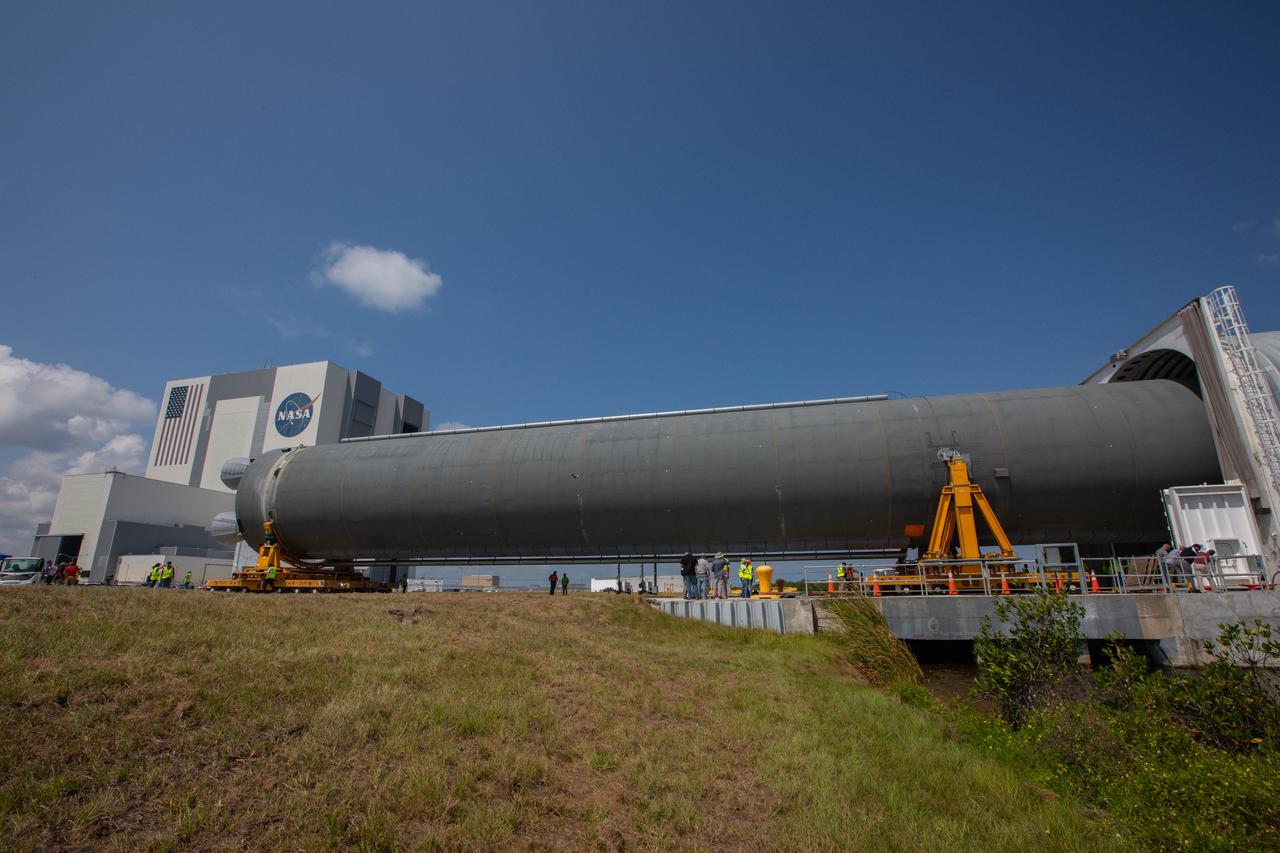
The 212-foot-long Space Launch System (SLS) rocket core stage pathfinder has been offloaded from NASA’s Pegasus Barge at Kennedy Space Center’s Launch Complex 39 turn basin wharf on Sept. 30, 2019. The Pegasus Barge made its first delivery to Kennedy in support of the agency's Artemis missions. The upgraded 310-foot-long barge arrived Sept. 27, 2019, ferrying the SLS core stage pathfinder, a full-scale mock-up of the rocket's core stage. It will be used by the Exploration Ground Systems Program and their contractor, Jacobs, to practice offloading, moving and stacking maneuvers, using important ground support equipment to train employees and certify all the equipment works properly. The pathfinder will stay at Kennedy for approximately one month before trekking back to NASA's Michoud Assembly Facility in Louisiana.
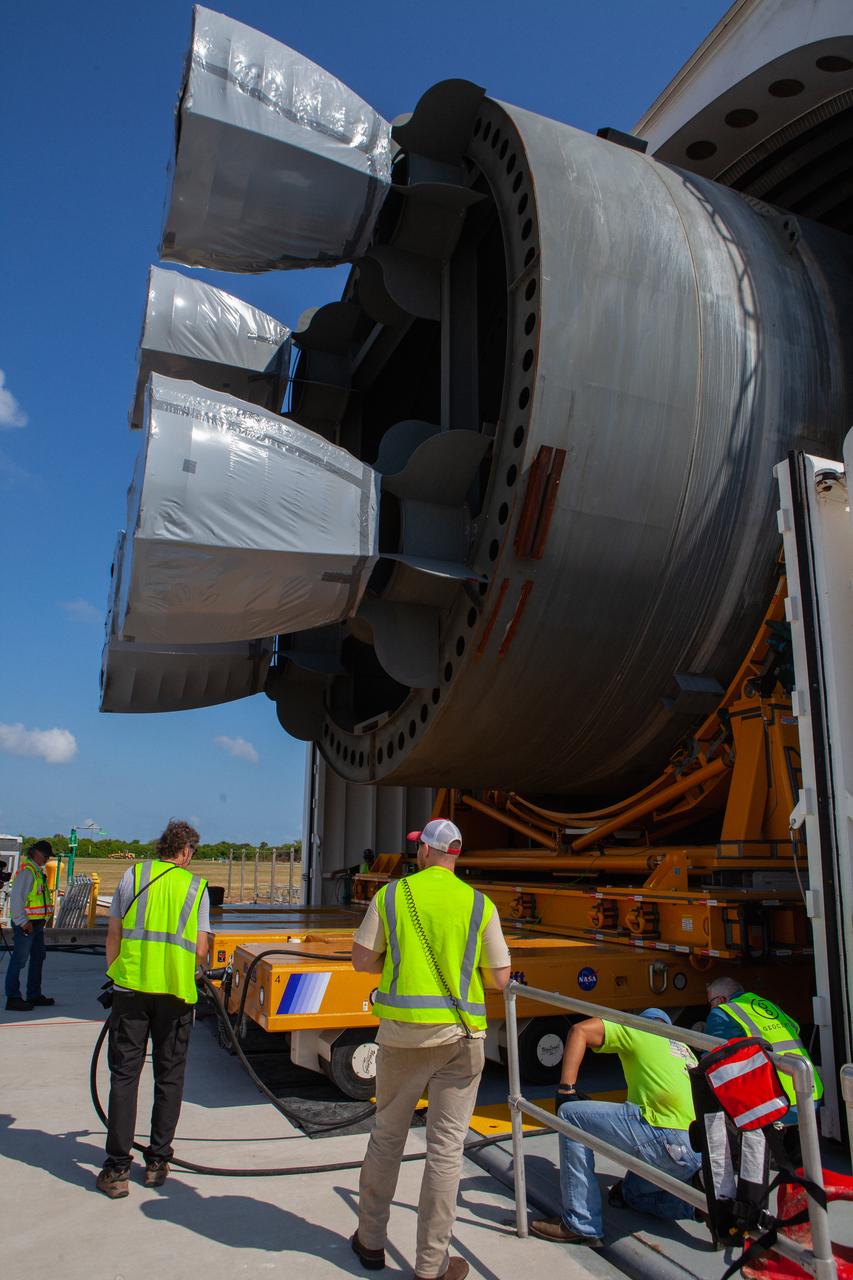
NASA and Jacobs technicians and engineers have begun offloading the 212-foot-long Space Launch System (SLS) rocket core stage pathfinder from NASA's Pegasus Barge at Kennedy Space Center’s Launch Complex 39 turn basin wharf on Sept. 30, 2019. The Pegasus Barge made its first delivery to Kennedy in support of the agency's Artemis missions. The upgraded 310-foot-long barge arrived Sept. 27, 2019, ferrying the SLS core stage pathfinder, a full-scale mock-up of the rocket's core stage. It will be used by the Exploration Ground Systems Program and their contractor, Jacobs, to practice offloading, moving and stacking maneuvers, using important ground support equipment to train employees and certify all the equipment works properly. The pathfinder will stay at Kennedy for approximately one month before trekking back to NASA's Michoud Assembly Facility in Louisiana.
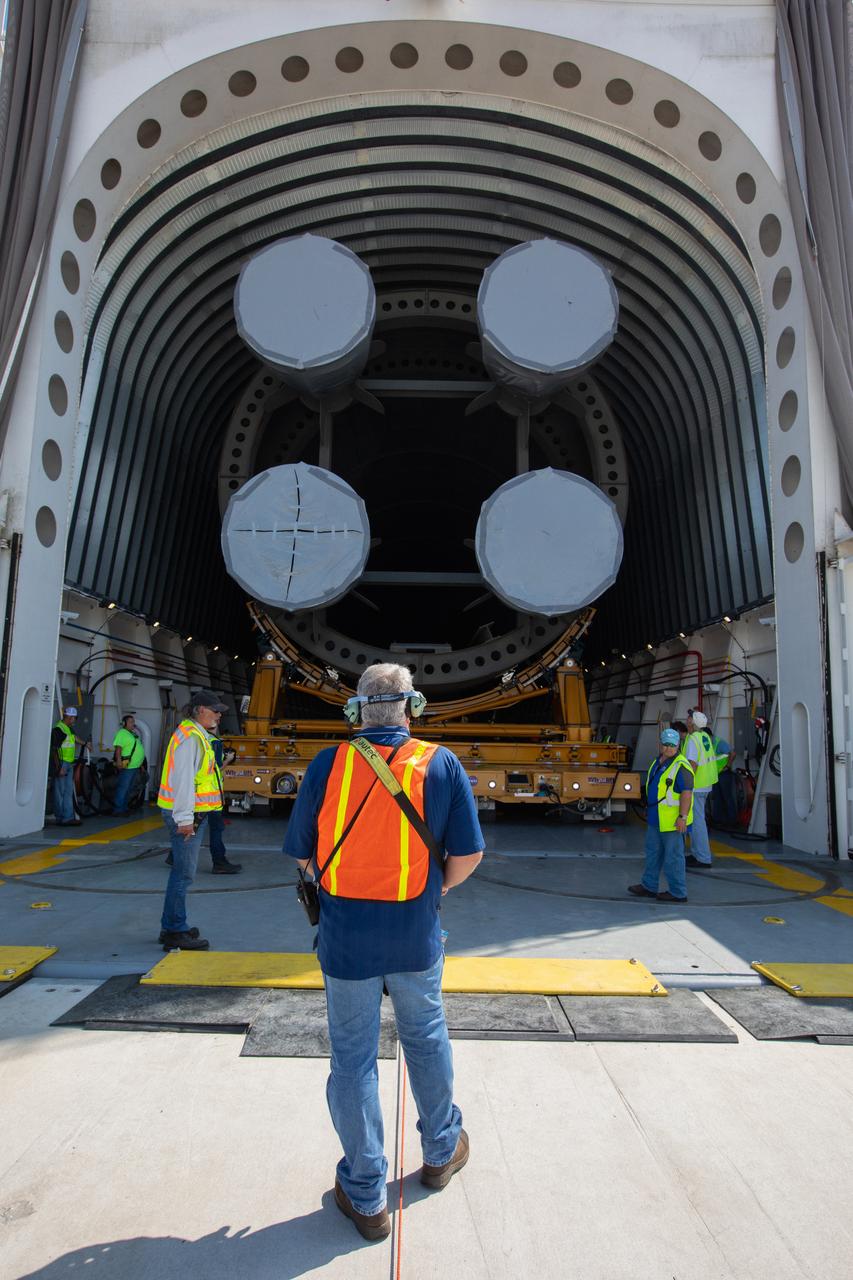
NASA and Jacobs technicians and engineers have begun offloading the 212-foot-long Space Launch System (SLS) rocket core stage pathfinder from NASA's Pegasus Barge at Kennedy Space Center’s Launch Complex 39 turn basin wharf on Sept. 30, 2019. The Pegasus Barge made its first delivery to Kennedy in support of the agency's Artemis missions. The upgraded 310-foot-long barge arrived Sept. 27, 2019, ferrying the SLS core stage pathfinder, a full-scale mock-up of the rocket's core stage. It will be used by the Exploration Ground Systems Program and their contractor, Jacobs, to practice offloading, moving and stacking maneuvers, using important ground support equipment to train employees and certify all the equipment works properly. The pathfinder will stay at Kennedy for approximately one month before trekking back to NASA's Michoud Assembly Facility in Louisiana.
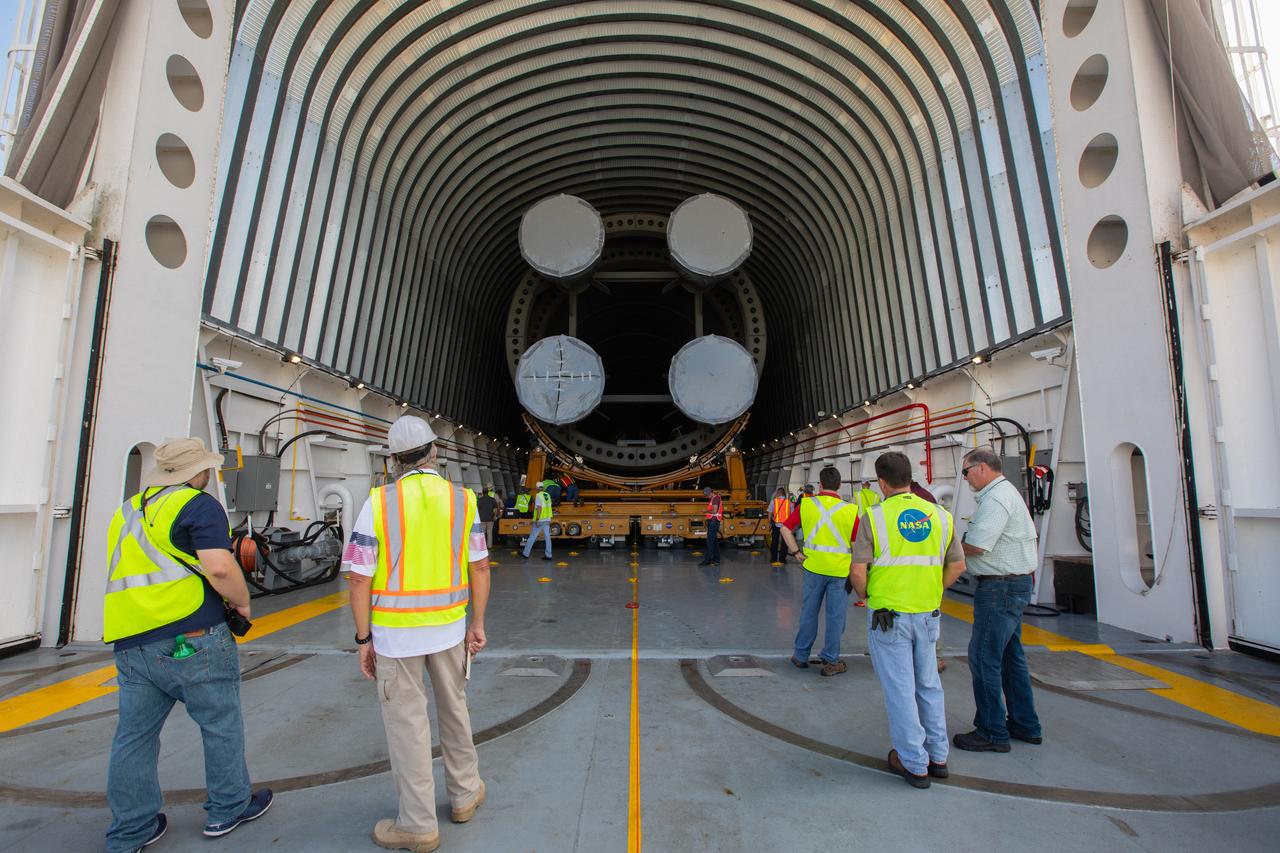
Preparations are underway to offload the 212-foot-long Space Launch System (SLS) rocket core stage pathfinder from NASA's Pegasus Barge at Kennedy Space Center’s Launch Complex 39 turn basin wharf on Sept. 30, 2019. The Pegasus Barge made its first delivery to Kennedy in support of the agency's Artemis missions. The upgraded 310-foot-long barge arrived Sept. 27, 2019, ferrying the SLS core stage pathfinder, a full-scale mock-up of the rocket's core stage. It will be used by the Exploration Ground Systems Program and their contractor, Jacobs, to practice offloading, moving and stacking maneuvers, using important ground support equipment to train employees and certify all the equipment works properly. The pathfinder will stay at Kennedy for approximately one month before trekking back to NASA's Michoud Assembly Facility in Louisiana.
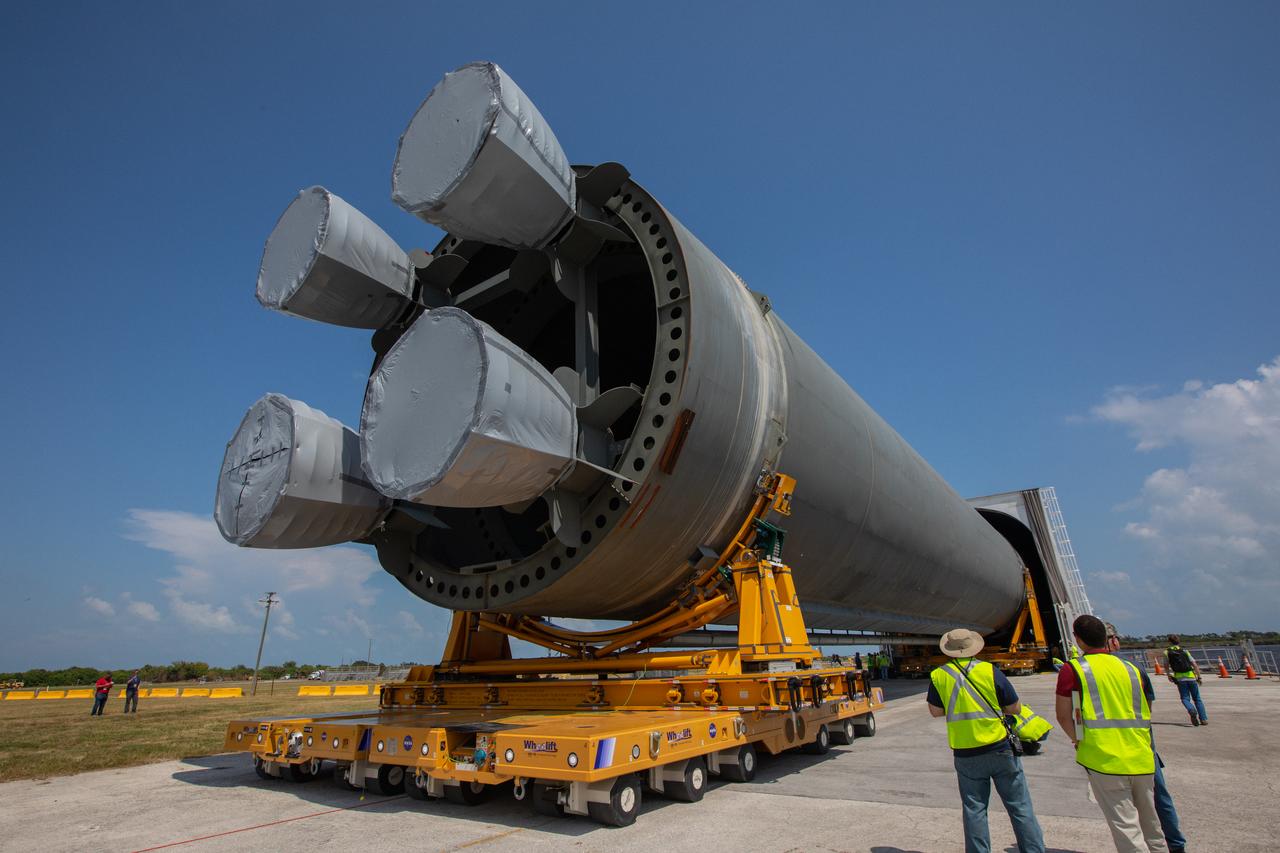
The 212-foot-long Space Launch System (SLS) rocket core stage pathfinder has been offloaded from NASA’s Pegasus Barge at Kennedy Space Center’s Launch Complex 39 turn basin wharf on Sept. 30, 2019. The Pegasus Barge made its first delivery to Kennedy in support of the agency's Artemis missions. The upgraded 310-foot-long barge arrived Sept. 27, 2019, ferrying the SLS core stage pathfinder, a full-scale mock-up of the rocket's core stage. It will be used by the Exploration Ground Systems Program and their contractor, Jacobs, to practice offloading, moving and stacking maneuvers, using important ground support equipment to train employees and certify all the equipment works properly. The pathfinder will stay at Kennedy for approximately one month before trekking back to NASA's Michoud Assembly Facility in Louisiana.
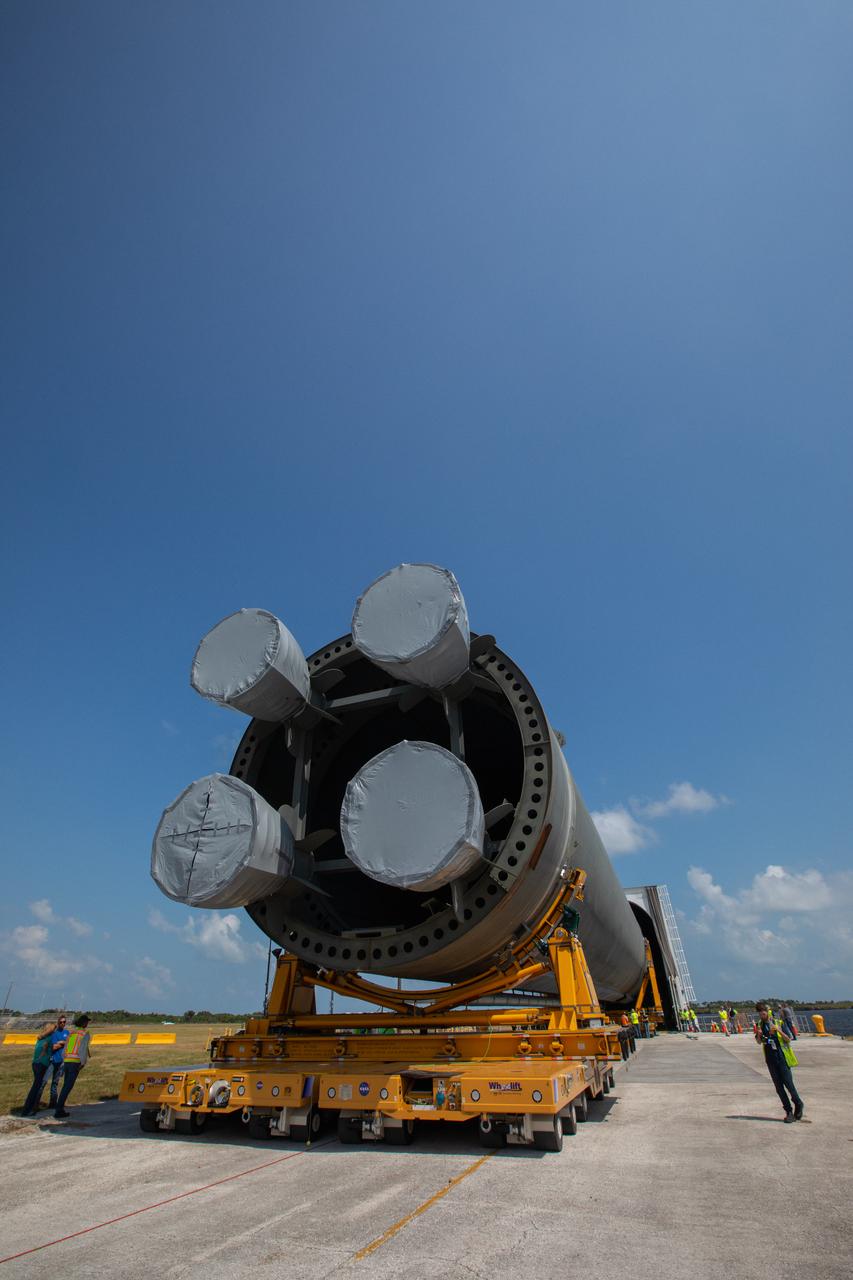
The 212-foot-long Space Launch System (SLS) rocket core stage pathfinder has been offloaded from NASA’s Pegasus Barge at Kennedy Space Center’s Launch Complex 39 turn basin wharf on Sept. 30, 2019. The Pegasus Barge made its first delivery to Kennedy in support of the agency's Artemis missions. The upgraded 310-foot-long barge arrived Sept. 27, 2019, ferrying the SLS core stage pathfinder, a full-scale mock-up of the rocket's core stage. It will be used by the Exploration Ground Systems Program and their contractor, Jacobs, to practice offloading, moving and stacking maneuvers, using important ground support equipment to train employees and certify all the equipment works properly. The pathfinder will stay at Kennedy for approximately one month before trekking back to NASA's Michoud Assembly Facility in Louisiana.
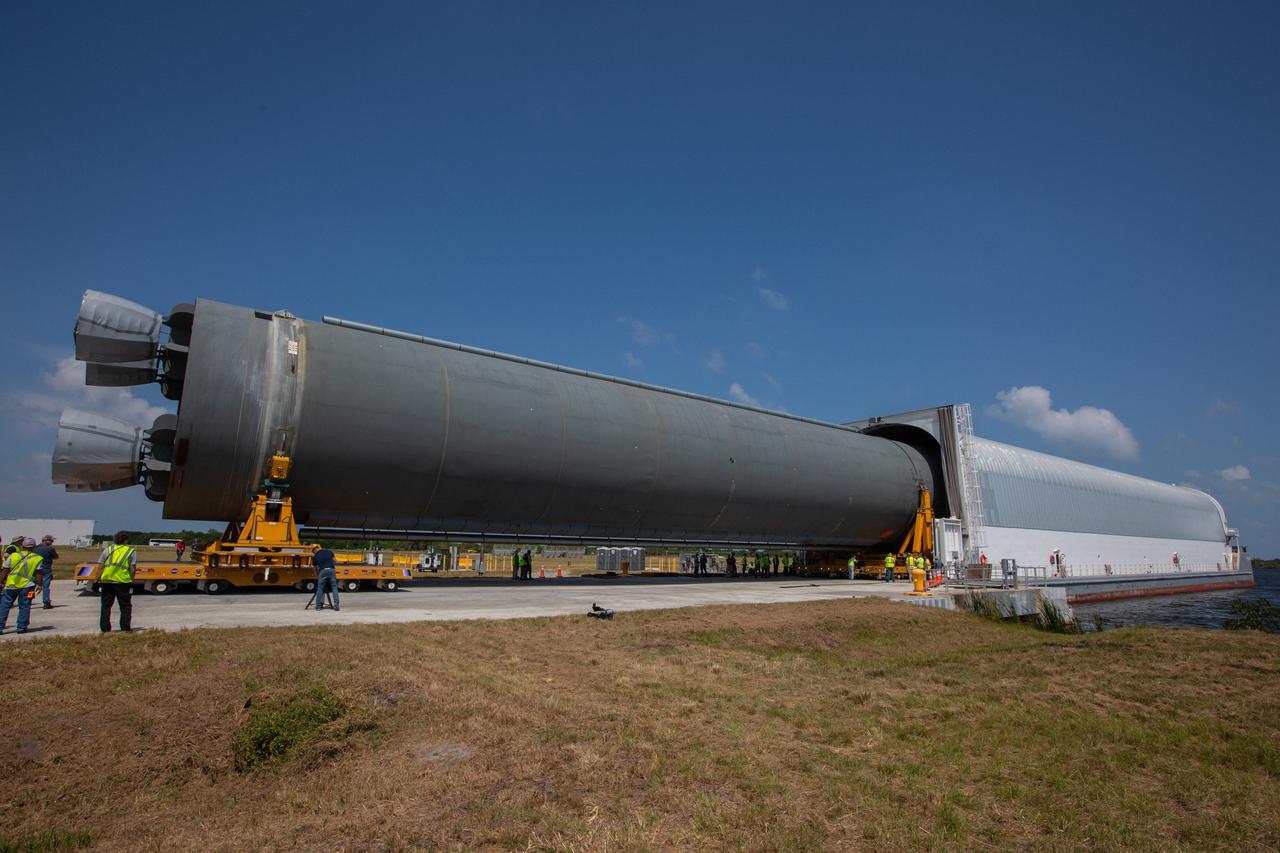
The 212-foot-long Space Launch System (SLS) rocket core stage pathfinder has been offloaded from NASA’s Pegasus Barge at Kennedy Space Center’s Launch Complex 39 turn basin wharf on Sept. 30, 2019. The Pegasus Barge made its first delivery to Kennedy in support of the agency's Artemis missions. The upgraded 310-foot-long barge arrived Sept. 27, 2019, ferrying the SLS core stage pathfinder, a full-scale mock-up of the rocket's core stage. It will be used by the Exploration Ground Systems Program and their contractor, Jacobs, to practice offloading, moving and stacking maneuvers, using important ground support equipment to train employees and certify all the equipment works properly. The pathfinder will stay at Kennedy for approximately one month before trekking back to NASA's Michoud Assembly Facility in Louisiana.
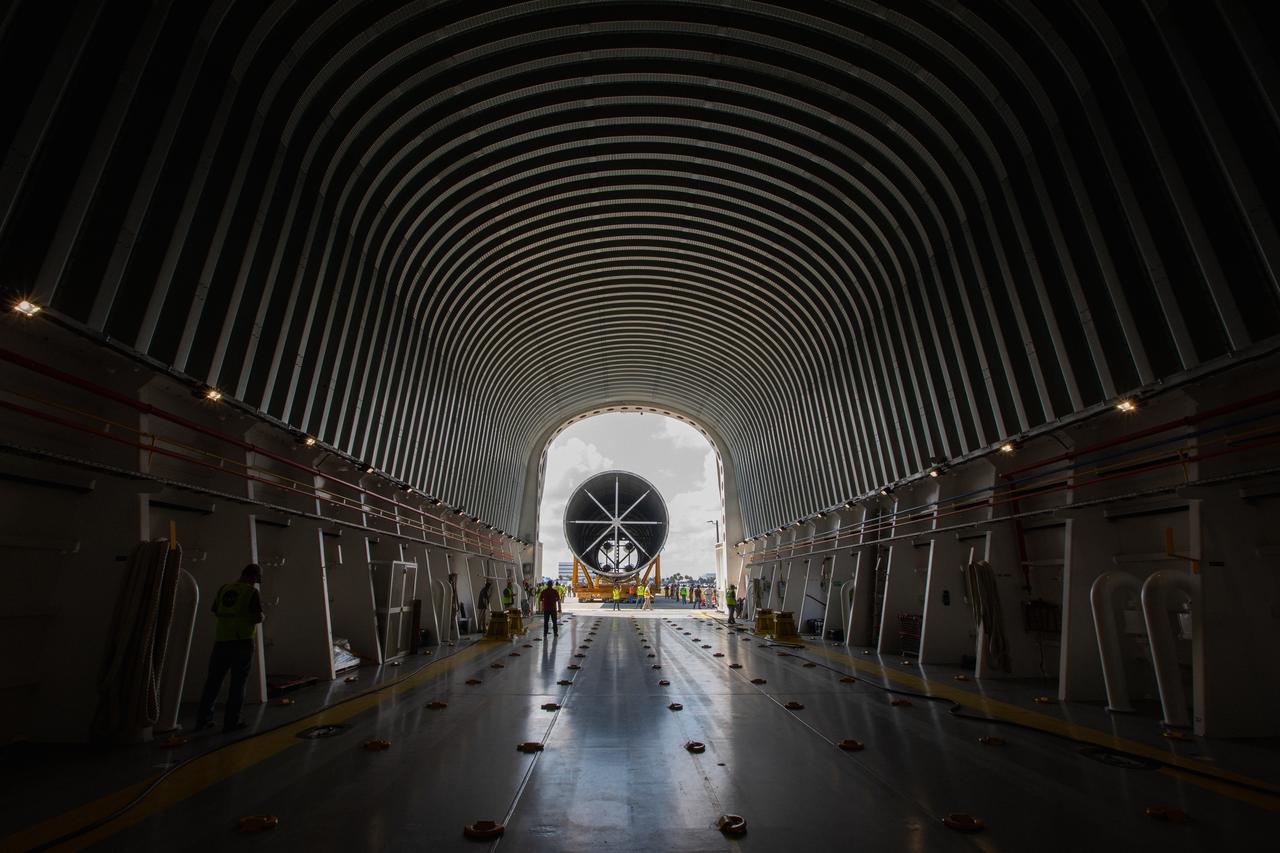
In this view from inside NASA’s Pegasus Barge, the 212-foot-long Space Launch System (SLS) rocket core stage pathfinder is being offloaded from the barge at Kennedy Space Center’s Launch Complex 39 turn basin wharf on Sept. 30, 2019. The Pegasus Barge made its first delivery to Kennedy in support of the agency's Artemis missions. The upgraded 310-foot-long barge arrived Sept. 27, 2019, ferrying the SLS core stage pathfinder, a full-scale mock-up of the rocket's core stage. It will be used by the Exploration Ground Systems Program and their contractor, Jacobs, to practice offloading, moving and stacking maneuvers, using important ground support equipment to train employees and certify all the equipment works properly. The pathfinder will stay at Kennedy for approximately one month before trekking back to NASA's Michoud Assembly Facility in Louisiana.

The 212-foot-long Space Launch System (SLS) rocket core stage pathfinder has been offloaded from NASA's Pegasus Barge at Kennedy Space Center’s Launch Complex 39 turn basin wharf on Sept. 30, 2019. The Pegasus Barge made its first delivery to Kennedy in support of the agency's Artemis missions. The upgraded 310-foot-long barge arrived Sept. 27, 2019, ferrying the SLS core stage pathfinder, a full-scale mock-up of the rocket's core stage. It will be used by the Exploration Ground Systems Program and their contractor, Jacobs, to practice offloading, moving and stacking maneuvers, using important ground support equipment to train employees and certify all the equipment works properly. The pathfinder will stay at Kennedy for approximately one month before trekking back to NASA's Michoud Assembly Facility in Louisiana.
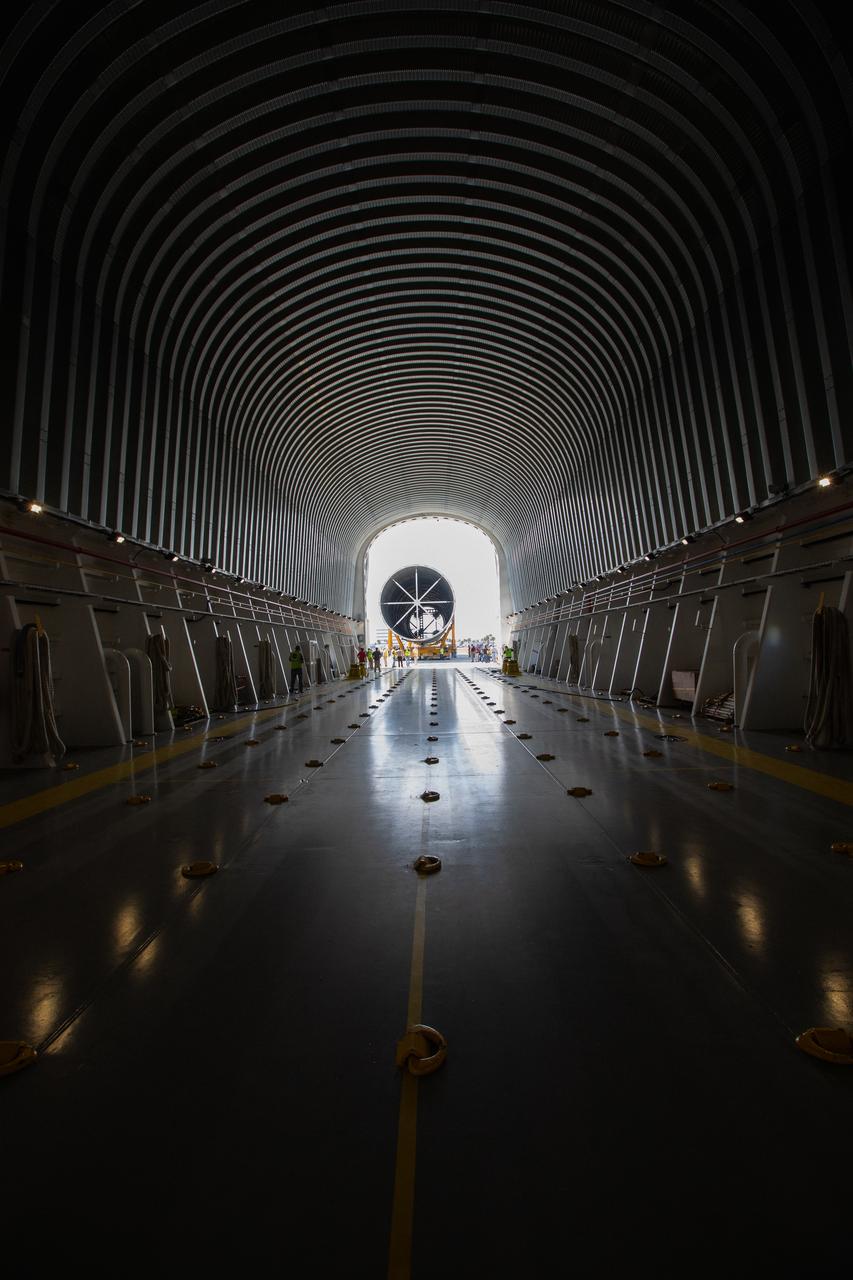
In this view from inside NASA’s Pegasus Barge, the 212-foot-long Space Launch System (SLS) rocket core stage pathfinder is being offloaded from the barge at Kennedy Space Center’s Launch Complex 39 turn basin wharf on Sept. 30, 2019. The Pegasus Barge made its first delivery to Kennedy in support of the agency's Artemis missions. The upgraded 310-foot-long barge arrived Sept. 27, 2019, ferrying the SLS core stage pathfinder, a full-scale mock-up of the rocket's core stage. It will be used by the Exploration Ground Systems Program and their contractor, Jacobs, to practice offloading, moving and stacking maneuvers, using important ground support equipment to train employees and certify all the equipment works properly. The pathfinder will stay at Kennedy for approximately one month before trekking back to NASA's Michoud Assembly Facility in Louisiana.
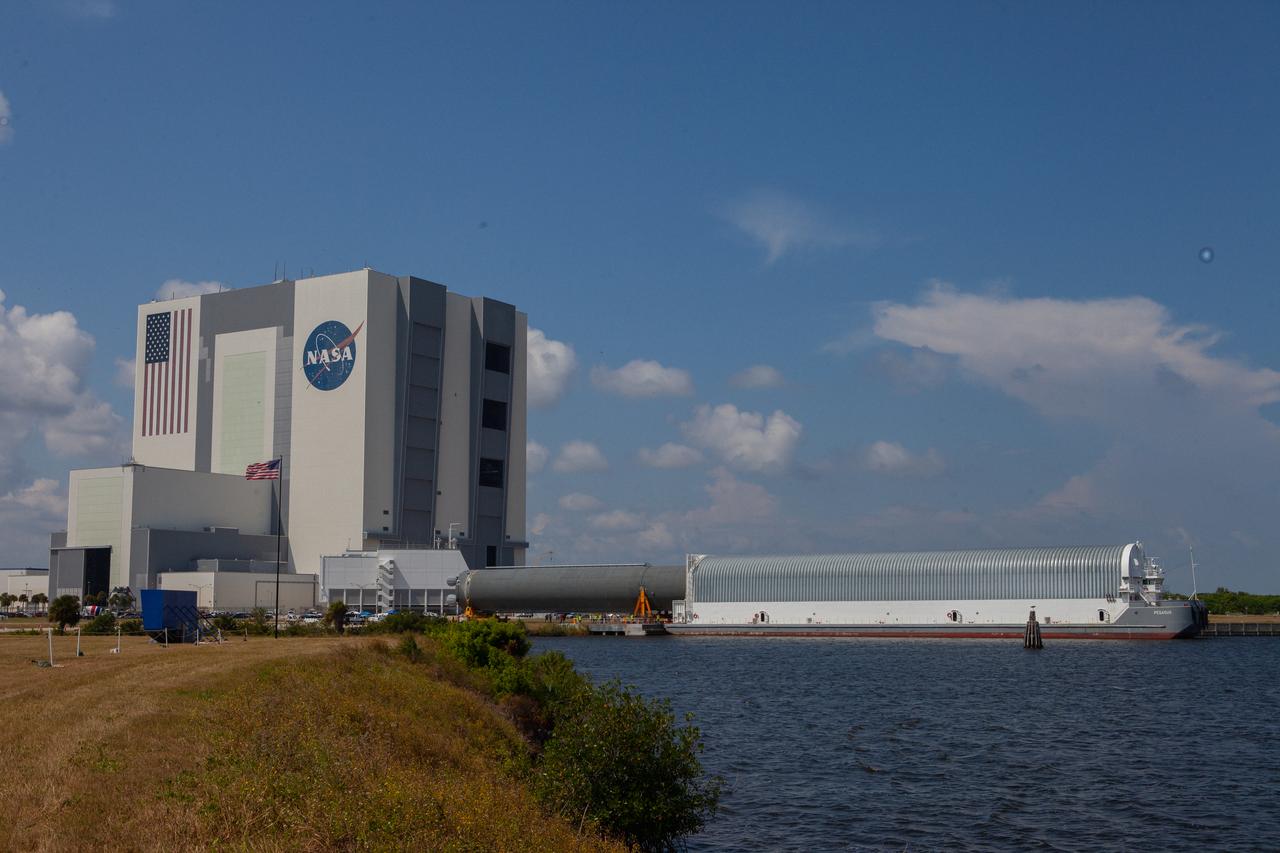
The 212-foot-long Space Launch System (SLS) rocket core stage pathfinder has been offloaded from NASA’s Pegasus Barge at Kennedy Space Center’s Launch Complex 39 turn basin wharf on Sept. 30, 2019. The Pegasus Barge made its first delivery to Kennedy in support of the agency's Artemis missions. The upgraded 310-foot-long barge arrived Sept. 27, 2019, ferrying the SLS core stage pathfinder, a full-scale mock-up of the rocket's core stage. It will be used by the Exploration Ground Systems Program and their contractor, Jacobs, to practice offloading, moving and stacking maneuvers, using important ground support equipment to train employees and certify all the equipment works properly. The pathfinder will stay at Kennedy for approximately one month before trekking back to NASA's Michoud Assembly Facility in Louisiana.
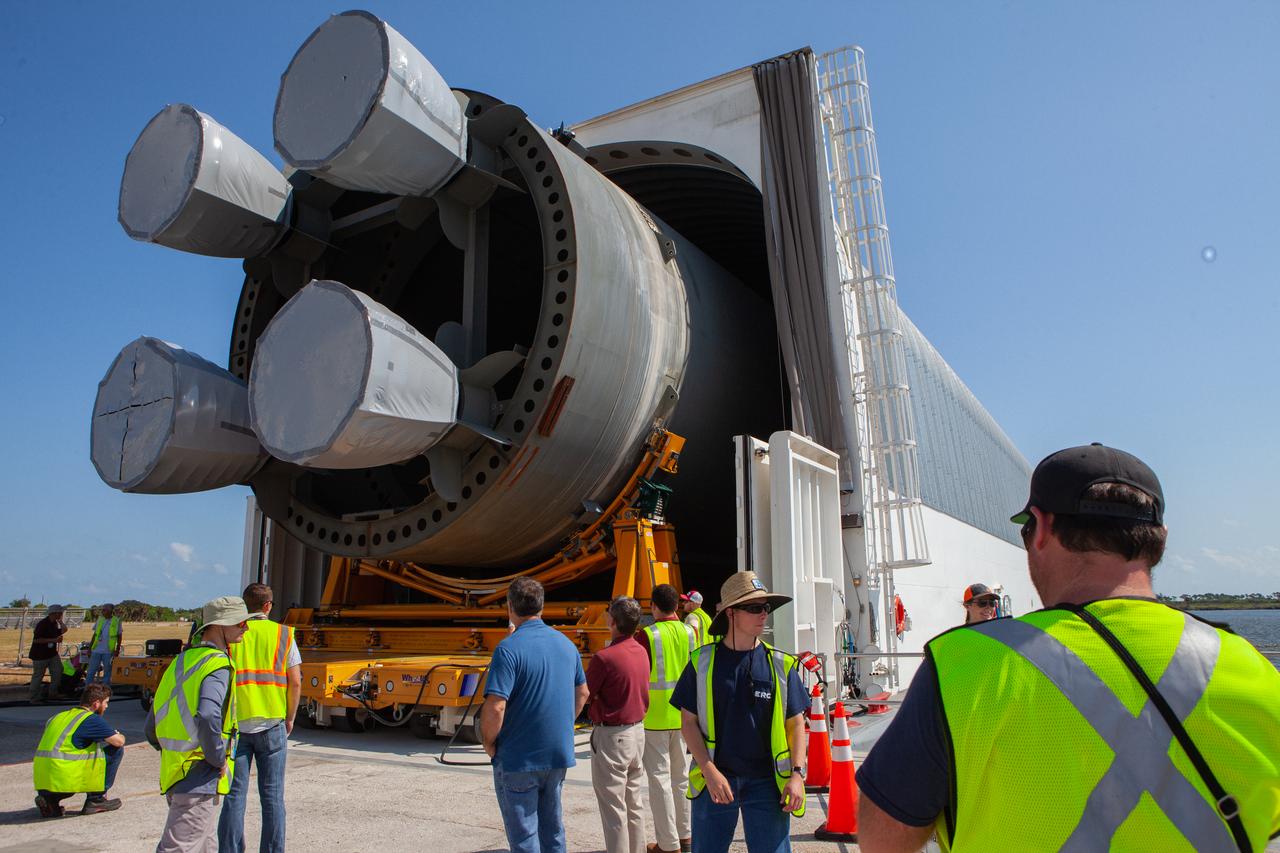
NASA and Jacobs technicians and engineers have begun offloading the 212-foot-long Space Launch System (SLS) rocket core stage pathfinder from NASA's Pegasus Barge at Kennedy Space Center’s Launch Complex 39 turn basin wharf on Sept. 30, 2019. The Pegasus Barge made its first delivery to Kennedy in support of the agency's Artemis missions. The upgraded 310-foot-long barge arrived Sept. 27, 2019, ferrying the SLS core stage pathfinder, a full-scale mock-up of the rocket's core stage. It will be used by the Exploration Ground Systems Program and their contractor, Jacobs, to practice offloading, moving and stacking maneuvers, using important ground support equipment to train employees and certify all the equipment works properly. The pathfinder will stay at Kennedy for approximately one month before trekking back to NASA's Michoud Assembly Facility in Louisiana.
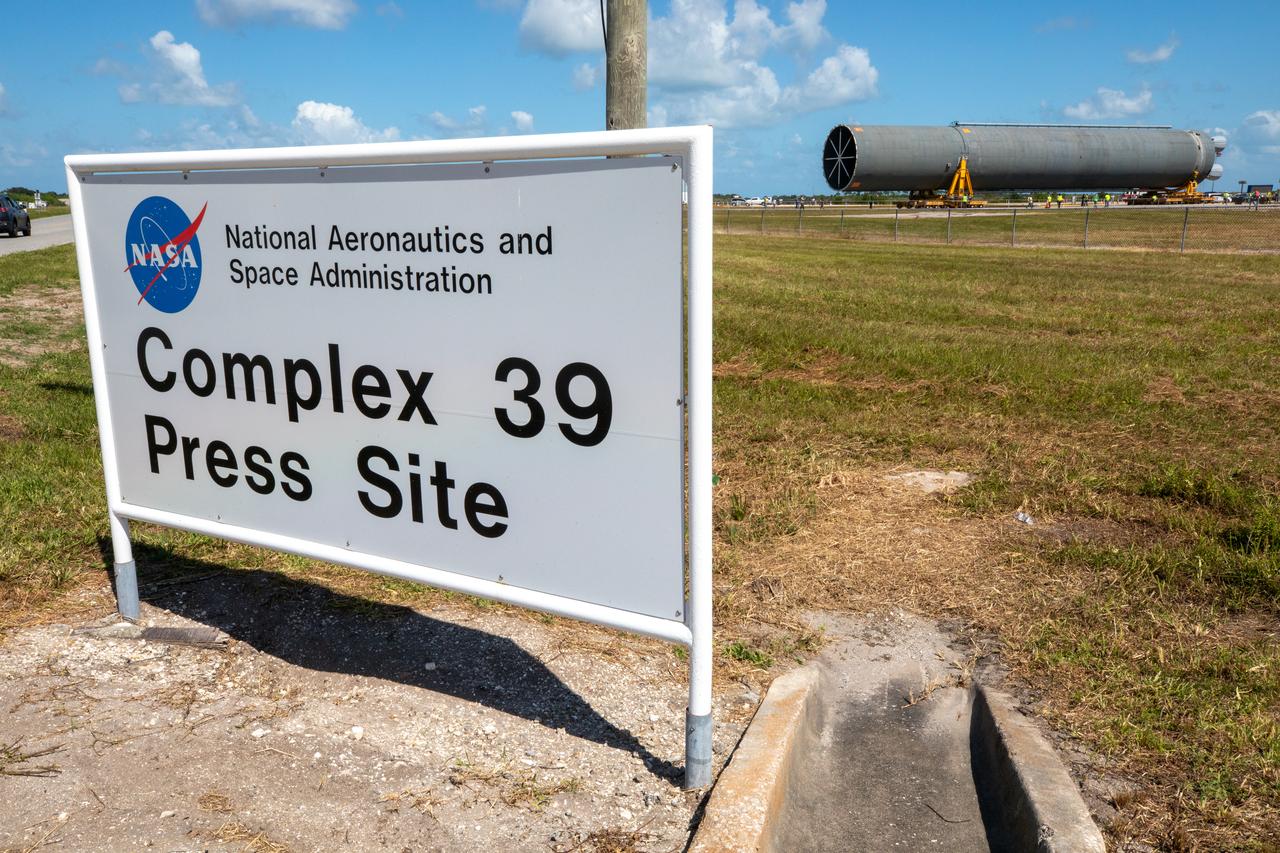
The 212-foot-long Space Launch System (SLS) rocket core stage pathfinder is being transported to the Vehicle Assembly Building at NASA's Kennedy Space Center on Oct. 1, 2019. The Pegasus Barge made its first delivery to Kennedy in support of the agency's Artemis missions. The upgraded 310-foot-long barge arrived Sept. 27, 2019, ferrying the SLS core stage pathfinder, a full-scale mock-up of the rocket's core stage. It will be used by the Exploration Ground Systems Program and their contractor, Jacobs, to practice offloading, moving and stacking maneuvers, using important ground support equipment to train employees and certify all the equipment works properly. The pathfinder will stay at Kennedy for approximately one month before trekking back to NASA's Michoud Assembly Facility in Louisiana.

The Space Launch System (SLS) core stage is seen atop the mobile launcher inside High Bay 3 of the Vehicle Assembly Building at NASA’s Kennedy Space Center in Florida on June 12, 2021. Teams with NASA’s Exploration Ground Systems and contractor Jacobs lifted and lowered the core stage – the largest part of the rocket – onto the mobile launcher, placing it in between the twin solid rocket boosters. The 188,000-pound core stage, with its four RS-25 engines, will provide more than 2 million pounds of thrust during launch and ascent, and coupled with the boosters, will provide more than 8.8 million pounds of thrust to send the Artemis I mission to space. Under the Artemis program, NASA will land the first woman and first person of color on the Moon, as well as establish a sustainable presence on the lunar surface in preparation for human missions to Mars.
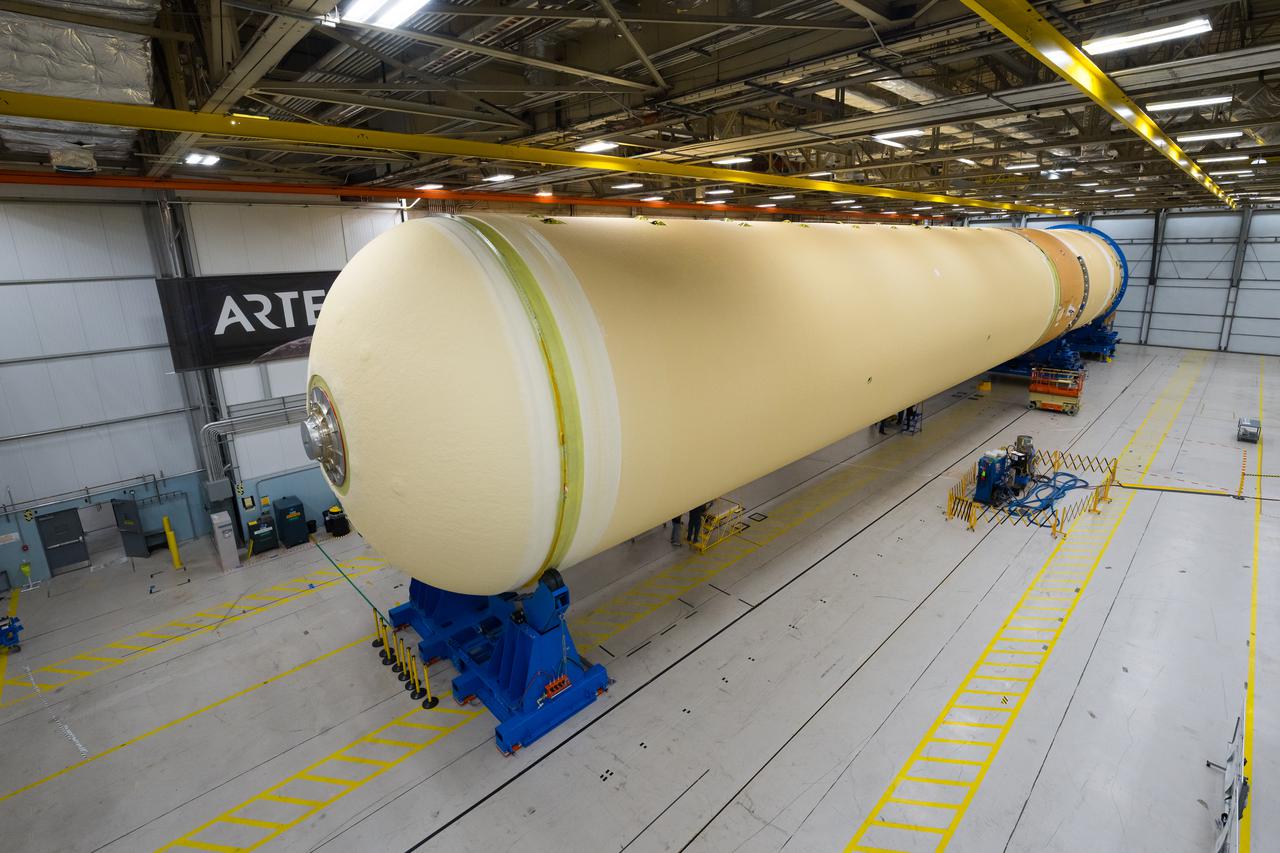
NASA joined the Space Launch System rocket’s core stage forward assembly with the 130-foot liquid hydrogen tank for the Artemis II mission on March 18. This completes assembly of four of the five large structures that make up the core stage that will help send the first astronauts to lunar orbit on Artemis II. The 66-foot forward assembly consists of the forward skirt, liquid oxygen tank and the intertank, which were mated earlier. Engineers inserted 360 bolts to connect the forward assembly to the liquid hydrogen tank to make up the bulk of the stage. Only the engine section, which is currently being outfitted and includes the main propulsion systems that connect to the four RS-25 engines, remains to be added to form the final core stage. All parts of the core stage are manufactured by NASA and Boeing, the core stage lead contractor at the agency’s Michoud Assembly Facility in New Orleans. Currently, the team is building core stages for three Artemis missions. The first core stage is stacked with the rest of the SLS rocket, which will launch the Artemis I mission to the Moon this year. Together with its twin solid rocket boosters, the core stage will produce 8.8 million pounds of thrust to send NASA’s Orion spacecraft, astronauts, and supplies beyond Earth’s orbit to the Moon. The SLS rocket and the Orion spacecraft form the foundation for Artemis missions and future deep space exploration.
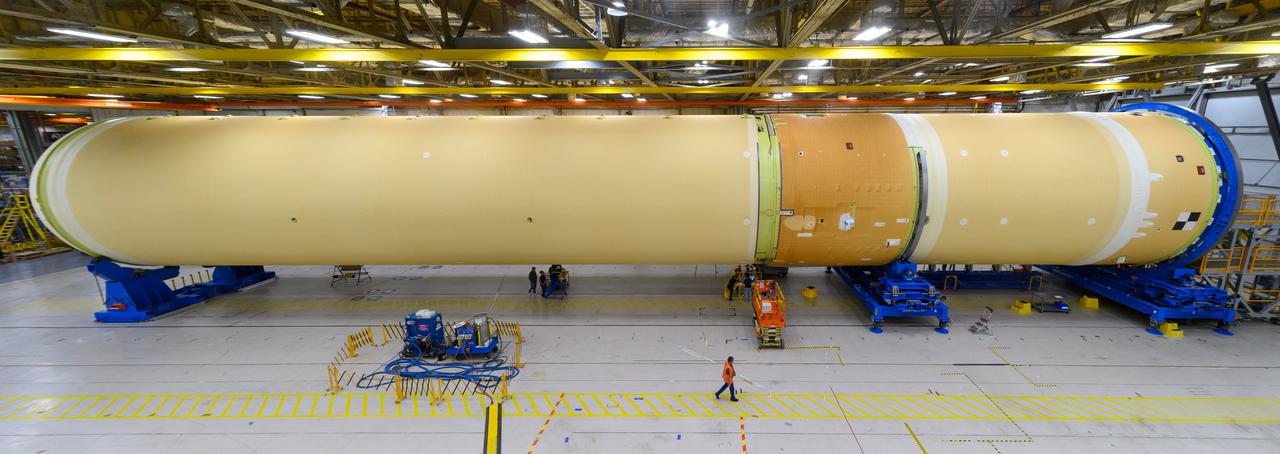
NASA joined the Space Launch System rocket’s core stage forward assembly with the 130-foot liquid hydrogen tank for the Artemis II mission on March 18. This completes assembly of four of the five large structures that make up the core stage that will help send the first astronauts to lunar orbit on Artemis II. The 66-foot forward assembly consists of the forward skirt, liquid oxygen tank and the intertank, which were mated earlier. Engineers inserted 360 bolts to connect the forward assembly to the liquid hydrogen tank to make up the bulk of the stage. Only the engine section, which is currently being outfitted and includes the main propulsion systems that connect to the four RS-25 engines, remains to be added to form the final core stage. All parts of the core stage are manufactured by NASA and Boeing, the core stage lead contractor at the agency’s Michoud Assembly Facility in New Orleans. Currently, the team is building core stages for three Artemis missions. The first core stage is stacked with the rest of the SLS rocket, which will launch the Artemis I mission to the Moon this year. Together with its twin solid rocket boosters, the core stage will produce 8.8 million pounds of thrust to send NASA’s Orion spacecraft, astronauts, and supplies beyond Earth’s orbit to the Moon. The SLS rocket and the Orion spacecraft form the foundation for Artemis missions and future deep space exploration.

NASA joined the Space Launch System rocket’s core stage forward assembly with the 130-foot liquid hydrogen tank for the Artemis II mission on March 18. This completes assembly of four of the five large structures that make up the core stage that will help send the first astronauts to lunar orbit on Artemis II. The 66-foot forward assembly consists of the forward skirt, liquid oxygen tank and the intertank, which were mated earlier. Engineers inserted 360 bolts to connect the forward assembly to the liquid hydrogen tank to make up the bulk of the stage. Only the engine section, which is currently being outfitted and includes the main propulsion systems that connect to the four RS-25 engines, remains to be added to form the final core stage. All parts of the core stage are manufactured by NASA and Boeing, the core stage lead contractor at the agency’s Michoud Assembly Facility in New Orleans. Currently, the team is building core stages for three Artemis missions. The first core stage is stacked with the rest of the SLS rocket, which will launch the Artemis I mission to the Moon this year. Together with its twin solid rocket boosters, the core stage will produce 8.8 million pounds of thrust to send NASA’s Orion spacecraft, astronauts, and supplies beyond Earth’s orbit to the Moon. The SLS rocket and the Orion spacecraft form the foundation for Artemis missions and future deep space exploration.
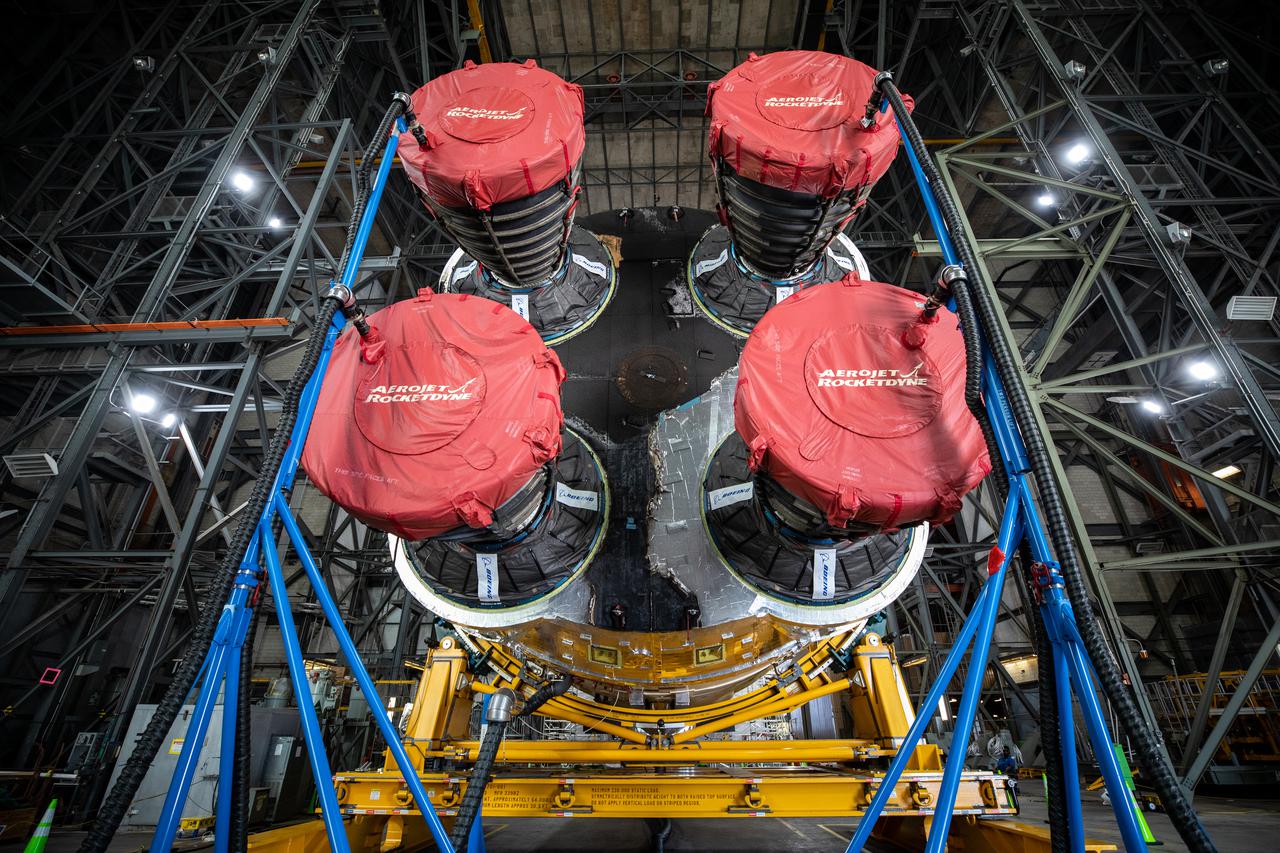
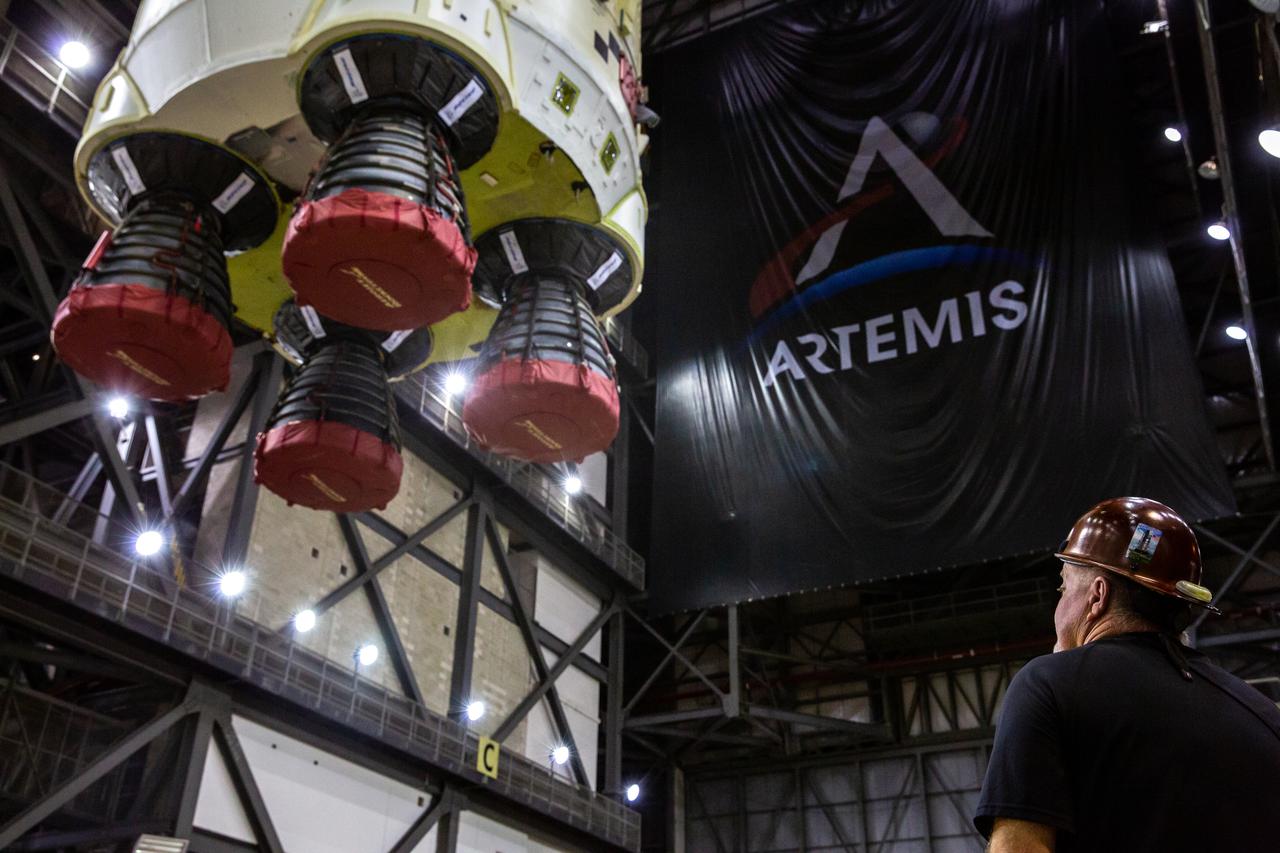
The Space Launch System (SLS) core stage for NASA’s Artemis I mission is in the transfer aisle of the Vehicle Assembly Building at Kennedy Space Center in Florida on May 5, 2021. In view are the core stage’s four RS-25 engines in protective covers. Teams from the center’s Exploration Ground Systems and contractor Jacobs will perform checkouts ahead of integrating the massive rocket stage with the twin solid rocket boosters, Orion spacecraft, and additional flight hardware ahead of the Artemis I launch. Artemis I will be the first integrated test of SLS and Orion and will pave the way for landing the first woman and first person of color on the lunar surface. It will be a proving ground for deep space exploration, leading the agency’s efforts under the Artemis program for a sustainable presence on the Moon and preparing for human missions to Mars.
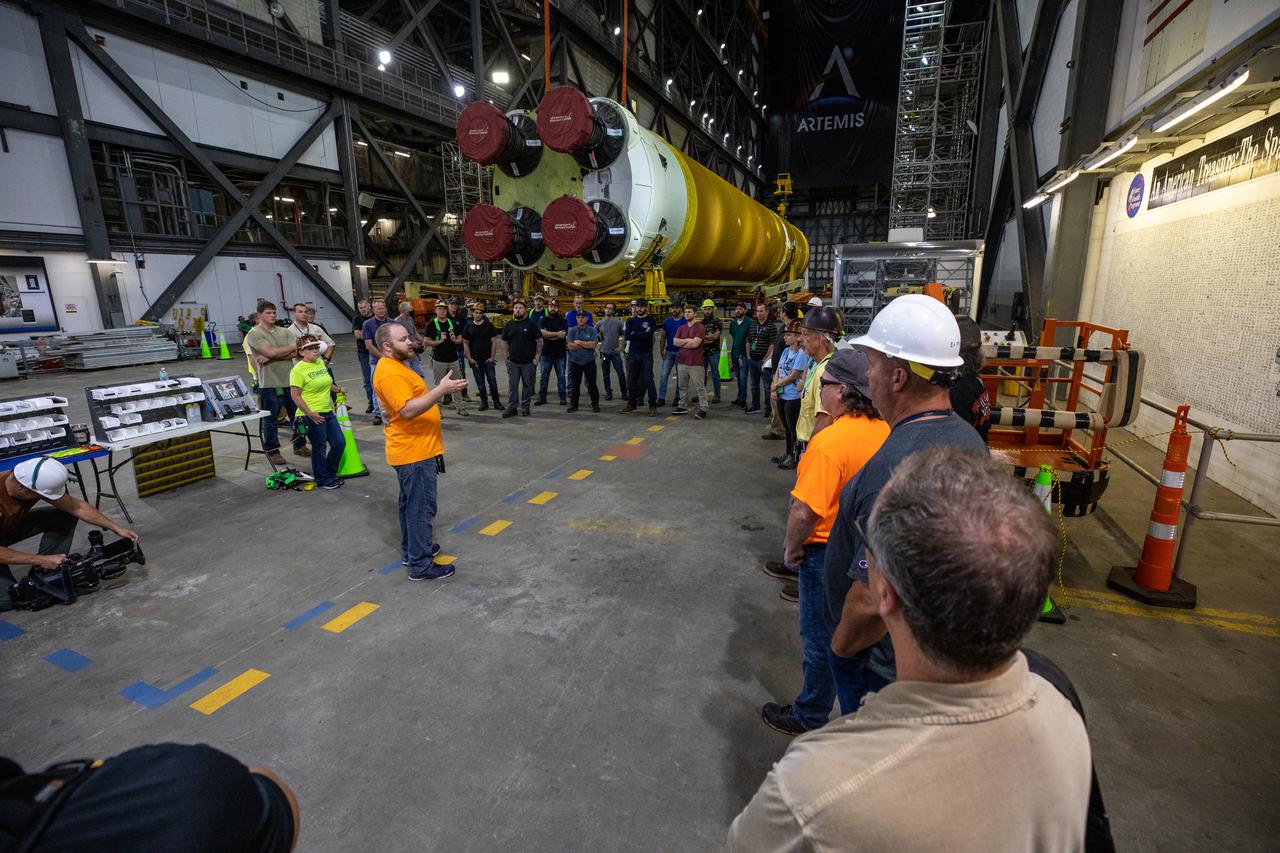
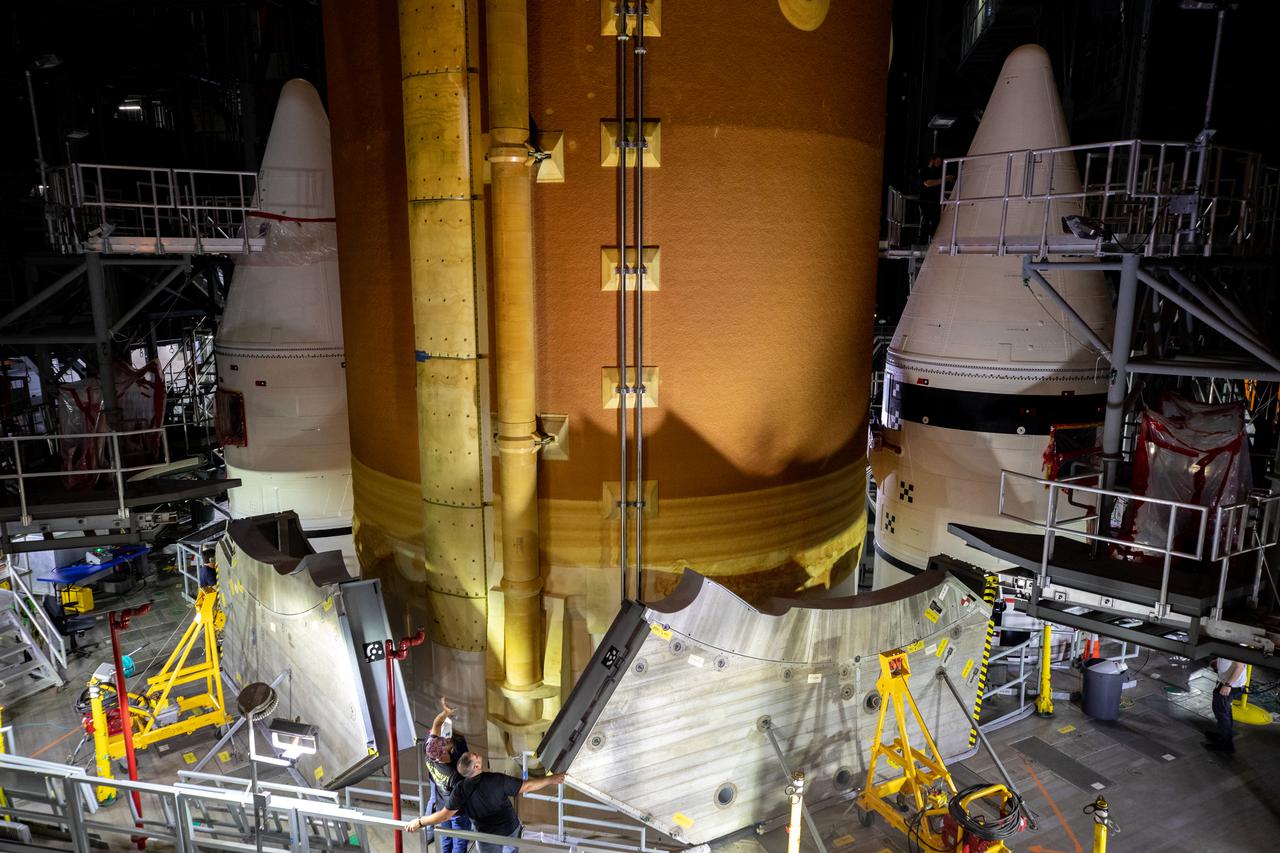
The Space Launch System (SLS) core stage is seen in the transfer aisle of the Vehicle Assembly Building (VAB) at NASA’s Kennedy Space Center in Florida on June 9, 2021. Teams with the agency’s Exploration Ground Systems and contractor Jacobs are preparing to lift the 188,000-pound core stage, which is the largest part of the rocket, and place it on the mobile launcher in between the two solid rocket boosters in High Bay 3 of the VAB. The core stage alone, with its four RS-25 engines, will provide more than 2 million pounds of thrust during launch and ascent, and coupled with the boosters, will provide more than 8.8 million pounds of thrust to send the Artemis I mission to space. The first in an increasingly complex series of missions, Artemis I will test SLS and the Orion spacecraft as an integrated system ahead of crewed flights to the Moon.
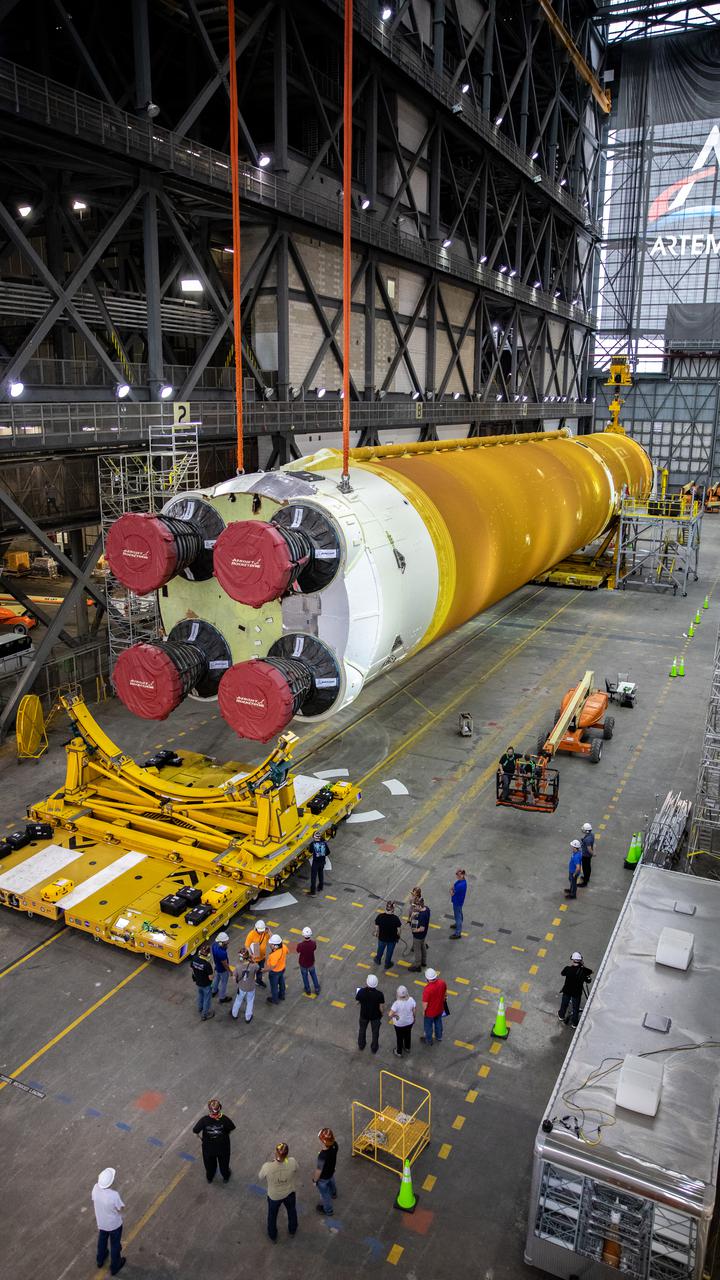
The Space Launch System (SLS) core stage is seen in the transfer aisle of the Vehicle Assembly Building (VAB) at NASA’s Kennedy Space Center in Florida on June 10, 2021. Teams with the agency’s Exploration Ground Systems and contractor Jacobs are preparing to lift the 188,000-pound core stage and place it on the mobile launcher in between the two solid rocket boosters in High Bay 3 of the VAB. The core stage alone will provide more than 2 million pounds of thrust at launch, and coupled with the boosters, will provide more than 8.8 million pounds of thrust to launch the Artemis I mission. The first in an increasingly complex series of missions, Artemis I will test SLS and the Orion spacecraft as an integrated system ahead of crewed flights to the Moon.
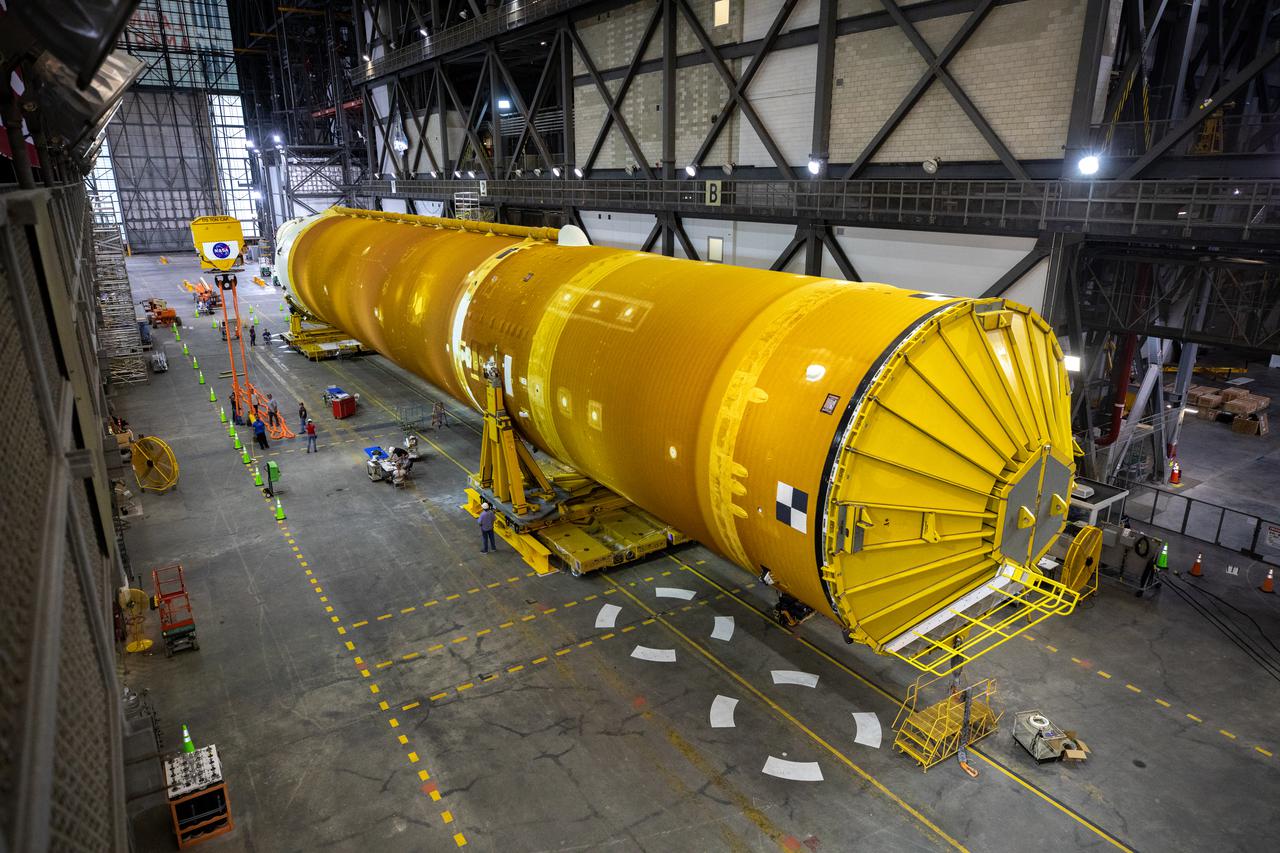
The Space Launch System (SLS) core stage is seen in the transfer aisle of the Vehicle Assembly Building (VAB) at NASA’s Kennedy Space Center in Florida on June 9, 2021. Teams with the agency’s Exploration Ground Systems and contractor Jacobs are preparing to lift the 188,000-pound core stage, which is the largest part of the rocket, and place it on the mobile launcher in between the two solid rocket boosters in High Bay 3 of the VAB. The core stage alone, with its four RS-25 engines, will provide more than 2 million pounds of thrust during launch and ascent, and coupled with the boosters, will provide more than 8.8 million pounds of thrust to send the Artemis I mission to space. The first in an increasingly complex series of missions, Artemis I will test SLS and the Orion spacecraft as an integrated system ahead of crewed flights to the Moon.
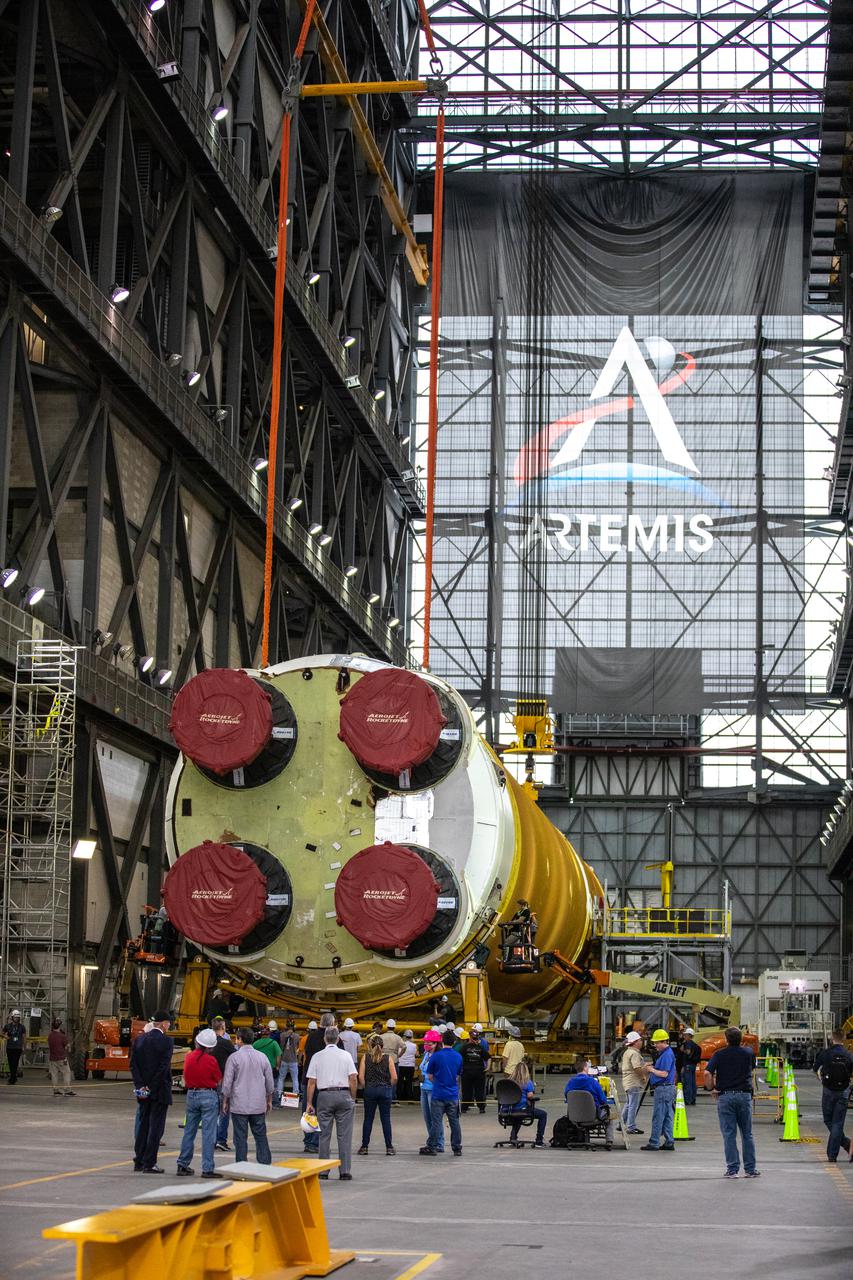
The Space Launch System (SLS) core stage is seen in the transfer aisle of the Vehicle Assembly Building (VAB) at NASA’s Kennedy Space Center in Florida on June 10, 2021. Teams with the agency’s Exploration Ground Systems and contractor Jacobs are preparing to lift the 188,000-pound core stage and place it on the mobile launcher in between the two solid rocket boosters in High Bay 3 of the VAB. The core stage alone will provide more than 2 million pounds of thrust at launch, and coupled with the boosters, will provide more than 8.8 million pounds of thrust to launch the Artemis I mission. The first in an increasingly complex series of missions, Artemis I will test SLS and the Orion spacecraft as an integrated system ahead of crewed flights to the Moon.

Teams with NASA’s Exploration Ground Systems and contractor Jacobs prepare to lift the Space Launch System (SLS) core stage and transfer it over to High Bay 3 in the Vehicle Assembly Building, where it will be placed atop the mobile launcher in between the twin solid rocket boosters, at NASA’s Kennedy Space Center in Florida on June 10, 2021. The 188,000-pound core stage will provide more than 2 million pounds of thrust at launch, and coupled with the boosters, will provide more than 8.8 million pounds of thrust to launch the Artemis I mission. The first in an increasingly complex series of missions, Artemis I will test SLS and the Orion spacecraft as an integrated system ahead of crewed flights to the Moon.
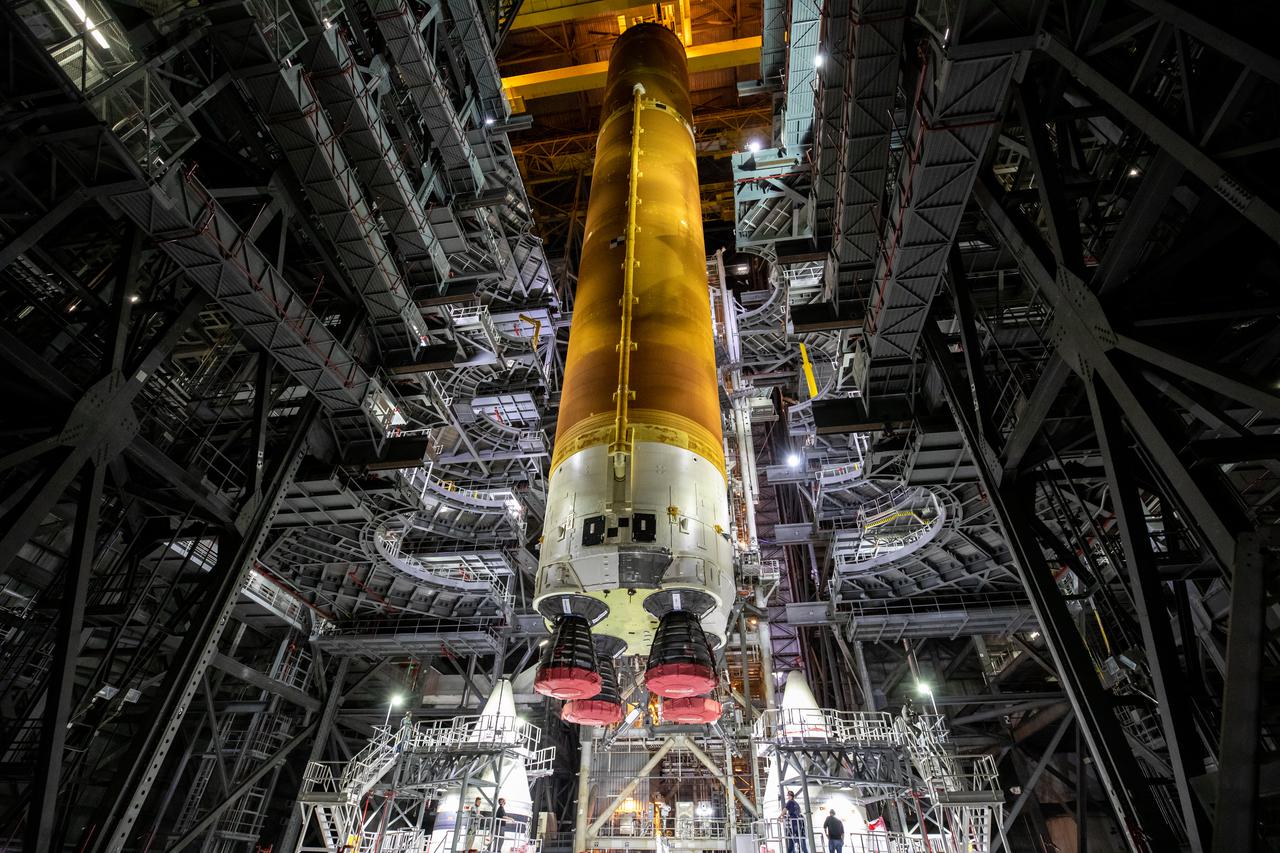
Teams with NASA’s Exploration Ground Systems and contractor Jacobs prepare to lower the Space Launch System (SLS) core stage – the largest part of the rocket – onto the mobile launcher, in between the twin solid rocket boosters, inside High Bay 3 of the Vehicle Assembly Building at NASA’s Kennedy Space Center in Florida on June 12, 2021. The 188,000-pound core stage, with its four RS-25 engines, will provide more than 2 million pounds of thrust during launch and ascent, and coupled with the boosters, will provide more than 8.8 million pounds of thrust to send the Artemis I mission to space. Under the Artemis program, NASA will land the first woman and first person of color on the Moon, as well as establish a sustainable presence on the lunar surface in preparation for human missions to Mars.

Teams with NASA’s Exploration Ground Systems and contractor Jacobs lower the Space Launch System (SLS) core stage – the largest part of the rocket – onto the mobile launcher, in between the twin solid rocket boosters, inside High Bay 3 of the Vehicle Assembly Building at NASA’s Kennedy Space Center in Florida on June 12, 2021. The 188,000-pound core stage, with its four RS-25 engines, will provide more than 2 million pounds of thrust during launch and ascent, and coupled with the boosters, will provide more than 8.8 million pounds of thrust to send the Artemis I mission to space. Under the Artemis program, NASA will land the first woman and first person of color on the Moon, as well as establish a sustainable presence on the lunar surface in preparation for human missions to Mars.
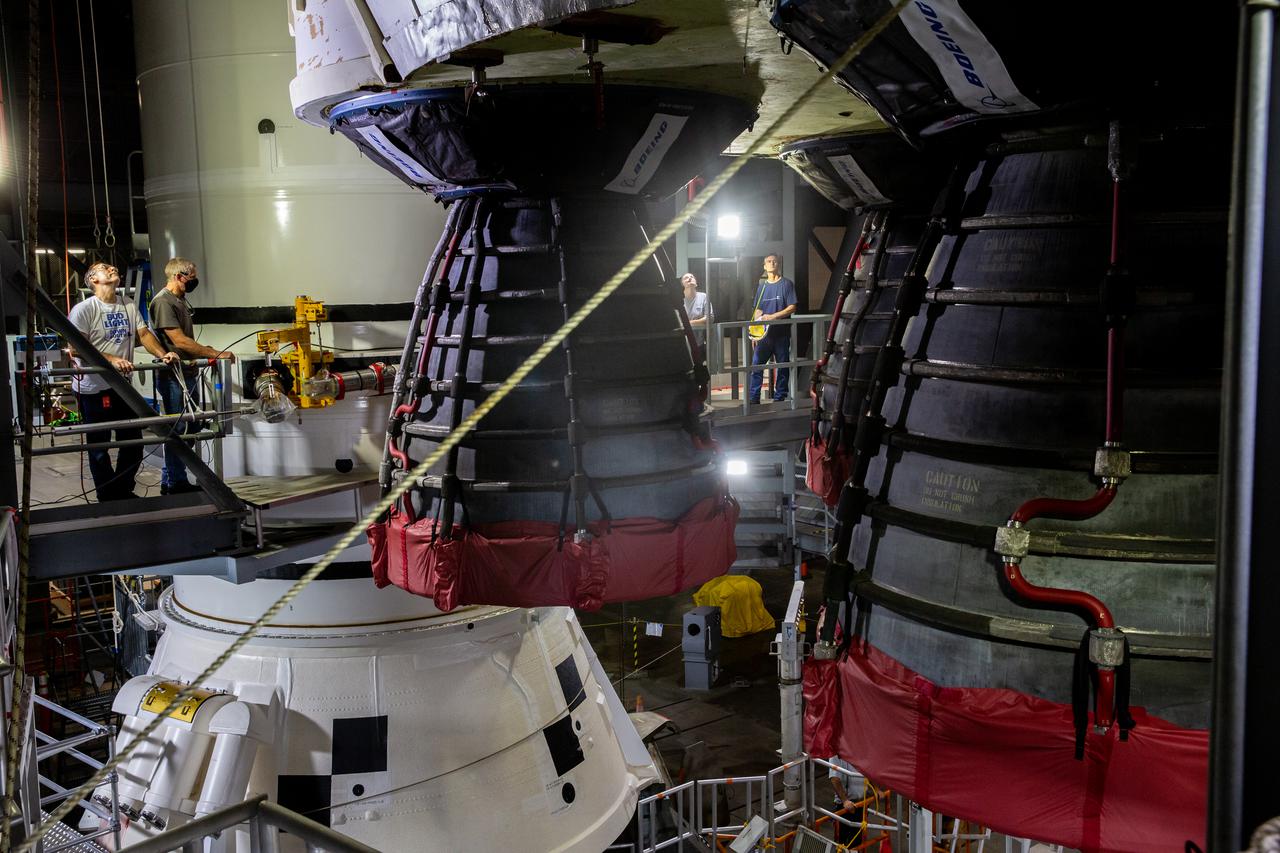
Seen here is a close-up view of the Space Launch System’s (SLS) RS-25 engines as teams with NASA’s Exploration Ground Systems and contractor Jacobs lower the core stage – the largest part of the rocket – onto the mobile launcher, in between the twin solid rocket boosters, inside High Bay 3 of the Vehicle Assembly Building at NASA’s Kennedy Space Center in Florida on June 12, 2021. The 188,000-pound core stage will provide more than 2 million pounds of thrust during launch and ascent, and coupled with the boosters, will provide more than 8.8 million pounds of thrust to send the Artemis I mission to space. Under the Artemis program, NASA will land the first woman and first person of color on the Moon, as well as establish a sustainable presence on the lunar surface in preparation for human missions to Mars.
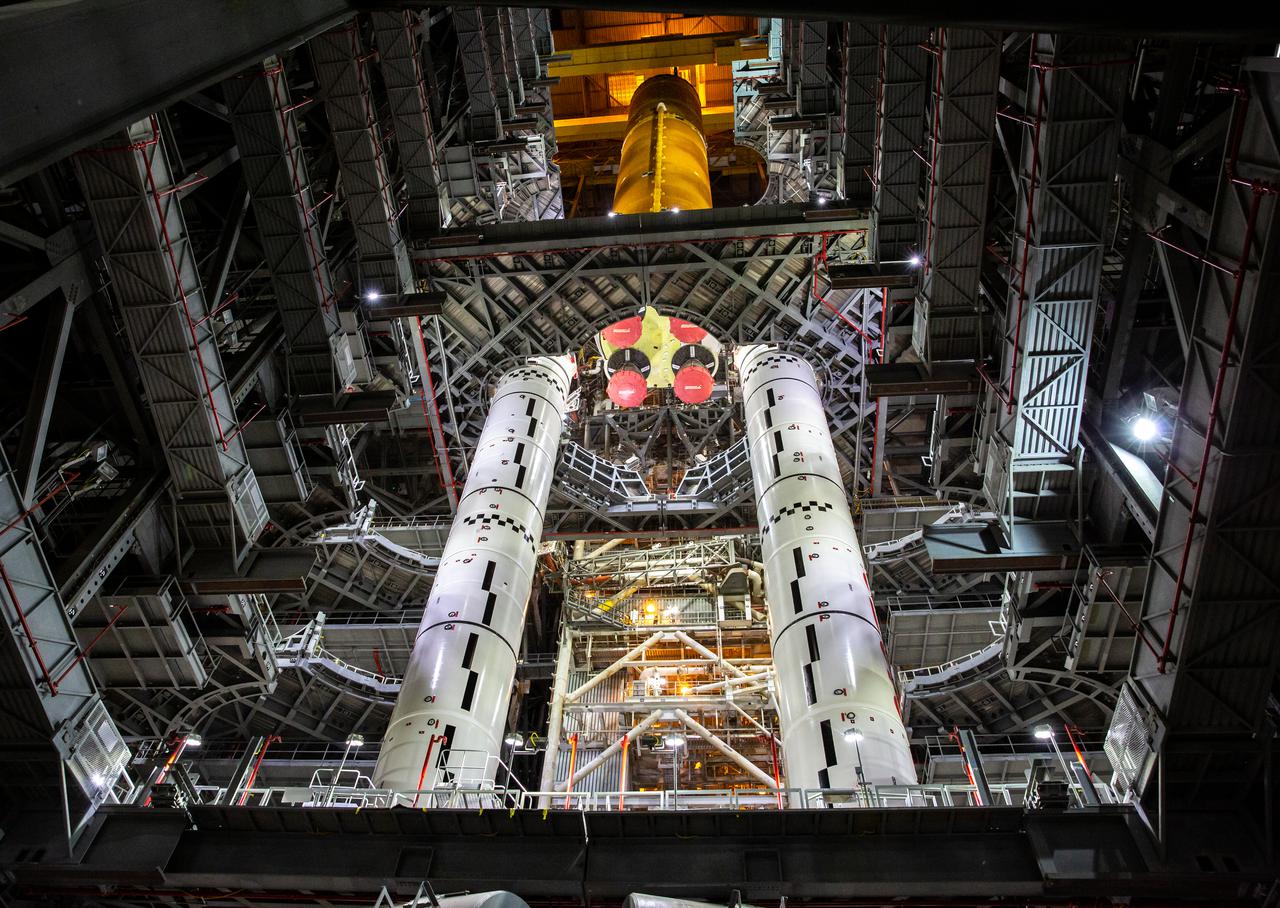
Teams with NASA’s Exploration Ground Systems and contractor Jacobs lower the Space Launch System (SLS) core stage – the largest part of the rocket – onto the mobile launcher, in between the twin solid rocket boosters, inside High Bay 3 of the Vehicle Assembly Building at NASA’s Kennedy Space Center in Florida on June 12, 2021. The 188,000-pound core stage, with its four RS-25 engines, will provide more than 2 million pounds of thrust during launch and ascent, and coupled with the boosters, will provide more than 8.8 million pounds of thrust to send the Artemis I mission to space. Under the Artemis program, NASA will land the first woman and first person of color on the Moon, as well as establish a sustainable presence on the lunar surface in preparation for human missions to Mars.
Teams with NASA’s Exploration Ground Systems and contractor Jacobs lower the Space Launch System (SLS) core stage – the largest part of the rocket – onto the mobile launcher, in between the twin solid rocket boosters, inside High Bay 3 of the Vehicle Assembly Building at NASA’s Kennedy Space Center in Florida on June 12, 2021. The 188,000-pound core stage, with its four RS-25 engines, will provide more than 2 million pounds of thrust during launch and ascent, and coupled with the boosters, will provide more than 8.8 million pounds of thrust to send the Artemis I mission to space. Under the Artemis program, NASA will land the first woman and first person of color on the Moon, as well as establish a sustainable presence on the lunar surface in preparation for human missions to Mars.
Teams with NASA’s Exploration Ground Systems and contractor Jacobs lift the Space Launch System (SLS) core stage – the largest part of the rocket – and prepare to move it over to High Bay 3 in the Vehicle Assembly Building, where it will be placed atop the mobile launcher in between the twin solid rocket boosters, at NASA’s Kennedy Space Center in Florida on June 12, 2021. The 188,000-pound core stage, with its four RS-25 engines, will provide more than 2 million pounds of thrust during launch and ascent, and coupled with the boosters, will provide more than 8.8 million pounds of thrust to send the Artemis I mission to space. Under the Artemis program, NASA will land the first woman and first person of color on the Moon, as well as establish a sustainable presence on the lunar surface in preparation for human missions to Mars.
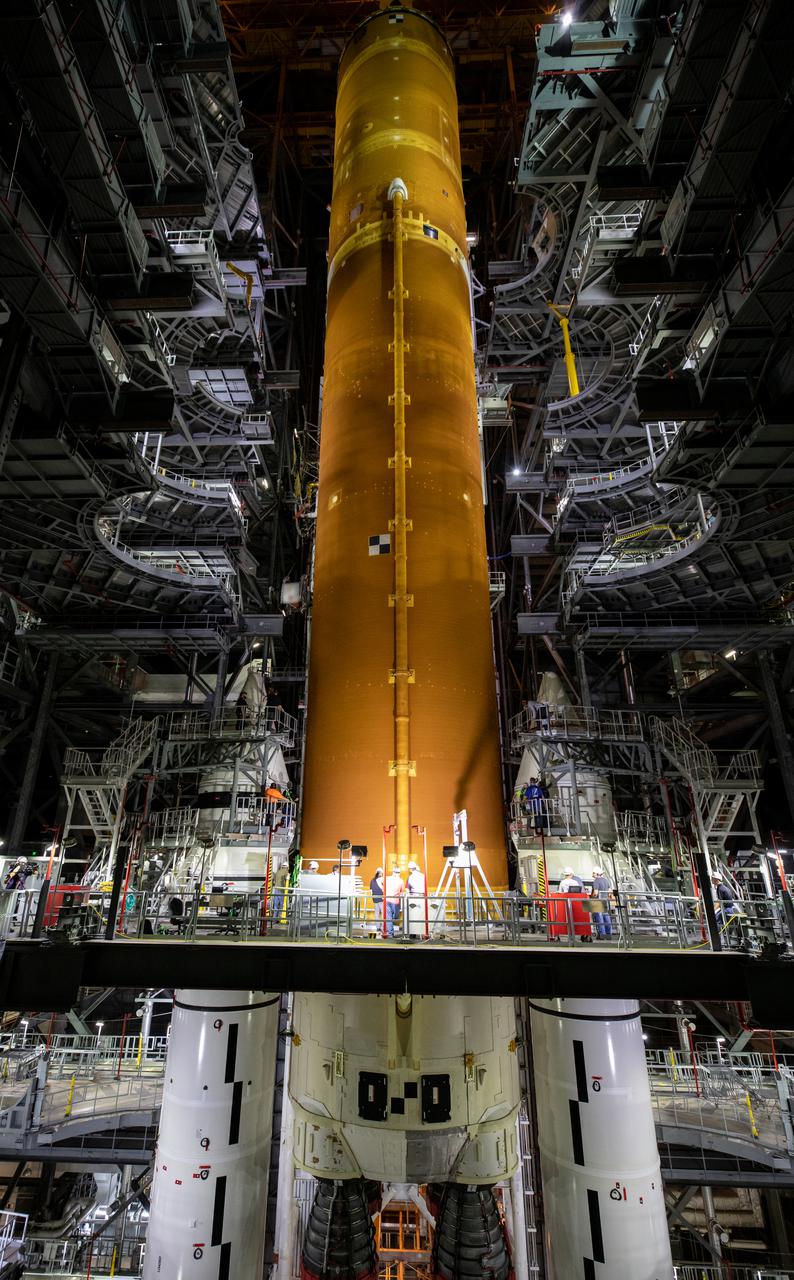
Teams with NASA’s Exploration Ground Systems and contractor Jacobs lower the Space Launch System (SLS) core stage – the largest part of the rocket – onto the mobile launcher, in between the twin solid rocket boosters, inside High Bay 3 of the Vehicle Assembly Building at NASA’s Kennedy Space Center in Florida on June 12, 2021. The 188,000-pound core stage, with its four RS-25 engines, will provide more than 2 million pounds of thrust during launch and ascent, and coupled with the boosters, will provide more than 8.8 million pounds of thrust to send the Artemis I mission to space. Under the Artemis program, NASA will land the first woman and first person of color on the Moon, as well as establish a sustainable presence on the lunar surface in preparation for human missions to Mars.
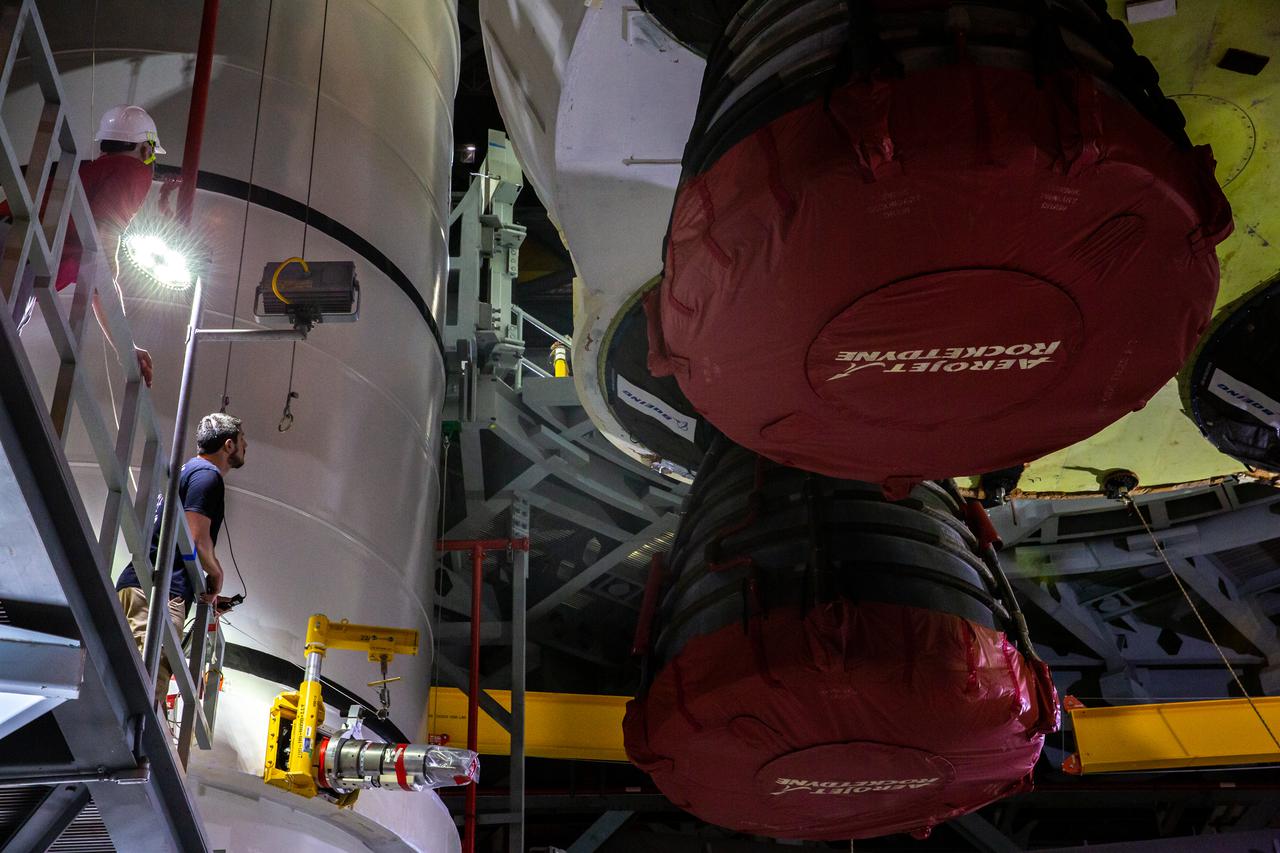
Seen here is a close-up view of the Space Launch System’s (SLS) RS-25 engines as teams with NASA’s Exploration Ground Systems and contractor Jacobs lower the core stage – the largest part of the rocket – onto the mobile launcher, in between the twin solid rocket boosters, inside High Bay 3 of the Vehicle Assembly Building at NASA’s Kennedy Space Center in Florida on June 12, 2021. The 188,000-pound core stage will provide more than 2 million pounds of thrust during launch and ascent, and coupled with the boosters, will provide more than 8.8 million pounds of thrust to send the Artemis I mission to space. Under the Artemis program, NASA will land the first woman and first person of color on the Moon, as well as establish a sustainable presence on the lunar surface in preparation for human missions to Mars.
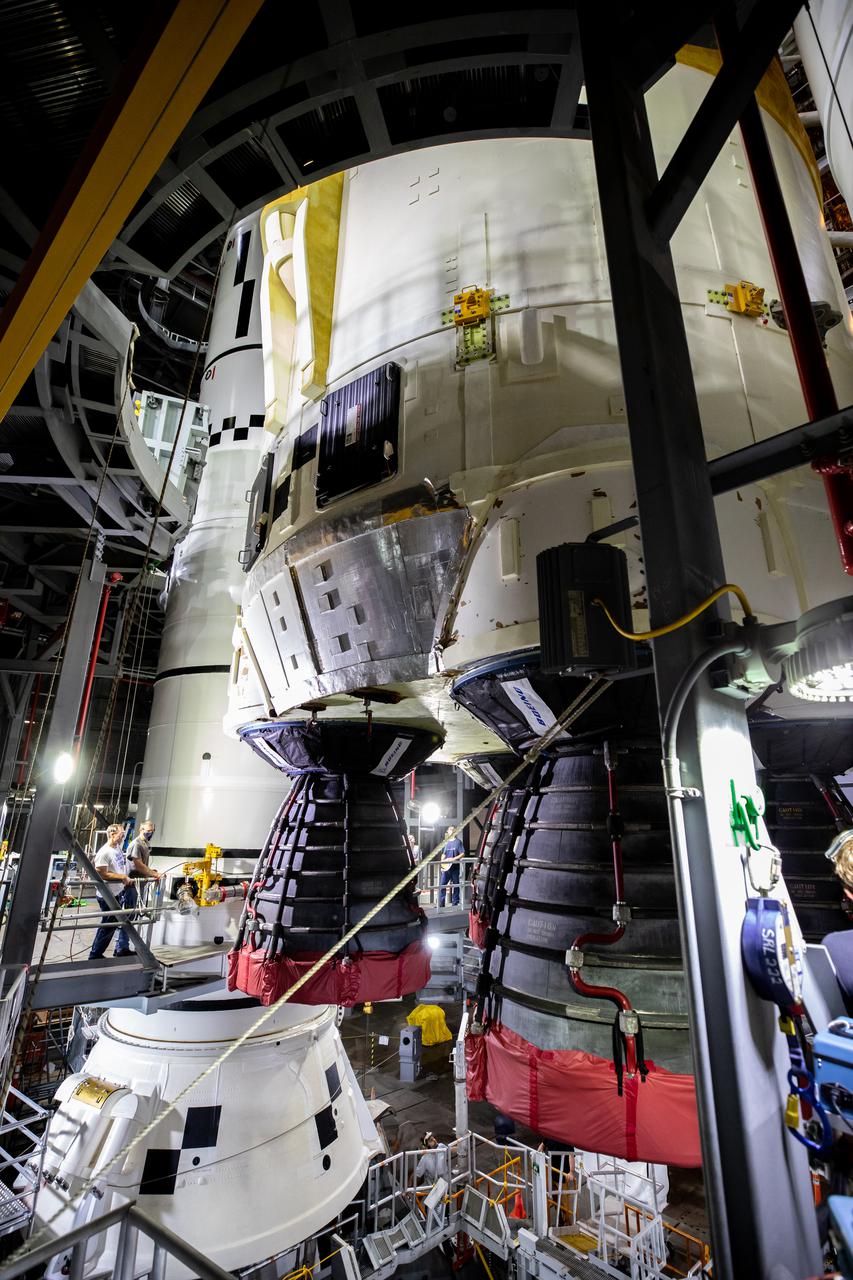
Teams with NASA’s Exploration Ground Systems and contractor Jacobs lower the Space Launch System (SLS) core stage – the largest part of the rocket – onto the mobile launcher, in between the twin solid rocket boosters, inside High Bay 3 of the Vehicle Assembly Building at NASA’s Kennedy Space Center in Florida on June 12, 2021. The 188,000-pound core stage, with its four RS-25 engines, will provide more than 2 million pounds of thrust during launch and ascent, and coupled with the boosters, will provide more than 8.8 million pounds of thrust to send the Artemis I mission to space. Under the Artemis program, NASA will land the first woman and first person of color on the Moon, as well as establish a sustainable presence on the lunar surface in preparation for human missions to Mars.
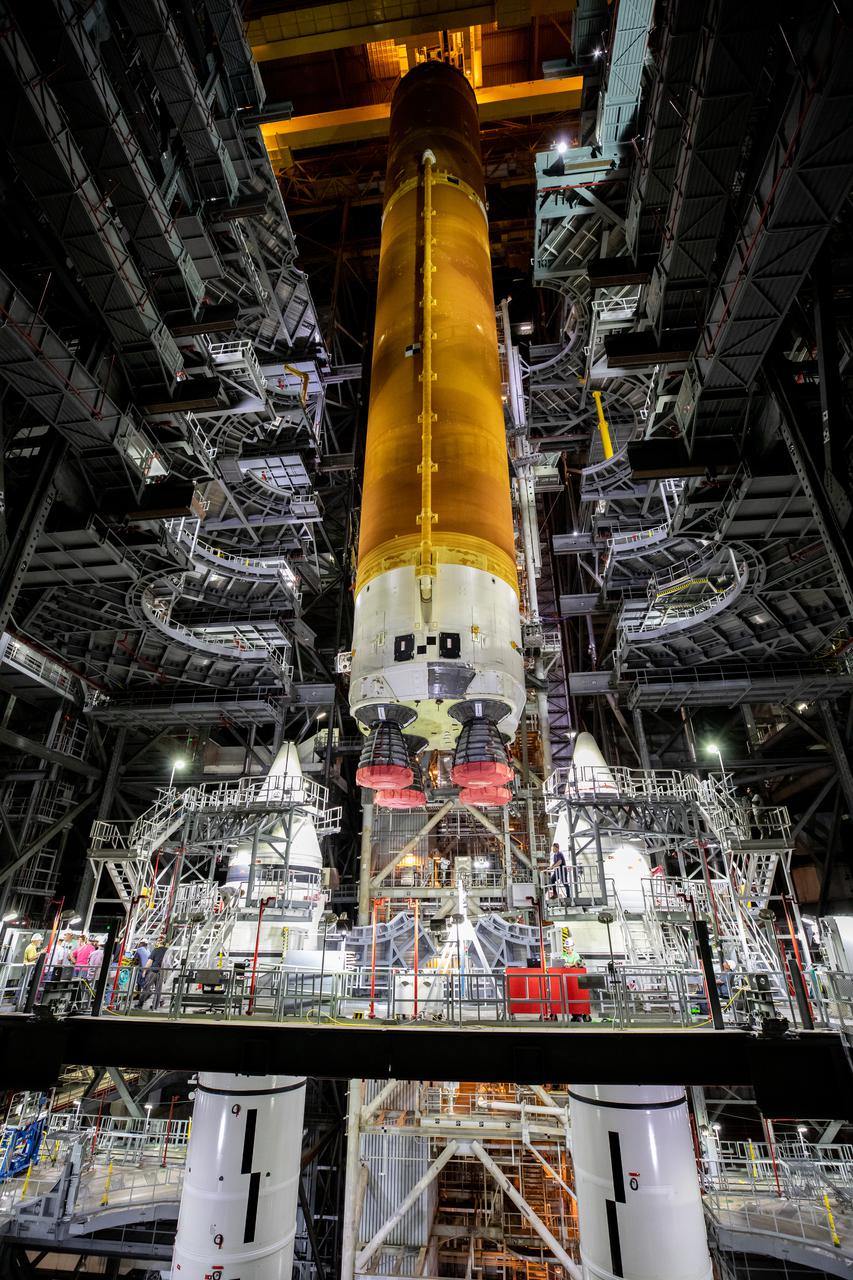
Teams with NASA’s Exploration Ground Systems and contractor Jacobs prepare to lower the Space Launch System (SLS) core stage – the largest part of the rocket – onto the mobile launcher, in between the twin solid rocket boosters, inside High Bay 3 of the Vehicle Assembly Building at NASA’s Kennedy Space Center in Florida on June 12, 2021. The 188,000-pound core stage, with its four RS-25 engines, will provide more than 2 million pounds of thrust during launch and ascent, and coupled with the boosters, will provide more than 8.8 million pounds of thrust to send the Artemis I mission to space. Under the Artemis program, NASA will land the first woman and first person of color on the Moon, as well as establish a sustainable presence on the lunar surface in preparation for human missions to Mars.
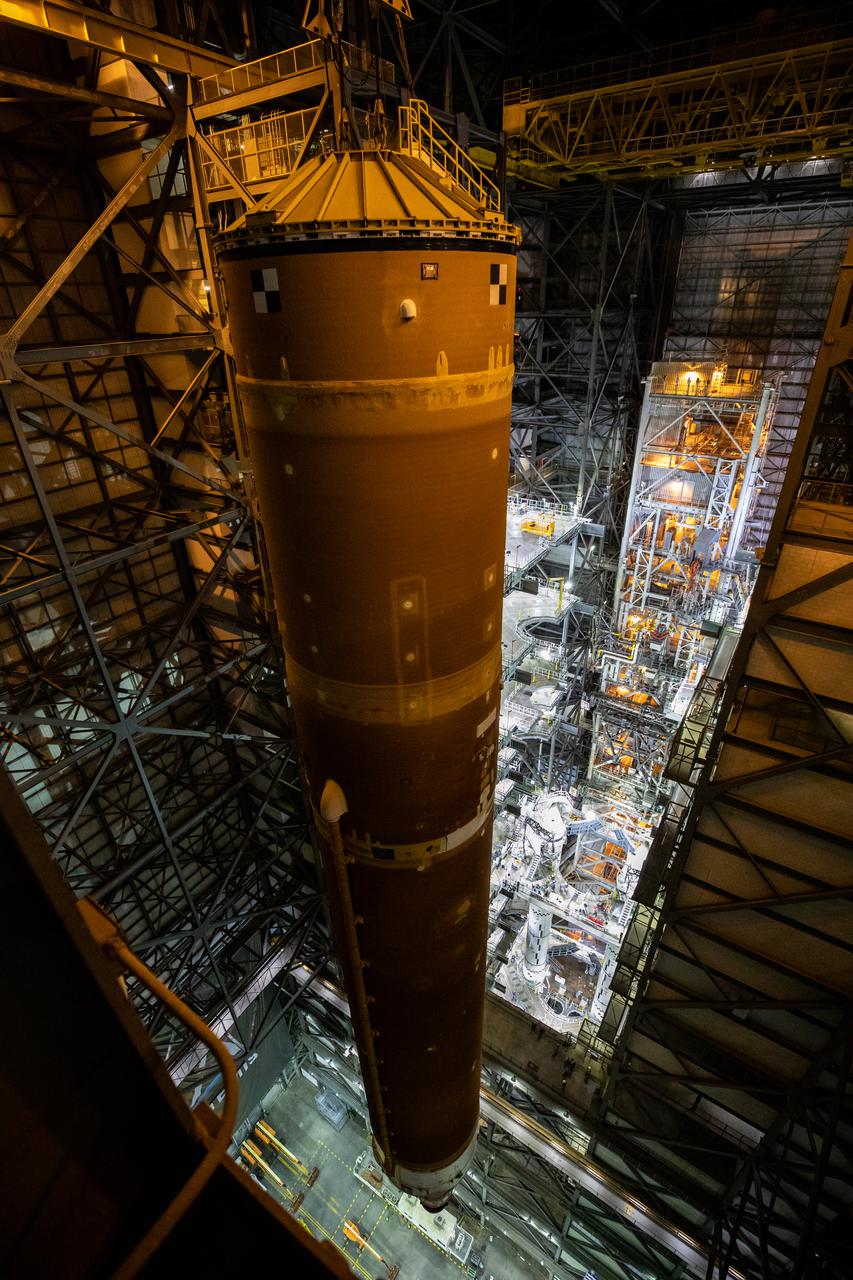
Teams with NASA’s Exploration Ground Systems and contractor Jacobs lift the Space Launch System (SLS) core stage – the largest part of the rocket – and prepare to move it over to High Bay 3 in the Vehicle Assembly Building, where it will be placed atop the mobile launcher in between the twin solid rocket boosters, at NASA’s Kennedy Space Center in Florida on June 12, 2021. The 188,000-pound core stage, with its four RS-25 engines, will provide more than 2 million pounds of thrust during launch and ascent, and coupled with the boosters, will provide more than 8.8 million pounds of thrust to send the Artemis I mission to space. Under the Artemis program, NASA will land the first woman and first person of color on the Moon, as well as establish a sustainable presence on the lunar surface in preparation for human missions to Mars.
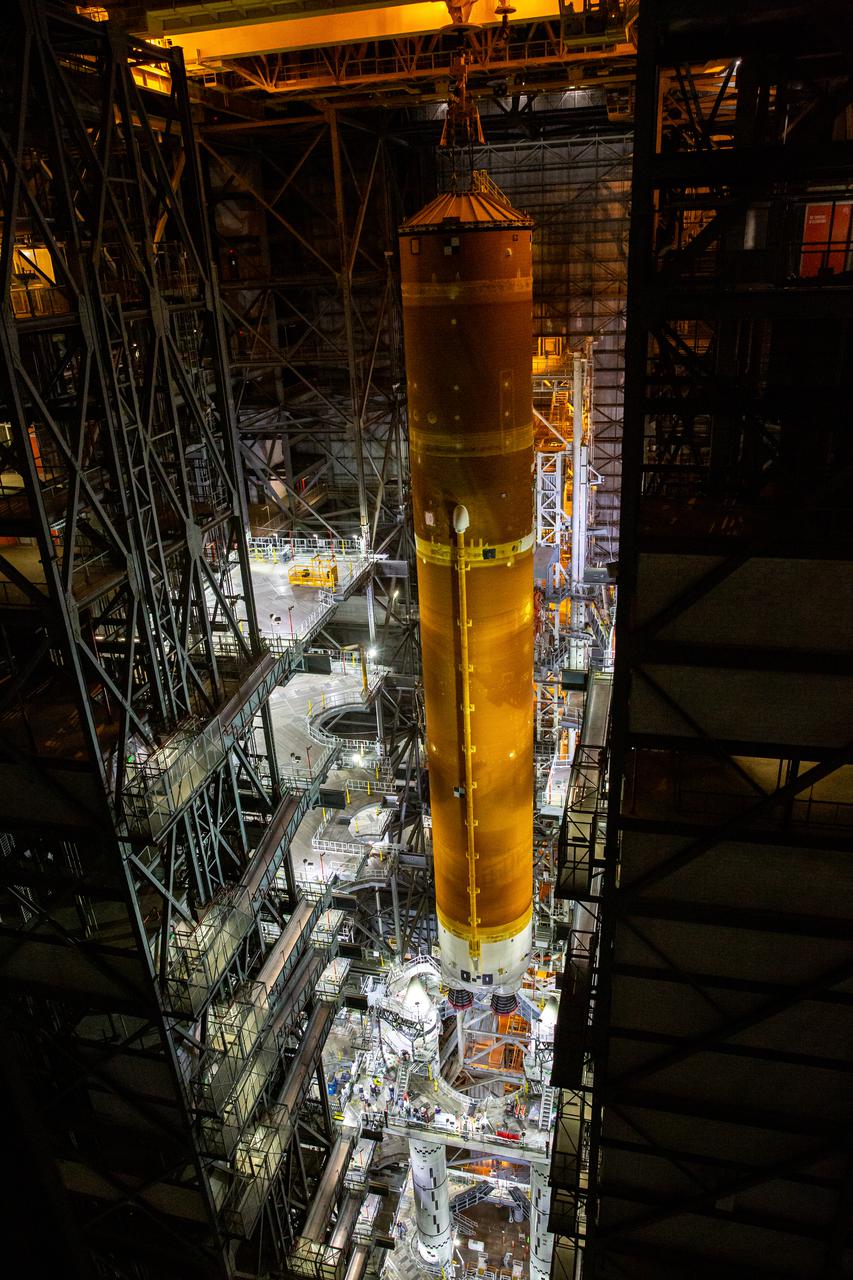
Teams with NASA’s Exploration Ground Systems and contractor Jacobs prepare to lower the Space Launch System (SLS) core stage – the largest part of the rocket – onto the mobile launcher, in between the twin solid rocket boosters, inside High Bay 3 of the Vehicle Assembly Building at NASA’s Kennedy Space Center in Florida on June 12, 2021. The 188,000-pound core stage, with its four RS-25 engines, will provide more than 2 million pounds of thrust during launch and ascent, and coupled with the boosters, will provide more than 8.8 million pounds of thrust to send the Artemis I mission to space. Under the Artemis program, NASA will land the first woman and first person of color on the Moon, as well as establish a sustainable presence on the lunar surface in preparation for human missions to Mars.
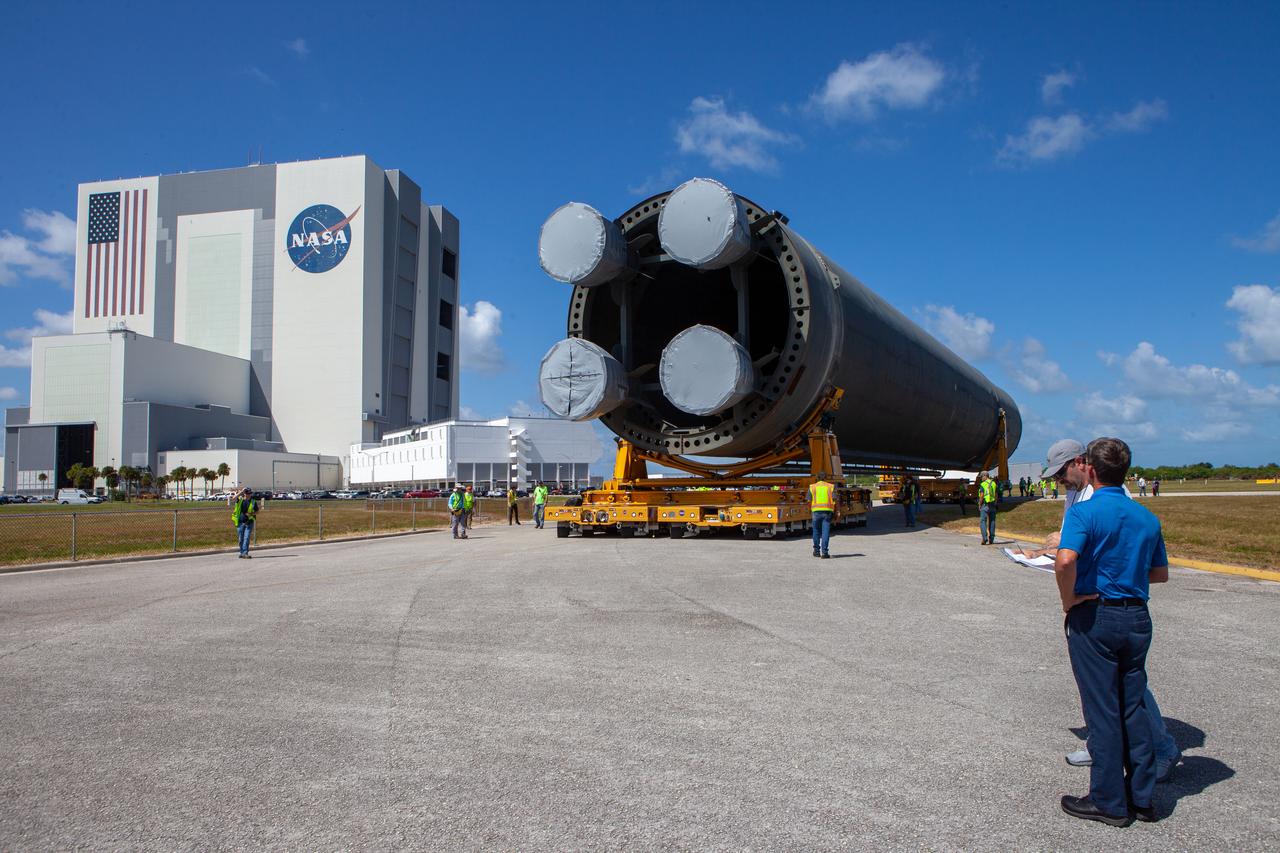
The 212-foot-long Space Launch System (SLS) rocket core stage pathfinder has been offloaded from NASA’s Pegasus Barge at Kennedy Space Center’s Launch Complex 39 turn basin wharf on Oct. 1, 2019. It is slowly being backed up so that it is in the correct configuration for the move forward to the Vehicle Assembly Building. The Pegasus Barge made its first delivery to Kennedy in support of the agency's Artemis missions. The upgraded 310-foot-long barge arrived Sept. 27, 2019, ferrying the SLS core stage pathfinder, a full-scale mock-up of the rocket's core stage. It will be used by Exploration Ground Systems and its contractor, Jacobs, to practice offloading, moving and stacking maneuvers, using important ground support equipment to train employees and certify all the equipment works properly. The pathfinder will stay at Kennedy for approximately one month before trekking back to NASA's Michoud Assembly Facility in Louisiana.
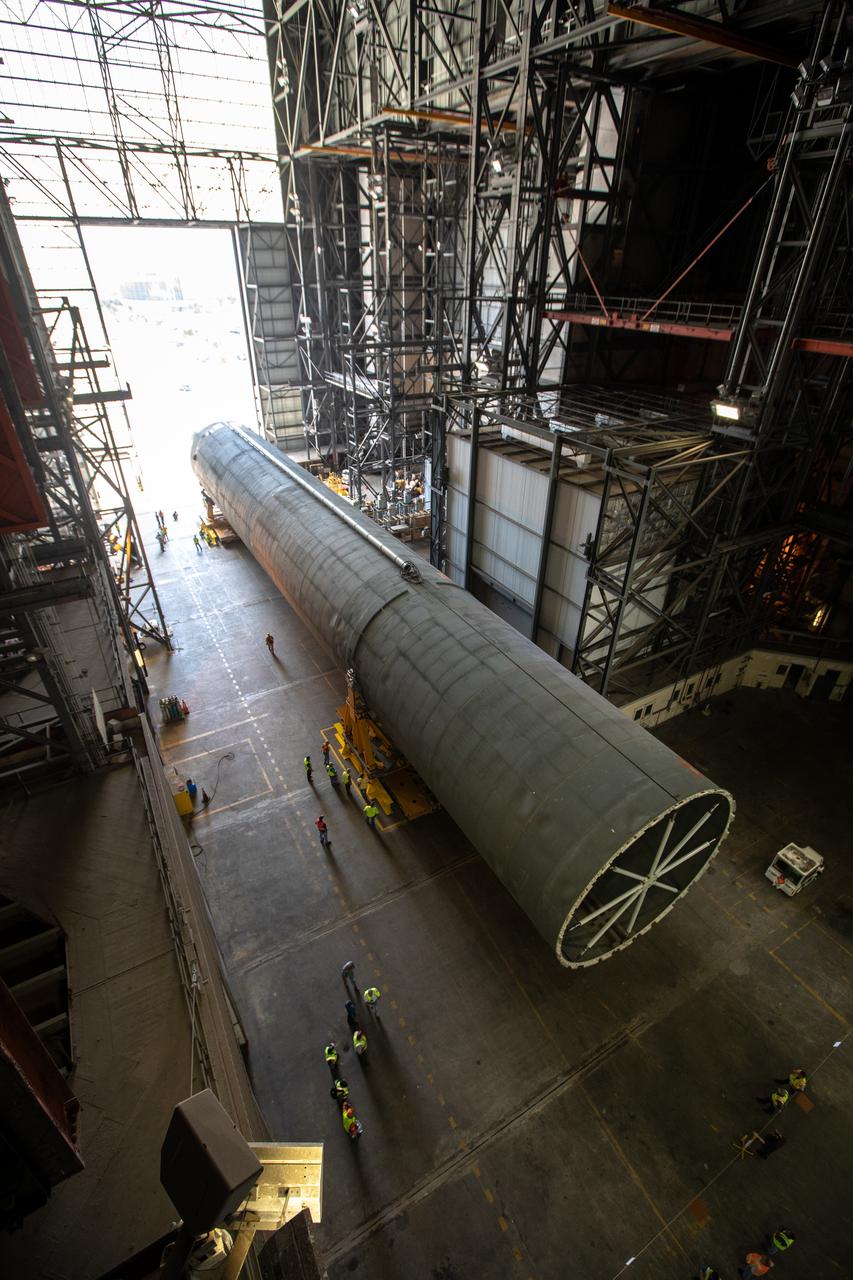
The 212-foot-long Space Launch System (SLS) rocket core stage pathfinder is inside the low bay of the Vehicle Assembly Building at NASA’s Kennedy Space Center in Florida on Oct. 1, 2019. NASA's Pegasus Barge arrived at the Launch Complex 39 turn basin wharf on Sept. 30, 2019, making its first delivery to Kennedy in support of the agency's Artemis missions. The upgraded 310-foot-long barge arrived Sept. 27, 2019, ferrying the SLS core stage pathfinder, a full-scale mock-up of the rocket's core stage. The pathfinder will be used by the Exploration Ground Systems Program and their contractor, Jacobs, to practice offloading, moving and stacking maneuvers, using important ground support equipment to train employees and certify all the equipment works properly. The pathfinder will stay at Kennedy for approximately one month before trekking back to NASA's Michoud Assembly Facility in Louisiana.
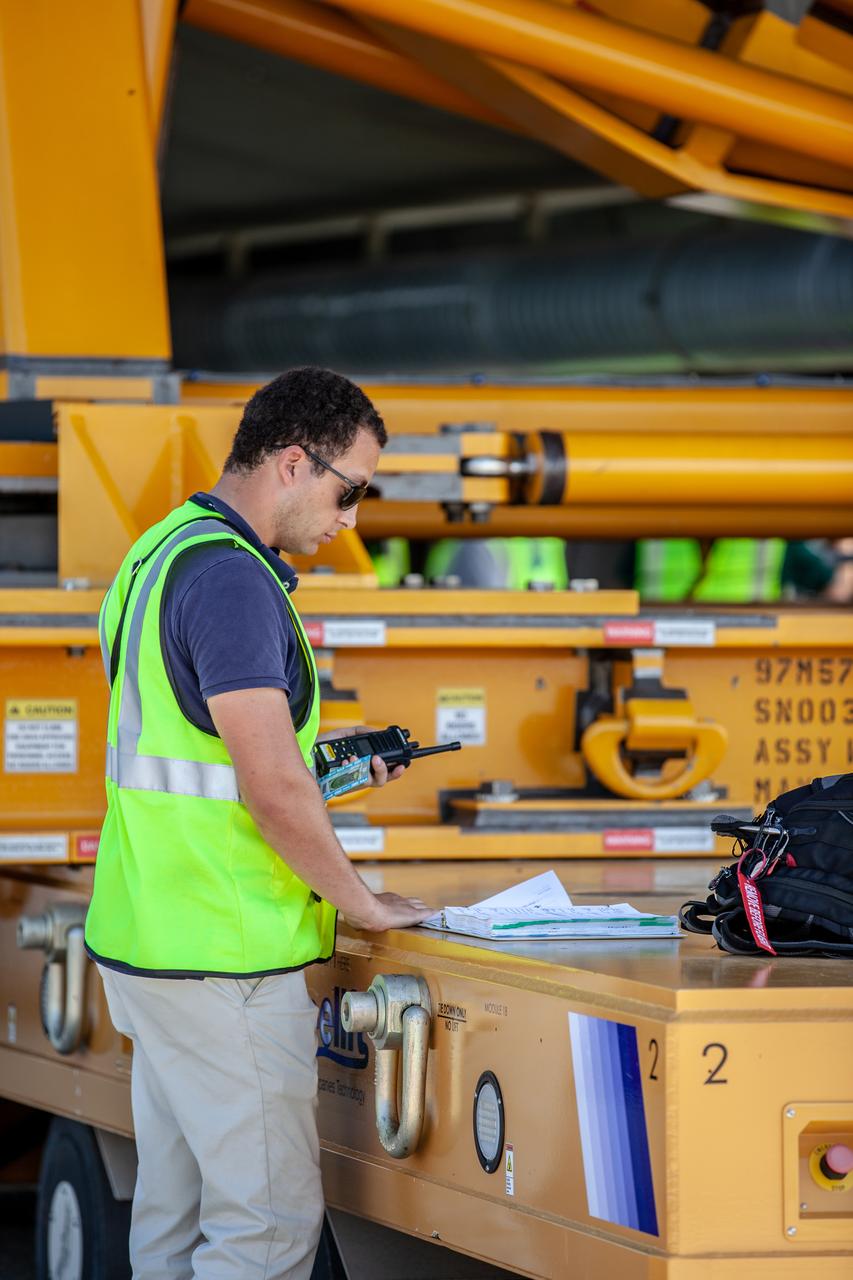
Chris Di Taranto, a mechanical and structures engineer with Jacobs TOSC, prepares for offloading of the 212-foot-long Space Launch System (SLS) rocket core stage pathfinder from NASA’s Pegasus Barge at Kennedy Space Center’s Launch Complex 39 turn basin wharf on Oct. 1, 2019. The Pegasus Barge made its first delivery to Kennedy in support of the agency's Artemis missions. The upgraded 310-foot-long barge arrived Sept. 27, 2019, ferrying the SLS core stage pathfinder, a full-scale mock-up of the rocket's core stage. It will be used by Exploration Ground Systems and its contractor, Jacobs, to practice offloading, moving and stacking maneuvers, using important ground support equipment to train employees and certify all the equipment works properly. The pathfinder will stay at Kennedy for approximately one month before trekking back to NASA's Michoud Assembly Facility in Louisiana.