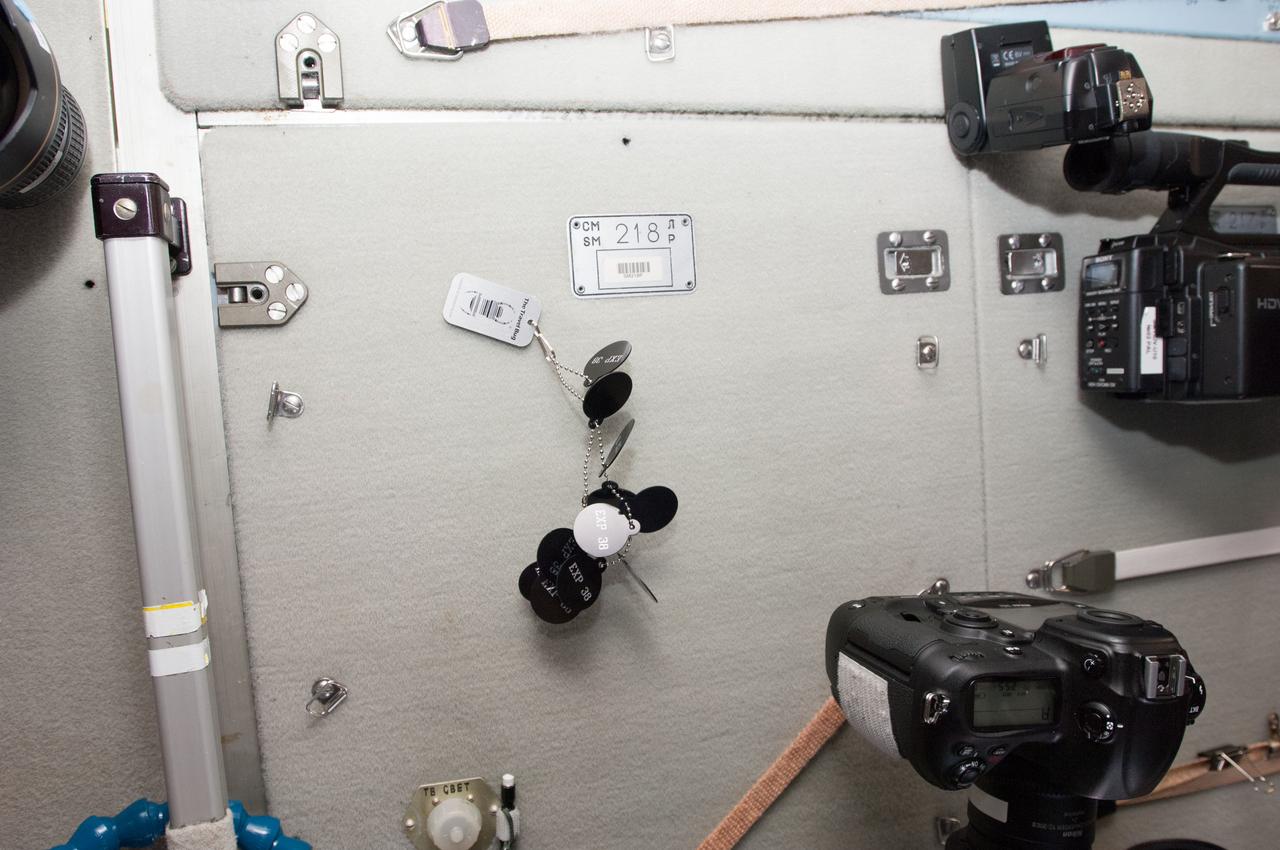
View of geocaching travel bug attached to chain,in the Service Module (SM) - (Panel 218). Photo was taken during Expedition 38. Image was released by astronaut on Twitter.
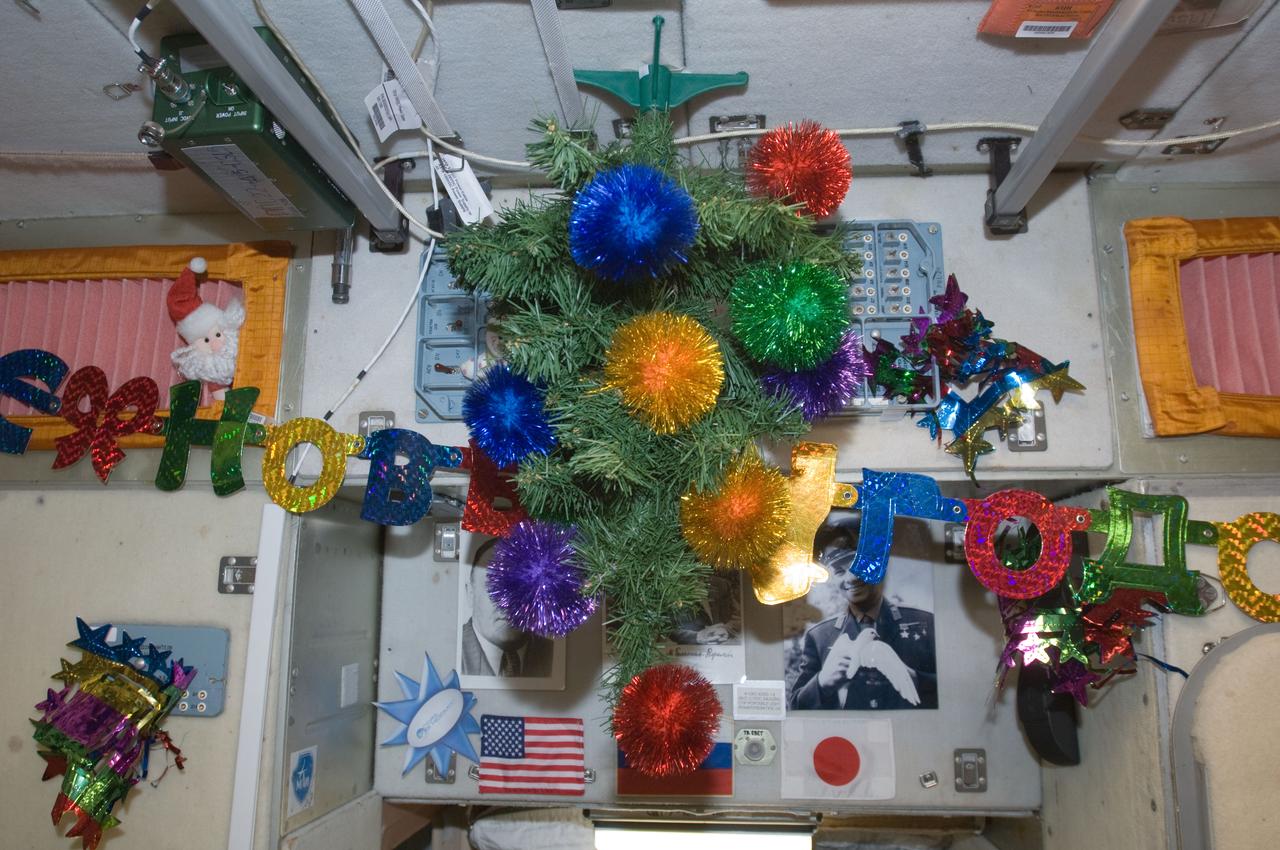
View of Christmas decorations in the Service Module (SM). The garland has Russian phrase that translates to recognize the New Year. Photo was taken during Expedition 34.
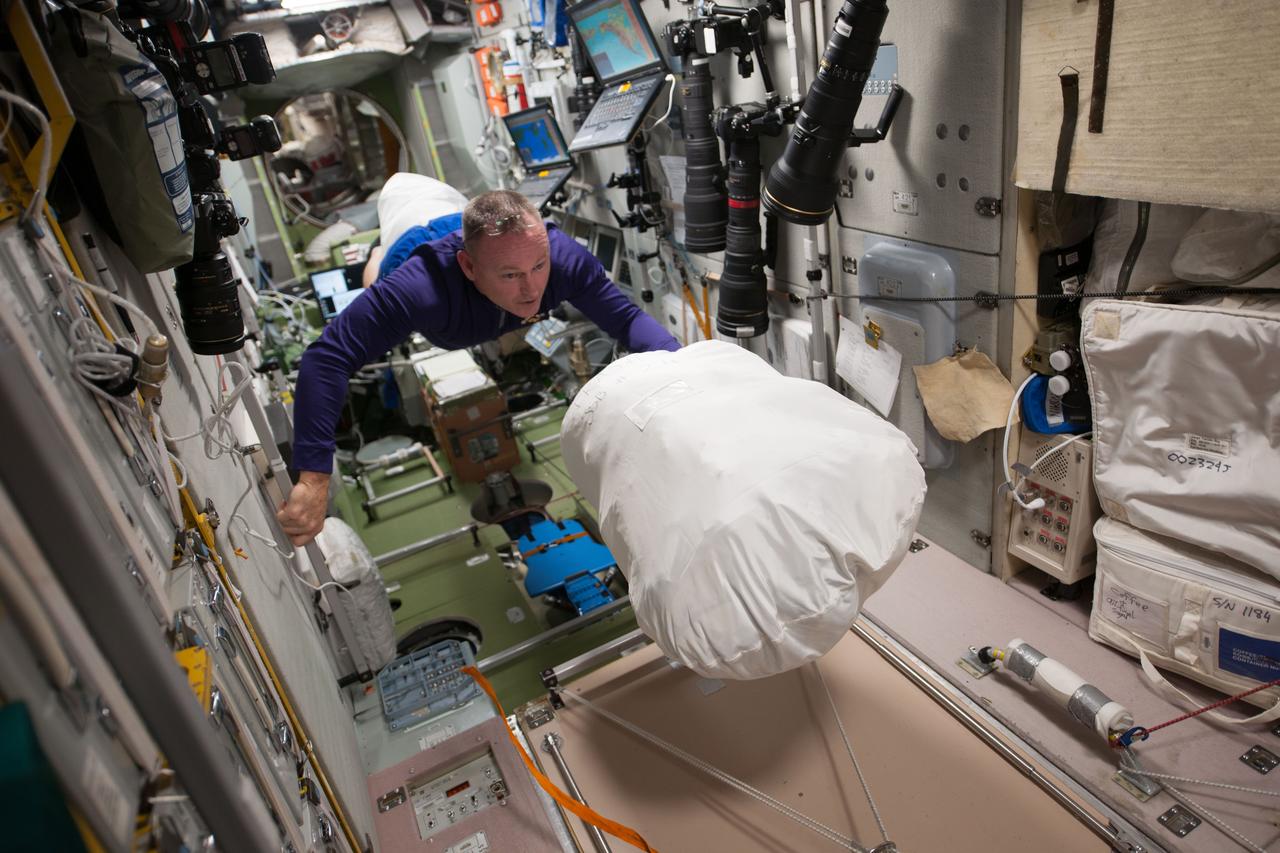
Commander Barry Wilmore floats through the Zvezda Service Module (SM) with a full Jettison Stowage Bag. Image was released by astronaut on Instagram.
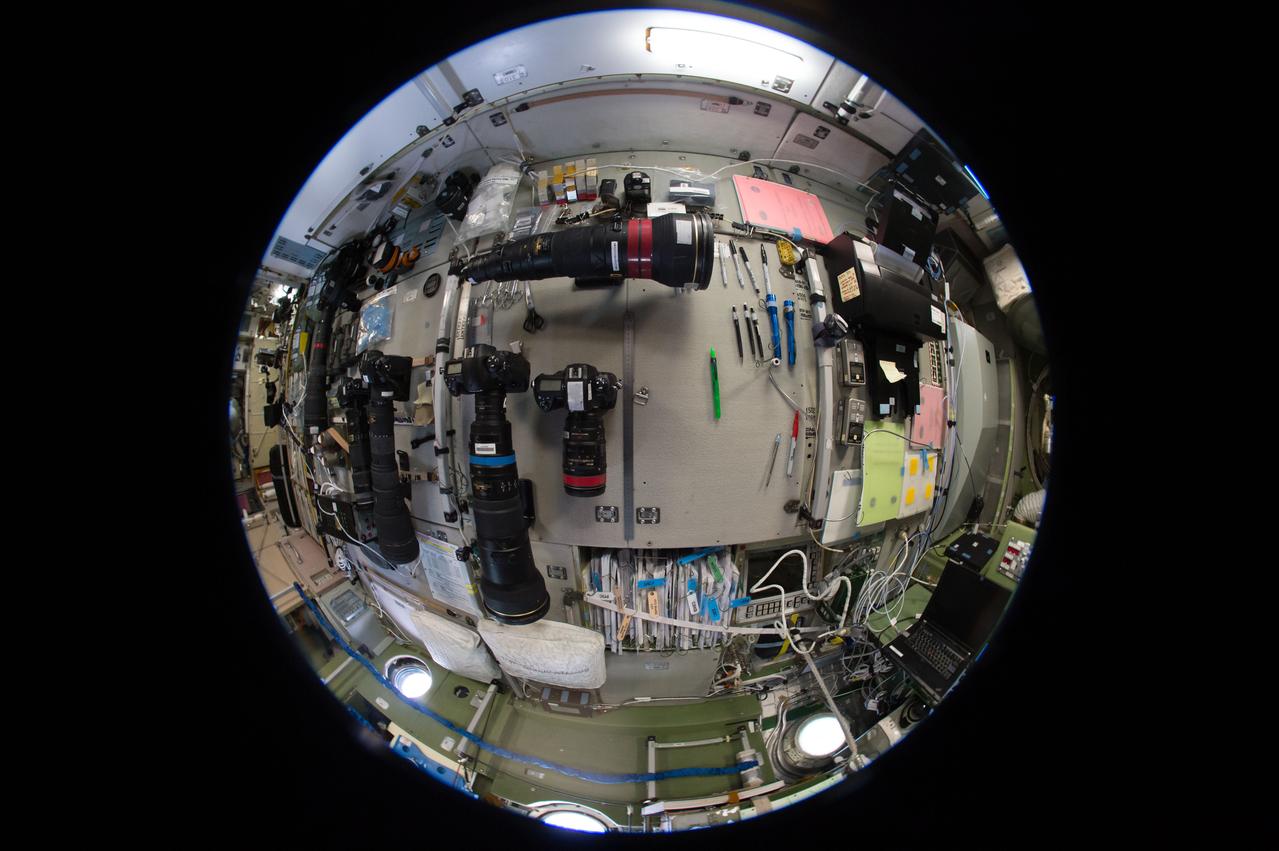
iss051e018869 (4/18/2017) --- A fish-eye view looking port in the Zvezda Service Module (SM), taken for a Google Street View of the ISS.
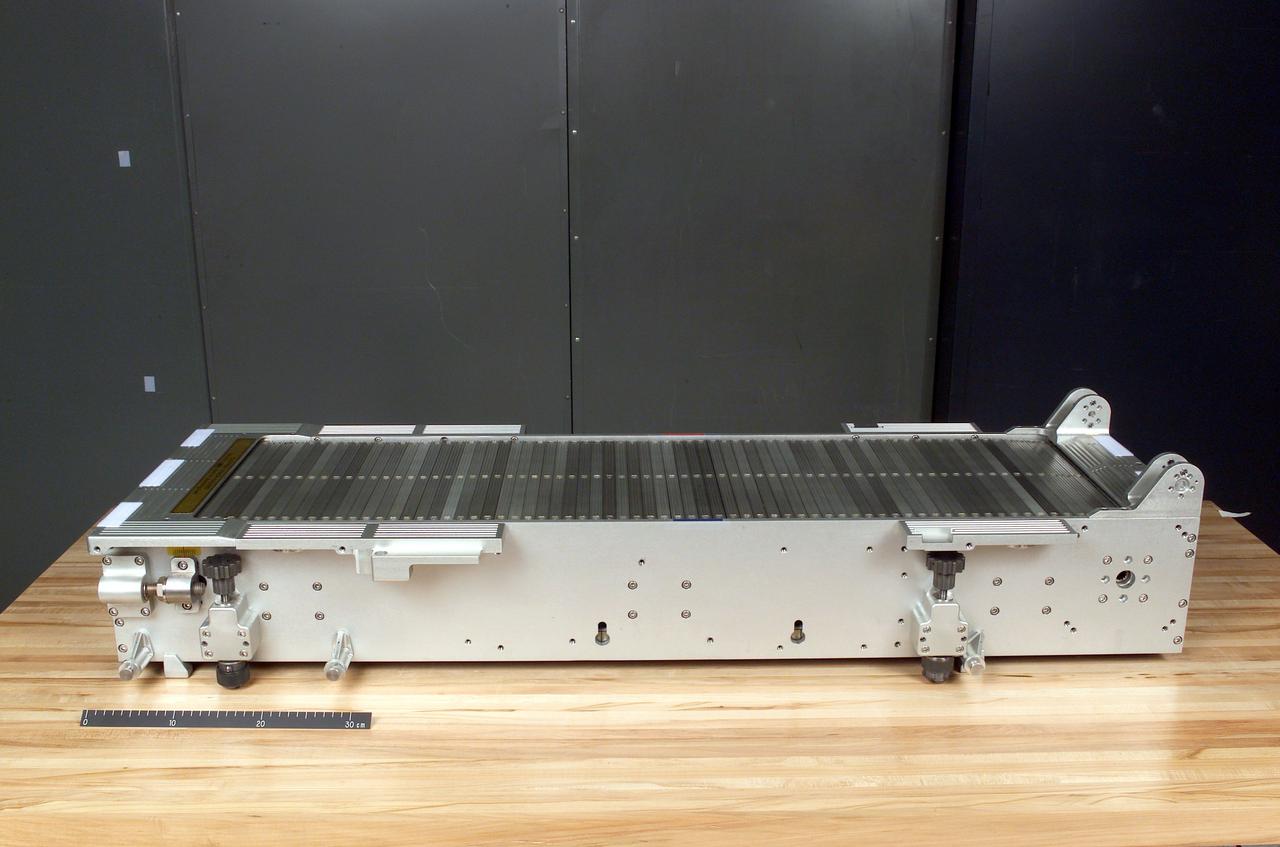
jsc2002e38731 (2002) --- Overall oblique view of the Treadmill Vibration Isolation System (TVIS) Chassis Assembly for use in the International Space Station (ISS) Service Module (SM).
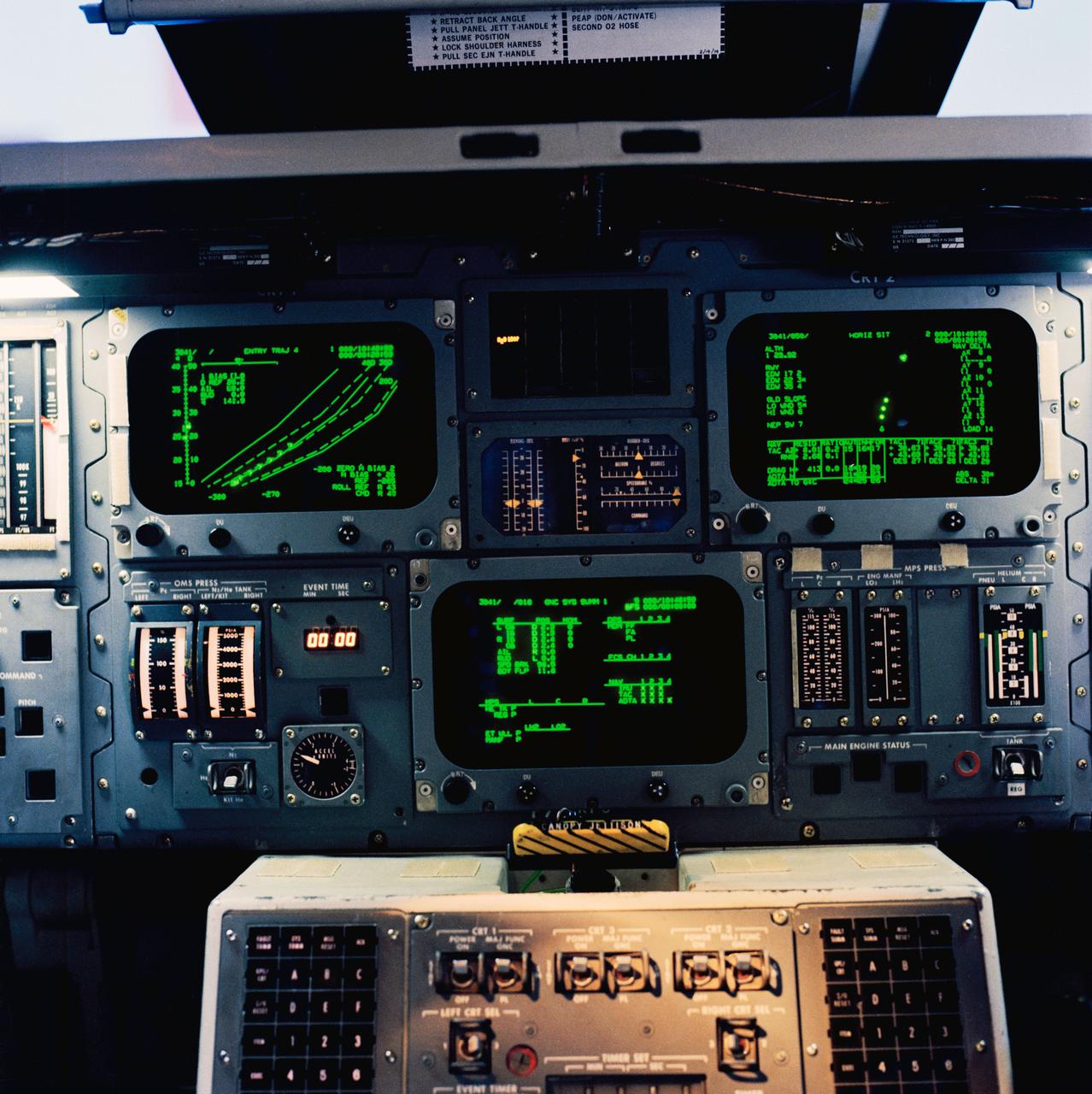
S79-29067 (15 March 1979) --- An interior view of the space shuttle mission simulator (SMS), featuring the area between the commander and pilot positions which houses displays and controls. The cathode ray tube (CRT) computer displays are at top; a portion of the computer keyboards for the commander and pilot can be seen at bottom center. This SMS motion base simulator is located in the mission simulation and training facility at NASA's Johnson Space Center (JSC). Photo credit: NASA
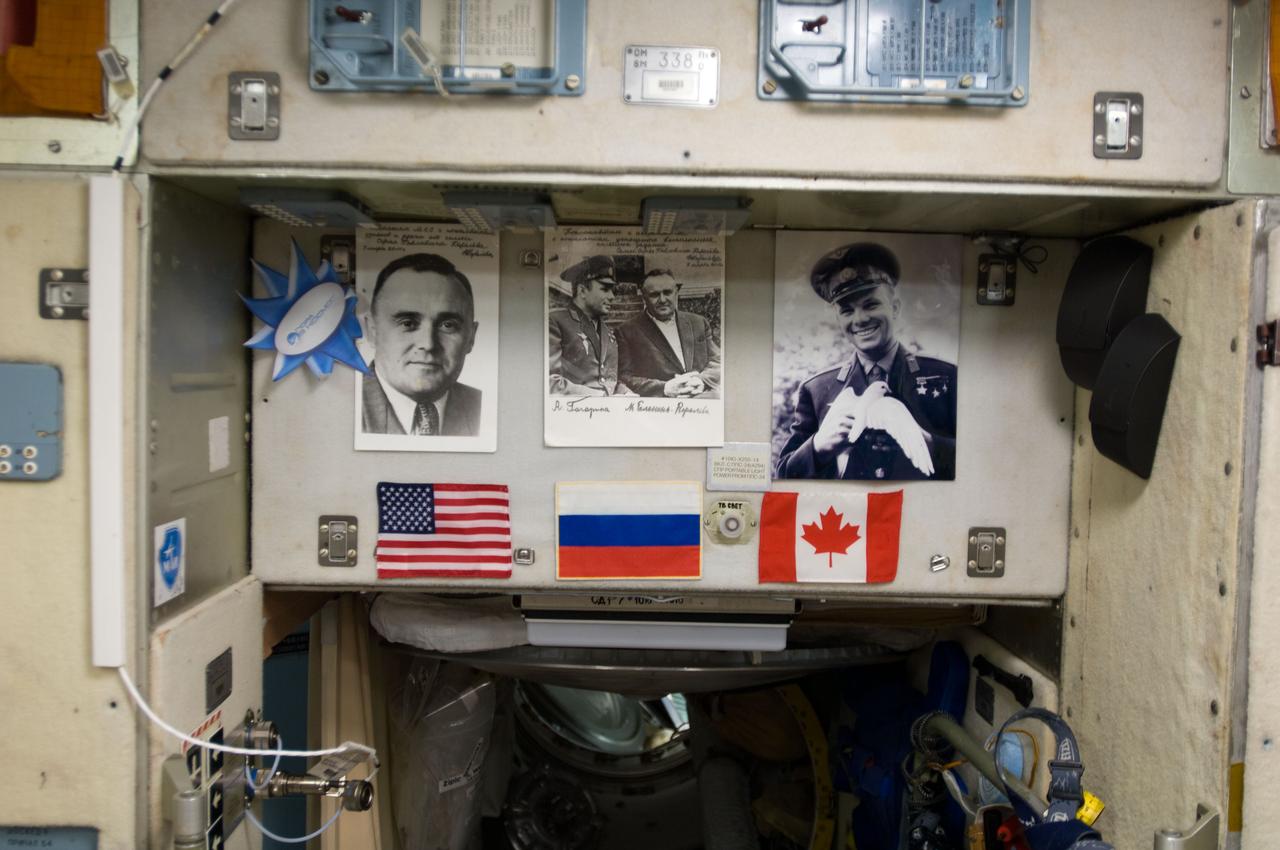
View of Yuri Alexievich Gagarin (first space traveler) photo and other photos,above Service Module (SM) hatch. The blue and white rosette on the left with the writing поÑа в коÑÐ¼Ð¾Ñ is the symbol and name of the Russian television program for children that covers cosmonautic and International Space Station (ISS) topics. Photo was taken during Expedition 34.
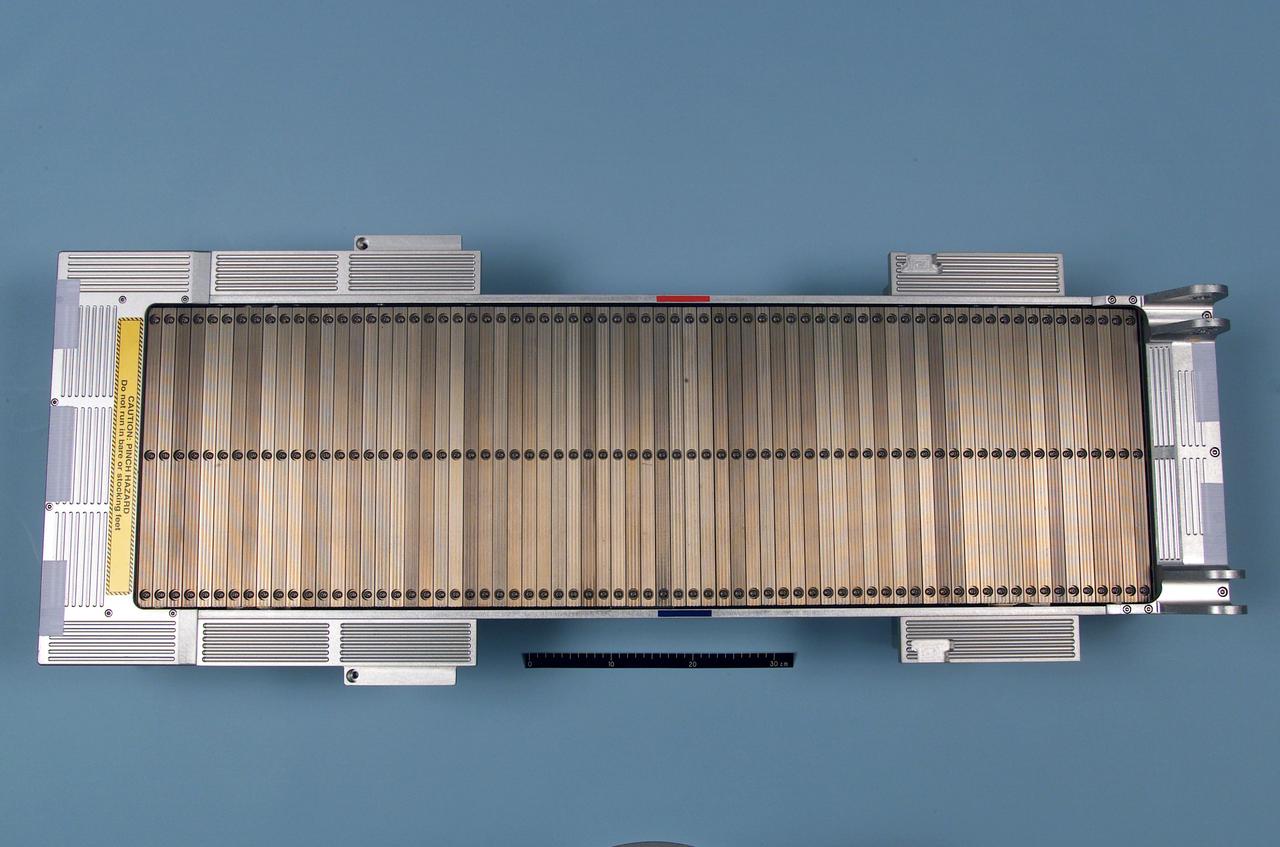
jsc2002e38738 (2002) --- Top view of the Treadmill Belt Assembly on the Treadmill Vibration Isolation System (TVIS) Chassis Assembly for use in the International Space Station (ISS) Service Module (SM).
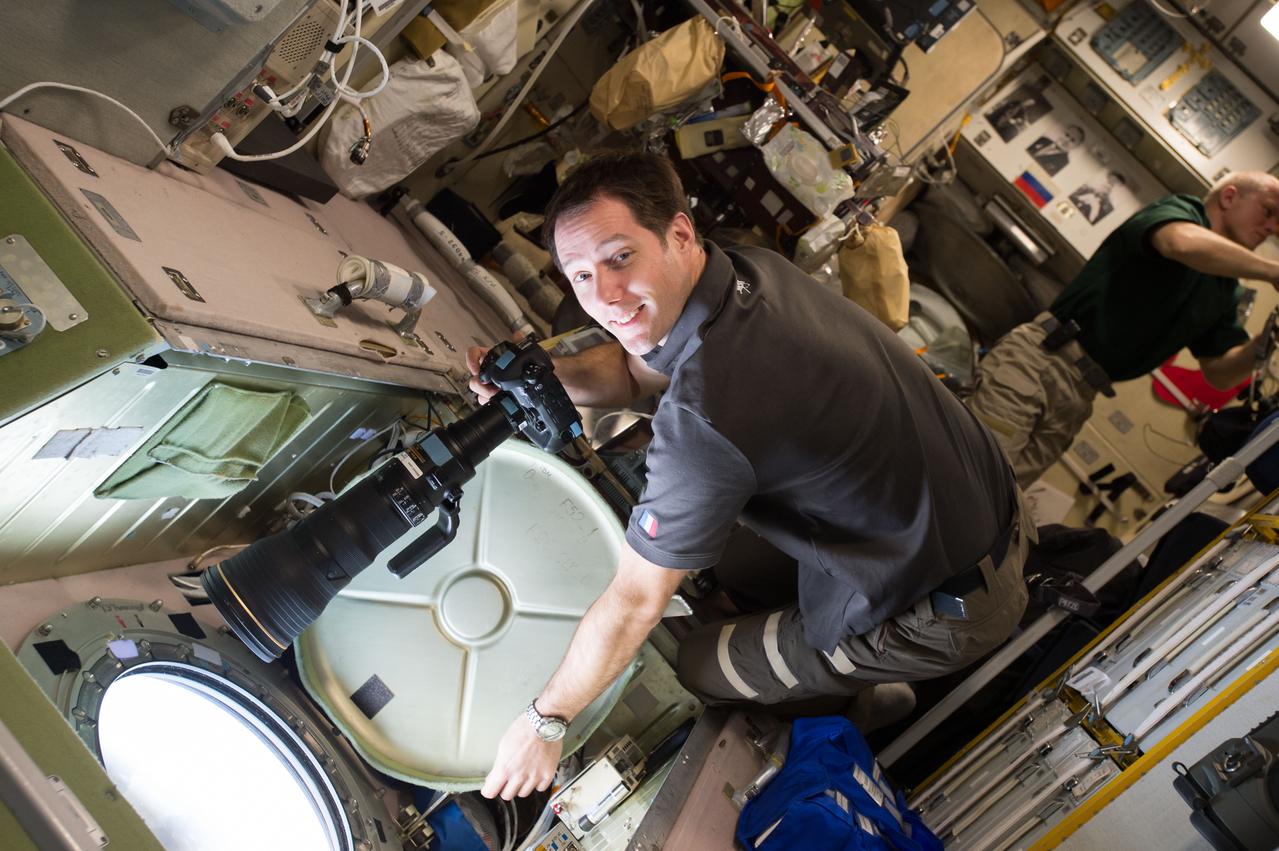
iss050e020100 (12/28/2016) --- European Space Agency (ESA) astonaut Thomas Pesquet preparing to take Crew Earth Observations (CEO) photos from the Service Module (SM) window. Cosmonaut Oleg Novitskiy is visible in the background. CEO imagery provides researchers on Earth with key data to understand the planet from the perspective of the ISS. Crew members have been photographing Earth from space since the early Mercury missions beginning in 1961. The images taken from the ISS ensure this record remains unbroken.
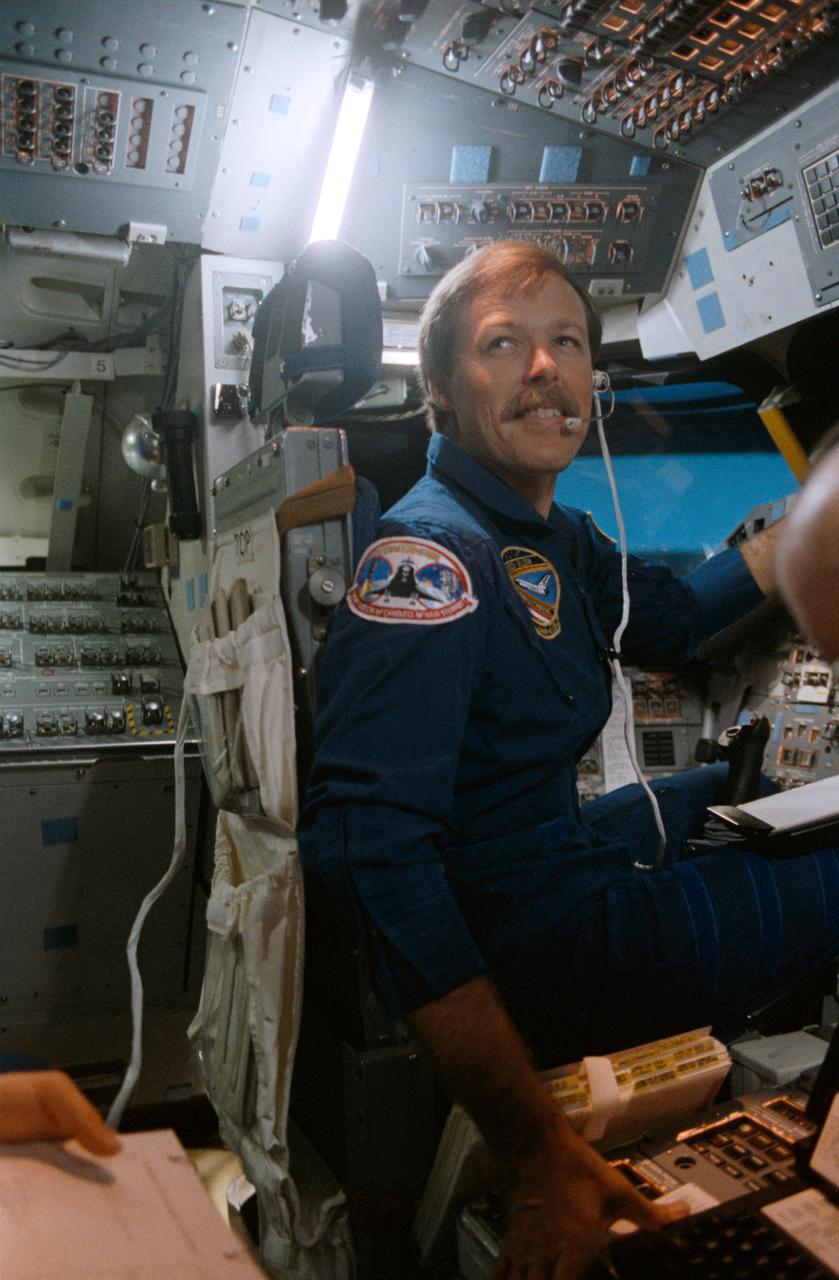
STS-27 Atlantis, Orbiter Vehicle (OV) 104, Commander Robert L. Gibson, wearing flight coveralls and communications kit assembly, sits at commanders station controls on JSC shuttle mission simulator (SMS) forward flight deck during training session. Gibson looks at crewmember on aft flight deck. SMS is located in the Mission Simulation and Training Facility Bldg 5.
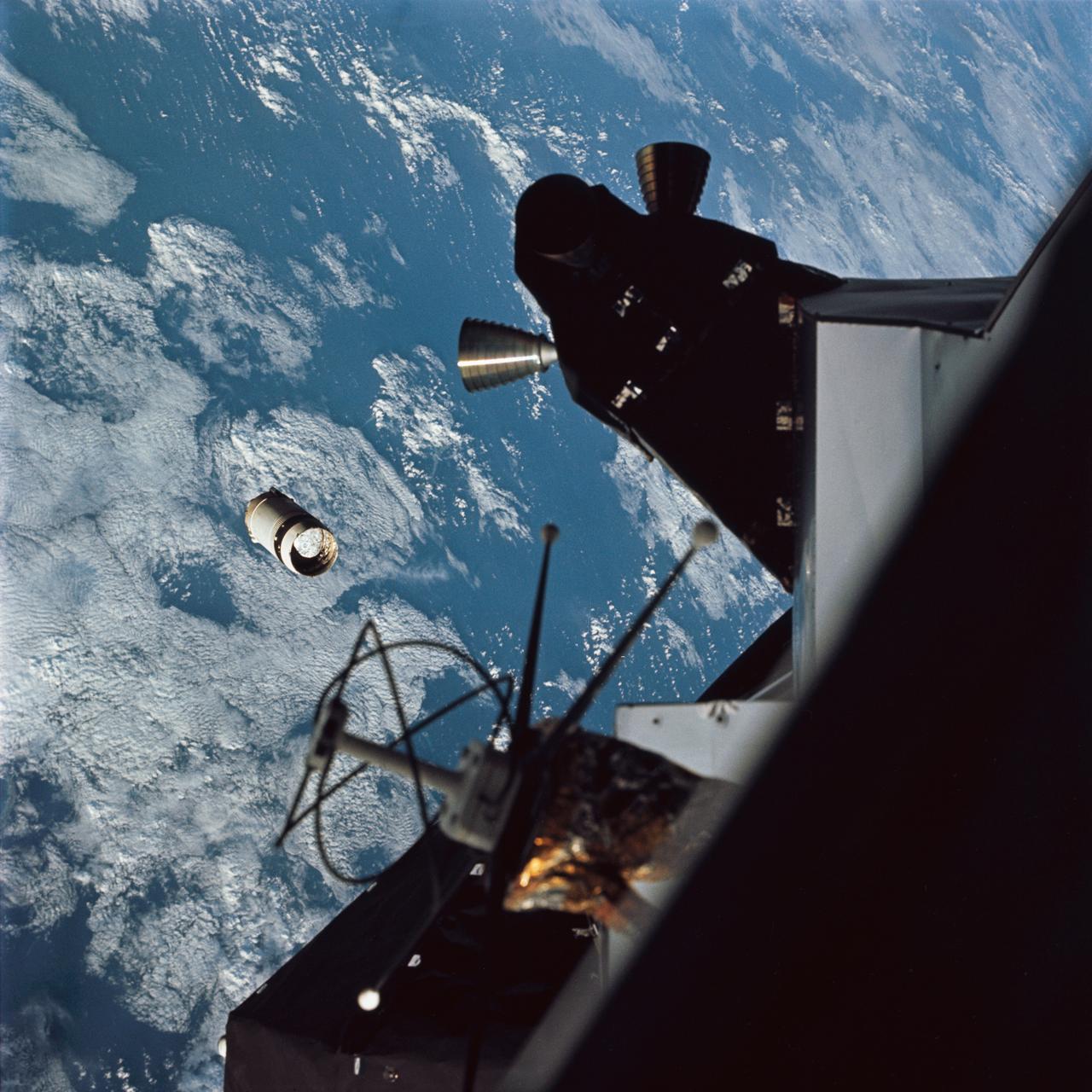
View of the Lunar Module (LM) 3 and Service Module (SM) LM Adapter. Film magazine was A,film type was SO-368 Ektachrome with 0.460 - 0.710 micrometers film / filter transmittance response and haze filter, 80mm lens.
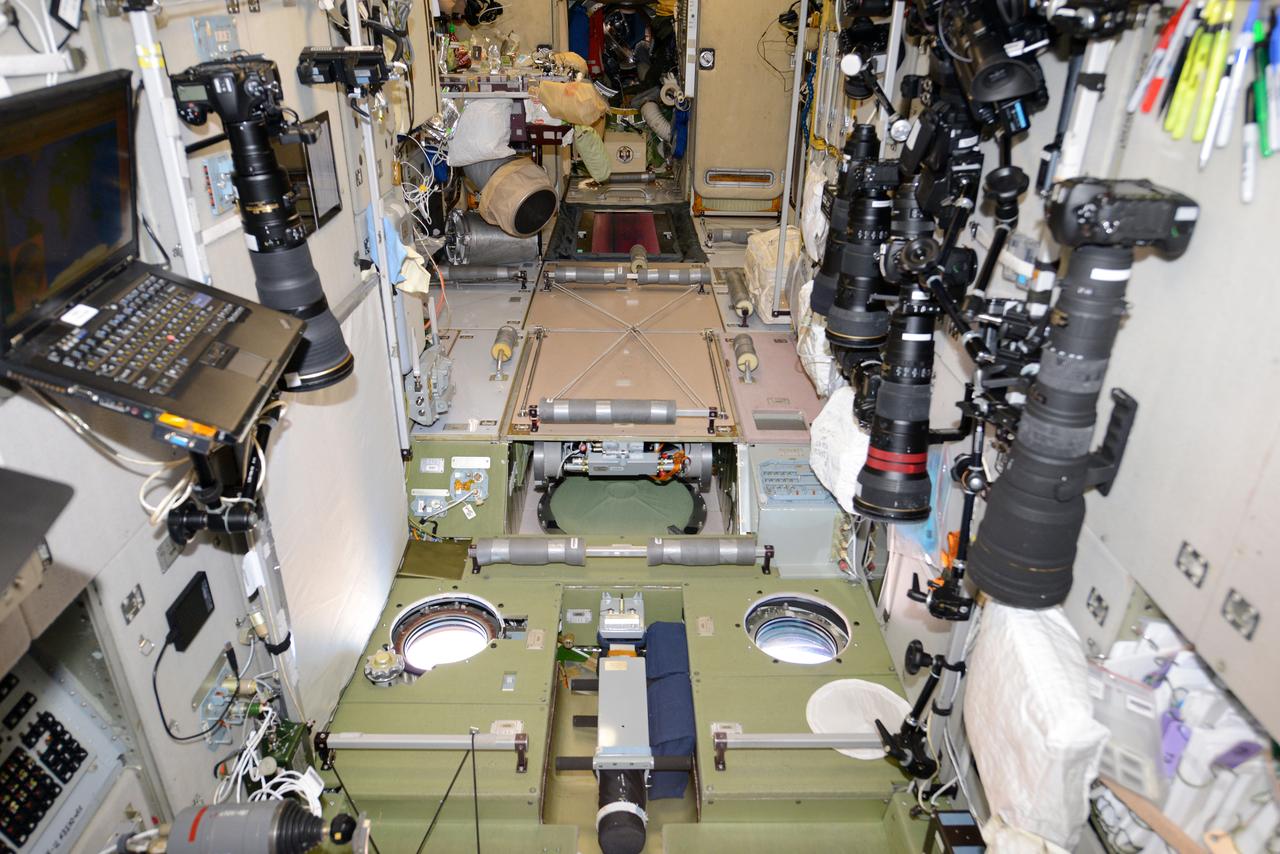
iss061e013837 (10/28/2019) --- A view of the Zvezda Service Module (SM) aboard the International Space Station (ISS). The Zvezda Service Module was the first fully Russian contribution to the International Space Station and served as the early cornerstone for the first human habitation of the station. The module provides station living quarters, life support systems, electrical power distribution, data processing systems, flight control systems and propulsion systems. It provides a communications system that includes remote command capabilities from ground flight controllers, and a docking port for Russian Soyuz and Progress spacecraft.
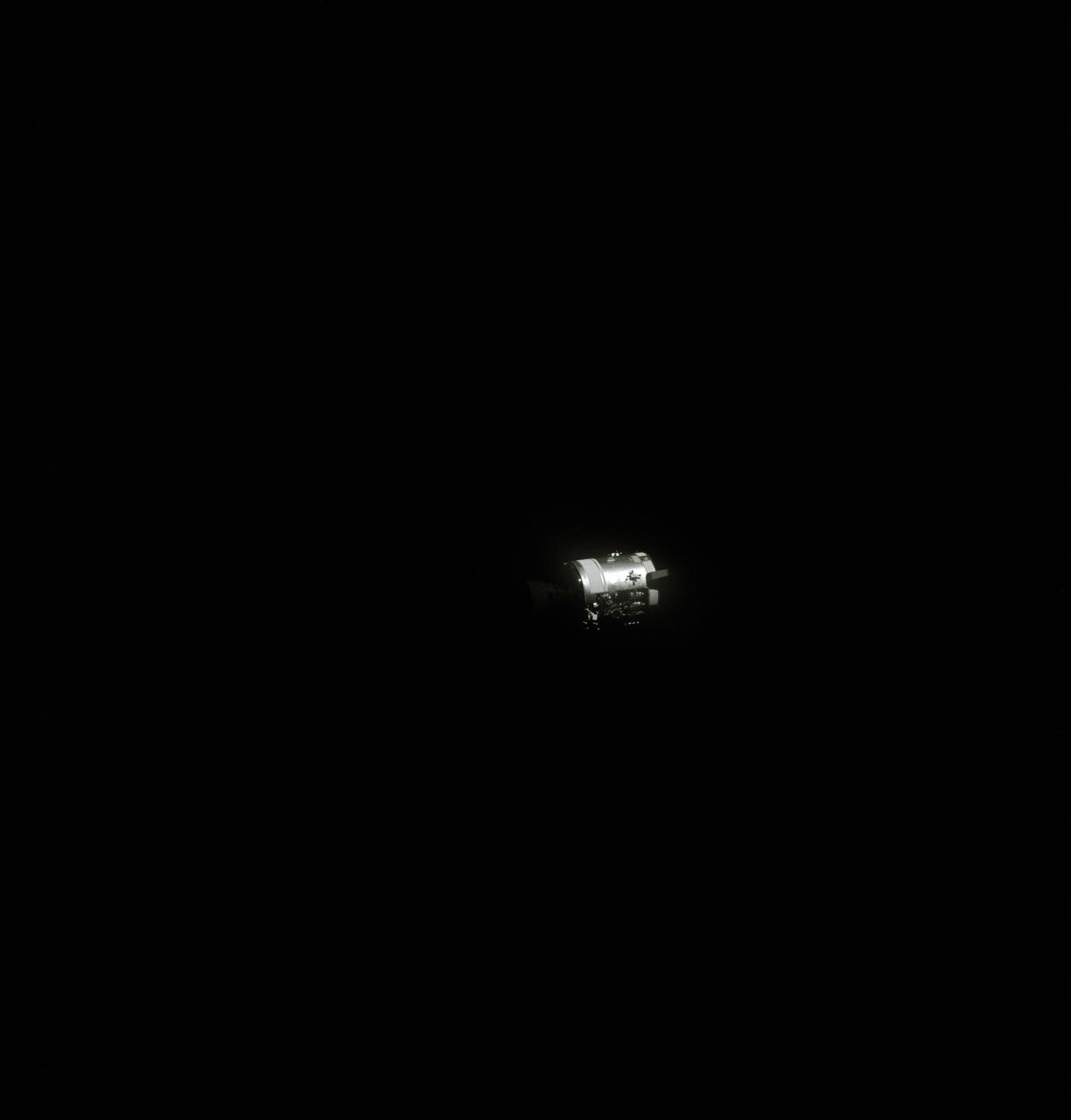
AS13-58-8464 (17 April 1970) --- This view of the severely damaged Apollo 13 Service Module (SM) was photographed from the Lunar Module/Command Module (LM/CM) following SM jettisoning. Nearest the camera is the Service Propulsion System (SPS) engine and nozzle. An entire SM panel was blown away by the apparent explosion of oxygen tank number two located in Sector 4 of the SM. The apparent rupture of the oxygen tank caused the Apollo 13 crew men to use the Lunar Module (LM) as a "lifeboat".
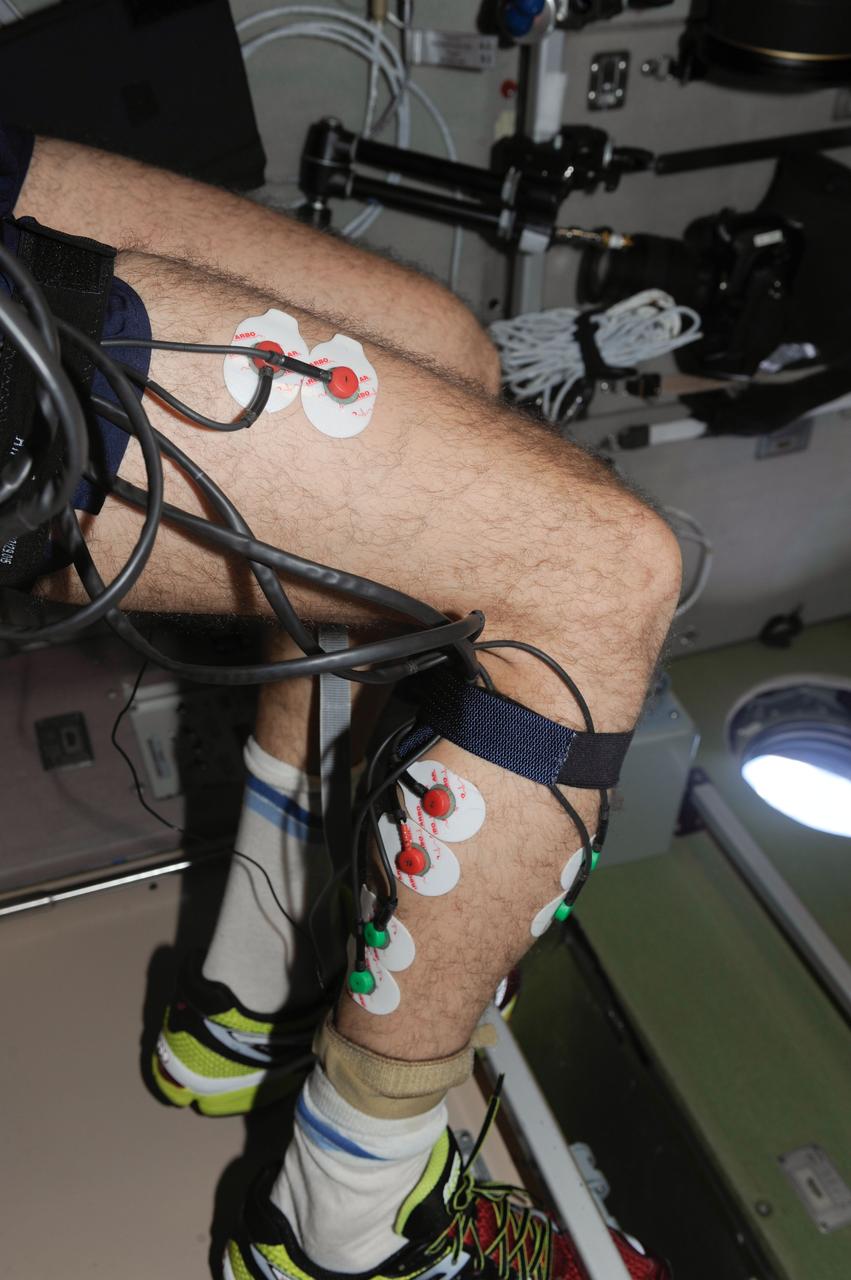
iss038e003641 (11/18/2014) --- A View of Cosmonaut Sergey Ryaznskiy (lower body only), setting up the Motocard experiment in the Service Module (SM) aboard the International Space Station (ISS). The Mechanisms of Sensory-Motor Coordination in Weightlessness (Motocard) investigation is carried out on the treadmill and involves locomotion in various modes of running and walking during various modes of operation of the treadmill. During the test, electromyography of the thigh and calf muscles, support structure response, heart rate, and treadmill load parameters (actual speed, time elapsed, distance, integrated indicators for support structure response) are recorded.
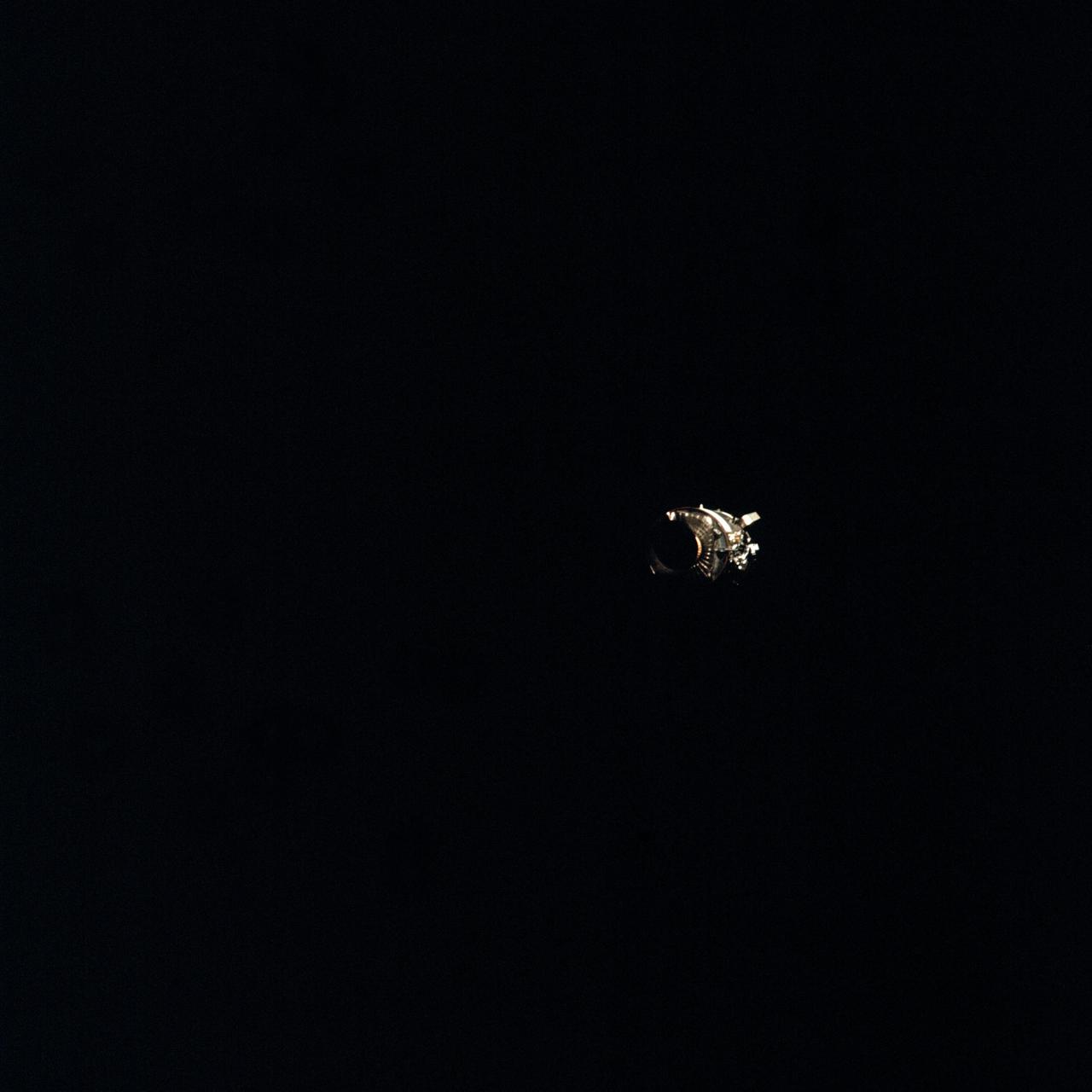
AS13-58-8458 (17 April 1970) --- This view of the severely damaged Apollo 13 Service Module (SM) was photographed from the Lunar Module/Command Module (LM/CM) following SM jettisoning. An entire SM panel was blown away by the apparent explosion of oxygen tank number two. Two of the three fuel cells are visible at the forward portion of the opening. The hydrogen tanks are located in Sector 4 of the Apollo 13 SM. The apparent rupture of the oxygen tank caused the Apollo 13 crew members to use the LM as a "lifeboat." The LM was jettisoned just prior to Earth re-entry by the CM.
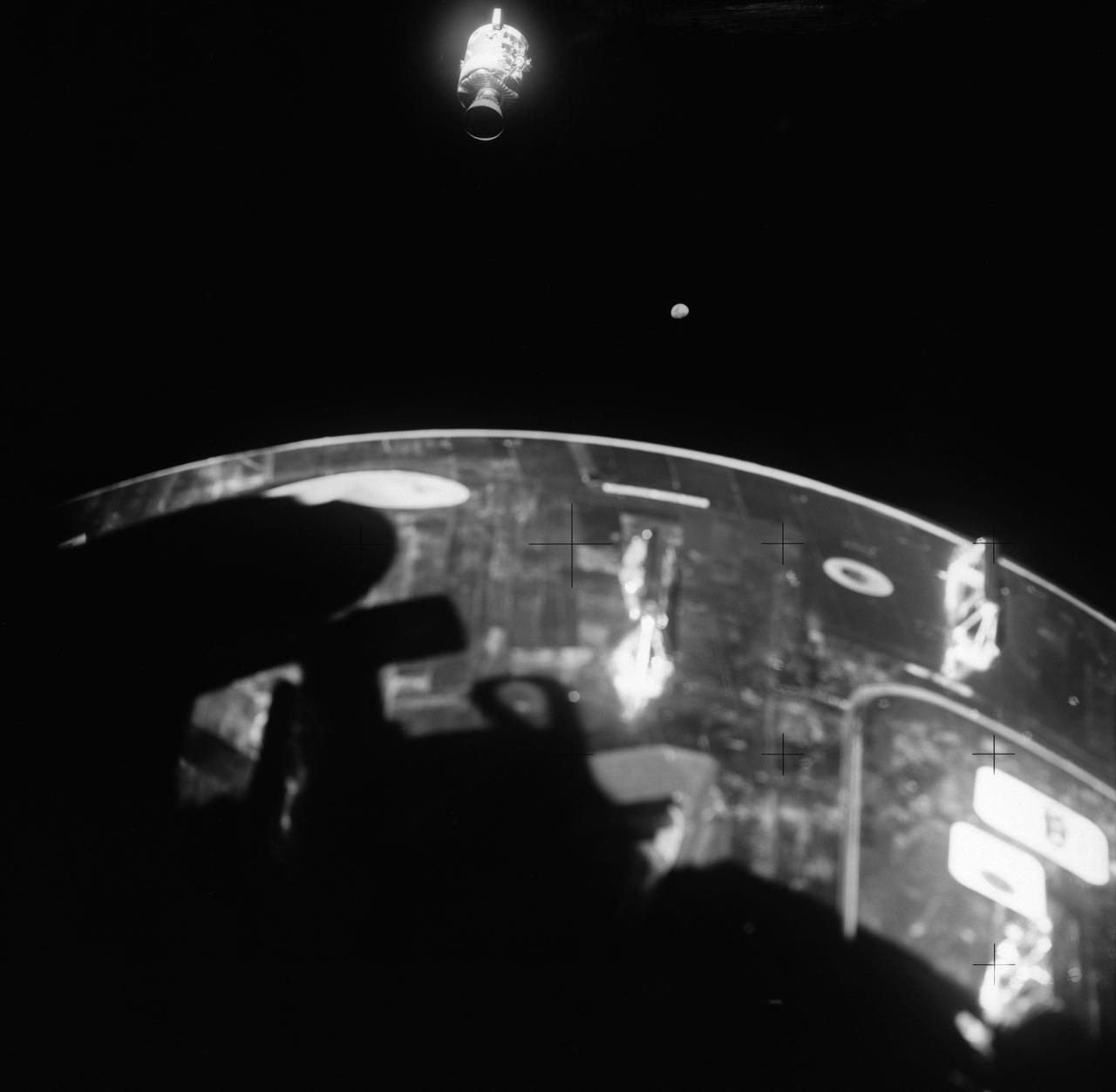
This view of the damaged Apollo 13 Service Module (SM) was photographed from the Lunar Module/Command Module following SM jettisoning. As seen here, an entire panel on the SM was blown away by the apparent explosion of oxygen tank number two located in Sector 4 of the SM. Two of the three fuel cells are visible just forward (above) the heavily damaged area. Three fuel cells, two oxygen tanks, and two hydrogen tanks are locate in Sector 4. The damaged area is located above the S-band high gain antenna. Nearest the camera is the Service Propulsion System (SPS) engine and nozzle. The damage to the SM caused the Apollo 13 crewmen to use the Lunar Module (LM) as a "lifeboat". The LM was jettisoned just prior to Earth reentry by the Command Module.
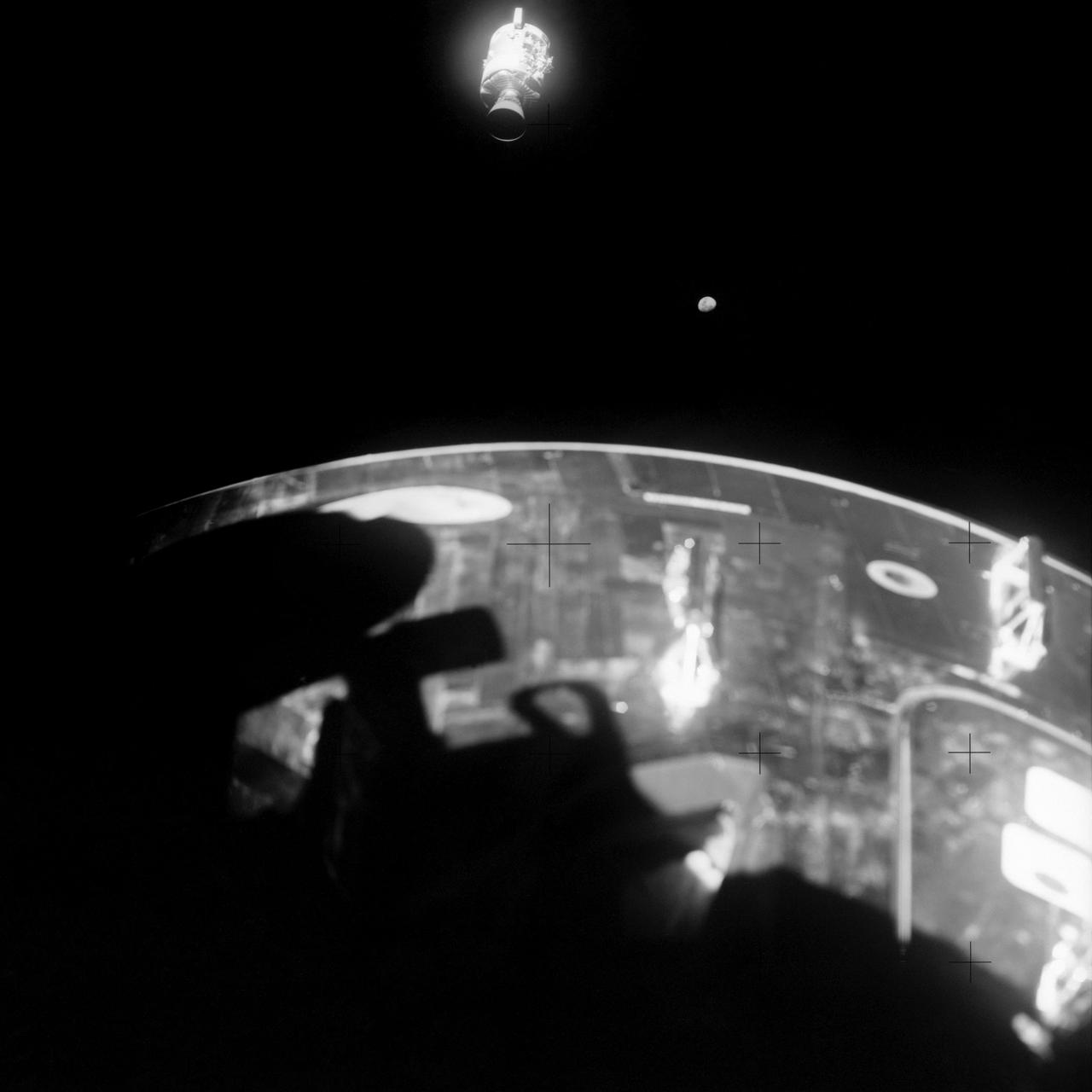
AS13-59-8501 (17 April 1970) --- This view of the severely damaged Apollo 13 Service Module (SM) was photographed from the Lunar Module/Command Module (LM/CM) following SM jettisoning. As seen here, an entire panel on the SM was blown away by the apparent explosion of oxygen tank number two located in Sector 4 of the SM. Two of the three fuel cells are visible just forward (above) the heavily damaged area. Three fuel cells, two oxygen tanks, and two hydrogen tanks are located in Sector 4. The damaged area is located above the S-Band high gain antenna. Nearest the camera is the Service Propulsion System (SPS) engine and nozzle. The damage to the SM caused the Apollo 13 crew men to use the LM as a "lifeboat." The LM was jettisoned just prior to Earth re-entry by the CM.
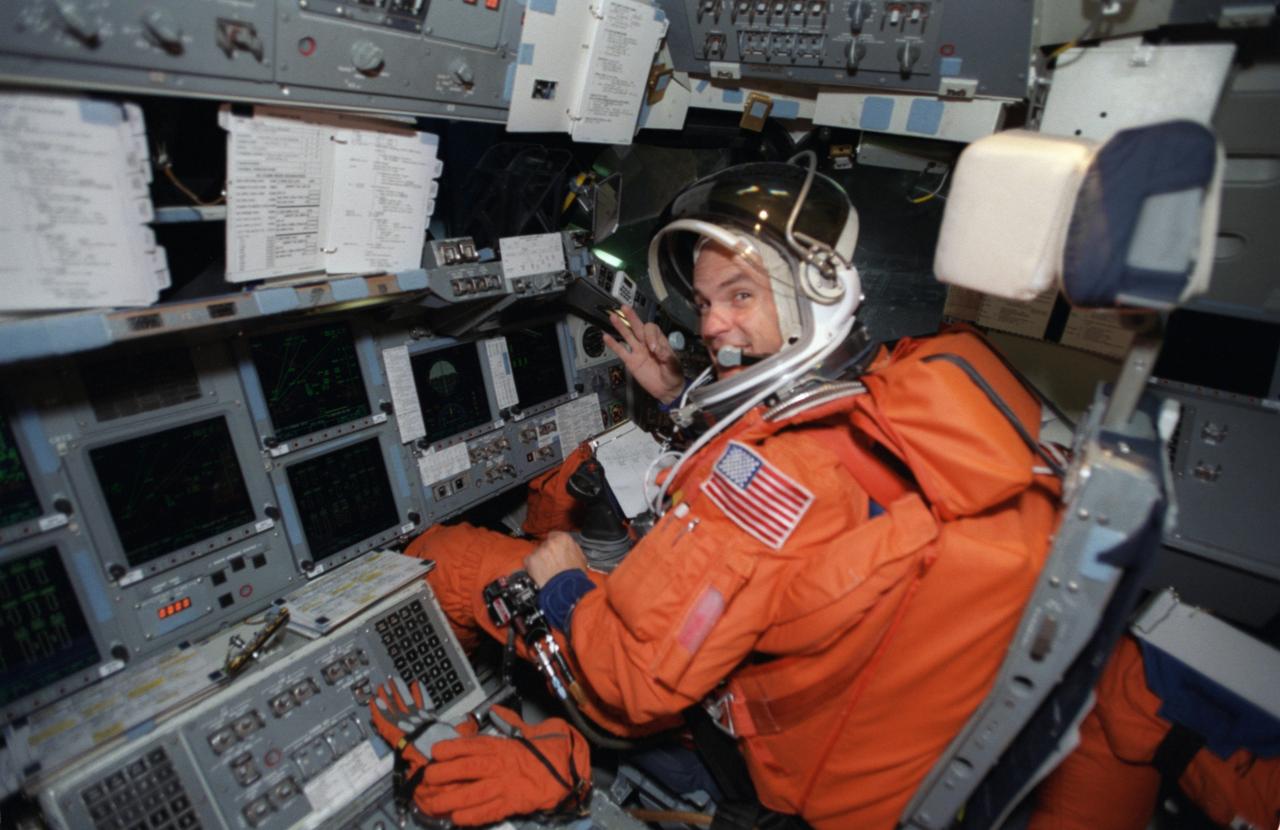
JSC2000-07651 (19 December 2000) --- Astronaut Frederick W. Sturckow, STS-105 pilot, occupies the pilot’s station during a mission training session in the Shuttle Mission Simulator (SMS) in the Jake Garn Simulation and Training Facility at Johnson Space Center (JSC). This summer, Sturckow will join four other astronauts and two cosmonauts for a mission to the International Space Station (ISS).
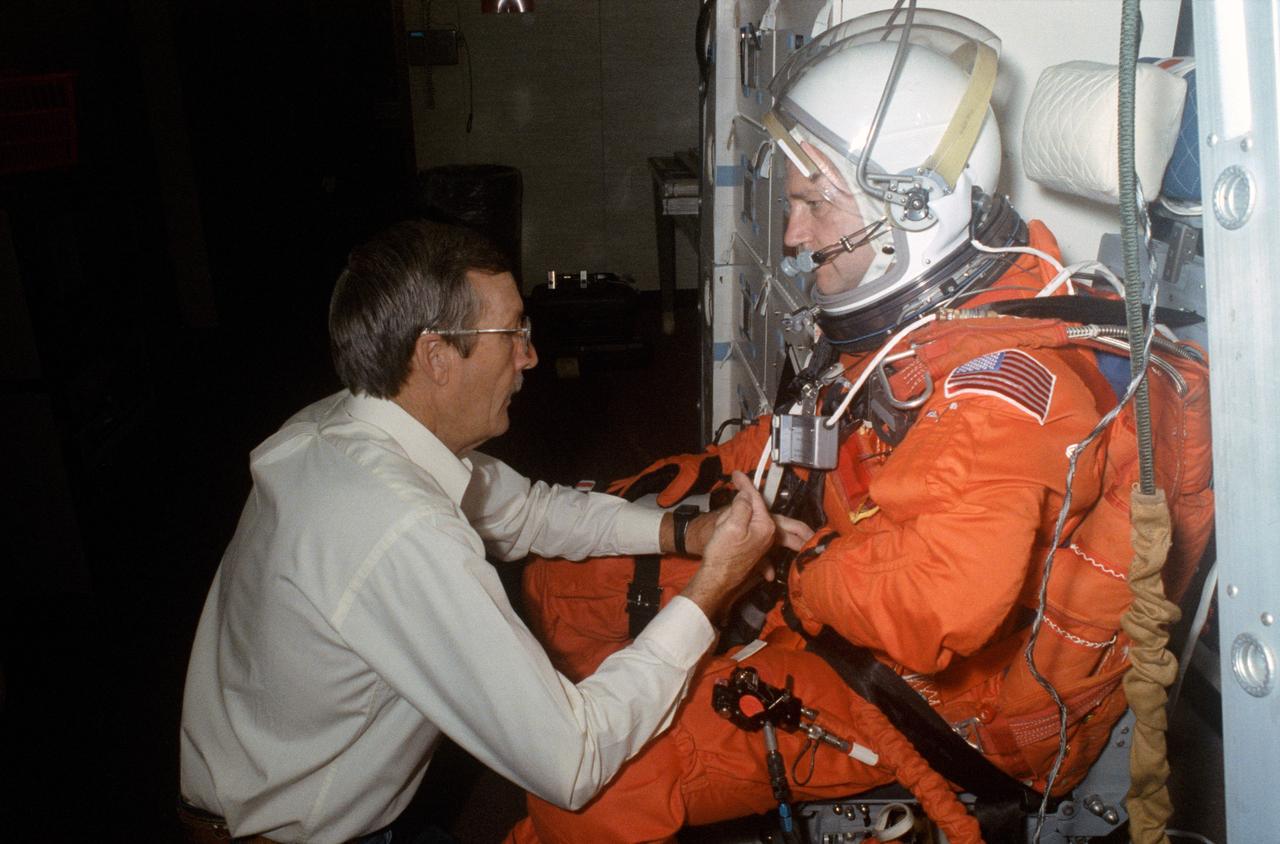
S90-47148 (21 Aug 1990) --- Astronaut Thomas D. Akers, STS-41mission specialist, is assisted by Troy M. Stewart of the Shuttle support branch in NASA's Crew and Thermal Systems Division. The astronaut was about to join his four crewmates in participating in a simulation of their scheduled flight in JSC's fixed-base Shuttle mission simulator (SMS).
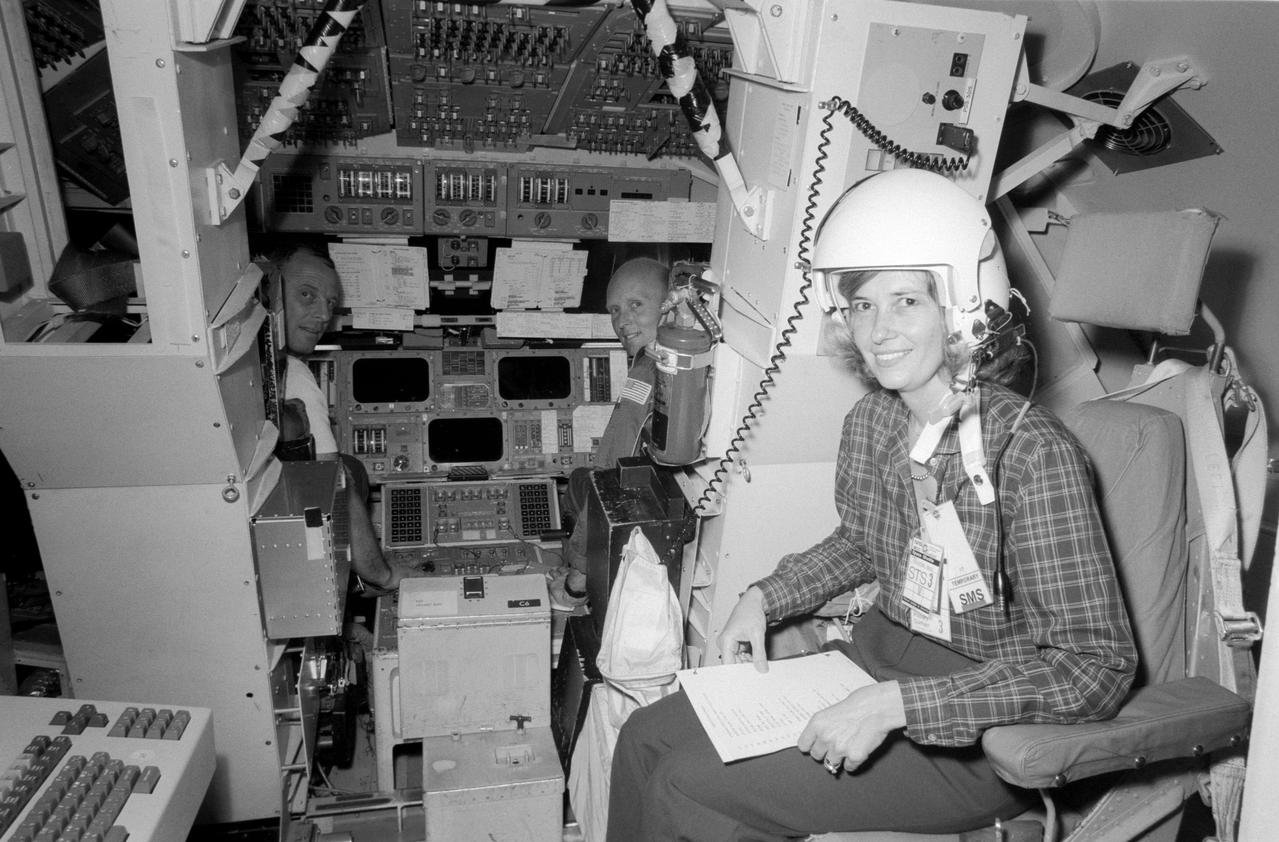
S82-28535 (16 March 1982) --- One of the more pleasant surprises of what are usually routine training sessions today was Mrs. Marie Fullerton, seated in the foreground in a special chair. Astronauts Jack R. Lousma, left background, and C. Gordon Fullerton, center, take a brief break in their simulation session to look back toward their visitor, wife of the pilot for NASA?s next flight. They are in the shuttle mission simulator (SMS) in the LBJ Space Center?s mission simulation and training facility. The crew is in training for its scheduled March 22 launch aboard the space shuttle Columbia for a week?s stay in Earth orbit. Photo credit: NASA
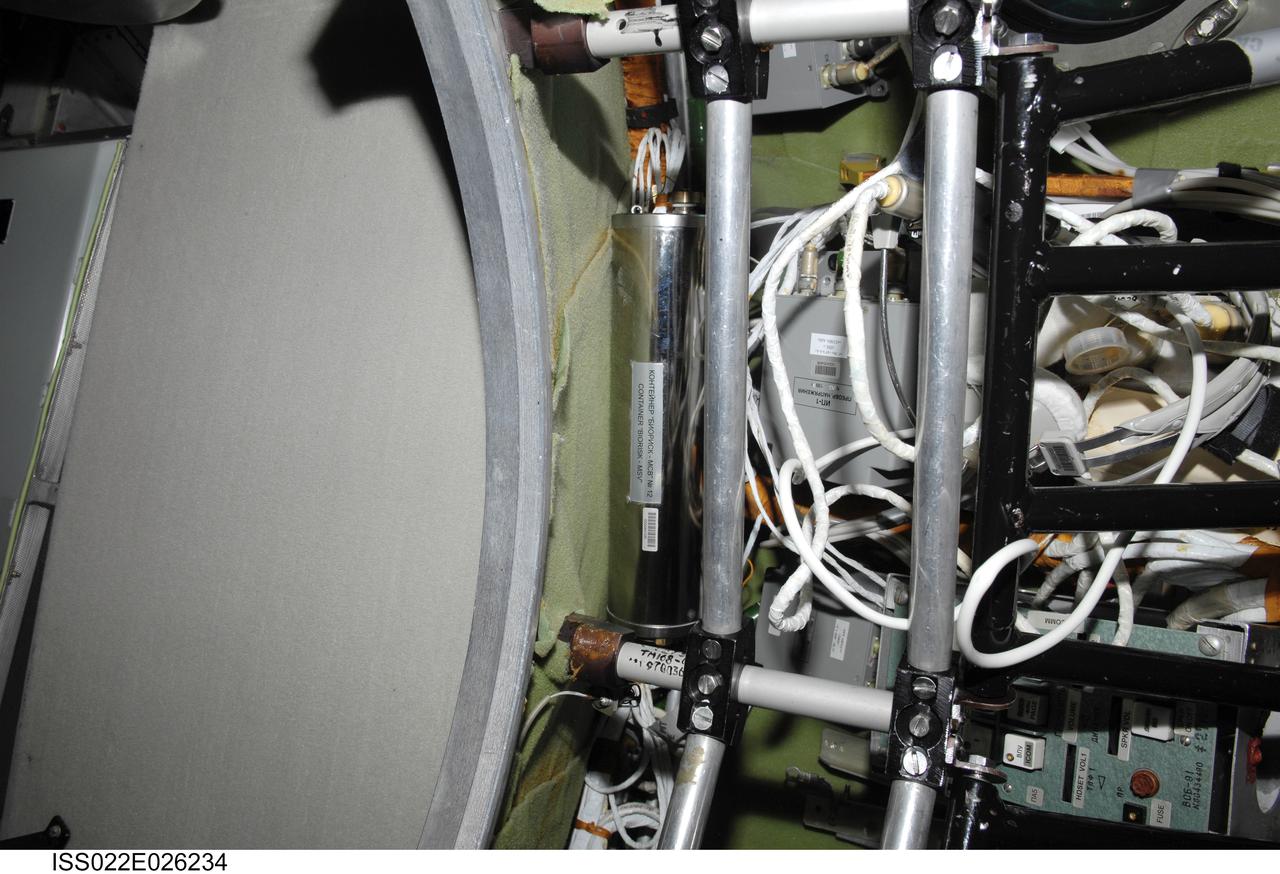
iss022e026234 (1/20/2010) --- A view of Container Biorisk MSV No. 12, in the Service Module (SM) aboard the International Space Station (ISS). The Influence of Factors of the Space Environment on the Condition of the System of Microorganisms-Hosts Relating to the Problem of Environmental Safety of Flight Techniques and Planetary Quarantine (Biorisk) investigation aims to obtain new data on physical and genetic changes in bacteria and fungi typically found on spacecraft equipment, and also in various biological test objects (higher plant seeds, dormant forms of lower crustaceans) under exposure in the interior ISS compartments and on the exterior ISS surfaces.
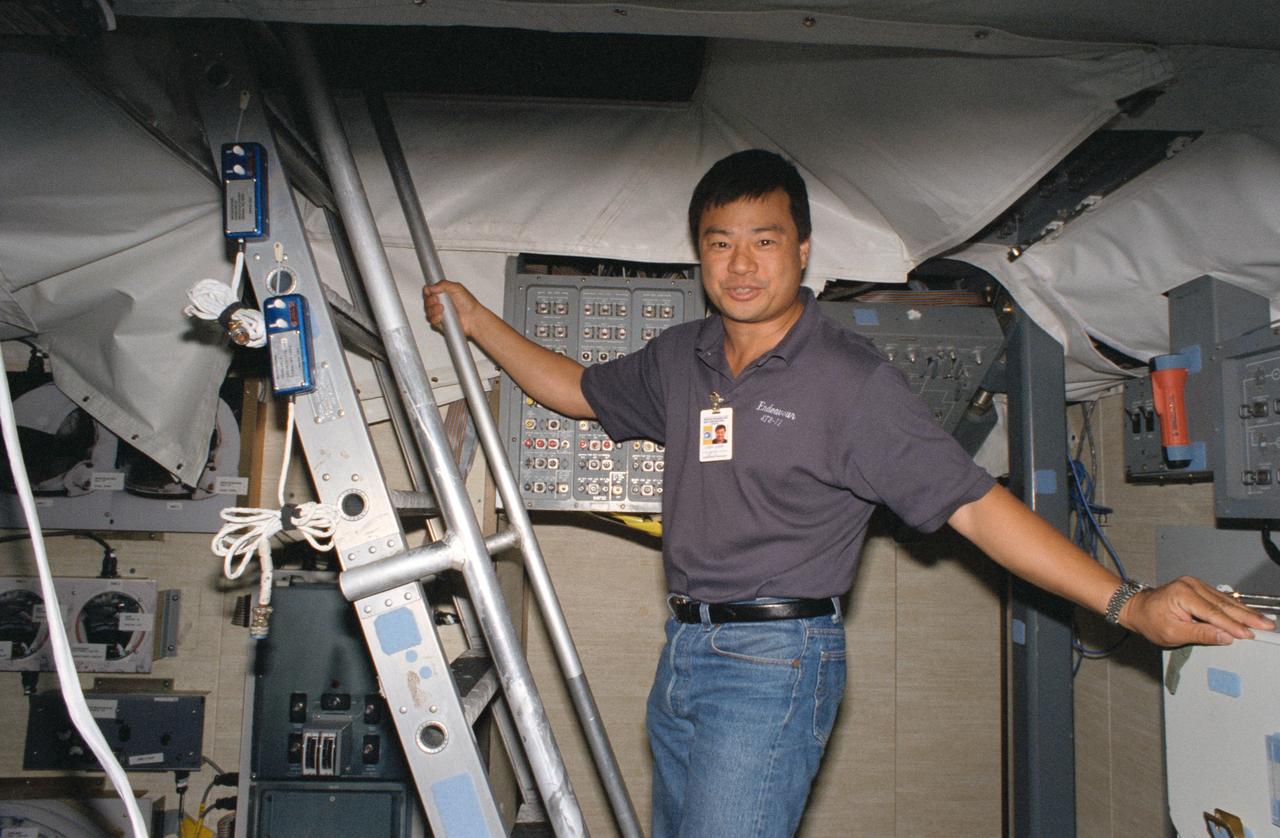
S95-12711 (May 1995) --- Astronaut Leroy Chiao, assigned as mission specialist for the STS-72 mission, prepares to ascend stairs to the flight deck of the fixed base Shuttle Mission Simulator (SMS) at the Johnson Space Center (JSC). Chiao will join an international mission specialist and four other NASA astronauts aboard the Space Shuttle Endeavour for a scheduled nine-day mission, now set for the winter of this year.
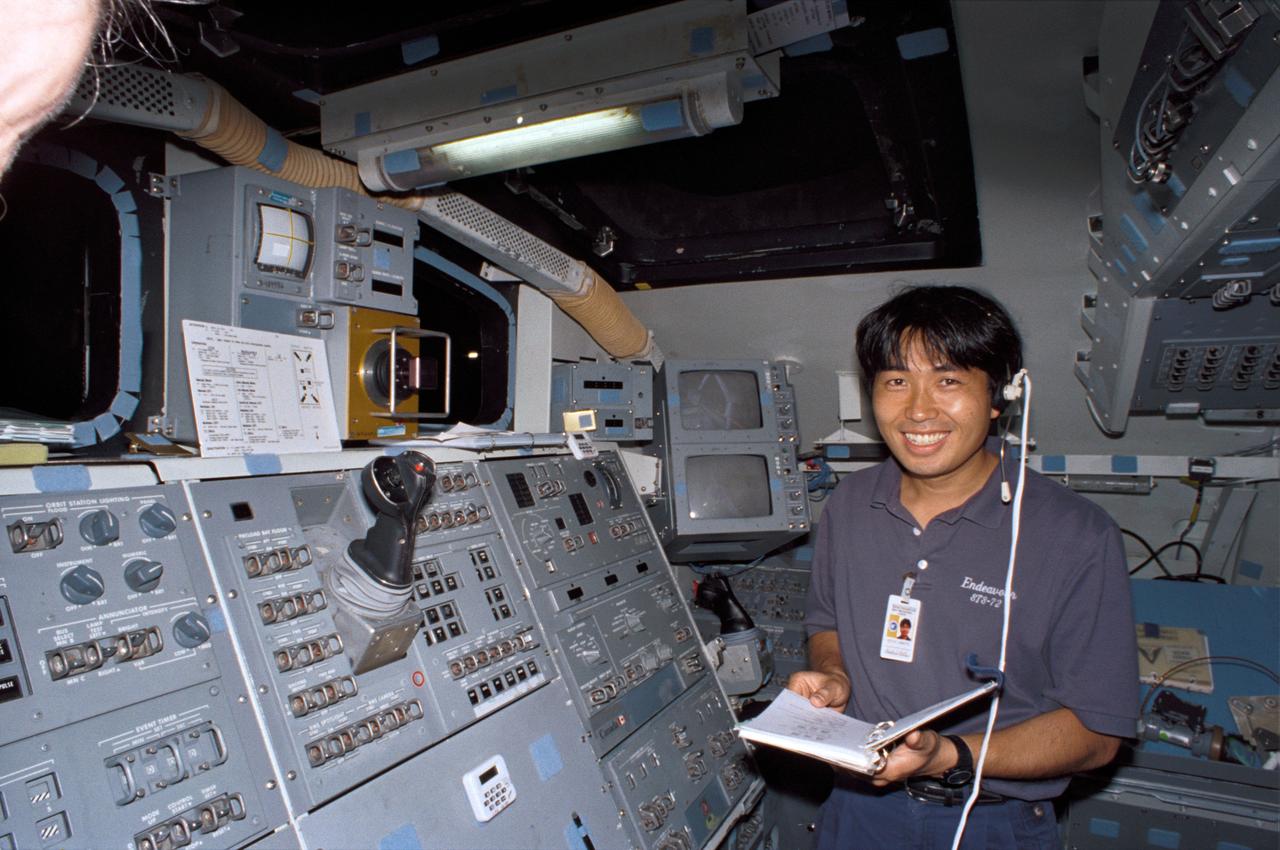
S95-12706 (May 1995) --- Astronaut Koichi Wakata, representing Japan's National Space Development Agency (NASDA) and assigned as mission specialist for the STS-72 mission, checks over a copy of the flight plan. Wakata is on the flight deck of the fixed base Shuttle Mission Simulator (SMS) at the Johnson Space Center (JSC). He will join five NASA astronauts aboard Endeavour for a scheduled nine-day mission, now set for the winter of this year.

S86-28458 (28 Feb. 1986) --- Astronaut Michael L. Coats participates in a rehearsal for his assigned flight at the commander's station of the Shuttle Mission Simulator (SMS) at the Johnson Space Center (JSC). NOTE: Coats, a veteran of spaceflight, originally trained for STS 61-H, which was cancelled in the wake of the Challenger accident. Following the Janaury 1986 accident he was named to serve on a mock crew (STS-61M) for personnel training and simulation purposes. Photo credit: NASA
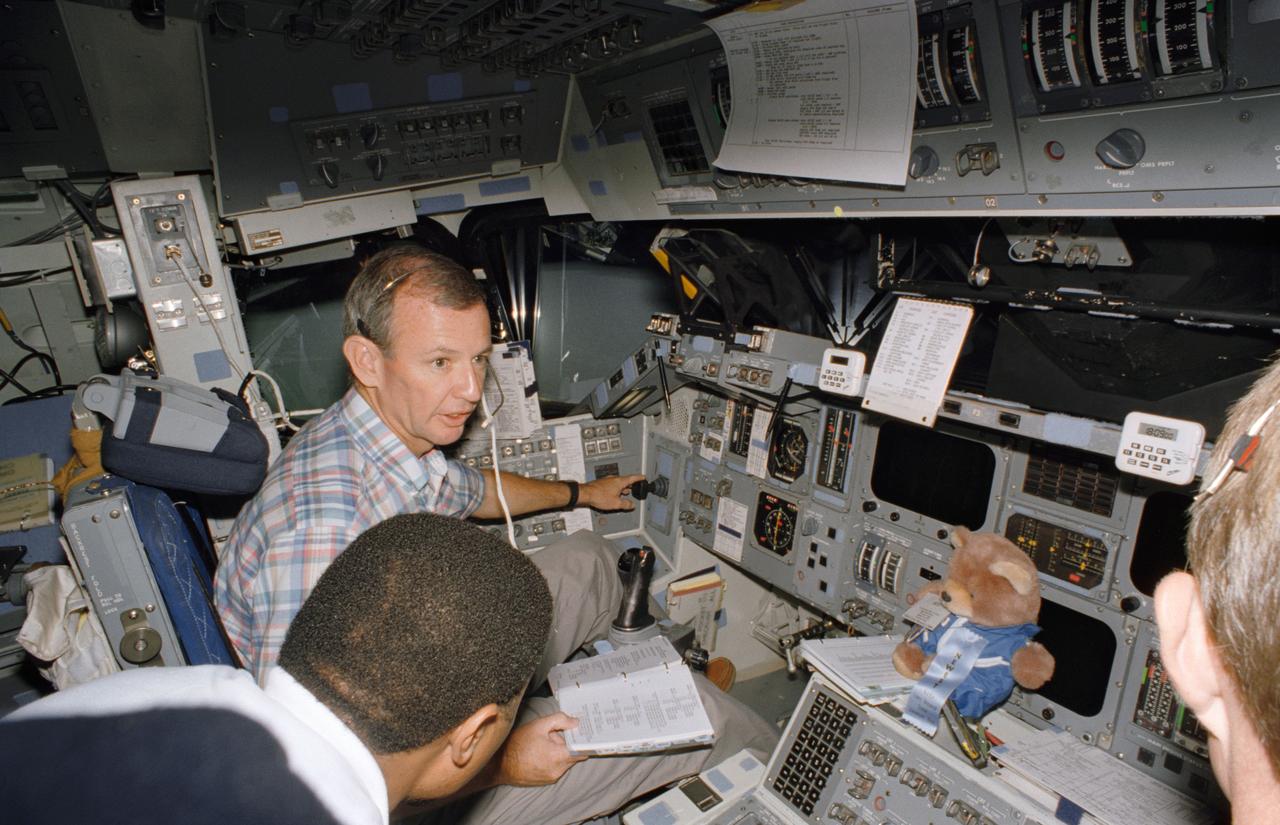
S95-12716 (May 1995) --- Astronauts Brian Duffy, in commander's seat, and Winston E. Scott discuss their scheduled flight aboard the Space Shuttle Endeavour. The two are on the flight deck of the Johnson Space Center's (JSC) fixed base Shuttle Mission Simulator (SMS). Duffy, mission commander, and Scott, mission specialist, will be joined for the winter flight by three other NASA astronauts and an international mission specialist representing NASDA.
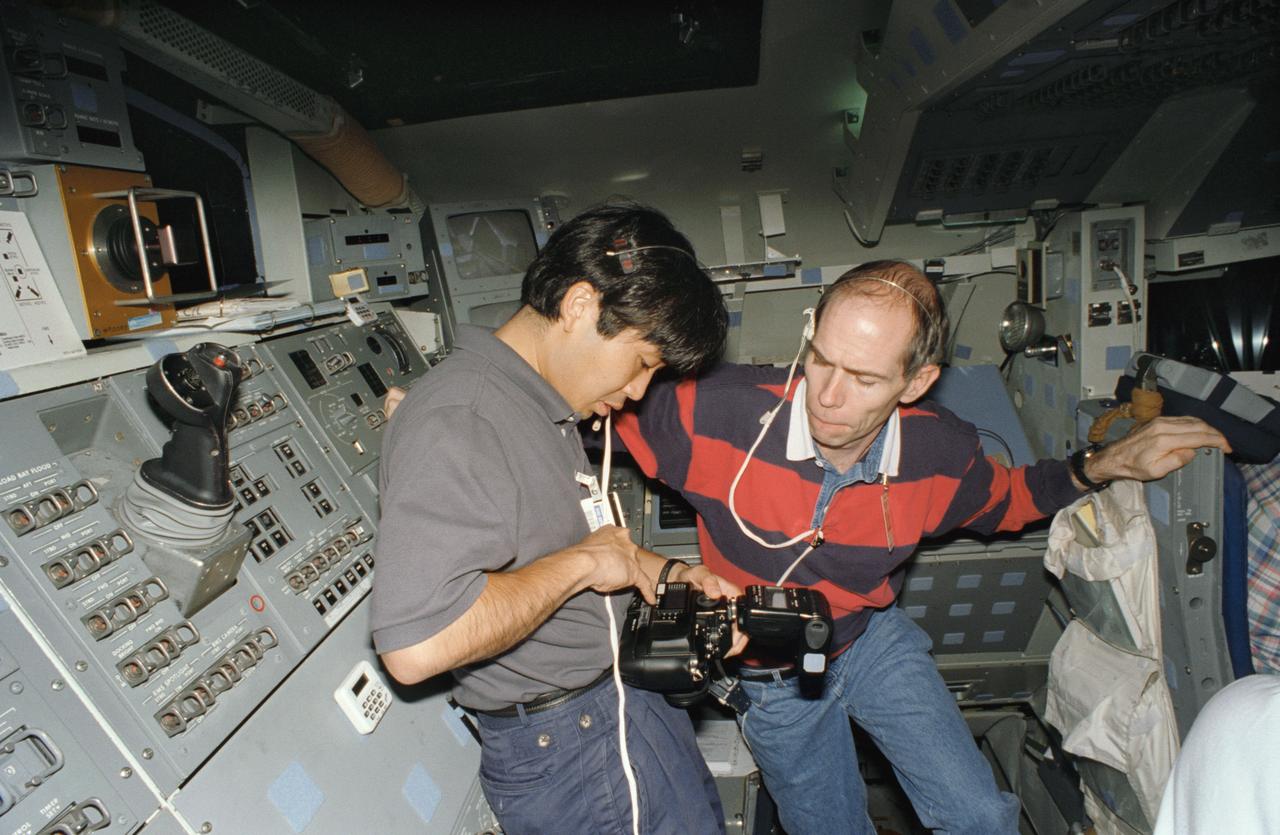
S95-12703 (May 1995) --- Astronauts Koichi Wakata (left) and Daniel T. Barry check the settings on a 35mm camera during an STS-72 training session. Wakata is a mission specialist, representing Japan's National Space Development Agency (NASDA) and Barry is a United States astronaut assigned as mission specialist for the same mission. The two are on the aft flight deck of the fixed base Shuttle Mission Simulator (SMS) at the Johnson Space Center (JSC).
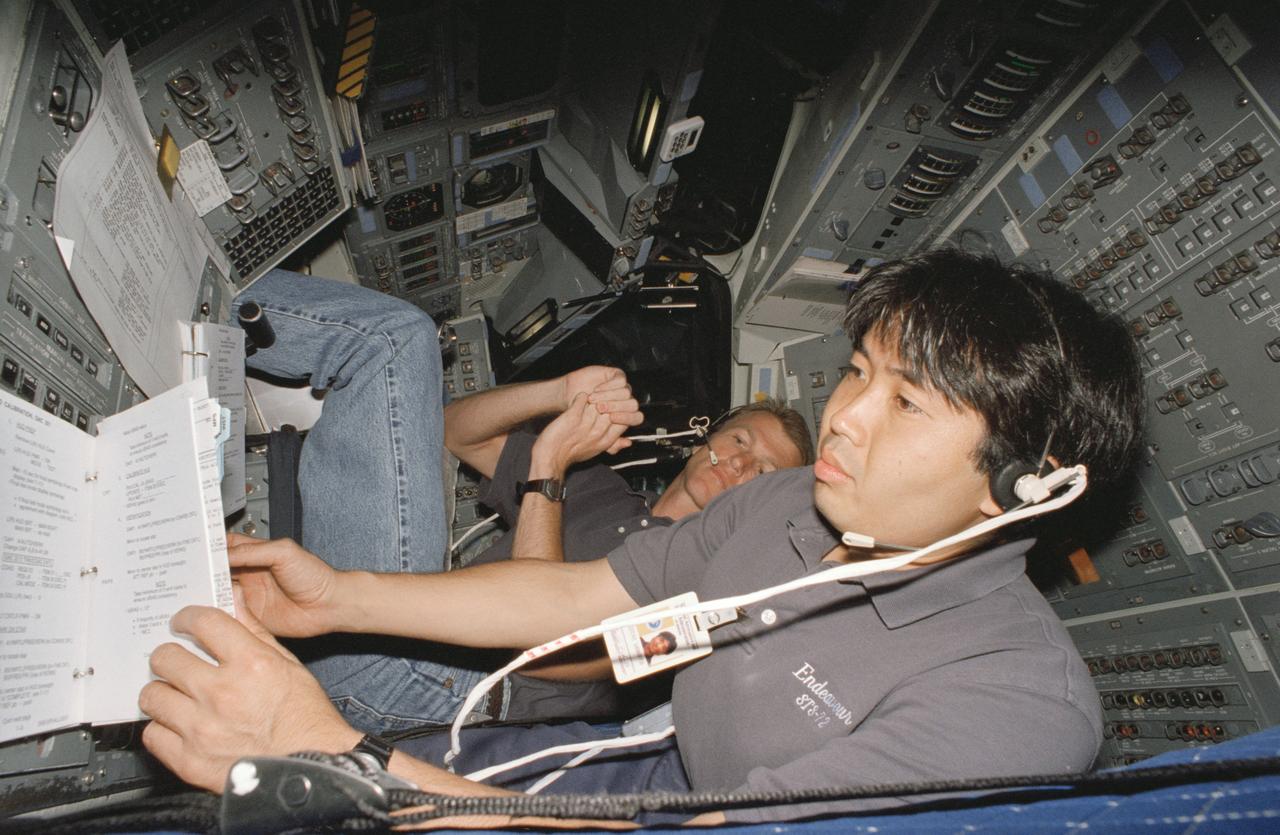
S95-12725 (May 1995) --- Astronaut Koichi Wakata, representing Japan's National Space Development Agency (NASDA) and assigned as mission specialist for the STS-72 mission, checks over a copy of the flight plan. Wakata is on the flight deck of the fixed base Shuttle Mission Simulator (SMS) at the Johnson Space Center (JSC). In the background is astronaut Brent W. Jett, pilot. The two will join four NASA astronauts aboard Space Shuttle Endeavour for a scheduled nine-day mission, now set for the winter of this year.

Ares 1-X SM segment being moved from Building 50 to Building 333
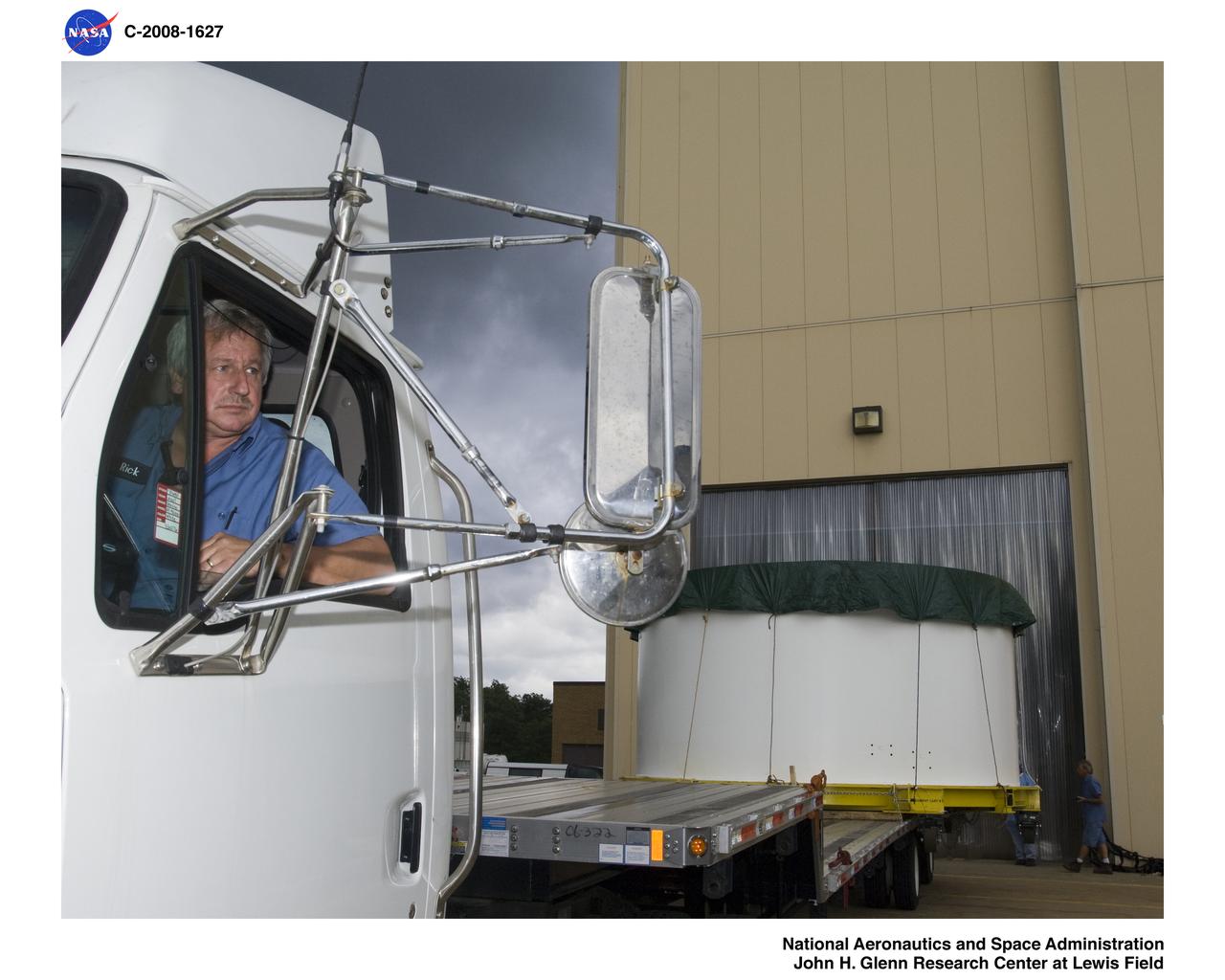
Ares 1-X SM segment being moved from Building 50 to Building 333
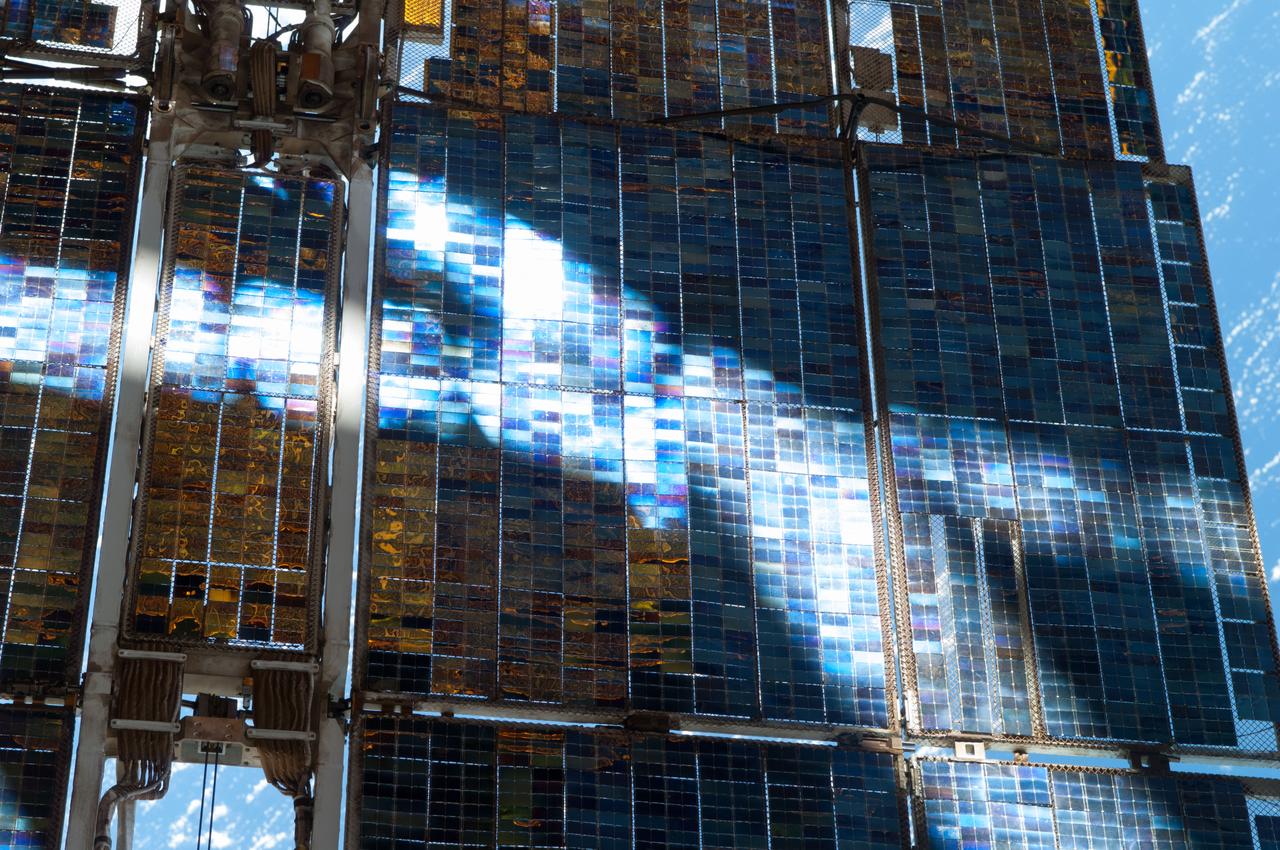
Survey view of a portion of a solar array on the Zvezda Service Module (SM) taken through a window in the Russian segment of the ISS during Expedition 35.
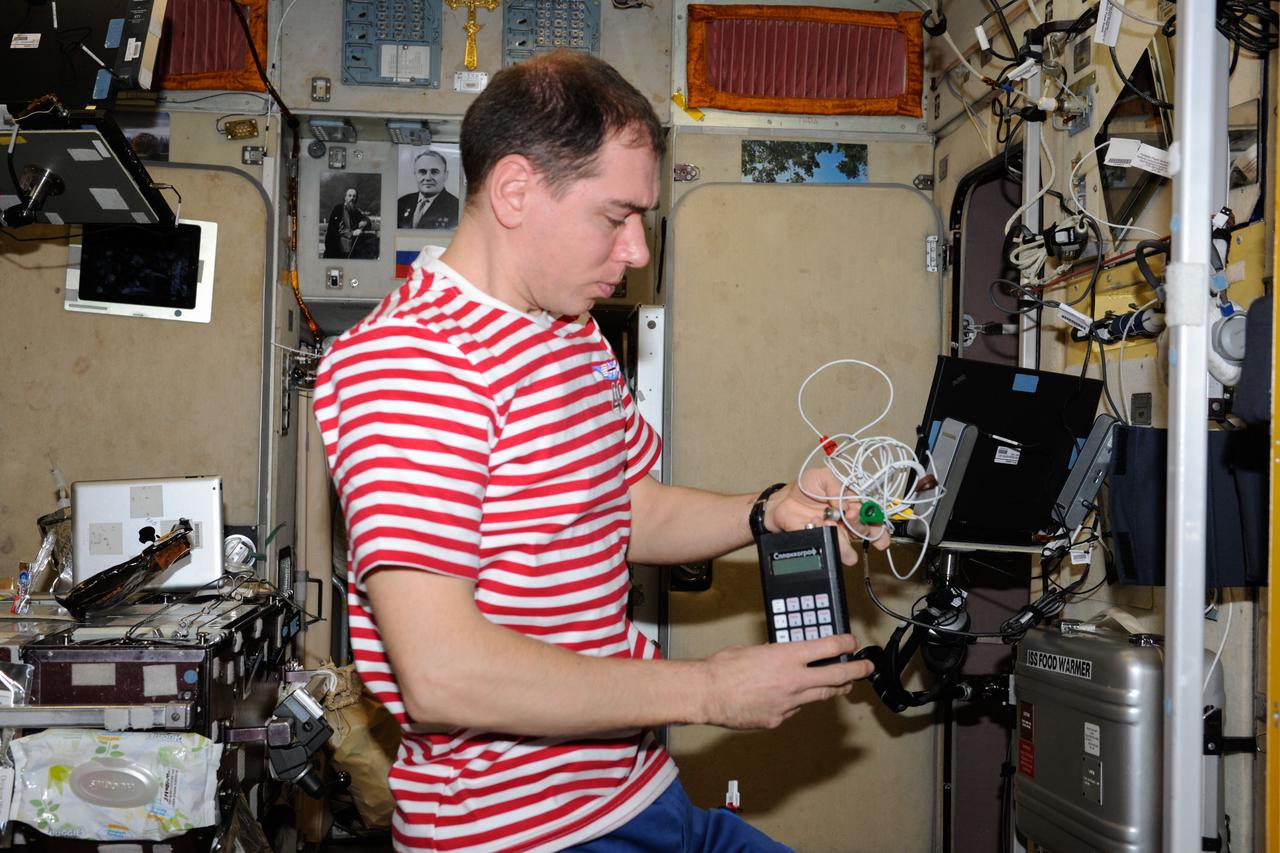
iss046e000891 (12/14/2015) --- Cosmonaut Sergey Volkov is photographed working with Splankh experiment hardware in the Service Module (SM) aboard the International Space Station (ISS).
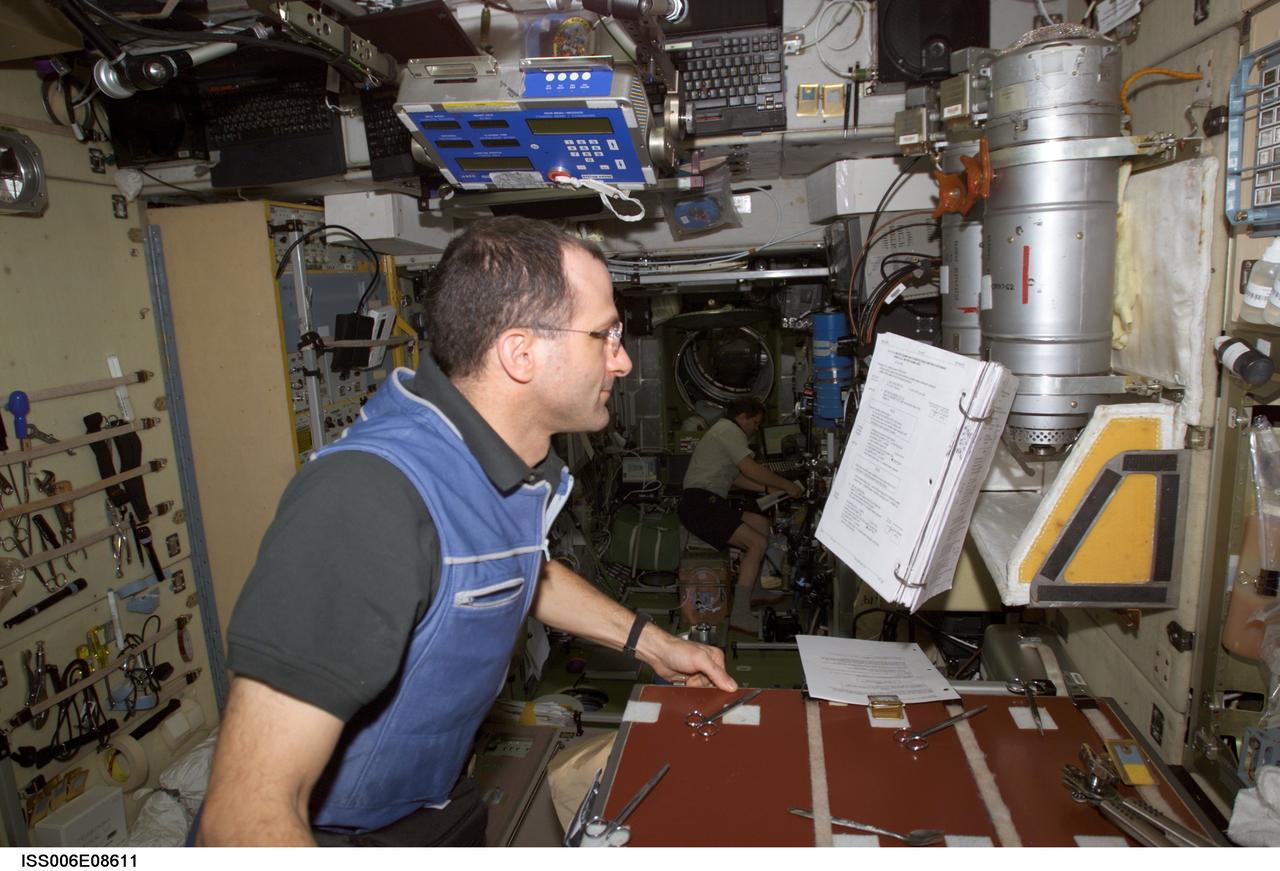
ISS006-E-08611 (18 December 2002) --- Astronaut Donald R. Pettit, Expedition Six NASA ISS science officer, looks over a procedures checklist in the Zvezda Service Module (SM) on the International Space Station (ISS). Pettit went on to complete the scheduled Week 3 potable water sampling and on-orbit chemical/microbial analysis of the SM environment control and life support system.
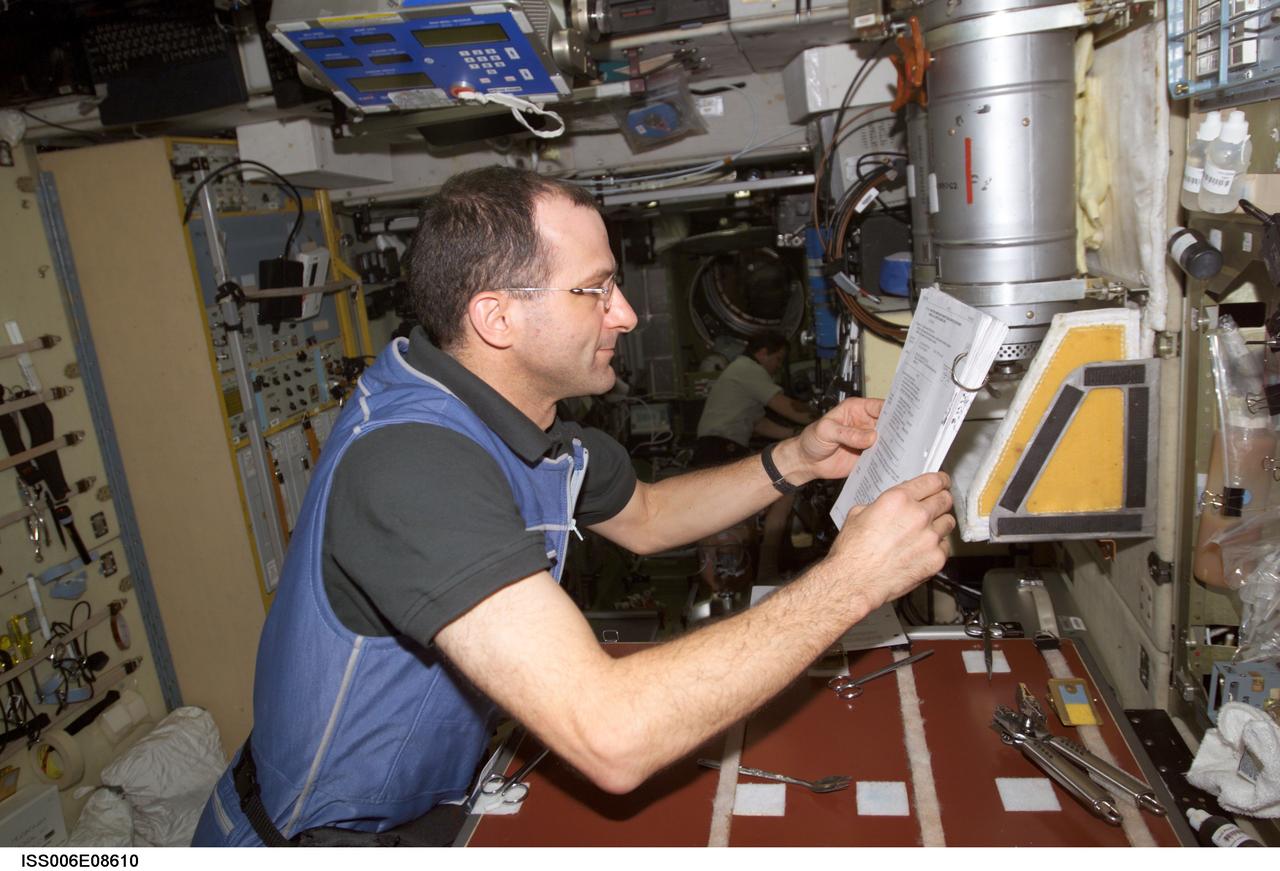
ISS006-E-08610 (18 December 2002) --- Astronaut Donald R. Pettit, Expedition Six NASA ISS science officer, looks over a procedures checklist in the Zvezda Service Module (SM) on the International Space Station (ISS). Pettit went on to complete the scheduled Week 3 potable water sampling and on-orbit chemical/microbial analysis of the SM environment control and life support system.
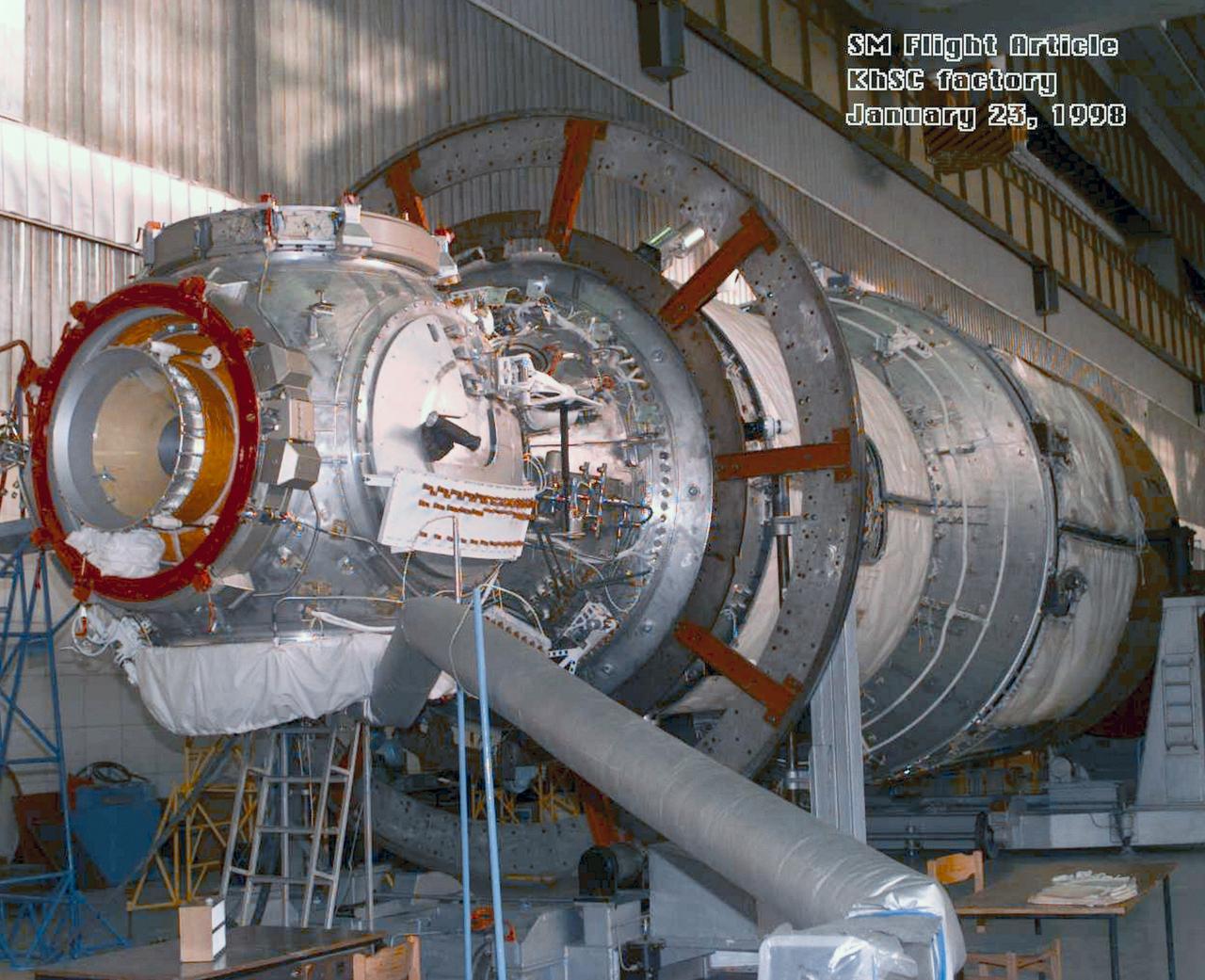
S98-04906 (23 Jan. 1998) --- A three-quarter frontal view of the flight article of the Service Module (SM) for the International Space Station (ISS). The first fully Russian contribution to ISS, the SM will provide early power, propulsion, life support, communications and living quarters for the station. It will be the third station element to be launched and join the United States-funded, Russian-built Functional Cargo Block (FGB) and the United States connecting module Node 1 in orbit.
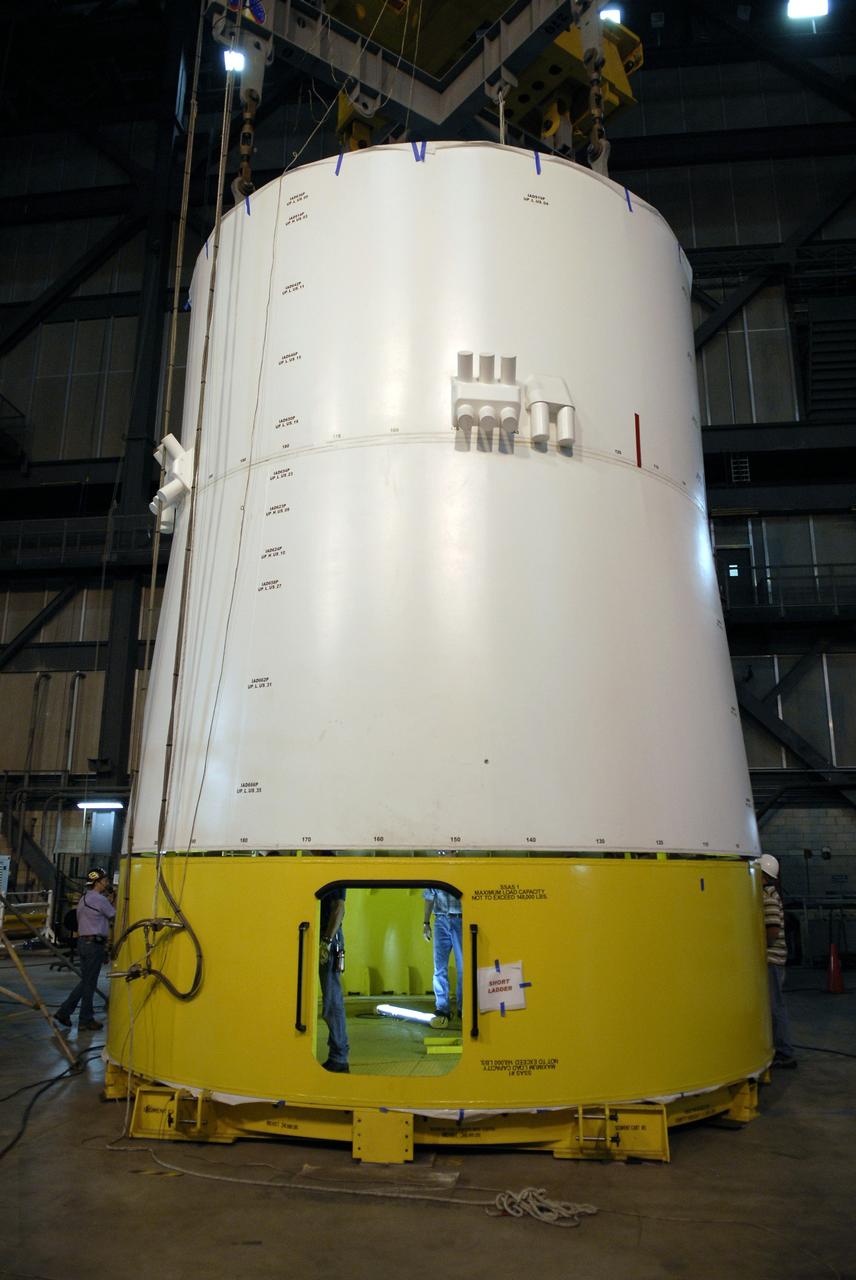
CAPE CANAVERAL, Fla. – In High Bay 4 of the Vehicle Assembly Building at NASA's Kennedy Space Center in Florida, the Ares I-X upper stage simulator service module/service adapter segment has been installed on a stand. Ares I-X is the test vehicle for the Ares I, which is part of the Constellation Program to return men to the moon and beyond. The Ares I-X is targeted for launch in July 2009. Photo credit: NASA/Kim Shiflett
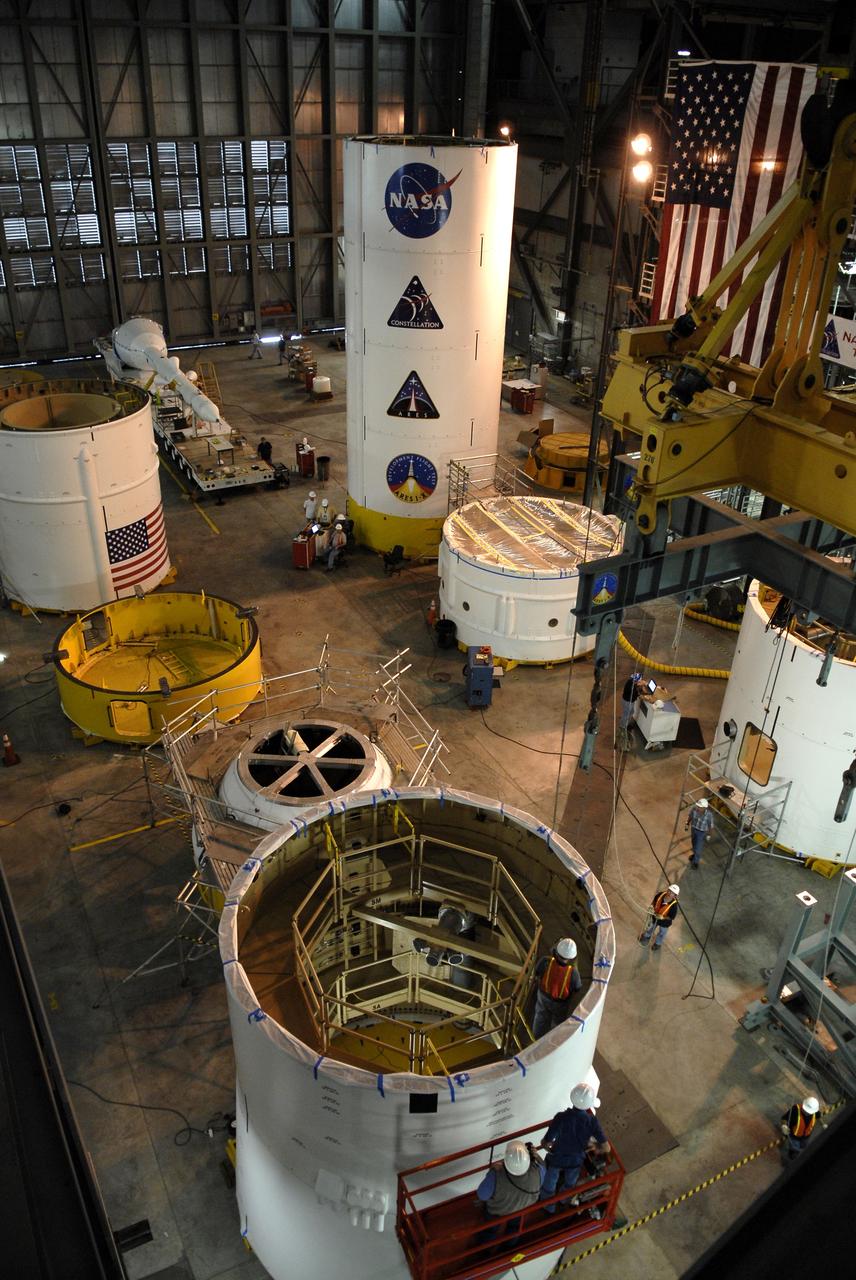
CAPE CANAVERAL, Fla. – In High Bay 4 of the Vehicle Assembly Building at NASA's Kennedy Space Center in Florida, the Ares I-X upper stage simulator service module/service adapter segment (foreground) is being prepared for its move to a stand. Other segments are placed and stacked on the floor around it. Ares I-X is the test vehicle for the Ares I, which is part of the Constellation Program to return men to the moon and beyond. The Ares I-X is targeted for launch in July 2009. Photo credit: NASA/Kim Shiflett
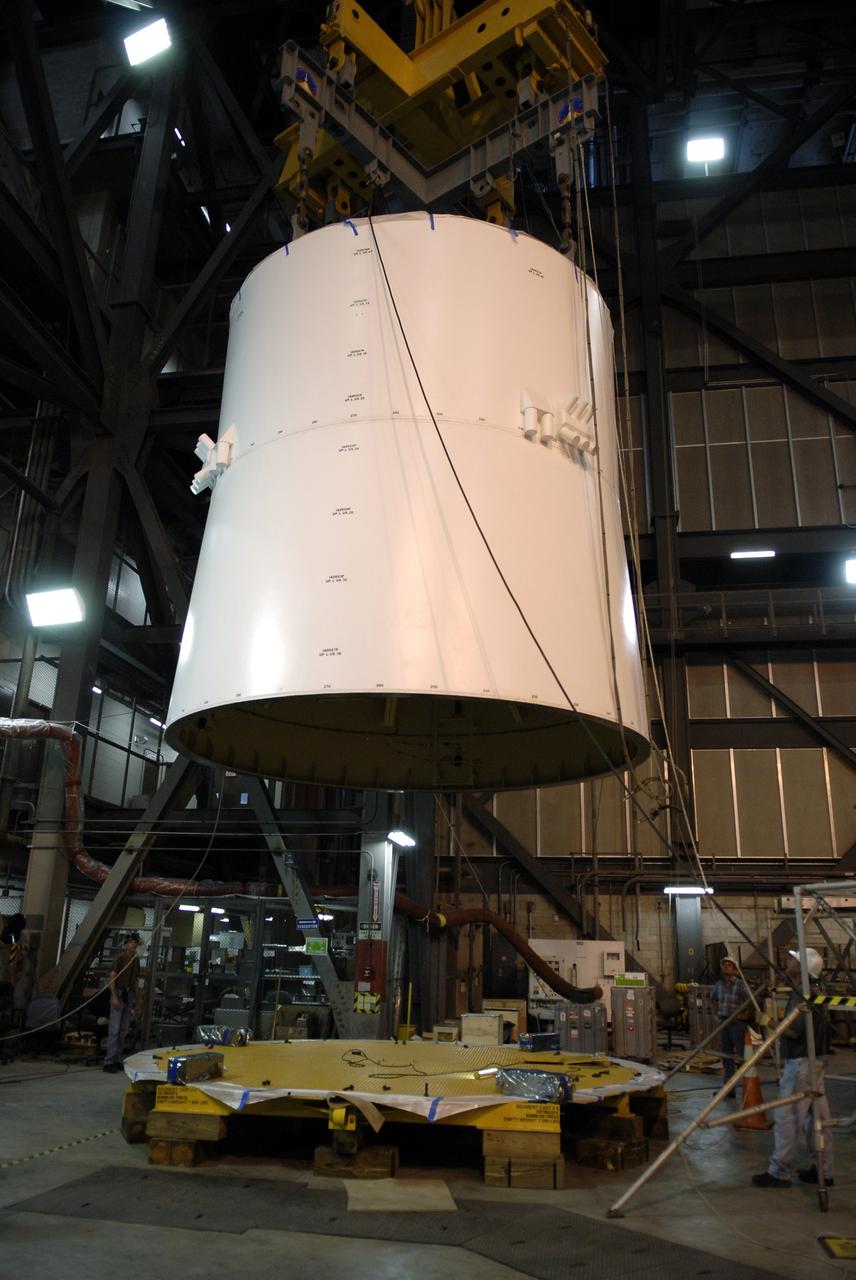
CAPE CANAVERAL, Fla. – In High Bay 4 of the Vehicle Assembly Building at NASA's Kennedy Space Center in Florida, a large crane lifts the Ares I-X upper stage simulator service module/service adapter segment to move it to a stand. Ares I-X is the test vehicle for the Ares I, which is part of the Constellation Program to return men to the moon and beyond. The Ares I-X is targeted for launch in July 2009. Photo credit: NASA/Kim Shiflett
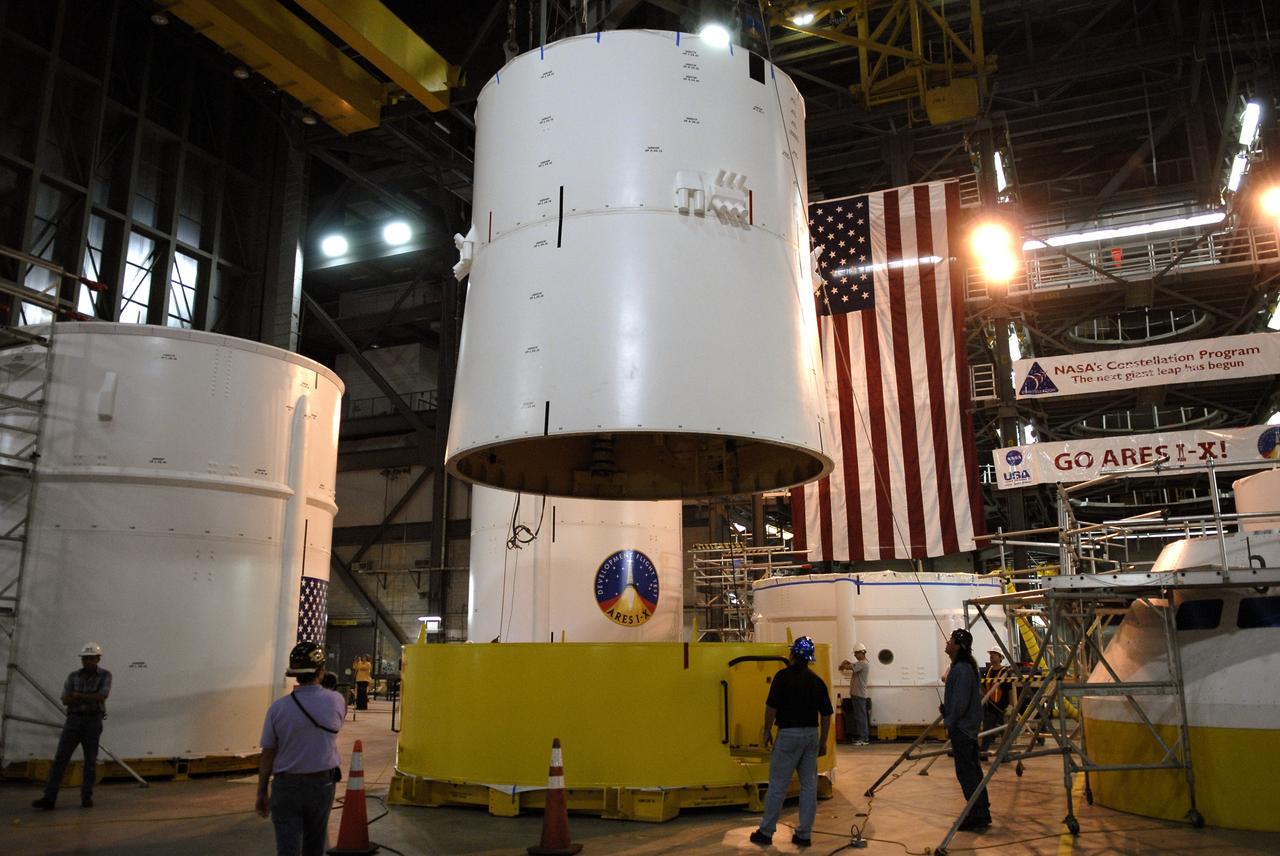
CAPE CANAVERAL, Fla. – In High Bay 4 of the Vehicle Assembly Building at NASA's Kennedy Space Center in Florida, a large crane moves the Ares I-X upper stage simulator service module/service adapter segment toward a stand. Other segments are placed and stacked on the floor around it. Ares I-X is the test vehicle for the Ares I, which is part of the Constellation Program to return men to the moon and beyond. The Ares I-X is targeted for launch in July 2009. Photo credit: NASA/Kim Shiflett
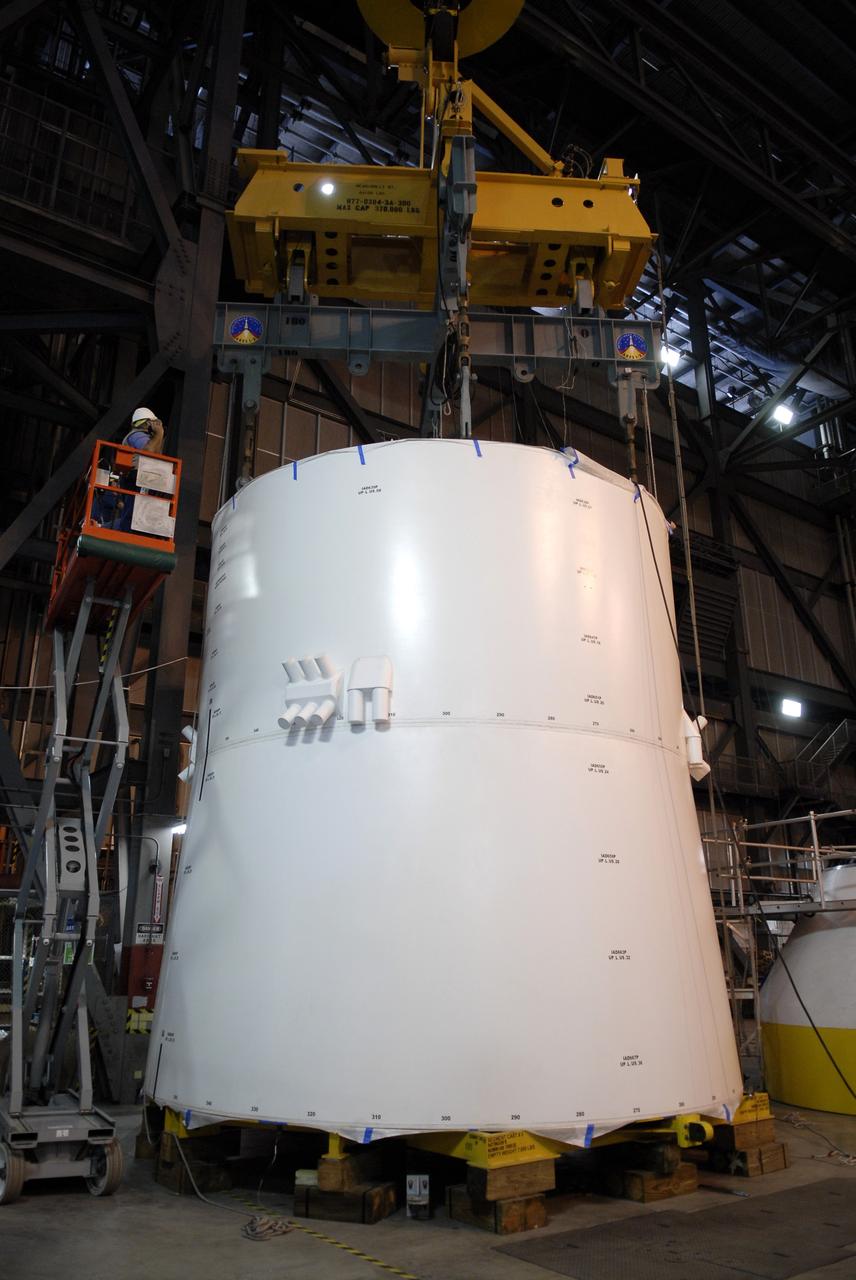
CAPE CANAVERAL, Fla. –In High Bay 4 of the Vehicle Assembly Building at NASA's Kennedy Space Center in Florida, a large crane is attached to the Ares I-X upper stage simulator service module/service adapter segment to lift and move it to a stand. Ares I-X is the test vehicle for the Ares I, which is part of the Constellation Program to return men to the moon and beyond. The Ares I-X is targeted for launch in July 2009. Photo credit: NASA/Kim Shiflett
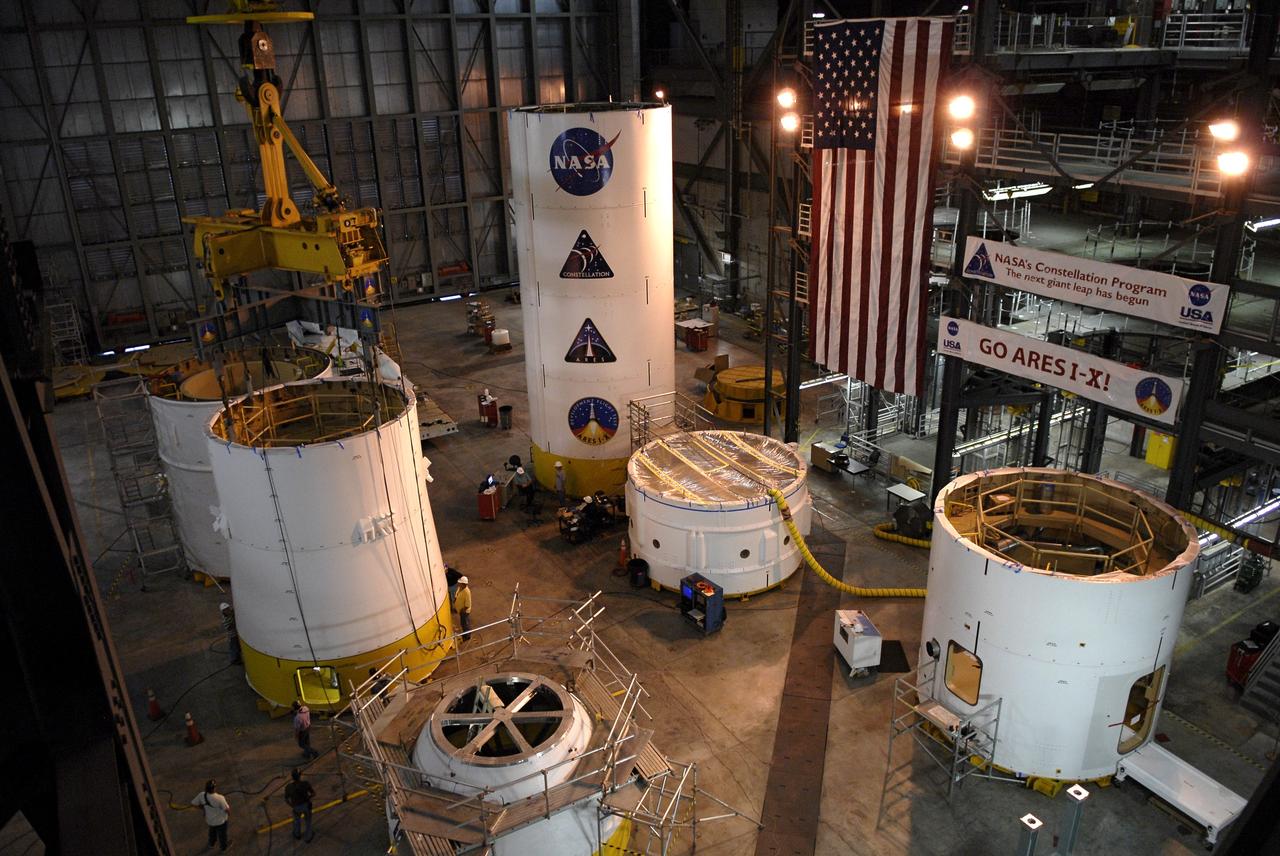
CAPE CANAVERAL, Fla. – In High Bay 4 of the Vehicle Assembly Building at NASA's Kennedy Space Center in Florida, the Ares I-X upper stage simulator service module/service adapter (left, center) has been installed on a stand. Other segments are placed and stacked on the floor around it. Ares I-X is the test vehicle for the Ares I, which is part of the Constellation Program to return men to the moon and beyond. The Ares I-X is targeted for launch in July 2009. Photo credit: NASA/Kim Shiflett
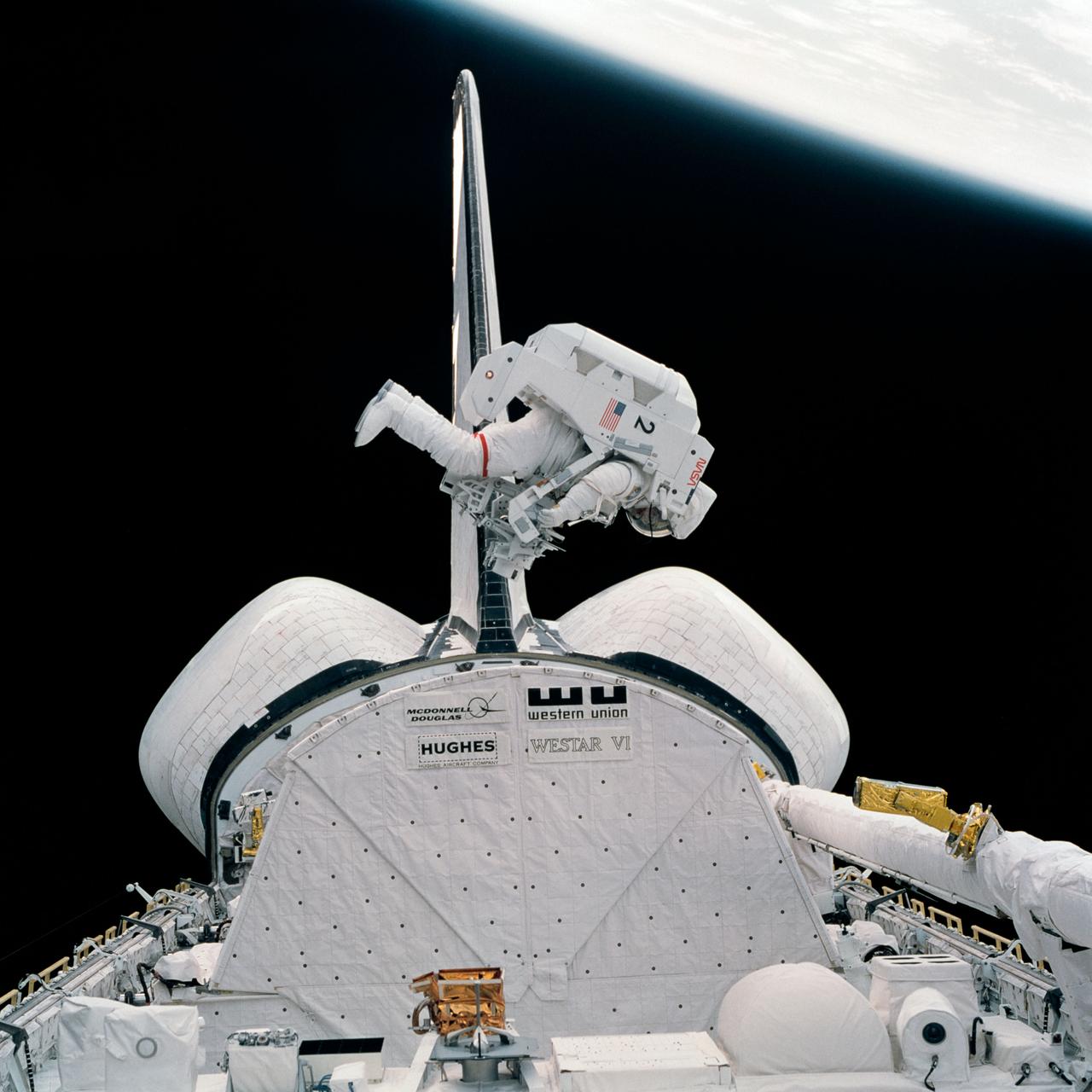
S84-27023 (7 Feb 1984) --- This 70mm frame shows astronaut Bruce McCandless II moving in to conduct a test involving the Trunion Pin Attachment Device (TPAD) he carries and the Shuttle Pallet Satellite (SPAS-01A) partially visible at bottom of frame. SPAS was a stand-in for the damaged Solar Maximum Satellite (SMS) which will be visited for repairs by the STS-41C Shuttle crew in early spring. This particular Extravehicular Activity (EVA) session was a rehearsal for the SMS visit. The test and the actual visit to the SMS both involve the use of jet-powered, hand-controlled Manned Maneuvering Unit (MMU). The one McCandless uses is the second unit to be tested on this flight. Astronaut Robert L. Stewart got a chance to work with both MMU's on the two EVA's.
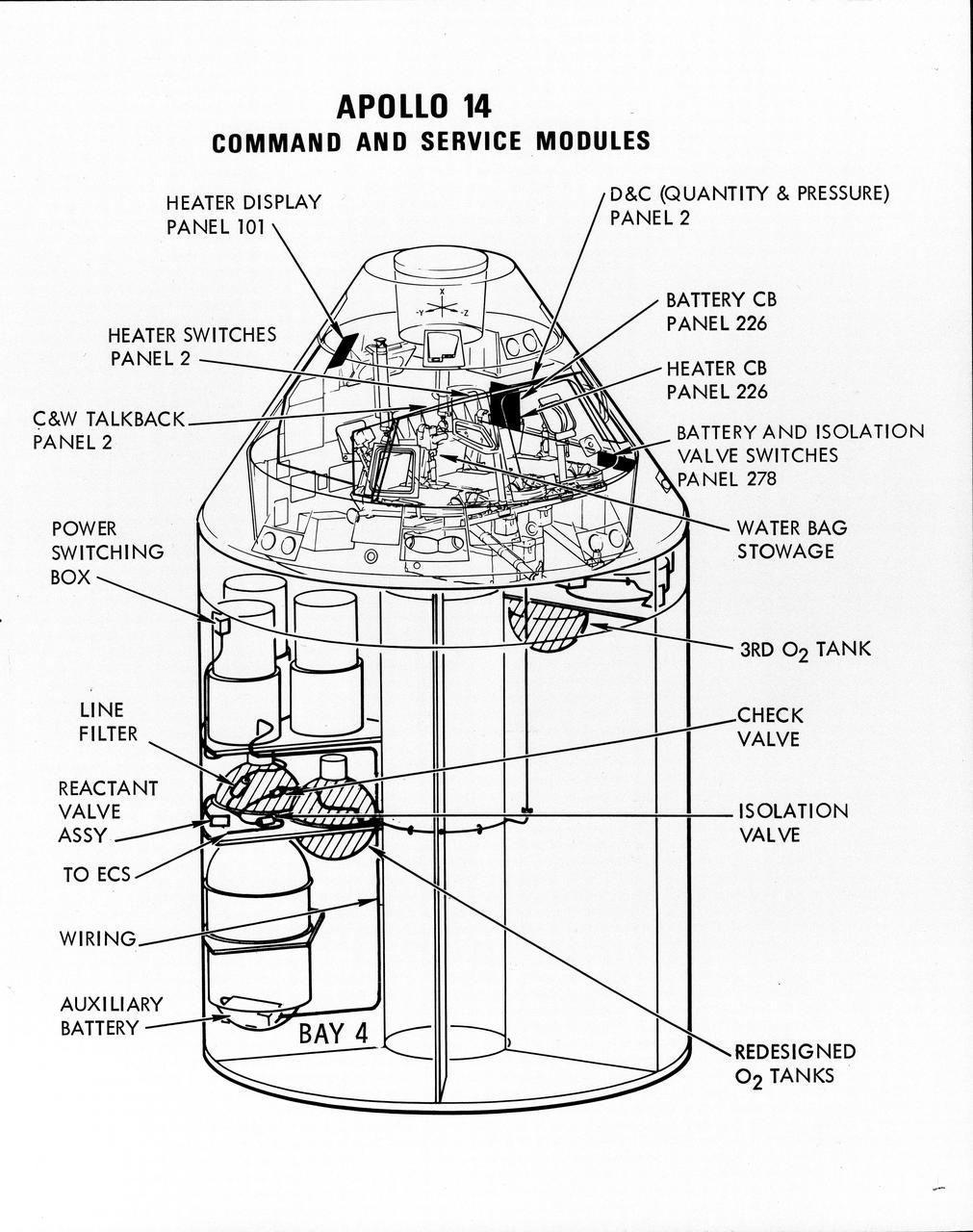
S71-16823 (January 1971) --- A line drawing illustrating a cutaway view of the Apollo 14 Command and Service Modules, showing the engineering changes in the CSM which were recommended by the Apollo 13 Review Board. (The Apollo 13 abort was caused by a short circuit and wiring overheating in one of the SM cryogenic oxygen tanks.) The major changes to the Apollo 14 CSM include adding a third cryogenic oxygen tank installed in a heretofore empty bay (in sector one) of the SM, addition of an auxiliary battery in the SM as a backup in case of fuel cell failure, and removal of destratification fans in the cryogenic oxygen tanks and removal of thermostat switches from the oxygen tank heater circuits. Provision for stowage of an emergency five-gallon supply of drinking water has been added to the CM.
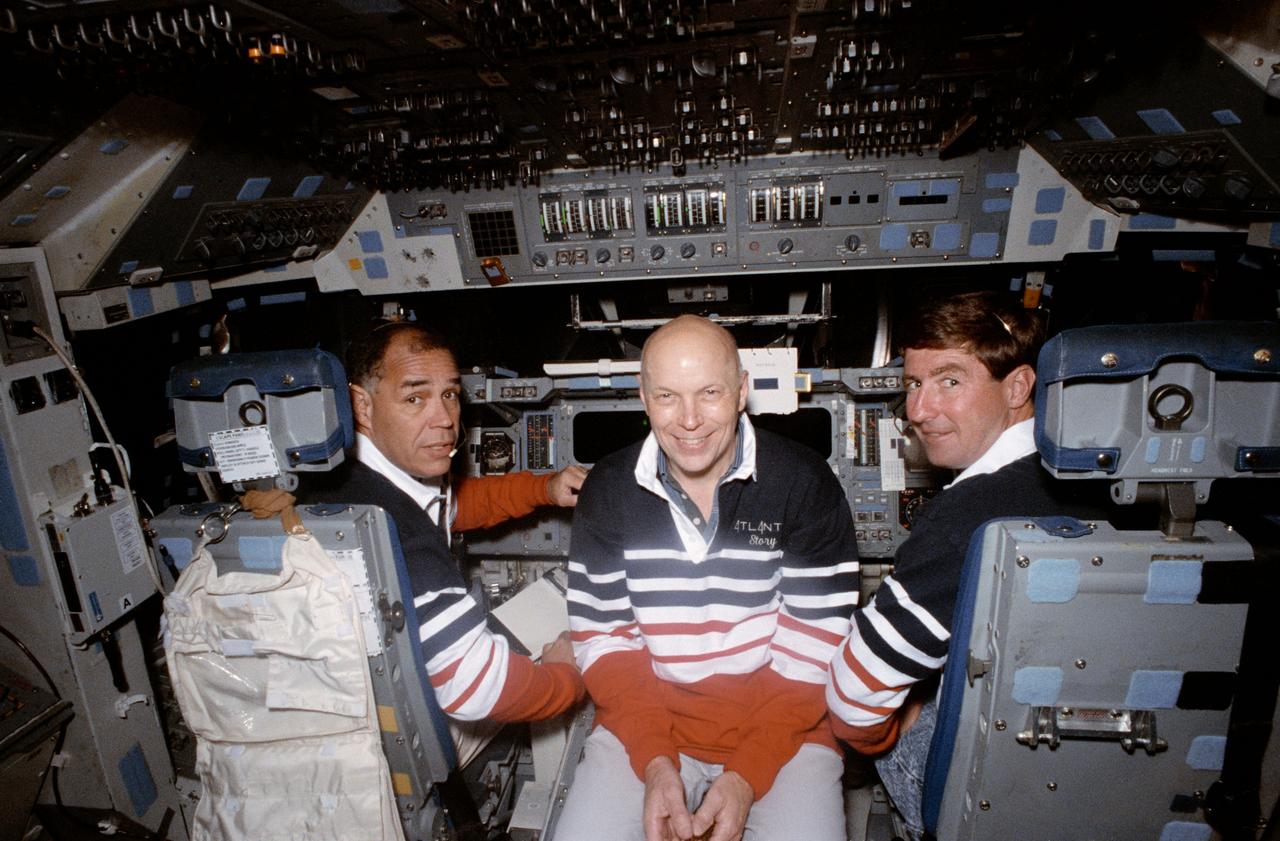
S91-35303 (22 April 1991) --- Astronauts Frederick D. Gregory (left) and Terrence T. Henricks (right), STS-44 commander and pilot, respectively, are joined near their launch and entry stations by F. Story Musgrave, mission specialist. The three pause while rehearsing some of the activities that will be performed during the scheduled ten-day November flight. Musgrave will be in a rear cabin station during launch and entry phases of the flight deck of the fixed-base Shuttle Mission Simulator (SMS) in the Johnson Space Center's mission simulation and training facility.
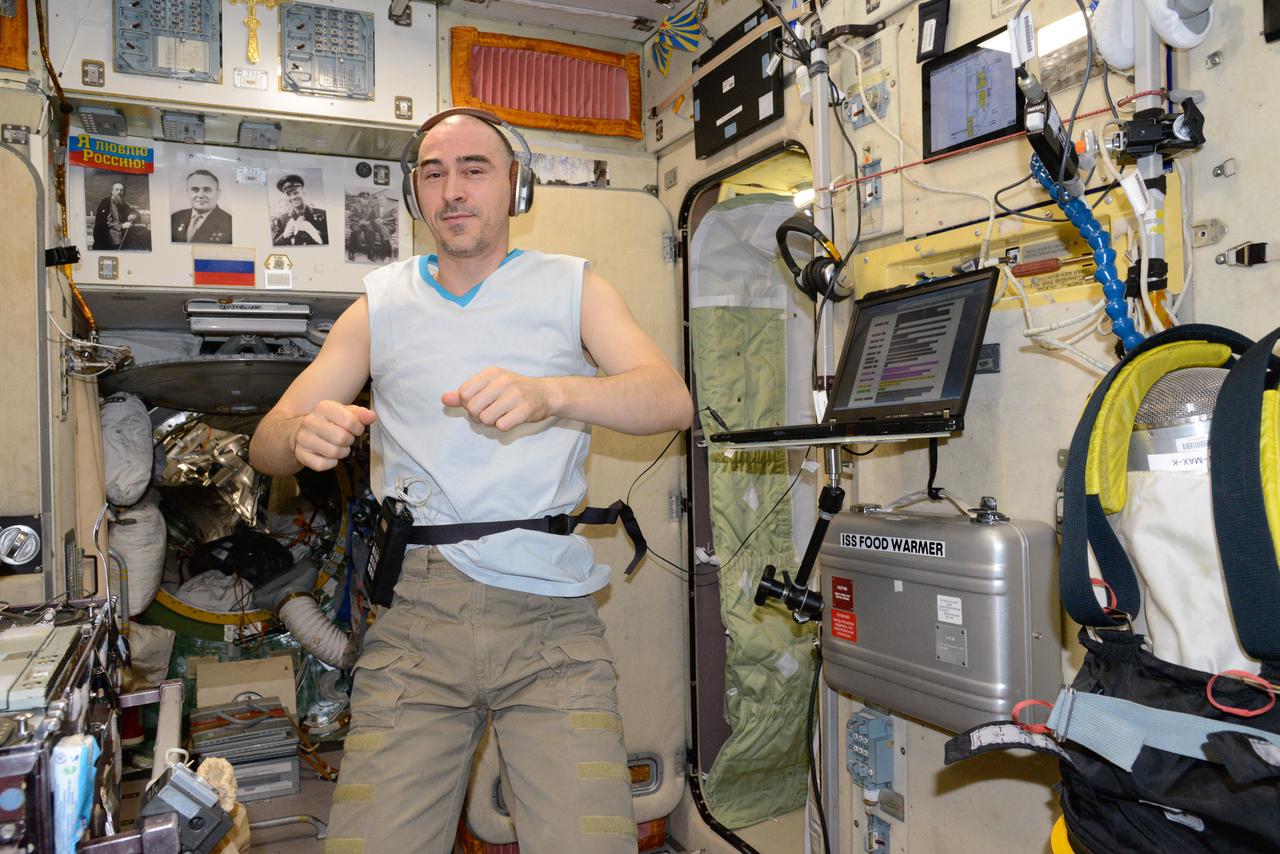
iss048e049904 (8/8/2016) --- Roscosmos cosmonaut Anatoly Ivanishin is photographed during Splanh (Splankh) experiment operations (OPS) in the Zvezda Service Module (SM) aboard the International Space Station (ISS).
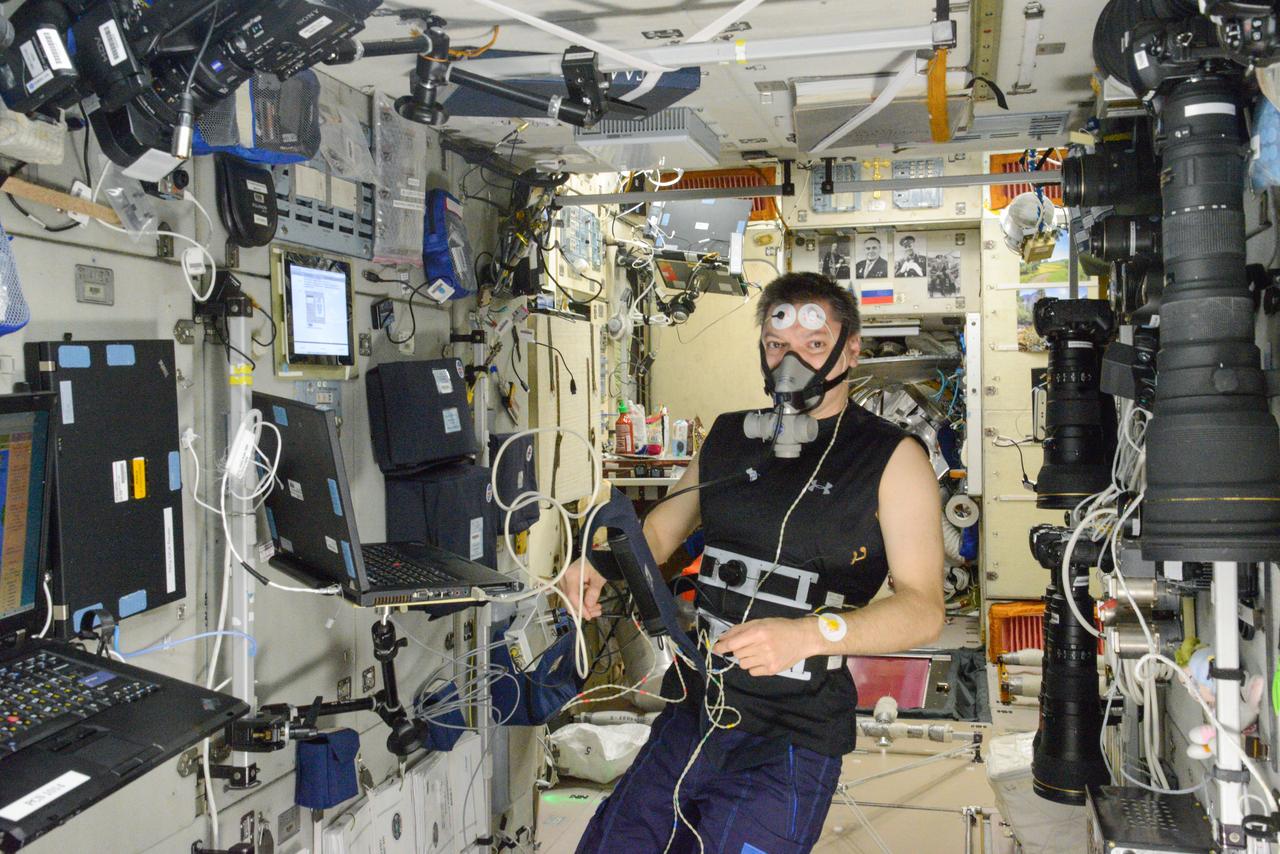
iss045e075926 (10/22/2015) --- Roscosmos cosmonaut Oleg Kononenko is photographed during UDOD experiment operations in the Zvezda Service Module (SM). He is using hardware from the Dykhanie-1 and Sprut-2 Kits.
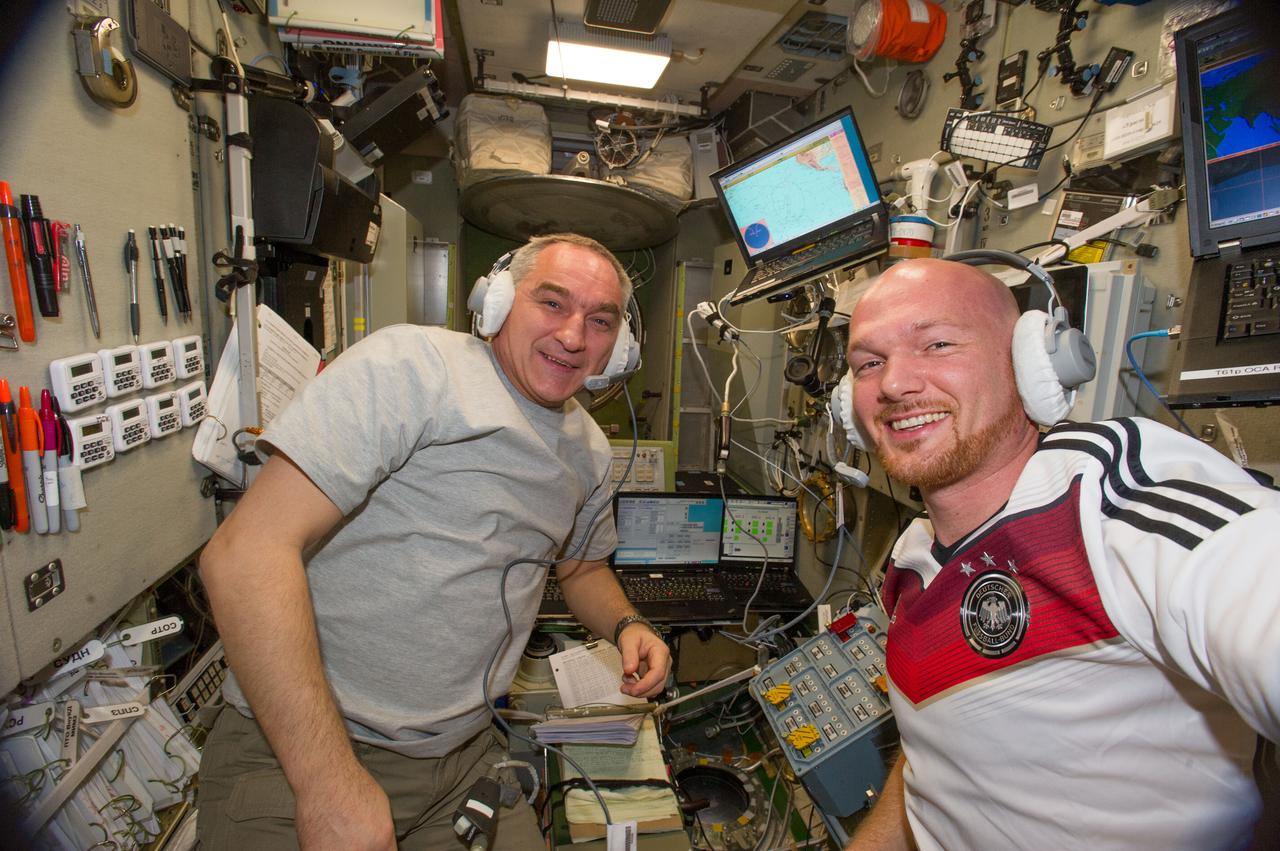
Cosmonaut Alexander Skvortsov and ESA Astronaut Alexander Gerst, Expedition 40 flight engineers, are photographed during ATV equipment preparation in the Service Module (SM) prior to ATV launch.
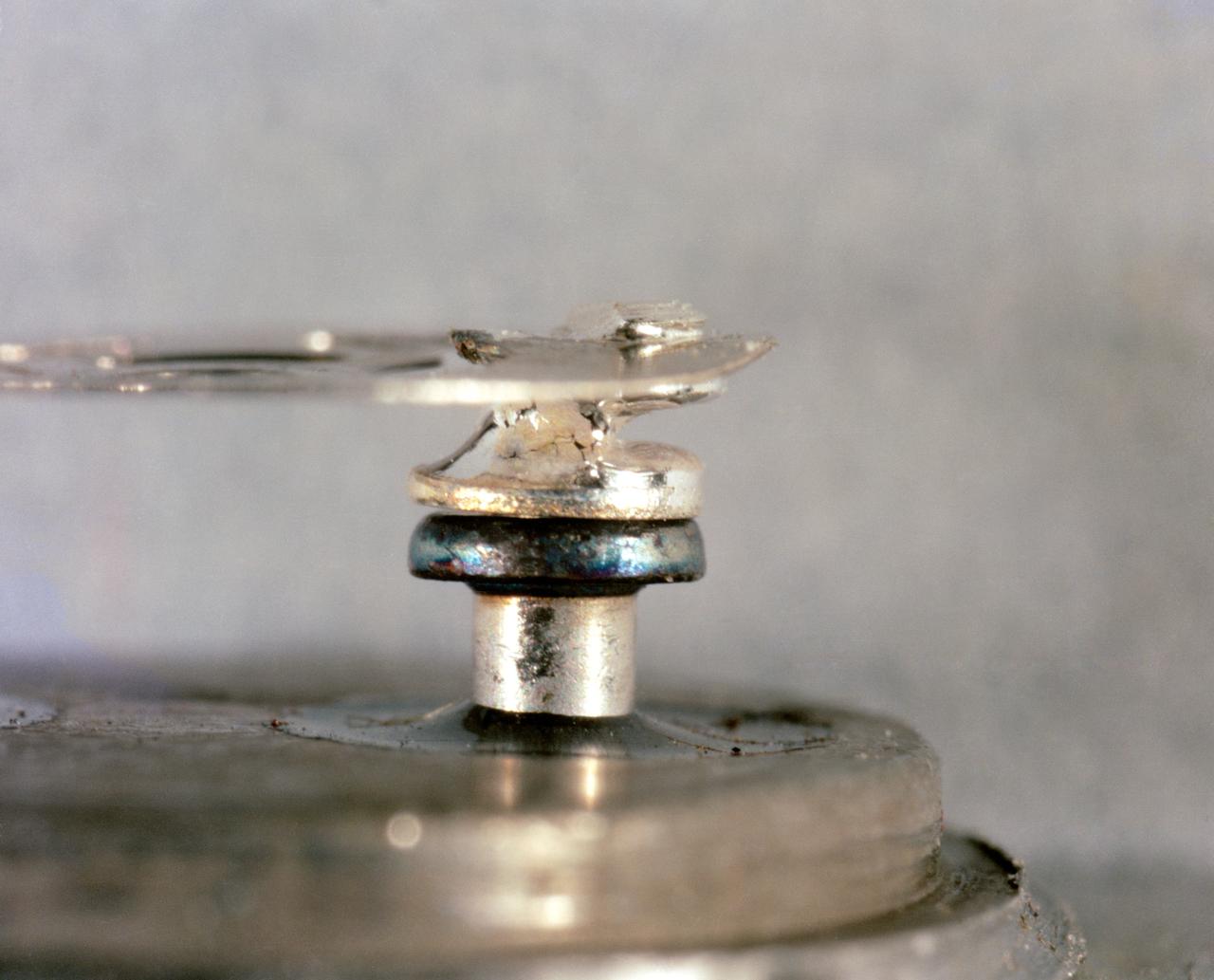
S70-40850 (June 1970) --- Fused thermal switch from Apollo Service Module (SM) oxygen tank after test at the NASA Manned Spacecraft Center (MSC) simulating Apollo 13 de-tanking procedures.
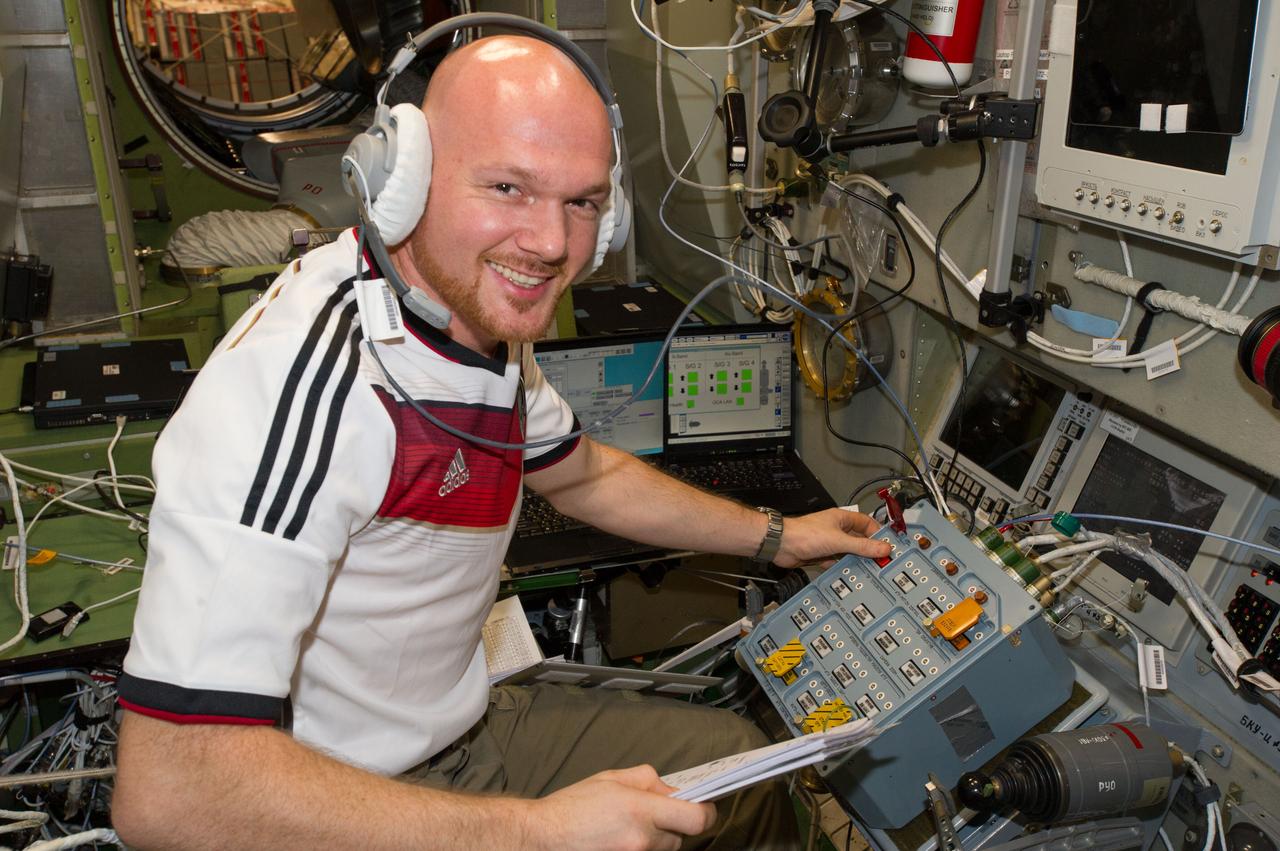
ESA astronaut Alexander Gerst, Expedition 40 flight engineer (wearing soccer shirt), is photographed during ATV equipment preparation in the Service Module (SM) prior to ATV launch.
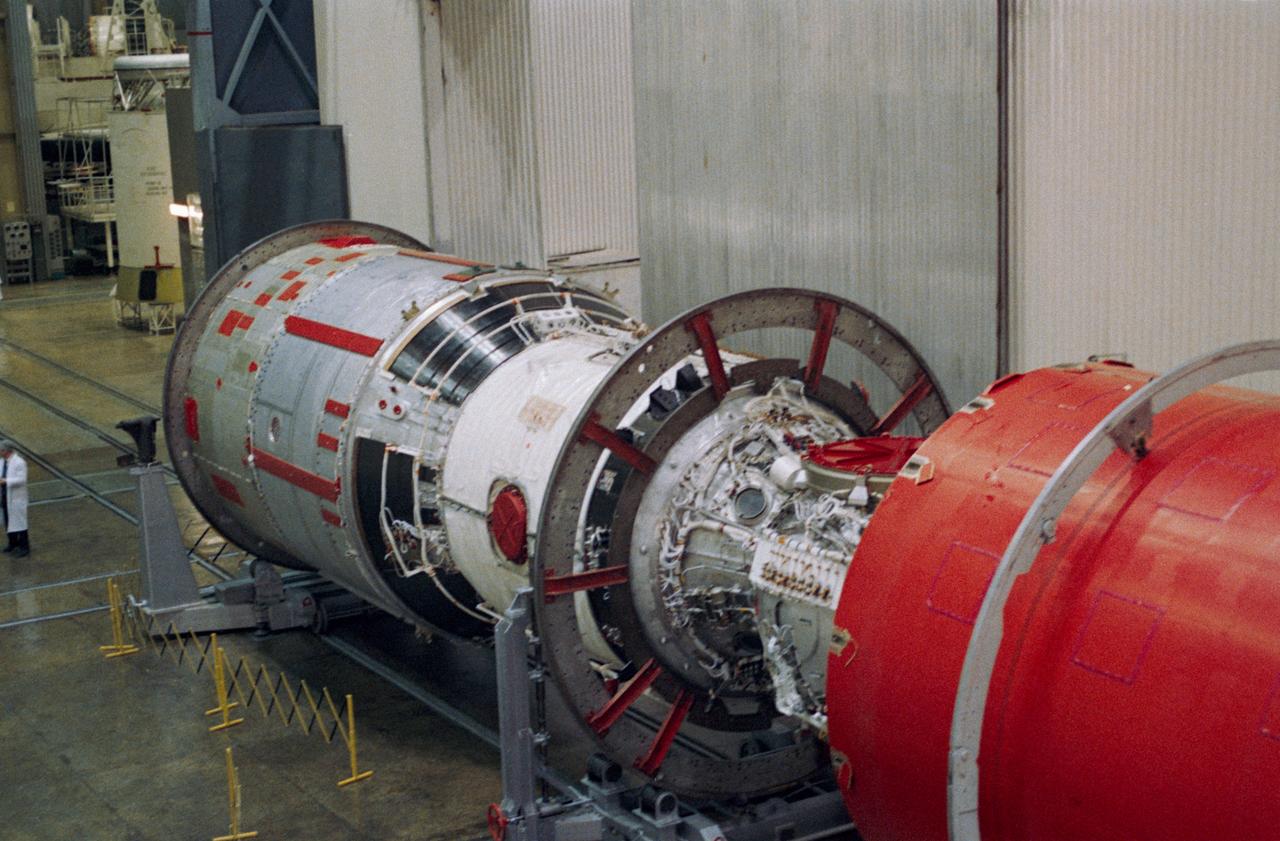
S99-05653 (April 1999) --- ISS service module roll-out. --- A three-quarter, forward view of the International Space Station (ISS) Service Module (SM) during roll-out at RSC-Energia in Moscow, Russia.
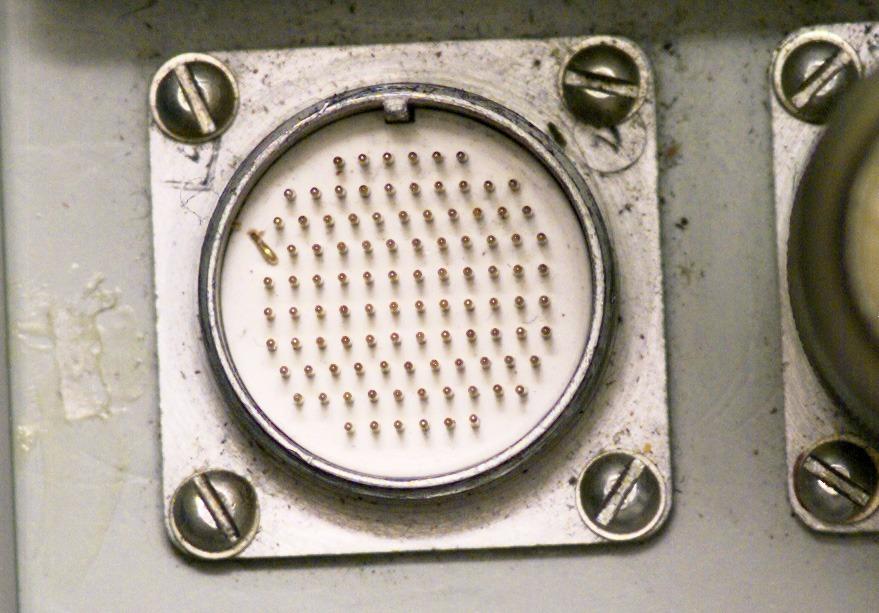
ISS01-E-5014 (26 November 2000) --- An electronic still camera's view of a bent pin on Service Module (SM) Battery Block 5 PTAB. This was installed on 2A.2b
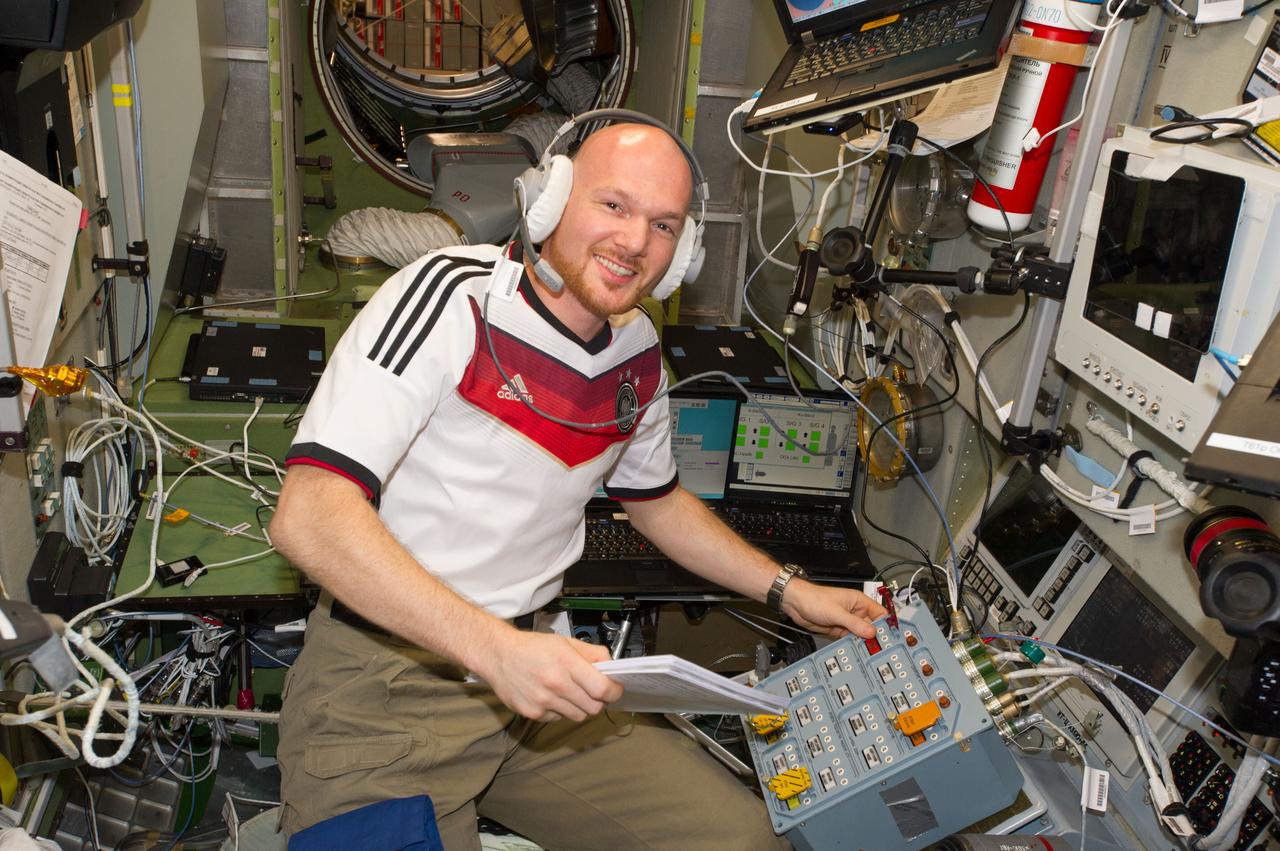
ESA astronaut Alexander Gerst, Expedition 40 flight engineer (wearing soccer shirt), is photographed during ATV equipment preparation in the Service Module (SM) prior to ATV launch.
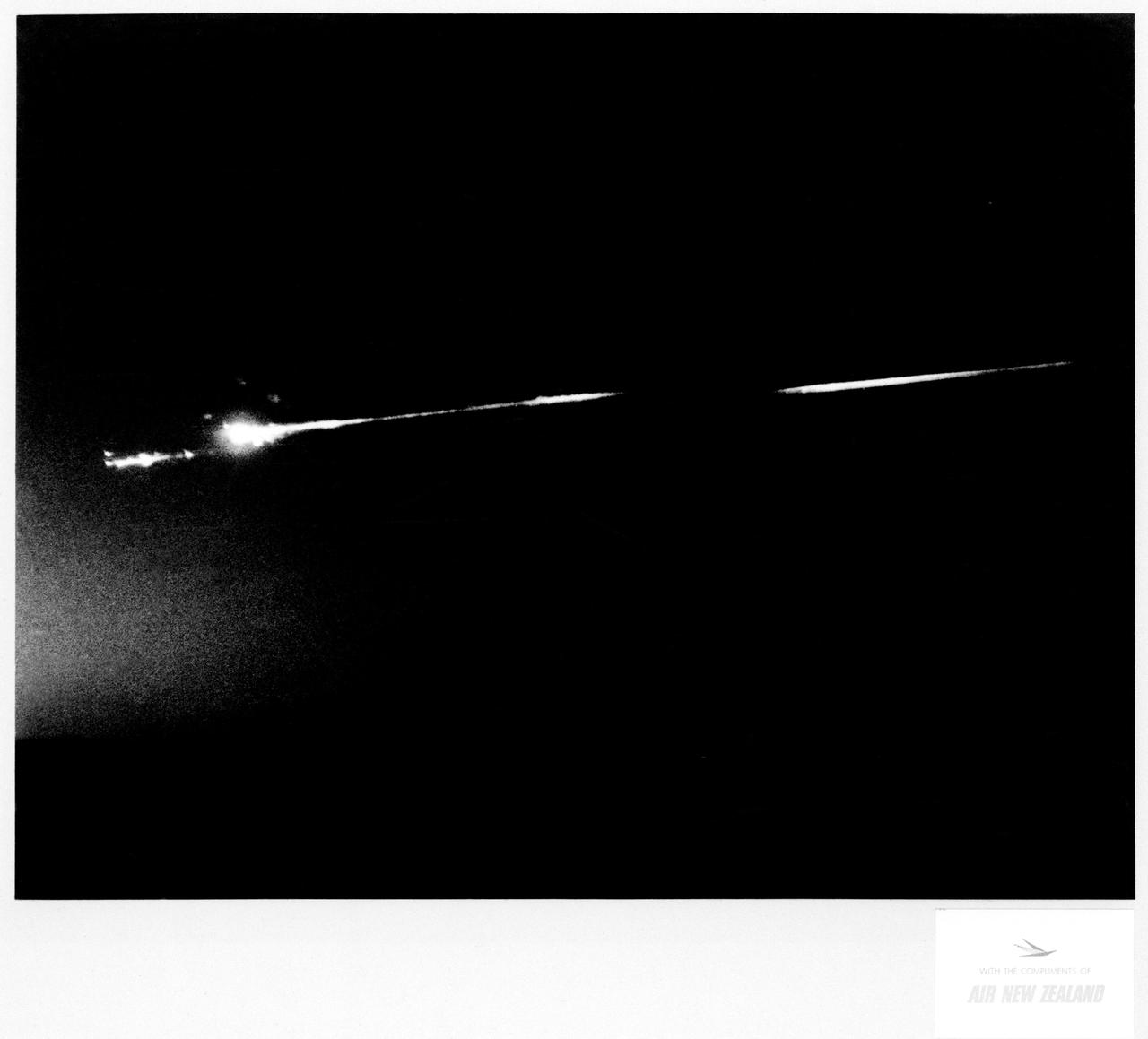
S70-17646 (18 April 1970) --- An unidentified airline passenger snapped these bright objects, believed to be the Apollo 13 Service Module (SM) and Lunar Module (LM) as they entered Earth's atmosphere over the Pacific Ocean on April 18, 1970. The aircraft, an Air New Zealand DC-8 was midway between the Fiji Islands (Nandi Island to be specific) and Auckland, New Zealand, when the photograph was taken. The crew men of the problem plagued Apollo 13 mission jettisoned the LM and SM prior to entering Earth's atmosphere in the Apollo 13 Command Module (CM).
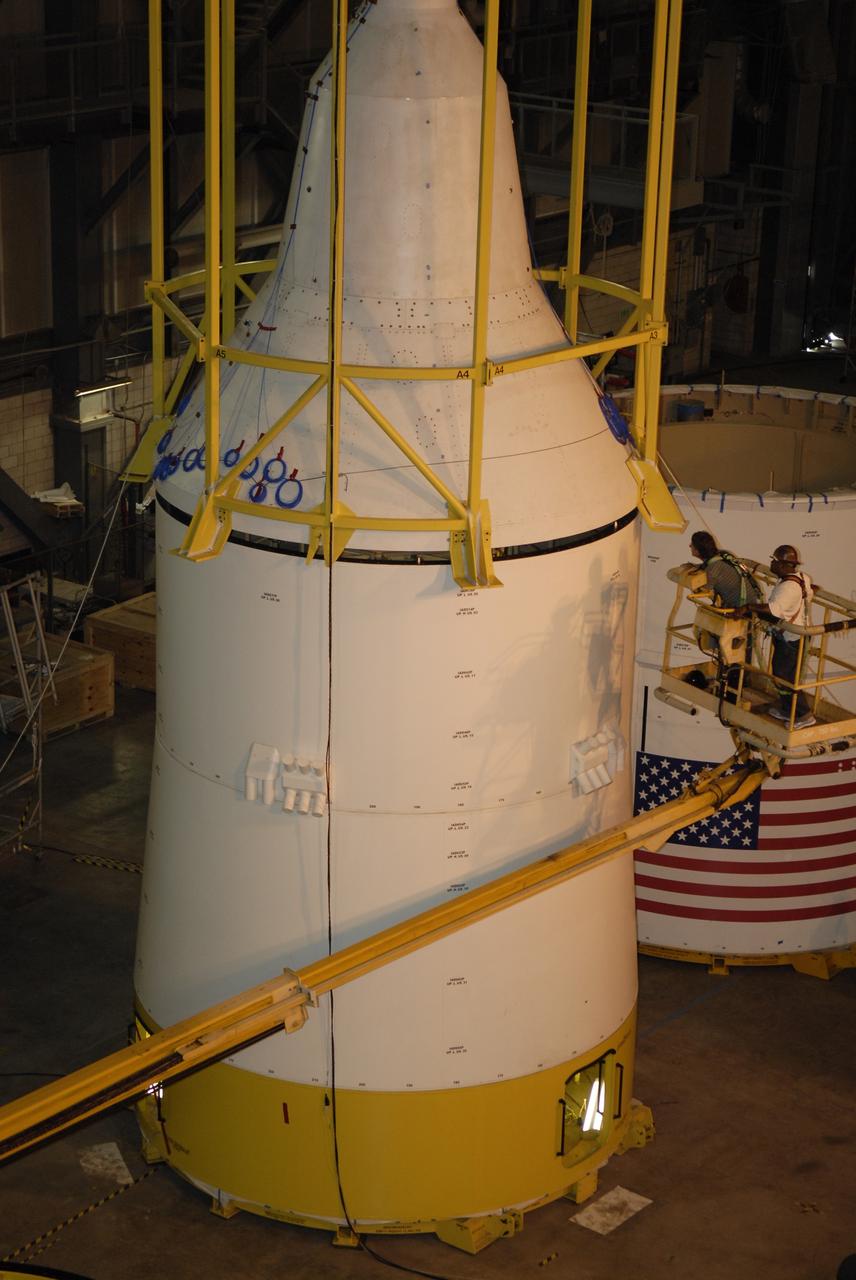
CAPE CANAVERAL, Fla. – In high bay 4 of the Vehicle Assembly Building at NASA's Kennedy Space Center in Florida, the framework known as the "birdcage" lowers the Ares I-X simulator crew module-launch abort system, or CM-LAS, onto the simulator service module-service adapter stack. Ares I-X is the flight test for the Ares I. The I-X flight will provide NASA an early opportunity to test and prove hardware, facilities and ground operations associated with Ares I. The launch of the 327-foot-tall, full-scale Ares I-X is targeted for August 2009. Photo credit: NASA/Kim Shiflett
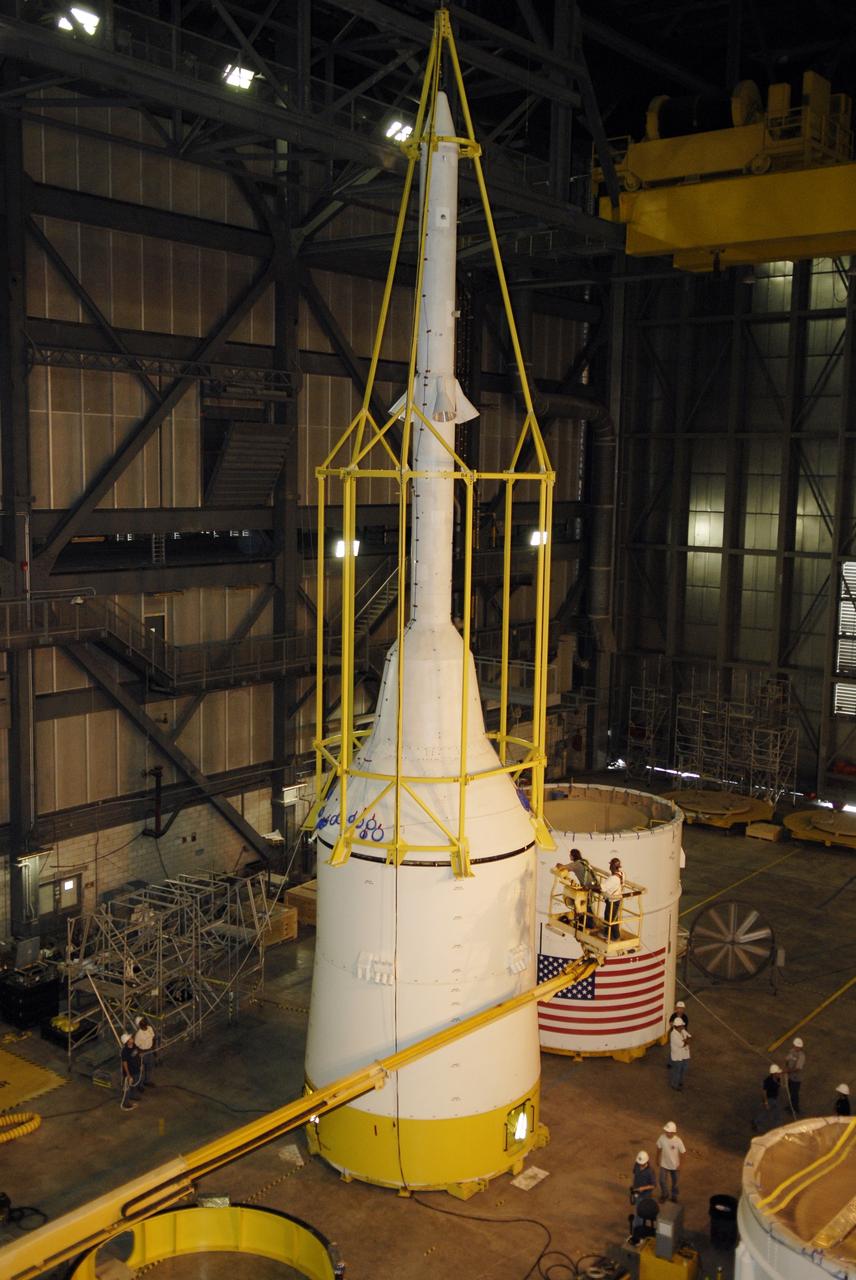
CAPE CANAVERAL, Fla. – In high bay 4 of the Vehicle Assembly Building at NASA's Kennedy Space Center in Florida, the framework known as the "birdcage" lowers the Ares I-X simulator crew module-launch abort system, or CM-LAS, onto the simulator service module-service adapter stack. Ares I-X is the flight test for the Ares I. The I-X flight will provide NASA an early opportunity to test and prove hardware, facilities and ground operations associated with Ares I. The launch of the 327-foot-tall, full-scale Ares I-X is targeted for August 2009. Photo credit: NASA/Kim Shiflett
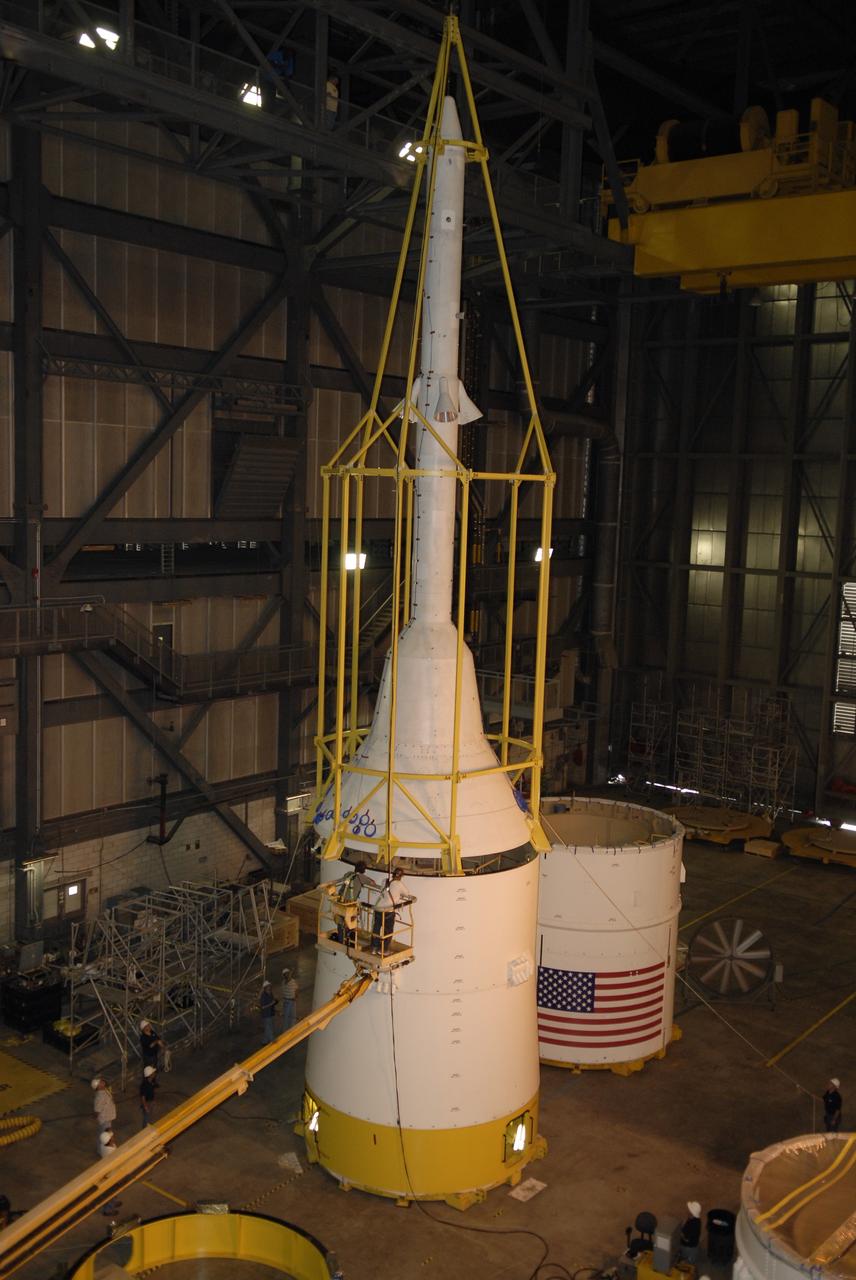
CAPE CANAVERAL, Fla. – In high bay 4 of the Vehicle Assembly Building at NASA's Kennedy Space Center in Florida, the framework known as the "birdcage" lowers the Ares I-X simulator crew module-launch abort system, or CM-LAS, onto the simulator service module-service adapter stack. Ares I-X is the flight test for the Ares I. The I-X flight will provide NASA an early opportunity to test and prove hardware, facilities and ground operations associated with Ares I. The launch of the 327-foot-tall, full-scale Ares I-X is targeted for August 2009. Photo credit: NASA/Kim Shiflett
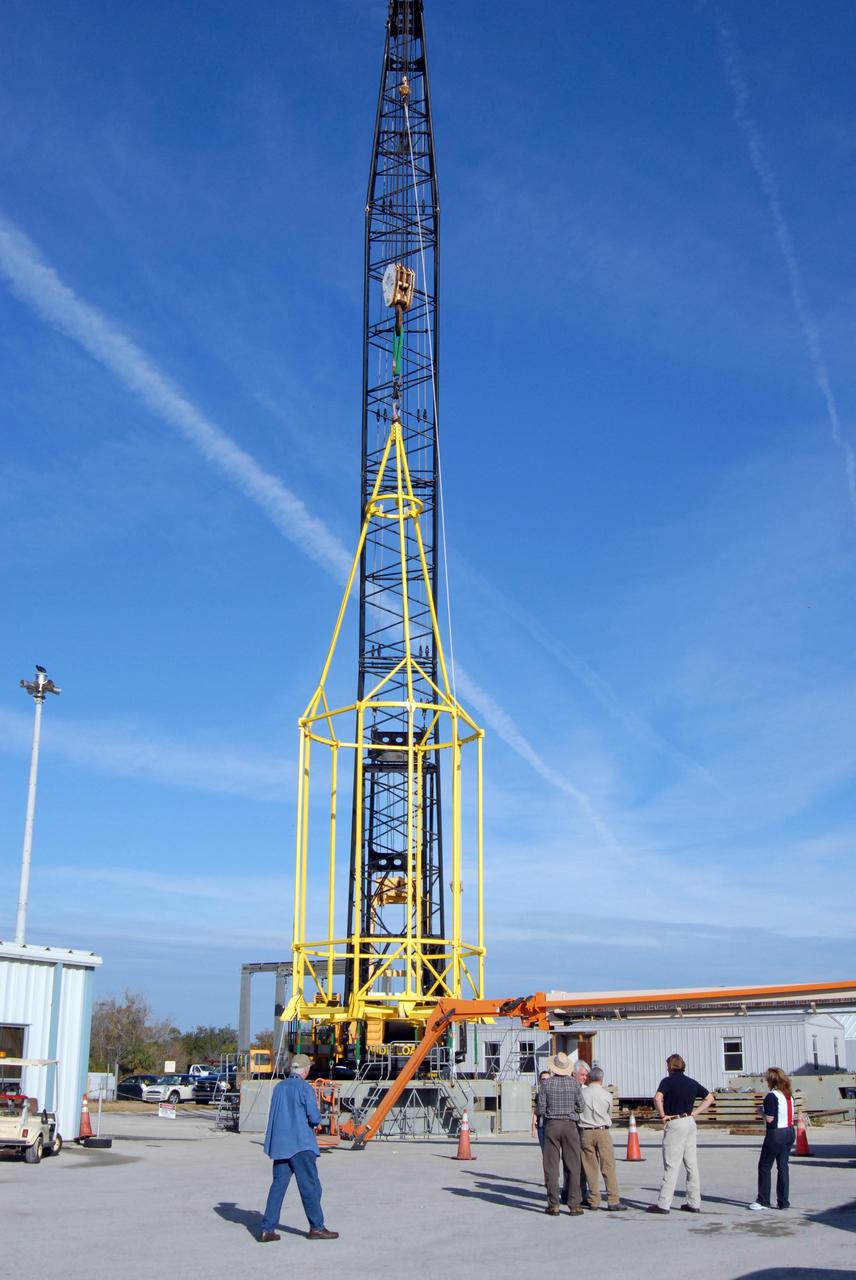
CAPE CANAVERAL, Fla. – The lifting fixture nicknamed the "Birdcage" is lifted by a crane to test the load capability. The Birdcage will be used to lift the Crew Module, or CM, and Launch Abort System, or LAS, assembly for the Ares I-X rocket and to stack and de-stack the assembly from the Service Module/Spacecraft Adapter assembly. It will also have the ability to lift and to stack and de-stack Stack-5 (all of the above components) from the Ares I-X in the Vehicle Assembly Building at NASA's Kennedy Space Center in Florida. Ares I-X is the test flight for the Ares I. The I-X flight will provide NASA an early opportunity to test and prove hardware, facilities and ground operations associated with Ares I. The launch of the 321-foot-tall, full-scale Ares I-X, targeted for July 2009, will be the first in a series of unpiloted rocket launches from Kennedy. When fully developed, the 16-foot diameter crew module will furnish living space and reentry protection for the astronauts, while their launch abort system will provide safe evacuation if a launch vehicle failure occurs. Photo credit: NASA/Jack Pfaller
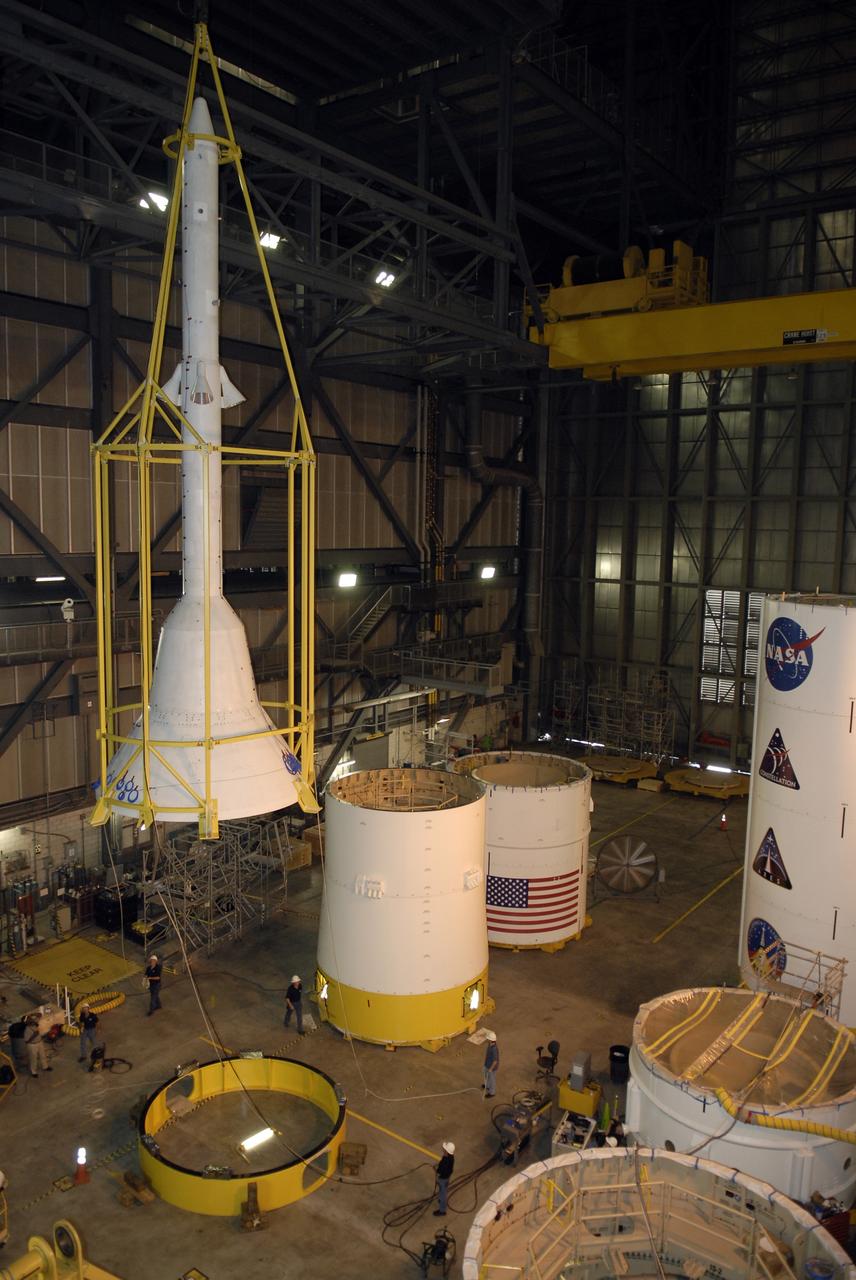
CAPE CANAVERAL, Fla. – In high bay 4 of the Vehicle Assembly Building at NASA's Kennedy Space Center in Florida, the framework known as the "birdcage" lifts the Ares I-X simulator crew module-launch abort system, or CM-LAS. The CM-LAS stack will be mated with the simulator service module-service adapter stack. Ares I-X is the flight test for the Ares I. The I-X flight will provide NASA an early opportunity to test and prove hardware, facilities and ground operations associated with Ares I. The launch of the 327-foot-tall, full-scale Ares I-X is targeted for August 2009. Photo credit: NASA/Kim Shiflett
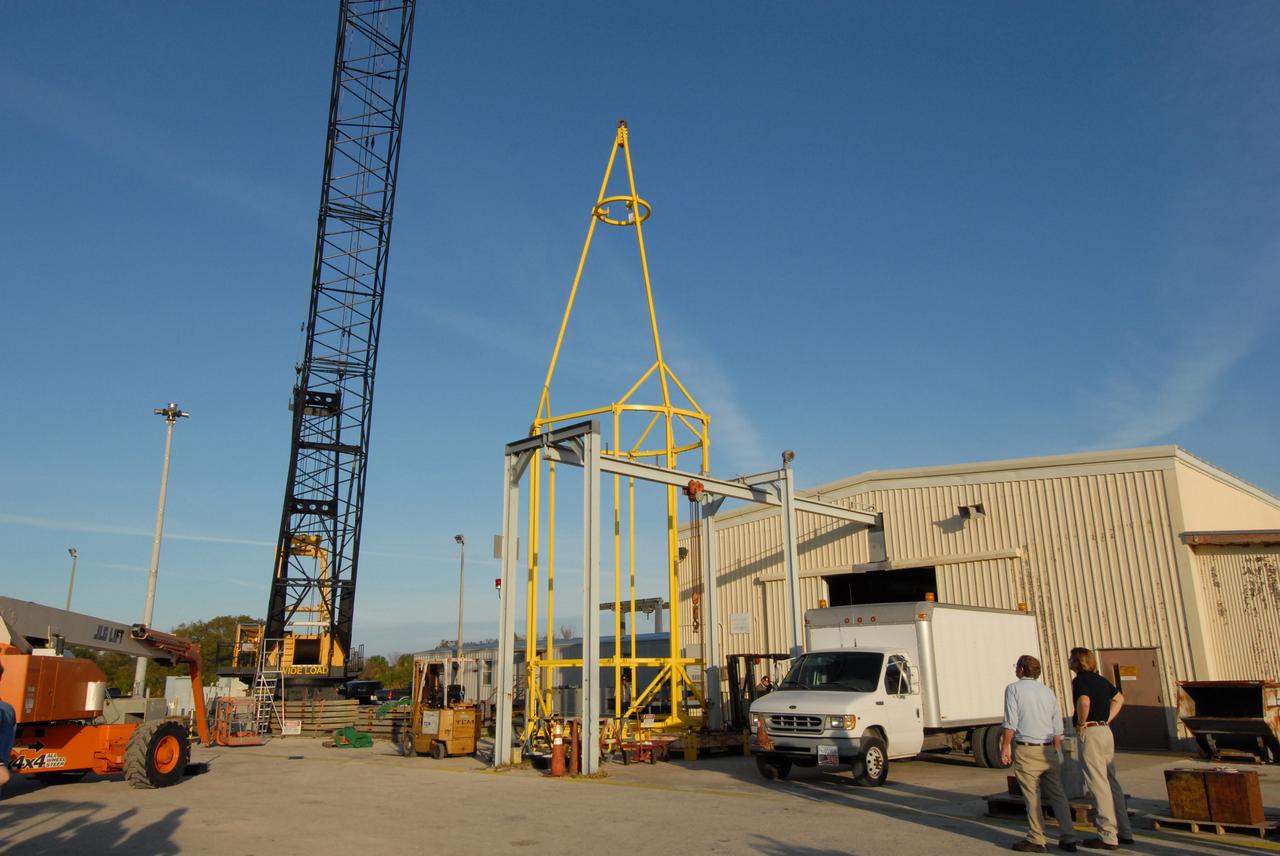
CAPE CANAVERAL, Fla. – The yellow framework at center is the lifting fixture nicknamed the "Birdcage" that will have the ability to lift the Crew Module, or CM, and Launch Abort System, or LAS, assembly for the Ares I-X rocket and to stack and de-stack the assembly from the Service Module/Spacecraft Adapter assembly. It will also have the ability to lift and to stack and de-stack Stack-5 (all of the above components) from the Ares I-X flight test vehicle in the Vehicle Assembly Building at NASA's Kennedy Space Center in Florida. Ares I-X is the test flight for the Ares I. The I-X flight will provide NASA an early opportunity to test and prove hardware, facilities and ground operations associated with Ares I. The launch of the 321-foot-tall, full-scale Ares I-X, targeted for July 2009, will be the first in a series of unpiloted rocket launches from Kennedy. When fully developed, the 16-foot diameter crew module will furnish living space and reentry protection for the astronauts, while their launch abort system will provide safe evacuation if a launch vehicle failure occurs. Photo credit: NASA/Jack Pfaller
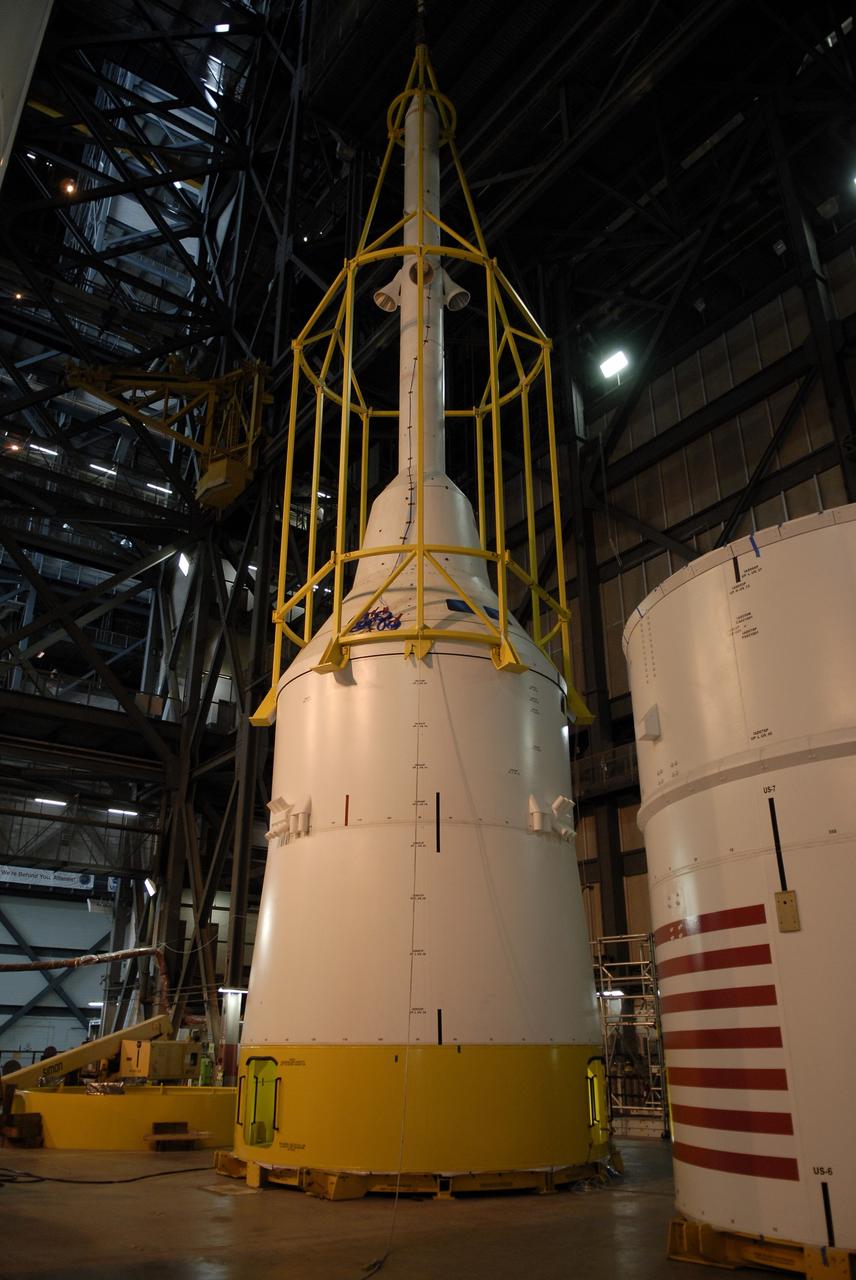
CAPE CANAVERAL, Fla. – In high bay 4 of the Vehicle Assembly Building at NASA's Kennedy Space Center in Florida, the framework known as the "birdcage" lowers the Ares I-X simulator crew module-launch abort system, or CM-LAS, onto the simulator service module-service adapter stack. Ares I-X is the flight test for the Ares I. The I-X flight will provide NASA an early opportunity to test and prove hardware, facilities and ground operations associated with Ares I. The launch of the 327-foot-tall, full-scale Ares I-X is targeted for August 2009. Photo credit: NASA/Kim Shiflett
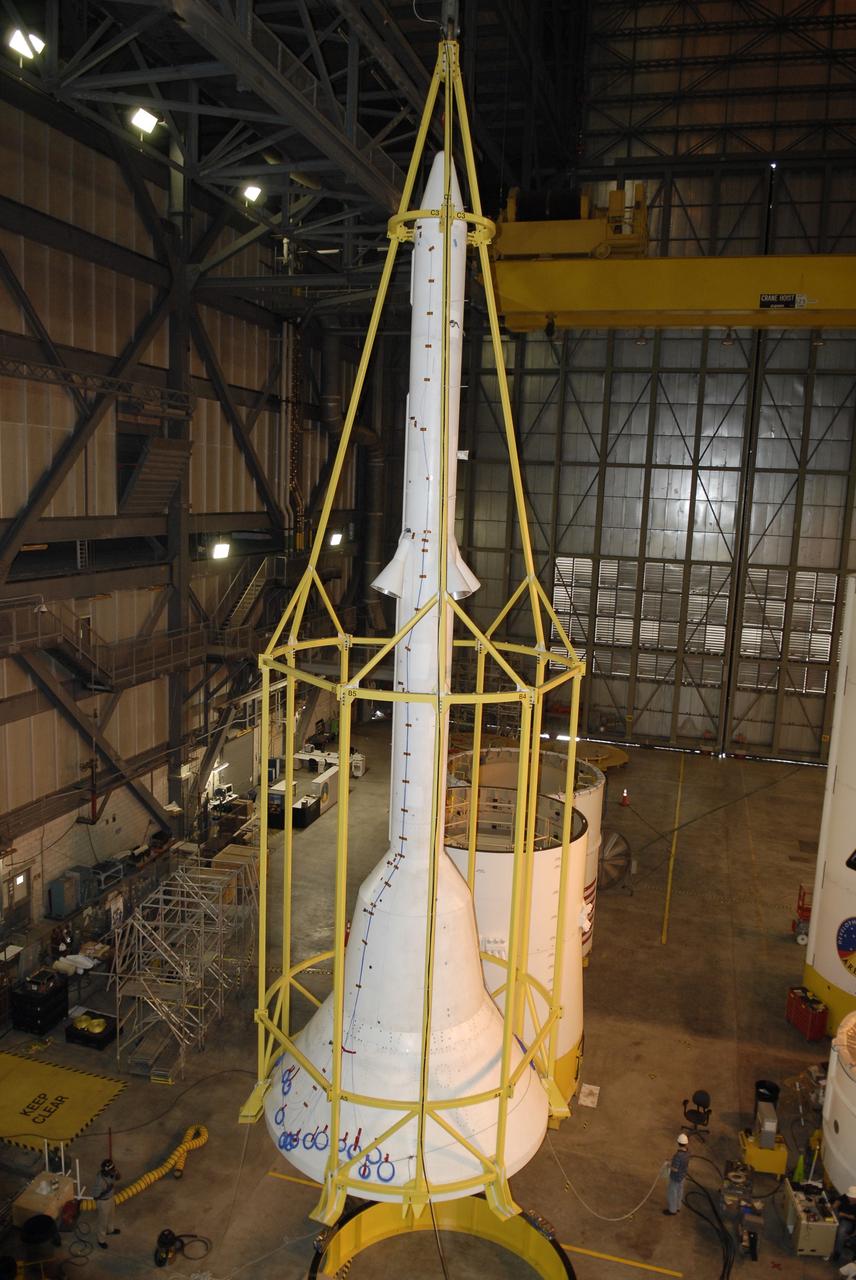
CAPE CANAVERAL, Fla. – In high bay 4 of the Vehicle Assembly Building at NASA's Kennedy Space Center in Florida, the framework known as the "birdcage" is placed over the Ares I-X simulator crew module-launch abort system, or CM-LAS. The birdcage will be used to lift the CM-LAS to mate the stack with the simulator service module-service adapter stack. Ares I-X is the flight test for the Ares I. The I-X flight will provide NASA an early opportunity to test and prove hardware, facilities and ground operations associated with Ares I. The launch of the 327-foot-tall, full-scale Ares I-X is targeted for August 2009. Photo credit: NASA/Kim Shiflett
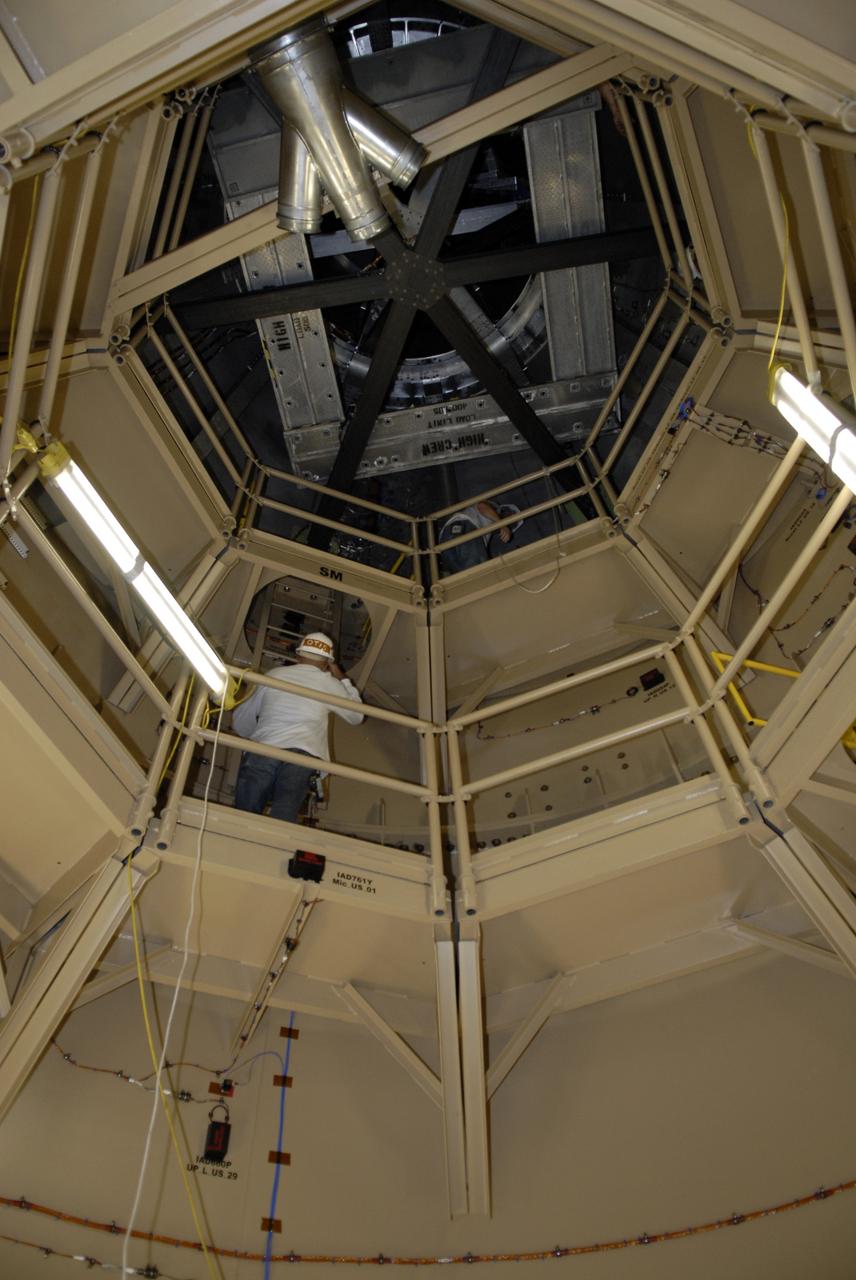
CAPE CANAVERAL, Fla. – In high bay 4 of the Vehicle Assembly Building at NASA's Kennedy Space Center in Florida, a technician checks the mating from the inside of the Ares I-X simulator crew module-launch abort system, or CM-LAS, with the simulator service module-service adapter stack. Ares I-X is the flight test for the Ares I. The I-X flight will provide NASA an early opportunity to test and prove hardware, facilities and ground operations associated with Ares I. The launch of the 327-foot-tall, full-scale Ares I-X is targeted for August 2009. Photo credit: NASA/Kim Shiflett
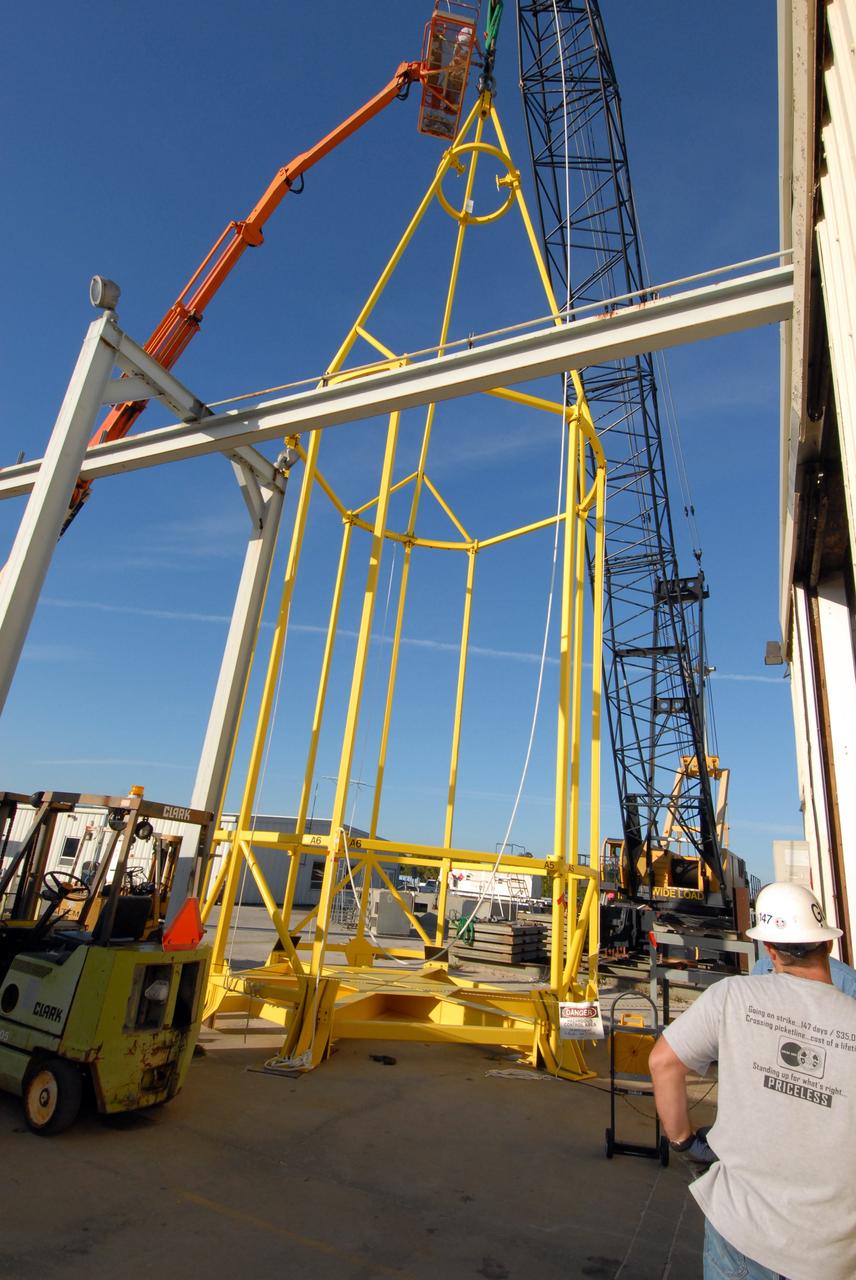
CAPE CANAVERAL, Fla. – The yellow framework seen here is the lifting fixture nicknamed the "Birdcage" that will have the ability to lift the Crew Module, or CM, and Launch Abort System, or LAS, assembly for the Ares I-X rocket and to stack and de-stack the assembly from the Service Module/Spacecraft Adapter assembly. It will also have the ability to lift and to stack and de-stack Stack-5 (all of the above components) from the Ares I-X in the Vehicle Assembly Building at NASA's Kennedy Space Center in Florida. Ares I-X is the test flight for the Ares I. The I-X flight will provide NASA an early opportunity to test and prove hardware, facilities and ground operations associated with Ares I. The launch of the 321-foot-tall, full-scale Ares I-X, targeted for July 2009, will be the first in a series of unpiloted rocket launches from Kennedy. When fully developed, the 16-foot diameter crew module will furnish living space and reentry protection for the astronauts, while their launch abort system will provide safe evacuation if a launch vehicle failure occurs. Photo credit: NASA/Jack Pfaller
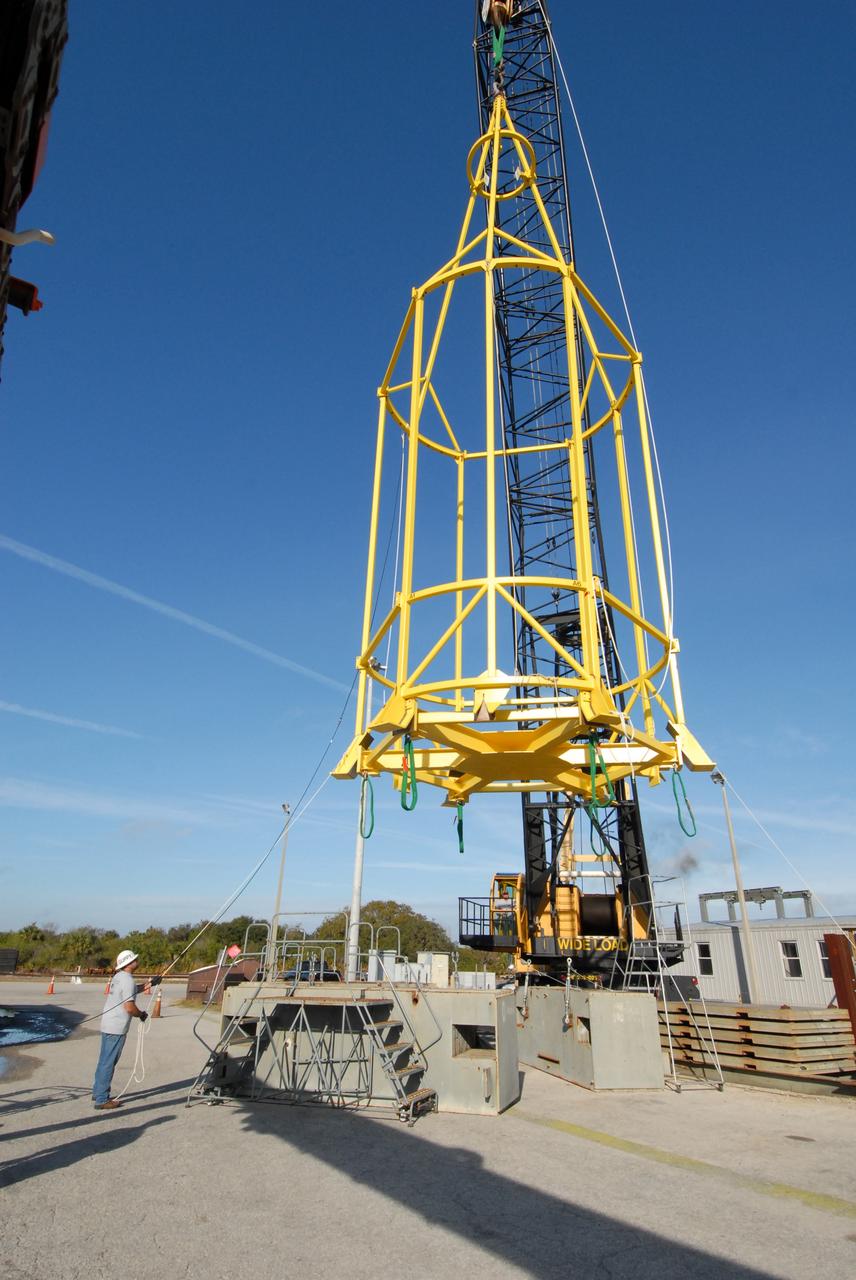
CAPE CANAVERAL, Fla. – The lifting fixture nicknamed the "Birdcage" is lifted by a crane to test the load capability. The Birdcage will be used to lift the Crew Module, or CM, and Launch Abort System, or LAS, assembly for the Ares I-X rocket and to stack and de-stack the assembly from the Service Module/Spacecraft Adapter assembly. It will also have the ability to lift and to stack and de-stack Stack-5 (all of the above components) from the Ares I-X in the Vehicle Assembly Building at NASA's Kennedy Space Center in Florida. Ares I-X is the test flight for the Ares I. The I-X flight will provide NASA an early opportunity to test and prove hardware, facilities and ground operations associated with Ares I. The launch of the 321-foot-tall, full-scale Ares I-X, targeted for July 2009, will be the first in a series of unpiloted rocket launches from Kennedy. When fully developed, the 16-foot diameter crew module will furnish living space and reentry protection for the astronauts, while their launch abort system will provide safe evacuation if a launch vehicle failure occurs. Photo credit: NASA/Jack Pfaller
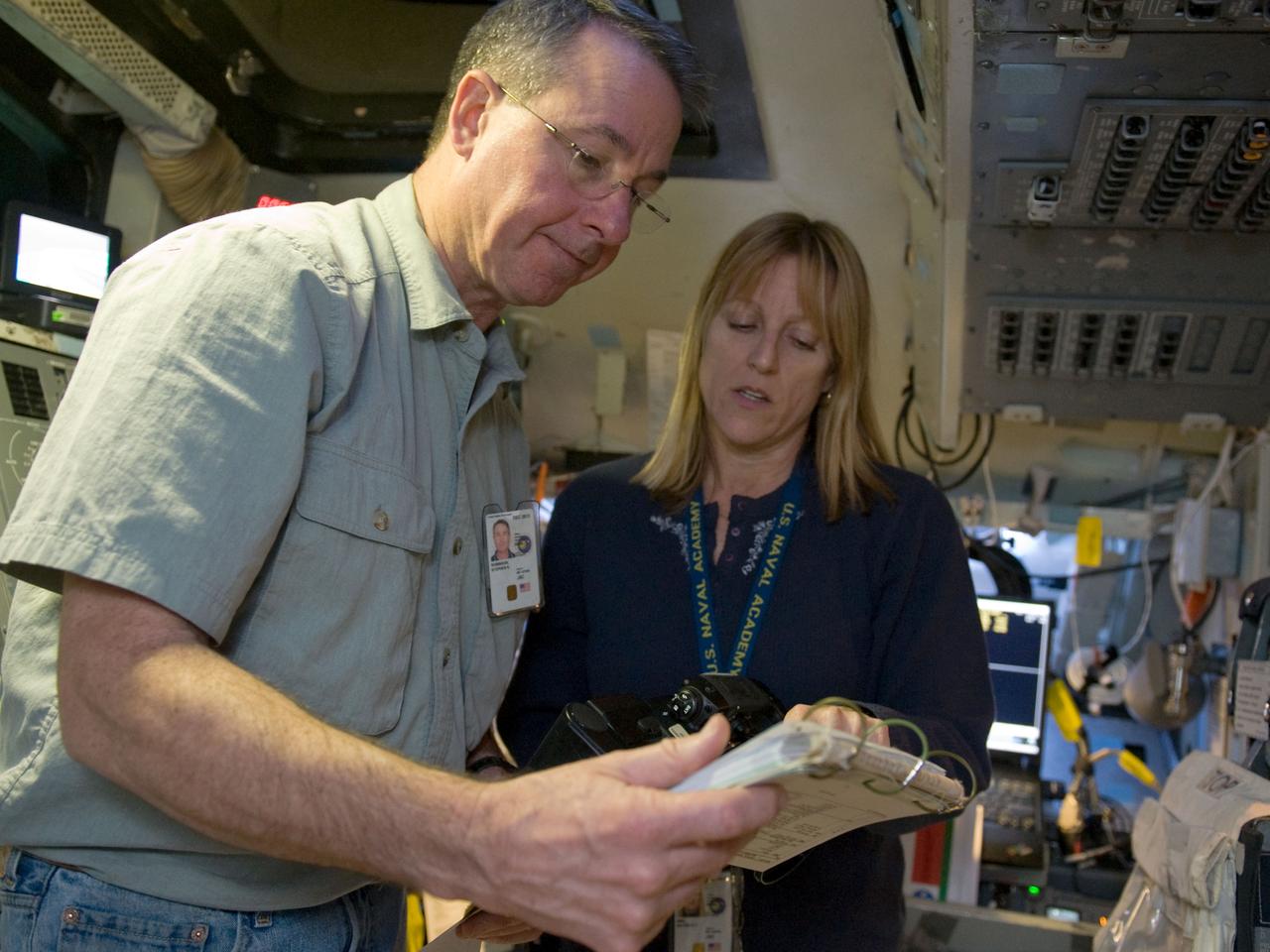
JSC2009-E-240765 (12 Nov. 2009) --- Astronauts Stephen Robinson and Kathryn Hire, both STS-130 mission specialists, read a procedure checklist during a training session in a fixed-base shuttle mission simulator (SMS) training session in the Jake Garn Simulation and Training Facility at NASA's Johnson Space Center.
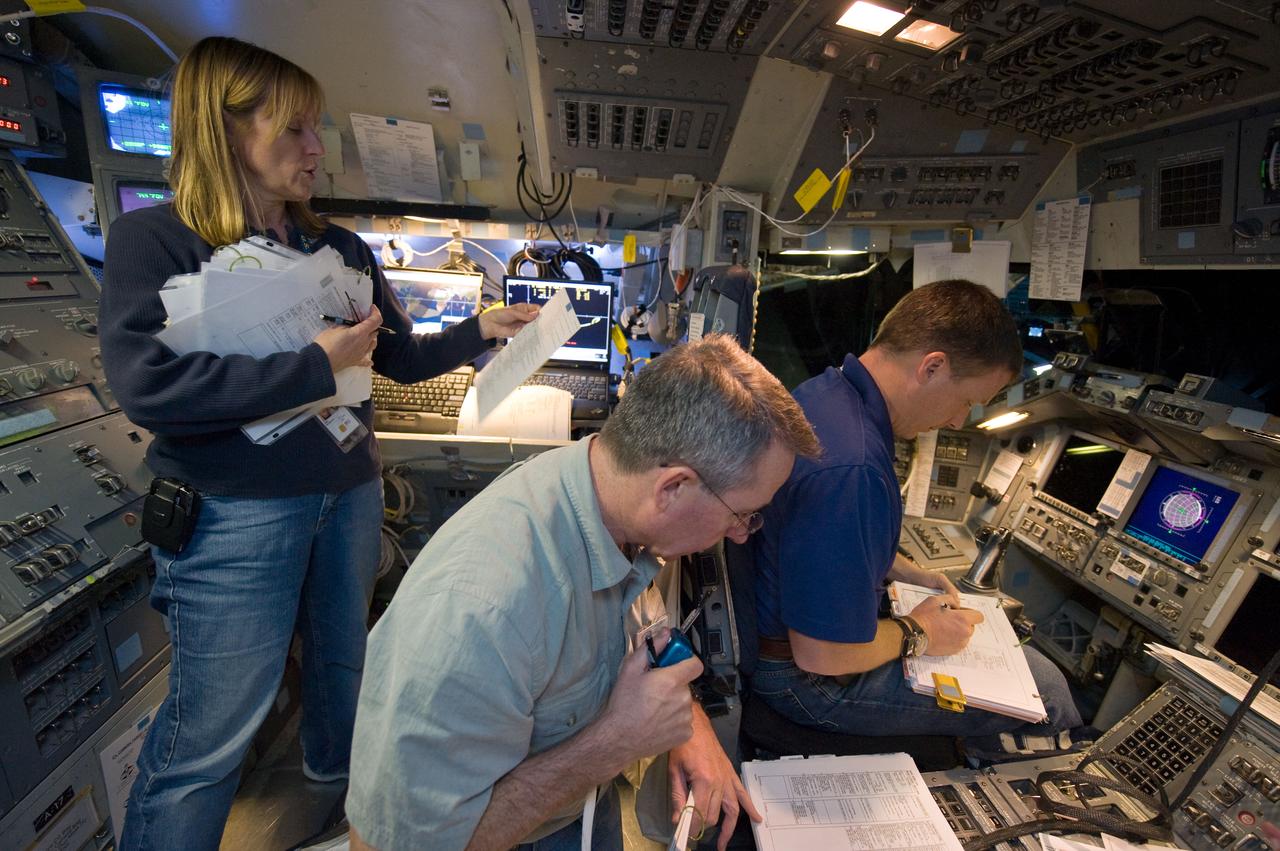
JSC2009-E-240771 (12 Nov. 2009) --- Astronauts Terry Virts (right), STS-130 pilot; Kathryn Hire and Stephen Robinson, both mission specialists, participate in a training session in the fixed-base shuttle mission simulator (SMS) in the Jake Garn Simulation and Training Facility at Johnson Space Center.
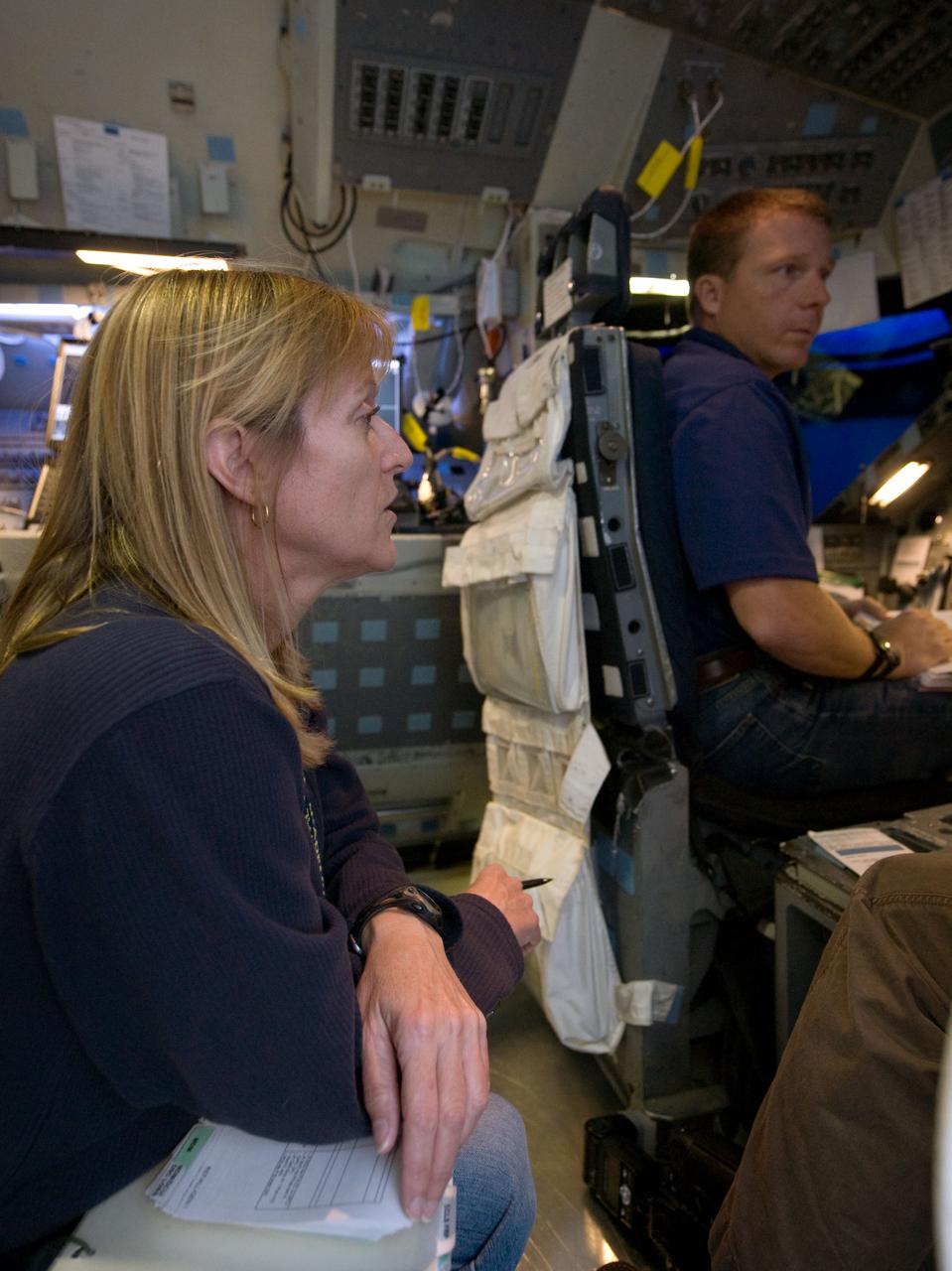
JSC2009-E-240768 (12 Nov. 2009) --- Astronauts Terry Virts, STS-130 pilot; and Kathryn Hire, mission specialist, participate in a training session in the fixed-base shuttle mission simulator (SMS) in the Jake Garn Simulation and Training Facility at Johnson Space Center.
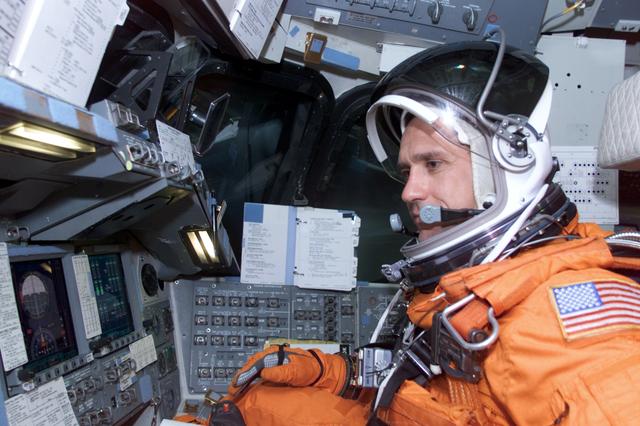
JSC2002-E-33379 (29 July 2002) --- Astronaut William A. Oefelein, STS-116 pilot, occupies the pilot’s station during a mission training session in the Shuttle Mission Simulator (SMS) in the Jake Garn Simulation and Training Facility at Johnson Space Center (JSC).
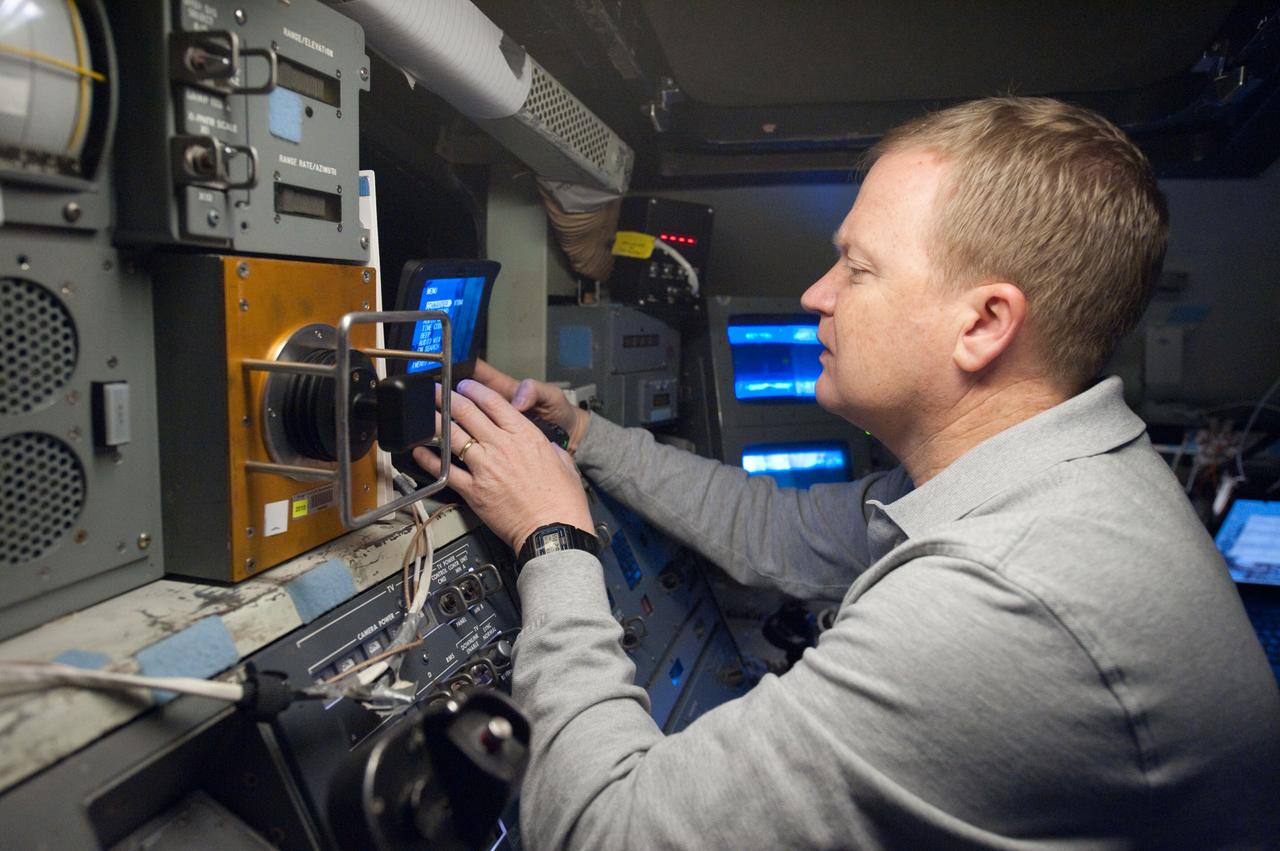
JSC2011-E-003045 (14 Jan. 2011) --- NASA astronaut Eric Boe, STS-133 pilot, participates in a training session in the fixed-base shuttle mission simulator (SMS) in the Jake Garn Simulation and Training Facility at NASA's Johnson Space Center. Photo credit: NASA or National Aeronautics and Space Administration
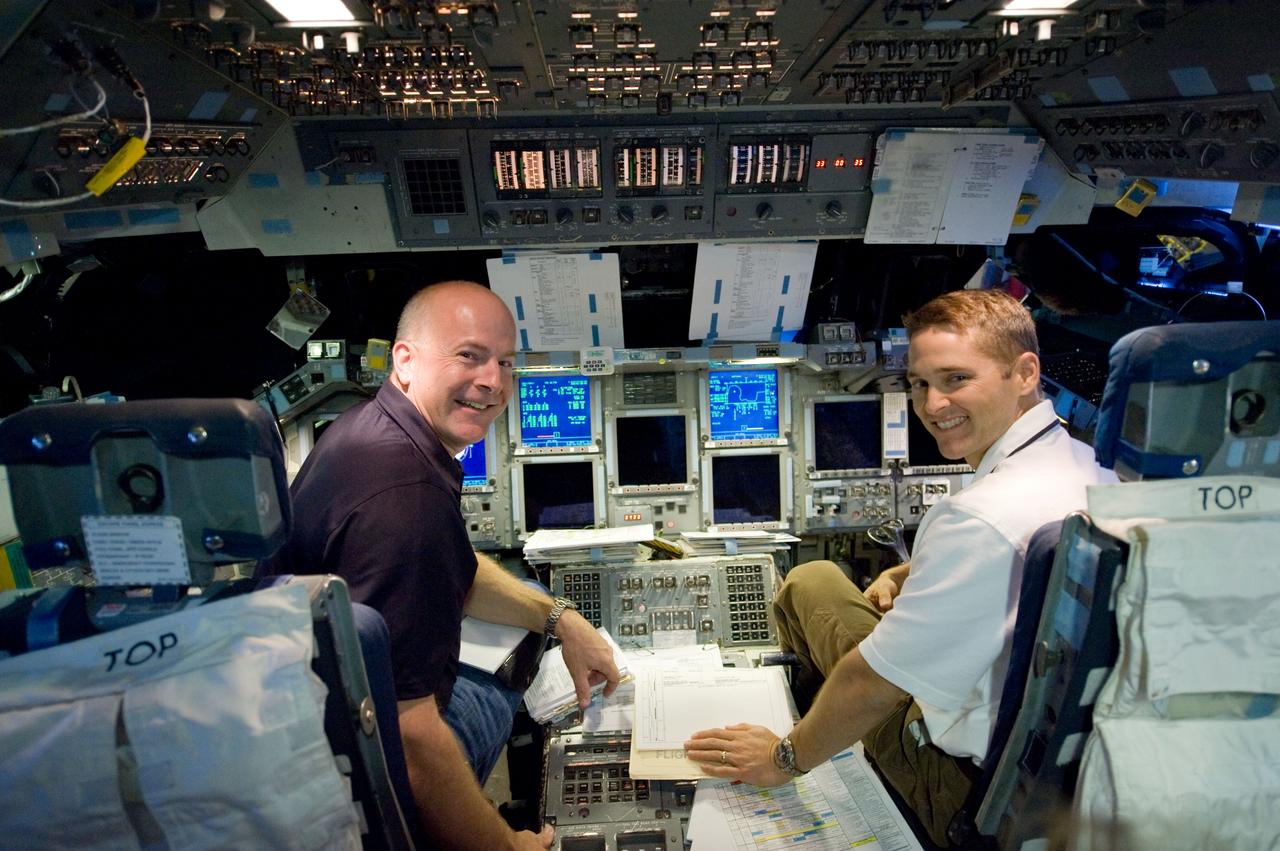
JSC2009-E-207318 (11 Sept. 2009) --- NASA astronauts Alan Poindexter (left) and James P. Dutton Jr., STS-131 commander and pilot, respectively, participate in a training session in the shuttle mission simulator (SMS) in the Jake Garn Simulation and Training Facility at NASA?s Johnson Space Center.
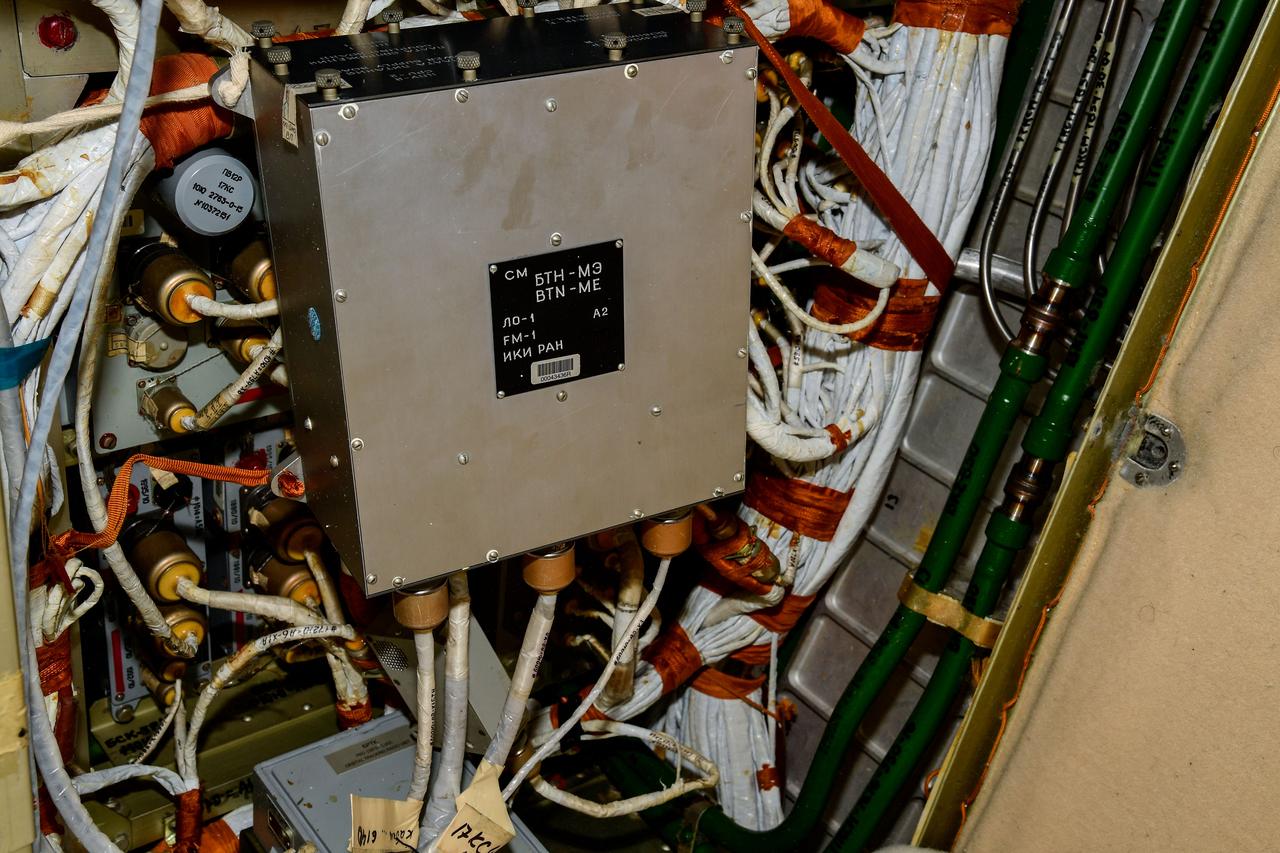
iss067e190005 (7/20/2023) --- A view of BTN-ME Unit in the Zvezda Service Module (SM) aboard the International space Station (ISS). The Study of the Fluxes of Fast and Thermal Neutrons, focuses on the spatial and temporal distribution of neutron fluxes and spectra in near-Earth space, including during solar flares.
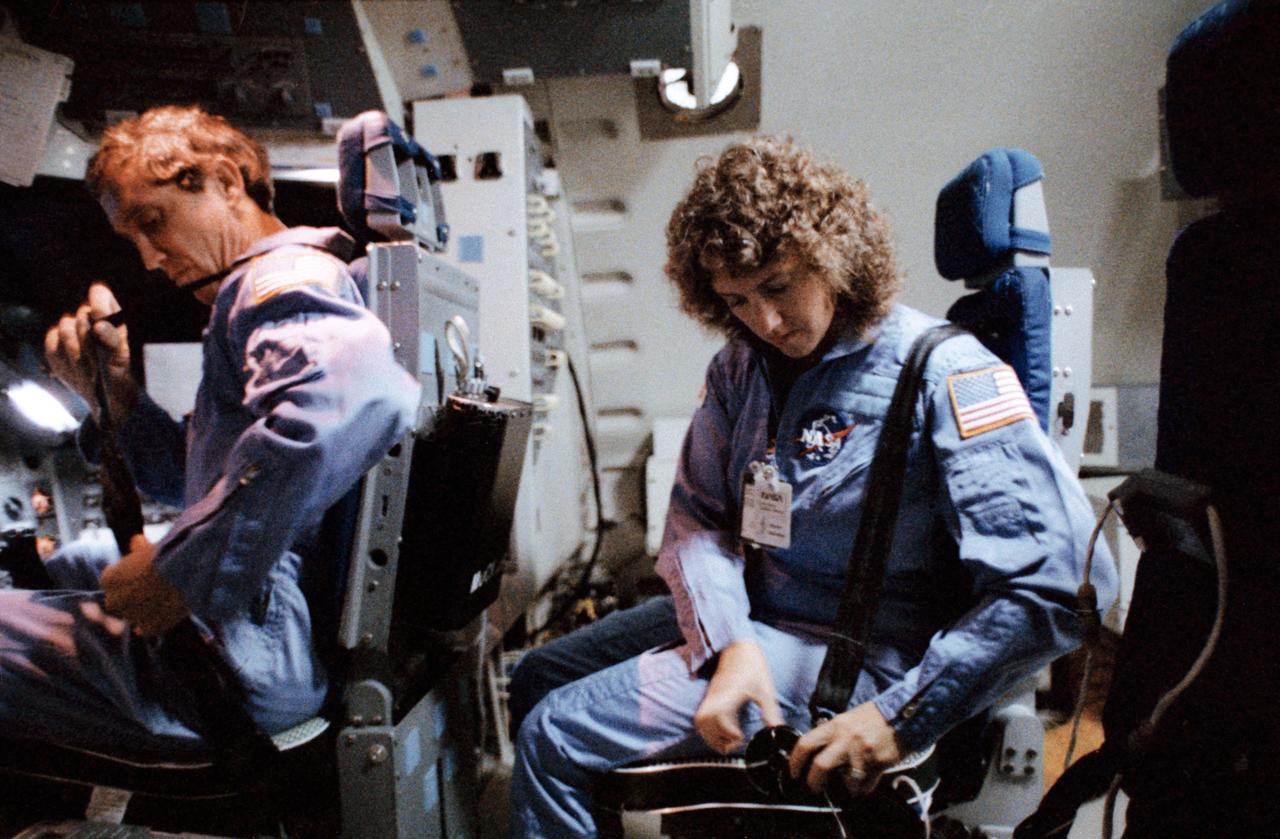
S85-44459 (19 Nov. 1985) --- Sharon Christa McAuliffe, seated behind 51-L pilot Michael J. Smith, prepares to strap herself into the mission specialists position in the Shuttle Mission Simulator (SMS) as part of her training for the 51-L mission. Photo credit: NASA
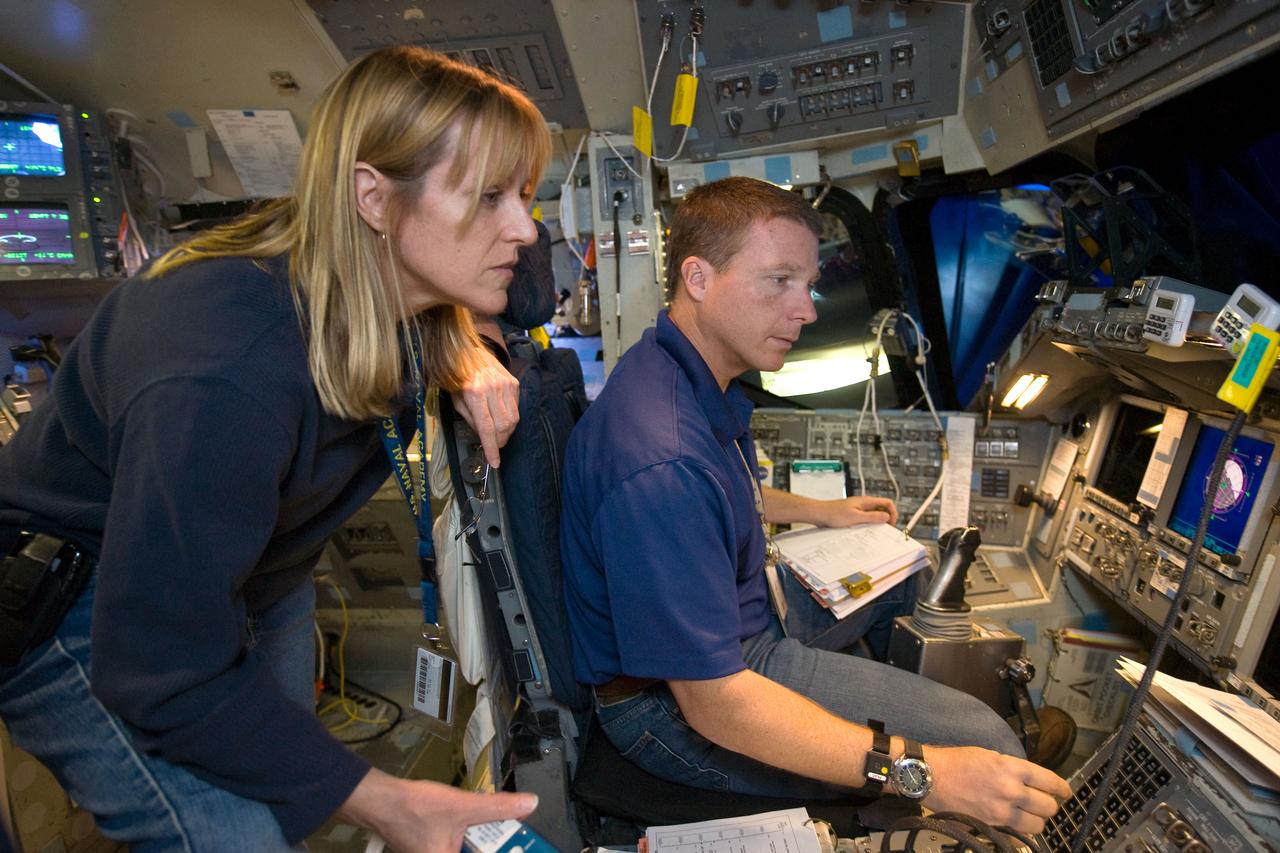
JSC2009-E-240767 (12 Nov. 2009) --- Astronauts Terry Virts, STS-130 pilot; and Kathryn Hire, mission specialist, participate in a training session in the fixed-base shuttle mission simulator (SMS) in the Jake Garn Simulation and Training Facility at Johnson Space Center.

JSC2009-E-207324 (11 Sept. 2009) --- NASA astronaut James P. Dutton Jr., STS-131 pilot, occupies the pilot?s station during a training session in the shuttle mission simulator (SMS) in the Jake Garn Simulation and Training Facility at NASA?s Johnson Space Center.
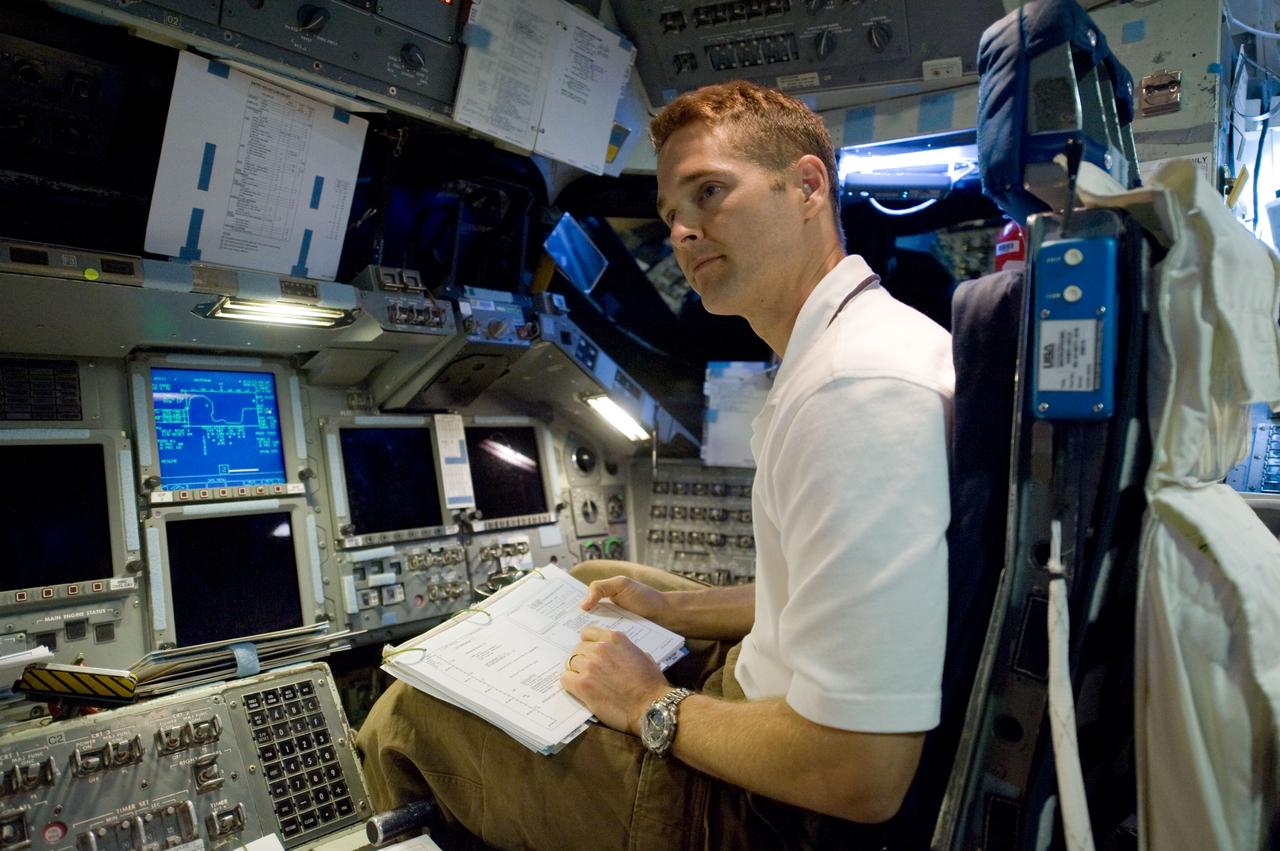
JSC2009-E-207326 (11 Sept. 2009) --- NASA astronaut James P. Dutton Jr., STS-131 pilot, occupies the pilot?s station during a training session in the shuttle mission simulator (SMS) in the Jake Garn Simulation and Training Facility at NASA?s Johnson Space Center.
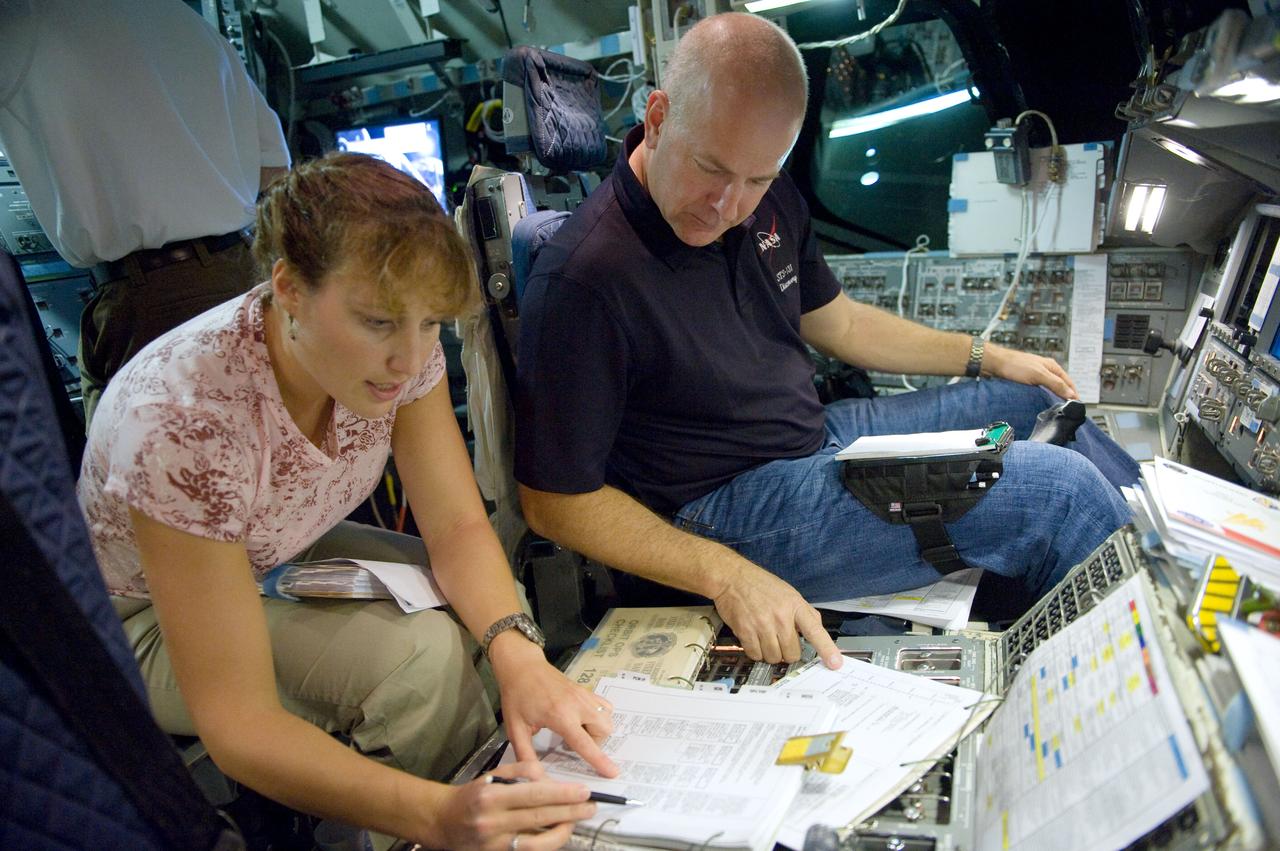
JSC2009-E-207361 (11 Sept. 2009) --- NASA astronauts Alan Poindexter, STS-131 commander; and Dorothy Metcalf-Lindenburger, mission specialist, participate in a training session in the shuttle mission simulator (SMS) in the Jake Garn Simulation and Training Facility at NASA?s Johnson Space Center.
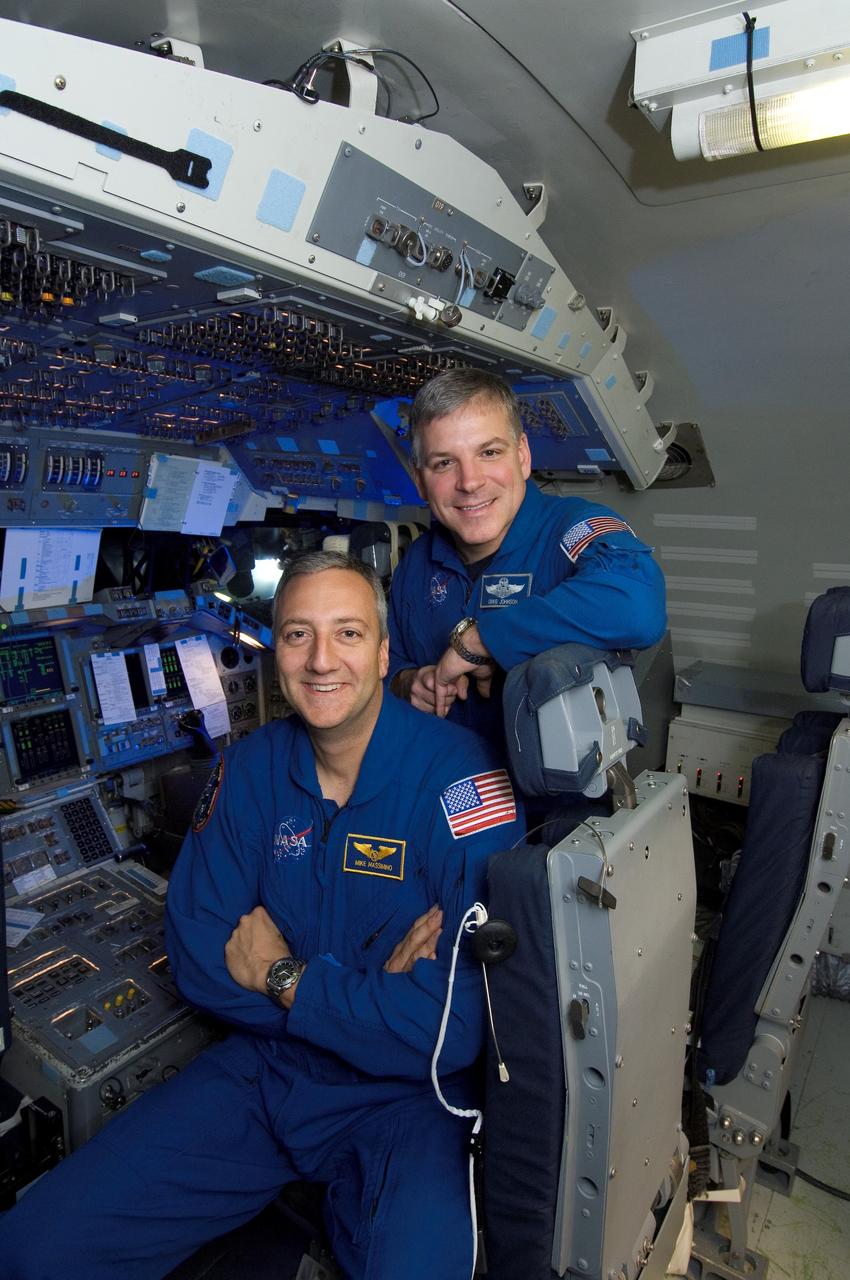
JSC2007-E-113866 (19 Dec. 2007) --- Astronauts Michael J. Massimino (seated), STS-125 mission specialist; and Gregory H. Johnson, STS-123 pilot, pose for a photo in the motion-base shuttle mission simulator (SMS) in the Jake Garn Simulation and Training Facility at the Johnson Space Center.
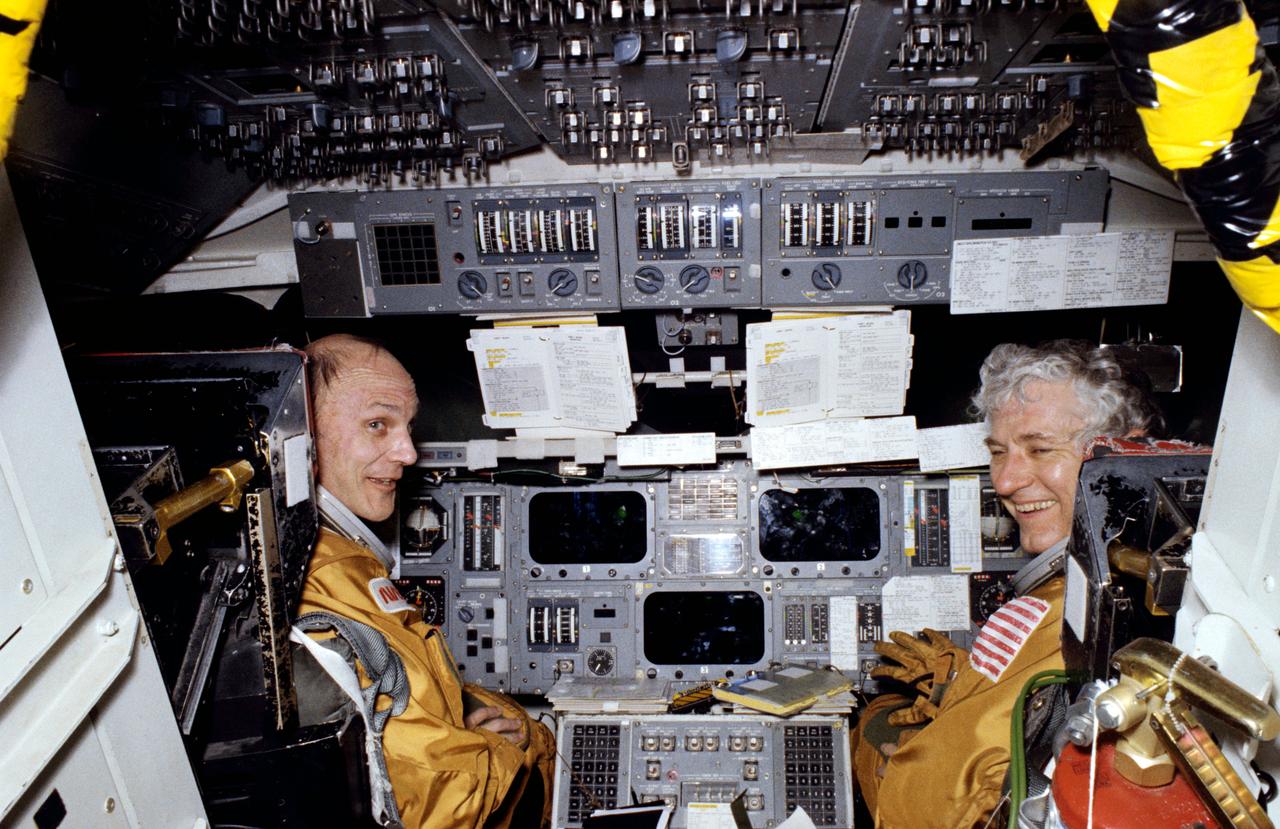
S82-31527 (15 May 1982) --- Astronauts Thomas K. Mattingly II (left) and Henry W. Hartsfield Jr., STS-4 commander and pilot, respectively, get in some training time in the motion base Shuttle Mission Simulator (SMS) at the Johnson Space Center's Mission Simulations and Training Facility. Photo credit: NASA
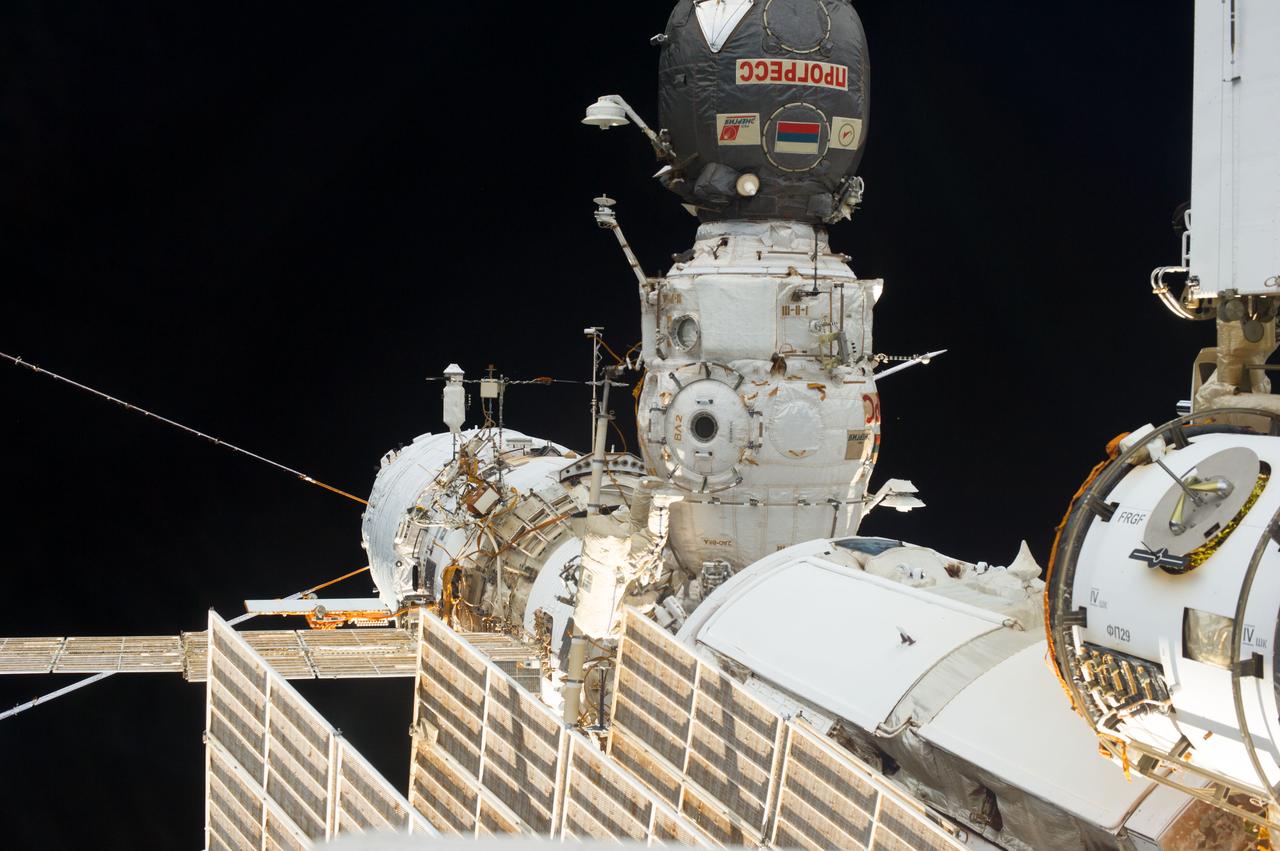
View of Russian cosmonaut Alexander Misurkin (bottom center), Expedition 36 flight engineer, participating in Russian extravehicular activity (EVA) 33. Also visible are the Progress spacecraft docked to the Pirs Docking Compartment (DC1) with the Service Module (SM) .
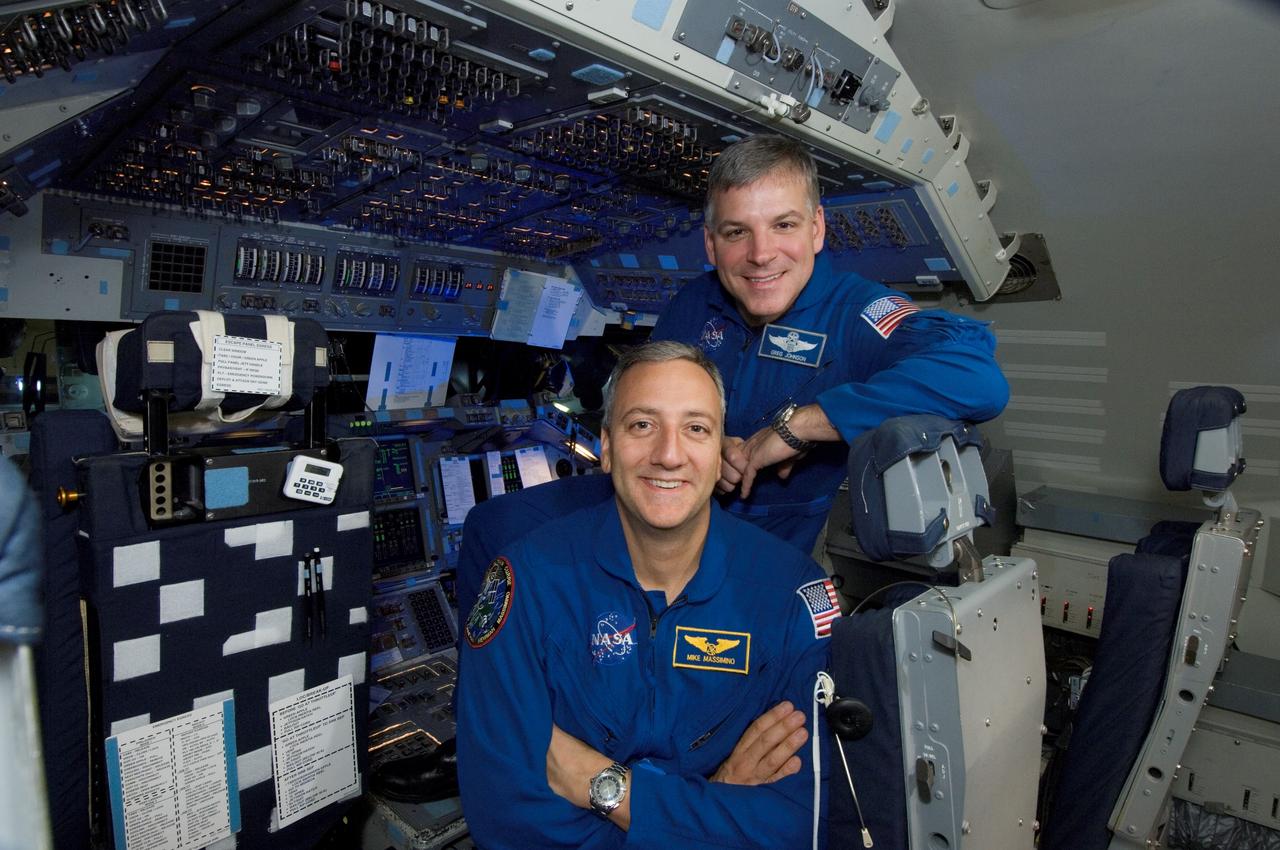
JSC2007-E-113868 (19 Dec. 2007) --- Astronauts Michael J. Massimino (seated), STS-125 mission specialist; and Gregory H. Johnson, STS-123 pilot, pose for a photo in the motion-base shuttle mission simulator (SMS) in the Jake Garn Simulation and Training Facility at the Johnson Space Center.
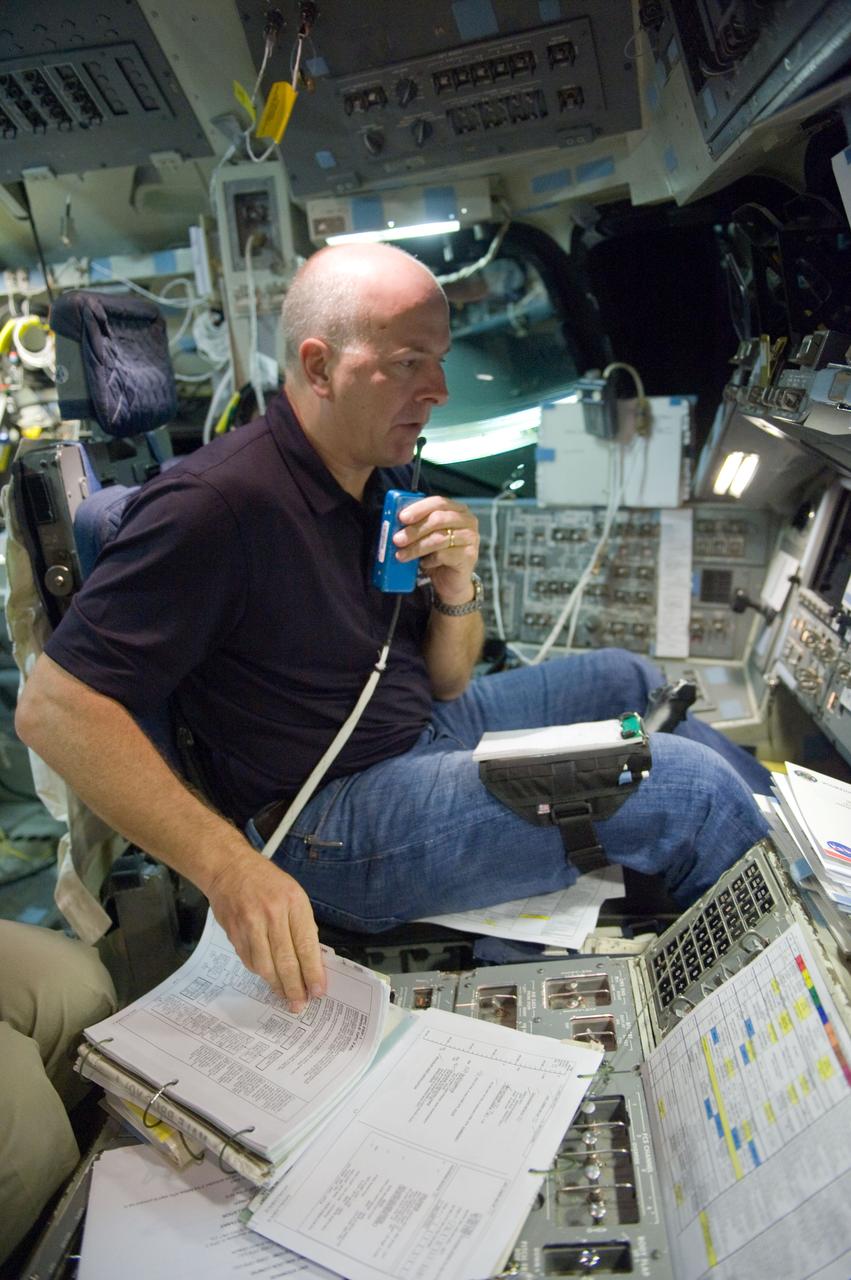
JSC2009-E-207367 (11 Sept. 2009) --- NASA astronaut Alan Poindexter, STS-131 commander, occupies the commander?s station during a training session in the shuttle mission simulator (SMS) in the Jake Garn Simulation and Training Facility at NASA?s Johnson Space Center.

JSC2009-E-207360 (11 Sept. 2009) --- NASA astronaut Alan Poindexter, STS-131 commander, occupies the commander?s station during a training session in the shuttle mission simulator (SMS) in the Jake Garn Simulation and Training Facility at NASA?s Johnson Space Center.
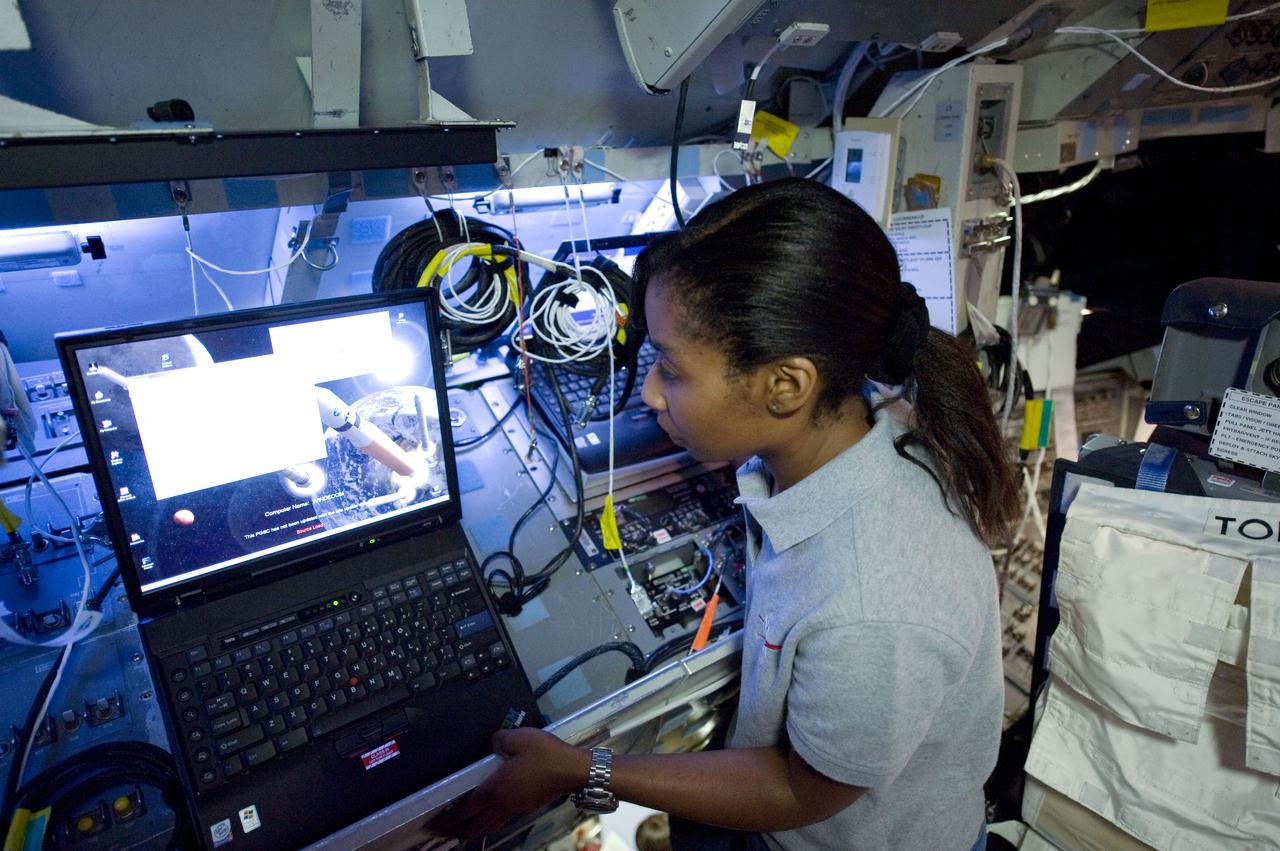
JSC2009-E-207322 (11 Sept. 2009) --- NASA astronaut Stephanie Wilson, STS-131 mission specialist, uses a computer during a training session in the shuttle mission simulator (SMS) in the Jake Garn Simulation and Training Facility at NASA?s Johnson Space Center.
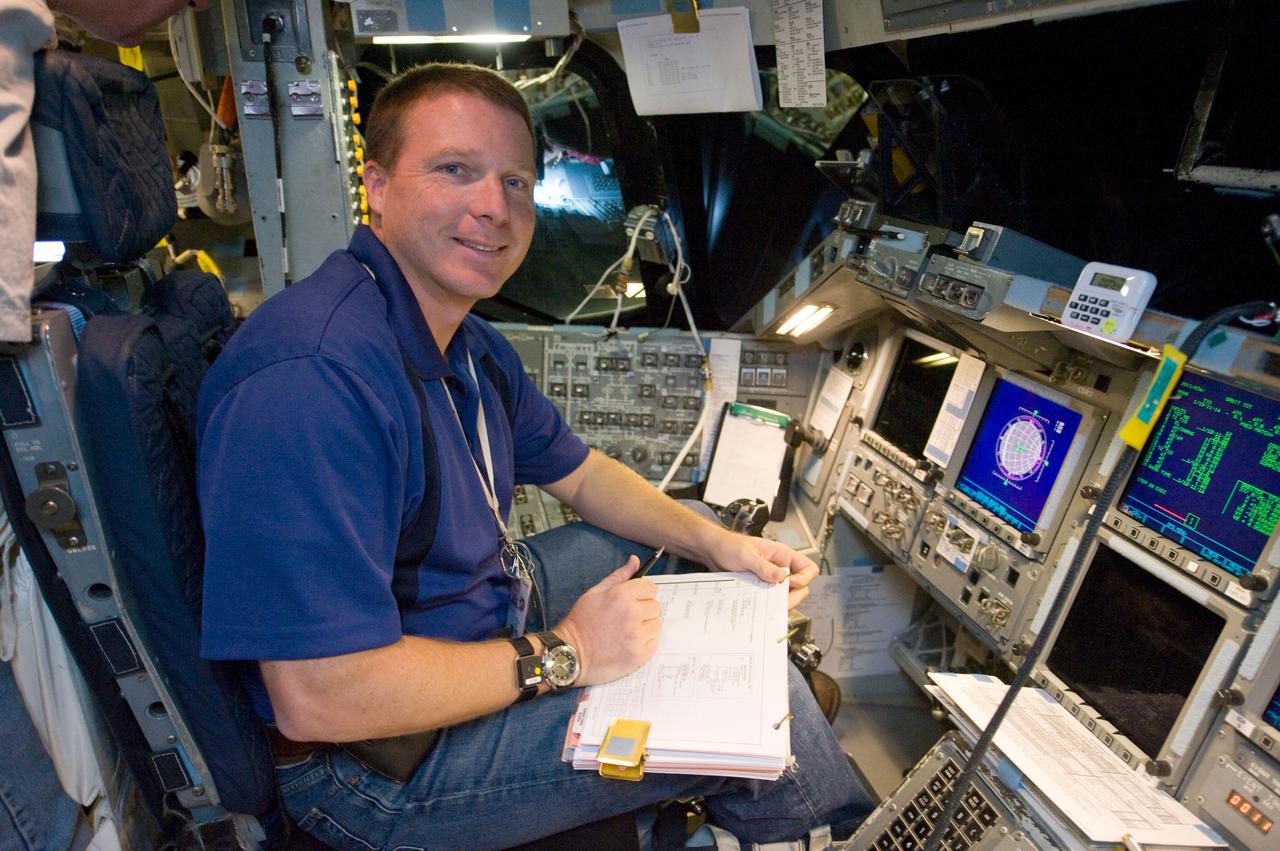
JSC2009-E-240773 (12 Nov. 2009) --- Astronaut Terry Virts, STS-130 pilot, occupies the commander?s station during a training session in the fixed-base shuttle mission simulator (SMS) in the Jake Garn Simulation and Training Facility at Johnson Space Center.
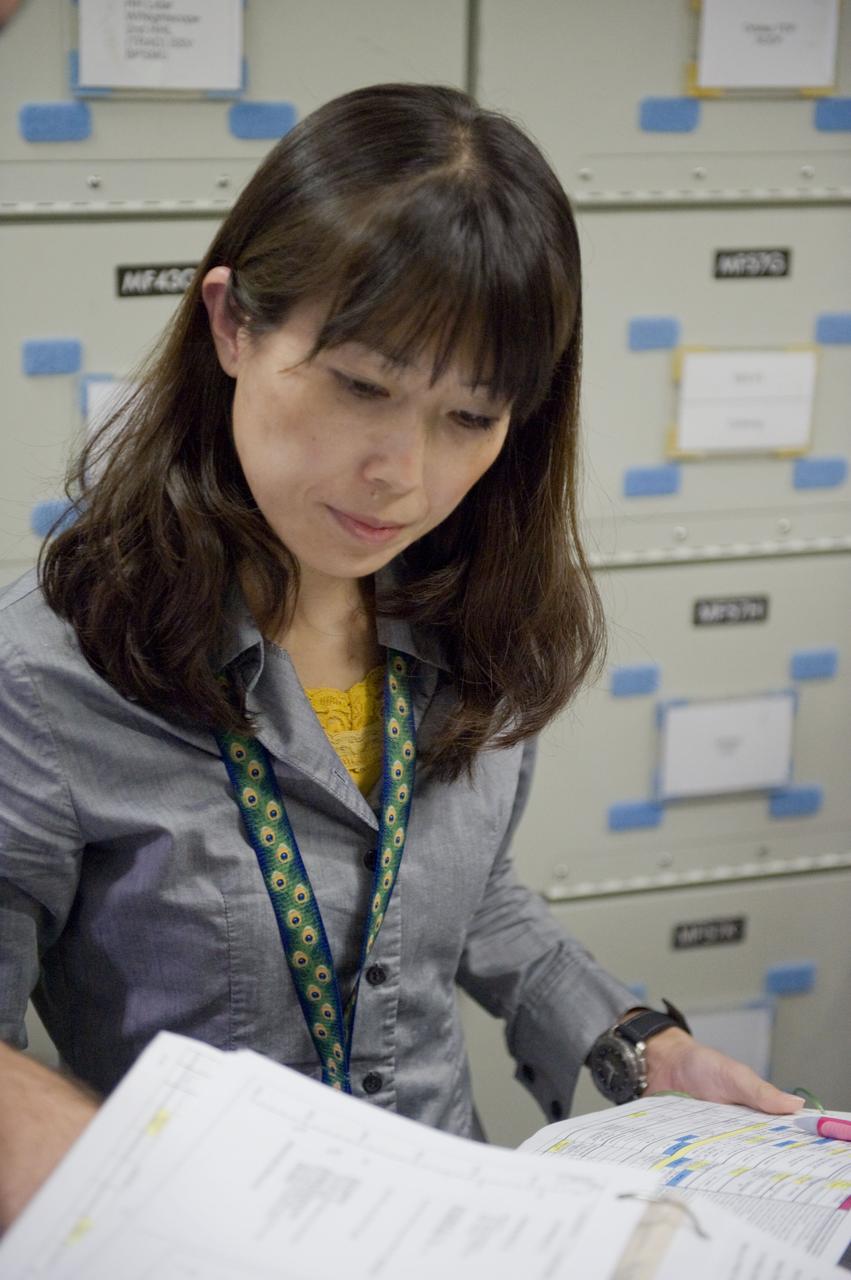
JSC2009-E-207342 (11 Sept. 2009) --- Japan Aerospace Exploration Agency (JAXA) astronaut Naoko Yamazaki, STS-131 mission specialist, participates in a training session in the shuttle mission simulator (SMS) in the Jake Garn Simulation and Training Facility at NASA?s Johnson Space Center.
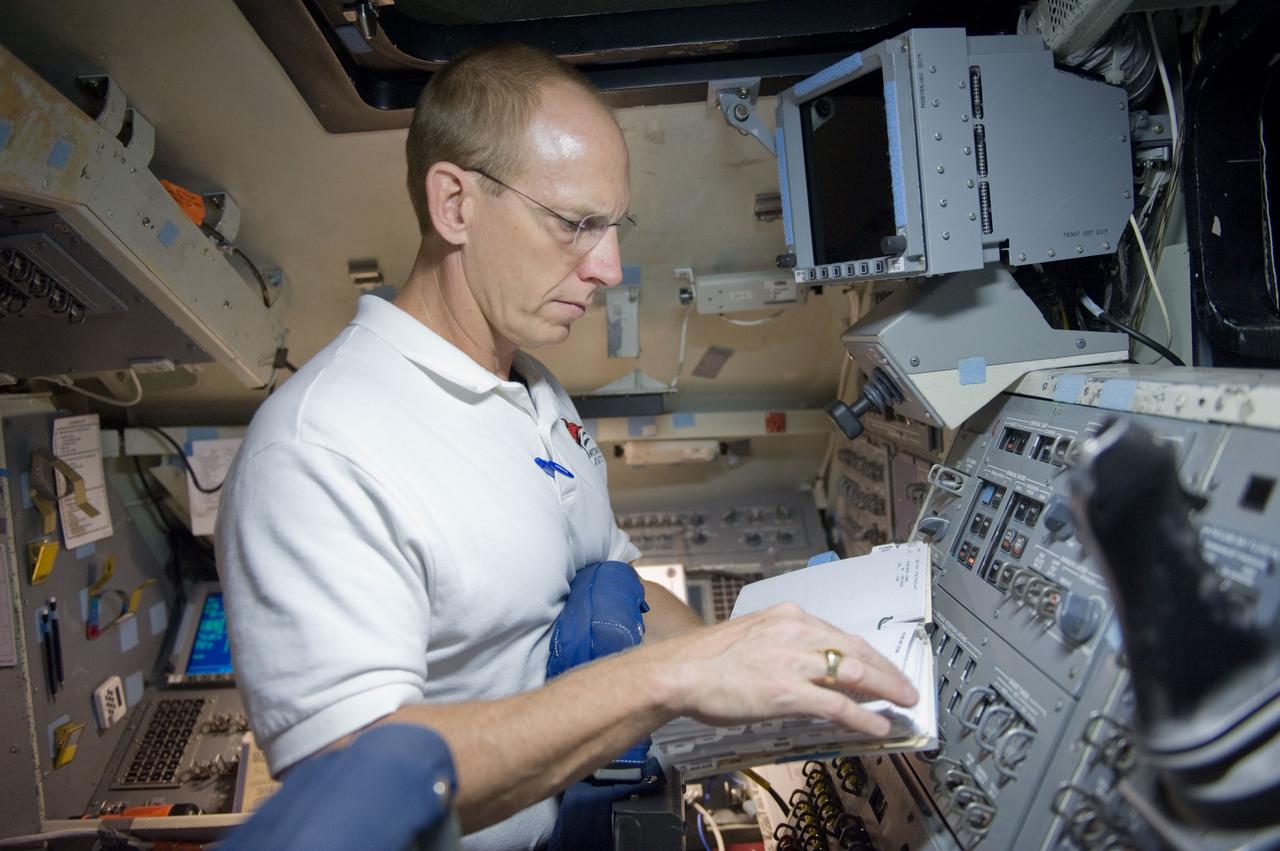
JSC2009-E-207317 (11 Sept. 2009) --- NASA astronaut James P. Dutton Jr., STS-131 pilot, occupies the pilot?s station during a training session in the shuttle mission simulator (SMS) in the Jake Garn Simulation and Training Facility at NASA?s Johnson Space Center.
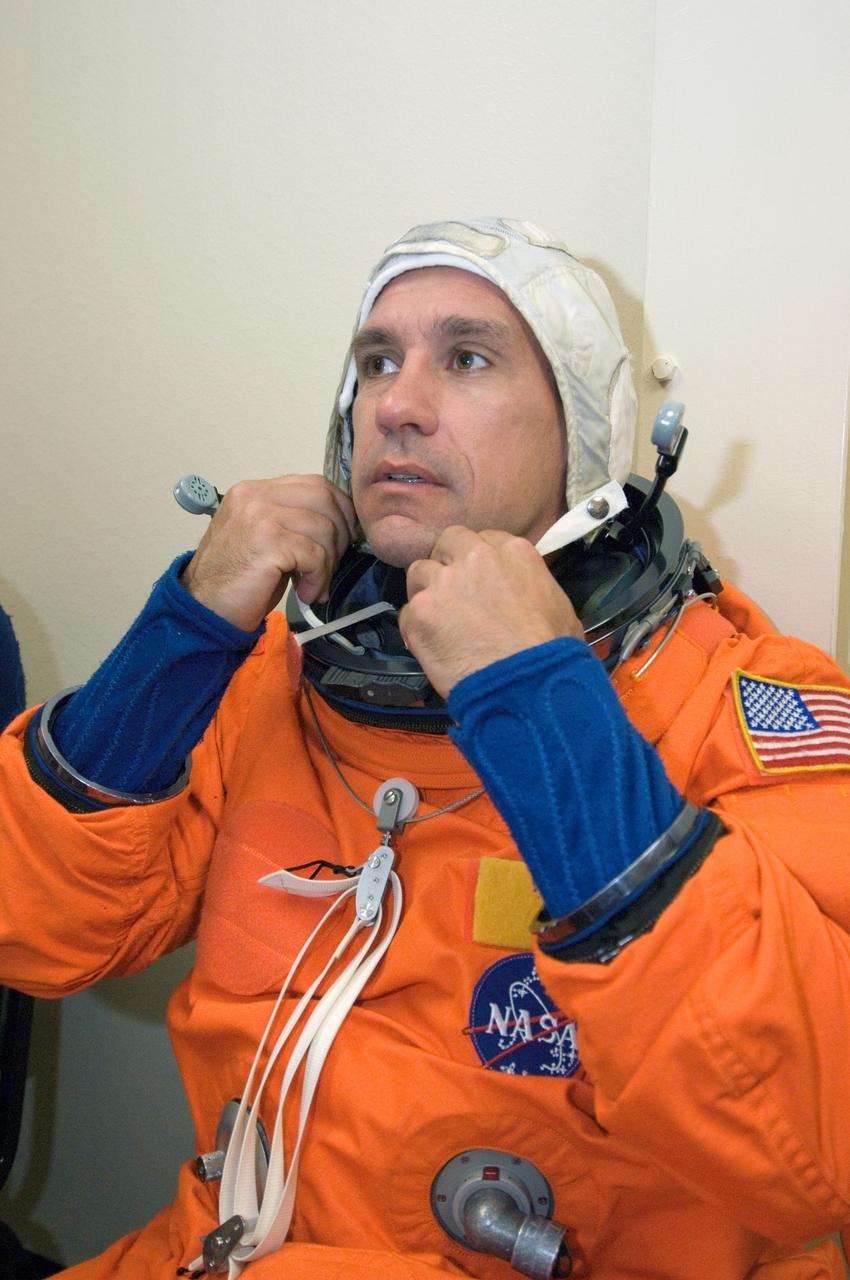
JSC2006-E-23021 (15 June 2006) --- Astronaut William A. Oefelein, STS-116 pilot, dons his training version of the shuttle launch and entry suit prior to a training session in the fixed-base shuttle mission simulator (SMS) in the Jake Garn Mission Simulation and Training Facility at Johnson Space Center.
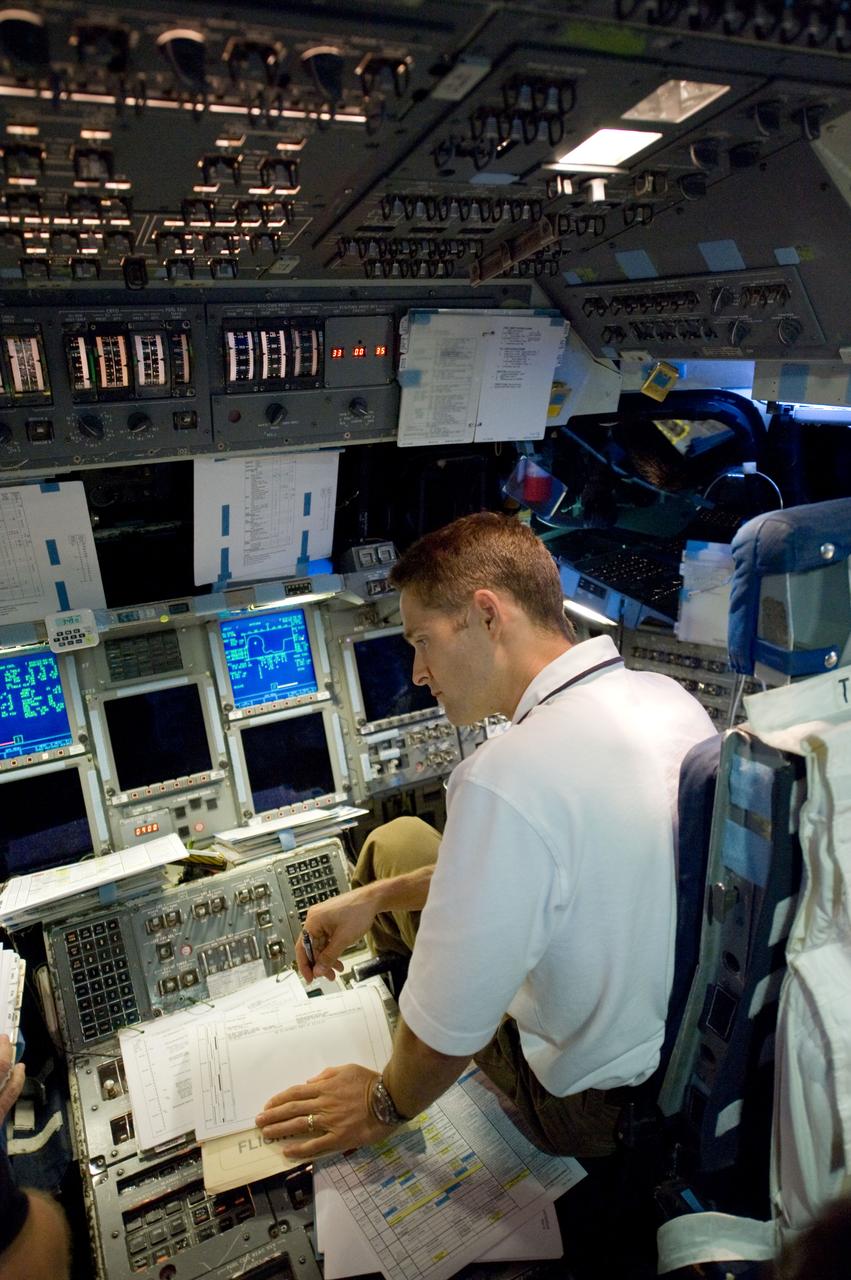
JSC2009-E-207371 (11 Sept. 2009) --- NASA astronaut Clay Anderson, STS-131 mission specialist, reads a procedures checklist during a training session in the shuttle mission simulator (SMS) in the Jake Garn Simulation and Training Facility at NASA?s Johnson Space Center.
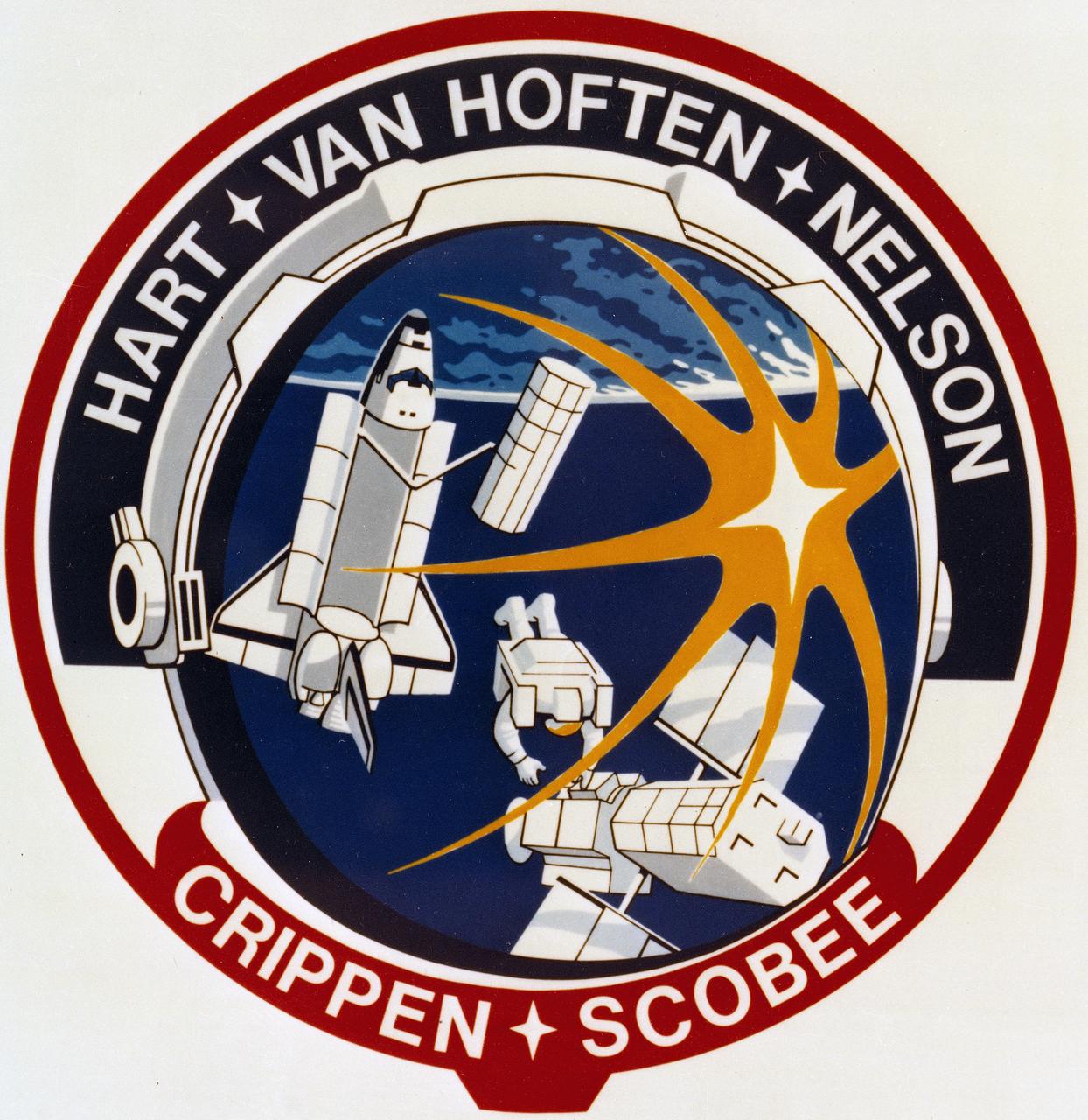
The patch features a helmet visor of an astronaut performing an extravehicular activity. In the visor are reflected the sun's rays, the Challenger and its remote manipulator system (RMS) deploying the long duration exposure facility (LDEF), the Earth and blue sky, and another astronaut working at the damaged Solar Maximum Satellite (SMS). The scene is encircled by the surnames of the crewmembers.
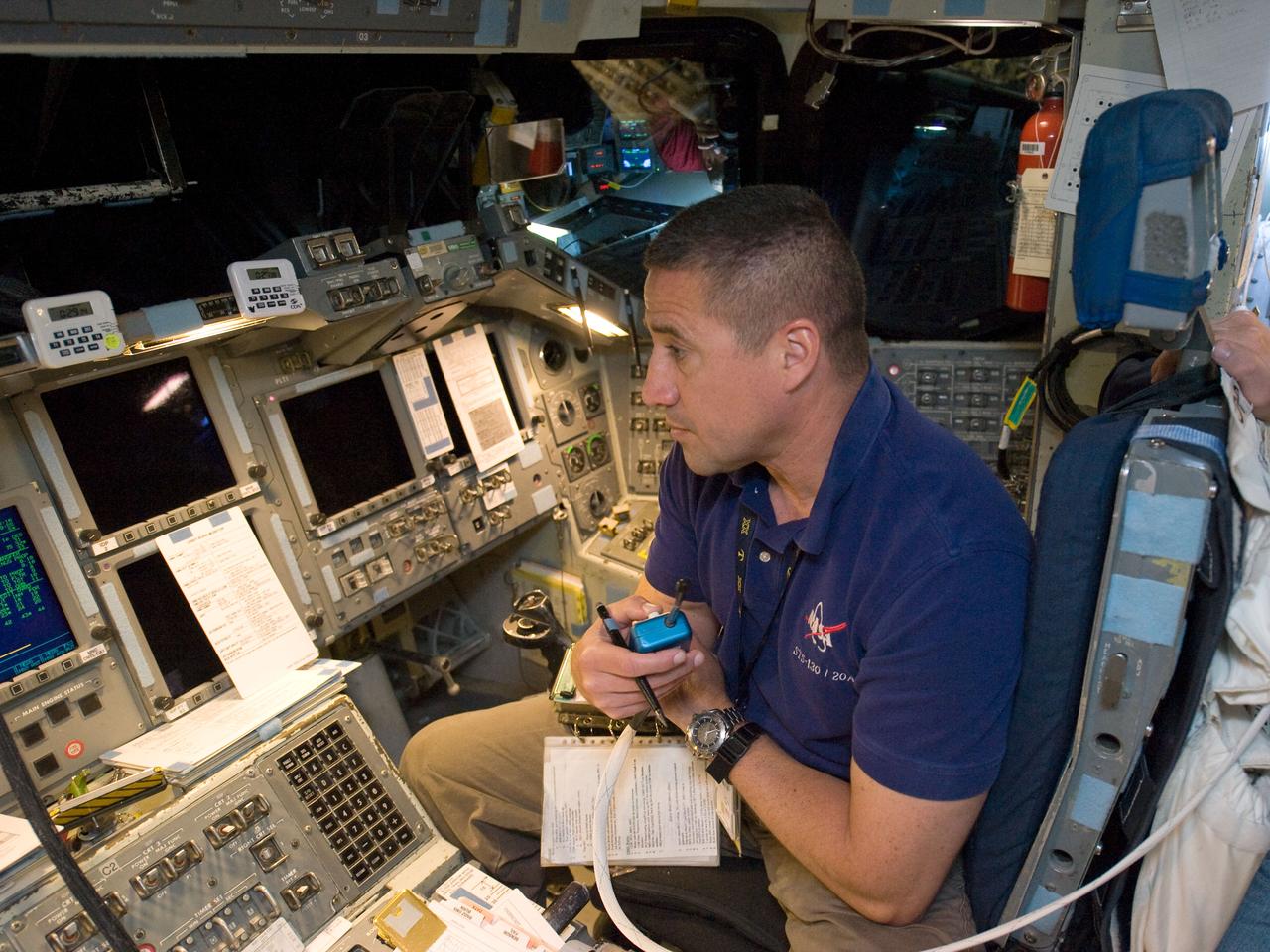
JSC2009-E-240770 (12 Nov. 2009) --- Astronaut George Zamka, STS-130 commander, occupies the pilot?s station during a training session in the fixed-base shuttle mission simulator (SMS) in the Jake Garn Simulation and Training Facility at Johnson Space Center.
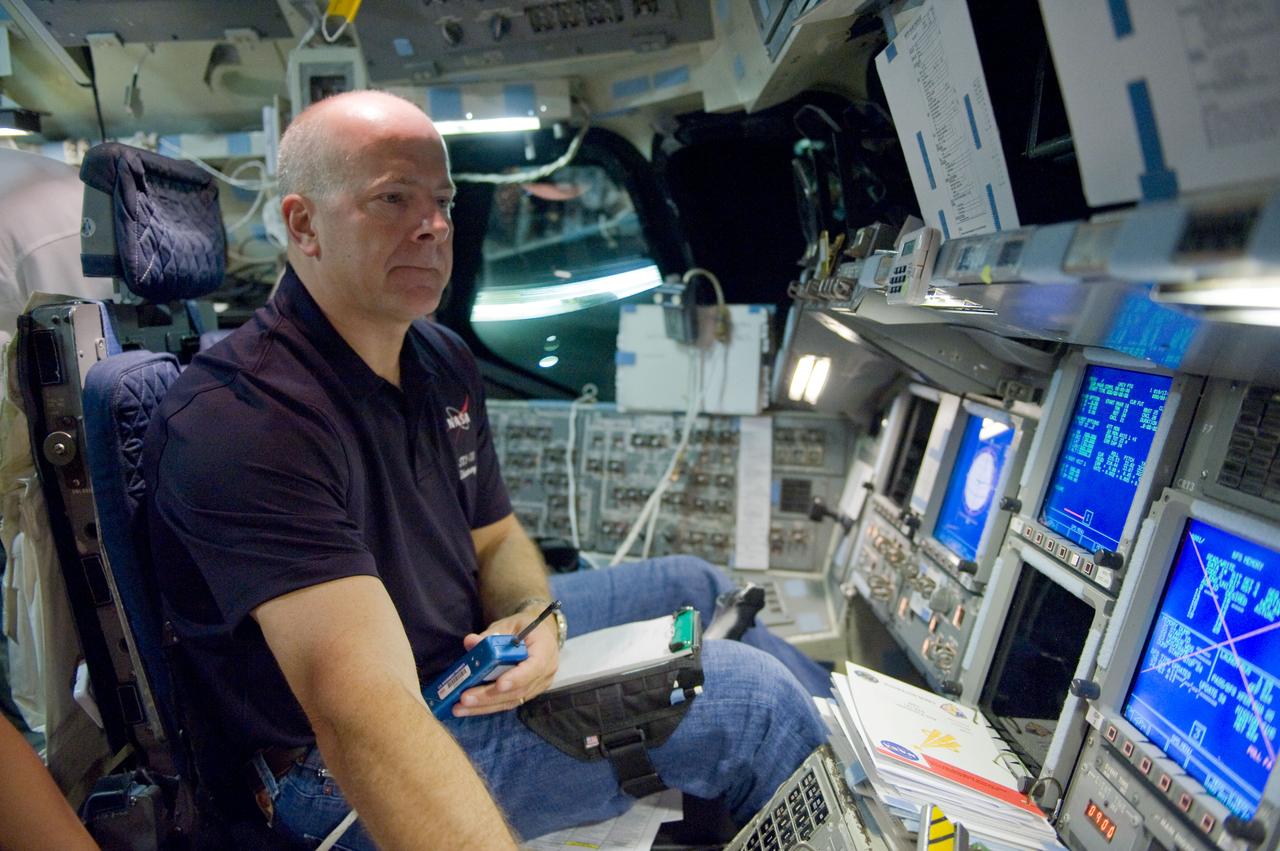
JSC2009-E-207369 (11 Sept. 2009) --- NASA astronaut Alan Poindexter, STS-131 commander, occupies the commander?s station during a training session in the shuttle mission simulator (SMS) in the Jake Garn Simulation and Training Facility at NASA?s Johnson Space Center.
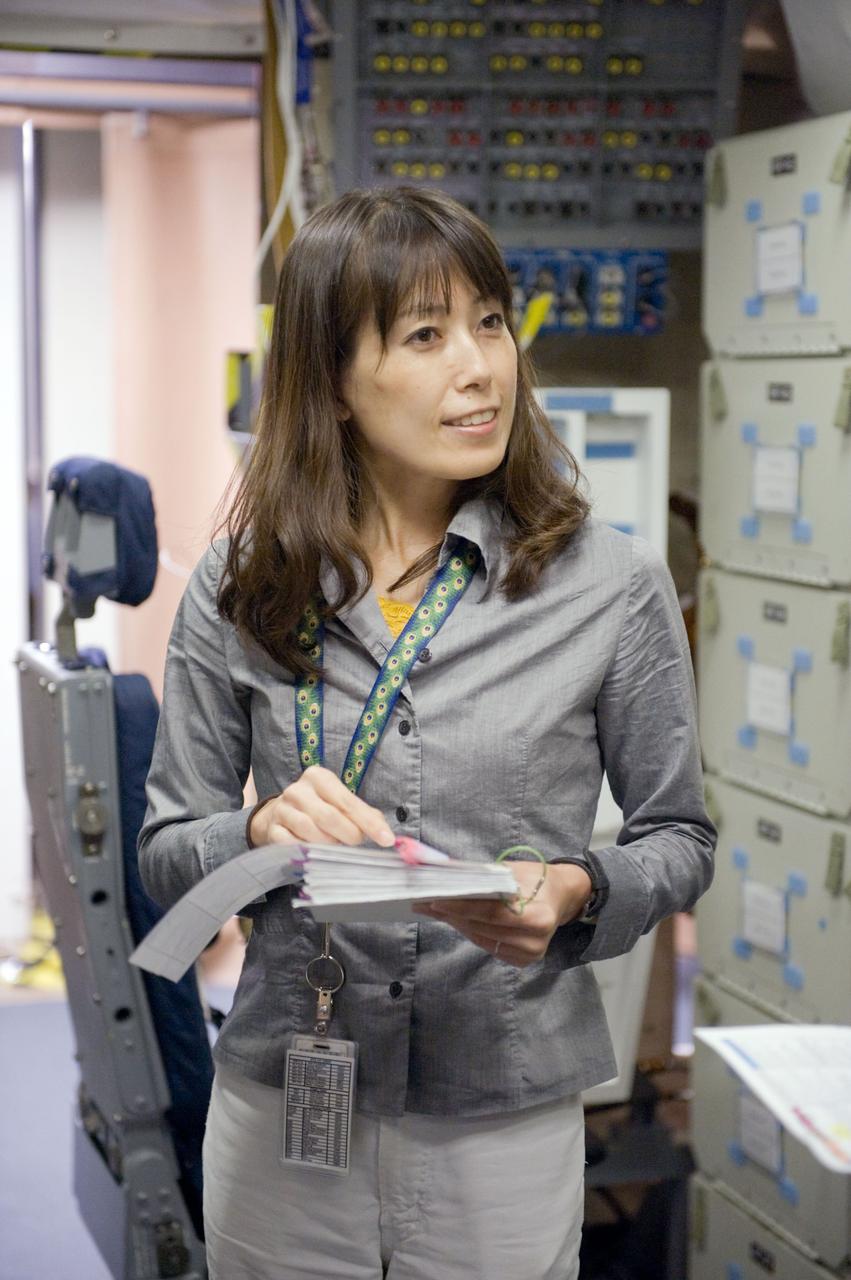
JSC2009-E-207346 (11 Sept. 2009) --- Japan Aerospace Exploration Agency (JAXA) astronaut Naoko Yamazaki, STS-131 mission specialist, participates in a training session in the shuttle mission simulator (SMS) in the Jake Garn Simulation and Training Facility at NASA?s Johnson Space Center.
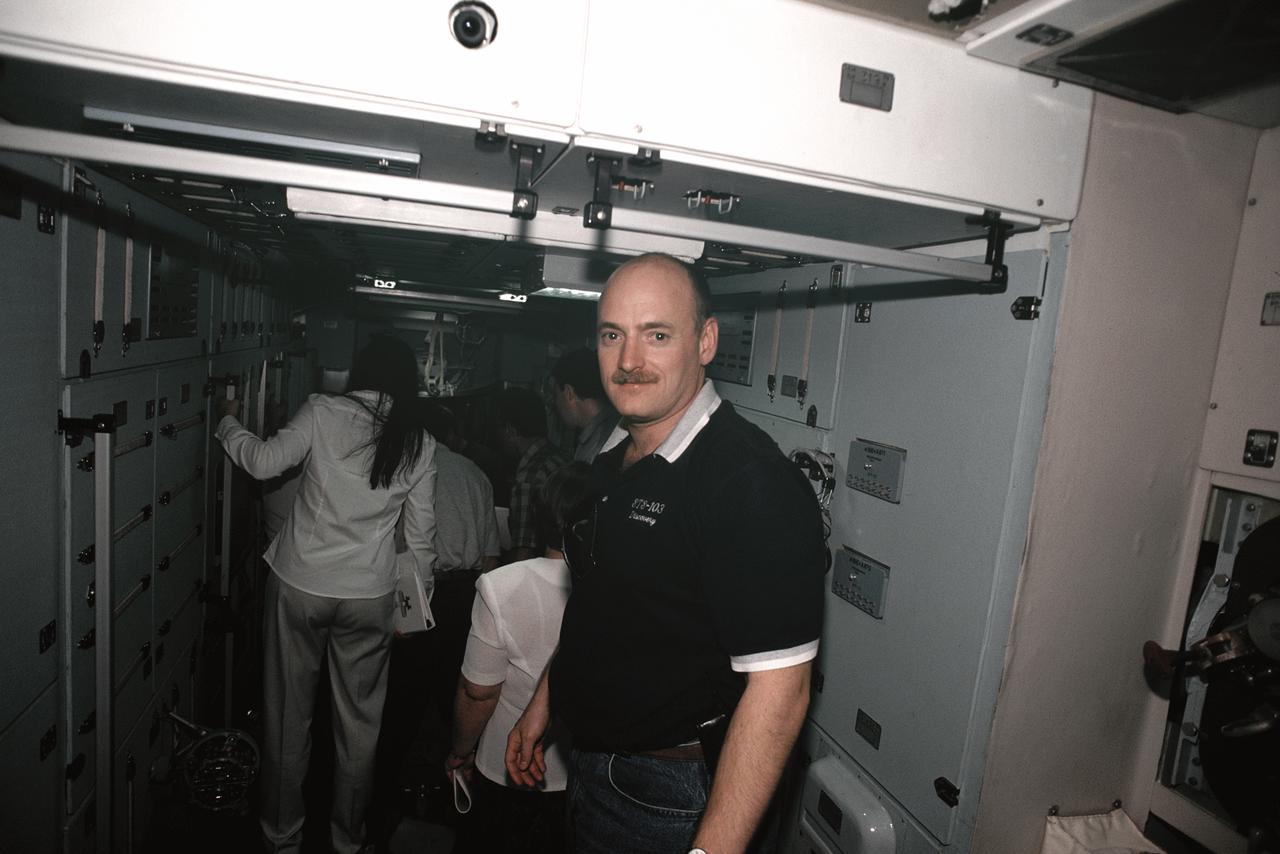
JSC2000-E-18633 (June 2000) --- Astronaut Scott Kelly, director of operations - Russia, walks through a full scale trainer/mockup for the Zvezda Service Module at the Gagarin Cosmonaut Training Center in Russia. The Expedition One crew was training in another area of the SM when this photo was made.
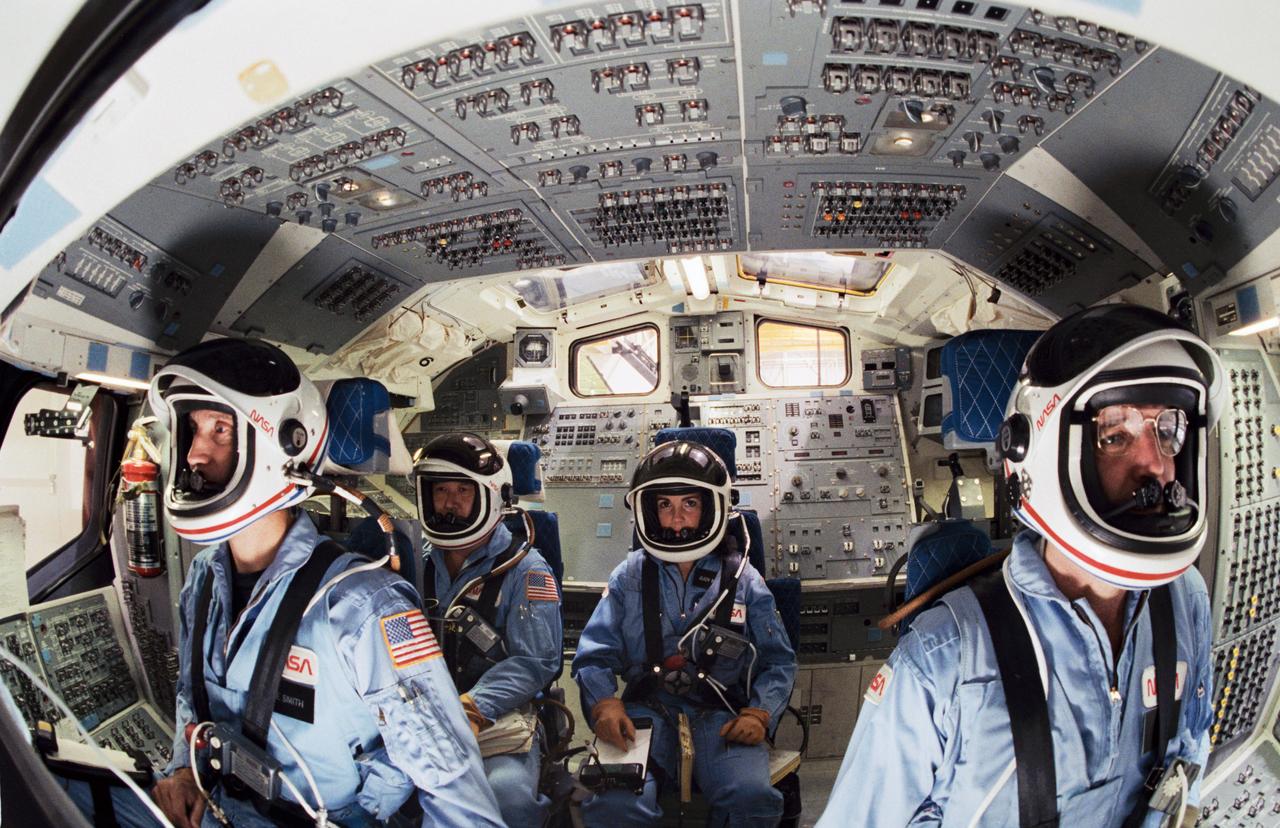
S85-46207 (December 1985) --- Shuttle Mission Simulator (SMS) scene of astronauts Michael J. Smith, Ellison S. Onizuka, Judith A. Resnik, and Francis R. (Dick) Scobee in their launch and entry positions on the flight deck. The photo was taken by Bill Bowers. Photo credit: NASA
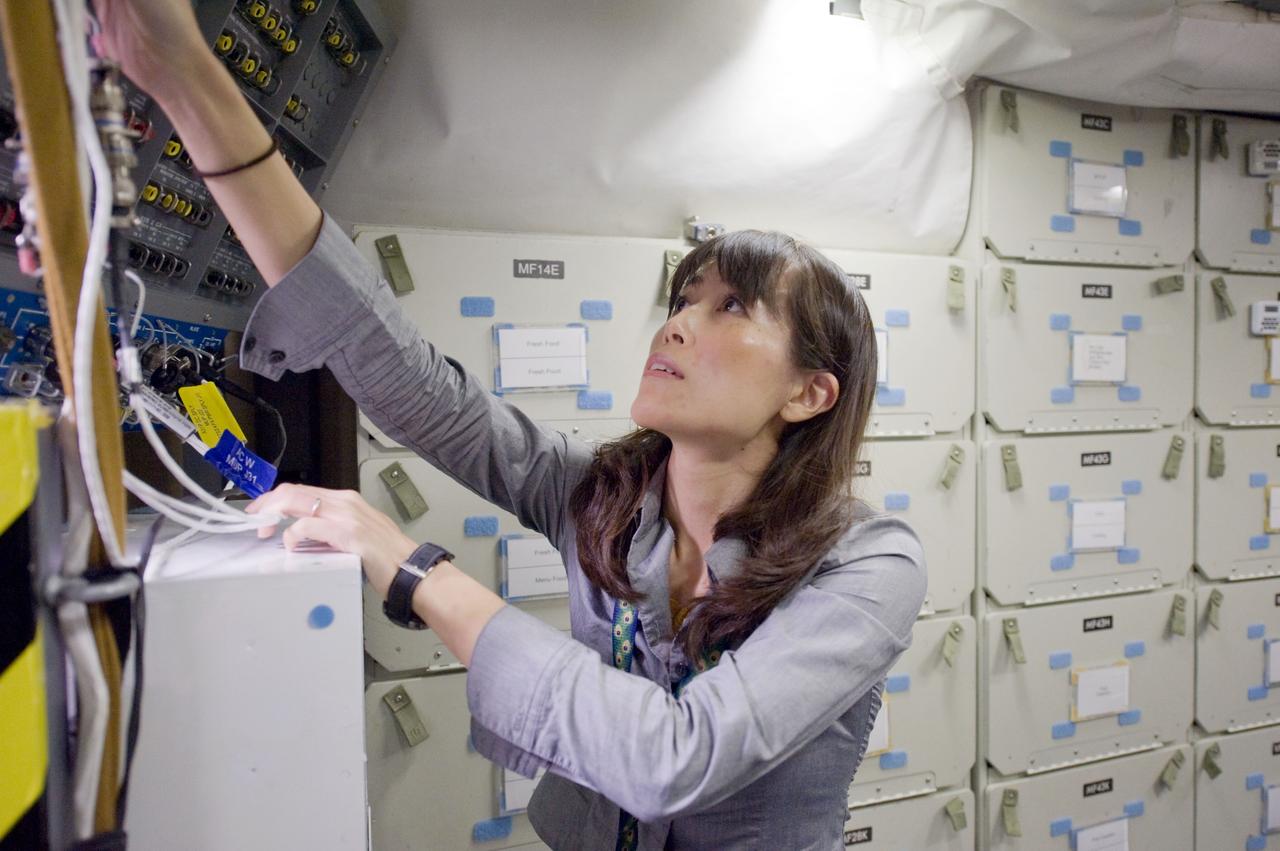
JSC2009-E-207336 (11 Sept. 2009) --- Japan Aerospace Exploration Agency (JAXA) astronaut Naoko Yamazaki, STS-131 mission specialist, participates in a training session in the shuttle mission simulator (SMS) in the Jake Garn Simulation and Training Facility at NASA?s Johnson Space Center.
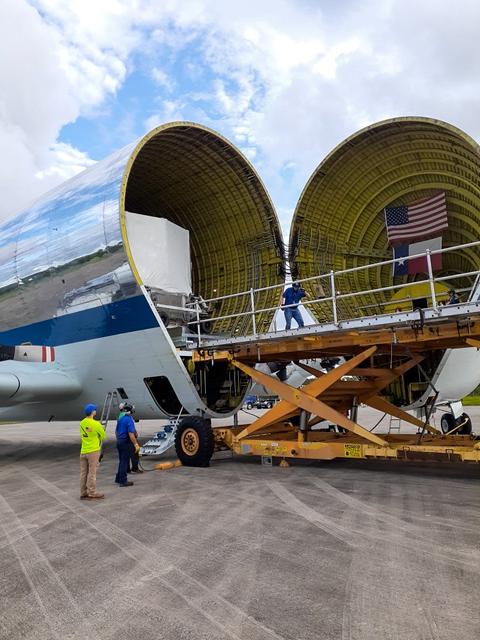
NASA’s Super Guppy arrives at Kennedy Space Center’s Launch and Landing Facility in Florida on Sept. 11, 2020, carrying the Orion Service Module Structural Test Article (SM-STA). Composed of the European Service Module (ESM) and crew module adapter (CMA), these components mark the completion of the test campaign to certify Orion’s Service Module for Artemis I. The Orion SM-STA is being offloaded for transport to the Neil Armstrong Operations and Checkout Building. The first in a series of increasingly complex missions, Artemis I will test the Orion spacecraft and Space Launch System as an integrated system ahead of crewed flights to the Moon. Under the Artemis program, NASA will land the first woman and the next man on the Moon by 2024. Photo credit:
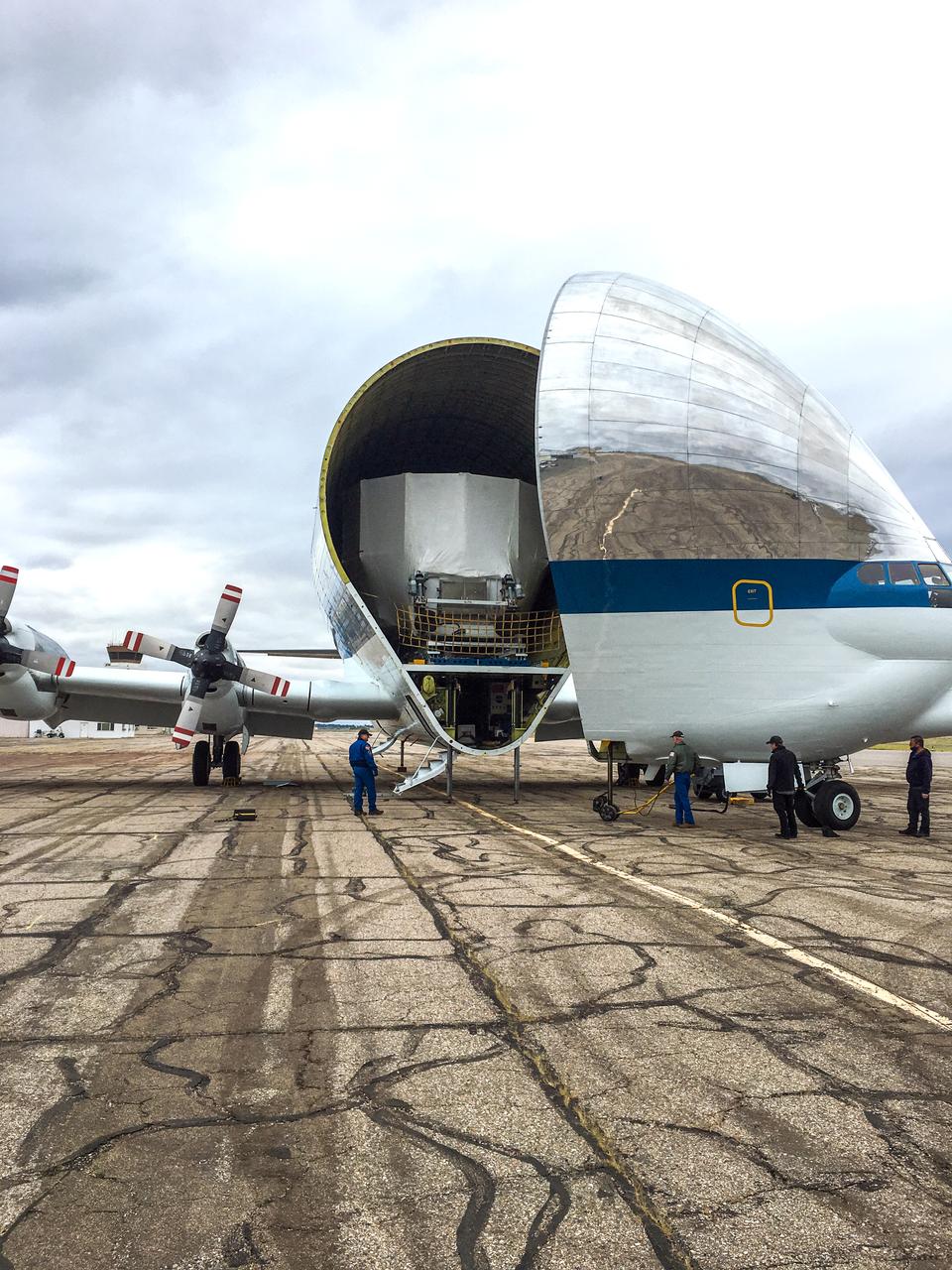
NASA’s Super Guppy arrives at Kennedy Space Center’s Launch and Landing Facility in Florida on Sept. 11, 2020, carrying the Orion Service Module Structural Test Article (SM-STA). Composed of the European Service Module (ESM) and crew module adapter (CMA), these components mark the completion of the test campaign to certify Orion’s Service Module for Artemis I. The Orion SM-STA is being offloaded for transport to the Neil Armstrong Operations and Checkout Building. The first in a series of increasingly complex missions, Artemis I will test the Orion spacecraft and Space Launch System as an integrated system ahead of crewed flights to the Moon. Under the Artemis program, NASA will land the first woman and the next man on the Moon by 2024.

NASA’s Super Guppy arrives at Kennedy Space Center’s Launch and Landing Facility in Florida on Sept. 11, 2020, carrying the Orion Service Module Structural Test Article (SM-STA). Composed of the European Service Module (ESM) and crew module adapter (CMA), these components mark the completion of the test campaign to certify Orion’s Service Module for Artemis I. The Orion SM-STA is being offloaded for transport to the Neil Armstrong Operations and Checkout Building. The first in a series of increasingly complex missions, Artemis I will test the Orion spacecraft and Space Launch System as an integrated system ahead of crewed flights to the Moon. Under the Artemis program, NASA will land the first woman and the next man on the Moon by 2024.NASA’s Super Guppy arrives at Kennedy Space Center’s Launch and Landing Facility in Florida on Sept. 11, 2020, carrying the Orion Service Module Structural Test Article (SM-STA). Composed of the European Service Module (ESM) and crew module adapter (CMA) these components mark the completion of the test campaign to certify Orion’s Service Module for Artemis I. The Orion SM-STA is being offloaded for transport to the Neil Armstrong Operations and Checkout Building. The first in a series of increasingly complex missions, Artemis I will test the Orion spacecraft and Space Launch System as an integrated system ahead of crewed flights to the Moon. Under the Artemis program, NASA will land the first woman and the next man on the Moon by 2024.
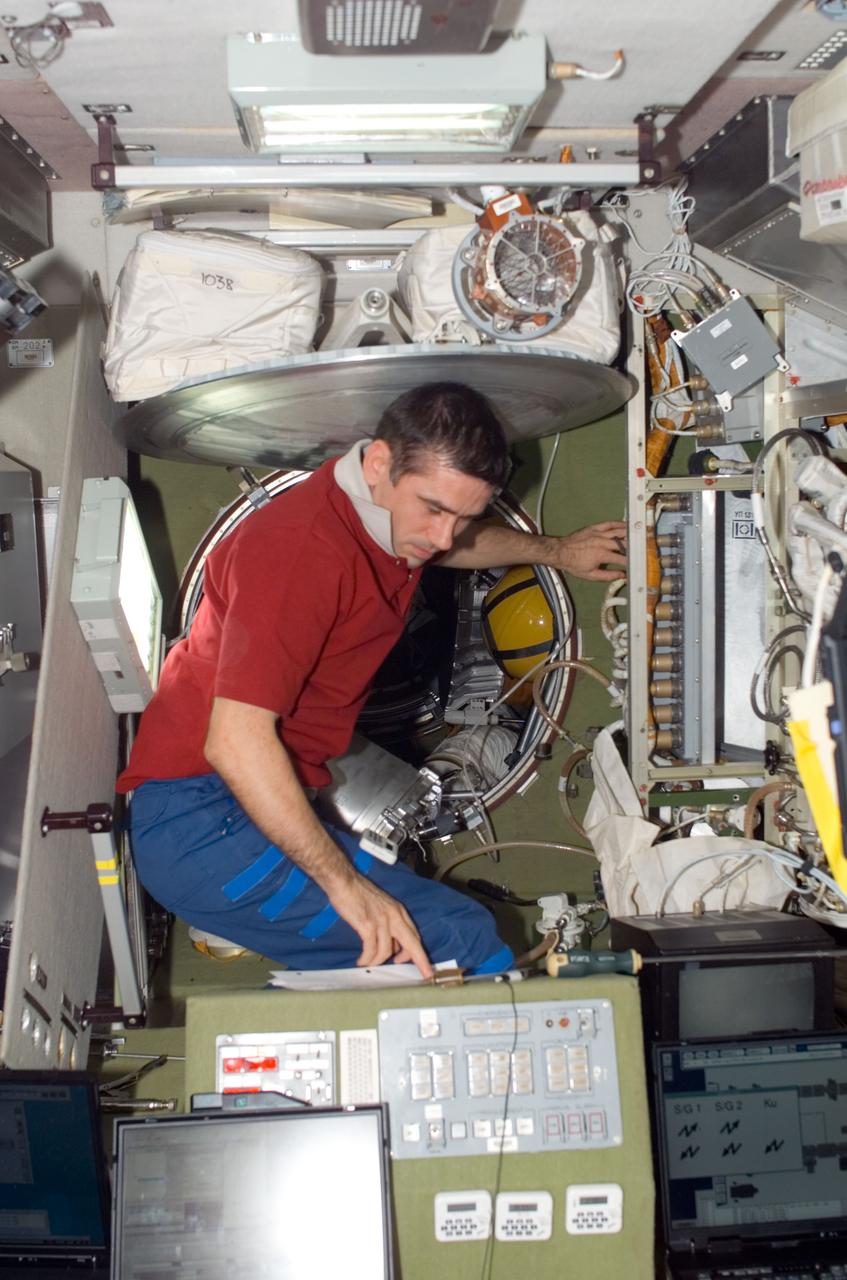
ISS016-E-019400 (30 Dec. 2007) --- Cosmonaut Yuri I. Malenchenko, Expedition 16 flight engineer representing Russia's Federal Space Agency, works in the Zvezda Service Module of the International Space Station.
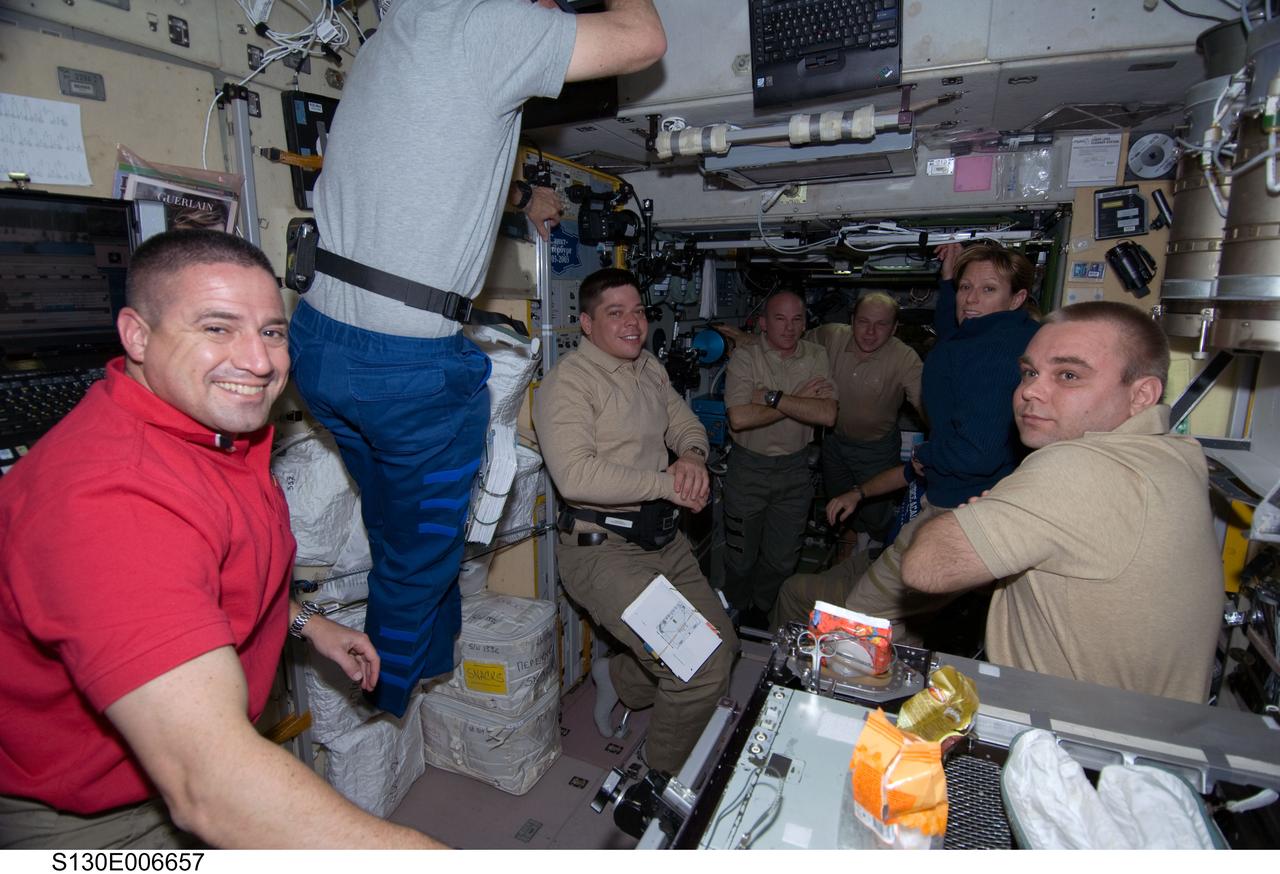
S130-E-006657 (10 Feb. 2010) --- STS-130 and Expedition 22 crew members are pictured shortly after space shuttle Endeavour and the International Space Station docked in space and the hatches were opened. Pictured (clockwise) are NASA astronauts George Zamka (left), STS-130 commander; Stephen Robinson and Robert Behnken, both STS-130 mission specialists; NASA astronaut Jeffrey Williams, Expedition 22 commander; Russian cosmonaut Oleg Kotov, Expedition 22 flight engineer; NASA astronaut Kathryn Hire, STS-130 mission specialist; and Russian cosmonaut Maxim Suraev, Expedition 22 flight engineer.
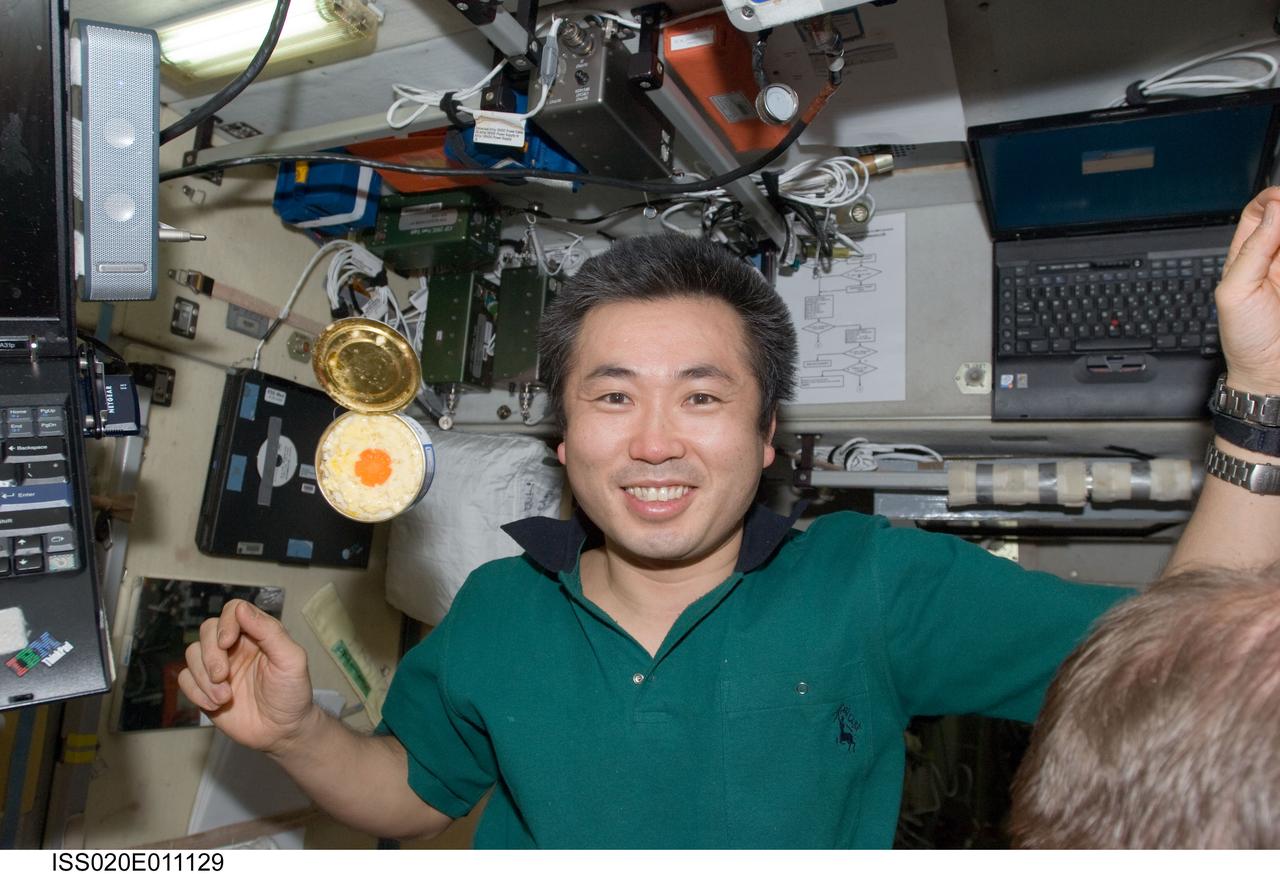
ISS020-E-011129 (19 June 2009) --- Japan Aerospace Exploration Agency (JAXA) astronaut Koichi Wakata, Expedition 20 flight engineer, is pictured near a can of food floating freely in the Zvezda Service Module of the International Space Station.