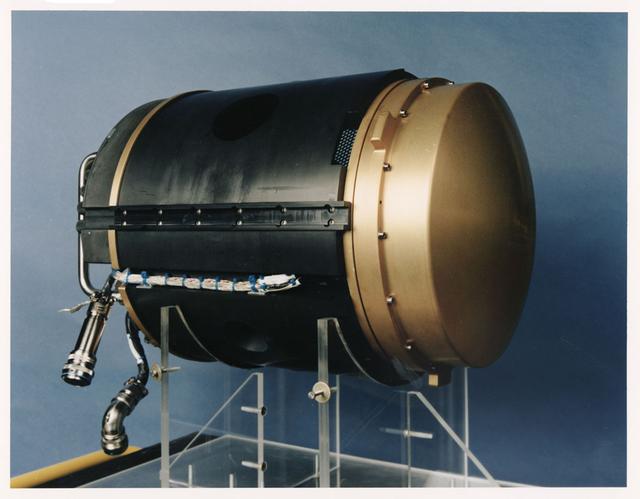
Structure Of Flame Balls At Low Lewis-numbers (SOFBALL) Experiment Mounting Structure (EMS) was used to conduct the SOFBALL experiment on Combustion Module-1. The EMS was inserted into the CM-1 combustion chamber. The chamber was filled with a lean fuel/oxidizer mixture and a spark igniter on the EMS ignited the gas. Very small, weak flames, in the shape of spheres, were formed and studied.
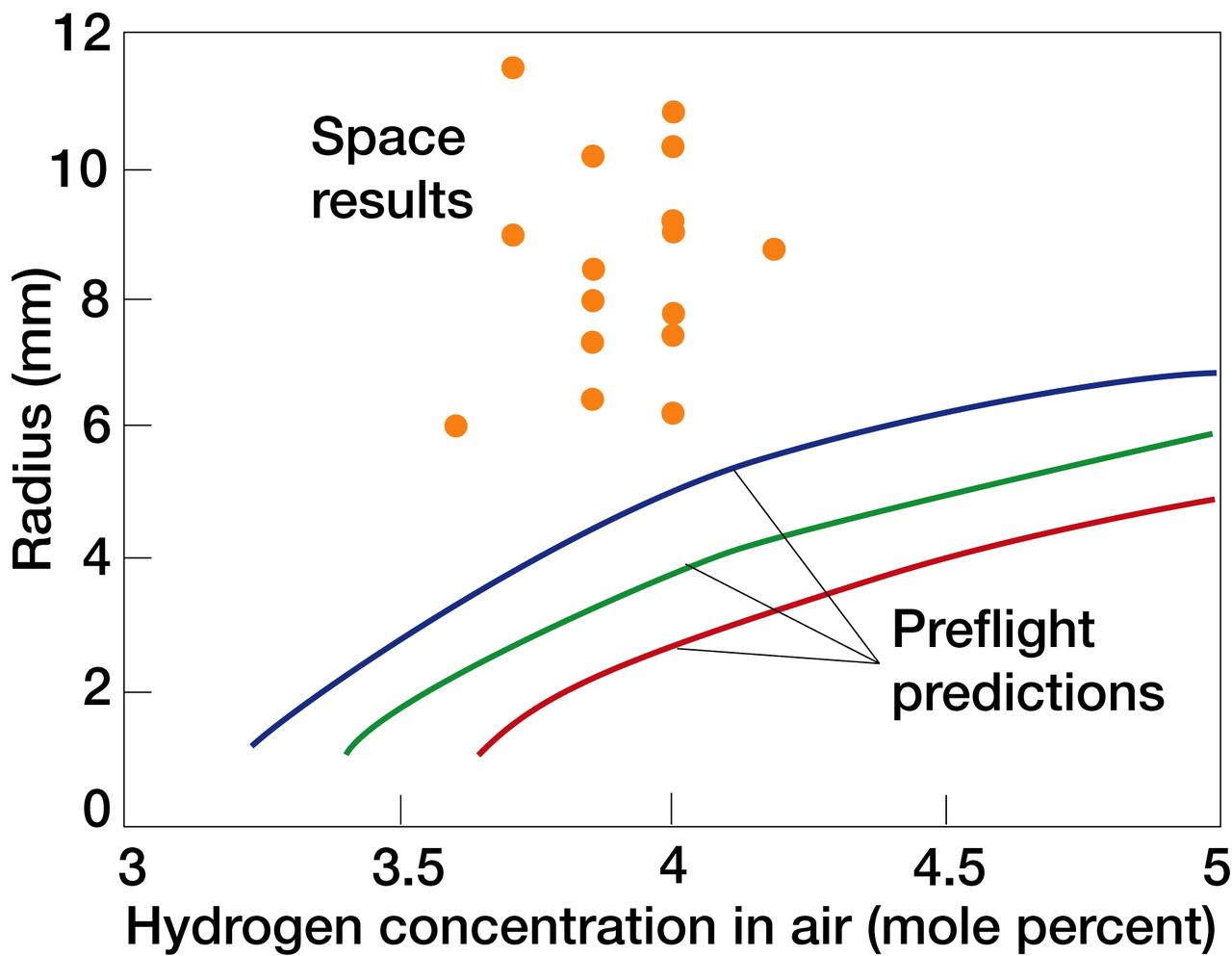
The potential for investigating combustion at the limits of flammability, and the implications for spacecraft fire safety, led to the Structures Of Flame Balls At Low Lewis-number (SOFBALL) experiment flown twice aboard the Space Shuttle in 1997. The success there led to reflight on STS-107 Research 1 mission plarned for 2002. Theory does not always predict behavior, thus the need for experiments. Three different published chemical reaction models (lines) for hydrogen-airflame balls proved to be quite different from what was observed (dots) during SOFBALL tests in space. The principal investigator is Dr. Paul Ronney of the University of Southern California, Los Angeles. Glenn Research in Cleveland, OH, manages the project.
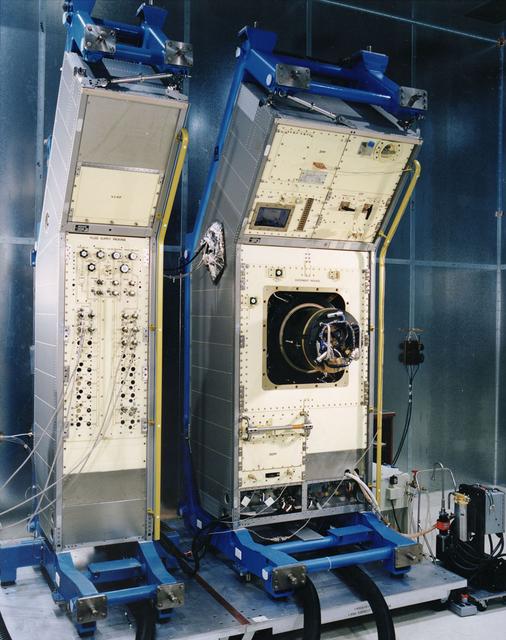
Combustion Module-1 was one of the most complex and technologically sophisticated pieces of hardware ever to be included as a part of a Spacelab mission. Shown here are the two racks which comprised CM-1, the rack on the right shows the combustion chamber with the Structure Of Flame Balls at Low Lewis-numbers (SOFBALL) experiment inside.
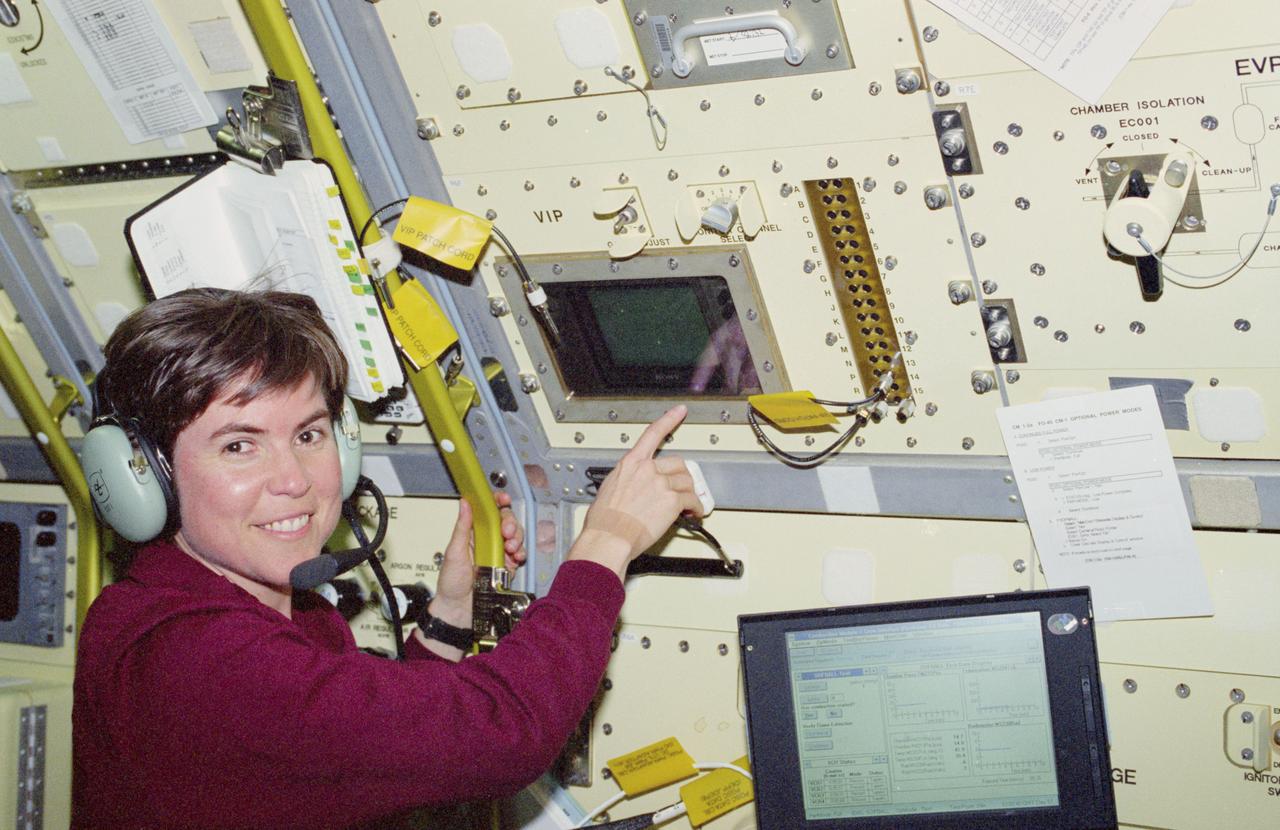
STS083-305-017 (4-8 April 1997) --- Astronaut Janice E. Voss, payload commander, displays a pleasant countenance following a successful test at the Combustion Module-1 (CM-1). The test was designed to study the Structures of Flame Balls at Low Lewis (SOFBALL) numbers. The CM-1 facility accommodates a number of experiments using different chamber inserts.
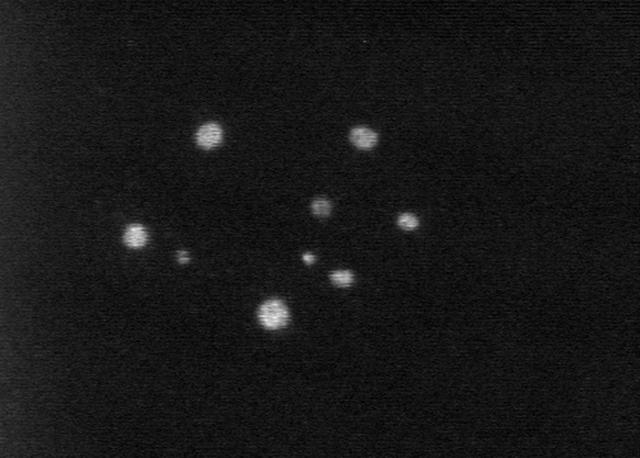
The potential for investigating combustion at the limits of flammability, and the implications for spacecraft fire safety, led to the Structures Of Flame Balls At Low Lewis-number (SOFBALL) experiment flown twice aboard the Space Shuttle in 1997. The success there led to reflight on STS-107 Research 1 mission plarned for 2002. This image is a video frame which shows MSL-1 flameballs which are intrinsically dim, thus requiring the use of image intensifiers on video cameras. The principal investigator is Dr. Paul Ronney of the University of Southern California, Los Angeles. Glenn Research in Cleveland, OH, manages the project.
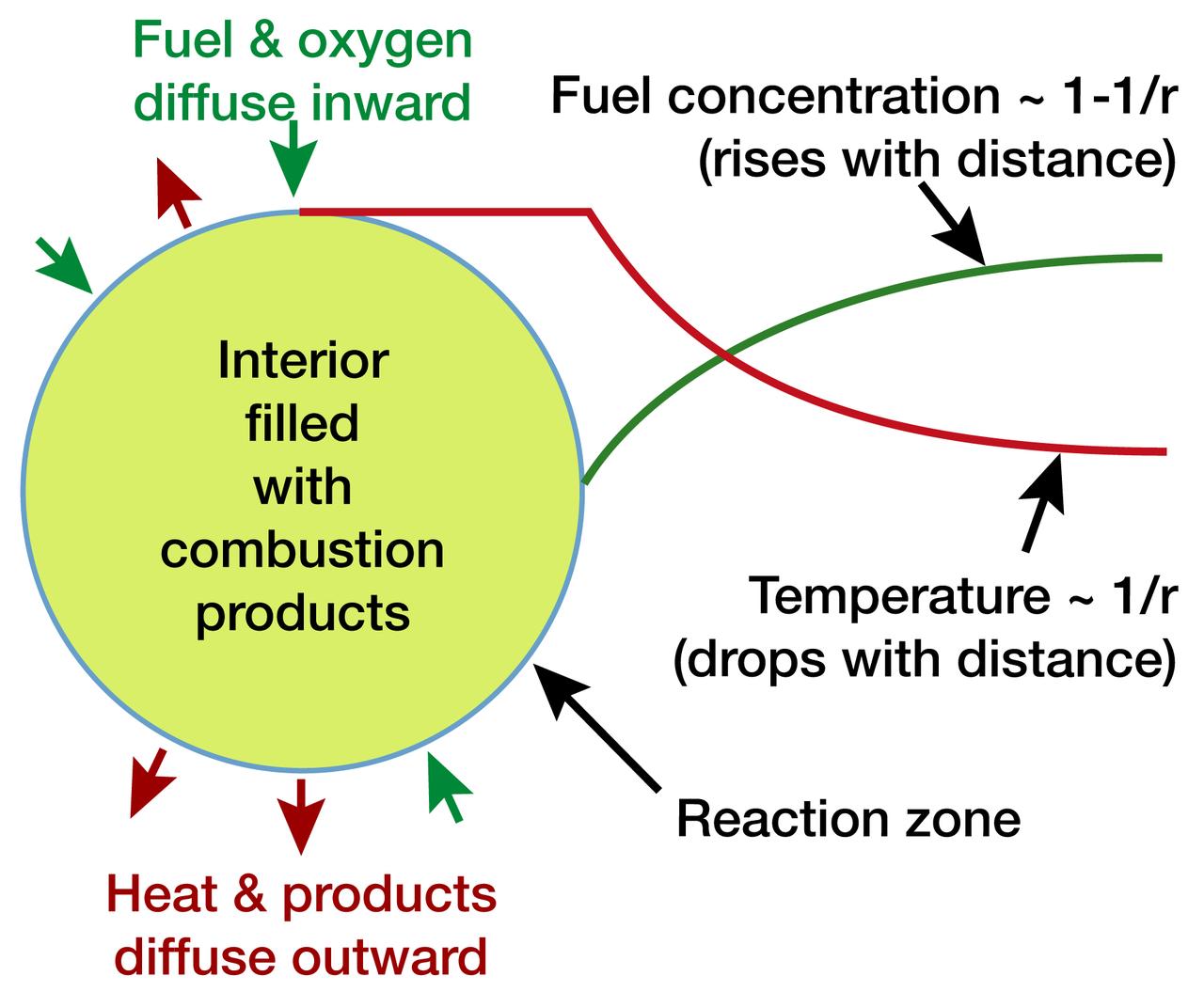
The potential for investigating combustion at the limits of flammability, and the implications for spacecraft fire safety, led to the Structures Of Flame Balls At Low Lewis-number (SOFBALL) experiment flown twice aboard the Space Shuttle in 1997. The success there led to reflight on STS-107 Research 1 mission plarned for 2002. All the combustion in a flame ball takes place in a razor-thin reaction zone that depends on diffusion to keep the ball alive. Such a fragile balance is impossible on Earth. The principal investigator is Dr. Paul Ronney of the University of Southern California, Los Angeles. Glenn Research in Cleveland, OH, manages the project.
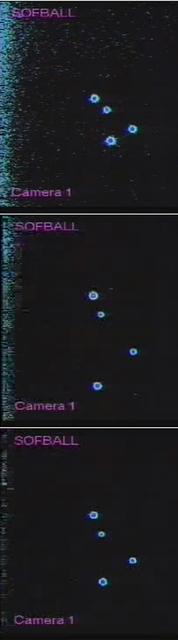
The potential for investigating combustion at the limits of flammability, and the implications for spacecraft fire safety, led to the Structures Of Flame Balls At Low Lewis-number (SOFBALL) experiment flown twice aboard the Space Shuttle in 1997. The success there led to on STS-107 Research 1 mission plarned for 2002. Shown here are video frames captured during the Microgravity Sciences Lab-1 mission in 1997. Flameballs are intrinsically dim, thus requiring the use of image intensifiers on video cameras. The principal investigator is Dr. Paul Ronney of the University of Southern California, Los Angeles. Glenn Research in Cleveland, OH, manages the project.
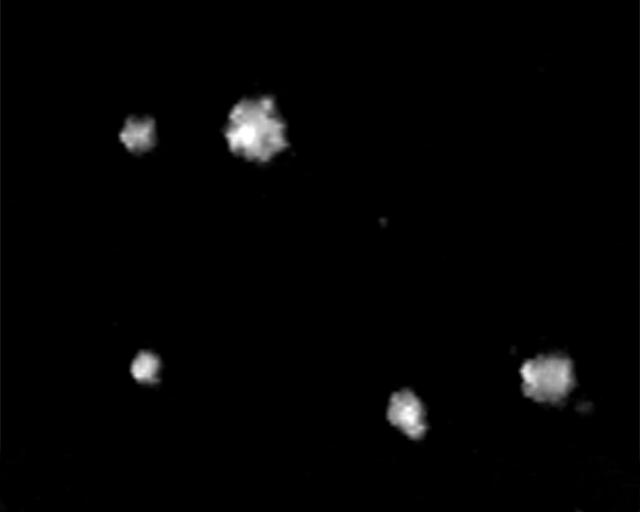
The potential for investigating combustion at the limits of flammability, and the implications for spacecraft fire safety, led to the Structures Of Flame Balls At Low Lewis-number (SOFBALL) experiment flown twice aboard the Space Shuttle in 1997. The success there led to reflight on STS-107 Research 1 mission plarned for 2002. This image is a video frame which shows MSL-1 flameballs which are intrinsically dim, thus requiring the use of image intensifiers on video cameras. The principal investigator is Dr. Paul Ronney of the University of Southern California, Los Angeles. Glenn Research in Cleveland, OH, manages the project.