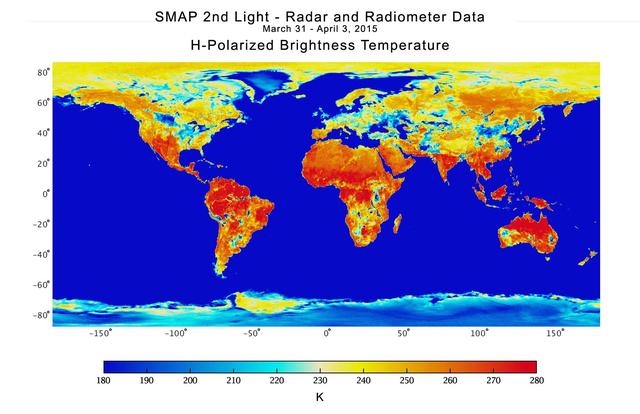
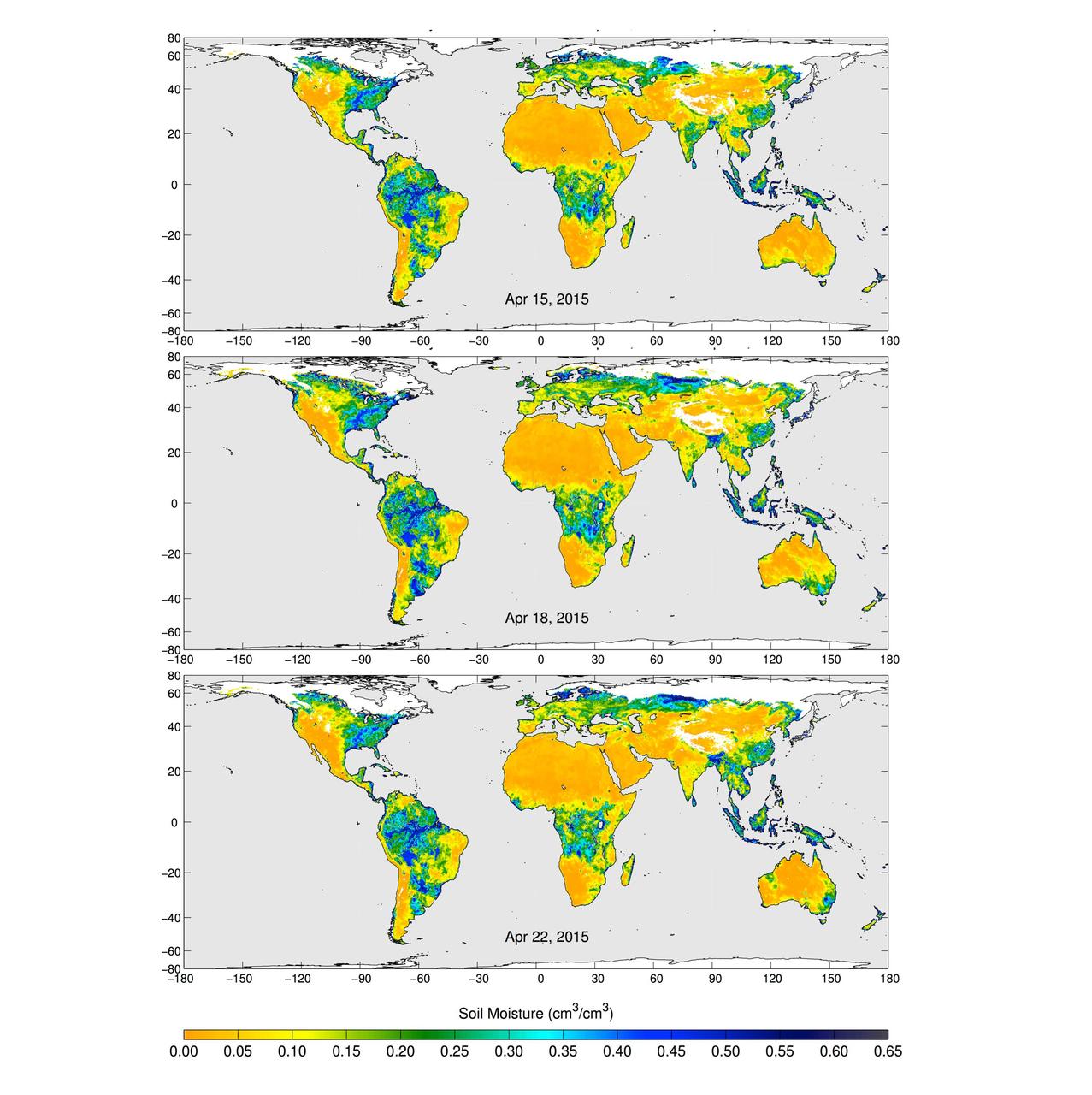
These maps of global soil moisture were created using data from the radiometer instrument on NASA Soil Moisture Active Passive SMAP observatory. Evident are regions of increased soil moisture and flooding during April, 2015.
SMAP Radiometer Captures Views of Global Soil Moisture
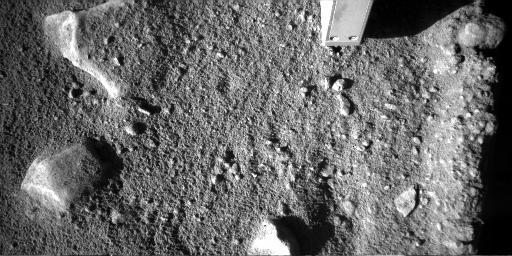
The Mystery Soil
The Mystery Soil
NASA Soil Moisture Active Passive SMAP mission will produce high-resolution global maps of soil moisture to track water availability around our planet and guide policy decisions.
NASA Soil Moisture Active Passive SMAP Artist Concept
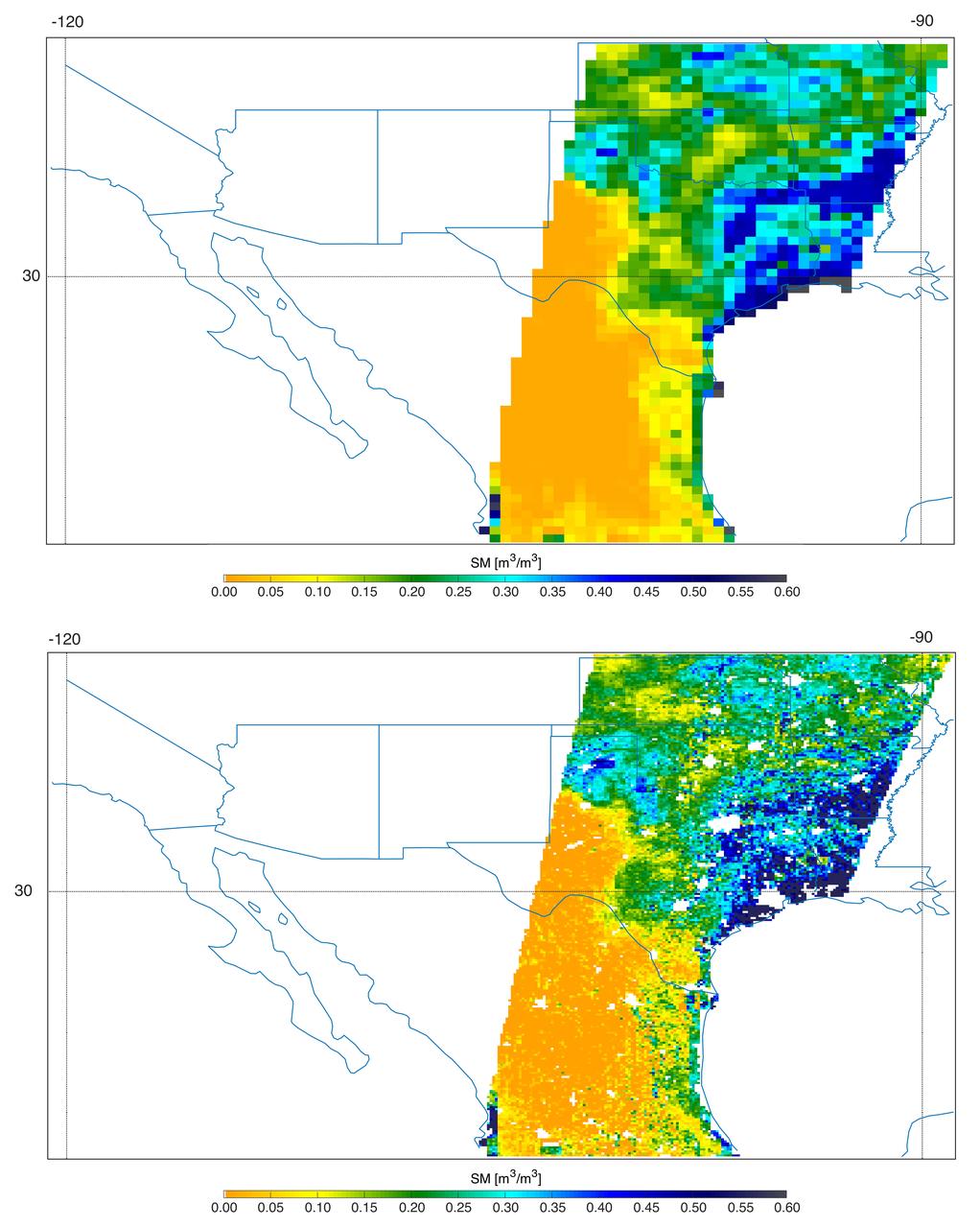
Southern U.S. NASA's SMAP soil moisture retrievals from April 27, 2015, when severe storms were affecting Texas. Top: radiometer data alone. Bottom: combined radar and radiometer data with a resolution of 5.6 miles (9 kilometers). The combined product reveals more detailed surface soil moisture features.  http://photojournal.jpl.nasa.gov/catalog/PIA19338
Southern U.S. Soil Moisture Map
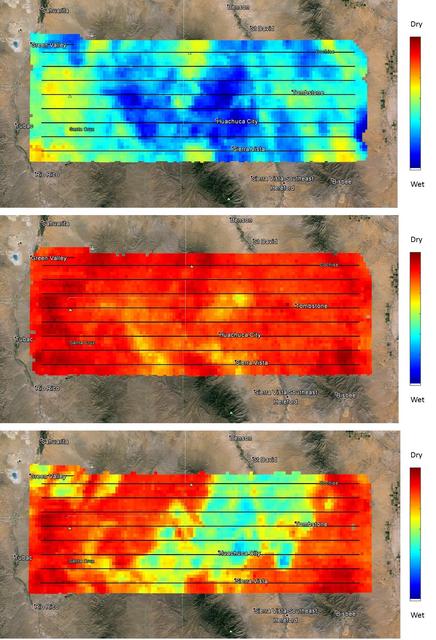
NASA's SMAP (Soil Moisture Active Passive) satellite observatory conducted a field experiment as part of its soil moisture data product validation program in southern Arizona on Aug. 2-18, 2015. The images here represent the distribution of soil moisture over the SMAPVEX15 (SMAP Validation Experiment 2015) experiment domain, as measured by the Passive Active L-band System (PALS) developed by NASA's Jet Propulsion Laboratory, Pasadena, California, which was installed onboard a DC-3 aircraft operated by Airborne Imaging, Inc. Blue and green colors denote wet conditions and dry conditions are marked by red and orange. The black lines show the nominal flight path of PALS.  The measurements show that on the first day, the domain surface was wet overall, but had mostly dried down by the second measurement day. On the third day, there was a mix of soil wetness. The heterogeneous soil moisture distribution over the domain is typical for the area during the North American Monsoon season and provides excellent conditions for SMAP soil moisture product validation and algorithm enhancement.  The images are based on brightness temperature measured by the PALS instrument gridded on a grid with 0.6-mile (1-kilometer) pixel size. They do not yet compensate for surface characteristics, such as vegetation and topography. That work is currently in progress.  http://photojournal.jpl.nasa.gov/catalog/PIA19879
NASA SMAPVEX 15 Field Campaign Measures Soil Moisture Over Arizona
This animation shows a time lapse of sea surface salinity and soil moisture from NASA's Soil Moisture Active Passive (SMAP) satellite from April 2015 through February 2019.  Animation available at https://photojournal.jpl.nasa.gov/catalog/PIA23146
SMAP Sea Surface Salinity and Soil Moisture Time Lapse
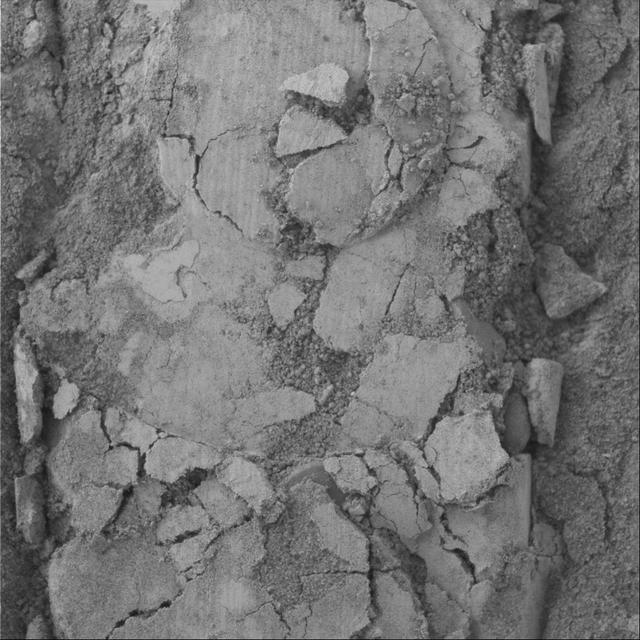
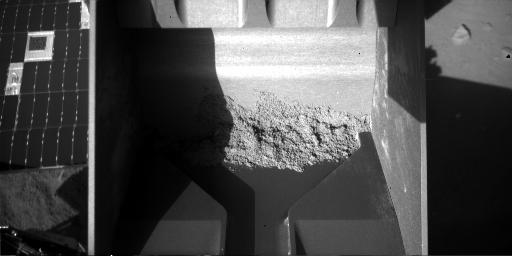
Closeup View of Compacted Soil
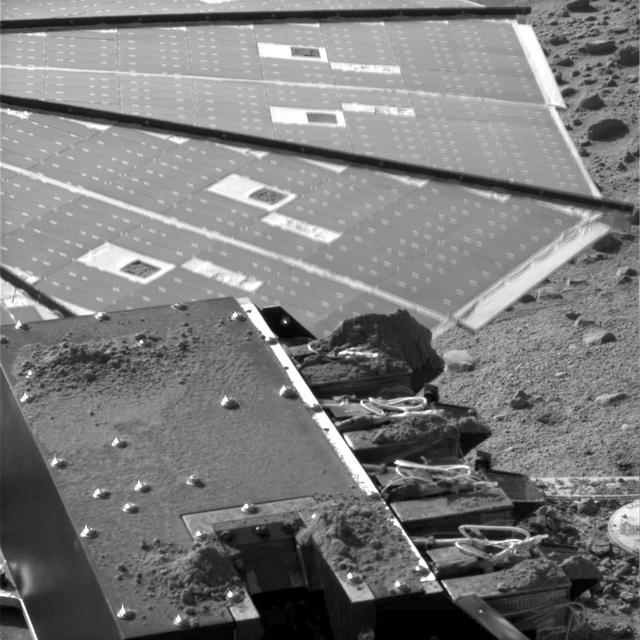
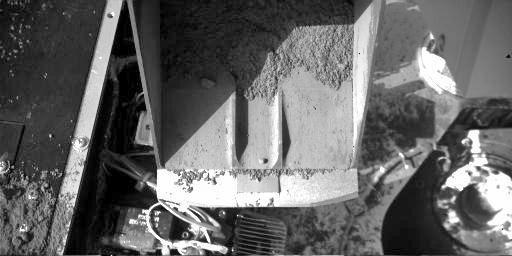
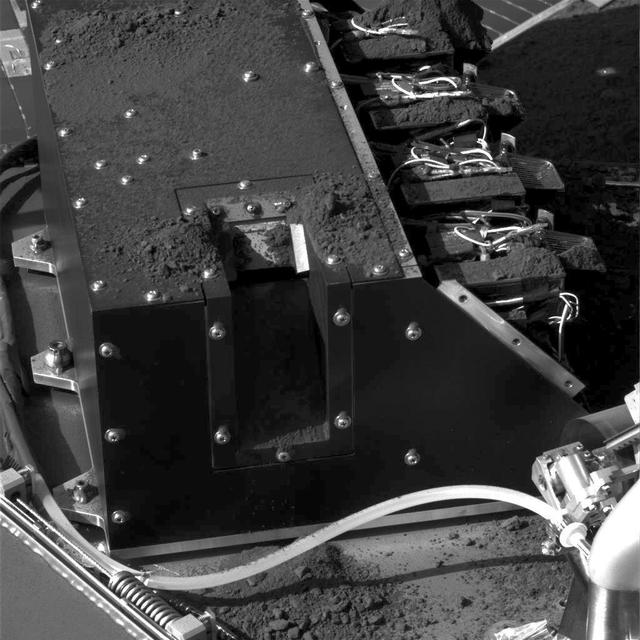
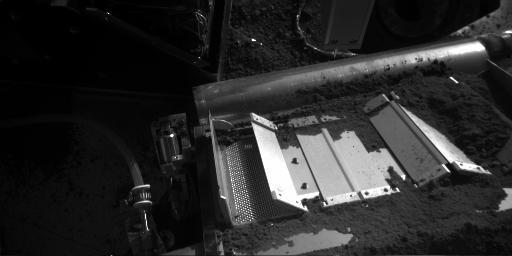
Soil on Phoenix MECA
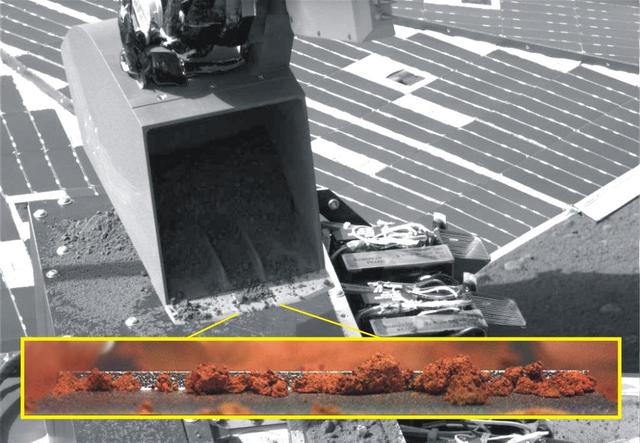
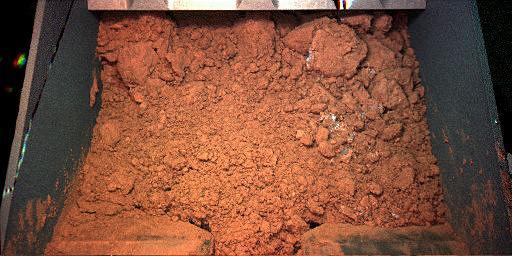
Fresh Soil for Inspection
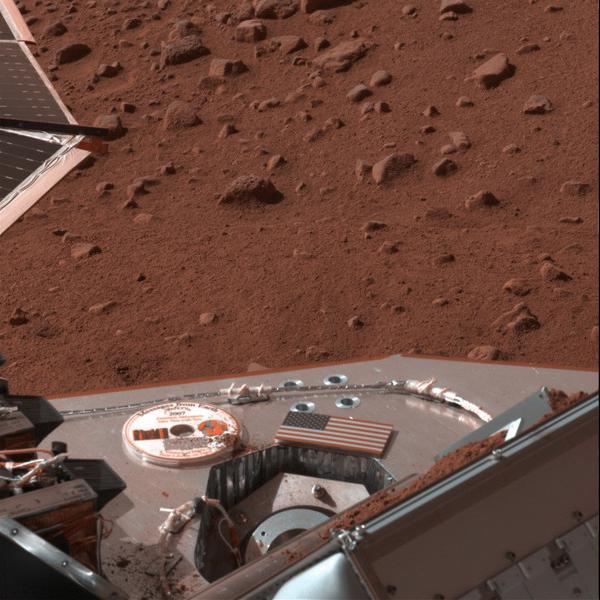
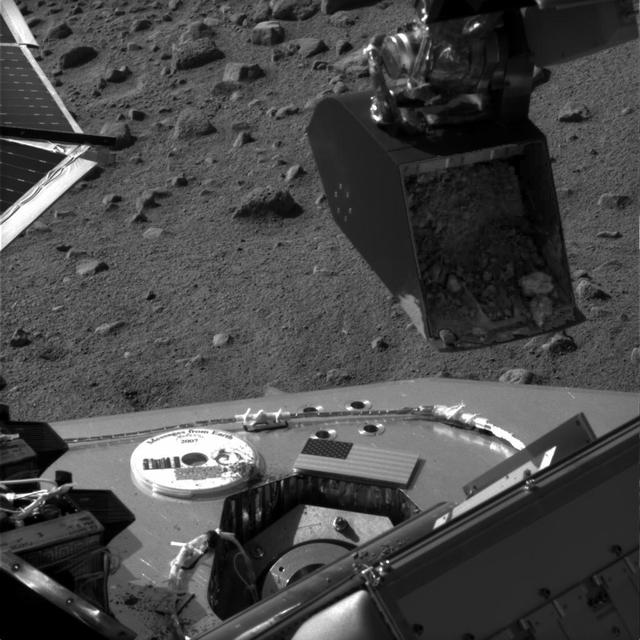
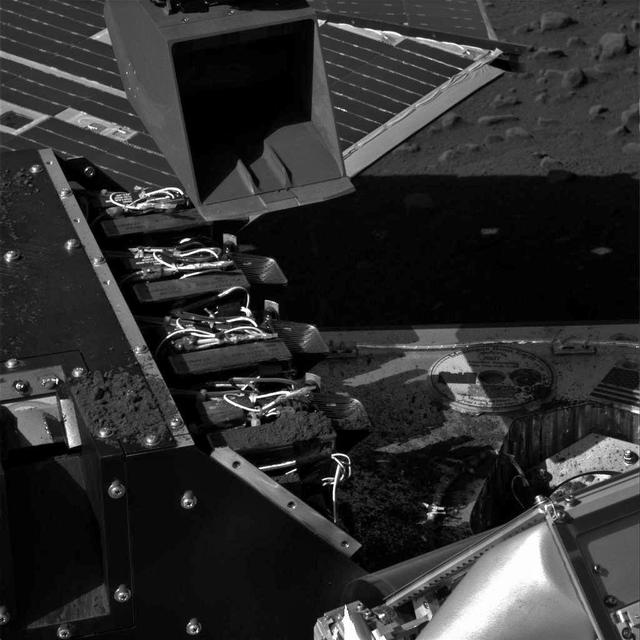
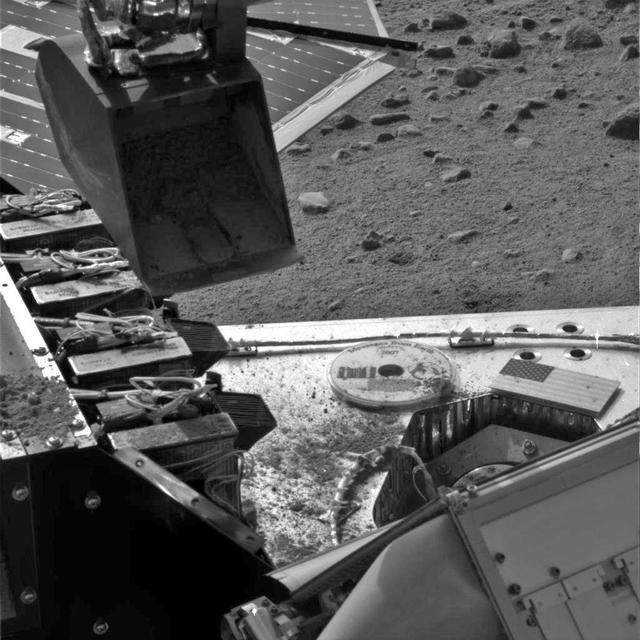
Soil on Phoenix Deck
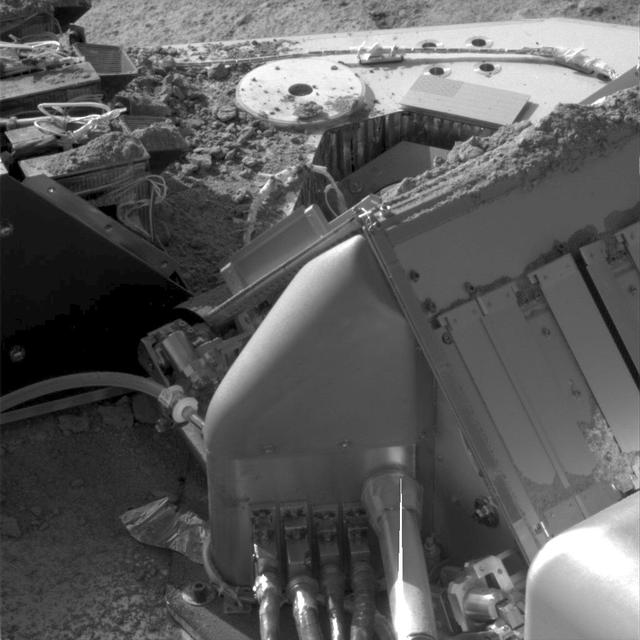
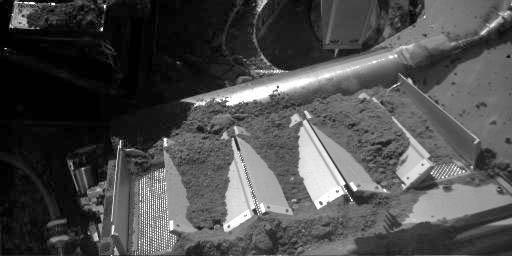
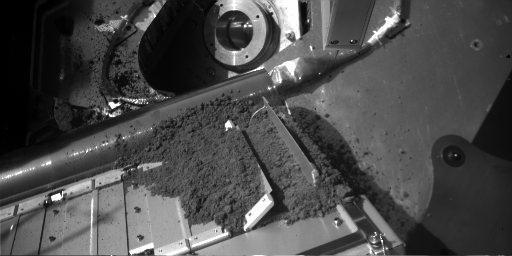
Soil on Phoenix TEGA
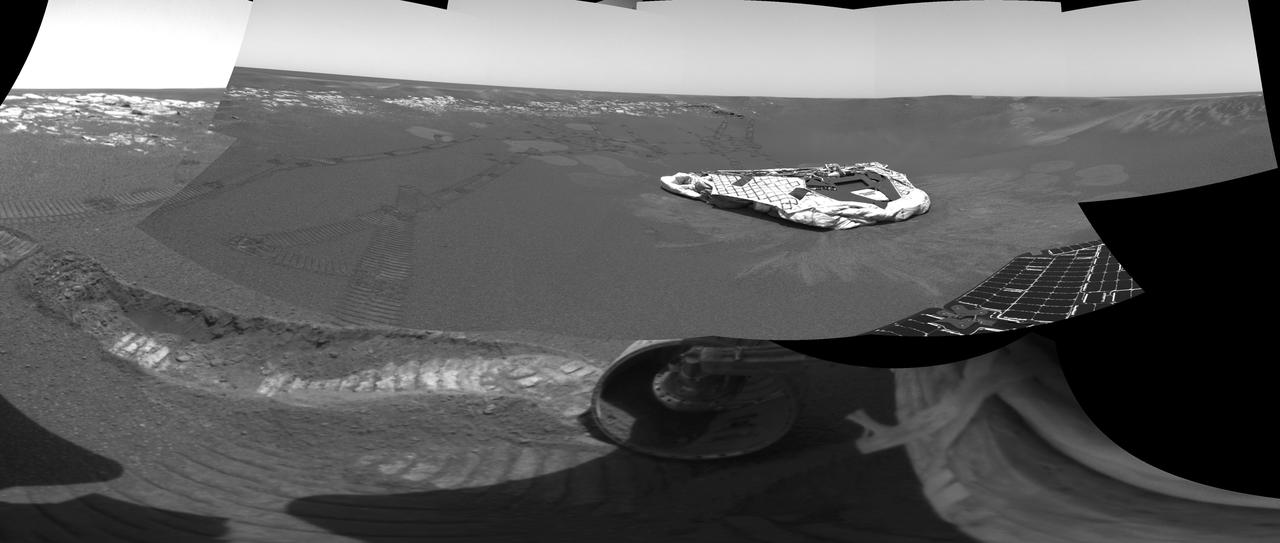
Meridiani Planum Soil-2
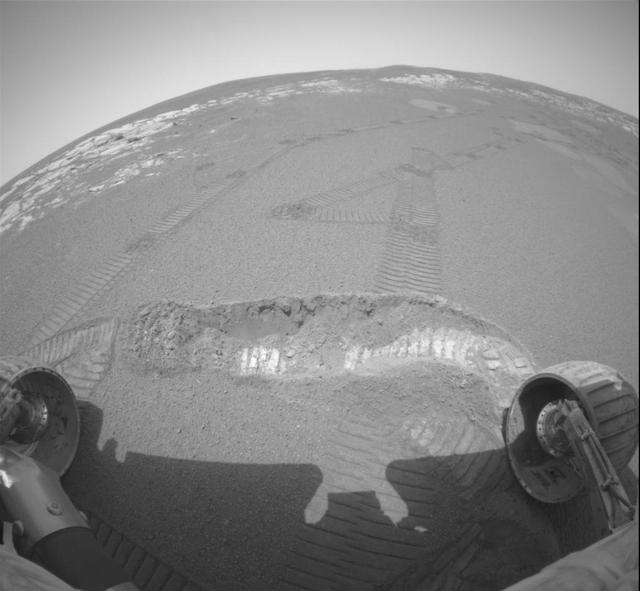
A Rover Wheel in Soil - Color
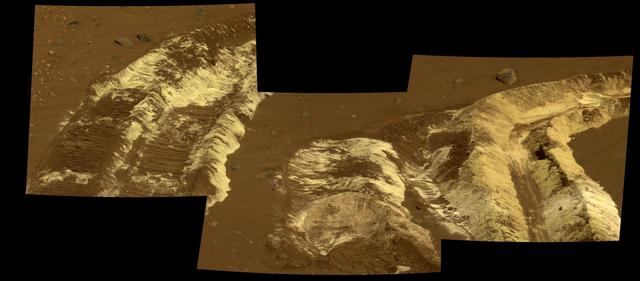
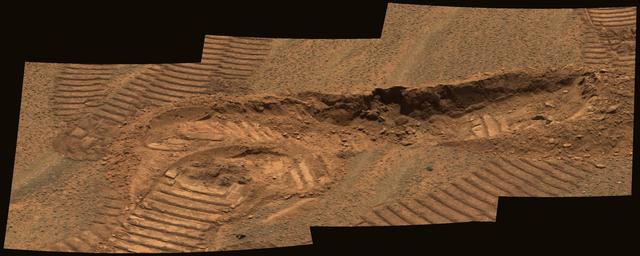
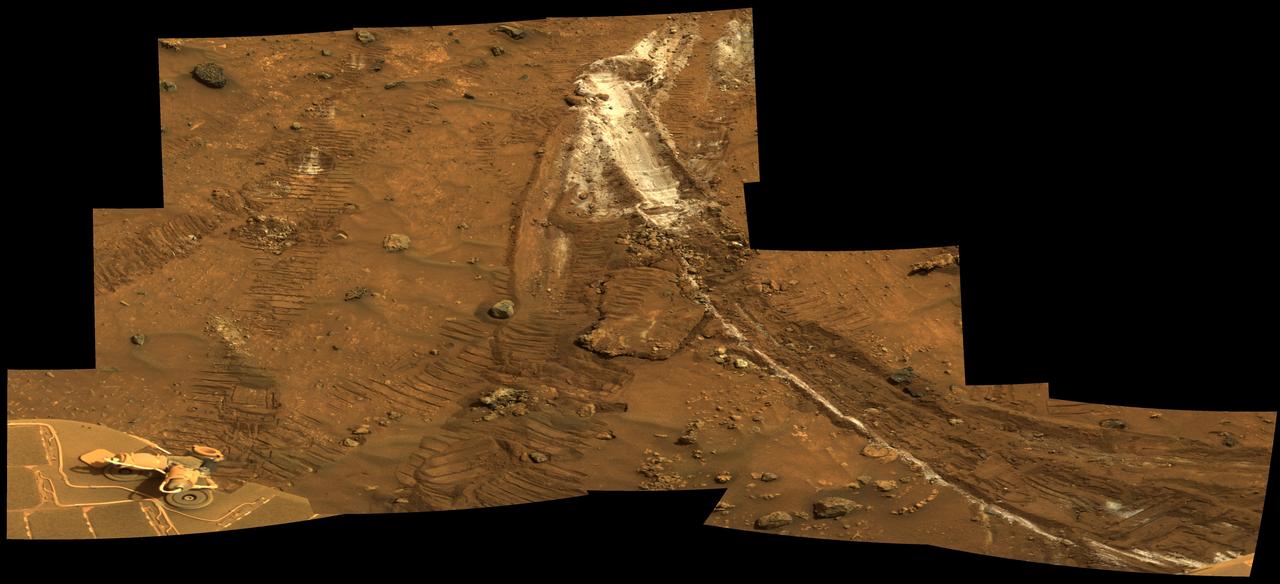
Opportunity Trenches Martian Soil
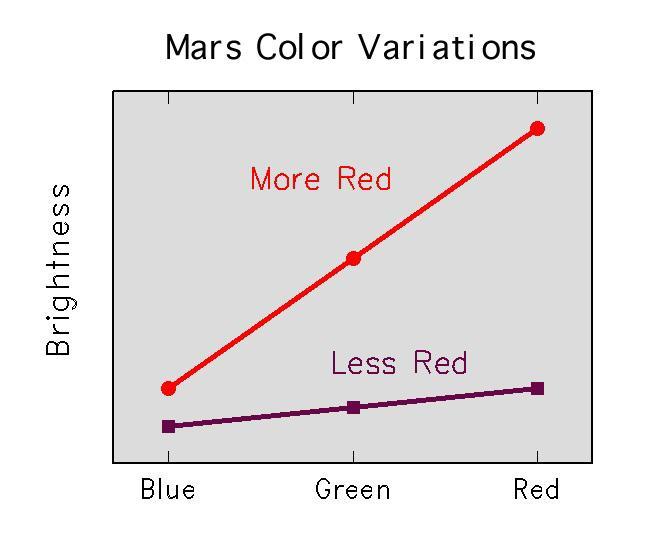
Martian Soil Color Variations
First Patch of Probed Soil
Sampling Martian Soil
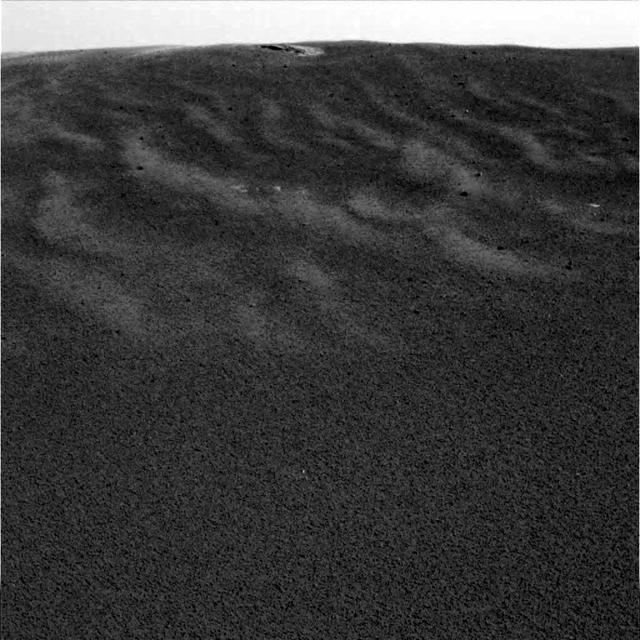
Wind Effects on Martian Soil
Rosy Red Soil in Scoop
Meridiani Planum Soil
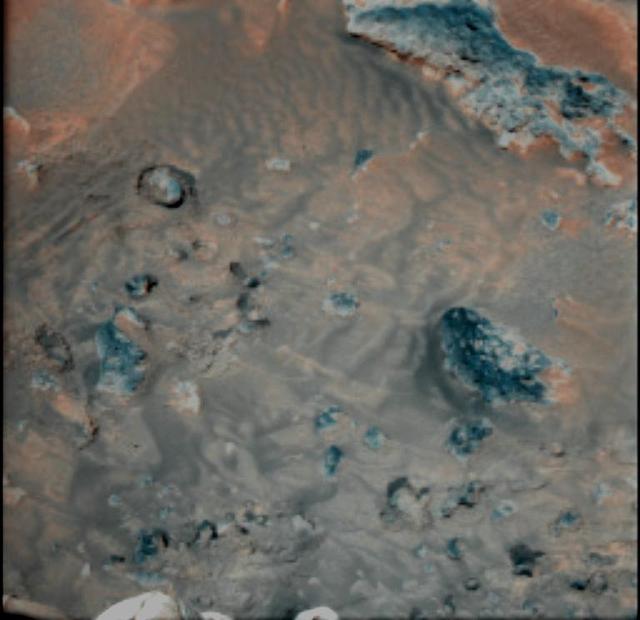
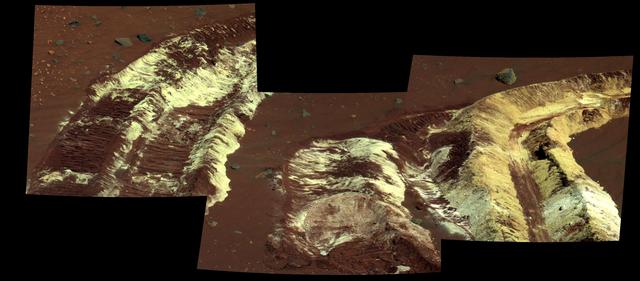
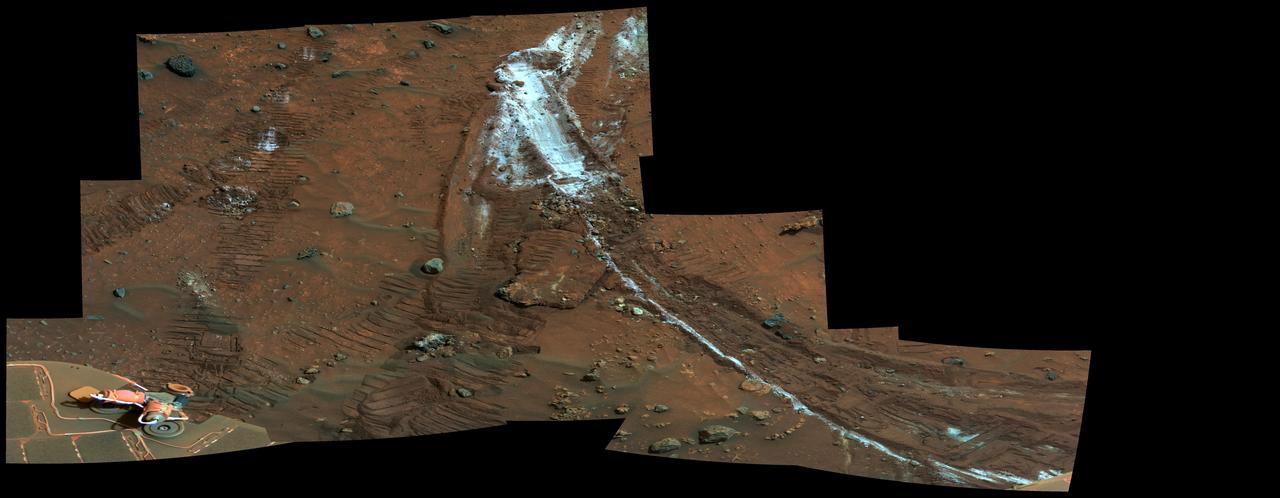
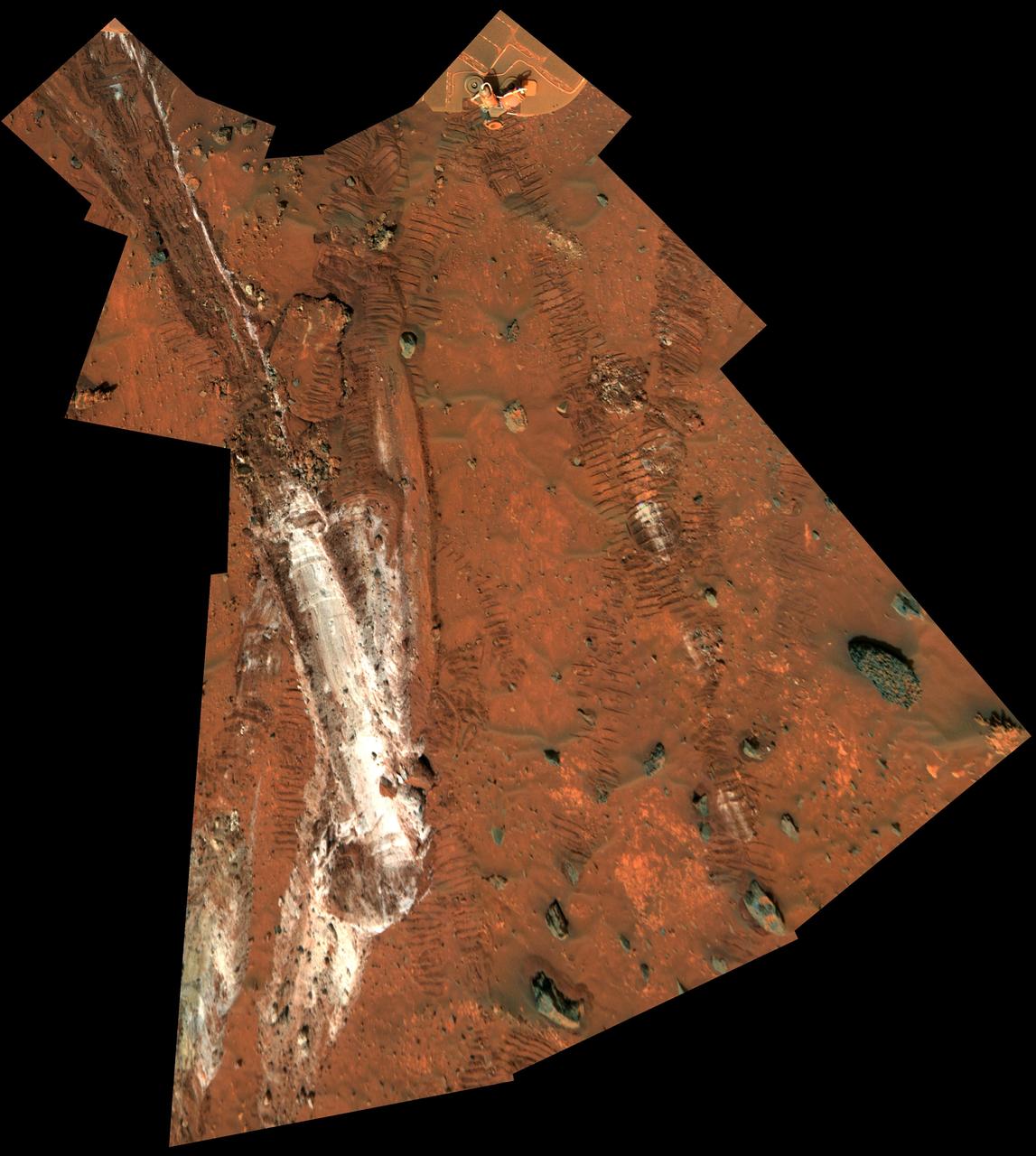
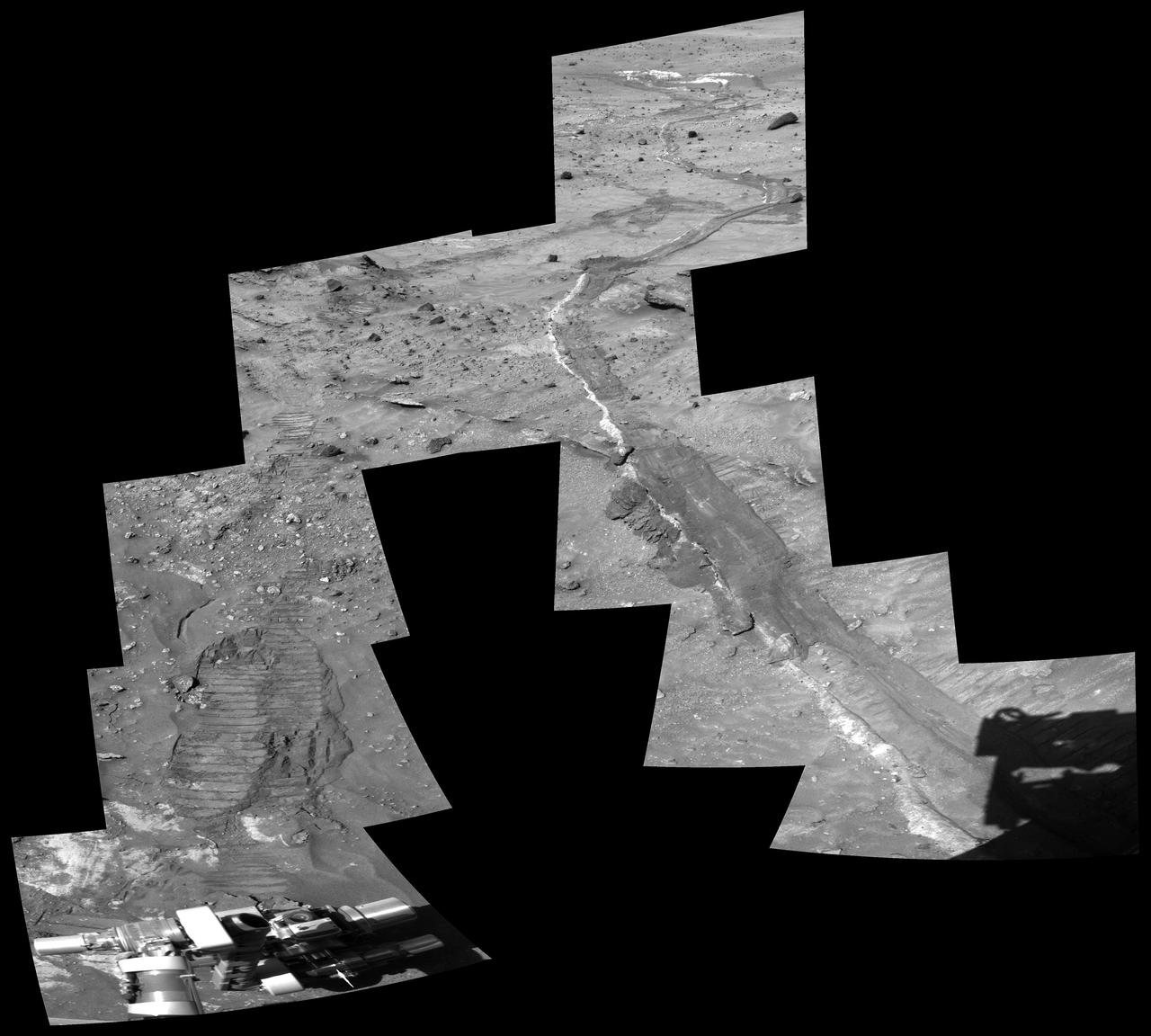
Spirit Sees Salty Soil
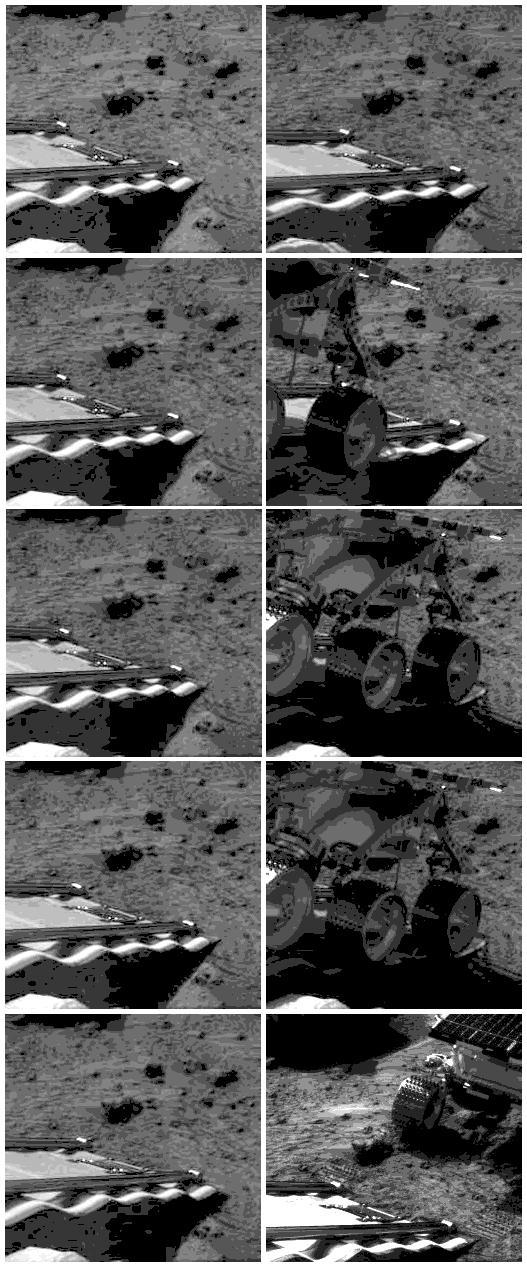
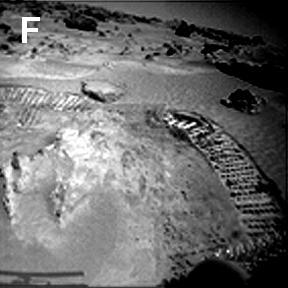
Six Wheels on the Soil
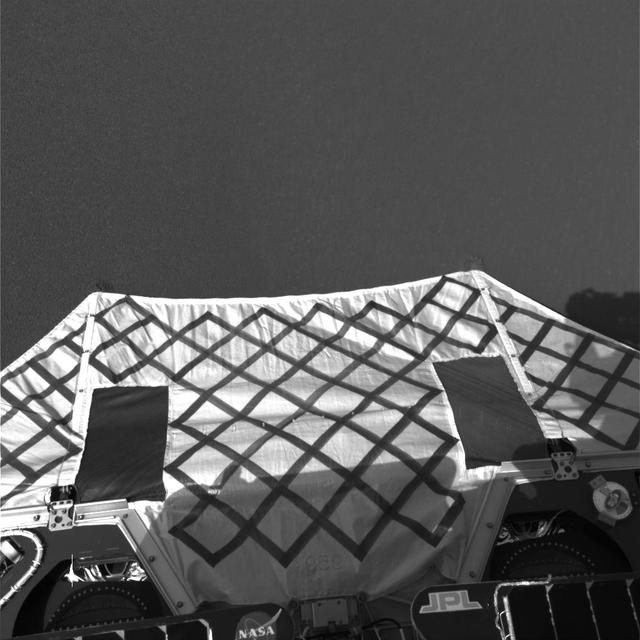
Airbag Impressions in Soil
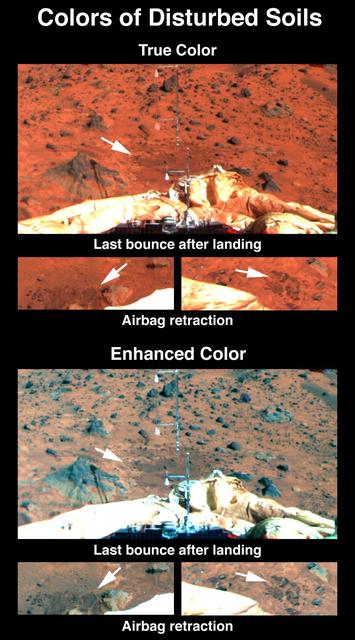
Soil Disturbance by Airbags
Soil Delivery to Phoenix Oven
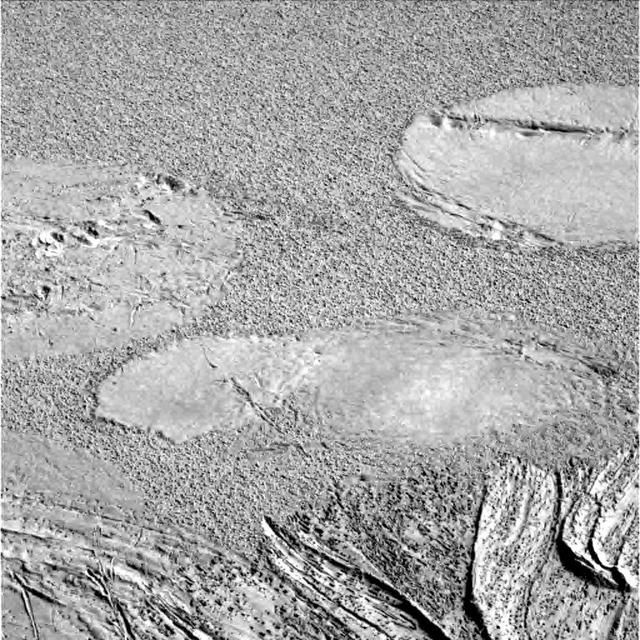
No Two Soil Patches Are Alike
Bright Soil Near McCool
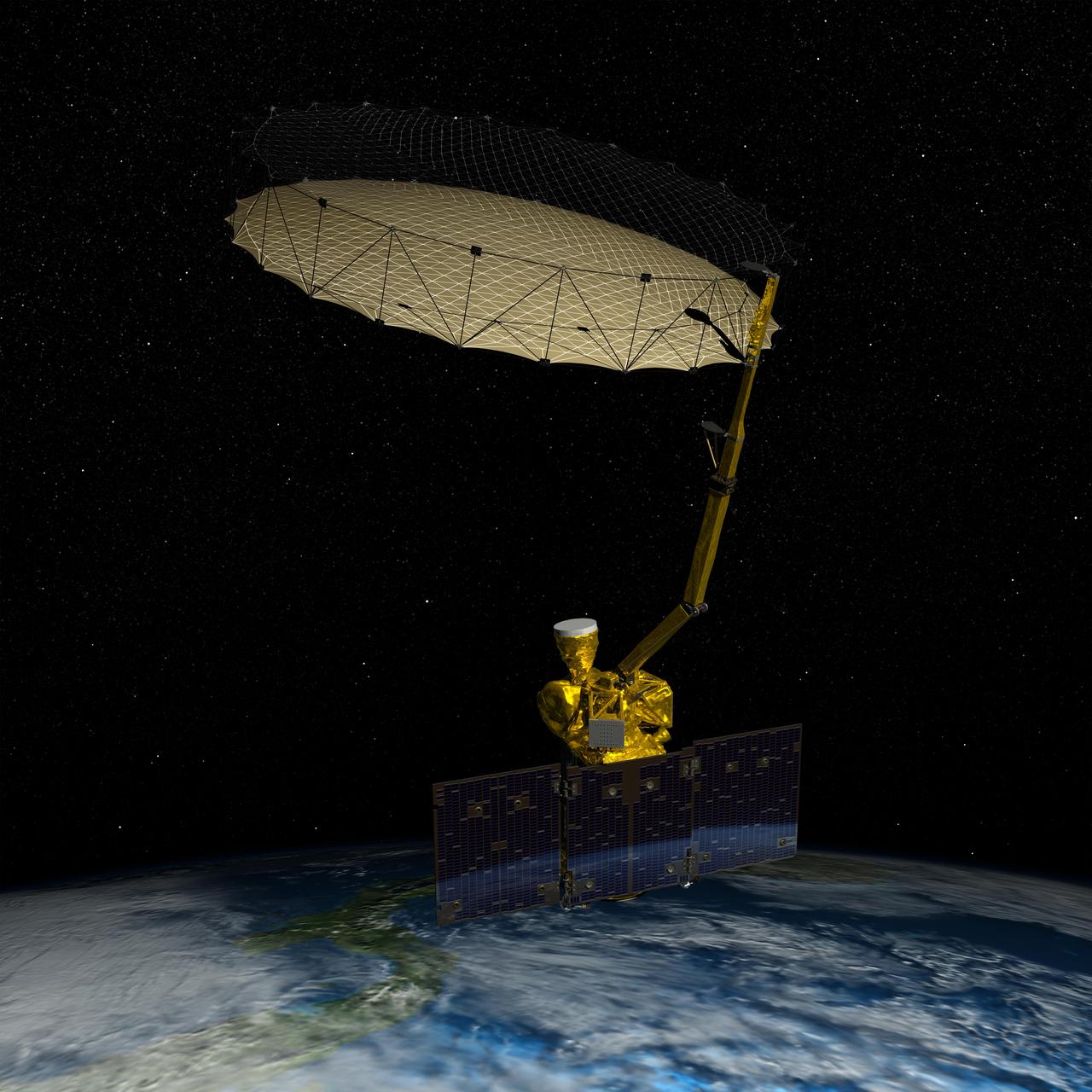
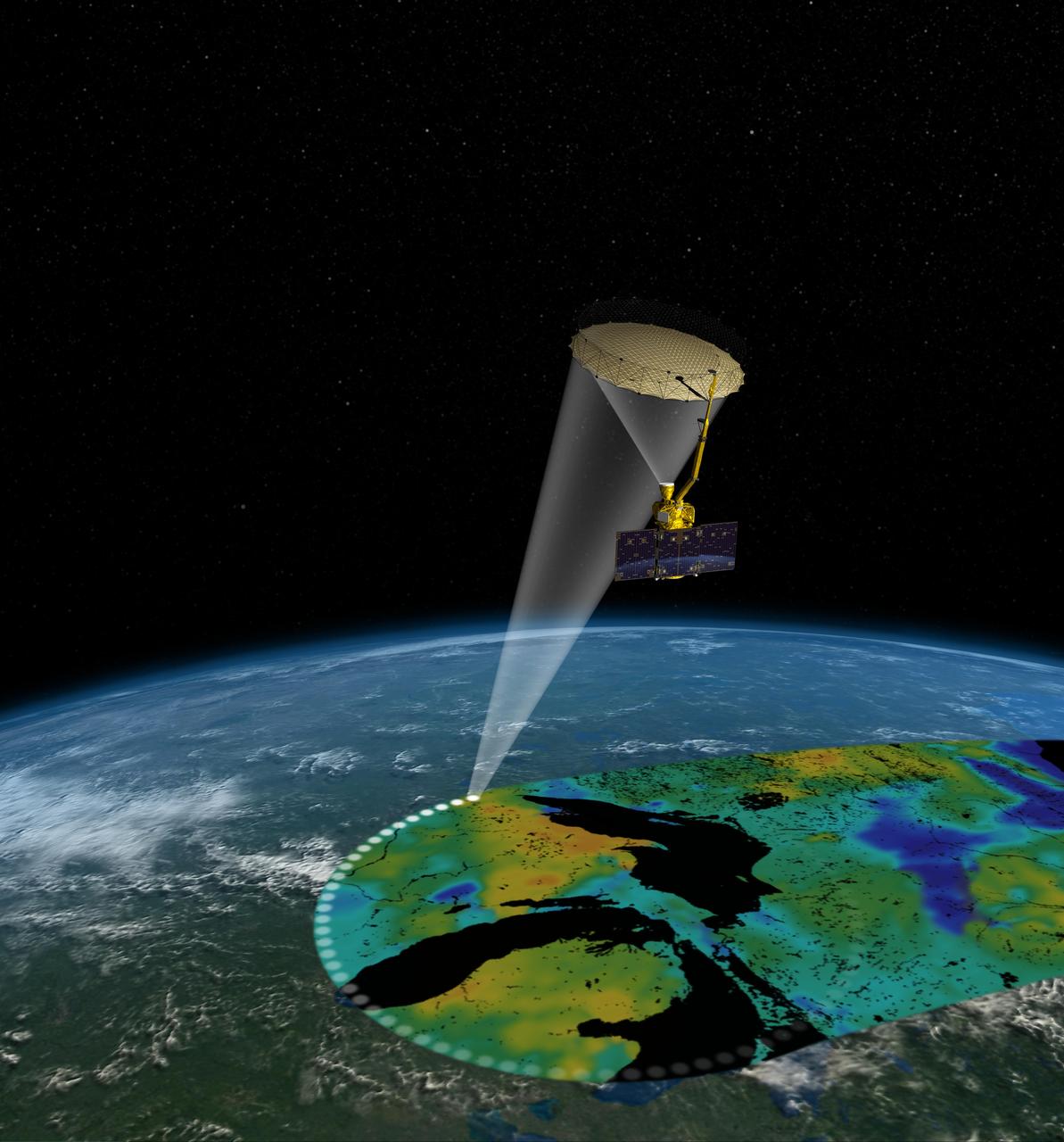
Artist rendering of the Soil Moisture Active Passive SMAP satellite. The width of the region scanned on Earth surface during each orbit is about 620 miles 1,000 kilometers.
Soil Moisture Active Passive Satellite
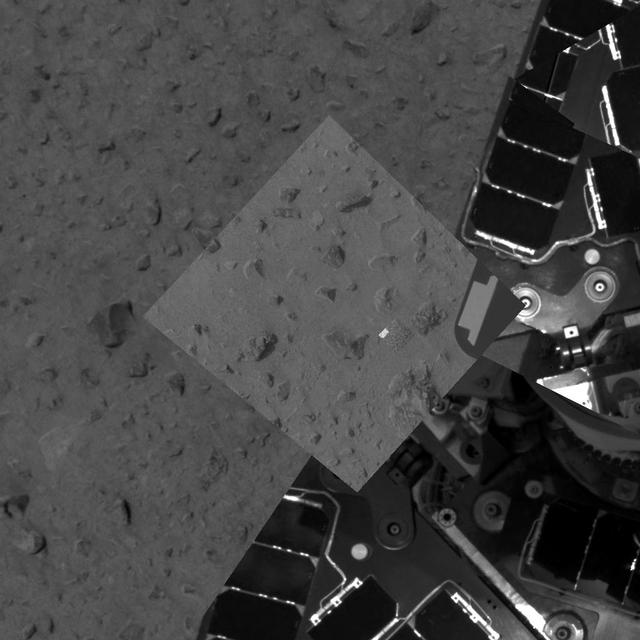
Soil Sample Site   http://photojournal.jpl.nasa.gov/catalog/PIA00363
Soil Sample Site
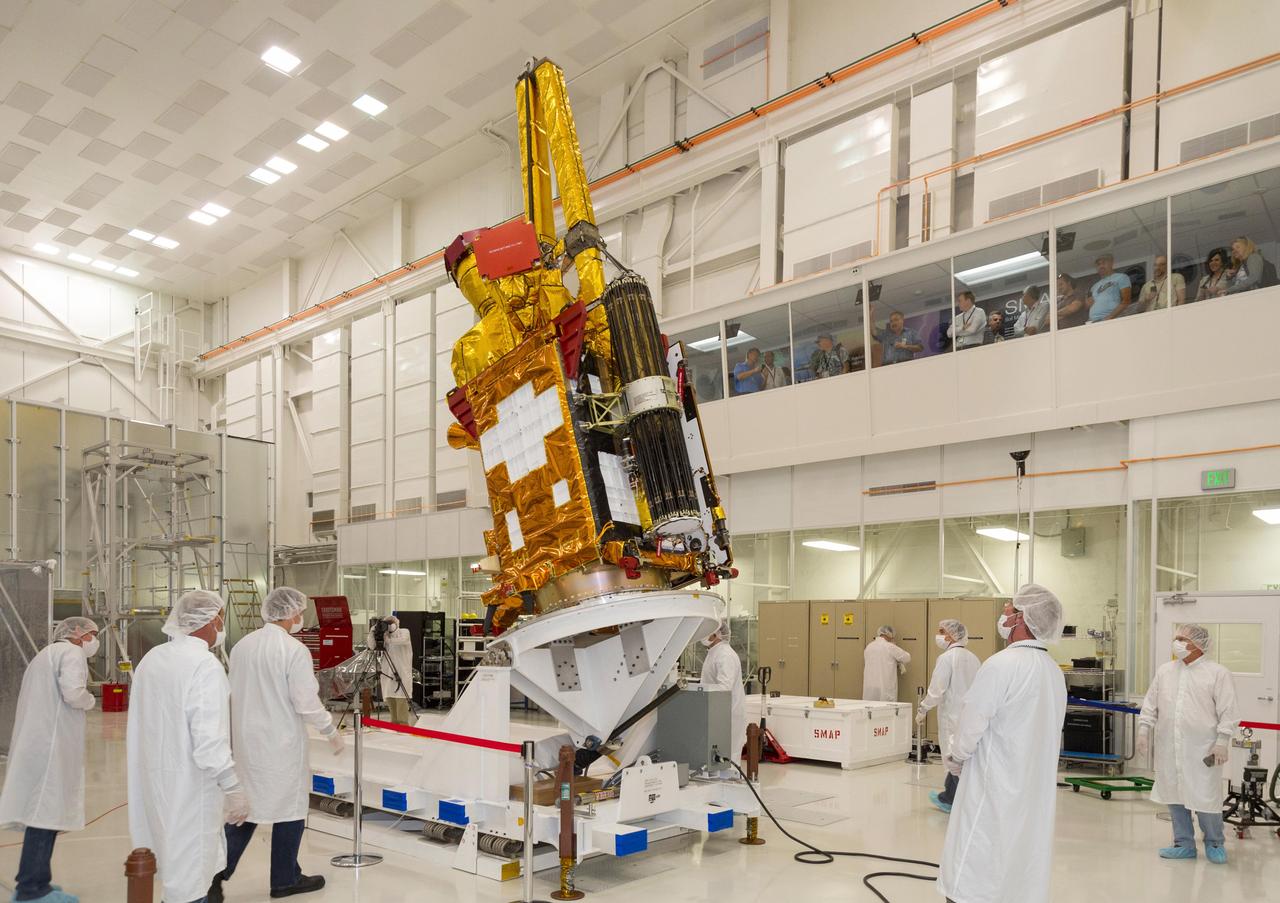
NASA Soil Moisture Active Passive SMAP spacecraft is slowly lowered into place in the Spacecraft Assembly Facility at NASA Jet Propulsion Laboratory, Pasadena, California.
NASA Soil Moisture Active Passive SMAP Lowered into Place
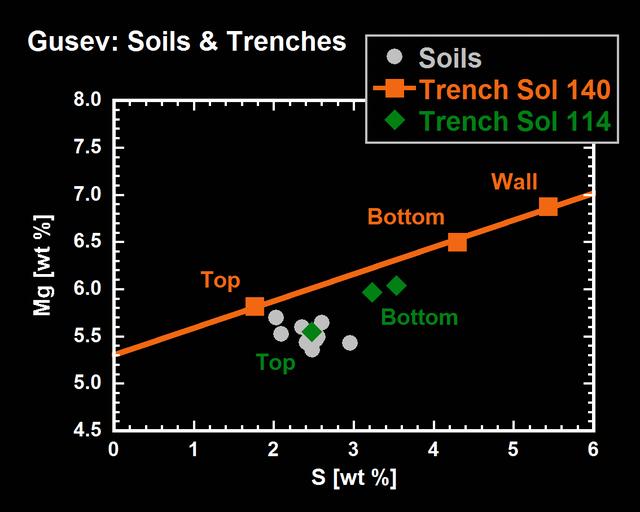
Trench Reveals Two Faces of Soils
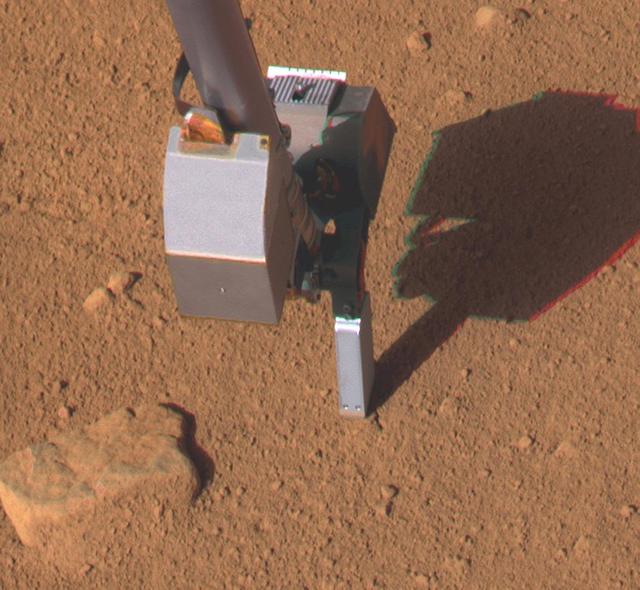
Phoenix Probe Inserted in Martian Soil
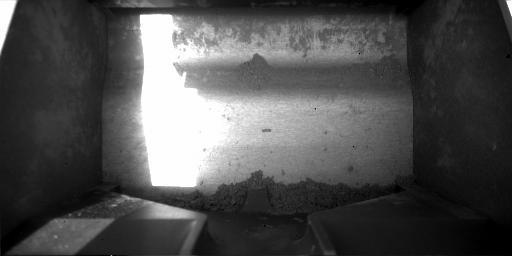
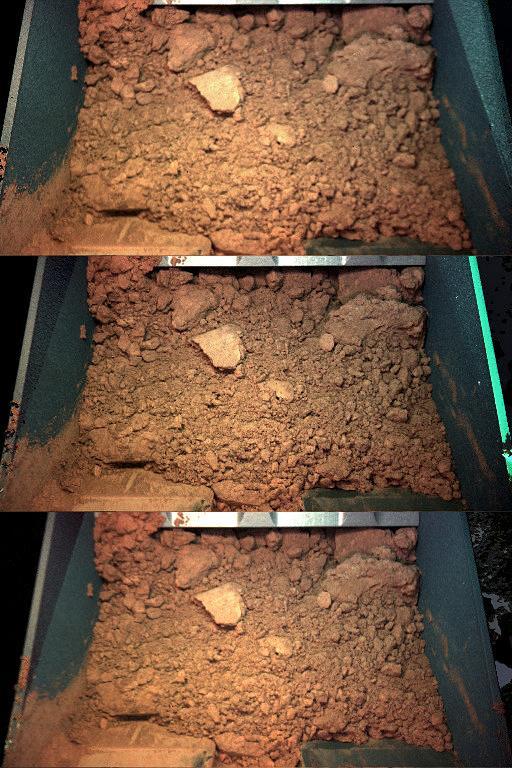
Soil Fills Phoenix Laboratory Cell
Silica-Rich Soil Found by Spirit
Rasped Soil Sample in Phoenix Scoop
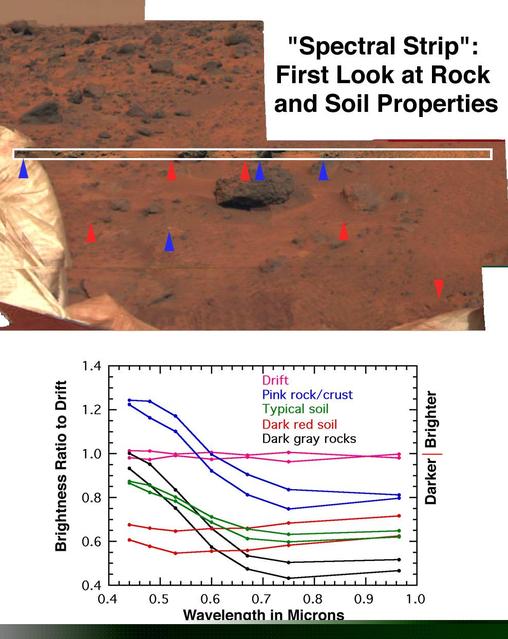
First Look at Rock & Soil Properties
More Soil Delivered to Phoenix Lab
Mars Rover Studies Soil on Mars
Soil Sample Poised at TEGA Door
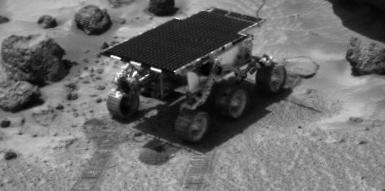
Sojourner Rover Tracks in Compressible Soil
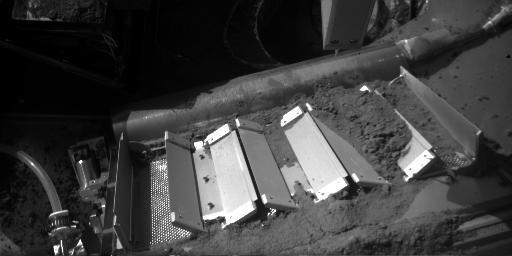
Opportunity Egress Aid Contacts Soil
Rosy Red Soil in Phoenix Scoop
High-resolution global soil moisture map from NASA SMAP combined radar and radiometer instruments, acquired between May 4 and May 11, 2015 during SMAP commissioning phase. The map has a resolution of 5.6 miles (9 kilometers). The data gap is due to turning the instruments on and off during testing.  http://photojournal.jpl.nasa.gov/catalog/PIA19337
High-Resolution Global Soil Moisture Map
Dara Entekhabi, SMAP science team lead, Massachusetts Institute of Technology, speaks during a briefing about the upcoming launch of the Soil Moisture Active Passive (SMAP) mission, Thursday, Jan. 08, 2015, at NASA Headquarters in Washington DC. The mission is scheduled for a Jan. 29 launch from Vandenberg Air Force Base in California, and will provide the most accurate, highest-resolution global measurements of soil moisture ever obtained from space. The data will be used to enhance scientists' understanding of the processes that link Earth's water, energy and carbon cycles. Photo Credit: (NASA/Aubrey Gemignani)
Soil Moisture Active Passive (SMAP) Media Briefing
Brad Doorn, SMAP applications lead, Science Mission Directorate’s Applied Sciences Program at NASA Headquarters speaks during a briefing about the upcoming launch of the Soil Moisture Active Passive (SMAP) mission, Thursday, Jan. 08, 2015, at NASA Headquarters in Washington DC. The mission is scheduled for a Jan. 29 launch from Vandenberg Air Force Base in California, and will provide the most accurate, highest-resolution global measurements of soil moisture ever obtained from space. The data will be used to enhance scientists' understanding of the processes that link Earth's water, energy and carbon cycles. Photo Credit: (NASA/Aubrey Gemignani)
Soil Moisture Active Passive (SMAP) Media Briefing
Christine Bonniksen, SMAP program executive with the Science Mission Directorate’s Earth Science Division at NASA Headquarters speaks during a briefing about the upcoming launch of the Soil Moisture Active Passive (SMAP) mission, Thursday, Jan. 08, 2015, at NASA Headquarters in Washington DC. The mission is scheduled for a Jan. 29 launch from Vandenberg Air Force Base in California, and will provide the most accurate, highest-resolution global measurements of soil moisture ever obtained from space. The data will be used to enhance scientists' understanding of the processes that link Earth's water, energy and carbon cycles. Photo Credit: (NASA/Aubrey Gemignani)
Soil Moisture Active Passive (SMAP) Media Briefing
Kent Kellogg, SMAP project manager at NASA’s Jet Propulsion Laboratory (JPL) in Pasadena, CA, speaks during a briefing about the upcoming launch of the Soil Moisture Active Passive (SMAP) mission, Thursday, Jan. 08, 2015, at NASA Headquarters in Washington DC. The mission is scheduled for a Jan. 29 launch from Vandenberg Air Force Base in California, and will provide the most accurate, highest-resolution global measurements of soil moisture ever obtained from space. The data will be used to enhance scientists' understanding of the processes that link Earth's water, energy and carbon cycles. Photo Credit: (NASA/Aubrey Gemignani)
Soil Moisture Active Passive (SMAP) Media Briefing
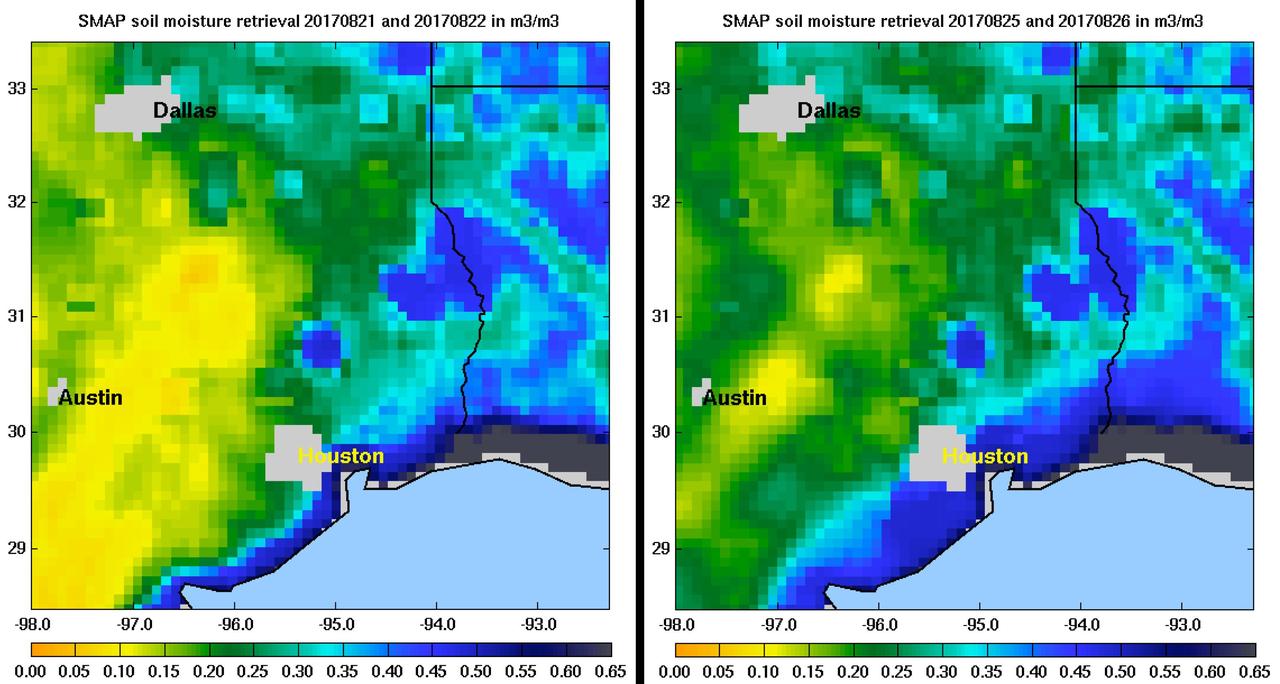
Images of soil moisture conditions in Texas near Houston, generated by NASA's Soil Moisture Active Passive (SMAP) satellite before and after the landfall of Hurricane Harvey can be used to monitor changing ground conditions due to Harvey's rainfall. As seen in the left panel, SMAP observations show that soil surface conditions were already very wet a few days before the hurricane made landfall (August 21/22), with moisture levels in the 20 to 40 percent range. Such saturated soil surfaces contributed to the inability of water to infiltrate more deeply into soils, thereby increasing the likelihood of flooding. After Harvey made landfall, the southwest portion of Houston became exceptionally wet, as seen in the right panel image from August 25/26, signaling the arrival of heavy rains and widespread flooding.  https://photojournal.jpl.nasa.gov/catalog/PIA21926
NASA SMAP Images Show Texas Soil Moisture Conditions Before/After Hurricane Harvey's Landfall
With its antenna now spinning at full speed, NASA new Soil Moisture Active Passive SMAP observatory has successfully re-tested its science instruments and generated its first global maps, a key step to beginning routine science operations in May, 2015
NASA Soil Moisture Mission Produces First Global Radiometer Map
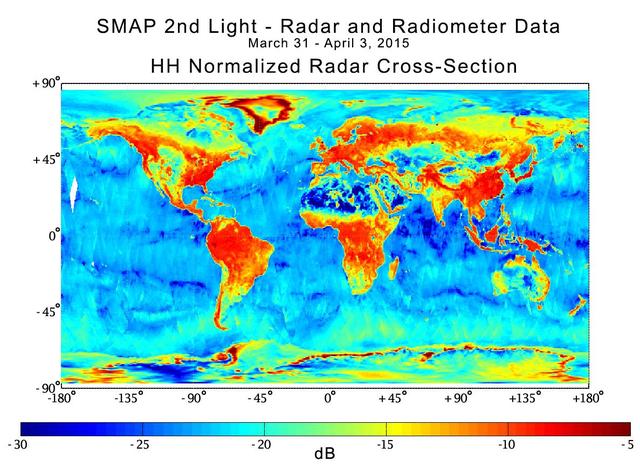
With its antenna now spinning at full speed, NASA new Soil Moisture Active Passive SMAP observatory has successfully re-tested its science instruments and generated its first global maps, a key step to beginning routine science operations in May, 2015
NASA Soil Moisture Mission Produces First Global Radar Map
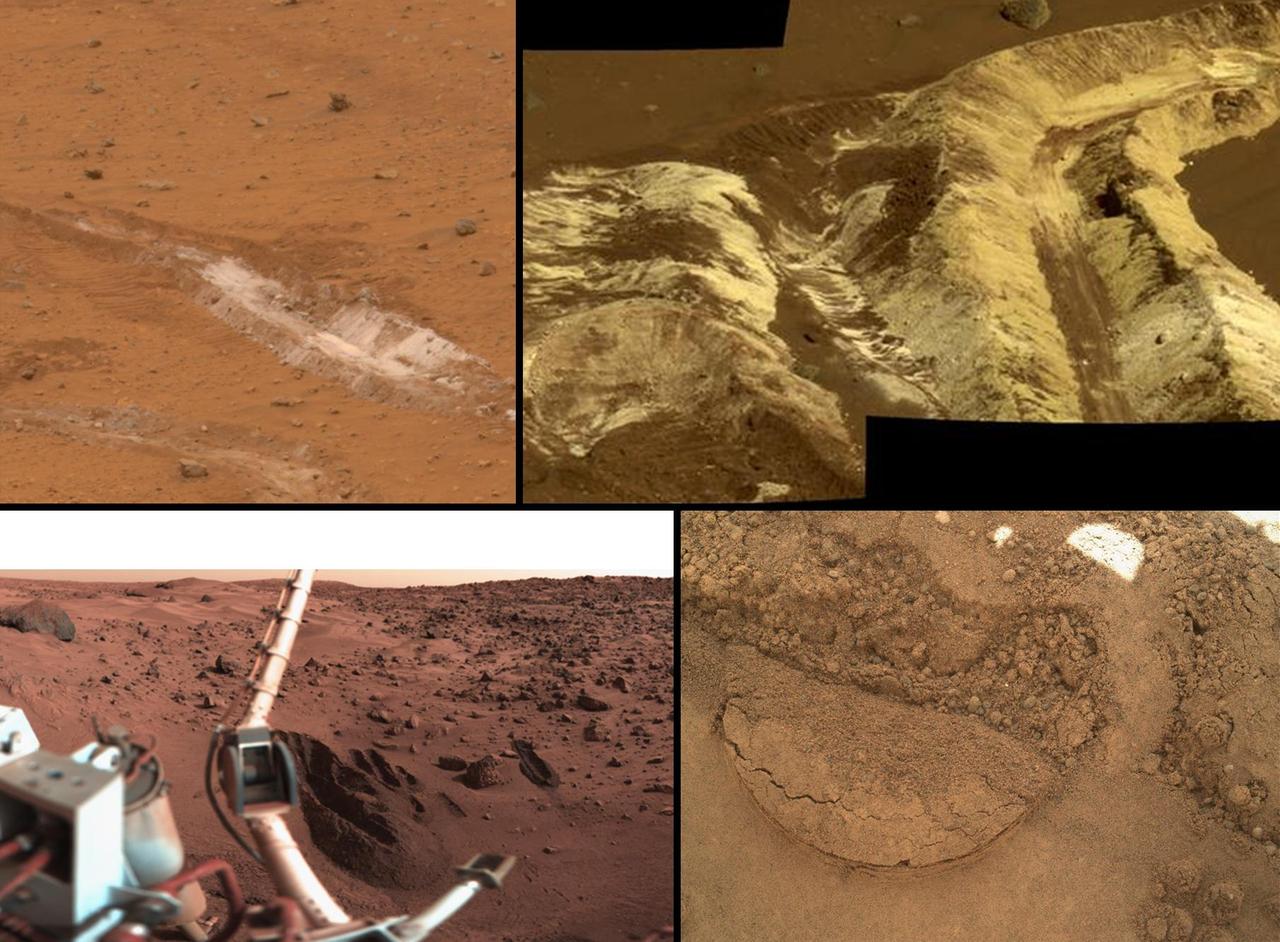
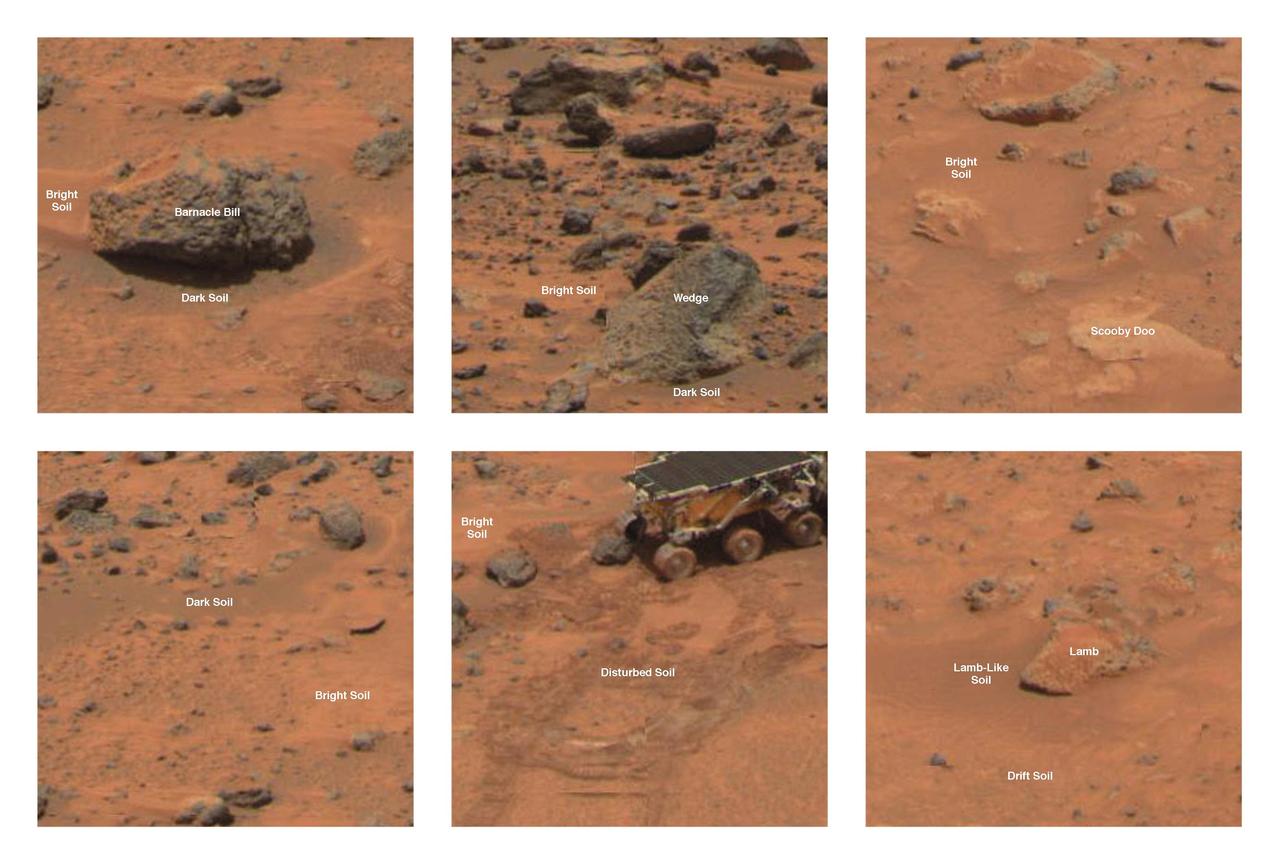
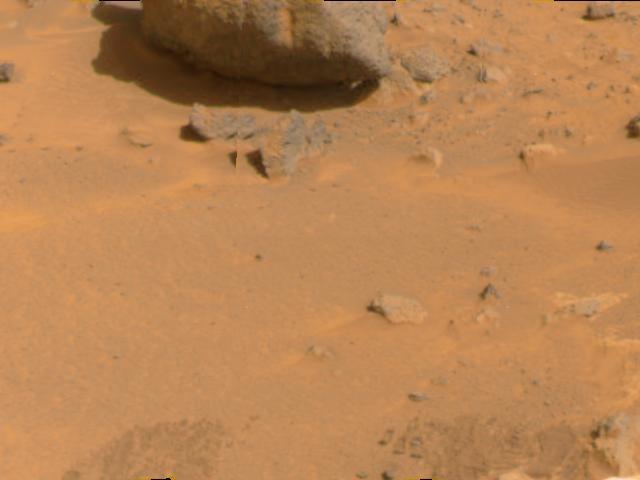
This collage shows the variety of soils found at landing sites on Mars. The elemental composition of the typical, reddish soils were investigated by NASA Viking, Pathfinder and Mars Exploration Rover missions, and now with the Curiosity rover.
A Sampling of Martian Soils
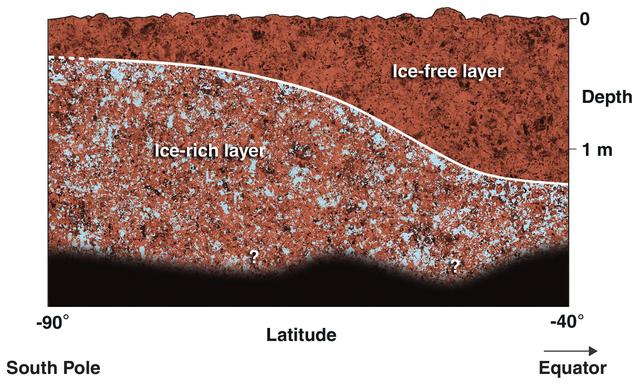
This diagram shows a possible configuration of ice-rich and dry soil in the upper meter 3 feet of Mars. The ice-rich soil was detected by the gamma ray spectrometer suite of instruments aboard NASA Mars Odyssey spacecraft.
Cross-Section of Icy Soil
Dara Entekhabi, SMAP science team lead, Massachusetts Institute of Technology, center, speaks during a briefing about the upcoming launch of the Soil Moisture Active Passive (SMAP) mission, Thursday, Jan. 08, 2015, at NASA Headquarters in Washington DC. The mission is scheduled for a Jan. 29 launch from Vandenberg Air Force Base in California, and will provide the most accurate, highest-resolution global measurements of soil moisture ever obtained from space. The data will be used to enhance scientists' understanding of the processes that link Earth's water, energy and carbon cycles. Photo Credit: (NASA/Aubrey Gemignani)
Soil Moisture Active Passive (SMAP) Media Briefing
Martian Soil Inside Phoenix Robotic Arm Scoop
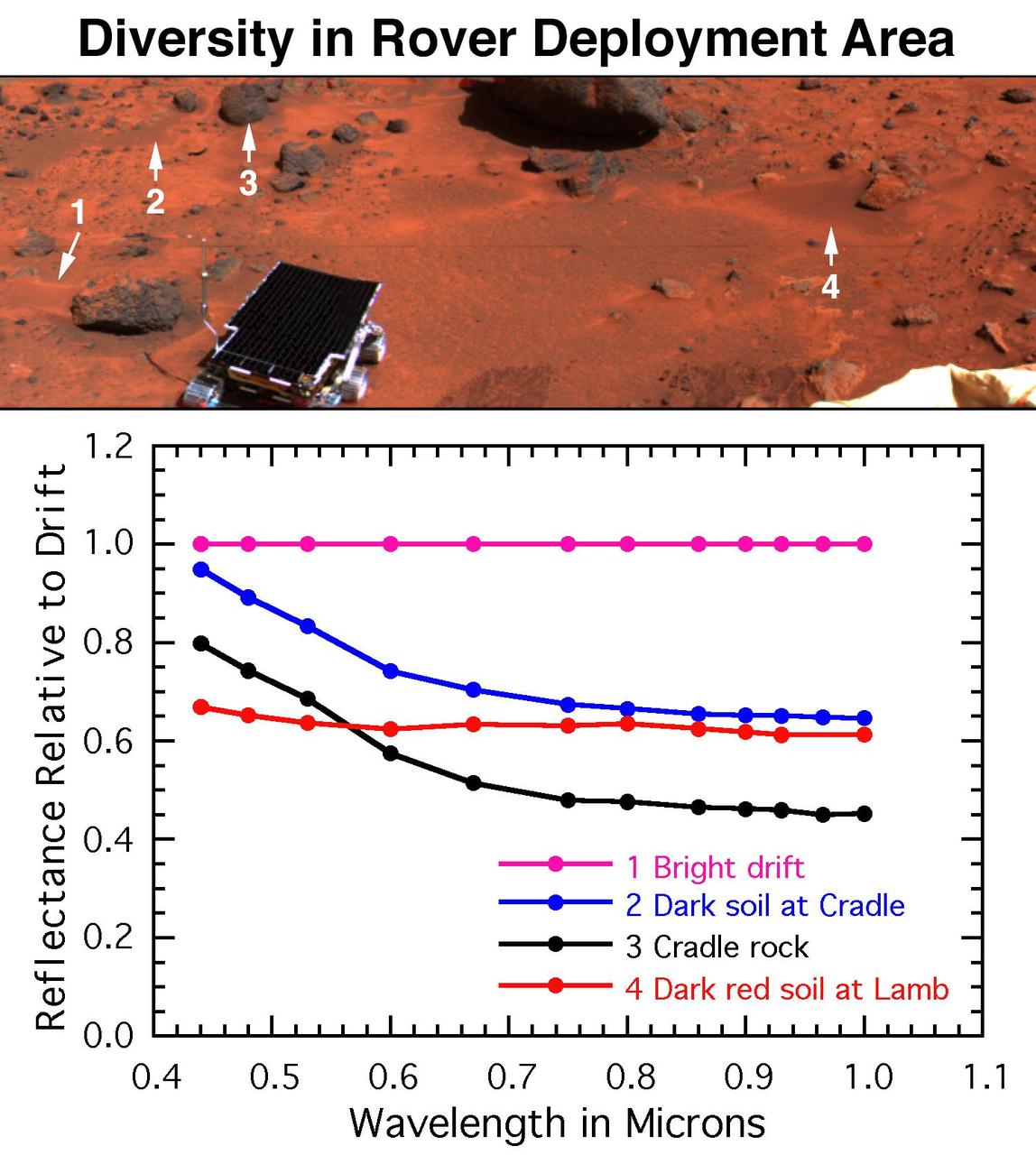
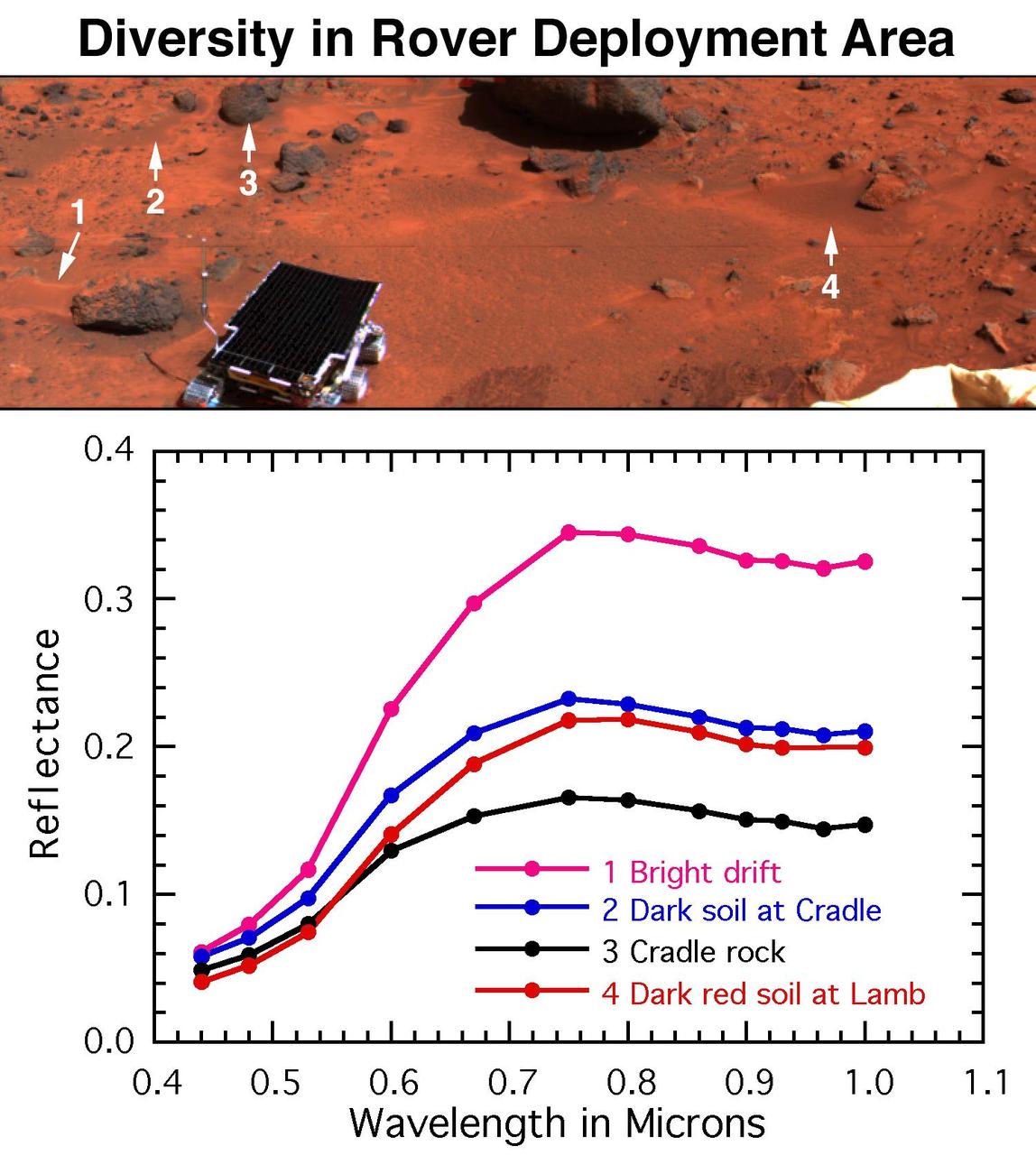
Diversity of Soils near Rover Deploy Region
Color Views of Soil Scooped on Sol 9
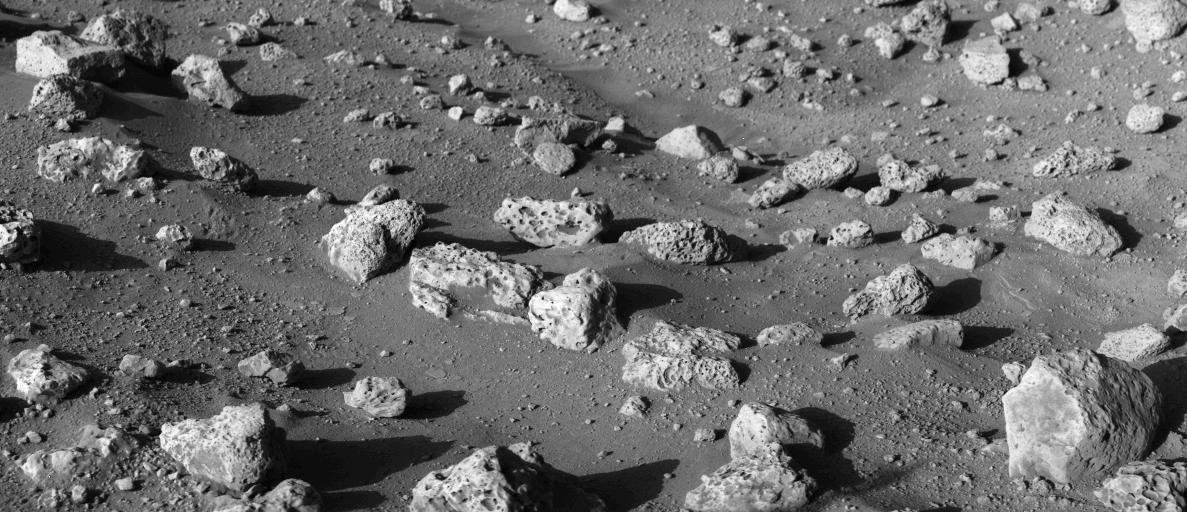
Rock and Soil Types at Pathfinder Landing Site
Martian Soil Ready for Robotic Laboratory Analysis
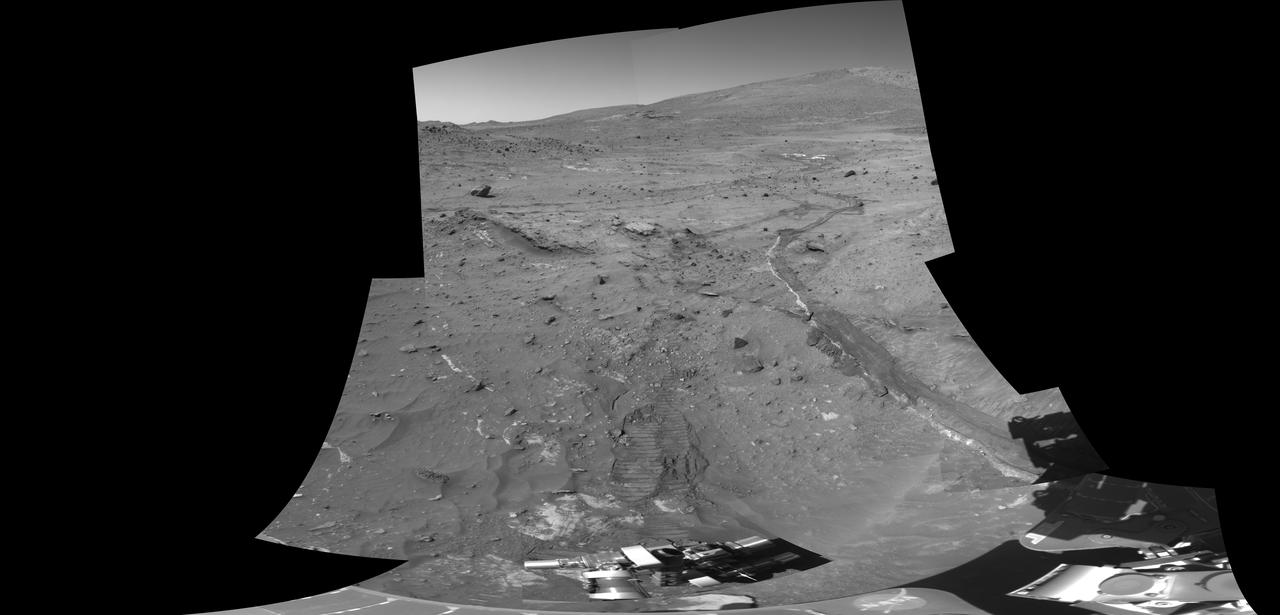
Disturbed Soil Along the Path from TyronePanorama
Diversity of Soils near Rover Deploy Region
Conductivity Probe Inserted in Martian Soil, Sol 46
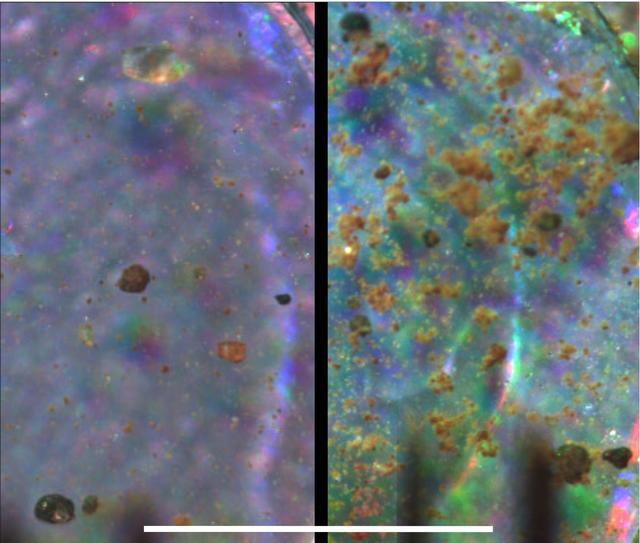
Microscopic Comparison of Airfall Dust to Martian Soil
Bright Soil Near McCool False Color
Soil Still in Scoop After Sample-Delivery Attempt
Phoenix Conductivity Probe Inserted into Martian Soil
Phoenix Again Carries Soil to Wet Chemistry Lab
Phoenix Carries Soil to Wet Chemistry Lab
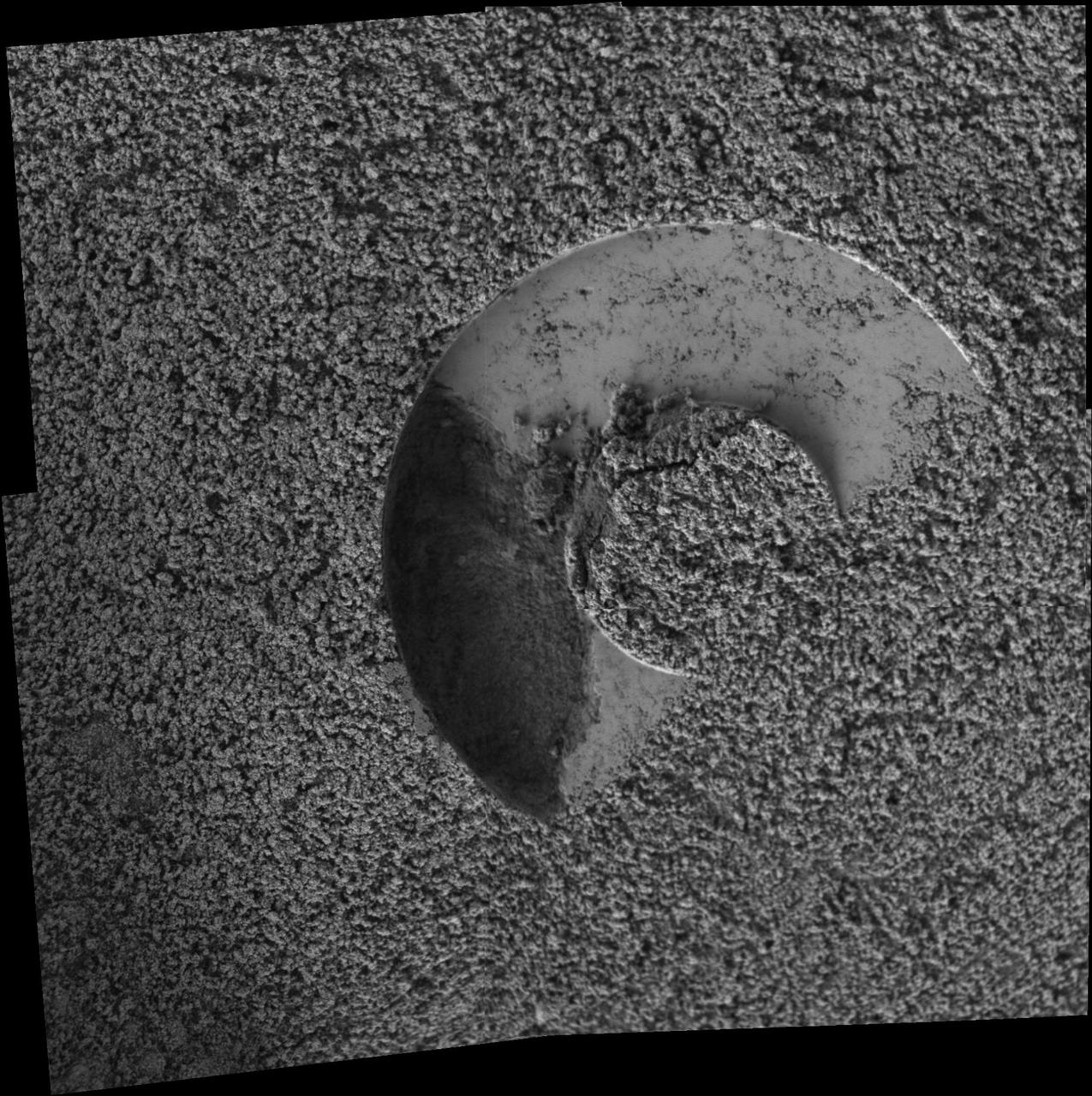
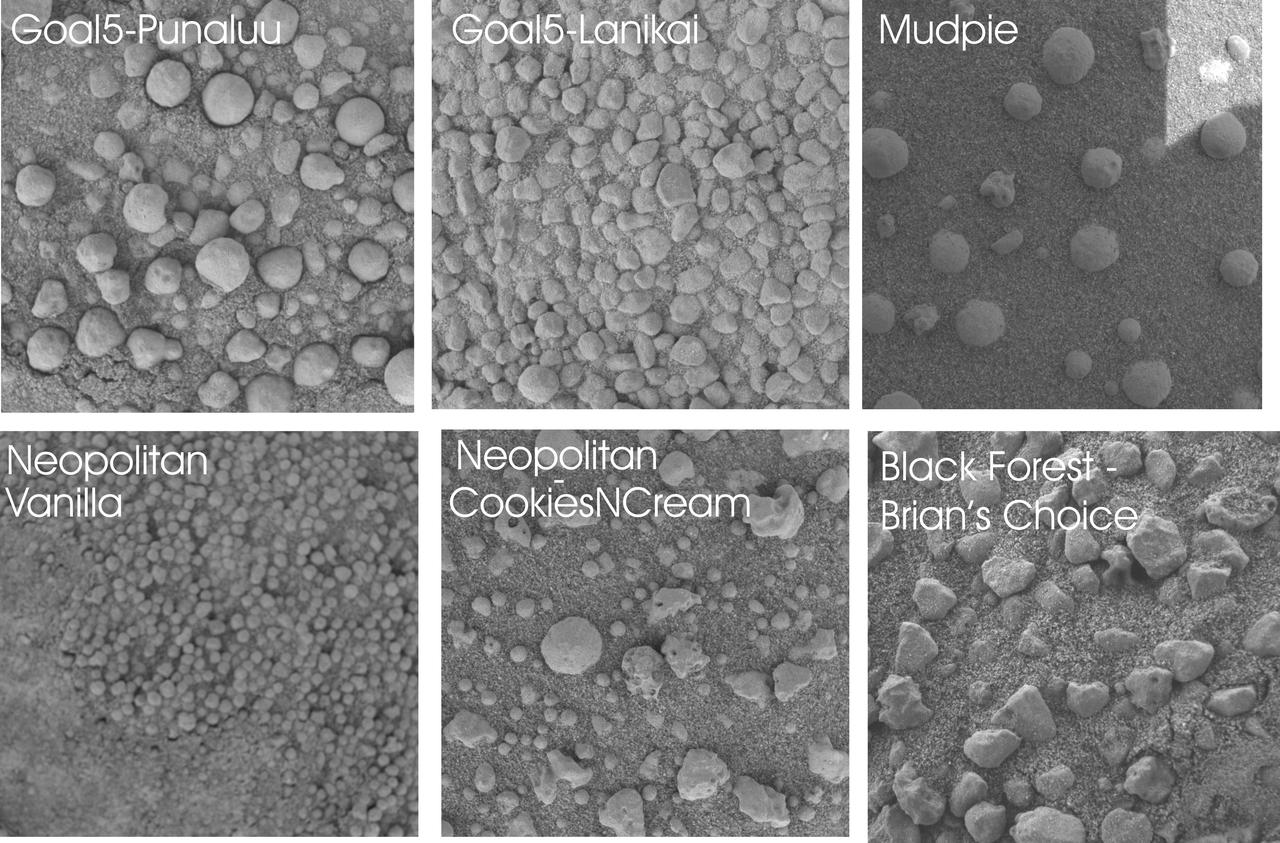
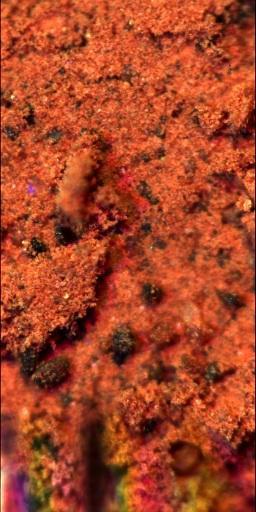
Microscope Image of a Martian Soil Surface Sample
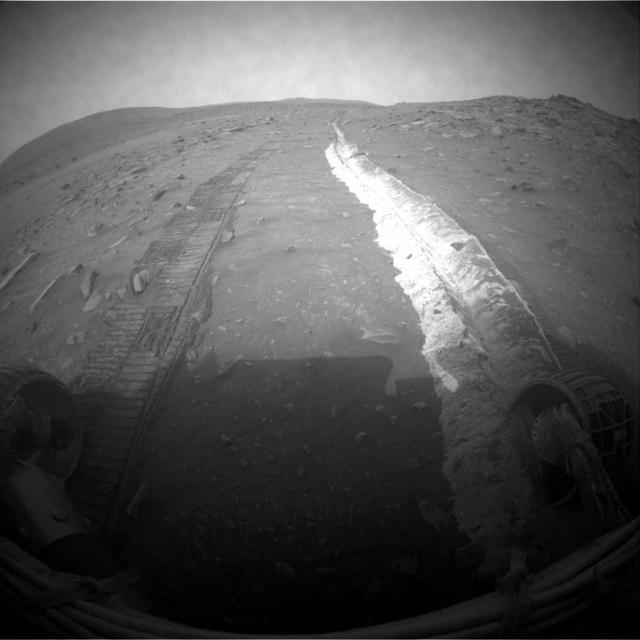
Rover Wheel Churns Up Bright Martian Soil
Bright Soil Churned by Spirit Sol 1861 Drive
Mid-Level Soil Sample for Oven Number Seven
Martian Soil Delivery to Analytical Instrument on Phoenix
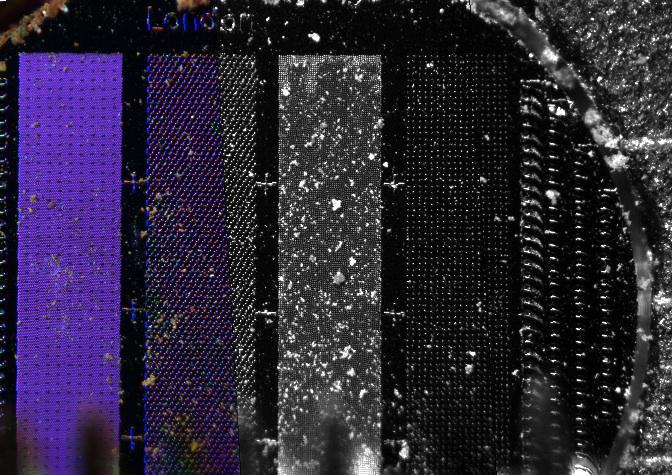
Microscopic View of Soil on a Micromachined Silicone Substrate
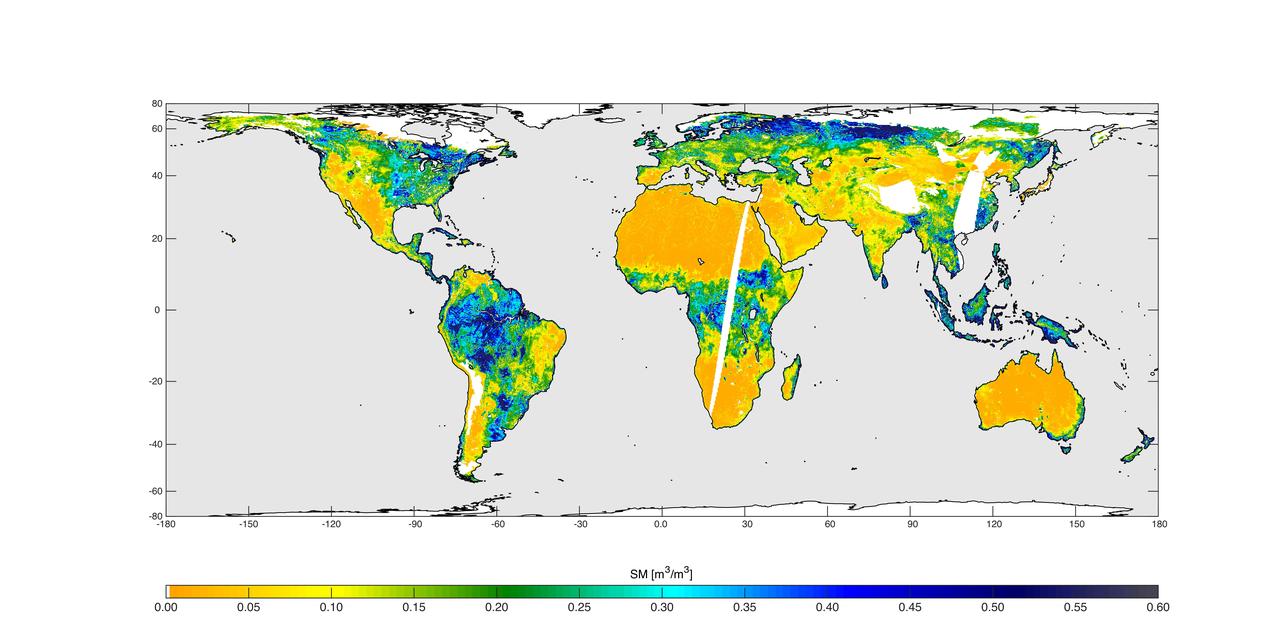
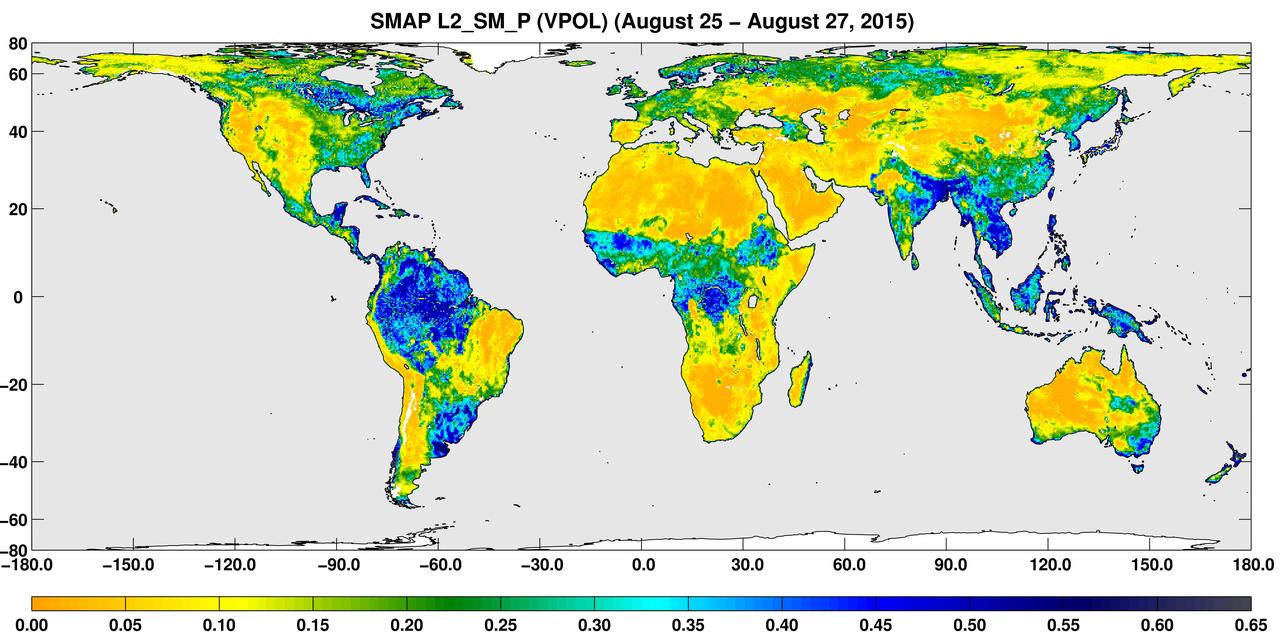
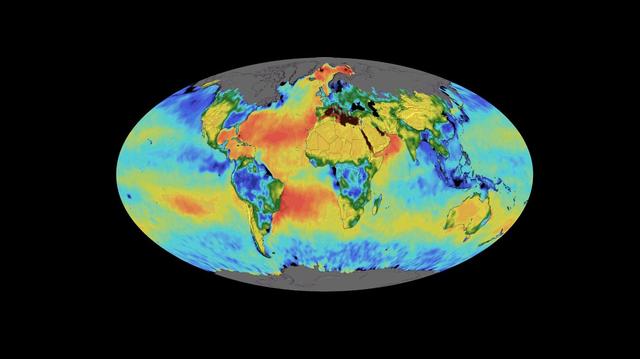
A three-day composite global map of surface soil moisture as retrieved from NASA SMAP radiometer instrument between Aug. 25-27, 2015. Dry areas appear yellow/orange, such as the Sahara Desert, western Australia and the western U.S. Wet areas appear blue, representing the impacts of localized storms. White areas indicate snow, ice or frozen ground.  http://photojournal.jpl.nasa.gov/catalog/PIA19877
SMAP Global Map of Surface Soil Moisture Aug. 25-27, 2015
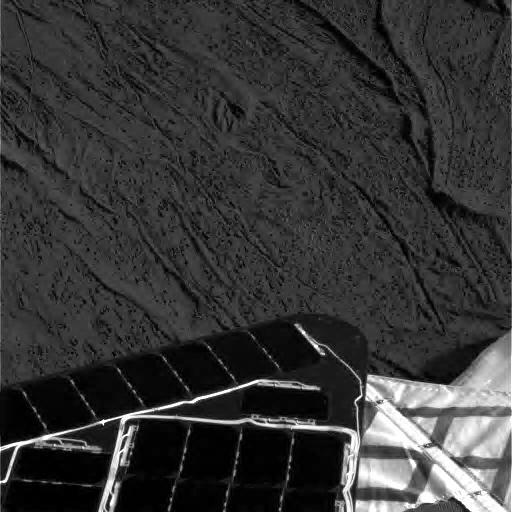
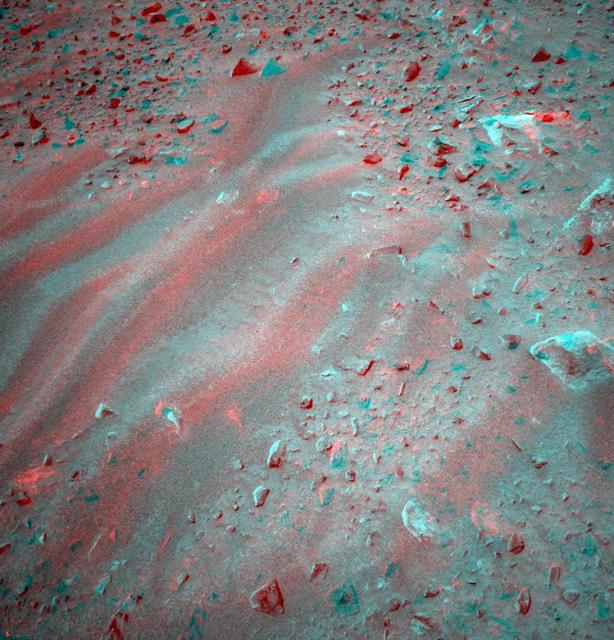
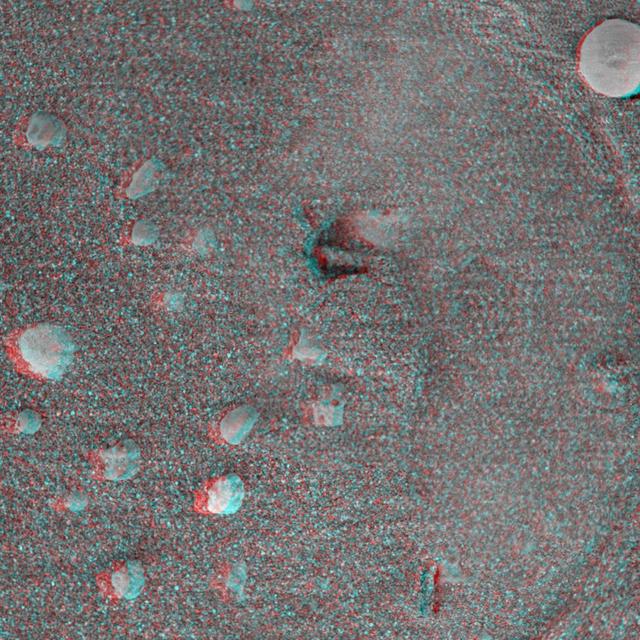
This is a three-dimensional stereo anaglyph of an image taken by the front navigation camera onboard NASA Mars Exploration Rover Spirit, showing an interesting patch of rippled soil. 3D glasses are necessary to view this image.
Ripples in The Soil
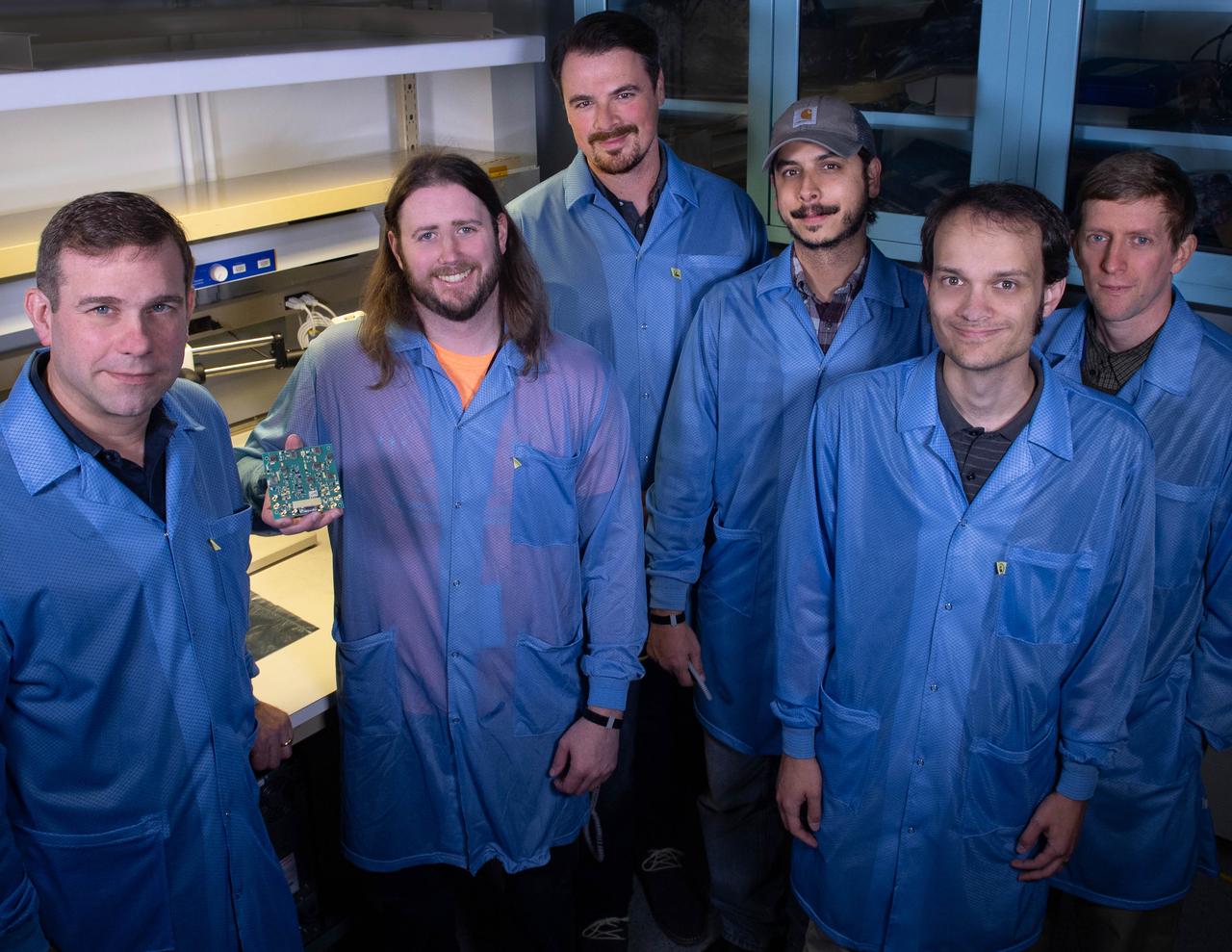
Several Goddard technologists are involved in a new CubeSat technology-demonstration mission called SNoOPI, which employs a novel remote-sensing technique for measuring soil-moisture levels. From left to right: Jeffrey Piepmeier, Chase Kielbasa, who is holding a first-generation prototype circuit board for the SNoOPI instrument, Joseph Knuble, Manuel Vega, Michael Coon, and Derek Hudson.
SNoOPI: A Flying Ace for Soil Moisture and Snow Measurements
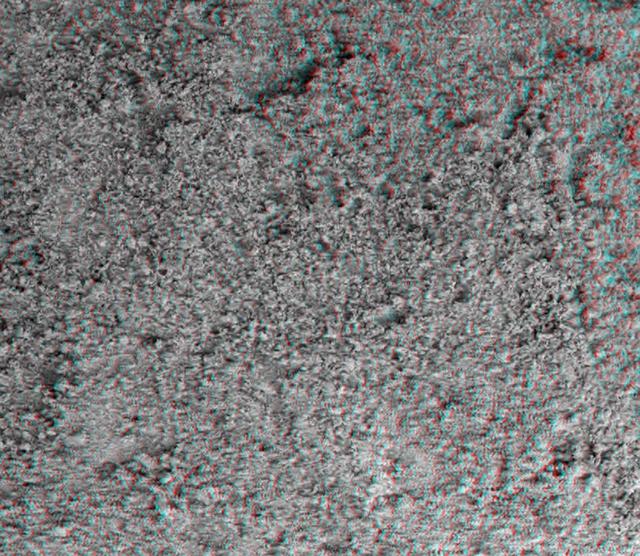
This image taken by the microscopic imager on NASA Mars Exploration Rover Spirit shows the powdery soil of Mars in 3-D. 3D glasses are necessary to view this image.
Martian Soil in 3-D
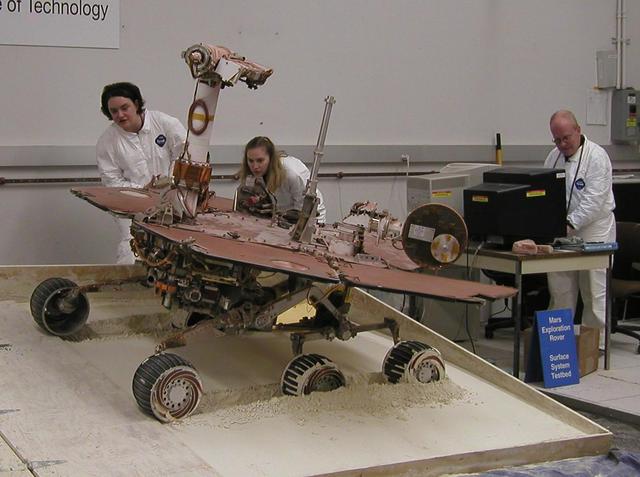
While a test rover rolls off a plywood surface into a prepared bed of soft soil, rover team members Colette Lohr left and Kim Lichtenberg center  eye the wheels digging into the soil and Paolo Bellutta enters the next  driving command.
Test Rover Sinks into Prepared Soil
S69-53894 (October 1969) --- Dr. Charles H. Walkinshaw, Jr., Spaceflight Biotechnology Branch botanist, Preventive Medicine Division, Manned Spacecraft Center (MSC), examines sorghum and tobacco plants in lunar (germ free) soil in the Plant Laboratory of the MSC’s Lunar Receiving Laboratory.  The soil was brought back from the moon by the crew of the Apollo 11 lunar landing mission.
Examination - Plants - Lunar (Germ Free) Soil - Plant Laboratory - MSC
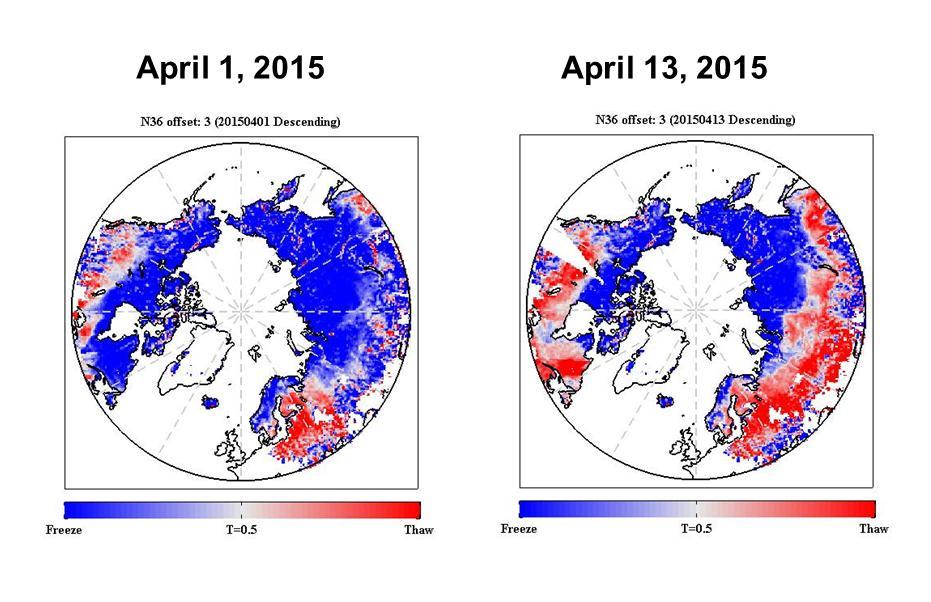
The radar measurements made by NASA Soil Moisture Active Passive SMAP observatory are sensitive to whether land surfaces are frozen or thawed.
NASA SMAP Images Show Progression of Spring Thaw in Northern Hemisphere
Christine Bonniksen, SMAP program executive with the Science Mission Directorate’s Earth Science Division, NASA Headquarters, left, Kent Kellogg, SMAP project manager, NASA Jet Propulsion Laboratory (JPL), second from left, Dara Entekhabi, SMAP science team lead, Massachusetts Institute of Technology, second from right, and Brad Doorn, SMAP applications lead, Science Mission Directorate’s Applied Sciences Program, NASA Headquarters, right, are seen during a briefing about the upcoming launch of the Soil Moisture Active Passive (SMAP) mission, Thursday, Jan. 08, 2015, at NASA Headquarters in Washington DC. The mission is scheduled for a Jan. 29 launch from Vandenberg Air Force Base in California, and will provide the most accurate, highest-resolution global measurements of soil moisture ever obtained from space. The data will be used to enhance scientists' understanding of the processes that link Earth's water, energy and carbon cycles. Photo Credit: (NASA/Aubrey Gemignani)
Soil Moisture Active Passive (SMAP) Media Briefing
Christine Bonniksen, SMAP program executive with the Science Mission Directorate’s Earth Science Division, NASA Headquarters, left, Kent Kellogg, SMAP project manager, NASA Jet Propulsion Laboratory (JPL), second from left, Dara Entekhabi, SMAP science team lead, Massachusetts Institute of Technology, second from right, and Brad Doorn, SMAP applications lead, Science Mission Directorate’s Applied Sciences Program, NASA Headquarters, right, are seen during a briefing about the upcoming launch of the Soil Moisture Active Passive (SMAP) mission, Thursday, Jan. 08, 2015, at NASA Headquarters in Washington DC. The mission is scheduled for a Jan. 29 launch from Vandenberg Air Force Base in California, and will provide the most accurate, highest-resolution global measurements of soil moisture ever obtained from space. The data will be used to enhance scientists' understanding of the processes that link Earth's water, energy and carbon cycles. Photo Credit: (NASA/Aubrey Gemignani)
Soil Moisture Active Passive (SMAP) Media Briefing
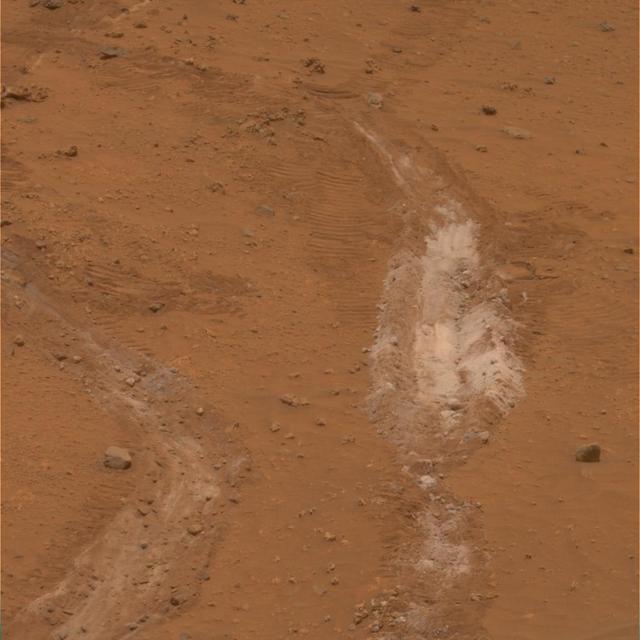
Rover Wheel Churns Up Bright Martian Soil Vertical
Disturbed Soil Along the Path from Tyrone Close-Up
Rover Wheel Churns Up Bright Martian Soil False Color
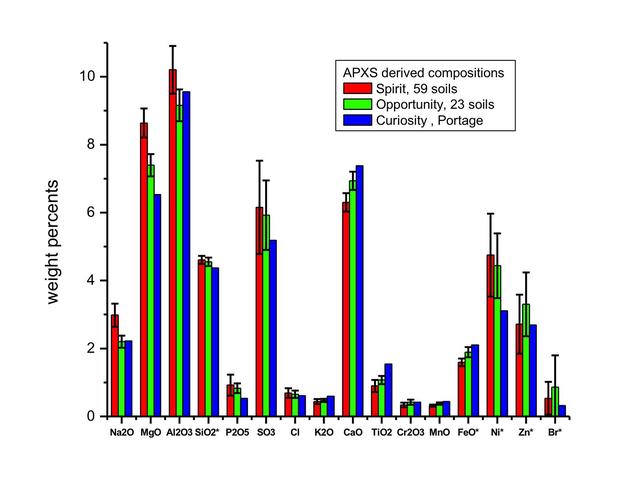
This graph compares the elemental composition of typical soils at three landing regions on Mars: Gusev Crater, from Spirit; Meridiani Planum, from Opportunity; and now Gale Crater, where NASA newest Curiosity rover is currently investigating.
Inspecting Soils Across Mars
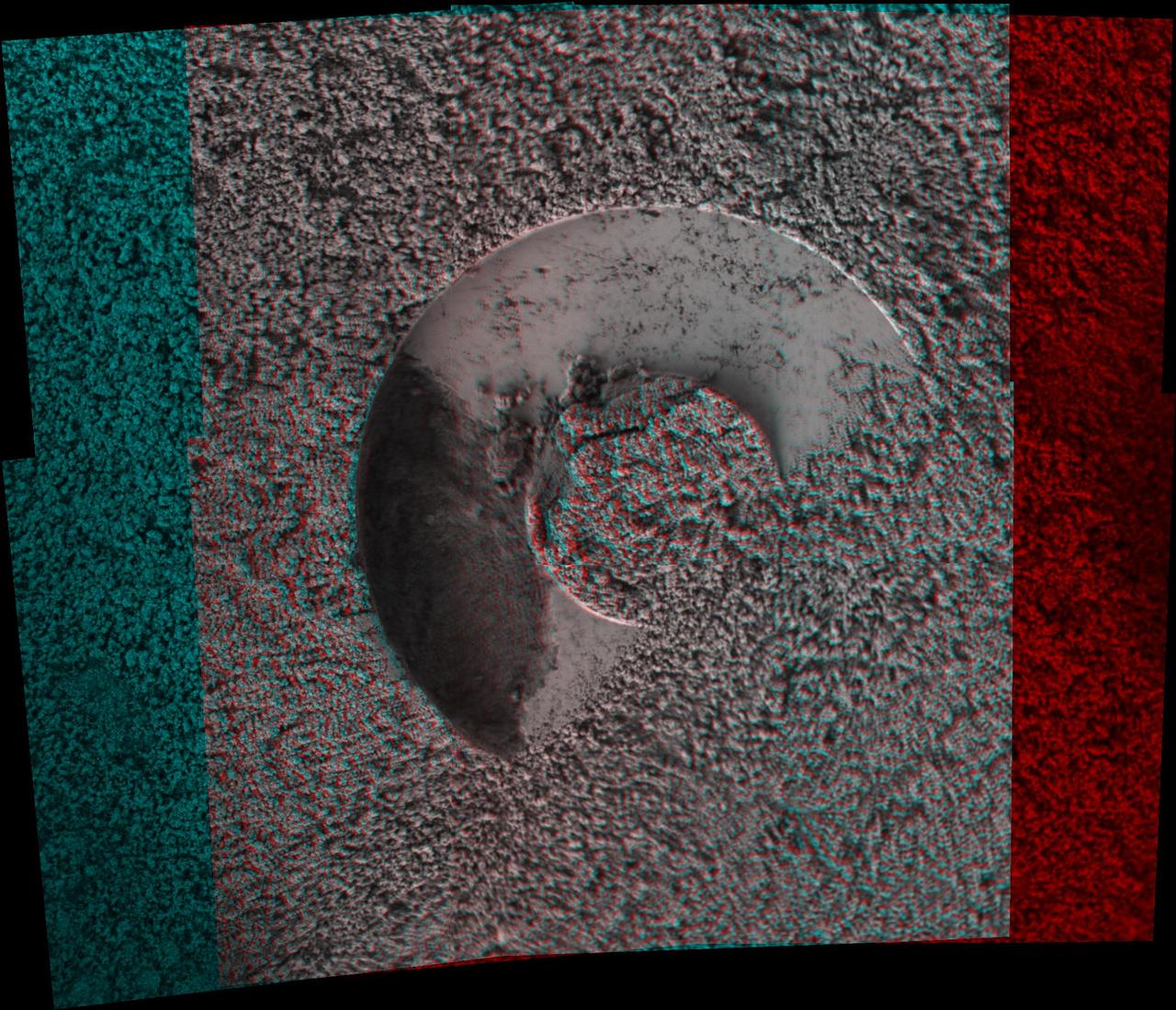
This 3-D anaglyph, from NASA Mars Exploration Rover Spirit, shows a circular imprint left in the Meridiani Planum soil by the rover Moessbauer spectrometer. 3D glasses are necessary.
Moessbauer Footprint in the Soil
Yogi & Local Soil
Yogi & Local Soil
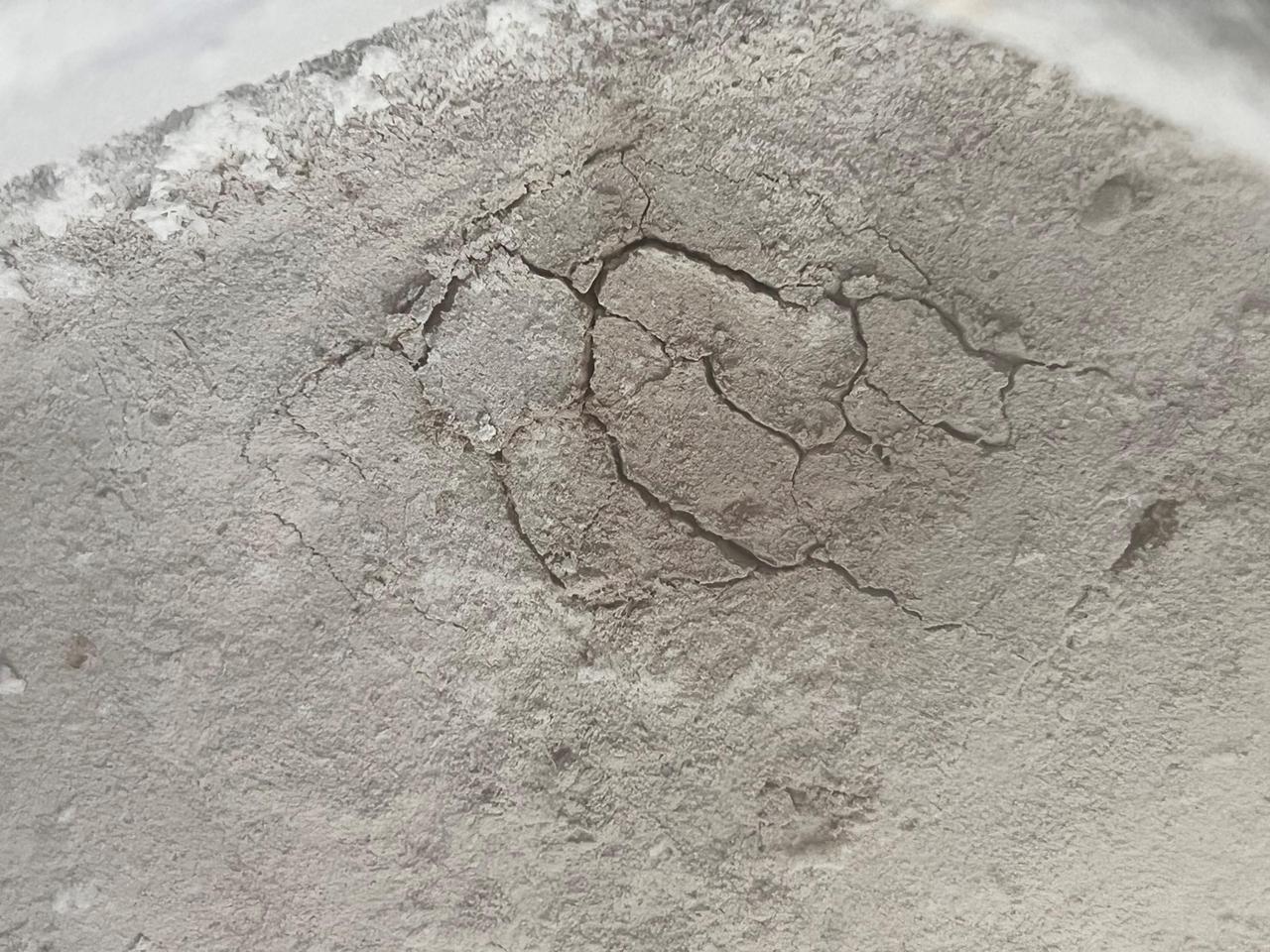
      This image shows an experiment conducted at NASA's Jet Propulsion Laboratory re-creating the processes that form spider-like features on Mars called araneiform terrain. The experiment involves carbon dioxide gas settling into Mars soil simulant. The gas settles between the grains of simulant and eventually freezes into ice.      A heater underneath the soil simulant then warms up the ice and turns it back into gas. As pressure from the gas builds, the frozen top layer of simulant eventually cracks. When the pressure builds enough, a plume of carbon dioxide erupts.      The study confirms several formation processes described by what's called the Kieffer model: Sunlight heats the soil when it shines through transparent slabs of carbon dioxide ice that build up on the Martian surface each winter. Being darker than the ice above it, the soil absorbs the heat and causes the ice closest to it to turn directly into carbon dioxide gas – without turning to liquid first – in a process called sublimation (the same process that sends clouds of "smoke" billowing up from dry ice). As the gas builds in pressure, the Martian ice cracks, allowing the gas to escape.      As for what creates the spider legs, the Kieffer model suggests that as the gas vents, it carries a stream of dust and sand that scours the surface, forming scars that are revealed when the ice disappears in the spring. But the experiment also suggests an alternative explanation for the this part of the process: The researchers found that these formations could have also been created when ice formed in the pores within the soil, rather than on top of it, and that the release of gas from within this soil-ice mixture may have created the formations.      The experiment took place in JPL's Dirty Under-vacuum Simulation Testbed for Icy Environments, or DUSTIE.  https://photojournal.jpl.nasa.gov/catalog/PIA26406
Cracks Forming in Frozen Martian Soil Simulant
NASA Mars Exploration Rover microscopic imager onboard Spirit revealed a gap less than half an inch in the imprint left behind in the soil. 3D glasses are necessary to view this image.
Sampling Martian Soil 3-D
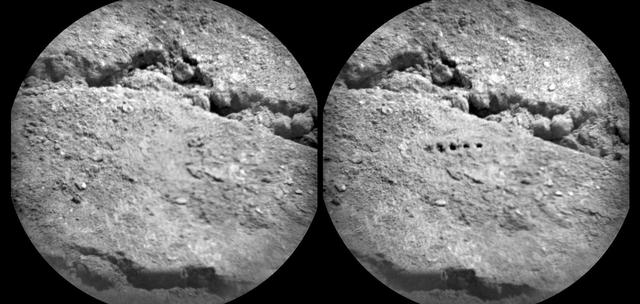
The Chemistry and Camera ChemCam instrument on NASA Mars rover Curiosity used its laser to examine side-by-side points in a target patch of soil, leaving the marks apparent in this before-and-after comparison.
Marks of Laser Exam on Martian Soil
AS11-40-5878 (20 July 1969) --- A close-up view of an astronaut's bootprint in the lunar soil, photographed with a 70mm lunar surface camera during the Apollo 11 extravehicular activity (EVA) on the moon. While astronauts Neil A. Armstrong, commander, and Edwin E. Aldrin Jr., lunar module pilot, descended in the Lunar Module (LM) "Eagle" to explore the Sea of Tranquility region of the moon, astronaut Michael Collins, command module pilot, remained with the Command and Service Modules (CSM) "Columbia" in lunar orbit.
Close-up view of astronauts footprint in lunar soil
Rover Soil Experiments Near Yogi
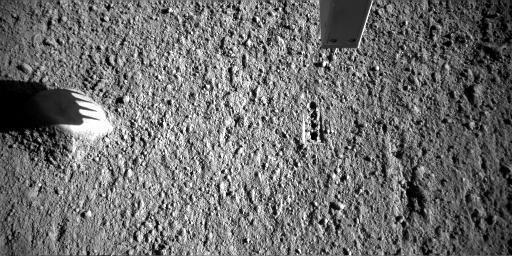
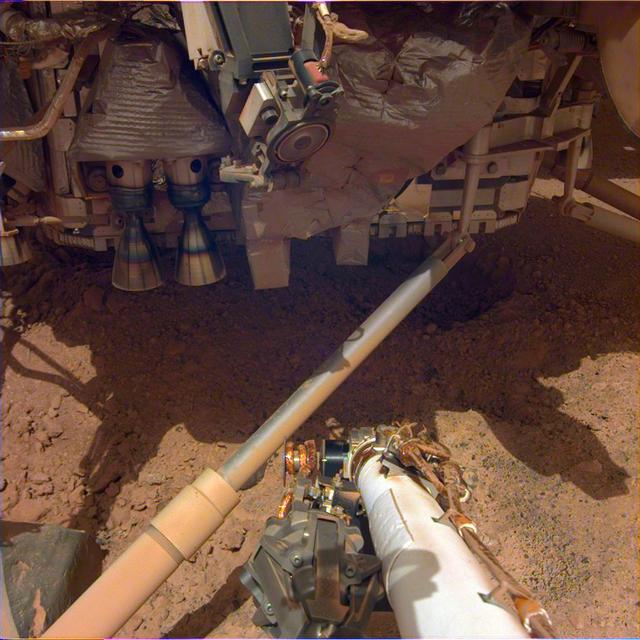
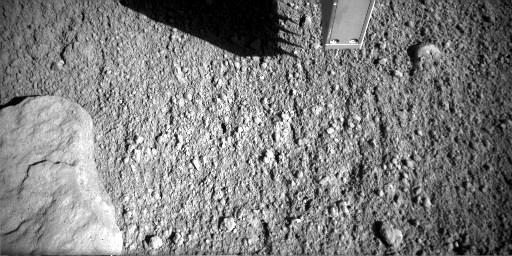
While NASA's InSight spacecraft landed on Mars, thrusters on the bottom of the spacecraft churned up the soil beneath it. This image shows pits that the thrusters excavated.  This image was taken Dec. 14, 2018, the 18th Martian day, or sol, of the mission, using the Instrument Deployment Camera on InSight's robotic arm.  https://photojournal.jpl.nasa.gov/catalog/PIA23250
Soil Churned up by InSight's Thrusters
This image shows the first time that the four spikes of the NASA Phoenix Mars Lander thermal and electrical conductivity probe were inserted into Martian soil.
Phoenix Conductivity Probe Inserted in Martian Soil
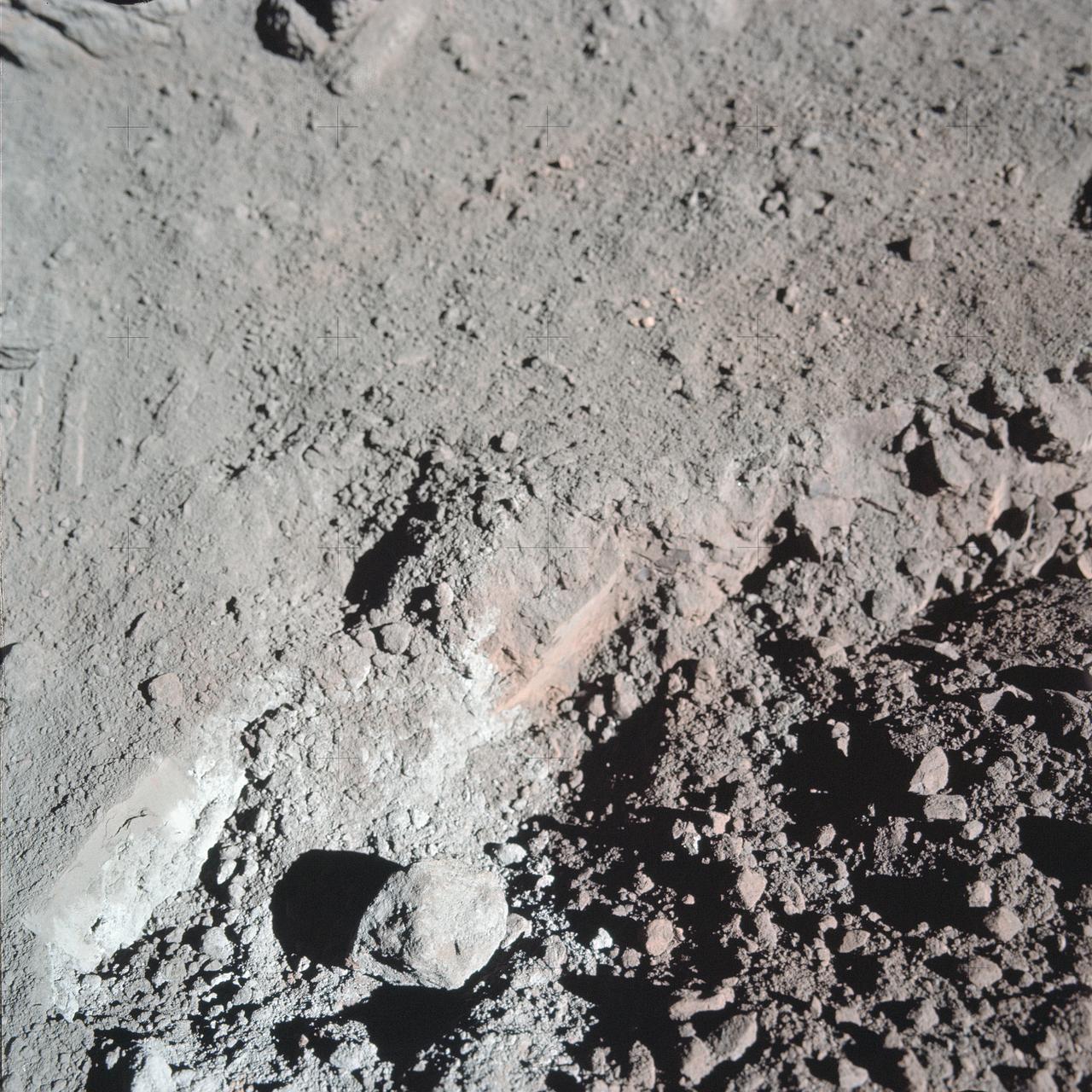
AS17-137-20989 (12 Dec. 1972) --- A close-up view of the much-publicized orange soil which the Apollo 17 crewmen found at Station 4 (Shorty Crater) during the second Apollo 17 extravehicular activity (EVA) at the Taurus-Littrow landing site. The orange soil was first spotted by scientist-astronaut Harrison H. Schmitt. While astronauts Schmitt and Eugene A. Cernan descended in the Lunar Module (LM) "Challenger" to explore the lunar surface, astronaut Ronald E. Evans remained with the Apollo 17 Command and Service Modules (CSM) in lunar orbit. The orange soil was never seen by the crewmen of the other lunar landing missions - Apollo 11 (Sea of Tranquility); Apollo 12 (Ocean of Storms); Apollo 14 (Fra Mauro); Apollo 15 (Hadley-Apennines); and Apollo 16 (Descartes).
View of the orange soil which Apollo 17 crewmen found at Station 4 during EVA
This image, created at the Jet Propulsion Laboratory JPL, shows the Soil Moisture Active Passive SMAP mission, specifically depicting how the scanning antenna will fly in space and the swath coverage over the Earth.
SMAP Flys over Earth Artist Concept
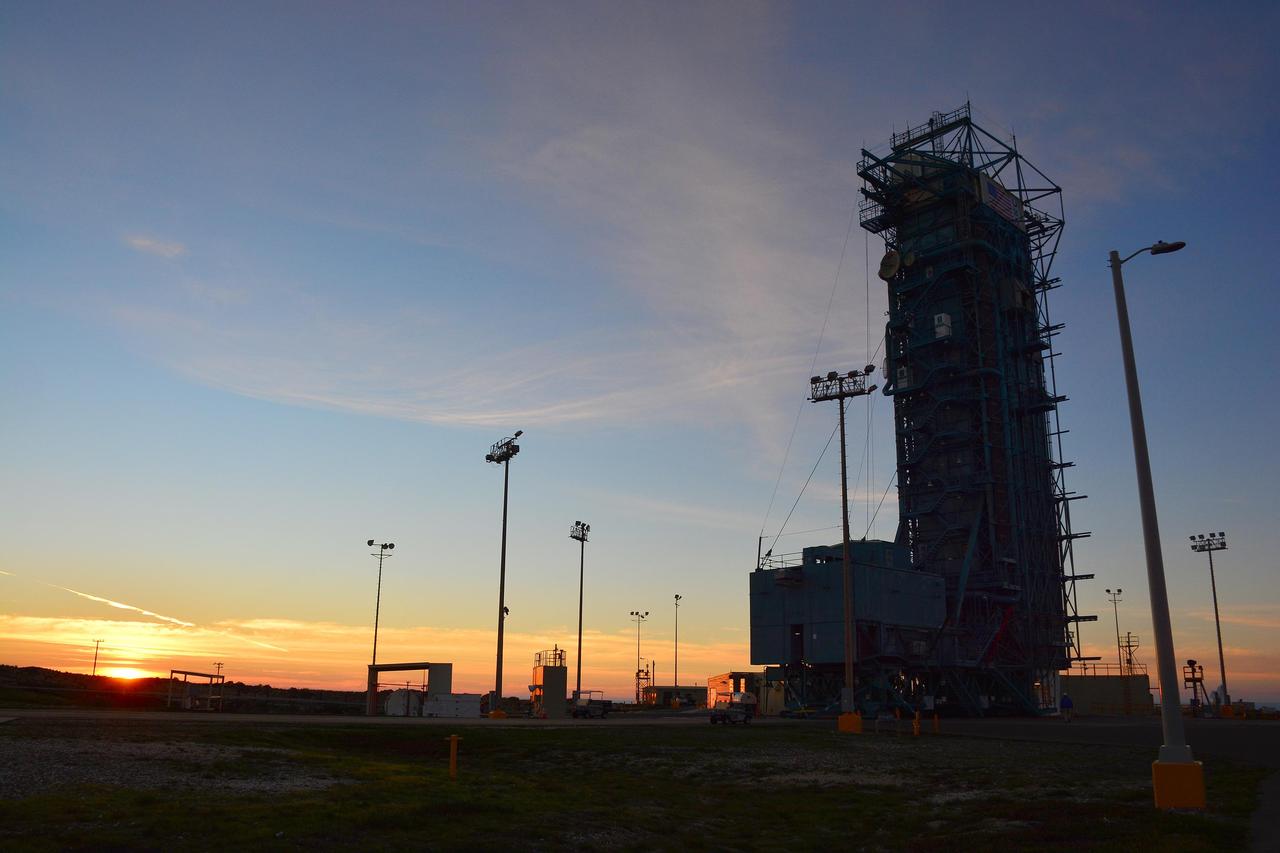
The sun sets behind Space Launch Complex 2, Vandenberg Air Force Base, California, where NASA Soil Moisture Active Passive SMAP mission satellite is being prepared for liftoff. Launch is scheduled for Jan. 29.
Sunset at Vandenberg
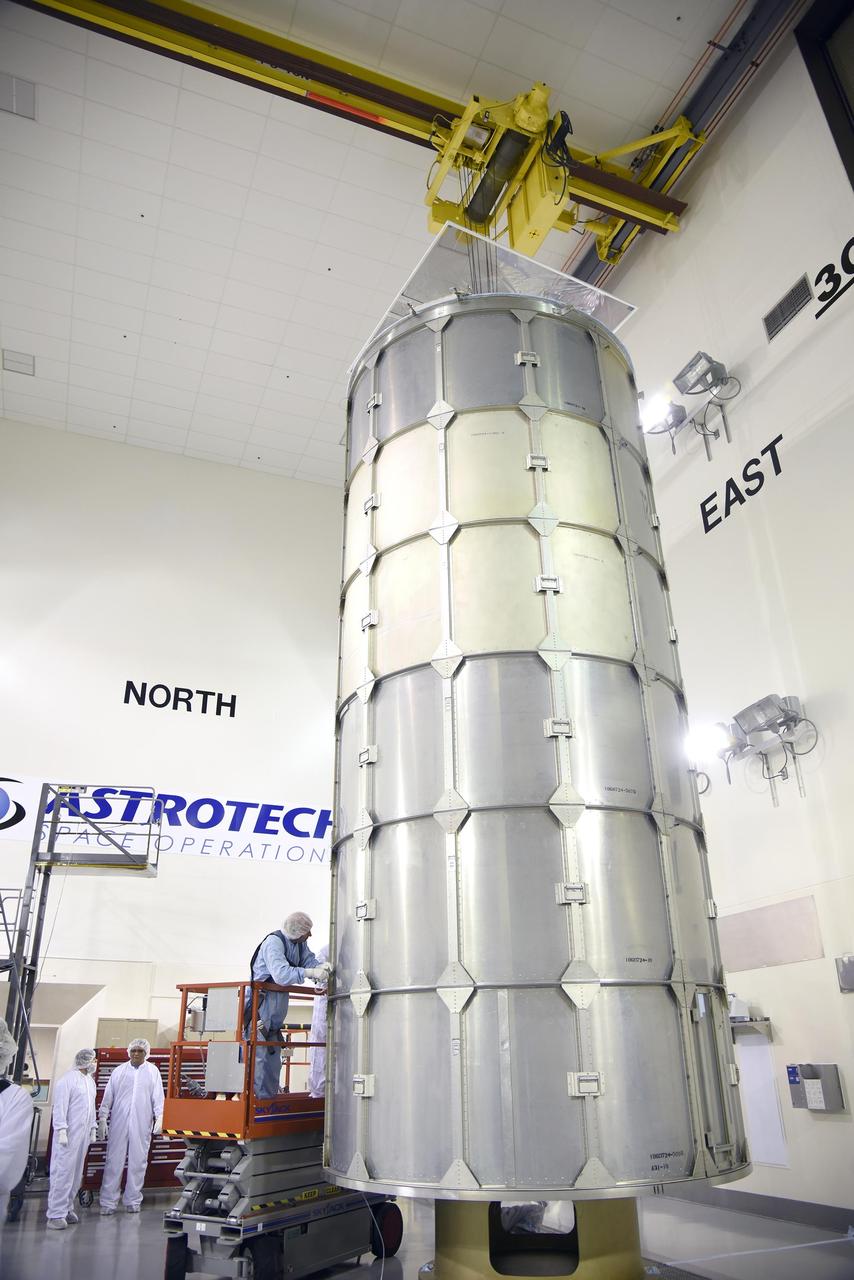
In the Astrotech payload processing facility on Vandenberg Air Force Base in California, technicians secure a transportation canister around NASA Soil Moisture Active Passive SMAP spacecraft for its move to the launch pad.
SMAP Gets Ready to Move
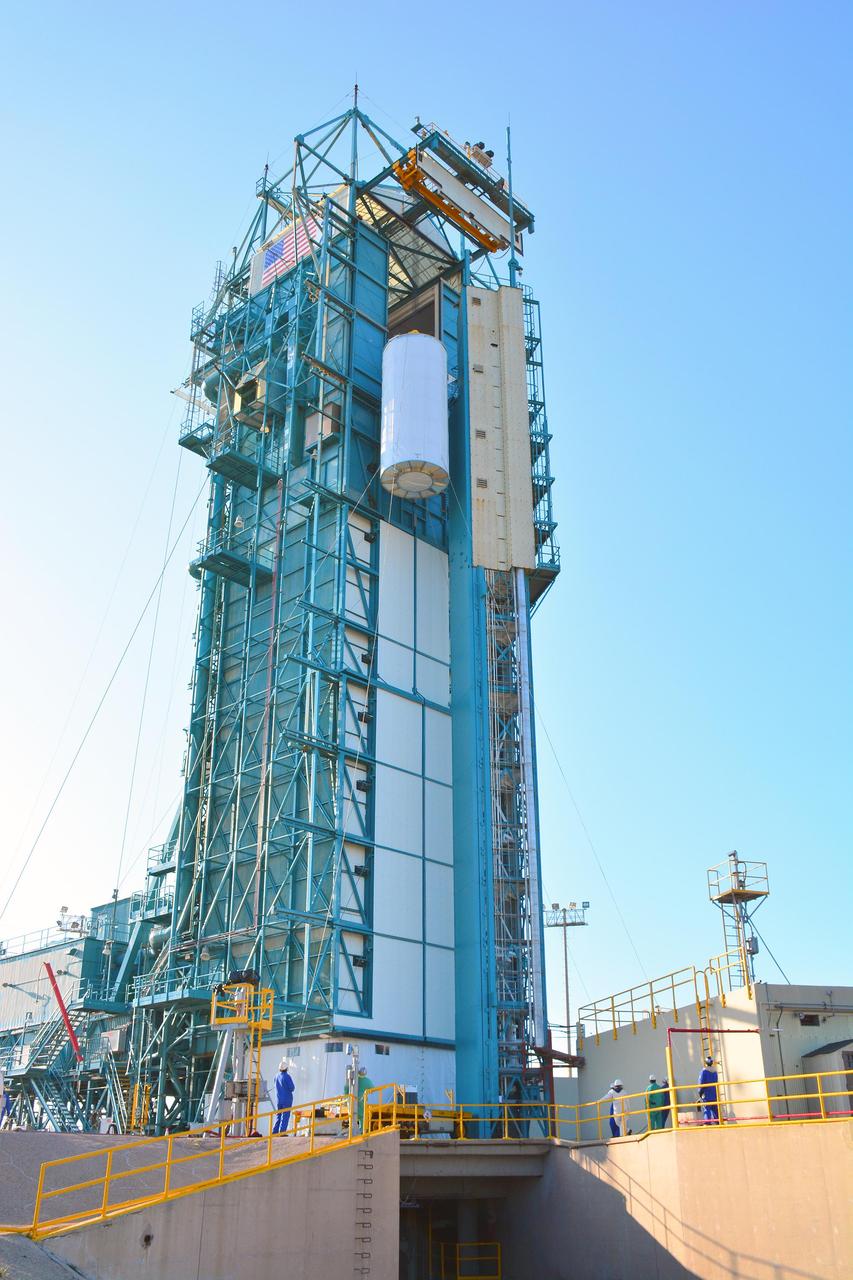
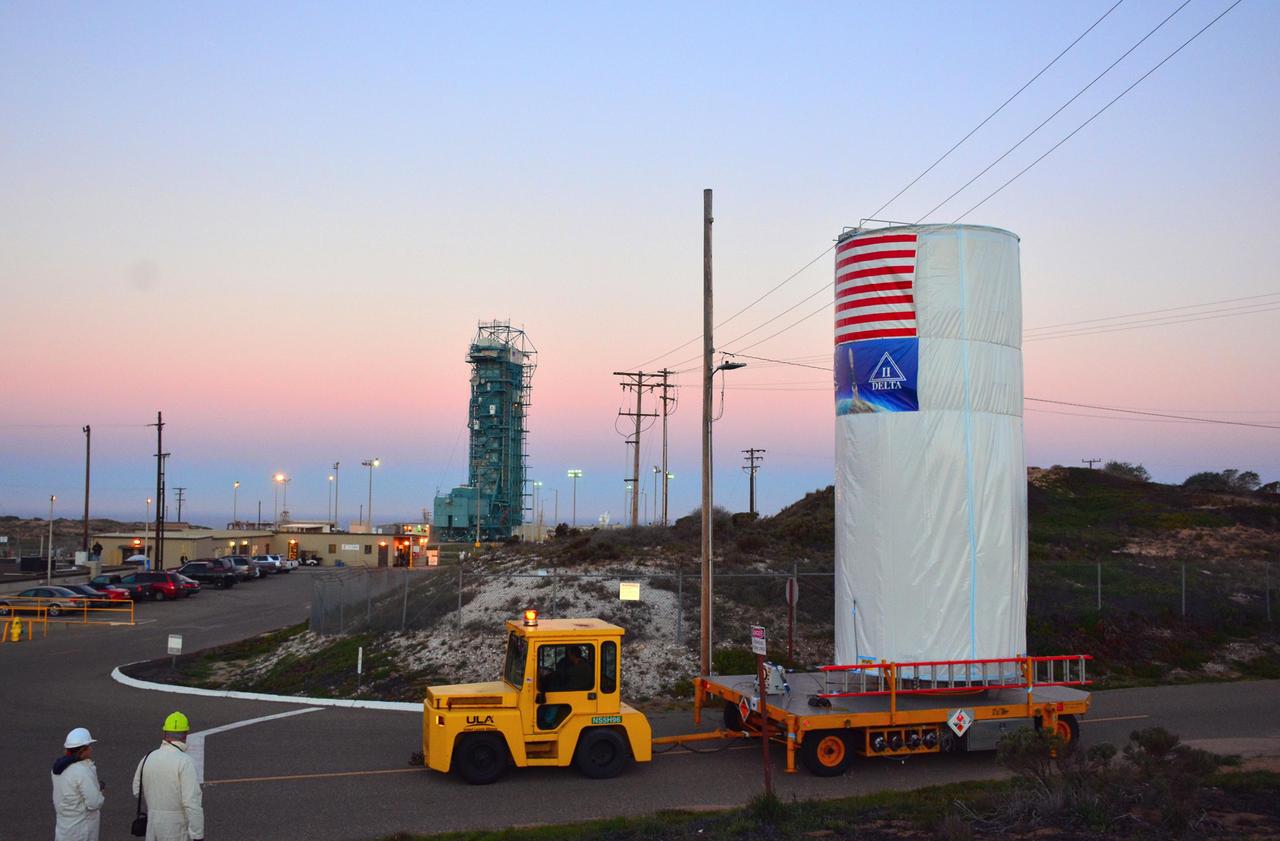
NASA Soil Moisture Active Passive SMAP satellite is transported across Vandenberg Air Force Base in California to Space Launch Complex 2, where it will be mated to a Delta II rocket for launch, targeted for Jan. 29.
Satellite in a Can