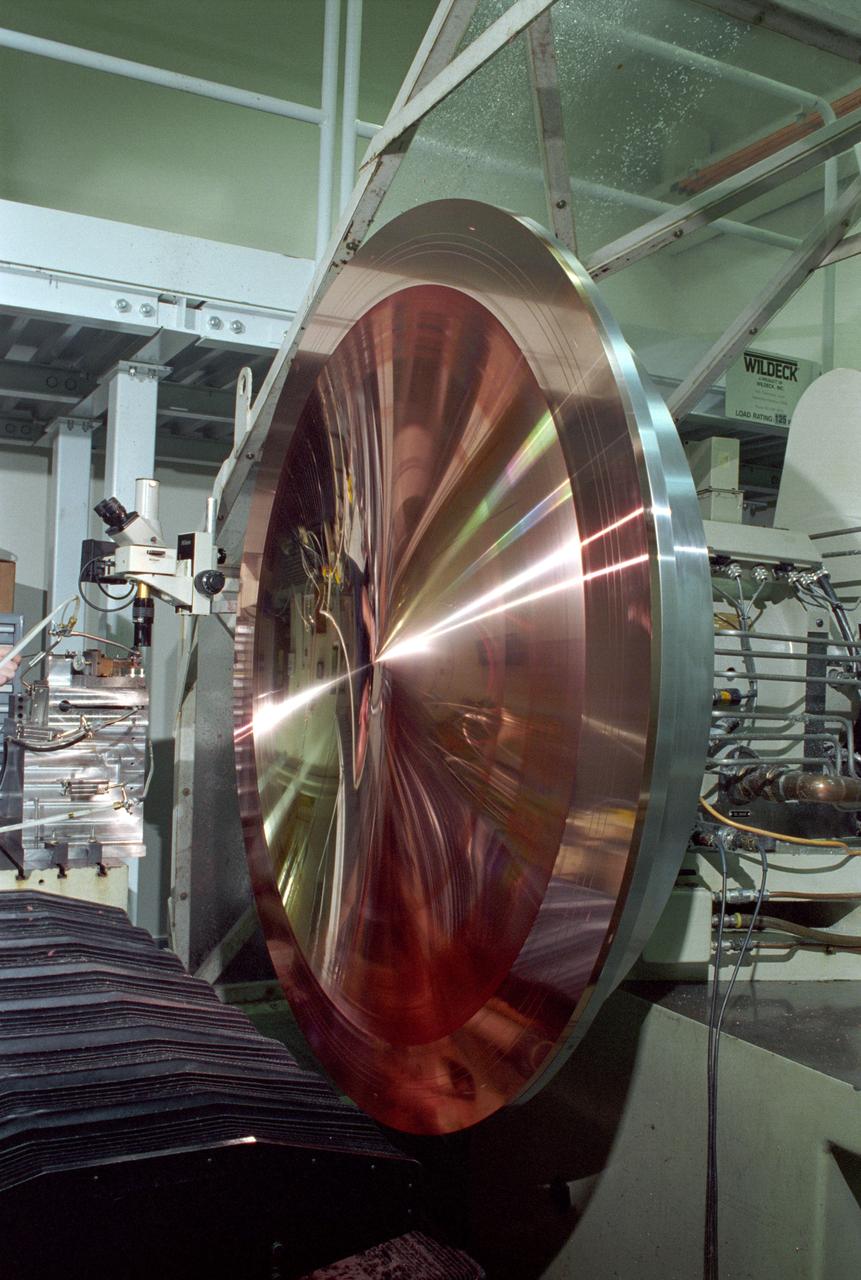
This king-size copper disk, manufactured at the Space Optics Manufacturing and Technology Center (SOMTC) at the Marshall Space Flight Center (MSFC), is a special mold for making high resolution monitor screens. This master mold will be used to make several other molds, each capable of forming hundreds of screens that have a type of lens called a Fresnel lens. Weighing much less than conventional optics, Fresnel lenses have multiple concentric grooves, each formed to a precise angle, that together create the curvature needed to focus and project images. MSFC leads NASA's space optics manufacturing technology development as a technology leader for diamond turning. The machine used to manufacture this mold is among many one-of-a-kind pieces of equipment of MSFC's SOMTC.
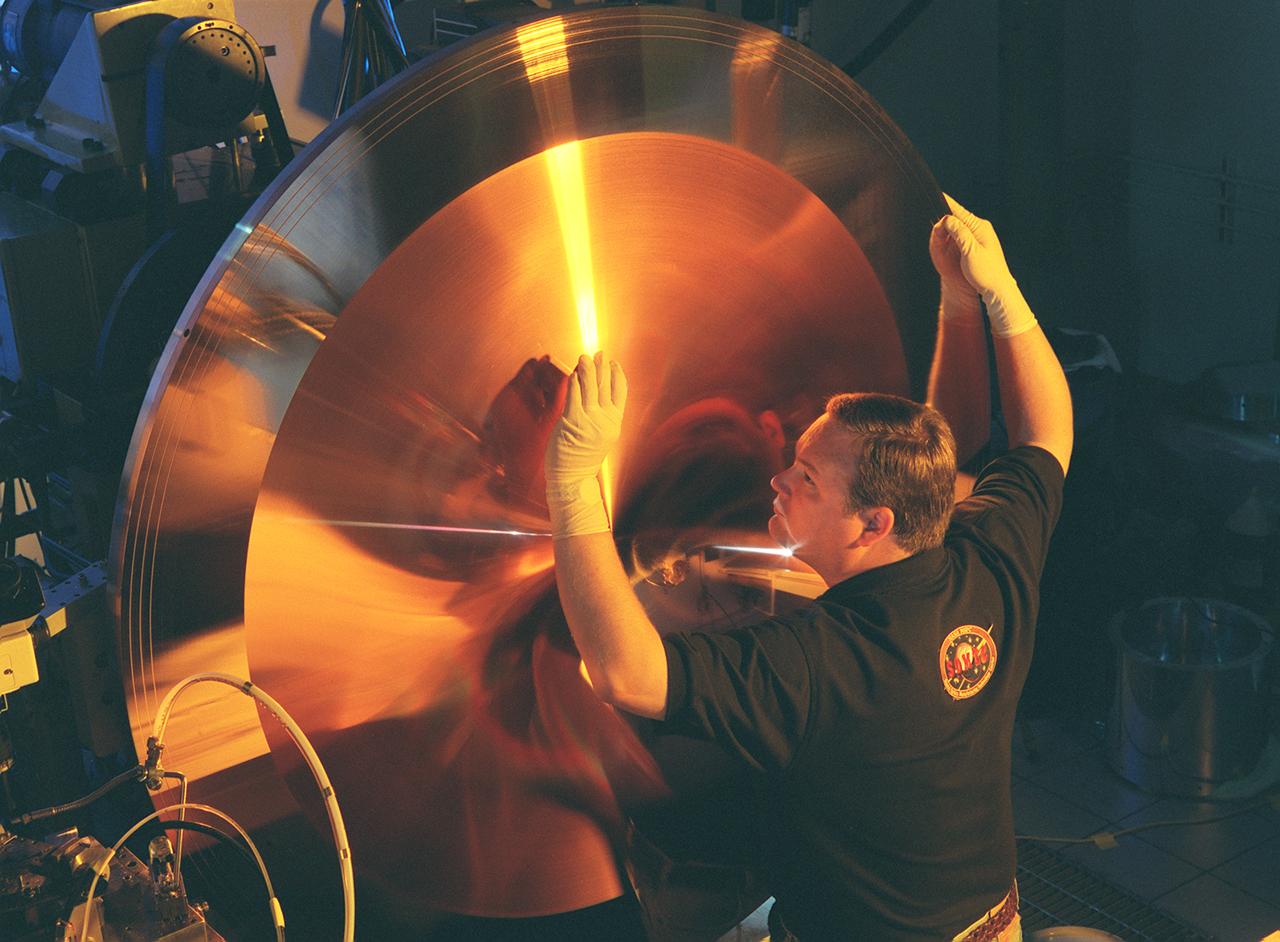
This photograph shows Wes Brown, Marshall Space Flight Center's (MSFC's) lead diamond tuner, an expert in the science of using diamond-tipped tools to cut metal, inspecting the mold's physical characteristics to ensure the uniformity of its more than 6,000 grooves. This king-size copper disk, manufactured at the Space Optics Manufacturing and Technology Center (SOMTC) at MSFC, is a special mold for making high resolution monitor screens. This master mold will be used to make several other molds, each capable of forming hundreds of screens that have a type of lens called a fresnel lens. Weighing much less than conventional optics, fresnel lenses have multiple concentric grooves, each formed to a precise angle, that together create the curvature needed to focus and project images. The MSFC leads NASA's space optics manufacturing technology development as a technology leader for diamond turning. The machine used to manufacture this mold is among many one-of-a-kind pieces of equipment of MSFC's SOMTC.
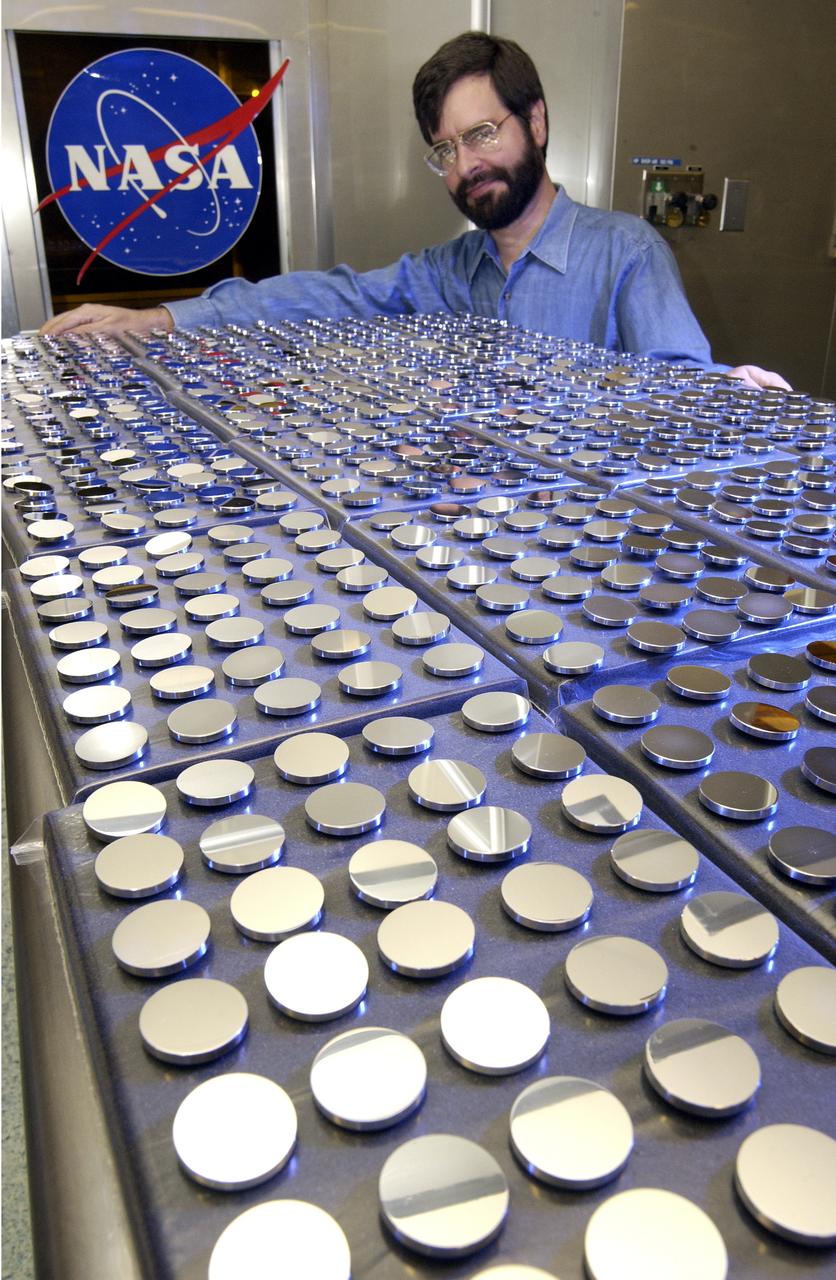
In this photograph, Vince Huegele of the Marshall Space Flight Center's (MSFC's) Space Optics Manufacturing Technology Center (SOMTC) inspects the coating on the mirrors for Starshine 3, a satellite that resembles a high-tech disco ball that was placed into Earth orbit. The sphere, which is covered by hundreds of quarter-sized mirrors that reflect sunlight to observers on the ground, helps students study the effects of solar activity on the Earth's atmosphere. Ed White Middle School in Huntsville, Alabama is among 500 schools worldwide whose students helped grind and polish mirrors for the Starshine 3 satellite as a part of the Starshine Project. The total of up to 1,500 mirrors will improve the sunlight flash rate and make the satellite more visible at twilight as it orbits the Earth. These mirrors have been coated with a scratch-resistant, anti-oxidizing layer of silicon dioxide by optical engineers and technicians at the Hill Air Force Base in Utah and MSFC. Starshine-3 was launched on an Athena I unmarned launch vehicle out of the Kodiak Launch Complex, Alaska, on September 29, 2001. Starshine 3 is nearly 37 inches (1 meter) in diameter, weighs 200 pounds (91 kilograms), and carries 1500 mirrors that were polished by approximately 40,000 students in 1,000 schools in 30 countries. Three small, optically-reflective spherical Starshine student satellites have been designed by the U.S. Naval Research Laboratory and built by an informal volunteer coalition of organizations and individuals in the U.S. and Canada. This coalition, called Project Starshine, is headquartered in Monument, Colorado.
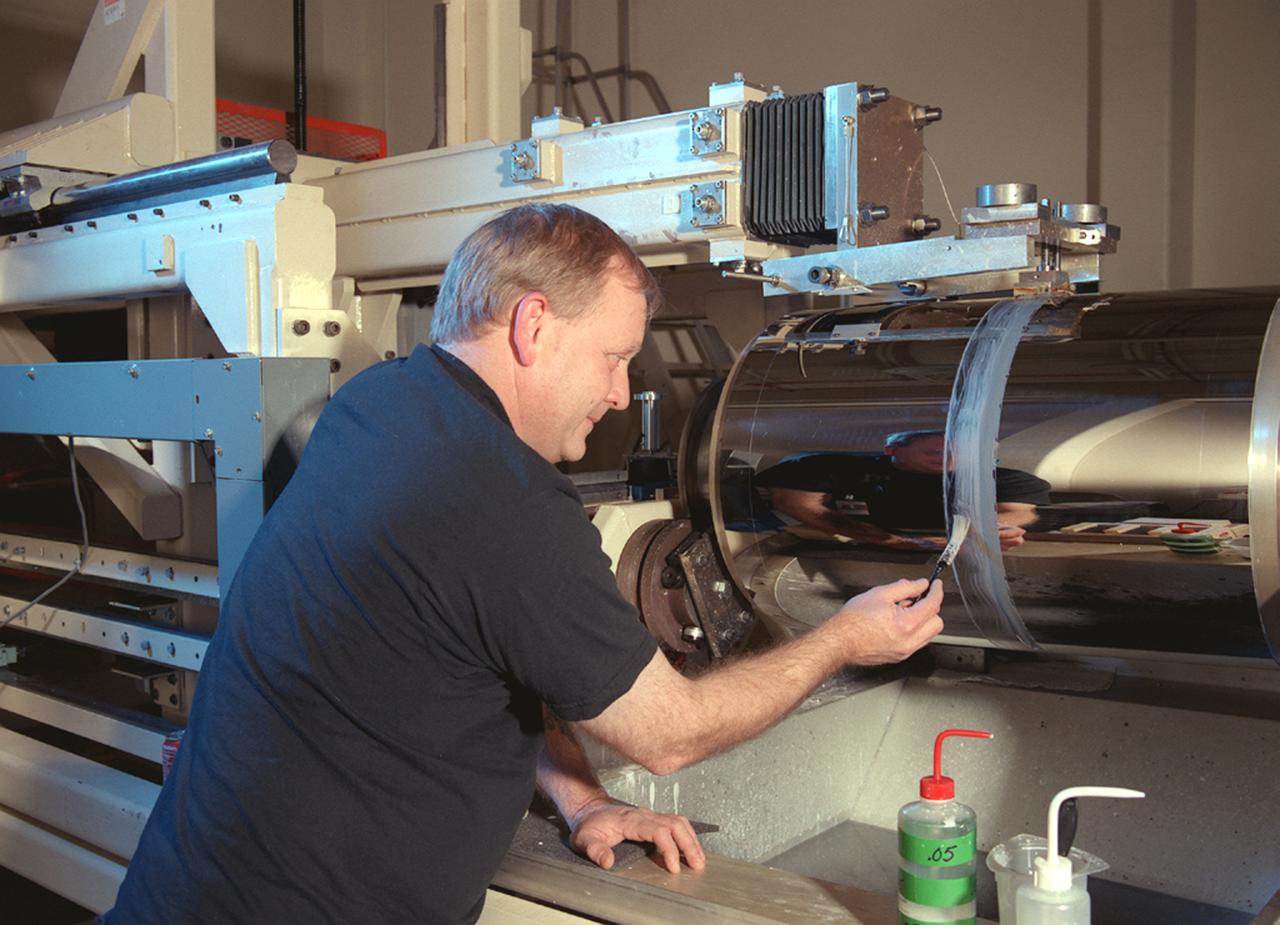
NASA's Space Optics Manufacturing Center has been working to expand our view of the universe via sophisticated new telescopes. The Optics Center's goal is to develop low-cost, advanced space optics technologies for the NASA program in the 21st century - including the long-term goal of imaging Earth-like planets in distant solar systems. To reduce the cost of mirror fabrication, Marshall Space Flight Center (MSFC) has developed replication techniques, the machinery, and materials to replicate electro-formed nickel mirrors. The process allows fabricating precisely shaped mandrels to be used and reused as masters for replicating high-quality mirrors. MSFC's Space Optics Manufacturing Technology Center (SOMTC) has grinding and polishing equipment ranging from conventional spindles to custom-designed polishers. These capabilities allow us to grind precisely and polish a variety of optical devices, including x-ray mirror mandrels. This image shows Charlie Griffith polishing the half-meter mandrel at SOMTC.
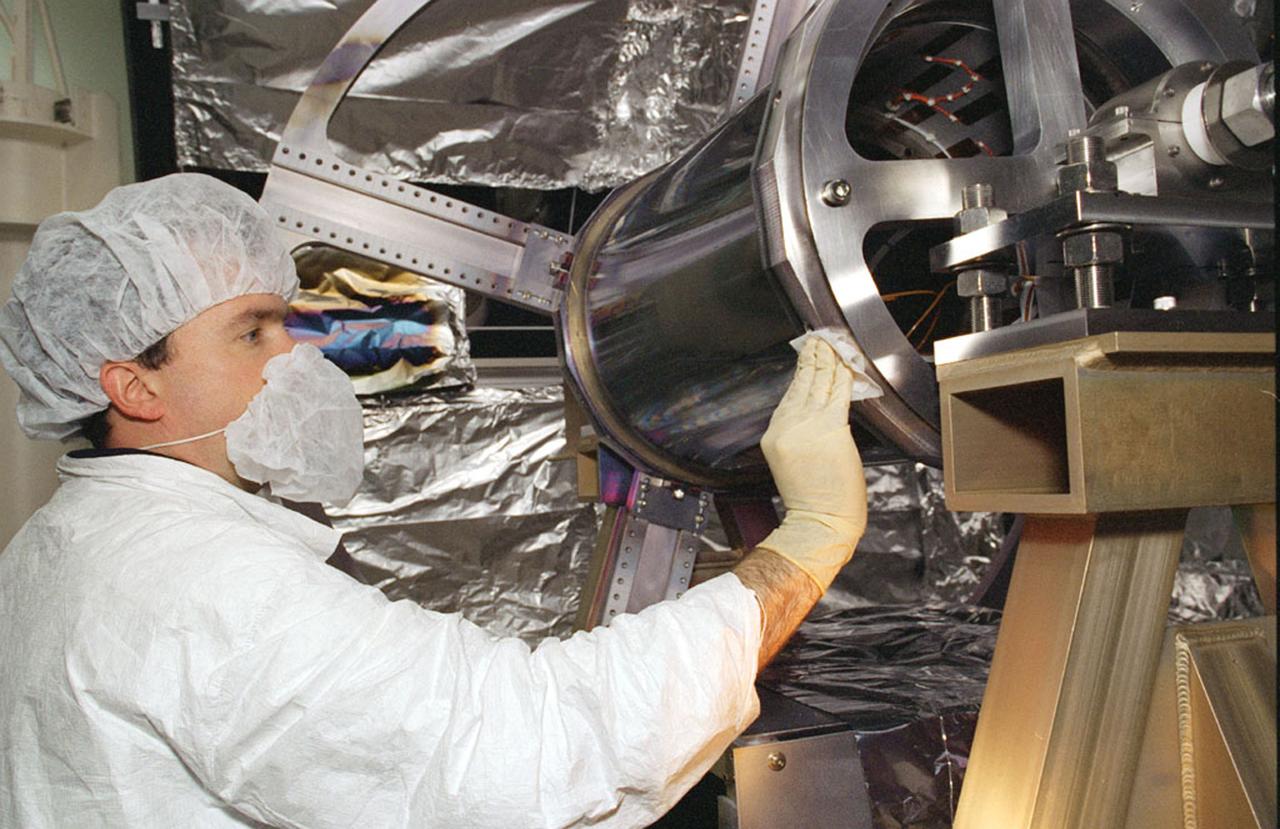
NASA's Space Optics Manufacturing Center has been working to expand our view of the universe via sophisticated new telescopes. The Optics Center's goal is to develop low-cost, advanced space optics technologies for the NASA program in the 21st century - including the long-term goal of imaging Earth-like planets in distant solar systems. To reduce the cost of mirror fabrication, Marshall Space Flight Center (MSFC) has developed replication techniques, the machinery, and materials to replicate electro-formed nickel mirrors. The process allows fabricating precisely shaped mandrels to be used and reused as masters for replicating high-quality mirrors. Image shows Dr. Alan Shapiro cleaning mirror mandrel to be applied with highly reflective and high-density coating in the Large Aperture Coating Chamber, MFSC Space Optics Manufacturing Technology Center (SOMTC).
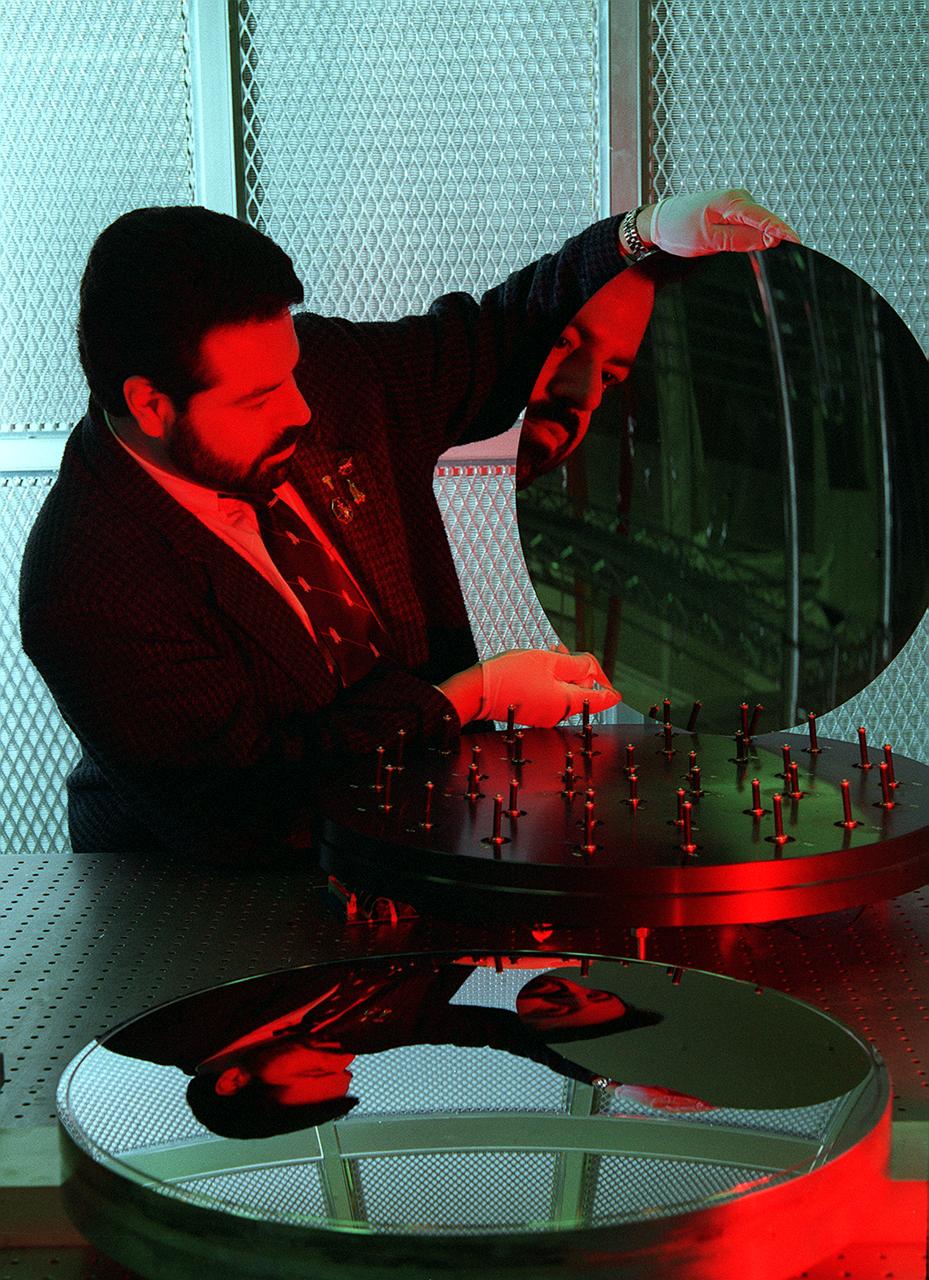
NASA's Space Optics Manufacturing Center has been working to expand our view of the universe via sophisticated new telescopes. The Optics Center's goal is to develop low-cost, advanced space optics technologies for the NASA program in the 21st century - including the long-term goal of imaging Earth-like planets in distant solar systems. To reduce the cost of mirror fabrication, Marshall Space Flight Center (MSFC) has developed replication techniques, the machinery, and materials to replicate electro-formed nickel mirrors. The process allows fabricating precisely shaped mandrels to be used and reused as masters for replicating high-quality mirrors. Dr. Joe Ritter examines a replicated electro-formed nickel-alloy mirror which exemplifies the improvements in mirror fabrication techniques, with benefits such as dramtic weight reduction that have been achieved at the Marshall Space Flight Center's Space Optics Manufacturing Technology Center (SOMTC).