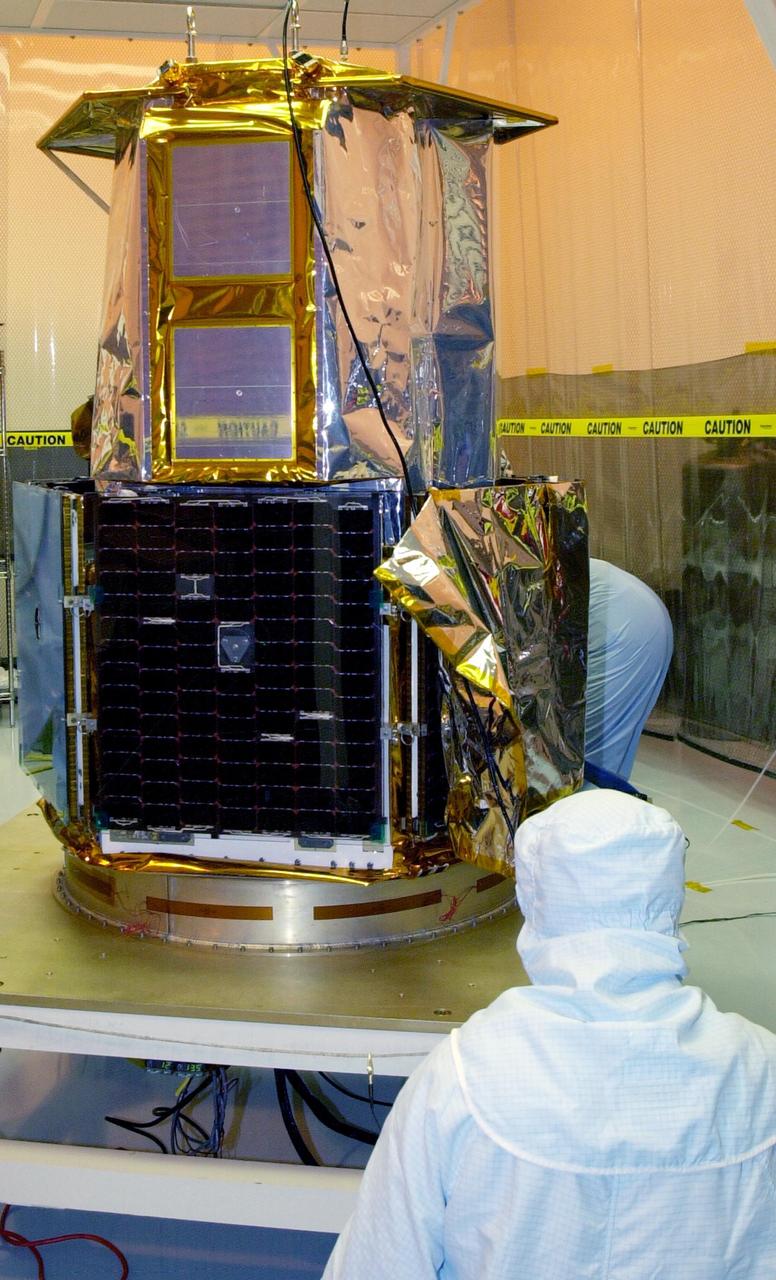
KENNEDY SPACE CENTER, FLA. - Workers in the Multi-Purpose Processing Facility return to the SORCE satellite after solar array testing is complete. SORCE is equipped with four instruments that will measure variations in solar radiation much more accurately than anything now in use and observe some of the spectral properties of solar radiation for the first time. With data from NASA’s SORCE mission, researchers should be able to follow how the Sun affects our climate now and in the future. The SORCE project is managed by NASA’s Goddard Space Flight Center. The instruments on the SORCE spacecraft are built by the Laboratory for Atmospheric and Space Physics (LASP). Launch of SORCE aboard a Pegasus XL rocket is scheduled for mid-December 2002. Launch site is Cape Canaveral Air Force Station, Fla.
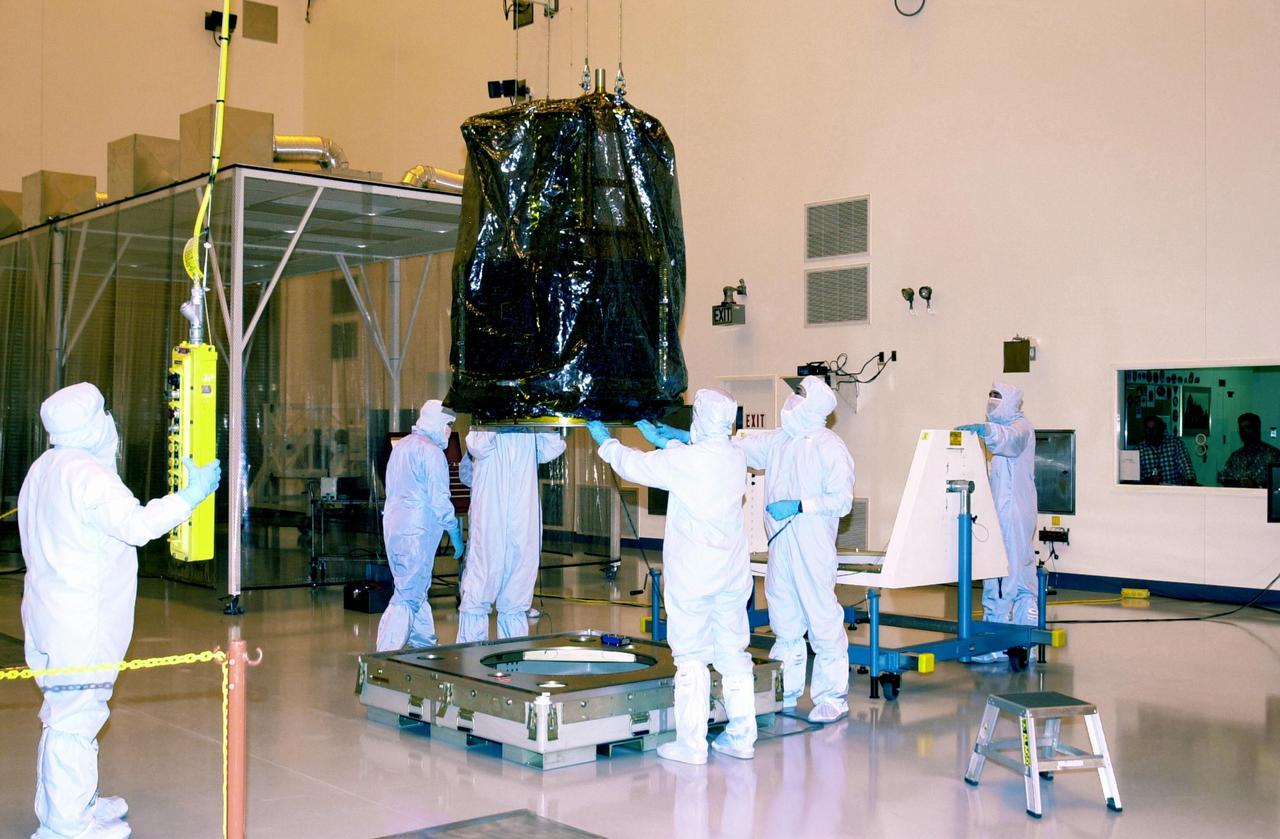
KENNEDY SPACE CENTER, FLA. -- Workers in the Multi-Purpose Processing Facility at KSC lift the Solar Radiation and Climate Experiment (SORCE) spacecraft to move it to a workstand. SORCE arrived at Kennedy Space Center Oct. 26 to begin final processing. SORCE is equipped with four instruments that will measure variations in solar radiation much more accurately than anything now in use and observe some of the spectral properties of solar radiation for the first time. With data from NASA's SORCE mission, researchers should be able to follow how the Sun affects our climate now and in the future. The SORCE project is managed by NASA's Goddard Space Flight Center. The instruments on the SORCE spacecraft are built by the Laboratory for Atmospheric and Space Physics (LASP). Launch of SORCE aboard a Pegasus XL rocket is scheduled for mid-December 2002. Launch site is Cape Canaveral Air Force Station, Fla.
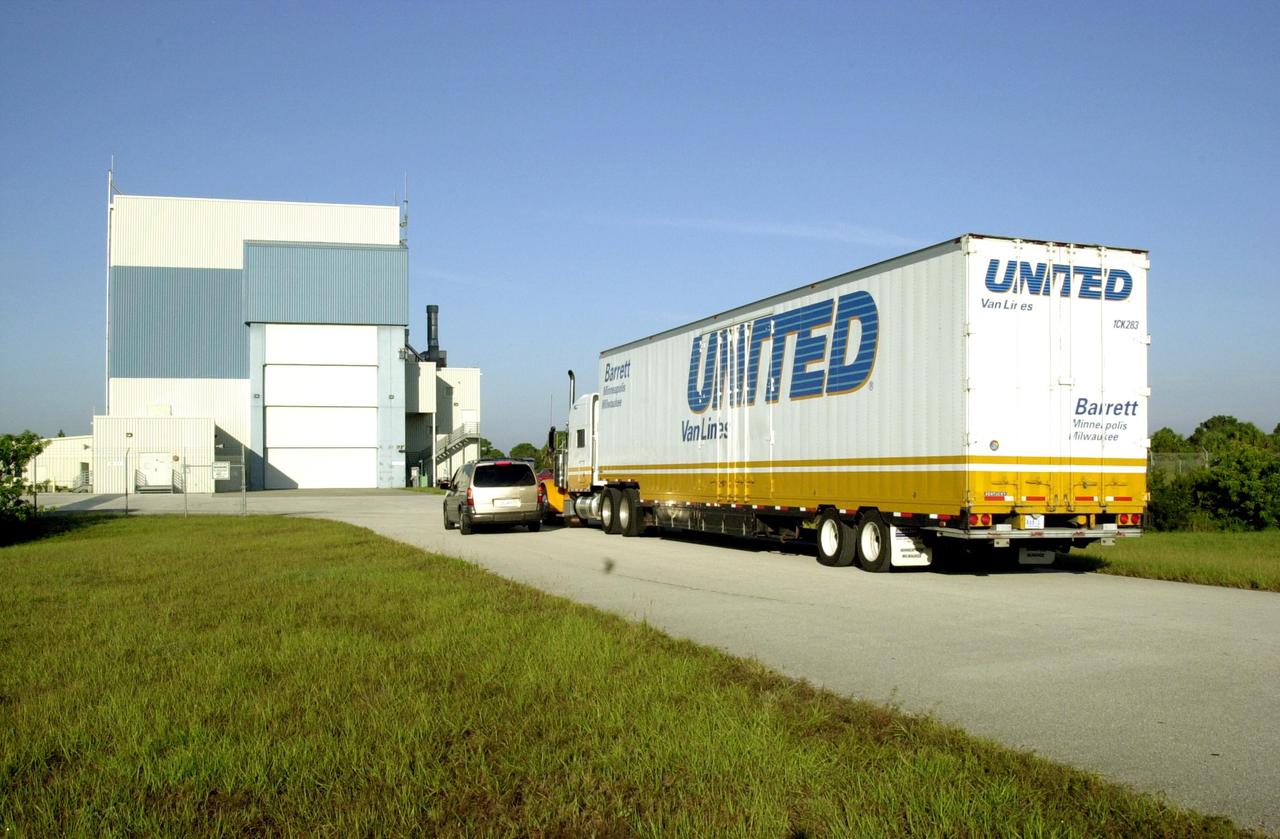
KENNEDY SPACE CENTER, FLA. -- A truck containing the Solar Radiation and Climate Experiment (SORCE) spacecraft approaches the Multi-Purpose Processing Facility at KSC. The spacecraft will undergo final processing for launch. SORCE is equipped with four instruments that will measure variations in solar radiation much more accurately than anything now in use and observe some of the spectral properties of solar radiation for the first time. With data from NASA's SORCE mission, researchers should be able to follow how the Sun affects our climate now and in the future. The SORCE project is managed by NASA's Goddard Space Flight Center. The instruments on the SORCE spacecraft are built by the Laboratory for Atmospheric and Space Physics (LASP). Launch of SORCE aboard a Pegasus XL rocket is scheduled for mid-December 2002. Launch site is Cape Canaveral Air Force Station, Fla.

KENNEDY SPACE CENTER, FLA. - Workers carefully rotate the SORCE satellite for mating to the Pegasus launch vehicle. SORCE is equipped with four instruments that will measure variations in solar radiation and observe some spectral properties of solar radiation for the first time. With data from NASA's SORCE mission, researchers should be able to follow how the Sun affects our climate now and in the future. Launch of SORCE aboard the Pegasus XL rocket is scheduled for Jan. 25, 2003, at approximately 3:14 p.m. EST, from Cape Canaveral Air Force Station, Fla.
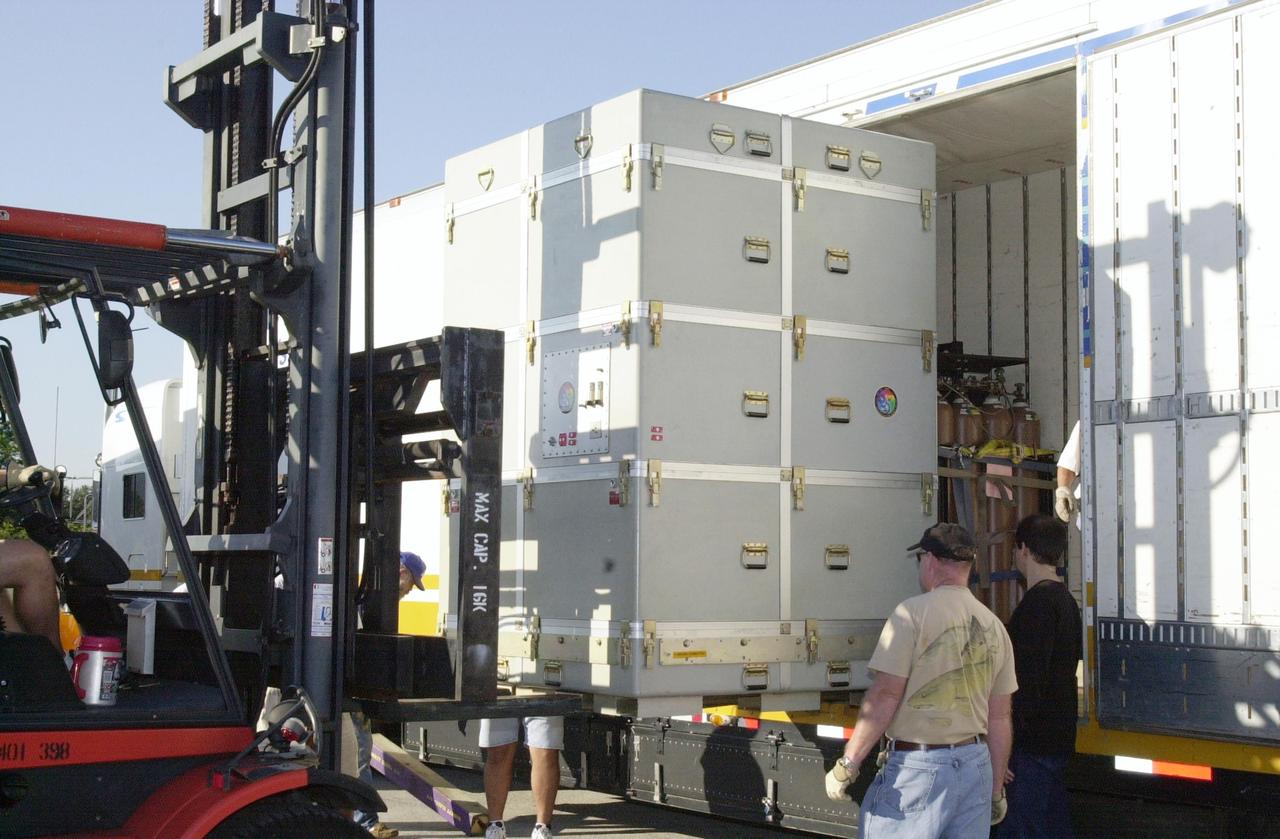
KENNEDY SPACE CENTER, FLA. -- A container with the Solar Radiation and Climate Experiment (SORCE) spacecraft inside is offloaded at the Multi-Purpose Processing Facility at KSC. The spacecraft will undergo final processing for launch. SORCE is equipped with four instruments that will measure variations in solar radiation much more accurately than anything now in use and observe some of the spectral properties of solar radiation for the first time. With data from NASA's SORCE mission, researchers should be able to follow how the Sun affects our climate now and in the future. The SORCE project is managed by NASA's Goddard Space Flight Center. The instruments on the SORCE spacecraft are built by the Laboratory for Atmospheric and Space Physics (LASP). Launch of SORCE aboard a Pegasus XL rocket is scheduled for mid-December 2002. Launch site is Cape Canaveral Air Force Station, Fla.
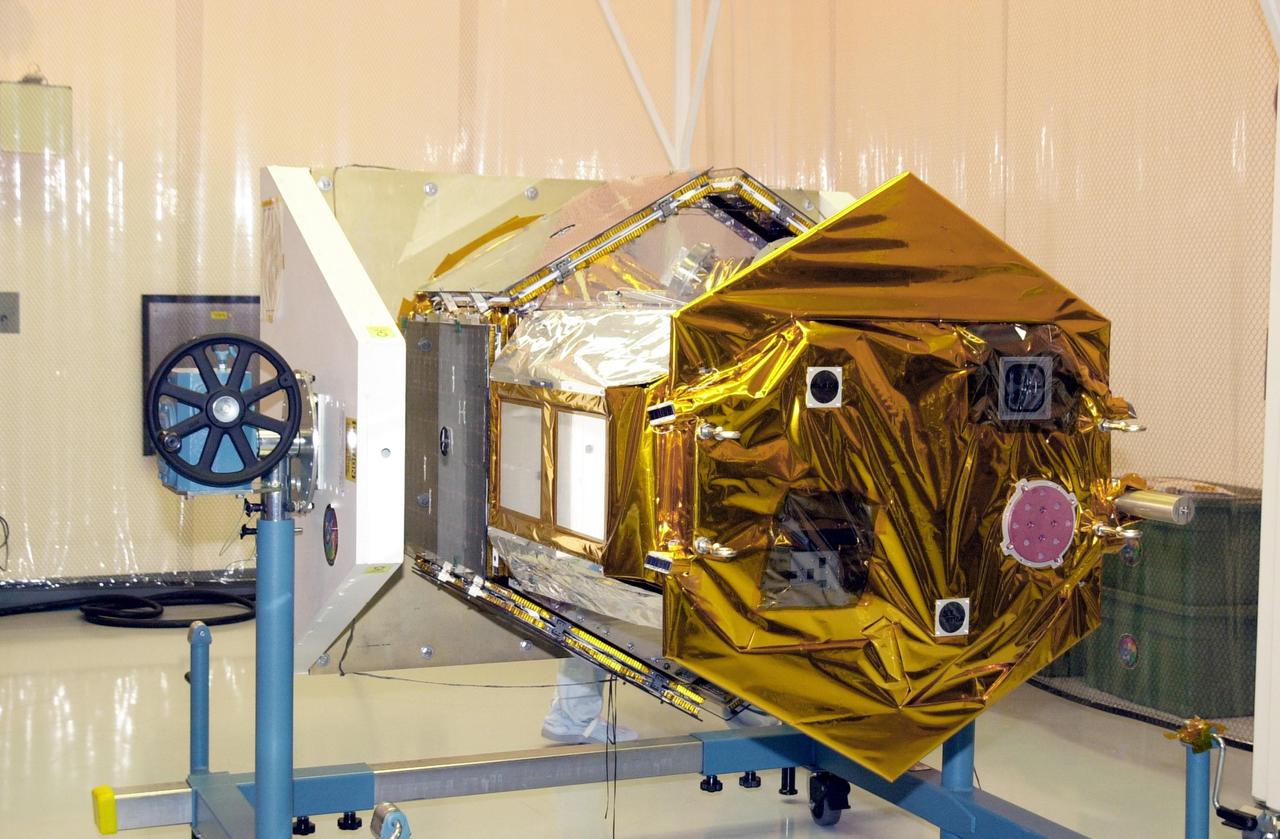
KENNEDY SPACE CENTER, FLA. -- In the Multi-Purpose Processing Facility at KSC, the Solar Radiation and Climate Experiment (SORCE) spacecraft rests in a horizontal position on a workstand after rotation and removal of its outer covering. SORCE arrived at Kennedy Space Center Oct. 26 to begin final processing. SORCE is equipped with four instruments that will measure variations in solar radiation much more accurately than anything now in use and observe some of the spectral properties of solar radiation for the first time. With data from NASA's SORCE mission, researchers should be able to follow how the Sun affects our climate now and in the future. The SORCE project is managed by NASA's Goddard Space Flight Center. The instruments on the SORCE spacecraft are built by the Laboratory for Atmospheric and Space Physics (LASP). Launch of SORCE aboard a Pegasus XL rocket is scheduled for mid-December 2002. Launch site is Cape Canaveral Air Force Station, Fla.
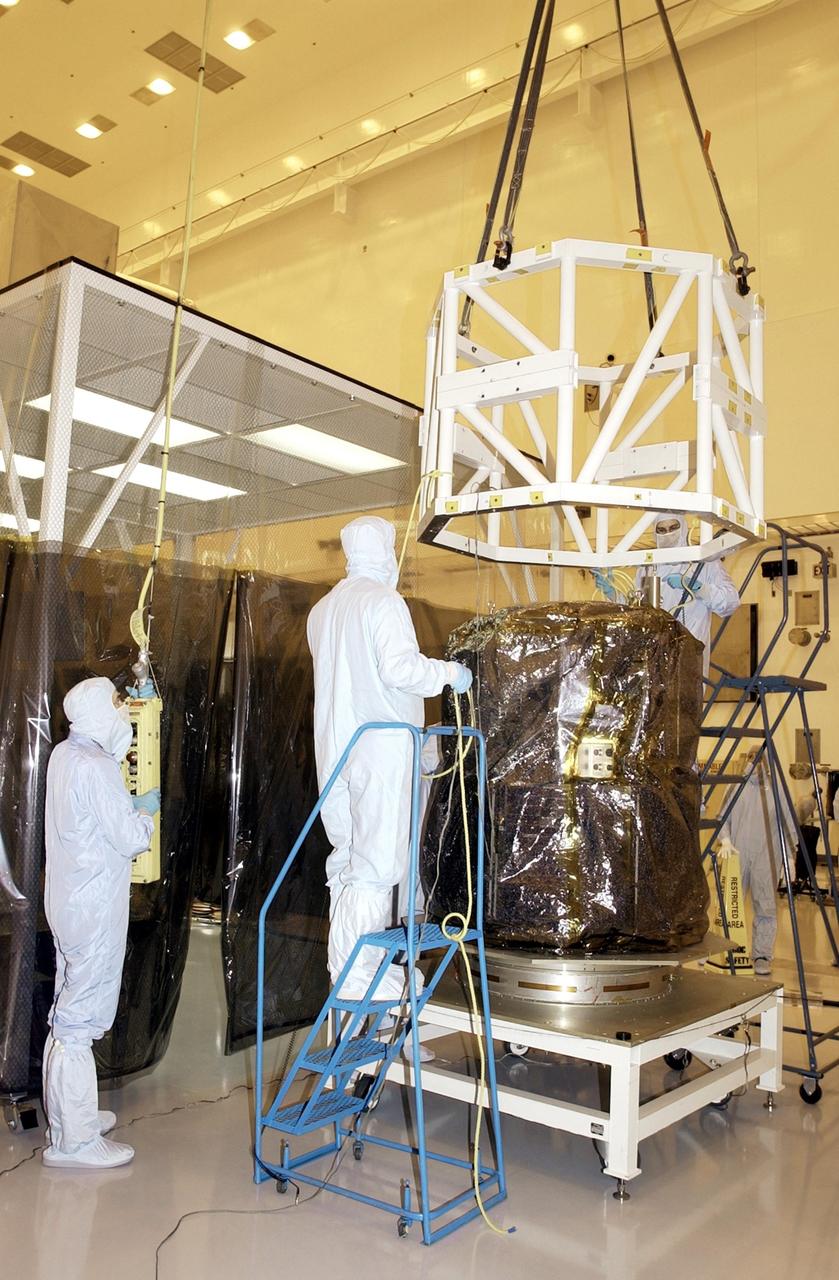
KENNEDY SPACE CENTER, FLA. - Workers guide equipment as it lowers over the SORCE satellite. The equipment will rotate the satellite for mating to the Pegasus launch vehicle. SORCE is equipped with four instruments that will measure variations in solar radiation and observe some spectral properties of solar radiation for the first time. With data from NASA's SORCE mission, researchers should be able to follow how the Sun affects our climate now and in the future. Launch of SORCE aboard the Pegasus XL rocket is scheduled for Jan. 25, 2003, at approximately 3:14 p.m. EST, from Cape Canaveral Air Force Station, Fla.
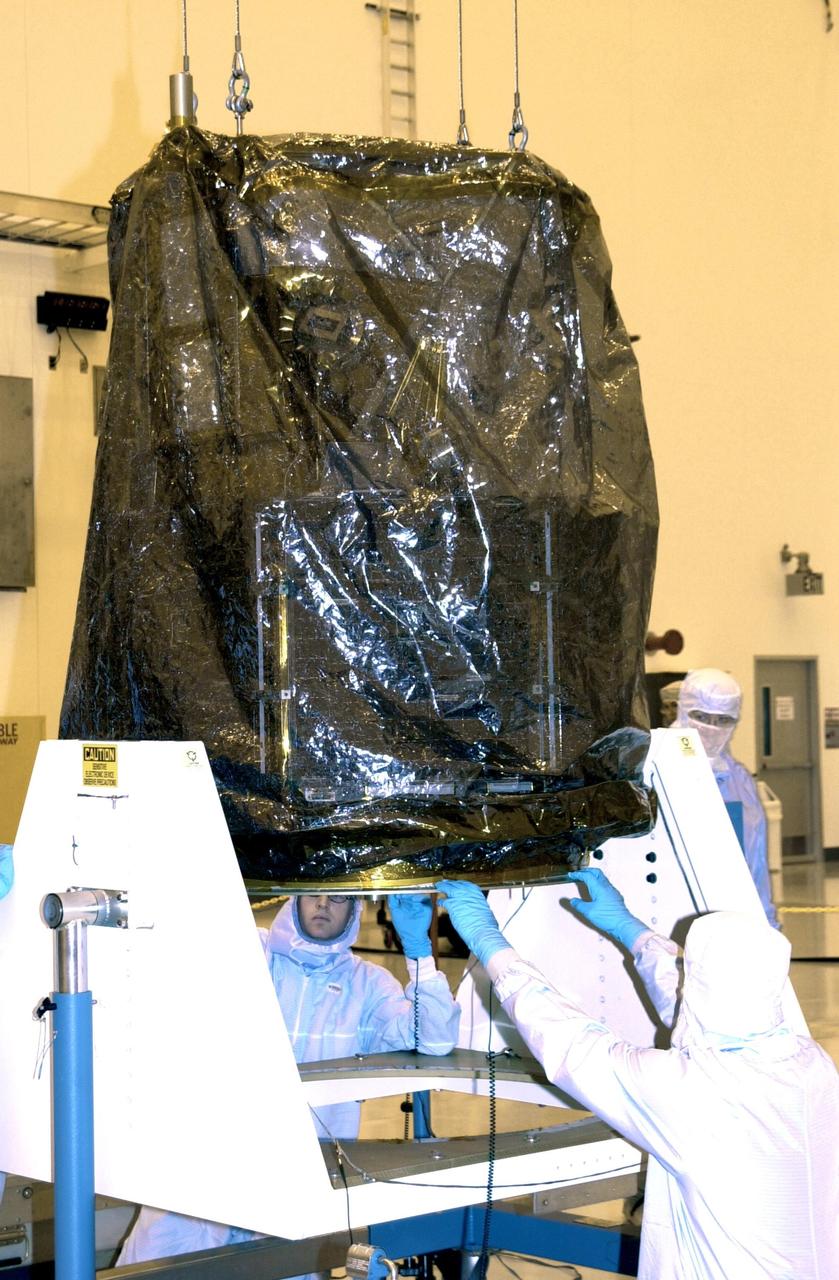
KENNEDY SPACE CENTER, FLA. -- Workers in the Multi-Purpose Processing Facility at KSC help guide the Solar Radiation and Climate Experiment (SORCE) spacecraft onto a workstand. SORCE arrived at Kennedy Space Center Oct. 26 to begin final processing. SORCE is equipped with four instruments that will measure variations in solar radiation much more accurately than anything now in use and observe some of the spectral properties of solar radiation for the first time. With data from NASA's SORCE mission, researchers should be able to follow how the Sun affects our climate now and in the future. The SORCE project is managed by NASA's Goddard Space Flight Center. The instruments on the SORCE spacecraft are built by the Laboratory for Atmospheric and Space Physics (LASP). Launch of SORCE aboard a Pegasus XL rocket is scheduled for mid-December 2002. Launch site is Cape Canaveral Air Force Station, Fla.
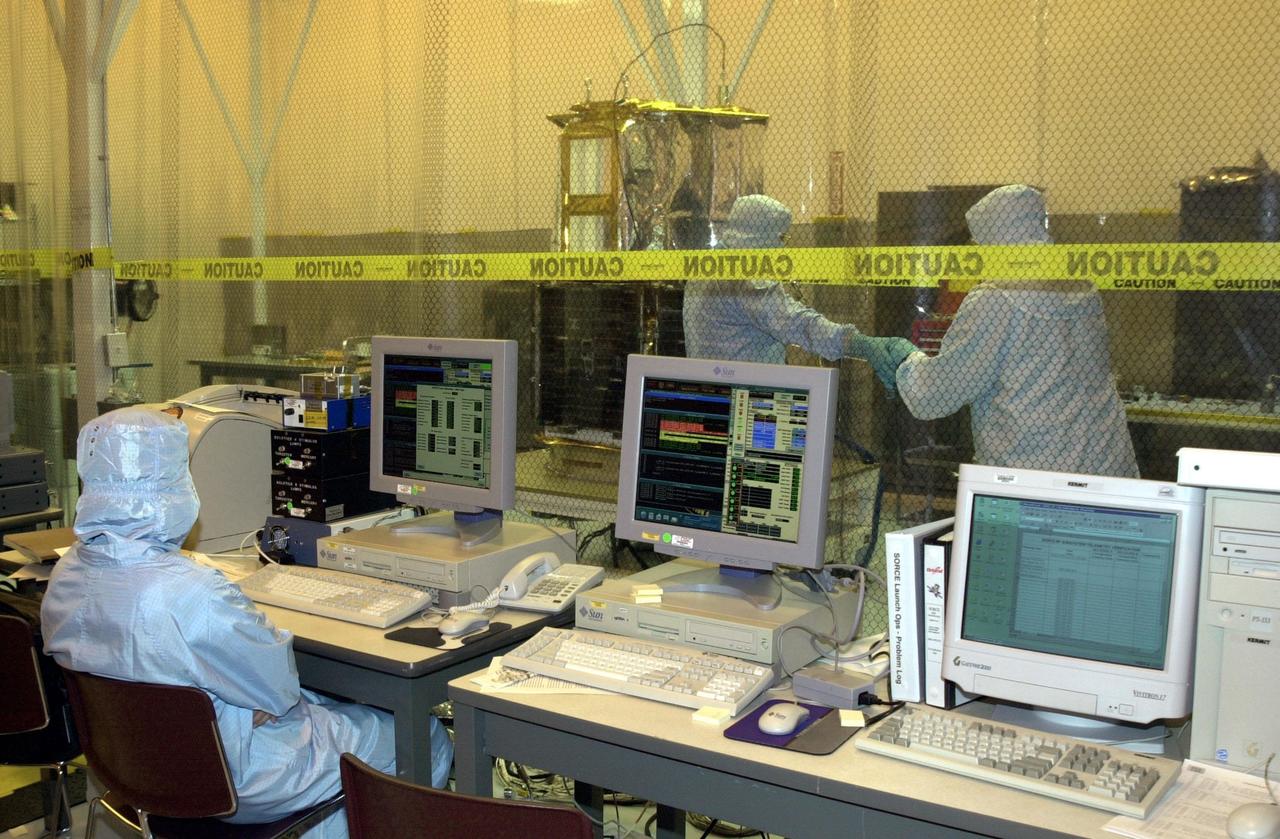
KENNEDY SPACE CENTER, FLA. - Computers in the Multi-Purpose Processing Facility are set up to conduct a solar array test on the SORCE satellite, beyond the screening. SORCE is equipped with four instruments that will measure variations in solar radiation much more accurately than anything now in use and observe some of the spectral properties of solar radiation for the first time. With data from NASA’s SORCE mission, researchers should be able to follow how the Sun affects our climate now and in the future. The SORCE project is managed by NASA’s Goddard Space Flight Center. The instruments on the SORCE spacecraft are built by the Laboratory for Atmospheric and Space Physics (LASP). Launch of SORCE aboard a Pegasus XL rocket is scheduled for mid-December 2002. Launch site is Cape Canaveral Air Force Station, Fla.
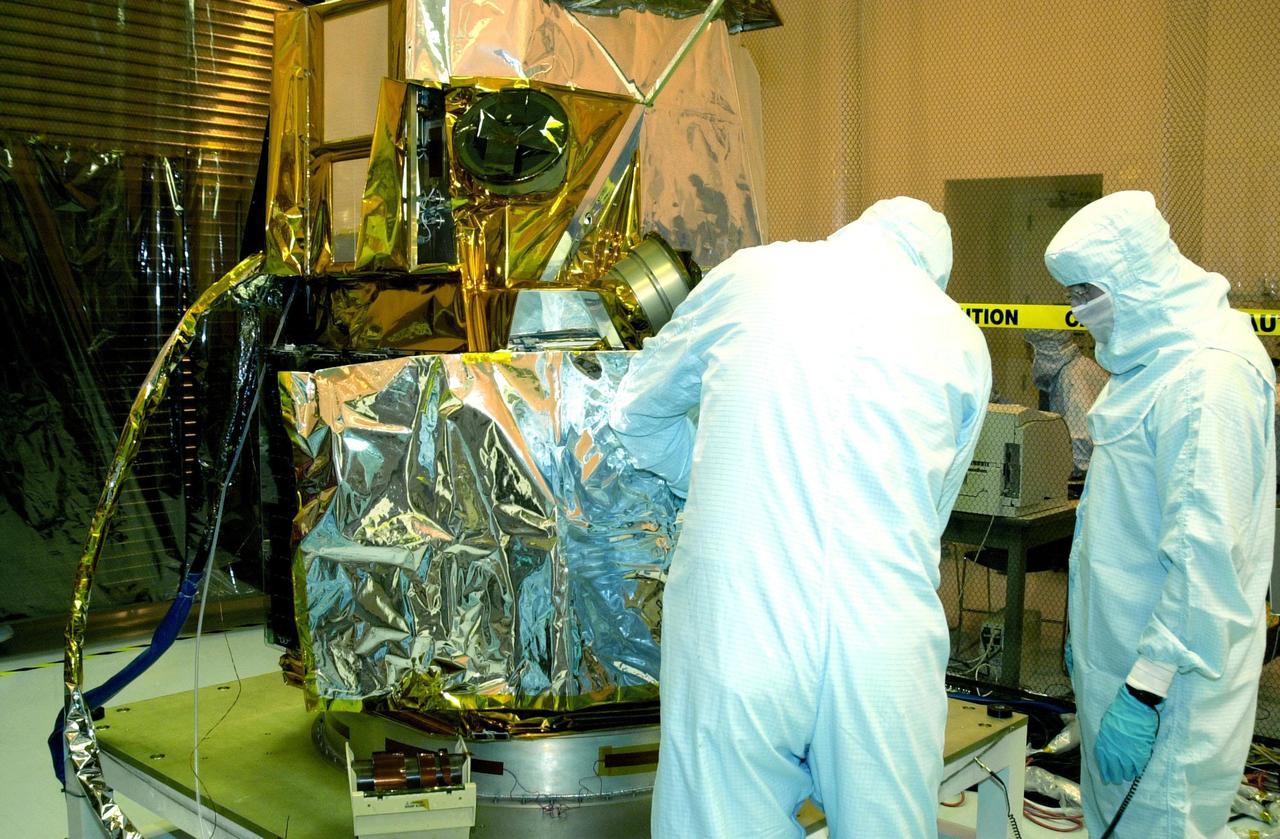
KENNEDY SPACE CENTER, FLA. - In the Multi-Purpose Processing Facility, workers adjust the SORCE satellite for a solar array test. SORCE is equipped with four instruments that will measure variations in solar radiation much more accurately than anything now in use and observe some of the spectral properties of solar radiation for the first time. With data from NASA’s SORCE mission, researchers should be able to follow how the Sun affects our climate now and in the future. The SORCE project is managed by NASA’s Goddard Space Flight Center. The instruments on the SORCE spacecraft are built by the Laboratory for Atmospheric and Space Physics (LASP). Launch of SORCE aboard a Pegasus XL rocket is scheduled for mid-December 2002. Launch site is Cape Canaveral Air Force Station, Fla.
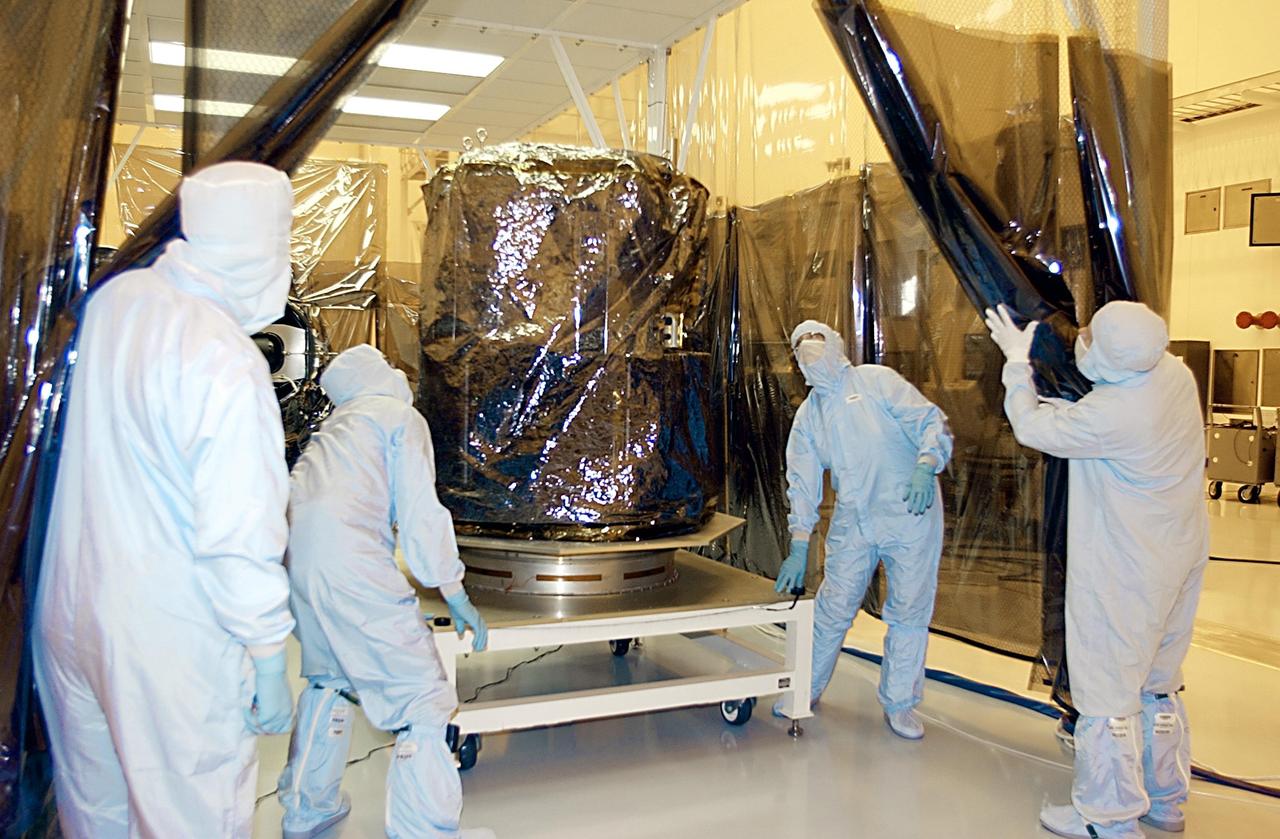
KENNEDY SPACE CENTER, FLA. - Workers move the SORCE satellite from underneath a canopy during its transfer to a rotating workstand for mating to the Pegasus launch vehicle. SORCE is equipped with four instruments that will measure variations in solar radiation and observe some spectral properties of solar radiation for the first time. With data from NASA's SORCE mission, researchers should be able to follow how the Sun affects our climate now and in the future. Launch of SORCE aboard the Pegasus XL rocket is scheduled for Jan. 25, 2003, at approximately 3:14 p.m. EST, from Cape Canaveral Air Force Station, Fla.
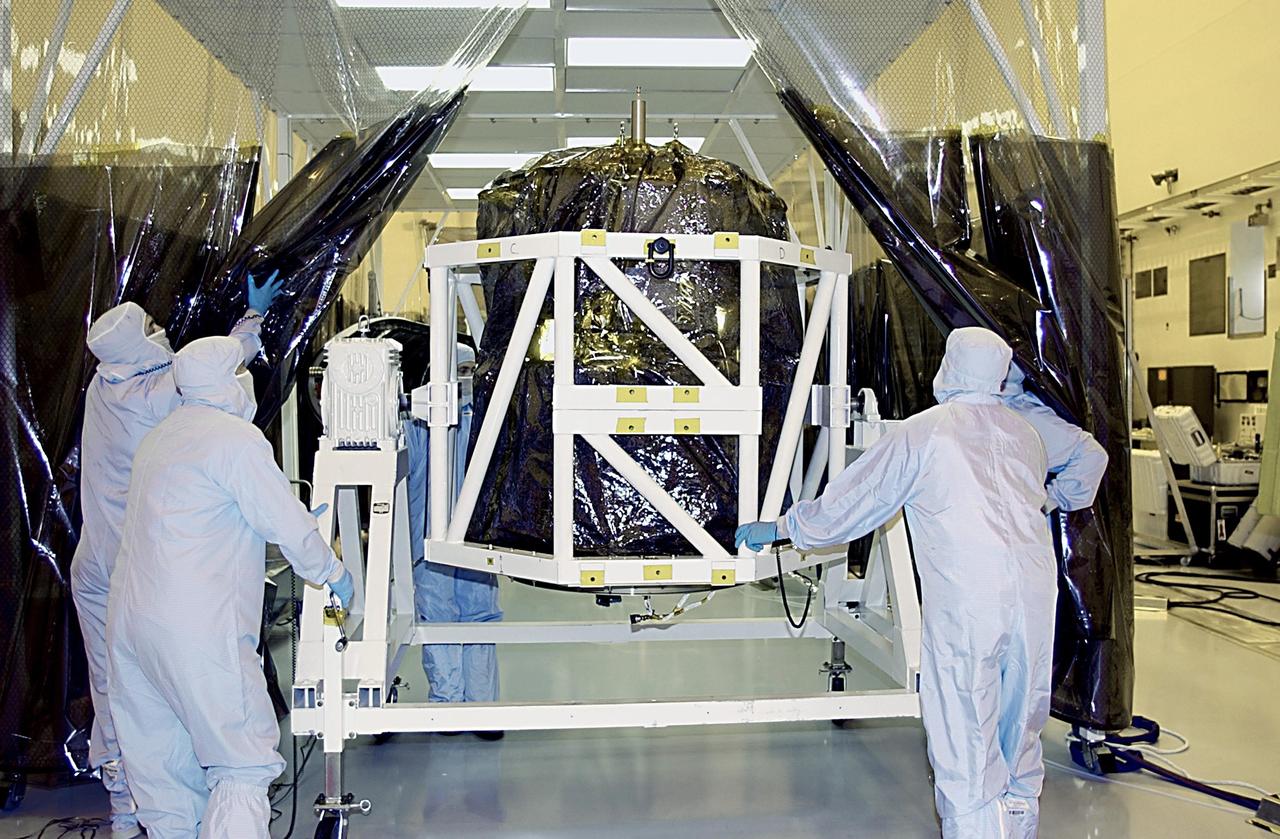
KENNEDY SPACE CENTER, FLA. - Workers move the SORCE satellite back under the protective canopy for mating to the Pegasus launch vehicle. The satellite will be rotated before the mating to Pegasus. SORCE is equipped with four instruments that will measure variations in solar radiation and observe some spectral properties of solar radiation for the first time. With data from NASA's SORCE mission, researchers should be able to follow how the Sun affects our climate now and in the future. Launch of SORCE aboard the Pegasus XL rocket is scheduled for Jan. 25, 2003, at approximately 3:14 p.m. EST, from Cape Canaveral Air Force Station, Fla.
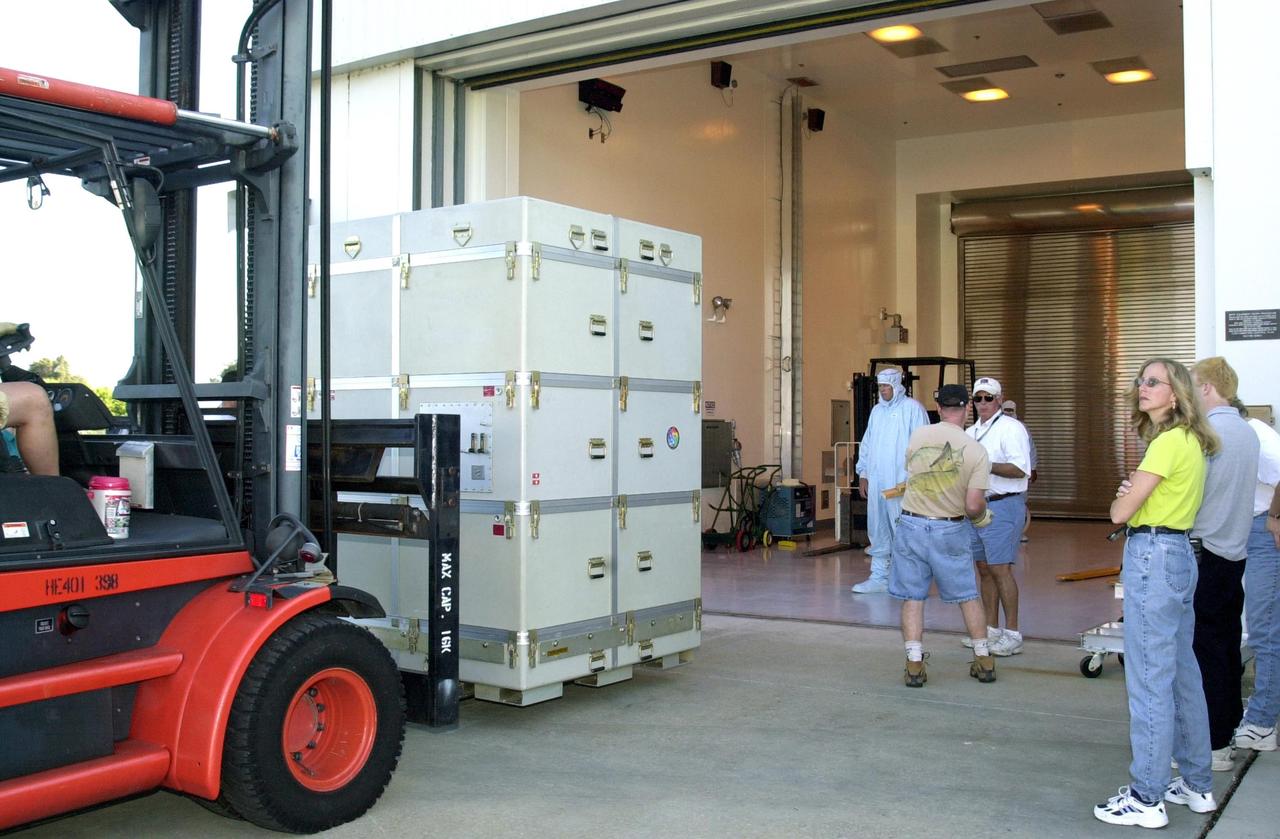
KENNEDY SPACE CENTER, FLA. -- A container with the Solar Radiation and Climate Experiment (SORCE) spacecraft inside is moved into the Multi-Purpose Processing Facility at KSC. The spacecraft will undergo final processing in the MPPF for launch. SORCE is equipped with four instruments that will measure variations in solar radiation much more accurately than anything now in use and observe some of the spectral properties of solar radiation for the first time. With data from NASA's SORCE mission, researchers should be able to follow how the Sun affects our climate now and in the future. The SORCE project is managed by NASA's Goddard Space Flight Center. The instruments on the SORCE spacecraft are built by the Laboratory for Atmospheric and Space Physics (LASP). Launch of SORCE aboard a Pegasus XL rocket is scheduled for mid-December 2002. Launch site is Cape Canaveral Air Force Station, Fla.
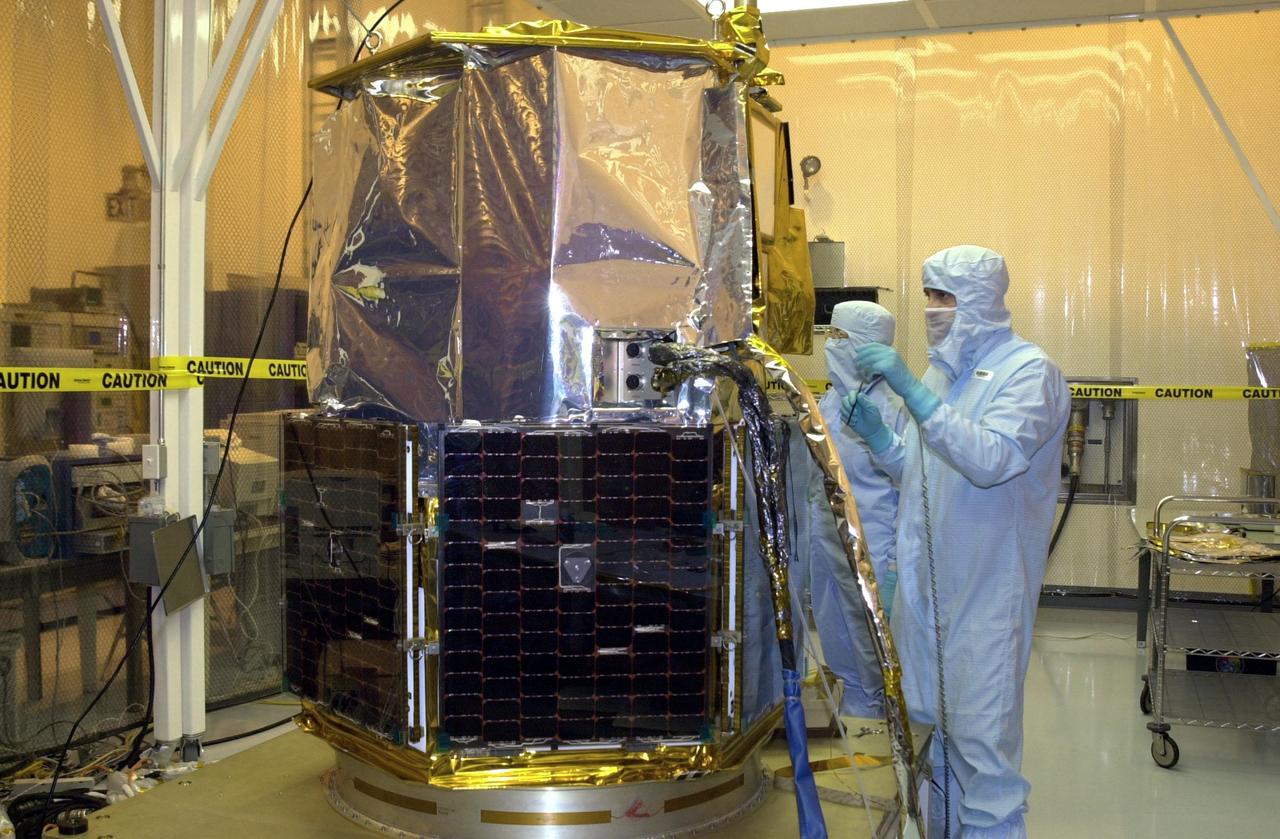
KENNEDY SPACE CENTER, FLA. - In the Multi-Purpose Processing Facility, workers prepare the SORCE satellite for a solar array test. SORCE is equipped with four instruments that will measure variations in solar radiation much more accurately than anything now in use and observe some of the spectral properties of solar radiation for the first time. With data from NASA's SORCE mission, researchers should be able to follow how the Sun affects our climate now and in the future. The SORCE project is managed by NASA's Goddard Space Flight Center. The instruments on the SORCE spacecraft are built by the Laboratory for Atmospheric and Space Physics (LASP). Launch of SORCE aboard a Pegasus XL rocket is scheduled for mid-December 2002. Launch site is Cape Canaveral Air Force Station, Fla.
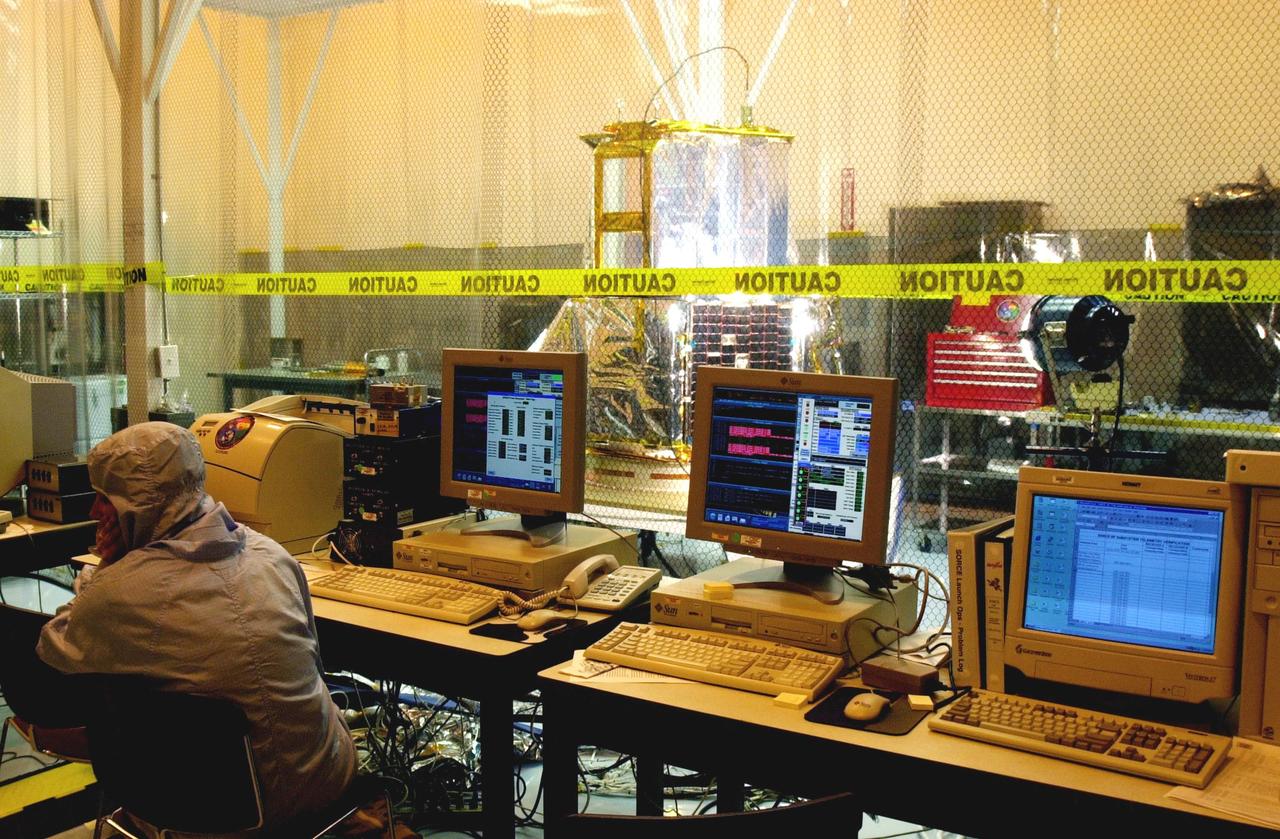
KENNEDY SPACE CENTER, FLA. - Computers in the Multi-Purpose Processing Facility monitor a solar array test on the SORCE satellite, beyond the screening. SORCE is equipped with four instruments that will measure variations in solar radiation much more accurately than anything now in use and observe some of the spectral properties of solar radiation for the first time. With data from NASA’s SORCE mission, researchers should be able to follow how the Sun affects our climate now and in the future. The SORCE project is managed by NASA’s Goddard Space Flight Center. The instruments on the SORCE spacecraft are built by the Laboratory for Atmospheric and Space Physics (LASP). Launch of SORCE aboard a Pegasus XL rocket is scheduled for mid-December 2002. Launch site is Cape Canaveral Air Force Station, Fla.
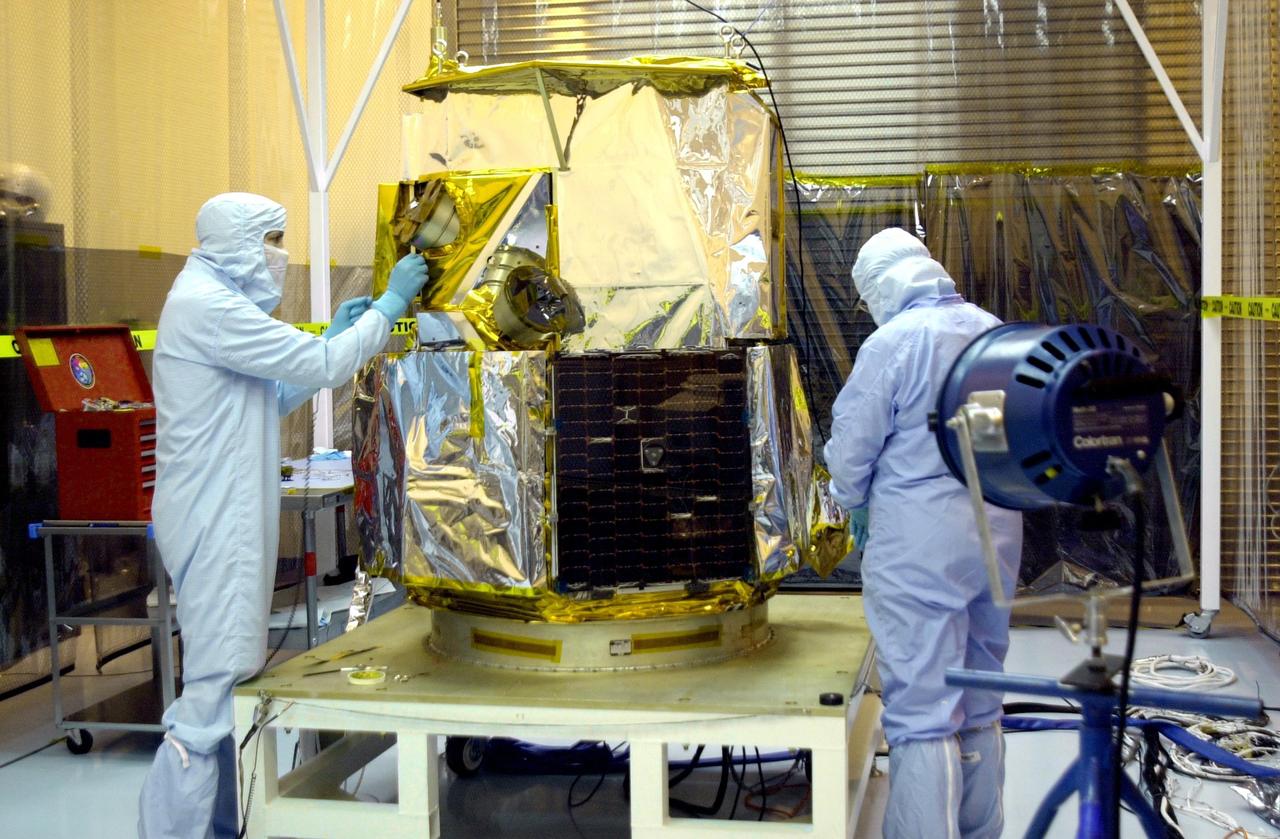
KENNEDY SPACE CENTER, FLA. - In the Multi-Purpose Processing Facility, workers adjust the SORCE satellite for a solar array test. SORCE is equipped with four instruments that will measure variations in solar radiation much more accurately than anything now in use and observe some of the spectral properties of solar radiation for the first time. With data from NASA’s SORCE mission, researchers should be able to follow how the Sun affects our climate now and in the future. The SORCE project is managed by NASA’s Goddard Space Flight Center. The instruments on the SORCE spacecraft are built by the Laboratory for Atmospheric and Space Physics (LASP). Launch of SORCE aboard a Pegasus XL rocket is scheduled for mid-December 2002. Launch site is Cape Canaveral Air Force Station, Fla.

KENNEDY SPACE CENTER, FLA. - The SORCE satellite is ready for mating to the Pegasus launch vehicle. SORCE is equipped with four instruments that will measure variations in solar radiation and observe some spectral properties of solar radiation for the first time. With data from NASA's SORCE mission, researchers should be able to follow how the Sun affects our climate now and in the future. Launch of SORCE aboard the Pegasus XL rocket is scheduled for Jan. 25, 2003, at approximately 3:14 p.m. EST, from Cape Canaveral Air Force Station, Fla.
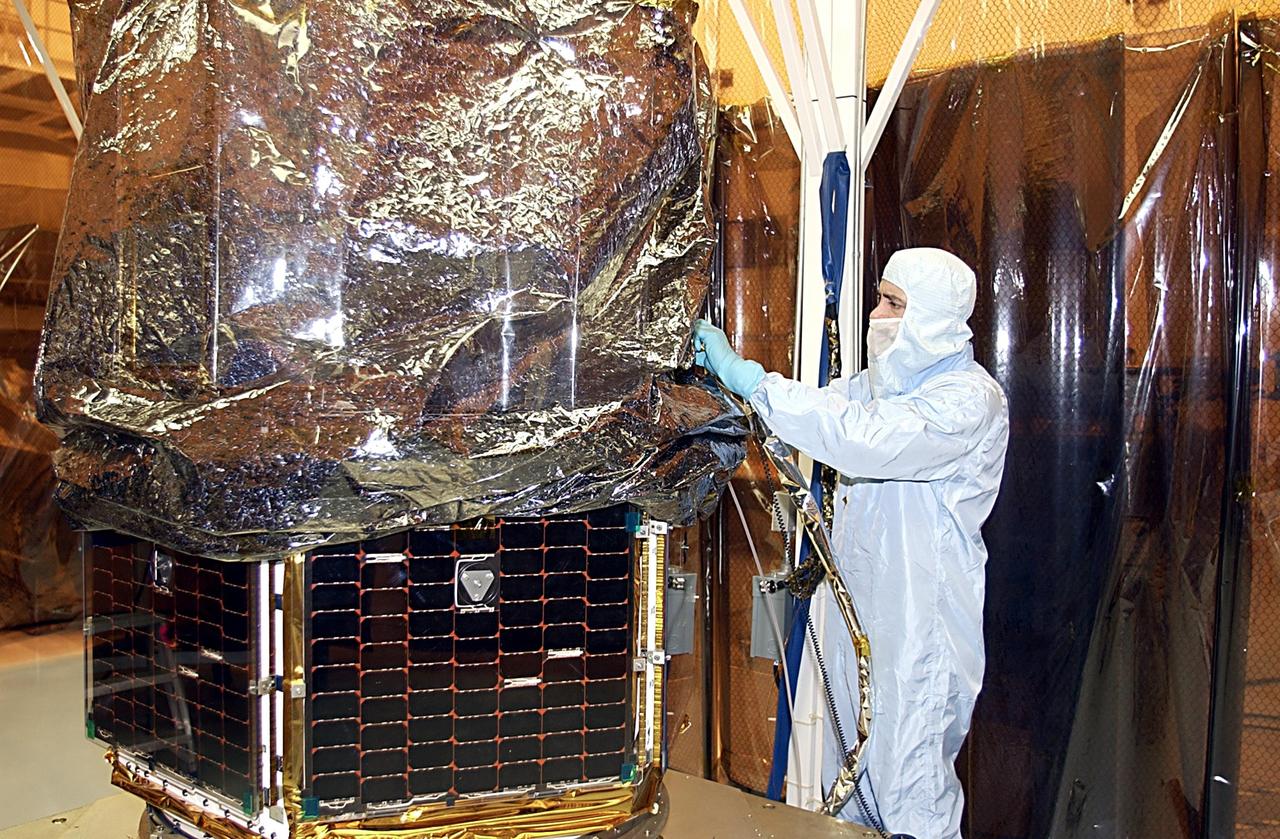
KENNEDY SPACE CENTER, FLA. - A worker adjusts the protective cover on the SORCE satellite before its move to a rotating workstand and mating to the Pegasus launch vehicle. SORCE is equipped with four instruments that will measure variations in solar radiation and observe some spectral properties of solar radiation for the first time. With data from NASA's SORCE mission, researchers should be able to follow how the Sun affects our climate now and in the future. Launch of SORCE aboard the Pegasus XL rocket is scheduled for Jan. 25, 2003, at approximately 3:14 p.m. EST, from Cape Canaveral Air Force Station, Fla.
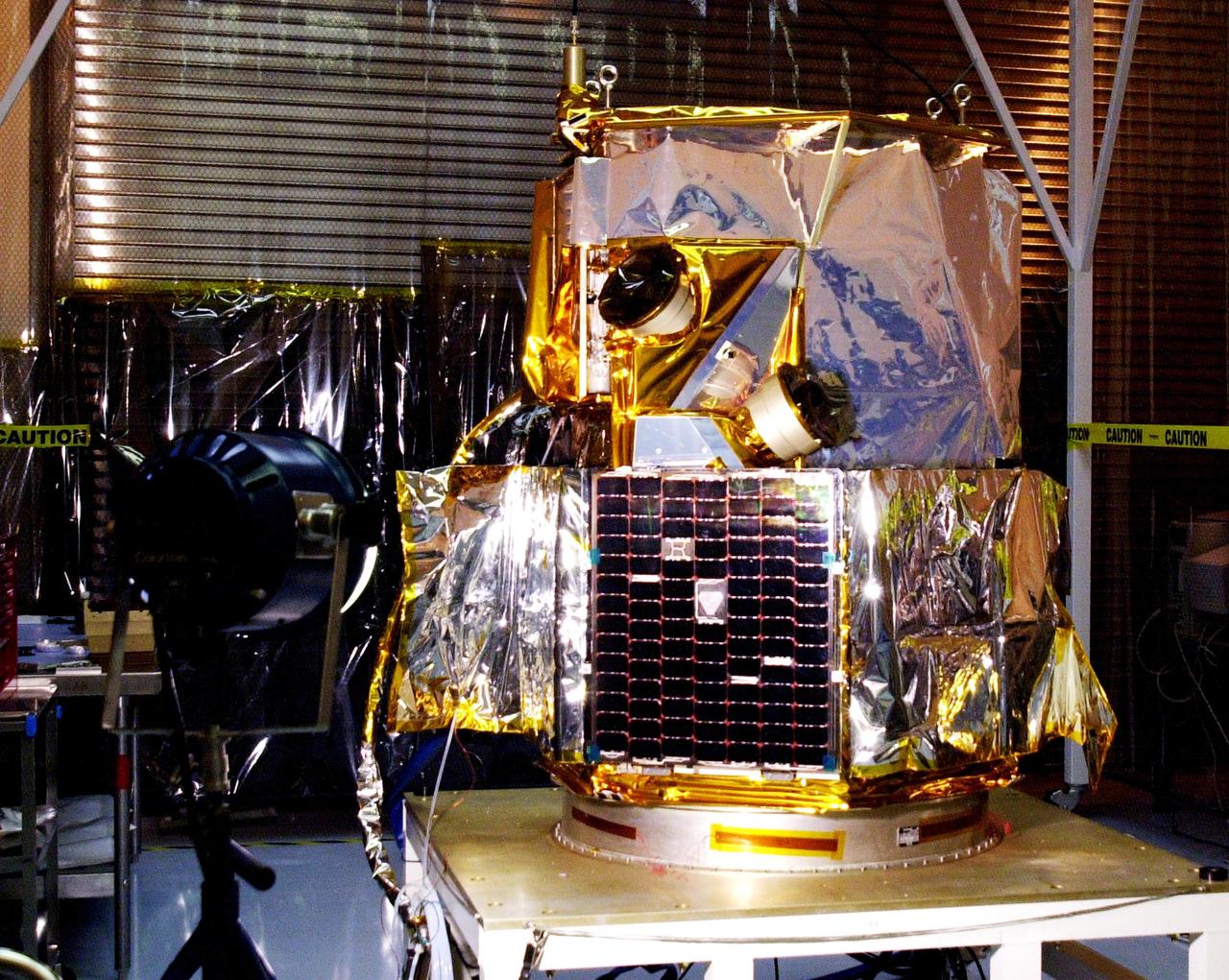
KENNEDY SPACE CENTER, FLA. - In the Multi-Purpose Processing Facility, the SORCE satellite undergoes a solar array test. SORCE is equipped with four instruments that will measure variations in solar radiation much more accurately than anything now in use and observe some of the spectral properties of solar radiation for the first time. With data from NASA’s SORCE mission, researchers should be able to follow how the Sun affects our climate now and in the future. The SORCE project is managed by NASA’s Goddard Space Flight Center. The instruments on the SORCE spacecraft are built by the Laboratory for Atmospheric and Space Physics (LASP). Launch of SORCE aboard a Pegasus XL rocket is scheduled for mid-December 2002. Launch site is Cape Canaveral Air Force Station, Fla.
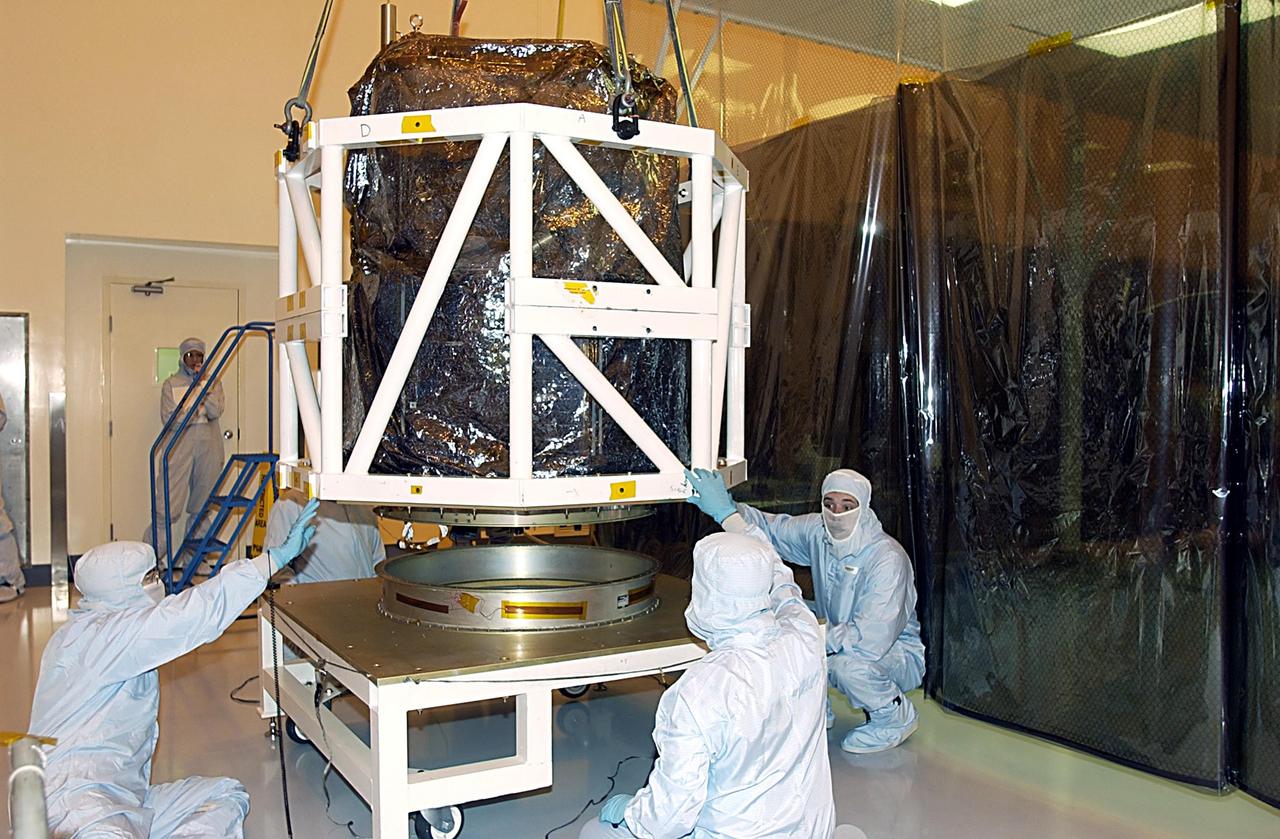
KENNEDY SPACE CENTER, FLA. - Workers keep watch as the SORCE satellite is lifted off its workstand. The equipment will rotate the satellite for mating to the Pegasus launch vehicle. SORCE is equipped with four instruments that will measure variations in solar radiation and observe some spectral properties of solar radiation for the first time. With data from NASA's SORCE mission, researchers should be able to follow how the Sun affects our climate now and in the future. Launch of SORCE aboard the Pegasus XL rocket is scheduled for Jan. 25, 2003, at approximately 3:14 p.m. EST, from Cape Canaveral Air Force Station, Fla.
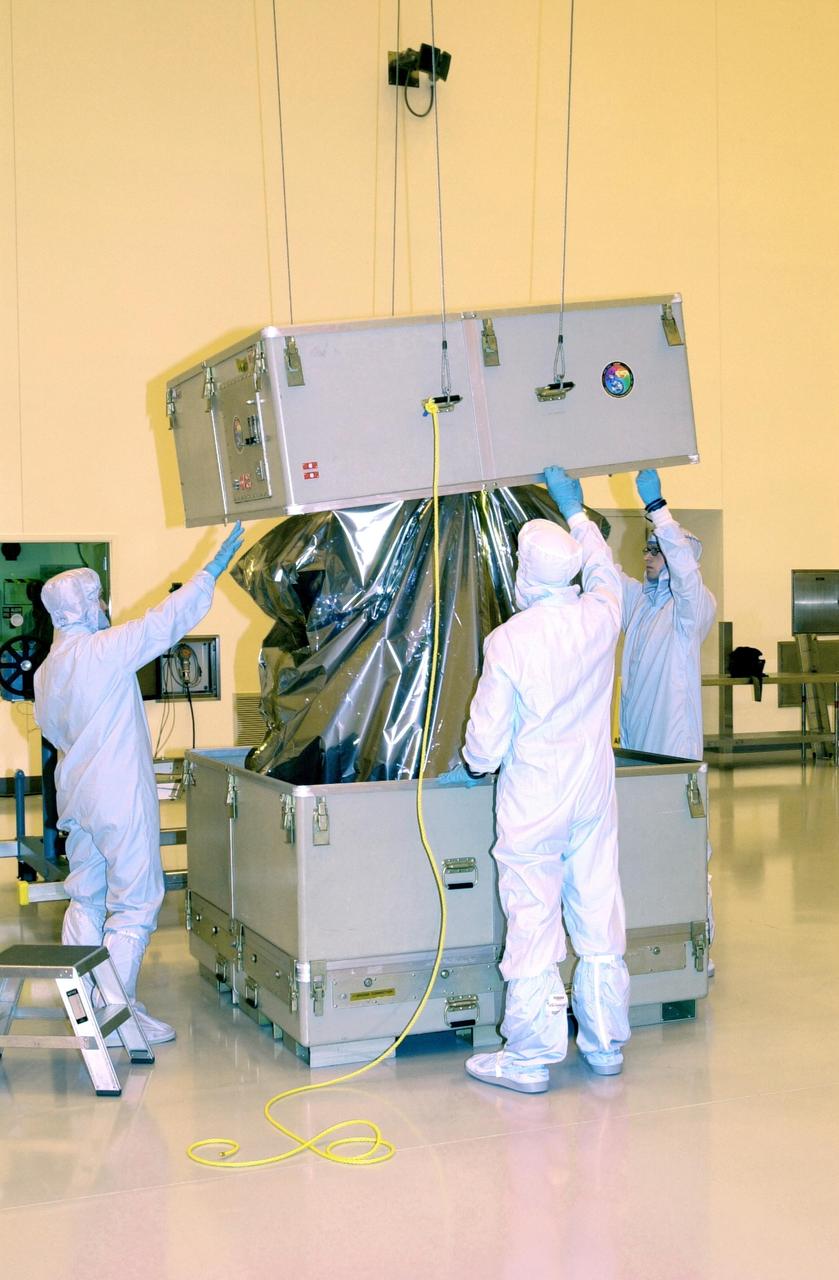
KENNEDY SPACE CENTER, FLA. - In the Multi-Purpose Processing Facility at KSC, workers unpack the Solar Radiation and Climate Experiment (SORCE) spacecraft. SORCE arrived at Kennedy Space Center Oct. 26 to begin final processing. SORCE is equipped with four instruments that will measure variations in solar radiation much more accurately than anything now in use and observe some of the spectral properties of solar radiation for the first time. With data from NASA's SORCE mission, researchers should be able to follow how the Sun affects our climate now and in the future. The SORCE project is managed by NASA's Goddard Space Flight Center. The instruments on the SORCE spacecraft are built by the Laboratory for Atmospheric and Space Physics (LASP). Launch of SORCE aboard a Pegasus XL rocket is scheduled for mid-December 2002. Launch site is Cape Canaveral Air Force Station, Fla.

KENNEDY SPACE CENTER, FLA. - The SORCE satellite is being prepared for move to a rotating workstand before being mated to the Pegasus launch vehicle. SORCE is equipped with four instruments that will measure variations in solar radiation and observe some spectral properties of solar radiation for the first time. With data from NASA's SORCE mission, researchers should be able to follow how the Sun affects our climate now and in the future. Launch of SORCE aboard the Pegasus XL rocket is scheduled for Jan. 25, 2003, at approximately 3:14 p.m. EST, from Cape Canaveral Air Force Station, Fla.
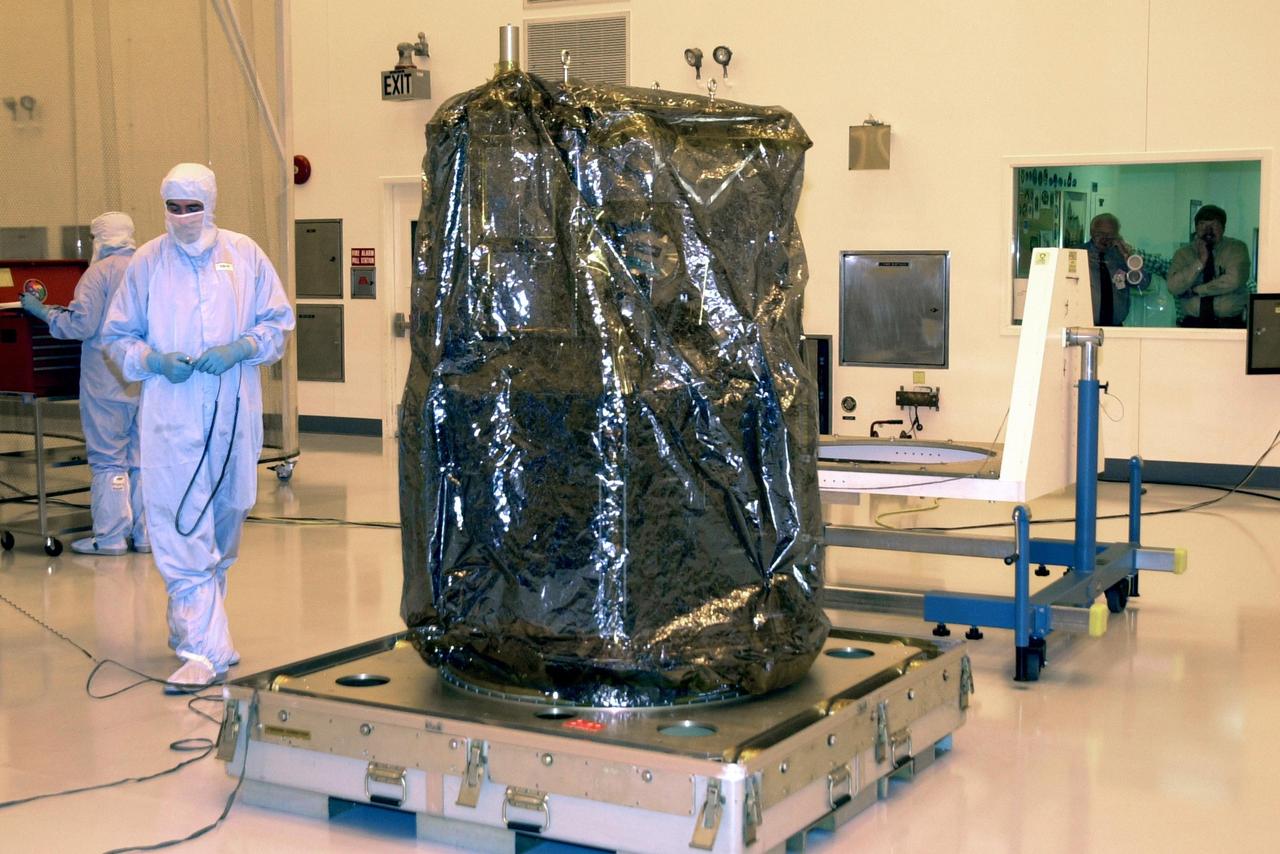
KENNEDY SPACE CENTER, FLA. -- The Solar Radiation and Climate Experiment (SORCE) spacecraft sits in the Multi-Purpose Processing Facility at KSC after being removed from the transport container. SORCE arrived at Kennedy Space Center Oct. 26 to begin final processing. SORCE is equipped with four instruments that will measure variations in solar radiation much more accurately than anything now in use and observe some of the spectral properties of solar radiation for the first time. With data from NASA's SORCE mission, researchers should be able to follow how the Sun affects our climate now and in the future. The SORCE project is managed by NASA's Goddard Space Flight Center. The instruments on the SORCE spacecraft are built by the Laboratory for Atmospheric and Space Physics (LASP). Launch of SORCE aboard a Pegasus XL rocket is scheduled for mid-December 2002. Launch site is Cape Canaveral Air Force Station, Fla.
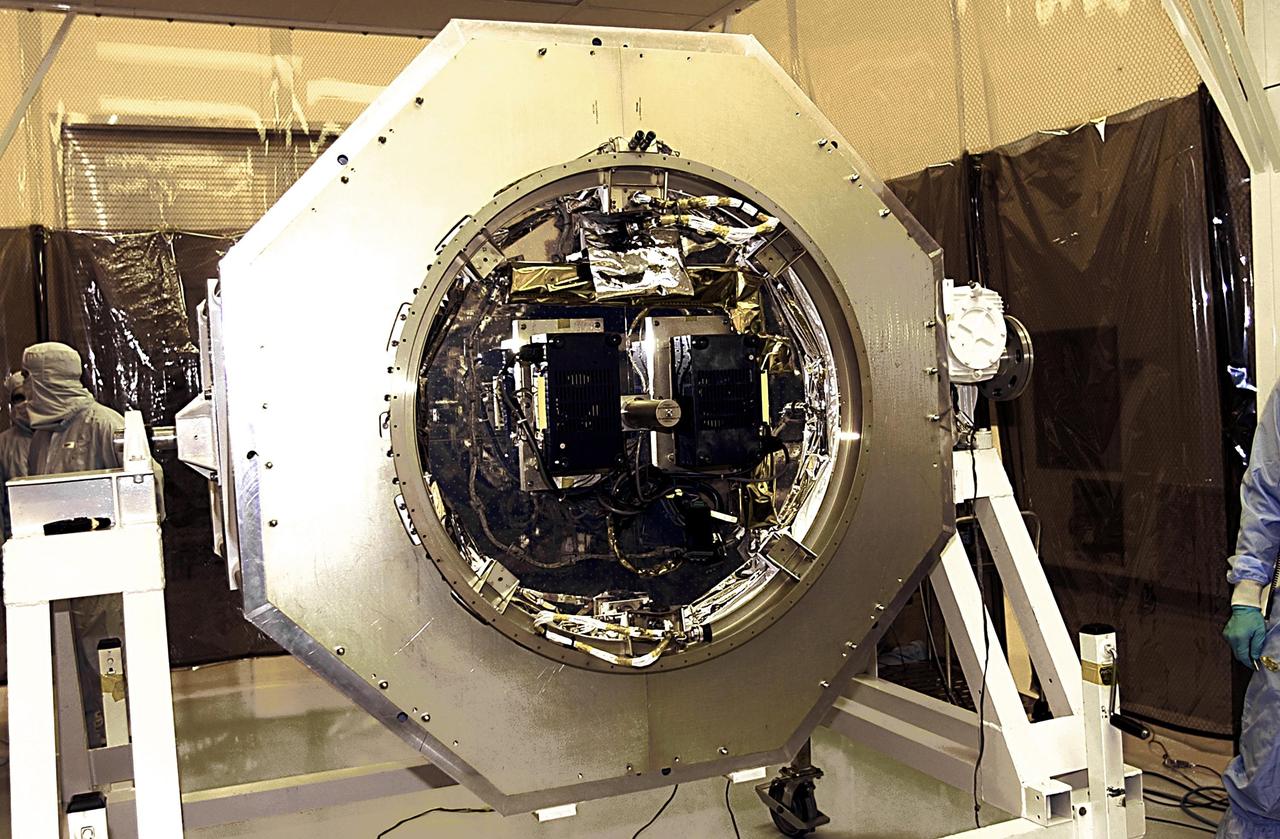
KENNEDY SPACE CENTER, FLA. - Another view of the SORCE satellite ready for mating to the Pegasus launch vehicle. SORCE is equipped with four instruments that will measure variations in solar radiation and observe some spectral properties of solar radiation for the first time. With data from NASA's SORCE mission, researchers should be able to follow how the Sun affects our climate now and in the future. Launch of SORCE aboard the Pegasus XL rocket is scheduled for Jan. 25, 2003, at approximately 3:14 p.m. EST, from Cape Canaveral Air Force Station, Fla.
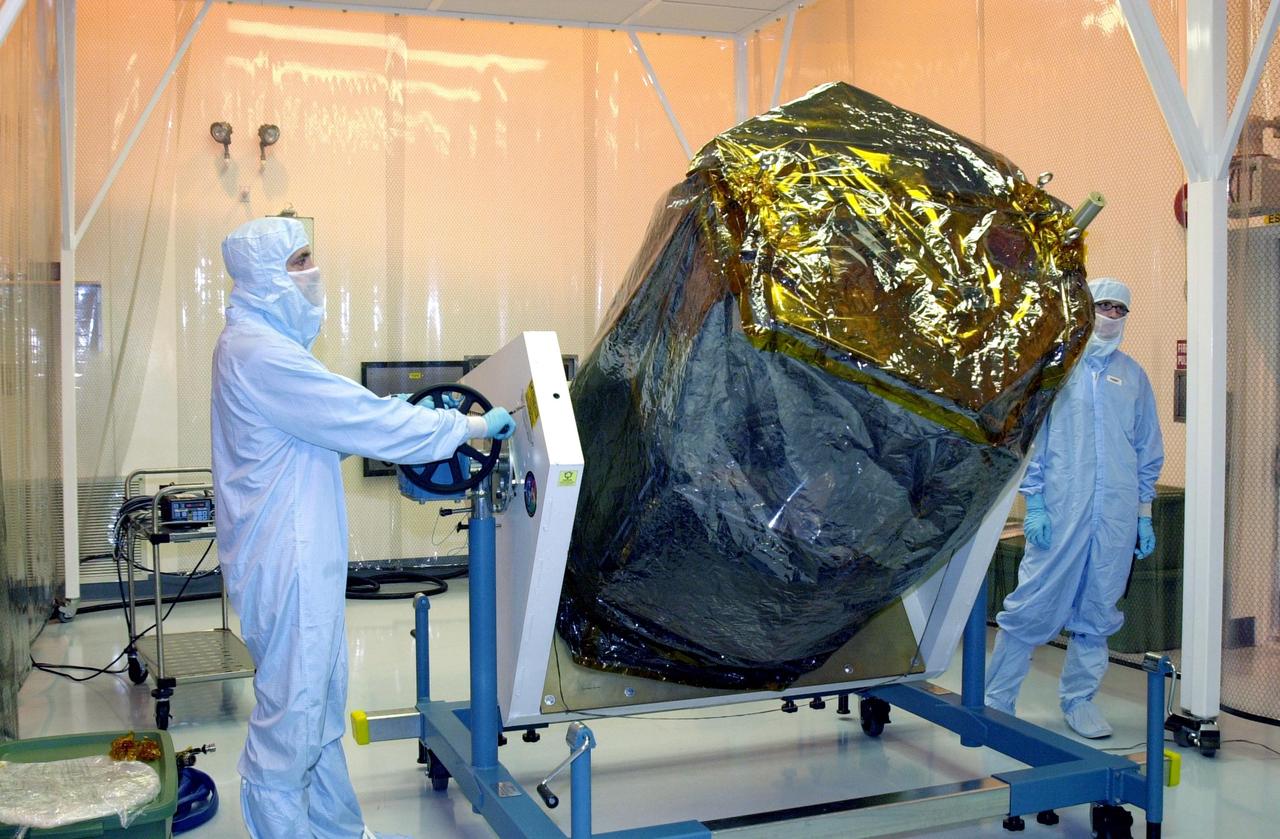
KENNEDY SPACE CENTER, FLA. -- In the Multi-Purpose Processing Facility at KSC, the Solar Radiation and Climate Experiment (SORCE) spacecraft is rotated from a vertical to horizontal position on a workstand. SORCE arrived at Kennedy Space Center Oct. 26 to begin final processing. SORCE is equipped with four instruments that will measure variations in solar radiation much more accurately than anything now in use and observe some of the spectral properties of solar radiation for the first time. With data from NASA's SORCE mission, researchers should be able to follow how the Sun affects our climate now and in the future. The SORCE project is managed by NASA's Goddard Space Flight Center. The instruments on the SORCE spacecraft are built by the Laboratory for Atmospheric and Space Physics (LASP). Launch of SORCE aboard a Pegasus XL rocket is scheduled for mid-December 2002. Launch site is Cape Canaveral Air Force Station, Fla.
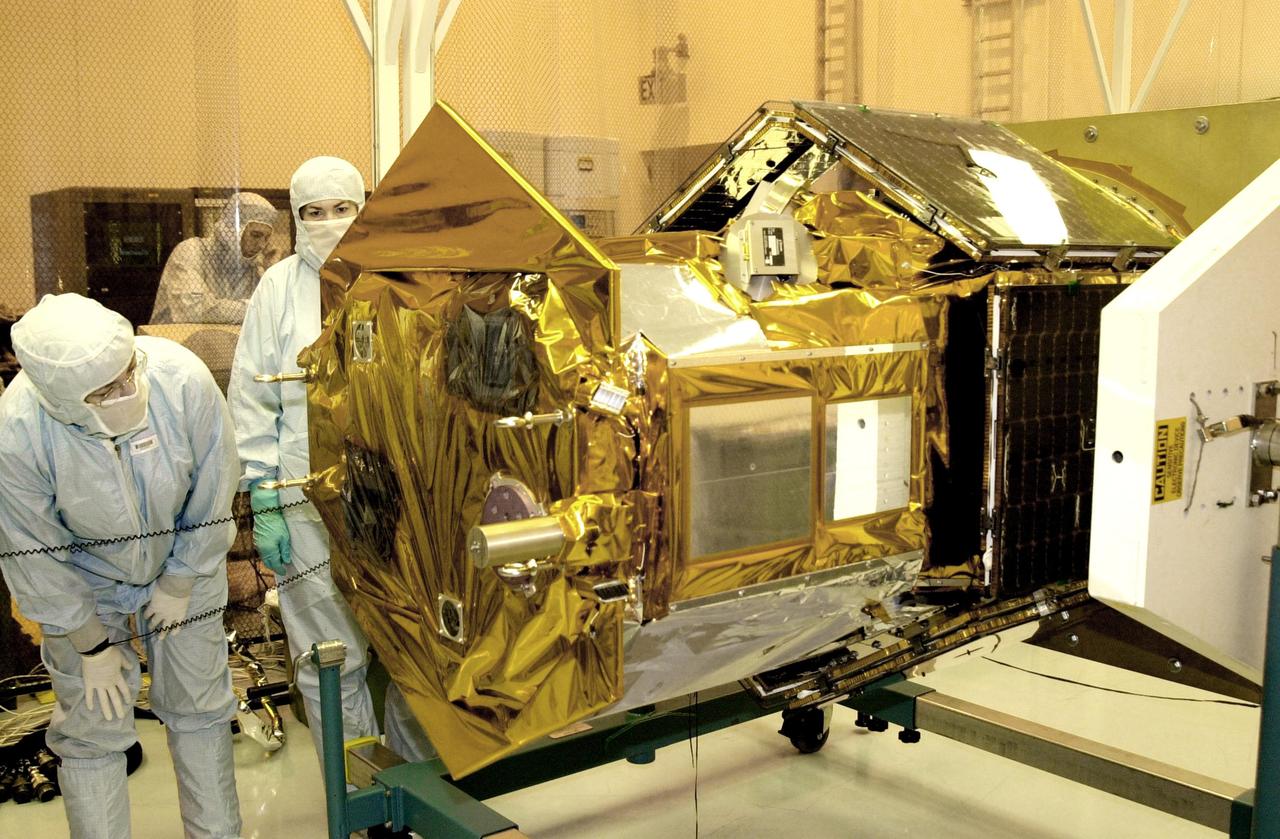
KENNEDY SPACE CENTER, FLA. - Workers in the Multi-Purpose Processing Facility at KSC look over the Solar Radiation and Climate Experiment (SORCE) spacecraft. SORCE arrived at Kennedy Space Center Oct. 26 to begin final processing. SORCE is equipped with four instruments that will measure variations in solar radiation much more accurately than anything now in use and observe some of the spectral properties of solar radiation for the first time. With data from NASA's SORCE mission, researchers should be able to follow how the Sun affects our climate now and in the future. The SORCE project is managed by NASA's Goddard Space Flight Center. The instruments on the SORCE spacecraft are built by the Laboratory for Atmospheric and Space Physics (LASP). Launch of SORCE aboard a Pegasus XL rocket is scheduled for mid-December 2002. Launch site is Cape Canaveral Air Force Station, Fla.