
S73-02395 (August 1973) --- An artist?s concept illustrating an Apollo-type spacecraft (on left) about to dock with a Soviet Soyuz-type spacecraft. A recent agreement between the United States and the Union of Soviet Socialist Republics provides for the docking in space of the Soyuz and Apollo-type spacecraft in Earth orbit in 1975. The joint venture is called the Apollo-Soyuz Test Project.
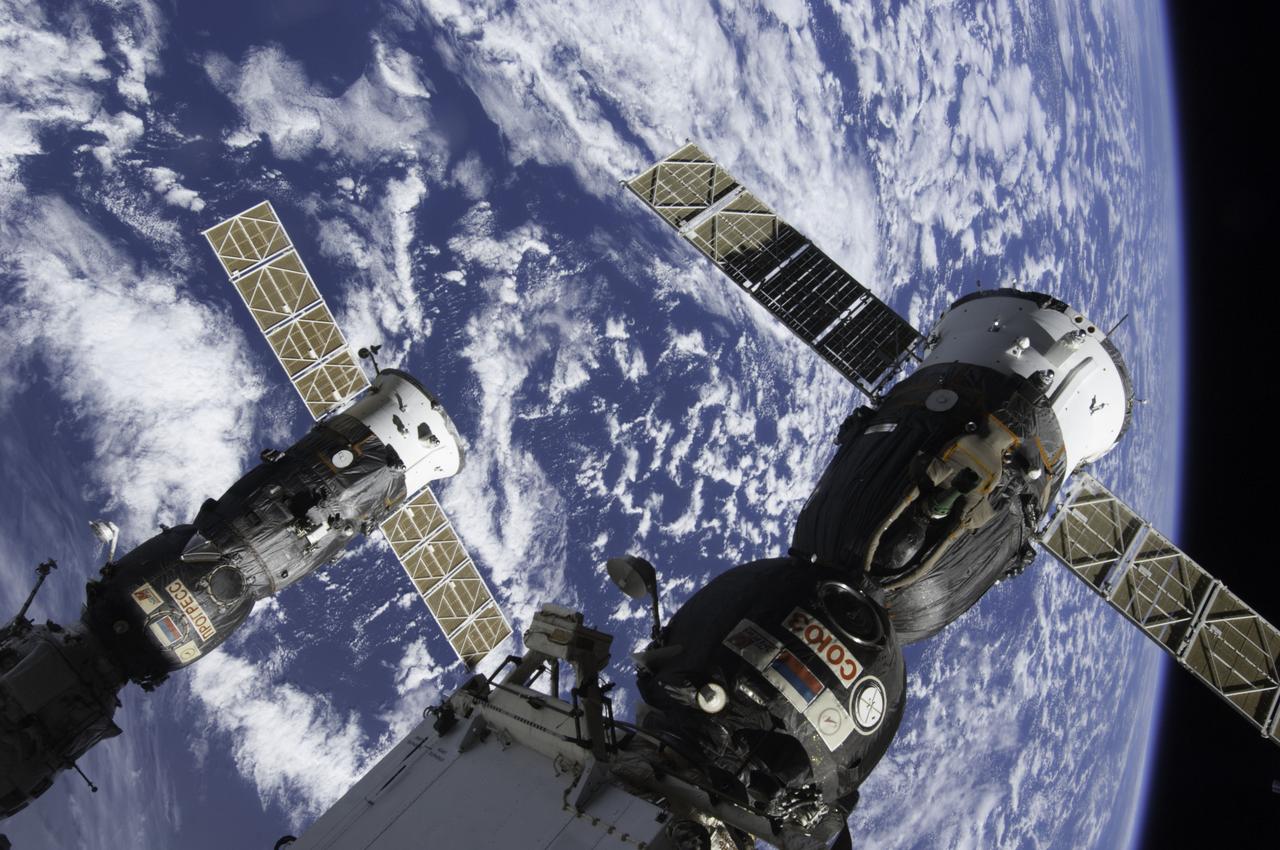
View of Soyuz Spacecraft and Progress Spacecrafts. Photo was taken during Expedition 34.
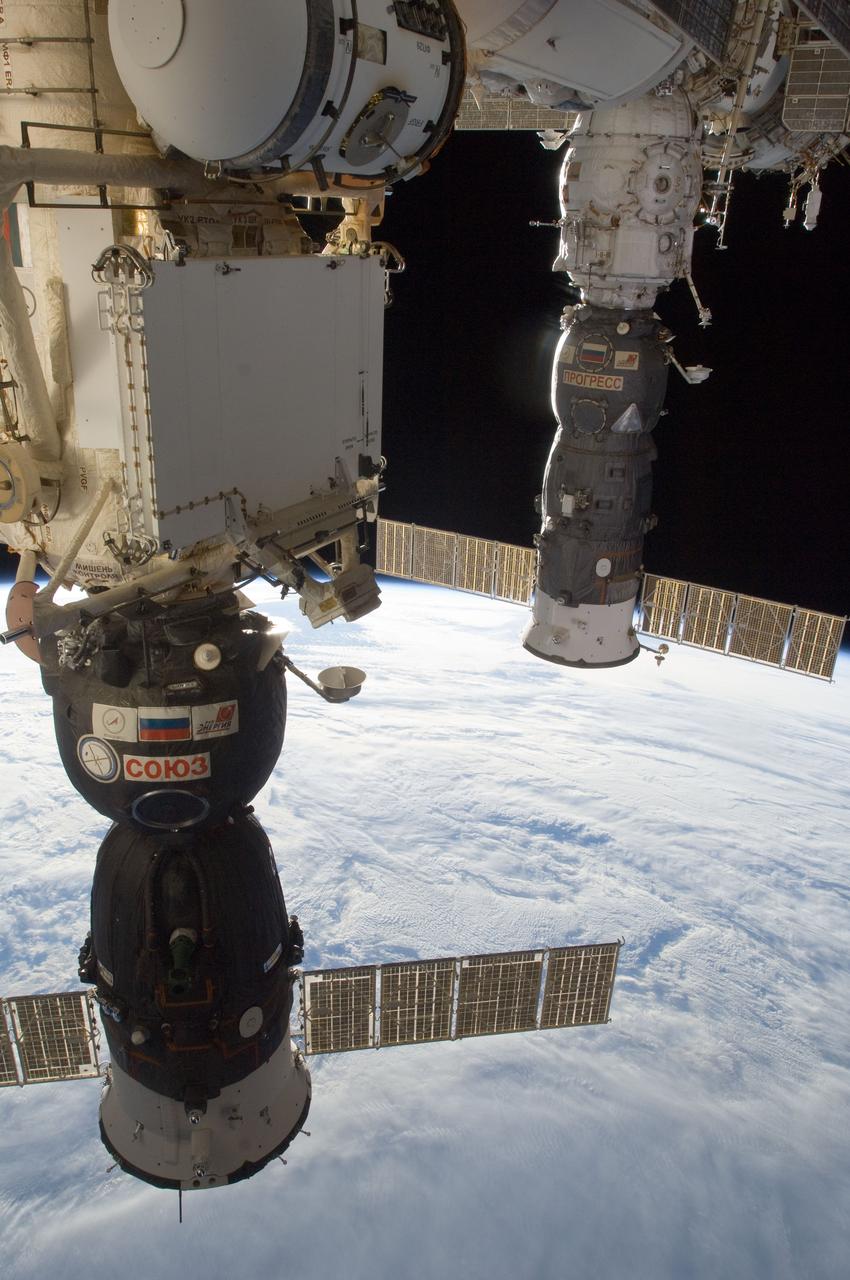
View of Soyuz Spacecraft connected to the Mini Research Module 1 MRM1), and Progress Spacecraft connected to the Pirs Docking Compartment 1 (DC1). Photo was taken during Expedition 34.
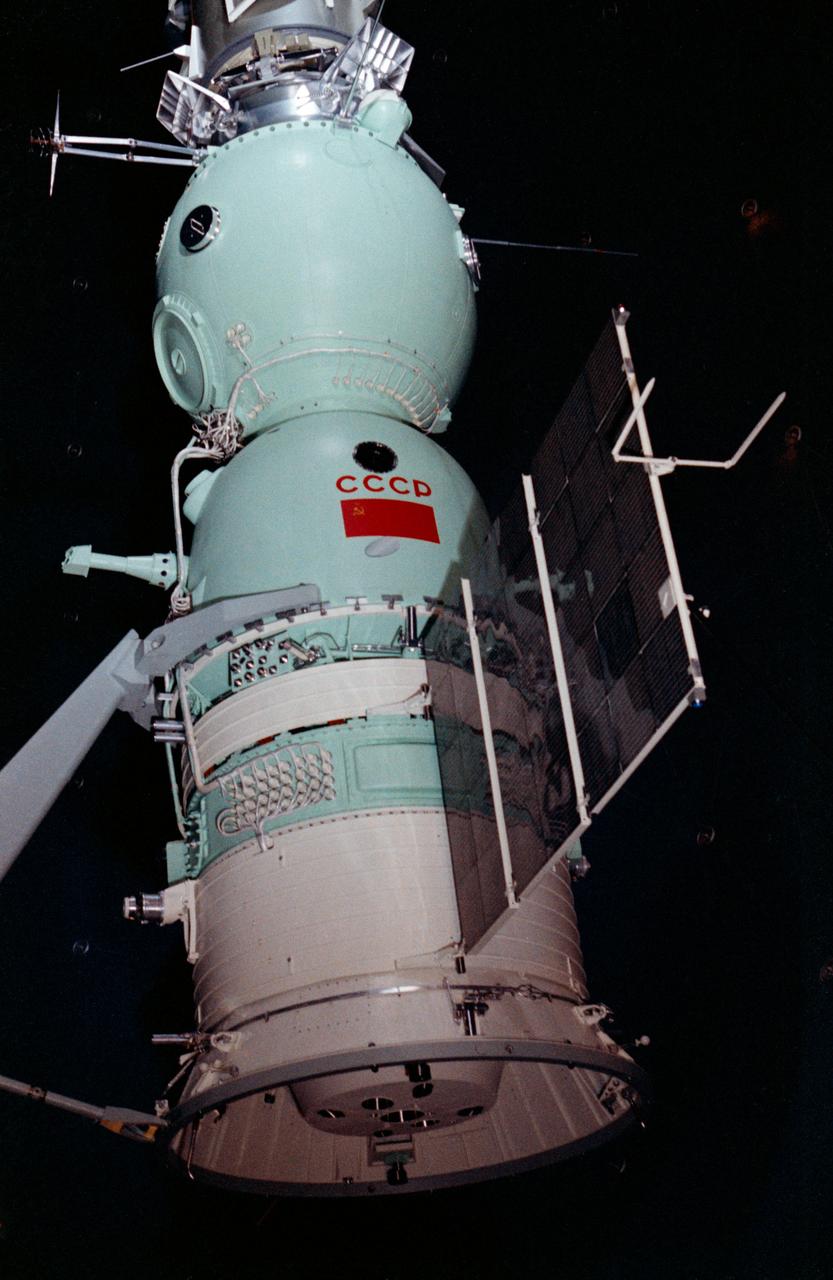
S73-27666 (May-June 1973) --- A close-up view of the Soyuz spacecraft which was part of the Apollo-Soyuz Test Project exhibit at the 30th International Aeronautics and Space Exhibition held May 24 ? June 3, 1973 at the Le Bourget Airport in Paris, France. The ASTP exhibit was co-sponsored by the United States and the Union of Soviet Socialist Republics. An agreement between the U.S. and the USSR provides for the docking in Earth orbit of the Soyuz and Apollo in the summer of 1975. The Apollo spacecraft is out of view to the left. At the far left, a mock-up of a Docking Module connects the Apollo with the Soyuz. The spherical-shaped portion of the Soyuz is called the orbital section. The middle section with the lettering ?CCCP? (USSR) on it is called the cosmonauts? cabin. Two solar panels extend out from the machines and panel section.
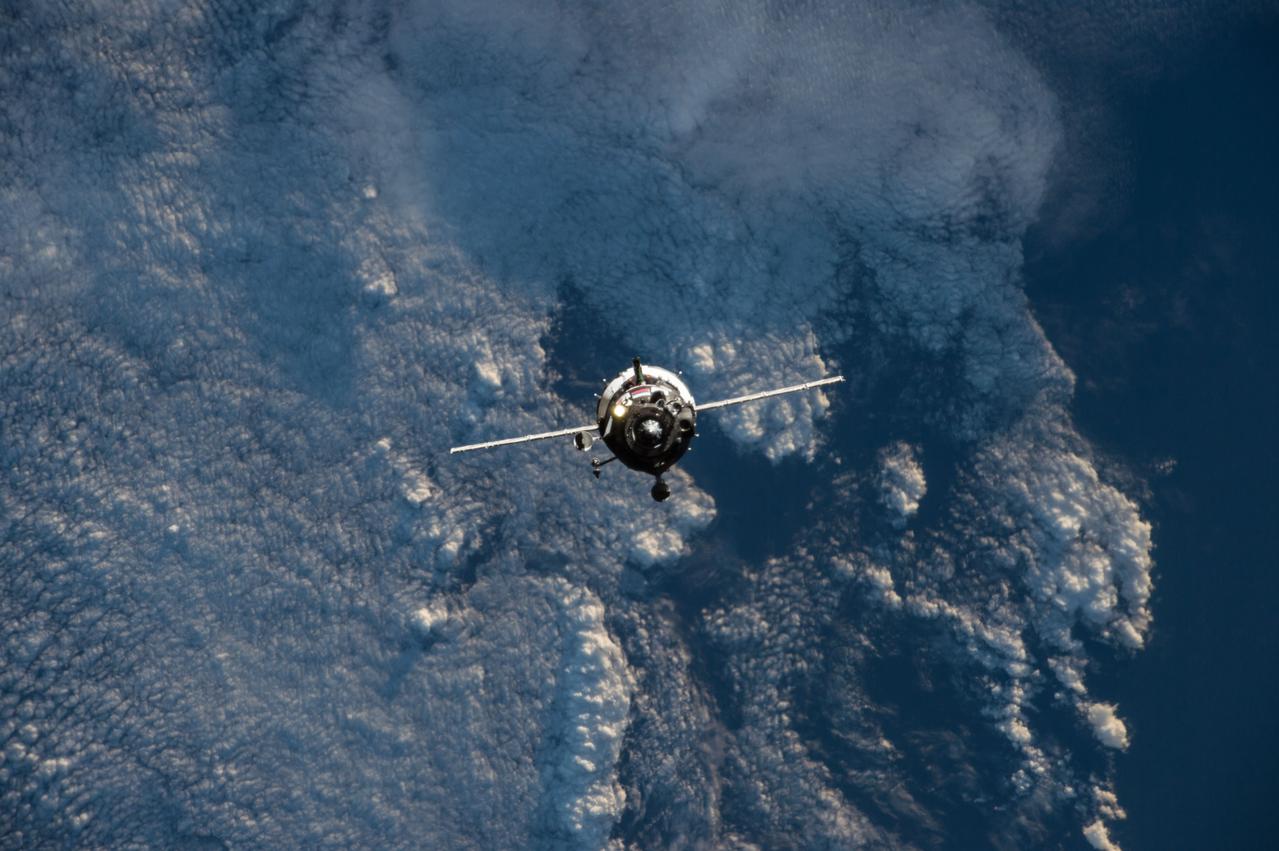
View of the Soyuz TMA-15M spacecraft as it approaches the ISS for rendezvous and docking. Image was released by astronaut on Instagram.
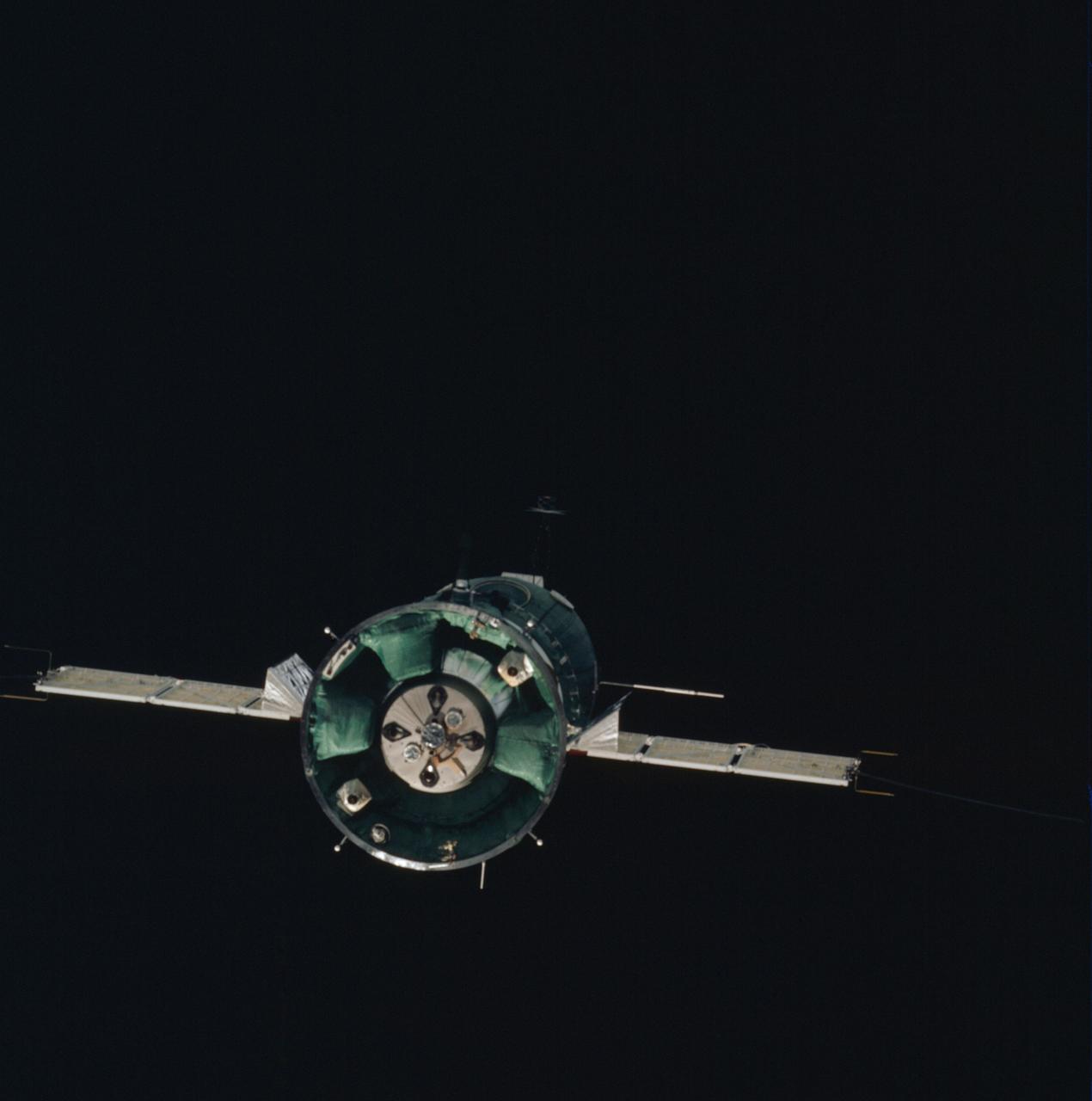
AST-01-053 (17-19 July 1975) --- The Soviet Soyuz spacecraft is contrasted against a black-sky background in this photograph taken in Earth orbit. This view is looking toward the aft end of the Soyuz. Two solar panels protrude out from the spacecraft's Instrument Assembly Module. The ASTP astronauts and cosmonauts visited each other's spacecraft while the Soyuz and Apollo were docked in Earth orbit for two days.
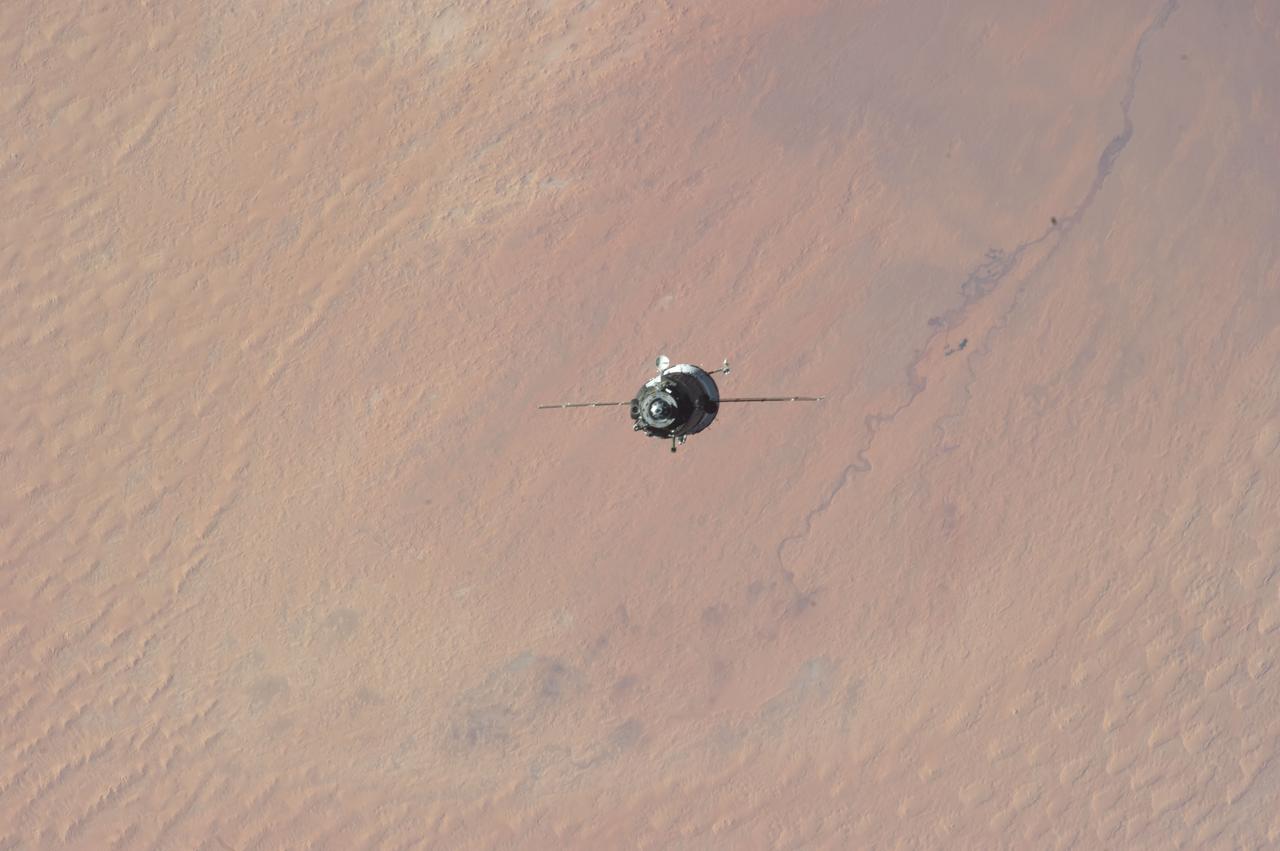
View of the arrival of Soyuz Spacecraft (TMA-07M). Photo was taken during Expedition 34.
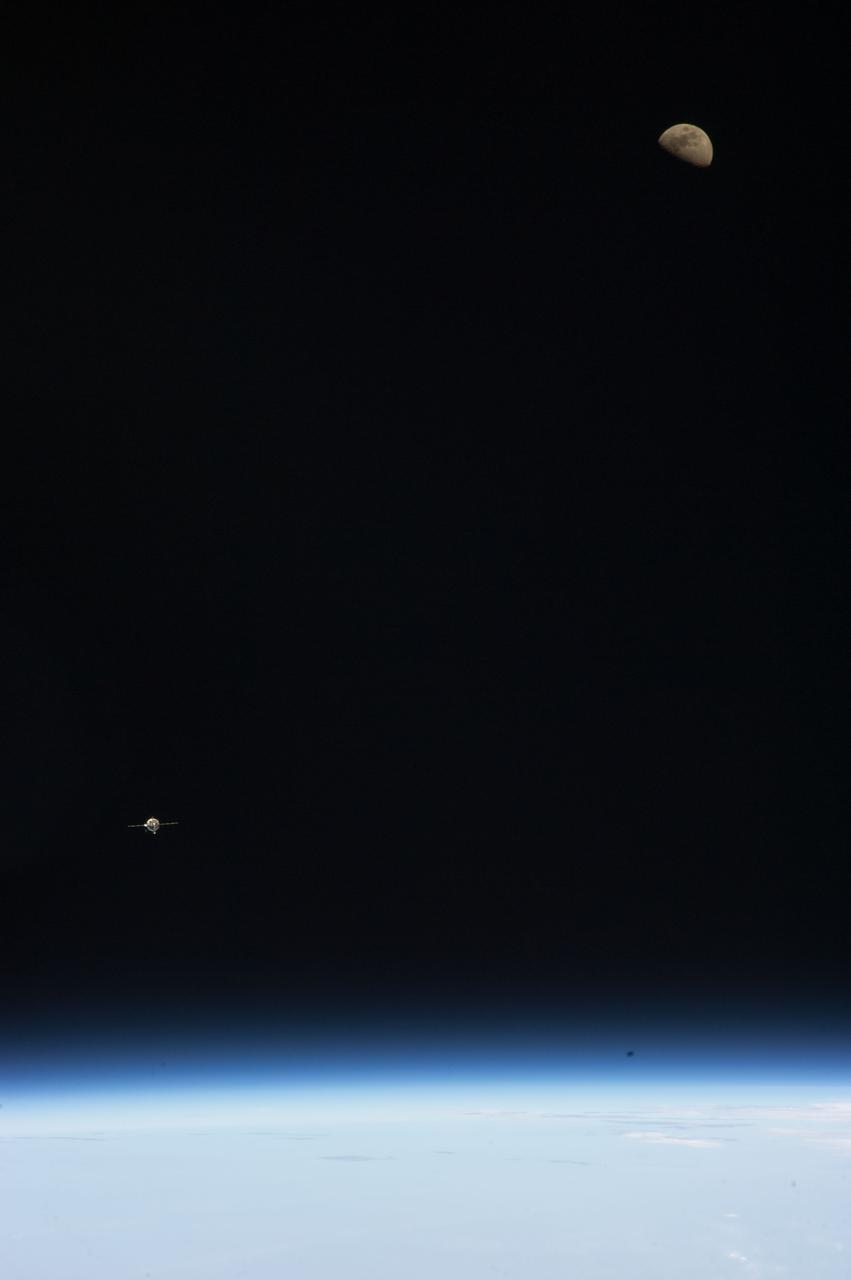
View of the arrival of Soyuz Spacecraft (TMA-07M). Photo was taken during Expedition 34.
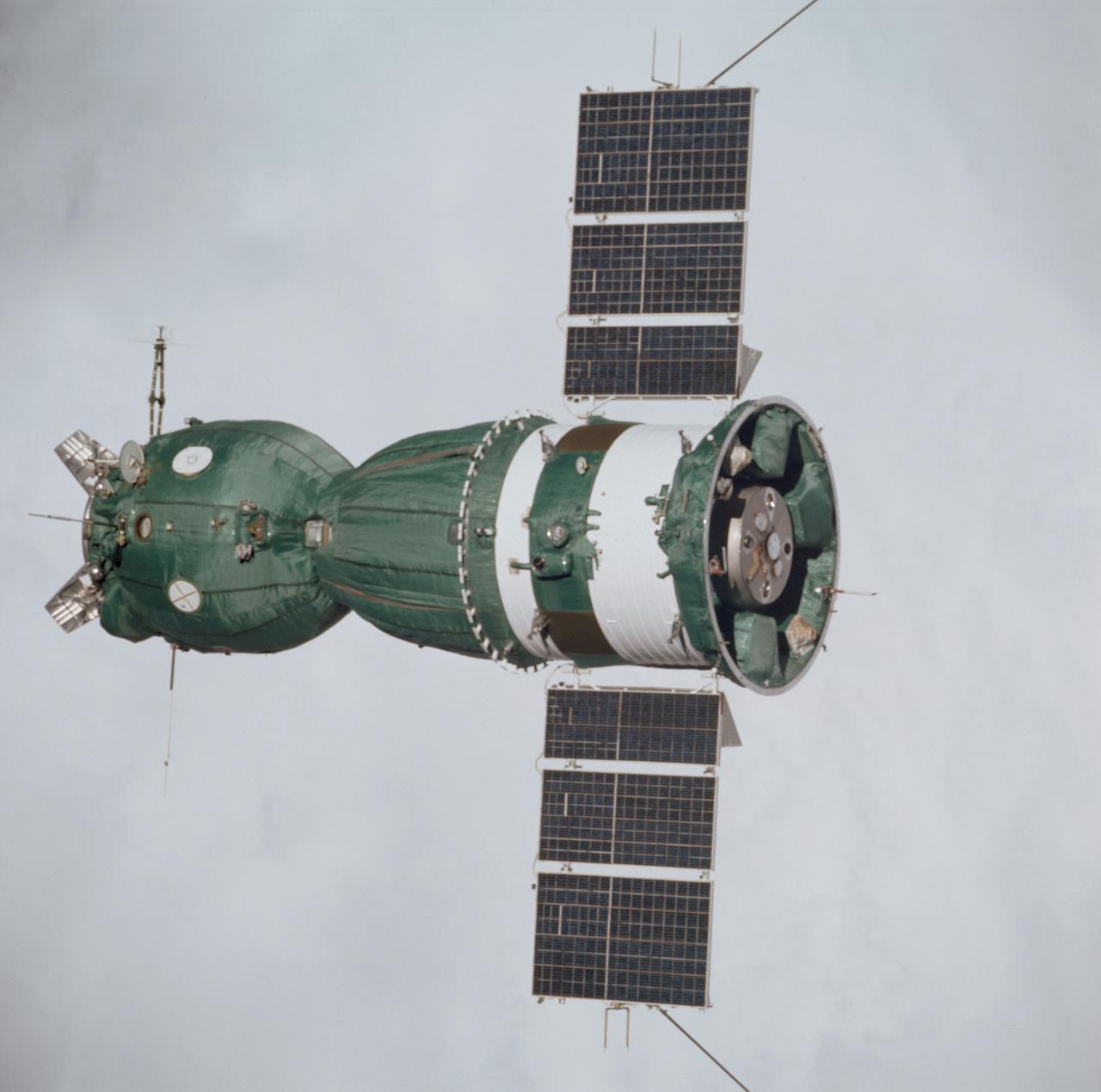
AST-01-056 (18 July 1975) --- An excellent view of the Soviet Soyuz spacecraft in Earth orbit, photographed from the American Apollo spacecraft during the joint U.S.-USSR Apollo-Soyuz Test Project (ASTP) docking mission in Earth orbit. The Soyuz is contrasted against a white-cloud background in this overhead view. The three major components of the Soyuz are the spherical-shaped Orbital Module, the bell-shaped Descent Vehicle and the cylindrical-shaped instrument Assembly Module from which two solar panels protrude. The docking system on the Orbital Module was specially designed to interface with the docking system on the Apollo's Docking Module. The ASTP astronauts and cosmonauts visited each other's spacecraft while the Soyuz and Apollo were docked in Earth orbit for two days. The Apollo crew consisted of astronauts Stafford, commander; Donald K. "Deke" Slayton, docking module pilot; and Vance D. Brand, command module pilot. The Soyuz 19 crew consisted of cosmonauts Leonov, command pilot; and Valeri N. Kubasov, flight engineer.
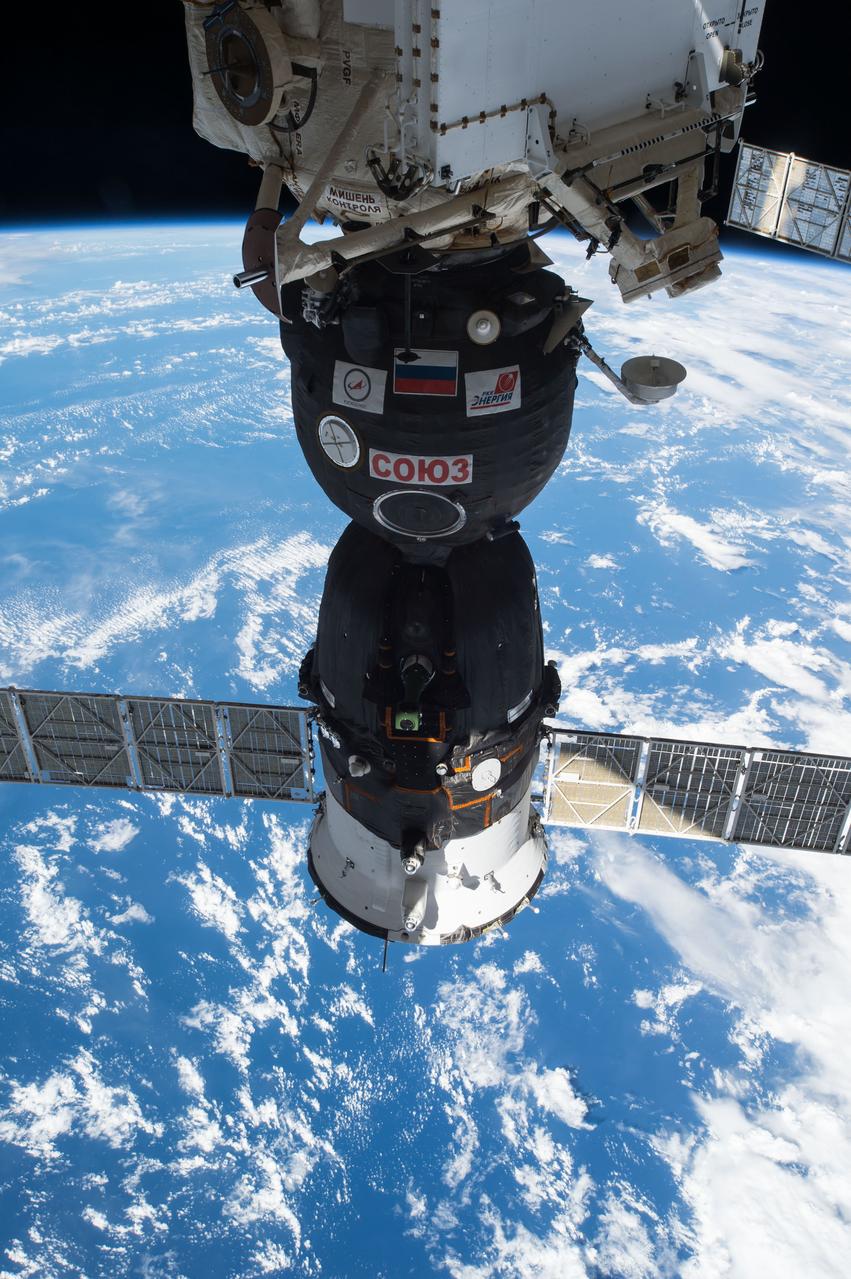
View of the Soyuz TMA-15M spacecraft docked to Rassvet Mini-Research Module 1 (MRM1) An Earth limb is in view.

View of the Soyuz TMA-12M spacecraft as it approaches the ISS for rendezvous and docking. Image was taken during Expedition 39 and released by two astronauts on Twitter.
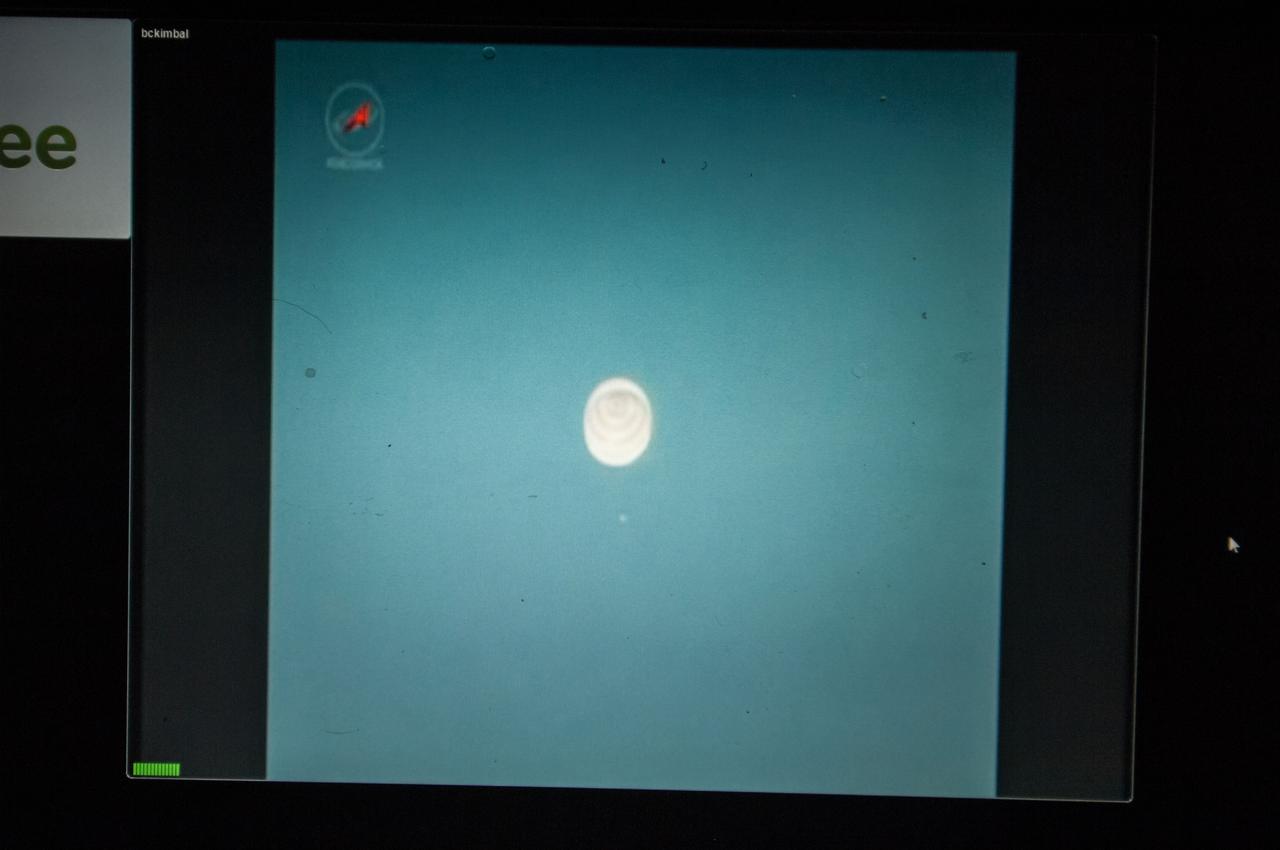
ISS041-E-000003 (11 Sept. 2014) --- A close-up view of a computer monitor onboard the International Space Station, photographed by an Expedition 41 crew member, shows the landing of the Soyuz TMA-12M spacecraft with NASA astronaut Steve Swanson, Expedition 40 commander; Russian cosmonaut Alexander Skvortsov, Soyuz commander and flight engineer; and Russian cosmonaut Oleg Artemyev, flight engineer, onboard.
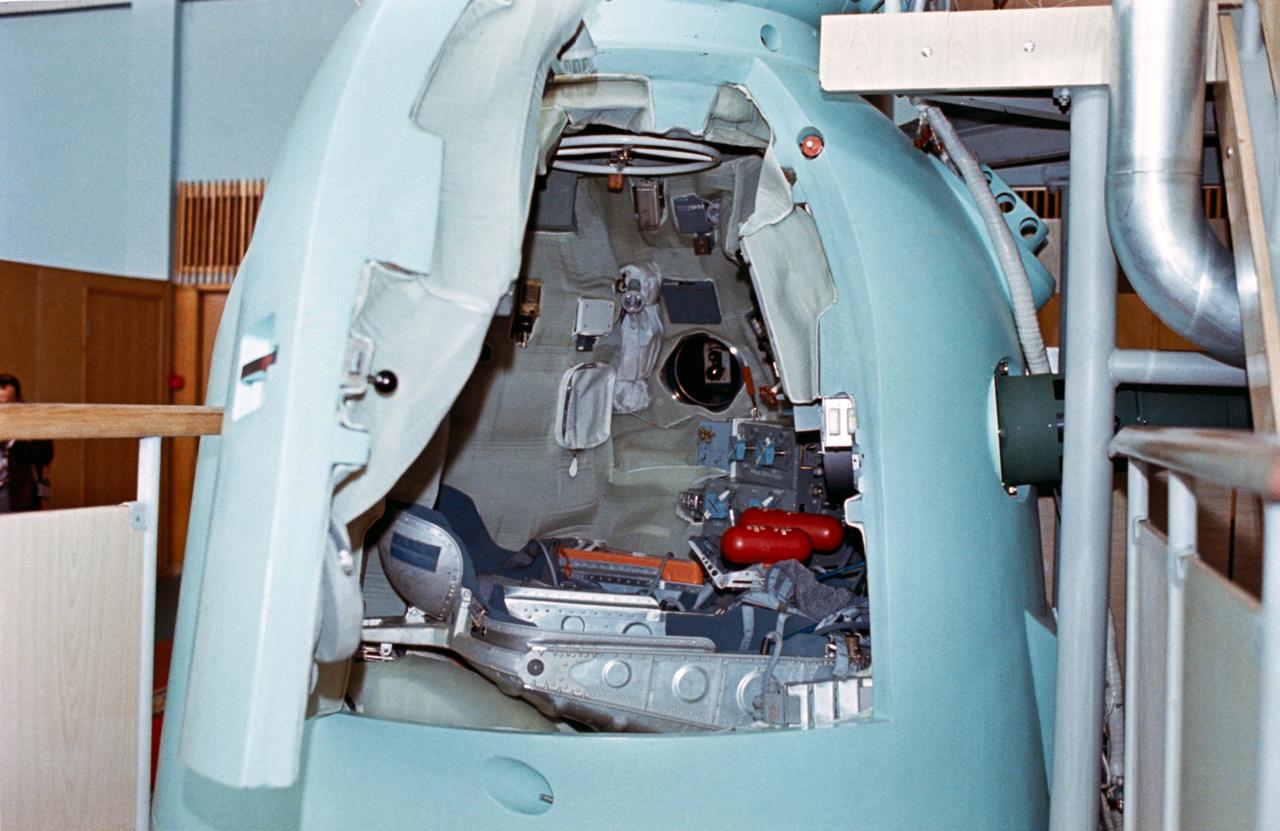
S74-24677 (June 1974) --- A close-up view of the descent vehicle of the Soyuz spacecraft training mock-up on display at the Cosmonuat Training Center (Star City) near Moscow. The open hatch reveals the interior arrangement of the middle section of the Soviet spacecraft. The first (fore) section of the Soyuz is called the orbital module; and the third (aft) section is the instrument-assembly module. The joint U.S.-USSR Apollo-Soyuz docking mission in Earth orbit is scheduled for the summer of 1975.
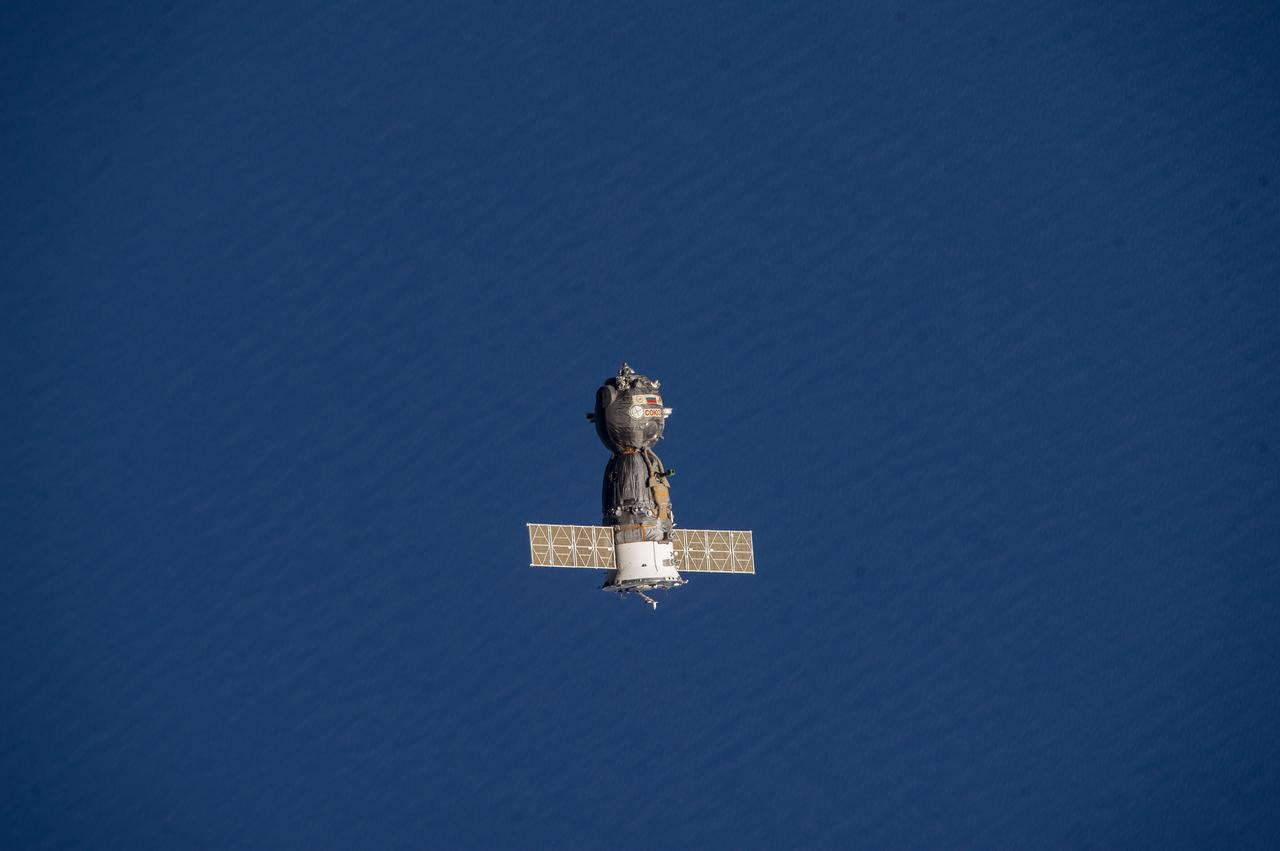
The Soyuz TMA-10M spacecraft departs after undocking from the ISS during Expedition 39. Image was released by astronaut on Twitter.
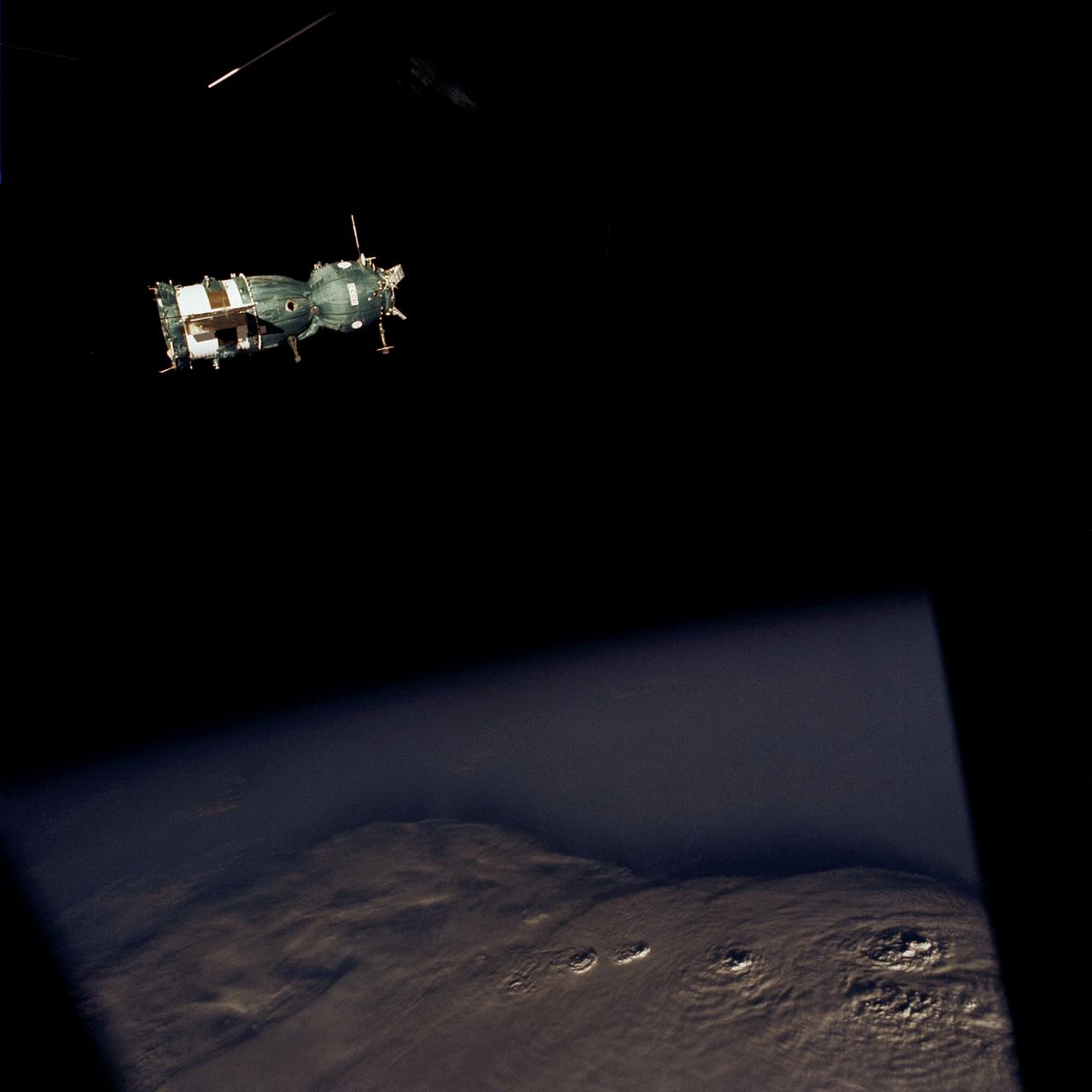
AST-02-096 (18 July 1975) --- This scene photograph from a rendezvous window of the American Apollo spacecraft in Earth orbit shows the Soviet Soyuz spacecraft contrasted against a black-sky background with a heavily cloud-covered Earth below. The three major components of the Soyuz are the spherical-shaped Orbital Module, the bell-shaped Descent Vehicle, the cylindrical-shaped Instrument Assembly Module. The docking system on the Orbital Module was specially designed to interface with the docking system on the Apollo's Docking Module. The ASTP astronauts and cosmonauts visited each other's spacecraft while the Soyuz and Apollo were docked in Earth orbit for two days.
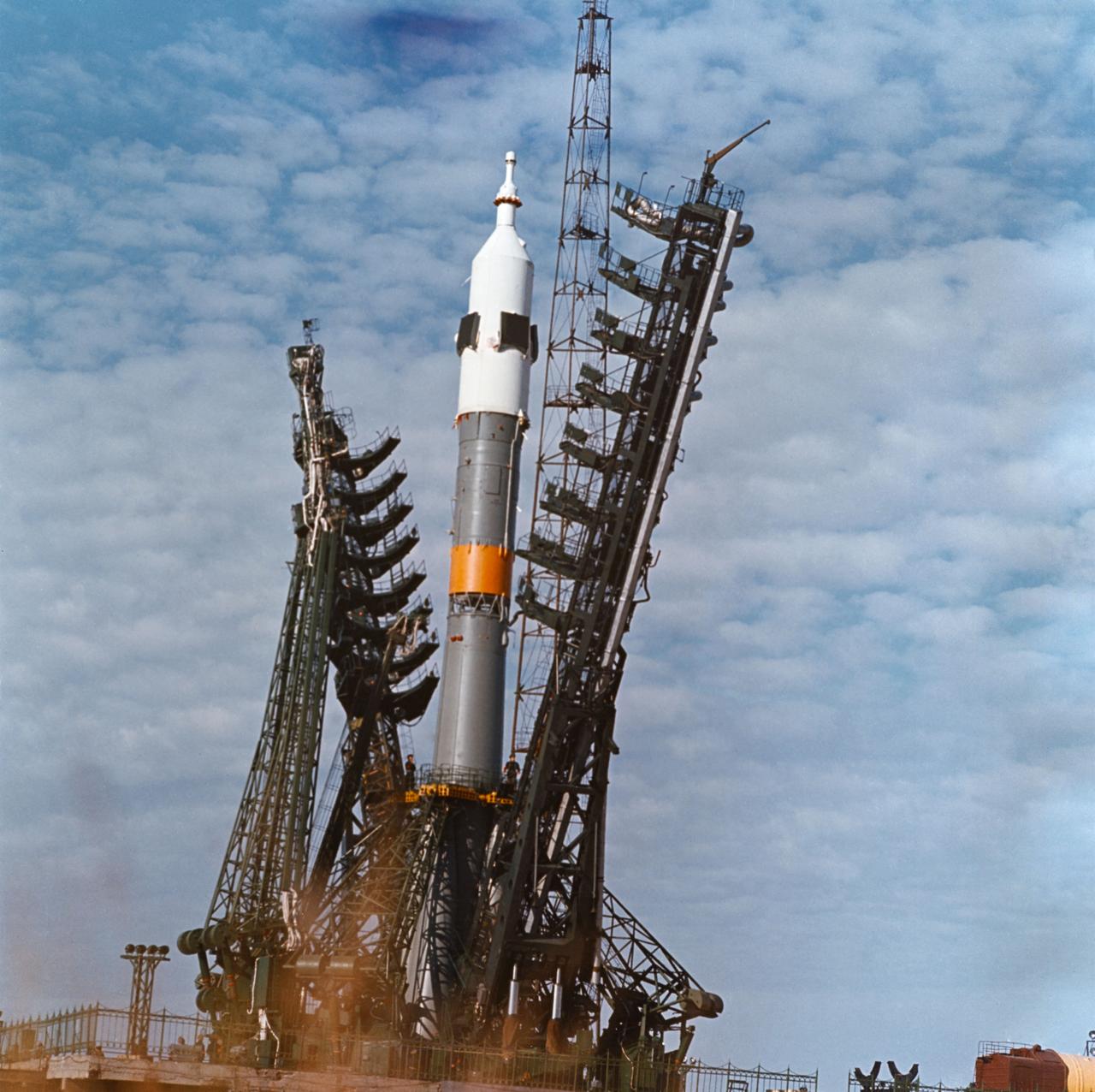
S75-32339 (28 Jan. 1974) --- A low-angle view of a launch pad at the Baikonur Cosmodrome in Kazakhstan showing the installation of a Soyuz spacecraft and its launch vehicle. The 49.3-meter-high (162 feet) space vehicle is composed of the three-stage booster, a three-module, two-man Soyuz spacecraft and a launch escape system. The weight of the space vehicle at launch is approximately 300,000 kilograms. The first stage vacuum thrust is about 1,000,400 newtons, the second stage is 956,500 newtons, and the third stage is 299,000 newtons. This earlier Soyuz mission illustrates the approximate launch configuration of the Soviet Union?s Apollo-Soyuz Test Project (ASTP) Soyuz space vehicle. PHOTO COURTESY: USSR ACADEMY OF SCIENCES
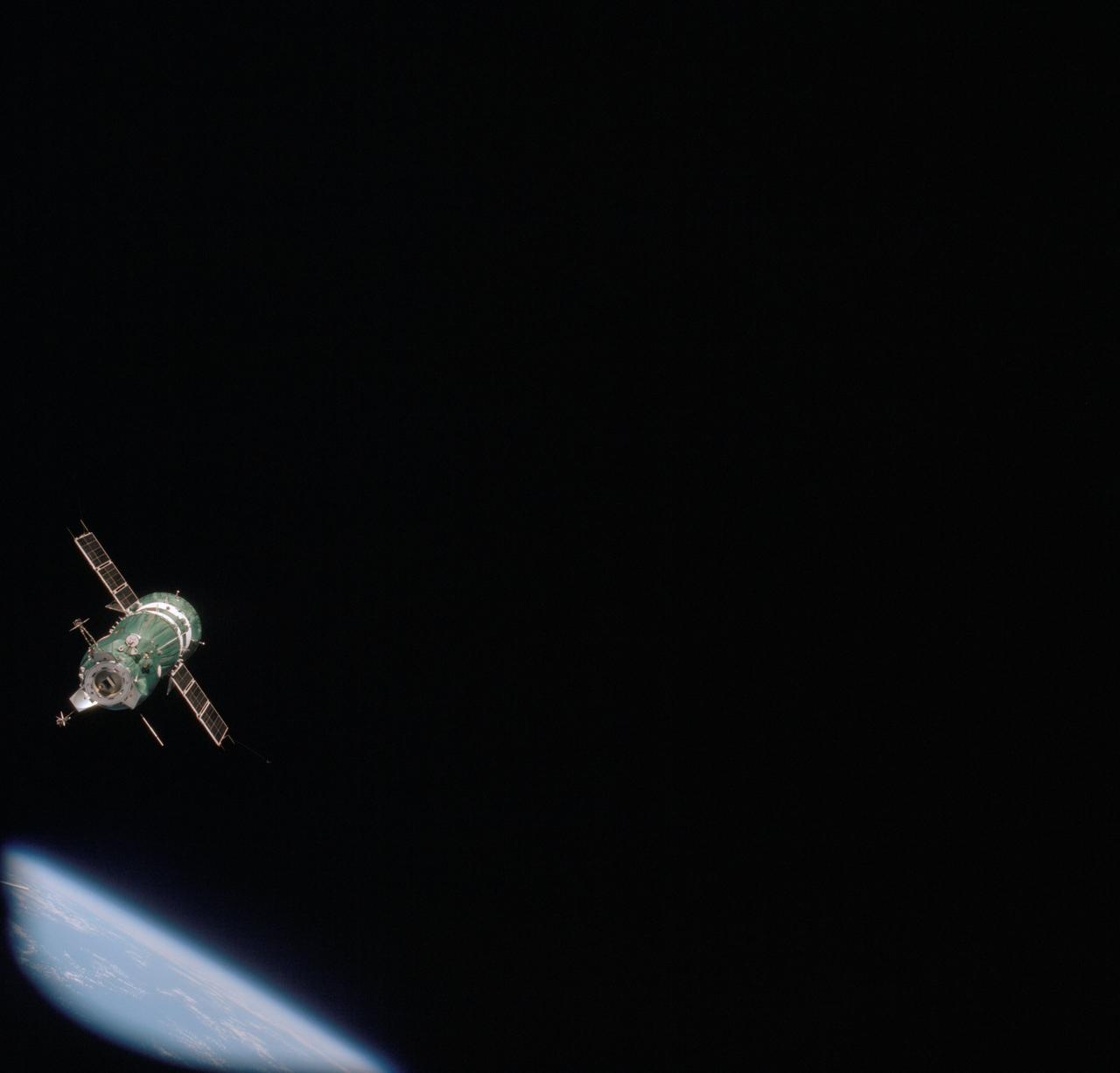
AST-09-572 (17-18 July 1975) --- The Soviet Soyuz 19 spacecraft is photographed from the American Apollo spacecraft during the joint U.S.-USSR Apollo-Soyuz Test Project (ASTP) docking mission in Earth orbit. Earth is visible in the lower left corner. This picture was taken with a 70mm camera. The Apollo crew consisted of astronauts Thomas P. Stafford, commander; Donald K. "Deke" Slayton, docking module pilot; and Vance D. Brand, command module pilot. The Soyuz 19 crew consisted of cosmonauts Aleksei A. Leonov, command pilot; and Valeri N. Kubasov, flight engineer.
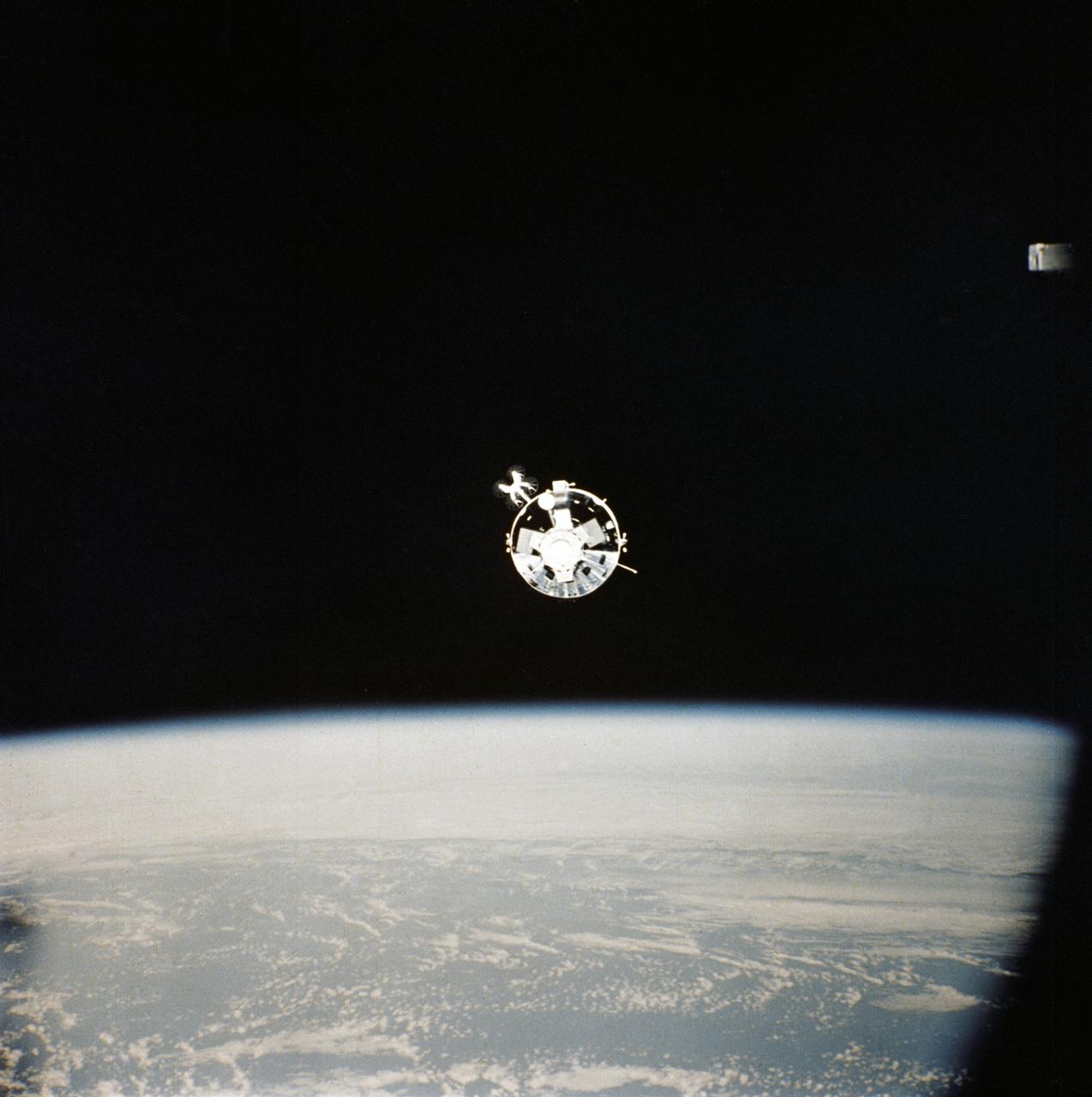
AST-32-2675 (17-19 July 1975) --- The American Apollo spacecraft as seen in Earth orbit from the Soviet Soyuz spacecraft during the joint U.S.-USSR Apollo-Soyuz Test Project mission. The Command/Service Module and Docking Module are contrasted against a black-sky background. This is a "head on" view of the Apollo. The horizon of Earth is below. This picture was furnished by the USSR in an exchange of photography taken during the ASTP flight. The American and Soviet spacecraft were joined together in space for approximately 47 hours on July 17-18-19, 1975. Note the docking mechanism on the Docking Module. PHOTO COURTESY: USSR ACADEMY OF SCIENCES
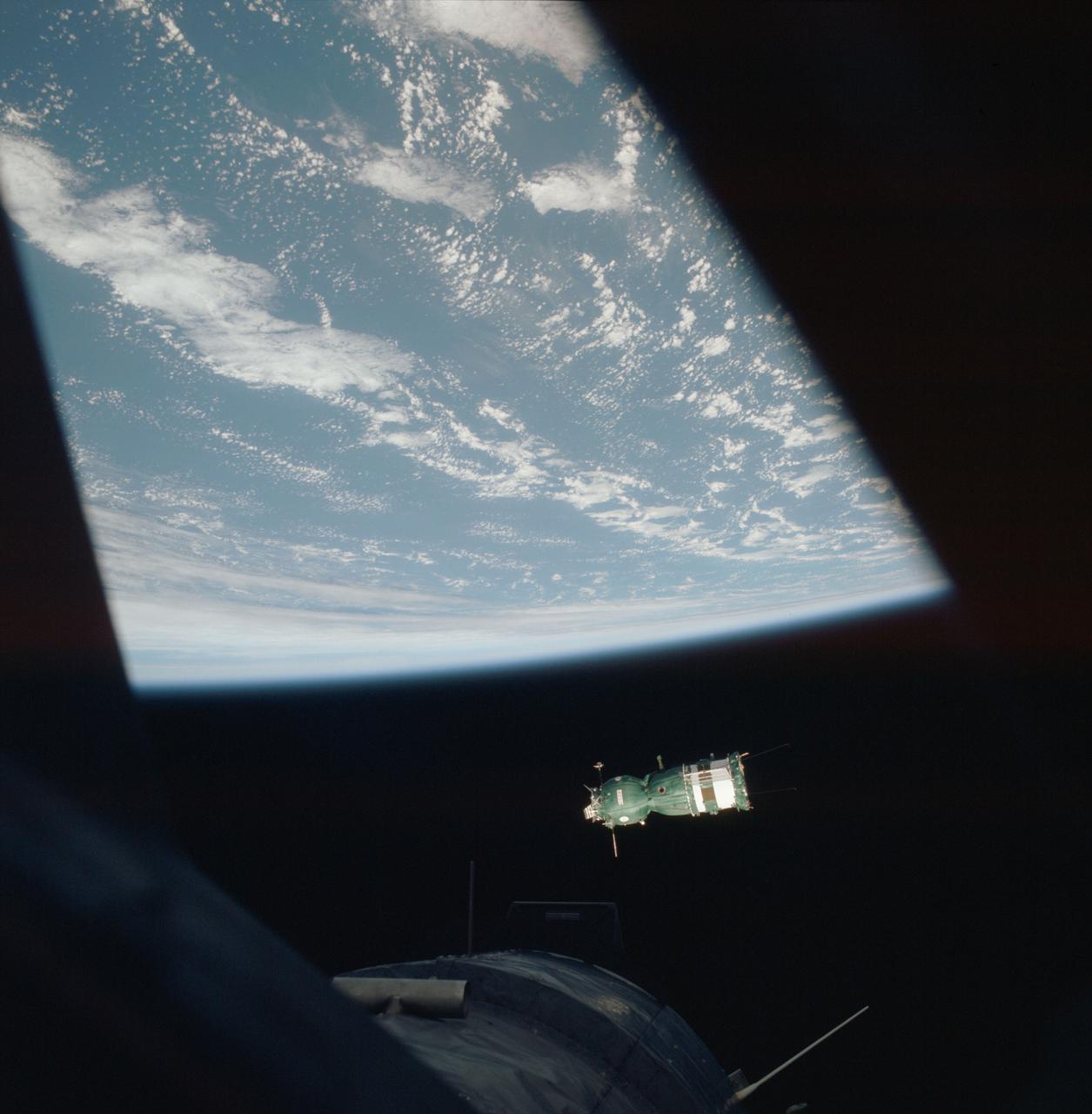
AST-02-093 (18 July 1975) --- This scene photographed with a hand-held 70mm camera from a rendezvous window of the American Apollo spacecraft in Earth orbit shows the Soviet Soyuz spacecraft contrasted against a black-sky background with Earth's horizon below. The three major components of the Soyuz are the spherical-shaped Orbital Module (OM), the bell-shaped Descent Vehicle (DV) and the cylindrical-shaped instrument Assembly Module (AM). The docking system on the Orbital Module was specially designed to interface with the docking system on the Apollo's Docking Module (DM). The DM is visible very faintly at the bottom of the picture. The ASTP astronauts and cosmonauts visited each other's spacecraft while the Soyuz and Apollo were docked in Earth orbit for two days.
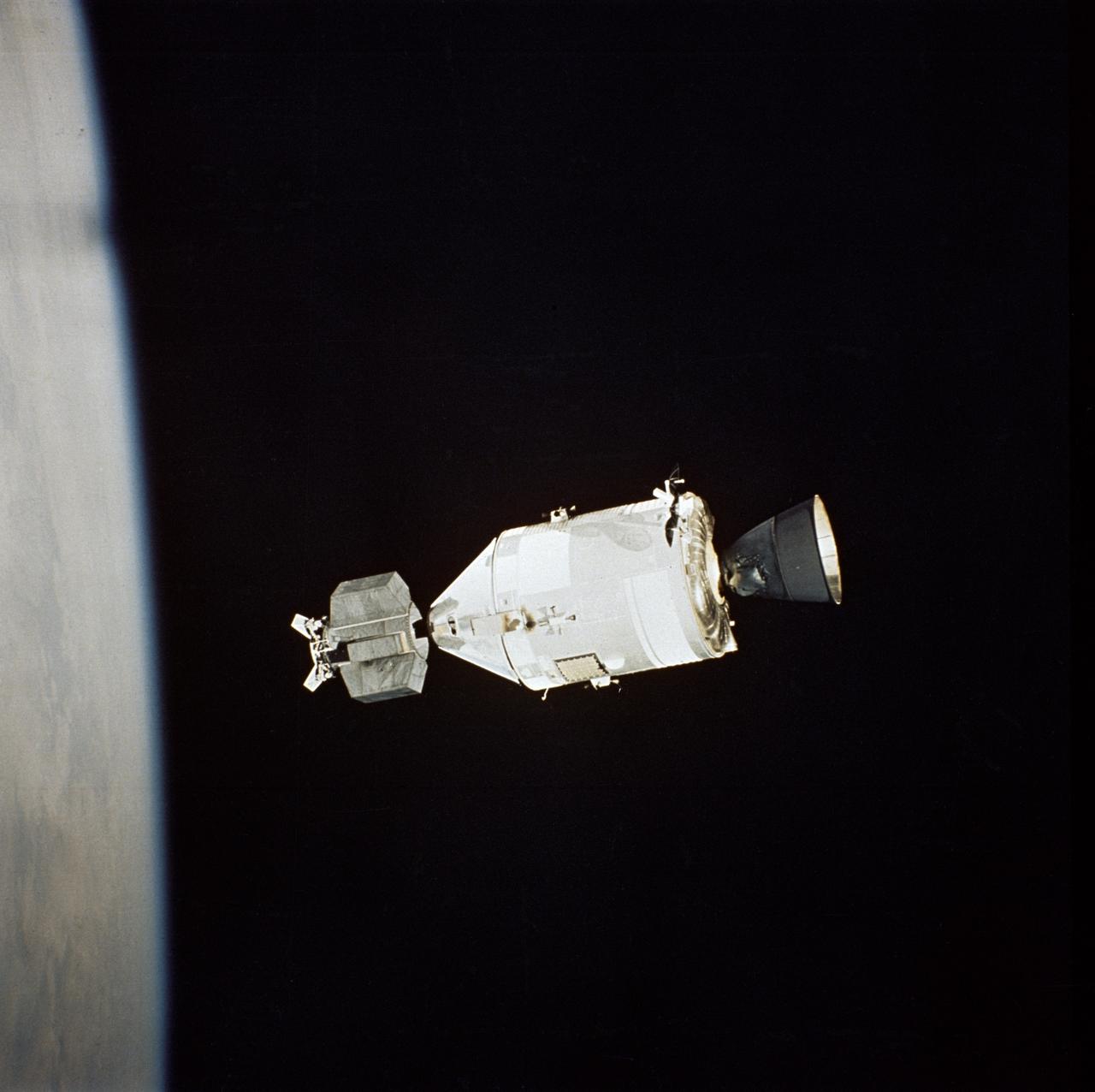
AST-32-2695 (17-19 July 1975) --- The American Apollo spacecraft as seen in Earth orbit from the Soviet Soyuz spacecraft during the joint U.S.-USSR Apollo-Soyuz Test Project mission. The Command/Service Module and Docking Module are contrasted against a black-sky background. The horizon of Earth is below. This picture was furnished by the USSR in an exchange of photography taken during the ASTP flight. The bell-shaped engine nozzle of the service propulsion system protrudes from the rear of the Service Module. Note the docking mechanism on the Docking Module. The American and Soviet spacecraft were joined together in space for approximately 47 hours on July 17-18-19, 1975. PHOTO COURTESY: USSR ACADEMY OF SCIENCES
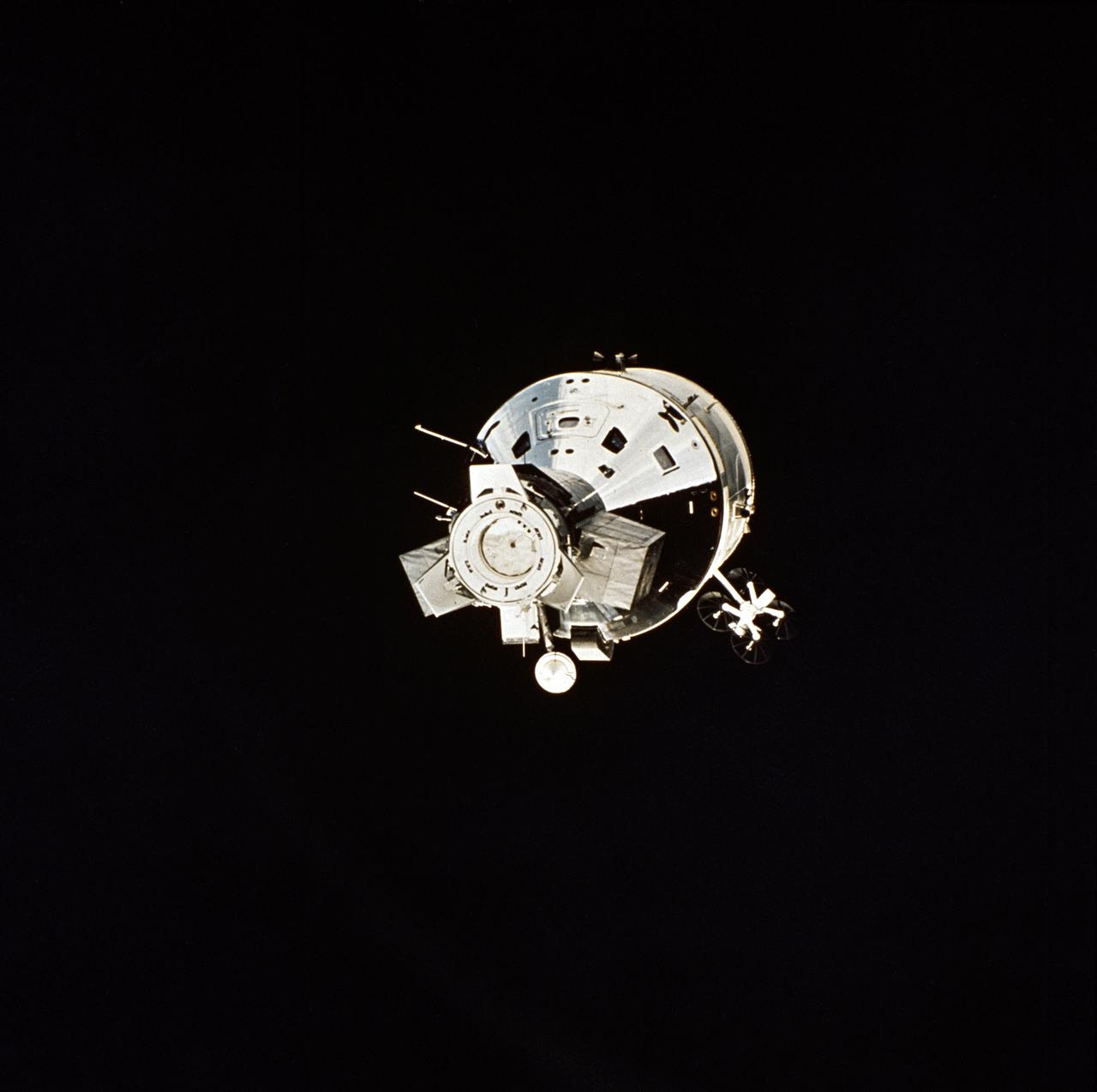
AST-32-2691 (17-19 July 1975) --- The American Apollo spacecraft as seen in Earth orbit from the Soviet Soyuz spacecraft during the joint U.S.-USSR Apollo-Soyuz Test Project mission. The Command/Service Module and Docking Module are contrasted against a black-sky background. This is a near "head on" view of the Apollo. This picture was furnished by the USSR in an exchange of photography taken during the ASTP flight. Note the docking mechanism and docking target on the Docking Module. The four dish-like reflectors of the unified S-band high-gain antenna protrude from the side of the Service Module. The American and Soviet spacecraft were joined together in space for approximately 47 hours on July 17-18-19, 1975. PHOTO COURTESY: USSR ACADEMY OF SCIENCES
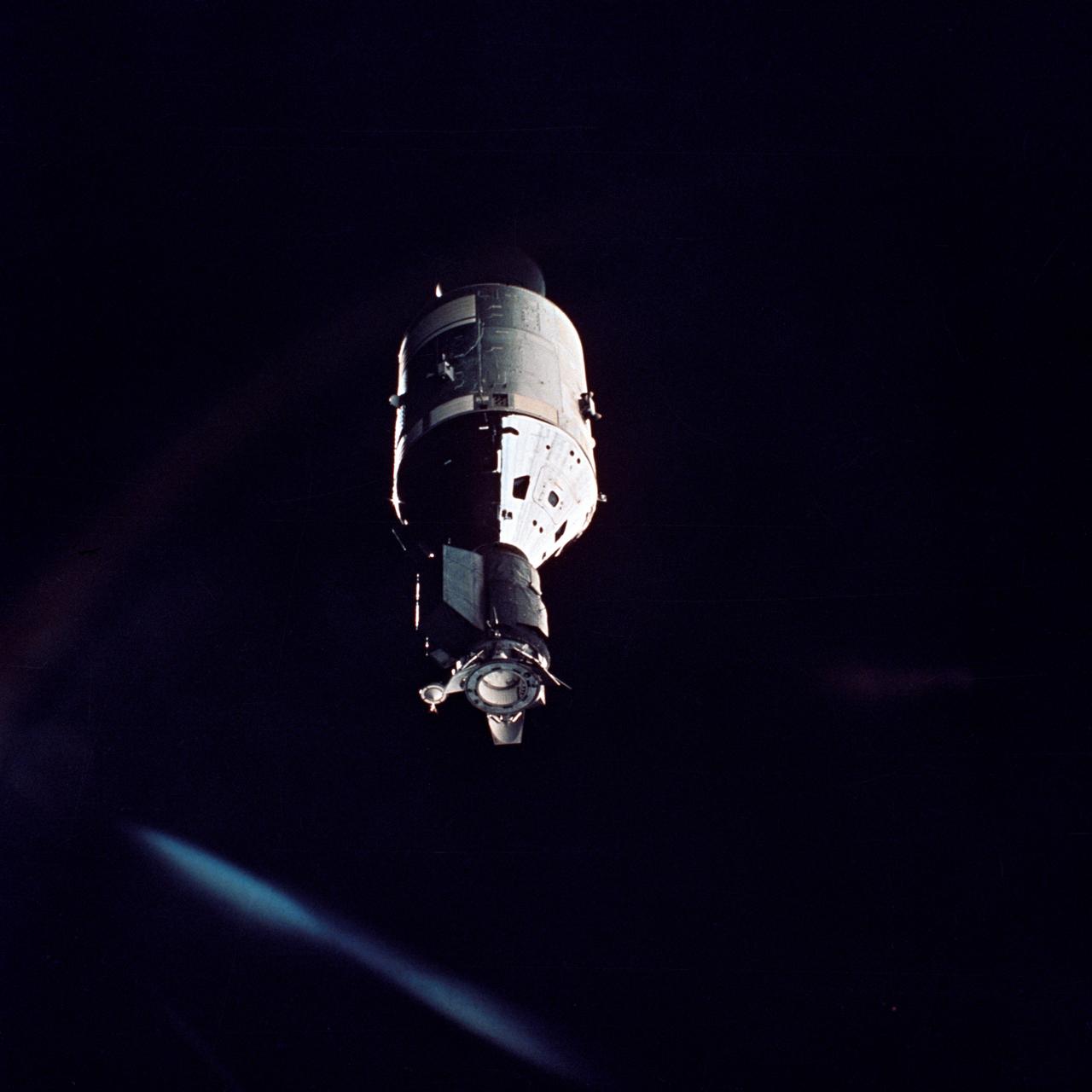
AST-32-2686 (17-19 July 1975) --- The American Apollo spacecraft as seen in Earth orbit from the Soviet Soyuz 19 spacecraft during the joint U.S.-USSR Apollo Soyuz Test Project (ASTP) mission. The Command and Service Module (CSM) and Docking Module (DM) are contrasted against a black-sky background. Light reflected in the camera streaks the image. Note the docking mechanism and docking target on the DM. On the left the bell-shaped engine nozzle of the service propulsion system protrudes from the rear of the Service Module (SM). The American and Soviet spacecraft were joined together in space for approximately 47 hours on July 17, 18, 19, 1975. This picture was furnished by the USSR in an exchange of photography taken during the ASTP flight. The Apollo crew consisted of astronauts Thomas P. Stafford, commander; Donald K. "Deke" Slayton, docking module pilot; and Vance D. Brand, command module pilot. The Soyuz 19 crew consisted of cosmonauts Aleksei A. Leonov, command pilot; and Valeri N. Kubasov, flight engineer.
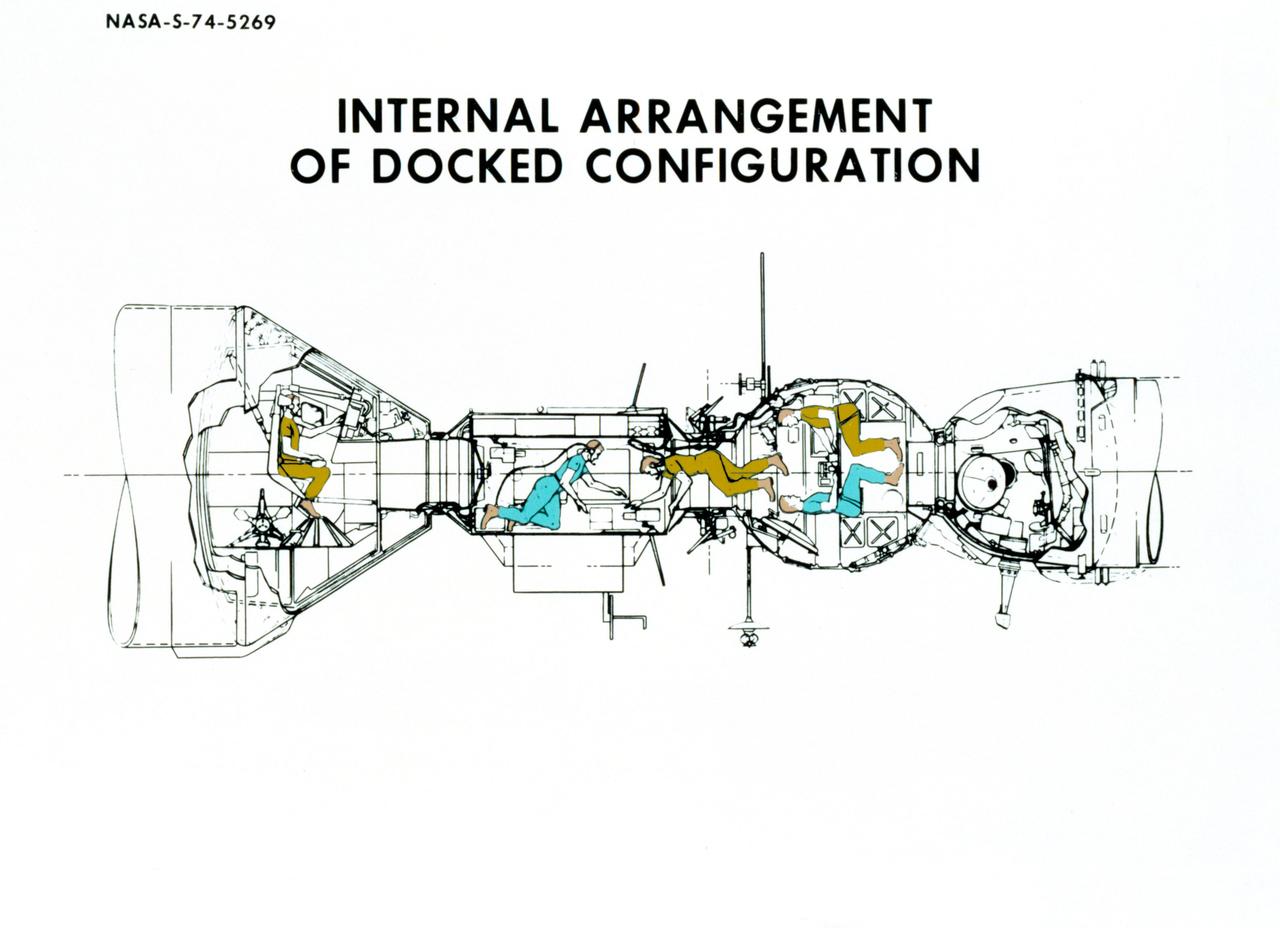
S74-05269 (December 1974) --- An artist?s drawing illustrating the internal arrangement of the Apollo and Soyuz spacecraft in Earth orbit in a docked configuration. The three American Apollo crewmen and the two Soviet Soyuz crewmen will transfer to each other?s spacecraft during the July 1975 ASTP mission. The four Apollo-Soyuz Test Project visible components are, left to right, the Apollo Command Module, the Docking Module, the Soyuz Orbital Module and the Soyuz Descent Vehicle.
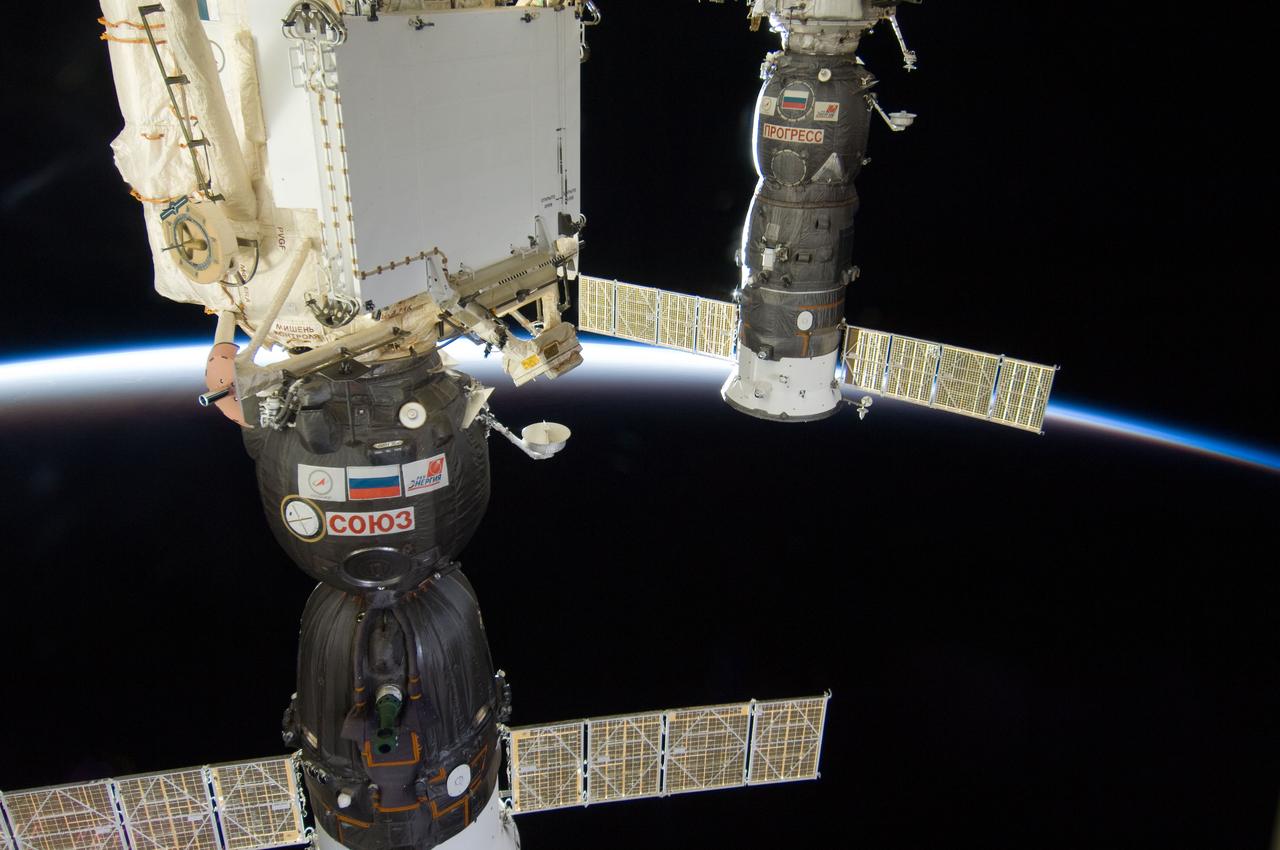
ISS030-E-032132 (1 Jan. 2012) --- A Russian Soyuz spacecraft (foreground) and Progress resupply spacecraft, docked to the International Space Station, are featured in this image photographed by an Expedition 30 crew member on the station. The thin line of Earth's atmosphere and the blackness of space provide the backdrop for the scene.

ISS040-E-007423 (4 June 2014) --- A close-up view of a Soyuz spacecraft docked to the International Space Station is featured in this image photographed by an Expedition 40 crew member on the station.
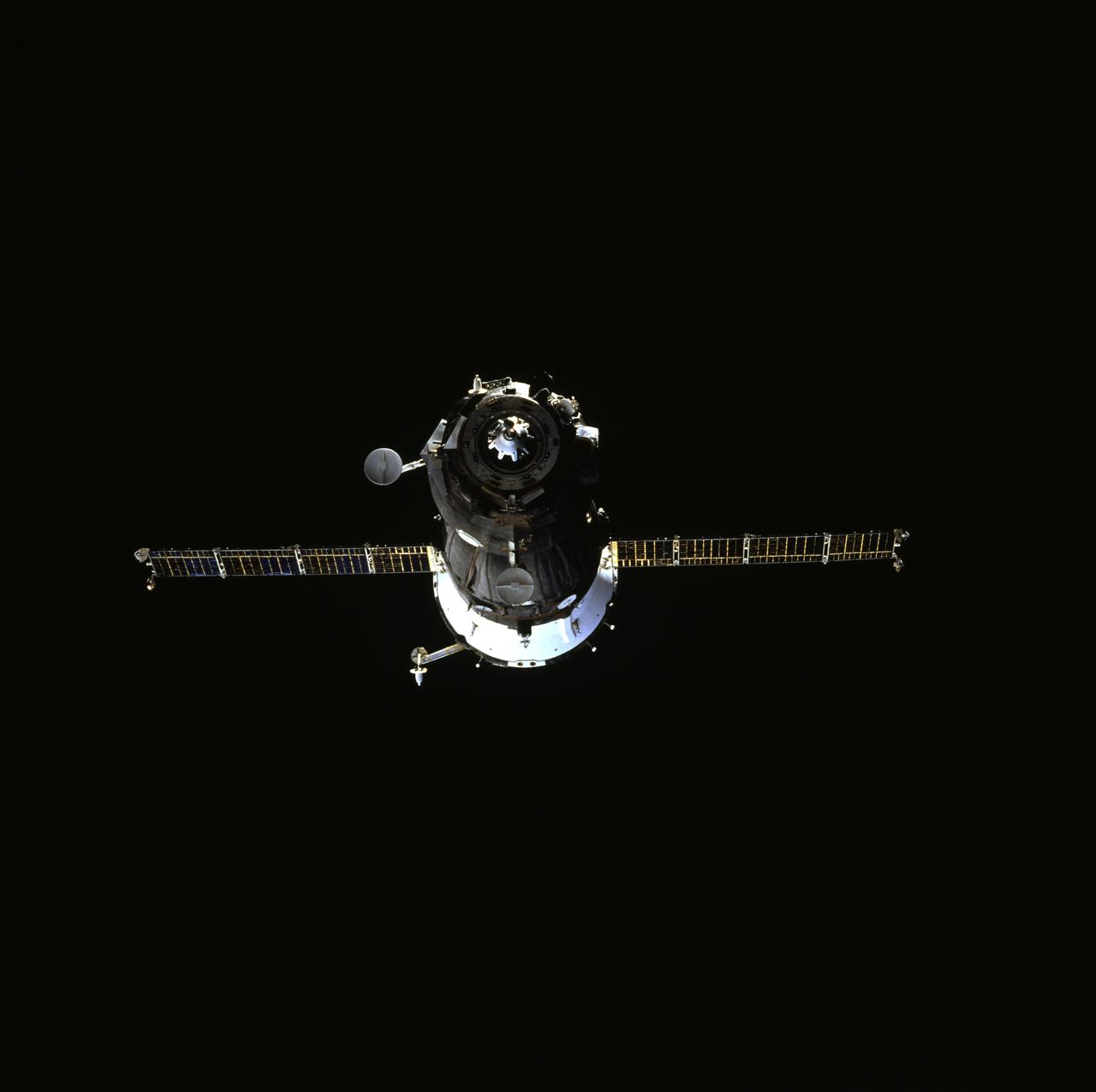
STS071-704-091 (4 July 1995) --- Russia's Soyuz spacecraft is backdropped against the darkness of space, as photographed from the space shuttle Atlantis. Onboard Soyuz were Mir-19 cosmonauts Anatoly Y. Solovyev and Nikolai M. Budarin. The 70mm photograph was recorded during the Space Shuttle Atlantis' undocking operations from the Russian Mir Space Station on July 4, 1995. Soyuz was temporarily undocked and backed away from the Mir/Atlantis tandem as the Space Shuttle Atlantis prepared to separate from the linkup. Six NASA astronauts and two cosmonauts were onboard Atlantis as it separated from Mir, which will now become the home for the two-member Mir-19 crew.
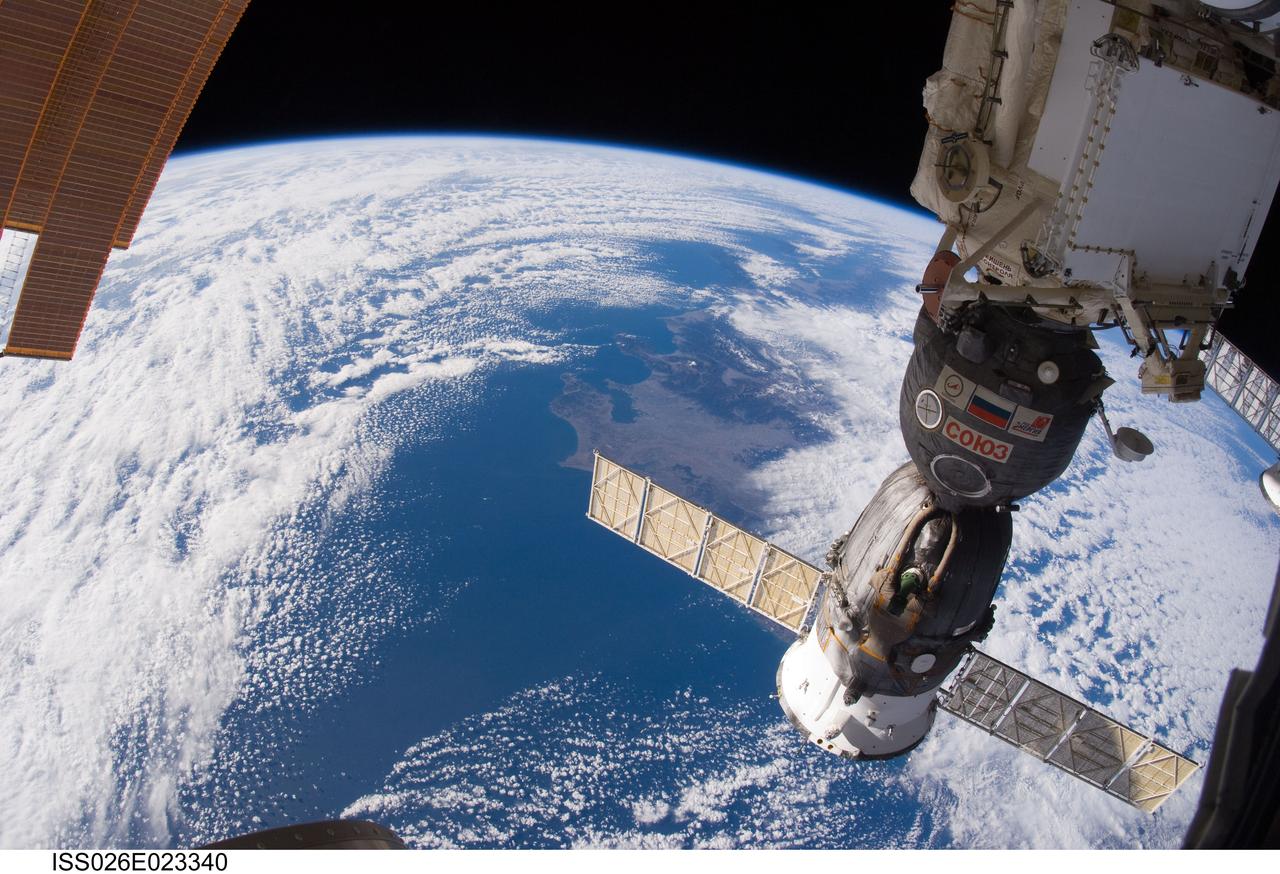
ISS026-E-023340 (31 Jan. 2011) --- A Russian Soyuz spacecraft, docked to the International Space Station, is featured in this image photographed by an Expedition 26 crew member aboard the station. A blue and white part of Earth and the blackness of space provide the backdrop for the scene.
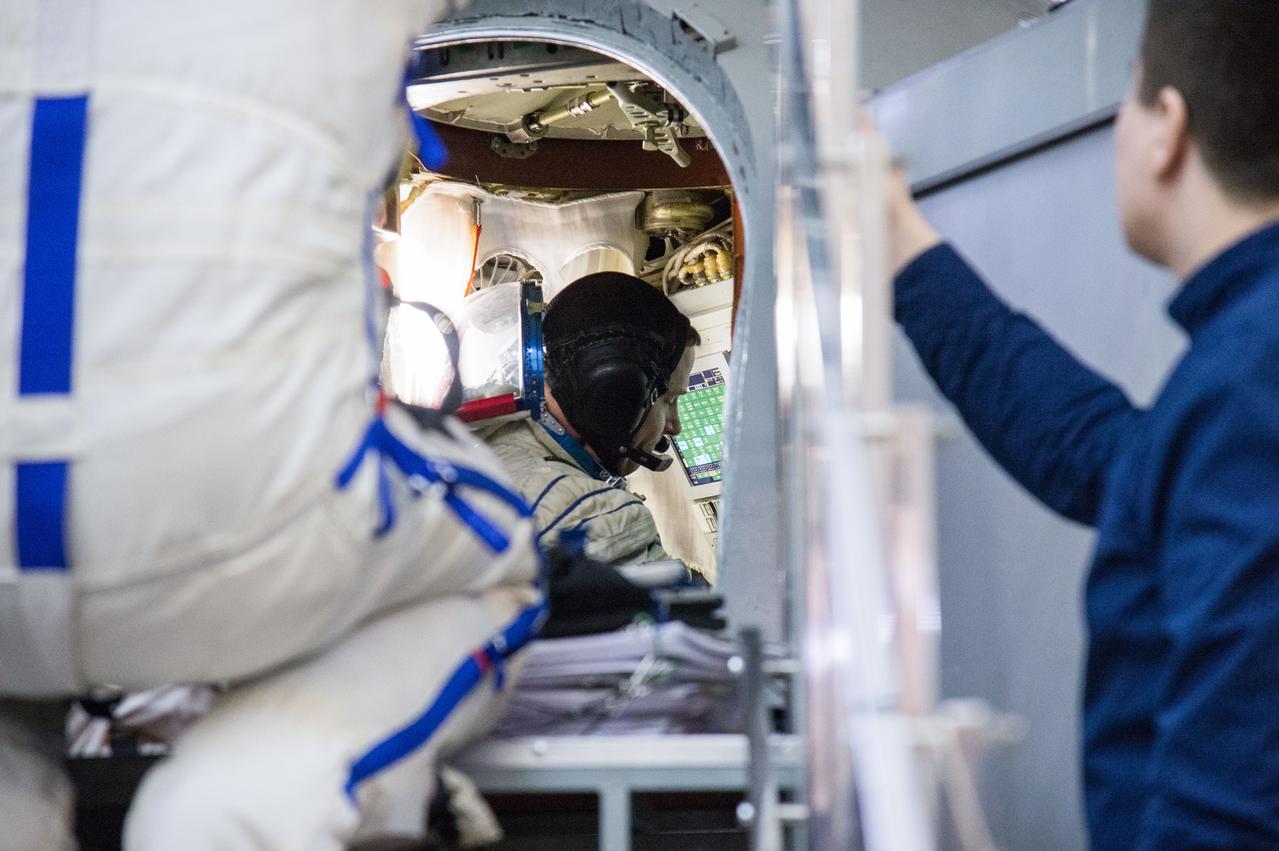
jsc2019e004059 (Feb. 20, 2019) --- At the Gagarin Cosmonaut Training Center in Star City, Russia, Expedition 59 crew member Nick Hague of NASA is seen inside a Soyuz spacecraft simulator Feb. 20 during the second day of final pre-launch qualification exams. Hague, Christina Koch of NASA and Alexey Ovchinin of Roscosmos will launch March 14, U.S. time, in the Soyuz MS-12 spacecraft from the Baikonur Cosmodrome in Kazakhstan for a six-and-a-half month mission on the International Space Station. Credit: NASA/Beth Weissinger
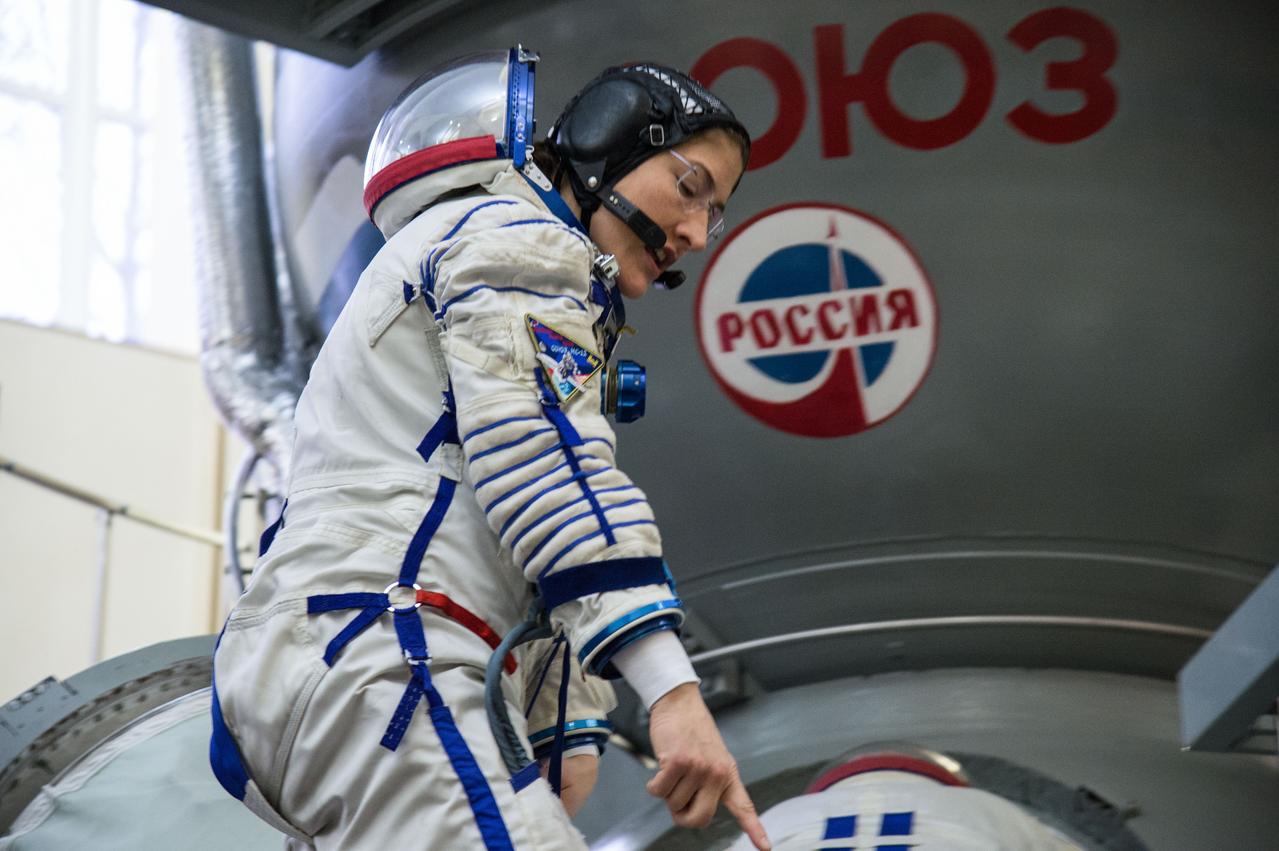
jsc2019e004057 (Feb. 20, 2019) --- At the Gagarin Cosmonaut Training Center in Star City, Russia, Expedition 59 crew member Christina Koch of NASA boards a Soyuz spacecraft simulator Feb. 20 during the second day of final pre-launch qualifications exams. Koch, Nick Hague of NASA and Alexey Ovchinin of Roscosmos will launch March 14, U.S. time, in the Soyuz MS-12 spacecraft from the Baikonur Cosmodrome in Kazakhstan for a six-and-a-half month mission on the International Space Station. Credit: NASA/Beth Weissinger
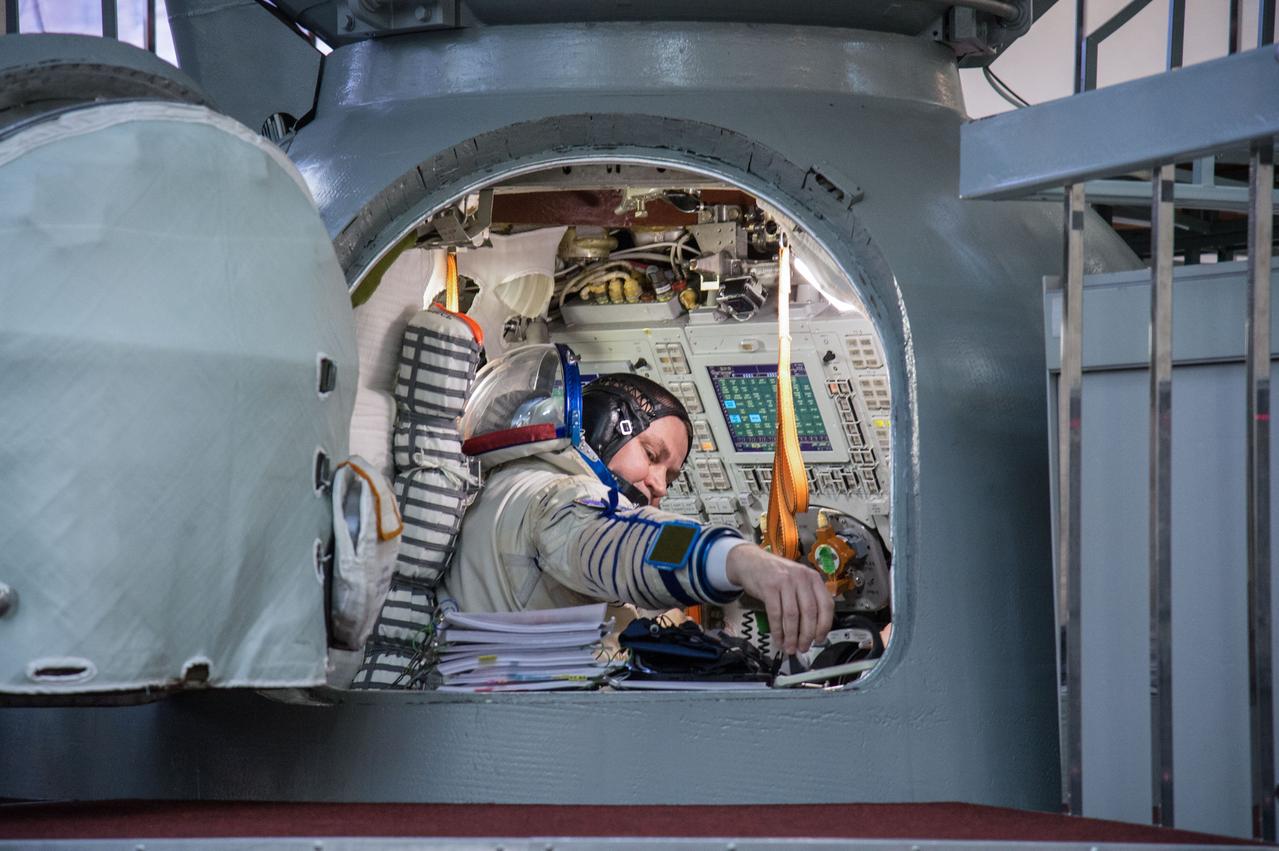
jsc2019e004060 (Feb. 20, 2019) --- At the Gagarin Cosmonaut Training Center in Star City, Russia, Expedition 59 crew member Alexey Ovchinin of Roscosmos is seen inside a Soyuz spacecraft simulator Feb. 20 during the second day of final pre-launch qualification exams. Ovchinin and crewmates Nick Hague and Christina Koch of NASA will launch March 14, U.S. time, in the Soyuz MS-12 spacecraft from the Baikonur Cosmodrome in Kazakhstan for a six-and-a-half month mission on the International Space Station. Credit: NASA/Beth Weissinger
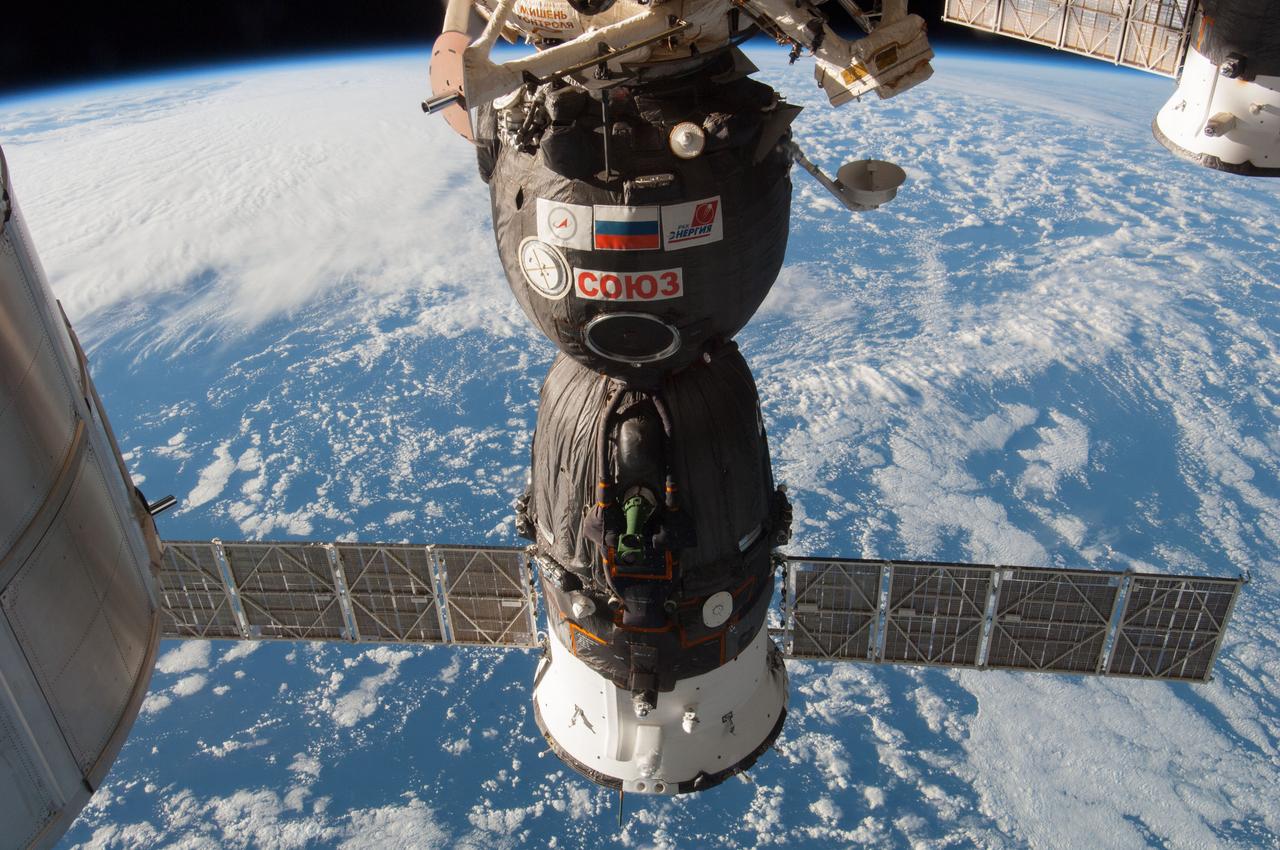
ISS038-E-000250 (12 Nov. 2013) --- The Russian Soyuz TMA-11M spacecraft dominates this image exposed by one of the Expedition 38 crew members aboard the International Space Station over Earth on Nov. 12. Now docked to the Rassvet or Mini-Research Module 1 (MRM-1), the spacecraft had delivered three crew members to the orbital outpost five days earlier, temporarily bringing the total population to nine aboard the station.
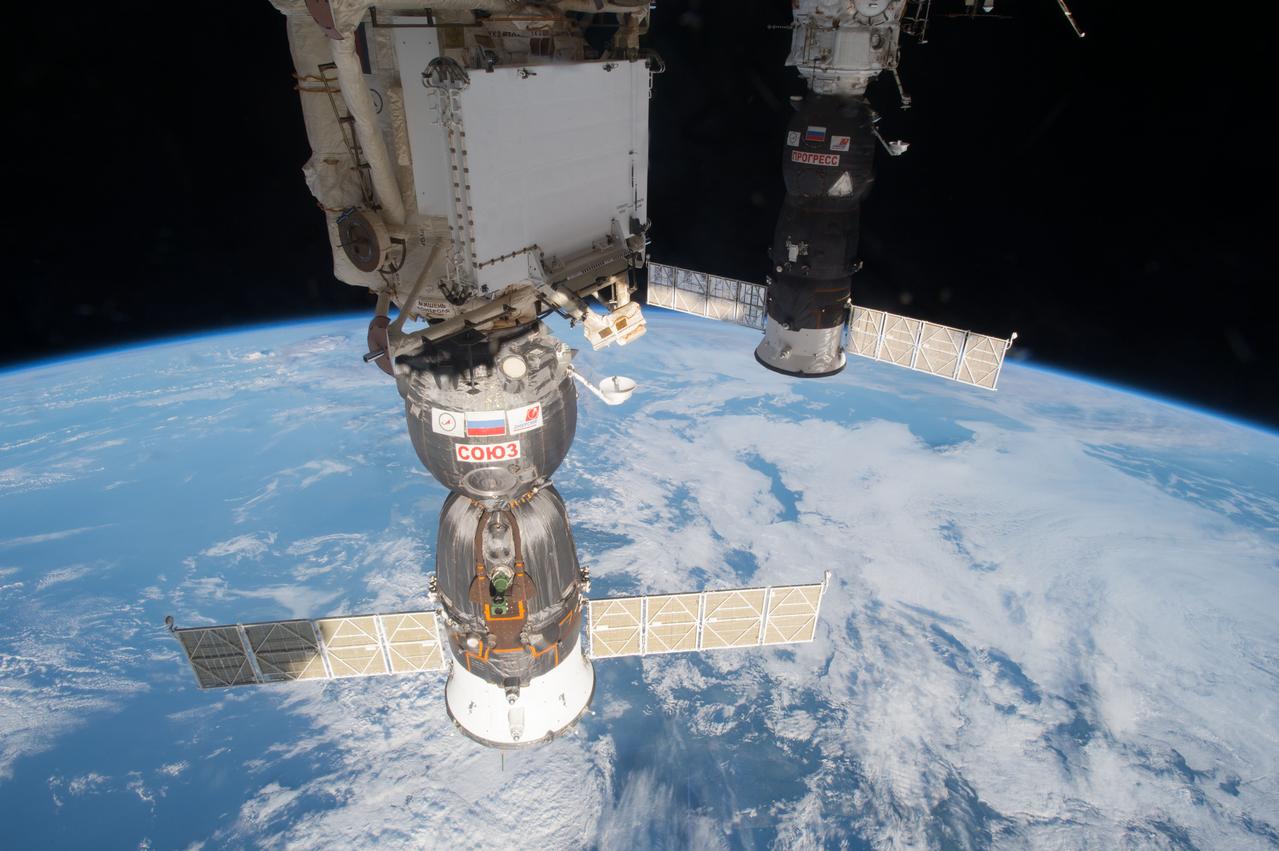
View of the docked Soyuz MS-01 (47S) and Progress 64P spacecraft against a backdrop of Earth and space.
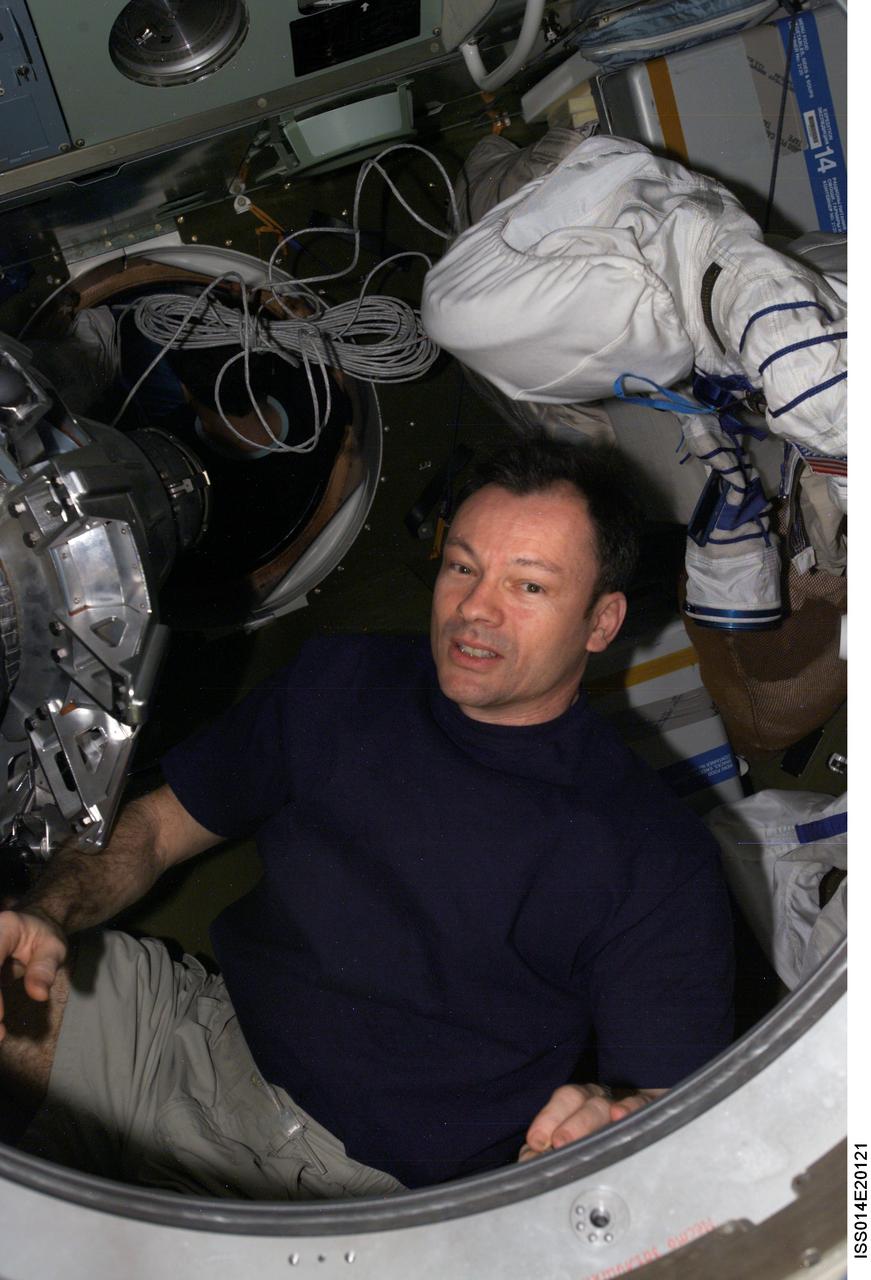
ISS014-E-20121 (21 April 2007) --- Astronaut Michael E. Lopez-Alegria, Expedition 14 commander and NASA space station science officer, photographed in a hatch of a Soyuz spacecraft docked to the International Space Station.
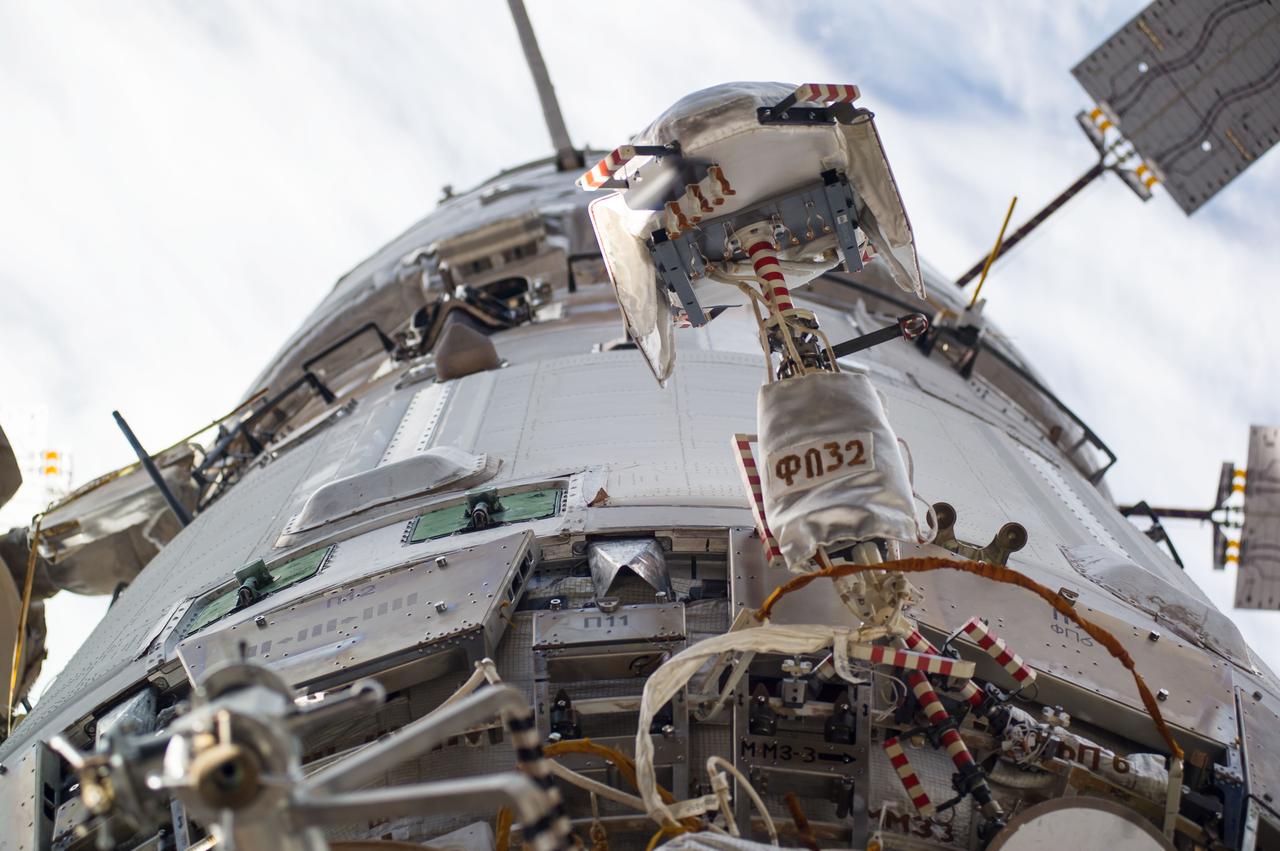
ISS041-E-000033 (10 Sept. 2014) --- A section of the Russian segment of the International Space Station is photographed by an Expedition 41 crew member aboard the space station.
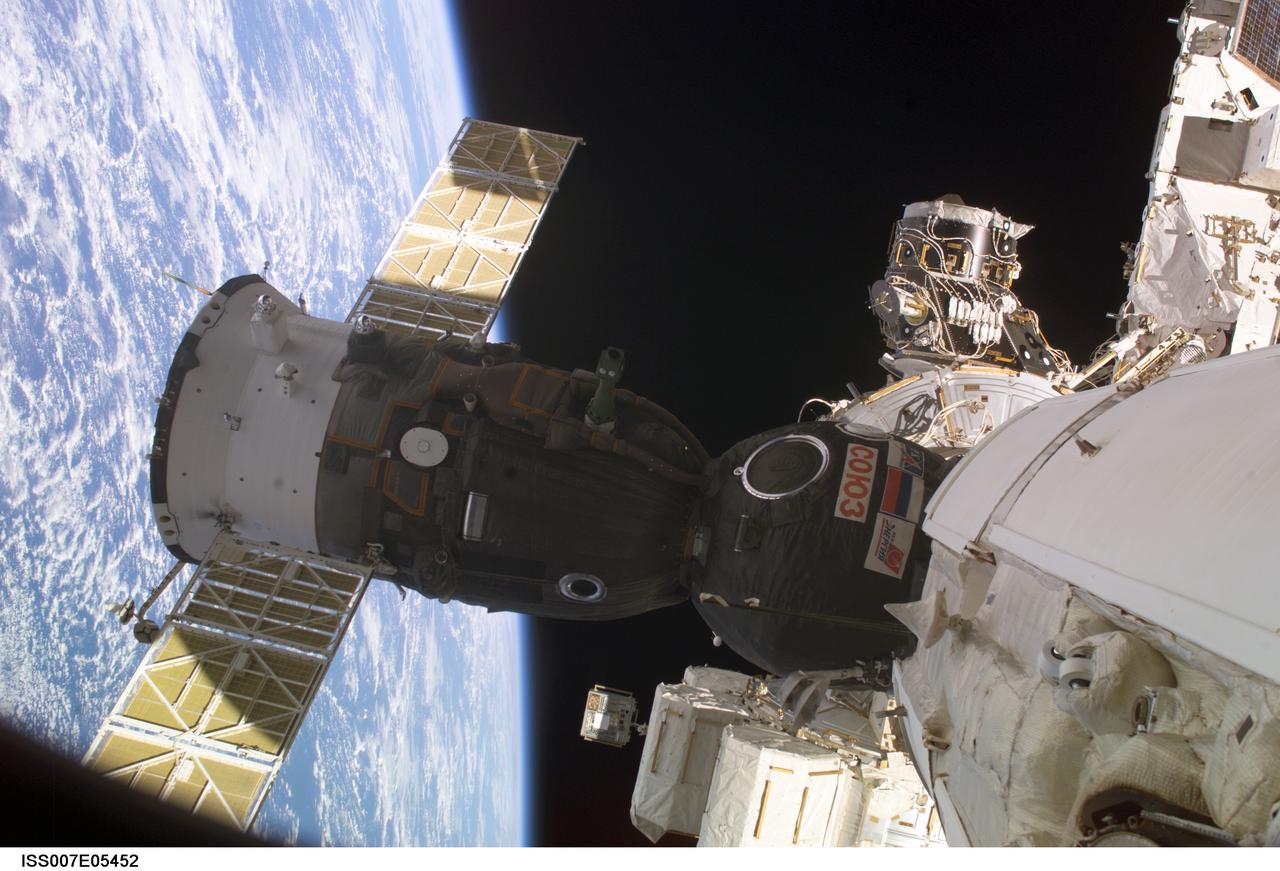
ISS007-E-05452 (14 May 2003) --- The Soyuz TMA-2 spacecraft, docked to the functional cargo block (FGB) nadir port on the International Space Station (ISS), was photographed by an Expedition Seven crewmember. The blackness of space and Earth’s horizon provide the backdrop for the scene.
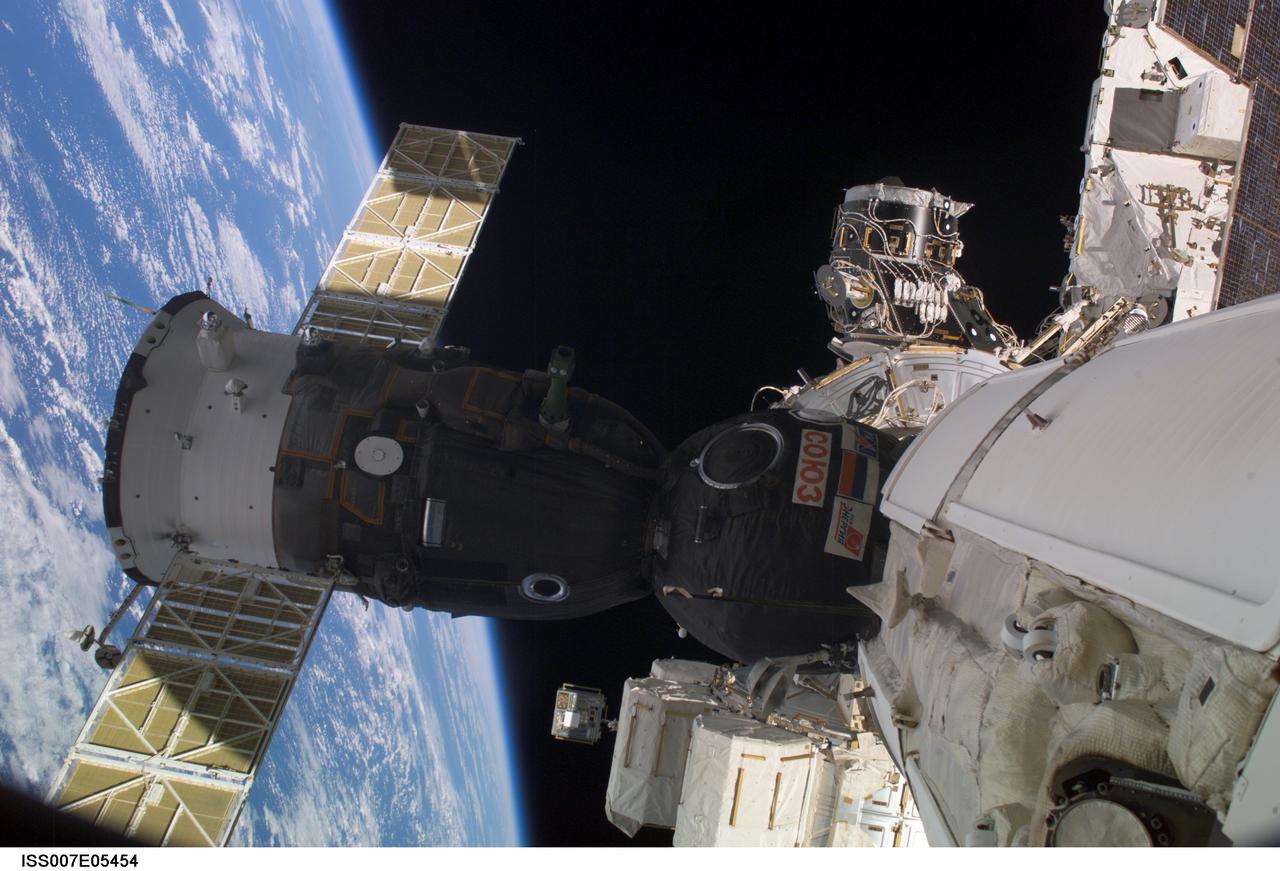
ISS007-E-05454 (14 May 2003) --- The Soyuz TMA-2 spacecraft, docked to the functional cargo block (FGB) nadir port on the International Space Station (ISS), was photographed by an Expedition Seven crewmember. The blackness of space and Earth’s horizon provide the backdrop for the scene.
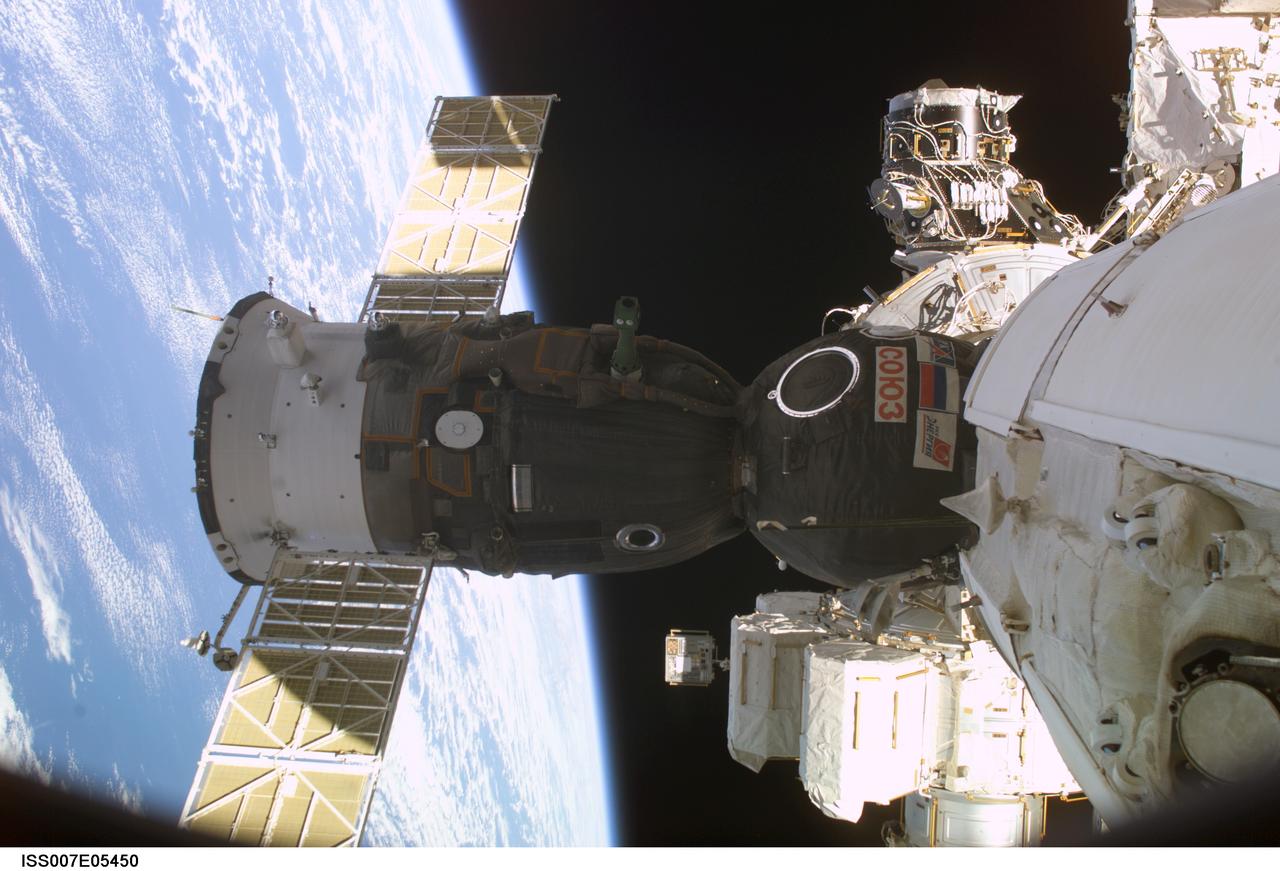
ISS007-E-05450 (14 May 2003) --- The Soyuz TMA-2 spacecraft, docked to the functional cargo block (FGB) nadir port on the International Space Station (ISS), was photographed by an Expedition Seven crewmember. The blackness of space and Earth’s horizon provide the backdrop for the scene.

ISS036-E-038303 (28 Aug. 2013) --- European Space Agency astronaut Luca Parmitano (left) and Russian cosmonaut Fyodor Yurchikhin, both Expedition 36 flight engineers, are pictured in a Russian Soyuz spacecraft currently docked to the International Space Station.
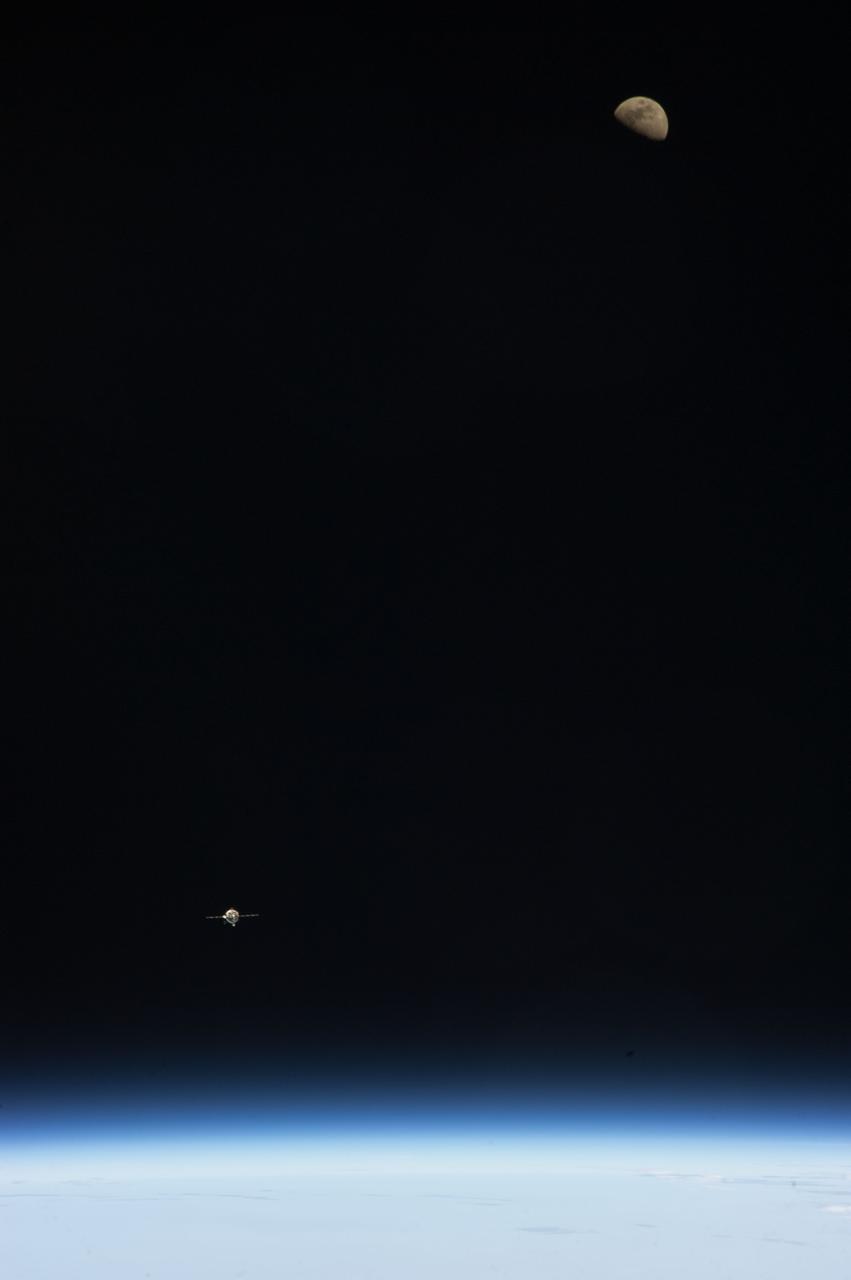
ISS034-E-009895 (21 Dec. 2012) --- As the International Space Station and Soyuz TMA-07M spacecraft were making their relative approaches on Dec. 21, one of the Expedition 34 crew members on the orbital outpost captured this photo of the Soyuz (lower left) and a gibbous moon (upper right). Inside the approaching spacecraft were astronaut Chris Hadfield of the Canadian Space Agency, cosmonaut Roman Romanenko of Russia's Federal Space Agency and NASA astronaut Tom Marshburn.
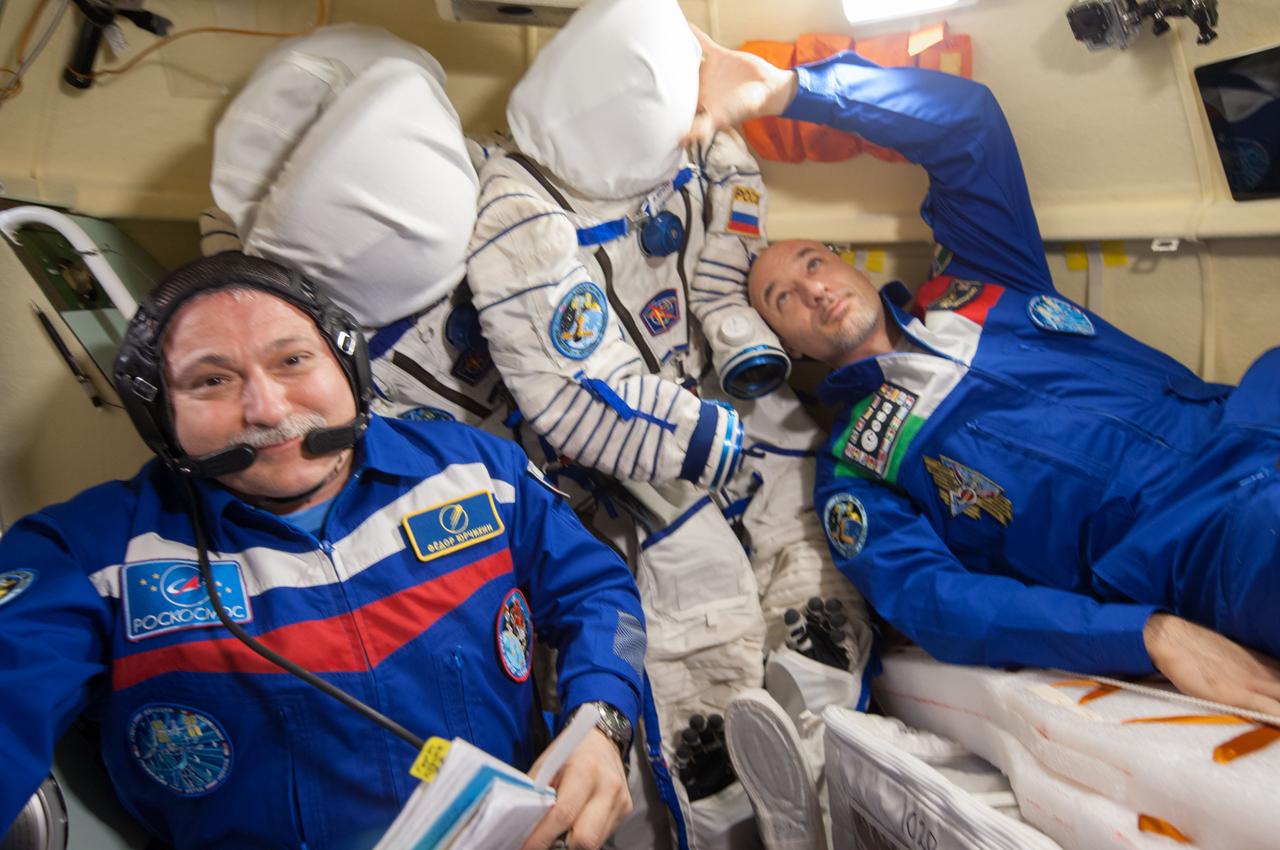
ISS037-E-024927 (31 Oct. 2013) --- Russian cosmonaut Fyodor Yurchikhin (left), Expedition 37 commander, and European Space Agency astronaut Luca Parmitano, flight engineer, prepare to relocate their Soyuz TMA-09M spacecraft from the International Space Station?s Rassvet module to the aft port of the Zvezda Service Module. Along with NASA astronaut Karen Nyberg, they are scheduled to undock their spacecraft at 4:34 a.m. (EDT) on Nov. 1 for the planned 24-minute maneuver.
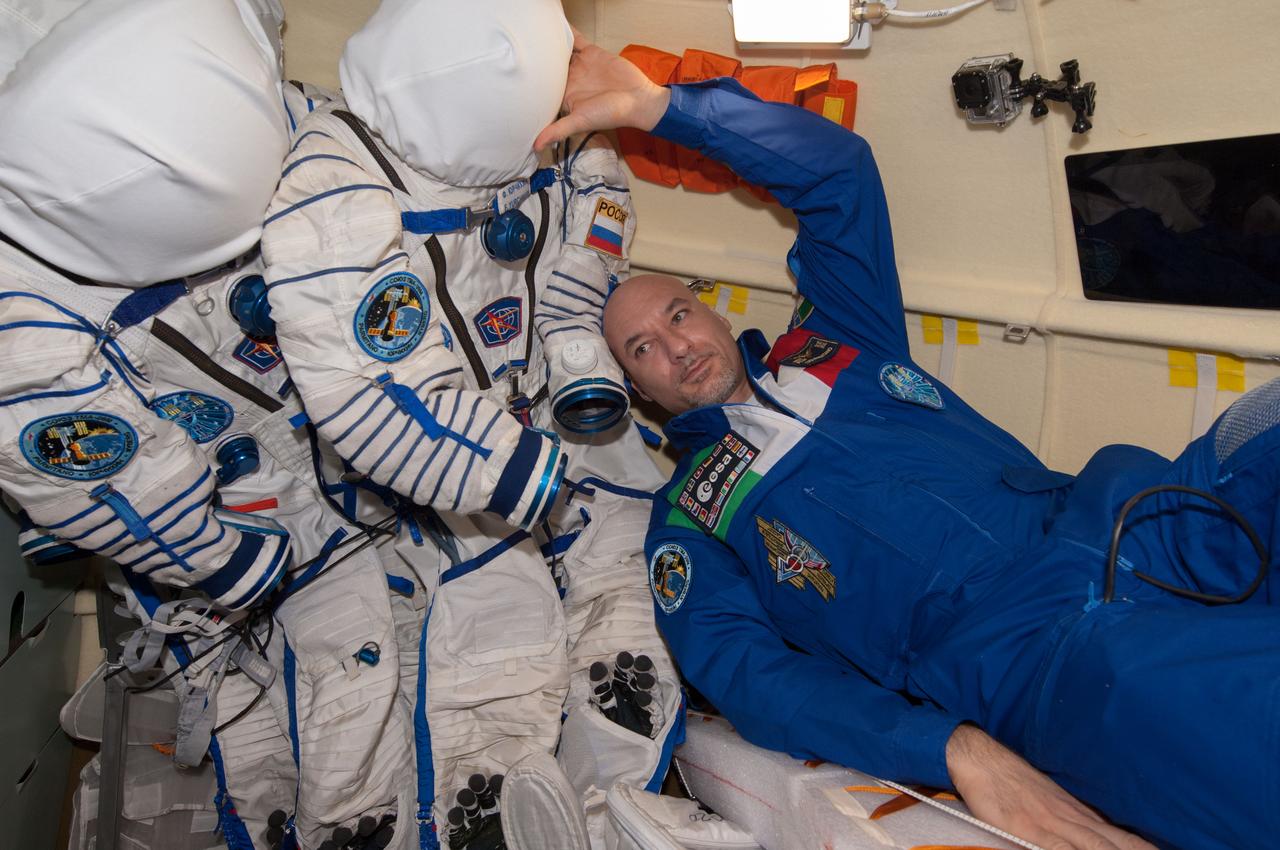
ISS037-E-024928 (31 Oct. 2013) --- European Space Agency astronaut Luca Parmitano, Expedition 37 flight engineer, is pictured during preparations to relocate the Soyuz TMA-09M spacecraft from the International Space Station?s Rassvet module to the aft port of the Zvezda Service Module. Parmitano, Russian cosmonaut Fyodor Yurchikhin, commander; and NASA astronaut Karen Nyberg, flight engineer, are scheduled to undock their spacecraft at 4:34 a.m. (EDT) on Nov. 1 for the planned 24-minute maneuver.
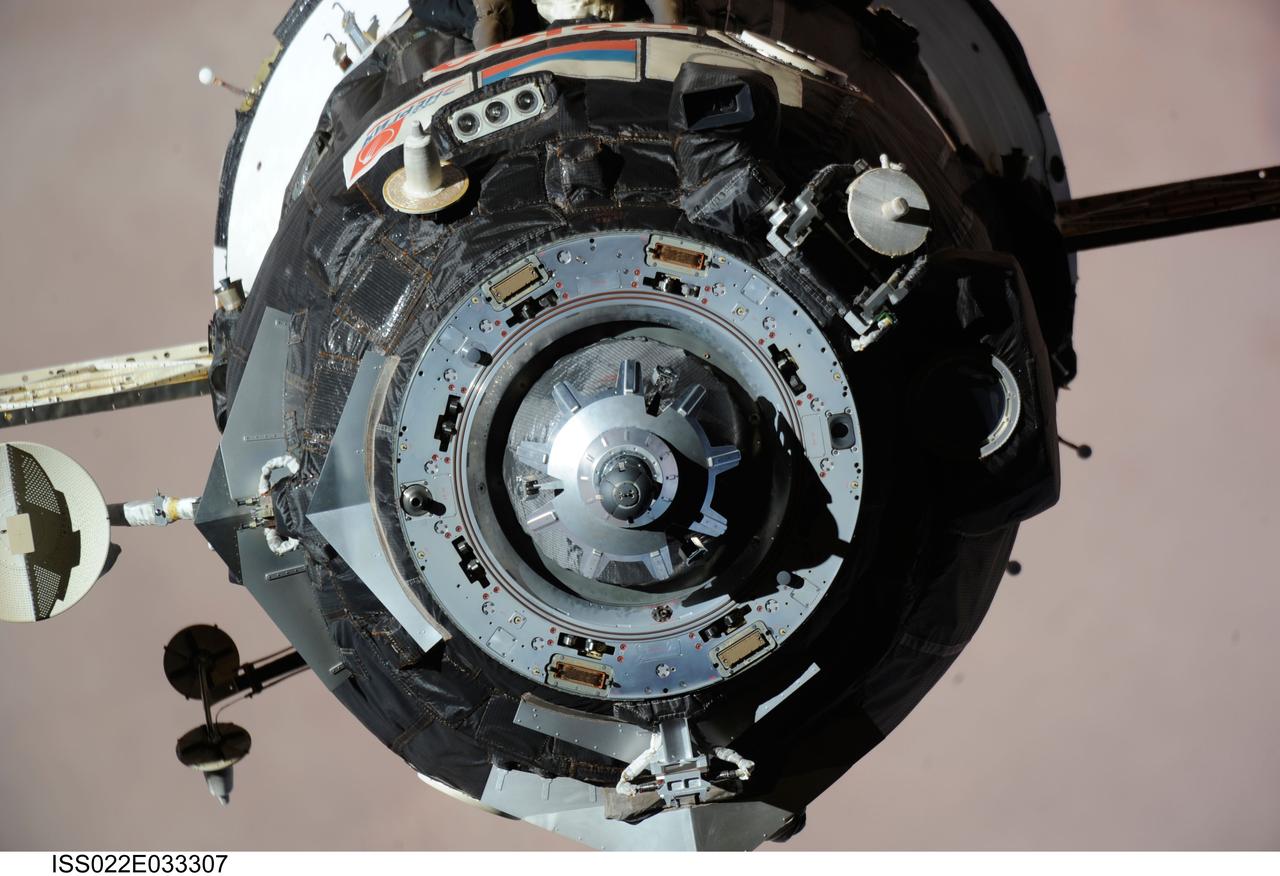
ISS022-E-033307 (21 Jan. 2010) --- The Soyuz TMA-16 spacecraft is featured in this image photographed by an Expedition 22 crew member on the International Space Station during the relocation of the Soyuz from the Zvezda Service Module’s aft port to the Poisk module. Russian cosmonaut Maxim Suraev, Soyuz commander and Expedition 22 flight engineer; along with NASA astronaut Jeffrey Williams, Expedition 22 commander, undocked the Soyuz spacecraft at 4:03 a.m. (CST) and docked it to Poisk at 4:24 a.m. on Jan. 21, 2010.
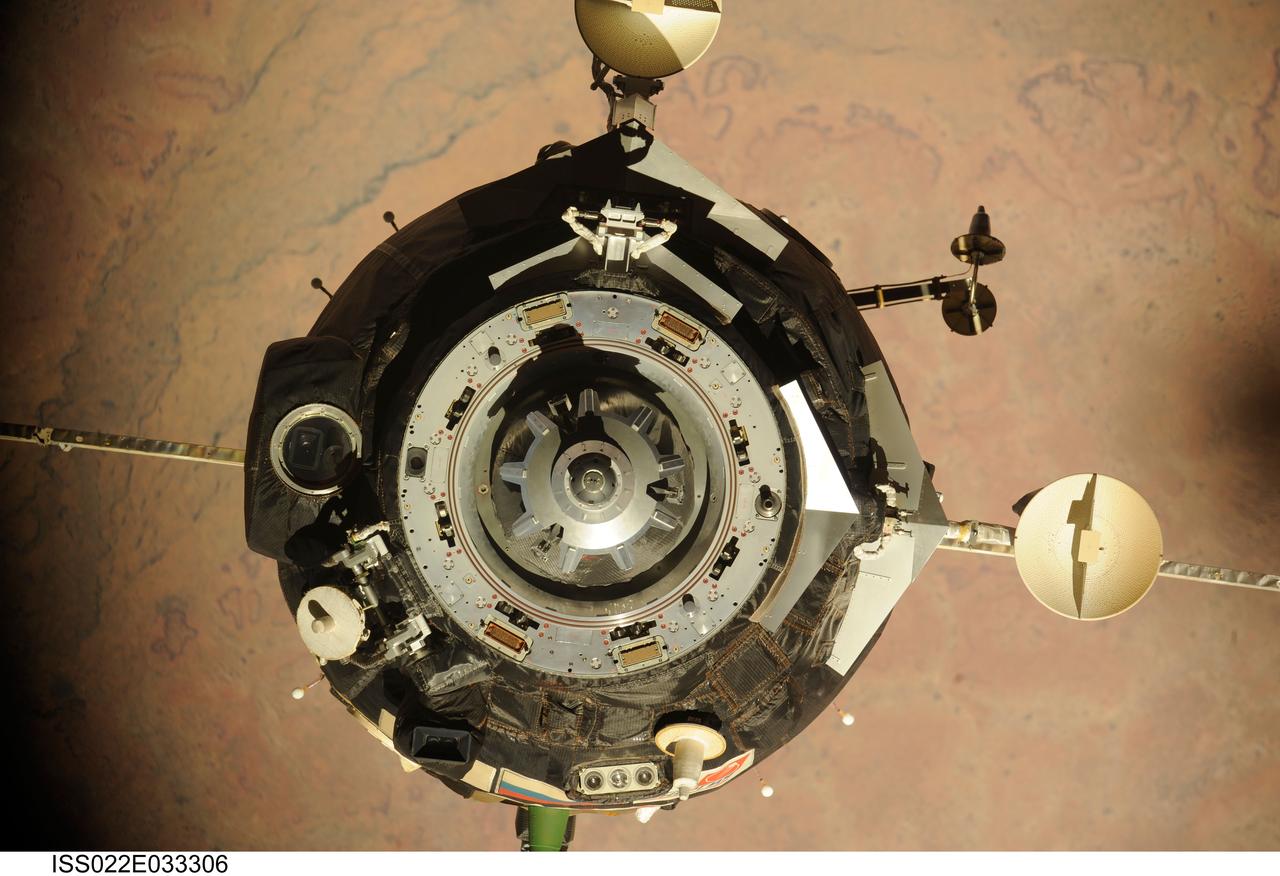
ISS022-E-033306 (21 Jan. 2010) --- The Soyuz TMA-16 spacecraft is featured in this image photographed by an Expedition 22 crew member on the International Space Station during the relocation of the Soyuz from the Zvezda Service Module’s aft port to the Poisk module. Russian cosmonaut Maxim Suraev, Soyuz commander and Expedition 22 flight engineer; along with NASA astronaut Jeffrey Williams, Expedition 22 commander, undocked the Soyuz spacecraft at 4:03 a.m. (CST) and docked it to Poisk at 4:24 a.m. on Jan. 21, 2010.
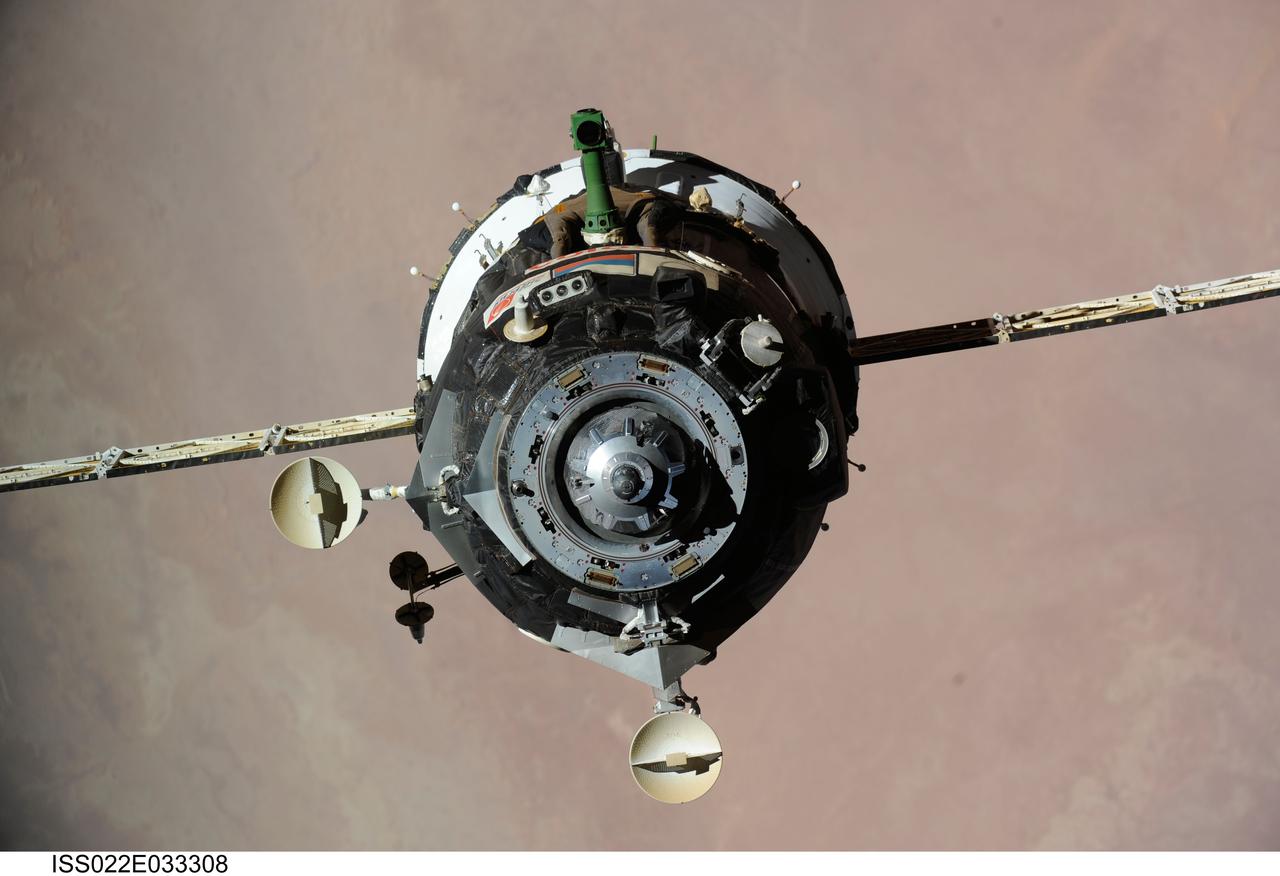
ISS022-E-033308 (21 Jan. 2010) --- The Soyuz TMA-16 spacecraft is featured in this image photographed by an Expedition 22 crew member on the International Space Station during the relocation of the Soyuz from the Zvezda Service Module’s aft port to the Poisk module. Russian cosmonaut Maxim Suraev, Soyuz commander and Expedition 22 flight engineer; along with NASA astronaut Jeffrey Williams, Expedition 22 commander, undocked the Soyuz spacecraft at 4:03 a.m. (CST) and docked it to Poisk at 4:24 a.m. on Jan. 21, 2010.
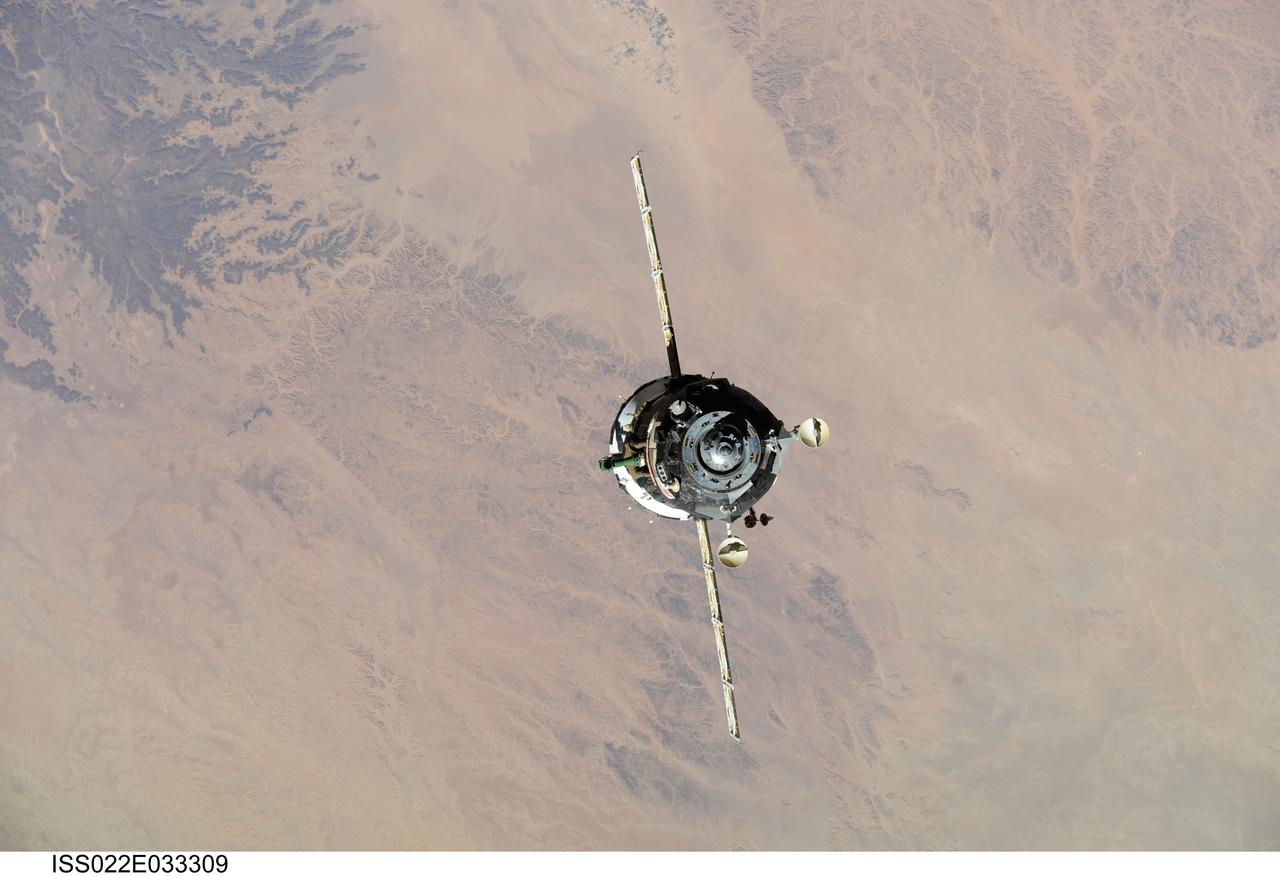
ISS022-E-033309 (21 Jan. 2010) --- The Soyuz TMA-16 spacecraft is featured in this image photographed by an Expedition 22 crew member on the International Space Station during the relocation of the Soyuz from the Zvezda Service Module’s aft port to the Poisk module. Russian cosmonaut Maxim Suraev, Soyuz commander and Expedition 22 flight engineer; along with NASA astronaut Jeffrey Williams, Expedition 22 commander, undocked the Soyuz spacecraft at 4:03 a.m. (CST) and docked it to Poisk at 4:24 a.m. on Jan. 21, 2010.
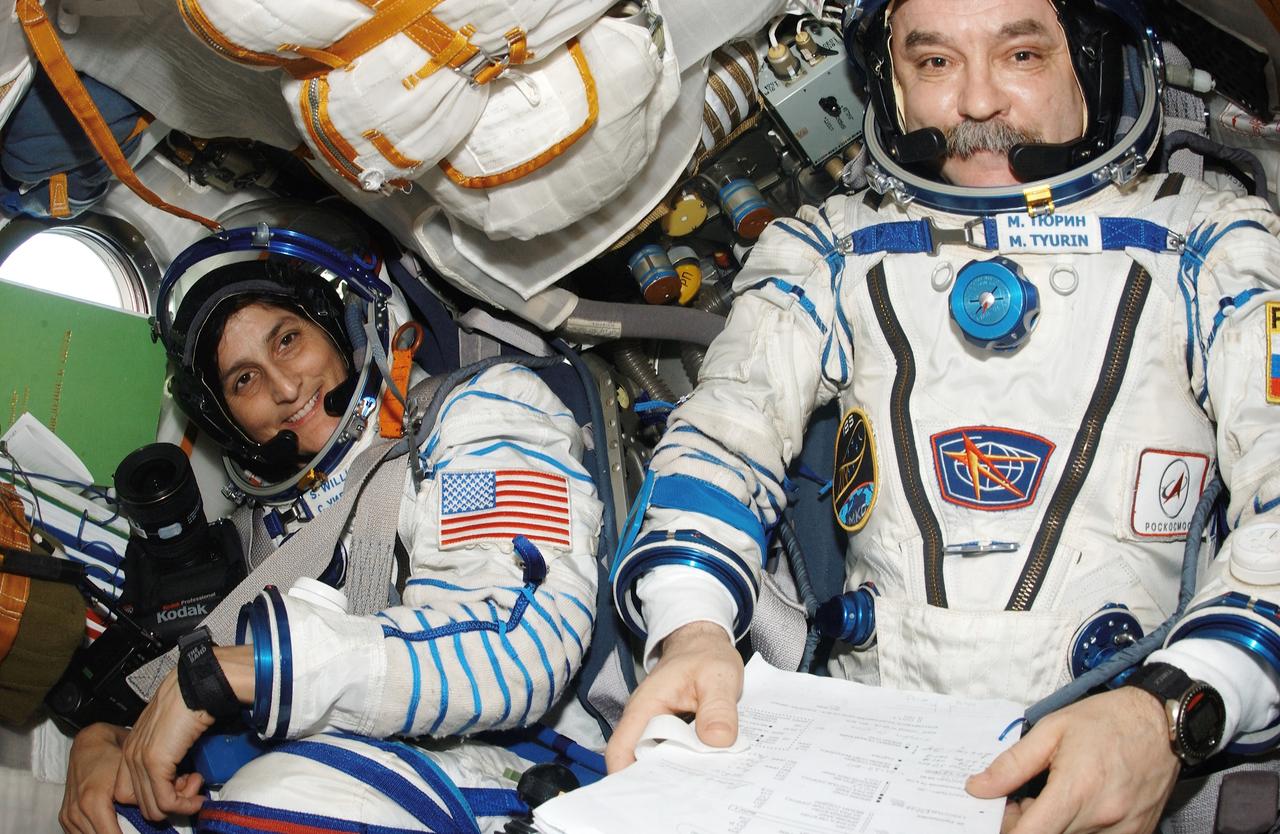
ISS014-E-18764 (29 March 2007) --- Astronaut Sunita L. Williams (left), Expedition 14 flight engineer, and cosmonaut Mikhail Tyurin, Soyuz commander and flight engineer, occupy their seats in the Soyuz 13 (TMA-9) spacecraft docked to the International Space Station. Attired in their Russian Sokol launch and entry suits, Tyurin, Williams and astronaut Michael E. Lopez-Alegria (out of frame), commander and NASA space station science officer, were about to relocate the Soyuz from the Zarya Module nadir port to the Zvezda Service Module aft port in preparation for the arrival of Expedition 15.
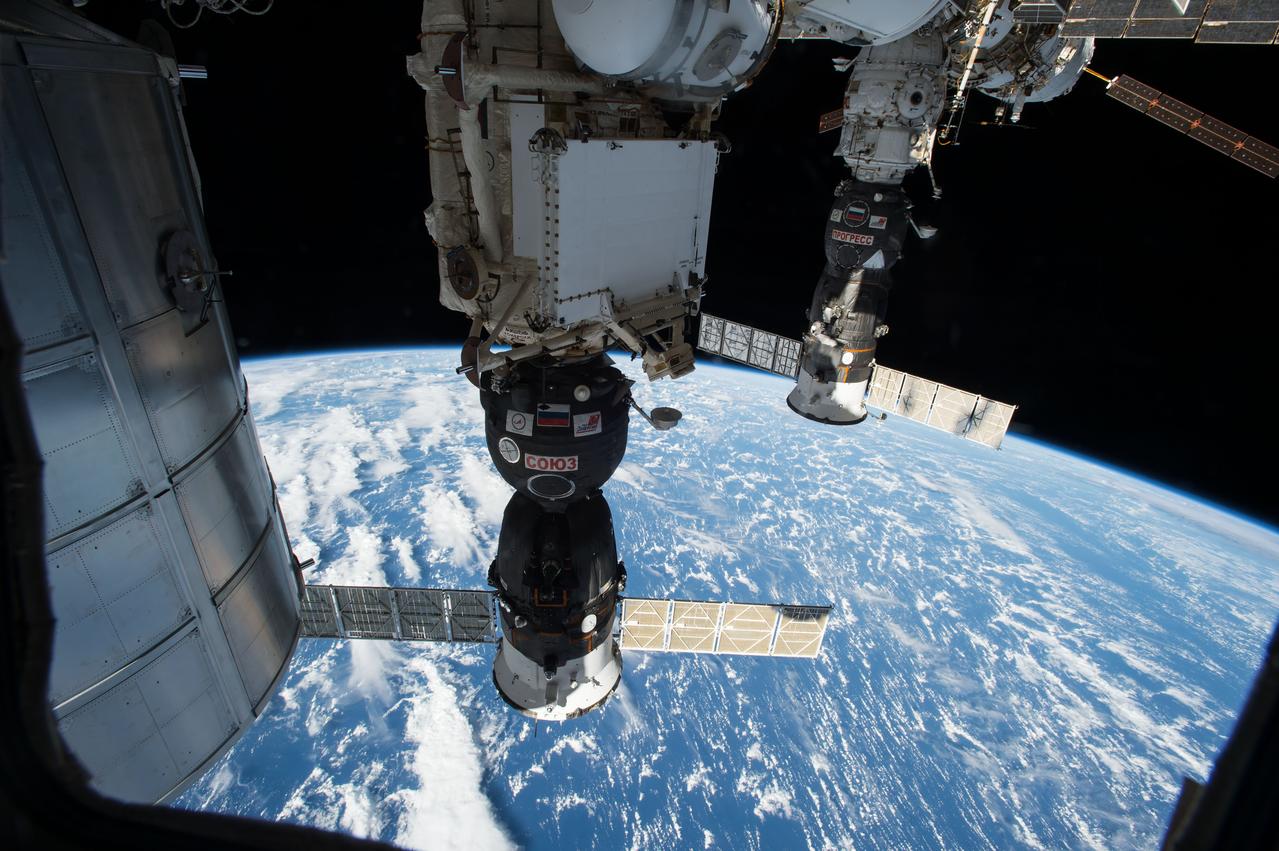
View of the Soyuz TMA-15M spacecraft docked to Rassvet Mini-Research Module 1 (MRM1) and the Progress 57P spacecraft docked to Pirs Docking Compartment (DC1). Portions of the Leonardo Permanent Multipurpose Module (PMM), aft ISS, and an Earth limb are in view. Image was released by astronaut on Twitter.
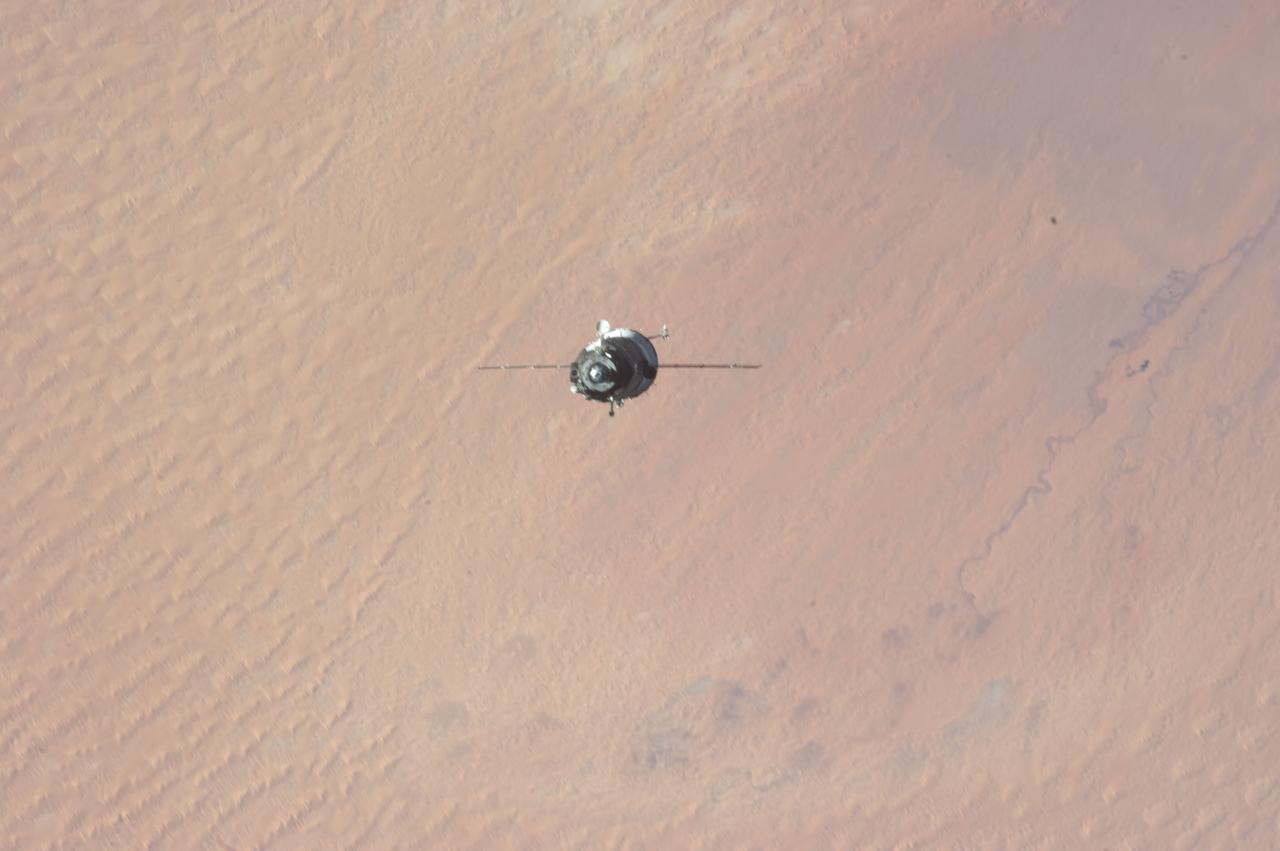
ISS034-E-009926 (21 Dec. 2012) --- As the International Space Station and Soyuz TMA-07M spacecraft were making their relative approaches on Dec. 21, one of the Expedition 34 crew members on the orbital outpost captured this photo of the Soyuz over the Sahara Desert. The image center is at 31.7 degrees north latitude and 2.0 degrees east longitude, on the south side of the Atlas Mountains and on the northern margin of a huge dune field known as Grand Erg Occidental, located in north central Algeria. Inside the arriving spacecraft were astronaut Chris Hadfield of the Canadian Space Agency, cosmonaut Roman Romanenko of Russia's Federal Space Agency and NASA astronaut Tom Marshburn.
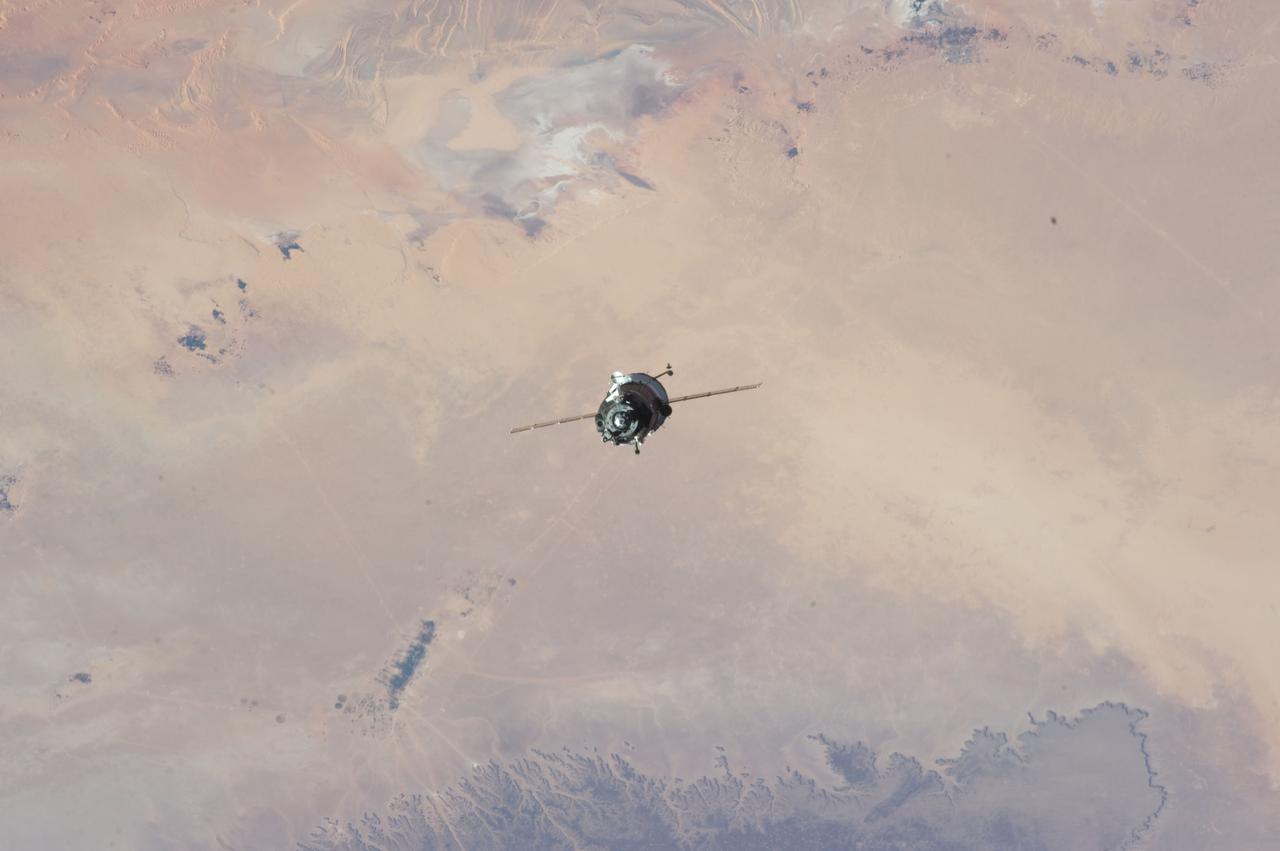
ISS034-E-009924 (21 Dec. 2012) --- As the International Space Station and Soyuz TMA-07M spacecraft were making their relative approaches on Dec. 21, one of the Expedition 34 crew members on the orbital outpost captured this photo of the Soyuz backdropped by the Sahara Desert. Inside the arriving spacecraft were astronaut Chris Hadfield of the Canadian Space Agency, cosmonaut Roman Romanenko of Russia's Federal Space Agency and NASA astronaut Tom Marshburn. The image center is at 31.7 degrees north latitude and 2.0 degrees east longitude, on the south side of the Atlas Mountains and on the northern margin of a huge dune field known as Grand Erg Occidental, located in north central Algeria.
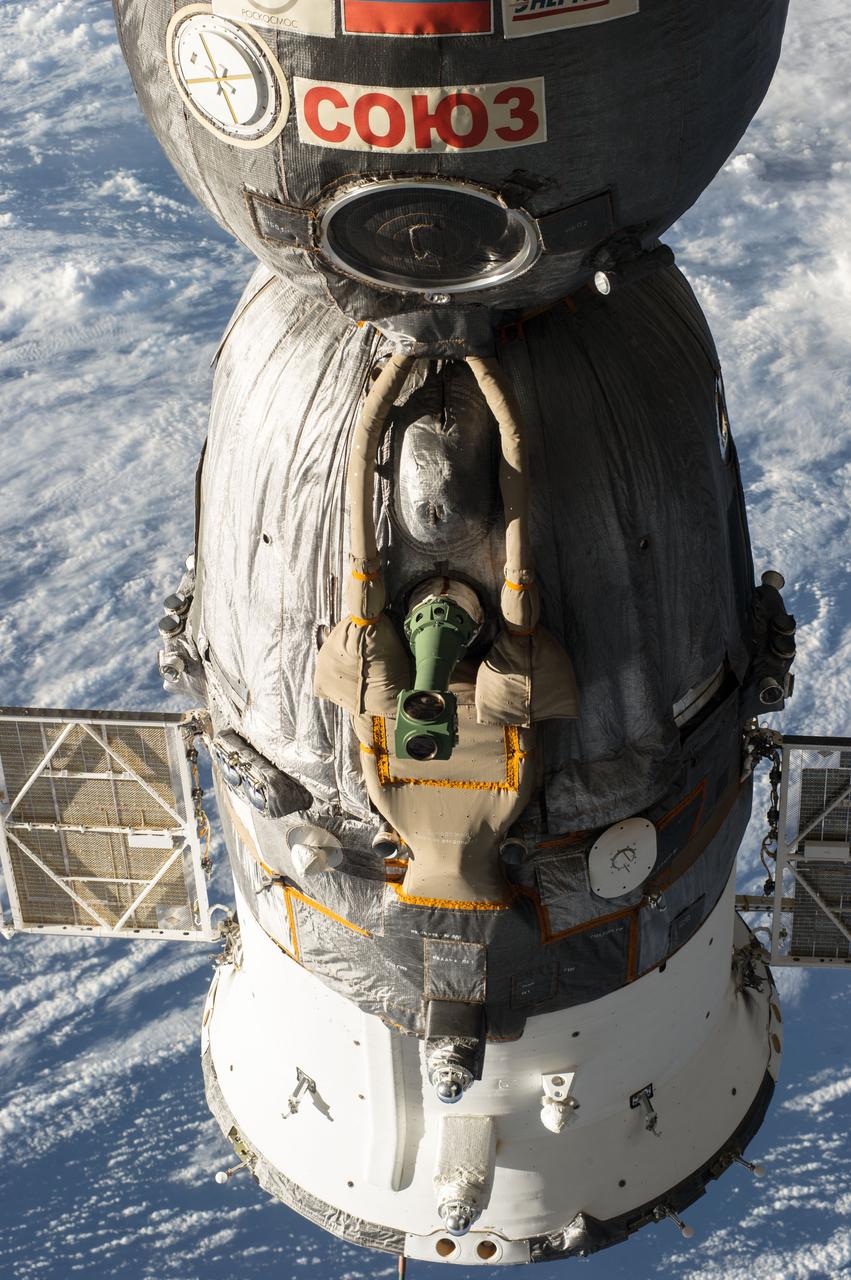
ISS039-E-019122 (5 May 2014) --– A Russian Soyuz spacecraft is seen docked to the International Space Station, as photographed by one of the Expedition 39 crew members aboard the orbital outpost. The Soyuz's periscope is in the center of the vehicle.
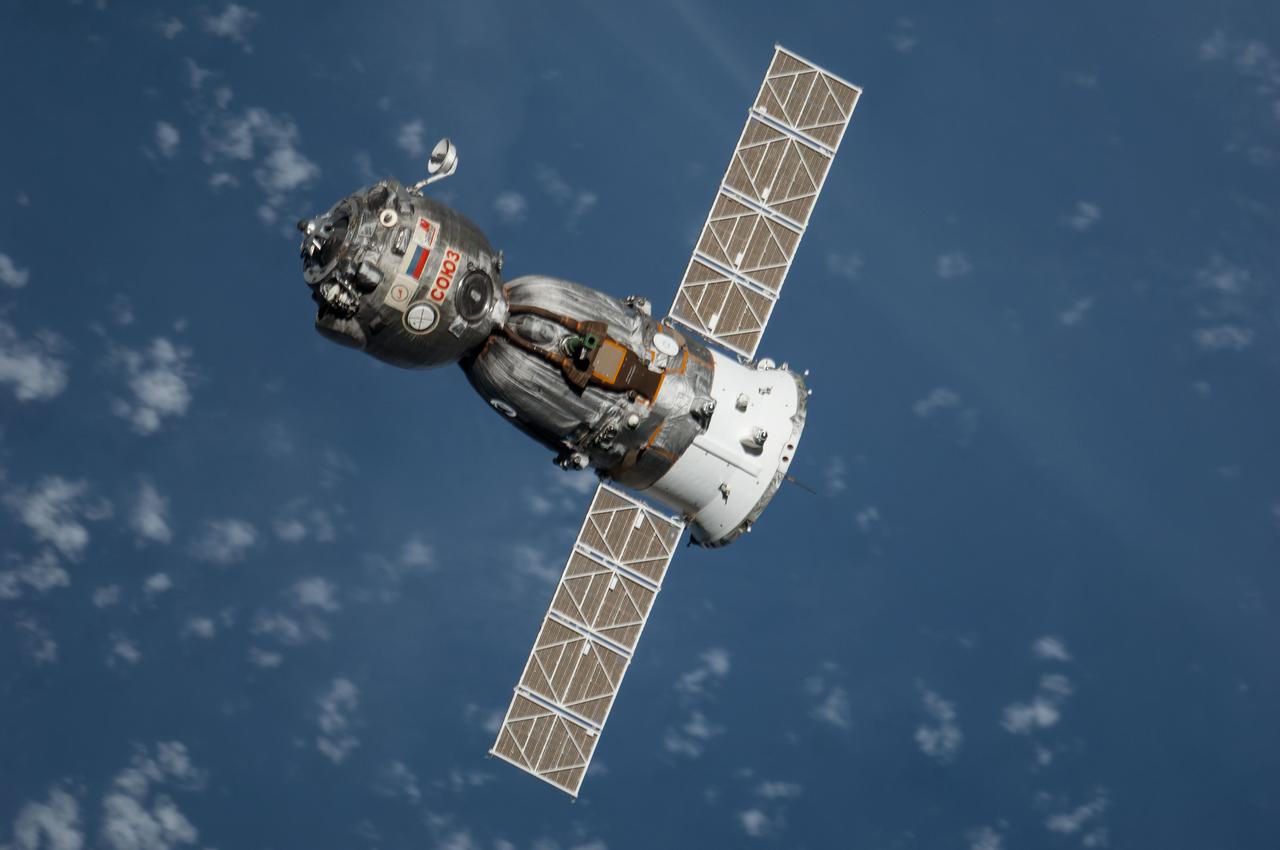
ISS041-E-000005 (10 Sept. 2014) --- The Soyuz TMA-12M spacecraft departs from the International Space Station and heads toward a landing in a remote area near the town of Zhezkazgan, Kazakhstan. NASA astronaut Steve Swanson, Expedition 40 commander; Russian cosmonaut Alexander Skvortsov, Soyuz commander and flight engineer; and Russian cosmonaut Oleg Artemyev, flight engineer, are returning from more than five months aboard the space station where they served as members of the Expedition 39 and 40 crews. Landing occurred at 10:23 p.m. (EDT), Sept. 10, 2014 (8:23 a.m., Sept. 11, Kazakh time).
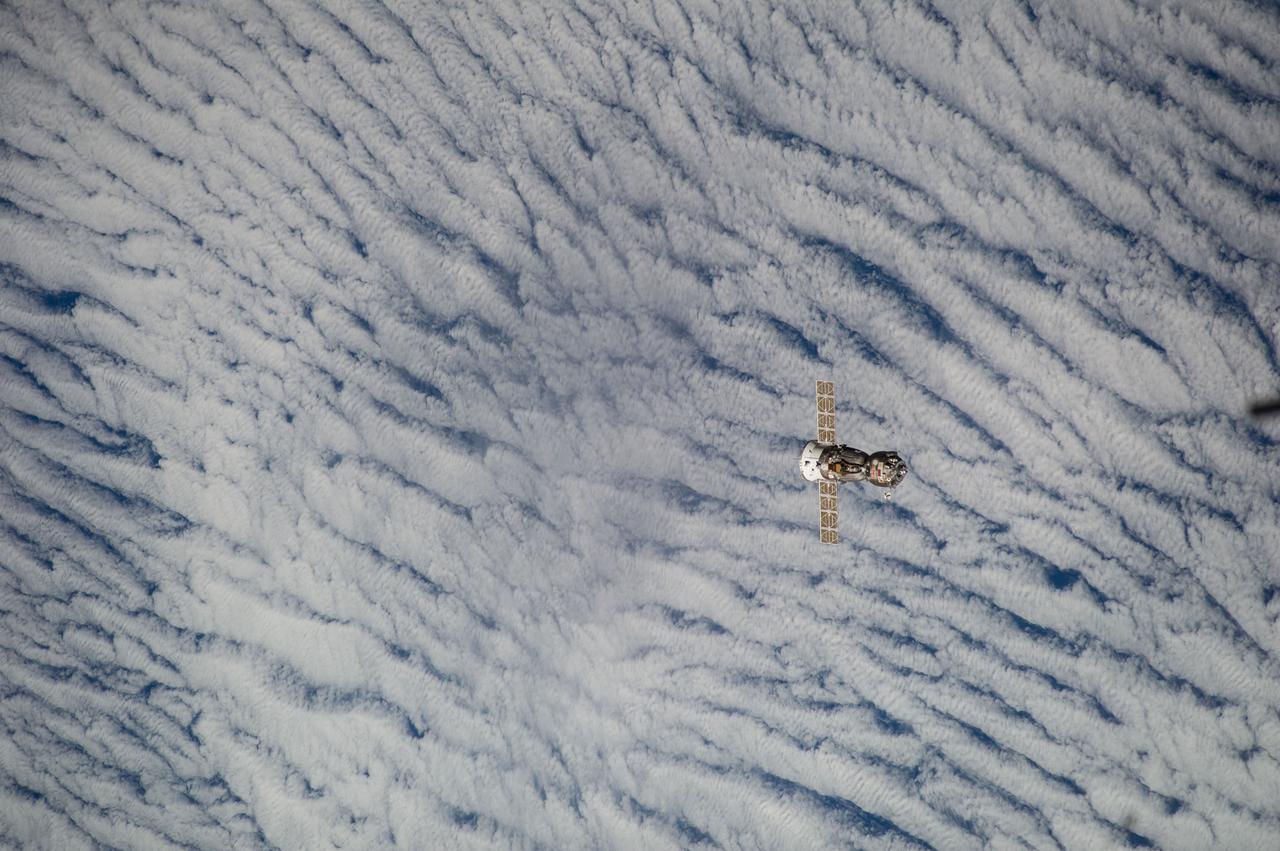
ISS041-E-000047 (10 Sept. 2014) --- The Soyuz TMA-12M spacecraft departs from the International Space Station and heads toward a landing in a remote area near the town of Zhezkazgan, Kazakhstan. NASA astronaut Steve Swanson, Expedition 40 commander; Russian cosmonaut Alexander Skvortsov, Soyuz commander and flight engineer; and Russian cosmonaut Oleg Artemyev, flight engineer, are returning from more than five months aboard the space station where they served as members of the Expedition 39 and 40 crews. Landing occurred at 10:23 p.m. (EDT), Sept. 10, 2014 (8:23 a.m., Sept. 11, Kazakh time).
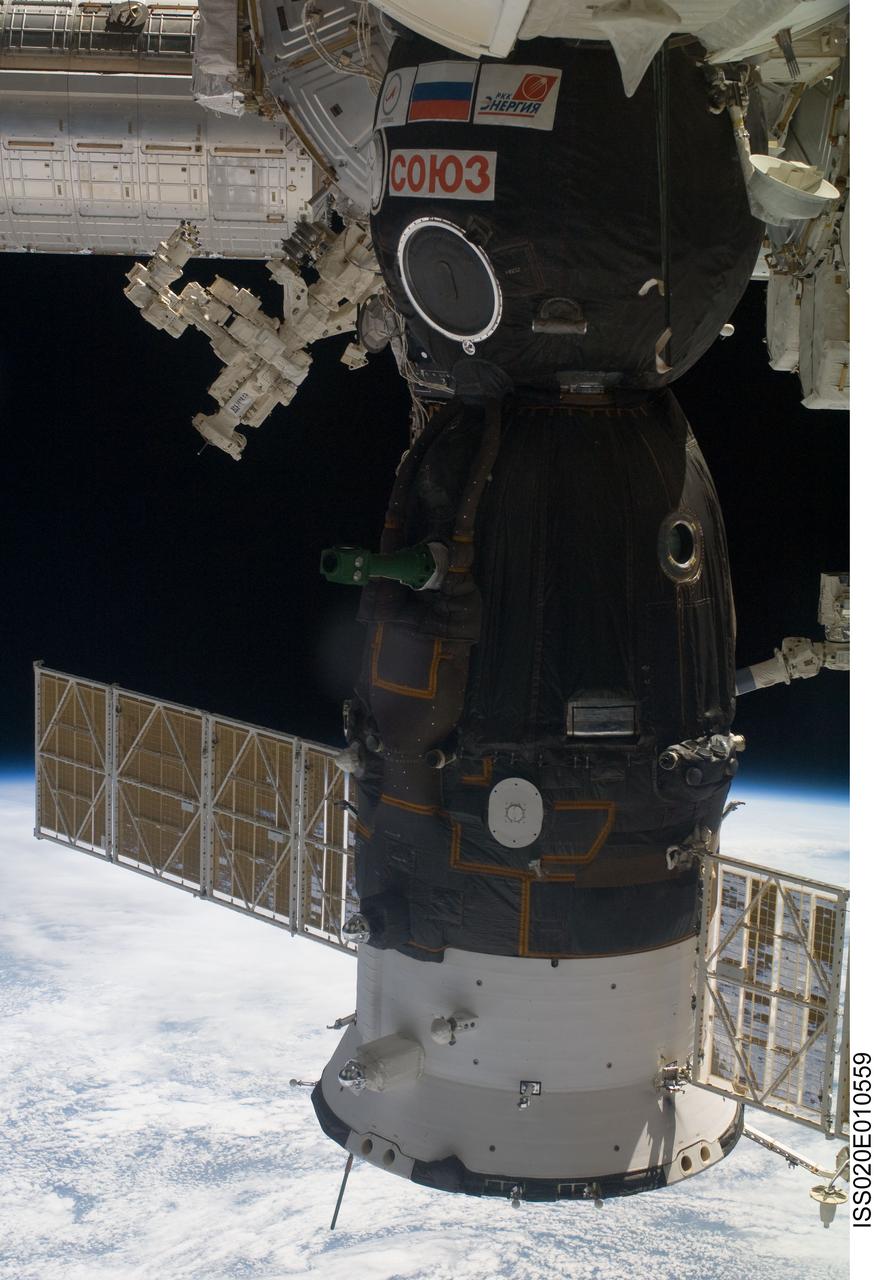
ISS020-E-010559 (16 June 2009) --- A Soyuz spacecraft docked with the International Space Station, the Canadian-built Dextre, also known as the Special Purpose Dextrous Manipulator (top left) and a portion of the Japanese Kibo laboratory (upper left corner) are featured in this image photographed by an Expedition 20 crew member on the station. The blackness of space and Earth’s horizon provide the backdrop for the scene.
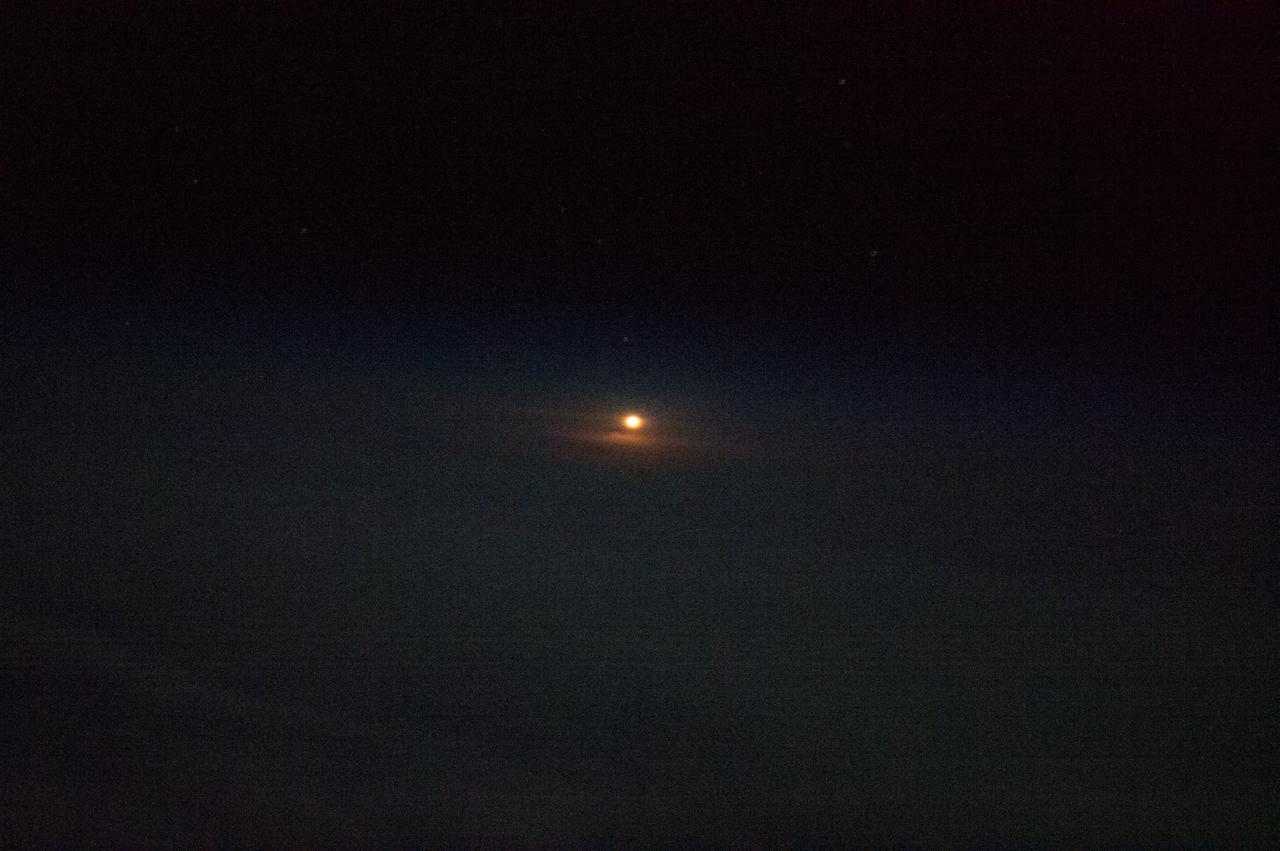
View of the launch of the Soyuz TMA-08M/34S spacecraft as seen by Expedition 35 crewmembers aboard the ISS.
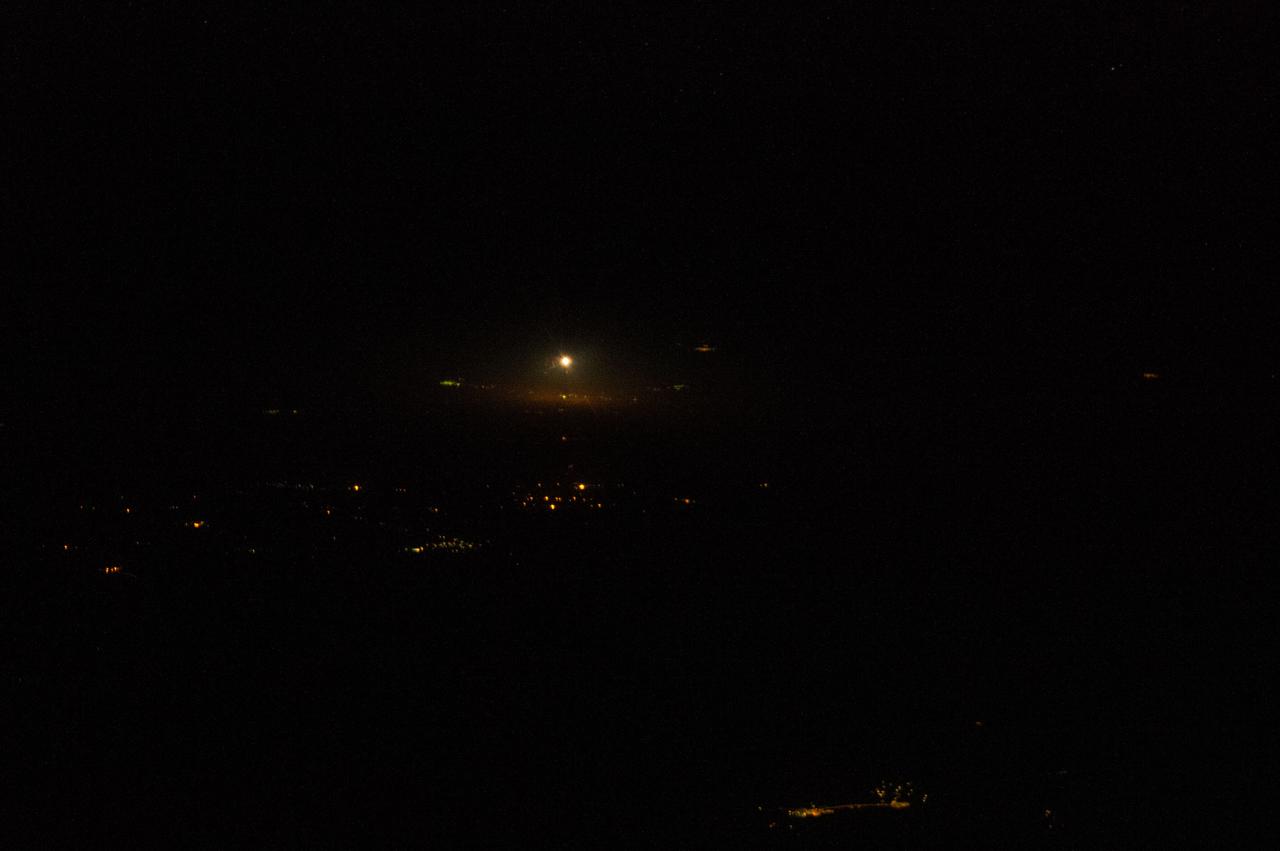
Nighttime view of the launch of the Soyuz TMA-12M spacecraft as seen by Expedition 39 crewmembers aboard the ISS.
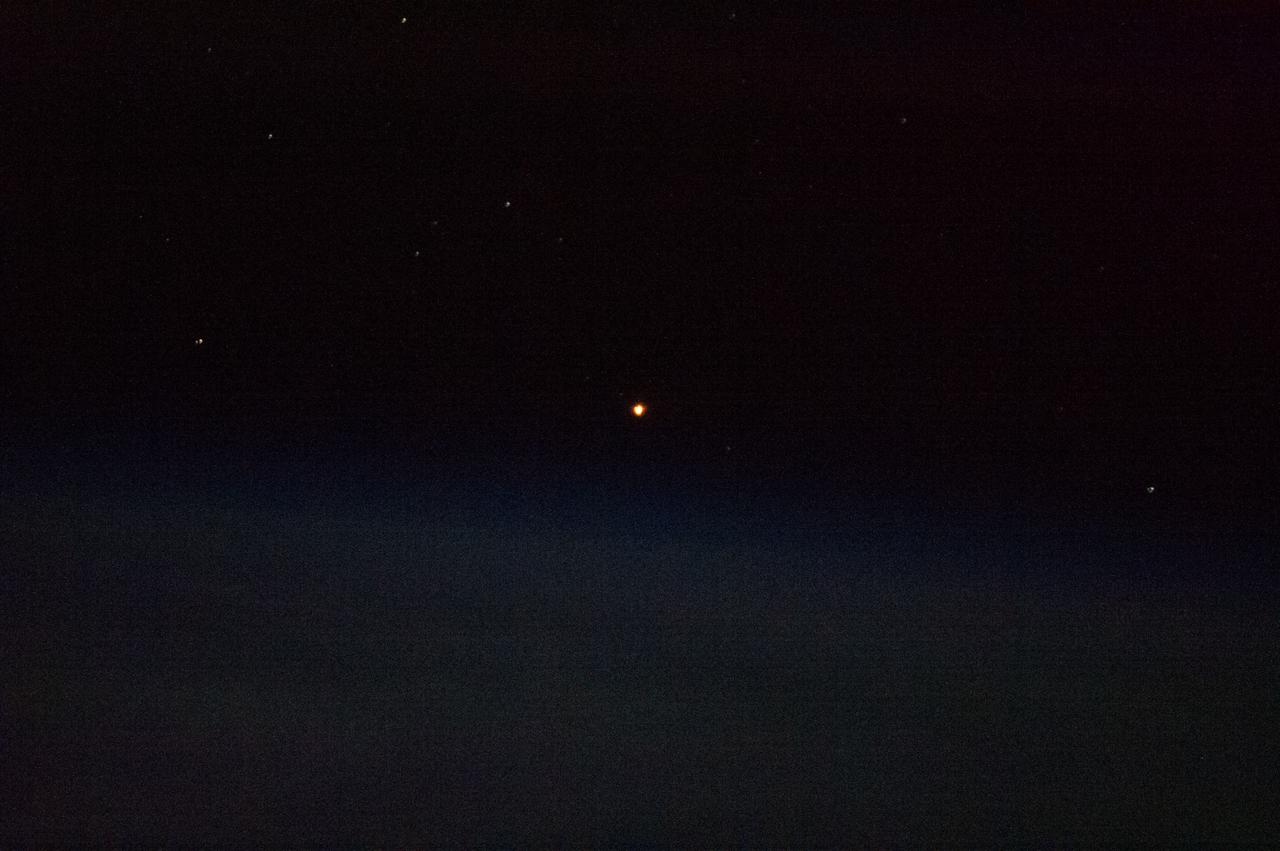
View of the launch of the Soyuz TMA-08M/34S spacecraft as seen by Expedition 35 crewmembers aboard the ISS.
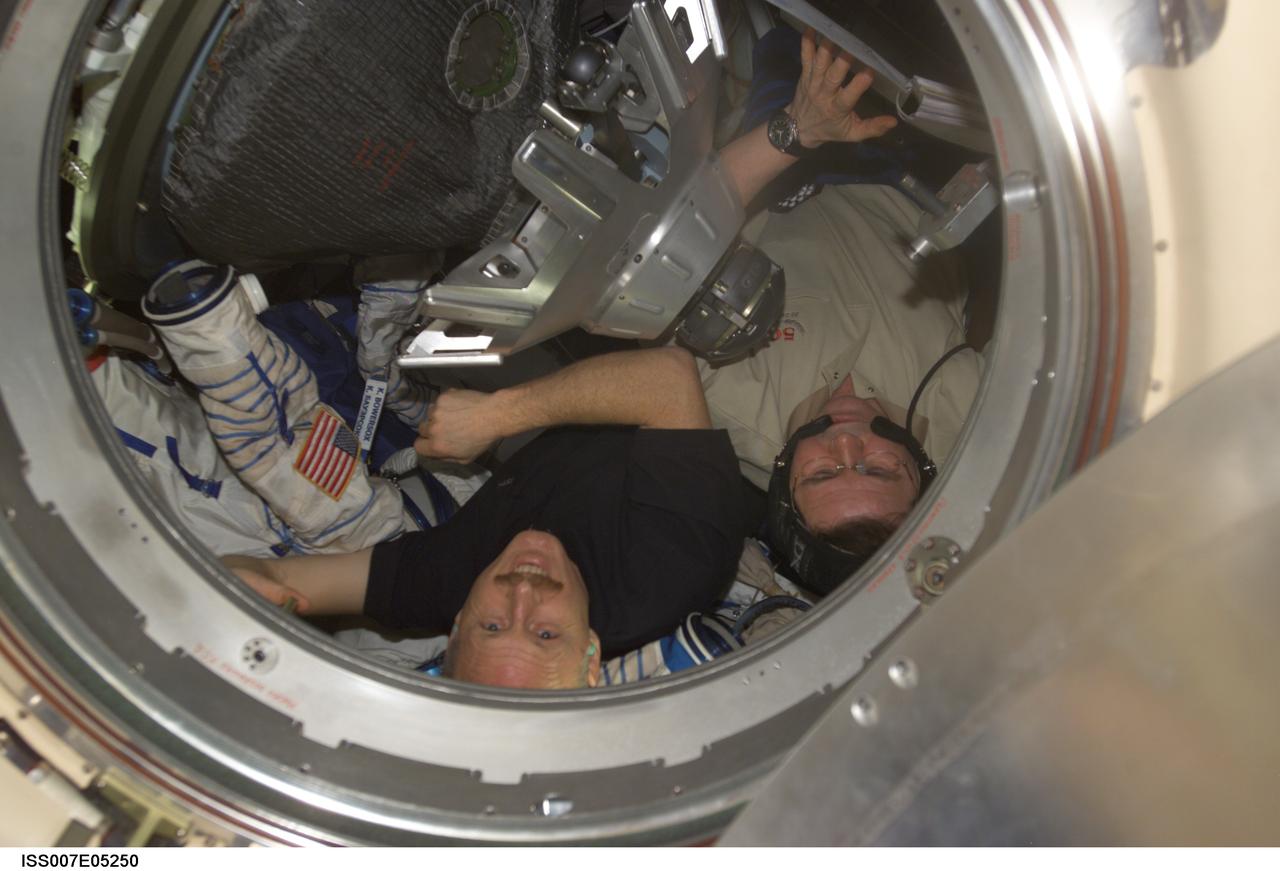
ISS007-E-05250 (3 May 2003) --- Astronaut Kenneth D. Bowersox (left), Expedition Six mission commander, and cosmonaut Nikolai M. Budarin, flight engineer, are pictured in a Soyuz spacecraft docked to the International Space Station (ISS). Budarin represents Rosaviakosmos.
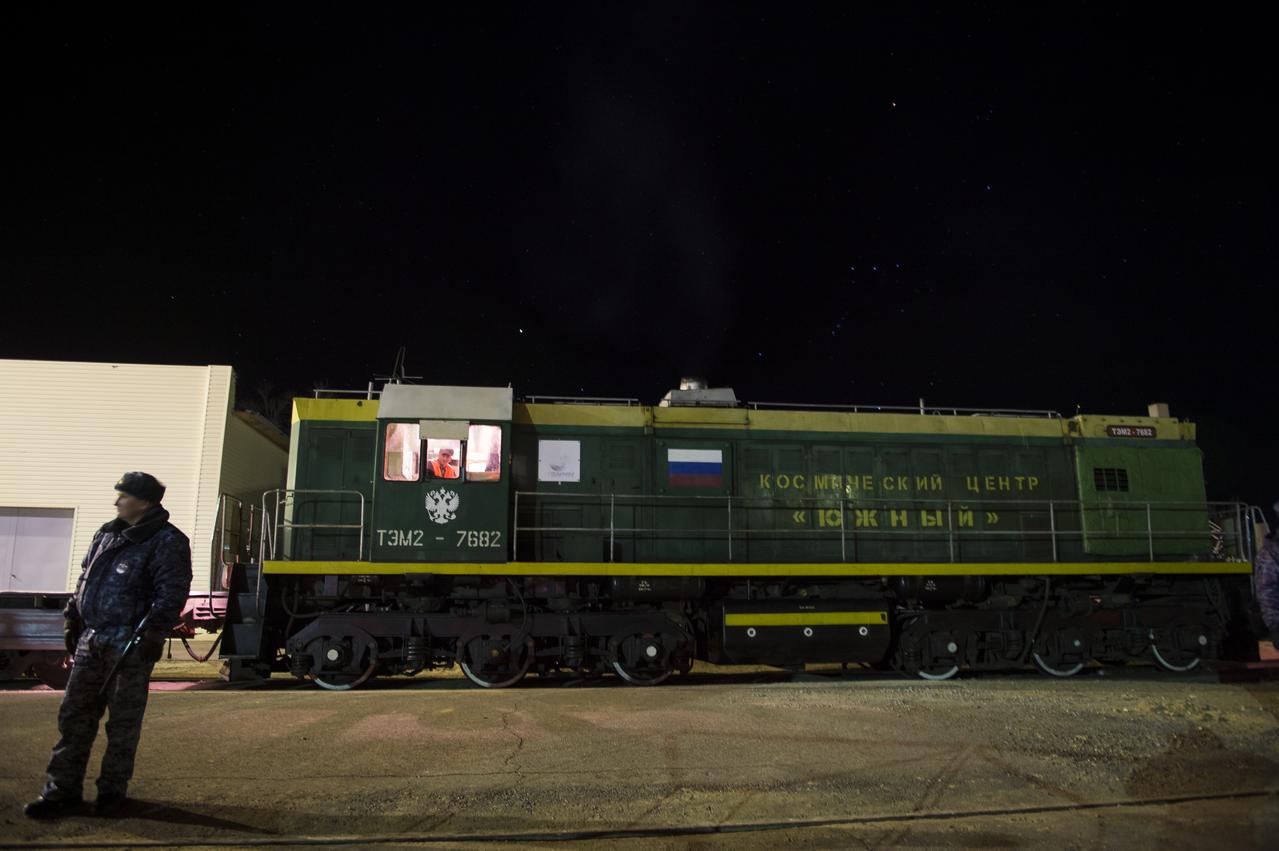
The Soyuz rocket is prepared to be rolled out by train to the launch pad on Friday, Nov. 21, 2014 at the Baikonur Cosmodrome in Kazakhstan. The Soyuz TMA-15M spacecraft, scheduled to launch Nov. 24, will carry Expedition 42 Soyuz Commander Anton Shkaplerov of the Russian Federal Space Agency (Roscosmos), Flight Engineer Terry Virts of NASA , and Flight Engineer Samantha Cristoforetti of the European Space Agency into orbit to begin their five and a half month mission on the International Space Station. Photo Credit: (NASA/Aubrey Gemignani)
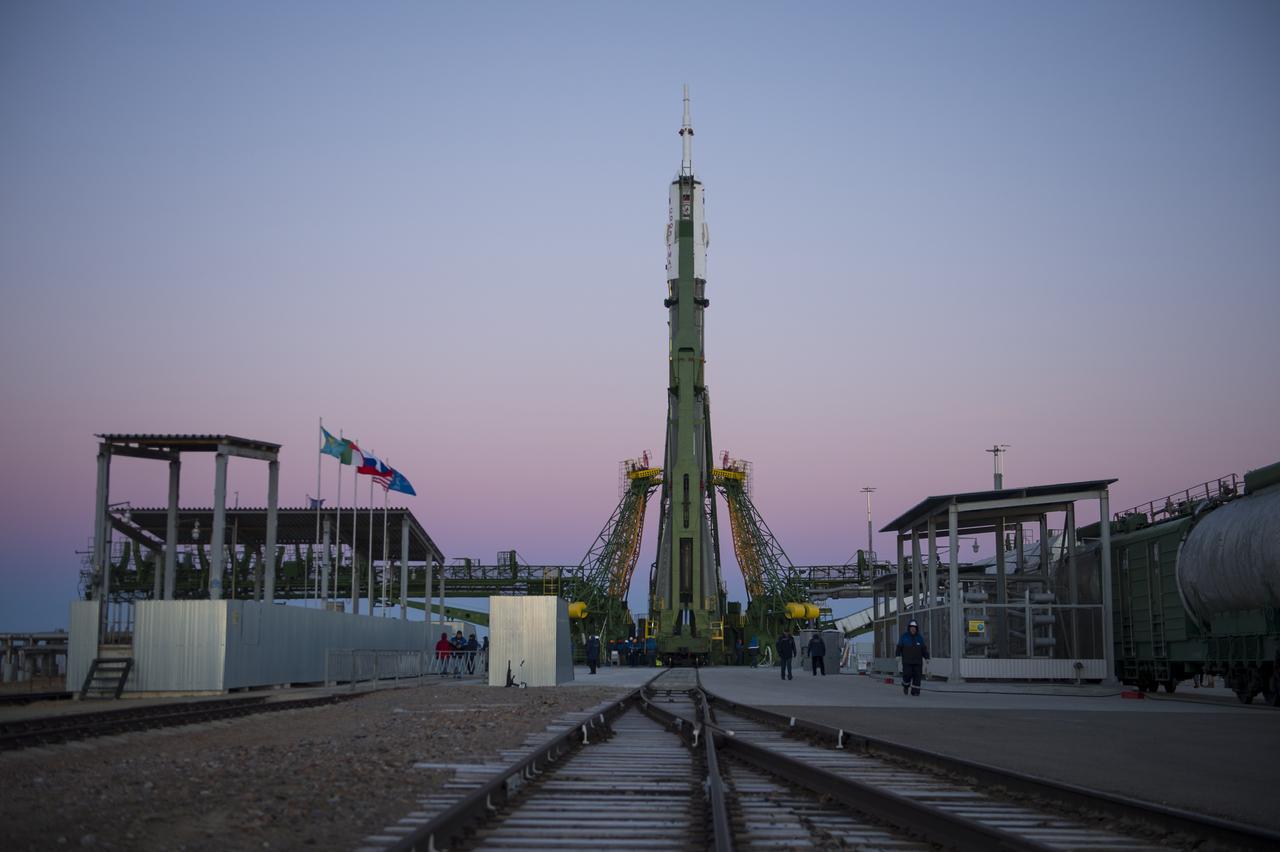
The Soyuz TMA-15M spacecraft is seen after being raised into a vertical position on the launch pad on Friday, Nov. 21, 2014 at the Baikonur Cosmodrome in Kazakhstan. Launch of the Soyuz rocket is scheduled for Nov. 24 and will carry Expedition 42 Soyuz Commander Anton Shkaplerov of the Russian Federal Space Agency (Roscosmos), Flight Engineer Terry Virts of NASA , and Flight Engineer Samantha Cristoforetti of the European Space Agency into orbit to begin their five and a half month mission on the International Space Station. Photo Credit: (NASA/Aubrey Gemignani)
The Soyuz TMA-15M spacecraft is seen after being raised into a vertical position on the launch pad on Friday, Nov. 21, 2014 at the Baikonur Cosmodrome in Kazakhstan. Launch of the Soyuz rocket is scheduled for Nov. 24 and will carry Expedition 42 Soyuz Commander Anton Shkaplerov of the Russian Federal Space Agency (Roscosmos), Flight Engineer Terry Virts of NASA , and Flight Engineer Samantha Cristoforetti of the European Space Agency into orbit to begin their five and a half month mission on the International Space Station. Photo Credit: (NASA/Aubrey Gemignani)
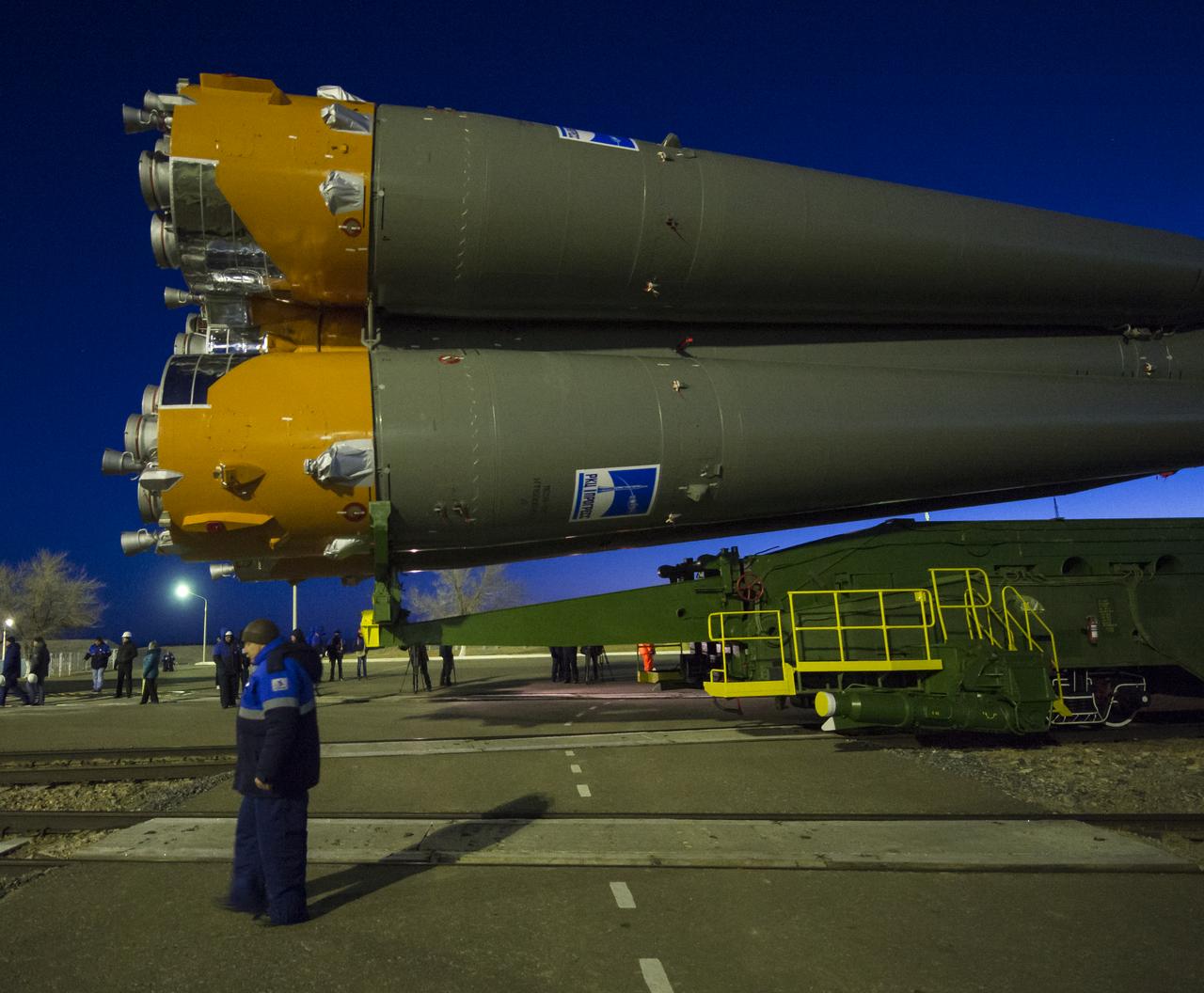
The Soyuz TMA-15M spacecraft is rolled out to the launch pad by train on Friday, Nov. 21, 2014 at the Baikonur Cosmodrome in Kazakhstan. Launch of the Soyuz rocket is scheduled for Nov. 24 and will carry Expedition 42 Soyuz Commander Anton Shkaplerov of the Russian Federal Space Agency (Roscosmos), Flight Engineer Terry Virts of NASA , and Flight Engineer Samantha Cristoforetti of the European Space Agency into orbit to begin their five and a half month mission on the International Space Station. Photo Credit: (NASA/Aubrey Gemignani)
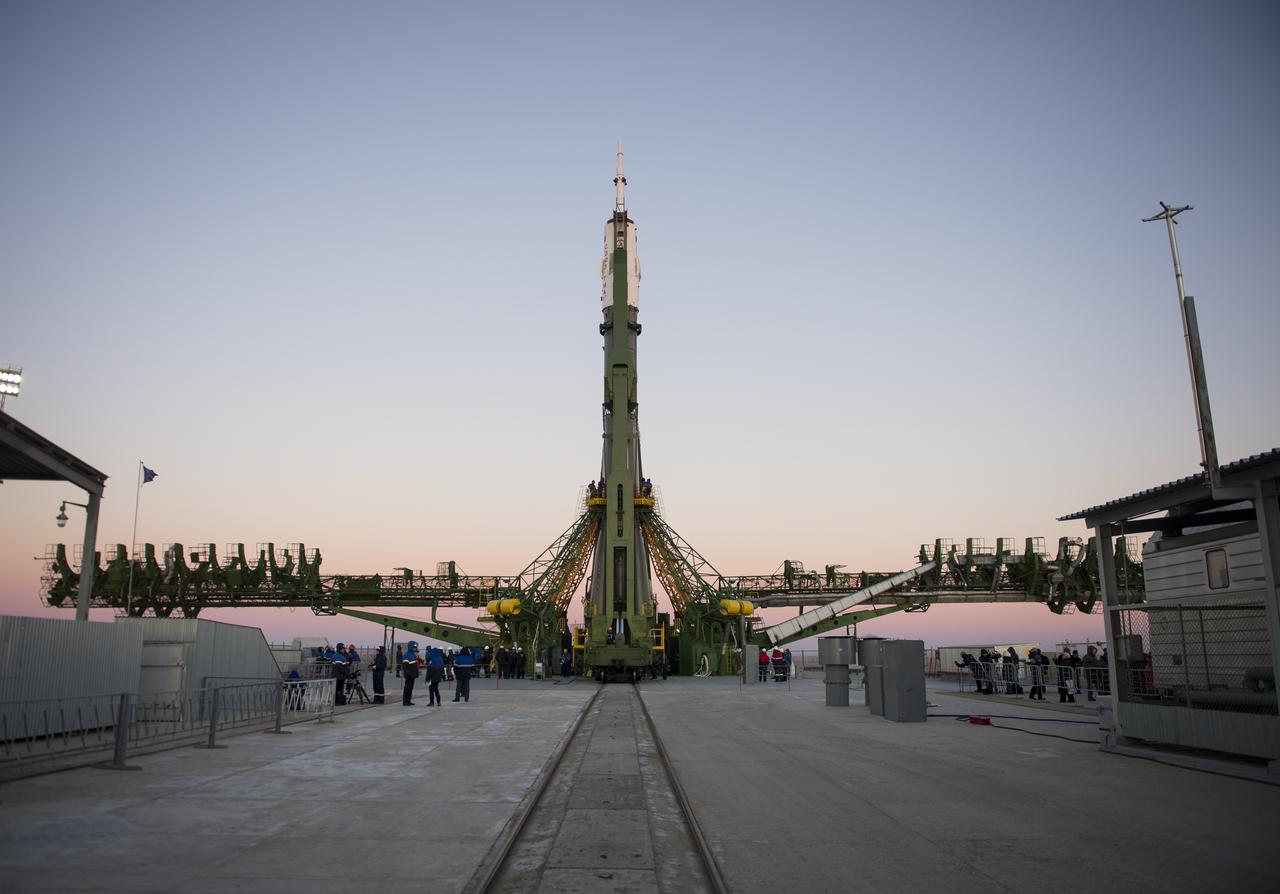
The Soyuz TMA-15M spacecraft is seen after being raised into a vertical position on the launch pad on Friday, Nov. 21, 2014 at the Baikonur Cosmodrome in Kazakhstan. Launch of the Soyuz rocket is scheduled for Nov. 24 and will carry Expedition 42 Soyuz Commander Anton Shkaplerov of the Russian Federal Space Agency (Roscosmos), Flight Engineer Terry Virts of NASA , and Flight Engineer Samantha Cristoforetti of the European Space Agency into orbit to begin their five and a half month mission on the International Space Station. Photo Credit: (NASA/Aubrey Gemignani)
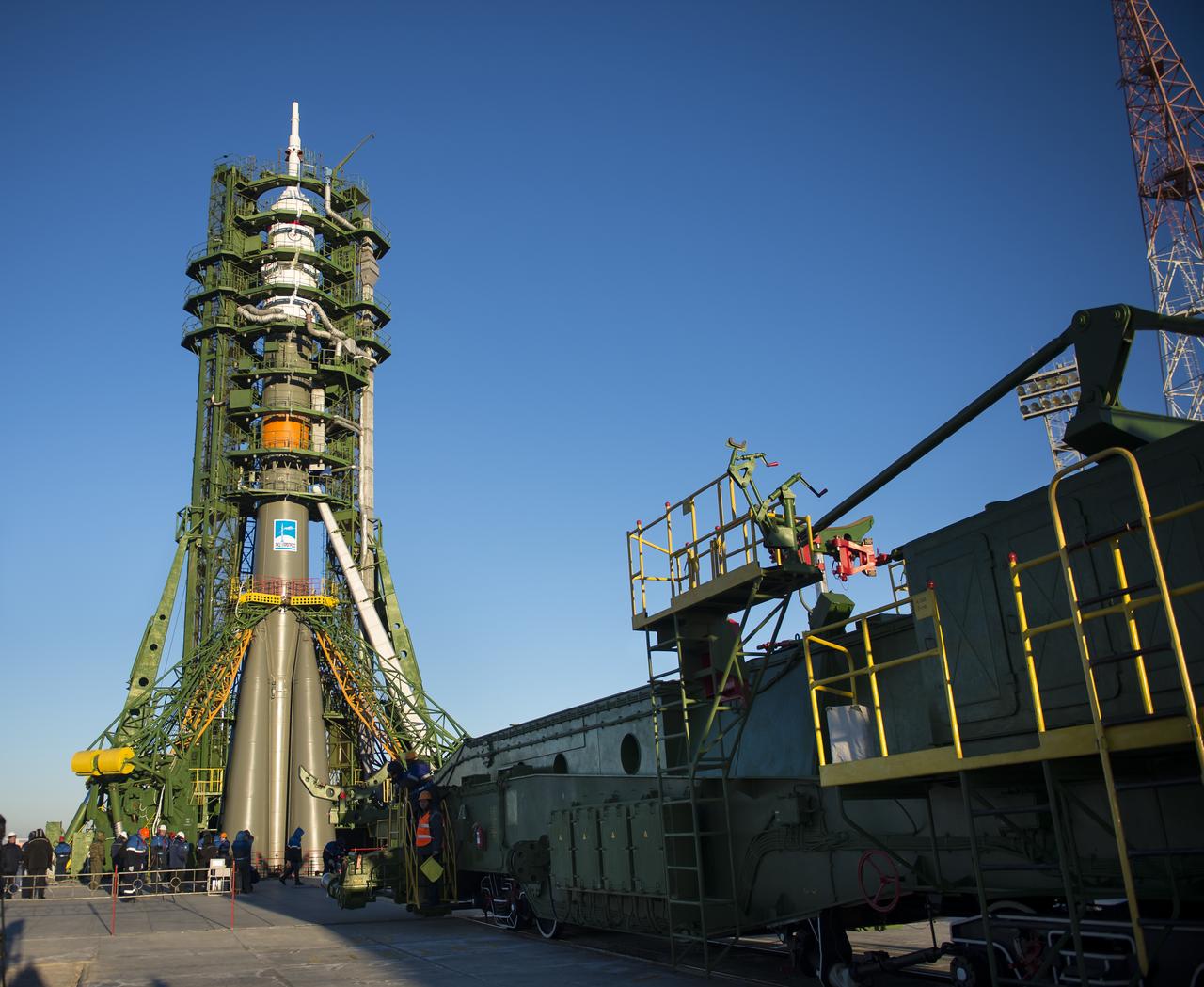
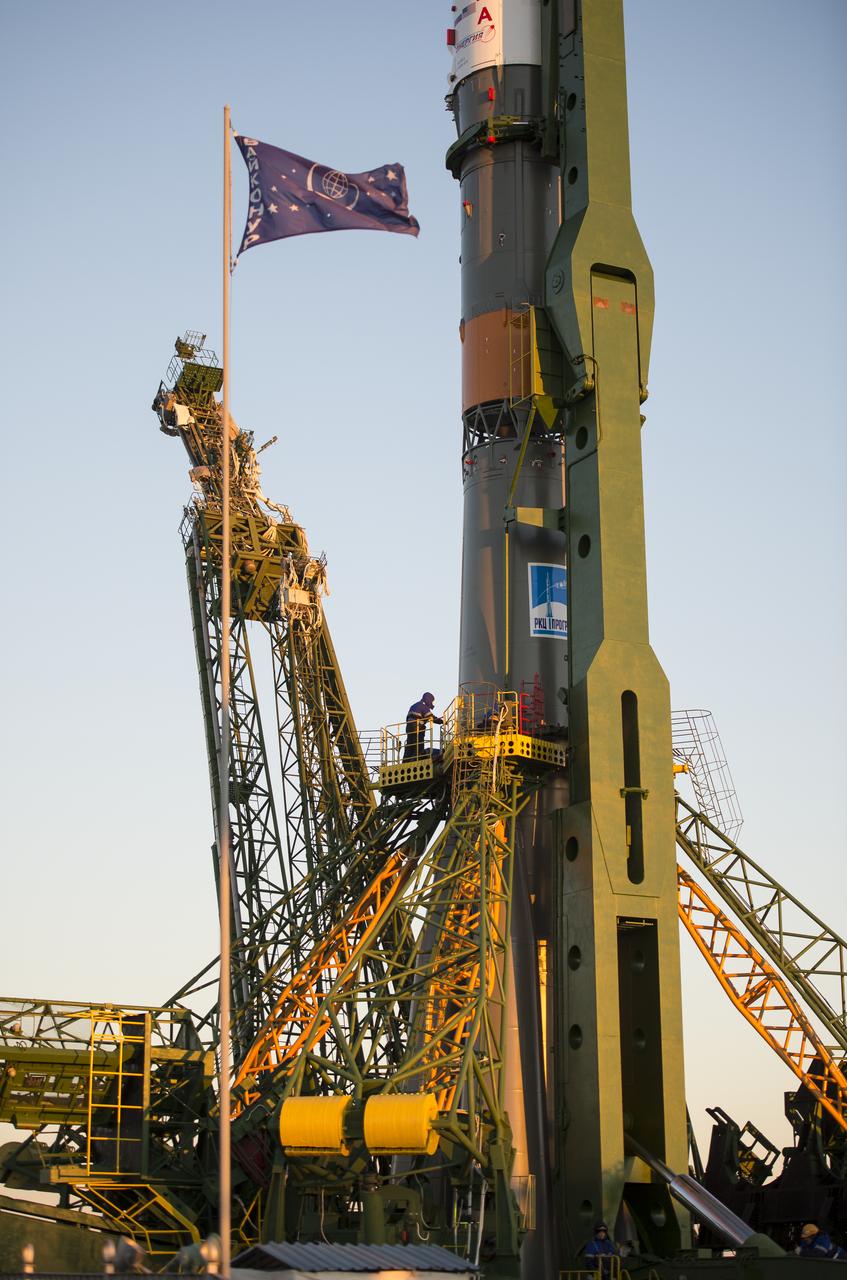
The Soyuz TMA-15M spacecraft is seen after the gantry arms closed to secure the rocket on the launch pad on Friday, Nov. 21, 2014 at the Baikonur Cosmodrome in Kazakhstan. Launch of the Soyuz rocket is scheduled for Nov. 24 and will carry Expedition 42 Soyuz Commander Anton Shkaplerov of the Russian Federal Space Agency (Roscosmos), Flight Engineer Terry Virts of NASA , and Flight Engineer Samantha Cristoforetti of the European Space Agency into orbit to begin their five and a half month mission on the International Space Station. Photo Credit: (NASA/Aubrey Gemignani)
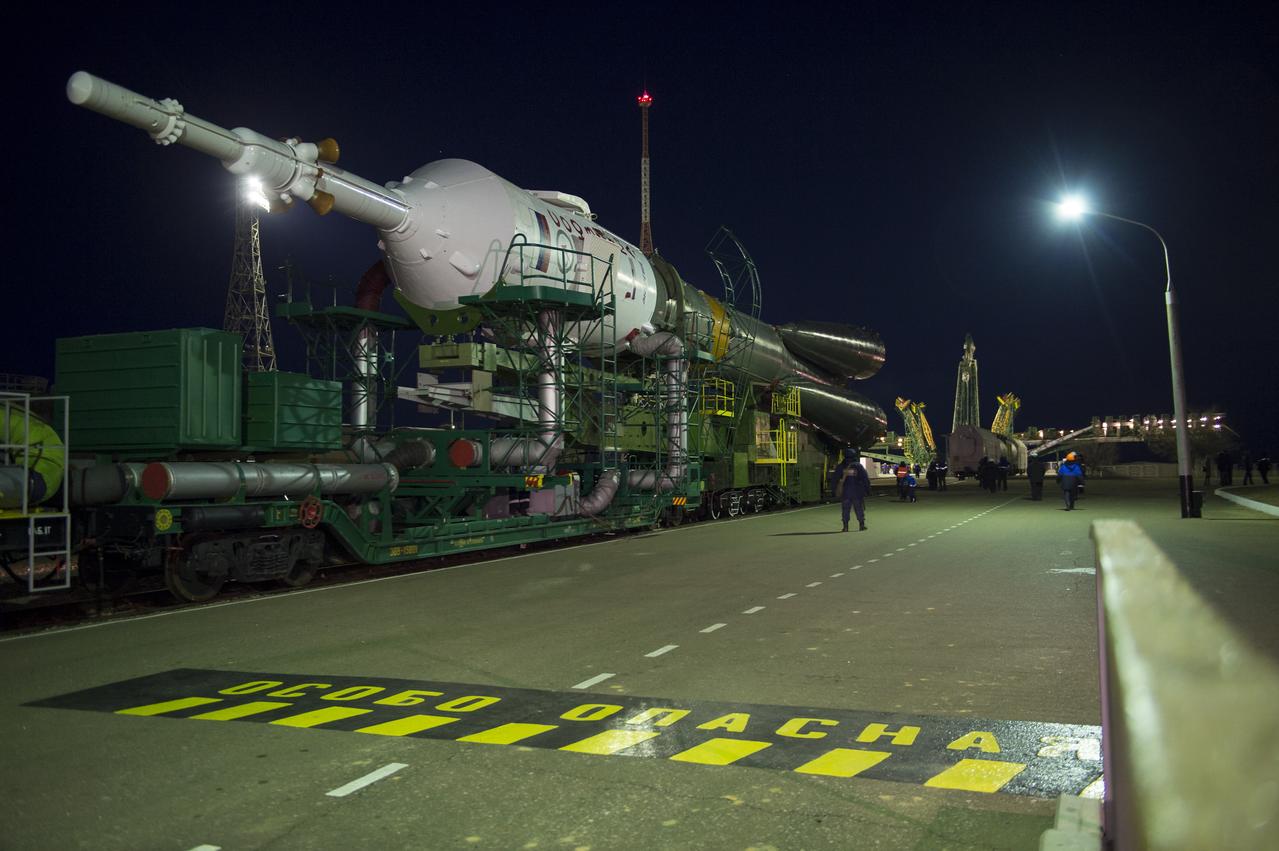
The Soyuz TMA-15M spacecraft is rolled out to the launch pad by train on Friday, Nov. 21, 2014 at the Baikonur Cosmodrome in Kazakhstan. Launch of the Soyuz rocket is scheduled for Nov. 24 and will carry Expedition 42 Soyuz Commander Anton Shkaplerov of the Russian Federal Space Agency (Roscosmos), Flight Engineer Terry Virts of NASA , and Flight Engineer Samantha Cristoforetti of the European Space Agency into orbit to begin their five and a half month mission on the International Space Station. Photo Credit: (NASA/Aubrey Gemignani)
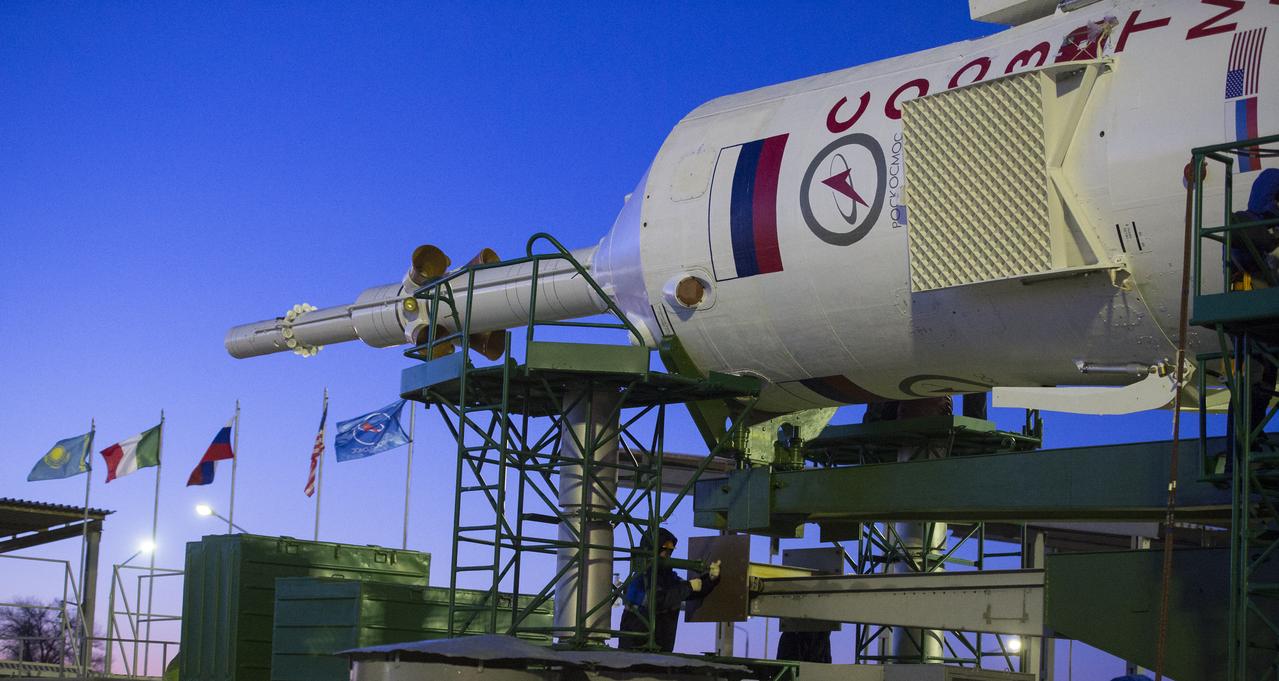
The Soyuz TMA-15M spacecraft is seen shortly after arriving at the launch pad by train on Friday, Nov. 21, 2014, at the Baikonur Cosmodrome in Kazakhstan. Launch of the Soyuz rocket is scheduled for Nov. 24 and will carry Expedition 42 Soyuz Commander Anton Shkaplerov of the Russian Federal Space Agency (Roscosmos), Flight Engineer Terry Virts of NASA , and Flight Engineer Samantha Cristoforetti of the European Space Agency into orbit to begin their five and a half month mission on the International Space Station. Photo Credit: (NASA/Aubrey Gemignani)
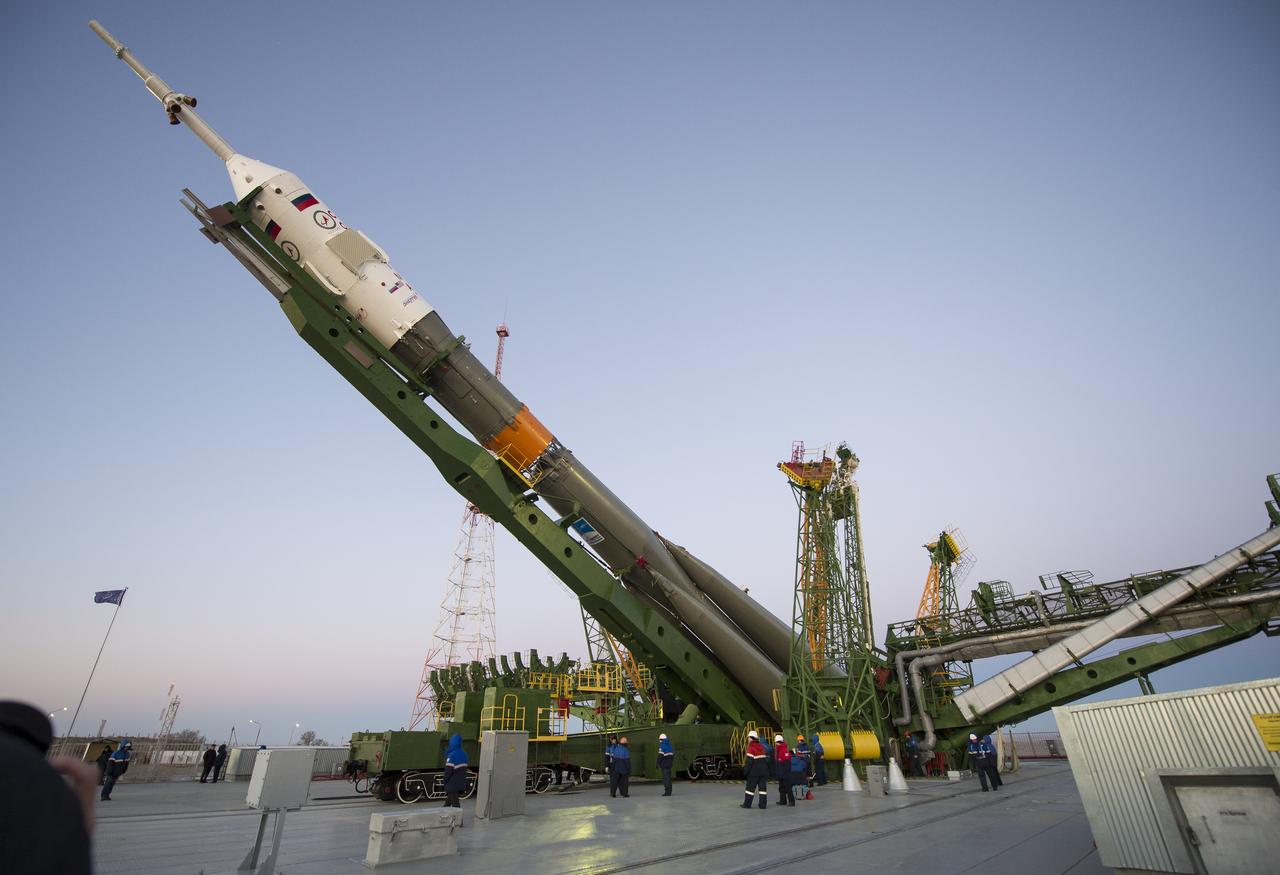
The Soyuz TMA-15M spacecraft is raised into position on the launch pad Friday, Nov. 21, 2014 at the Baikonur Cosmodrome in Kazakhstan. Launch of the Soyuz rocket is scheduled for Nov. 24 and will carry Expedition 42 Soyuz Commander Anton Shkaplerov of the Russian Federal Space Agency (Roscosmos), Flight Engineer Terry Virts of NASA , and Flight Engineer Samantha Cristoforetti of the European Space Agency into orbit to begin their five and a half month mission on the International Space Station. Photo Credit: (NASA/Aubrey Gemignani)
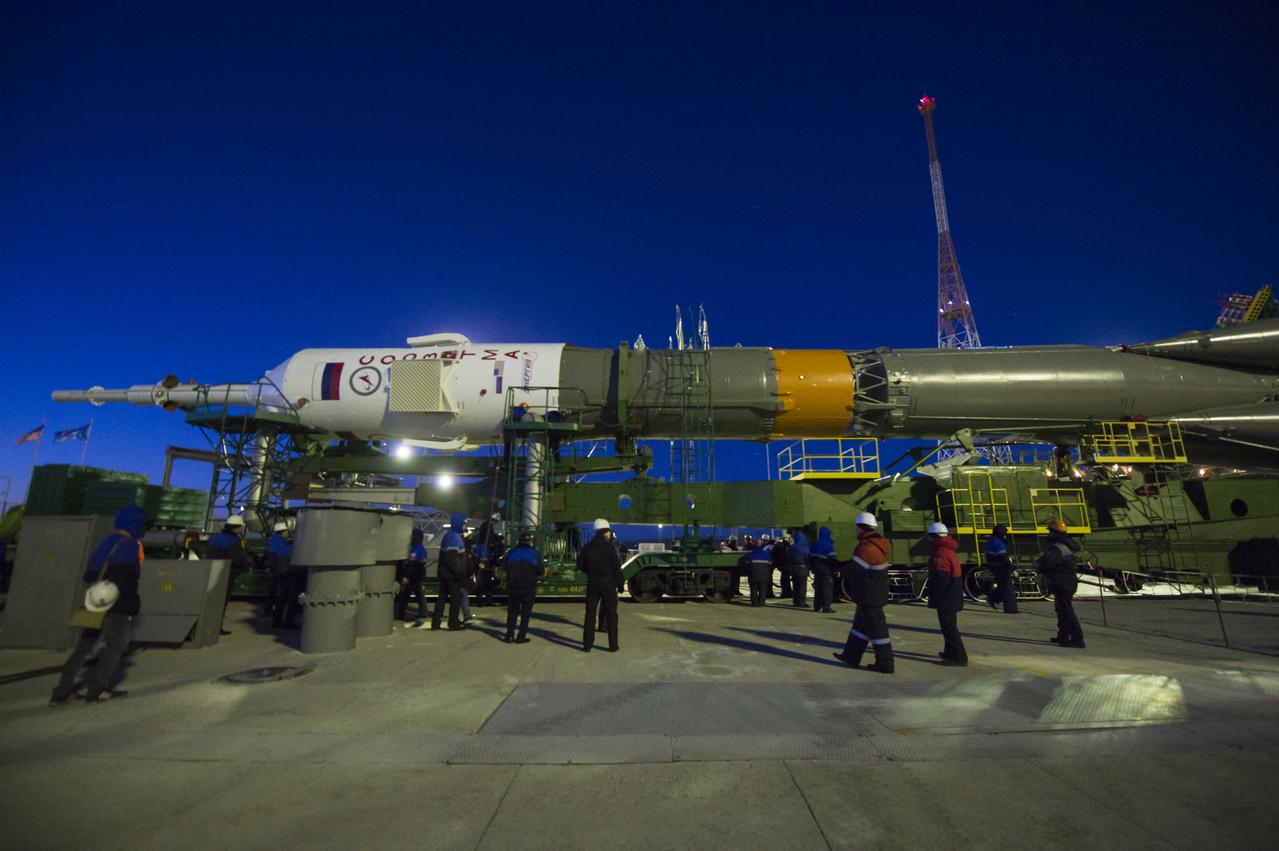
Workers prepare to raise the Soyuz TMA-15M spacecraft into the vertical position on Friday, Nov. 21, 2014 at the Baikonur Cosmodrome in Kazakhstan. Launch of the Soyuz rocket is scheduled for Nov. 24 and will carry Expedition 42 Soyuz Commander Anton Shkaplerov of the Russian Federal Space Agency (Roscosmos), Flight Engineer Terry Virts of NASA, and Flight Engineer Samantha Cristoforetti of the European Space Agency into orbit to begin their five and a half month mission on the International Space Station. Photo Credit: (NASA/Aubrey Gemignani)
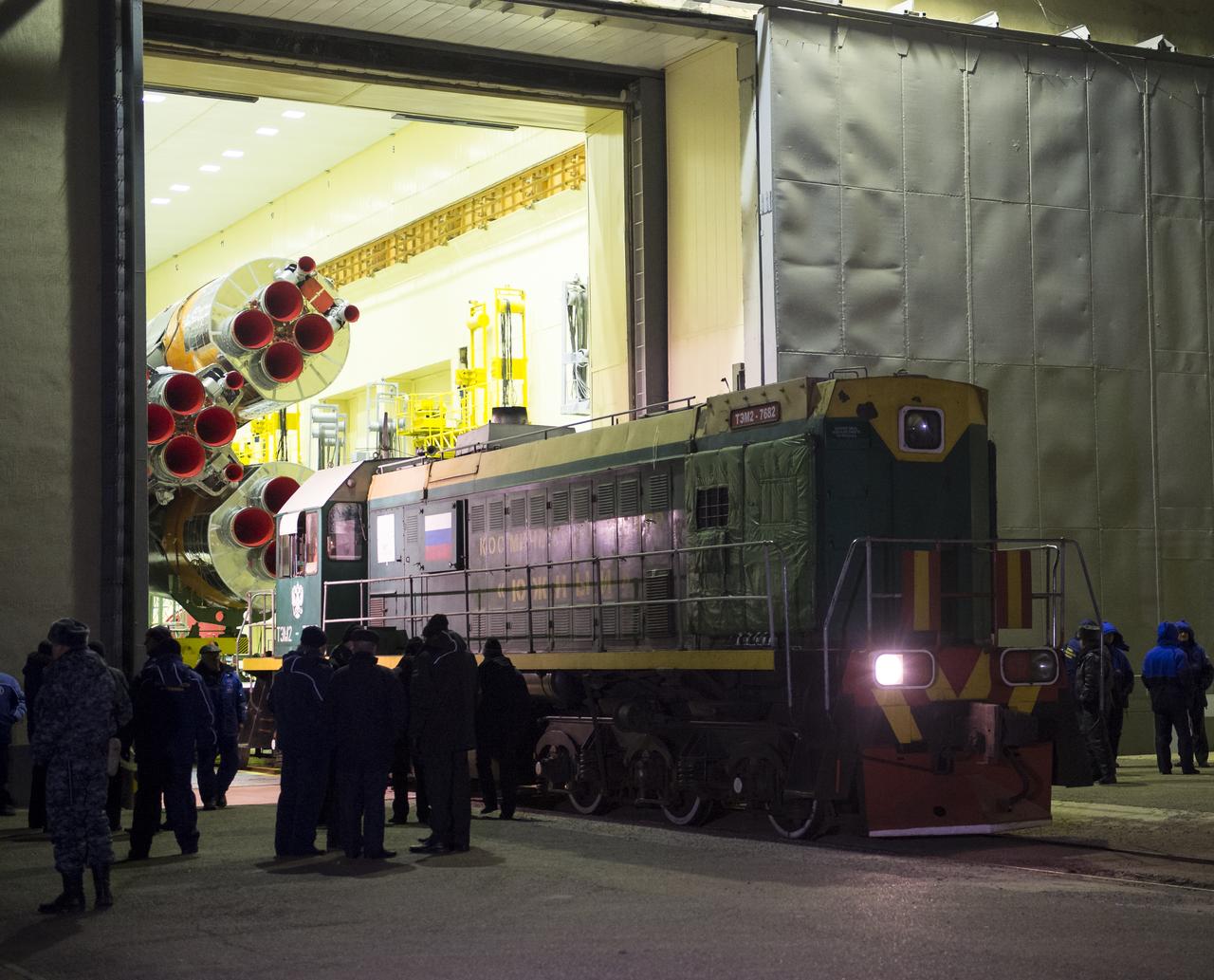
The Soyuz rocket is prepared to be rolled out by train to the launch pad on Friday, Nov. 21, 2014 at the Baikonur Cosmodrome in Kazakhstan. The Soyuz TMA-15M spacecraft, scheduled to launch Nov. 24, will carry Expedition 42 Soyuz Commander Anton Shkaplerov of the Russian Federal Space Agency (Roscosmos), Flight Engineer Terry Virts of NASA , and Flight Engineer Samantha Cristoforetti of the European Space Agency into orbit to begin their five and a half month mission on the International Space Station. Photo Credit: (NASA/Aubrey Gemignani)
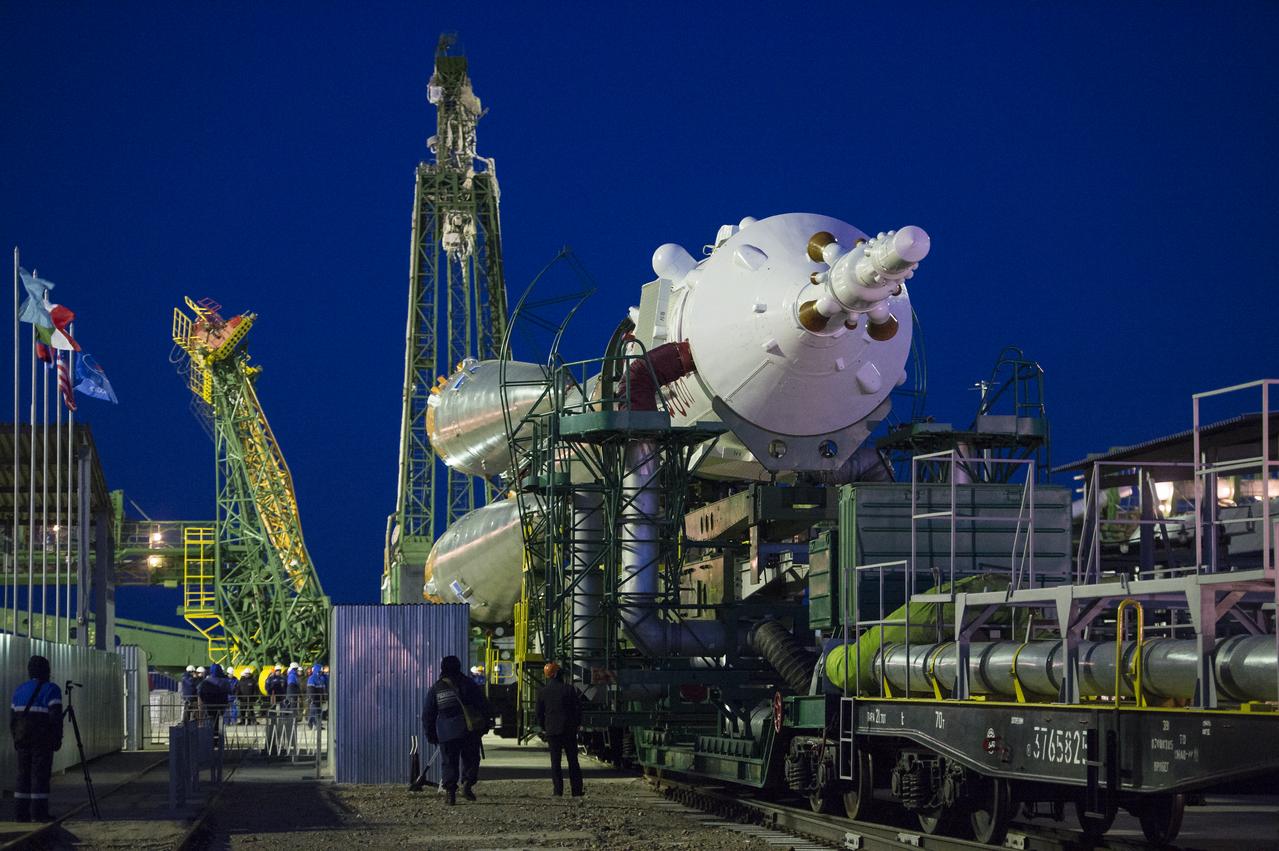
The Soyuz TMA-15M spacecraft is rolled out to the launch pad by train on Friday, Nov. 21, 2014 at the Baikonur Cosmodrome in Kazakhstan. Launch of the Soyuz rocket is scheduled for Nov. 24 and will carry Expedition 42 Soyuz Commander Anton Shkaplerov of the Russian Federal Space Agency (Roscosmos), Flight Engineer Terry Virts of NASA , and Flight Engineer Samantha Cristoforetti of the European Space Agency into orbit to begin their five and a half month mission on the International Space Station. Photo Credit: (NASA/Aubrey Gemignani)
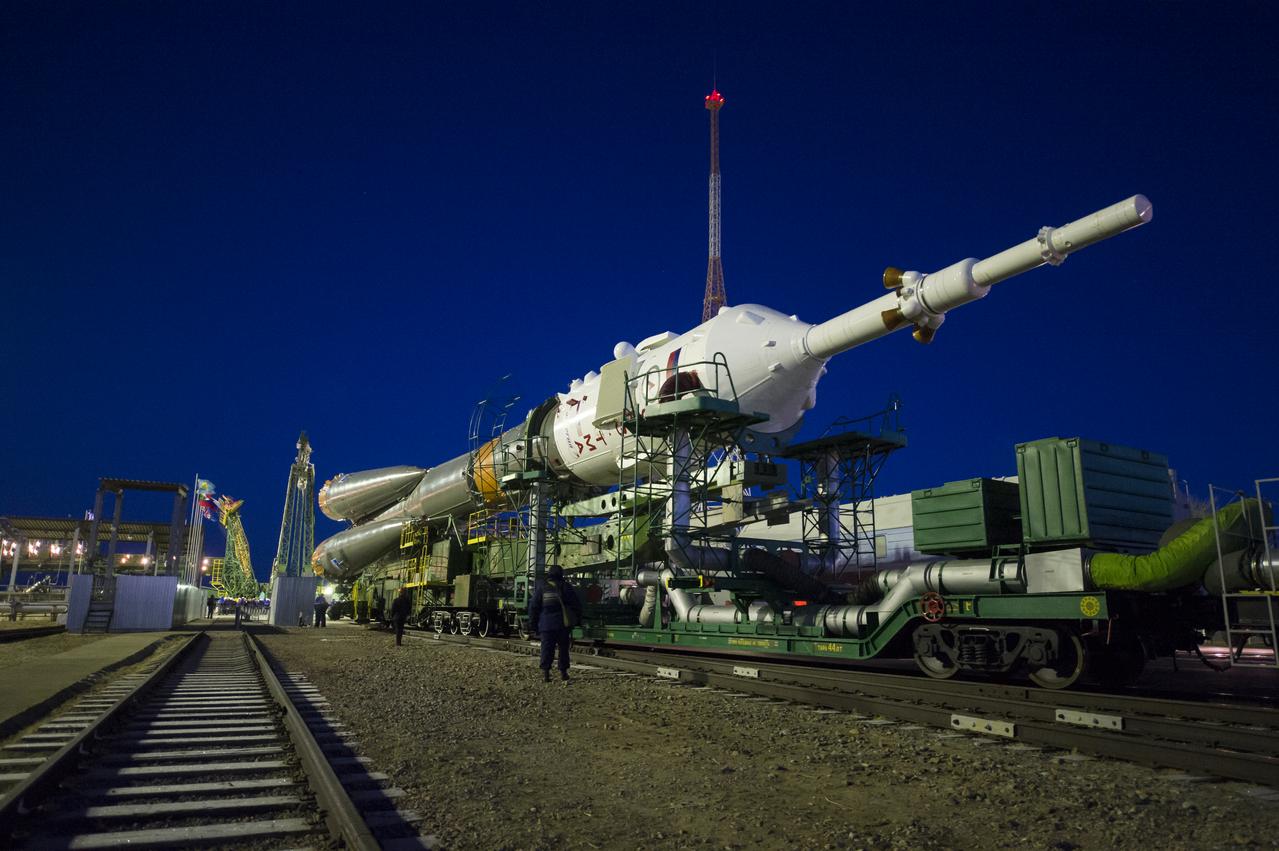
The Soyuz TMA-15M spacecraft is rolled out to the launch pad by train on Friday, Nov. 21, 2014 at the Baikonur Cosmodrome in Kazakhstan. Launch of the Soyuz rocket is scheduled for Nov. 24 and will carry Expedition 42 Soyuz Commander Anton Shkaplerov of the Russian Federal Space Agency (Roscosmos), Flight Engineer Terry Virts of NASA , and Flight Engineer Samantha Cristoforetti of the European Space Agency into orbit to begin their five and a half month mission on the International Space Station. Photo Credit: (NASA/Aubrey Gemignani)
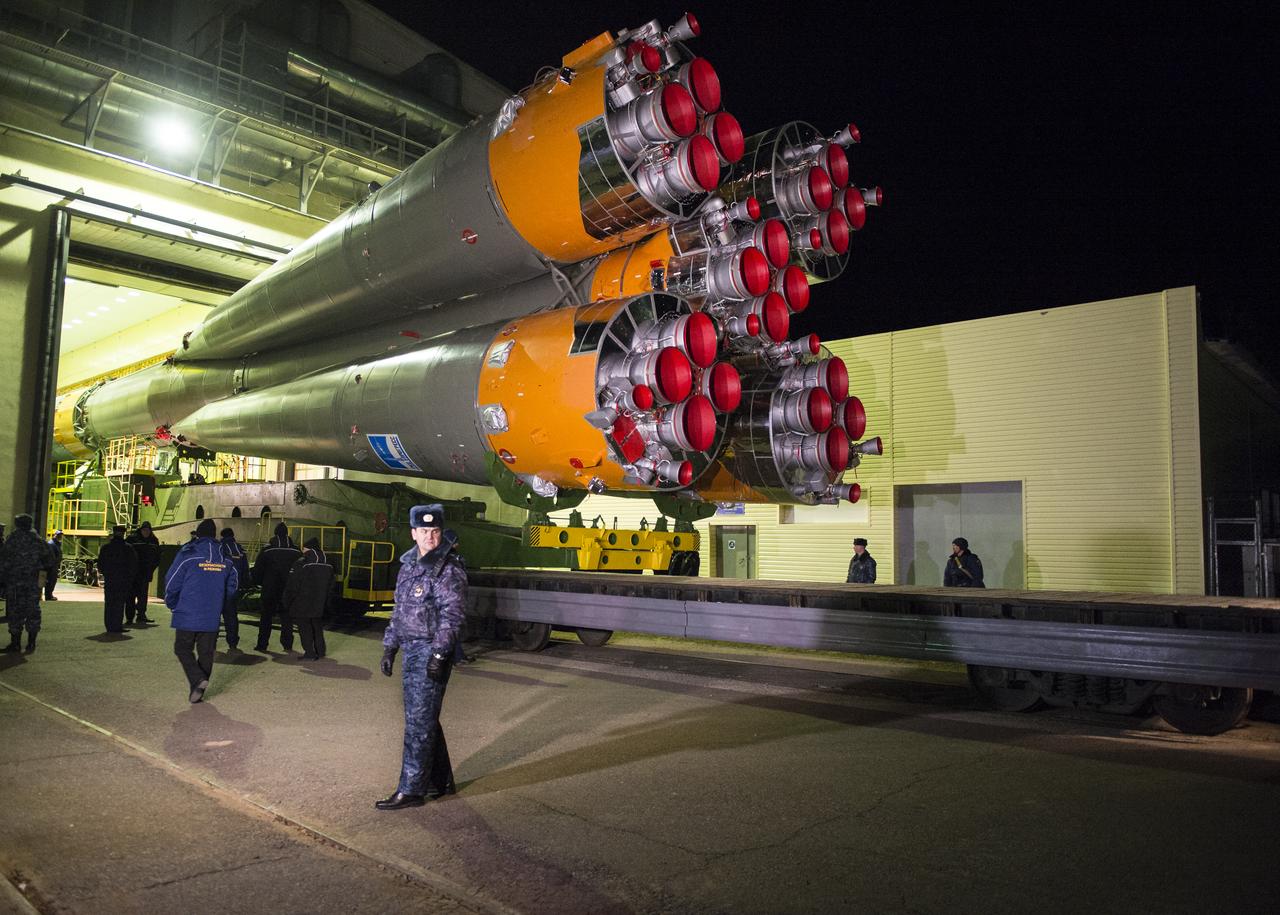
The Soyuz TMA-15M spacecraft is rolled out to the launch pad by train on Friday, Nov. 21, 2014 at the Baikonur Cosmodrome in Kazakhstan. Launch of the Soyuz rocket is scheduled for Nov. 24 and will carry Expedition 42 Soyuz Commander Anton Shkaplerov of the Russian Federal Space Agency (Roscosmos), Flight Engineer Terry Virts of NASA , and Flight Engineer Samantha Cristoforetti of the European Space Agency into orbit to begin their five and a half month mission on the International Space Station. Photo Credit: (NASA/Aubrey Gemignani)
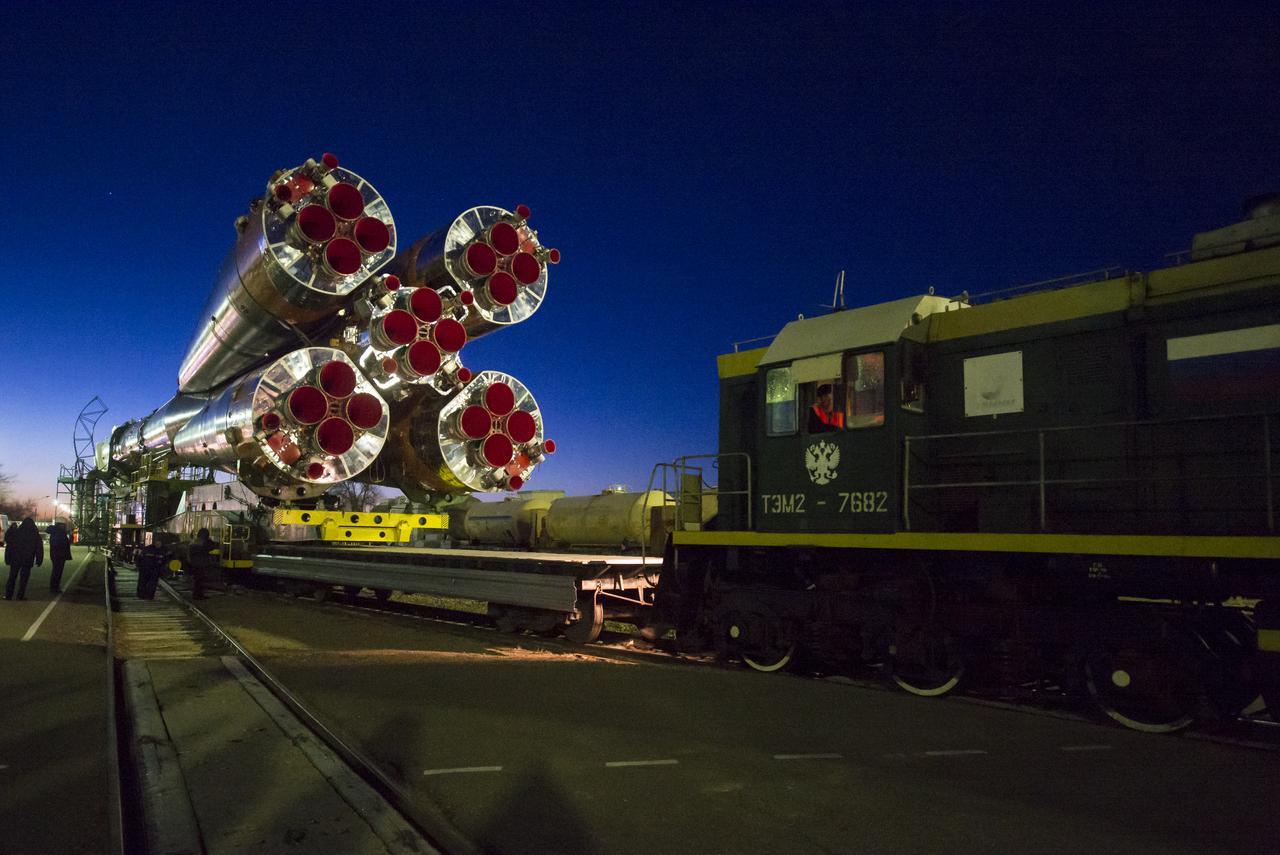
The Soyuz TMA-15M spacecraft is rolled out to the launch pad by train on Friday, Nov. 21, 2014 at the Baikonur Cosmodrome in Kazakhstan. Launch of the Soyuz rocket is scheduled for Nov. 24 and will carry Expedition 42 Soyuz Commander Anton Shkaplerov of the Russian Federal Space Agency (Roscosmos), Flight Engineer Terry Virts of NASA , and Flight Engineer Samantha Cristoforetti of the European Space Agency into orbit to begin their five and a half month mission on the International Space Station. Photo Credit: (NASA/Aubrey Gemignani)
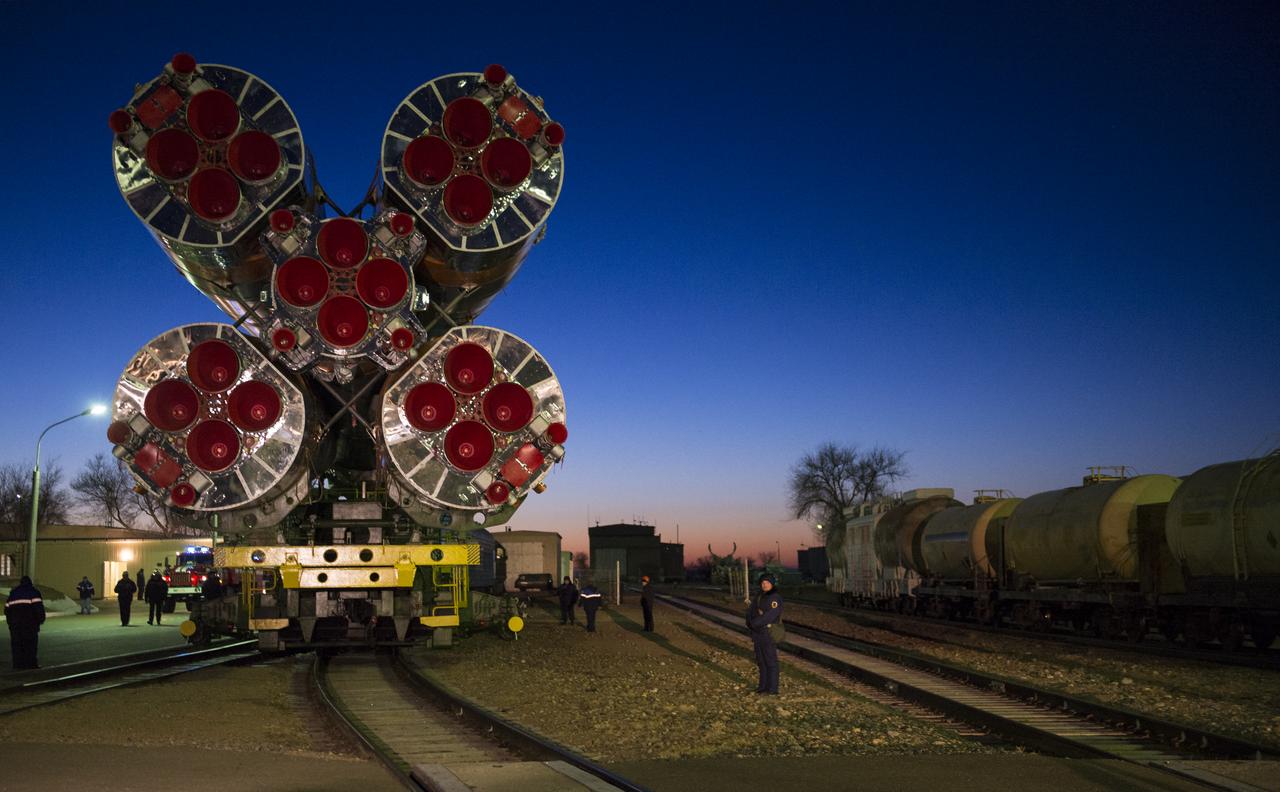
The Soyuz TMA-15M spacecraft is rolled out to the launch pad by train on Friday, Nov. 21, 2014 at the Baikonur Cosmodrome in Kazakhstan. Launch of the Soyuz rocket is scheduled for Nov. 24 and will carry Expedition 42 Soyuz Commander Anton Shkaplerov of the Russian Federal Space Agency (Roscosmos), Flight Engineer Terry Virts of NASA , and Flight Engineer Samantha Cristoforetti of the European Space Agency into orbit to begin their five and a half month mission on the International Space Station. Photo Credit: (NASA/Aubrey Gemignani)

The Soyuz TMA-15M spacecraft is rolled out to the launch pad by train on Friday, Nov. 21, 2014 at the Baikonur Cosmodrome in Kazakhstan. Launch of the Soyuz rocket is scheduled for Nov. 24 and will carry Expedition 42 Soyuz Commander Anton Shkaplerov of the Russian Federal Space Agency (Roscosmos), Flight Engineer Terry Virts of NASA , and Flight Engineer Samantha Cristoforetti of the European Space Agency into orbit to begin their five and a half month mission on the International Space Station. Photo Credit: (NASA/Aubrey Gemignani)
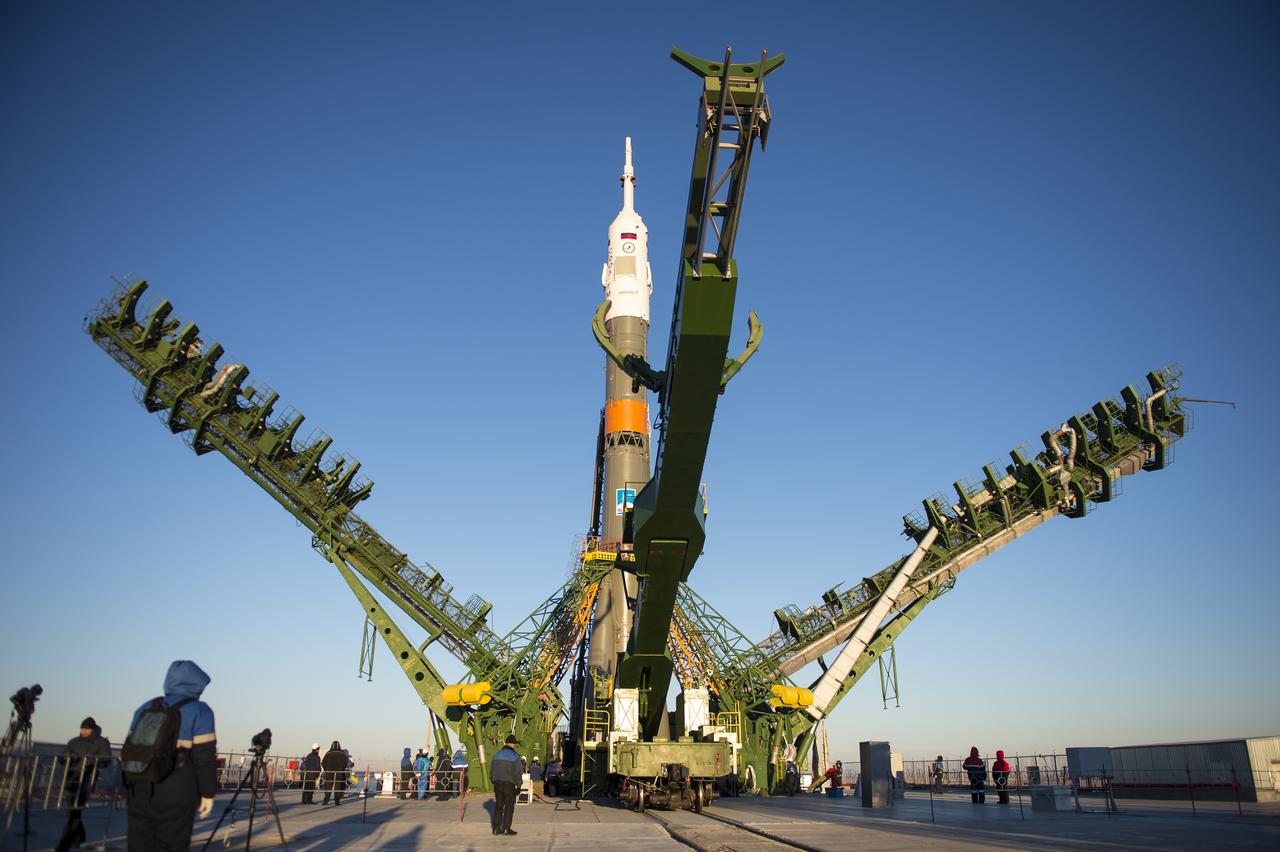
The gantry arms close around the Soyuz TMA-15M spacecraft to secure the rocket at the launch pad on Friday, Nov. 21, 2014 at the Baikonur Cosmodrome in Kazakhstan. Launch of the Soyuz rocket is scheduled for Nov. 24 and will carry Expedition 42 Soyuz Commander Anton Shkaplerov of the Russian Federal Space Agency (Roscosmos), Flight Engineer Terry Virts of NASA , and Flight Engineer Samantha Cristoforetti of the European Space Agency into orbit to begin their five and a half month mission on the International Space Station. Photo Credit: (NASA/Aubrey Gemignani)
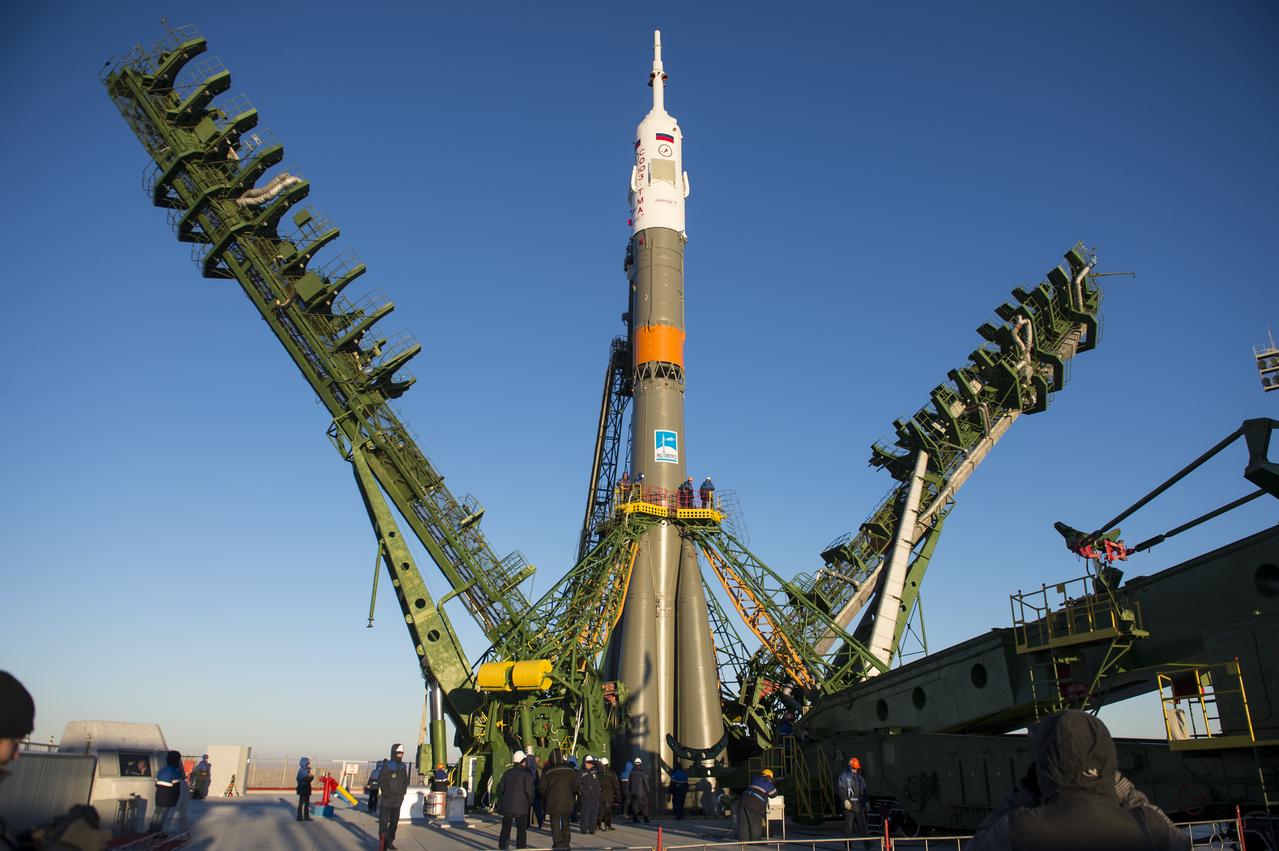
The gantry arms close around the Soyuz TMA-15M spacecraft to secure the rocket at the launch pad on Friday, Nov. 21, 2014 at the Baikonur Cosmodrome in Kazakhstan. Launch of the Soyuz rocket is scheduled for Nov. 24 and will carry Expedition 42 Soyuz Commander Anton Shkaplerov of the Russian Federal Space Agency (Roscosmos), Flight Engineer Terry Virts of NASA , and Flight Engineer Samantha Cristoforetti of the European Space Agency into orbit to begin their five and a half month mission on the International Space Station. Photo Credit: (NASA/Aubrey Gemignani)
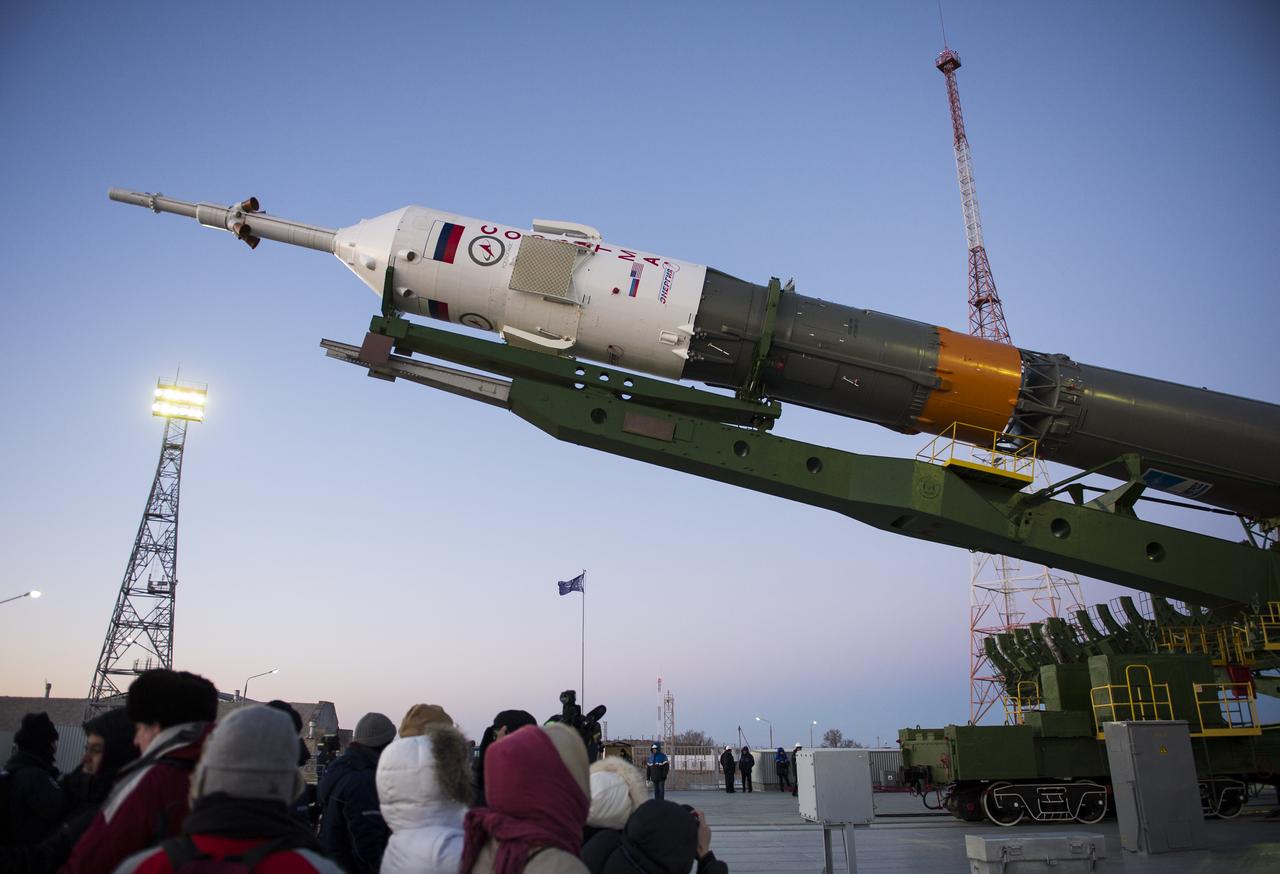
The Soyuz TMA-15M spacecraft is raised into position on the launch pad Friday, Nov. 21, 2014 at the Baikonur Cosmodrome in Kazakhstan. Launch of the Soyuz rocket is scheduled for Nov. 24 and will carry Expedition 42 Soyuz Commander Anton Shkaplerov of the Russian Federal Space Agency (Roscosmos), Flight Engineer Terry Virts of NASA , and Flight Engineer Samantha Cristoforetti of the European Space Agency into orbit to begin their five and a half month mission on the International Space Station. Photo Credit: (NASA/Aubrey Gemignani)
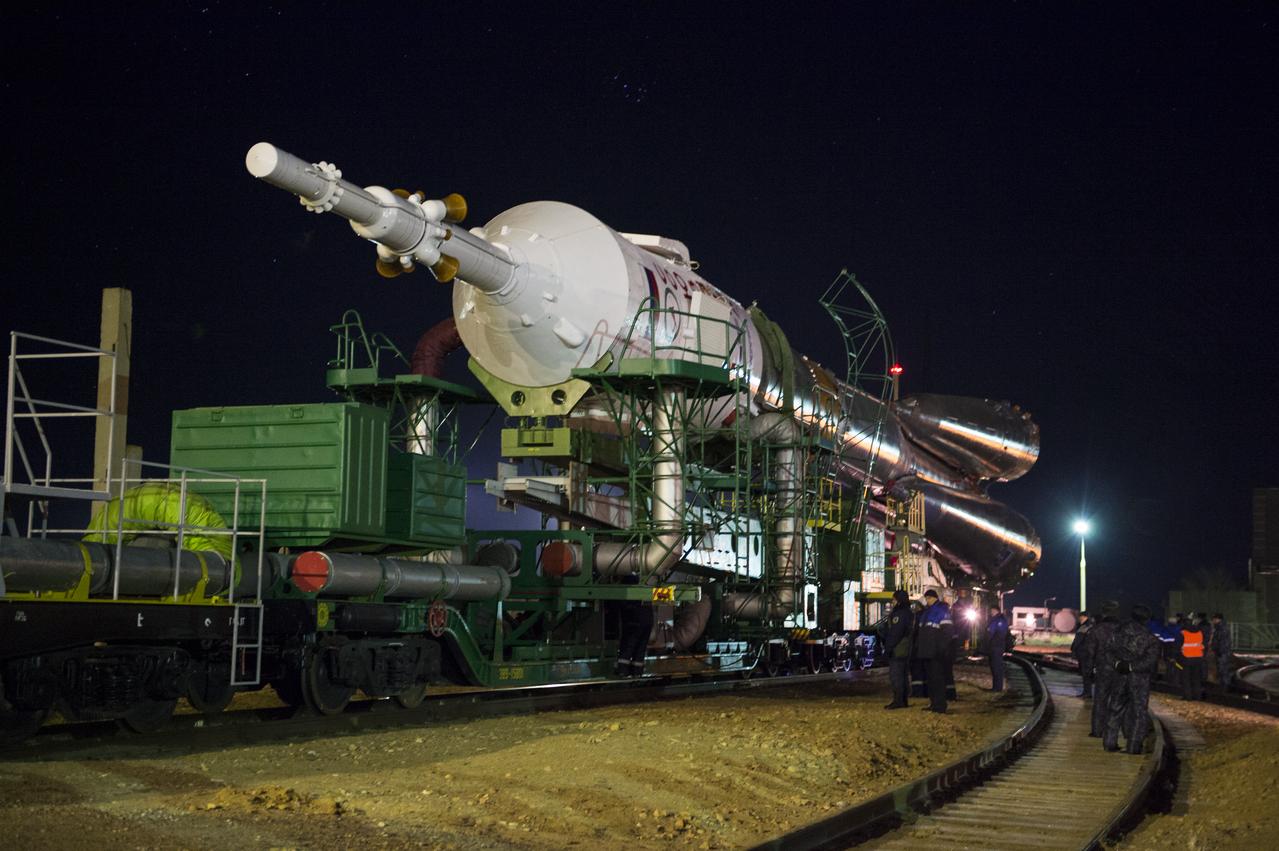
The Soyuz TMA-15M spacecraft is rolled out to the launch pad by train on Friday, Nov. 21, 2014 at the Baikonur Cosmodrome in Kazakhstan. Launch of the Soyuz rocket is scheduled for Nov. 24 and will carry Expedition 42 Soyuz Commander Anton Shkaplerov of the Russian Federal Space Agency (Roscosmos), Flight Engineer Terry Virts of NASA , and Flight Engineer Samantha Cristoforetti of the European Space Agency into orbit to begin their five and a half month mission on the International Space Station. Photo Credit: (NASA/Aubrey Gemignani)
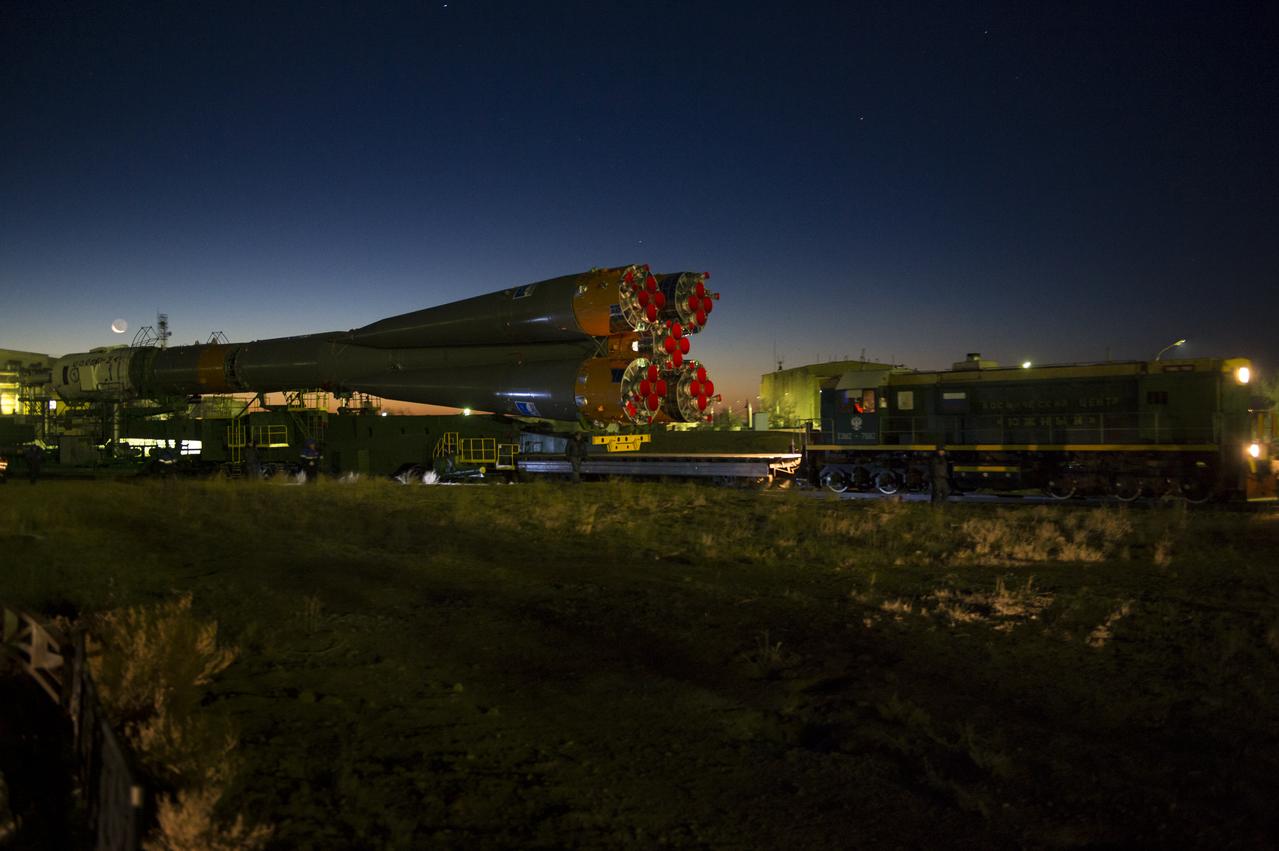
The Soyuz TMA-15M spacecraft is rolled out to the launch pad by train on Friday, Nov. 21, 2014 at the Baikonur Cosmodrome in Kazakhstan. Launch of the Soyuz rocket is scheduled for Nov. 24 and will carry Expedition 42 Soyuz Commander Anton Shkaplerov of the Russian Federal Space Agency (Roscosmos), Flight Engineer Terry Virts of NASA , and Flight Engineer Samantha Cristoforetti of the European Space Agency into orbit to begin their five and a half month mission on the International Space Station. Photo Credit: (NASA/Aubrey Gemignani)
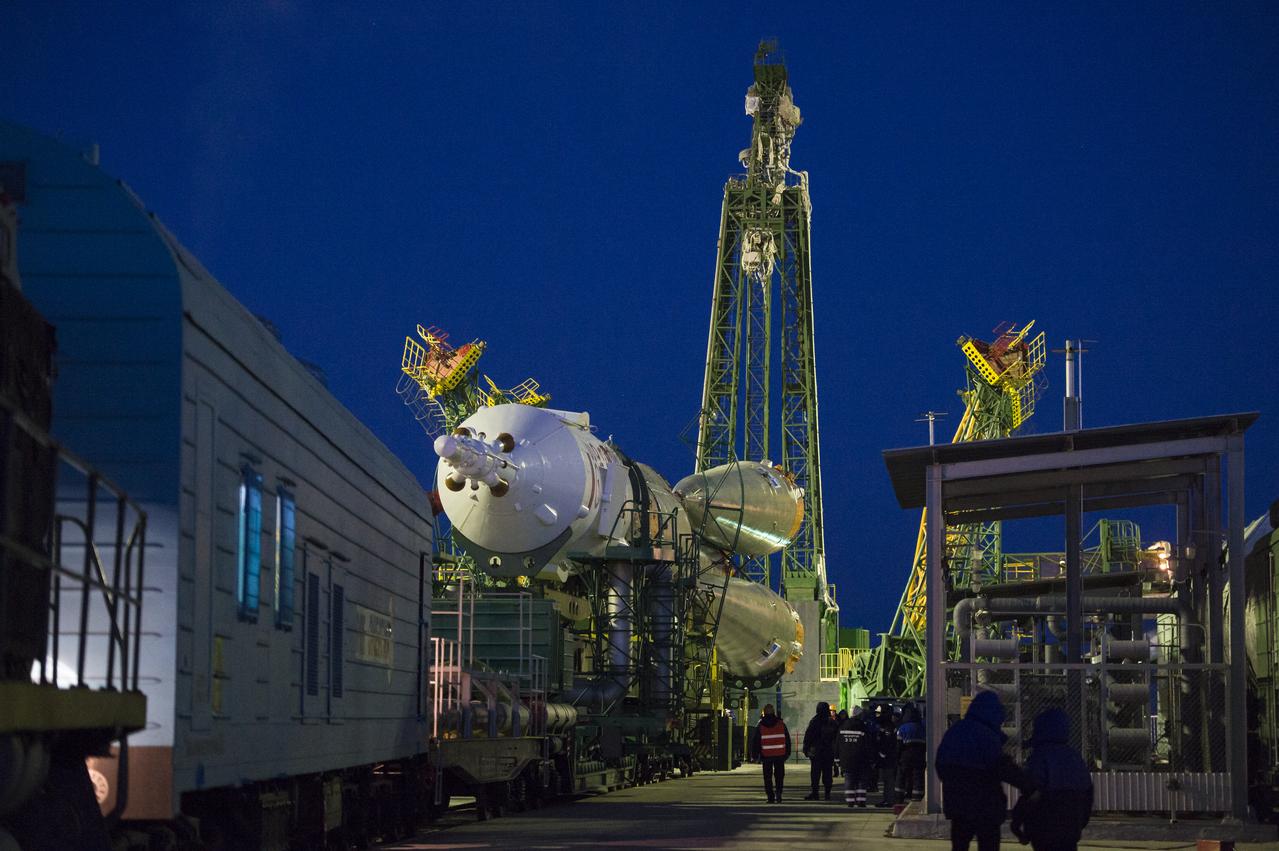
The Soyuz TMA-15M spacecraft is seen shortly after arriving at the launch pad by train on Friday, Nov. 21, 2014, at the Baikonur Cosmodrome in Kazakhstan. Launch of the Soyuz rocket is scheduled for Nov. 24 and will carry Expedition 42 Soyuz Commander Anton Shkaplerov of the Russian Federal Space Agency (Roscosmos), Flight Engineer Terry Virts of NASA , and Flight Engineer Samantha Cristoforetti of the European Space Agency into orbit to begin their five and a half month mission on the International Space Station. Photo Credit: (NASA/Aubrey Gemignani)
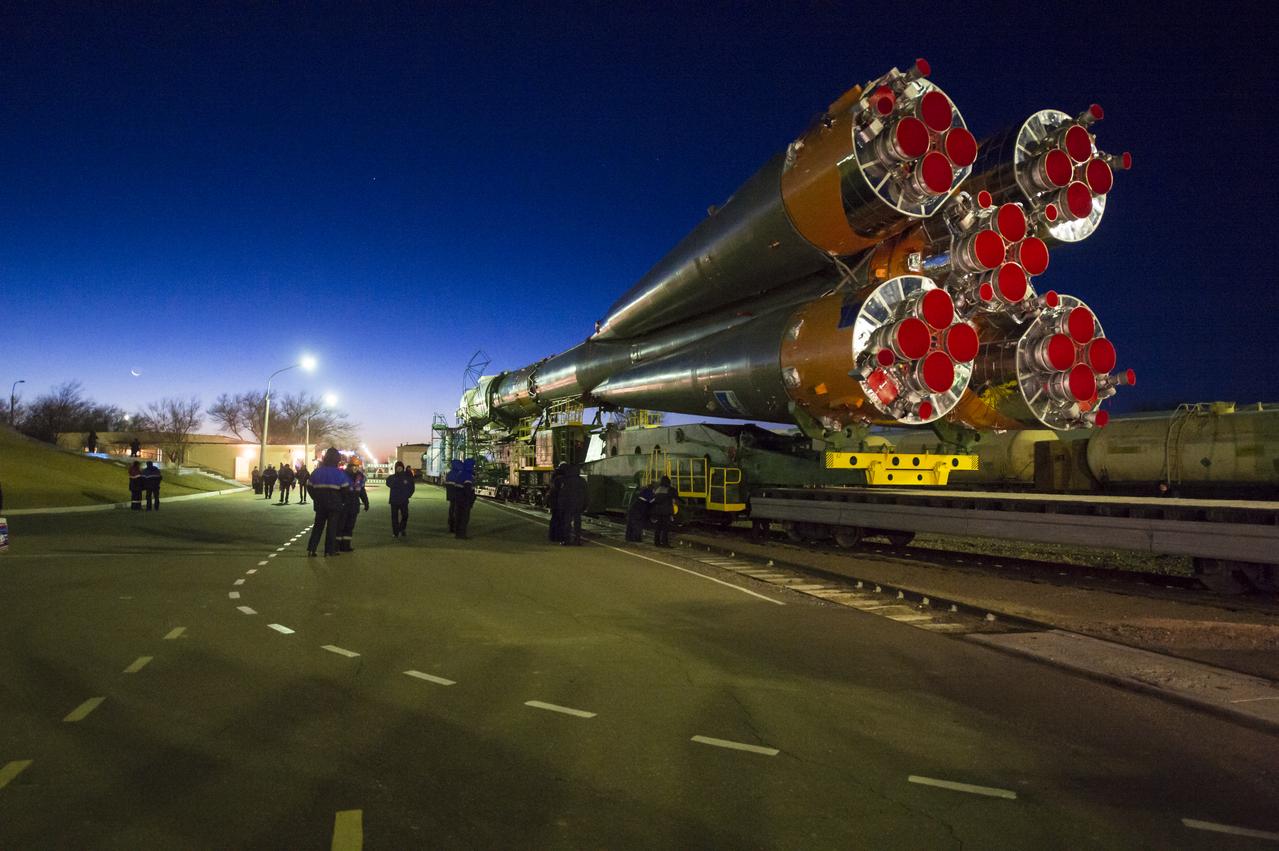
The Soyuz TMA-15M spacecraft is rolled out to the launch pad by train on Friday, Nov. 21, 2014 at the Baikonur Cosmodrome in Kazakhstan. Launch of the Soyuz rocket is scheduled for Nov. 24 and will carry Expedition 42 Soyuz Commander Anton Shkaplerov of the Russian Federal Space Agency (Roscosmos), Flight Engineer Terry Virts of NASA , and Flight Engineer Samantha Cristoforetti of the European Space Agency into orbit to begin their five and a half month mission on the International Space Station. Photo Credit: (NASA/Aubrey Gemignani)
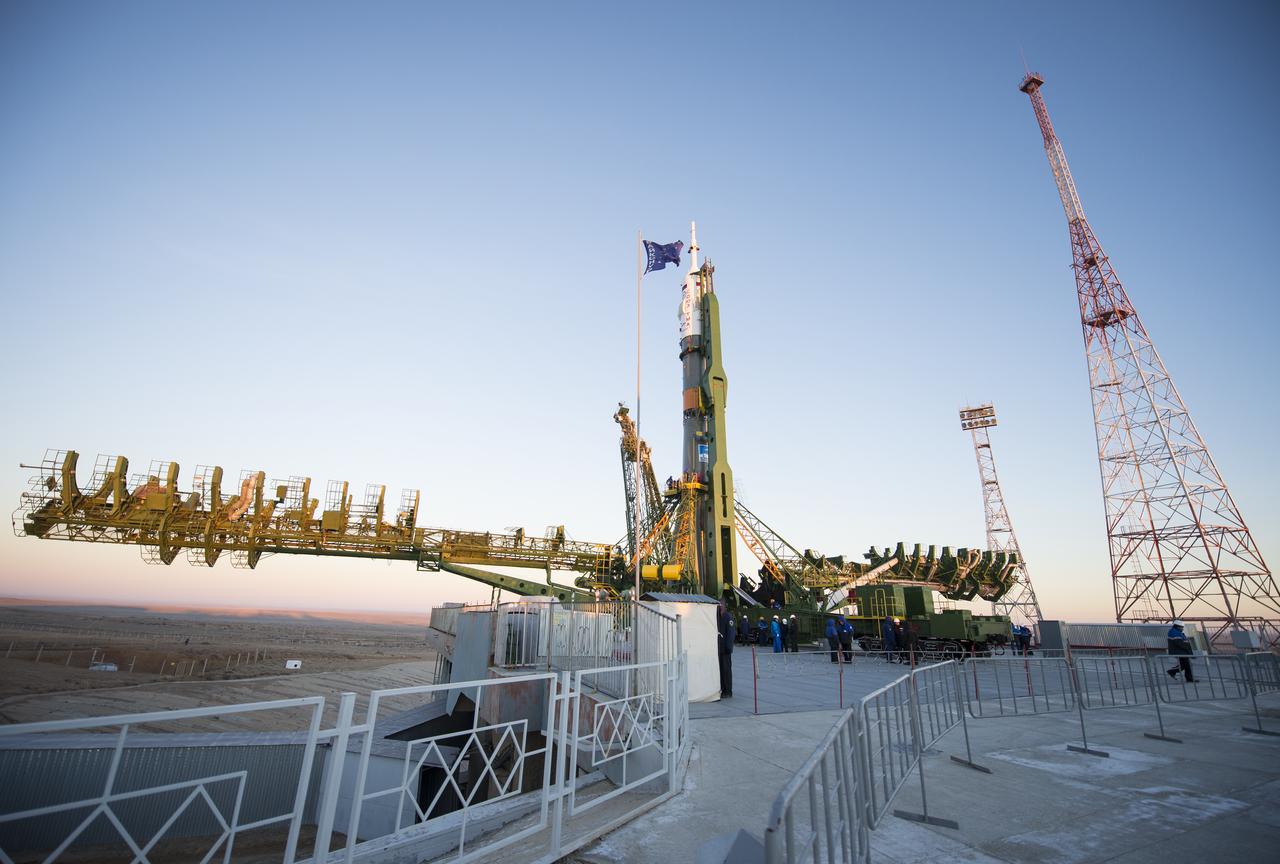
The Soyuz TMA-15M spacecraft is seen after being raised into a vertical position on the launch pad on Friday, Nov. 21, 2014 at the Baikonur Cosmodrome in Kazakhstan. Launch of the Soyuz rocket is scheduled for Nov. 24 and will carry Expedition 42 Soyuz Commander Anton Shkaplerov of the Russian Federal Space Agency (Roscosmos), Flight Engineer Terry Virts of NASA , and Flight Engineer Samantha Cristoforetti of the European Space Agency into orbit to begin their five and a half month mission on the International Space Station. Photo Credit: (NASA/Aubrey Gemignani)
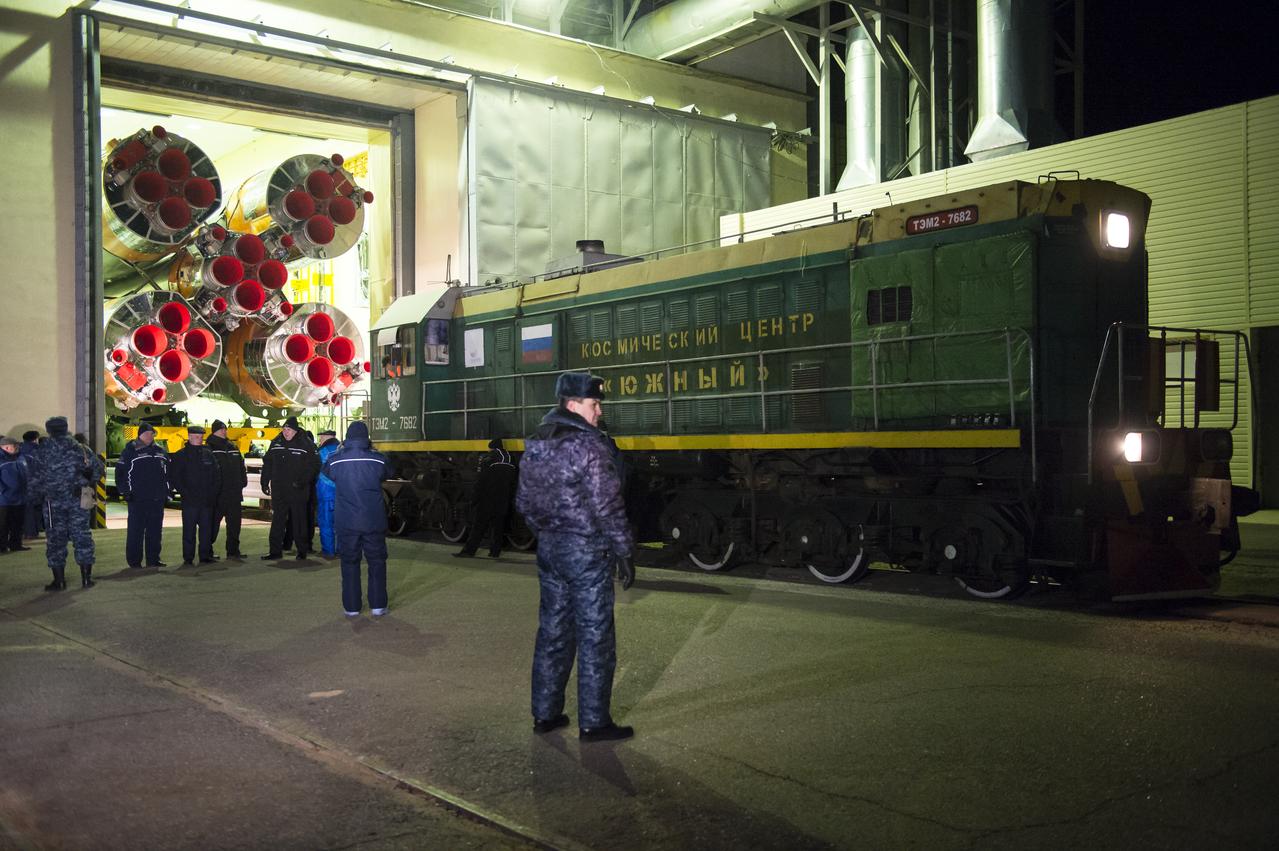
The Soyuz TMA-15M spacecraft is rolled out to the launch pad by train on Friday, Nov. 21, 2014 at the Baikonur Cosmodrome in Kazakhstan. Launch of the Soyuz rocket is scheduled for Nov. 24 and will carry Expedition 42 Soyuz Commander Anton Shkaplerov of the Russian Federal Space Agency (Roscosmos), Flight Engineer Terry Virts of NASA , and Flight Engineer Samantha Cristoforetti of the European Space Agency into orbit to begin their five and a half month mission on the International Space Station. Photo Credit: (NASA/Aubrey Gemignani)
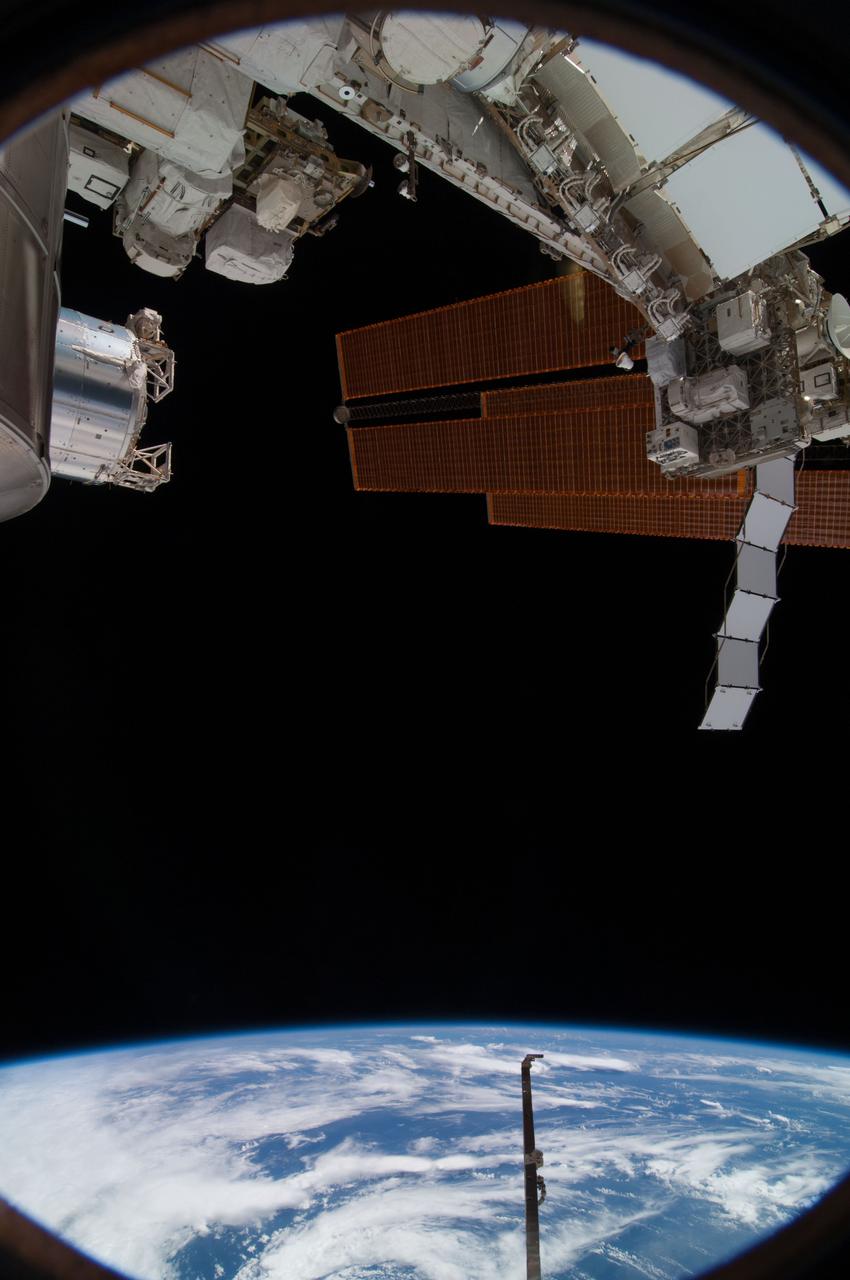
View of antenna and solar arrays (with an Earth limb in the background) taken from a window in the Russian Soyuz spacecraft currently docked to the International Space Station. Photo taken by an Expedition 36 crewmember. Per Twitter message: View out the window to the right of my seat in Soyuz while docked to ISS.
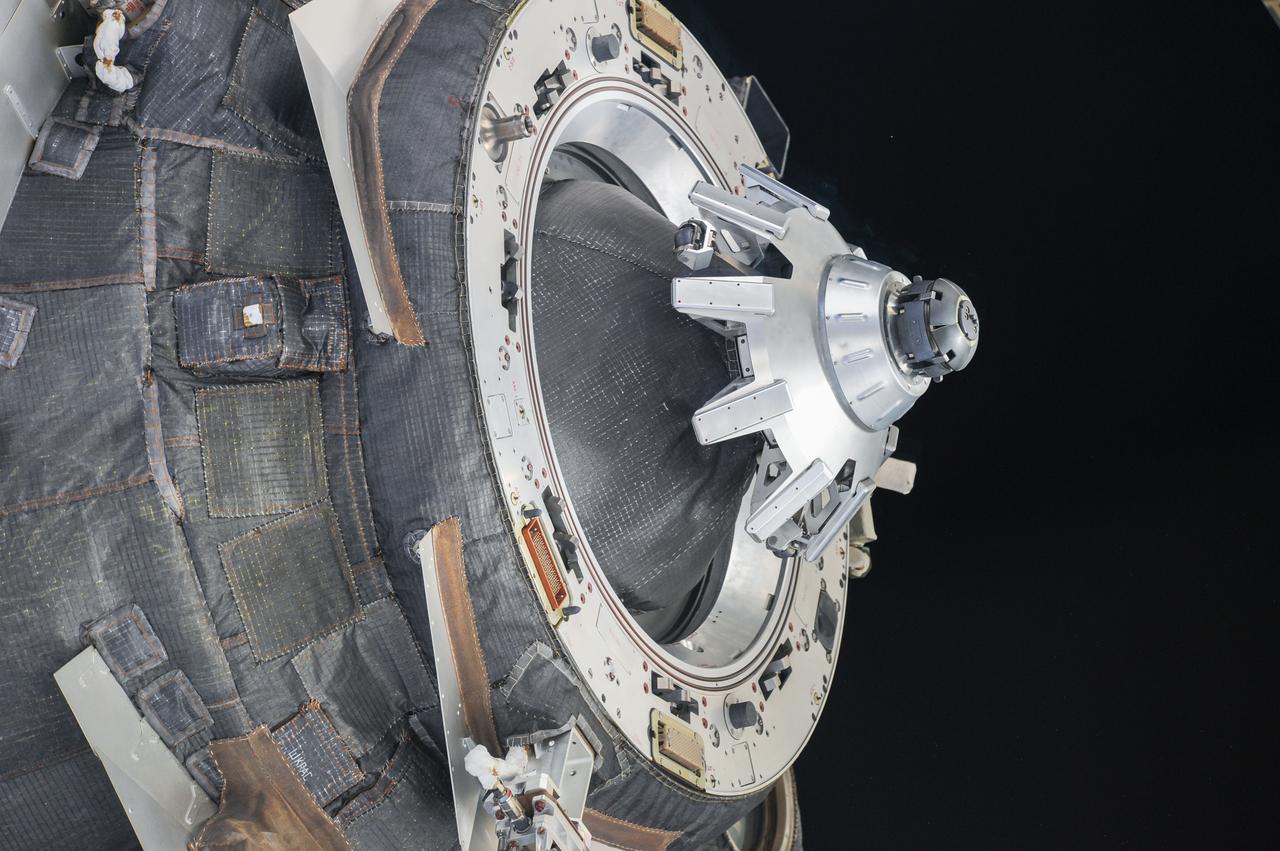
ISS040-E-000002 (14 May 2014) --- The Soyuz TMA-11M spacecraft's docking probe is seen just after separation from the International Space Station. This photo was among the first group of images downlinked from the station following the start of duty for the three Expedition 40 crew members, who will be joined by three more crew members in approximately two weeks. With Expedition 39 Commander Koichi Wakata of the Japan Aerospace Exploration Agency (JAXA), Soyuz Commander Mikhail Tyurin of Roscosmos and Flight Engineer Rick Mastracchio of NASA onboard, the Soyuz went on to land near the town of Zhezkazgan, Kazakhstan on May 14, 2014. Wakata, Tyurin and Mastracchio returned to Earth after more than six months onboard the orbital outpost where they served as members of the Expedition 38 and 39 crews.
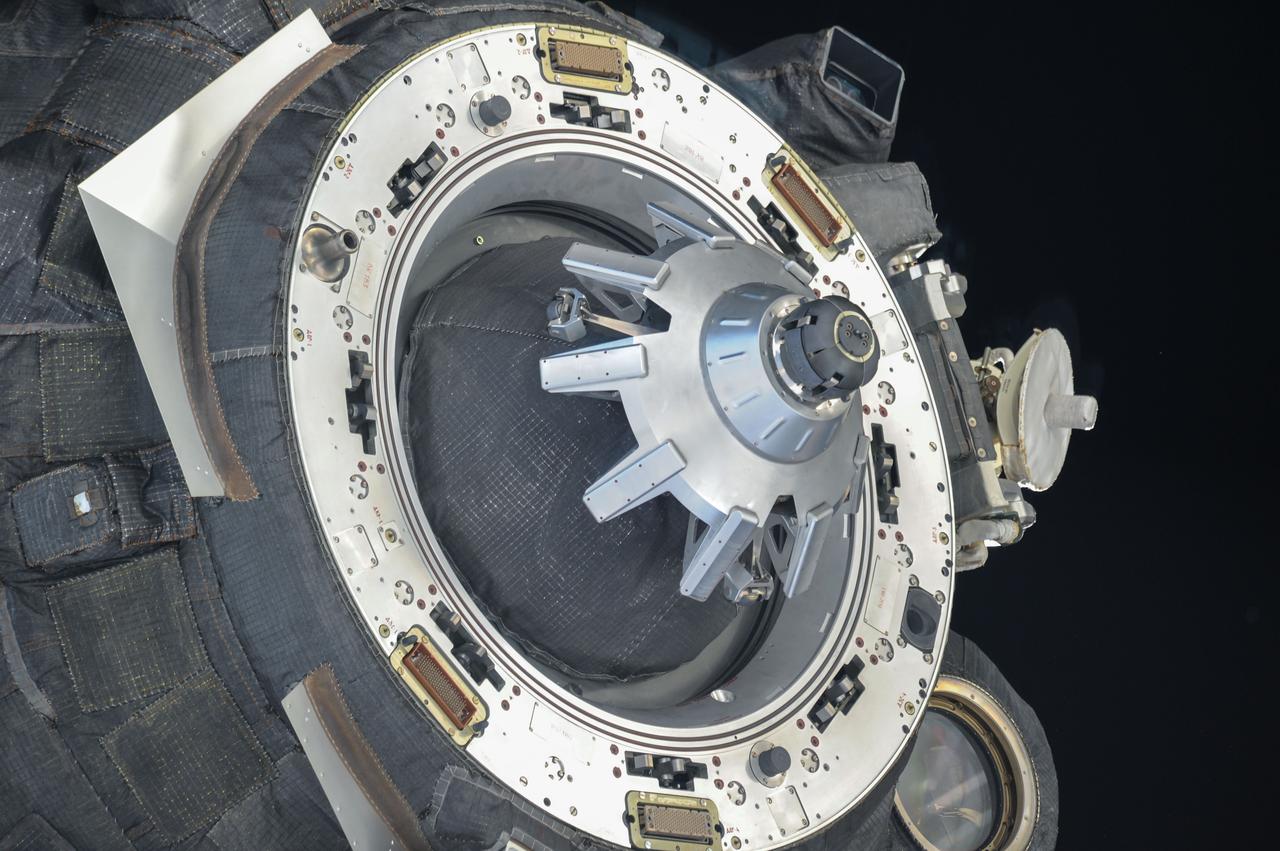
ISS040-E-000005 (14 May 2014) --- The Soyuz TMA-11M spacecraft's docking probe is seen just after separation from the International Space Station. This photo was among the first group of images downlinked from the station following the start of duty for the three Expedition 40 crew members, who will be joined by three more crew members in approximately two weeks. With Expedition 39 Commander Koichi Wakata of the Japan Aerospace Exploration Agency (JAXA), Soyuz Commander Mikhail Tyurin of Roscosmos and Flight Engineer Rick Mastracchio of NASA onboard, the Soyuz went on to land near the town of Zhezkazgan, Kazakhstan on May 14, 2014. Wakata, Tyurin and Mastracchio returned to Earth after more than six months onboard the orbital outpost where they served as members of the Expedition 38 and 39 crews.
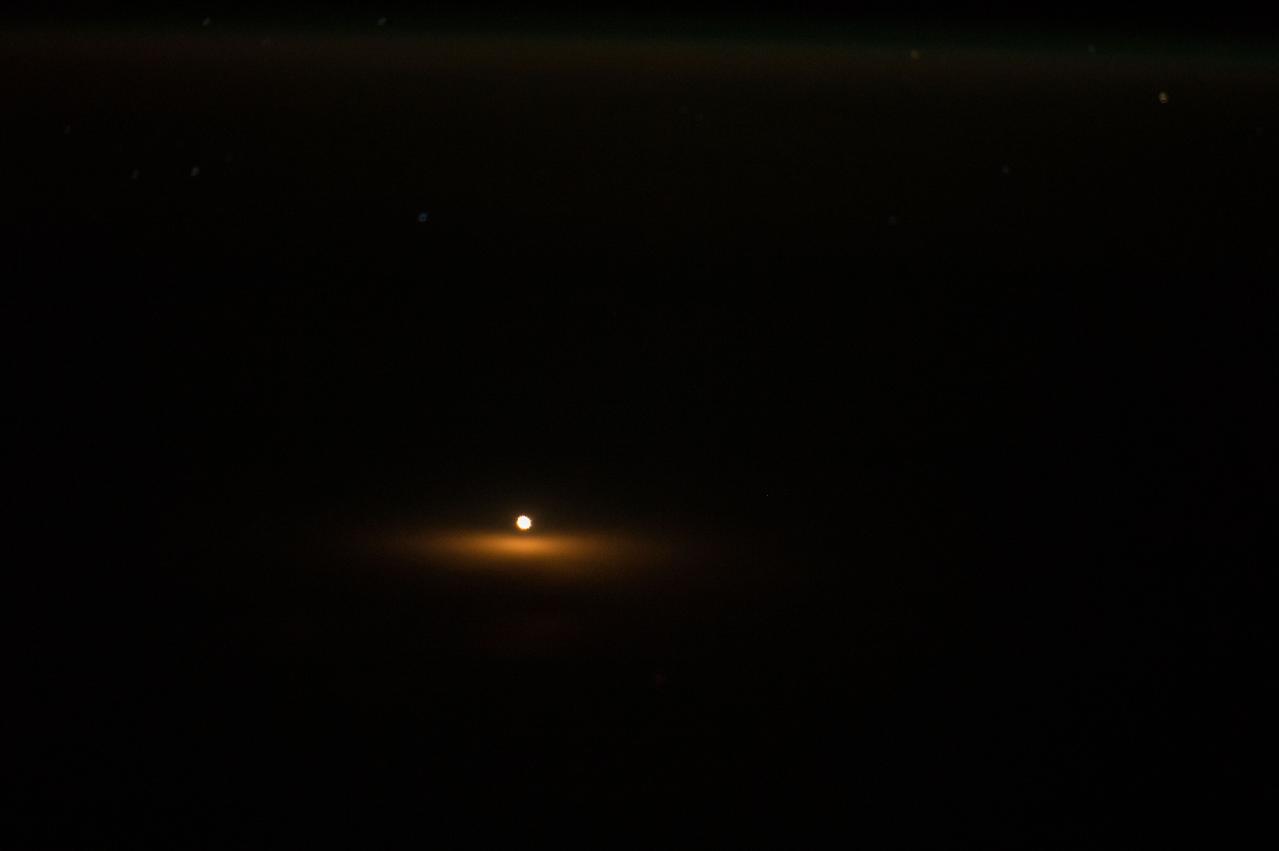
Nighttime view of the launch of the Soyuz TMA-15M spacecraft as seen by Expedition 42 crewmembers aboard the ISS. Image was released by astronaut on Instagram.
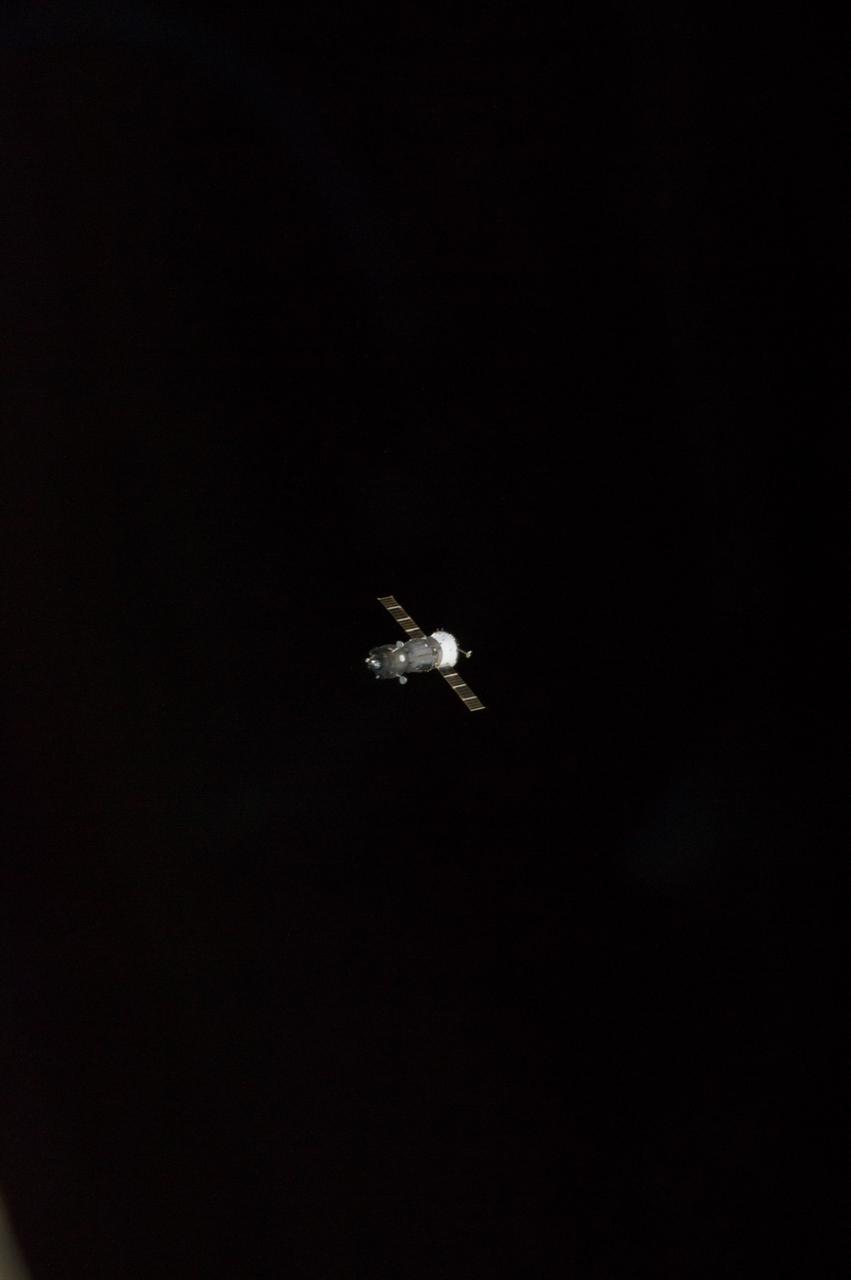
ISS040-E-000102 (14 May 2014) --- The Soyuz TMA-11M spacecraft departs from the International Space Station and heads for a landing near the town of Zhezkazgan, Kazakhstan on May 14, 2014. Japanese Aerospace Exploration Agency astronaut Koichi Wakata, Expedition 39 commander; along with Russian cosmonaut Mikhail Tyurin, Soyuz commander and Expedition 39 flight engineer, and NASA astronaut Rick Mastracchio, flight engineer, are returning to Earth after more than six months onboard the space station where they served as members of the Expedition 38 and 39 crews.
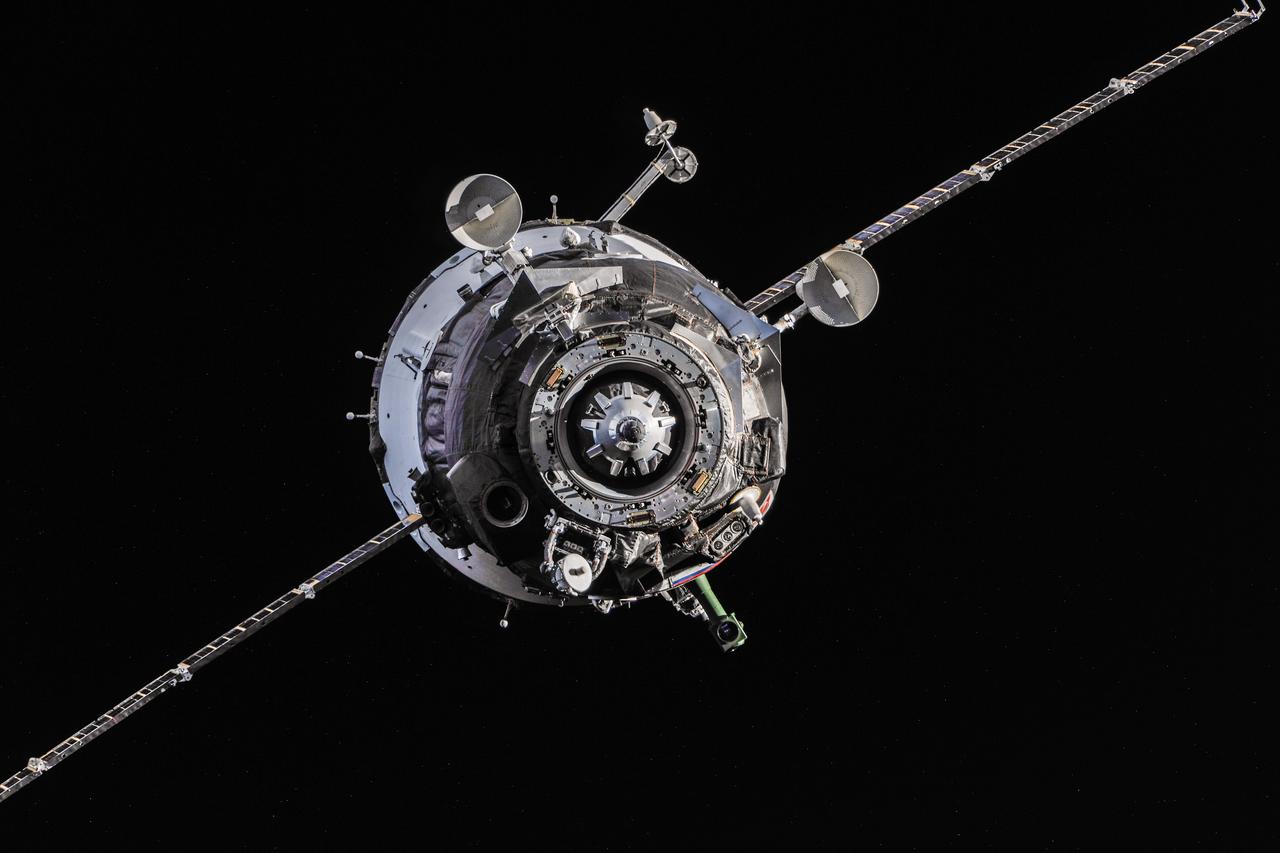
ISS037-E-002670 (25 Sept. 2013) --- The Soyuz TMA-10M spacecraft approaches the International Space Station, carrying Expedition 37 Soyuz Commander Oleg Kotov, NASA Flight Engineer Michael Hopkins and Russian Flight Engineer Sergey Ryazanskiy. The Soyuz docked to the Poisk Mini-Research Module 2 (MRM2) at 10:45 p.m. (EDT) on Sept. 25, 2013.
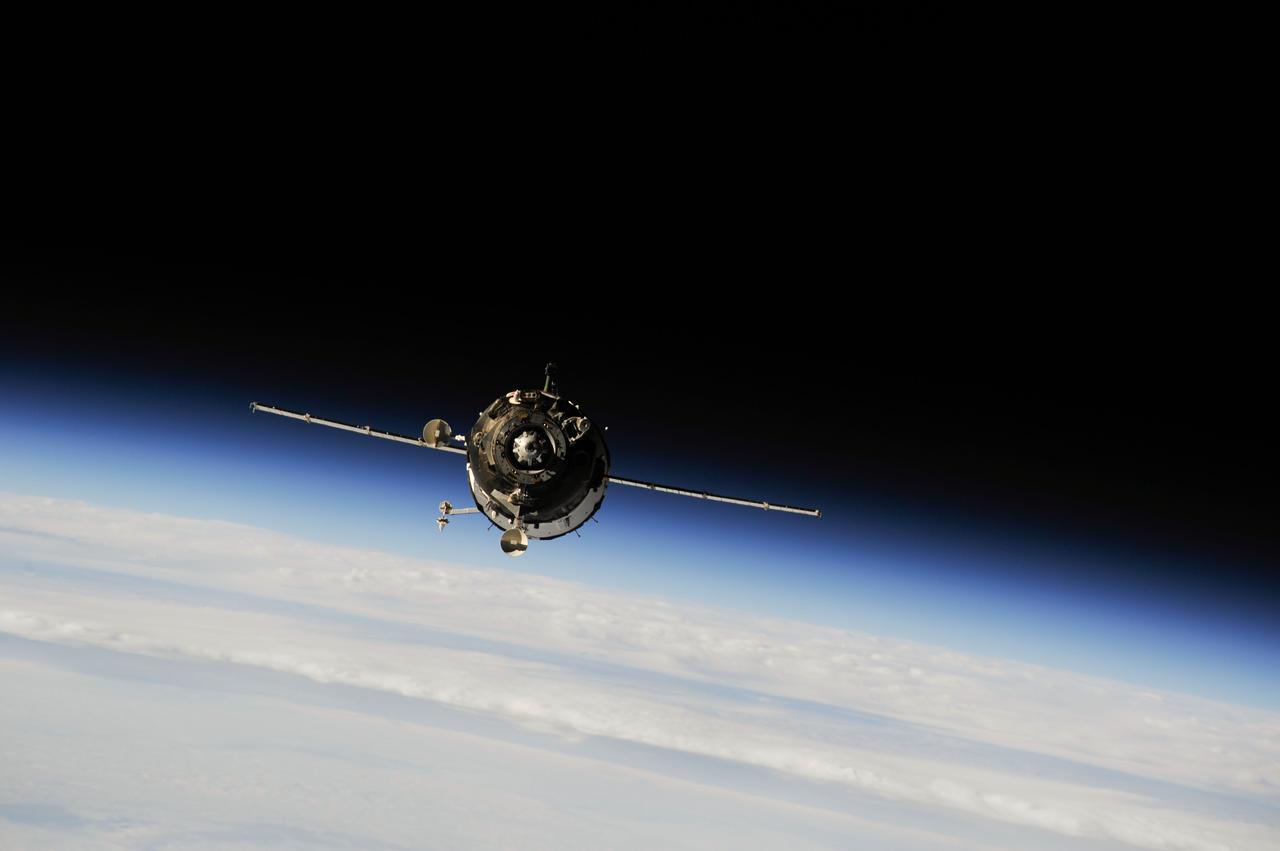
ISS037-E-002643 (25 Sept. 2013) --- The Soyuz TMA-10M spacecraft approaches the International Space Station, carrying Expedition 37 Soyuz Commander Oleg Kotov, NASA Flight Engineer Michael Hopkins and Russian Flight Engineer Sergey Ryazanskiy. The Soyuz docked to the Poisk Mini-Research Module 2 (MRM2) at 10:45 p.m. (EDT) on Sept. 25, 2013.
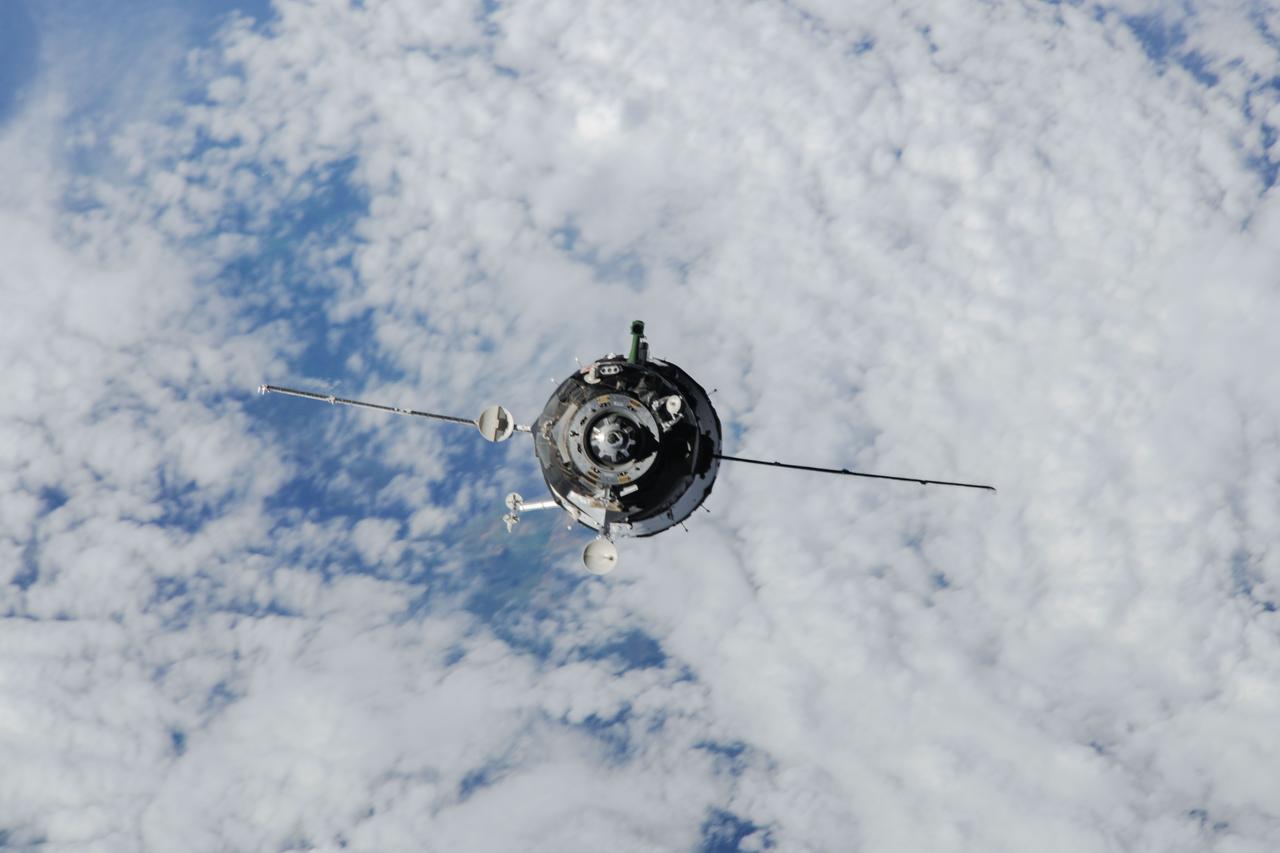
ISS037-E-002664 (25 Sept. 2013) --- The Soyuz TMA-10M spacecraft approaches the International Space Station, carrying Expedition 37 Soyuz Commander Oleg Kotov, NASA Flight Engineer Michael Hopkins and Russian Flight Engineer Sergey Ryazanskiy. The Soyuz docked to the Poisk Mini-Research Module 2 (MRM2) at 10:45 p.m. (EDT) on Sept. 25, 2013.
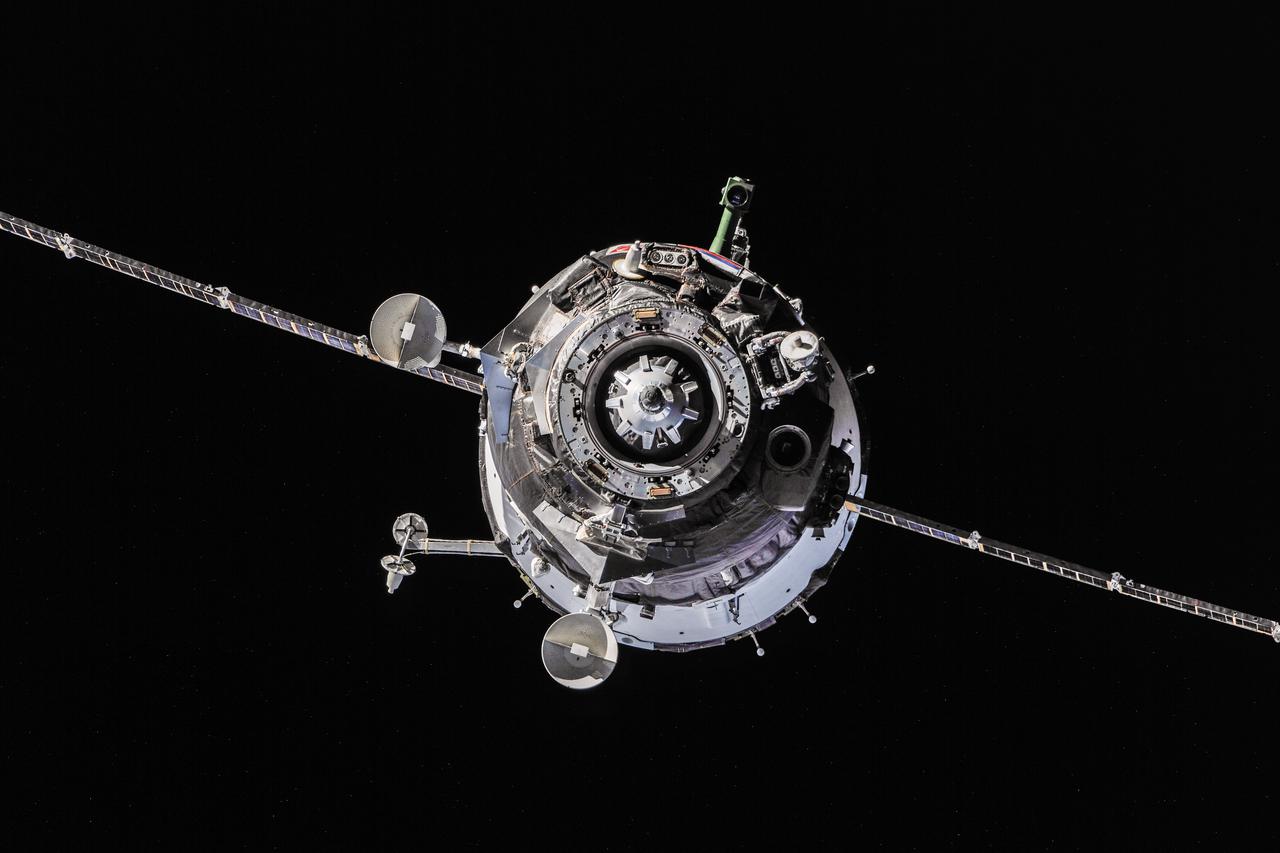
ISS037-E-002669 (25 Sept. 2013) --- The Soyuz TMA-10M spacecraft approaches the International Space Station, carrying Expedition 37 Soyuz Commander Oleg Kotov, NASA Flight Engineer Michael Hopkins and Russian Flight Engineer Sergey Ryazanskiy. The Soyuz docked to the Poisk Mini-Research Module 2 (MRM2) at 10:45 p.m. (EDT) on Sept. 25, 2013.
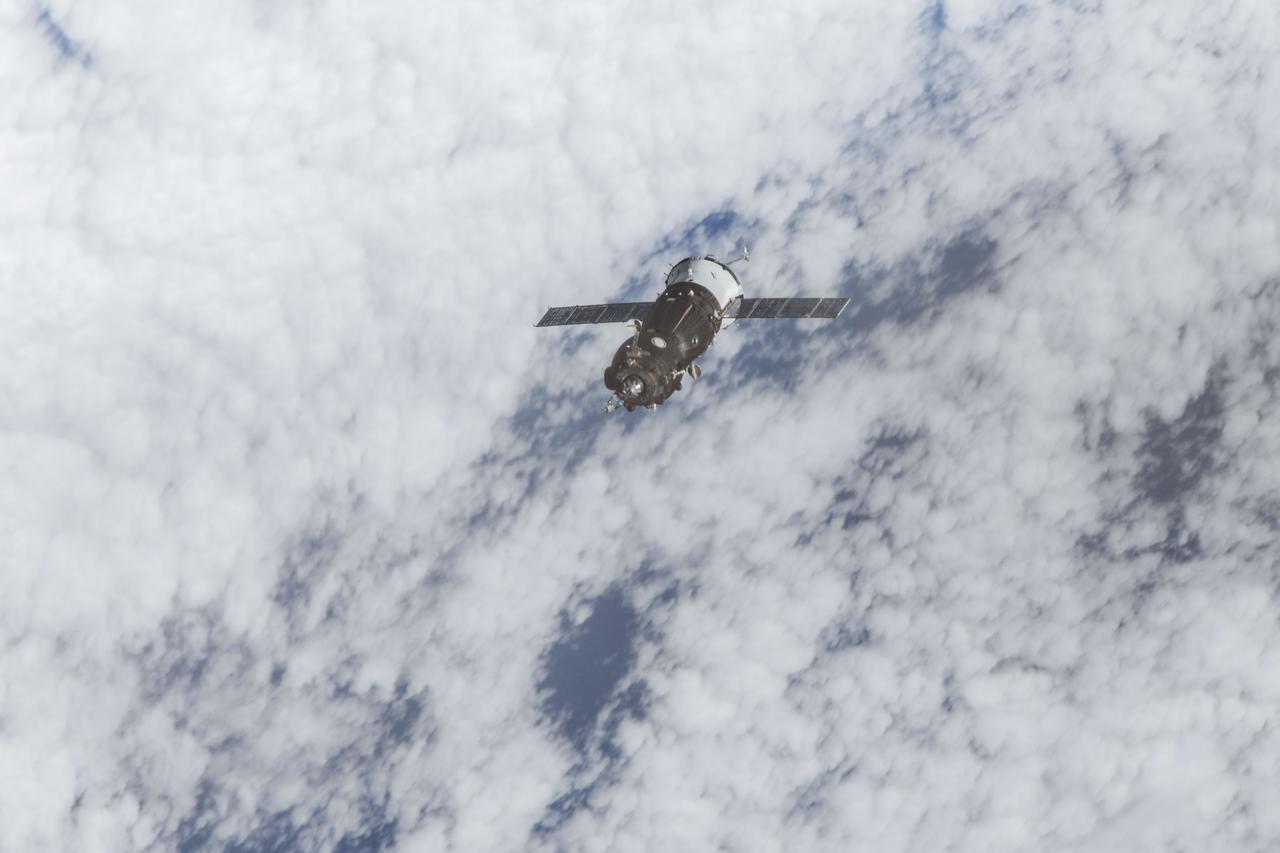
ISS037-E-002661 (25 Sept. 2013) --- The Soyuz TMA-10M spacecraft approaches the International Space Station, carrying Expedition 37 Soyuz Commander Oleg Kotov, NASA Flight Engineer Michael Hopkins and Russian Flight Engineer Sergey Ryazanskiy. The Soyuz docked to the Poisk Mini-Research Module 2 (MRM2) at 10:45 p.m. (EDT) on Sept. 25, 2013.
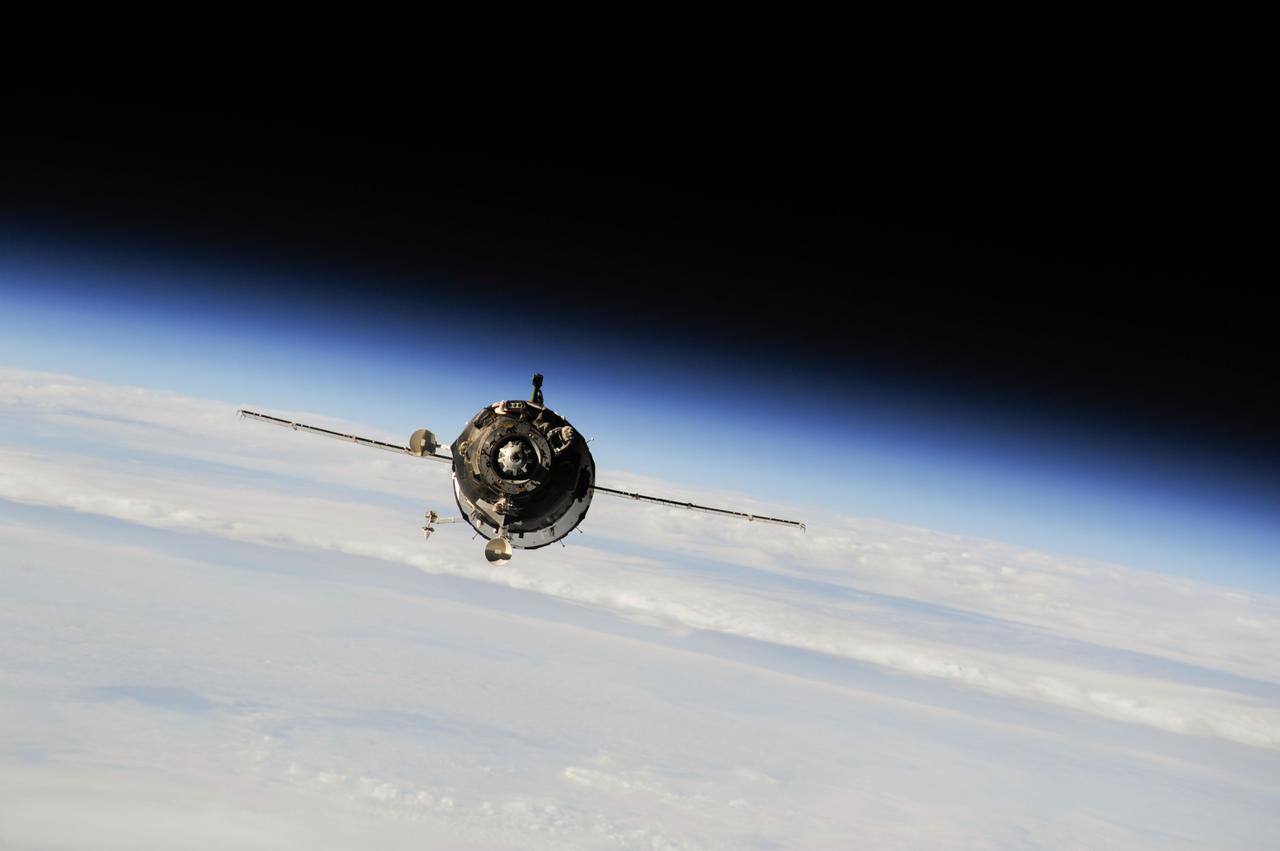
ISS037-E-002640 (25 Sept. 2013) --- The Soyuz TMA-10M spacecraft approaches the International Space Station, carrying Expedition 37 Soyuz Commander Oleg Kotov, NASA Flight Engineer Michael Hopkins and Russian Flight Engineer Sergey Ryazanskiy. The Soyuz docked to the Poisk Mini-Research Module 2 (MRM2) at 10:45 p.m. (EDT) on Sept. 25, 2013.
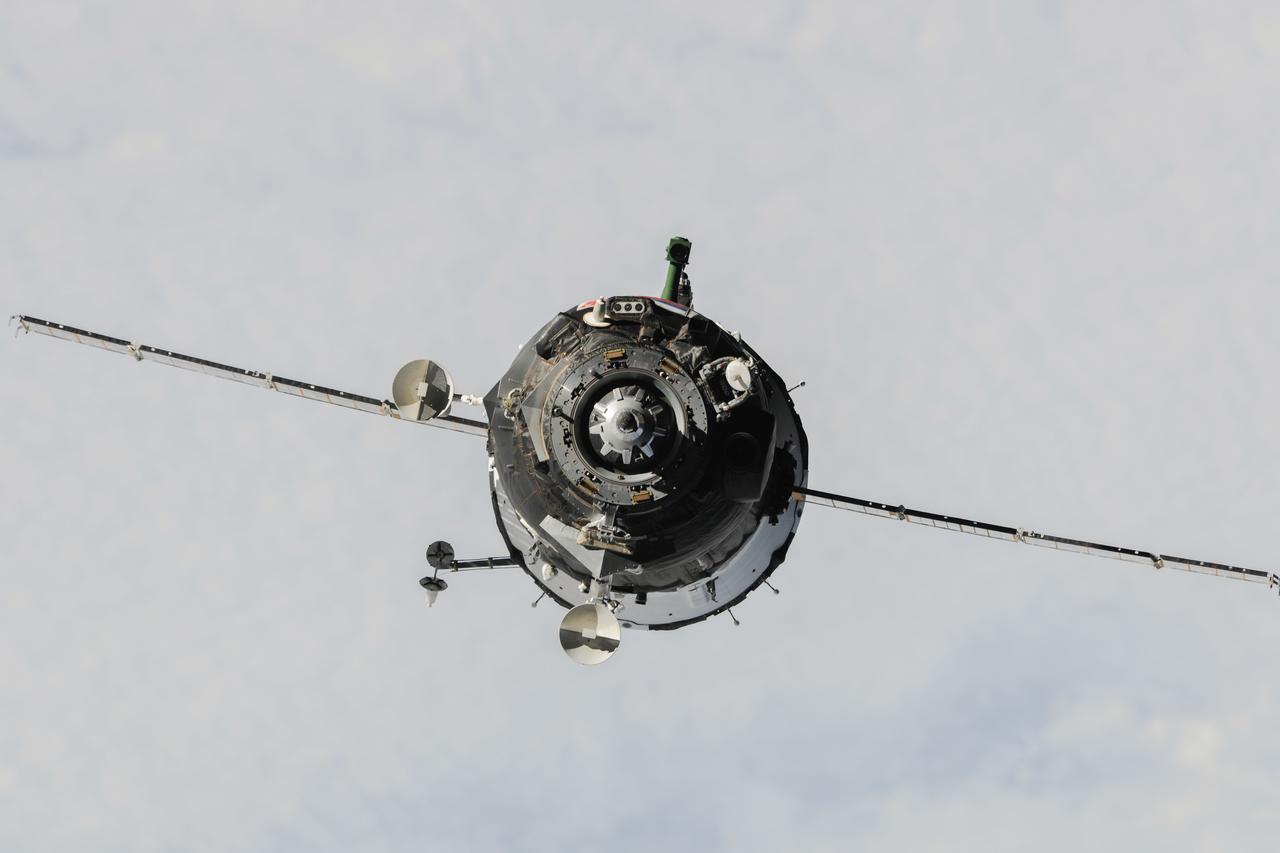
ISS037-E-002665 (25 Sept. 2013) --- The Soyuz TMA-10M spacecraft approaches the International Space Station, carrying Expedition 37 Soyuz Commander Oleg Kotov, NASA Flight Engineer Michael Hopkins and Russian Flight Engineer Sergey Ryazanskiy. The Soyuz docked to the Poisk Mini-Research Module 2 (MRM2) at 10:45 p.m. (EDT) on Sept. 25, 2013.
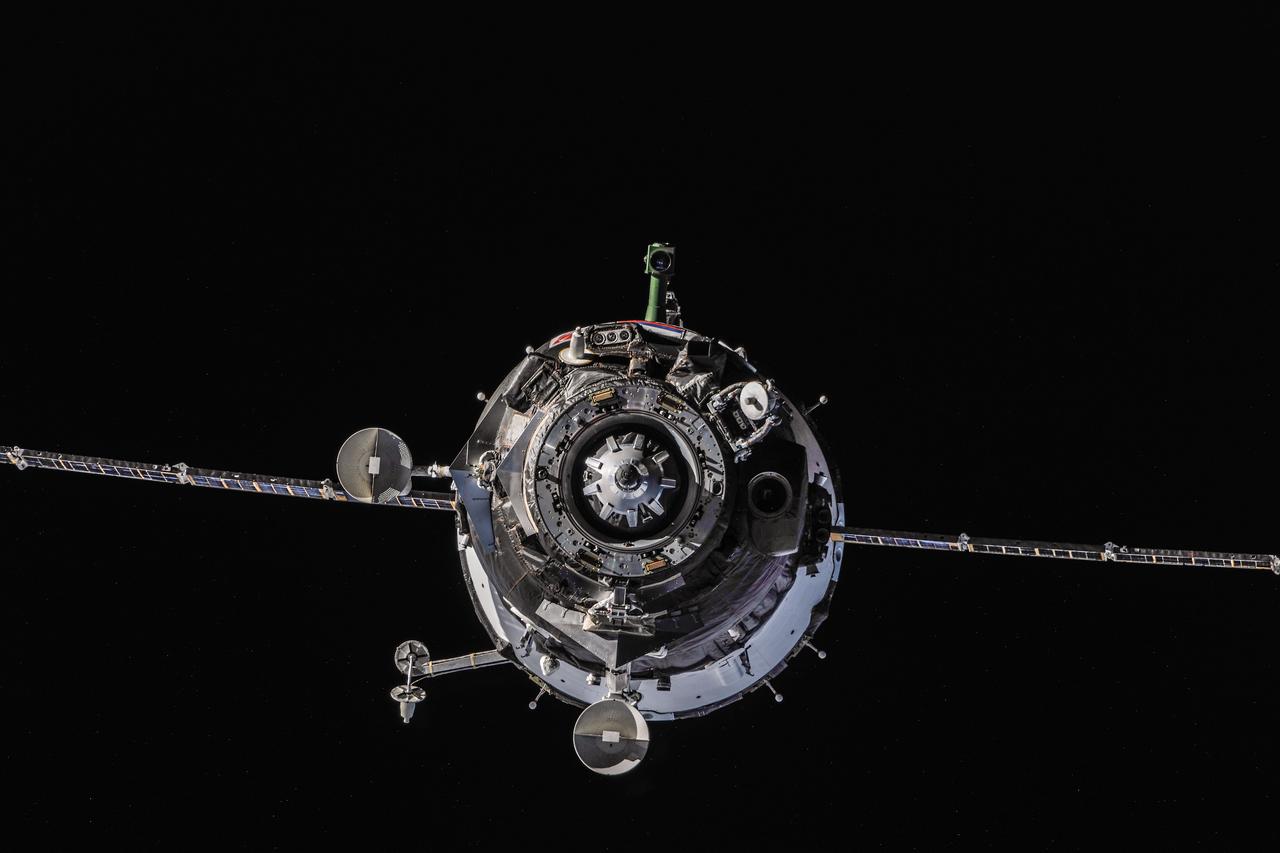
ISS037-E-002667 (25 Sept. 2013) --- The Soyuz TMA-10M spacecraft approaches the International Space Station, carrying Expedition 37 Soyuz Commander Oleg Kotov, NASA Flight Engineer Michael Hopkins and Russian Flight Engineer Sergey Ryazanskiy. The Soyuz docked to the Poisk Mini-Research Module 2 (MRM2) at 10:45 p.m. (EDT) on Sept. 25, 2013.
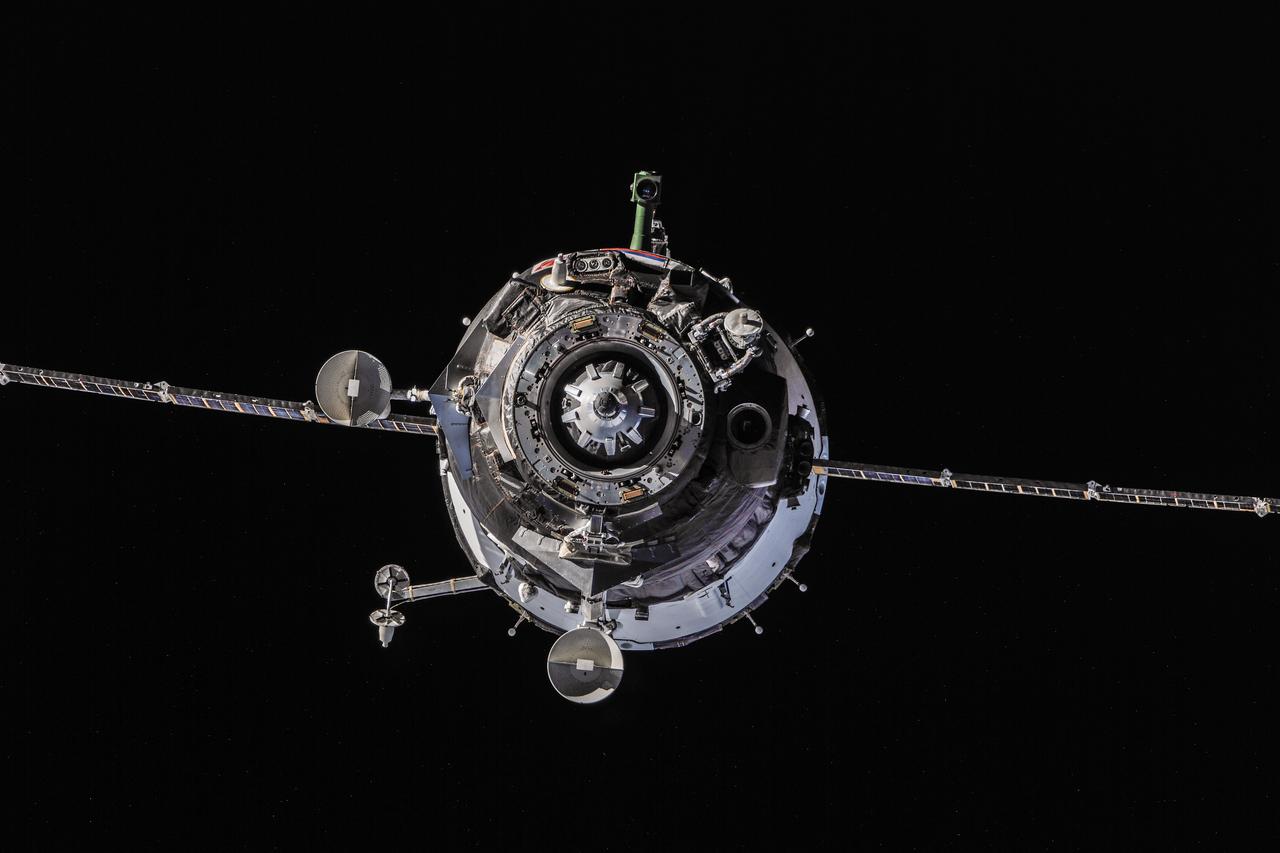
ISS037-E-002668 (25 Sept. 2013) --- The Soyuz TMA-10M spacecraft approaches the International Space Station, carrying Expedition 37 Soyuz Commander Oleg Kotov, NASA Flight Engineer Michael Hopkins and Russian Flight Engineer Sergey Ryazanskiy. The Soyuz docked to the Poisk Mini-Research Module 2 (MRM2) at 10:45 p.m. (EDT) on Sept. 25, 2013.
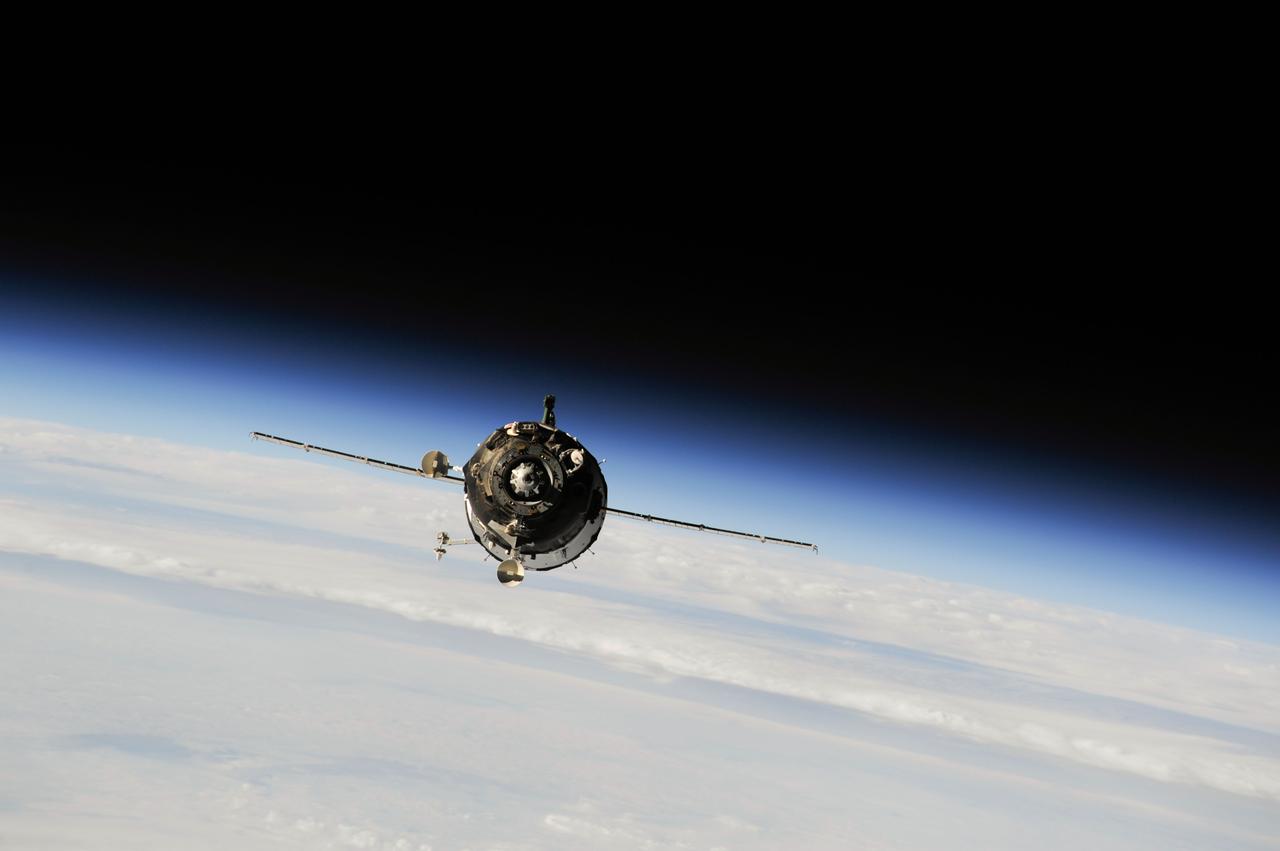
ISS037-E-002641 (25 Sept. 2013) --- The Soyuz TMA-10M spacecraft approaches the International Space Station, carrying Expedition 37 Soyuz Commander Oleg Kotov, NASA Flight Engineer Michael Hopkins and Russian Flight Engineer Sergey Ryazanskiy. The Soyuz docked to the Poisk Mini-Research Module 2 (MRM2) at 10:45 p.m. (EDT) on Sept. 25, 2013.
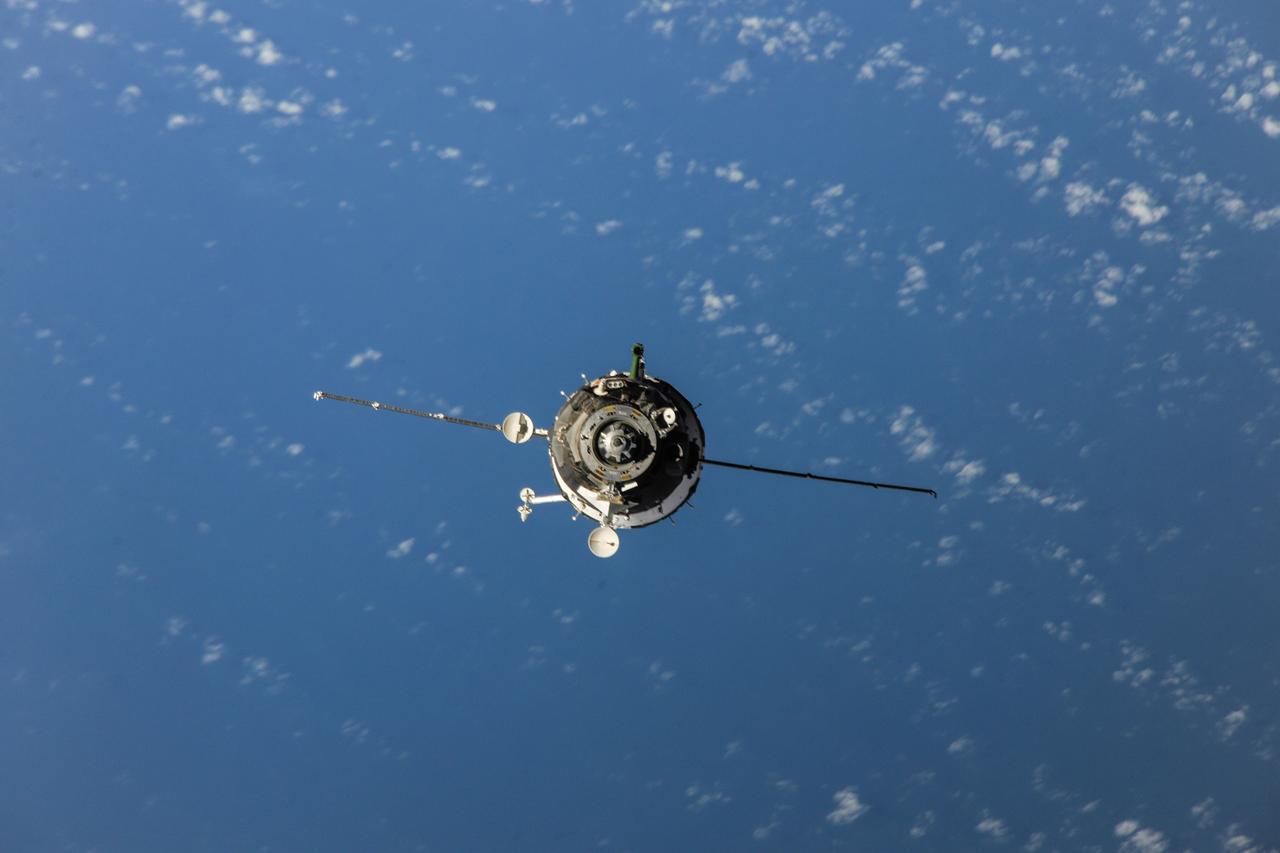
ISS037-E-002663 (25 Sept. 2013) --- The Soyuz TMA-10M spacecraft approaches the International Space Station, carrying Expedition 37 Soyuz Commander Oleg Kotov, NASA Flight Engineer Michael Hopkins and Russian Flight Engineer Sergey Ryazanskiy. The Soyuz docked to the Poisk Mini-Research Module 2 (MRM2) at 10:45 p.m. (EDT) on Sept. 25, 2013.
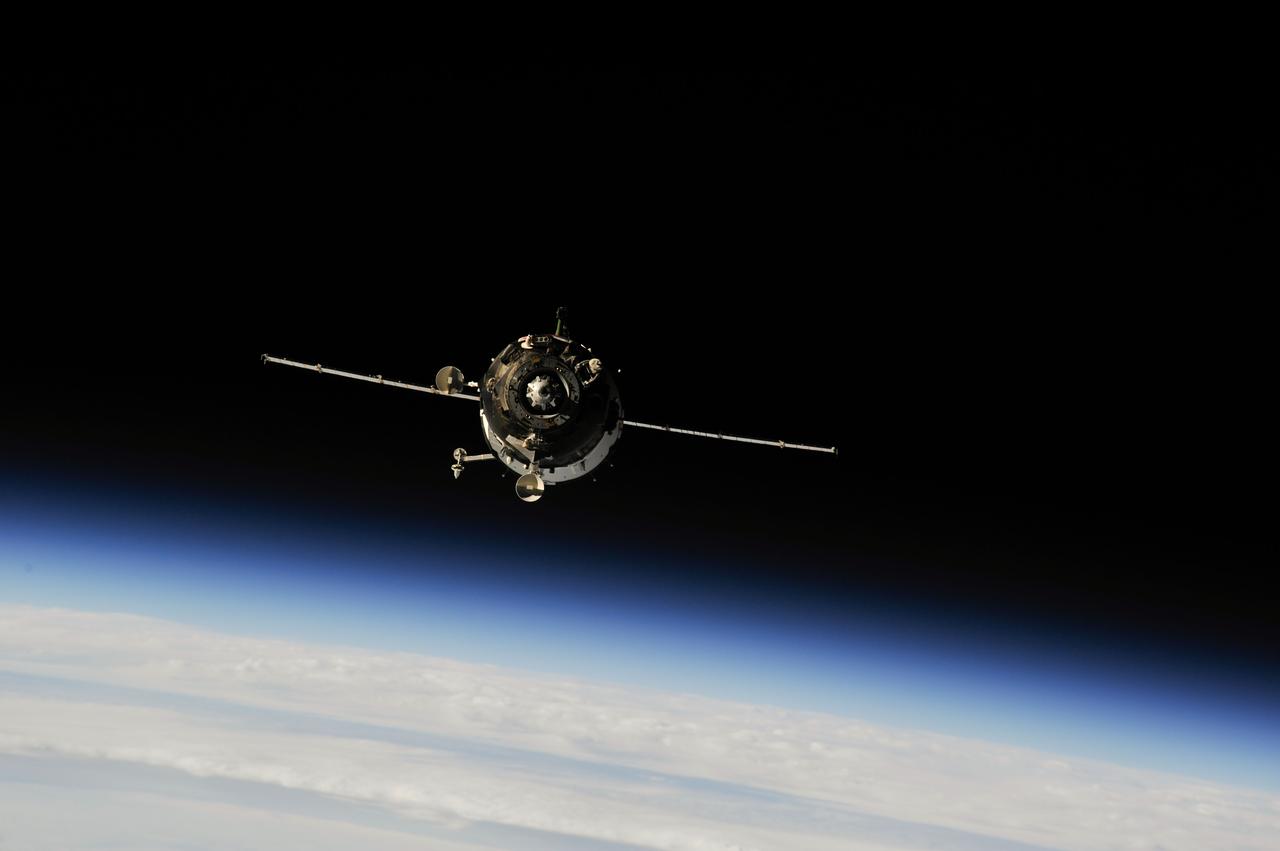
ISS037-E-002645 (25 Sept. 2013) --- The Soyuz TMA-10M spacecraft approaches the International Space Station, carrying Expedition 37 Soyuz Commander Oleg Kotov, NASA Flight Engineer Michael Hopkins and Russian Flight Engineer Sergey Ryazanskiy. The Soyuz docked to the Poisk Mini-Research Module 2 (MRM2) at 10:45 p.m. (EDT) on Sept. 25, 2013.