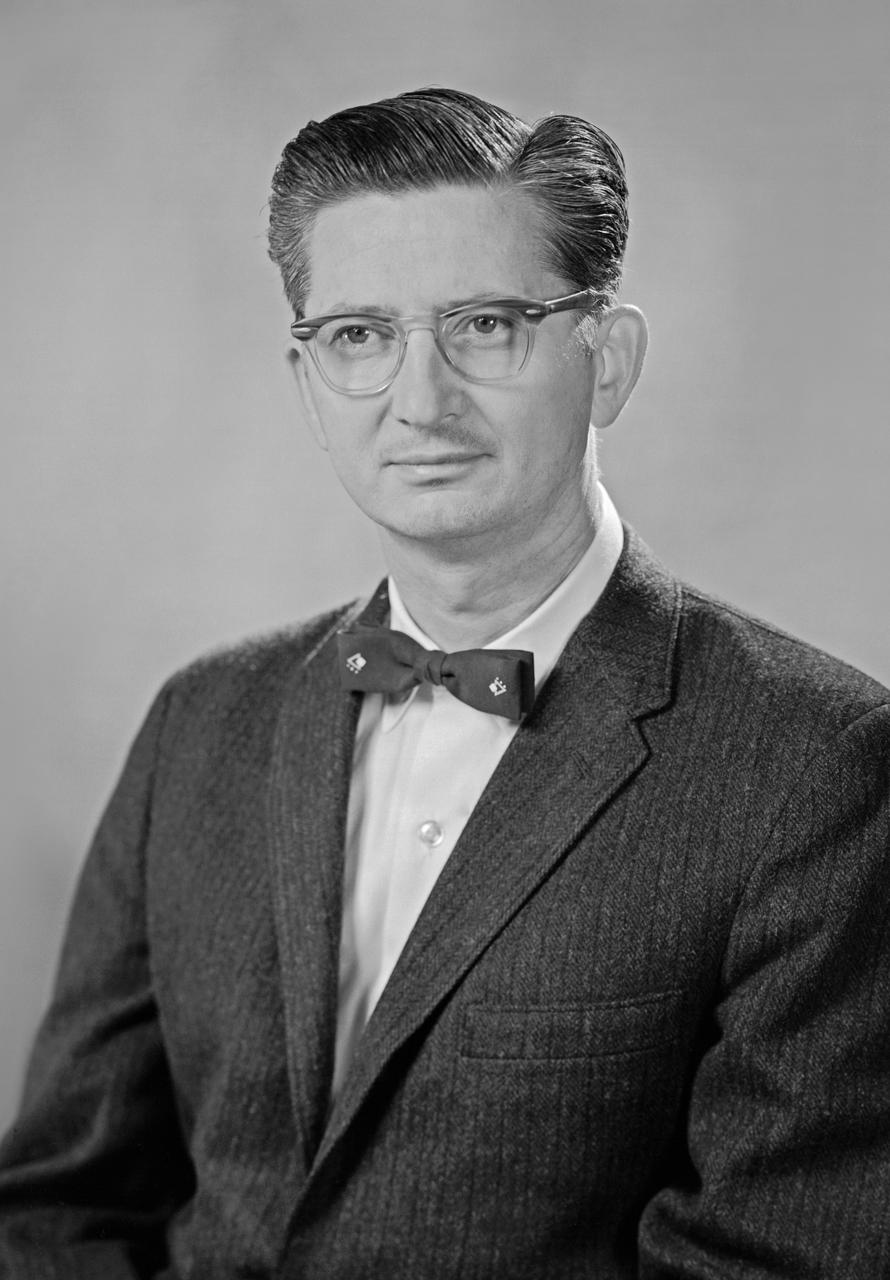
Portrait of John D. Bird "Jaybird" designed the LOR Lunar Orbit Rendezvous. Published in NASA SP-4308 Page 229.
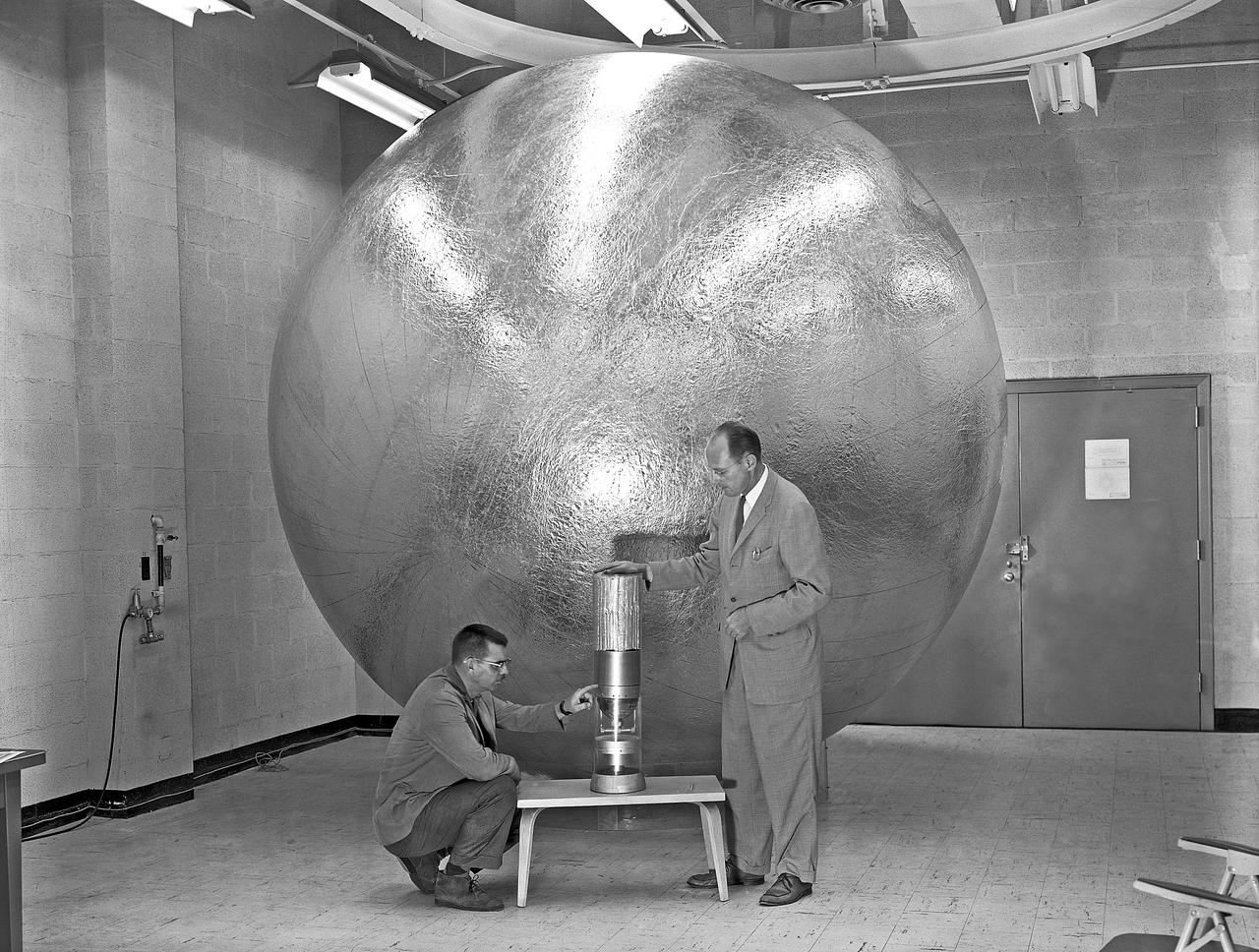
In July 1959, William J. O Sullivan (right standing) and unidentified engineer examine the capsule containing the tightly folded and packed 12 diameter Beacon satellite inside. Taken from NASA SP-4308 Pg. 174
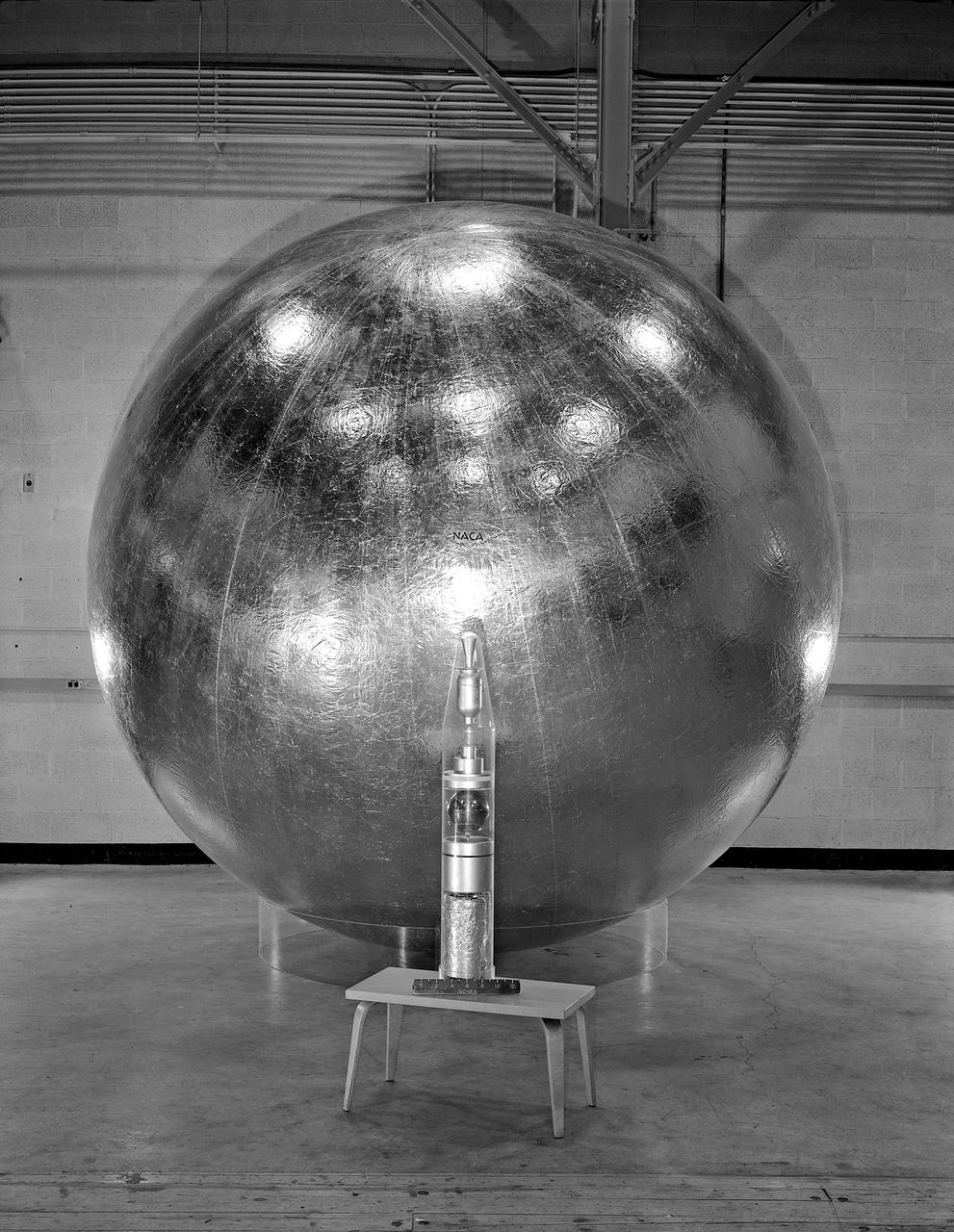
Engineer and 12 foot Beacon showing NACA emblem on inflated satelloon . For related information see, Spaceflight Revolution, NASA from Sputnik to Apollo, by James R. Hansen. NASA SP-4308, 1995. p. 173.
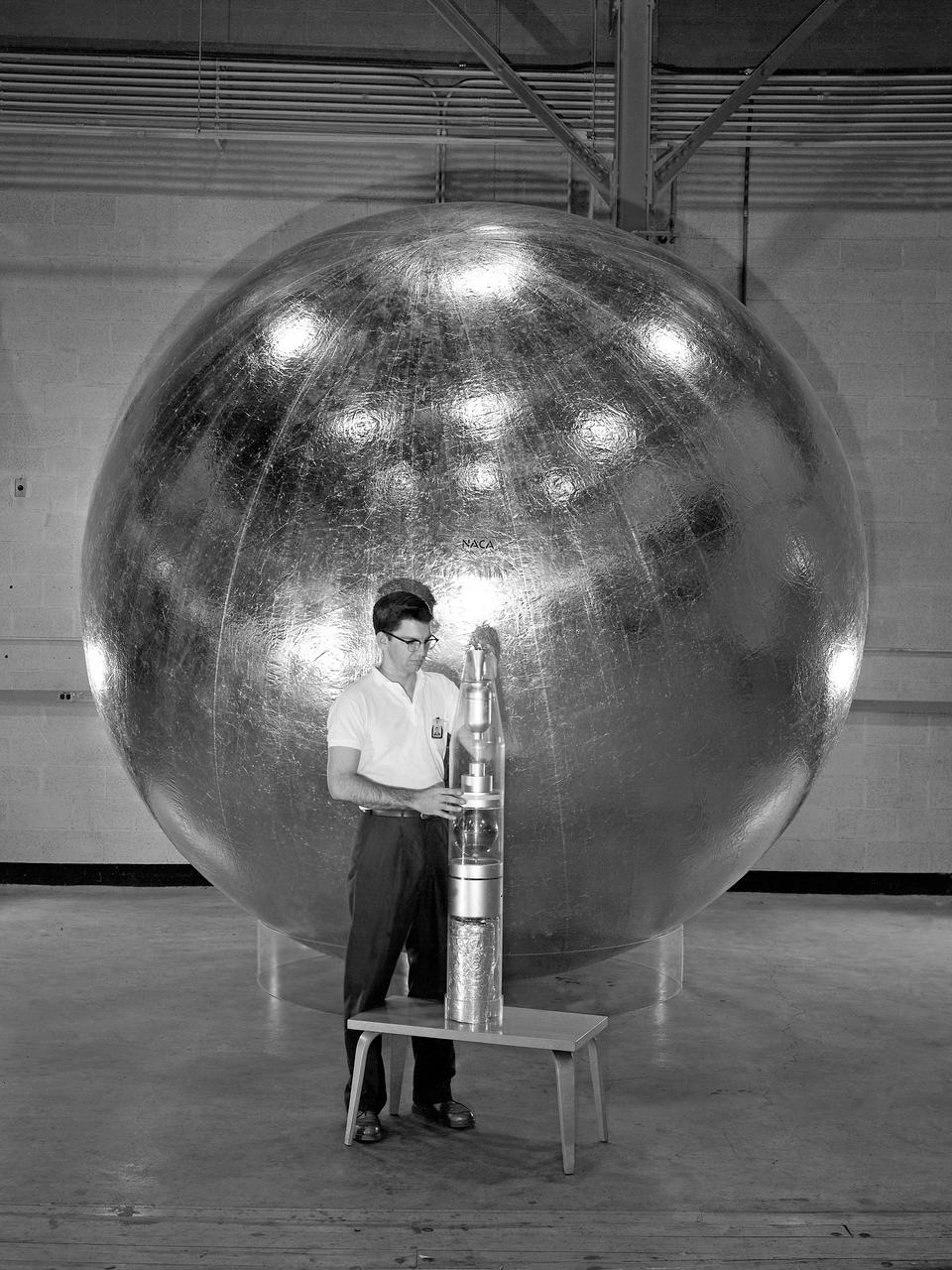
Engineer and 12 foot Beacon showing NACA emblem on inflated satelloon . For related information see, Spaceflight Revolution, NASA from Sputnik to Apollo, by James R. Hansen. NASA SP-4308, 1995. p. 173.
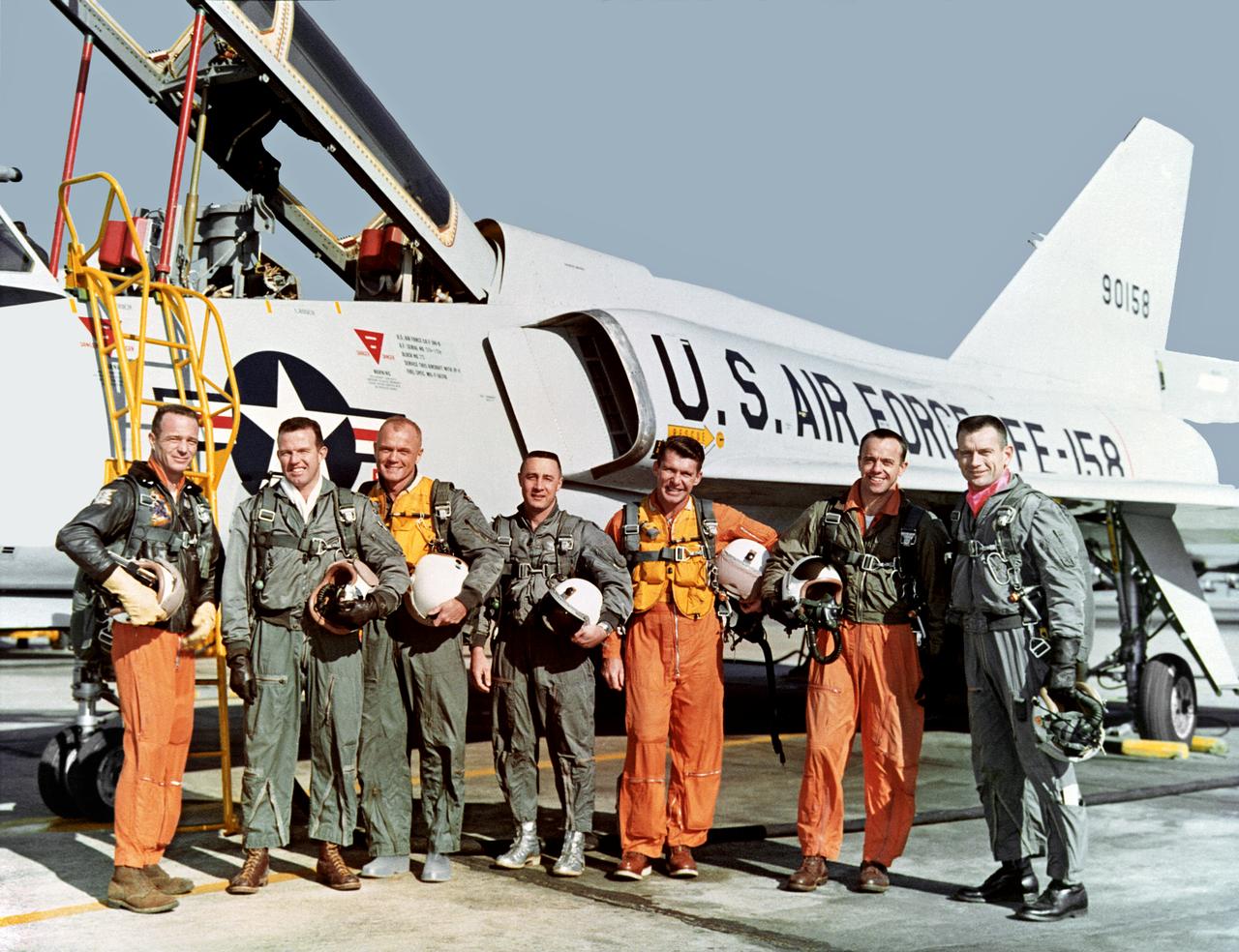
The original seven Mercury astronauts during training at NASA Langley Research Center Project Mercury. The original seven astronauts trained at NASA Langley Research Center. Chosen from among hundreds of applicants, the seven men were all test pilots. Standing in front of the U.S. Air Force Convair F-106B aircraft, the astronauts are, from left, Lt. M. Scott Carpenter, Capt. Gordon Cooper, Col. John H. Glenn Jr., Capt. Virgil "Gus" Grissom, Lt. Comdr. Walter Schirra, Lt. Comdr. Alan B. Shepard Jr. and Capt. Donald K. "Deke" Slayton. While familiarizing the astronauts with the Mercury set-up, Langley employees helped them to specialize in the technical areas crucial to the overall success of Project Mercury. Langley people also guided and monitored the astronauts activities through the many spaceflight simulators and other training devices built at the Center expressly for the manned space program. In less than three years, Project Mercury proved that men could be sent into space and returned safely to Earth, setting the stage for the longer duration Gemini flights and the Apollo lunar landings. This photograph was originally taken on 01/20/1961 and is published in Spaceflight Revolution NASA Langley Research Center from Sputnik to Apollo, NASA SP-4308, by James R. Hansen, 1995, page 40.
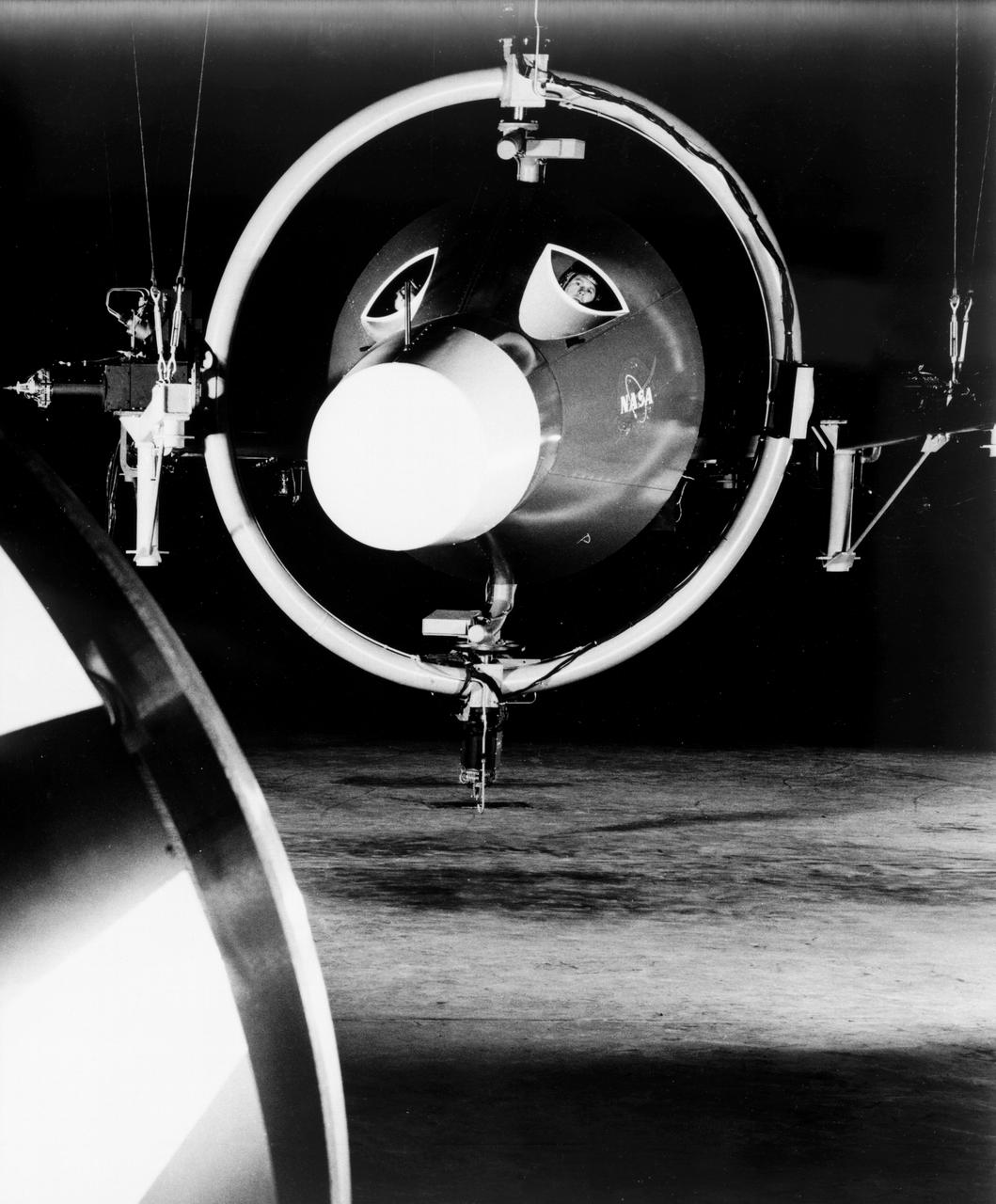
Unidentified Pilot eyeballs his way to a docking by peering through the portal in his capsule. Photo published in Spaceflight Revolution, NASA Langley Research Center From Sputnik to Apollo. By James R. Hansen. NASA SP-4308, 1995, p. 372.

Astronaut Roger Chaffee on the Reduced Gravity Walking Simulator located at the Lunar Landing Facility. The purpose of this simulator was to study the subject while walking, jumping or running. Researchers conducted studies of various factors such as fatigue limit, energy expenditure, and speed of locomotion. A.W. Vigil, described the simulator as follows: "When the astronauts land on the moon they will be in an unfamiliar environment involving, particularly, a gravitational field only one-sixth as strong as on earth. A novel method of simulating lunar gravity has been developed and is supported by a puppet-type suspension system at the end of a long pendulum. A floor is provided at the proper angle so that one-sixth of the subject's weight is supported by the floor with the remainder being supported by the suspension system. This simulator allows almost complete freedom in vertical translation and pitch and is considered to be a very realistic simulation of the lunar walking problem. For this problem this simulator suffers only slightly from the restrictions in lateral movement it puts on the test subject. This is not considered a strong disadvantage for ordinary walking problems since most of the motions do, in fact, occur in the vertical plane. However, this simulation technique would be severely restrictive if applied to the study of the extra-vehicular locomotion problem, for example, because in this situation complete six degrees of freedom are rather necessary. This technique, in effect, automatically introduces a two-axis attitude stabilization system into the problem. The technique could, however, be used in preliminary studies of extra-vehicular locomotion where, for example, it might be assumed that one axis of the attitude control system on the astronaut maneuvering unit may have failed." -- Published in James R. Hansen, Spaceflight Revolution: NASA Langley Research Center From Sputnik to Apollo, NASA SP-4308, p. 377; A.W. Vigil, "Discussion of Existing and Planned Simulators for Space Research," Paper presented at Conference on the Role of Simulation in Space Technology," Blacksburg, VA, August 17-21, 1964.
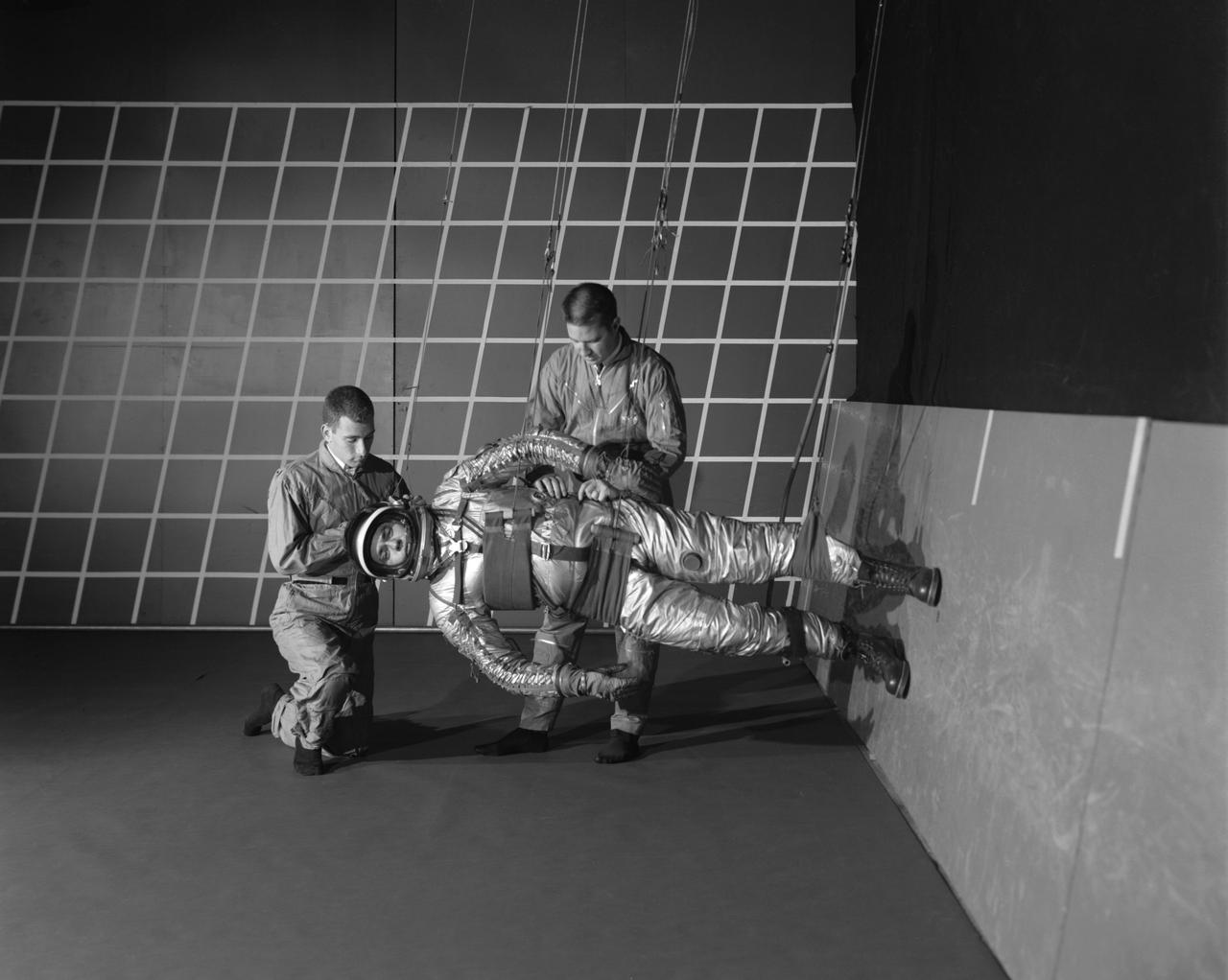
A test subject being suited up for studies on the Reduced Gravity Walking Simulator located in the hangar at Langley Research Center. The initial version of this simulator was located inside the hangar. Later a larger version would be located at the Lunar Landing Facility. The purpose of this simulator was to study the subject while walking, jumping or running. Researchers conducted studies of various factors such as fatigue limit, energy expenditure, and speed of locomotion. Francis B. Smith wrote in his paper "Simulators For Manned Space Research," "I would like to conclude this talk with a discussion of a device for simulating lunar gravity which is very effective and yet which is so simple that its cost is in the order of a few thousand dollars at most, rather than hundreds of thousands. With a little ingenuity, one could almost build this type simulator in his backyard for children to play on. The principle is ...if a test subject is suspended in a sling so that his body axis makes an angle of 9 1/2 degrees with the horizontal and if he then "stands" on a platform perpendicular to his body axis, the component of the earth's gravity forcing him toward the platform is one times the sine of 9 1/2 degrees or approximately 1/6 of the earth's normal gravity field. That is, a 180 pound astronaut "standing" on the platform would exert a force of only 30 pounds - the same as if he were standing upright on the lunar surface." -- Published in James R. Hansen, Spaceflight Revolution: NASA Langley Research Center From Sputnik to Apollo, NASA SP-4308; Francis B. Smith, "Simulators For Manned Space Research," Paper for 1966 IEEE International Convention, New York, NY, March 21-25, 1966
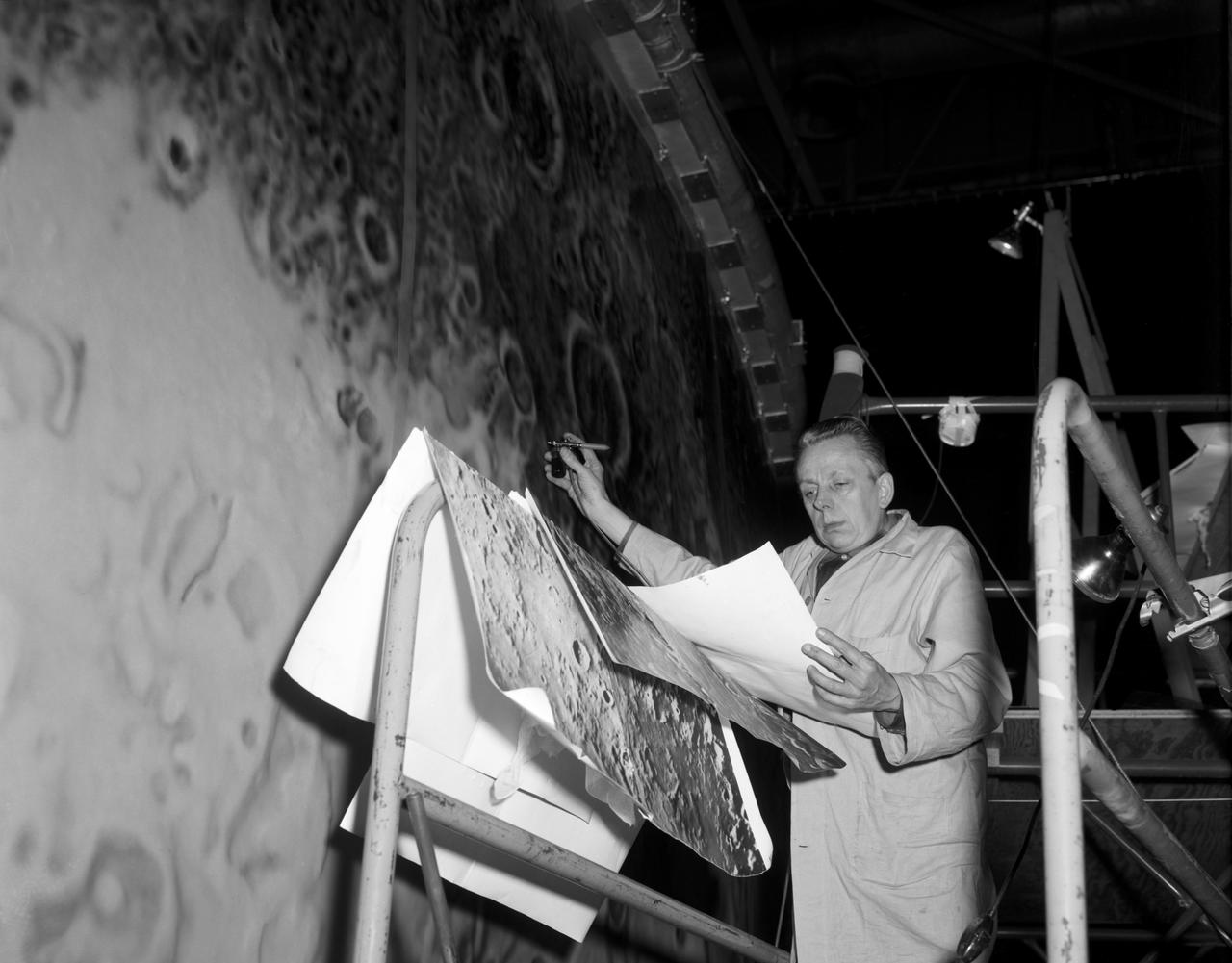
Artists used paintbrushes and airbrushes to recreate the lunar surface on each of the four models comprising the LOLA simulator. Project LOLA or Lunar Orbit and Landing Approach was a simulator built at Langley to study problems related to landing on the lunar surface. It was a complex project that cost nearly $2 million dollars. James Hansen wrote: "This simulator was designed to provide a pilot with a detailed visual encounter with the lunar surface; the machine consisted primarily of a cockpit, a closed-circuit TV system, and four large murals or scale models representing portions of the lunar surface as seen from various altitudes. The pilot in the cockpit moved along a track past these murals which would accustom him to the visual cues for controlling a spacecraft in the vicinity of the moon. Unfortunately, such a simulation--although great fun and quite aesthetic--was not helpful because flight in lunar orbit posed no special problems other than the rendezvous with the LEM, which the device did not simulate. Not long after the end of Apollo, the expensive machine was dismantled." (p. 379) Ellis J. White further described LOLA in his paper "Discussion of Three Typical Langley Research Center Simulation Programs," "Model 1 is a 20-foot-diameter sphere mounted on a rotating base and is scaled 1 in. = 9 miles. Models 2,3, and 4 are approximately 15x40 feet scaled sections of model 1. Model 4 is a scaled-up section of the Crater Alphonsus and the scale is 1 in. = 200 feet. All models are in full relief except the sphere." -- Published in James R. Hansen, Spaceflight Revolution, NASA SP-4308, p. 379; Ellis J. White, "Discussion of Three Typical Langley Research Center Simulation Programs," Paper presented at the Eastern Simulation Council (EAI's Princeton Computation Center), Princeton, NJ, October 20, 1966.
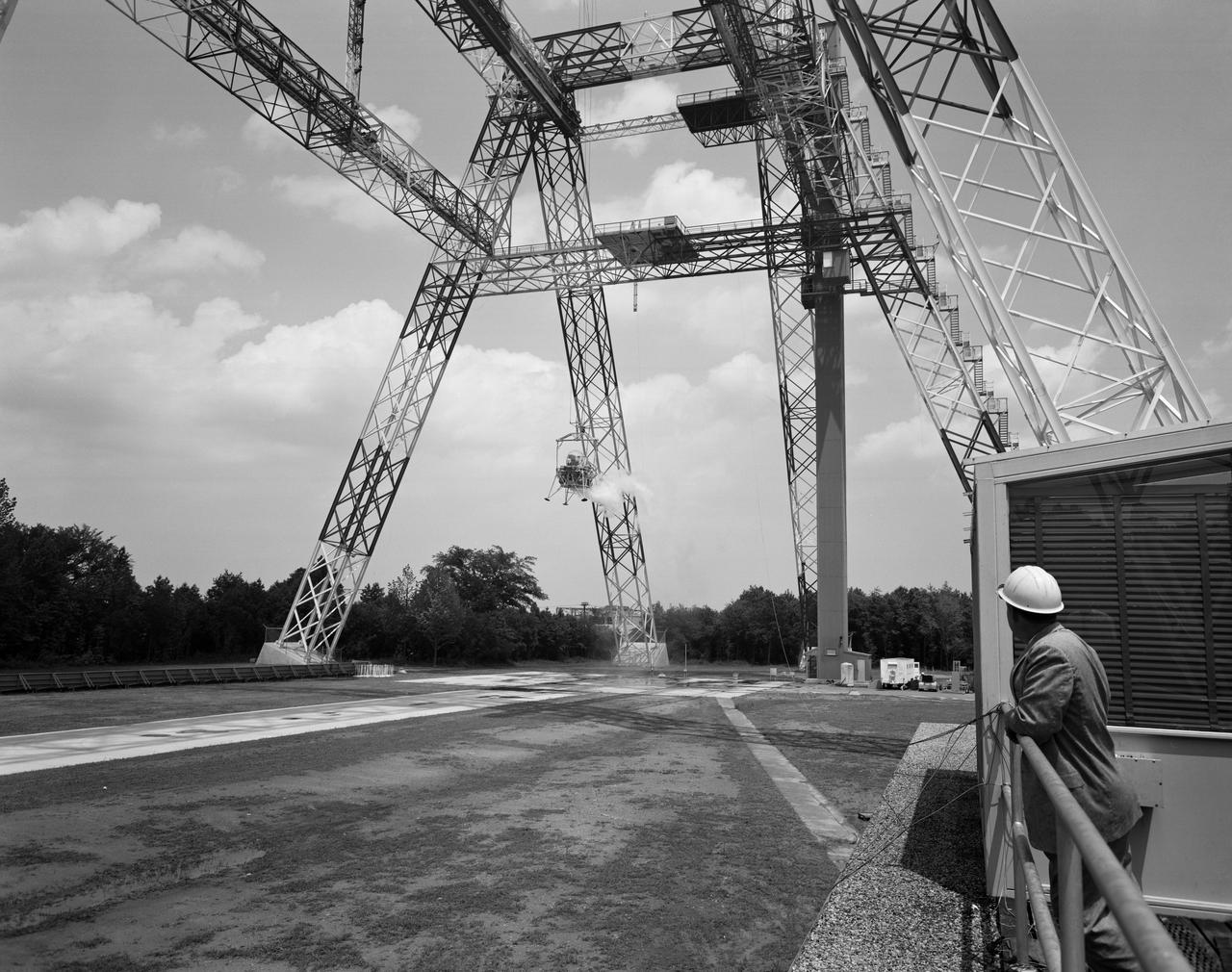
Lunar Landing Testing at NASA Langley. Lunar Landing Testing at NASA Langley. A simulated environment that contributed in a significant way to the success of Apollo project was the Lunar Landing Research Facility, an imposing 250 foot high, 400 foot long gantry structure that became operational in 1965. Published in the book "Space Flight Revolution" NASA SP-4308 pg. 376
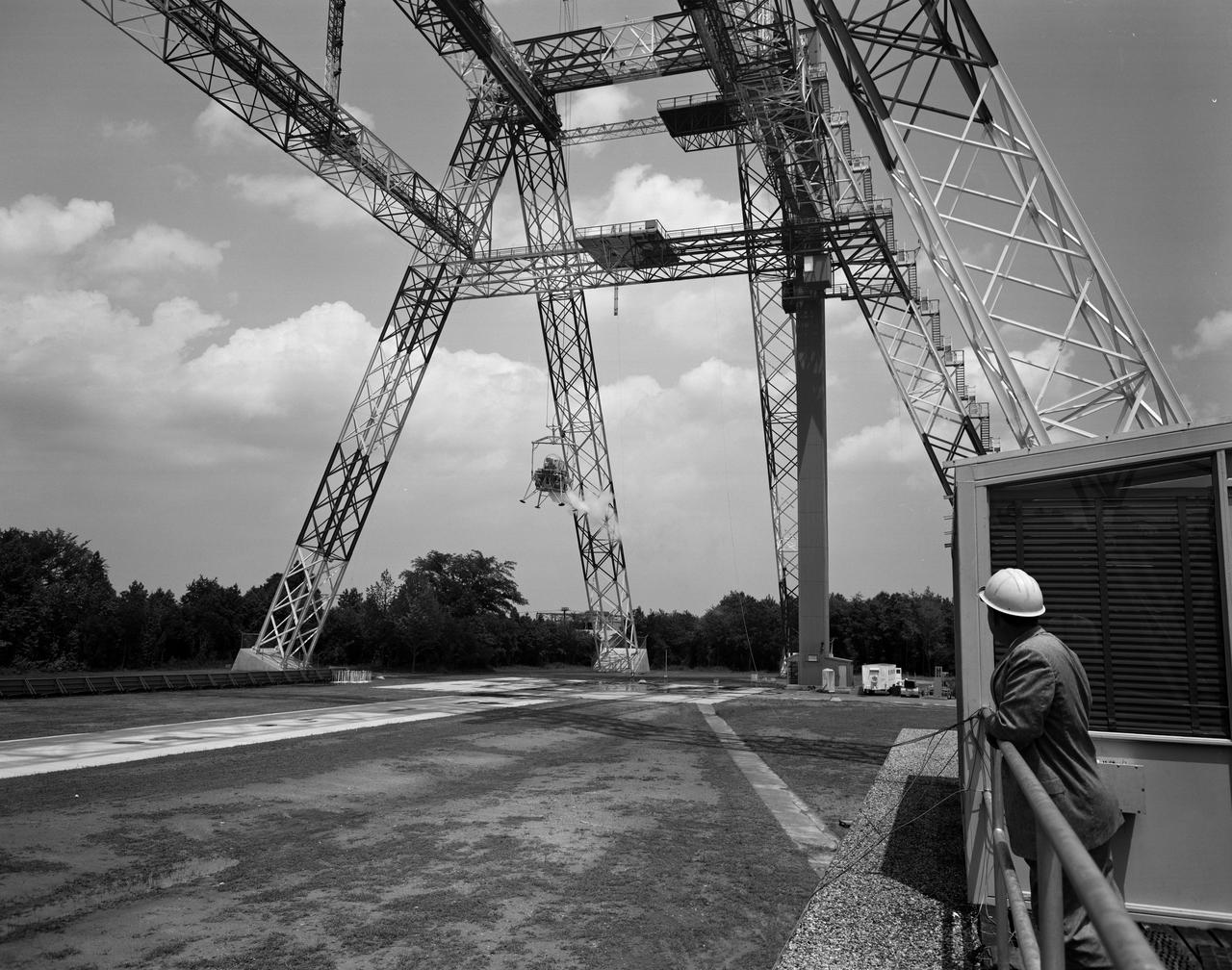
Lunar Landing Testing at NASA Langley. Lunar Landing Testing at NASA Langley. A simulated environment that contributed in a significant way to the success of Apollo project was the Lunar Landing Research Facility, an imposing 250 foot high, 400 foot long gantry structure that became operational in 1965. Published in the book "Space Flight Revolution" NASA SP-4308 pg. 376
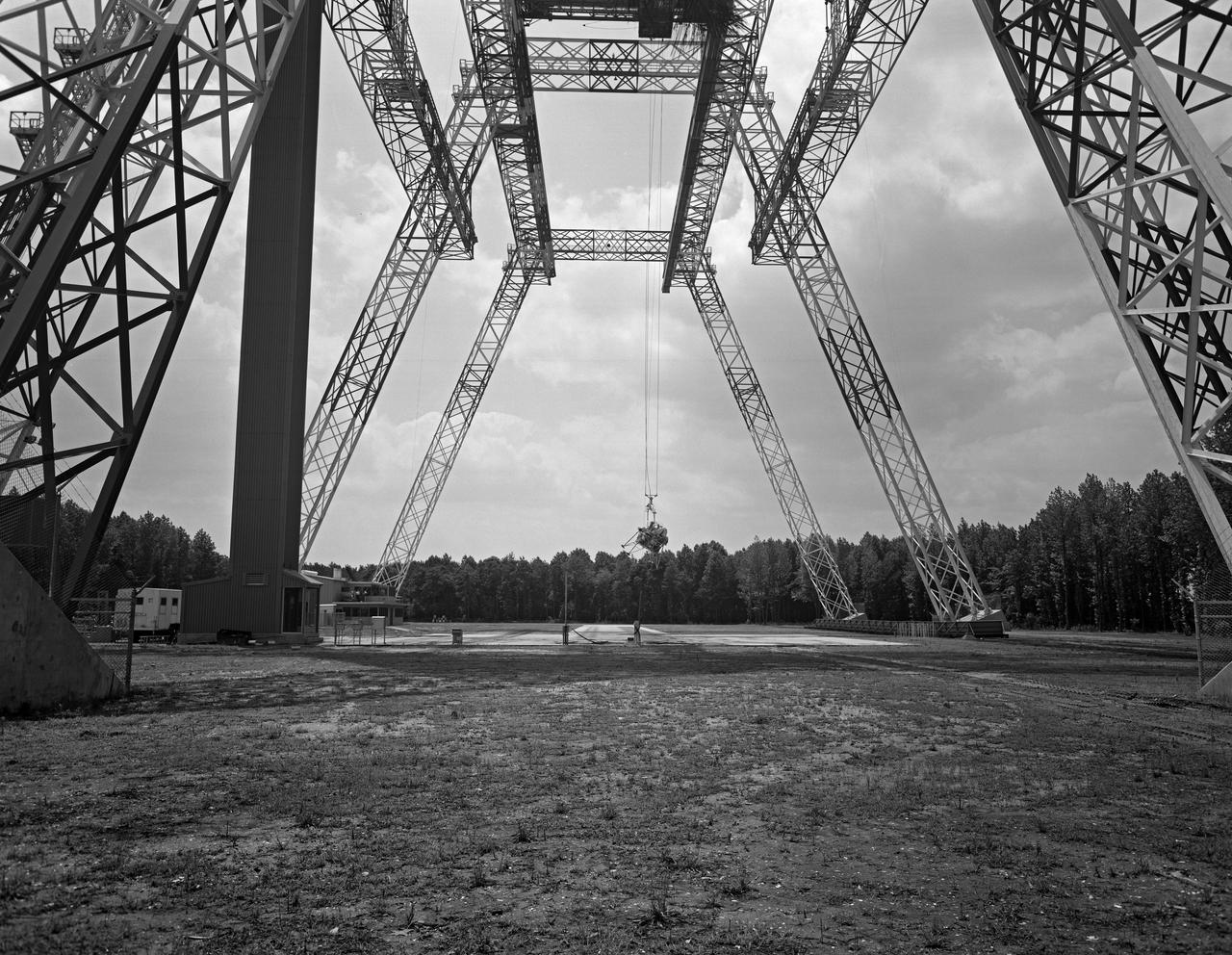
Lunar Landing Testing at NASA Langley. Lunar Landing Testing at NASA Langley. A simulated environment that contributed in a significant way to the success of Apollo project was the Lunar Landing Research Facility, an imposing 250 foot high, 400 foot long gantry structure that became operational in 1965. Published in the book "Space Flight Revolution" NASA SP-4308 pg. 376
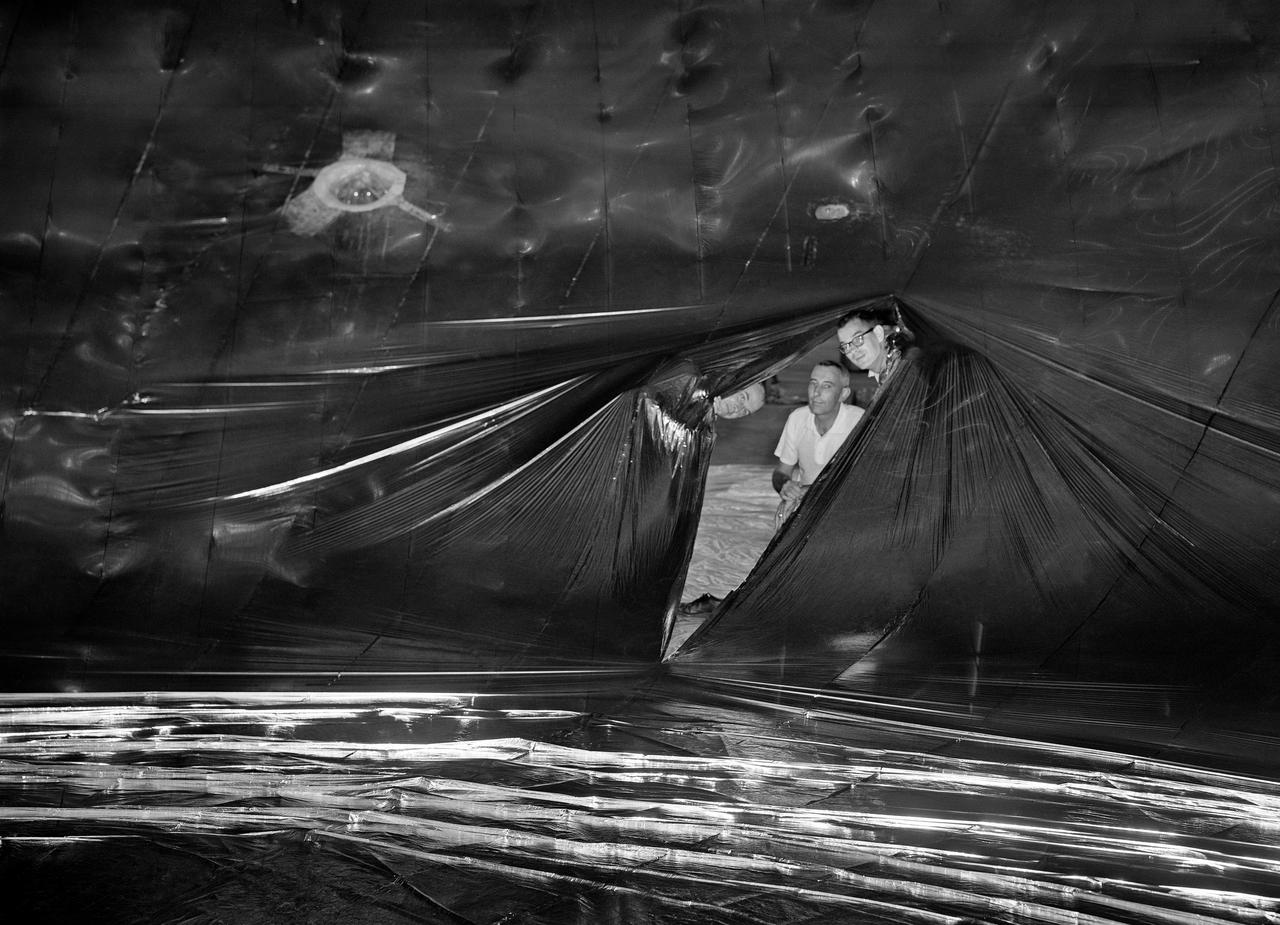
Inflation Tests of the Echo 1 Satellite in Weeksville, N.C. 1958-L-03603 Image Langley engineers Edwin Kilgore (center), Norman Crabill (right) and an unidentified man take a peek inside the vast balloon during inflation tests. Page. 183 Space Flight Revolution NASA Langley Research Center From Sputnik to Apollo. NASA SP-4308.
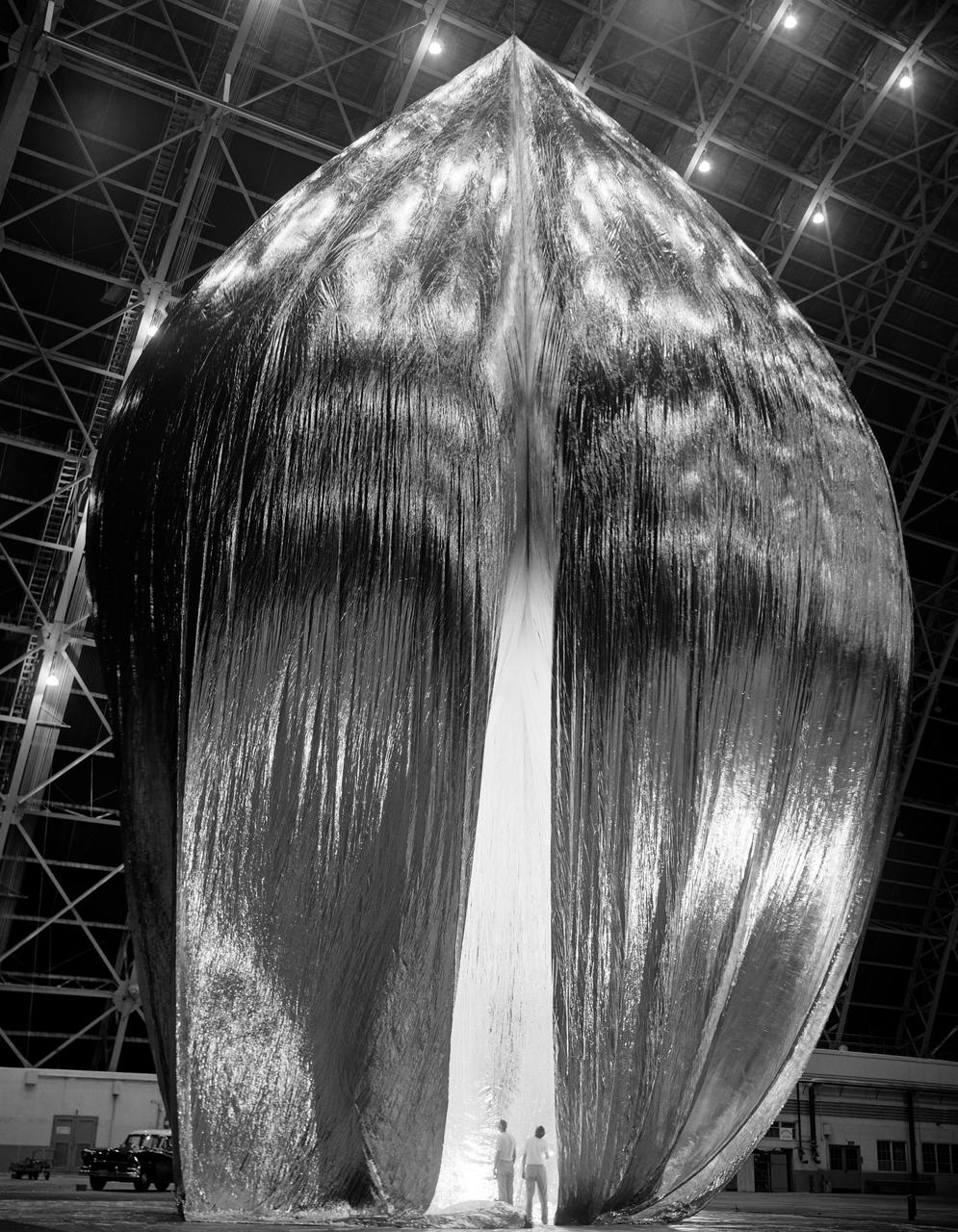
Inflation Tests of the Echo 1 Satellite in Weeksville, N.C. 1958-L-03603 Image Langley engineers Edwin Kilgore (center), Norman Crabill (right) and an unidentified man take a peek inside the vast balloon during inflation tests. Page. 183 Space Flight Revolution NASA Langley Research Center From Sputnik to Apollo. NASA SP-4308.
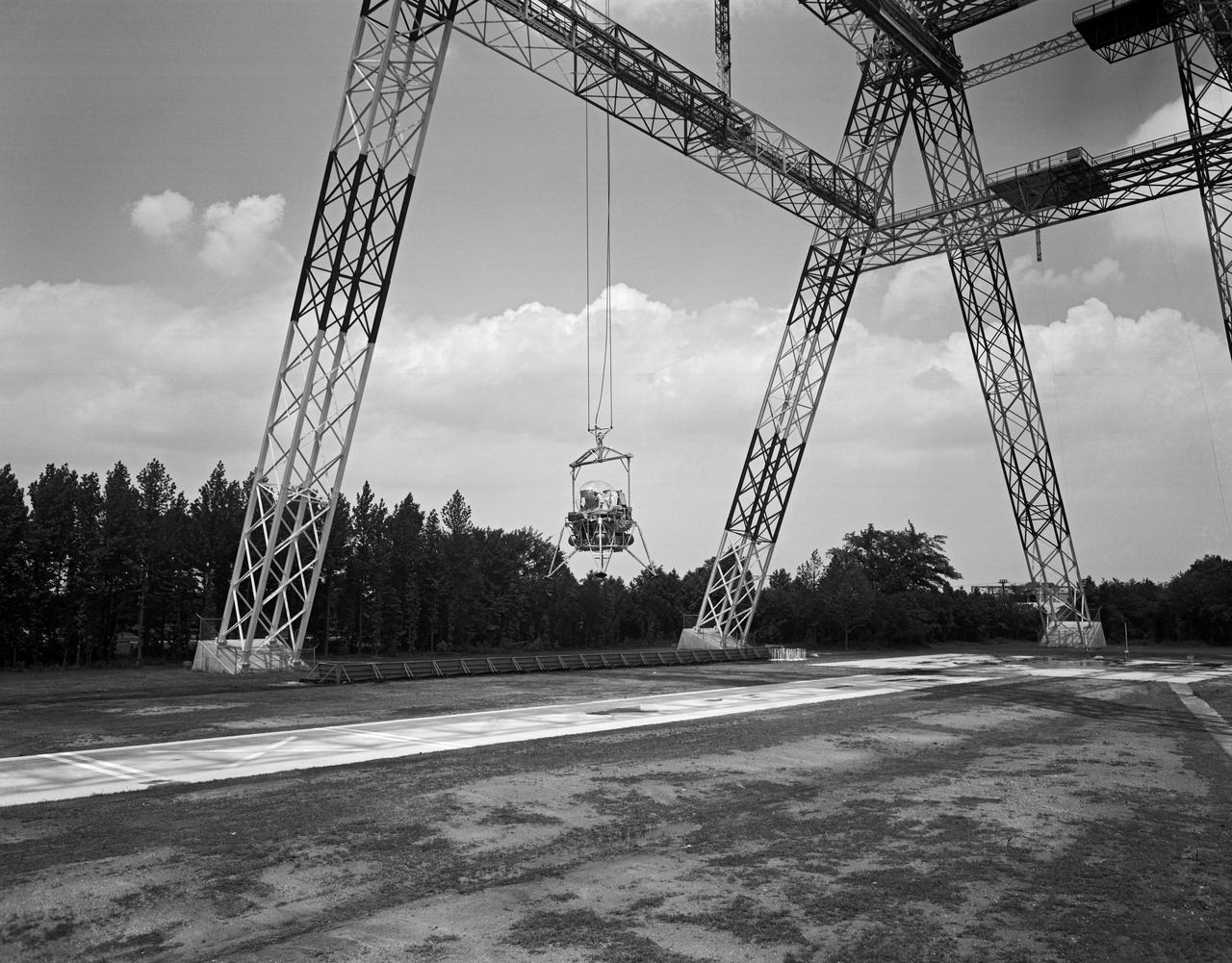
Lunar Landing Testing at NASA Langley. Lunar Landing Testing at NASA Langley. A simulated environment that contributed in a significant way to the success of Apollo project was the Lunar Landing Research Facility, an imposing 250 foot high, 400 foot long gantry structure that became operational in 1965. Published in the book "Space Flight Revolution" NASA SP-4308 pg. 376
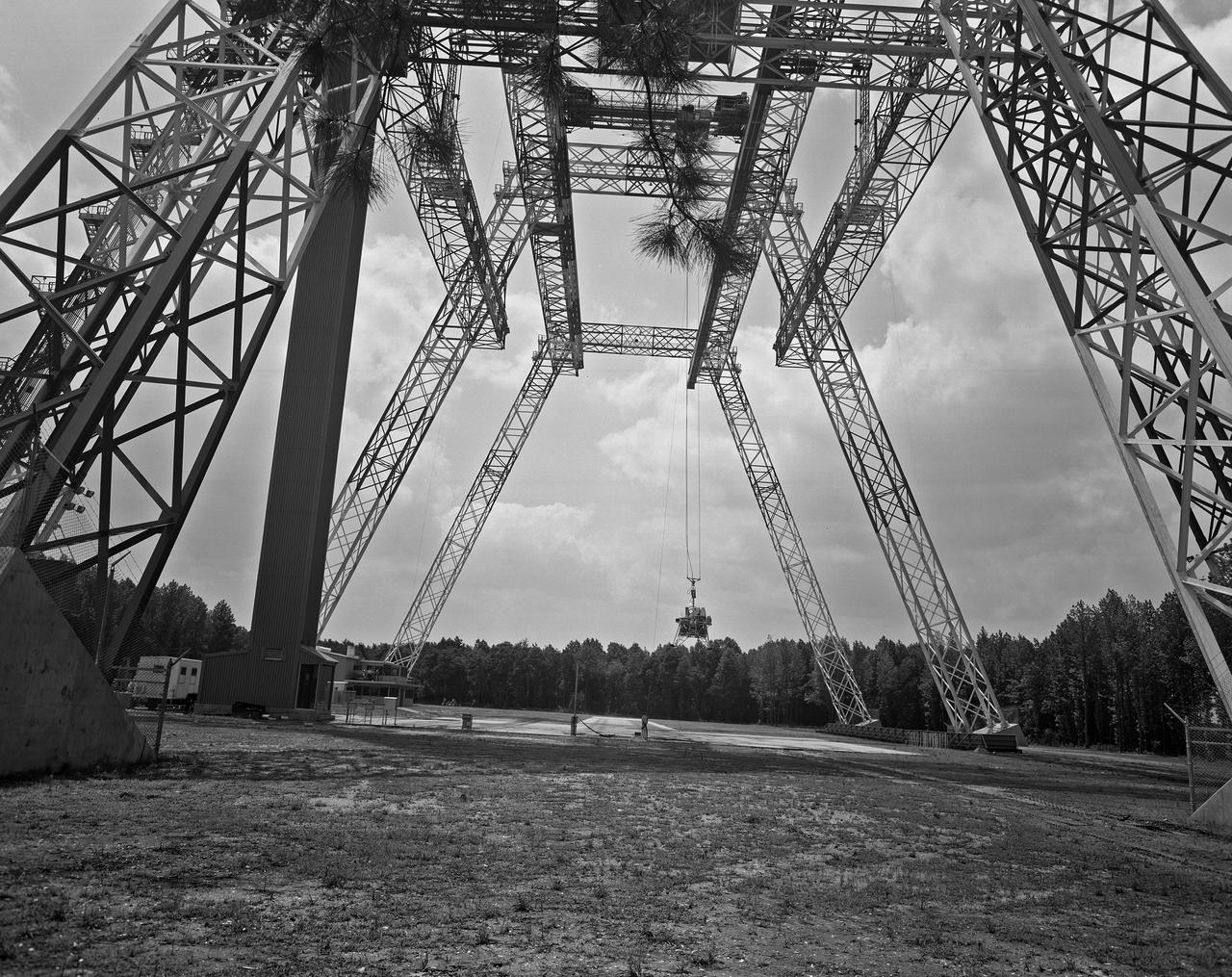
Lunar Landing Testing at NASA Langley. Lunar Landing Testing at NASA Langley. A simulated environment that contributed in a significant way to the success of Apollo project was the Lunar Landing Research Facility, an imposing 250 foot high, 400 foot long gantry structure that became operational in 1965. Published in the book "Space Flight Revolution" NASA SP-4308 pg. 376
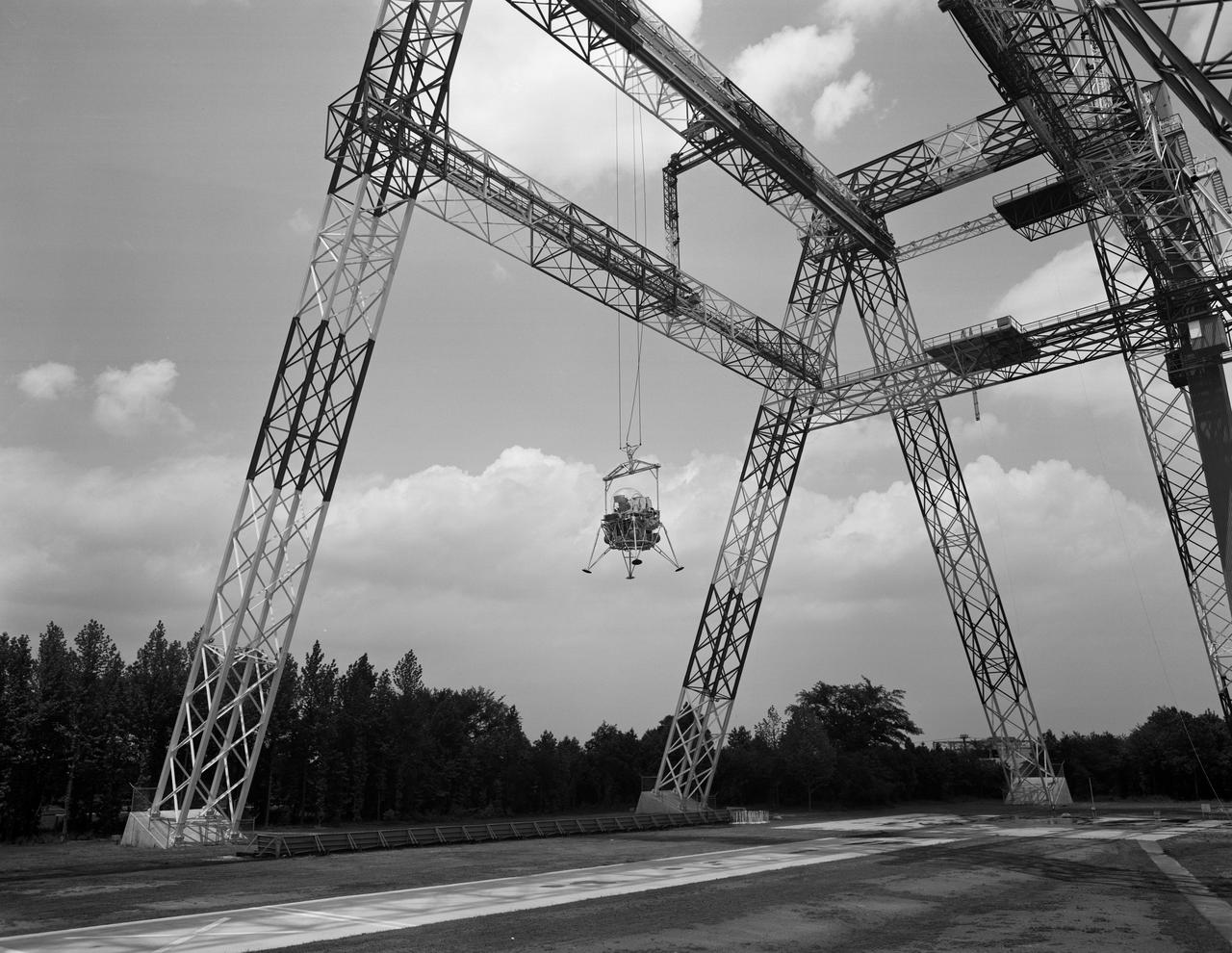
Lunar Landing Testing at NASA Langley. Lunar Landing Testing at NASA Langley. A simulated environment that contributed in a significant way to the success of Apollo project was the Lunar Landing Research Facility, an imposing 250 foot high, 400 foot long gantry structure that became operational in 1965. Published in the book "Space Flight Revolution" NASA SP-4308 pg. 376
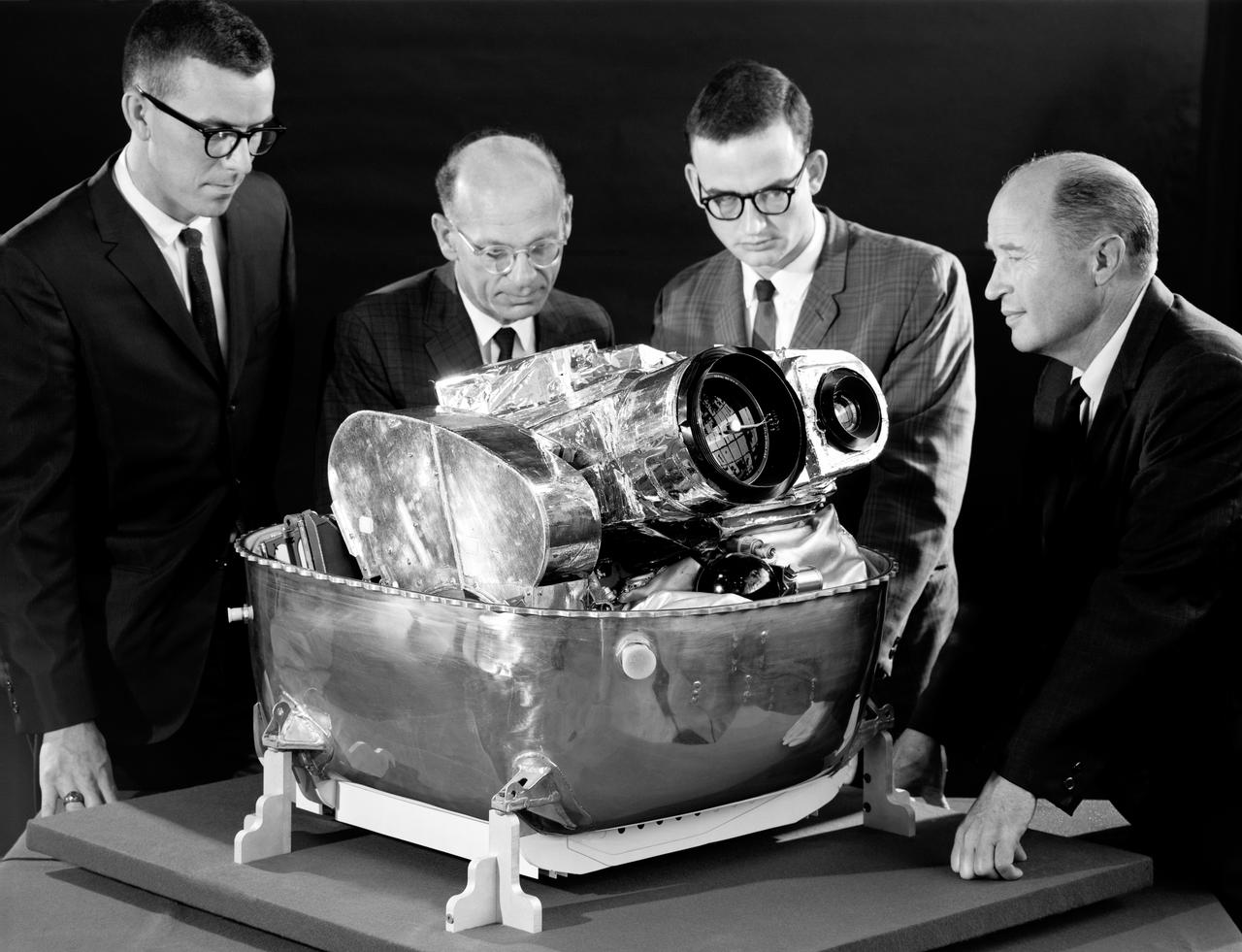
Lunar Orbiter was essentially a flying camera. The payload structure was built around a pressurized shell holding Eastman Kodak s dual-imaging photographic system, which used a camera with wide-angle and telephoto lenses that could simultaneously take two kinds of pictures on the same film. Men in in the picture are: Right to left Cliff Nelson, Calvin Broome, Israel Taback and Joe Mooreman. -- Published in James R. Hansen, Spaceflight Revolution: NASA Langley Research Center From Sputnik to Apollo, NASA SP-4308, p. 329.
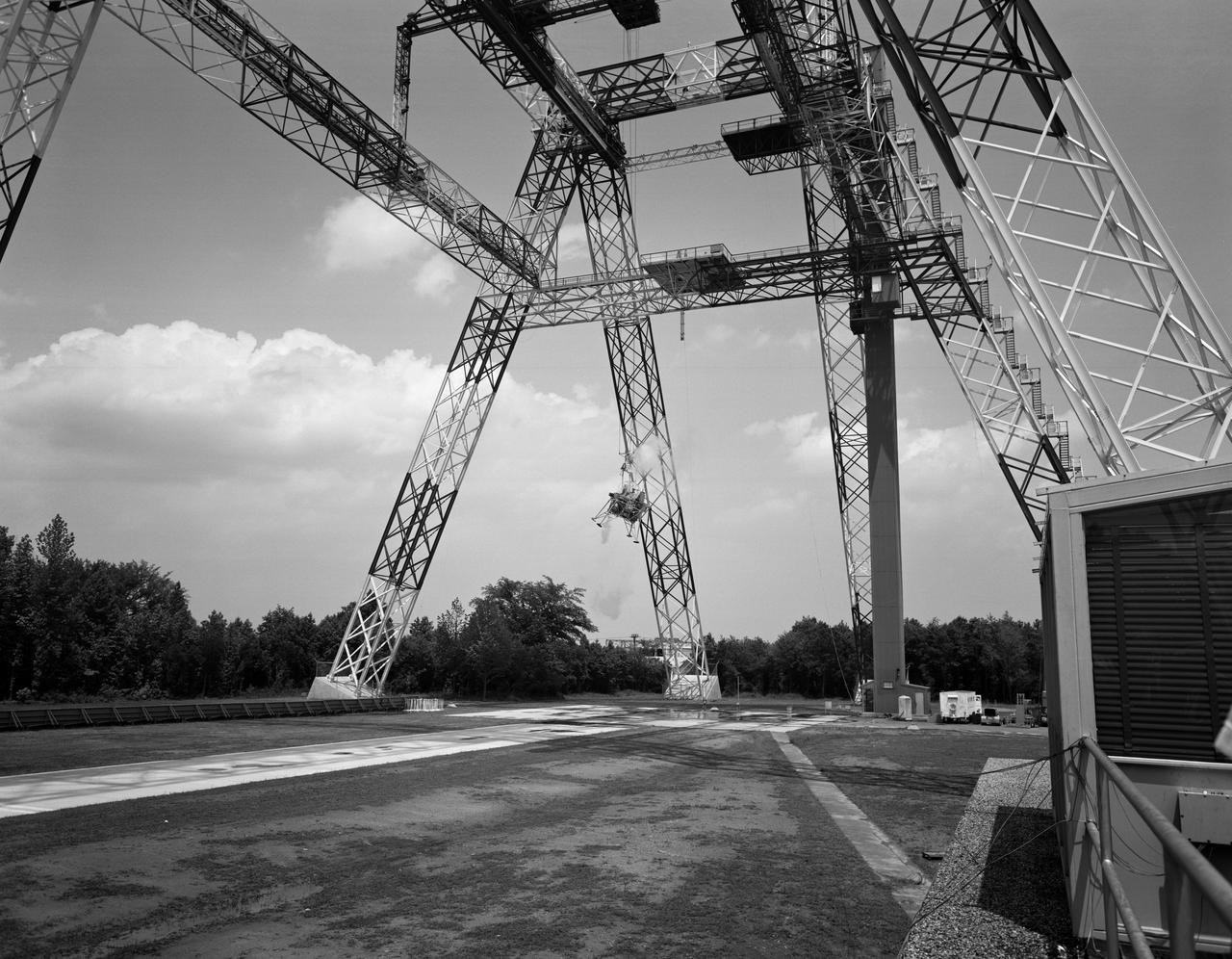
Lunar Landing Testing at NASA Langley. Lunar Landing Testing at NASA Langley. A simulated environment that contributed in a significant way to the success of Apollo project was the Lunar Landing Research Facility, an imposing 250 foot high, 400 foot long gantry structure that became operational in 1965. Published in the book "Space Flight Revolution" NASA SP-4308 pg. 376
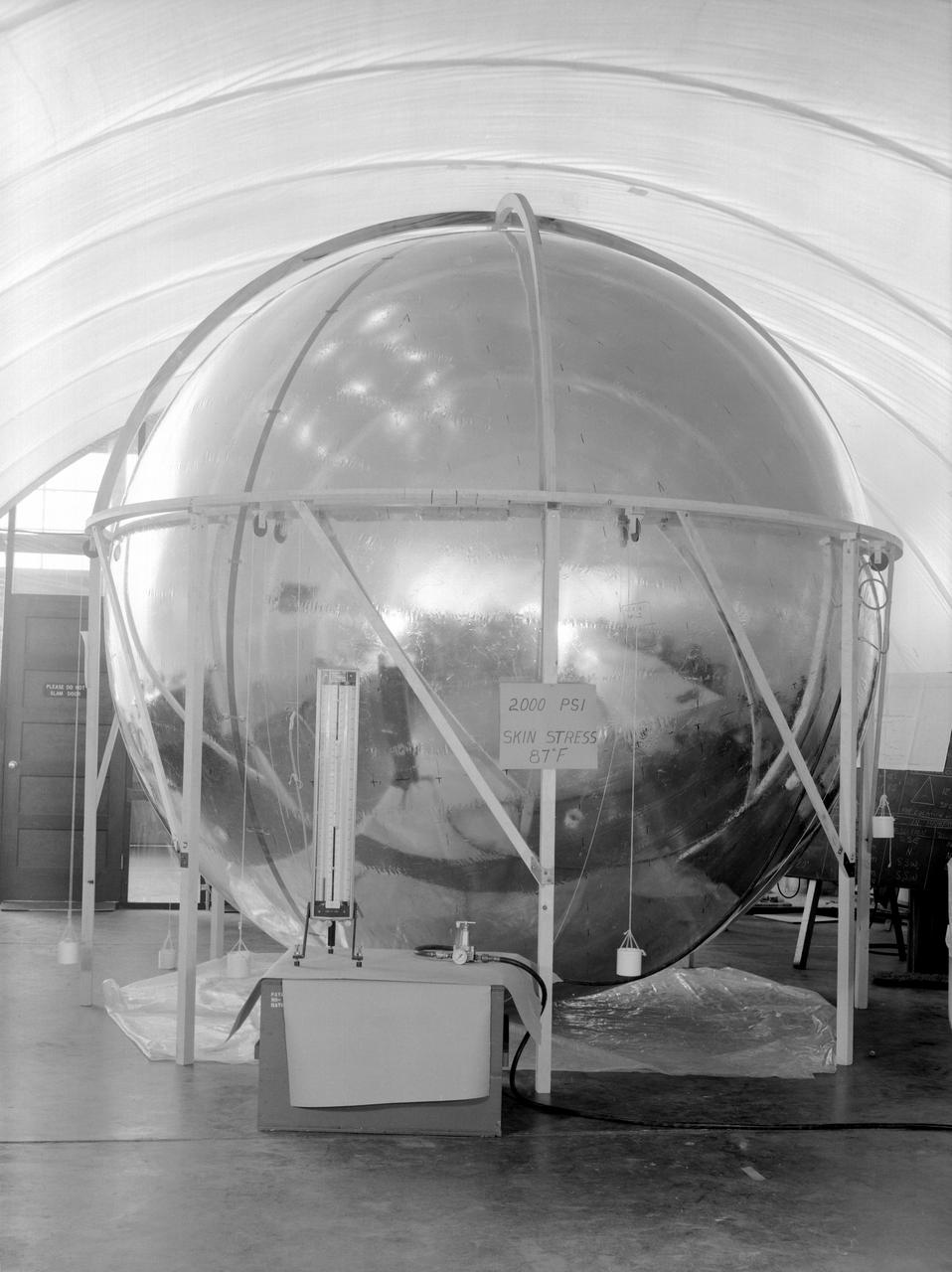
Photographed in 1960. -- Skin Stress Test of the 12-foot satellite built as a prototype of the full-scale Echo satellite. The 12-foot diameter of the sphere was chosen because that was the ceiling height in the Langley model shop. The proposal to build the 12-foot satellite was made in November 1957. -- Published in James R. Hansen, Spaceflight Revolution: NASA Langley Research Center From Sputnik to Apollo, NASA SP-4308, pp. 170-171.
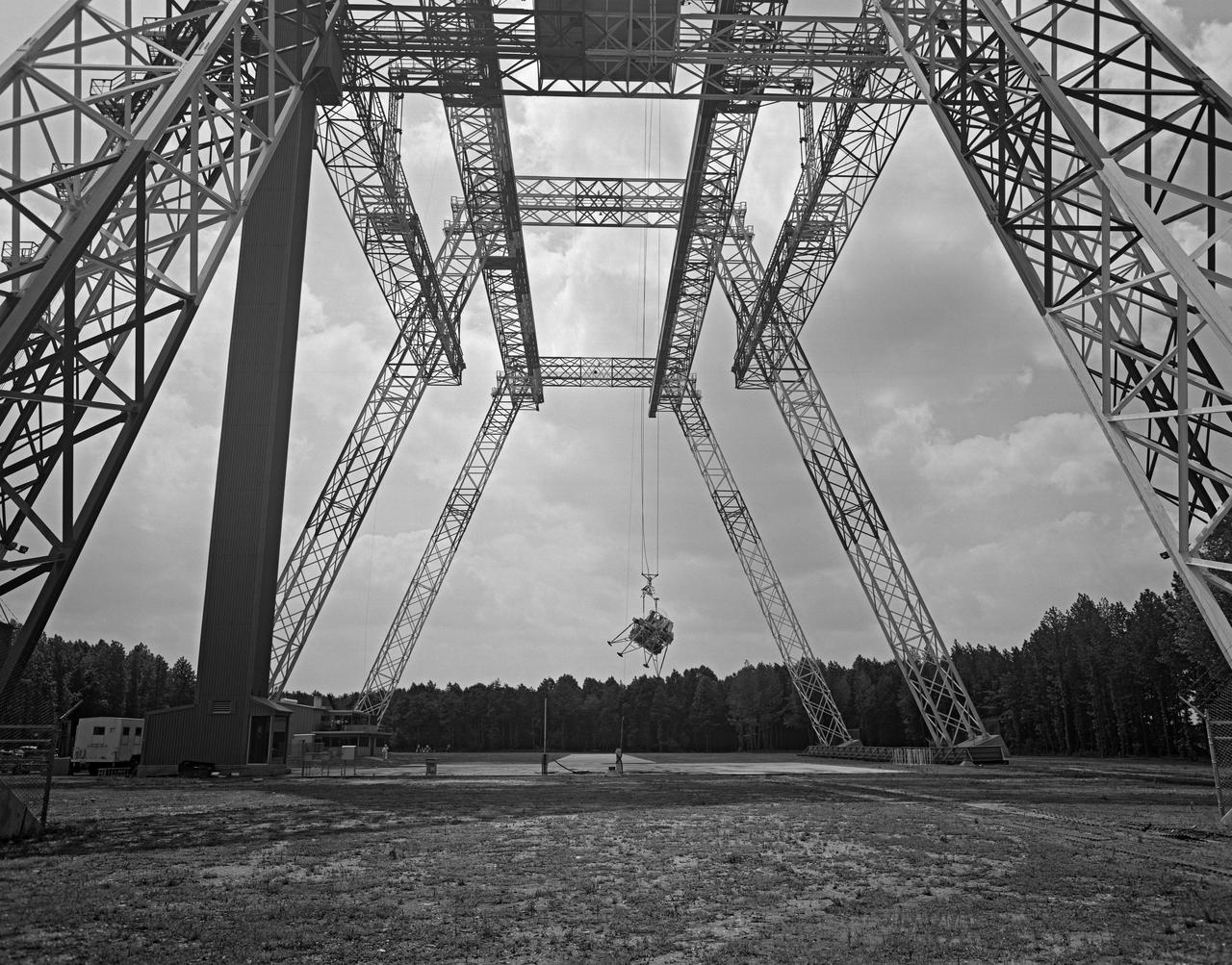
Lunar Landing Testing at NASA Langley. Lunar Landing Testing at NASA Langley. A simulated environment that contributed in a significant way to the success of Apollo project was the Lunar Landing Research Facility, an imposing 250 foot high, 400 foot long gantry structure that became operational in 1965. Published in the book "Space Flight Revolution" NASA SP-4308 pg. 376
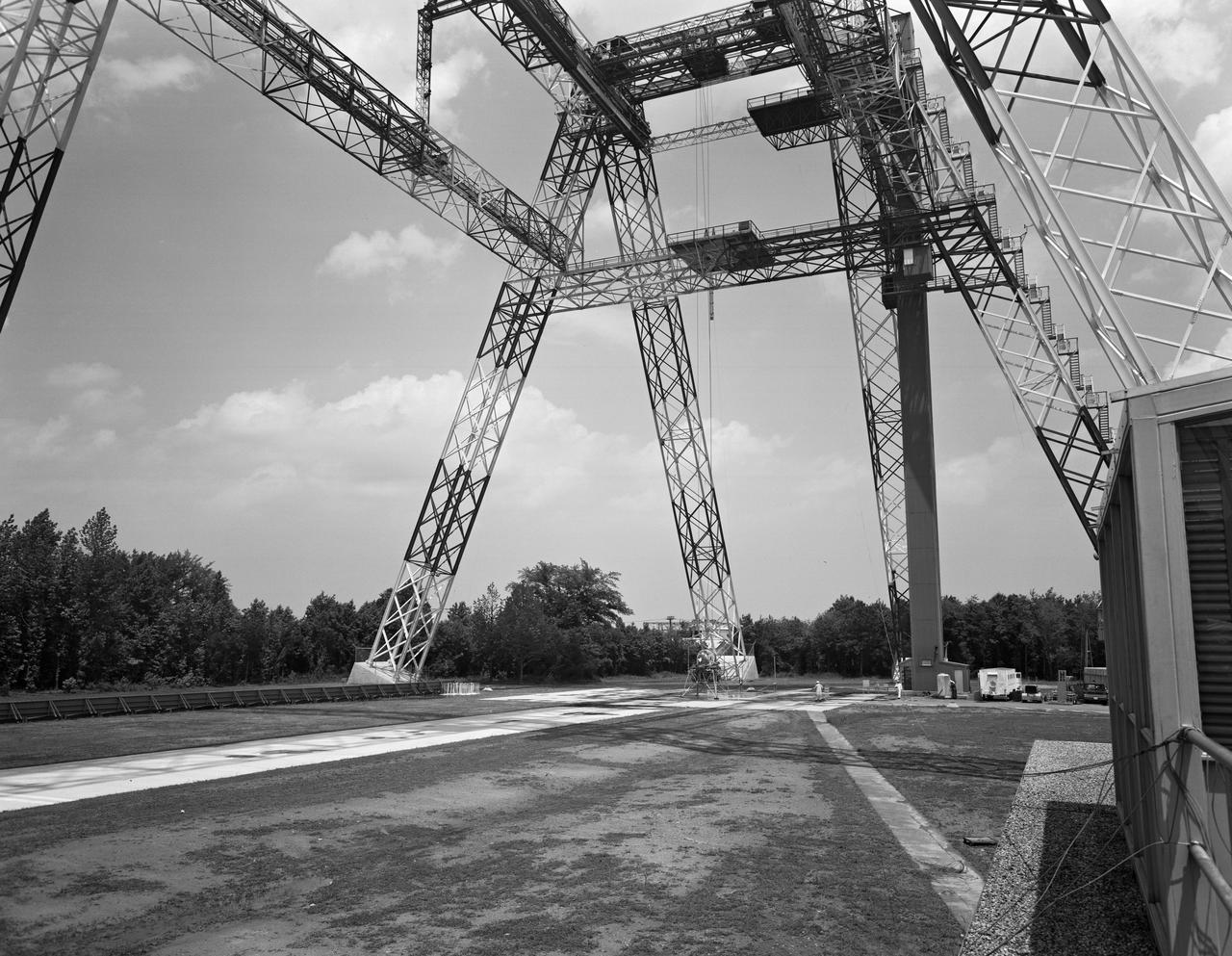
Lunar Landing Testing at NASA Langley. Lunar Landing Testing at NASA Langley. A simulated environment that contributed in a significant way to the success of Apollo project was the Lunar Landing Research Facility, an imposing 250 foot high, 400 foot long gantry structure that became operational in 1965. Published in the book "Space Flight Revolution" NASA SP-4308 pg. 376
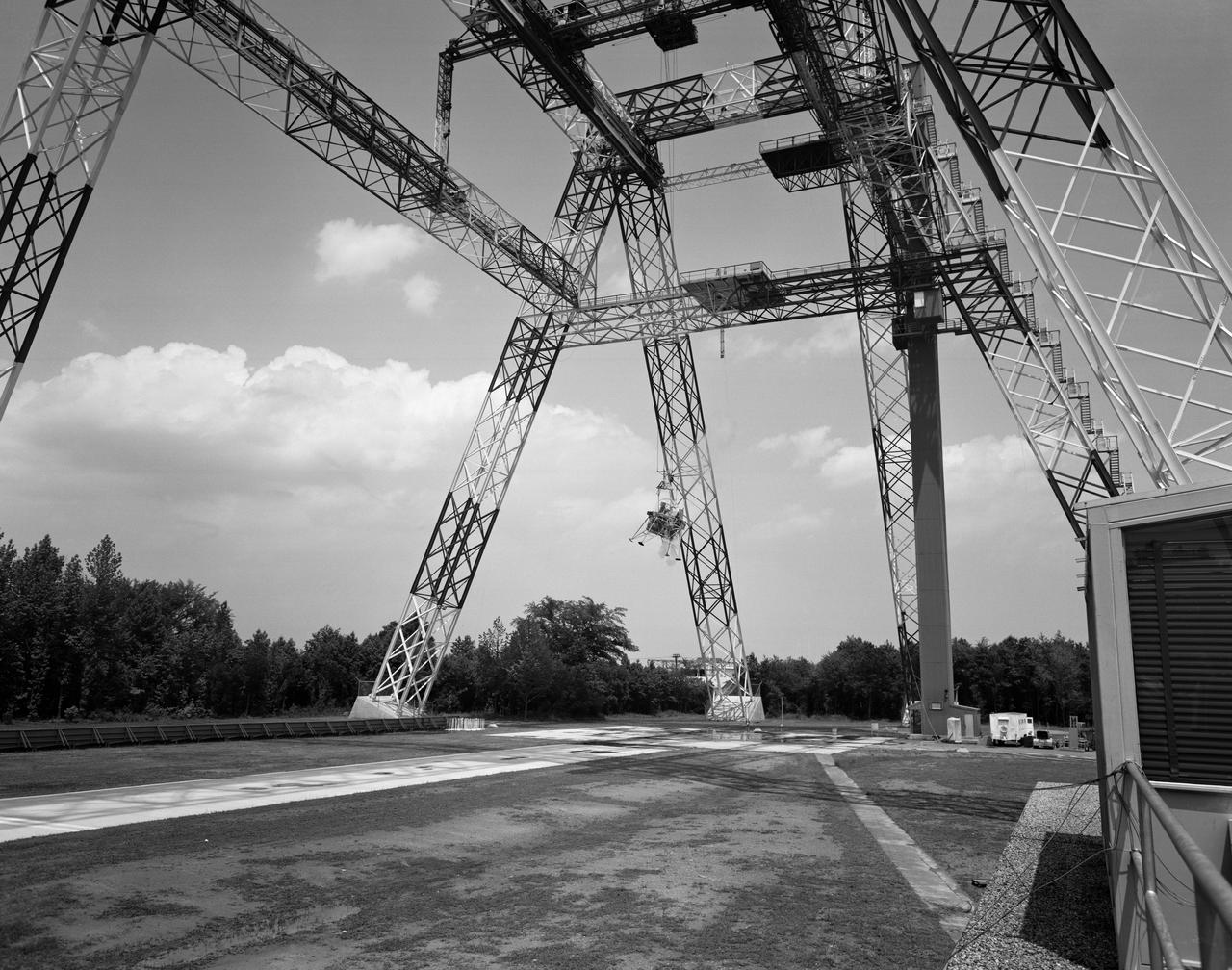
Lunar Landing Testing at NASA Langley. Lunar Landing Testing at NASA Langley. A simulated environment that contributed in a significant way to the success of Apollo project was the Lunar Landing Research Facility, an imposing 250 foot high, 400 foot long gantry structure that became operational in 1965. Published in the book "Space Flight Revolution" NASA SP-4308 pg. 376
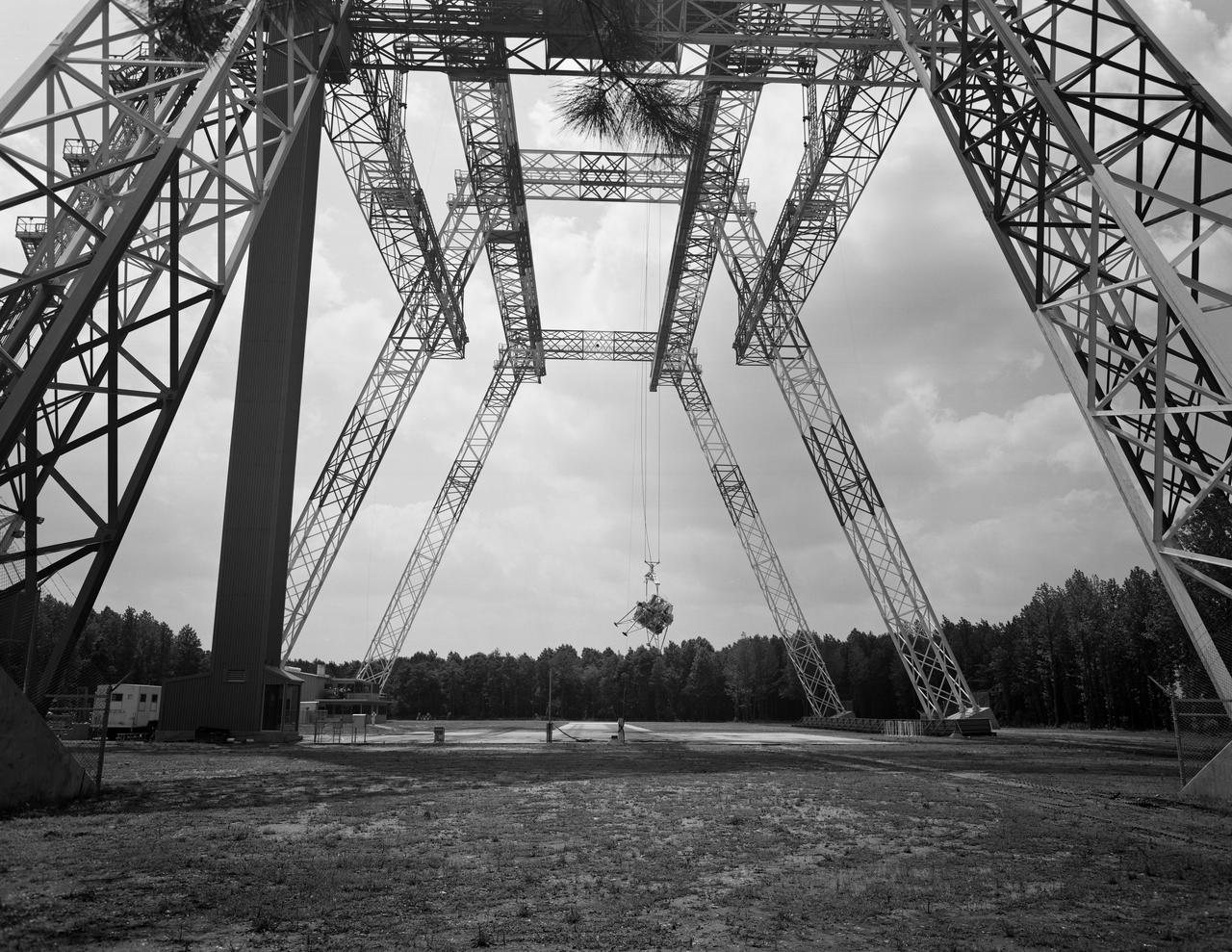
Lunar Landing Testing at NASA Langley. Lunar Landing Testing at NASA Langley. A simulated environment that contributed in a significant way to the success of Apollo project was the Lunar Landing Research Facility, an imposing 250 foot high, 400 foot long gantry structure that became operational in 1965. Published in the book "Space Flight Revolution" NASA SP-4308 pg. 376
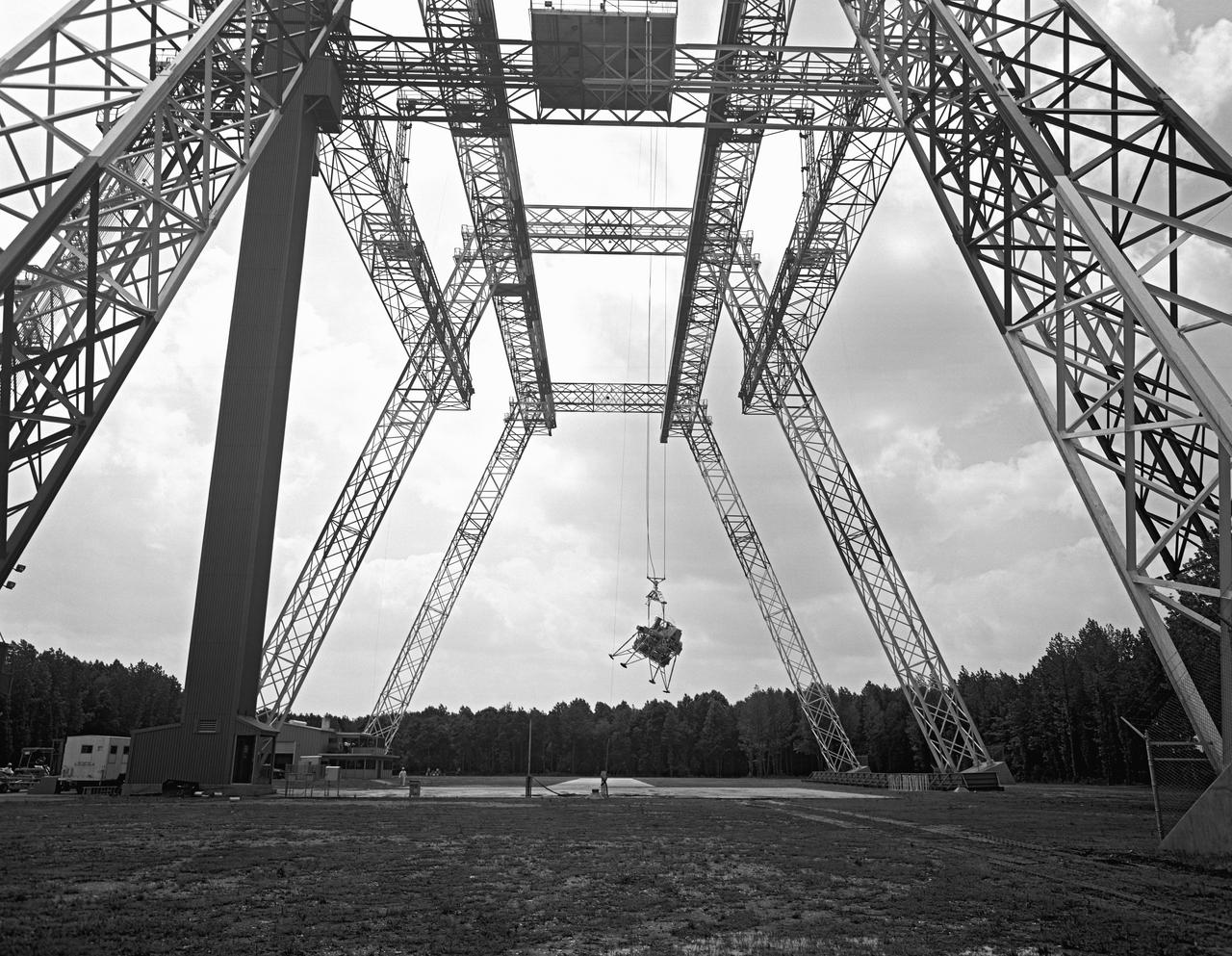
Lunar Landing Testing at NASA Langley. Lunar Landing Testing at NASA Langley. A simulated environment that contributed in a significant way to the success of Apollo project was the Lunar Landing Research Facility, an imposing 250 foot high, 400 foot long gantry structure that became operational in 1965. Published in the book "Space Flight Revolution" NASA SP-4308 pg. 376
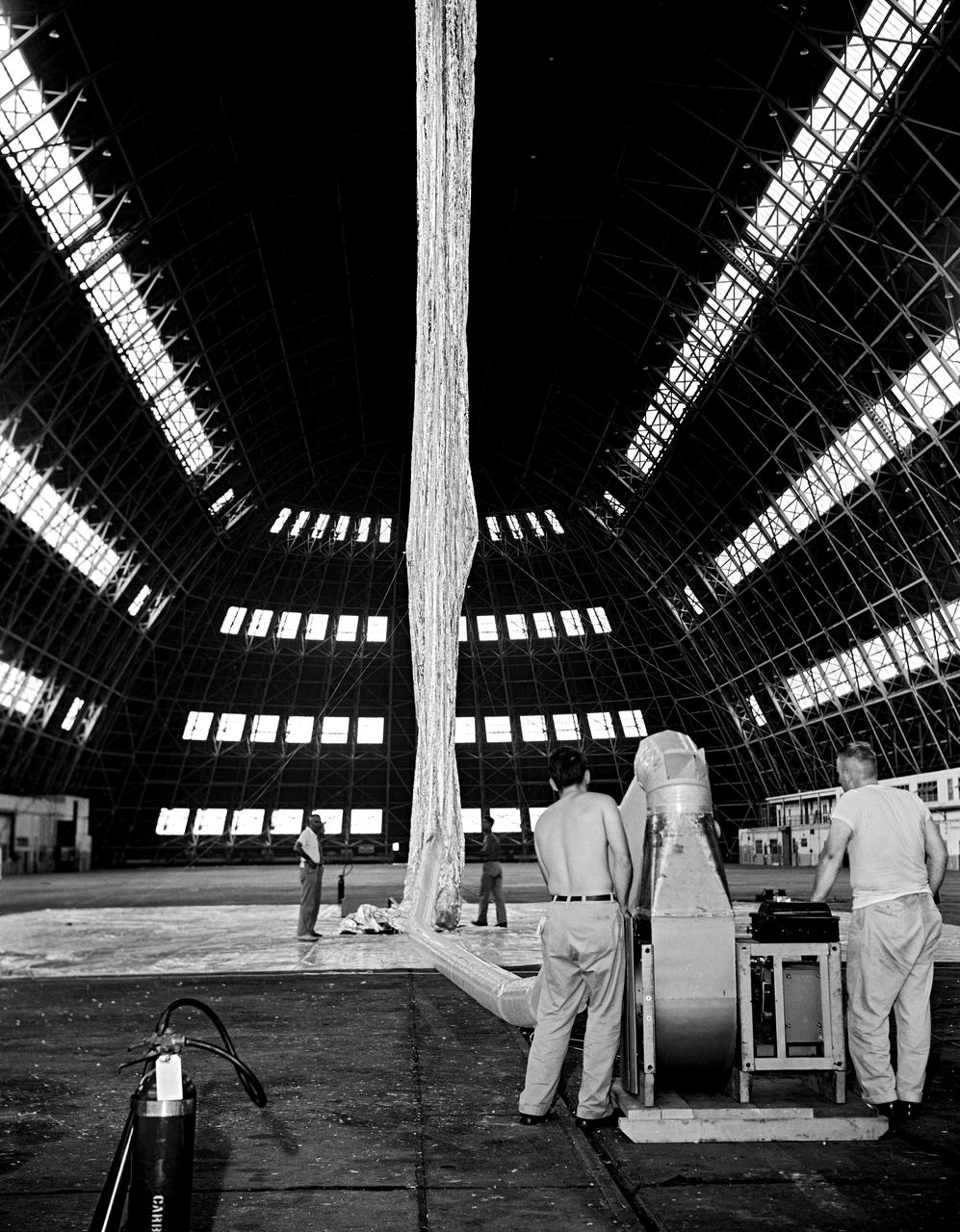
Inflation Tests of the Echo 1 Satellite in Weeksville, N.C. 1958-L-03603 Image Langley engineers Edwin Kilgore (center), Norman Crabill (right) and an unidentified man take a peek inside the vast balloon during inflation tests. Page. 183 Space Flight Revolution NASA Langley Research Center From Sputnik to Apollo. NASA SP-4308.
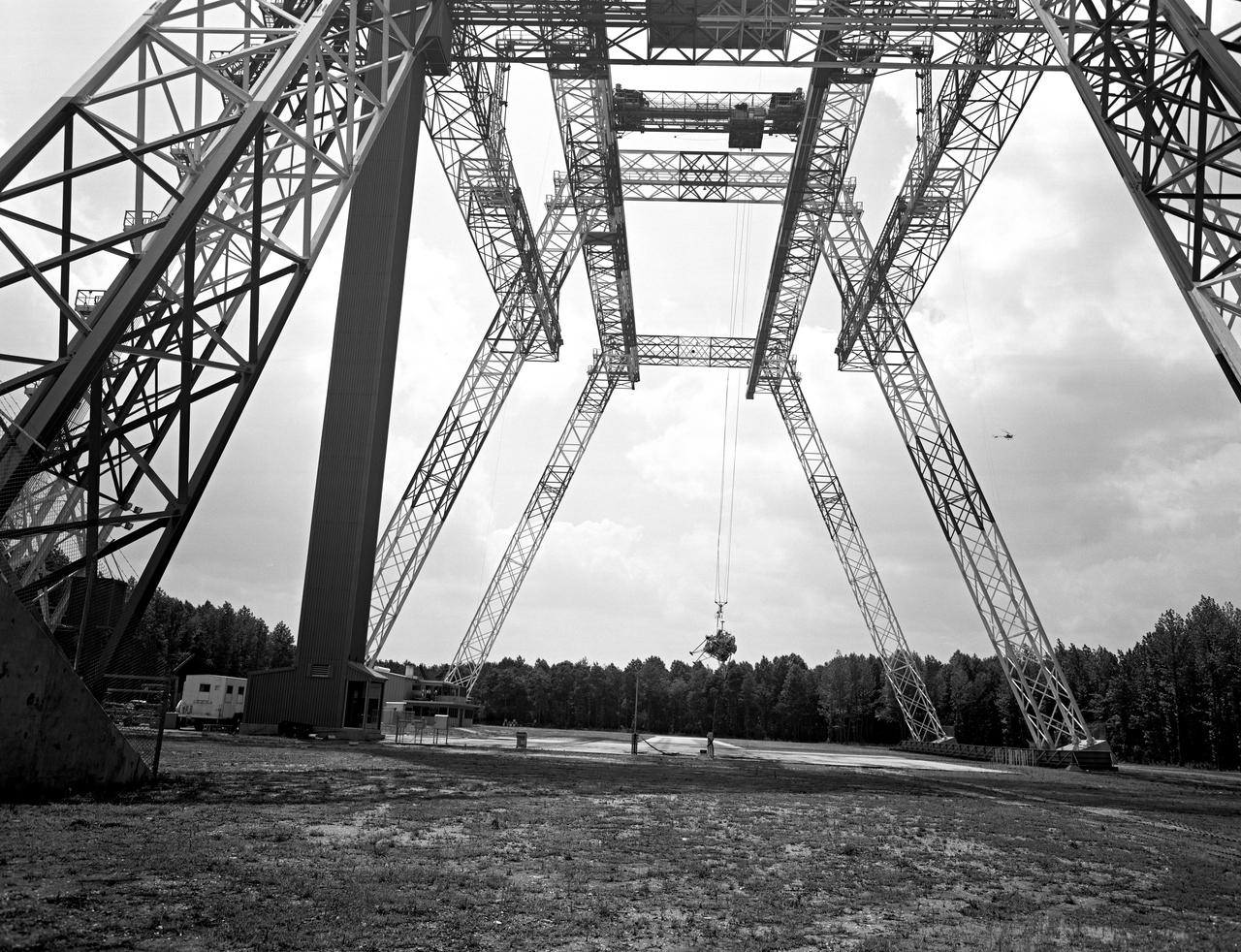
Lunar Landing Testing at NASA Langley. Lunar Landing Testing at NASA Langley. A simulated environment that contributed in a significant way to the success of Apollo project was the Lunar Landing Research Facility, an imposing 250 foot high, 400 foot long gantry structure that became operational in 1965. Published in the book "Space Flight Revolution" NASA SP-4308 pg. 376
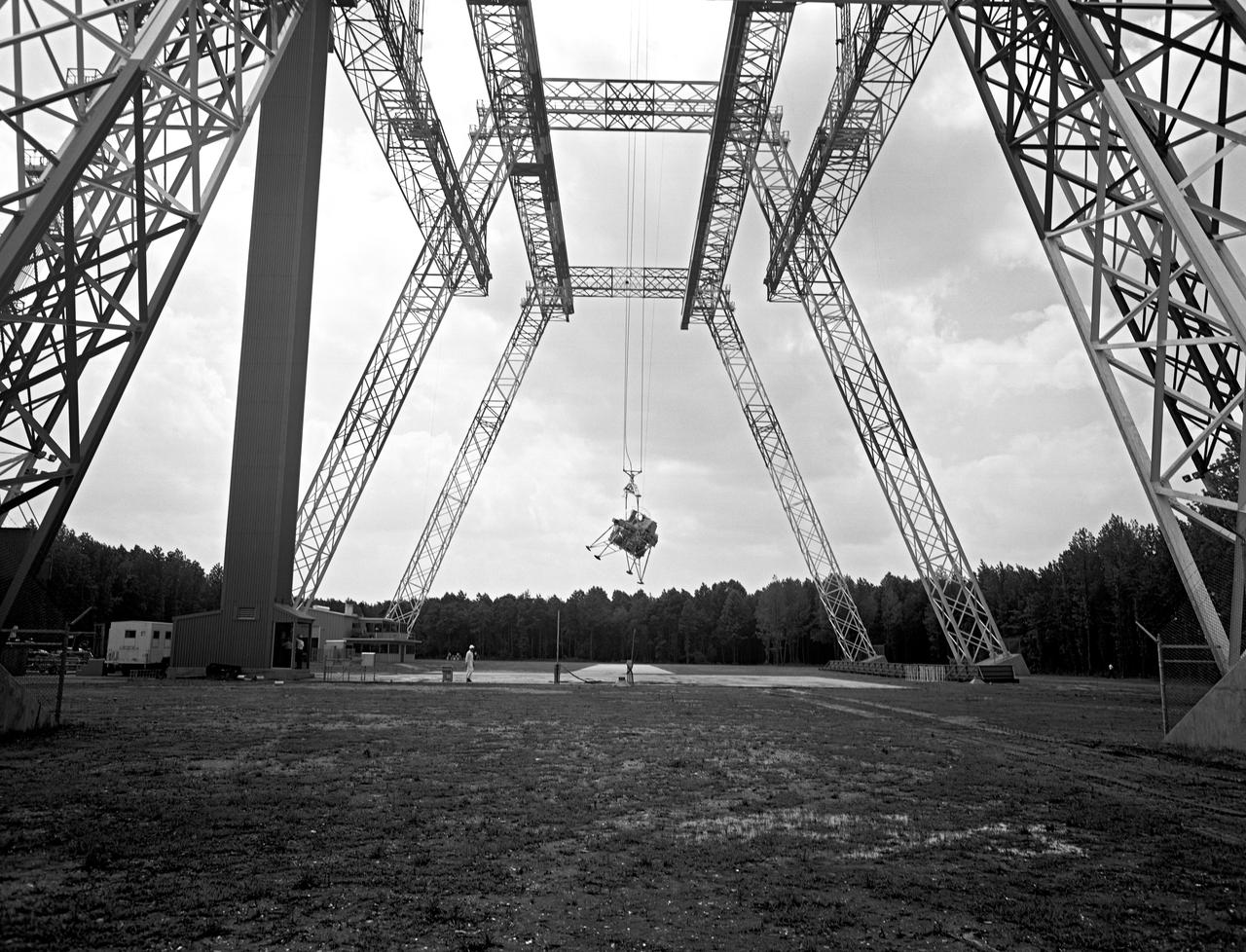
Lunar Landing Testing at NASA Langley. Lunar Landing Testing at NASA Langley. A simulated environment that contributed in a significant way to the success of Apollo project was the Lunar Landing Research Facility, an imposing 250 foot high, 400 foot long gantry structure that became operational in 1965. Published in the book "Space Flight Revolution" NASA SP-4308 pg. 376
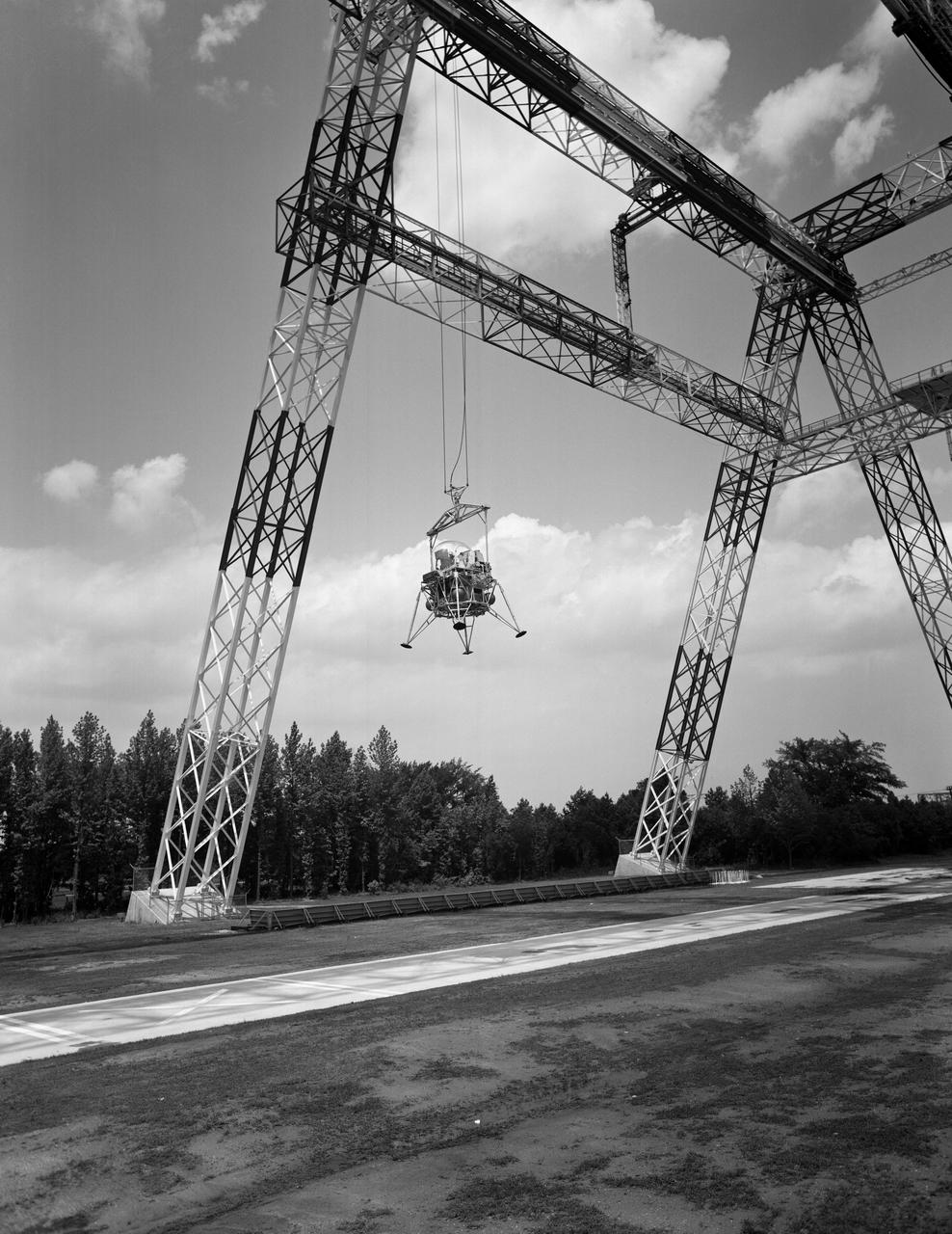
Lunar Landing Testing at NASA Langley. Lunar Landing Testing at NASA Langley. A simulated environment that contributed in a significant way to the success of Apollo project was the Lunar Landing Research Facility, an imposing 250 foot high, 400 foot long gantry structure that became operational in 1965. Published in the book "Space Flight Revolution" NASA SP-4308 pg. 376
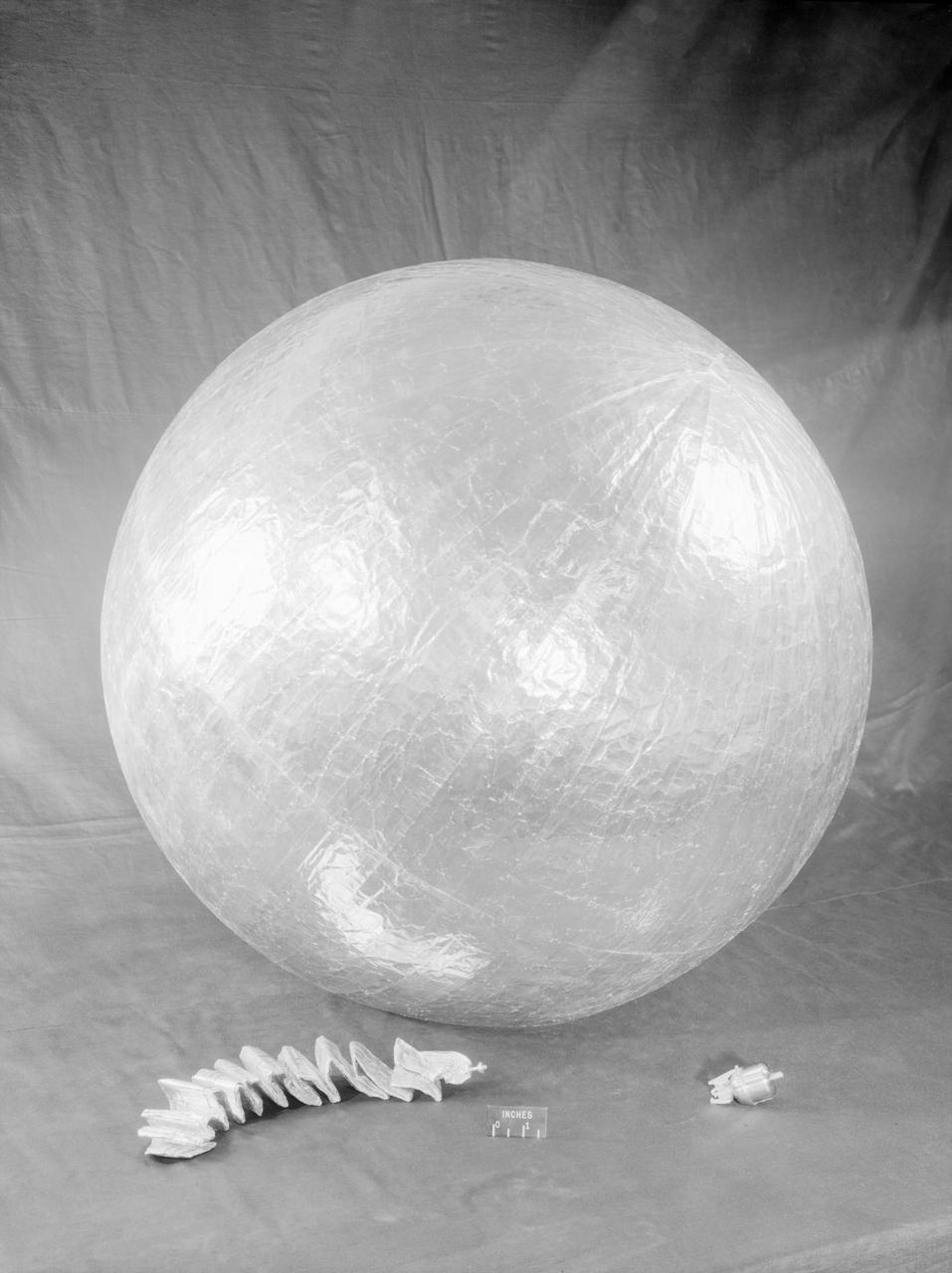
James Hansen describes the work on Project Echo s air density experiment known as the Sub-Satellite. Before launch engineers subjected the sub-satellite to many tests. Here, the sub-satellite is shown prior to tests to determine the capacity of the 30-inch Sub-Satellite to withstand the high temperature of direct sunlight in space, Langley researchers subjected it to 450 F heat test. Results indicated that the aluminum-covered Mylar plastic would effectively reflect the dangerous heat. -- Published in James R. Hansen, Spaceflight Revolution: NASA Langley Research Center From Sputnik to Apollo, NASA SP-4308, p. 168.
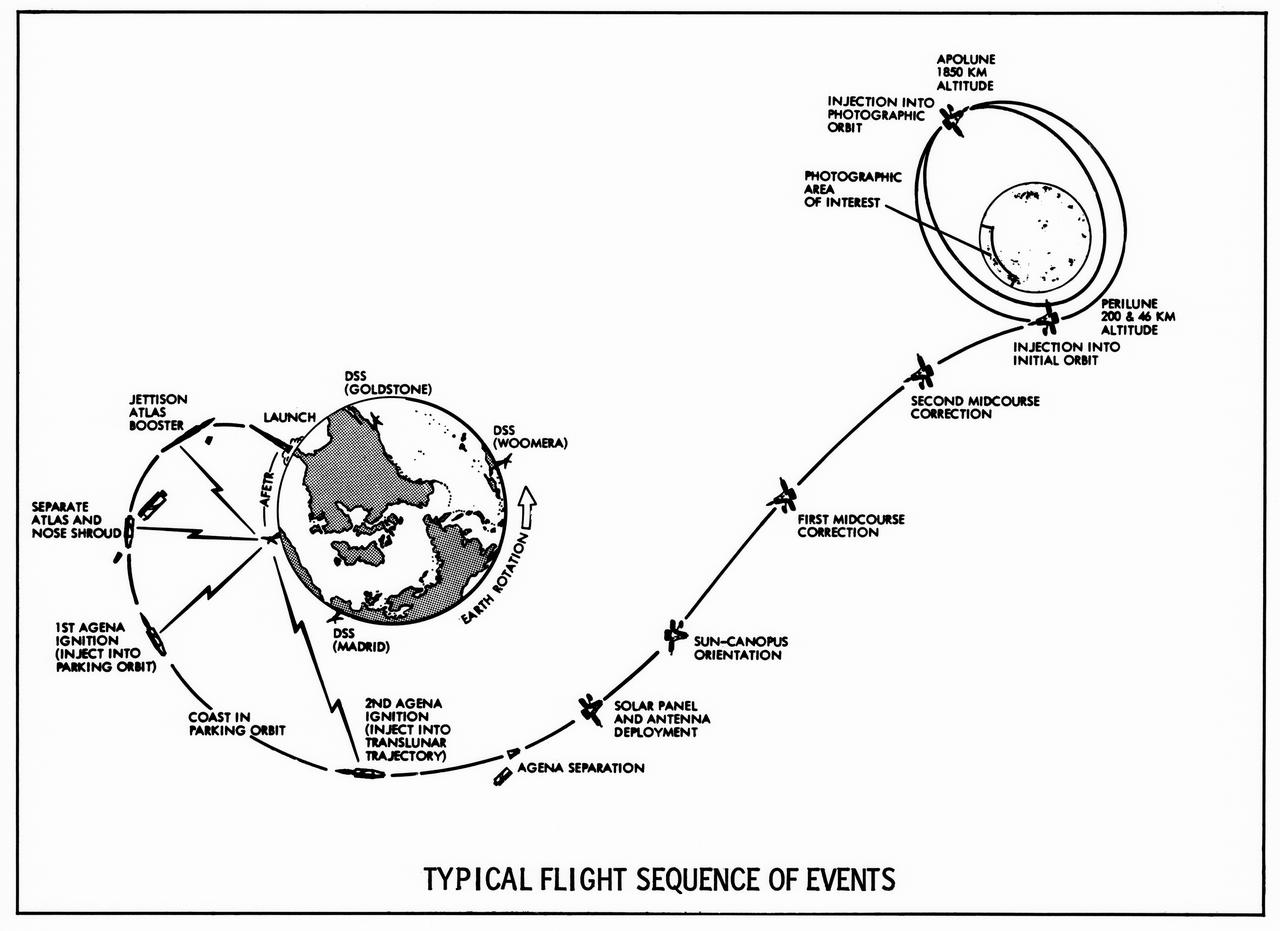
Lunar Orbiter's "Typical Flight sequence of Events" turned out to be quite typical indeed, as all five spacecraft performed exactly as planned. -- Published in James R. Hansen, Spaceflight Revolution: NASA Langley Research Center From Sputnik to Apollo, (Washington: NASA, 1995), p. 340.

Portrait of John M. Eggleston. Served with John Houbolt on the Manned Space Lab group.
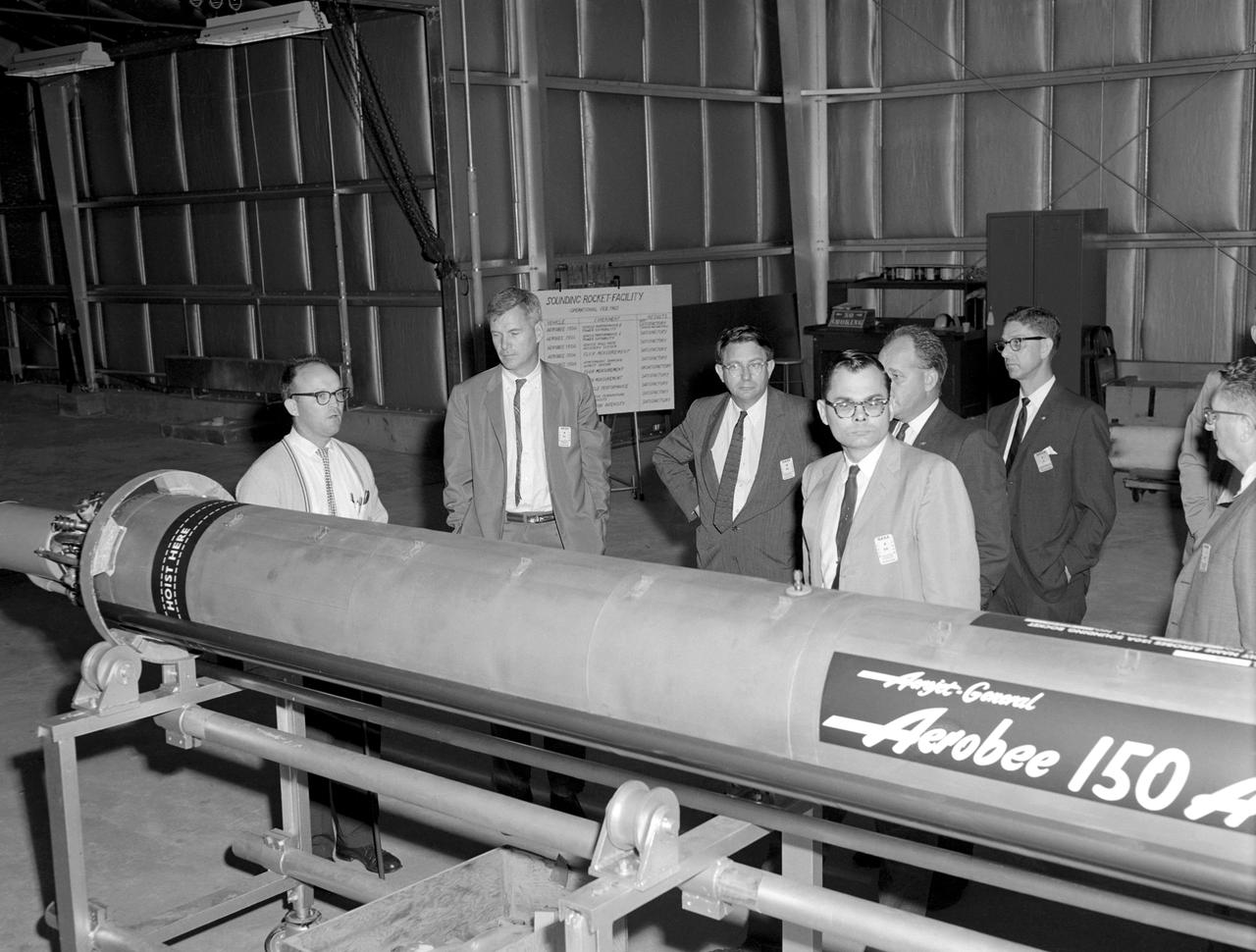
Photographed on 09/22/1960. -- An examination of the Aerojet-General "Aerobee 150A" propulsion system in February 1960. James Hansen described this as follows: "As for the technical definition of the rocket...the Langley engineers tried to keep developmental costs and time to a minimum by selecting components from off-the-shelf hardware. the majority of Scout's components were to come from an inventory of solid-fuel rockets produced for the military, although everyone involved understood that some improved motors would also have to be developed under contract. By early 1959, after intensive technical analysis and reviews, Langley settled on a design and finalized the selection of the major contractors. The rocket's 40-inch-diameter first stage was to be a new "Algol" motor, a combination of the Jupiter Senior and the navy Polaris produced by the Aerojet General Corporation, Sacramento, California. The 31-inch-diameter second stage, "Castor," was derived from the army's Sergeant and was to be manufactured by the Redstone Division of the Thiokol company in Huntsville, Alabama. the motor for the 30-inch-diameter third stage, "Antares," evolved under NASA contract from the ABL X248 design into a new version called the X254 (and subsequently into the X259); it was built under contract to NASA by ABL, a U.S. Navy Bureau of Ordnance facility operated by the Hercules Powder Company, Cumberland, Maryland. the final upper-stage propulsion unit, "Altair," which was 25.7 inches in diameter (34 inches at the heat shield), amounted to an improved edition of the X248 that was also manufactured by ABL." -- Published in James R. Hansen, Spaceflight Revolution: NASA Langley Research Center From Sputnik to Apollo, NASA SP-4308, pp.200-201.
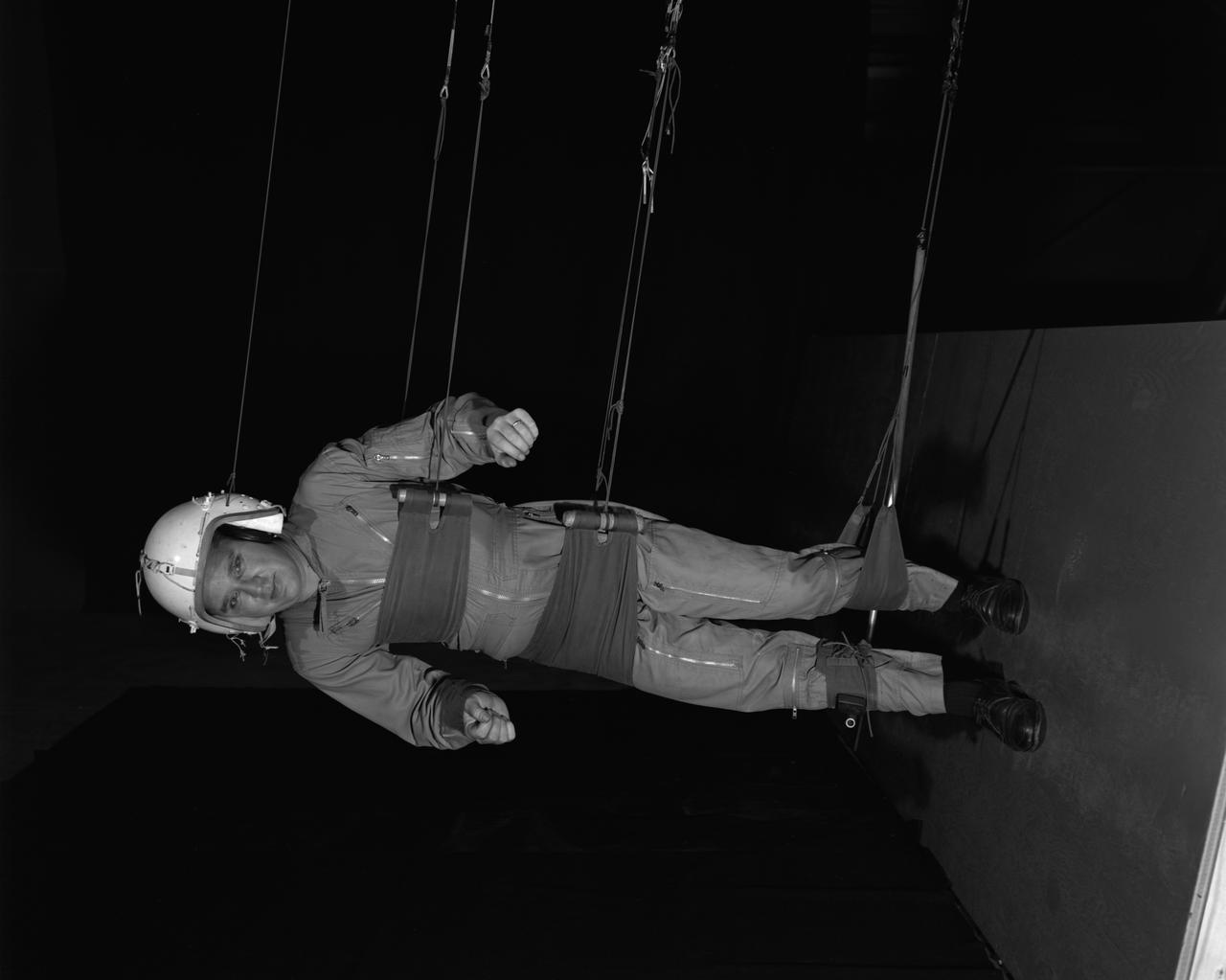
Reduced Gravity Walking Simulator located in the hangar at Langley Research Center. The initial version of this simulator was located inside the hangar. Later a larger version would be located at the Lunar Landing Facility. The purpose of this simulator was to study the subject while walking, jumping or running. Researchers conducted studies of various factors such as fatigue limit, energy expenditure, and speed of locomotion. A.W. Vigil wrote in his paper Discussion of Existing and Planned Simulators for Space Research, When the astronauts land on the moon they will be in an unfamiliar environment involving, particularly, a gravitational field only one-sixth as strong as on earth. A novel method of simulating lunar gravity has been developed and is supported by a puppet-type suspension system at the end of a long pendulum. A floor is provided at the proper angle so that one-sixth of the subject' s weight is supported by the floor with the remainder being supported by the suspension system. This simulator allows almost complete freedom in vertical translation and pitch and is considered to be a very realistic simulation of the lunar walking problem. For this problem this simulator suffers only slightly from the restrictions in lateral movement it puts on the test subject. This is not considered a strong disadvantage for ordinary walking problems since most of the motions do, in fact, occur in the vertical plane. However, this simulation technique would be severely restrictive if applied to the study of the extra-vehicular locomotion problem, for example, because in this situation complete six degrees of freedom are rather necessary. This technique, in effect, automatically introduces a two-axis attitude stabilization system into the problem. The technique could, however, be used in preliminary studies of extra-vehicular locomotion where, for example, it might be assumed that one axis of the attitude control system on the astronaut maneuvering unit may have failed. -- Published in James R. Hansen, Spaceflight Revolution: NASA Langley Research Center From Sputnik to Apollo, NASA SP-4308, p. 377 A.W. Vigil, Discussion of Existing and Planned Simulators for Space Research, Paper presented at Conference on the Role of Simulation in Space Technology, Blacksburg, VA, August 17-21, 1964.