
STS-48 Mission Specialist (MS) James F. Buchli, wearing an extravehicular mobility unit (EMU), is watched by SCUBA-equipped divers as the platform he is standing on is lowered into JSC's Weightless Environment Training Facility (WETF) Bldg 29 pool. When completely underwater, Buchli will be released from the platform and will perform contingency extravehicular activity (EVA) operations. This underwater simulation of a spacewalk is part of the training required for Buchli's upcoming mission aboard Discovery, Orbiter Vehicle (OV) 103.
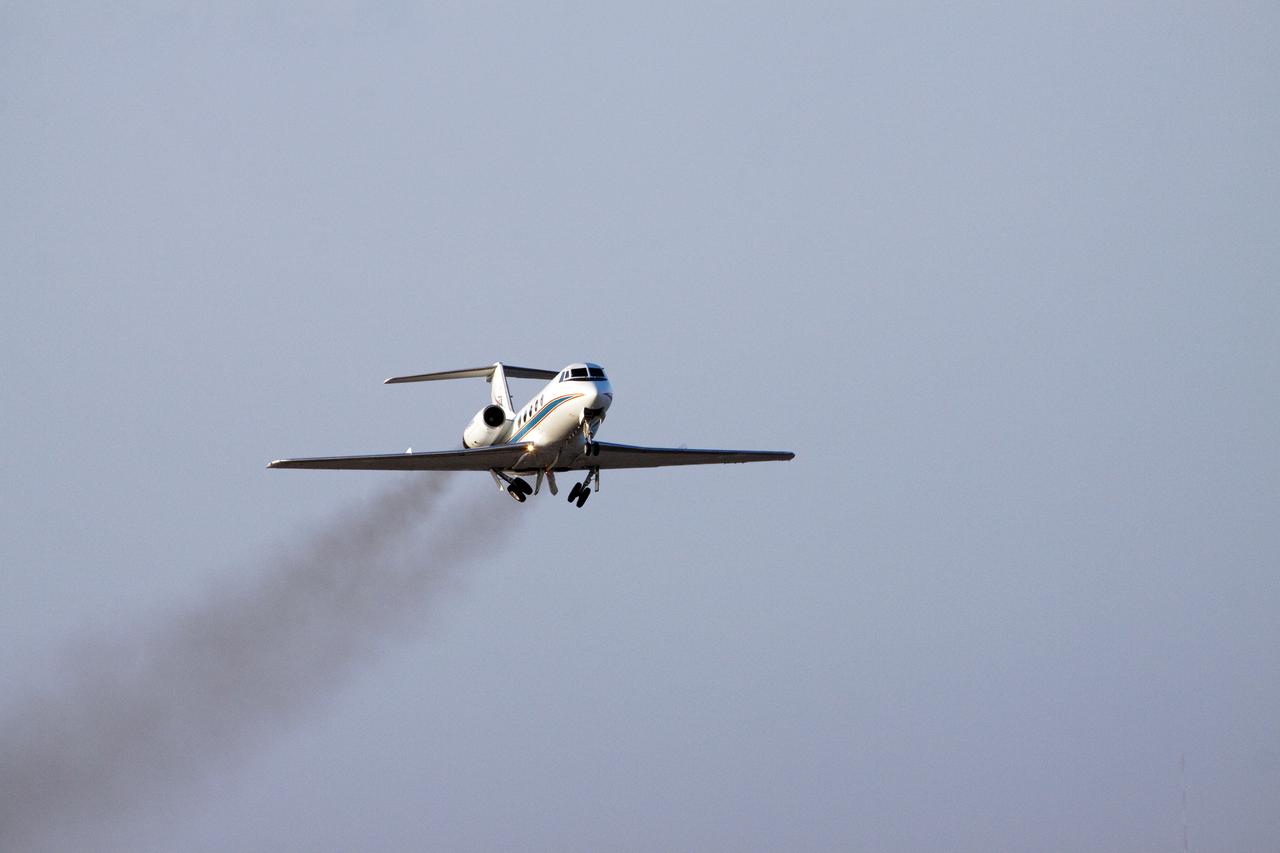
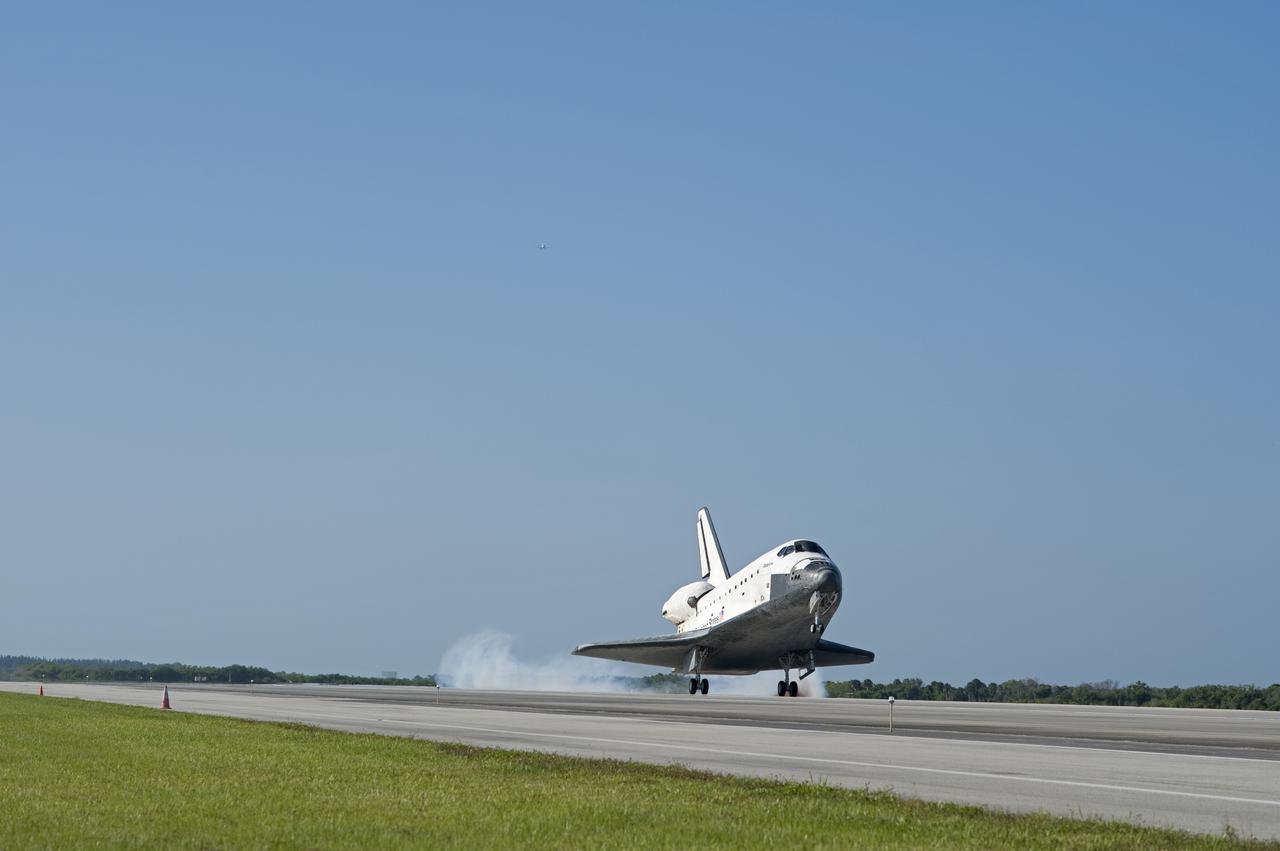
CAPE CANAVERAL, Fla. - NASA's Shuttle Training Aircraft flies weather reconnaissance for space shuttle Atlantis over Runway 33 at the Shuttle Landing Facility at NASA's Kennedy Space Center in Florida. Landing of Atlantis was at 8:48 a.m. EDT, completing the 12-day STS-132 mission to the International Space Station. The six-member STS-132 crew carried the Russian-built Mini Research Module-1 to the space station. STS-132 is the 34th shuttle mission to the station, the 132nd shuttle mission overall and the last planned flight for Atlantis. For information on the STS-132 mission and crew, visit www.nasa.gov_mission_pages_shuttle_shuttlemissions_sts132_index.html. Photo credit: NASA_Jack Pfaller
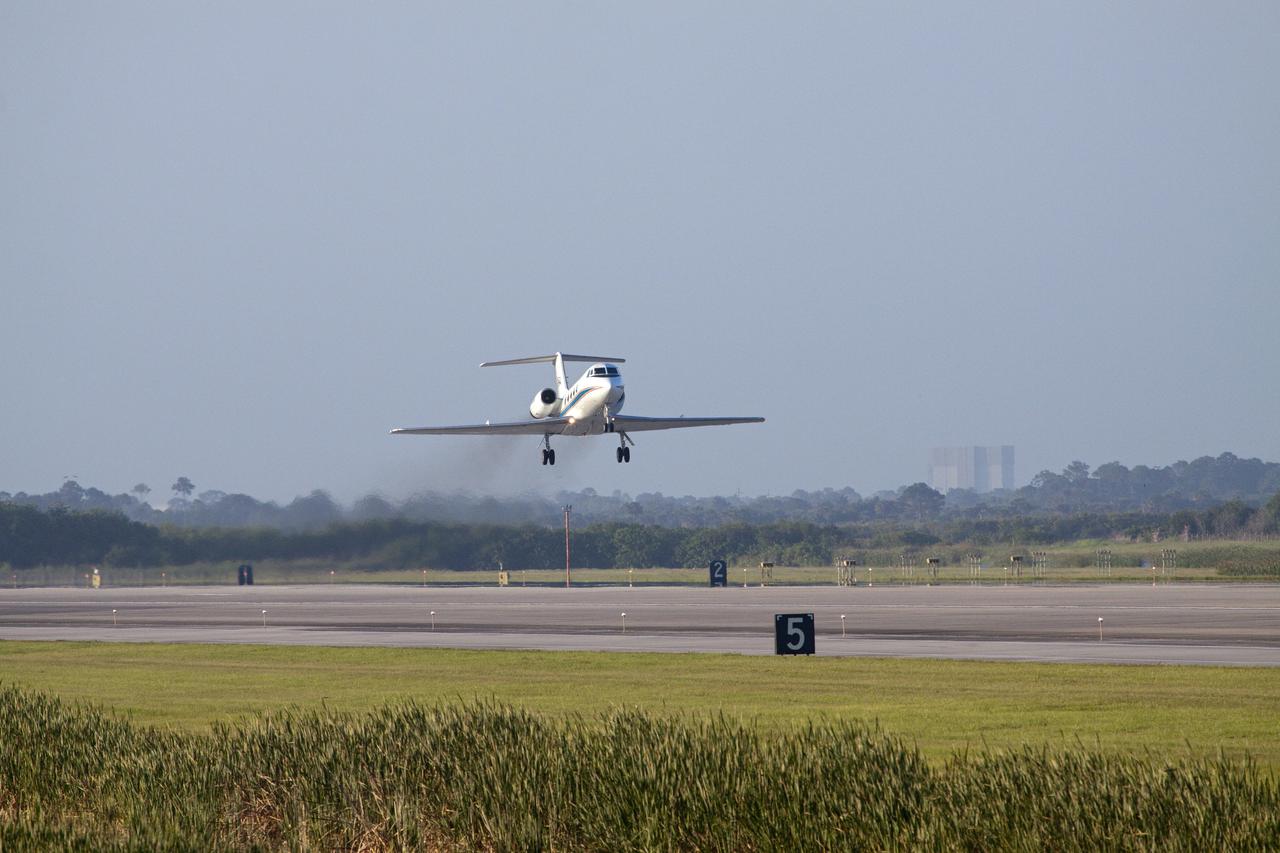
CAPE CANAVERAL, Fla. - NASA's Shuttle Training Aircraft flies weather reconnaissance for space shuttle Atlantis over Runway 33 at the Shuttle Landing Facility at NASA's Kennedy Space Center in Florida. Landing of Atlantis was at 8:48 a.m. EDT, completing the 12-day STS-132 mission to the International Space Station. The six-member STS-132 crew carried the Russian-built Mini Research Module-1 to the space station. STS-132 is the 34th shuttle mission to the station, the 132nd shuttle mission overall and the last planned flight for Atlantis. For information on the STS-132 mission and crew, visit www.nasa.gov_mission_pages_shuttle_shuttlemissions_sts132_index.html. Photo credit: NASA_Jack Pfaller
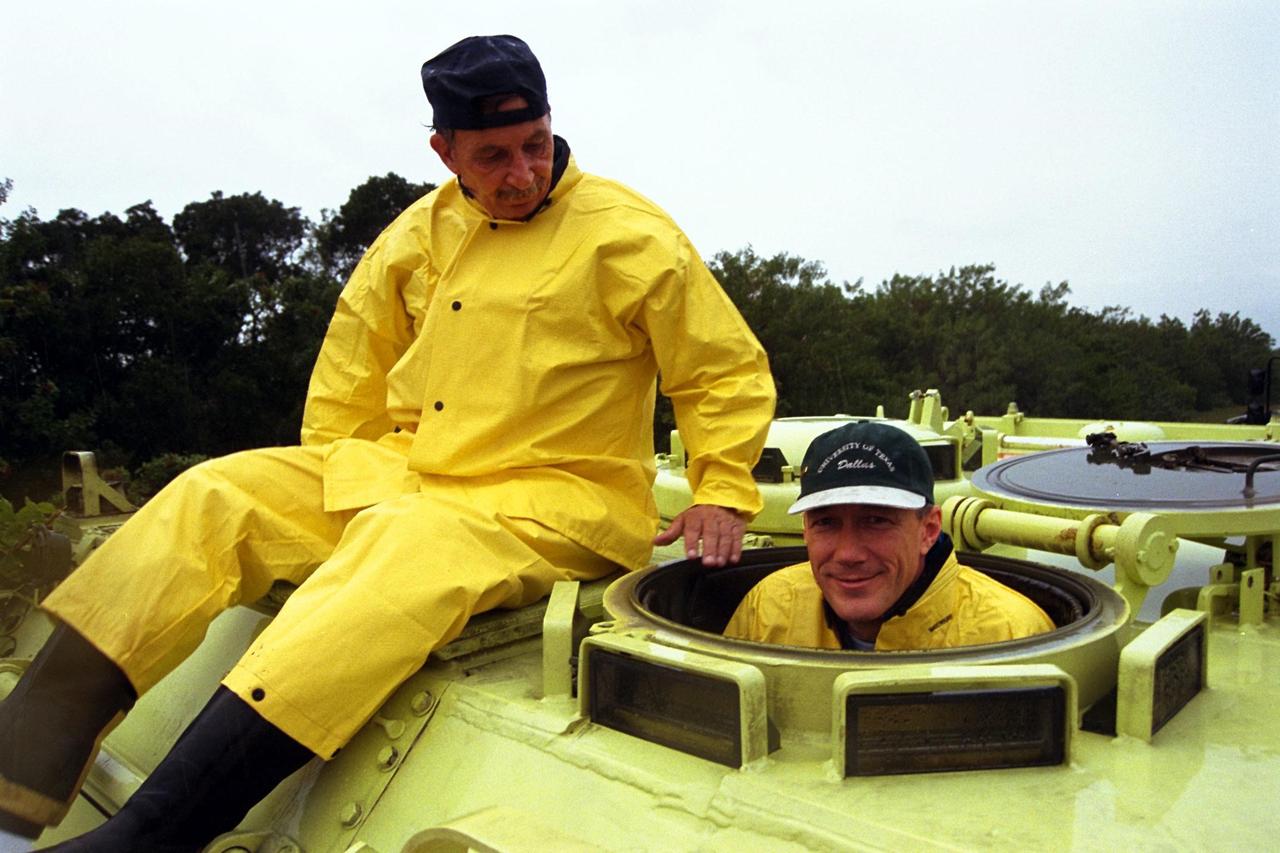
STS-89 Commander Terrence Wilcutt gets ready to train in an M-113 armored personnel carrier as part of Terminal Countdown Demonstration Test (TCDT) activities. The TCDT is held at KSC prior to each Space Shuttle flight to provide crews with an opportunity to participate in simulated countdown activities. Standing inside the M-113 vehicle is Wilcutt while George Hoggard, a training officer with KSC Fire Services, sits atop the armored personnel carrier. The STS-89 mission will be the eighth docking of the Space Shuttle with the Russian Space Station Mir. After docking, STS-89 Mission Specialist Andrew Thomas, Ph.D., will transfer to the space station, succeeding David Wolf, M.D., who will return to Earth aboard Endeavour. Dr. Thomas will live and work on Mir until June. STS-89 is scheduled for a Jan. 22 liftoff at 9:48 p.m
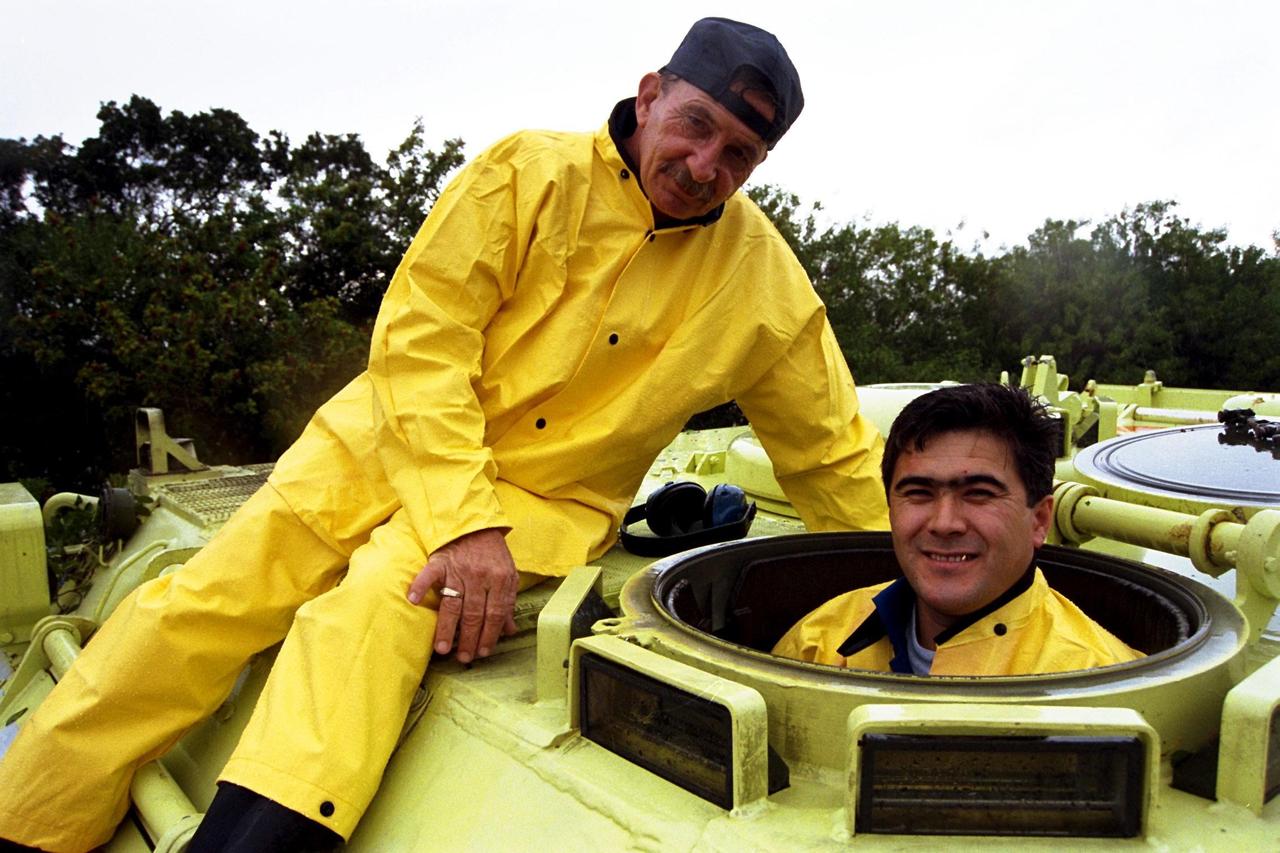
STS-89 Mission Specialist Salizhan Sharipov of the Russian Space Agency gets ready to drive the M-113 armored personnel carrier as part of Terminal Countdown Demonstration Test (TCDT) activities while George Hoggard, a training officer with KSC Fire Services, sits atop the vehicle. The TCDT is held at KSC prior to each Space Shuttle flight to provide crews with an opportunity to participate in simulated countdown activities. The STS-89 mission will be the eighth docking of the Space Shuttle with the Russian Space Station Mir. After docking, STS-89 Mission Specialist Andrew Thomas, Ph.D., will transfer to the space station, succeeding David Wolf, M.D., who will return to Earth aboard Endeavour. Dr. Thomas will live and work on Mir until June. STS-89 is scheduled for a Jan. 22 liftoff at 9:48 p.m
CAPE CANAVERAL, Fla. - A Shuttle Training Aircraft, or STA, top center, watches over space shuttle Atlantis as it touches down on Runway 33 at the Shuttle Landing Facility at NASA's Kennedy Space Center in Florida. The shuttle approached from the southeast in a crystal-clear blue sky, giving the Space Coast quite a show. Landing was at 8:48 a.m. EDT, completing the 12-day STS-132 mission to the International Space Station. The six-member STS-132 crew carried the Russian-built Mini Research Module-1 to the space station. STS-132 is the 34th shuttle mission to the station, the 132nd shuttle mission overall and the last planned flight for Atlantis. For information on the STS-132 mission and crew, visit www.nasa.gov_mission_pages_shuttle_shuttlemissions_sts132_index.html. Photo credit: NASA_Tony Gray and Tom Farrar
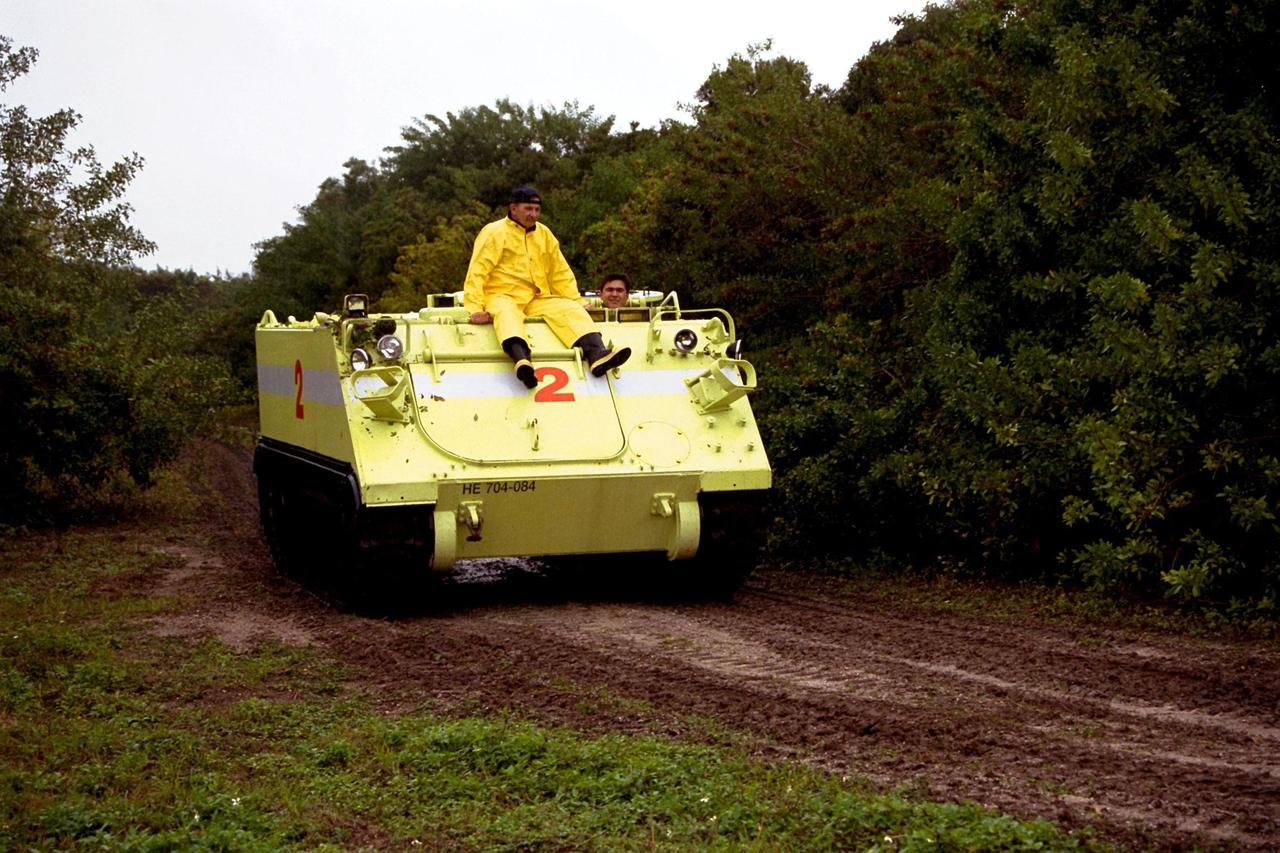
STS-89 Mission Specialist Salizhan Sharipov of the Russian Space Agency drives the M-113 armored personnel carrier as part of Terminal Countdown Demonstration Test (TCDT) activities while George Hoggard, a training officer with KSC Fire Services, gets a free ride. The TCDT is held at KSC prior to each Space Shuttle flight to provide crews with an opportunity to participate in simulated countdown activities. The STS-89 mission will be the eighth docking of the Space Shuttle with the Russian Space Station Mir. After docking, STS-89 Mission Specialist Andrew Thomas, Ph.D., will transfer to the space station, succeeding David Wolf, M.D., who will return to Earth aboard Endeavour. Dr. Thomas will live and work on Mir until June. STS-89 is scheduled for a Jan. 22 liftoff at 9:48 p.m
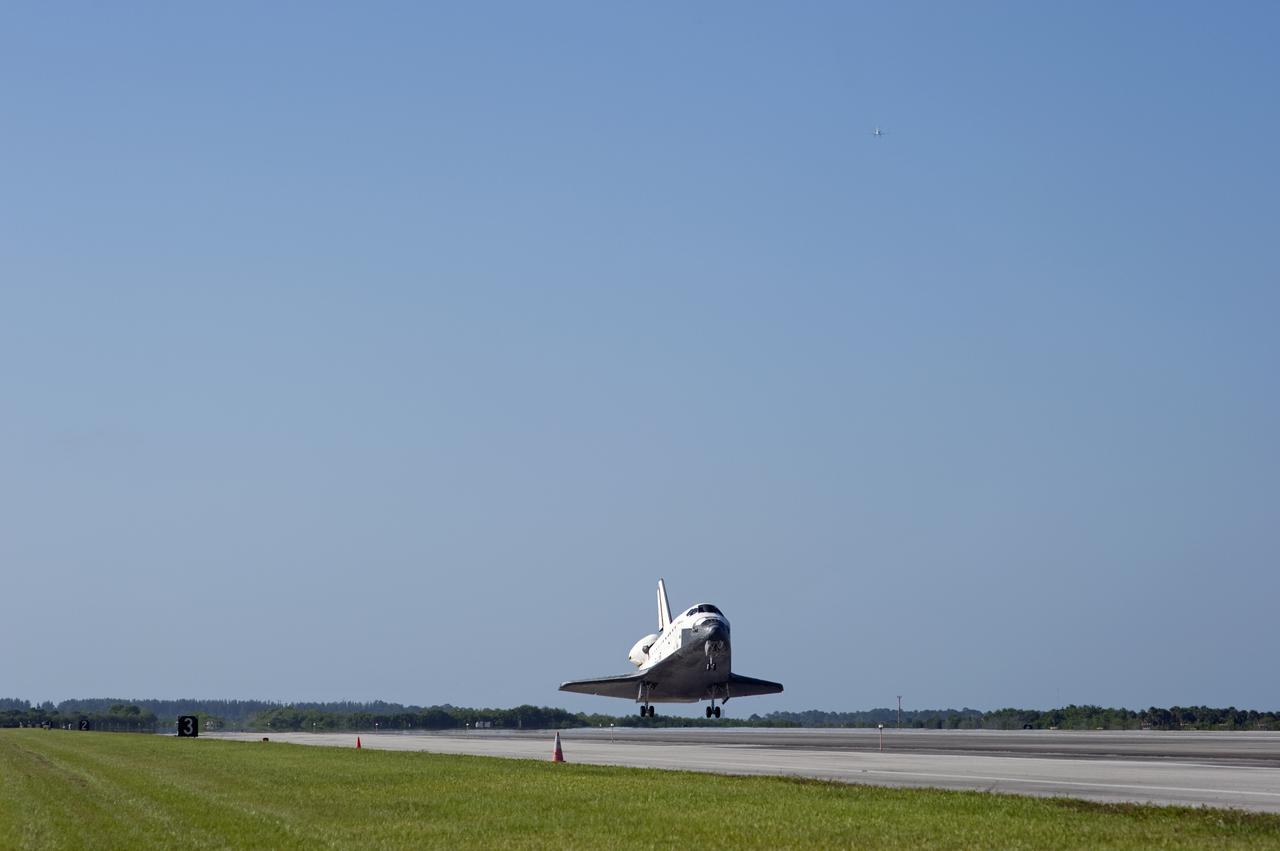
CAPE CANAVERAL, Fla. - A Shuttle Training Aircraft, or STA, top right, watches over space shuttle Atlantis as it touches down on Runway 33 at the Shuttle Landing Facility at NASA's Kennedy Space Center in Florida. The shuttle approached from the southeast in a crystal-clear blue sky, giving the Space Coast quite a show. Landing was at 8:48 a.m. EDT, completing the 12-day STS-132 mission to the International Space Station. The six-member STS-132 crew carried the Russian-built Mini Research Module-1 to the space station. STS-132 is the 34th shuttle mission to the station, the 132nd shuttle mission overall and the last planned flight for Atlantis. For information on the STS-132 mission and crew, visit www.nasa.gov_mission_pages_shuttle_shuttlemissions_sts132_index.html. Photo credit: NASA_Tony Gray and Tom Farrar
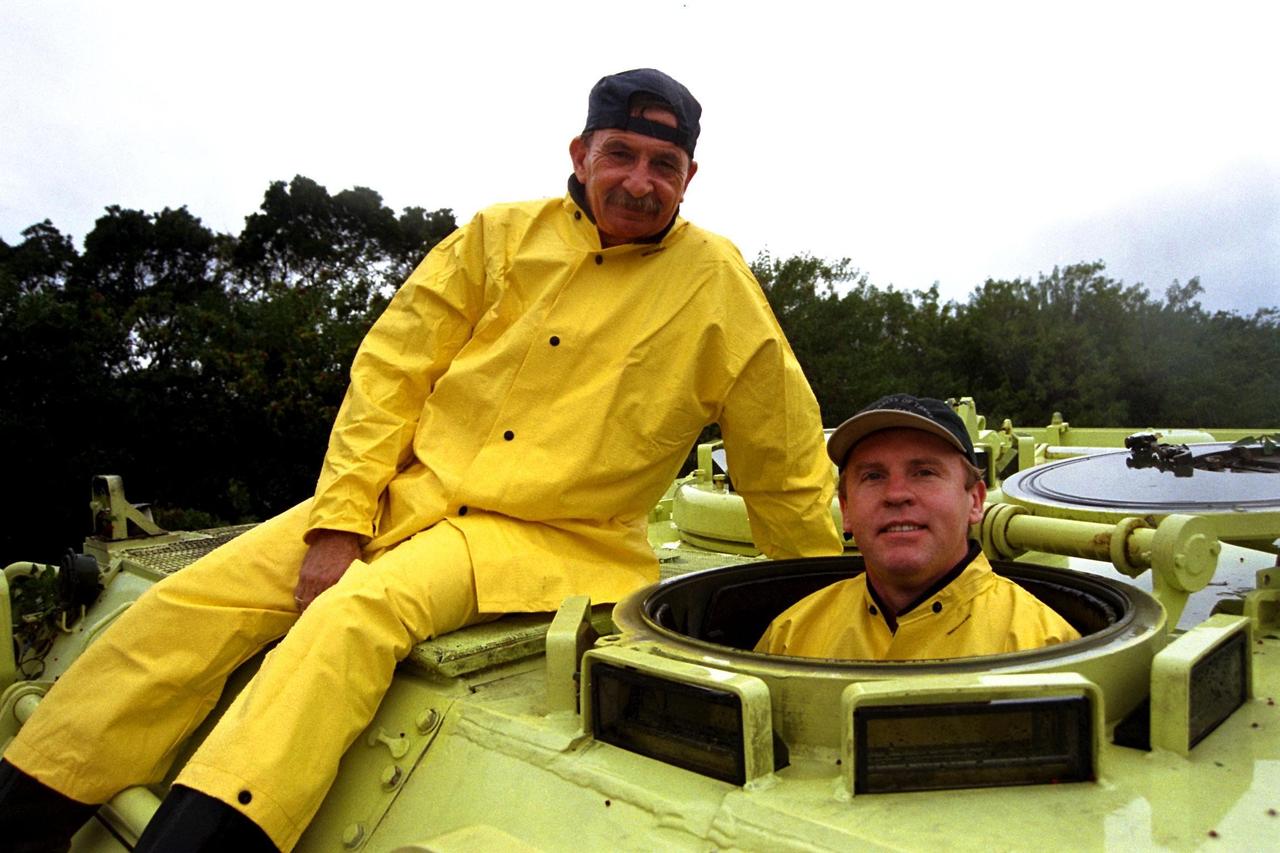
STS-89 Mission Specialist Andrew Thomas, Ph.D. gets ready to drive an M-113 armored personnel carrier as part of Terminal Countdown Demonstration Test (TCDT) activities. The TCDT is held at KSC prior to each Space Shuttle flight to provide crews with an opportunity to participate in simulated countdown activities. Standing inside the M-113 is Dr. Thomas while George Hoggard, a training officer with KSC Fire Services, sits atop the vehicle. The STS-89 mission will be the eighth docking of the Space Shuttle with the Russian Space Station Mir. After docking, Dr. Thomas will transfer to the space station, succeeding David Wolf, M.D., who will return to Earth aboard Endeavour. Dr. Thomas will live and work on Mir until June. STS-89 is scheduled for a Jan. 22 liftoff at 9:48 p.m
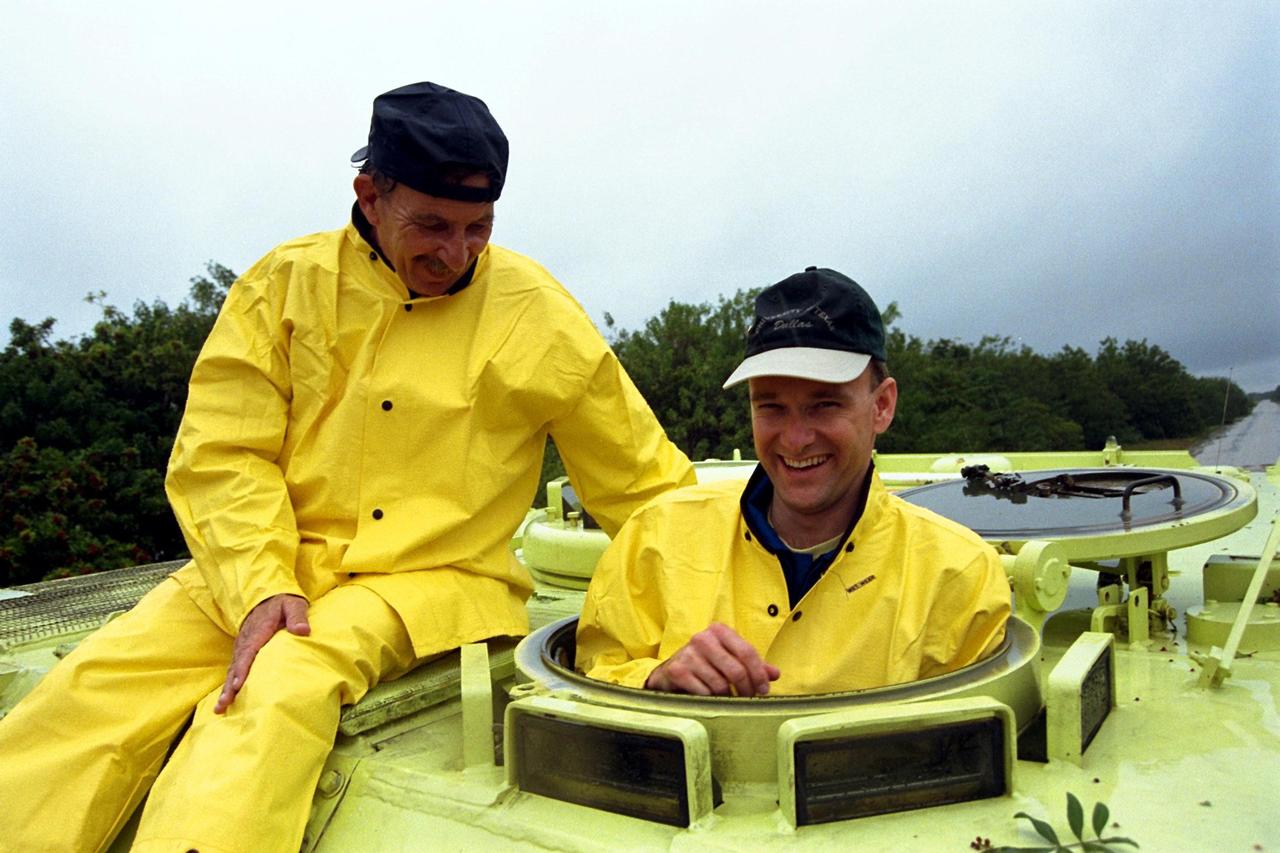
STS-89 Pilot Joe Edwards Jr., prepares to drive an M-113 armored personnel carrier as George Hoggard, a training officer with KSC Fire Services, looks on during Terminal Countdown Demonstration Test (TCDT) activities. The TCDT is held at KSC prior to each Space Shuttle flight to provide crews with an opportunity to participate in simulated countdown activities. The STS-89 mission will be the eighth docking of the Space Shuttle with the Russian Space Station Mir. After docking, Dr. Thomas will transfer to the space station, succeeding David Wolf, M.D., who will return to Earth aboard Endeavour. Dr. Thomas will live and work on Mir until June. STS-89 is scheduled for a Jan. 22 liftoff at 9:48 p.m
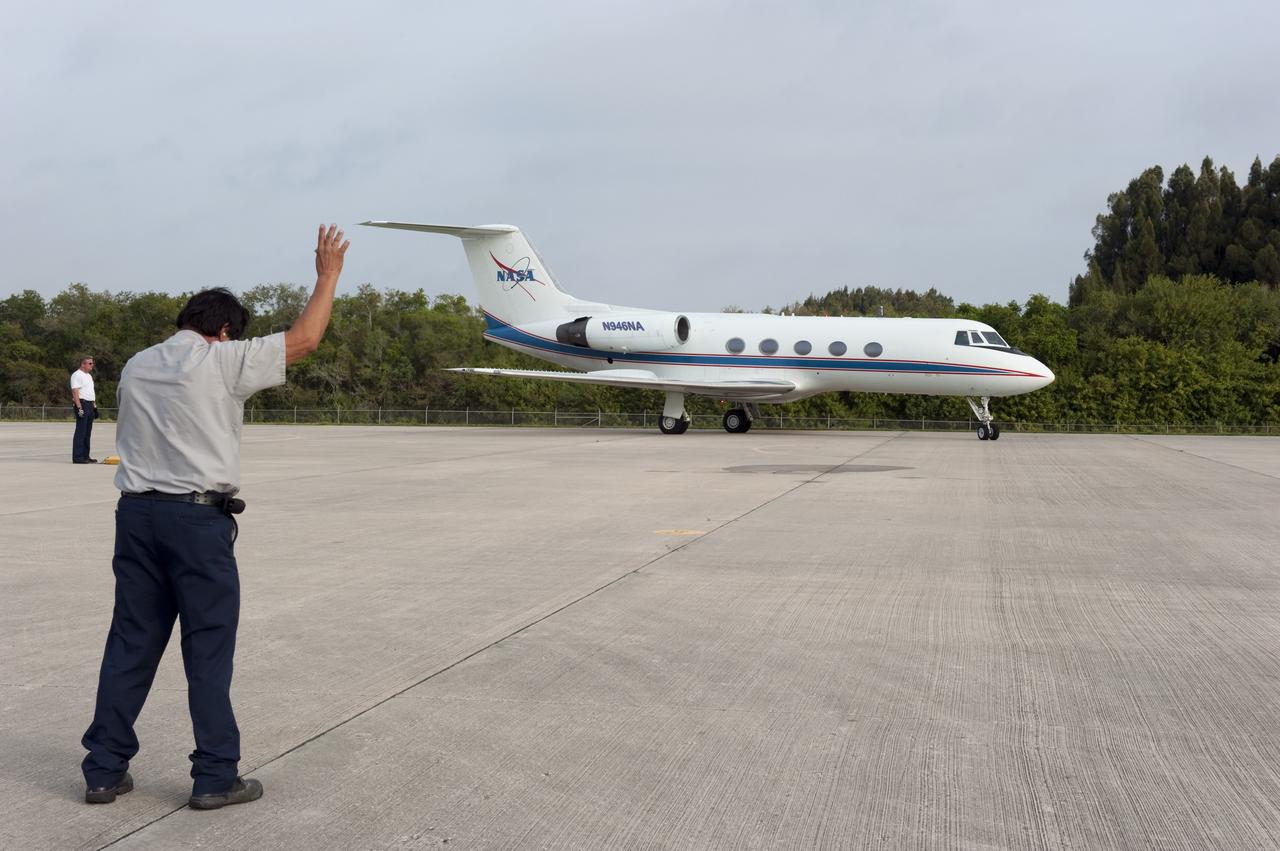
CAPE CANAVERAL, Fla. -- STS-134 Commander Mark Kelly prepares to take flight in a Shuttle Training Aircraft (STA) to perform touch-and-go landings on the Shuttle Landing Facility at NASA's Kennedy Space Center in Florida. STAs are Gulfstream II business jets that are modified to mimic the shuttle's handling during the final phase of landing. Practice landings are part of standard training before space shuttle Endeavour's STS-134 launch to the International Space Station. Endeavour's six crew members are at Kennedy for the launch countdown dress rehearsal called the Terminal Countdown Demonstration Test (TCDT) and related training. Targeted to launch April 19 at 7:48 p.m. EDT, they will deliver the Express Logistics Carrier-3, Alpha Magnetic Spectrometer-2 (AMS), a high-pressure gas tank, additional spare parts for the Dextre robotic helper and micrometeoroid debris shields to the space station. This will be the final spaceflight for Endeavour. For more information visit, www.nasa.gov/mission_pages/shuttle/shuttlemissions/sts134/index.html. Photo credit: NASA/Kim Shiflett
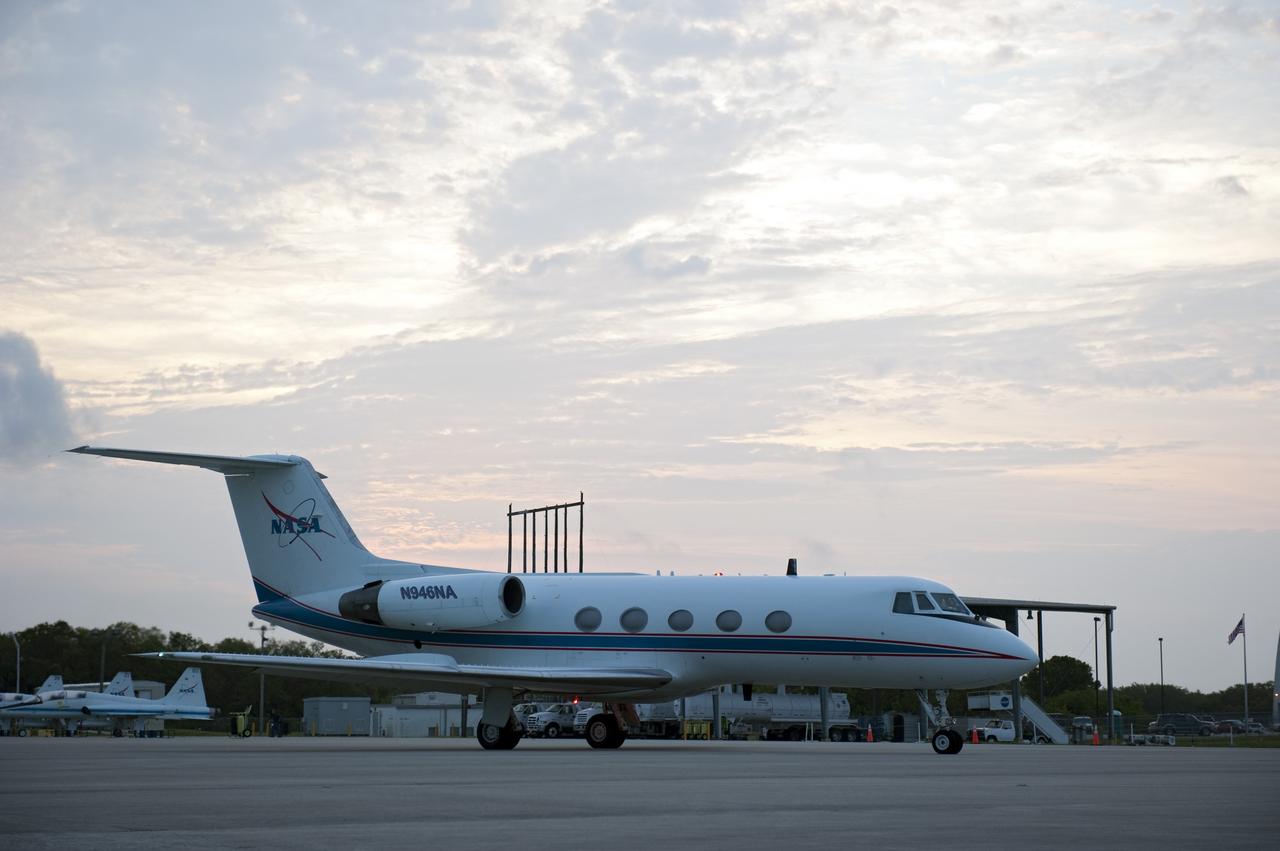
CAPE CANAVERAL, Fla. -- STS-134 Commander Mark Kelly prepares to take flight in a Shuttle Training Aircraft (STA) to perform touch-and-go landings on the Shuttle Landing Facility at NASA's Kennedy Space Center in Florida. STAs are Gulfstream II business jets that are modified to mimic the shuttle's handling during the final phase of landing. Practice landings are part of standard training before space shuttle Endeavour's STS-134 launch to the International Space Station. Endeavour's six crew members are at Kennedy for the launch countdown dress rehearsal called the Terminal Countdown Demonstration Test (TCDT) and related training. Targeted to launch April 19 at 7:48 p.m. EDT, they will deliver the Express Logistics Carrier-3, Alpha Magnetic Spectrometer-2 (AMS), a high-pressure gas tank, additional spare parts for the Dextre robotic helper and micrometeoroid debris shields to the space station. This will be the final spaceflight for Endeavour. For more information visit, www.nasa.gov/mission_pages/shuttle/shuttlemissions/sts134/index.html. Photo credit: NASA/Kim Shiflett
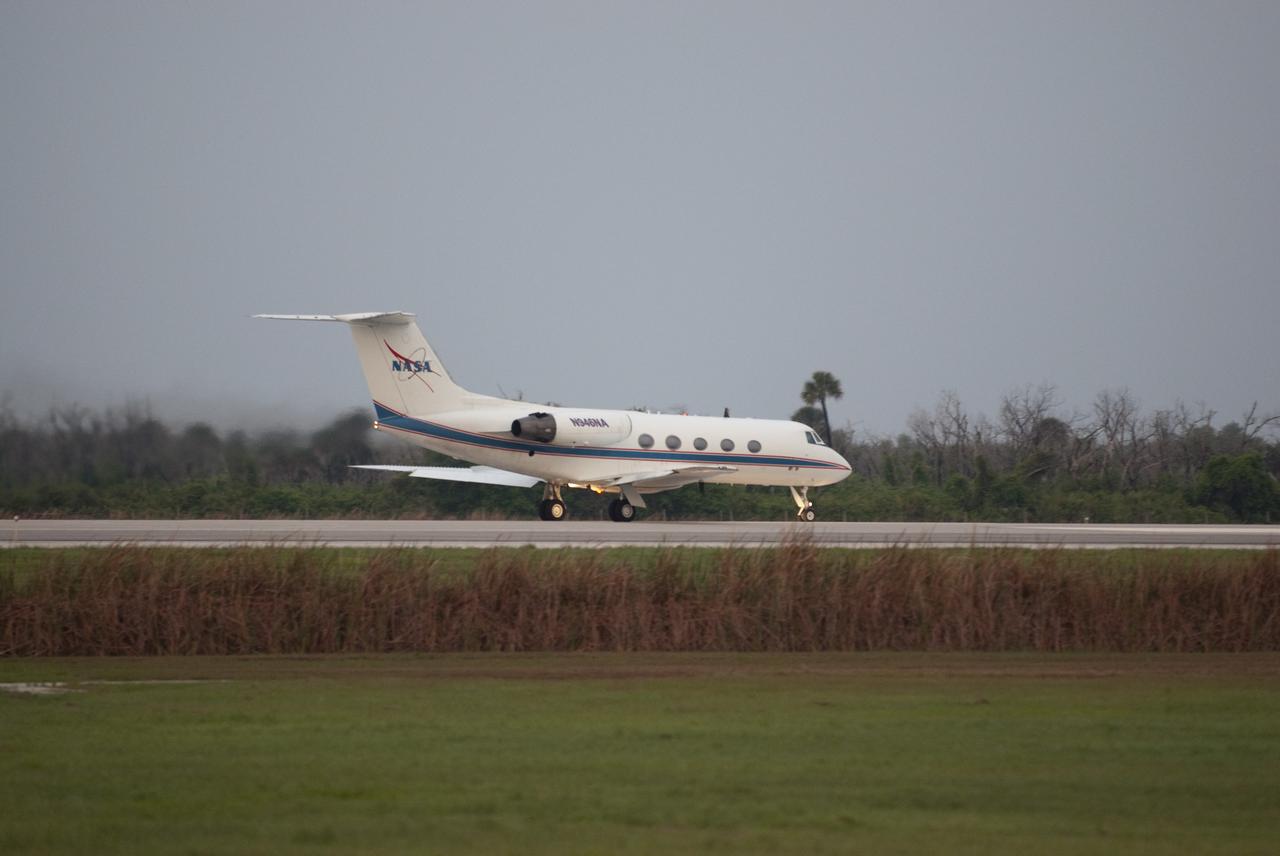
CAPE CANAVERAL, Fla. -- STS-134 Commander Mark Kelly prepares to take flight in a Shuttle Training Aircraft (STA) to perform touch-and-go landings on the Shuttle Landing Facility at NASA's Kennedy Space Center in Florida. STAs are Gulfstream II business jets that are modified to mimic the shuttle's handling during the final phase of landing. Practice landings are part of standard training before space shuttle Endeavour's upcoming STS-134 launch to the International Space Station. Endeavour's six crew members are at Kennedy for the launch countdown dress rehearsal called the Terminal Countdown Demonstration Test (TCDT) and related training. Targeted to launch April 19 at 7:48 p.m. EDT, they will deliver the Express Logistics Carrier-3, Alpha Magnetic Spectrometer-2 (AMS), a high-pressure gas tank, additional spare parts for the Dextre robotic helper and micrometeoroid debris shields to the space station. This will be the final spaceflight for Endeavour. For more information visit, www.nasa.gov/mission_pages/shuttle/shuttlemissions/sts134/index.html. Photo credit: NASA/Kim Shiflett
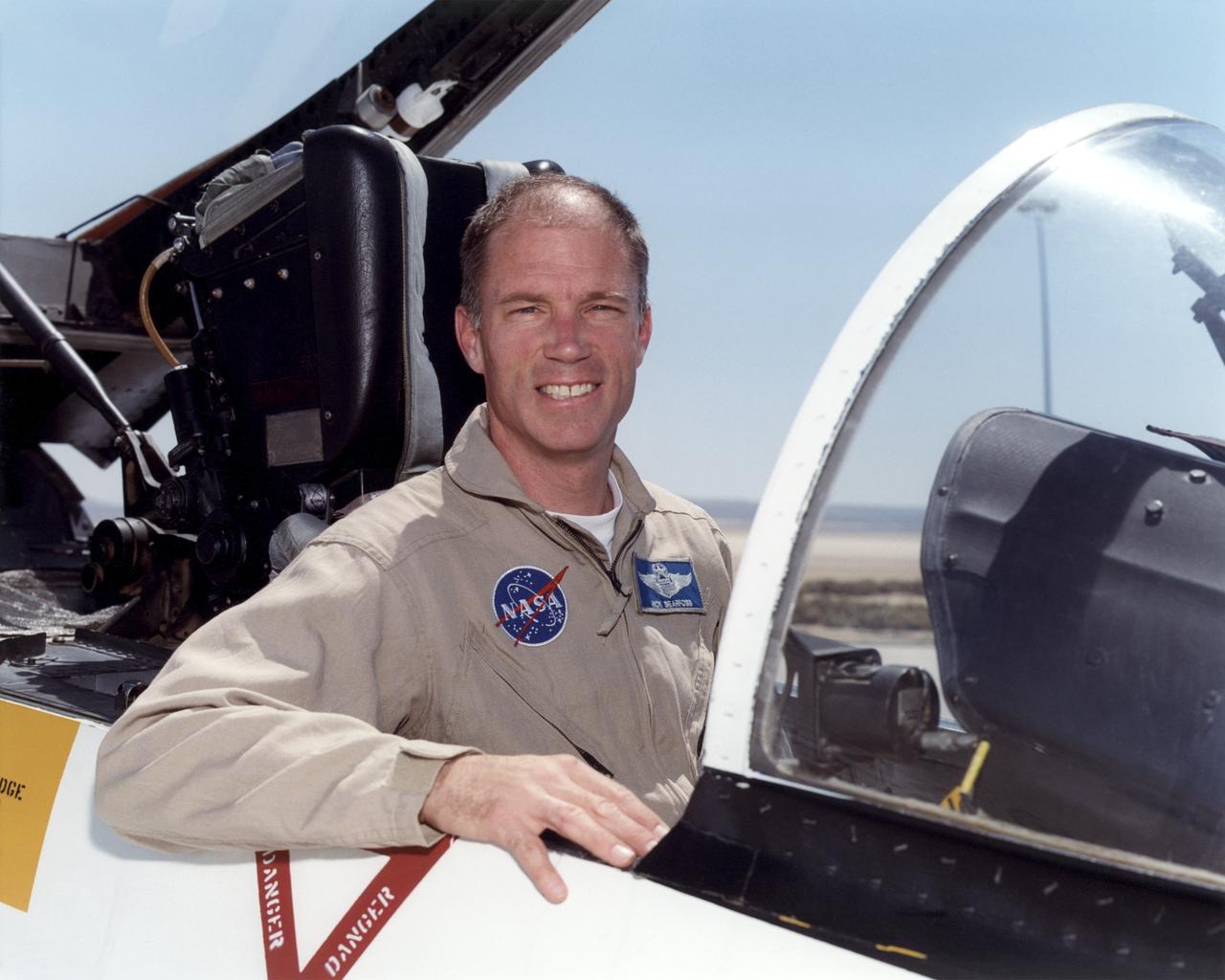
Richard A. Searfoss became a research pilot in the Flight Crew Branch of NASA's Dryden Flight Research Center, Edwards, Calif., in July 2001. He brought to Dryden more than 5,000 hours of military flying time and 939 hours in space. Searfoss served in the U.S. Air Force for more than 20 years, retiring with the rank of colonel. Following graduation in 1980 from Undergraduate Pilot Training at Williams Air Force Base, Ariz., Searfoss flew F-111s at RAF Lakenheath, England, and Mountain Home Air Force Base, Idaho. In 1988 he attended the U.S. Naval Test Pilot School, Patuxent River, Md., as a U.S. Air Force exchange officer. He was an instructor pilot at the U.S. Air Force Test Pilot School, Edwards Air Force Base, Calif., when selected for the astronaut program in January 1990. Searfoss became an astronaut in July 1991. A veteran of three space flights, Searfoss has logged 39 days in space. He served as STS-58 pilot on the seven-person life science research mission aboard Space Shuttle Columbia, launching from NASA's Kennedy Space Center, Fla., on Oct. 18, 1993, and landing at Edwards Air Force Base, Calif., on Nov. 1, 1993. The crew performed a number of medical experiments on themselves and 48 rats, expanding knowledge of human and animal physiology. Searfoss flew his second mission as pilot of STS-76 aboard the Space Shuttle Atlantis. During this nine-day mission, which launched March 22, 1996, the crew preformed the third docking of an American spacecraft with the Russian space station Mir. The crew transported to Mir nearly two tons of water, food, supplies, and scientific equipment, as well as U.S. Astronaut Shannon Lucid to begin her six-month stay in space. Completing 145 orbits, STS-76 landed at Edwards Air Force Base, Calif., on March 31, 1996. Searfoss commanded a seven-person crew on the STS-90 Neurolab mission launched on April 17, 1998. The crew served as both experiment subjects and operators for life science experiments focusing on the effects of m