S65-63898 (15 Dec. 1965) --- This picture of the Earth-orbiting Gemini-6 spacecraft against the blackness of space was taken from the Gemini-7 spacecraft during the National Aeronautics and Space Administration's historic rendezvous mission. The two spacecraft are approximately 40 feet apart. This photograph was taken with a modified 70mm Hasselblad camera, using Eastman Kodak, Ektachrome MS (S.O. 217) color film. Aboard the Gemini-6 spacecraft were astronauts Walter M. Schirra Jr. and Thomas P. Stafford. Astronauts Frank Borman and James A. Lovell Jr. were in the Gemini-7 spacecraft. Photo credit: NASA
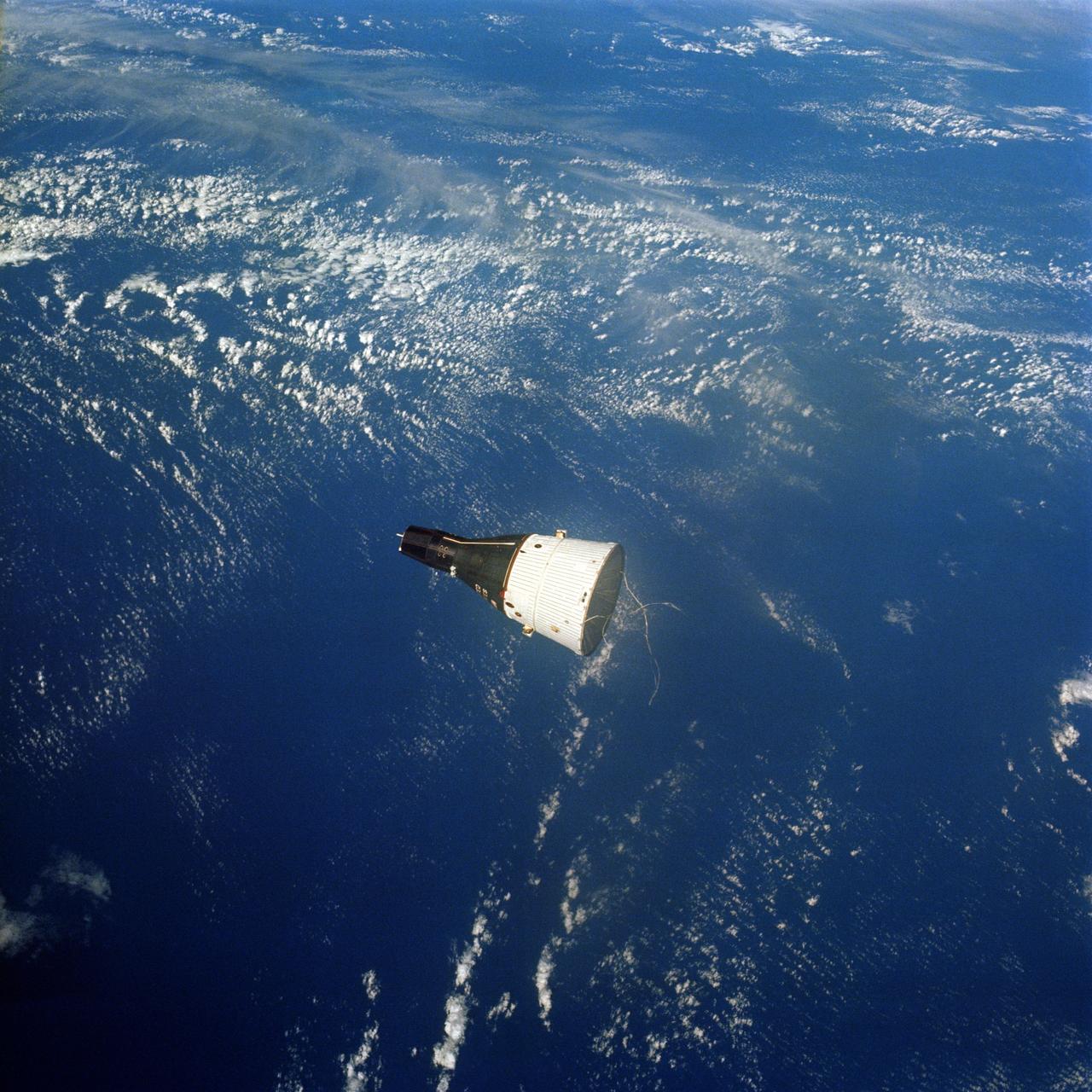
S65-63209 (15 Dec. 1965) --- The Gemini-7 spacecraft as seen from the Gemini-6 spacecraft during their rendezvous mission in space. The two spacecrafts are approximately 122 feet apart. This photo was taken with a modified 70mm Hasselblad camera. Photo credit: NASA or National Aeronautics and Space Administration
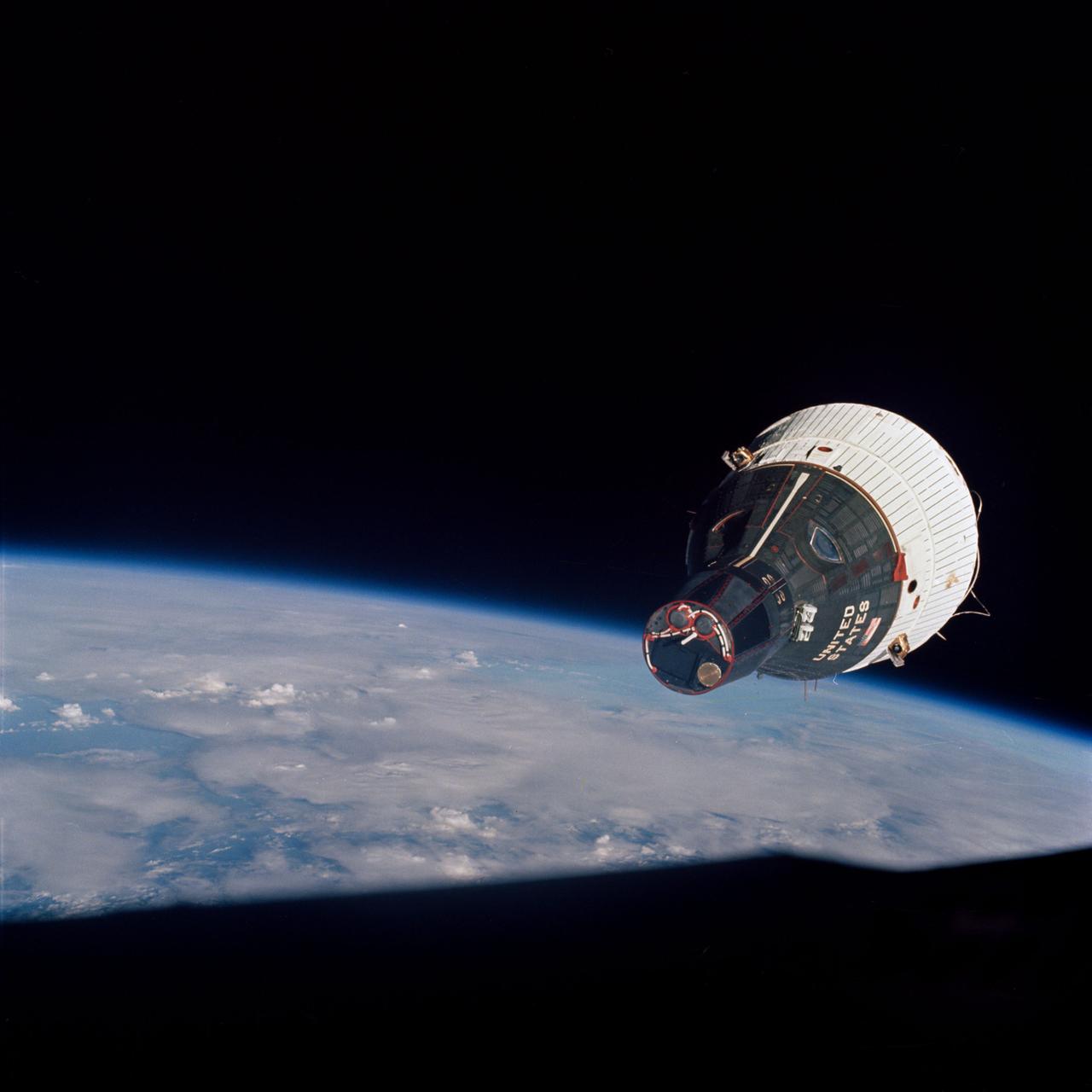
S65-63188 (15 Dec. 1965) --- The National Aeronautics and Space Administration's (NASA) Gemini-7 spacecraft as seen from the Gemini-6 spacecraft during their rendezvous mission in space. The two spacecraft are approximately 43 feet apart. The image was taken with a modified 70mm Hasselblad camera, using Eastman Kodak, Ektachrome (S.O. 217) color film. Photo credit: NASA or National Aeronautics and Space Administration
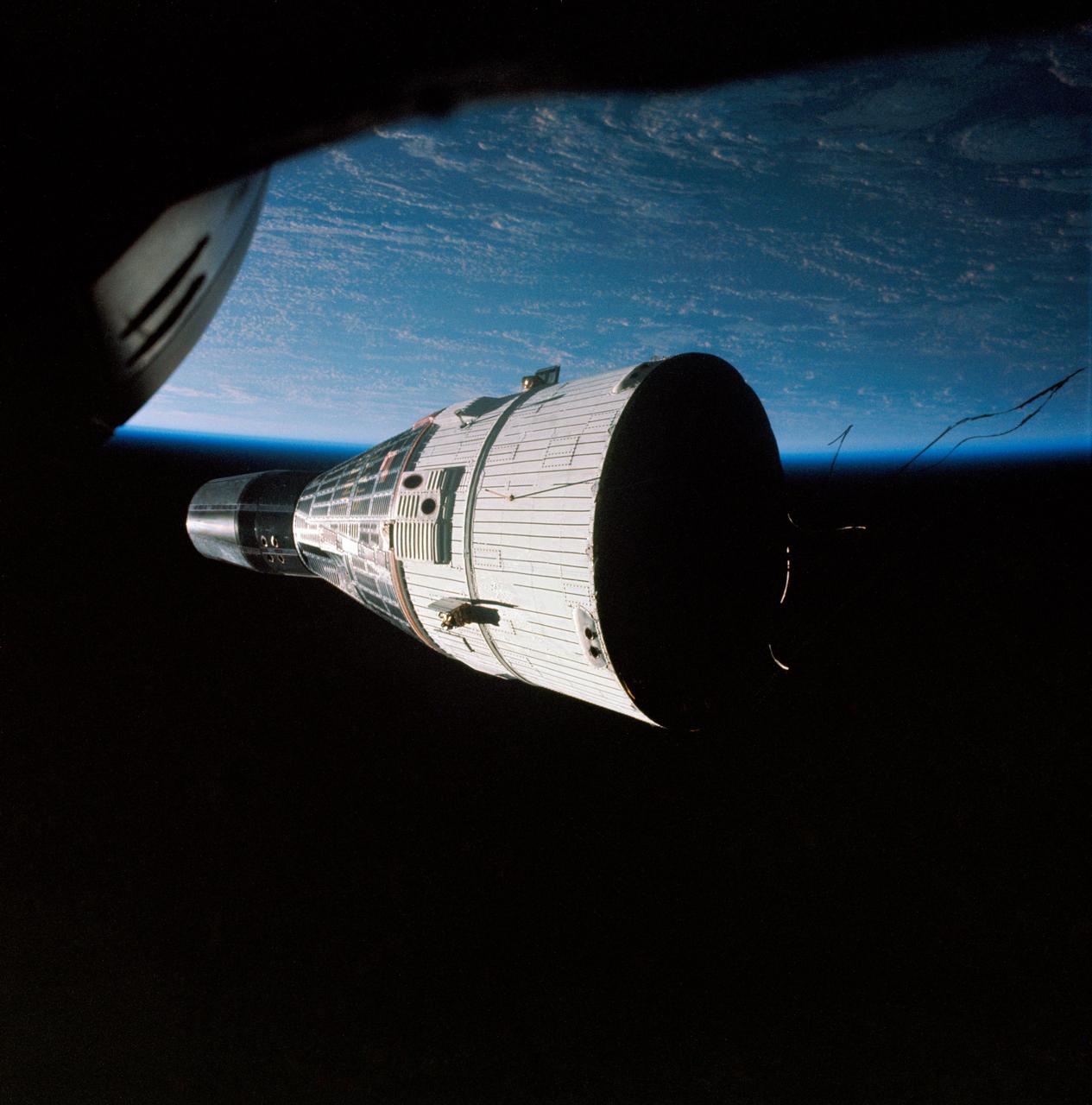
S65-63197 (15 Dec. 1965) --- This historic view of the orbiting Gemini-7 spacecraft was taken from the Gemini-6 spacecraft during their rendezvous mission in space. Astronauts Frank Borman and James A. Lovell Jr. were in the Gemini-7 spacecraft. In the Gemini-6 spacecraft were astronauts Walter M. Schirra Jr. and Thomas P. Stafford. This photograph was taken with a modified 70mm Hassleblad camera, using Eastman Kodak, Ektachrome MS (SO 217) color film. The two National Aeronautics and Space Administration (NASA) spacecraft?s are approximately 34 feet apart. Photo credit: NASA or National Aeronautics and Space Administration

S66-25781 (16-17 March 1966) --- Closer view of the Agena Target Docking vehicle seen from the Gemini-8 spacecraft during rendezvous in space. Photo credit: NASA
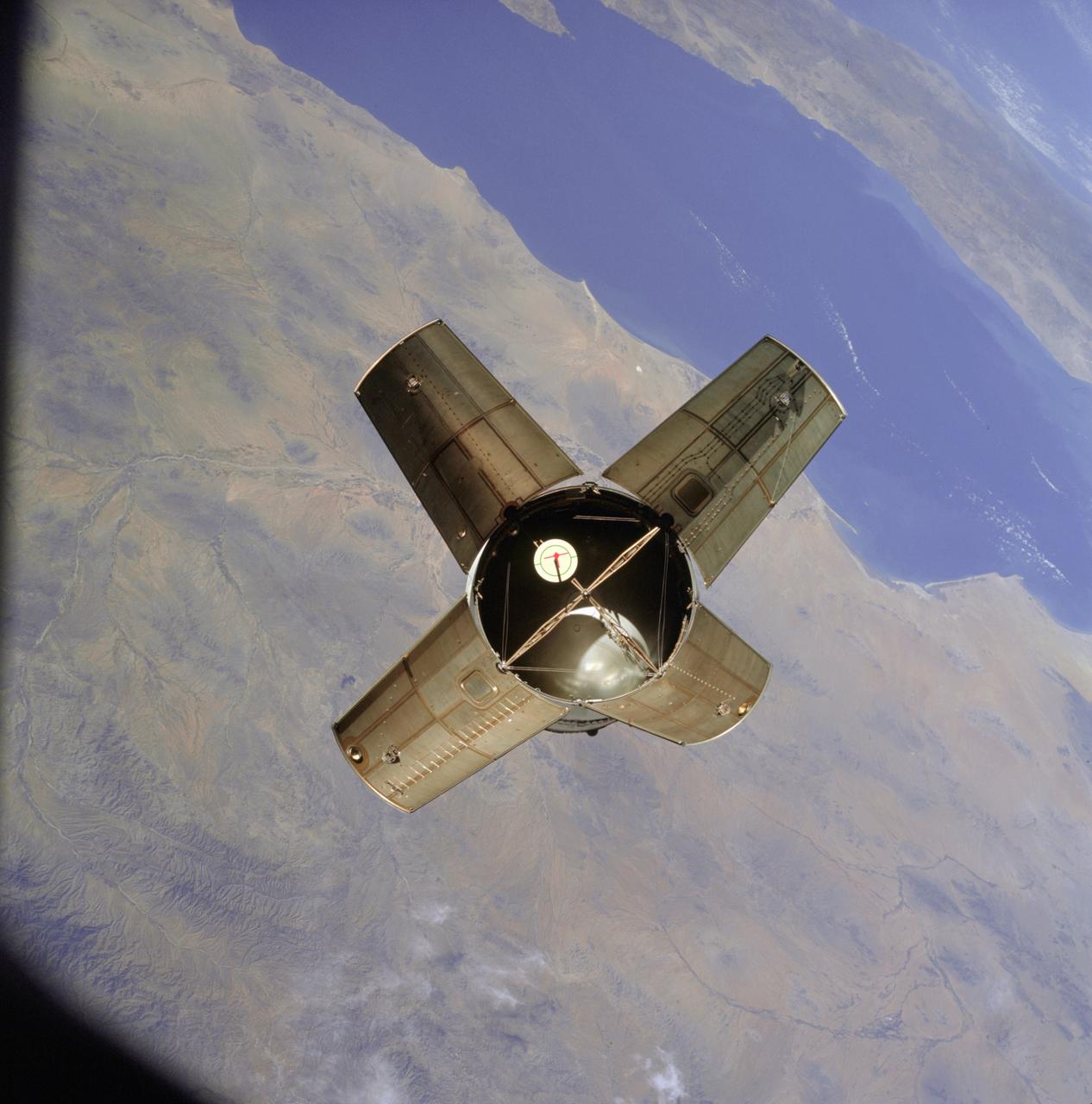
AS07-03-1531 (11 Oct. 1968) --- The expended Saturn IVB stage as photographed from the Apollo 7 spacecraft during transposition and docking maneuvers. This photograph was taken over Sonora, Mexico, during Apollo 7's second revolution of Earth. The round, white disc inside the open panels of the Saturn IVB is a simulated docking target similar to that used on the lunar module for docking during lunar missions.

AS07-03-1538 (11 Oct. 1968) --- The expended Saturn IVB stage as photographed from the Apollo 7 spacecraft during transposition and docking maneuvers. This photograph was taken during Apollo 7's second revolution of Earth. Earth below has heavy cloud cover. The round, white disc inside the open panels of the Saturn IVB is a simulated docking target similar to that used on the lunar module for docking during lunar missions.
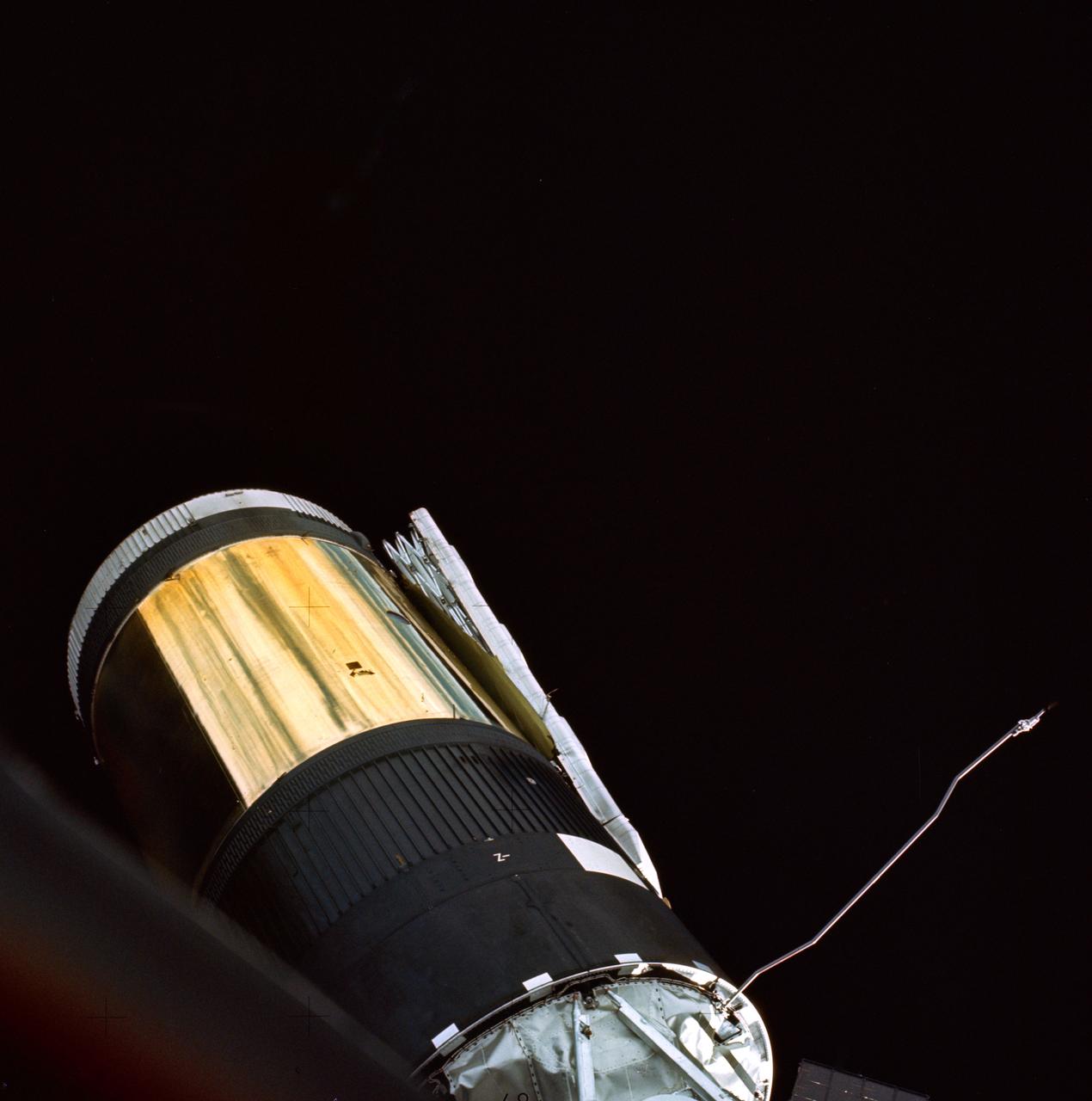
This view of the Skylab Orbital Space Station was taken from the Skylab 2 Command/Service Module during it's initial fly around inspection. The micrometeoroid shield can be seen to be missing and a parasol solar shield was later fitted in its place. The damaged and partially deployed solar array, in the center of the scene, can be seen to be restrained by a strap that was later cut during an early EVA, allowing the panel to fully deploy.
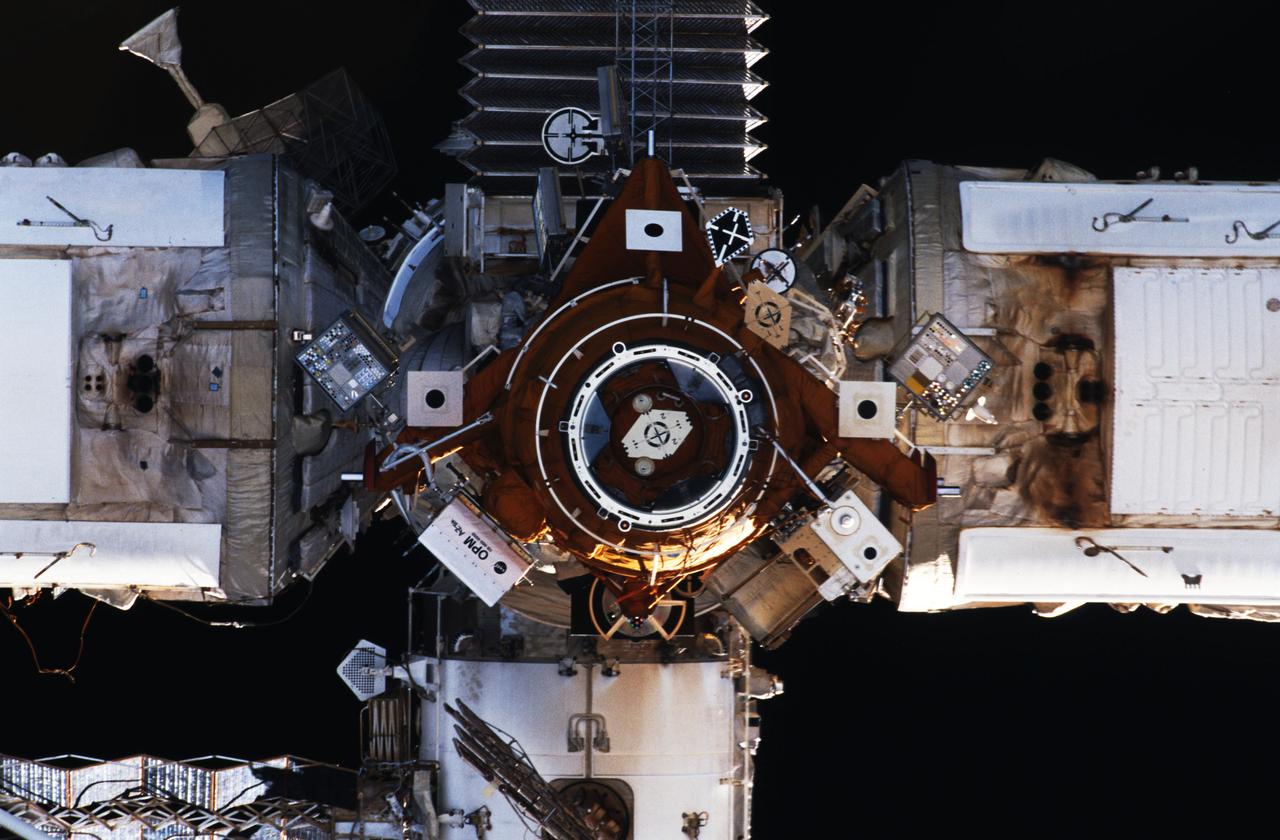
STS084-350-023 (15-24 May 1997) --- A Space Shuttle point-of-view frame showing the docking port and target during rendezvous with Russia's Mir Space Station. The picture should be held horizontally with the retracted Kristall solar array at top. Other elements partially visible are Kvant-2 (left), Spektr (right) and Core Module (bottom).
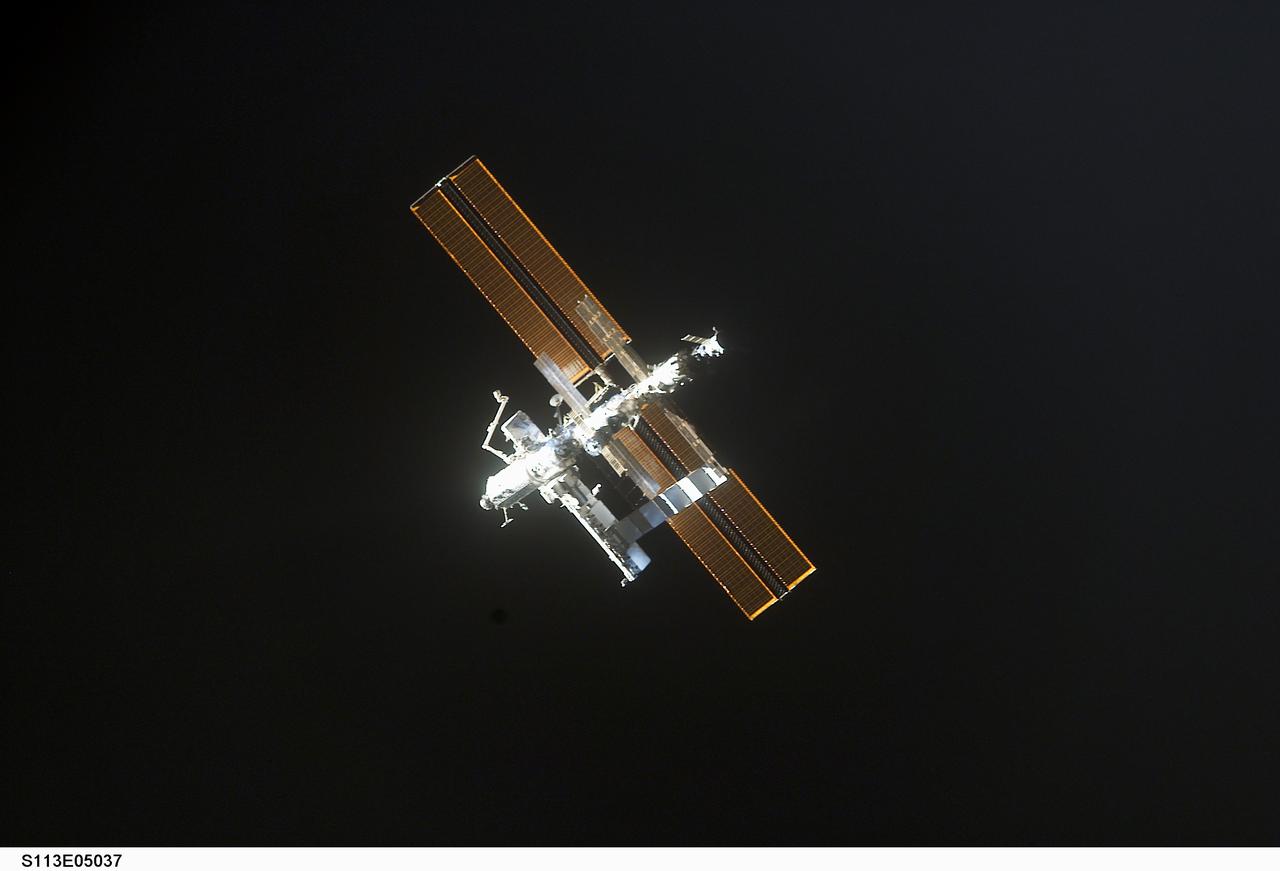
STS113-E-5037 (25 November 2002) --- The International Space Station (ISS) is backdropped against the blackness of space as the Space Shuttle Endeavour quickly closes the distance to the orbital outpost for a Nov. 25 rendezvous. Endeavour went on to dock with the International Space Station at 3:59 p.m. (CST), bringing a new crew and another segment of the station's backbone, the Port One (P1)segment of the Integrated Truss System. The rendezvous and docking of Endeavour with astronaut James D. Wetherbee, mission commander, at the controls, occurred about 248 statute miles above the South Pacific off the southeastern coast of Australia.
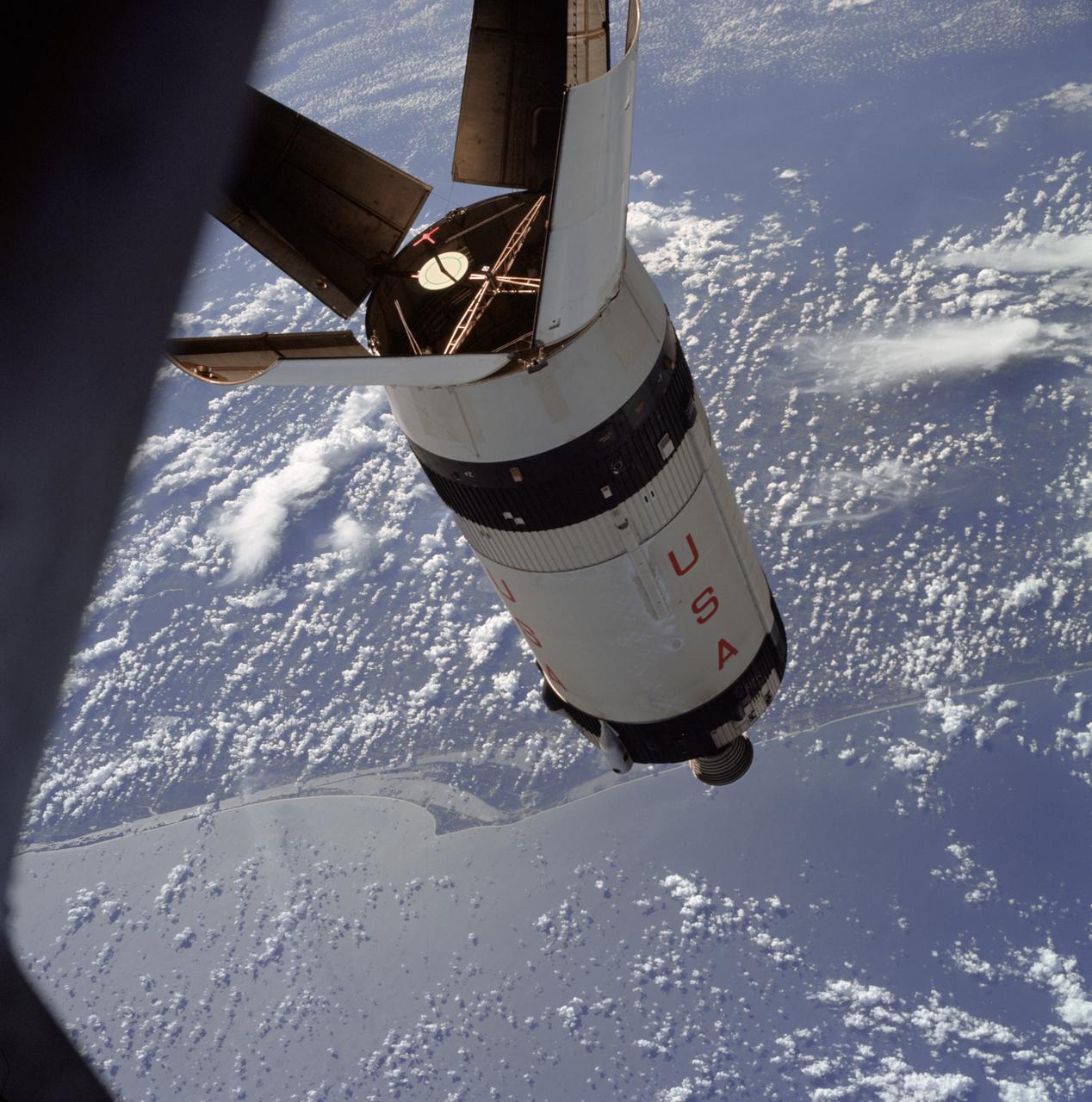
AS07-03-1545 (11 Oct. 1968) --- The expended Saturn S-IVB stage as photographed from the Apollo 7 spacecraft during transposition and docking maneuvers at an approximate altitude of 125 nautical miles, at ground elapsed time of three hours and 16 minutes (beginning of third revolution). This view is over the Atlantic Ocean off the coast of Cape Kennedy, Florida. The Florida coastline from Flagler Beach southward to Vero Beach is clearly visible in picture. Much of the Florida peninsula can be seen. Behind the open panels is the Gulf of Mexico. Distance between the Apollo 7 spacecraft and the S-IVB is approximately 100 feet. The round, white disc inside the open panels of the S-IVB is a simulated docking target similar to that used on the Lunar Module (LM) for docking during lunar missions.
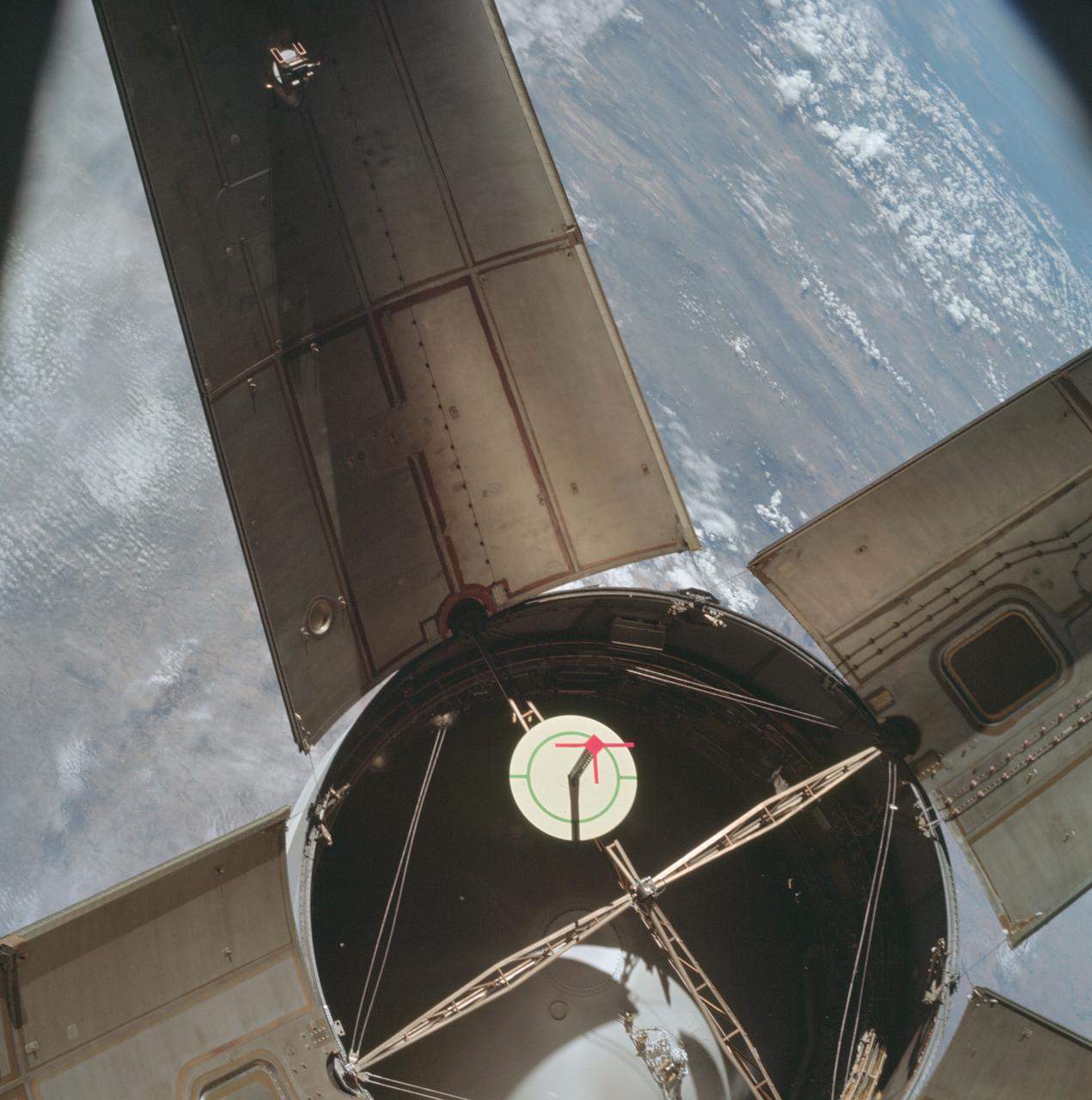
AS07-03-1535 (11 Oct. 1968) --- The expended Saturn IVB stage as photographed from the Apollo 7 spacecraft during transposition and docking maneuvers at an altitude of 126 nautical miles, at ground elapsed time of three hours, 11 minutes. The round, white disc inside the open panels of the Saturn IVB is a simulated docking target similar to that used on the lunar module for docking during lunar missions. The spacecraft is directly over Odessa-Midland, Texas. The view between the two panels (area of large puffy clouds) extends southwest across Texas into the Mexican State of Chihuahua. The distance between the Apollo 7 spacecraft and the S-IVB is approximately 50 feet.
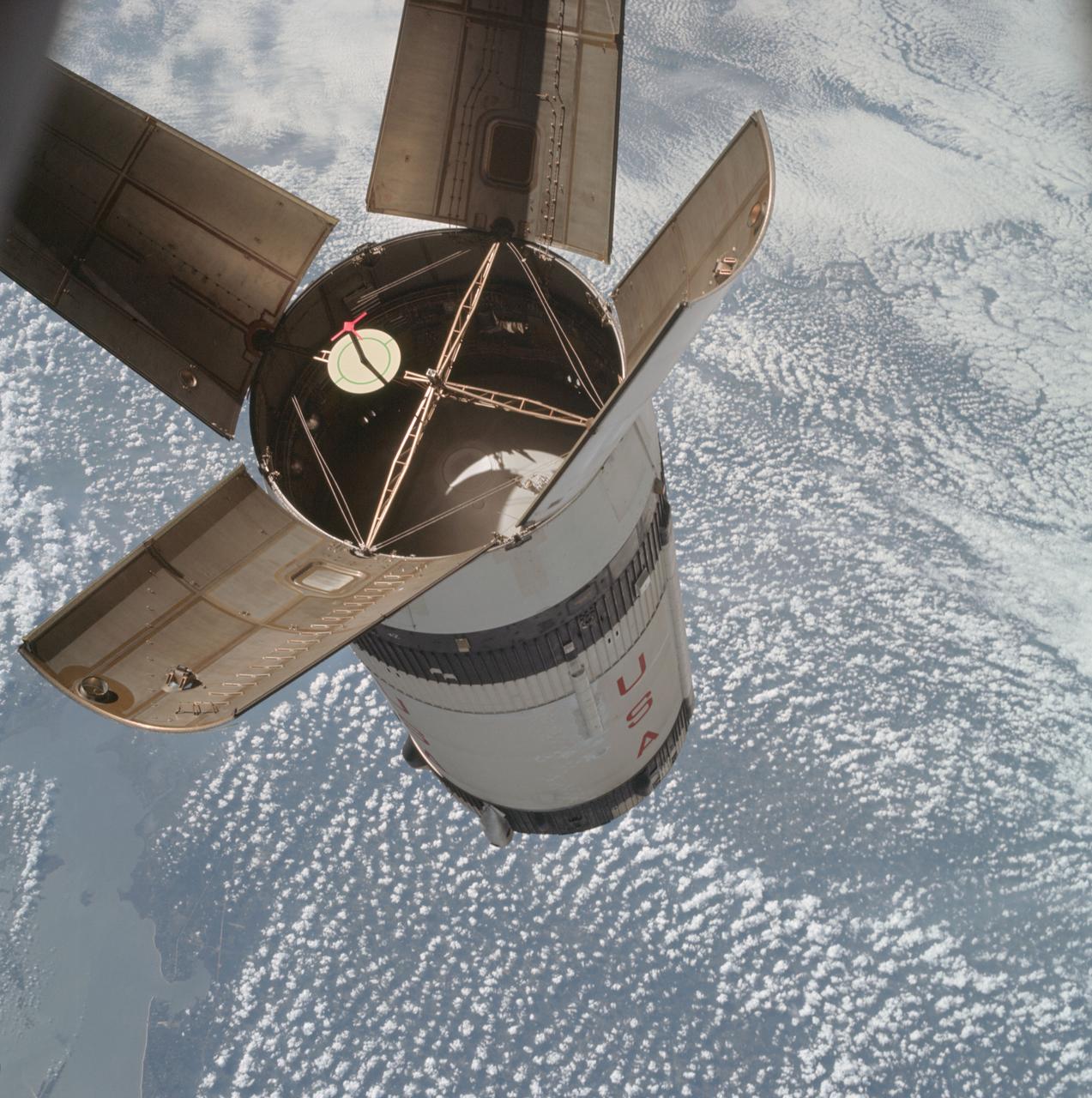
AS07-03-1541 (11 Oct. 1968) --- The expended Saturn IVB stage as photographed from the Apollo 7 spacecraft during transposition and docking maneuvers. St. Louis Bay and Lake Borgne area just east of New Orleans is seen below. The round, white disc inside the open panels of the Saturn IVB is a simulated docking target similar to that used on the lunar module for docking during lunar missions.
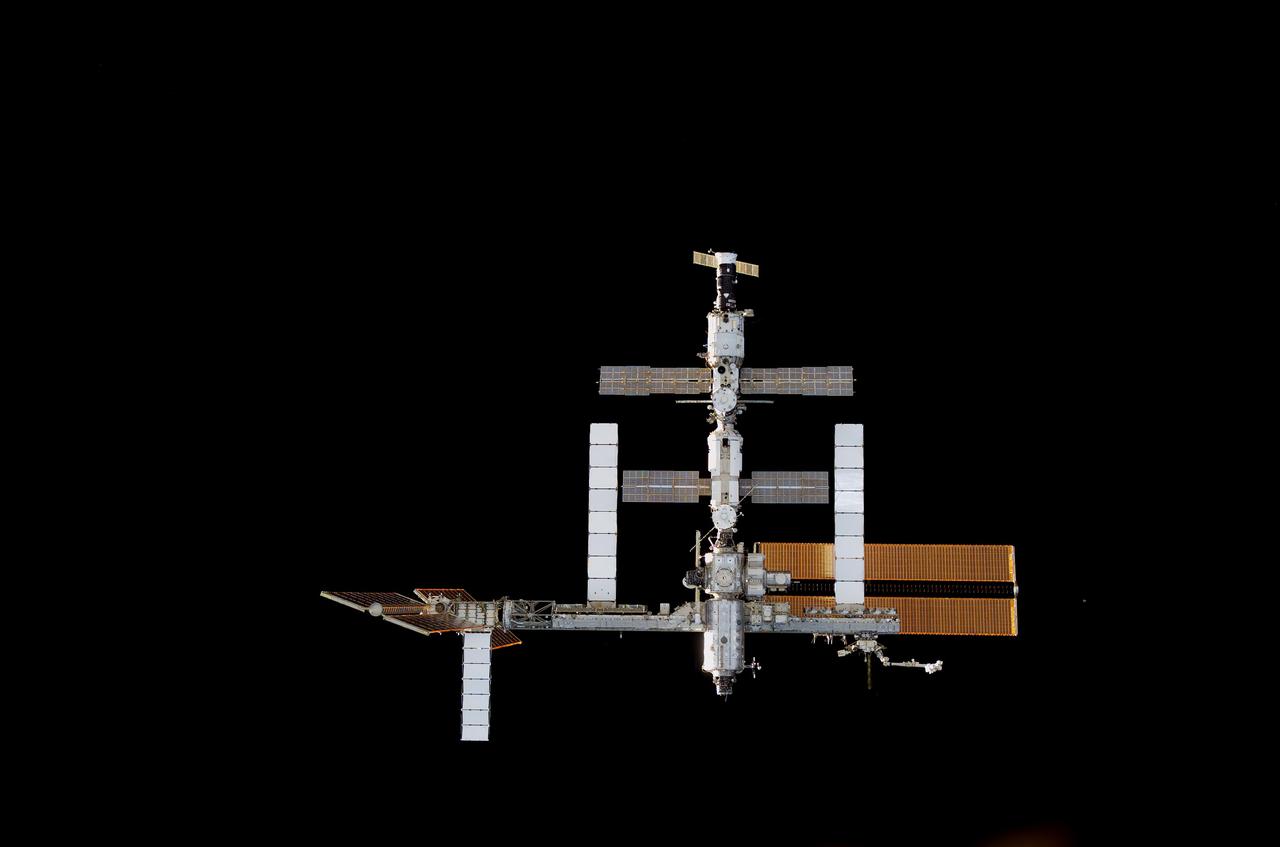
S117-E-06966 (10 June 2007) --- The International Space Station was photographed by one of the STS-117 crewmembers as Space Shuttle Atlantis (out of frame) approached the station during rendezvous and docking activities on flight day three. Docking occurred 2:36 p.m. (CDT) on June 10, 2007.

S117-E-06962 (10 June 2007) --- The International Space Station was photographed by one of the STS-117 crewmembers as Space Shuttle Atlantis (out of frame) approached the station during rendezvous and docking activities on flight day three. Docking occurred 2:36 p.m. (CDT) on June 10, 2007.
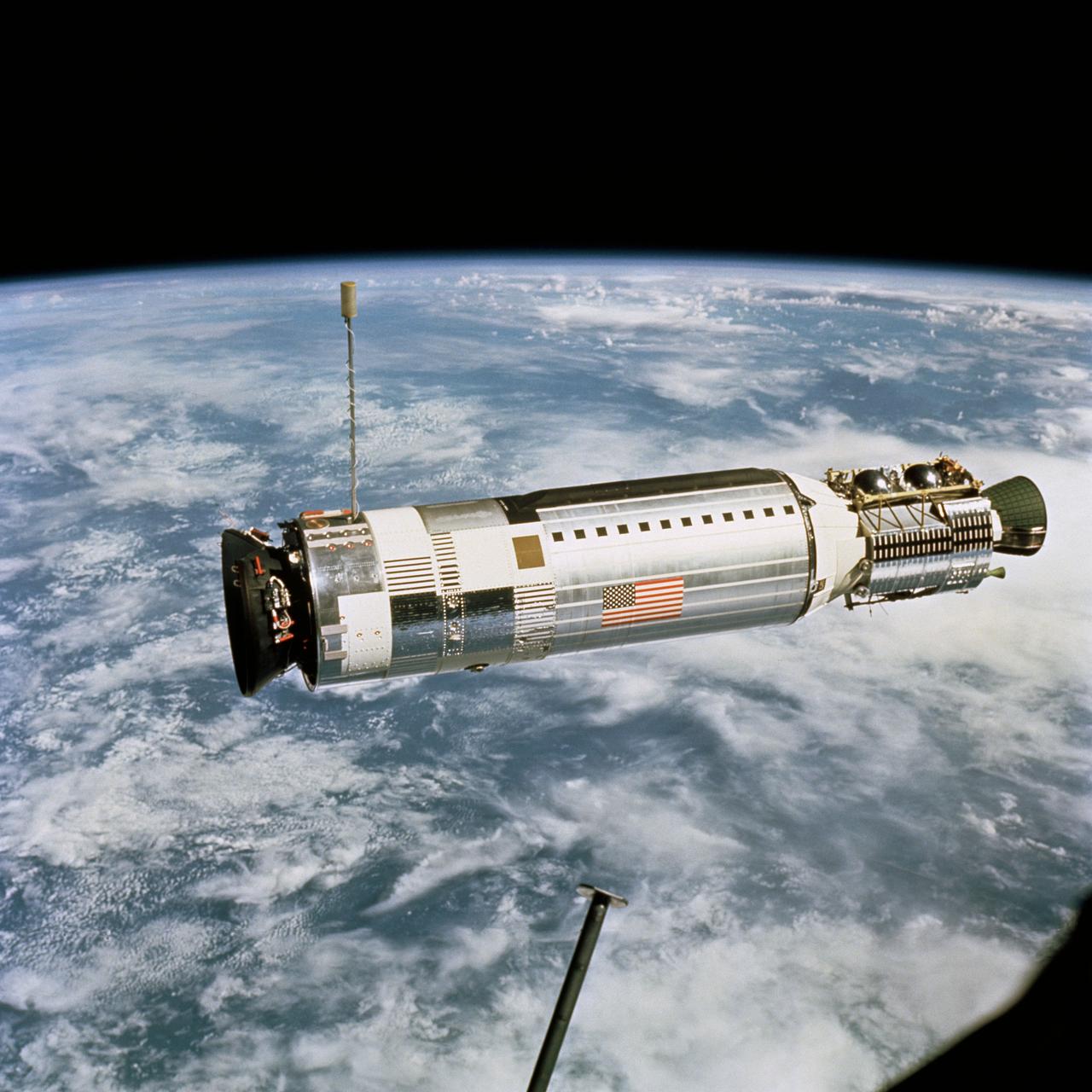
S66-62755 (11 Nov. 1966) --- Excellent stereo and side view of the Agena Target Docking Vehicle as seen from the Gemini-12 spacecraft during rendezvous and docking mission in space. The two spacecraft are 50 feet apart. Photo credit: NASA
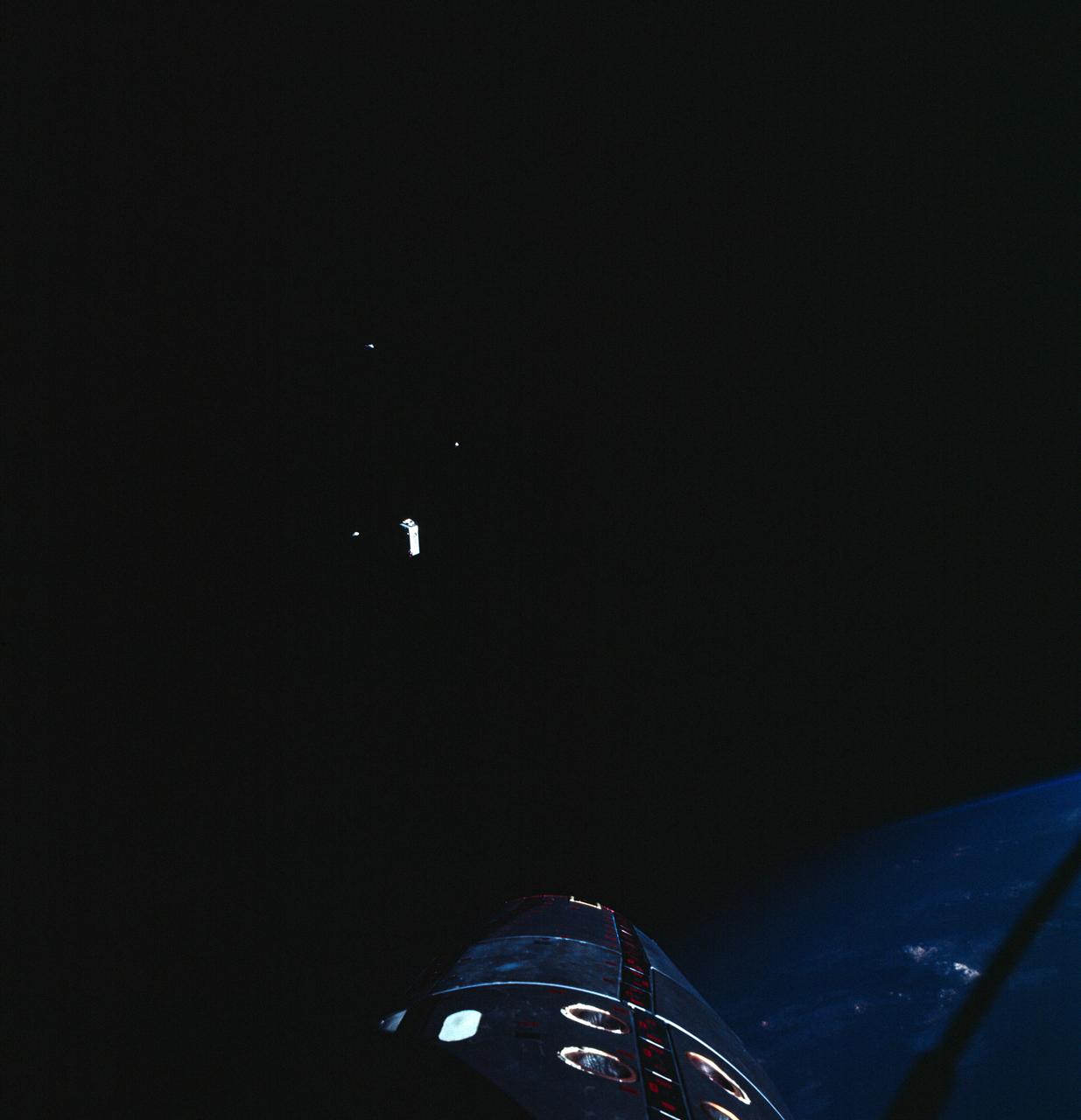
S66-62999 (13 Nov. 1966) --- Jettison of the extravehicular life support system (ELSS) and other equipment from the Gemini-12 spacecraft during its rendezvous mission in space. The nose of the Gemini-12 spacecraft is clearly visible at right edge of photo. Photo credit: NASA
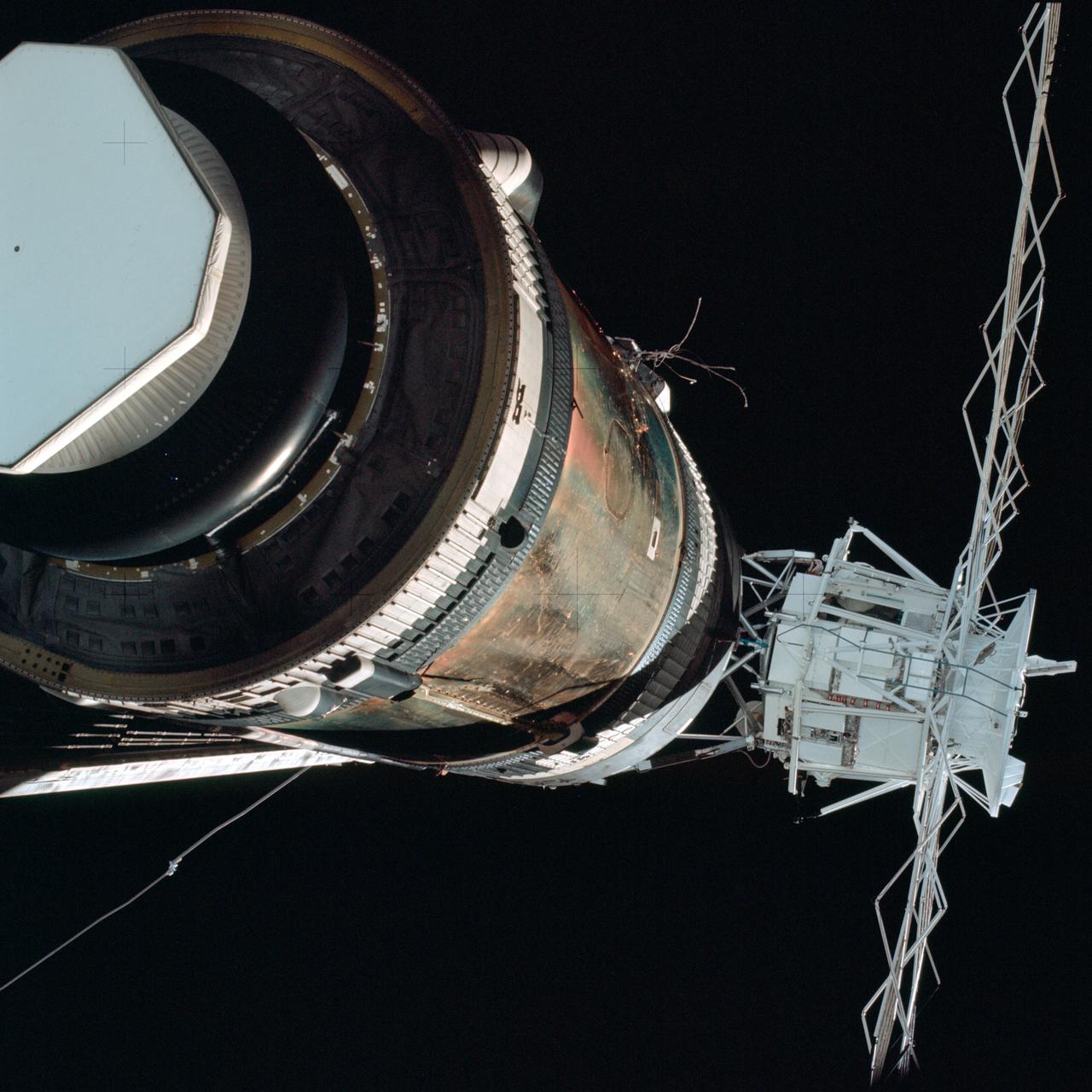
SL2-4-265 (25 May 1973) --- Skylab 2, approach to Skylab at long range, fly-around inspection. Orbital Workshop with area of missing micrometeoroid shield visible and partially deployed solar array visible. Photo credit: NASA
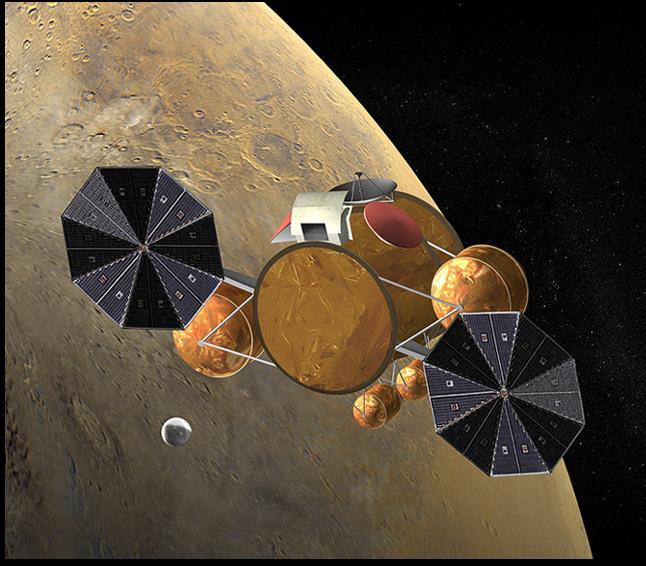
This artist concept of the proposed NASA Mars Sample Return mission shows rendezvous of the orbiting sample container with the Earth return vehicle.

S65-63171 (15 Dec. 1965) --- The Gemini-7 spacecraft as seen from the Gemini-6 spacecraft during their rendezvous mission in space. Photo credit: NASA or National Aeronautics and Space Administration

S65-63198 (15 Dec. 1965) --- The Gemini-7 spacecraft as seen from the Gemini-6 spacecraft during their rendezvous mission in space. They are approximately 39 feet apart. Photo credit: NASA or National Aeronautics and Space Administration
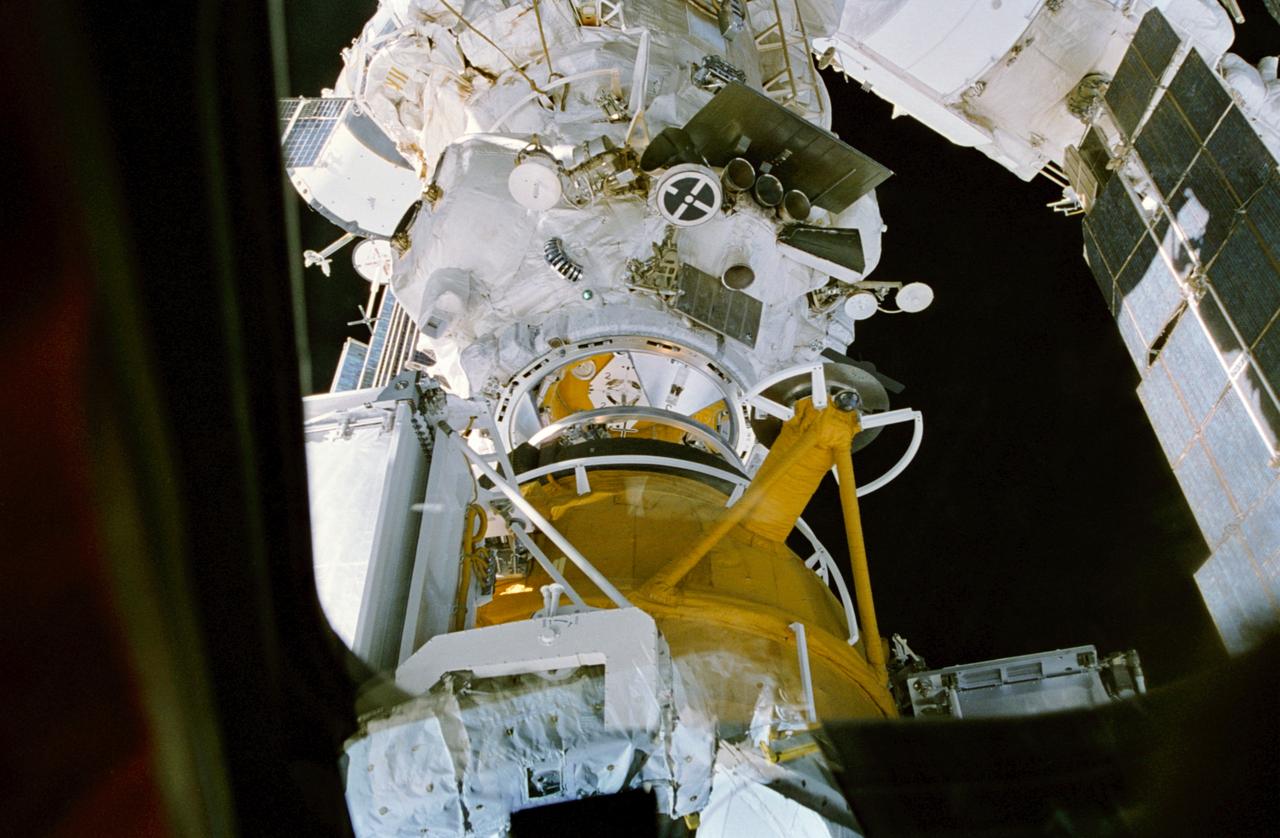
STS074-332-029 (15 Nov 1995) --- A 35mm camera aimed through the Space Shuttle Atlantis? aft windows captured rendezvous and docking operations with the Space Shuttle Atlantis and Russia?s Mir Space Station in Earth-orbit. The new Docking Module (DM), carried into space by the Atlantis is about to contact Kristall on the cluster of Mir components. The flight began with a November 12, 1995, launch from Kennedy Space Center (KSC) and ended with landing there on November 20, 1995. The crew members were astronauts Kenneth D. Cameron, mission commander; James D. Halsell, Jr., pilot; William S. McArthur, Jr., Jerry L. Ross and Canadian astronaut Chris A. Hadfield, all mission specialists. The Mir-20 crew is composed of cosmonauts Yuriy P. Gidzenko, commander; and Sergei V. Avdeyev, engineer; along with the European Space Agency?s (ESA) Thomas Reiter, cosmonaut researcher. Joint activities on the Mir and the Space Shuttle Atlantis ended on November 18, 1995, when the two spacecraft separated.
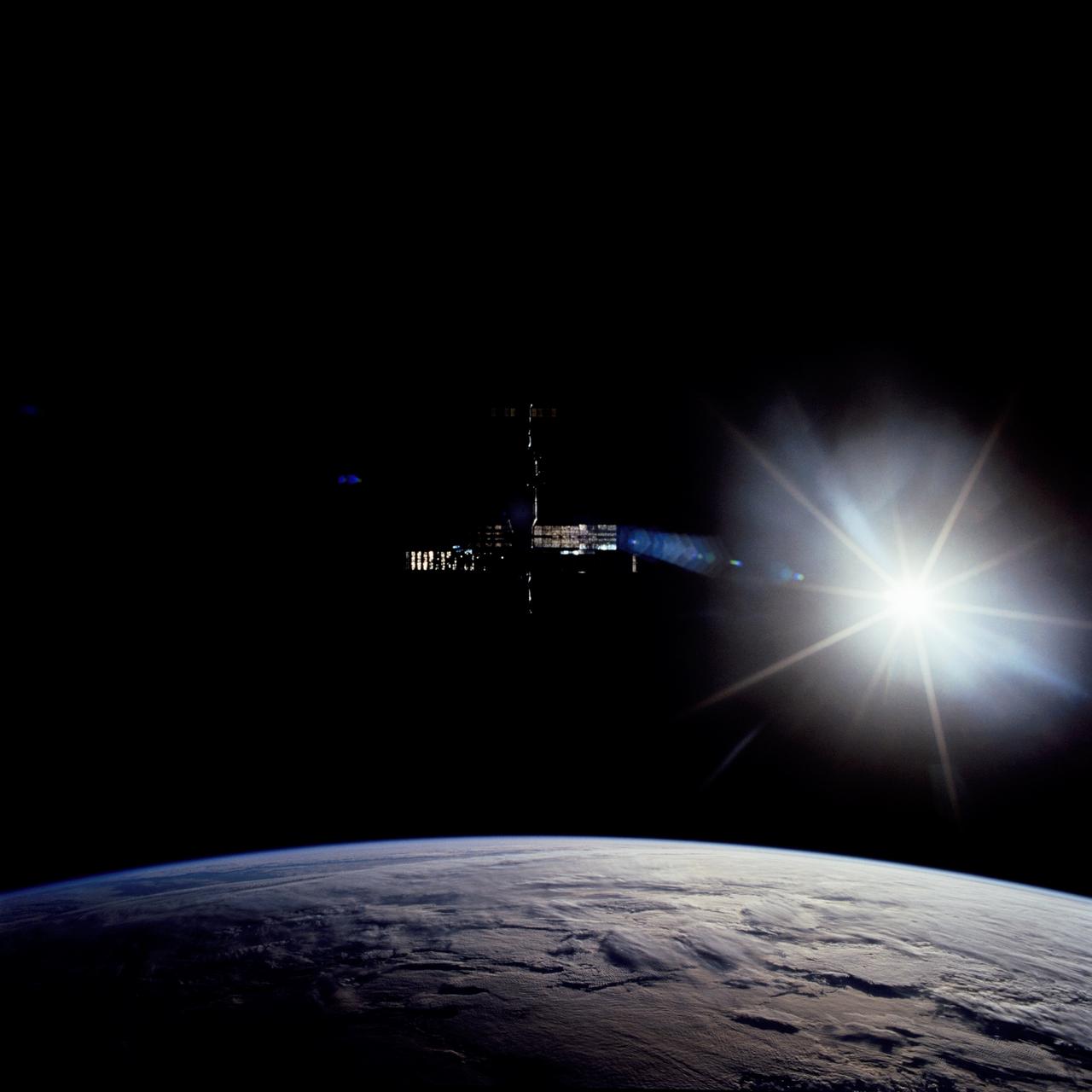
STS063-708-057 (6 Feb. 1995) --- Backdropped against the darkness of space, only the shiny part of Russia's Mir Space Station are clearly visible in this 70mm frame, photographed during rendezvous operations by the Space Shuttle Discovery and the Mir space station. Onboard the Discovery were astronauts James D. Wetherbee, mission commander; Eileen M. Collins, pilot; Bernard A. Harris Jr., payload commander; mission specialists Janice Voss, C. Michael Foale and Russian cosmonaut Vladimir G. Titov.
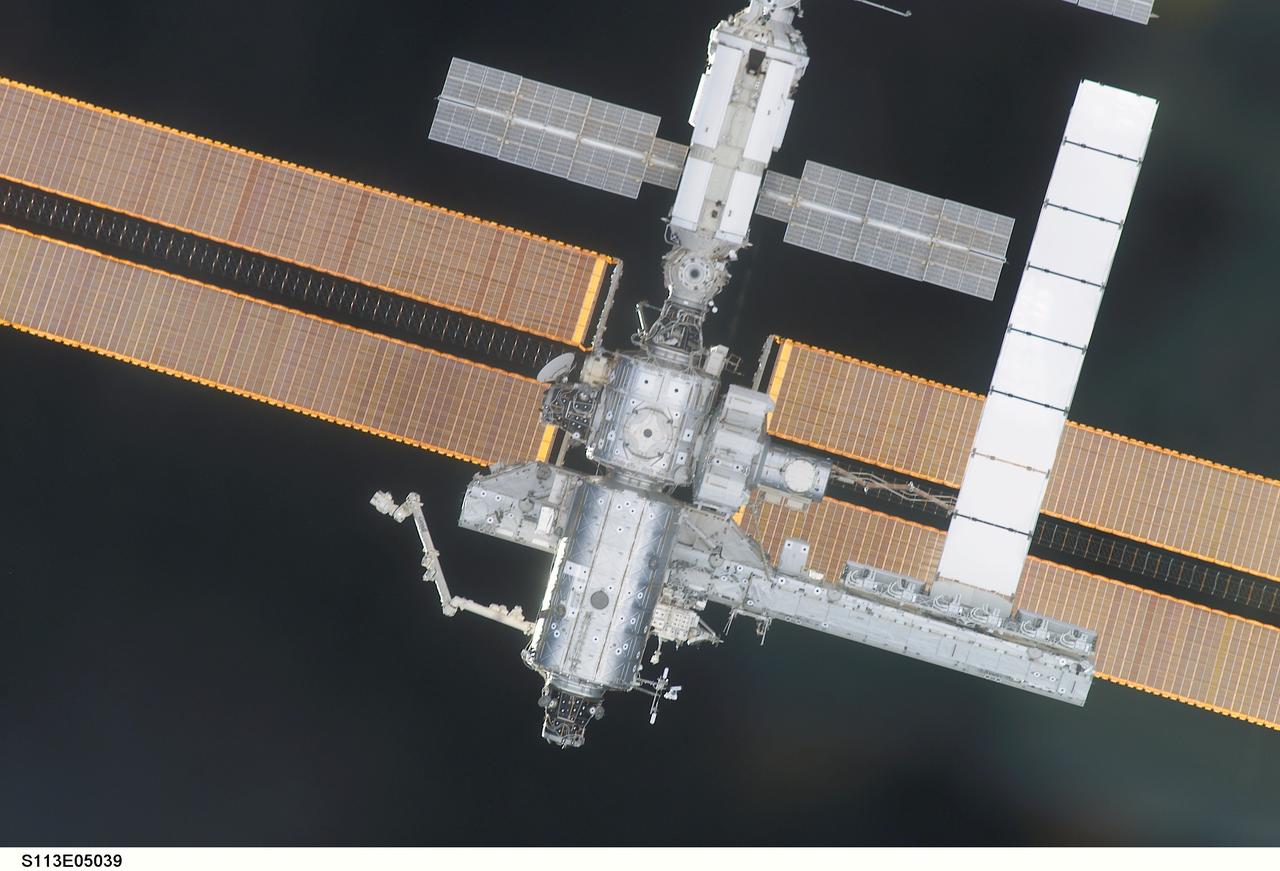
STS113-E-5039 (25 November 2002) --- The International Space Station (ISS) is backdropped against the blackness of space as the Space Shuttle Endeavour quickly approaches the orbital outpost for a Nov. 25 rendezvous. Endeavour went on to dock with the International Space Station at 3:59 p.m. (CST), bringing a new crew and another segment of the station's backbone, the Port One (P1) segment of the Integrated Truss System. The rendezvous and docking of Endeavour with astronaut James D. Wetherbee, mission commander, at the controls, occurred about 248 statute miles above the South Pacific off the southeastern coast of Australia.

S65-63113 (15 Dec. 1965) --- This photograph of the Gemini-7 spacecraft was taken from the hatch window of the Gemini-6 spacecraft during rendezvous and station keeping maneuvers at an altitude of approximately 160 miles on Dec. 15, 1965. Photo credit: NASA or National Aeronautics and Space Administration
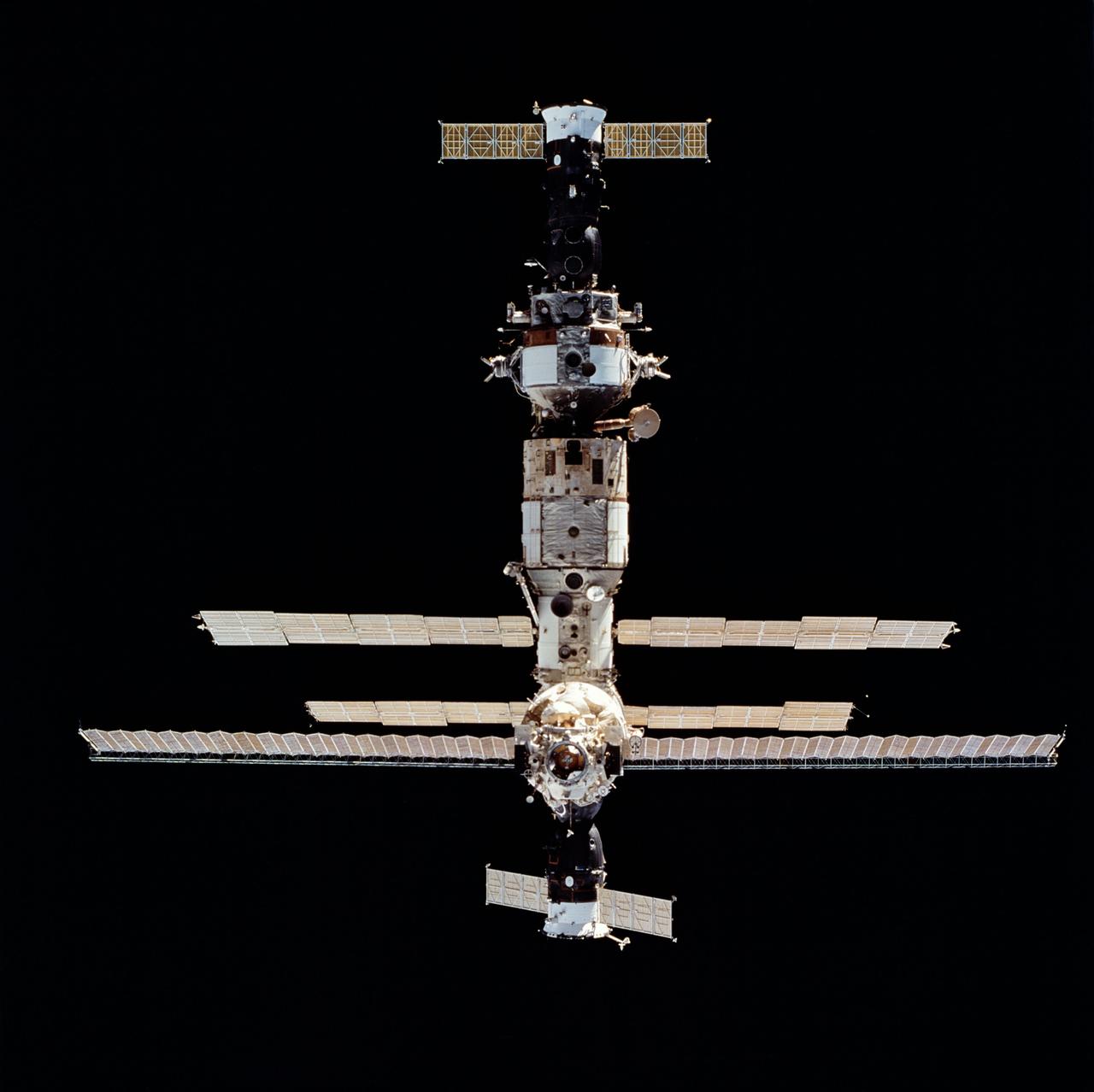
STS063-712-068 (6 Feb 1995) --- Russia's Mir Space Station during rendezvous operations with the Space Shuttle Discovery. Docked at bottom (nearest portion where longest solar array panel is visible) is a Soyuz space vehicle. On the opposite end is a Progress spacecraft. This is one of 16 still photographs released by the NASA Johnson Space Center (JSC) Public Affairs Office (PAO) on February 14, 1995. Onboard the Space Shuttle Discovery were astronauts James D. Wetherbee, mission commander; Eileen M. Collins, pilot; Bernard A. Harris, Jr., payload commander; mission specialists C. Michael Foale, Janice E. Voss, and cosmonaut Vladimir G. Titov.

S66-46122 (18 July 1966) --- Agena Target Docking Vehicle 5005 is photographed from the Gemini-Titan 10 (GT-10) spacecraft during rendezvous in space. The two spacecraft are about 38 feet apart. After docking with the Agena, astronauts John W. Young, command pilot, and Michael Collins, pilot, fired the 16,000 pound thrust engine of Agena X's primary propulsion system to boost the combined vehicles into an orbit with an apogee of 413 nautical miles to set a new altitude record for manned spaceflight. Photo credit: NASA
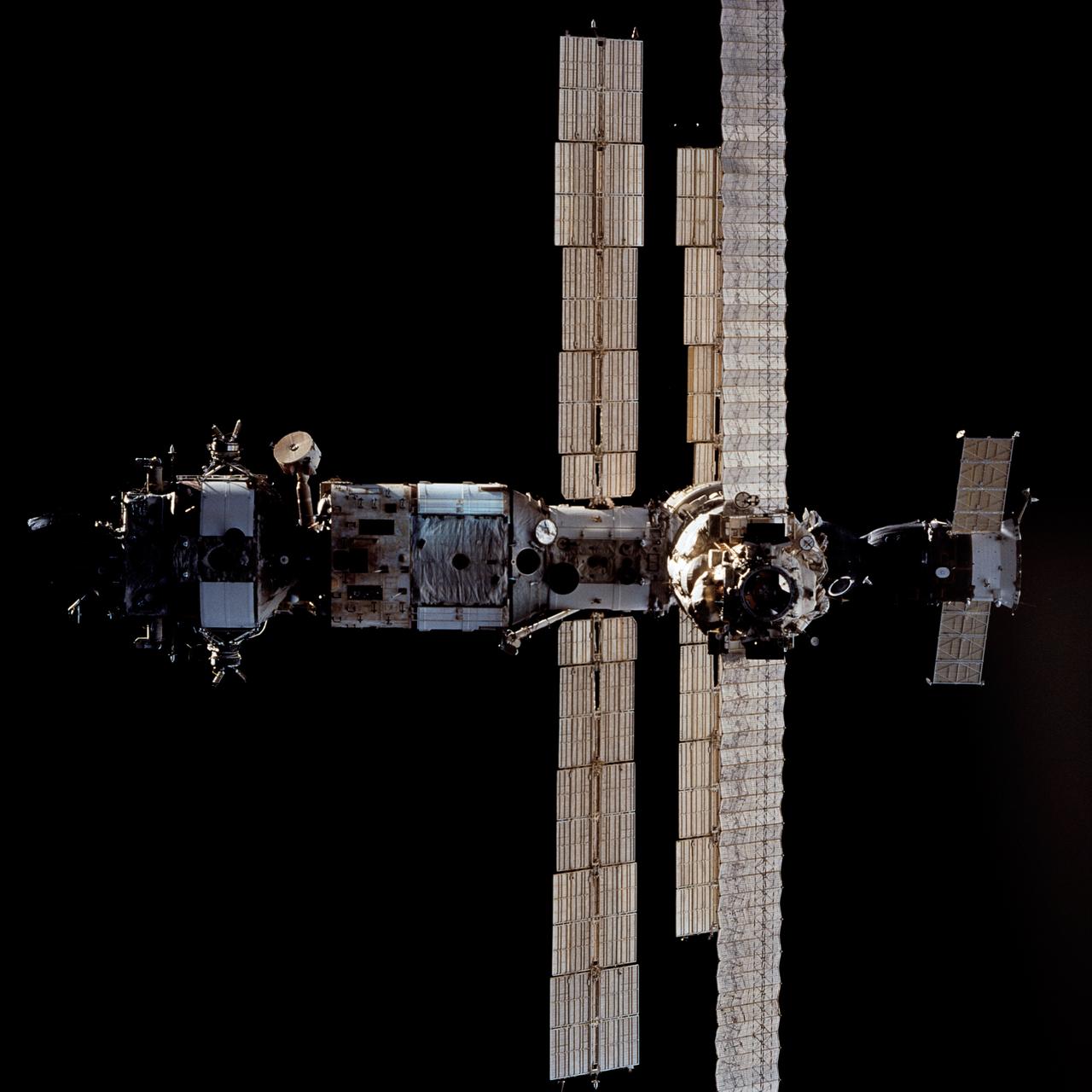
STS063-712-017 (6 Feb. 1995) --- Russia's Mir Space Station during rendezvous operations with the Space Shuttle Discovery. Docked at the bottom of the Mir facility is a Soyuz spacecraft. On the opposite end (almost cropped out of frame at top) is a Progress spacecraft. Onboard the Space Shuttle Discovery were astronauts James D. Wetherbee, mission commander; Eileen M. Collins, pilot; Bernard A. Harris, Jr., payload commander; C. Michael Foale and Janice E. Voss, mission specialists; along with cosmonaut Vladimir G. Titov, mission specialist.

STS063-711-080 (6 Feb. 1995) --- Cosmonaut Valeriy V. Polyakov, who boarded Russia's Mir Space Station on January 8, 1994, looks out Mir's window during rendezvous operations with the Space Shuttle Discovery. This is one of 16 still photographs released by the NASA Johnson Space Center (JSC) Public Affairs Office (PAO) on February 14, 1995. Onboard the Discovery were astronauts James D. Wetherbee, mission commander; Eileen M. Collins, pilot; Bernard A. Harris, Jr., payload commander; mission specialists C. Michael Foale, Janice E. Voss, and cosmonaut Vladimir G. Titov.
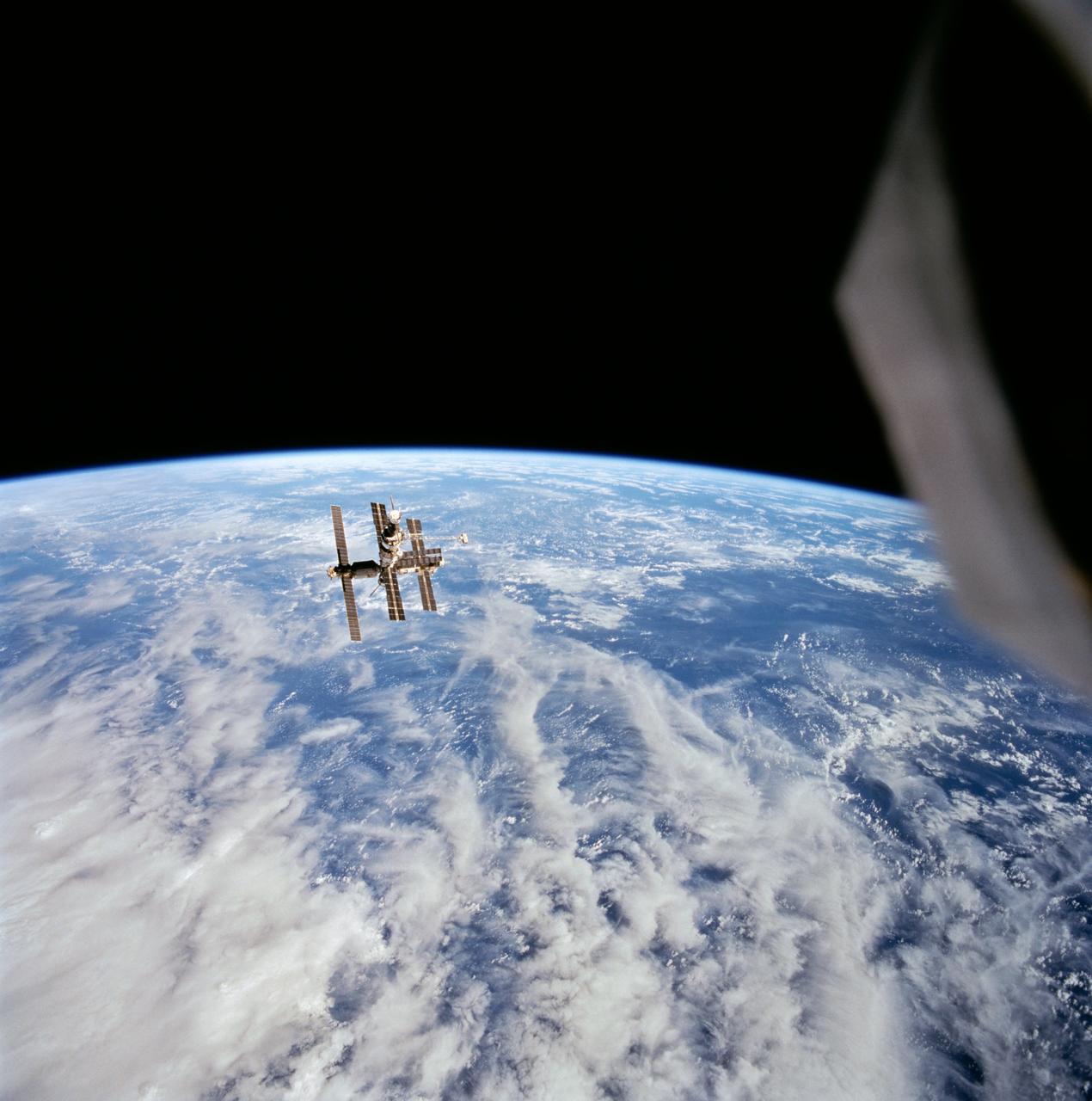
STS063-708-095 (6 Feb 1995) --- Cumulus and other clouds over the ocean form the backdrop for this scene of Russia's Mir space station during rendezvous operations by the Space Shuttle Discovery and Mir. This photograph was taken as the Discovery was firing its Reaction Control Subsystem (RCS) thrusters to separate from Mir's proximity. Onboard the Discovery were astronauts James D. Wetherbee, mission commander; Eileen M. Collins, pilot; Bernard A. Harris Jr., payload commander; mission specialists Janice Voss and C. Michael Foale; along with Russian cosmonaut Vladimir G. Titov. EDITOR'S NOTE: This 70mm handheld Hasselblad frame has been cropped to enlarge Mir.
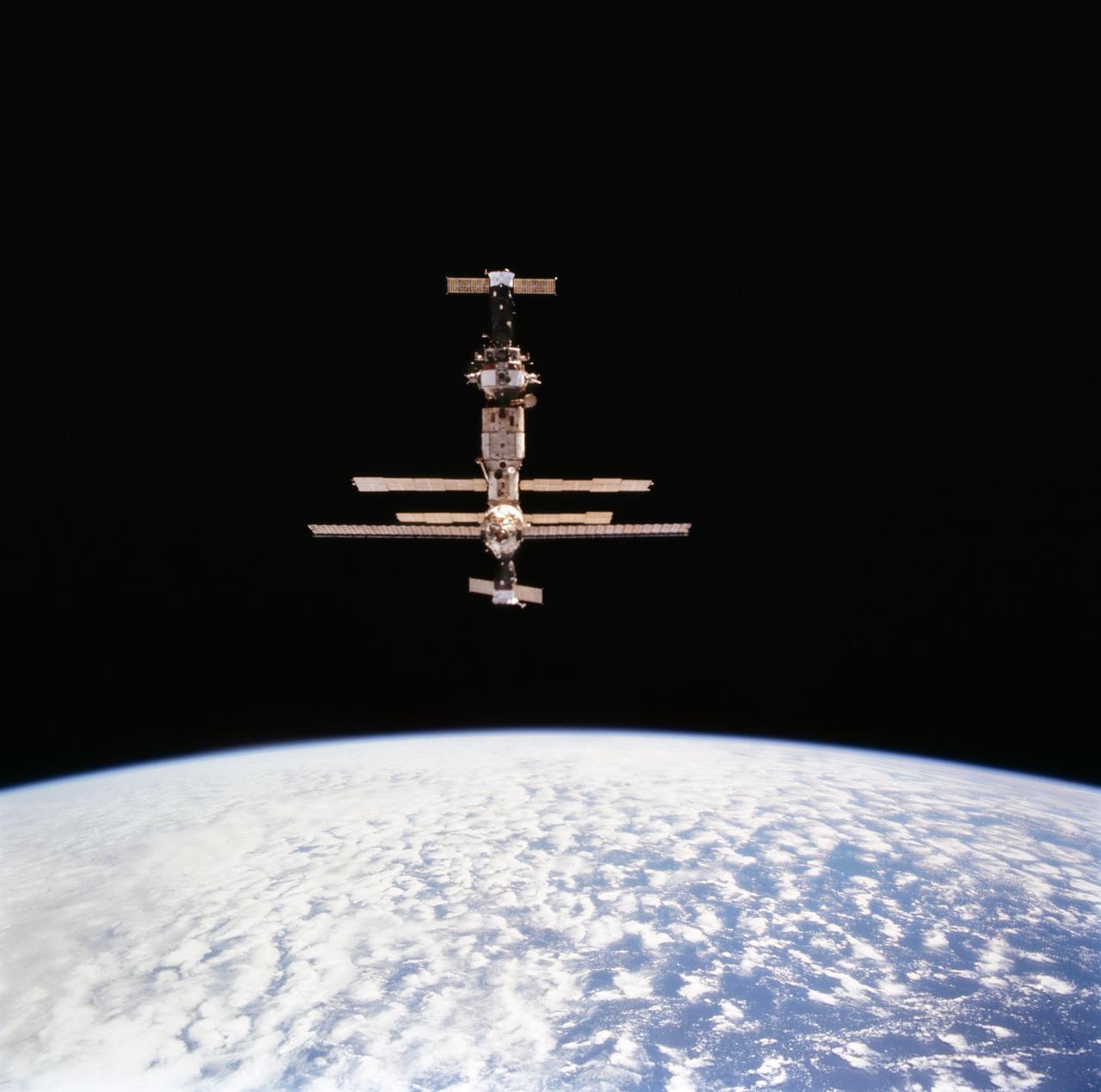
STS063-712-072 (6 Feb 1995) --- Russia's Mir Space Station over the blue and white Earth during initial approach for rendezvous operations with the Space Shuttle Discovery. Docked at bottom (nearest portion where longest solar array panel is visible) is a Soyuz space vehicle. On the opposite end is a Progress spacecraft. This is one of 16 still photographs released by the NASA Johnson Space Center (JSC) Public Affairs Office (PAO) on February 14, 1995. Onboard the Space Shuttle Discovery were astronauts James D. Wetherbee, mission commander; Eileen M. Collins, pilot; Bernard A. Harris Jr., payload commander; mission specialists C. Michael Foale, Janice E. Voss, and cosmonaut Vladimir G. Titov.

S65-63220 (15 Dec. 1965) --- This photograph of the Gemini-Titan 7 (GT-7) spacecraft was taken from the Gemini-Titan 6 (GT-6) spacecraft during the historic rendezvous of the two spacecraft on Dec. 15, 1965. The two spacecraft are some 37 feet apart here. Earth can be seen below. Astronauts Walter M. Schirra Jr., command pilot; and Thomas P. Stafford, pilot, were inside the GT-6 spacecraft, while crewmen for the GT-7 mission were astronauts Frank Borman, command pilot, and James A. Lovell Jr., pilot. Photo credit: NASA or National Aeronautics and Space Administration
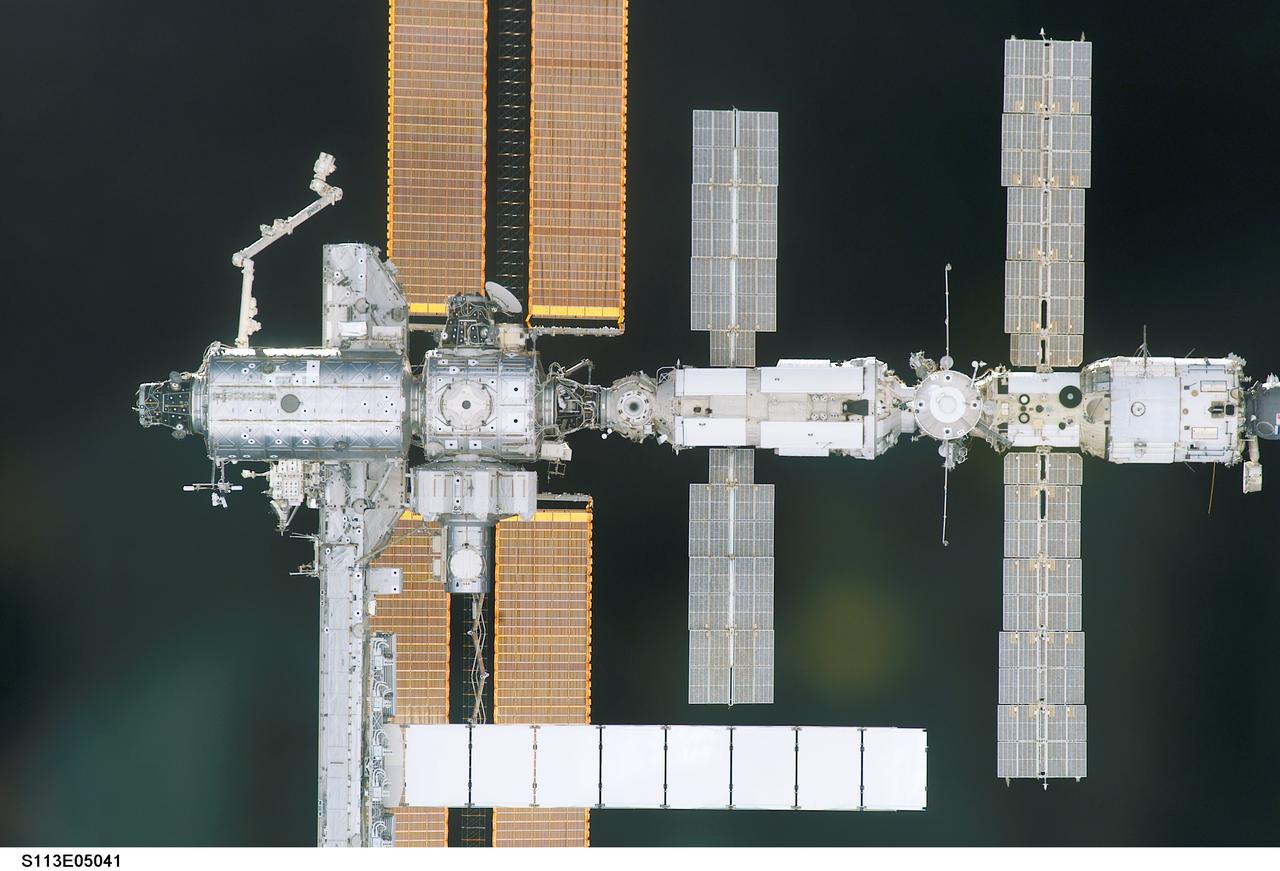
STS113-E-5041 (25 November 2002) --- The International Space Station (ISS) is backdropped against the blackness of space as the Space Shuttle Endeavour quickly approaches the orbital outpost for a November 25 docking. The shuttle went on to dock with the International Space Station at 3:59 p.m. (CST), bringing a new crew and another segment of the station's backbone, the Port One (P1) segment of the Integrated Truss System. The rendezvous and docking of Endeavour with astronaut James D. Wetherbee, mission commander, at the controls, occurred about 248 statute miles above the South Pacific off the southeastern coast of Australia.
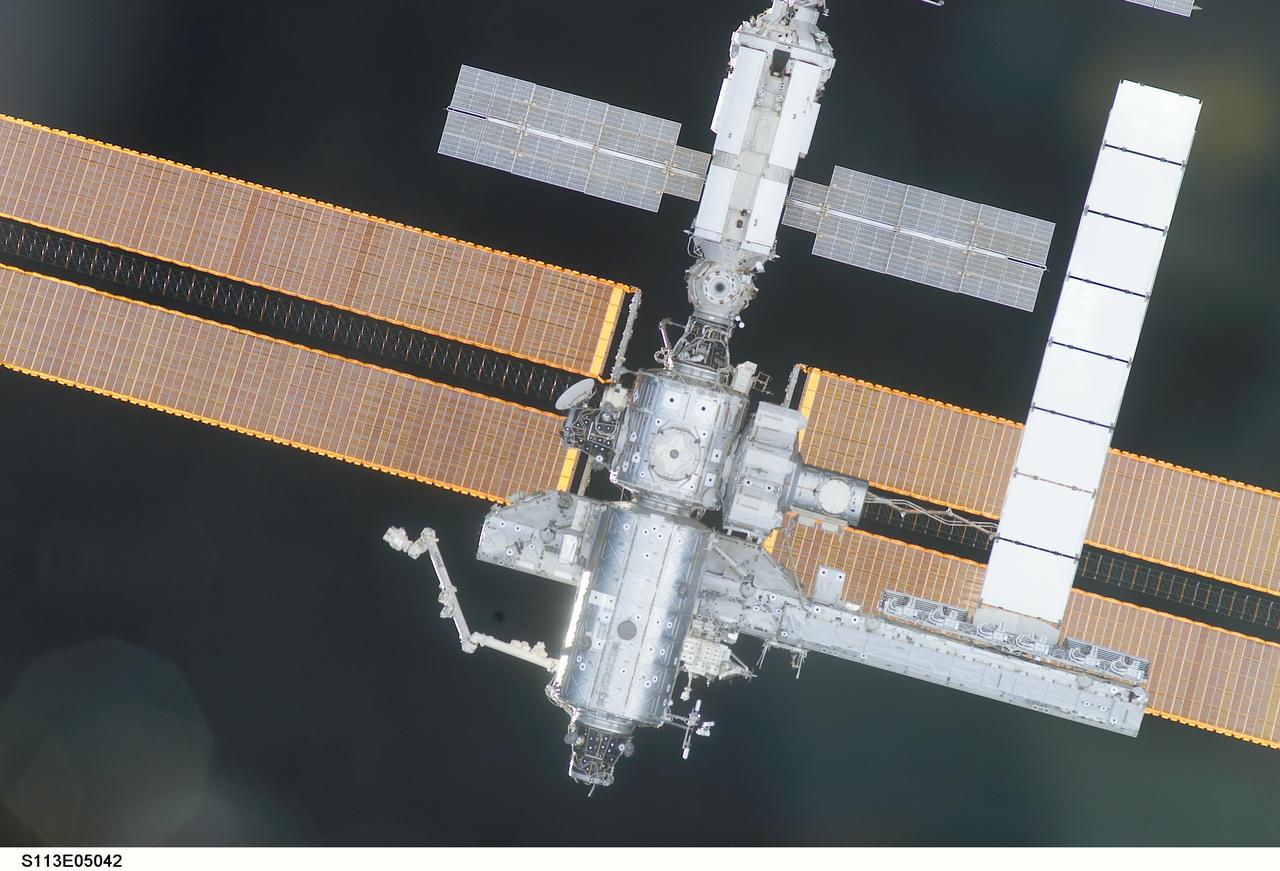
STS113-E-5042 (25 November 2002) --- The International Space Station (ISS) is backdropped against the blackness of space as the Space Shuttle Endeavour quickly approaches the orbital outpost for a November 25 docking. The shuttle went on to dock with the International Space Station at 3:59 p.m. (CST), bringing a new crew and another segment of the station's backbone, the Port One (P1) segment of the Integrated Truss System. The rendezvous and docking of Endeavour with astronaut James D. Wetherbee, mission commander, at the controls, occurred about 248 statute miles above the South Pacific off the southeastern coast of Australia.
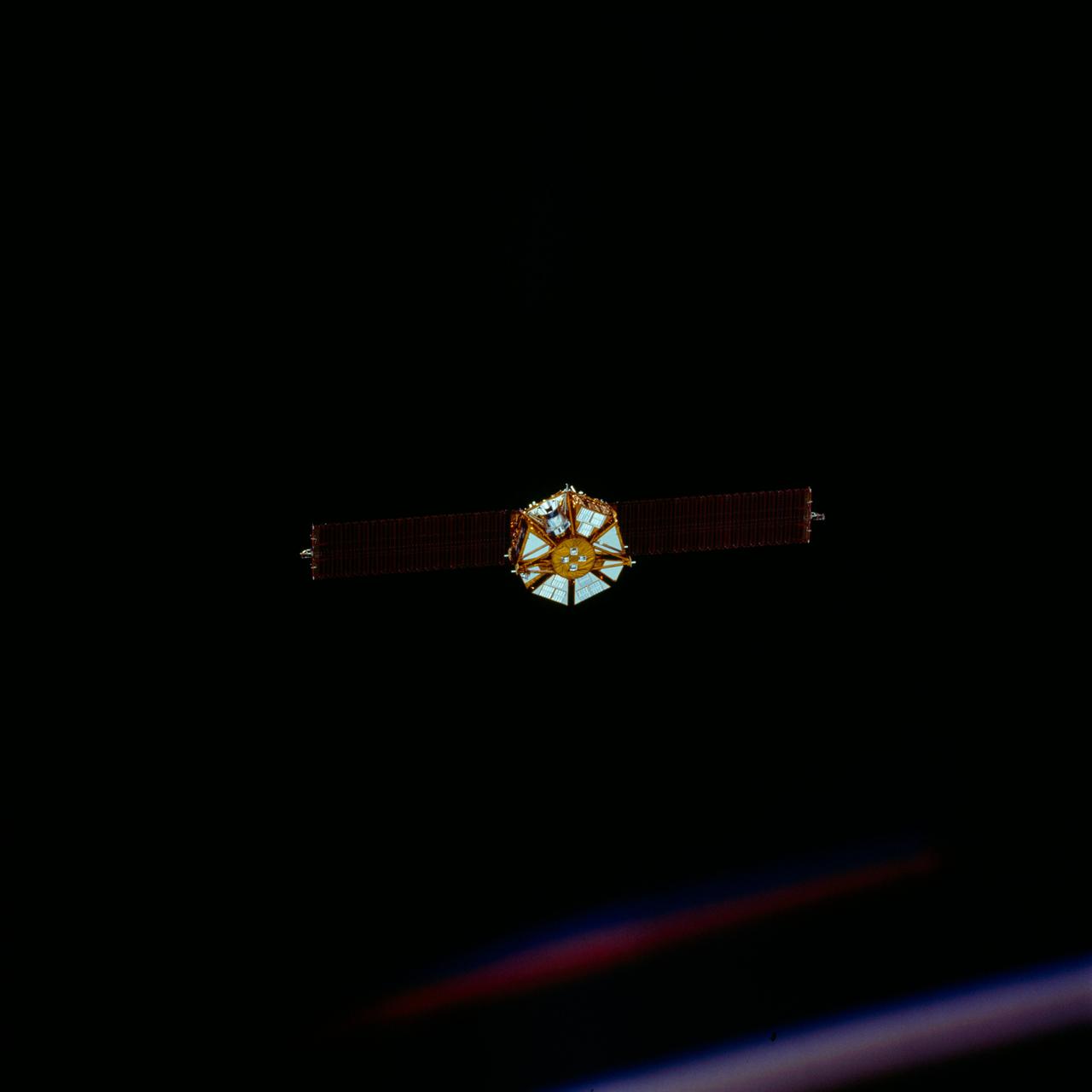
STS072-720-042 (13 Jan. 1996) --- The crew members captured this 70mm view of the Japanese Space Flyer Unit (SFU) just prior to the jettisoning of the solar panels. Later, they used the Remote Manipulator System (RMS) to latch onto the satellite and berth it in the Space Shuttle Endeavour’s aft cargo bay.
STS084-350-001 (15-24 May 1997) --- Several hundred feet away, Russia's Mir Space Station moves closer and closer to the approaching Space Shuttle Atlantis, as captured on film from the aft flight deck of the space shuttle. Not long after this photo was made, the two spacecraft were docked, a configuration in which they stayed for several days while the two crews conducted joint activities.
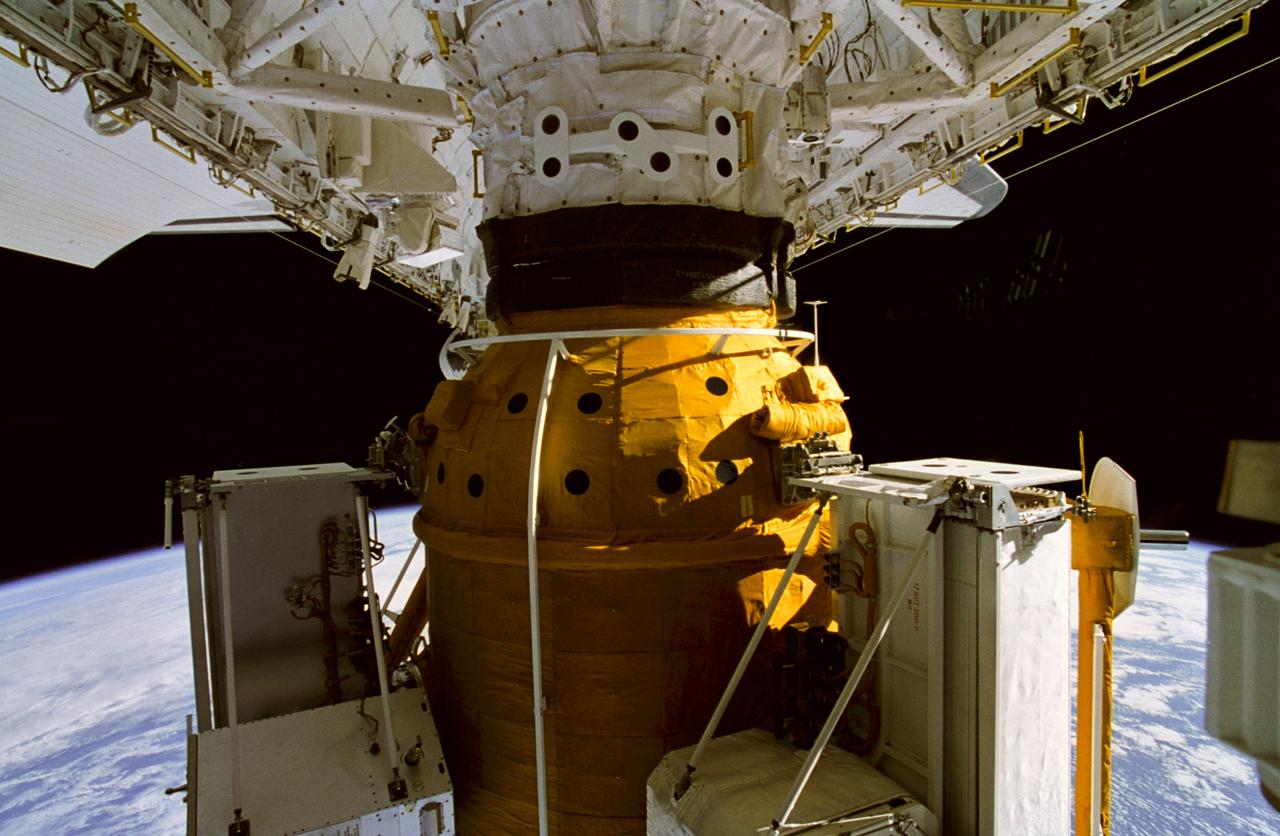
STS074-302-033 (14 Nov 1995) --- A 35mm camera aimed through the Space Shuttle Atlantis? aft windows captured the deployment of the Docking Module (DM), which was later delivered to Russia?s Mir Space Station in Earth-orbit. The Orbiter Docking System (ODS) is partially visible at bottom center. The flight began with a November 12, 1995, launch from Kennedy Space Center (KSC) and ended with landing there on November 20, 1995. The STS-74 crew members were astronauts Kenneth D. Cameron, mission commander; James D. Halsell, pilot; William S. McArthur, Jr., Jerry L. Ross and Canadian astronaut Chris A. Hadfield, all mission specialists. The Mir-20 crew is composed of cosmonauts Yuriy P. Gidzenko, commander; and Sergei V. Avdeyev, engineer; along with the European Space Agency?s (ESA) Thomas Reiter, cosmonaut researcher. Joint activities on the Mir and the Atlantis ended on November 18, 1995, when the two spacecraft separated.
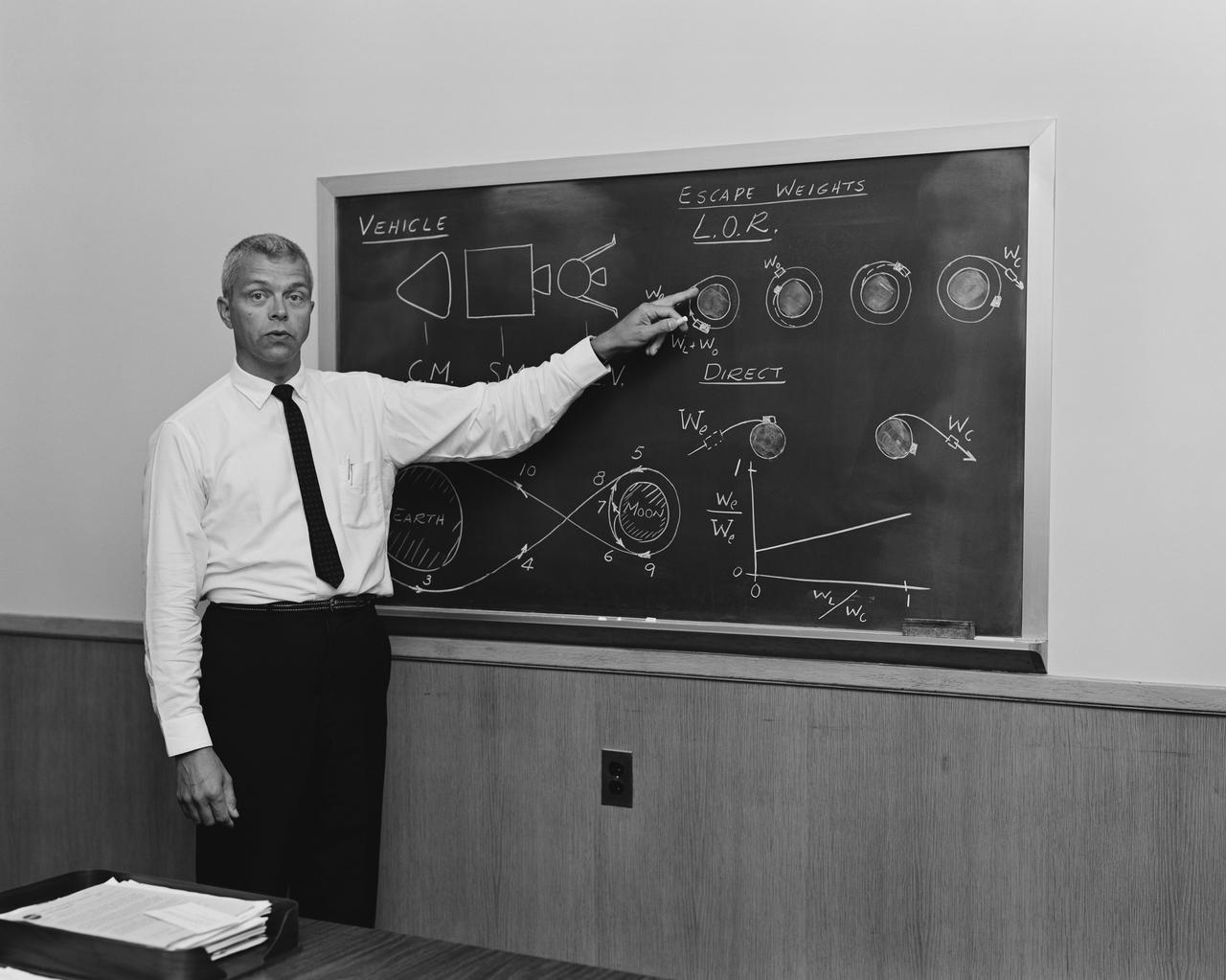
At blackboard, showing his space rendezvous concept for lunar landings. Lunar Orbital Rendezvous (LOR) would be used in the Apollo program. Photograph published in Space Flight Revolution - NASA Langley Research Center From Sputnik to Apollo (page 247), by James R. Hansen.
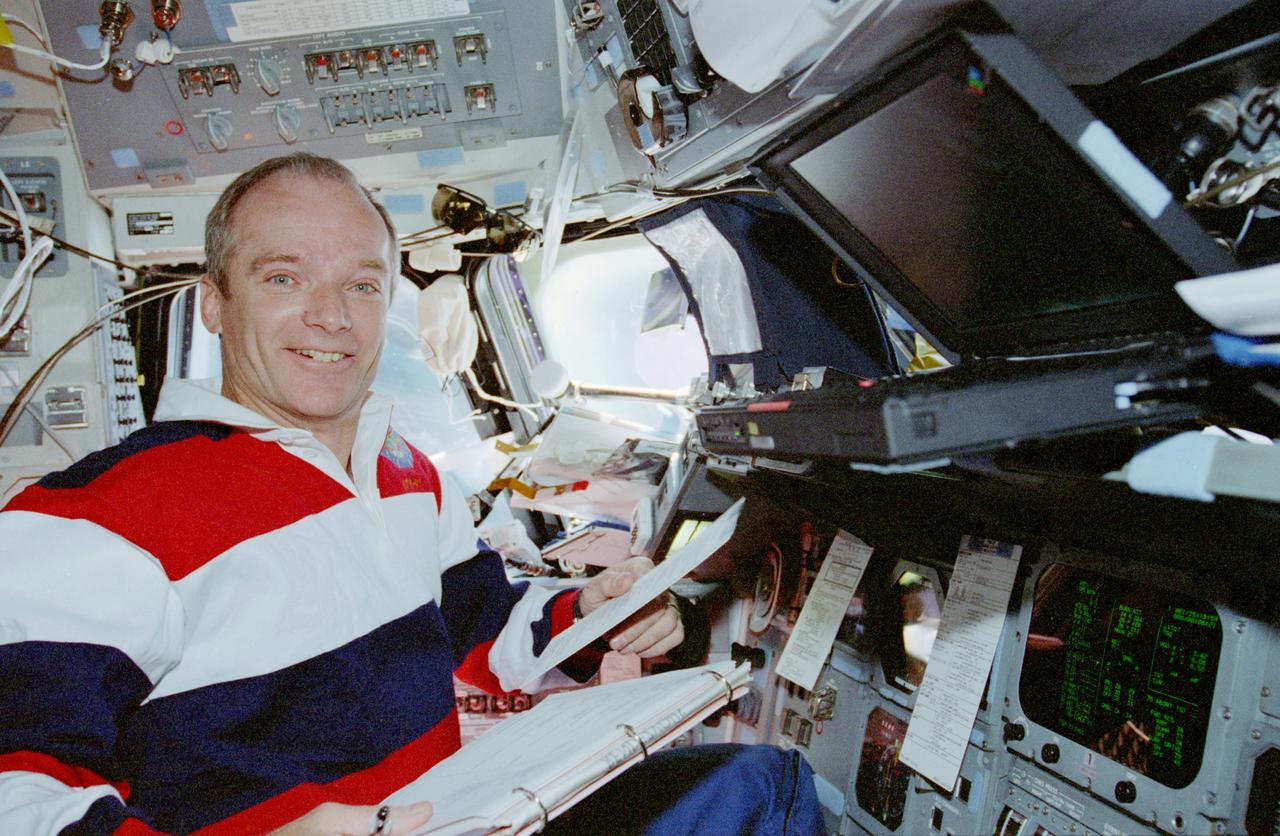
STS091-360-014 (2-12 June 1998) --- Astronaut Charles J. Precourt mans the commander's station on the flight deck of the Space Shuttle Discovery during NASA's scheduled final rendezvous operations with Russia's Mir space station. The veteran astronaut holds checklists related to the rendezvous activities.
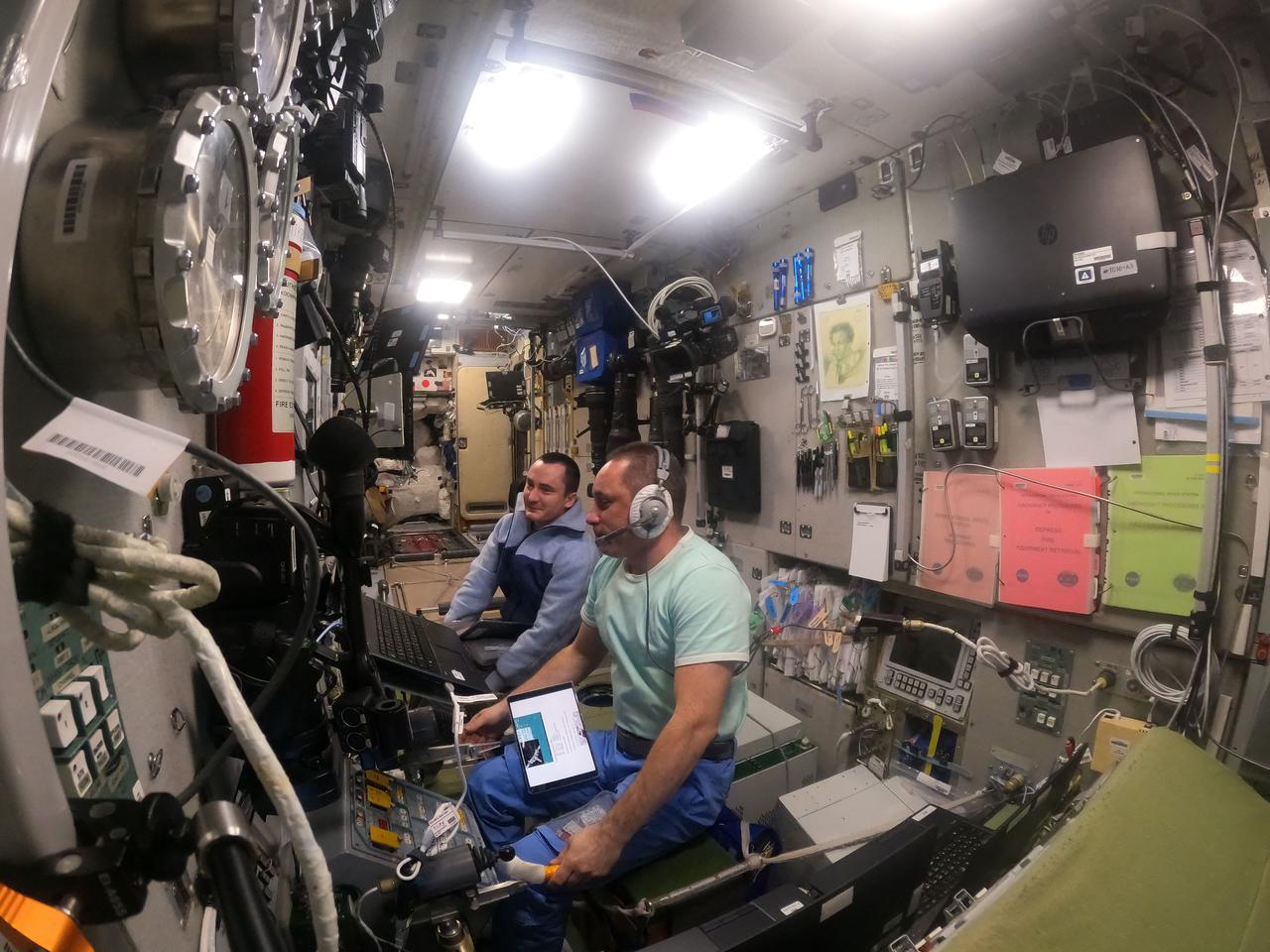
iss066e012273 (Oct. 25, 2021) --- Roscosmos cosmonauts Anton Shkaplerov (foreground) and Pyotr Dubrov were inside the International Space Station's Zvezda service module training for the arrival of the ISS Progress 79 cargo craft. The duo practiced rendezvous maneuvers on the tele-robotically operated rendezvous unit (TORU) ahead of the Progress 79's automated approach, rendezvous and docking that took place on Oct. 29, 2021.
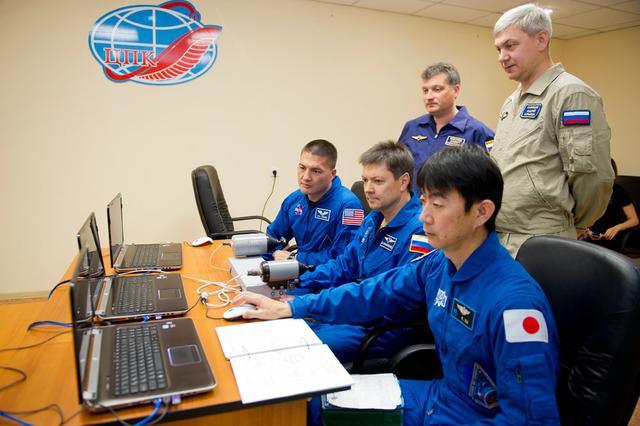
3918: At the Cosmonaut Hotel crew quarters in Baikonur, Kazakhstan, Expedition 44 crewmembers Kjell Lindgren of NASA (left), Oleg Kononenko of the Russian Federal Space Agency (center) and Kimiya Yui of the Japan Aerospace Exploration Agency (right) rehearse rendezvous and docking techniques on a laptop computer as their trainers look on July 15. Yui, Kononenko and Lindgren will launch July 23, Kazakh time on the Soyuz TMA-17M spacecraft from the Baikonur Cosmodrome for a five-month mission on the International Space Station.
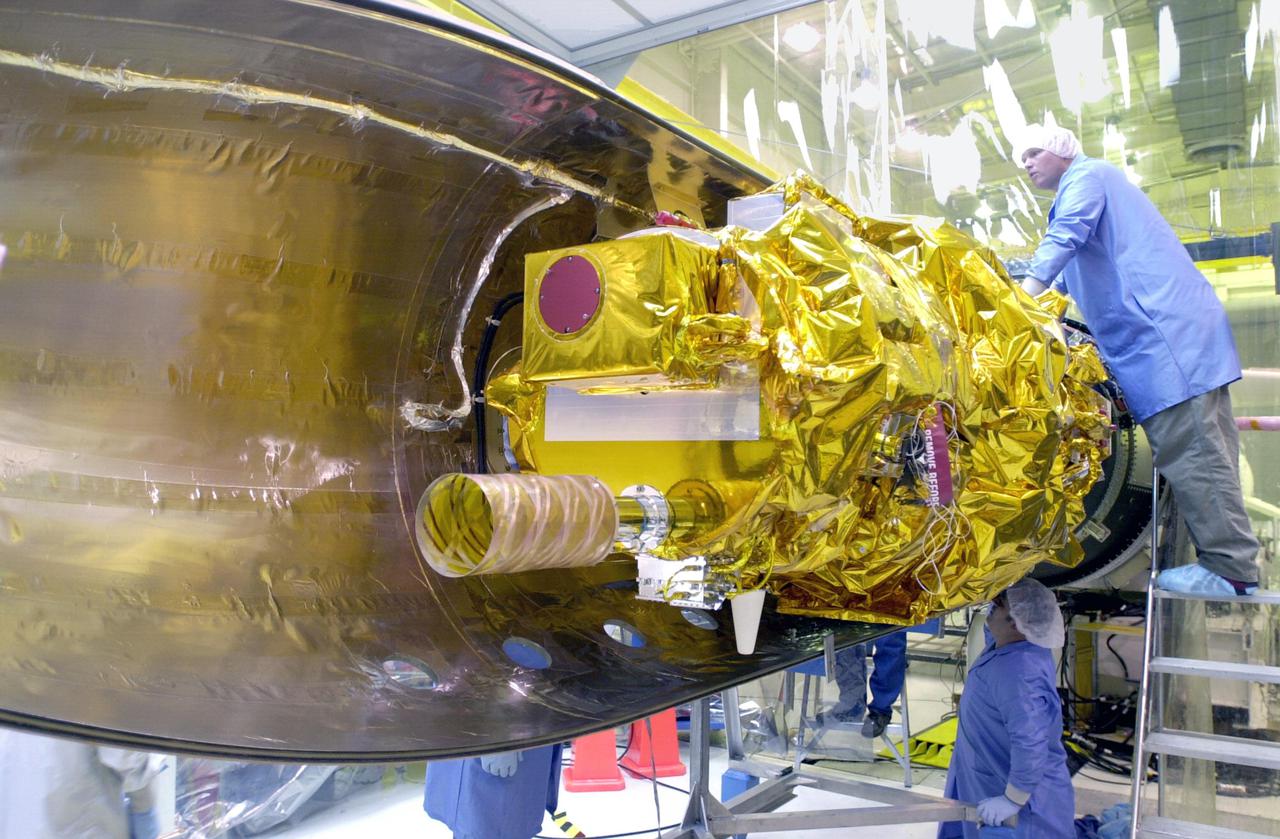
KENNEDY SPACE CENTER, FLA. - In preparation for launch, Orbital Sciences Corporation technicians at Vandenberg AFB in California check the placement of the first fairing half around the Demonstration of Autonomous Rendezvous Technology (DART) spacecraft. The fairing will encapsulate DART and protect it while on the launch pad and during ascent. DART was designed and built for NASA by Orbital Sciences as an advanced flight demonstrator to locate and maneuver near an orbiting satellite. The DART spacecraft weighs about 800 pounds and is nearly 6 feet long and 3 feet in diameter. From beneath the belly of the Orbital Sciences L-1011 aircraft, the Pegasus XL vehicle will launch DART into a circular polar orbit of approximately 475 miles. The DART satellite provides a key step in establishing autonomous rendezvous capabilities for the U.S. Space Program. While previous rendezvous and docking efforts have been piloted by astronauts, the unmanned DART satellite will have computers and cameras to perform its rendezvous functions.

KENNEDY SPACE CENTER, FLA. - At Vandenberg Air Force Base in California, Orbital Sciences Corporation technicians complete attachment of the Demonstration of Autonomous Rendezvous Technology (DART) spacecraft and Orbital Sciences Pegasus launch vehicle, to the Stargazer L-1011 aircraft above. The Pegasus XL will launch DART at approximately 40,000 feet above the Pacific Ocean into a circular polar orbit of approximately 475 miles. DART was designed and built for NASA by Orbital Sciences as an advanced flight demonstrator to locate and maneuver near an orbiting satellite. The DART spacecraft weighs about 800 pounds and is nearly 6 feet long and 3 feet in diameter. The DART satellite provides a key step in establishing autonomous rendezvous capabilities for the U.S. Space Program. While previous rendezvous and docking efforts have been piloted by astronauts, the unmanned DART satellite will have computers and cameras to perform its rendezvous functions.

KENNEDY SPACE CENTER, FLA. - At Vandenberg Air Force Base in California, Orbital Sciences Corporation technicians get ready to attach the Demonstration of Autonomous Rendezvous Technology (DART) spacecraft and Orbital Sciences Pegasus launch vehicle, mated earlier, to the Stargazer L-1011 aircraft above. The Pegasus XL will launch DART at approximately 40,000 feet above the Pacific Ocean into a circular polar orbit of approximately 475 miles. DART was designed and built for NASA by Orbital Sciences as an advanced flight demonstrator to locate and maneuver near an orbiting satellite. The DART spacecraft weighs about 800 pounds and is nearly 6 feet long and 3 feet in diameter. The DART satellite provides a key step in establishing autonomous rendezvous capabilities for the U.S. Space Program. While previous rendezvous and docking efforts have been piloted by astronauts, the unmanned DART satellite will have computers and cameras to perform its rendezvous functions.
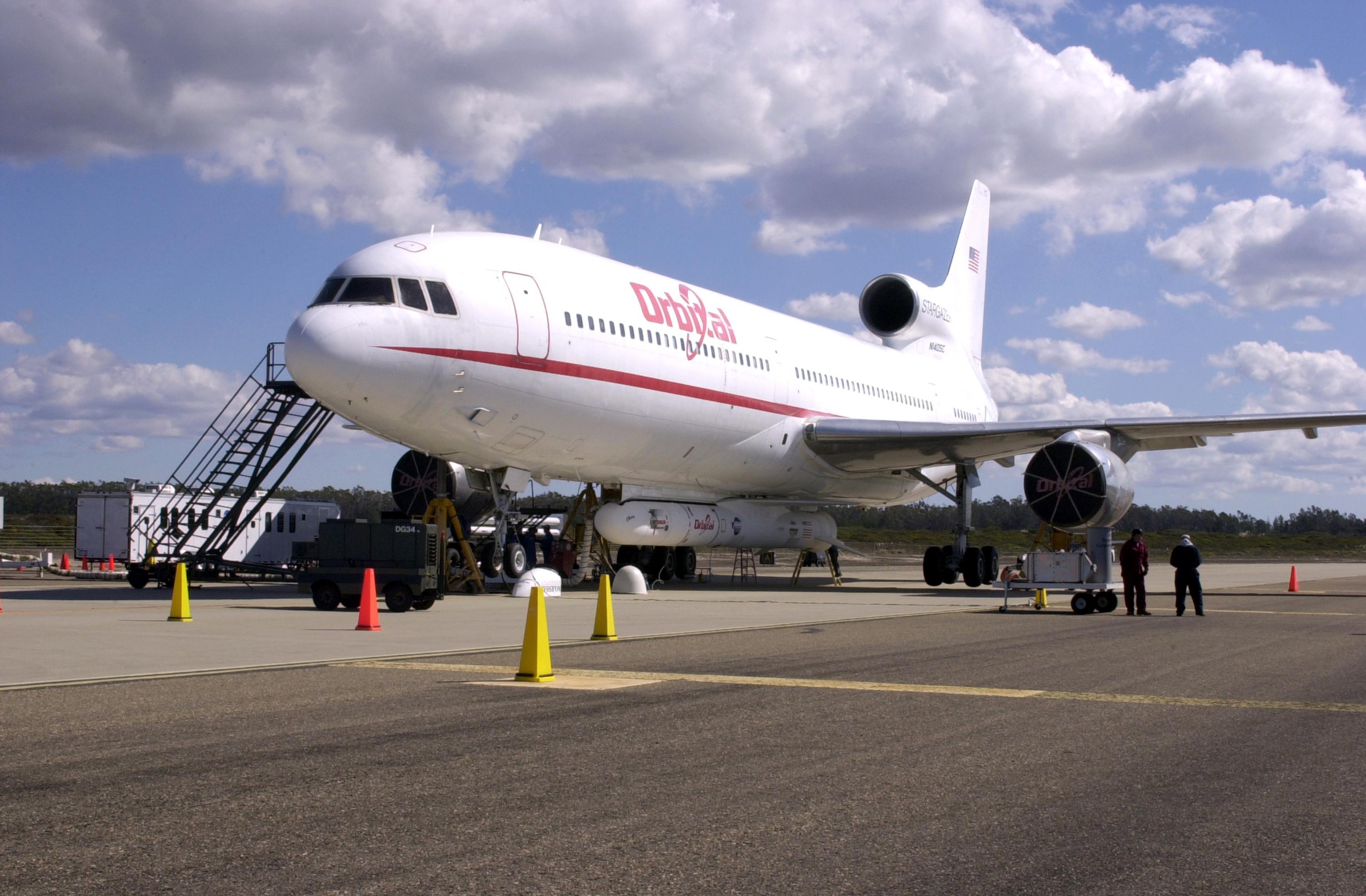
KENNEDY SPACE CENTER, FLA. - At Vandenberg Air Force Base in California, Orbital Sciences Corporation’s Stargazer L-1011 aircraft is ready for flight with the Demonstration of Autonomous Rendezvous Technology (DART) spacecraft and Orbital Sciences Pegasus launch vehicle attached underneath. The Pegasus XL will launch DART at approximately 40,000 feet above the Pacific Ocean into a circular polar orbit of approximately 475 miles. DART was designed and built for NASA by Orbital Sciences as an advanced flight demonstrator to locate and maneuver near an orbiting satellite. The DART spacecraft weighs about 800 pounds and is nearly 6 feet long and 3 feet in diameter. The DART satellite provides a key step in establishing autonomous rendezvous capabilities for the U.S. Space Program. While previous rendezvous and docking efforts have been piloted by astronauts, the unmanned DART satellite will have computers and cameras to perform its rendezvous functions.
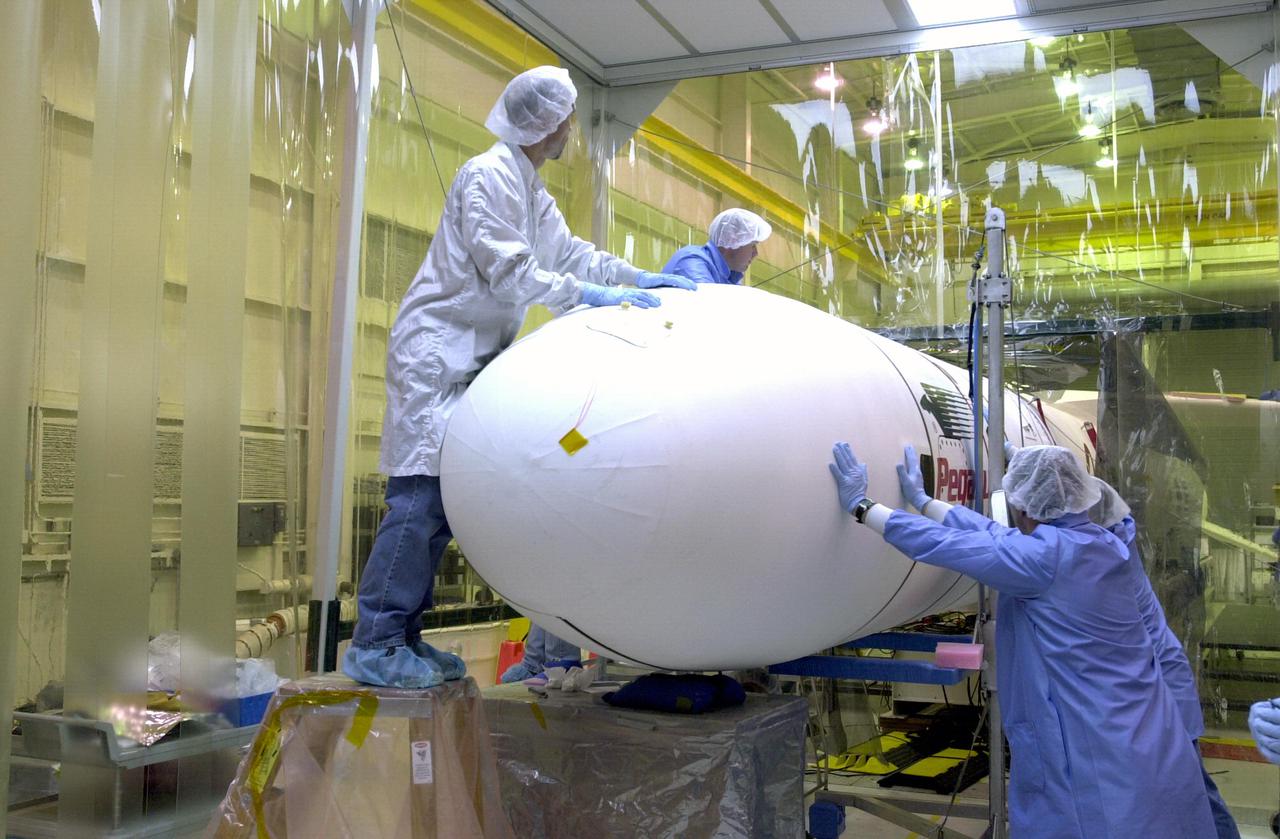
KENNEDY SPACE CENTER, FLA. - Orbital Sciences Corporation technicians at Vandenberg AFB in California finish installation of the fairing around the Demonstration of Autonomous Rendezvous Technology (DART) spacecraft in preparation for launch. The fairing will encapsulate DART and protect it while on the launch pad and during ascent. DART was designed and built for NASA by Orbital Sciences as an advanced flight demonstrator to locate and maneuver near an orbiting satellite. The DART spacecraft weighs about 800 pounds and is nearly 6 feet long and 3 feet in diameter. From beneath the belly of the Orbital Sciences L-1011 aircraft, the Pegasus XL vehicle will launch DART into a circular polar orbit of approximately 475 miles. The DART satellite provides a key step in establishing autonomous rendezvous capabilities for the U.S. Space Program. While previous rendezvous and docking efforts have been piloted by astronauts, the unmanned DART satellite will have computers and cameras to perform its rendezvous functions.
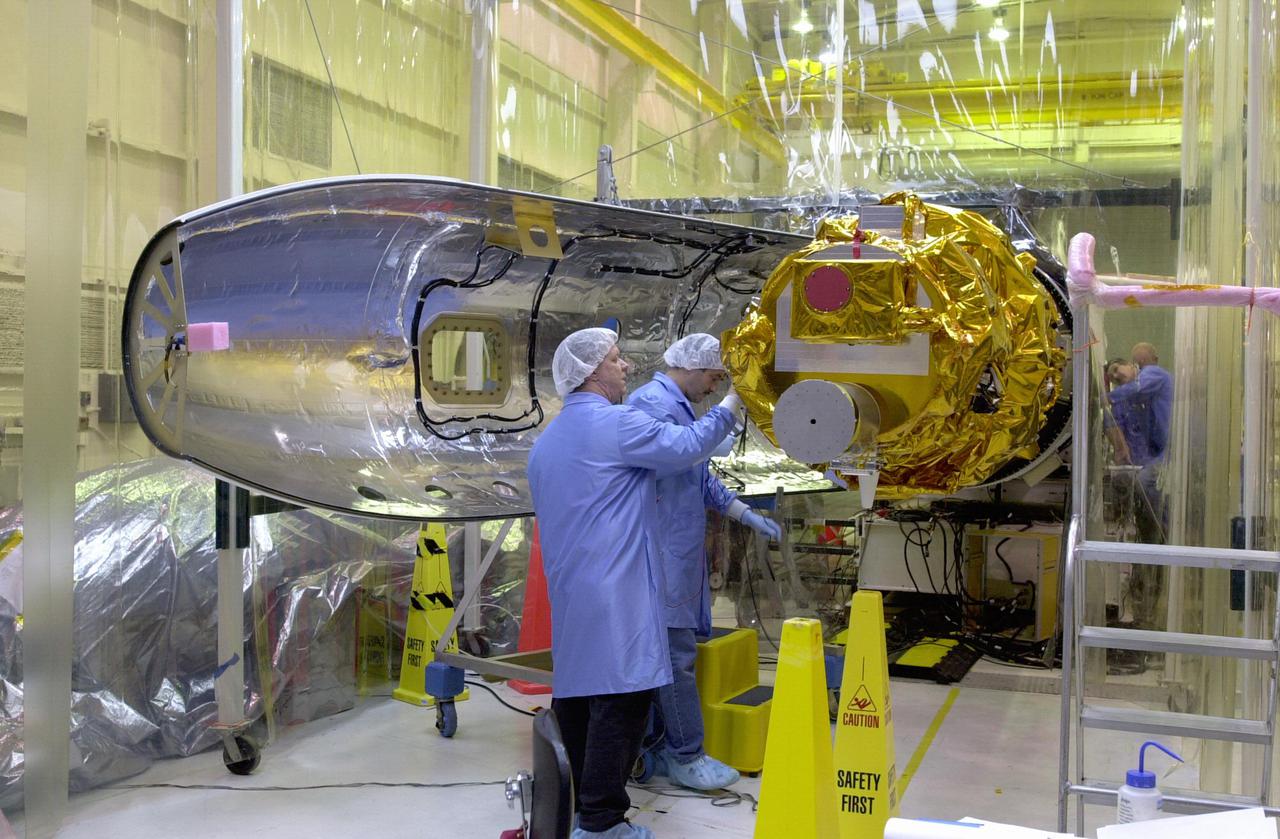
KENNEDY SPACE CENTER, FLA. - In preparation for launch, Orbital Sciences Corporation technicians at Vandenberg AFB in California get ready to place the first fairing half around the Demonstration of Autonomous Rendezvous Technology (DART) spacecraft. The fairing will encapsulate DART and protect it while on the launch pad and during ascent. DART was designed and built for NASA by Orbital Sciences as an advanced flight demonstrator to locate and maneuver near an orbiting satellite. The DART spacecraft weighs about 800 pounds and is nearly 6 feet long and 3 feet in diameter. From beneath the belly of the Orbital Sciences L-1011 aircraft, the Pegasus XL vehicle will launch DART into a circular polar orbit of approximately 475 miles. The DART satellite provides a key step in establishing autonomous rendezvous capabilities for the U.S. Space Program. While previous rendezvous and docking efforts have been piloted by astronauts, the unmanned DART satellite will have computers and cameras to perform its rendezvous functions.

KENNEDY SPACE CENTER, FLA. - At Vandenberg Air Force Base in California, the Demonstration of Autonomous Rendezvous Technology (DART) is mated to the belly of the Orbital Sciences Corporation Stargazer L-1011 aircraft. DART was designed and built for NASA by Orbital Sciences as an advanced flight demonstrator to locate and maneuver near an orbiting satellite. The DART spacecraft weighs about 800 pounds and is nearly 6 feet long and 3 feet in diameter. From beneath the belly of the Orbital Sciences L-1011 aircraft, the Pegasus XL vehicle will launch DART into a circular polar orbit of approximately 475 miles. The DART satellite provides a key step in establishing autonomous rendezvous capabilities for the U.S. Space Program. While previous rendezvous and docking efforts have been piloted by astronauts, the unmanned DART satellite will have computers and cameras to perform its rendezvous functions.
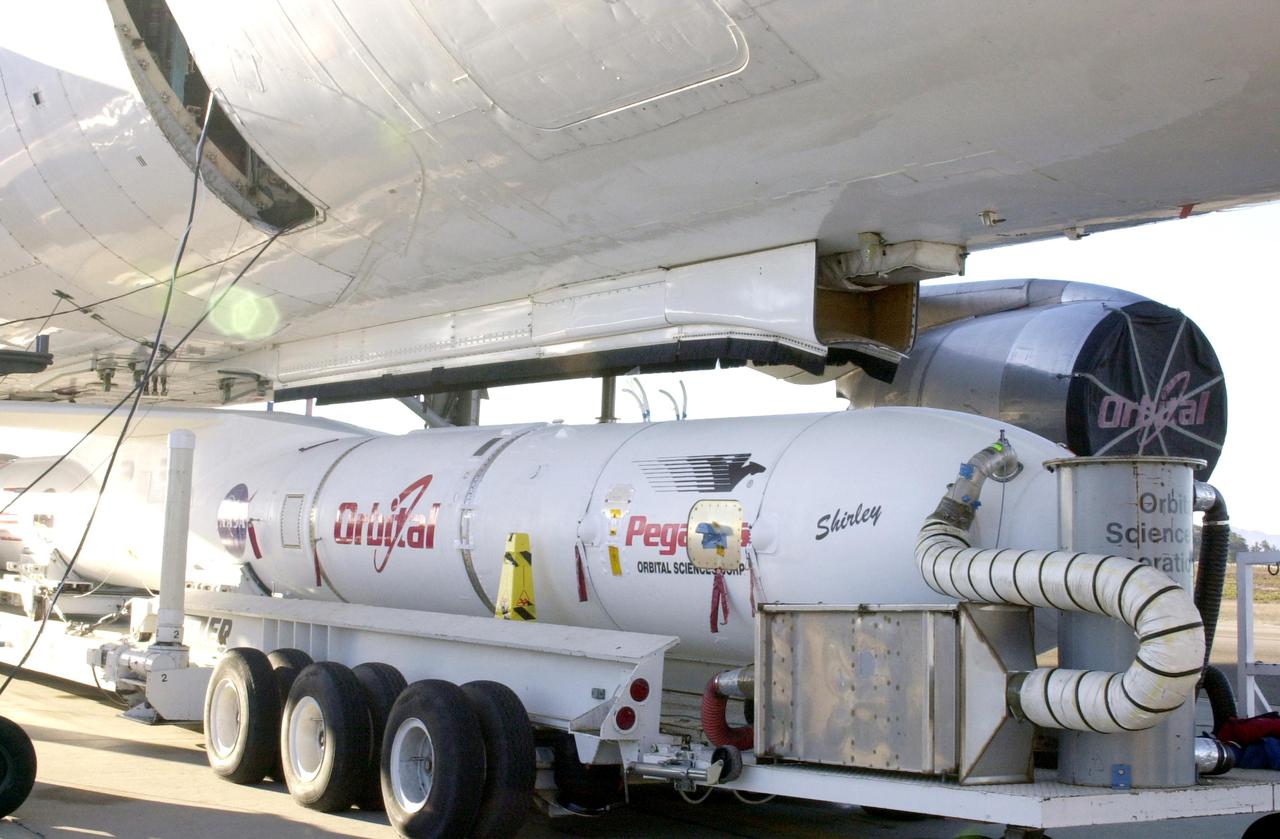
KENNEDY SPACE CENTER, FLA. - At Vandenberg Air Force Base in California, the Demonstration of Autonomous Rendezvous Technology (DART) is encapsulated and ready to be moved to the runway where it will be attached to the Orbital Sciences Corporation Stargazer L-1011 aircraft. DART was designed and built for NASA by Orbital Sciences as an advanced flight demonstrator to locate and maneuver near an orbiting satellite. The DART spacecraft weighs about 800 pounds and is nearly 6 feet long and 3 feet in diameter. From beneath the belly of the Orbital Sciences L-1011 aircraft, the Pegasus XL vehicle will launch DART into a circular polar orbit of approximately 475 miles. The DART satellite provides a key step in establishing autonomous rendezvous capabilities for the U.S. Space Program. While previous rendezvous and docking efforts have been piloted by astronauts, the unmanned DART satellite will have computers and cameras to perform its rendezvous functions.
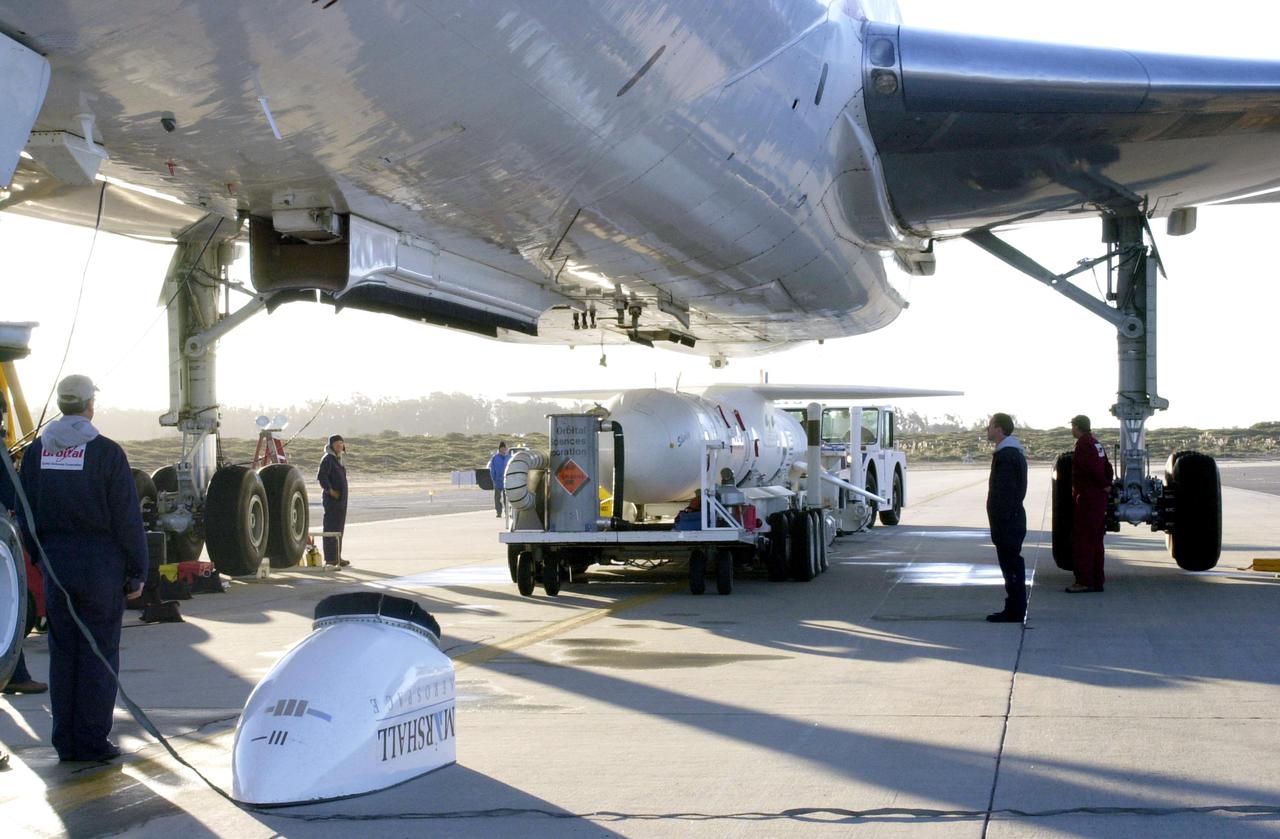
KENNEDY SPACE CENTER, FLA. - The Demonstration of Autonomous Rendezvous Technology (DART) spacecraft and Orbital Sciences Pegasus launch vehicle, mated earlier, arrive at the Vandenberg Air Force Base runway for mating to the belly of the Stargazer L-1011 aircraft (foreground). The Pegasus XL will launch DART at approximately 40,000 feet above the Pacific Ocean into a circular polar orbit of approximately 475 miles. DART was designed and built for NASA by Orbital Sciences as an advanced flight demonstrator to locate and maneuver near an orbiting satellite. The DART spacecraft weighs about 800 pounds and is nearly 6 feet long and 3 feet in diameter. The DART satellite provides a key step in establishing autonomous rendezvous capabilities for the U.S. Space Program. While previous rendezvous and docking efforts have been piloted by astronauts, the unmanned DART satellite will have computers and cameras to perform its rendezvous functions.
KENNEDY SPACE CENTER, FLA. - At Vandenberg Air Force Base in California, the Demonstration of Autonomous Rendezvous Technology (DART) spacecraft and Orbital Sciences Pegasus launch vehicle, mated earlier, are being attached to the Stargazer L-1011 aircraft above. The Pegasus XL will launch DART at approximately 40,000 feet above the Pacific Ocean into a circular polar orbit of approximately 475 miles. DART was designed and built for NASA by Orbital Sciences as an advanced flight demonstrator to locate and maneuver near an orbiting satellite. The DART spacecraft weighs about 800 pounds and is nearly 6 feet long and 3 feet in diameter. The DART satellite provides a key step in establishing autonomous rendezvous capabilities for the U.S. Space Program. While previous rendezvous and docking efforts have been piloted by astronauts, the unmanned DART satellite will have computers and cameras to perform its rendezvous functions.
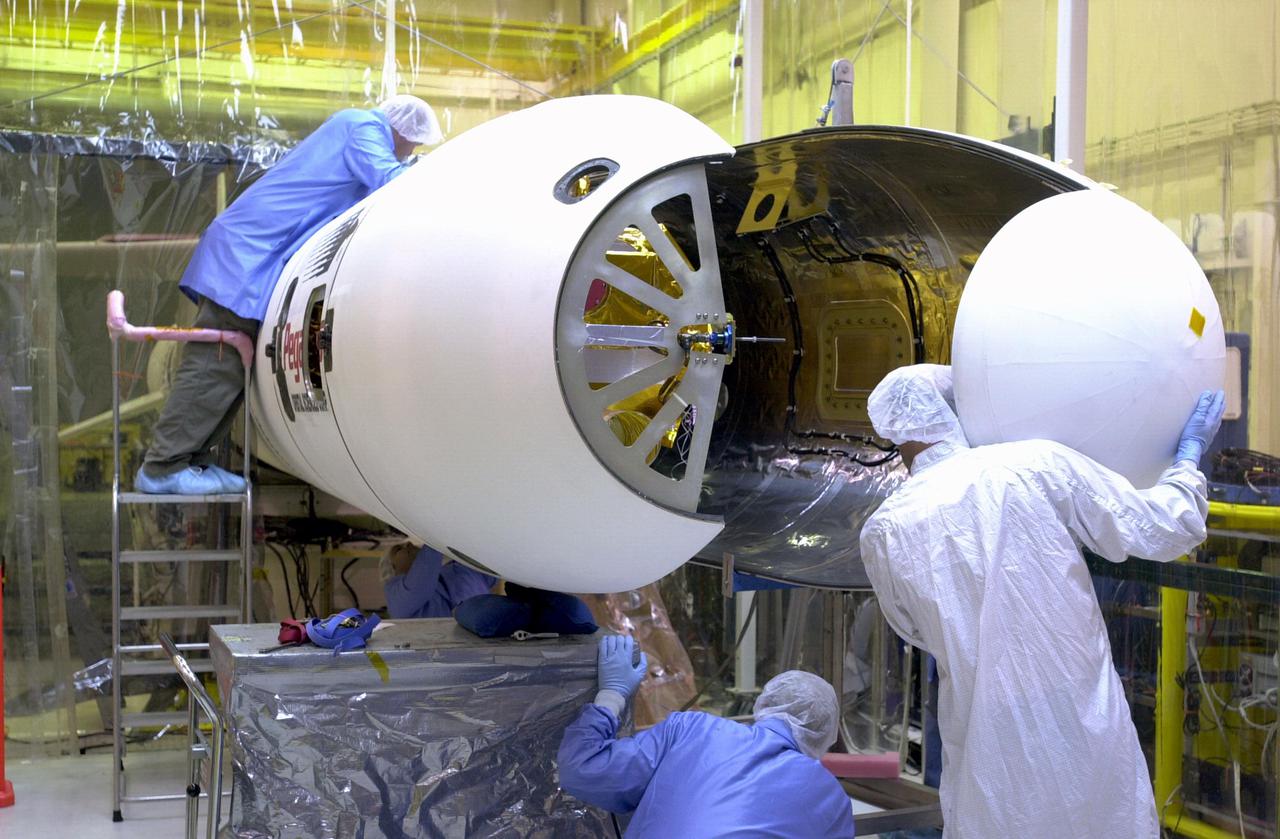
KENNEDY SPACE CENTER, FLA. - Orbital Sciences Corporation technicians at Vandenberg AFB in California maneuver the second fairing half into place around the Demonstration of Autonomous Rendezvous Technology (DART) spacecraft in preparation for launch. The fairing will encapsulate DART and protect it while on the launch pad and during ascent. DART was designed and built for NASA by Orbital Sciences as an advanced flight demonstrator to locate and maneuver near an orbiting satellite. The DART spacecraft weighs about 800 pounds and is nearly 6 feet long and 3 feet in diameter. From beneath the belly of the Orbital Sciences L-1011 aircraft, the Pegasus XL vehicle will launch DART into a circular polar orbit of approximately 475 miles. The DART satellite provides a key step in establishing autonomous rendezvous capabilities for the U.S. Space Program. While previous rendezvous and docking efforts have been piloted by astronauts, the unmanned DART satellite will have computers and cameras to perform its rendezvous functions.
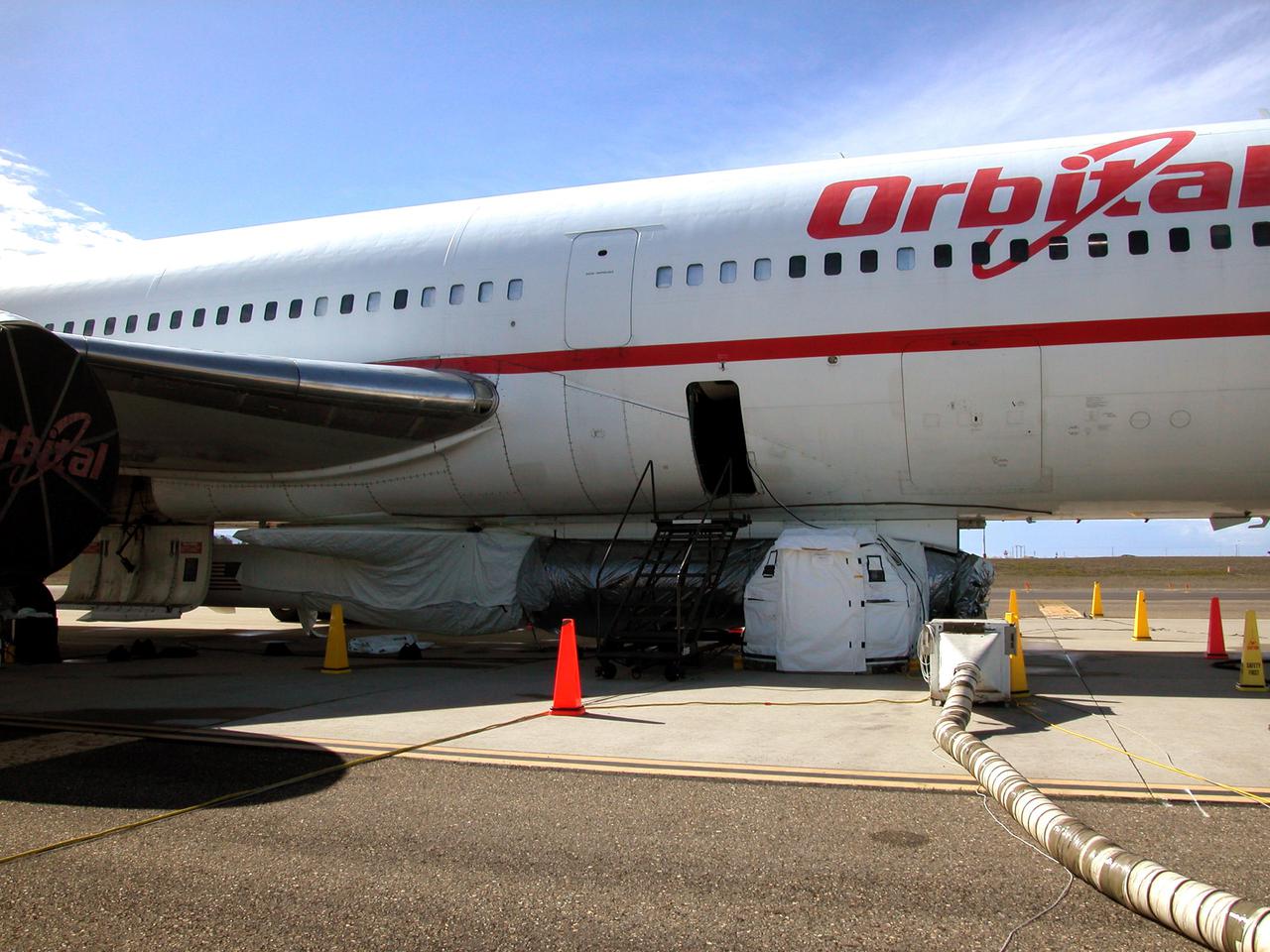
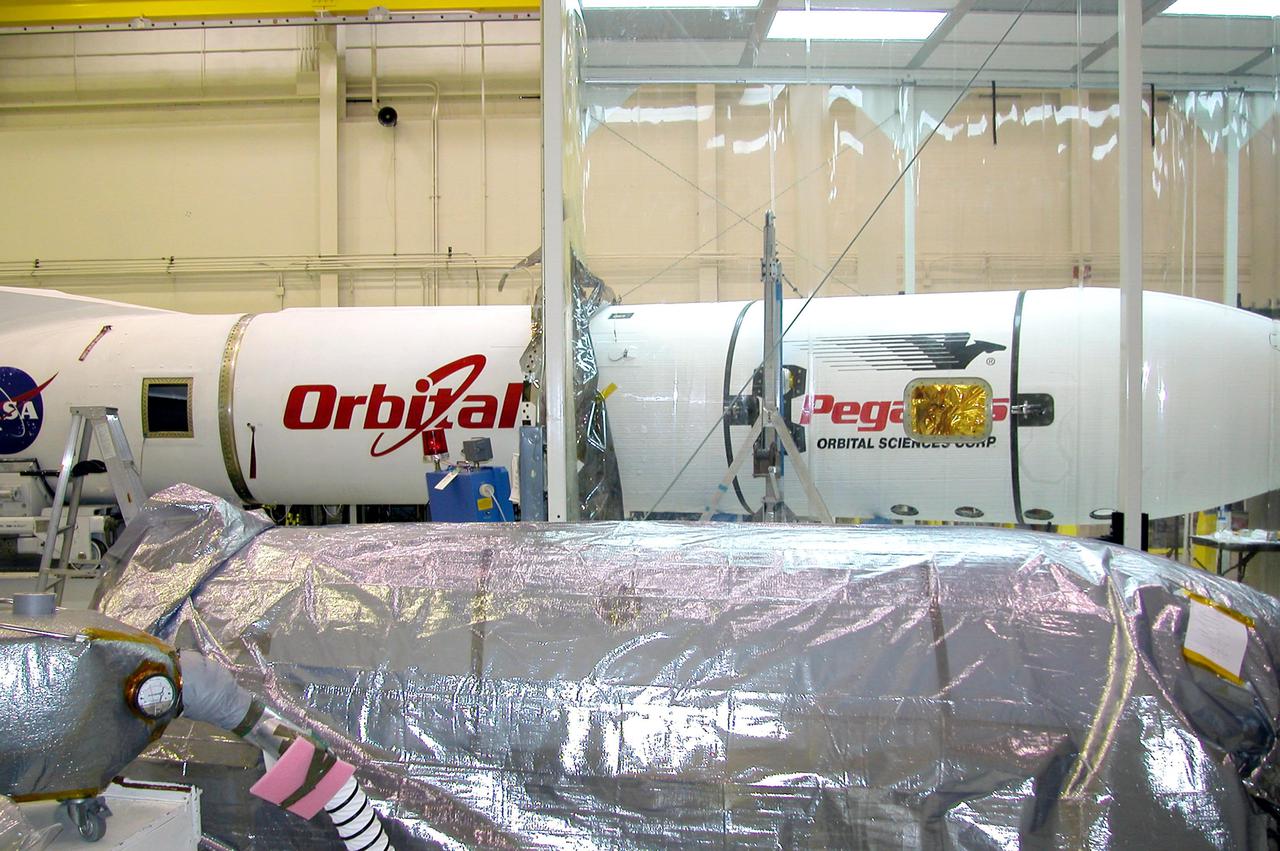
KENNEDY SPACE CENTER, FLA. - After postponement of the launch, the Demonstration of Autonomous Rendezvous Technology (DART) spacecraft is covered with protective material. DART is mated to Orbital Sciences Corporation’s Stargazer L-1011 aircraft, which will release its cargo over the Pacific Ocean at 40,000 feet. The Pegasus XL vehicle will launch DART into a circular polar orbit of approximately 475 miles. DART was designed and built for NASA by Orbital Sciences as an advanced flight demonstrator to locate and maneuver near an orbiting satellite. The DART satellite provides a key step in establishing autonomous rendezvous capabilities for the U.S. Space Program. While previous rendezvous and docking efforts have been piloted by astronauts, the unmanned DART satellite will have computers and cameras to perform its rendezvous functions.

KENNEDY SPACE CENTER, FLA. - At Vandenberg Air Force Base in California, the Demonstration of Autonomous Rendezvous Technology (DART) is mated to the belly of the Orbital Sciences Corporation Stargazer L-1011 aircraft. DART was designed and built for NASA by Orbital Sciences as an advanced flight demonstrator to locate and maneuver near an orbiting satellite. The DART spacecraft weighs about 800 pounds and is nearly 6 feet long and 3 feet in diameter. From beneath the belly of the Orbital Sciences L-1011 aircraft, the Pegasus XL vehicle will launch DART into a circular polar orbit of approximately 475 miles. The DART satellite provides a key step in establishing autonomous rendezvous capabilities for the U.S. Space Program. While previous rendezvous and docking efforts have been piloted by astronauts, the unmanned DART satellite will have computers and cameras to perform its rendezvous functions.
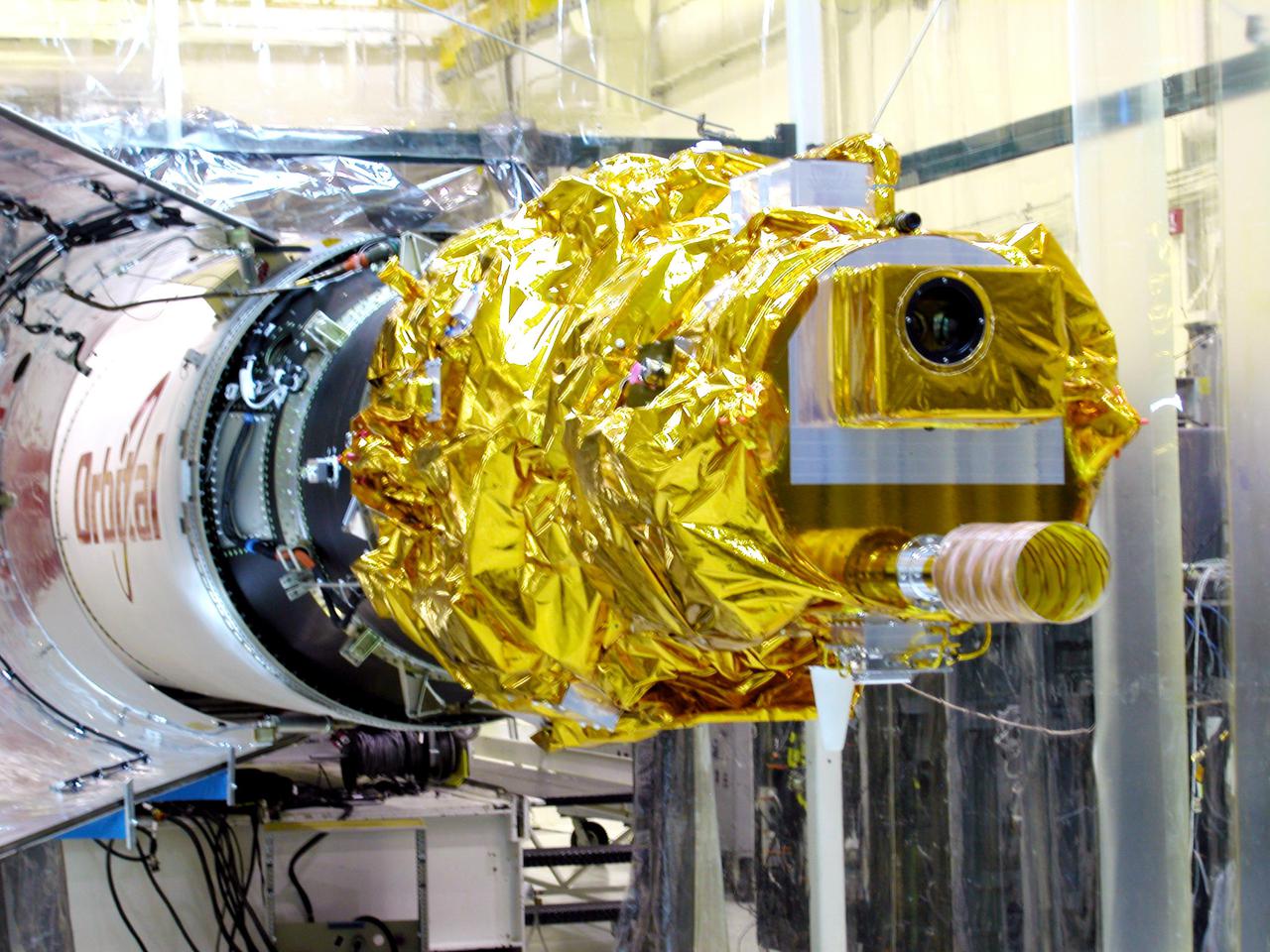
KENNEDY SPACE CENTER, FLA. - At Vandenberg Air Force Base in California, the Demonstration of Autonomous Rendezvous Technology (DART) waits for fairing installation. The fairing will encapsulate DART and protect it while on the launch pad and during ascent. DART was designed and built for NASA by Orbital Sciences as an advanced flight demonstrator to locate and maneuver near an orbiting satellite. The DART spacecraft weighs about 800 pounds and is nearly 6 feet long and 3 feet in diameter. From beneath the belly of the Orbital Sciences L-1011 aircraft, the Pegasus XL vehicle will launch DART into a circular polar orbit of approximately 475 miles. The DART satellite provides a key step in establishing autonomous rendezvous capabilities for the U.S. Space Program. While previous rendezvous and docking efforts have been piloted by astronauts, the unmanned DART satellite will have computers and cameras to perform its rendezvous functions.
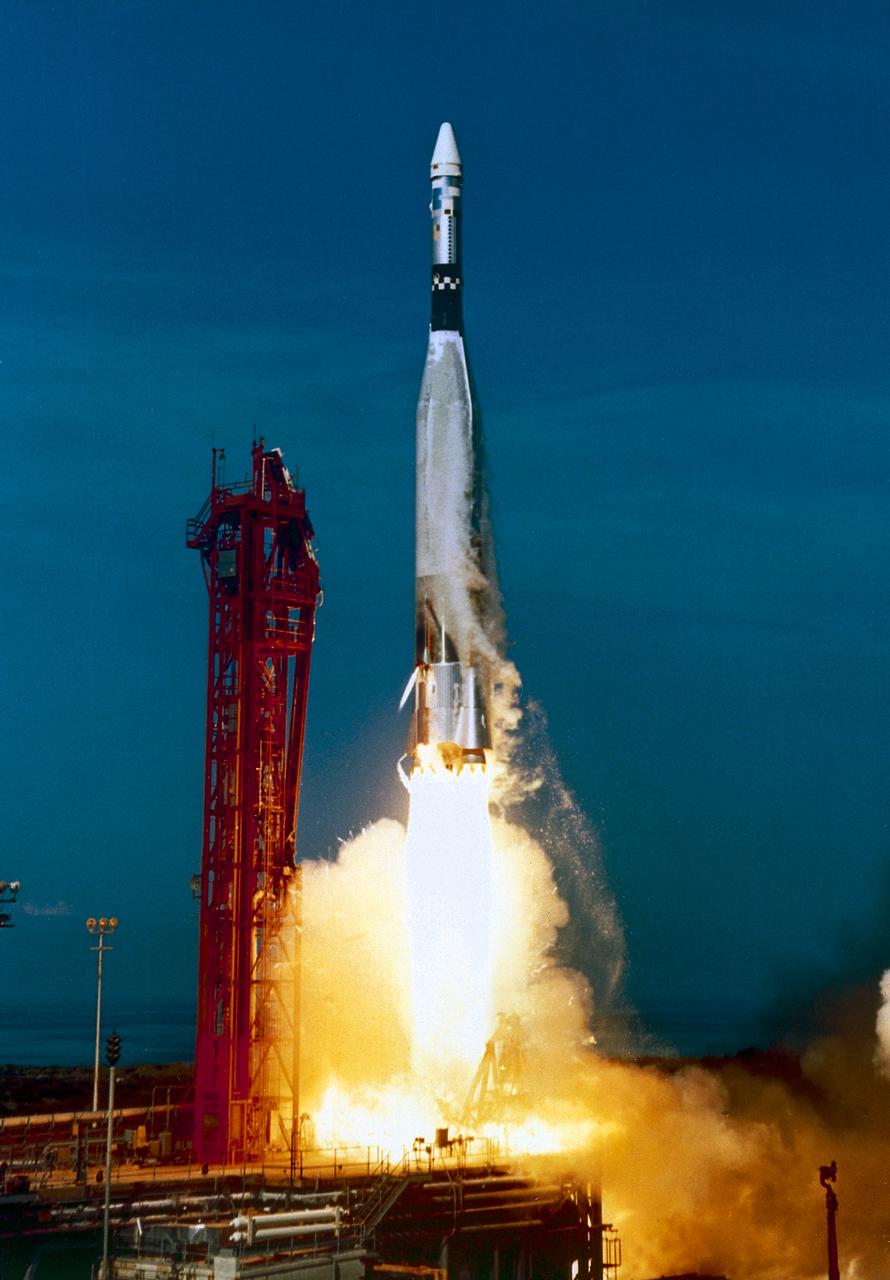
Launched atop an Atlas booster, the Agena target vehicle (ATV) was a spacecraft used by NASA to develop and practice orbital space rendezvous and docking techniques in preparation for the Apollo program lunar missions. This particular launch preceded the Gemini 12, which launched aboard a Titan launch vehicle one and one half hours later. The objective was for Agena and Gemini to rendezvous in space and practice docking procedures. An intermediate step between Project Mercury and the Apollo Program, the Gemini Program's major objectives were to subject two men and supporting equipment to long duration flights, to perfect rendezvous and docking with other orbiting vehicles, methods of reentry, and landing of the spacecraft.
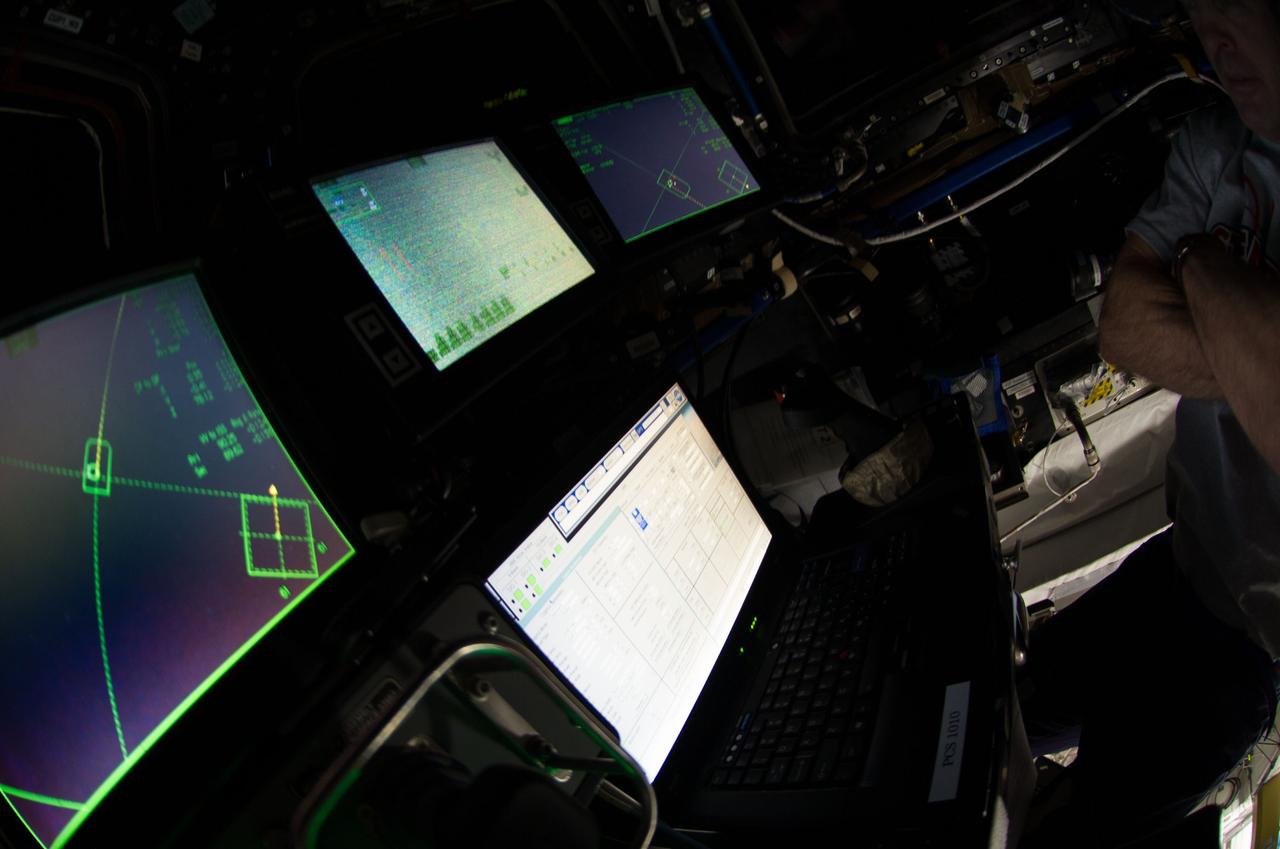
Control boards pictured in the International Space Stations Cupola during rendezvous and capture operations of the Orbital Sciences Cygnus cargo craft.
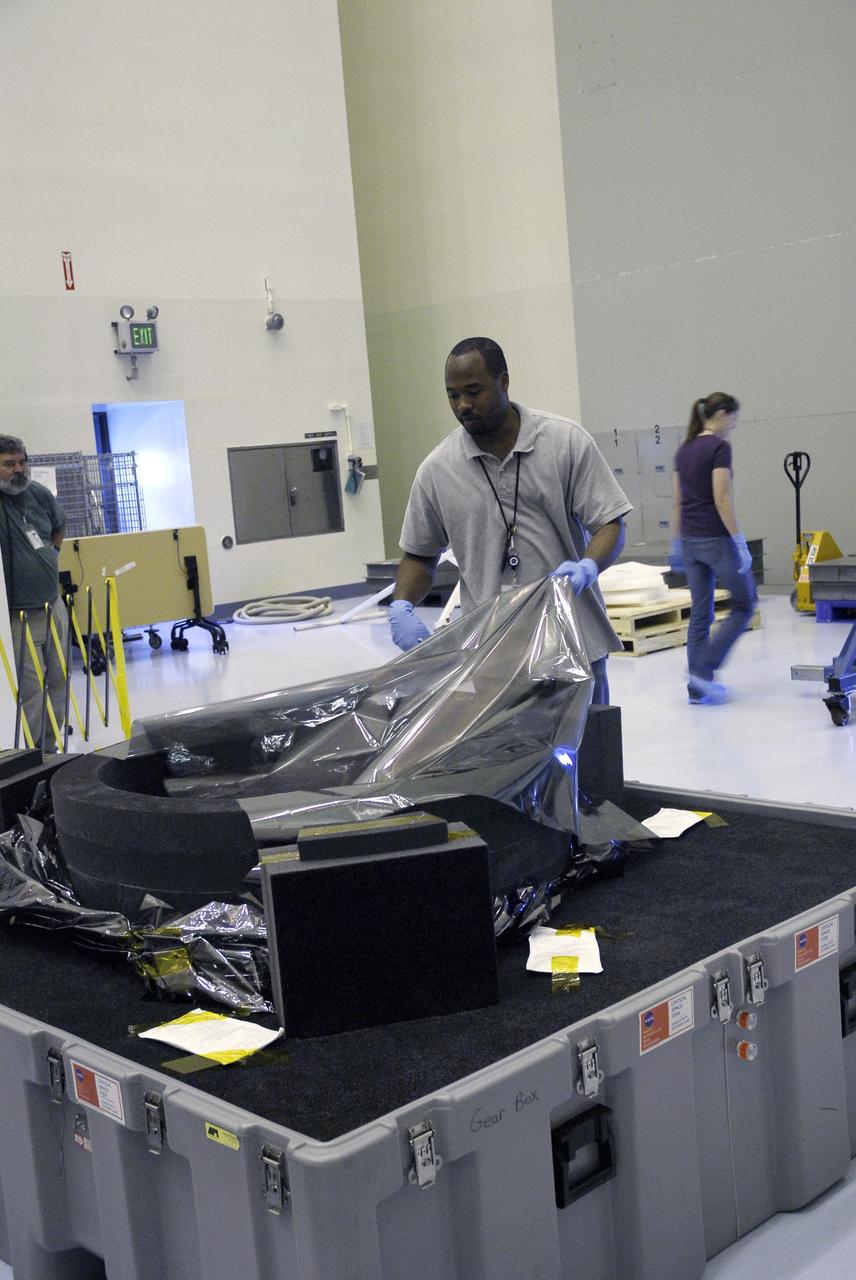
CAPE CANAVERAL, Fla. – In the Payload Hazardous Servicing Facility at NASA's Kennedy Space Center, a technician removes the protective cover from the Soft Capture and Rendezvous System, or SCRS. The SCRS will enable the future rendezvous, capture and safe disposal of Hubble by either a crewed or robotic mission. The SCRS greatly increases the current shuttle capture interfaces on Hubble, therefore significantly reducing the rendezvous and capture design complexities associated with the disposal mission. The SCRS comprises the Soft Capture Mechanism system and the Relative Navigation System and is part of the payload on the fifth and final Hubble servicing mission, STS-125, targeted for launch Oct. 8. Photo credit: NASA/Jack Pfaller
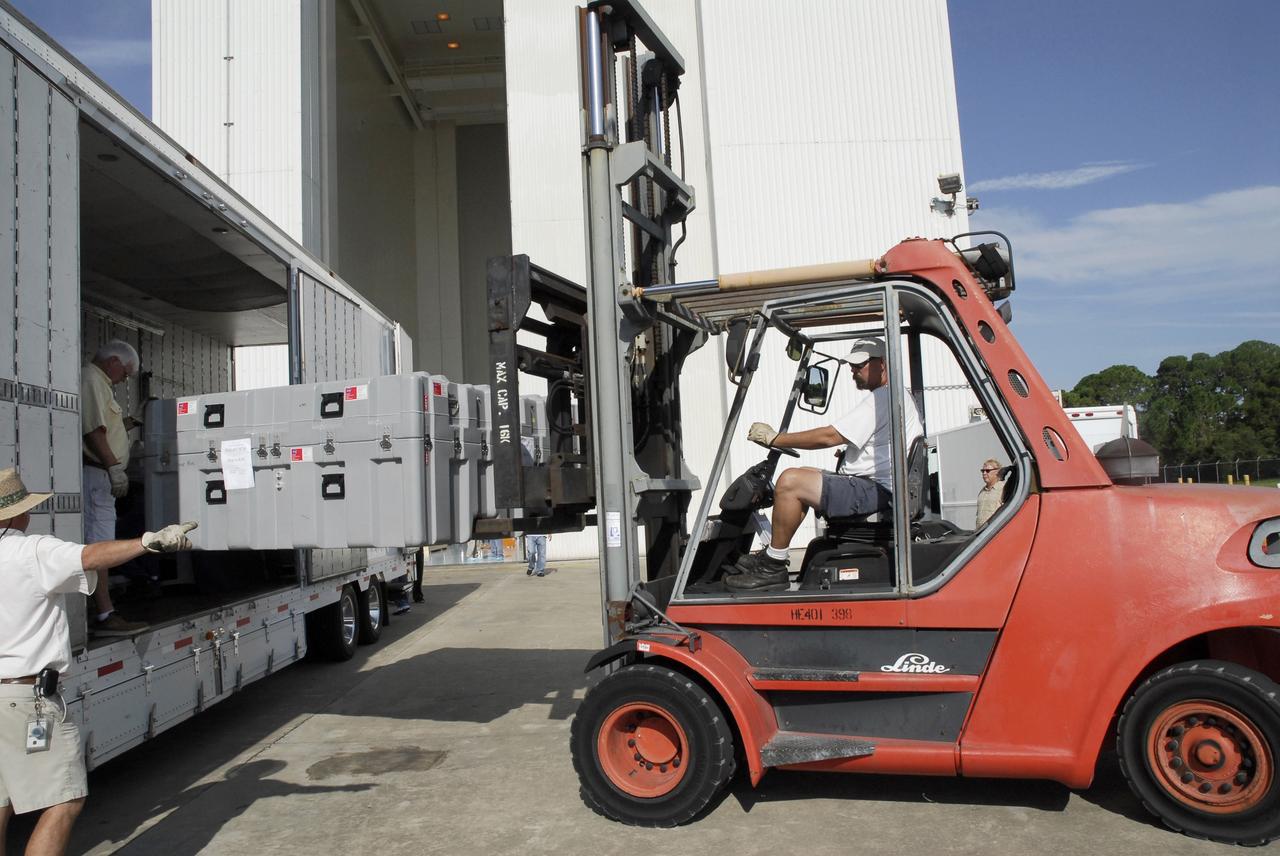
CAPE CANAVERAL, Fla. – At NASA's Kennedy Space Center, the Soft Capture and Rendezvous System, or SCRS, is offloaded from a truck. The SCRS will enable the future rendezvous, capture and safe disposal of Hubble by either a crewed or robotic mission. The SCRS greatly increases the current shuttle capture interfaces on Hubble, therefore significantly reducing the rendezvous and capture design complexities associated with the disposal mission. The SCRS comprises the Soft Capture Mechanism system and the Relative Navigation System and is part of the payload on the fifth and final Hubble servicing mission, STS-125, targeted for launch Oct. 8. Photo credit: NASA/Jack Pfaller
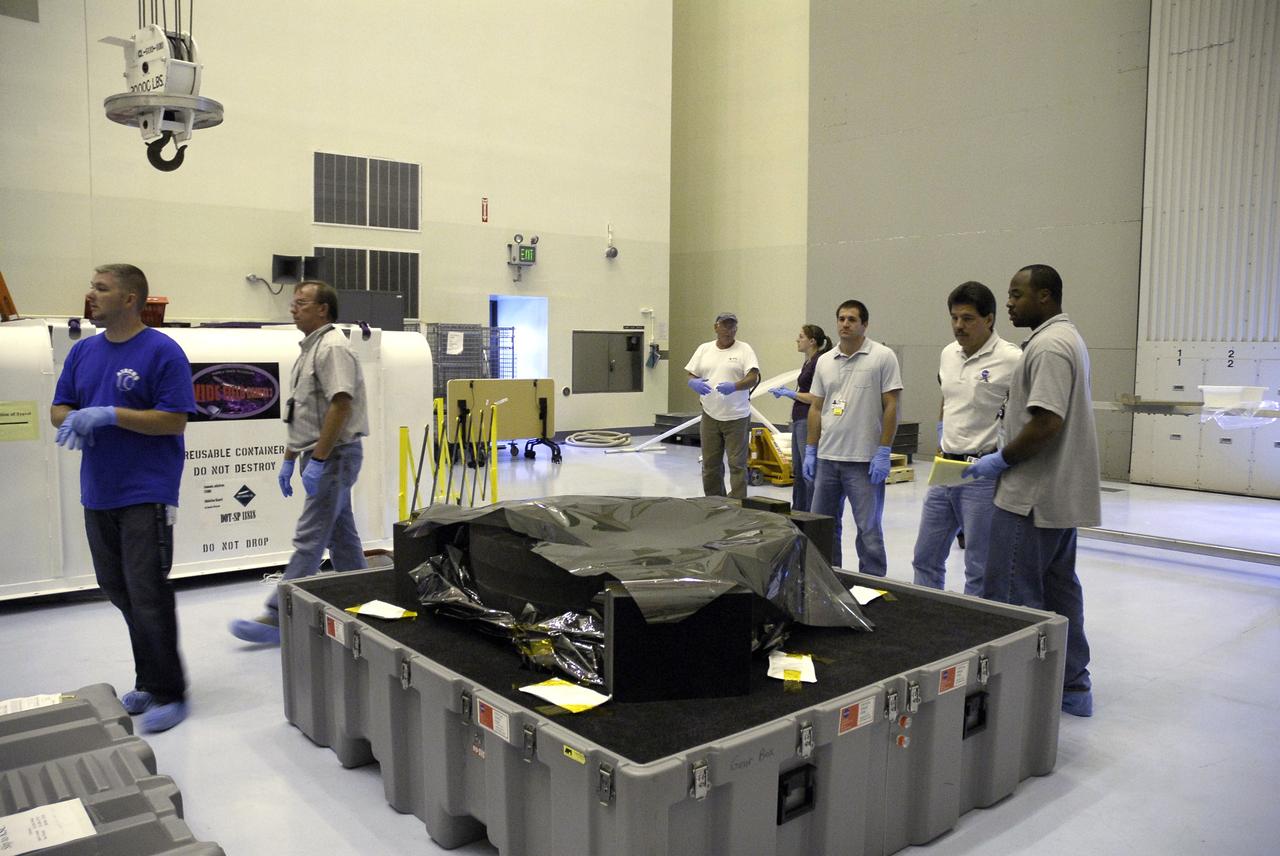
CAPE CANAVERAL, Fla. – In the Payload Hazardous Servicing Facility at NASA's Kennedy Space Center, the Soft Capture and Rendezvous System, or SCRS, is revealed after removal of the shipping container cover. The SCRS will enable the future rendezvous, capture and safe disposal of Hubble by either a crewed or robotic mission. The SCRS greatly increases the current shuttle capture interfaces on Hubble, therefore significantly reducing the rendezvous and capture design complexities associated with the disposal mission. The SCRS comprises the Soft Capture Mechanism system and the Relative Navigation System and is part of the payload on the fifth and final Hubble servicing mission, STS-125, targeted for launch Oct. 8. Photo credit: NASA/Jack Pfaller
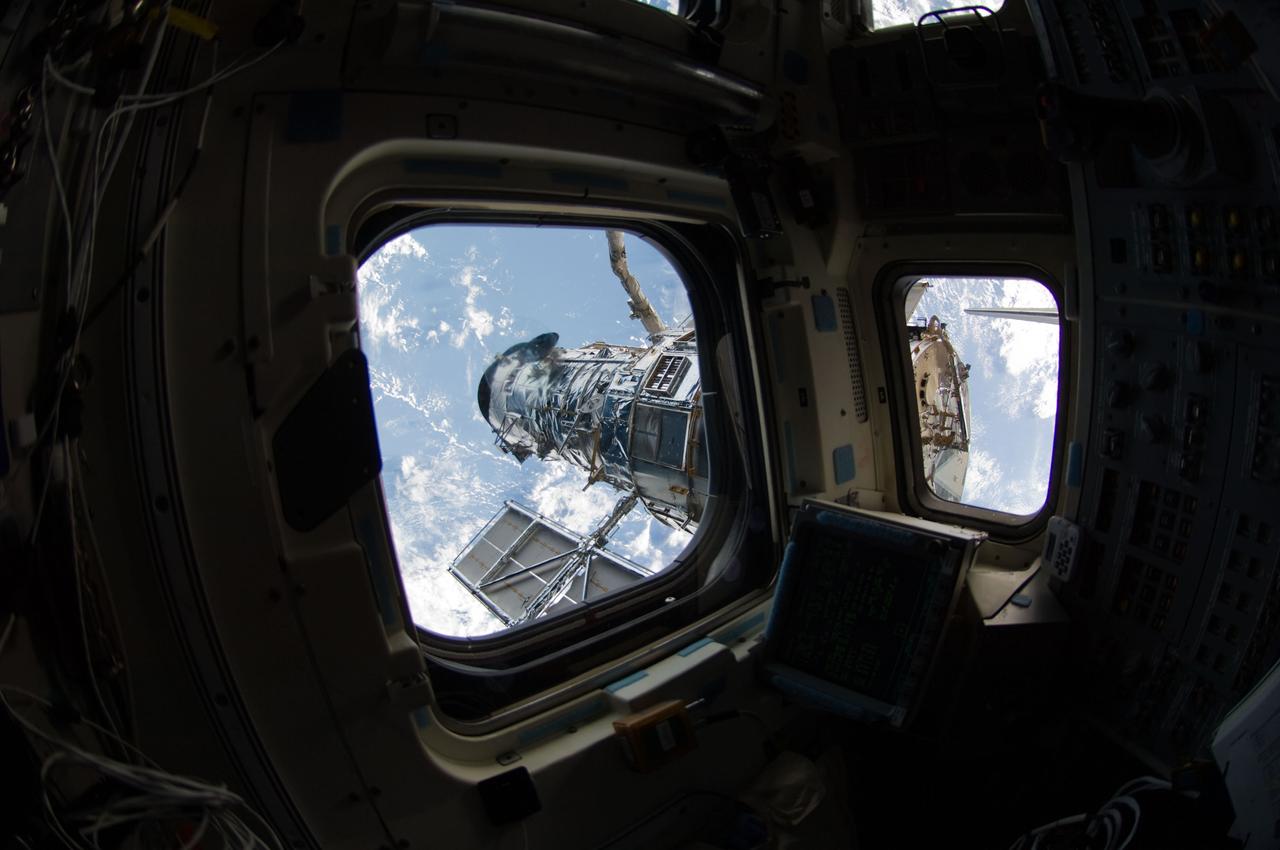
S125-E-006670 (13 May 2009) --- An STS-125 crewmember onboard the Space Shuttle Atlantis snapped a still photo of the Hubble Space Telescope following grapple of the giant observatory by the shuttle?s Canadian-built remote manipulator system.
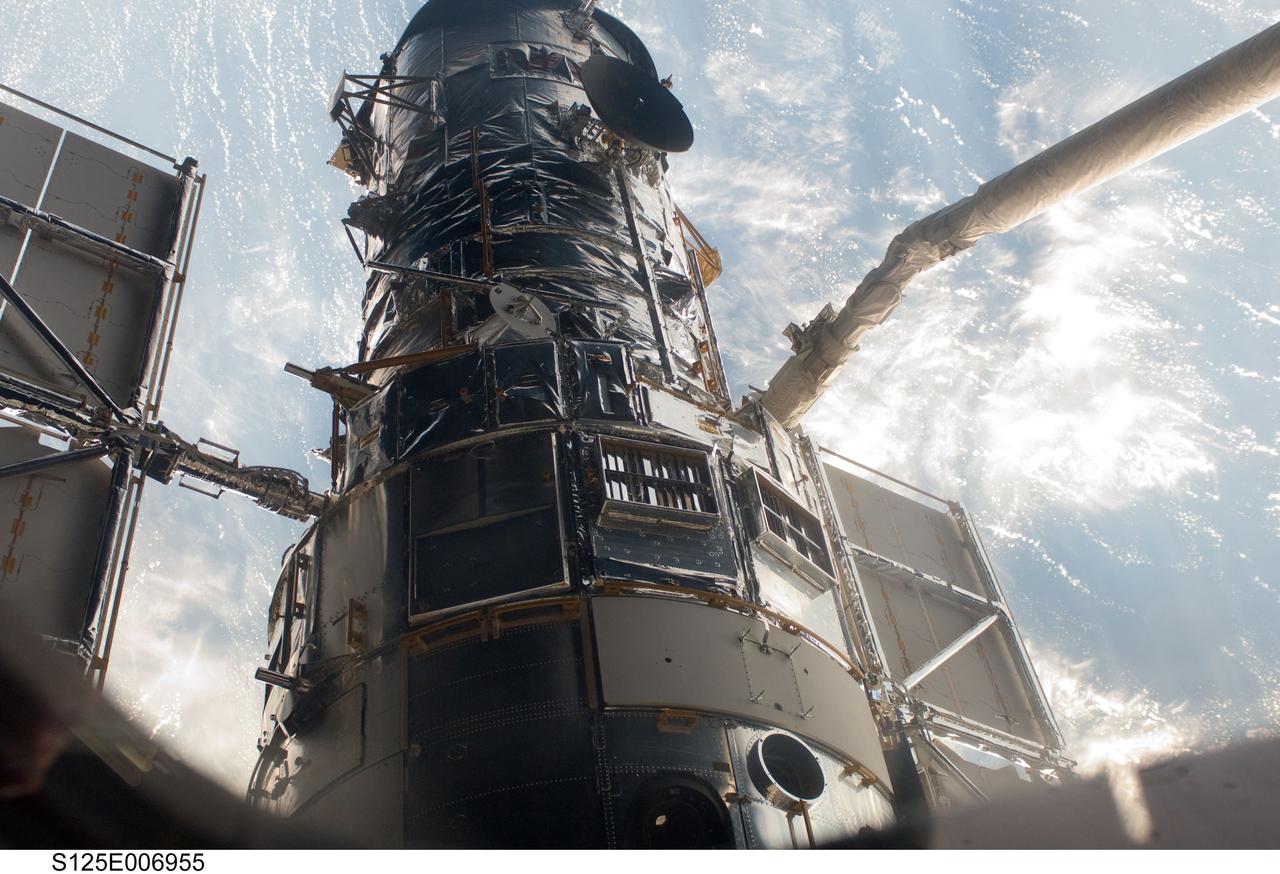
S125-E-006955 (13 May 2009) --- An STS-125 crewmember onboard the Space Shuttle Atlantis snapped a still photo of the Hubble Space Telescope following grapple of the giant observatory by the shuttle?s Canadian-built remote manipulator system.
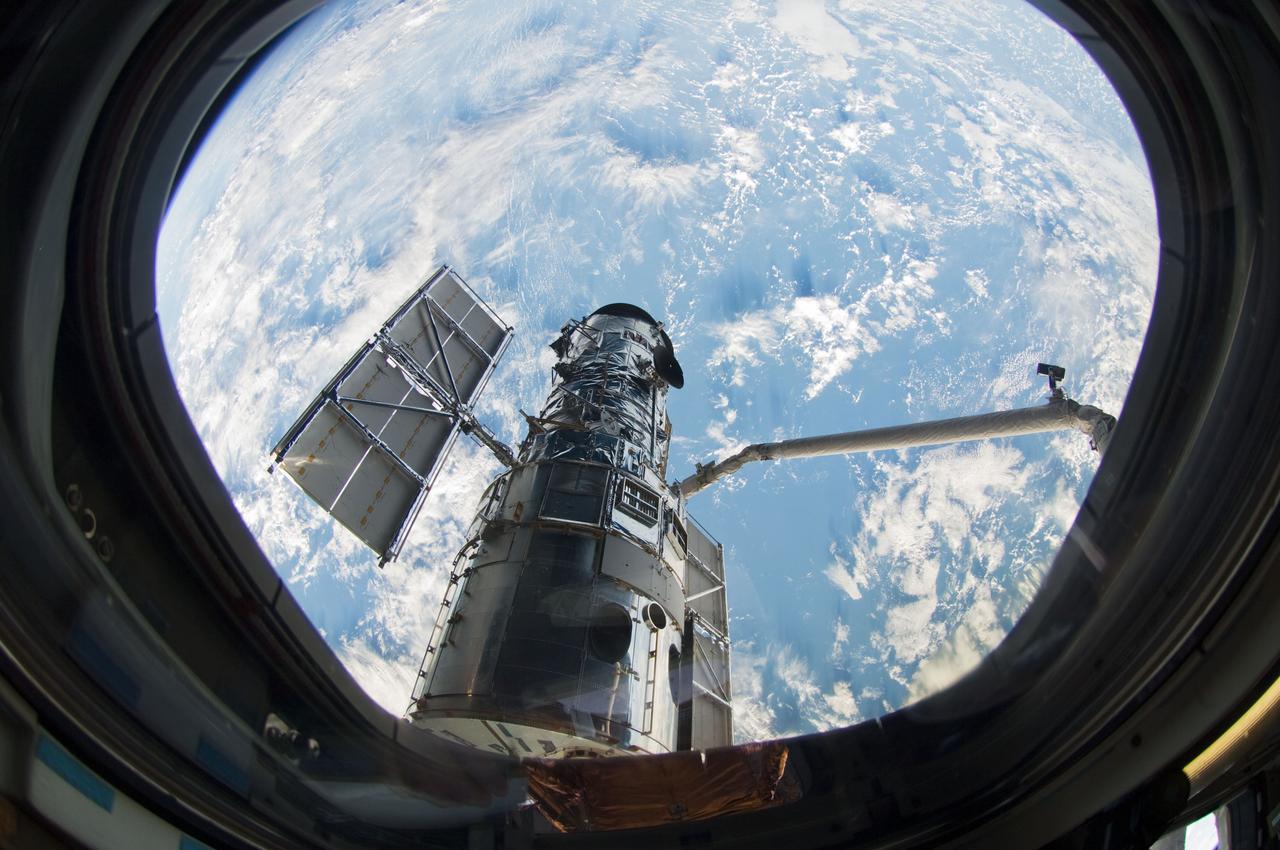
S125-E-006669 (13 May 2009) --- An STS-125 crewmember onboard the Space Shuttle Atlantis snapped a still photo of the Hubble Space Telescope following grapple of the giant observatory by the shuttle?s Canadian-built remote manipulator system.
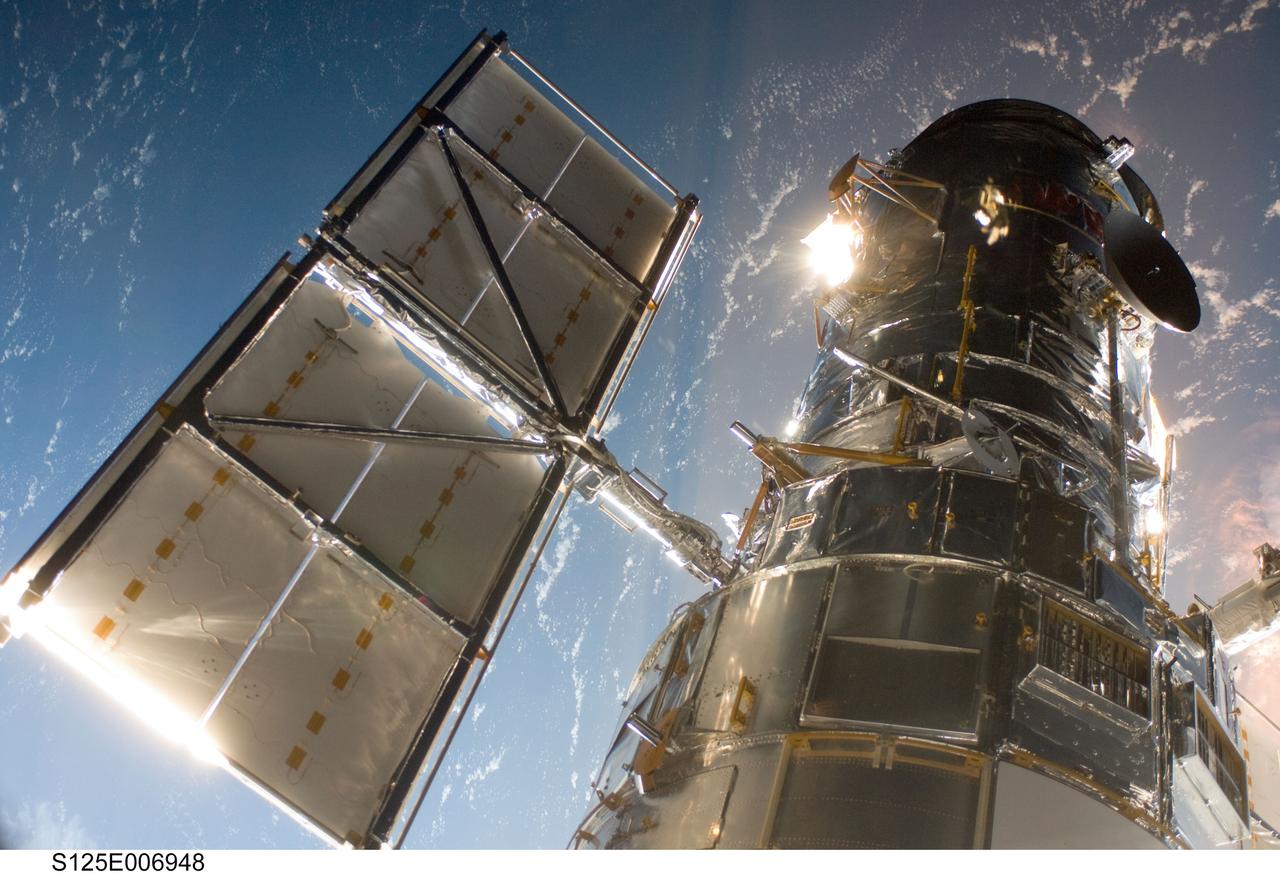
S125e006948 (13 May 2009) --- An STS-125 crewmember onboard the Space Shuttle Atlantis snapped a still photo of the Hubble Space Telescope following grapple of the giant observatory by the shuttle?s Canadian-built remote manipulator system.
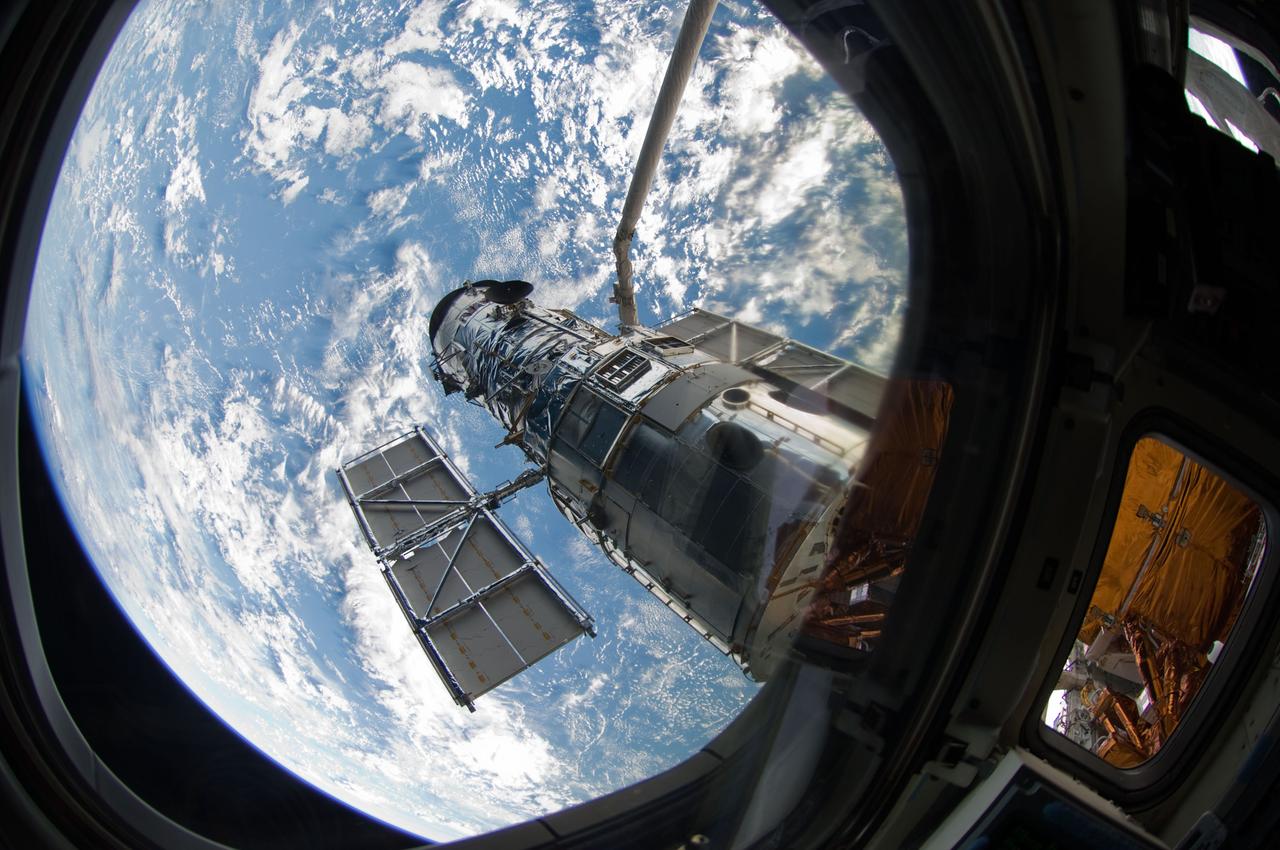
S125-E-006672 (13 May 2009) --- An STS-125 crew member onboard the Space Shuttle Atlantis snapped a still photo of the Hubble Space Telescope following grapple of the giant observatory by the shuttle?s Canadian-built remote manipulator system.
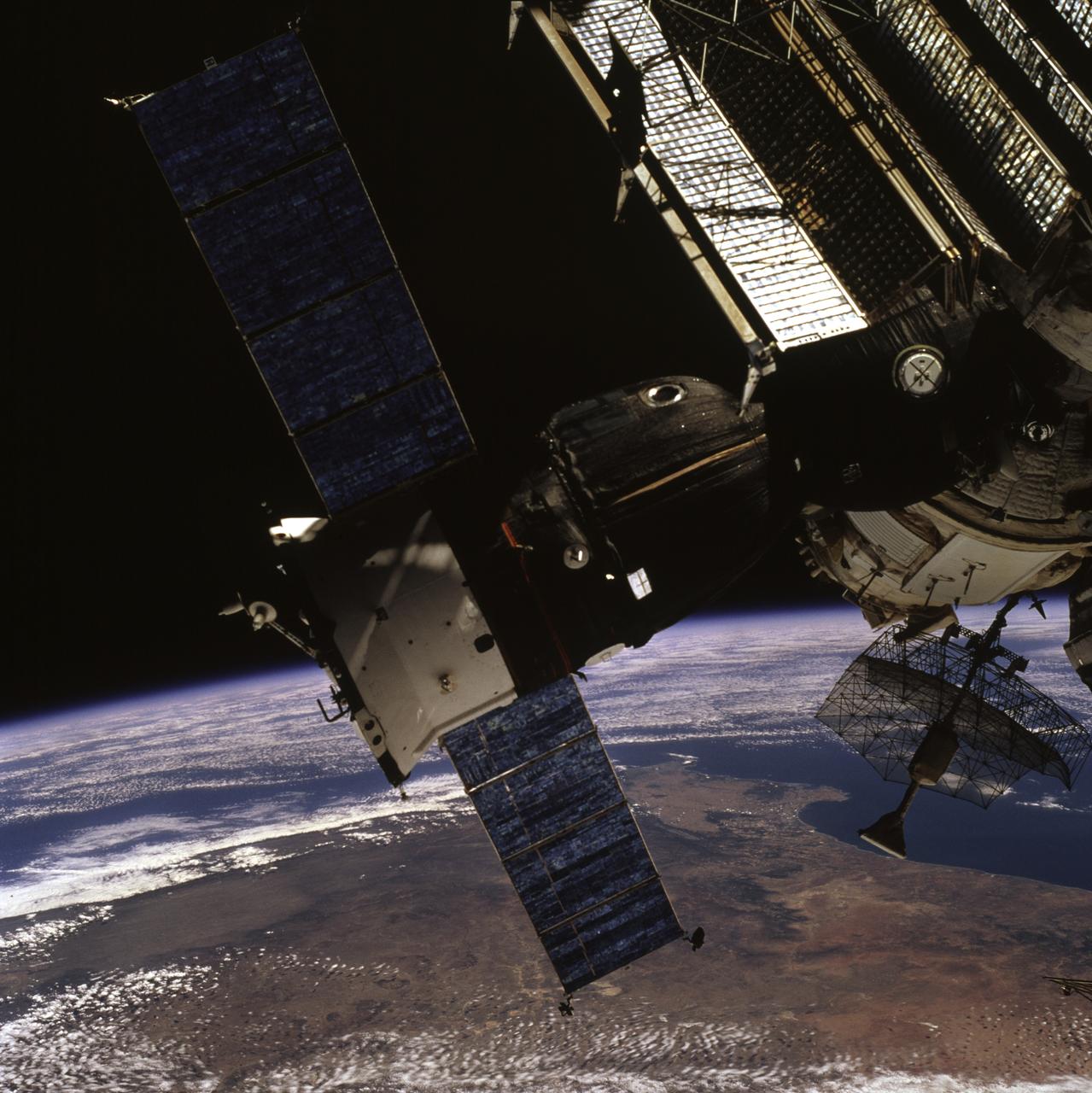
STS081-709-061 (12-22 Jan. 1997) --- As recorded while Space Shuttle Atlantis was docked with Russia's Mir Space Station, this 70mm camera's frame shows South Africa's wine growing country (immediately right of the solar panel) in a southwest-looking perspective. Most of the population in the Western Cape Province, as it is known, is clustered in the wet extreme south of the country identified here with denser cloud masses. This is the Mediterranean region of the country, experiencing summer drought when the photograph was taken. Cape Town lies immediately right of the solar panel and the Swartland wheat country to the left. The darker green areas are more heavily vegetated regions on the continental escarpment. The large bay in the region is the remote St. Helena Bay (Africa's southernmost point, Cape Agulhas, lies behind the solar panel). The cloud-free parts of the country in the foreground is the sparsely populated semidesert known as the Karroo, a quiet region to which people retire both for its rare dry climate and its beauty.
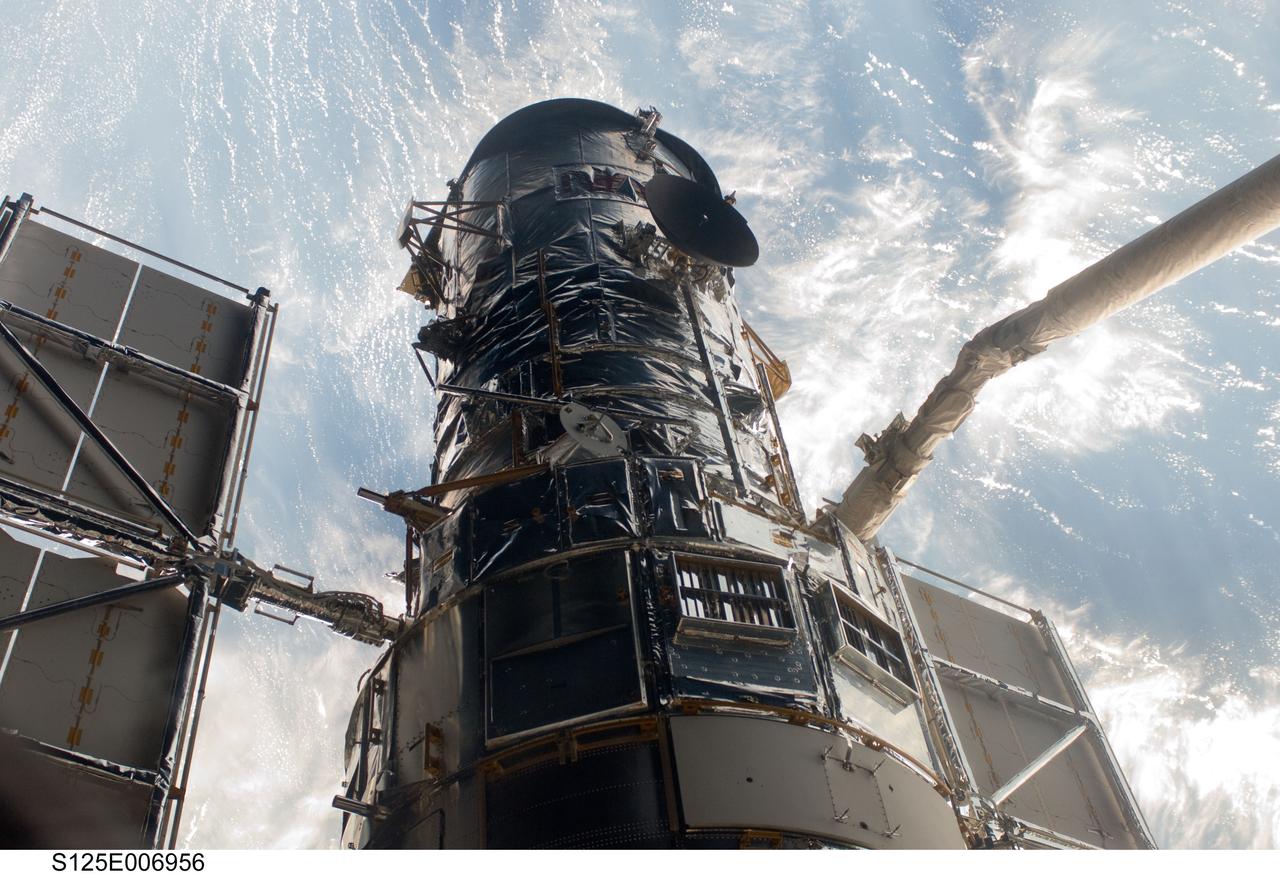
S125-E-006956 (13 May 2009) --- An STS-125 crewmember onboard the Space Shuttle Atlantis snapped a still photo of the Hubble Space Telescope following grapple of the giant observatory by the shuttle?s Canadian-built remote manipulator system.
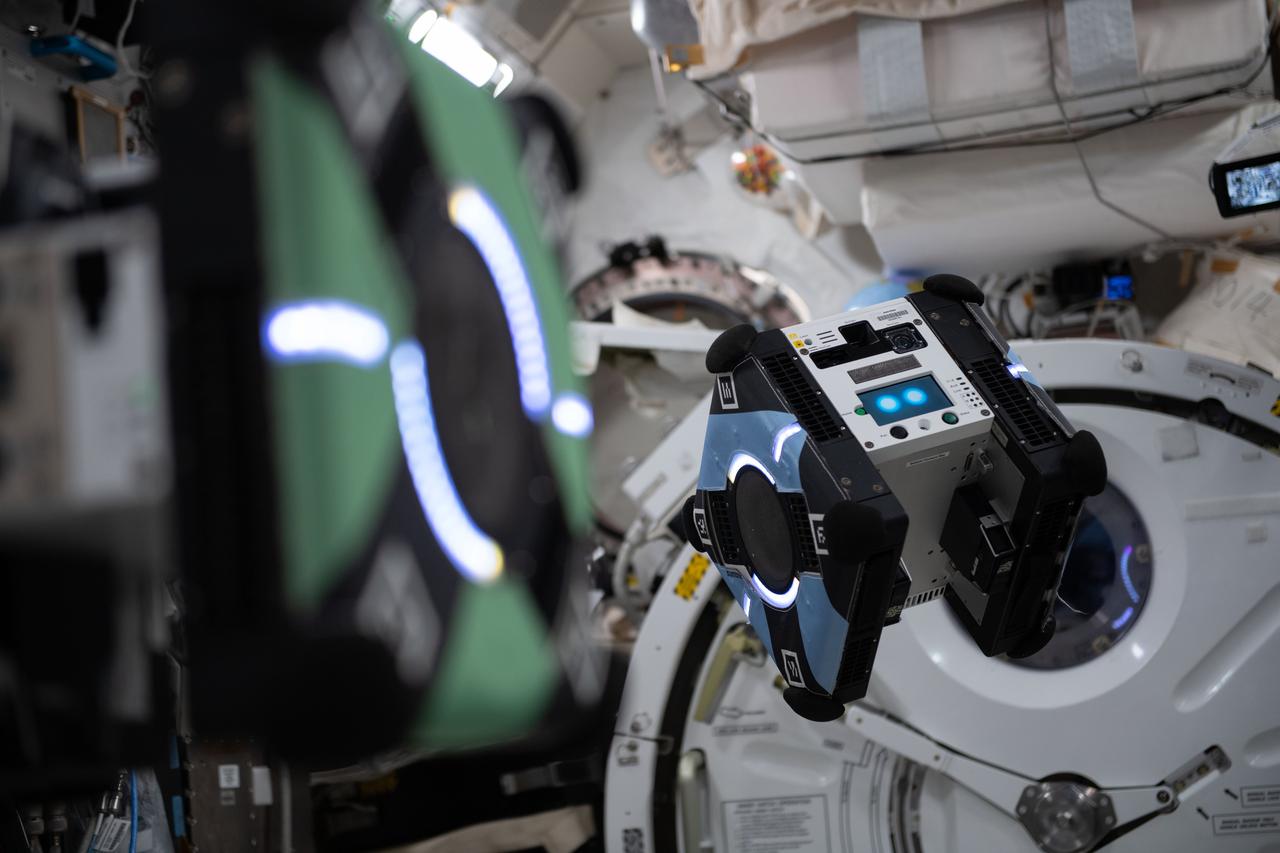
iss066e134729 (Feb. 2, 2022) --- A view of an Astrobee ROAM Operations Session 2 in the JEM during Expedition 66. ROAM demonstrates processes for a robotic craft to rendezvous with debris in space. Space debris includes satellites that could be repaired or taken out of orbit, but many of these objects are tumbling, making rendezvous and docking challenging. ROAM uses the space station’s Astrobee robots to observe and understand how targets tumble and uses this information to plan ways to safely reach them.
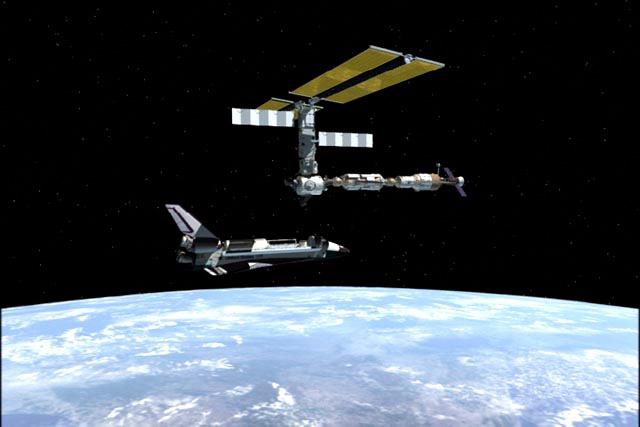
JSC2001-E-00356 (January 2001) --- Artist's rendering of early STS-98/ISS 5A with the Space Shuttle Atlantis in view during rendezvous and docking operations.
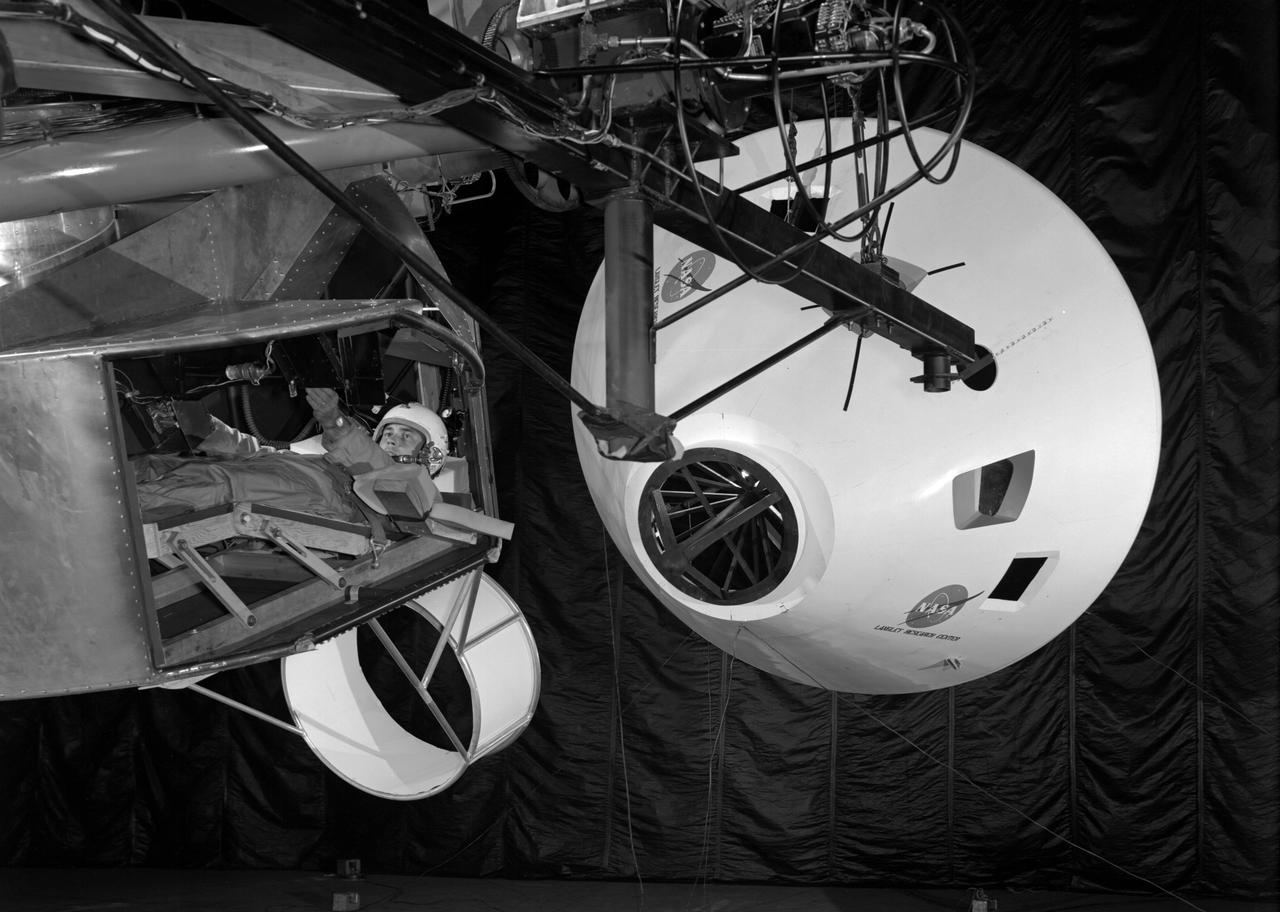
Originally the Rendezvous was used by the astronauts preparing for Gemini missions. The Rendezvous Docking Simulator was then modified and used to develop docking techniques for the Apollo program. The pilot is shown maneuvering the LEM into position for docking with a full-scale Apollo Command Module. From A.W. Vogeley, Piloted Space-Flight Simulation at Langley Research Center, Paper presented at the American Society of Mechanical Engineers, 1966 Winter Meeting, New York, NY, November 27 - December 1, 1966. The Rendezvous Docking Simulator and also the Lunar Landing Research Facility are both rather large moving-base simulators. It should be noted, however, that neither was built primarily because of its motion characteristics. The main reason they were built was to provide a realistic visual scene. A secondary reason was that they would provide correct angular motion cues (important in control of vehicle short-period motions) even though the linear acceleration cues would be incorrect. Apollo Rendezvous Docking Simulator: Langley s Rendezvous Docking Simulator was developed by NASA scientists to study the complex task of docking the Lunar Excursion Module with the Command Module in Lunar orbit.
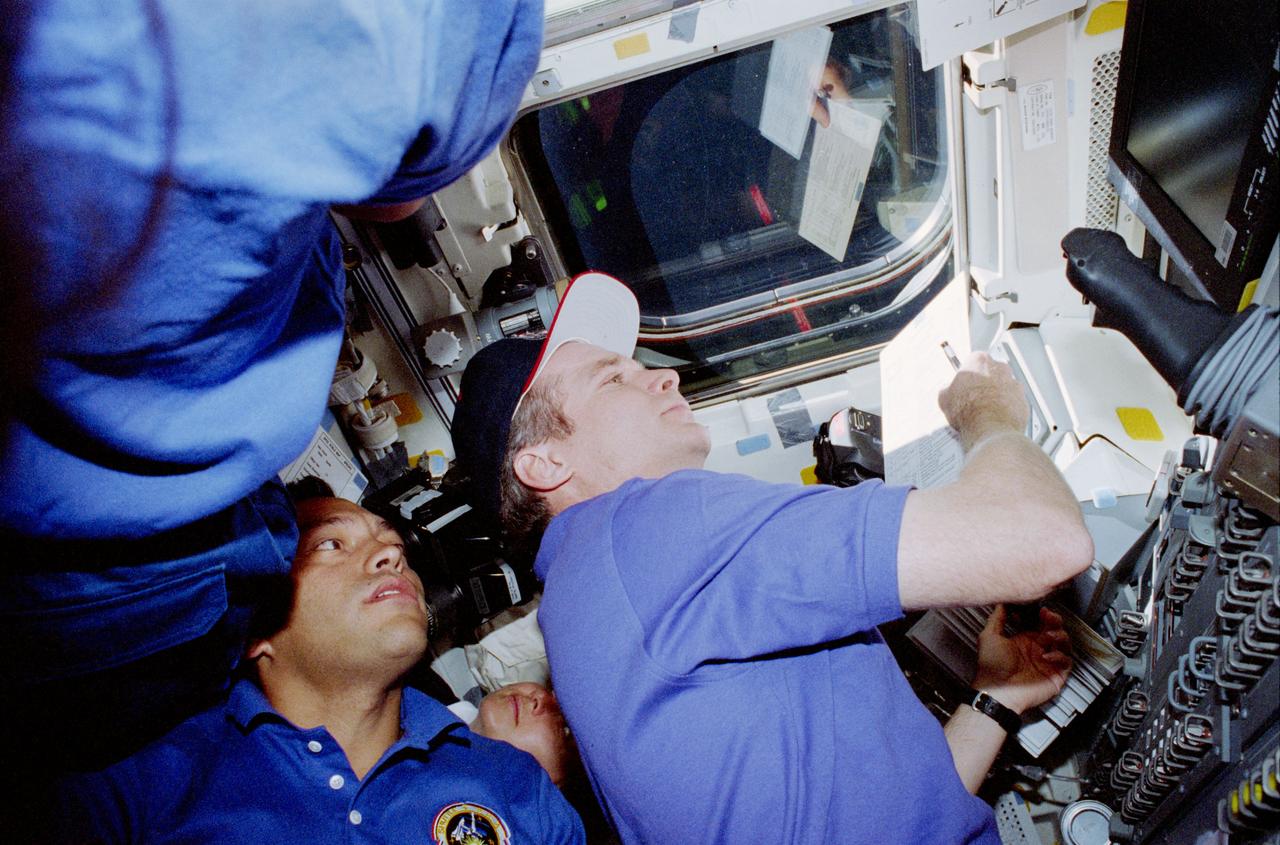
STS084-357-015 (15-24 May 1997) --- Astronaut Charles J. Precourt (right), STS-84 commander, controls the rate of the Space Shuttle Atlantis' approach to Russia's Mir Space Station during rendezvous operations. Carlos I. Noriega (left), Elena V. Kondakova (bottom center) and an unidentified crew member (far left) crowd into the scene -- typical of the busy rendezvous in-cabin scenarios on all Mir-Atlantis missions.
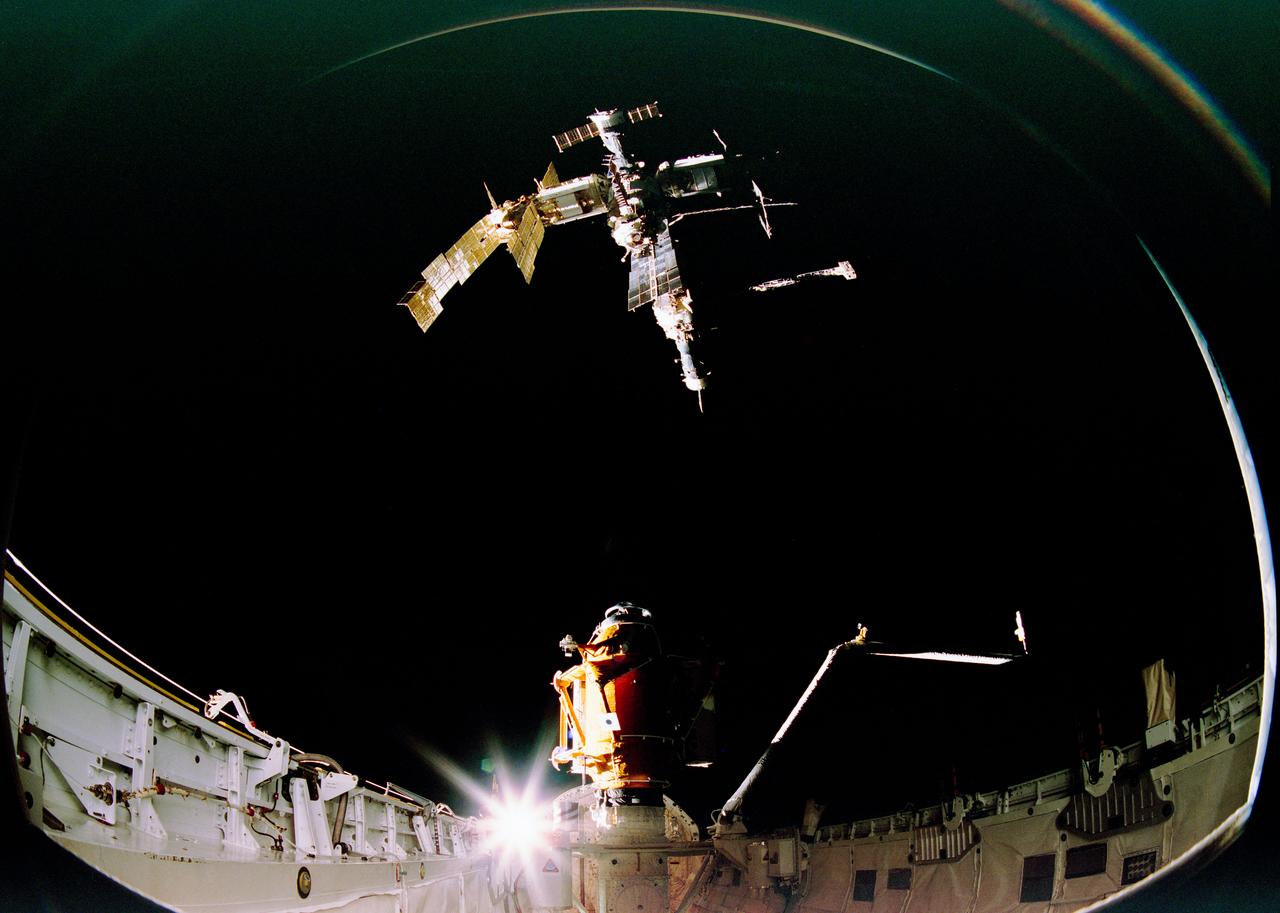
S95-22092 (15 Nov 1995) --- The Space Shuttle Atlantis moves within 80 feet of Russia's Mir Space Station during rendezvous and docking operations. During the STS-74 mission, the crew used an IMAX camera to document the Space Shuttle Atlantis' rendezvous and docking with the Mir Space Station. The 65mm camera system was located in the Atlantis' cargo bay and provided a unique fish-eye perspective. These images were selected from footage that will be incorporated in a large-format feature film about NASA's cooperative program with the Russians. NASA has flown IMAX camera systems on many Shuttle missions, including the recent STS-63 Shuttle-Mir rendezvous and STS-71 Shuttle-Mir docking. Film from previous missions was used to create the productions The Dream is Alive, The Blue Planet, and Destiny in Space.
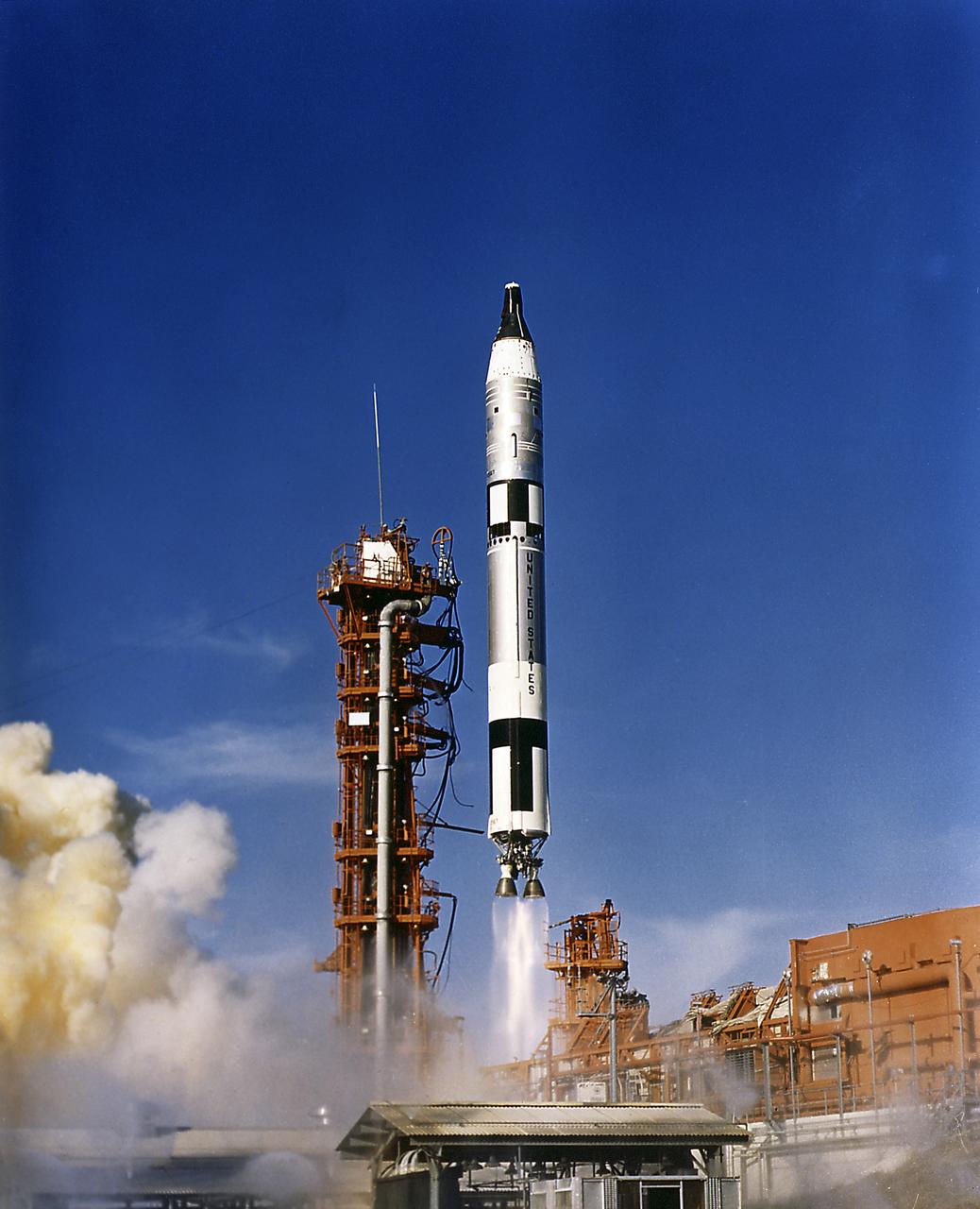
The Gemini 12 astronauts James Lovell and Edwin Aldrin lifted off aboard a Titan launch vehicle from the Kennedy Space Center on November 11, 1966, an hour and a half after their Agena target vehicle was orbited by an Atlas rocket. Launched atop an Atlas booster, the Agena target vehicle (ATV) was a spacecraft used by NASA to develop and practice orbital space rendezvous and docking techniques in preparation for the Apollo program lunar missions. The objective was for Agena and Gemini to rendezvous in space and practice docking procedures. An intermediate step between Project Mercury and the Apollo Program, the Gemini Program's major objectives were to subject two men and supporting equipment to long duration flights, to perfect rendezvous and docking with other orbiting vehicles, methods of reentry, and landing of the spacecraft.
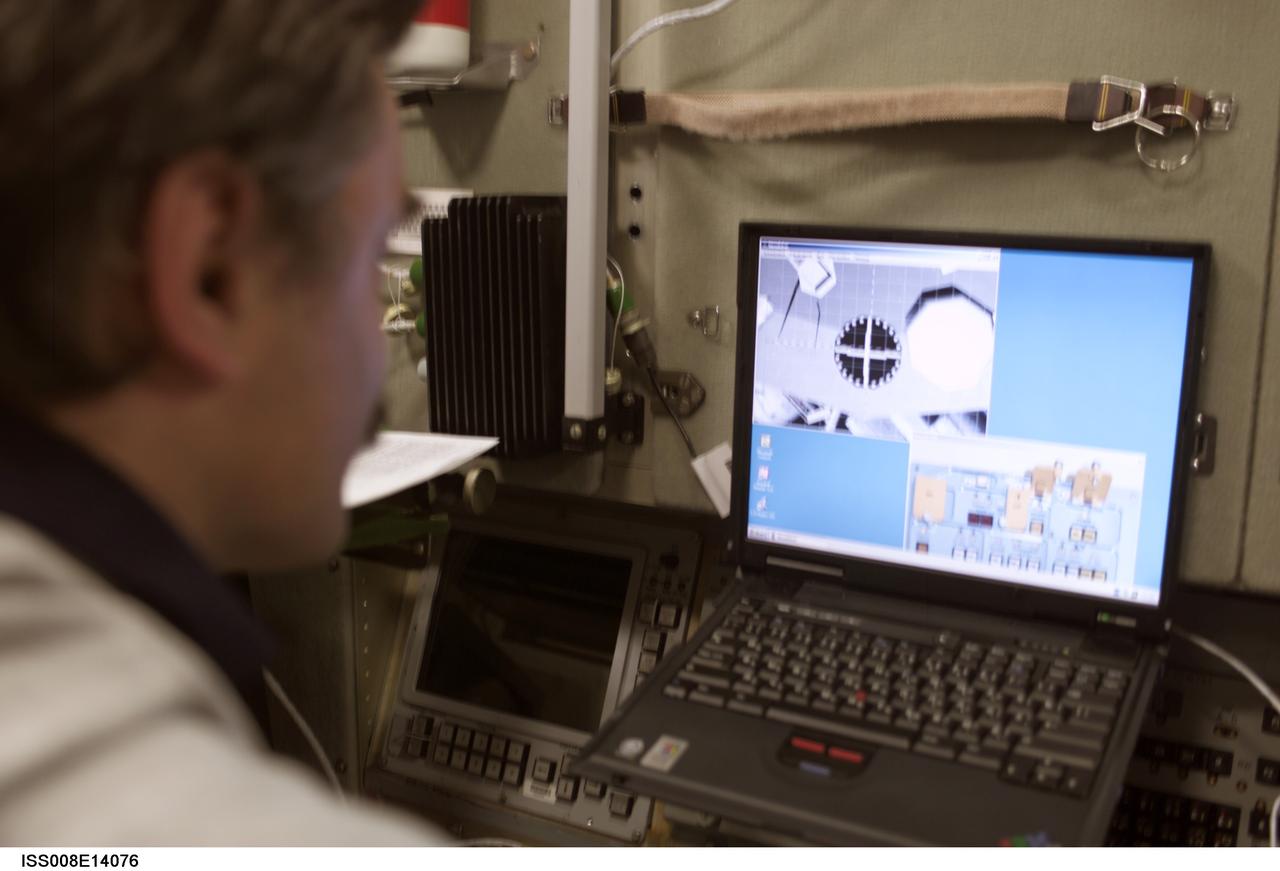
ISS008-E-14076 (30 January 2004) --- Cosmonaut Alexander Y. Kaleri, Expedition 8 flight engineer, practices docking procedures with the manual TORU rendezvous system in the Zvezda Service Module on the International Space Station (ISS) in preparation for the docking of the Progress 13 on January 31. With the manual TORU mode, Kaleri can perform necessary guidance functions from Zvezda via two hand controllers in the event of a failure of the “Kurs” automated rendezvous and docking (AR&D) of the Progress. Kaleri represents Rosaviakosmos.
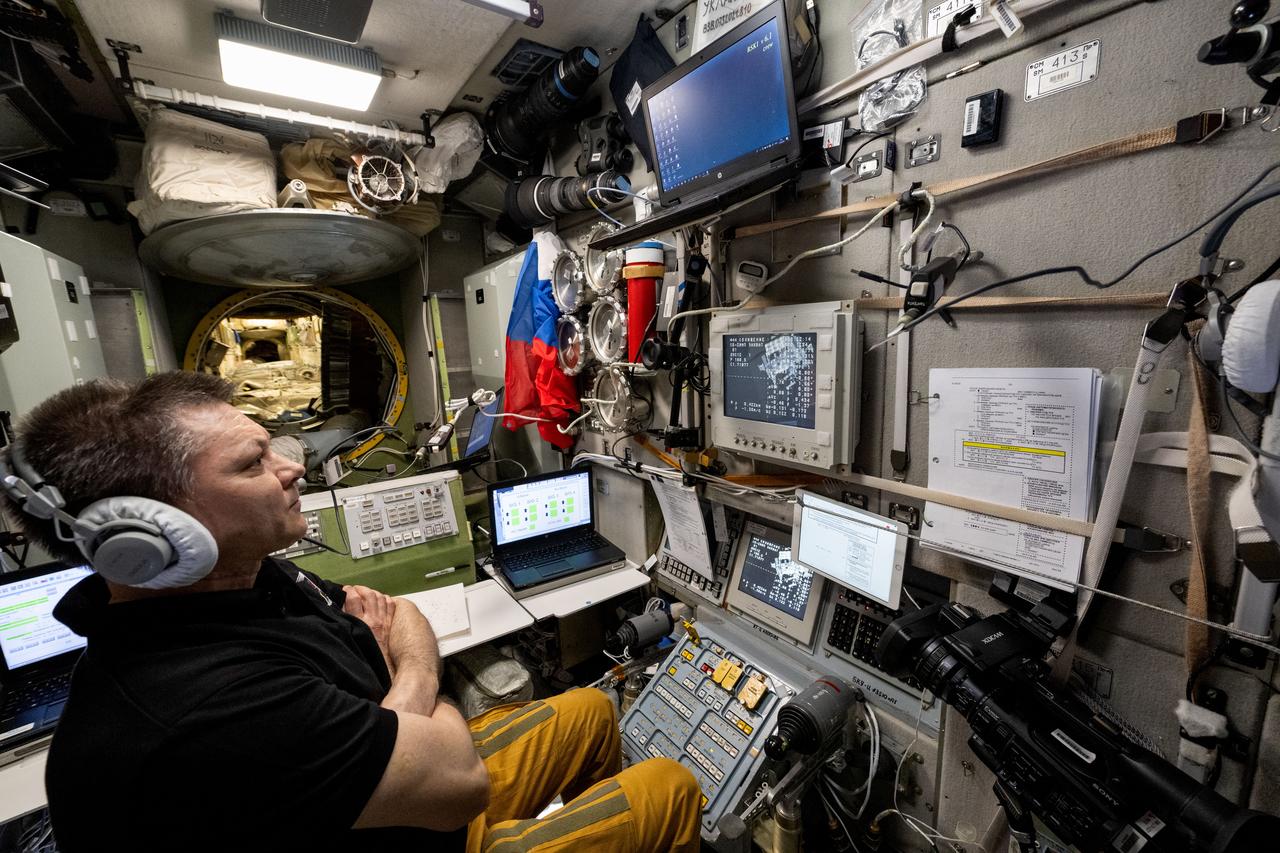
iss071e608454 (Aug. 17, 2024) --- Roscosmos cosmonaut and Expedition 71 Commander Oleg Kononenko is at the controls of the telerobotically operated rendezvous unit, or TORU, monitoring the automated rendezvous and docking of the Progress 89 cargo craft. Located inside the International Space Station's Zvezda service module, the TORU can be used to remotely control the Roscosmos spaceship in the unlikely event it would be unable to complete its automated docking.
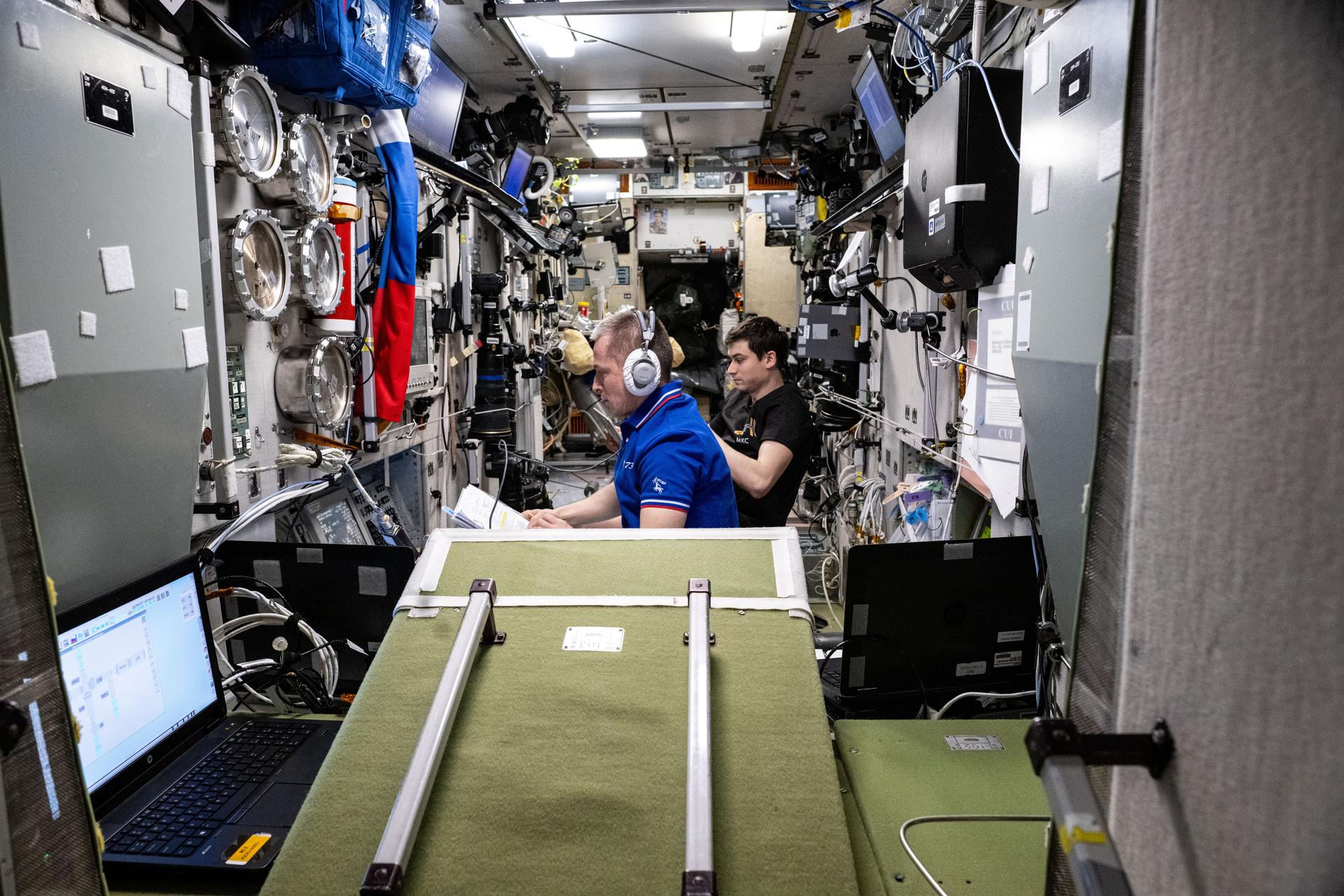
iss073e0698329 (Sept. 16, 2025) --- Roscosmos cosmonauts (from left) Sergey Ryzhikov and Alexey Zubritsky, Expedition 73 Commander and Flight Engineer respectively, monitor the arrival of the Progress 93 cargo craft during its approach and rendezvous with the International Space Station. The crewmates were inside the Zvezda service module at the controls of the telerobotically operated rendezvous unit, or TORU, watching Progress' arrival via video and telemetry. TORU could be used to manually guide an approaching spacecraft to a docking on the orbital outpost if necessary, though unlikely.
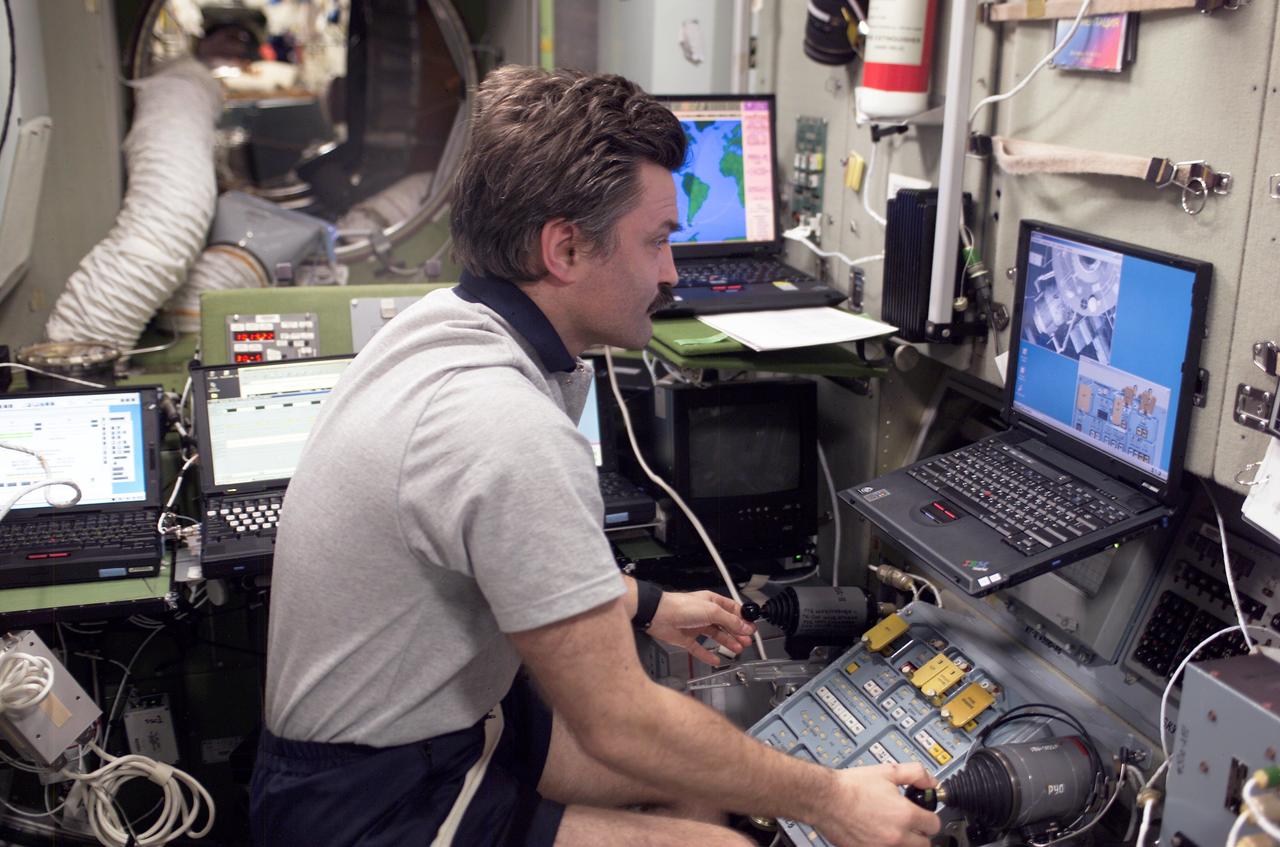
ISS008-E-14073 (30 January 2004) --- Cosmonaut Alexander Y. Kaleri, Expedition 8 flight engineer, practices docking procedures with the manual TORU rendezvous system in the Zvezda Service Module on the International Space Station (ISS) in preparation for the docking of the Progress 13 on January 31. With the manual TORU mode, Kaleri can perform necessary guidance functions from Zvezda via two hand controllers in the event of a failure of the “Kurs” automated rendezvous and docking (AR&D) of the Progress. Kaleri represents Rosaviakosmos.
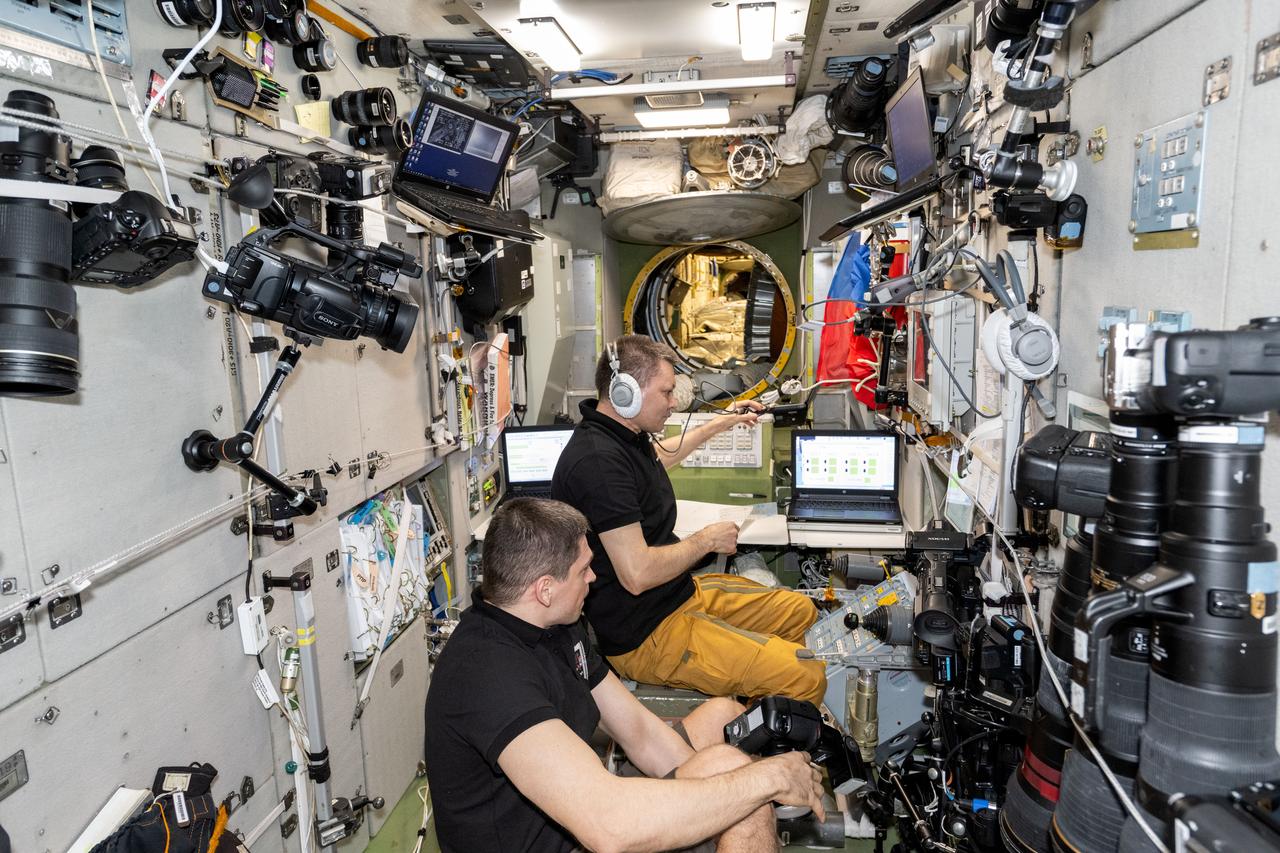
iss071e608479 (Aug. 17, 2024) --- Roscosmos cosmonauts Nikolai Chub (foreground) and Oleg Kononenko, Expedition 71 Flight Engineer and Commander respectively, are at the controls of the telerobotically operated rendezvous unit, or TORU, monitoring the automated rendezvous and docking of the Progress 89 cargo craft. Located inside the International Space Station's Zvezda service module, the TORU can be used to remotely control the Roscosmos spaceship in the unlikely event it would be unable to complete its automated docking.
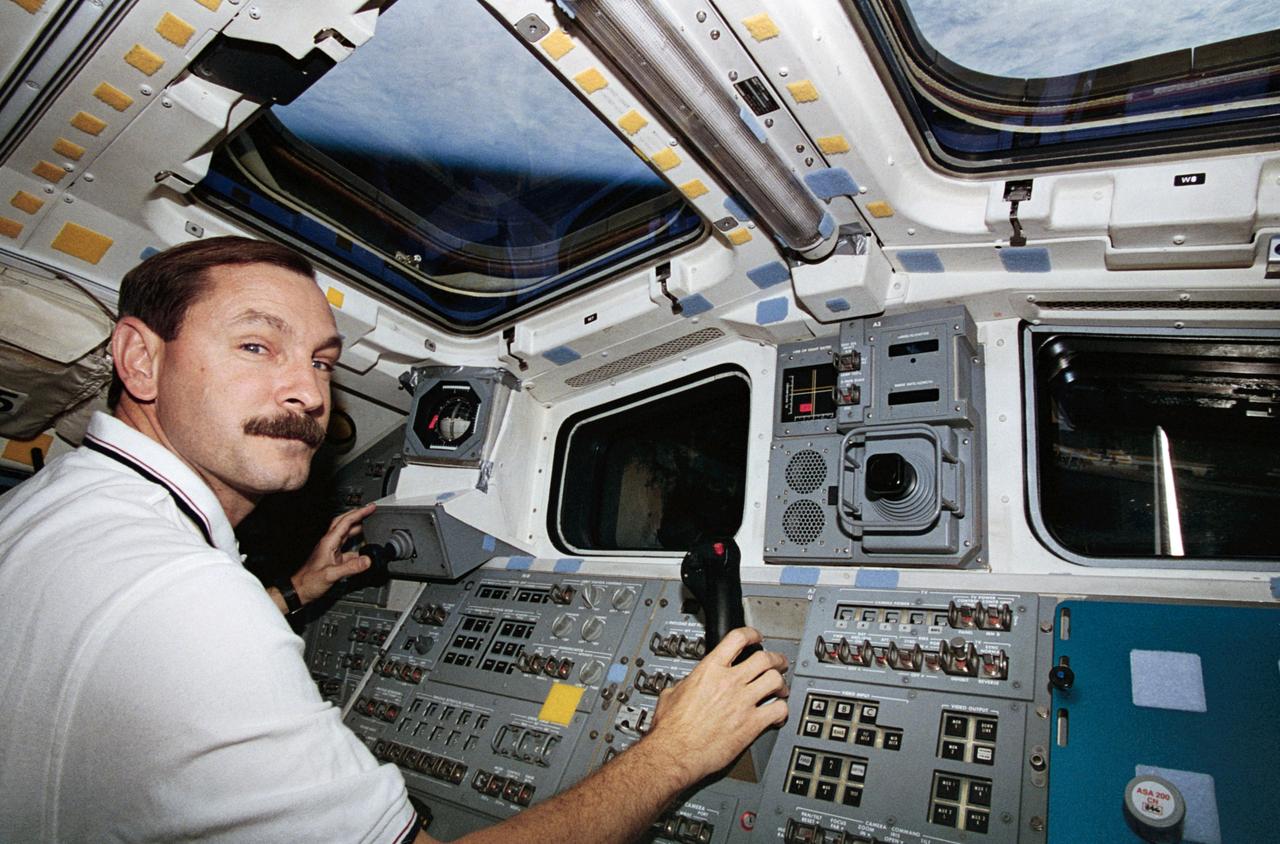
STS077-312-015 (19-29 May 1996) --- Astronaut Curtis L. Brown, Jr., pilot, mans the controls for the Remote Manipulator System (RMS) on the Space Shuttle Endeavour?s aft flight deck during rendezvous operations. During the flight, the six-member crew was involved in deployment and rendezvous operations with the Spartan 207/Inflatable Antenna Experiment (IAE) as well as the Passive Aerodynamically Stabilized Magnetically Damped Satellite (PAMS)/Satellite Test Unit (STU).
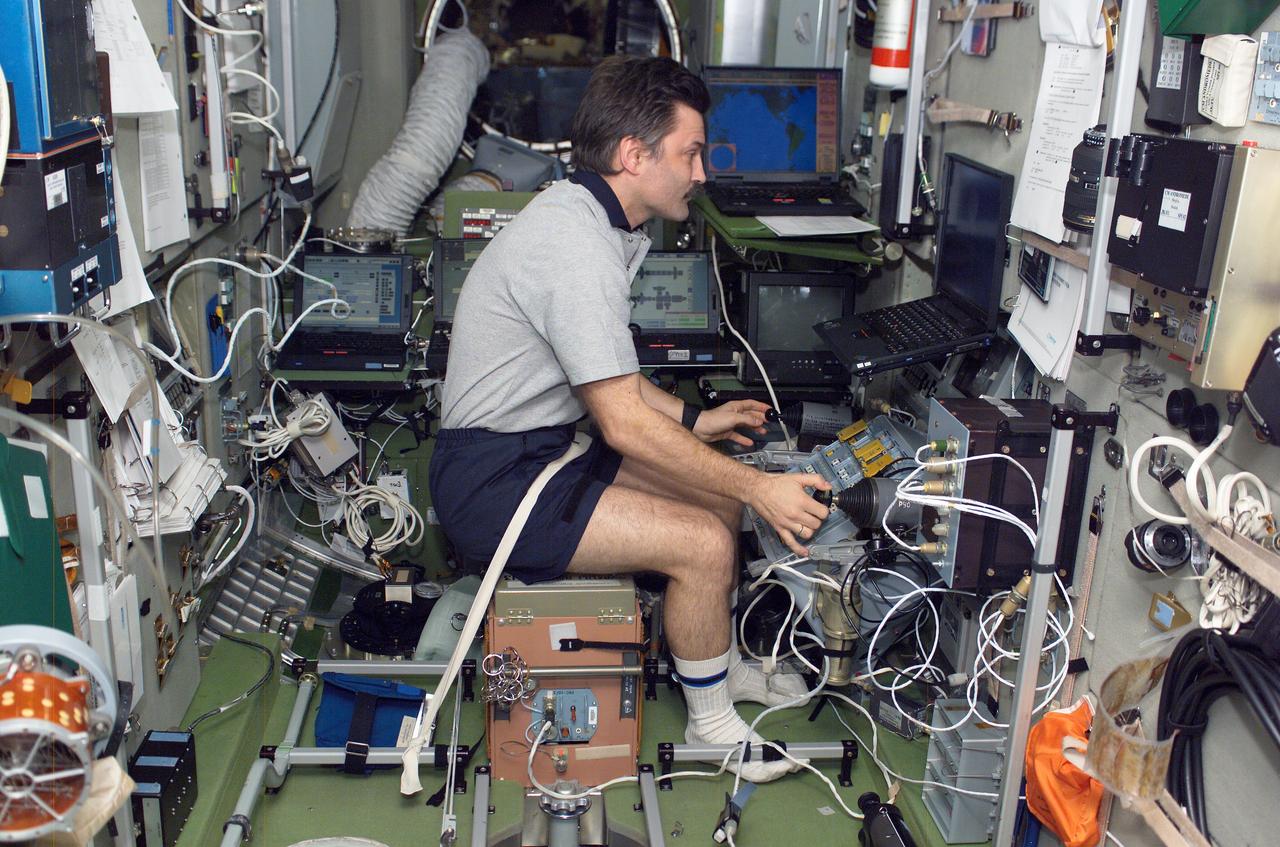
ISS008-E-14067 (30 January 2004) --- Cosmonaut Alexander Y. Kaleri, Expedition 8 flight engineer, practices docking procedures with the manual TORU rendezvous system in the Zvezda Service Module on the International Space Station (ISS) in preparation for the docking of the Progress 13 on January 31. With the manual TORU mode, Kaleri can perform necessary guidance functions from Zvezda via two hand controllers in the event of a failure of the “Kurs” automated rendezvous and docking (AR&D) of the Progress. Kaleri represents Rosaviakosmos.
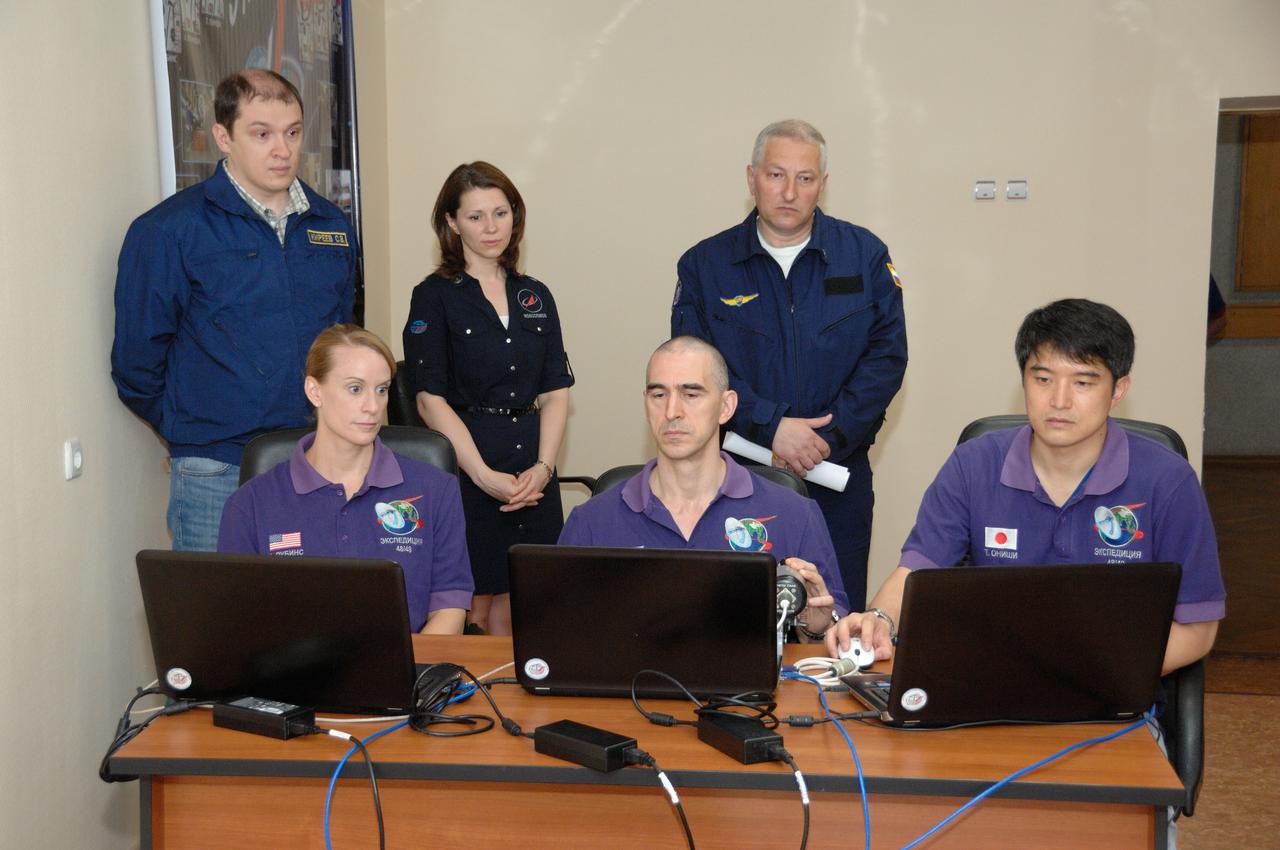
At the Cosmonaut Hotel in Baikonur, Kazakhstan, Expedition 48-49 crewmembers Kate Rubins of NASA (left), Anatoly Ivanishin of Roscosmos (center) and Takuya Onishi of the Japan Aerospace Exploration Agency (right) conduct rendezvous rehearsals on a laptop computer simulator June 30 as instructors look on. Rubins, Ivanishin and Onishi will launch July 7, Baikonur time, on the Soyuz MS-01 spacecraft for a planned four-month mission on the International Space Station. NASA/Alexander Vysotsky
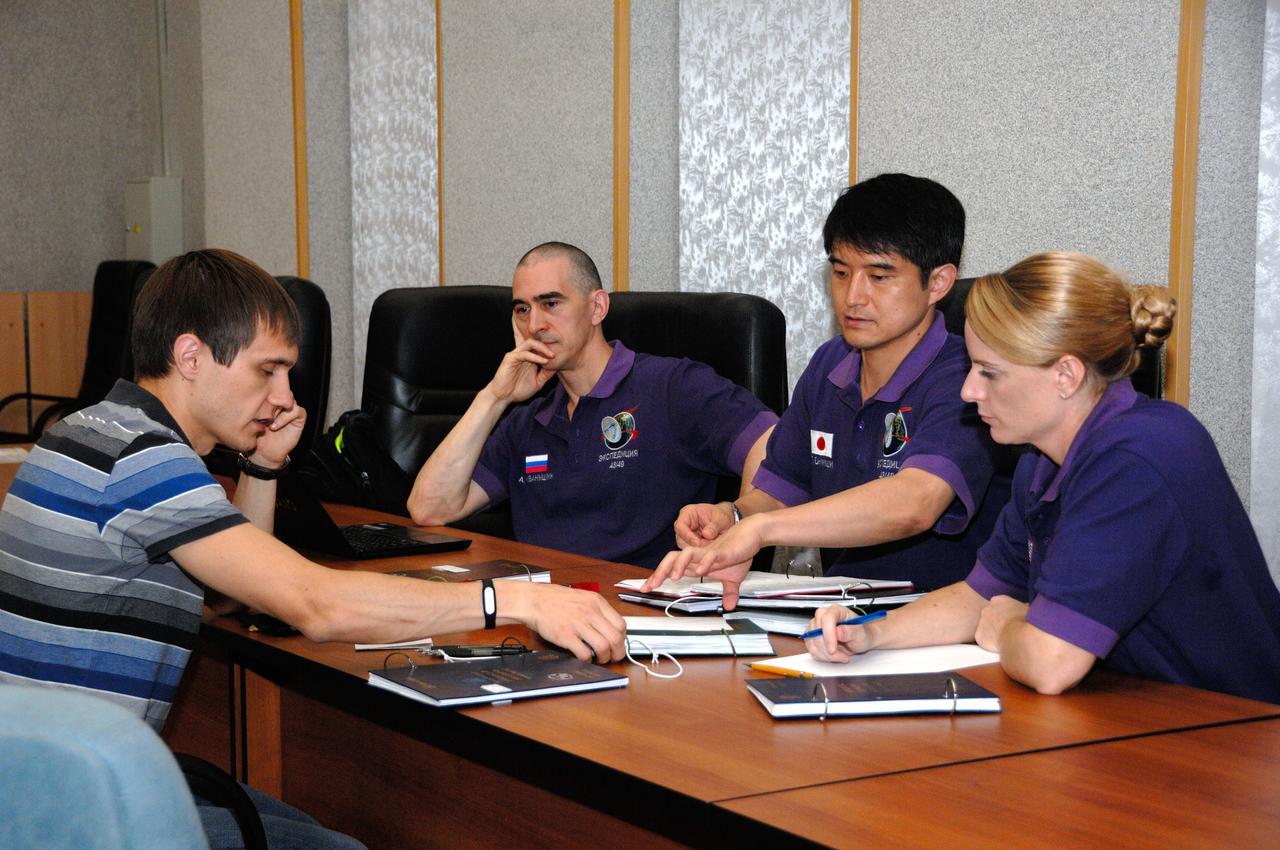
At the Cosmonaut Hotel in Baikonur, Kazakhstan, Expedition 48-49 crewmembers Anatoly Ivanishin of Roscosmos (second from left), Takuya Onishi of the Japan Aerospace Exploration Agency (second from right) and Kate Rubins of NASA (far right) listen to a rendezvous instructor June 30 during pre-launch training. Rubins, Ivanishin and Onishi will launch July 7, Baikonur time, on the Soyuz MS-01 spacecraft for a planned four-month mission on the International Space Station. NASA/Alexander Vysotsky
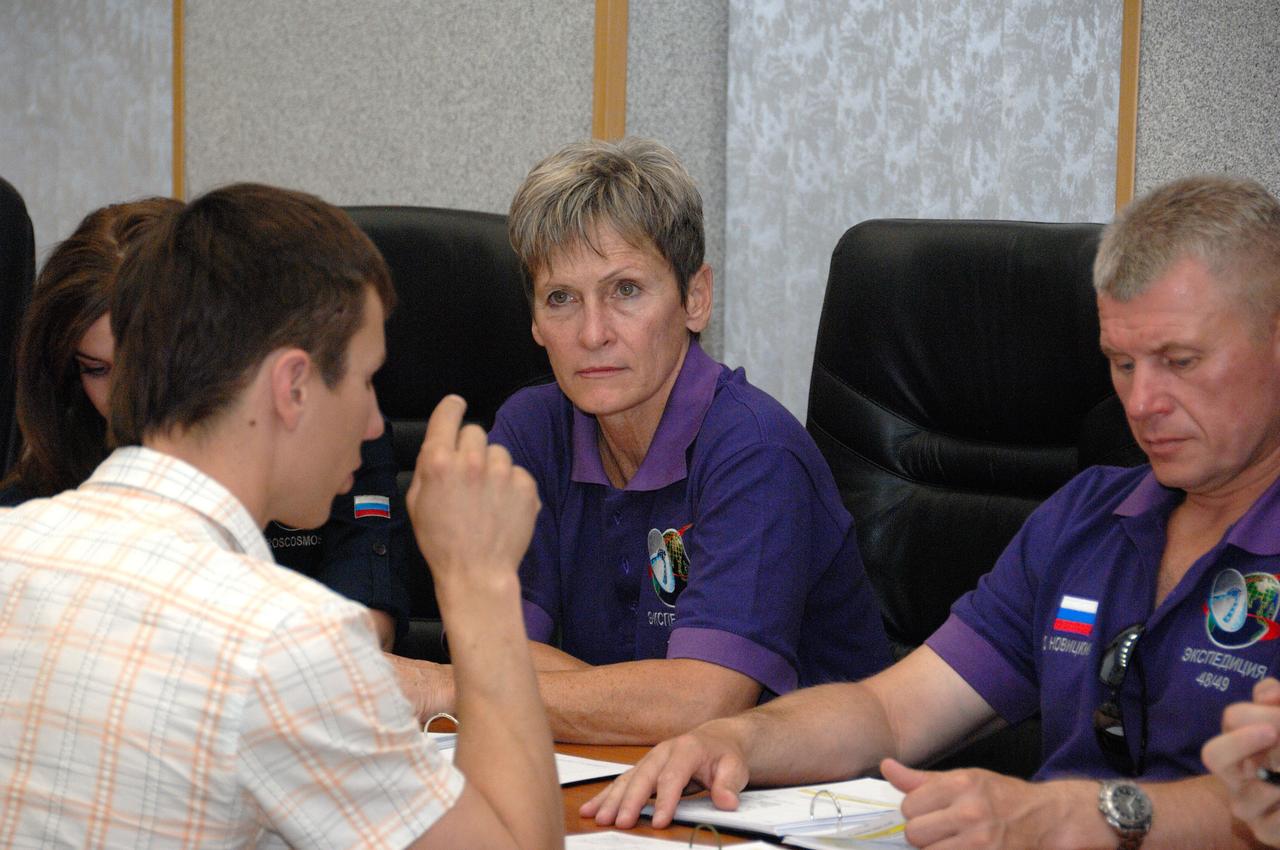
At the Cosmonaut Hotel in Baikonur, Kazakhstan, Expedition 48-49 backup crewmember Peggy Whitson of NASA listens to a rendezvous instructor June 30 as her crewmate, Oleg Novitskiy of Roscosmos (right) reviews documents. They are backups to the prime crewmembers, Kate Rubins of NASA, Anatoly Ivanishin of Roscosmos and Takuya Onishi of the Japan Aerospace Exploration Agency, who will launch July 7, Baikonur time, on the Soyuz MS-01 spacecraft for a planned four-month mission on the International Space Station. NASA/Alexander Vysotsky
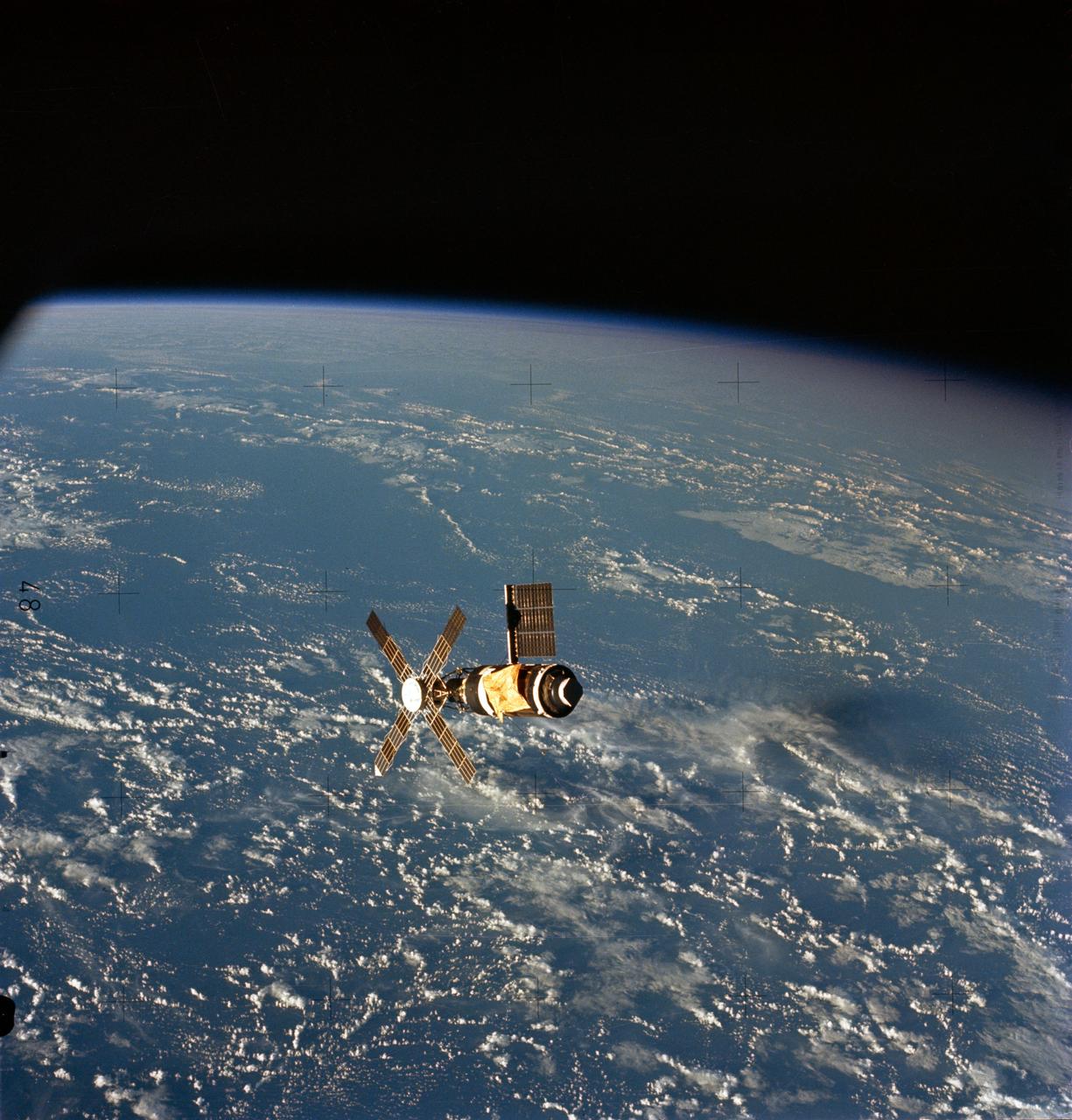
SL2-07-651 (22 June 1973) --- This overhead view of the Skylab Space Station was taken from the Departing Skylab Command/Service Module during the Skylab 2's final fly-around inspection. The single solar panel is quite evident as well as the parasol solar shield, rigged to replace the missing micrometeoroid shield. Both the second solar panel and the micrometeoroid shield were torn away during a mishap in the original Skylab 1 liftoff and orbital insertion. Photo credit: NASA
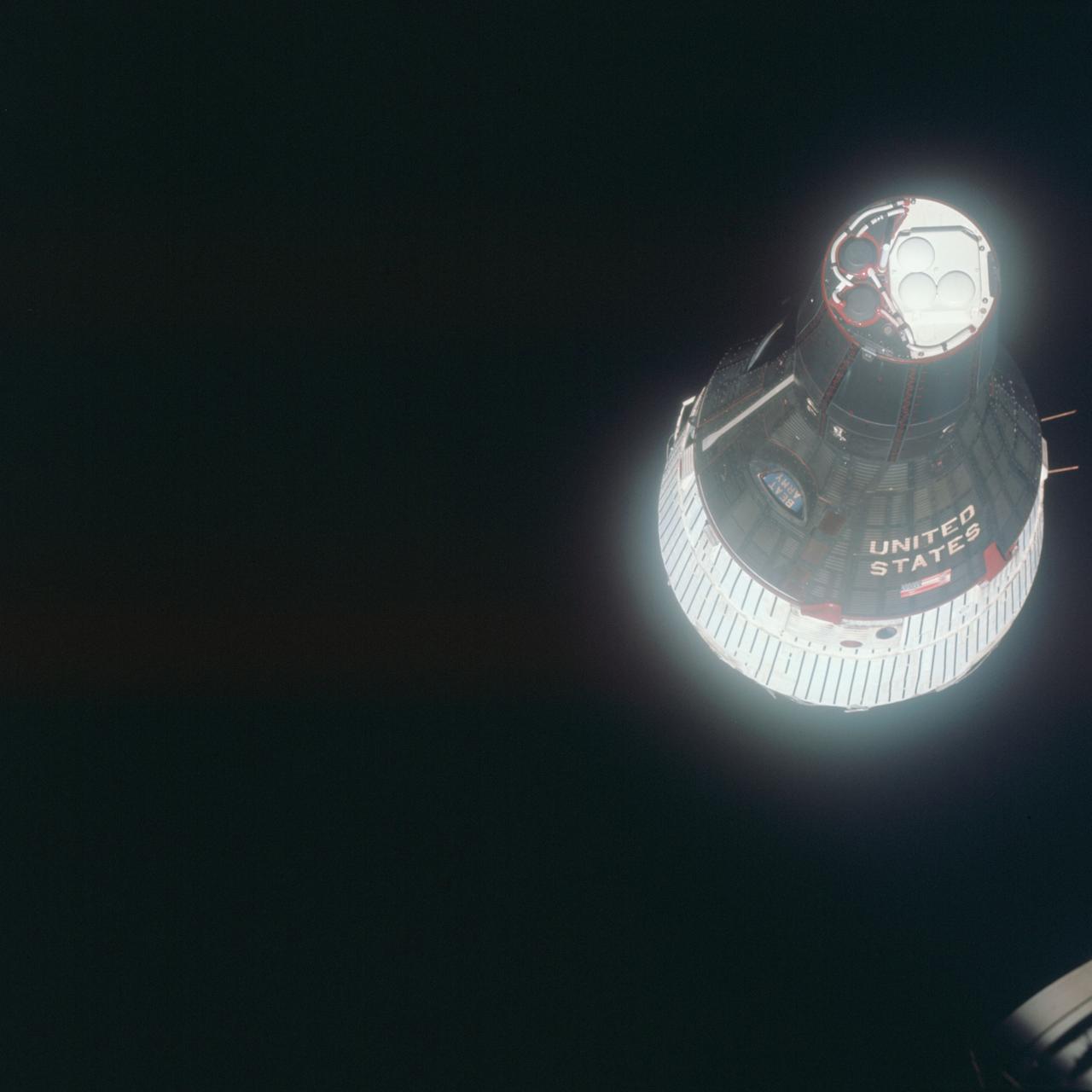
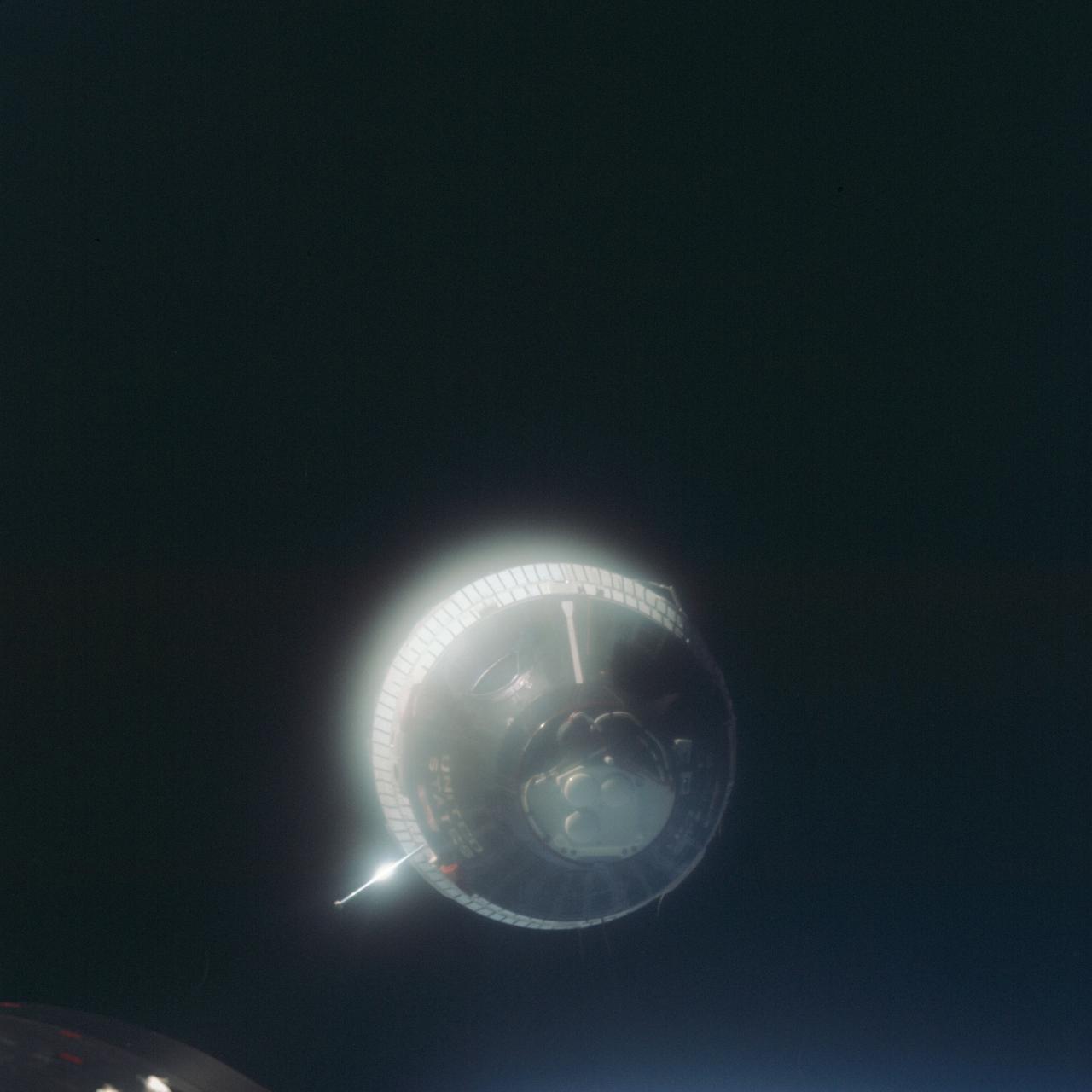
S65-64040 (15 Dec. 1965) --- Nose-on view of the Gemini-6 spacecraft against the blackness of space as seen from Gemini-7 spacecraft. The two spacecraft were approximately 38 feet apart. Astronauts Walter M. Schirra and Thomas P. Stafford were onboard the Gemini-6 spacecraft. Astronauts Frank Borman and James A. Lovell Jr. were aboard the Gemini-7 spacecraft. A "Beat Army" sign can be seen in the Gemini-6 window. Photo credit: NASA

At their Cosmonaut Hotel crew quarters in Baikonur, Kazakhstan, Expedition 35-36 Flight Engineer Chris Cassidy of NASA (left), Soyuz Commander Pavel Vinogradov (center) and Flight Engineer Alexander Misurkin (right) review expedited rendezvous procedures with trainers March 21 as they prepare for launch to the International Space Station March 29, Kazakh time, in their Soyuz TMA-08M spacecraft from the Baikonur Cosmodrome for a 5 ½ month mission. The expedited rendezvous refers to the accelerated four-orbit, six-hour trip from the launch pad to reach the International Space Station March 29 through an revised rendezvous burn plan, the first time this approach will be used for crews flying to the international complex. NASA/Victor Zelentsov
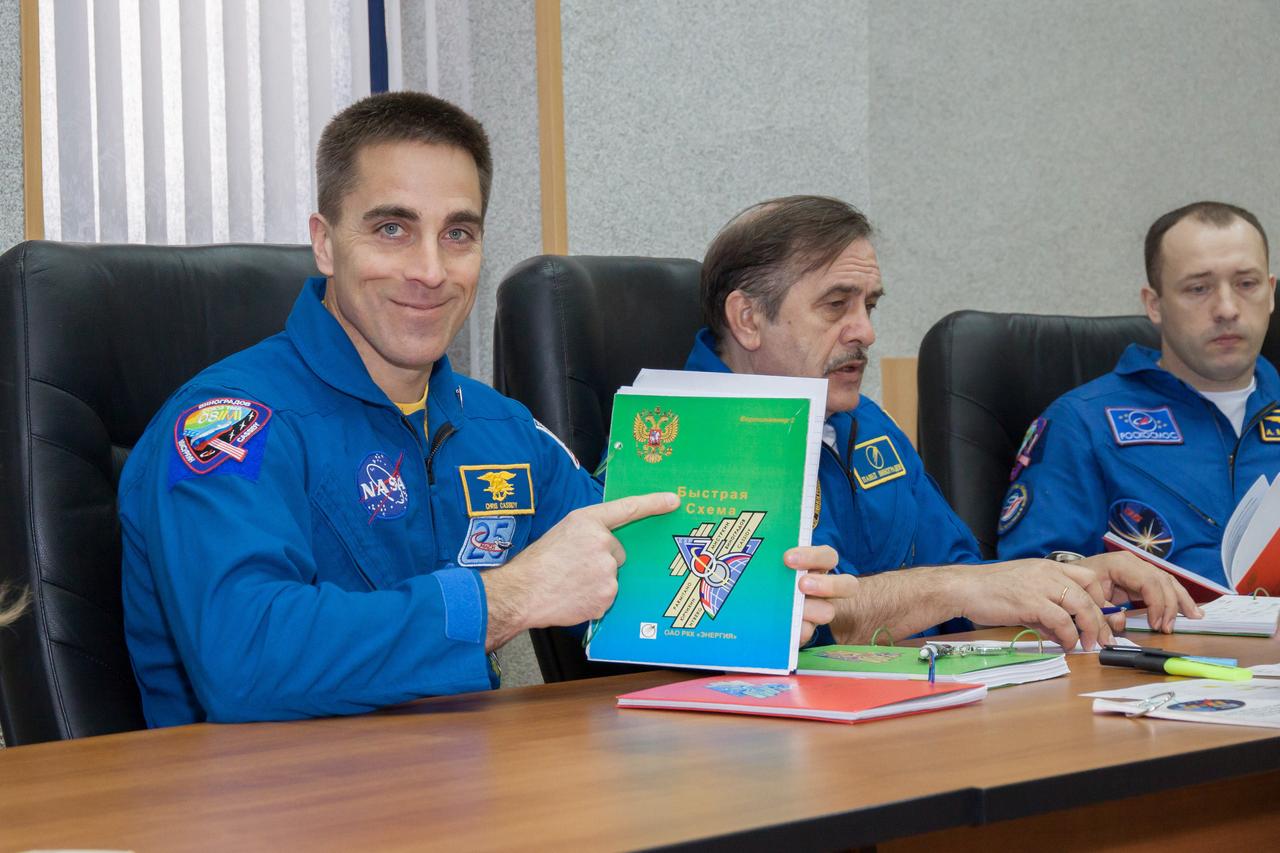
At the Cosmonaut Hotel crew quarters in Baikonur, Kazakhstan, Expedition 35-36 Flight Engineer Chris Cassidy of NASA (left) displays a flight data file book titled “Fast Rendezvous” March 21 as he, Soyuz Commander Pavel Vinogradov (center) and Flight Engineer Alexander Misurkin (right) train for launch to the International Space Station March 29, Kazakh time, in their Soyuz TMA-08M spacecraft from the Baikonur Cosmodrome for a 5 ½ month mission. The “fast rendezvous” refers to the expedited four-orbit, six-hour trip from the launch pad to reach the International Space Station March 29 through an accelerated rendezvous burn plan, the first time this approach will be used for crews flying to the international complex. NASA/Victor Zelentsov
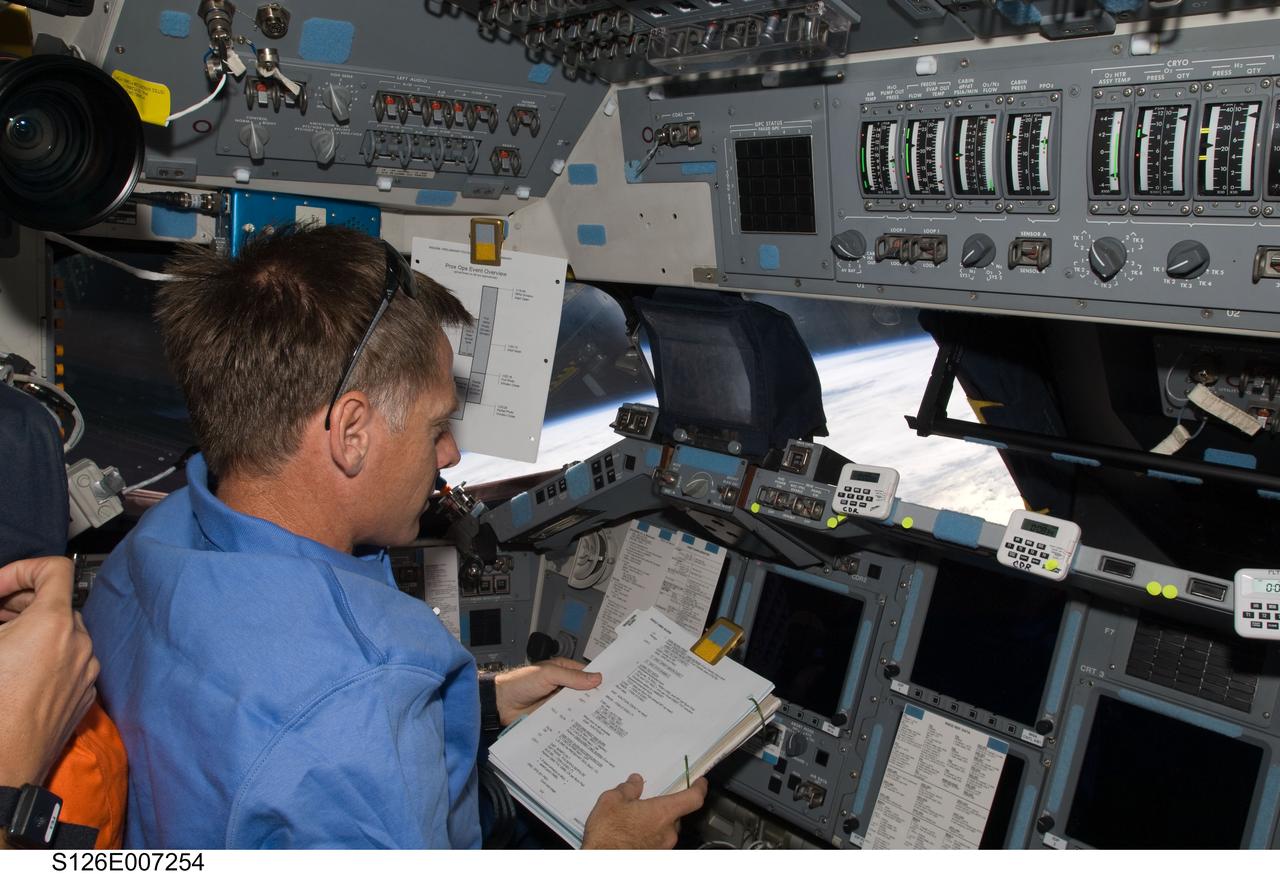
S126-E-007254 (16 Nov. 2008) --- Astronaut Chris Ferguson, STS-126 commander, occupies the commander's station on the forward flight deck of Space Shuttle Endeavour during rendezvous and docking operations with the International Space Station.
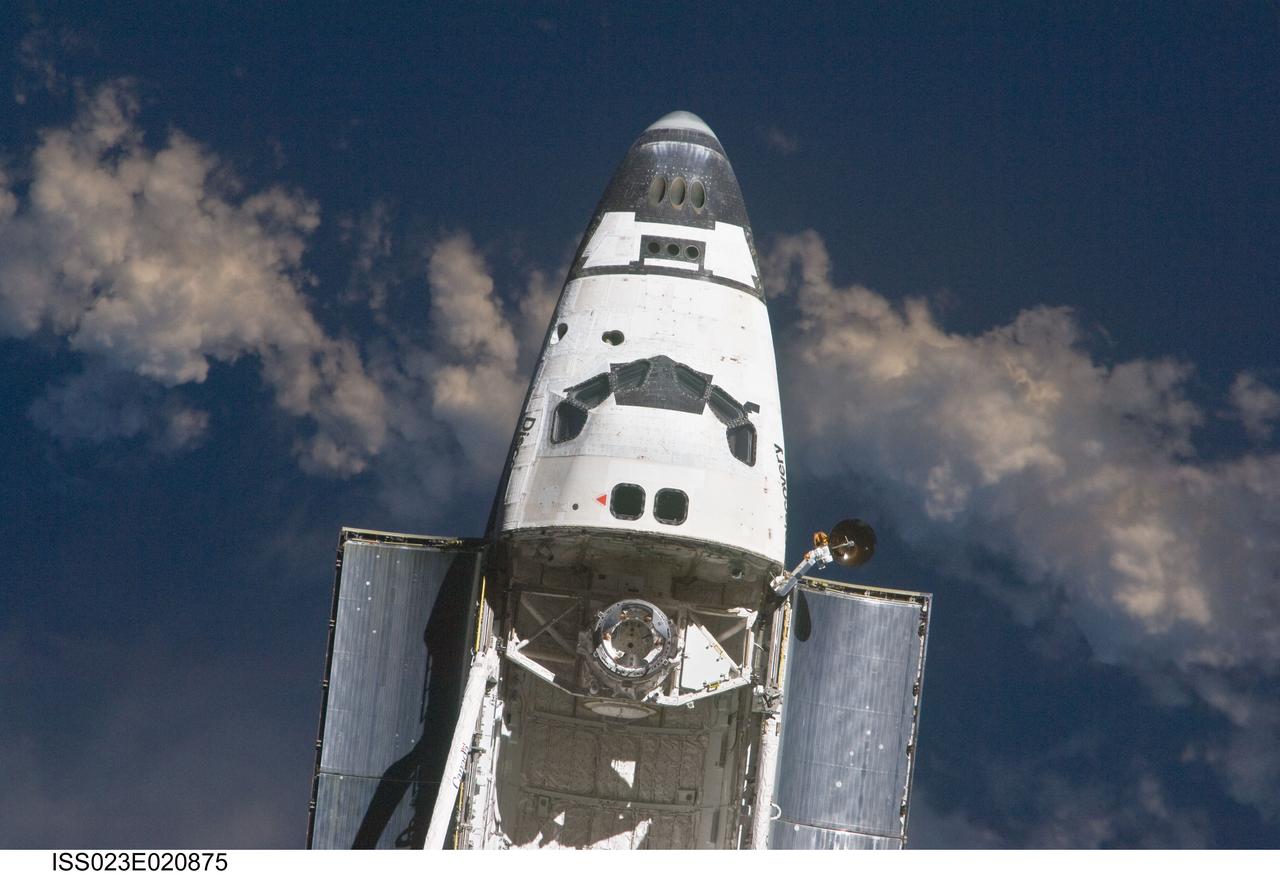
ISS023-E-020875 (7 April 2010) --- The space shuttle Discovery and the International Space Station (out of frame) are in the midst of their rendezvous and docking activities in this image photographed by an Expedition 23 crew member aboard the orbital outpost.
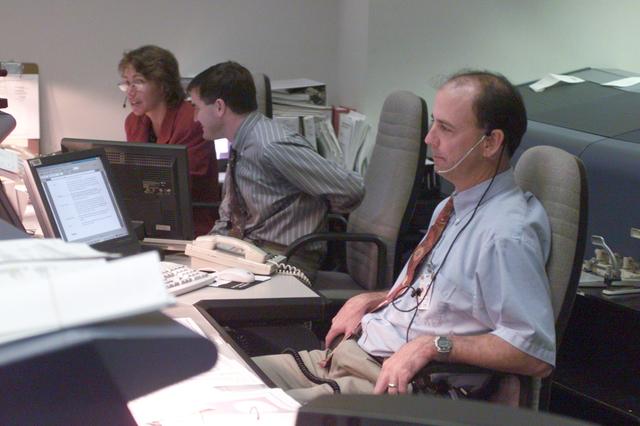
JSC2000-E-22733 (10 September 2000) --- Marc Ferring, an ISS flight director, monitors closely the rendezvous and docking operations of the International Space Station and the Space Shuttle Atlantis.
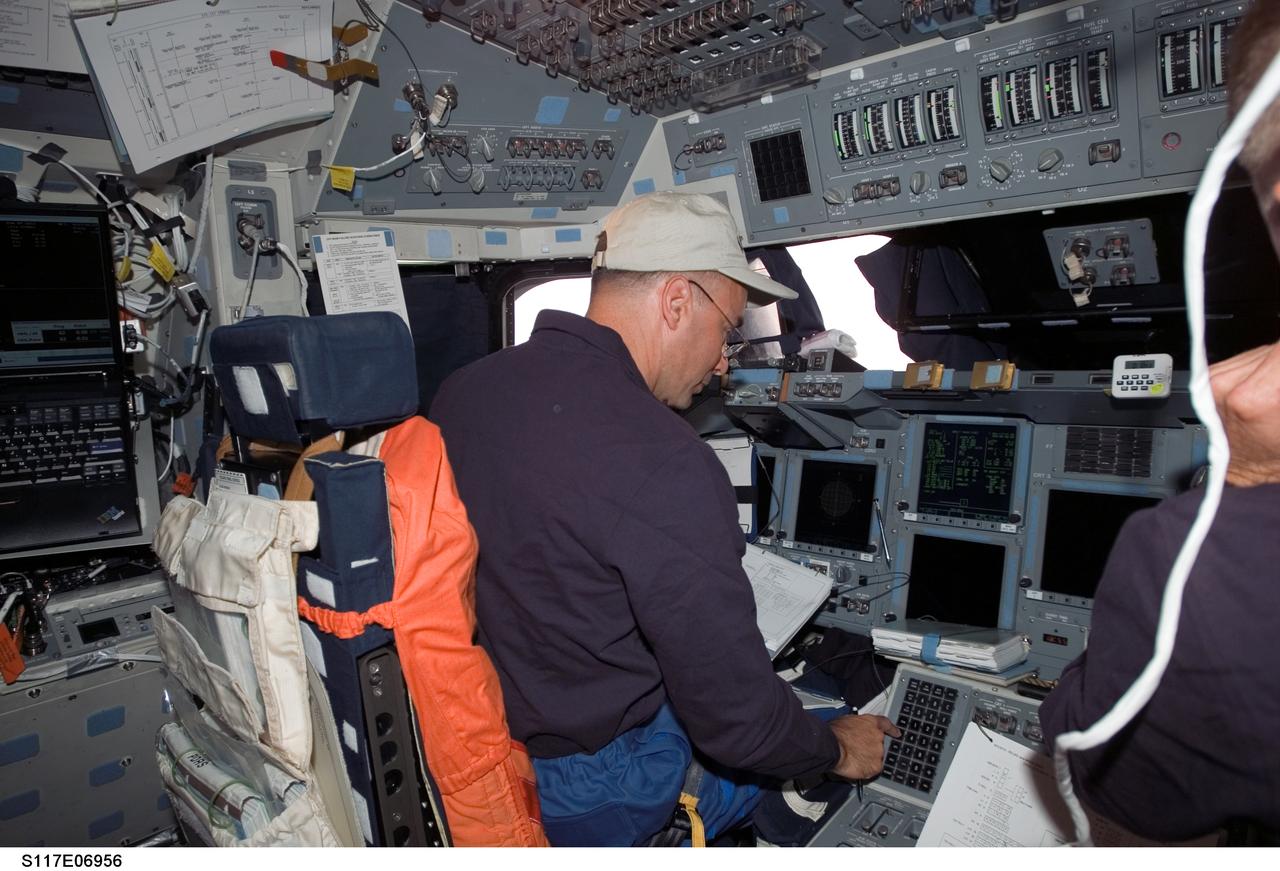
S117-E-06956 (10 June 2007) --- Astronaut Lee Archambault, STS-117 pilot, occupies the commander's station on the flight deck of Space Shuttle Atlantis during rendezvous and docking operations with the International Space Station.
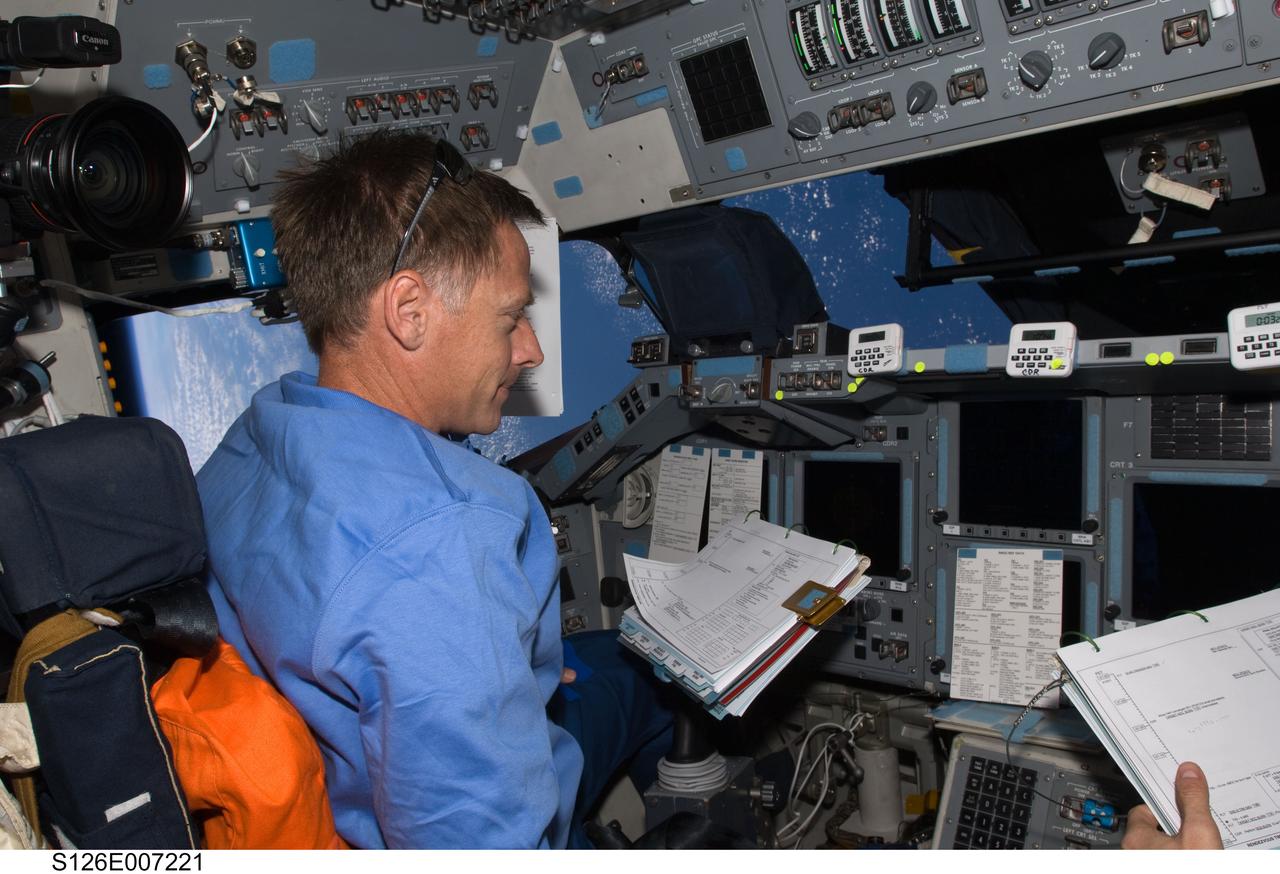
S126-E-007221 (16 Nov. 2008) --- Astronaut Chris Ferguson, STS-126 commander, occupies the commander's station on the forward flight deck of Space Shuttle Endeavour during rendezvous and docking operations with the International Space Station.
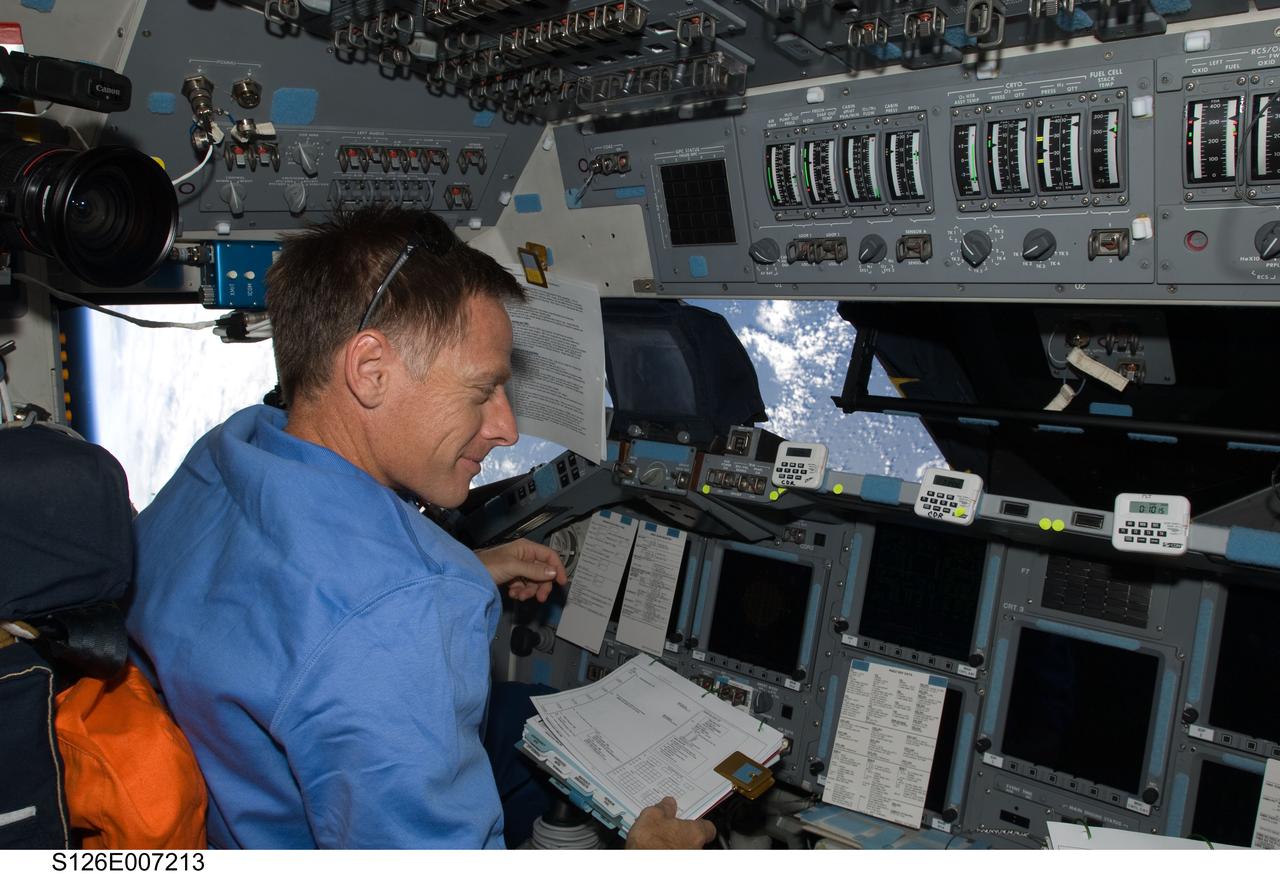
S126-E-007213 (16 Nov. 2008) --- Astronaut Chris Ferguson, STS-126 commander, occupies the commander's station on the forward flight deck of Space Shuttle Endeavour during rendezvous and docking operations with the International Space Station.
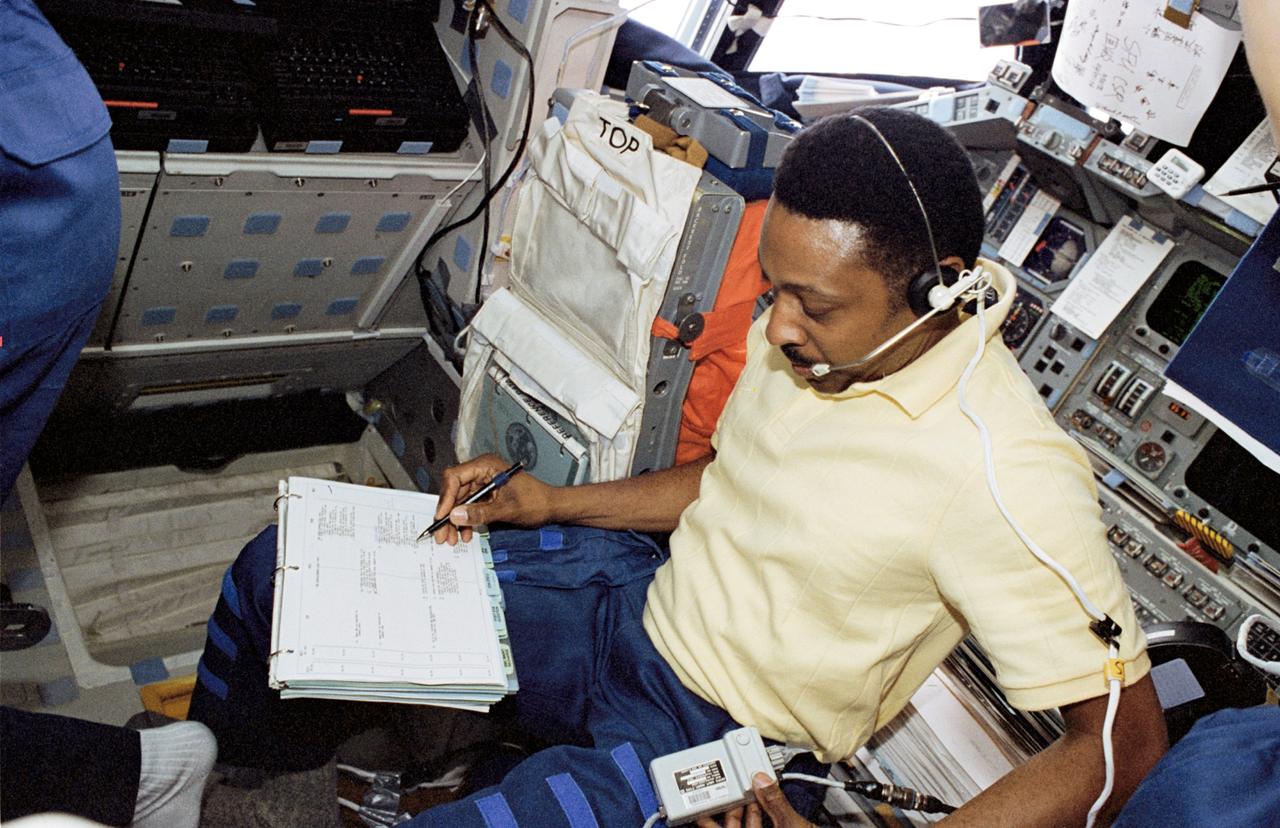
STS072-322-008 (11-20 Jan. 1996) --- On the Space Shuttle Endeavour's forward flight deck, astronaut Winston E. Scott goes over procedures for rendezvous operations with the Japanese Space Flyer Unit (SFU) satellite.
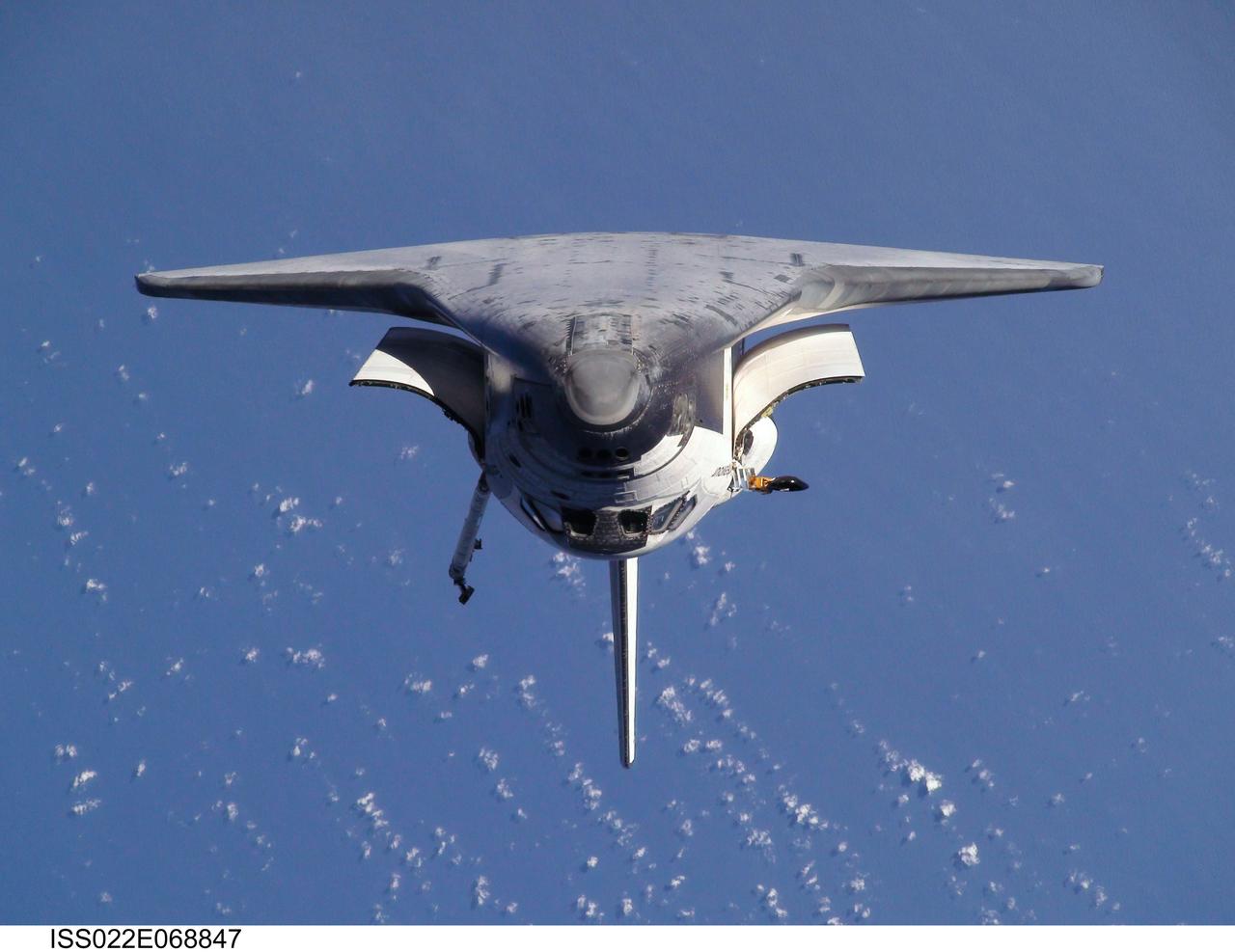
ISS022-E-068847 (9 Feb. 2010) --- This view of the space shuttle Endeavour, taken on Feb. 9 from the International Space Station as the two spacecraft conducted their rendezvous operations, was downlinked by the Expedition 22 crew on Feb. 19.
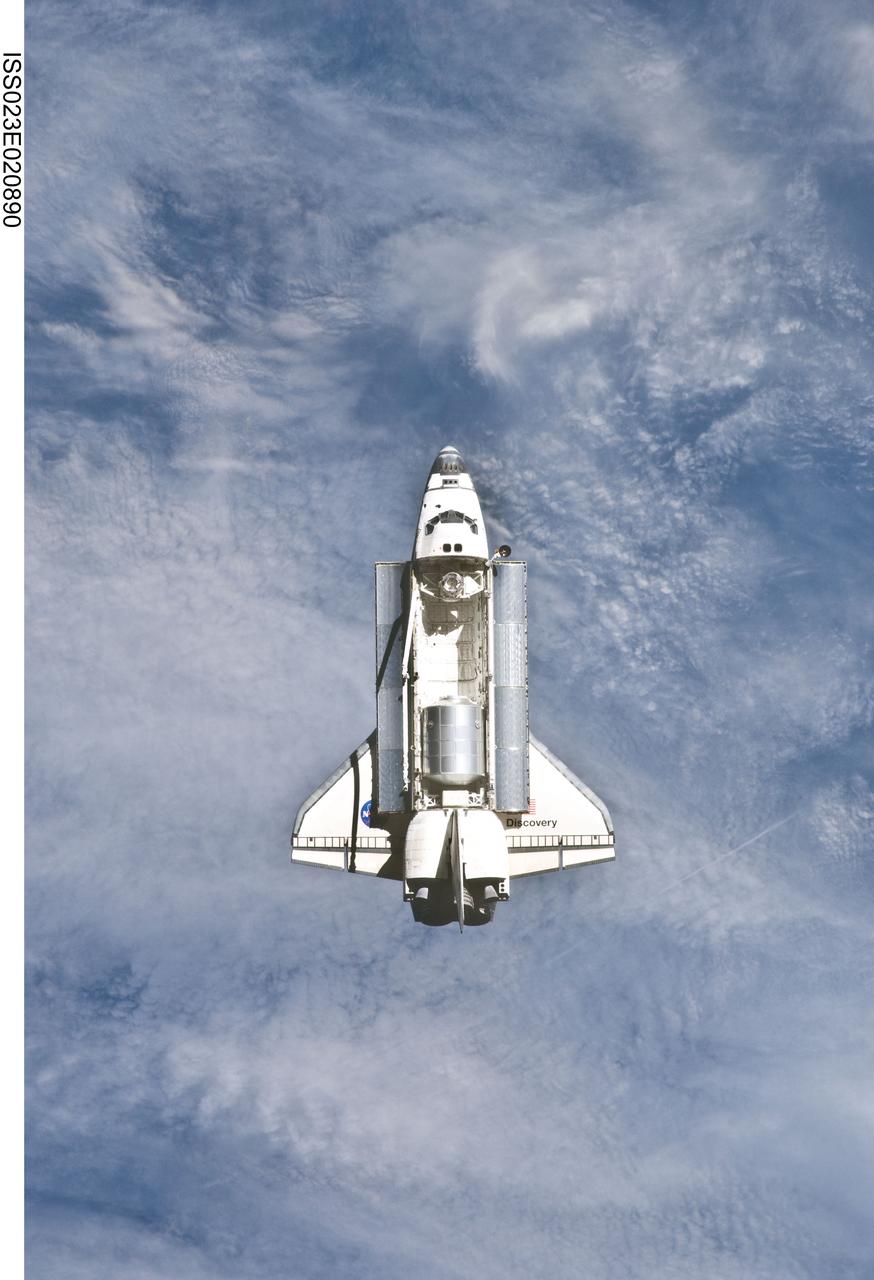
ISS023-E-020890 (7 April 2010) --- The space shuttle Discovery and the International Space Station (out of frame) are in the midst of their rendezvous and docking activities in this image photographed by an Expedition 23 crew member aboard the orbital outpost.
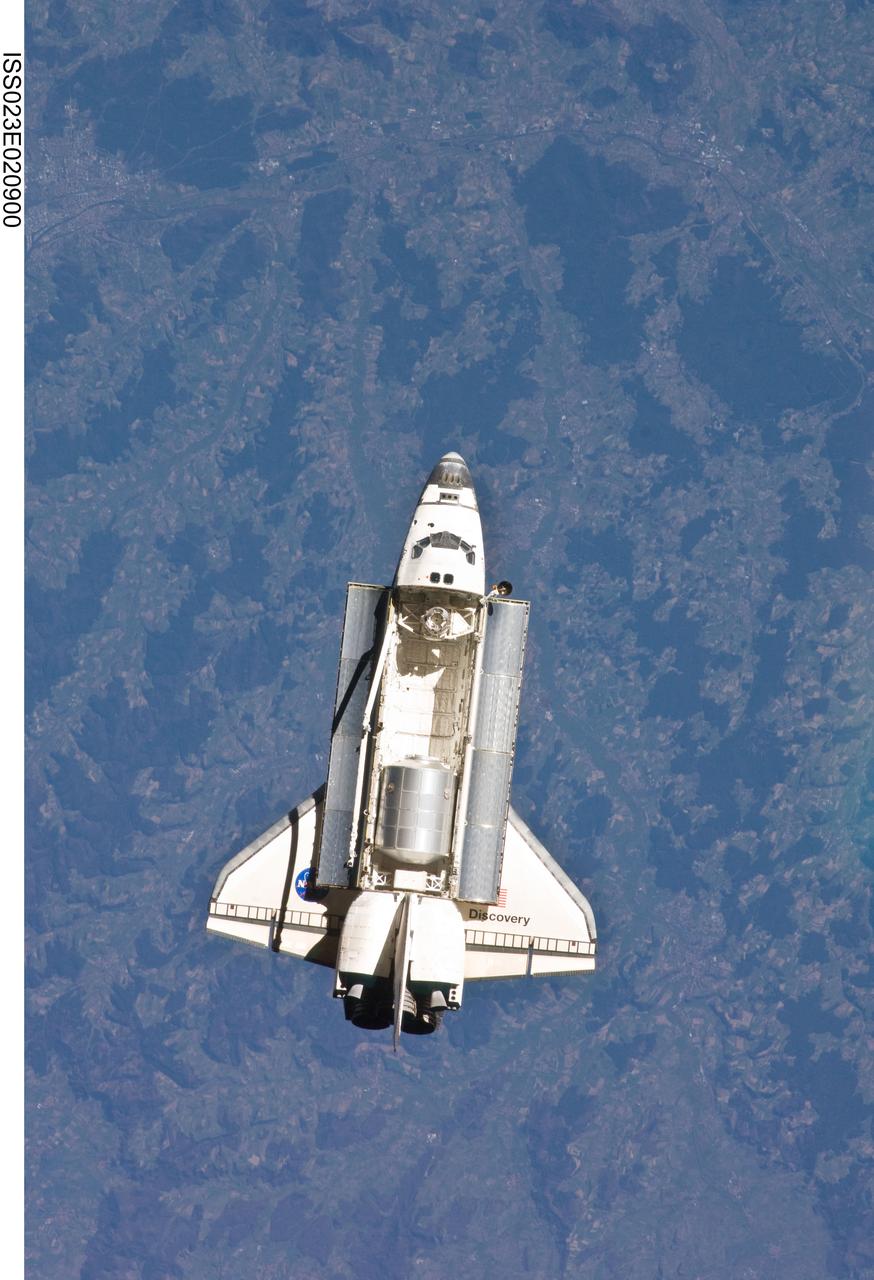
ISS023-E-020900 (7 April 2010) --- The space shuttle Discovery and the International Space Station (out of frame) are in the midst of their rendezvous and docking activities in this image photographed by an Expedition 23 crew member aboard the orbital outpost.
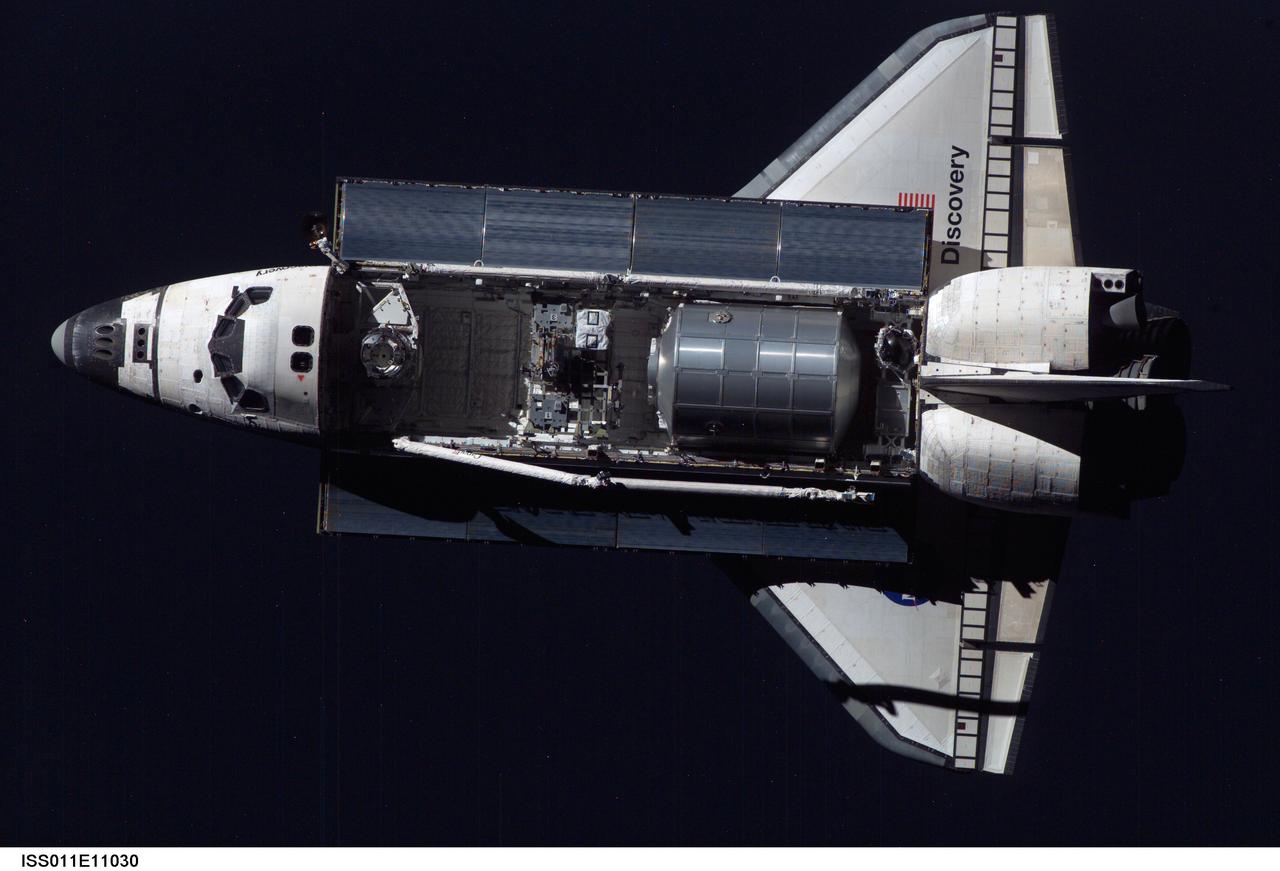
ISS011-E-11030 (28 July 2005) --- Space Shuttle Discovery, as seen from International Space Station (ISS) during rendezvous and docking operations on the morning of July 28.

S121-E-05287 (6 July 2006) --- The International Space Station approaches the Space Shuttle Discovery, from which this digital still image was recorded during rendezvous and docking activities on flight day three.
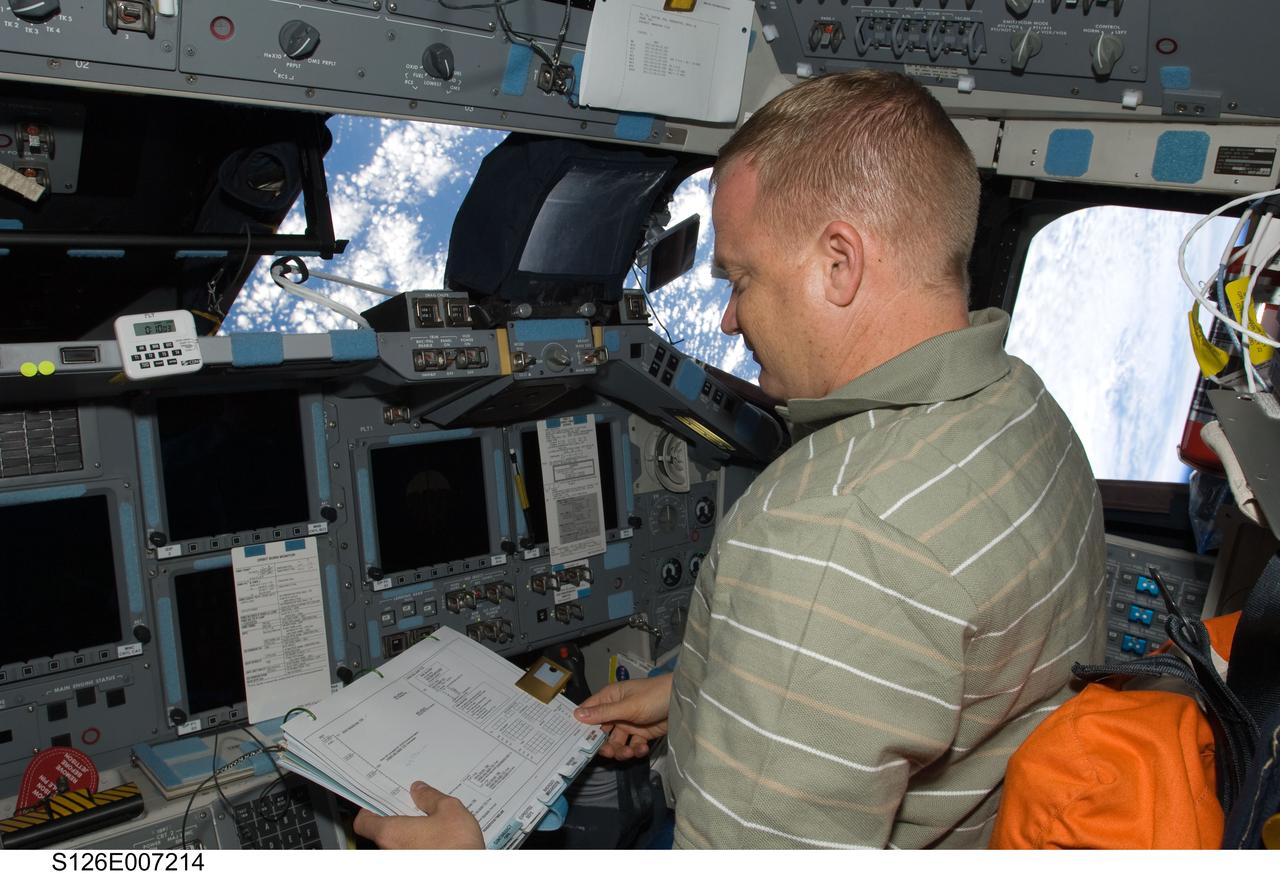
S126-E-007214 (16 Nov. 2008) --- Astronaut Eric Boe, STS-126 pilot, occupies the pilot's station on the forward flight deck of Space Shuttle Endeavour during rendezvous and docking operations with the International Space Station.