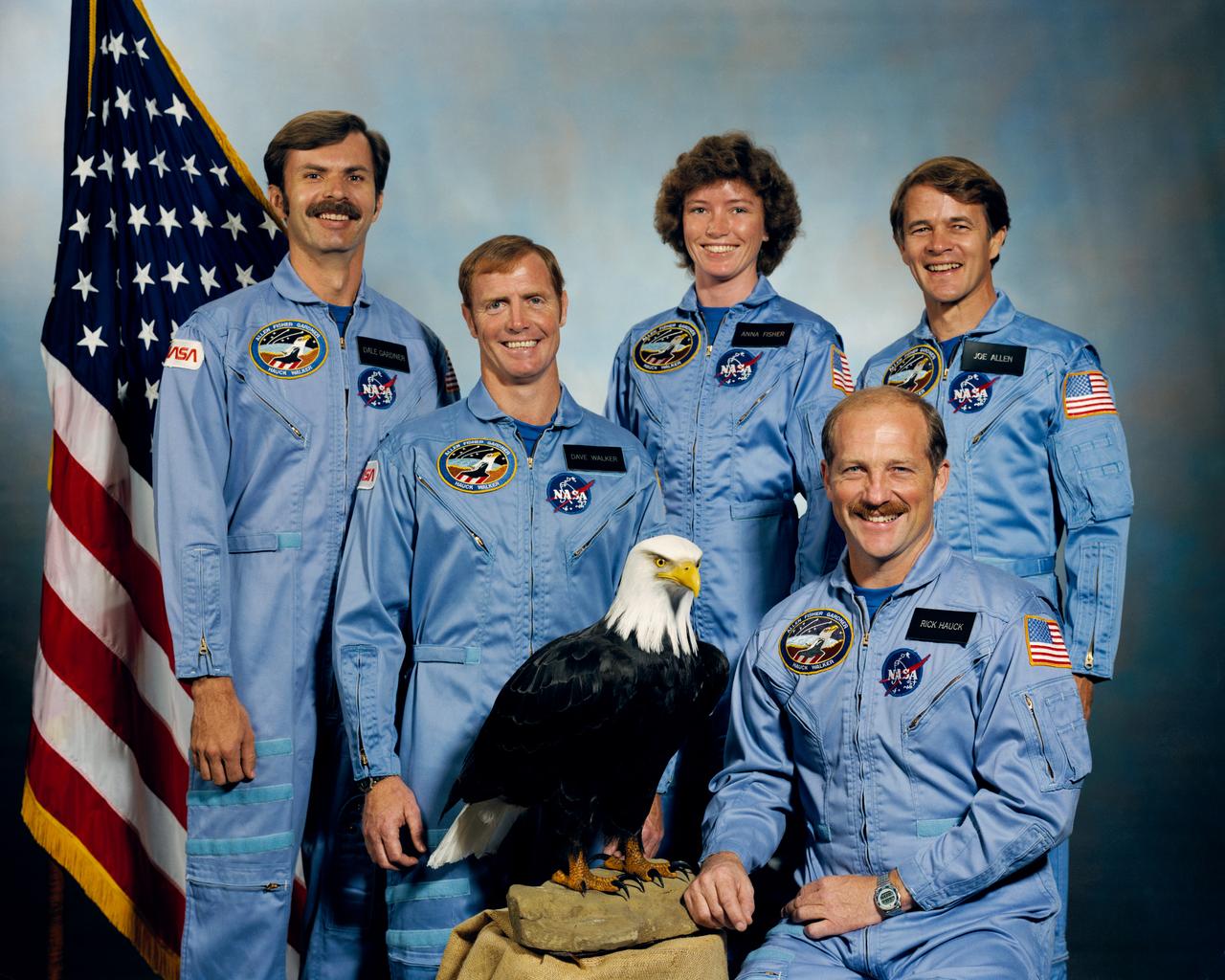
S84-40082 (August 1984) --- These five astronauts are scheduled to fly aboard the Space Shuttle Discovery on Mission STS-51A for NASA. The mission is scheduled for early November 1984. Astronaut Frederick H. (Rick) Hauck, seated, is crew commander. Astronaut David M. Walker, pilot, stands next to the Eagle, 51-A mascot. Others on the back row, left-to-right, are astronauts Dale A. Gardner, Anna L. Fisher and Joseph P. Allen IV, all mission specialists.
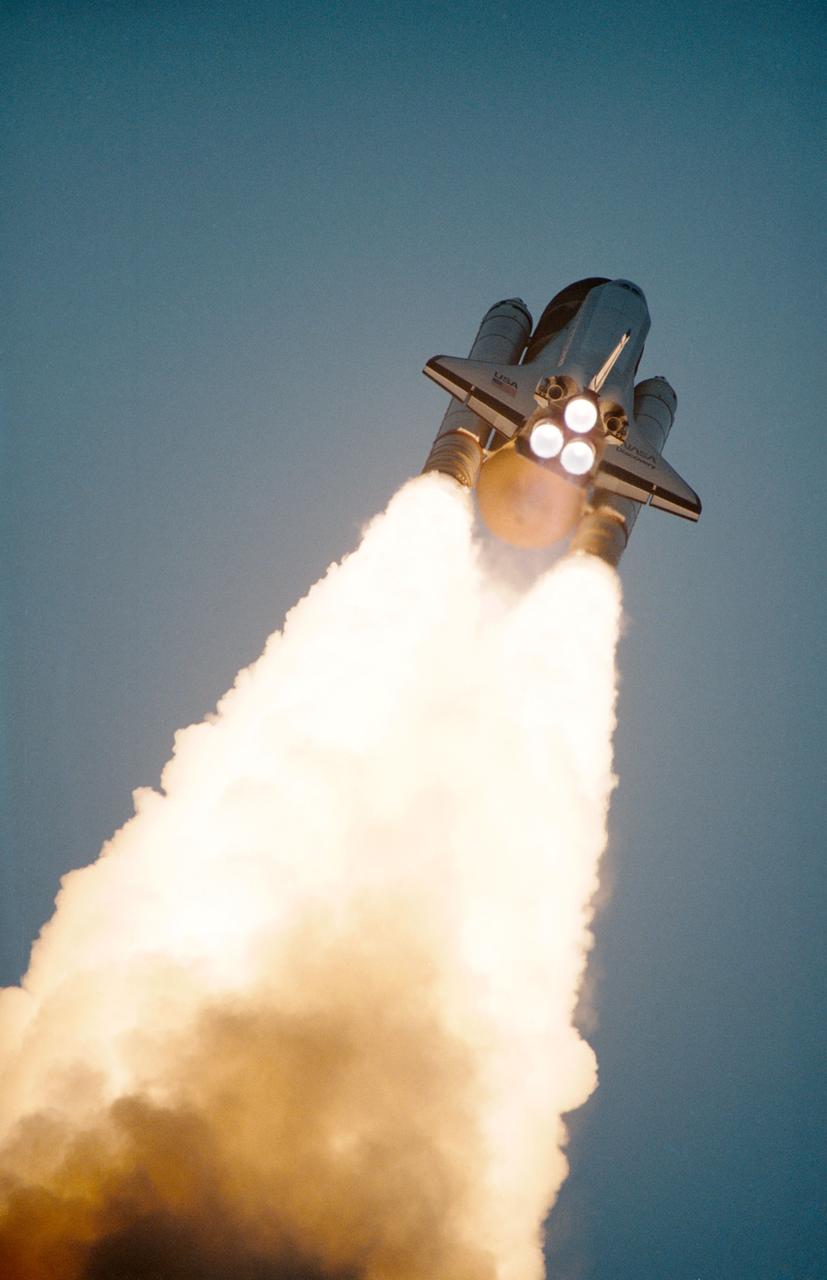
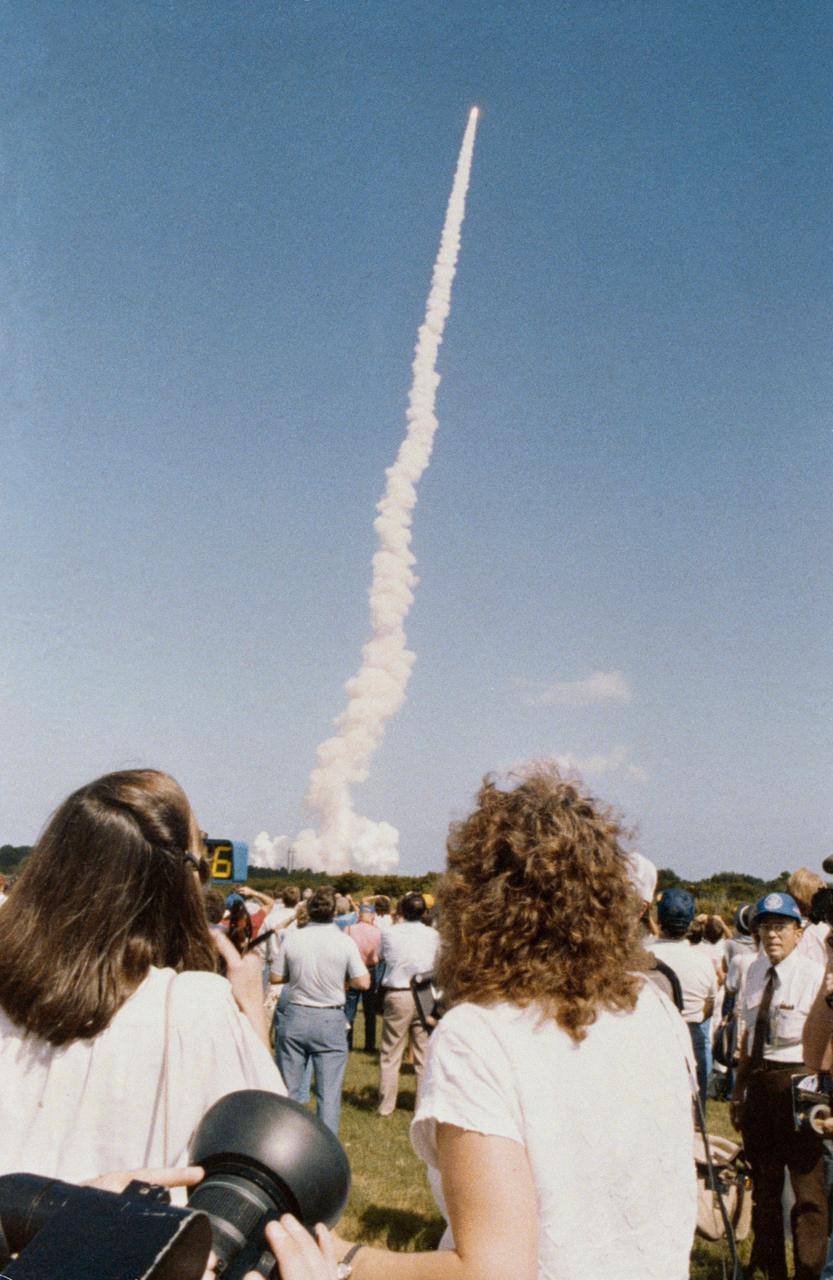
51D-9092 (12 April 1985) --- The Space Shuttle Discovery ascends the launch complex in Florida and heads through Atlantic skies toward its 51-D mission. The seven member crew lifted off at 8:59 a.m. (EST), April 12, 1985. This picture was made with a 35mm camera.
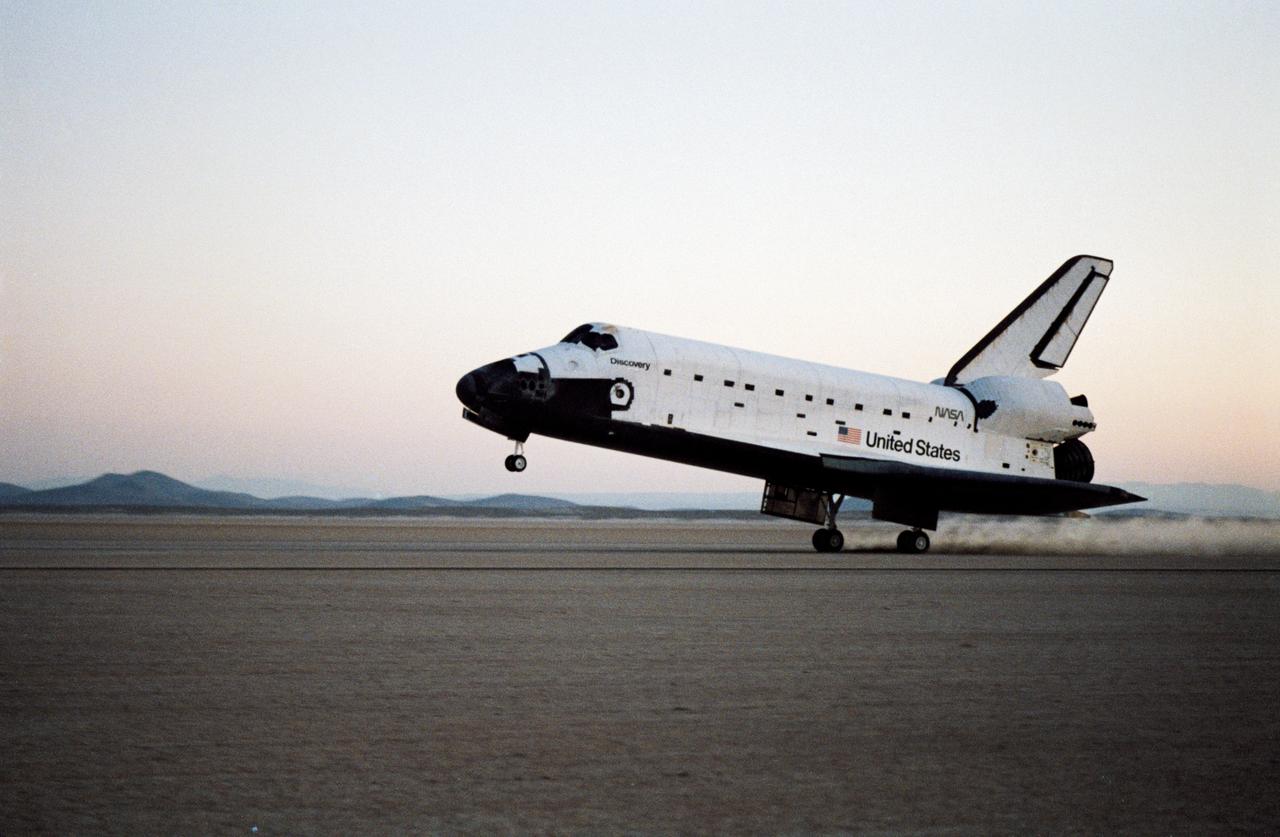
51I-S-225 (3 September 1985) --- The Space Shuttle Discovery lands on September 3, 1985 on Runway 23, Edwards Air Force Base, CA, to successfully complete the 51-I mission.

51D-9089 (S23-9089) (12 April 1985) --- The Space Shuttle mission 51-D crewmembers gather to eat breakfast prior to leaving for the launch pad to climb aboard Discovery for liftoff. From left to right Rhea Seddon, Donald E. Williams, Charles D. Walker, Karol J. Bobko, Jeffrey A. Hoffman, S. David Griggs and U.S. Sen. E.J. (Jake) Garn discuss phases of the upcoming flight. Desert for the yet-to-be served breakfast is the pictured decorate 51-D cake.

51D-9091 (S23-9091) (12 April 1985) --- The Space Shuttle mission 51-D crewmembers depart the Kennedy Space Center's operations and checkout building on their way to the launch pad for an early morning launch of Discovery. Leading the seven are Karol J. Bobko (center of frame), commander; and Donald E. Williams (right), pilot. Following are Rhea Seddon, Jeffrey A. Hoffman, S. David Griggs--all mission specialists--Charles D. Walker and U.S. Sen. E. J. (Jake) Garn (partly obscured behind Walker), both payload specialists. Partly visible in the doorway are Astronaut John W. Young and George W.S. Abbey, director of flight crew operations.
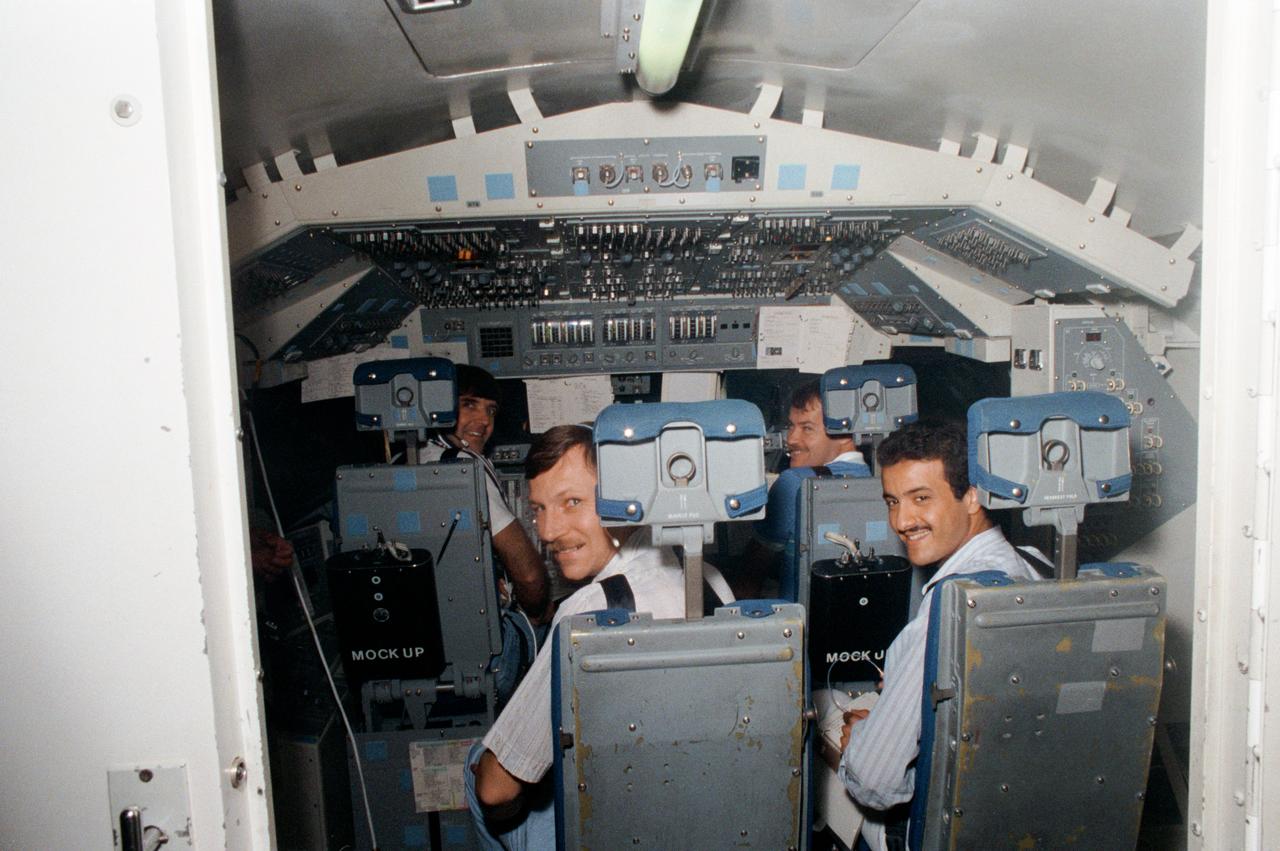
S85-31933 (17 May 1985) --- Four members of the STS 51-G crew participate in a training exercise in the shuttle mission simulation and training facility at the Johnson Space Center. Steven R. Nagel, left foreground, is a mission specialist for the flight, while Sultan Salman Abdelazize Al-Saud (right foreground) is a payload specialist. In the background are astronauts Daniel C. Brandenstein (left) in the commander's station and John O. Creighton in the pilot's position. Photo credit: NASA/ Otis Imboden of National Geographic
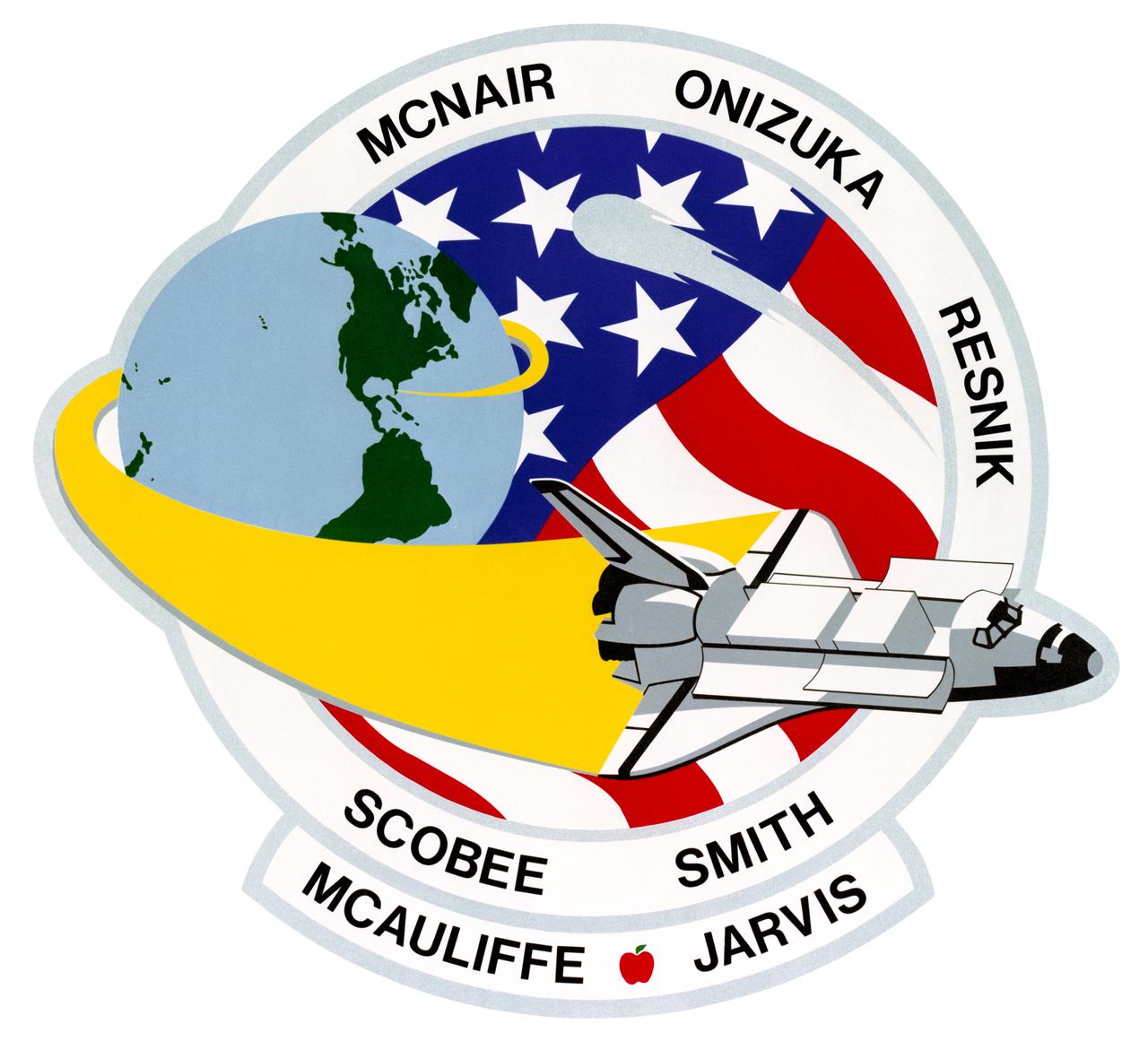
S85-46260 (20 Dec. 1985) --- Members of the STS-51L crew designed this patch which will represent their participation on NASA's late January 1986 mission aboard the space shuttle Challenger, depicted launching from Florida and soaring into space to carry out a variety of goals. Among the prescribed duties of the five astronauts and two payload specialists will be observation and photography of Halley's Comet, backdropped against the United States flag in the insignia. Surnames of the crew members encircle the scene, with the payload specialists being recognized below. Surname of the first teacher in space, Sharon Christa McAuliffe, is followed by a symbolic apple. Gregory Jarvis, representing Hughes, is the industrial payload specialist for the flight. NASA's crew members are astronauts Francis R. (Dick) Scobee, commander; Michael J. Smith, pilot; and Ronald E. McNair, Ellison S. Onizuka and Judith A. Resnik - all mission specialists. The NASA insignia design for space shuttle flights is reserved for use by the astronauts and for other official use as the NASA Administrator may authorize. Public availability has been approved only in the forms of illustrations by the various news media. When and if there is any change in this policy, which is not anticipated, the change will be publicly announced. Photo credit: NASA
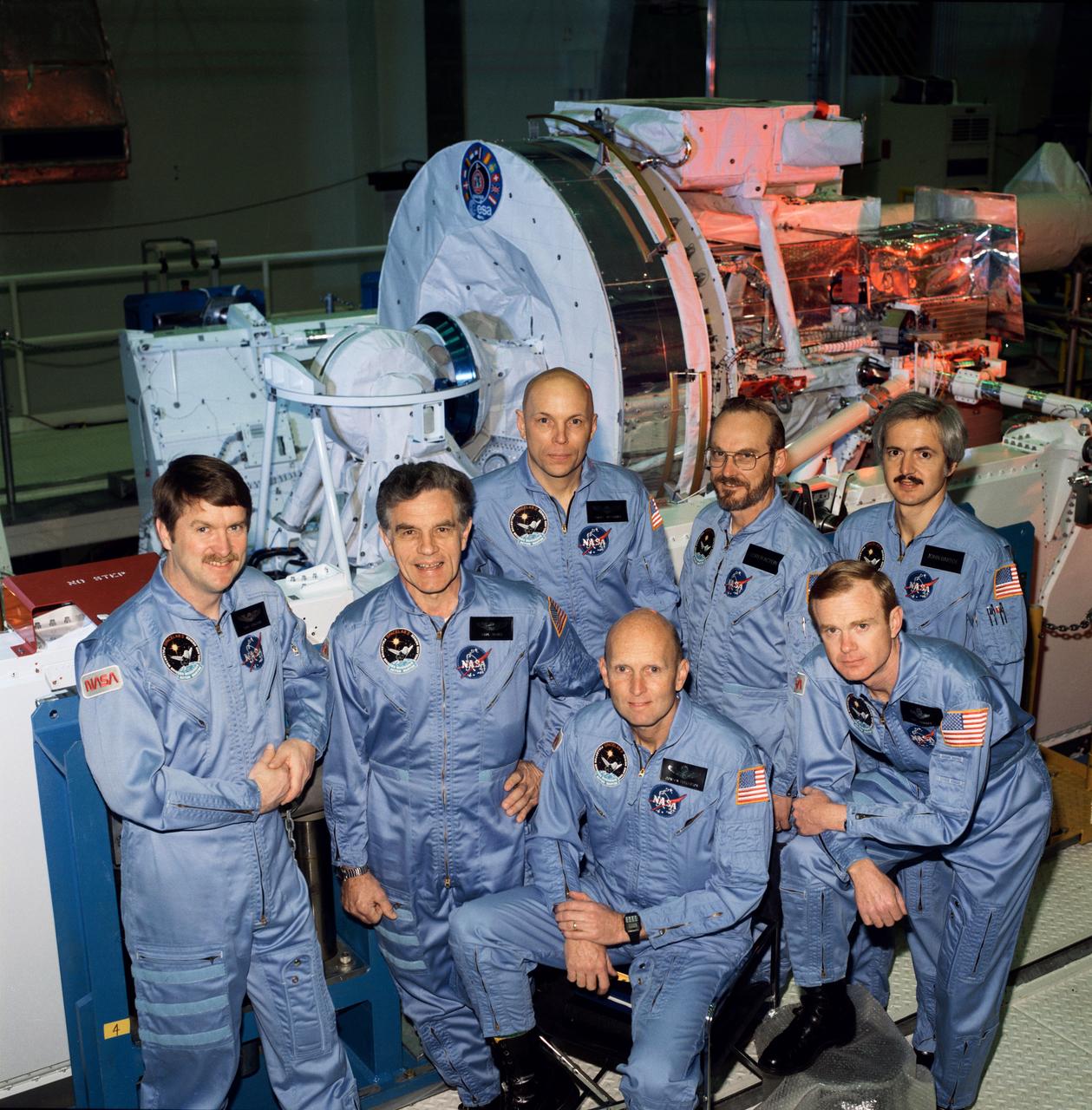
S85-29307 (May 1985) --- The seven crew members for the Space Shuttle STS-51F/Spacelab 2 mission take a pause from a KSC training session to pose for a pre-flight crew portrait. Astronauts C. Gordon Fullerton (kneeling center), mission commander; and Roy D. Bridges (kneeling right), pilot; are flanked by the payload specialists and mission specialists for the mission. Standing (left to right) are astronauts Anthony W. England, Karl J. Henize and Story Musgrave - all mission specialists; and payload specialist Loren Acton and John-David Bartoe.
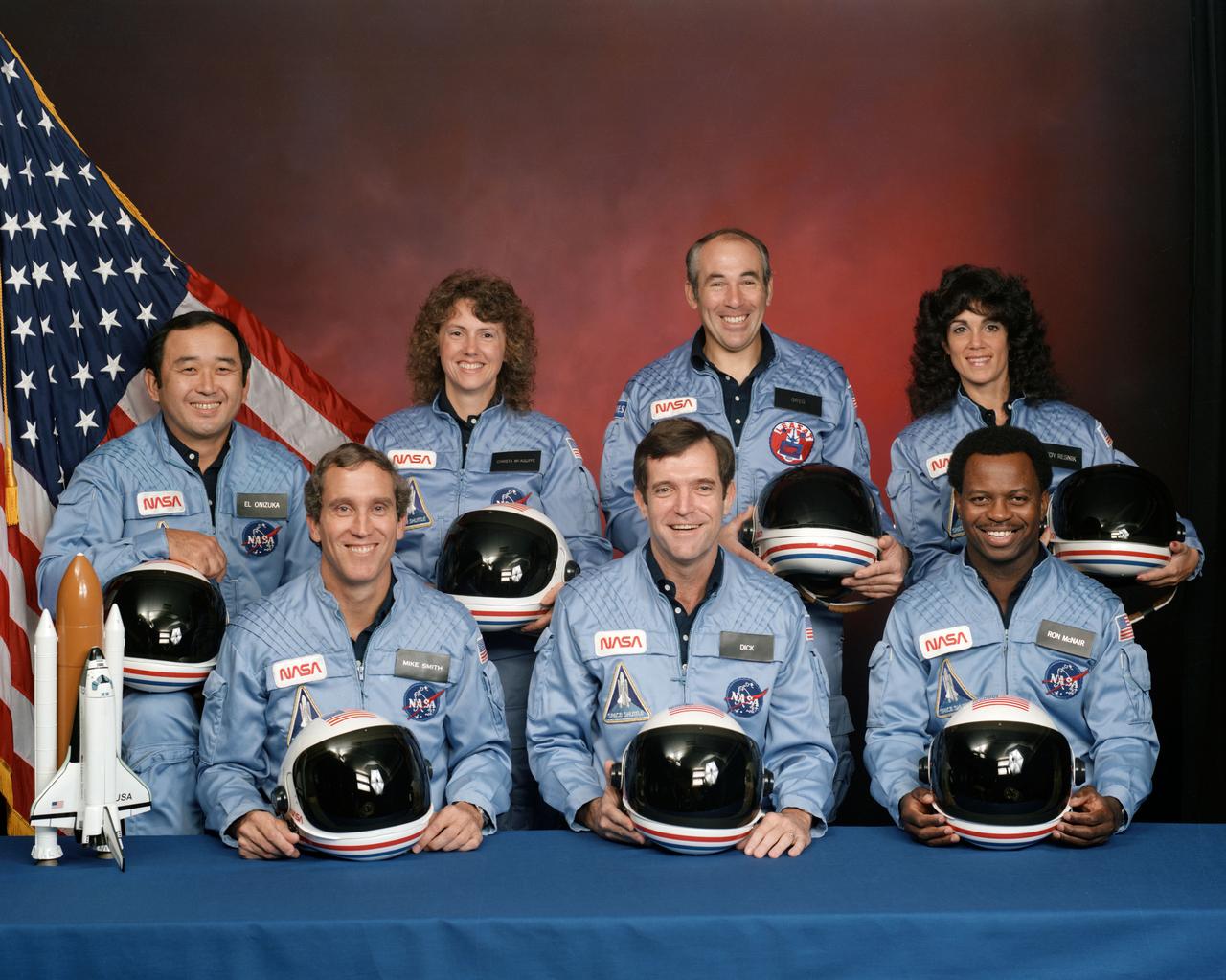
S85-44253 (November 1985) --- Five astronauts and two payload specialists make up the crew, scheduled to fly aboard the space shuttle Challenger in January of 1986. Crew members are (left to right, front row) astronauts Michael J. Smith, Francis R. (Dick) Scobee and Ronald E. McNair; Ellison S. Onizuka, Sharon Christa McAuliffe, Gregory Jarvis and Judith A. Resnik. McAuliffe and Jarvis are payload specialists, representing the Teacher in Space Project and Hughes Company, respectively. Photo credit: NASA (NOTE: On Jan. 28, 1986, the seven Challenger crew members lost their lives following an explosion during the launch phase of the STS-51L mission.)

S85-28647 (28 Feb 1985) --- The seven members of the STS-51D mission are pictured in the midst of a busy training schedule in preparation for NASA's 16th Space Shuttle flight, currently planned for April of this year. The crewmembers are (front row, left to right), Karol J. Bobko, commander; Donald E. Williams, pilot; Rhea Seddon and Jeffrey A. Hoffman, mission specialists; and (back row) S. David Griggs, mission specialist; and Charles D. Walker and United States Senator Jake Garn (Republican - Utah) both payload specialists. Walker represents McDonnell-Douglas Corporation. EDITOR'S NOTE: Mission specialist S. David Griggs died June 17, 1989, near Earle, Arkansas, in the crash of a World-War-II-era training plane.
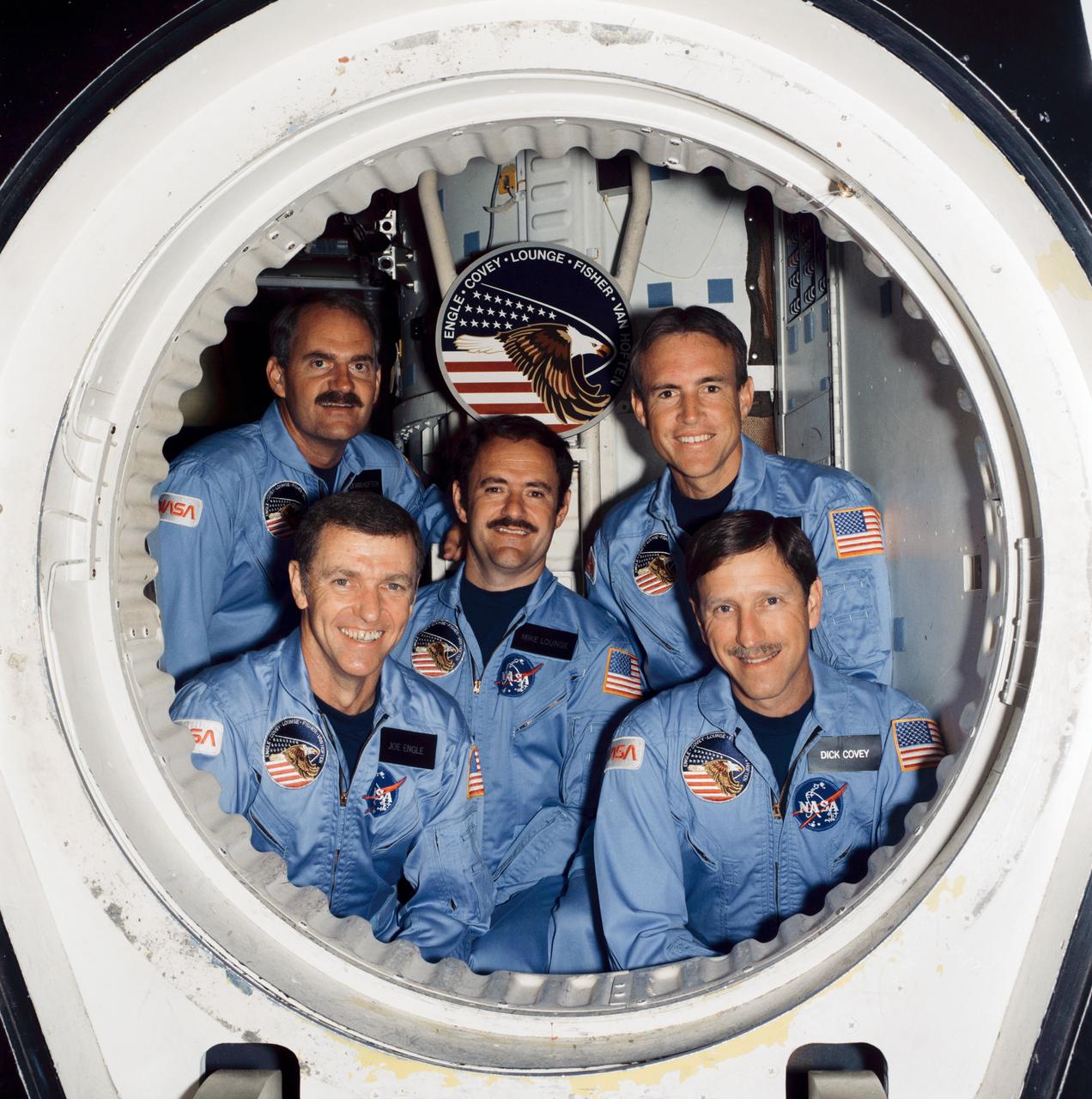
S85-36062 (1 July 1985) --- These five NASA astronauts make up the crew for the mission STS-51I, scheduled for launch in August of this year. Taking a break from rehearsals in the crew compartment trainer in the Shuttle Mockup and Integration Laboratory at JSC are astronauts Joe H. Engle (front left), crew commander; Richard O. Covey (front right), pilot; and (back row, left-to-right) astronauts James D. van Hoften, John M. (Mike) Lounge and William F. Fisher -- all mission specialists.

S84-43708 (11 Oct 1984) --- These five crewmembers are scheduled to fly aboard the Space Shuttle Challenger for Mission STS-51C, scheduled for January of next year. Astronauts Thomas K. (Ken) Mattingly II (kneeling right) and Loren J. Shriver (kneeling left) are commander and pilot, respectively. Astronauts James F. Buchli (standing center) and Ellison L. Onizuka (right) are mission specialists. Gary E. Payton of the U.S. Air Force, left, is payload specialist. The crewmembers, holding their launch and entry helmets, were photographed with their crew insignia.
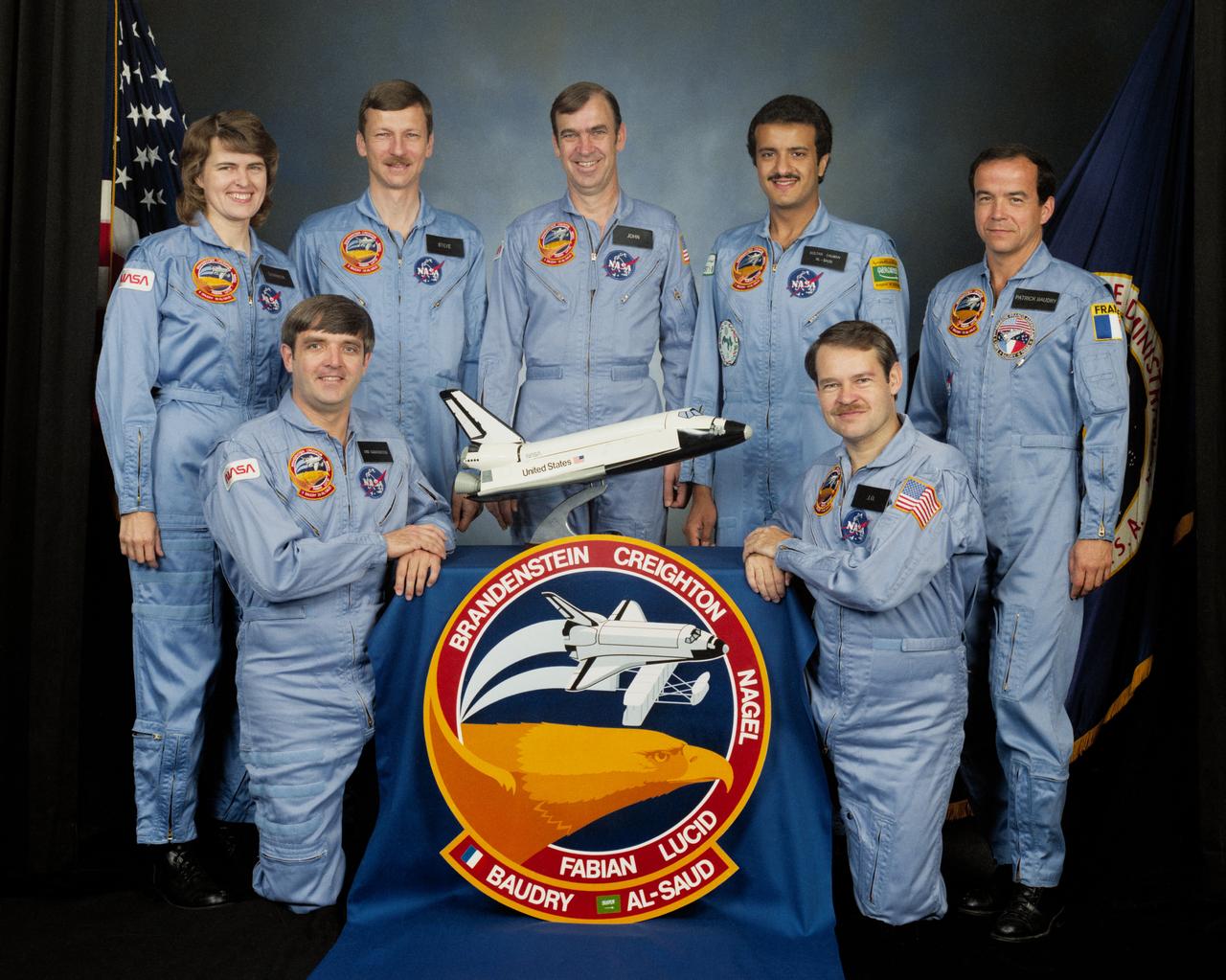
S85-32877 (20 May 1985) --- Seven 51-G crew members take a break from training and other preparations for their June flight aboard the Discovery to pose for a group photograph. Kneeling in front are astronauts Daniel C. Brandenstein (left) and John O. Creighton, commander and pilot, respectively. Astronauts Shannon W. Lucid, Steven R. Nagel and John M. Fabian, mission specialists (l.-r.) join Payload Specialists Sultan Salman Abdelazize Al-Saud (second right) and Patrick Baudry on the back row. Photo credit: NASA
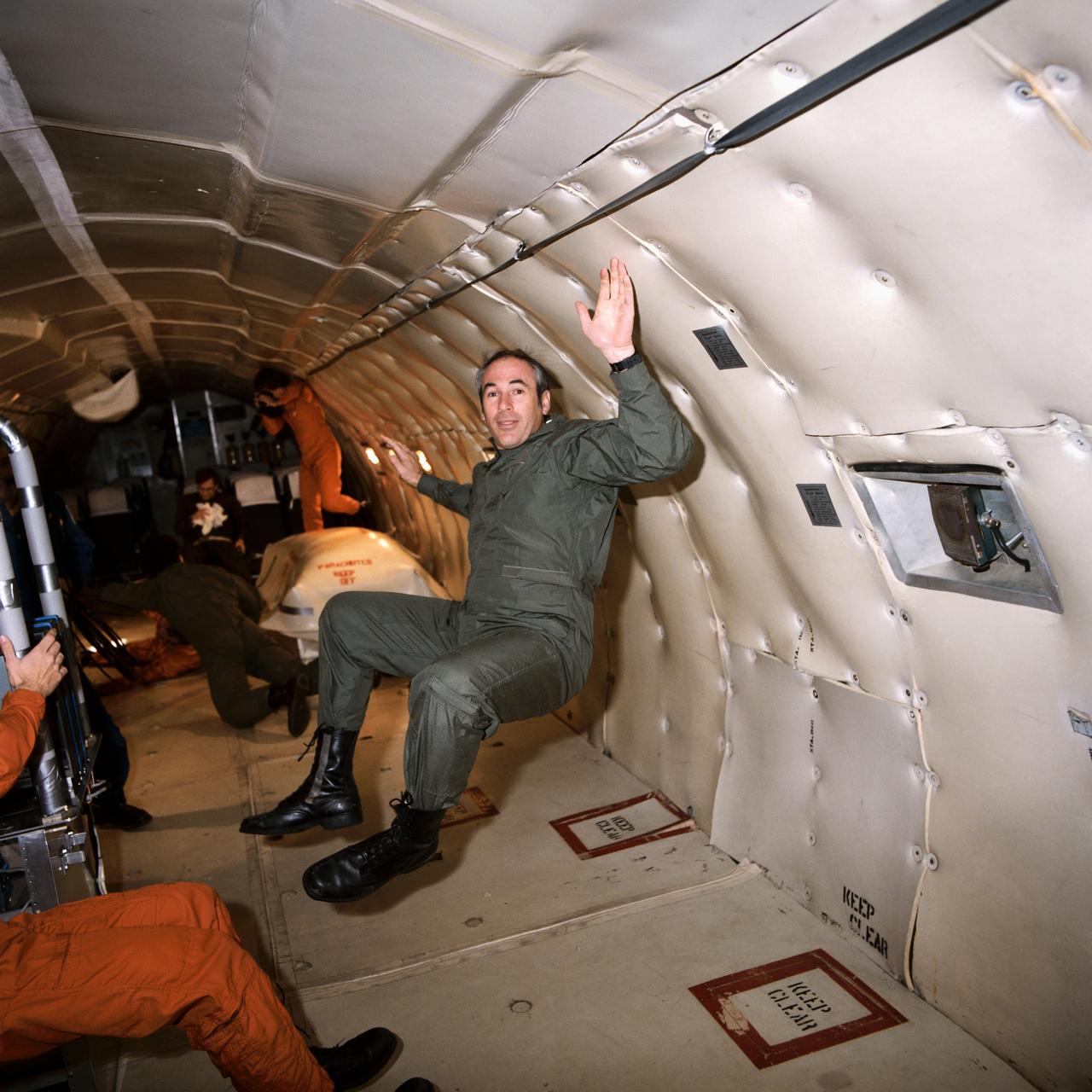
S85-26106 (25 Jan. 1985) --- Astronaut Gregory Jarvis gets a familiarization session in weightlessness aboard a KC-135 "zero gravity" aircraft. Jarvis was originally assigned as payload specialist to STS-51D but was reassigned to STS-51L. Photo credit: NASA
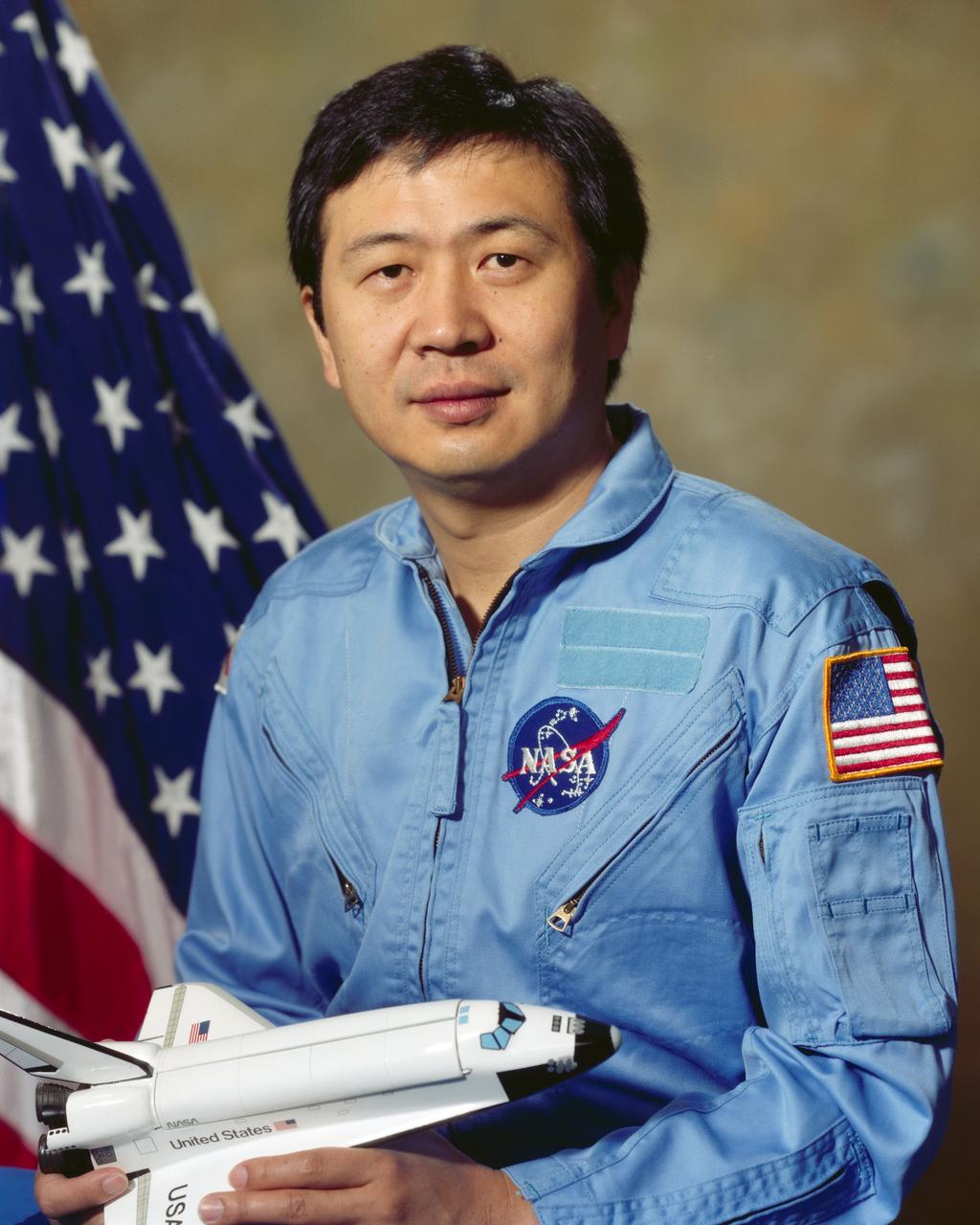
S84-36141 (20 June 1984) --- Astronaut Taylor E. Wang, payload specialist.
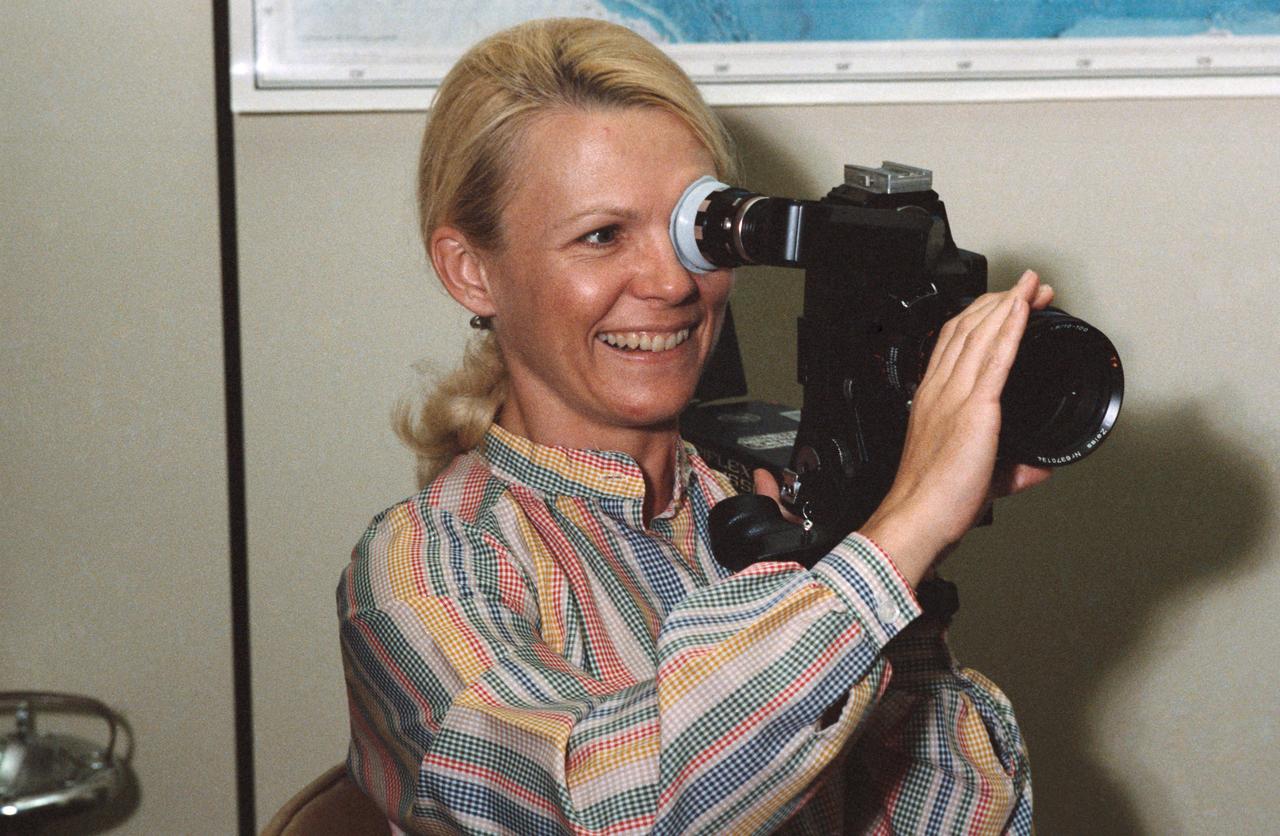
View of STS 51-D mission specialist Rhea Seddon training with the Arriflex 16mm camera.
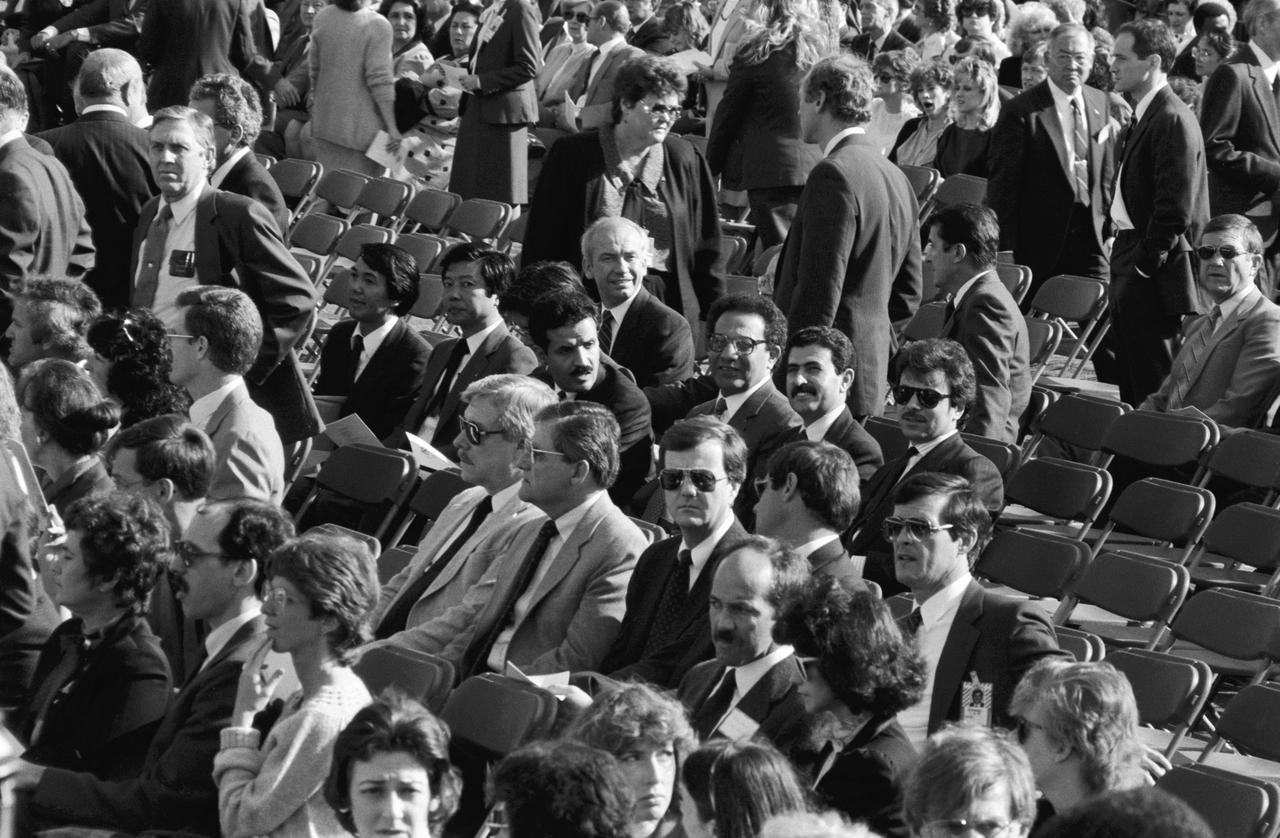
View of the audience at the memorial service at JSC for the Crew of STS 51-L. Sultan Salman Abdelazize Al-Saud of Saudi Arabia is seen in the center of the view.
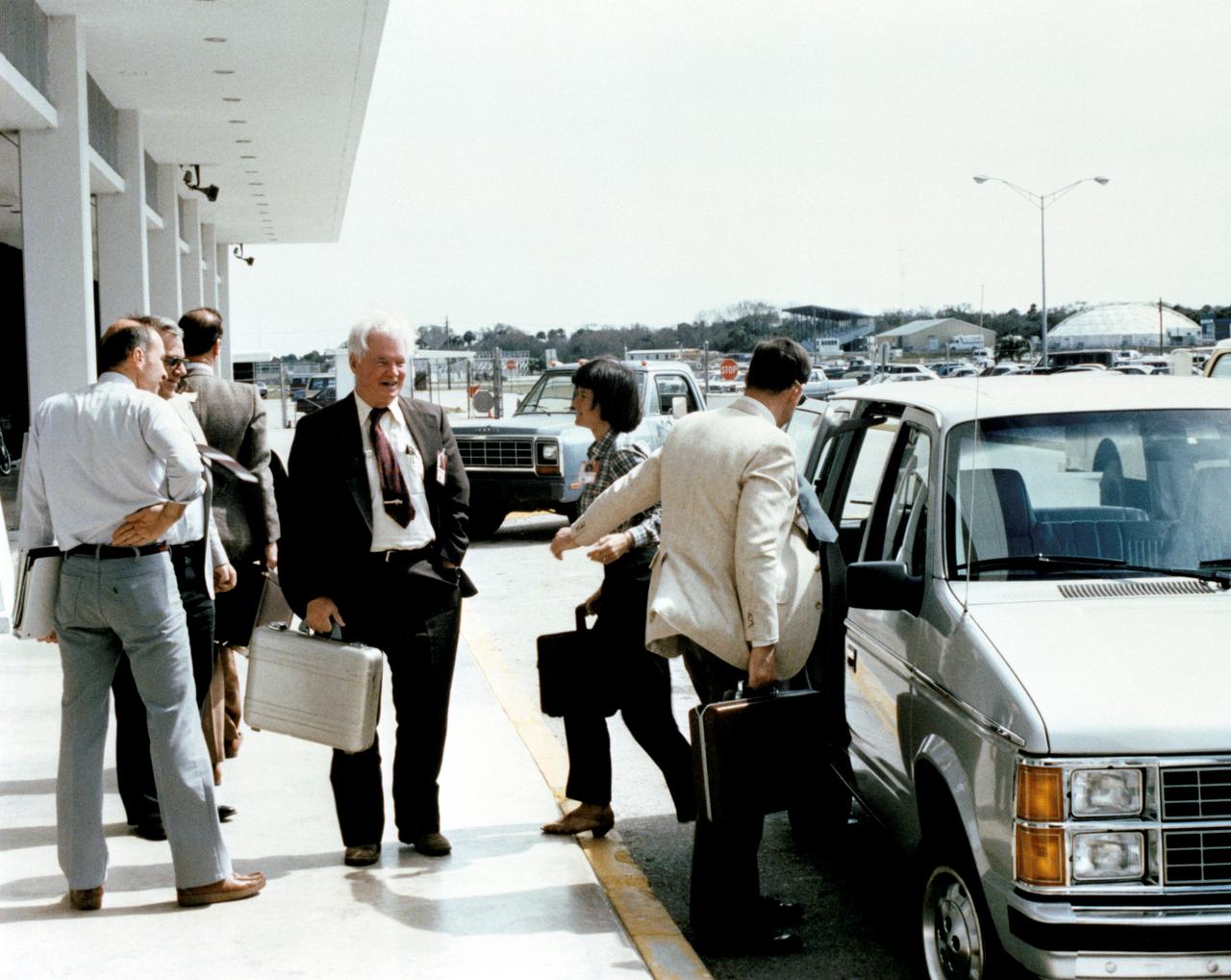
51L-10166 (4 March 1986) --- Members of the Presidential Commission on the space shuttle Challenger accident arrive at the Launch Control Center at Kennedy Space Center (KSC). Commission members present are Robert Hotz (center) and Dr. Sally Ride. Others pictured are John Chase, staff assistant to the Commission (far right) and from left to right: Bob Sieck, Director of Shuttle operations; Jack Martin and John Fabian.

51G-21-011 (17-24 June 1985) --- Group portrait on flight deck of all seven STS-51G crew members. Left to right (front) are John O. Creighton, Shannon W. Lucid, Daniel C. Brandenstein; and (back row) are Sultan Salman Abdelazize Al-Saud, Steven R. Nagel, John M. Fabian and Patrick Baudry. Photo credit: NASA
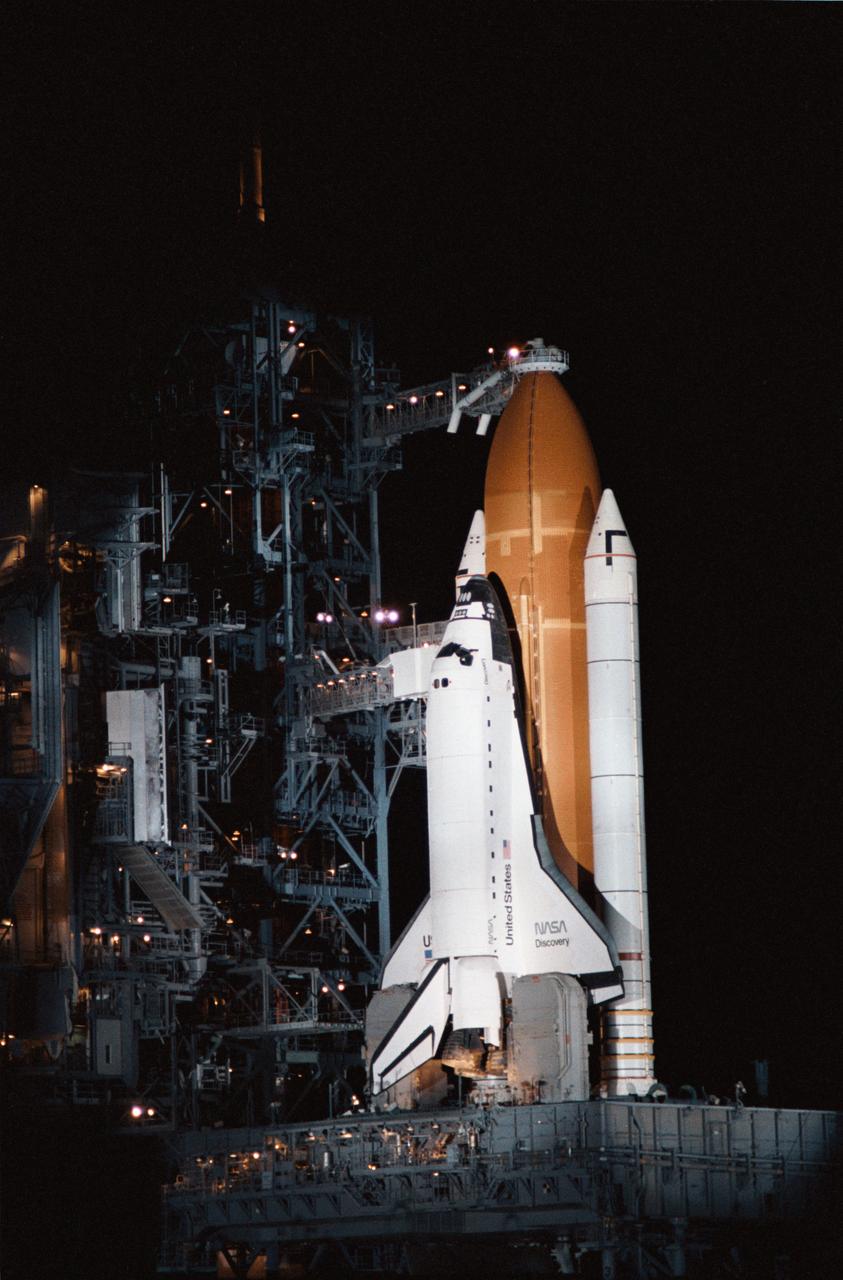
View of the shuttle Discovery on the launch pad just prior to STS 51-D launch. The surrounding area is dark, with the launch complex accented by spotlights.
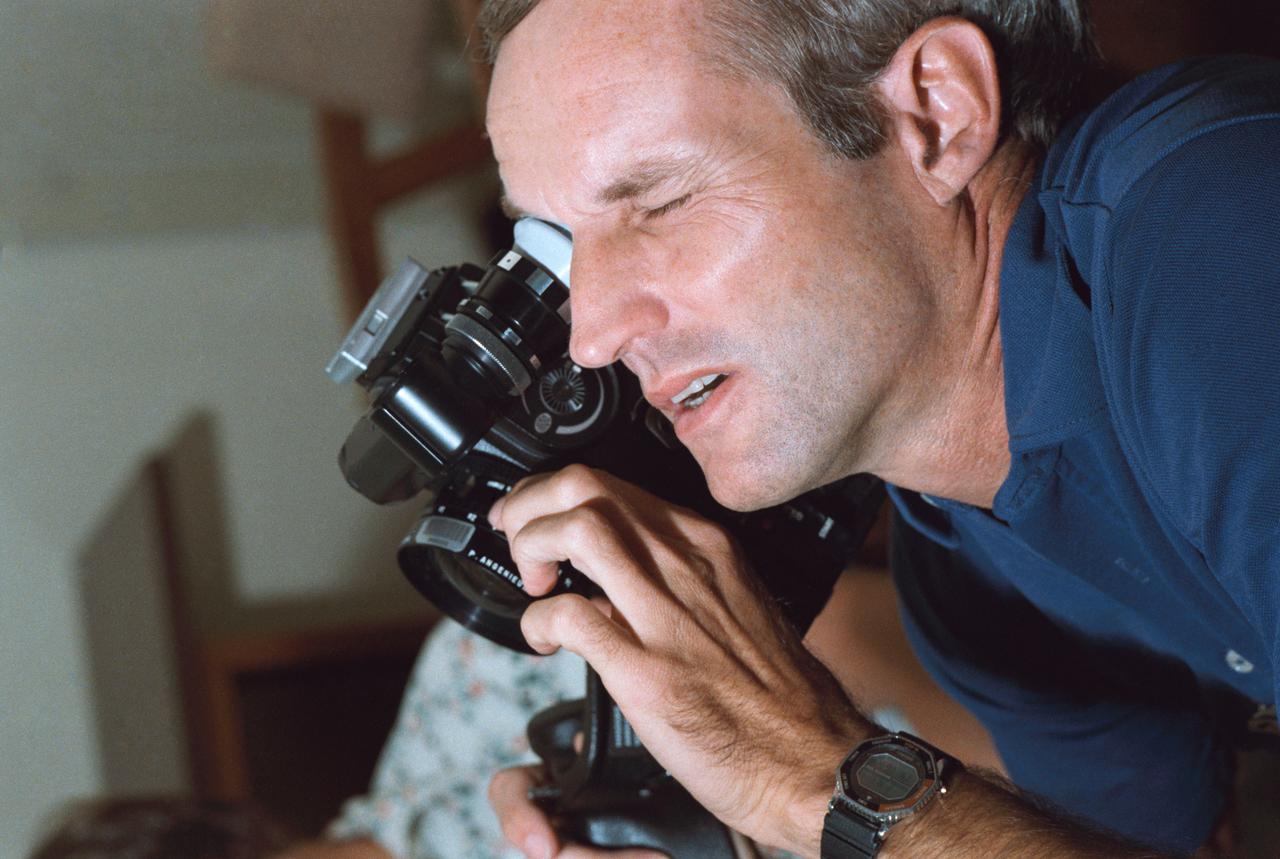
View of STS 51-D crew commander Karol Bobko training with the Arriflex 16mm camera.
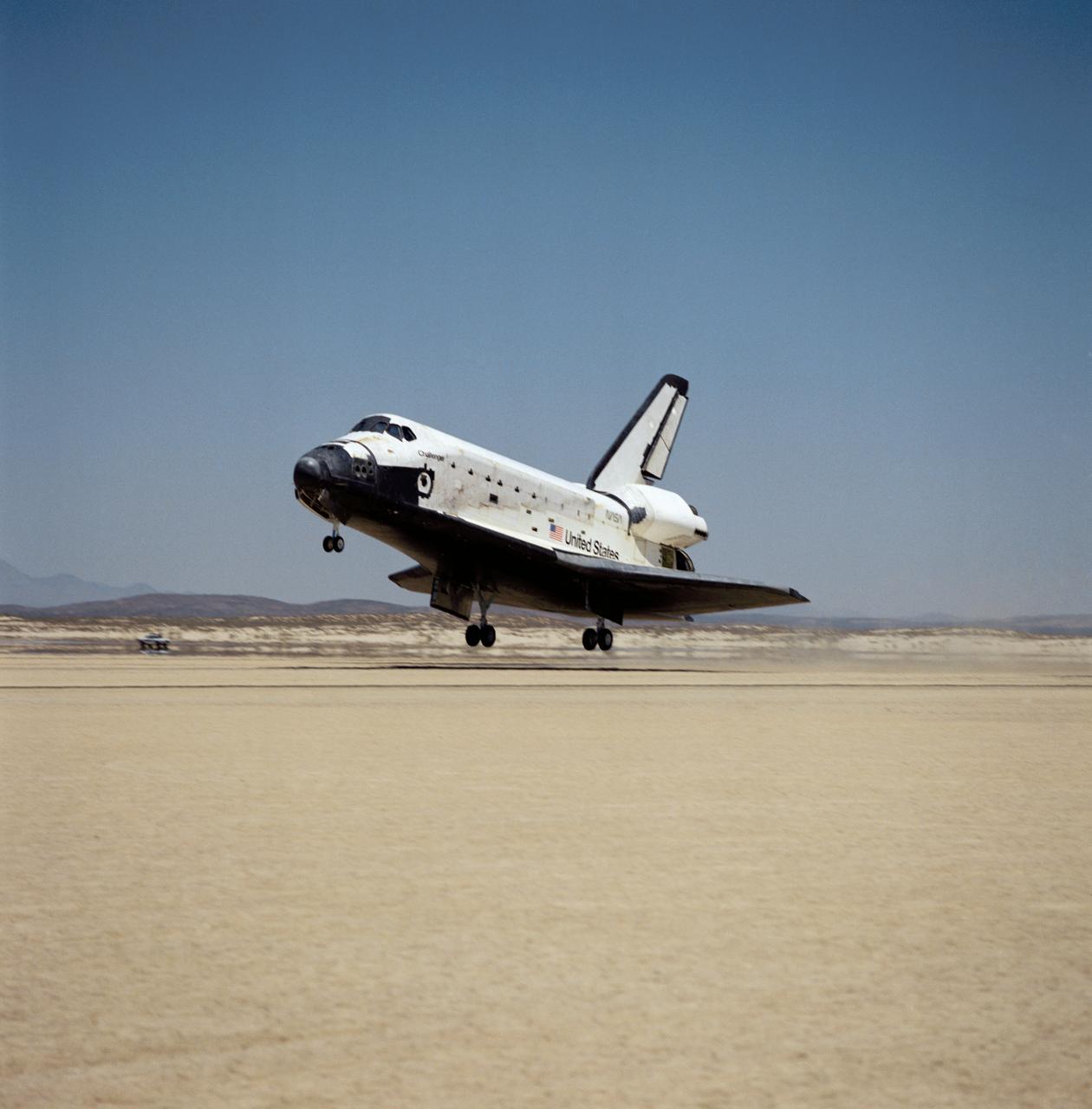
51F-S-160 (6 Aug 1985) --- The Space Shuttle Challenger is moments away from touchdown on the dry lake bed at Edwards Air Force Base in California in this ground-level view. The early afternoon landing brought to a successful close eight days in space for seven crewmembers and a battery of scientific experiments aboard.
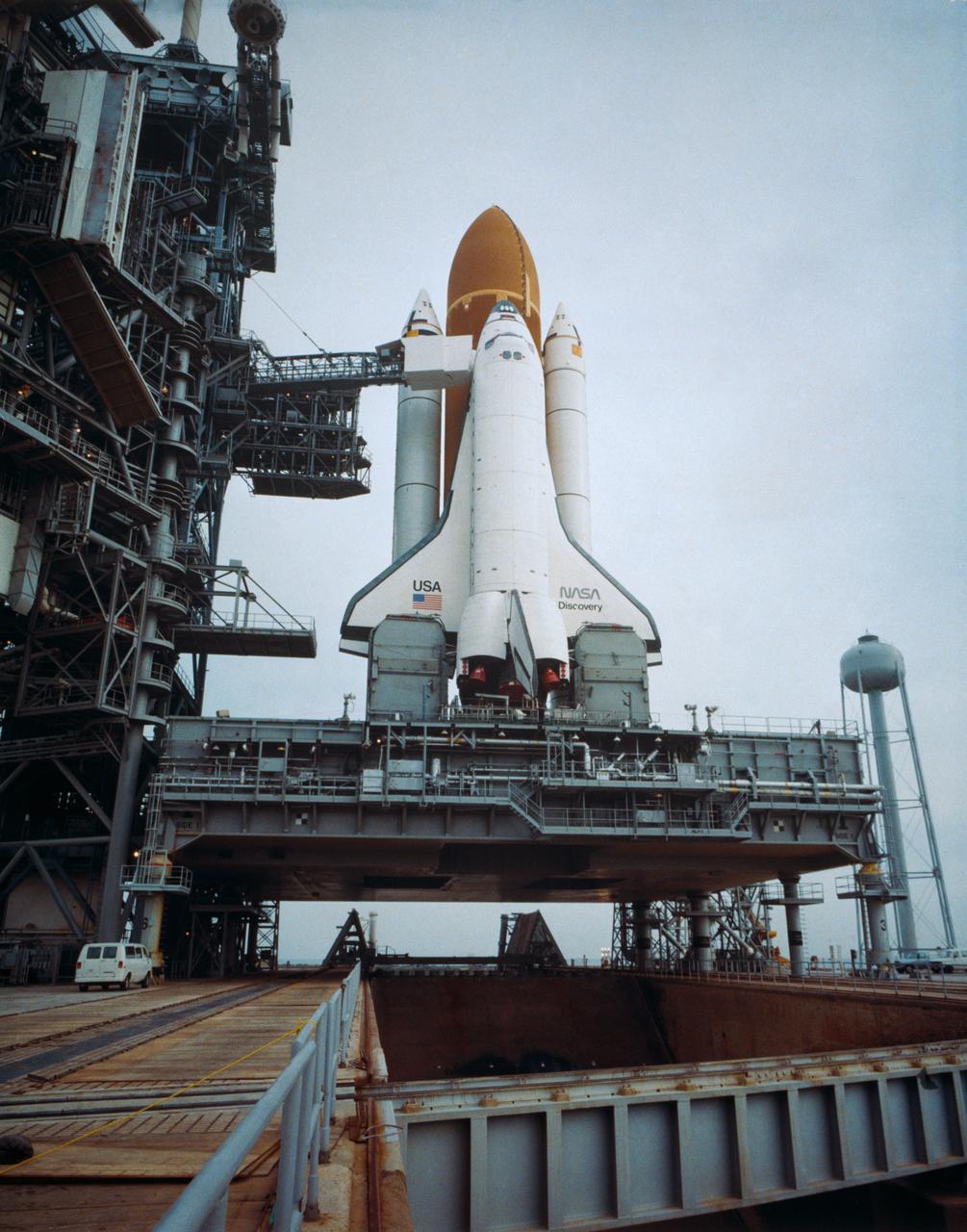
Shuttle Discovery on the launch pad for the STS 51-D mission.
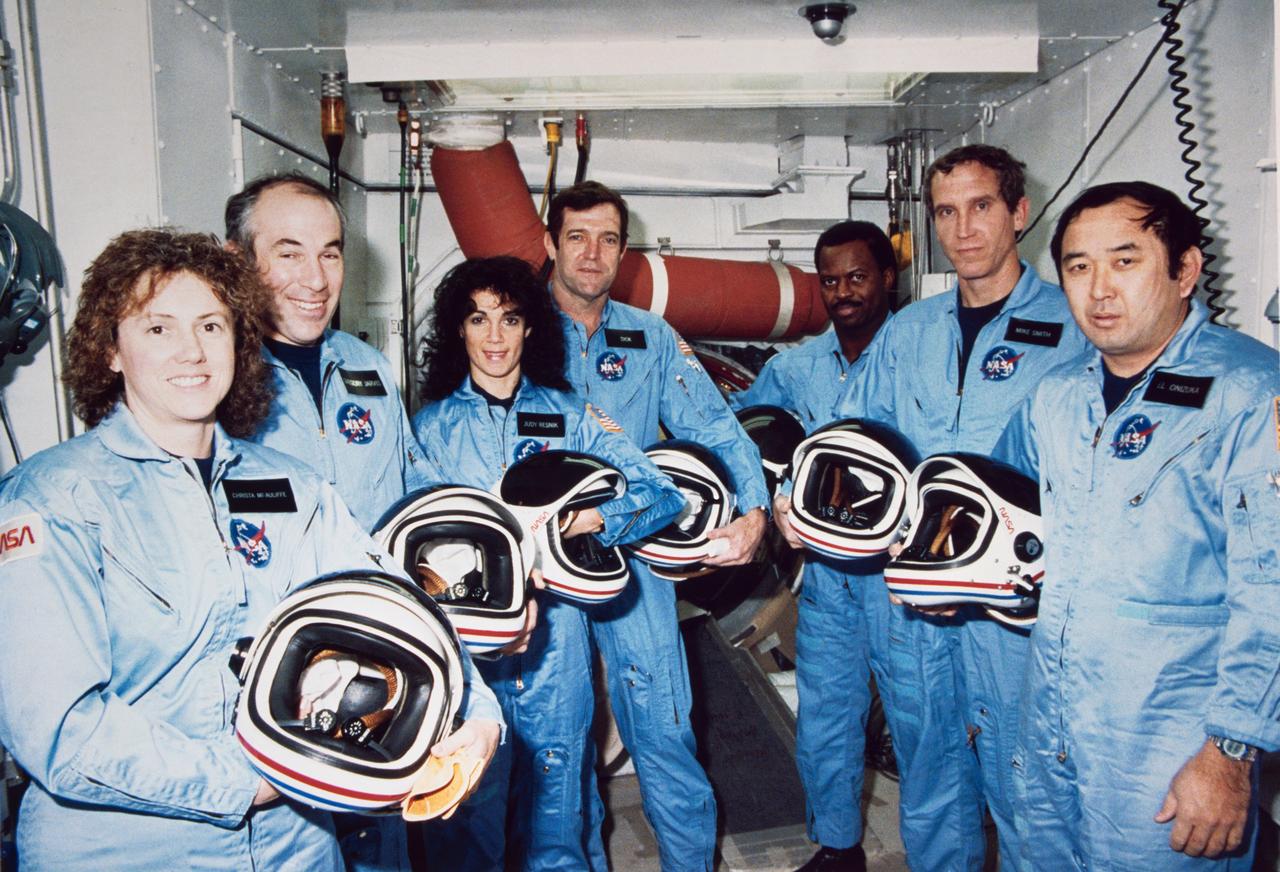
S86-30460 (9 Jan. 1986) --- NASA's STS-51L crew members pose for photographs during a break in countdown training at the White Room, Launch Complex 39, Pad B. Left to right are Teacher-in-Space payload specialist Sharon Christa McAuliffe; payload specialist Gregory Jarvis; and astronauts Judith A. Resnik, mission specialist; Francis R. (Dick) Scobee, mission commander; Ronald E. McNair, mission specialist; Mike J. Smith, pilot; and Ellison S. Onizuka, mission specialist. EDITOR'S NOTE: The STS-51L crew lost their lives in an explosion, onboard the space shuttle Challenger, following launch Jan. 28, 1986. Photo credit: NASA
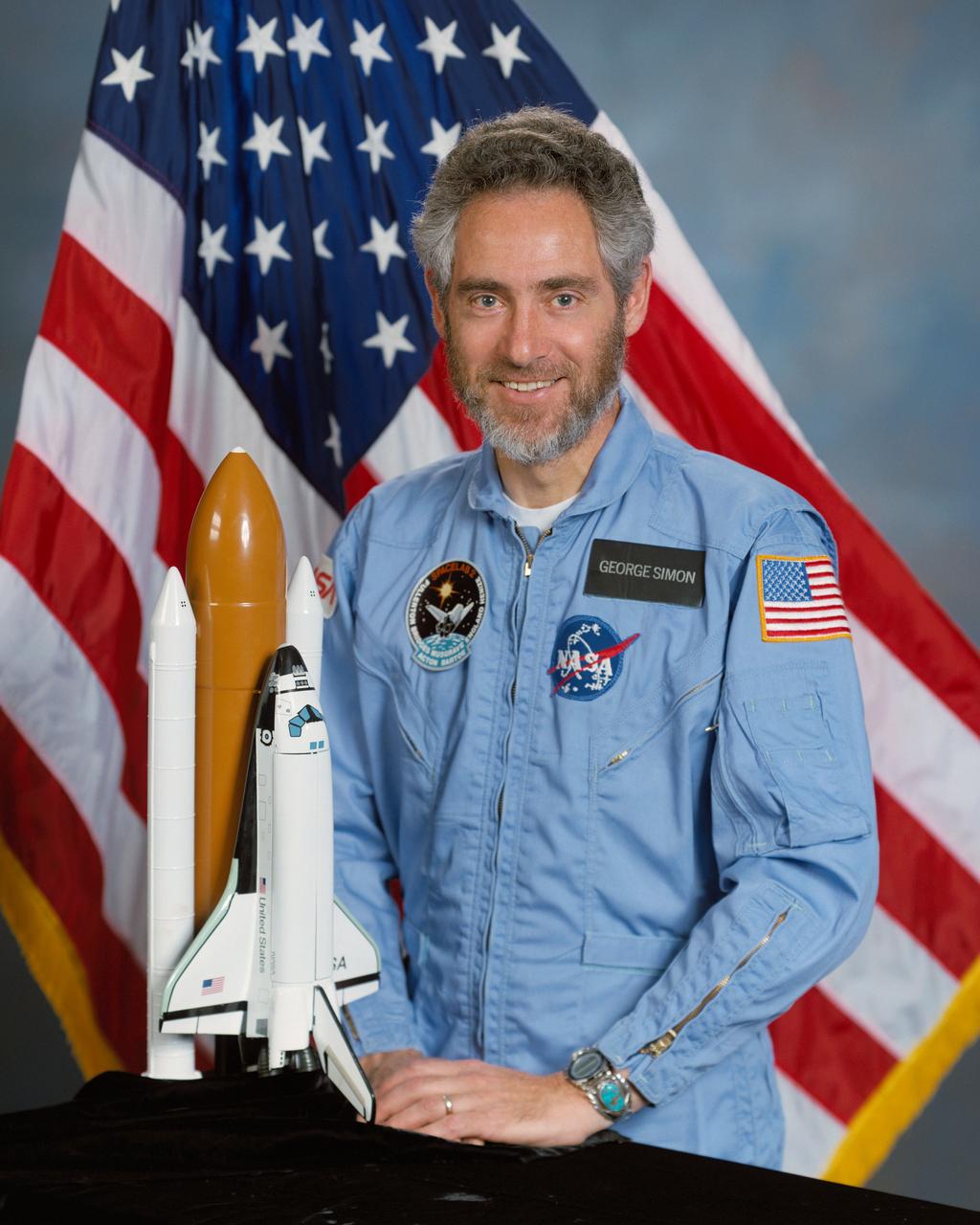
Portrait of STS 51-F Spacelab backup payload specialist George Simon, in blue flight suit
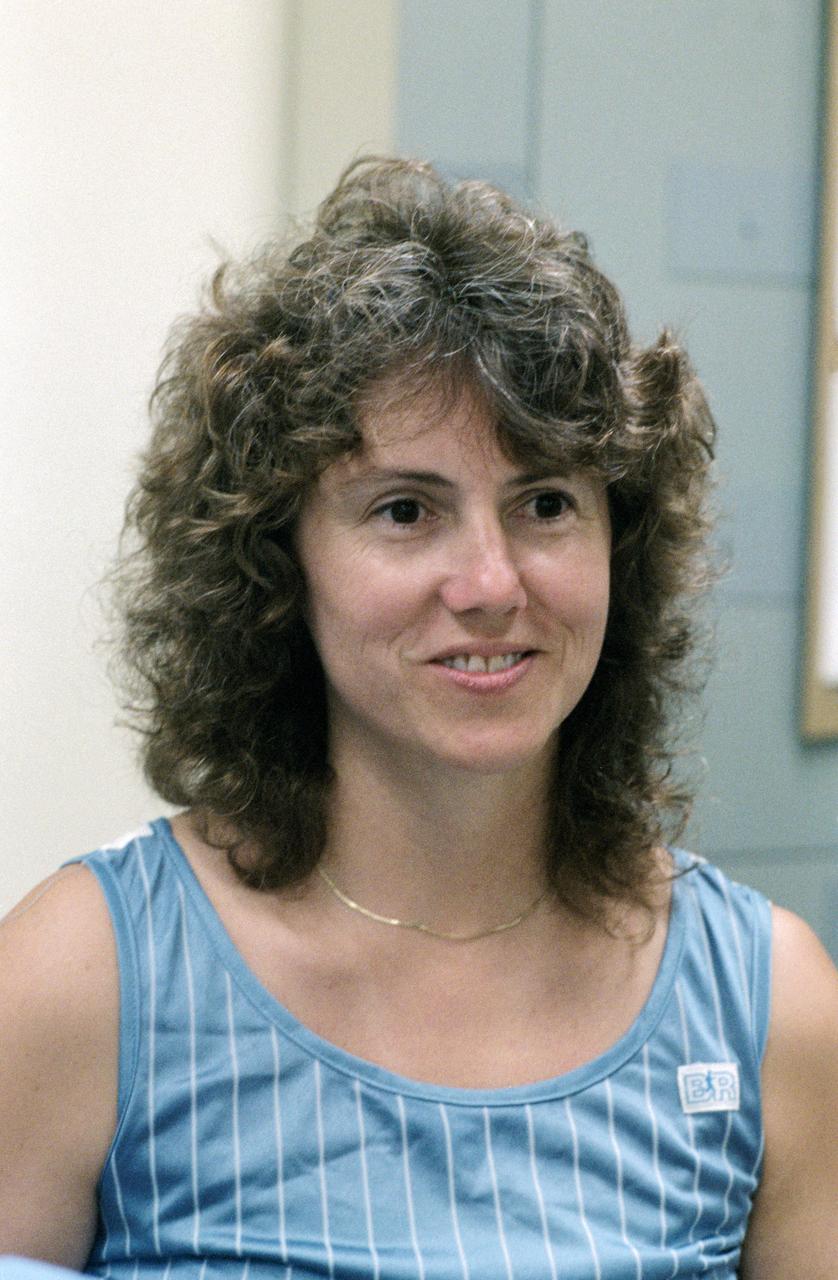
S85-37677 (8-12 July 1985) --- Sharon C. (Christa) McAuliffe of Concord High, Concord, New Hampshire, talks to nurse during physiological testing on first day at Johnson Space Center (JSC). Christa McAuliffe was eventually chosen as the first Teacher in Space and was a member of the seven-member Challenger shuttle crew which died tragically in the explosion of the spacecraft during the launch of STS-51L from the Kennedy Space Center about 11:40 a.m., EST, on Jan. 28, 1986. The explosion occurred 73 seconds into the flight as a result of a leak in one of two Solid Rocket Boosters that ignited the main liquid fuel tank. The crew members of the Challenger represented a cross-section of the American population in terms of race, gender, geography, background, and religion. The explosion became one of the most significant events of the 1980s, as billions around the world saw the accident on television and empathized with any one of the several crew members killed. Photo credit: NASA
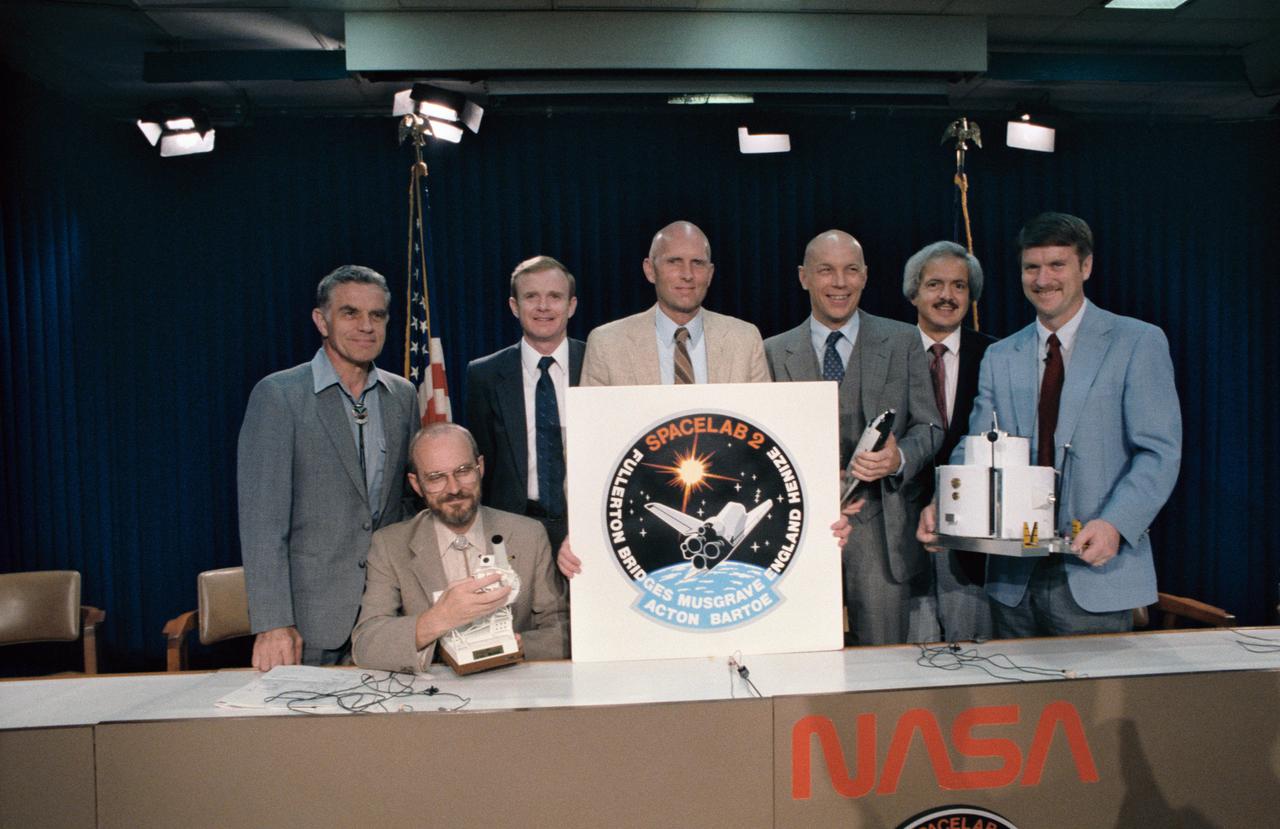
S85-36655 (24 June 1985) --- The seven crewmembers for STS 51-F/Spacelab 2 pose for photographers following their pre-flight press conference in the Johnson Space Center's public affairs facility. Standing, l.-r., are Karl J. Henize, mission specialist; Roy D. Bridges, pilot; C. Gordon Fullerton, mission commander; F. Story Musgrave, mission specialist; John-David Bartoe, payload specialist; and Anthony W. England, mission specialist. Loren W. Acton, payload specialist, is seated. Launch is scheduled for July of this year.
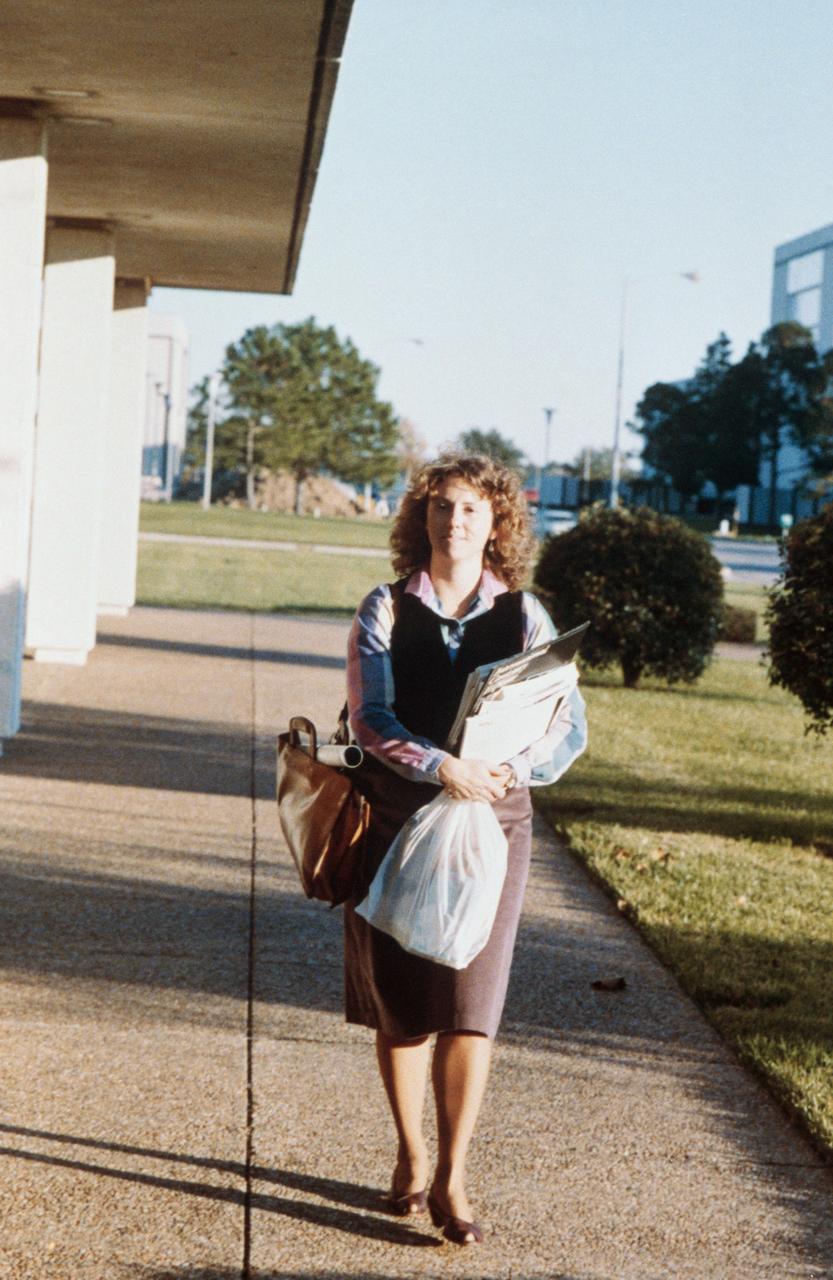
S86-25279 (November 1985) --- Sharon Christa McAuliffe, STS-51L payload specialist, has homework of her own to do as she prepares for a January 1986 flight. Photo by Keith Meyers of the New York Times. Photo credit: NASA
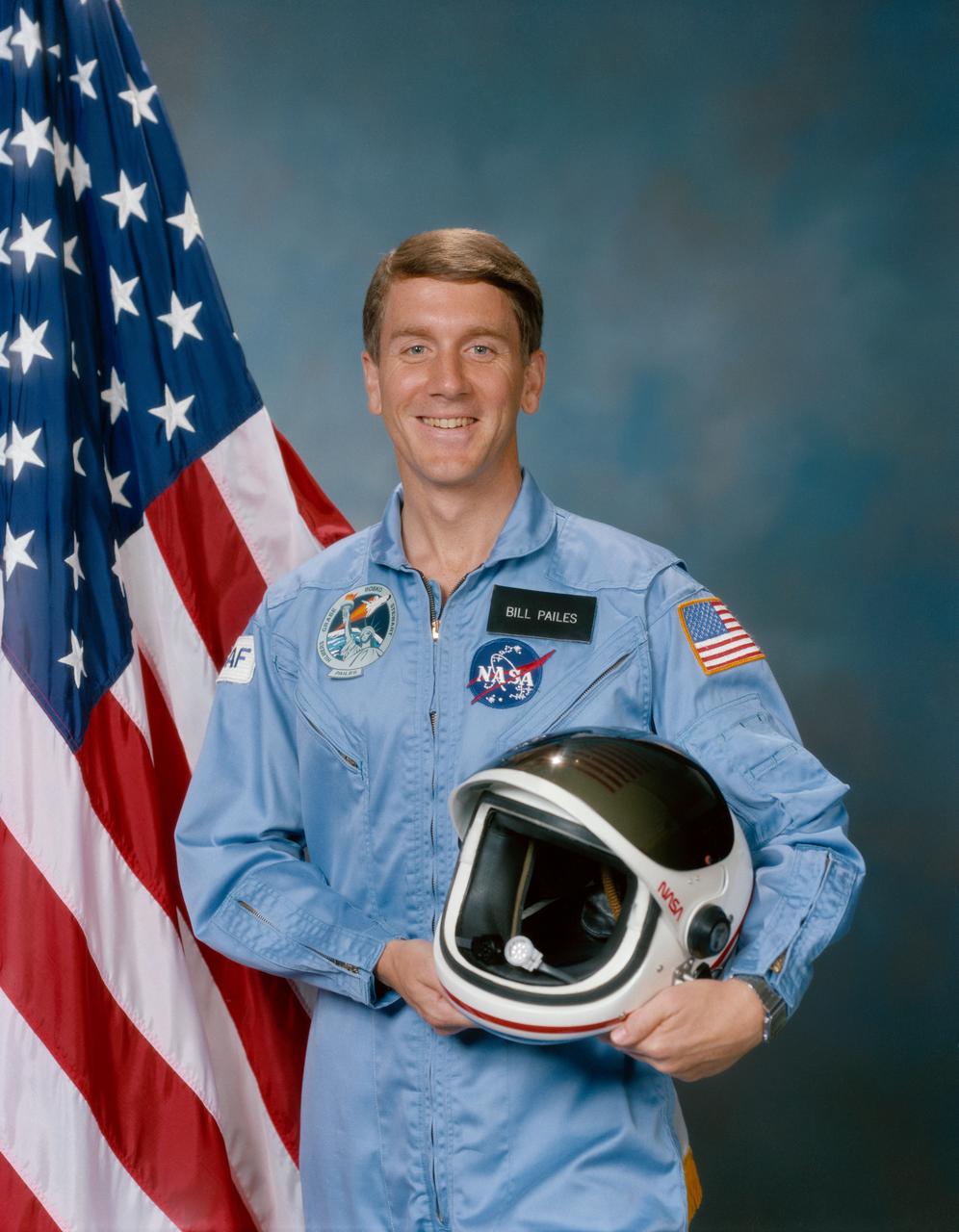
S85-39868 (1985) --- William A. Pailes (Major USAF), Payload specialist on 51J.
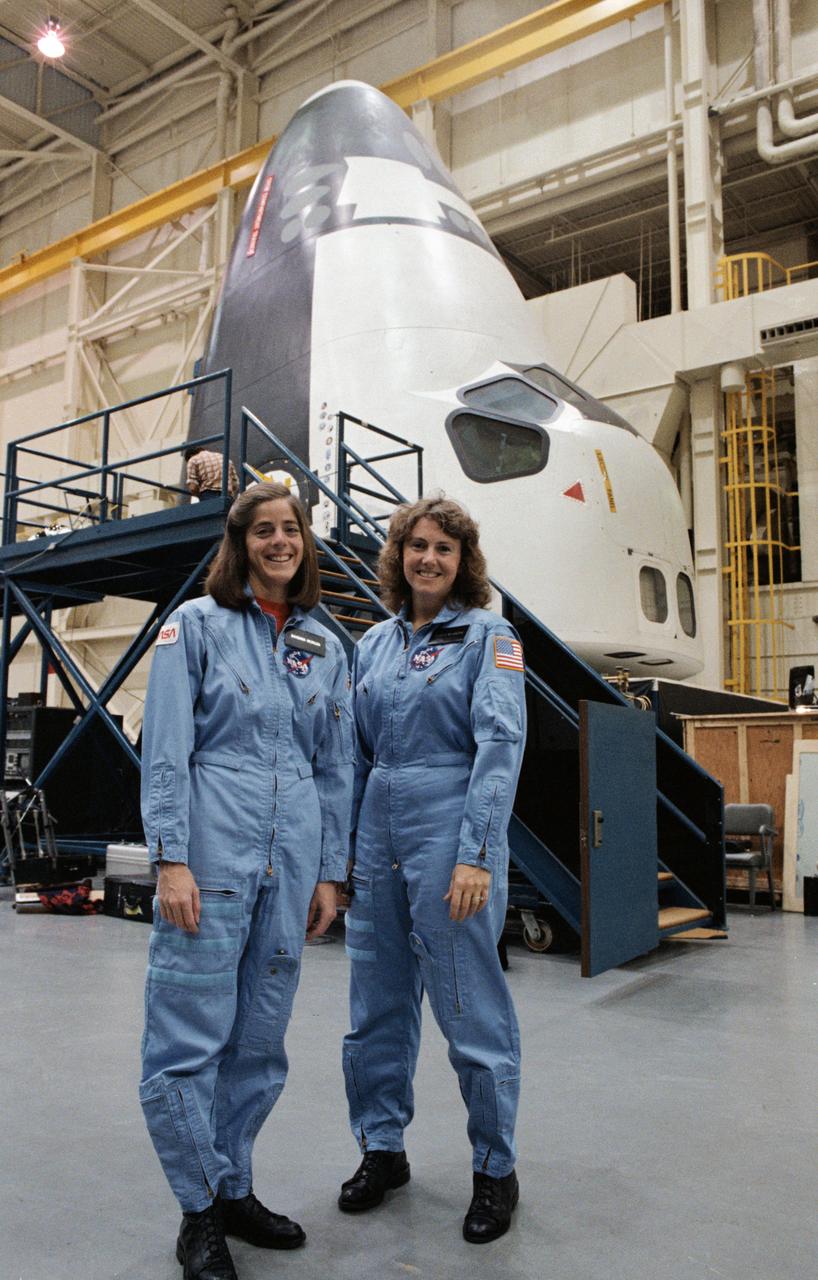
S85-46693 (26 Dec. 1985) --- Sharon Christa McAuliffe (right), the Teacher-in-Space payload specialist assigned to the STS-51L mission, and her backup, Barbara R. Morgan pose for photos after training in the shuttle mock-up and integration laboratory at JSC. The shuttle crew compartment, in a launch mode, can be seen in the background. Photo credit: NASA
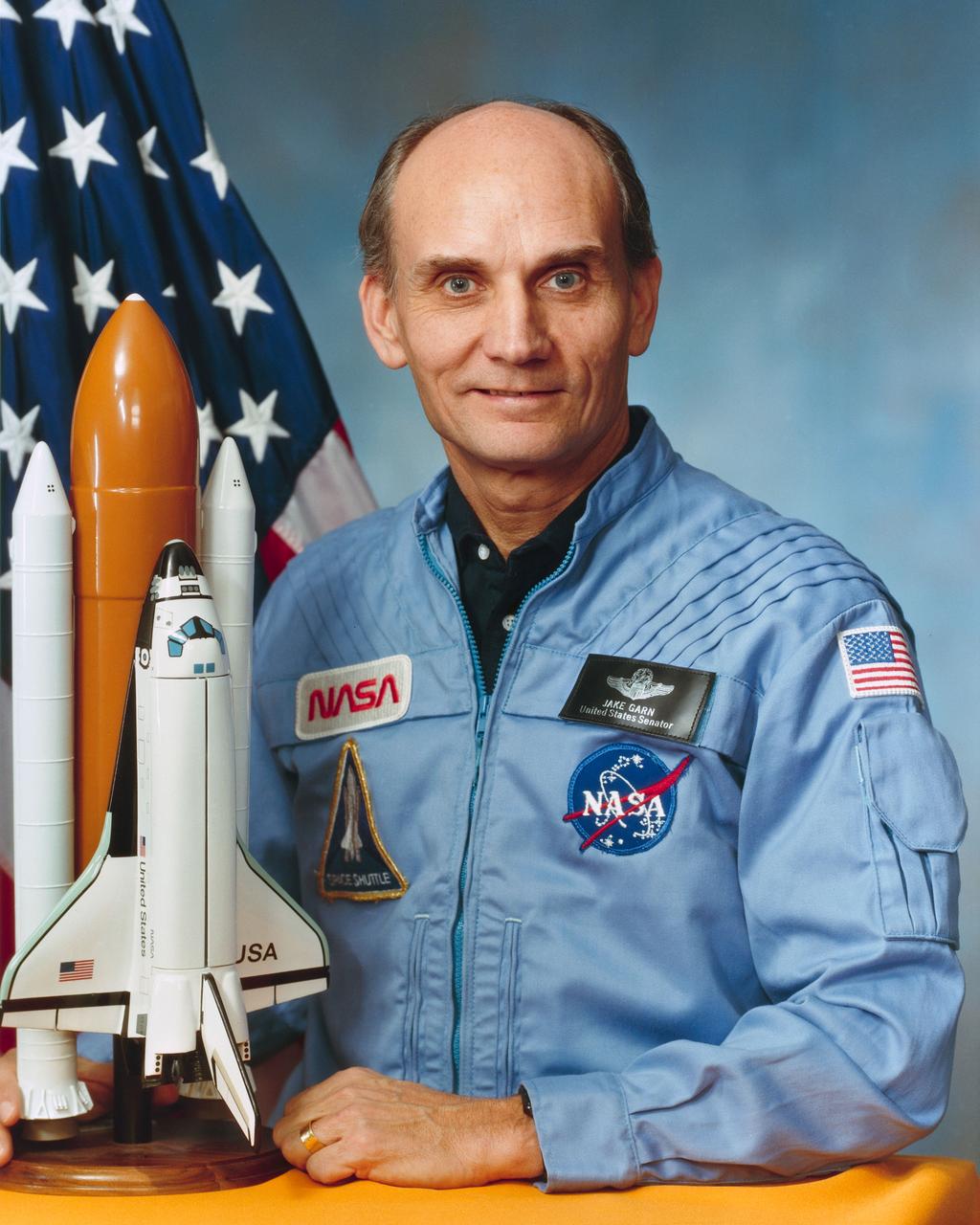
S85-25500 (1985) --- Senator E. J. "Jake" Garn, STS 51-D payload specialist.
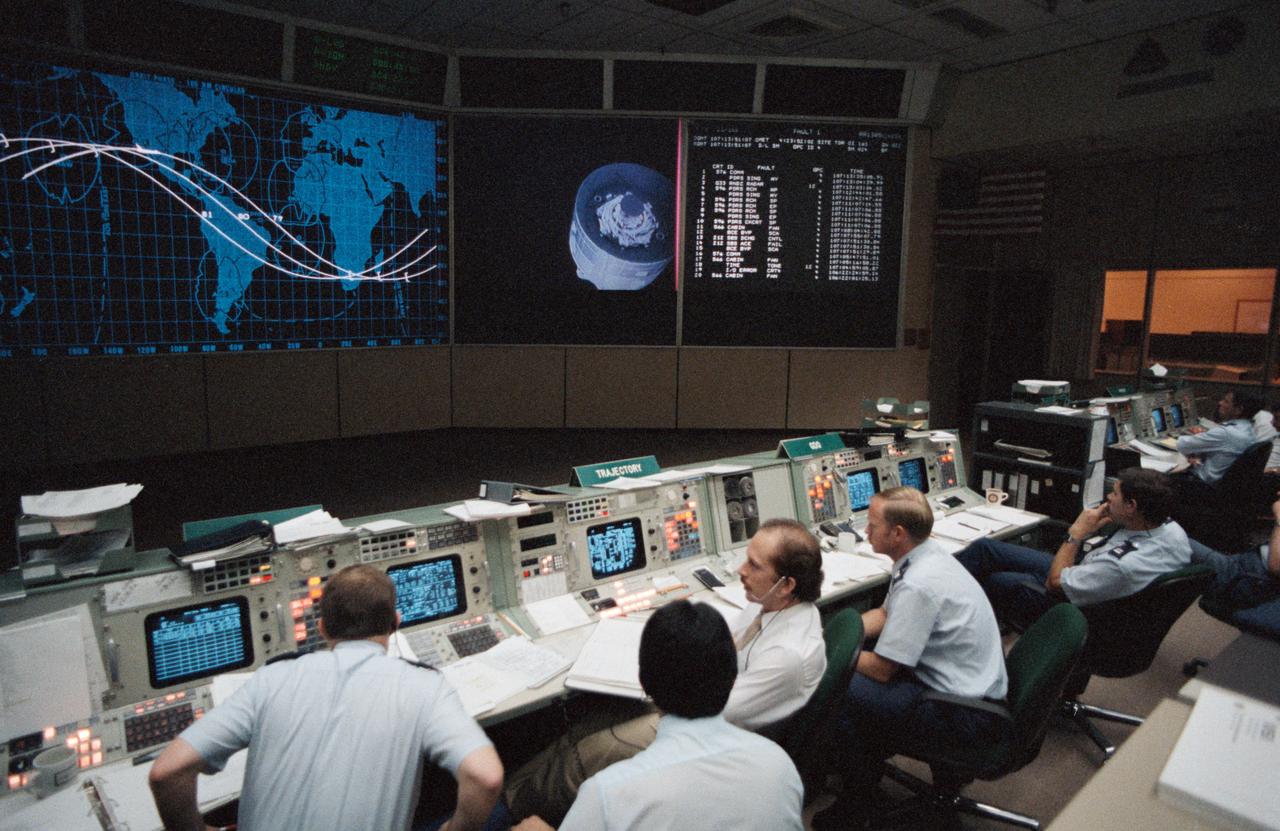
Flight controllers in the JSC mission control center watch television transmissions of Discovery's rendezvous activities with the Syncom-IV (LEASAT) satellite and follow new data on their individual consoles.
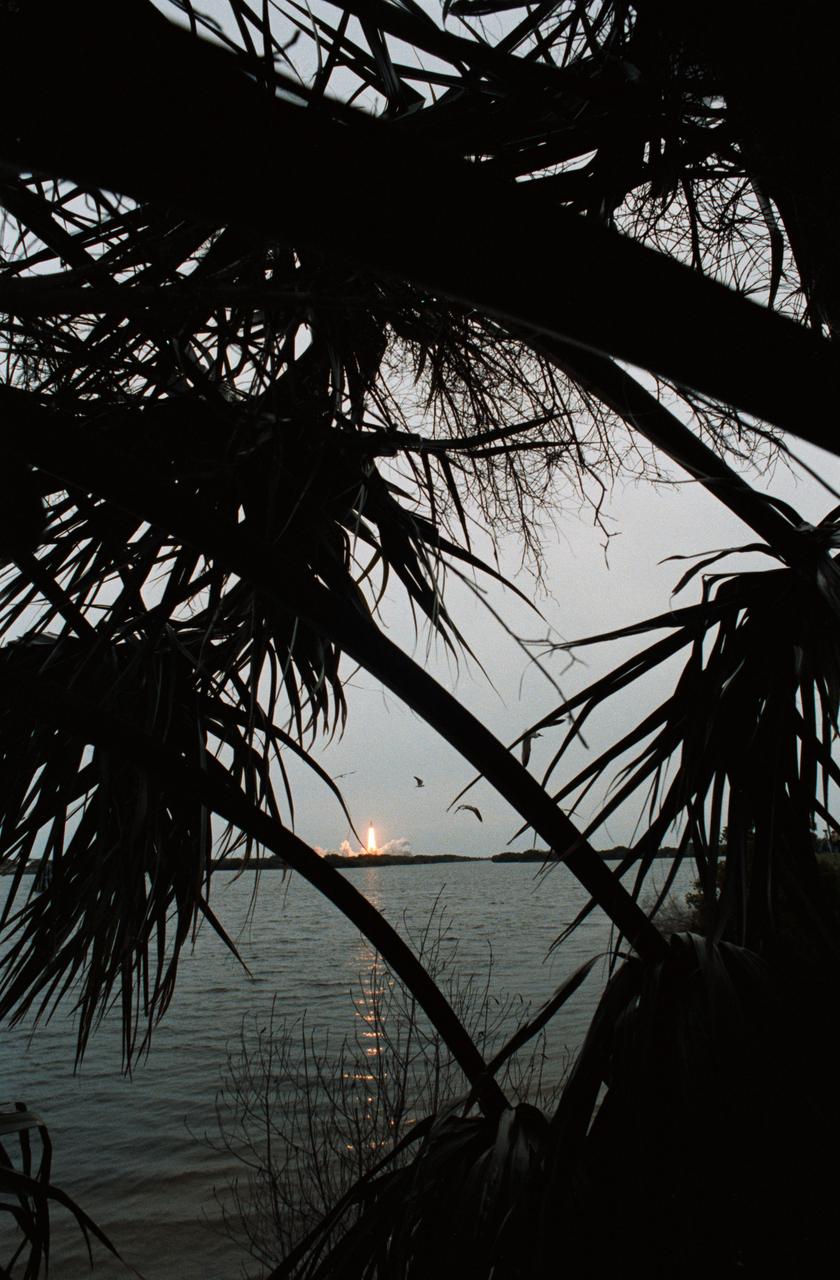
Just below center of this scene is a distant representation of a large ignition as the Shuttle Discovery lifts off from a Kennedy Space Center (KSC) launch pad. The ignition can be seen through the fronds of the trees. Birds in flight frame the light spot representing the orbiter as it launches.

51B-116-005 (29 April - 6 May 1985) --- Astronaut Don L. Lind, mission specialist, termed this scene of an aurora in the Southern Hemisphere as "spectacular," during a TV down link featuring discussion of the auroral observations on the seven-day flight. This scene was captured by astronaut Robert F. Overmyer, crew commander, using a 35mm camera. Dr. Lind, monitoring activity in the magnetosphere at various points throughout the flight, pinpointed the spacecraft's location as being over a point halfway between Australia and the Antarctic continent. There are moonlit clouds on Earth. The blue-green band and the tall red rays are aurora. The brownish band parallel to the Earth's horizon is a luminescence of the atmosphere itself and is referred to as airglow. Dr. T. Hallinan of the Geophysical Institute of Fairbanks serves as principal investigator for the auroral observations experiment and spent a great deal of time with Dr. Lind in preparation for the flight. Photo credit: NASA

51A-20-004 (12 Nov. 1984) --- Astronaut Anna L. Fisher is pictured near the aft flight deck of Discovery, where she remained very busy on Nov. 12 and 14 while fellow crew members worked to retrieve two stranded communications satellites. Fisher appears to be taking photos from the observation station. A camera floats just above her head. Photo credit: NASA
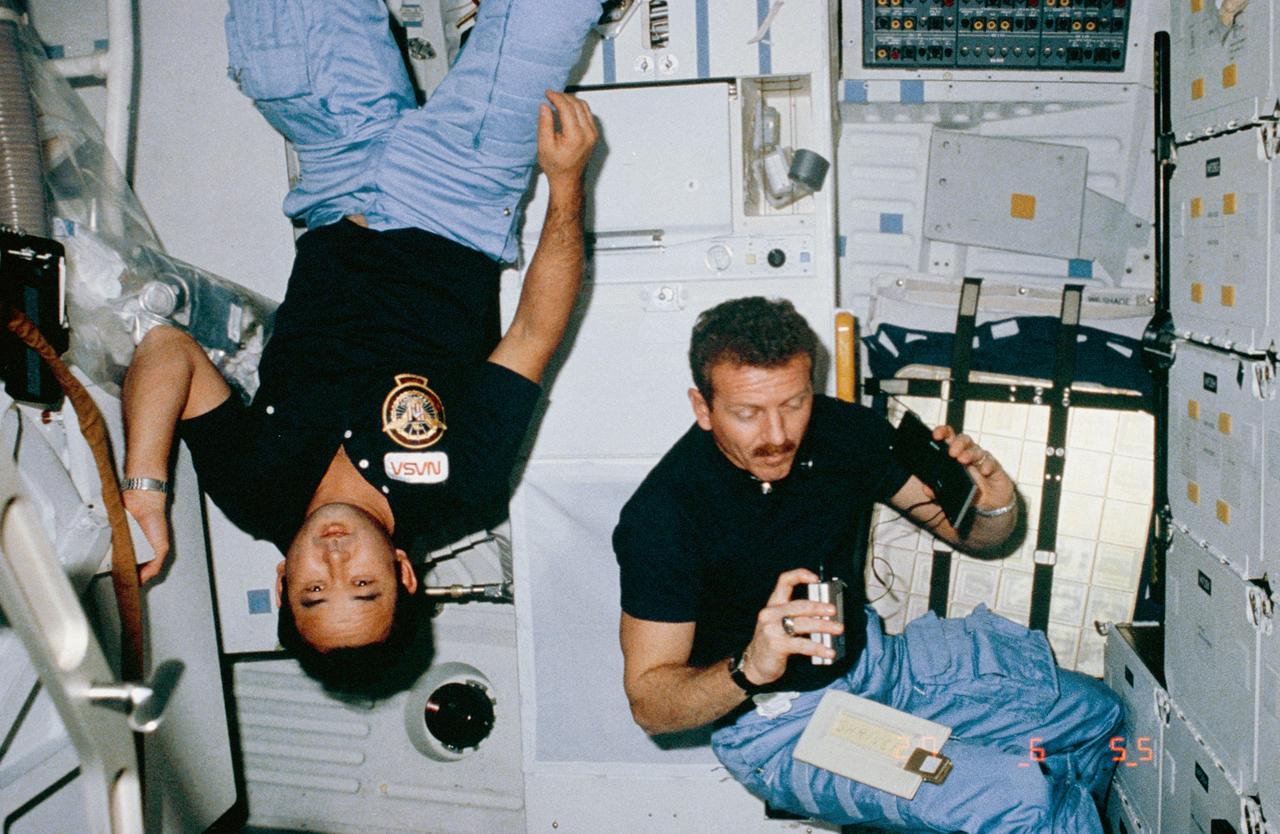
51C-08-017 (24-27 Jan 1985) --- Astronaut Ellison S. Onizuka, mission specialist, (left) turns 180 degrees near airlock hatch, while Loren J. Shriver, pilot, records verbal mission - pertinent notes. For orientation hold the picture with lockers on right.
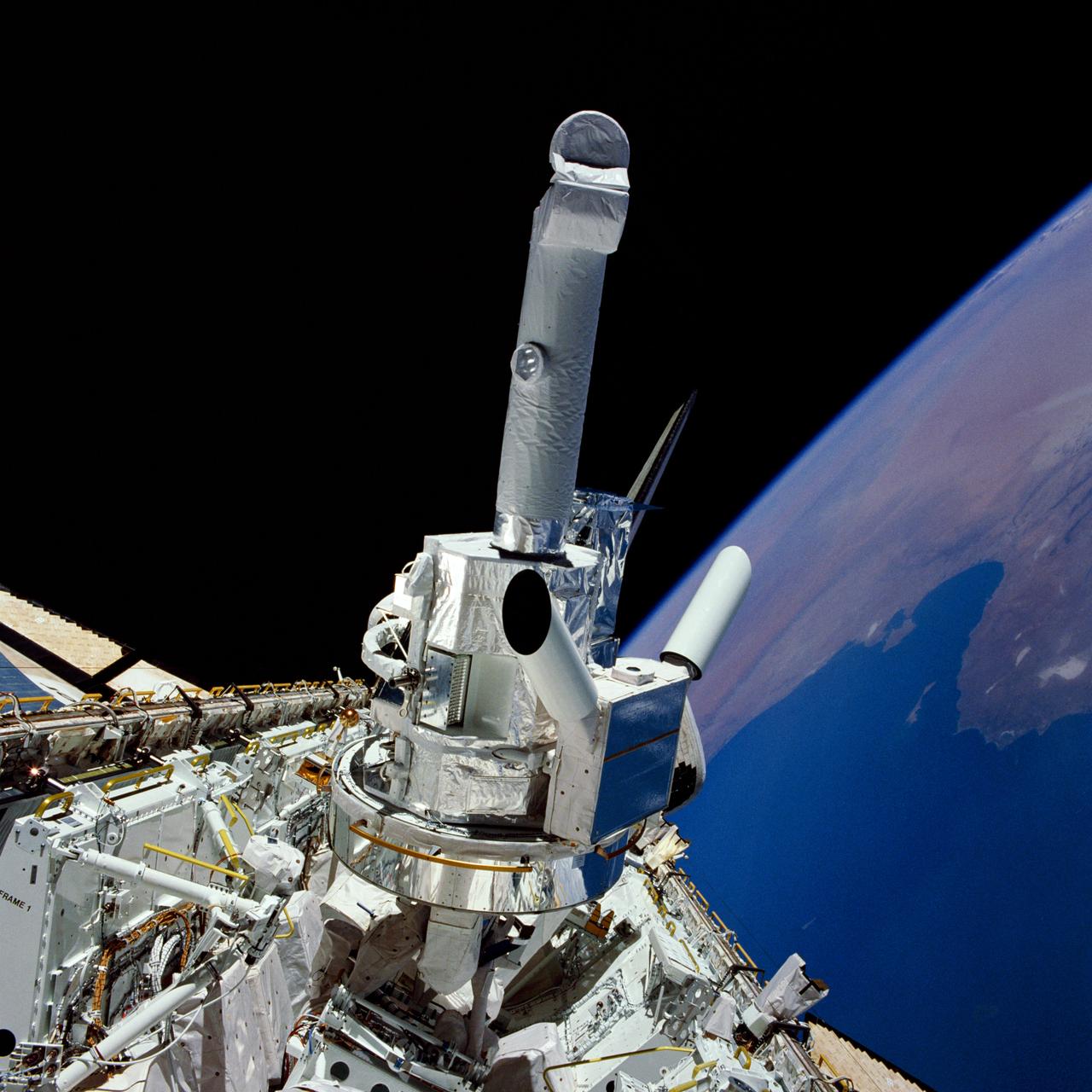
51F-33-005 (29 July - 6 August 1985) --- Experiments and the instrument pointing system (IPS) for Spacelab 2 are backdropped against the Libya/Tunisia Mediterranean coast and black space in this 70mm view photographed through the aft flight deck windows of the Space Shuttle Challenger. Also partially visible among the cluster of Spacelab 2 hardware are the solar optical universal polarimeter (SOUP) experiment and the coronal helium abundance experiment (CHASE).
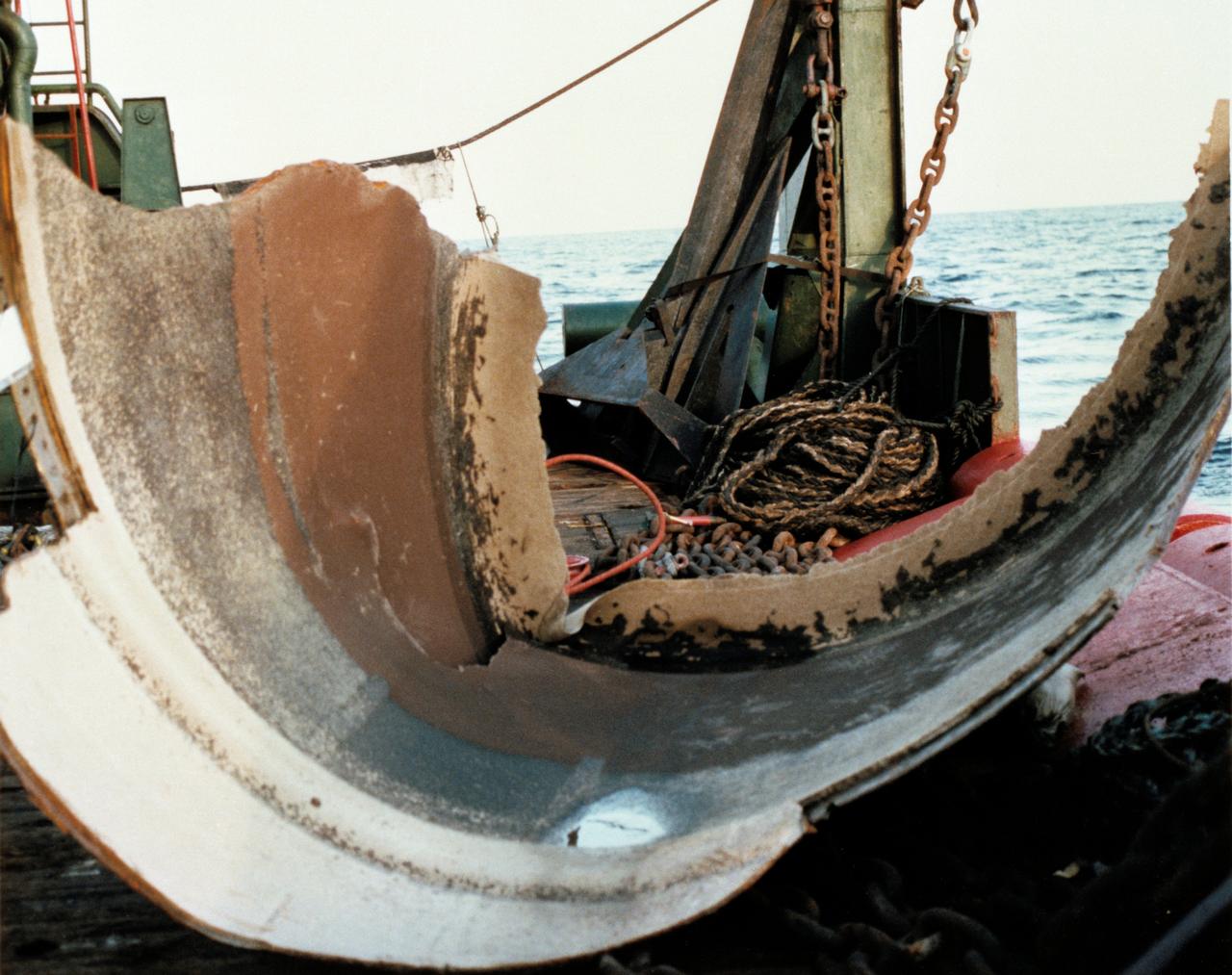
51L-10162 (8-9 March 1986) --- View of the left solid rocket booster first piece retrieval #11 (STS-51L space shuttle Challenger). Photo credit: NASA
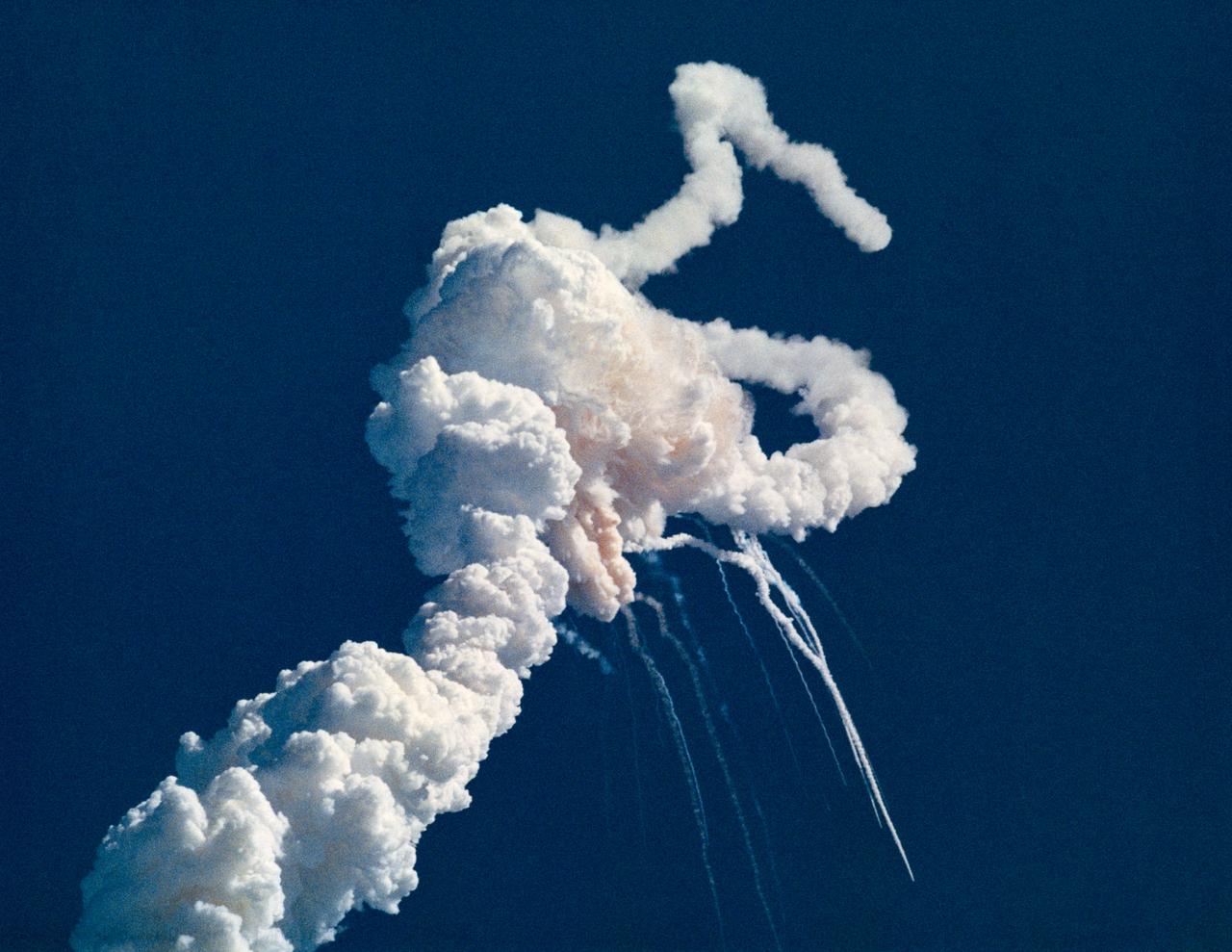
S86-38989 (28 Jan. 1986) --- Main engine exhaust, solid rocket booster plume and an expanding ball of gas from the external tank is visible seconds after the space shuttle Challenger accident on Jan. 28, 1986. (NOTE: The 51-L crew members lost their lives in the space shuttle Challenger accident moments after launch on Jan. 28, 1986 from the Kennedy Space Center.) Photo credit: NASA
S86-25293 (30 Oct. 1985) --- Barbara R. Morgan and Sharon Christa McAuliffe (right) are pictured during a visit to NASA's Kennedy Space Center (KSC) Launch Complex 39 to witness the launch of the space shuttle Challenger. McAuliffe is scheduled to launch aboard the space shuttle Challenger, STS-51L mission, herself early next year as the United States? first in-space citizen observer. Morgan is the backup for the Teacher-in-Space Project?s payload specialist position. The photo was taken by Keith Meyers of the New York Times. EDITOR'S NOTE: The STS-51L crew members lost their lives in the space shuttle Challenger accident moments after launch on Jan. 28, 1986 from the Kennedy Space Center (KSC). Photo credit: NASA
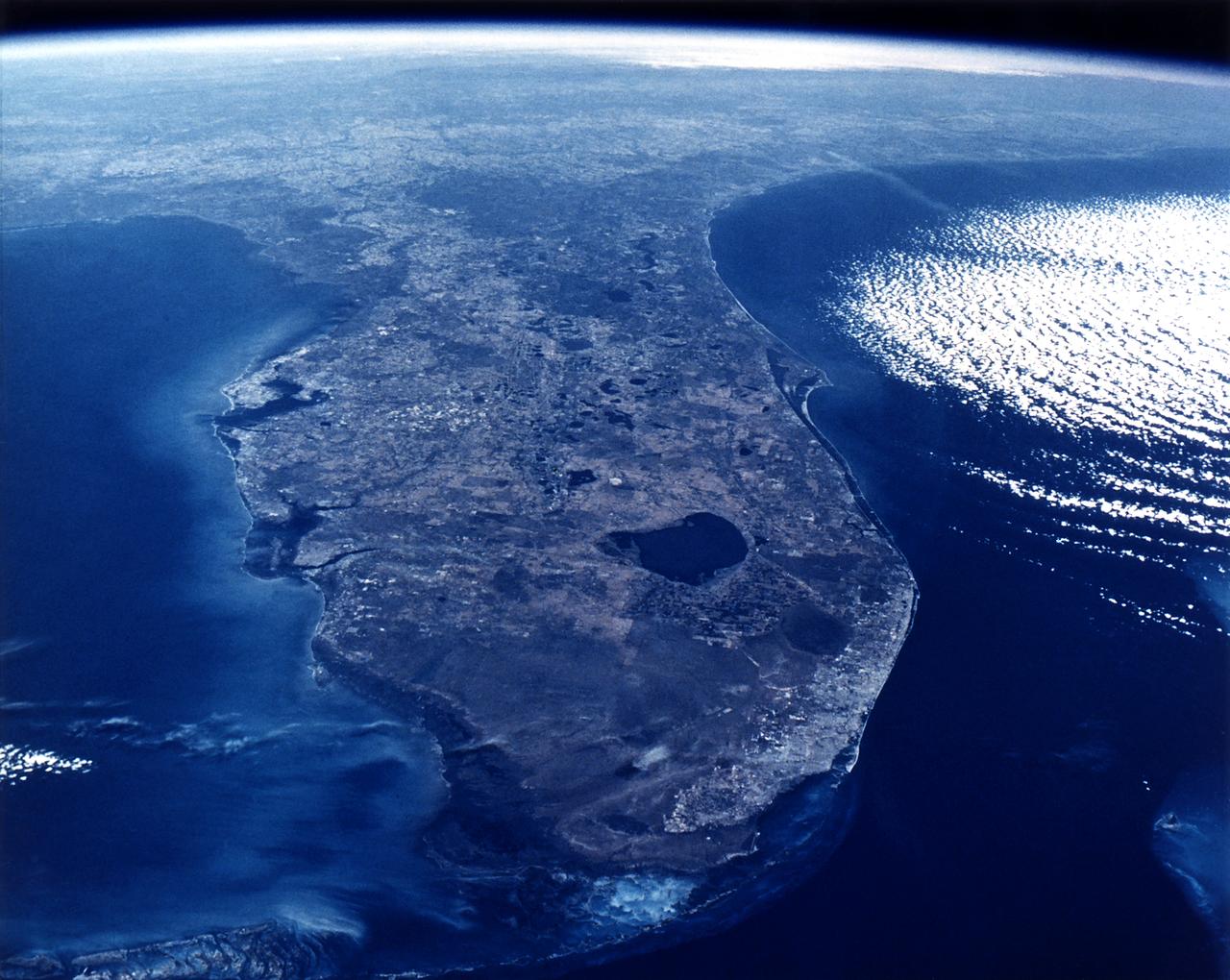
The state of Florida is clearly visible in this photo taken by the crew of space shuttle mission 51-C.
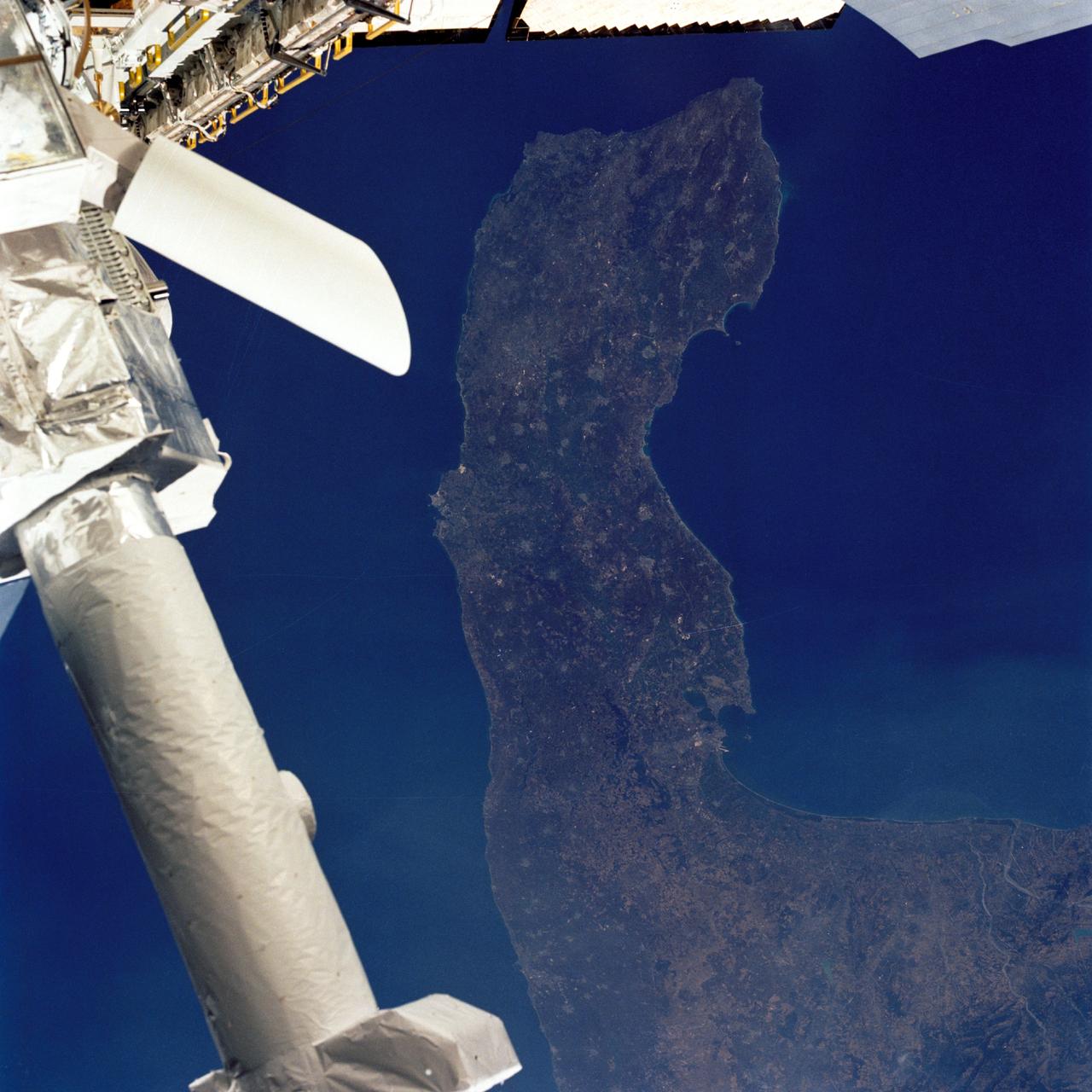
51F-32-024 (29 July - 6 August 1985) --- Italy's “boot heel" surrounded by waters of the Ionian Sea/Golfo di Taranto and the Adriatic Sea is very clearly visible in this scene made with a handheld 70mm camera. Spacelab 2's versatile instrument pointing system (IPS) protrudes from the cargo bay.
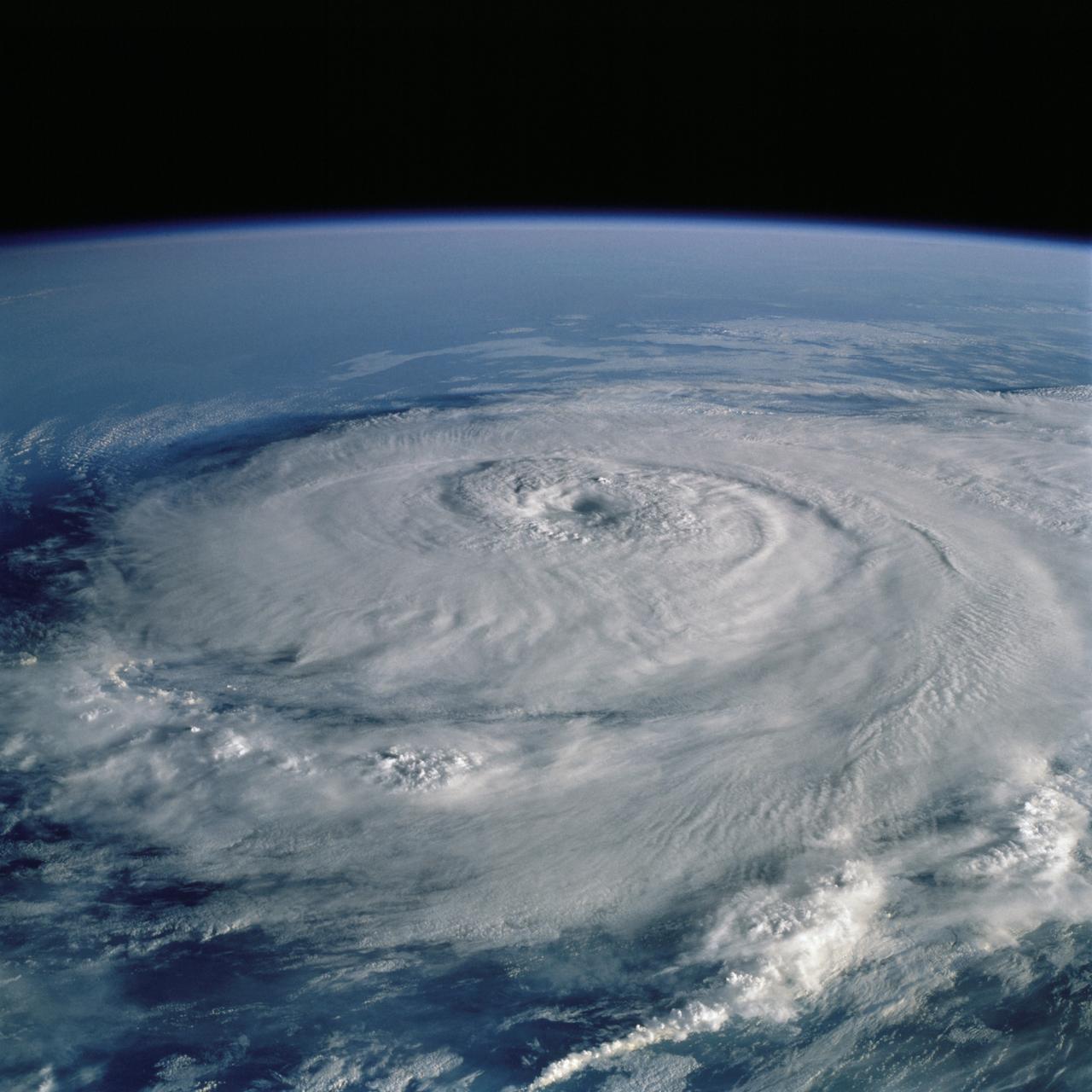
51I-44-052 (2 Sept. 1985) --- An oblique view of Hurricane Elena, photographed with a 70mm camera by STS-51I crew members of the space shuttle Discovery on Sept. 2, 1985. Photo credit: NASA
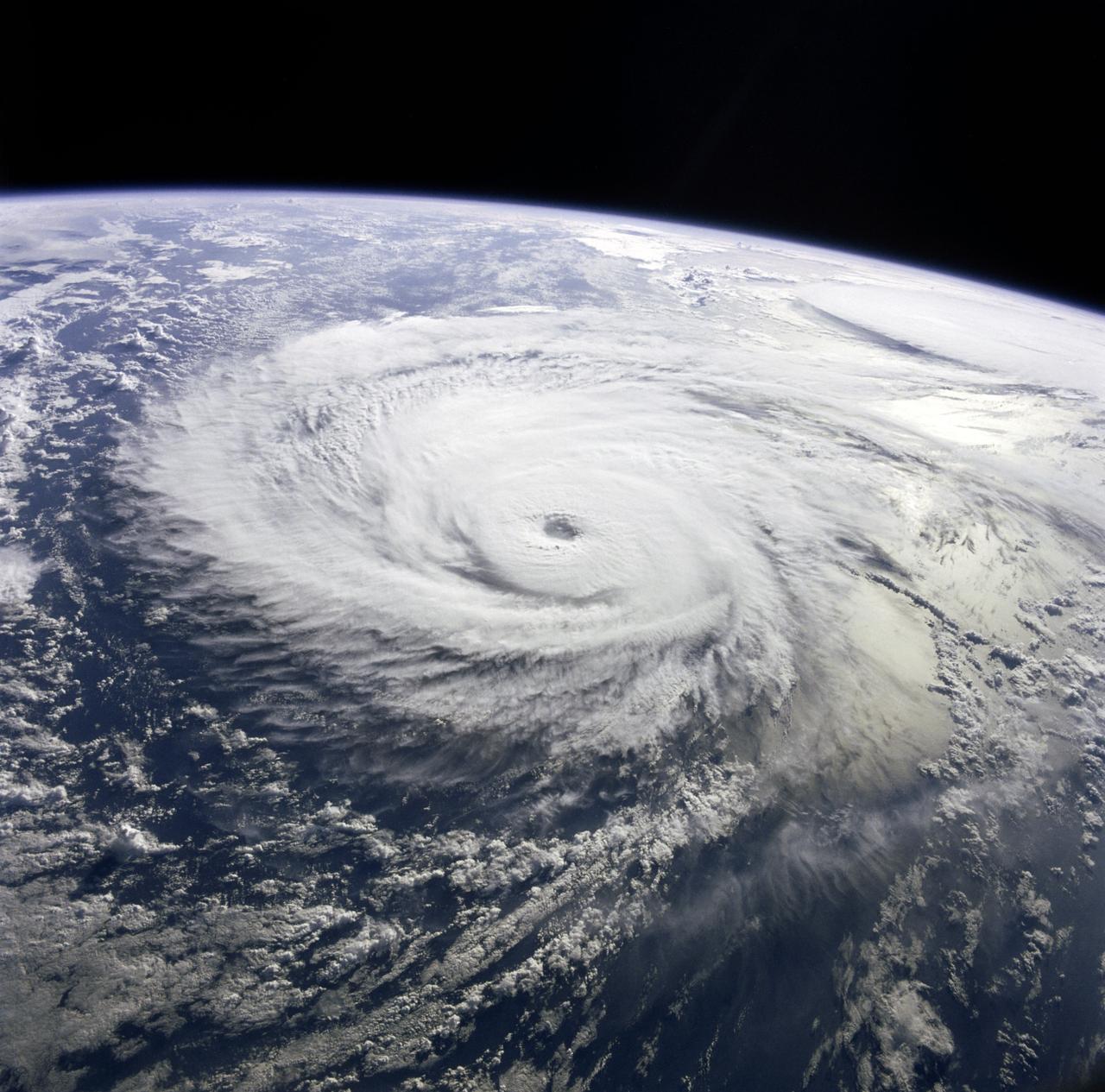
51I-35-075 (30 Aug 1985) --- Typhoon Pat was photographed on the morning of August 30th at a position of approximately 25 degrees N, 131 degrees E. Stereoscopically-overlapping photographs taken by the 51I crew provide much more detail of the three-dimensional structure of tropical cyclones than can be determined from data returned from meteorological satellites. The 51I shuttle mission was launched on August 27 and landed September 3. The mission was flown in the space shuttle orbiter Discovery.
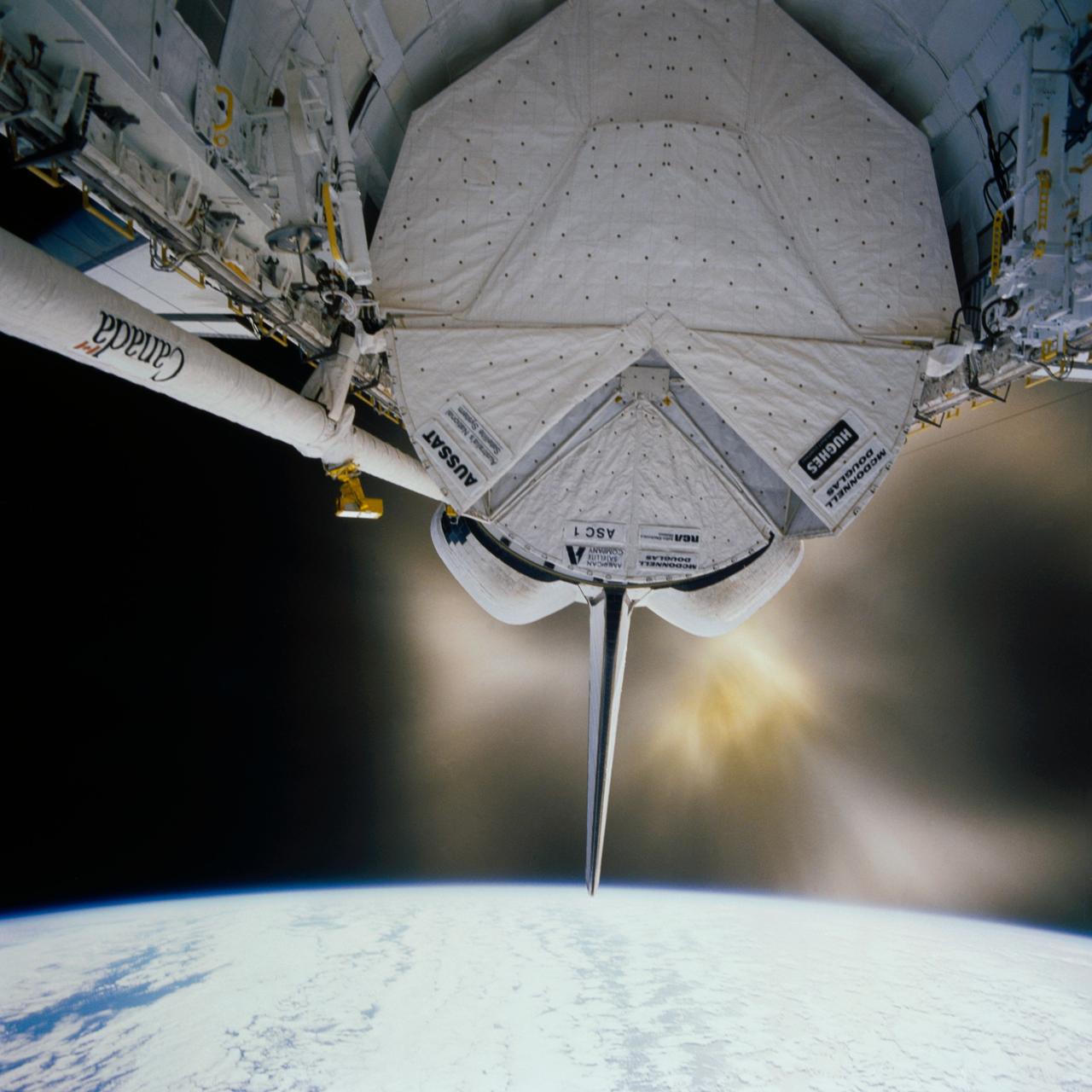
View of a single engine orbital maneuvering system (OMS) firing on the Discovery. The payload bay is open and the protective canisters for the AUSSAT communications satellite (open) and the ASC-1 are visible. A cloudy Earth's horizon can be seen above the orbiter.
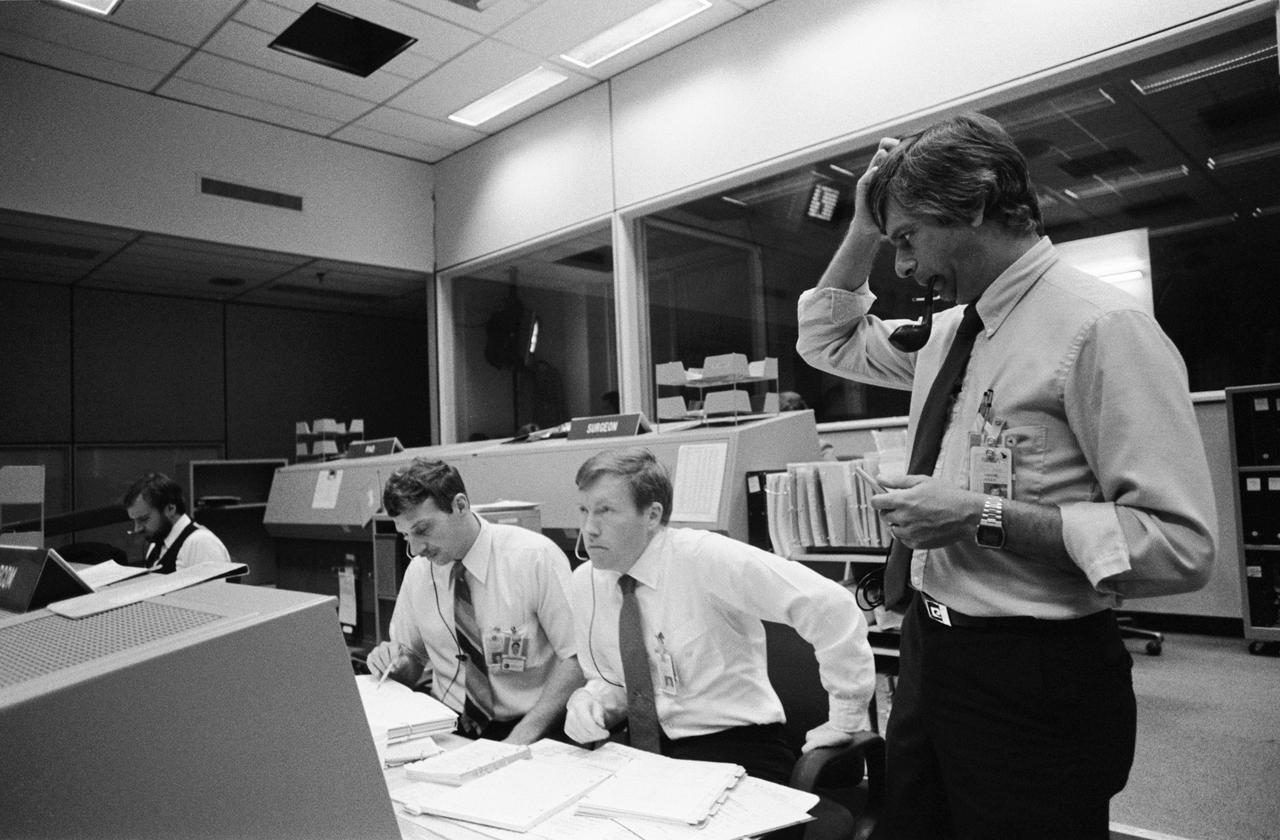
Jay H. Greene, right, ascent flight director for STS 51-A, monitors pre-launch activity at the Kennedy Space Center (KSC) via a screen at the spacecraft communicators console in the second floor flight control room (FCR) of JSC's mission control center. Astronauts David C. Hilmers, left, and Richard N. Richards are the on-duty spacecraft communicators.
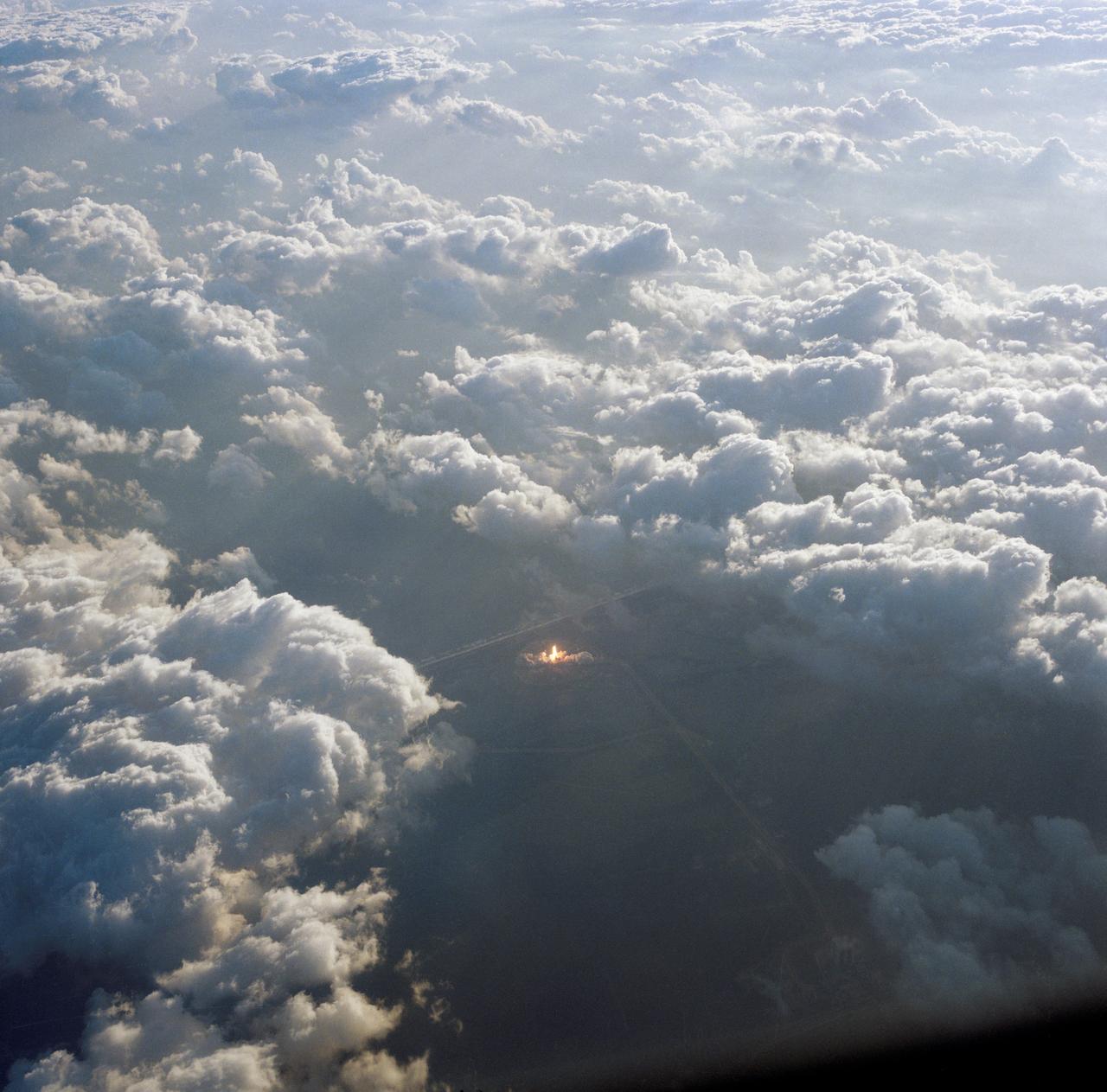
51A-90014 (8 Nov. 1984) --- John W. Young, who has seen many launches from various angles, used a handheld camera to record this scene of the very early phase of launch for NASA's space shuttle Discovery. Young was flying the NASA shuttle training aircraft (STA). The launch pad can be seen as a bright spot in the center of a mass of clouds. Photo credit: NASA

Payload specialist Sharon Christa McAuliffe appears to be enjoying her ride during her training in the T-38 jet trainer. Part of Galveston Island and the Greater Houston Metropolitan area can be seen in the background.
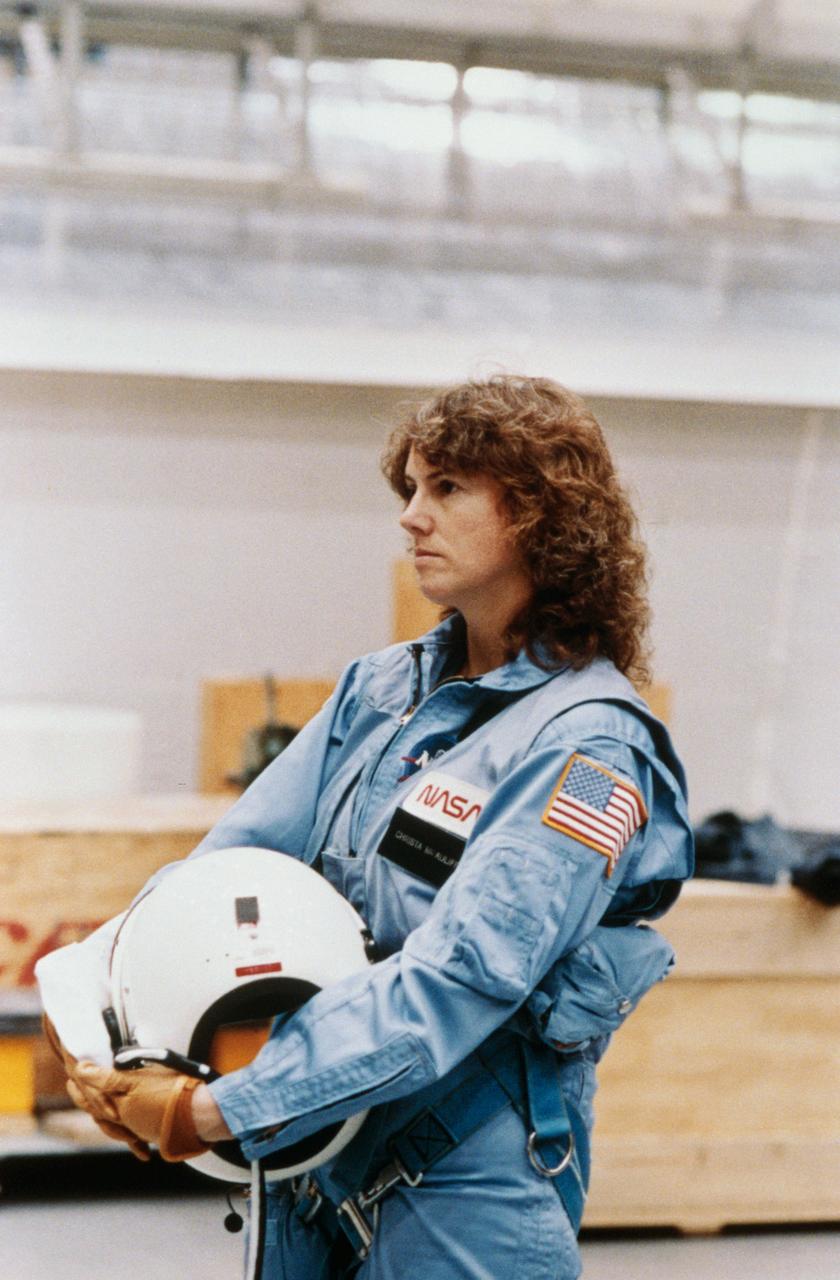
S86-25251 (January 1986) --- Sharon Christa McAuliffe, payload specialist for STS-51L, takes a breather following a busy day?s training in the Johnson Space Center?s Shuttle Mock-up and Integration Laboratory. McAuliffe, a New Hampshire school teacher, was chosen from among ten finalists in the Teacher-in-Space Project to serve as citizen observer aboard the Challenger. This photo was taken by Keith Meyers of the New York Times. Photo credit: NASA
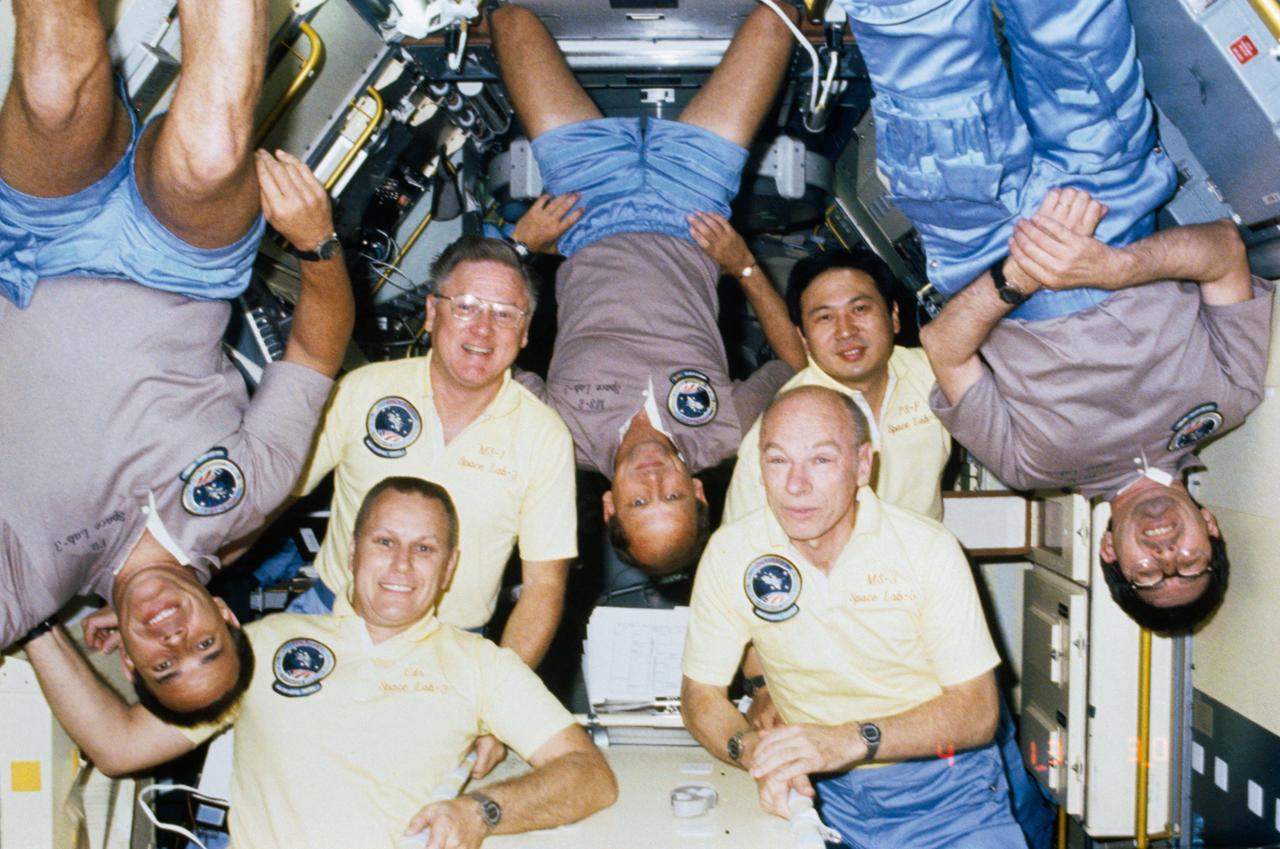
51B-101-025 (29 April-6 May 1985) --- A new twist to the traditional on-orbit group portrait was added by the 51-B/Spacelab 3 crewmembers. Note the Gold T-shirts of ?Gold? team members Robert F. Overmyer (bottom left), Don L. Lind (behind Overmyer), William E. Thornton (bottom right) and Taylor G. Wang (behind Thornton). Posting ?upside down? are ?silver? team members (L-R) Frederick D. Gregory, Norman E. Thagard and Lodewijk van den Berg. The seven are in the Long Science Module for Spacelab 3 in the cargo bay of the earth-orbiting Space Shuttle Challenger.
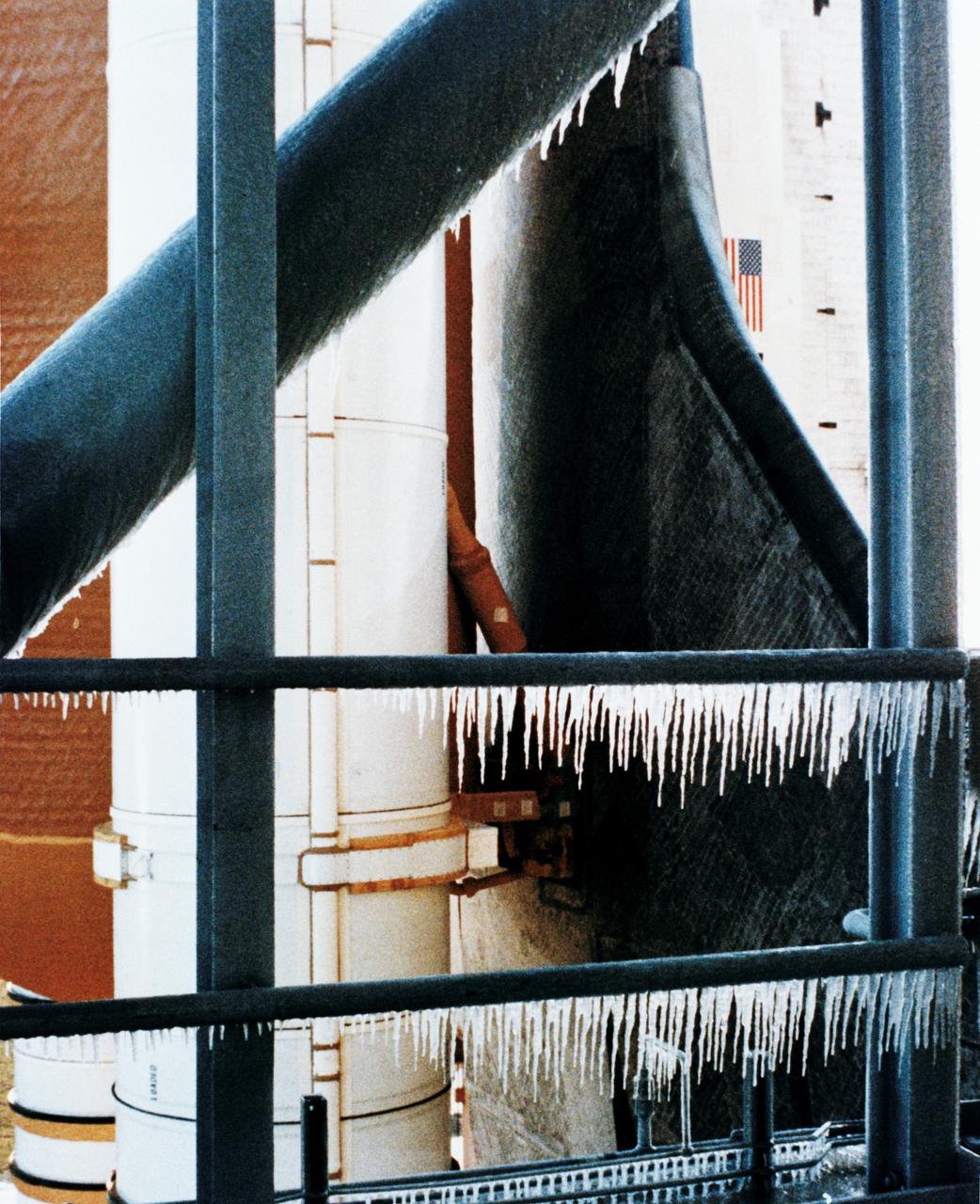
51L-10147 (28 Jan. 1986) --- View of ice on the 51-L launch complex. Photo credit: NASA
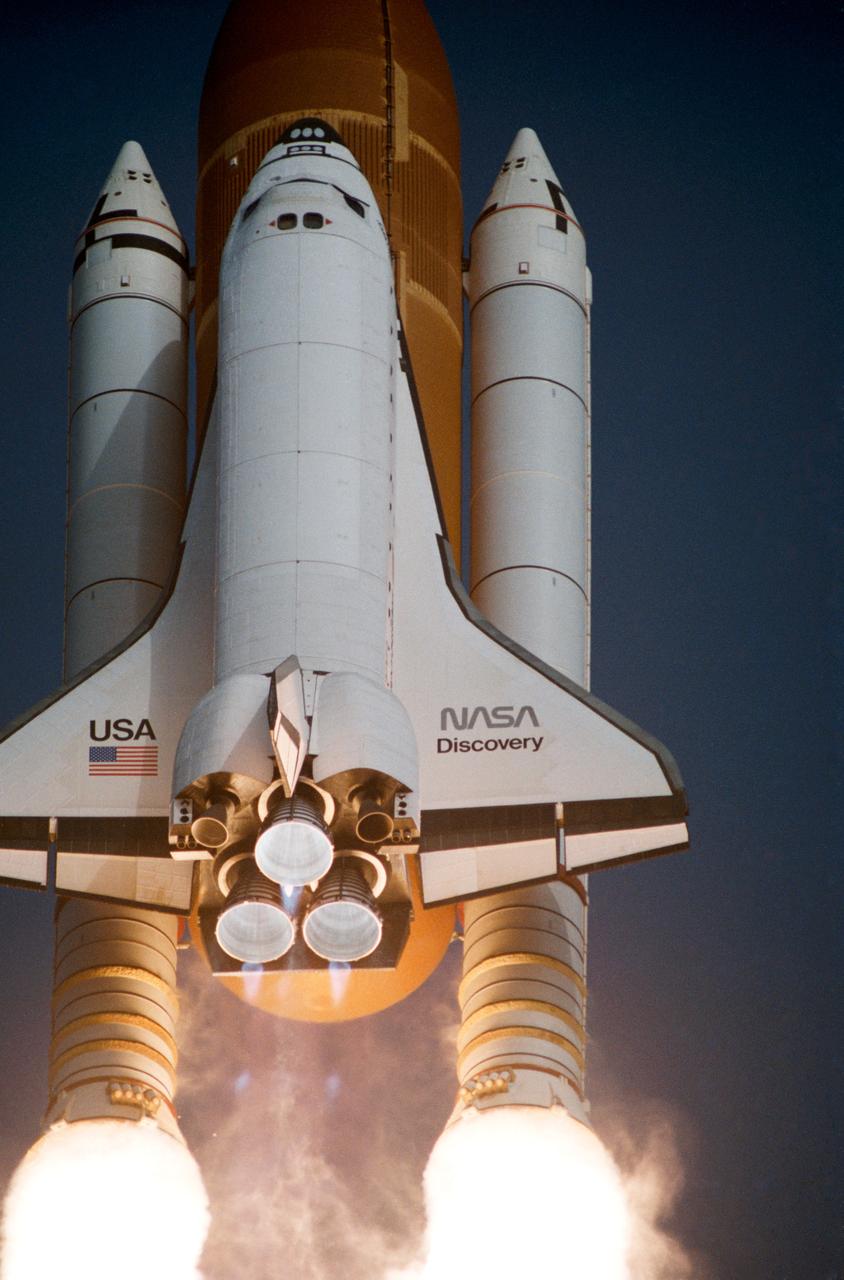
51G-S-100 (17 June 1985) --- A low-angle 35mm tracking view of the Space Shuttle Discovery, its external tank and two solid rocket boosters speeding from the KSC launch facility to begin NASA STS 51-G. The camera has captured the diamond shock effect associated with the launch phase or orbiter vehicles. Inside the Discovery are seven crewmembers and a variety of payloads representing international interests. Liftoff for 51-G occurred at 7:33:043 a.m. (EDT), June 17, 1985.

Four STS 51-G crewmembers huddle in a corner of the Discovery's middeck area. Daniel C. Brandenstein, mission commander, assists Steven R. Nagel with the treadmill device while John O. Creighton and Shannon W. Lucid look on.
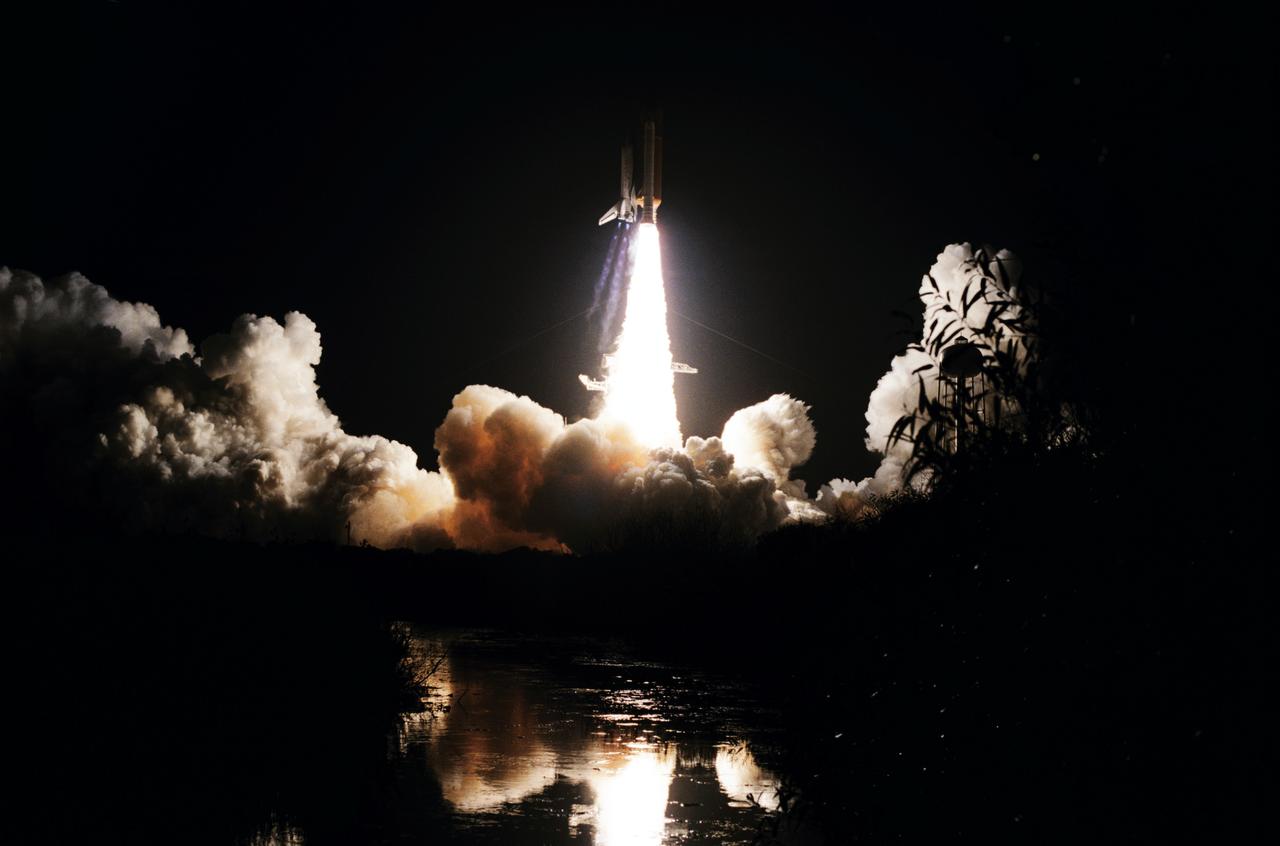
51I-S-223 (27 August 1985) --- Launch of the Space Shuttle Discovery and beginning of STS-51I mission. View of the pre-dawn launch shows a reflection of the ignition in the river across from the launch complex.
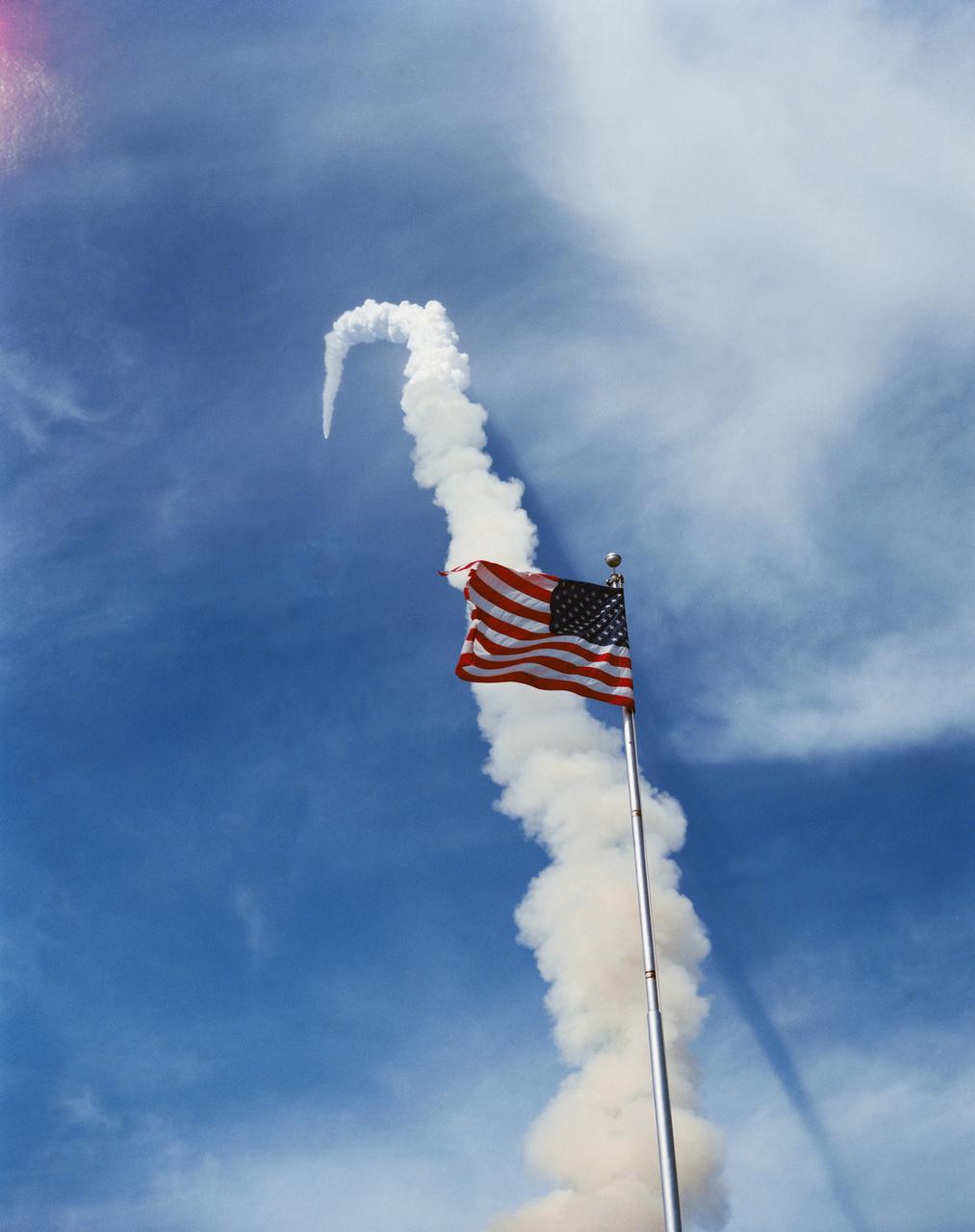
51F-S-068 (29 July 1985) --- The Space Shuttle Challenger heads toward Earth-orbit with the Spacelab-2 experiment pallet and a team of astronauts and scientists onboard. This photograph was taken by Otis Imboden of the National Geographic Society for NASA from the press site at Kennedy Space Center (KSC).
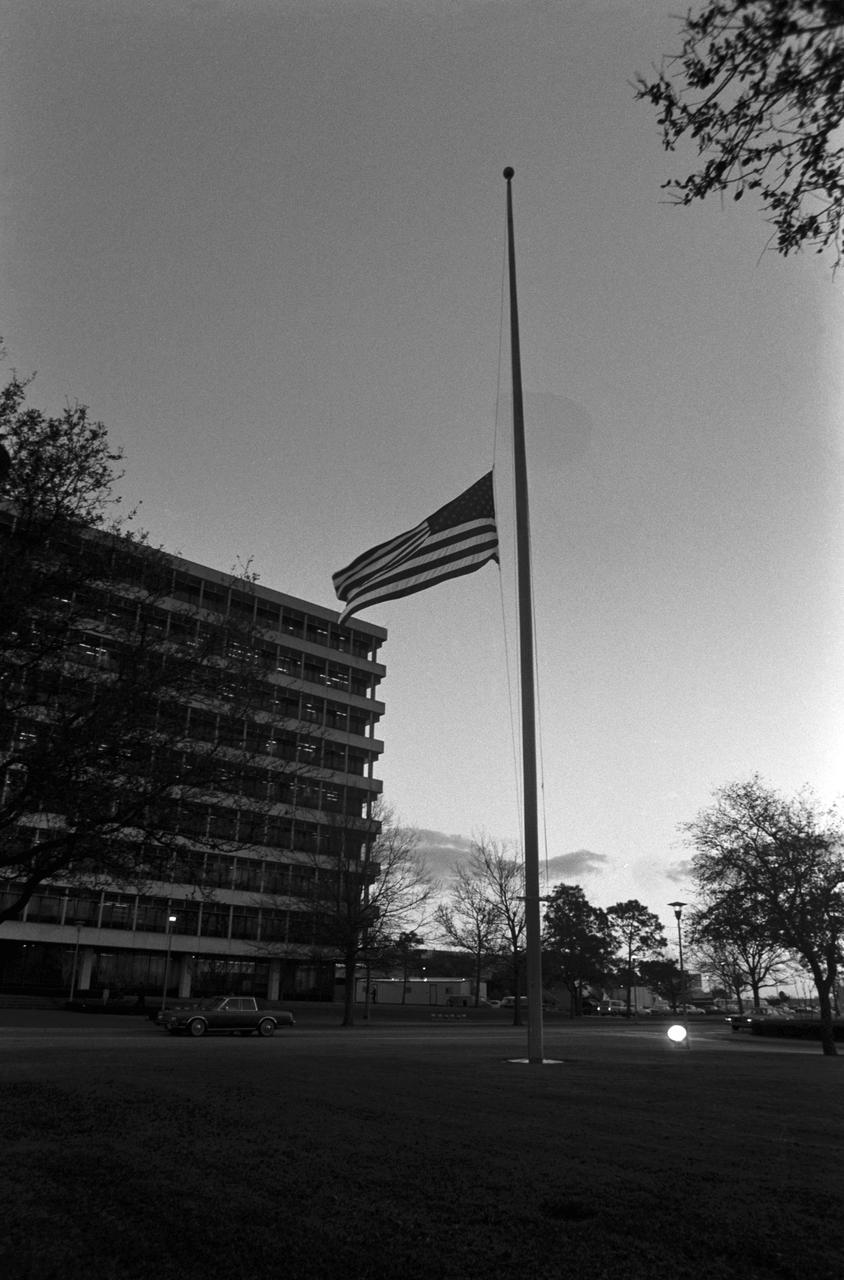
S86-26436 (31 Jan. 1986) --- The United States flag, in front of the Johnson Space Center’s (JSC) project management building, flies at half-mast in memory of the seven space shuttle Challenger crew members who lost their lives on Jan. 28, 1986. Earlier today, memorial services about 100 yards from the flag drew thousands of JSC employees, friends and family of the STS-51L astronauts and payload specialists. Photo credit: NASA
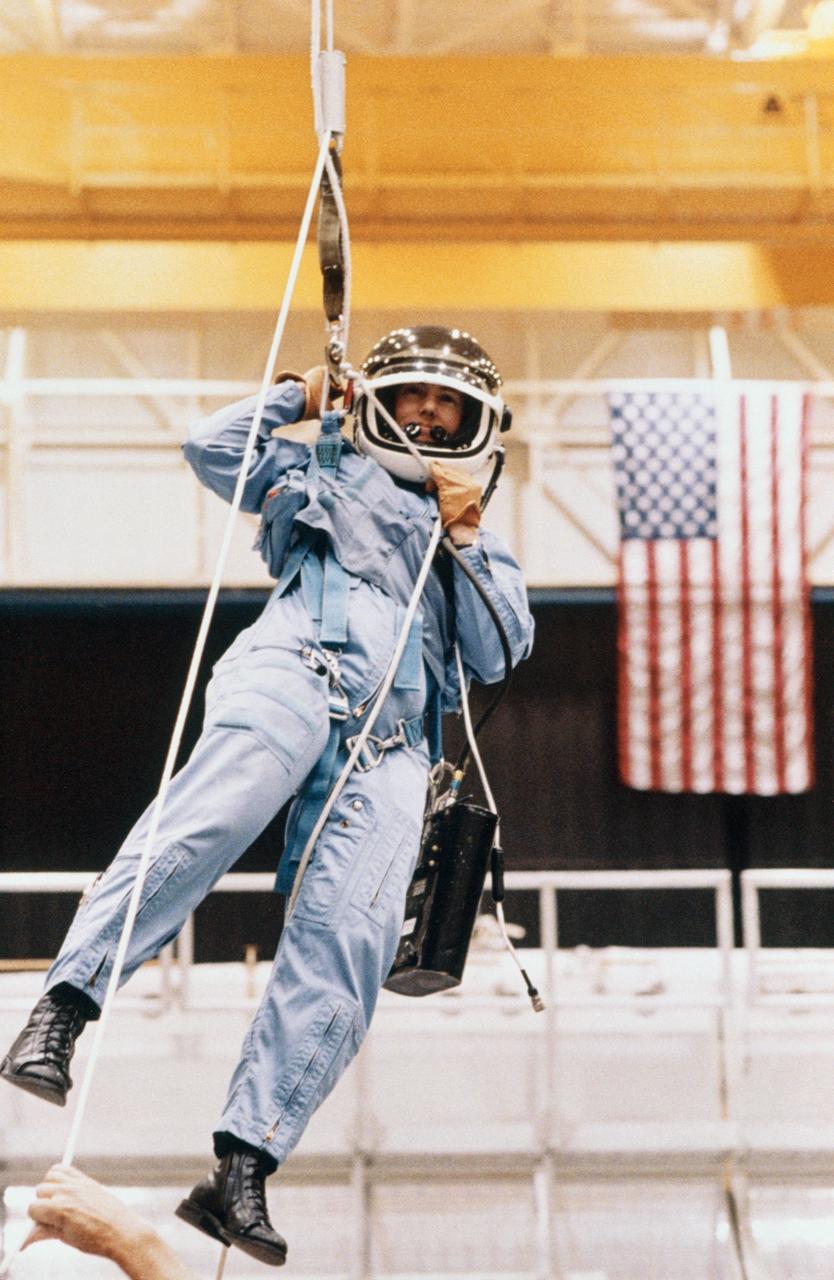
S86-25183 (for release January 1986) --- Sharon Christa McAuliffe, STS-51L payload specialist representing the Teacher-in-Space Project, descends from a mock-up of the space shuttle using a sky-genie device during an emergency training session in the Johnson Space Center?s (JSC) Shuttle Mock-up and Integration Laboratory. The photograph was taken by Keith Meyers of the New York Times. EDITOR?S NOTE: The STS-51L crew members lost their lives in the space shuttle Challenger accident moments after launch on Jan. 28, 1986 from the Kennedy Space Center (KSC). Photo credit: NASA

51D-09-034 (12-19 April 1985) --- The seven crew members of STS-51D take time, during a busy full week in space, to pose for a "star-burst" type in-space portrait. Hold picture with astronaut Rhea Seddon at bottom center. Counter-clockwise from the bottom left are Jeffrey A. Hoffman, mission specialist; Dr. Seddon, mission specialist; Charles D. Walker, payload specialist; U. S. Senator E. J. (Jake) Garn, payload specialist; S. David Griggs, mission specialist; Karol J. Bobko, mission commander; and Donald W. Williams, pilot. A pre-set 35mm camera exposed the frame in the mid-deck of the Earth-orbiting Space Shuttle Discovery. The crew launched at 8:59 a.m. (EST), April 12, 1985 and landed at 8:54 a.m. (EST), April 19, 1985 spending five minutes less than a full week on the busy mission.
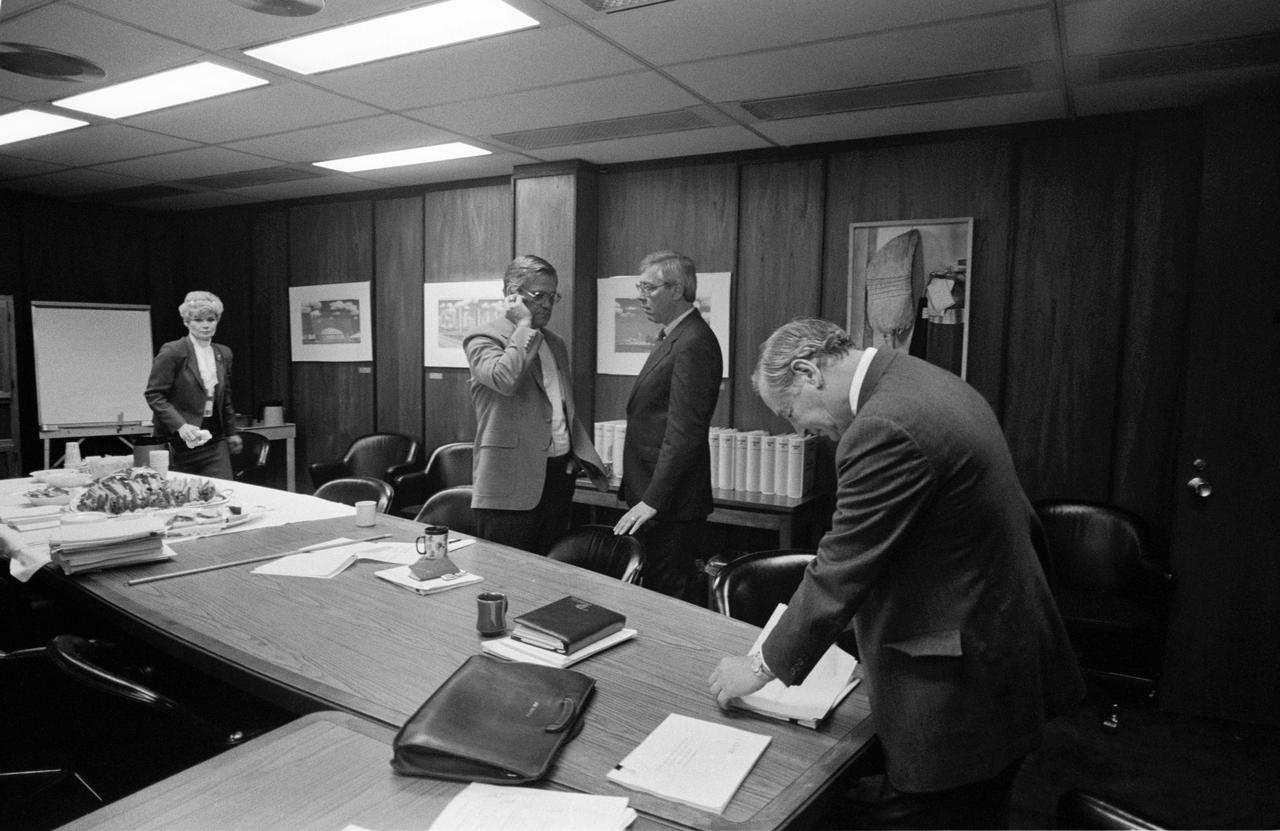
S86-28749 (5 March 1986) --- Two JSC officials chat prior to a meeting with members of the Presidential Commission on the Space Shuttle Challenger Accident, while one of the commissioners studies his notes. Pictured left to right in the foreground are Richard H. Kohrs, Deputy Manager of the National Space Transportation Systems Program Office; JSC Deputy Director Robert C. Goetz and Joseph F. Sutter. Photo credit: NASA
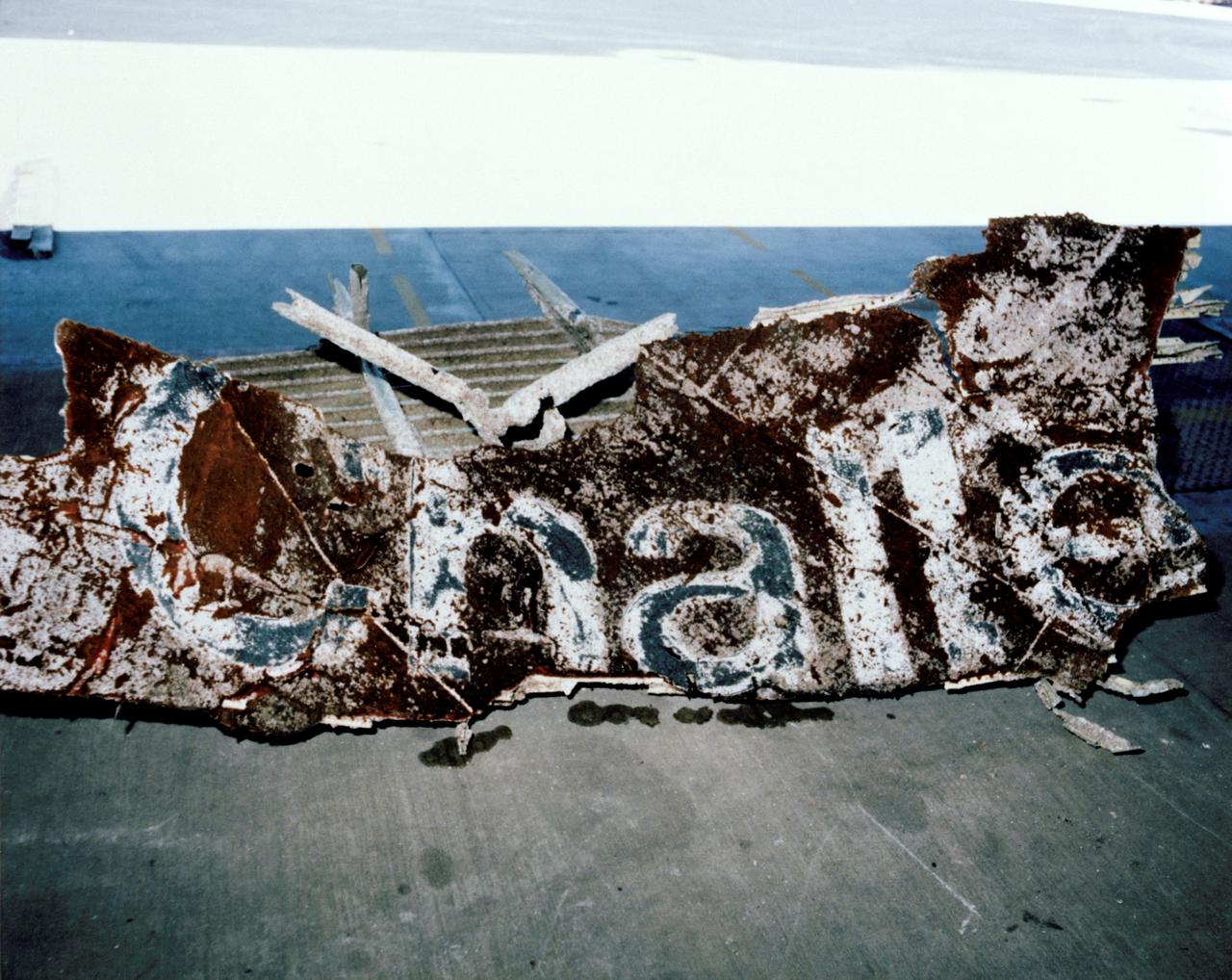
51L-10187 (18 April 1986) --- A 9'7" x 16' segment of Challenger's right wing is unloaded at the Logistics Facility after being off-loaded from the rescue and salvage ship USS Opportune. It was located and recovered by Navy divers from the Opportune about 12 nautical miles northeast of Cape Canaveral in 70 feet of water. Photo credit: NASA
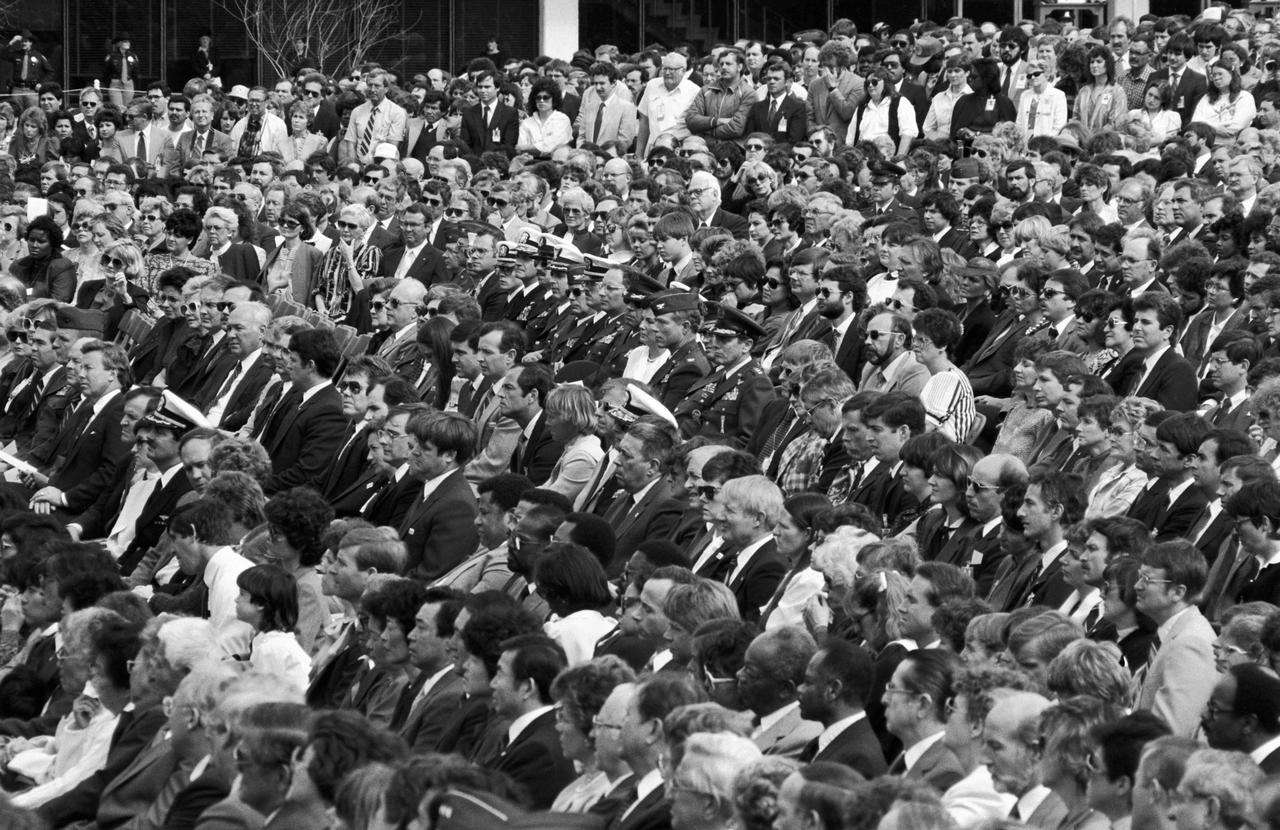
Overall view of the audience at the memorial service at JSC for the Crew of STS 51-L.
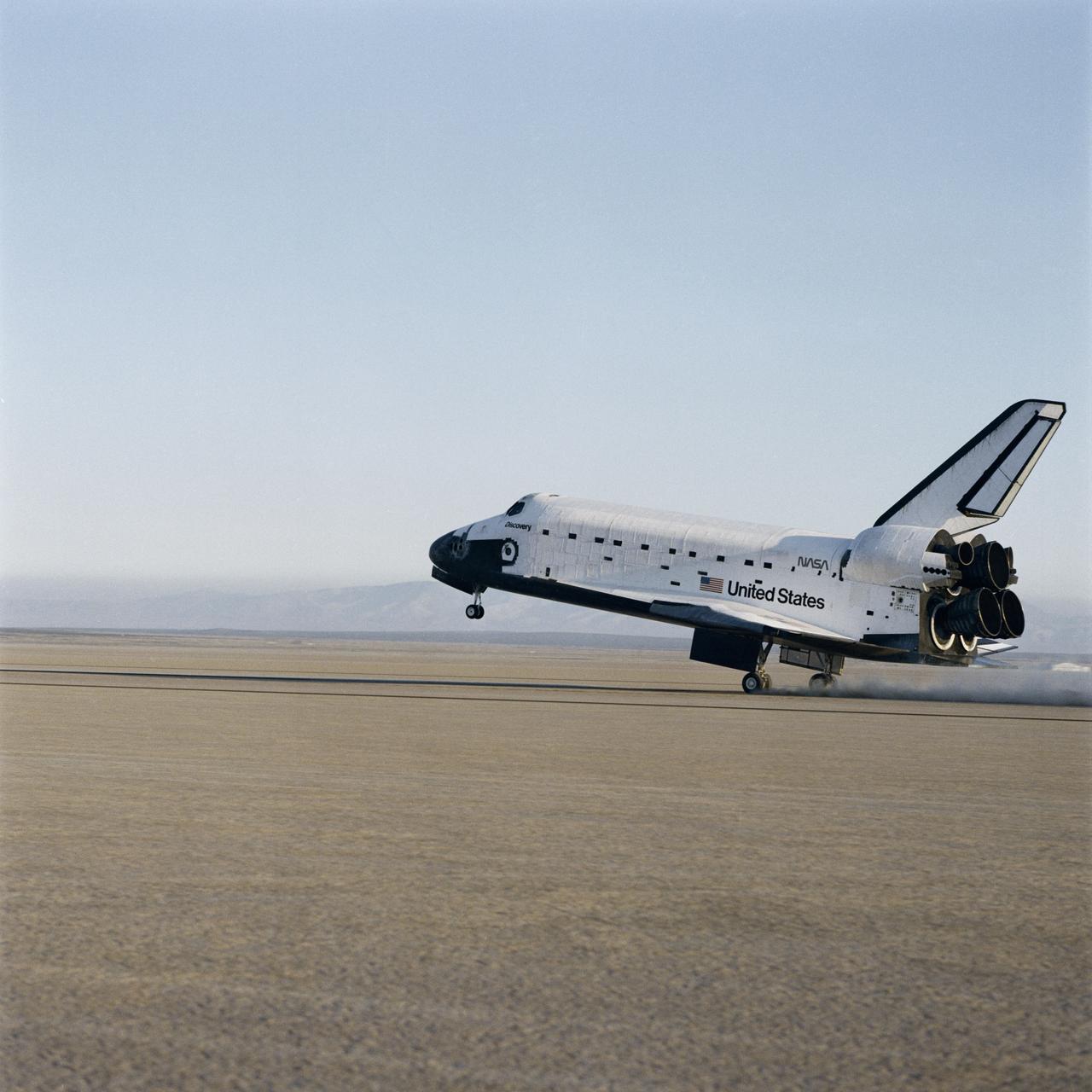
51G-S-224 (24 June 1985) --- Discovery, with its seven-member 51-G crew aboard, touches down on a dry lakebed at Edwards Air Force Base in California. Landing was noted at 6:11:53 a.m. (PDT), June 24, 1985.
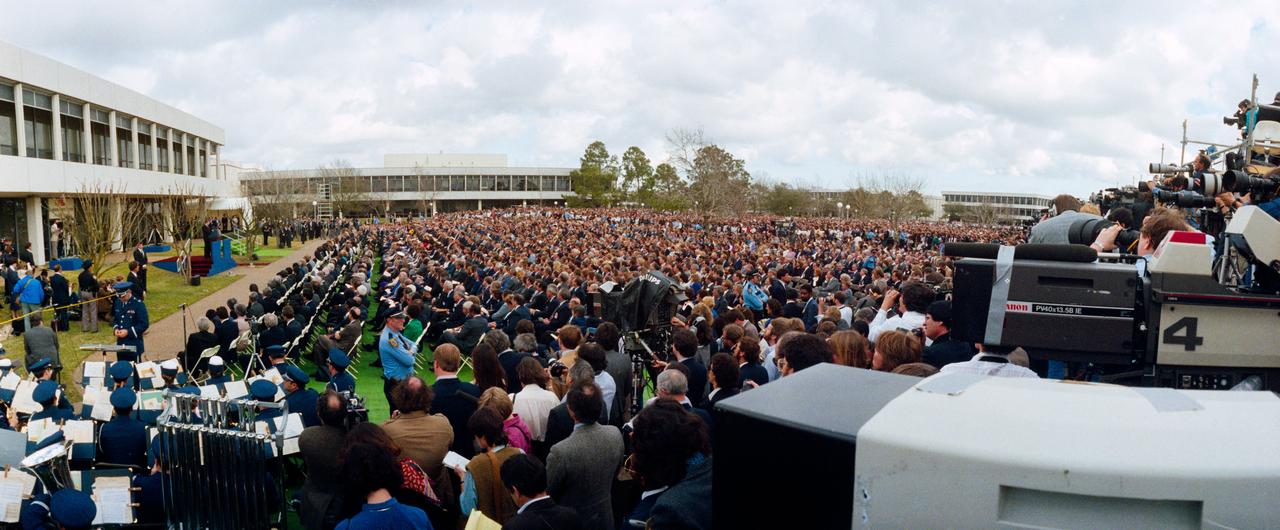
51L-S-127 (31 Jan. 1986) --- A wide angle lens was used to capture only a portion of the crowd gathered for memorial services for the seven members of the STS-51L Challenger crew at the Johnson Space Center. President Ronald Reagan speaks at the lectern at far left edge of the frame. The photographer for the picture was positioned on a large platform erected to accommodate the many members of the news media on hand for the event. Photo credit: NASA
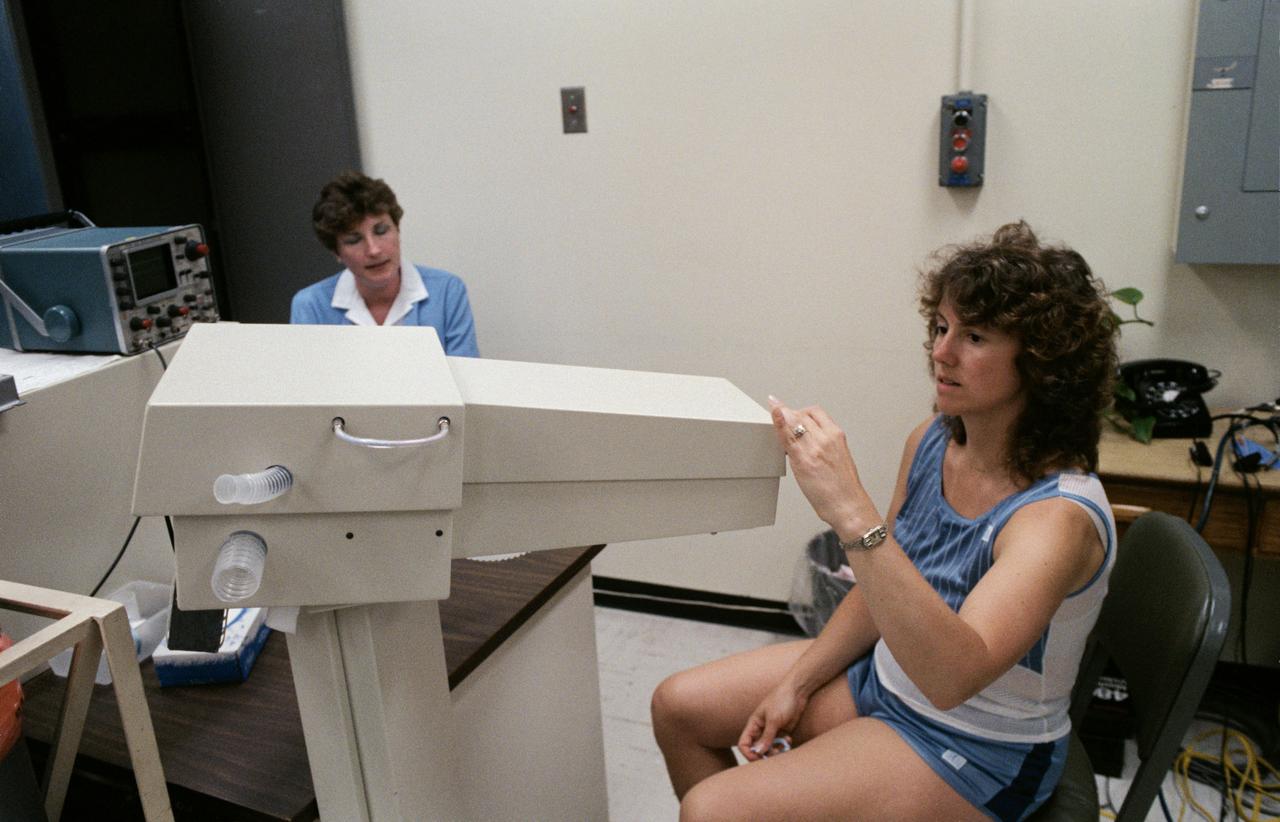
S85-36966 (10 July 1985) --- Teacher Sharon Christa McAuliffe prepares to test her lung capacity during medical examinations at the Johnson Space Center (JSC) clinic. Photo credit: NASA
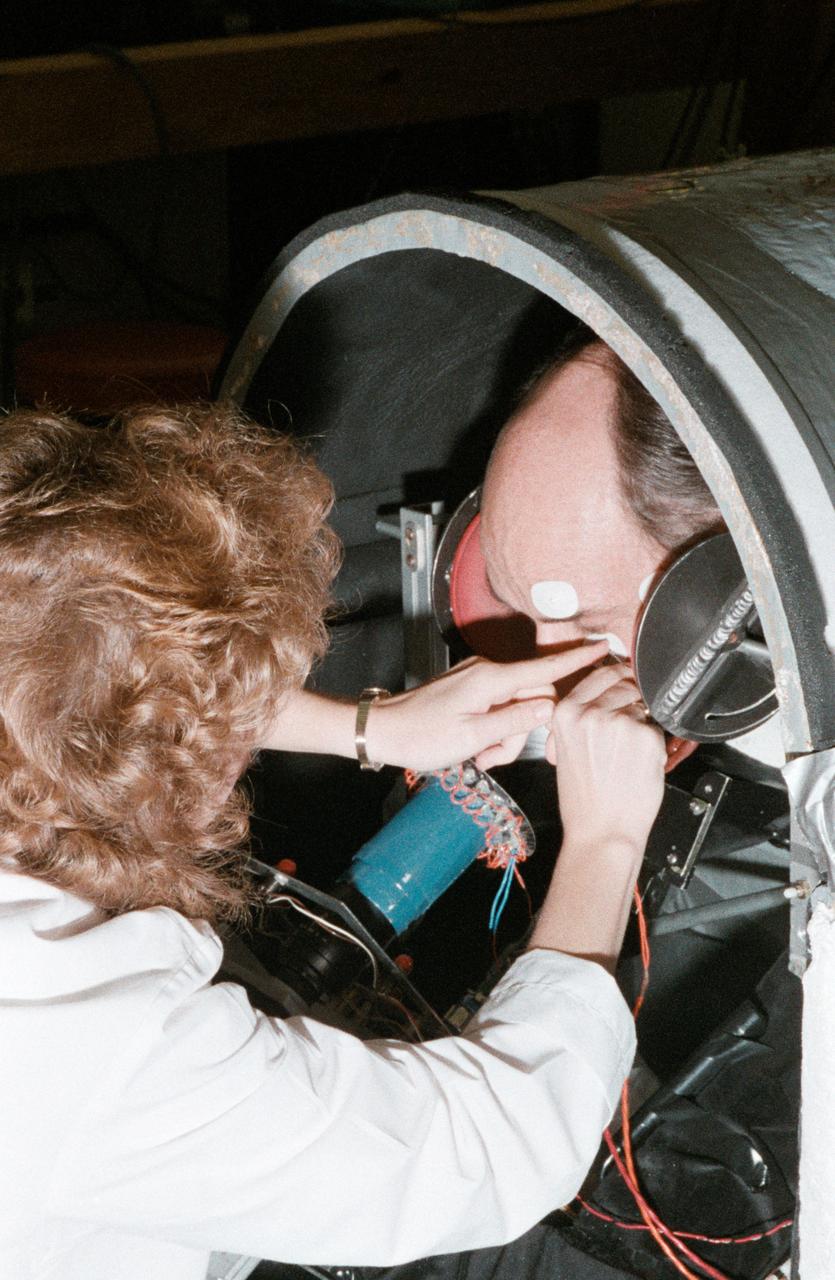
Sen. Jake Garn trains in use of equipment for medical experiments.
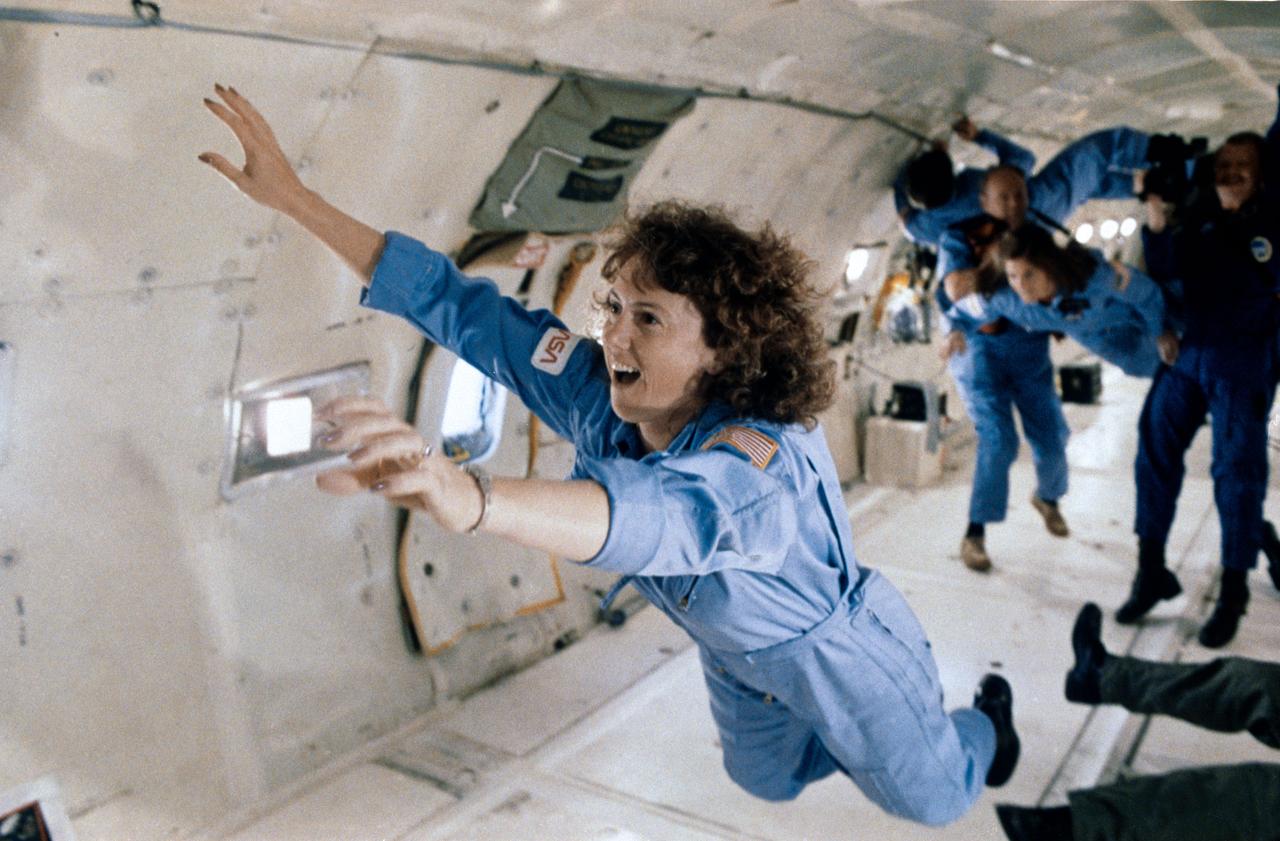
S86-25180 (October 1985) --- Sharon Christa McAuliffe, STS-51L citizen observer/payload specialist, representing the Teacher-in-Space Project, floats forward and upward during a few moments of weightlessness aboard a KC-135 aircraft. The flight is part of her training for the scheduled five-day flight aboard the Challenger in January of next year. Barbara R. Morgan, backup payload specialist for STS-51L, is partially visible in the background. The photo was taken by Keith Meyers of the New York Times. Photo credit: NASA
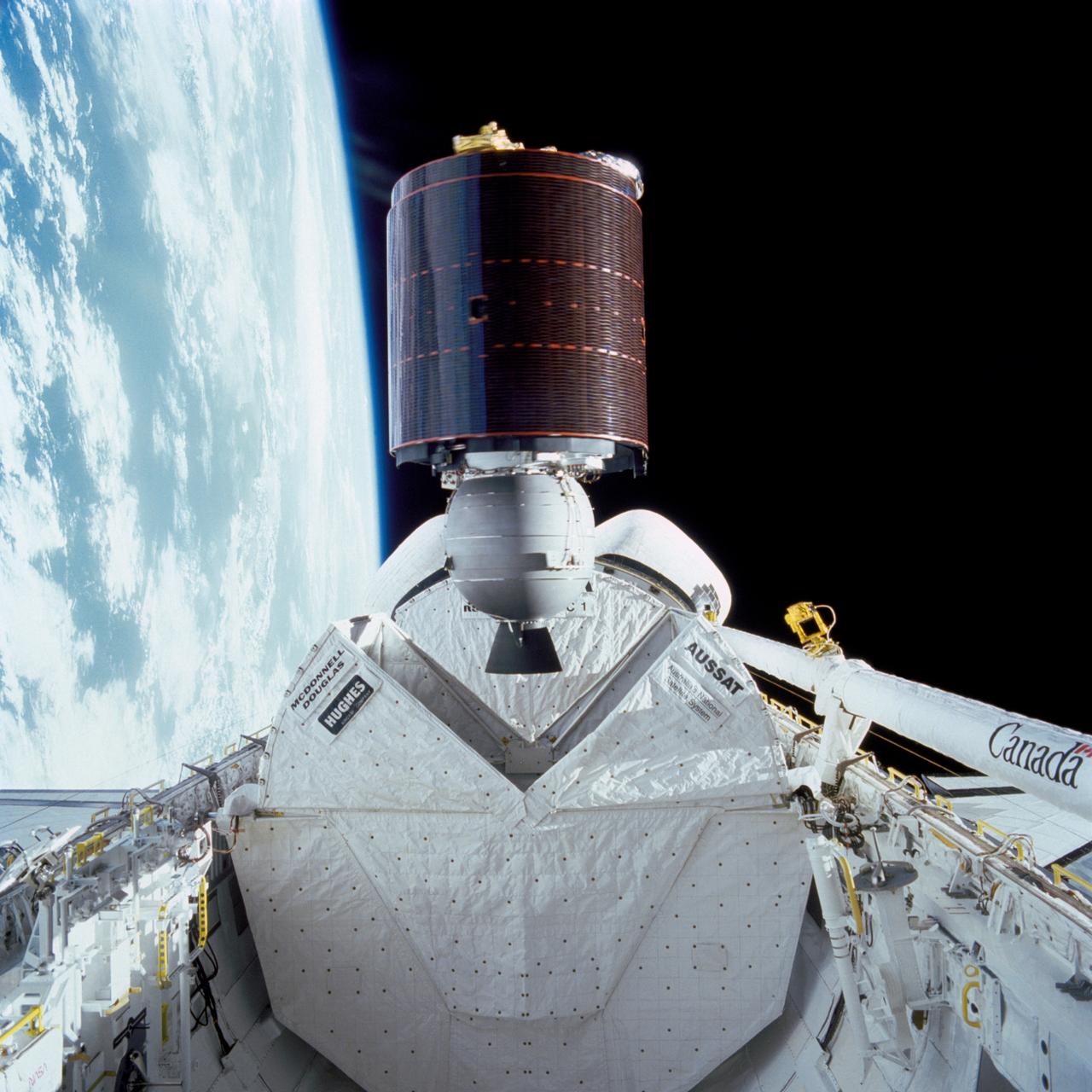
51I-32-023 (27 Aug. 1985) --- Australia's AUSSAT communications satellite is deployed from the payload bay of the space shuttle Discovery on flight day one. A portion of the cloudy surface of Earth can be seen to the left of the frame. Photo credit: NASA
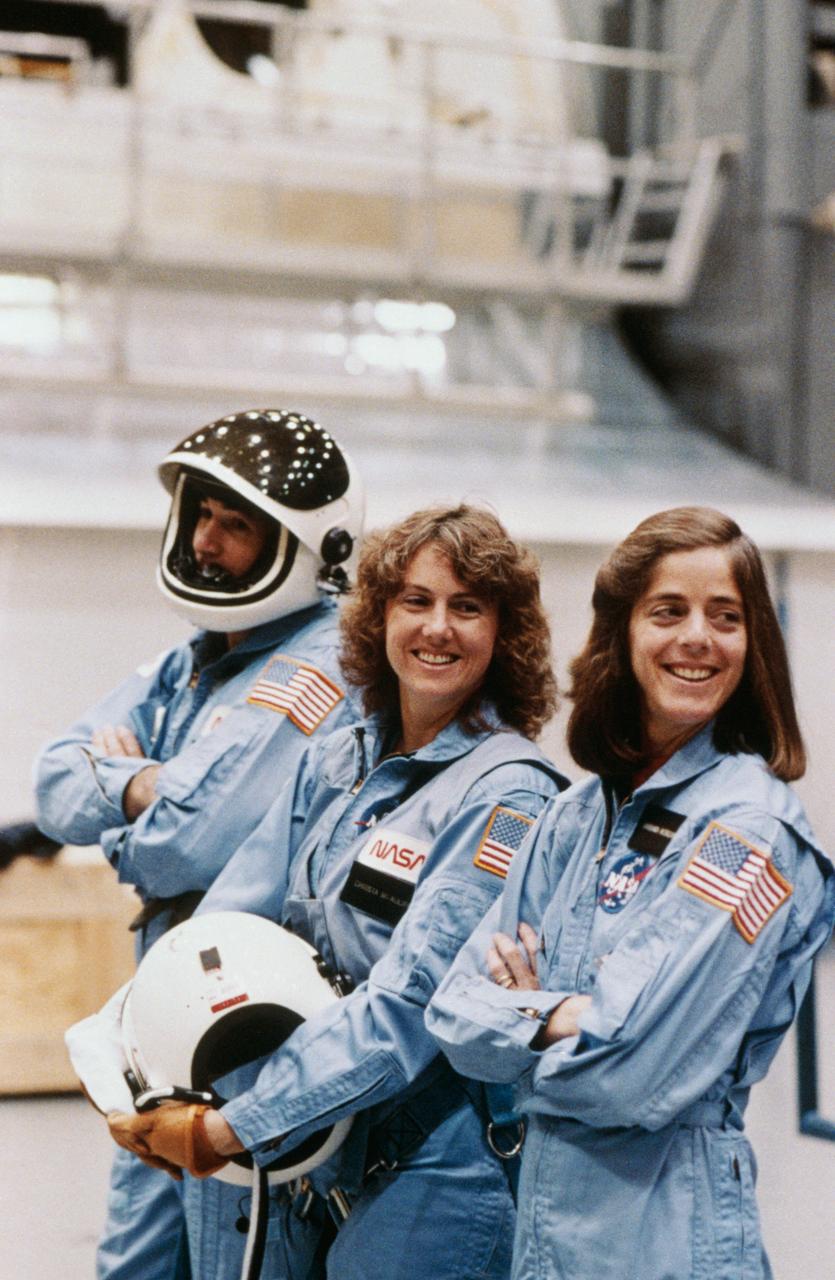
S86-25254 (January 1986) --- Payload specialists in training for STS-51L take a break in shuttle emergency egress training at the Johnson Space Center's (JSC) Shuttle Mock-up and Integration Laboratory. Left to right are Gregory Jarvis of Hughes, Sharon Christa McAuliffe and Barbara Morgan of the Teacher-in-Space Project. McAuliffe was selected as NASA's first citizen observer in the Space Shuttle Program and Morgan was named her backup. The photo was taken by Keith Meyers of the New York Times. EDITOR?S NOTE: The STS-51L crew members lost their lives in the space shuttle Challenger accident moments after launch on Jan. 28, 1986 from the Kennedy Space Center (KSC). Photo credit: NASA
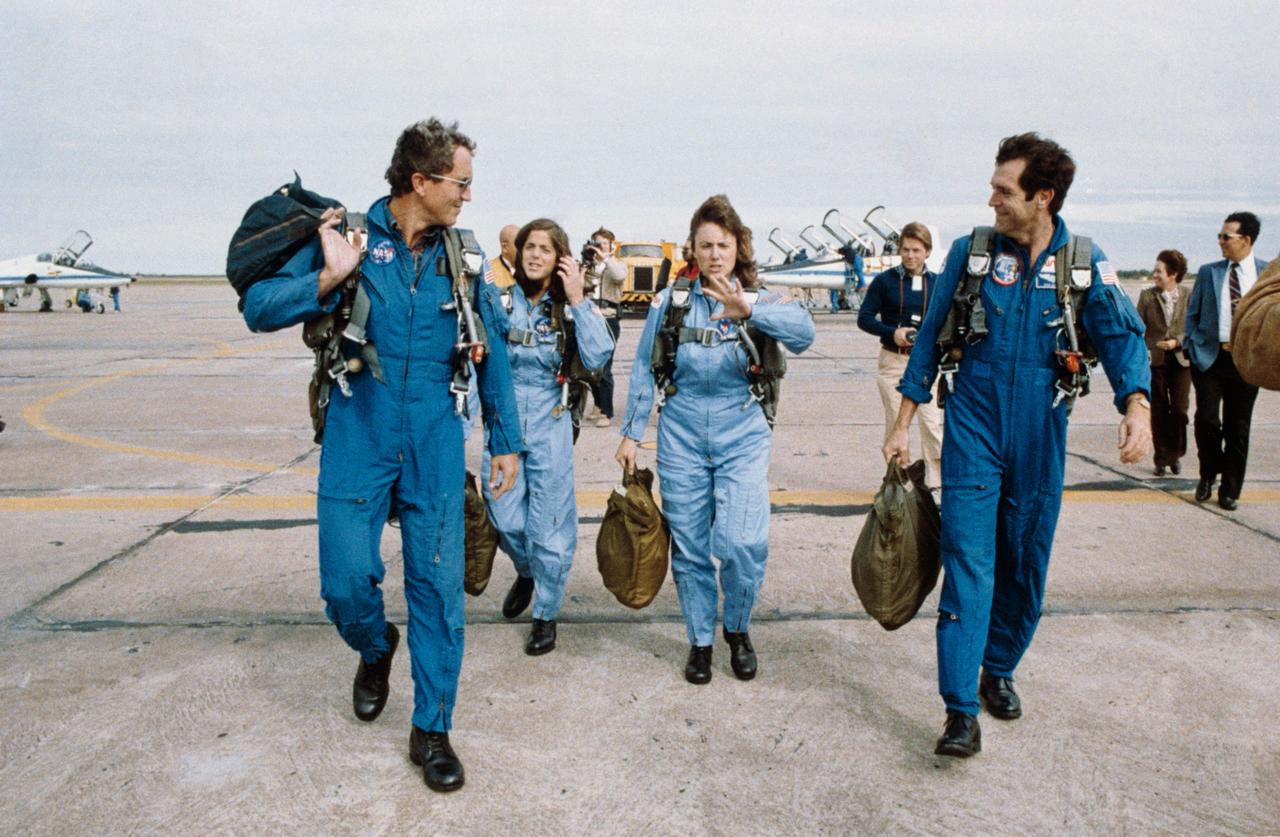
S86-25199 (September 1985) --- Three members of the STS-51L prime crew and a backup crew member walk away from the flight line at nearby Ellington Field following flights in the T-38 jet trainers seen in the background. Sharon Christa McAuliffe (center right), payload specialist/citizen observer for the Teacher-in-Space Project, and Barbara R. Morgan (center left), her backup, are flanked by astronauts Francis R. (Dick) Scobee (right), mission commander, and Michael J. Smith, pilot. The photo was taken by Keith Meyers of the New York Times. EDITOR?S NOTE: The STS-51L crew members lost their lives in the space shuttle Challenger accident moments after launch on Jan. 28, 1986 from the Kennedy Space Center (KSC). Photo credit: NASA
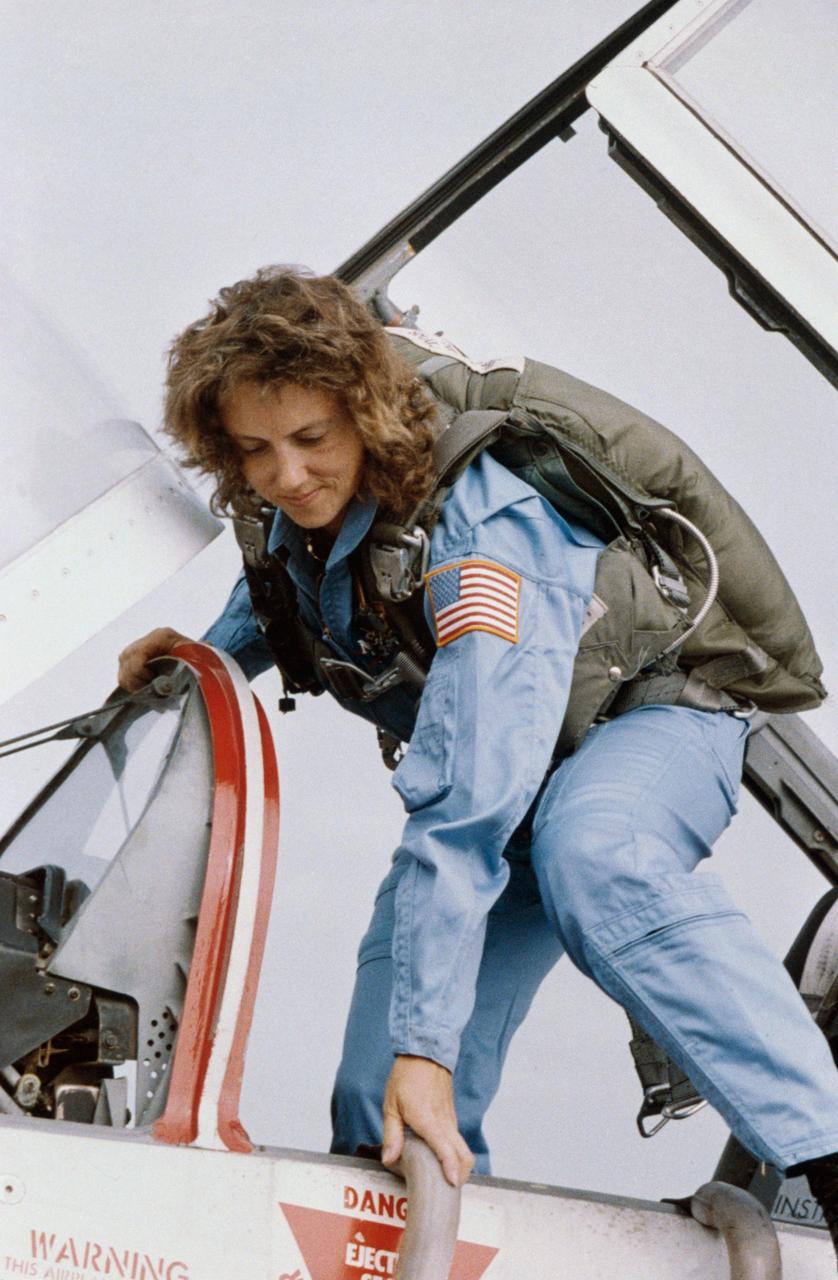
S86-25234 (January 1986) --- STS-51L Payload Specialist Sharon Christa McAuliffe egresses the rear station of a NASA T-38 jet trainer at Ellington Base near the Johnson Space Center, where the Teacher-in-Space Project top finalist is in training for the January mission. The photo was taken by Keith Meyers of the New York Times. Photo credit: NASA
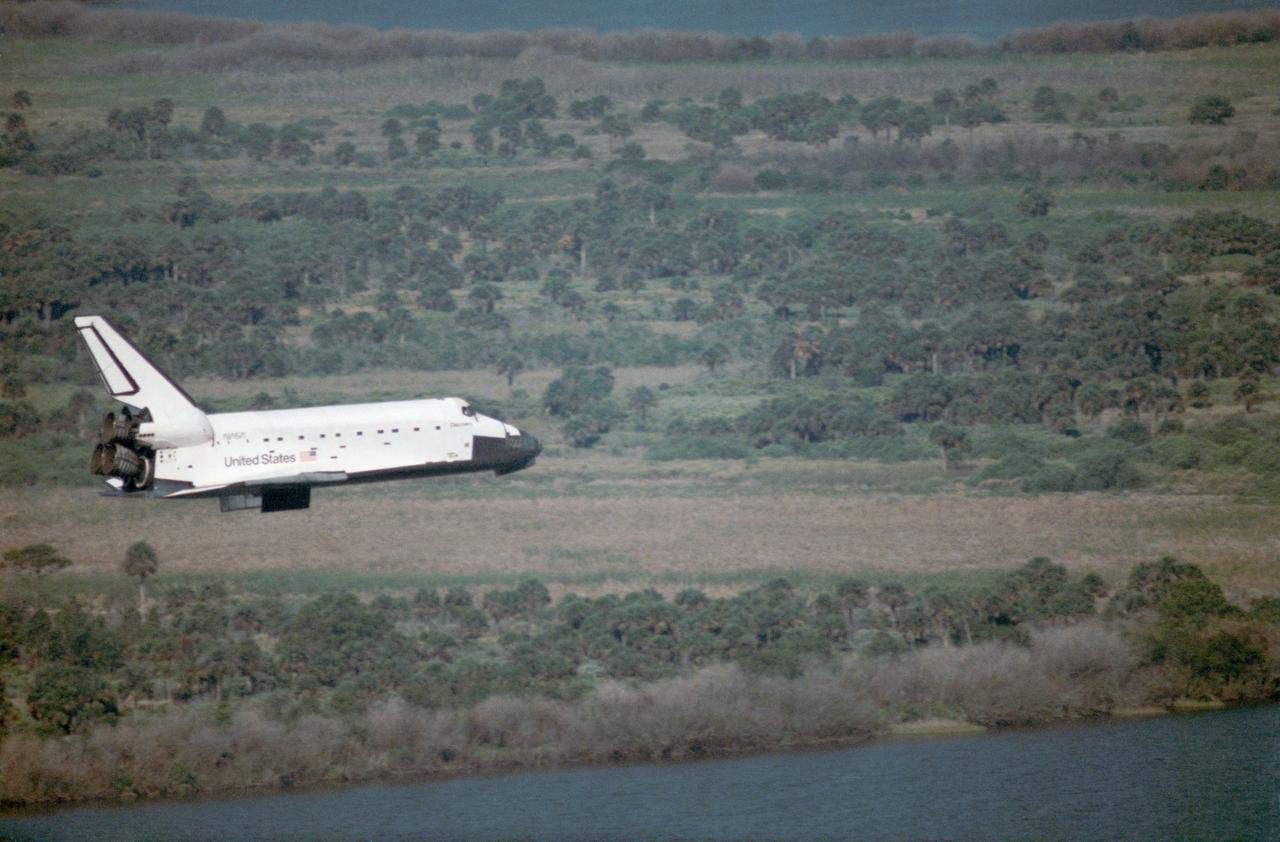
51D-9107 (19 April 1985) --- A side-looking, wide view of the Space Shuttle Discovery shows the vehicle on its final phase following a full week in space. The Discovery and its seven-member crew arrived at KSC's landing facility at 8:54:29 a.m. (EST), April 19, 1985. Launch was at 8:59 a.m. (EST) on April 12.
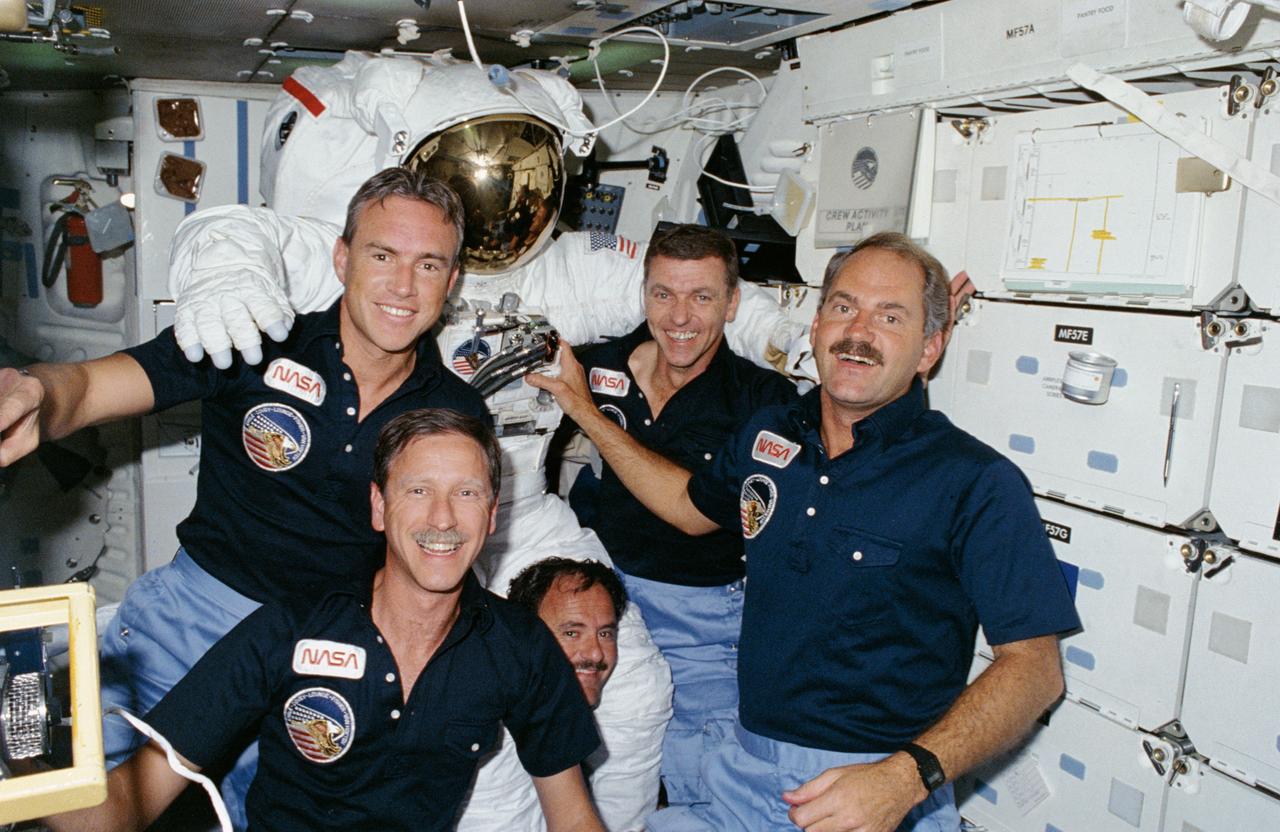
51I-07-015 (4-5 Sept 1985) --- All five STS 51-I crewmembers pose with one of two extravehicular mobility unit (EMU) spacesuits used by Astronauts van Hoften and Fisher on their two-day EVA.
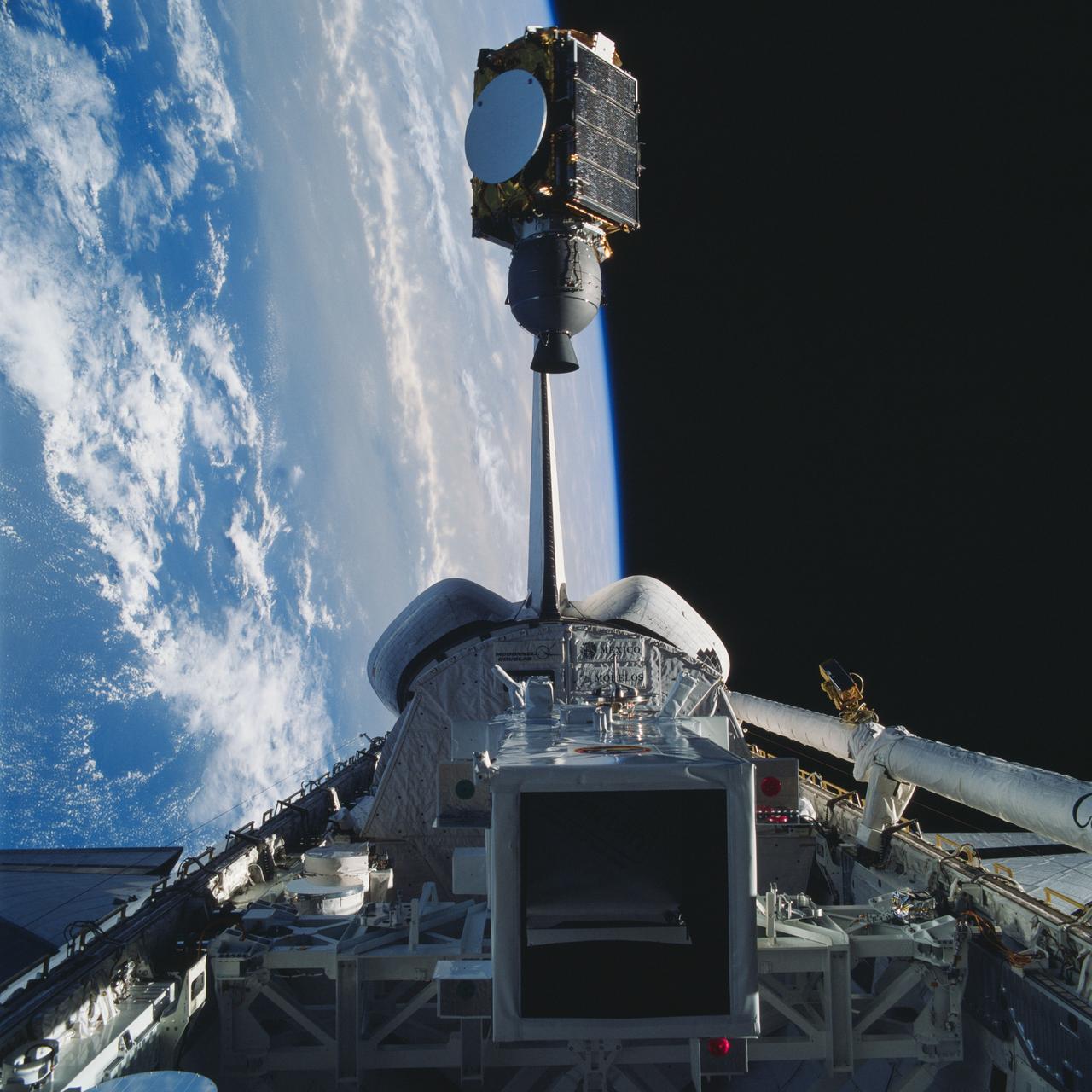
Arabsat communications satellite deploying from Discovery's payload bay. Cloudy Earth's surface can be seen to the left of the frame.
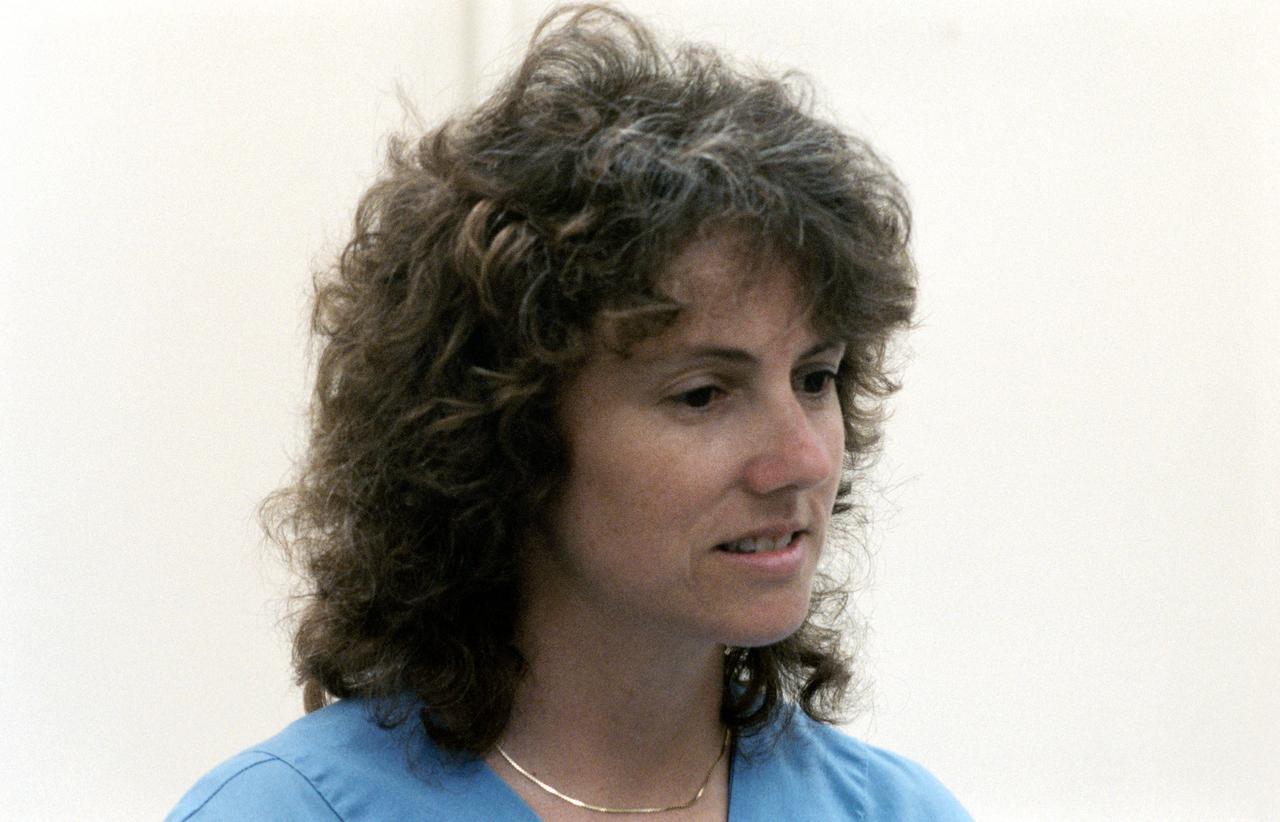
S85-37164 (8-12 July 1985) --- Sharon C. (Christa) McAuliffe of Concord High, Concord, New Hampshire, talks to the media at Johnson Space Center. Christa McAuliffe was eventually chosen as the first Teacher in Space and was a member of the seven-member Challenger shuttle crew which died tragically in the explosion of the spacecraft during the launch of STS-51L from the Kennedy Space Center about 11:40 a.m., EST, on Jan. 28, 1986. The explosion occurred 73 seconds into the flight as a result of a leak in one of two Solid Rocket Boosters that ignited the main liquid fuel tank. The crew members of the Challenger represented a cross-section of the American population in terms of race, gender, geography, background, and religion. The explosion became one of the most significant events of the 1980s, as billions around the world saw the accident on television and empathized with any one of the several crew members killed. Photo credit: NASA
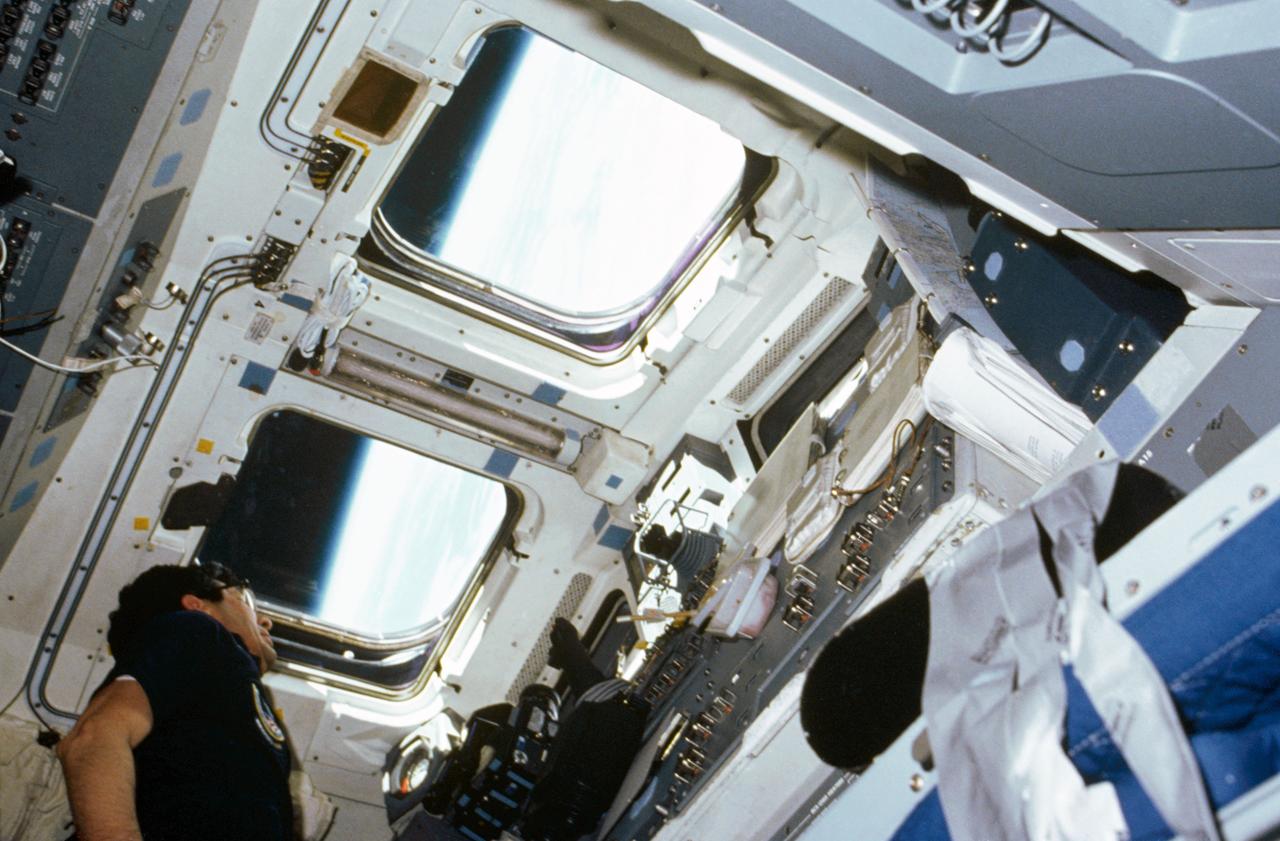
In this low-angle photo Payload specialist Lodewijk van den Berg, one of two payload specialists, looks out aft flight deck window aboard the shuttle orbiter Challenger.
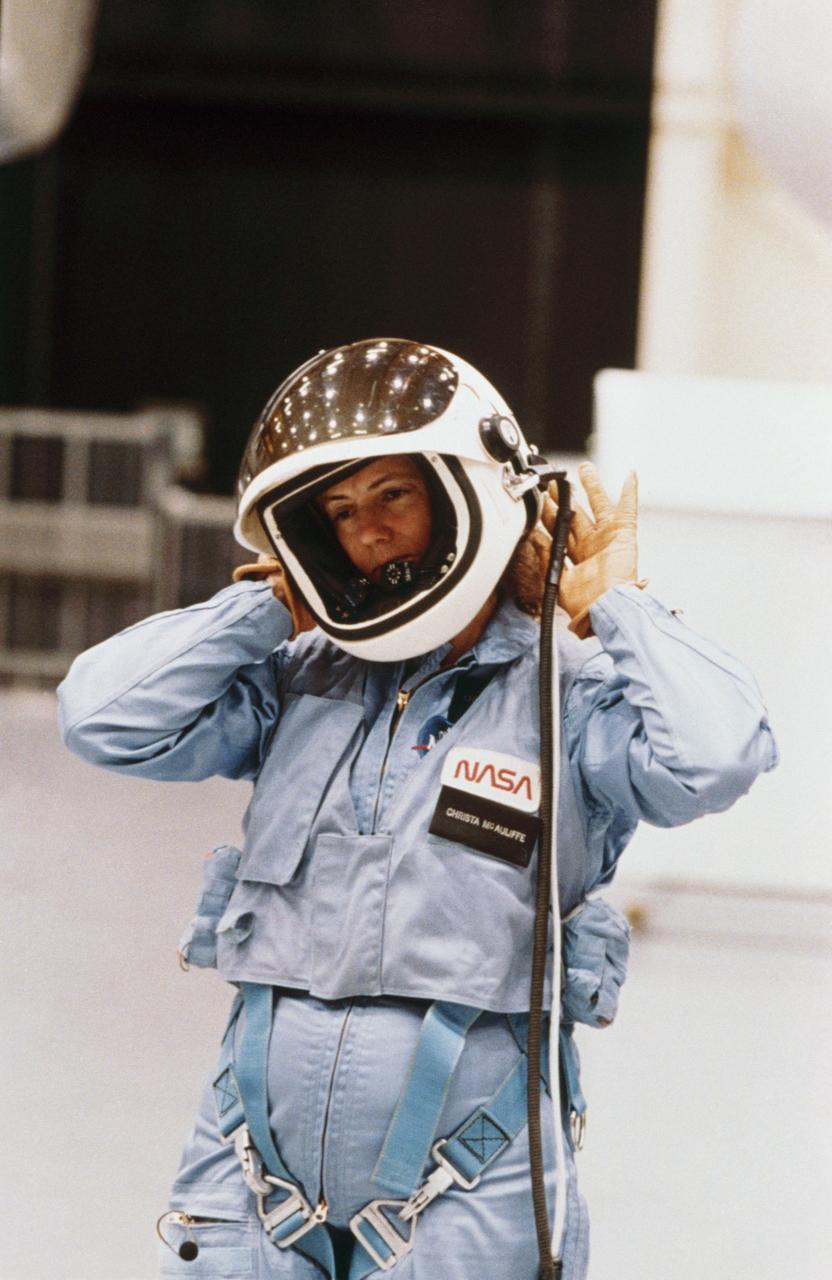
S86-25182 (for release January 1986) --- Sharon Christa McAuliffe, STS-51L citizen observer/payload specialist, prepares to remove her helmet after participating in emergency egress training in the shuttle mock-up and integration lab at the Johnson Space Center. McAuliffe will represent the Teacher-in-Space Project aboard the Challenger when it launches in late January. The photo was taken by Keith Meyers of the New York Times. Photo credit: NASA
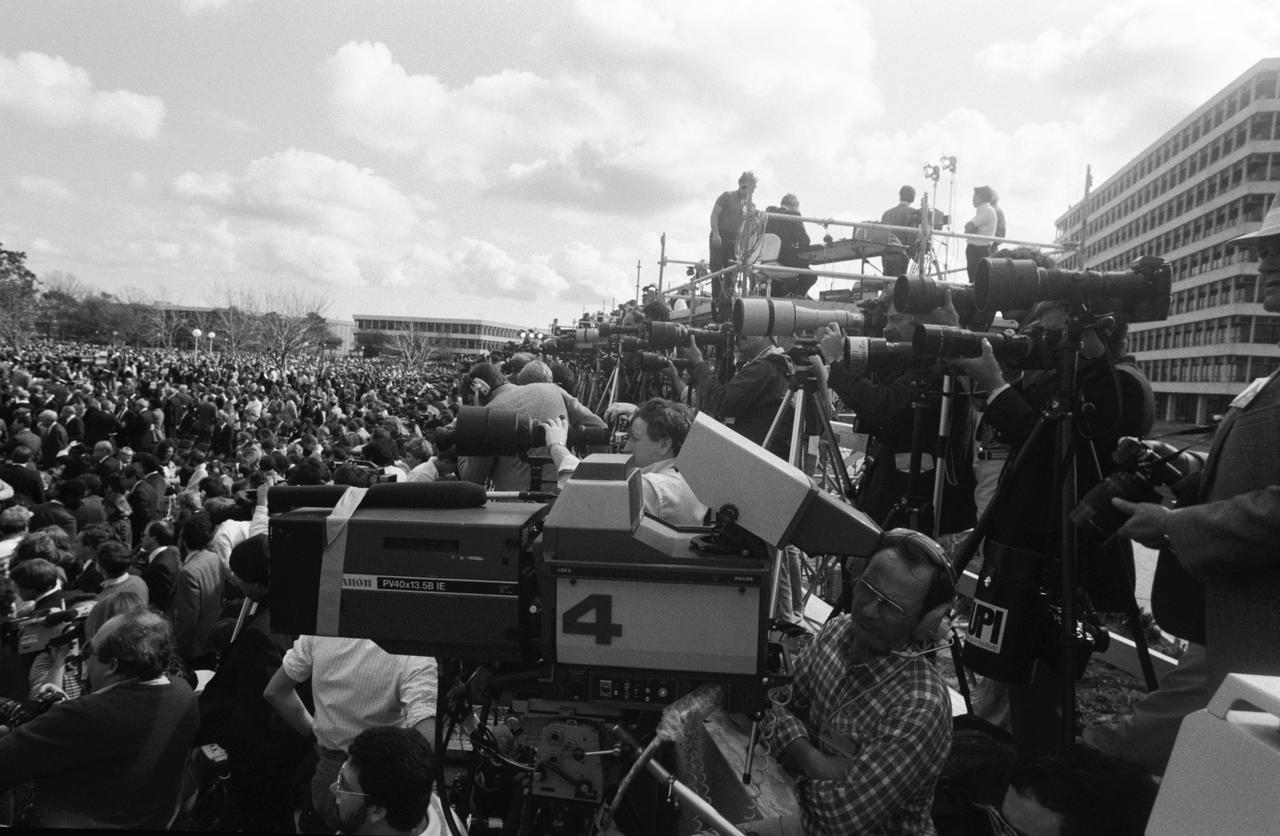
S86-26428 (31 Jan. 1986) --- Dozens of cameras and thousands of eyes focus on President Ronald Reagan (out of frame at left) during the 51-L memorial services Jan. 31 on the mall at the Johnson Space Center (JSC). The photograph was taken from special bleachers quickly erected to accommodate hundreds of members of the news media. The audience of thousands was largely made up of JSC employees and family and friends of the Challenger crew members who perished four days earlier in the attempted launch of NASA’s 25th STS mission. Photo credit: NASA
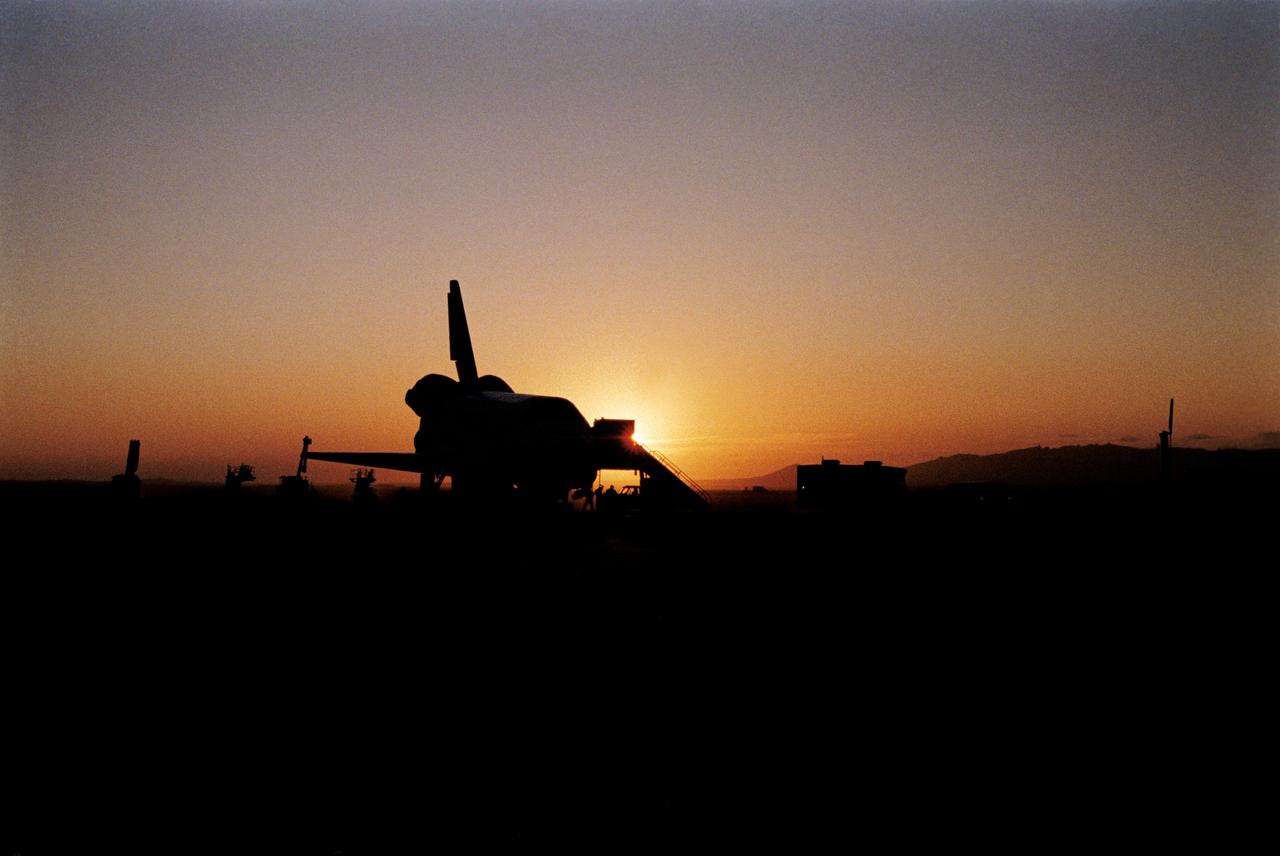
51I-S-240 (3 Sept. 1985) --- Servicing of the space shuttle Discovery after its landing at Edwards Air Force Base ending the STS-51I mission. Photo credit: NASA
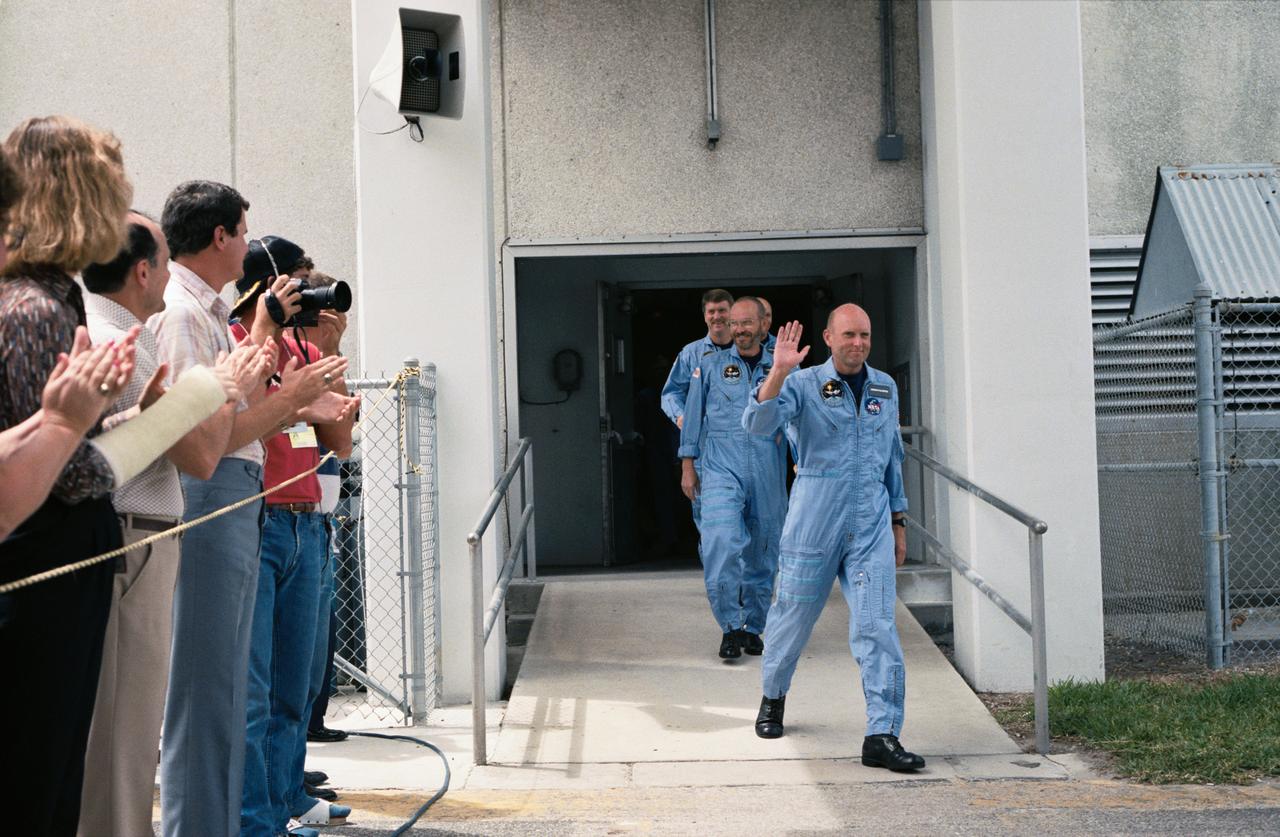
STS 51-F crewmembers depart the Kennedy Space Center's operations and checkout building on their way to the launch pad for the launch of the Discovery. Leading the way are Gordon Fullerton, commander; Loren Acton, payload specialist, and Anthony England, mission specialist. The other crewmembers are not visible in this frame.
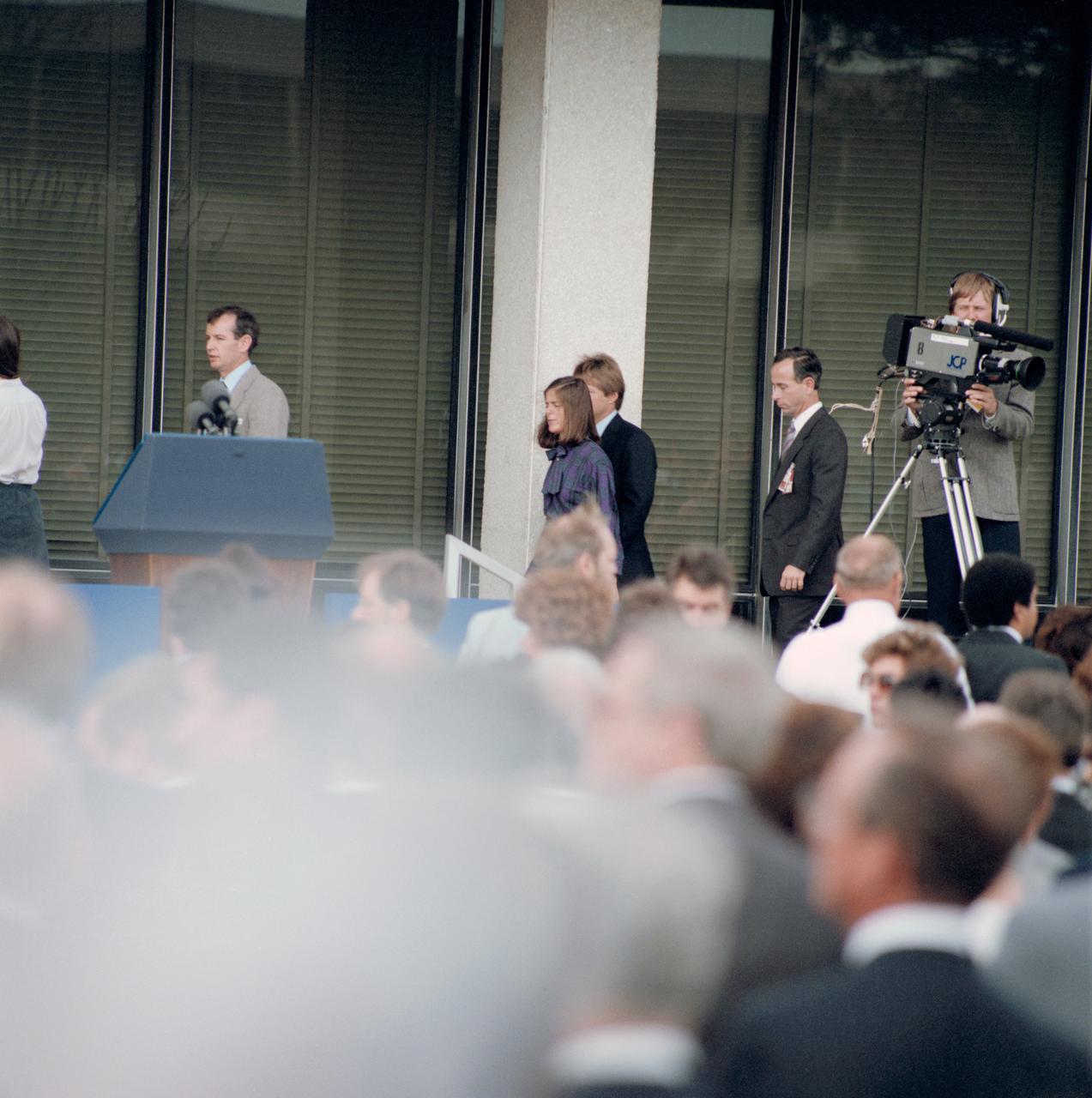
51L-S-108 (31 Jan. 1986) --- Barbara R. Morgan, 51-L backup payload specialist to Christa McAuliffe, with others on the stage at the Memorial service for the Challenger Seven at JSC. Photo credit: NASA
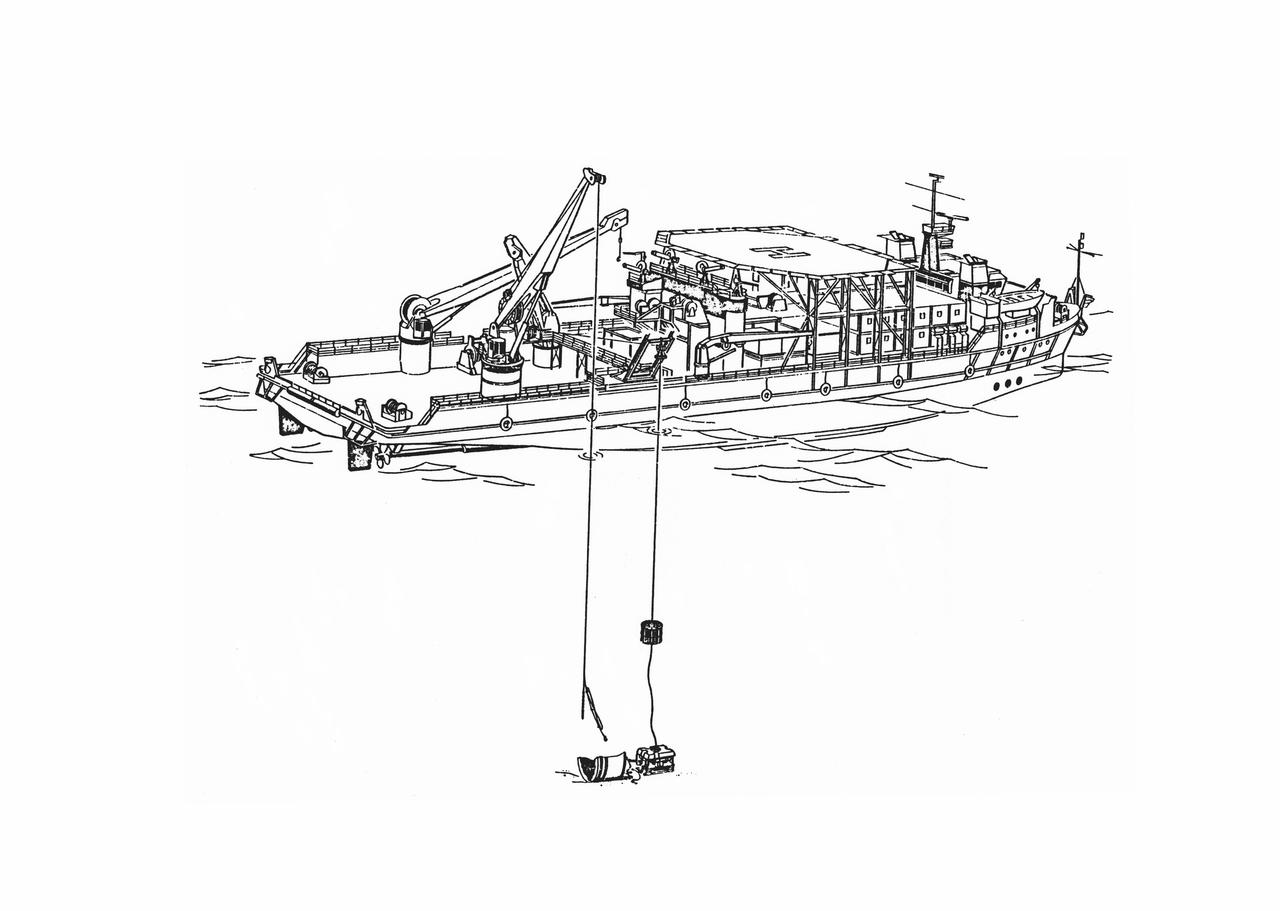
S86-30088 (March 1986) --- Salvage operations offshore of Kennedy Space Center, are depicted in this artist’s concept showing a grapple and recovery fixture (left) being directed through the use of a remote video system suspended from the recovery ship. Photo credit: NASA
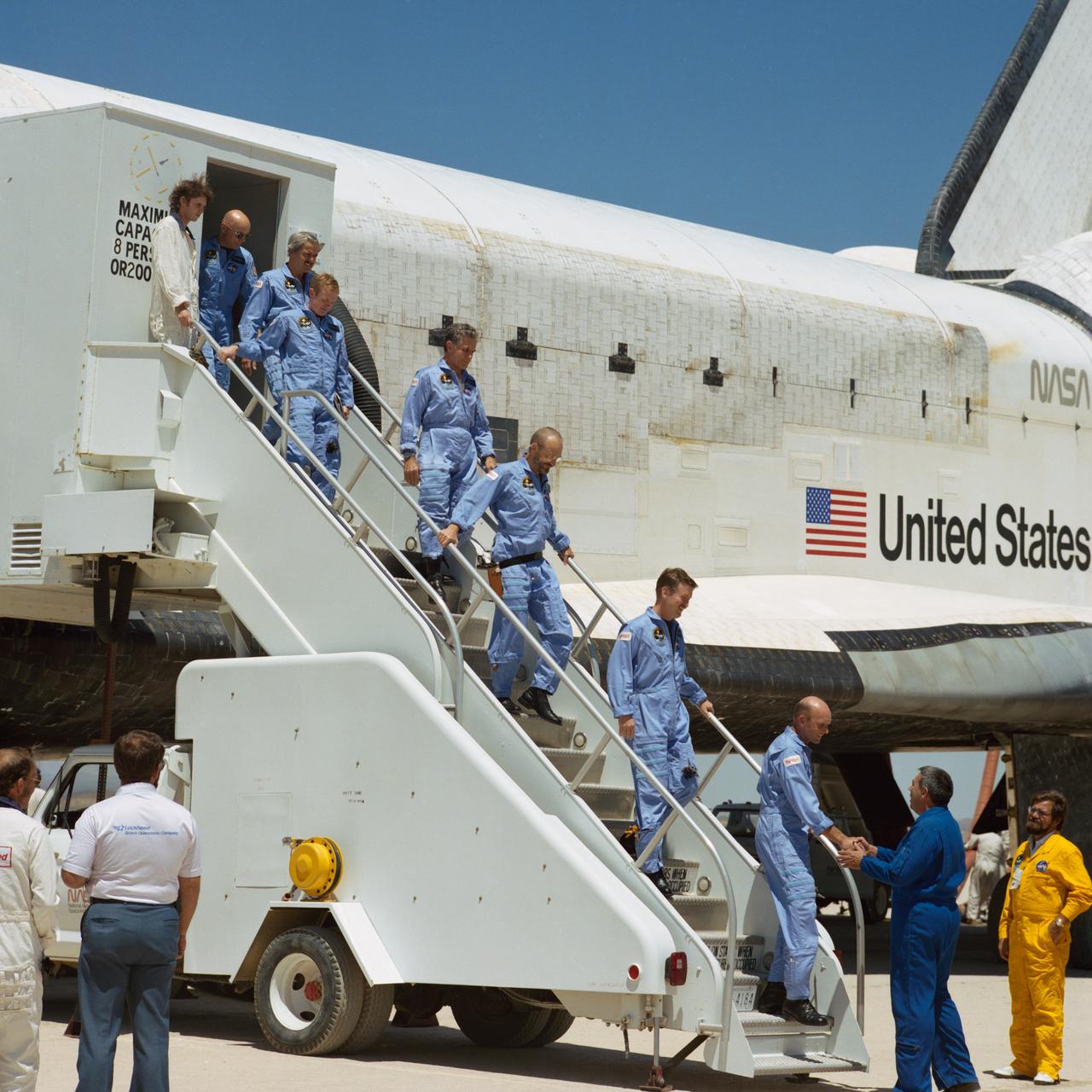
51F-S-162 (6 Aug 1985) ---Mission Operations Director George W.S. Abbey, right, shakes hands with Astronaut C. Gordon Fullerton, as the seven-member 51F crew descends from its "home" for eight days. Other Challenger crewmembers egressing the spacecraft are, left to right, F. Story Musgrave, mission specialist; John-David Bartoe, payload specialist; Roy D. Bridges, Jr., Karl J. Henize, mission specialist; Loren W. Acton, payload specialist; and Anthony W. England, mission specicalist. Fullerton, commander, earlier successfully landed Challenger on a Mojave desert dry lake bed. Three years ago, Fullerton was pilot of STS-3, on which the Columbia's scheduled Edwards landing was moved to New Mexico because of weather and runway conditions here.
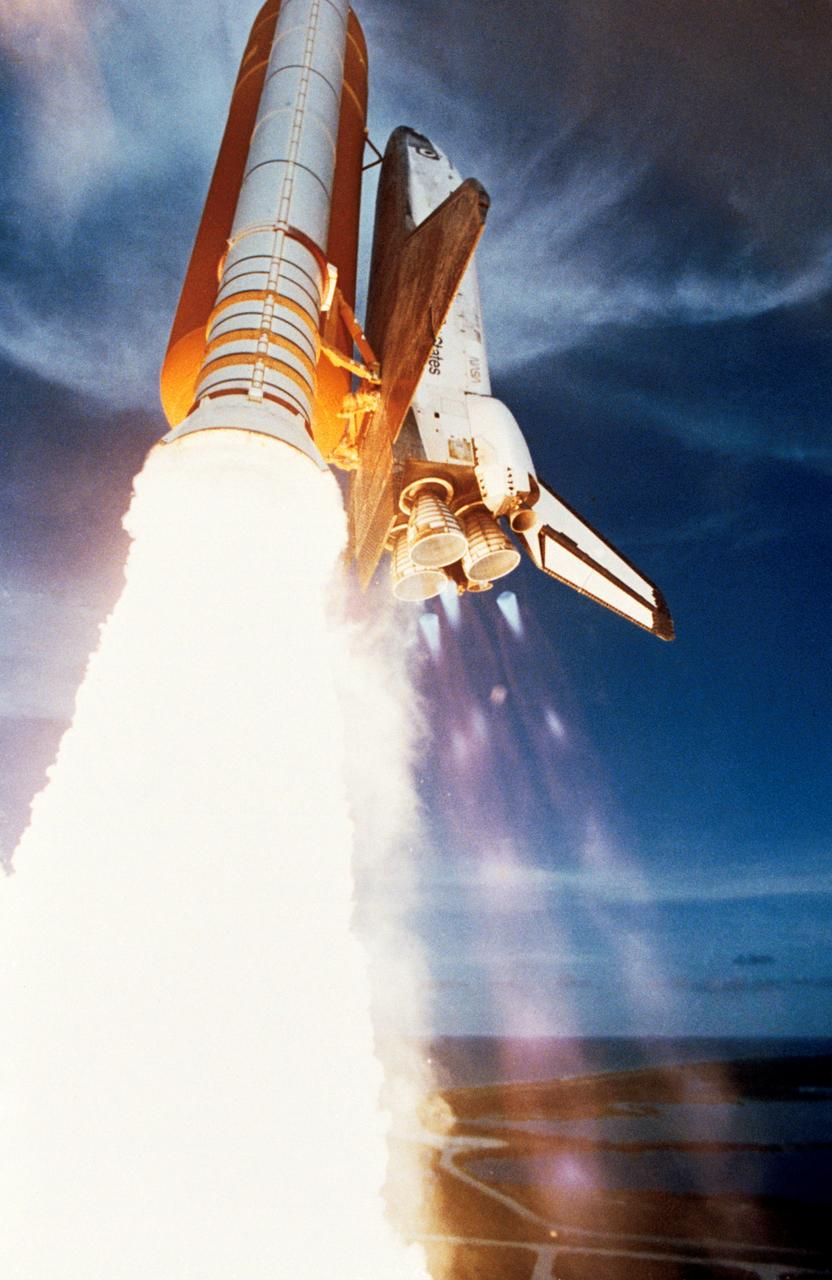
51F-S-157 (29 July 1985) --- Just moments following ignition, the Space Shuttle Challenger, mated to its two solid rocket boosters and an external fuel tank, soars toward a week-long mission in Earth orbit. Note the diamond shock effect in the vicinity of the three main engines. Launch occurred at 5:00 p.m. (EDT), July 29, 1985.

51D-09-014 (12-19 April 1985) --- U.S. Senator E. J. (Jake) Garn (left), payload specialist; and Karol J. Bobko, mission commander, show a copy of a cartoon from the Doonesbury strip of Garry Trudeau. The senator had been the subject of a series of Trudeau's creations prior to 51-D. The single enlarged panel is autographed by the crewmembers.
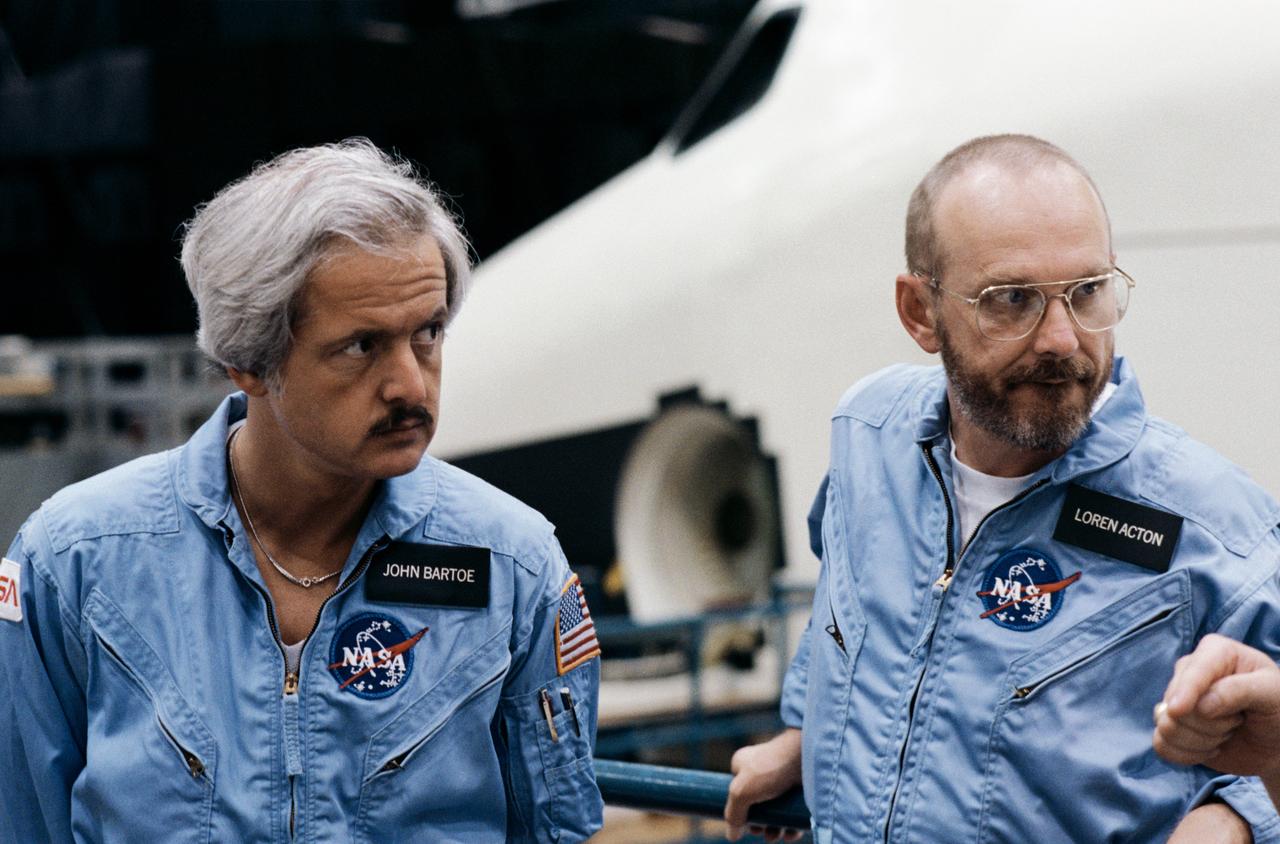
S85-34378 (4 June 1985) --- Payload specialists John-David Bartoe, left, and Loren W. Acton listen to a briefing by a crew trainer (out of frame) during emergency egress training for members of the Challenger's next crew. Later, the seven crewmembers used sky-genies to practice quick egress from a potentially troubled Space Shuttle craft. They are standing near the crew compartment trainer in the Shuttle mockup and integration lab at JSC.

51A-104-049 (14 Nov. 1984) --- Astronaut Dale A. Gardner, having just completed the major portion of his second extravehicular activity (EVA) period in three days aboard the Earth-orbiting Discovery, holds up a for sale sign. Astronaut Joseph P. Allen IV, who also participated in the two EVA, is reflected in Gardner's helmet visor. A portion of each of two recovered satellites is in lower right corner, with Westar nearer Discovery's aft. Dr. Allen, standing on the mobile foot restraint, connected to the remote manipulator system. Photo credit: NASA

View of the Syncom-IV (LEASAT) satellite from the flight deck window taken by Astronaut S. David Griggs.
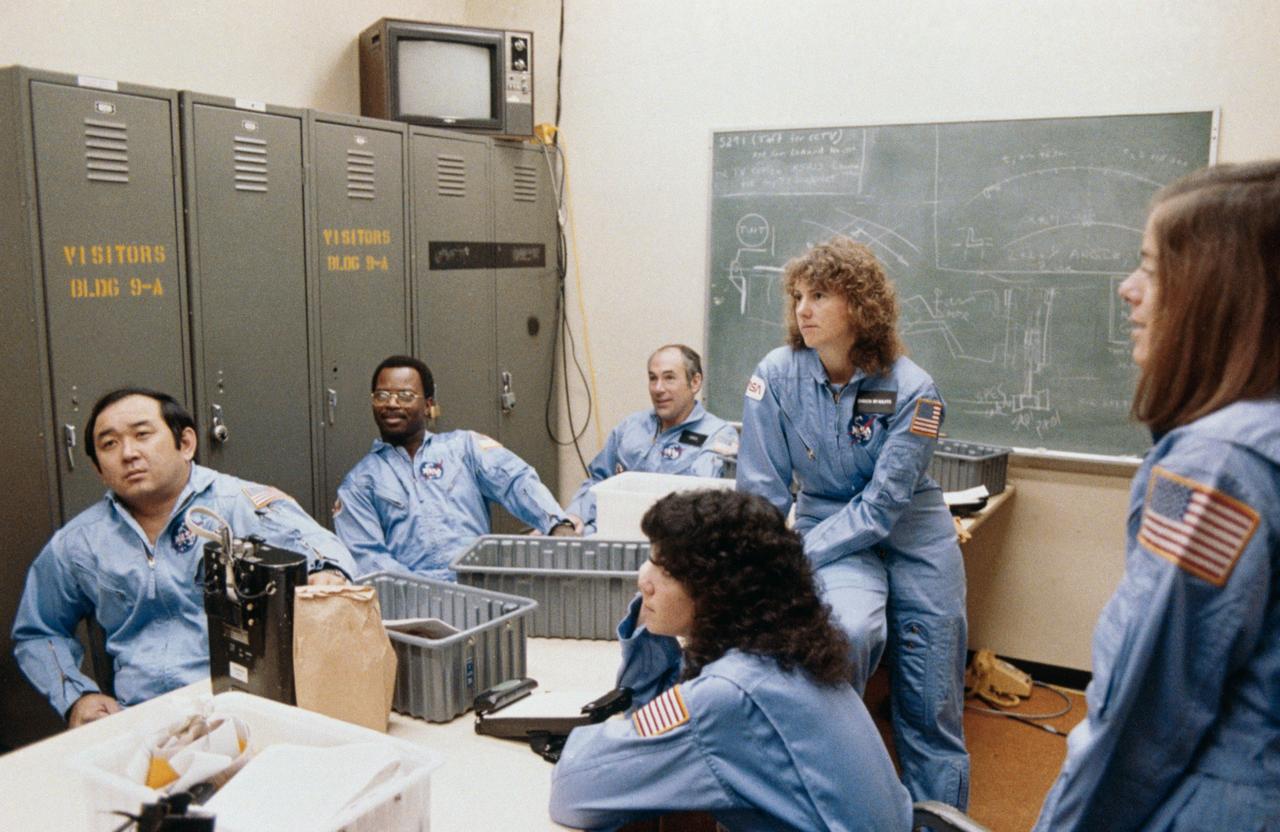
S86-25186 (December 1985) --- Five members of the prime crew for NASA?s STS-51L mission and a backup crew member are briefed during a training session in the Johnson Space Center?s (JSC) Shuttle Mock-up and Integration Laboratory. From left to right are astronaut Ellison S. Onizuka, mission specialist; Ronald E. McNair, mission specialist; Gregory D. Jarvis, Hughes payload specialist; Judith A. Resnik, mission specialist; Sharon Christa McAuliffe, citizen observer/payload specialist representing the Teacher-in-Space Project; and Barbara R. Morgan, backup payload specialist. The photograph was taken by Keith Meyers of the New York Times. EDITOR?S NOTE: The STS-51L crew members lost their lives in the space shuttle Challenger accident moments after launch on Jan. 28, 1986 from the Kennedy Space Center (KSC). Photo credit: NASA

51D-05-22 (12-19 April 1985) --- Astronauts Karol J. Bobko (foreground), mission commander, and Donald E. Williams, pilot, are surrounded by teleprinted messages transmitted from ground controllers. The two are on Discovery's middeck.
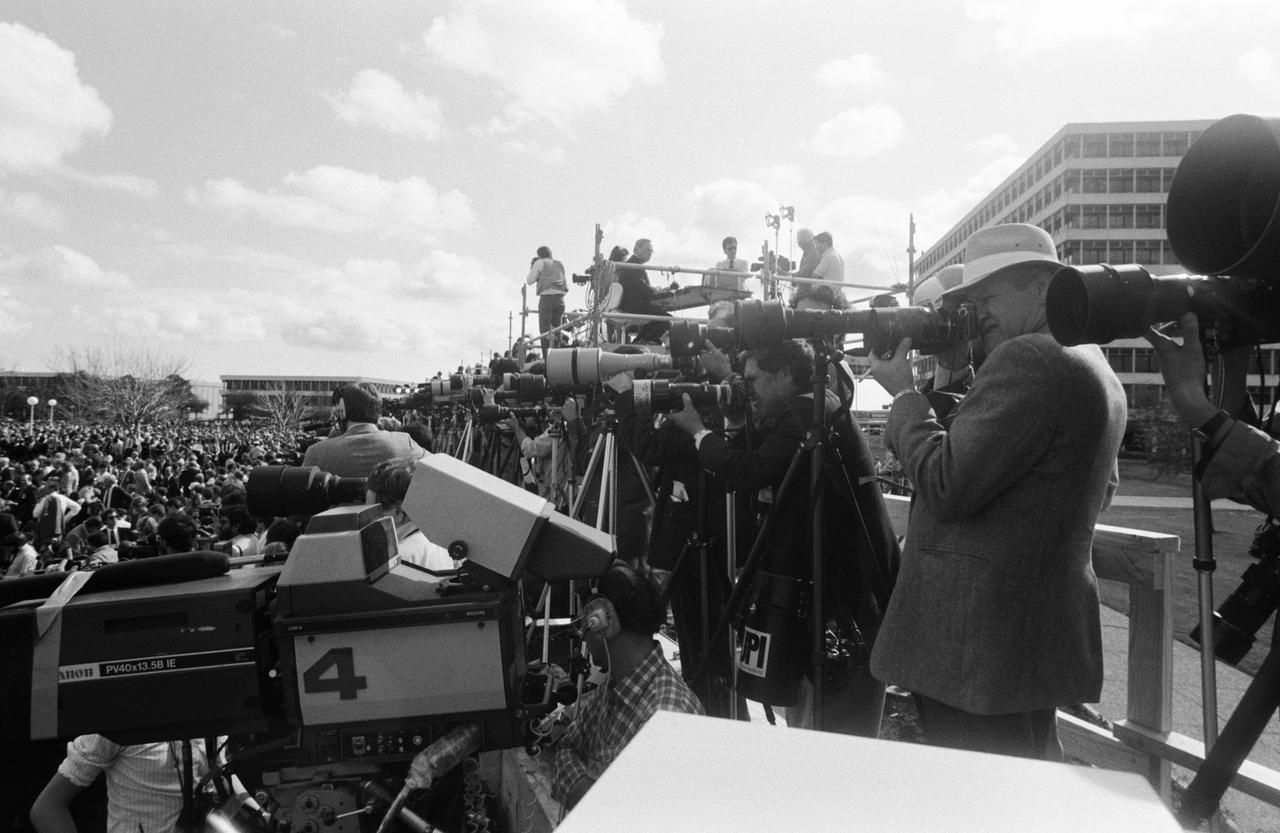
Overall view of the news media at the memorial service at JSC for the Crew of STS 51-L.
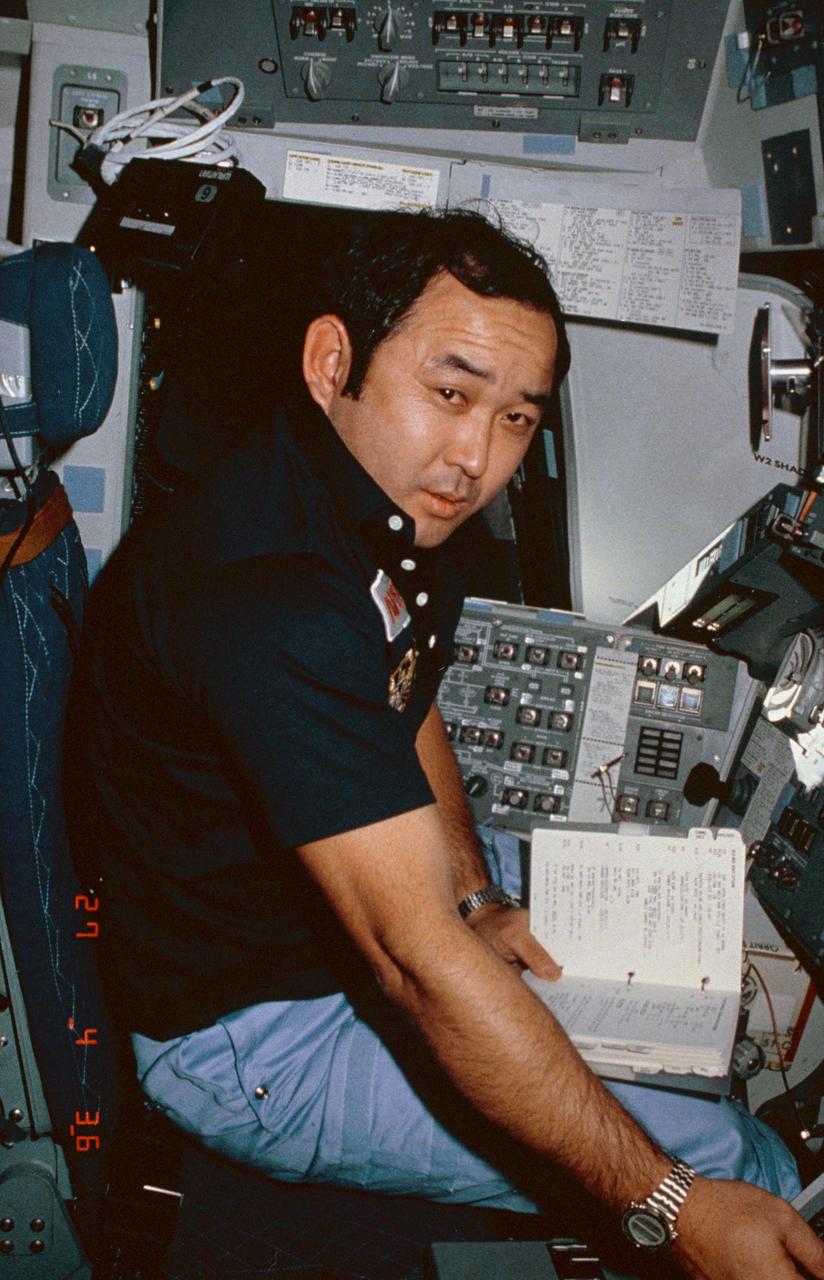
51C-06-025 (24-27 Jan 1985) --- Astronaut Ellison S. Onizuka, mission specialist, studies flight checklist on middeck of Space Shuttle Discovery.
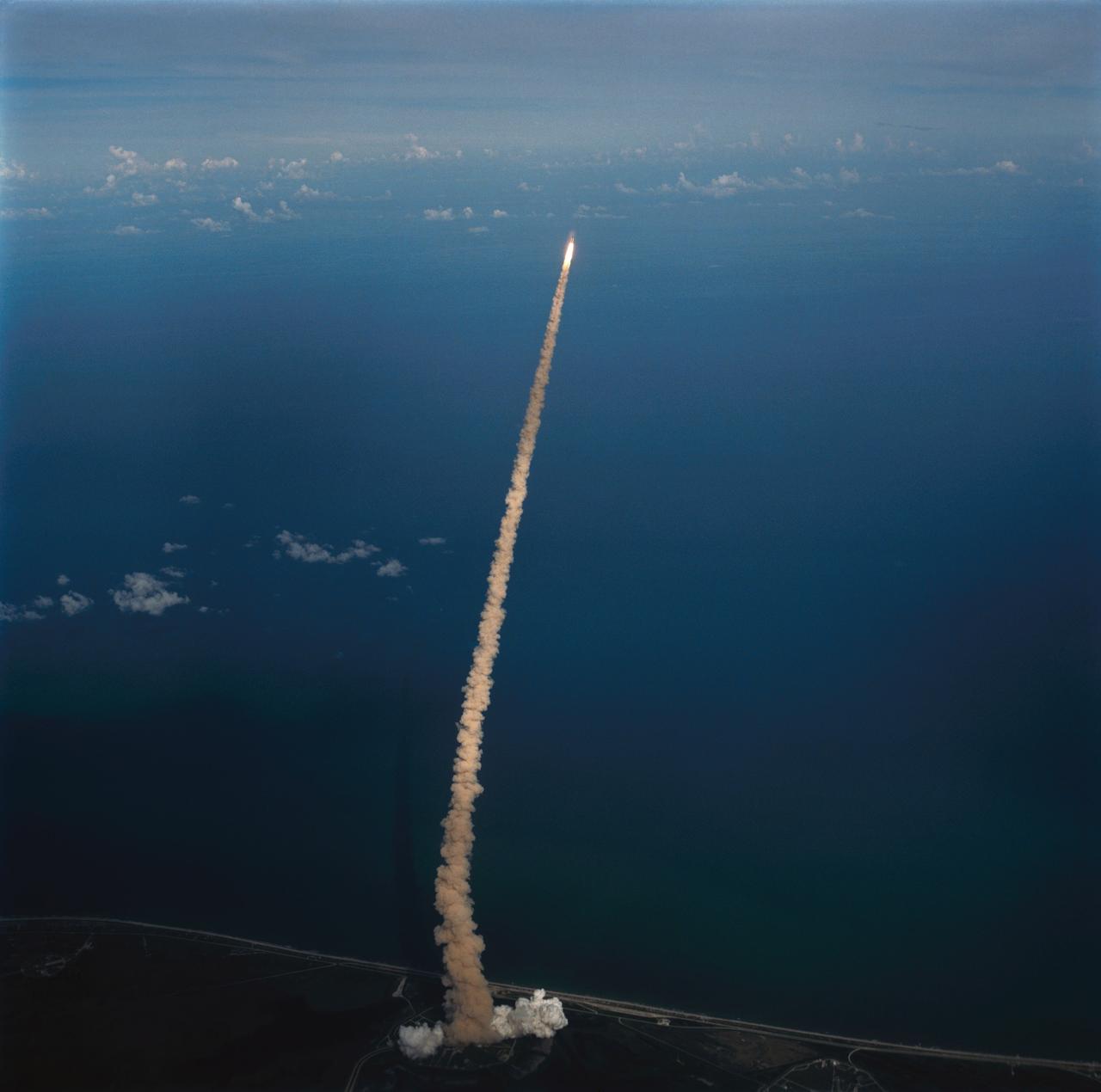
51F-S-038 (29 July 1985) ---An air-to-air view of the Space Shuttle orbiter Challenger, its two solid rocket boosters and external fuel tank moments after launch from Pad 39A at Kennedy Space Center (KSC). Astronaut John W. Young, veteran of two Shuttle flights and four other NASA missions, took the photograph with a handheld camera while piloting the Shuttle training aircraft. Launch occured at 5:00:00:423 p.m. (EDT), July 29, 1985.
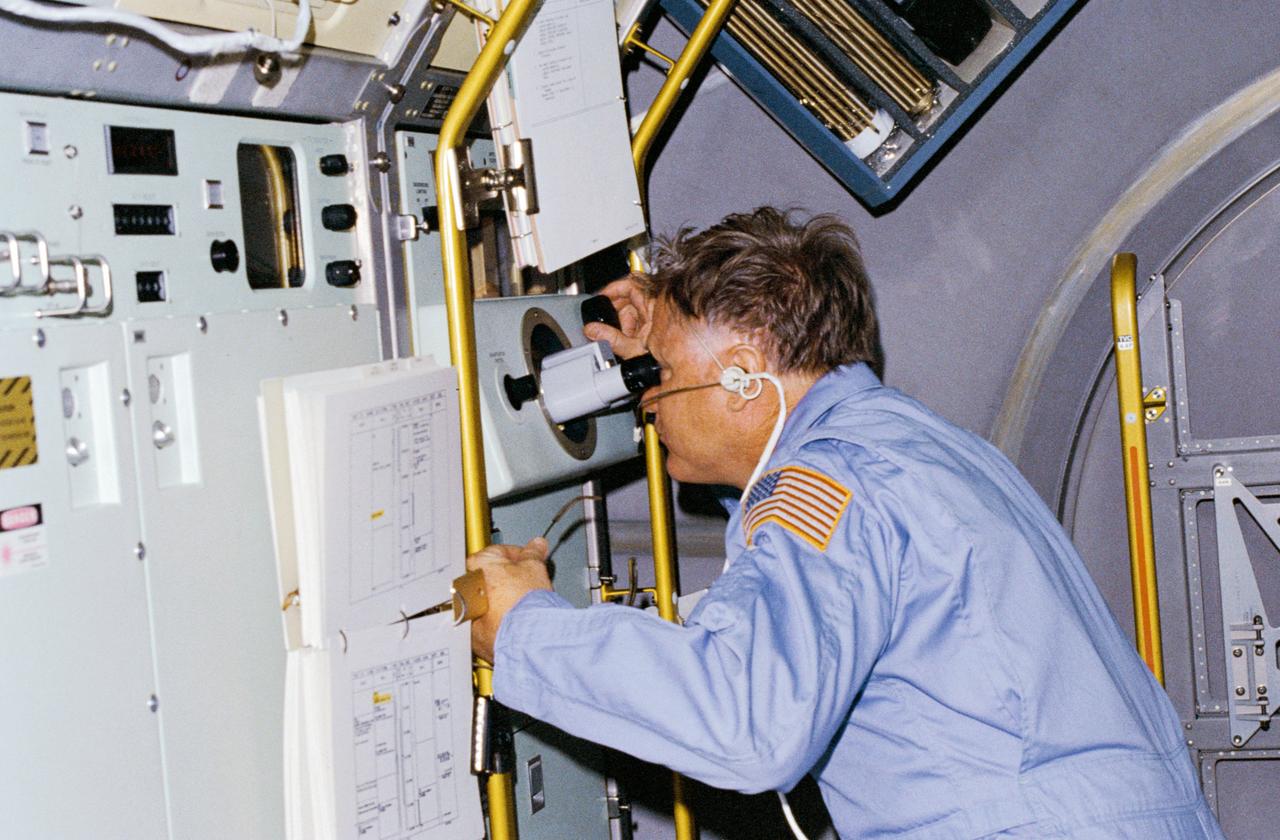
51B-01-007 (30 April 1985) --- Astronaut Don L. Lind, 51-B Spacelab 3 mission specialist, observes the growth of mercuric iodide crystal in the vapor crystal growth system (VCGS) on the Spacelab 3 science module aboard the orbiter Challenger.
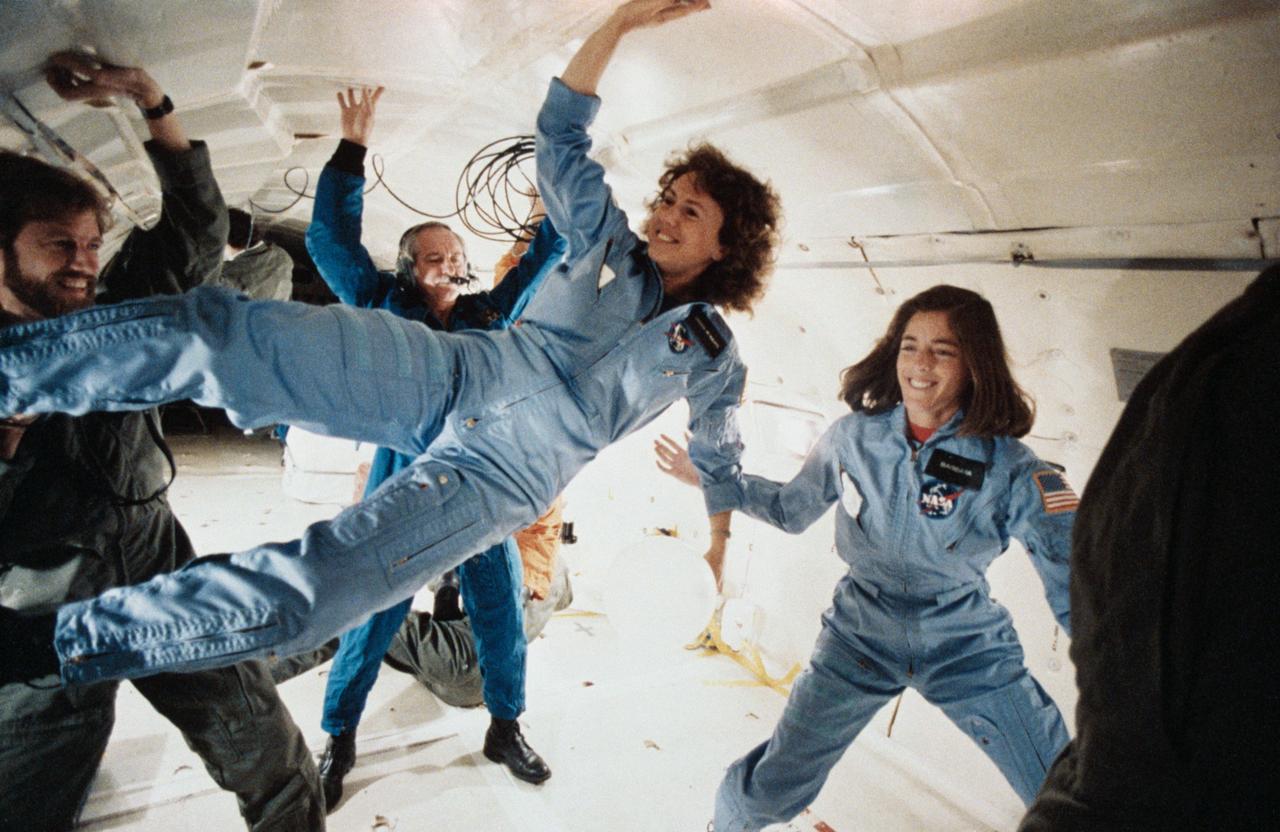
S86-25191 (for release January 1986) --- The two representatives of the Teacher-in-Space Project continue their training program at the Johnson Space Center with an additional flight aboard NASA?s KC-135 ?zero gravity? aircraft. Sharon Christa McAuliffe, left, is prime crew payload specialist, and Barbara R. Morgan is in training as backup payload specialist. The photo was taken by Keith Meyers of New York Times. Photo credit: NASA
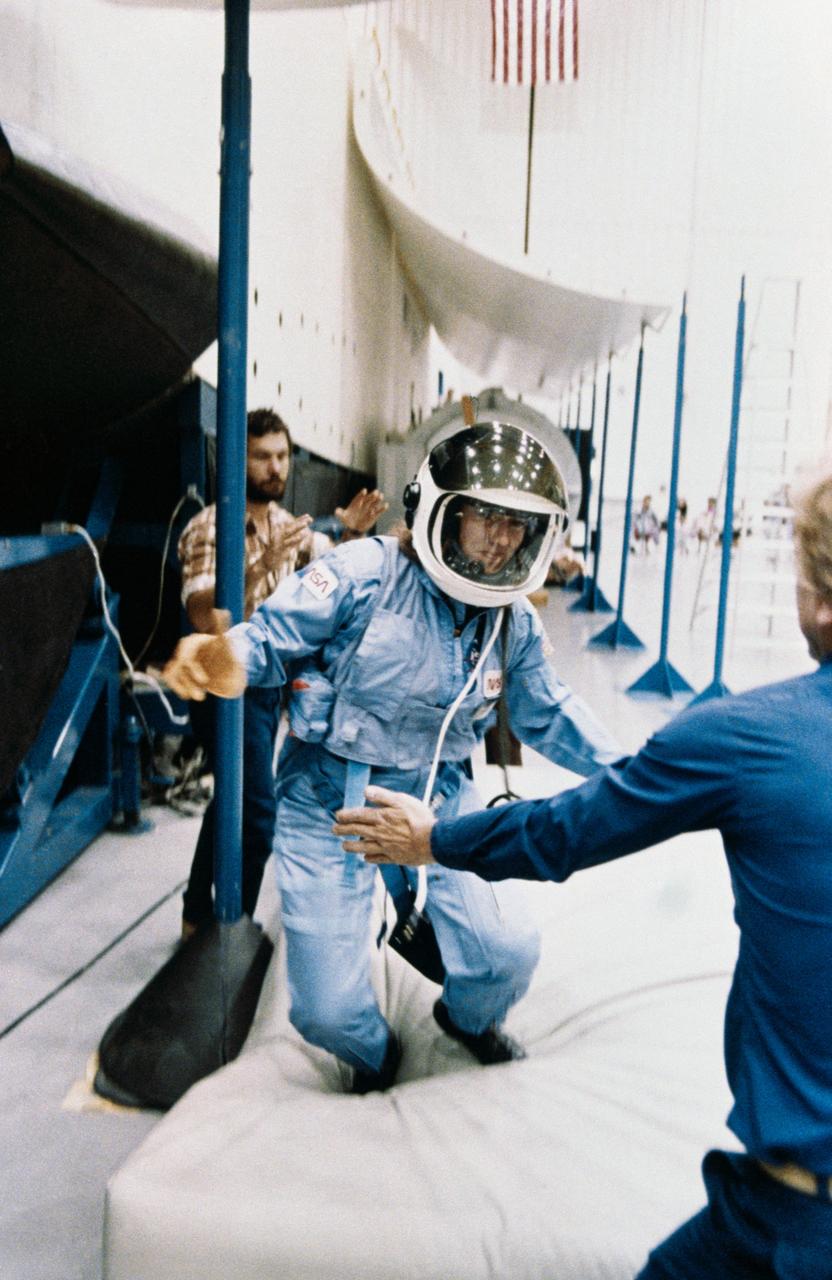
Sharon Christa McAuliffe, 51-L payload specialist representing the Teacher in Space project, jumps down onto a cushion during an emergency egress training session in JSC's mockup and integration laboratory. She had been descending from the mockup using a Sky-genie.
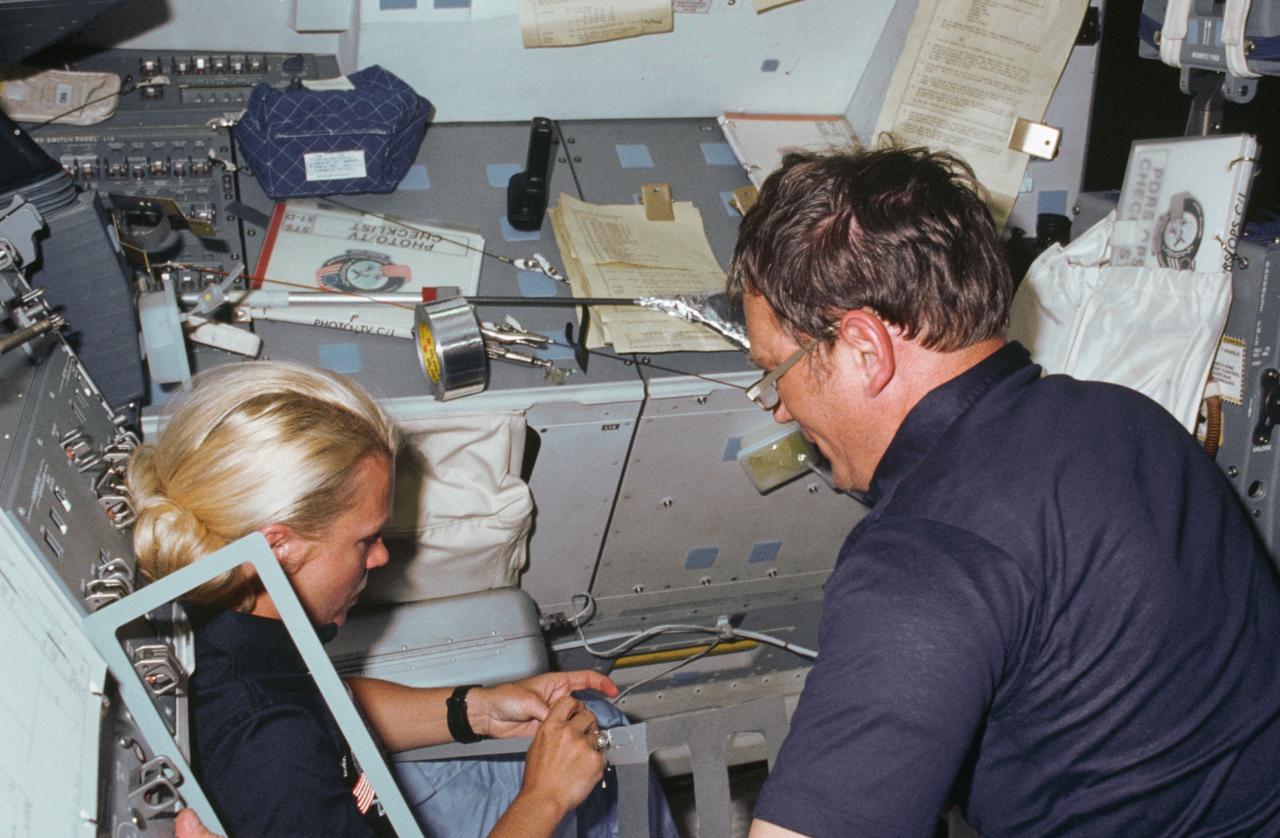
51D-04-015 (15 April 1985) --- Astronaut Rhea Seddon and Karol J. Bobko continue work on snag-type extension for the Remote Manipulator System (RMS) as part of an effort to activate a lever on a troubled communications satellite. Since the crew learned soon after deployment of the Syncom IV (LEASAT) spacecraft that it was not functioning properly plans were formulated for a rendezvous in space between the Discovery and the satellite. A fly swatter-like extension and another resembling a LaCrosse stick were fashioned from onboard supplies and furnishings. Stowage lockers nearby serve as a work bench for the two. At various times during the seven-day mission, the majority of the seven-member crew participated in the tool-making and preparations for an extravehicular activity (EVA) by the flights other two mission specialists -- Jeffrey A. Hoffman and S. David Griggs -- to connect the two tools to the RMS. Bobko is mission commander and Dr. Seddon, a mission specialist.
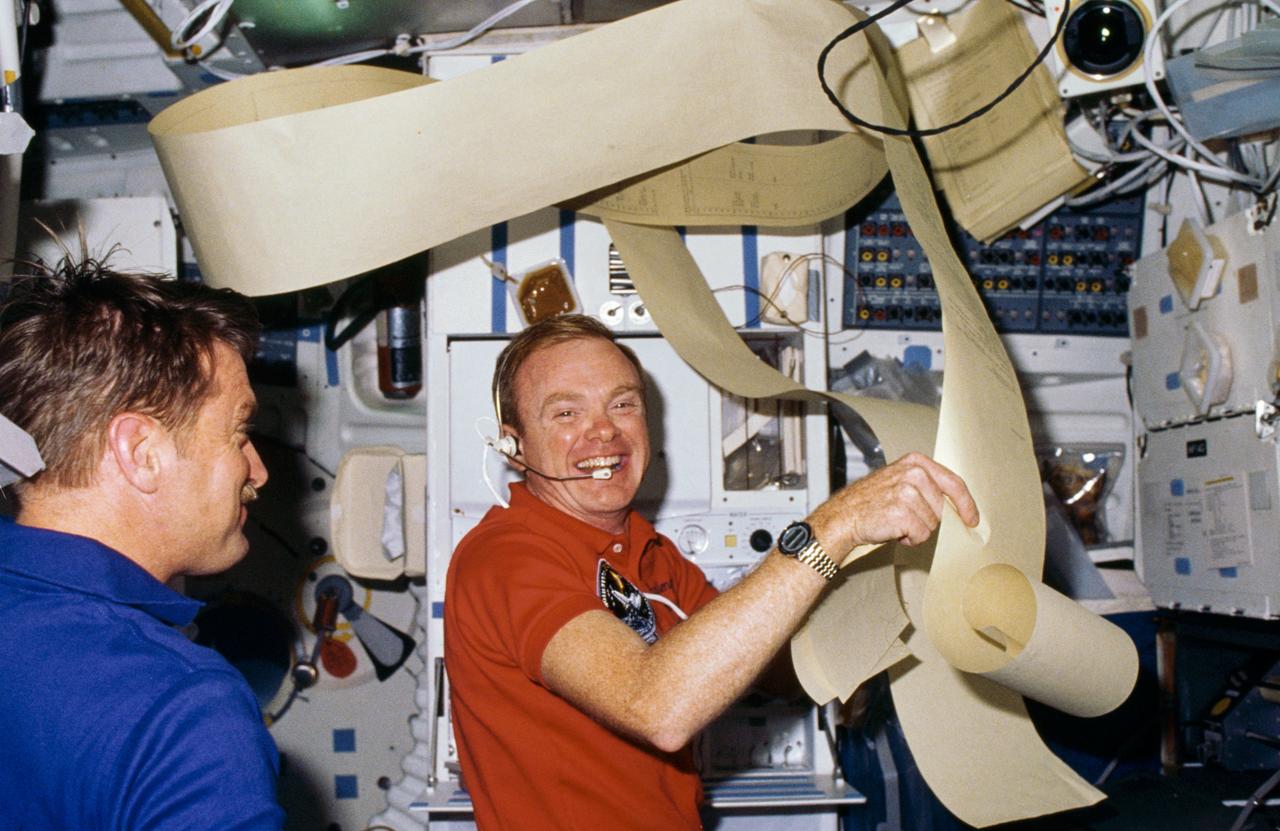
51F-03-024 (29 July-6 Aug 1985) --- Astronauts Anthony W. England, left, and Roy D. Bridges are surrounded by some of the prolific teleprinter copy transmitted from ground controllers to the Earth-orbiting Challenger. Eventually the equivalent of several football fields' length of paper was filled with data from flight controllers.
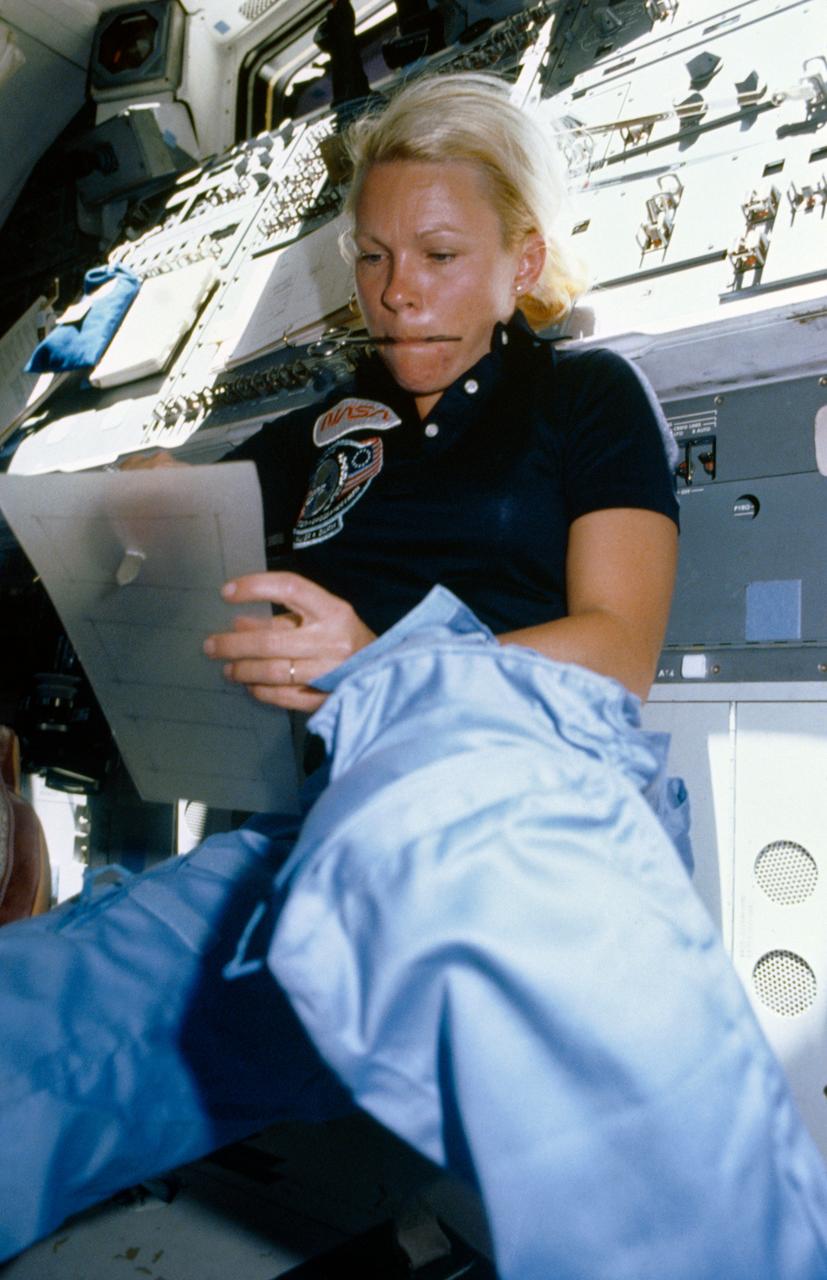
51D-07-003 (12-19 April 1985) --- Astronaut Rhea Seddon begins early work on a fly swatter-like snagging device to be used as an extension to the Remote Manipulator System (RMS) arm on Discovery for an April 17, 1985 attempt to trip a lever on the troubled Syncom-IV satellite.
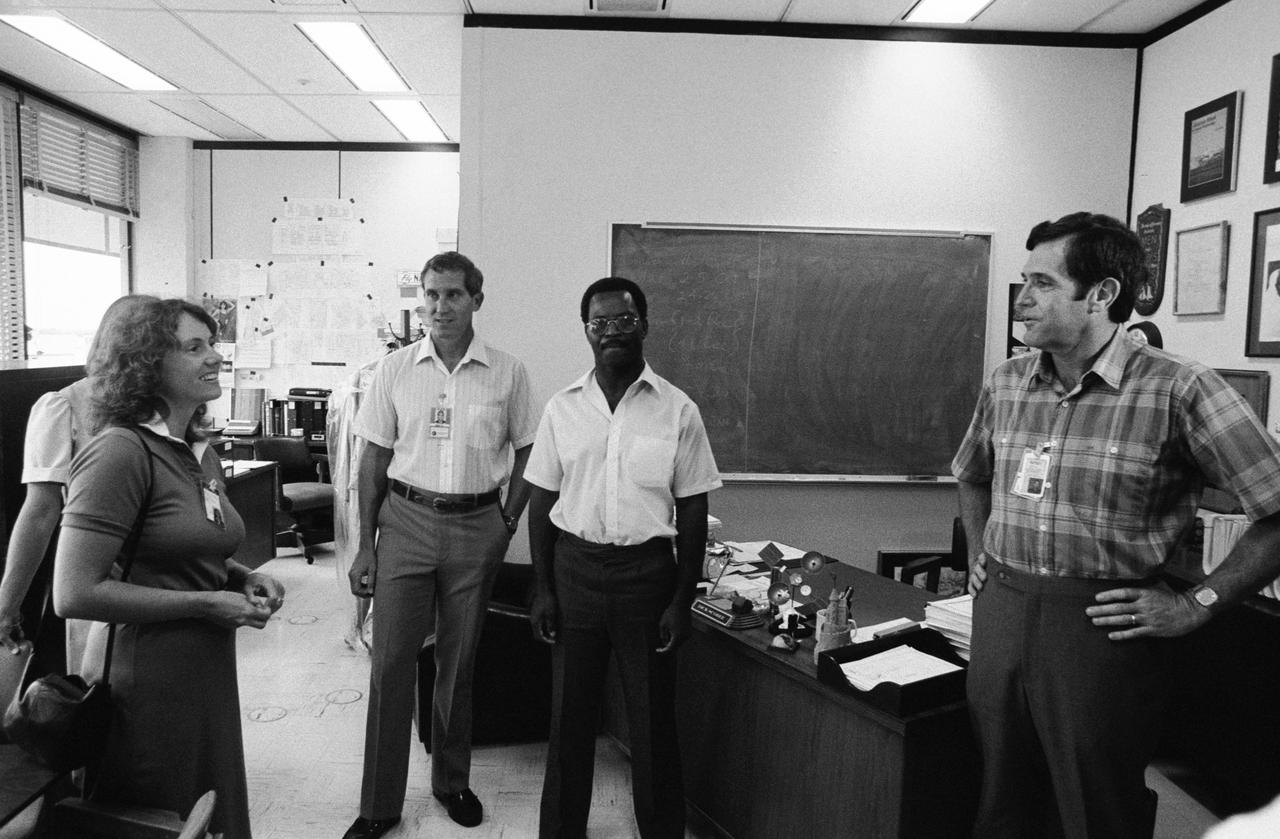
S85-39943 (9 Sept. 1985) --- Sharon Christa McAuliffe, STS-51L citizen observer/payload specialist representing the Teacher in Space Program, meets the other STS-51L crew members. The crew members pictured are (l.-r.) astronauts Michael J. Smith, pilot; Ronald E. McNair, mission specialist; and Francis R. (Dick) Scobee, mission commander. Photo credit: NASA
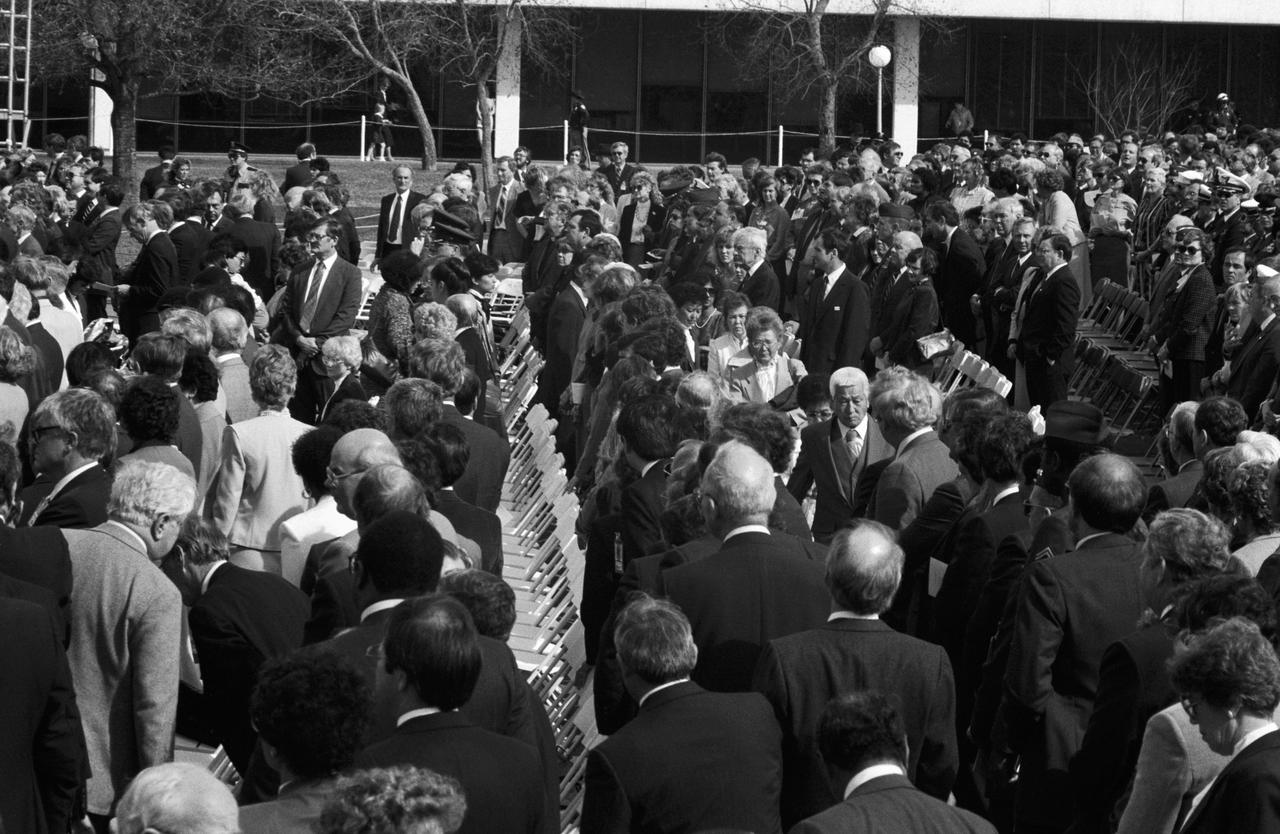
Family and friends of the STS 51-L crew prepare to be seated at the Memorial service at JSC. In the center of the view appears to be the family of Astronaut Ellison Onizuka.