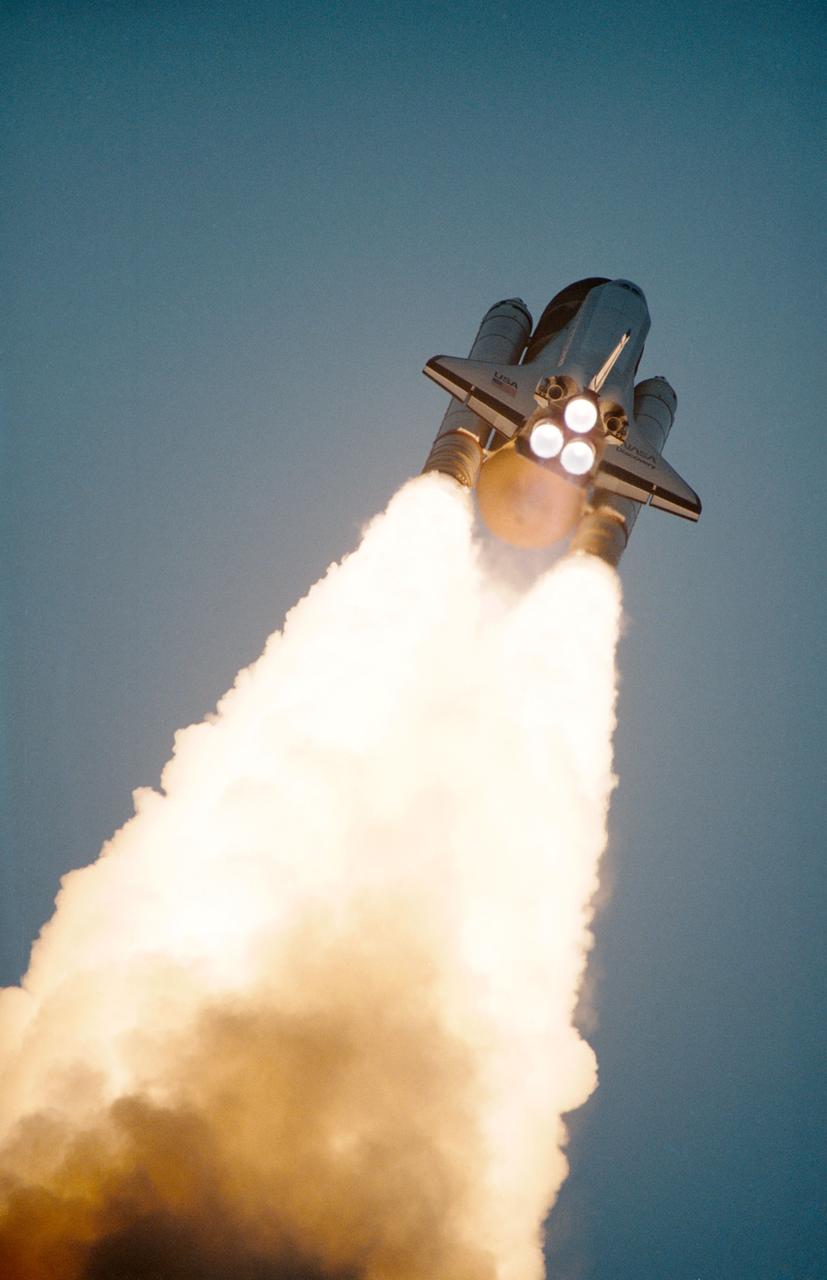
51D-9092 (12 April 1985) --- The Space Shuttle Discovery ascends the launch complex in Florida and heads through Atlantic skies toward its 51-D mission. The seven member crew lifted off at 8:59 a.m. (EST), April 12, 1985. This picture was made with a 35mm camera.

51D-9089 (S23-9089) (12 April 1985) --- The Space Shuttle mission 51-D crewmembers gather to eat breakfast prior to leaving for the launch pad to climb aboard Discovery for liftoff. From left to right Rhea Seddon, Donald E. Williams, Charles D. Walker, Karol J. Bobko, Jeffrey A. Hoffman, S. David Griggs and U.S. Sen. E.J. (Jake) Garn discuss phases of the upcoming flight. Desert for the yet-to-be served breakfast is the pictured decorate 51-D cake.

51D-9091 (S23-9091) (12 April 1985) --- The Space Shuttle mission 51-D crewmembers depart the Kennedy Space Center's operations and checkout building on their way to the launch pad for an early morning launch of Discovery. Leading the seven are Karol J. Bobko (center of frame), commander; and Donald E. Williams (right), pilot. Following are Rhea Seddon, Jeffrey A. Hoffman, S. David Griggs--all mission specialists--Charles D. Walker and U.S. Sen. E. J. (Jake) Garn (partly obscured behind Walker), both payload specialists. Partly visible in the doorway are Astronaut John W. Young and George W.S. Abbey, director of flight crew operations.

S85-28647 (28 Feb 1985) --- The seven members of the STS-51D mission are pictured in the midst of a busy training schedule in preparation for NASA's 16th Space Shuttle flight, currently planned for April of this year. The crewmembers are (front row, left to right), Karol J. Bobko, commander; Donald E. Williams, pilot; Rhea Seddon and Jeffrey A. Hoffman, mission specialists; and (back row) S. David Griggs, mission specialist; and Charles D. Walker and United States Senator Jake Garn (Republican - Utah) both payload specialists. Walker represents McDonnell-Douglas Corporation. EDITOR'S NOTE: Mission specialist S. David Griggs died June 17, 1989, near Earle, Arkansas, in the crash of a World-War-II-era training plane.
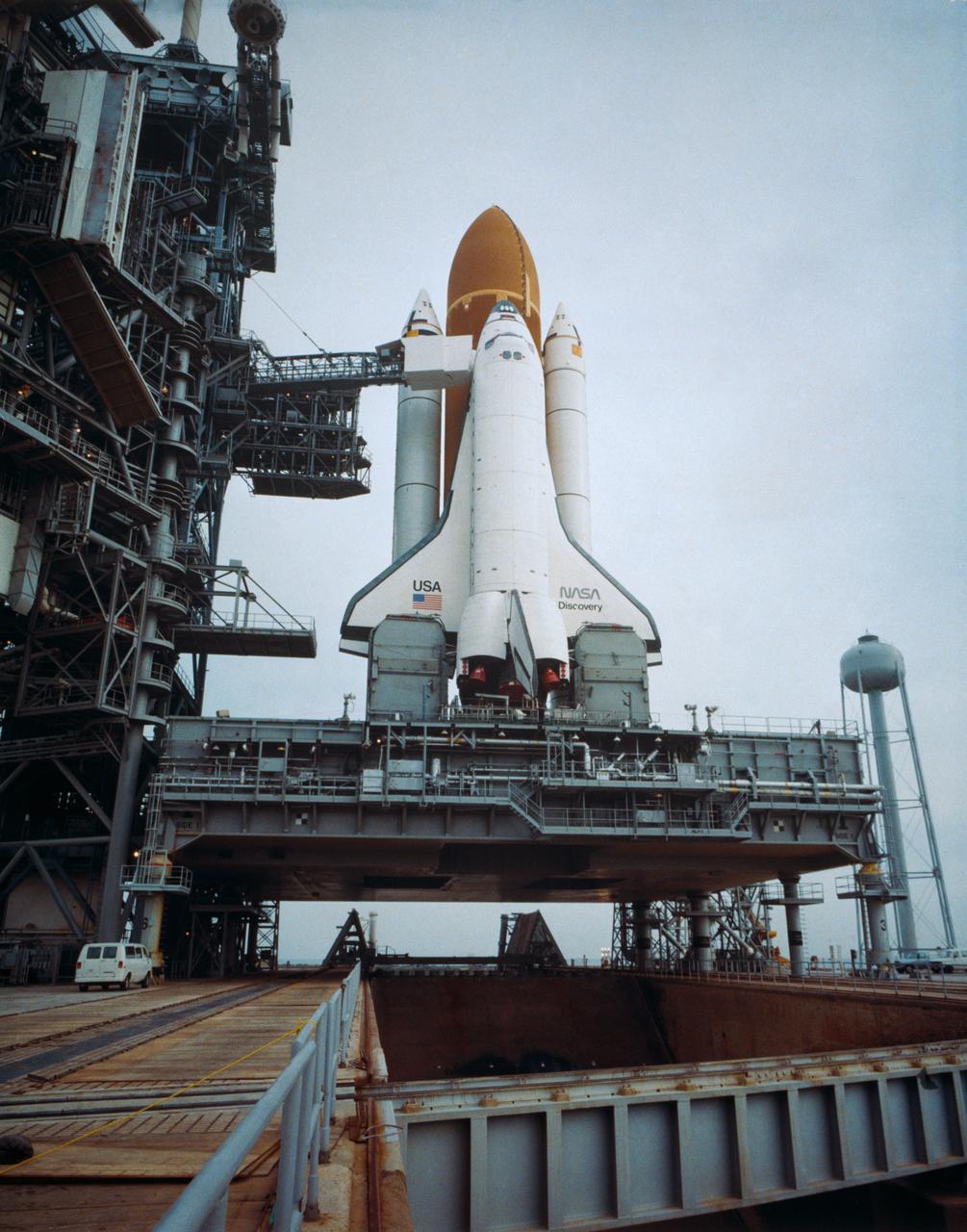
Shuttle Discovery on the launch pad for the STS 51-D mission.
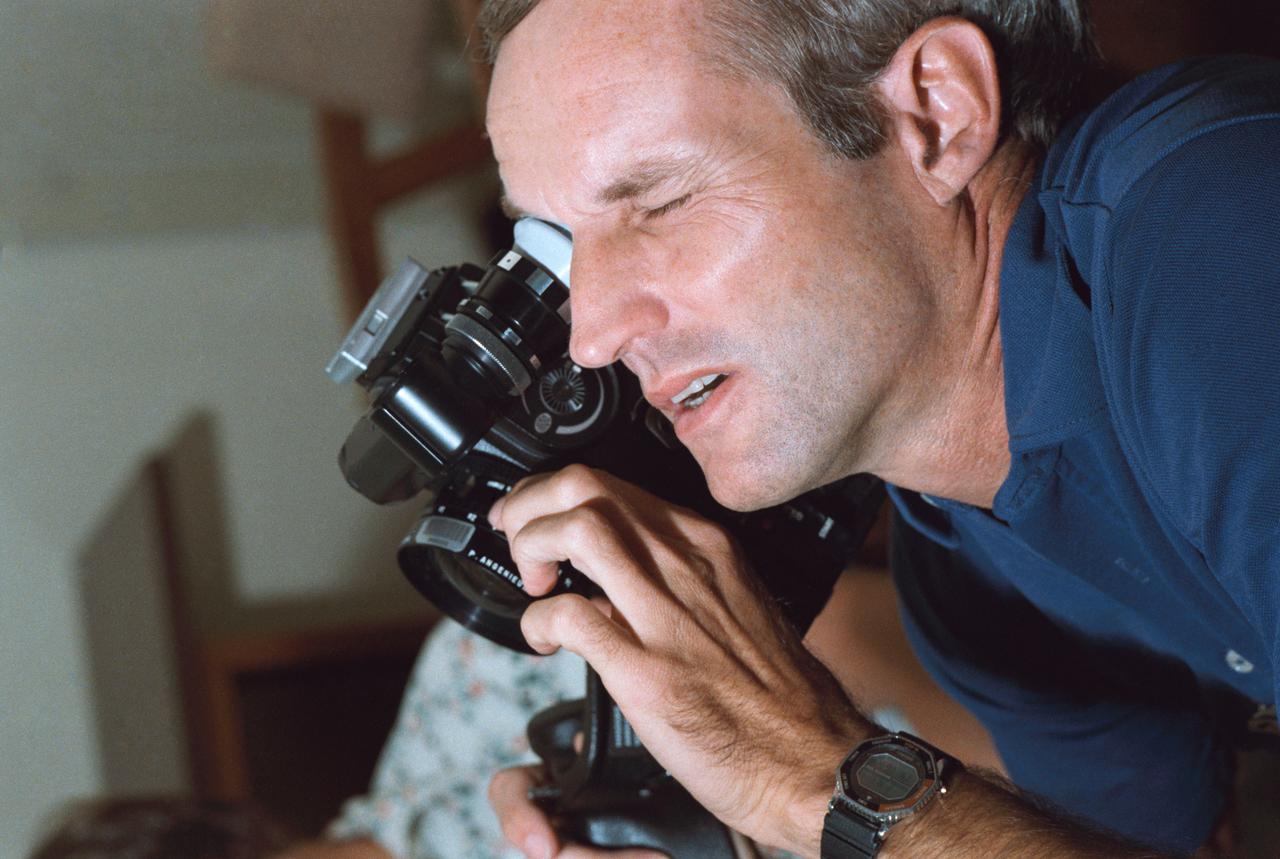
View of STS 51-D crew commander Karol Bobko training with the Arriflex 16mm camera.
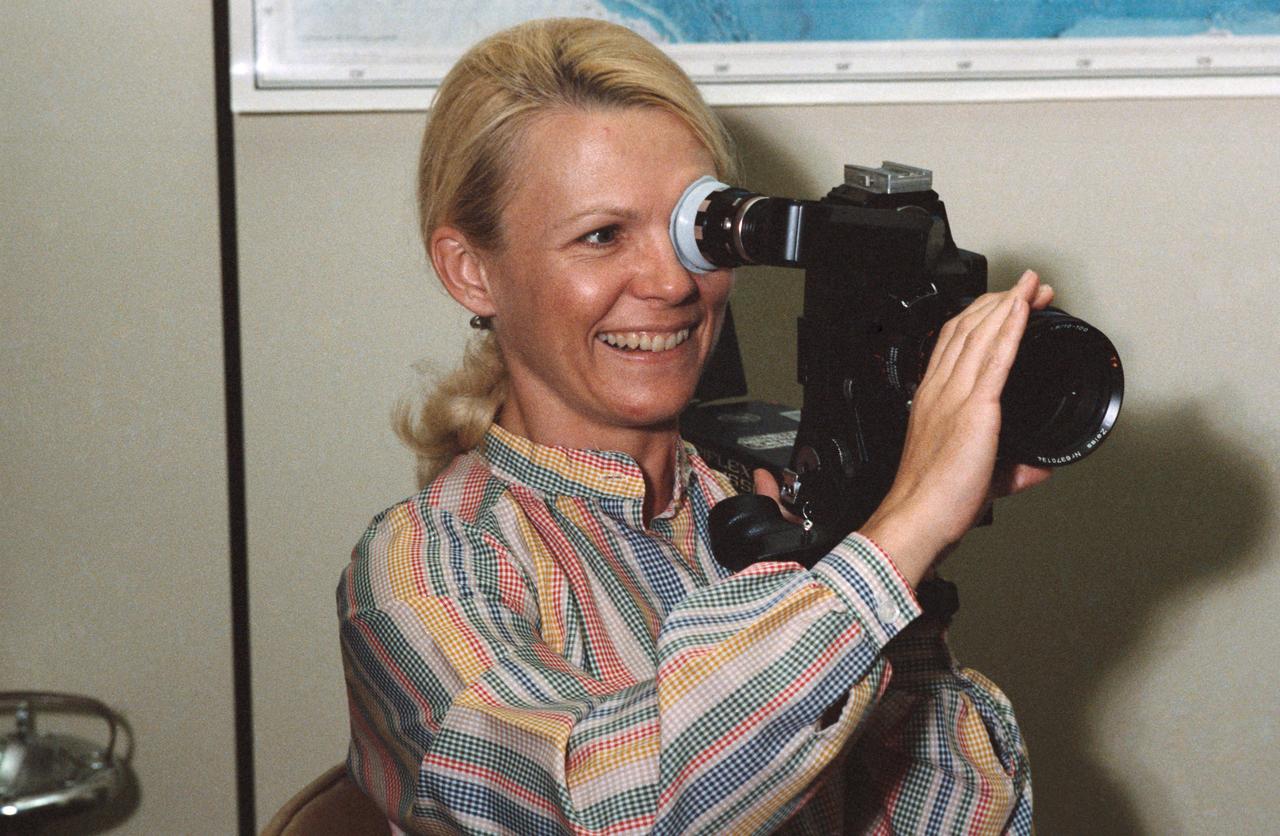
View of STS 51-D mission specialist Rhea Seddon training with the Arriflex 16mm camera.
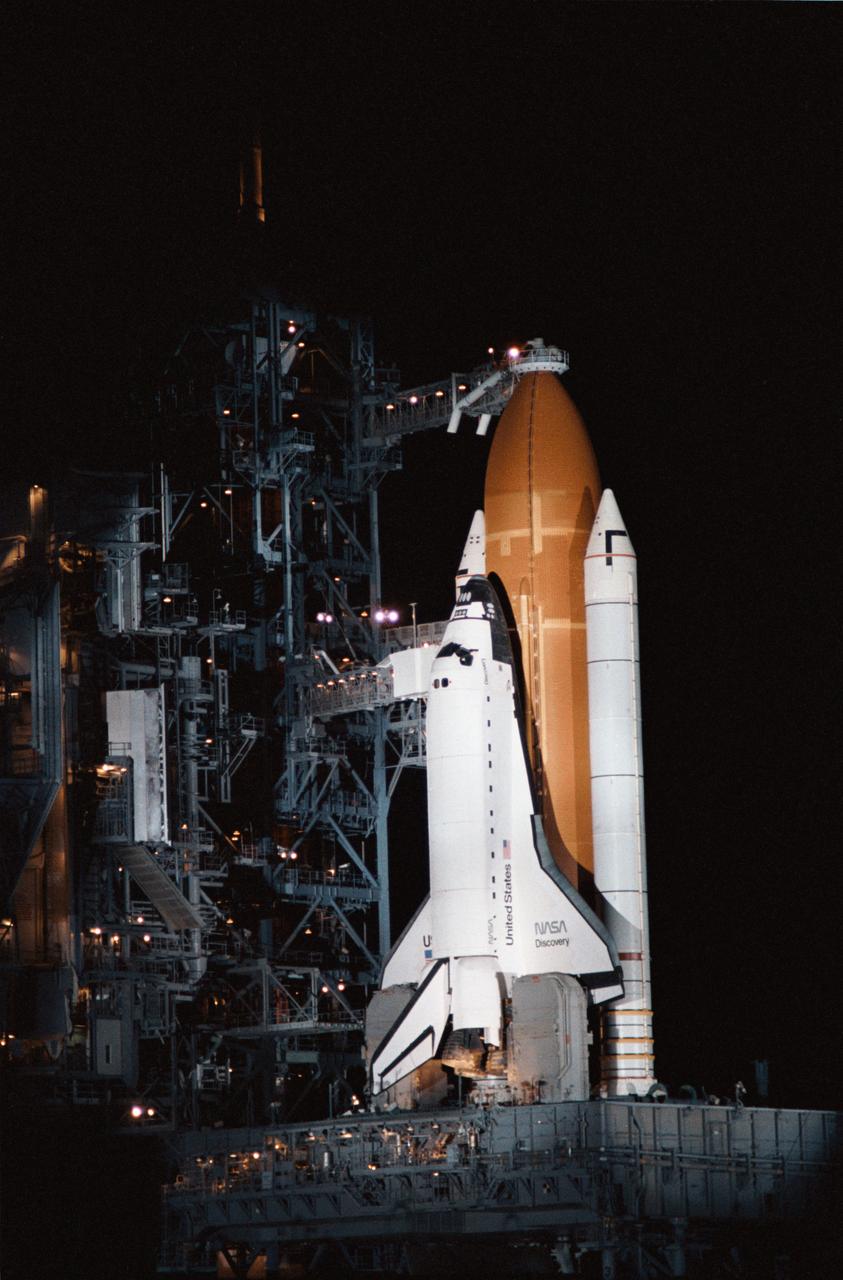
View of the shuttle Discovery on the launch pad just prior to STS 51-D launch. The surrounding area is dark, with the launch complex accented by spotlights.
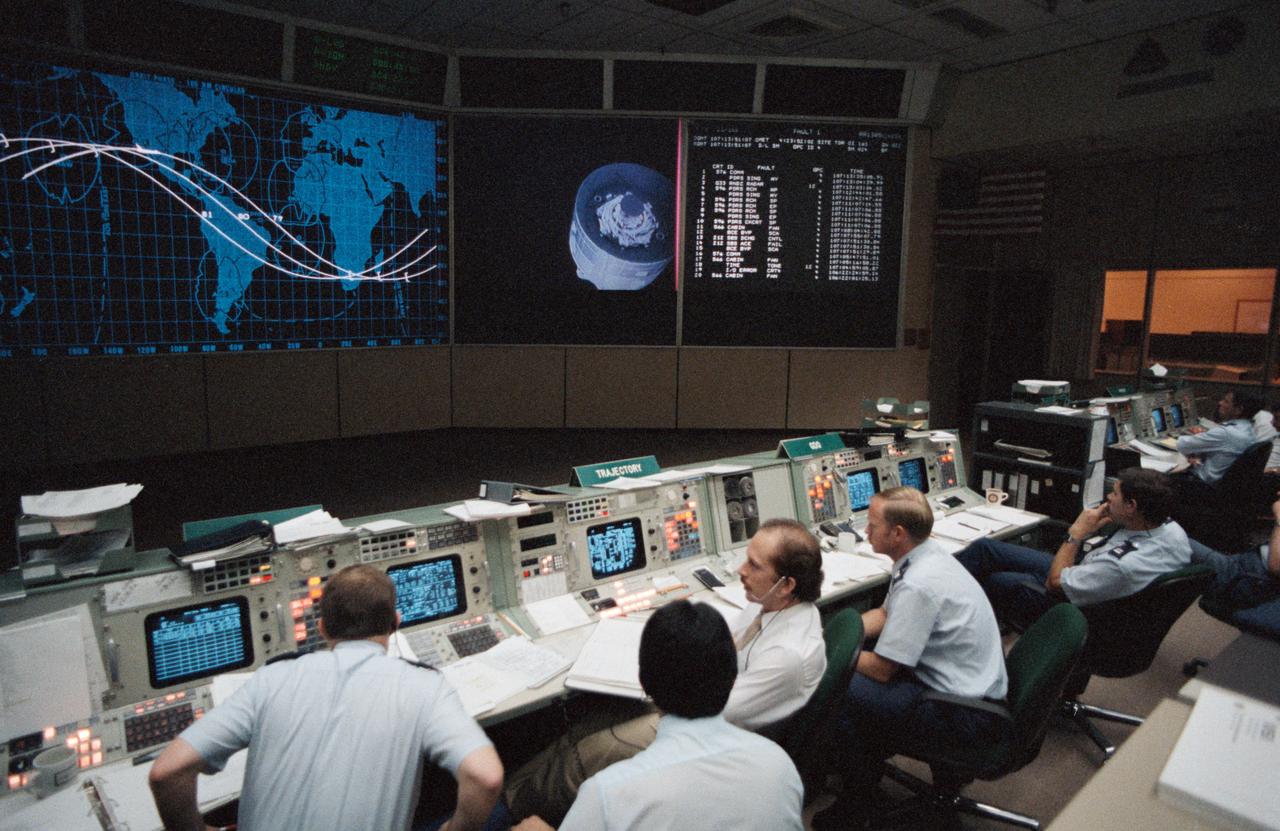
Flight controllers in the JSC mission control center watch television transmissions of Discovery's rendezvous activities with the Syncom-IV (LEASAT) satellite and follow new data on their individual consoles.
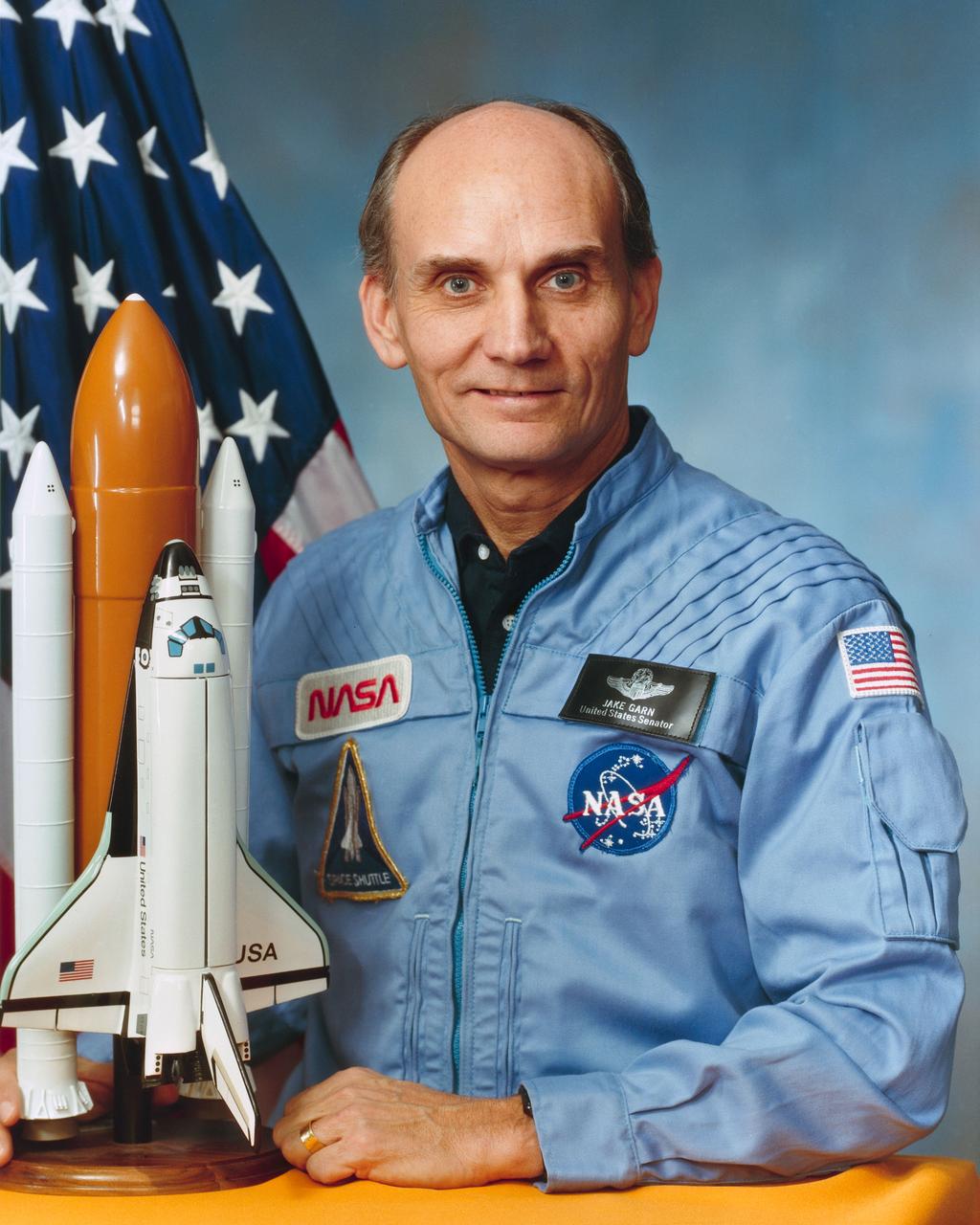
S85-25500 (1985) --- Senator E. J. "Jake" Garn, STS 51-D payload specialist.
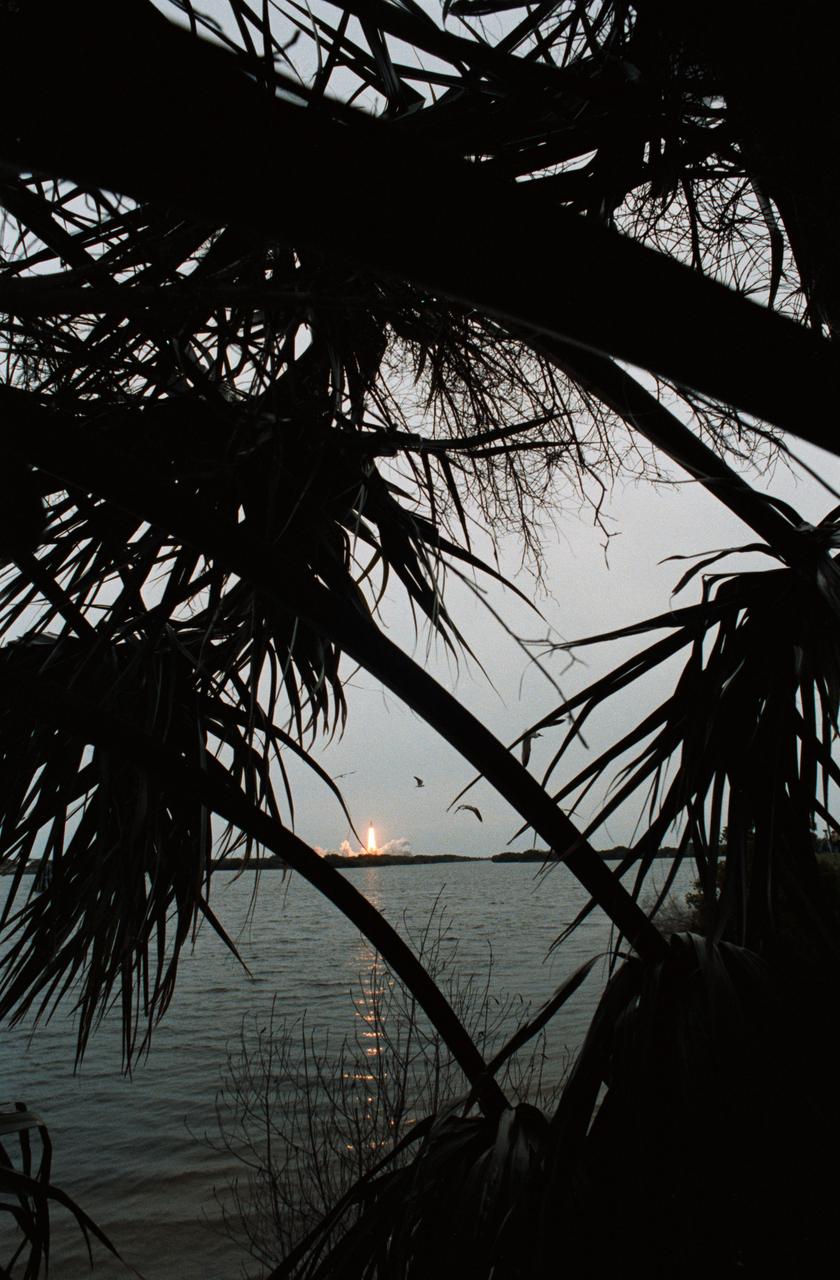
Just below center of this scene is a distant representation of a large ignition as the Shuttle Discovery lifts off from a Kennedy Space Center (KSC) launch pad. The ignition can be seen through the fronds of the trees. Birds in flight frame the light spot representing the orbiter as it launches.
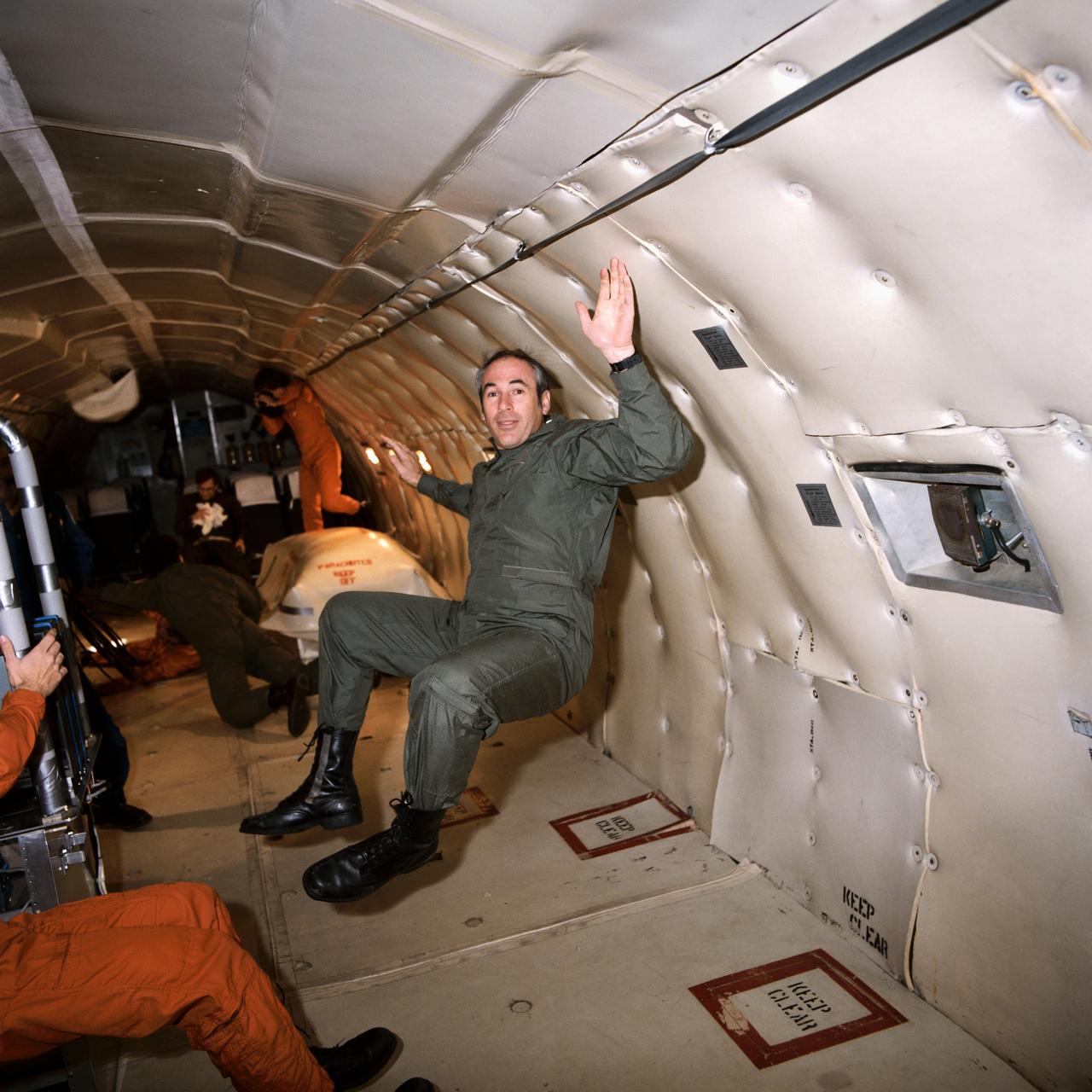
S85-26106 (25 Jan. 1985) --- Astronaut Gregory Jarvis gets a familiarization session in weightlessness aboard a KC-135 "zero gravity" aircraft. Jarvis was originally assigned as payload specialist to STS-51D but was reassigned to STS-51L. Photo credit: NASA
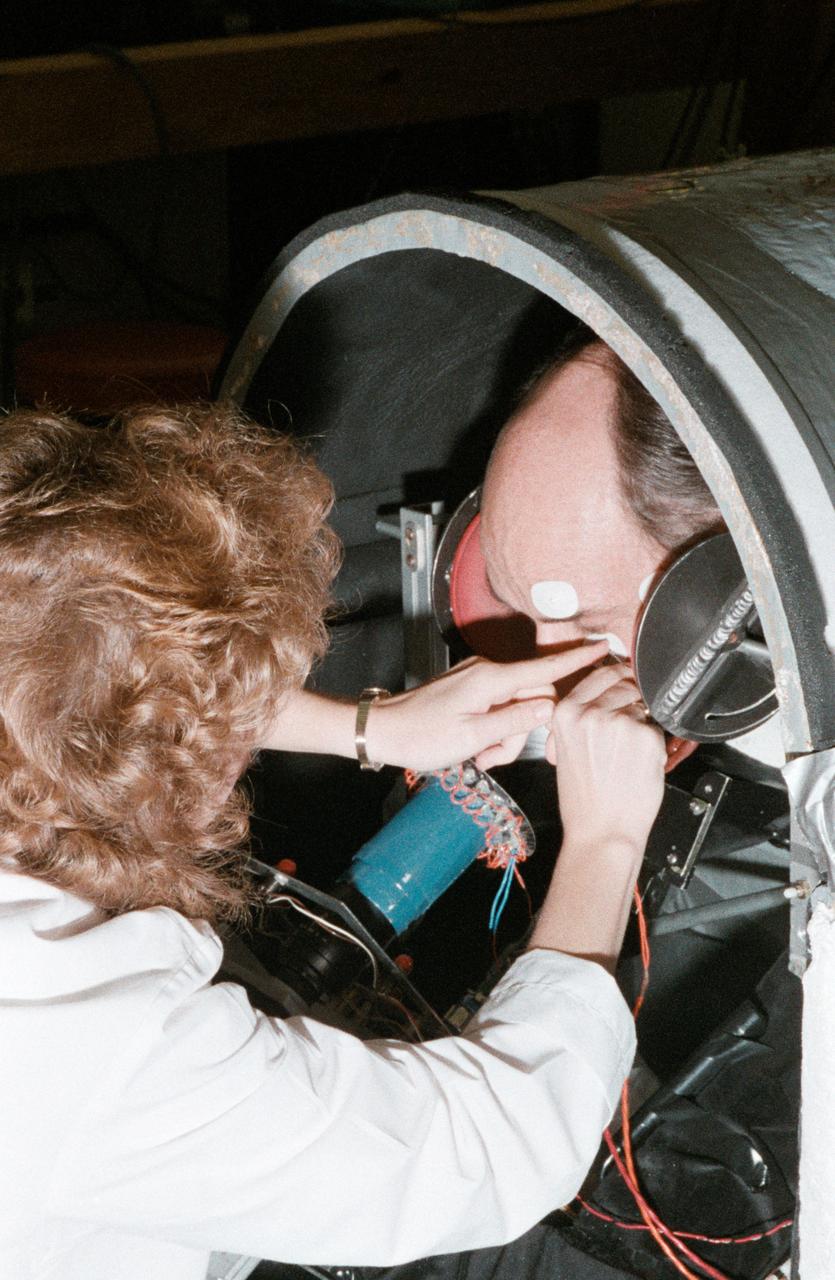
Sen. Jake Garn trains in use of equipment for medical experiments.
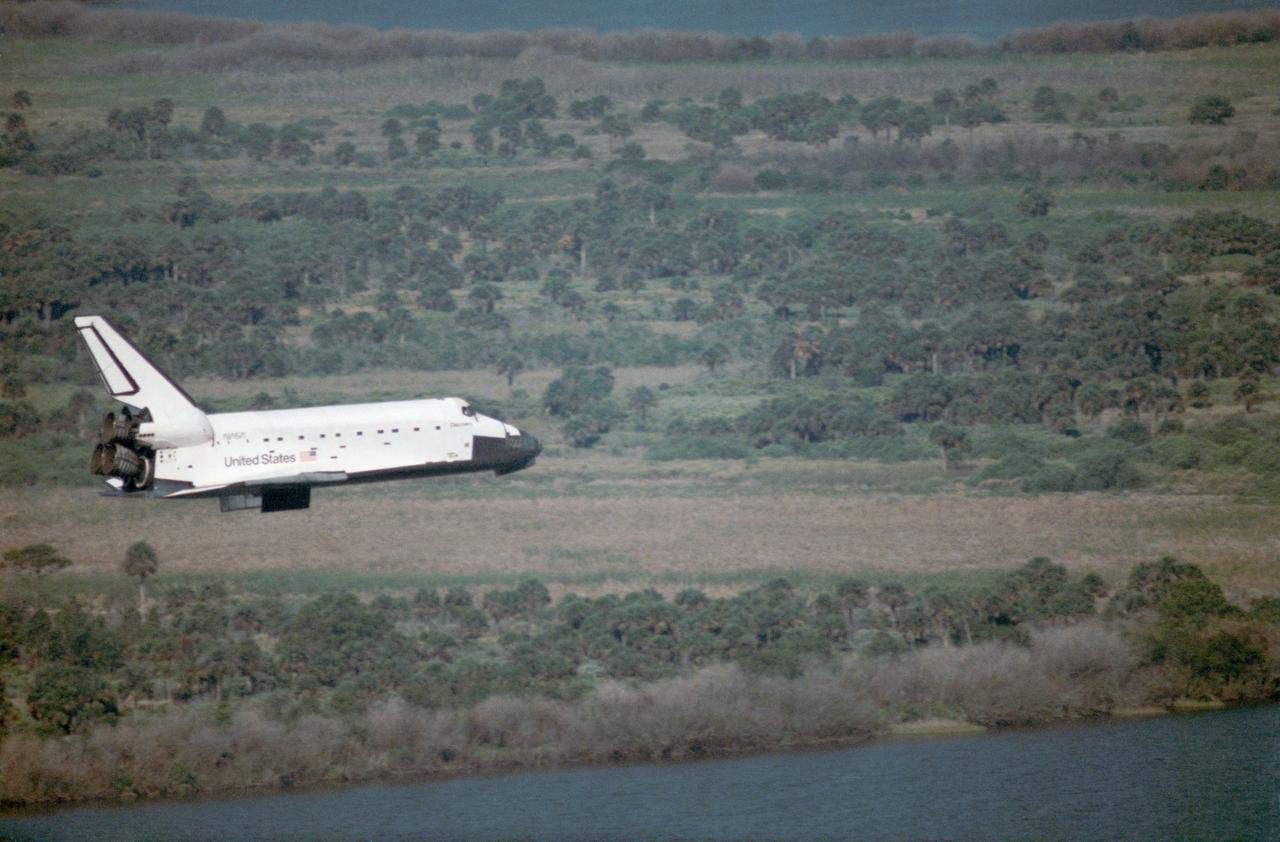
51D-9107 (19 April 1985) --- A side-looking, wide view of the Space Shuttle Discovery shows the vehicle on its final phase following a full week in space. The Discovery and its seven-member crew arrived at KSC's landing facility at 8:54:29 a.m. (EST), April 19, 1985. Launch was at 8:59 a.m. (EST) on April 12.

51D-09-034 (12-19 April 1985) --- The seven crew members of STS-51D take time, during a busy full week in space, to pose for a "star-burst" type in-space portrait. Hold picture with astronaut Rhea Seddon at bottom center. Counter-clockwise from the bottom left are Jeffrey A. Hoffman, mission specialist; Dr. Seddon, mission specialist; Charles D. Walker, payload specialist; U. S. Senator E. J. (Jake) Garn, payload specialist; S. David Griggs, mission specialist; Karol J. Bobko, mission commander; and Donald W. Williams, pilot. A pre-set 35mm camera exposed the frame in the mid-deck of the Earth-orbiting Space Shuttle Discovery. The crew launched at 8:59 a.m. (EST), April 12, 1985 and landed at 8:54 a.m. (EST), April 19, 1985 spending five minutes less than a full week on the busy mission.
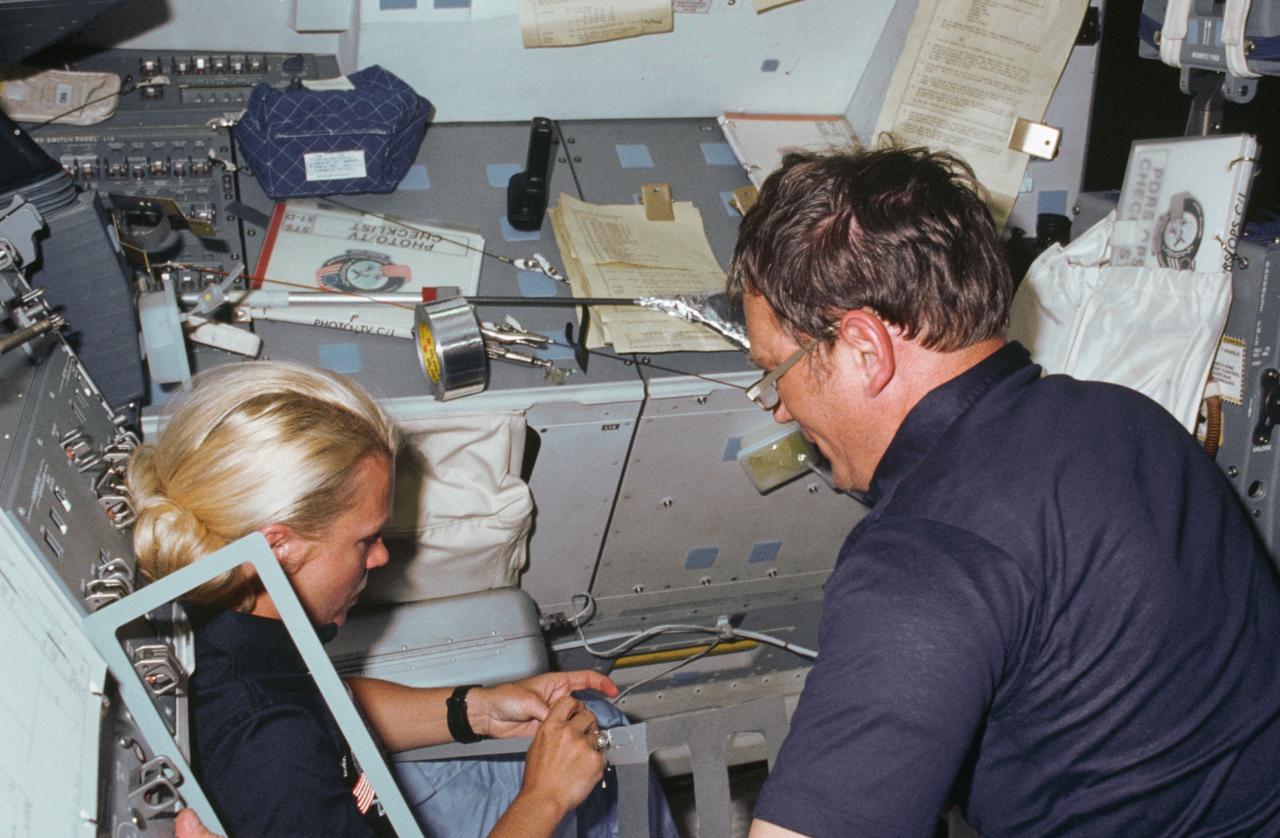
51D-04-015 (15 April 1985) --- Astronaut Rhea Seddon and Karol J. Bobko continue work on snag-type extension for the Remote Manipulator System (RMS) as part of an effort to activate a lever on a troubled communications satellite. Since the crew learned soon after deployment of the Syncom IV (LEASAT) spacecraft that it was not functioning properly plans were formulated for a rendezvous in space between the Discovery and the satellite. A fly swatter-like extension and another resembling a LaCrosse stick were fashioned from onboard supplies and furnishings. Stowage lockers nearby serve as a work bench for the two. At various times during the seven-day mission, the majority of the seven-member crew participated in the tool-making and preparations for an extravehicular activity (EVA) by the flights other two mission specialists -- Jeffrey A. Hoffman and S. David Griggs -- to connect the two tools to the RMS. Bobko is mission commander and Dr. Seddon, a mission specialist.
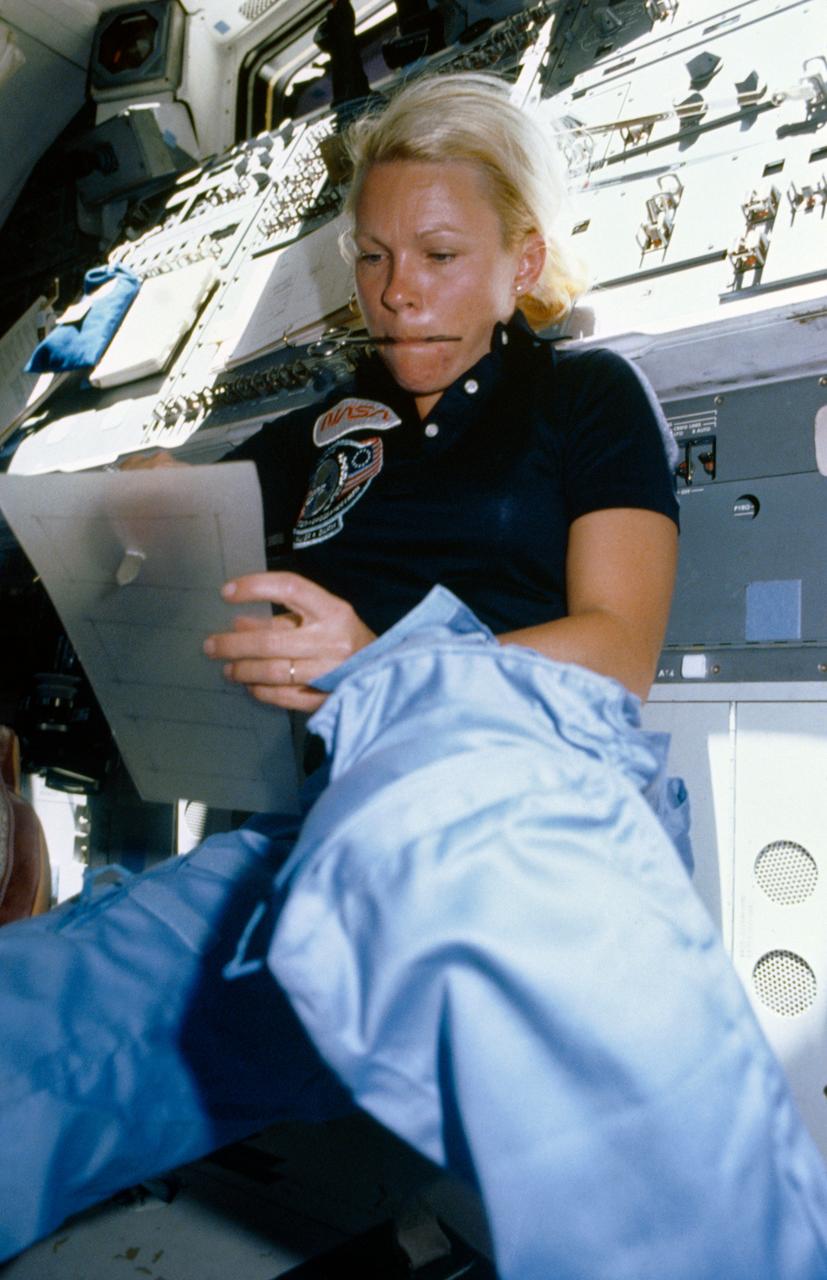
51D-07-003 (12-19 April 1985) --- Astronaut Rhea Seddon begins early work on a fly swatter-like snagging device to be used as an extension to the Remote Manipulator System (RMS) arm on Discovery for an April 17, 1985 attempt to trip a lever on the troubled Syncom-IV satellite.

51D-09-014 (12-19 April 1985) --- U.S. Senator E. J. (Jake) Garn (left), payload specialist; and Karol J. Bobko, mission commander, show a copy of a cartoon from the Doonesbury strip of Garry Trudeau. The senator had been the subject of a series of Trudeau's creations prior to 51-D. The single enlarged panel is autographed by the crewmembers.

View of the Syncom-IV (LEASAT) satellite from the flight deck window taken by Astronaut S. David Griggs.

51D-05-22 (12-19 April 1985) --- Astronauts Karol J. Bobko (foreground), mission commander, and Donald E. Williams, pilot, are surrounded by teleprinted messages transmitted from ground controllers. The two are on Discovery's middeck.
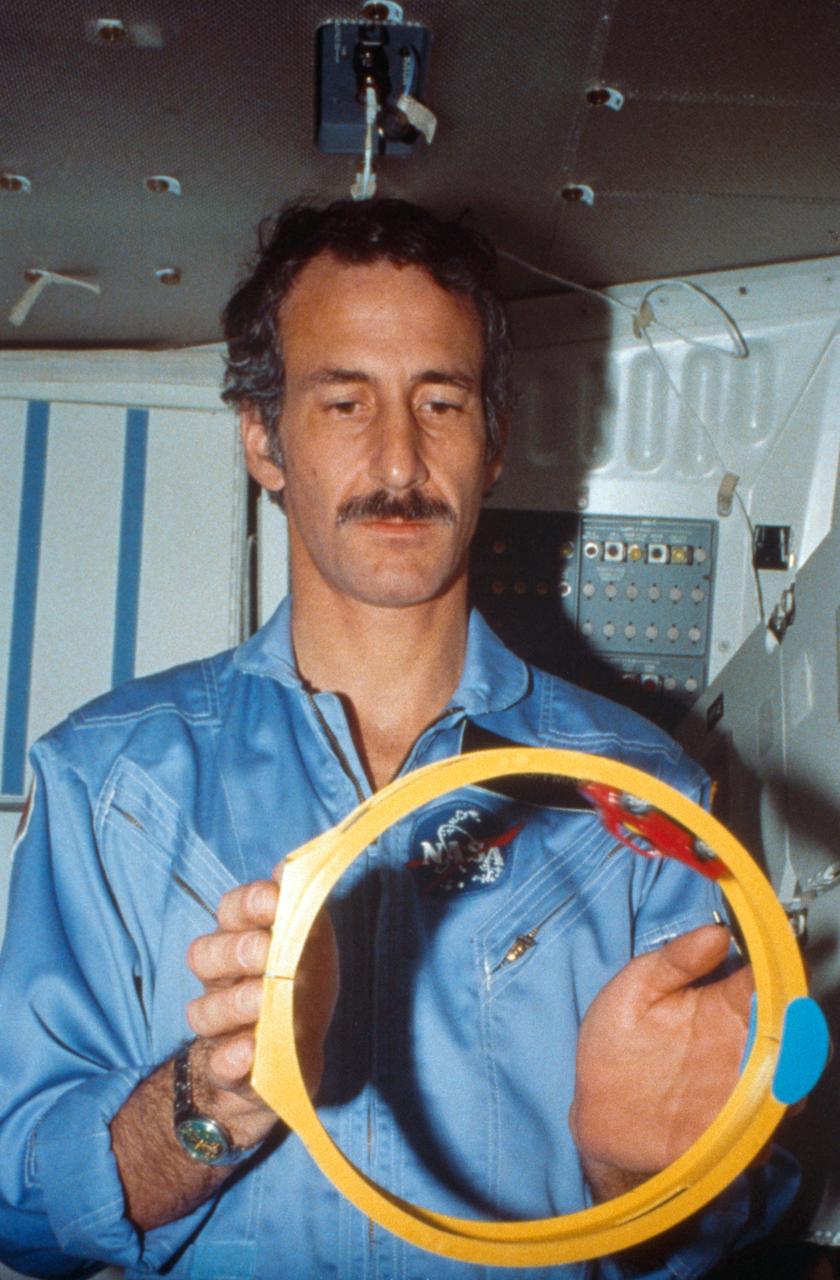
S85-26476 (1 February 1985) --- Astronaut Jeffrey A. Hoffman, 51-D mission specialist, goes through a one-G simulation of operation of a friction-powered toy car in NASA's one-G Shuttle trainer at the Johnson Space Center.
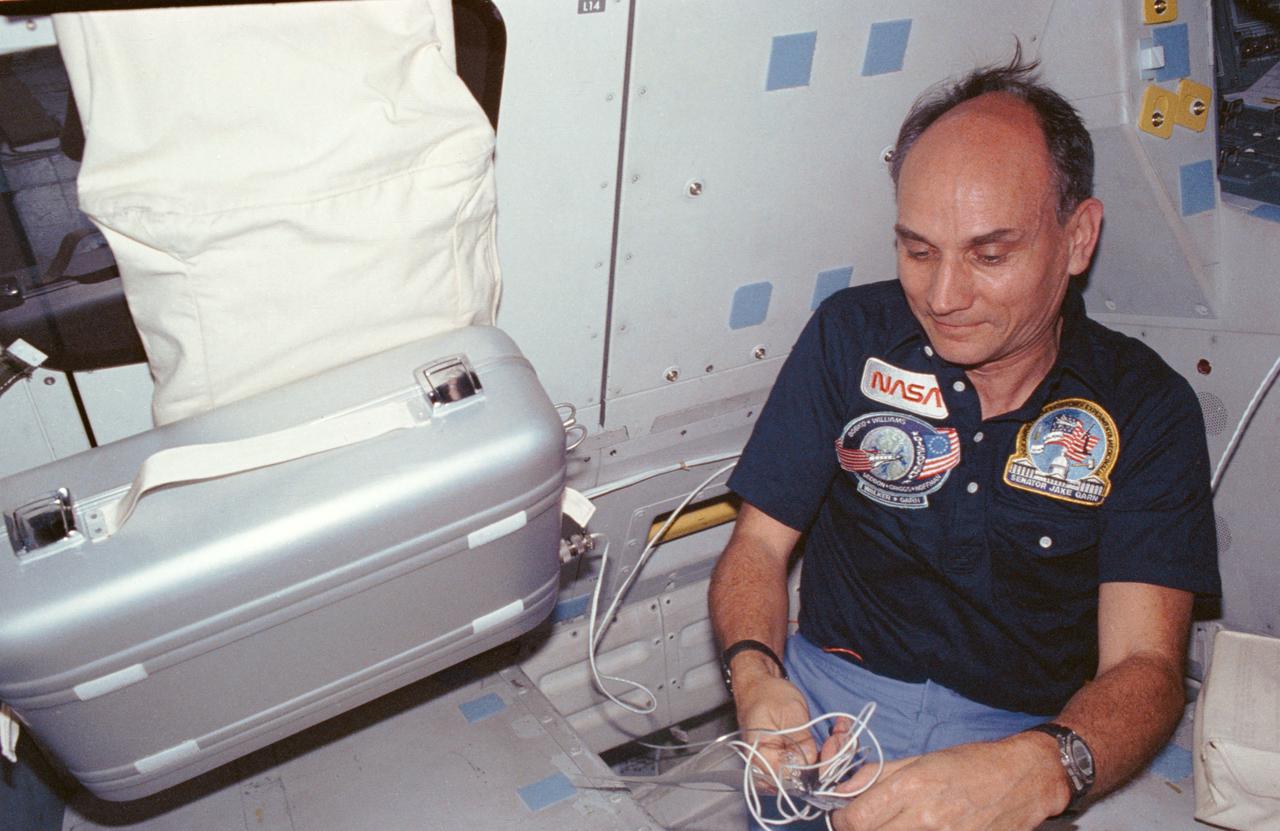
U. S. Senator E.J. (Jake) Garn, payload specialist, plugs in a food warmer in middeck area of the Shuttle Discovery.
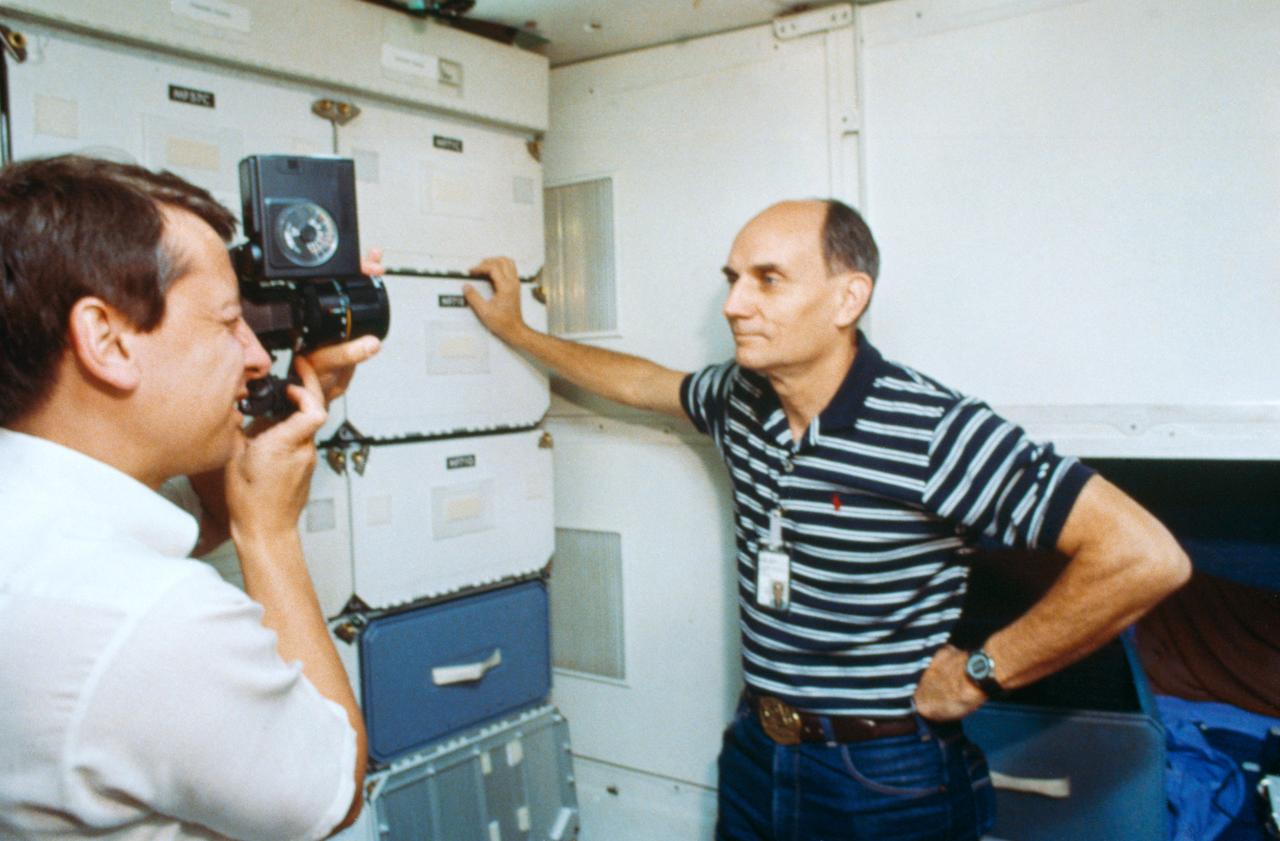
Two payload specialists for the STS 51-D mission get in some training time in the crew compartment trainerat JSC. Charles D. Walker, left, rehearses photography of U.S. Senator E.J. (Jake) Garn in the middeck section of the trainer.
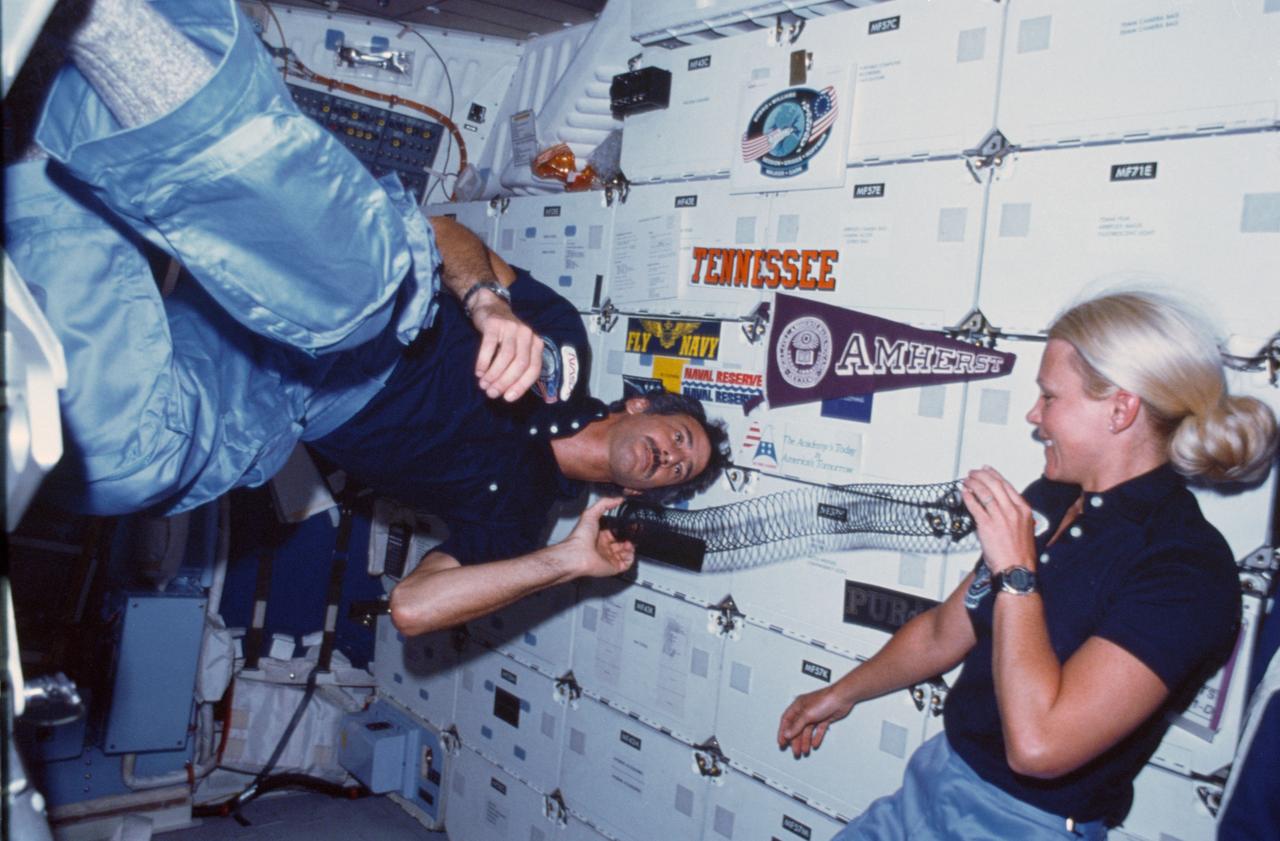
51D-06-015 (12-19 April 1985) --- Astronaut Jeffrey A. Hoffman and Rhea Seddon mission specialists, demonstrate the effect of weightlessness on a slinky toy in the mid-deck of the Space Shuttle Discovery.

51D-04-025 (16 April 1985) --- Bearing a maze of interesting reflections, this aquarium-like scene came during one of the lighter moments of emergency extravehicular activity (EVA) aboard the Earth-orbiting Space Shuttle Discovery. Astronaut S. David Griggs, waving from the cargo bay into the flight deck, earlier participated with astronaut Jeffrey A. Hoffman in the successful attachment of two special tools to the end of the Canadian-built Remote Manipulator System (RMS) arm. The Earth's horizon appears both in the background of the scene and in the reflection in Griggs' helmet visor.
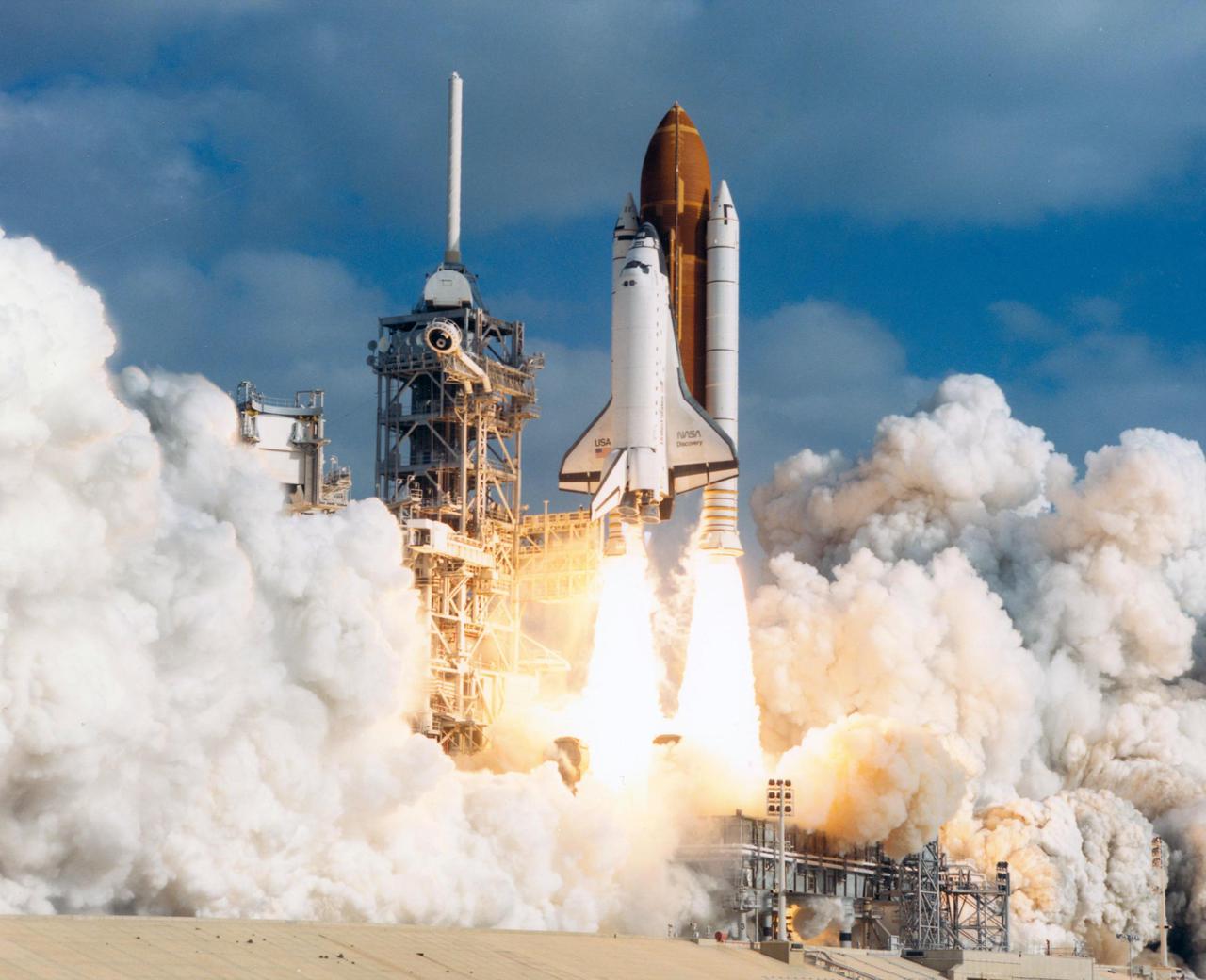
KENNEDY SPACE CENTER, FLA. -- The Space Shuttle Discovery soars into the morning skies above Florida, carying a crew of five and the Hubble Space Telescope. Launch of Space Shuttle Mission STS-31from Pad 39B occurred at 8:33:51 a.m. EDT, April 24. Crew members are Commander Loren J. Shriver; Pilot Charles F. Bolden Jr.; and Mission Specialists Kathryn D. Sullivan, Steven A. Hawley, and Bruce McCandless II.
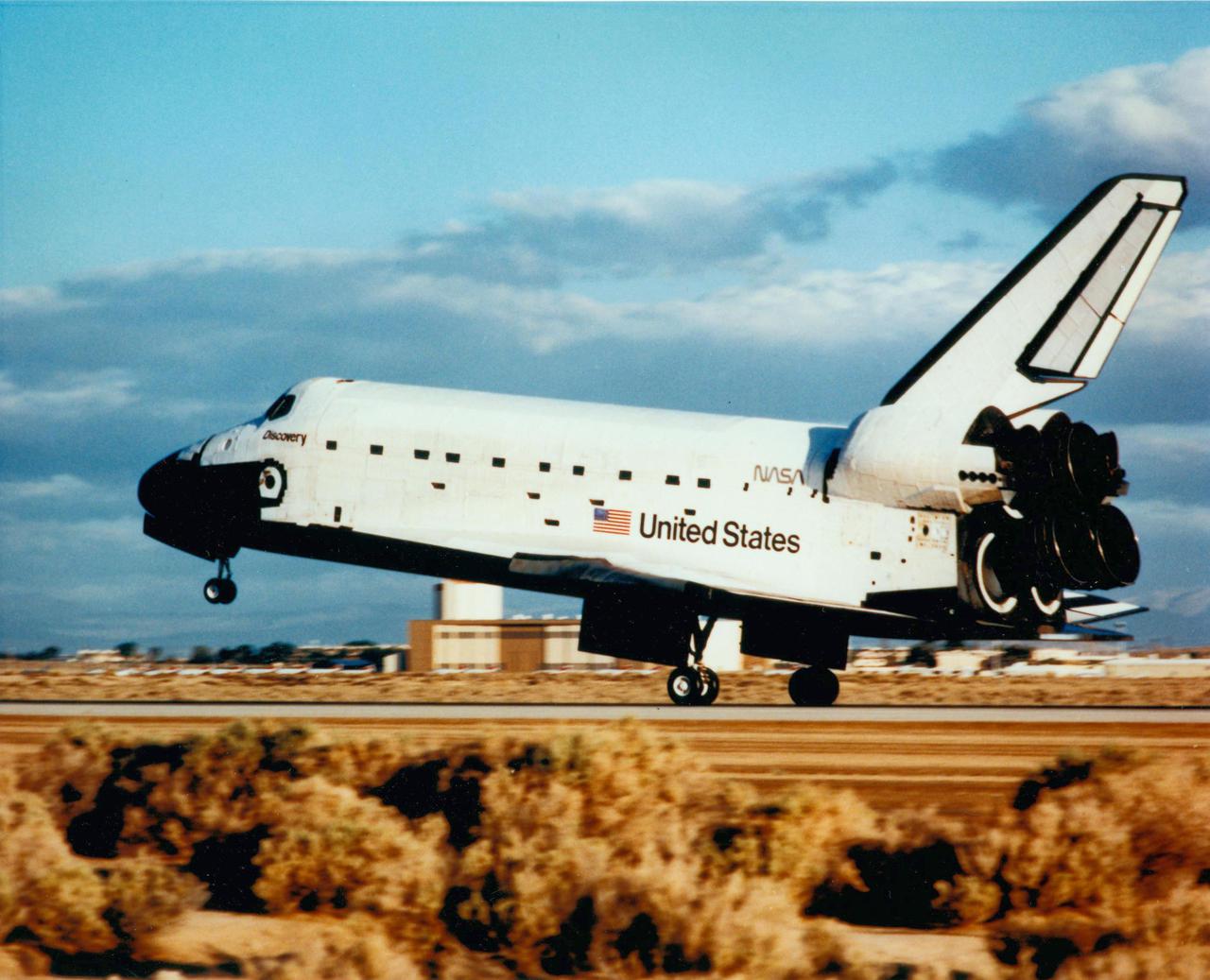
KENNEDY SPACE CENTER, FLA. -- The Space Shuttle Discovery makes a smooth landing on the runway at Edwards Air Force Base to complete a highly successful five-day mission. It was an Earth-orbital flight during which the Hubble Space Telescope was sent toward its 15-year mission. Landing was completed at 6:51 a.m. (PDT), April 29, 1990. Inside the spacecraft for STS-31 were Astronauts Loren J. Shriver, Charles F. Bolden, Bruce McCandless II, Kathryn D. Sullivan and Steven A. Hawley.

STS98-E-5035 (9 February 2001) --- Astronaut Thomas D. Jones, mission specialist, communicates on a radio during rendezvous operations between the Space Shuttle Atlantis and the International Space Station (ISS). Atlantis went on to dock with the station on schedule at 10:51 a.m. (CST), Feb. 9. A digital still camera was used to record the scene.
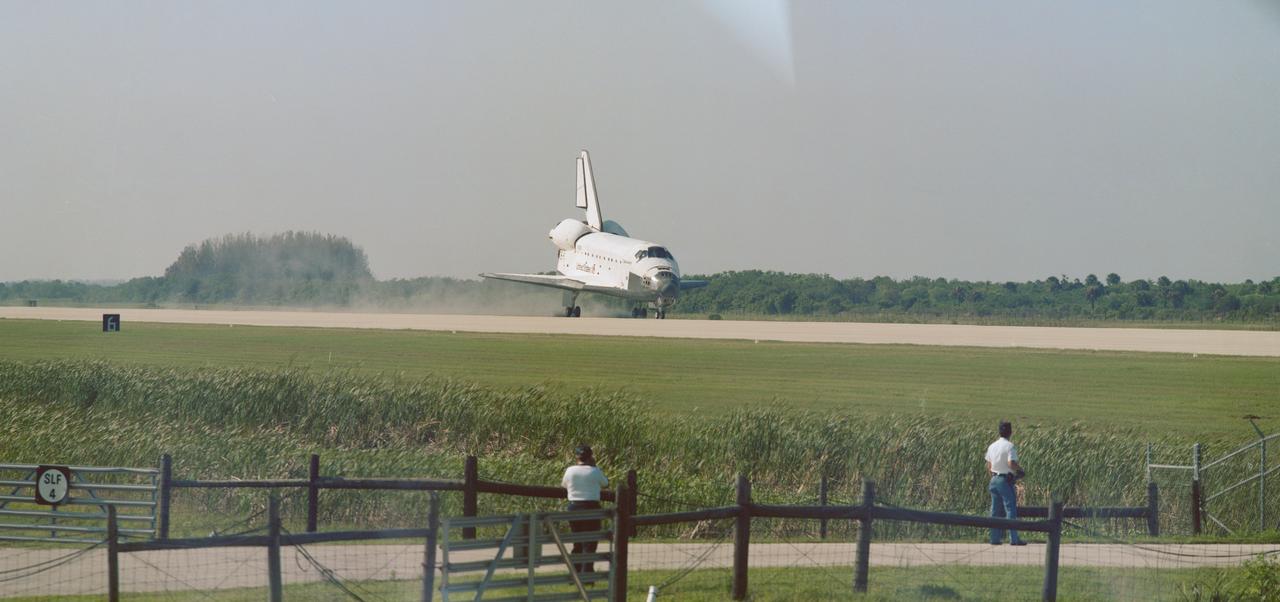
51D-9108 (19 April 1985) --- After a week in space the Space Shuttle Discovery completes Mission 51-D near the point where the flight began on April 12. Inside are seven crewmembers, who because of some unforeseen events on the flight, spent two addtionial days than called for in the original flight plan. Landing occurred at 8:54:29 a.m. (EST), April 19, 1985.
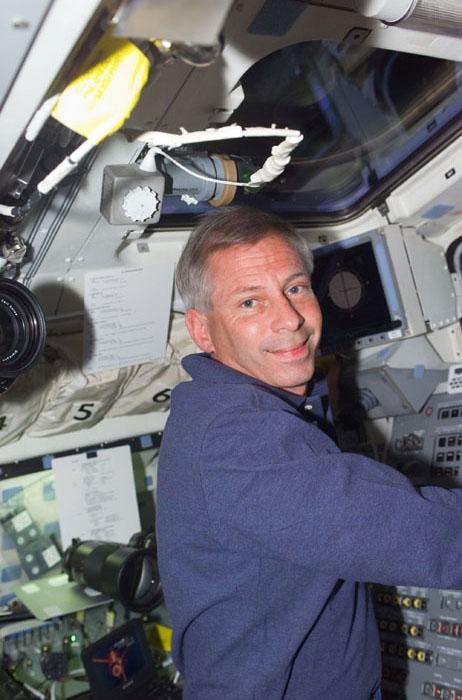
STS98-E-5036 (9 February 2001) --- Astronaut Kenneth D. Cockrell, mission commander, is pictured at Atlantis' aft flight deck console during rendezvous operations between the Space Shuttle Atlantis and the International Space Station (ISS). Atlantis went on to dock with the station on schedule at 10:51 a.m. (CST), Feb. 9. A digital still camera was used to record the scene.
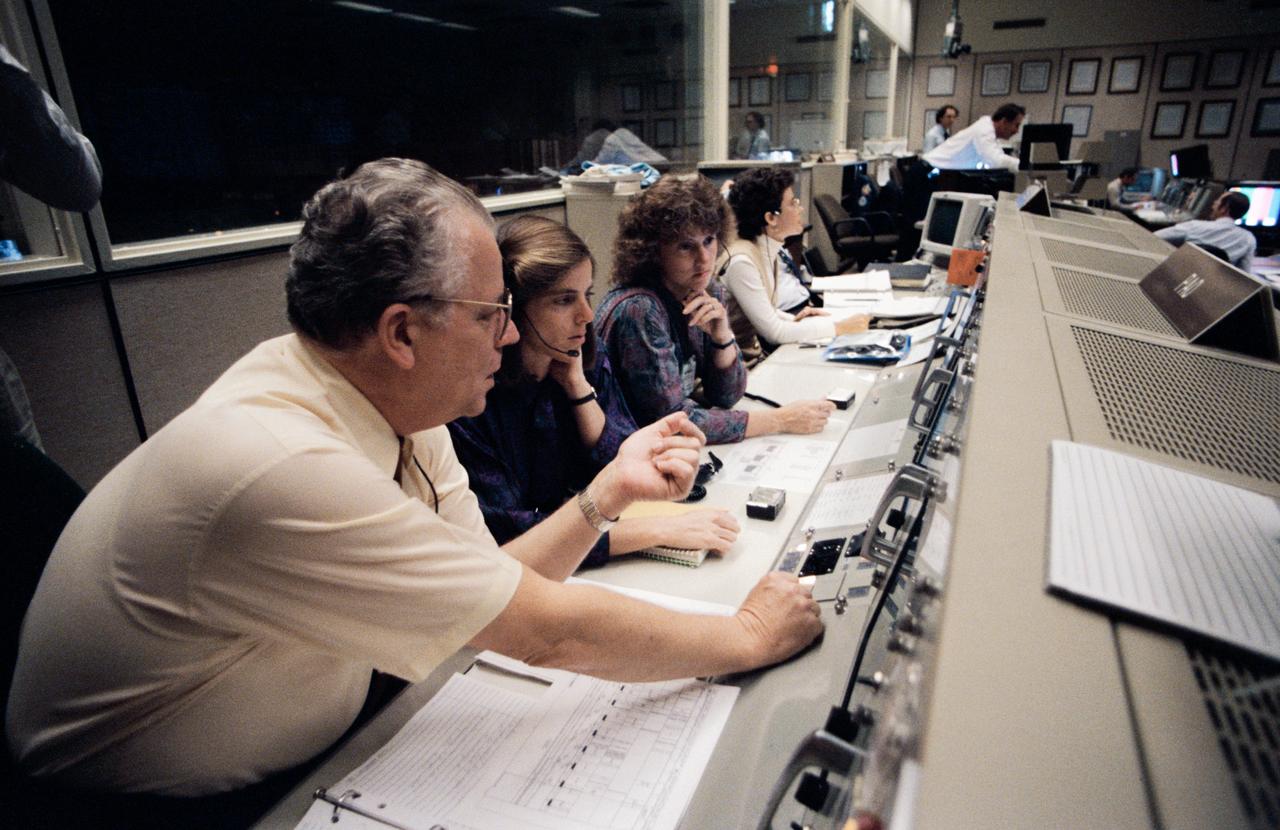
61A-S-135 (5 Nov 1985) --- Two school teachers in training at the Johnson Space Center got their first ?real time? exposure to a Space Shuttle mission as they monitor activity aboard the Spacelab D-1 science module from the mission control center. Sharon Christa McAuliffe (frame center) and Barbara R. Morgan are briefed by Terry White at the Public Affairs console during a television downlink from the Earth-orbiting Space Shuttle Challenger. McAuliffe is scheduled to fly as teacher/citizen observer on the STS 51-L mission early next year; and Morgan is in training as her backup.
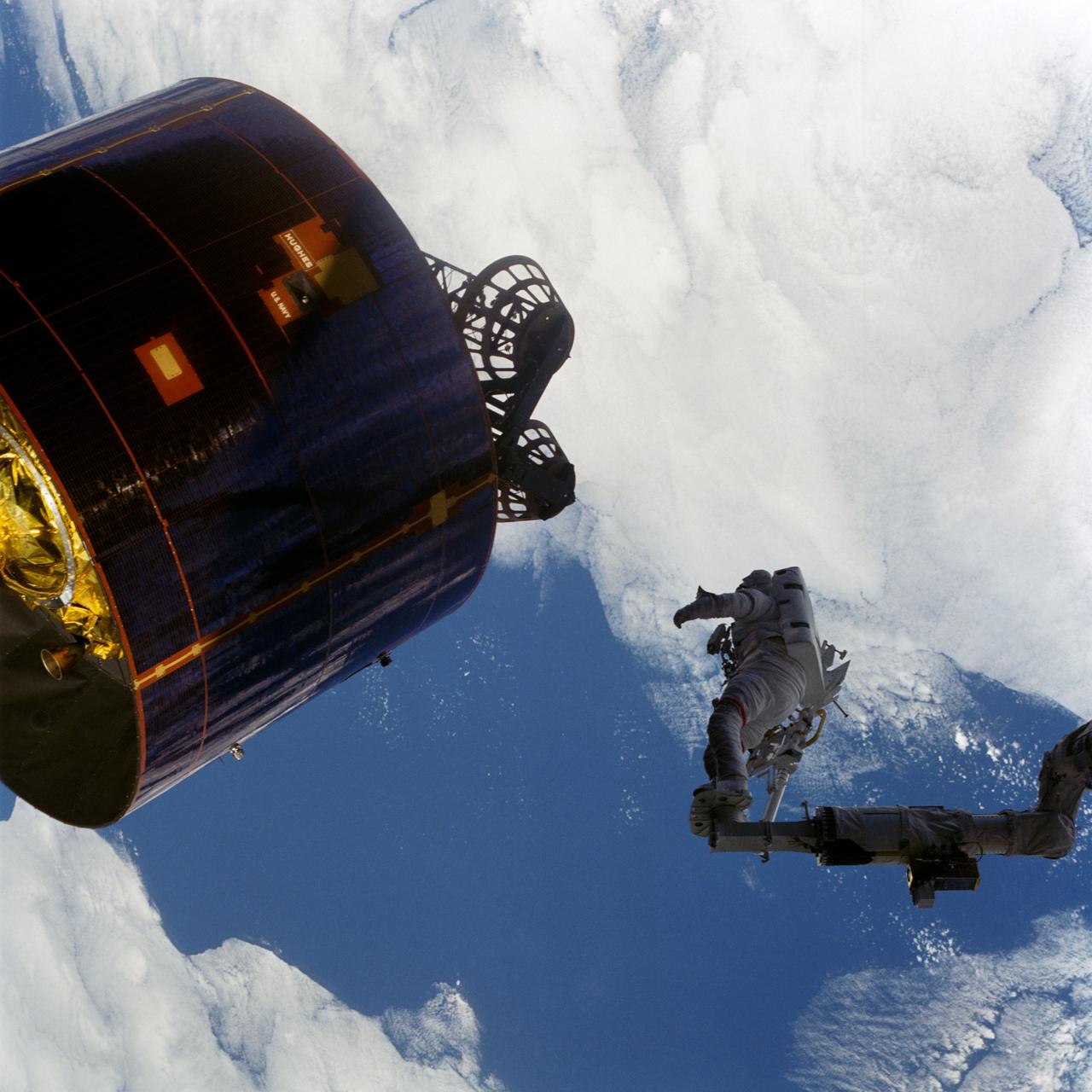
51I-44-012 (1 Sept. 1985) --- Astronaut James D. van Hoften looks on as the Syncom IVC-3 satellite responds to his push against it moments earlier. Dr. van Hoften, mission specialist, is anchored to a foot restraint on the end of the remote manipulator system (RMS) arm of the Earth-orbiting space shuttle Discovery. The 51-I crew members showed this photograph at their Sept. 11 postflight press conference. Photo credit: NASA
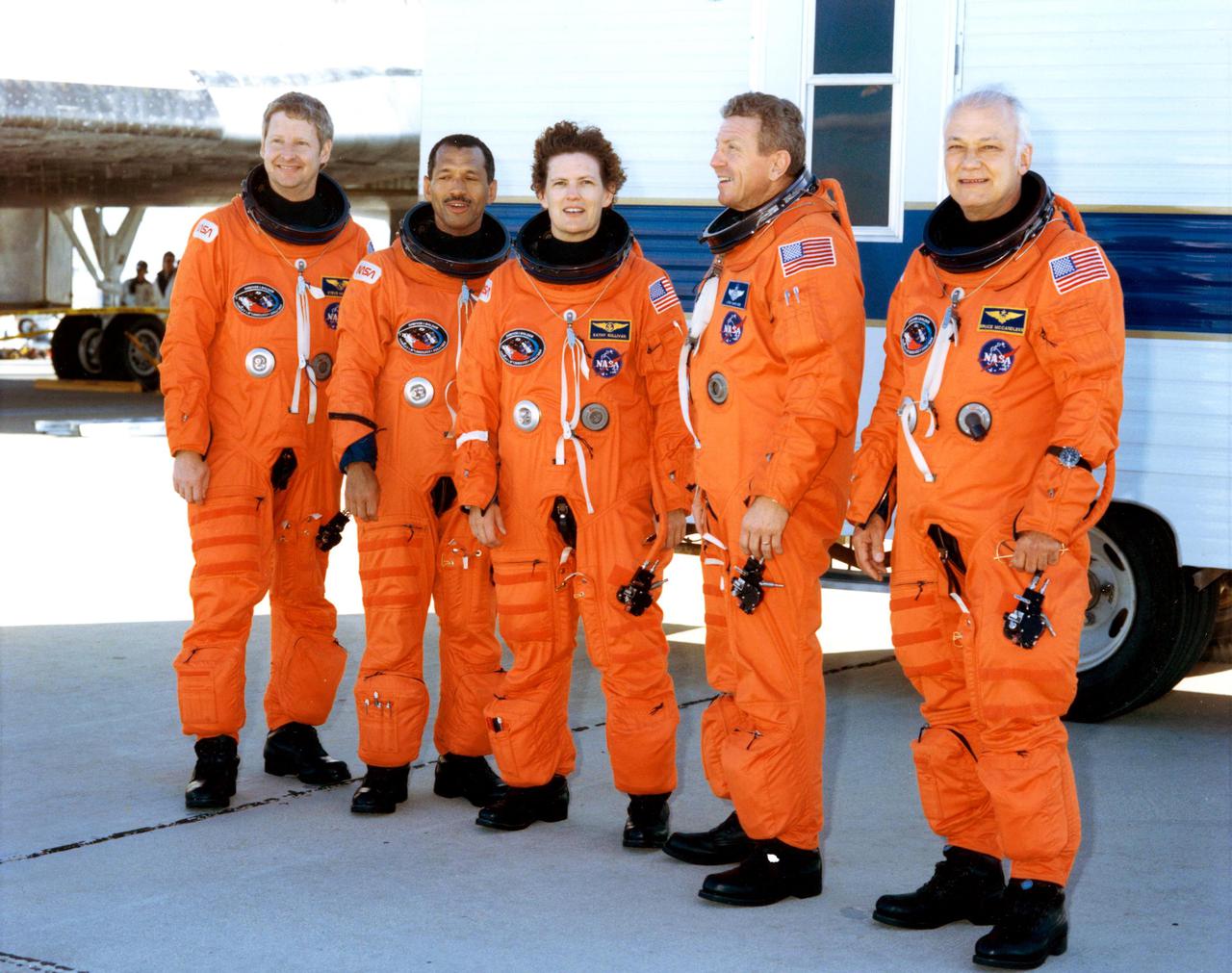
DRYDEN FLIGHT RESEARCH FACILITY, EDWARDS, CALIF. -- STS-31 POST-LANDING CREW PORTRAIT -- The astronauts of STS-31 pose for a quick photo near the Space Shuttle Discovery following a smooth landing on the runway at Edwards Air Force Base to complete a highly successful five day mission. Picture, left to right, are Astronauts Steven A. Hawley, Charles F. Bolden Jr., Kathryn D. Sullivan, Loren J. Shriver, and Bruce McCandless II. Theirs was an Earth-orbital flight during which the Hubble Space Telescope was sent toward its 15-year mission. Landing was completed at 6:51 a.m. (PDT), April 29, 1990.
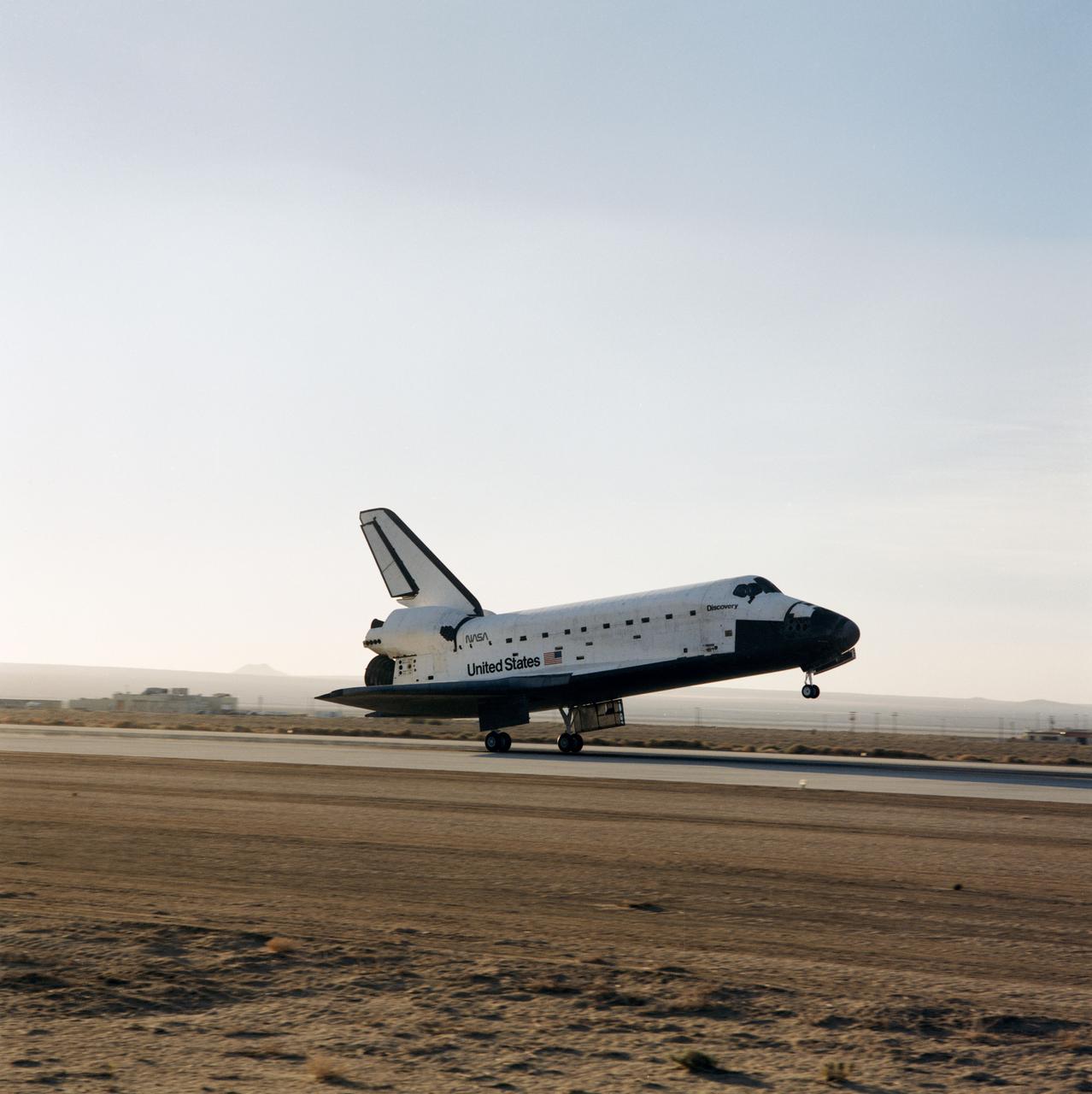
STS031-S-135 (29 April 1990) --- The Space Shuttle Discovery makes a smooth landing on the runway at Edwards Air Force Base to complete a highly successful five-day mission. It was an Earth orbital flight during which the Hubble Space Telescope (HST) was sent toward its 15-year mission. Landing was completed at 6:51 a.m. (PDT), April 29, 1990. Inside the spacecraft for STS-31 were Astronauts Loren J. Shriver, Charles F. Bolden, Bruce McCandless II, Kathryn D. Sullivan and Steven A. Hawley.
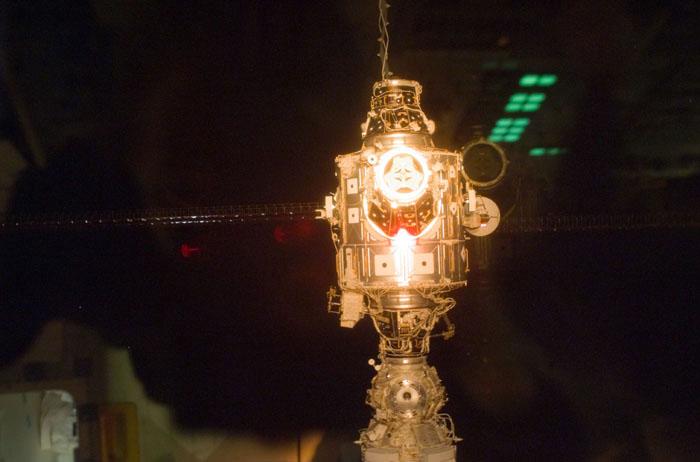
STS98-E-5040 (9 February 2001) --- One of a series of three digital still camera's views of the station's Unity node and the docking mechanism just prior to link up between the station and the Space Shuttle Atlantis. Sailing at 17,000 miles per hour 200 miles above the Pacific Ocean, astronaut Kenneth D. Cockrell, STS-98 mission commander, flawlessly pulled the shuttle alongside the International Space Station and docked, in position to add the new Destiny laboratory to the complex on the following day and begin a new era in space research. Atlantis went on to dock with the station on schedule at 10:51 a.m. (CST), February 9, and the station and shuttle crews opened hatches between the spacecraft at 1:03 p.m.
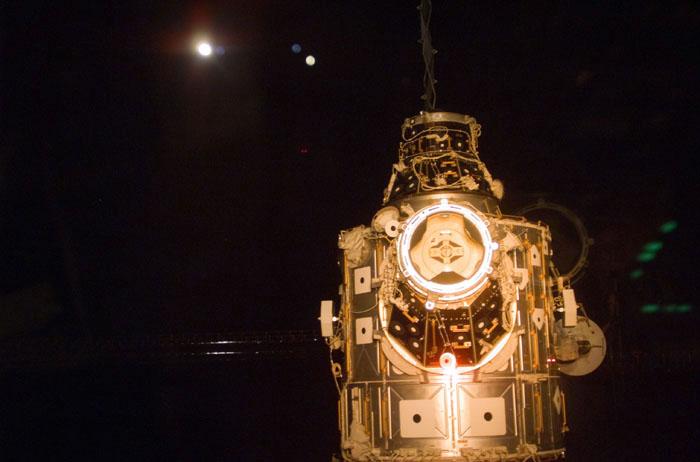
STS98-E-5041 (9 February 2001) --- One of a series of three digital still camera's views of the station's Unity node and the docking mechanism just prior to link up between the station and the Space Shuttle Atlantis. Sailing at 17,000 miles per hour 200 miles above the Pacific Ocean, astronaut Kenneth D. Cockrell, STS-98 mission commander, flawlessly pulled the shuttle alongside the International Space Station and docked, in position to add the new Destiny laboratory to the complex on the following day and begin a new era in space research. Atlantis went on to dock with the station on schedule at 10:51 a.m. (CST), February 9, and the station and shuttle crews opened hatches between the spacecraft at 1:03 p.m.
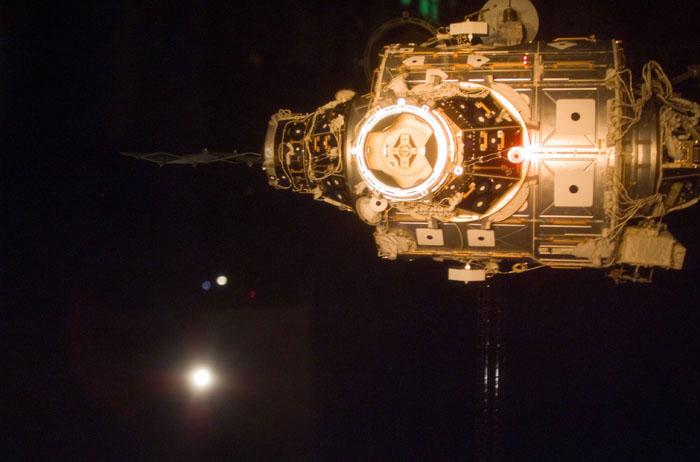
STS98-E-5042 (9 February 2001) --- One of a series of three digital still camera's views of the station's Unity node and the docking mechanism just prior to link up between the station and the Space Shuttle Atlantis. Sailing at 17,000 miles per hour 200 miles above the Pacific Ocean, astronaut Kenneth D. Cockrell, STS-98 mission commander, went on to flawlessly pull the shuttle alongside the International Space Station and dock it, in position to add the new Destiny laboratory to the complex on the following day and begin a new era in space research. Atlantis docked with the station on schedule at 10:51 a.m. (CST), February 9, and the station and shuttle crews opened hatches between the spacecraft at 1:03 p.m.
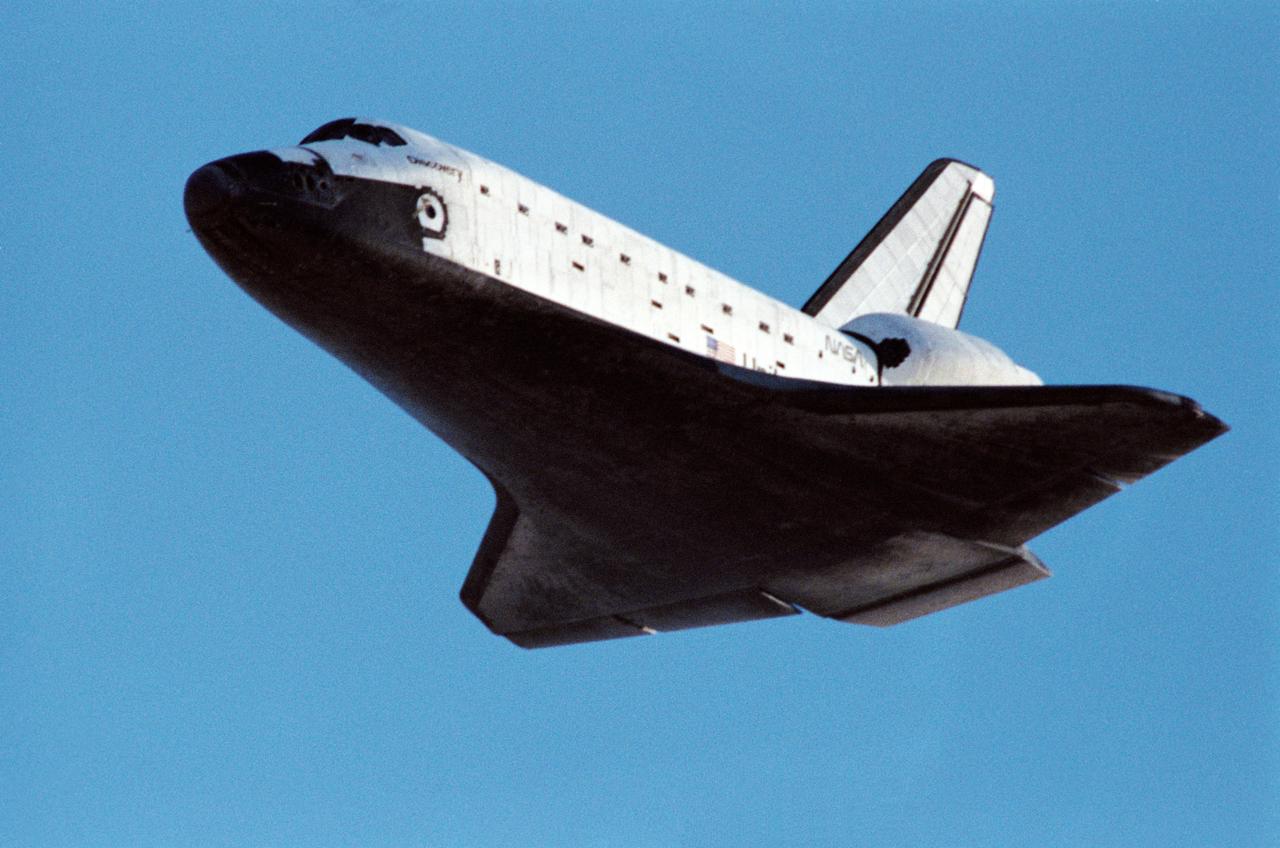
STS031-S-131 (29 April 1990) --- Low angle view of the Space Shuttle Discovery as it approaches for landing on a concrete runway at Edwards Air Force Base to complete a highly successful five-day mission. It was a long awaited Earth orbital flight during which the Hubble Space Telescope (HST) was sent toward its 15-year mission. Discovery's wheels came to a complete stop at 6:51:00 a.m. (PDT), April 29, 1990. The landing gear was deployed just moments after this frame was exposed. Inside the spacecraft for STS-31 were astronauts Loren J. Shriver, Charles F. Bolden, Bruce McCandless II, Kathryn D. Sullivan and Steven A. Hawley.
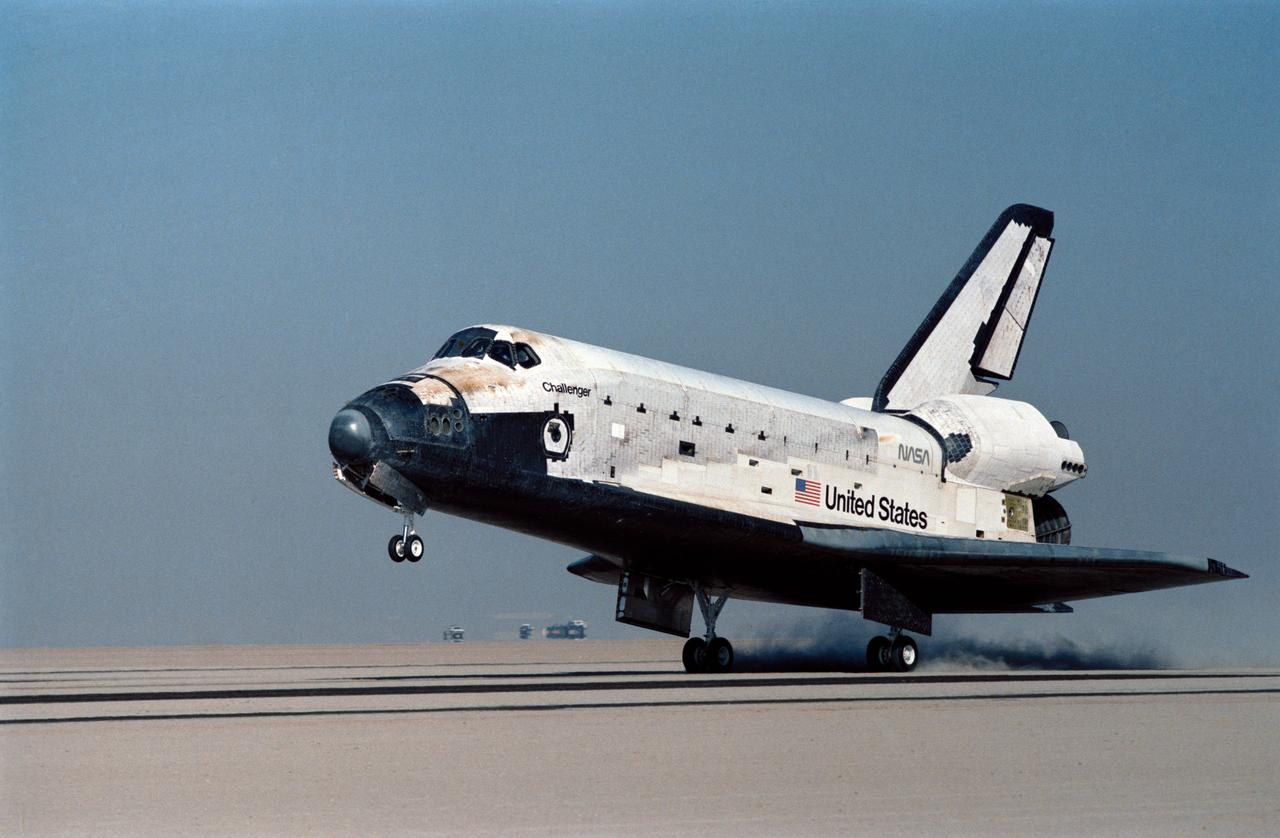
61A-S-139 (6 Nov 1985) --- Eight persons returning from space at one time is a record which was set at 9:45:39 a.m. (PST) today when the Space Shuttle Challenger's wheels came to a stop on the runway at Edwards Air Force Base. The main gear is seen touching down at 9:44:51 a.m. Inside the spacecraft are astronauts Henry W. Hartsfield Jr., Steven R. Nagel, Bonnie J. Dunbar, James F. Buchli, Guion S. Bluford Jr., Reinard Furrer, Ernst Messerschmid and Wubbo J. Ockels. A number of West German and other European experiments were performed during the week-long Spacelab D-1 mission.
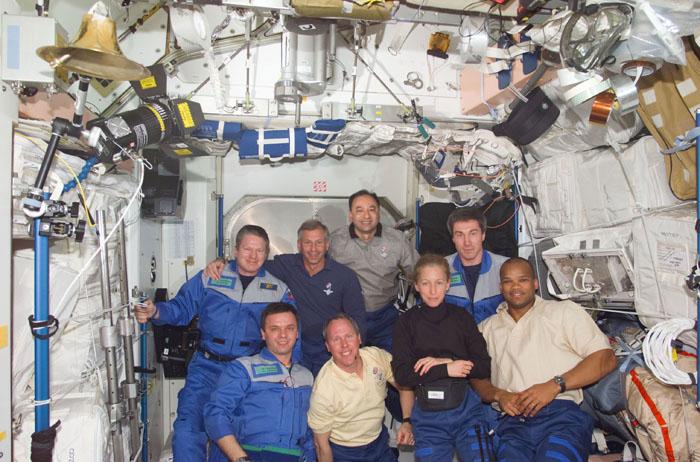
STS98-E-5053 (9 February 2001) --- The three-man Expedition One crew hosts its second group of visitors since beginning occupancy of the International Space Station in November of last year. A pre-set digital still camera was used to record the gathering. Wearing blue flight suits for the reunion are the station's first fulltime occupants--astronaut William M. (Bill) Shepherd (rear left), Expedition One commander;cosmonaut Yuri P. Gidzenko (front left), Soyuz commander; and cosmonaut Sergei K. Krikalev (rear right), flight engineer. Astronauts Kenneth D. Cockrell (second left, rear) and Mark L. Polansky (second right, rear) are STS-98 mission commander and pilot, respectively. Astronauts Thomas D. Jones, Marsha S. Ivins and Robert L. Curbeam--all mission specialists--are in front. Atlantis docked to the station on schedule at 10:51 a.m. (CST), Feb. 9 and the station and shuttle crews opened hatches between the spacecraft at 1:03 p.m., promptly beginning to unload supplies. The three-member station crew, on the eve of their 100th day aboard the outpost, greeted their first visitors in almost two months. The hatches were open for about four hours before they were closed in preparation for the first of three upcoming space walks, a six-hour sojourn scheduled for the following day from Atlantis by Jones and Curbeam.