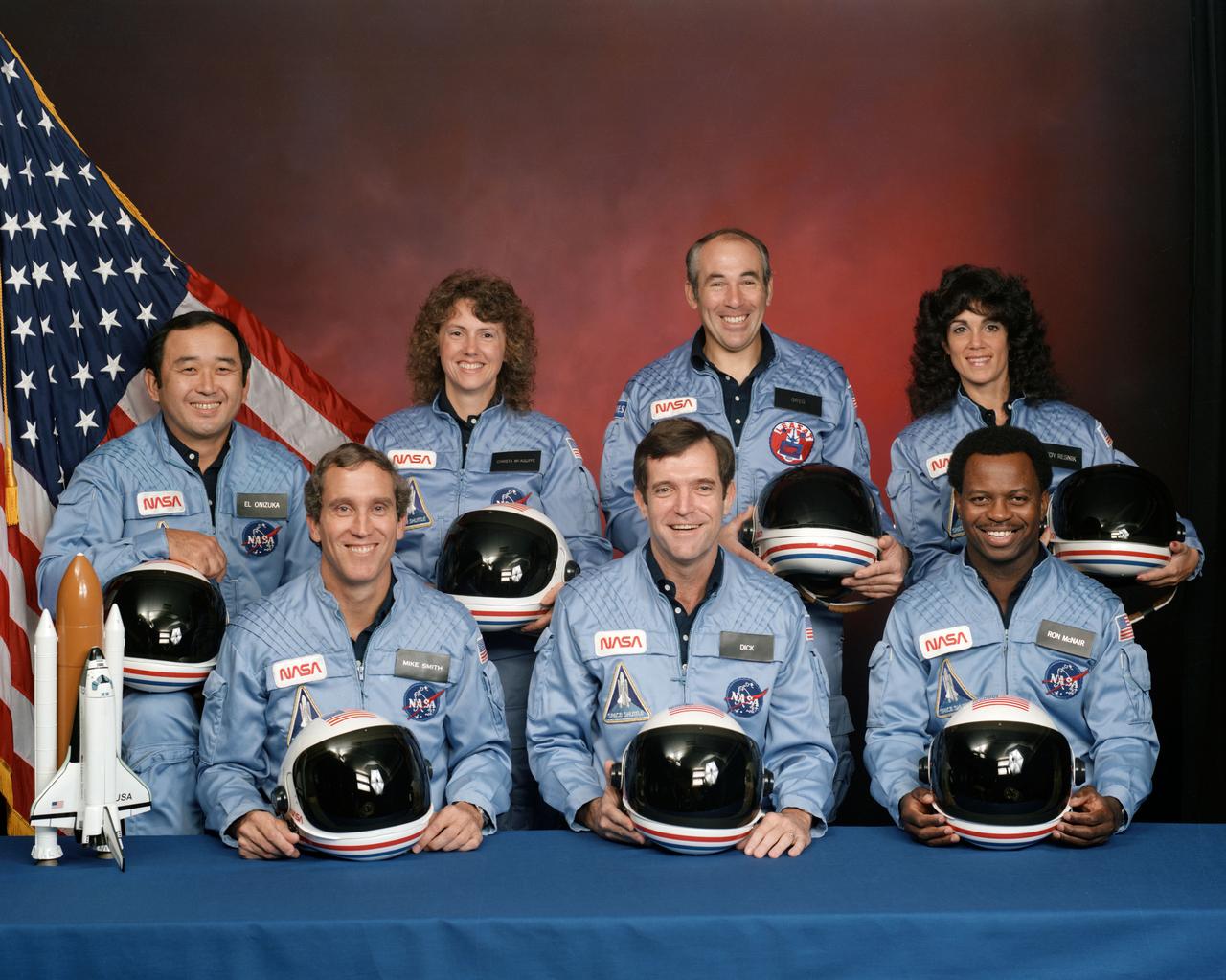
S85-44253 (November 1985) --- Five astronauts and two payload specialists make up the crew, scheduled to fly aboard the space shuttle Challenger in January of 1986. Crew members are (left to right, front row) astronauts Michael J. Smith, Francis R. (Dick) Scobee and Ronald E. McNair; Ellison S. Onizuka, Sharon Christa McAuliffe, Gregory Jarvis and Judith A. Resnik. McAuliffe and Jarvis are payload specialists, representing the Teacher in Space Project and Hughes Company, respectively. Photo credit: NASA (NOTE: On Jan. 28, 1986, the seven Challenger crew members lost their lives following an explosion during the launch phase of the STS-51L mission.)
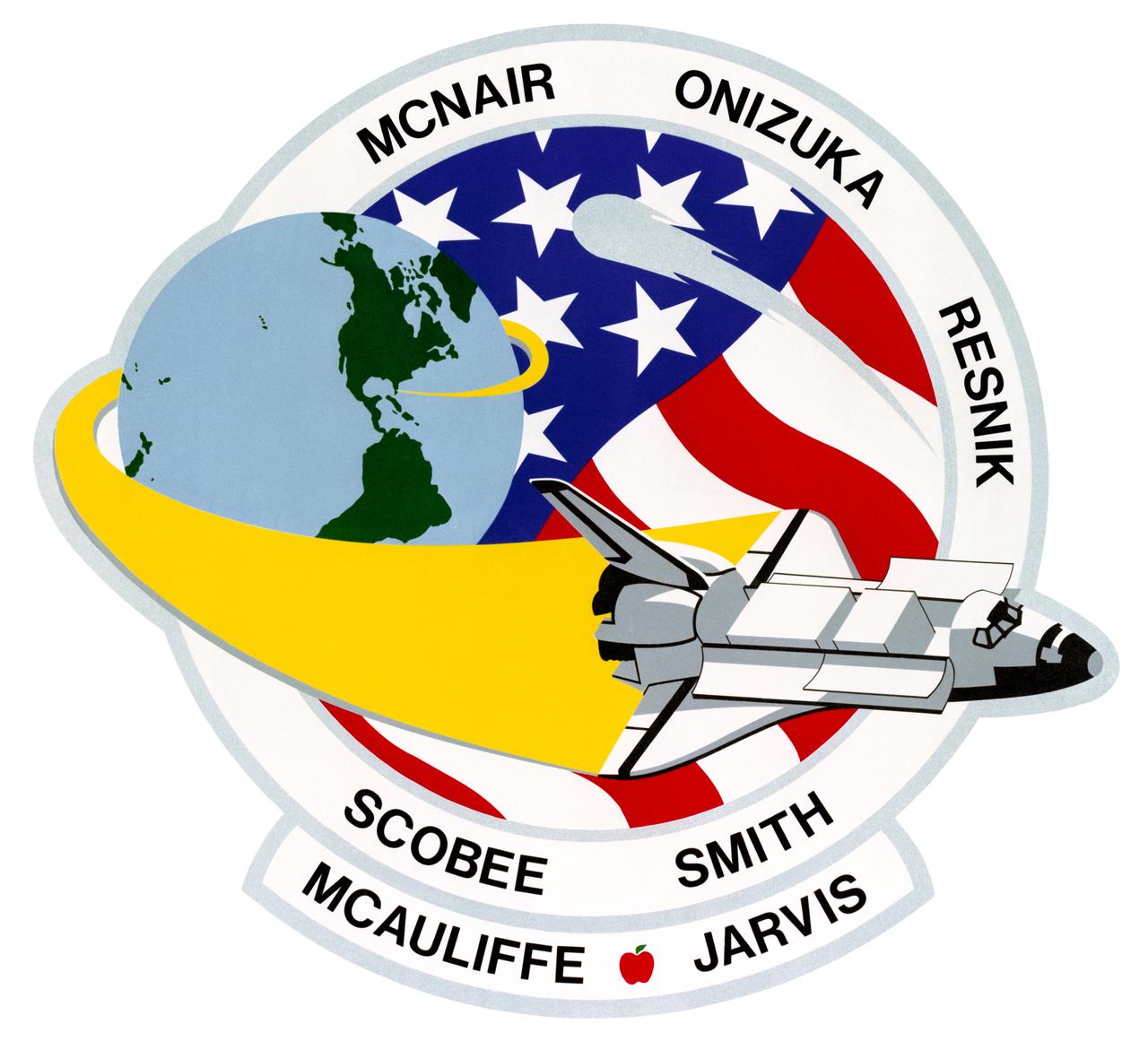
S85-46260 (20 Dec. 1985) --- Members of the STS-51L crew designed this patch which will represent their participation on NASA's late January 1986 mission aboard the space shuttle Challenger, depicted launching from Florida and soaring into space to carry out a variety of goals. Among the prescribed duties of the five astronauts and two payload specialists will be observation and photography of Halley's Comet, backdropped against the United States flag in the insignia. Surnames of the crew members encircle the scene, with the payload specialists being recognized below. Surname of the first teacher in space, Sharon Christa McAuliffe, is followed by a symbolic apple. Gregory Jarvis, representing Hughes, is the industrial payload specialist for the flight. NASA's crew members are astronauts Francis R. (Dick) Scobee, commander; Michael J. Smith, pilot; and Ronald E. McNair, Ellison S. Onizuka and Judith A. Resnik - all mission specialists. The NASA insignia design for space shuttle flights is reserved for use by the astronauts and for other official use as the NASA Administrator may authorize. Public availability has been approved only in the forms of illustrations by the various news media. When and if there is any change in this policy, which is not anticipated, the change will be publicly announced. Photo credit: NASA
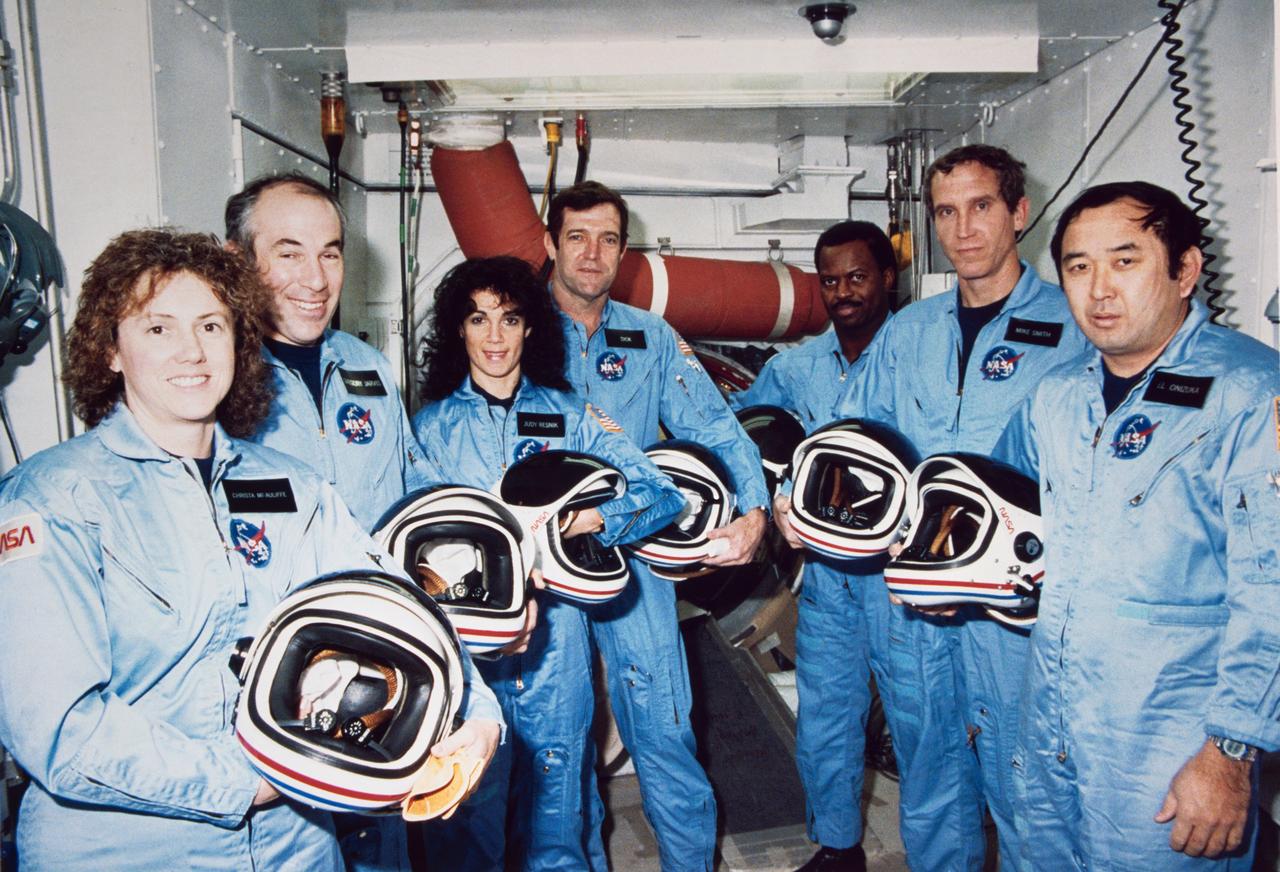
S86-30460 (9 Jan. 1986) --- NASA's STS-51L crew members pose for photographs during a break in countdown training at the White Room, Launch Complex 39, Pad B. Left to right are Teacher-in-Space payload specialist Sharon Christa McAuliffe; payload specialist Gregory Jarvis; and astronauts Judith A. Resnik, mission specialist; Francis R. (Dick) Scobee, mission commander; Ronald E. McNair, mission specialist; Mike J. Smith, pilot; and Ellison S. Onizuka, mission specialist. EDITOR'S NOTE: The STS-51L crew lost their lives in an explosion, onboard the space shuttle Challenger, following launch Jan. 28, 1986. Photo credit: NASA
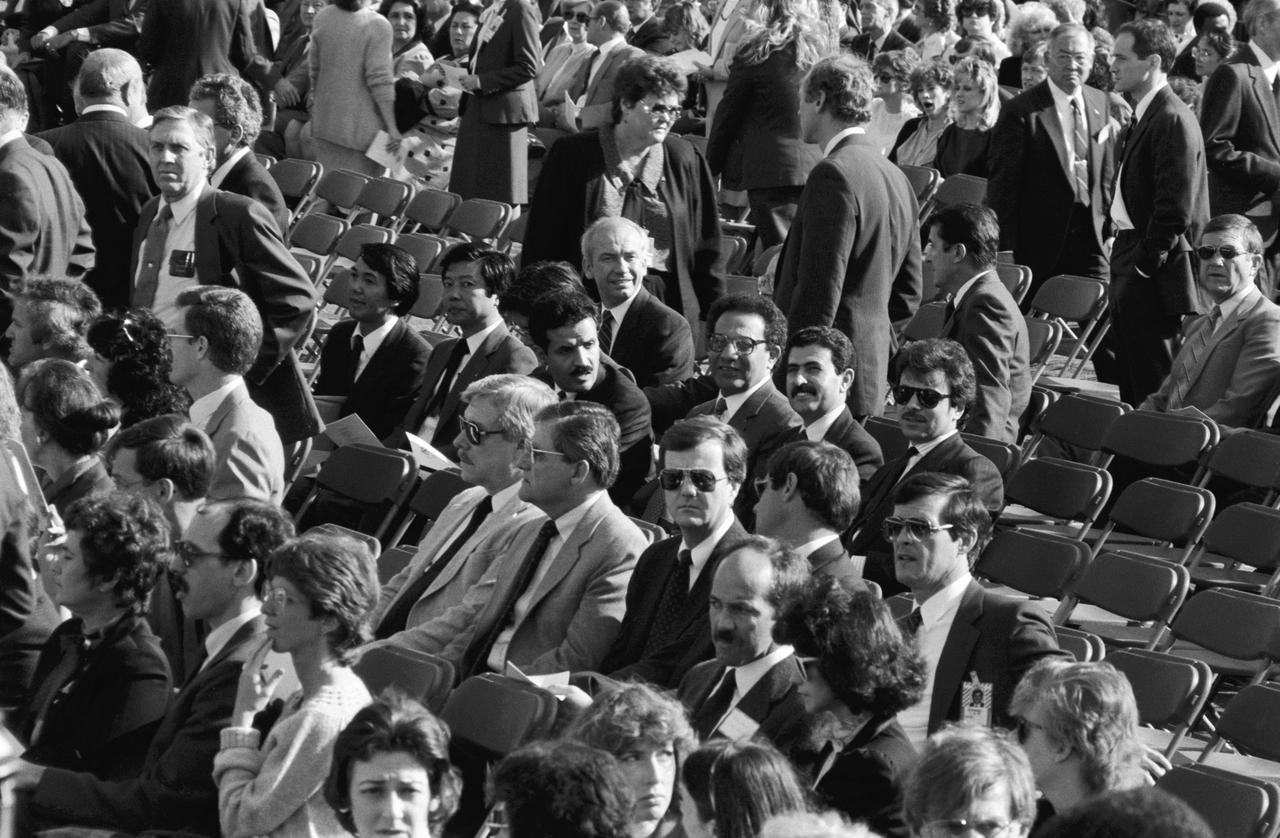
View of the audience at the memorial service at JSC for the Crew of STS 51-L. Sultan Salman Abdelazize Al-Saud of Saudi Arabia is seen in the center of the view.
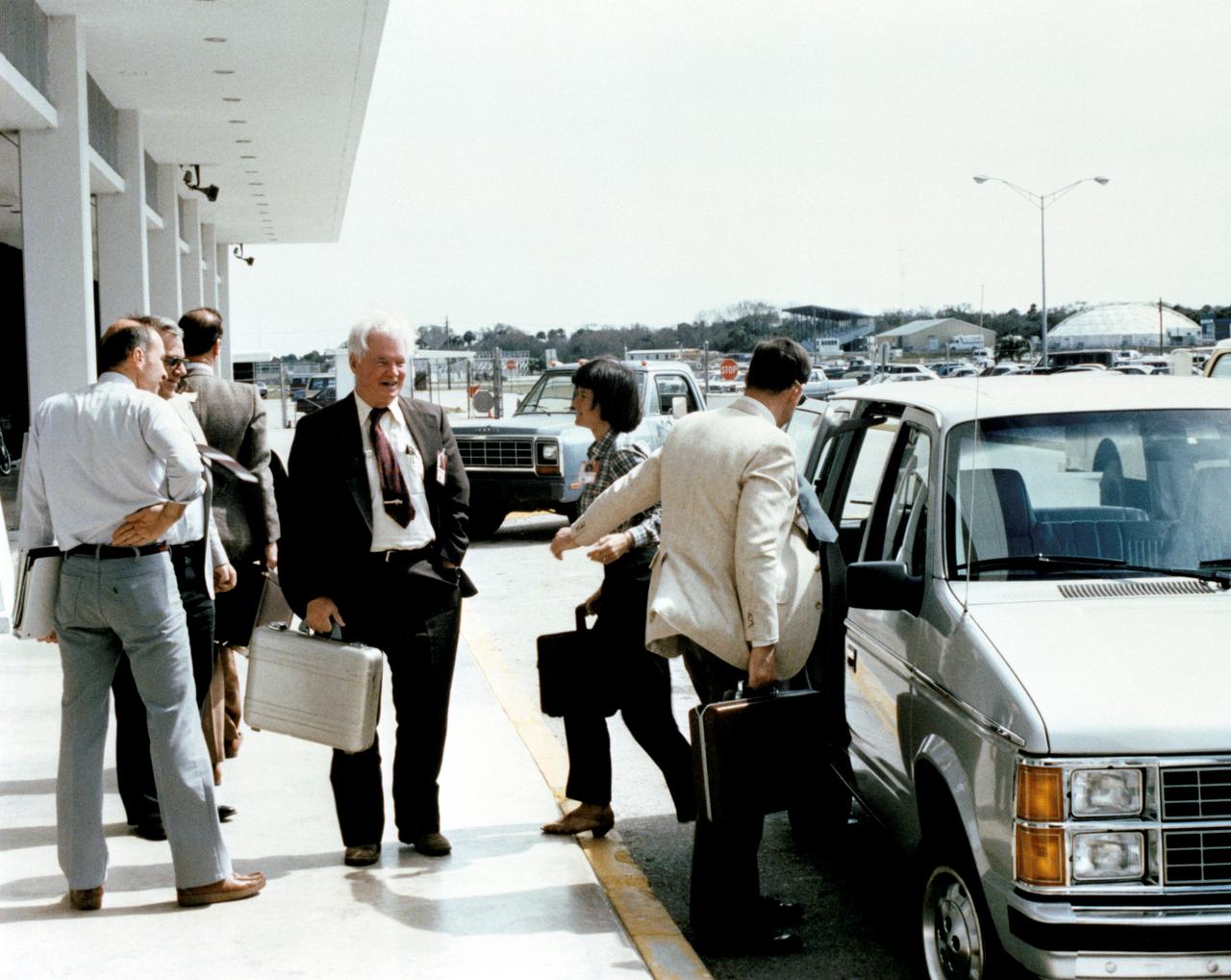
51L-10166 (4 March 1986) --- Members of the Presidential Commission on the space shuttle Challenger accident arrive at the Launch Control Center at Kennedy Space Center (KSC). Commission members present are Robert Hotz (center) and Dr. Sally Ride. Others pictured are John Chase, staff assistant to the Commission (far right) and from left to right: Bob Sieck, Director of Shuttle operations; Jack Martin and John Fabian.
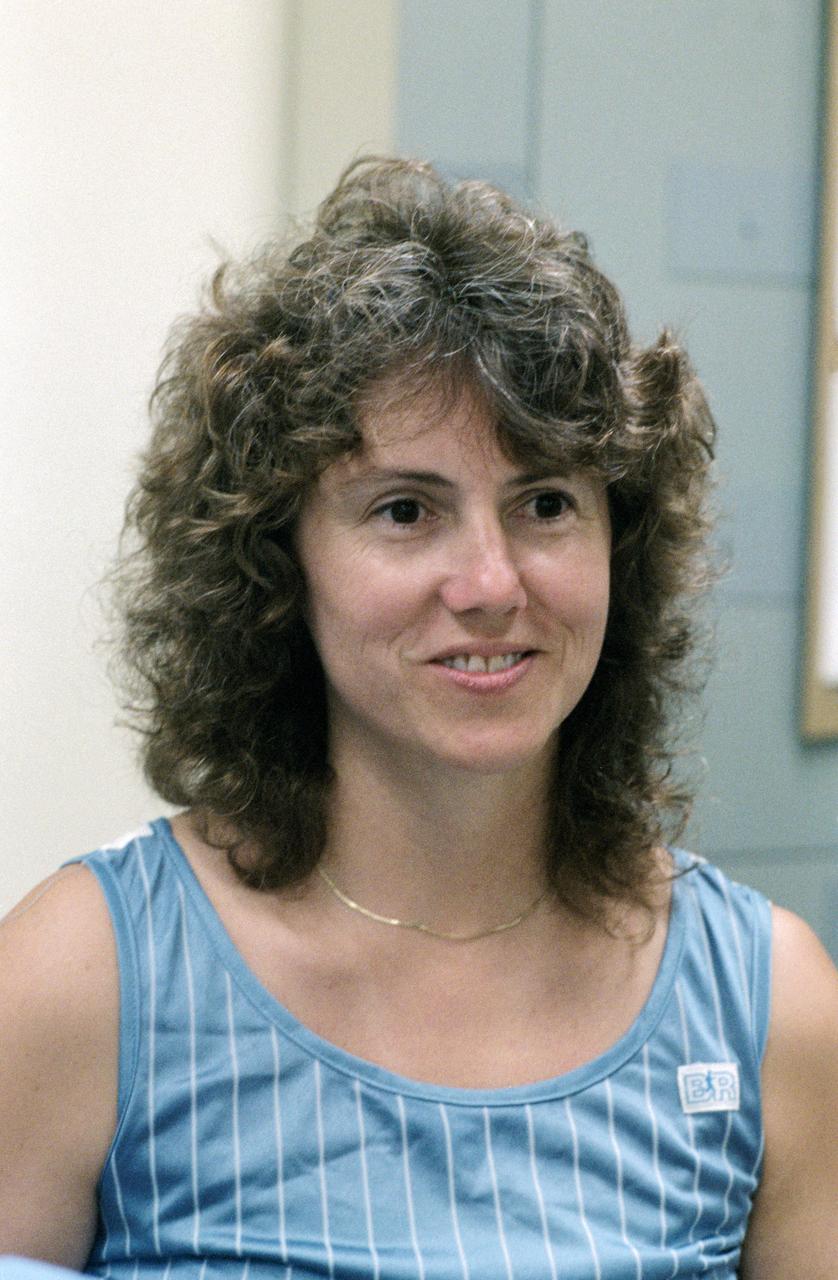
S85-37677 (8-12 July 1985) --- Sharon C. (Christa) McAuliffe of Concord High, Concord, New Hampshire, talks to nurse during physiological testing on first day at Johnson Space Center (JSC). Christa McAuliffe was eventually chosen as the first Teacher in Space and was a member of the seven-member Challenger shuttle crew which died tragically in the explosion of the spacecraft during the launch of STS-51L from the Kennedy Space Center about 11:40 a.m., EST, on Jan. 28, 1986. The explosion occurred 73 seconds into the flight as a result of a leak in one of two Solid Rocket Boosters that ignited the main liquid fuel tank. The crew members of the Challenger represented a cross-section of the American population in terms of race, gender, geography, background, and religion. The explosion became one of the most significant events of the 1980s, as billions around the world saw the accident on television and empathized with any one of the several crew members killed. Photo credit: NASA
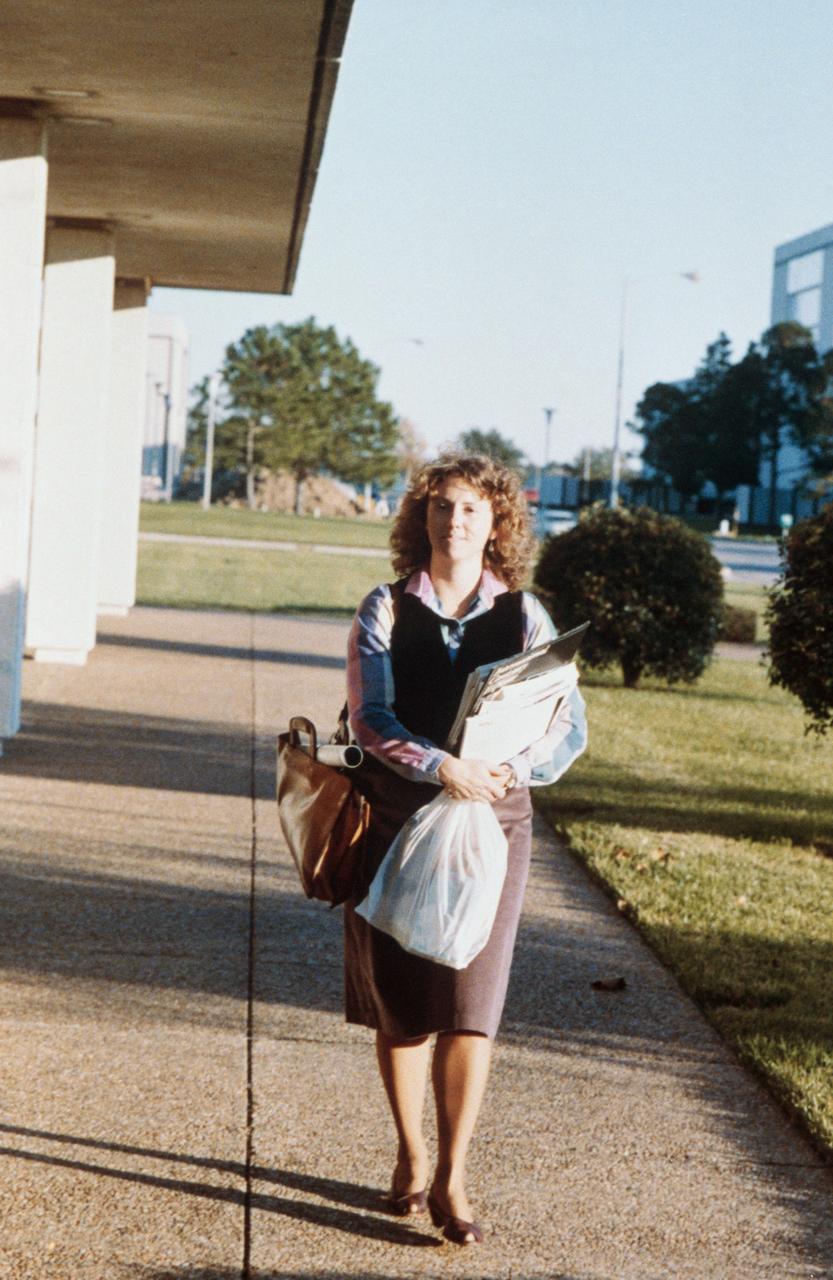
S86-25279 (November 1985) --- Sharon Christa McAuliffe, STS-51L payload specialist, has homework of her own to do as she prepares for a January 1986 flight. Photo by Keith Meyers of the New York Times. Photo credit: NASA
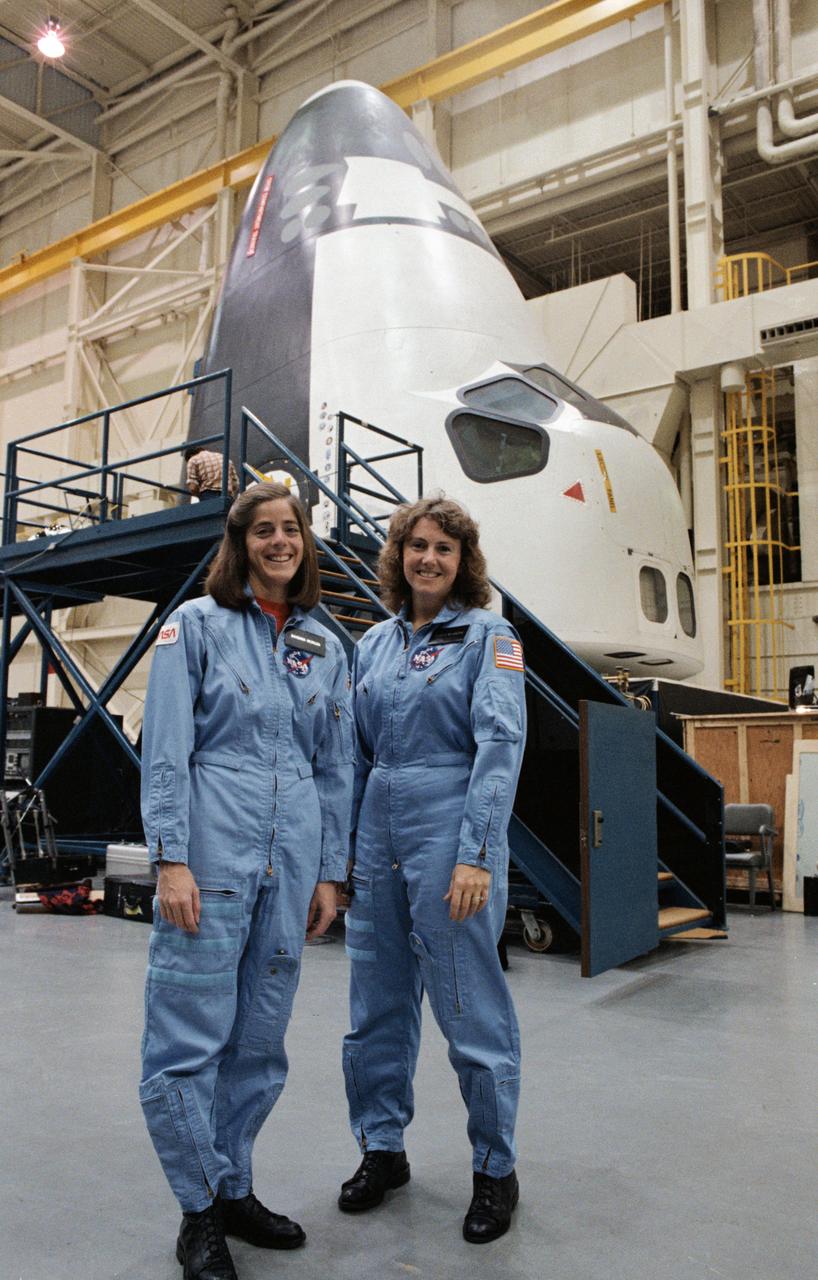
S85-46693 (26 Dec. 1985) --- Sharon Christa McAuliffe (right), the Teacher-in-Space payload specialist assigned to the STS-51L mission, and her backup, Barbara R. Morgan pose for photos after training in the shuttle mock-up and integration laboratory at JSC. The shuttle crew compartment, in a launch mode, can be seen in the background. Photo credit: NASA
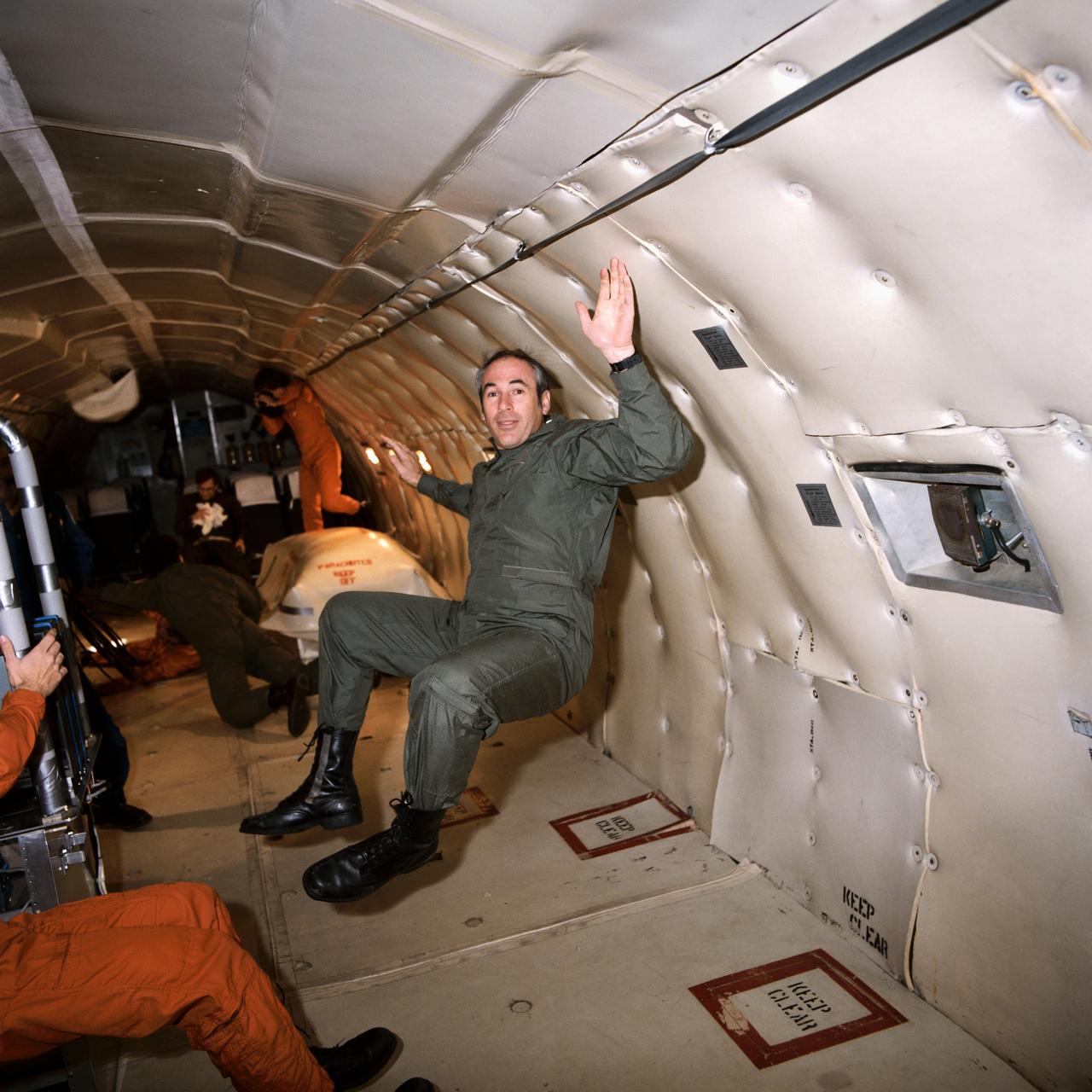
S85-26106 (25 Jan. 1985) --- Astronaut Gregory Jarvis gets a familiarization session in weightlessness aboard a KC-135 "zero gravity" aircraft. Jarvis was originally assigned as payload specialist to STS-51D but was reassigned to STS-51L. Photo credit: NASA
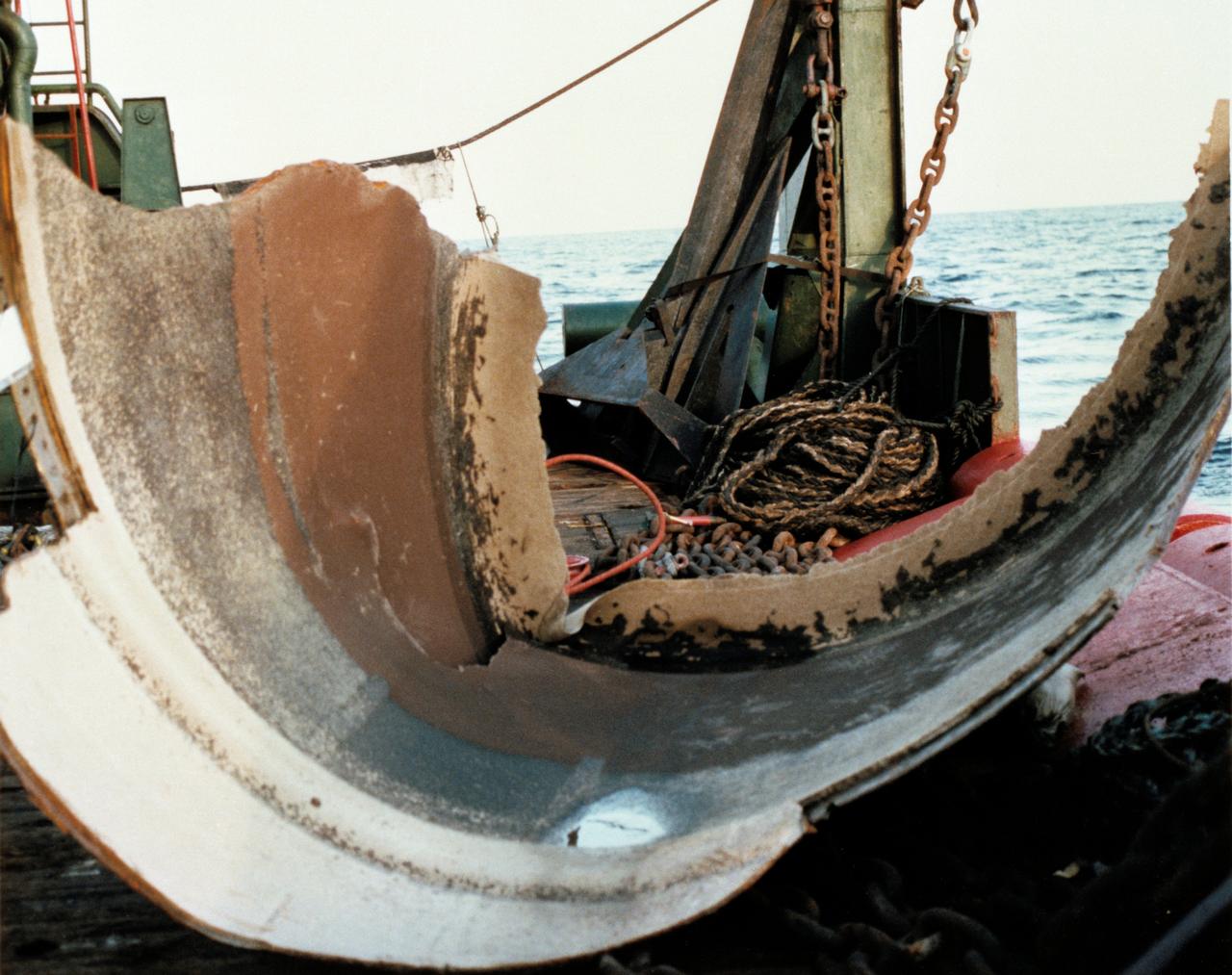
51L-10162 (8-9 March 1986) --- View of the left solid rocket booster first piece retrieval #11 (STS-51L space shuttle Challenger). Photo credit: NASA
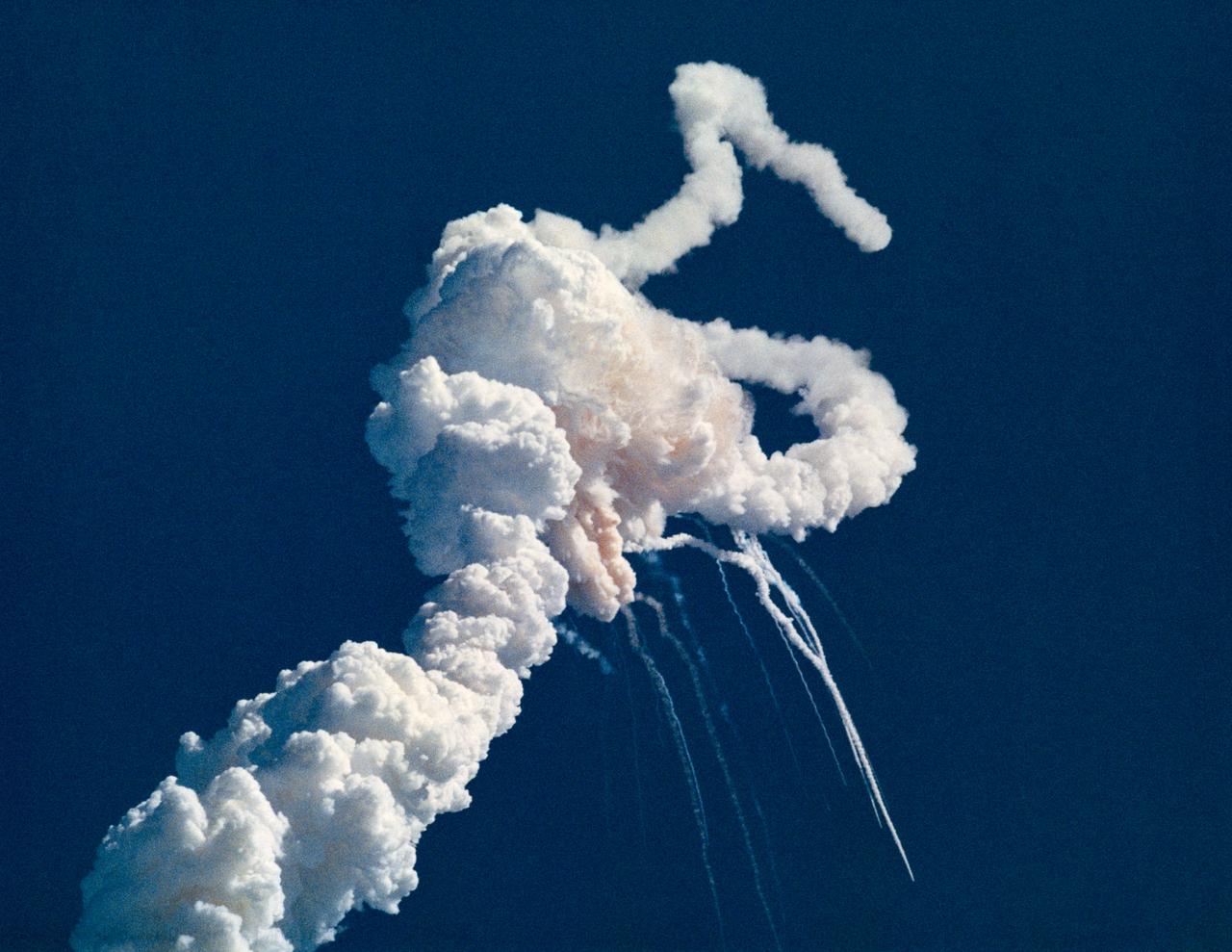
S86-38989 (28 Jan. 1986) --- Main engine exhaust, solid rocket booster plume and an expanding ball of gas from the external tank is visible seconds after the space shuttle Challenger accident on Jan. 28, 1986. (NOTE: The 51-L crew members lost their lives in the space shuttle Challenger accident moments after launch on Jan. 28, 1986 from the Kennedy Space Center.) Photo credit: NASA
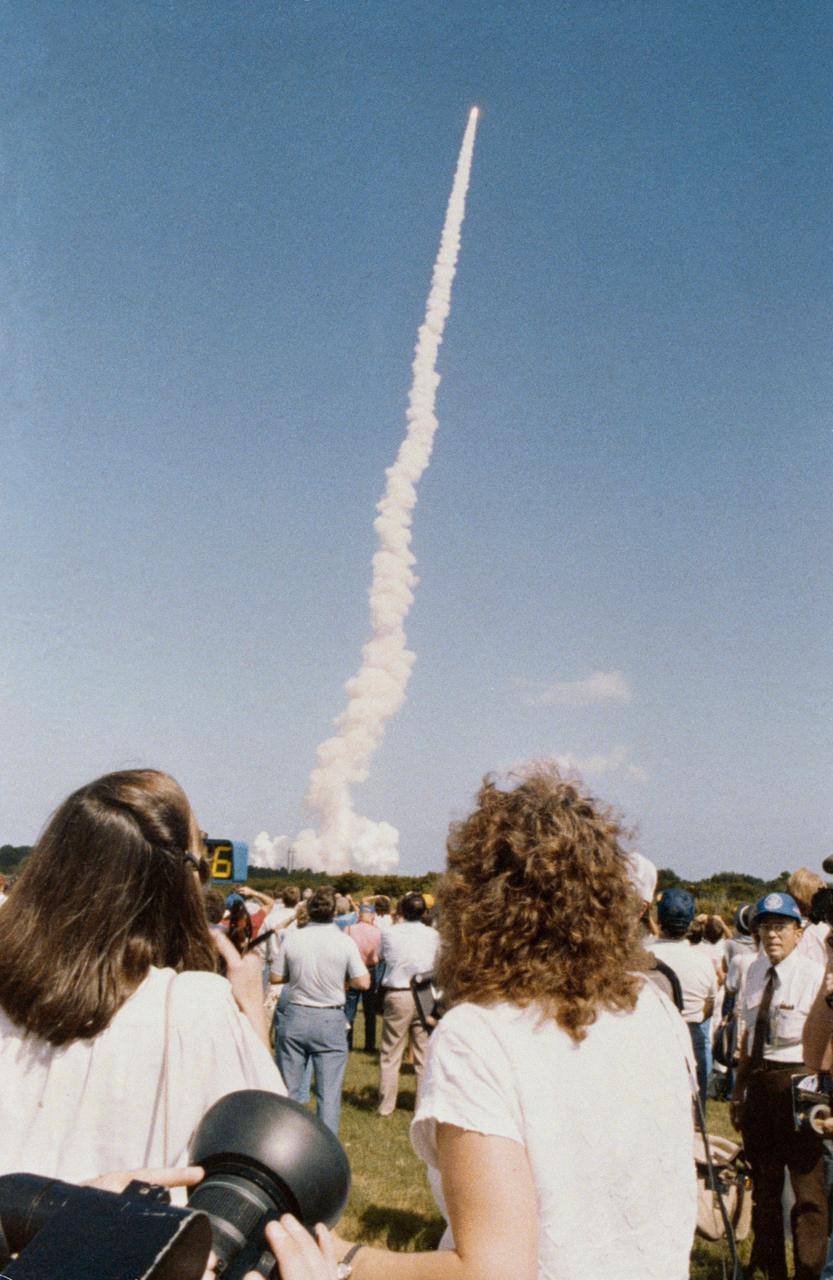
S86-25293 (30 Oct. 1985) --- Barbara R. Morgan and Sharon Christa McAuliffe (right) are pictured during a visit to NASA's Kennedy Space Center (KSC) Launch Complex 39 to witness the launch of the space shuttle Challenger. McAuliffe is scheduled to launch aboard the space shuttle Challenger, STS-51L mission, herself early next year as the United States? first in-space citizen observer. Morgan is the backup for the Teacher-in-Space Project?s payload specialist position. The photo was taken by Keith Meyers of the New York Times. EDITOR'S NOTE: The STS-51L crew members lost their lives in the space shuttle Challenger accident moments after launch on Jan. 28, 1986 from the Kennedy Space Center (KSC). Photo credit: NASA
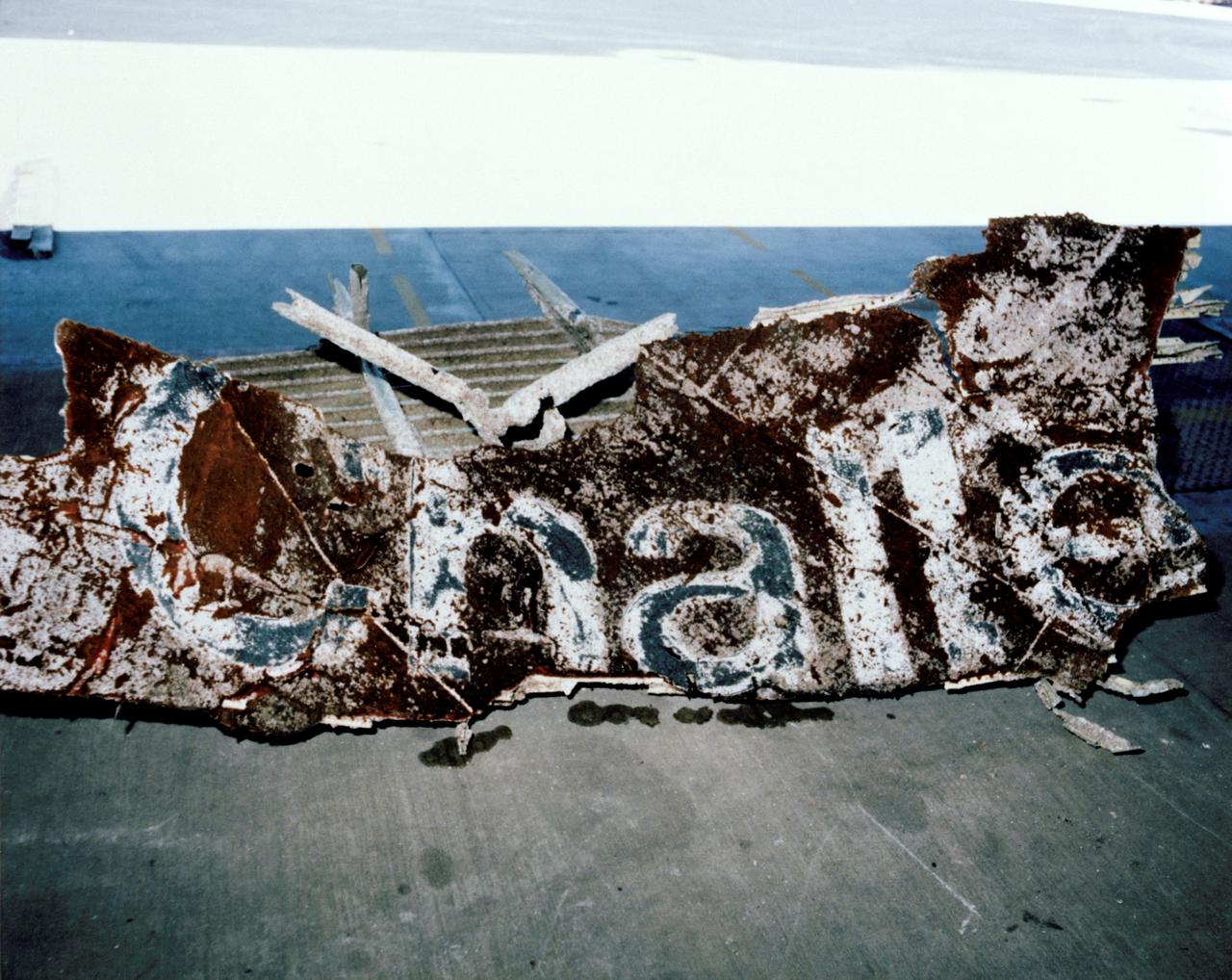
51L-10187 (18 April 1986) --- A 9'7" x 16' segment of Challenger's right wing is unloaded at the Logistics Facility after being off-loaded from the rescue and salvage ship USS Opportune. It was located and recovered by Navy divers from the Opportune about 12 nautical miles northeast of Cape Canaveral in 70 feet of water. Photo credit: NASA
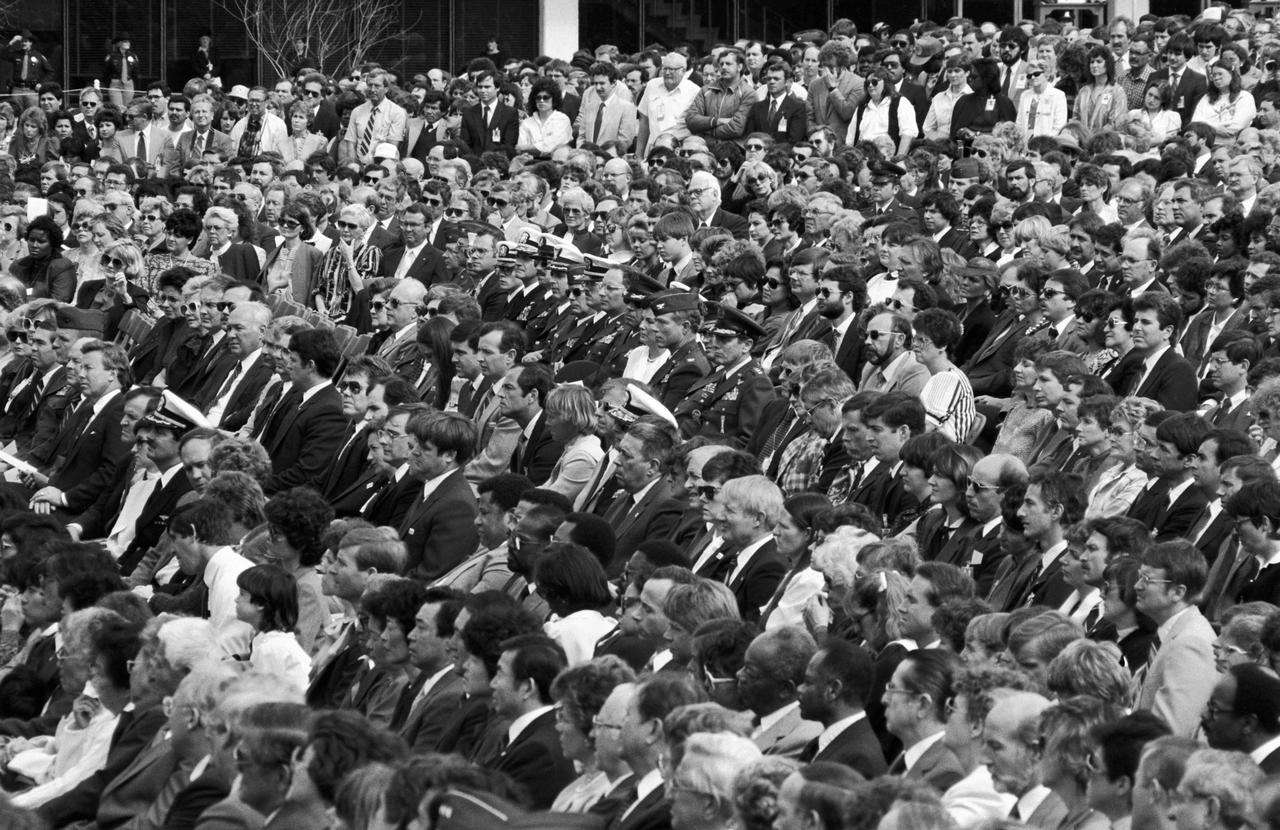
Overall view of the audience at the memorial service at JSC for the Crew of STS 51-L.
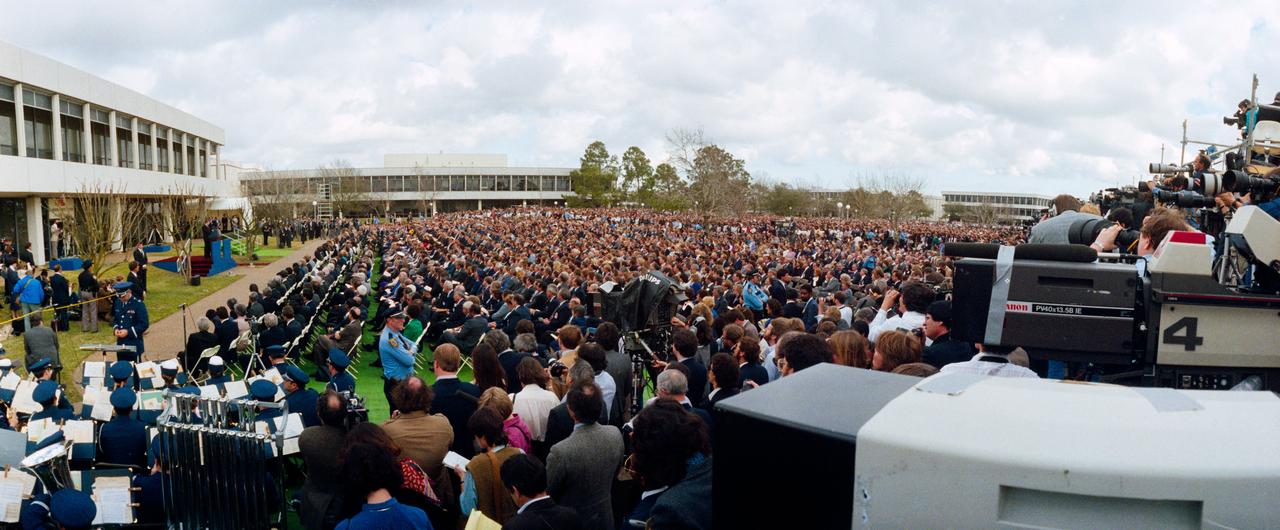
51L-S-127 (31 Jan. 1986) --- A wide angle lens was used to capture only a portion of the crowd gathered for memorial services for the seven members of the STS-51L Challenger crew at the Johnson Space Center. President Ronald Reagan speaks at the lectern at far left edge of the frame. The photographer for the picture was positioned on a large platform erected to accommodate the many members of the news media on hand for the event. Photo credit: NASA
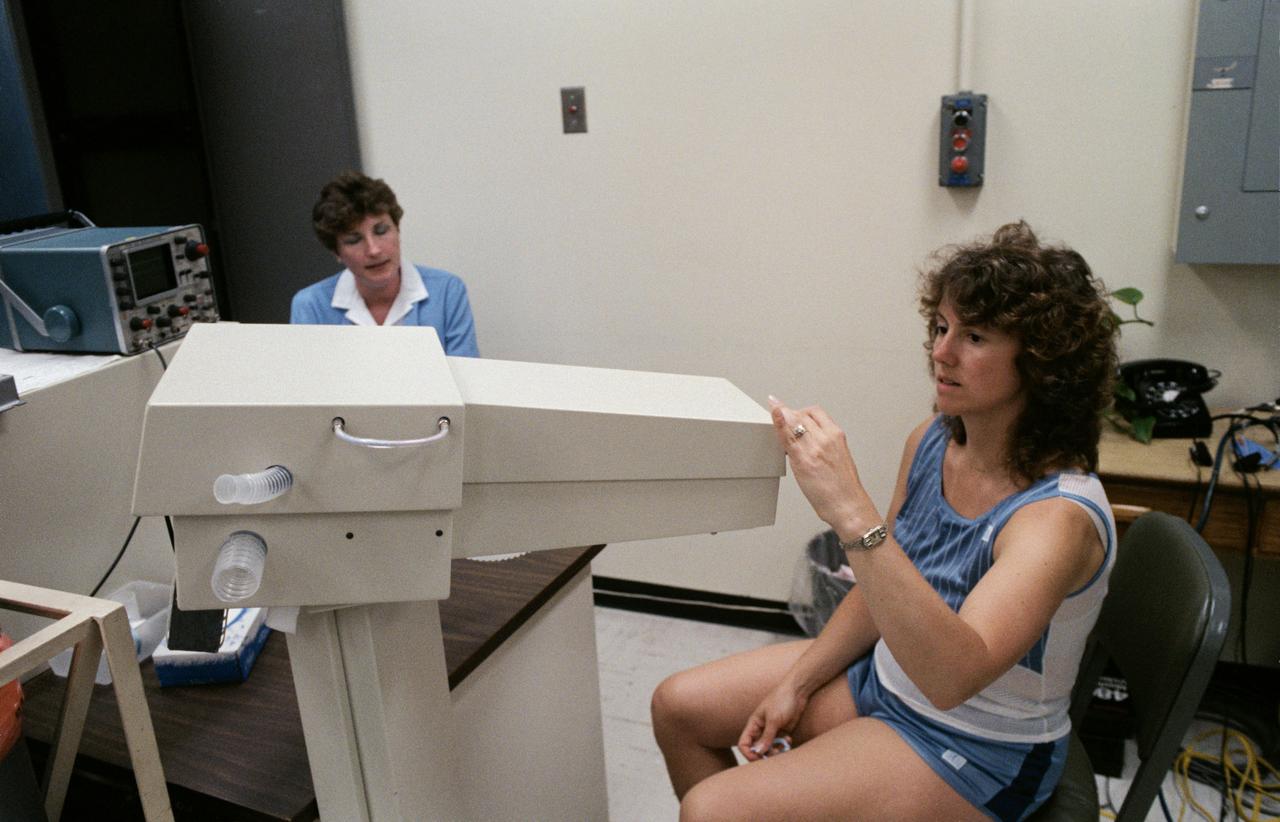
S85-36966 (10 July 1985) --- Teacher Sharon Christa McAuliffe prepares to test her lung capacity during medical examinations at the Johnson Space Center (JSC) clinic. Photo credit: NASA
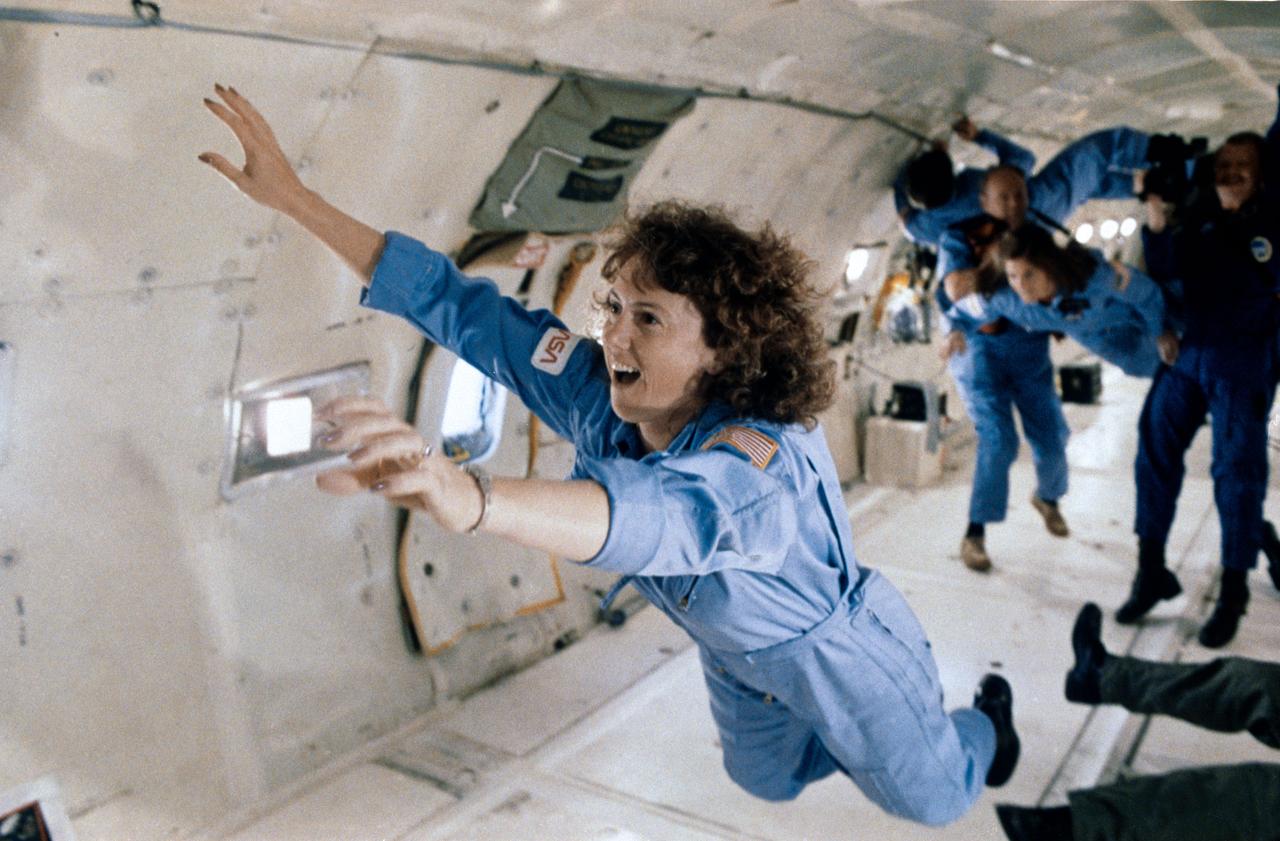
S86-25180 (October 1985) --- Sharon Christa McAuliffe, STS-51L citizen observer/payload specialist, representing the Teacher-in-Space Project, floats forward and upward during a few moments of weightlessness aboard a KC-135 aircraft. The flight is part of her training for the scheduled five-day flight aboard the Challenger in January of next year. Barbara R. Morgan, backup payload specialist for STS-51L, is partially visible in the background. The photo was taken by Keith Meyers of the New York Times. Photo credit: NASA
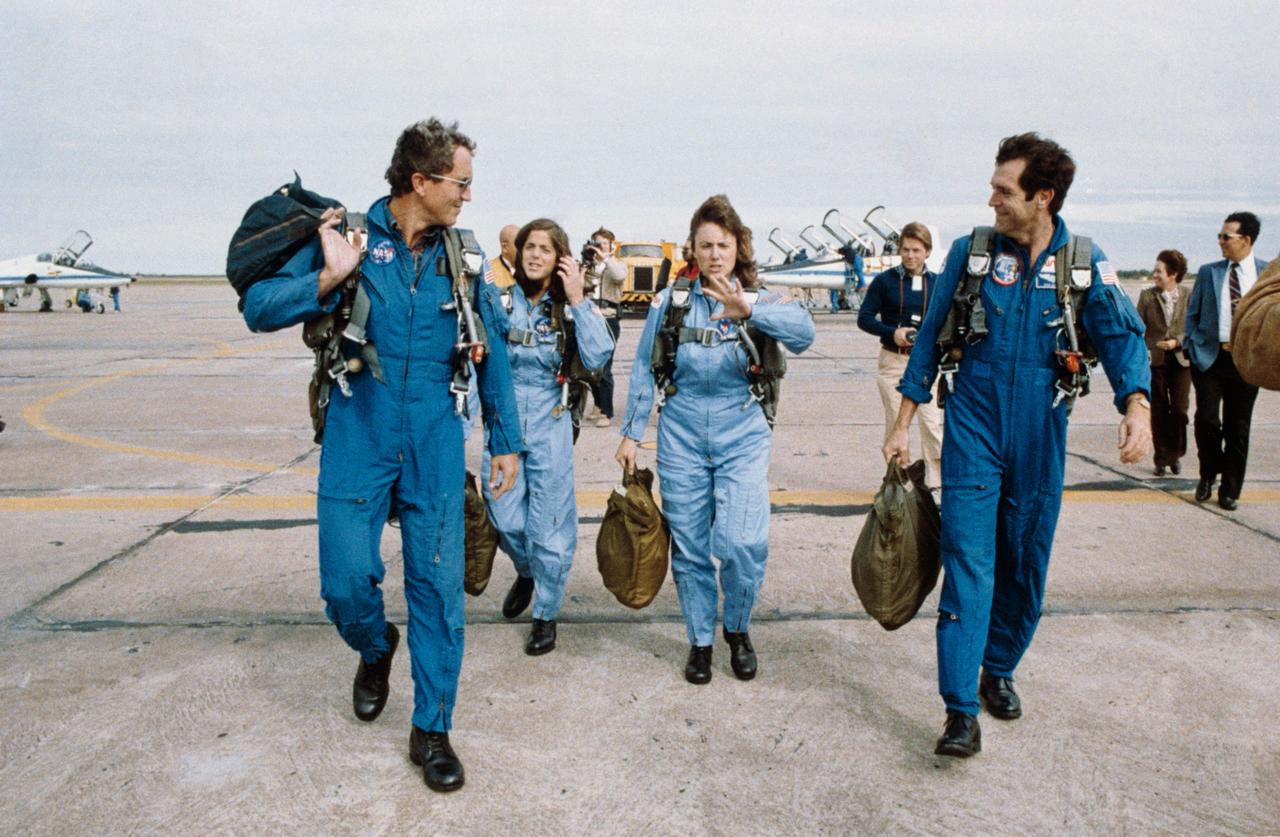
S86-25199 (September 1985) --- Three members of the STS-51L prime crew and a backup crew member walk away from the flight line at nearby Ellington Field following flights in the T-38 jet trainers seen in the background. Sharon Christa McAuliffe (center right), payload specialist/citizen observer for the Teacher-in-Space Project, and Barbara R. Morgan (center left), her backup, are flanked by astronauts Francis R. (Dick) Scobee (right), mission commander, and Michael J. Smith, pilot. The photo was taken by Keith Meyers of the New York Times. EDITOR?S NOTE: The STS-51L crew members lost their lives in the space shuttle Challenger accident moments after launch on Jan. 28, 1986 from the Kennedy Space Center (KSC). Photo credit: NASA
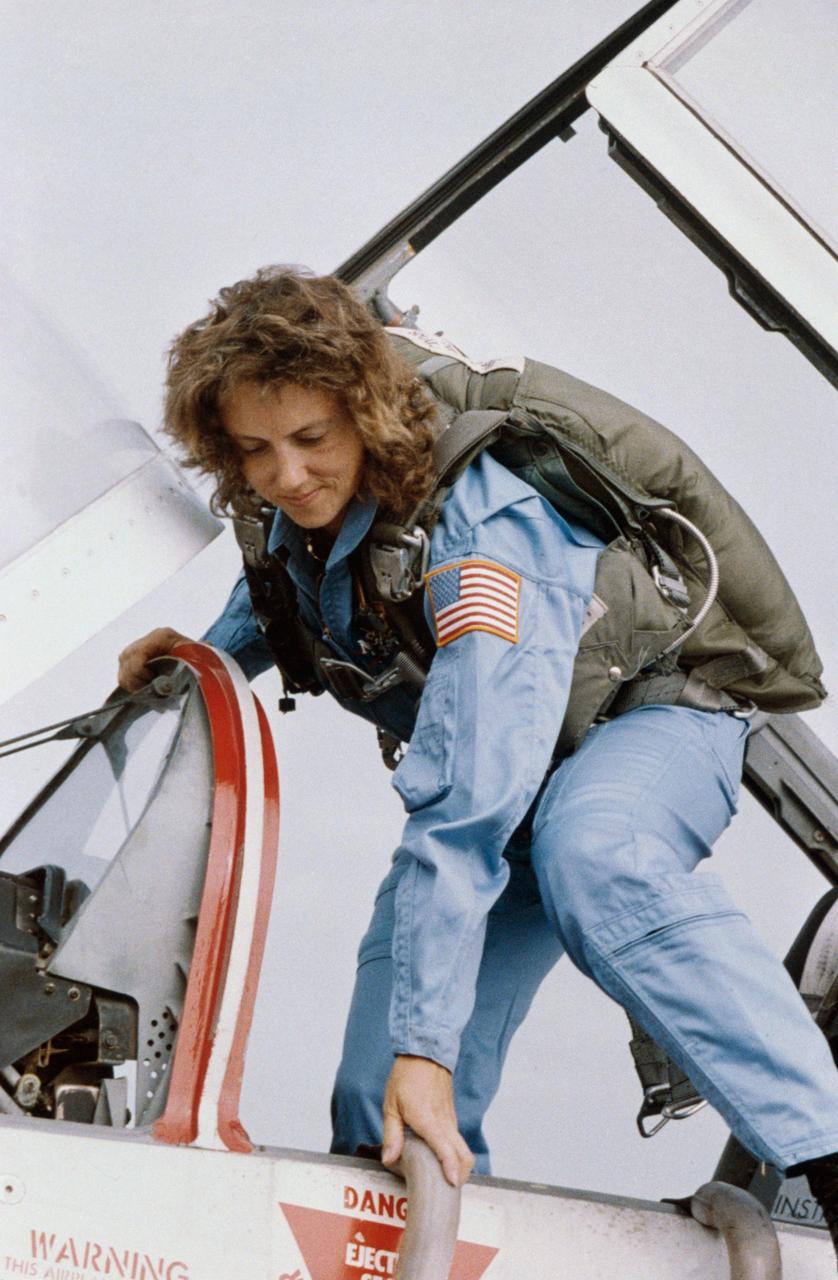
S86-25234 (January 1986) --- STS-51L Payload Specialist Sharon Christa McAuliffe egresses the rear station of a NASA T-38 jet trainer at Ellington Base near the Johnson Space Center, where the Teacher-in-Space Project top finalist is in training for the January mission. The photo was taken by Keith Meyers of the New York Times. Photo credit: NASA
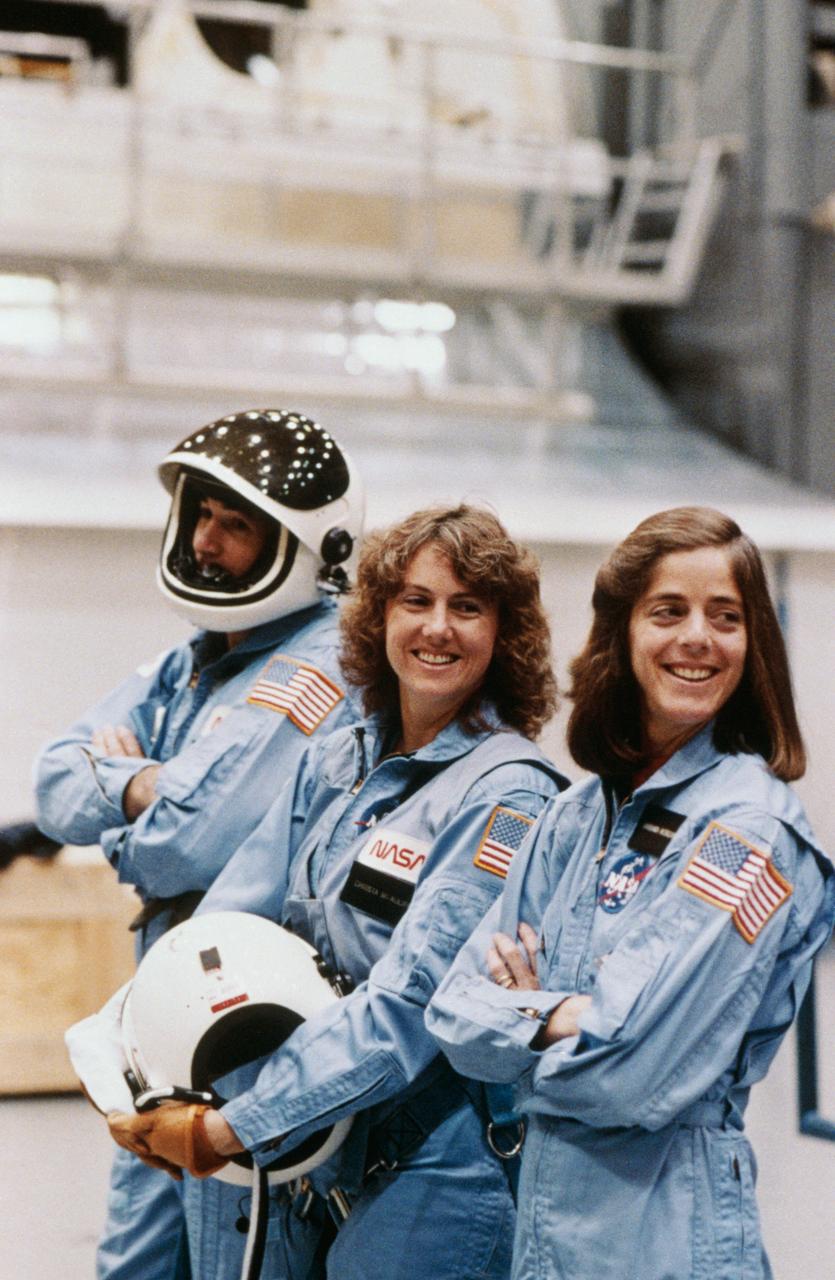
S86-25254 (January 1986) --- Payload specialists in training for STS-51L take a break in shuttle emergency egress training at the Johnson Space Center's (JSC) Shuttle Mock-up and Integration Laboratory. Left to right are Gregory Jarvis of Hughes, Sharon Christa McAuliffe and Barbara Morgan of the Teacher-in-Space Project. McAuliffe was selected as NASA's first citizen observer in the Space Shuttle Program and Morgan was named her backup. The photo was taken by Keith Meyers of the New York Times. EDITOR?S NOTE: The STS-51L crew members lost their lives in the space shuttle Challenger accident moments after launch on Jan. 28, 1986 from the Kennedy Space Center (KSC). Photo credit: NASA
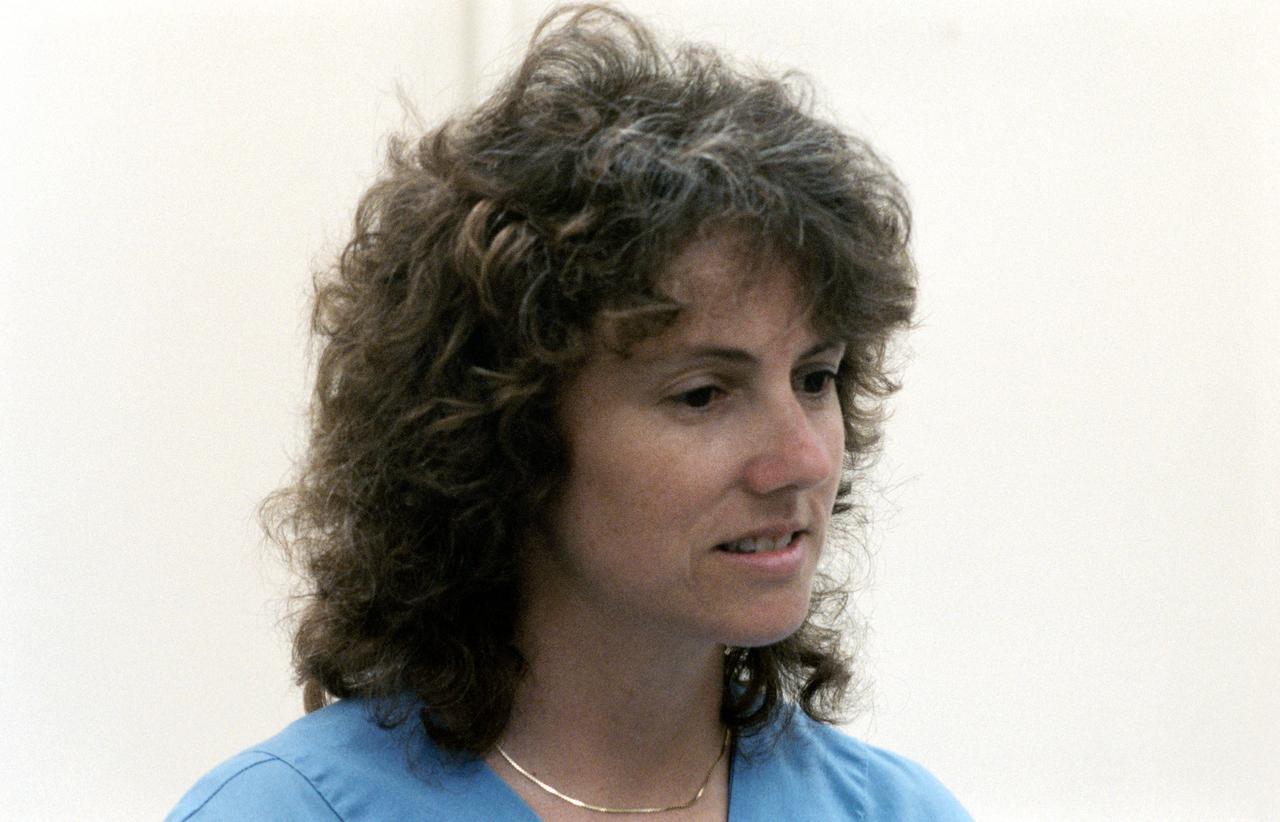
S85-37164 (8-12 July 1985) --- Sharon C. (Christa) McAuliffe of Concord High, Concord, New Hampshire, talks to the media at Johnson Space Center. Christa McAuliffe was eventually chosen as the first Teacher in Space and was a member of the seven-member Challenger shuttle crew which died tragically in the explosion of the spacecraft during the launch of STS-51L from the Kennedy Space Center about 11:40 a.m., EST, on Jan. 28, 1986. The explosion occurred 73 seconds into the flight as a result of a leak in one of two Solid Rocket Boosters that ignited the main liquid fuel tank. The crew members of the Challenger represented a cross-section of the American population in terms of race, gender, geography, background, and religion. The explosion became one of the most significant events of the 1980s, as billions around the world saw the accident on television and empathized with any one of the several crew members killed. Photo credit: NASA
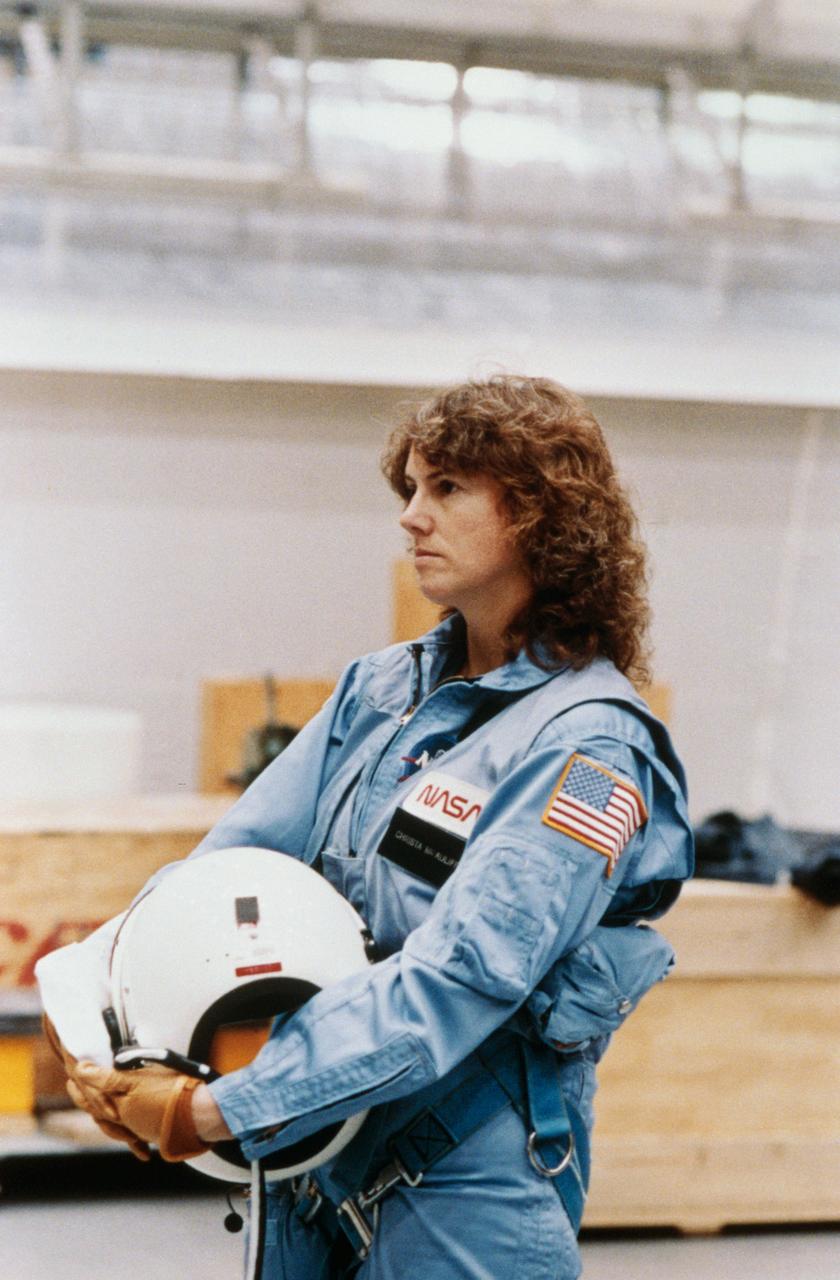
S86-25251 (January 1986) --- Sharon Christa McAuliffe, payload specialist for STS-51L, takes a breather following a busy day?s training in the Johnson Space Center?s Shuttle Mock-up and Integration Laboratory. McAuliffe, a New Hampshire school teacher, was chosen from among ten finalists in the Teacher-in-Space Project to serve as citizen observer aboard the Challenger. This photo was taken by Keith Meyers of the New York Times. Photo credit: NASA
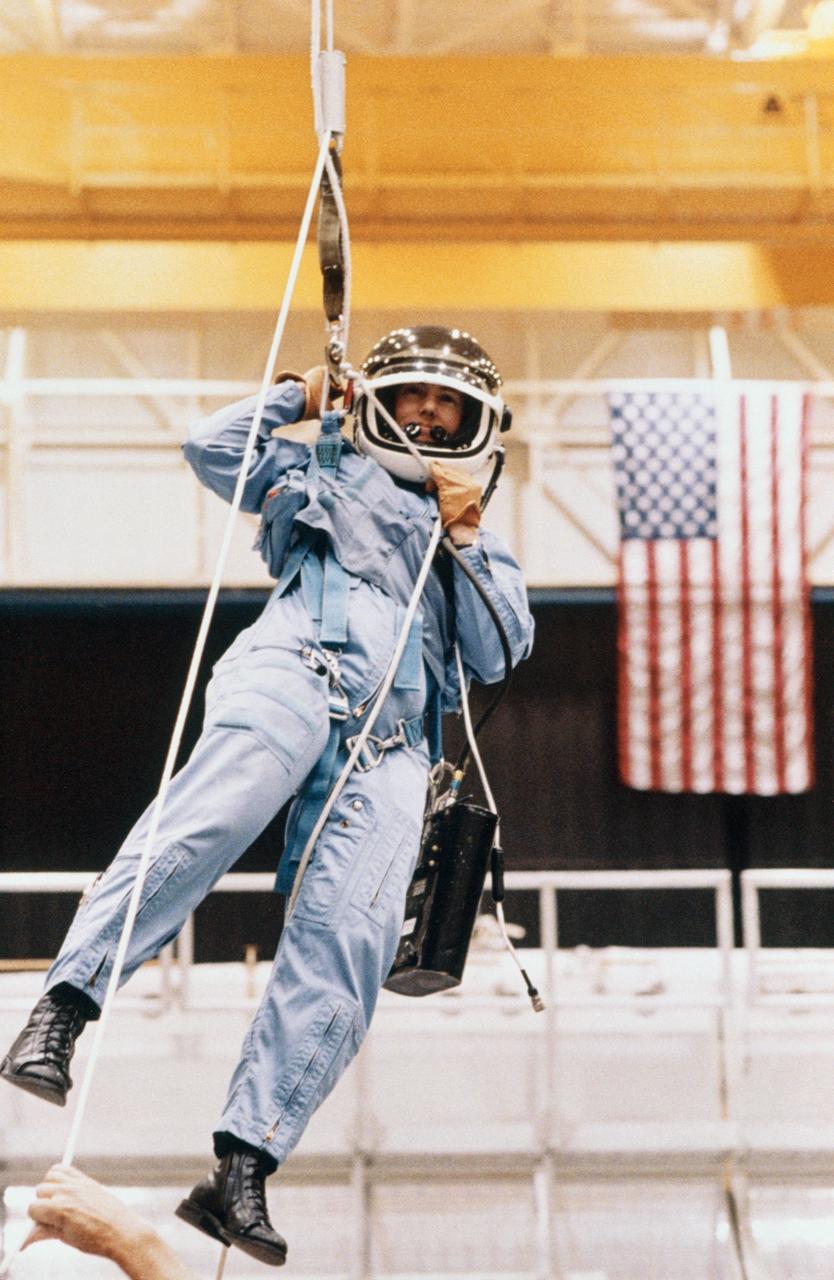
S86-25183 (for release January 1986) --- Sharon Christa McAuliffe, STS-51L payload specialist representing the Teacher-in-Space Project, descends from a mock-up of the space shuttle using a sky-genie device during an emergency training session in the Johnson Space Center?s (JSC) Shuttle Mock-up and Integration Laboratory. The photograph was taken by Keith Meyers of the New York Times. EDITOR?S NOTE: The STS-51L crew members lost their lives in the space shuttle Challenger accident moments after launch on Jan. 28, 1986 from the Kennedy Space Center (KSC). Photo credit: NASA

Payload specialist Sharon Christa McAuliffe appears to be enjoying her ride during her training in the T-38 jet trainer. Part of Galveston Island and the Greater Houston Metropolitan area can be seen in the background.
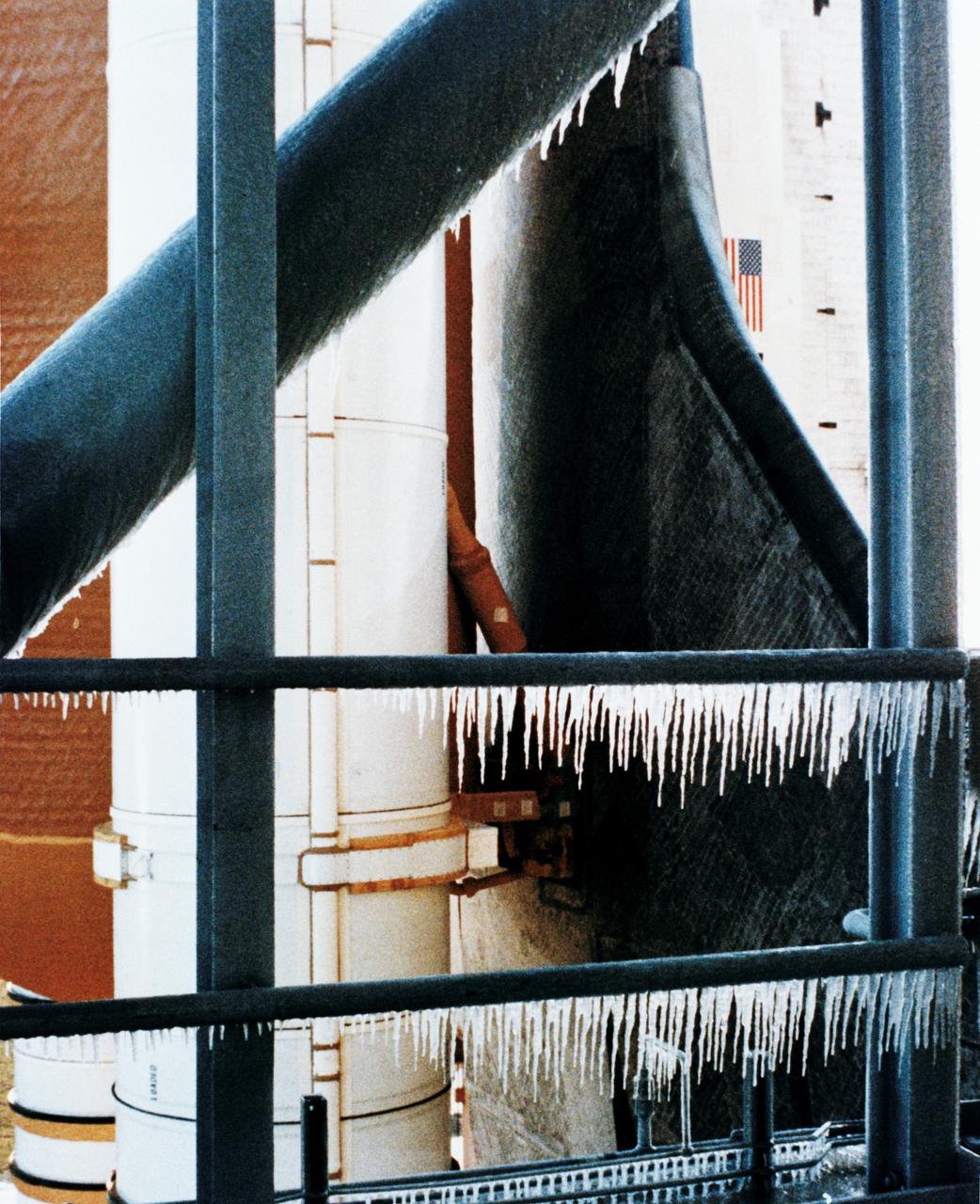
51L-10147 (28 Jan. 1986) --- View of ice on the 51-L launch complex. Photo credit: NASA
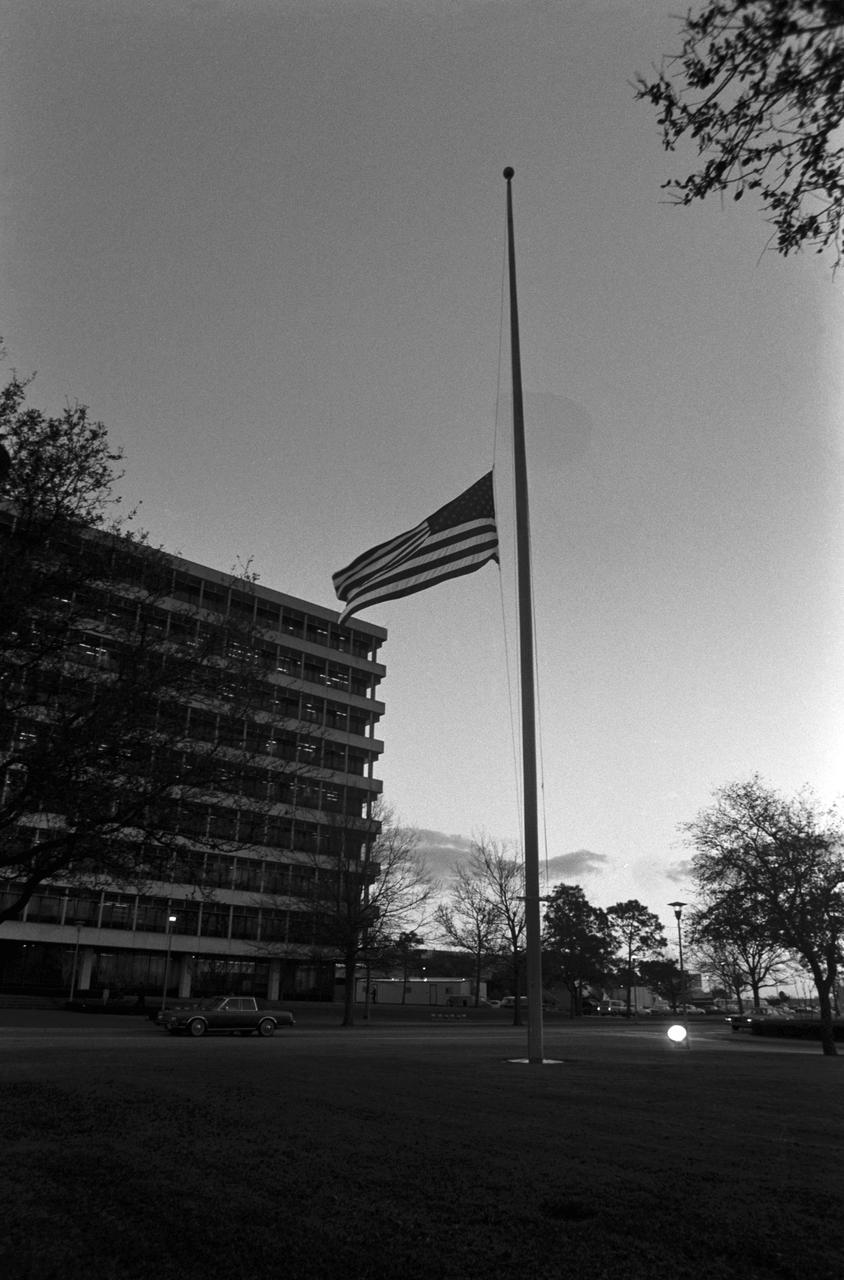
S86-26436 (31 Jan. 1986) --- The United States flag, in front of the Johnson Space Center’s (JSC) project management building, flies at half-mast in memory of the seven space shuttle Challenger crew members who lost their lives on Jan. 28, 1986. Earlier today, memorial services about 100 yards from the flag drew thousands of JSC employees, friends and family of the STS-51L astronauts and payload specialists. Photo credit: NASA
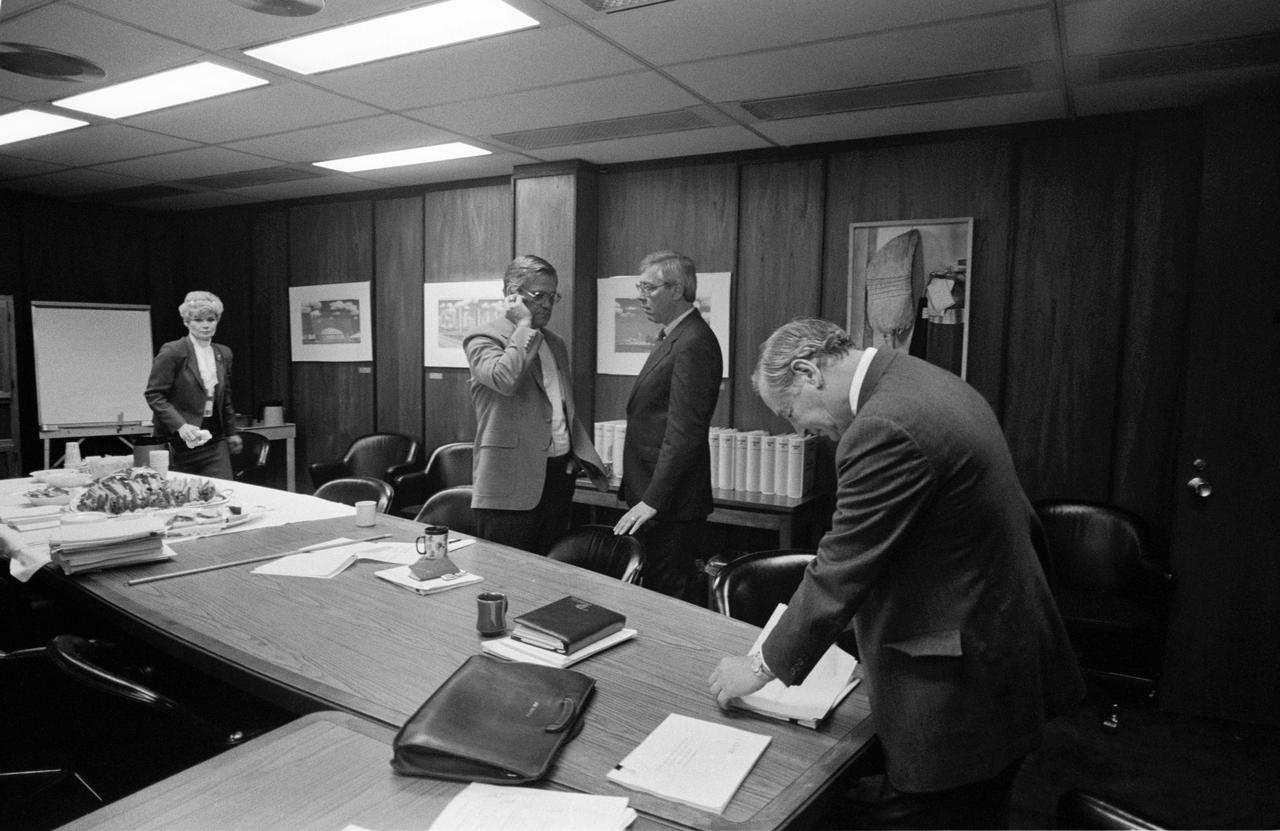
S86-28749 (5 March 1986) --- Two JSC officials chat prior to a meeting with members of the Presidential Commission on the Space Shuttle Challenger Accident, while one of the commissioners studies his notes. Pictured left to right in the foreground are Richard H. Kohrs, Deputy Manager of the National Space Transportation Systems Program Office; JSC Deputy Director Robert C. Goetz and Joseph F. Sutter. Photo credit: NASA
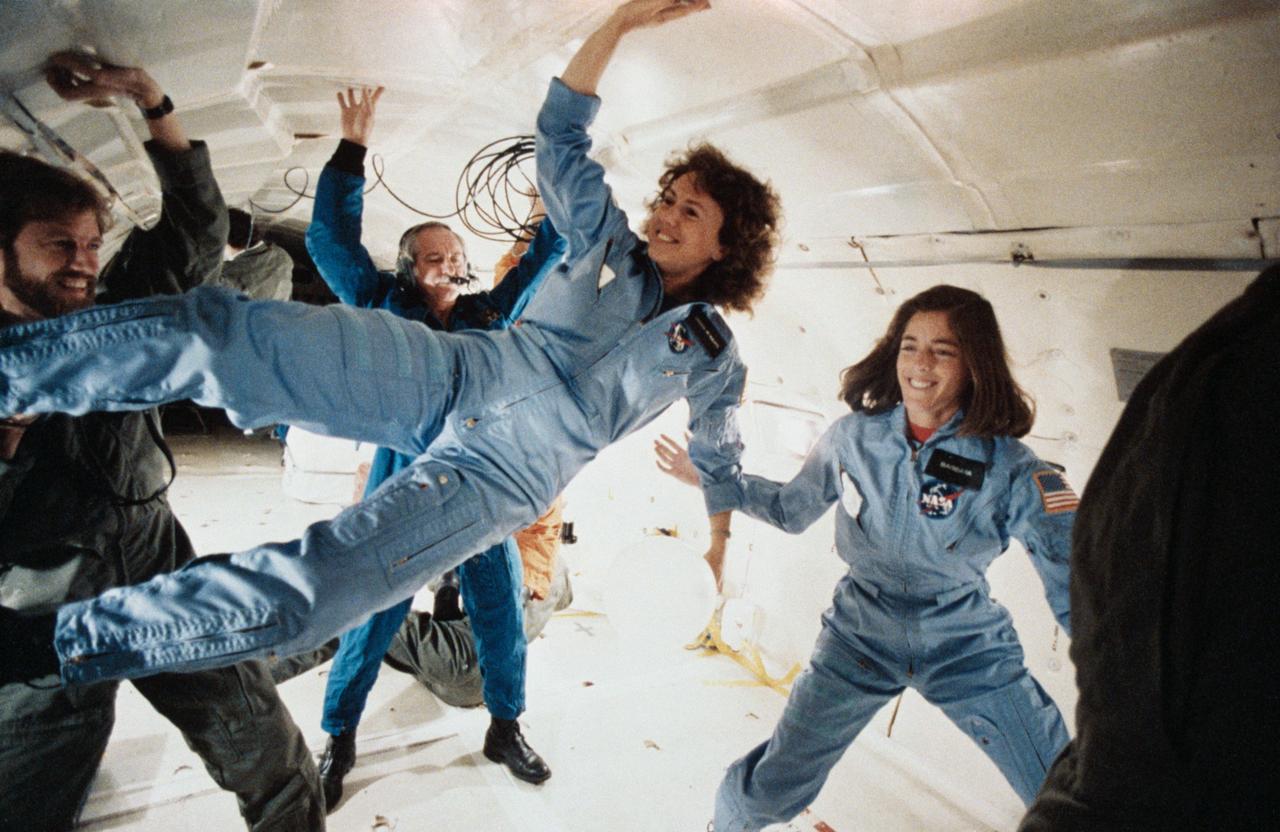
S86-25191 (for release January 1986) --- The two representatives of the Teacher-in-Space Project continue their training program at the Johnson Space Center with an additional flight aboard NASA?s KC-135 ?zero gravity? aircraft. Sharon Christa McAuliffe, left, is prime crew payload specialist, and Barbara R. Morgan is in training as backup payload specialist. The photo was taken by Keith Meyers of New York Times. Photo credit: NASA
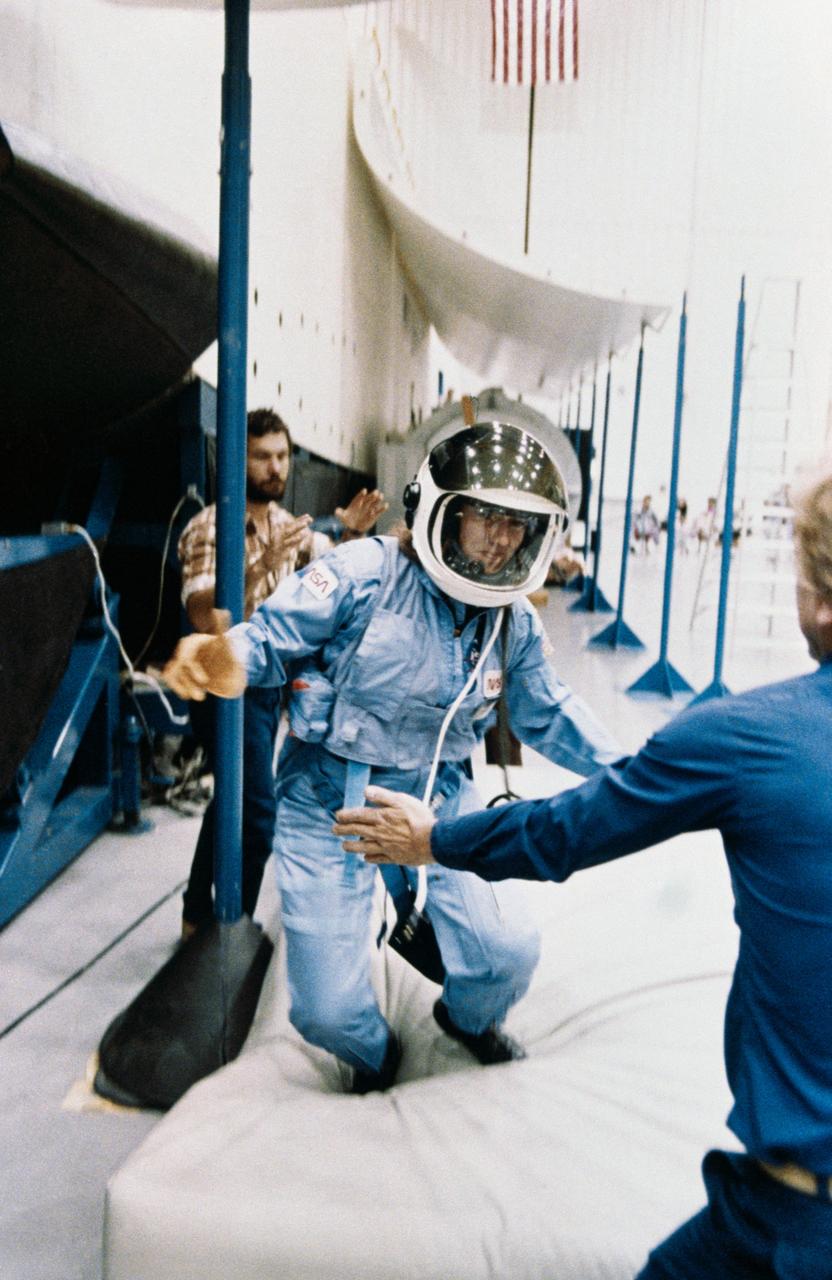
Sharon Christa McAuliffe, 51-L payload specialist representing the Teacher in Space project, jumps down onto a cushion during an emergency egress training session in JSC's mockup and integration laboratory. She had been descending from the mockup using a Sky-genie.
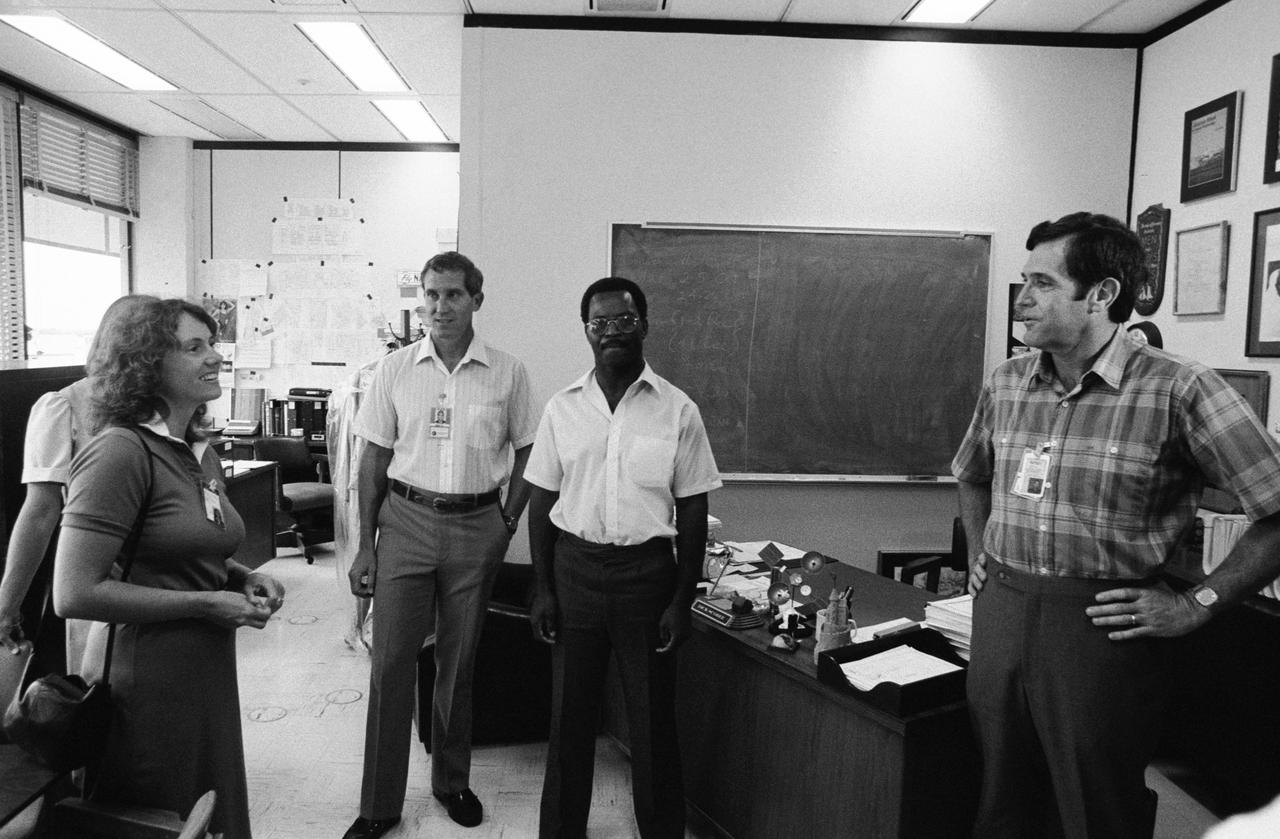
S85-39943 (9 Sept. 1985) --- Sharon Christa McAuliffe, STS-51L citizen observer/payload specialist representing the Teacher in Space Program, meets the other STS-51L crew members. The crew members pictured are (l.-r.) astronauts Michael J. Smith, pilot; Ronald E. McNair, mission specialist; and Francis R. (Dick) Scobee, mission commander. Photo credit: NASA
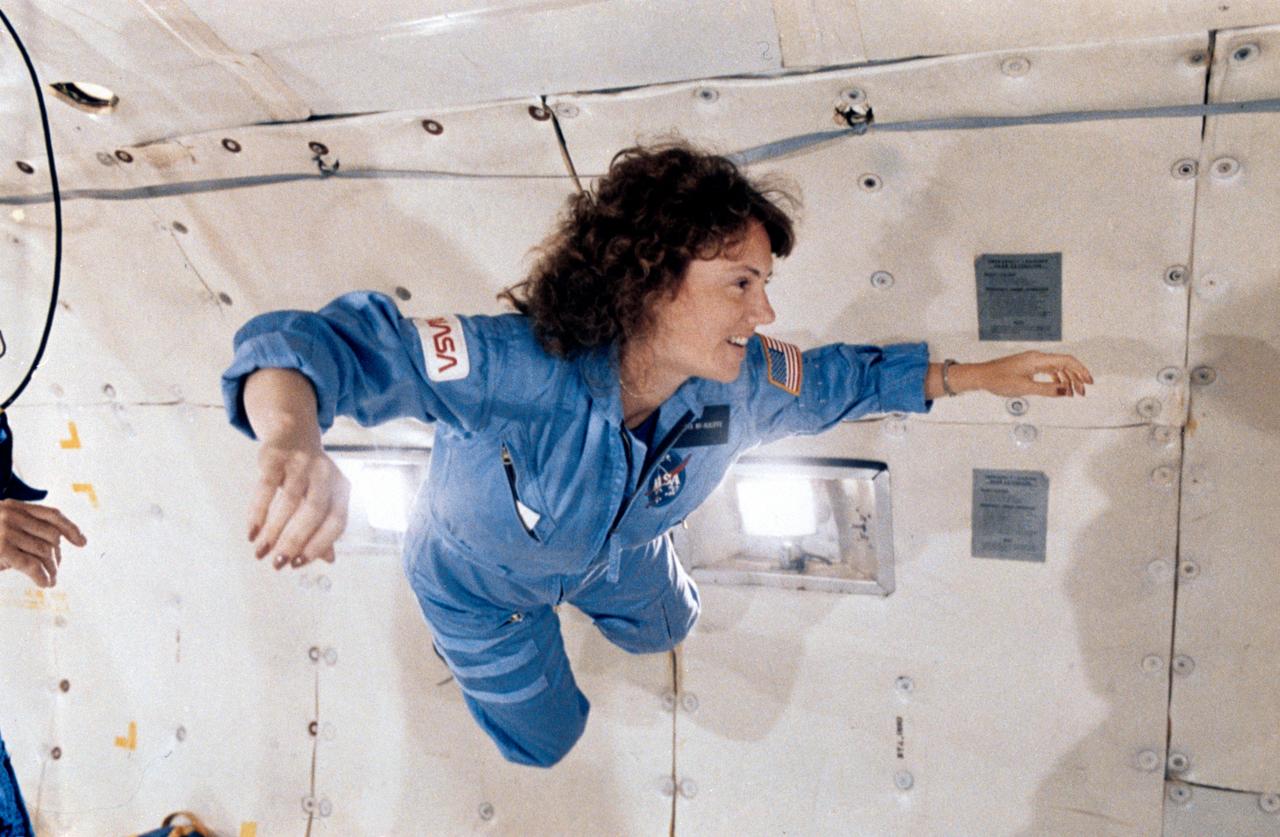
S86-25196 (January 1986) --- Sharon Christa McAuliffe, STS-51L citizen observer/payload specialist, gets a preview of microgravity during a special flight aboard NASA?s KC-135 ?zero gravity? aircraft. McAuliffe will represent the Teacher-in-Space Project aboard the space shuttle Challenger when it launches later this month. This photograph was taken by Keith Meyers of the New York Times. EDITOR?S NOTE: The STS-51L crew members lost their lives in the space shuttle Challenger accident moments after launch on Jan. 28, 1986 from the Kennedy Space Center (KSC). Photo credit: NASA
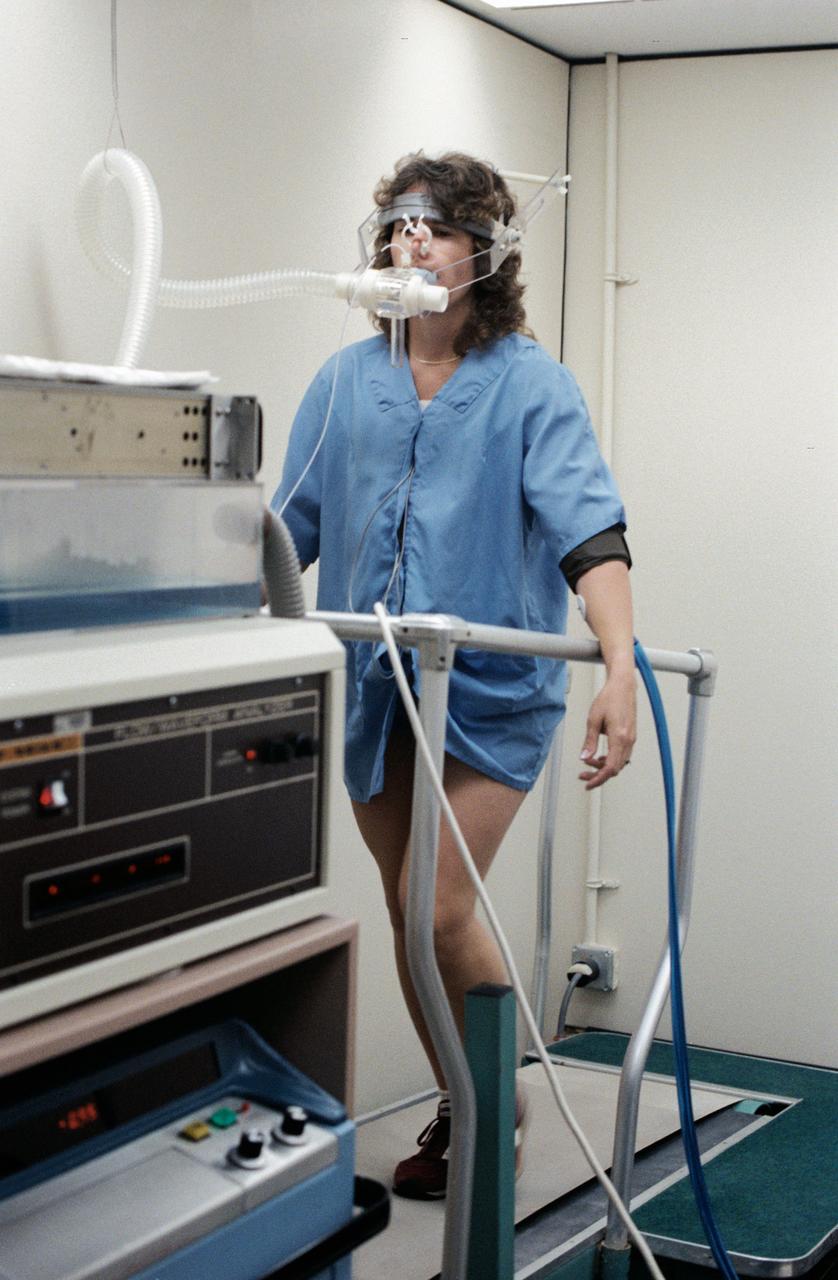
S85-37165 (8-12 July 1985) -- Sharon C. (Christa) McAuliffe of Concord High, Concord, New Hampshire, runs in place on treadmill to test physiological responses at Johnson Space Center. Christa McAuliffe was eventually chosen as the first Teacher in Space and was a member of the seven-member Challenger shuttle crew which died tragically in the explosion of the spacecraft during the launch of STS-51L from the Kennedy Space Center about 11:40 a.m., EST, on Jan. 28, 1986. The explosion occurred 73 seconds into the flight as a result of a leak in one of two Solid Rocket Boosters that ignited the main liquid fuel tank. The crew members of the Challenger represented a cross-section of the American population in terms of race, gender, geography, background, and religion. The explosion became one of the most significant events of the 1980s, as billions around the world saw the accident on television and empathized with any one of the several crew members killed. Photo credit: NASA
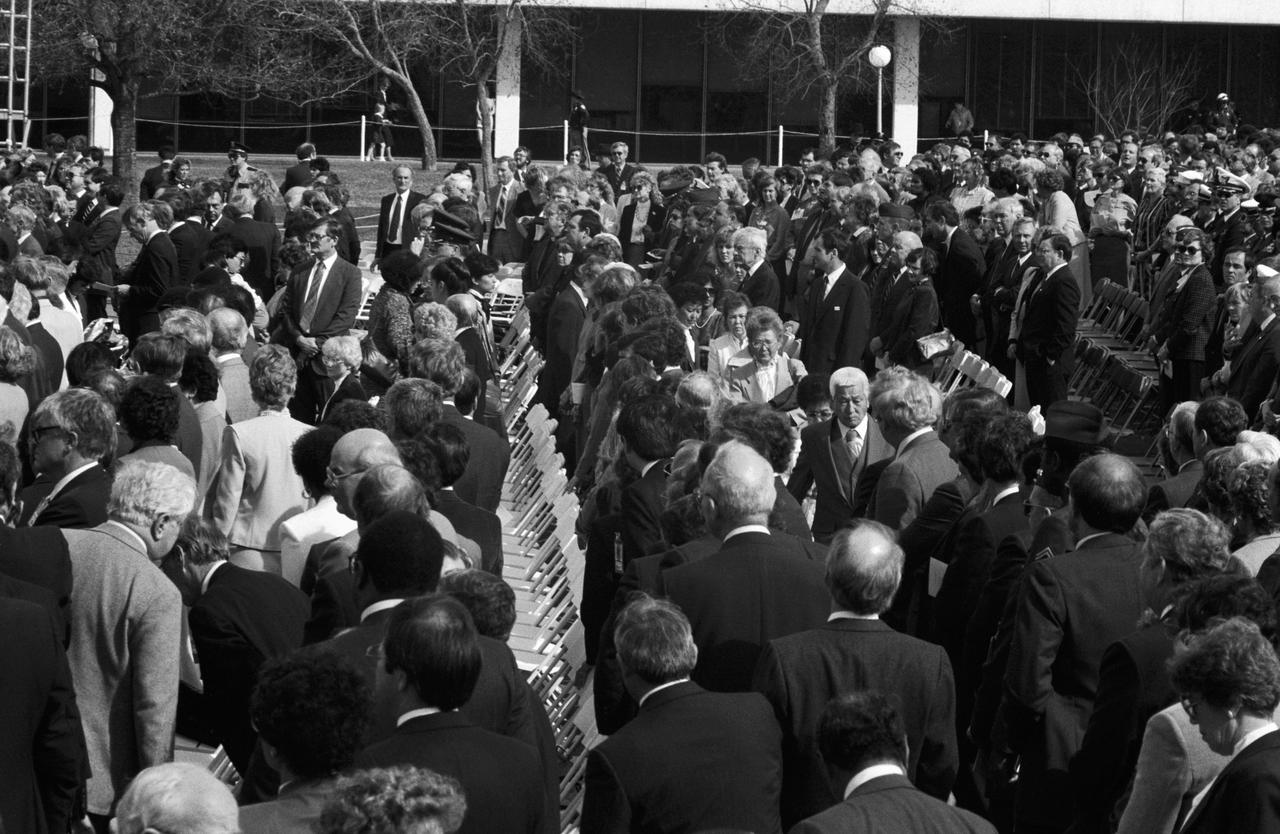
Family and friends of the STS 51-L crew prepare to be seated at the Memorial service at JSC. In the center of the view appears to be the family of Astronaut Ellison Onizuka.
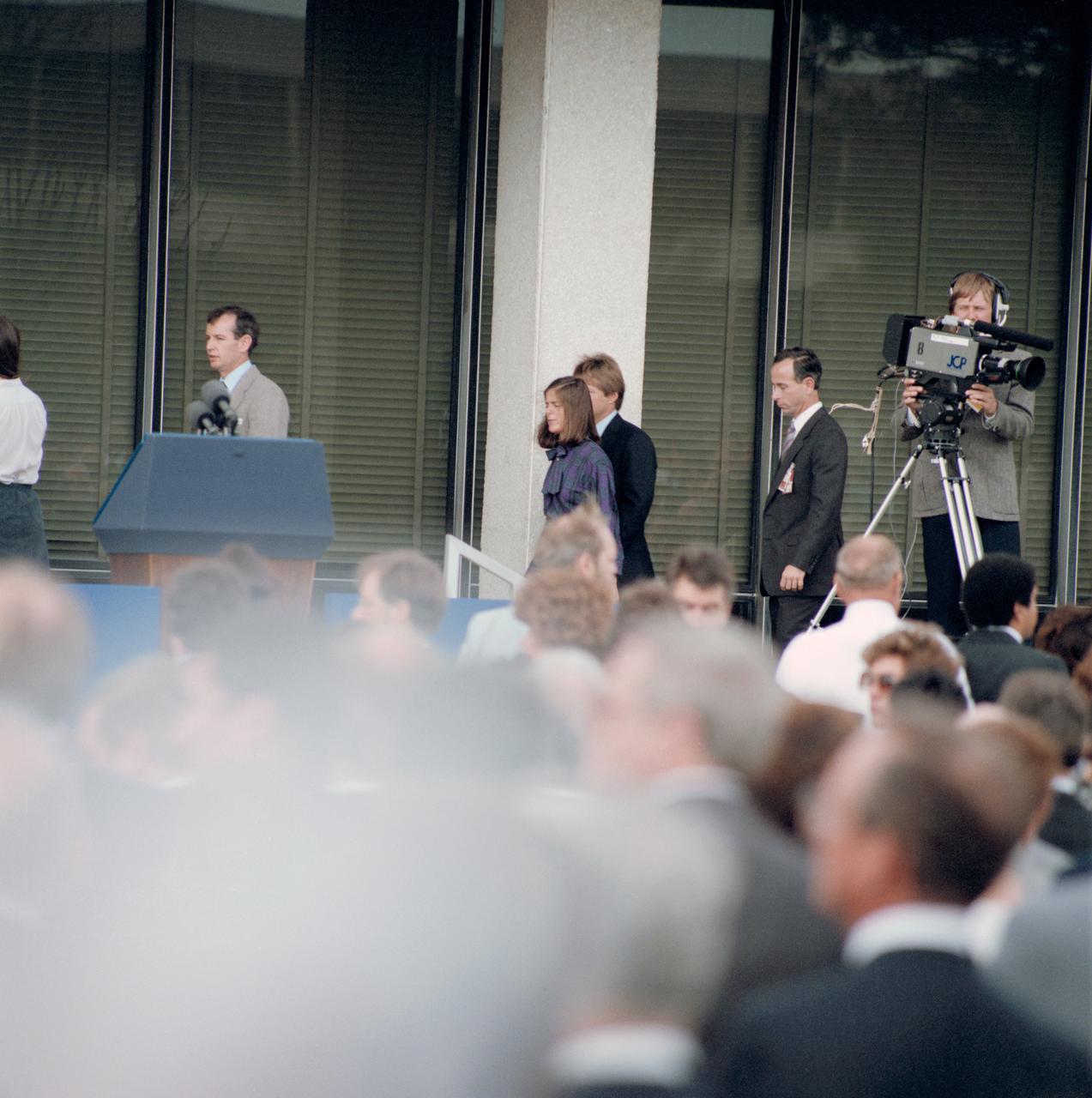
51L-S-108 (31 Jan. 1986) --- Barbara R. Morgan, 51-L backup payload specialist to Christa McAuliffe, with others on the stage at the Memorial service for the Challenger Seven at JSC. Photo credit: NASA
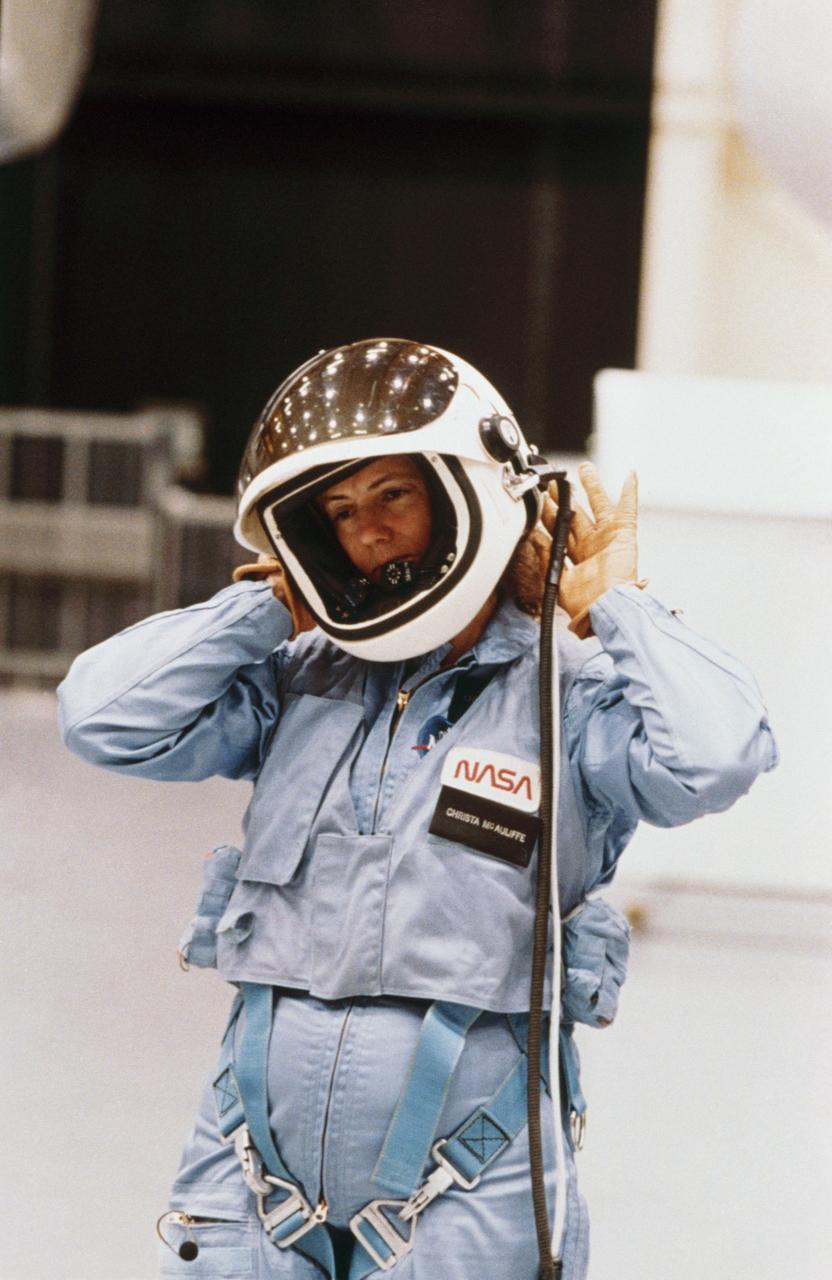
S86-25182 (for release January 1986) --- Sharon Christa McAuliffe, STS-51L citizen observer/payload specialist, prepares to remove her helmet after participating in emergency egress training in the shuttle mock-up and integration lab at the Johnson Space Center. McAuliffe will represent the Teacher-in-Space Project aboard the Challenger when it launches in late January. The photo was taken by Keith Meyers of the New York Times. Photo credit: NASA
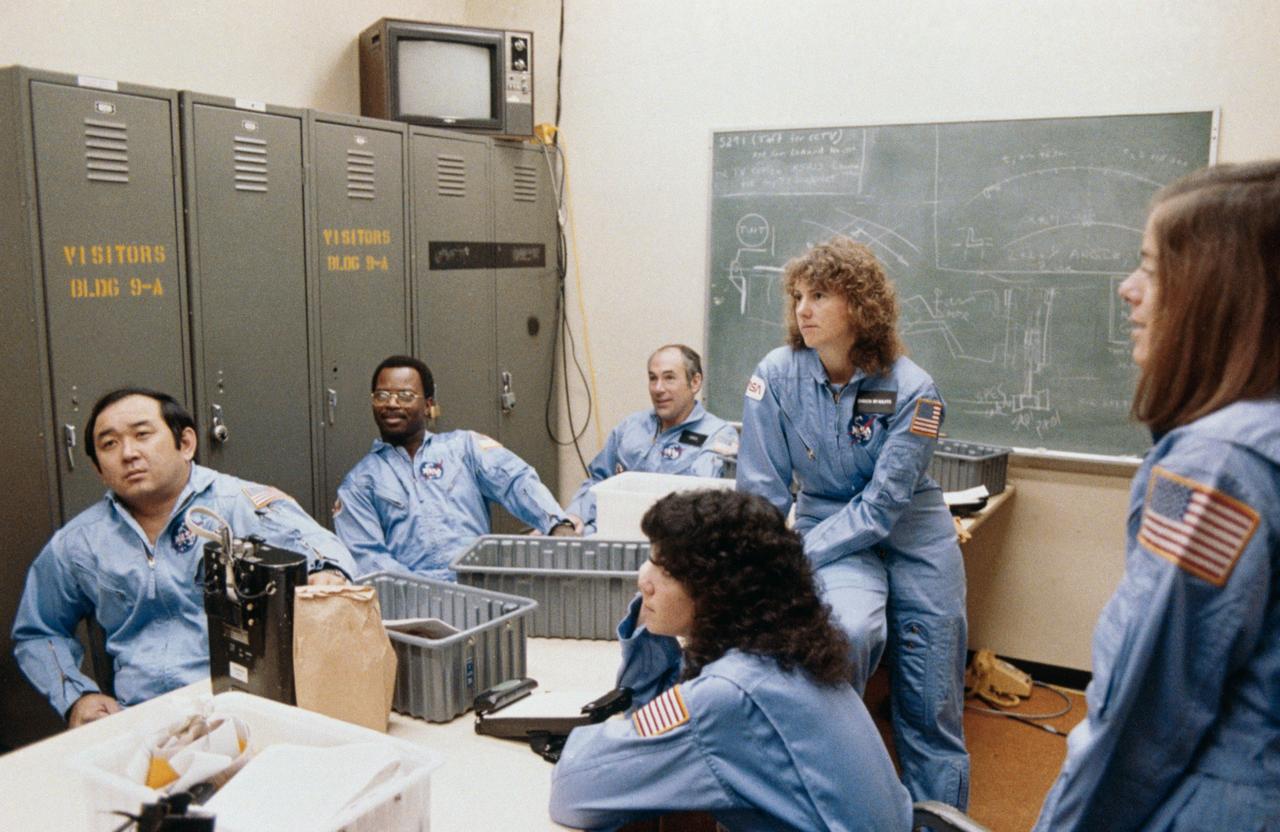
S86-25186 (December 1985) --- Five members of the prime crew for NASA?s STS-51L mission and a backup crew member are briefed during a training session in the Johnson Space Center?s (JSC) Shuttle Mock-up and Integration Laboratory. From left to right are astronaut Ellison S. Onizuka, mission specialist; Ronald E. McNair, mission specialist; Gregory D. Jarvis, Hughes payload specialist; Judith A. Resnik, mission specialist; Sharon Christa McAuliffe, citizen observer/payload specialist representing the Teacher-in-Space Project; and Barbara R. Morgan, backup payload specialist. The photograph was taken by Keith Meyers of the New York Times. EDITOR?S NOTE: The STS-51L crew members lost their lives in the space shuttle Challenger accident moments after launch on Jan. 28, 1986 from the Kennedy Space Center (KSC). Photo credit: NASA
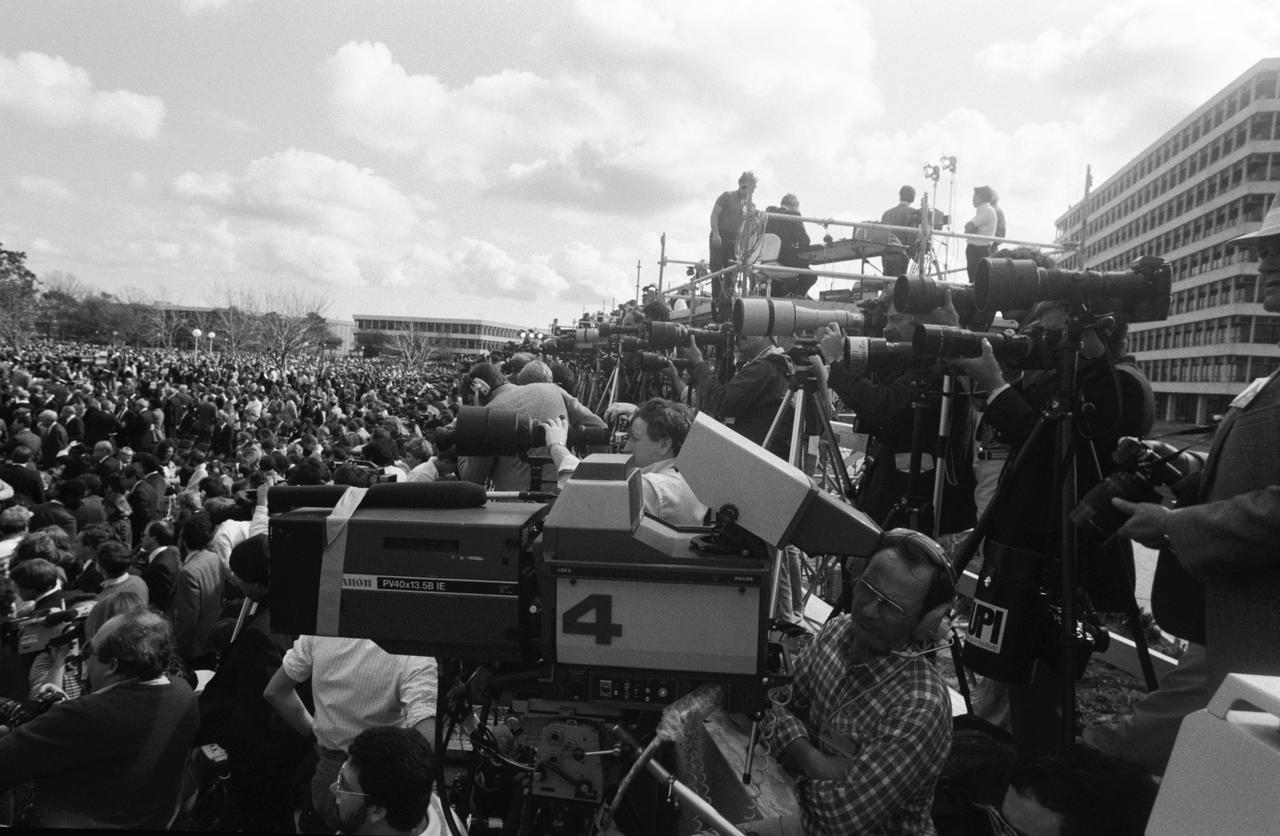
S86-26428 (31 Jan. 1986) --- Dozens of cameras and thousands of eyes focus on President Ronald Reagan (out of frame at left) during the 51-L memorial services Jan. 31 on the mall at the Johnson Space Center (JSC). The photograph was taken from special bleachers quickly erected to accommodate hundreds of members of the news media. The audience of thousands was largely made up of JSC employees and family and friends of the Challenger crew members who perished four days earlier in the attempted launch of NASA’s 25th STS mission. Photo credit: NASA
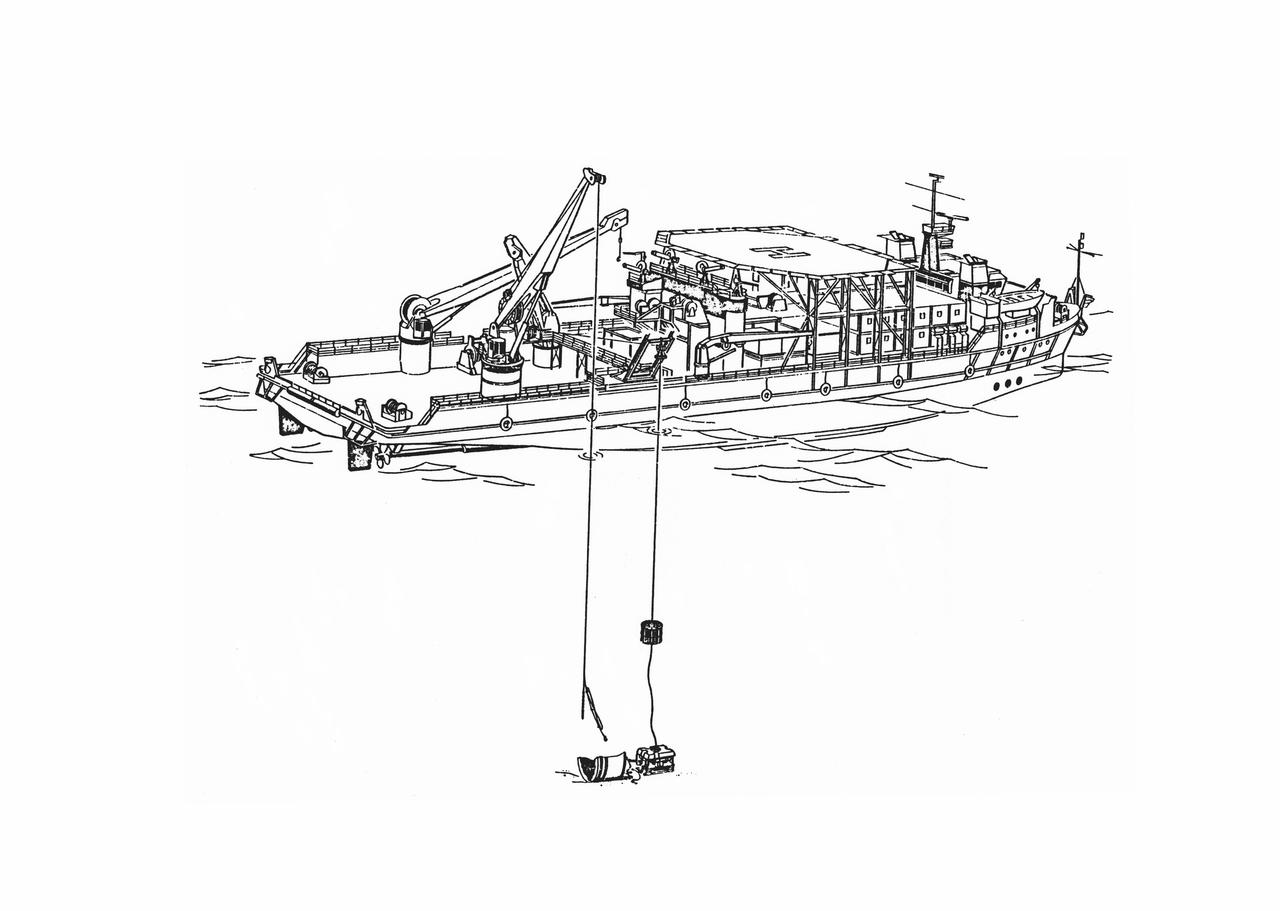
S86-30088 (March 1986) --- Salvage operations offshore of Kennedy Space Center, are depicted in this artist’s concept showing a grapple and recovery fixture (left) being directed through the use of a remote video system suspended from the recovery ship. Photo credit: NASA
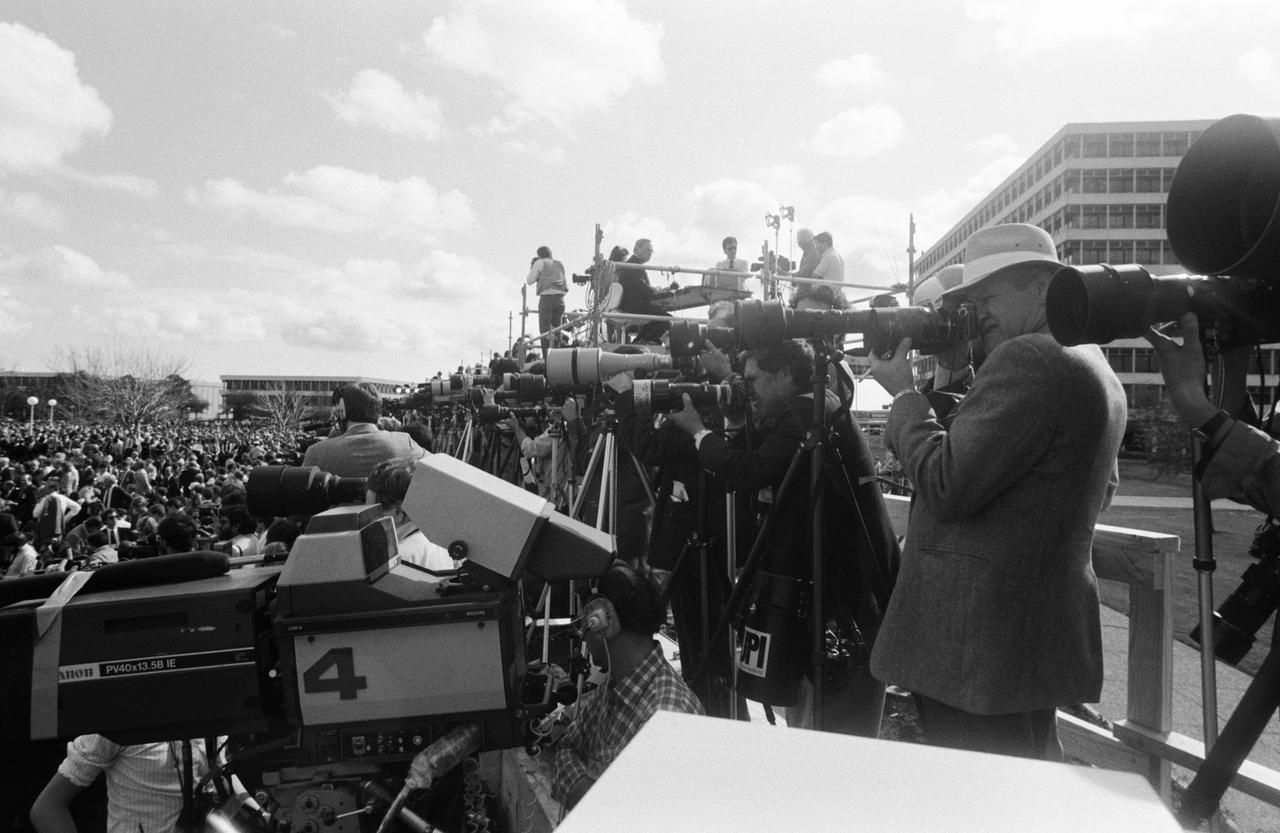
Overall view of the news media at the memorial service at JSC for the Crew of STS 51-L.
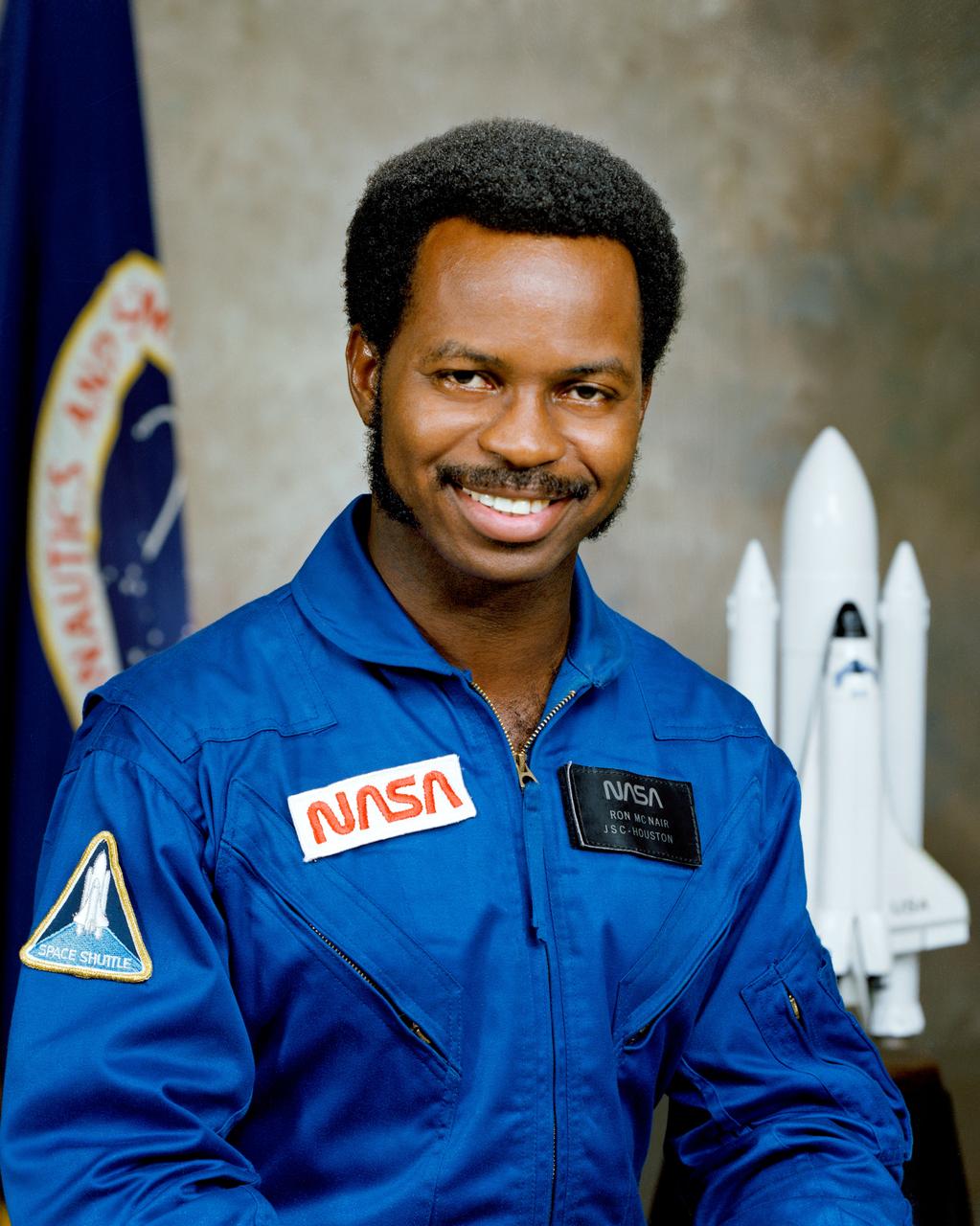
S78-35300 (31 Jan 1978) -- NASA Astronaut Dr. Ronald E. McNair (PH.D.) was assigned as a mission specialist and was a crewmember on two Space Shuttle Missions. He first flew on STS 41-B in 1984 where he performed numerous science experiments. On his second flight, STS 51-L, Dr. McNair died on January 28, 1986 when the Space Shuttle Challenger exploded after launch from the Kennedy Space Center, Florida. NASA Photograph
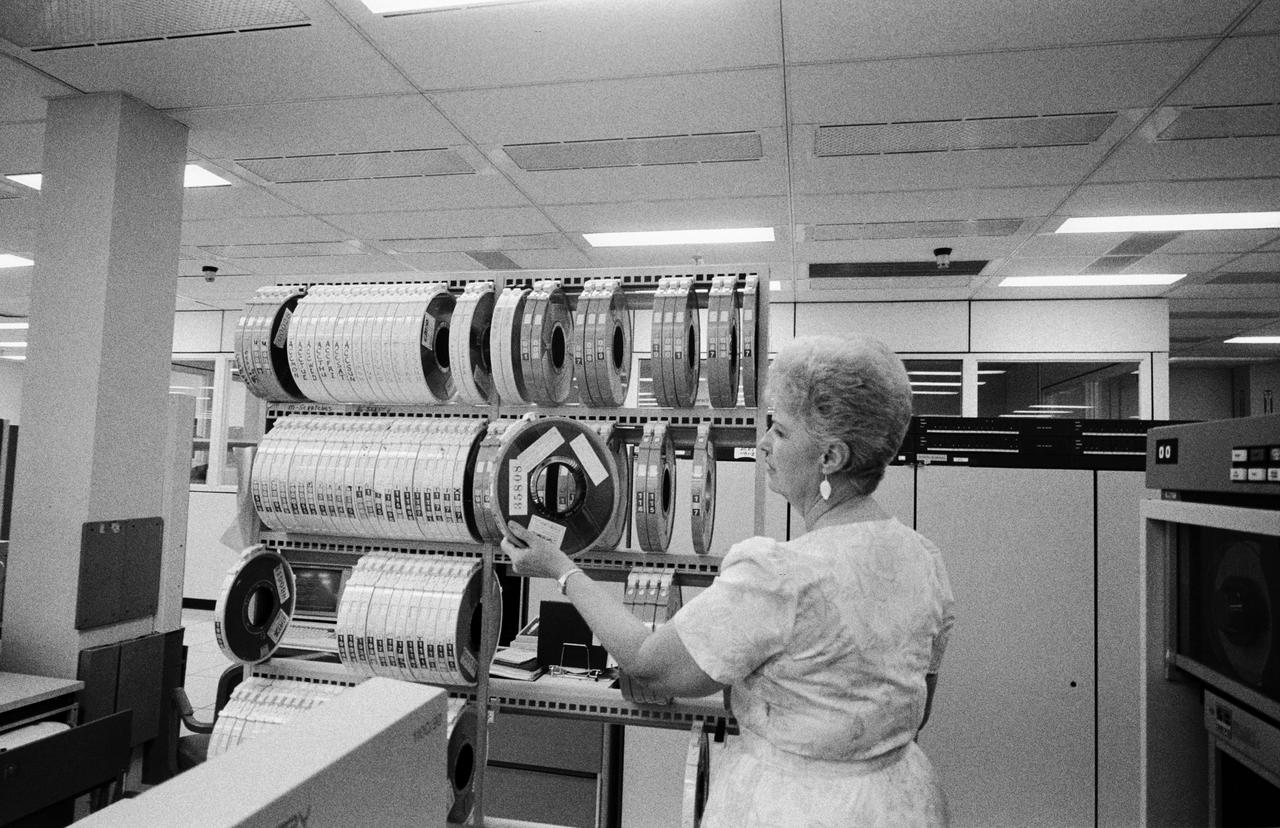
S86-30336 (4 April 1986) --- Larue Forbes of CSC retrieves one of the MADS tapes for inputting into a nearby computer in the central data office.
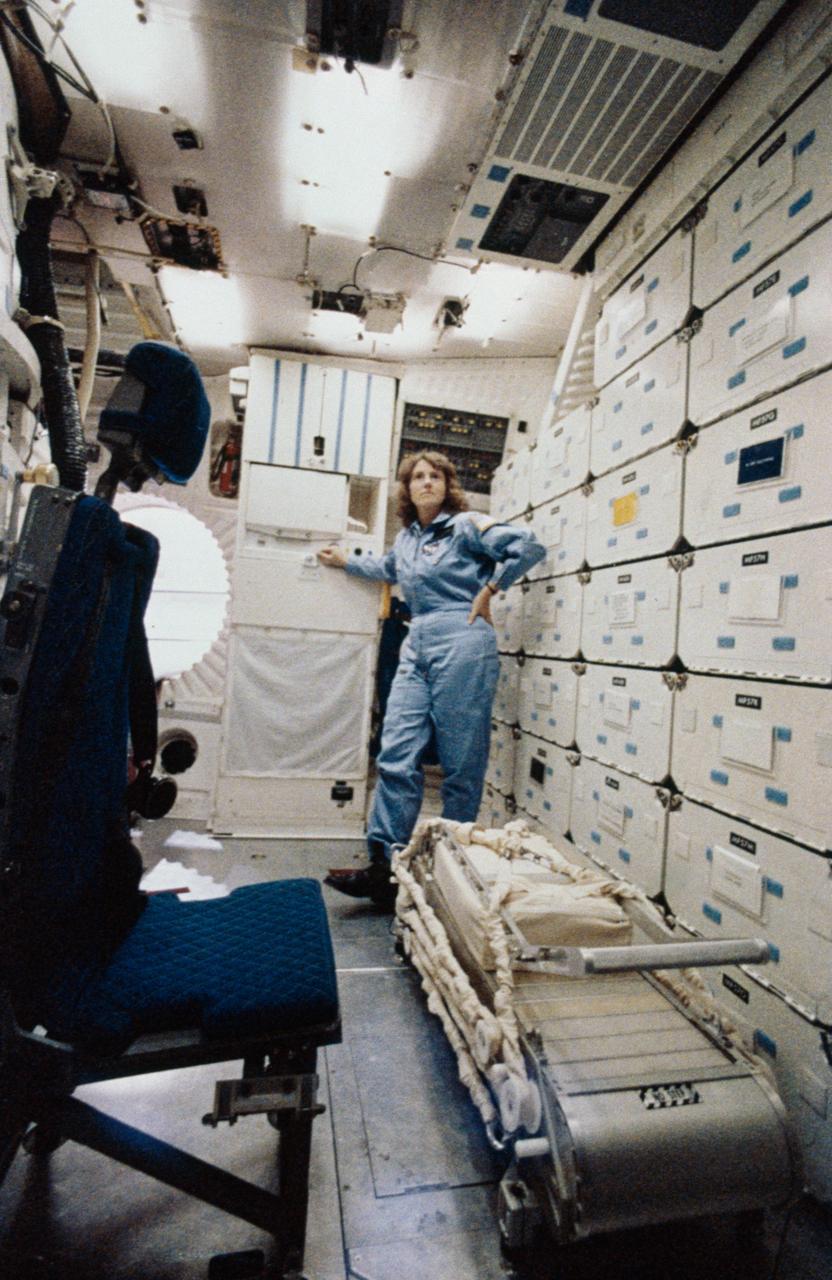
S86-25188 (December 1985) --- Sharon Christa McAuliffe, a school teacher Concord New Hampshire, surveys a ground training replica of the quarters she?ll be using in space when the space shuttle Challenger taxis two women and five men into space in January of 1986. The STS-51L citizen observer/payload specialist is in training at the Johnson Space Center, representing the Teacher-in-Space Project. The photo was taken by Keith Meyers of the New York Times. Photo credit: NASA
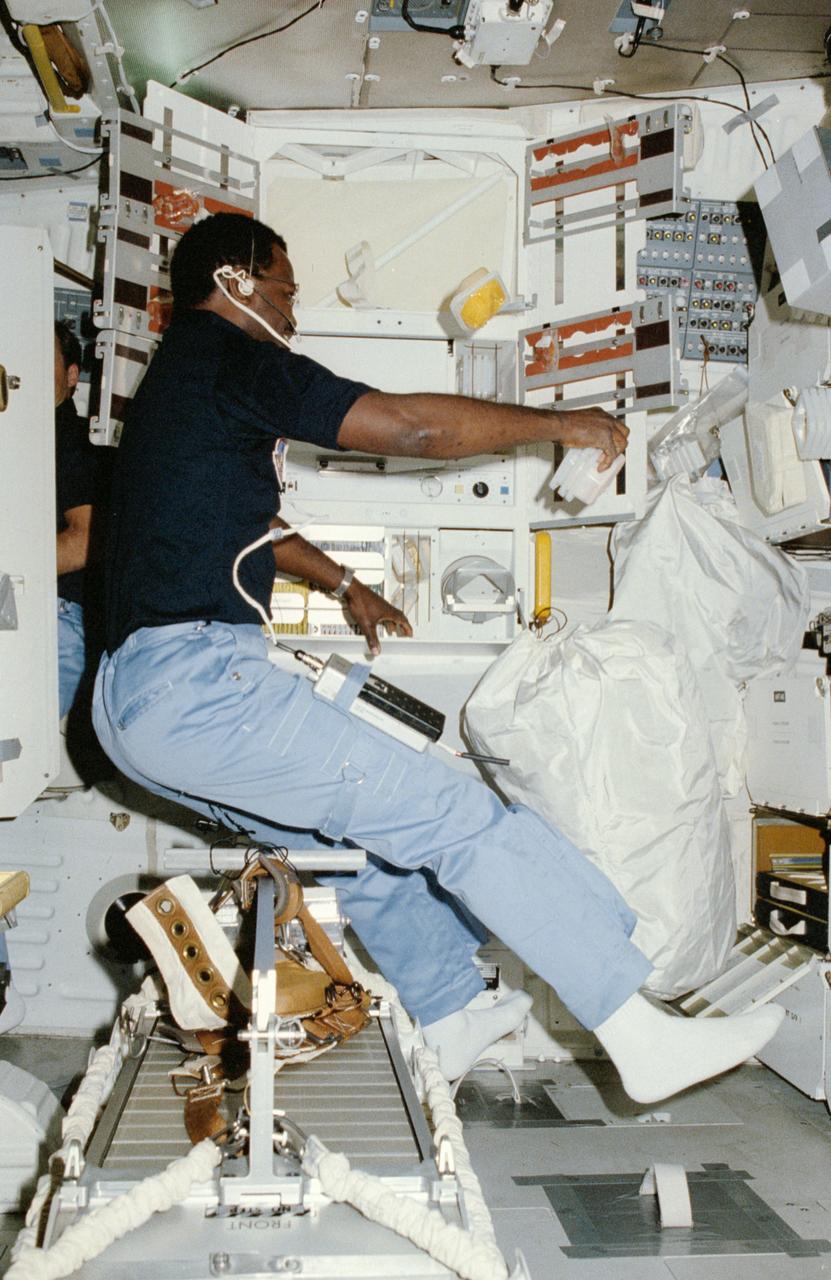
S84-27204 (3-11 Feb 1984) --- Astronaut Ronald E. McNair, STS 41-B mission specialist, prepares to assemble meal items aboard the Earth-orbiting Space Shuttle Challenger. The galley is located in the mid deck. The number of items in the area signals how busy it is. Later Dr. McNair died on January 28, 1986 on his next space flight STS 51-L when the Space Shuttle Challenger exploded after launch from the Kennedy Space Center, Florida.
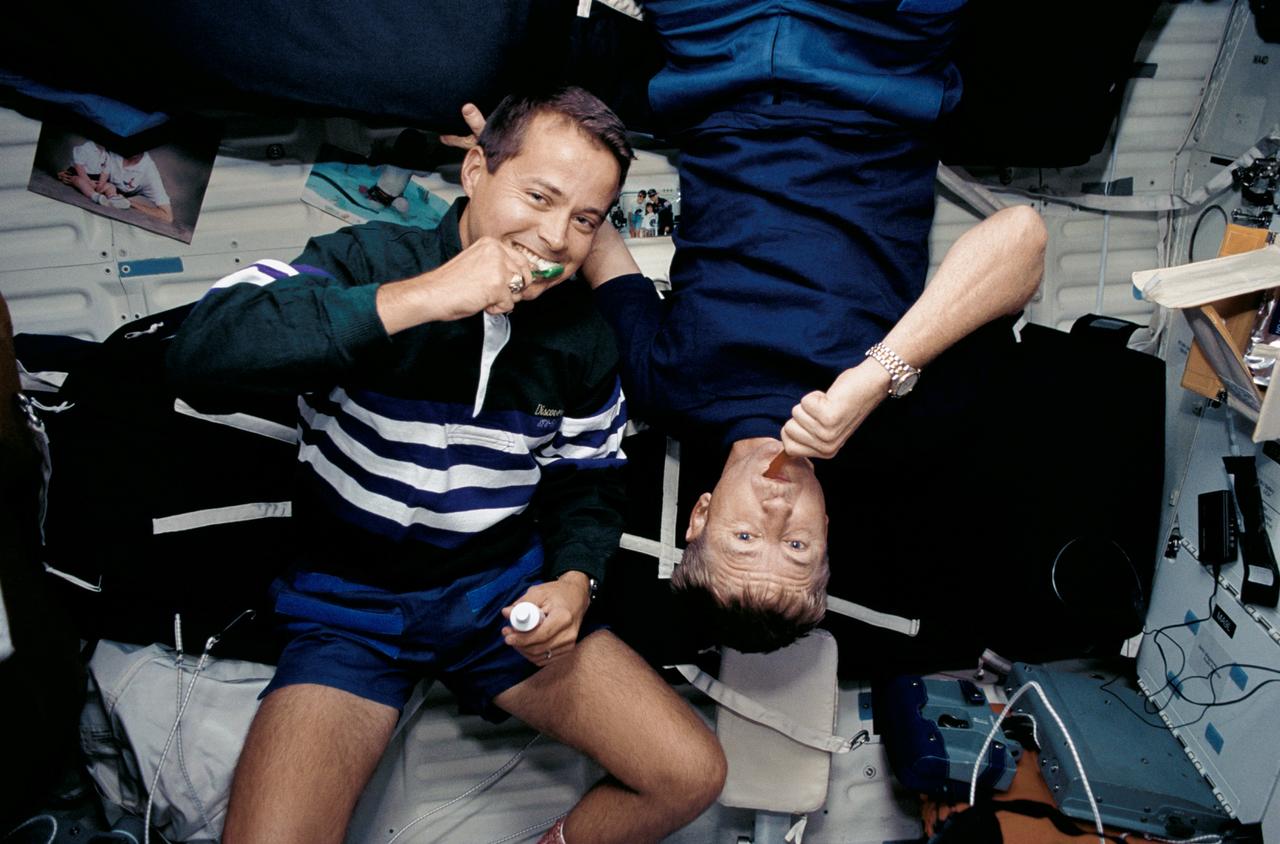
STS051-10-025 (12-22 Sept. 1993) --- (Orient Photo With Hygiene Kit At Right Center). Astronauts Frank L. Culbertson (right), mission commander, and Daniel W. Bursch, mission specialist, brush their teeth on Space Shuttle Discovery's middeck. Two sleep restraints form part of the backdrop for the photograph. The two were joined by three other NASA astronauts for almost ten full days in space for the STS-51 mission.
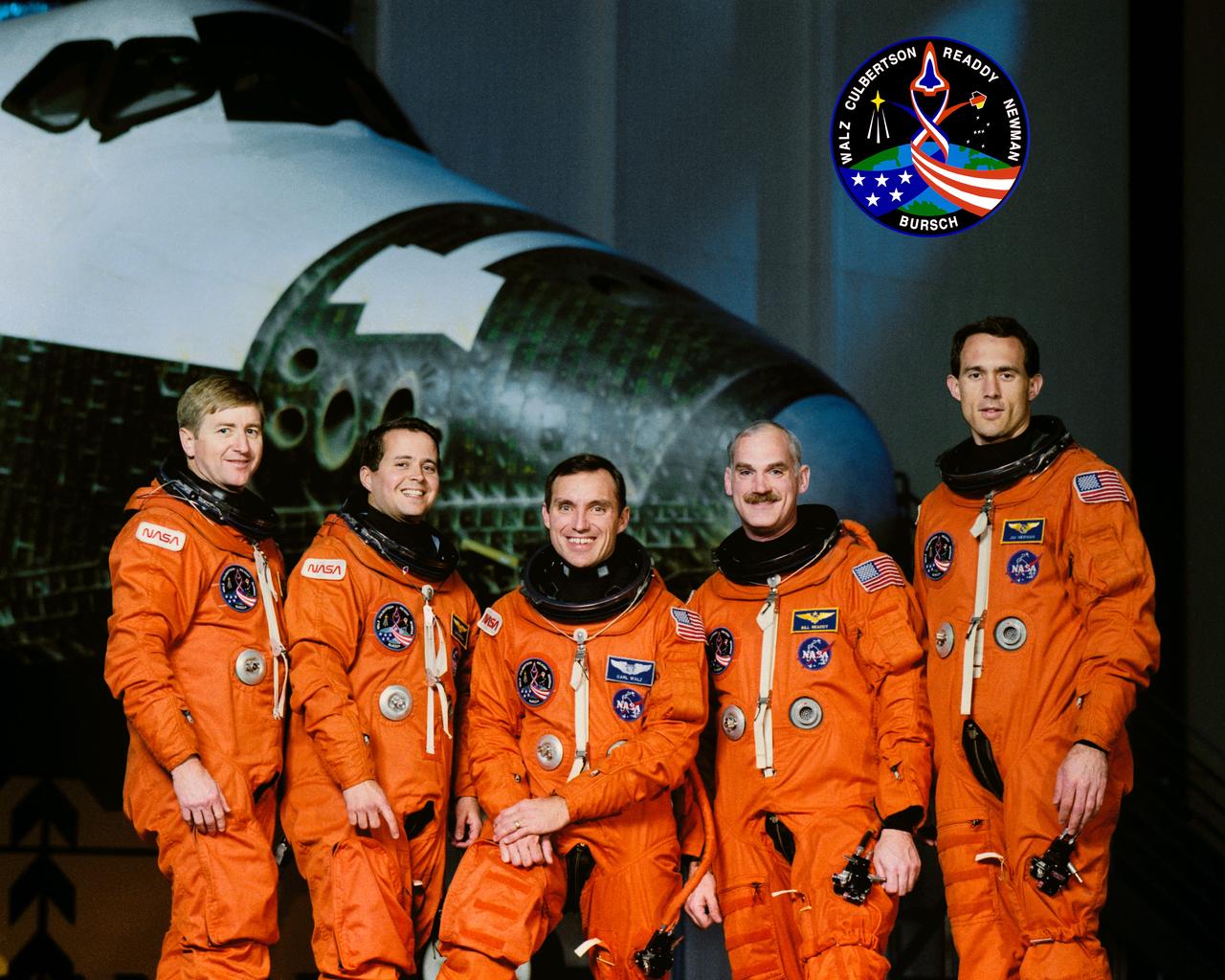
STS051-S-002 (June 1993) --- These five NASA astronauts have been assigned to fly aboard the Space Shuttle Discovery for the STS-51 mission, scheduled for July, 1993. Left to right are astronauts Frank L. Culbertson, Jr., mission commander; Daniel W. Bursch and Carl E. Walz, mission specialists; William F. Readdy, pilot; and James H. Newman, mission specialist.
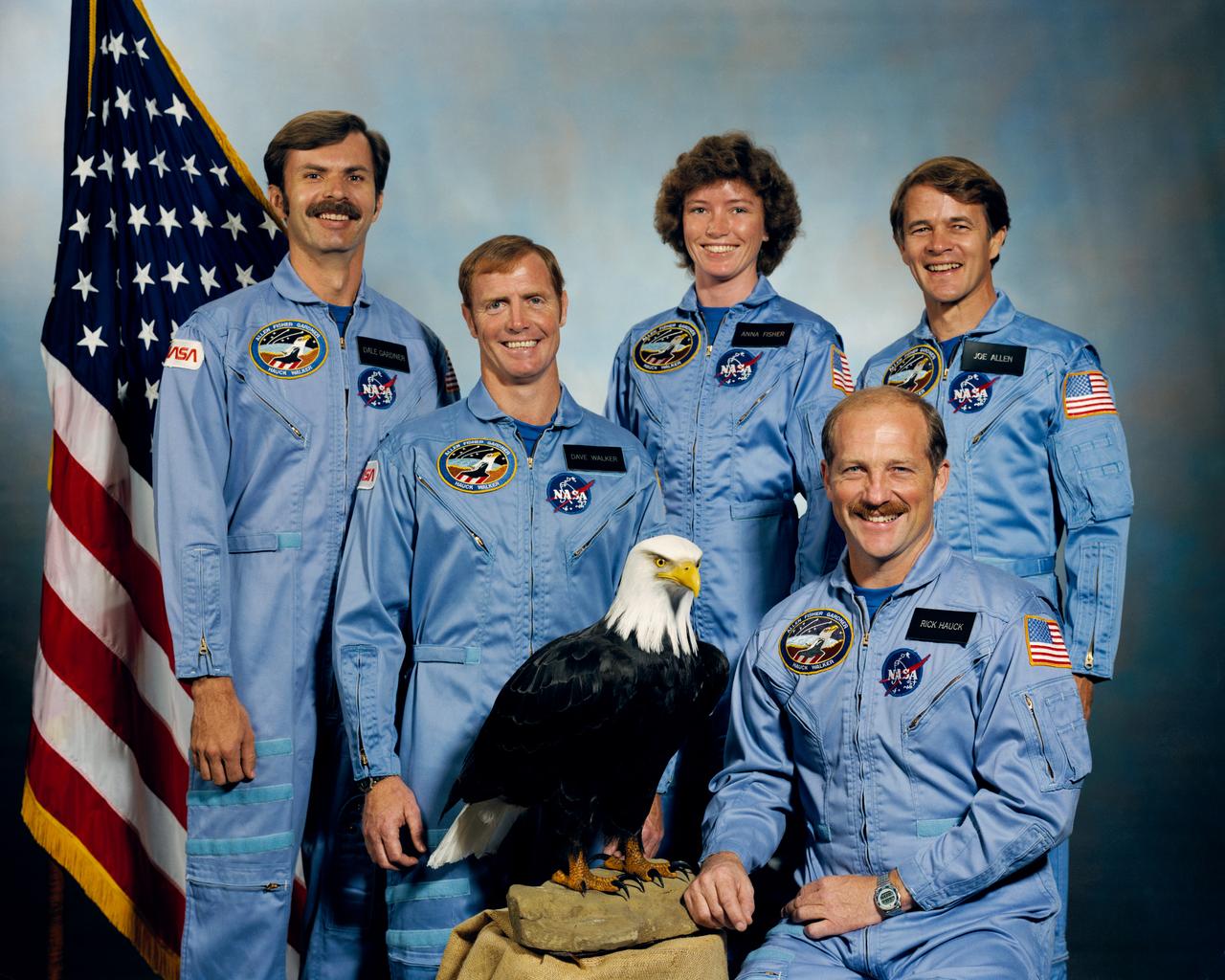
S84-40082 (August 1984) --- These five astronauts are scheduled to fly aboard the Space Shuttle Discovery on Mission STS-51A for NASA. The mission is scheduled for early November 1984. Astronaut Frederick H. (Rick) Hauck, seated, is crew commander. Astronaut David M. Walker, pilot, stands next to the Eagle, 51-A mascot. Others on the back row, left-to-right, are astronauts Dale A. Gardner, Anna L. Fisher and Joseph P. Allen IV, all mission specialists.
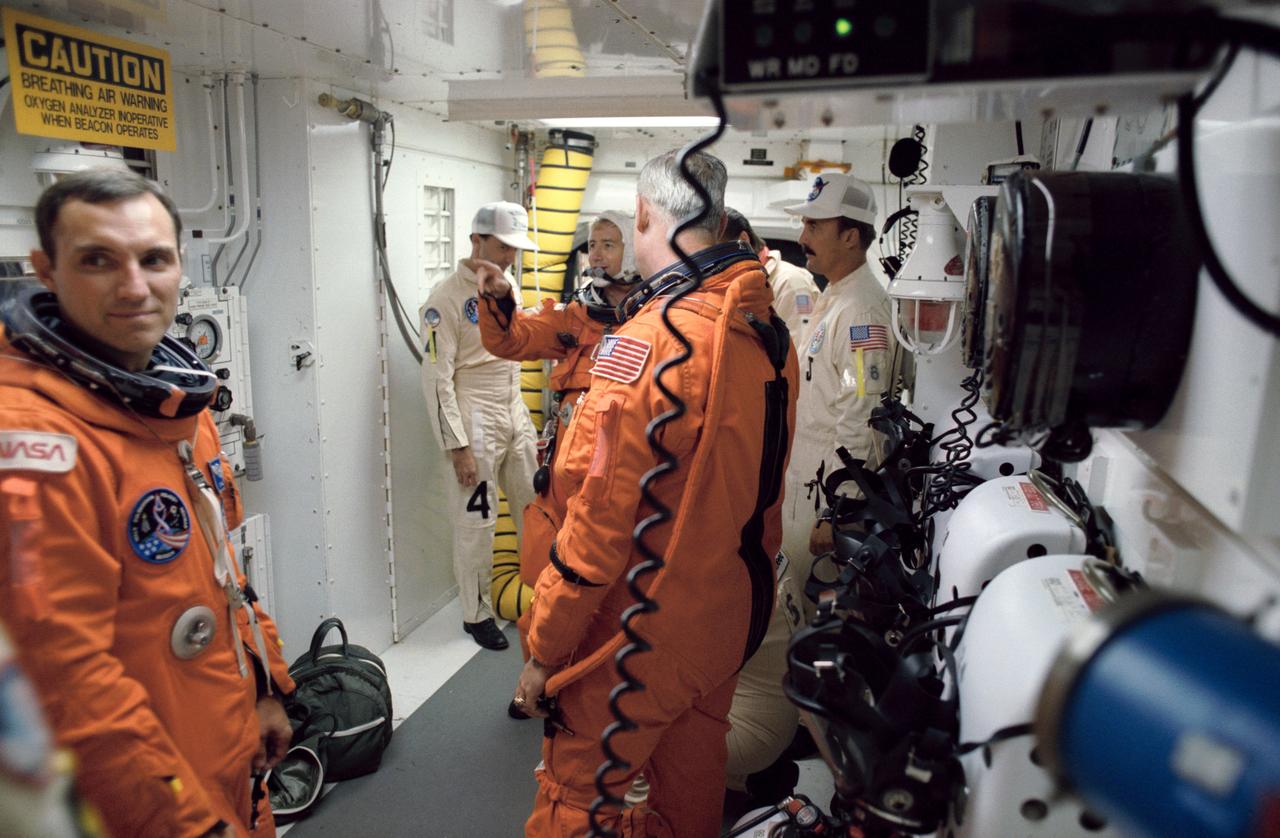
STS051-S-109 (12 Sept 1993) --- Inside the White Room, three astronaut crew members for the STS-51 flight await their queues to ingress the Space Shuttle Discovery. Wearing the partial pressure launch and entry suits are, left to right, Carl E. Walz, mission specialist; Frank L. Culbertson Jr., mission commander; and William F. Readdy, pilot. Not pictured are astronauts James H. Newman and Daniel W. Bursch. Launch occurred at 7:45 a.m. (EDT), September 12, 1993.
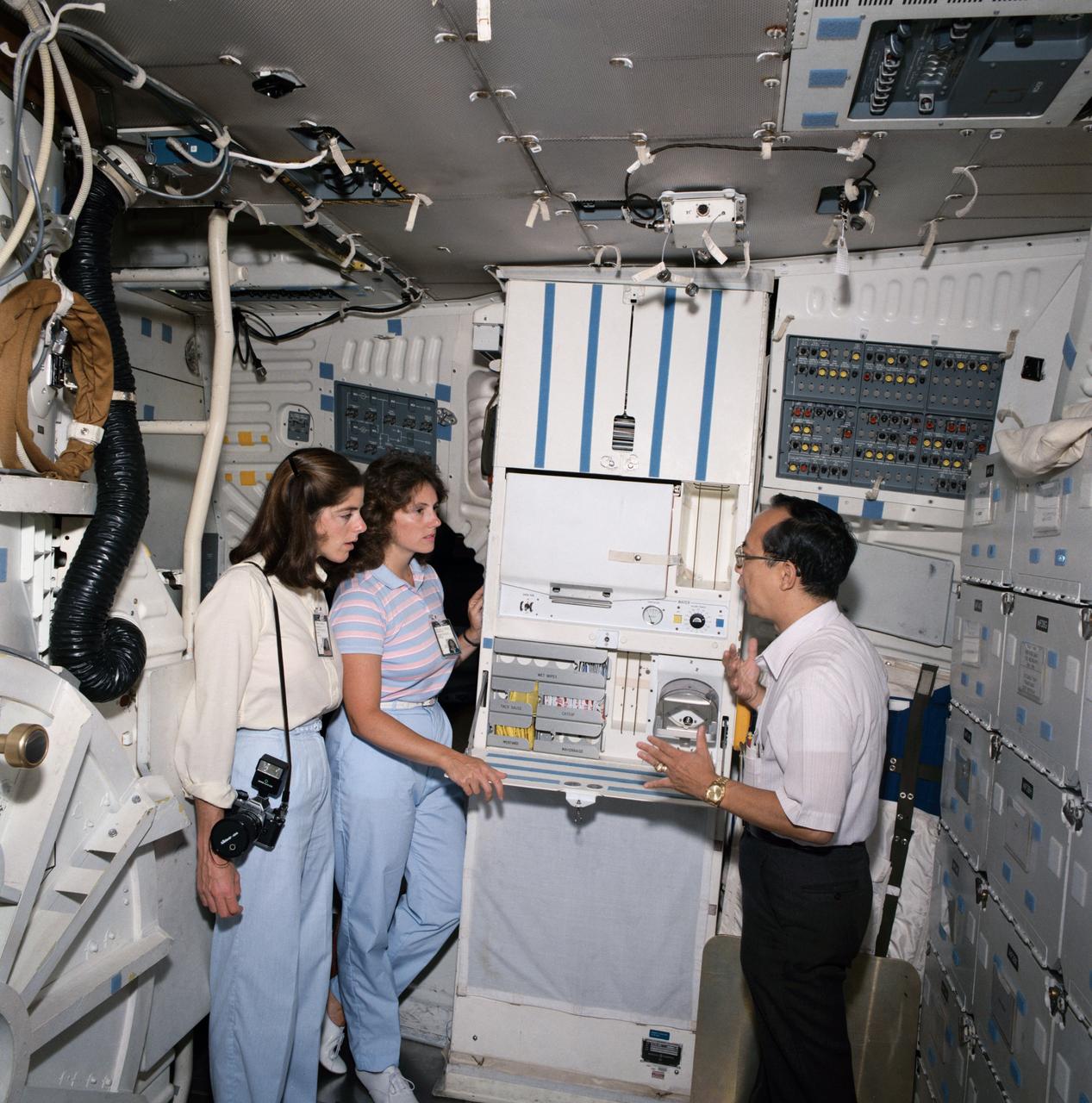
S85-40509 (23 Sept. 1985) --- Two women representing the Teacher-in-Space project undergo training in preparation for the STS-51L mission in two photographs made in Johnson Space Center trainers. Barbara R. Morgan (left), 51-L’s backup teacher, and McAuliffe are briefed by L.W. Lew on the space shuttle galley, located on the middeck. Photo credit: NASA
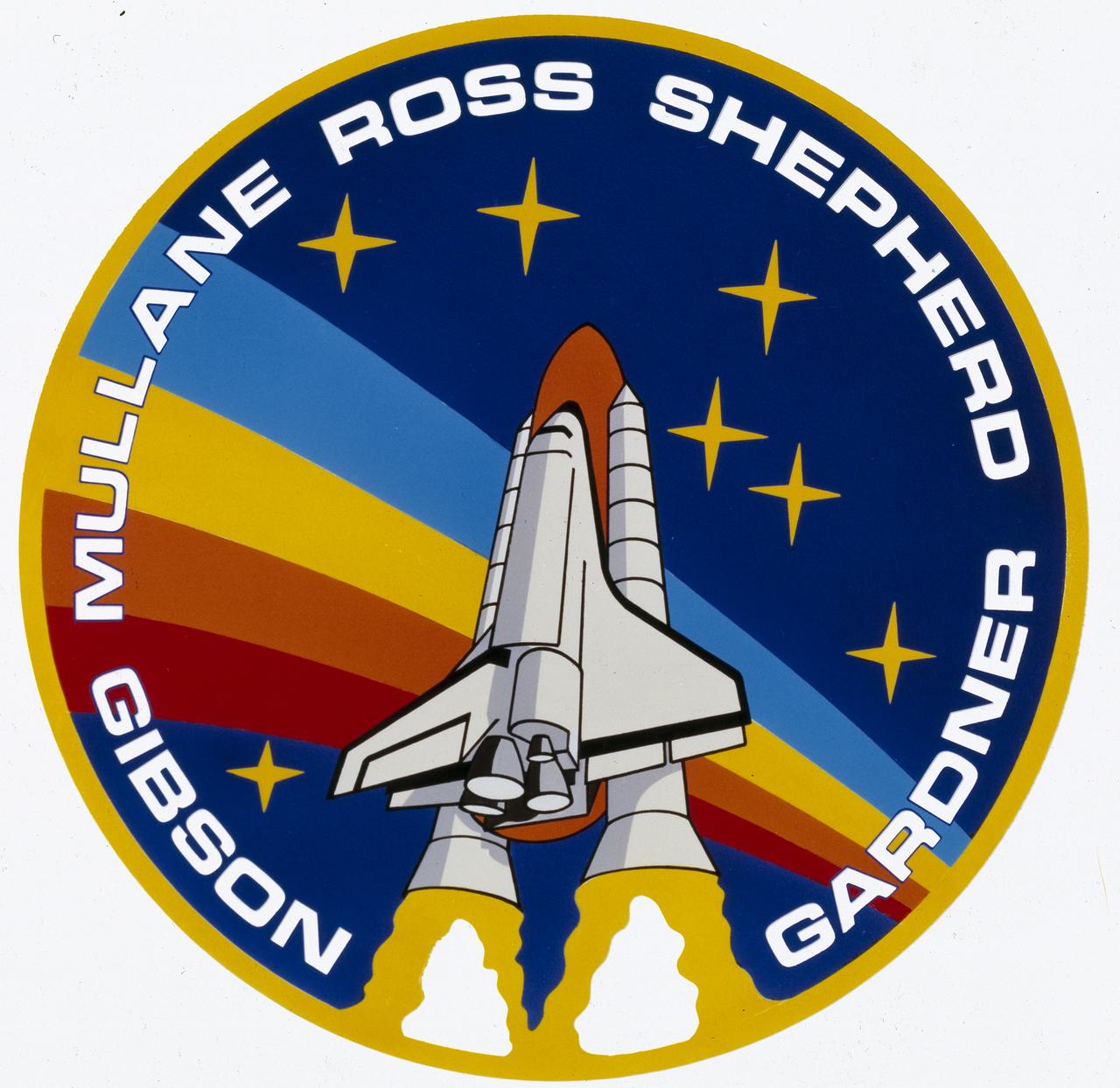
The patch depicts the Space Shuttle lifting off against the multi-colored backdrop of a rainbow, symbolizing the triumphal return to flight of our nation's manned space program. The design also commemorates the memory of the crew of Challenger mission STS-51-L, represented by the seven stars. The names of the flight crewmembers of STS-27 are located along the border of the patch.
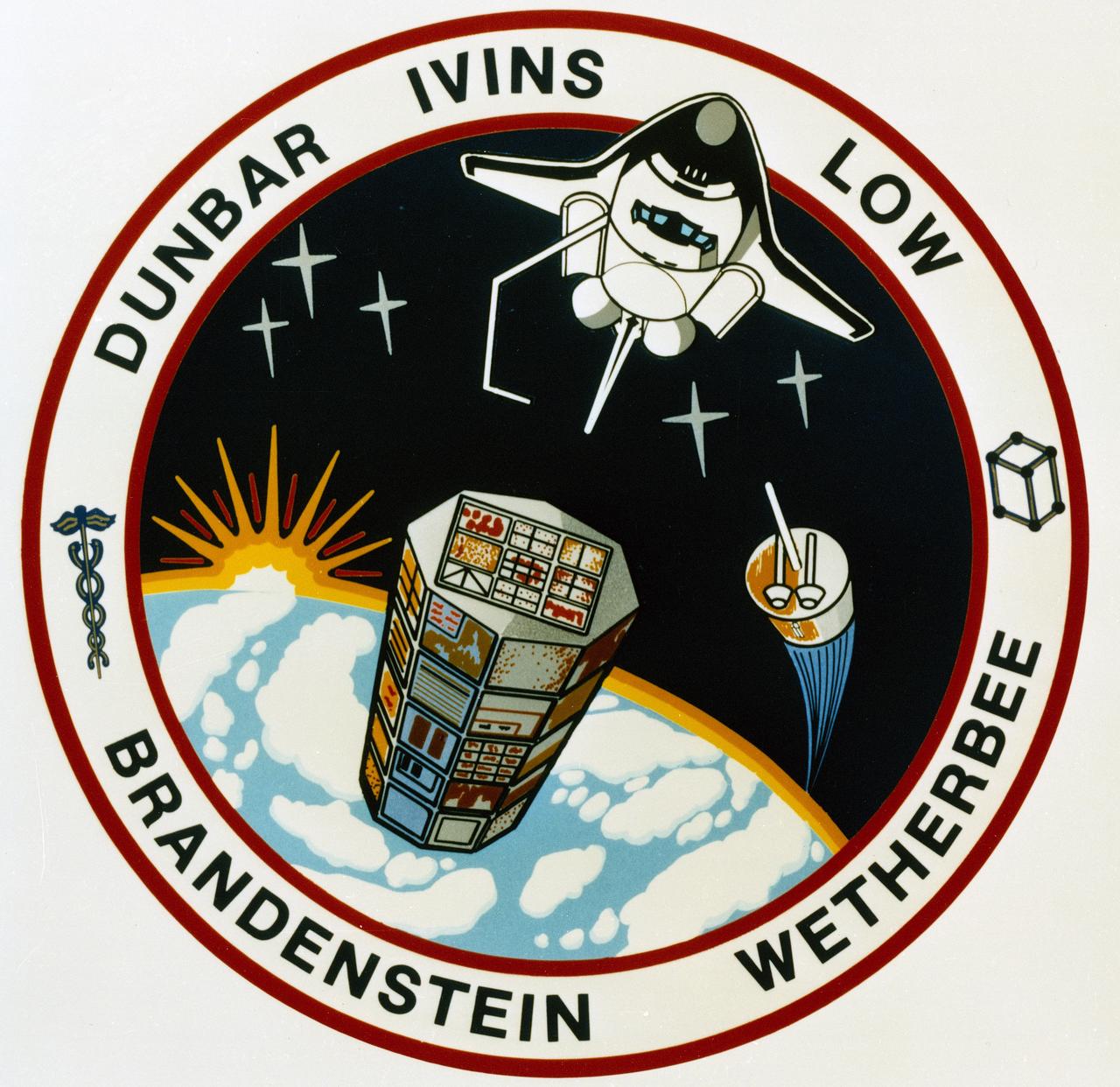
The STS-32 patch, designed by the five crewmembers for the scheduled December 1989 space mission, depicts the Space Shuttle orbiter rendezvousing with the Long Duration Exposure Facility (LDEF) satellite from above. The Syncom satellite is successfully deployed and on its way to geosynchronous orbit. Five stars have been arranged so that three are one side of the orbiter and two on the other to form the number 32. The seven major rays of the sun are in remembrance of the crewmembers for STS 51-L.
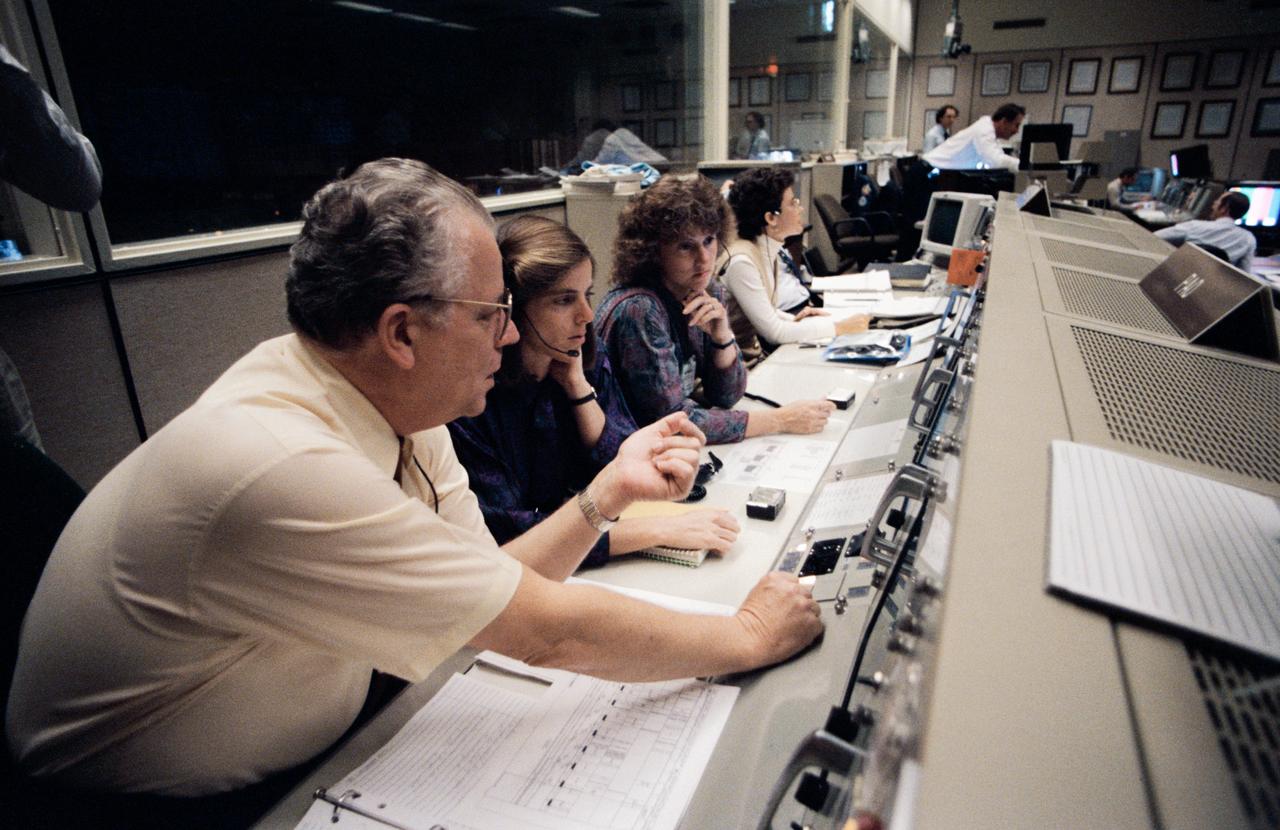
61A-S-135 (5 Nov 1985) --- Two school teachers in training at the Johnson Space Center got their first ?real time? exposure to a Space Shuttle mission as they monitor activity aboard the Spacelab D-1 science module from the mission control center. Sharon Christa McAuliffe (frame center) and Barbara R. Morgan are briefed by Terry White at the Public Affairs console during a television downlink from the Earth-orbiting Space Shuttle Challenger. McAuliffe is scheduled to fly as teacher/citizen observer on the STS 51-L mission early next year; and Morgan is in training as her backup.

S85-41802 (7 Sept 1985) --- Wheels of the Space Shuttle Atlantis touch down on the dry lakebed at Edwards Air Force Base to mark successful completion of the STS 51-J mission. Crewmembers onboard for the flight were Astronauts Karol J. Bobko, Ronald J. Grabe, David C. Hilmers, and Robert L. Stewart; and USAF Maj. William A. Pailes.
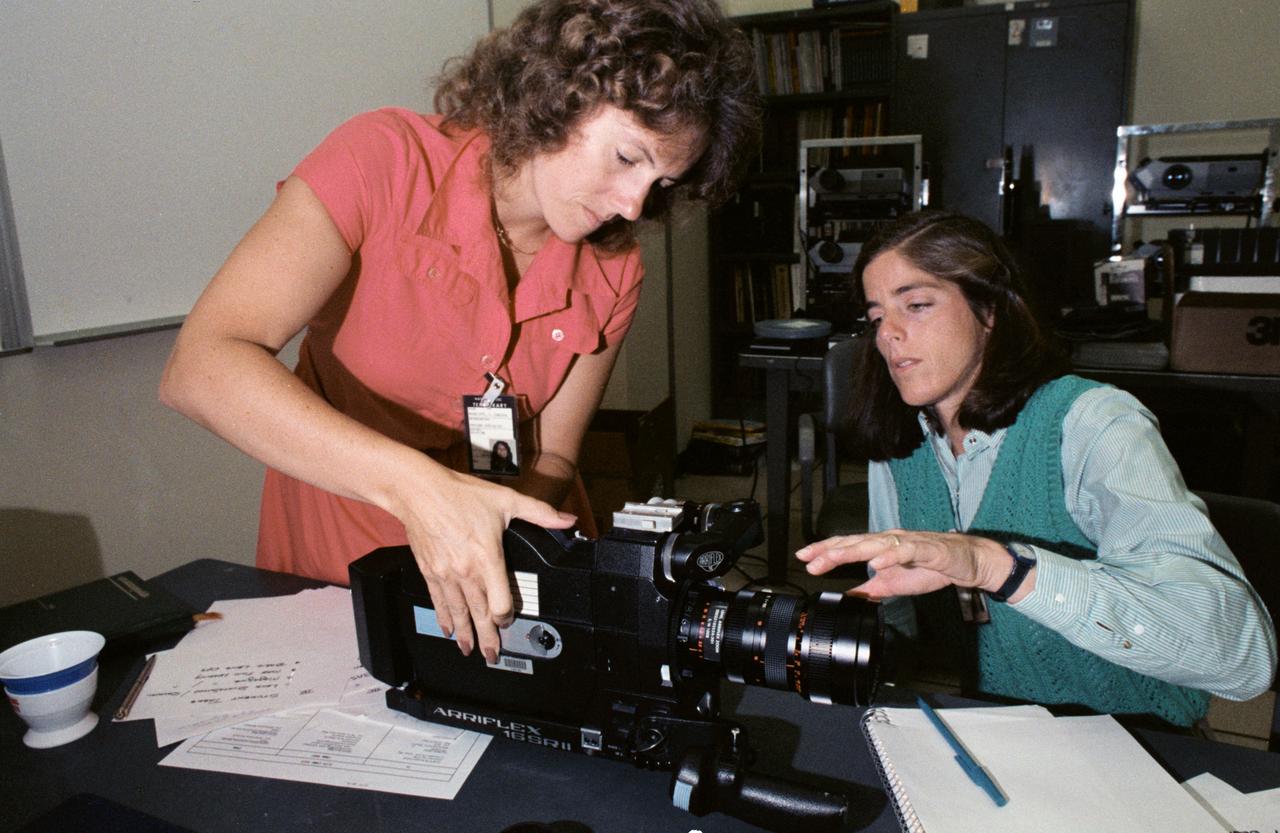
S85-41033 (18 Sept. 1985) --- Two women in training at JSC as part of the Teacher-in-Space Project and a position on NASA’s STS-51L mission learn handling of the Arriflex motion picture camera used on shuttle flights. Sharon Christa McAuliffe (left) was recently named as prime crew member for the 51-L flight; and Barbara R. Morgan, here lending help with camera’s lens, will serve as backup. The photograph was taken by Otis Imboden. Photo credit: NASA
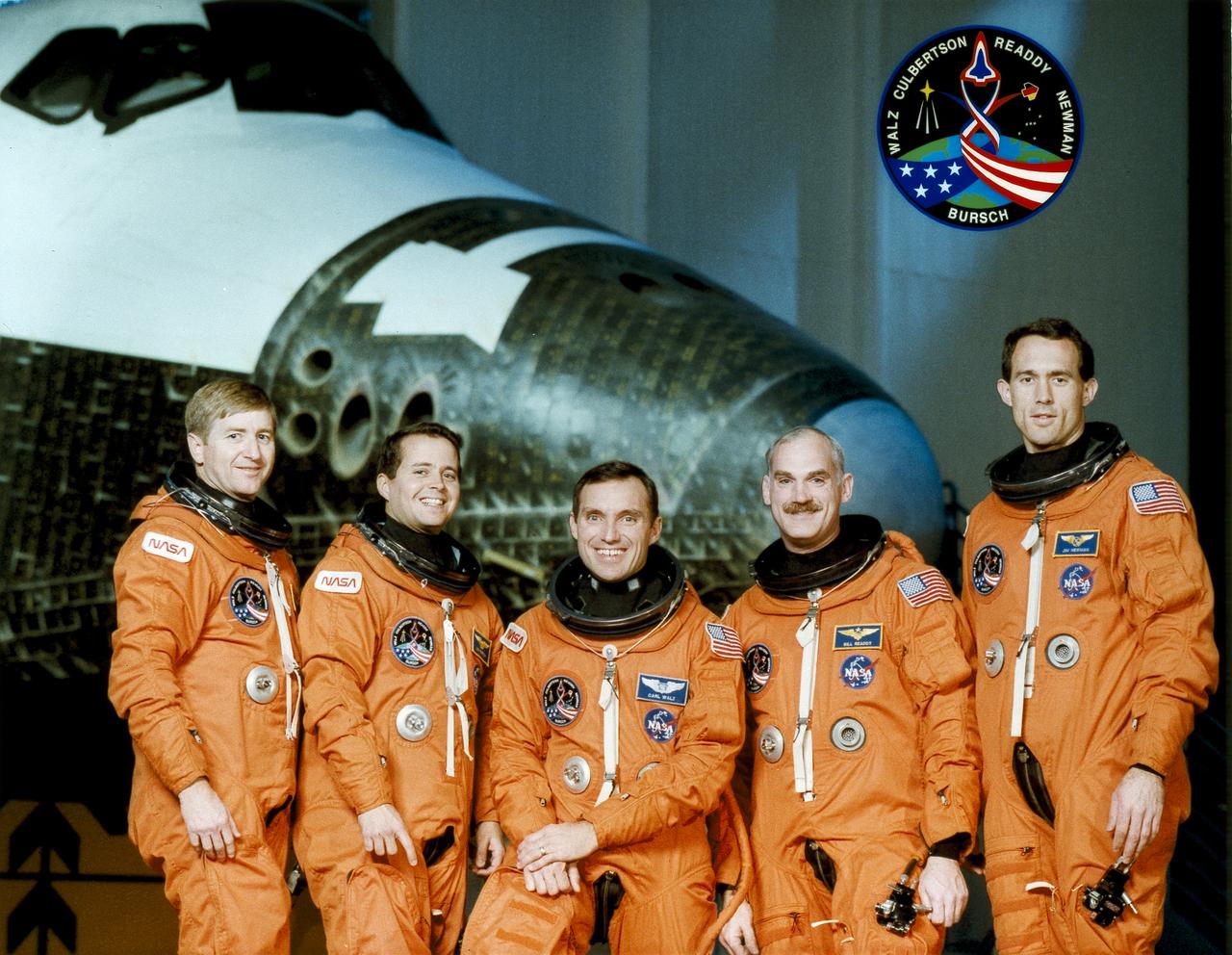
The STS-51 crew portrait features (left to right): Frank L. Culbertson, commander; Daniel W. Bursch, mission specialist; Carl E. Walz, mission specialist; William F. Readdy, pilot; and James H. Newman, mission specialist. The crew of five launched aboard the Space Shuttle Discovery on September 12, 1993 at 7:45:00 am (EDT). Two primary payloads included the Advanced Communications Technology Satellite (ACTS), and the Orbiting and Retrievable Far and Extreme Ultraviolet Spectrograph Shuttle Pallet Satellite (OERFEUS-SPAS).

S84-40162 (21 Aug. 1984) --- Astronaut Anna L. Fisher controls the Remote Manipulator System (RMS) arm from inside the "orbiter" as part of her training program in the Johnson Space Center's Shuttle Mock-up and Integration Laboratory. Dr. Fisher, one of three mission specialists for mission 51-A, is inside the cabin portion of a trainer called the Manipulatory Development Facility (MDF). She is able to operate the arm in conjunction with an air bearing floor and to log a great deal of rehearsal time for her flight, on which the retrieval of a low-orbiting communications satellite is planned. Photo credit: NASA
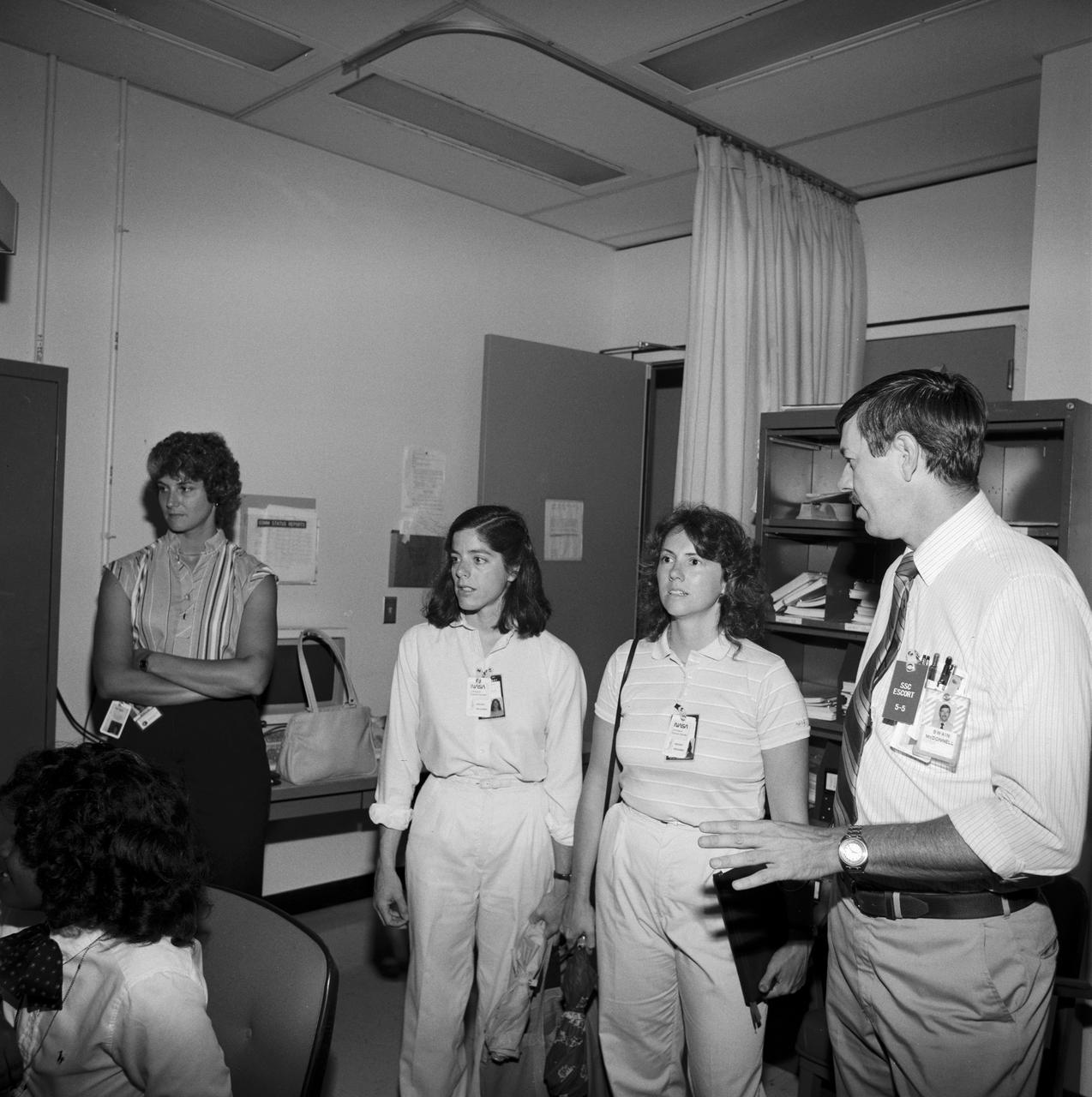
S85-40510 & S85-40511 (23 Sept. 1985) --- Two women representing the Teacher-in-Space Project undergo training in preparation for the 51-L mission in two photographs made in the Johnson Space Center’s mission simulation and training facility. In S85-40510, Sharon Christa McAuliffe (second right), prime crew member; and Barbara R. Morgan (second left), backup, are briefed in the shuttle mission simulator’s instruction station by Jerry Swain, right, instruction team leader. Others pictured are Michelle Brekke (far left) of the payload specialists’ office and Patricia A. Lawson (lower left foreground). Astronaut Ellison S. Onizuka, in S85-40511, assists Morgan with a head set as the two trainees are familiarized with launch and entry stations in the motion base shuttle mission simulator (SMS). The citizen observer (McAuliffe) is scheduled to be seated on the middeck. This picture, however, was taken at the mission specialists’ station on the flight deck. Photo credit: NASA
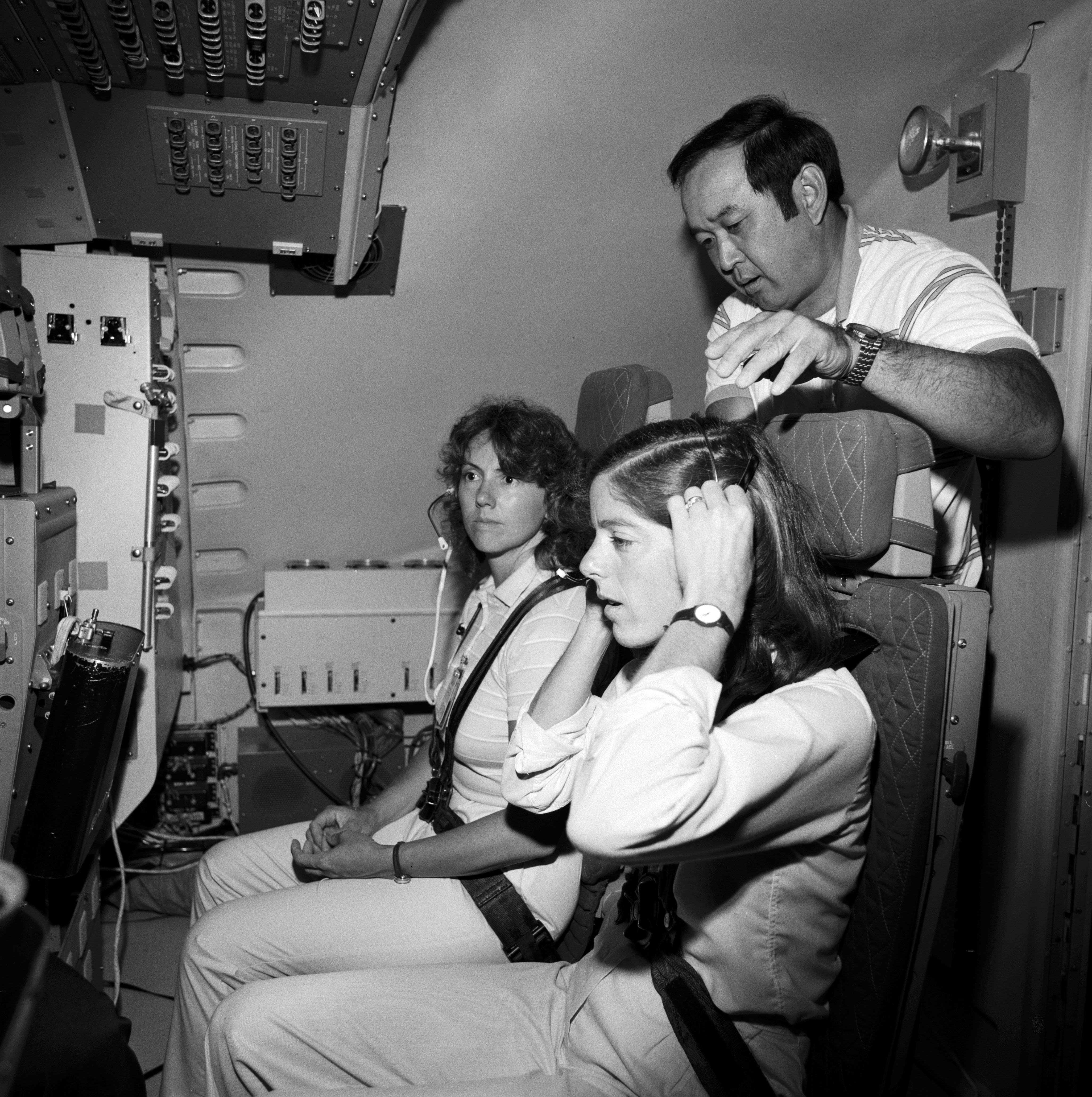
S85-40510 & S85-40511 (23 Sept. 1985) --- Two women representing the Teacher-in-Space Project undergo training in preparation for the 51-L mission in two photographs made in the Johnson Space Center’s mission simulation and training facility. In S85-40510, Sharon Christa McAuliffe (second right), prime crew member; and Barbara R. Morgan (second left), backup, are briefed in the shuttle mission simulator’s instruction station by Jerry Swain, right, instruction team leader. Others pictured are Michelle Brekke (far left) of the payload specialists’ office and Patricia A. Lawson (lower left foreground). Astronaut Ellison S. Onizuka, in S85-40511, assists Morgan with a head set as the two trainees are familiarized with launch and entry stations in the motion base shuttle mission simulator (SMS). The citizen observer (McAuliffe) is scheduled to be seated on the middeck. This picture, however, was taken at the mission specialists’ station on the flight deck. Photo credit: NASA
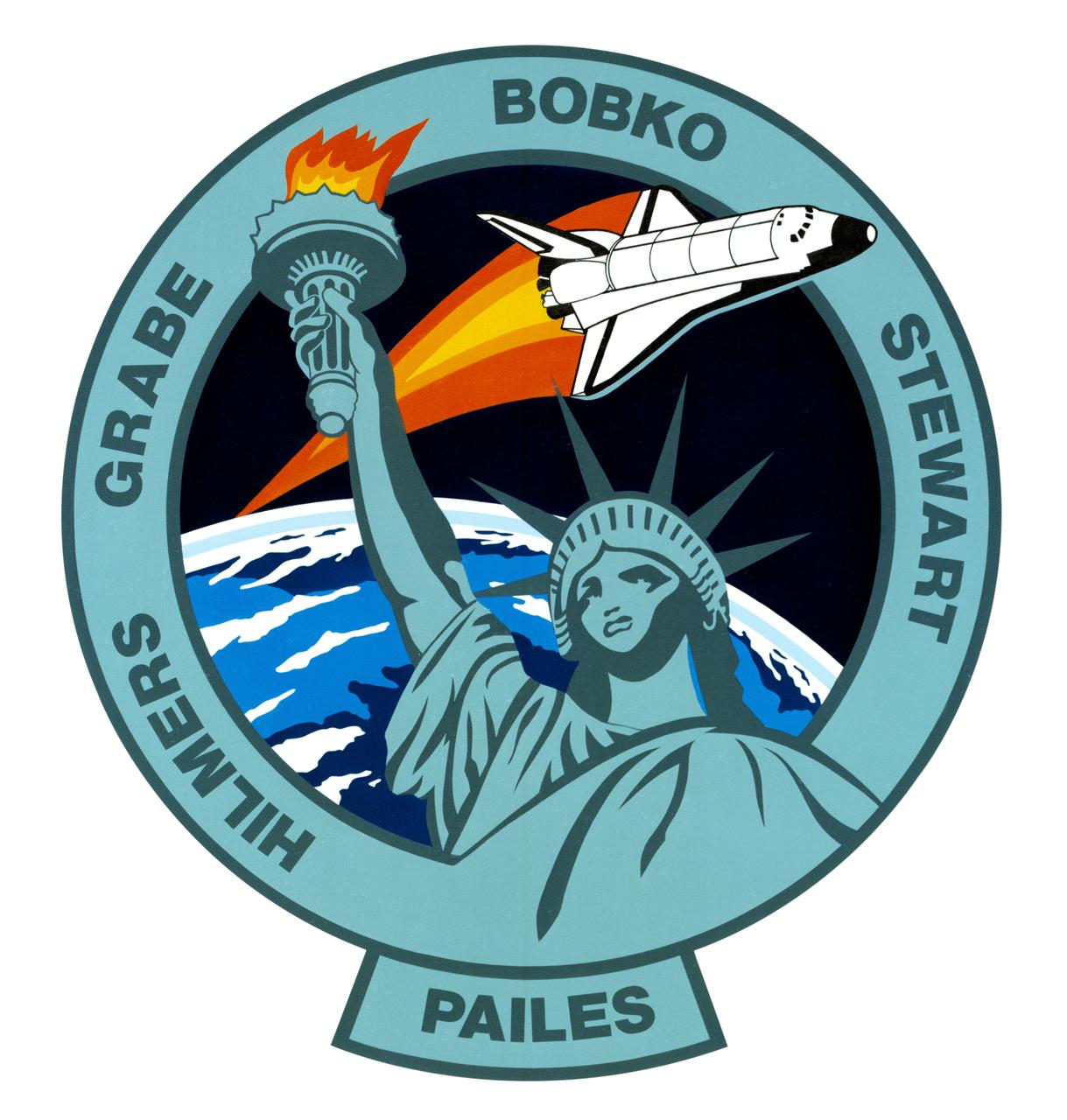
S85-39862 (1 Sept. 1985) --- The 51-J mission insignia, designed by Atlantis's first crew, pays tribute to the Statue of Liberty and the ideas it symbolizes. The historical gateway figure bears additional significance for astronauts Karol J. Bobko, mission commander; and Ronald J. Grabe, pilot, both New York natives. Other members of the five-man crew, whose surnames encircle the artwork, are Robert L. Stewart and David C. Hilmers, mission specialists; and William A. Pailes, payload specialist. The NASA insignia design for space shuttle flights is reserved for use by the astronauts and for other official use as the NASA Administrator may authorize. Public availability has been approved only in the forms of illustrations by the various news media. When and if there is any change in this policy, which is not anticipated, the change will be publicly announced. Photo credit: NASA
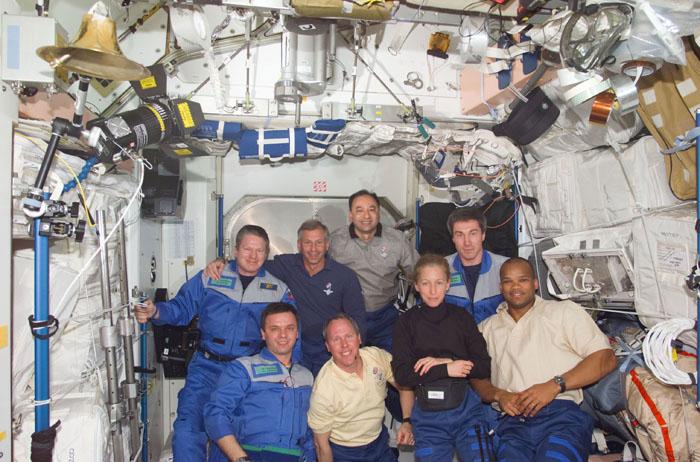
STS98-E-5053 (9 February 2001) --- The three-man Expedition One crew hosts its second group of visitors since beginning occupancy of the International Space Station in November of last year. A pre-set digital still camera was used to record the gathering. Wearing blue flight suits for the reunion are the station's first fulltime occupants--astronaut William M. (Bill) Shepherd (rear left), Expedition One commander;cosmonaut Yuri P. Gidzenko (front left), Soyuz commander; and cosmonaut Sergei K. Krikalev (rear right), flight engineer. Astronauts Kenneth D. Cockrell (second left, rear) and Mark L. Polansky (second right, rear) are STS-98 mission commander and pilot, respectively. Astronauts Thomas D. Jones, Marsha S. Ivins and Robert L. Curbeam--all mission specialists--are in front. Atlantis docked to the station on schedule at 10:51 a.m. (CST), Feb. 9 and the station and shuttle crews opened hatches between the spacecraft at 1:03 p.m., promptly beginning to unload supplies. The three-member station crew, on the eve of their 100th day aboard the outpost, greeted their first visitors in almost two months. The hatches were open for about four hours before they were closed in preparation for the first of three upcoming space walks, a six-hour sojourn scheduled for the following day from Atlantis by Jones and Curbeam.
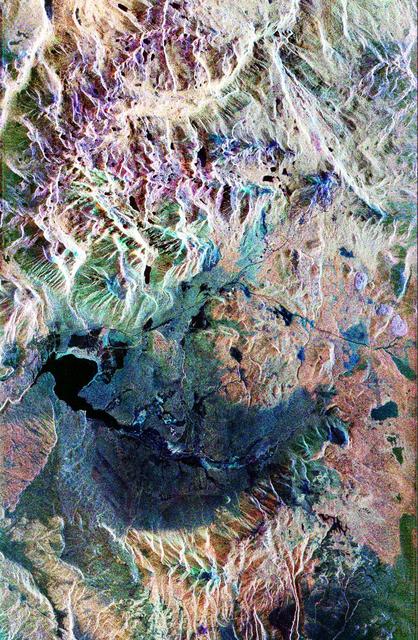
This false-color composite radar image of the Mammoth Mountain area in the Sierra Nevada Mountains, California, was acquired by the Spaceborne Imaging Radar-C and X-band Synthetic Aperture Radar aboard the space shuttle Endeavour on its 67th orbit on October 3, 1994. The image is centered at 37.6 degrees north latitude and 119.0 degrees west longitude. The area is about 39 kilometers by 51 kilometers (24 miles by 31 miles). North is toward the bottom, about 45 degrees to the right. In this image, red was created using L-band (horizontally transmitted/vertically received) polarization data; green was created using C-band (horizontally transmitted/vertically received) polarization data; and blue was created using C-band (horizontally transmitted and received) polarization data. Crawley Lake appears dark at the center left of the image, just above or south of Long Valley. The Mammoth Mountain ski area is visible at the top right of the scene. The red areas correspond to forests, the dark blue areas are bare surfaces and the green areas are short vegetation, mainly brush. The purple areas at the higher elevations in the upper part of the scene are discontinuous patches of snow cover from a September 28 storm. New, very thin snow was falling before and during the second space shuttle pass. In parallel with the operational SIR-C data processing, an experimental effort is being conducted to test SAR data processing using the Jet Propulsion Laboratory's massively parallel supercomputing facility, centered around the Cray Research T3D. These experiments will assess the abilities of large supercomputers to produce high throughput Synthetic Aperture Radar processing in preparation for upcoming data-intensive SAR missions. The image released here was produced as part of this experimental effort. http://photojournal.jpl.nasa.gov/catalog/PIA01746