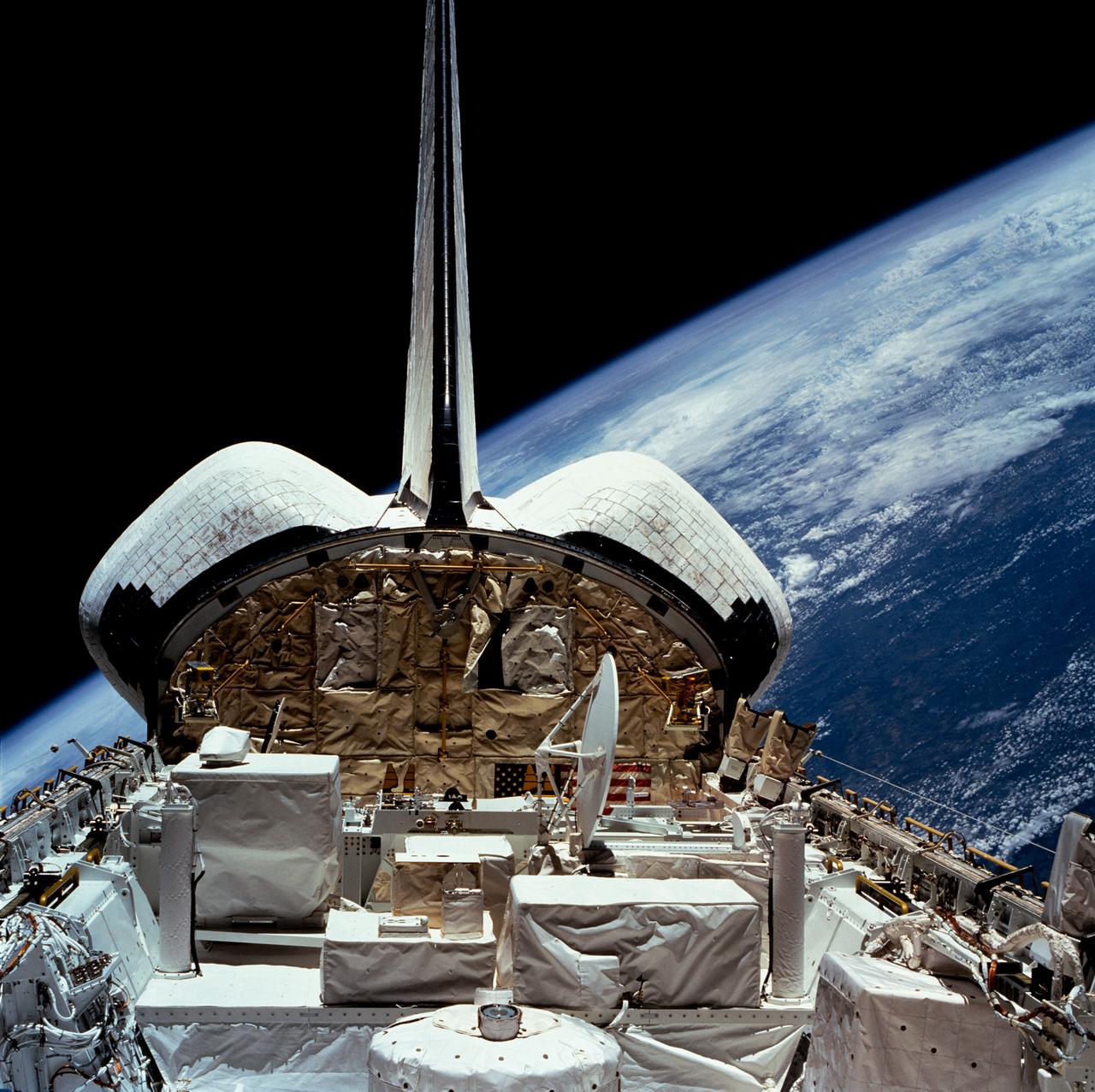
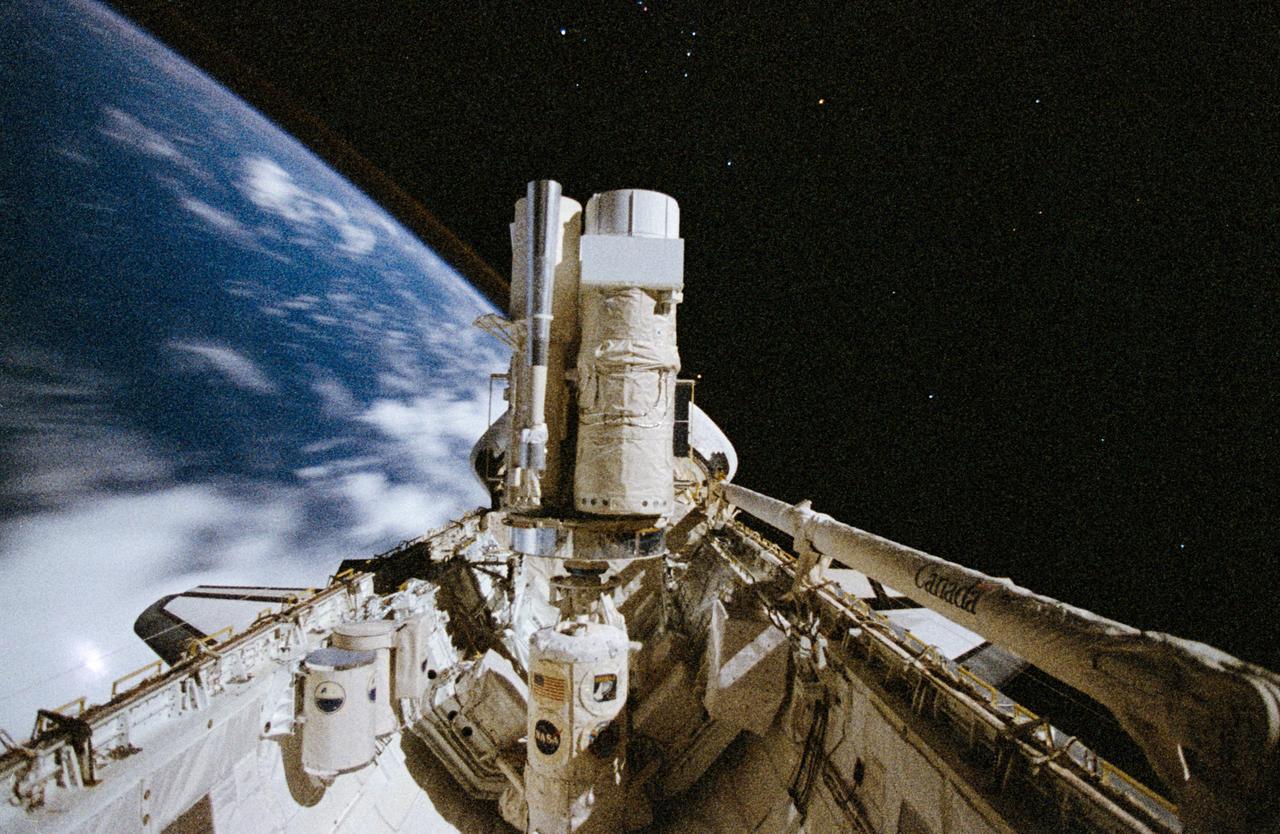
STS067-371-028 (2-18 March 1995) --- This 35mm lunar-illuminated scene of the Astro-2 payload in the Space Shuttle Endeavour's cargo bay was recorded by one of by the seven crew members during one of the many night passes of the almost 17-day mission.  The cluster of telescopes and the Instrument Pointing System (IPS) are backdropped against the blue and white Earth and the darkness of space.  What is believed to be the Constellation Orion is visible at upper center.
ASTRO-2 payload in Space Shuttle Endeavour's cargo bay
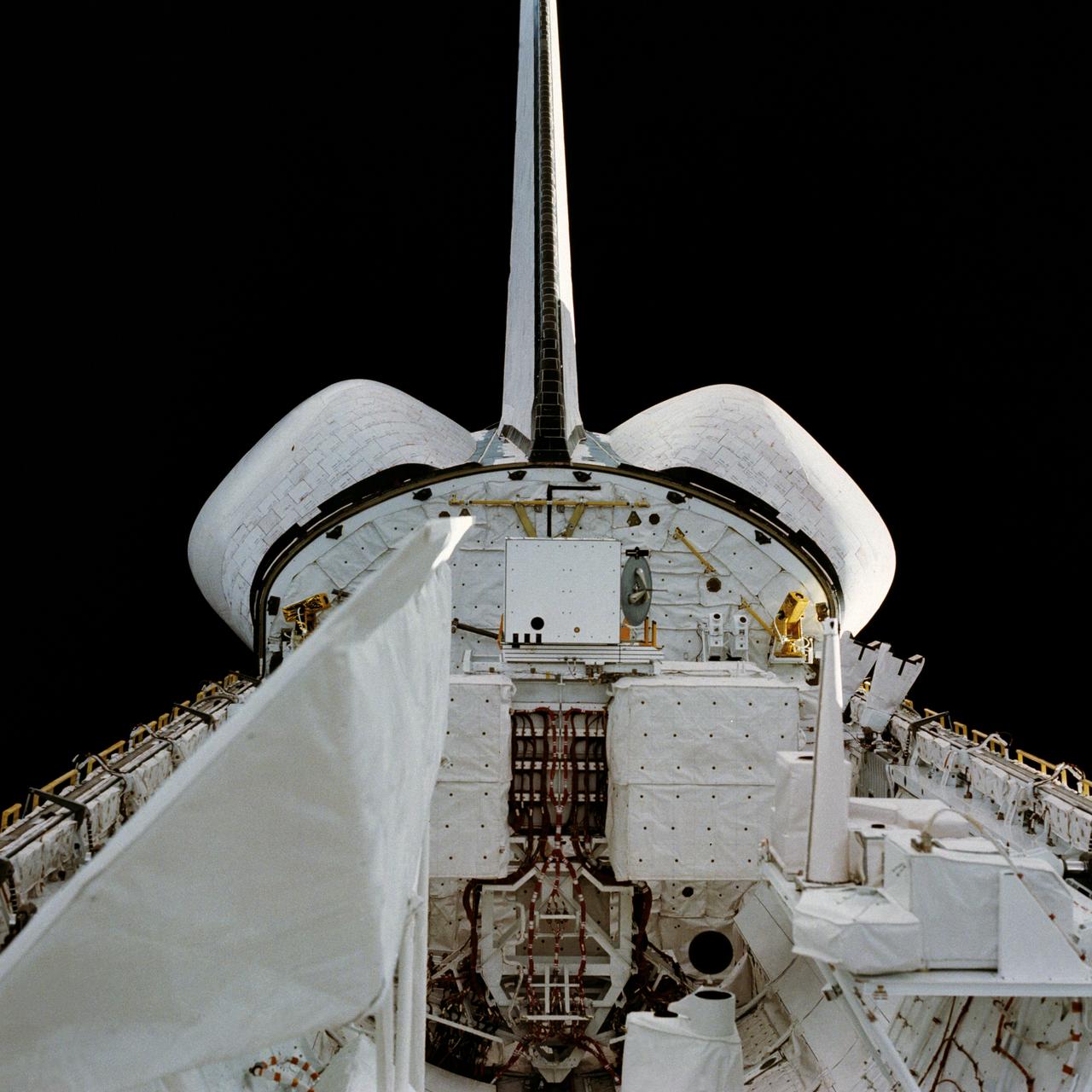
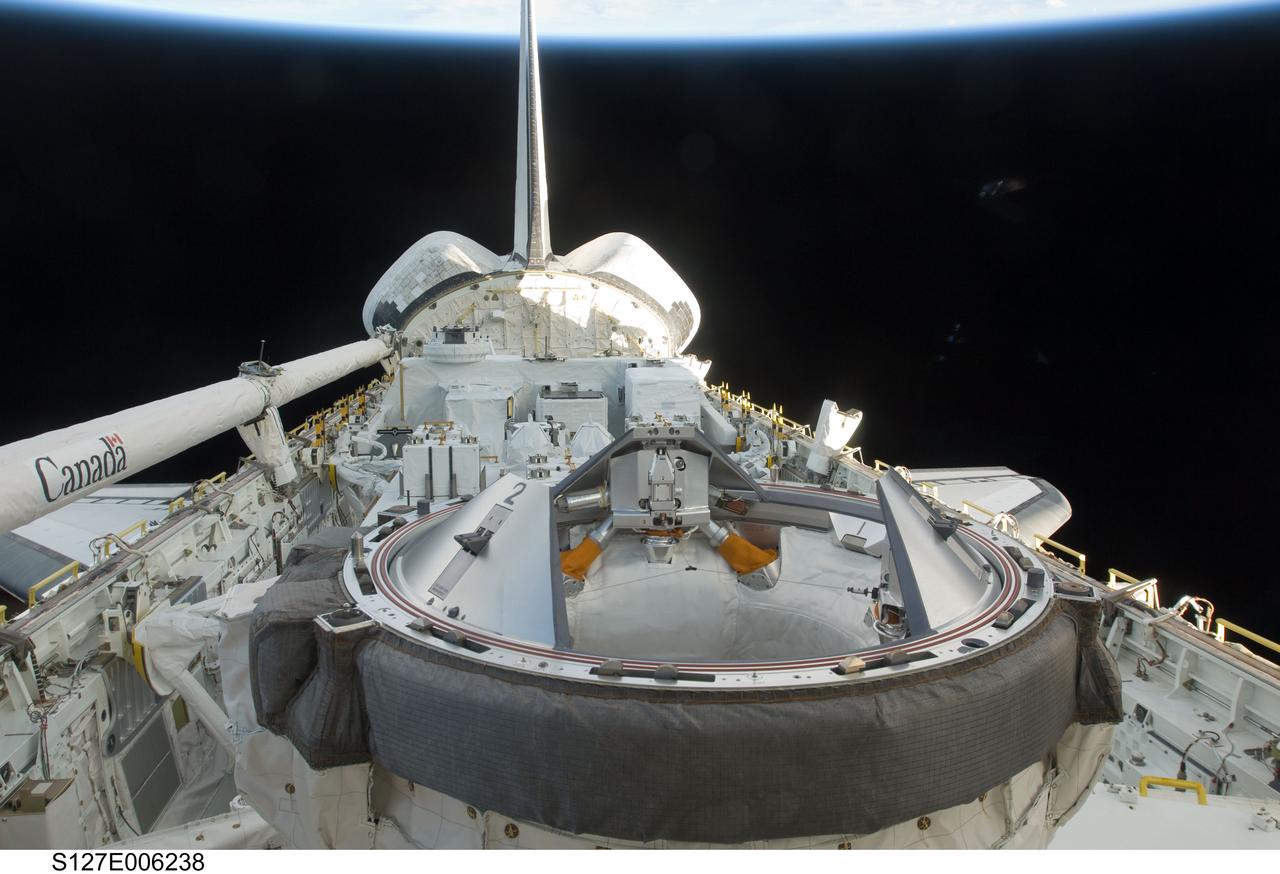
S127-E-006238 (16 July 2009) --- Backdropped by the blackness of space, the Japanese Experiment Module's Exposed Facility and the Experiment Logistics Module-Exposed Section, visible in Space Shuttle Endeavour?s payload bay, vertical stabilizer (intersecting Earth?s horizon) and orbital maneuvering system (OMS) pods, the shuttle?s remote manipulator system (RMS) and docking mechanism are featured in this image photographed by a STS-127 crew member from an aft flight deck window.
Payload Bay on the Space Shuttle Endeavour
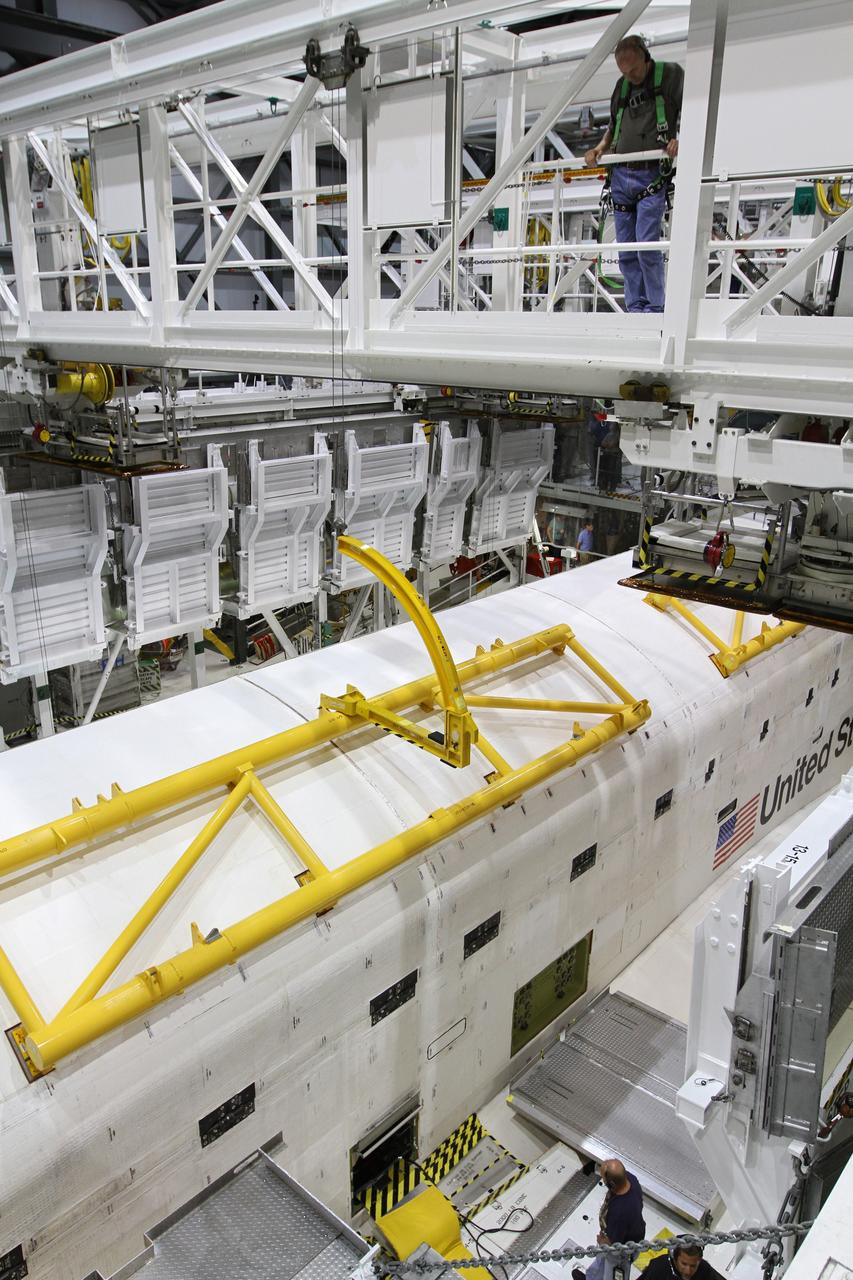
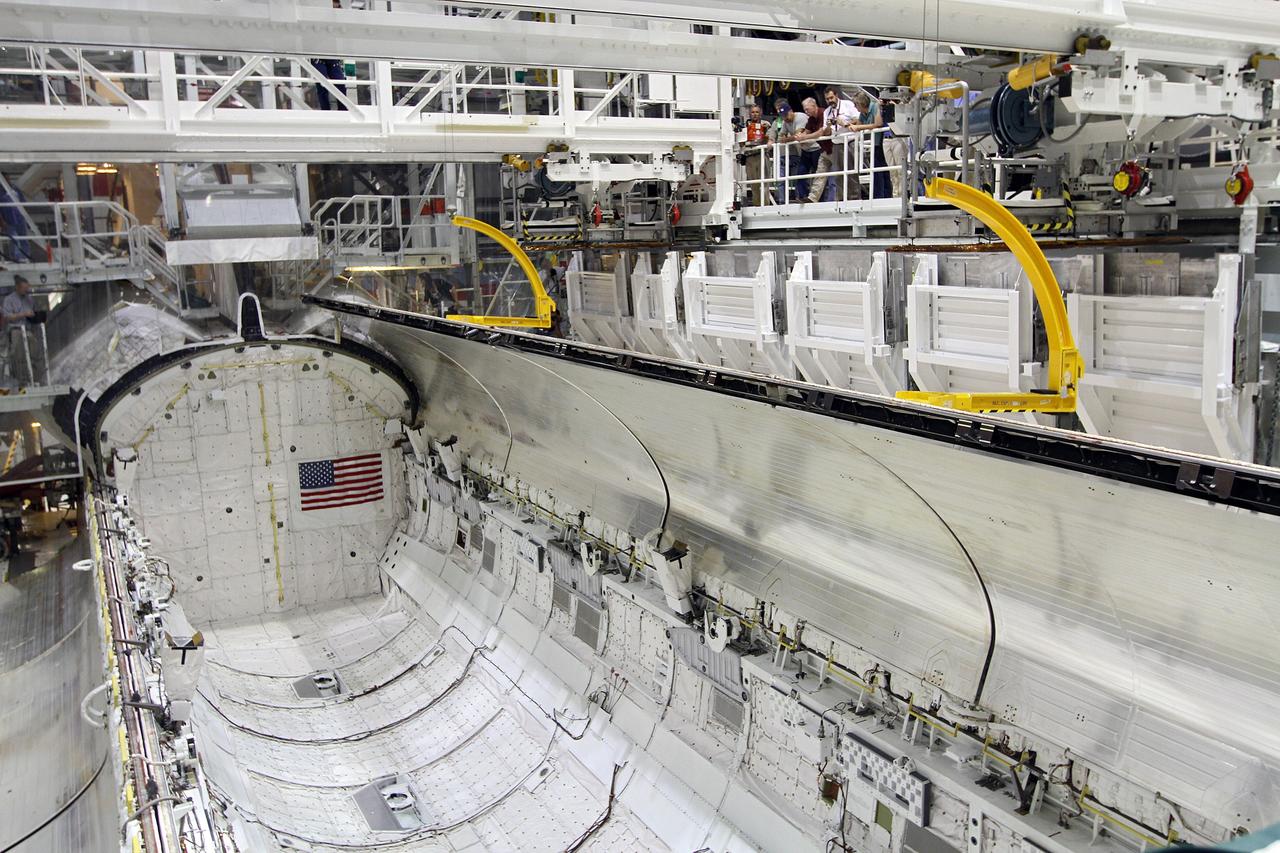
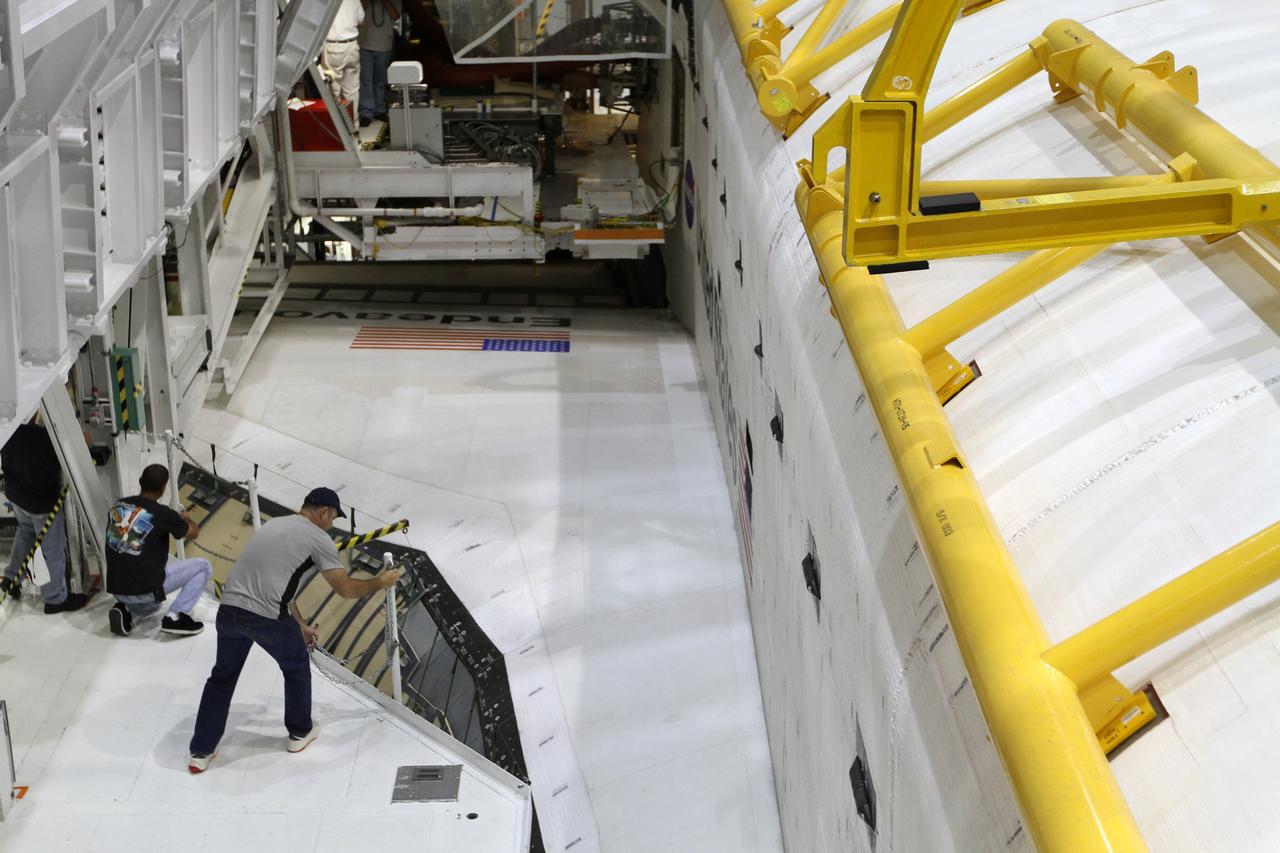
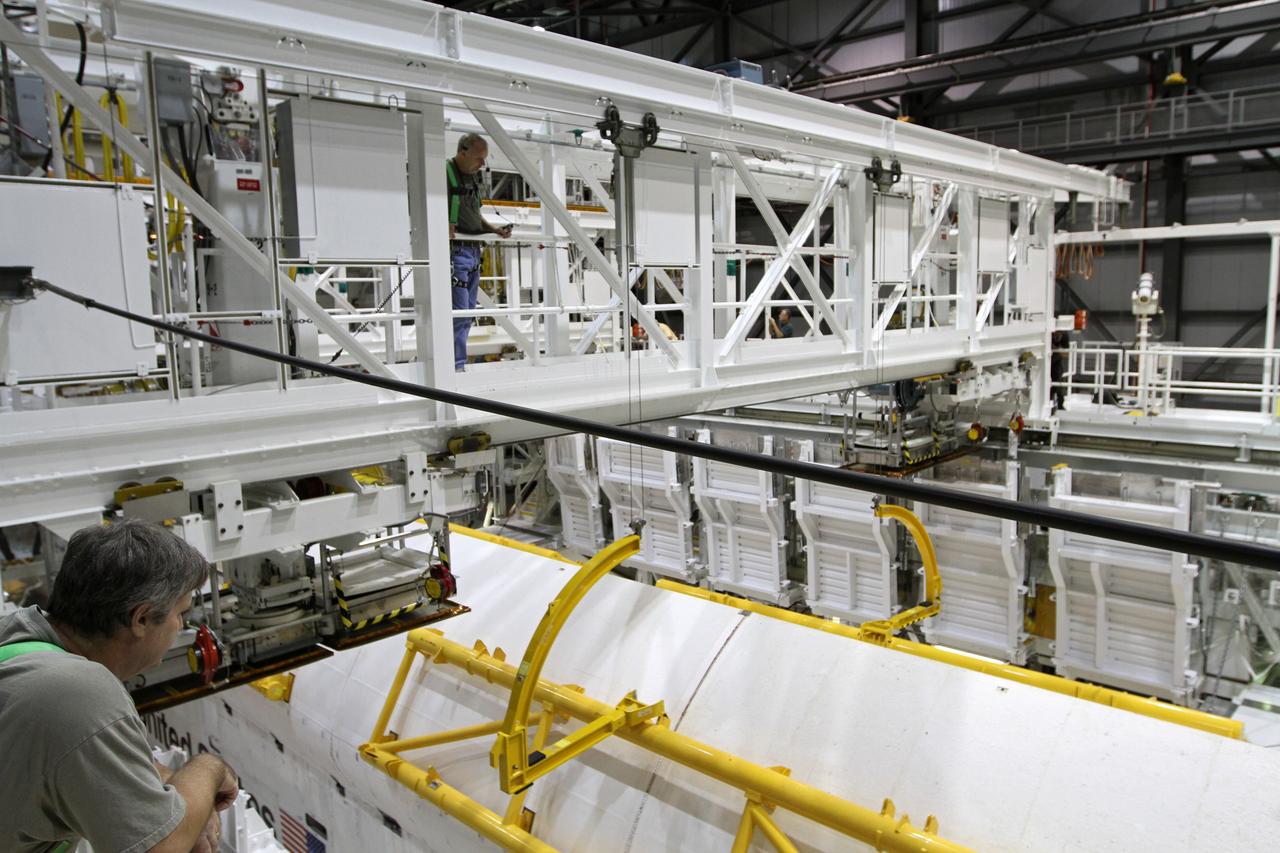
CAPE CANAVERAL, Fla. – Inside Orbiter Processing Facility-2 at NASA’s Kennedy Space Center in Florida, one of space shuttle Endeavour’s payload bay doors is closed as United Space Alliance technicians monitor the progress of the second door’s closure. Endeavour’s payload bay doors are being closed for the final time.    The work is part of Transition and Retirement of the remaining space shuttles, Endeavour and Atlantis. Endeavour is being prepared for public display at the California Science Center in Los Angeles. Its ferry flight to California is targeted for mid-September. Endeavour was the last space shuttle added to NASA’s orbiter fleet. Over the course of its 19-year career, Endeavour spent 299 days in space during 25 missions. For more information, visit http://www.nasa.gov/shuttle.  Photo credit: NASA/Kim Shiflett
KSC-2012-3427
CAPE CANAVERAL, Fla. – Inside Orbiter Processing Facility-2 at NASA’s Kennedy Space Center in Florida, one of space shuttle Endeavour’s payload bay doors is closed as a United Space Alliance technician monitors the progress of the second door’s closure. Endeavour’s payload bay doors are being closed for the final time.    The work is part of Transition and Retirement of the remaining space shuttles, Endeavour and Atlantis. Endeavour is being prepared for public display at the California Science Center in Los Angeles. Its ferry flight to California is targeted for mid-September. Endeavour was the last space shuttle added to NASA’s orbiter fleet. Over the course of its 19-year career, Endeavour spent 299 days in space during 25 missions. For more information, visit http://www.nasa.gov/shuttle.  Photo credit: NASA/Kim Shiflett
KSC-2012-3425
CAPE CANAVERAL, Fla. – Inside Orbiter Processing Facility-2 at NASA’s Kennedy Space Center in Florida, one of space shuttle Endeavour’s payload bay doors is closed. Endeavour’s payload bay doors will be closed for the final time.    The work is part of Transition and Retirement of the remaining space shuttles, Endeavour and Atlantis. Endeavour is being prepared for public display at the California Science Center in Los Angeles. Its ferry flight to California is targeted for mid-September. Endeavour was the last space shuttle added to NASA’s orbiter fleet. Over the course of its 19-year career, Endeavour spent 299 days in space during 25 missions. For more information, visit http://www.nasa.gov/shuttle.  Photo credit: NASA/Kim Shiflett
KSC-2012-3424
CAPE CANAVERAL, Fla. – Inside Orbiter Processing Facility-2 at NASA’s Kennedy Space Center in Florida, one of space shuttle Endeavour’s payload bay doors is closed. Endeavour’s payload bay doors will be closed for the final time.    The work is part of Transition and Retirement of the remaining space shuttles, Endeavour and Atlantis. Endeavour is being prepared for public display at the California Science Center in Los Angeles. Its ferry flight to California is targeted for mid-September. Endeavour was the last space shuttle added to NASA’s orbiter fleet. Over the course of its 19-year career, Endeavour spent 299 days in space during 25 missions. For more information, visit http://www.nasa.gov/shuttle.  Photo credit: NASA/Kim Shiflett
KSC-2012-3423
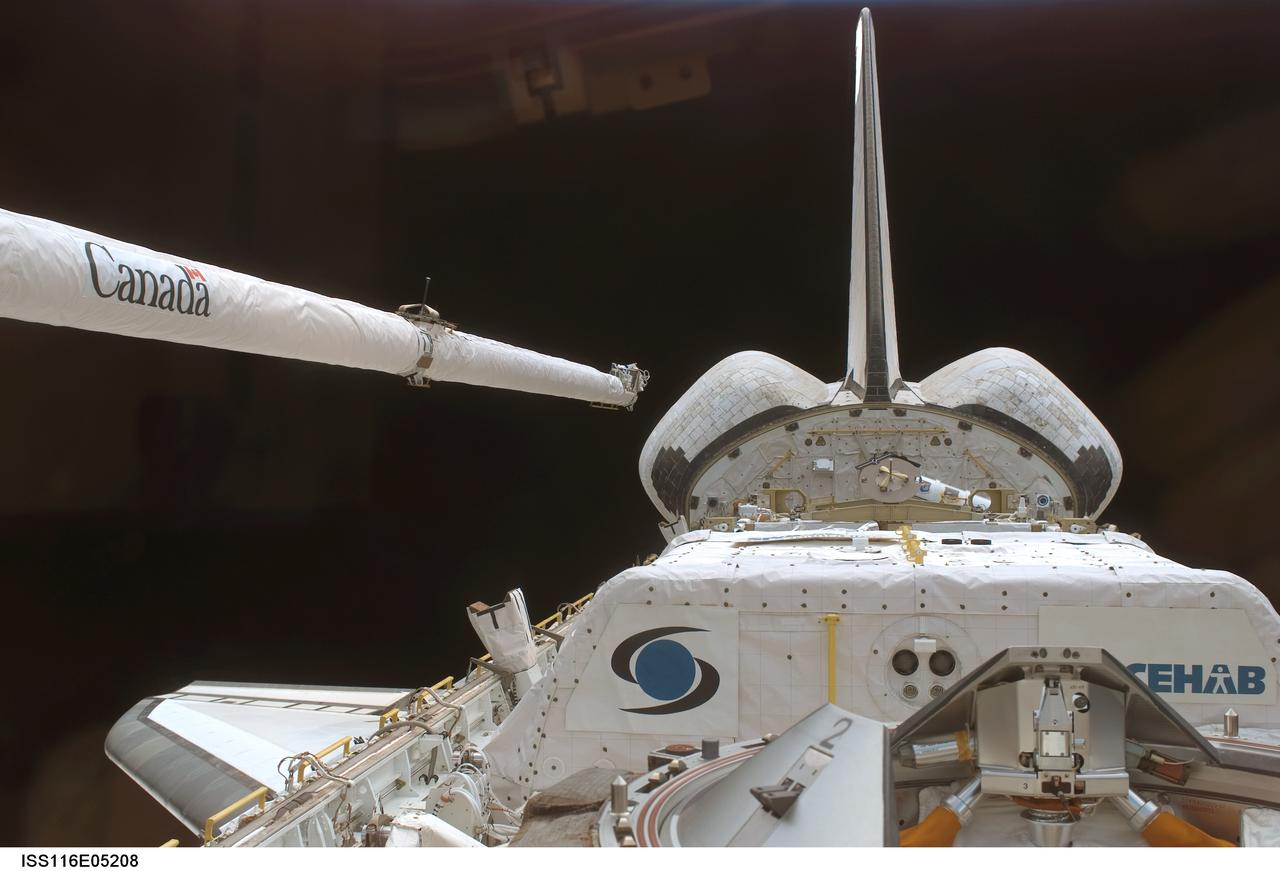
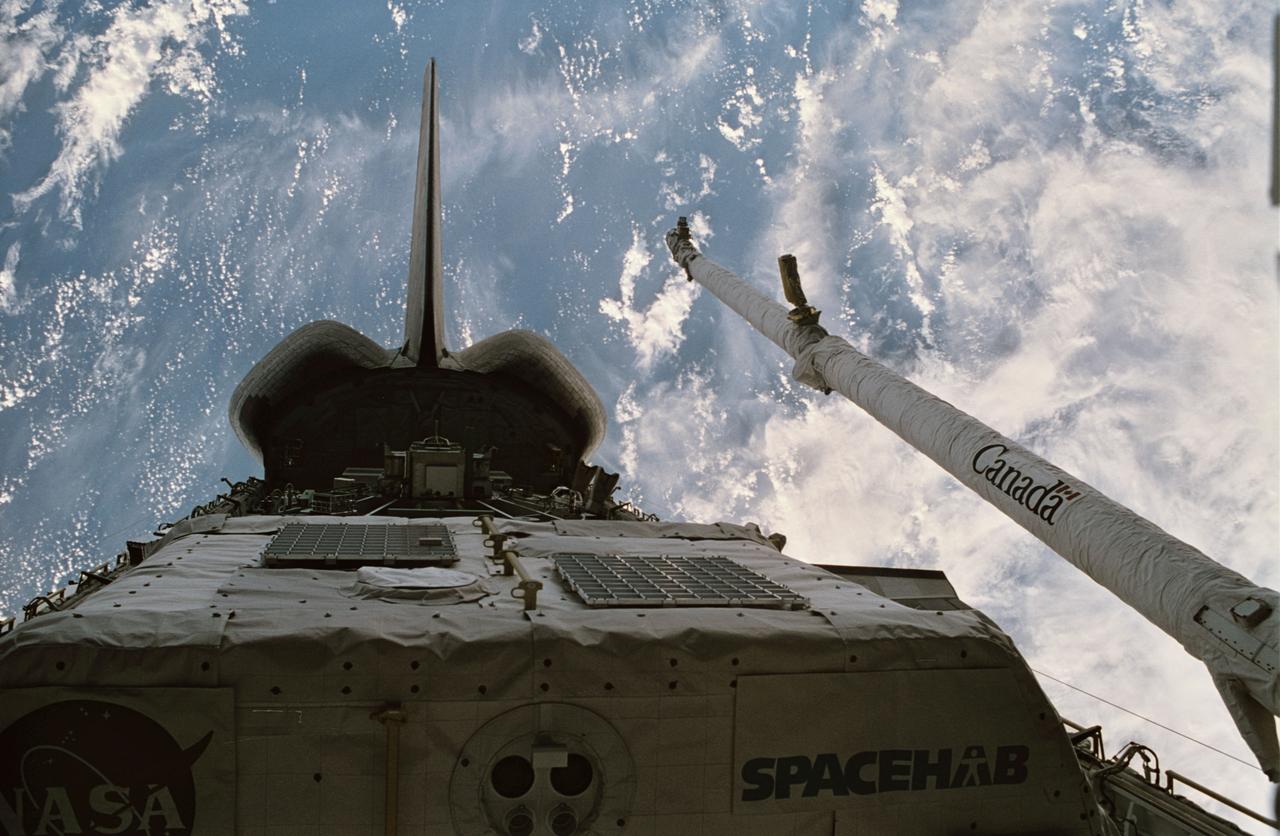
S116-E-05208 (10 Dec. 2006) --- As seen through windows on the aft flight deck of Space Shuttle Discovery, the payload bay is featured in this image photographed by a STS-116 crewmember during flight day two activities. Pictured in the payload bay is the Spacehab module and the Canadian-built Remote Manipulator System/Orbiter Boom Sensor System (RMS/OBSS) is at left. The shuttle's docking mechanism is visible in the foreground.
Payload Bay on STS-116 Space Shuttle Discovery
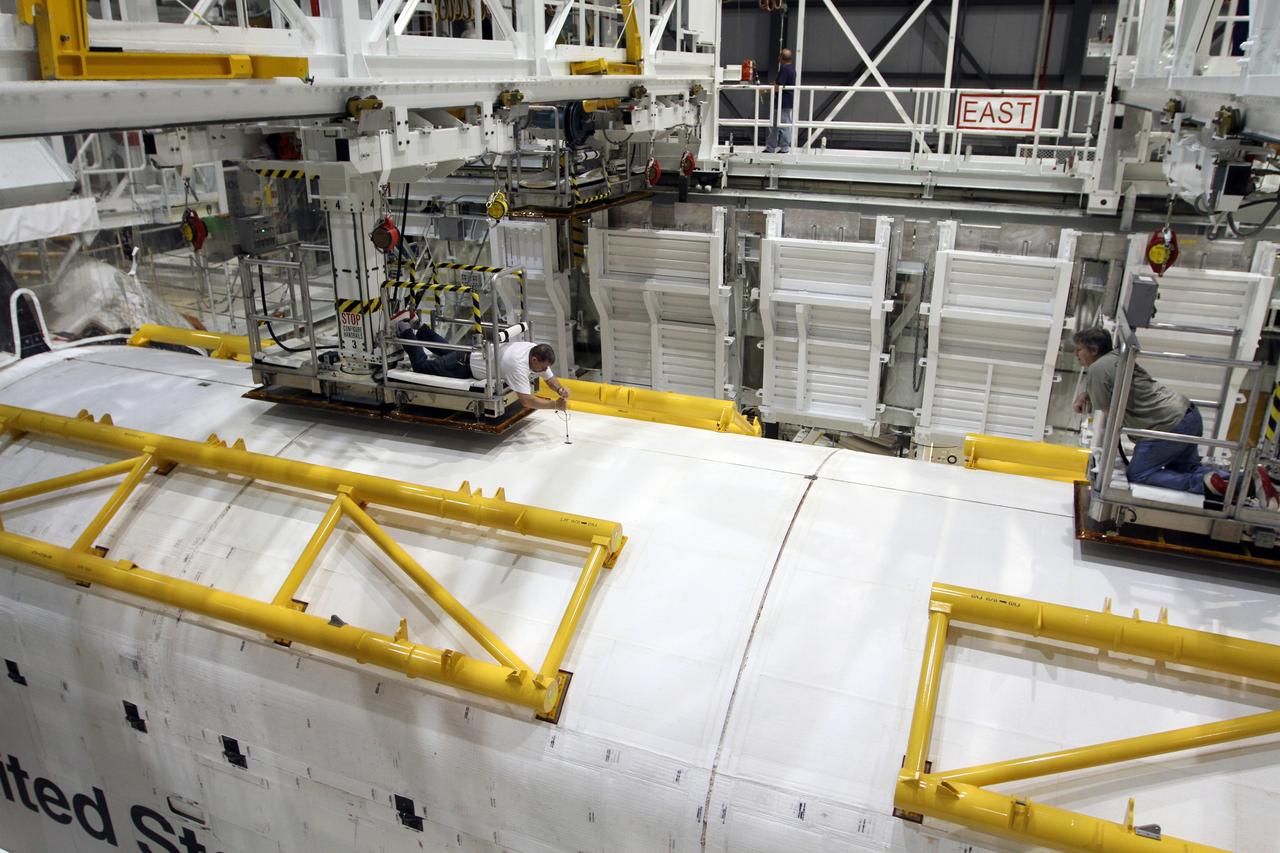
CAPE CANAVERAL, Fla. – Inside Orbiter Processing Facility-2 at NASA’s Kennedy Space Center in Florida, United Space Alliance technicians monitor the progress as space shuttle Endeavour’s payload bay doors begin to close for the final time.    The work is part of Transition and Retirement of the remaining space shuttles, Endeavour and Atlantis. Endeavour is being prepared for public display at the California Science Center in Los Angeles. Its ferry flight to California is targeted for mid-September. Endeavour was the last space shuttle added to NASA’s orbiter fleet. Over the course of its 19-year career, Endeavour spent 299 days in space during 25 missions. For more information, visit http://www.nasa.gov/shuttle.  Photo credit: NASA/Kim Shiflett
KSC-2012-3421
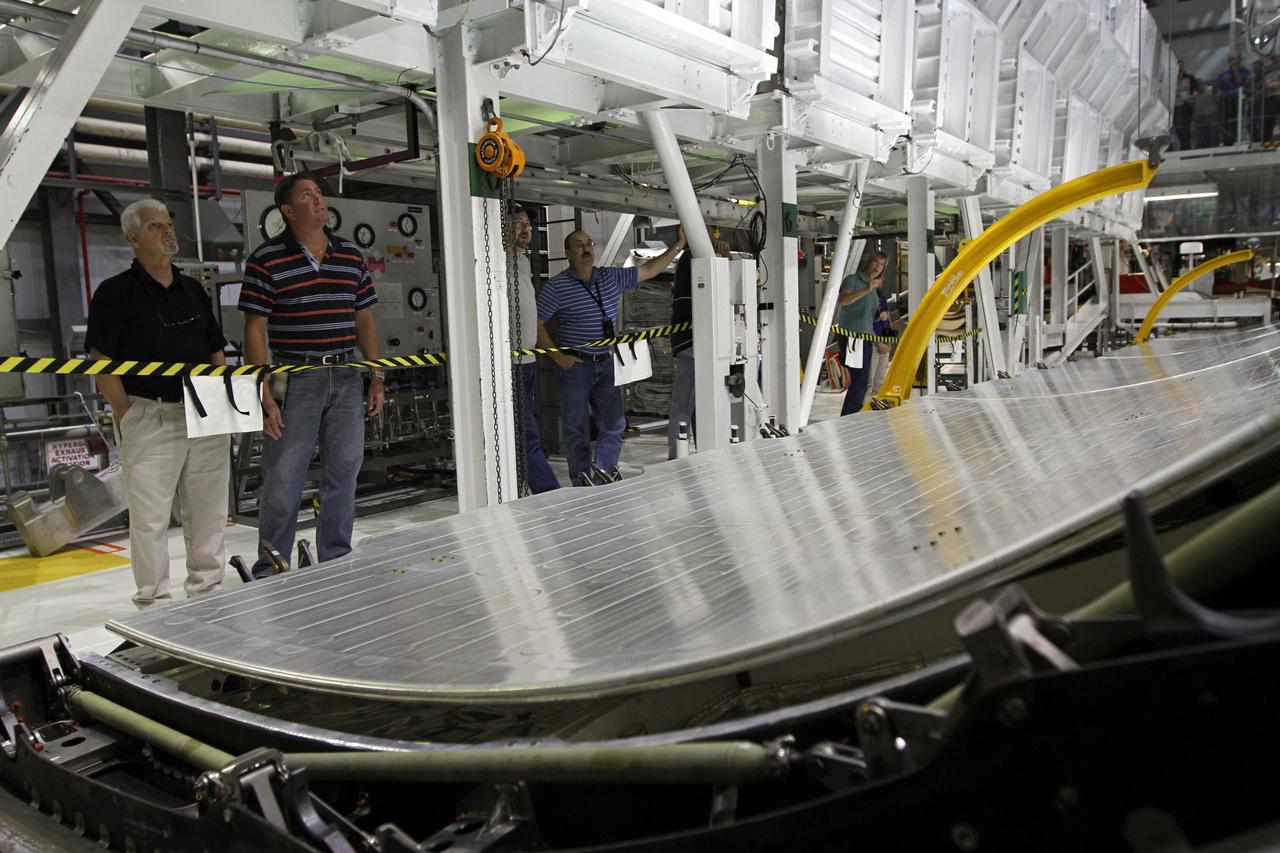
CAPE CANAVERAL, Fla. – Inside Orbiter Processing Facility-2 at NASA’s Kennedy Space Center in Florida, United Space Alliance technicians inspect space shuttle Endeavour’s payload bay doors after they were closed for the final time.     The work is part of Transition and Retirement of the remaining space shuttles, Endeavour and Atlantis. Endeavour is being prepared for public display at the California Science Center in Los Angeles. Its ferry flight to California is targeted for mid-September. Endeavour was the last space shuttle added to NASA’s orbiter fleet. Over the course of its 19-year career, Endeavour spent 299 days in space during 25 missions. For more information, visit http://www.nasa.gov/shuttle.  Photo credit: NASA/Kim Shiflett
KSC-2012-3429
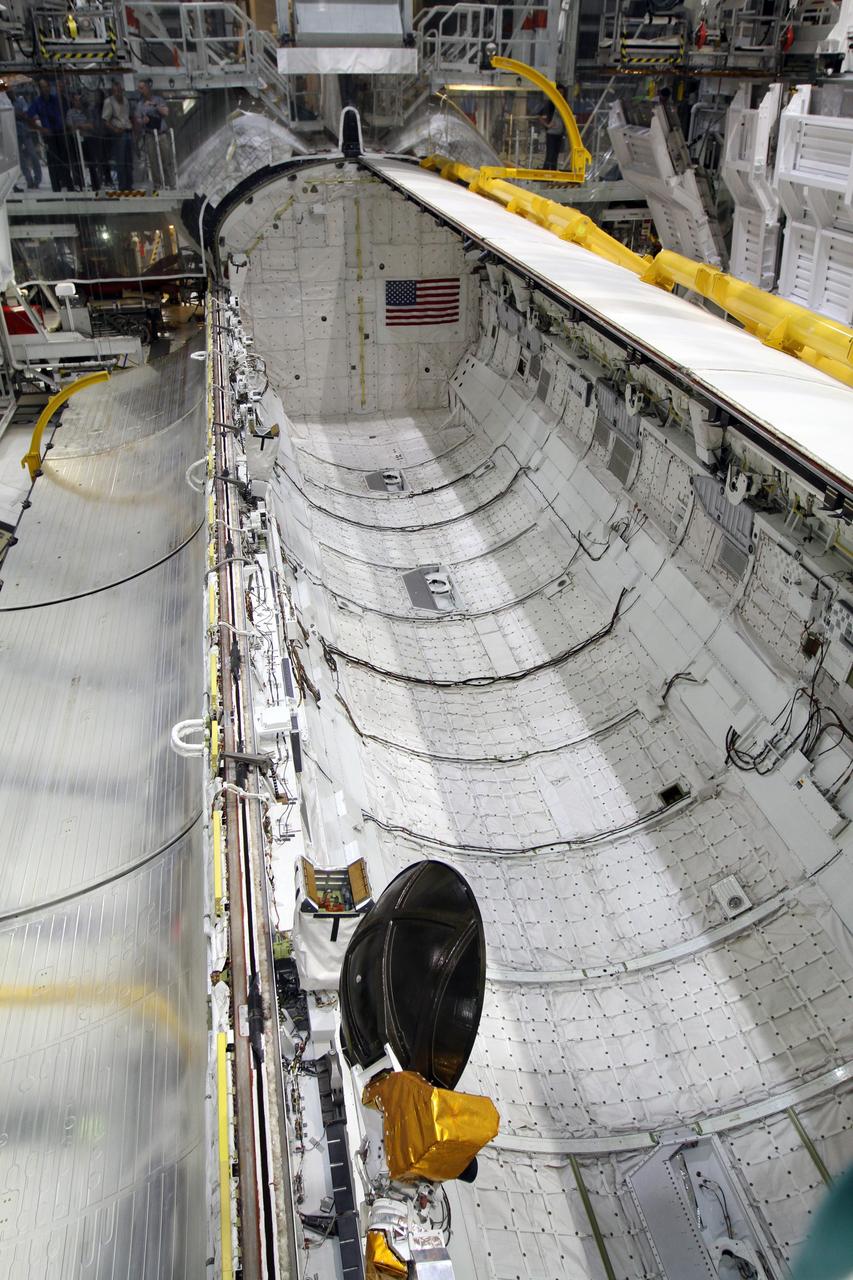
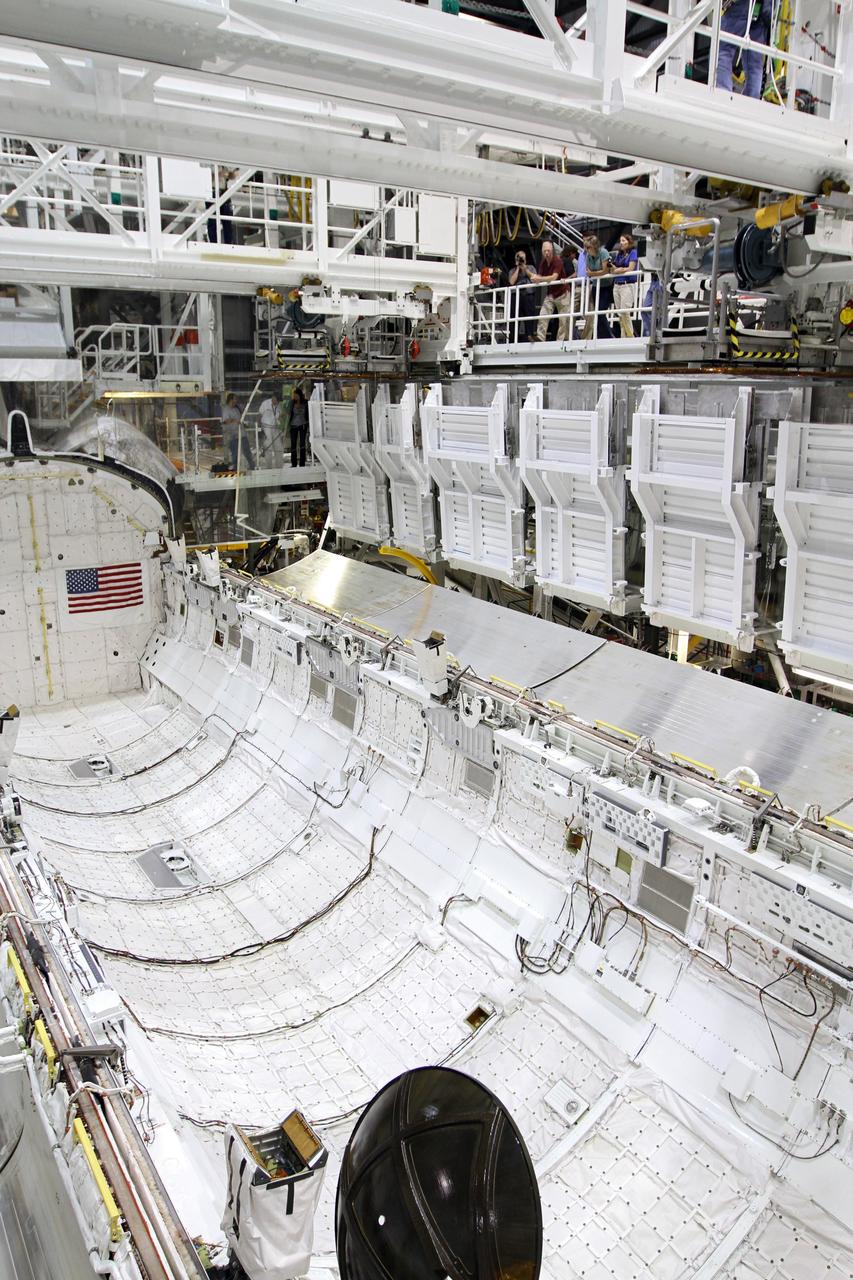
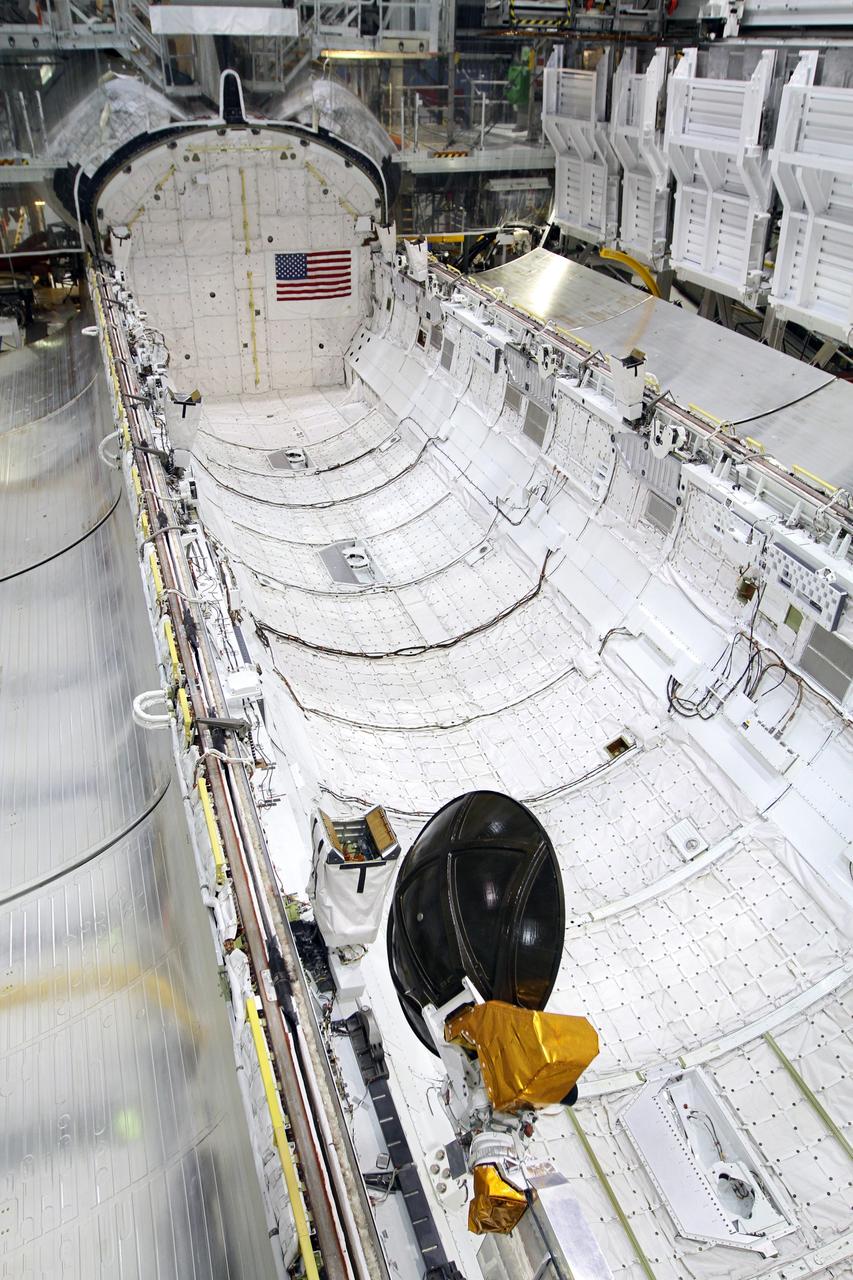
CAPE CANAVERAL, Fla. – Inside Orbiter Processing Facility-2 at NASA’s Kennedy Space Center in Florida, the payload bay doors on space shuttle Endeavour are in the open position. United Space Alliance technicians are preparing to close the doors for the final time.    The work is part of Transition and Retirement of the remaining space shuttles, Endeavour and Atlantis. Endeavour is being prepared for public display at the California Science Center in Los Angeles. Its ferry flight to California is targeted for mid-September. Endeavour was the last space shuttle added to NASA’s orbiter fleet. Over the course of its 19-year career, Endeavour spent 299 days in space during 25 missions. For more information, visit http://www.nasa.gov/shuttle.  Photo credit: NASA/Kim Shiflett
KSC-2012-3420
CAPE CANAVERAL, Fla. – Inside Orbiter Processing Facility-2 at NASA’s Kennedy Space Center in Florida, United Space Alliance technicians monitor the progress as space shuttle Endeavour’s payload bay doors begin to close for the final time.    The work is part of Transition and Retirement of the remaining space shuttles, Endeavour and Atlantis. Endeavour is being prepared for public display at the California Science Center in Los Angeles. Its ferry flight to California is targeted for mid-September. Endeavour was the last space shuttle added to NASA’s orbiter fleet. Over the course of its 19-year career, Endeavour spent 299 days in space during 25 missions. For more information, visit http://www.nasa.gov/shuttle.  Photo credit: NASA/Kim Shiflett
KSC-2012-3422
CAPE CANAVERAL, Fla. – Inside Orbiter Processing Facility-2 at NASA’s Kennedy Space Center in Florida, United Space Alliance technicians inspect space shuttle Endeavour’s wing after the payload bay doors were closed for the final time.    The work is part of Transition and Retirement of the remaining space shuttles, Endeavour and Atlantis. Endeavour is being prepared for public display at the California Science Center in Los Angeles. Its ferry flight to California is targeted for mid-September. Endeavour was the last space shuttle added to NASA’s orbiter fleet. Over the course of its 19-year career, Endeavour spent 299 days in space during 25 missions. For more information, visit http://www.nasa.gov/shuttle.  Photo credit: NASA/Kim Shiflett
KSC-2012-3428
CAPE CANAVERAL, Fla. – Inside Orbiter Processing Facility-2 at NASA’s Kennedy Space Center in Florida, the payload bay doors on space shuttle Endeavour are in the open position. United Space Alliance technicians are preparing to close the doors for the final time.    The work is part of Transition and Retirement of the remaining space shuttles, Endeavour and Atlantis. Endeavour is being prepared for public display at the California Science Center in Los Angeles. Its ferry flight to California is targeted for mid-September. Endeavour was the last space shuttle added to NASA’s orbiter fleet. Over the course of its 19-year career, Endeavour spent 299 days in space during 25 missions. For more information, visit http://www.nasa.gov/shuttle.  Photo credit: NASA/Kim Shiflett
KSC-2012-3419
CAPE CANAVERAL, Fla. – Inside Orbiter Processing Facility-2 at NASA’s Kennedy Space Center in Florida, United Space Alliance technicians monitor the progress of space shuttle Endeavour’s payload bay doors as they are closed for the final time.    The work is part of Transition and Retirement of the remaining space shuttles, Endeavour and Atlantis. Endeavour is being prepared for public display at the California Science Center in Los Angeles. Its ferry flight to California is targeted for mid-September. Endeavour was the last space shuttle added to NASA’s orbiter fleet. Over the course of its 19-year career, Endeavour spent 299 days in space during 25 missions. For more information, visit http://www.nasa.gov/shuttle.  Photo credit: NASA/Kim Shiflett
KSC-2012-3426
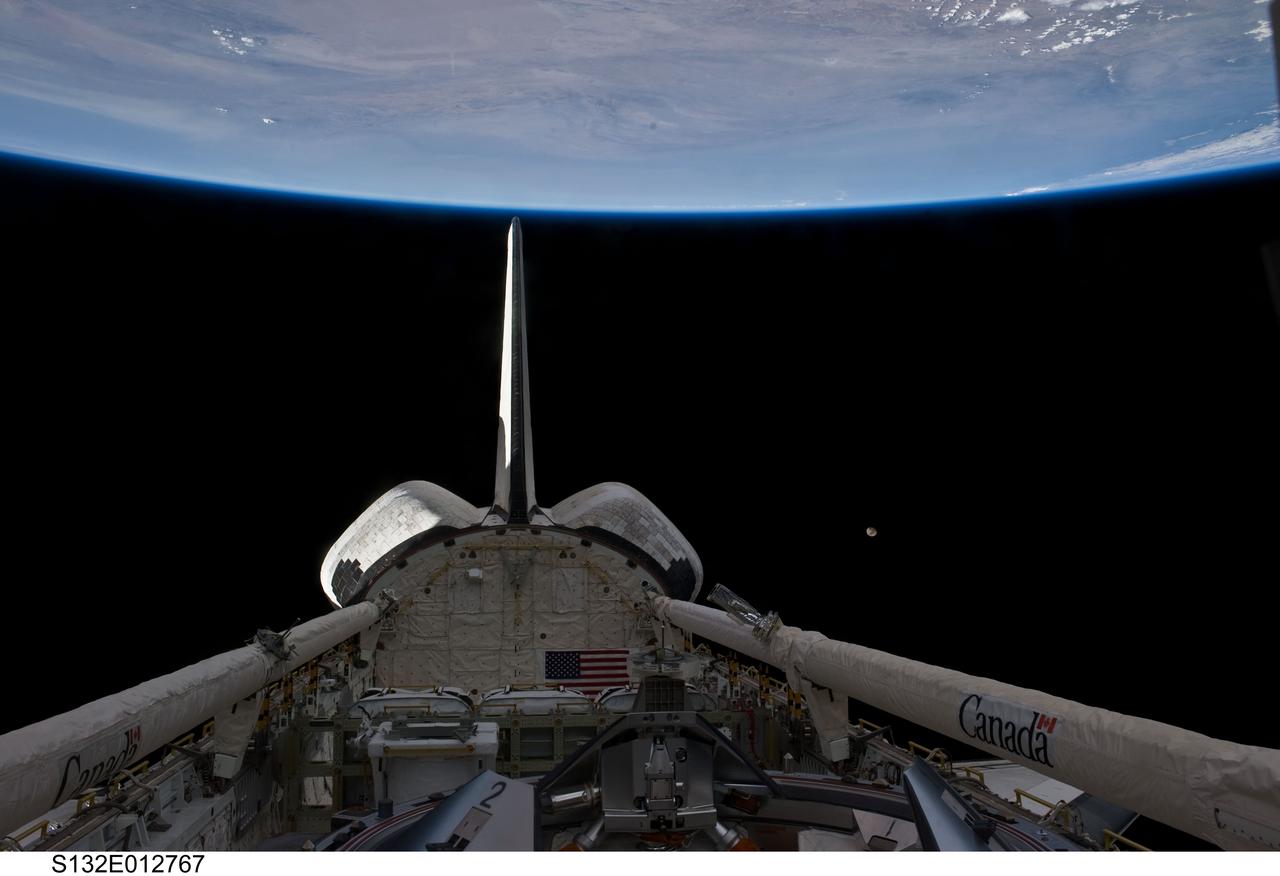
S132-E-012767 (25 May 2010) --- Space shuttle Atlantis’ vertical stabilizer, orbital maneuvering system (OMS) pods, remote manipulator system/orbiter boom sensor system (RMS/OBSS), payload bay and docking mechanism are featured in this image photographed by an STS-132 crew member on the shuttle during flight day 12 activities. The moon is visible at center right. Earth’s horizon and the blackness of space provide the backdrop for the scene.
Payload Bay on STS-132 Space Shuttle Atlantis
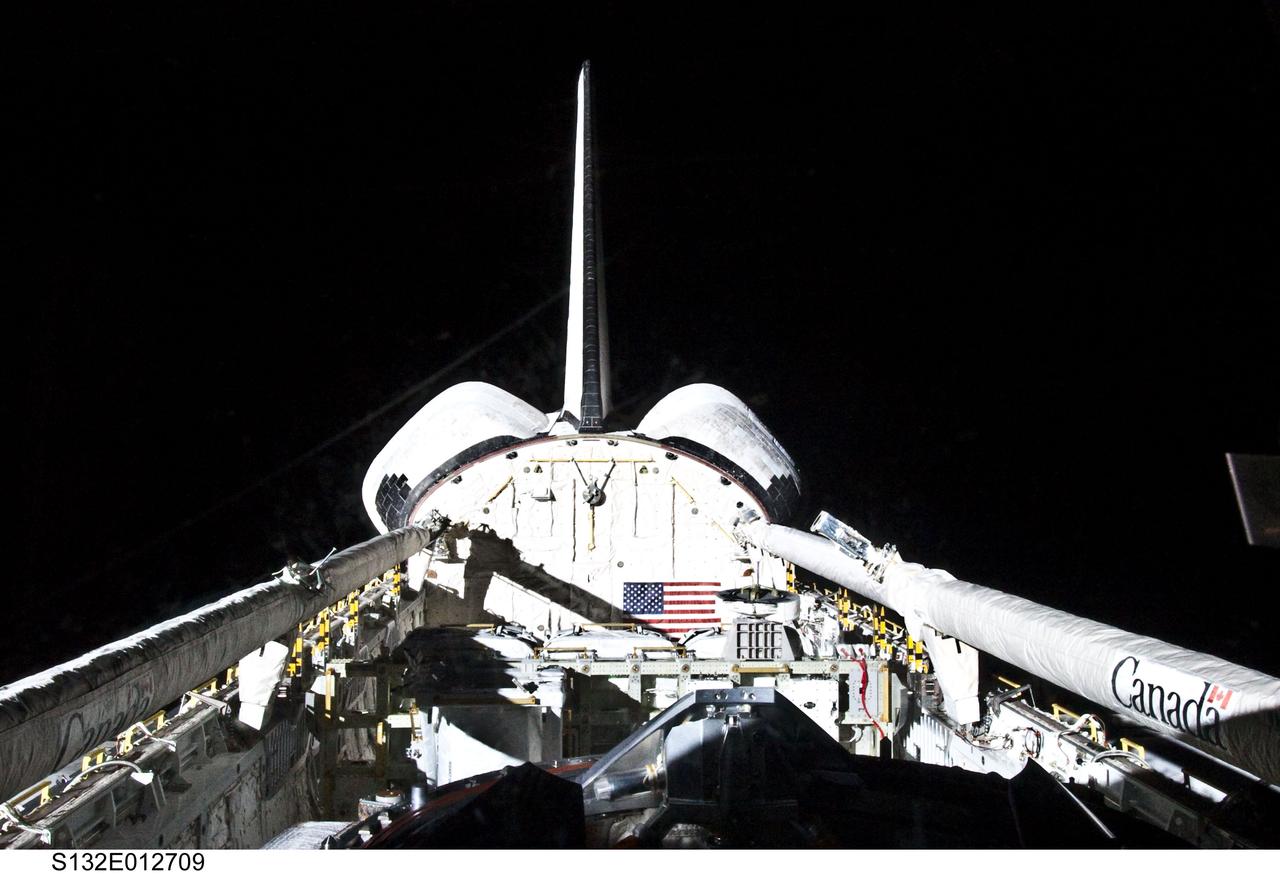
S132-E-012709 (25 May 2010) --- Space shuttle Atlantis’ vertical stabilizer, orbital maneuvering system (OMS) pods, remote manipulator system/orbiter boom sensor system (RMS/OBSS), payload bay and docking mechanism are featured in this image photographed by an STS-132 crew member on the shuttle during flight day 12 activities.
Payload Bay on STS-132 Space Shuttle Atlantis
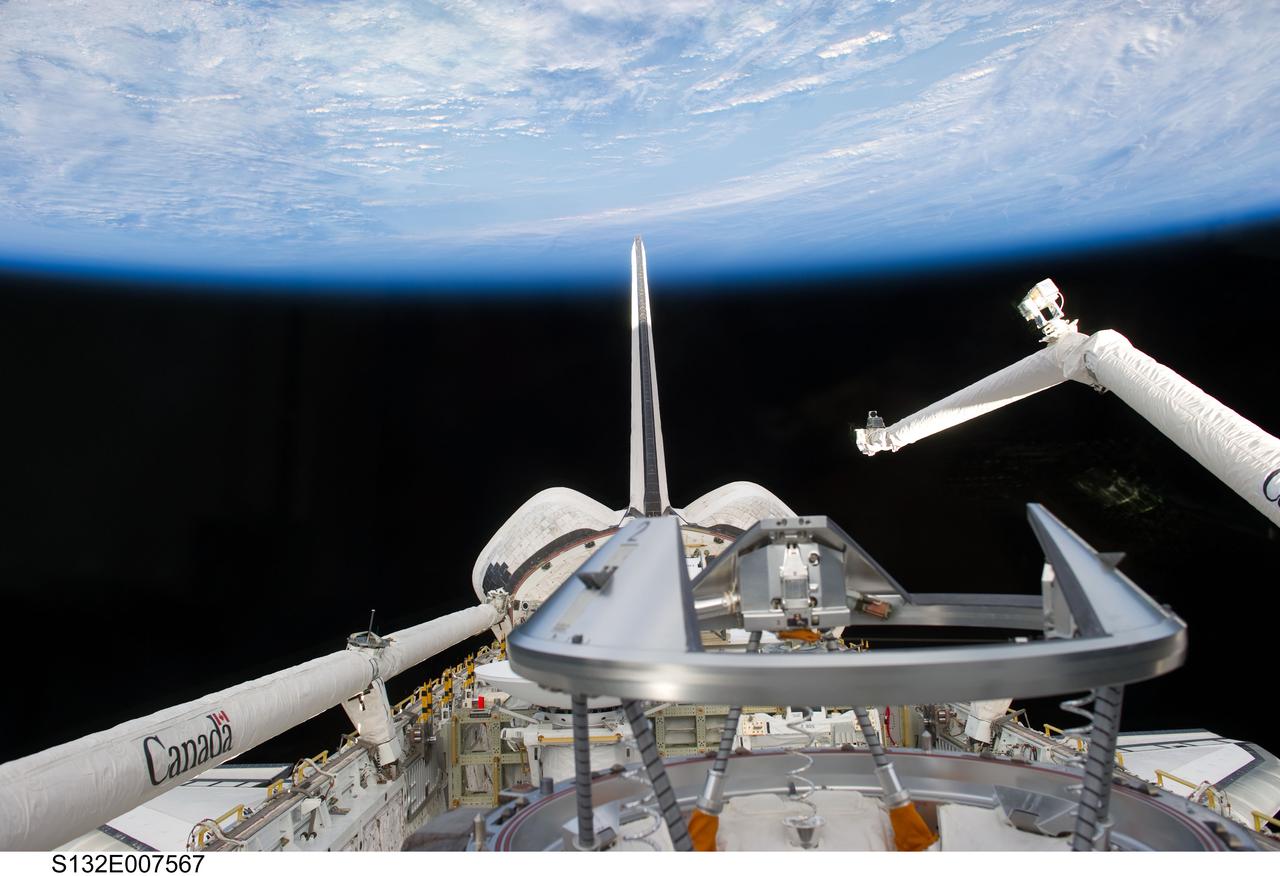
S132-E-007567 (15 May 2010) --- Backdropped by Earth’s horizon and the blackness of space, space shuttle Atlantis’ payload bay, docking mechanism (foreground), vertical stabilizer, orbital maneuvering system (OMS) pods, and Remote Manipulator System/Orbiter Boom Sensor System (RMS/OBSS) are featured in this image photographed by an STS-132 crew member from an aft flight deck window.
STS-132 Space Shuttle Atlantis Payload Bay
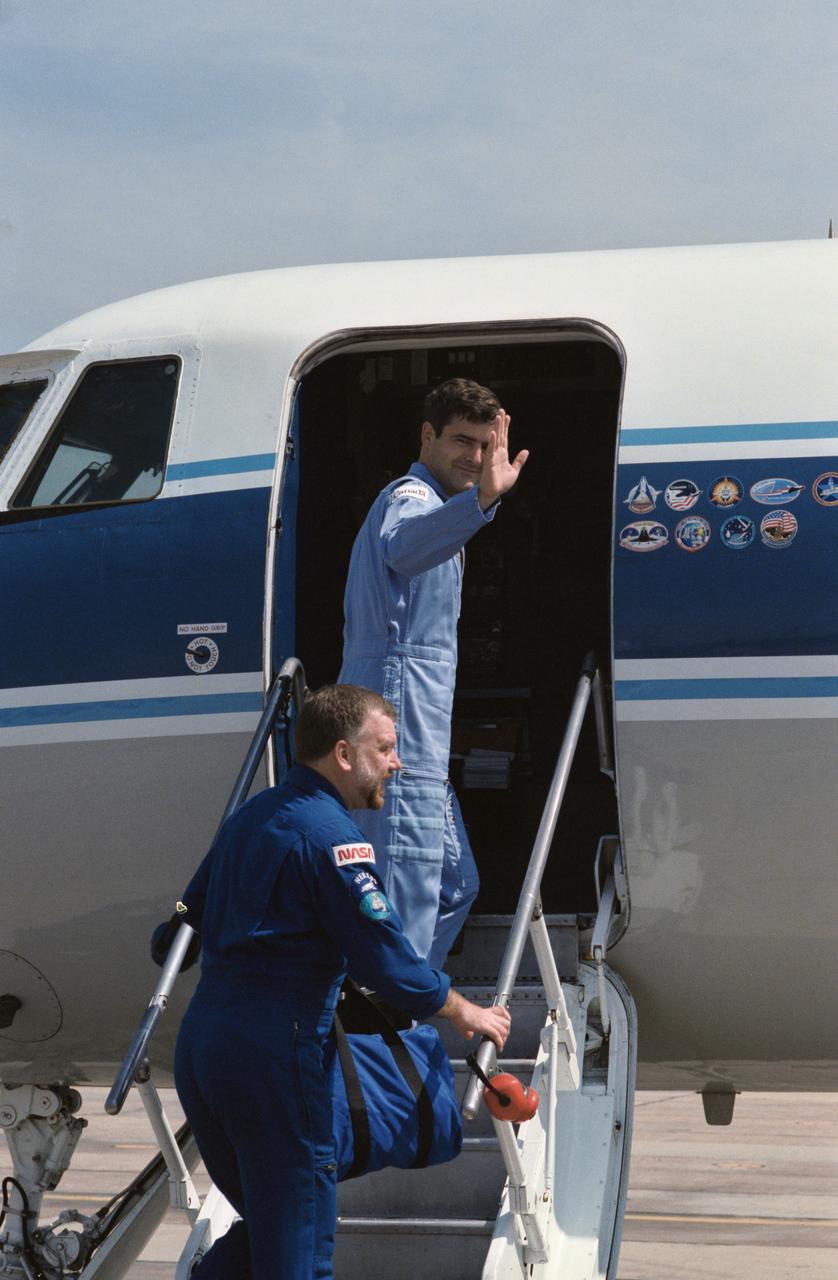
Payload Specialists Marc Garneau and Paul Scully-Power prepare to board the Shuttle Trainer aircraft to leave for the Kennedy Space Center (KSC) for the STS 41-G mission.
Payload Specialists Garneau and Scully-Power prepare to leave for KSC
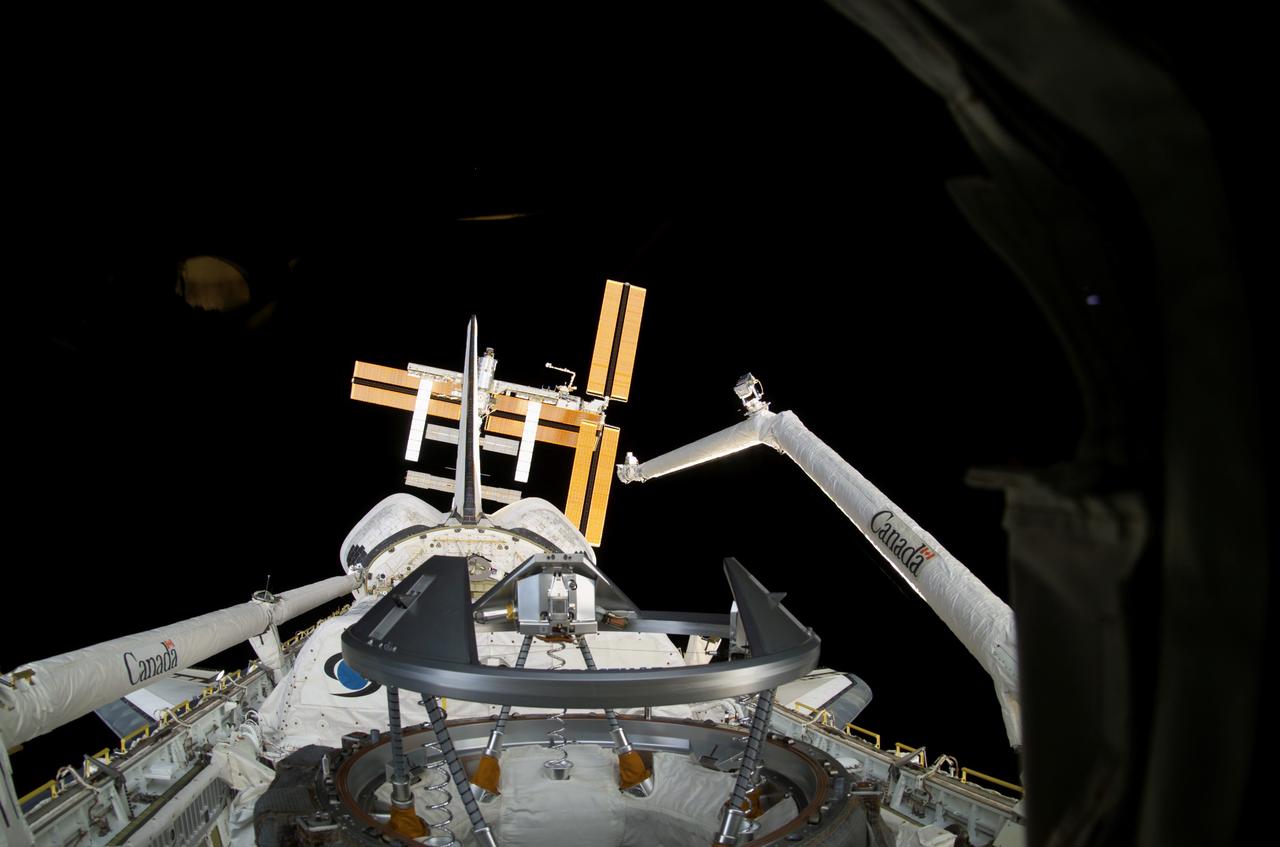
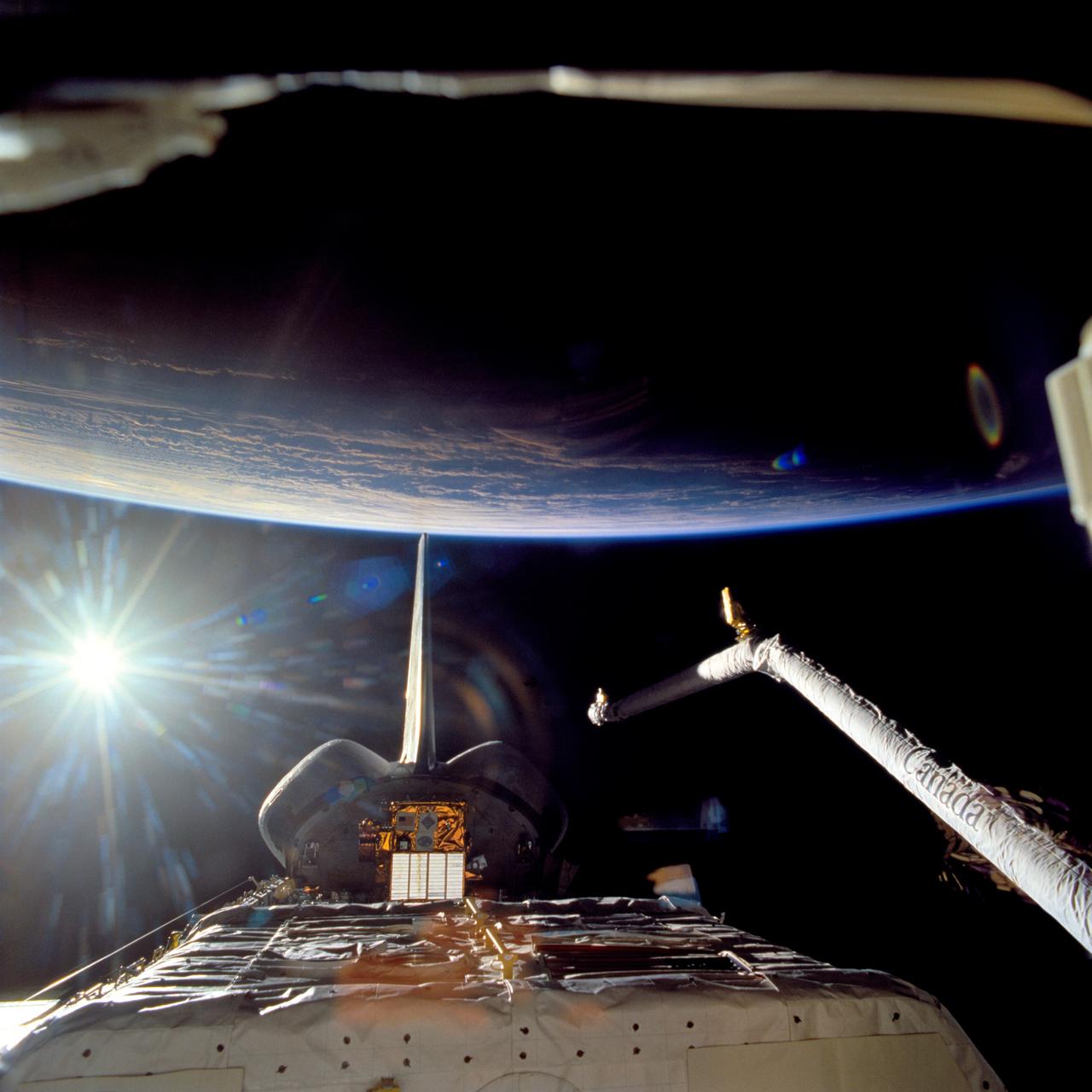
S116-E-05504 (11 Dec. 2006) --- As seen through windows on the aft flight deck of Space Shuttle Discovery, the shuttle's payload bay and the approaching International Space Station (background) are featured in this image photographed by a STS-116 crewmember during flight day three activities. Pictured in the payload bay are the shuttle's docking mechanism (foreground), Spacehab module (partially obscured), the Canadian-built Remote Manipulator System (RMS) robotic arm (right), and the Remote Manipulator System/Orbiter Boom Sensor System (left, in stowed position).
Payload Bay as STS-116 Space Shuttle Discovery approaches the ISS
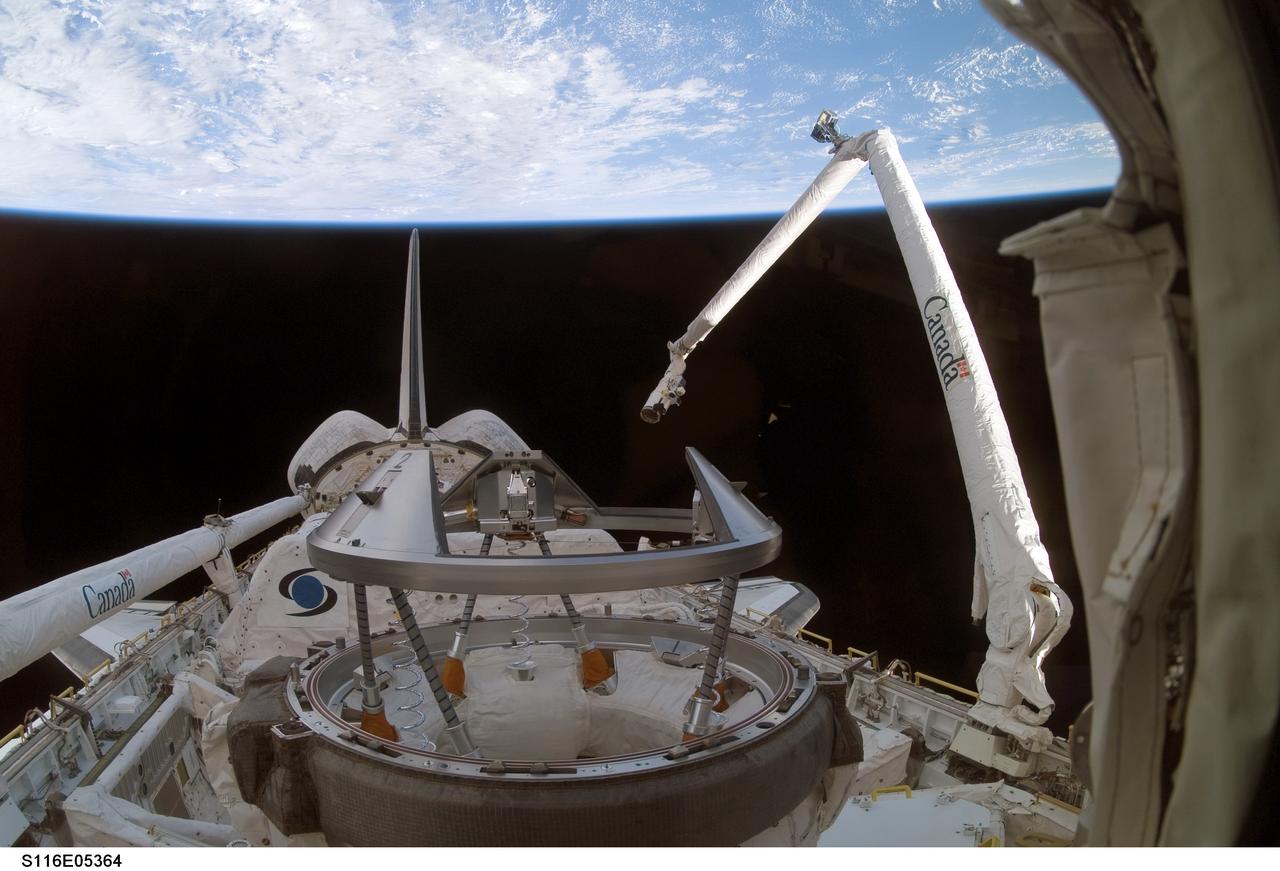
S116-E-05364 (11 Dec. 2006) --- As seen through windows on the aft flight deck of Space Shuttle Discovery, the payload bay is featured in this image photographed by a STS-116 crewmember during flight day three activities. Pictured in the payload bay is the shuttle's docking mechanism (foreground), Spacehab module (partially obscured), the Canadian-built Remote Manipulator System (RMS) robotic arm (right), and the Remote Manipulator System/Orbiter Boom Sensor System (left, in stowed position).
Payload bay from aft FD window on Space Shuttle Discovery
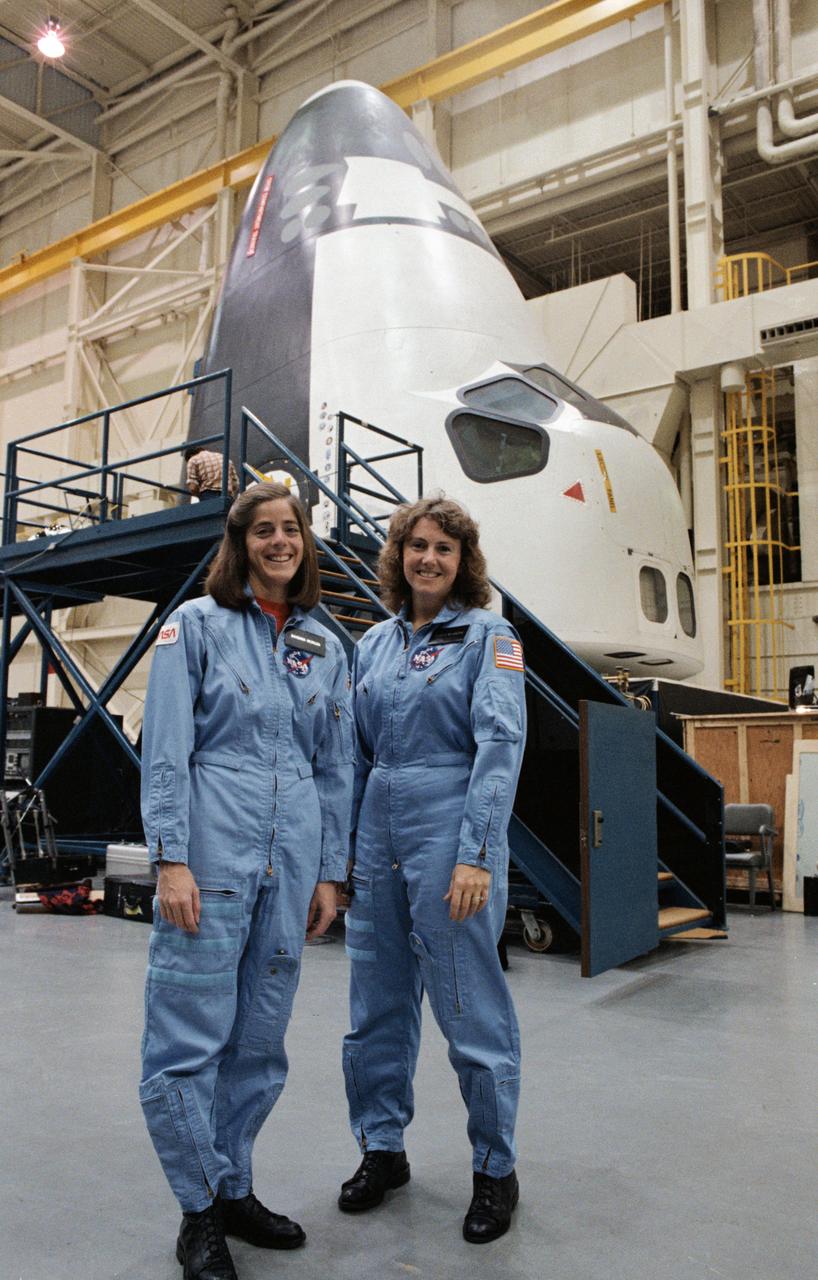
S85-46693 (26 Dec. 1985) --- Sharon Christa McAuliffe (right), the Teacher-in-Space payload specialist assigned to the STS-51L mission, and her backup, Barbara R. Morgan pose for photos after training in the shuttle mock-up and integration laboratory at JSC. The shuttle crew compartment, in a launch mode, can be seen in the background. Photo credit: NASA
Christa McAuliffe and Barbara Morgan pose for photos after training
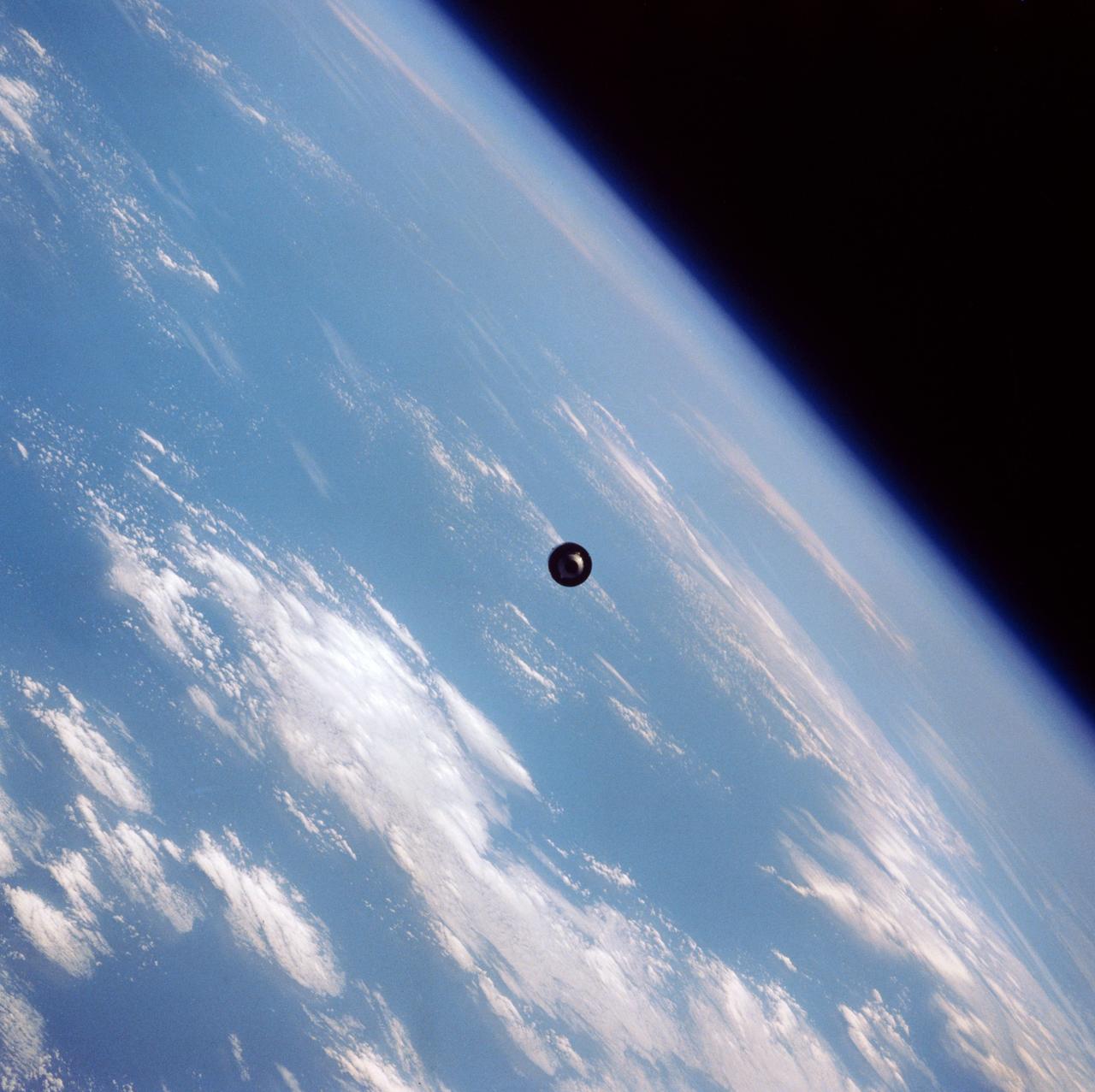
41D-39-068 (1 Sept 1984) --- Quickly moving away from the Space Shuttle Discovery is the Telstar 3 communications satellite, deployed September 1, 1984.  The 41-D crew successfully completed three satellite placements, of which this was the last.  Telstar was the second 41-D deployed satellite to be equipped with a payload assist module (PAM-D).  The frame was exposed with a 70mm camera.
View of the SBS-4 communications satellite in orbit above the earth
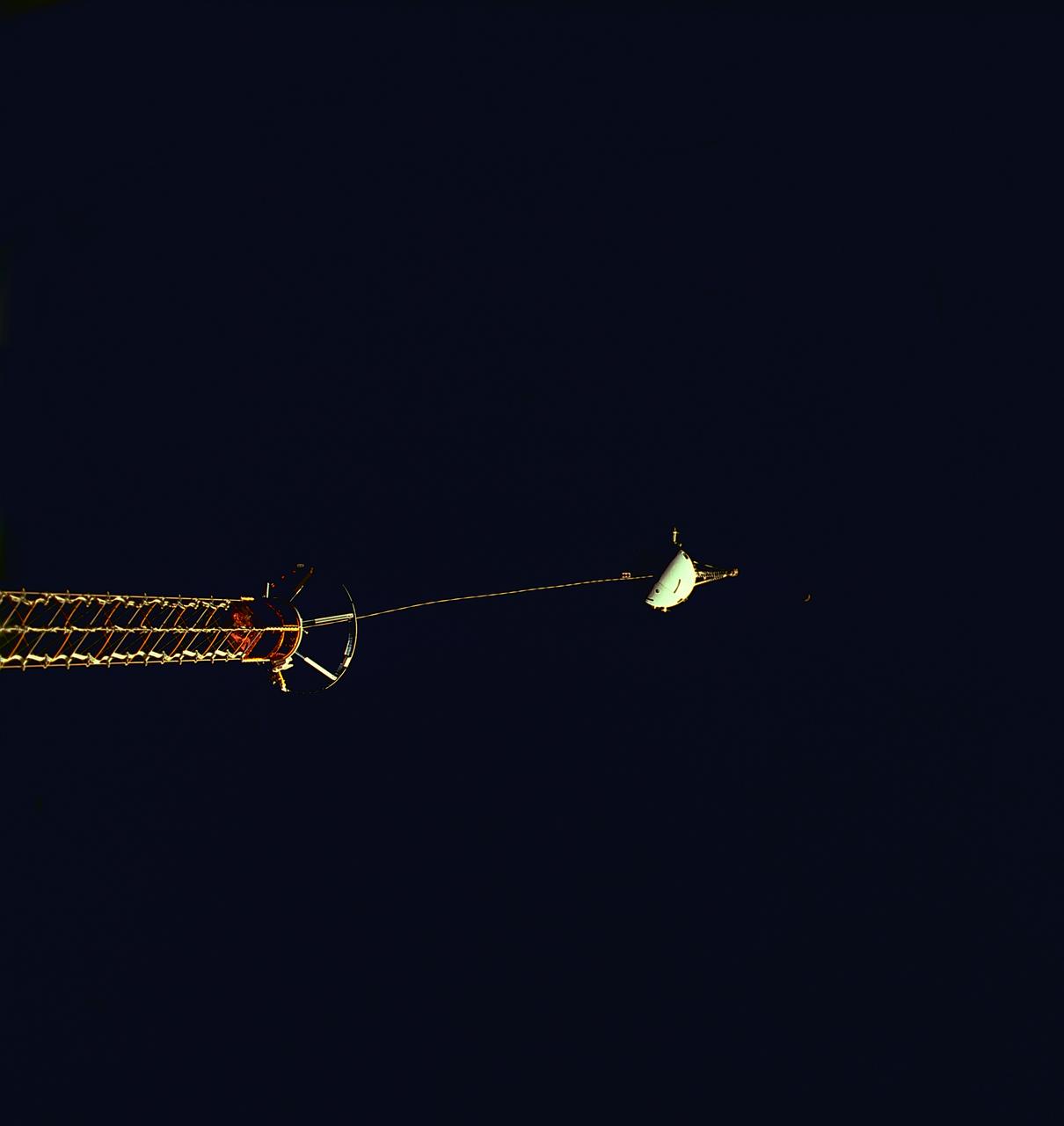
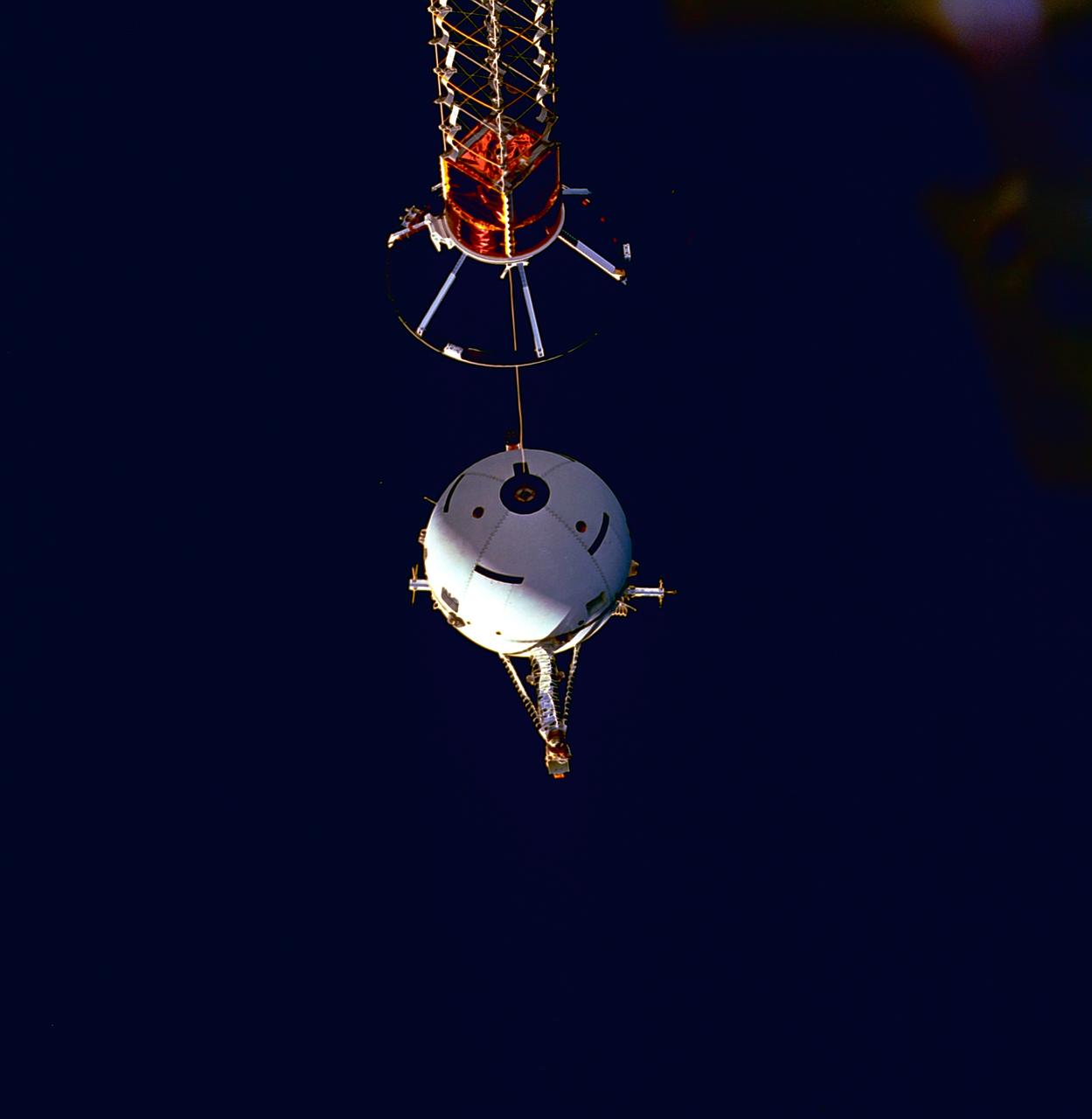
STS075-711-024 (25 Feb. 1996) --- The Tethered Satellite System (TSS) is seen as it is reeled out during early stages of deployment operations.  The crew deployed the TSS, which later broke free.  The seven member crew was launched aboard the space shuttle Columbia on Feb. 22, 1996, and landed on March 9, 1996. Crewmembers were Andrew M. Allen, mission commander; Scott J. Horowitz, pilot; Franklin R. Chang-Diaz, payload commander; and Maurizio Cheli European Space Agency (ESA); Jeffrey A. Hoffman and Claude Nicollier, ESA, all mission specialists; along with payload specialist Umberto Guidoni of the Italian Space Agency (ASI).
TSS-1R during deployment
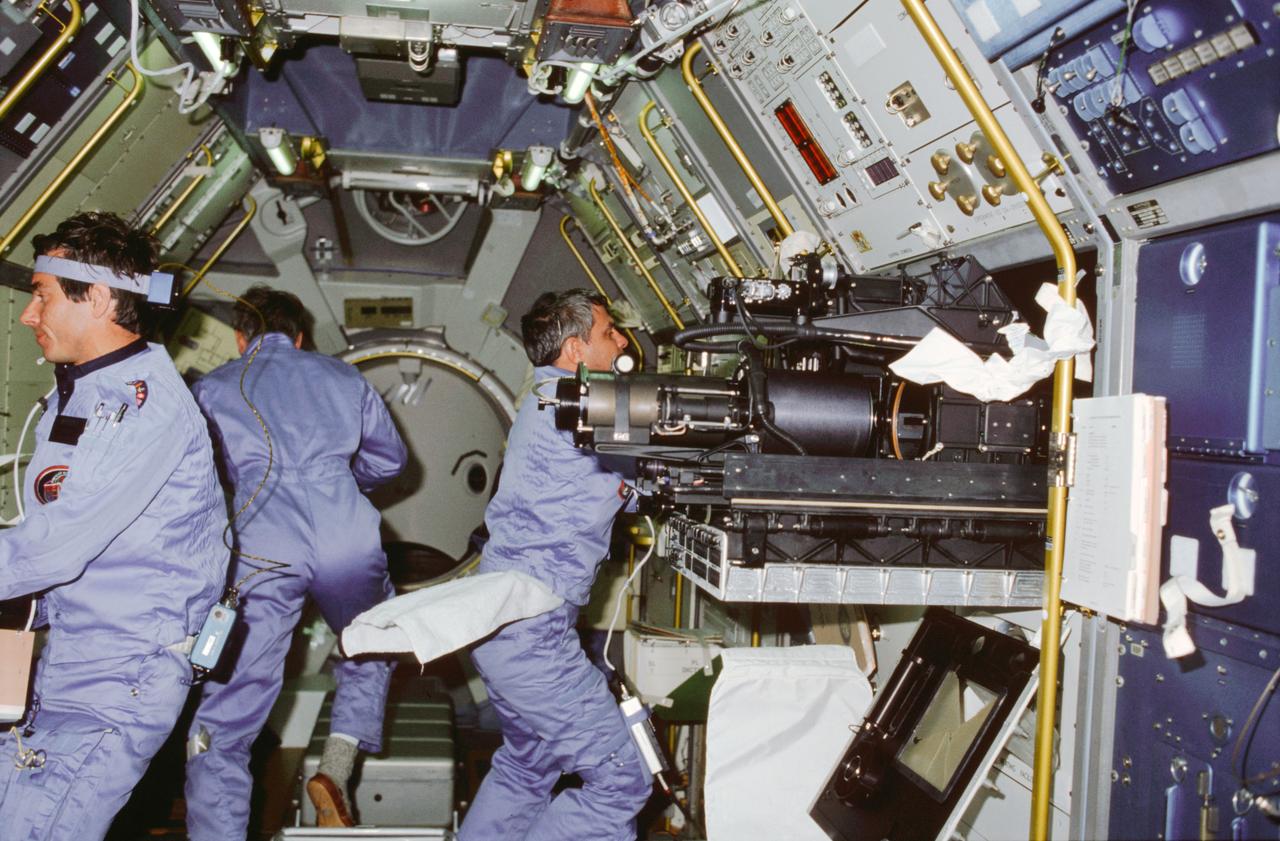
STS009-03-093 (28 Nov-8 Dec 1983) --- A mission specialist and two payload specialists busy themselves in the Spacelab 1 module aboard the Earth orbiting Space Shuttle Columbia.  Left to right are Payload Specialist Robert A. R. Parker.  Parker is partially obscured by a deployed instrument of the fluid physics module at the materials sciences double rack.  Merbold, a physicist from Max-Planck Institute in the Federal Republic of Germany, wears a head band-like device and a recorder as part of an overall effort to learn more about space adaptation.  Both Space lab 1 payload specialists wore the devices during most of their waking hours on this 10-day flight.  The frame was exposed with a 35mm camera.
STS-9 crewmembers work in the Spacelab 1 module
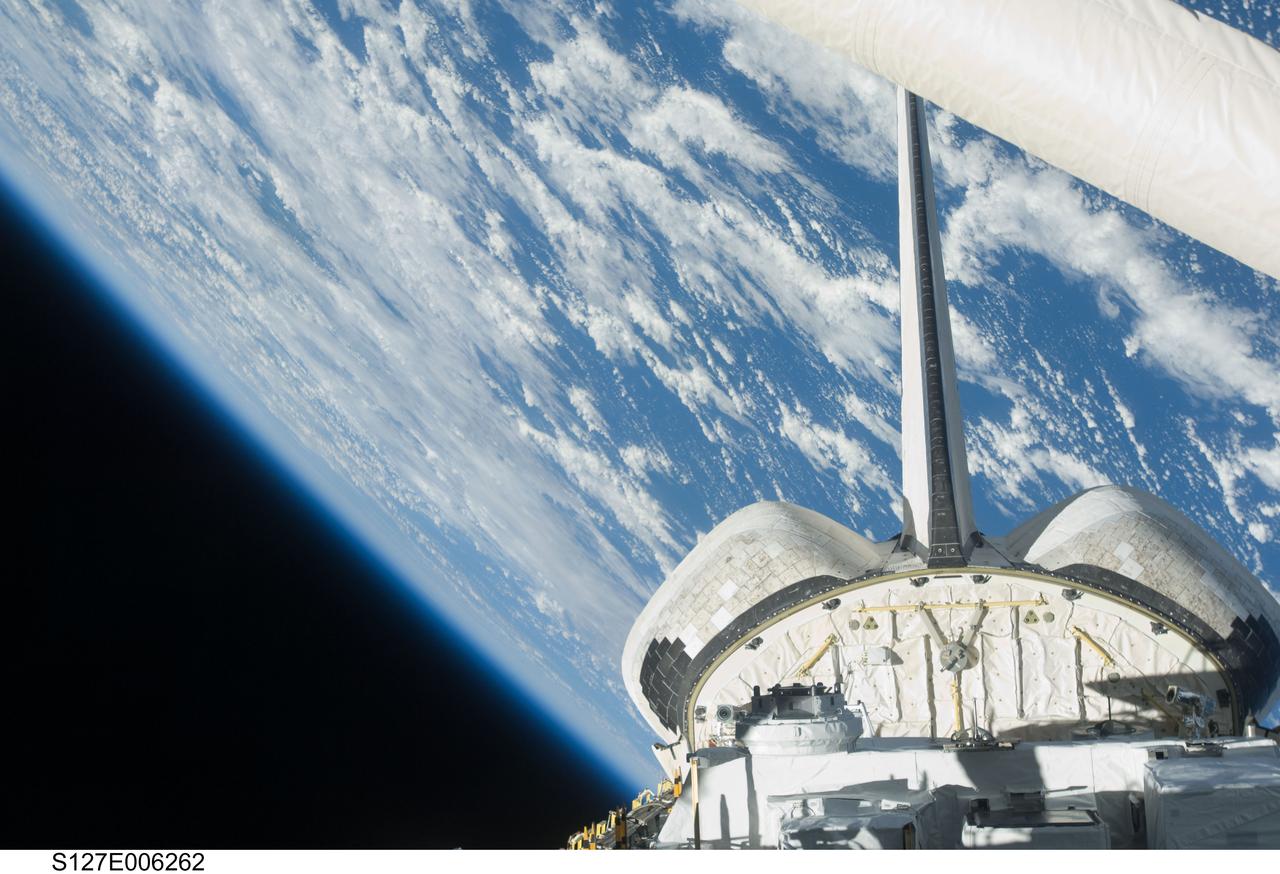
S127-E-006262 (16 July 2009) --- Backdropped by a blue and white Earth and the blackness of space, a partial view of Space Shuttle Endeavour?s payload bay, vertical stabilizer and orbital maneuvering system (OMS) pods are featured in this image photographed by a STS-127 crew member from an aft flight deck window.
Payload Bay taken by STS-127 Crew on Space Shuttle Endeavour
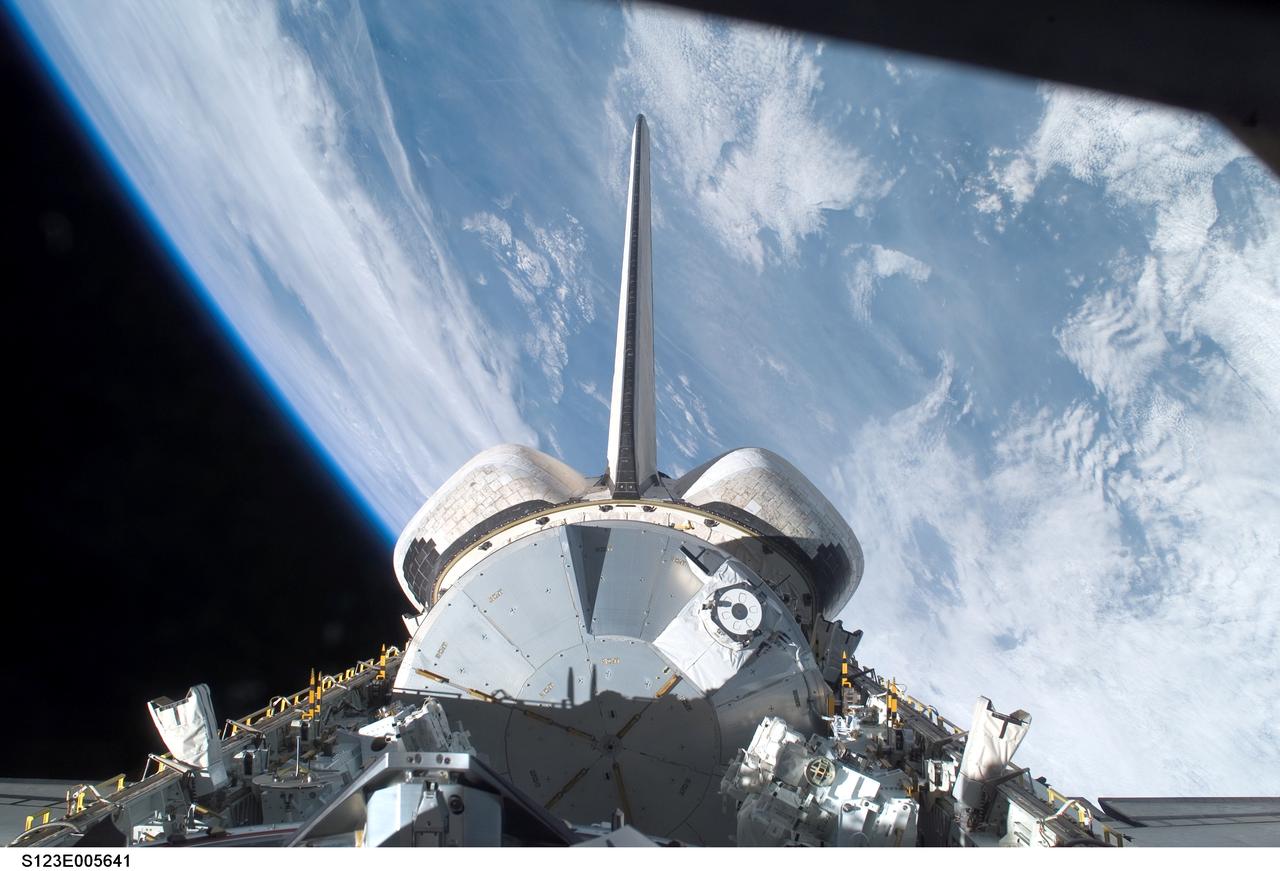
S123-E-005641 (13 March 2008) --- Backdropped by Earth's horizon and the blackness of space, the logistics module for the Japanese Kibo laboratory in Space Shuttle Endeavour's payload bay, vertical stabilizer and orbital maneuvering system (OMS) pods are featured in this image photographed by a STS-123 crewmember.
Space Shuttle Endeavour,OV 105,Payload Bay during STS-123
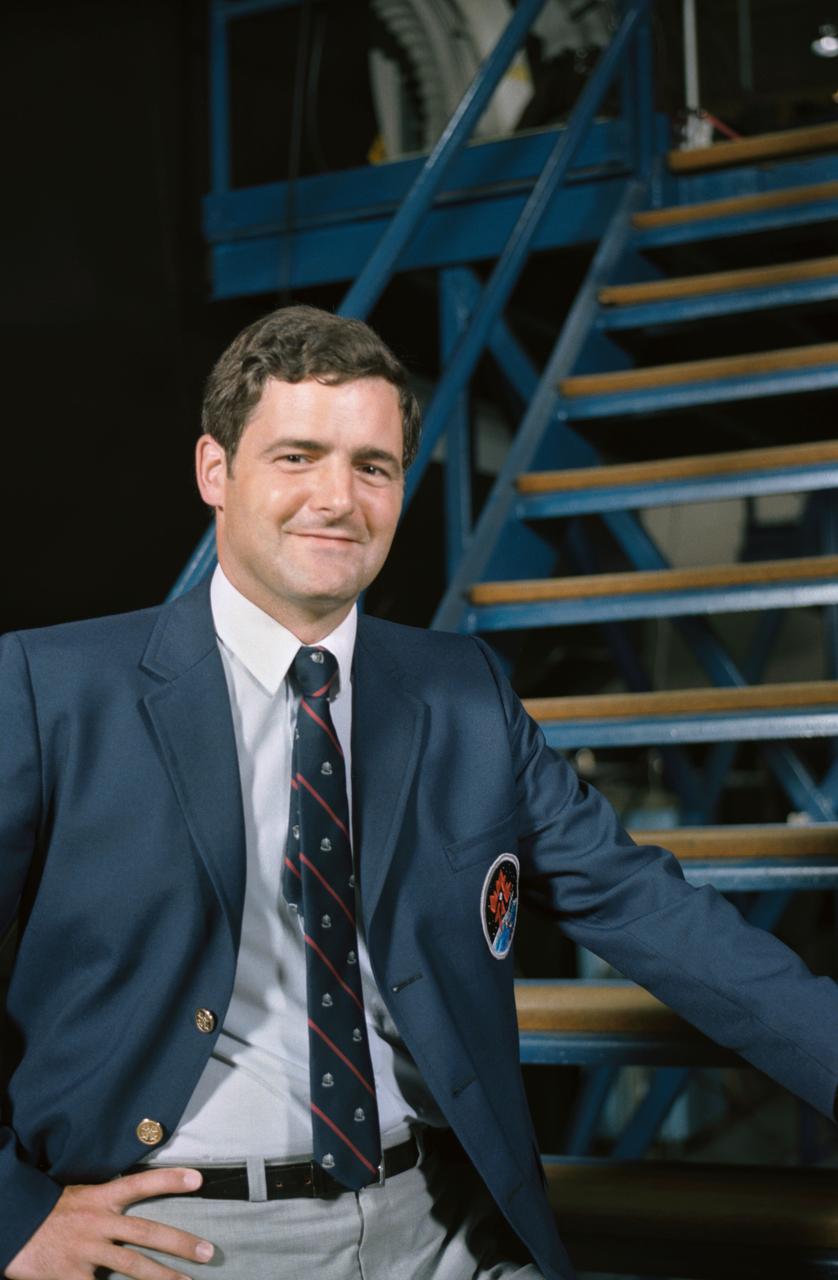
41D-3276 (S14-3276)(4 Sept 1984) --- Marc Garnea, 41-G payload specialist, will represent the Canadian National Research Council when the seven-member crew lauches aboard the Space Shuttle Challenger on Oct. 5, 1984.  Garneau and other members of the crew had earlier met the press for the first time   as a group.
Portrait view of Payload Specialist Marc Garneau
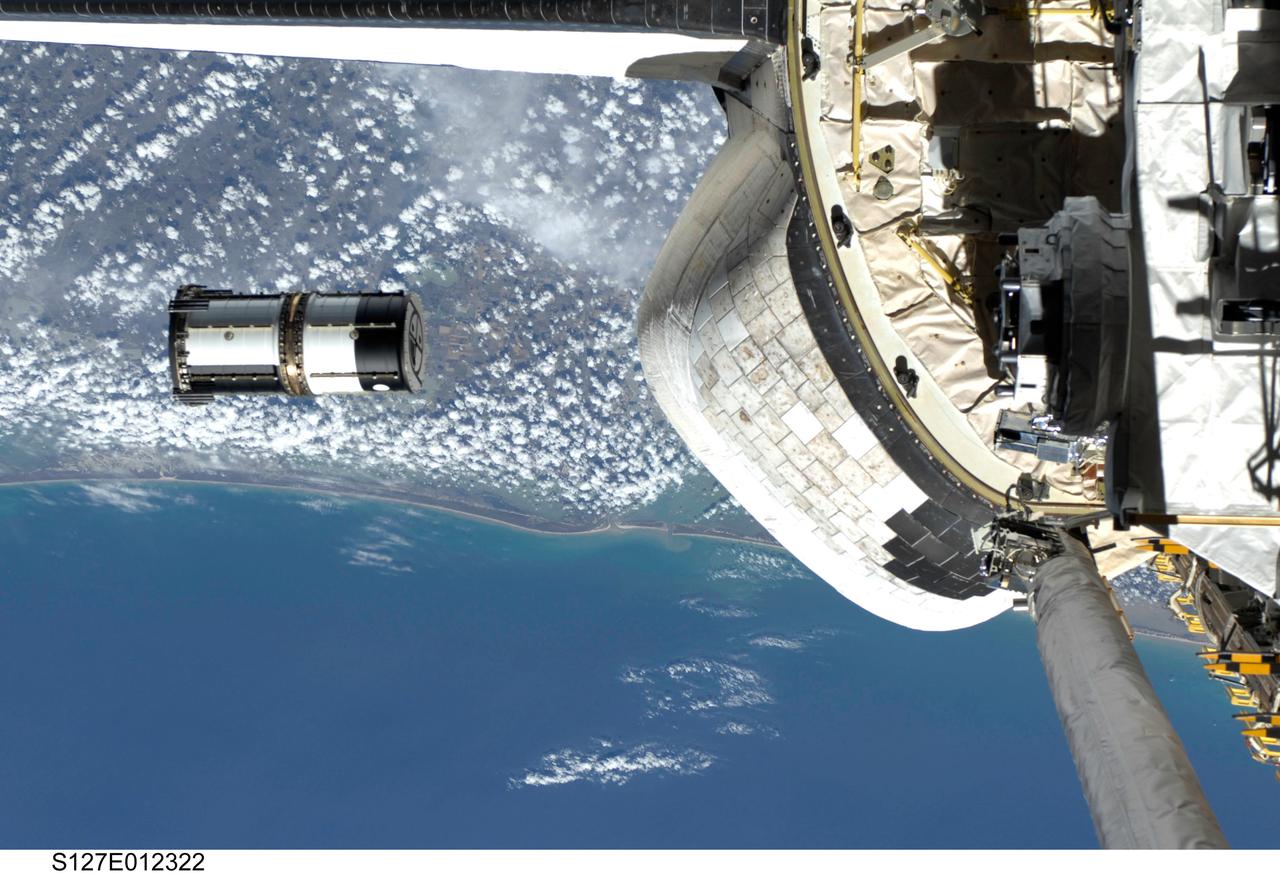
S127-E-012322 (30 July 2009) --- As seen through windows on the aft flight deck of Space Shuttle Endeavour, a Department of Defense pico-satellite known as Atmospheric Neutral Density Experiment 2 (ANDE-2) is released from the shuttle's payload bay by STS-127 crew members. ANDE-2 consists of two spherical micro-satellites which will measure the density and composition of the low-Earth orbit (LEO) atmosphere while being tracked from the ground. The data will be used to better predict the movement of objects in orbit.
Deployment of DRAGONSAT from Space Shuttle Endeavours Payload Bay
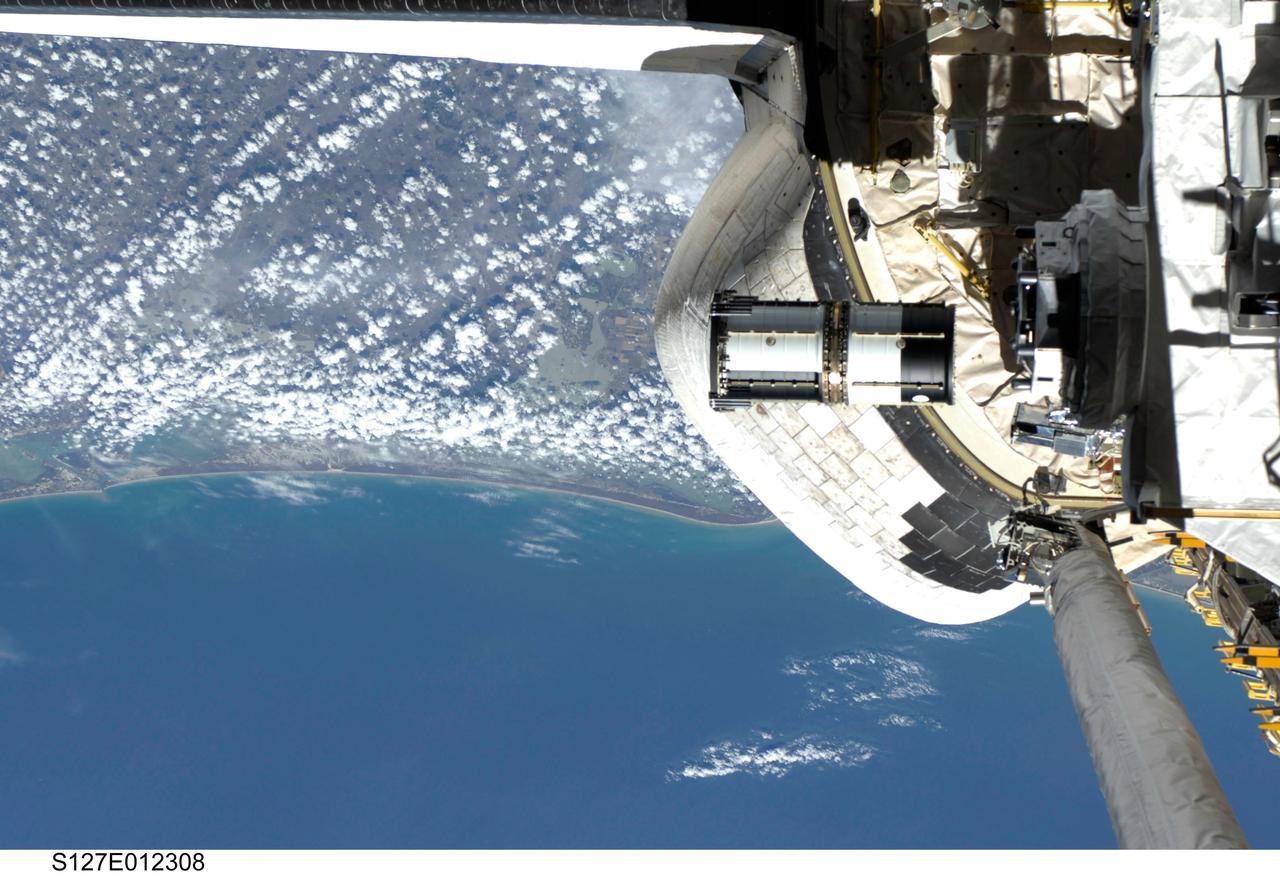
S127-E-012308 (30 July 2009) --- As seen through windows on the aft flight deck of Space Shuttle Endeavour, a Department of Defense pico-satellite known as Atmospheric Neutral Density Experiment 2 (ANDE-2) is released from the shuttle's payload bay by STS-127 crew members. ANDE-2 consists of two spherical micro-satellites which will measure the density and composition of the low-Earth orbit (LEO) atmosphere while being tracked from the ground. The data will be used to better predict the movement of objects in orbit.
Deployment of DRAGONSAT from Space Shuttle Endeavours Payload Bay
STS075-701-087 (25 Feb. 1996) --- A medium close-up view, captured with a 70mm camera, shows the Tethered Satellite System (TSS) and part of its supportive boom device prior to deployment operations. On Feb. 25, 1996, the crew deployed the TSS, which later broke free.  The seven member crew was launched aboard the space shuttle Columbia on Feb. 22, 1996, and landed on March 9, 1996. Crewmembers were Andrew M. Allen, mission commander; Scott J. Horowitz, pilot; Franklin R. Chang-Diaz, payload commander; and Maurizio Cheli, European Space Agency (ESA); Jeffrey A. Hoffman and Claude Nicollier, ESA, all mission specialists; along with payload specialist Umberto Guidoni of the Italian Space Agency (ASI).
TSS-1R deployment
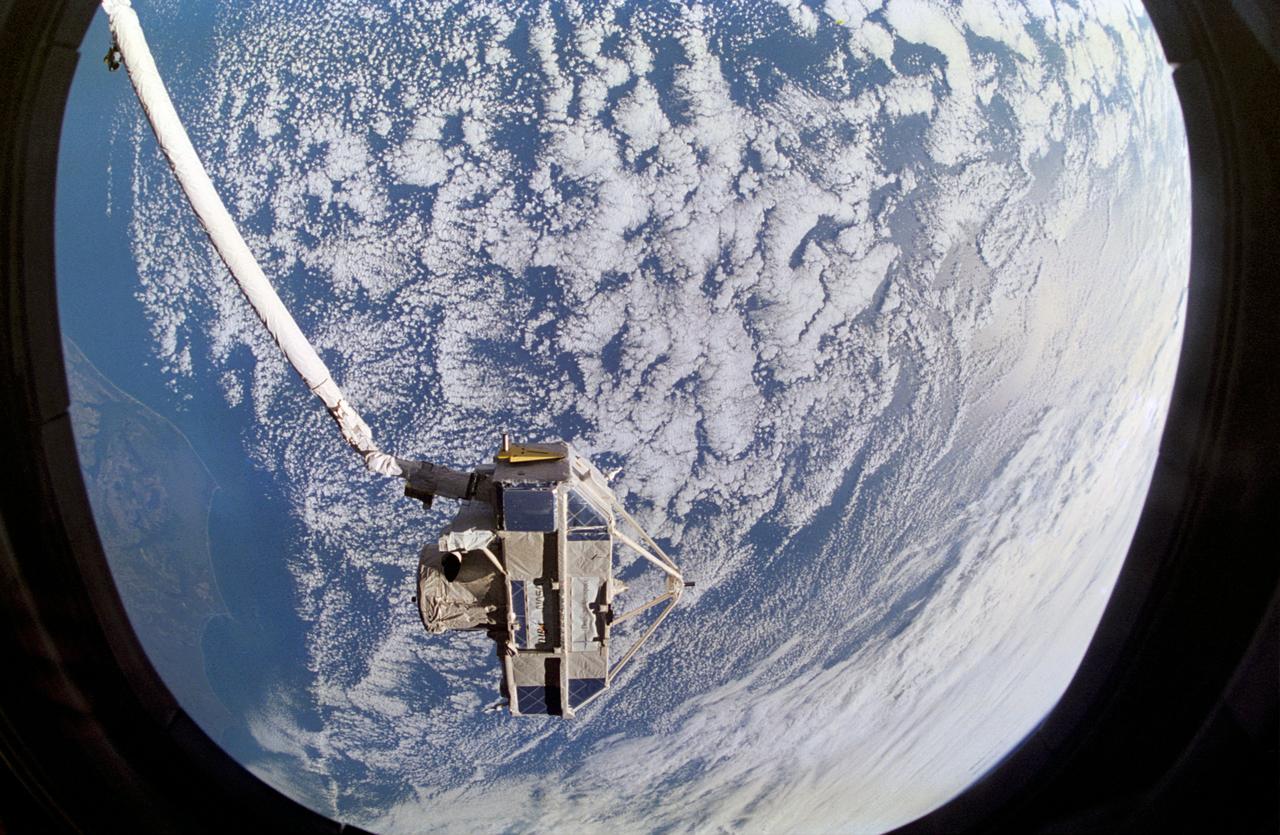
STS008-35-1239 (30 Aug.-5 Sept. 1983) --- The space shuttle Challenger?s payload flight test article (PFTA) is lifted from the cargo bay and held over clouds and water on Earth. The 70mm frame was photographed by one of the five STS-8 crew members with a free hand during the busy RMS/PFTA agenda. Photo credit: NASA
Close up view of the PFTA being lifted out of the payload bay
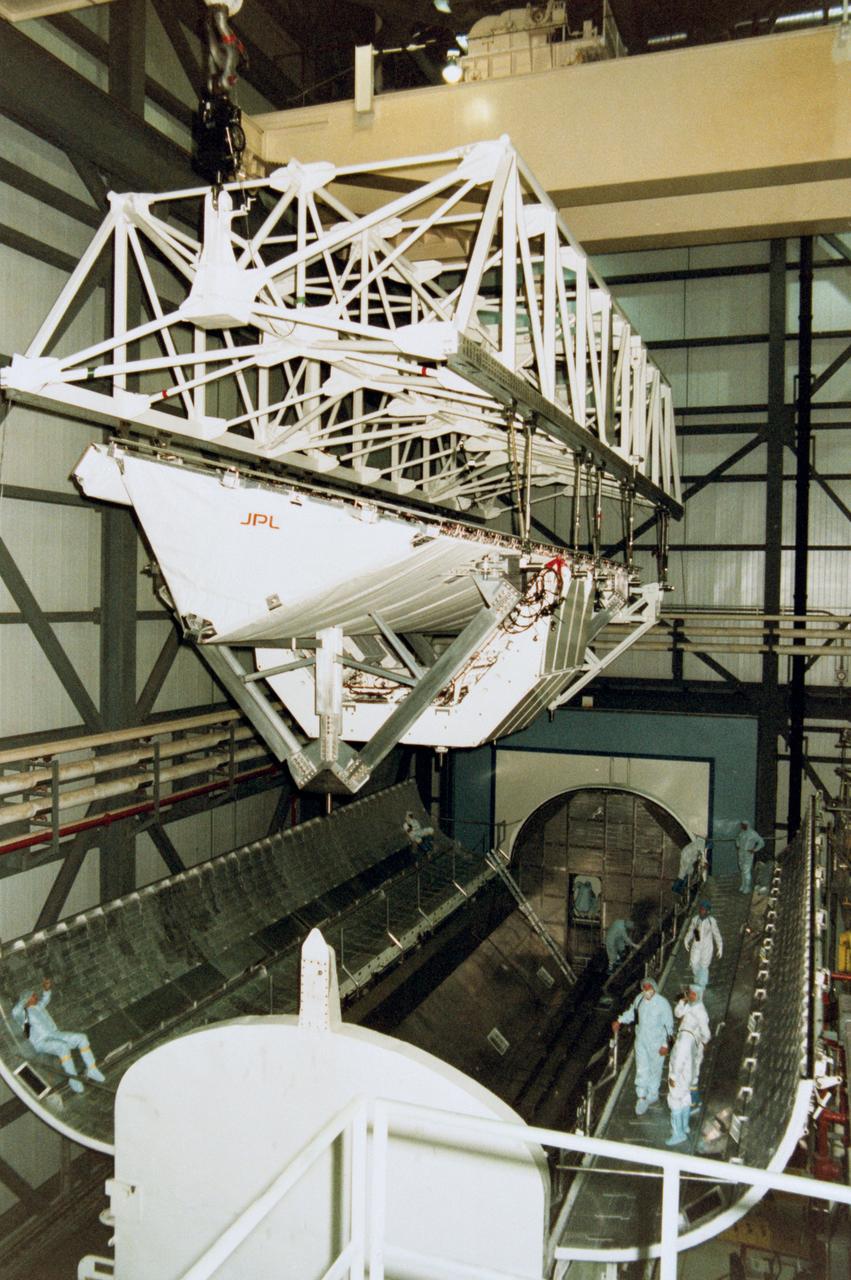
S94-30392 (16 Feb 1994) --- The Space Radar Laboratory-1 (SRL-1) is being transferred from the payload canister transporter into the payload bay of the Space Shuttle Endeavour.  SRL-1 will be launched on STS-59 in April of this year.
Space Radar Laboratory photos taken at Kennedy Space Center
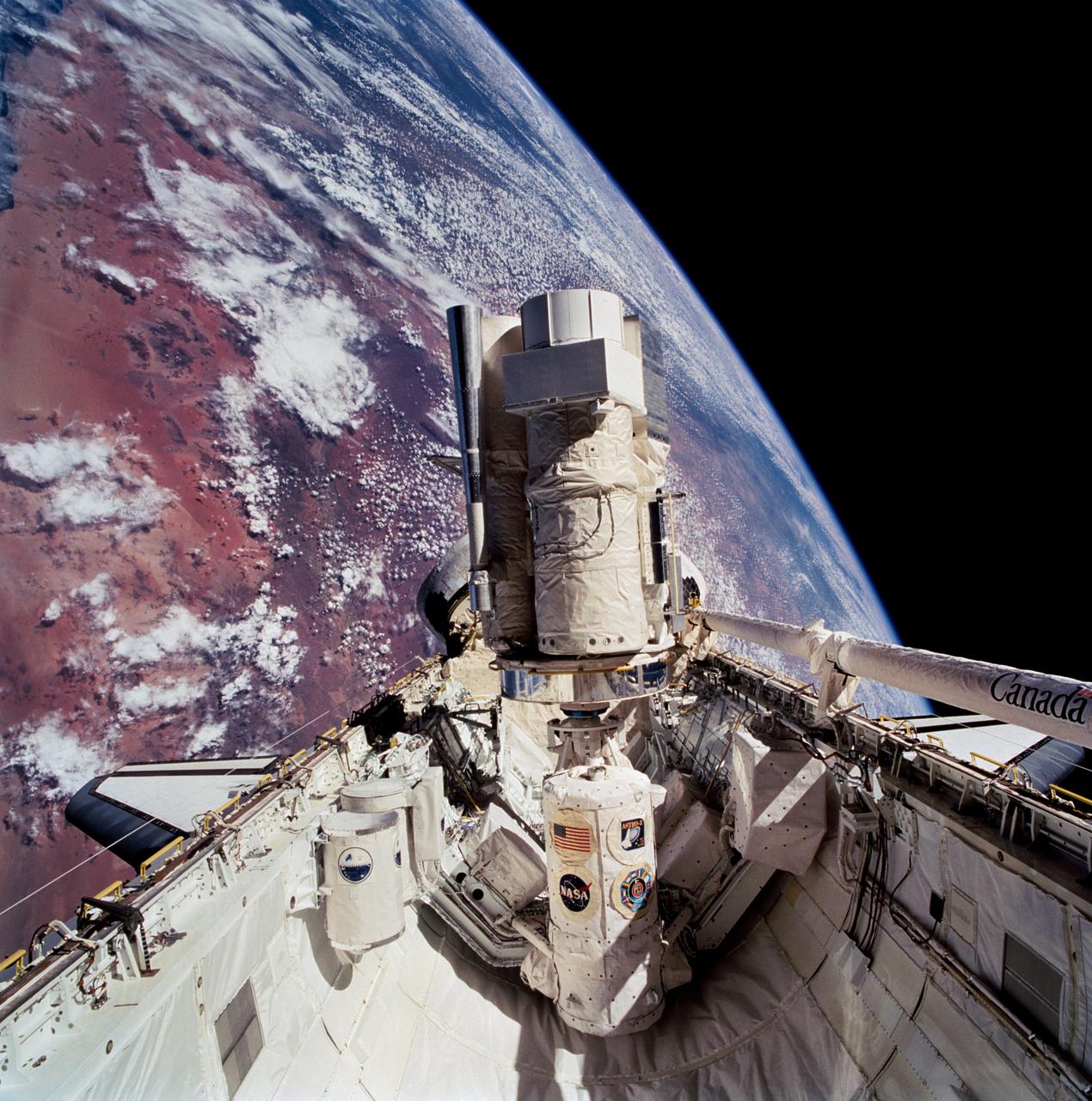
STS067-713-072 (2-18 March 1995) --- This 70mm cargo bay scene, backdropped against a desert area of Namibia, typifies the view that daily greeted the Astro-2 crew members during their almost 17-days aboard the Space Shuttle Endeavour.  Positioned on the Spacelab pallet amidst other hardware, the Astro-2 payload is in its operational mode.  Visible here are the Instrument Pointing System (IPS), Hopkins Ultraviolet Telescope (HUT), Star Tracker (ST), Ultraviolet Imaging Telescope (UIT), Wisconsin Ultraviolet Photo-Polarimeter Experiment (WUPPE), and Integrated Radiator System (IRS).  At this angle, the Optical Sensor Package (OPS) is not seen.  The Igloo, which supports the package of experiments, is in center foreground.  Two Get-Away Special (GAS) canisters are in lower left foreground.  The Extended Duration Orbiter (EDO) pallet, located aft of the cargo bay, is obscured by the Astro-2 payload.  The Endeavour was 190 nautical miles above Earth.
View of ASTRO-2 payload in cargo bay of STS-67 Endeavour
STS063-716-025 (9 Feb. 1995) --- In tail-to Earth mode, the Space Shuttle Discovery is backdropped against dark space, Sunburst and massive clouds over the ocean.  The Spartan 204 is visible in the cargo bay. This is one of 16 still photographs released by the NASA Johnson Space Center (JSC) Public Affairs Office (PAO) on February 14, 1995.  Onboard Discovery were astronauts James D. Wetherbee, mission commander; Eileen M. Collins, pilot; Bernard A. Harris, Jr., payload commander; mission specialists C. Michael Foale, Janice E. Voss, and cosmonaut Vladimir G. Titov.
View of STS-63 Discovery payload bay
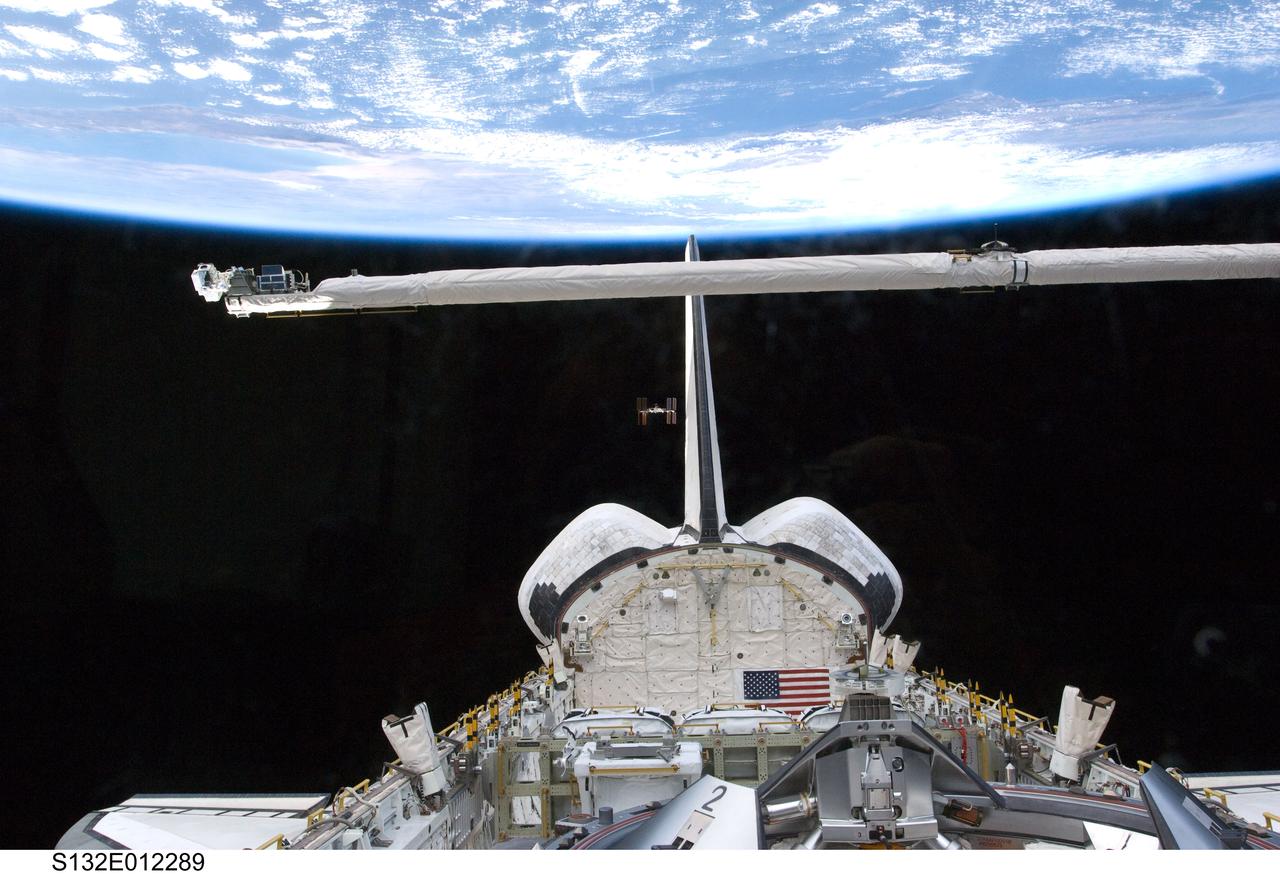
S132-E-012289 (23 May 2010) --- The International Space Station (center) appears very small from the point of view of the space shuttle Atlantis as the two spacecraft carry out their relative separation. Atlantis? vertical stabilizer, orbital maneuvering system (OMS) pods, remote manipulator system/orbiter boom sensor system (RMS/OBSS) and payload bay are also pictured in this image photographed by an STS-132 crew member onboard the shuttle. Earlier the STS-132 and Expedition 23 crews concluded seven days of cooperative work onboard the shuttle and station. Undocking of the two spacecraft occurred at 10:22 a.m. (CDT) on May 23, 2010. Earth?s horizon and the blackness of space provide the backdrop for the scene.
Payload Bay and OBSS on STS-132 Space Shuttle Atlantis
STS066-129-005 (3-14 Nov 1994) --- Clouds over the Atlantic Ocean serve as the backdrop for this 70mm scene of the Atmospheric Laboratory for Applications and Science (ATLAS-3) payload in the cargo bay of the Earth-orbiting Space Shuttle Atlantis.  Crew members onboard Atlantis were astronauts Donald R. McMonagle, Curtis L. Brown, Jr., Ellen Ochoa, Scott E. Parazynski and Joseph R. Tanner, along with Jean-François Clervoy of the European Space Agency (ESA).  The six astronauts spent 11-days in Earth-orbit in support of the Atmospheric Laboratory for Applications and Science (ATLAS-3) mission.
ATLAS-3 payload in the payload bay of STS-66 shuttle Atlantis in orbit
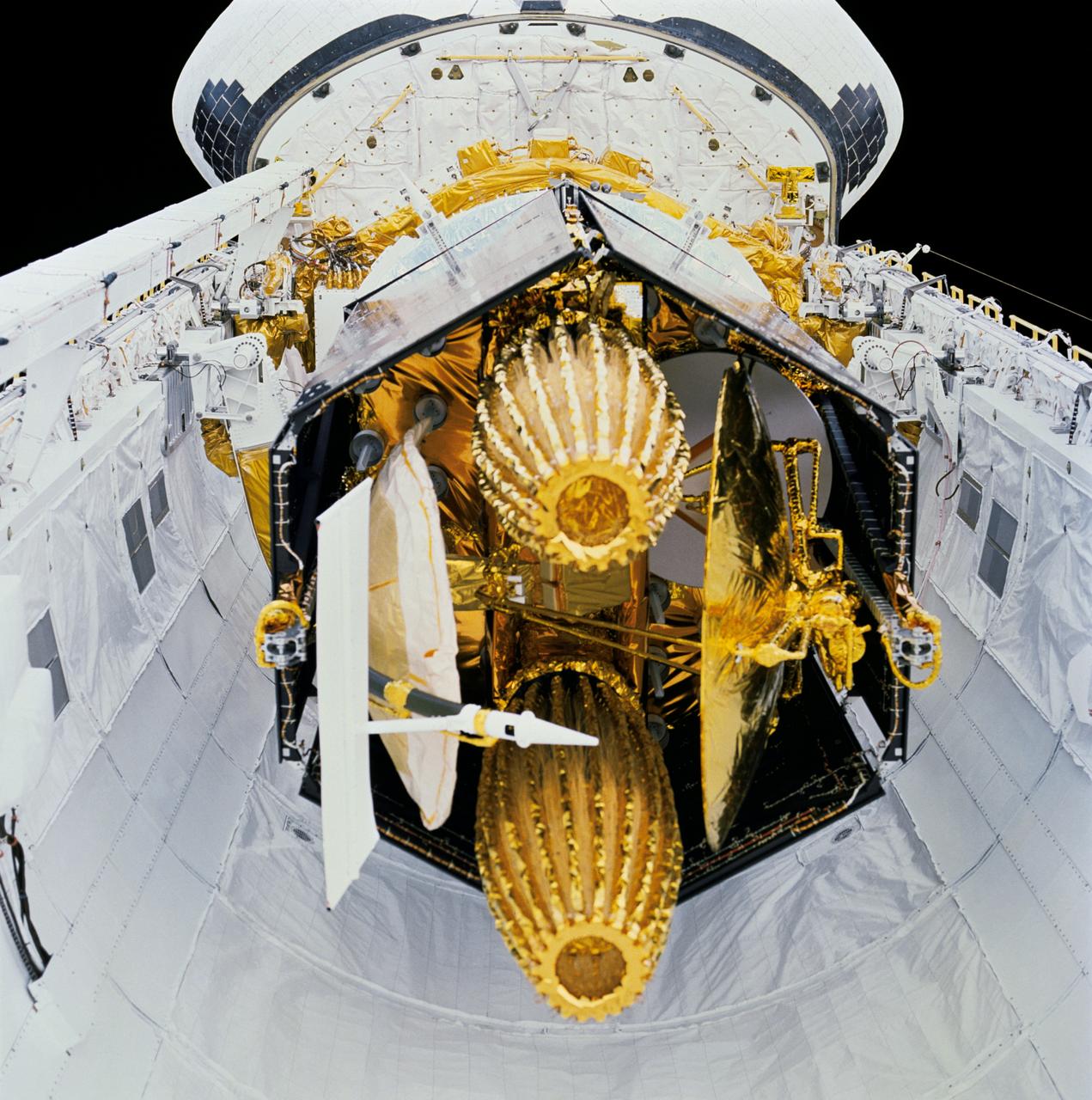
STS029-71-000AE (13-18 March 1989) --- STS-29 onboard view shows Space Shuttle Discovery's payload bay with tracking and data relay satellite D (TDRS-D) in stowed, pre-deployment position. In this head-on view, TDRS-D stowed components including single access #1 and #2, solar cell panels, SGL, S-Band omni antenna, and C-Band antenna are visible. TDRS-D rests in airborne support equipment (ASE) forward cradle and aft frame tilt actuator (AFTA). Discovery's aft bulkhead and orbital maneuvering system (OMS) pods are visible in the background.
STS-29 tracking and data relay satellite (TDRS) in OV-103's payload bay (PLB)
S86-25293 (30 Oct. 1985) --- Barbara R. Morgan and Sharon Christa McAuliffe (right) are pictured during a visit to NASA's Kennedy Space Center (KSC) Launch Complex 39 to witness the launch of the space shuttle Challenger. McAuliffe is scheduled to launch aboard the space shuttle Challenger, STS-51L mission, herself early next year as the United States? first in-space citizen observer. Morgan is the backup for the Teacher-in-Space Project?s payload specialist position. The photo was taken by Keith Meyers of the New York Times.  EDITOR'S NOTE: The STS-51L crew members lost their lives in the space shuttle Challenger accident moments after launch on Jan. 28, 1986 from the Kennedy Space Center (KSC). Photo credit: NASA
Barbara Morgan and Christa McAuliffe watch the STS 61-A launch of Challenger
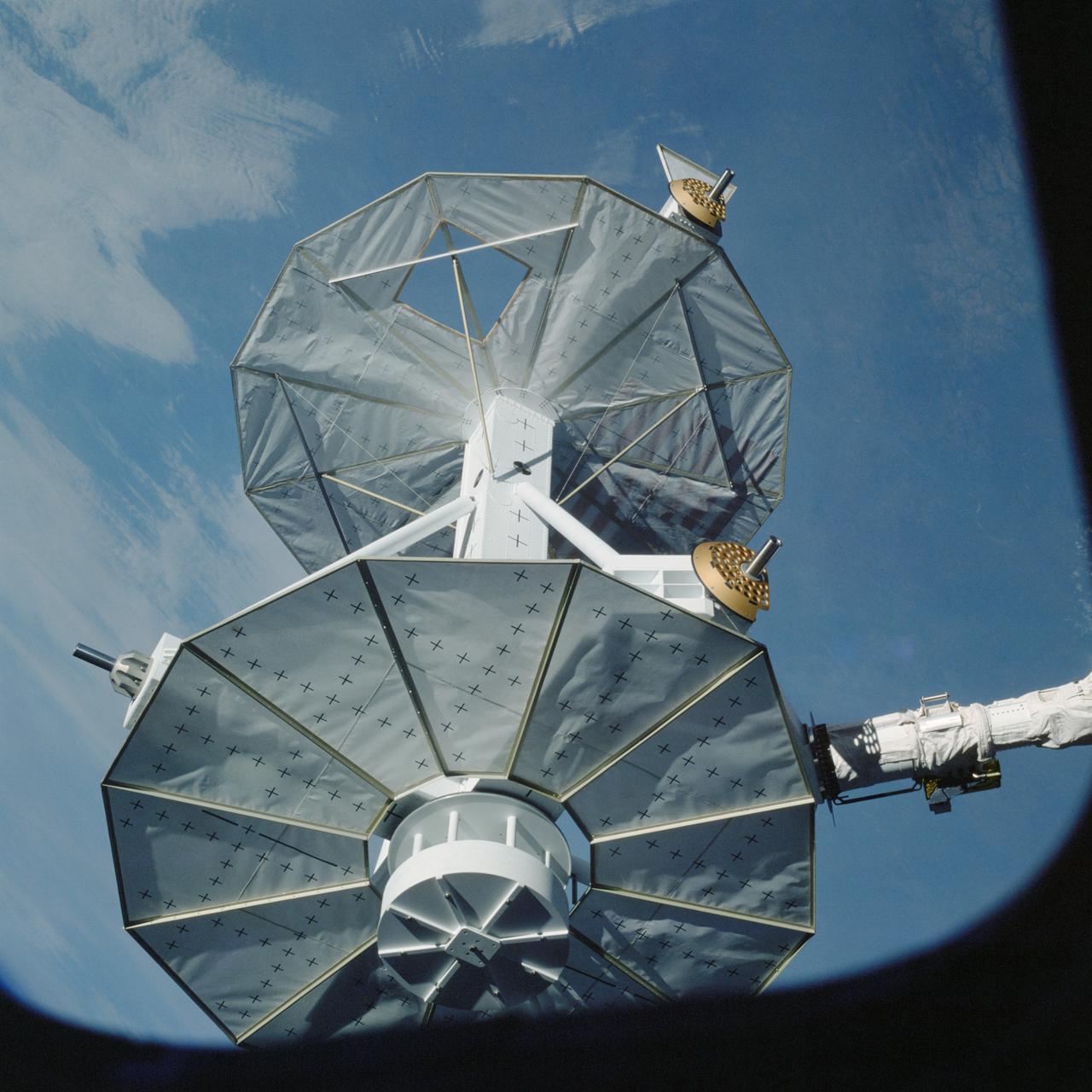
STS068-272-075 (30 September-11 October 1994) --- The darkness of space forms the backdrop for this scene of the Space Shuttle Endeavour's cargo bay, 115 nautical miles above a cloud covered Indian Ocean. The Space Radar Laboratory (SRL-2) Multipurpose Experiment Support Structure (MPESS) is seen at bottom frame.  Also partially seen are other experiments including other components of the primary payload. They are the antenna for the Spaceborne Imaging Radar (SIR-C), the X-band Synthetic Aperture Radar (X-SAR), the device for Measurement of Air Pollution from Satellites (MAPS) and some Getaway Special (GAS) canisters.
Contents of payload bay of the STS-68 Space Shuttle Endeavour
STS068-267-079 (30 September-11 October 1994) --- The rear windows of the Space Shuttle Endeavour reflect sunlight in this view of part of the cargo bay, 115 nautical miles above the Earth.  The Space Radar Laboratory (SRL-2) Multipurpose Experiment Support Structure (MPESS) is seen at bottom frame.  Also partially seen are other experiments including other components of the primary payload.  They are the antenna for the Spaceborne Imaging Radar (SIR-C), the X-band Synthetic Aperture Radar (X-SAR), the device for Measurement of Air Pollution from Satellites (MAPS) and some Getaway Special (GAS) canisters.
Contents of payload bay of the STS-68 Space Shuttle Endeavour
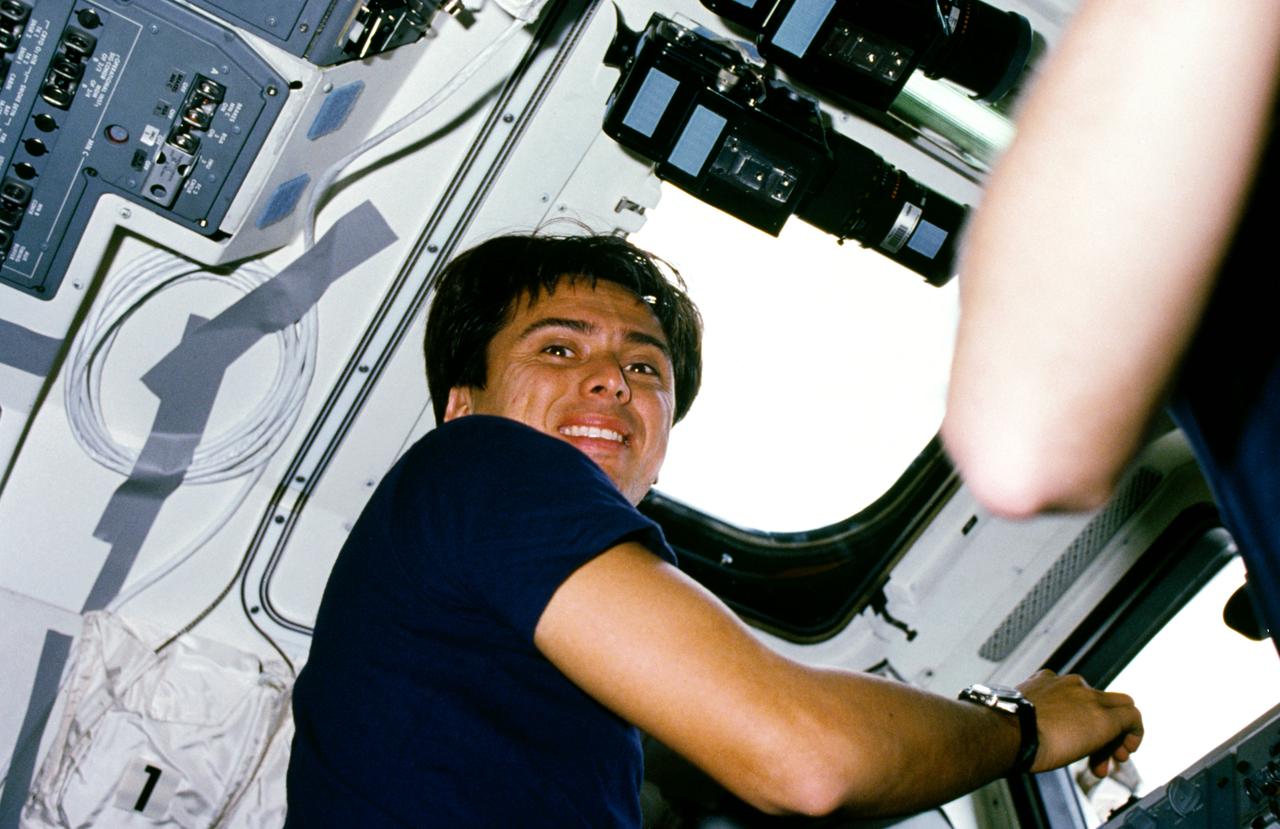
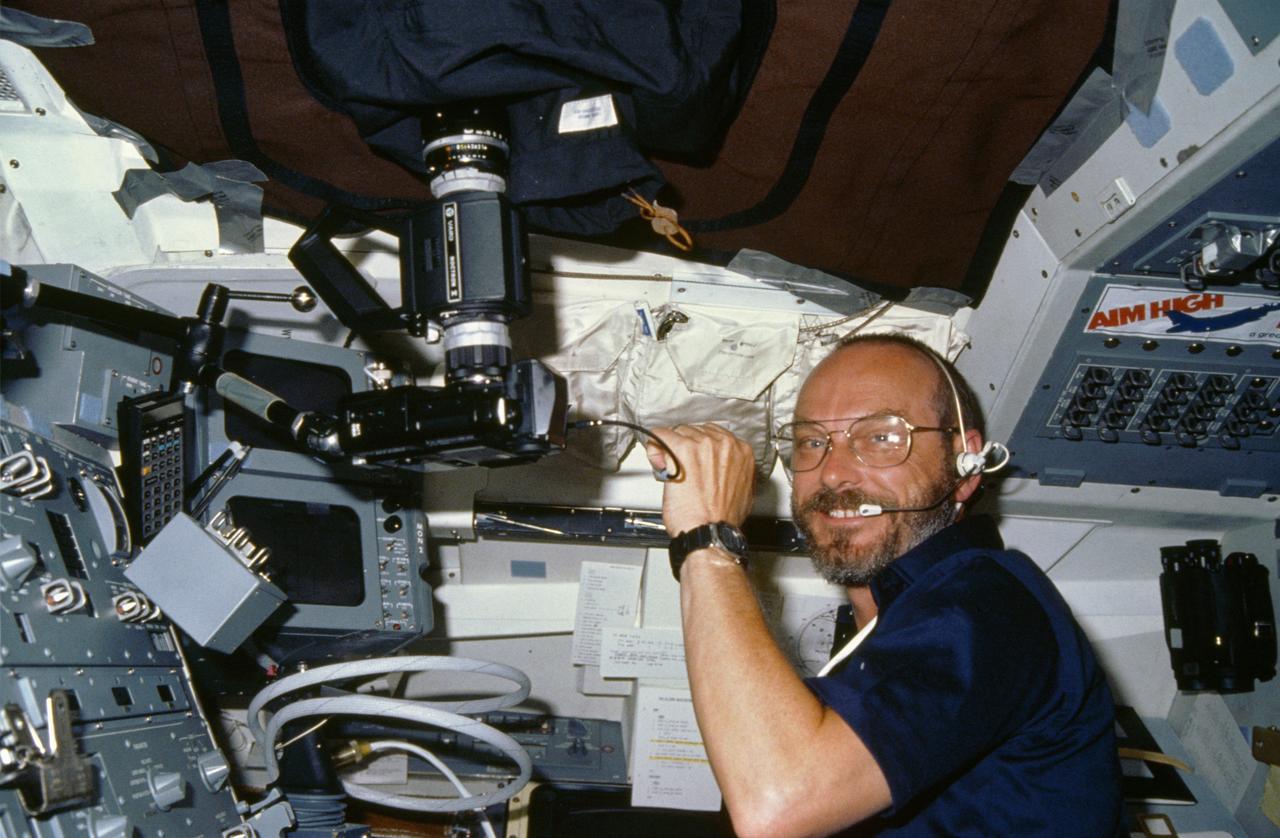
61C-02-032 (12-18 Jan. 1986) --- Astronaut Franklin R. Chang-Diaz, STS-61C mission specialist, while checking cargo in the space shuttle Columbia's payload bay, turns to smile at a fellow crew member using a 35mm camera.  Some of the prolific camera gear onboard the spacecraft is affixed above the mission specialist's right shoulder.
Astronaut Franklin Chang-Diaz checking payload bay through aft deck window
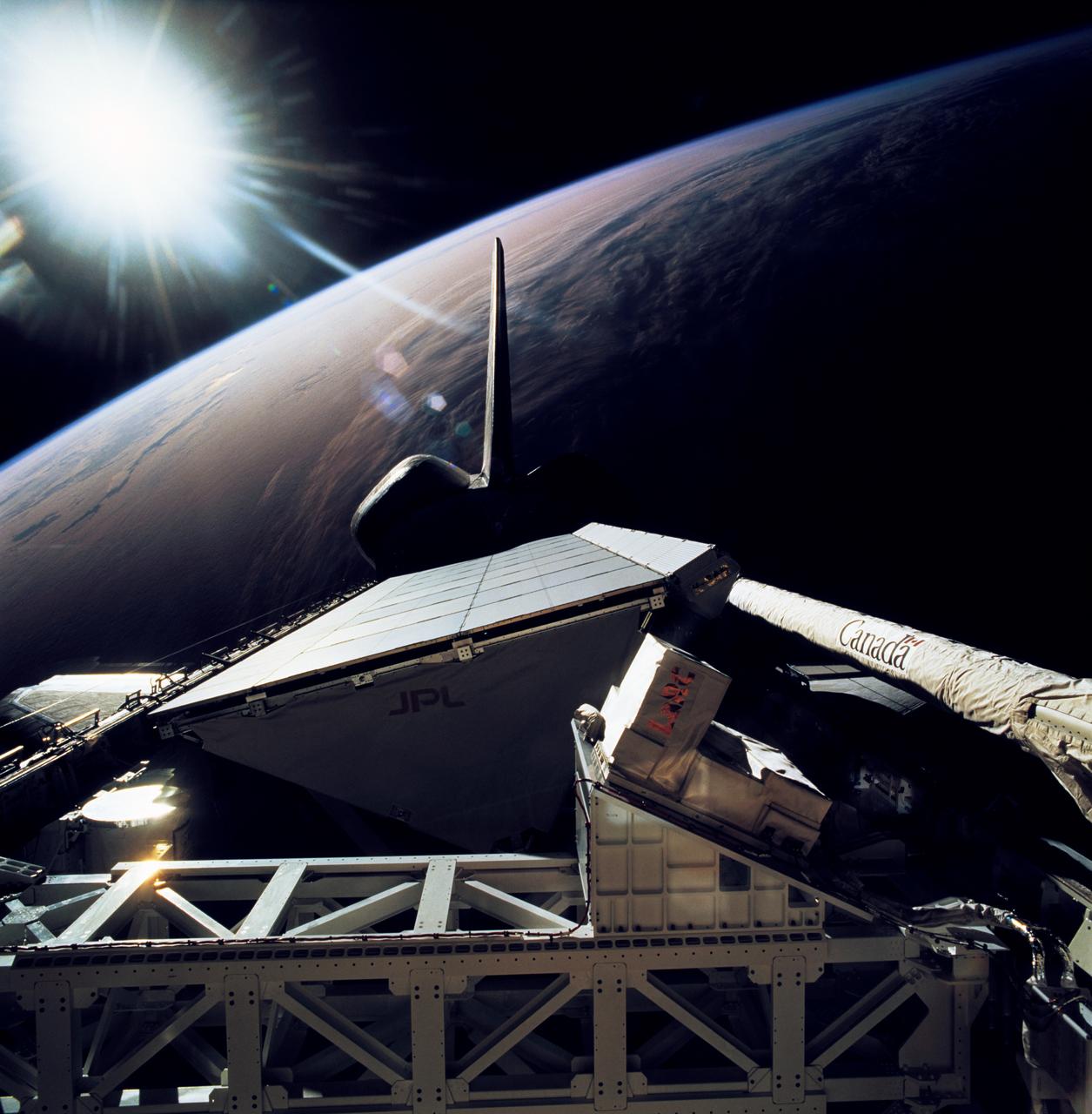
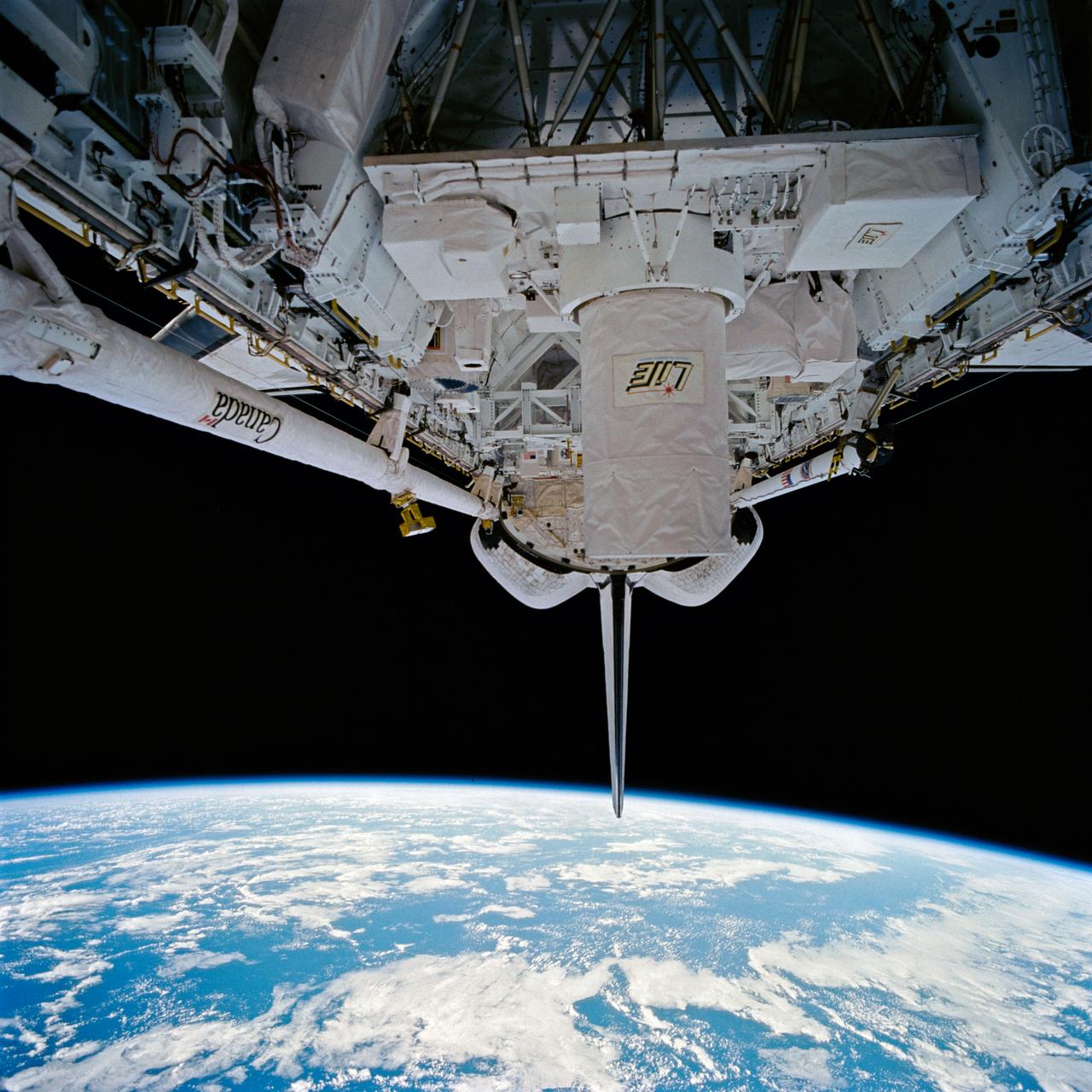
STS064-90-031 (9-20 Sept. 1994) --- Backdropped against the darkness of space beneath Earth's horizon 130 nautical miles away, the cargo bay of the space shuttle Discovery and its related payloads were captured on 70mm film by one of the six cabin-bound astronauts. In the foreground is the Lidar In-space Technology Experiment (LITE).  The robot arm portion of the Remote Manipulator System (RMS), busy throughout much of the almost 11-day mission, is in a stowed position on Discovery's port side. Photo credit: NASA or National Aeronautics and Space Administration
STS-64 Discovery's cargo bay in-flight
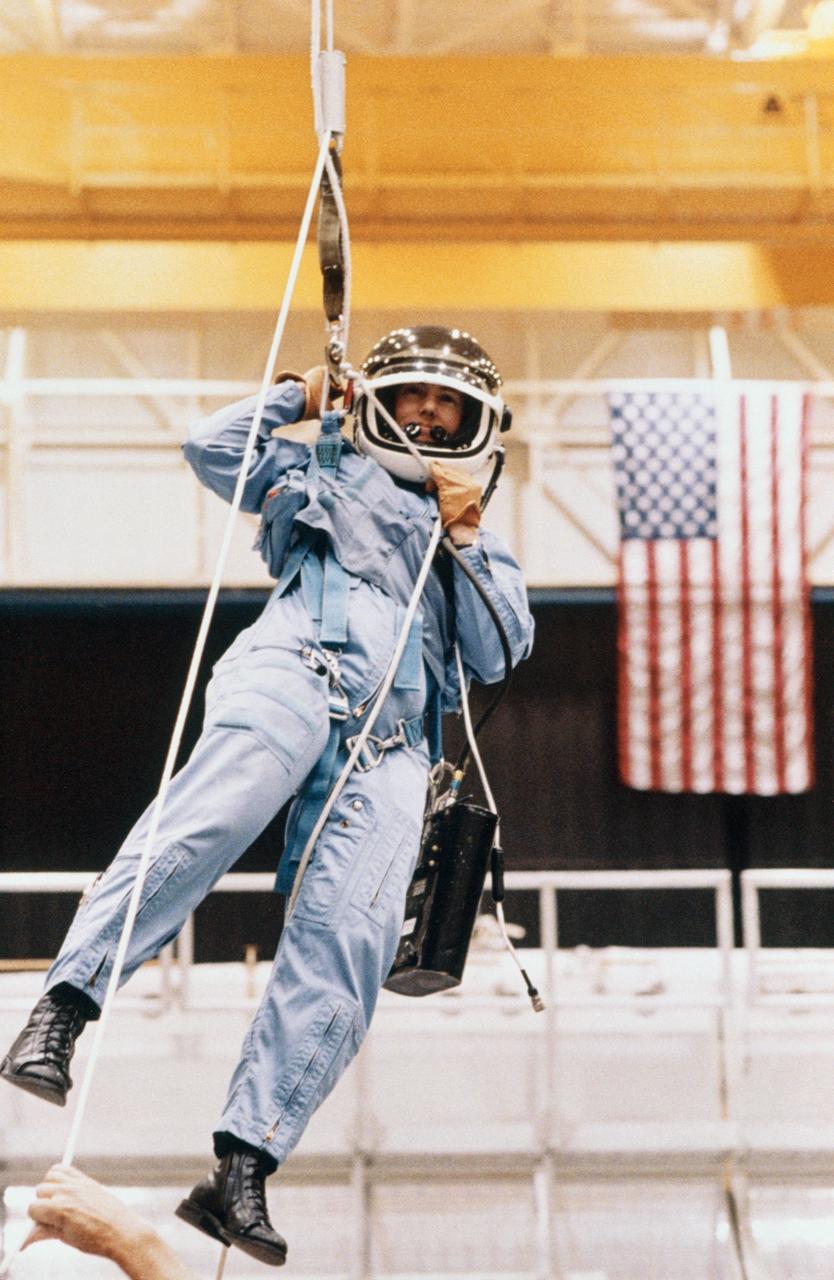
S86-25183 (for release January 1986) --- Sharon Christa McAuliffe, STS-51L payload specialist representing the Teacher-in-Space Project, descends from a mock-up of the space shuttle using a sky-genie device during an emergency training session in the Johnson Space Center?s (JSC) Shuttle Mock-up and Integration Laboratory. The photograph was taken by Keith Meyers of the New York Times.    EDITOR?S NOTE: The STS-51L crew members lost their lives in the space shuttle Challenger accident moments after launch on Jan. 28, 1986 from the Kennedy Space Center (KSC). Photo credit: NASA
Christa McAuliffe using Sky-genie during emergency egress training
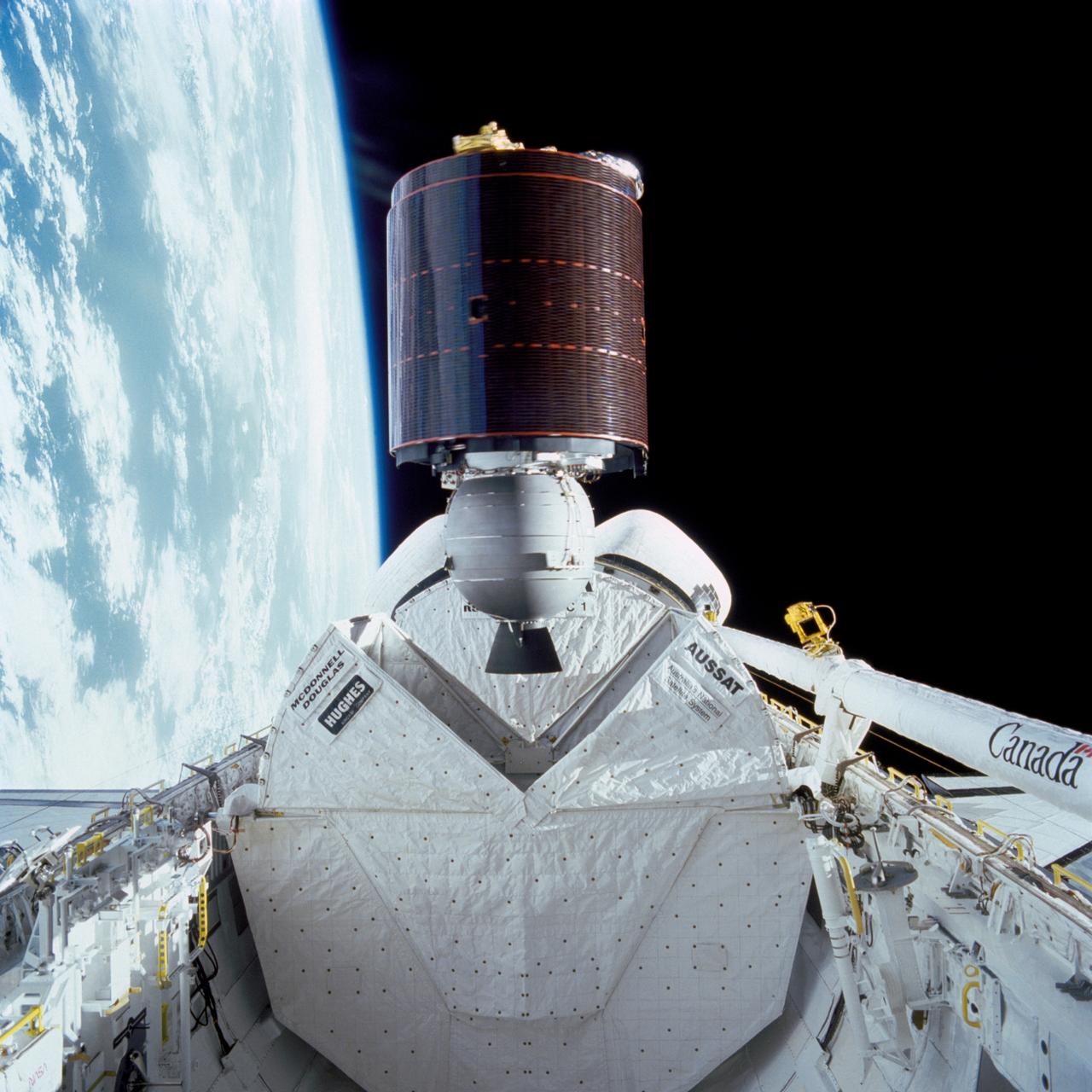
51I-32-023 (27 Aug. 1985) --- Australia's AUSSAT communications satellite is deployed from the payload bay of the space shuttle Discovery on flight day one. A portion of the cloudy surface of Earth can be seen to the left of the frame. Photo credit: NASA
Australia's AUSSAT satellite deployed from payload bay
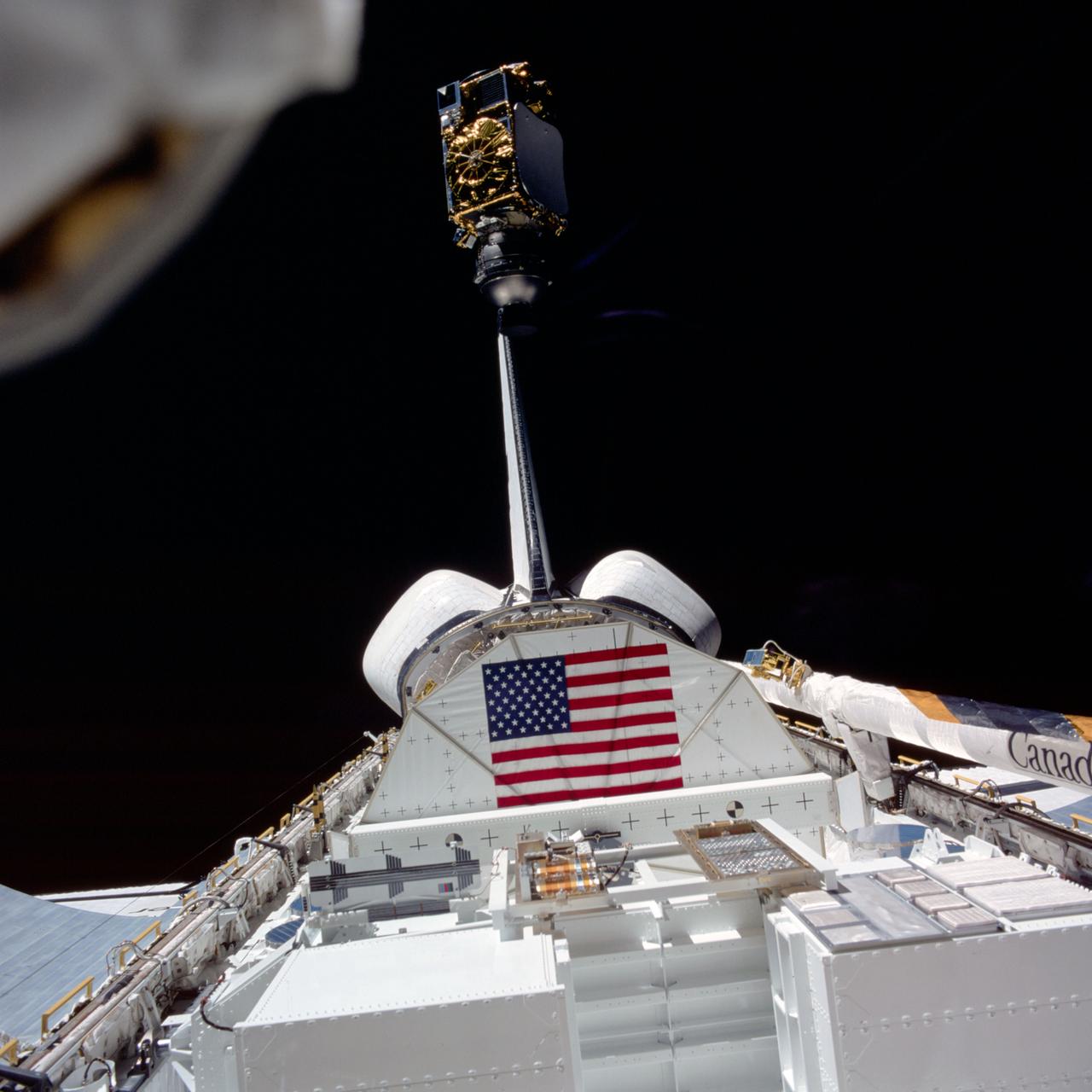
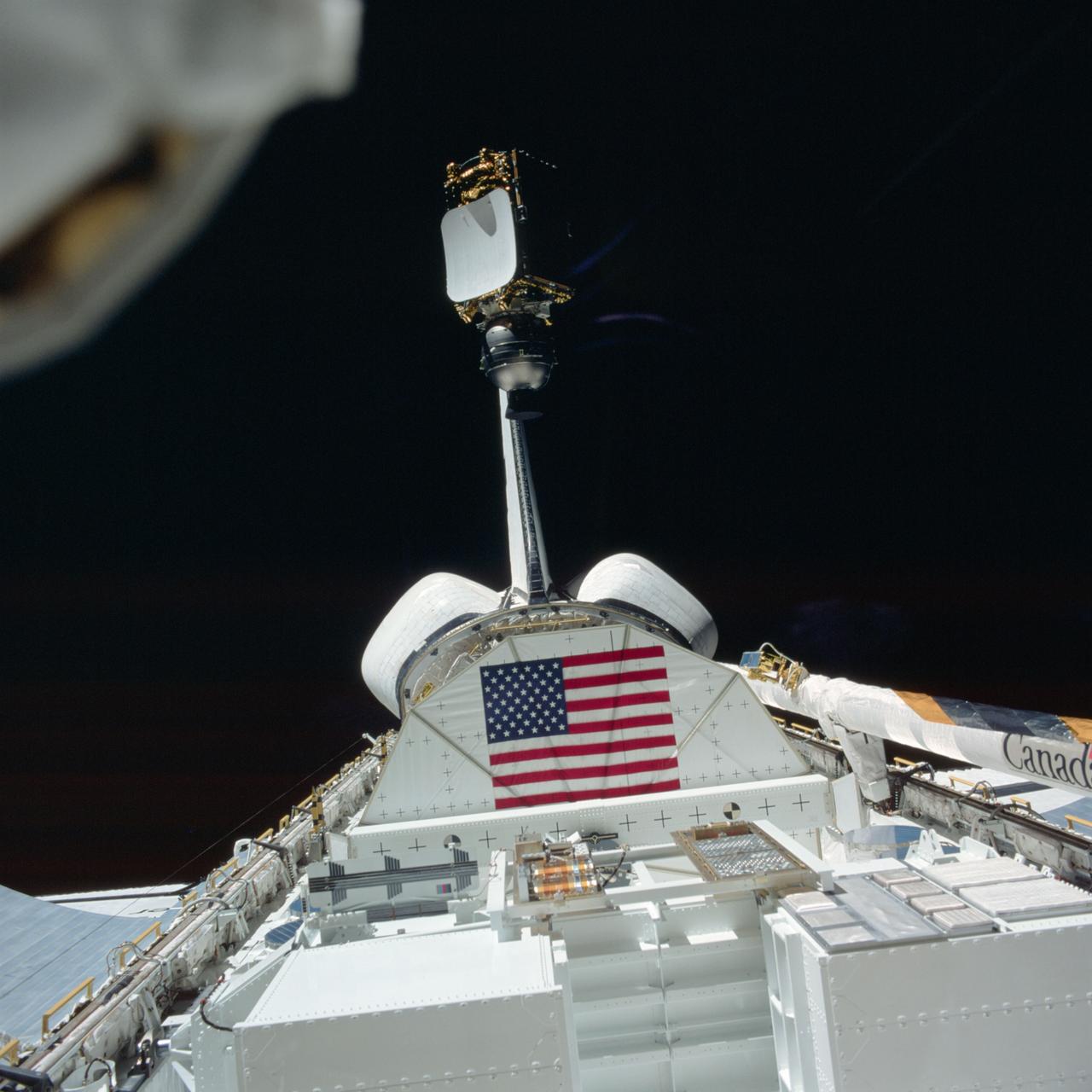
STS008-49-1722 (30 Aug-5 Sept 1983) --- The Indian National Satellite (INSAT) is about to clear the Earth-orbiting Space Shuttle Challenger this 70mm frame exposed with a handheld camera from the aft flight deck.  The Payload Flight Test Article (PFTA) displays the United States flag in the middle of the cargo bay and the Canadian built Remote Manipulator System (RMS) appears to be waiting for its busy agenda of activity with the barbell-shaped test device.
View of the INSAT/PAM-D being deployed
STS008-49-1724 (31 Aug 1983) --- The Indian National Satellite (INSAT) is about to clear the vertical stabilizer of the Earth-orbiting Space Shuttle Challenger and on its way to a higher orbit.  The STS-8 mission's Payload Flight Test Article (PFTA) displays the U.S. flag in the middle of the cargo bay, as the Canadian built Remote Manipulator System (RMS) appears to be waiting for its busy agenda of activity with the barbell-shaped test device.  This 70mm frame was exposed by a crewmember using a handheld Hasselblad inside Challenger's cabin.
View of the INSAT/PAM-D being deployed
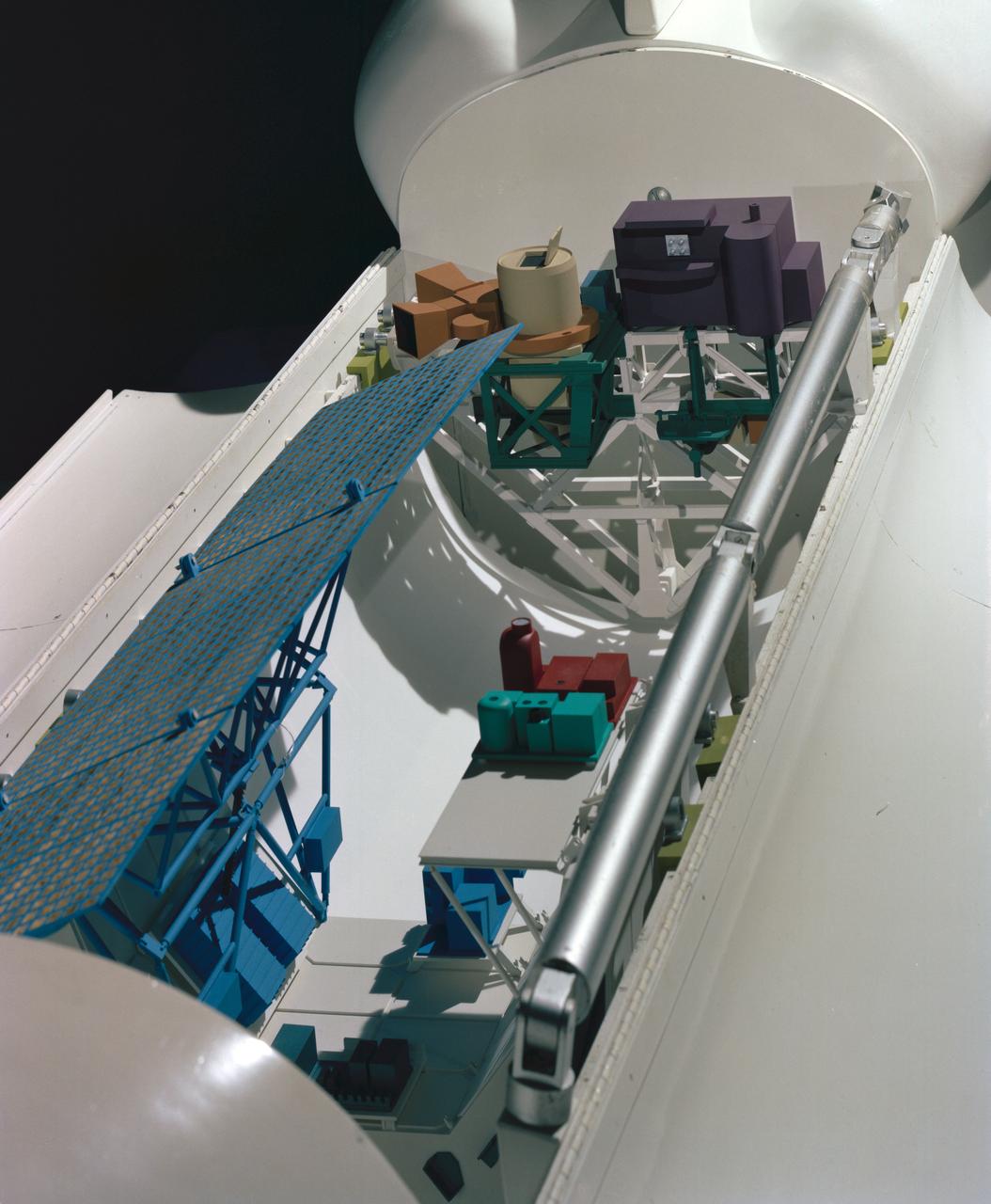
Model showing OSTA-3 and other payloads in the open shuttle orbiter cargo bay.
Model showing OSTA-3 and other payloads in the shuttle orbiter cargo bay
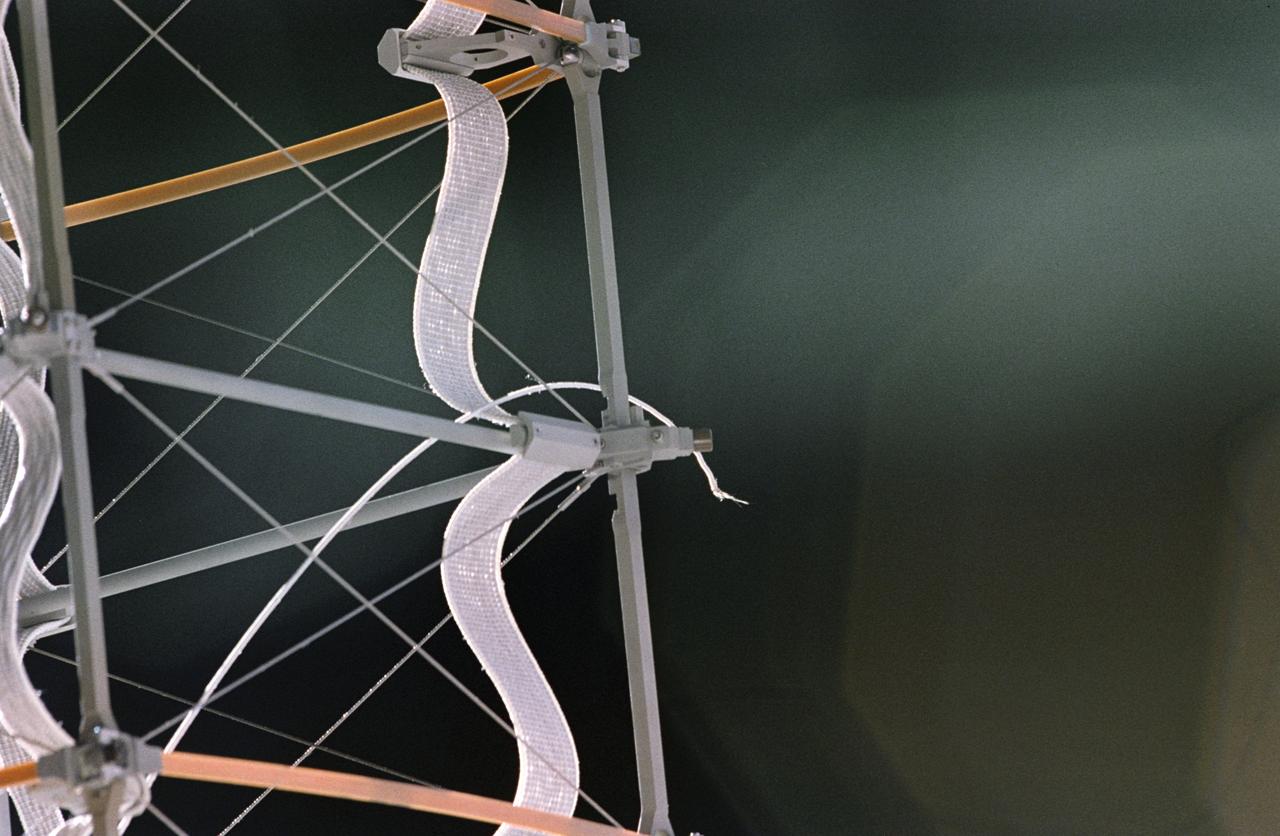
STS075-325-014 (25 Feb. 1996) --- The frayed end of the tether portion of the Tethered Satellite System (TSS) is seen at the end of the supportive boom. On February 25, 1996, the crew deployed the TSS, which later broke free. The seven member crew was launched aboard the Space Shuttle Columbia on February 22, 1996, and landed on March 9, 1996.  Crewmembers were Andrew M. Allen, mission commander; Scott J. Horowitz, pilot; Franklin R. Chang-Diaz, payload commander; and Maurizio Cheli, European Space Agency (ESA); Jeffrey A. Hoffman and Claude Nicollier (ESA), all mission specialists; along with payload specialist Umberto Guidoni of the Italian Space Agency (ASI).
Tethered Satellite System (TSS)-1R survey photography
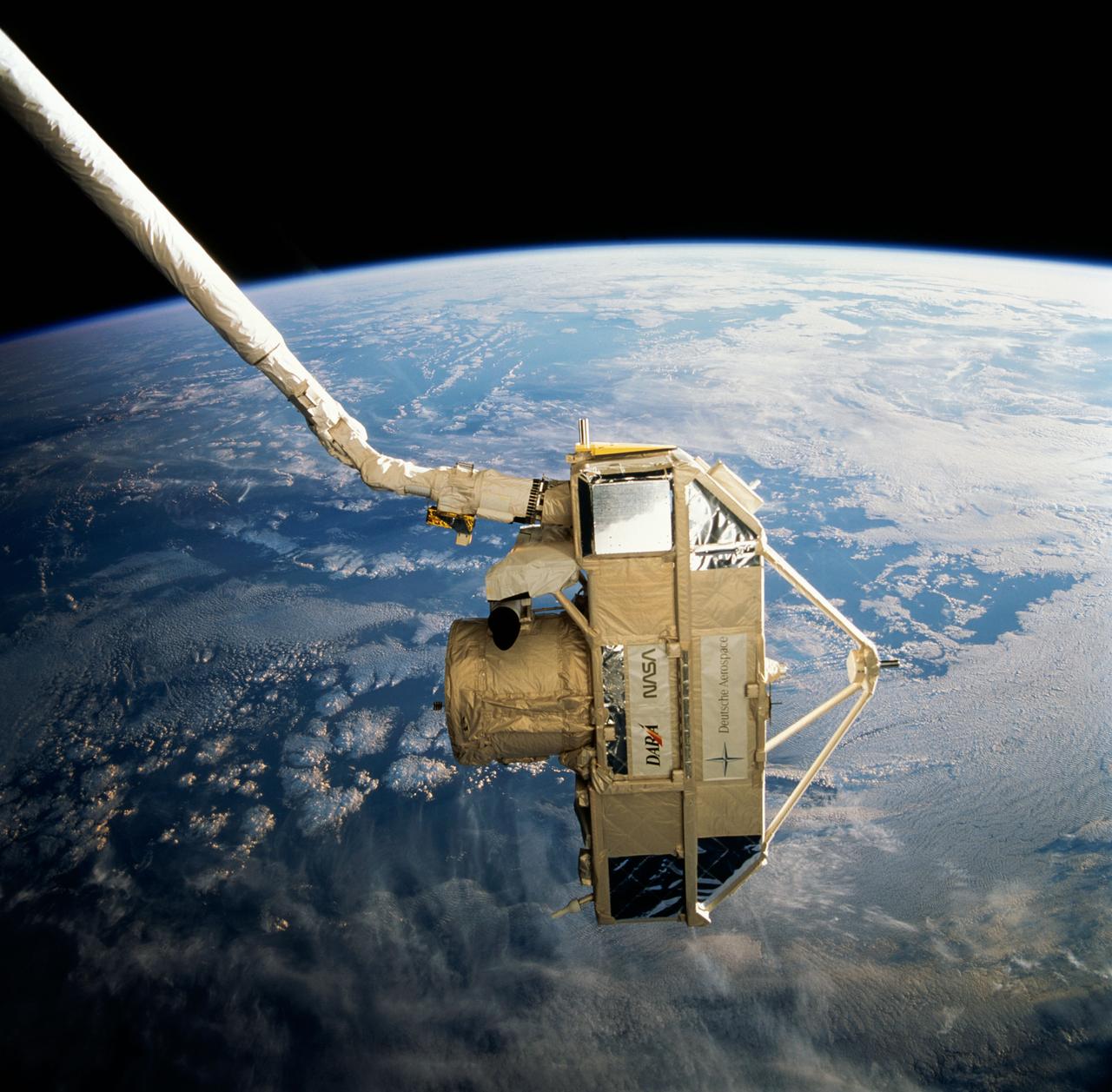
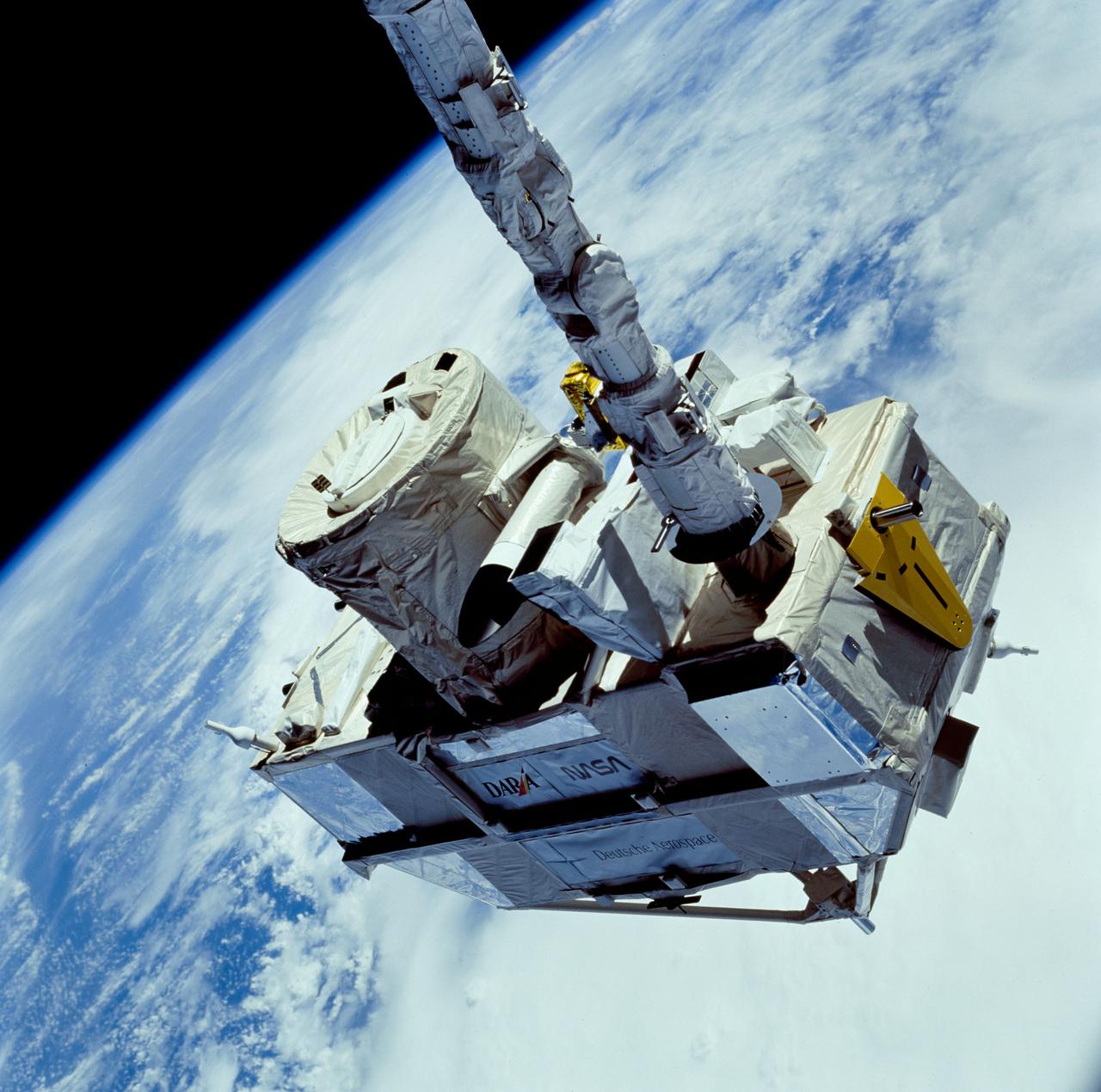
Clouds over the Atlantic Ocean serve as the backdrop for this 70mm scene of the Cryogenic Infrared Spectrometers and Telescopes for the Atmosphere (CRISTA), attached to the Shuttle Pallet System (SPAS). CRISTA-SPAS was in the grasp of the Space Shuttle Atlantis Remote Manipulator System (RMS) arm. The crew deployed the Crista-SPAS on November 4, 1994 and the tandem remained in free-flight until November 12, 1994 when it was retrieved by the Canadian-built RMS, controlled by payload commander Ellen Ochoa.
CRISTA-SPAS payload in the payload bay of STS-66 shuttle Atlantis
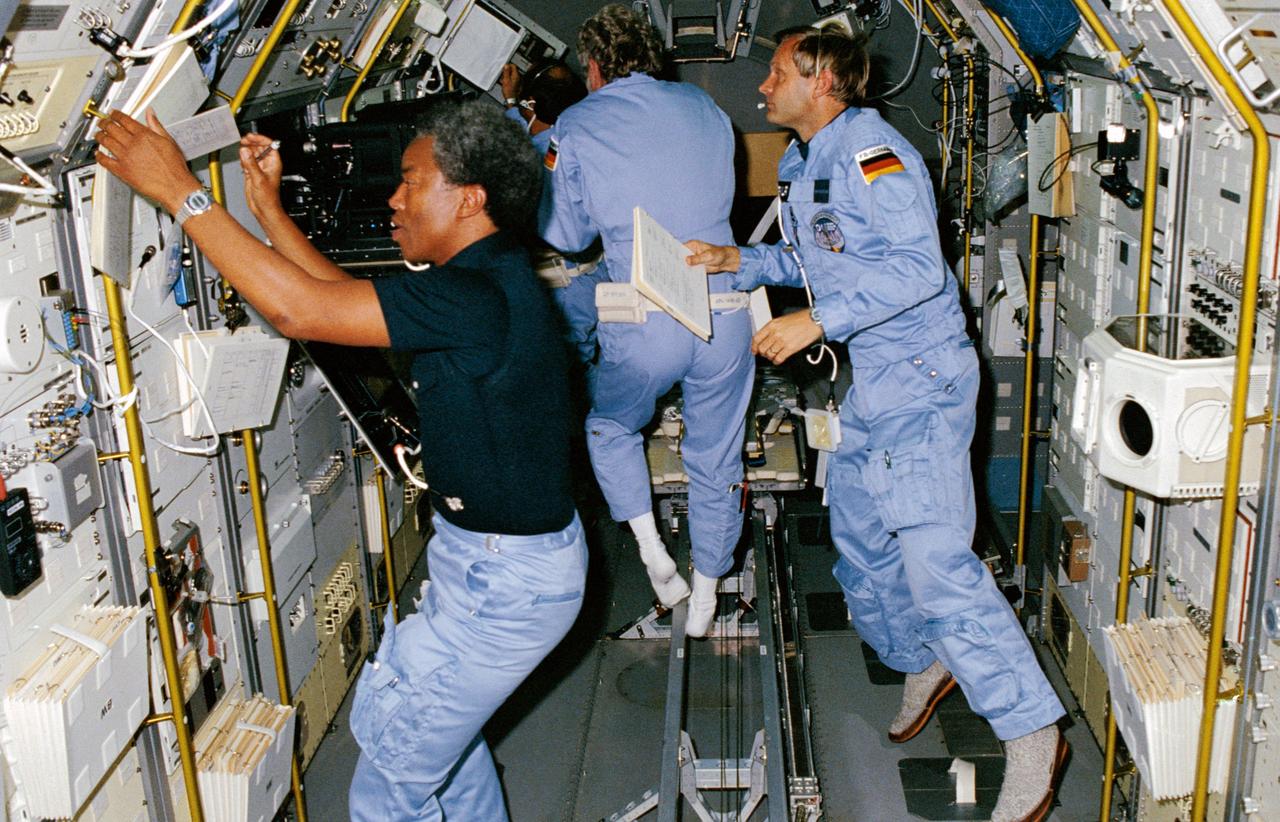
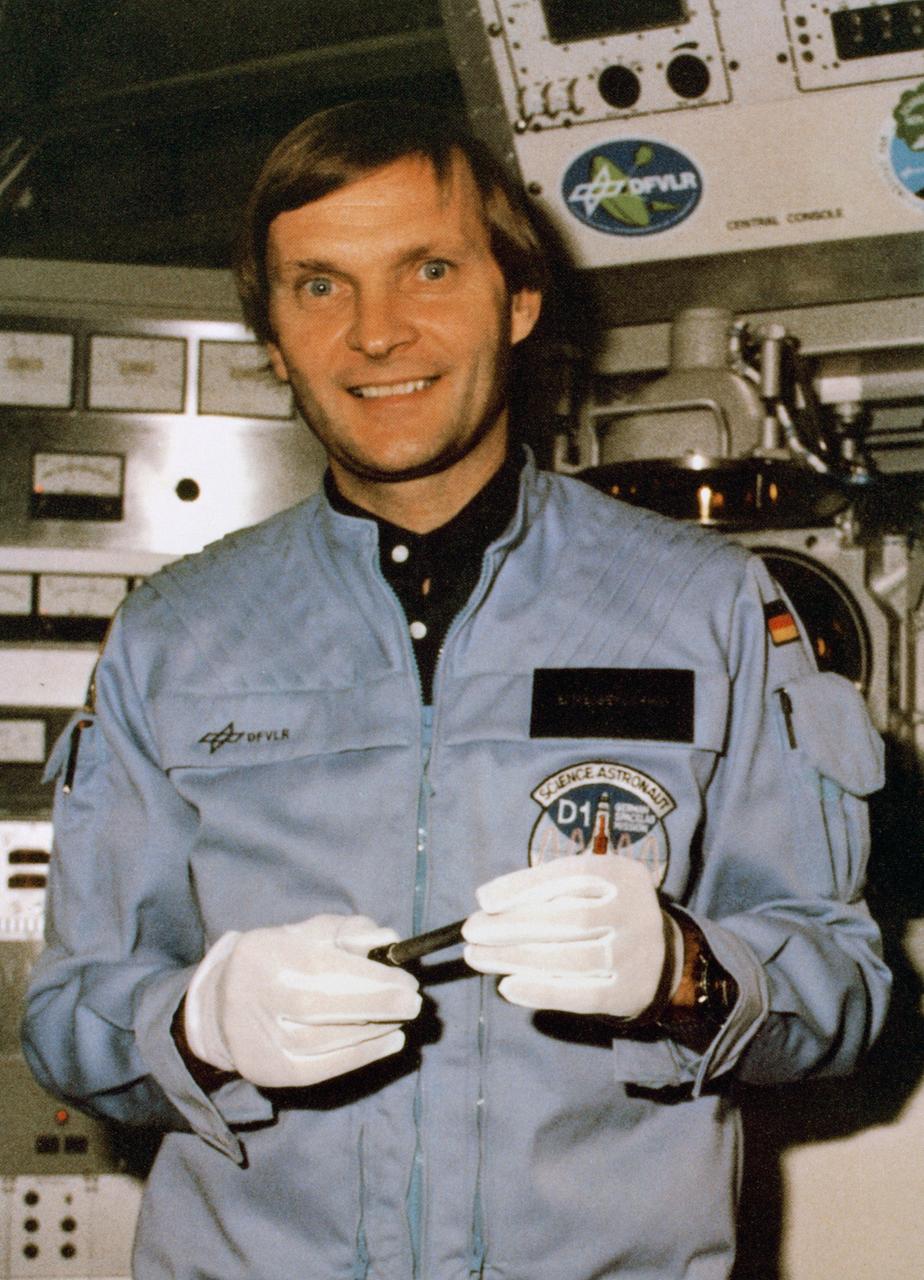
61A-01-030 (30 Oct.-6 Nov. 1985) --- Mission specialist Guion S. Bluford prepares to perform a physics experiment onboard the D-1 science module in the cargo bay of the earth-orbiting Space Shuttle Challenger.  In the backgroud, three European payload specialists busy themselves with experiment chores:  (L-R) Wubbo J. Ockels (partially obscured), Reinhard Furrer and Ernst Messerschmid.
STS 61-A crewmembers in Spacelab D-1 science module
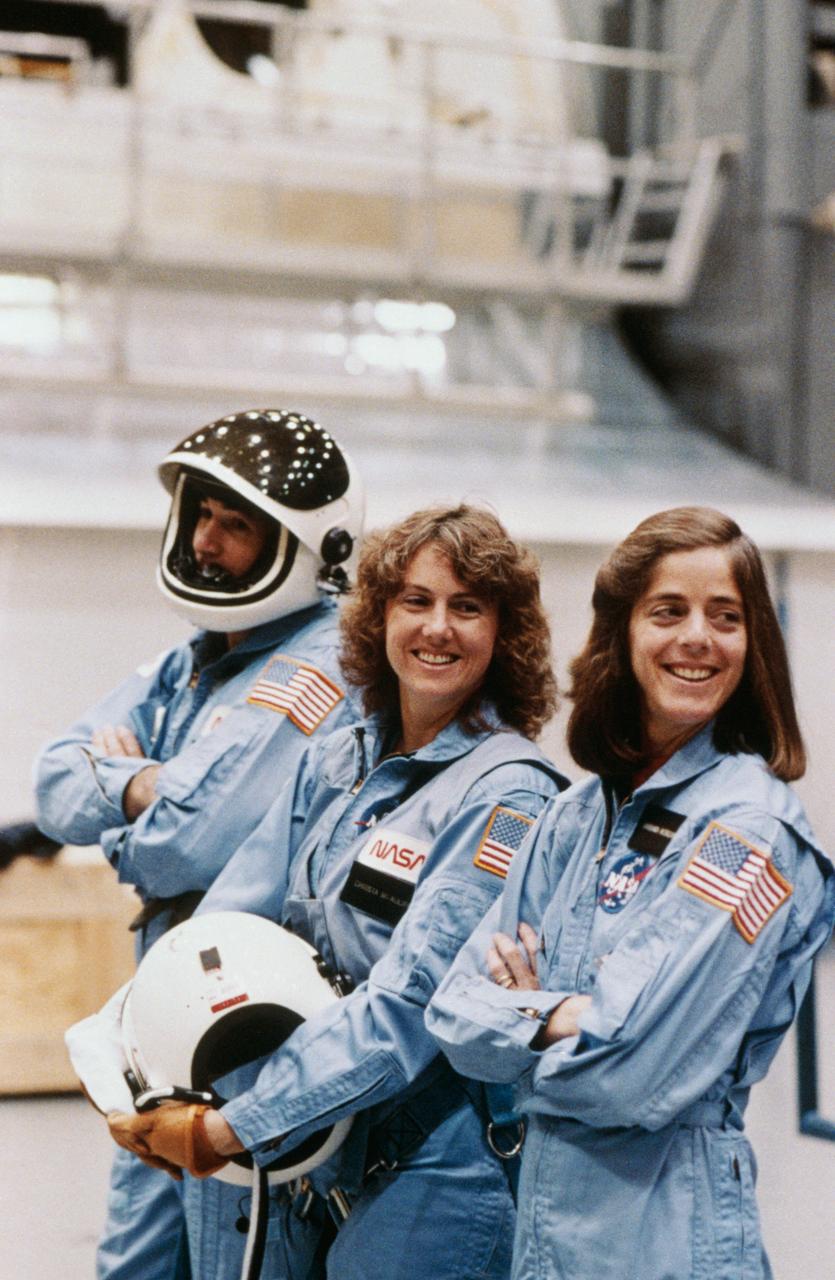
S86-25254 (January 1986) --- Payload specialists in training for STS-51L take a break in shuttle emergency egress training at the Johnson Space Center's (JSC) Shuttle Mock-up and Integration Laboratory. Left to right are Gregory Jarvis of Hughes, Sharon Christa McAuliffe and Barbara Morgan of the Teacher-in-Space Project. McAuliffe was selected as NASA's first citizen observer in the Space Shuttle Program and Morgan was named her backup. The photo was taken by Keith Meyers of the New York Times.    EDITOR?S NOTE: The STS-51L crew members lost their lives in the space shuttle Challenger accident moments after launch on Jan. 28, 1986 from the Kennedy Space Center (KSC). Photo credit: NASA
Payload specialists in training for STS 51-L in mockup & integration lab
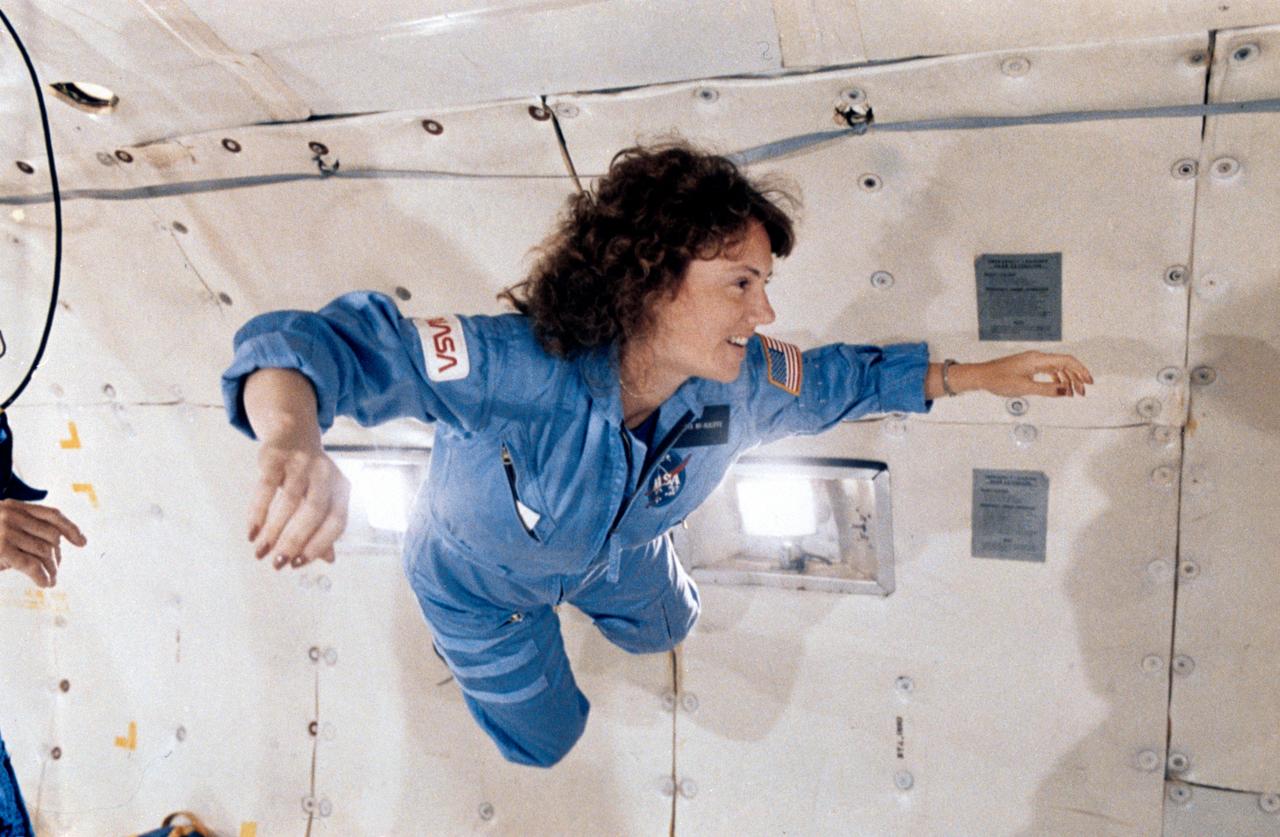
S86-25196 (January 1986) --- Sharon Christa McAuliffe, STS-51L citizen observer/payload specialist, gets a preview of microgravity during a special flight aboard NASA?s KC-135 ?zero gravity? aircraft. McAuliffe will represent the Teacher-in-Space Project aboard the space shuttle Challenger when it launches later this month. This photograph was taken by Keith Meyers of the New York Times.    EDITOR?S NOTE: The STS-51L crew members lost their lives in the space shuttle Challenger accident moments after launch on Jan. 28, 1986 from the Kennedy Space Center (KSC). Photo credit: NASA
Teacher in Space Christa McAuliffe on the KC-135 for zero-G training
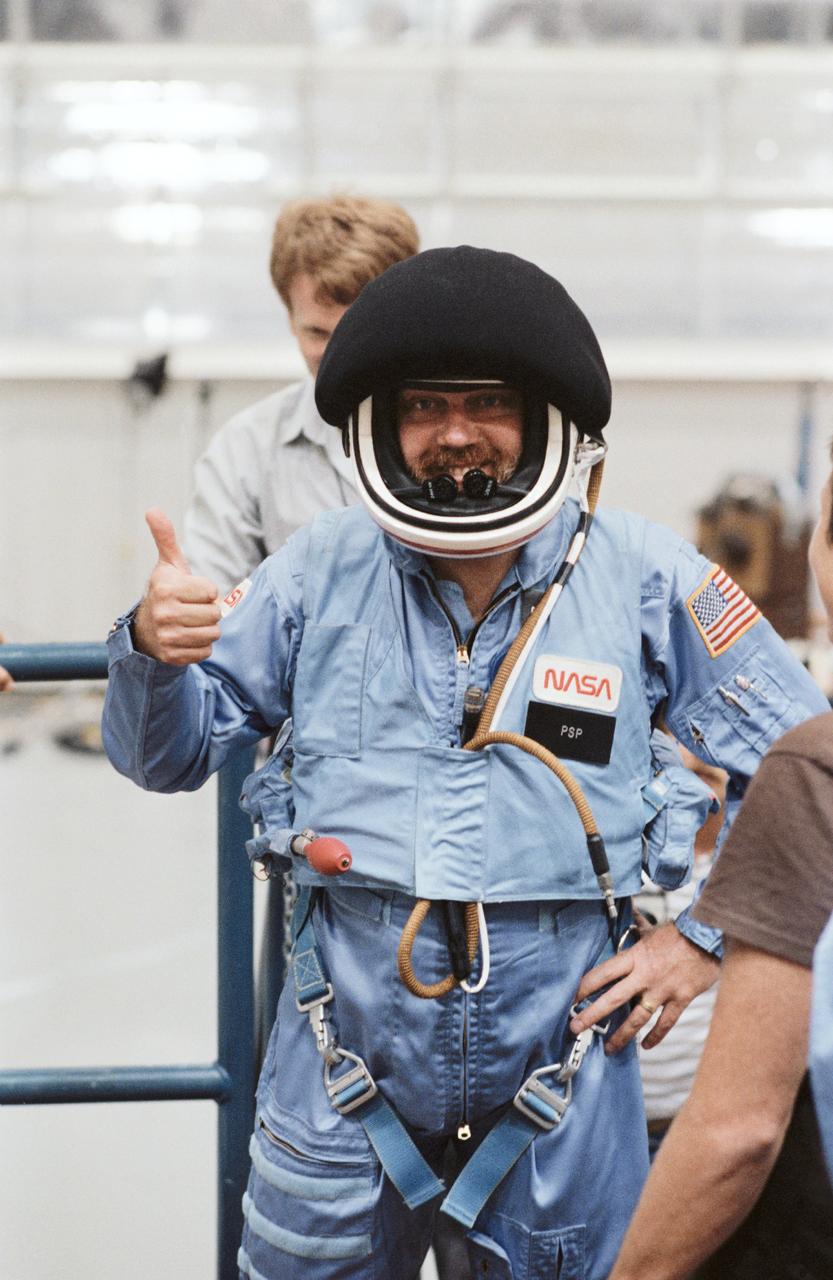
41D-3183 (2 Sept. 1984) --- Paul D. Scully-Power, 41-G payload specialist, appears ready to participate in the eight-day space shuttle mission in this photograph taken during a pause in training in the Johnson Space Center's mockup and integration laboratory. The U.S. Navy oceanographer and a Canadian will join five NASA astronauts for a busy stay in space aboard the Challenger next month. The team was practicing for emergency egress. Photo credit: NASA  (Editor's note: Please ignore the odd photo identification number for this image. This is a 41-G training image.)
Payload Specialist Scully-Power in full flight suit with helmet
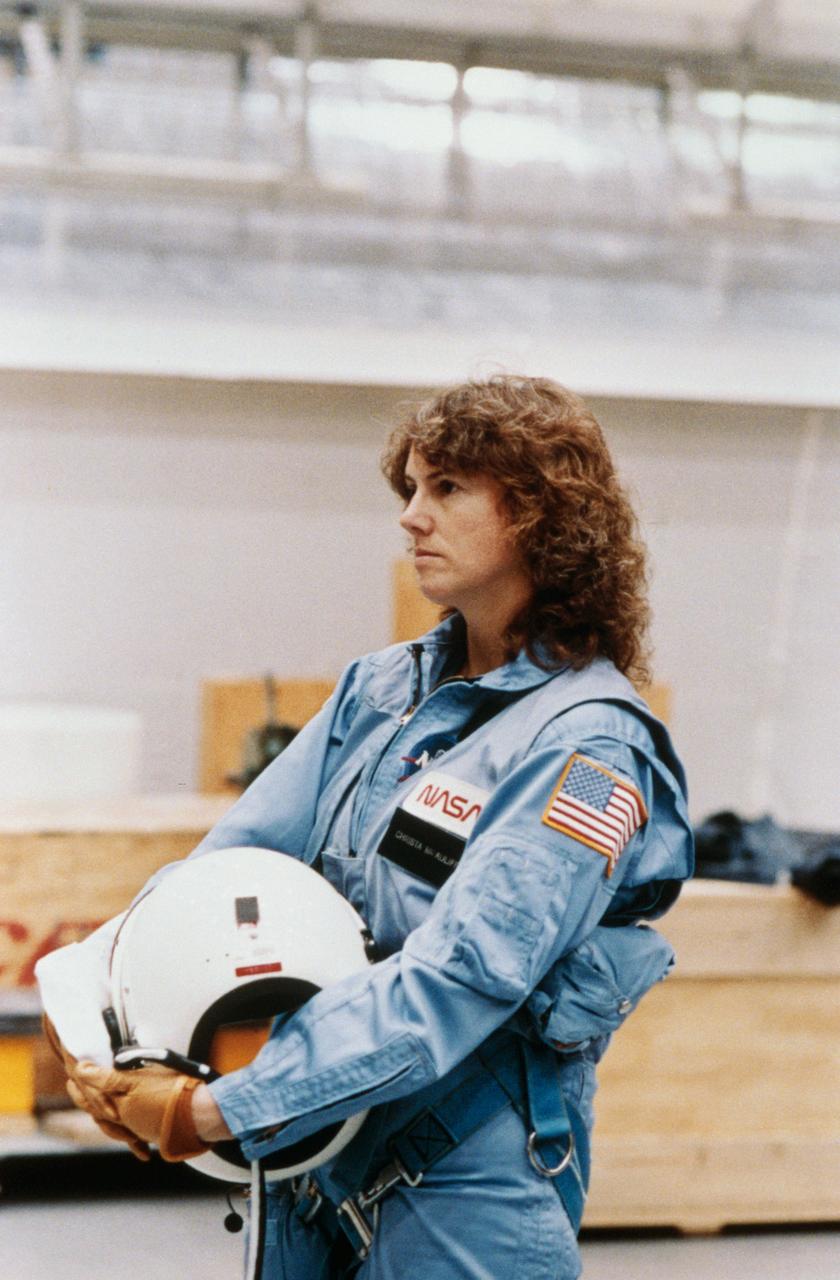
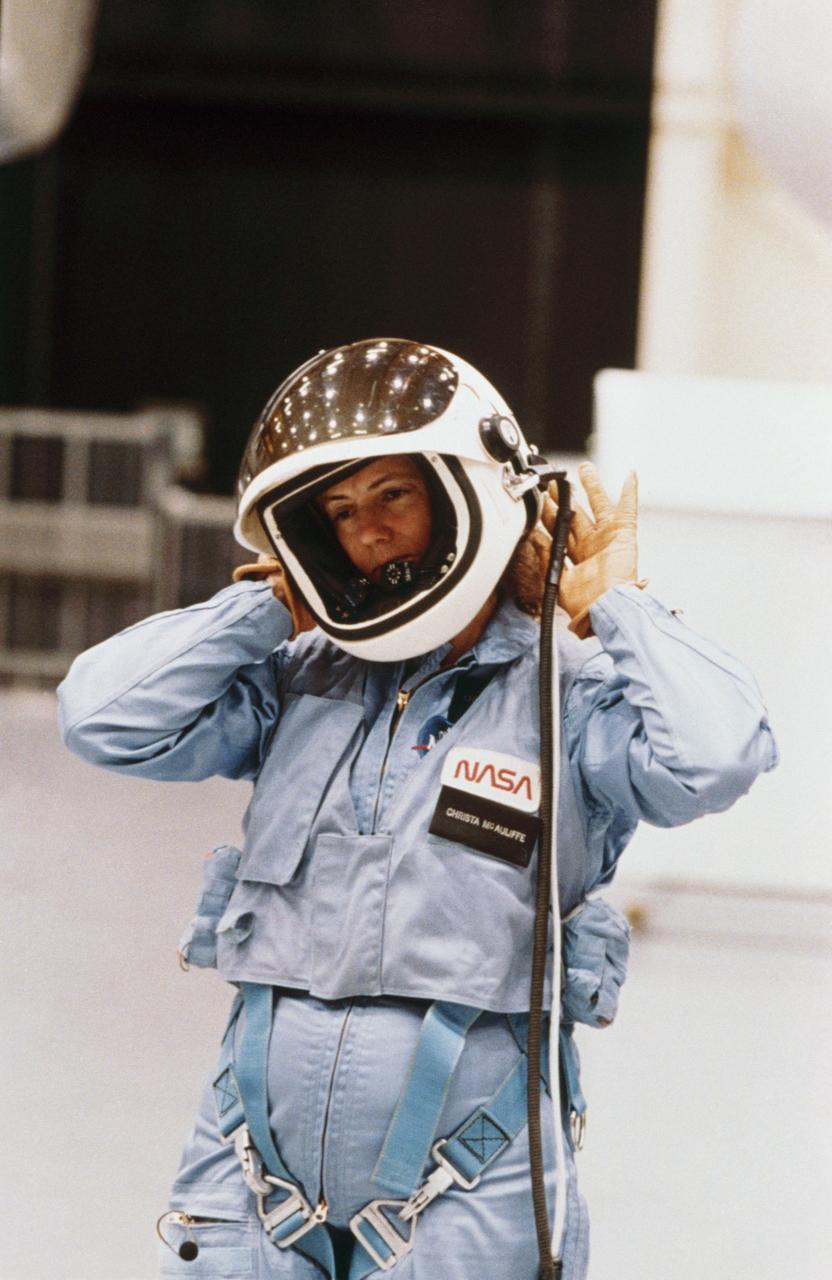
S86-25182 (for release January 1986) --- Sharon Christa McAuliffe, STS-51L citizen observer/payload specialist, prepares to remove her helmet after participating in emergency egress training in the shuttle mock-up and integration lab at the Johnson Space Center. McAuliffe will represent the Teacher-in-Space Project aboard the Challenger when it launches in late January. The photo was taken by Keith Meyers of the New York Times. Photo credit: NASA
Christa McAuliffe removing helmet after egress training
S86-25251 (January 1986) --- Sharon Christa McAuliffe, payload specialist for STS-51L, takes a breather following a busy day?s training in the Johnson Space Center?s Shuttle Mock-up and Integration Laboratory.  McAuliffe, a New Hampshire school teacher, was chosen from among ten finalists in the Teacher-in-Space Project to serve as citizen observer aboard the Challenger. This photo was taken by Keith Meyers of the New York Times. Photo credit: NASA
Christa McAuliffe resting after egress training
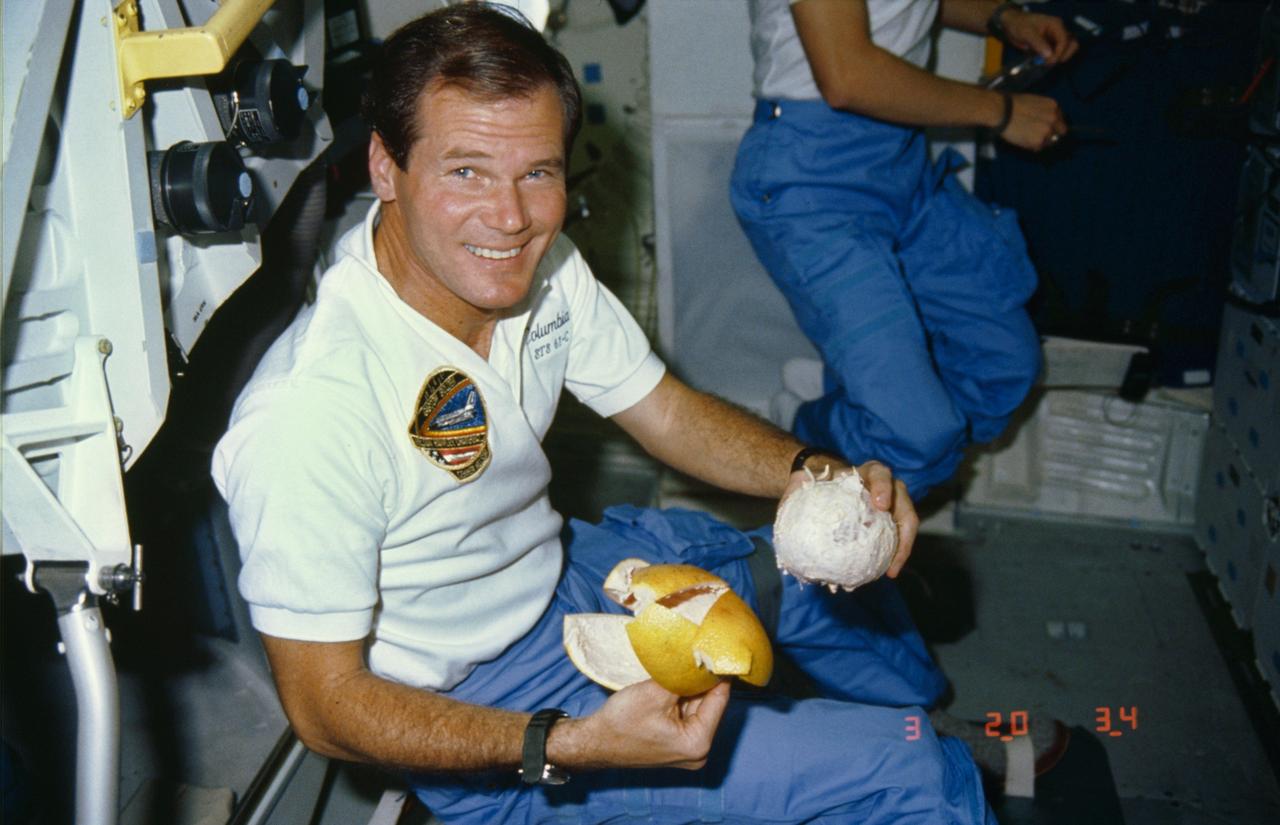
61C-09-005 (15 Jan 1986) --- U.S. Representative Bill Nelson, (D. Florida), STS 61-C payload specialist, prepares to enjoy a freshly peeled grapefruit on the middeck of the earth-orbiting Space Shuttle Columbia.
Representative Bill Nelson prepares to eat a peeled grapefruit
STS056-91-050 (8-17 April 1993) --- This 70mm frame shows the cargo bay of the Earth-orbiting Space Shuttle Discovery backdropped against clouds.  Most of the elements of the ATLAS-2 payload can be seen, but missing is the SPARTAN-201 satellite which was in the midst of its separation from Discovery when the photo was made.
STS-56 onorbit view of Discovery's, OV-103's, payload bay with ATLAS-2 pallet
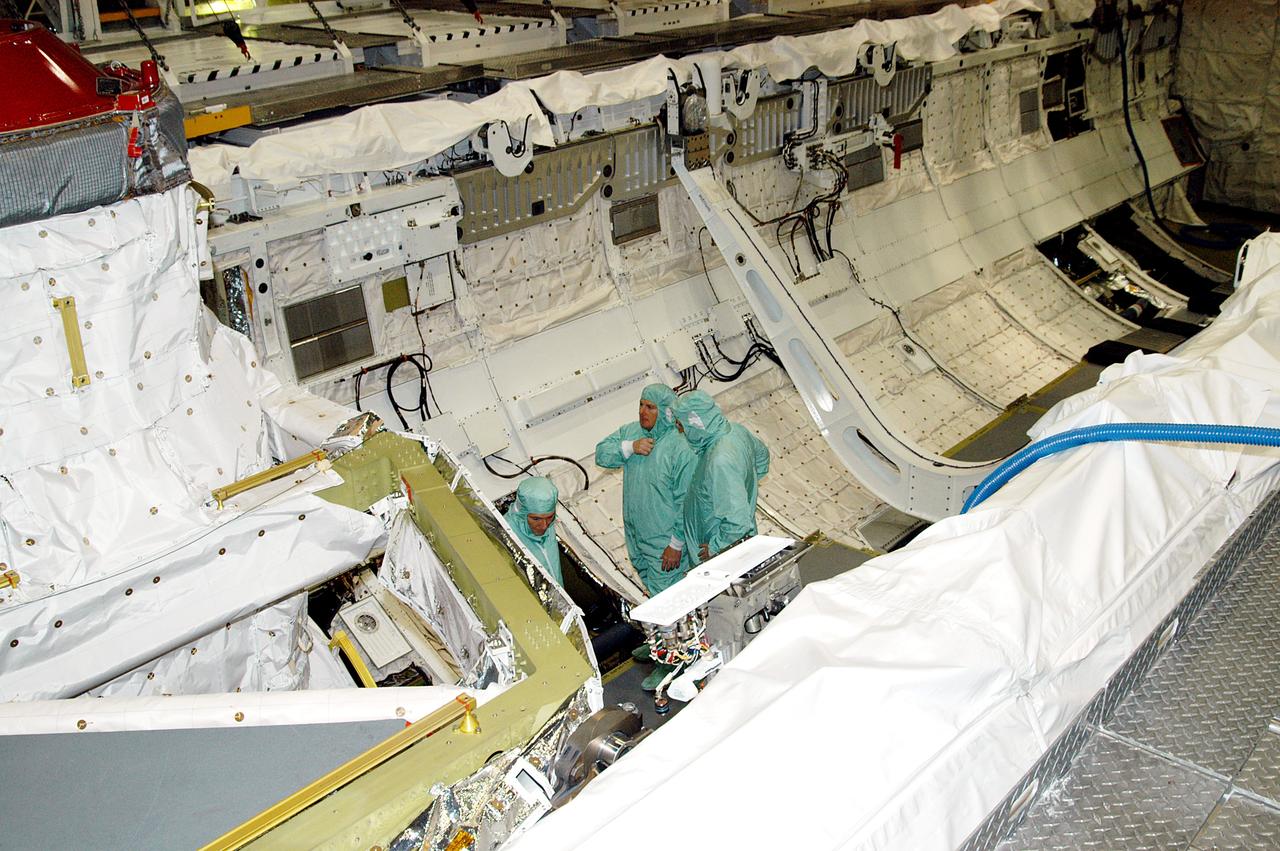
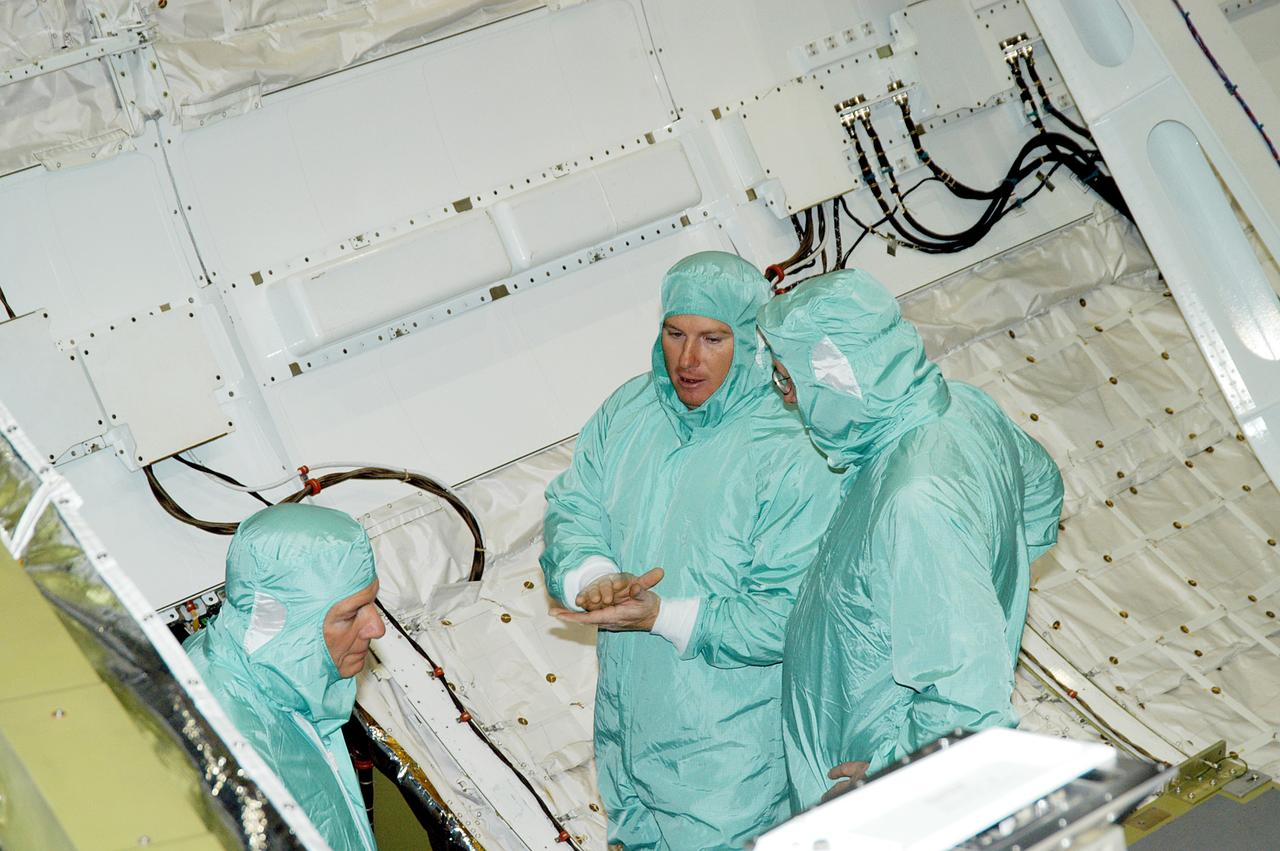
KENNEDY SPACE CENTER, FLA. -- In Orbiter Processing Facility Bay 1, NASA Deputy Associate Administrator for Space Station and Shuttle Programs Michael Kostelnik (left) and United Space Alliance (USA) Vice President and Space Shuttle Program Manager Howard DeCastro (right) are briefed by a USA technician (center) on Shuttle processing in the payload bay of orbiter Atlantis.  NASA and USA Space Shuttle program management are participating in a leadership workday.  The day is intended to provide management with an in-depth, hands-on look at Shuttle processing activities at KSC.
KENNEDY SPACE CENTER, FLA. -- In Orbiter Processing Facility Bay 1, NASA Deputy Associate Administrator for Space Station and Shuttle Programs Michael Kostelnik (left) and United Space Alliance (USA) Vice President and Space Shuttle Program Manager Howard DeCastro (right) are briefed by a USA technician (center) on Shuttle processing in the payload bay of orbiter Atlantis. NASA and USA Space Shuttle program management are participating in a leadership workday. The day is intended to provide management with an in-depth, hands-on look at Shuttle processing activities at KSC.
KENNEDY SPACE CENTER, FLA. -- In Orbiter Processing Facility Bay 1, NASA Deputy Associate Administrator for Space Station and Shuttle Programs Michael Kostelnik (left) and United Space Alliance (USA) Vice President and Space Shuttle Program Manager Howard DeCastro (right) are briefed by a USA technician (center) on Shuttle processing in the payload bay of orbiter Atlantis.  NASA and USA Space Shuttle program management are participating in a leadership workday.  The day is intended to provide management with an in-depth, hands-on look at Shuttle processing activities at KSC.
KENNEDY SPACE CENTER, FLA. -- In Orbiter Processing Facility Bay 1, NASA Deputy Associate Administrator for Space Station and Shuttle Programs Michael Kostelnik (left) and United Space Alliance (USA) Vice President and Space Shuttle Program Manager Howard DeCastro (right) are briefed by a USA technician (center) on Shuttle processing in the payload bay of orbiter Atlantis. NASA and USA Space Shuttle program management are participating in a leadership workday. The day is intended to provide management with an in-depth, hands-on look at Shuttle processing activities at KSC.
STS066-129-043 (3-14 Nov 1994) --- Clouds over the Atlantic Ocean serve as the backdrop for this 70mm scene of the Cryogenic Infrared Spectrometers and Telescopes for the Atmosphere (CRISTA), attached to the Shuttle Pallet System (SPAS).  CRISTA-SPAS was in the grasp of the Space Shuttle Atlantis' Remote Manipulator System (RMS) arm.  The crew deployed the CRISTA-SPAS on November 4, 1994 and the tandem remained in free-flight until November 12, 1994 when it was retrieved by the Canadian-built RMS, controlled by payload commander Ellen Ochoa.  Other crew members onboard Atlantis were astronauts Donald R. McMonagle, Curtis L. Brown, Jr., Scott E. Parazynski and Joseph R. Tanner, along with Jean-François Clervoy of the European Space Agency (ESA).  The six astronauts spent 11-days in Earth-orbit in support of the Atmospheric Laboratory for Applications and Science (ATLAS-3) mission.
CRISTA-SPAS payload in the payload bay of STS-66 shuttle Atlantis
51F-17-011 (29 July-6 Aug 1985) --- Loren W. Acton, 51-F payload specialist, triggers a 35mm camera recording stellar imagery through the aft flight deck overhead windows aboard the Earth-orbiting Space Shuttle Challenger. The extension on the camera's lens is an image intensifier.
Payload specialist Loren Acton working at aft fligh deck station
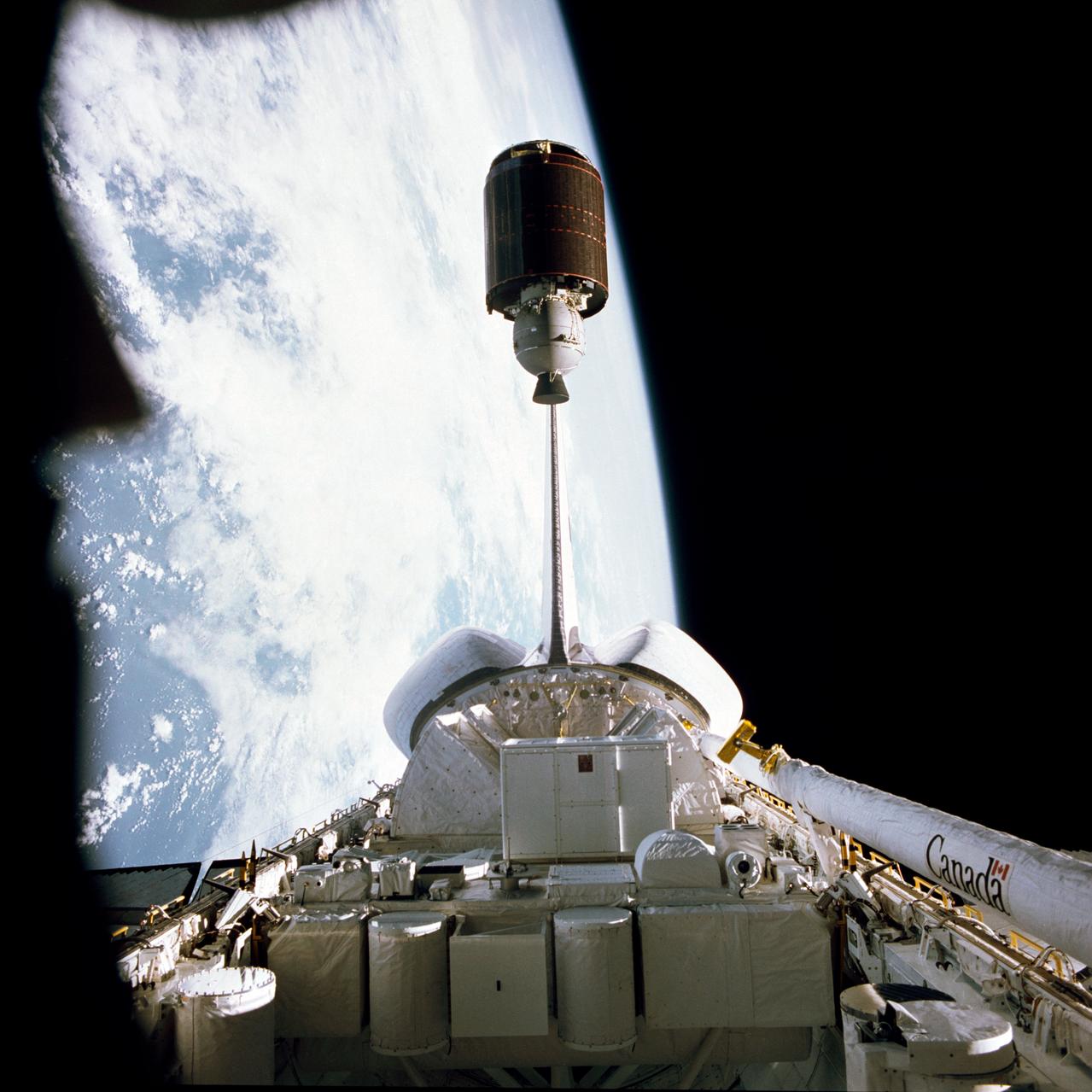
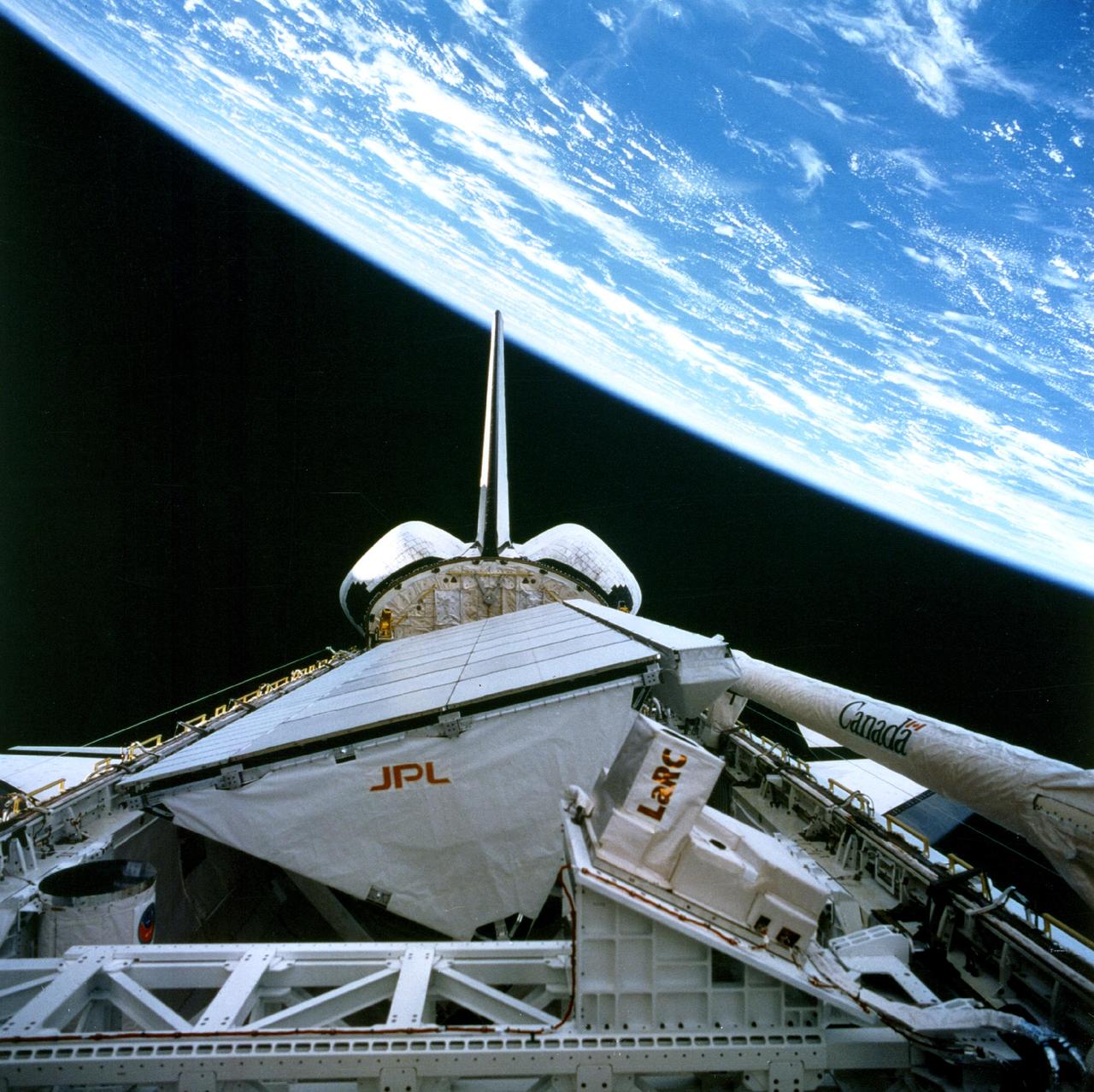
S83-35764 (19 June 1983) --- The Indonesian Palapa B communications satellite is just about to clear the vertical stabilizer of the Earth-orbiting Space Shuttle Challenger to begin its way toward its Earth-orbital destination.  Also visible in this 70mm exposure, photographed through the flight deck?s aft windows, are the Shuttle pallet satellite, the experiment package for NASA?s office of space and terrestrial applications (OSTA-2), the now vacated protective cradles for Palapa and Telesat Canada?s Anik C2 satellites, some getaway special (GAS) canisters and the Canadian-built remote manipulator system (RMS) arm.
Palapa-B communications satellite launched from the Shuttle Challenger
STS-8 payload flight test article (PFTA) shown prior to shipment to Kennedy Space Center (KSC). The PFTA is designed to simulate the larger cargos scheduled for later flights.
STS-8 payload flight test article prior to shipment to KSC
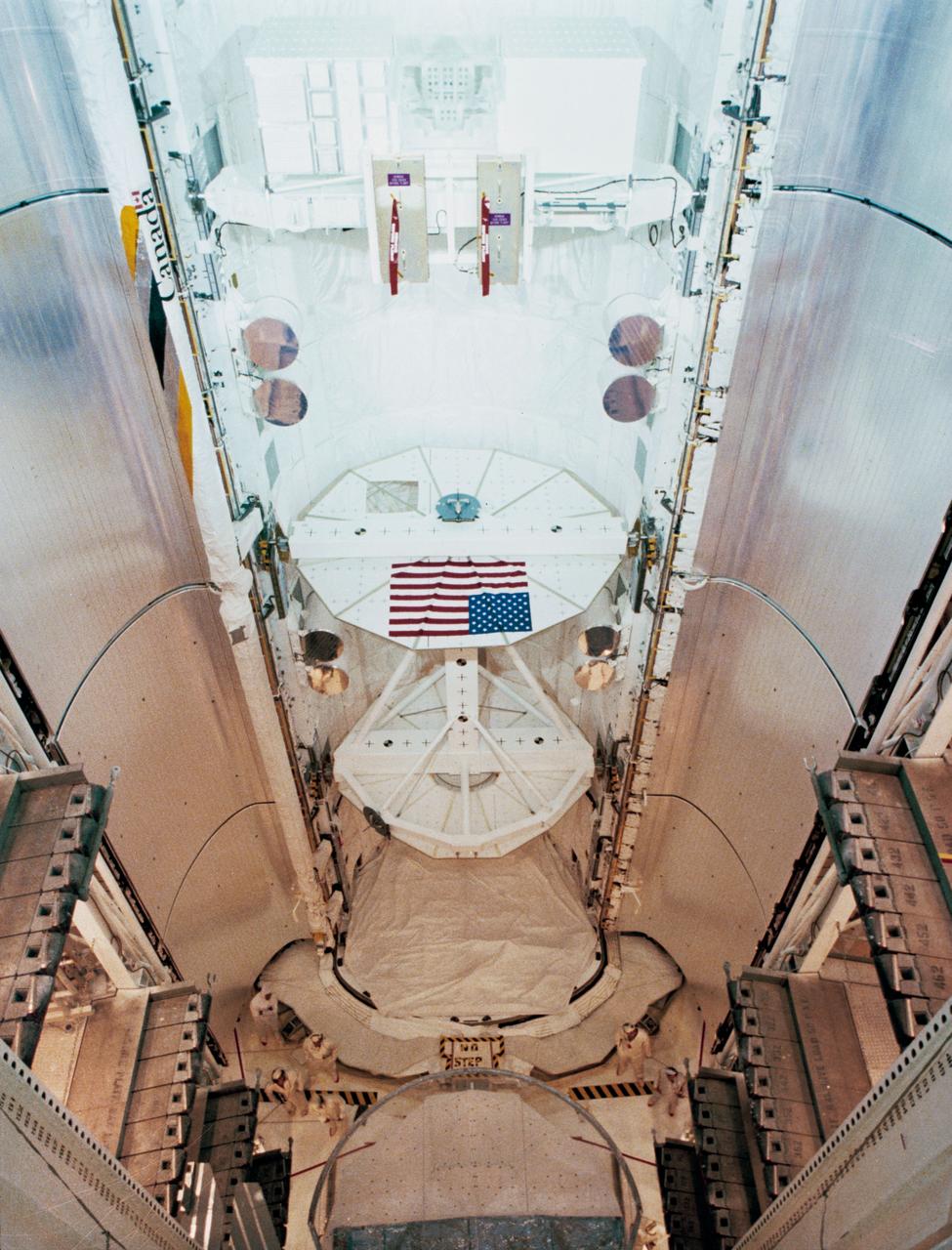
View of the Payload Flight Test Article (PFTA) installed into Challenger's cargo bay in the Payload Changeout Room at Pad 39A at the Kennedy Space Center (KSC). The American flag is visible on one side of the PFTA in the cargo bay. The Kennedy Space Center alternative photo number is KSC-108-83PC-566.
View of the Payload Flight Test Article (PFTA) installed in cargo bay
STS066-96-030 (3-14 Nov 1994) --- Masses of clouds serve as the backdrop for this close-up 70mm scene of the Cryogenic Infrared Spectrometers and Telescopes for the Atmosphere (CRISTA), attached to the Shuttle Pallet Satellite (SPAS).  CRISTA-SPAS was in the grasp of the Space Shuttle Atlantis' Remote Manipulator System (RMS) arm.  The crew deployed the CRISTA-SPAS on November 4, 1994 and the spacecraft remained in free-flight until November 12, 1994 when it was retrieved by the Canadian-built RMS, controlled by payload commander Ellen Ochoa.  Other crew members onboard Atlantis were astronauts Donald R. McMonagle, Curtis L. Brown, Jr., Scott E. Parazynski and Joseph R. Tanner, along with Jean-Francois Clervoy of ESA.  The six astronauts spent 11-days in Earth-orbit in support of the Atmospheric Laboratory for Applications and Science (ATLAS-3) mission.
CRISTA-SPAS payload on the STS-66 shuttle Atlantis RMS arm
S84-47034 (Nov 1984) --- Astronaut Ernst Messerschmid, payload specialist, D-1 German Spacelab mission.
Portrait - German Payload Specialist (PS) Ernst Messerschmid
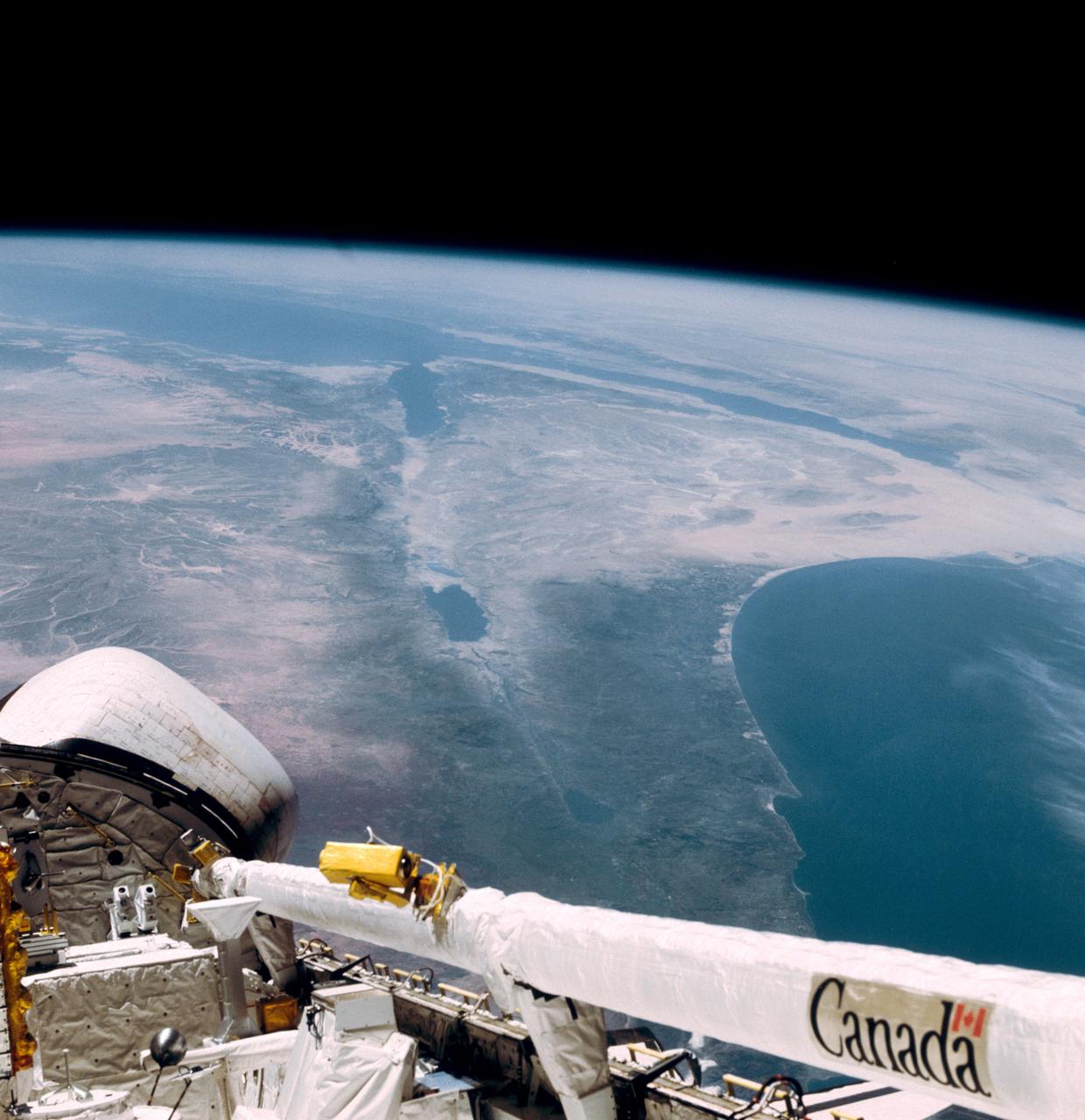
This southerly looking view photographed from the orbiting Space Shuttle Columbia shows a small portion of the vehichle's aft section. The 50-ft Canadian built remote manipulator system (RMS) is in a resting posture (lower right corner) stretched out along the 60-ft. long cargo bay. Many of the components of the OSS-1 payload package are in the bottom center. The Mediterranean Sea is at right foreground. Parts of the Sinai peninsula, Israel, Egypt, Saudi Arabia, Jordan, Palestine, Syria, and Lebanon can be located in the photo. The Red Sea, Gulf of Aqaba, Suez Canal are near the photo's horizon.
View of the Columbia's aft section while over Mediterranean Sea
STS060-15-003 (3-11 Feb 1994) --- This 35mm frame shows the major payloads of the Space Shuttle Discovery's STS-60 mission, backdropped against clouds over the Atlantic Ocean.  In the foreground is the SPACEHAB module, with the Wake Shield Facility (WSF) partially visible in its berthed position near the Orbital Maneuvering System (OMS) pods and the vertical stabilizer.  Television cameras on the Remote Manipulator System (RMS) were being used for a survey of the cargo.  Five NASA astronauts and a Russian cosmonaut went on to spend eight days in Earth orbit in support of the mission.
View of payloads in the STS-60 Discovery's payload bay while in orbit
STS002-13-208 (12-14 Nov. 1981) --- This clear view of the aft section of the Earth-orbiting space shuttle Columbia's cargo bay and some of its cargo was photographed through the flight deck's aft windows. Visible in the center of the photo are the twin orbital maneuvering system (OMS) pods. The vertical stabilizer or tail splits the top part of the image in half. The Induced Environment Contamination Monitor (IECM) Location experiment is located in the back center of the cargo bay, near the top. There is a grapple fixture attached to the side of the IECM. Various components of the Office of Space Terrestrial Applications (OSTA-1) payload are seen near the aft section of the cargo bay, such as the Feature Identification and Location Experiment (FILE) (the long cone shaped object on the right back), the Shuttle Multispectral Infrared Radiometer (SMIRR) (on pallet base) and the SIR-A recorder in the right foreground. In the left foreground the Shuttle Imaging Radar-A (SIR-A) antenna can be seen. Photo credit: NASA
View of the Columbia's open payload bay
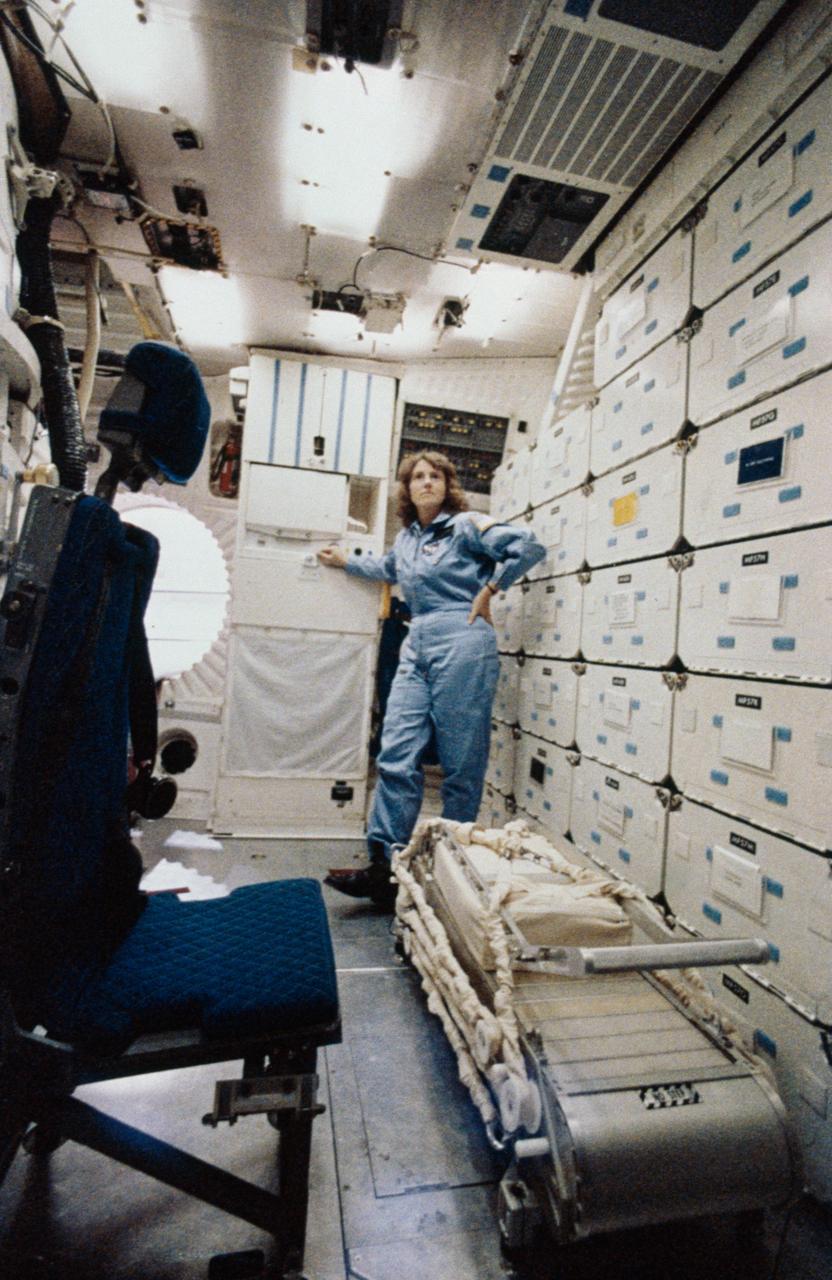
S86-25188 (December 1985) --- Sharon Christa McAuliffe, a school teacher Concord New Hampshire, surveys a ground training replica of the quarters she?ll be using in space when the space shuttle Challenger taxis two women and five men into space in January of 1986.  The STS-51L citizen observer/payload specialist is in training at the Johnson Space Center, representing the Teacher-in-Space Project. The photo was taken by Keith Meyers of the New York Times. Photo credit: NASA
Christa McAuliffe surveys middeck mockup
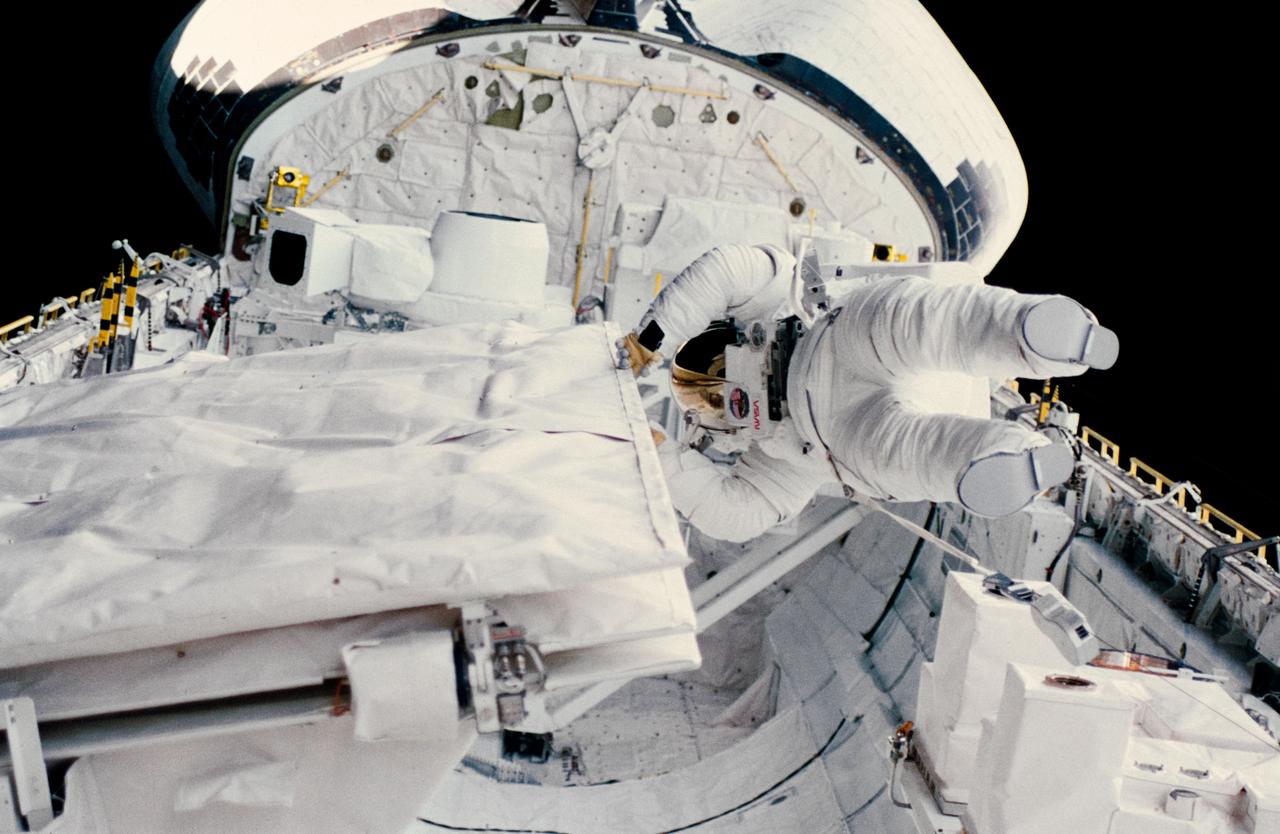
41G-13-032 (11 Oct. 1984) --- Astronaut Kathryn D. Sullivan checks the latch of the SIR-B antenna in the space shuttle Challenger's open cargo bay during her historic extravehicular activity (EVA) on Oct. 11, 1984.  Earlier, America's first woman to perform an EVA and astronaut David C. Leestma, participated in an in-space simulation of refueling a spacecraft in orbit.  The Orbital Refueling System (ORS) is just beyond the astronaut mission specialist's helmet.  To the left is the Large Format Camera (LFC).  The LFC and ORS are stationed on a device called the Mission Peculiar Support Structure (MPESS).  Crew members consisted of astronauts Robert L. Crippen, commander; Jon A. McBride, pilot; along with Kathryn D. Sullivan, Sally K. Ride, and David D. Leestma, all mission specialists; and Canadian astronaut Marc Garneau and Paul D. Scully-Power, both payload specialist.        EDITOR'S NOTE: The STS-41G mission had the first American female EVA (Sullivan); first seven-person crew; first orbital fuel transfer; and the first Canadian (Garneau).
Astronaut Kathryn Sullivan checks SIR-B antenna during EVA
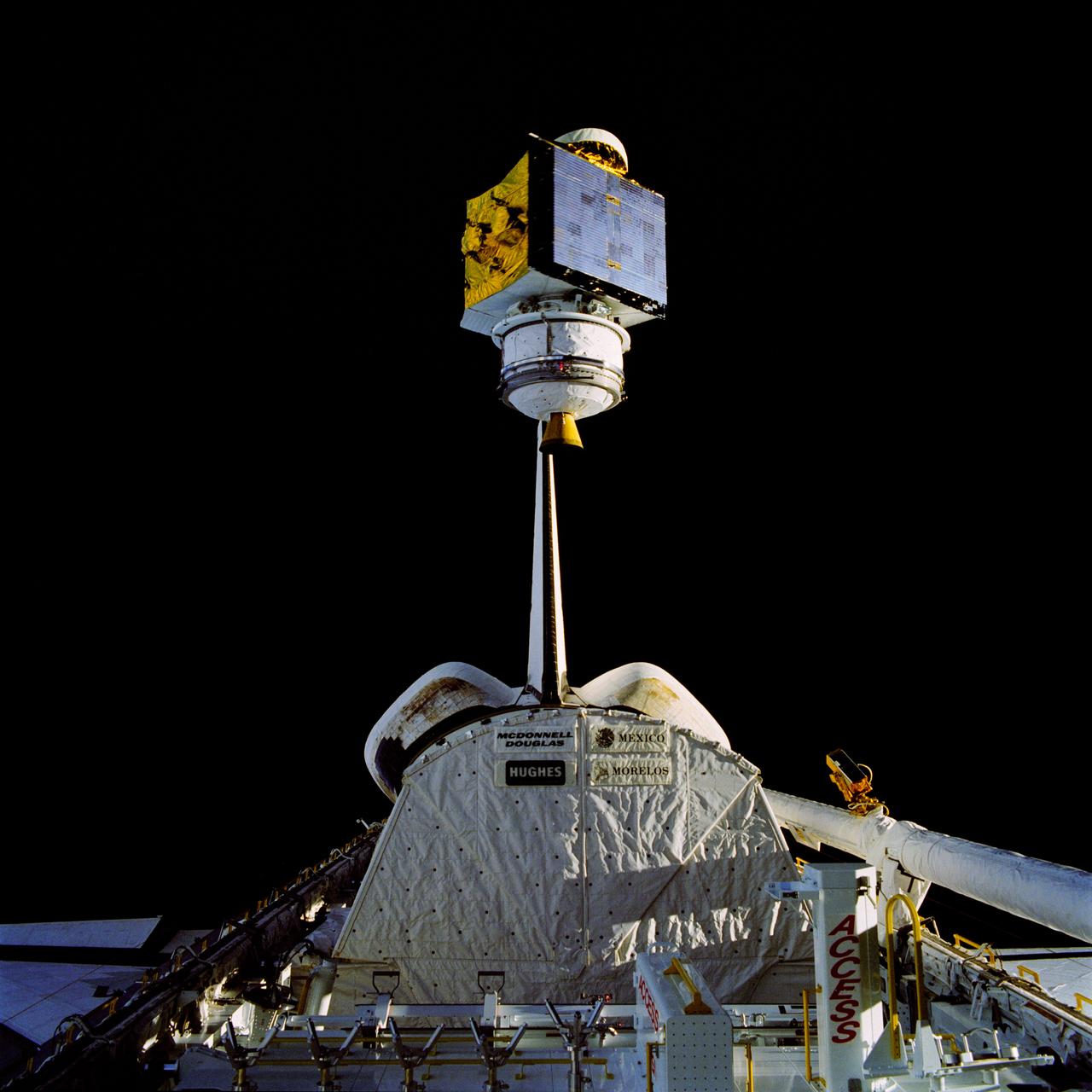
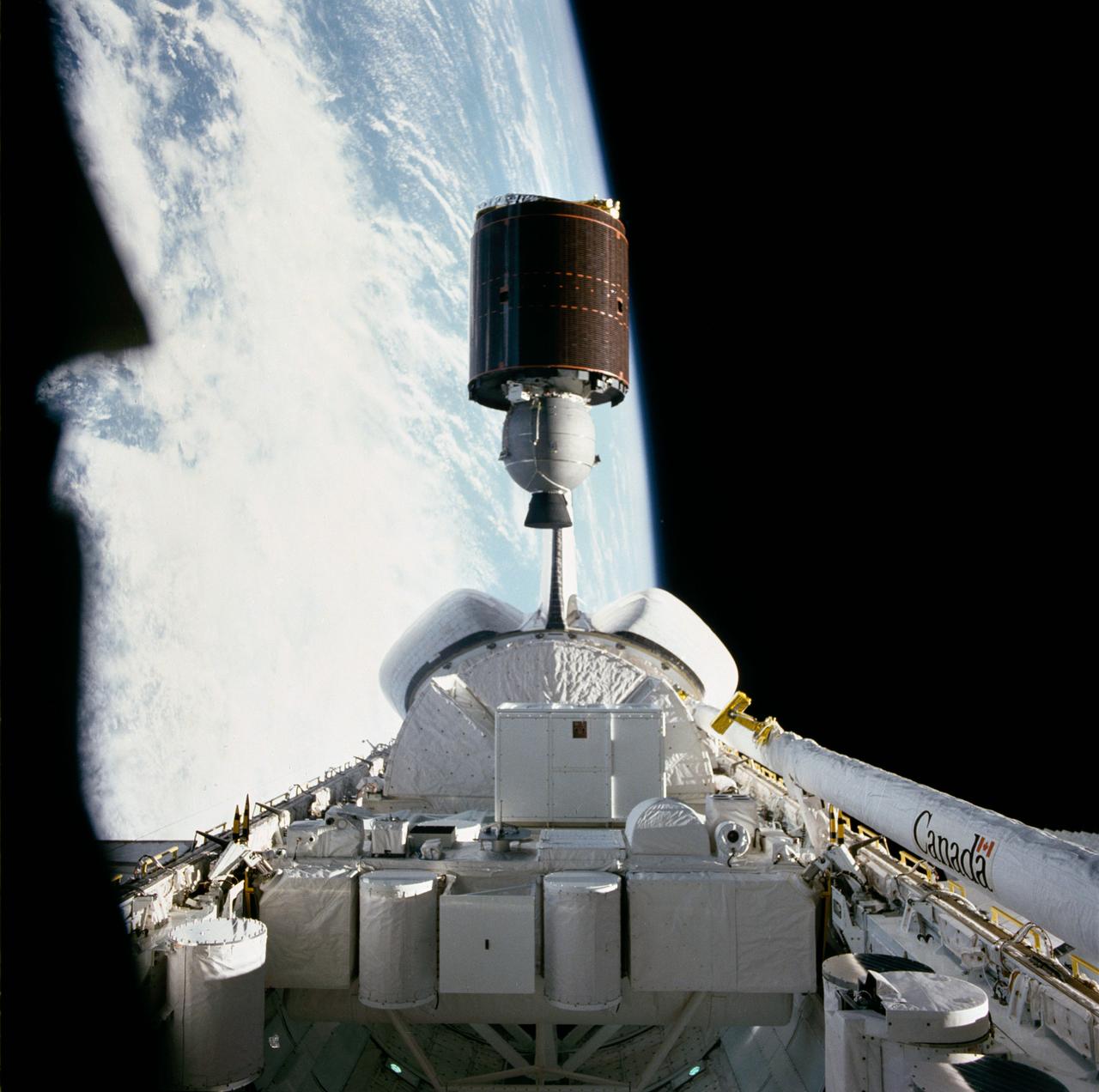
41D-37-050 (1 Sept 1984) --- Telstar, the third of three satellites to be placed into space via the Earth-orbiting Discovery, departs from the cargo bay of the manned vehicle during 41-D's third day in space.  The scene was photographed at 9:35 a.m. (CDT), Sept. 1, 1984, with a 70mm handheld hasselblad camera aimed through the windows on the flight deck.  Heavy clouds cover much of the water and land mass of Earth in the background.
Deployment of the Telstar communications satellite
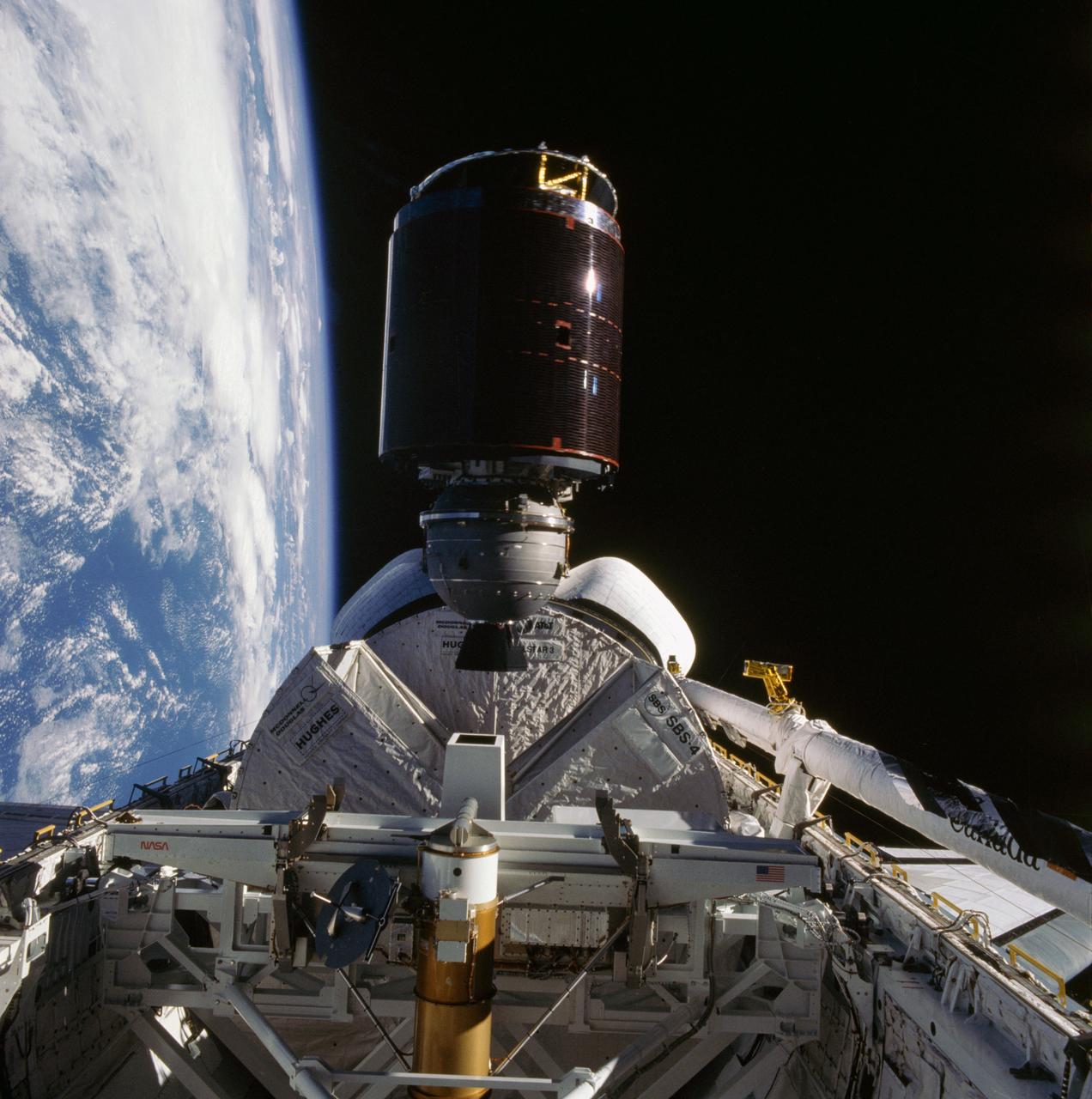
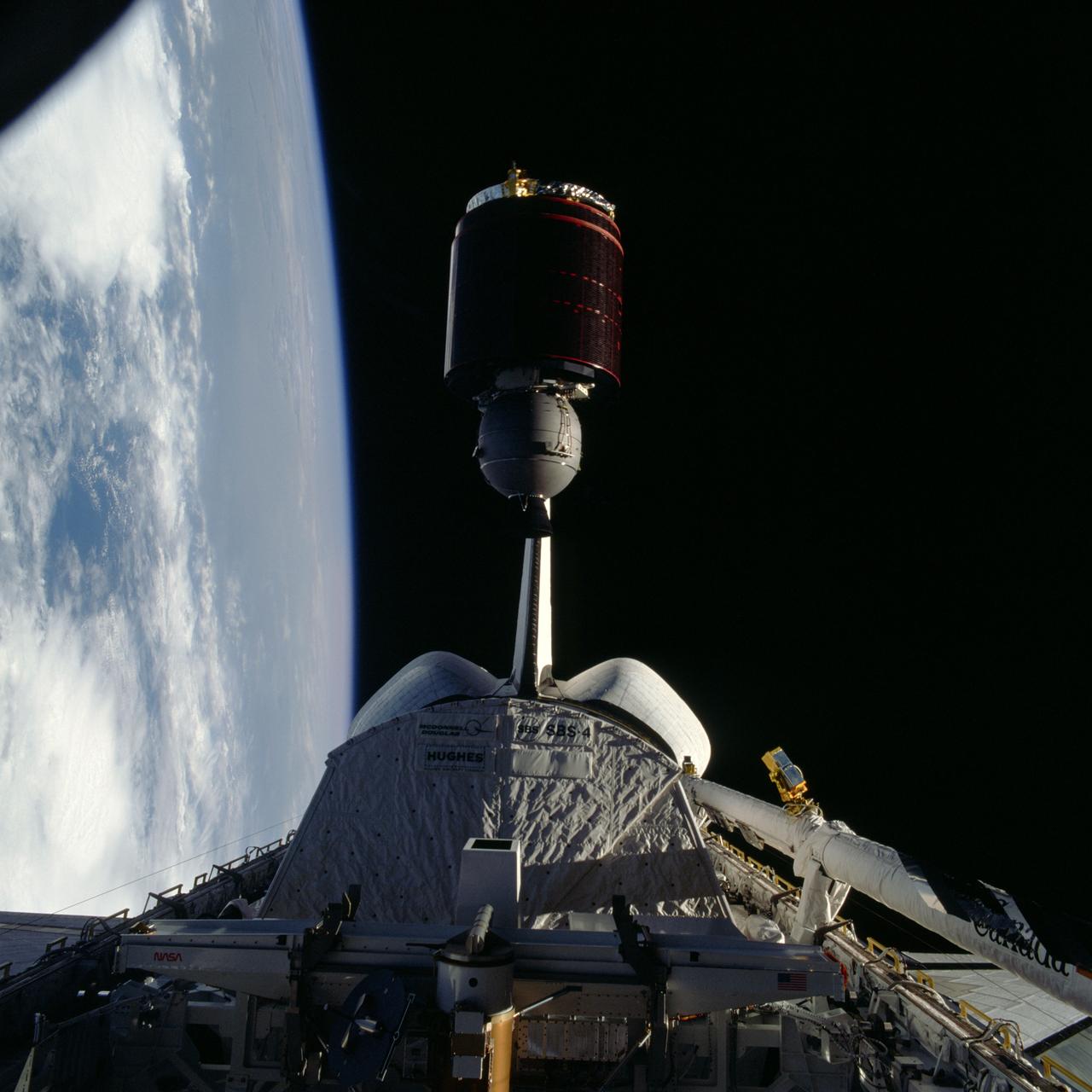
41D-36-034 (30 Aug 1984) --- Less than nine hours after the first launch of the Discovery, its astronaut crewmembers photographed deployment of the SBS-4 communications satellite.  The cylindrical spacecraft spins and rises from its cradle-like protective shield to begin life in space.  A number of maneuvers will place it in its desired orbit.  A 70mm camera, aimed through the spacecraft’s aft flight deck windows, was used to expose the frame.
Deployment of the SBS-4 communications satellite
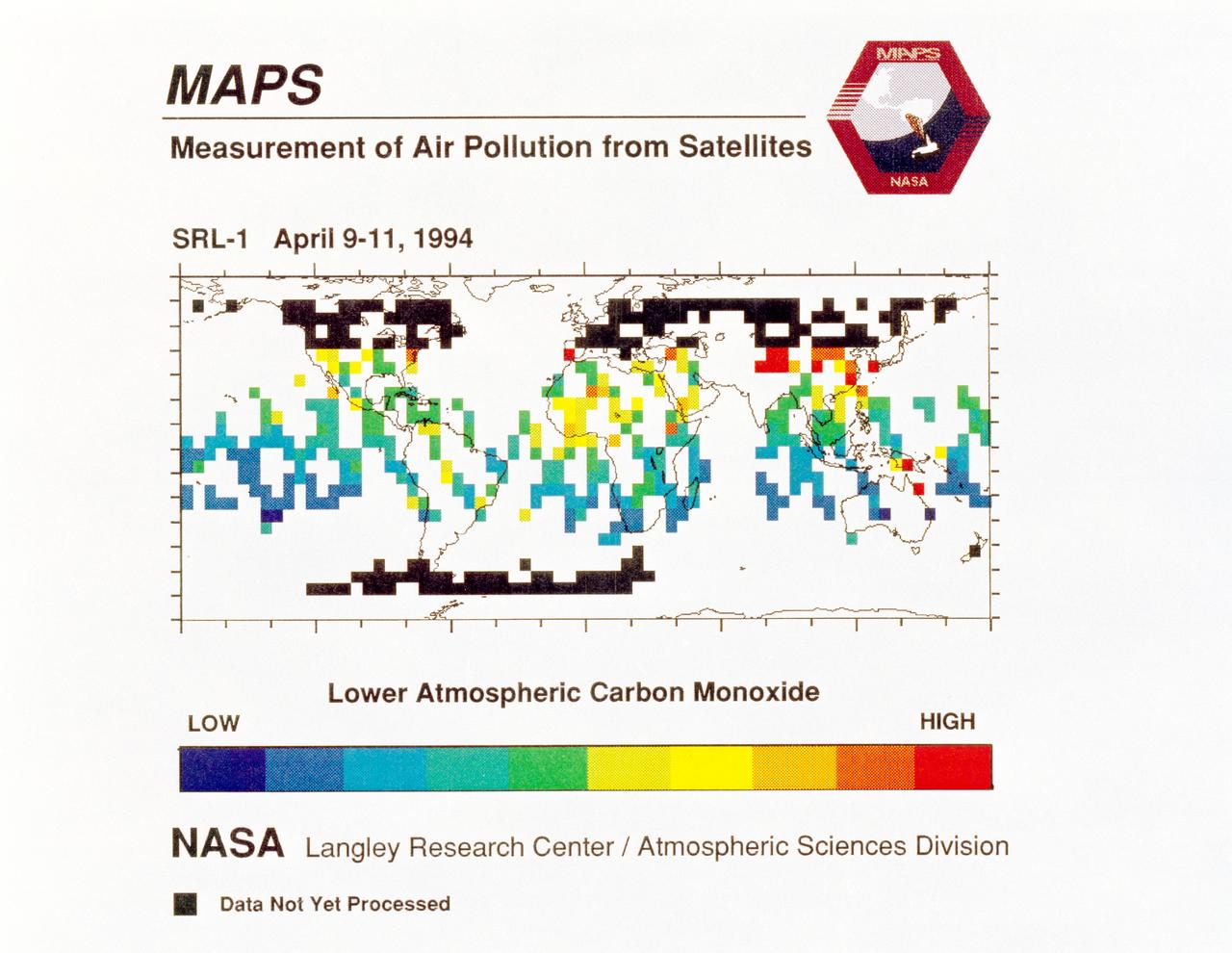
STS059-S-040 (12 April 1994) --- STS-59's MAPS (Measurement of Air Pollution from Satellites) experiment is sending real-time data that provides the most comprehensive view of carbon monoxide concentrations on Earth ever recorded.  This computer image shows a summary of "quick look" data obtained by the MAPS instrument during its first days of operations as part of the Space Shuttle Endeavour's SRL-1 payload.  This data will be processed using more sophisticated techniques following the flight.  The color red indicates areas with the highest levels of carbon monoxide.  These Northern Hemisphere springtime carbon monoxide values are generally significantly higher than the values found in the Southern Hemisphere.  This is in direct contrast to the data obtained by the MAPS experiment during November 1981 and October 1984, i.e. during Northern Hemisphere fall.  The astronauts aboard Endeavour have seen fires in most of the areas showing higher carbon monoxide values (China, Eastern Australia, and equatorial Africa).  The relationship between the observed fires and the higher carbon monoxide values will be investigated following SRL-1 by combining the MAPS data with meteorological data, surface imagery, and Space Shuttle hand-held photographs.  By the end of SRL-1, MAPS will have acquired data over most of the globe between 57 degrees north and 57 degrees south latitudes.  The entire data set will be carefully analyzed using sophisticated post-flight data processing techniques.  The data will then be applied in a variety of scientific studies concerning chemistry and transport processes in the atmosphere.  The MAPS experiment measures the carbon monoxide in the lower atmosphere.  This gas is produced both as a result of natural processes and as a result of human activities.  The primary human resources of carbon monoxide are automobiles and industry and the burning of plant materials.  The primary natural source is the interaction of sunlight with naturally occurring ozone and water vapor.  The strength of all of these sources changes seasonally.
STS-59 MAPS experiment view
61B-38-36W (28 Nov 1985) --- The 4,144-pound RCA Satcom K-2 communications satellite is   photographed as it spins from the cargo bay of the Earth-orbiting Atlantis.  A TV camera at right records the deployment for a later playback to Earth.  This frame was photographed with a handheld Hasselblad camera inside the spacecraft.
Deployment of the RCA Satcom K-2 communications satellite
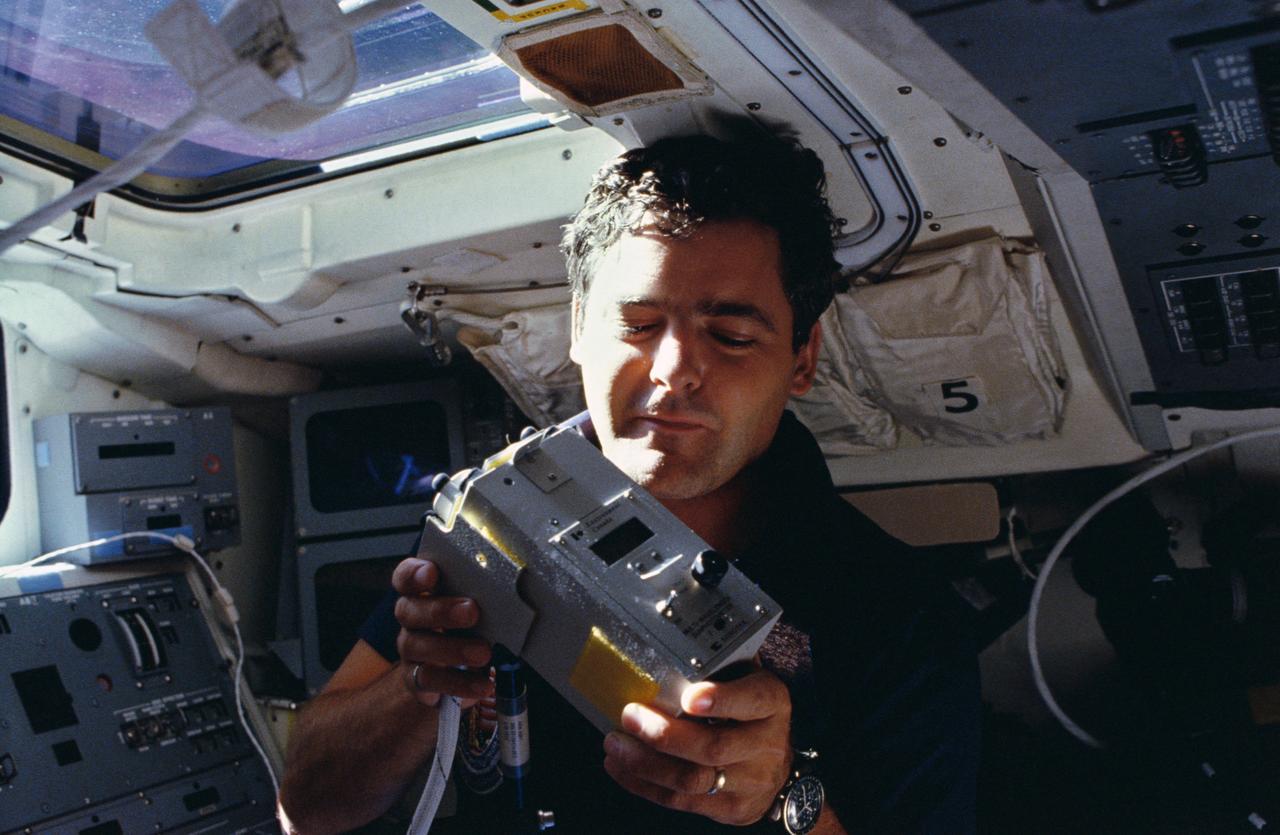
Payload specialist Marc Garneau displays a Canadian made Sunphotometer, part of a package of experiments which he is concentrating on during this mission. He is sitting on the Challenger's flight deck at the aft station.
Payload specialist Garneau displays Sunphotometer
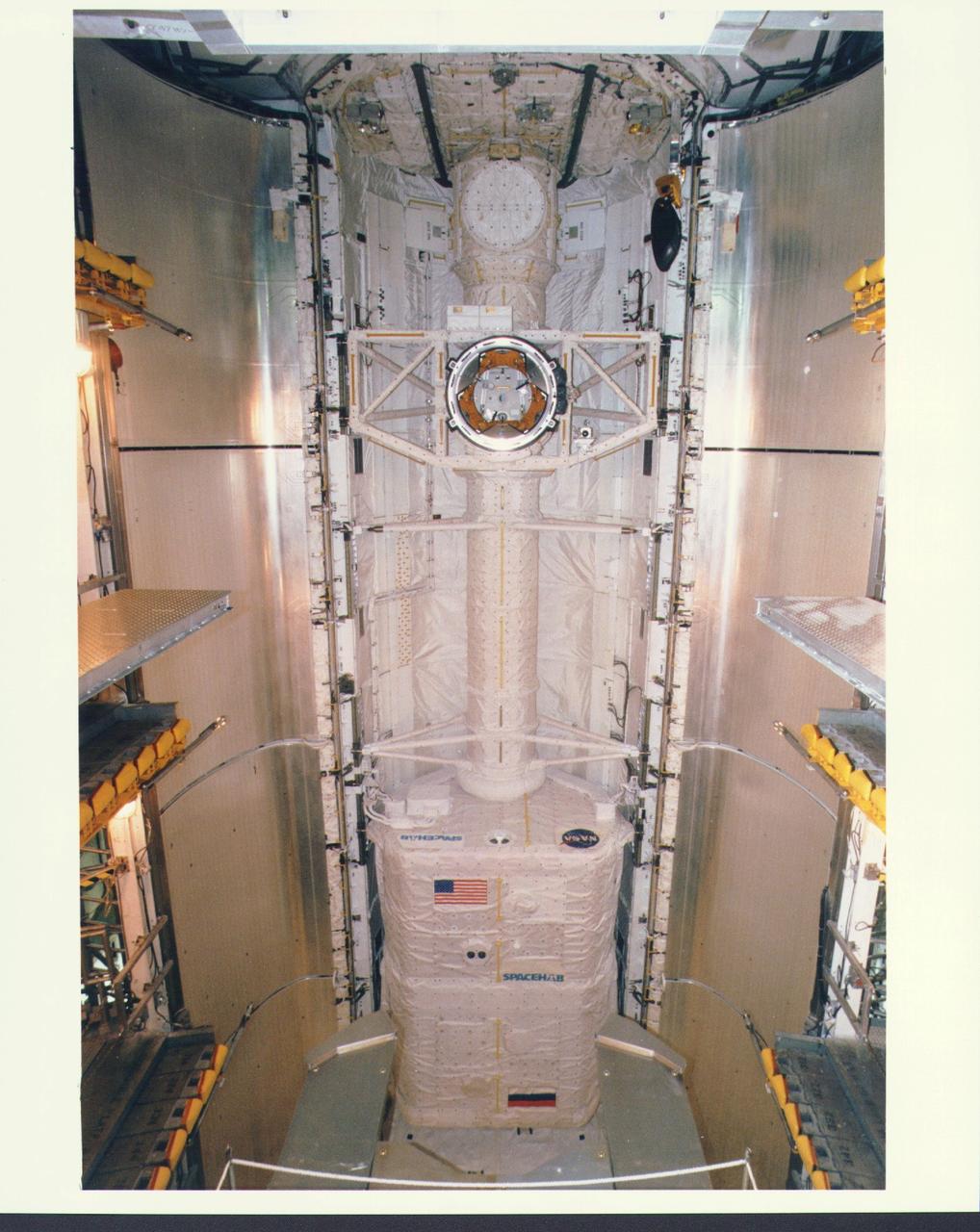
KENNEDY SPACE CENTER, FLA. -  The orbiter Ku-band antenna looms large in this view of the Space Shuttle Atlantis' payload bay.  Visible just past the antenna system - stowed on the starboard side of the payload bay wall - is the Orbiter Docking System (ODS), and connected to the ODS via a tunnel is the Spacehab Double Module in the aft area of the payload bay.  This photograph was taken from the starboard wing platform on the fifth level of the Payload Changeout Room (PCR) at Launch Pad 39A.  Work is under way in the PCR to close Atlantis' payload bay doors for flight.  Atlantis currently is being targeted for liftoff on Mission STS-79, the fourth docking of the U.S. Shuttle to the Russian Space Station Mir, around Sept. 12.
KENNEDY SPACE CENTER, FLA. - The orbiter Ku-band antenna looms large in this view of the Space Shuttle Atlantis' payload bay. Visible just past the antenna system - stowed on the starboard side of the payload bay wall - is the Orbiter Docking System (ODS), and connected to the ODS via a tunnel is the Spacehab Double Module in the aft area of the payload bay. This photograph was taken from the starboard wing platform on the fifth level of the Payload Changeout Room (PCR) at Launch Pad 39A. Work is under way in the PCR to close Atlantis' payload bay doors for flight. Atlantis currently is being targeted for liftoff on Mission STS-79, the fourth docking of the U.S. Shuttle to the Russian Space Station Mir, around Sept. 12.
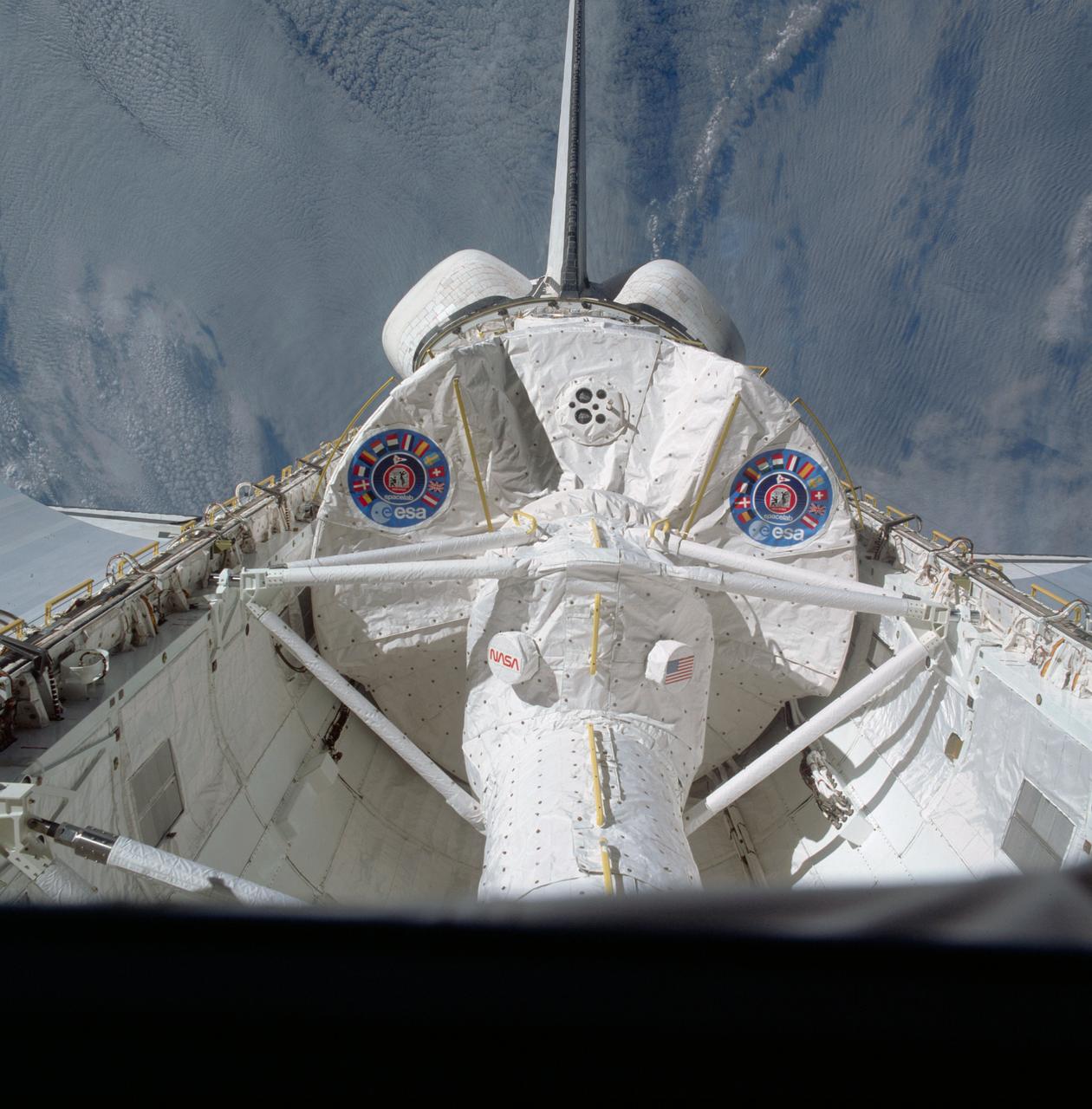
STS009-32-1112 (28 Nov-8 Dec 1983) --- A handheld Hasselblad camera was aimed through the aft windows on the flight deck of Columbia for this initially released scene of the active Spacelab module in the cargo bay.  The docking tunnel, leading from the shirt-sleeve environment of the orbiter to the equally comfortable environment of Spacelab, is in the foreground.
View of the Spacelab module in the payload bay of the Columbia during STS-9
KENNEDY SPACE CENTER, FLA. -   Workers in the Payload Changeout Room (PCR) at Launch Pad 39A are preparing to close the payload doors for flight on the Space Shuttle Atlantis, targeted for liftoff on Mission STS-79 around Sept. 12.  The payloads in Atlantis' cargo bay will play key roles during the upcoming spaceflight, which will be highlighted by the fourth docking between the U.S. Shuttle and Russian Space Station Mir.  Located in the aft (lowermost) area of the payload bay is the SPACEHAB Double Module, filled with supplies and other items slated for transfer to the Russian Space Station Mir as well as research equipment.  The SPACEHAB is connected by tunnel to the Orbiter Docking System (ODS).  This view looks directly at the top of the ODS and shows clearly the Androgynous Peripheral Docking System (APDS) that interfaces with the Docking Module on Mir to achieve a linkup.
KENNEDY SPACE CENTER, FLA. - Workers in the Payload Changeout Room (PCR) at Launch Pad 39A are preparing to close the payload doors for flight on the Space Shuttle Atlantis, targeted for liftoff on Mission STS-79 around Sept. 12. The payloads in Atlantis' cargo bay will play key roles during the upcoming spaceflight, which will be highlighted by the fourth docking between the U.S. Shuttle and Russian Space Station Mir. Located in the aft (lowermost) area of the payload bay is the SPACEHAB Double Module, filled with supplies and other items slated for transfer to the Russian Space Station Mir as well as research equipment. The SPACEHAB is connected by tunnel to the Orbiter Docking System (ODS). This view looks directly at the top of the ODS and shows clearly the Androgynous Peripheral Docking System (APDS) that interfaces with the Docking Module on Mir to achieve a linkup.
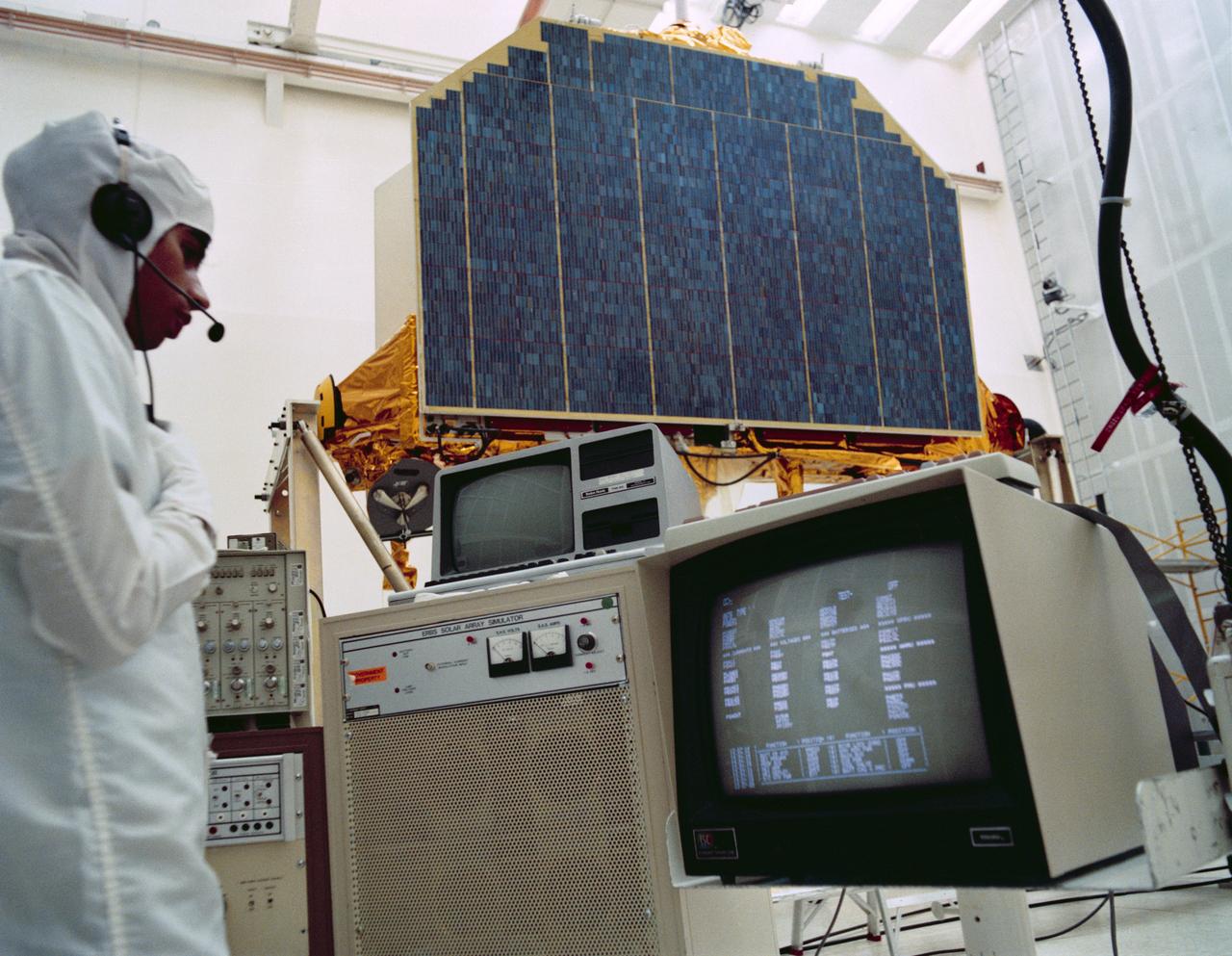
Documentation of STS 41-G payloads while in Hangar AE at Cape Canaveral. Views include documentation of the Earth Radiation Budget Satllite (ERBS) antenna (41266) and solar array panels (41265).
Documentation of STS 41-G payloads while in Hangar AE at Cape Canaveral
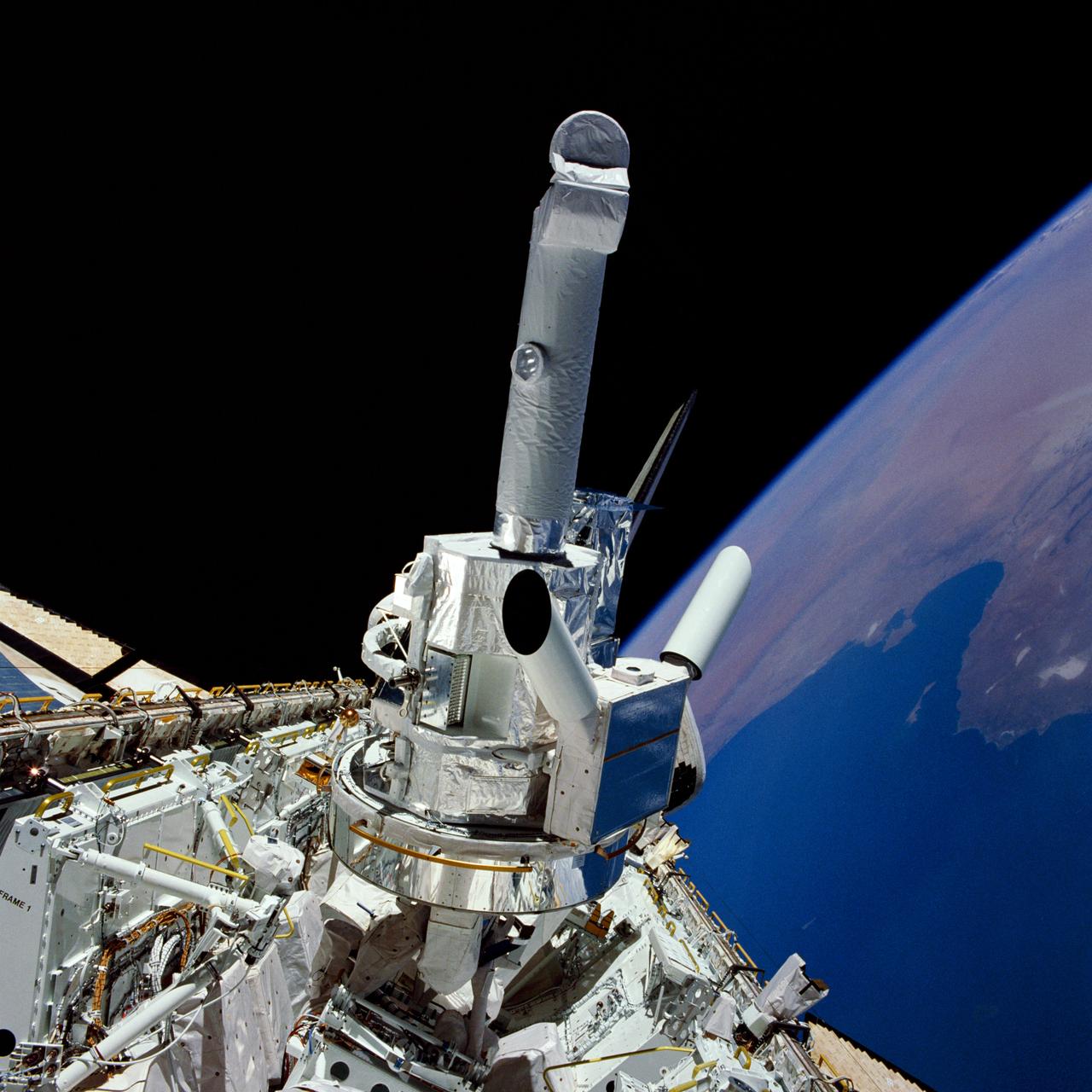
51F-33-005 (29 July - 6 August 1985) --- Experiments and the instrument pointing system (IPS) for Spacelab 2 are backdropped against the Libya/Tunisia Mediterranean coast and black space in this 70mm view photographed through the aft flight deck windows of the Space Shuttle Challenger. Also partially visible among the cluster of Spacelab 2 hardware are the solar optical universal polarimeter (SOUP) experiment and the coronal helium abundance experiment (CHASE).
View of Spacelab 2 pallet in the open payload bay
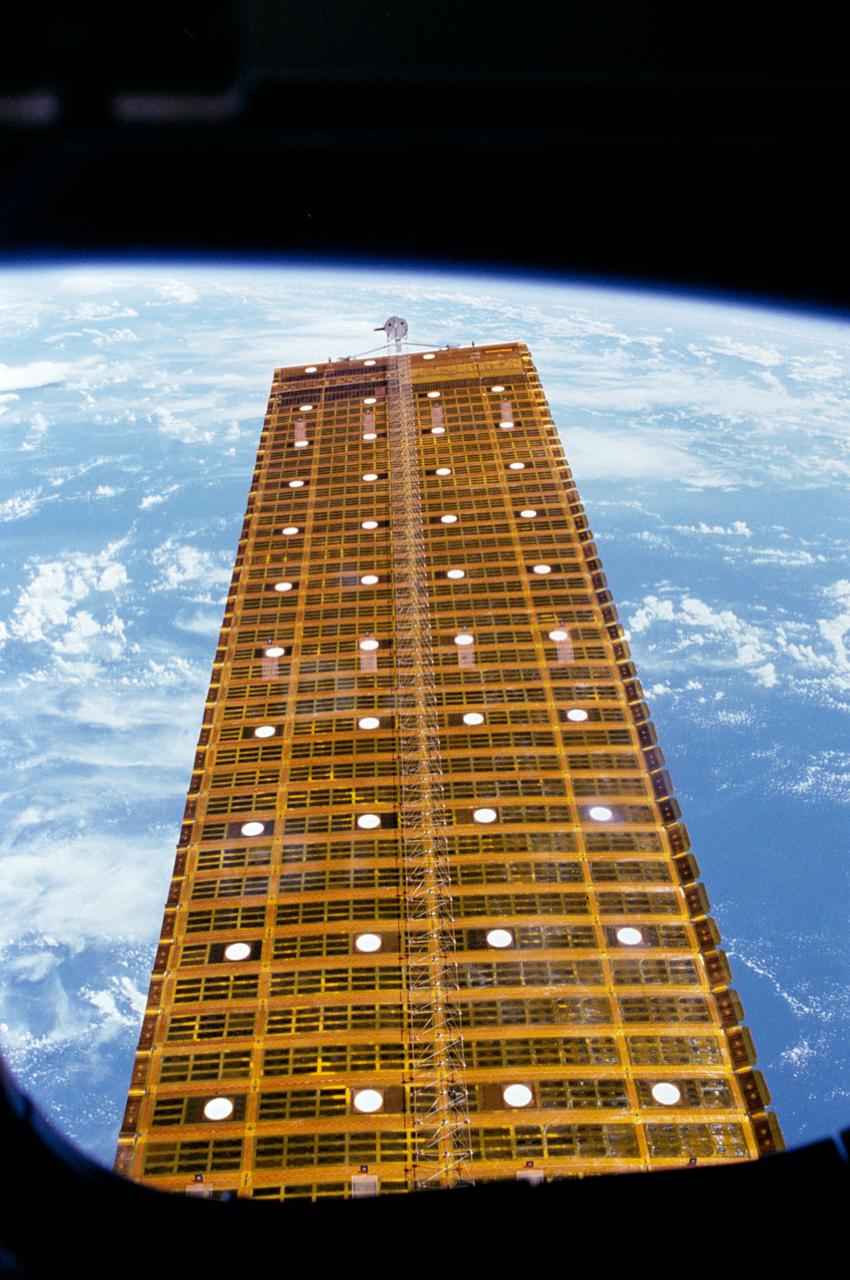
Scene of an extended solar array experiment (SAE) panel during the OAST-1 experiment. View was shot from the orbiter window by one of the STS 41-D crewmembers.
Scene of an extended solar array experiment (SAE) panel during OAST-1
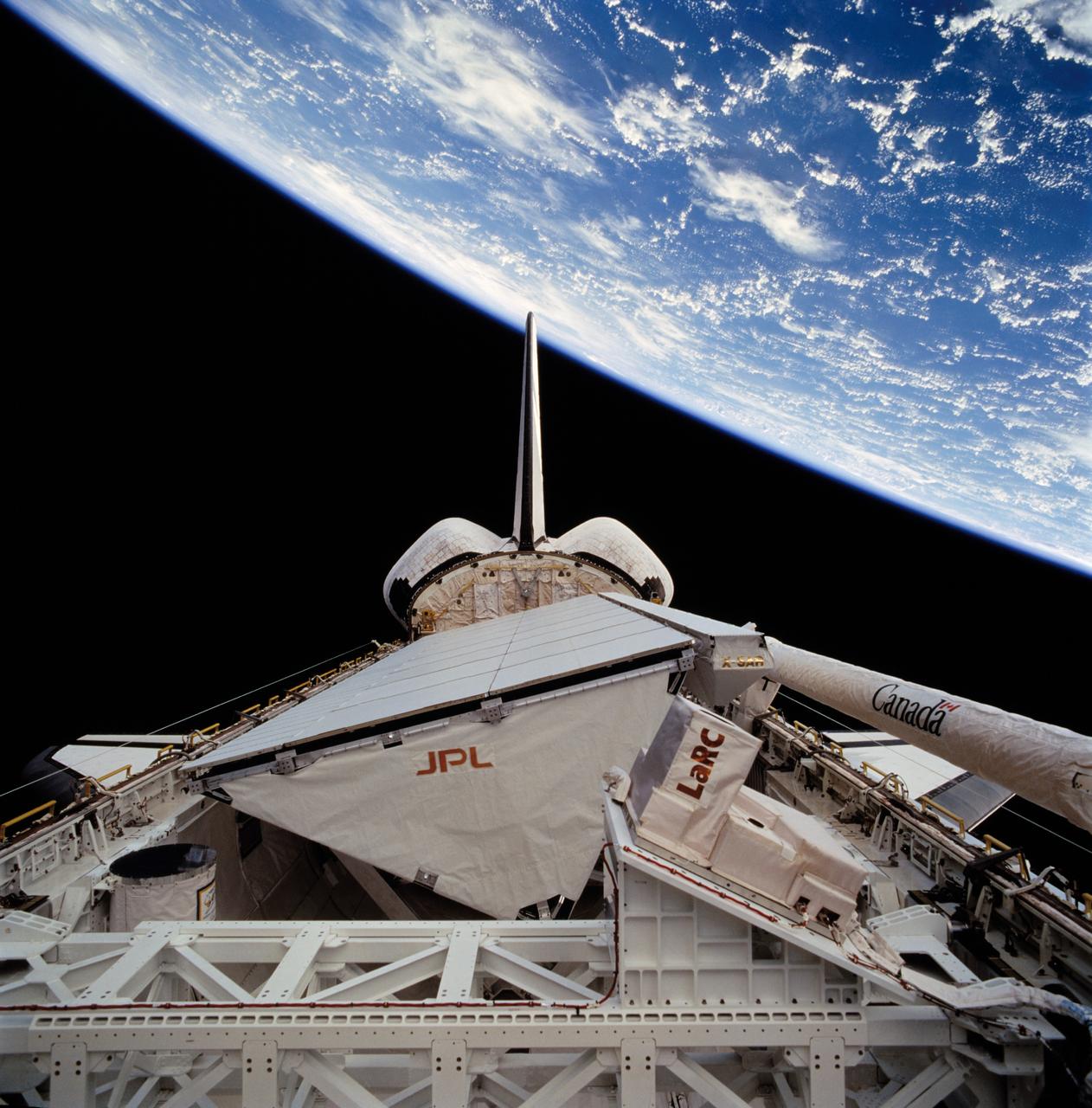
NASA SIR-C/X-SAR is shown here in the payload bay of the orbiting space shuttle Endeavour STS-59, with an area of the Pacific Ocean northeast of Hawaii in the background.
Onboard View - Space Shuttle Endeavour
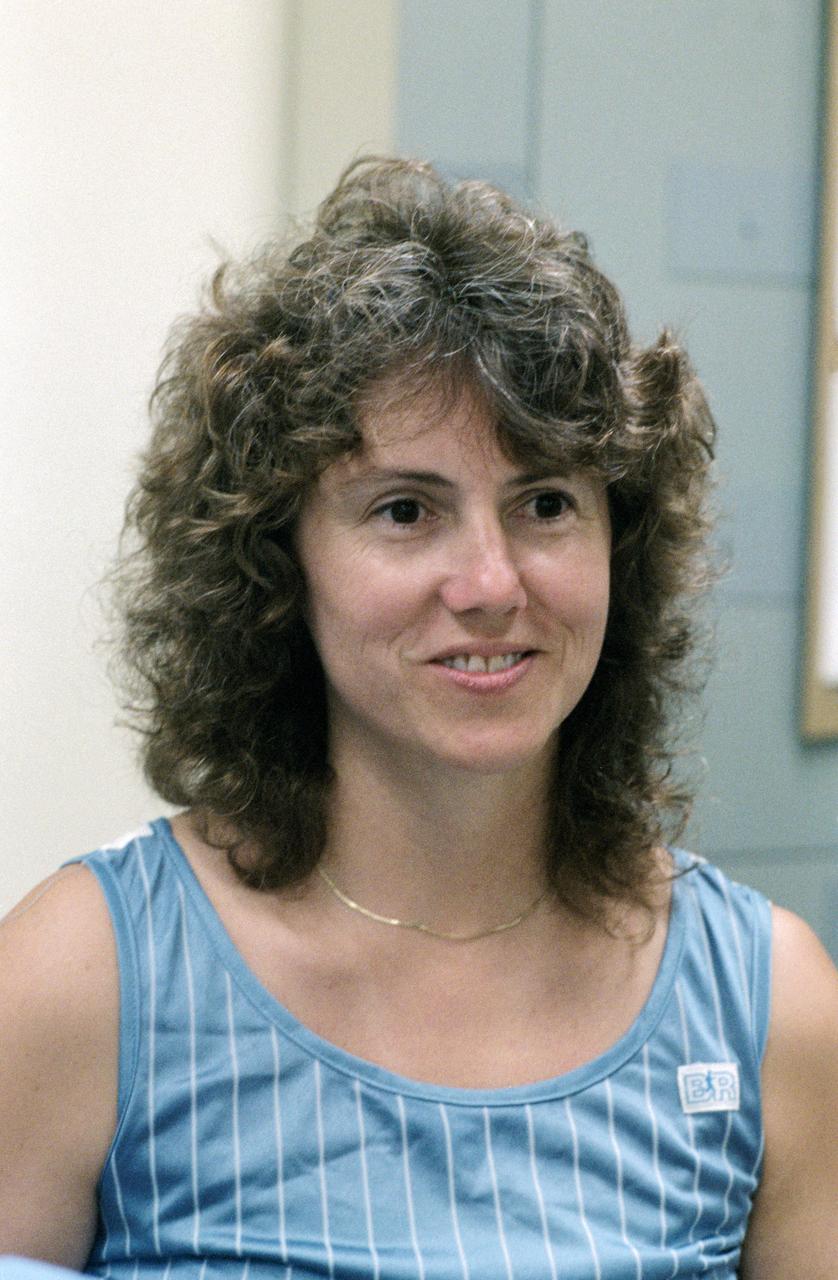
S85-37677 (8-12 July 1985) --- Sharon C. (Christa) McAuliffe of Concord High, Concord, New Hampshire, talks to nurse during physiological testing on first day at Johnson Space Center (JSC). Christa McAuliffe was eventually chosen as the first Teacher in Space and was a member of the seven-member Challenger shuttle crew which died tragically in the explosion of the spacecraft during the launch of STS-51L from the Kennedy Space Center about 11:40 a.m., EST, on Jan. 28, 1986. The explosion occurred 73 seconds into the flight as a result of a leak in one of two Solid Rocket Boosters that ignited the main liquid fuel tank. The crew members of the Challenger represented a cross-section of the American population in terms of race, gender, geography, background, and religion. The explosion became one of the most significant events of the 1980s, as billions around the world saw the accident on television and empathized with any one of the several crew members killed. Photo credit: NASA
Casual view of Christa McAuliffe during training for STS 51-L
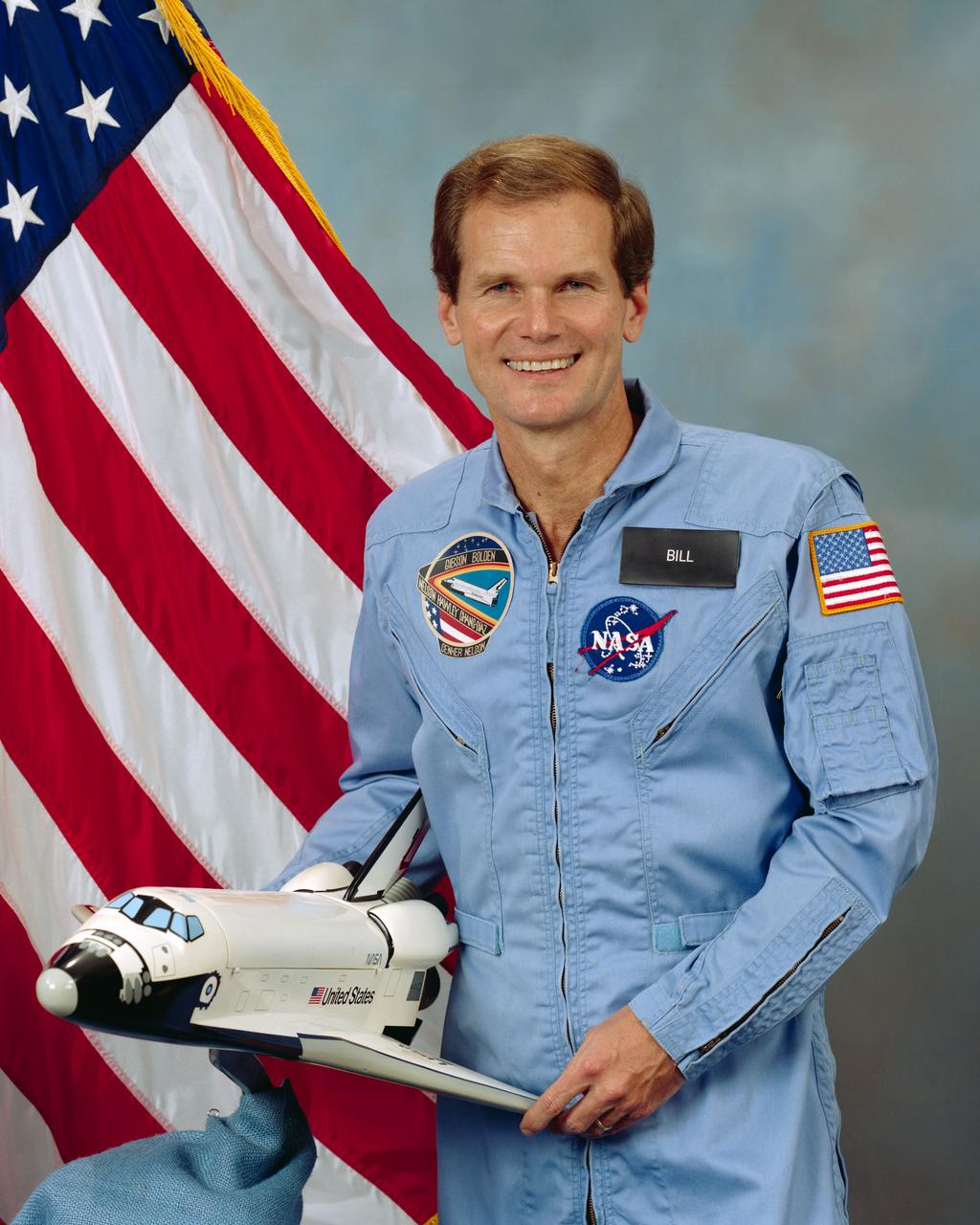
S85-43440 (25 Oct. 1985) --- Official portrait of Congressman Bill Nelson, U.S. House of Representatives - Florida, STS 61-C payload specialist. He is in the blue shuttle flight suit, holding a model of the shuttle with an American flag behind him.
Official portrait of Rep. Bill Nelson, STS 61-C payload specialist
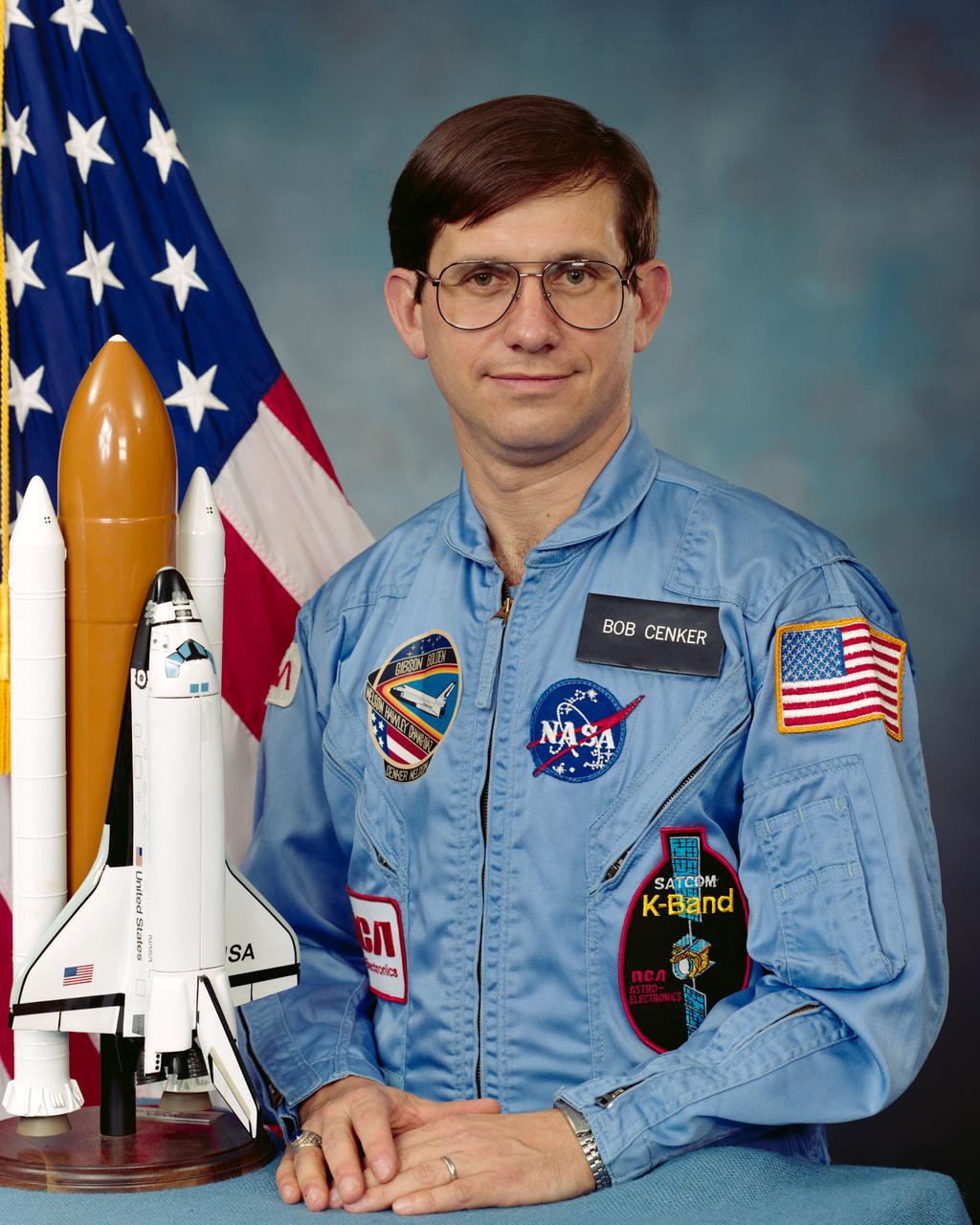
S85-45499 (2 Dec 1985) --- Payload specialist Robert J. Cenker.
Official Portrait - Robert J. Cenker - Payload Specialist (PS) - STS-61C
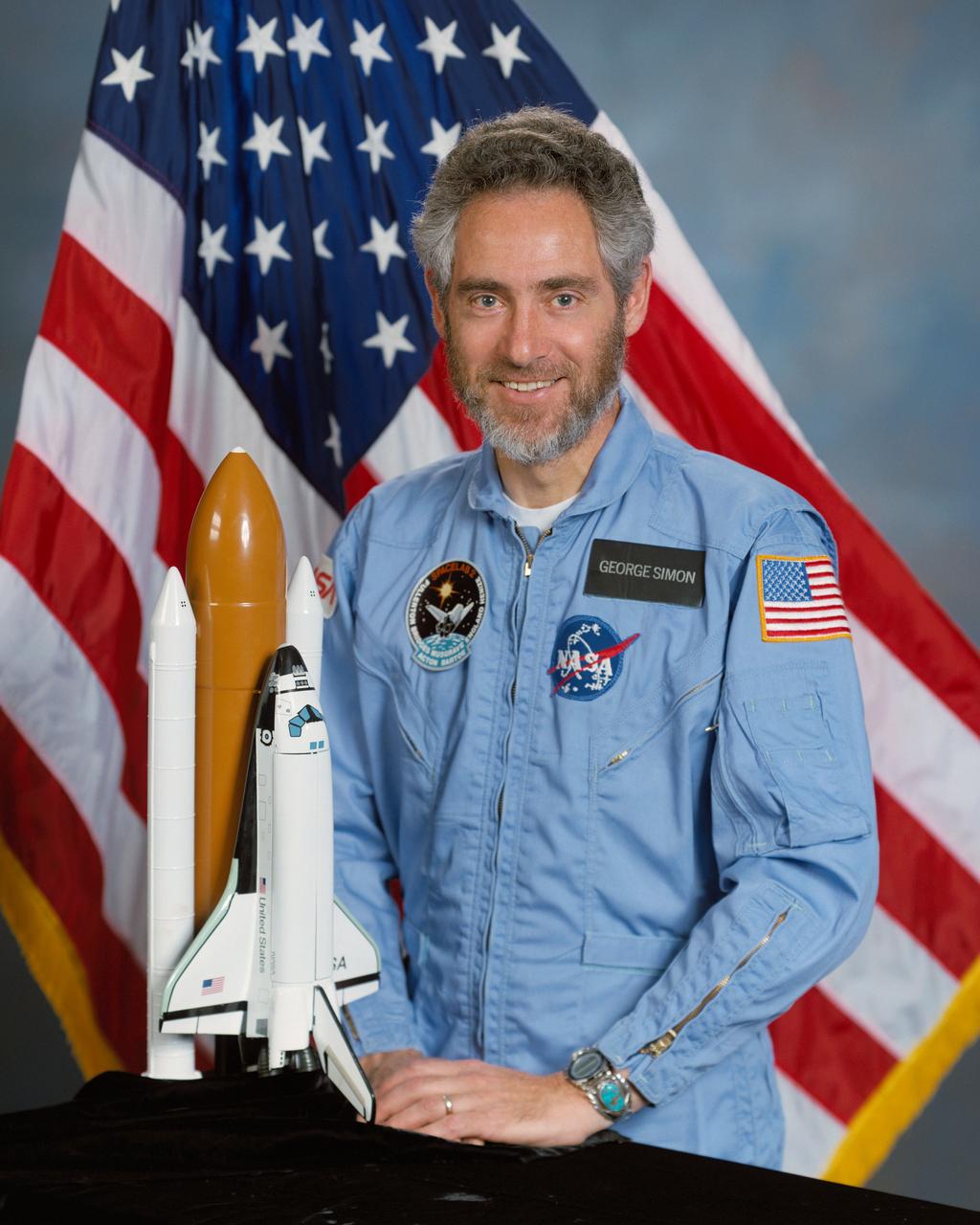
Portrait of STS 51-F Spacelab backup payload specialist George Simon, in blue flight suit
Portrait - George Simon
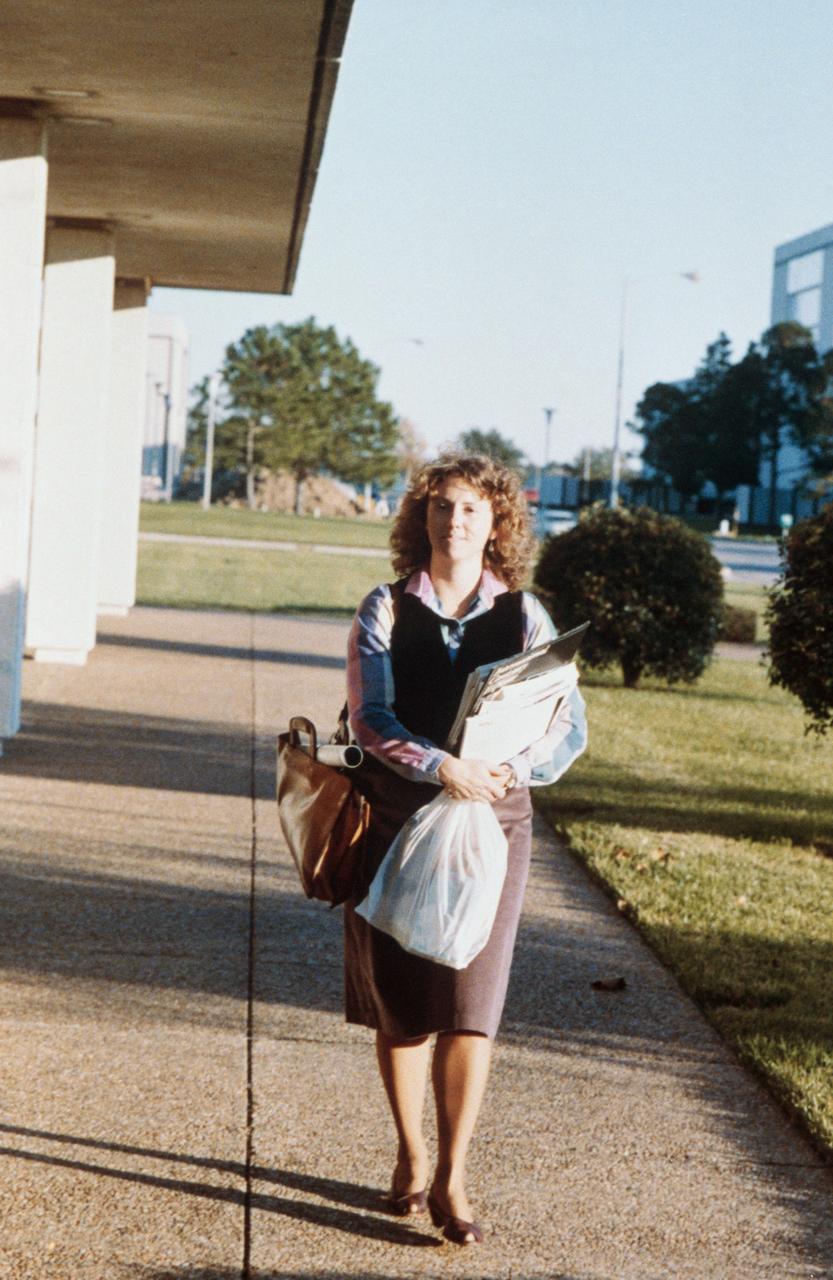
S86-25279 (November 1985) --- Sharon Christa McAuliffe, STS-51L payload specialist, has homework of her own to do as she prepares for a January 1986 flight. Photo by Keith Meyers of the New York Times. Photo credit: NASA
Christa McAuliffe preparing for STS 51-L flight
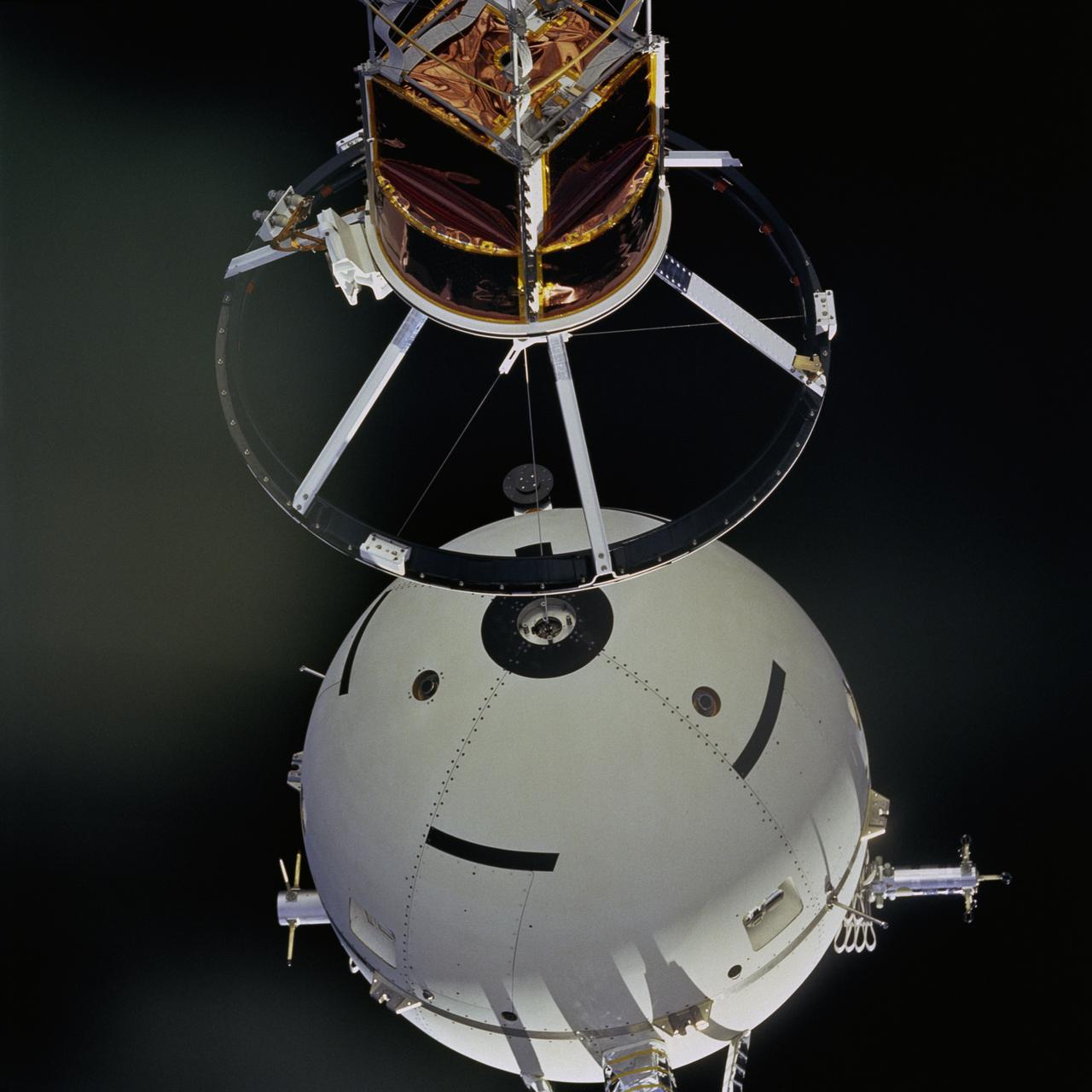
STS046-73-052 (4 Aug 1992) --- A 70mm handheld camera was used by the crew members to capture this medium close-up view of early operations with the Tethered Satellite System (TSS).  The sphere can be seen moving away from the ring structure on the boom device in the Space Shuttle Atlantis' cargo bay.
STS-46 Tethered Satellite System 1 (TSS-1) satellite deployment from OV-104
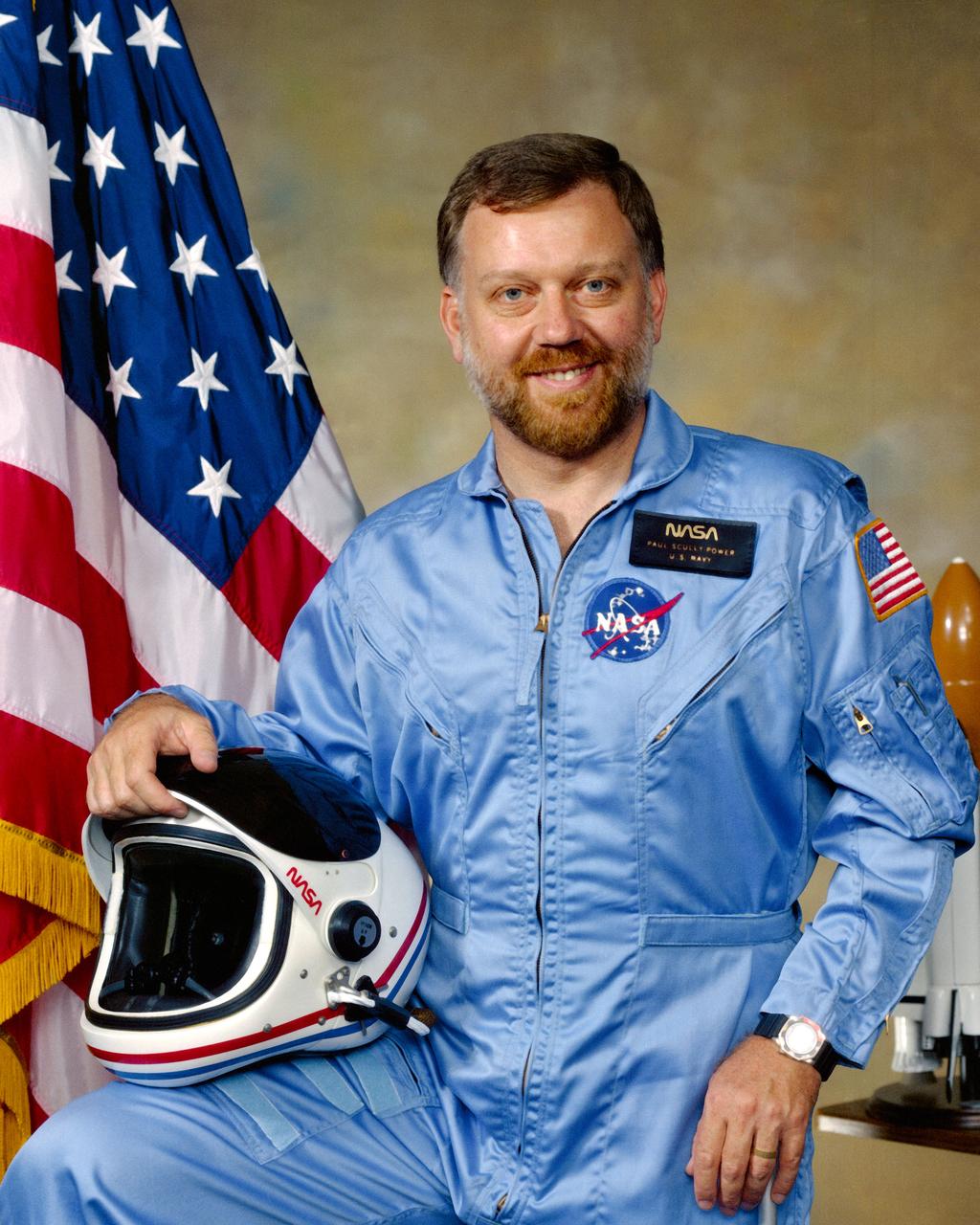
S84-38407 (26 July 1984) --- Astronaut Paul D. Scully-Power, payload specialist.
Portrait - Paul D. Scully-Power
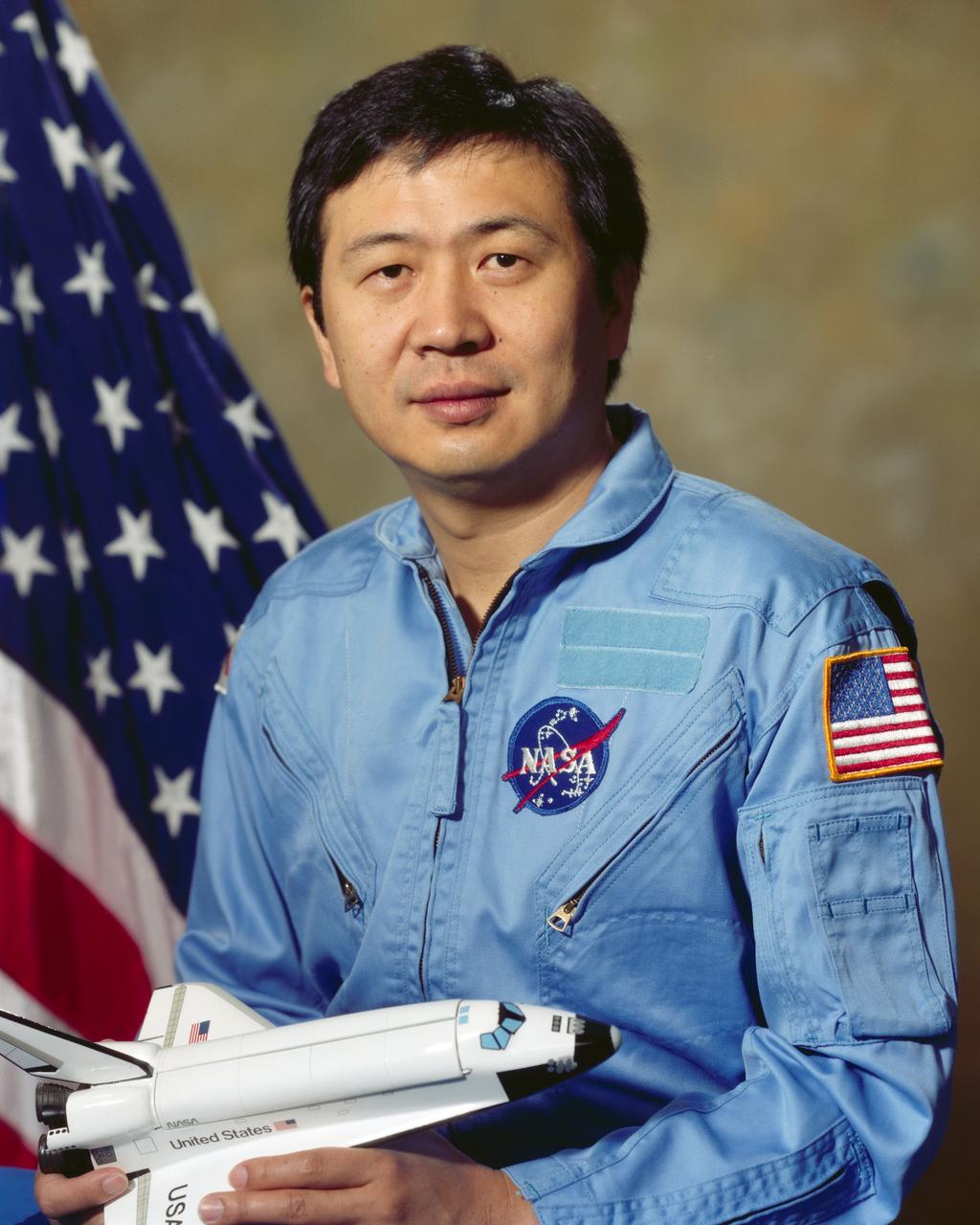
S84-36141 (20 June 1984) --- Astronaut Taylor E. Wang, payload specialist.
Portrait - Taylor E. Wang - Payload Specialist (PS)
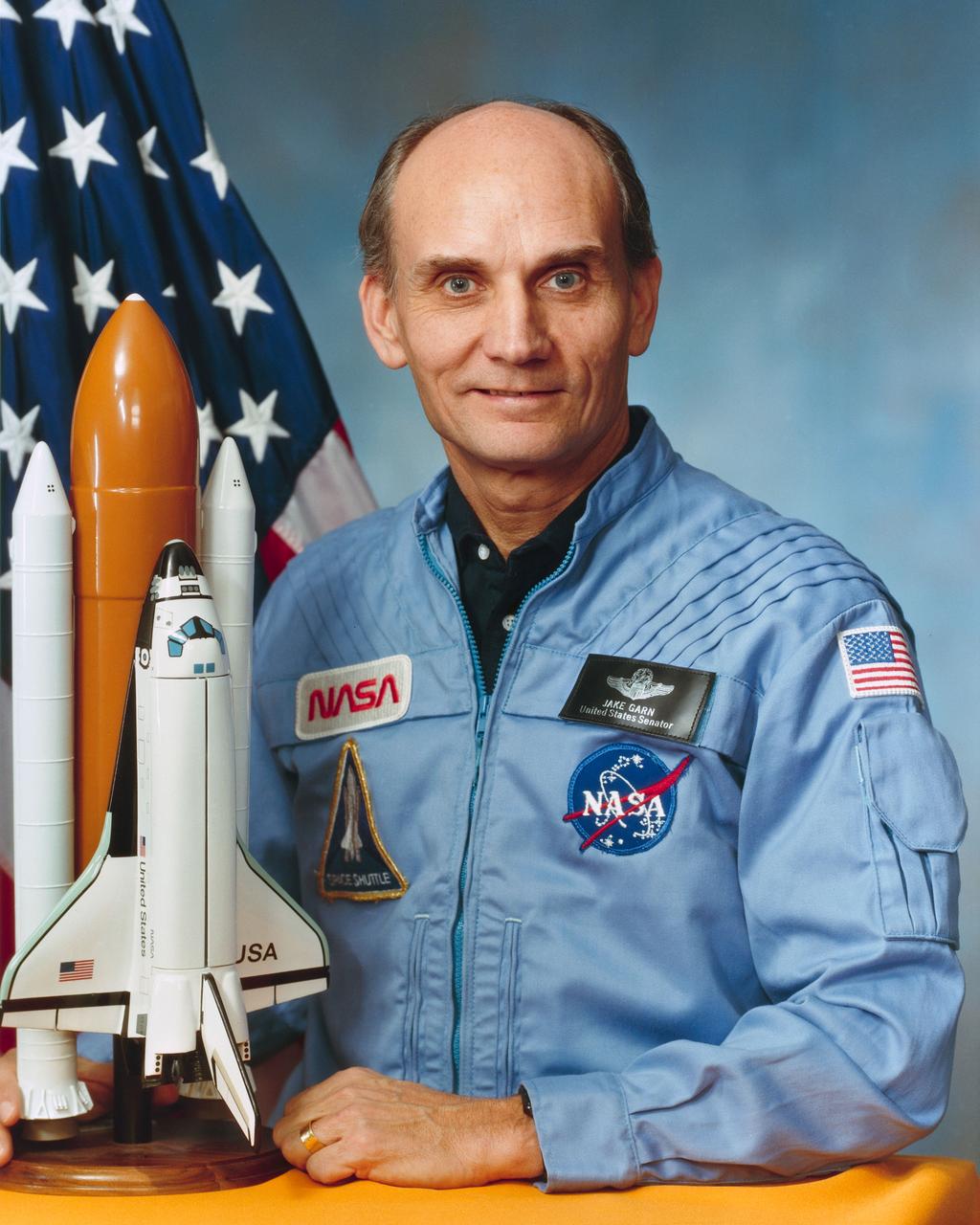
S85-25500 (1985) --- Senator E. J. "Jake" Garn, STS 51-D payload specialist.
Portrait - Garn, E.J. "Jake"
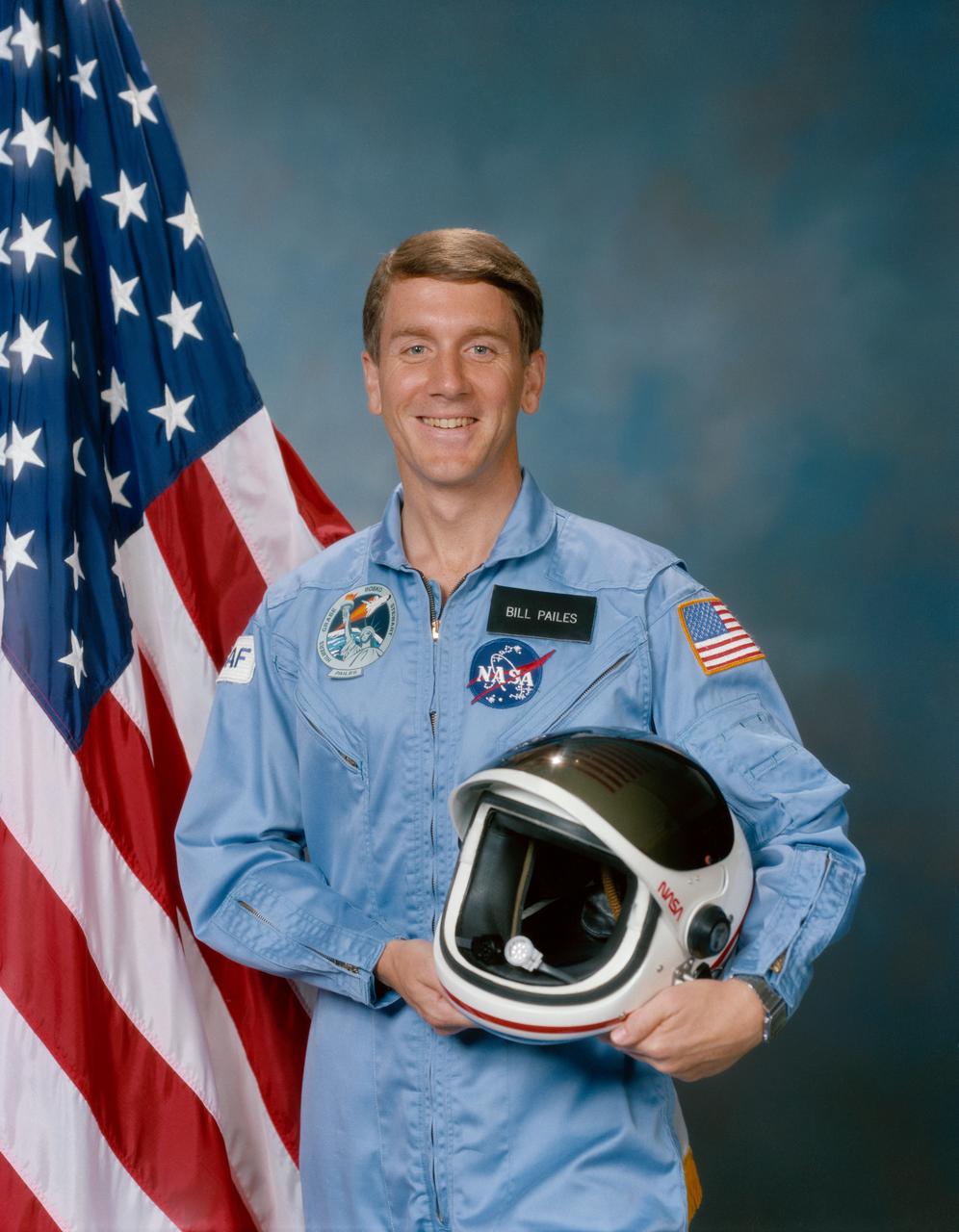
S85-39868 (1985) ---  William A. Pailes (Major USAF), Payload specialist on 51J.
Official Portrait - Major William A. Pailes - STS 51J Payload Specialist
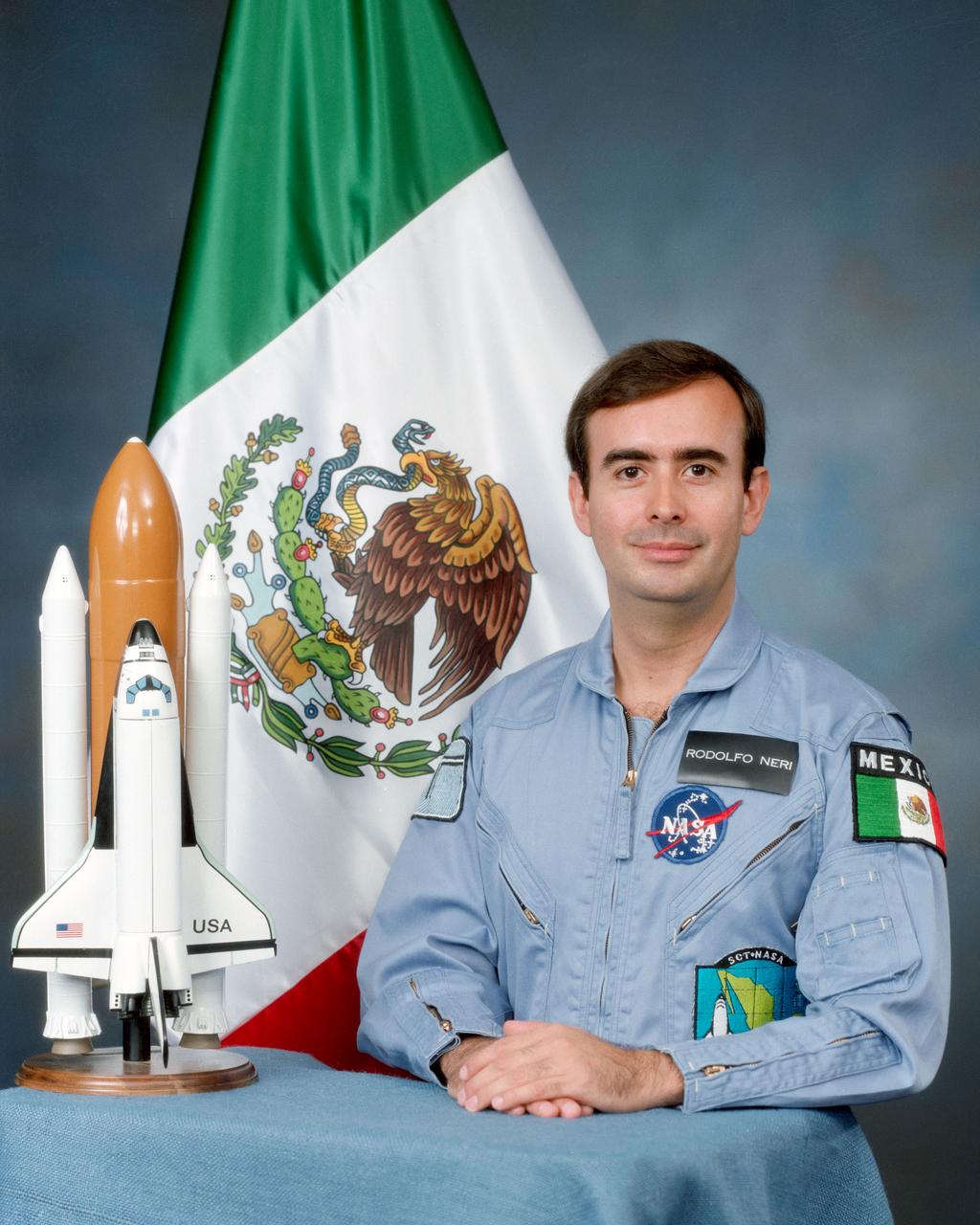
S85-39865 (4 Sept 1985) --- Astronaut Rodolfo Neri, payload specialist
Official Portrait - Mexican Payload Specialist (PS) Rodolfo Neri
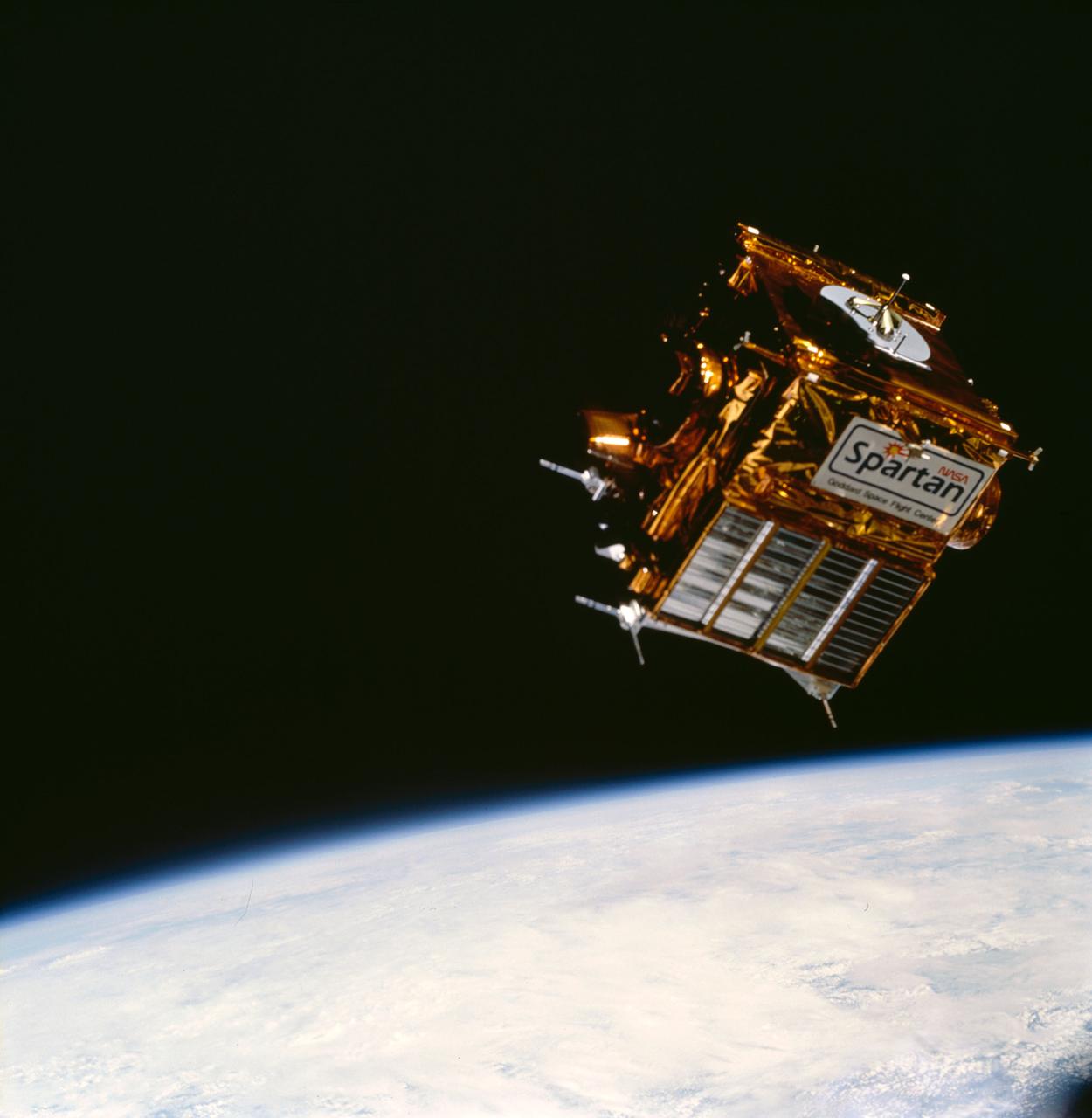
The blackness of space and part of Earth's horizon form the backdrop for this 70mm frame of the free-flying SPARTAN 204 mission. Carried into space by the STS-63 crewmembers, the satellite was later re-captured by the crew and used for maneuvering evaluations by the two space walkers, astronauts Bernard Harris and Michael Foale.
SPARTAN 204 freeflying during STS-63 mission
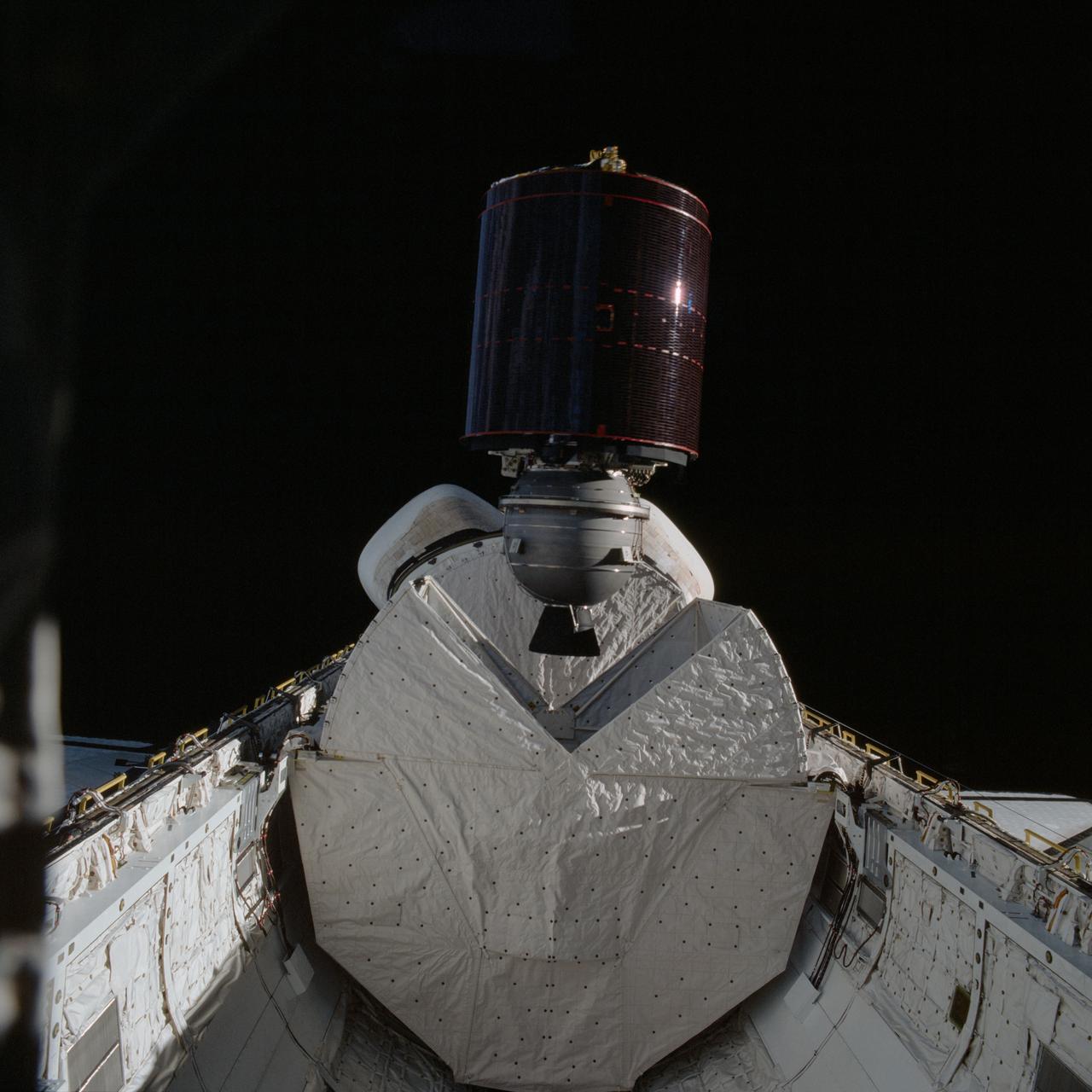
STS005-38-943 (17 Nov. 1982) --- The Satellite Business Systems (SBS-3) satellte is deployed from its protective cradle in the cargo bay of the space shuttle Columbia. Part of Columbia's wings can be seen on both the port and starboard sides. Part of both orbital maneuvering system (OMS) pods are seen at center. The vertical stabilizer is obscured by the satellite. Photo credit: NASA
Satellite deployment during STS-5
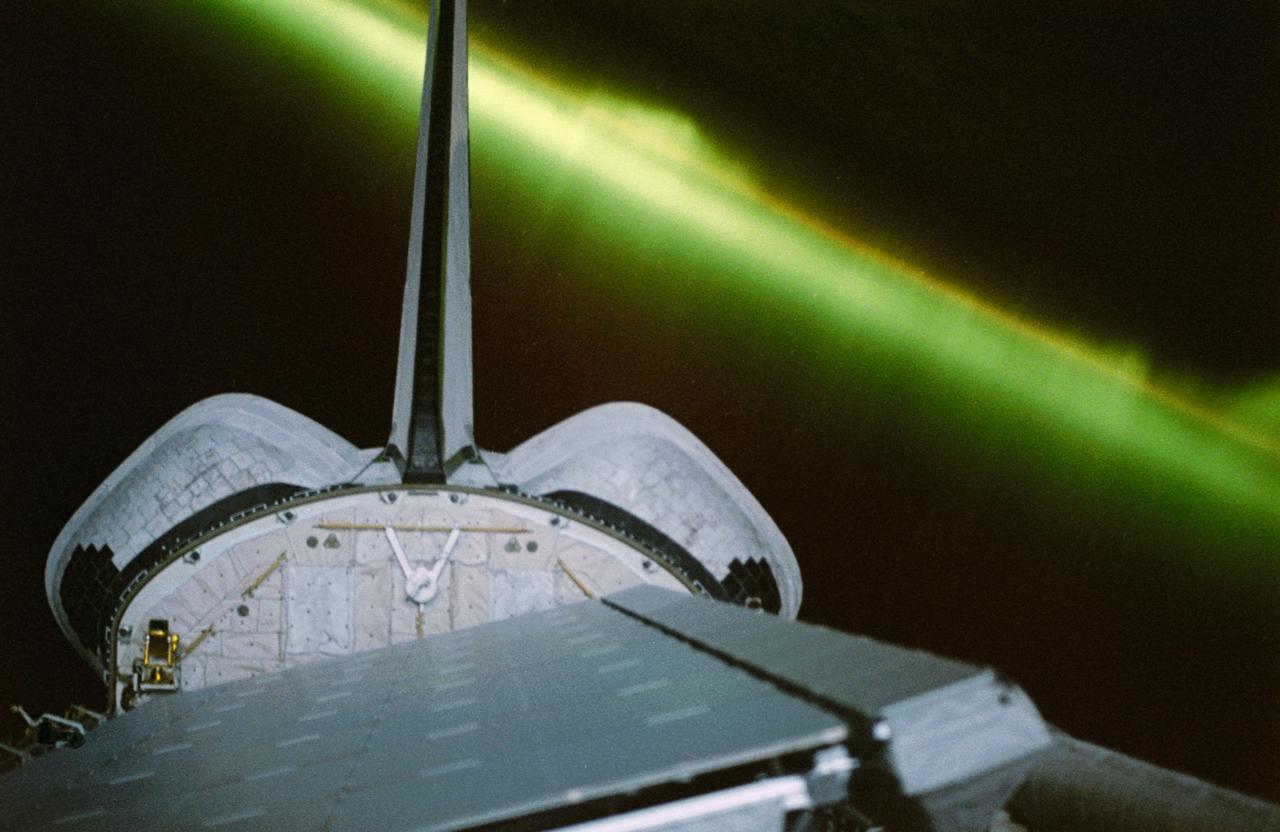
STS059-50-011 (9-20 April 94) --- A greenish appearing aurora forms the backdrop for this 35mm scene of the Earth orbiting Space Shuttle Endeavour's aft cargo bay.  Featured in the bay are the antennae for the SIR-C/X-SAR imaging radar instruments, illuminated by moonlight.  The crew sighted the southern lights (aurora australis) several times during each of the eleven days of the mission.
STS-59 Endeavour's aft cargo bay in orbit
STS007-18-770 (18-24 June 1983) --- Telesat-F communications satellite is just about to clear the vertical stabilizer of the Earth-orbiting Space Shuttle Challenger to begin its way toward its Earth-orbital destination.
View of the Telesat-F deployment
KENNEDY SPACE CENTER, FLA. - STS-83 Payload Commander Janice E. Voss prepares to enter the Space Shuttle Columbia at Launch Pad 39A after getting assistance from the White Room closeout crew that included Bob Saulnier (right).
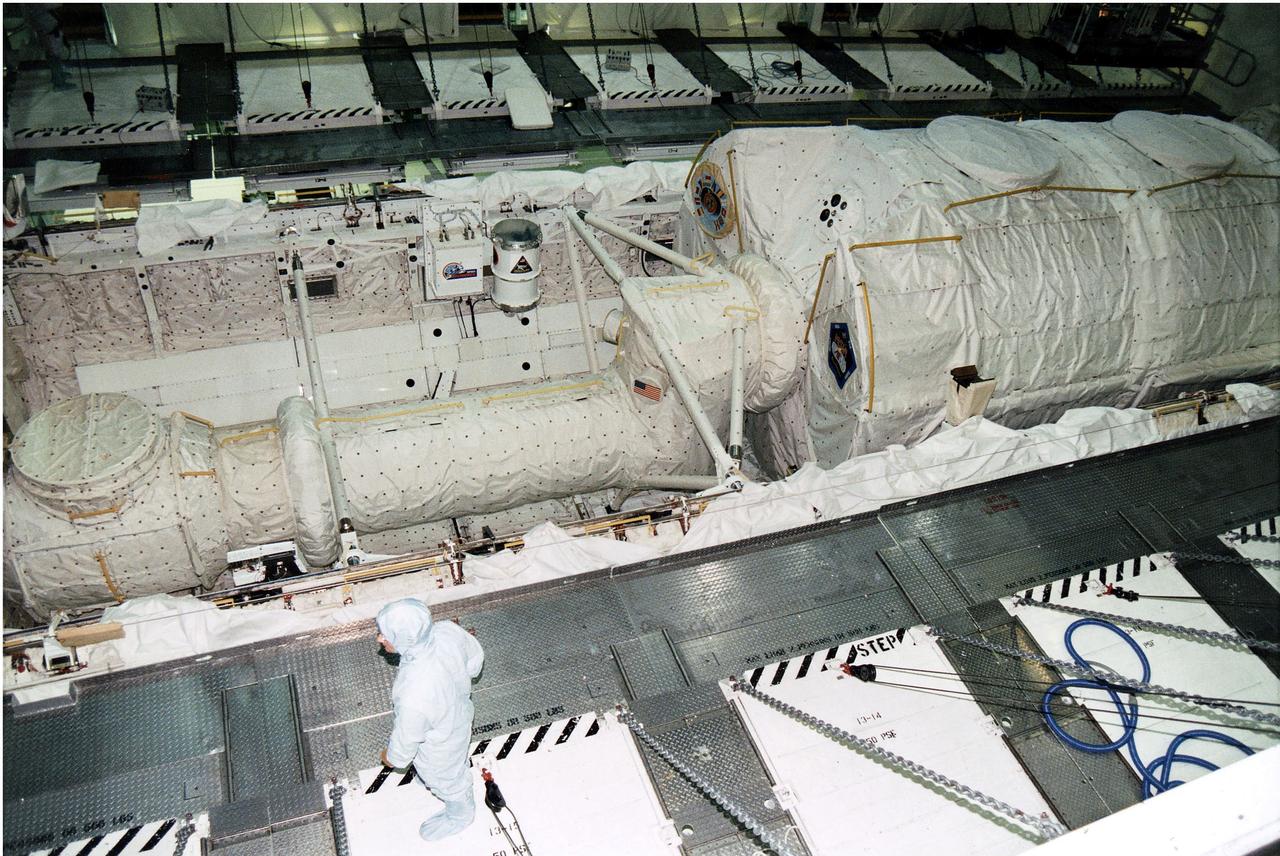
KENNEDY SPACE CENTER, FLA. - The Microgravity Science Laboratory-1 (MSL-1) Spacelab module is installed into the payload bay of the Space Shuttle Orbiter Columbia in Orbiter Processing Facility 1.  The Spacelab long crew transfer tunnel that leads from the orbiter's crew airlock to the module is also aboard, as well as the Hitchhiker Cryogenic Flexible Diode (CRYOFD) experiment payload, which is attached to the right side of Columbia's payload bay.  During the scheduled 16-day STS-83 mission, the MSL-1 will be used to test some of the hardware, facilities and procedures that are planned for use on the International Space Station while the flight crew conducts combustion, protein crystal growth and materials processing experiments.
KENNEDY SPACE CENTER, FLA. - The Microgravity Science Laboratory-1 (MSL-1) Spacelab module is installed into the payload bay of the Space Shuttle Orbiter Columbia in Orbiter Processing Facility 1. The Spacelab long crew transfer tunnel that leads from the orbiter's crew airlock to the module is also aboard, as well as the Hitchhiker Cryogenic Flexible Diode (CRYOFD) experiment payload, which is attached to the right side of Columbia's payload bay. During the scheduled 16-day STS-83 mission, the MSL-1 will be used to test some of the hardware, facilities and procedures that are planned for use on the International Space Station while the flight crew conducts combustion, protein crystal growth and materials processing experiments.