
Space Station Freedom option A showing two Soyuz Assured Crew Return Vehicle (ACRV) capsules docked at berthing ports.
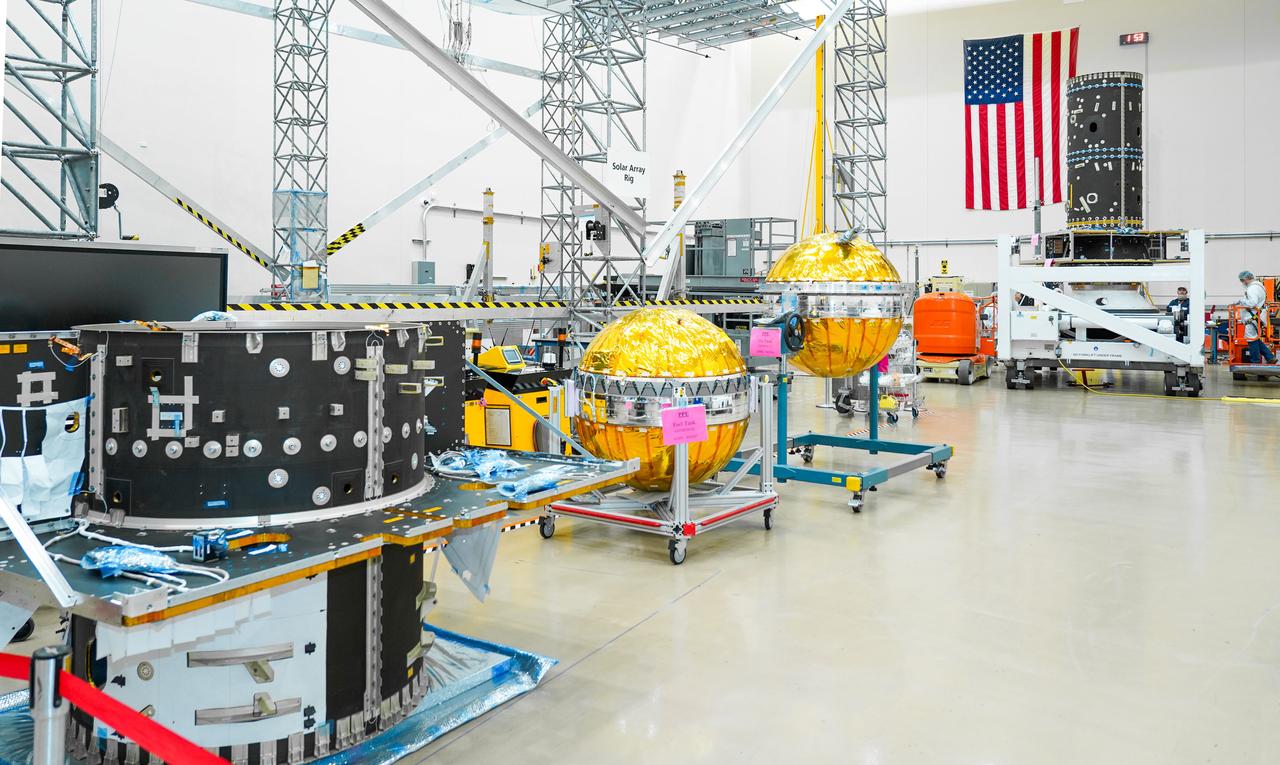
Hardware for the Gateway space station’s Power and Propulsion element, including its primary structure and fuel tanks ready for assembly, are shown at Maxar Space Systems in Palo Alto, California.

iss069e005471 (April 26, 2023) --- The Richat Structure, also known as the "Eye of the Sahara," an eroded geological dome in the nation of Mauritania, is pictured from the International Space Station as it orbited 259 miles above the African continent.
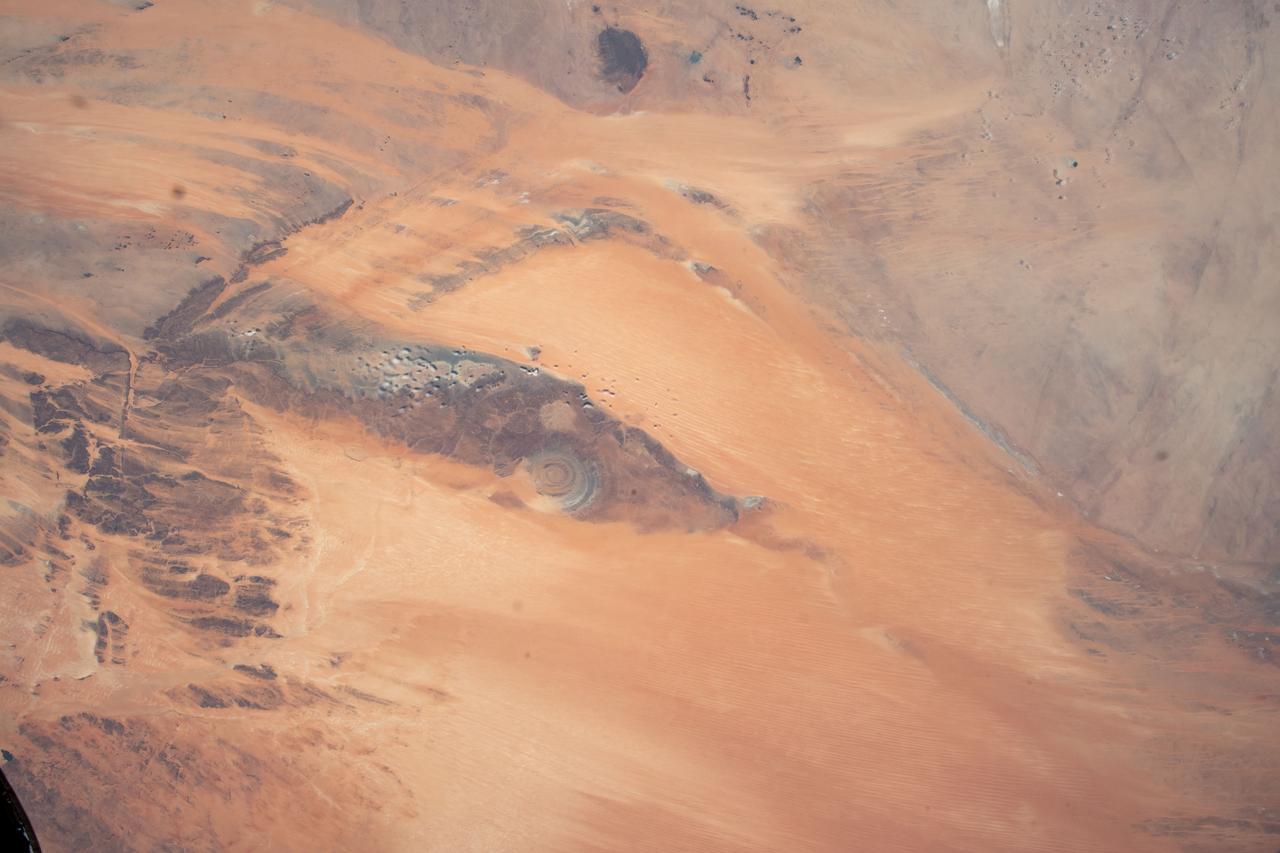
iss069e005526 (April 26, 2023) --- The Richat Structure, also known as the "Eye of the Sahara," an eroded geological dome in the nation of Mauritania, is pictured from the International Space Station as it orbited 259 miles above the African continent.
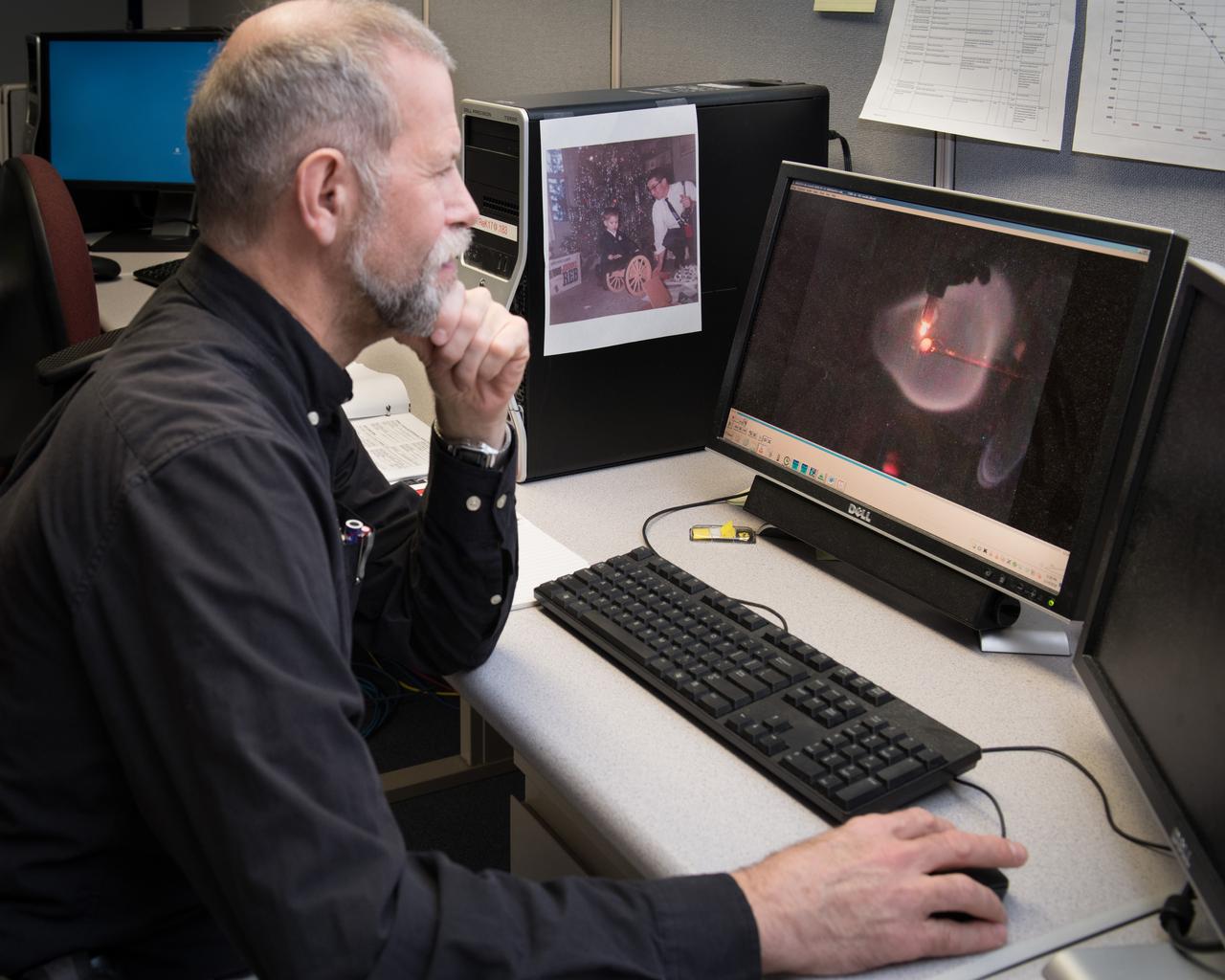
Review of ISS data from the Structure and Response of Spherical Diffusion Flames (s-Flame) experiment - of the Advanced Combustion via Microgravity Experiments. ACME project conducted in the Combustion Integrated Rack, CIR - by ACME Project Scientist Dennis Stocker in the Telescience Support Center,TSC, also known as the Glenn ISS Payload Operations Center, GIPOC
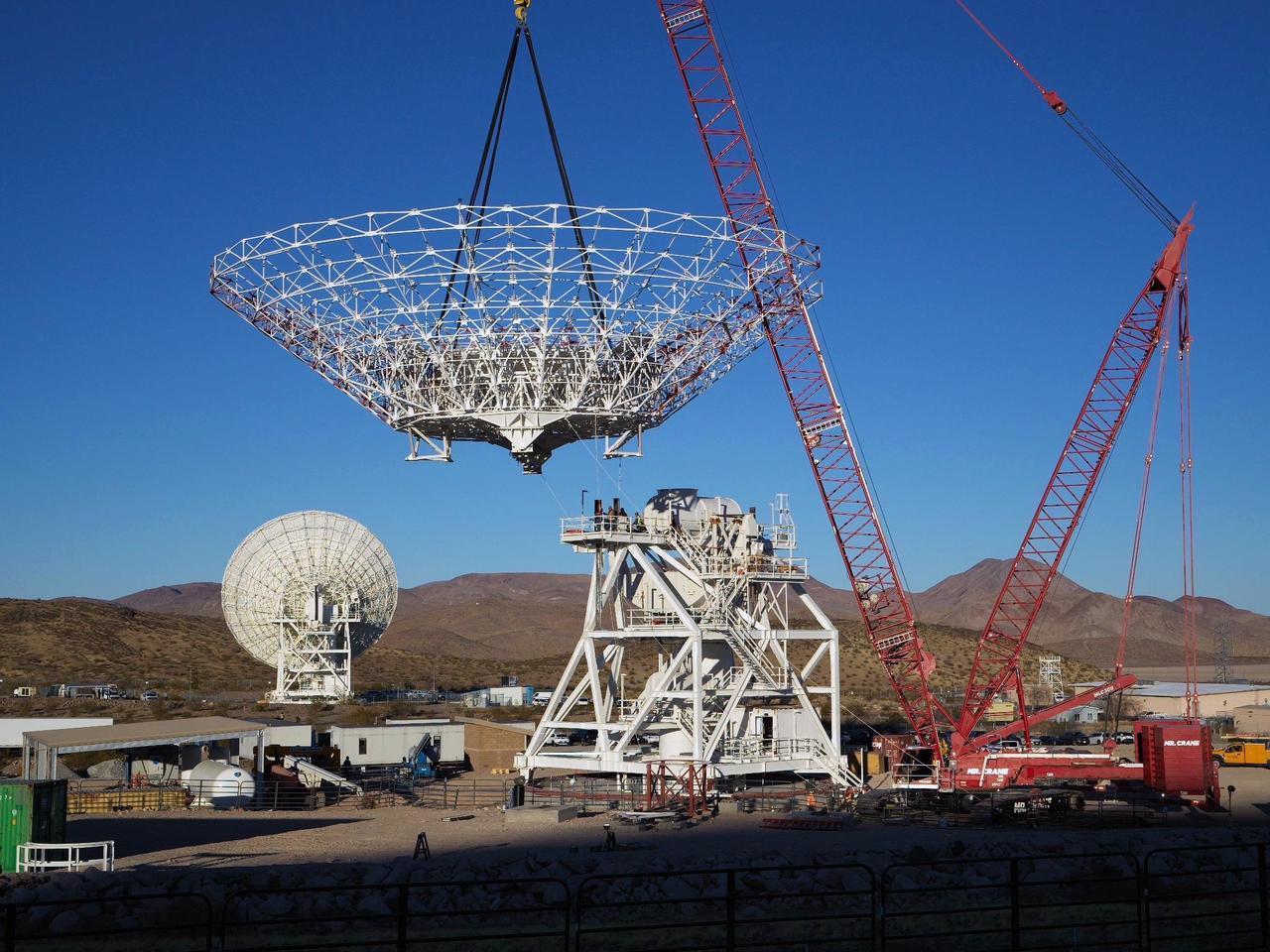
A crane lowers the 112-foot-wide (34-meter-wide) steel framework for the Deep Space Station 23 (DSS-23) reflector dish into position on Dec. 18, 2024, at the Deep Space Network's Goldstone Space Communications Complex near Barstow, California. A multi-frequency beam waveguide antenna, DSS-23 will boost the DSN's capacity and enhance NASA's deep space communications capabilities for decades to come. Once online in 2026, DSS-23 will be the fifth of six new beam waveguide antennas to be added to the network, following DSS-53, which was added at the DSN's Madrid complex in 2022. After the reflector skeleton was bolted into place, engineers placed what's called a quadripod into the center of the structure. A four-legged support structure weighing 16 ½ tons, the quadripod is fitted with a curved subreflector that will direct radio frequency signals from deep space that bounce off the main reflector into the antenna's pedestal where the antenna's receivers are housed. Next steps: to fit panels onto the steel skeleton of the parabolic reflector to create a curved surface to collect radio frequency signals. The DSN allows missions to track, send commands to, and receive scientific data from faraway spacecraft. It is managed by NASA's Jet Propulsion Laboratory in Southern California for the agency's Space Communications and Navigation (SCaN) program, which is located at NASA Headquarters within the Space Operations Mission Directorate. https://photojournal.jpl.nasa.gov/catalog/PIA26454
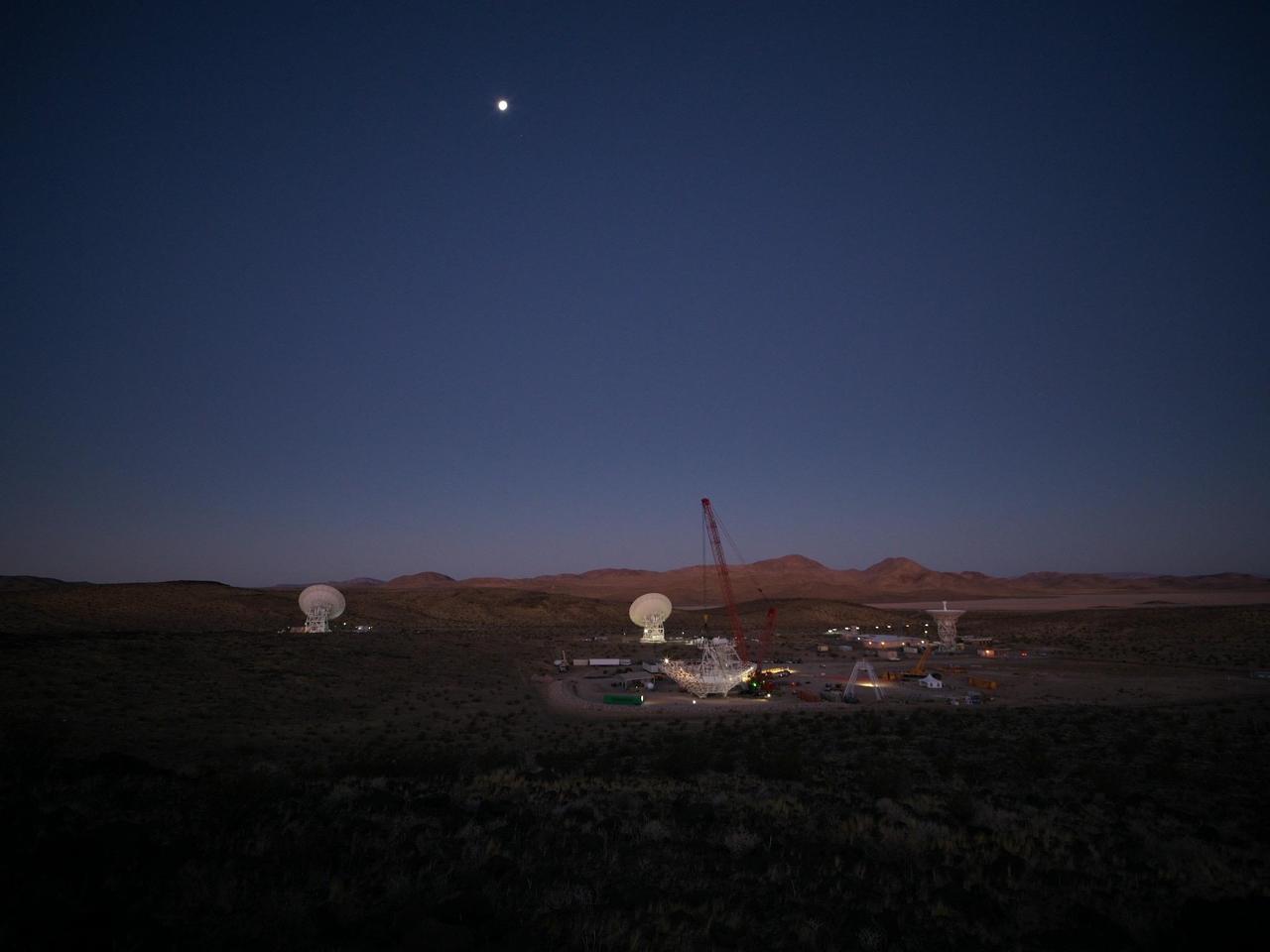
In the early morning of Dec. 18, 2024, a crane looms over the 112-foot-wide (34-meter-wide) steel framework for Deep Space Station 23 (DSS-23) reflector dish, which will soon be lowered into position on the antenna's base structure. Located at the Deep Space Network's Goldstone Space Communications Complex near Barstow, California, DSS-23 is a multi-frequency beam waveguide antenna that will boost the DSN's capacity and enhance NASA's deep space communications capabilities for decades to come. In the background are, from left to right, the beam waveguide antennas DSS-25 and DSS-26, and the decommissioned 85-foot (26-meter) Apollo antenna. https://photojournal.jpl.nasa.gov/catalog/PIA26456

iss061e129665 (Jan. 15, 2020) --- NASA astronaut Christina Koch is tethered to the International Space Station's Port-6 truss structure during a spacewalk to finalize upgrading power systems on the International Space Station's Port-6 truss structure.
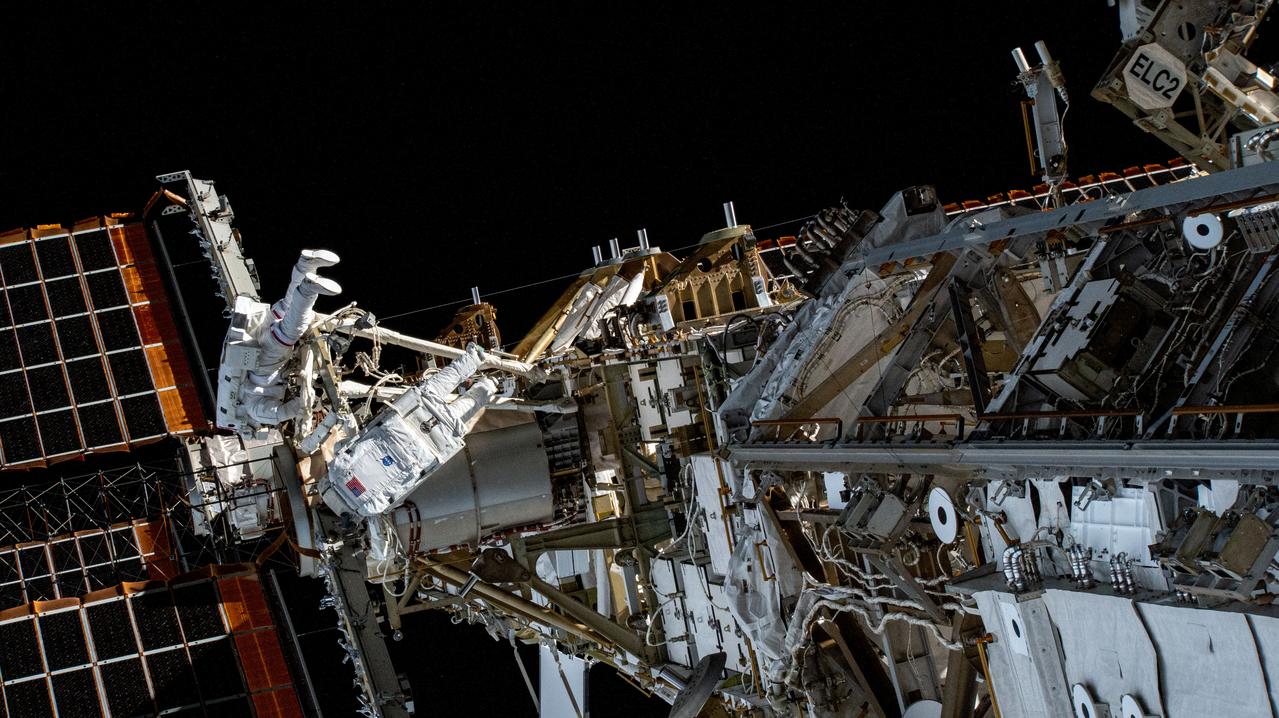
iss069e005734 (April 28, 2023) --- NASA astronaut Stephen Bowen and UAE (United Arab Emirates) astronaut Sultan Alneyadi are pictured in their Extravehicular Mobility Units, or spacesuits, on the International Space Station's starboard truss structure during a spacewalk. The duo would spend seven hours and one minute in the vacuum of space routing cables and installing insulation readying the orbital outpost for its next set of roll-out solar arrays due to be installed after their delivery on the next SpaceX Dragon cargo mission.
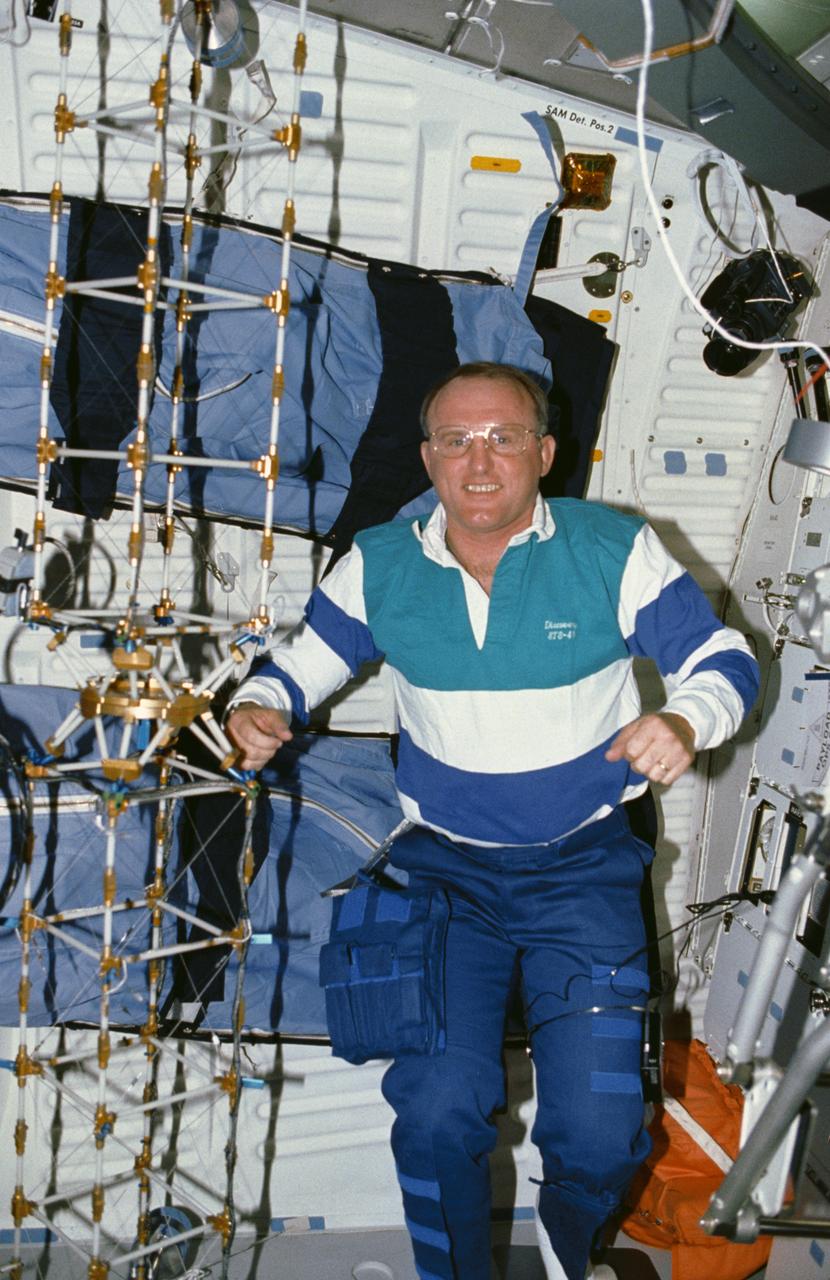
STS048-10-023 (16 Sept 1991) --- Astronaut James F. Buchli poses with the structural test article (STA), a model of the space station truss structure. The STA is part of the middeck zero gravity dynamics experiment (MODE). MODE was designed to study the vibration characteristics of the jointed truss structure. The structural test article includes four strain gauges and eleven accelerometers and is vibrated by an actuator. Assembled by crewmembers in the Shuttle orbiter's middeck, the device is about 72 inches long with an 8-inch square cross section.
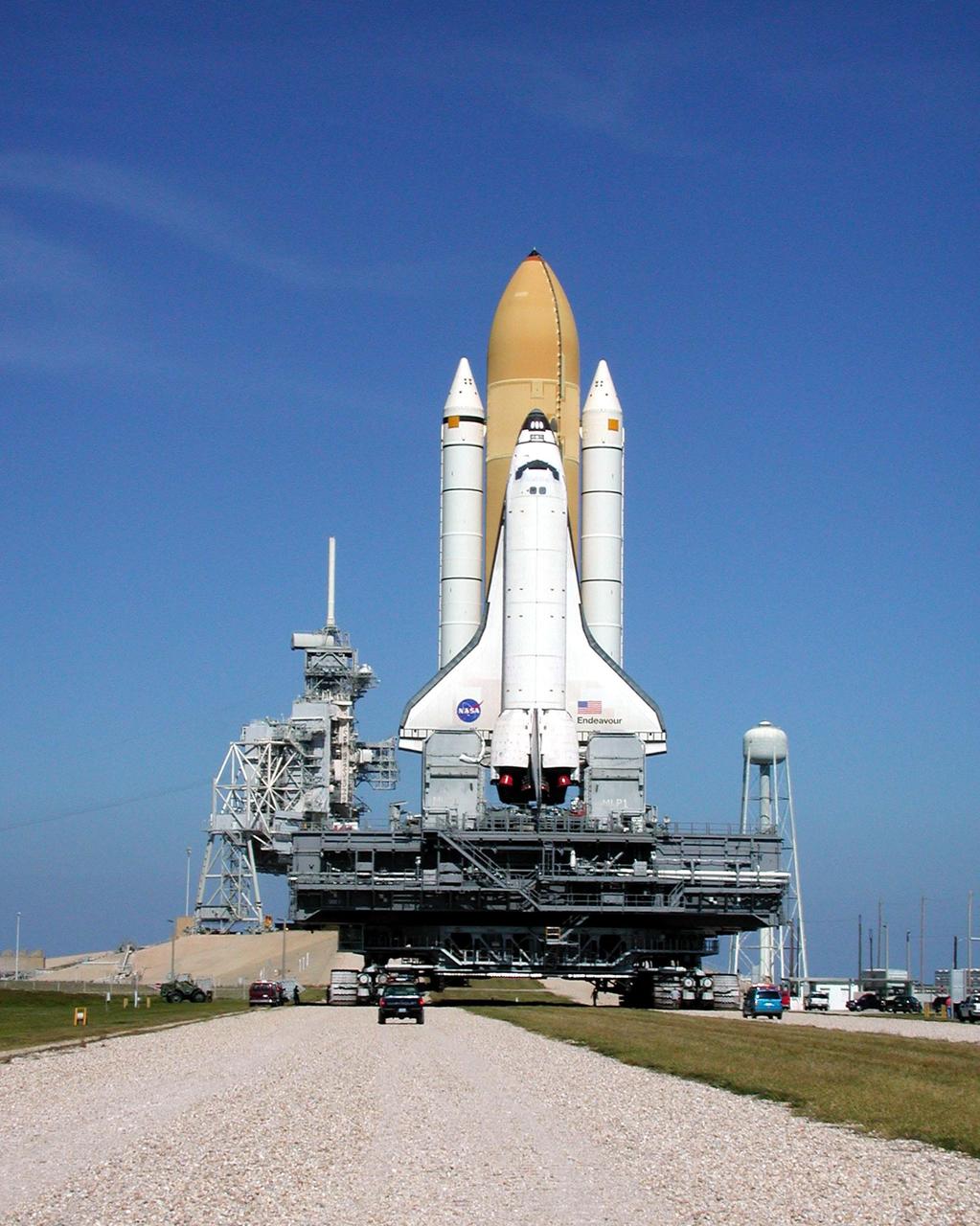
KENNEDY SPACE CENTER, Fla. -- Perched atop the Mobile Launcher Platform, Space Shuttle Endeavour is nearly through the gate to Launch Pad 39B. To the right of the pad is a 290-foot tall water tower. To the left is the Fixed Service Structure and Rotating Service Structure. Endeavour is scheduled to be launched Nov. 30 at 10:01 p.m. EST on mission STS-97, the sixth construction flight to the International Space Station. Its payload includes the P6 Integrated Truss Structure and a photovoltaic (PV) module, with giant solar arrays that will provide power to the Station. The mission includes two spacewalks to complete the solar array connections
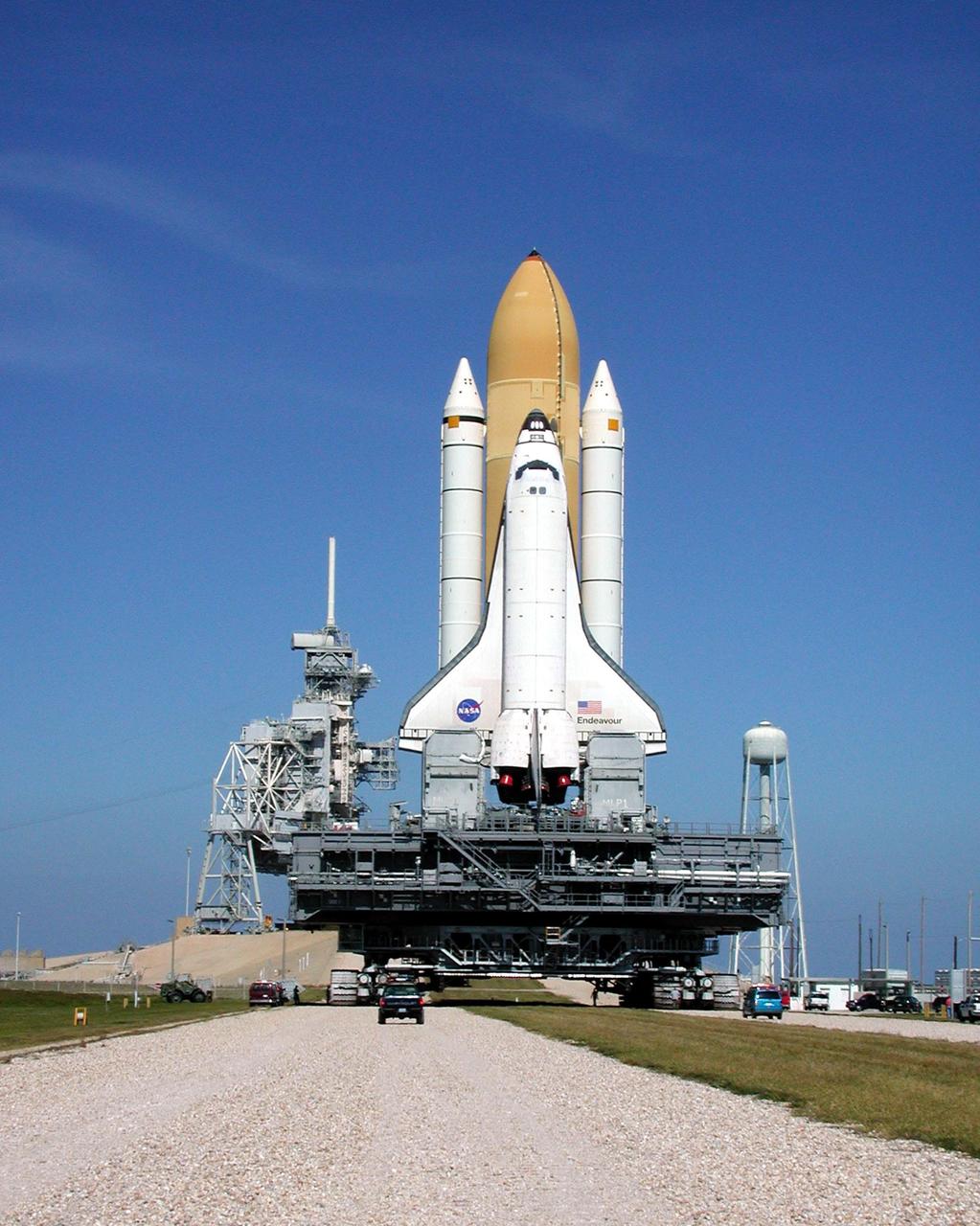
KENNEDY SPACE CENTER, Fla. -- Perched atop the Mobile Launcher Platform, Space Shuttle Endeavour is nearly through the gate to Launch Pad 39B. To the right of the pad is a 290-foot tall water tower. To the left is the Fixed Service Structure and Rotating Service Structure. Endeavour is scheduled to be launched Nov. 30 at 10:01 p.m. EST on mission STS-97, the sixth construction flight to the International Space Station. Its payload includes the P6 Integrated Truss Structure and a photovoltaic (PV) module, with giant solar arrays that will provide power to the Station. The mission includes two spacewalks to complete the solar array connections
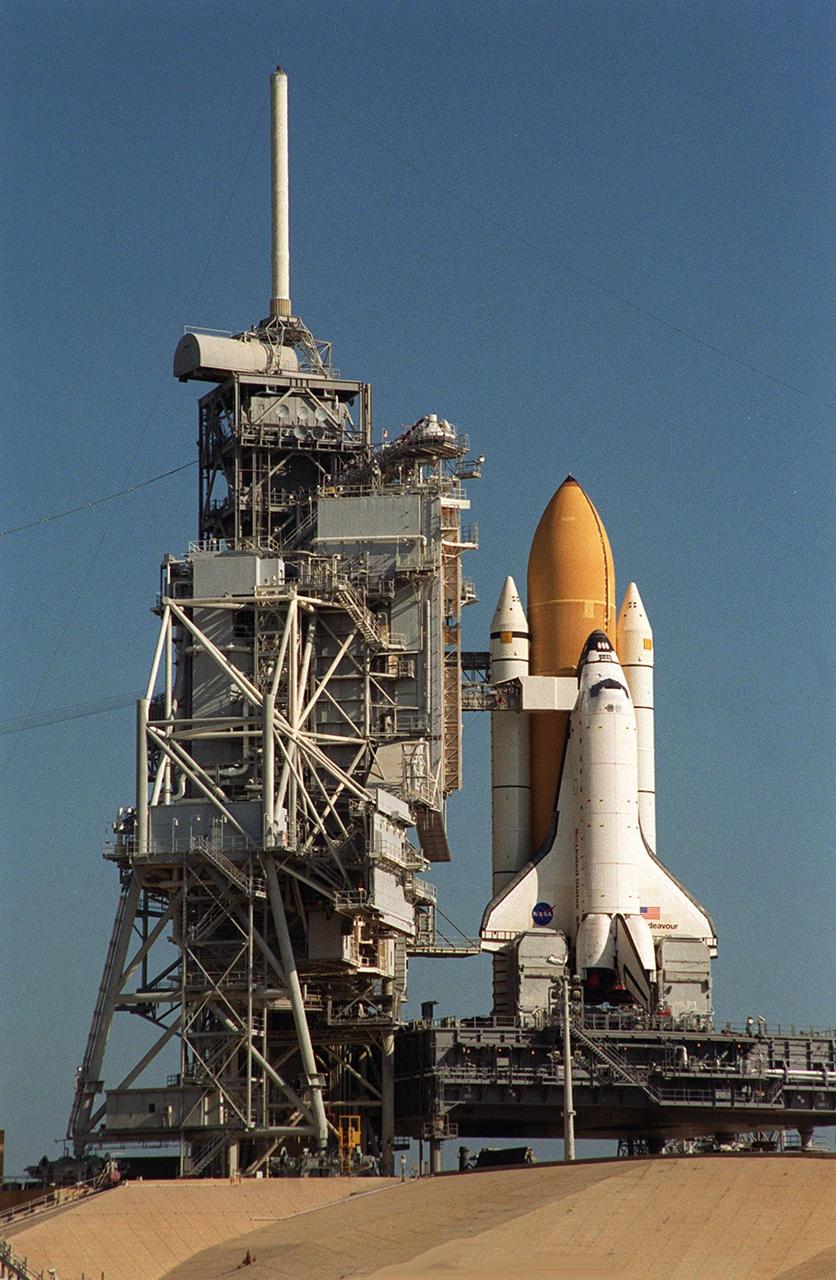
KENNEDY SPACE CENTER, FLA. -- Space Shuttle Endeavour finally rests on Launch Pad 39B after its rollout was delayed several hours to fix a broken cleat on the crawler-transporter. At the far left is the Rotating Service Structure. From the Fixed Service Structure, the Orbiter Access Arm is already extended to the orbiter. Endeavour is scheduled to be launched Nov. 30 at 10:01 p.m. EST on mission STS-97, the sixth construction flight to the International Space Station. Its payload includes the P6 Integrated Truss Structure and a photovoltaic (PV) module, with giant solar arrays that will provide power to the Station. The mission includes two spacewalks to complete the solar array connections
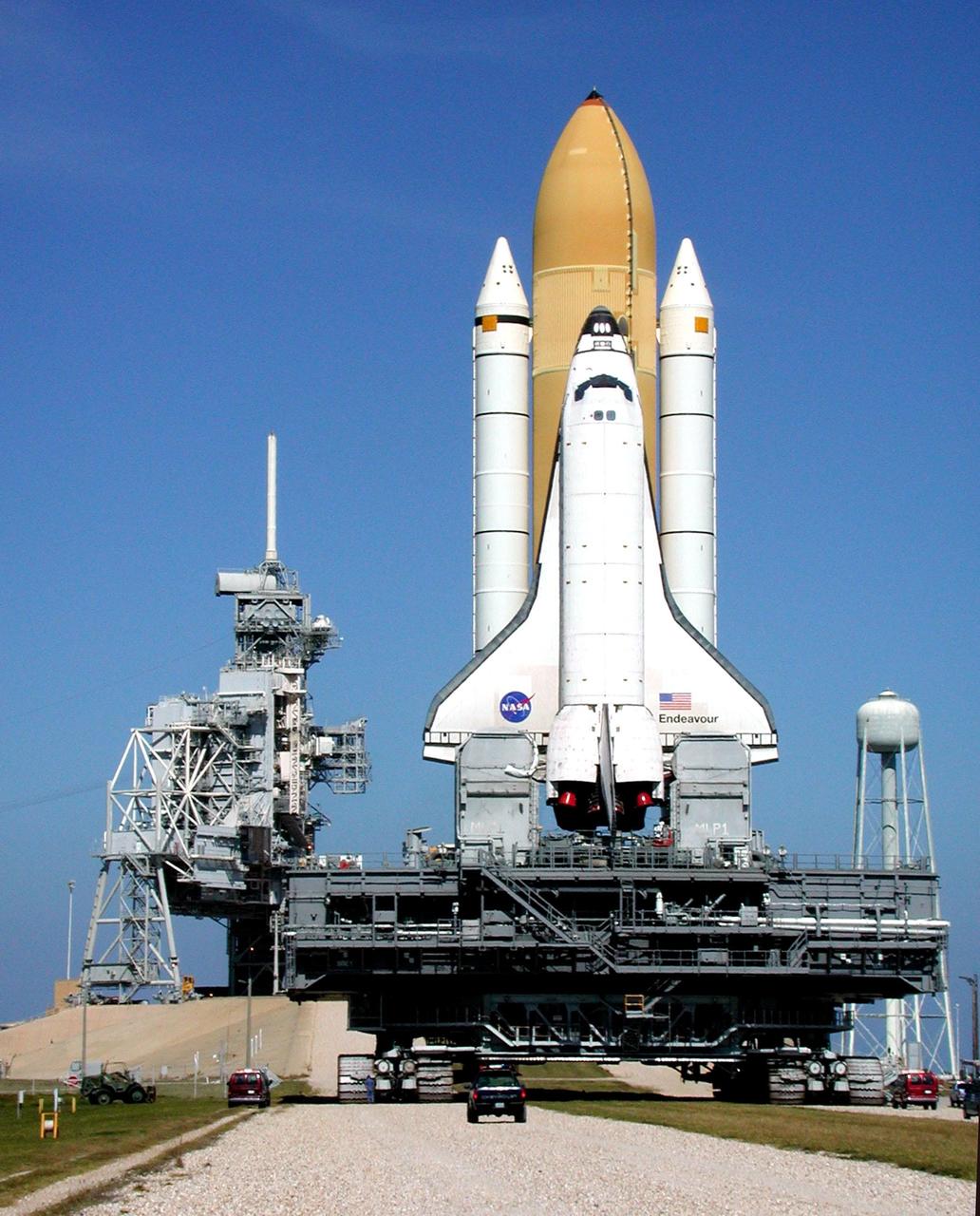
KENNEDY SPACE CENTER, Fla. -- Perched atop the Mobile Launcher Platform, Space Shuttle Endeavour passes through the gate to Launch Pad 39B. To the right of the pad is a 290-foot tall water tower. To the left is the Fixed Service Structure and Rotating Service Structure. Endeavour is scheduled to be launched Nov. 30 at 10:01 p.m. EST on mission STS-97, the sixth construction flight to the International Space Station. Its payload includes the P6 Integrated Truss Structure and a photovoltaic (PV) module, with giant solar arrays that will provide power to the Station. The mission includes two spacewalks to complete the solar array connections
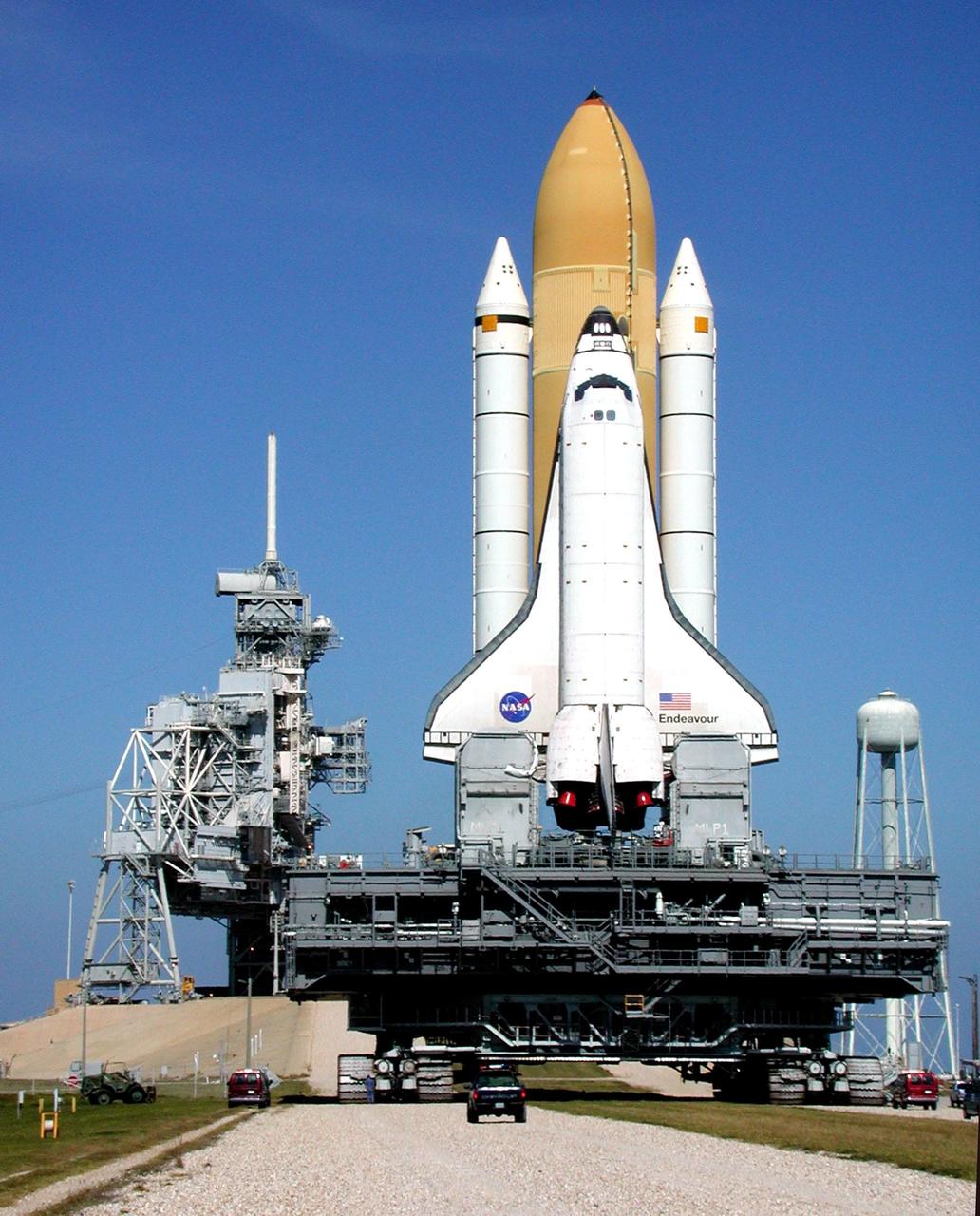
KENNEDY SPACE CENTER, Fla. -- Perched atop the Mobile Launcher Platform, Space Shuttle Endeavour passes through the gate to Launch Pad 39B. To the right of the pad is a 290-foot tall water tower. To the left is the Fixed Service Structure and Rotating Service Structure. Endeavour is scheduled to be launched Nov. 30 at 10:01 p.m. EST on mission STS-97, the sixth construction flight to the International Space Station. Its payload includes the P6 Integrated Truss Structure and a photovoltaic (PV) module, with giant solar arrays that will provide power to the Station. The mission includes two spacewalks to complete the solar array connections
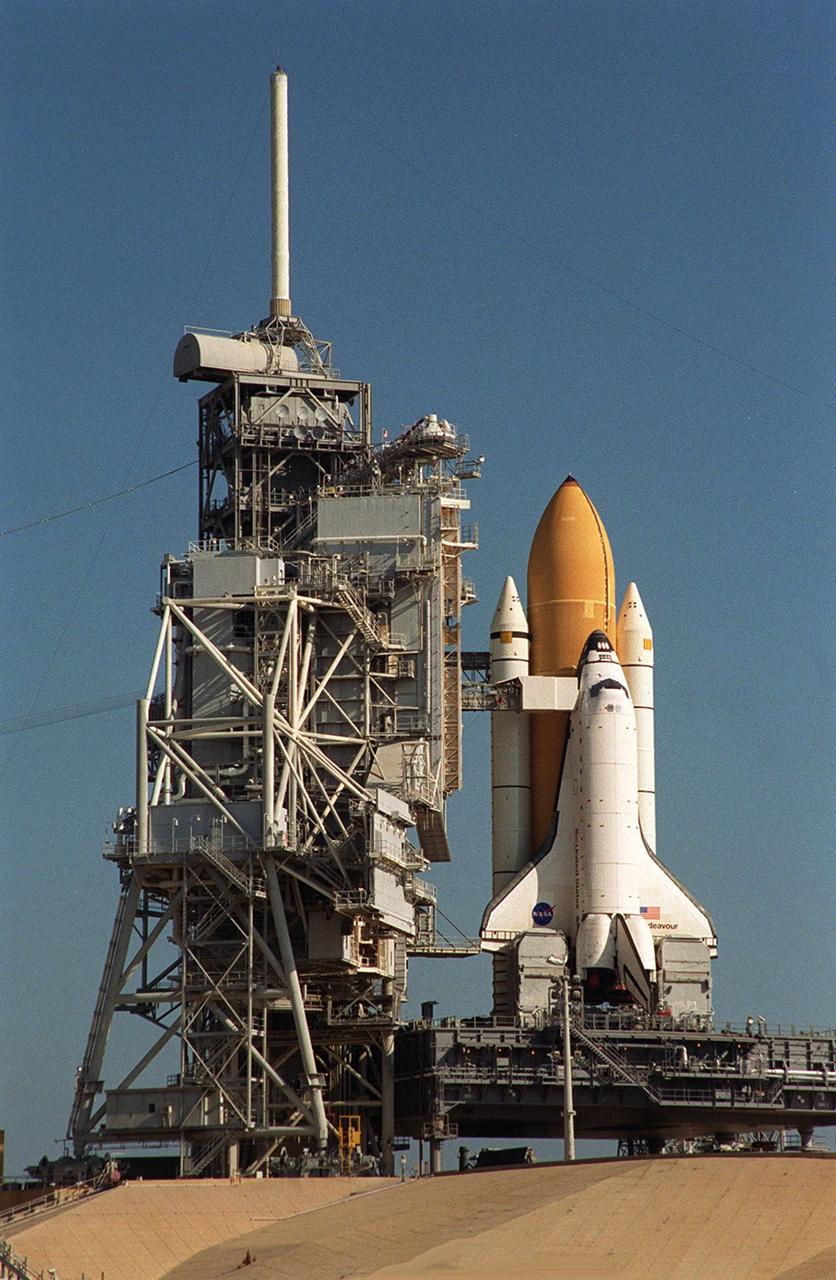
KENNEDY SPACE CENTER, FLA. -- Space Shuttle Endeavour finally rests on Launch Pad 39B after its rollout was delayed several hours to fix a broken cleat on the crawler-transporter. At the far left is the Rotating Service Structure. From the Fixed Service Structure, the Orbiter Access Arm is already extended to the orbiter. Endeavour is scheduled to be launched Nov. 30 at 10:01 p.m. EST on mission STS-97, the sixth construction flight to the International Space Station. Its payload includes the P6 Integrated Truss Structure and a photovoltaic (PV) module, with giant solar arrays that will provide power to the Station. The mission includes two spacewalks to complete the solar array connections
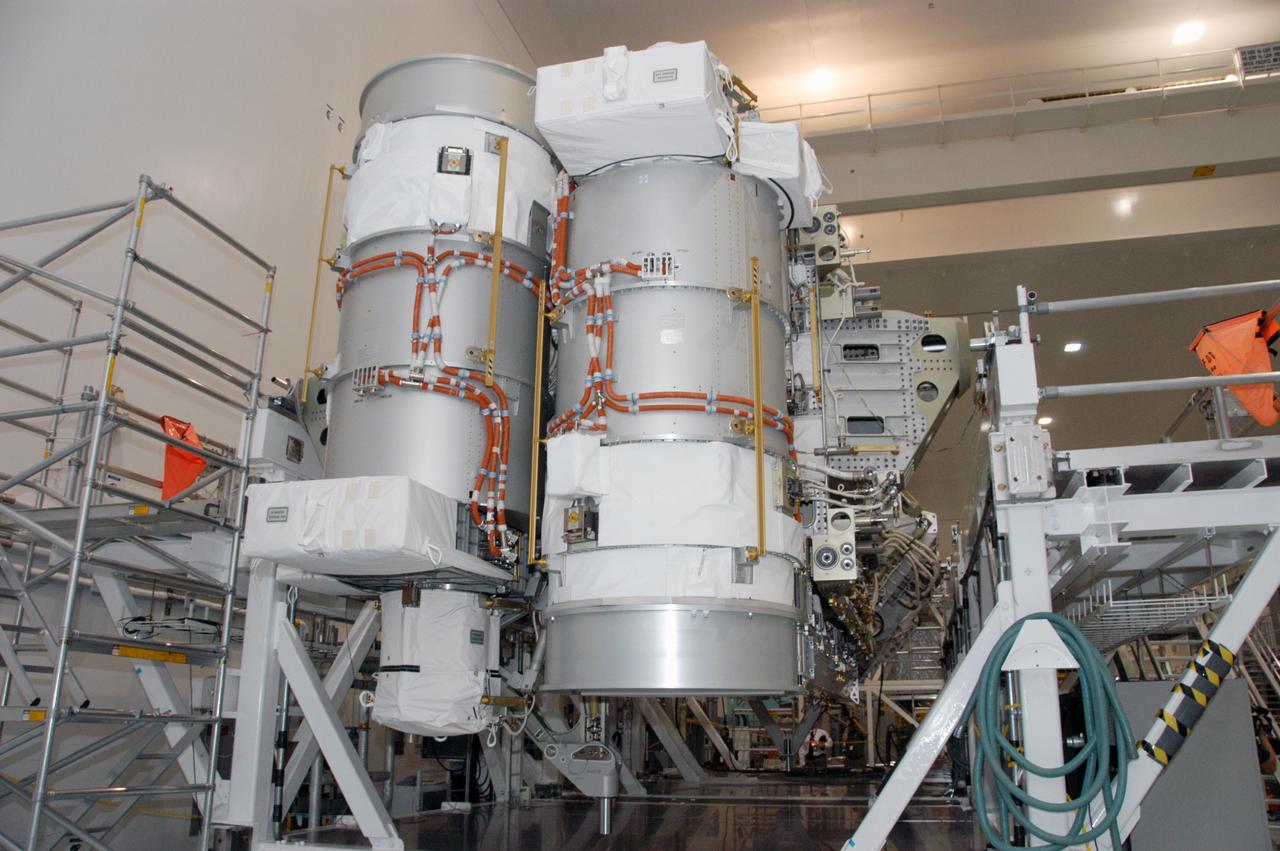
In the Space Station Processing Facility, the S3/S4 integrated truss segment is on display for the media. The starboard 3/4 truss segment will launch aboard Space Shuttle Atlantis on mission STS-117, targeted for March 15. The element will be added to the 11-segment integrated truss structure, the station's backbone. The integrated truss structure eventually will span more than 300 feet. The S3/S4 truss has two large solar arrays and will provide one-fourth of the total power generation for the completed station.
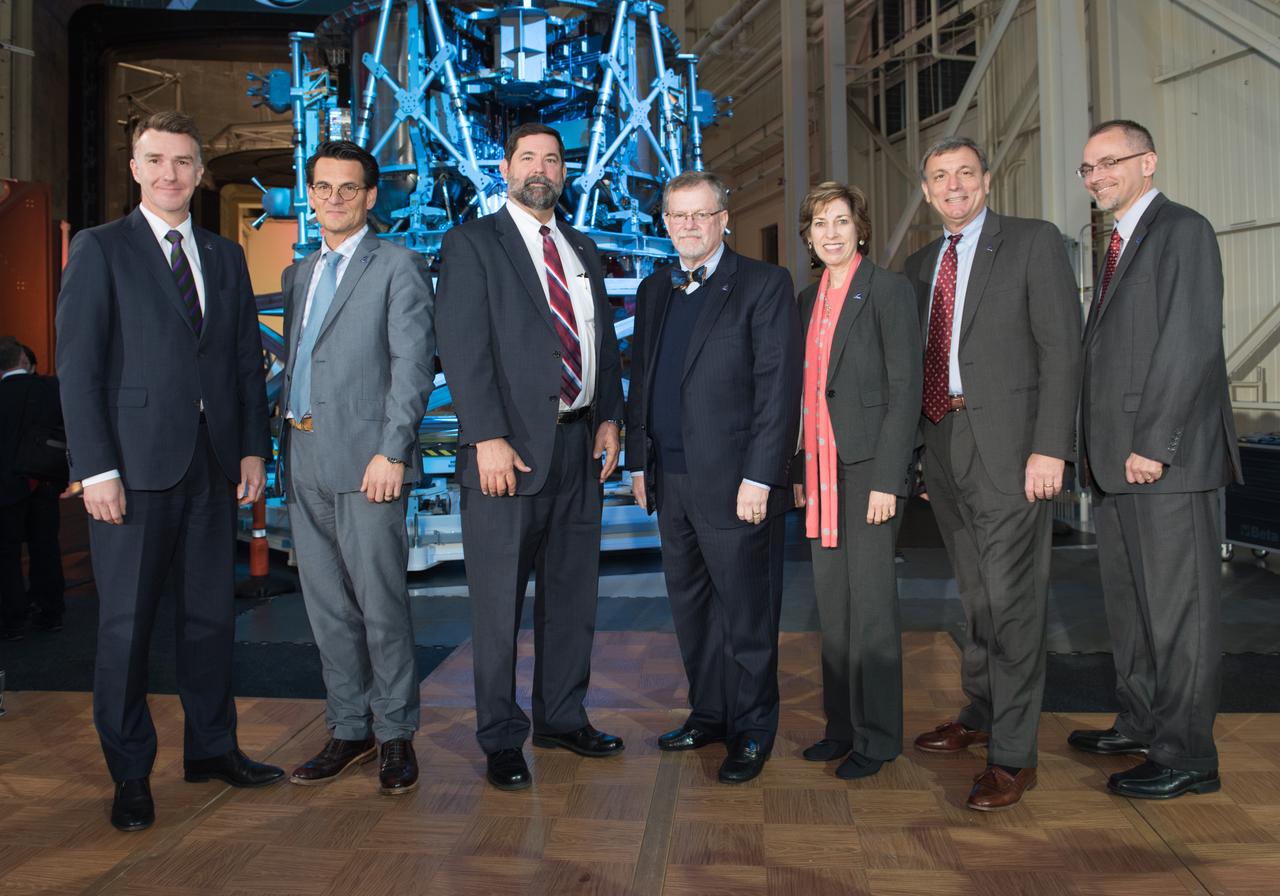
The European Service Module Structural Test Article (in the background) photographed at the Space Power Facility at NASA Glenn Research Center's Plum Brook Station in Sandusky, Ohio on Nov. 30, 2015. Group photo (including JSC Director Ellen Ochoa) taken in front of structure. Part of Batch image transfer from Flickr.
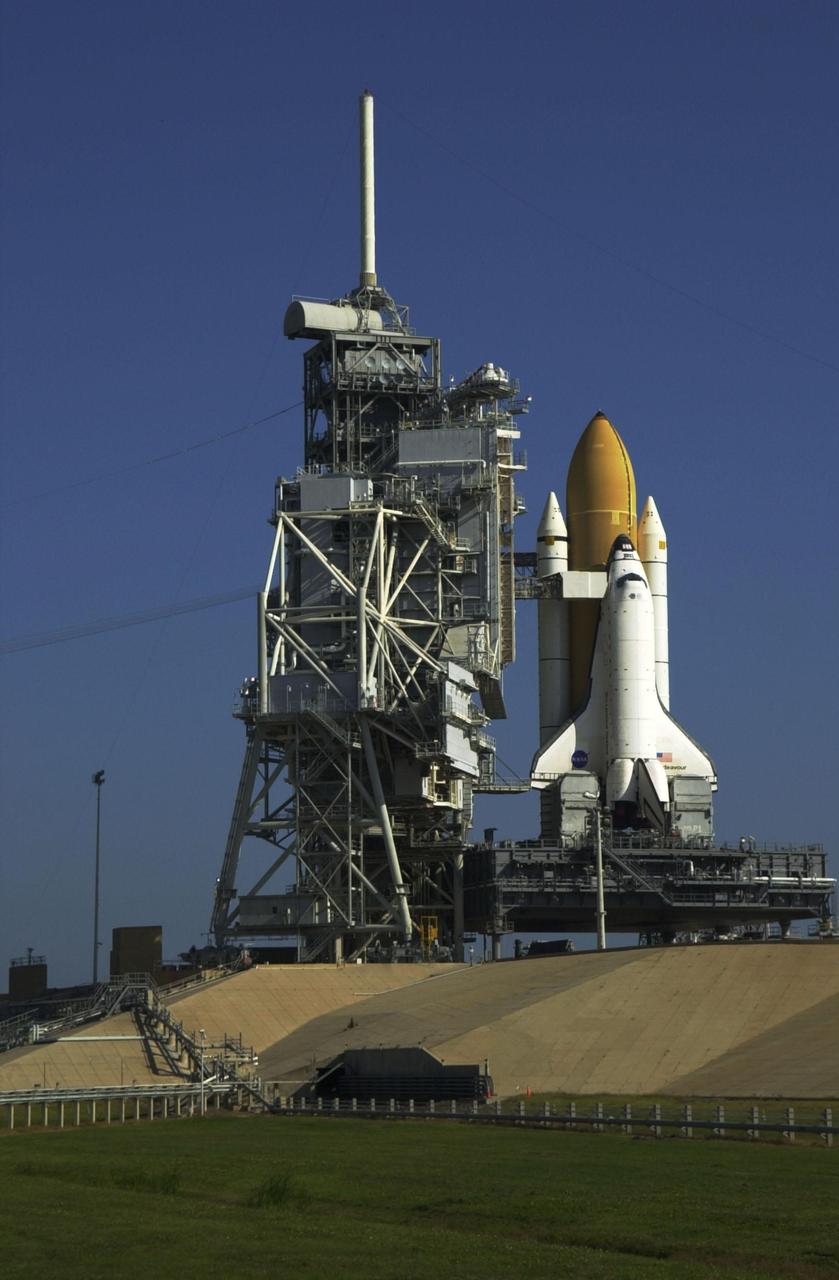
Space Shuttle Endeavour finally rests on Launch Pad 39B after its rollout was stalled several hours to fix a broken cleat on the crawler-transporter. To the left is the Rotating Service Structure. The Orbiter Access Arm is already extended from the Fixed Service Structure to the orbiter. Endeavour is scheduled to be launched Nov. 30 at 10:01 p.m. EST on mission STS-97, the sixth construction flight to the International Space Station. Its payload includes the P6 Integrated Truss Structure and a photovoltaic (PV) module, with giant solar arrays that will provide power to the Station. The mission includes two spacewalks to complete the solar array connections
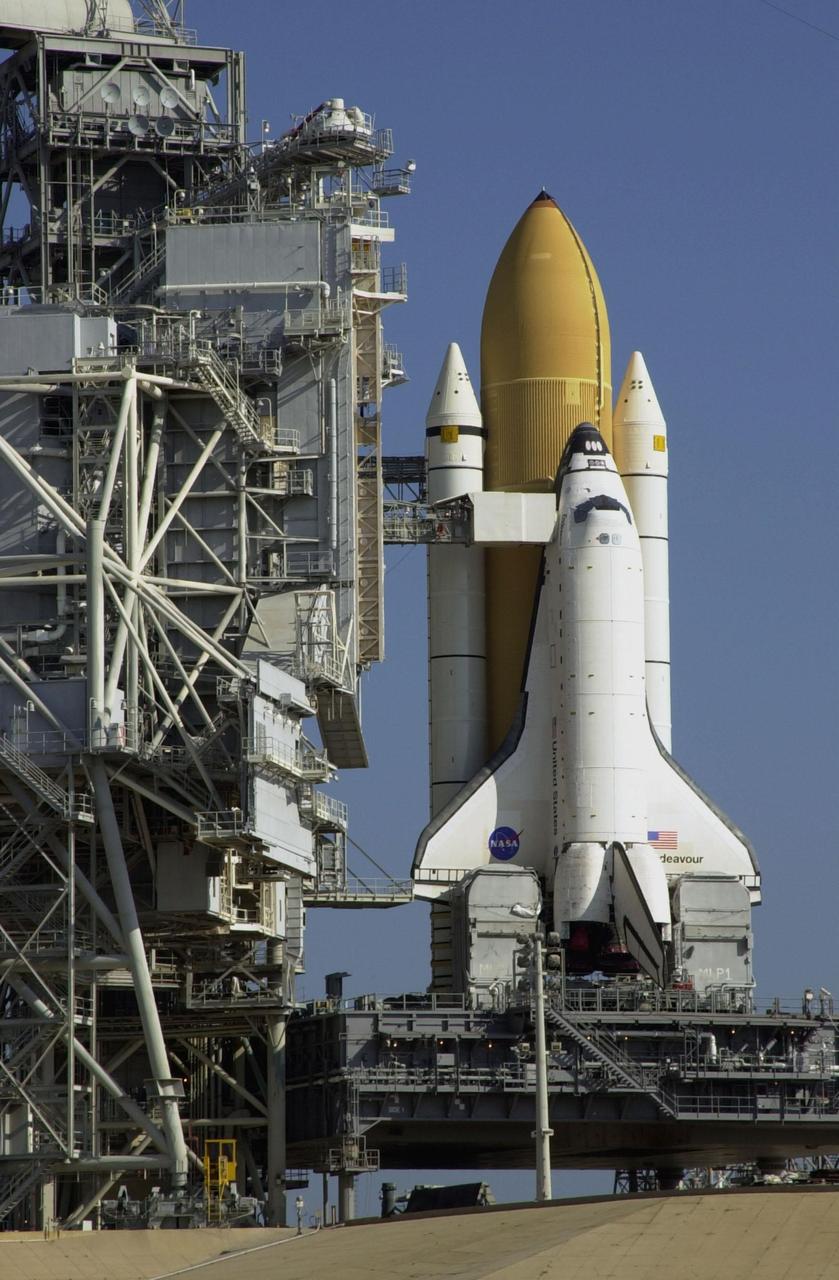
Space Shuttle Endeavour finally rests on Launch Pad 39B after its rollout was stalled several hours to fix a broken cleat on the crawler-transporter. At the far left is the Rotating Service Structure. From the Fixed Service Structure, the Orbiter Access Arm is already extended to the orbiter. Endeavour is scheduled to be launched Nov. 30 at 10:01 p.m. EST on mission STS-97, the sixth construction flight to the International Space Station. Its payload includes the P6 Integrated Truss Structure and a photovoltaic (PV) module, with giant solar arrays that will provide power to the Station. The mission includes two spacewalks to complete the solar array connections
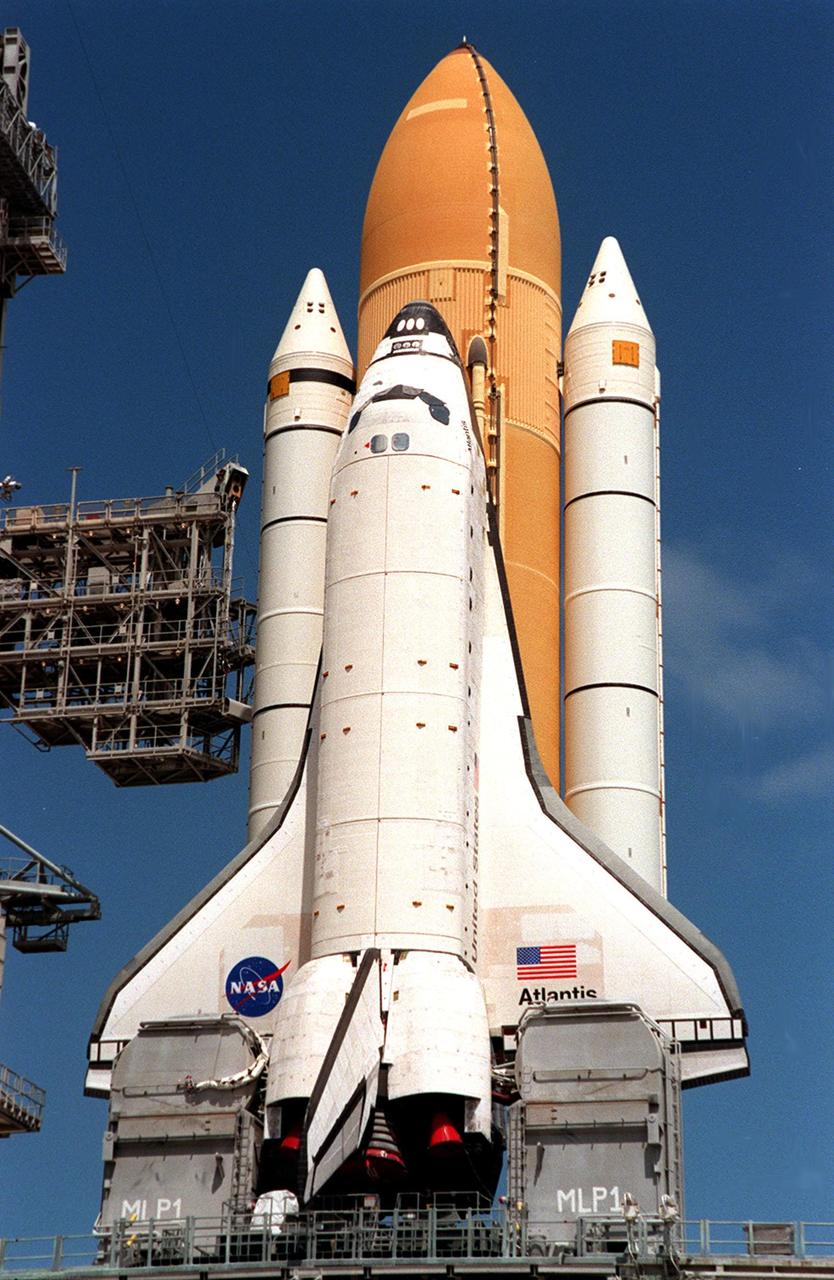
KENNEDY SPACE CENTER, FLA. -- Space Shuttle Atlantis sits on launch Pad 39A waiting for the rotating service structure to be moved into place for final launch preparations. A small section of the fixed service structure is seen on the left. Liftoff of Atlantis on mission STS-101 is scheduled for April 17 at 7:03 p.m. EDT. STS-101 is a logistics and resupply mission for the International Space Station, to restore full redundancy to the International Space Station power system in preparation for the arrival of the next pressurized module, the Russian-built Zvezda
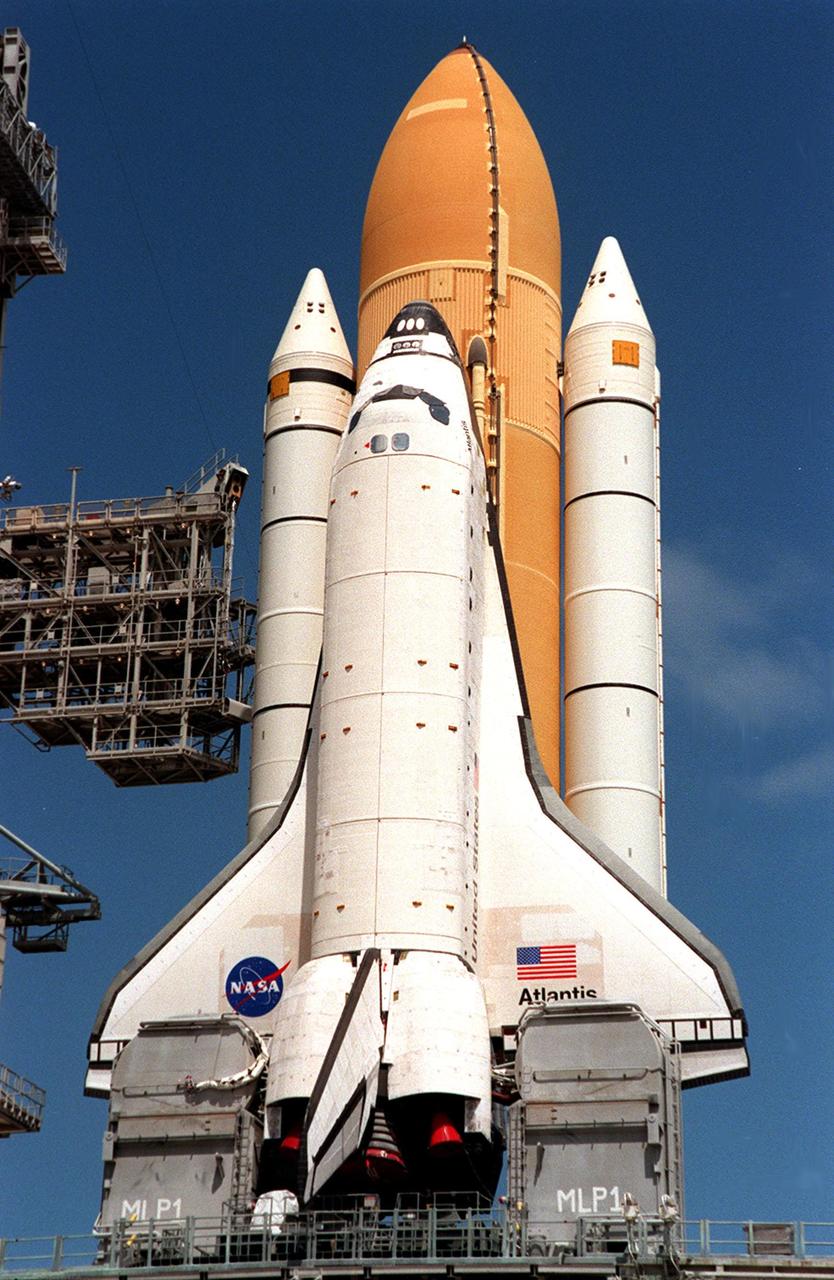
KENNEDY SPACE CENTER, FLA. -- Space Shuttle Atlantis sits on launch Pad 39A waiting for the rotating service structure to be moved into place for final launch preparations. A small section of the fixed service structure is seen on the left. Liftoff of Atlantis on mission STS-101 is scheduled for April 17 at 7:03 p.m. EDT. STS-101 is a logistics and resupply mission for the International Space Station, to restore full redundancy to the International Space Station power system in preparation for the arrival of the next pressurized module, the Russian-built Zvezda
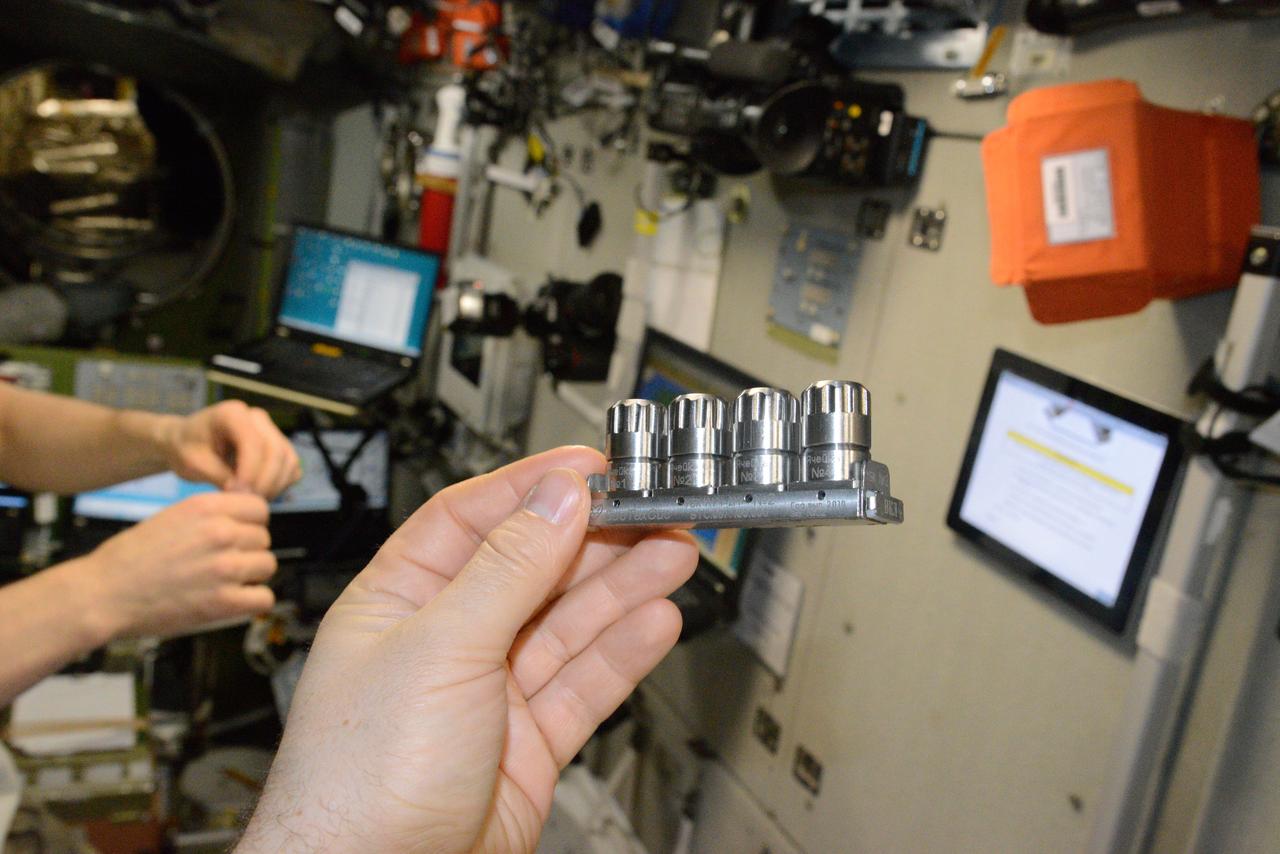
iss048e038162 (7/19/2016) --- The hand of a crewmember displays Luch-2M Multipurpose Crystallization Cassette (УБК) No. 2 during Struktura-Luch-2M (Structure-Beam-2M) experiment hardware activation and deployment. Image was taken in the Zvezda Service Module (SM) aboard the International Space Station (ISS). Struktura is a study of protein crystallization processes and growth of single crystals which are suitable for X-ray structural analysis and structural decoding.

iss048e038166 (7/19/2016) --- Photographic documentation of the Luch-2M Unit for the Struktura-Luch-2M (Structure-Beam-2M) experiment deployed on Panel 406 in the Zvezda Service Module. (SM) aboard the International Space Station (ISS). Struktura is a study of protein crystallization processes and growth of single crystals which are suitable for X-ray structural analysis and structural decoding.
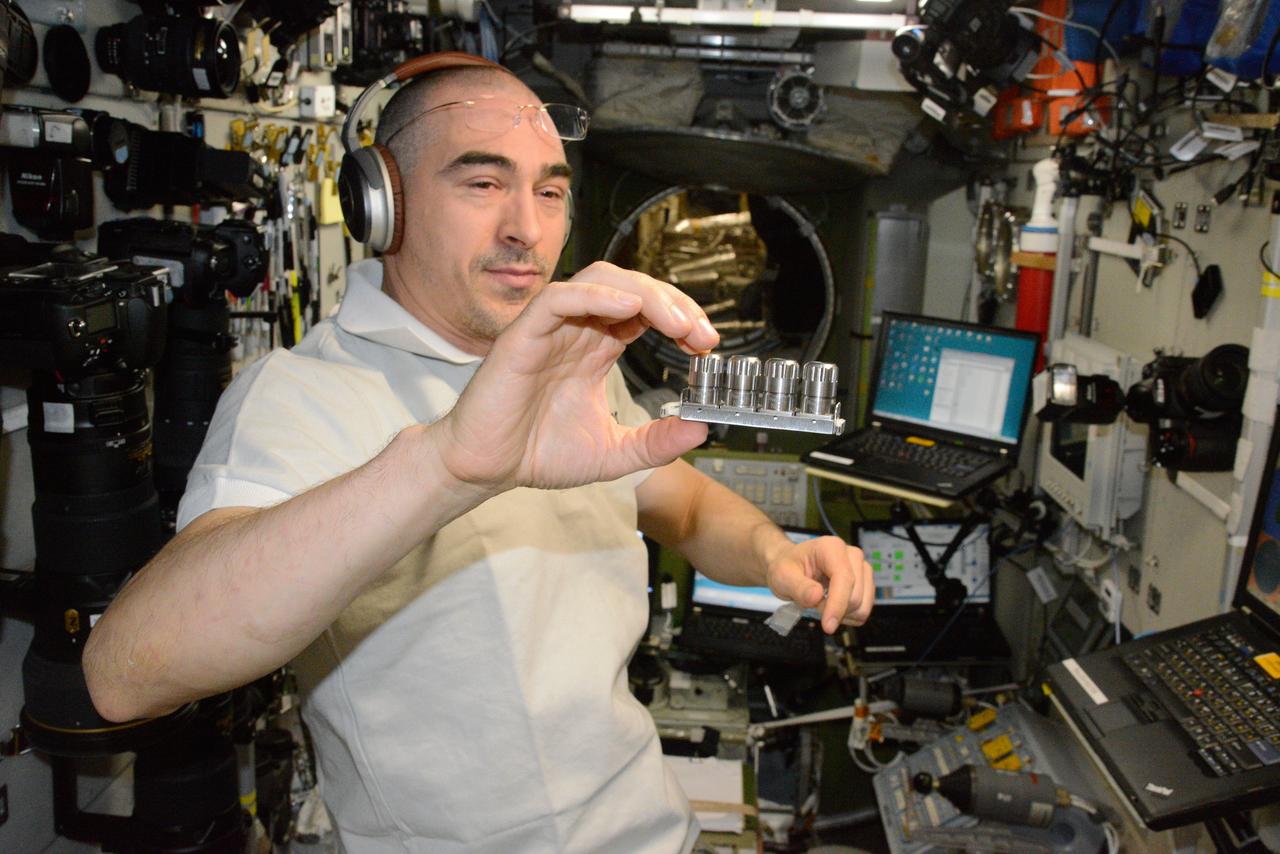
iss048e038163 (7/17/2016) --- Roscosmos cosmonaut Anatoly Ivanishin displays Luch-2M Multipurpose Crystallization Cassette (УБК) No. 3 during Struktura-Luch-2M (Structure-Beam-2M) experiment hardware activation and deployment. Image was taken in the Zvezda Service Module (SM) aboard the International Space Station (ISS). Struktura is a study of protein crystallization processes and growth of single crystals which are suitable for X-ray structural analysis and structural decoding.

Worker conducting inspection of concrete at the NASA Plum Brook Station Space Power Facility Vacuum Chamber Dome while rappelling down the side of the structure
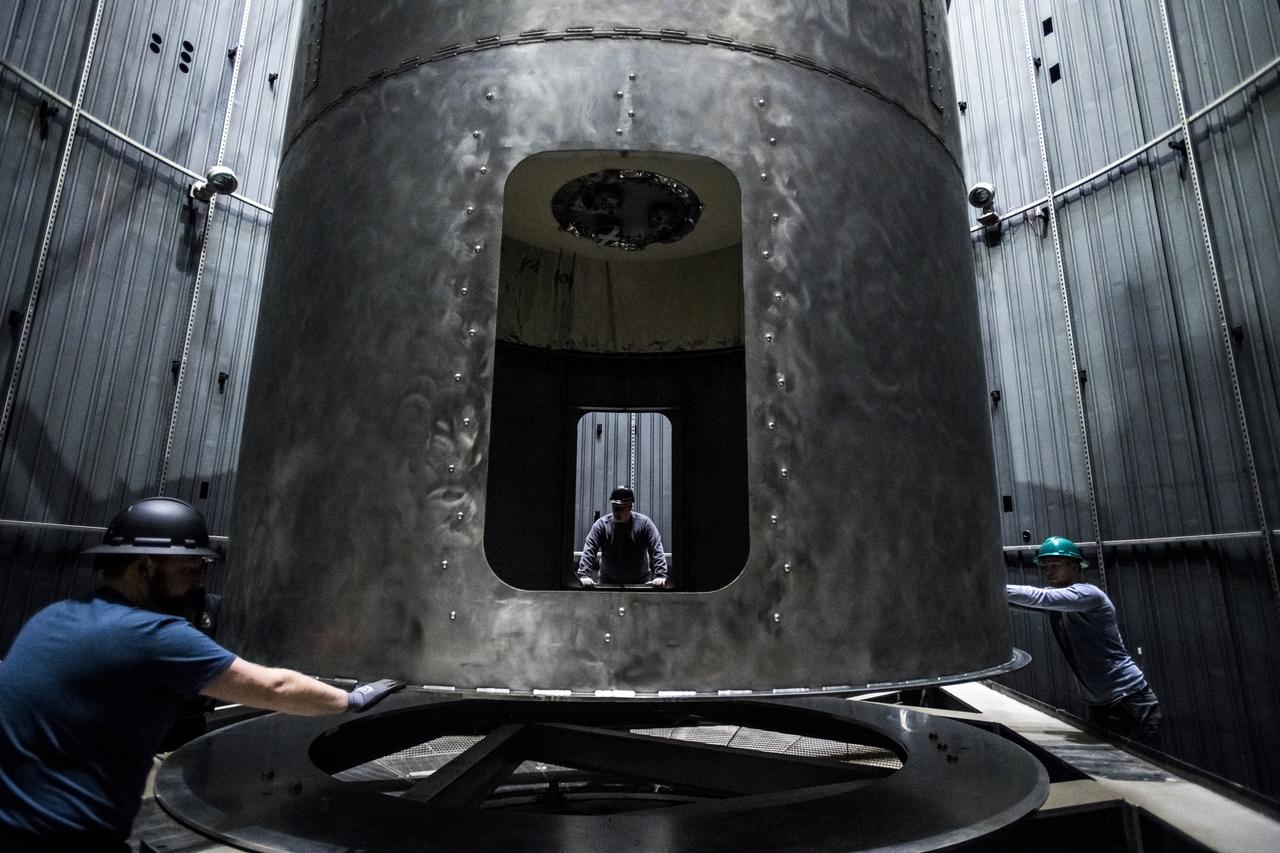
Structural Heat Intercept, Insulation and Vibration Evaluation Rig, SHIIVER is installed in the In-Space Propulsion Chamber at NASA Glenn, Plum Brook Station
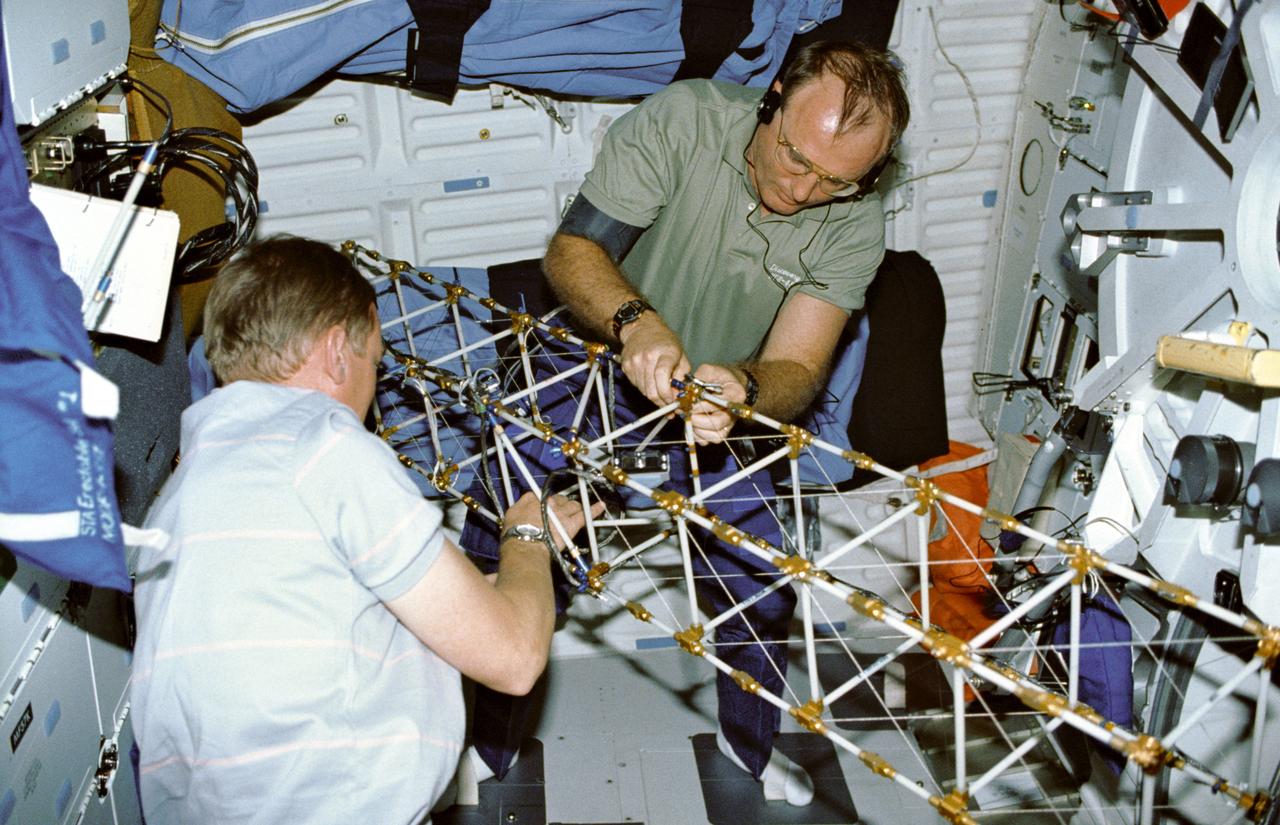
STS048-09-019 (16 Sept 1991) --- Astronauts Mark N. Brown, left, and James F. Buchli work with the structural test article (STA), a model of the space station truss structure. STA is part of the middeck zero gravity dynamics experiment (MODE). MODE was designed to study the vibration characteristics of the jointed truss structure. The structural test article includes four strain gauges and eleven accelerometers and is vibrated by an actuator. Assembled by crewmembers in the Shuttle orbiter's middeck, the device is about 72 inches long with an 8-inch square cross section.
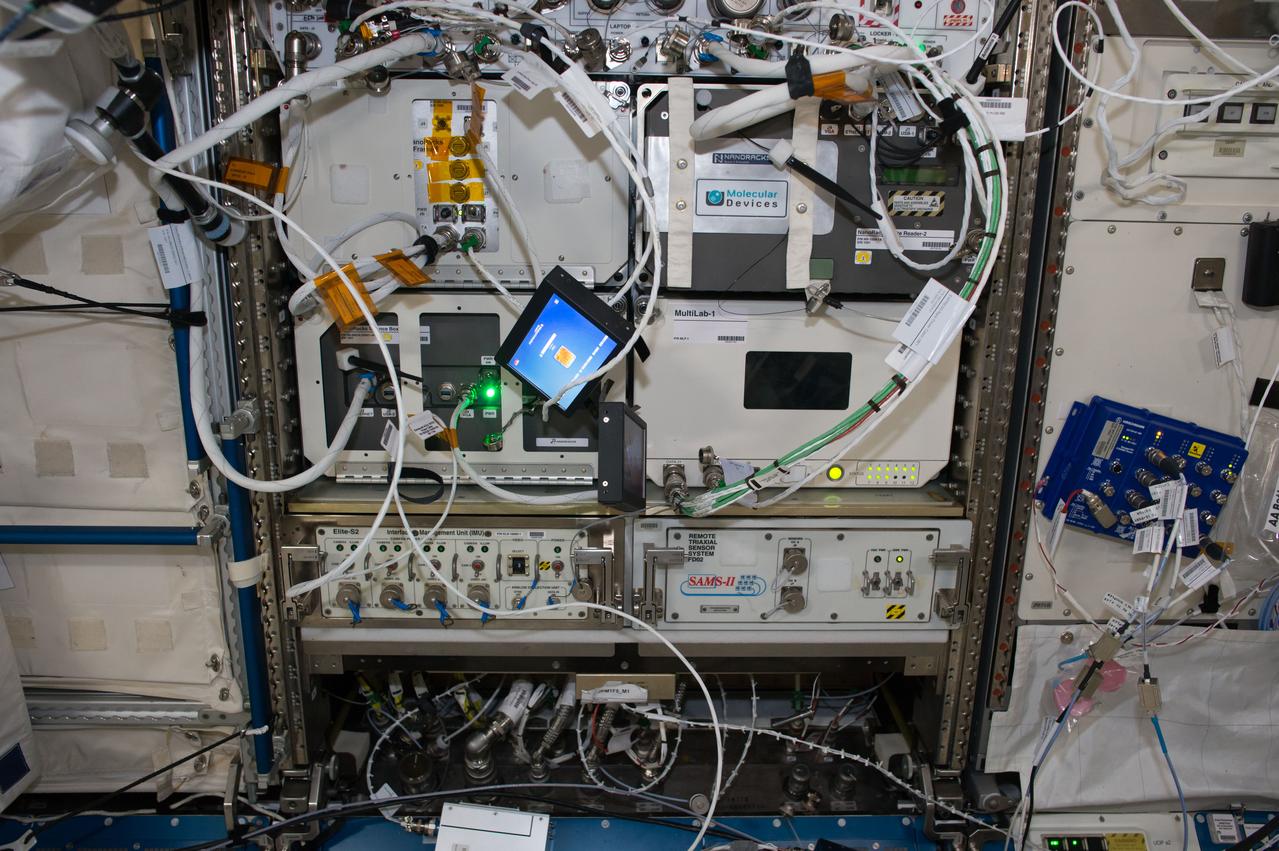
iss050e033362 (1/18/2017) -- A view of Space Acceleration Measurement System-II (SAMS-II), an ongoing study of the small forces (vibrations and accelerations) on the International Space Station (ISS) resulting from the operation of hardware, crew activities, dockings and maneuvering. Results generalize the types of vibrations affecting vibration-sensitive experiments and structural life of ISS. Investigators and Structural Analysts seek to better understand the vibration environment on the ISS using SAMS-II data and assessing station loads and dynamics.
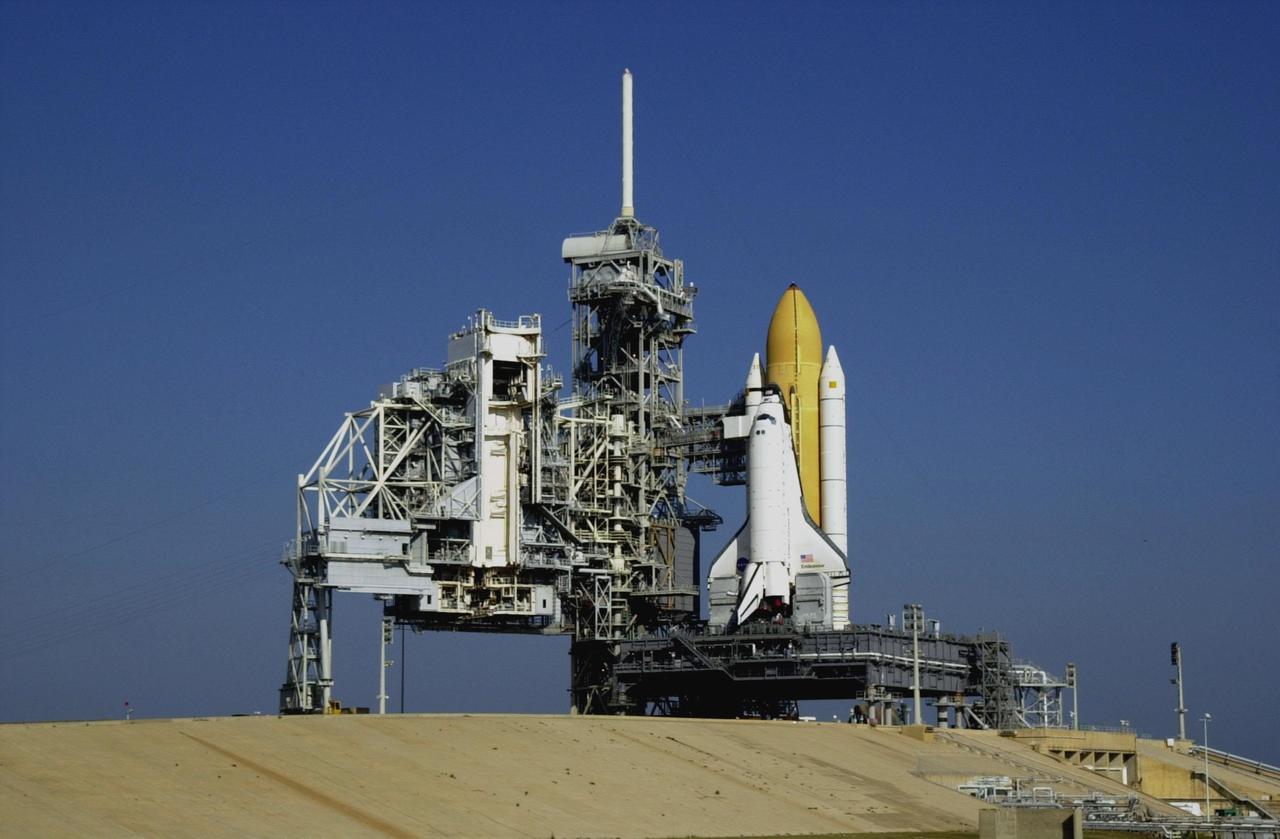
After repair of a cracked cleat on the crawler-transporter, Space Shuttle Endeavour finally rests on Launch Pad 39B. To the left is the Rotating Service Structure. Endeavour is scheduled to be launched Nov. 30 at 10:01 p.m. EST on mission STS-97, the sixth construction flight to the International Space Station. Its payload includes the P6 Integrated Truss Structure and a photovoltaic (PV) module, with giant solar arrays that will provide power to the Station. The mission includes two spacewalks to complete the solar array connections
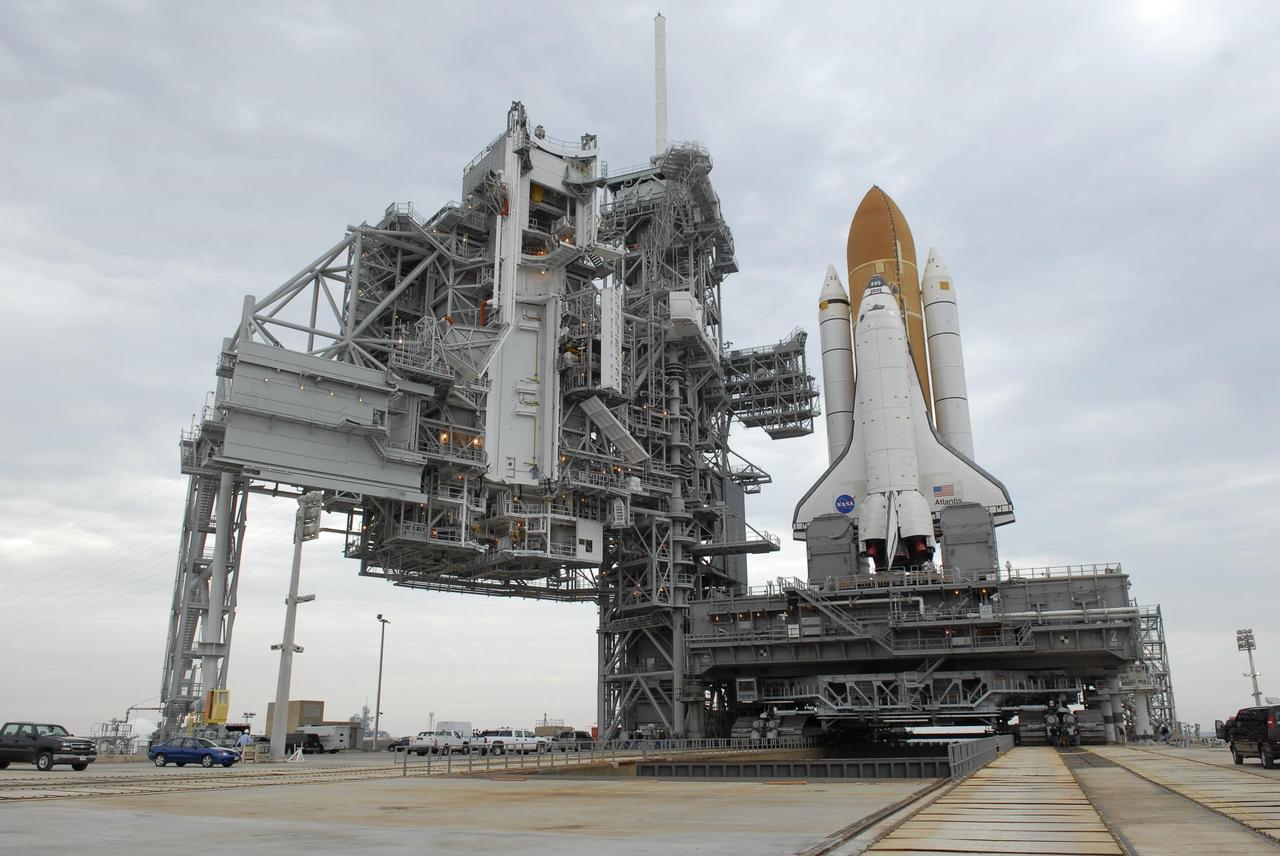
KENNEDY SPACE CENTER, FLA. -- Space Shuttle Atlantis arrives on the hardstand on Launch Pad 39A after a six-hour trek, via the crawler-transporter, from the Vehicle Assembly Building. The first motion out of the assembly building was at 8:19 a.m. At left is the open rotating service structure that will be rolled to enclose the shuttle for protection. Next to the shuttle is the fixed service structure. The mission payload aboard Space Shuttle Atlantis is the S3/S4 integrated truss structure, along with a third set of solar arrays and batteries. The crew of six astronauts will install the truss to continue assembly of the International Space Station. Launch is targeted for March 15. Photo credit: NASA/Kim Shiflett

KENNEDY SPACE CENTER, FLA. -- In the Space Station Processing Facility, as part of the Crew Equipment Interface Test, STS-112 Commander Jeffrey Ashby looks over the S1 Integrated Truss Structure, part of the payload for the mission to the International Space Station. The S1 truss is the first starboard (right-side) truss segment, whose main job is providing structural support for the orbiting research facility's radiator panels that cool the Space Station's complex power system. The S1 truss segment also will house communications systems, external experiment positions and other subsystems. The S1 truss will be attached to the S0 truss. Launch of STS-112 is scheduled for Aug. 22, 2002

KENNEDY SPACE CENTER, FLA. - In the Space Station Processing Facility, STS-116 Pilot William Oefelein gets instruction on work to be done installing the port integrated truss structure, P5, on the International Space Station. The crew is taking part in a Crew Equipment Interface Test that enables them to become familiar with the equipment and payloads they will be using. STS-116 will be mission No. 20 to the International Space Station and construction flight 12A.1. The mission payload is the SPACEHAB module, the P5 integrated truss structure and other key components. Launch is scheduled for no earlier than Dec. 7. Photo credit: NASA/Kim Shiflett
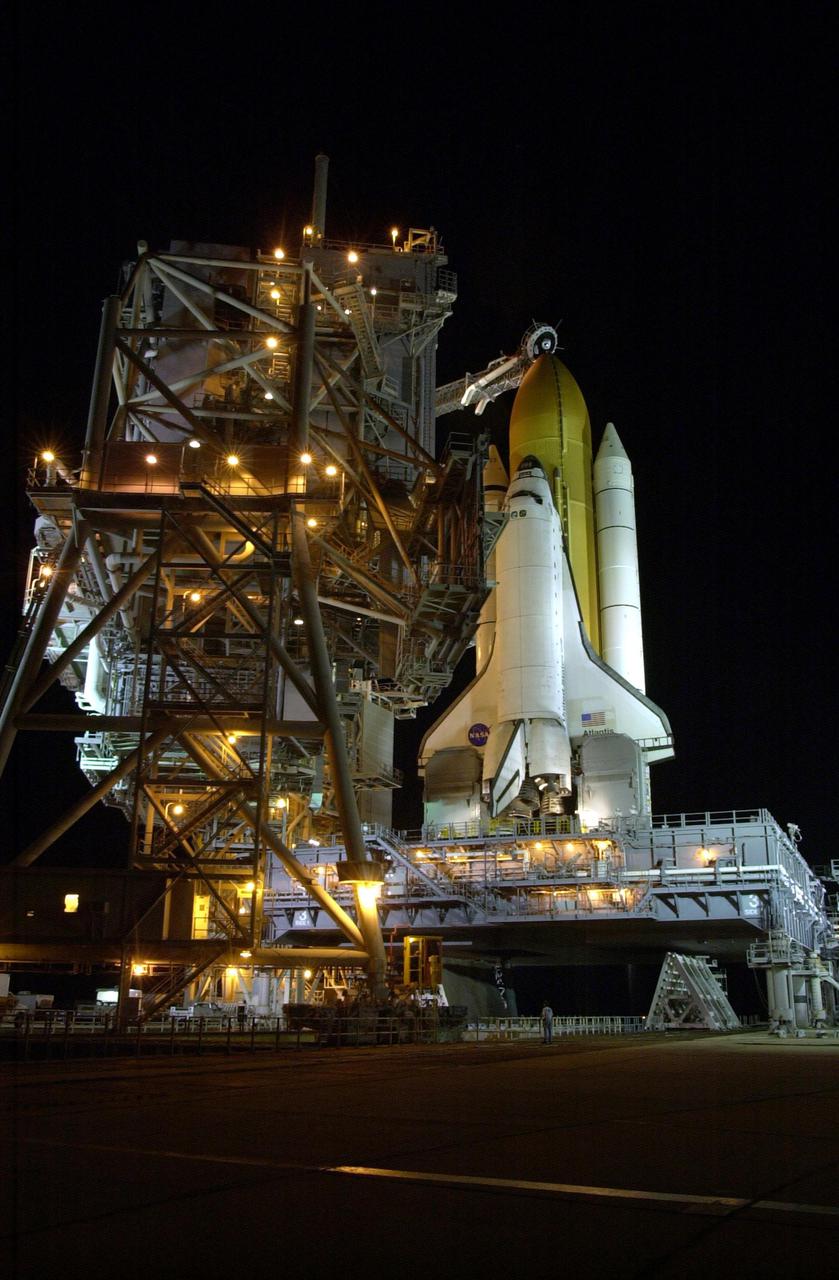
KENNEDY SPACE CENTER, FLA. -- In preparation for launch of Space Shuttle Atlantis on mission STS-110, the Rotating Service Structure (RSS) rolls back into launch position. The RSS provides protected access to the orbiter for changeout and servicing of payloads at the pad. The structure has access platforms at five levels to provide access to the payload bay. The Shuttle rests on the Mobile Launcher Platform (MLP), which straddles the flame trench below. The flame trench is part of the Flame Deflector System that insulates pad structures from the intense heat of a launch. Mission STS-110 is scheduled to launch April 4 on its 11-day mission to the International Space Station
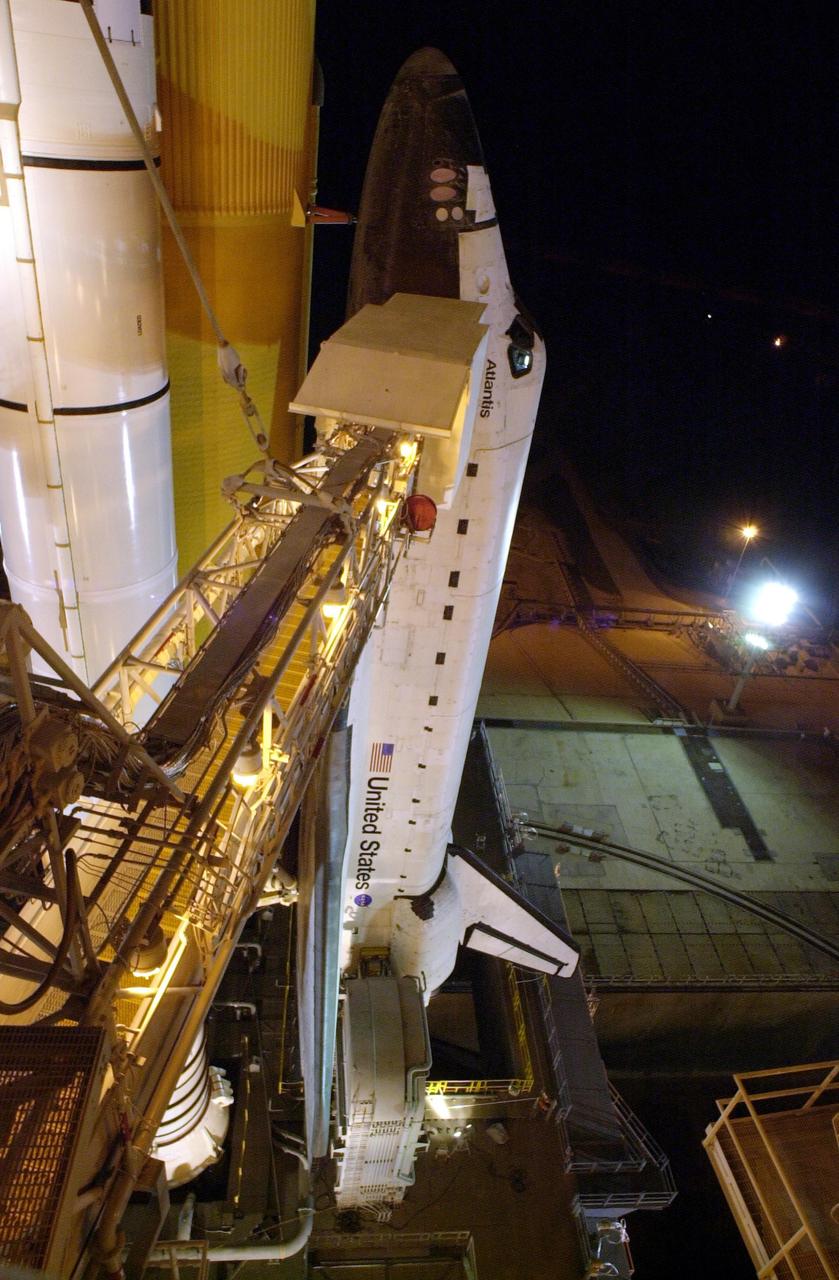
KENNEDY SPACE CENTER, FLA. -- With the Rotating Service Structure rolled back, Space Shuttle Atlantis stands ready for launch on mission STS-110. The Orbiter Access Arm extends from the Fixed Service Structure (FSS) to the crew compartment hatch, through which the STS-110 crew will enter Atlantis. The RSS provides protected access to the orbiter for changeout and servicing of payloads at the pad. The structure has access platforms at five levels to provide access to the payload bay. The FSS provides access to the orbiter and the RSS. . Mission STS-110 is scheduled to launch April 4 on its 11-day mission to the International Space Station
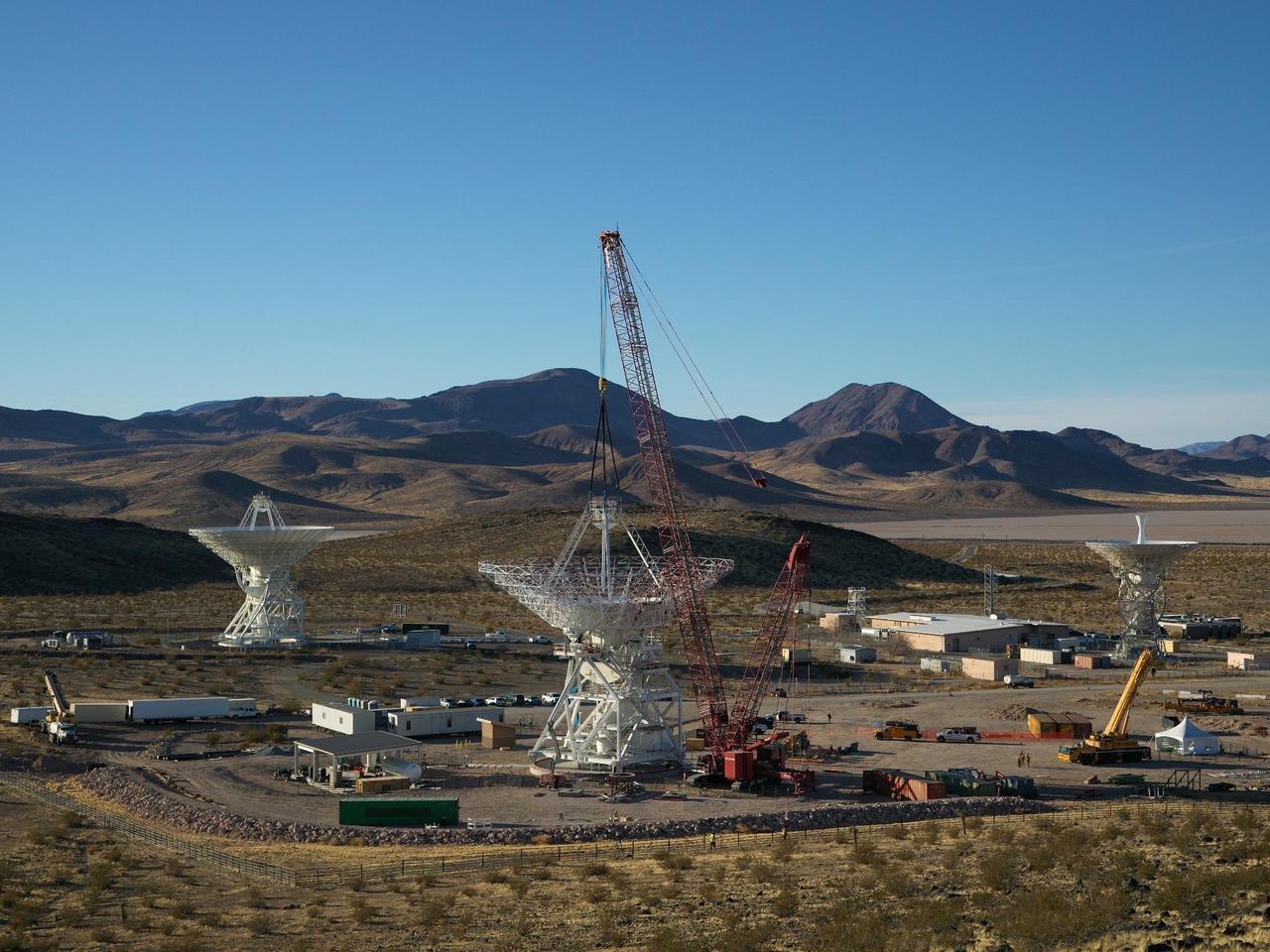
A crane lowers a four-legged support structure called a quadripod onto the steel framework of the Deep Space Station 23 (DSS-23) reflector dish on Dec. 18, 2024. The reflector framework was bolted into place earlier in the day, and the quadripod, which weighs 16 ½ tons, was the last major component to be installed that day. The reflector dish will be fitted with panels to create a curved surface to collect radio frequency signals. The quadripod features a curved subreflector that will direct radio frequency signals from deep space that bounce off the main reflector into the antenna's receiver in its pedestal, where the antenna's receivers are housed. The new 112-foot-wide (34-meter-wide) dish is located at the Deep Space Network's Goldstone Space Communications Complex near Barstow, California. A multi-frequency beam waveguide antenna, DSS-23 will come online in 2026, boosting the DSN's capacity and enhance NASA's deep space communications capabilities for decades to come. It is the fifth of six new beam waveguide antennas to be added to the network, following DSS-53, which was added at the DSN's Madrid complex in 2022. The DSN allows missions to track, send commands to, and receive scientific data from faraway spacecraft. It is managed by NASA's Jet Propulsion Laboratory in Southern California for the agency's Space Communications and Navigation (SCaN) program, which is located at NASA Headquarters within the Space Operations Mission Directorate. https://photojournal.jpl.nasa.gov/catalog/PIA26455
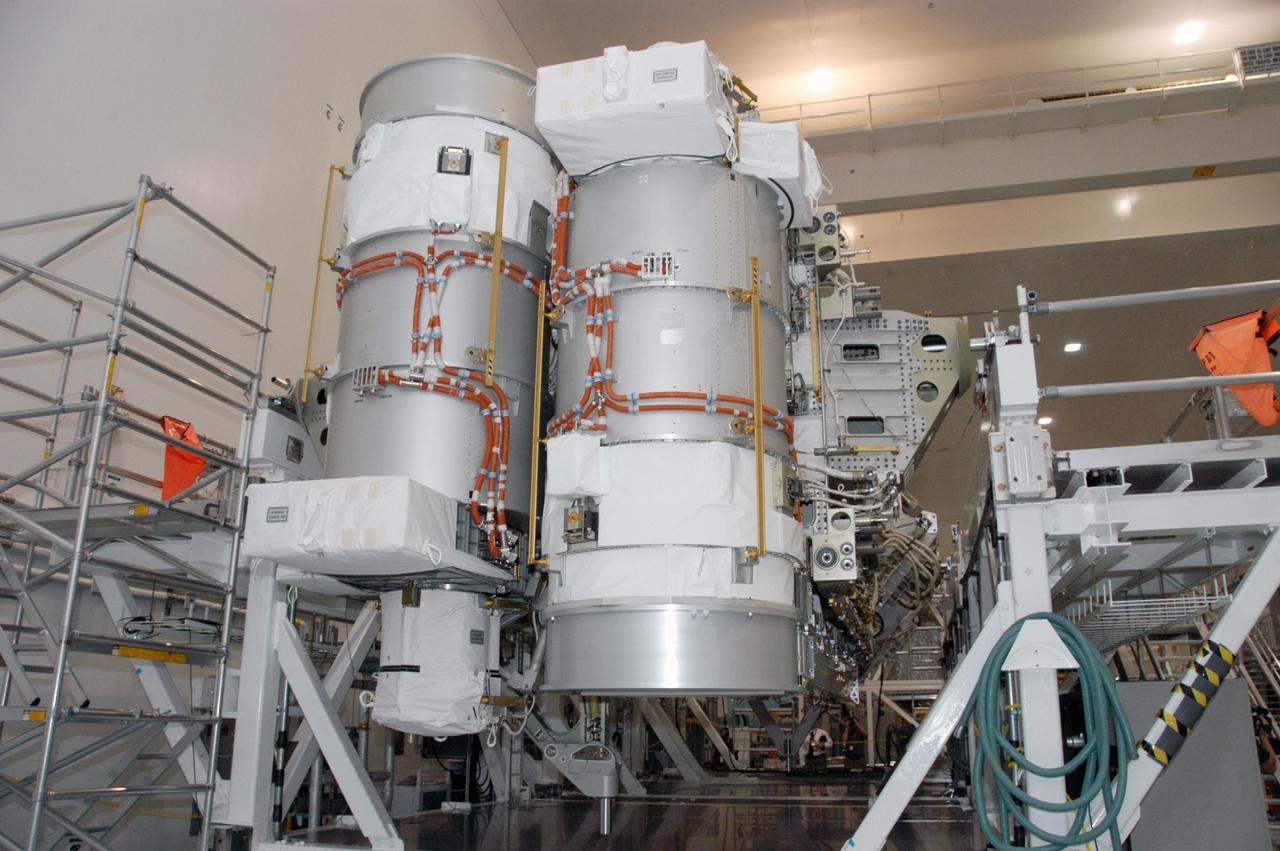
KENNEDY SPACE CENTER, FLA. -- In the Space Station Processing Facility, the S3/S4 integrated truss segment is on display for the media. The starboard 3/4 truss segment will launch aboard Space Shuttle Atlantis on mission STS-117, targeted for March 15. The element will be added to the 11-segment integrated truss structure, the station's backbone. The integrated truss structure eventually will span more than 300 feet. The S3/S4 truss has two large solar arrays and will provide one-fourth of the total power generation for the completed station. Photo credit: NASA/George Shelton
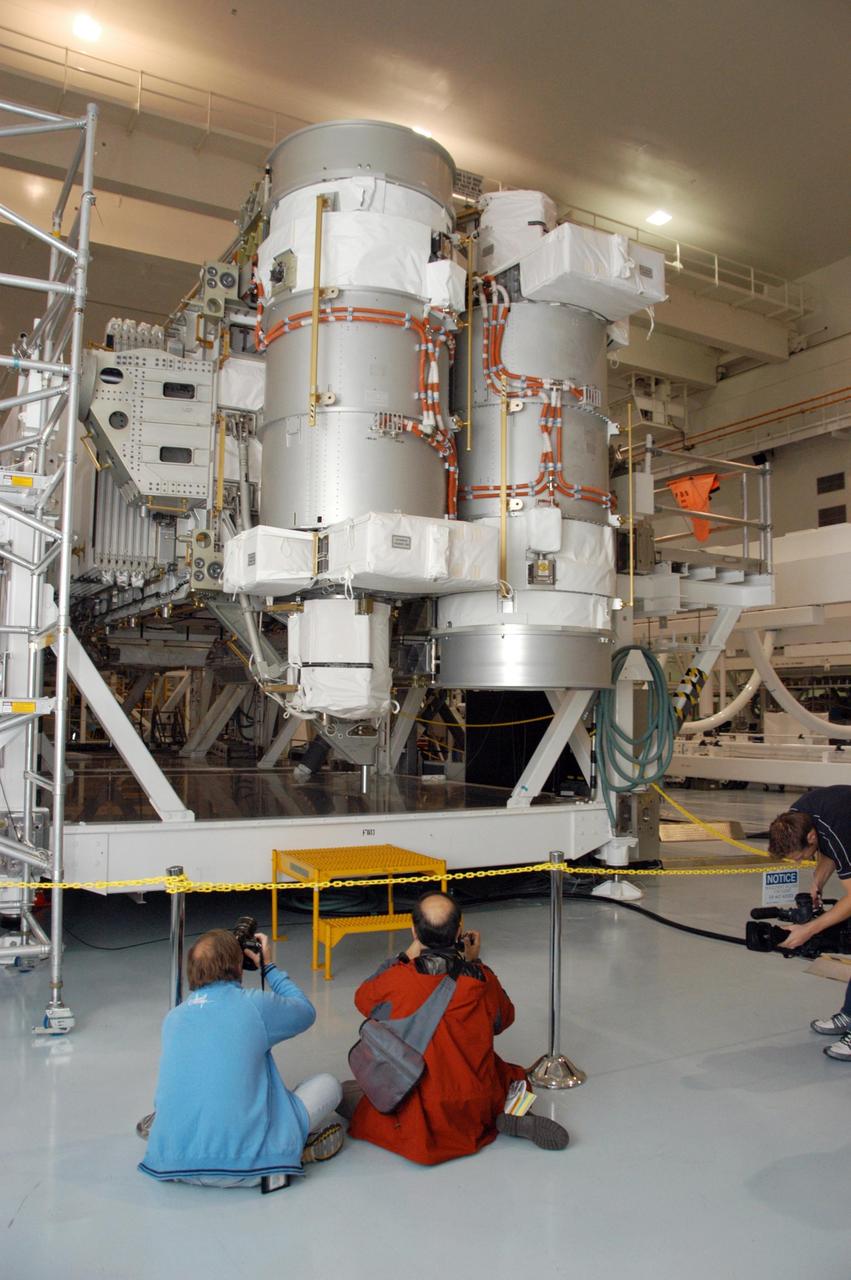
KENNEDY SPACE CENTER, FLA. -- In the Space Station Processing Facility, photographers take advantage of a media showcase to get photos of the S3/S4 integrated truss segment. The starboard 3/4 truss segment will launch aboard Space Shuttle Atlantis on mission STS-117, targeted for March 15. The element will be added to the 11-segment integrated truss structure, the station's backbone. The integrated truss structure eventually will span more than 300 feet. The S3/S4 truss has two large solar arrays and will provide one-fourth of the total power generation for the completed station. Photo credit: NASA/George Shelton
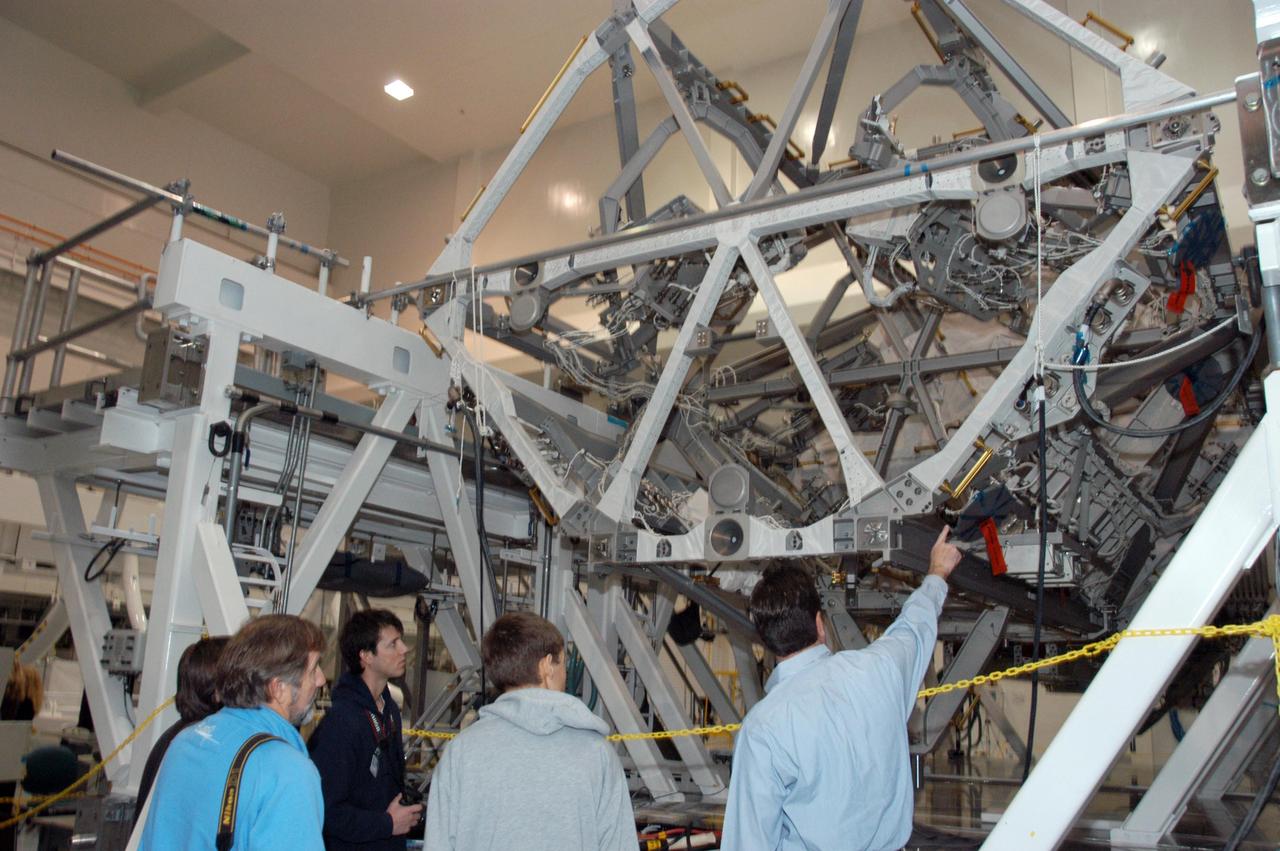
KENNEDY SPACE CENTER, FLA. -- At a media showcase in the Space Station Processing Facility, reporters and photographers get a close look at the S3/S4 integrated truss segment. The starboard 3/4 truss segment will launch aboard Space Shuttle Atlantis on mission STS-117, targeted for March 15. The element will be added to the 11-segment integrated truss structure, the station's backbone. The integrated truss structure eventually will span more than 300 feet. The S3/S4 truss has two large solar arrays and will provide one-fourth of the total power generation for the completed station. Photo credit: NASA/George Shelton
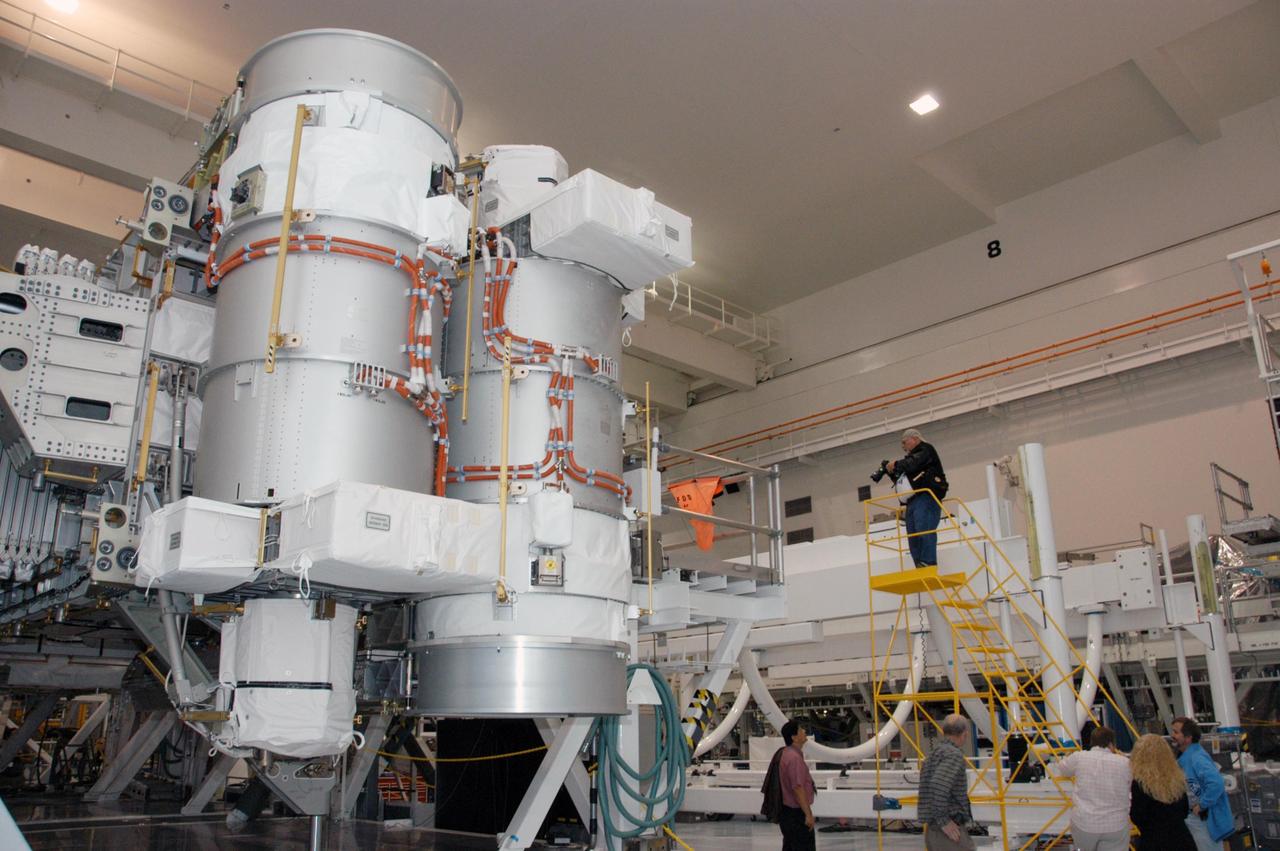
KENNEDY SPACE CENTER, FLA. -- At a media showcase in the Space Station Processing Facility, reporters and photographers get a close look at the S3/S4 integrated truss segment. The starboard 3/4 truss segment will launch aboard Space Shuttle Atlantis on mission STS-117, targeted for March 15. The element will be added to the 11-segment integrated truss structure, the station's backbone. The integrated truss structure eventually will span more than 300 feet. The S3/S4 truss has two large solar arrays and will provide one-fourth of the total power generation for the completed station. Photo credit: NASA/George Shelton
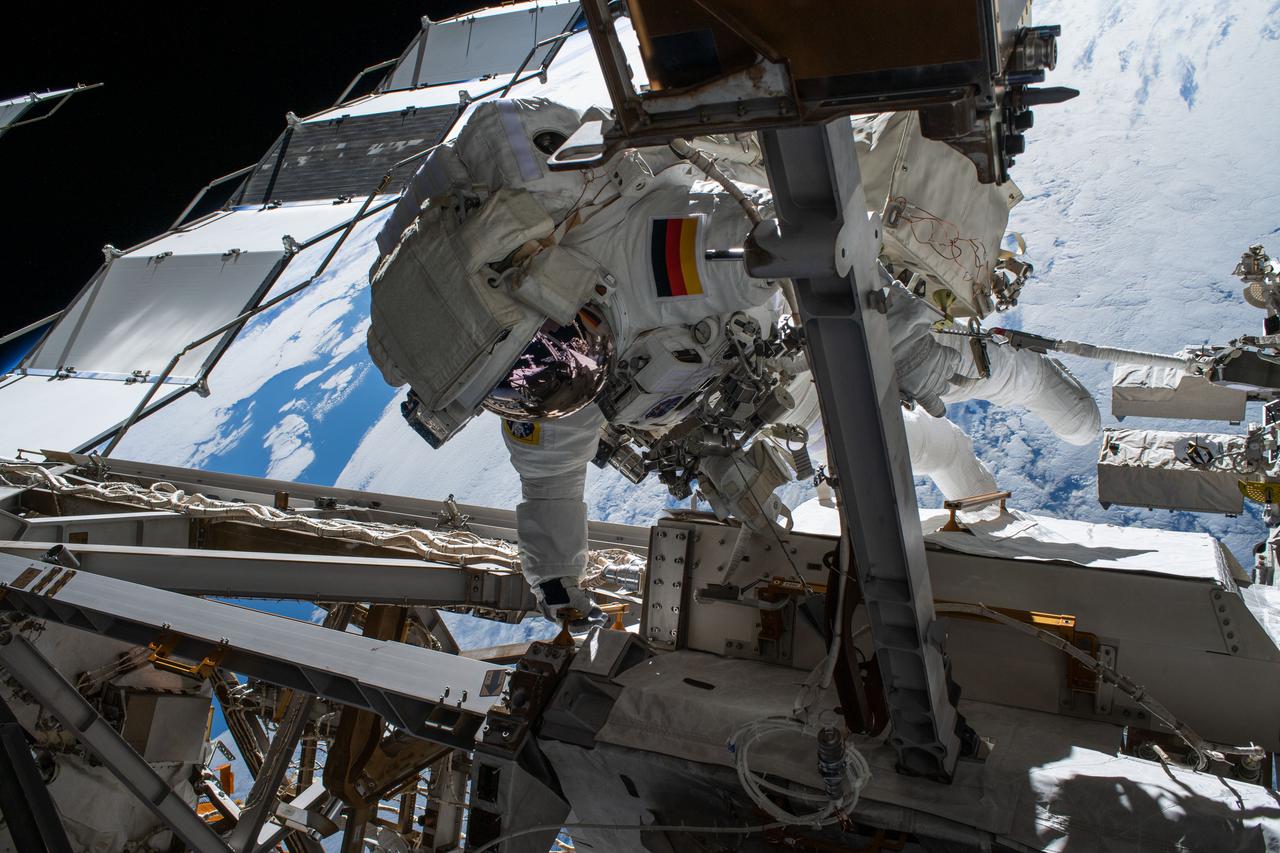
iss066e174286 (March 23, 2022) --- Astronaut Matthias Maurer of ESA (European Space Agency) is pictured on the International Space Station's truss structure during a spacewalk to install thermal gear and electronics components on the orbiting lab.
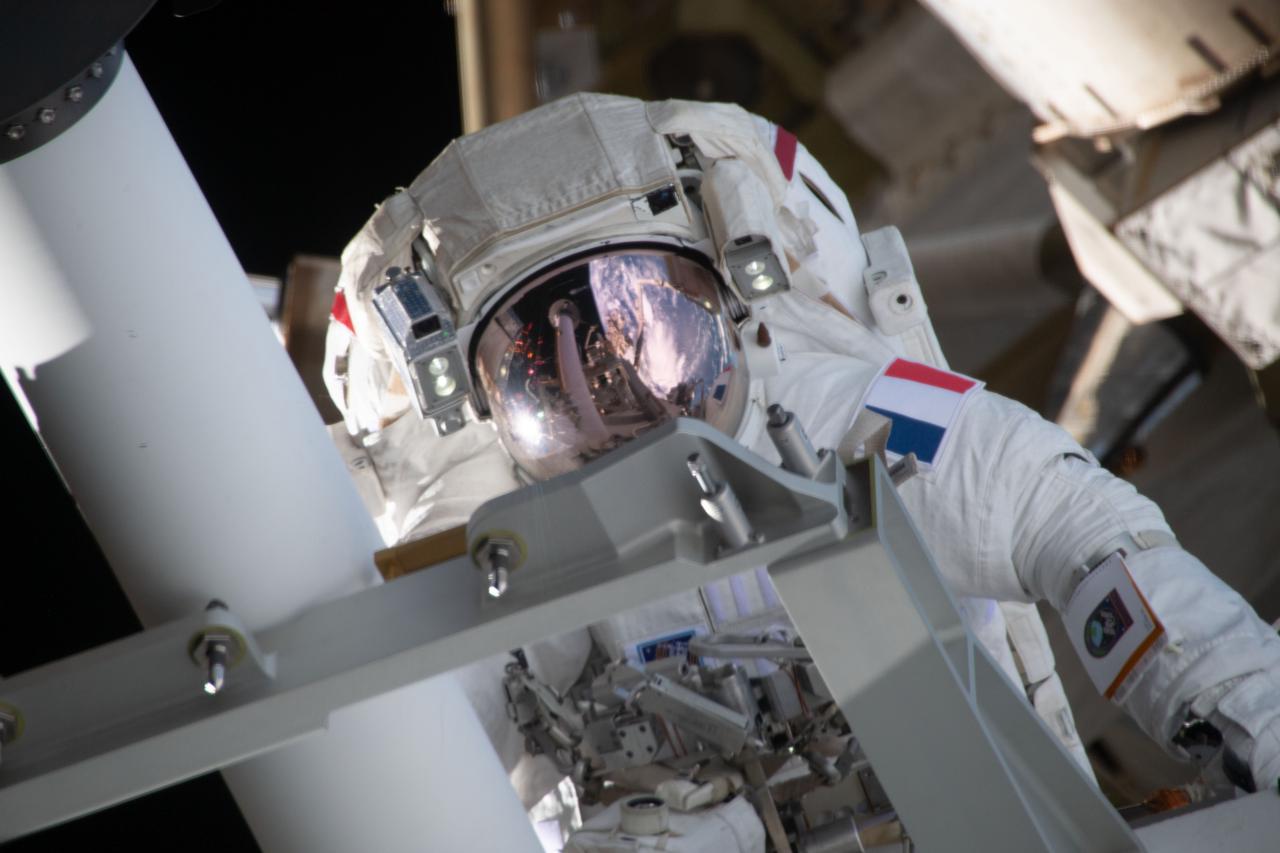
iss065e147424 (June 25, 2021) --- Spacewalker Thomas Pesquet of ESA (European Space Agency) works to complete the installation of the second roll out solar array on the International Space Station's Port-6 truss structure.
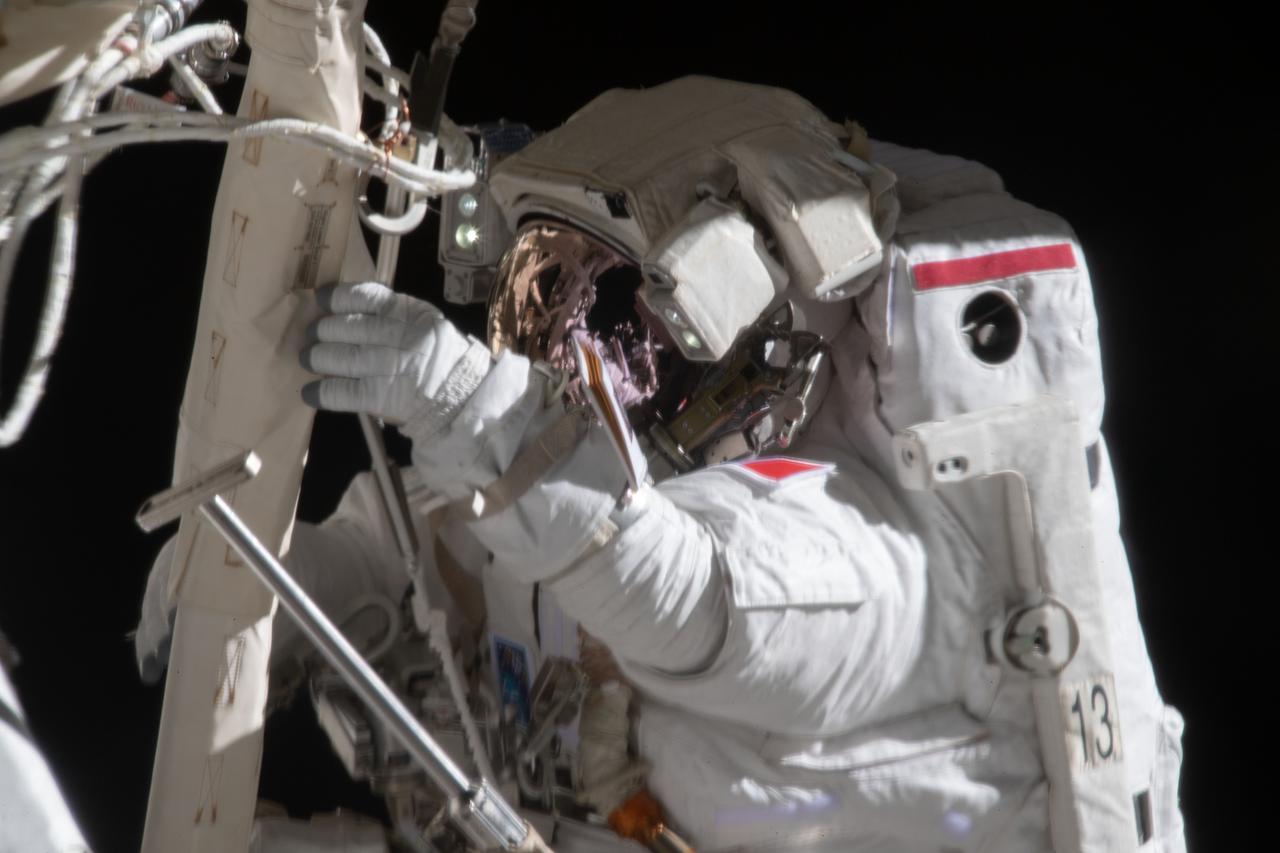
iss065e124498 (June 20, 2021) --- Spacewalker Thomas Pesquet of ESA (European Space Agency) works to complete the installation of a roll out solar array on the International Space Station's P-6 truss structure.
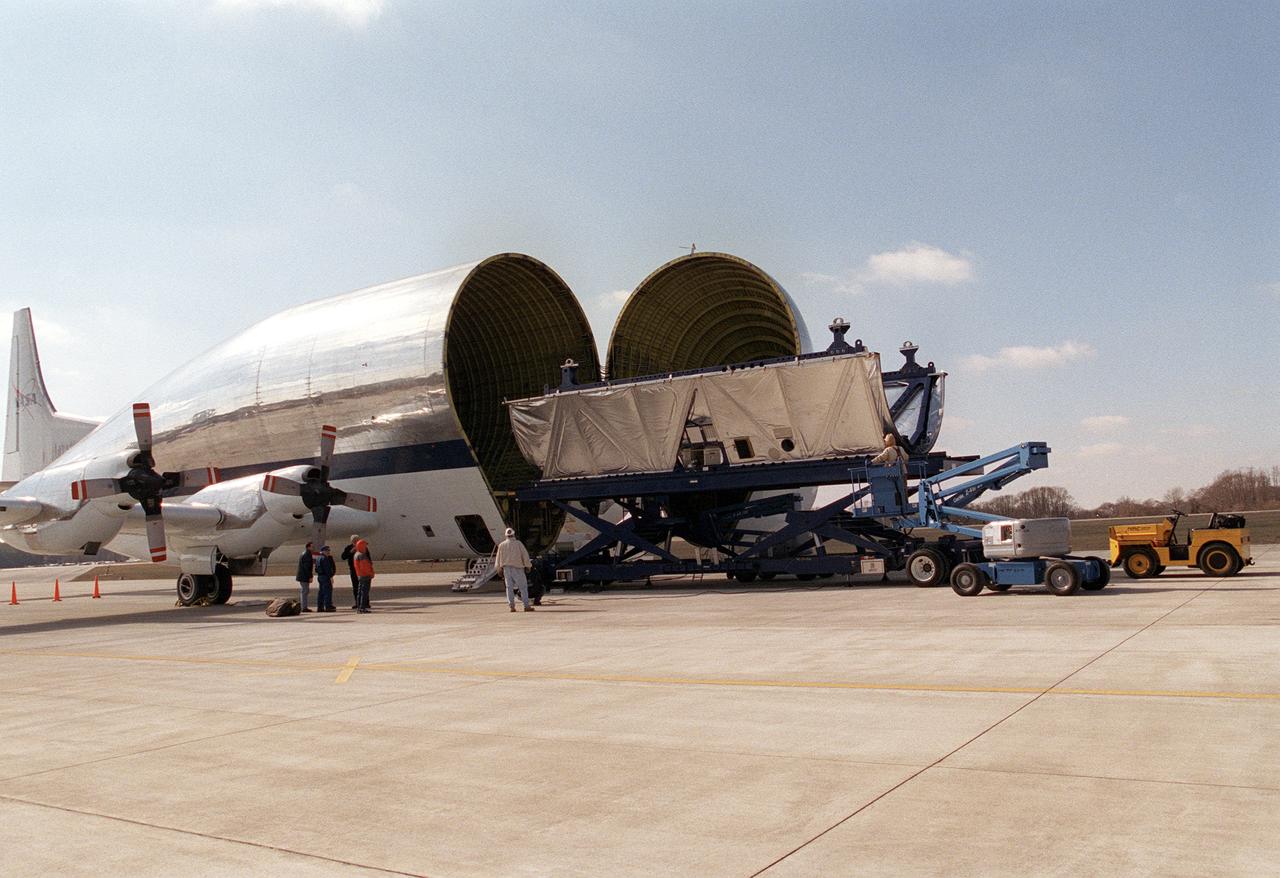
A section of the International Space Station truss assembly arrived at the Marshall Space Flight Center on NASA's Super Guppy cargo plane for structural and design testing as well as installation of critical flight hardware.
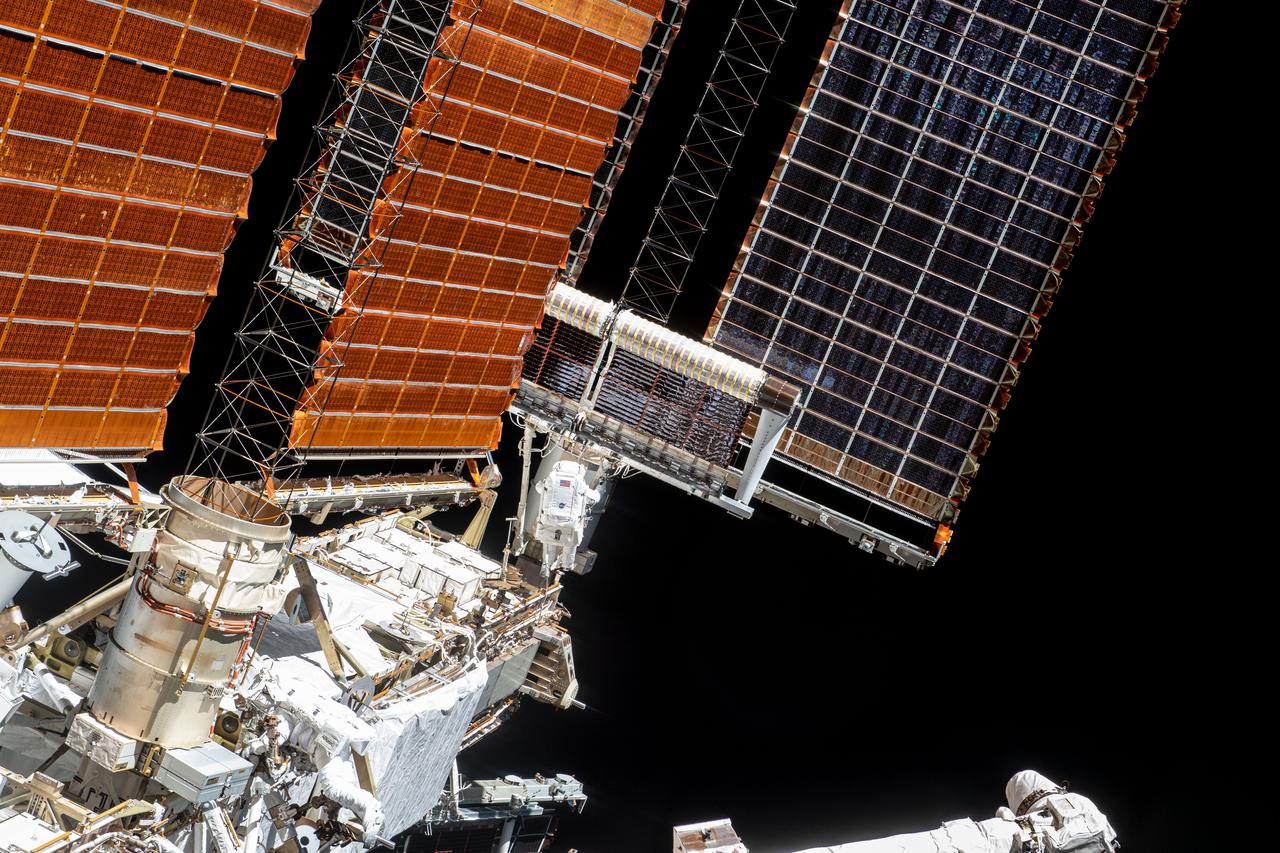
iss065e145092 (June 25, 2021) --- Spacewalker Thomas Pesquet of ESA (European Space Agency) is pictured at the base of the second roll out solar array as it began to roll out on the International Space Station's Port-6 truss structure
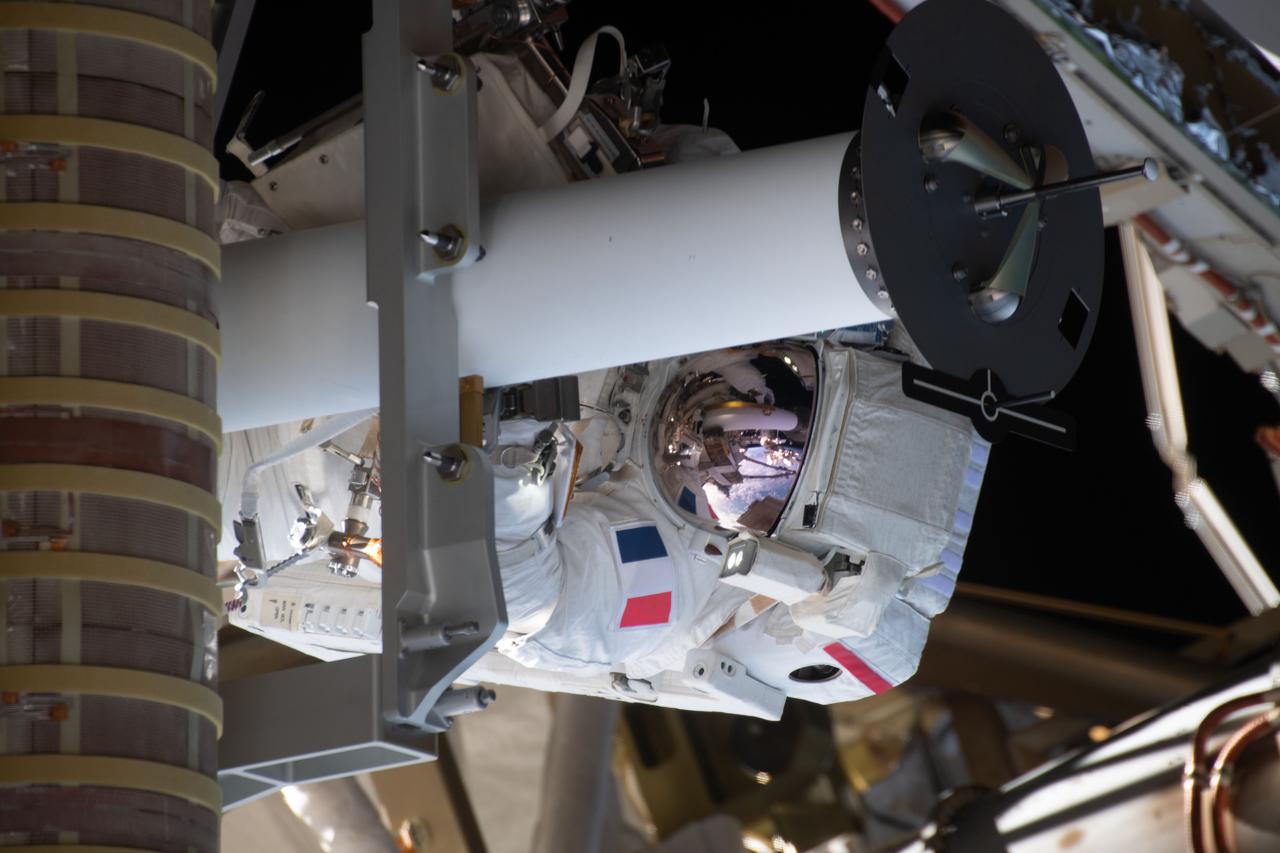
iss065e146883 (June 25, 2021) --- Spacewalker Thomas Pesquet of ESA (European Space Agency) works to complete the installation of the second roll out solar array on the International Space Station's Port-6 truss structure.
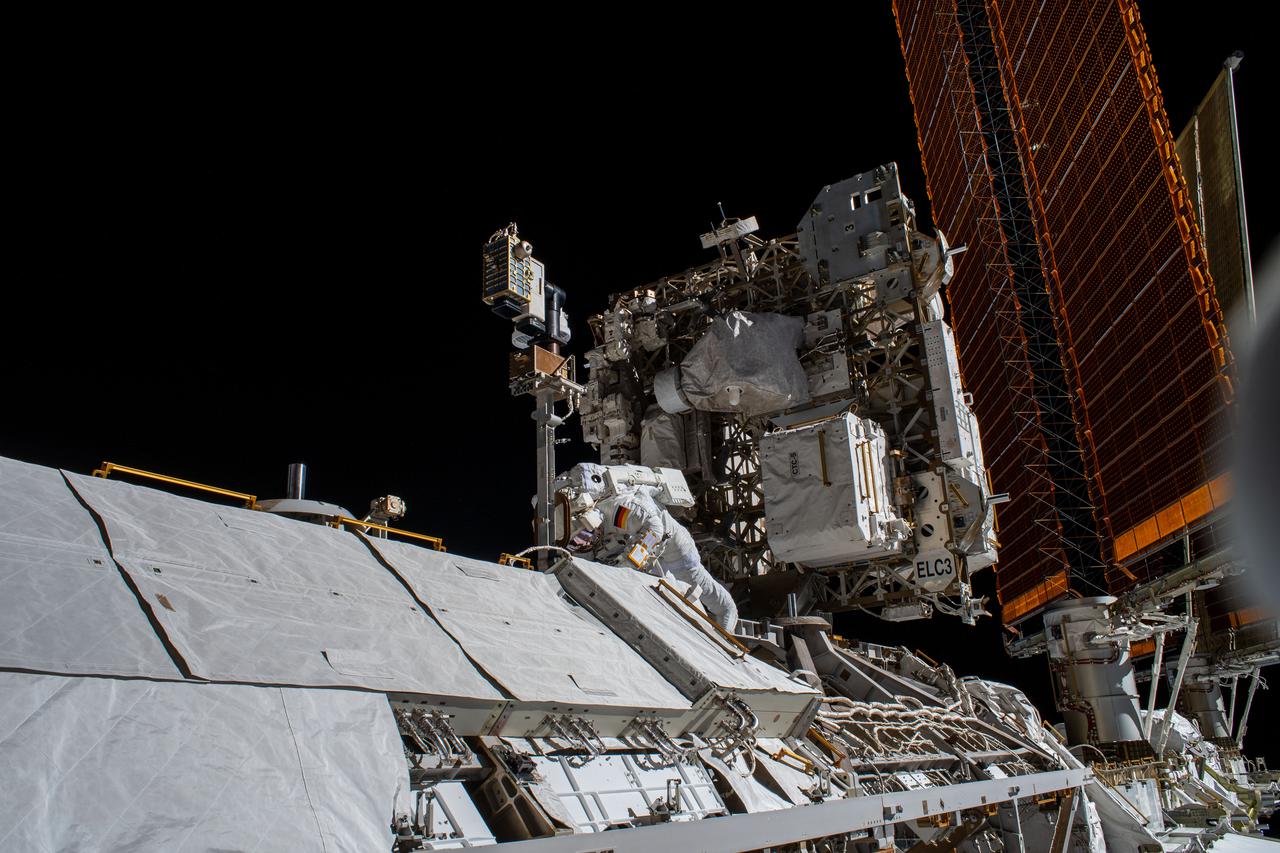
iss066e174193 (March 23, 2022) --- Astronaut Matthias Maurer of ESA (European Space Agency) is pictured on the International Space Station's truss structure during a spacewalk to install thermal gear and electronics components on the orbiting lab.
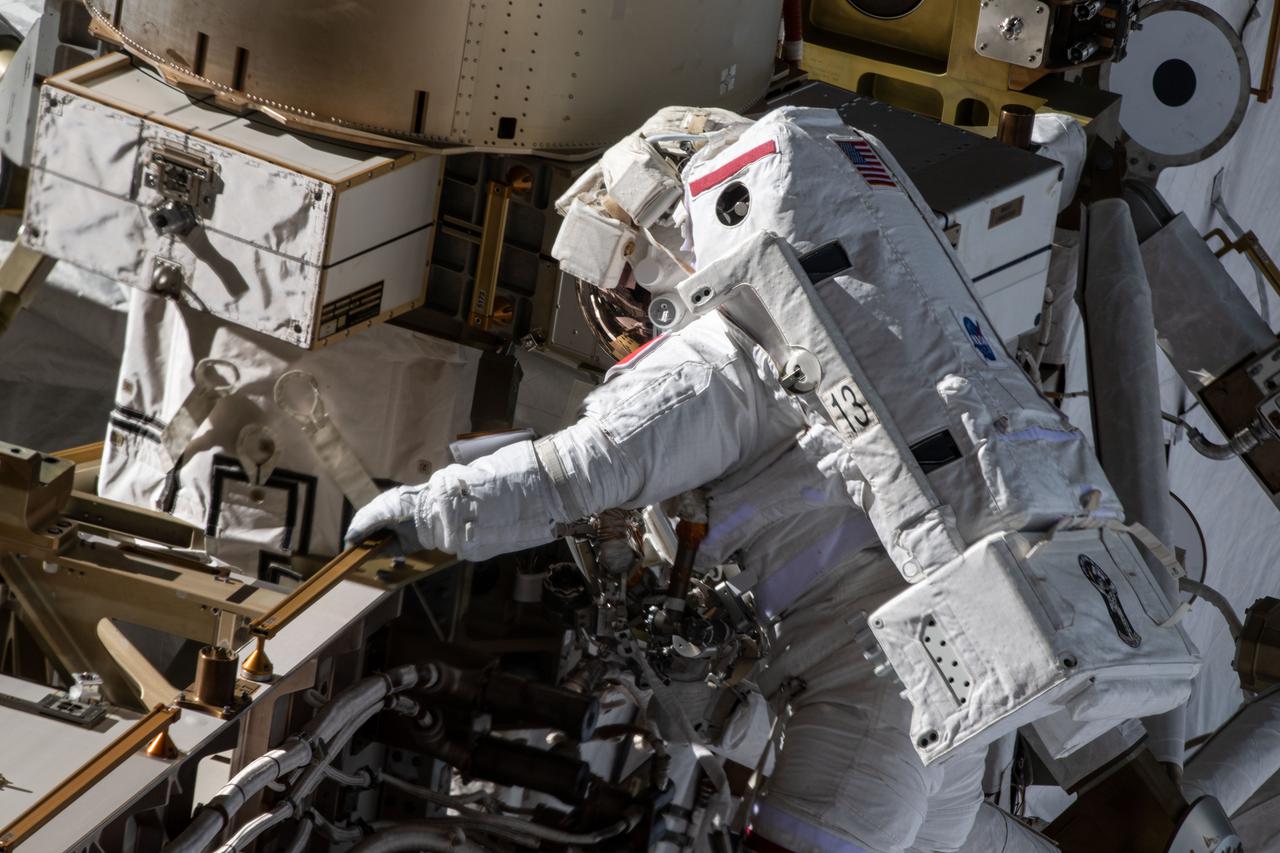
iss065e145037 (June 25, 2021) --- Spacewalker Thomas Pesquet of ESA (European Space Agency) works to complete the installation of the second roll out solar array on the International Space Station's Port-6 truss structure.
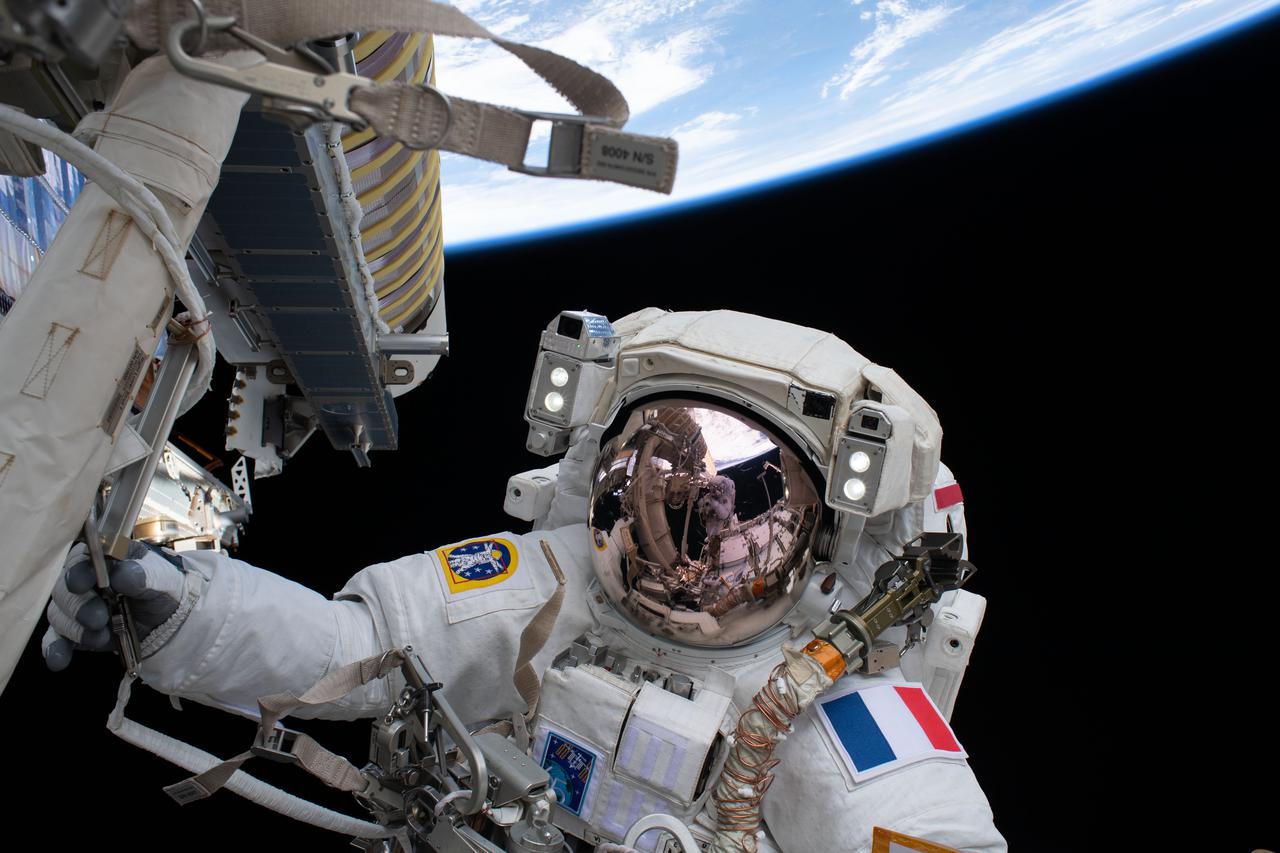
iss065e126255 (June 20, 2021) --- Spacewalker Thomas Pesquet of ESA (European Space Agency) works to complete the installation of a roll out solar array on the International Space Station's P-6 truss structure.
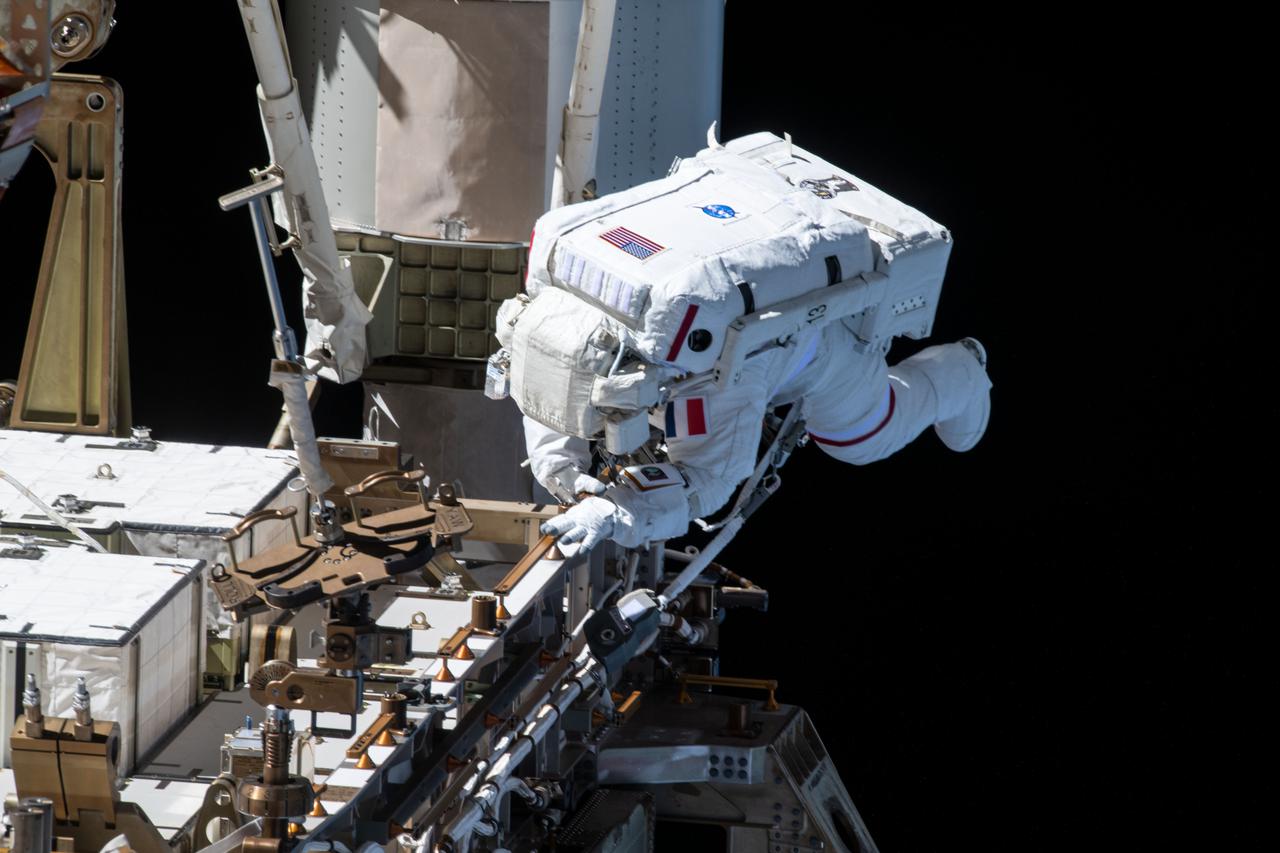
iss065e144936 (June 25, 2021) --- Spacewalker Thomas Pesquet of ESA (European Space Agency) works to complete the installation of the second roll out solar array on the International Space Station's Port-6 truss structure.
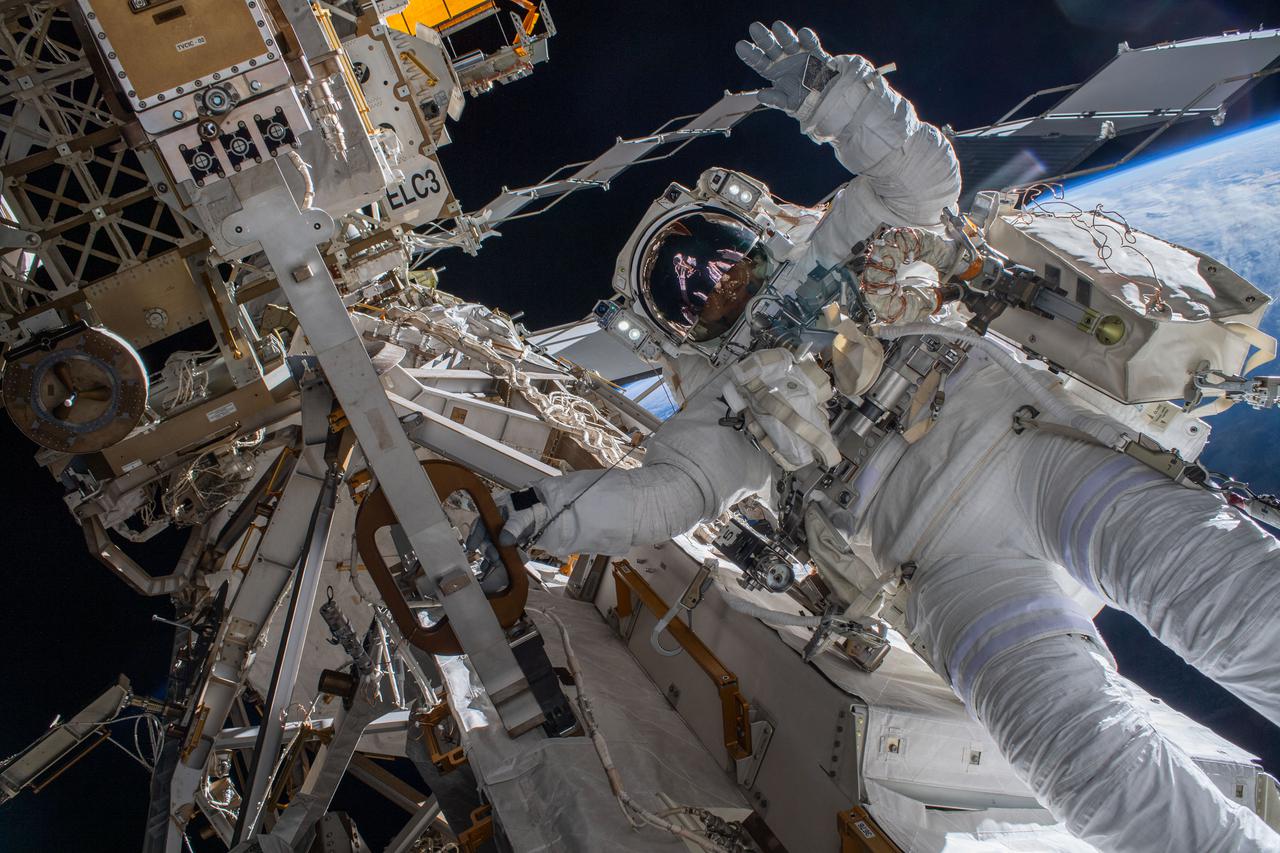
iss066e174224 (March 23, 2022) --- Astronaut Matthias Maurer of ESA (European Space Agency) is pictured on the International Space Station's truss structure during a spacewalk to install thermal gear and electronics components on the orbiting lab.
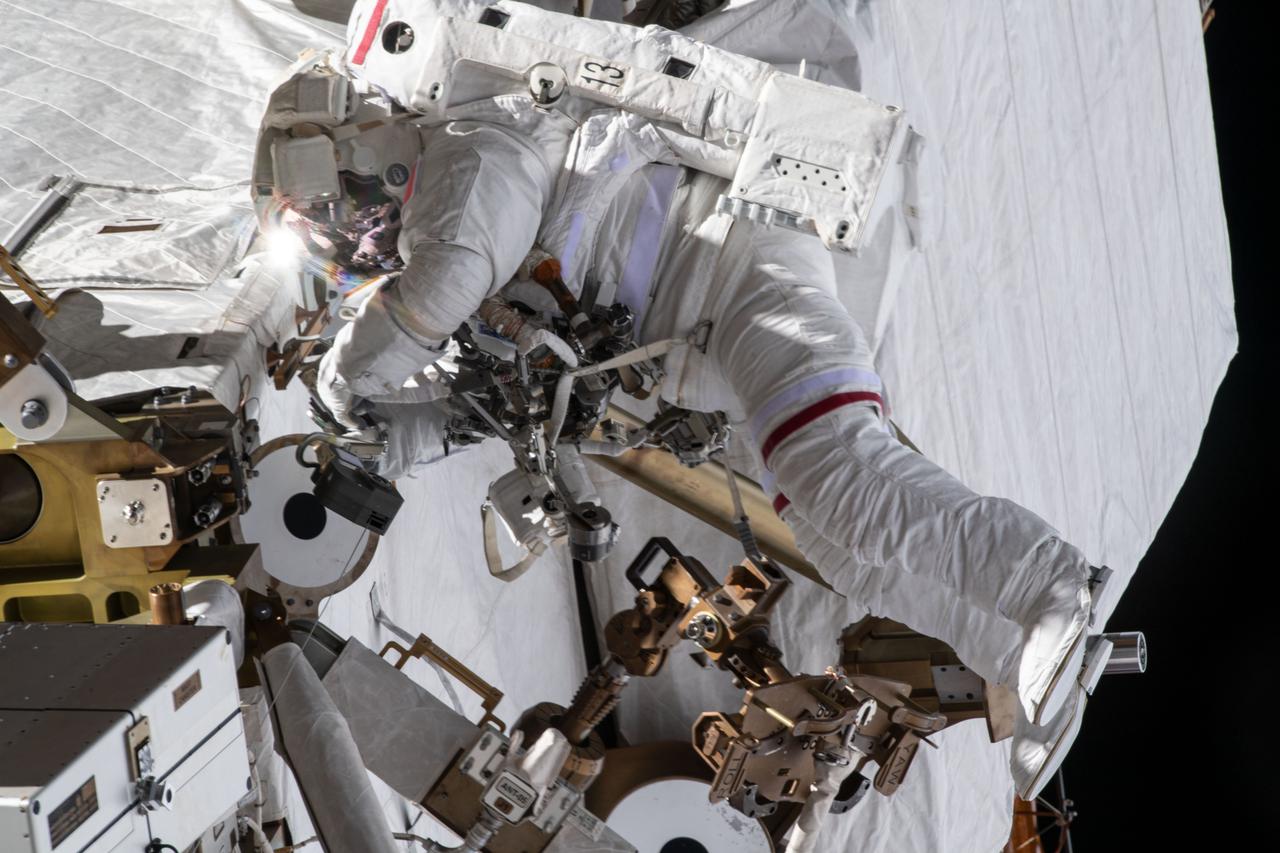
iss065e144990 (June 25, 2021) --- Spacewalker Thomas Pesquet of ESA (European Space Agency) works to complete the installation of the second roll out solar array on the International Space Station's Port-6 truss structure.
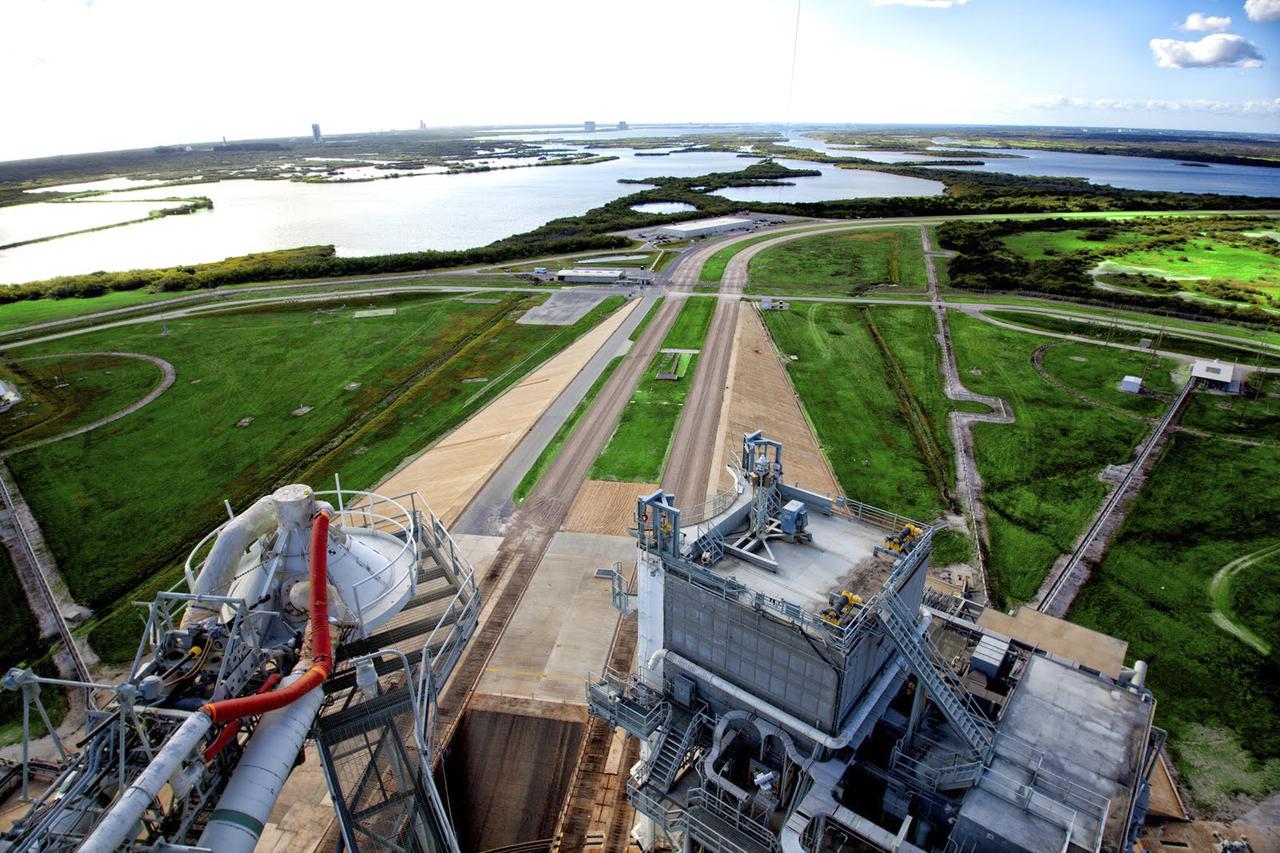
CAPE CANAVERAL, Fla. – As seen on Google Maps, the view from the top of the Fixed Service Structure at Launch Complex 39A at NASA's Kennedy Space Center. The FSS, as the structure is known, is 285 feet high and overlooks the Rotating Service Structure that was rolled into place when a space shuttle was at the pad. The path taken by NASA's massive crawler-transporters that carried the shuttle stack 3 miles from Vehicle Assembly Building are also visible leading up to the launch pad. In the distance are seen the launch pads and support structures at Cape Canaveral Air Force Station for the Atlas V, Delta IV and Falcon 9 rockets. Google precisely mapped the space center and some of its historical facilities for the company's map page. The work allows Internet users to see inside buildings at Kennedy as they were used during the space shuttle era. Photo credit: Google/Wendy Wang
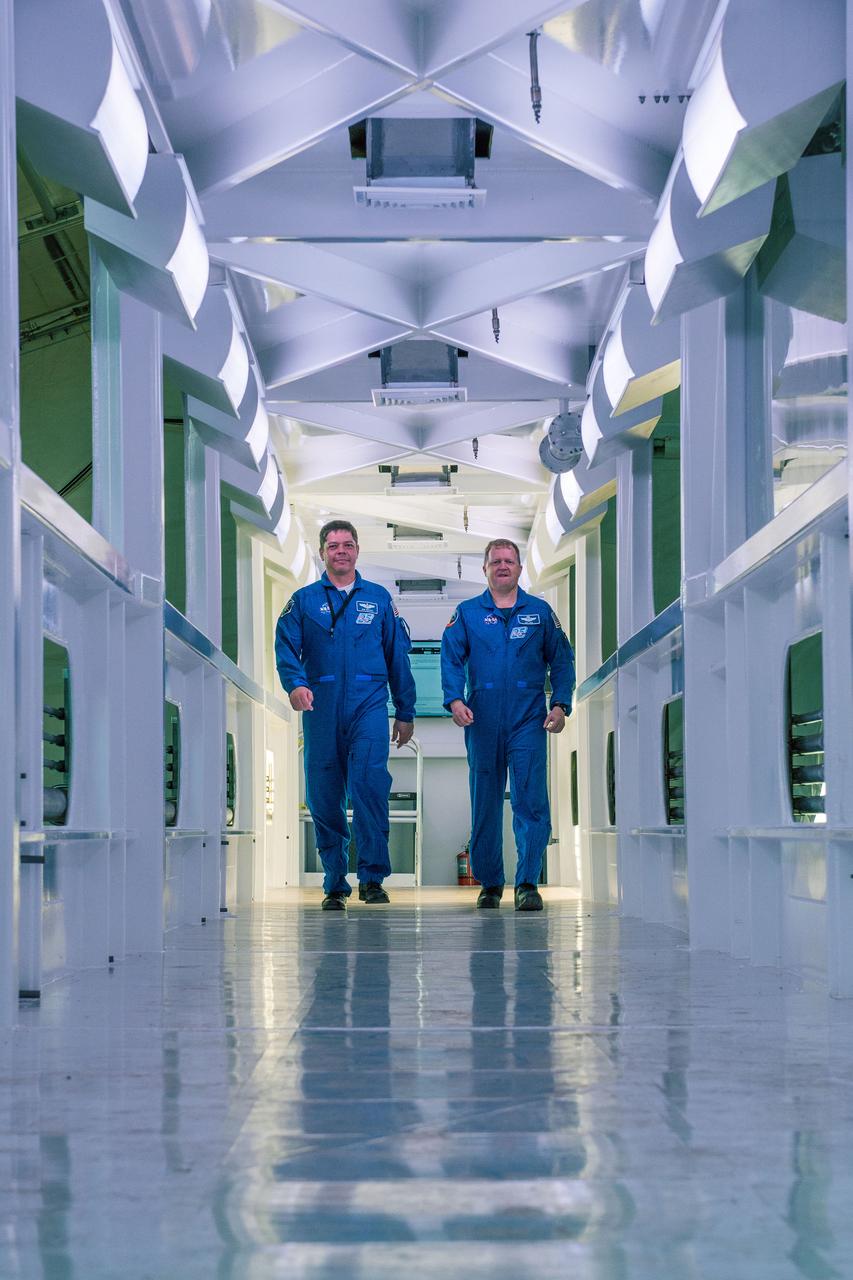
Astronauts Bob Behnken, left, and Eric Boe walk down the Crew Access Arm being built by SpaceX for Launch Complex 39A at NASA’s Kennedy Space Center in Florida. The access arm will be installed on the launch pad, providing a bridge between the launch tower it’s the Fixed Service Structure, as noted below, and SpaceX’s Dragon 2 spacecraft for astronauts flying to the International Space Station on the company’s Falcon 9 rocket as part of NASA’s Commercial Crew Program. The access arm is being readied for installation in early 2018. It will be installed 70 feet higher than the former space shuttle access arm on the launch pad’s Fixed Service Structure. SpaceX continues to modify the historic launch site from its former space shuttle days, removing more than 500,000 pounds of steel from the pad structure, including the Rotating Service Structure that was once used for accessing the payload bay of the shuttle. SpaceX also is using the modernized site to launch commercial payloads, as well as cargo resupply missions to and from the International Space Station for NASA. The first SpaceX launch from the historic Apollo and space shuttle site was this past February. NASA’s Commercial Crew Program is working with private companies, Boeing and SpaceX, with a goal of once again flying people to and from the International Space Station, launching from the United States.
Astronauts Bob Behnken, left, and Eric Boe walk down the Crew Access Arm being built by SpaceX for Launch Complex 39A at NASA’s Kennedy Space Center in Florida. The access arm will be installed on the launch pad, providing a bridge between the launch tower it’s the Fixed Service Structure, as noted below, and SpaceX’s Dragon 2 spacecraft for astronauts flying to the International Space Station on the company’s Falcon 9 rocket as part of NASA’s Commercial Crew Program. The access arm is being readied for installation in early 2018. It will be installed 70 feet higher than the former space shuttle access arm on the launch pad’s Fixed Service Structure. SpaceX continues to modify the historic launch site from its former space shuttle days, removing more than 500,000 pounds of steel from the pad structure, including the Rotating Service Structure that was once used for accessing the payload bay of the shuttle. SpaceX also is using the modernized site to launch commercial payloads, as well as cargo resupply missions to and from the International Space Station for NASA. The first SpaceX launch from the historic Apollo and space shuttle site was this past February. NASA’s Commercial Crew Program is working with private companies, Boeing and SpaceX, with a goal of once again flying people to and from the International Space Station, launching from the United States.
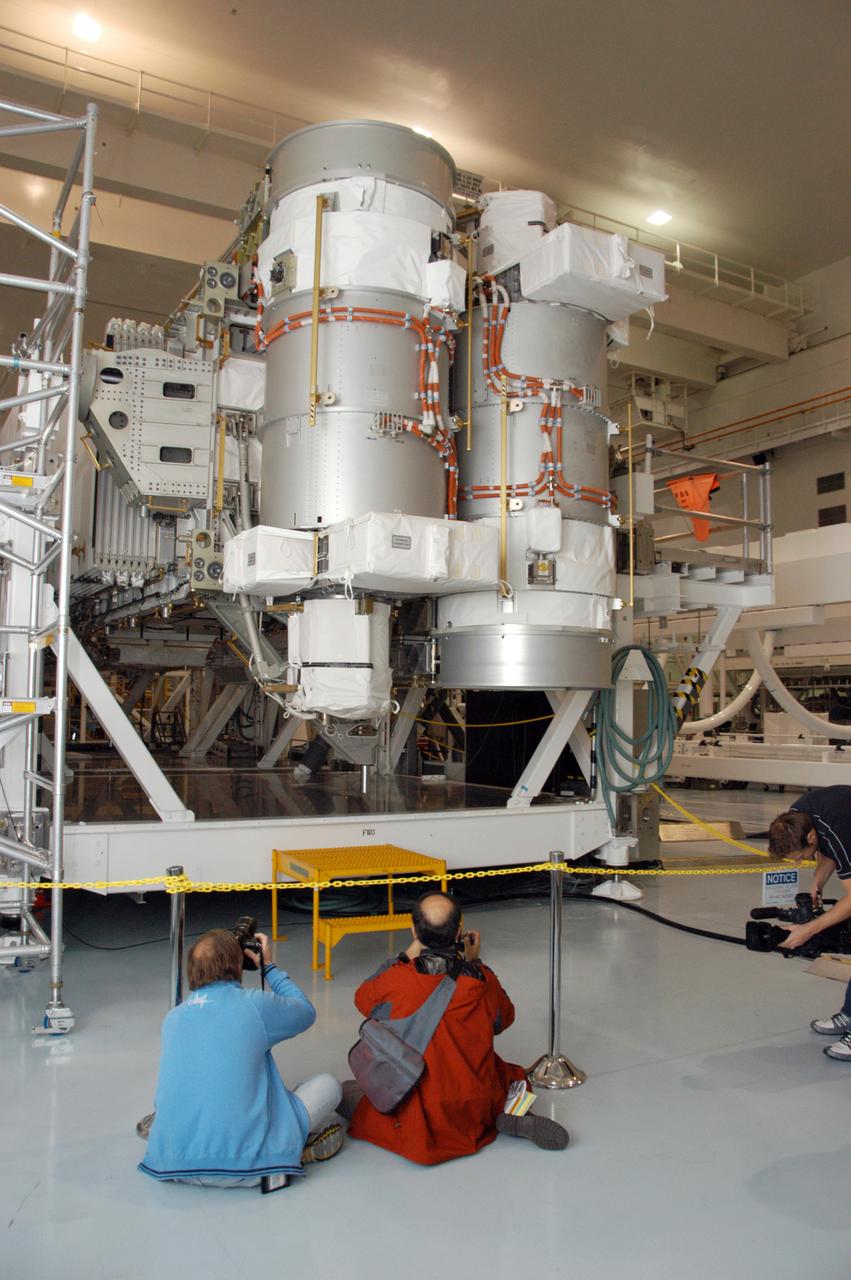
In the Space Station Processing Facility, photographers take advantage of a media showcase to get photos of the S3/S4 integrated truss segment. The starboard 3/4 truss segment will launch aboard Space Shuttle Atlantis on mission STS-117, targeted for March 15. The element will be added to the 11-segment integrated truss structure, the station's backbone. The integrated truss structure eventually will span more than 300 feet. The S3/S4 truss has two large solar arrays and will provide one-fourth of the total power generation for the completed station.
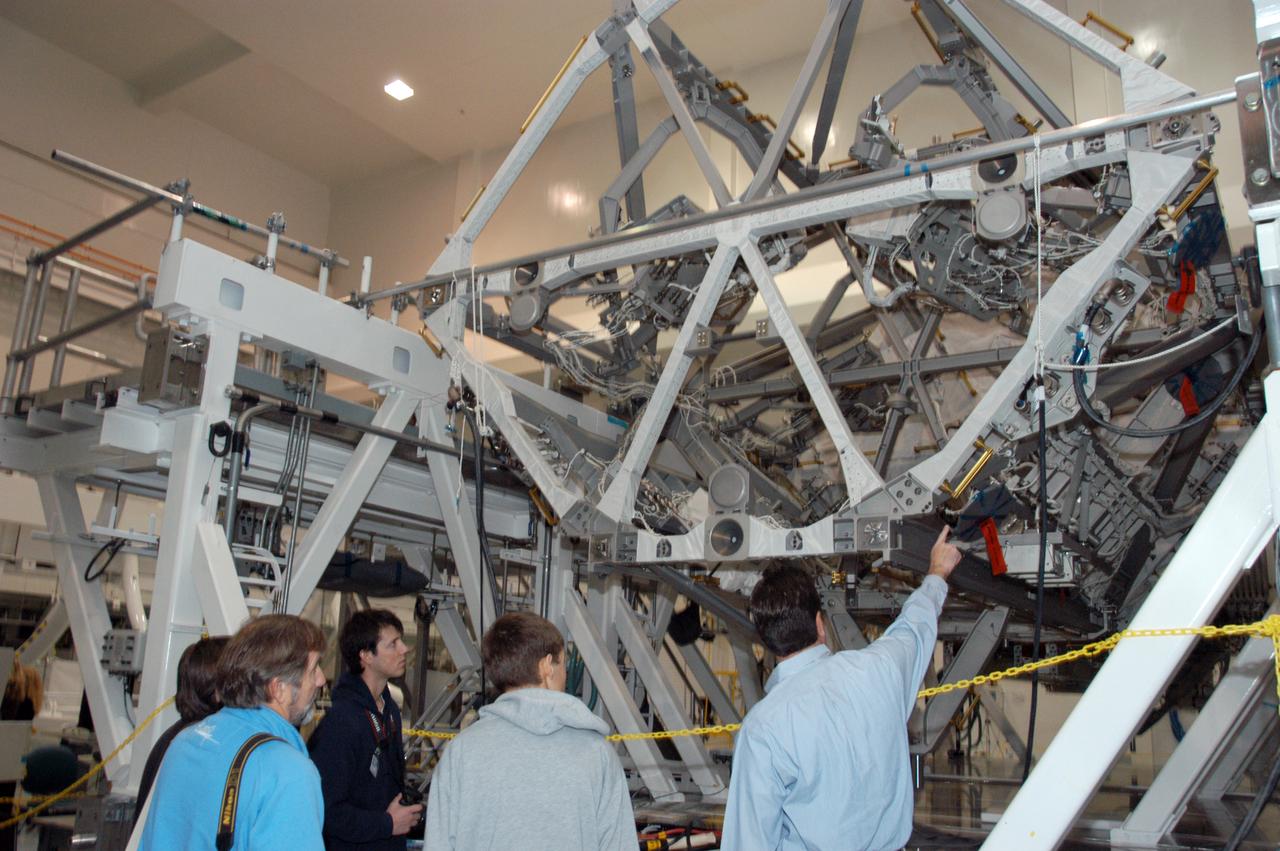
At a media showcase in the Space Station Processing Facility, reporters and photographers get a close look at the S3/S4 integrated truss segment. The starboard 3/4 truss segment will launch aboard Space Shuttle Atlantis on mission STS-117, targeted for March 15. The element will be added to the 11-segment integrated truss structure, the station's backbone. The integrated truss structure eventually will span more than 300 feet. The S3/S4 truss has two large solar arrays and will provide one-fourth of the total power generation for the completed station.
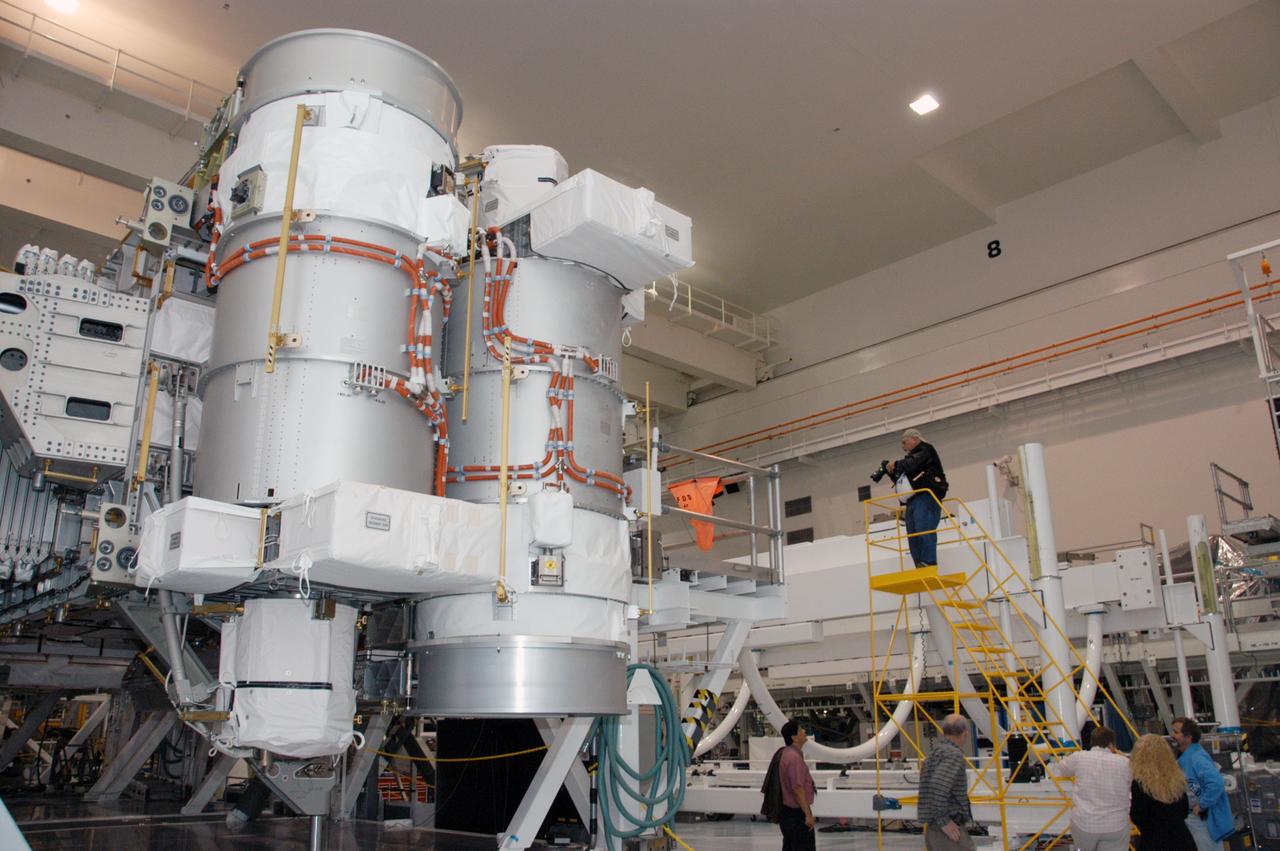
At a media showcase in the Space Station Processing Facility, reporters and photographers get a close look at the S3/S4 integrated truss segment. The starboard 3/4 truss segment will launch aboard Space Shuttle Atlantis on mission STS-117, targeted for March 15. The element will be added to the 11-segment integrated truss structure, the station's backbone. The integrated truss structure eventually will span more than 300 feet. The S3/S4 truss has two large solar arrays and will provide one-fourth of the total power generation for the completed station.
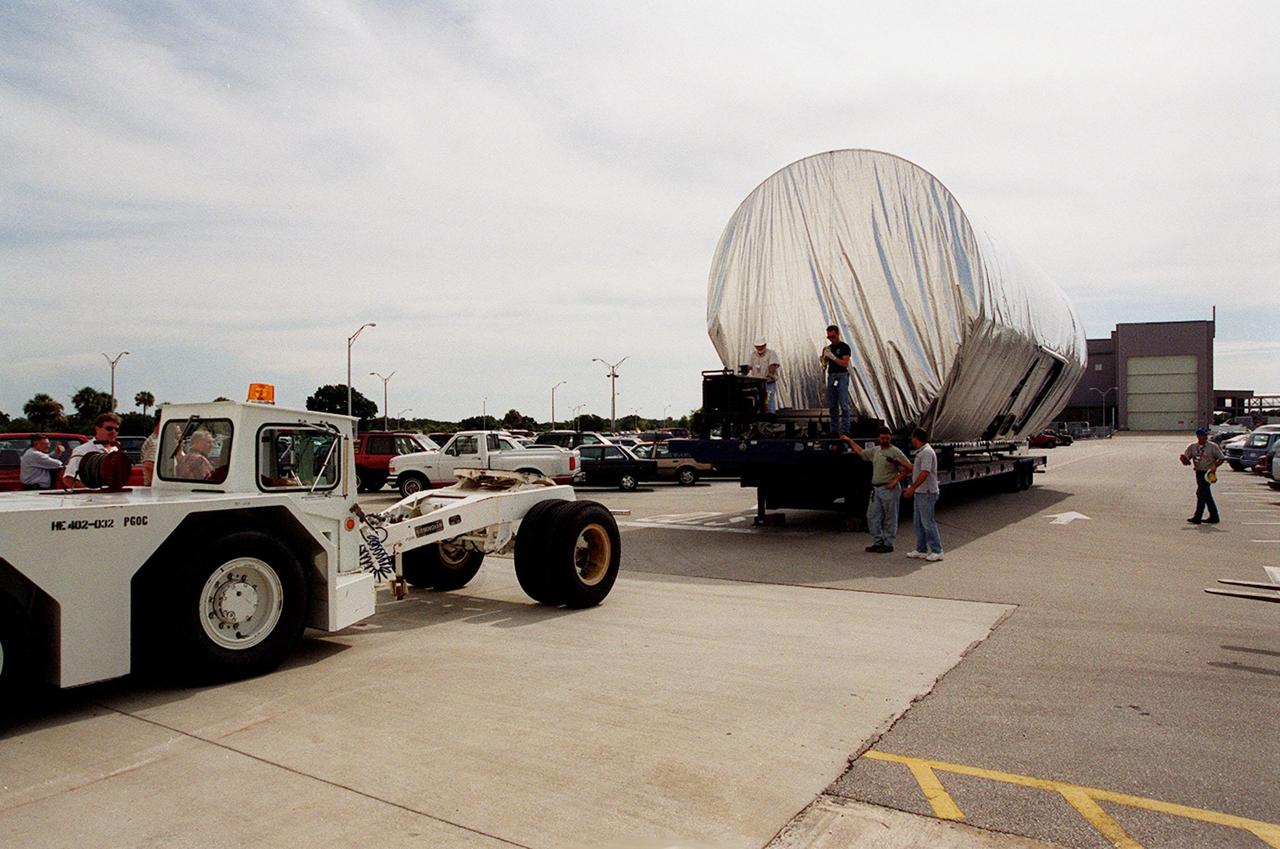
The P-1 truss, a component of the International Space Station, arrives in the parking lot outside the Operations and Checkout Building where it will undergo processing. The P-1 truss, scheduled to fly in spring of 2002, is part of a total 10-truss, girder-like structure on the Space Station that will ultimately extend the length of a football field. Astronauts will attach the 14-by-15 foot structure to the port side of the center truss, S0, during the spring assembly flight. The 33,000-pound P-1 will house the thermal radiator rotating joint (TRRJ) that will rotate the Station’s radiators away from the sun to increase their maximum cooling efficiency
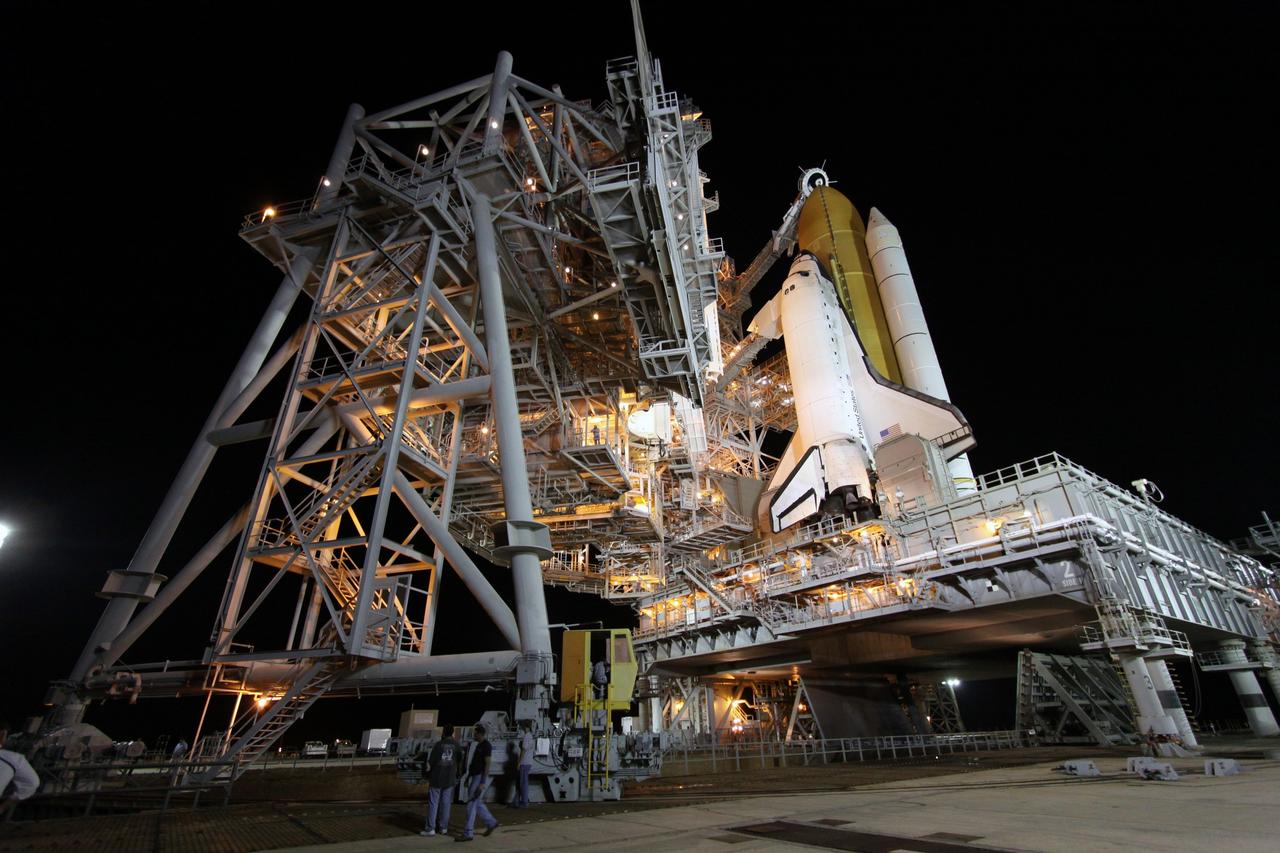
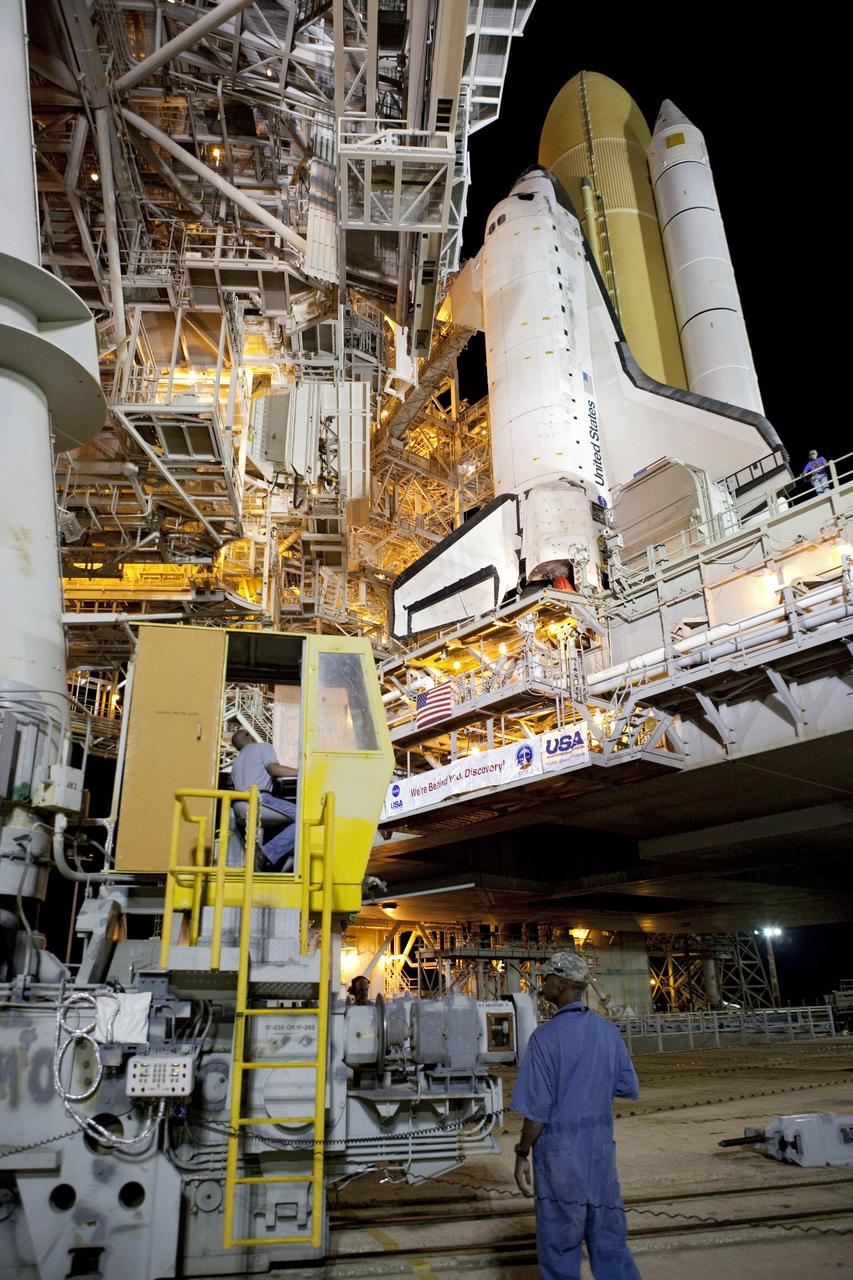
CAPE CANAVERAL, Fla. – On Launch Pad 39A at NASA’s Kennedy Space Center in Florida, technicians in the rotating service structure’s control booth roll the structure from space shuttle Discovery. First motion was at 5:06 a.m. EDT. The rollback is preparation for Discovery’s scheduled 1:36 a.m. EDT liftoff Aug. 25 with a crew of seven. The service structure provides weather protection and access to the space shuttle at the launch pad. The 13-day mission will deliver a new crew member and 33,000 pounds of equipment to the International Space Station. The equipment includes science and storage racks, a freezer to store research samples, a new sleeping compartment and the COLBERT treadmill. STS-128 will be Discovery's 37th mission and the 30th shuttle flight dedicated to station assembly and maintenance. Photo credit: NASA/Troy Cryder
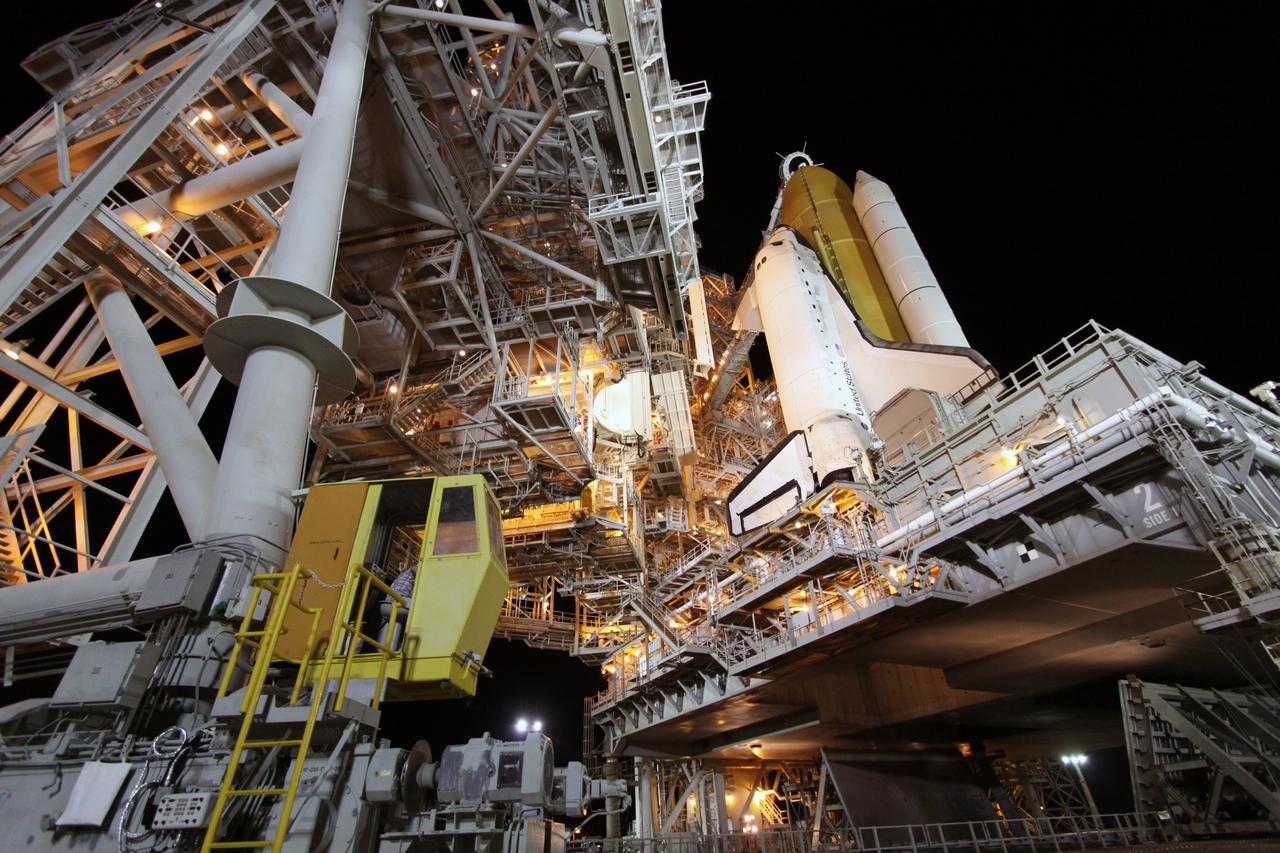
CAPE CANAVERAL, Fla. – On Launch Pad 39A at NASA's Kennedy Space Center in Florida, technicians in the rotating service structure's control booth begin to roll the structure from space shuttle Discovery. First motion was at 5:06 a.m. EDT. The rollback is preparation for Discovery's scheduled 1:36 a.m. EDT liftoff Aug. 25 with a crew of seven. The service structure provides weather protection and access to the space shuttle at the launch pad. The 13-day mission will deliver a new crew member and 33,000 pounds of equipment to the International Space Station. The equipment includes science and storage racks, a freezer to store research samples, a new sleeping compartment and the COLBERT treadmill. STS-128 will be Discovery's 37th mission and the 30th shuttle flight dedicated to station assembly and maintenance. Photo credit: NASA/Troy Cryder
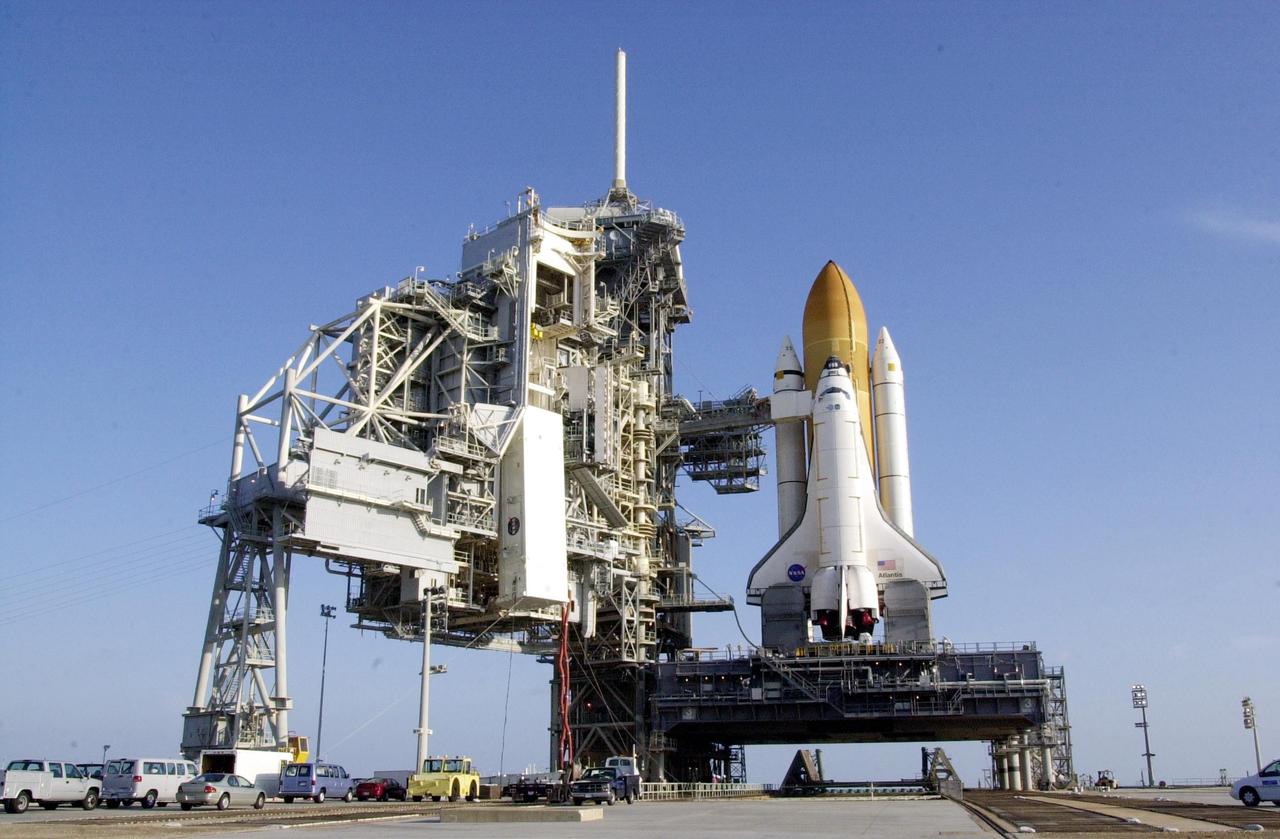
CAPE CANAVERAL, Fla. -- Workers at NASA's Kennedy Space Center in Florida move the rotating service structure into place around space shuttle Discovery on Launch Pad 39A. The structure protects the shuttle from the elements and allows access into the spacecraft while on the pad. Targeted to liftoff Nov. 1, Discovery will take the Permanent Multipurpose Module (PMM) packed with supplies and critical spare parts, as well as Robonaut 2 (R2) to the International Space Station on the STS-133 mission. Photo credit: NASA/Dimitri Gerondidakis
KENNEDY SPACE CENTER, FLA. -- On the launch pad, the payload canister with the S0 Integrated Truss Structure moves up the Rotating Service Structure to the payload changeout room for transfer to Space Shuttle Atlantis's payload bay. Part of the payload on mission STS-110, the S0 truss will become the backbone of the orbiting International Space Station (ISS). The S0 truss will be attached to the U.S. Lab, "Destiny," on the 11-day mission. Launch is scheduled for April 4
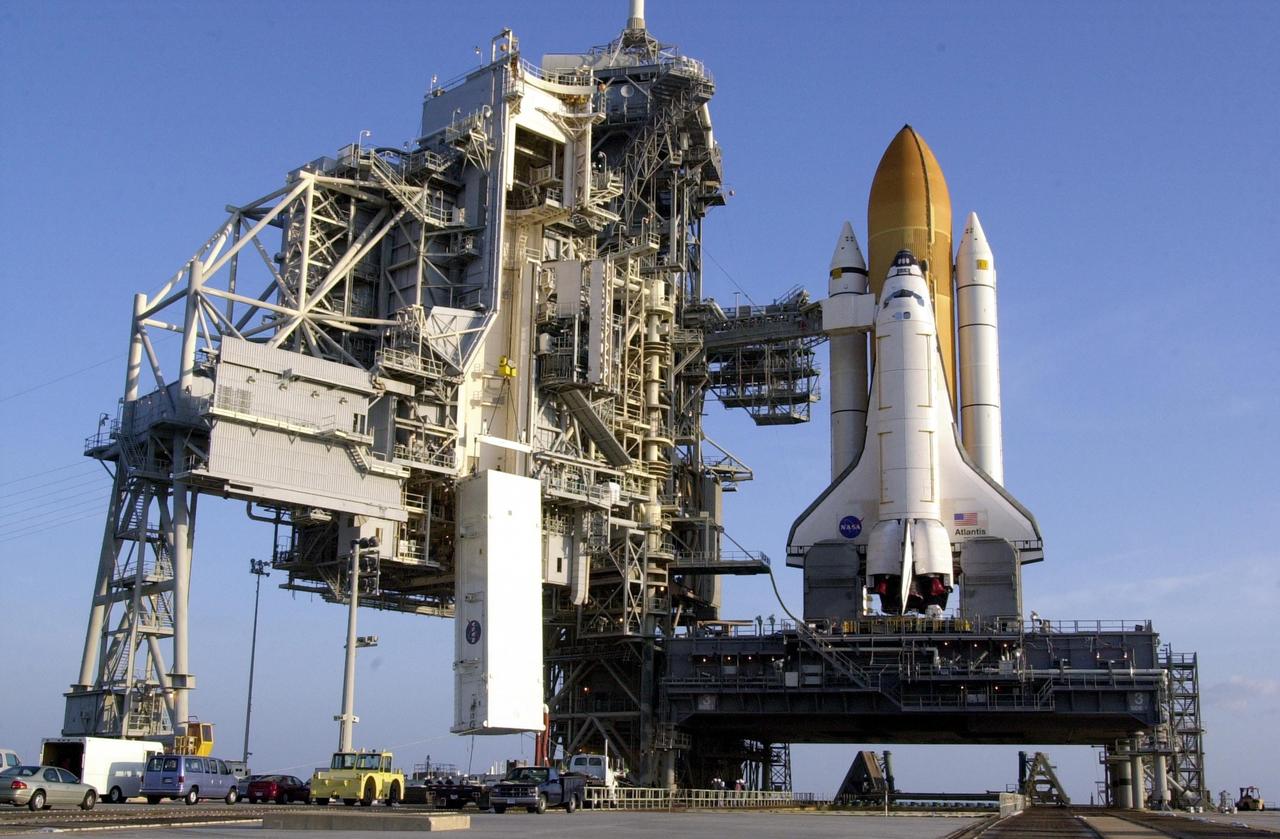
KENNEDY SPACE CENTER, FLA. -- On the launch pad, the payload canister with the S0 Integrated Truss Structure is lifted up the Rotating Service Structure to the payload changeout room for transfer to Space Shuttle Atlantis's payload bay. Part of the payload on mission STS-110, the S0 truss will become the backbone of the orbiting International Space Station (ISS). The S0 truss will be attached to the U.S. Lab, "Destiny," on the 11-day mission. Launch is scheduled for April 4
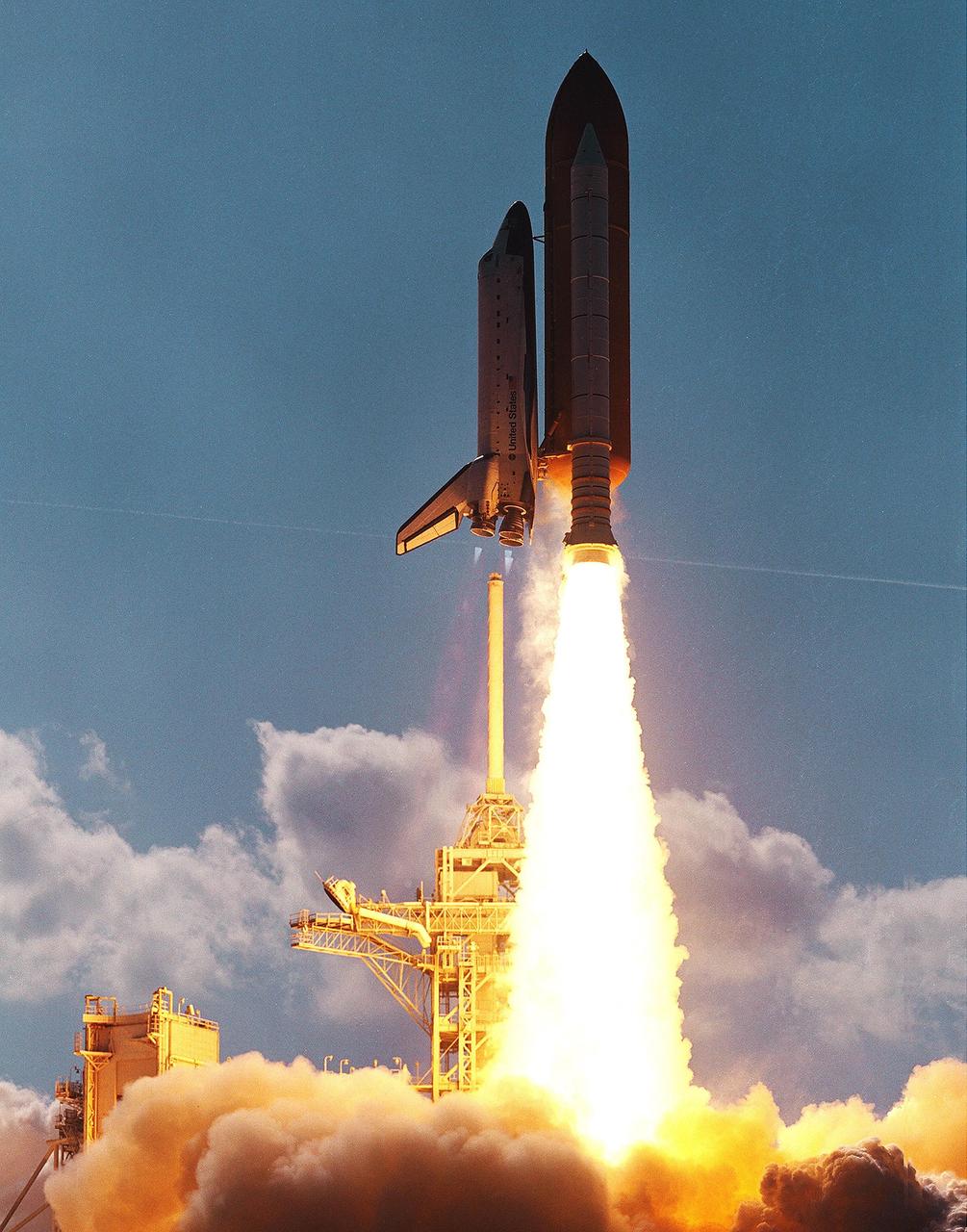
KENNEDY SPACE CENTER, FLA. - Space Shuttle Atlantis clears the lightning mast as it hurtles into the afternoon sky from Launch Pad 39B on mission STS-110. The mast is on the top of the Fixed Service Structure. Flames from the solid rocket booster look like an inverted torch. Liftoff occurred at 4:44:19 p.m. EDT (20:41:19 GMT). Carrying the S0 Integrated Truss Structure and Mobile Transporter, STS-110 is the 13th assembly flight to the International Space Station
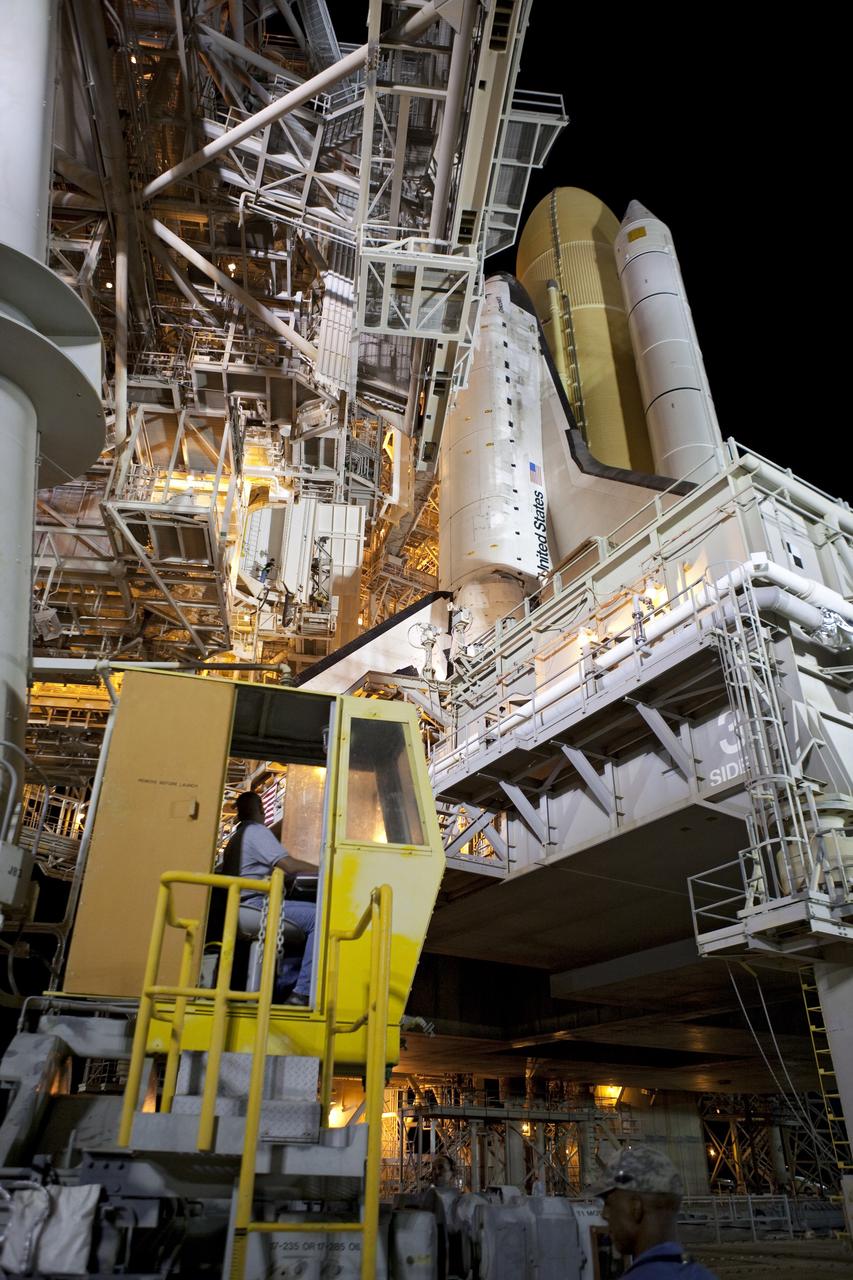
CAPE CANAVERAL, Fla. -- Workers at NASA's Kennedy Space Center in Florida move the rotating service structure into place around space shuttle Discovery on Launch Pad 39A. The structure protects the shuttle from the elements and allows access into the spacecraft while on the pad. Targeted to liftoff Nov. 1, Discovery will take the Permanent Multipurpose Module (PMM) packed with supplies and critical spare parts, as well as Robonaut 2 (R2) to the International Space Station on the STS-133 mission. Photo credit: NASA/Dimitri Gerondidakis
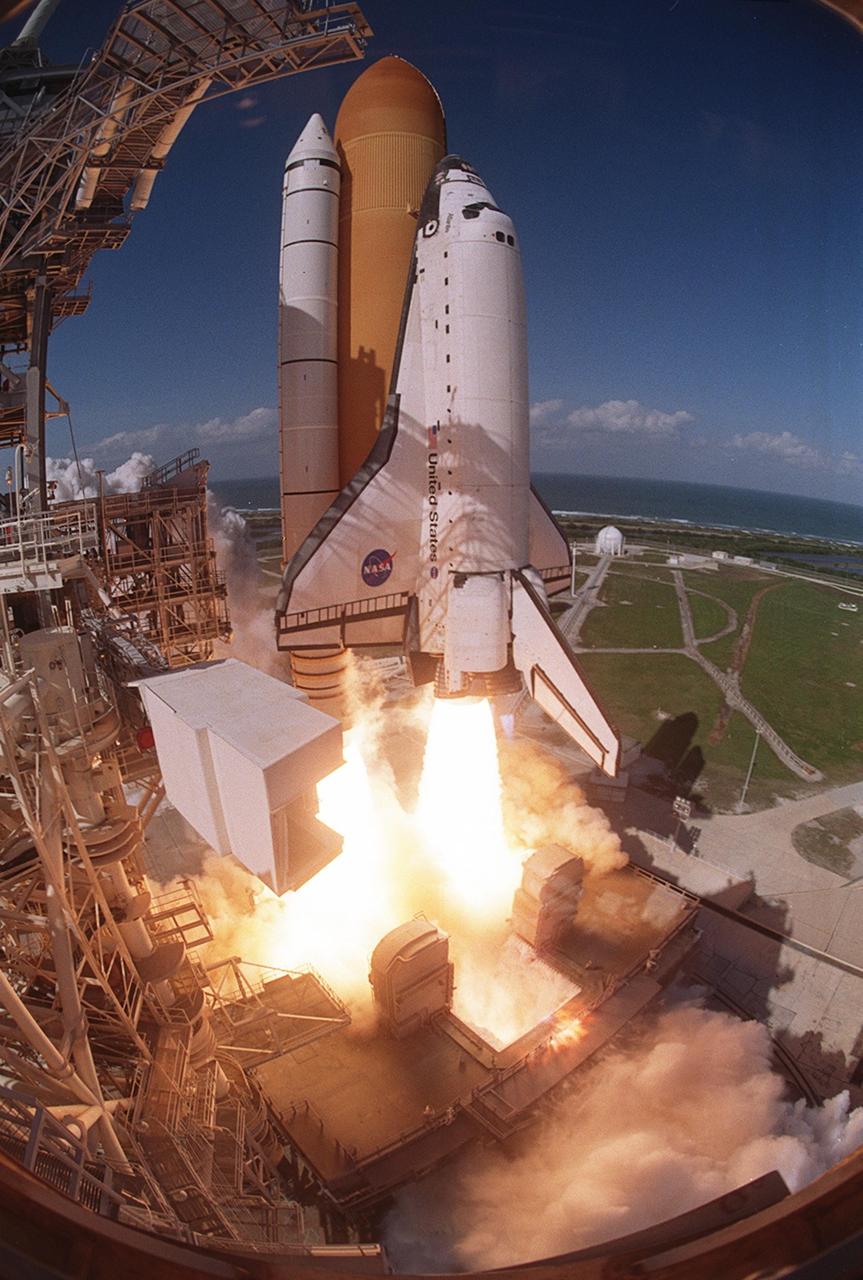
KENNEDY SPACE CENTER, FLA. - A fish eye view captures the liftoff of Space Shuttle Atlantis from Launch Pad 39B. At left is the Fixed Service Structure and below the Shuttle is the Mobile Launcher Platform. In the background is the Atlantic Ocean. Liftoff of Atlantis on mission STS-110 occurred at 4:44:19 p.m. EDT (20:41:19 GMT). Carrying the S0 Integrated Truss Structure and Mobile Transporter, STS-110 is the 13th assembly flight to the International Space Station
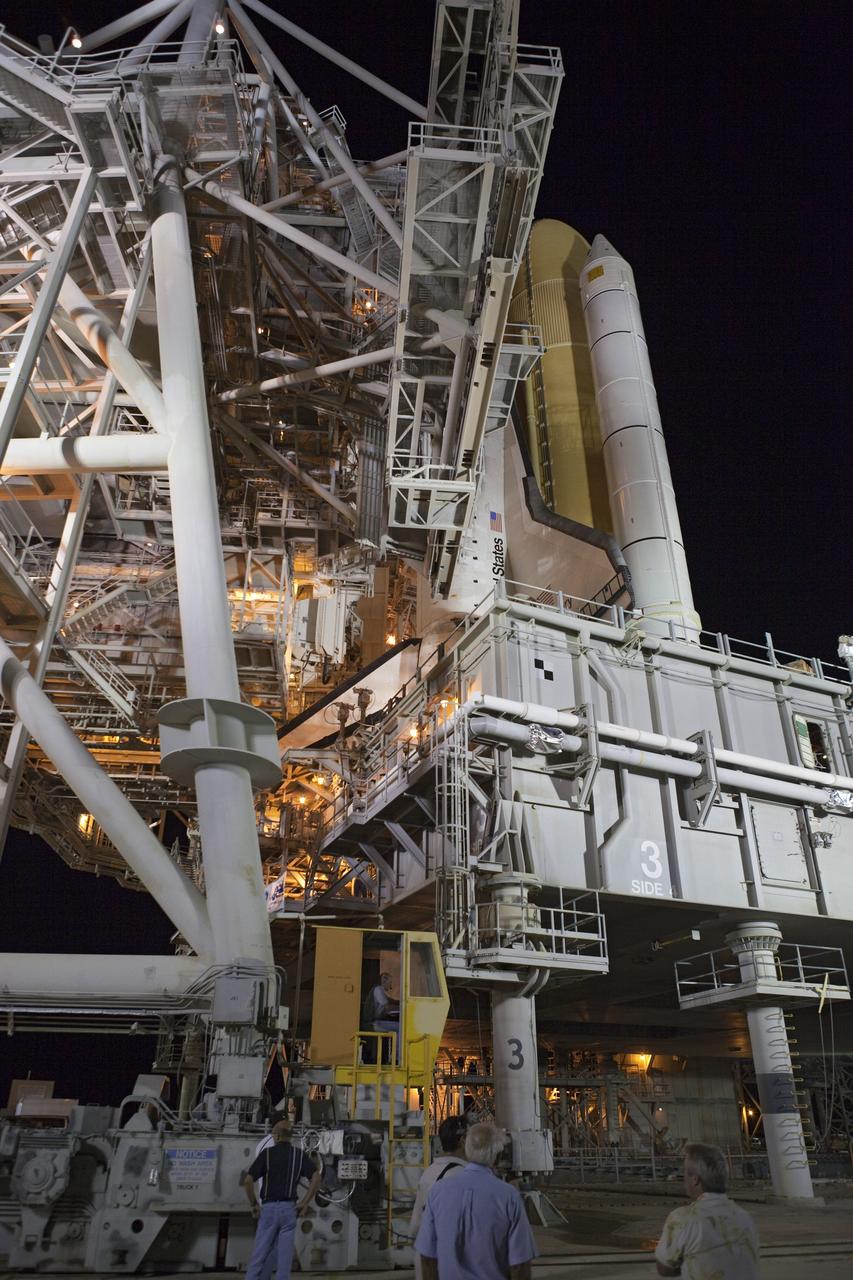
CAPE CANAVERAL, Fla. -- Workers at NASA's Kennedy Space Center in Florida move the rotating service structure into place around space shuttle Discovery on Launch Pad 39A. The structure protects the shuttle from the elements and allows access into the spacecraft while on the pad. Targeted to liftoff Nov. 1, Discovery will take the Permanent Multipurpose Module (PMM) packed with supplies and critical spare parts, as well as Robonaut 2 (R2) to the International Space Station on the STS-133 mission. Photo credit: NASA/Dimitri Gerondidakis
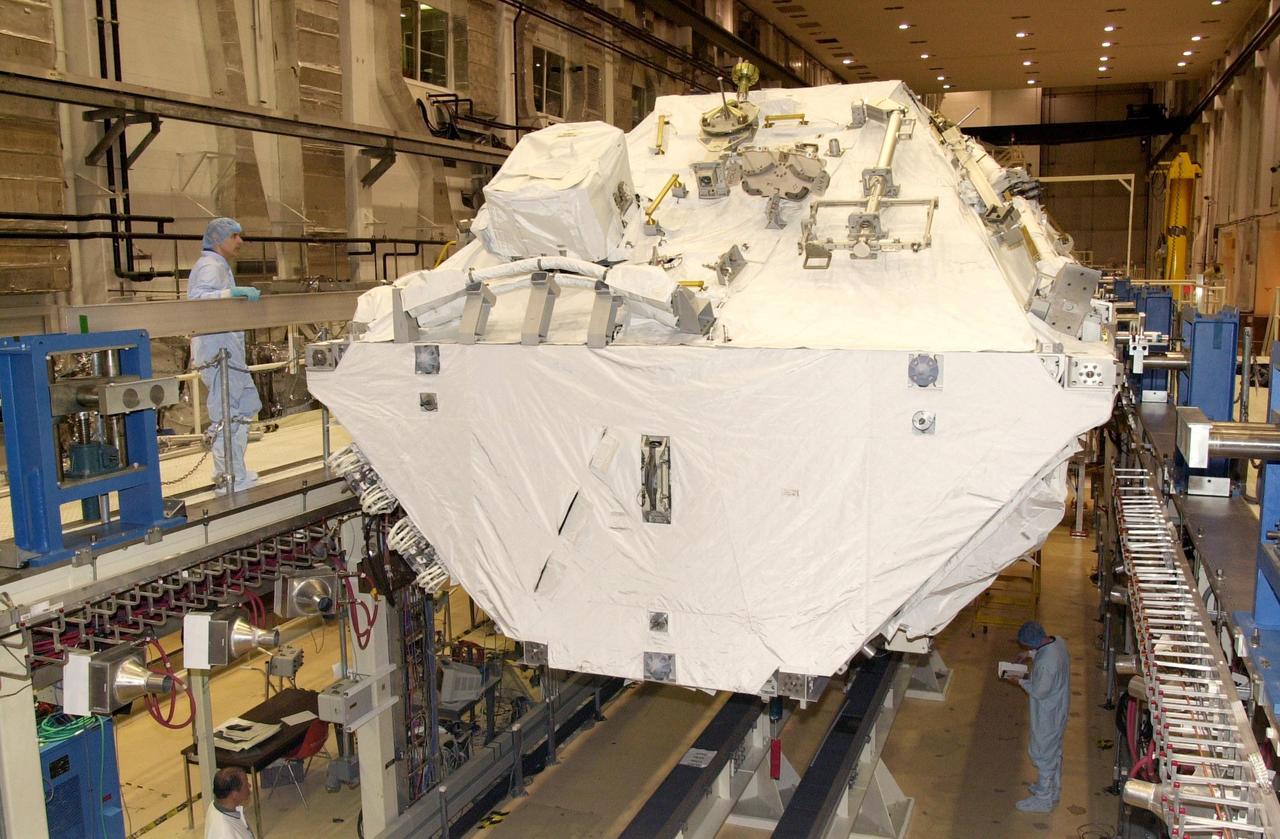
KENNEDY SPACE CENTER, FLA. - In the Operations and Checkout Building, the Integrated Truss Structure S0 is ready for transport to the launch pad on mission STS-110. Scheduled for launch April 4, the 11-day mission will feature Space Shuttle Atlantis docking with the International Space Station (ISS) and delivering the S0 truss, the centerpiece-segment of the primary truss structure that will eventually extend over 300 feet
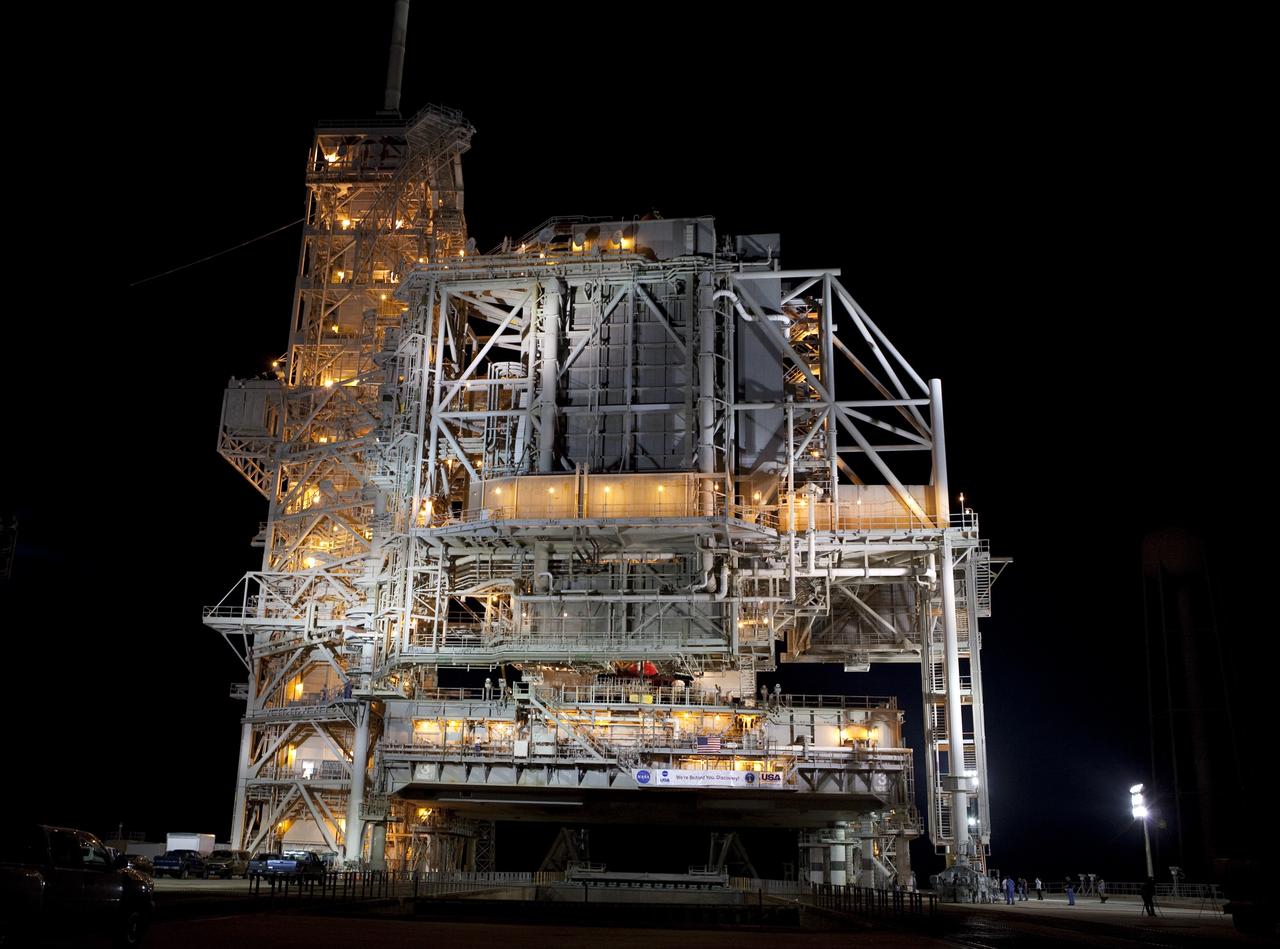
CAPE CANAVERAL, Fla. -- The rotating service structure surrounds space shuttle Discovery on Launch Pad 39A at NASA's Kennedy Space Center in Florida. The structure protects the shuttle from the elements and allows access into the spacecraft while on the pad. Targeted to liftoff Nov. 1, Discovery will take the Permanent Multipurpose Module (PMM) packed with supplies and critical spare parts, as well as Robonaut 2 (R2) to the International Space Station on the STS-133 mission. Photo credit: NASA/Dimitri Gerondidakis
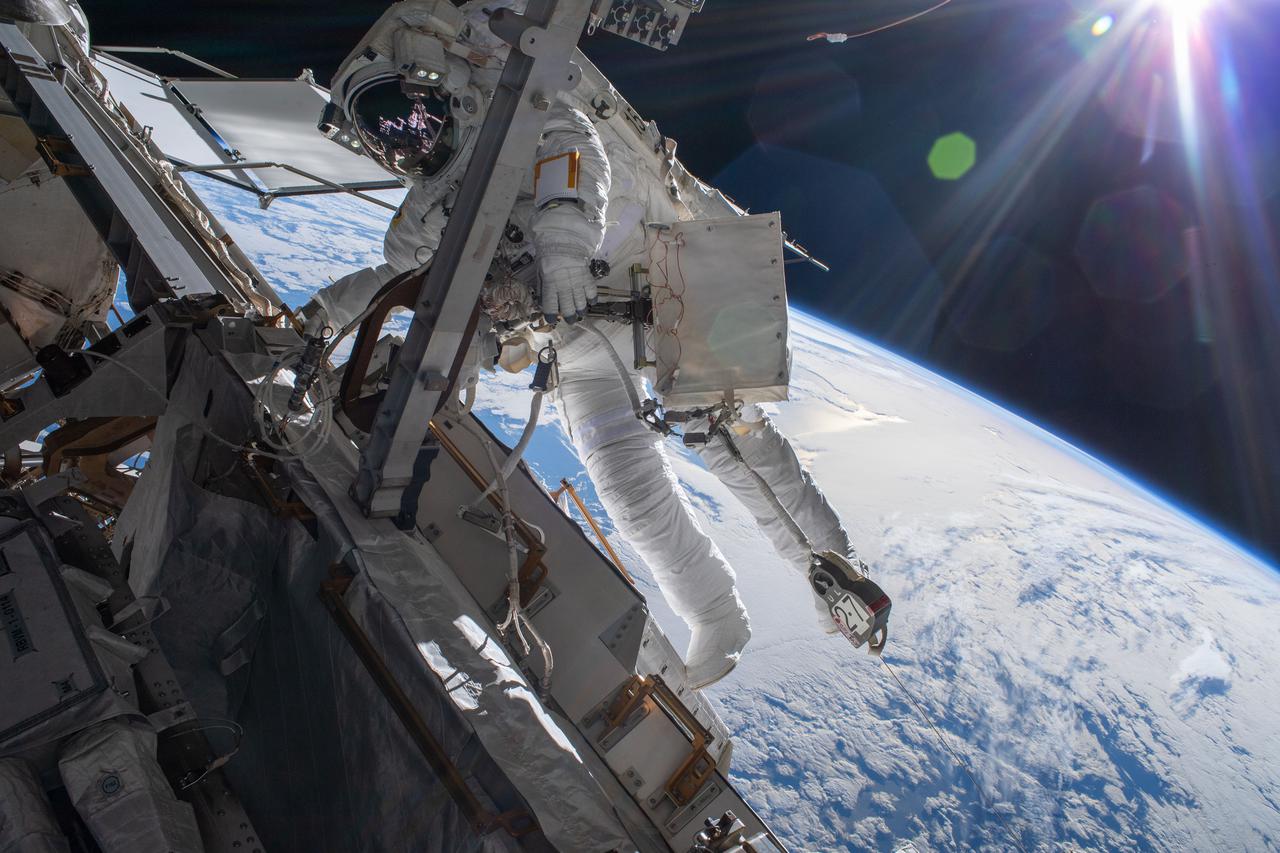
iss066e174257 (March 23, 2022) --- Astronaut Matthias Maurer of ESA (European Space Agency) is pictured on the International Space Station's truss structure during a spacewalk to install thermal gear and electronics components on the orbiting lab. The space station was 268 miles above the Pacific Ocean off the coast of New Zealand.
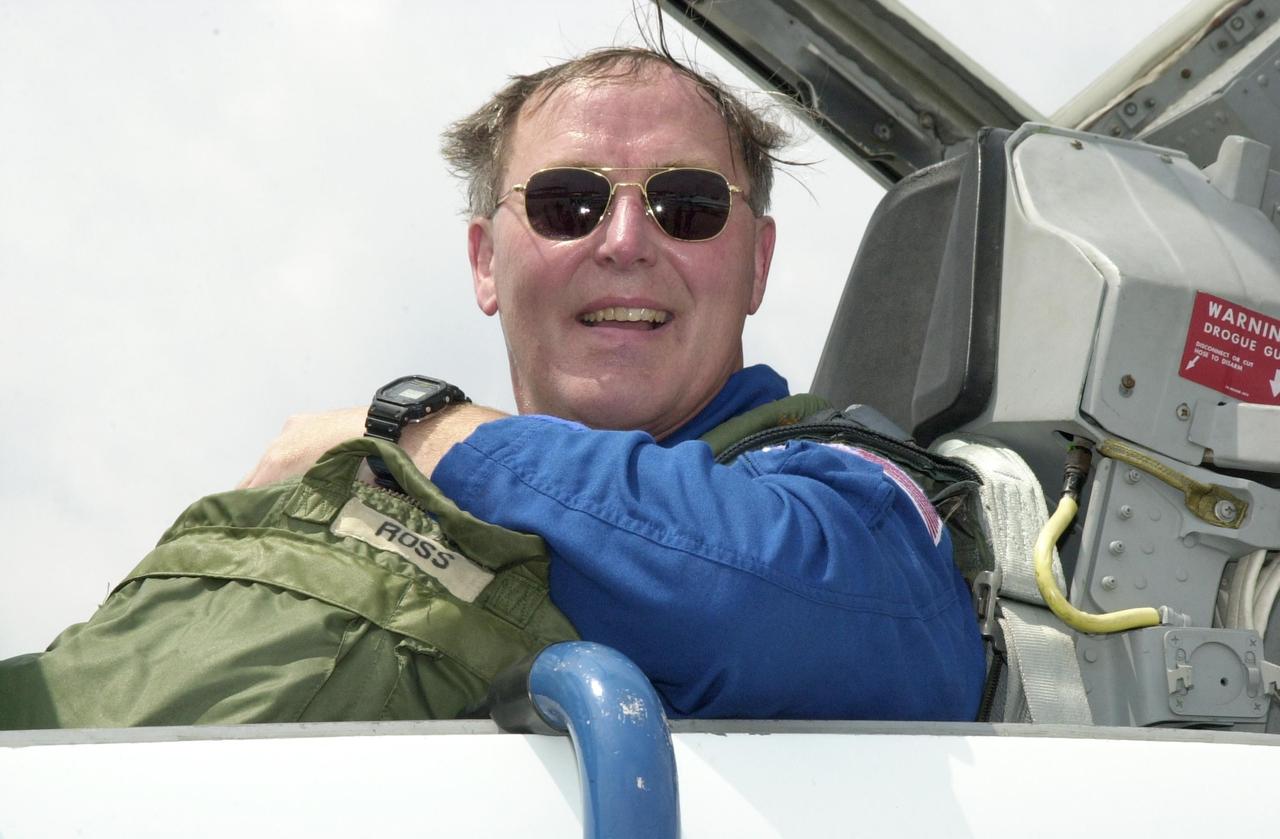
KENNEDY SPACE CENTER, FLA. -- After arriving at the KSC Shuttle Landing Facility, STS-110 Mission Specialist Jerry Ross smiles in anticipation of his record-breaking seventh Space Shuttle flight, scheduled to launch April 4. Mission STS-110 is the 13th assembly flight to the International Space Station. During four planned spacewalks, Ross and other crew members will install the S0 Integrated Truss Structure (ITS), centerpiece of the orbiting International Space Station (ISS), at the center of the 10-truss, girderlike structure that will ultimately extend the length of a football field on the ISS. The S0 truss will be attached to the U.S. Lab, "Destiny," on the 11-day mission
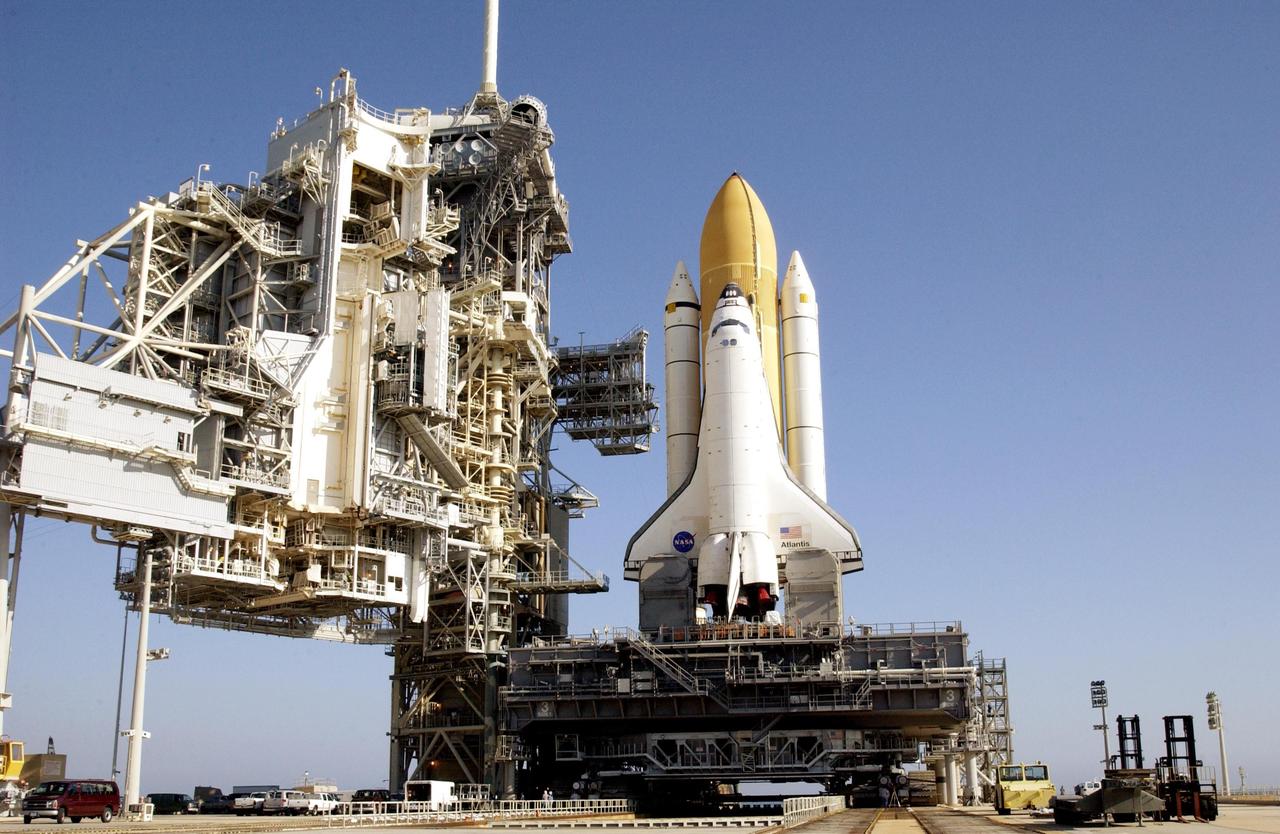
KENNEDY SPACE CENTER, FLA. -- After an early morning rollout, Space Shuttle Atlantis sits on the launch pad. The Rotating Service Structure is wide open (at left). After being stacked with its solid rocket boosters and external tank, Atlantis began its rollout to Launch Pad 39B at 2:27 a.m. EDT in preparation for launch to the International Space Station. The Shuttle arrived at the Pad and was hard down at 9:38 a.m. Launch is scheduled no earlier than Oct. 2 for mission STS-112, the 15th assembly flight to the International Space Station. Atlantis will carry the S1 Integrated Truss Structure, which will be attached to the central truss segment, the S0 truss, during the mission.
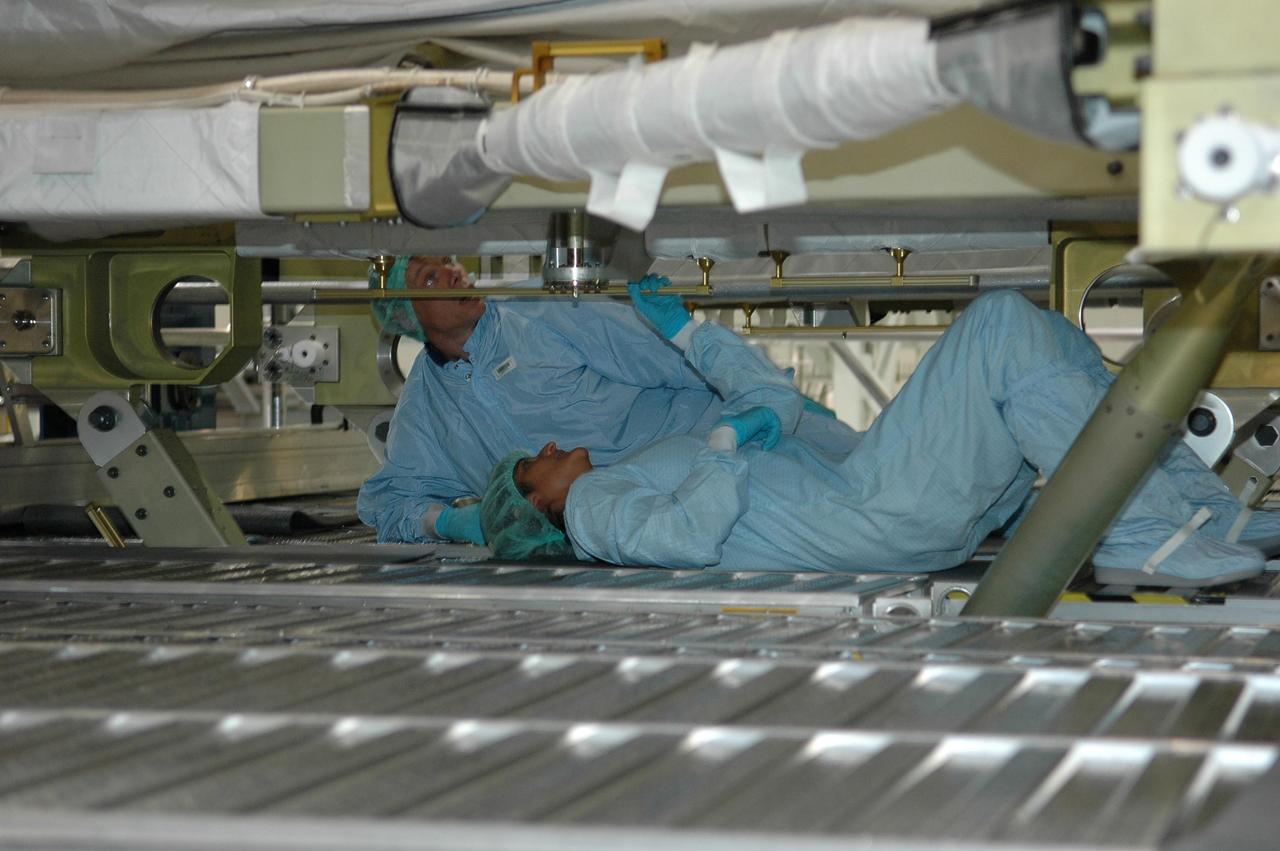
KENNEDY SPACE CENTER, FLA. - In the Space Station Processing Facility, STS-116 crew members check out the port integrated truss structure, P5, which is the primary payload on their mission. Seen here are Mission Specialists Christer Fugelsang, who represents the European Space Agency, and Sunita Williams. The crew is taking part in a Crew Equipment Interface Test that enables them to become familiar with the equipment and payloads they will be using. STS-116 will be mission No. 20 to the International Space Station and construction flight 12A.1. The mission payload is the SPACEHAB module, the P5 integrated truss structure and other key components. Launch is scheduled for no earlier than Dec. 7. Photo credit: NASA/Kim Shiflett
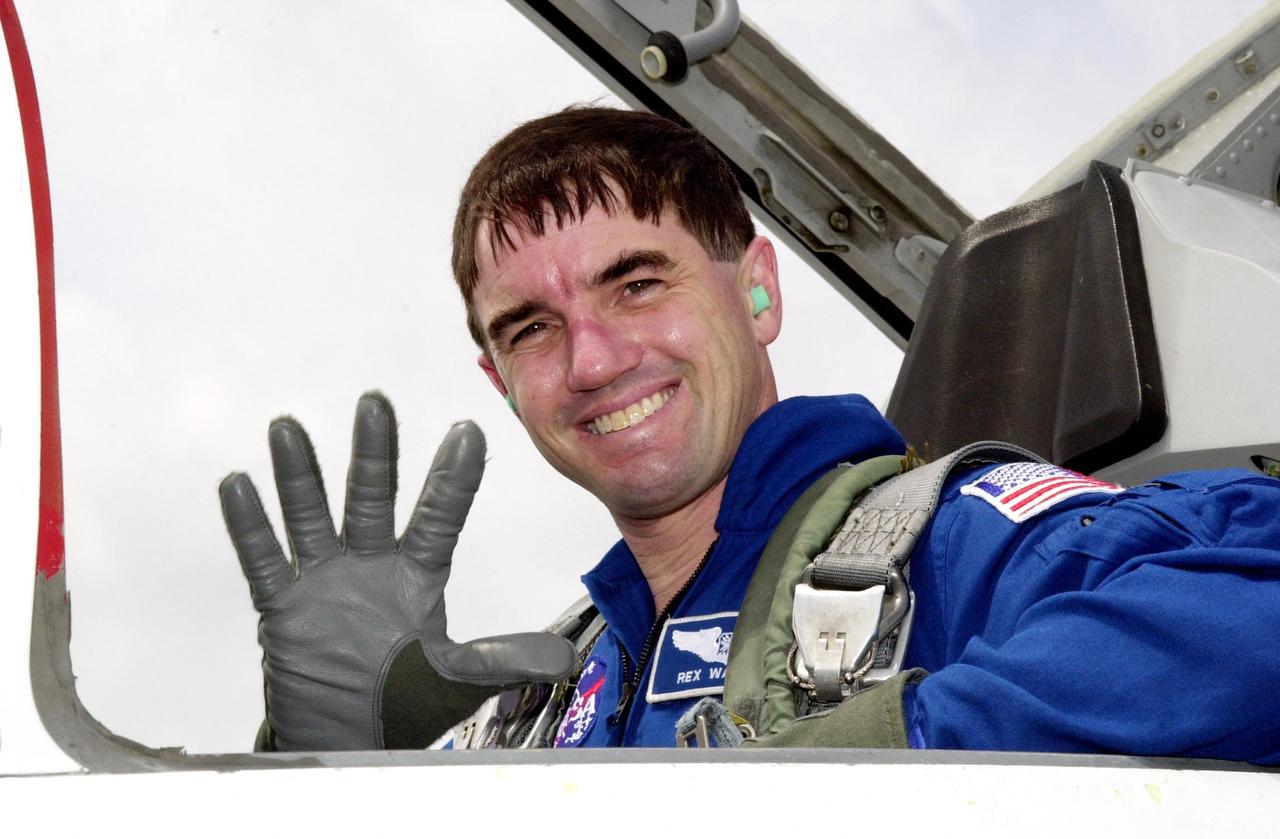
KENNEDY SPACE CENTER, FLA. - After landing at the KSC Shuttle Landing Facility, STS-110 Mission Specialist Rex Walheim smiles in anticipation of his first Space Shuttle flight, scheduled for launch April 4. Mission STS-110 is the 13th assembly flight to the International Space Station. During four planned spacewalks, crew members will install the S0 Integrated Truss Structure (ITS), centerpiece of the orbiting International Space Station (ISS), at the center of the 10-truss, girderlike structure that will ultimately extend the length of a football field on the ISS. The S0 truss will be attached to the U.S. Lab, "Destiny," on the 11-day mission
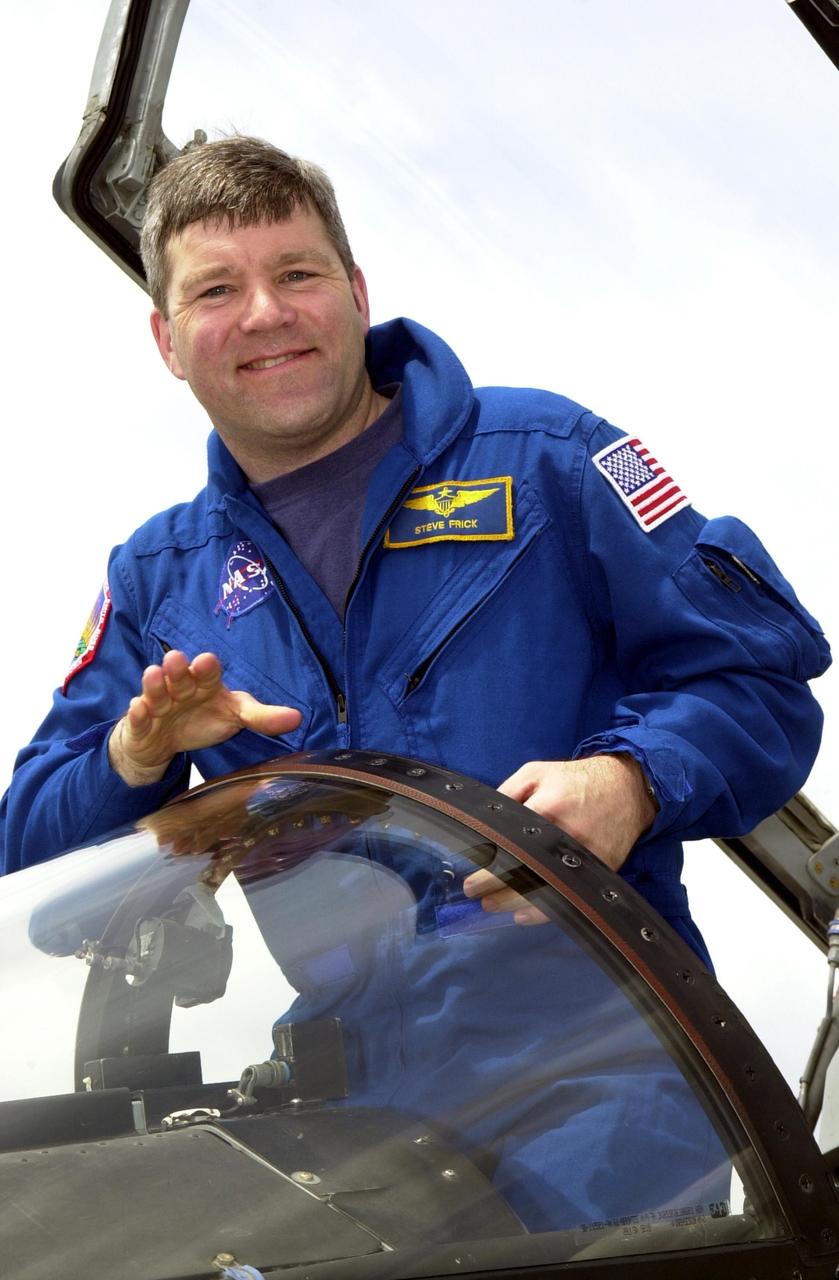
KENNEDY SPACE CENTER, FLA. - STS-110 Pilot Stephen Frick arrives at the KSC Shuttle Landing Facility to prepare for launch April 4. The mission will be his first Space Shuttle flight. Mission STS-110 is the 13th assembly flight to the International Space Station. During four planned spacewalks, crew members will install the S0 Integrated Truss Structure (ITS), centerpiece of the orbiting International Space Station (ISS), at the center of the 10-truss, girderlike structure that will ultimately extend the length of a football field on the ISS. The S0 truss will be attached to the U.S. Lab, "Destiny," on the 11-day mission
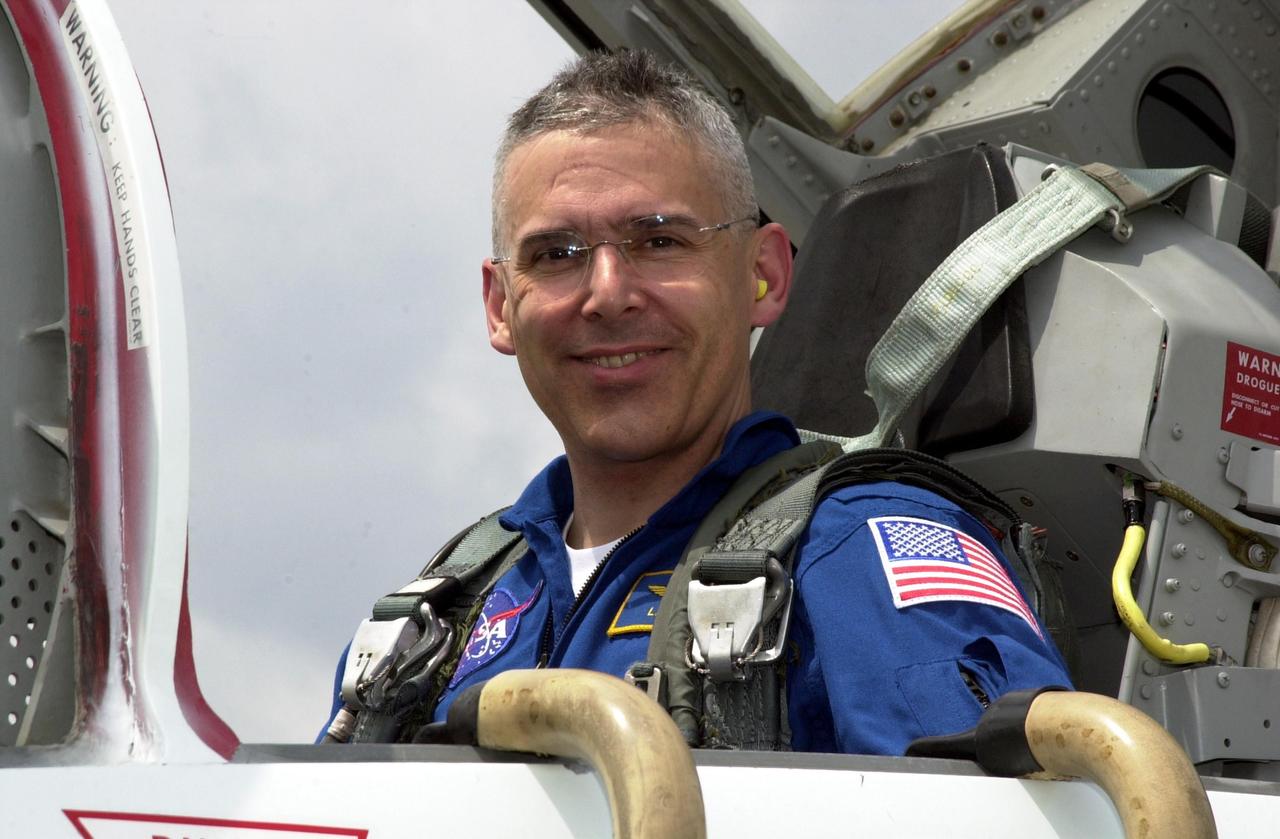
KENNEDY SPACE CENTER, FLA. -- STS-110 Mission Specialist Lee Morin arrives at the KSC Shuttle Landing Facility to prepare for launch April 4. The mission will be his first Space Shuttle flight. Mission STS-110 is the 13th assembly flight to the International Space Station. During four planned spacewalks, crew members will install the S0 Integrated Truss Structure (ITS), centerpiece of the orbiting International Space Station (ISS), at the center of the 10-truss, girderlike structure that will ultimately extend the length of a football field on the ISS. The S0 truss will be attached to the U.S. Lab, "Destiny," on the 11-day mission

KENNEDY SPACE CENTER, FLA. -- STS-110 Commander Michael Bloomfield arrives at the KSC Shuttle Landing Facility to prepare for launch April 4. The mission will be his third Space Shuttle flight. Mission STS-110 is the 13th assembly flight to the International Space Station. During four planned spacewalks, crew members will install the S0 Integrated Truss Structure (ITS), centerpiece of the orbiting International Space Station (ISS), at the center of the 10-truss, girderlike structure that will ultimately extend the length of a football field on the ISS. The S0 truss will be attached to the U.S. Lab, "Destiny," on the 11-day mission.
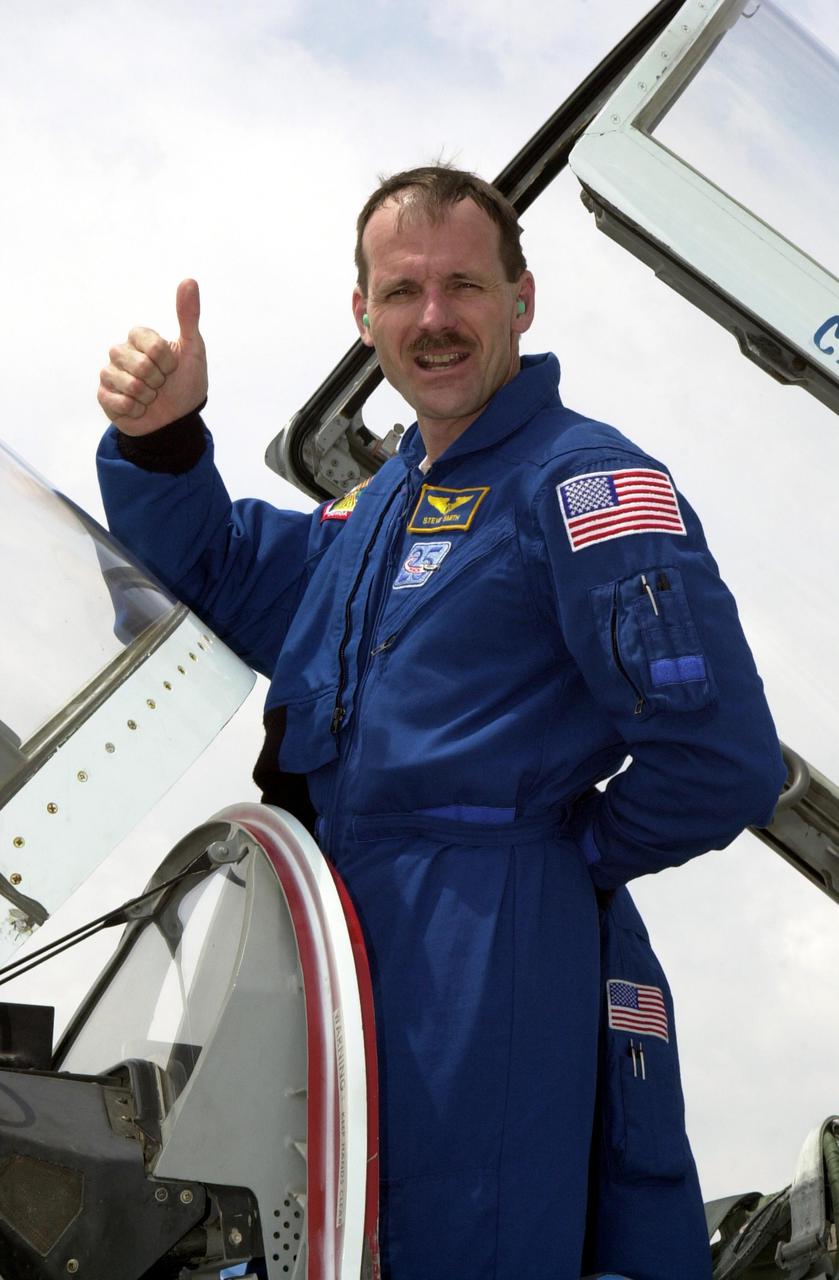
KENNEDY SPACE CENTER, FLA. --, STS-110 Mission Specialist Steven Smith gives a thumbs up after landing at the KSC Shuttle Landing Facility to prepare for launch April 4. The mission will be his fourth Space Shuttle flight. Mission STS-110 is the 13th assembly flight to the International Space Station. During four planned spacewalks, crew members will install the S0 Integrated Truss Structure (ITS), centerpiece of the orbiting International Space Station (ISS), at the center of the 10-truss, girderlike structure that will ultimately extend the length of a football field on the ISS. The S0 truss will be attached to the U.S. Lab, 'Destiny,' on the 11-day mission

KENNEDY SPACE CENTER, FLA. - STS-110 Mission Specialist Ellen Ochoa arrives at the KSC Shuttle Landing Facility to prepare for launch April 4. The mission will be her fourth Space Shuttle flight. Mission STS-110 is the 13th assembly flight to the International Space Station. During four planned spacewalks, crew members will install the S0 Integrated Truss Structure (ITS), centerpiece of the orbiting International Space Station (ISS), at the center of the 10-truss, girderlike structure that will ultimately extend the length of a football field on the ISS. The S0 truss will be attached to the U.S. Lab, "Destiny," on the 11-day mission.
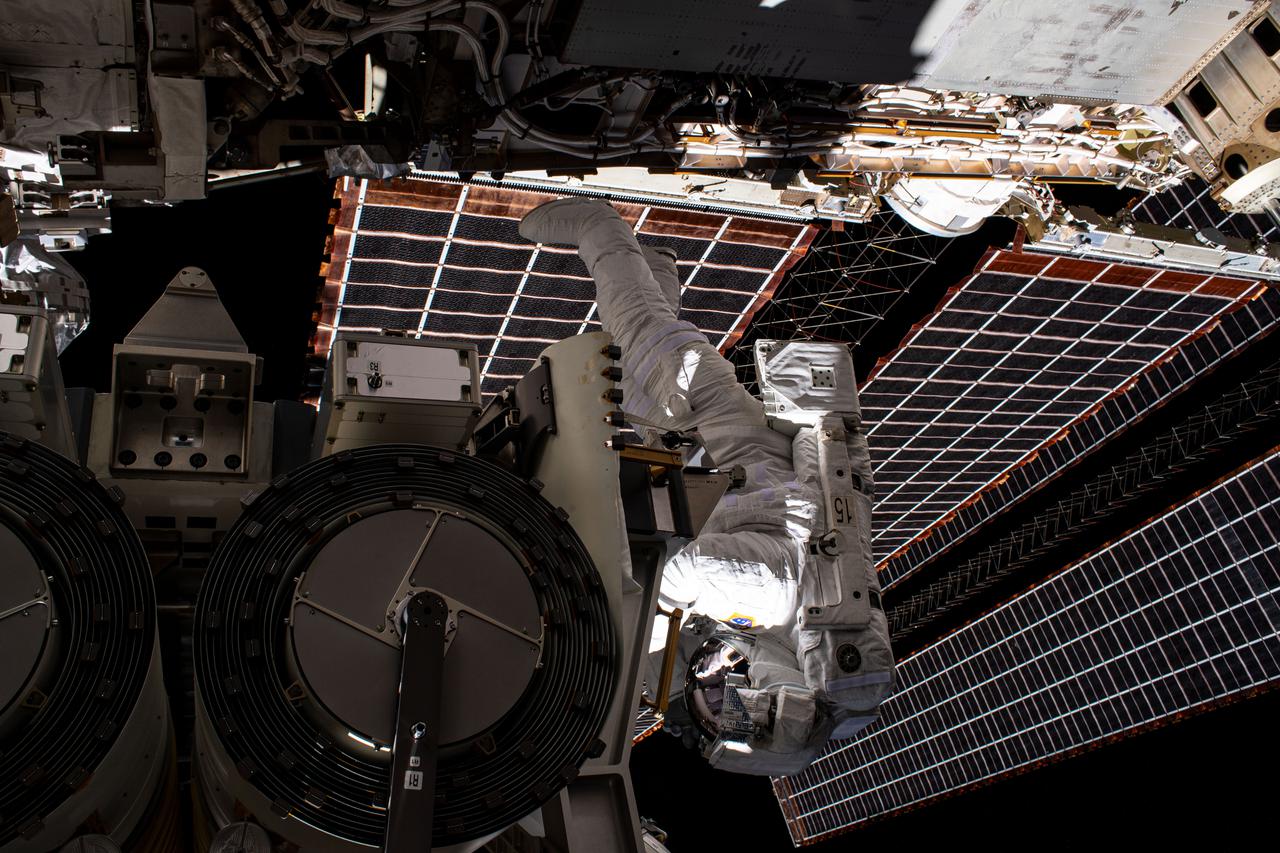
iss065e120861 (June 16, 2021) --- Expedition 65 Flight Engineer Shane Kimbrough is pictured during a spacewalk to install new roll out solar arrays on the International Space Station's P-6 truss structure.
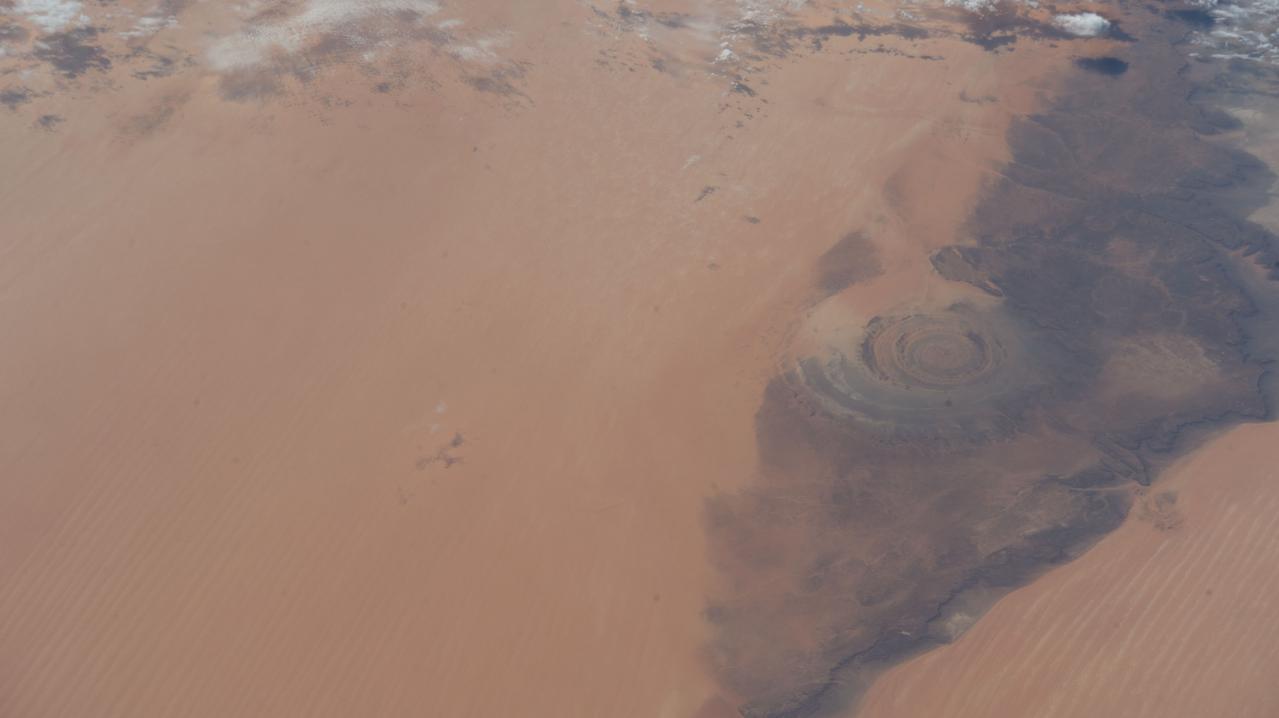
iss068e025663 (Nov. 30, 2022) --- The Richat Structure, or the "Eye of the Sahara," in northwestern Mauritania is pictured from the International Space Station as it orbited 259 miles above the African continent.
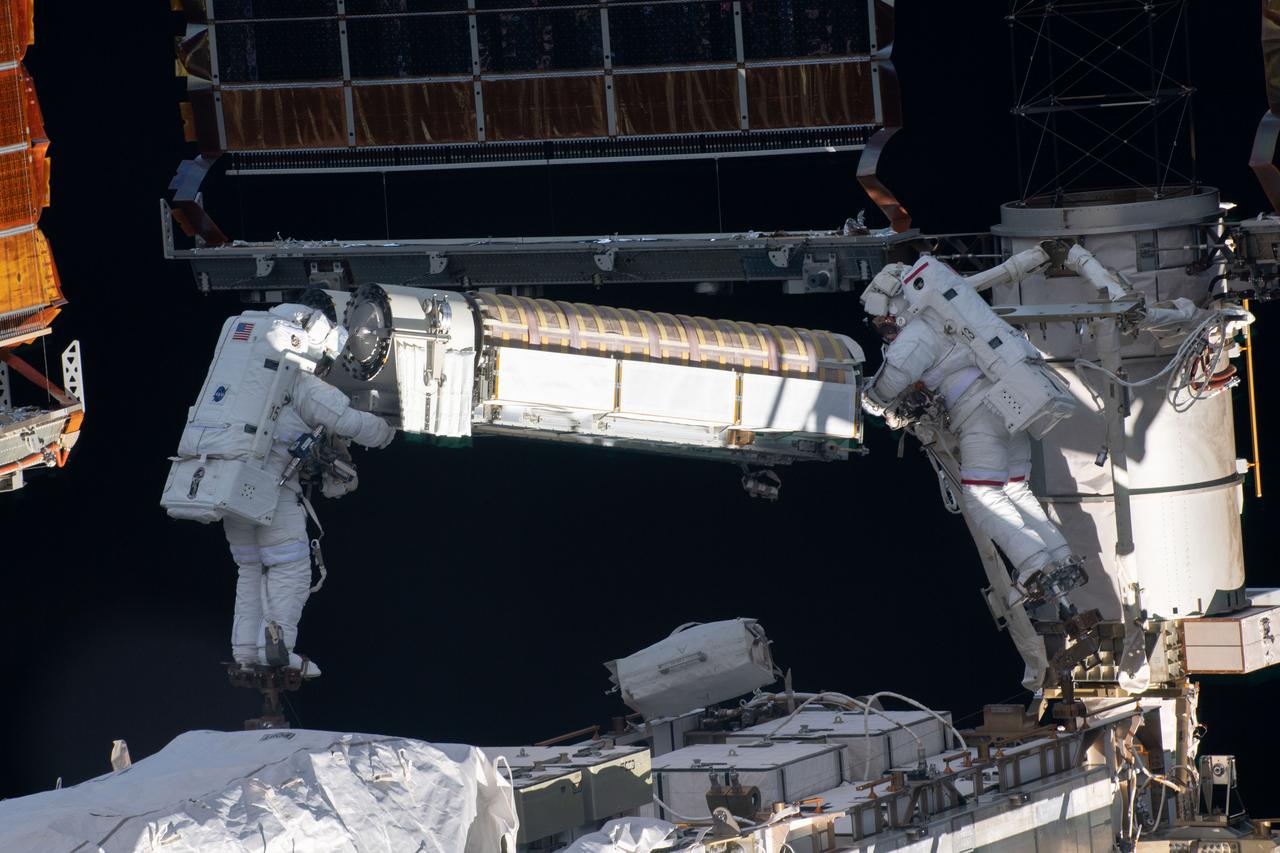
iss065e121354 (June 16, 2021) --- Spacewalkers (from left) Shane Kimbrough and Thomas Pesquet work to install new roll out solar arrays on the International Space Station's P-6 truss structure.

iss061e136303 (Jan. 20, 2020) --- NASA astronauts Jessica Meir (left) and Christina Koch are pictured during a spacewalk to finalize upgrading power systems on the International Space Station's Port-6 truss structure.
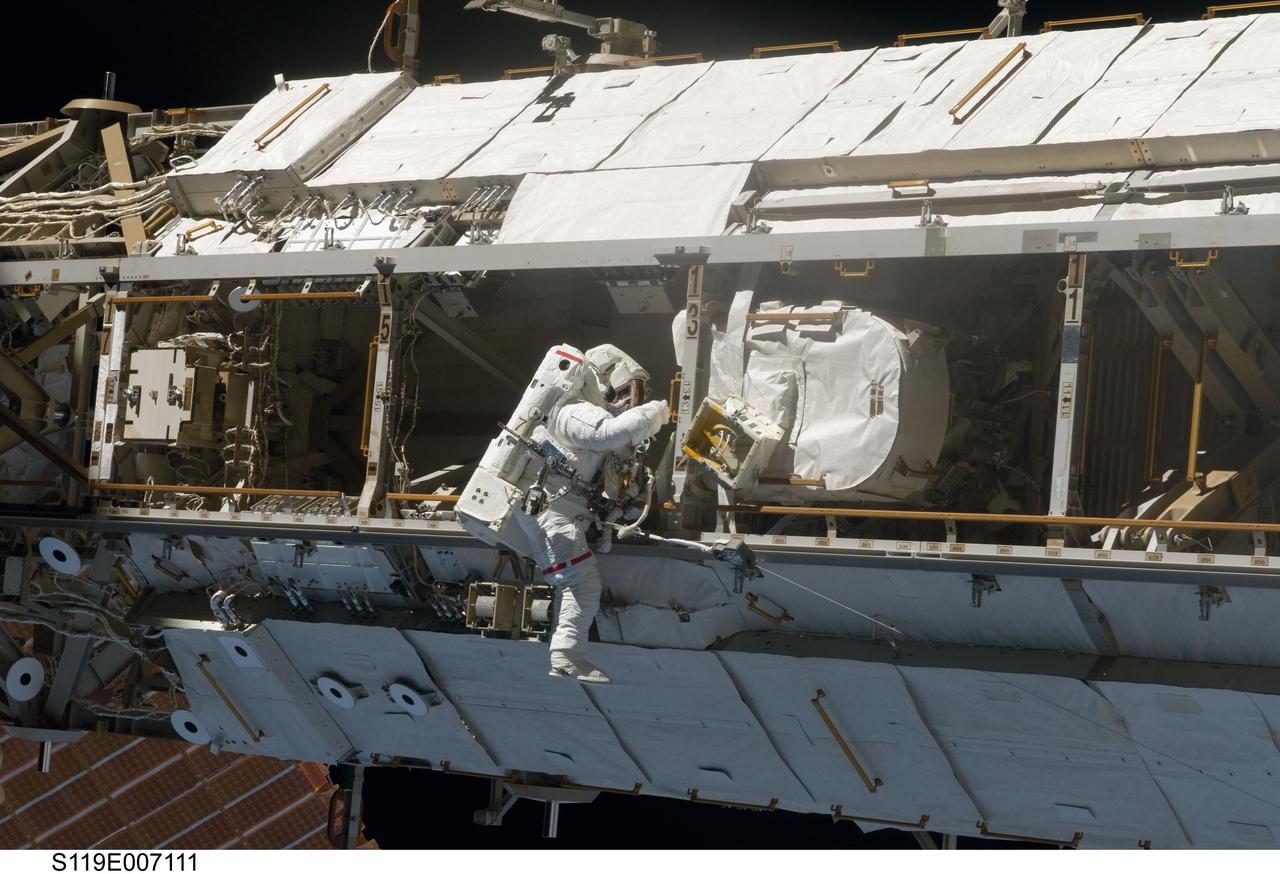
s119e007111 (March 23, 2009) --- NASA astronaut Joe Acaba is seen during a spacewalk in March 2009. He was working on the Starboard-1 truss structure while space shuttle Discovery was docked to the station during STS-119.

Maxar Technologies completes early fabrication work on the central cylinder structure of the Gateway space station's Power and Propulsion Element (PPE) that will make Gateway the most powerful solar electric spacecraft ever flown.
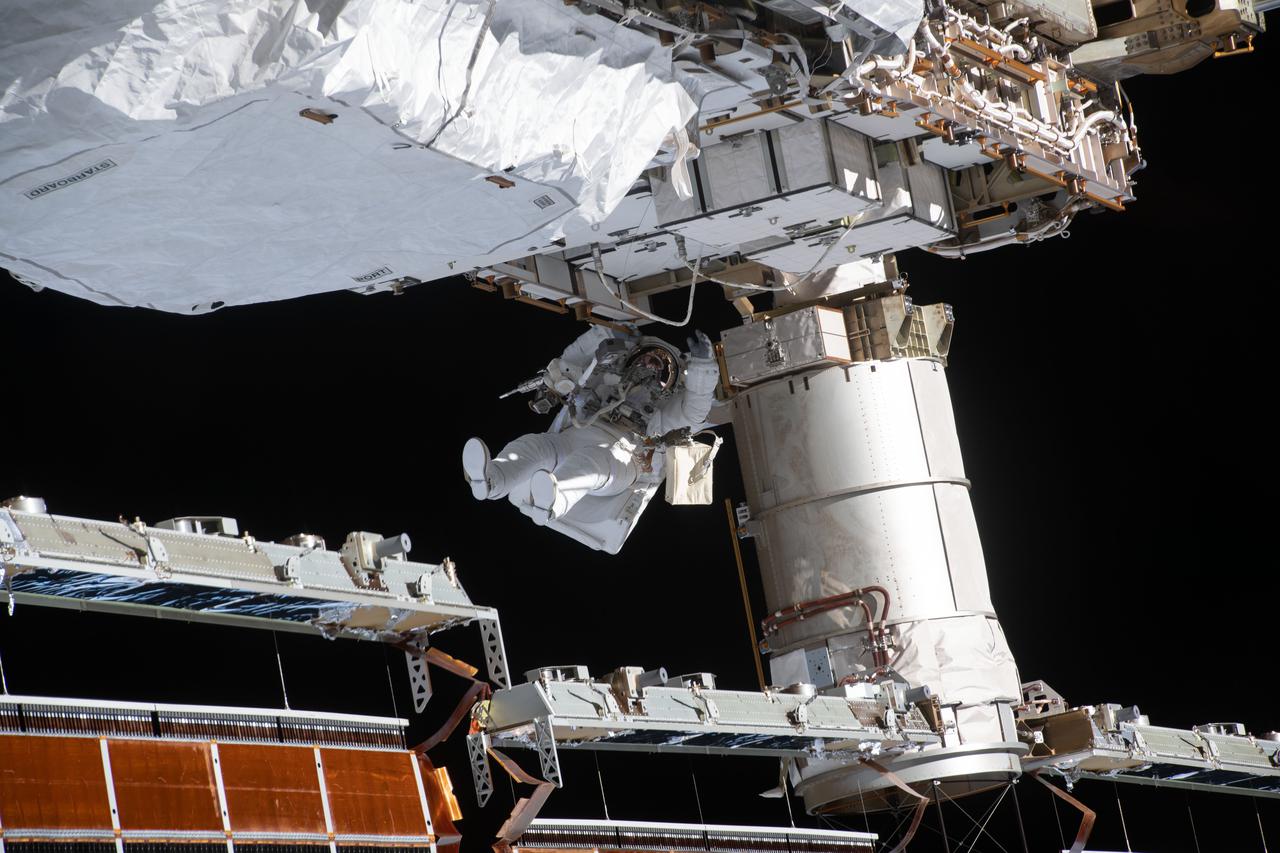
iss064e027226 (Jan. 27, 2021) --- NASA spacewalker and Expedition 64 Flight Engineer Victor Glover works to ready the International Space station's port-side truss structure for future solar array upgrades.

iss059e002202 (March 22, 2109) --- NASA astronaut Anne McClain works on the International Space Station's Port-4 truss structure during a six-hour, 39-minute spacewalk to upgrade the orbital complex's power storage capacity.

iss071e170970 (June 5, 2024) --- The Rihat Structure, also known as the Eye of the Sahara, is a deeply eroded geologic dome in the African nation of Mauritania pictured from the International Space Station as it orbited 258 miles above.
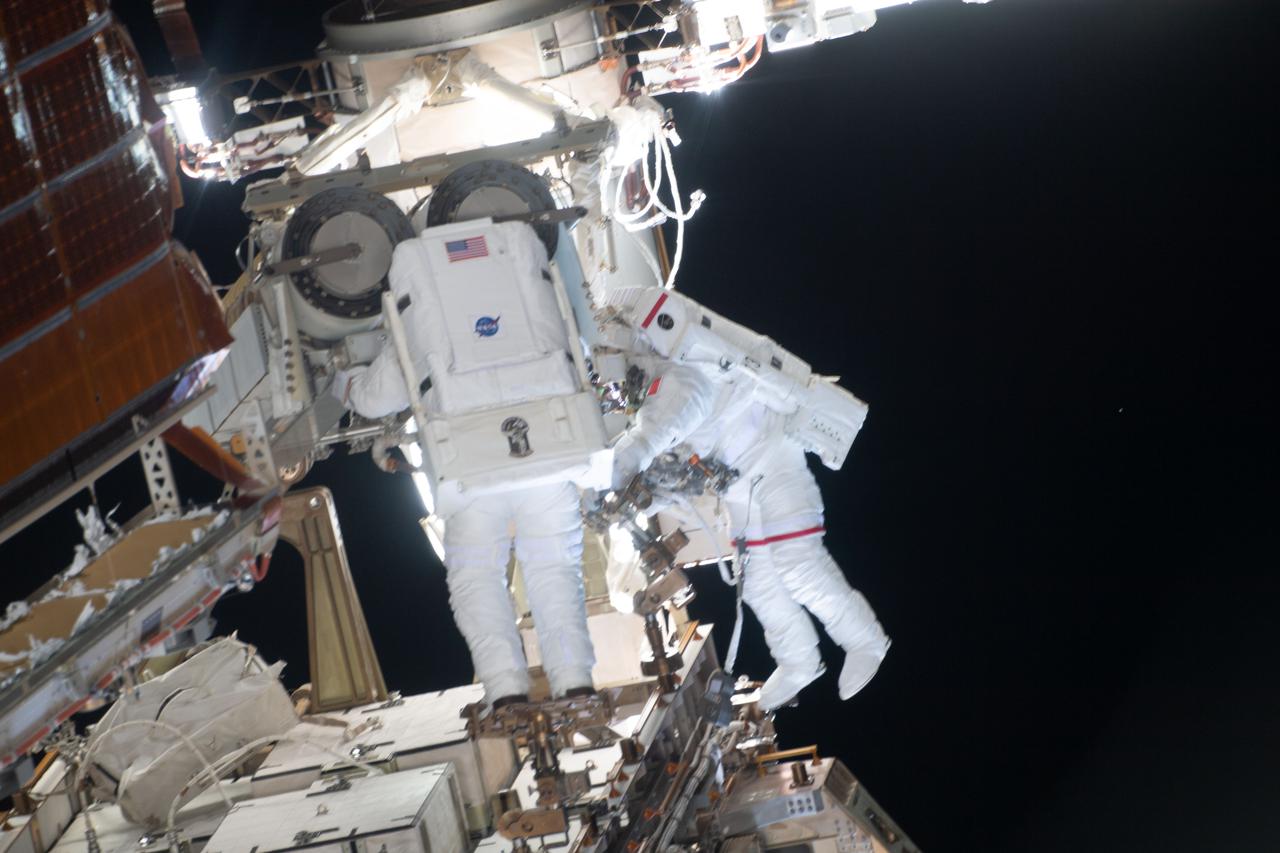
iss065e147262 (June 25, 2021) --- Spacewalkers (from left) Shane Kimbrough and Thomas Pesquet work to complete the installation of the second roll out solar array on the International Space Station's Port-6 truss structure.

iss059e001521 (March 22, 2019) --- NASA astronaut Anne McClain works on the International Space Station's Port-4 truss structure during a six-hour, 39-minute spacewalk to upgrade the orbital complex's power storage capacity.
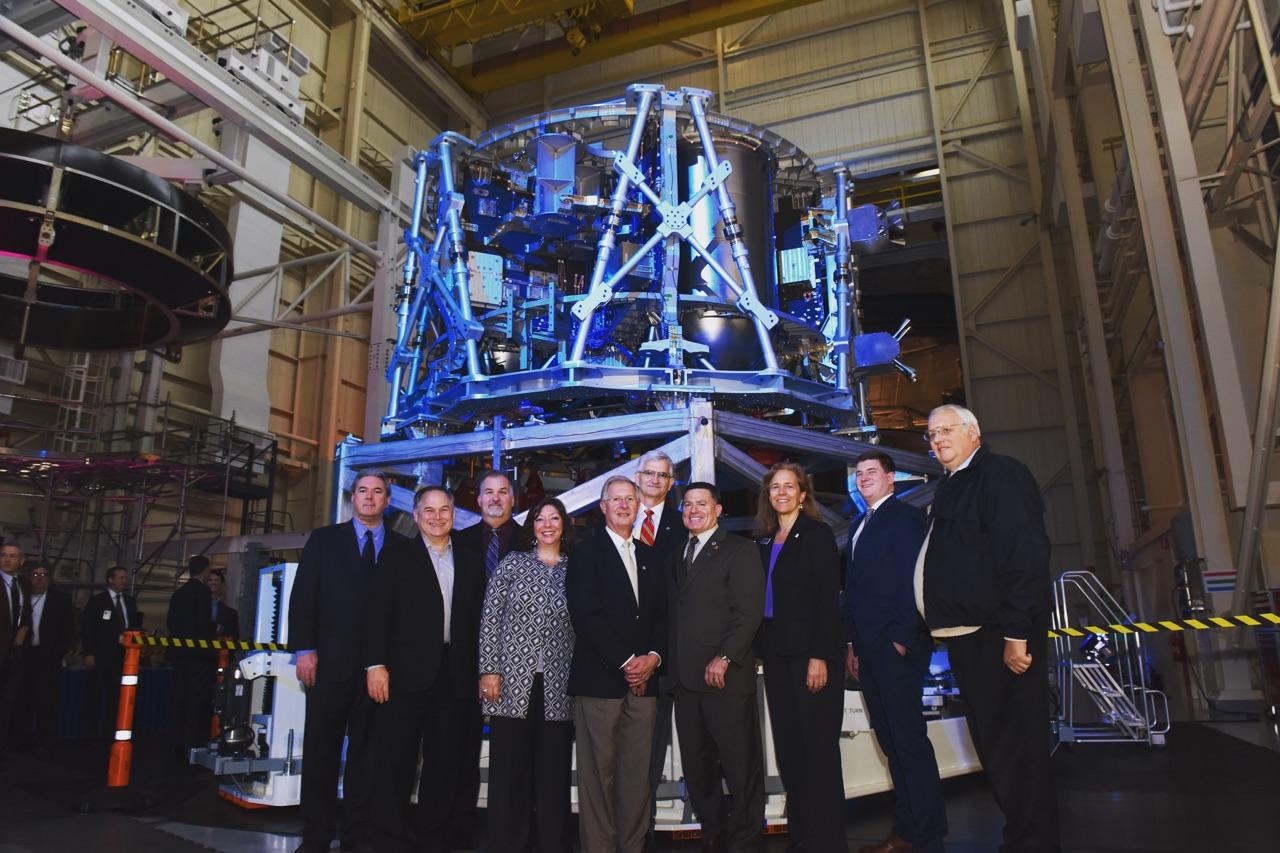
The European Service Module Structural Test Article at the Space Power Facility at NASA Glenn Research Center's Neil A. Armstrong Test Facility (formerly Plum Brook Station) on Nov. 30, 2015.

iss061e136533 (Jan. 20, 2020) --- NASA astronaut Christina Koch is pictured near a solar array during a spacewalk to finalize upgrading power systems on the International Space Station's Port-6 truss structure.
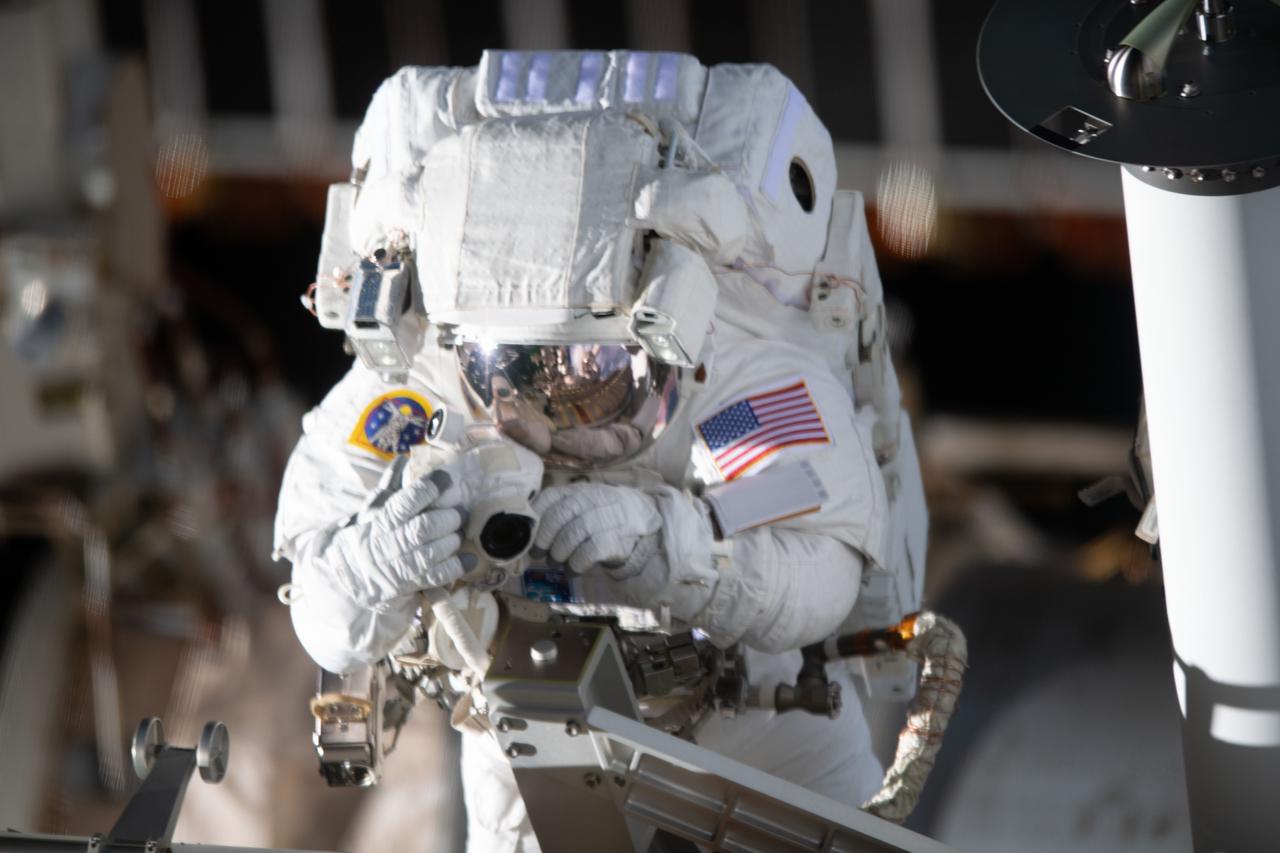
iss065e126006 (June 20, 2021) --- Spacewalker Shane Kimbrough of NASA works to complete the installation of a roll out solar array on the International Space Station's P-6 truss structure.
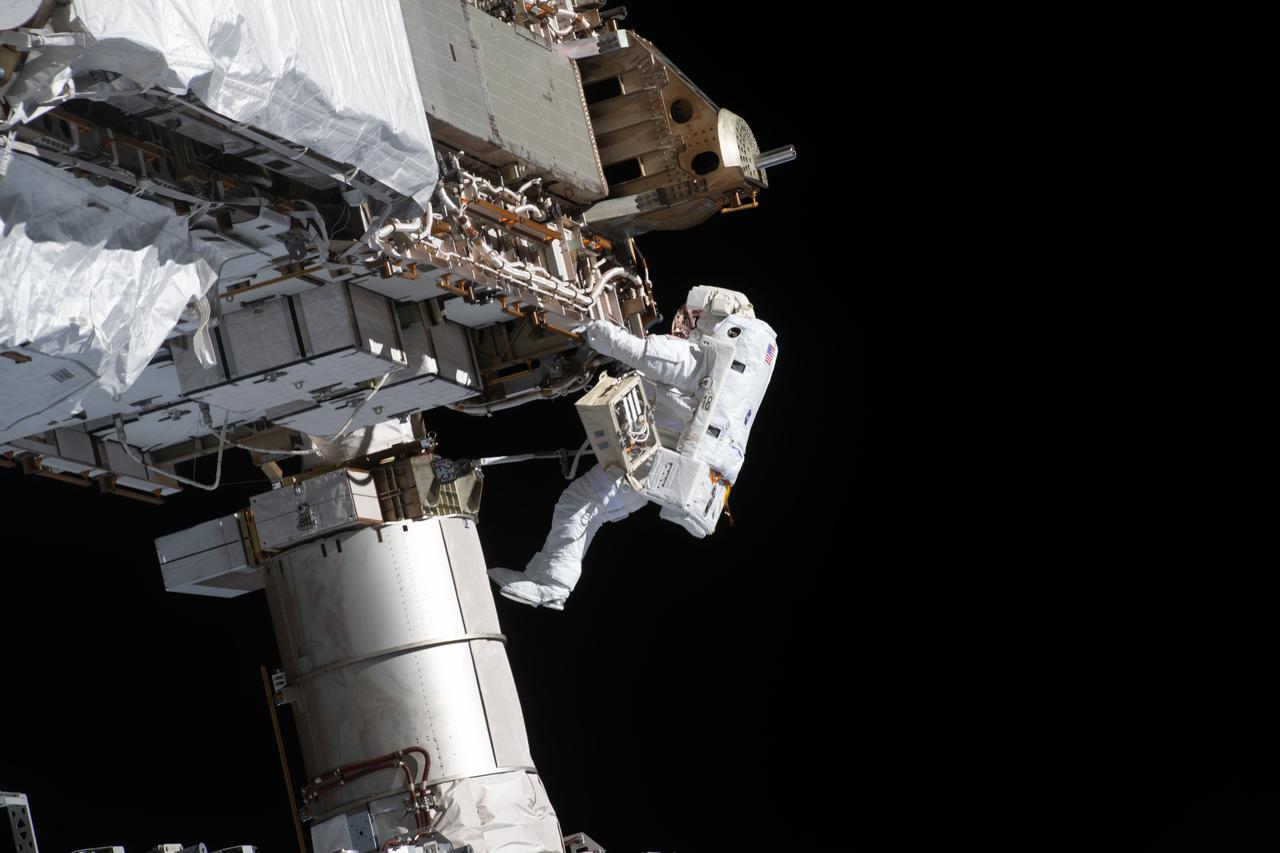
iss064e027247 (Jan. 27, 2021) --- NASA spacewalker and Expedition 64 Flight Engineer Victor Glover works to ready the International Space station's port-side truss structure for future solar array upgrades.
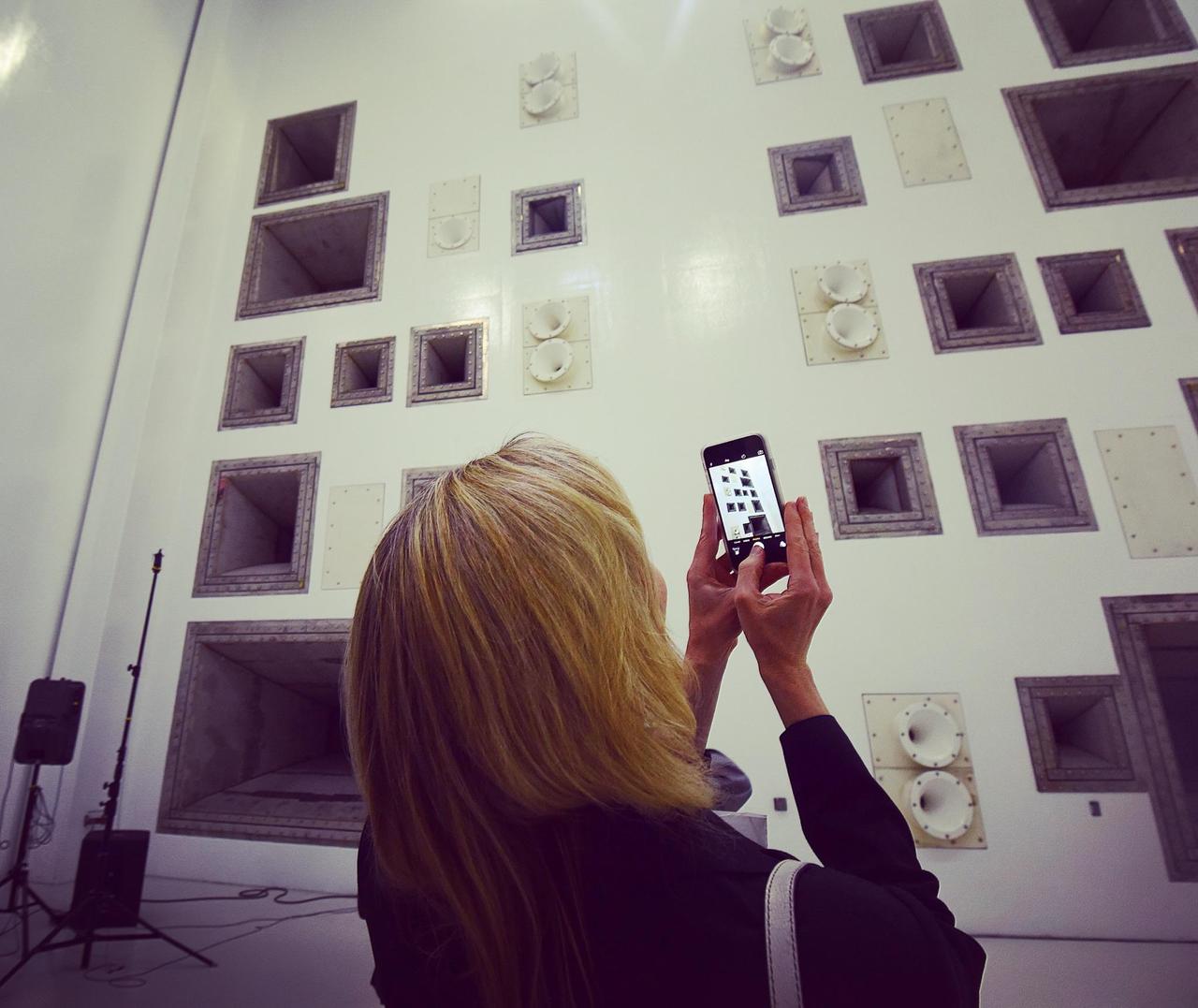
The European Service Module Structural Test Article at the Space Power Facility at NASA Glenn Research Center's Neil A. Armstrong Test Facility (formerly Plum Brook Station) on Nov. 30, 2015.
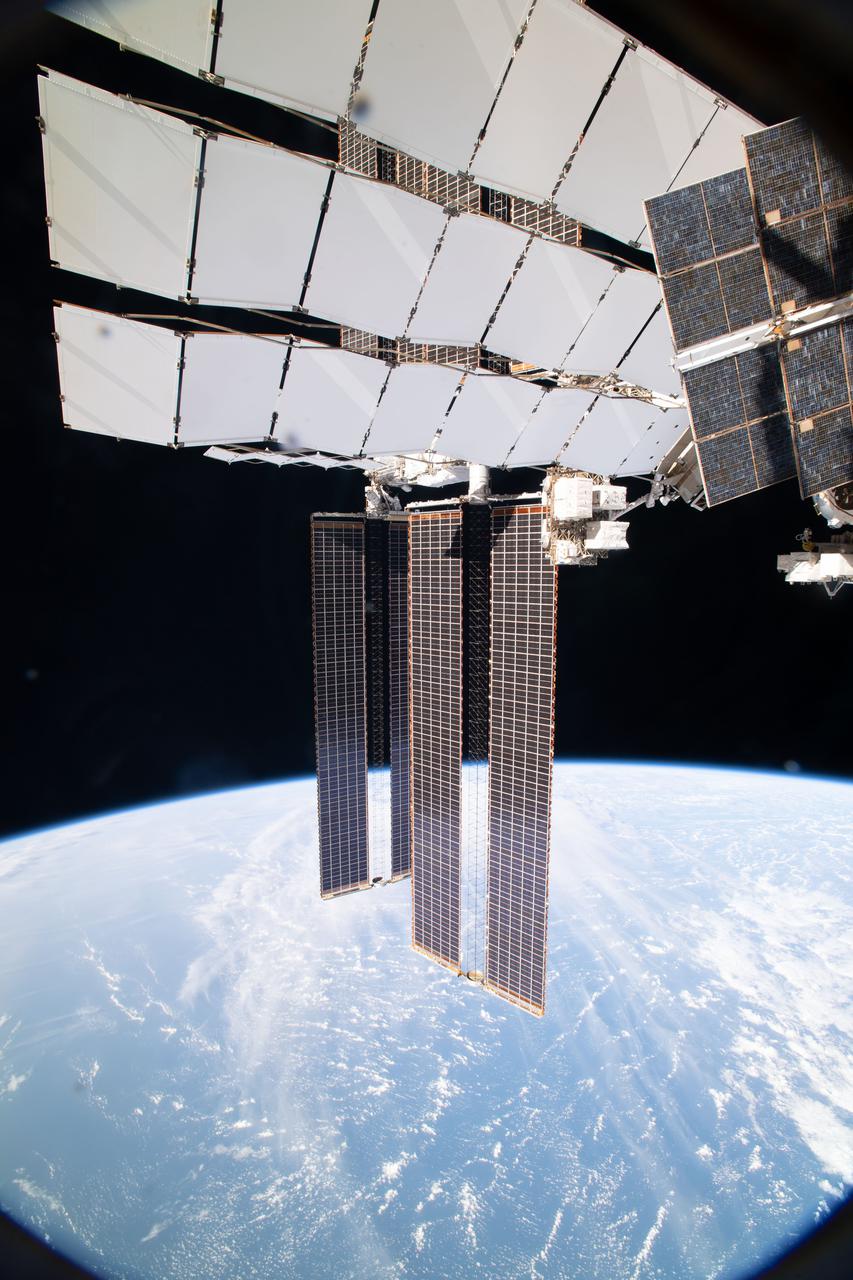
iss065e124482 (June 20, 2021) --- Dwarfed by the International Space Station's main solar arrays, spacewalkers Shane Kimbrough and Thomas Pesquet work to complete the installation of a roll out solar array on the P-6 truss structure.
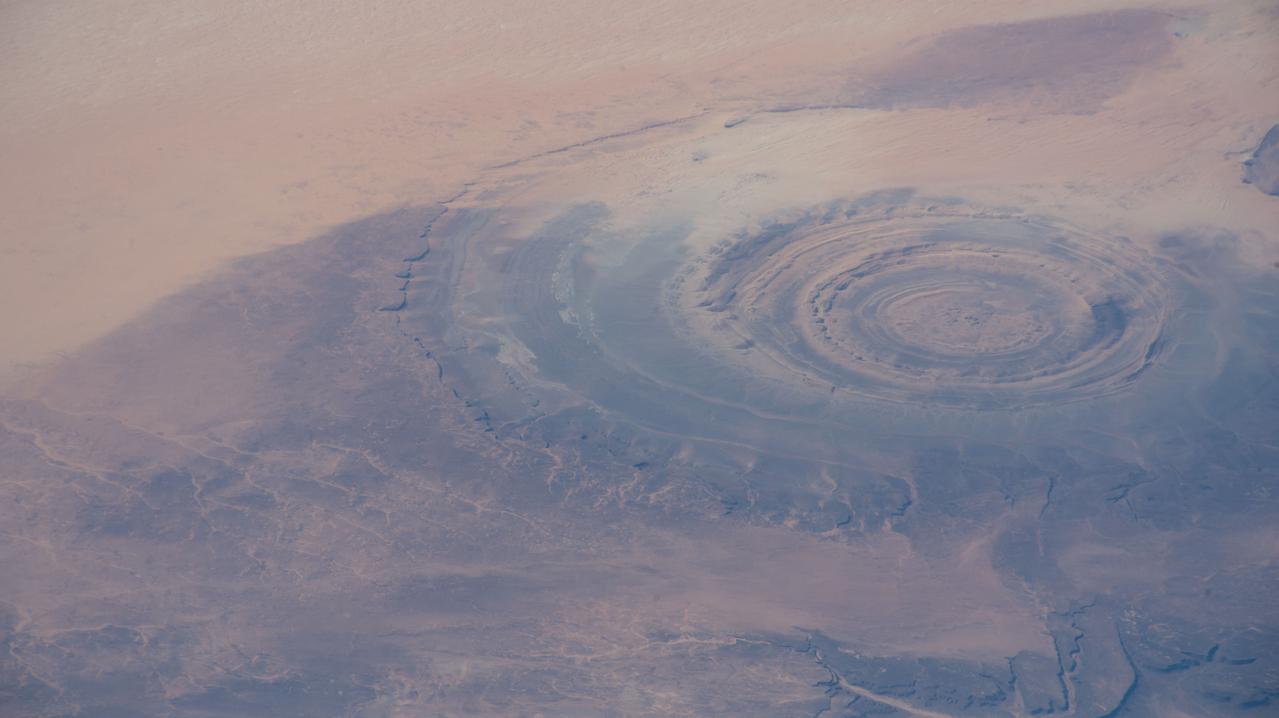
iss066e102086 (Dec. 31, 2021) --- The Richat structure, an eroded geological dome, located in the African nation of Mauritania, is pictured from the International Space Station as it orbited 262 miles above Earth.
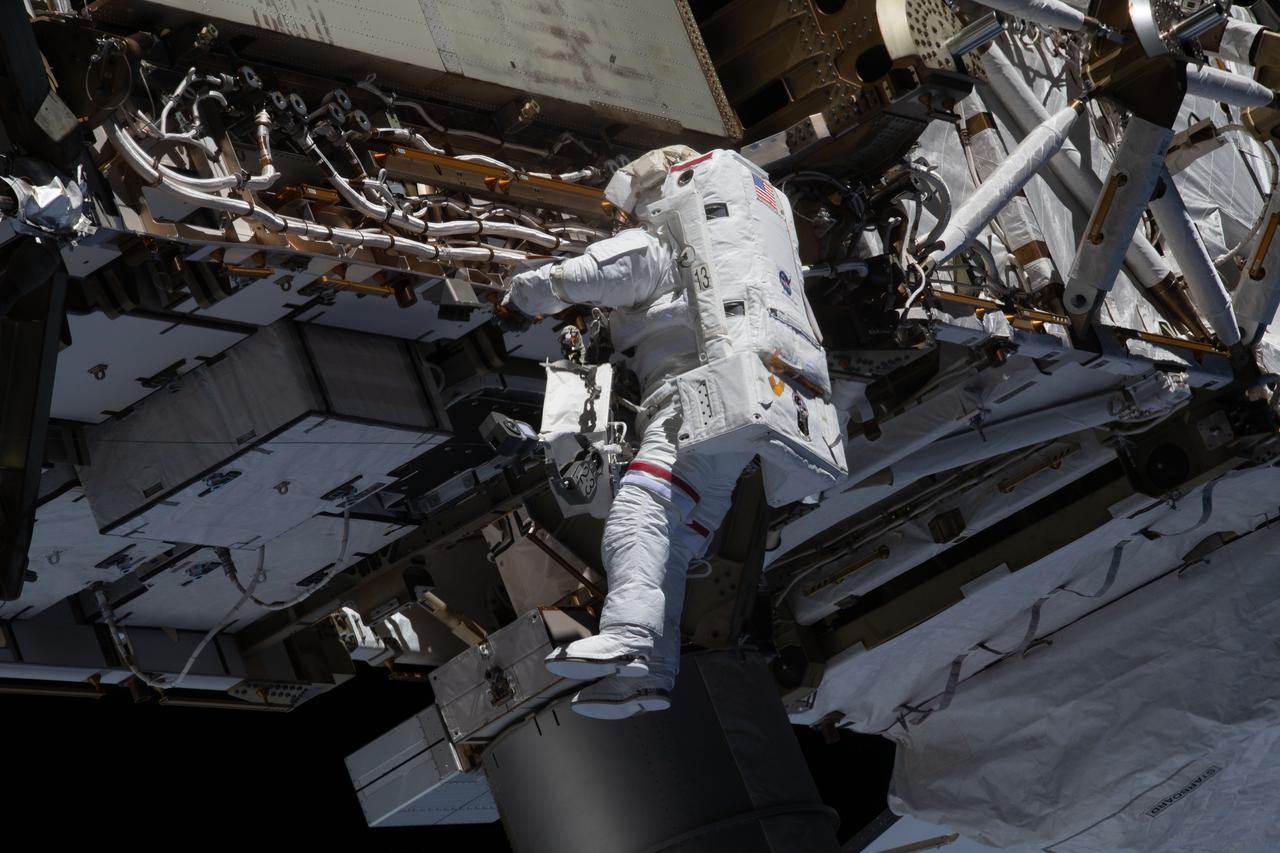
iss064e027386 (Jan. 27, 2021) --- NASA spacewalker and Expedition 64 Flight Engineer Michael Hopkins works to ready the International Space station's port-side truss structure for future solar array upgrades.
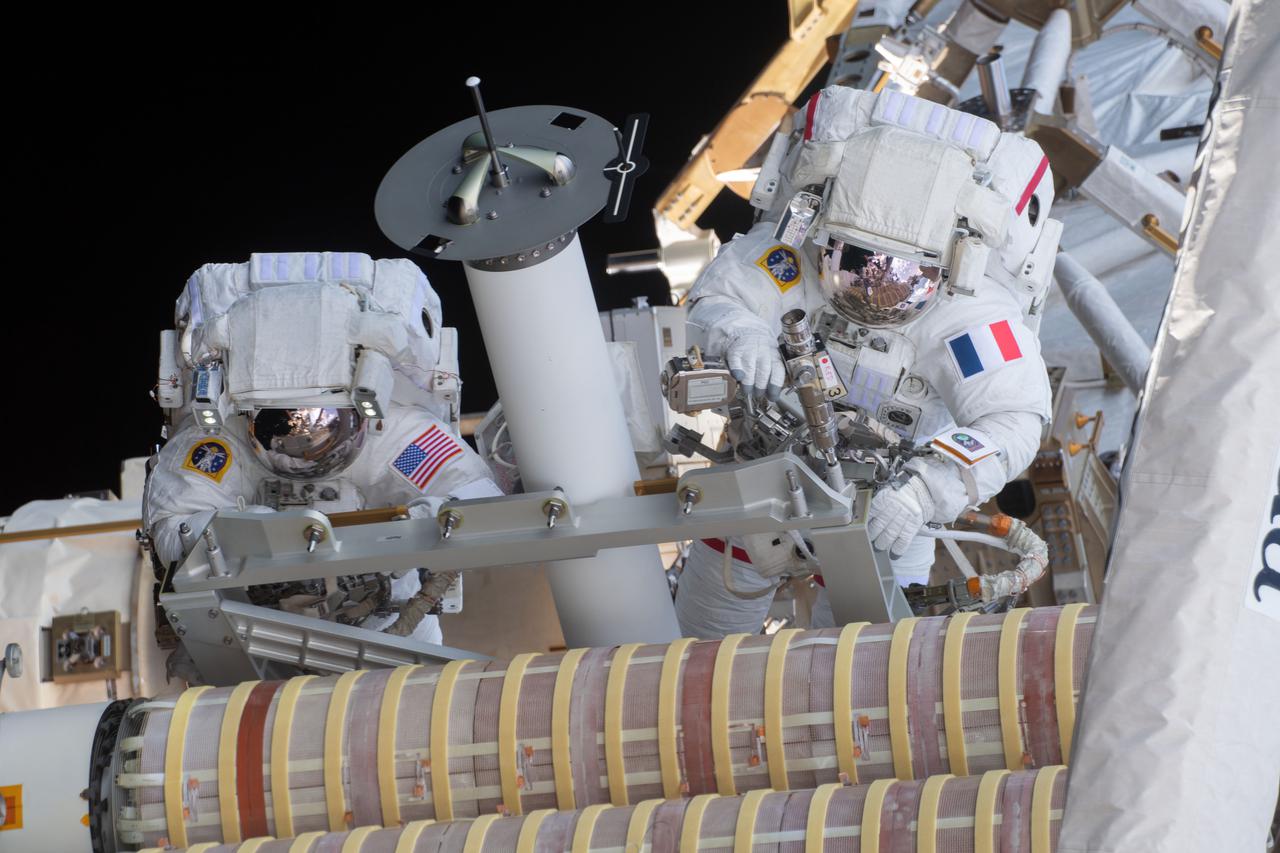
iss065e131232 (June 16, 2021) --- Spacewalkers (from left) Shane Kimbrough and Thomas Pesquet work to install new roll out solar arrays on the International Space Station's P-6 truss structure.