
S83-29016 (4 March 1983) --- These five astronauts represent the Space Transportation System's (STS) first five-member crew. They will be aboard the Space Shuttle Challenger for the mission, scheduled for June of this year. Astronaut Robert L. Crippen (center, first row) is crew commander. Other crew members are astronauts Frederick H. Hauck, right, pilot; and Sally K. Ride, John M. Fabian and Norman E. Thagard, mission specialists. Seven stars and the Challenger provide the backdrop for the crew's portrait.
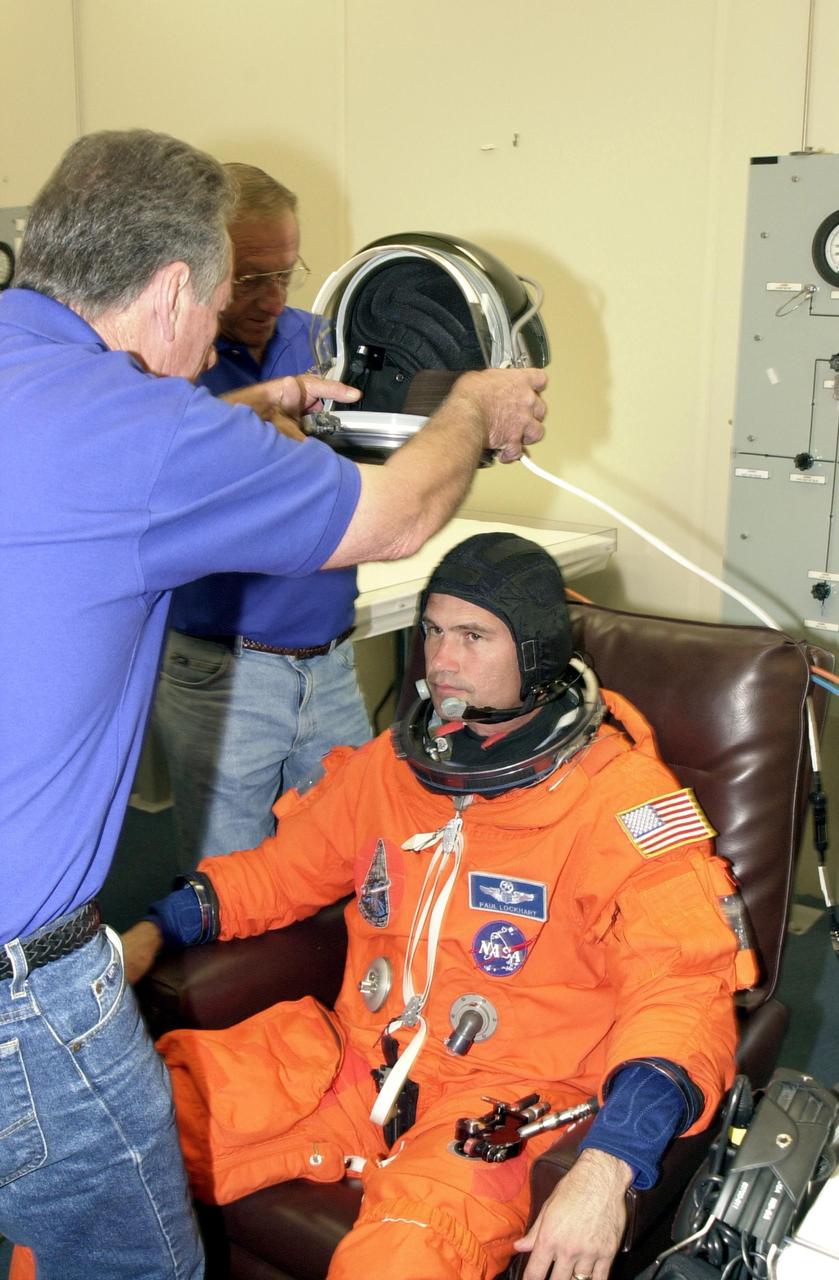
KENNEDY SPACE CENTER, FLA. - STS-111 Pilot Paul Lockhart waits for his helmet during suitup for the scheduled liftoff of Space Shuttle Endeavour at 7:44 p.m. EDT. This is Lockhart's first Shuttle flight. STS-111 is the second Utilization Flight to the International Space Station, carrying the Multi-Purpose Logistics Module Leonardo, the Mobile Base System (MBS), and a replacement wrist/roll joint for the Canadarm 2. The MBS will be installed on the Mobile Transporter to complete the Canadian Mobile Servicing System, or MSS. In addition, Expedition 5 is traveling on mission STS-111 to the International Space Station to replace the current resident crew, Expedition 4, who will return to Earth with the STS-111 crew
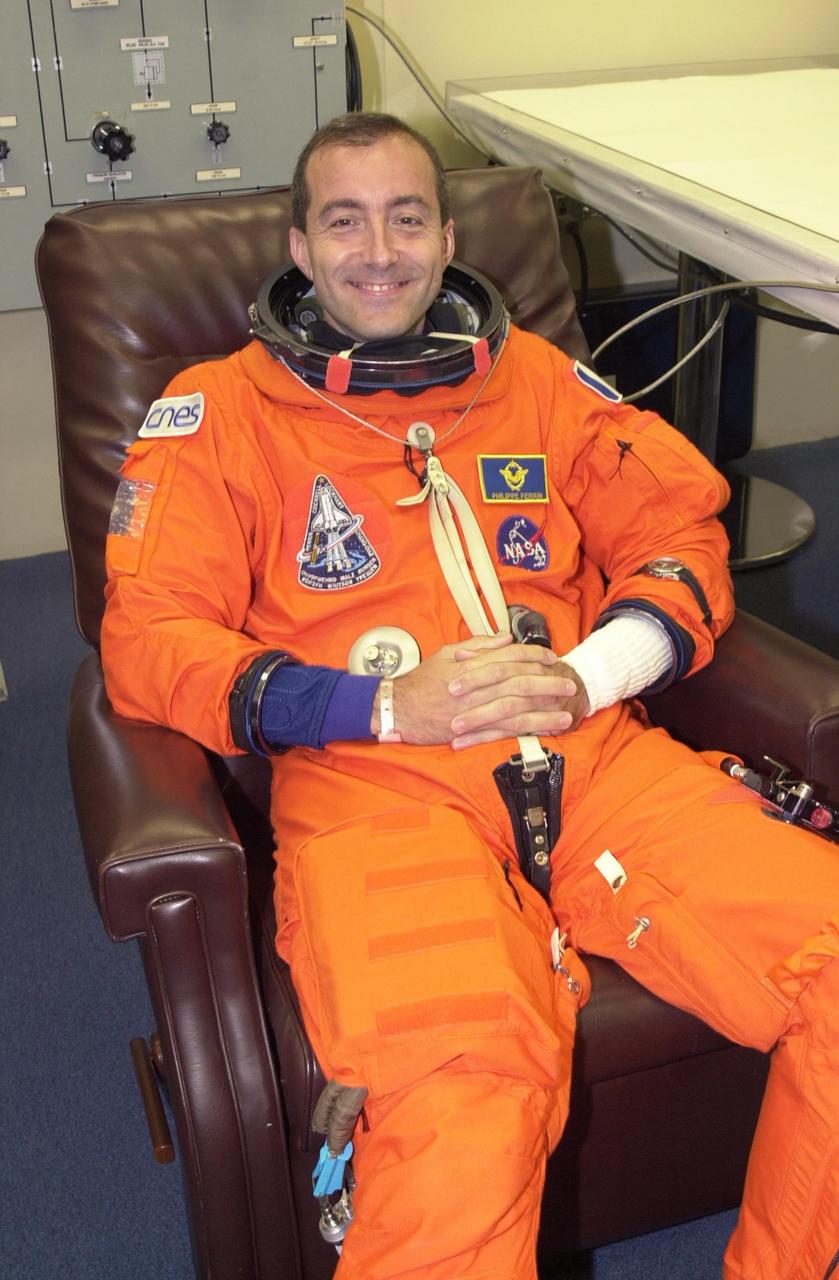
KENNEDY SPACE CENTER, FLA. - STS-111 Mission Specialist Philippe Perrin (CNES) smiles during suitup for the scheduled liftoff of Space Shuttle Endeavour at 7:44 p.m. EDT. This is Perrin's first Shuttle flight. STS-111 is the second Utilization Flight to the International Space Station, carrying the Multi-Purpose Logistics Module Leonardo, the Mobile Base System (MBS), and a replacement wrist/roll joint for the Canadarm 2. The MBS will be installed on the Mobile Transporter to complete the Canadian Mobile Servicing System, or MSS. In addition, Expedition 5 is traveling on mission STS-111 to the International Space Station to replace the current resident crew, Expedition 4, who will return to Earth with the STS-111 crew
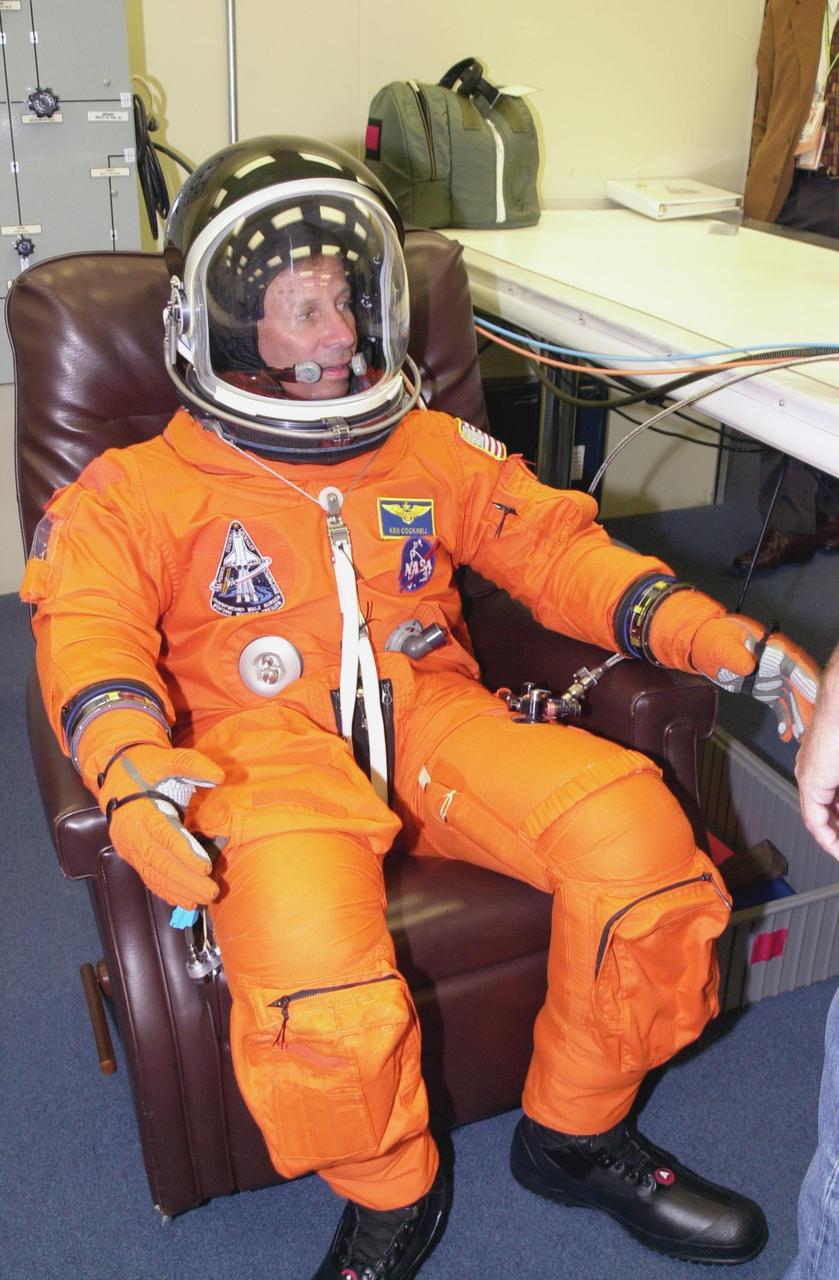
KENNEDY SPACE CENTER, FLA. - STS-111 Commander Kenneth Cockrell suits up for the scheduled liftoff of Space Shuttle Endeavour at 7:44 p.m. EDT. This is Cockrell's fifth Shuttle flight. STS-111 is the second Utilization Flight to the International Space Station, carrying the Multi-Purpose Logistics Module Leonardo, the Mobile Base System (MBS), and a replacement wrist/roll joint for the Canadarm 2. The MBS will be installed on the Mobile Transporter to complete the Canadian Mobile Servicing System, or MSS. In addition, Expedition 5 is traveling on mission STS-111 to the International Space Station to replace the current resident crew, Expedition 4, who will return to Earth with the STS-111 crew
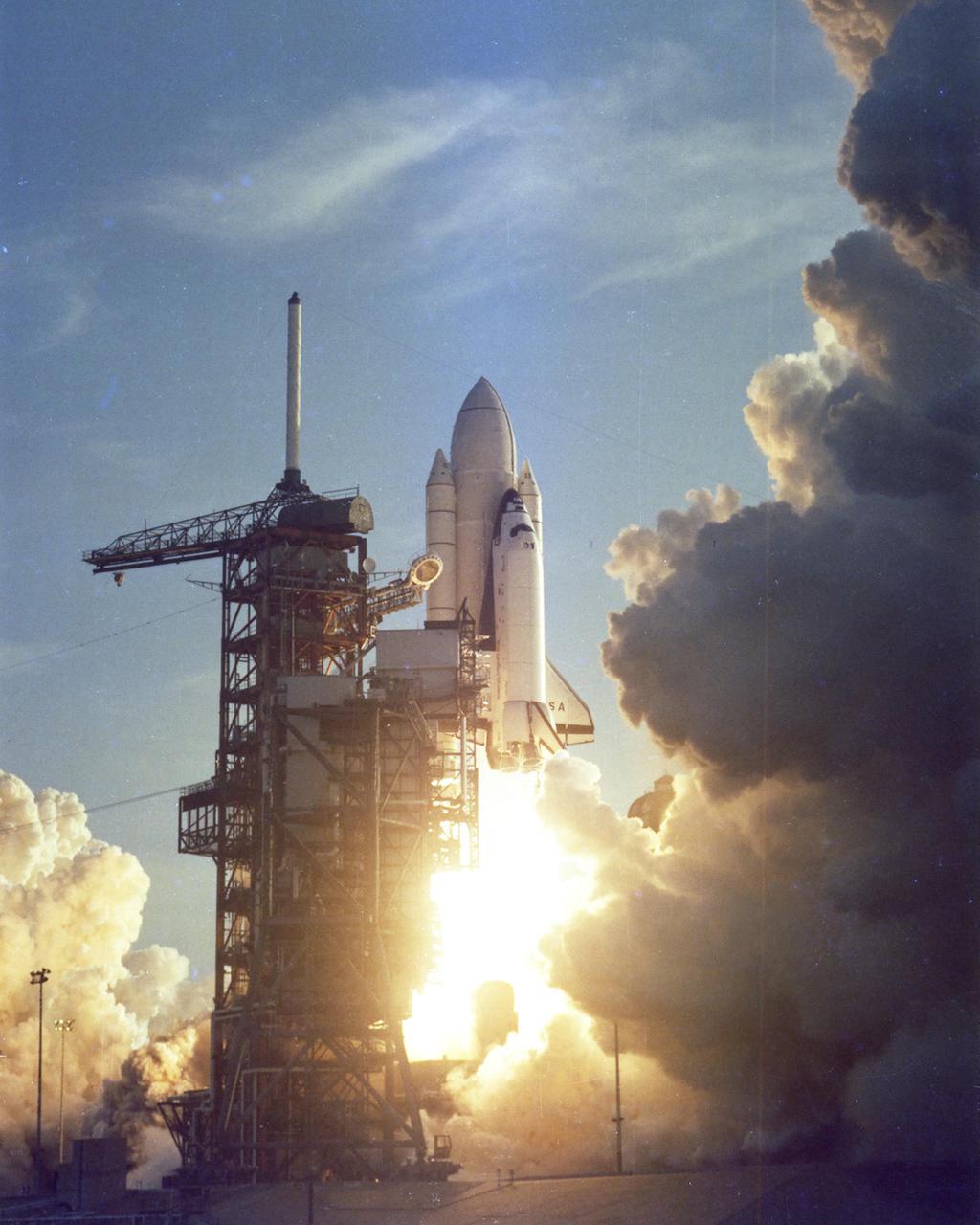
KENNEDY SPACE CENTER, FLA. -- The Space Shuttle Columbia rises majestically above Launch Complex 39's Pad A on the first leg of its maiden journey into space. On board for the historic flight are Astronauts John Young and Bob Crippen, scheduled to spend nearly 54 hours in space on this first shakedown test of America's new reusable Space Transportation System (STS-1). The Sunday morning liftoff came a few seconds after 7:00 a.m. and marked the dawn of a new era in spaceflight.
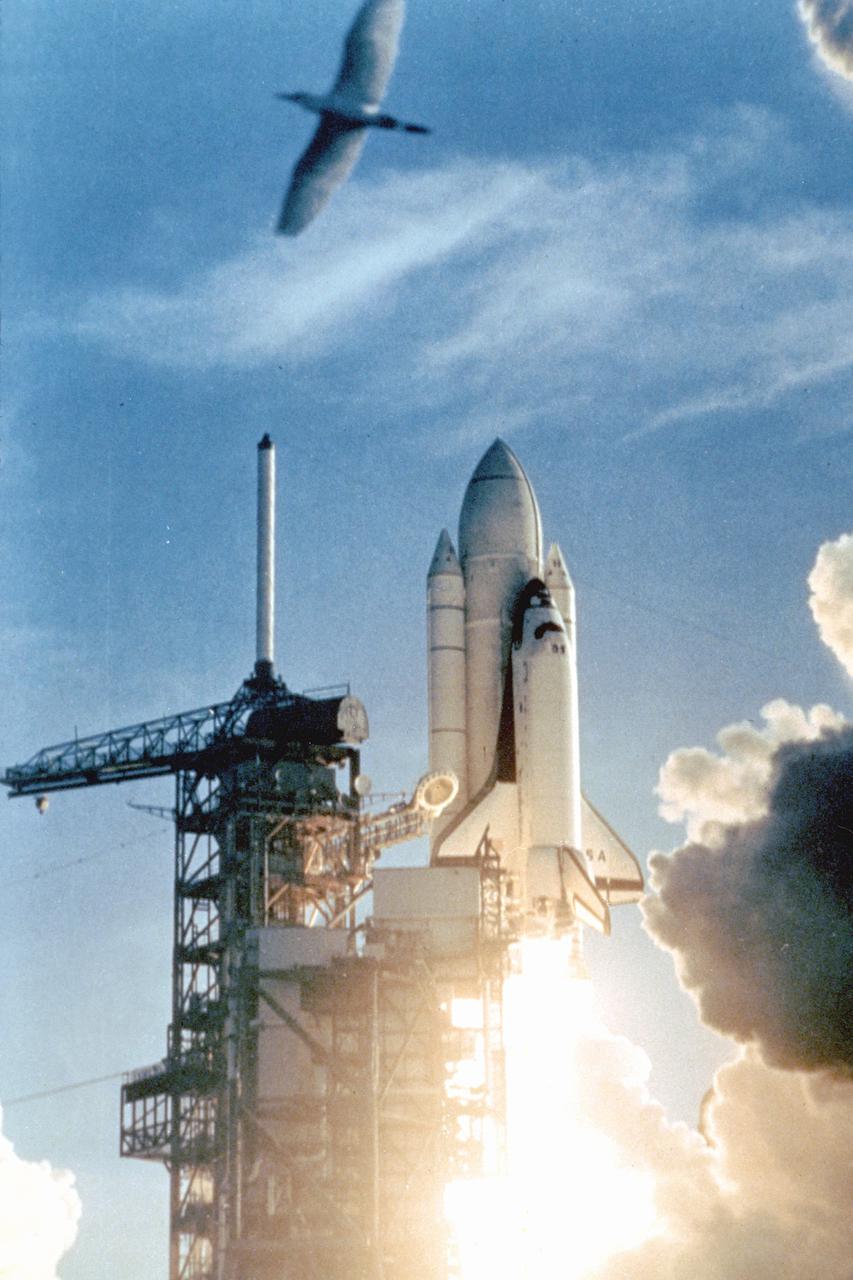
KENNEDY SPACE CENTER, FLA. - The Space Shuttle rises majestically above Launch Complex 39's Pad A on the first leg of its maiden journey into space. On board for the historic flight are astronauts John Young and Bob Crippen, scheduled to spend nearly 54 hours in space on this first shakedown test of America’s new reusable Space Transportation System (STS). The Sunday morning liftoff came a few seconds after 7 a.m. and marked the dawn of a new era in spaceflight.

KENNEDY SPACE CENTER, FLA. -- STS-1: Columbia. The Space Shuttle rises majestically above Launch Complex 39’s Pad A on the first leg of its maiden journey into space. On board for the historic flight are Astronauts John Young and Bob Crippen, scheduled to spend nearly 54 hours in space on this first shakedown test of America’s new reusable Space Transportation System (STS). The Sunday morning liftoff came a few seconds after 7 a.m. and marked the dawn of a new era in spaceflight.
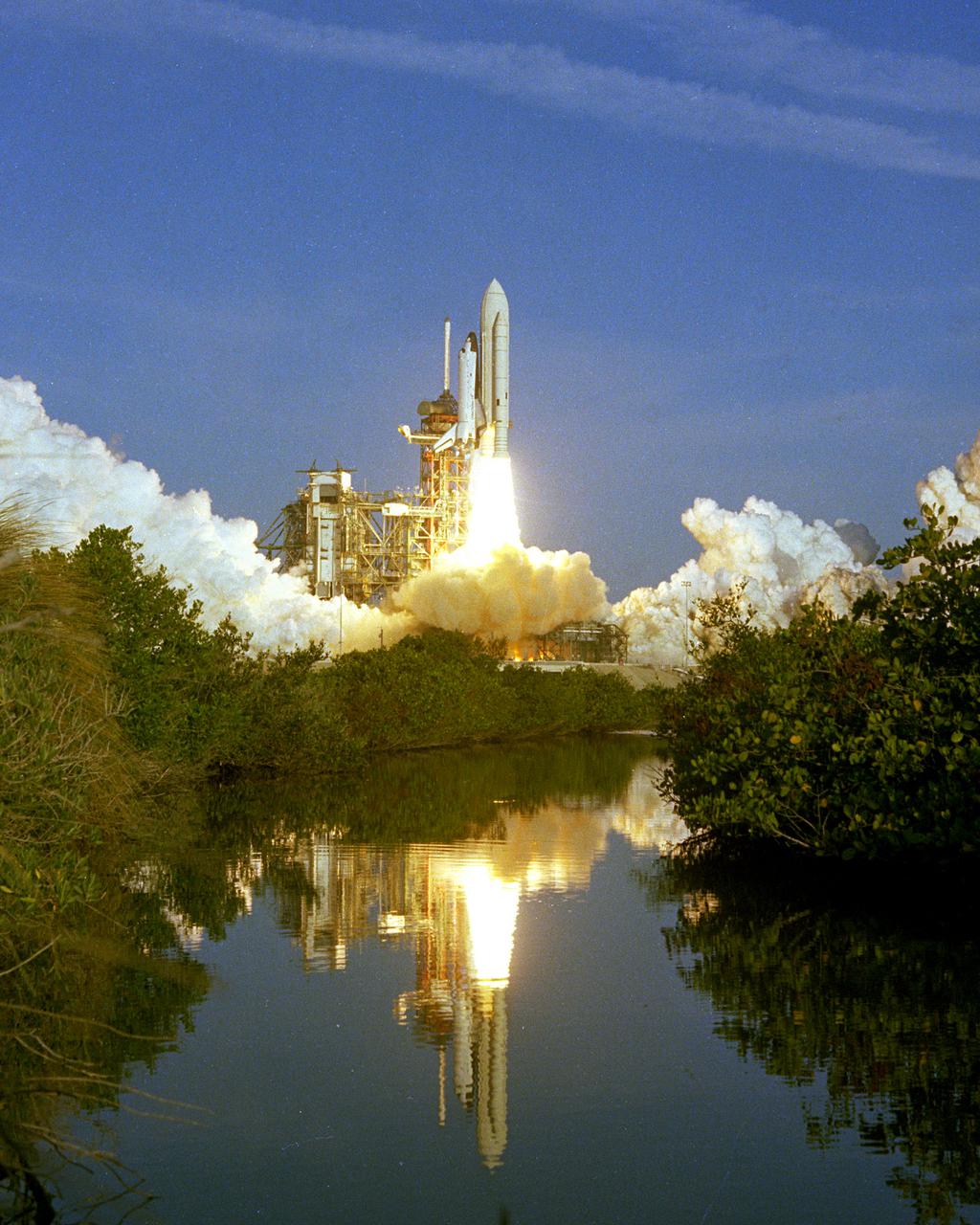
KENNEDY SPACE CENTER, FLA. - Columbia flies. Just seconds past the scheduled launch time of 7 a.m. on April 12, America's Space Transportation System becomes a fact, with the liftoff of the first Space Shuttle from Launch Pad 39A. The successful maiden flight of the new concept in space vehicles took Astronauts John Young and Robert Crippen into an Earth orbital mission scheduled to last 54 hours, concluding with unpowered landing at Edwards Air Force Base, California.
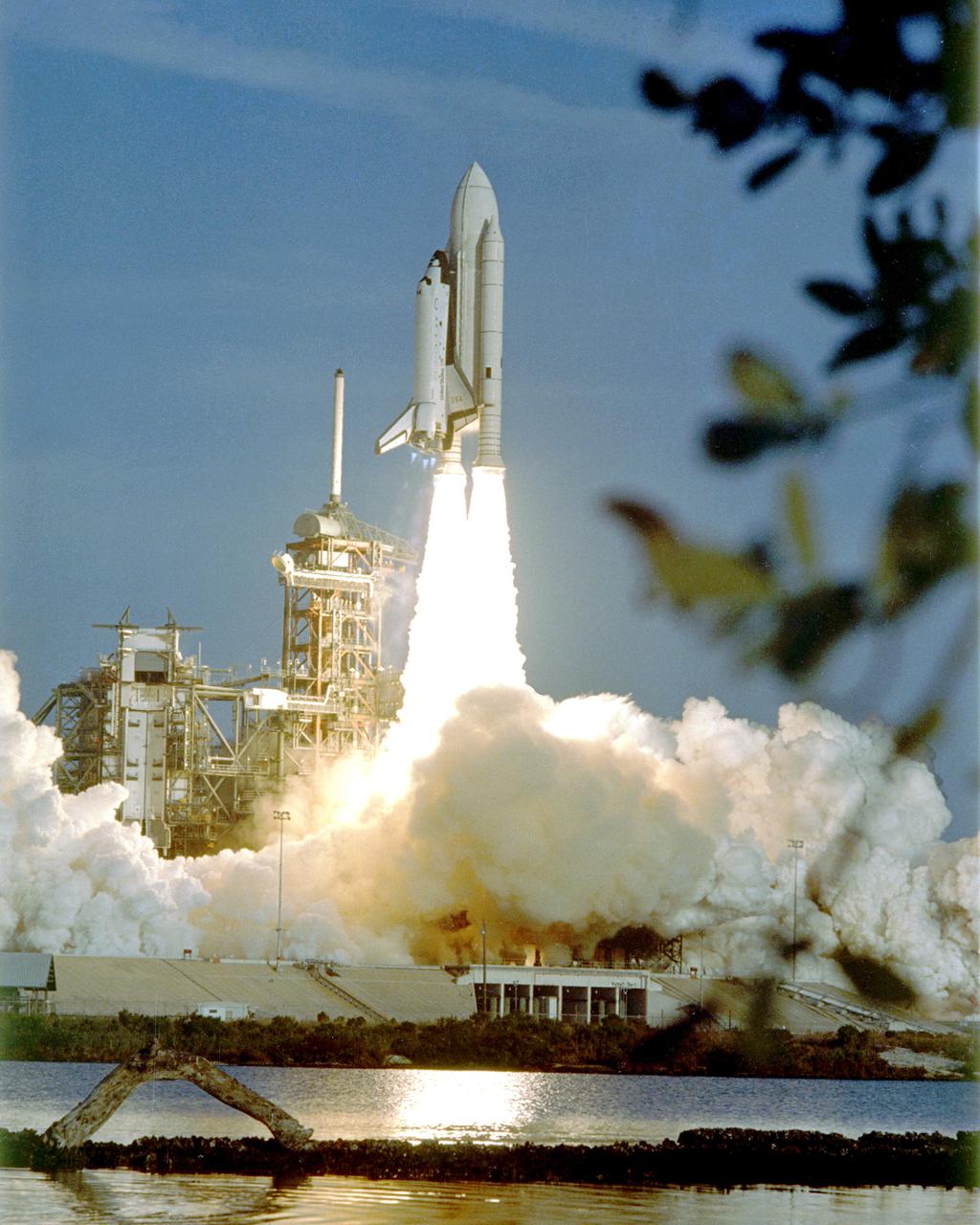
KENNEDY SPACE CENTER, FLA. - Columbia flies. Just seconds past the scheduled launch time of 7 a.m. on April 12, America's Space Transportation System becomes a fact, with the liftoff of the first Space Shuttle from Launch Pad 39A. The successful maiden flight of the new concept in space vehicles took astronauts John Young and Robert Crippen into an Earth orbital mission scheduled to last for 54 hours, concluding with unpowered landing at Edwards Air Force Base, California.
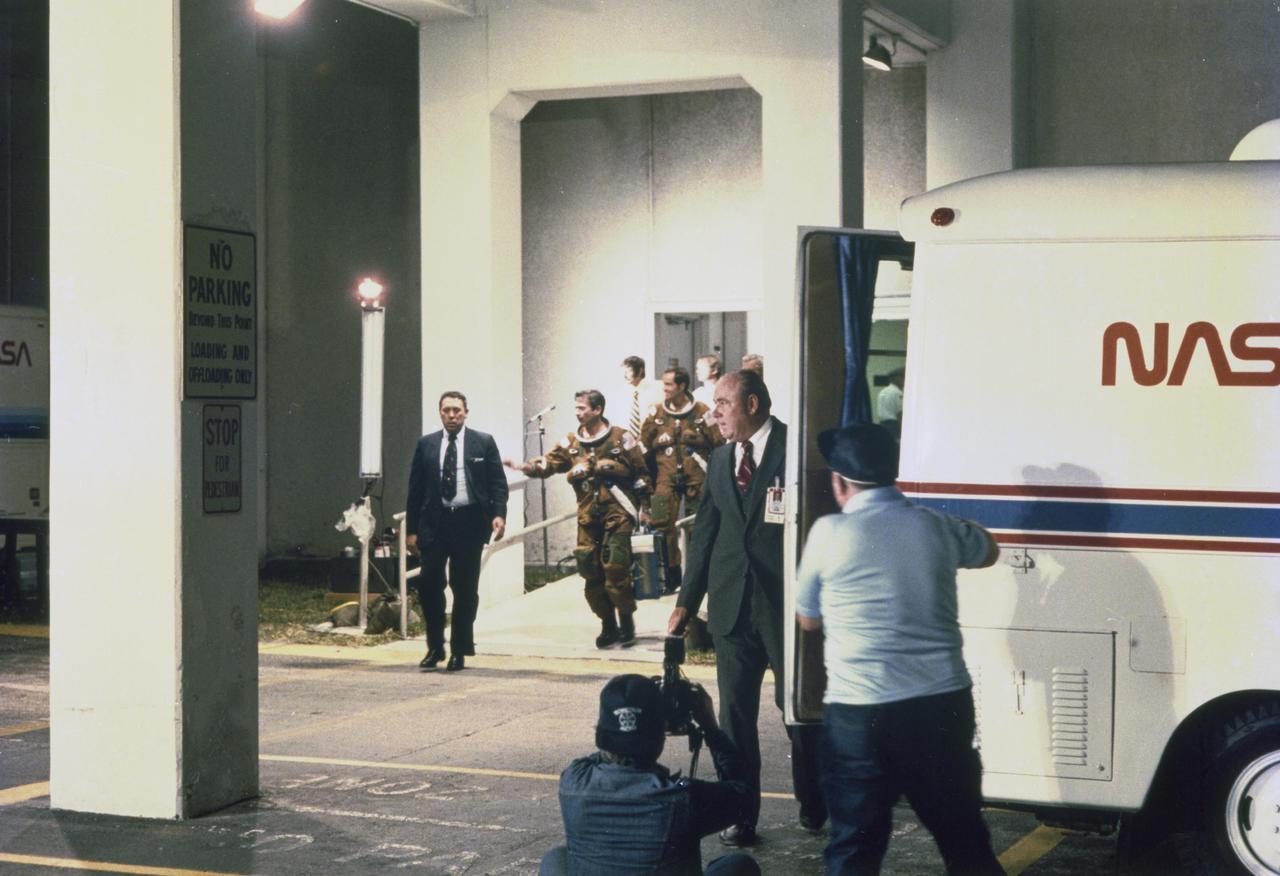
KENNEDY SPACE CENTER, FLA. - Space flight-suited Astronauts John Young, left, and Robert Crippen, accompanied by George Abbey, at far left, flight operations director, Johnson Space Center, walk from the Operations and Checkout Building to the transport van that will take them to Launch Pad 39A, for the first launch of the Space Shuttle at 7 a.m., April 12. At the rear door of the van is Charles Buckley, head of the security office, KSC. The STS-1 mission, known as a shuttle systems test flight, will seek to demonstrate safe launch into orbit and safe return of the orbiter and crew and verify the combined performance of the entire shuttle vehicle -- orbiter, solid rocket boosters and external tank.
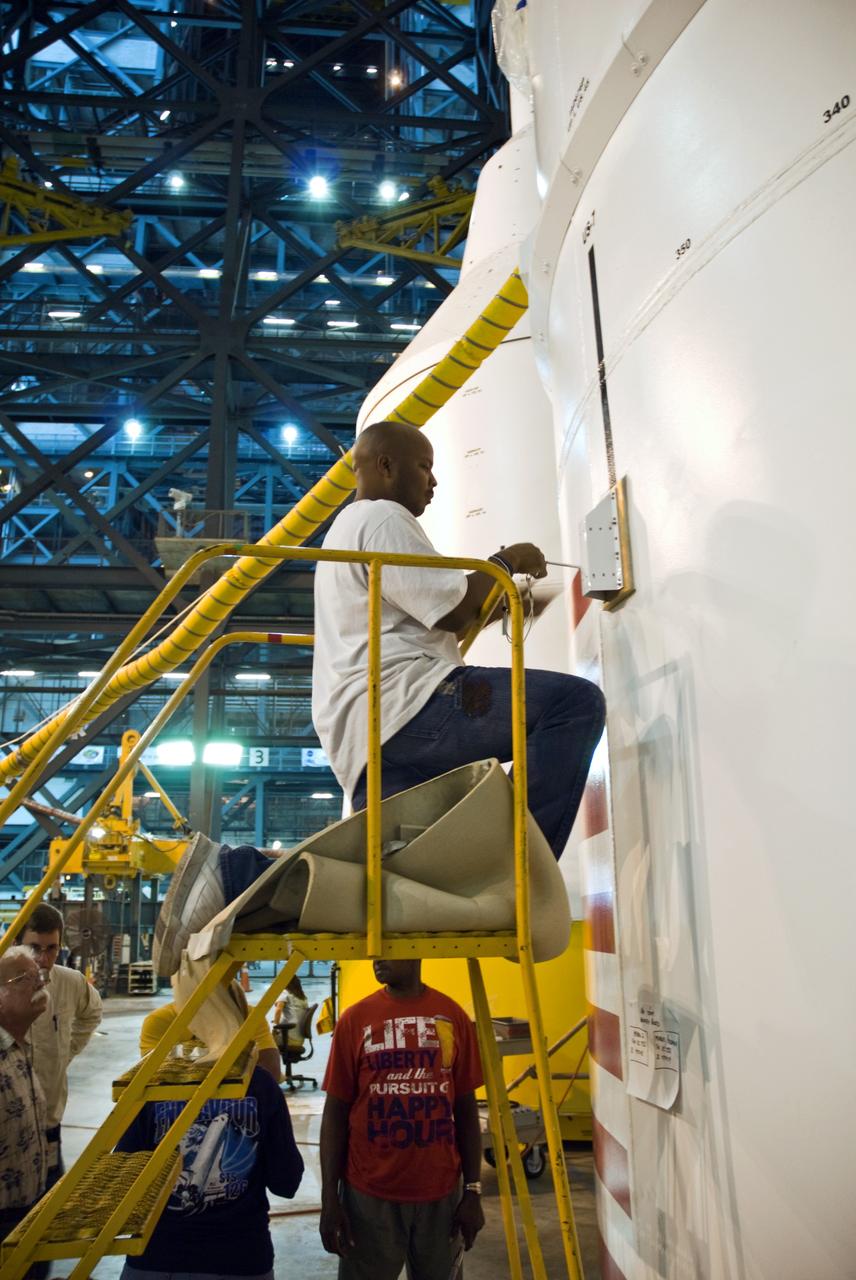
CAPE CANAVERAL, Fla. – In the Vehicle Assembly Building's High Bay 4 at NASA's Kennedy Space Center in Florida, technician Troy Merrick, with United Space Alliance, finishes installing a video camera on the side of the Ares I-X segments 6 and 7. The downward facing camera will provide live video during launch. Part of the Constellation Program, the Ares I-X is the test vehicle for the Ares I, which is the essential core of a space transportation system that eventually will carry crewed missions back to the moon, on to Mars and out into the solar system . The Ares I-X flight test is targeted for no earlier than Aug. 30. Photo credit: NASA/Jack Pfaller
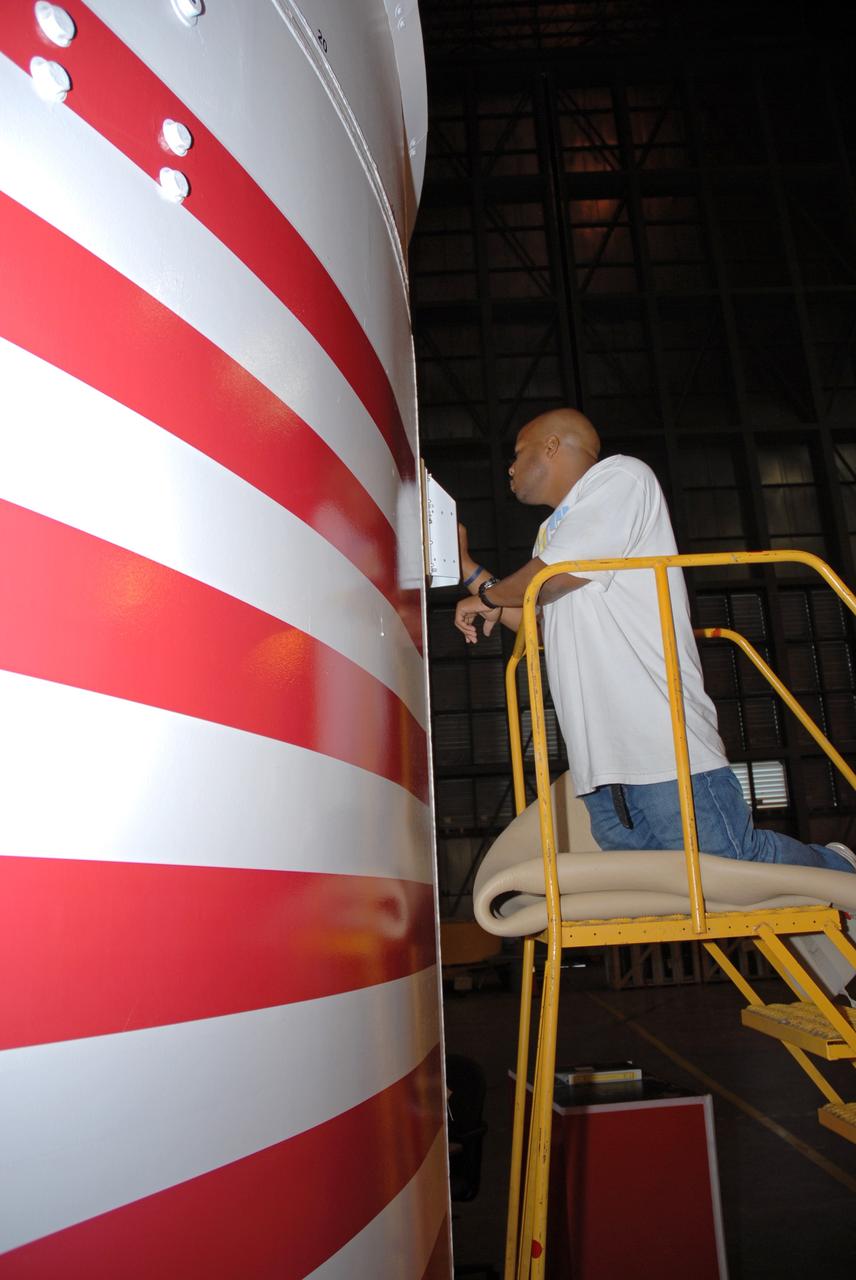
CAPE CANAVERAL, Fla. – In the Vehicle Assembly Building's High Bay 4 at NASA's Kennedy Space Center in Florida, technician Troy Merrick, with United Space Alliance, installs a video camera on the side of the Ares I-X segments 6 and 7. The downward facing camera will provide live video during launch. Part of the Constellation Program, the Ares I-X is the test vehicle for the Ares I, which is the essential core of a space transportation system that eventually will carry crewed missions back to the moon, on to Mars and out into the solar system . The Ares I-X flight test is targeted for no earlier than Aug. 30. Photo credit: NASA/Jack Pfaller
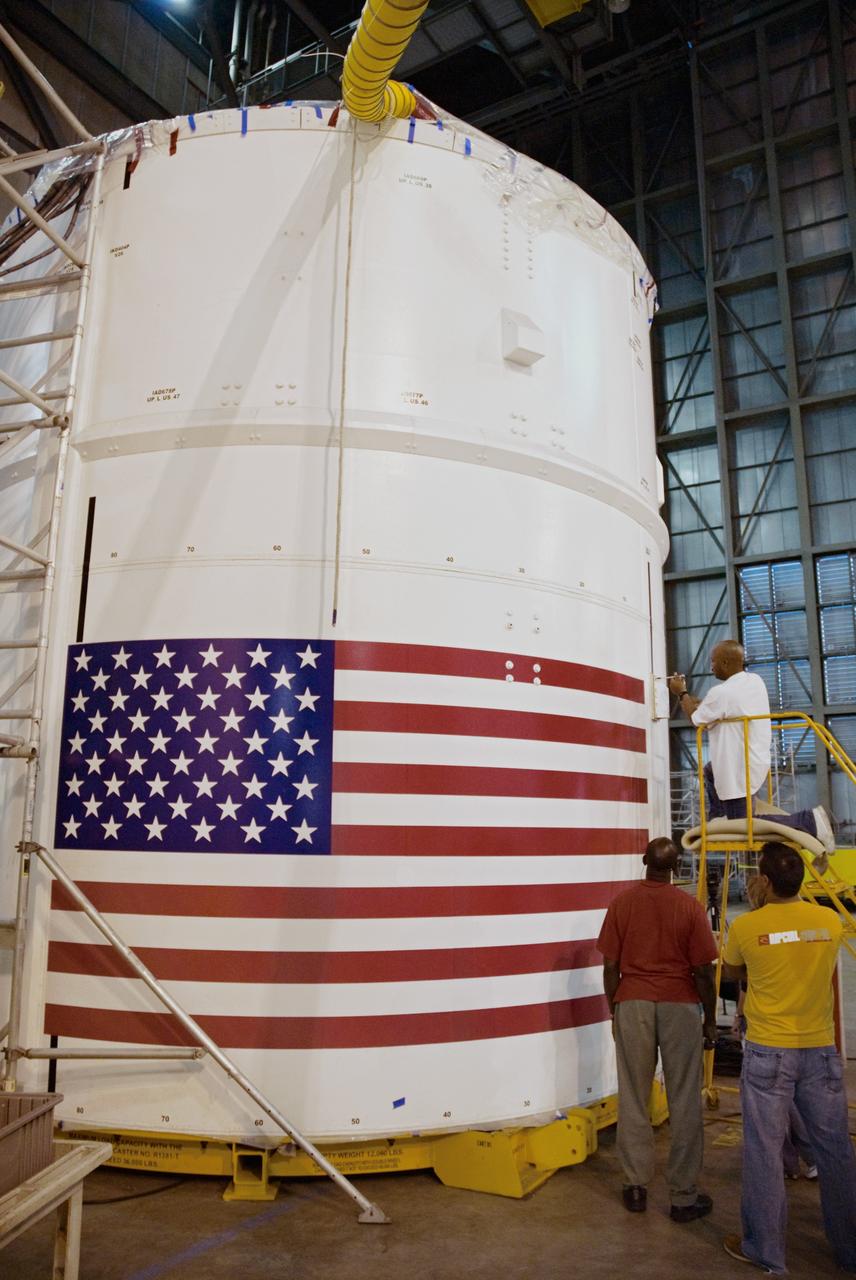
CAPE CANAVERAL, Fla. – In the Vehicle Assembly Building's High Bay 4 at NASA's Kennedy Space Center in Florida, technician Troy Merrick, with United Space Alliance, finishes installing a video camera on the side of the Ares I-X segments 6 and 7. The downward facing camera will provide live video during launch. Part of the Constellation Program, the Ares I-X is the test vehicle for the Ares I, which is the essential core of a space transportation system that eventually will carry crewed missions back to the moon, on to Mars and out into the solar system . The Ares I-X flight test is targeted for no earlier than Aug. 30. Photo credit: NASA/Jack Pfaller

CAPE CANAVERAL, Fla. – In the Vehicle Assembly Building's High Bay 4 at NASA's Kennedy Space Center in Florida, technician Troy Merrick, with United Space Alliance, prepares a site on the Ares I-X segments 6 and 7 where a video camera will be installed. The downward facing camera will provide live video during launch. Part of the Constellation Program, the Ares I-X is the test vehicle for the Ares I, which is the essential core of a space transportation system that eventually will carry crewed missions back to the moon, on to Mars and out into the solar system . The Ares I-X flight test is targeted for no earlier than Aug. 30. Photo credit: NASA/Jack Pfaller
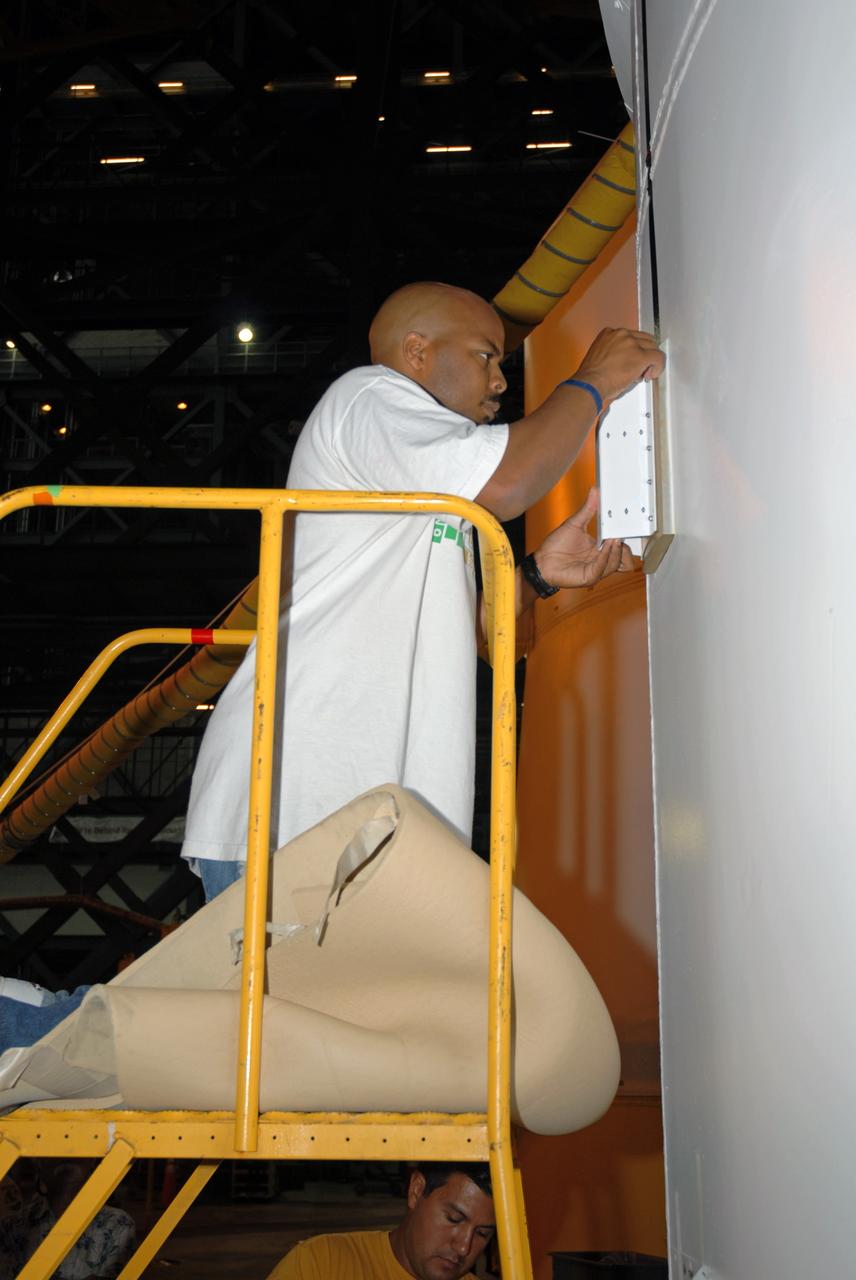
CAPE CANAVERAL, Fla. – In the Vehicle Assembly Building's High Bay 4 at NASA's Kennedy Space Center in Florida, technician Troy Merrick, with United Space Alliance, installs a video camera on the side of the Ares I-X segments 6 and 7. The downward facing camera will provide live video during launch. Part of the Constellation Program, the Ares I-X is the test vehicle for the Ares I, which is the essential core of a space transportation system that eventually will carry crewed missions back to the moon, on to Mars and out into the solar system . The Ares I-X flight test is targeted for no earlier than Aug. 30. Photo credit: NASA/Jack Pfaller
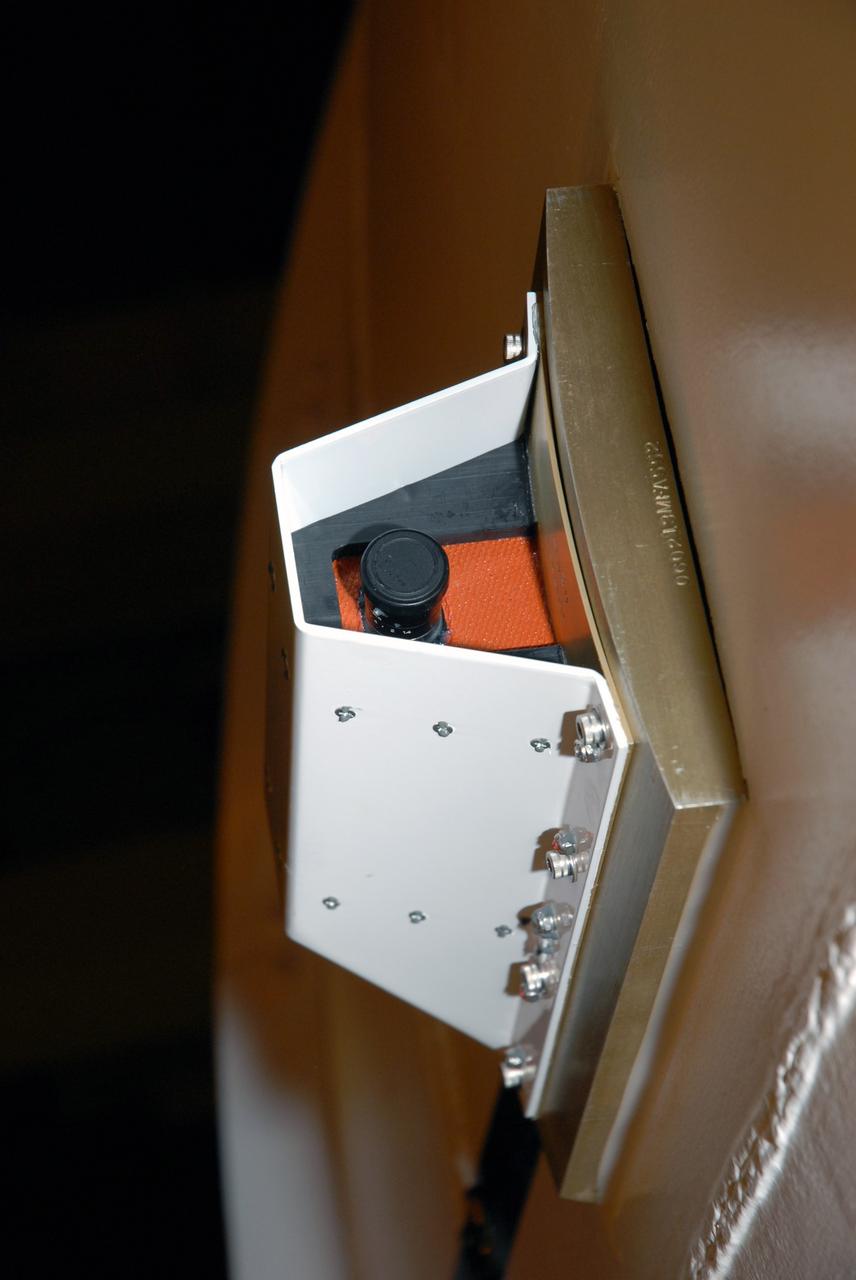
CAPE CANAVERAL, Fla. – A close-up of the video camera installed on the side of the Ares I-X segments 6 and 7, which are in the Vehicle Assembly Building's High Bay 4 at NASA's Kennedy Space Center in Florida. The downward facing camera will provide live video during launch. Part of the Constellation Program, the Ares I-X is the test vehicle for the Ares I, which is the essential core of a space transportation system that eventually will carry crewed missions back to the moon, on to Mars and out into the solar system . The Ares I-X flight test is targeted for no earlier than Aug. 30. Photo credit: NASA/Jack Pfaller
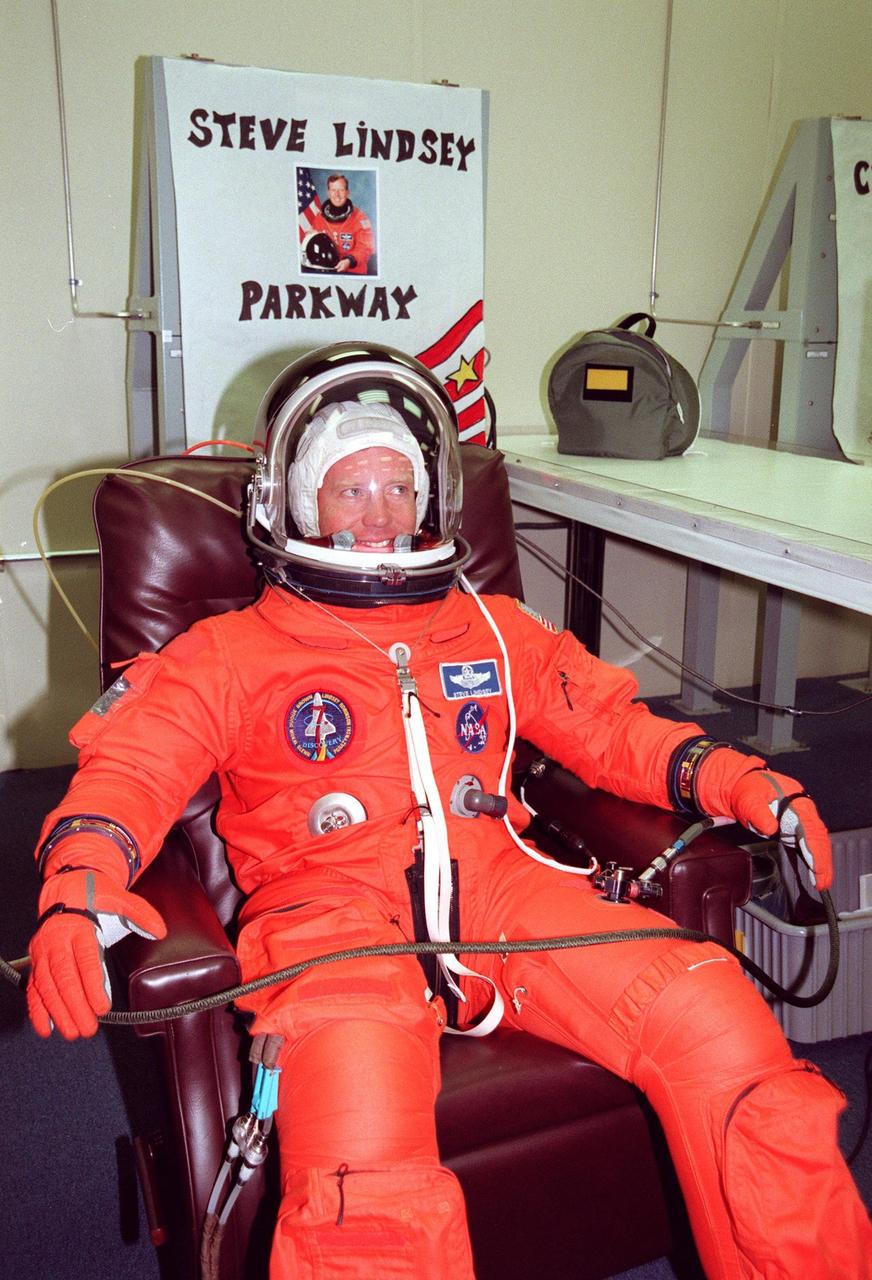
STS-95 Pilot Steven W. Lindsey tests his flight suit in the Operations and Checkout Building. The final fitting takes place prior to the crew walkout and transport to Launch Pad 39B. Targeted for launch at 2 p.m. EST on Oct. 29, the mission is expected to last 8 days, 21 hours and 49 minutes, and return to KSC at 11:49 a.m. EST on Nov. 7. The STS-95 mission includes research payloads such as the Spartan solar-observing deployable spacecraft, the Hubble Space Telescope Orbital Systems Test Platform, the International Extreme Ultraviolet Hitchhiker, as well as the SPACEHAB single module with experiments on space flight and the aging process
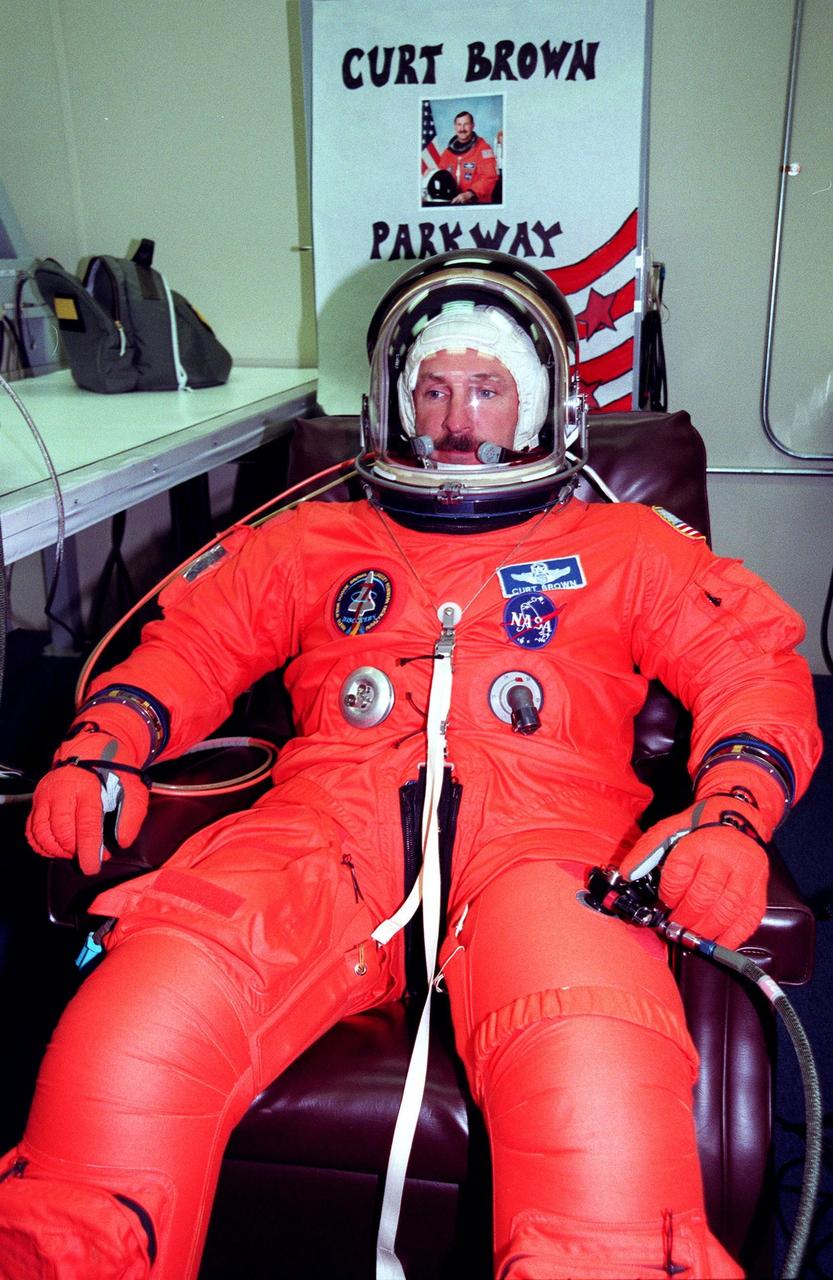
STS-95 Mission Commander Curtis L. Brown Jr. tests his flight suit in the Operations and Checkout Building. The final fitting takes place prior to the crew walkout and transport to Launch Pad 39B. Targeted for launch at 2 p.m. EST on Oct. 29, the mission is expected to last 8 days, 21 hours and 49 minutes, and return to KSC at 11:49 a.m. EST on Nov. 7. The STS-95 mission includes research payloads such as the Spartan solar-observing deployable spacecraft, the Hubble Space Telescope Orbital Systems Test Platform, the International Extreme Ultraviolet Hitchhiker, as well as the SPACEHAB single module with experiments on space flight and the aging process
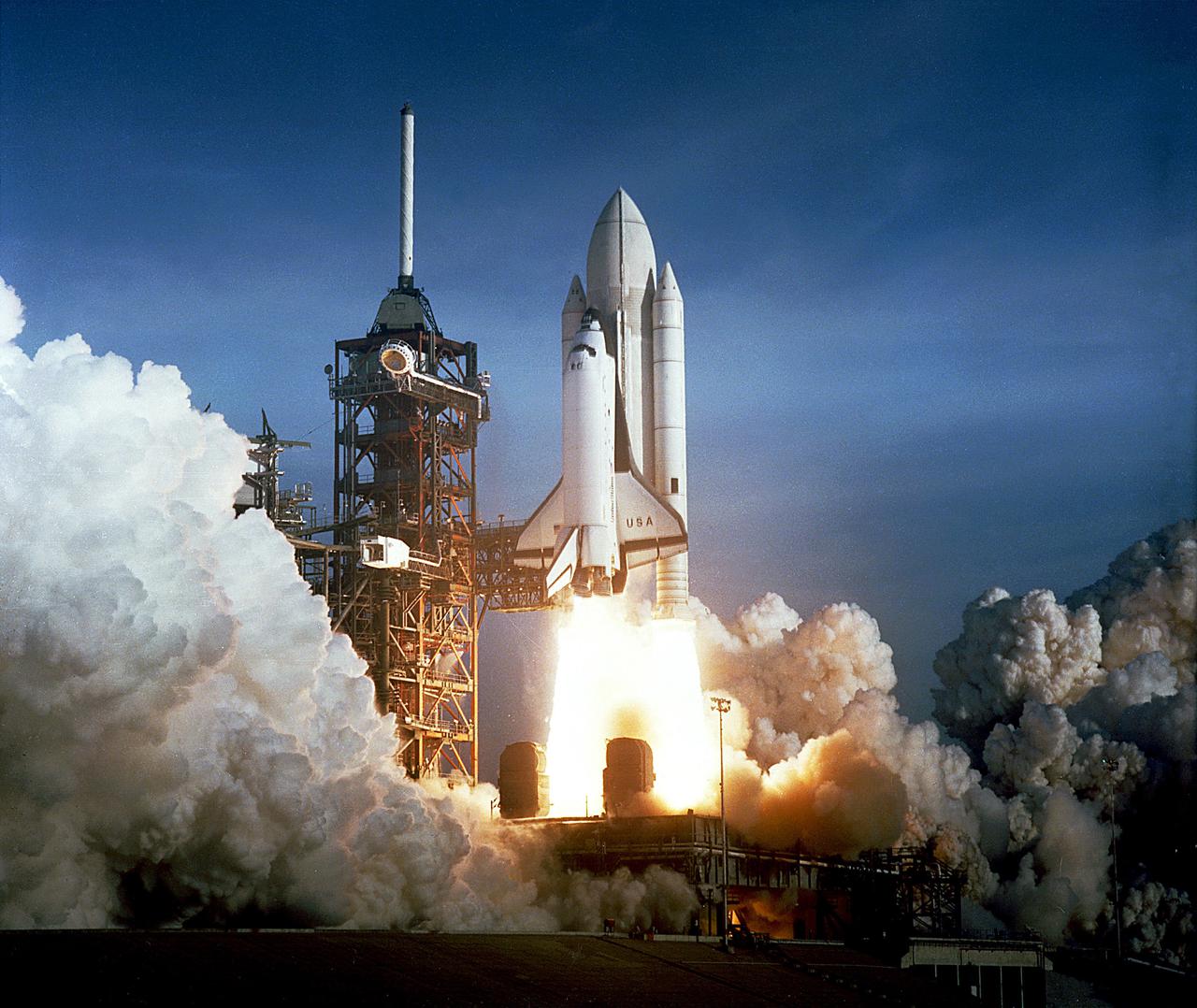
KENNEDY SPACE CENTER, FLA. - After six years of silence, the thunder of manned space flight is heard again, as the successful launch of the first Space Shuttle ushers in a new concept in utilization of space. The April 12 launch at Pad 39A, just seconds past 7 a.m., carries astronauts John Young and Robert Crippen into an Earth orbital mission scheduled to last 54 hours, ending with unpowered landing at Edwards Air Force Base in California. STS-1, the first in a series of Shuttle Vehicles planned for the Space Transportation System, utilizes reusable launch and return components.
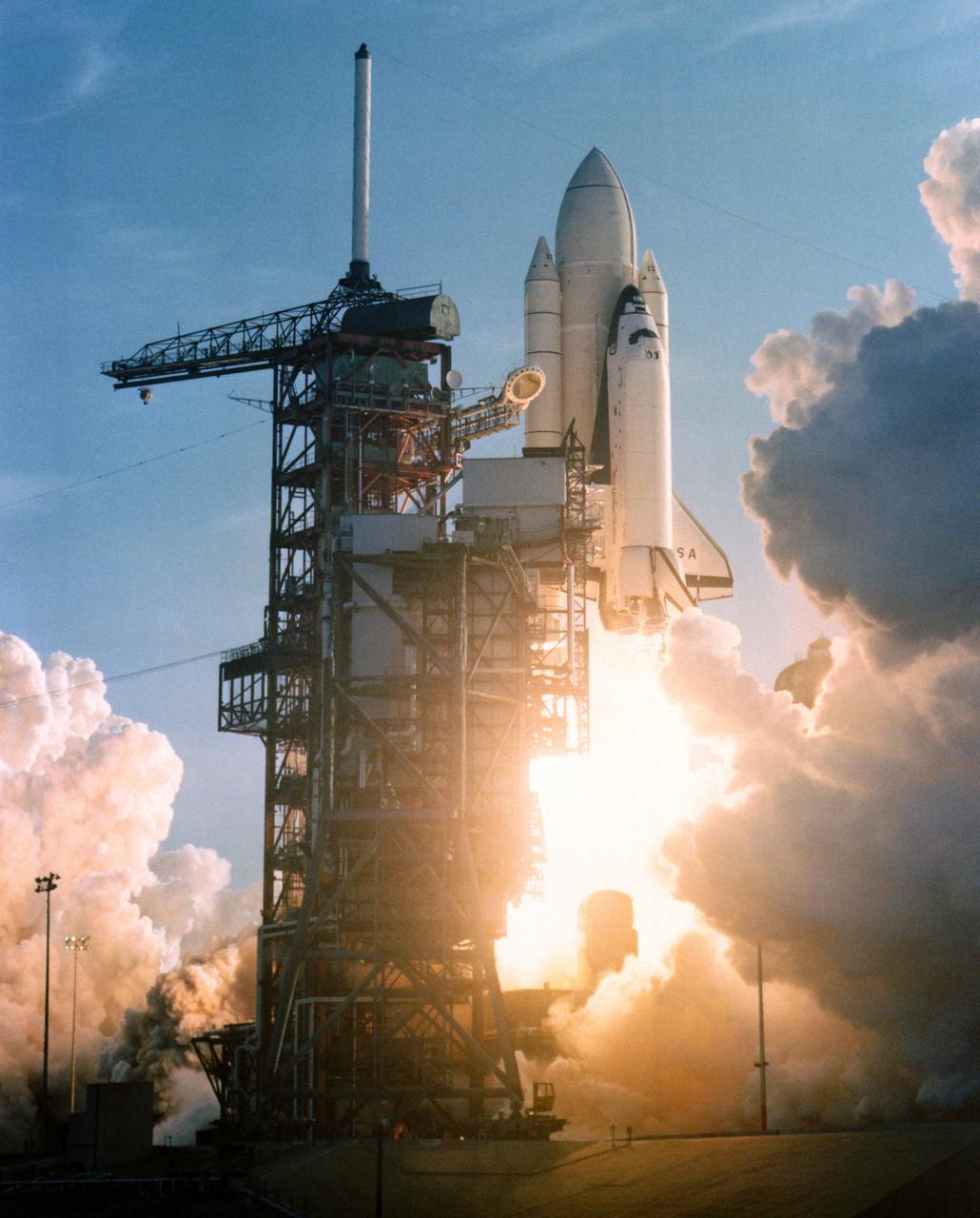
S81-30499 (12 April 1981) --- Space shuttle Columbia flies. Just seconds past the scheduled launch time of 7 a.m. on April 12, 1981, America's Space Transportation System becomes a fact, with the liftoff of the first space shuttle from Launch Pad 39A. The successful maiden flight of the new concept in space vehicles took astronauts John Young and Robert Crippen into an Earth-orbital mission scheduled to last for 54 hours, concluding with unpowered landing at Edwards Air Force Base, California. Photo credit: NASA or National Aeronautics and Space Administration
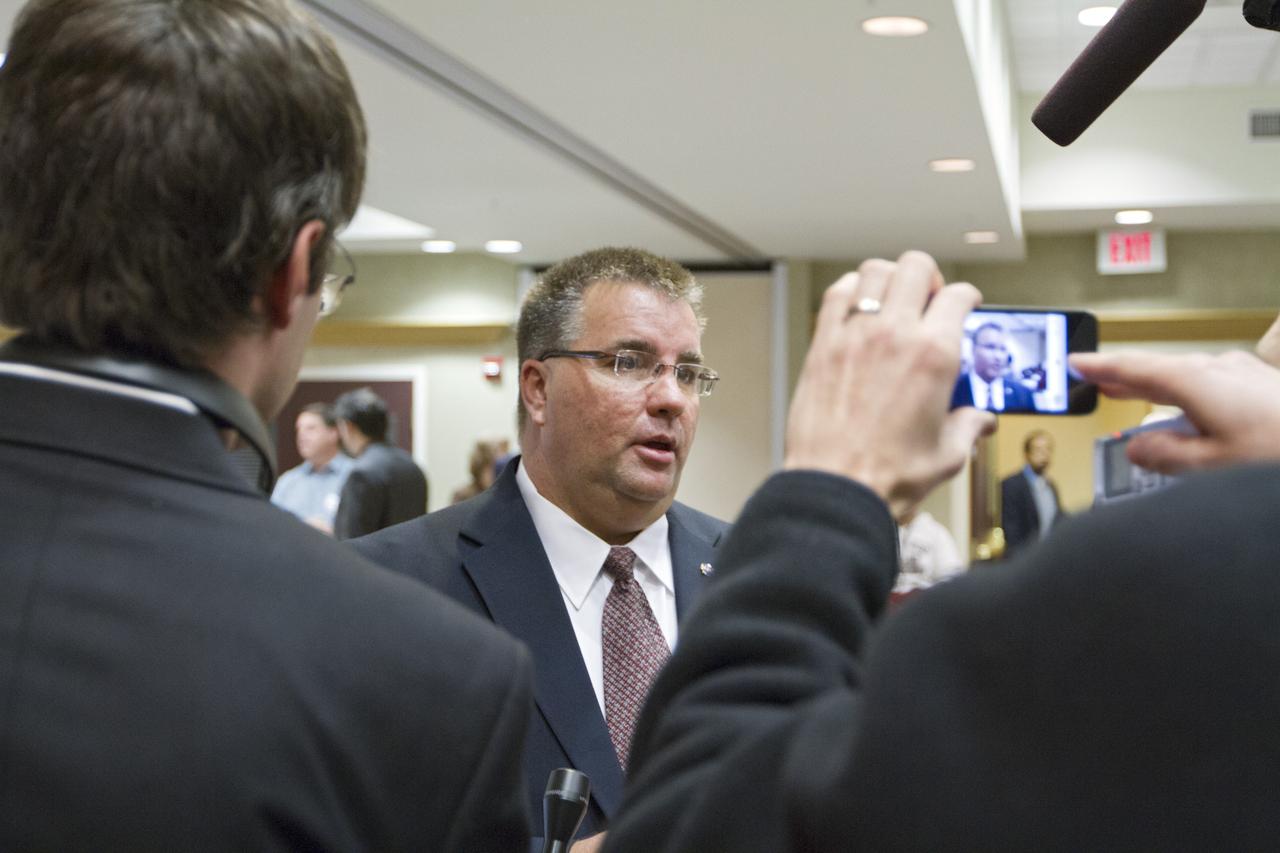
COCOA BEACH, Fla. -- Ed Mango, program manager for NASA's Commercial Crew Program CCP, talks to media during a preproposal conference at the Courtyard Marriott in Cocoa Beach, Fla. The meeting focused on information related to NASA's release of the Commercial Crew Integrated Capability CCiCap Announcement for Proposals on Feb. 7. More than 50 industry partners and stakeholders from 25 aerospace companies attended the conference to find out what the space agency would be looking for in terms of milestones, funding, schedules, strategies, safety cultures, business modules and eventual flight certification standards of integrated crew space transportation systems. The goal of the CCiCap is to develop an indigenous U.S. transportation system that can safely, affordably and routinely fly to low Earth orbit destinations, including the International Space Station. Proposals are due March 23 and NASA plans to award multiple Space Act Agreements, valued from $300 million to $500 million each, toward the development of fully integrated commercial crew transportation systems in the summer of 2012. For more information, visit www.nasa.gov/commercialcrew Photo credit: Kim Shiflett
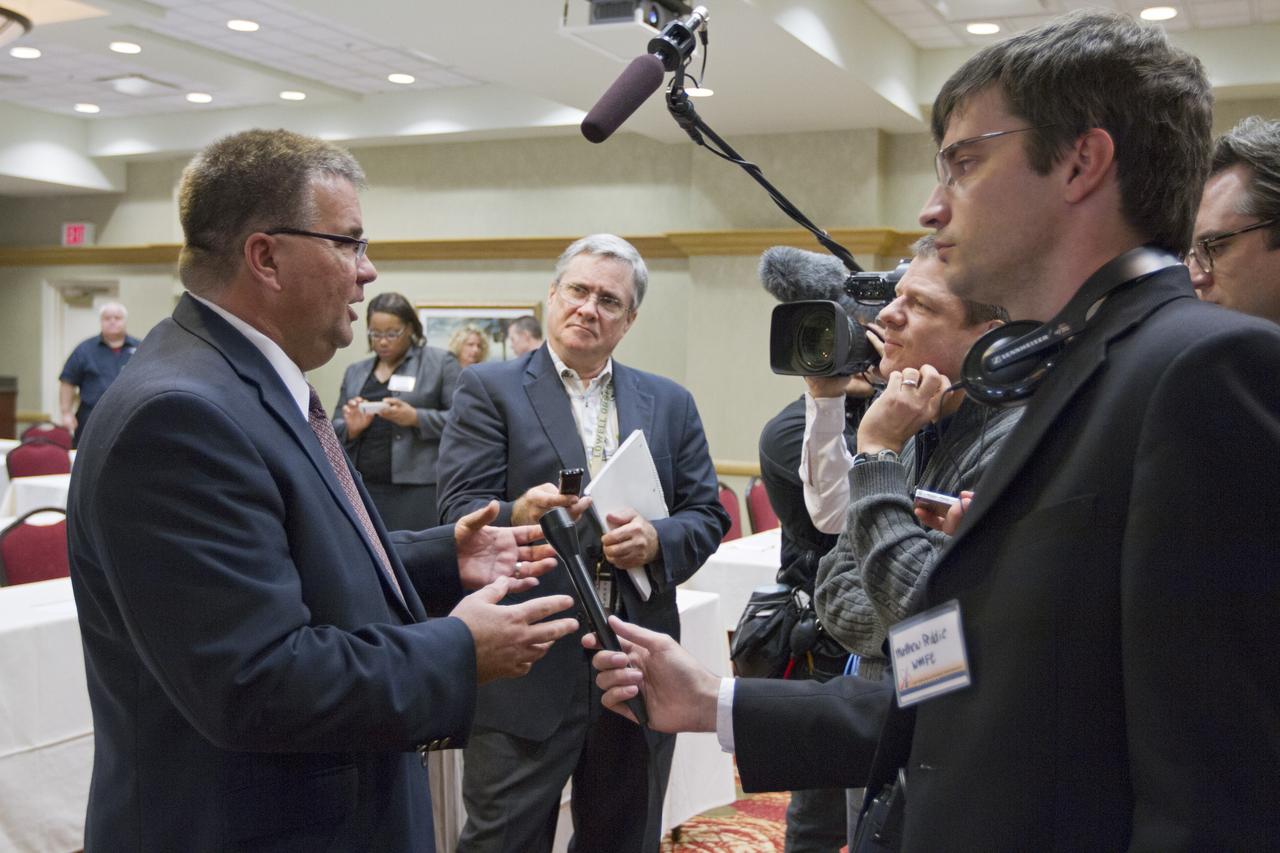
COCOA BEACH, Fla. -- Ed Mango, program manager for NASA's Commercial Crew Program CCP, talks to media during a preproposal conference at the Courtyard Marriott in Cocoa Beach, Fla. The meeting focused on information related to NASA's release of the Commercial Crew Integrated Capability CCiCap Announcement for Proposals on Feb. 7. More than 50 industry partners and stakeholders from 25 aerospace companies attended the conference to find out what the space agency would be looking for in terms of milestones, funding, schedules, strategies, safety cultures, business modules and eventual flight certification standards of integrated crew space transportation systems. The goal of the CCiCap is to develop an indigenous U.S. transportation system that can safely, affordably and routinely fly to low Earth orbit destinations, including the International Space Station. Proposals are due March 23 and NASA plans to award multiple Space Act Agreements, valued from $300 million to $500 million each, toward the development of fully integrated commercial crew transportation systems in the summer of 2012. For more information, visit www.nasa.gov/commercialcrew Photo credit: Kim Shiflett
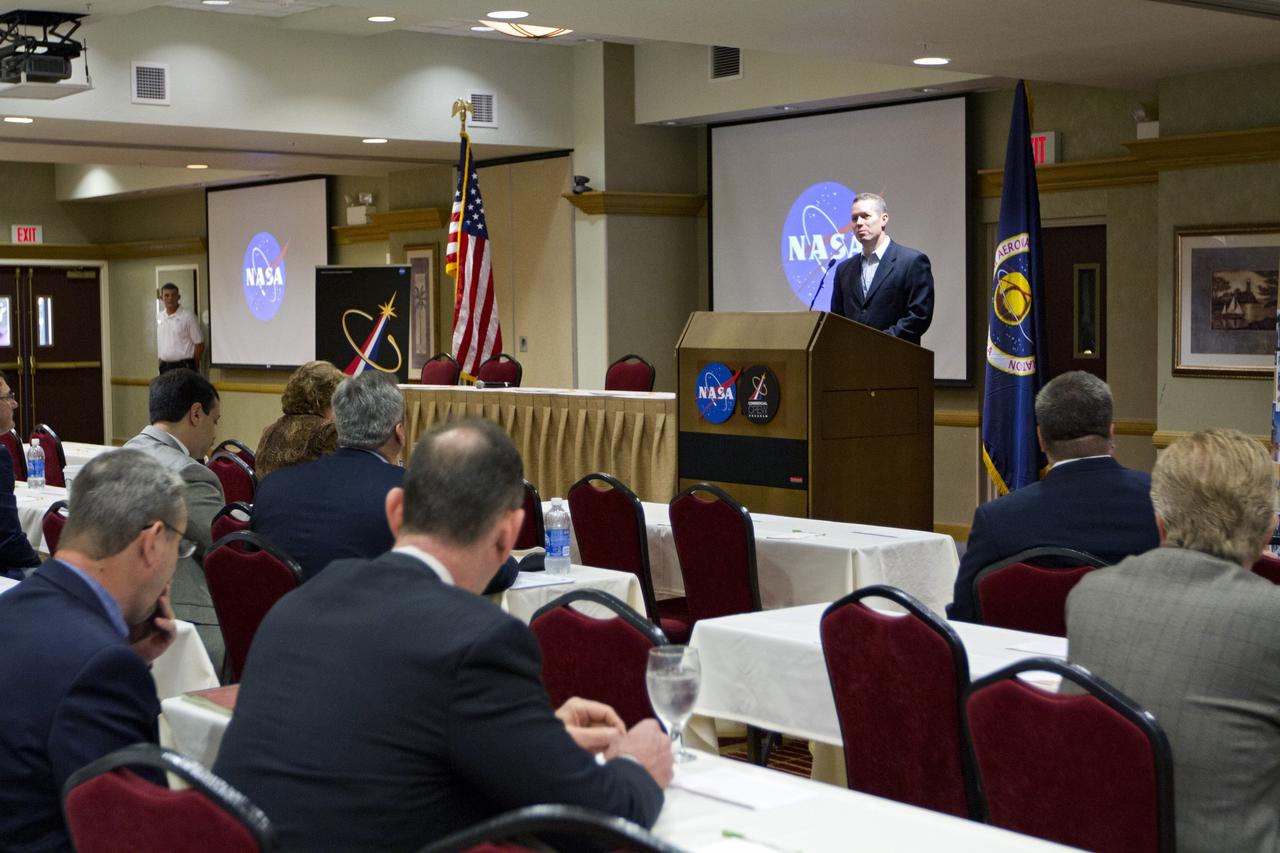
COCOA BEACH, Fla. -- Phil McAlister, NASA's director of Commercial Spaceflight Development, talks to industry partners and stakeholders during a preproposal conference at the Courtyard Marriott in Cocoa Beach, Fla. The meeting focused on information related to NASA's release of the Commercial Crew Integrated Capability CCiCap Announcement for Proposals on Feb. 7. More than 50 people from 25 aerospace companies attended the conference to find out what the space agency would be looking for in terms of milestones, funding, schedules, strategies, safety cultures, business modules and eventual flight certification standards of integrated crew space transportation systems. The goal of the CCiCap is to develop an indigenous U.S. transportation system that can safely, affordably and routinely fly to low Earth orbit destinations, including the International Space Station. Proposals are due March 23 and NASA plans to award multiple Space Act Agreements, valued from $300 million to $500 million each, toward the development of fully integrated commercial crew transportation systems in the summer of 2012. For more information, visit www.nasa.gov/commercialcrew Photo credit: Kim Shiflett
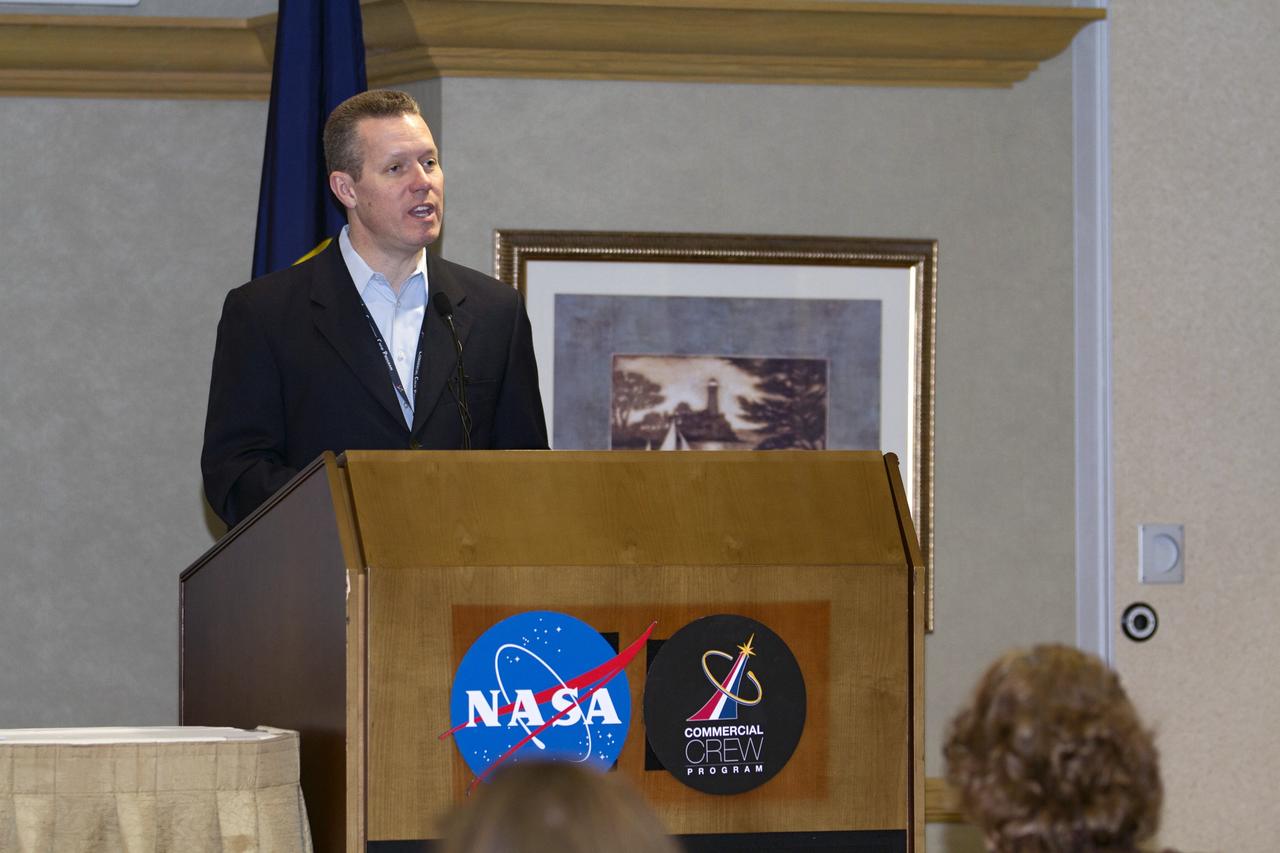
COCOA BEACH, Fla. -- Phil McAlister, NASA's director of Commercial Spaceflight Development, talks to industry partners and stakeholders during a preproposal conference at the Courtyard Marriott in Cocoa Beach, Fla. The meeting focused on information related to NASA's release of the Commercial Crew Integrated Capability CCiCap Announcement for Proposals on Feb. 7. More than 50 people from 25 aerospace companies attended the conference to find out what the space agency would be looking for in terms of milestones, funding, schedules, strategies, safety cultures, business modules and eventual flight certification standards of integrated crew space transportation systems. The goal of the CCiCap is to develop an indigenous U.S. transportation system that can safely, affordably and routinely fly to low Earth orbit destinations, including the International Space Station. Proposals are due March 23 and NASA plans to award multiple Space Act Agreements, valued from $300 million to $500 million each, toward the development of fully integrated commercial crew transportation systems in the summer of 2012. For more information, visit www.nasa.gov/commercialcrew Photo credit: Kim Shiflett
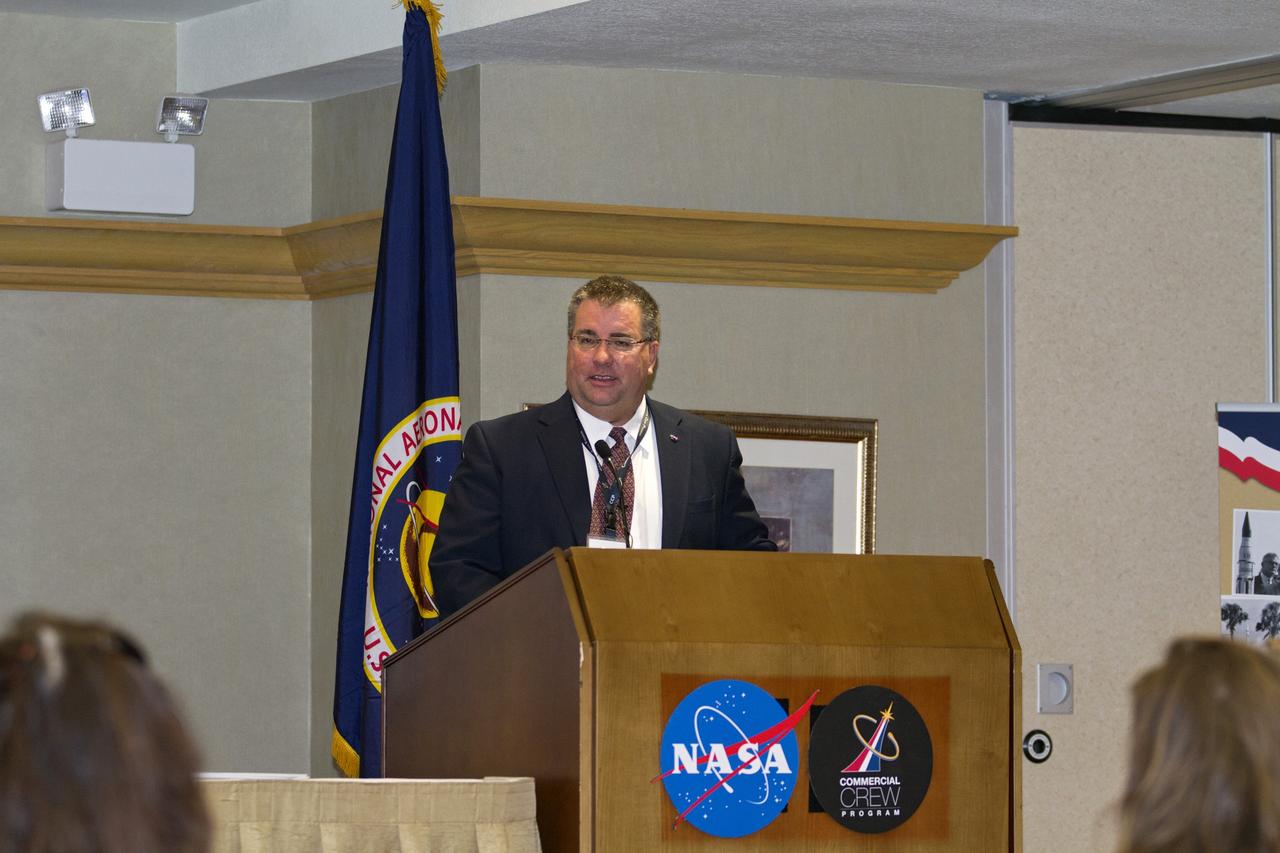
COCOA BEACH, Fla. -- Ed Mango, program manager for NASA's Commercial Crew Program CCP, talks to industry partners and stakeholders during a preproposal conference at the Courtyard Marriott in Cocoa Beach, Fla. The meeting focused on information related to NASA's release of the Commercial Crew Integrated Capability CCiCap Announcement for Proposals on Feb. 7. More than 50 people from 25 aerospace companies attended the conference to find out what the space agency would be looking for in terms of milestones, funding, schedules, strategies, safety cultures, business modules and eventual flight certification standards of integrated crew space transportation systems. The goal of the CCiCap is to develop an indigenous U.S. transportation system that can safely, affordably and routinely fly to low Earth orbit destinations, including the International Space Station. Proposals are due March 23 and NASA plans to award multiple Space Act Agreements, valued from $300 million to $500 million each, toward the development of fully integrated commercial crew transportation systems in the summer of 2012. For more information, visit www.nasa.gov/commercialcrew Photo credit: Kim Shiflett
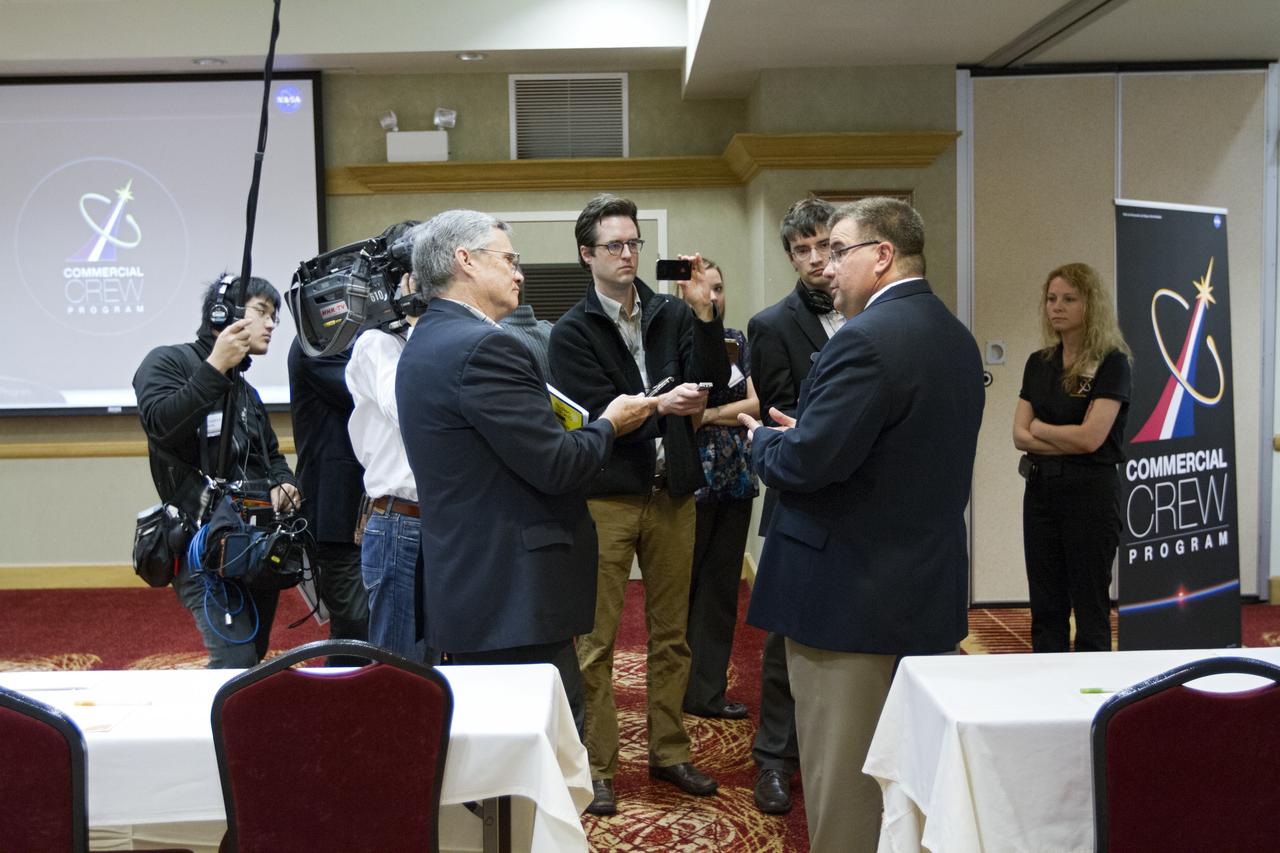
COCOA BEACH, Fla. -- Ed Mango, program manager for NASA's Commercial Crew Program CCP, talks to media during a preproposal conference at the Courtyard Marriott in Cocoa Beach, Fla. The meeting focused on information related to NASA's release of the Commercial Crew Integrated Capability CCiCap Announcement for Proposals on Feb. 7. More than 50 industry partners and stakeholders from 25 aerospace companies attended the conference to find out what the space agency would be looking for in terms of milestones, funding, schedules, strategies, safety cultures, business modules and eventual flight certification standards of integrated crew space transportation systems. The goal of the CCiCap is to develop an indigenous U.S. transportation system that can safely, affordably and routinely fly to low Earth orbit destinations, including the International Space Station. Proposals are due March 23 and NASA plans to award multiple Space Act Agreements, valued from $300 million to $500 million each, toward the development of fully integrated commercial crew transportation systems in the summer of 2012. For more information, visit www.nasa.gov/commercialcrew Photo credit: Kim Shiflett
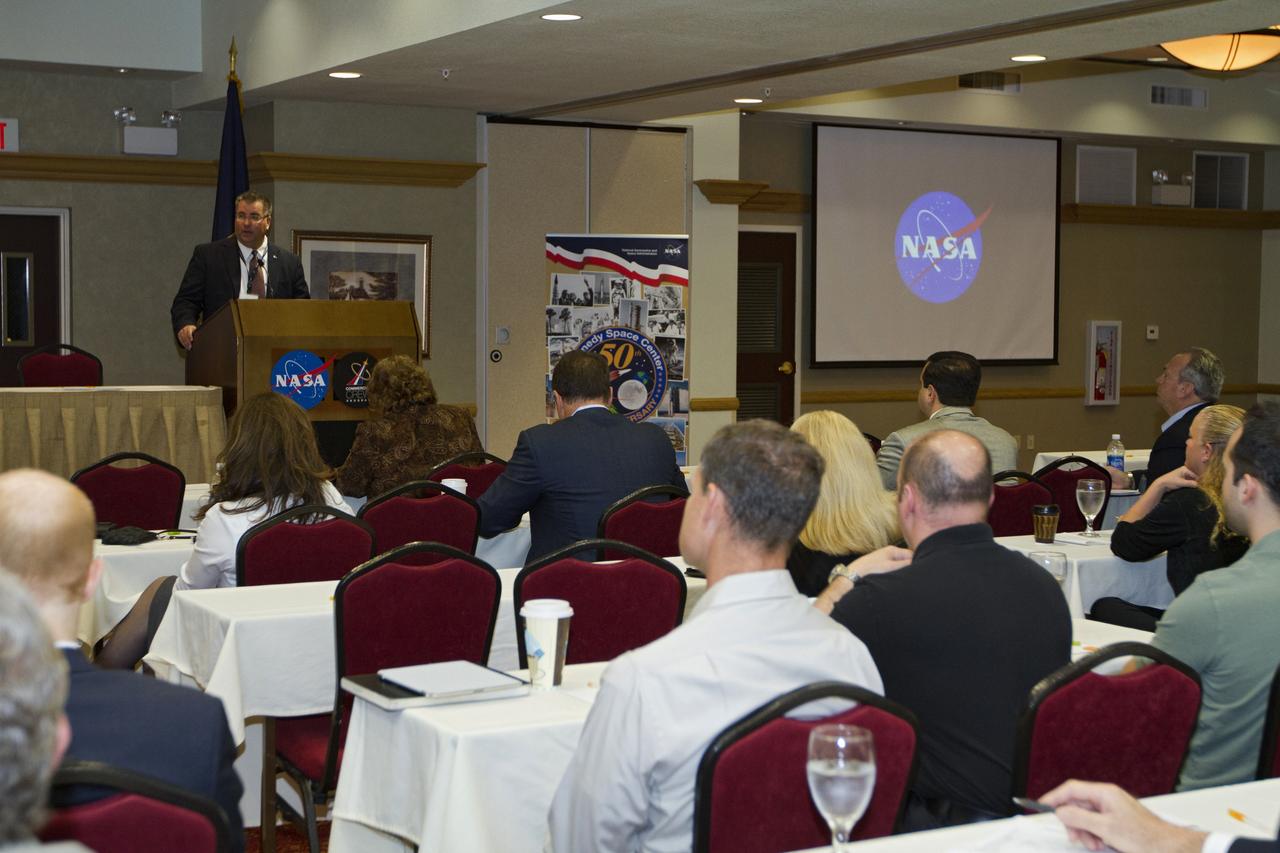
COCOA BEACH, Fla. -- Ed Mango, program manager for NASA's Commercial Crew Program CCP, talks to industry partners and stakeholders during a preproposal conference at the Courtyard Marriott in Cocoa Beach, Fla. The meeting focused on information related to NASA's release of the Commercial Crew Integrated Capability CCiCap Announcement for Proposals on Feb. 7. More than 50 people from 25 aerospace companies attended the conference to find out what the space agency would be looking for in terms of milestones, funding, schedules, strategies, safety cultures, business modules and eventual flight certification standards of integrated crew space transportation systems. The goal of the CCiCap is to develop an indigenous U.S. transportation system that can safely, affordably and routinely fly to low Earth orbit destinations, including the International Space Station. Proposals are due March 23 and NASA plans to award multiple Space Act Agreements, valued from $300 million to $500 million each, toward the development of fully integrated commercial crew transportation systems in the summer of 2012. For more information, visit www.nasa.gov/commercialcrew Photo credit: Kim Shiflett
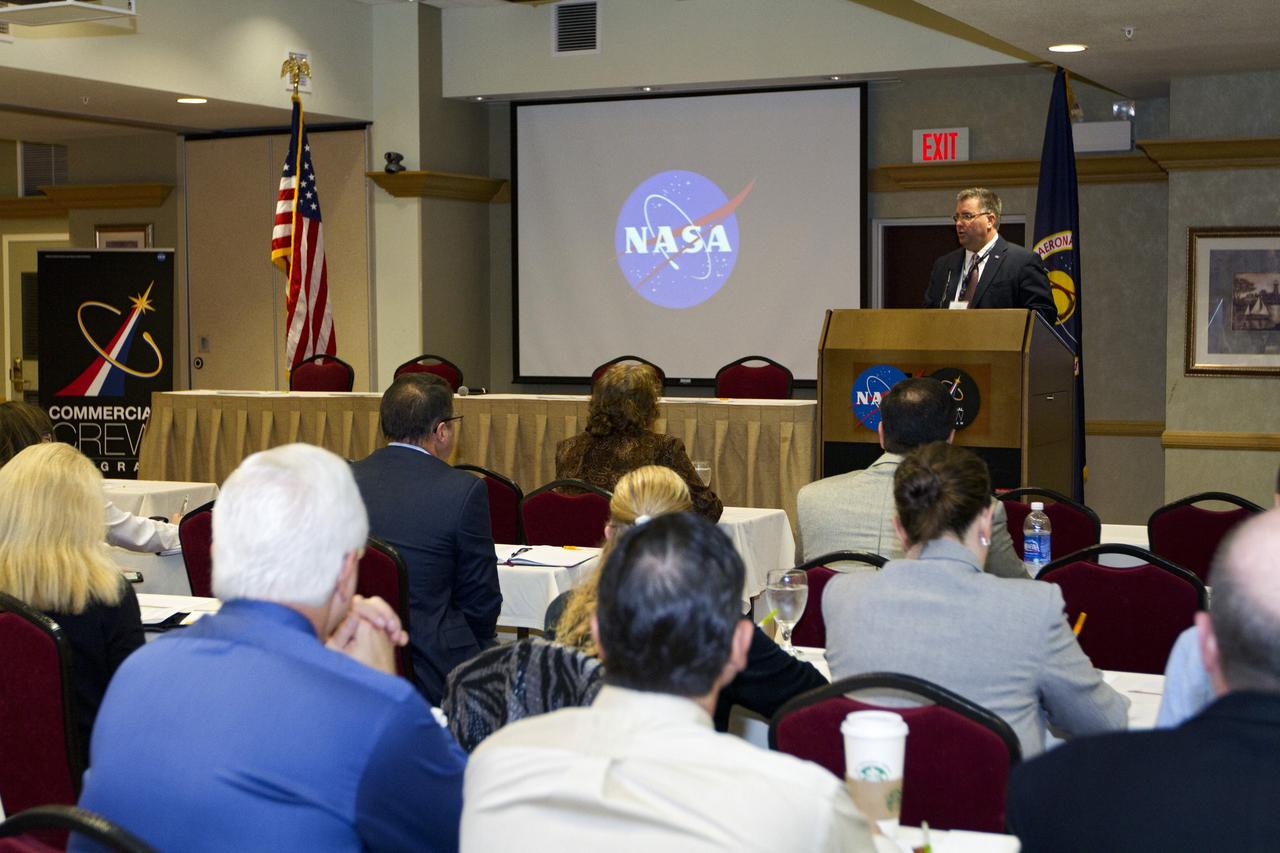
COCOA BEACH, Fla. -- Ed Mango, program manager for NASA's Commercial Crew Program CCP, talks to industry partners and stakeholders during a preproposal conference at the Courtyard Marriott in Cocoa Beach, Fla. The meeting focused on information related to NASA's release of the Commercial Crew Integrated Capability CCiCap Announcement for Proposals on Feb. 7. More than 50 people from 25 aerospace companies attended the conference to find out what the space agency would be looking for in terms of milestones, funding, schedules, strategies, safety cultures, business modules and eventual flight certification standards of integrated crew space transportation systems. The goal of the CCiCap is to develop an indigenous U.S. transportation system that can safely, affordably and routinely fly to low Earth orbit destinations, including the International Space Station. Proposals are due March 23 and NASA plans to award multiple Space Act Agreements, valued from $300 million to $500 million each, toward the development of fully integrated commercial crew transportation systems in the summer of 2012. For more information, visit www.nasa.gov/commercialcrew Photo credit: Kim Shiflett
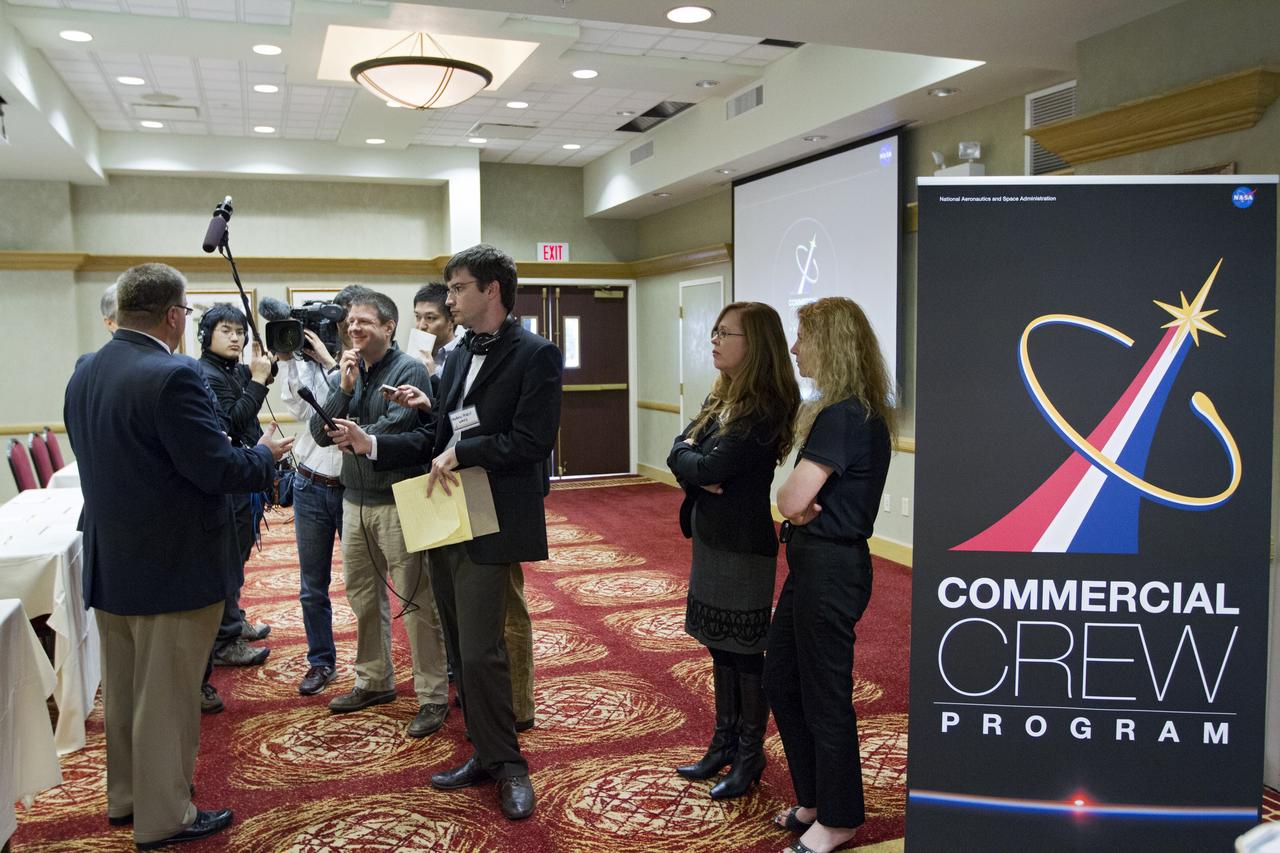
COCOA BEACH, Fla. -- Ed Mango, program manager for NASA's Commercial Crew Program CCP, talks to media during a preproposal conference at the Courtyard Marriott in Cocoa Beach, Fla. The meeting focused on information related to NASA's release of the Commercial Crew Integrated Capability CCiCap Announcement for Proposals on Feb. 7. More than 50 industry partners and stakeholders from 25 aerospace companies attended the conference to find out what the space agency would be looking for in terms of milestones, funding, schedules, strategies, safety cultures, business modules and eventual flight certification standards of integrated crew space transportation systems. The goal of the CCiCap is to develop an indigenous U.S. transportation system that can safely, affordably and routinely fly to low Earth orbit destinations, including the International Space Station. Proposals are due March 23 and NASA plans to award multiple Space Act Agreements, valued from $300 million to $500 million each, toward the development of fully integrated commercial crew transportation systems in the summer of 2012. For more information, visit www.nasa.gov/commercialcrew Photo credit: Kim Shiflett
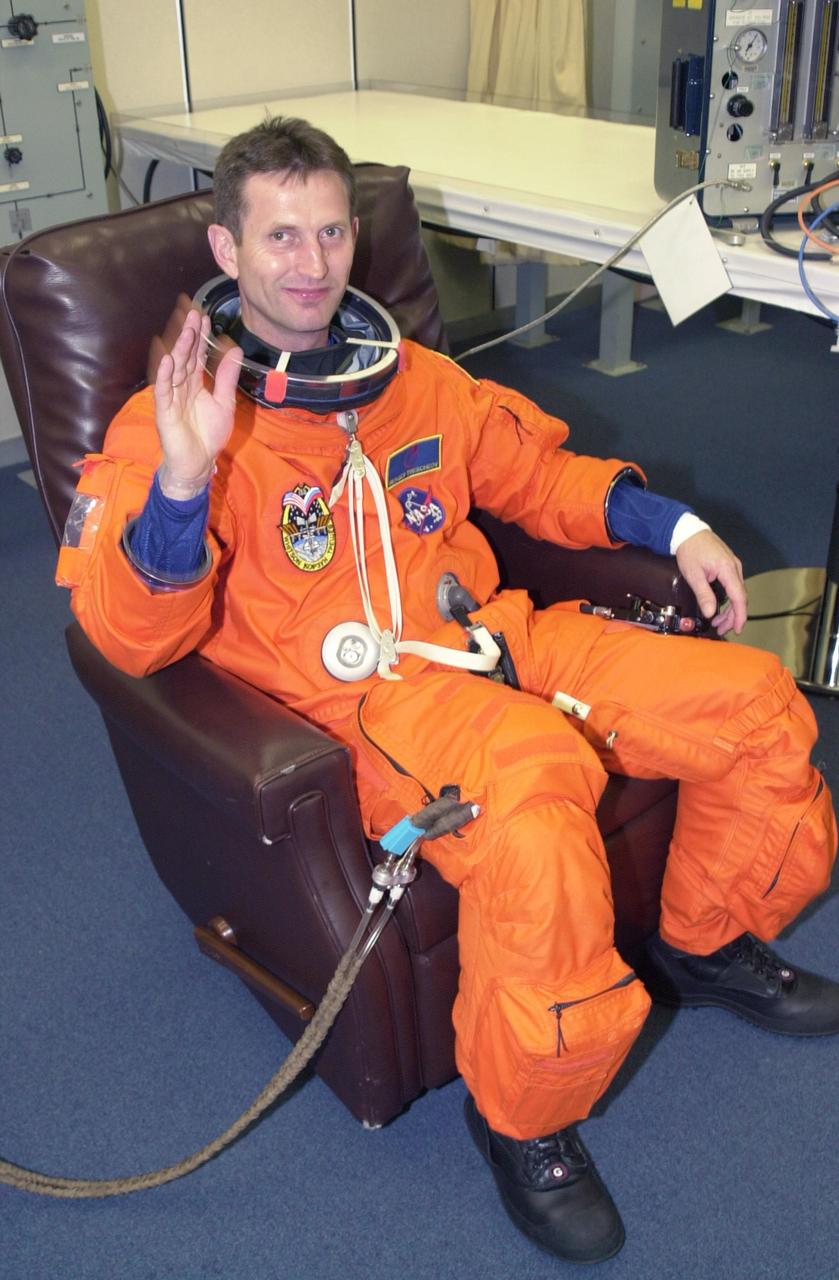
KENNEDY SPACE CENTER, FLA. -- Expedition 5 cosmonaut Sergei Treschev (RSA) waves as he dons his launch and entry suit for the scheduled liftoff of Space Shuttle Endeavour at 7:44 p.m. EDT. This is Treschev's first Shuttle flight. Expedition 5 is traveling on mission STS-111 to the International Space Station to replace the current resident crew, Expedition 4. STS-111 is the second Utilization Flight to the International Space Station, carrying the Multi-Purpose Logistics Module Leonardo, the Mobile Base System (MBS), and a replacement wrist/roll joint for the Canadarm 2. The MBS will be installed on the Mobile Transporter to complete the Canadian Mobile Servicing System, or MSS. Expedition 4 crew members will return to Earth with the STS-111 crew on Endeavour.
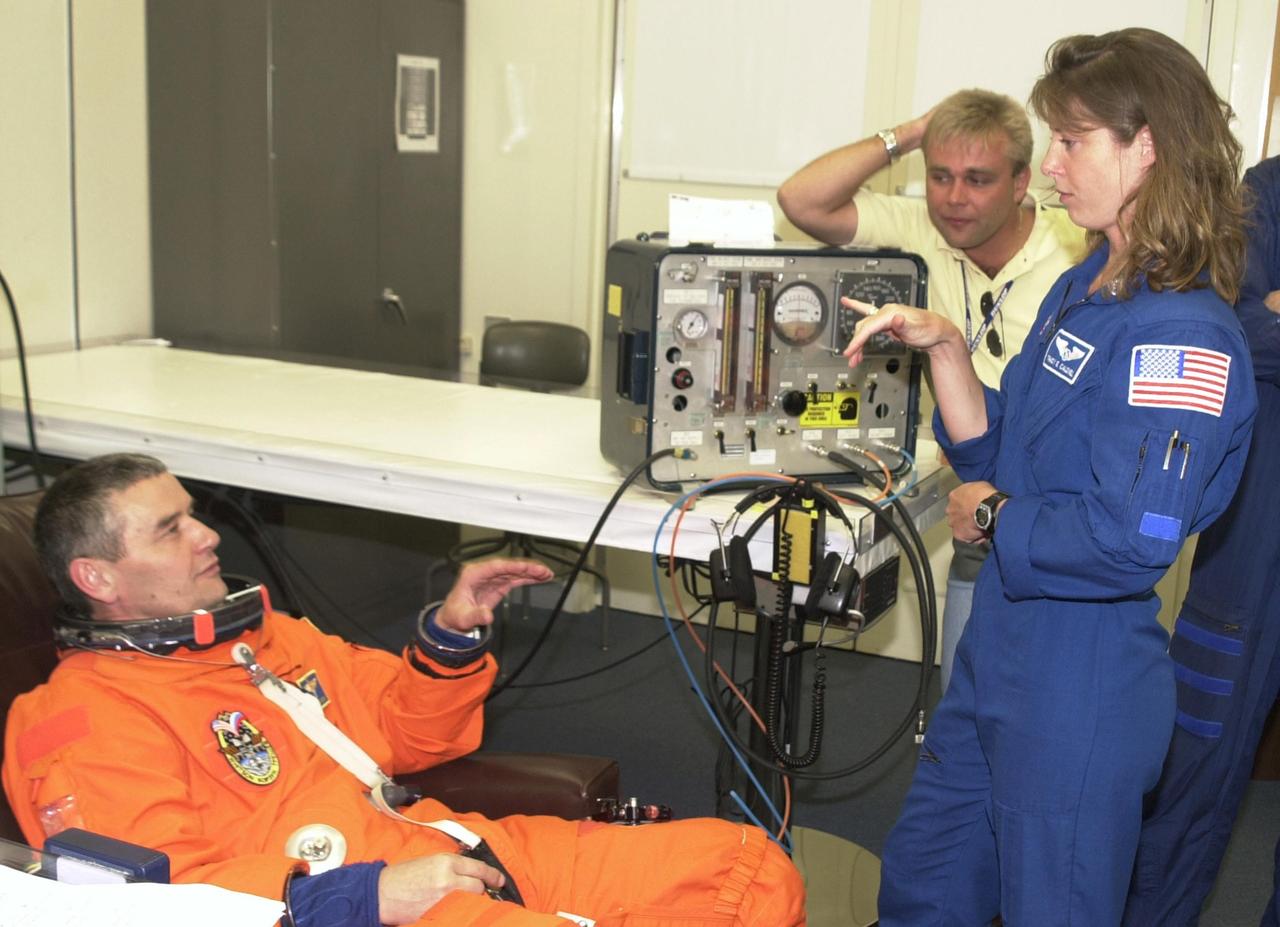
KENNEDY SPACE CENTER, FLA. -- Expedition 5 Commander Valeri Korzun (RSA), left, talks with astronaut Tracy Caldwell during suitup for the scheduled liftoff of Space Shuttle Endeavour at 7:44 p.m. EDT. This is Korzun's 2nd Shuttle flight. STS-111 is the second Utilization Flight to the International Space Station, carrying the Multi-Purpose Logistics Module Leonardo, the Mobile Base System (MBS), and a replacement wrist/roll joint for the Canadarm 2. The MBS will be installed on the Mobile Transporter to complete the Canadian Mobile Servicing System, or MSS. In addition, Expedition 5 is traveling on mission STS-111 to the International Space Station to replace the current resident crew, Expedition 4, who will return to Earth with the STS-111 crew
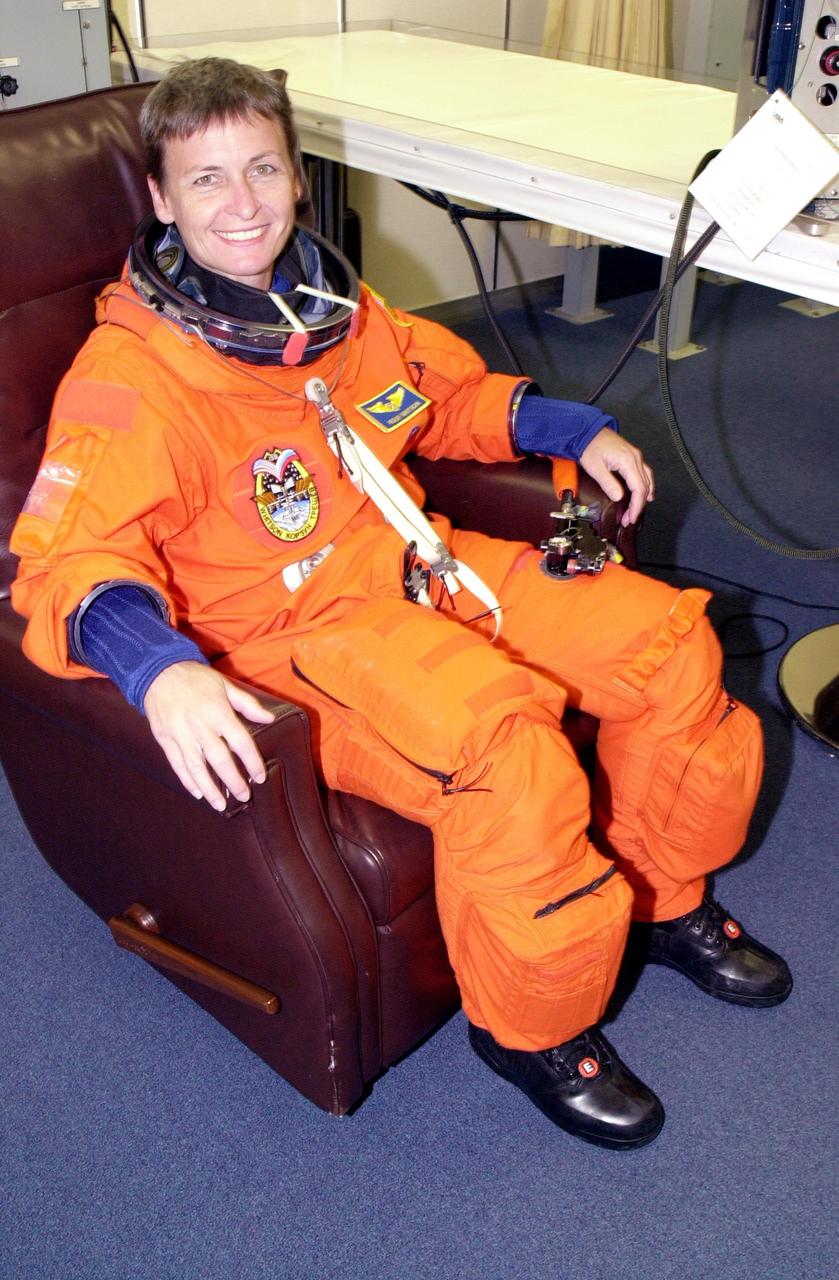
KENNEDY SPACE CENTER, FLA. - Expedition 5 astronaut Peggy Whitson smiles as she dons her launch and entry suit for the scheduled liftoff of Space Shuttle Endeavour at 7:44 p.m. EDT. This is her first Shuttle flight. Expedition 5 is traveling on mission STS-111 to the International Space Station to replace the current resident crew, Expedition 4. STS-111 is the second Utilization Flight to the International Space Station, carrying the Multi-Purpose Logistics Module Leonardo, the Mobile Base System (MBS), and a replacement wrist/roll joint for the Canadarm 2. The MBS will be installed on the Mobile Transporter to complete the Canadian Mobile Servicing System, or MSS. Expedition 4 crew members will return to Earth with the STS-111 crew on Endeavour.
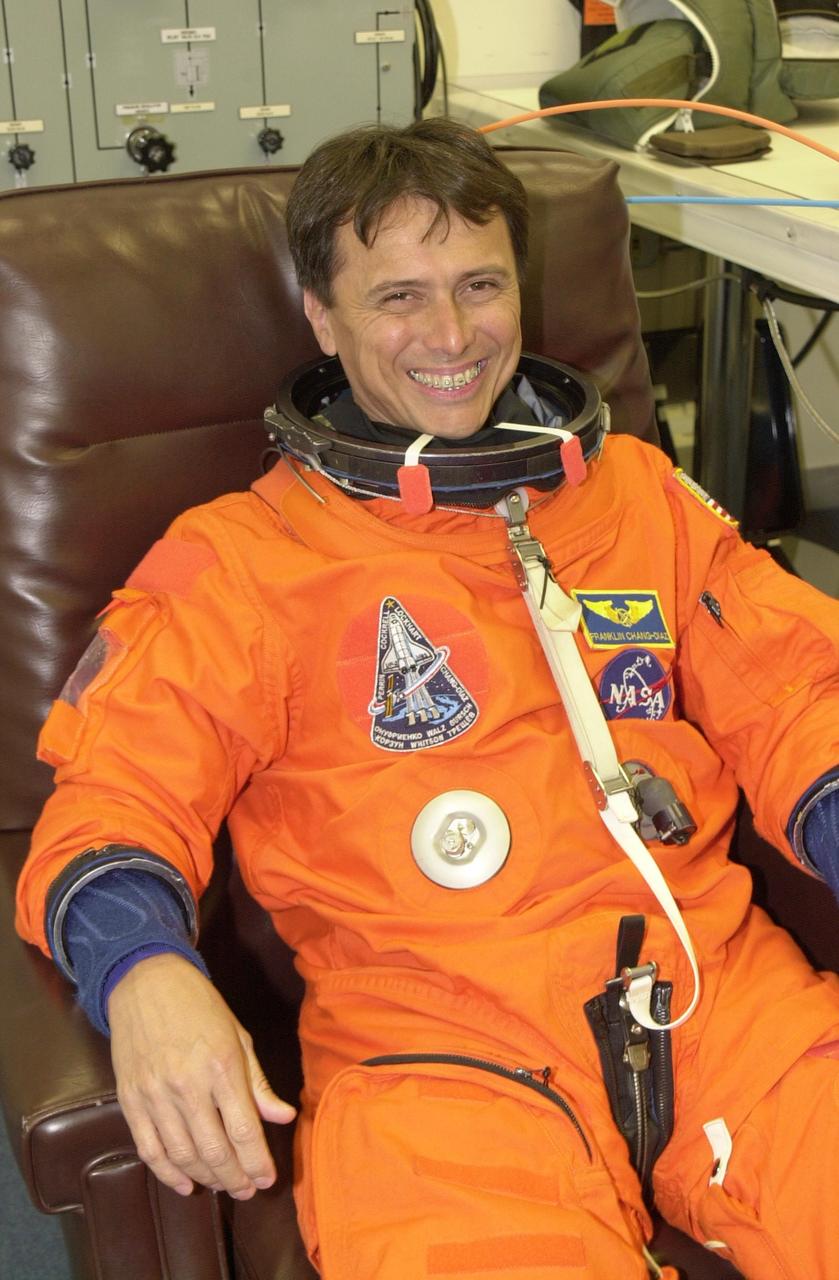
KENNEDY SPACE CENTER, FLA. -- STS-111 Mission Specialist Franklin Chang-Diaz suits up for launch, scheduled at 7:44 p.m. EDT, May 30, 2002. This is his seventh Shuttle flight, only the second astronaut to achieve that number. STS-111 is the second Utilization Flight to the International Space Station, carrying the Multi-Purpose Logistics Module Leonardo, the Mobile Base System (MBS), and a replacement wrist/roll joint for the Canadarm 2. Also onboard Space Shuttle Endeavour is the Expedition 5 crew who will replace Expedition 4 on board the Station. The MBS will be installed on the Mobile Transporter to complete the Canadian Mobile Servicing System, or MSS. The mechanical arm will then have the capability to "inchworm" from the U.S. Lab Destiny to the MSS and travel along the truss to work sites. Expedition 4 crew members will return to Earth with the STS-111 crew on Endeavour
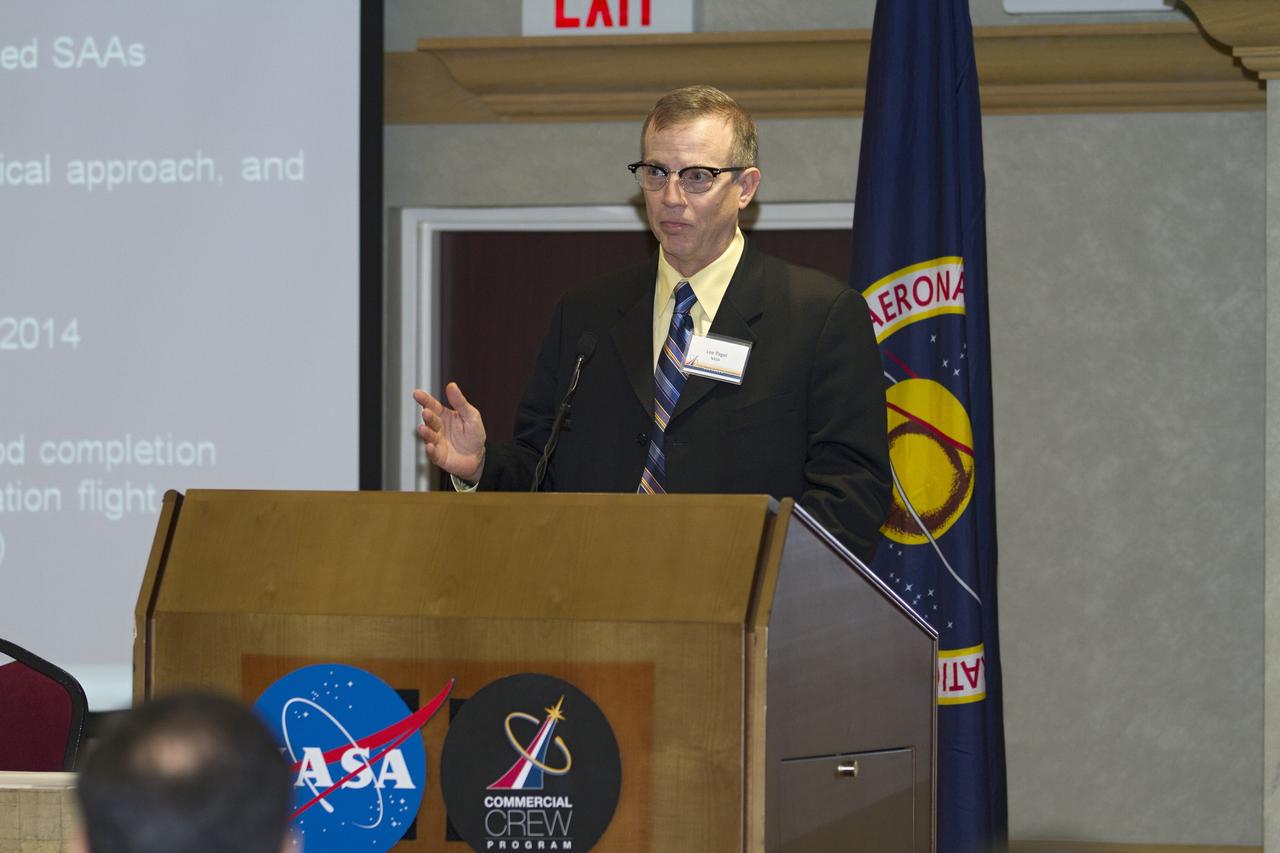
COCOA BEACH, Fla. -- Lee Pagel, the NASA Participant Evaluation Panel PEP deputy for the Commercial Crew Program CCP, talks to industry partners and stakeholders during a preproposal conference at the Courtyard Marriott in Cocoa Beach, Fla. The meeting focused on information related to NASA's release of the Commercial Crew Integrated Capability CCiCap Announcement for Proposals on Feb. 7. More than 50 people from 25 aerospace companies attended the conference to find out what the space agency would be looking for in terms of milestones, funding, schedules, strategies, safety cultures, business modules and eventual flight certification standards of integrated crew space transportation systems. The goal of the CCiCap is to develop an indigenous U.S. transportation system that can safely, affordably and routinely fly to low Earth orbit destinations, including the International Space Station. Proposals are due March 23 and NASA plans to award multiple Space Act Agreements, valued from $300 million to $500 million each, toward the development of fully integrated commercial crew transportation systems in the summer of 2012. For more information, visit www.nasa.gov/commercialcrew Photo credit: Kim Shiflett The Ground Systems Development and Operations Program is developing the necessary ground systems, infrastructure and operational approaches required to safely process, assemble, transport and launch the next generation of rockets and spacecraft in support of NASA’s exploration objectives. Future work also will replace the antiquated communications, power and vehicle access resources with modern efficient systems. Some of the utilities and systems slated for replacement have been used since the VAB opened in 1965. For more information, visit http://www.nasa.gov/exploration/systems/ground/index.html Photo credit: NASA/Kim Shiflett
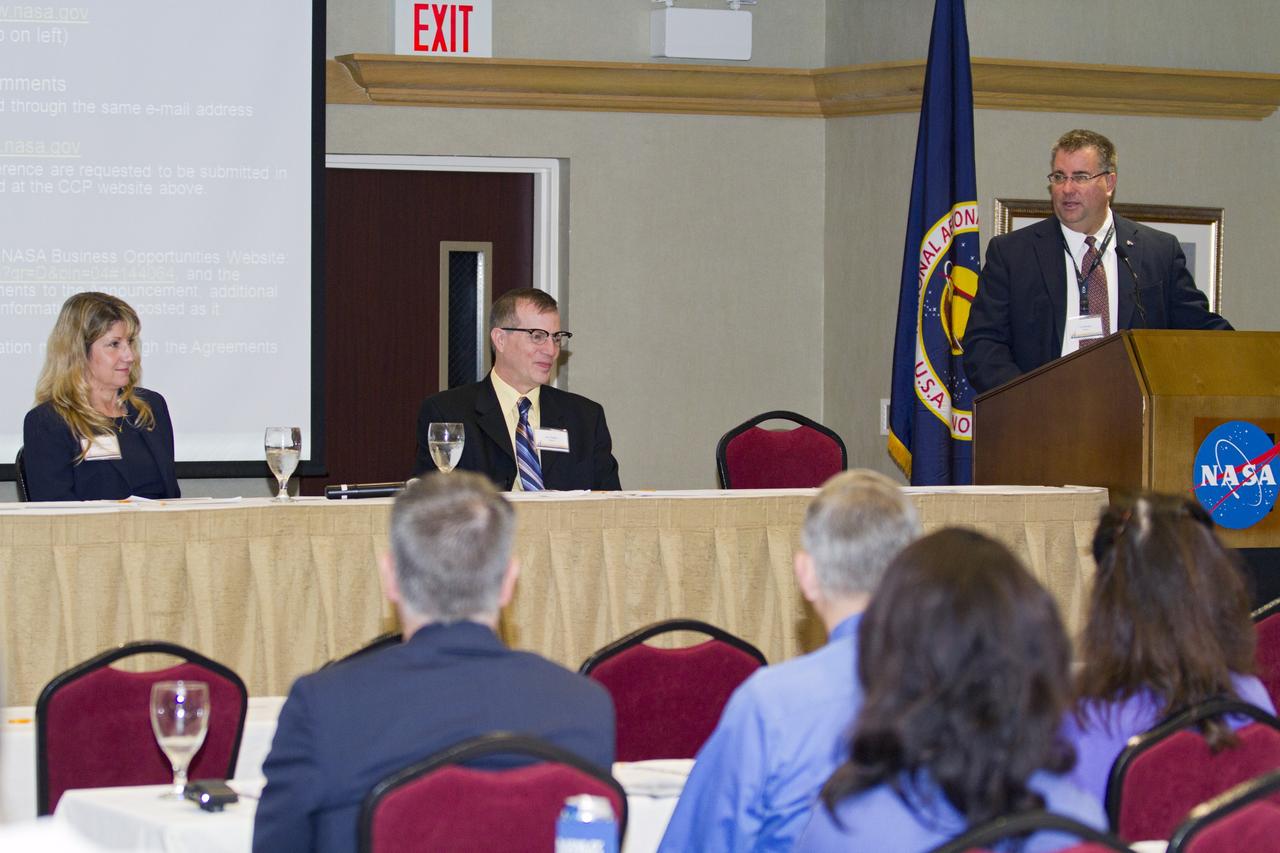
COCOA BEACH, Fla. -- Ed Mango, program manager for NASA's Commercial Crew Program CCP, talks to industry partners and stakeholders during a preproposal conference at the Courtyard Marriott in Cocoa Beach, Fla. At left, are Cheryl McPhillips, the NASA Participant Evaluation Panel PEP chair for the Commercial Crew Program CCP, and Lee Pagel, the NASA PEP deputy. The meeting focused on information related to NASA's release of the Commercial Crew Integrated Capability CCiCap Announcement for Proposals on Feb. 7. More than 50 people from 25 aerospace companies attended the conference to find out what the space agency would be looking for in terms of milestones, funding, schedules, strategies, safety cultures, business modules and eventual flight certification standards of integrated crew space transportation systems. The goal of the CCiCap is to develop an indigenous U.S. transportation system that can safely, affordably and routinely fly to low Earth orbit destinations, including the International Space Station. Proposals are due March 23 and NASA plans to award multiple Space Act Agreements, valued from $300 million to $500 million each, toward the development of fully integrated commercial crew transportation systems in the summer of 2012. For more information, visit www.nasa.gov/commercialcrew Photo credit: Kim Shiflett The Ground Systems Development and Operations Program is developing the necessary ground systems, infrastructure and operational approaches required to safely process, assemble, transport and launch the next generation of rockets and spacecraft in support of NASA’s exploration objectives. Future work also will replace the antiquated communications, power and vehicle access resources with modern efficient systems. Some of the utilities and systems slated for replacement have been used since the VAB opened in 1965. For more information, visit http://www.nasa.gov/exploration/systems/ground/index.html Photo credit: NASA/Kim Shiflett
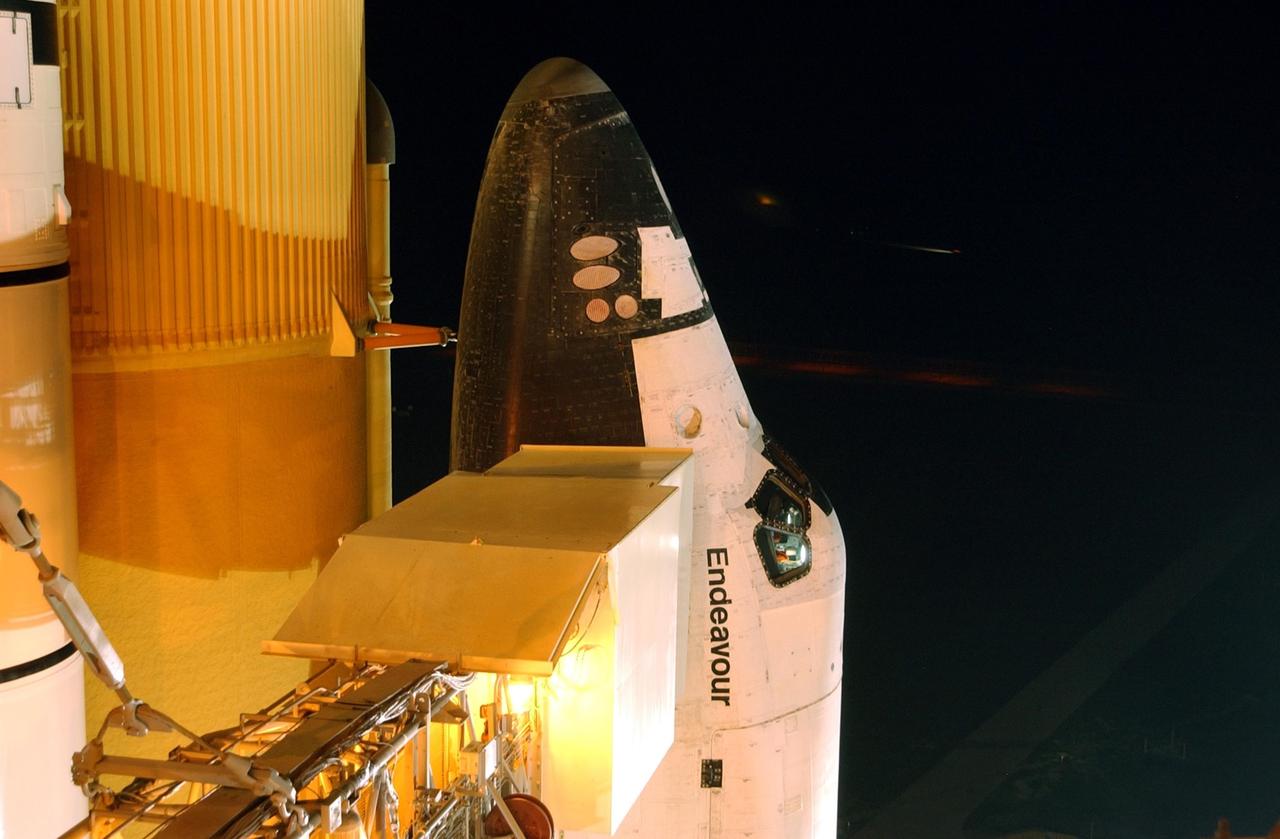
KENNEDY SPACE CENTER, FLA. - This closeup of Space Shuttle Endeavour shows the cockpit windows just above the name. Extending to the side is the environmental chamber known as the White Room, at the end of the orbiter access arm. STS-111 is the second Utilization Flight to the International Space Station, carrying the Multi-Purpose Logistics Module Leonardo, the Mobile Base System (MBS), and a replacement wrist/roll joint for the Canadarm 2. Also onboard Space Shuttle Endeavour is the Expedition 5 crew who will replace Expedition 4 on board the Station. The MBS will be installed on the Mobile Transporter to complete the Canadian Mobile Servicing System, or MSS. The mechanical arm will then have the capability to "inchworm" from the U.S. Lab Destiny to the MSS and travel along the truss to work sites. Expedition 4 crew members will return to Earth with the STS-111 crew on Endeavour. Launch is scheduled for 7:44 p.m. EDT, May 30, 2002

KENNEDY SPACE CENTER, FLA. - Launch and entry suits hang in readiness for the STS-111 crew. Launch is scheduled at 7:44 p.m. EDT, May 30, 2002. STS-111 is the second Utilization Flight to the International Space Station, carrying the Multi-Purpose Logistics Module Leonardo, the Mobile Base System (MBS), and a replacement wrist/roll joint for the Canadarm 2. Also onboard Space Shuttle Endeavour is the Expedition 5 crew who will replace Expedition 4 on board the Station. The MBS will be installed on the Mobile Transporter to complete the Canadian Mobile Servicing System, or MSS. The mechanical arm will then have the capability to "inchworm" from the U.S. Lab Destiny to the MSS and travel along the truss to work sites. Expedition 4 crew members will return to Earth with the STS-111 crew on Endeavour
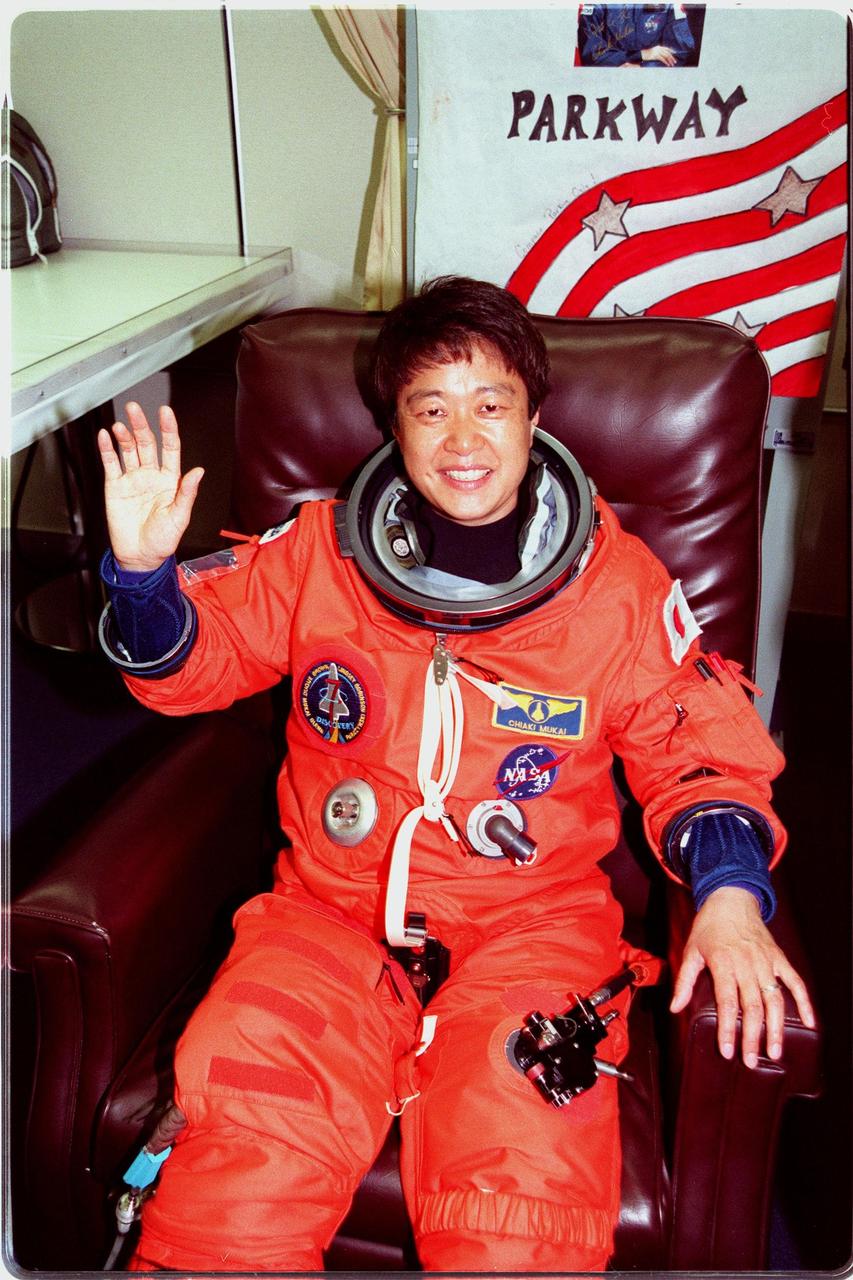
STS-95 Payload Specialist Chiaki Mukai, (M.D., Ph.D.), with the National Space Development Agency of Japan (NASDA), smiles as she dons her flight suit in the Operations and Checkout Building. The final fitting takes place prior to the crew walkout and transport to Launch Pad 39B. Targeted for launch at 2 p.m. EST on Oct. 29, the mission is expected to last 8 days, 21 hours and 49 minutes, and return to KSC at 11:49 a.m. EST on Nov. 7. The STS-95 mission includes research payloads such as the Spartan solar-observing deployable spacecraft, the Hubble Space Telescope Orbital Systems Test Platform, the International Extreme Ultraviolet Hitchhiker, as well as the SPACEHAB single module with experiments on space flight and the aging process
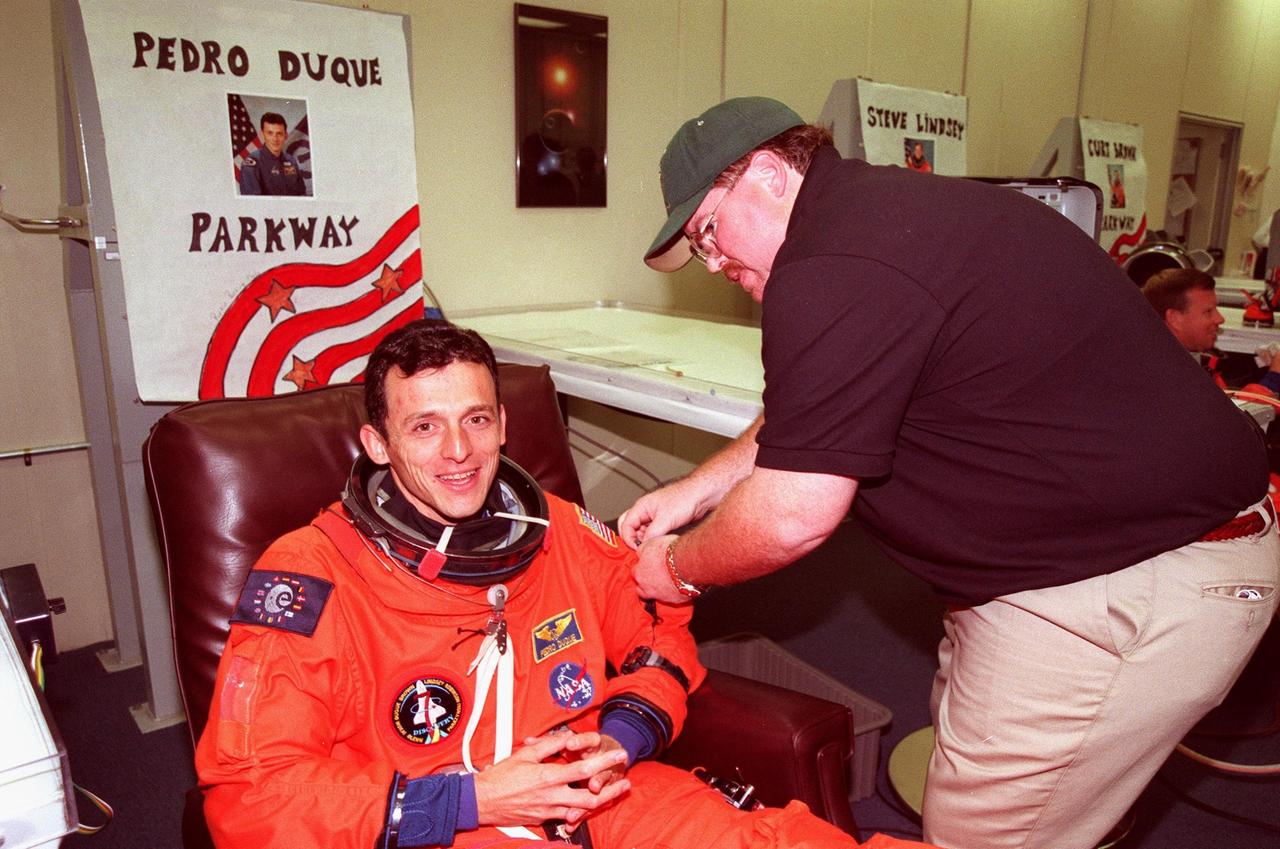
STS-95 Mission Specialist Pedro Duque of Spain, with the European Space Agency, is helped with his flight suit by suit tech Tommy McDonald in the Operations and Checkout Building. The final fitting takes place prior to the crew walkout and transport to Launch Pad 39B. Targeted for launch at 2 p.m. EST on Oct. 29, the mission is expected to last 8 days, 21 hours and 49 minutes, and return to KSC at 11:49 a.m. EST on Nov. 7. The STS-95 mission includes research payloads such as the Spartan solar-observing deployable spacecraft, the Hubble Space Telescope Orbital Systems Test Platform, the International Extreme Ultraviolet Hitchhiker, as well as the SPACEHAB single module with experiments on space flight and the aging process
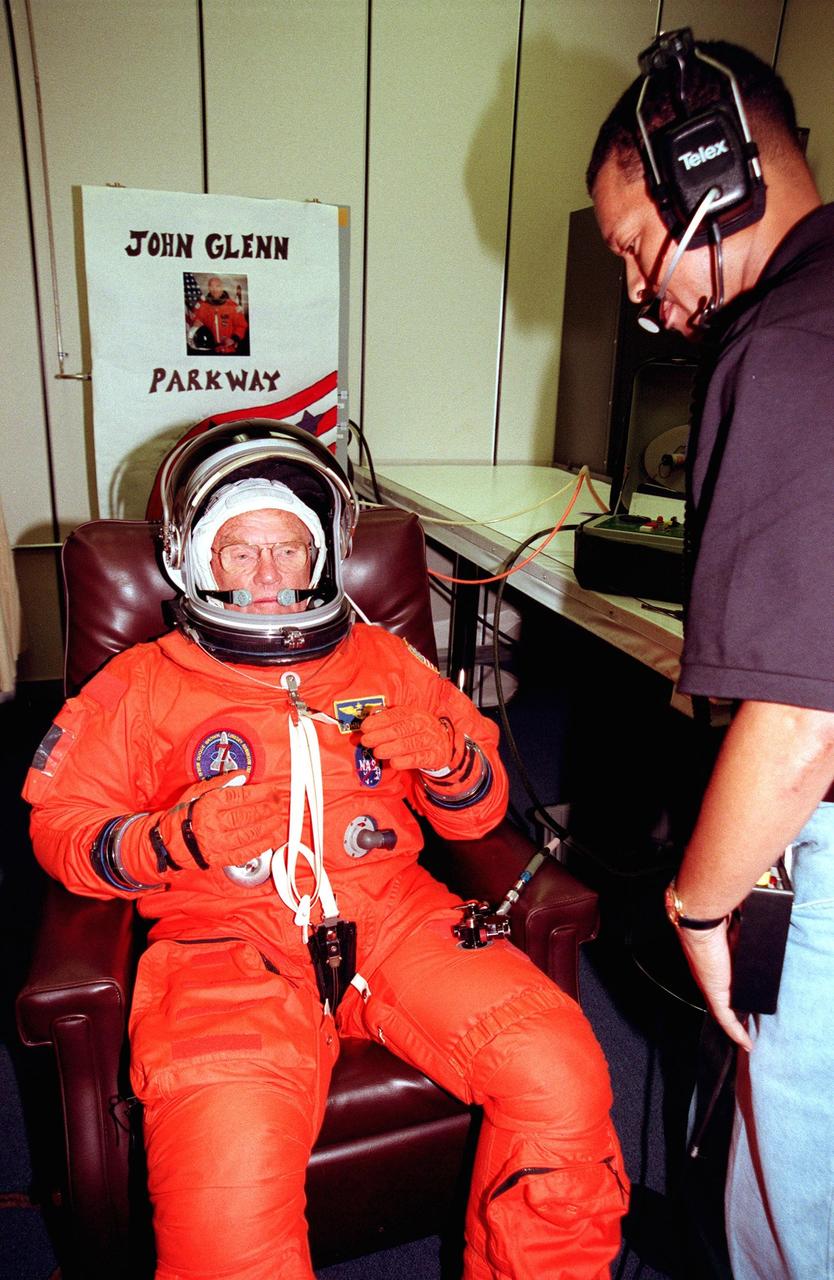
STS-95 Payload Specialist John H. Glenn Jr., senator from Ohio, tests the fitting of his flight suit in the Operations and Checkout Building while suit tech George Brittingham watches. The final fitting takes place prior to the crew walkout and transport to Launch Pad 39B. Targeted for launch at 2 p.m. EST on Oct. 29, the mission is expected to last 8 days, 21 hours and 49 minutes, and return to KSC at 11:49 a.m. EST on Nov. 7. The STS-95 mission includes research payloads such as the Spartan solar-observing deployable spacecraft, the Hubble Space Telescope Orbital Systems Test Platform, the International Extreme Ultraviolet Hitchhiker, as well as the SPACEHAB single module with experiments on space flight and the aging process
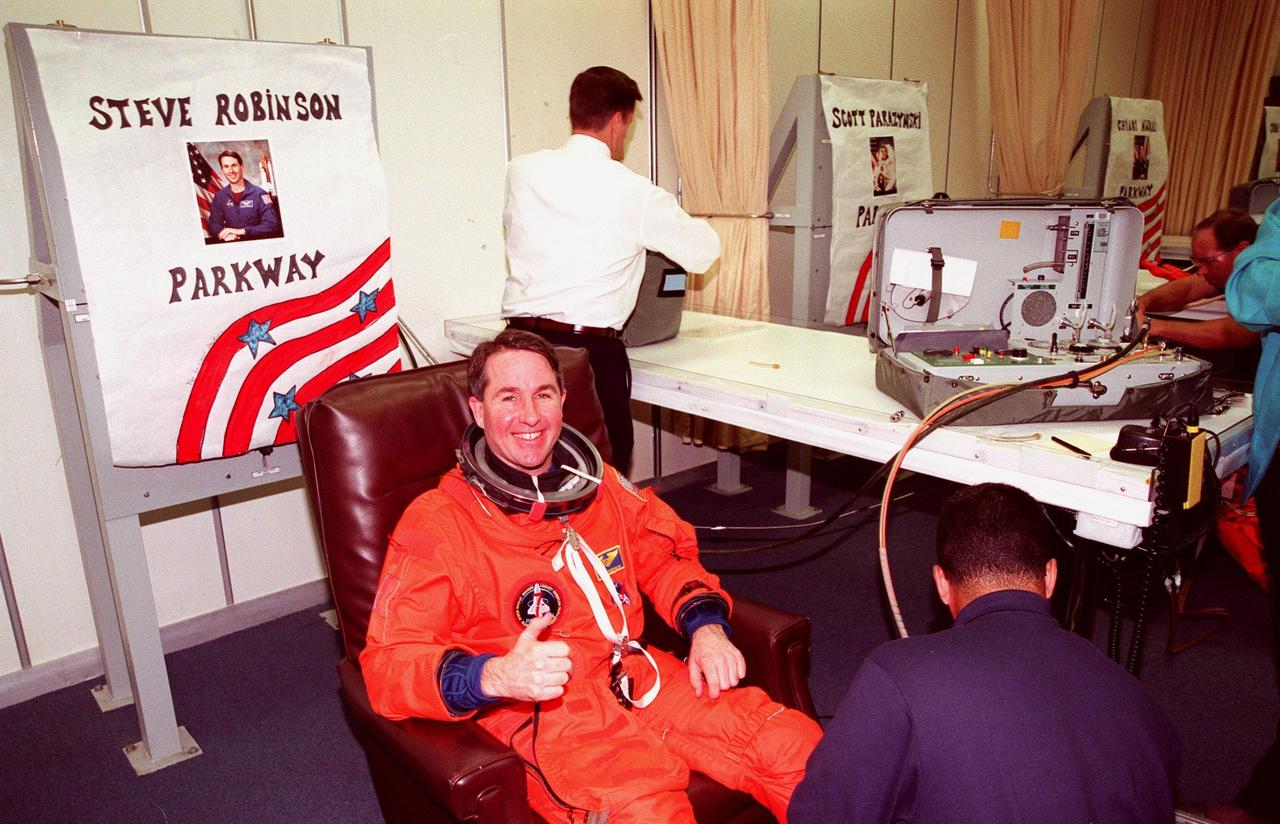
STS-95 Mission Specialist Stephen K. Robinson gives a thumbs up as he dons his flight suit in the Operations and Checkout Building with the help of suit tech George Brittingham (lower right). The final fitting takes place prior to the crew walkout and transport to Launch Pad 39B. Targeted for launch at 2 p.m. EST on Oct. 29, the mission is expected to last 8 days, 21 hours and 49 minutes, and return to KSC at 11:49 a.m. EST on Nov. 7. The STS-95 mission includes research payloads such as the Spartan solar-observing deployable spacecraft, the Hubble Space Telescope Orbital Systems Test Platform, the International Extreme Ultraviolet Hitchhiker, as well as the SPACEHAB single module with experiments on space flight and the aging process
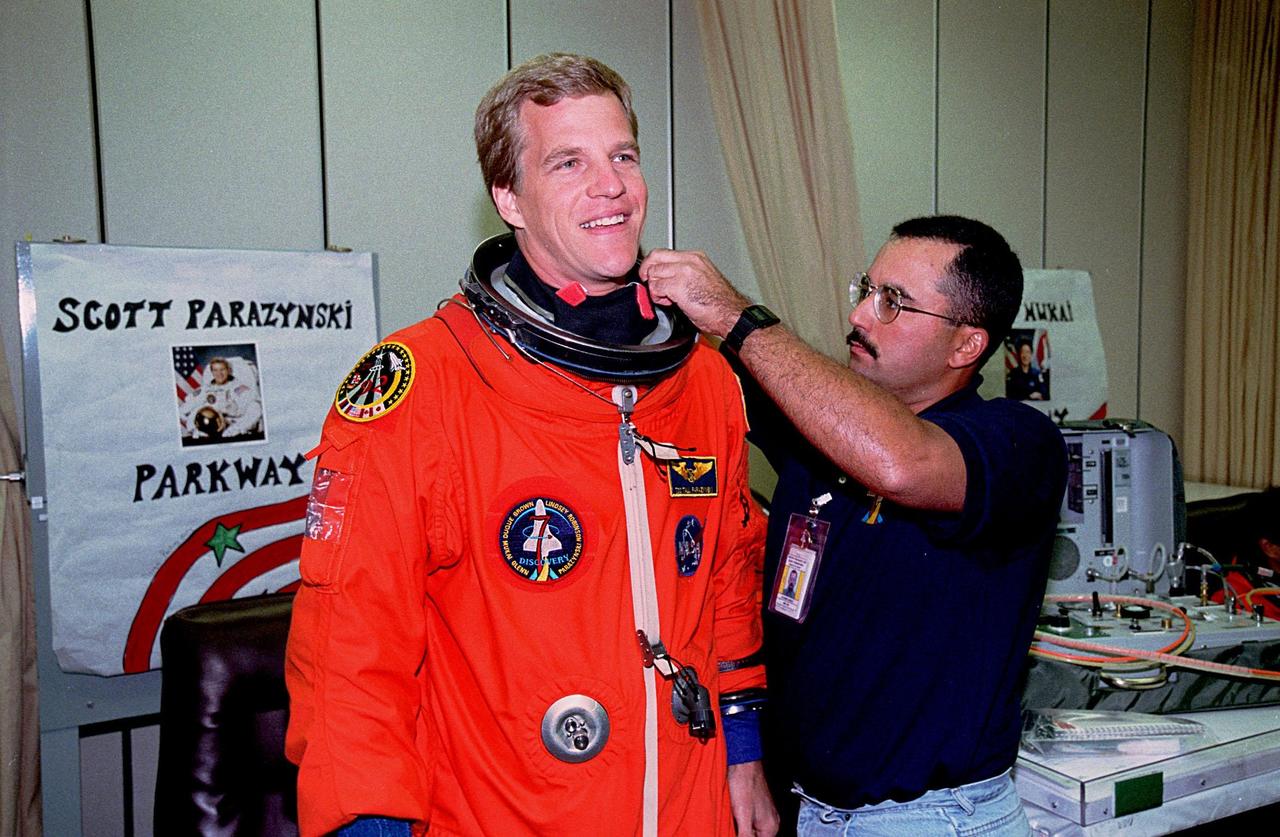
STS-95 Mission Specialist Scott E. Parazynski gets help with his flight suit in the Operations and Checkout Building from a suit technician George Brittingham. The final fitting takes place prior to the crew walkout and transport to Launch Pad 39B. Targeted for launch at 2 p.m. EST on Oct. 29, the mission is expected to last 8 days, 21 hours and 49 minutes, and return to KSC at 11:49 a.m. EST on Nov. 7. The STS-95 mission includes research payloads such as the Spartan solar-observing deployable spacecraft, the Hubble Space Telescope Orbital Systems Test Platform, the International Extreme Ultraviolet Hitchhiker, as well as the SPACEHAB single module with experiments on space flight and the aging process
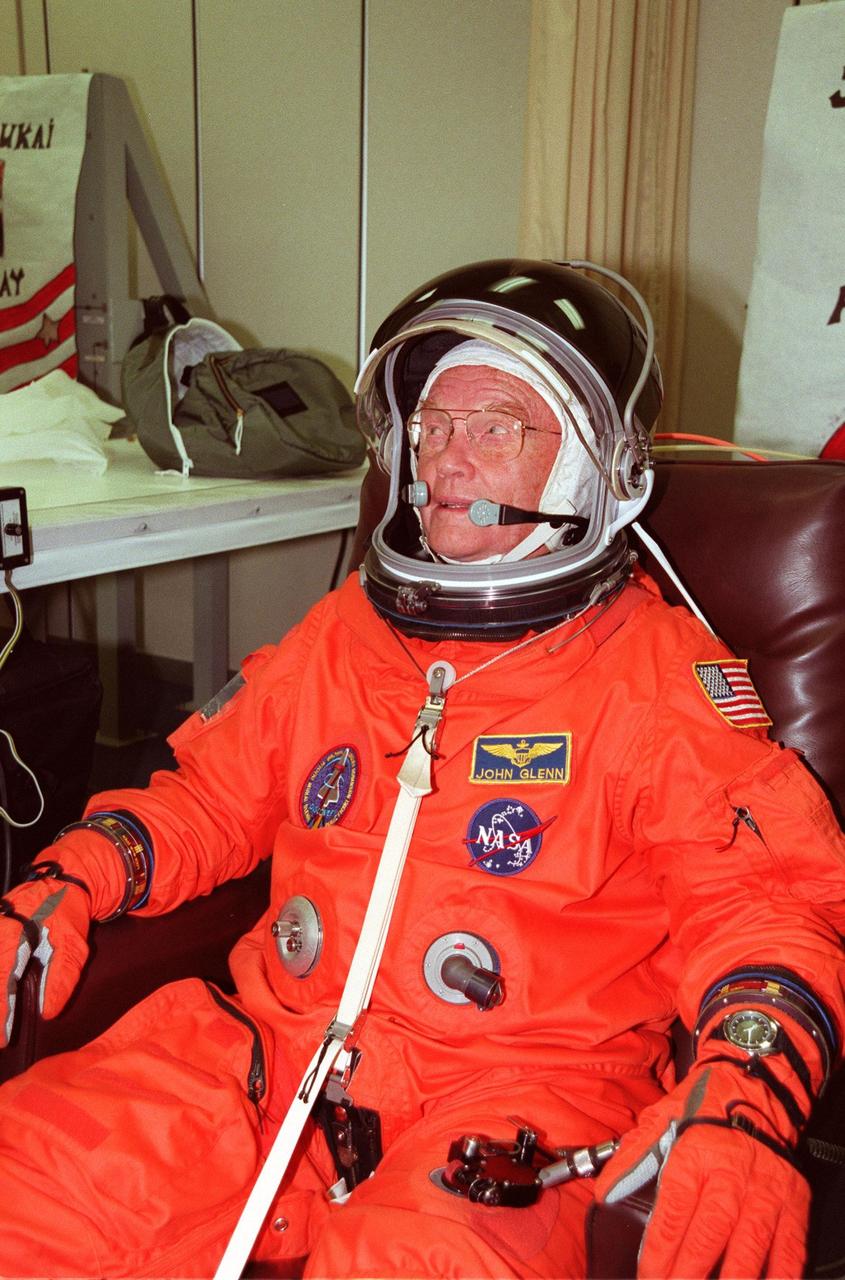
STS-95 Payload Specialist John H. Glenn Jr., senator from Ohio, smiles as he dons his flight suit in the Operations and Checkout Building. The final fitting takes place prior to the crew walkout and transport to Launch Pad 39B. Targeted for launch at 2 p.m. EST on Oct. 29, the mission is expected to last 8 days, 21 hours and 49 minutes, and return to KSC at 11:49 a.m. EST on Nov. 7. The STS-95 mission includes research payloads such as the Spartan solar-observing deployable spacecraft, the Hubble Space Telescope Orbital Systems Test Platform, the International Extreme Ultraviolet Hitchhiker, as well as the SPACEHAB single module with experiments on space flight and the aging process
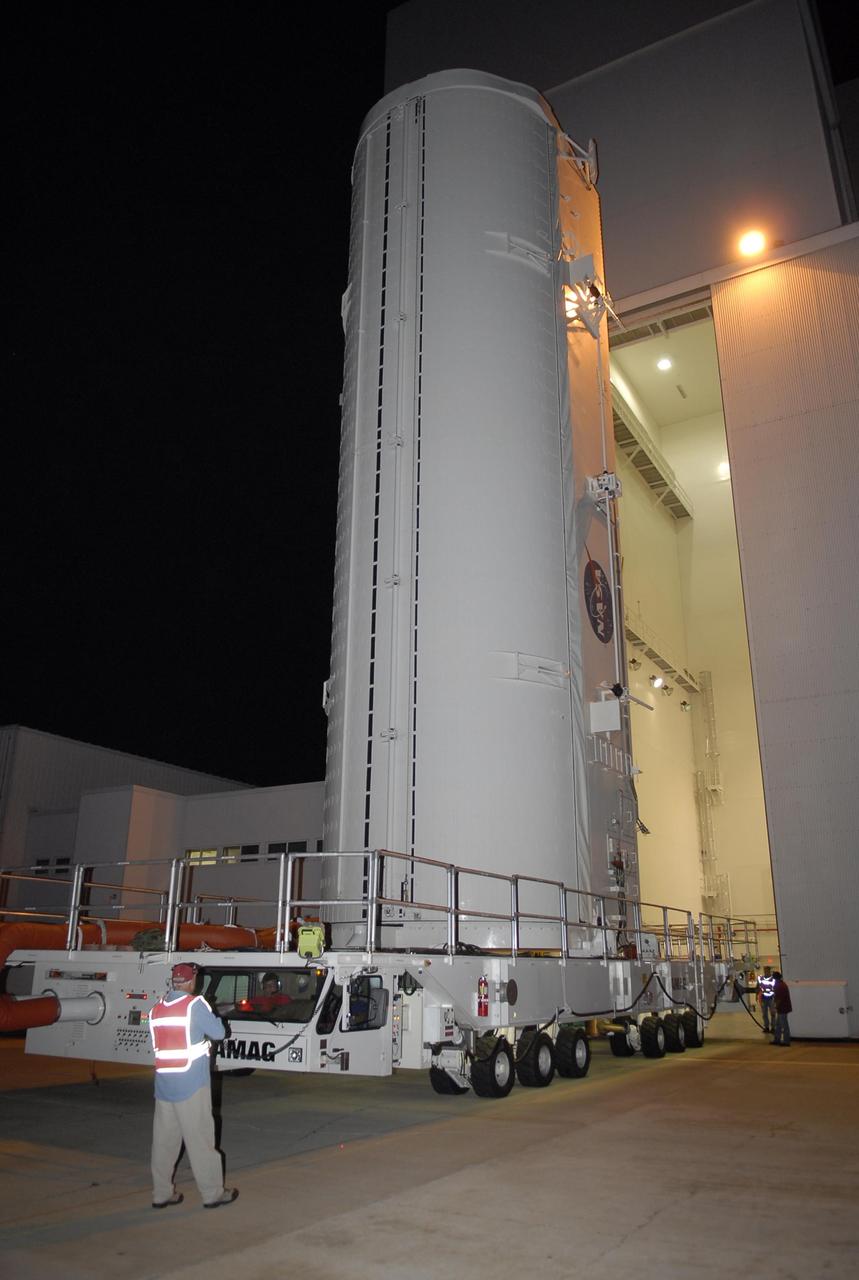
KENNEDY SPACE CENTER, FLA. -- The payload canister on its transporter leaves the Vertical Processing Facility. Inside the canister are the S5 truss, SPACEHAB module and external stowage platform 3, the payload for mission STS-118. They will be placed in the payload bay on Space Shuttle Endeavour when it arrives at the pad. The mission will be Endeavour's first flight in more than four years. The shuttle has undergone extensive modifications, including the addition of safety upgrades already added to shuttles Discovery and Atlantis. Endeavour also features new hardware, such as the Station-to-Shuttle Power Transfer System that will allow the docked shuttle to draw electrical power from the station and extend its visits to the orbiting lab. Space Shuttle Endeavour is targeted for launch on Aug. 7 from Launch Pad 39A. Photo credit: NASA/Kim Shiflett
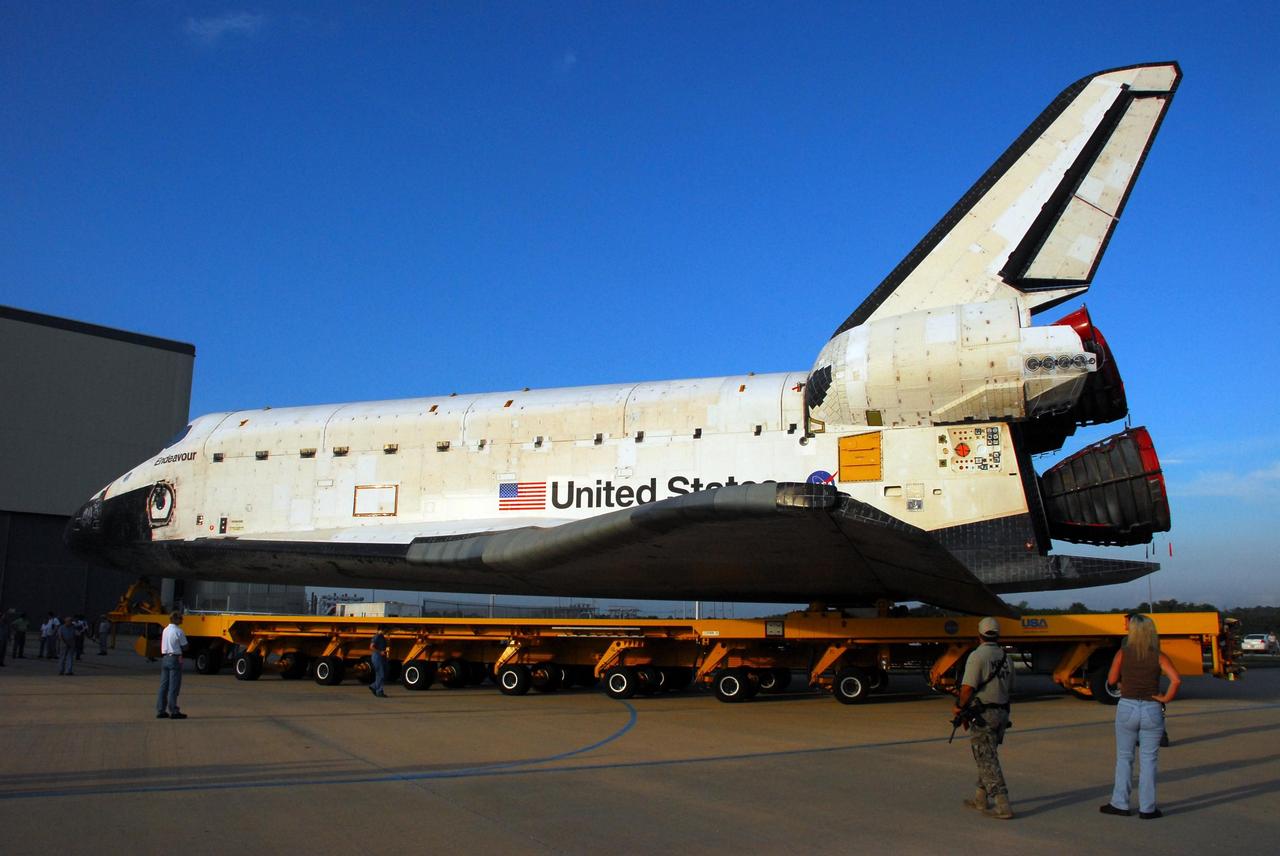
KENNEDY SPACE CENTER, FLA. -- The orbiter Endeavour rolls away from Orbiter Processing Facility bay 2 on its transporter. It is headed for the Vehicle Assembly Building where it will be stacked with the external tank and solid rocket boosters atop the mobile launcher platform for its launch on mission STS-118. The mission will be Endeavour's first flight in more than four years. The shuttle has undergone extensive modifications, including the addition of safety upgrades already added to shuttles Discovery and Atlantis. Endeavour also features new hardware, such as the Station-to-Shuttle Power Transfer System that will allow the docked shuttle to draw electrical power from the station and extend its visits to the orbiting lab. Endeavour is targeted for launch on Aug. 7. Photo credit: NASA/George Shelton
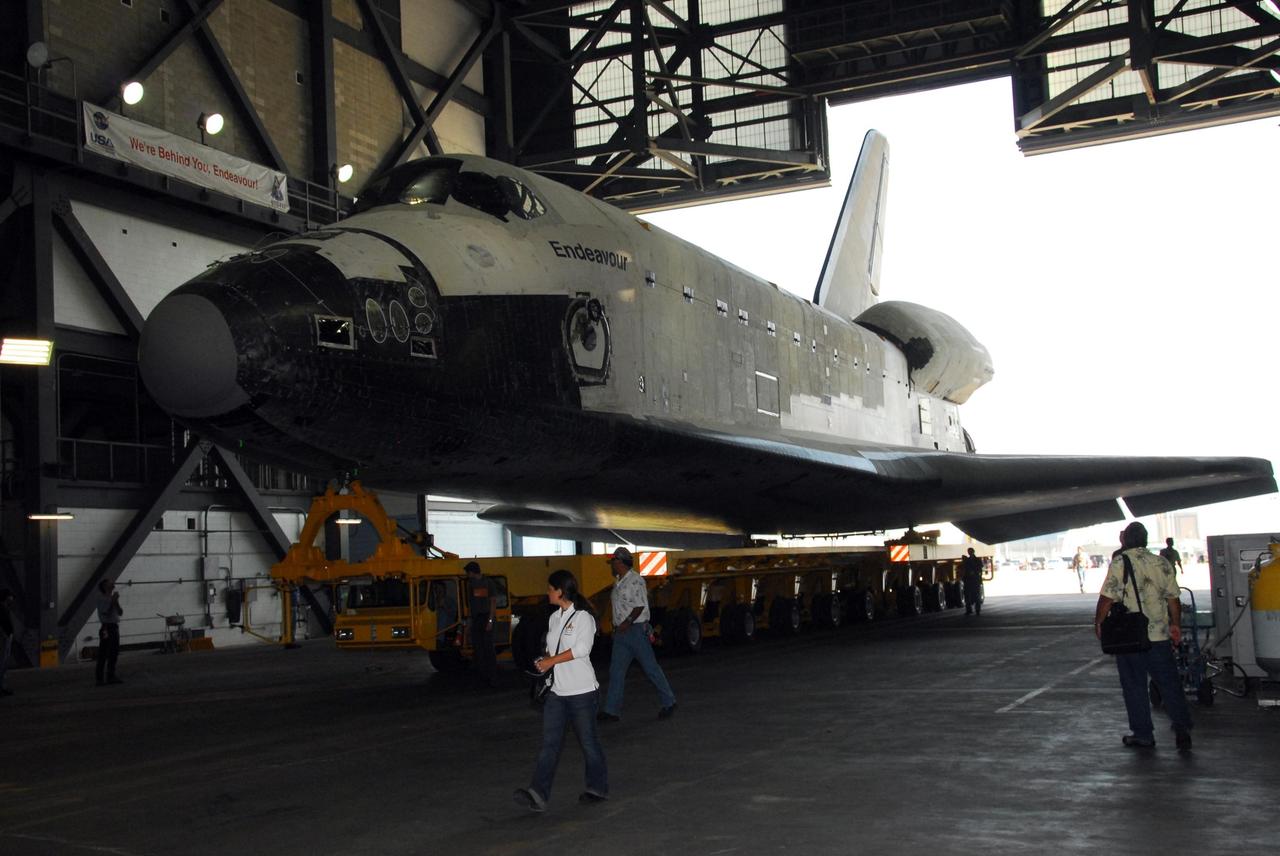
KENNEDY SPACE CENTER, FLA. -- The orbiter Endeavour, atop its transporter, is inside the Vehicle Assembly Building after rolling from the Orbiter Processing Facility bay 2. In the VAB, it will be stacked with the external tank and solid rocket boosters atop the mobile launcher platform for its launch on mission STS-118. The mission will be Endeavour's first flight in more than four years. The shuttle has undergone extensive modifications, including the addition of safety upgrades already added to shuttles Discovery and Atlantis. Endeavour also features new hardware, such as the Station-to-Shuttle Power Transfer System that will allow the docked shuttle to draw electrical power from the station and extend its visits to the orbiting lab. Endeavour is targeted for launch on Aug. 7. Photo credit: NASA/George Shelton
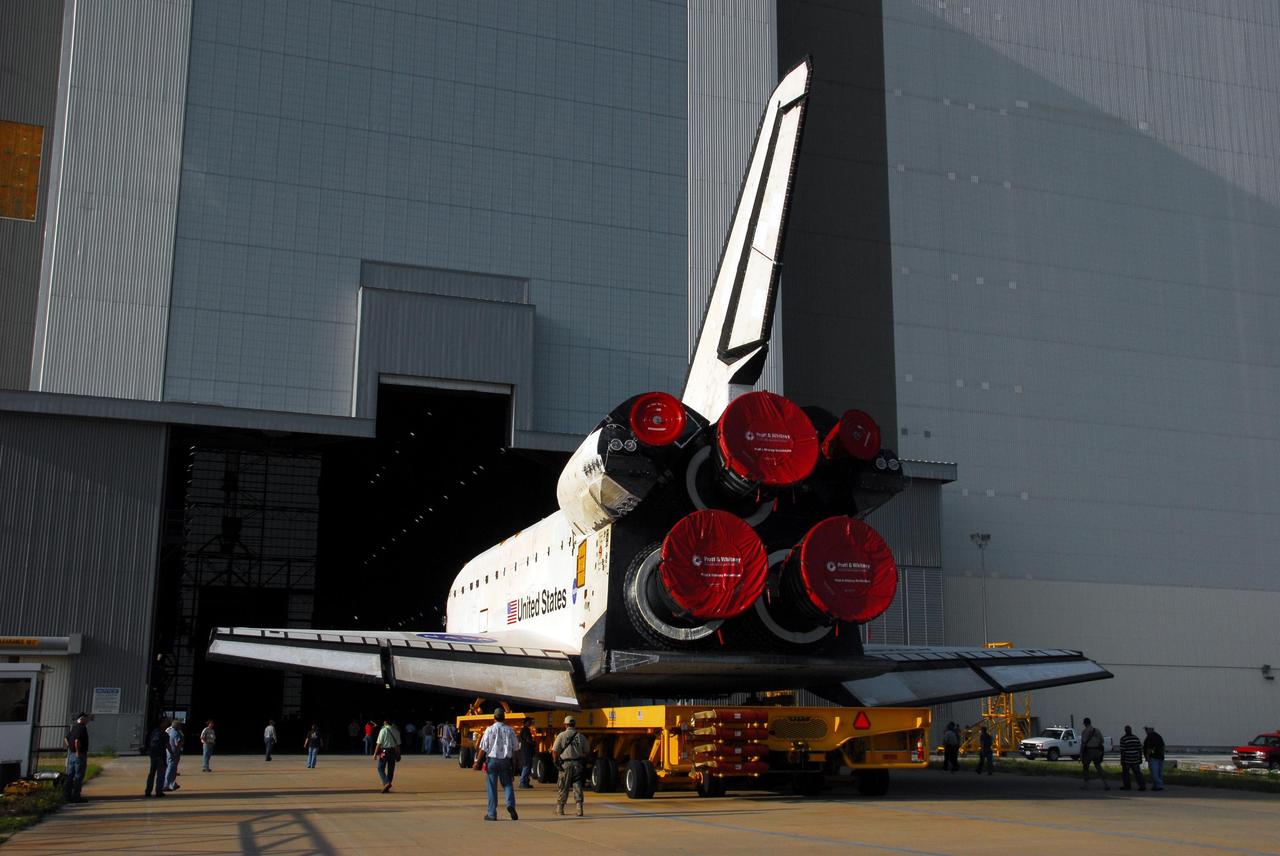
KENNEDY SPACE CENTER, FLA. -- The orbiter Endeavour, atop its transporter, rolls into the gaping doorway of the Vehicle Assembly Building. In the VAB, it will be stacked with the external tank and solid rocket boosters atop the mobile launcher platform for its launch on mission STS-118. The mission will be Endeavour's first flight in more than four years. The shuttle has undergone extensive modifications, including the addition of safety upgrades already added to shuttles Discovery and Atlantis. Endeavour also features new hardware, such as the Station-to-Shuttle Power Transfer System that will allow the docked shuttle to draw electrical power from the station and extend its visits to the orbiting lab. Endeavour is targeted for launch on Aug. 7. Photo credit: NASA/George Shelton
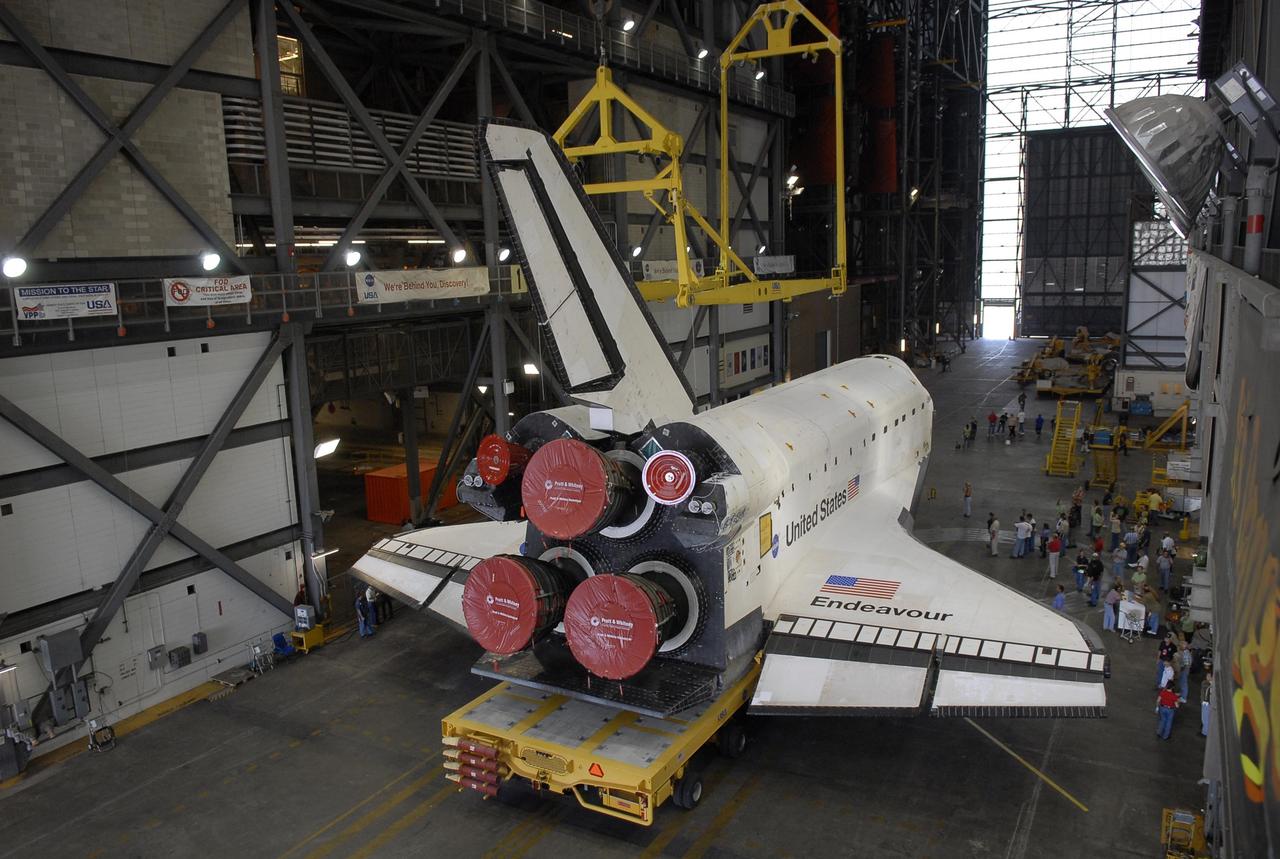
KENNEDY SPACE CENTER, FLA. -- The orbiter Endeavour, atop its transporter, stops under the overhead crane in the transfer aisle of the Vehicle Assembly Building. In the VAB, the crane will lift the orbiter then lower it onto the mobile launcher platform where it will be stacked with the external tank and solid rocket boosters for launch on mission STS-118. The mission will be Endeavour's first flight in more than four years. The shuttle has undergone extensive modifications, including the addition of safety upgrades already added to shuttles Discovery and Atlantis. Endeavour also features new hardware, such as the Station-to-Shuttle Power Transfer System that will allow the docked shuttle to draw electrical power from the station and extend its visits to the orbiting lab. Endeavour is targeted for launch on Aug. 7. Photo credit: NASA/Kim Shiflett
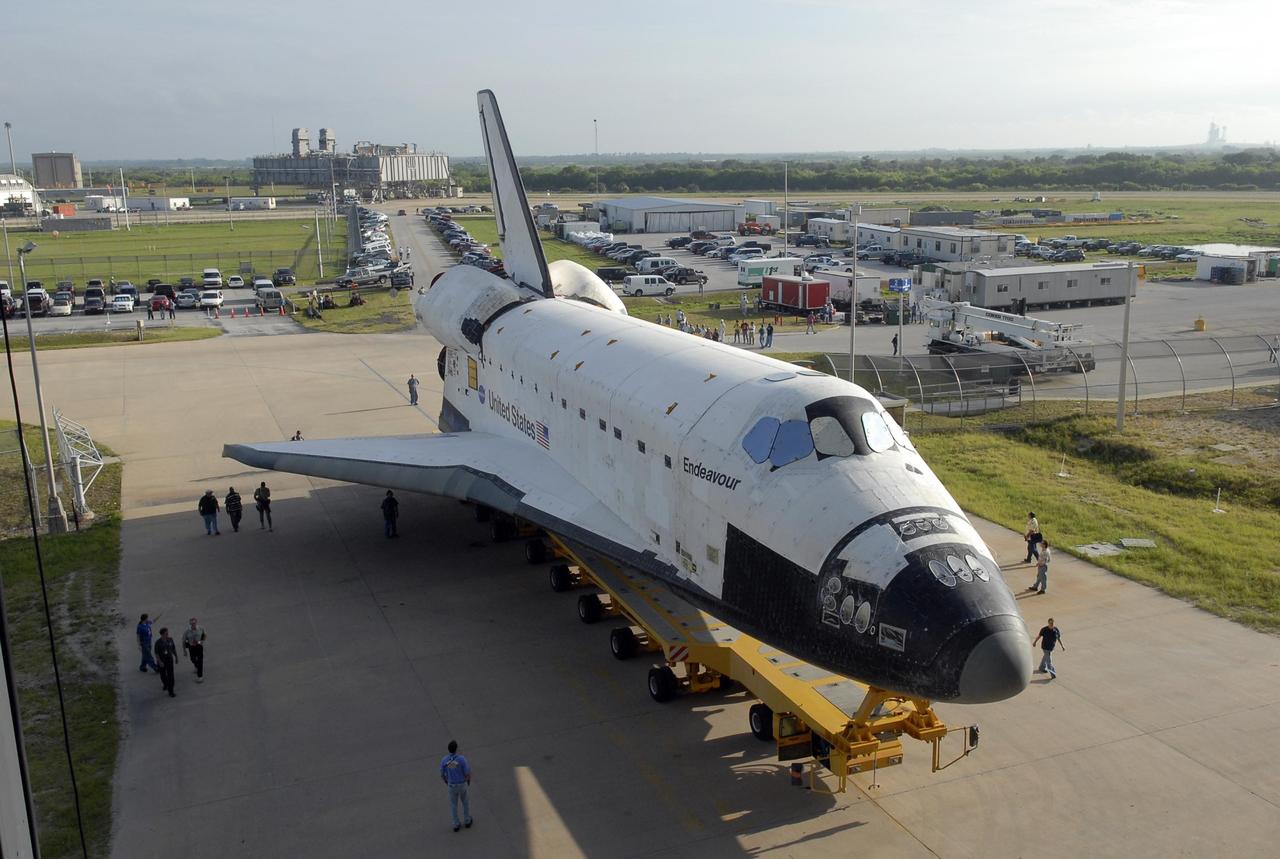
KENNEDY SPACE CENTER, FLA. -- After leaving the Orbiter Processing Facility bay 2, the orbiter Endeavour, atop its transporter, rolls toward the Vehicle Assembly Building. In the VAB, it will be stacked with the external tank and solid rocket boosters atop the mobile launcher platform for its launch on mission STS-118. The mission will be Endeavour's first flight in more than four years. The shuttle has undergone extensive modifications, including the addition of safety upgrades already added to shuttles Discovery and Atlantis. Endeavour also features new hardware, such as the Station-to-Shuttle Power Transfer System that will allow the docked shuttle to draw electrical power from the station and extend its visits to the orbiting lab. Endeavour is targeted for launch on Aug. 7. Photo credit: NASA/Kim Shiflett
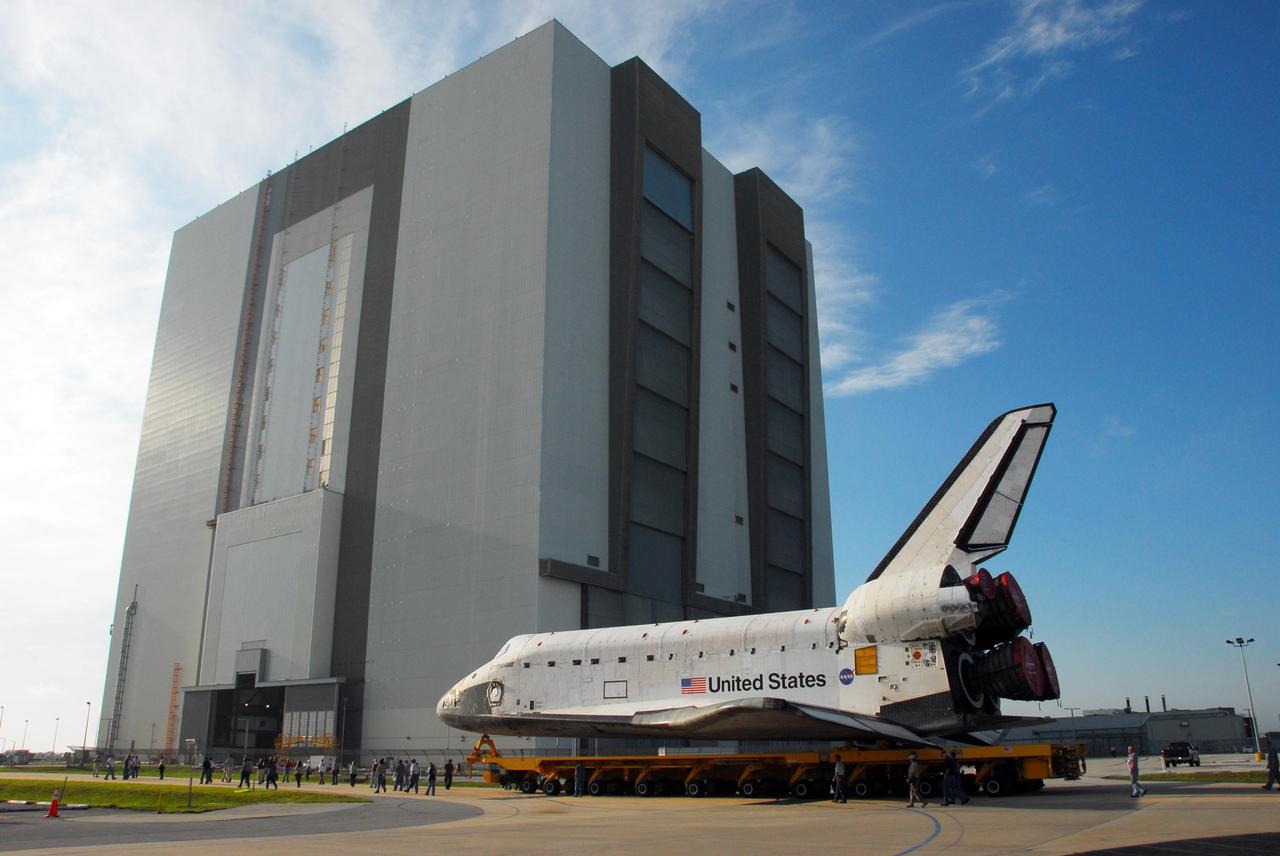
KENNEDY SPACE CENTER, FLA. -- After leaving the Orbiter Processing Facility bay 2, the orbiter Endeavour, atop its transporter, rolls to the Vehicle Assembly Building. In the VAB, it will be stacked with the external tank and solid rocket boosters atop the mobile launcher platform for its launch on mission STS-118. The mission will be Endeavour's first flight in more than four years. The shuttle has undergone extensive modifications, including the addition of safety upgrades already added to shuttles Discovery and Atlantis. Endeavour also features new hardware, such as the Station-to-Shuttle Power Transfer System that will allow the docked shuttle to draw electrical power from the station and extend its visits to the orbiting lab. Endeavour is targeted for launch on Aug. 7. Photo credit: NASA/George Shelton
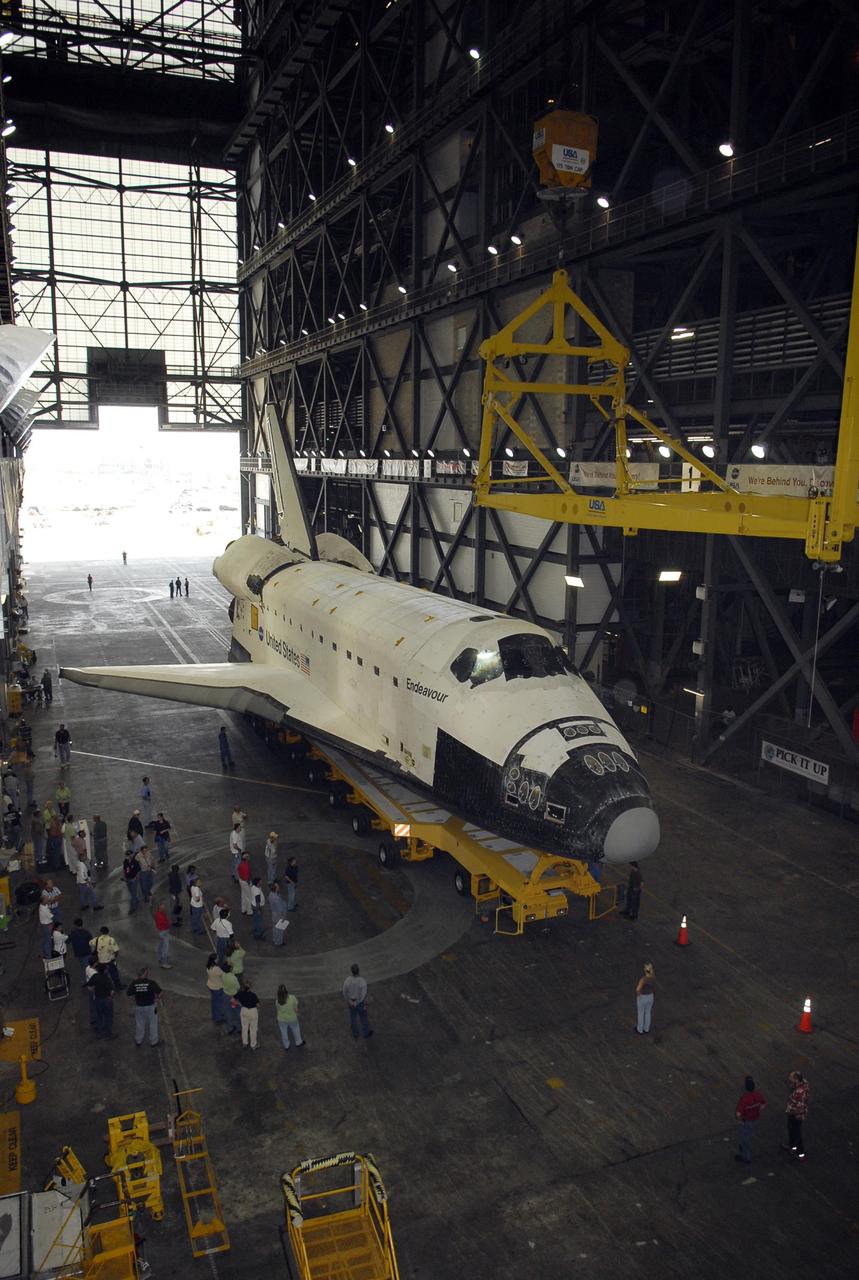
KENNEDY SPACE CENTER, FLA. -- The orbiter Endeavour, atop its transporter, rolls under the overhead crane in the transfer aisle of the Vehicle Assembly Building. In the VAB, the crane will lift the orbiter then lower it onto the mobile launcher platform where it will be stacked with the external tank and solid rocket boosters for launch on mission STS-118. The mission will be Endeavour's first flight in more than four years. The shuttle has undergone extensive modifications, including the addition of safety upgrades already added to shuttles Discovery and Atlantis. Endeavour also features new hardware, such as the Station-to-Shuttle Power Transfer System that will allow the docked shuttle to draw electrical power from the station and extend its visits to the orbiting lab. Endeavour is targeted for launch on Aug. 7. Photo credit: NASA/Kim Shiflett
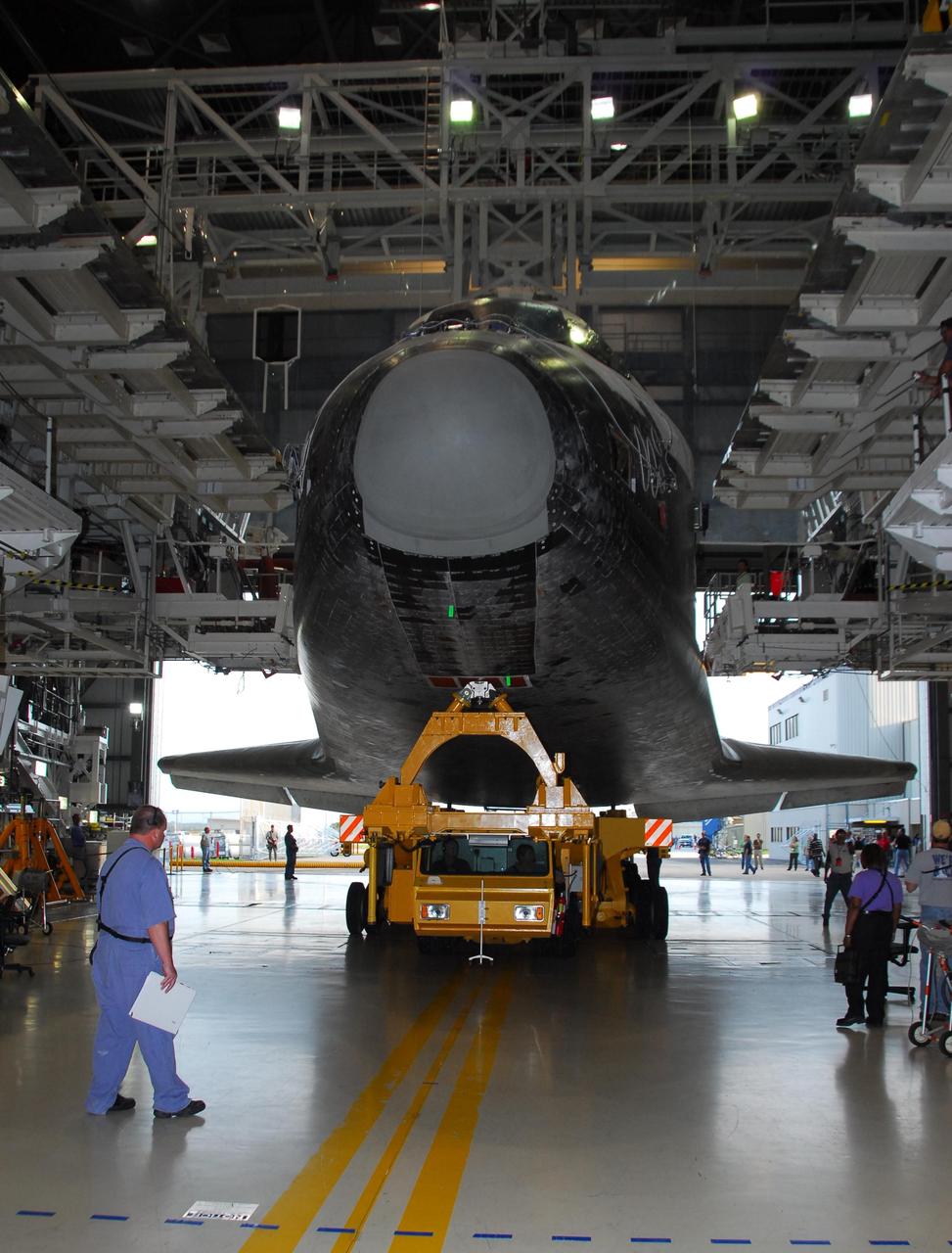
KENNEDY SPACE CENTER, FLA. -- Viewed from inside, the orbiter Endeavour rolls out of Orbiter Processing Facility bay 2 on its transporter. It is headed for the Vehicle Assembly Building where it will be stacked with the external tank and solid rocket boosters atop the mobile launcher platform for its launch on mission STS-118. The mission will be Endeavour's first flight in more than four years. The shuttle has undergone extensive modifications, including the addition of safety upgrades already added to shuttles Discovery and Atlantis. Endeavour also features new hardware, such as the Station-to-Shuttle Power Transfer System that will allow the docked shuttle to draw electrical power from the station and extend its visits to the orbiting lab. Endeavour is targeted for launch on Aug. 7. Photo credit: NASA/George Shelton
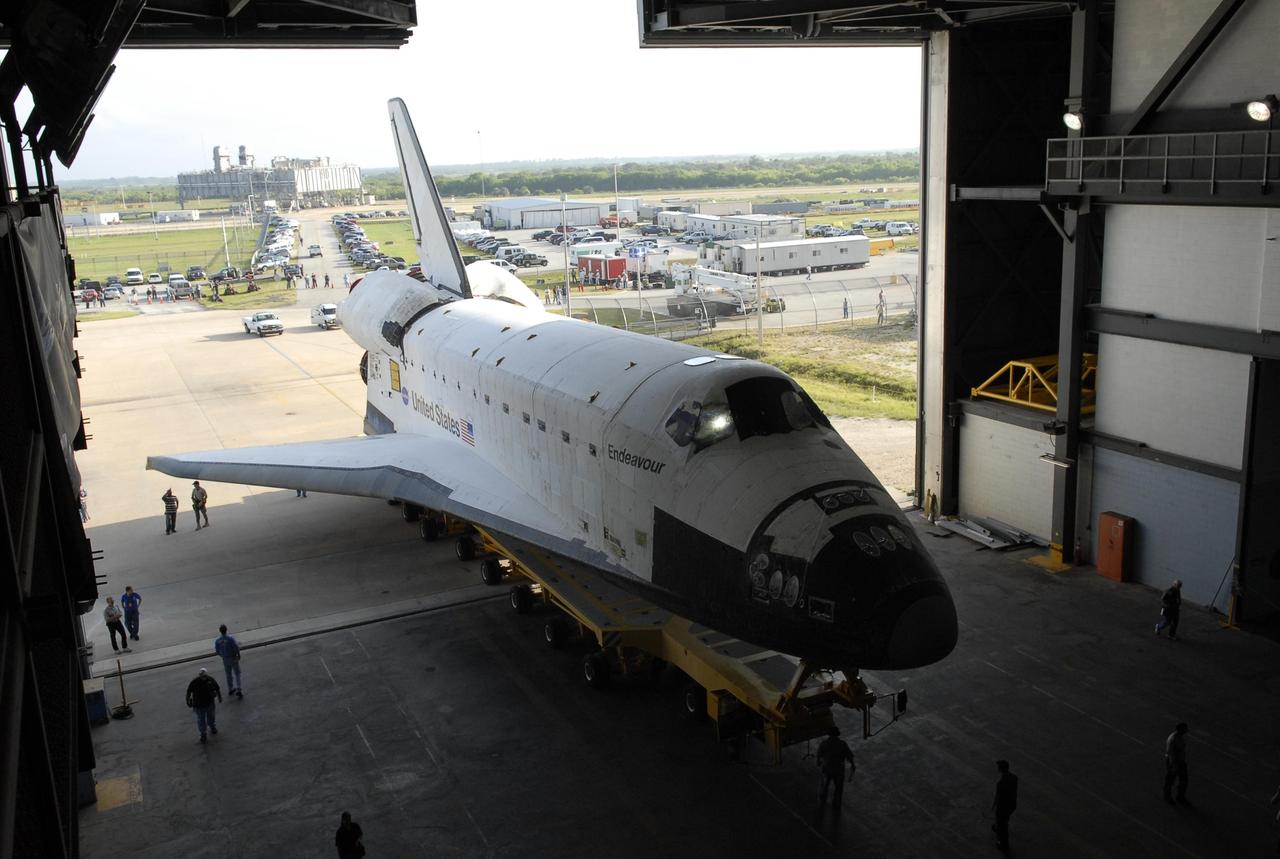
KENNEDY SPACE CENTER, FLA. -- After leaving the Orbiter Processing Facility bay 2, the orbiter Endeavour, atop its transporter, rolls into the transfer aisle of the Vehicle Assembly Building. In the VAB, it will be stacked with the external tank and solid rocket boosters atop the mobile launcher platform for its launch on mission STS-118. The mission will be Endeavour's first flight in more than four years. The shuttle has undergone extensive modifications, including the addition of safety upgrades already added to shuttles Discovery and Atlantis. Endeavour also features new hardware, such as the Station-to-Shuttle Power Transfer System that will allow the docked shuttle to draw electrical power from the station and extend its visits to the orbiting lab. Endeavour is targeted for launch on Aug. 7. Photo credit: NASA/Kim Shiflett
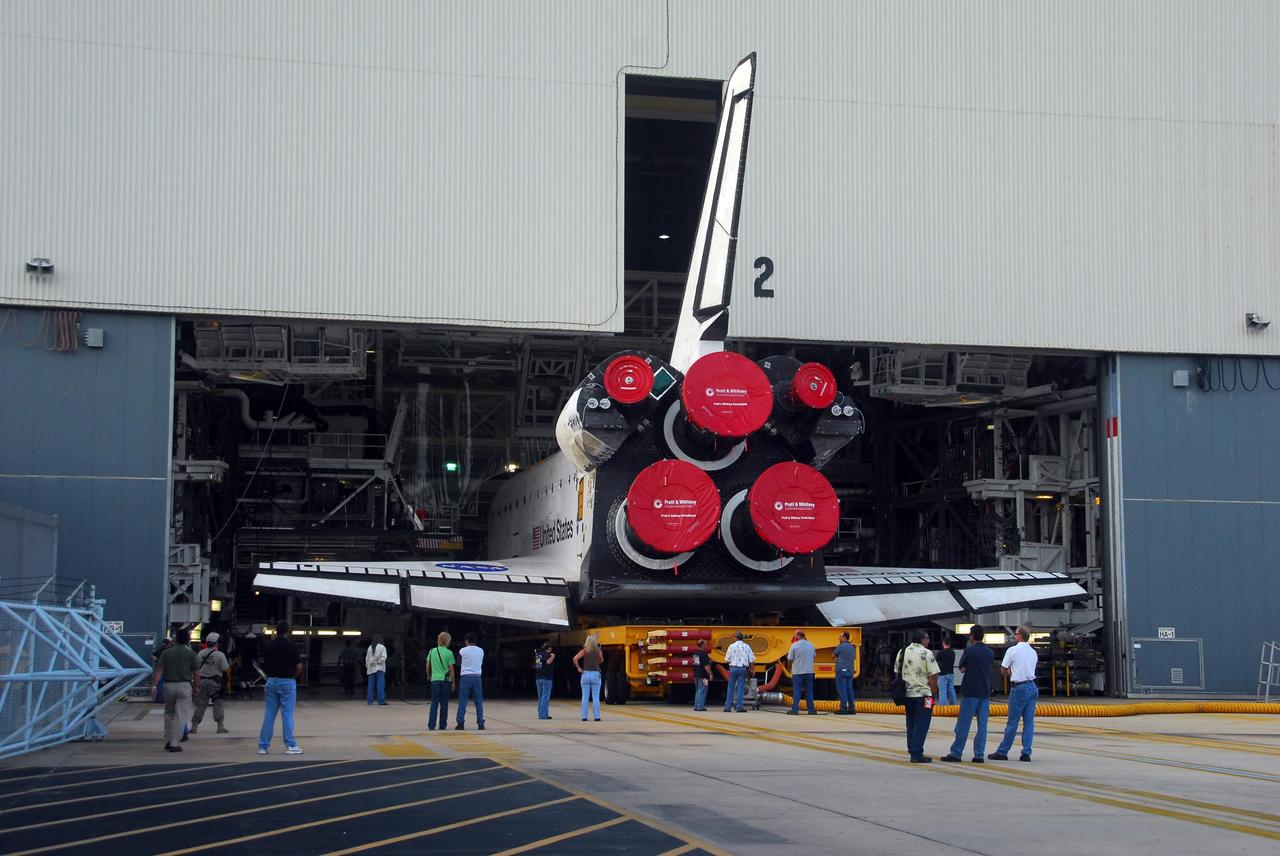
KENNEDY SPACE CENTER, FLA. -- Viewed from outside, the orbiter Endeavour rolls out of Orbiter Processing Facility bay 2 on its transporter. It is headed for the Vehicle Assembly Building where it will be stacked with the external tank and solid rocket boosters atop the mobile launcher platform for its launch on mission STS-118. The mission will be Endeavour's first flight in more than four years. The shuttle has undergone extensive modifications, including the addition of safety upgrades already added to shuttles Discovery and Atlantis. Endeavour also features new hardware, such as the Station-to-Shuttle Power Transfer System that will allow the docked shuttle to draw electrical power from the station and extend its visits to the orbiting lab. Endeavour is targeted for launch on Aug. 7. Photo credit: NASA/George Shelton
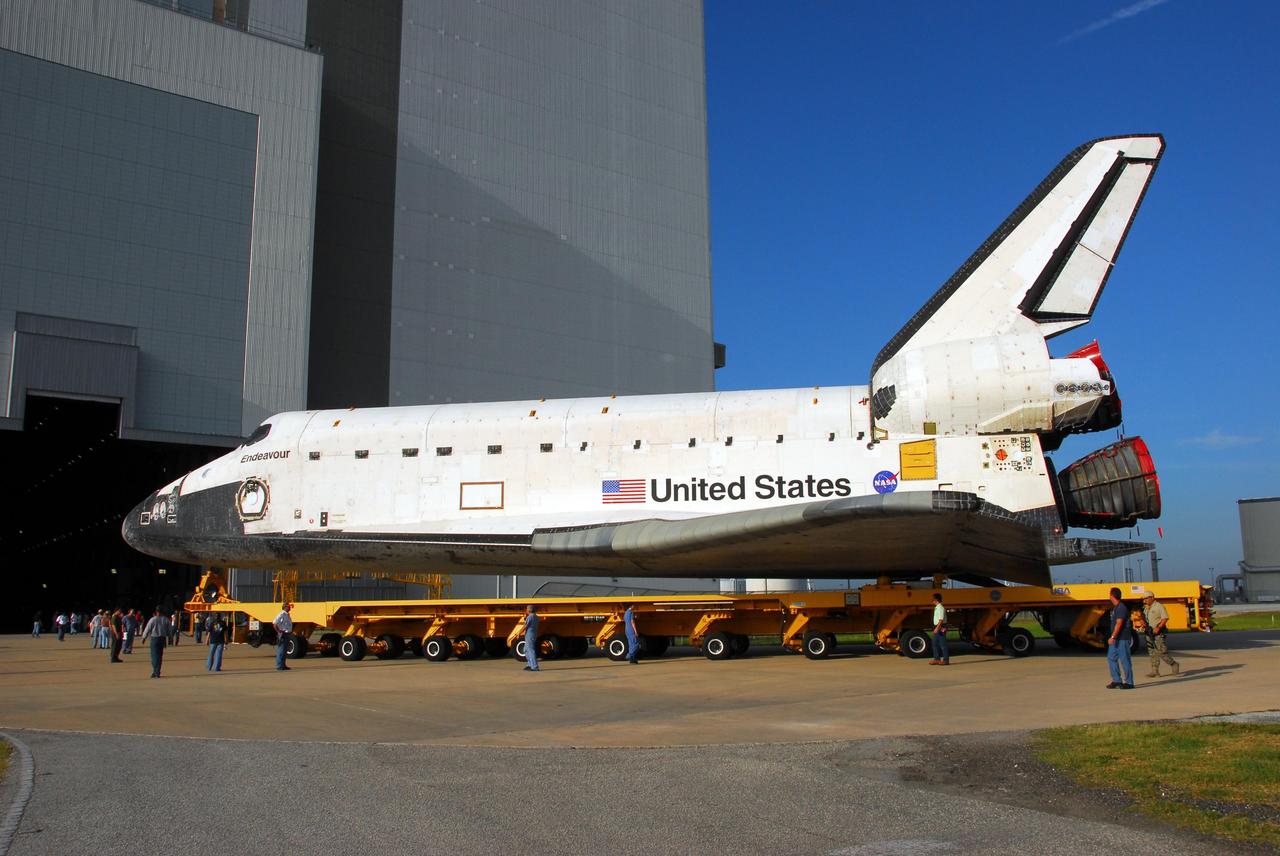
KENNEDY SPACE CENTER, FLA. -- The orbiter Endeavour, atop its transporter, rolls toward the gaping doorway of the Vehicle Assembly Building. In the VAB, it will be stacked with the external tank and solid rocket boosters atop the mobile launcher platform for its launch on mission STS-118. The mission will be Endeavour's first flight in more than four years. The shuttle has undergone extensive modifications, including the addition of safety upgrades already added to shuttles Discovery and Atlantis. Endeavour also features new hardware, such as the Station-to-Shuttle Power Transfer System that will allow the docked shuttle to draw electrical power from the station and extend its visits to the orbiting lab. Endeavour is targeted for launch on Aug. 7. Photo credit: NASA/George Shelton
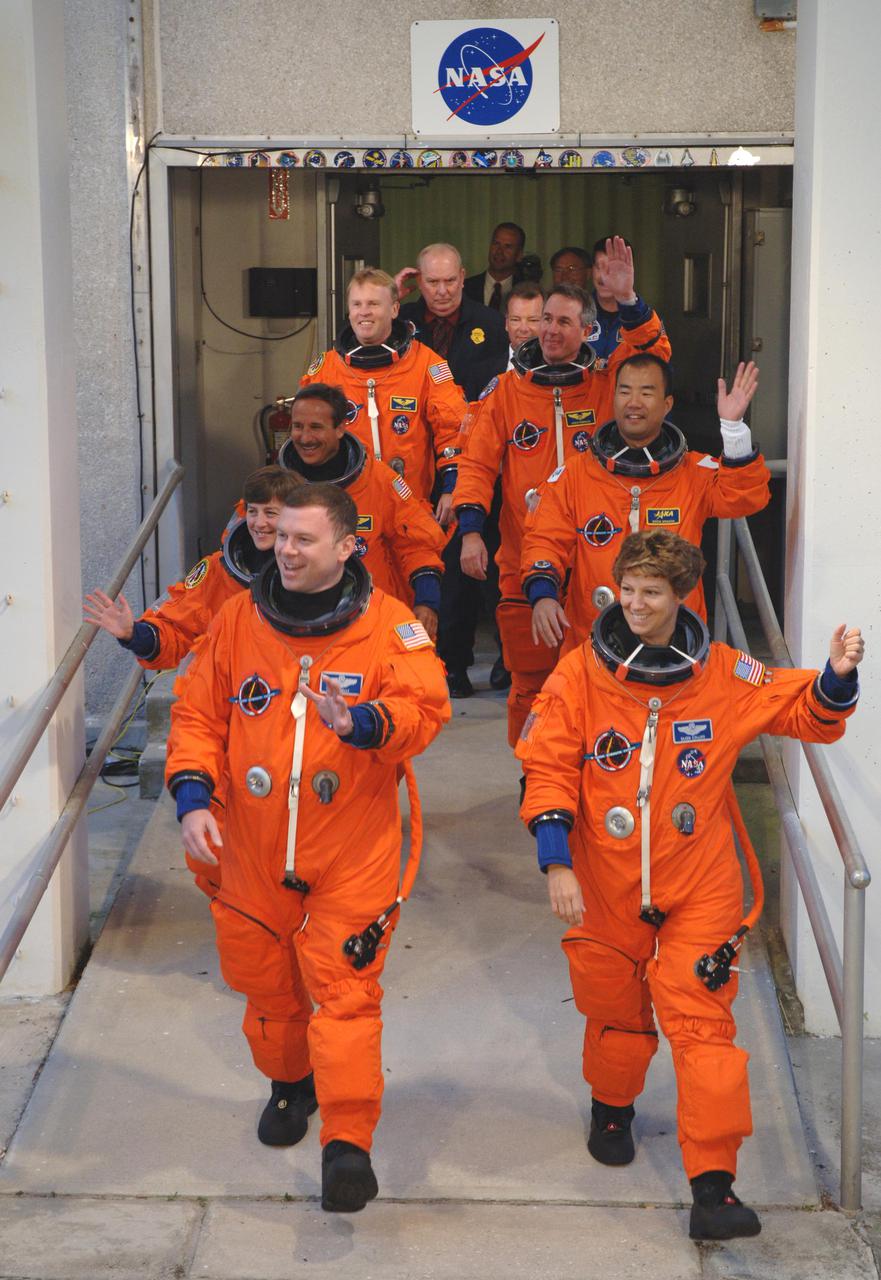
KENNEDY SPACE CENTER, FLA. - The Return to Flight STS-114 crew exits the Operations and Checkout Building, heading for the bus that will transport them to Launch Pad 39B. On the left, front to back, are Pilot James Kelly and Mission Specialists Wendy Lawrence, Charles Camarda and Andrew Thomas. On the right, front to back, are Mission Commander Eileen Collins and Mission Specialists Soichi Noguchi and Stephen Robinson. Noguchi represents the Japan Aerospace Exploration Agency. On its second attempt for launch, Discovery is scheduled to lift off at 10:39 a.m. EDT today from Launch Pad 39B. It is the 114th Space Shuttle flight and the 31st for Discovery. The 12-day mission is expected to end with touchdown at the Shuttle Landing Facility on Aug. 7. On this mission to the International Space Station the crew will perform inspections on-orbit for the first time of all of the Reinforced Carbon-Carbon (RCC) panels on the leading edge of the wings and the Thermal Protection System tiles using the new Canadian-built Orbiter Boom Sensor System and the data from 176 impact and temperature sensors. Mission Specialists will also practice repair techniques on RCC and tile samples during a spacewalk in the payload bay. During two additional spacewalks, the crew will install the External Stowage Platform-2, equipped with spare part assemblies, and a replacement Control Moment Gyroscope contained in the Lightweight Multi-Purpose Experiment Support Structure.
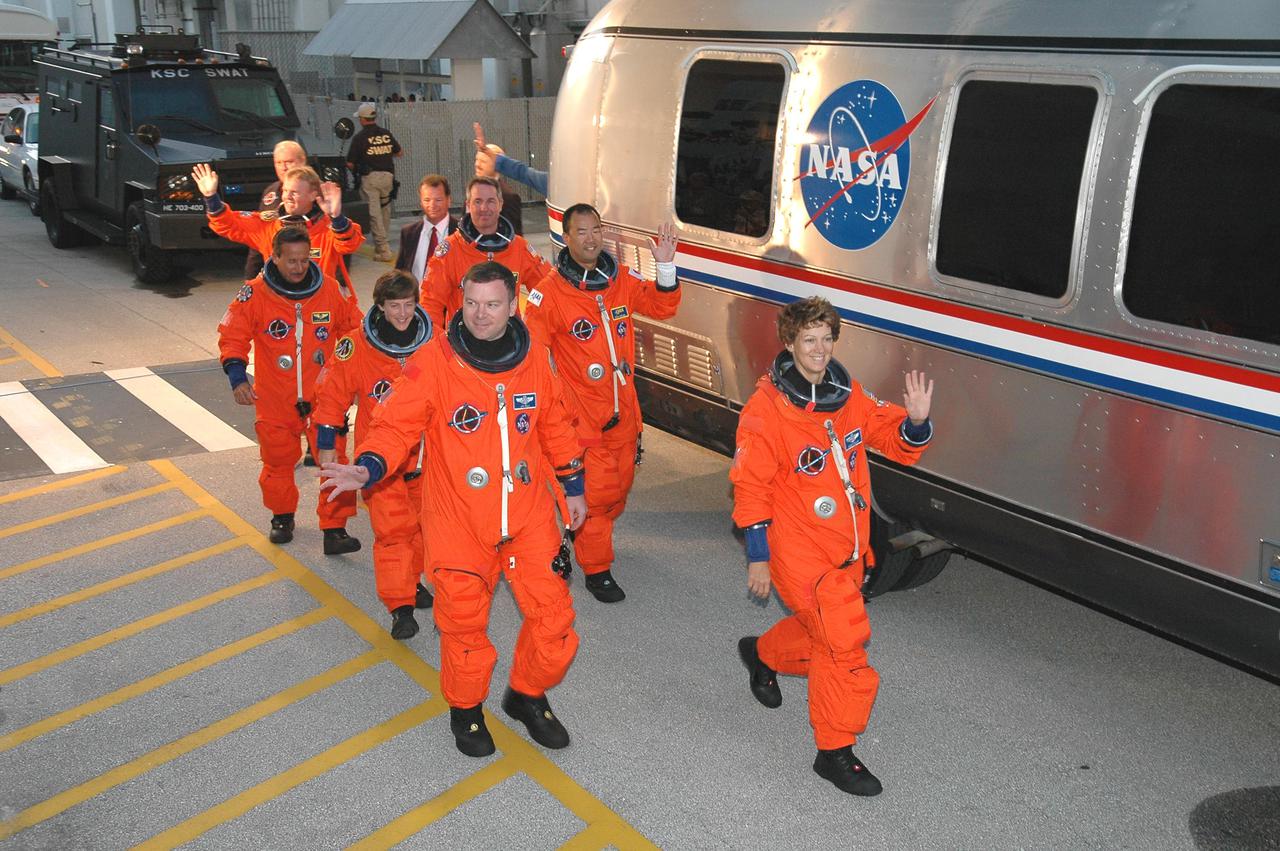
KENNEDY SPACE CENTER, FLA. - The Return to Flight STS-114 crew heads for the bus that will transport them to Launch Pad 39B. From left, in front, are Mission Specialists Andrew Thomas, Charles Camarda and Wendy Lawrence, with Pilot James Kelly leading. In back are Mission Specialists Stephen Robinson and Soichi Noguchi, led by Mission Commander Eileen Collins. Noguchi represents the Japan Aerospace Exploration Agency. On its second attempt for launch, Discovery is scheduled to lift off at 10:39 a.m. EDT today from Launch Pad 39B. It is the 114th Space Shuttle flight and the 31st for Discovery. The 12-day mission is expected to end with touchdown at the Shuttle Landing Facility on Aug. 7. On this mission to the International Space Station the crew will perform inspections on-orbit for the first time of all of the Reinforced Carbon-Carbon (RCC) panels on the leading edge of the wings and the Thermal Protection System tiles using the new Canadian-built Orbiter Boom Sensor System and the data from 176 impact and temperature sensors. Mission Specialists will also practice repair techniques on RCC and tile samples during a spacewalk in the payload bay. During two additional spacewalks, the crew will install the External Stowage Platform-2, equipped with spare part assemblies, and a replacement Control Moment Gyroscope contained in the Lightweight Multi-Purpose Experiment Support Structure.
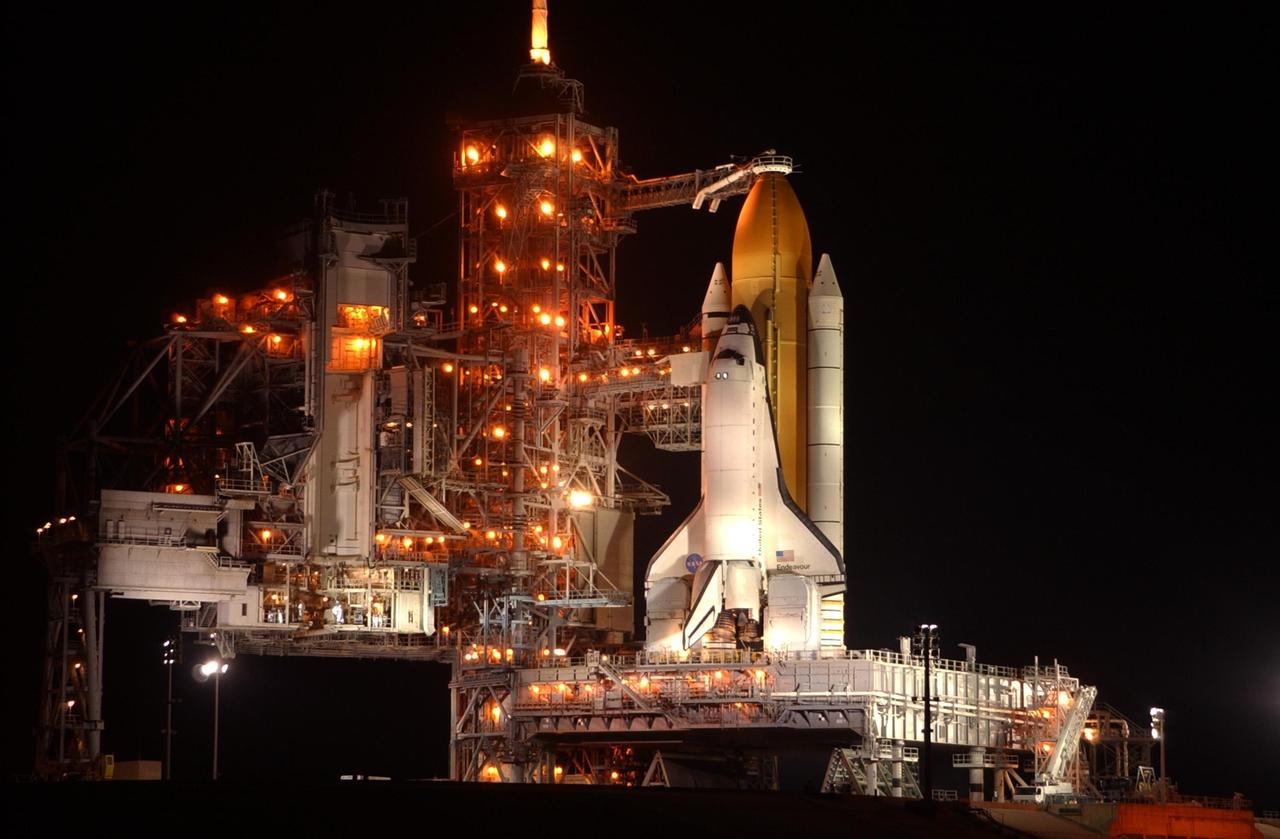
KENNEDY SPACE CENTER, FLA. -- Lights define the Fixed Service Structure on Launch Pad 39A where Space Shuttle Endeavour, also bathed in light, sits ready for launch atop the Mobile Launcher Platform. Seen above the orange external tank behind Endeavour is the "beanie cap," or vent hood assembly at the end of the gaseous oxygen vent arm. STS-111 is the second Utilization Flight to the International Space Station, carrying the Multi-Purpose Logistics Module Leonardo, the Mobile Base System (MBS), and a replacement wrist/roll joint for the Canadarm 2. Also onboard Space Shuttle Endeavour is the Expedition 5 crew who will replace Expedition 4 on board the Station. The MBS will be installed on the Mobile Transporter to complete the Canadian Mobile Servicing System, or MSS. The mechanical arm will then have the capability to "inchworm" from the U.S. Lab Destiny to the MSS and travel along the truss to work sites. Expedition 4 crew members will return to Earth with the STS-111 crew on Endeavour. Launch is scheduled for 7:44 p.m. EDT, May 30, 2002
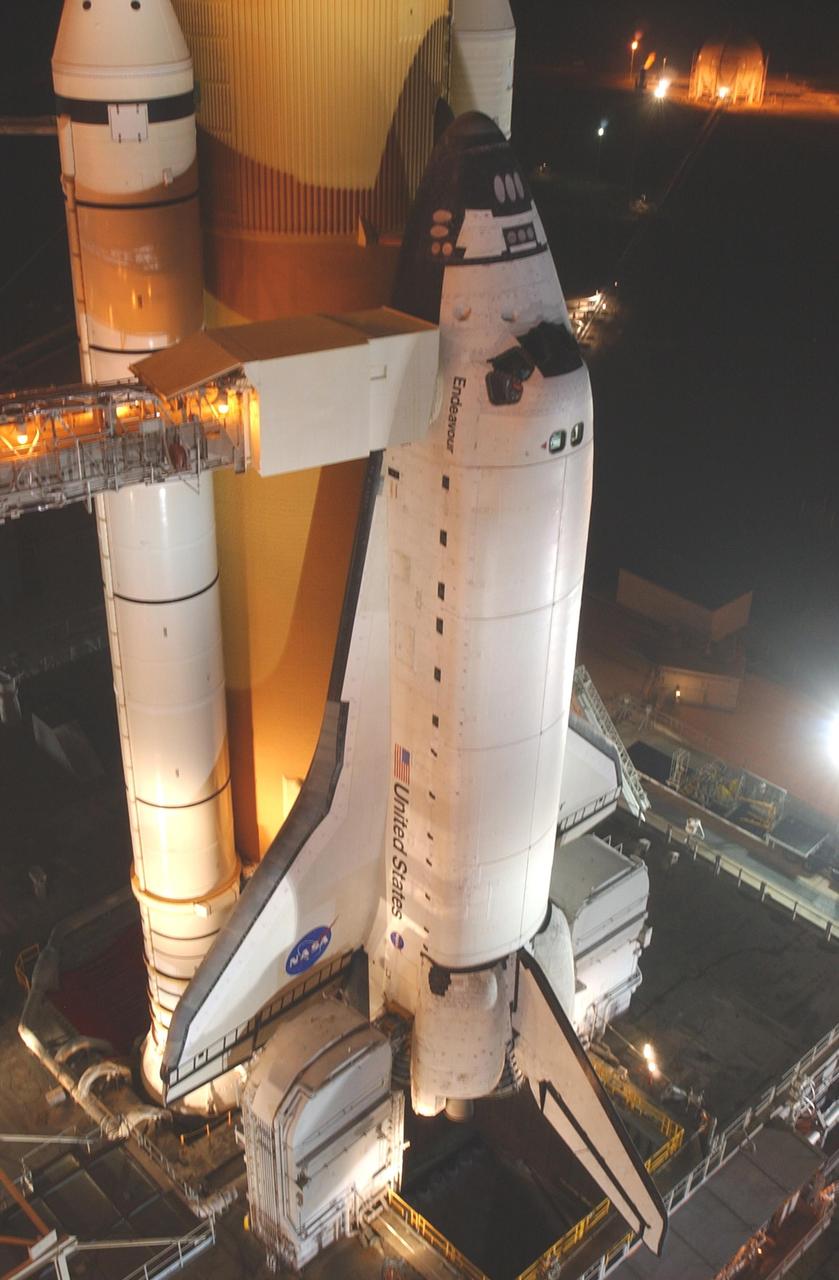
KENNEDY SPACE CENTER, FLA. -- After rollback of the Rotating Service Structure in the early morning hours, Space Shuttle Endeavour sits bathed in light on its Mobile Launcher Platform on Launch Pad 39A. Seen extending to the cockpit area of Endeavour is the orbiter access arm. At the end of the arm is the White Room, an environmental chamber. Below, on either side of Endeavour's tail, are the tail service masts that support fluid, gas and electrical requirements of the orbiter's liquid oxygen and liquid hydrogen aft T-0 umbilicals. STS-111 is the second Utilization Flight to the International Space Station, carrying the Multi-Purpose Logistics Module Leonardo, the Mobile Base System (MBS), and a replacement wrist/roll joint for the Canadarm 2. Also onboard Space Shuttle Endeavour is the Expedition 5 crew who will replace Expedition 4 on board the Station. The MBS will be installed on the Mobile Transporter to complete the Canadian Mobile Servicing System, or MSS. The mechanical arm will then have the capability to "inchworm" from the U.S. Lab Destiny to the MSS and travel along the truss to work sites. Expedition 4 crew members will return to Earth with the STS-111 crew on Endeavour. Launch is scheduled for 7:44 p.m. EDT, May 30, 2002
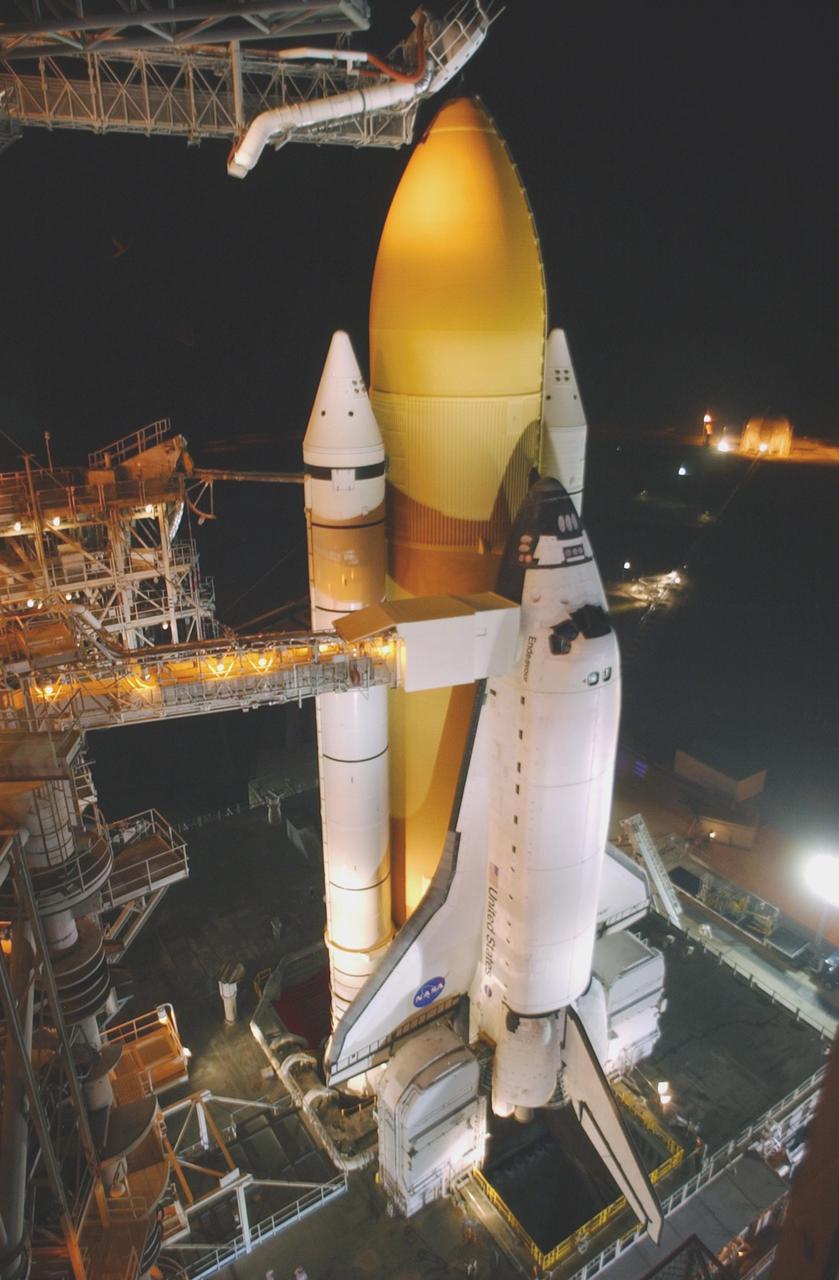
KENNEDY SPACE CENTER, FLA. - After rollback of the Rotating Service Structure, Space Shuttle Endeavour is bathed in light. Seen above the orange external tank behind Endeavour is the "beanie cap," or vent hood assembly at the end of the gaseous oxygen vent arm. The orbiter access arm extends to the cockpit area of Endeavour. At the end of the arm is the White Room, , an environmental chamber that provides crew access into the orbiter. STS-111 is the second Utilization Flight to the International Space Station, carrying the Multi-Purpose Logistics Module Leonardo, the Mobile Base System (MBS), and a replacement wrist/roll joint for the Canadarm 2. Also onboard Space Shuttle Endeavour is the Expedition 5 crew who will replace Expedition 4 on board the Station. The MBS will be installed on the Mobile Transporter to complete the Canadian Mobile Servicing System, or MSS. The mechanical arm will then have the capability to "inchworm" from the U.S. Lab Destiny to the MSS and travel along the truss to work sites. Expedition 4 crew members will return to Earth with the STS-111 crew on Endeavour. Launch is scheduled at 7:44 p.m. EDT, May 30, 2002
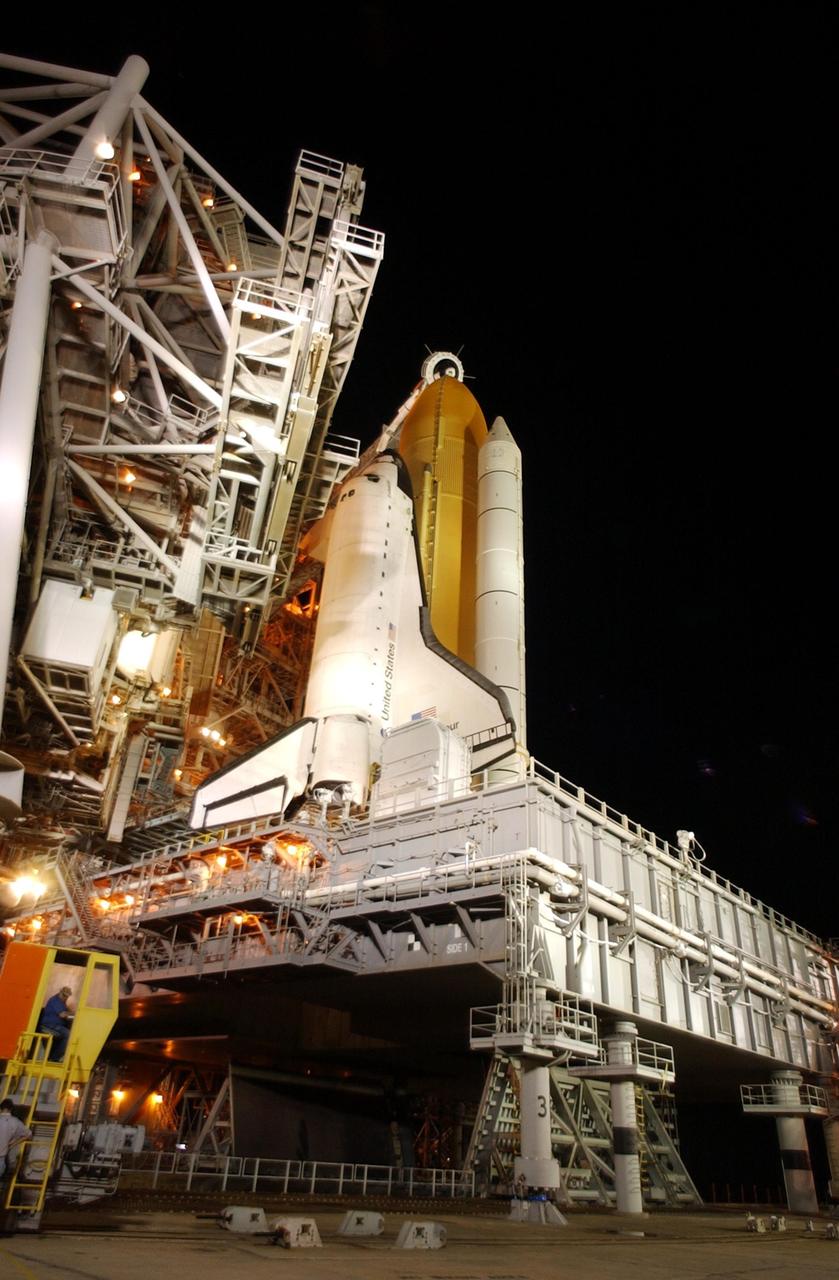
KENNEDY SPACE CENTER, FLA. - On Launch Pad 39A at 2:48 a.m. EDT, the Rotating Service Structure (left) begins rolling back from Space Shuttle Endeavour to allow launch preparations. At the lower left corner is seen the driver of one of the motor-driven trucks that move along circular twin rails installed flush with the pad surface. Endeavour rests on the Mobile Launcher Platform that straddles the flame trench below. The trench is 490 feet long, 58 feet wide and 40 feet high. STS-111 is the second Utilization Flight to the International Space Station, carrying the Multi-Purpose Logistics Module Leonardo, the Mobile Base System (MBS), and a replacement wrist/roll joint for the Canadarm 2. Also onboard Space Shuttle Endeavour is the Expedition 5 crew who will replace Expedition 4 on board the Station. The MBS will be installed on the Mobile Transporter to complete the Canadian Mobile Servicing System, or MSS. The mechanical arm will then have the capability to "inchworm" from the U.S. Lab Destiny to the MSS and travel along the truss to work sites. Expedition 4 crew members will return to Earth with the STS-111 crew on Endeavour. Launch is scheduled at 7:44 p.m. EDT, May 30, 2002
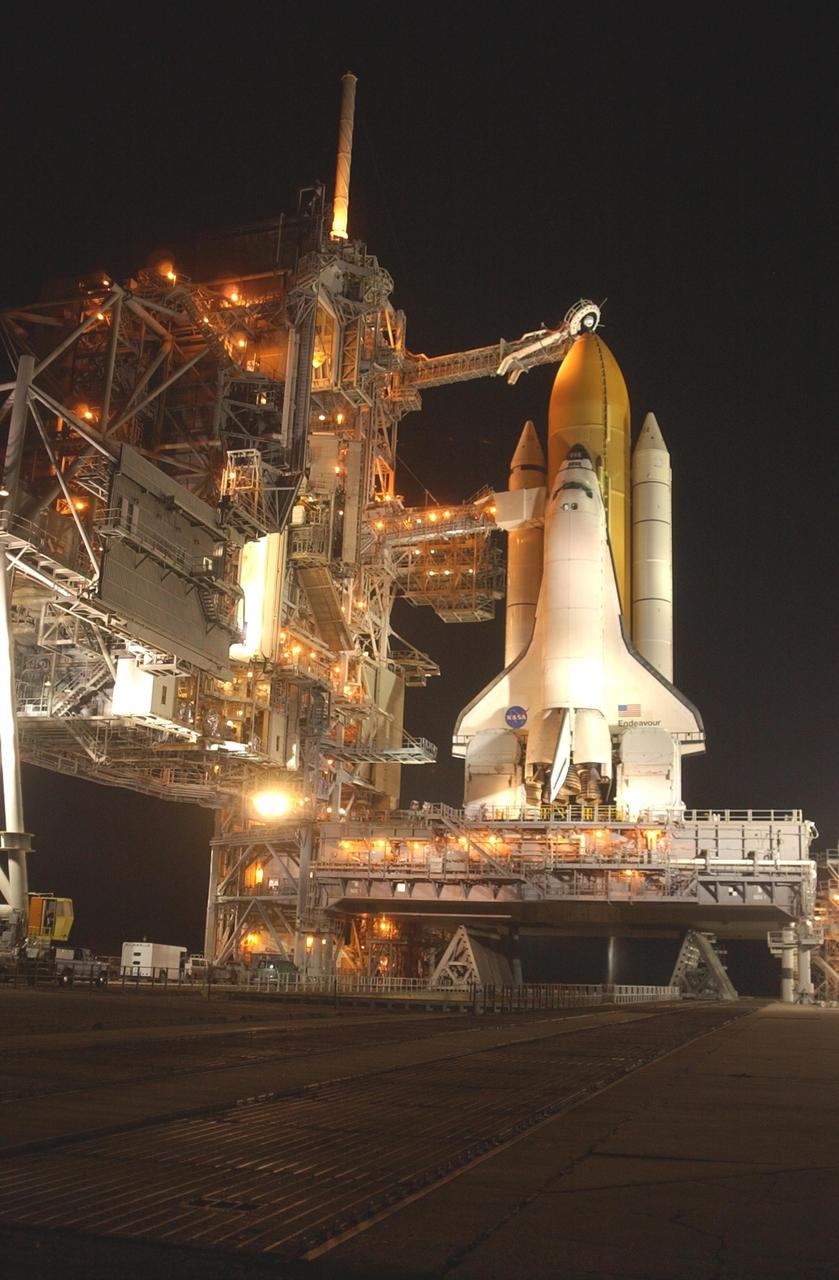
KENNEDY SPACE CENTER, FLA. -- With the Rotating Service Structure (left) rolled back from Space Shuttle Endeavour on Launch Pad 39A, the xenon lights are turned on. Endeavour rests on the Mobile Launcher Platform that straddles the flame trench below. The trench is 490 feet long, 58 feet wide and 40 feet high. Above the orange external tank behind Endeavour is the "beanie cap," or vent hood assembly at the end of the gaseous oxygen vent arm. STS-111 is the second Utilization Flight to the International Space Station, carrying the Multi-Purpose Logistics Module Leonardo, the Mobile Base System (MBS), and a replacement wrist/roll joint for the Canadarm 2. Also onboard Space Shuttle Endeavour is the Expedition 5 crew who will replace Expedition 4 on board the Station. The MBS will be installed on the Mobile Transporter to complete the Canadian Mobile Servicing System, or MSS. The mechanical arm will then have the capability to "inchworm" from the U.S. Lab Destiny to the MSS and travel along the truss to work sites. Expedition 4 crew members will return to Earth with the STS-111 crew on Endeavour. Launch is scheduled at 7:44 p.m. EDT, May 30, 2002
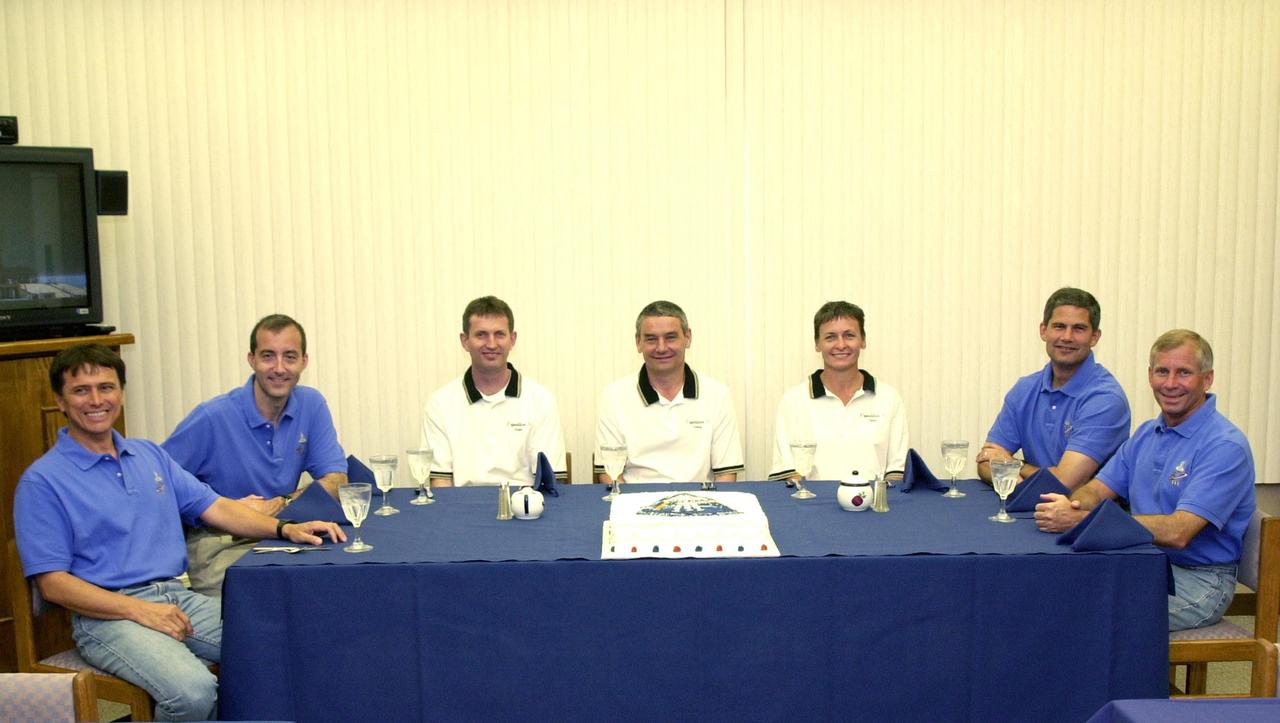
KENNEDY SPACE CENTER, FLA. -- The STS-111 and Expedition 5 crews relax at the traditional crew meal before getting ready for launch. Seated left to right are Mission Specialists Franklin Chang-Diaz and Philippe Perrin (CNES); cosmonauts Sergei Treschev (RSA) and Valeri Korzun (RSA) and astronaut Peggy Whitson, the Expedition 5 crew; Pilot Paul Lockhart and Commander Kenneth Cockrell. In front of them is the traditional cake. STS-111 is the second Utilization Flight to the International Space Station, carrying the Multi-Purpose Logistics Module Leonardo, the Mobile Base System (MBS), and a replacement wrist/roll joint for the Canadarm 2. Also onboard Space Shuttle Endeavour is the Expedition 5 crew who will replace Expedition 4 on board the Station. The MBS will be installed on the Mobile Transporter to complete the Canadian Mobile Servicing System, or MSS. The mechanical arm will then have the capability to "inchworm" from the U.S. Lab Destiny to the MSS and travel along the truss to work sites. Expedition 4 crew members will return to Earth with the STS-111 crew on Endeavour. Launch is scheduled at 7:44 p.m. EDT, May 30, 2002
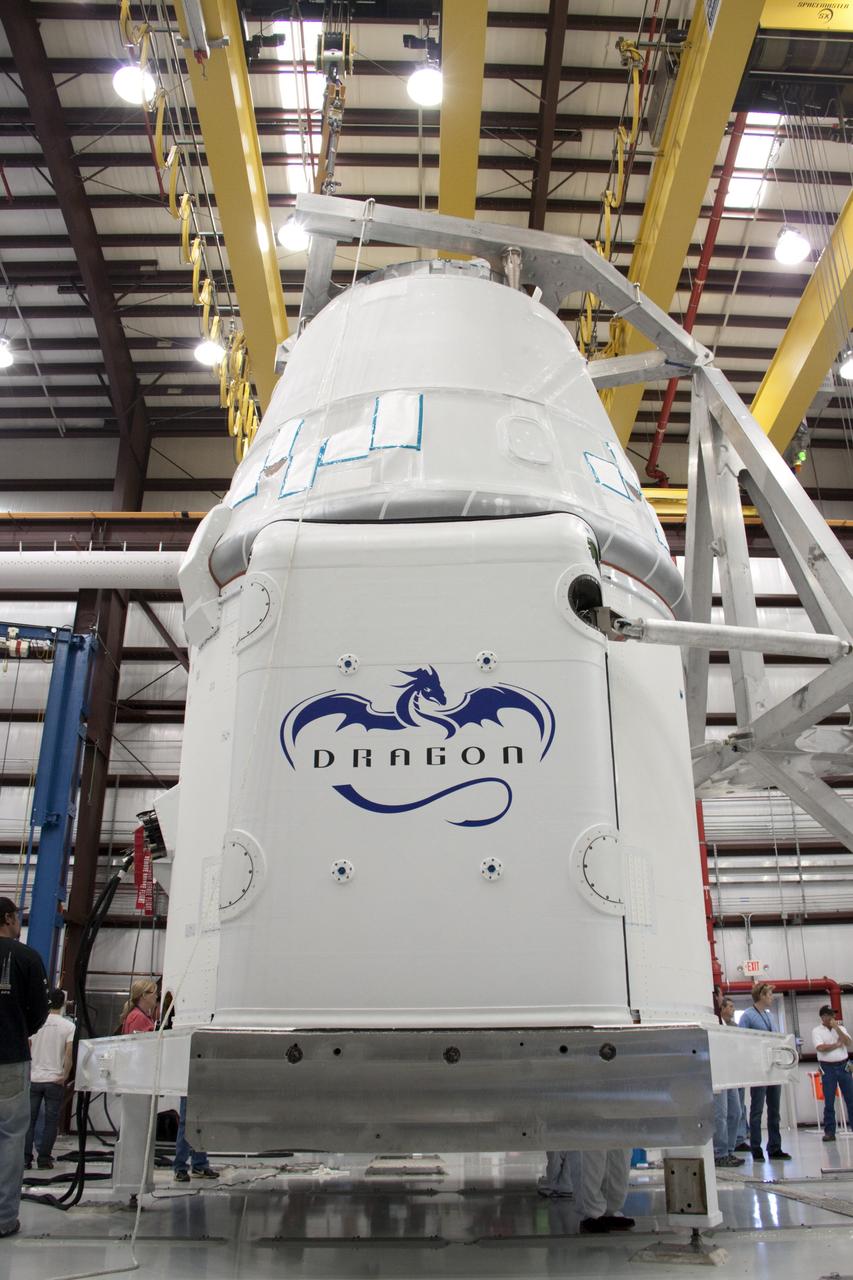
CAPE CANAVERAL, Fla. – In a processing facility at Space Launch Complex-40 on Cape Canaveral Air Force Station in Florida, preparations are under way to mate the Space Exploration Technologies Dragon capsule to the second stage of the company’s Falcon 9 rocket. Known as SpaceX, the launch will be the company's second demonstration test flight for NASA's Commercial Orbital Transportation Services program, or COTS. During the flight, the capsule will conduct a series of check-out procedures to test and prove its systems, including rendezvous and berthing with the International Space Station. If the capsule performs as planned, the NanoRacks-CubeLabs Module-9 experiments and other cargo aboard Dragon will be transferred to the station. The cargo includes food, water and provisions for the station’s Expedition crews, such as clothing, batteries and computer equipment. Under COTS, NASA has partnered with two private companies to provide resupply missions to the station. The launch is scheduled for 9:38 a.m. EDT on May 7. For more information, visit http://www.nasa.gov/spacex. Photo credit: NASA/Jim Grossmann
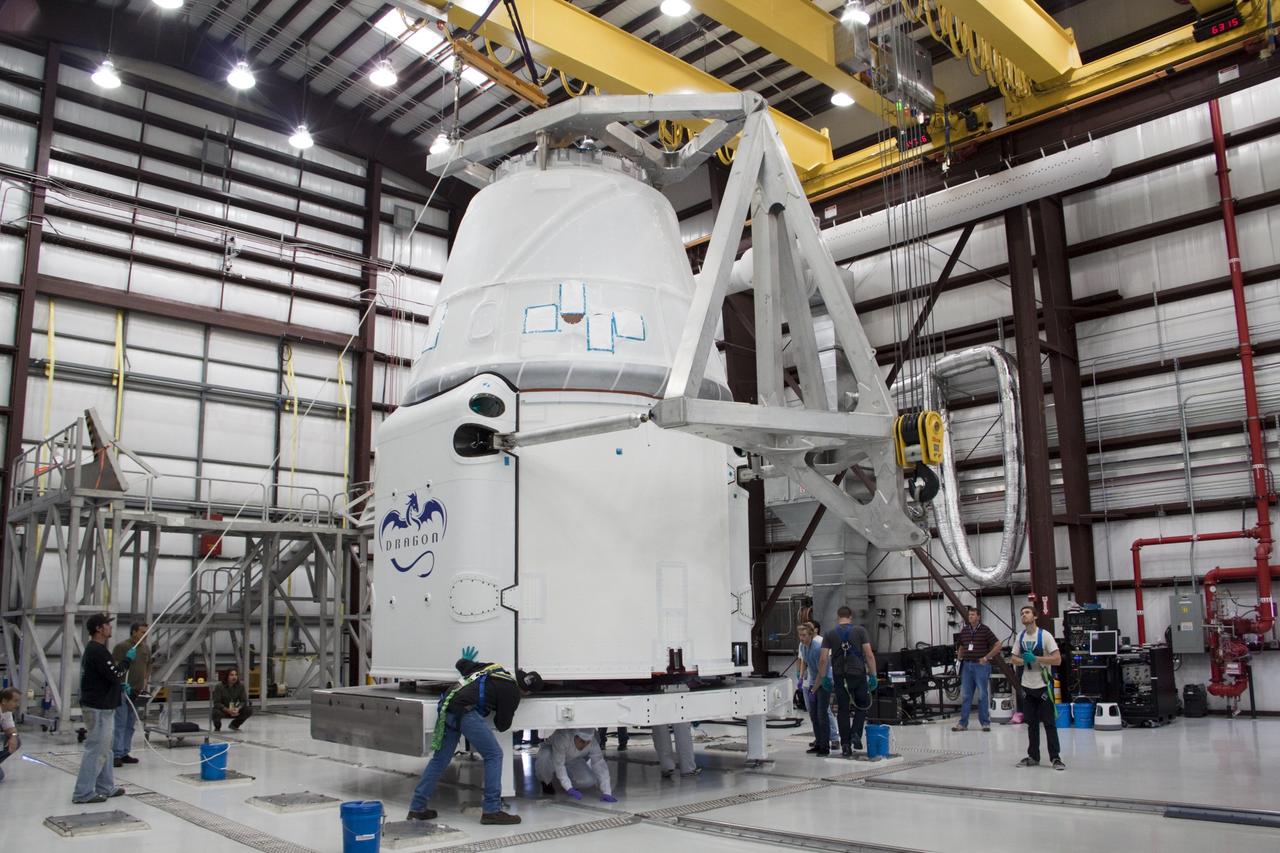
CAPE CANAVERAL, Fla. – In a processing facility at Space Launch Complex-40 on Cape Canaveral Air Force Station in Florida, Space Exploration Technologies technicians prepare to rotate the Dragon capsule into a horizontal position for mating with the second stage of the company’s Falcon 9 rocket. Known as SpaceX, the launch will be the company's second demonstration test flight for NASA's Commercial Orbital Transportation Services program, or COTS. During the flight, the capsule will conduct a series of check-out procedures to test and prove its systems, including rendezvous and berthing with the International Space Station. If the capsule performs as planned, the NanoRacks-CubeLabs Module-9 experiments and other cargo aboard Dragon will be transferred to the station. The cargo includes food, water and provisions for the station’s Expedition crews, such as clothing, batteries and computer equipment. Under COTS, NASA has partnered with two private companies to provide resupply missions to the station. The launch is scheduled for 9:38 a.m. EDT on May 7. For more information, visit http://www.nasa.gov/spacex. Photo credit: NASA/Jim Grossmann
CAPE CANAVERAL, Fla. – In a processing facility at Space Launch Complex-40 on Cape Canaveral Air Force Station in Florida, mating of the Space Exploration Technologies Dragon capsule to the second stage of the company’s Falcon 9 rocket is nearly complete. Known as SpaceX, the launch will be the company's second demonstration test flight for NASA's Commercial Orbital Transportation Services program, or COTS. During the flight, the capsule will conduct a series of check-out procedures to test and prove its systems, including rendezvous and berthing with the International Space Station. If the capsule performs as planned, the NanoRacks-CubeLabs Module-9 experiments and other cargo aboard Dragon will be transferred to the station. The cargo includes food, water and provisions for the station’s Expedition crews, such as clothing, batteries and computer equipment. Under COTS, NASA has partnered with two private companies to provide resupply missions to the station. The launch is scheduled for 9:38 a.m. EDT on May 7. For more information, visit http://www.nasa.gov/spacex. Photo credit: NASA/Jim Grossmann
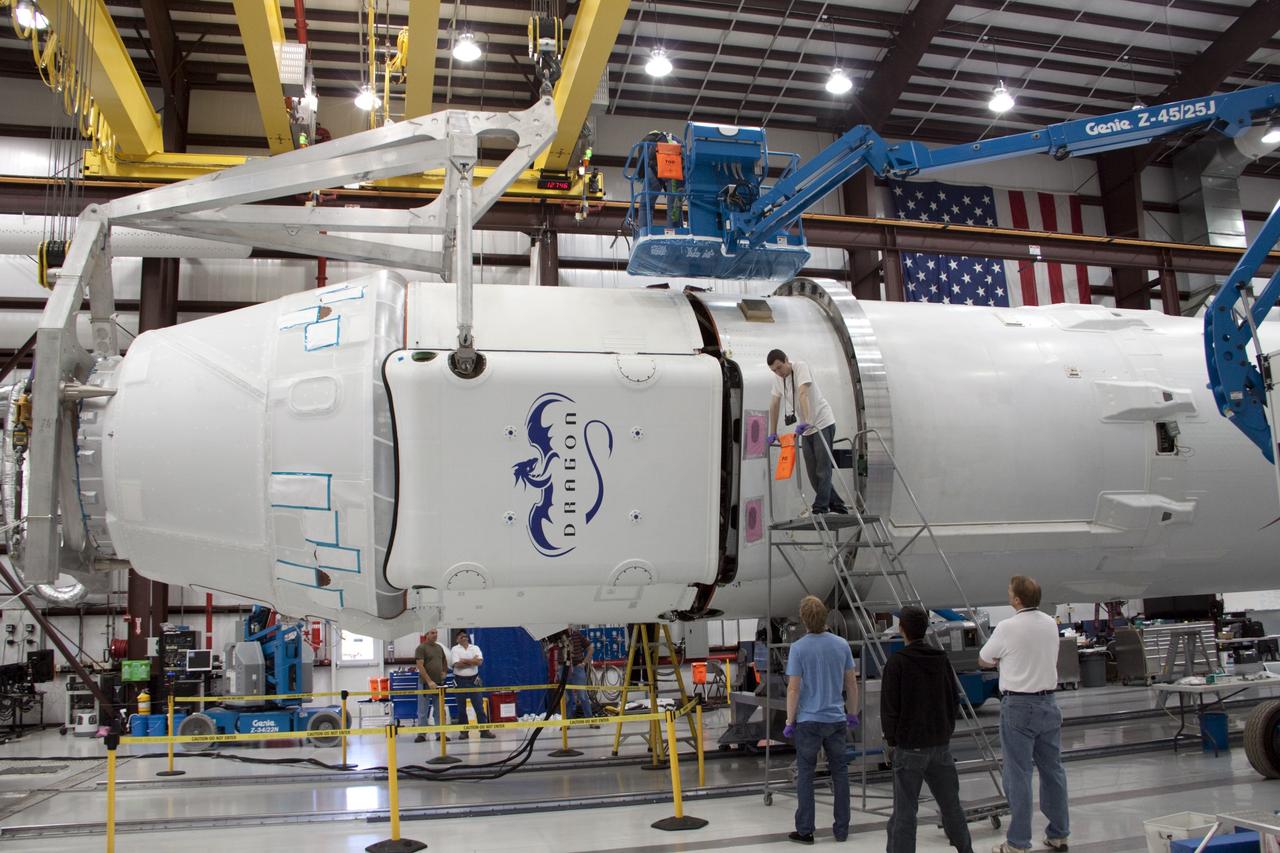
CAPE CANAVERAL, Fla. – In a processing facility at Space Launch Complex-40 on Cape Canaveral Air Force Station in Florida, Space Exploration Technologies technicians prepare to attach the Dragon capsule to the second stage of the company’s Falcon 9 rocket. Known as SpaceX, the launch will be the company's second demonstration test flight for NASA's Commercial Orbital Transportation Services program, or COTS. During the flight, the capsule will conduct a series of check-out procedures to test and prove its systems, including rendezvous and berthing with the International Space Station. If the capsule performs as planned, the NanoRacks-CubeLabs Module-9 experiments and other cargo aboard Dragon will be transferred to the station. The cargo includes food, water and provisions for the station’s Expedition crews, such as clothing, batteries and computer equipment. Under COTS, NASA has partnered with two private companies to provide resupply missions to the station. The launch is scheduled for 9:38 a.m. EDT on May 7. For more information, visit http://www.nasa.gov/spacex. Photo credit: NASA/Jim Grossmann
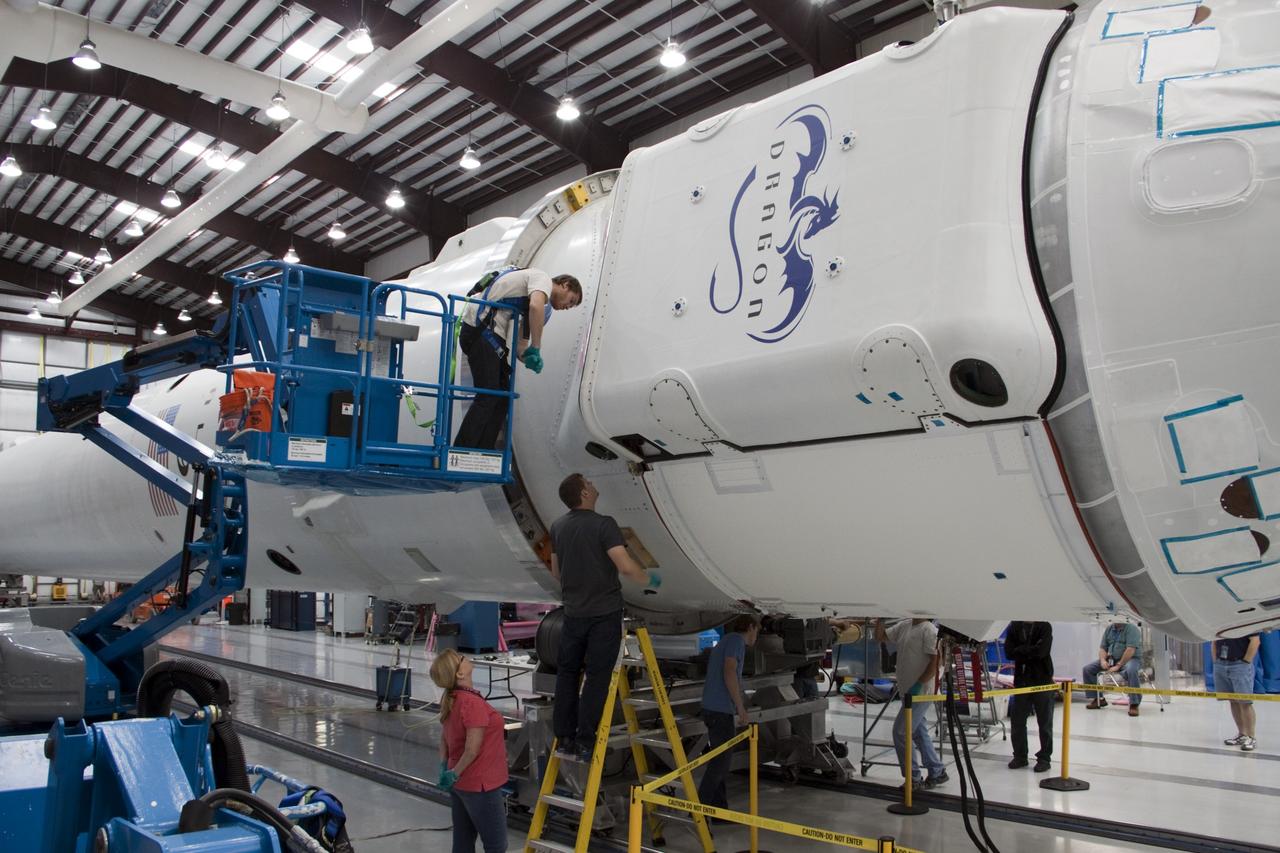
CAPE CANAVERAL, Fla. – In a processing facility at Space Launch Complex-40 on Cape Canaveral Air Force Station in Florida, Space Exploration Technologies technicians attach the Dragon capsule to the second stage of the company’s Falcon 9 rocket. Known as SpaceX, the launch will be the company's second demonstration test flight for NASA's Commercial Orbital Transportation Services program, or COTS. During the flight, the capsule will conduct a series of check-out procedures to test and prove its systems, including rendezvous and berthing with the International Space Station. If the capsule performs as planned, the NanoRacks-CubeLabs Module-9 experiments and other cargo aboard Dragon will be transferred to the station. The cargo includes food, water and provisions for the station’s Expedition crews, such as clothing, batteries and computer equipment. Under COTS, NASA has partnered with two private companies to provide resupply missions to the station. The launch is scheduled for 9:38 a.m. EDT on May 7. For more information, visit http://www.nasa.gov/spacex. Photo credit: NASA/Jim Grossmann
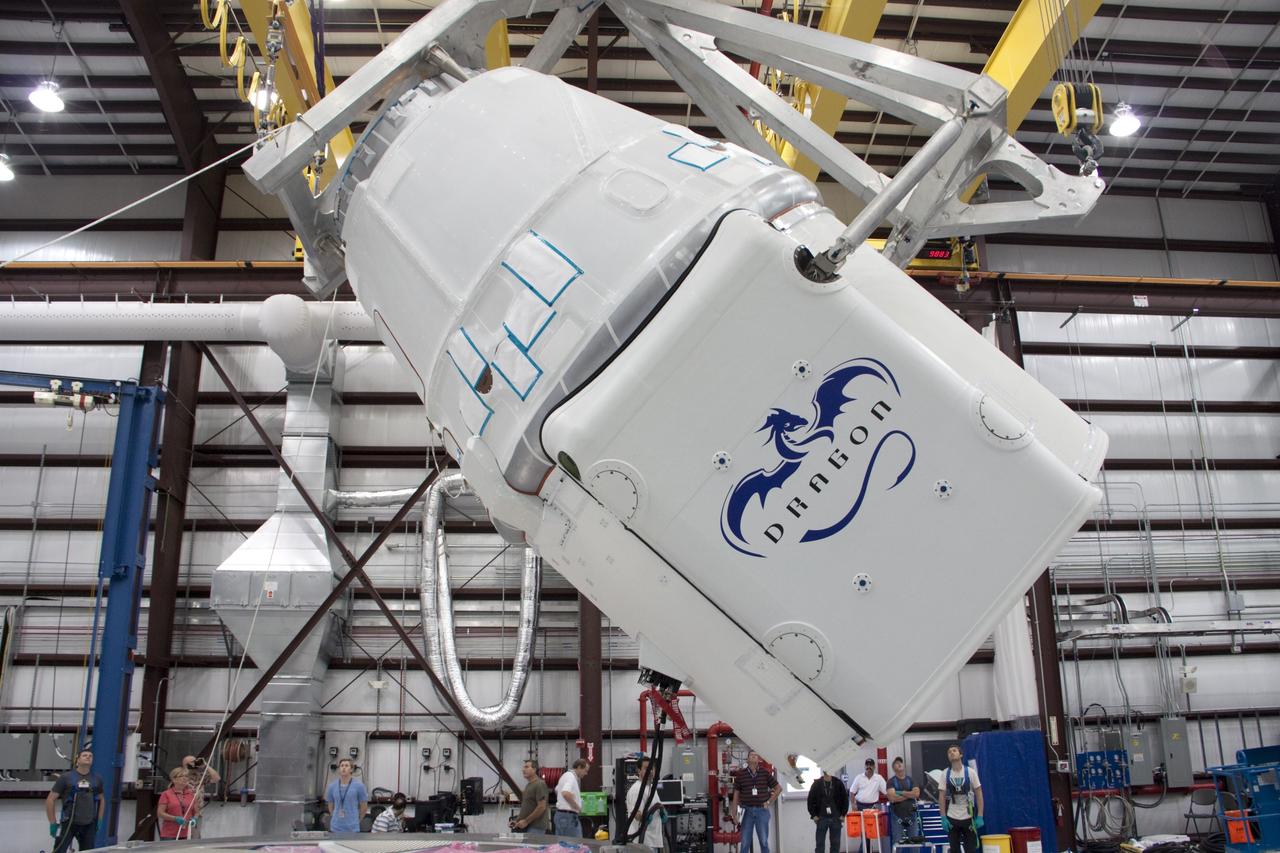
CAPE CANAVERAL, Fla. – In a processing facility at Space Launch Complex-40 on Cape Canaveral Air Force Station in Florida, the Space Exploration Technologies Dragon capsule is rotated into a horizontal position for mating with the second stage of the company’s Falcon 9 rocket. Known as SpaceX, the launch will be the company's second demonstration test flight for NASA's Commercial Orbital Transportation Services program, or COTS. During the flight, the capsule will conduct a series of check-out procedures to test and prove its systems, including rendezvous and berthing with the International Space Station. If the capsule performs as planned, the NanoRacks-CubeLabs Module-9 experiments and other cargo aboard Dragon will be transferred to the station. The cargo includes food, water and provisions for the station’s Expedition crews, such as clothing, batteries and computer equipment. Under COTS, NASA has partnered with two private companies to provide resupply missions to the station. The launch is scheduled for 9:38 a.m. EDT on May 7. For more information, visit http://www.nasa.gov/spacex. Photo credit: NASA/Jim Grossmann
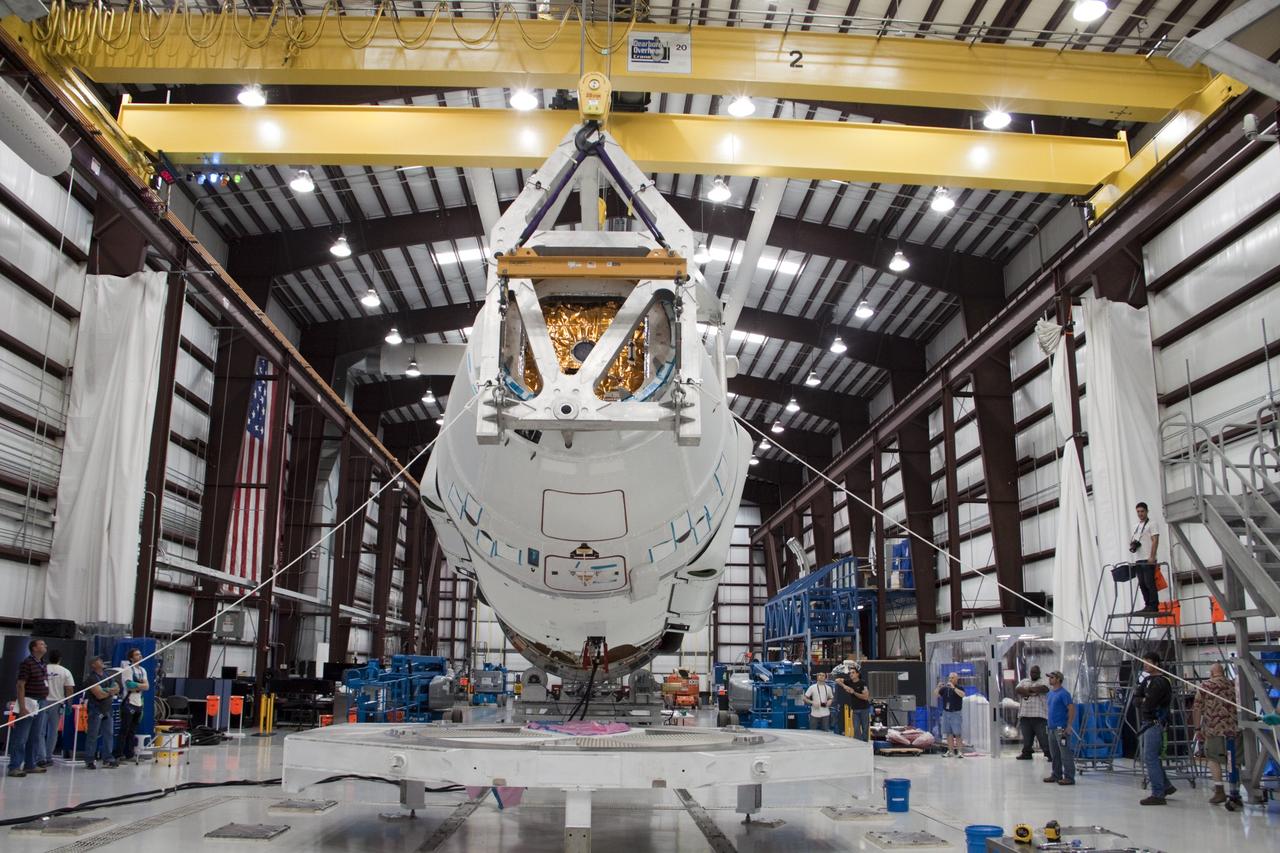
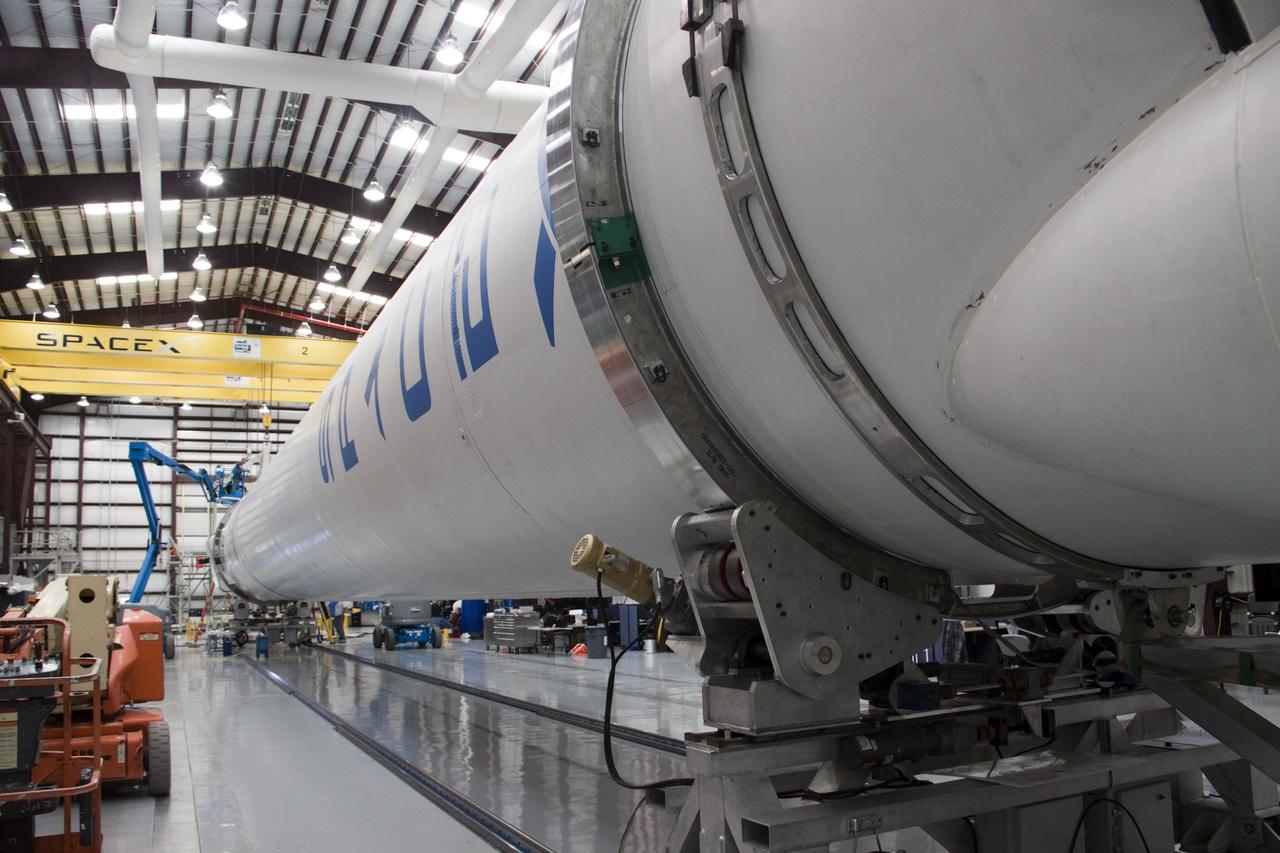
CAPE CANAVERAL, Fla. – In a processing facility at Space Launch Complex-40 on Cape Canaveral Air Force Station in Florida, the Space Exploration Technologies Dragon capsule is positioned against the second stage of the company’s Falcon 9 rocket during mating operations. Known as SpaceX, the launch will be the company's second demonstration test flight for NASA's Commercial Orbital Transportation Services program, or COTS. During the flight, the capsule will conduct a series of check-out procedures to test and prove its systems, including rendezvous and berthing with the International Space Station. If the capsule performs as planned, the NanoRacks-CubeLabs Module-9 experiments and other cargo aboard Dragon will be transferred to the station. The cargo includes food, water and provisions for the station’s Expedition crews, such as clothing, batteries and computer equipment. Under COTS, NASA has partnered with two private companies to provide resupply missions to the station. The launch is scheduled for 9:38 a.m. EDT on May 7. For more information, visit http://www.nasa.gov/spacex. Photo credit: NASA/Jim Grossmann
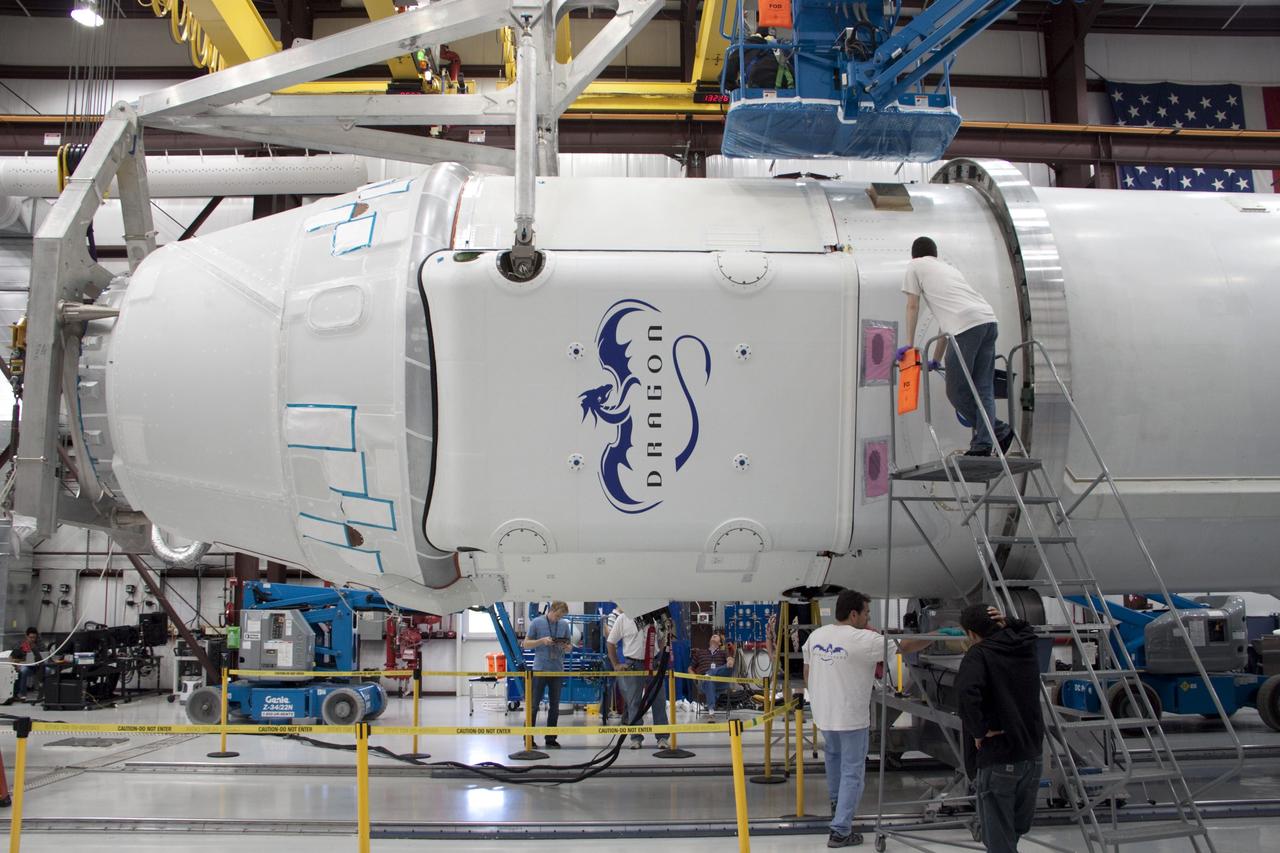
CAPE CANAVERAL, Fla. – In a processing facility at Space Launch Complex-40 on Cape Canaveral Air Force Station in Florida, operations are under way to mate the Space Exploration Technologies Dragon capsule to the second stage of the company’s Falcon 9 rocket. Known as SpaceX, the launch will be the company's second demonstration test flight for NASA's Commercial Orbital Transportation Services program, or COTS. During the flight, the capsule will conduct a series of check-out procedures to test and prove its systems, including rendezvous and berthing with the International Space Station. If the capsule performs as planned, the NanoRacks-CubeLabs Module-9 experiments and other cargo aboard Dragon will be transferred to the station. The cargo includes food, water and provisions for the station’s Expedition crews, such as clothing, batteries and computer equipment. Under COTS, NASA has partnered with two private companies to provide resupply missions to the station. The launch is scheduled for 9:38 a.m. EDT on May 7. For more information, visit http://www.nasa.gov/spacex. Photo credit: NASA/Jim Grossmann
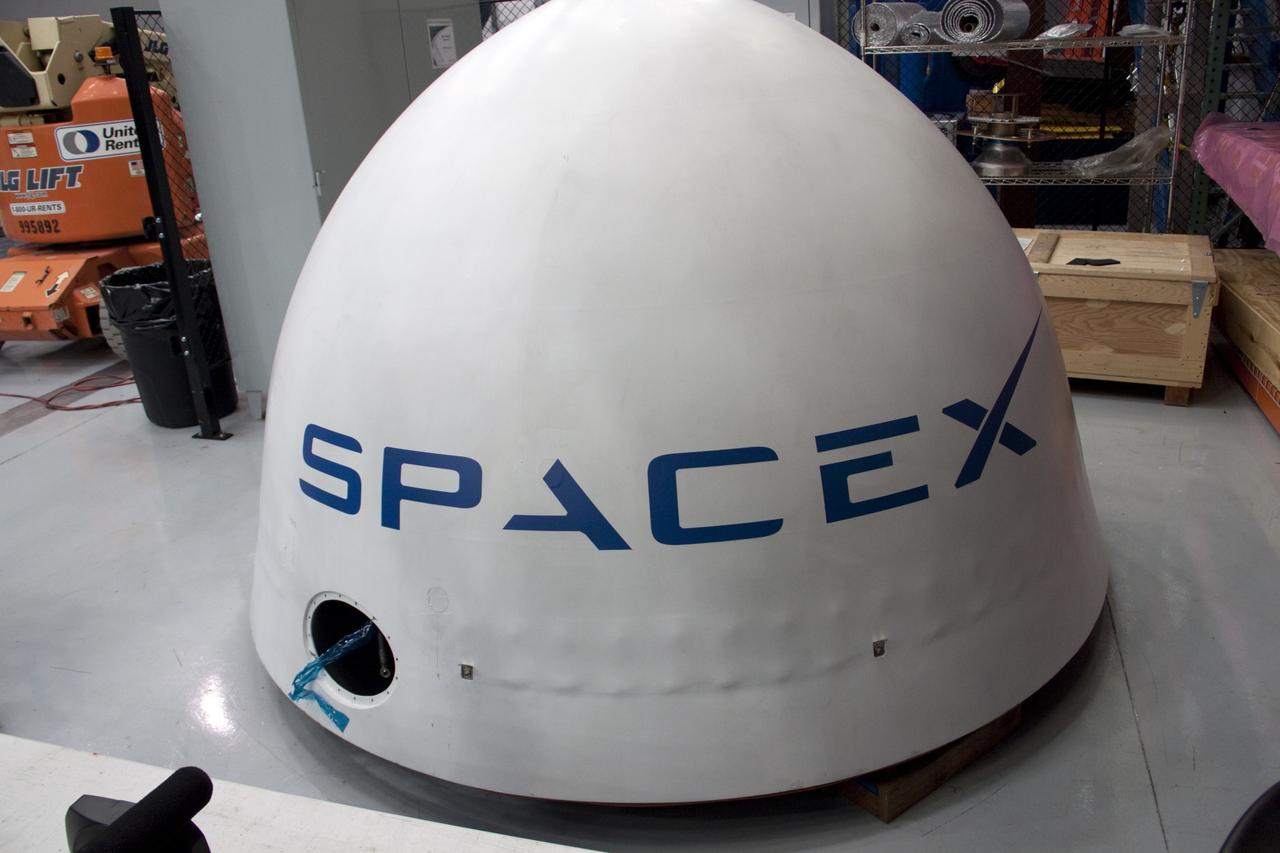
CAPE CANAVERAL, Fla. – A nose cone rests on the floor of a processing facility at Space Launch Complex-40 on Cape Canaveral Air Force Station in Florida awaiting installation on a Space Exploration Technologies Dragon capsule. Operations to attach the capsule to the company’s Falcon 9 rocket are in progress. Known as SpaceX, the launch will be the company's second demonstration test flight for NASA's Commercial Orbital Transportation Services program, or COTS. During the flight, the capsule will conduct a series of check-out procedures to test and prove its systems, including rendezvous and berthing with the International Space Station. If the capsule performs as planned, the NanoRacks-CubeLabs Module-9 experiments and other cargo aboard Dragon will be transferred to the station. The cargo includes food, water and provisions for the station’s Expedition crews, such as clothing, batteries and computer equipment. Under COTS, NASA has partnered with two private companies to provide resupply missions to the station. The launch is scheduled for 9:38 a.m. EDT on May 7. For more information, visit http://www.nasa.gov/spacex. Photo credit: NASA/Jim Grossmann
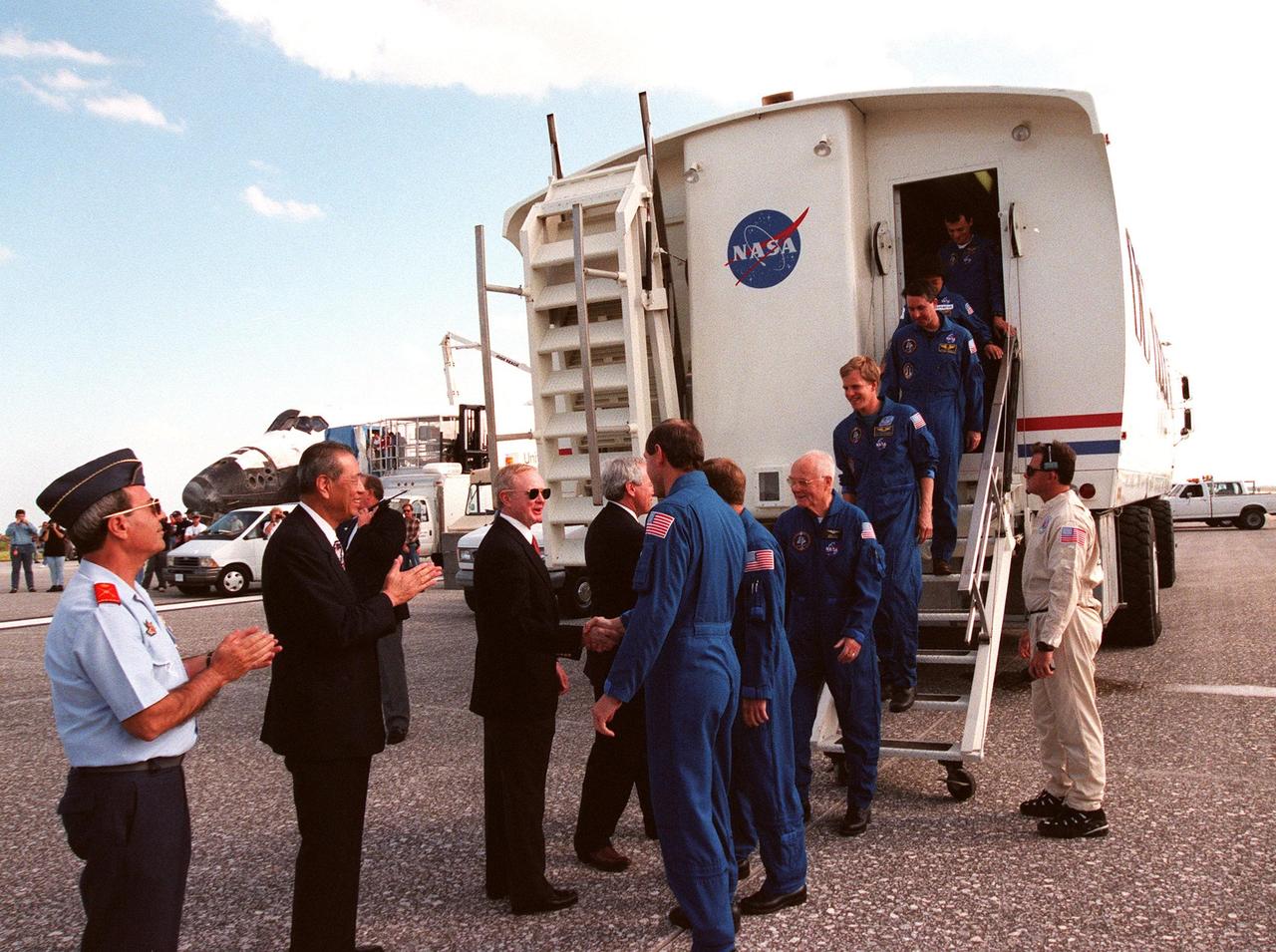
Following touchdown at 12:04 p.m. EST at the Shuttle Landing Facility, the STS-95 crew leave the Crew Transport Vehicle where they are met by (left to right) a Spanish dignitary; Isao Uchida, president of the National Space Development Agency of Japan (NASDA); Center Director Roy Bridges; and NASA Administrator Daniel Goldin. The crew, from left to right, are Mission Commander Curtis L. Brown Jr. (shaking hands with Bridges); Pilot Steven W. Lindsey; Payload Specialist John H. Glenn Jr., a senator from Ohio and one of the original Mercury 7 astronauts; Mission Specialist Scott E. Parazynski; Mission Specialist Stephen K. Robinson; Payload Specialist Chiaki Mukai, with the National Space Development Agency of Japan (NASDA); and Mission Specialist Pedro Duque of Spain, with the European Space Agency (ESA). The successful mission lasted nine days and included research payloads such as the Spartan solar-observing deployable spacecraft, the Hubble Space Telescope Orbital Systems Test Platform, the International Extreme Ultraviolet Hitchhiker, as well as the SPACEHAB single module with experiments on space flight and the aging process
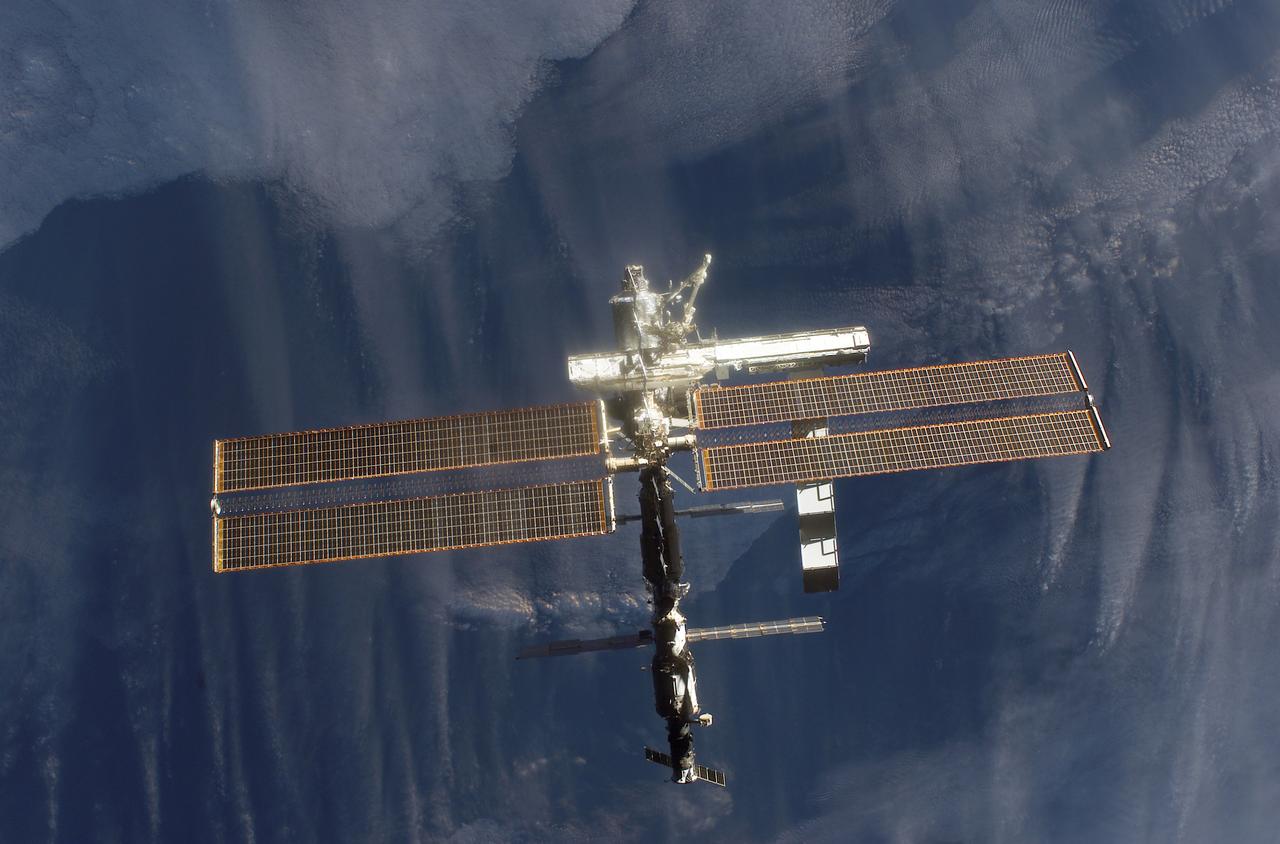
This image of the International Space Station (ISS) was photographed by one of the crewmembers of the STS-112 mission following separation from the Space Shuttle Orbiter Atlantis as the orbiter pulled away from the ISS. The newly added S1 truss is visible in the center frame. The primary payloads of this mission, International Space Station Assembly Mission 9A, were the Integrated Truss Assembly S-1 (S-One), the Starboard Side Thermal Radiator Truss,and the Crew Equipment Translation Aid (CETA) cart to the ISS. The S1 truss provides structural support for the orbiting research facility's radiator panels, which use ammonia to cool the Station's complex power system. The S1 truss was attached to the S0 (S Zero) truss, which was launched on April 8, 2002 aboard the STS-110, and flows 637 pounds of anhydrous ammonia through three heat rejection radiators. The truss is 45-feet long, 15-feet wide, 10-feet tall, and weighs approximately 32,000 pounds. The CETA cart was attached to the Mobil Transporter and will be used by assembly crews on later missions. Manufactured by the Boeing Company in Huntington Beach, California, the truss primary structure was transferred to the Marshall Space Flight Center in February 1999 for hardware installations and manufacturing acceptance testing. The launch of the STS-112 mission occurred on October 7, 2002, and its 11-day mission ended on October 18, 2002.
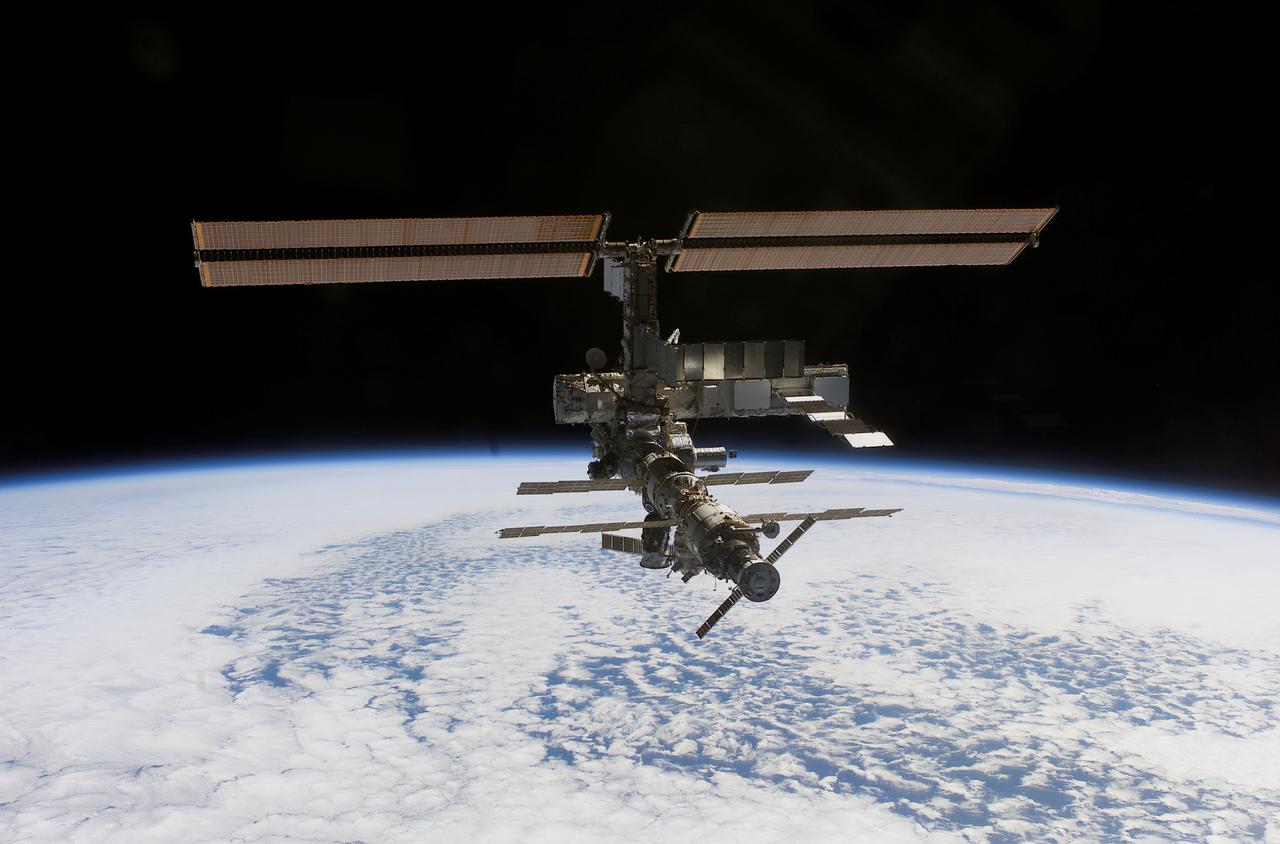
This image of the International Space Station (ISS) was photographed by one of the crewmembers of the STS-112 mission following separation from the Space Shuttle Orbiter Atlantis as the orbiter pulled away from the ISS. The primary payloads of this mission, International Space Station Assembly Mission 9A, were the Integrated Truss Assembly S1 (S-One), the Starboard Side Thermal Radiator Truss, and the Crew Equipment Translation Aid (CETA) cart to the ISS. The S1 truss provides structural support for the orbiting research facility's radiator panels, which use ammonia to cool the Station's complex power system. The S1 truss was attached to the S0 (S Zero) truss, which was launched on April 8, 2002 aboard the STS-110, and flows 637 pounds of anhydrous ammonia through three heat-rejection radiators. The truss is 45-feet long, 15-feet wide, 10-feet tall, and weighs approximately 32,000 pounds. The CETA cart was attached to the Mobil Transporter and will be used by assembly crews on later missions. Manufactured by the Boeing Company in Huntington Beach, California, the truss primary structure was transferred to the Marshall Space Flight Center in February 1999 for hardware installations and manufacturing acceptance testing. The launch of the STS-112 mission occurred on October 7, 2002, and its 11-day mission ended on October 18, 2002.
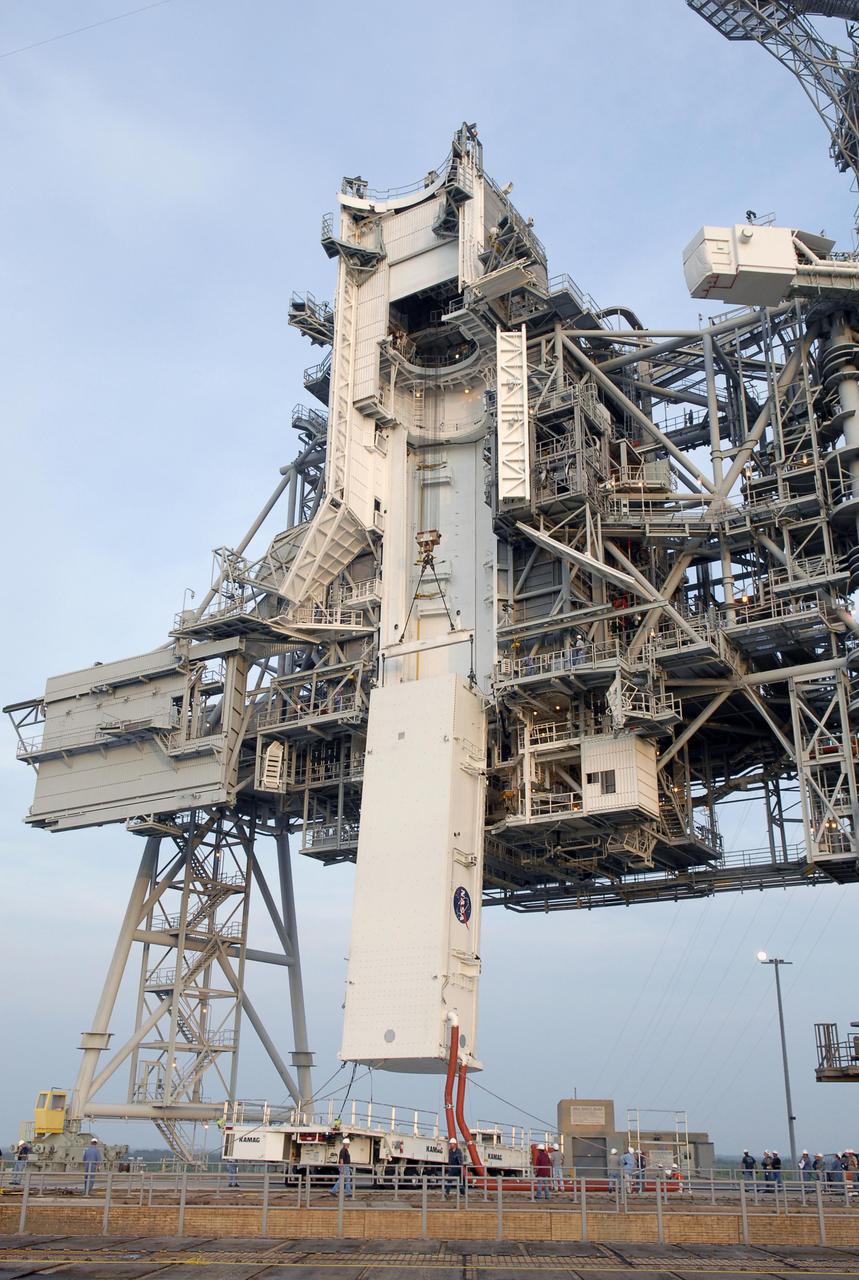
KENNEDY SPACE CENTER, FLA. -- The payload canister is lifted off its transporter up to the payload changeout room. Inside the canister are the S5 truss, SPACEHAB module and external stowage platform 3, the payload for mission STS-118. The red umbilical lines are still attached. The payloads will be transferred inside the changeout room to wait for Space Shuttle Endeavour to arrive at the pad. The changeout room is the enclosed, environmentally controlled portion of the rotating service structure that supports cargo delivery to the pad and subsequent vertical installation into the orbiter payload bay. The mission will be Endeavour's first flight in more than four years. The shuttle has undergone extensive modifications, including the addition of safety upgrades already added to shuttles Discovery and Atlantis. Endeavour also features new hardware, such as the Station-to-Shuttle Power Transfer System that will allow the docked shuttle to draw electrical power from the station and extend its visits to the orbiting lab. Space Shuttle Endeavour is targeted for launch on Aug. 7 from Launch Pad 39A. Photo credit: NASA_Kim Shiflett
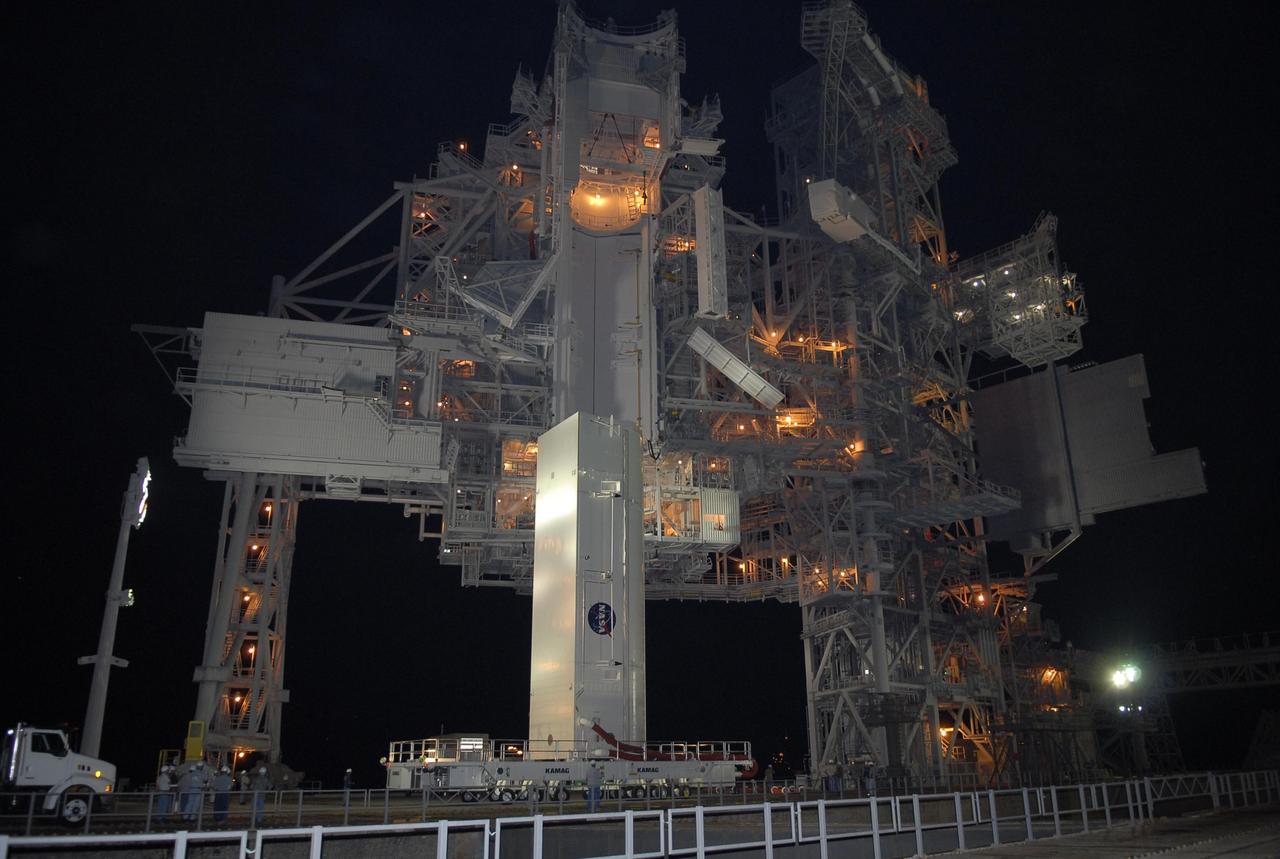
KENNEDY SPACE CENTER, FLA. -- The payload transporter arrives with its canister on Launch Pad 39A. Inside the canister are the S5 truss, SPACEHAB module and external stowage platform 3, the payload for mission STS-118. The canister will be lifted up to the payload changeout room above and the payloads transferred inside to wait for Space Shuttle Endeavour to arrive at the pad. The changeout room is the enclosed, environmentally controlled portion of the rotating service structure that supports cargo delivery to the pad and subsequent vertical installation into the orbiter payload bay. The mission will be Endeavour's first flight in more than four years. The shuttle has undergone extensive modifications, including the addition of safety upgrades already added to shuttles Discovery and Atlantis. Endeavour also features new hardware, such as the Station-to-Shuttle Power Transfer System that will allow the docked shuttle to draw electrical power from the station and extend its visits to the orbiting lab. Space Shuttle Endeavour is targeted for launch on Aug. 7 from Launch Pad 39A. Photo credit: NASA/Kim Shiflett
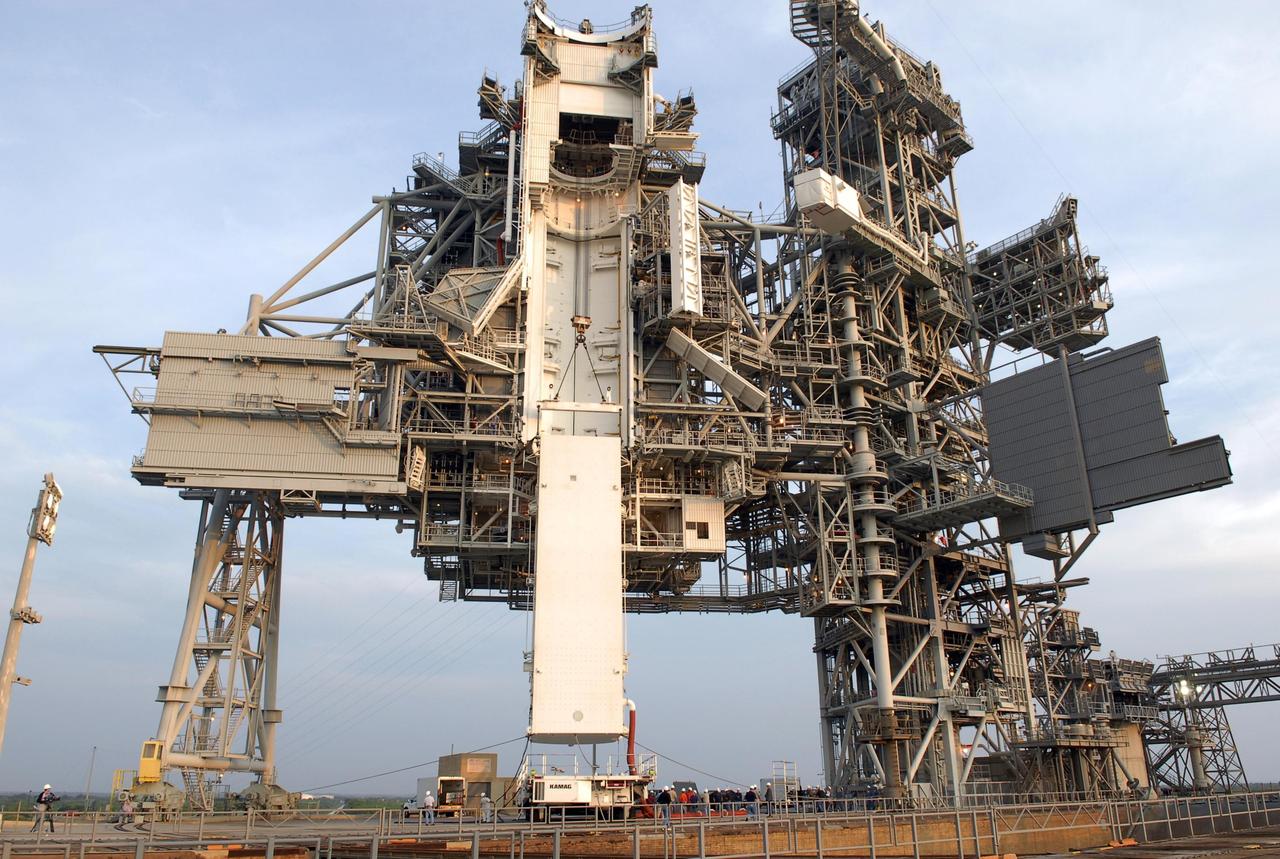
KENNEDY SPACE CENTER, FLA. -- The payload canister is lifted off its transporter up to the payload changeout room. Inside the canister are the S5 truss, SPACEHAB module and external stowage platform 3, the payload for mission STS-118. The red umbilical lines are still attached. The payloads will be transferred inside the changeout room to wait for Space Shuttle Endeavour to arrive at the pad. The changeout room is the enclosed, environmentally controlled portion of the rotating service structure that supports cargo delivery to the pad and subsequent vertical installation into the orbiter payload bay. The mission will be Endeavour's first flight in more than four years. The shuttle has undergone extensive modifications, including the addition of safety upgrades already added to shuttles Discovery and Atlantis. Endeavour also features new hardware, such as the Station-to-Shuttle Power Transfer System that will allow the docked shuttle to draw electrical power from the station and extend its visits to the orbiting lab. Space Shuttle Endeavour is targeted for launch on Aug. 7 from Launch Pad 39A. Photo credit: NASA/Kim Shiflett
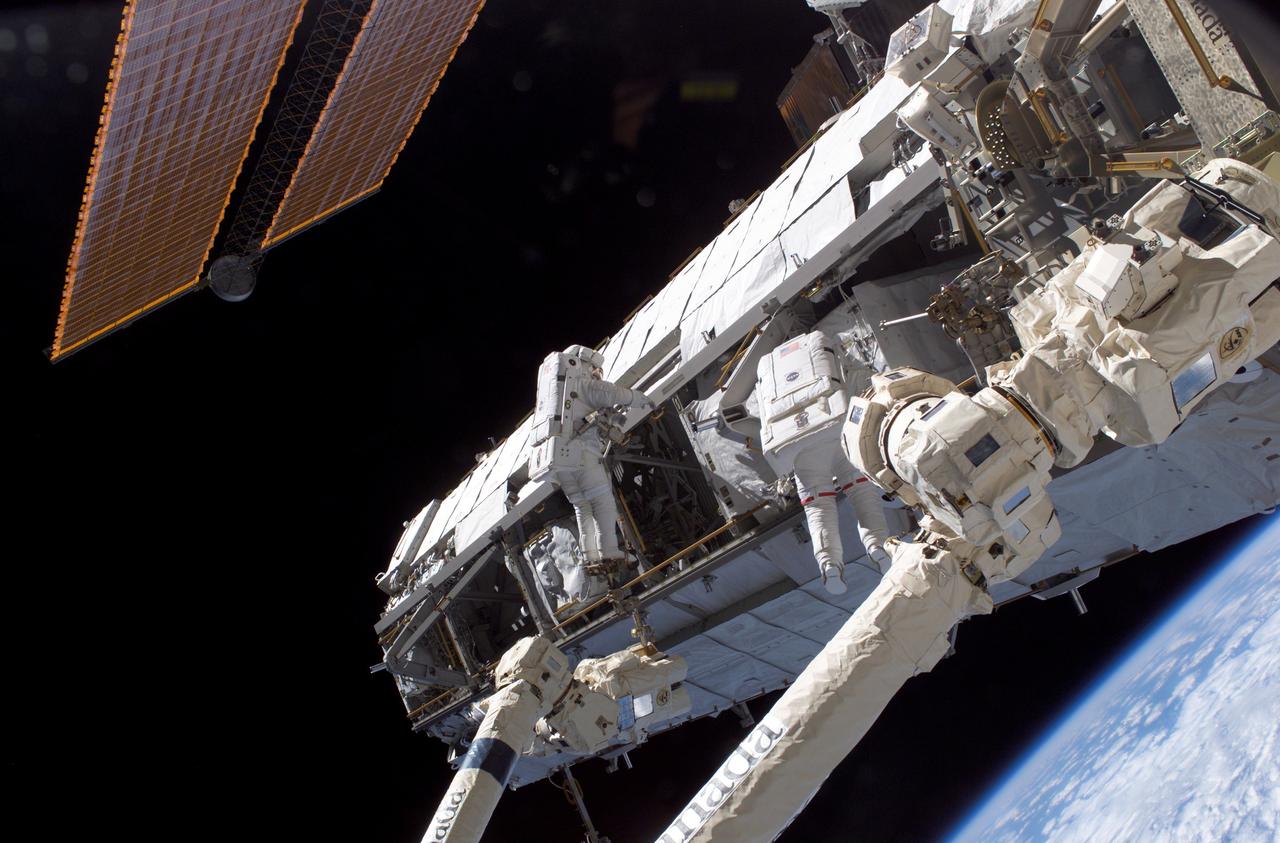
Astronauts Piers J. Sellers (left ) and David A. Wolf work on the newly installed Starboard One (S1) truss to the International Space Station (ISS) during the STS-112 mission. The primary payloads of this mission, ISS Assembly Mission 9A, were the Integrated Truss Assembly S1 (S One), the starboard side thermal radiator truss, and the Crew Equipment Translation Aid (CETA) cart to the ISS. The S1 truss provides structural support for the orbiting research facility's radiator panels, which use ammonia to cool the Station's complex power system. The S1 truss was attached to the S0 (S Zero) truss, which was launched on April 8, 2002 aboard the STS-110, and flows 637 pounds of anhydrous ammonia through three heat-rejection radiators. The truss is 45-feet long, 15-feet wide, 10-feet tall, and weighs approximately 32,000 pounds. The CETA cart was attached to the Mobil Transporter and will be used by assembly crews on later missions. Manufactured by the Boeing Company in Huntington Beach, California, the truss primary structure was transferred to the Marshall Space Flight Center in February 1999 for hardware installations and manufacturing acceptance testing. The launch of the STS-112 mission occurred on October 7, 2002, and its 11-day mission ended on October 18, 2002.
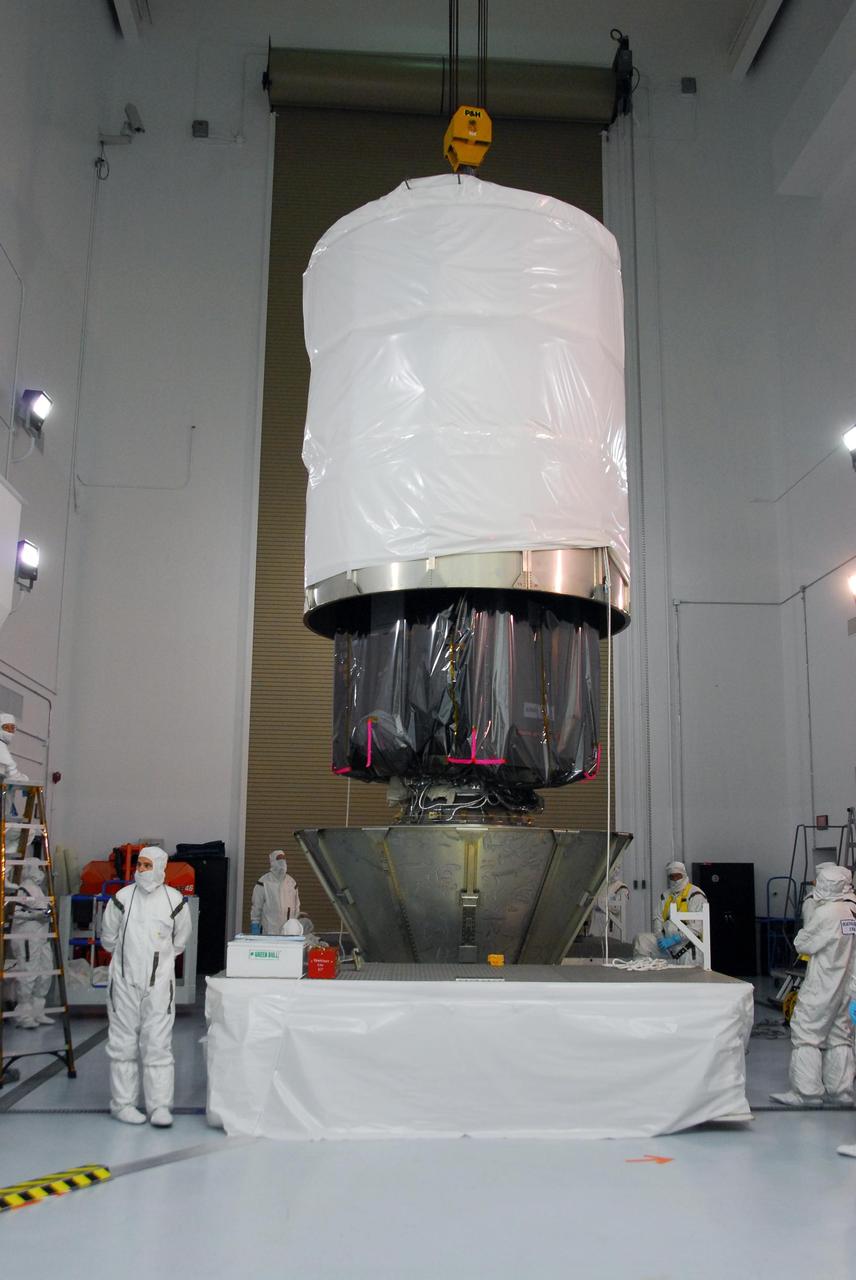
KENNEDY SPACE CENTER, FLA. -- At Astrotech, technicians lower the upper canister over the Dawn spacecraft. After enclosure, Dawn will be transported to Launch Pad 17-B and lifted into the mobile service tower for mating with the Delta II launch vehicle. The Delta II-Heavy, manufactured by the United Launch Alliance, is scheduled to launch the Dawn spacecraft on its 4-year flight to the asteroid belt. The Delta II-Heavy will use three stages and nine solid-fueled booster rockets to propel Dawn on its way. A 9.5-foot payload fairing will protect the spacecraft from the heat and stresses of launch. Dawn's goal is to characterize the conditions and processes of the solar system's earliest epoch by investigating in detail the largest protoplanets that have remained intact since their formations: asteroid Vesta and the dwarf planet Ceres. They reside in the extensive zone between Mars and Jupiter together with many other smaller bodies, called the asteroid belt. Dawn is scheduled to launch July 7. Photo credit: NASA/George Shelton

KENNEDY SPACE CENTER, FLA. -- At Astrotech, technicians move the first segment of the lower canister around the upper stage booster below the Dawn spacecraft. When enclosed in the canister, Dawn will be transported to Launch Pad 17-B and lifted into the mobile service tower for mating with the Delta II launch vehicle. The Delta II-Heavy, manufactured by the United Launch Alliance, is scheduled to launch the Dawn spacecraft on its 4-year flight to the asteroid belt. The Delta II-Heavy will use three stages and nine solid-fueled booster rockets to propel Dawn on its way. A 9.5-foot payload fairing will protect the spacecraft from the heat and stresses of launch. Dawn's goal is to characterize the conditions and processes of the solar system's earliest epoch by investigating in detail the largest protoplanets that have remained intact since their formations: asteroid Vesta and the dwarf planet Ceres. They reside in the extensive zone between Mars and Jupiter together with many other smaller bodies, called the asteroid belt. Dawn is scheduled to launch July 7. Photo credit: NASA/George Shelton
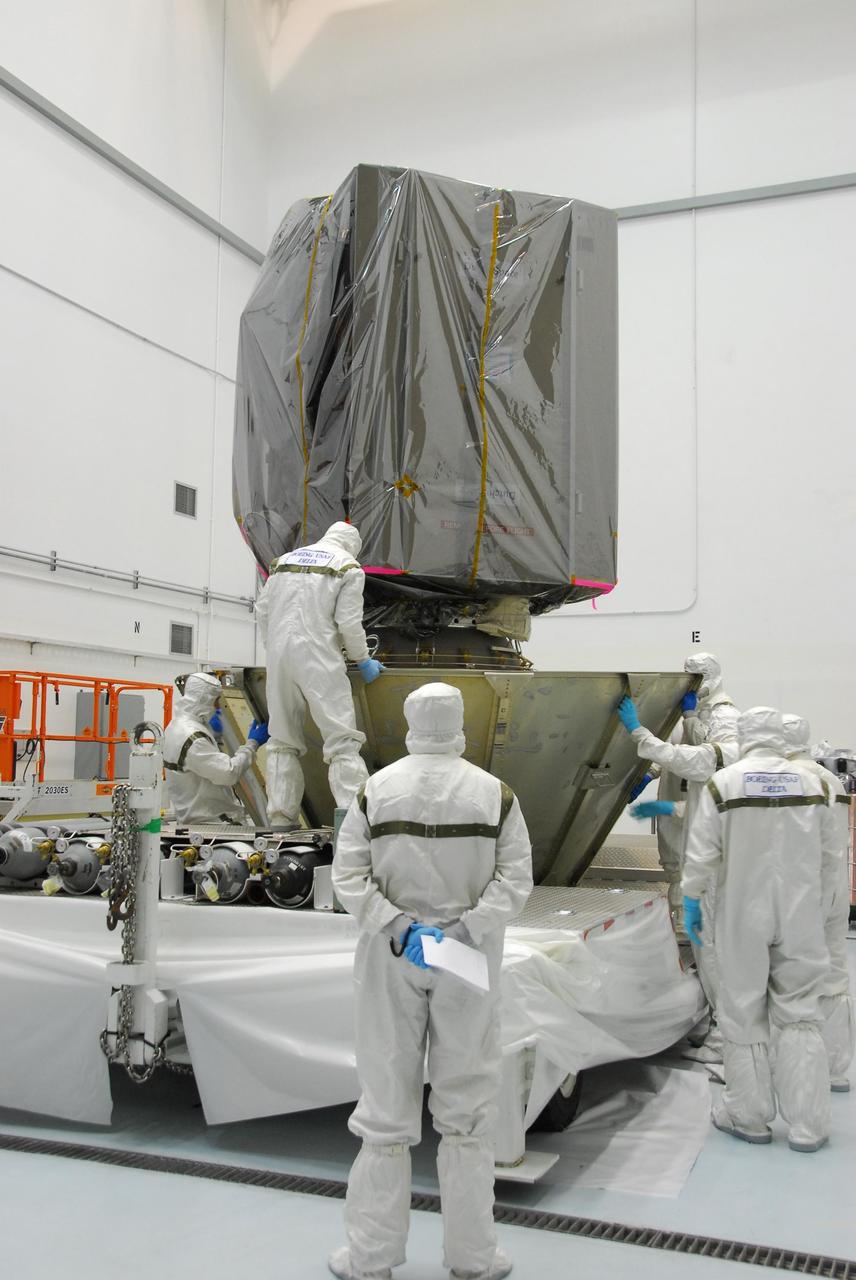
KENNEDY SPACE CENTER, FLA. -- At Astrotech, technicians place another segment of the canister around the upper stage booster below the Dawn spacecraft. When enclosed in the canister, Dawn will be transported to Launch Pad 17-B and lifted into the mobile service tower for mating with the Delta II launch vehicle. The Delta II-Heavy, manufactured by the United Launch Alliance, is scheduled to launch the Dawn spacecraft on its 4-year flight to the asteroid belt. The Delta II-Heavy will use three stages and nine solid-fueled booster rockets to propel Dawn on its way. A 9.5-foot payload fairing will protect the spacecraft from the heat and stresses of launch. Dawn's goal is to characterize the conditions and processes of the solar system's earliest epoch by investigating in detail the largest protoplanets that have remained intact since their formations: asteroid Vesta and the dwarf planet Ceres. They reside in the extensive zone between Mars and Jupiter together with many other smaller bodies, called the asteroid belt. Dawn is scheduled to launch July 7. Photo credit: NASA/George Shelton
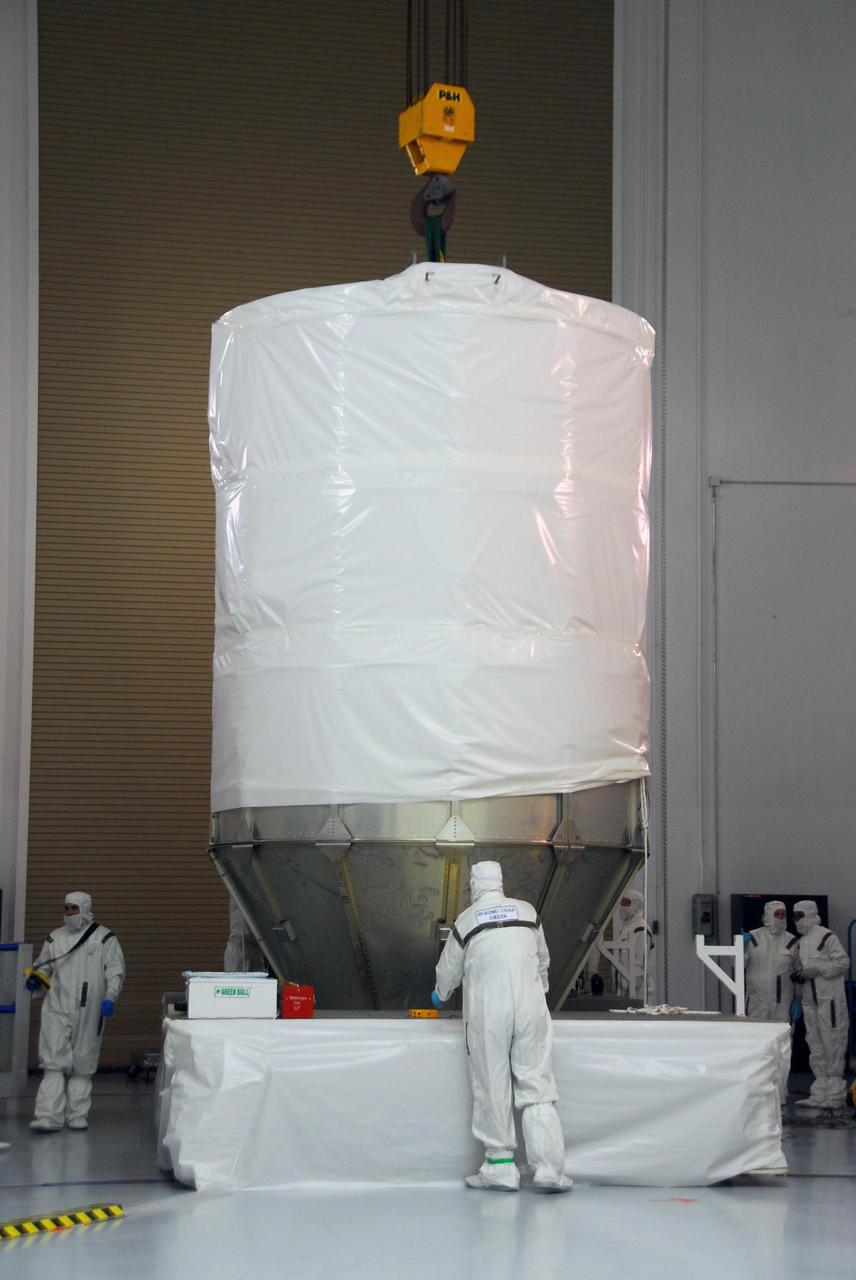
KENNEDY SPACE CENTER, FLA. -- At Astrotech, technicians secure the upper canister over the Dawn spacecraft. Dawn will be transported to Launch Pad 17-B and lifted into the mobile service tower for mating with the Delta II launch vehicle. The Delta II-Heavy, manufactured by the United Launch Alliance, is scheduled to launch the Dawn spacecraft on its 4-year flight to the asteroid belt. The Delta II-Heavy will use three stages and nine solid-fueled booster rockets to propel Dawn on its way. A 9.5-foot payload fairing will protect the spacecraft from the heat and stresses of launch. Dawn's goal is to characterize the conditions and processes of the solar system's earliest epoch by investigating in detail the largest protoplanets that have remained intact since their formations: asteroid Vesta and the dwarf planet Ceres. They reside in the extensive zone between Mars and Jupiter together with many other smaller bodies, called the asteroid belt. Dawn is scheduled to launch July 7. Photo credit: NASA/George Shelton
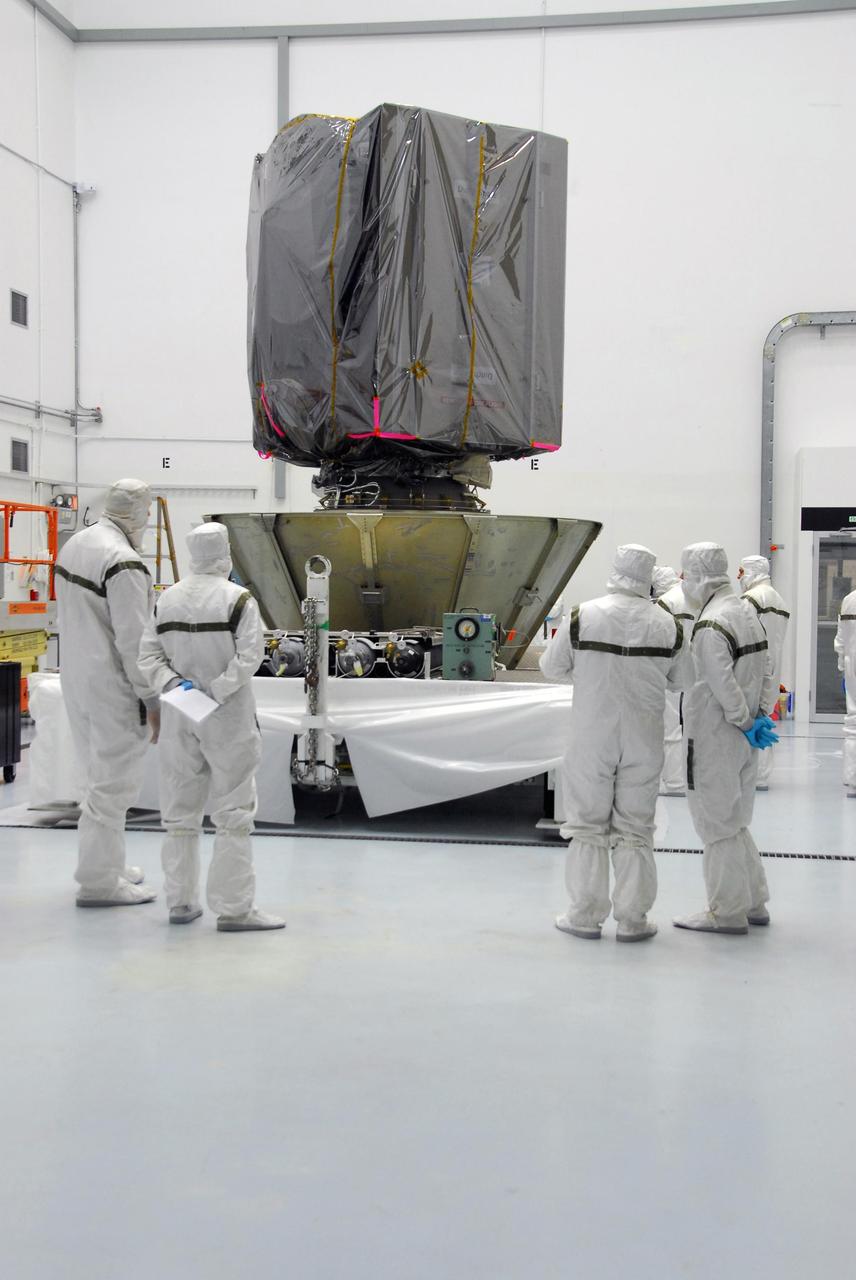
KENNEDY SPACE CENTER, FLA. -- At Astrotech, technicians examine the lower canister they placed around the bottom of the Dawn spacecraft. When enclosed in the canister, Dawn will be transported to Launch Pad 17-B and lifted into the mobile service tower for mating with the Delta II launch vehicle. The Delta II-Heavy, manufactured by the United Launch Alliance, is scheduled to launch the Dawn spacecraft on its 4-year flight to the asteroid belt. The Delta II-Heavy will use three stages and nine solid-fueled booster rockets to propel Dawn on its way. A 9.5-foot payload fairing will protect the spacecraft from the heat and stresses of launch. Dawn's goal is to characterize the conditions and processes of the solar system's earliest epoch by investigating in detail the largest protoplanets that have remained intact since their formations: asteroid Vesta and the dwarf planet Ceres. They reside in the extensive zone between Mars and Jupiter together with many other smaller bodies, called the asteroid belt. Dawn is scheduled to launch July 7. Photo credit: NASA/George Shelton
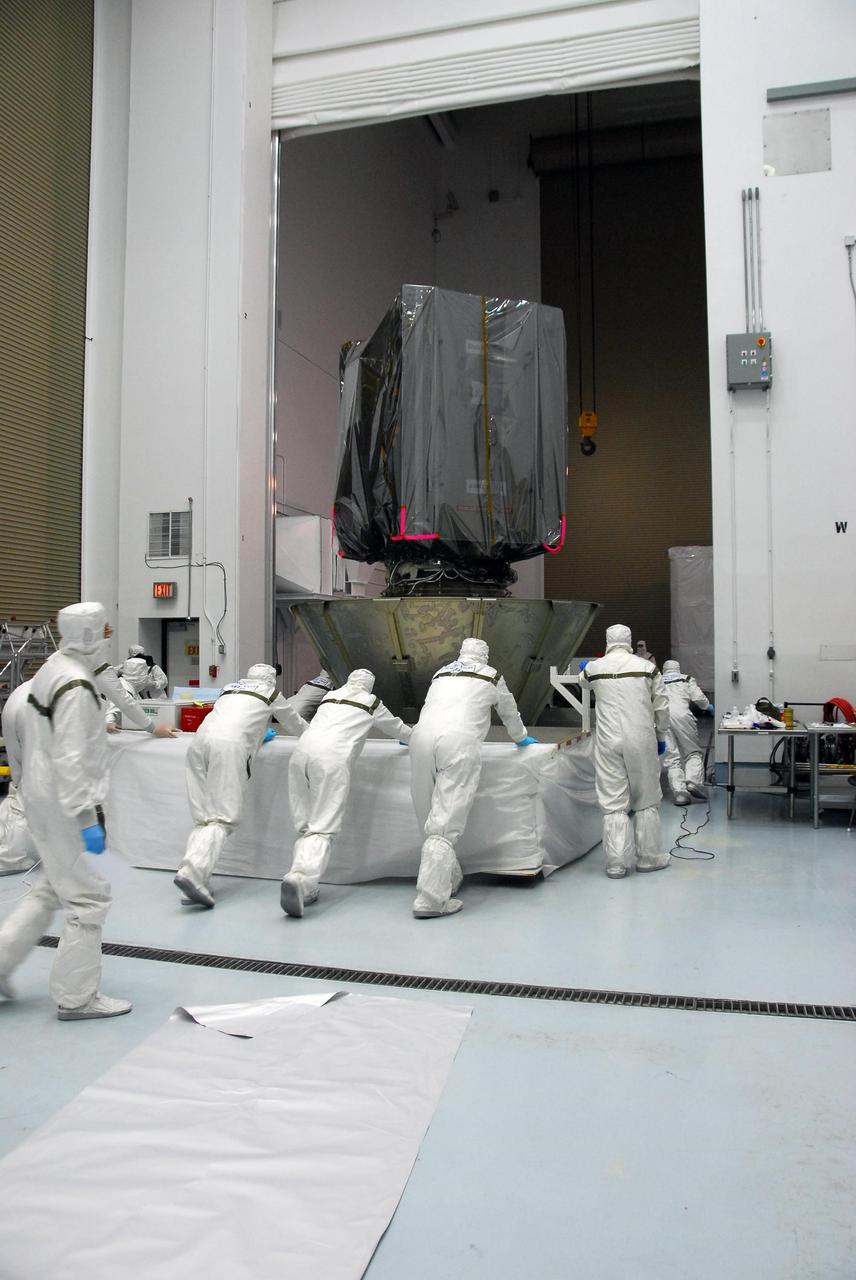
KENNEDY SPACE CENTER, FLA. -- At Astrotech, technicians move the partially enclosed Dawn spacecraft into another room to complete the canning. When enclosed in the canister, Dawn will be transported to Launch Pad 17-B and lifted into the mobile service tower for mating with the Delta II launch vehicle. The Delta II-Heavy, manufactured by the United Launch Alliance, is scheduled to launch the Dawn spacecraft on its 4-year flight to the asteroid belt. The Delta II-Heavy will use three stages and nine solid-fueled booster rockets to propel Dawn on its way. A 9.5-foot payload fairing will protect the spacecraft from the heat and stresses of launch. Dawn's goal is to characterize the conditions and processes of the solar system's earliest epoch by investigating in detail the largest protoplanets that have remained intact since their formations: asteroid Vesta and the dwarf planet Ceres. They reside in the extensive zone between Mars and Jupiter together with many other smaller bodies, called the asteroid belt. Dawn is scheduled to launch July 7. Photo credit: NASA/George Shelton
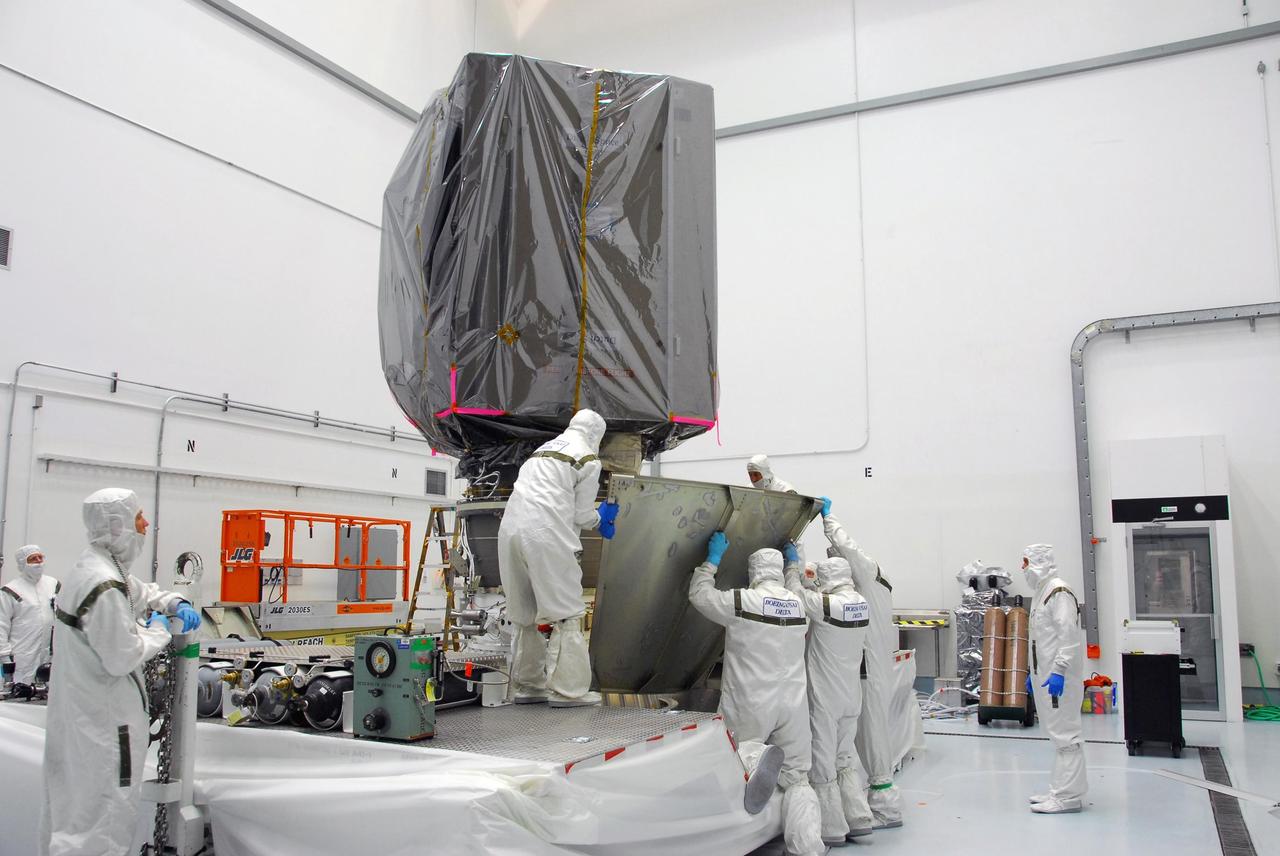
KENNEDY SPACE CENTER, FLA. -- At Astrotech, technicians move the first segment of the lower canister around the upper stage booster below the Dawn spacecraft. When enclosed in the canister, Dawn will be transported to Launch Pad 17-B and lifted into the mobile service tower for mating with the Delta II launch vehicle. The Delta II-Heavy, manufactured by the United Launch Alliance, is scheduled to launch the Dawn spacecraft on its 4-year flight to the asteroid belt. The Delta II-Heavy will use three stages and nine solid-fueled booster rockets to propel Dawn on its way. A 9.5-foot payload fairing will protect the spacecraft from the heat and stresses of launch. Dawn's goal is to characterize the conditions and processes of the solar system's earliest epoch by investigating in detail the largest protoplanets that have remained intact since their formations: asteroid Vesta and the dwarf planet Ceres. They reside in the extensive zone between Mars and Jupiter together with many other smaller bodies, called the asteroid belt. Dawn is scheduled to launch July 7. Photo credit: NASA/George Shelton
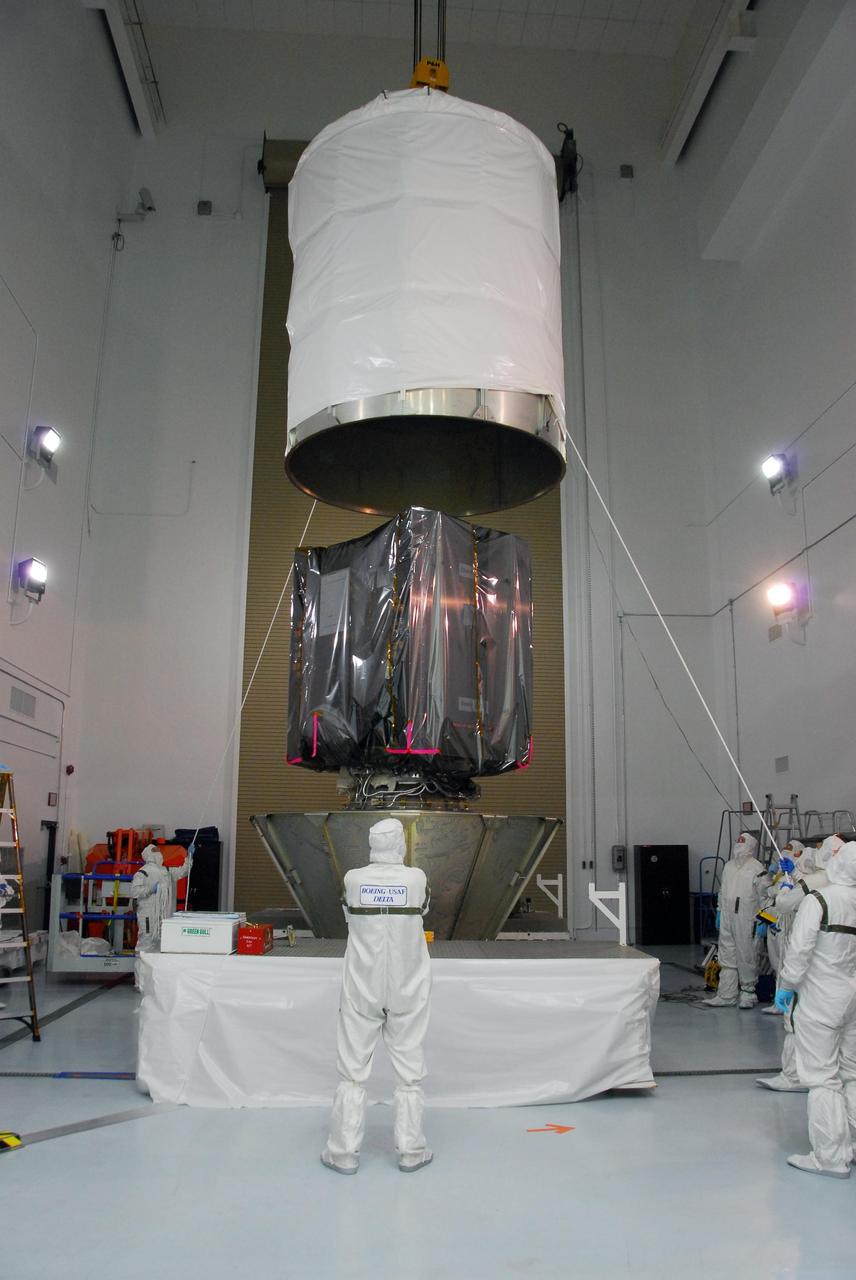
KENNEDY SPACE CENTER, FLA. -- At Astrotech, technicians begin lowering the upper canister over the Dawn spacecraft. After enclosure, Dawn will be transported to Launch Pad 17-B and lifted into the mobile service tower for mating with the Delta II launch vehicle. The Delta II-Heavy, manufactured by the United Launch Alliance, is scheduled to launch the Dawn spacecraft on its 4-year flight to the asteroid belt. The Delta II-Heavy will use three stages and nine solid-fueled booster rockets to propel Dawn on its way. A 9.5-foot payload fairing will protect the spacecraft from the heat and stresses of launch. Dawn's goal is to characterize the conditions and processes of the solar system's earliest epoch by investigating in detail the largest protoplanets that have remained intact since their formations: asteroid Vesta and the dwarf planet Ceres. They reside in the extensive zone between Mars and Jupiter together with many other smaller bodies, called the asteroid belt. Dawn is scheduled to launch July 7. Photo credit: NASA/George Shelton
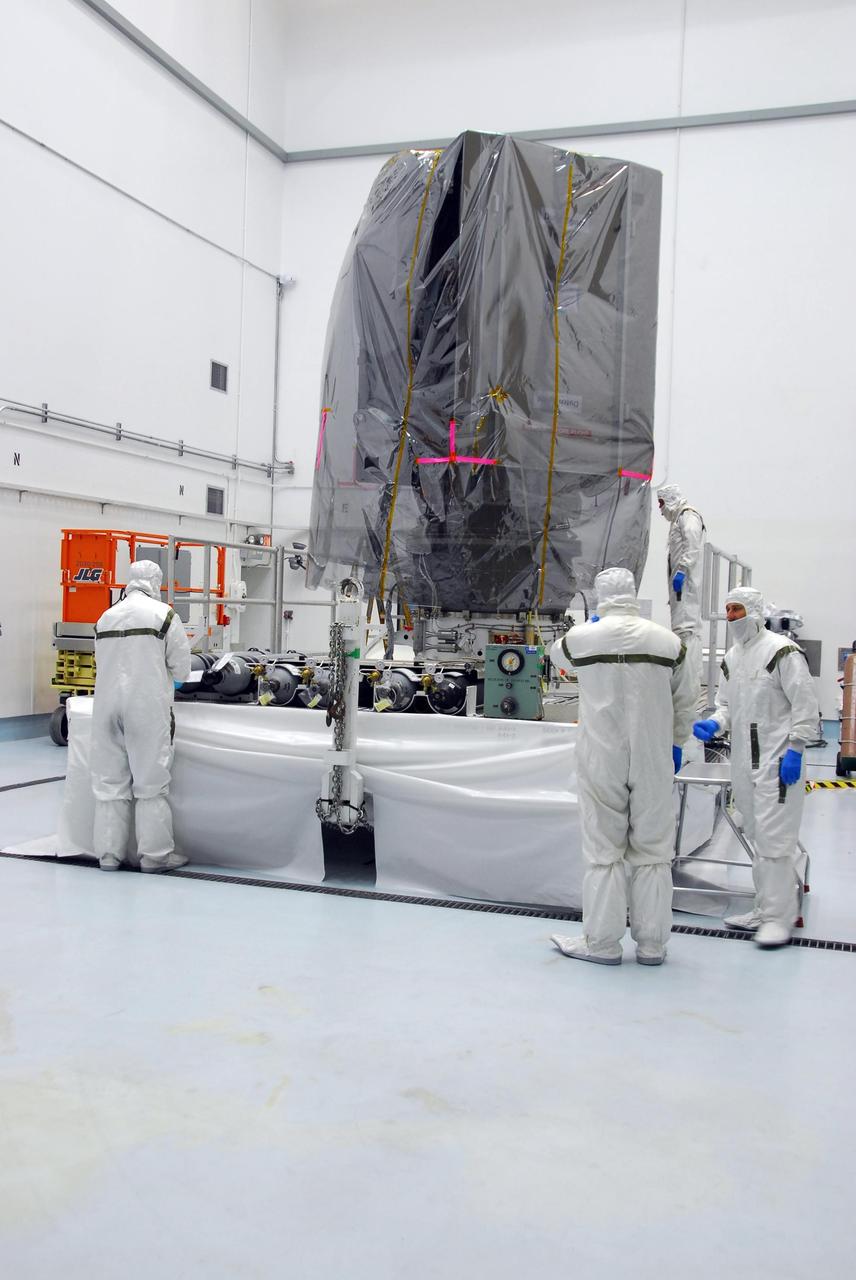
KENNEDY SPACE CENTER, FLA. -- At Astrotech, the Dawn spacecraft has been wrapped with a protective cover before it is enclosed in a canister. Dawn will be transported to Launch Pad 17-B and lifted into the mobile service tower for mating with the Delta II launch vehicle. The Delta II-Heavy, manufactured by the United Launch Alliance, is scheduled to launch the Dawn spacecraft on its 4-year flight to the asteroid belt. The Delta II-Heavy will use three stages and nine solid-fueled booster rockets to propel Dawn on its way. A 9.5-foot payload fairing will protect the spacecraft from the heat and stresses of launch. Dawn's goal is to characterize the conditions and processes of the solar system's earliest epoch by investigating in detail the largest protoplanets that have remained intact since their formations: asteroid Vesta and the dwarf planet Ceres. They reside in the extensive zone between Mars and Jupiter together with many other smaller bodies, called the asteroid belt. Dawn is scheduled to launch July 7. Photo credit: NASA/George Shelton
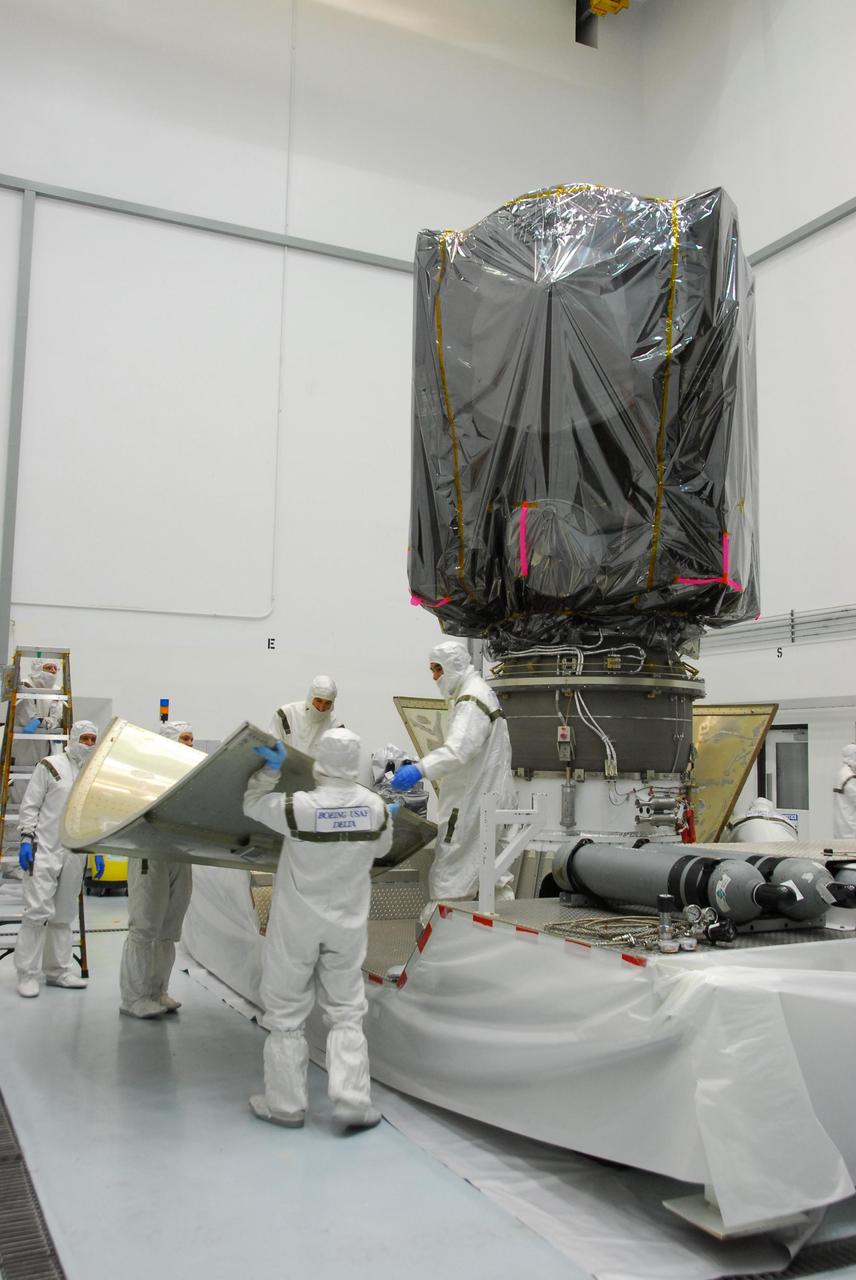
KENNEDY SPACE CENTER, FLA. -- At Astrotech, technicians move another segment of the lower canister onto the workstand holding the Dawn spacecraft. When enclosed in the canister, Dawn will be transported to Launch Pad 17-B and lifted into the mobile service tower for mating with the Delta II launch vehicle. The Delta II-Heavy, manufactured by the United Launch Alliance, is scheduled to launch the Dawn spacecraft on its 4-year flight to the asteroid belt. The Delta II-Heavy will use three stages and nine solid-fueled booster rockets to propel Dawn on its way. A 9.5-foot payload fairing will protect the spacecraft from the heat and stresses of launch. Dawn's goal is to characterize the conditions and processes of the solar system's earliest epoch by investigating in detail the largest protoplanets that have remained intact since their formations: asteroid Vesta and the dwarf planet Ceres. They reside in the extensive zone between Mars and Jupiter together with many other smaller bodies, called the asteroid belt. Dawn is scheduled to launch July 7. Photo credit: NASA/George Shelton
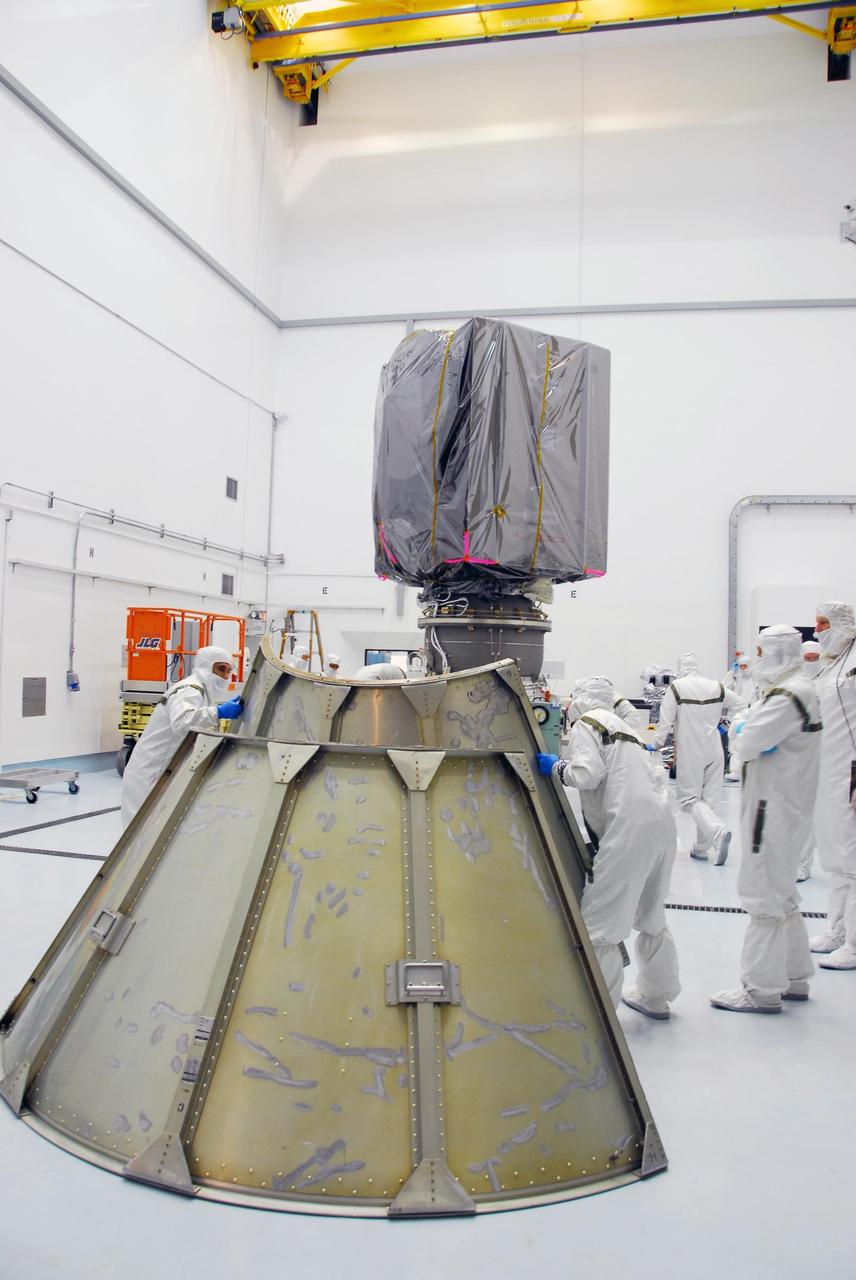
KENNEDY SPACE CENTER, FLA. -- At Astrotech, technicians move the first segment of the lower canister toward the stand holding the Dawn spacecraft. When enclosed in the canister, Dawn will be transported to Launch Pad 17-B and lifted into the mobile service tower for mating with the Delta II launch vehicle. The Delta II-Heavy, manufactured by the United Launch Alliance, is scheduled to launch the Dawn spacecraft on its 4-year flight to the asteroid belt. The Delta II-Heavy will use three stages and nine solid-fueled booster rockets to propel Dawn on its way. A 9.5-foot payload fairing will protect the spacecraft from the heat and stresses of launch. Dawn's goal is to characterize the conditions and processes of the solar system's earliest epoch by investigating in detail the largest protoplanets that have remained intact since their formations: asteroid Vesta and the dwarf planet Ceres. They reside in the extensive zone between Mars and Jupiter together with many other smaller bodies, called the asteroid belt. Dawn is scheduled to launch July 7. Photo credit: NASA/George Shelton
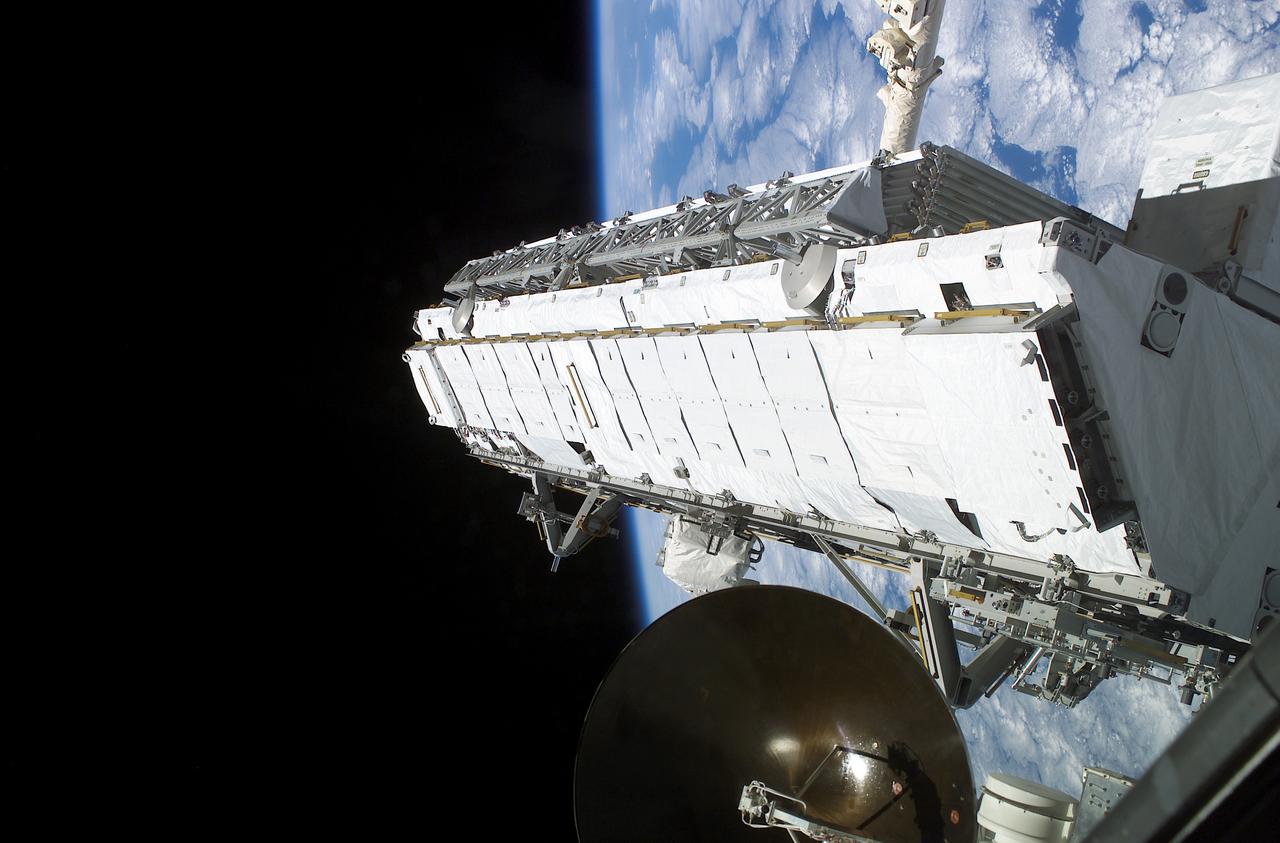
Being attached to the Canadarm2 on the International Space Station (ISS), the Remote Manipulator System arm built by the Canadian Space Agency, the Integrated Truss Assembly (S1) Truss is suspended over the Space Shuttle Orbiter Atlantis' cargo bay. Astronauts Sandra H. Magnus, STS-112 mission specialist, and Peggy A. Whitson, Expedition Five flight engineer, used the Canadarm2 from inside the Destiny laboratory on the ISS to lift the S1 truss out of the orbiter's cargo bay and move it into position prior to its installation on the ISS. The primary payloads of this mission, ISS Assembly Mission 9A, were the Integrated Truss Assembly S1 (S One), the starboard side thermal radiator truss, and the Crew Equipment Translation Aid (CETA) cart to the ISS. The S1 truss provides structural support for the orbiting research facility's radiator panels, which use ammonia to cool the Station's complex power system. The S1 truss was attached to the S0 (S Zero) truss, which was launched on April 8, 2002 aboard the STS-110, and flows 637 pounds of anhydrous ammonia through three heat-rejection radiators. The truss is 45-feet long, 15-feet wide, 10-feet tall, and weighs approximately 32,000 pounds. The CETA cart was attached to the Mobil Transporter and will be used by assembly crews on later missions. Manufactured by the Boeing Company in Huntington Beach, California, the truss primary structure was transferred to the Marshall Space Flight Center in February 1999 for hardware installations and manufacturing acceptance testing. The launch of the STS-112 mission occurred on October 7, 2002, and its 11-day mission ended on October 18, 2002.