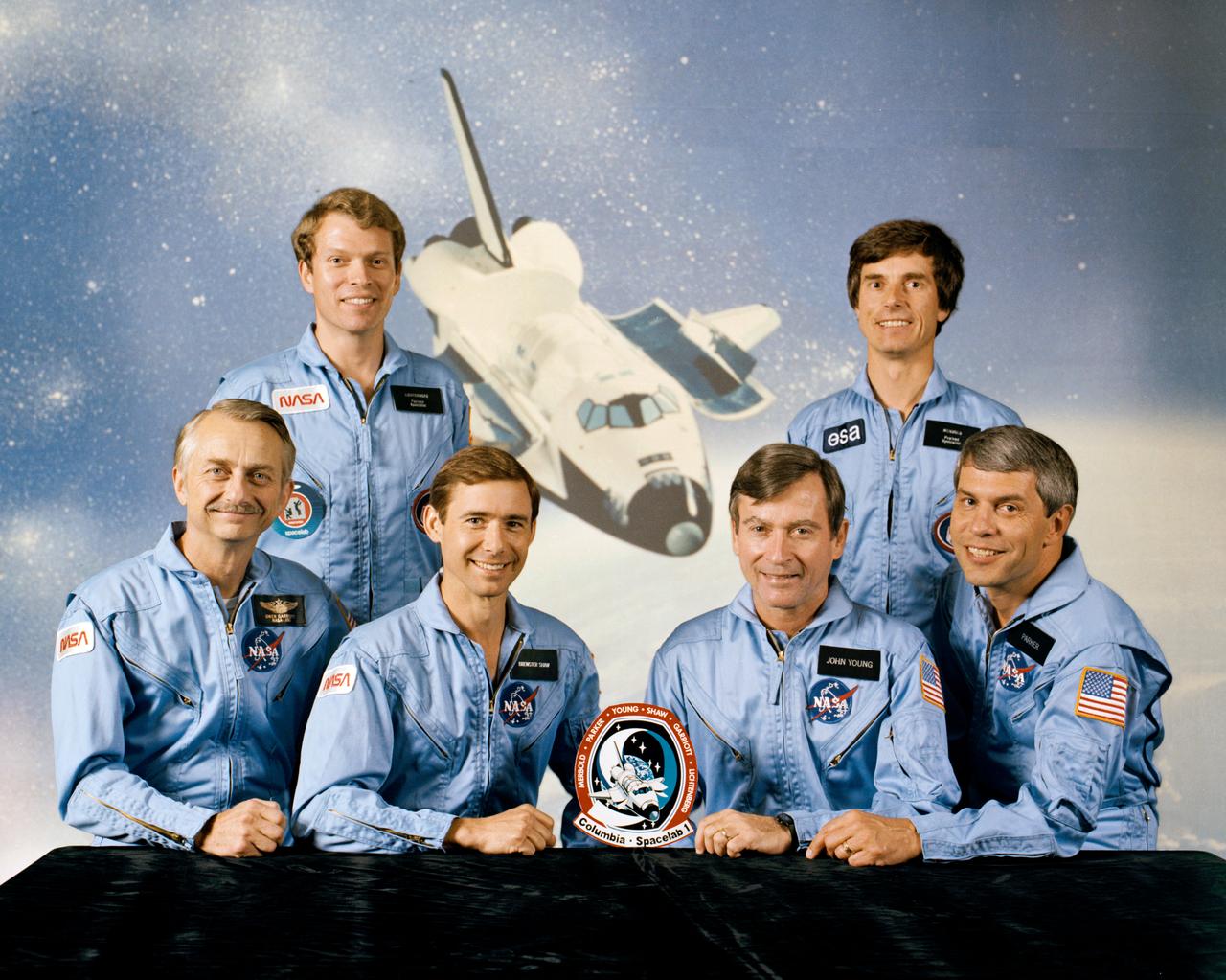
S83-35017 (June 1983) --- These six men represent the first crewmembers to man the Columbia when it gets reactivated later this year. The four NASA astronauts are joined by a European and MIT scientist payload specialist and the Spacelab module and experiment array for STS-9. On the front row are Astronauts Owen K. Garriott, mission specialist; Brewster H. Shaw, Jr., pilot; John W. Young, commander; and Robert A. R. Parker, mission specialist. Byron K. Lichtenberg of the Massachusetts of Technology, left and Ulf Merbold of the Republic of West Germany and the European Space Agency stand in front of an orbital scene featuring the Columbia. Columbia was used for the first five Space Transportation System missions in 1981 and 1982.
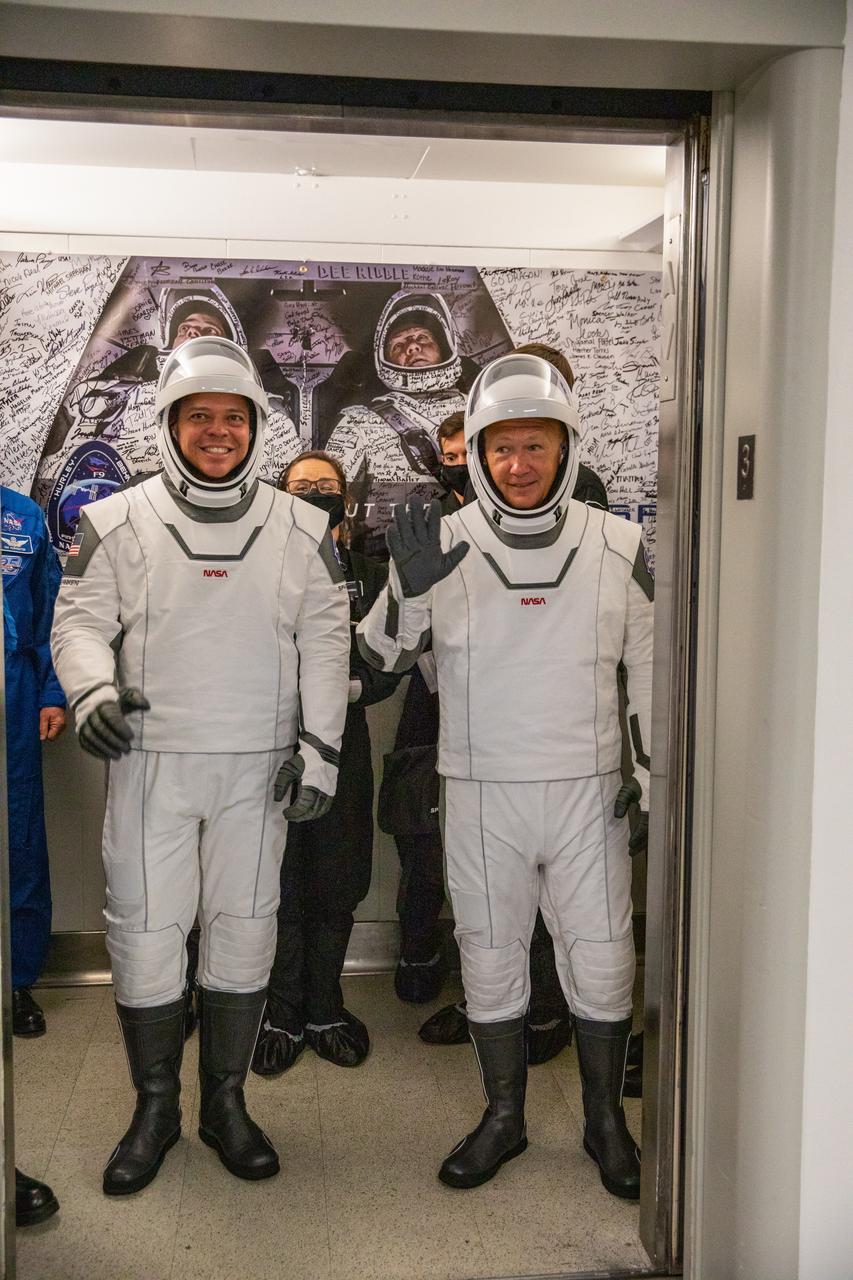
NASA astronauts Robert Behnken (left) and Douglas Hurley depart the Neil A. Armstrong Operations and Checkout Building at the agency’s Kennedy Space Center in Florida on May 30, 2020, in preparation for transport to Launch Complex 39A ahead of NASA’s SpaceX Demo-2 mission. Liftoff of the SpaceX Falcon 9 rocket and Crew Dragon spacecraft occurred at 3:22 p.m. EDT. Behnken and Hurley are the first astronauts to launch to the International Space Station from U.S. soil since the end of the Space Shuttle Program in 2011. Part of NASA’s Commercial Crew Program, this will be SpaceX’s final flight test, paving the way for the agency to certify the crew transportation system for regular, crewed flights to the orbiting laboratory.
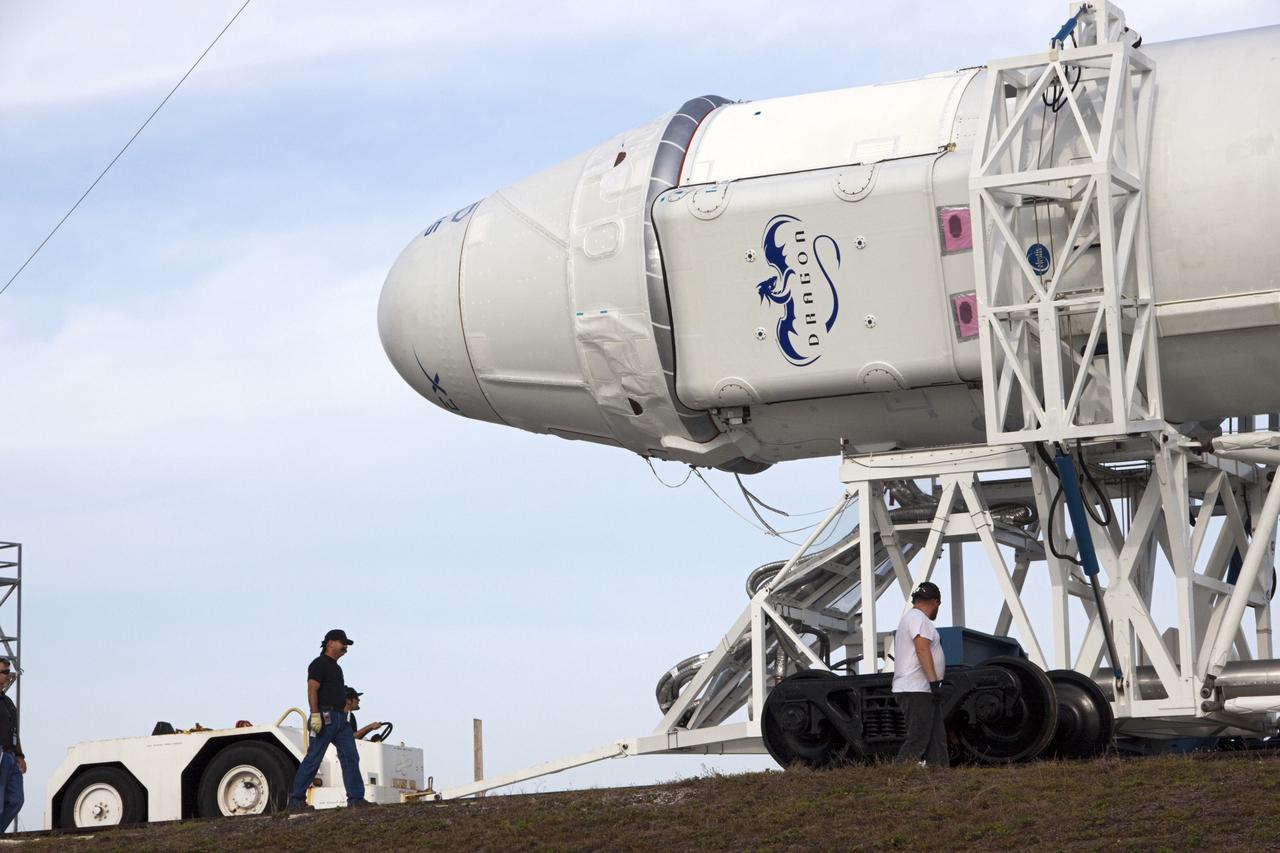
CAPE CANAVERAL, Fla. – As technicians monitor the progress of the transporter, the SpaceX Falcon 9 rocket with its Dragon spacecraft arrive at Space Launch Complex-40 on Cape Canaveral Air Force Station in Florida. Liftoff with the SpaceX Falcon 9 is set for 4:55 a.m. EDT on May 19. The launch will be the company's second demonstration test flight for NASA's Commercial Orbital Transportation Services Program, or COTS. During the flight, the capsule will conduct a series of check-out procedures to test and prove its systems, including rendezvous and berthing with the International Space Station. If the capsule performs as planned, the cargo and experiments it is carrying will be transferred to the station. The cargo includes food, water and provisions for the station’s Expedition crews, such as clothing, batteries and computer equipment. Under COTS, NASA has partnered with two aerospace companies to deliver cargo to the station. For more information, visit http://www.nasa.gov/spacex Photo credit: NASA/Jim Grossmann
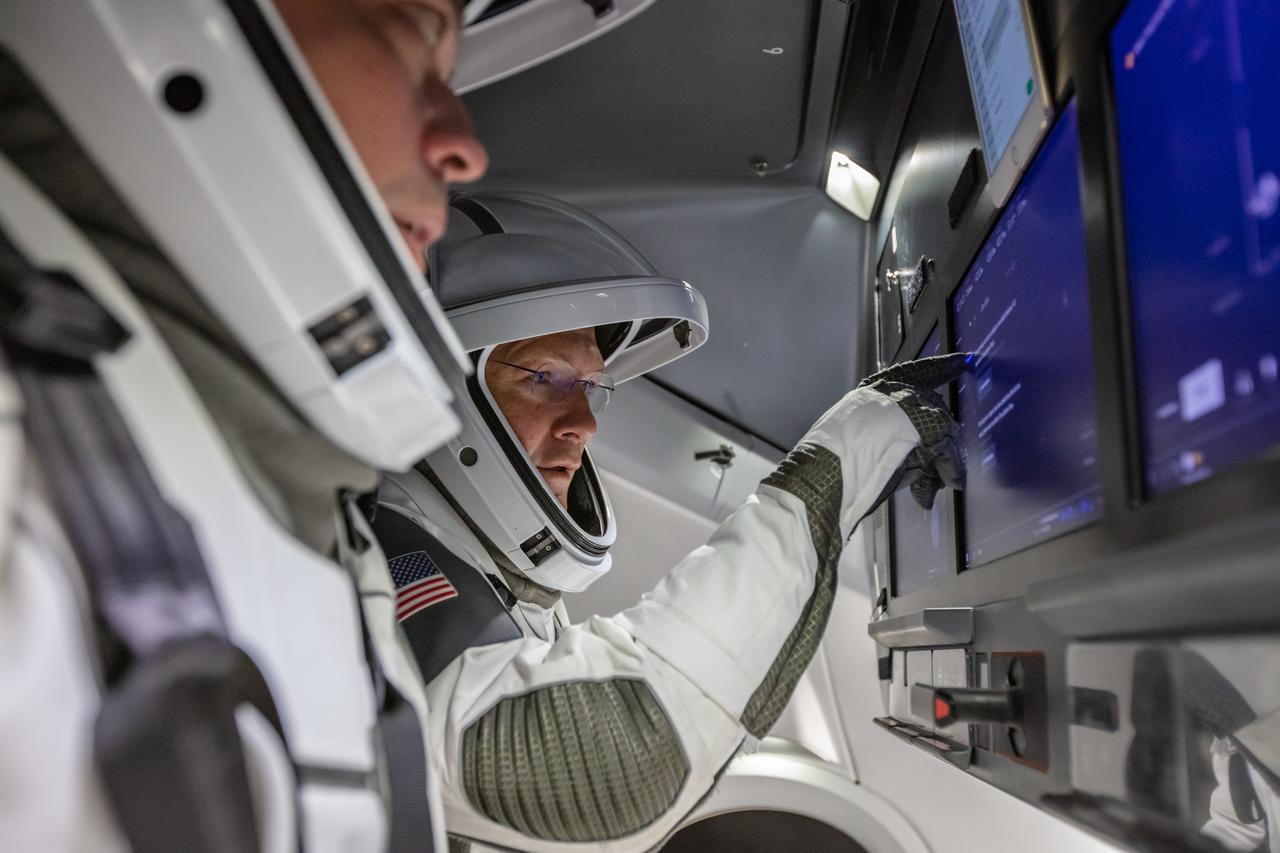
NASA astronauts Doug Hurley and Bob Behnken familiarize themselves with SpaceX’s Crew Dragon, the spacecraft that will transport them to the International Space Station as part of NASA’s Commercial Crew Program. Their upcoming flight test is known as Demo-2, short for Demonstration Mission 2. The Crew Dragon will launch on SpaceX’s Falcon 9 rocket from Launch Complex 39A at NASA’s Kennedy Space Center in Florida. In March 2019, SpaceX completed an uncrewed flight test of Crew Dragon known as Demo-1, which was designed to validate end-to-end systems and capabilities, bringing NASA closer to certification of SpaceX systems to fly a crew.
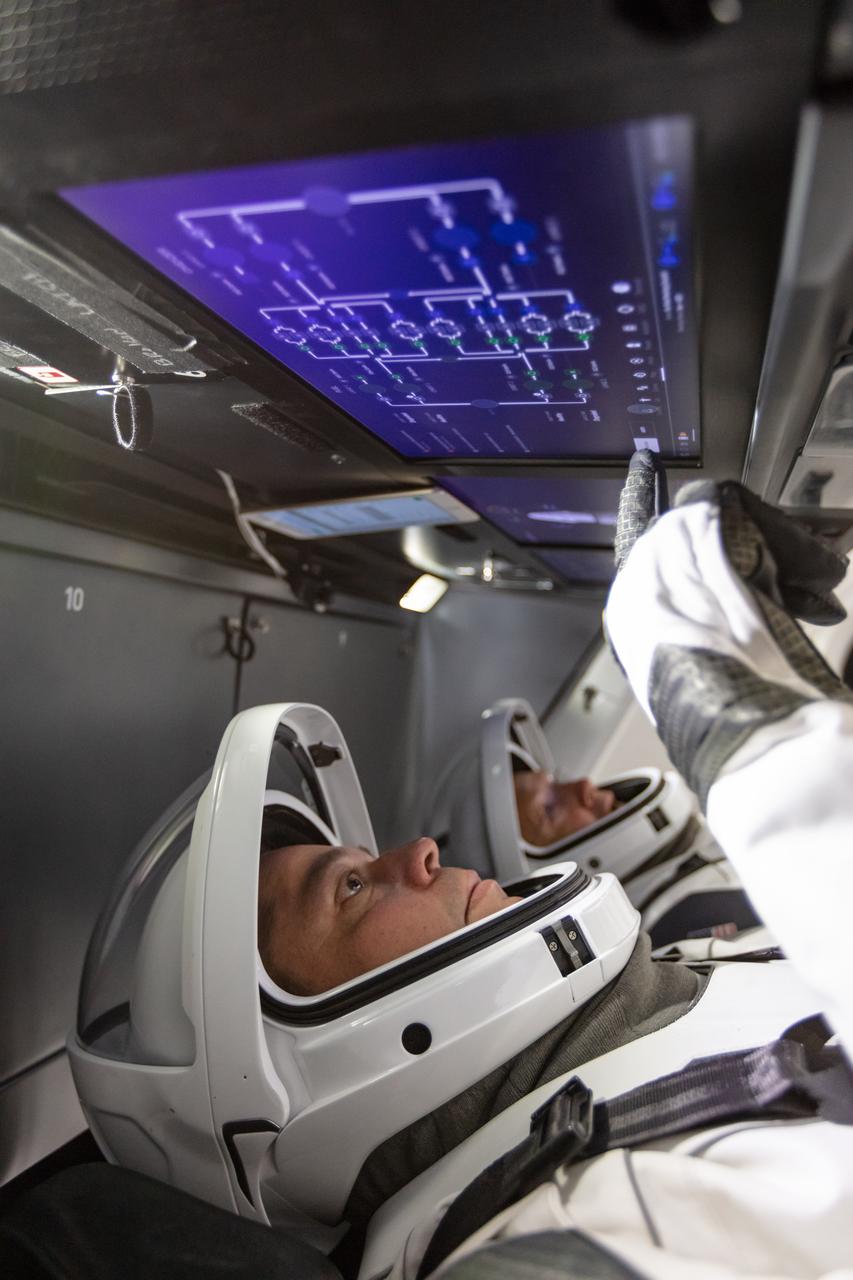
NASA astronauts Doug Hurley and Bob Behnken familiarize themselves with SpaceX’s Crew Dragon, the spacecraft that will transport them to the International Space Station as part of NASA’s Commercial Crew Program. Their upcoming flight test is known as Demo-2, short for Demonstration Mission 2. The Crew Dragon will launch on SpaceX’s Falcon 9 rocket from Launch Complex 39A at NASA’s Kennedy Space Center in Florida. In March 2019, SpaceX completed an uncrewed flight test of Crew Dragon known as Demo-1, which was designed to validate end-to-end systems and capabilities, bringing NASA closer to certification of SpaceX systems to fly a crew.
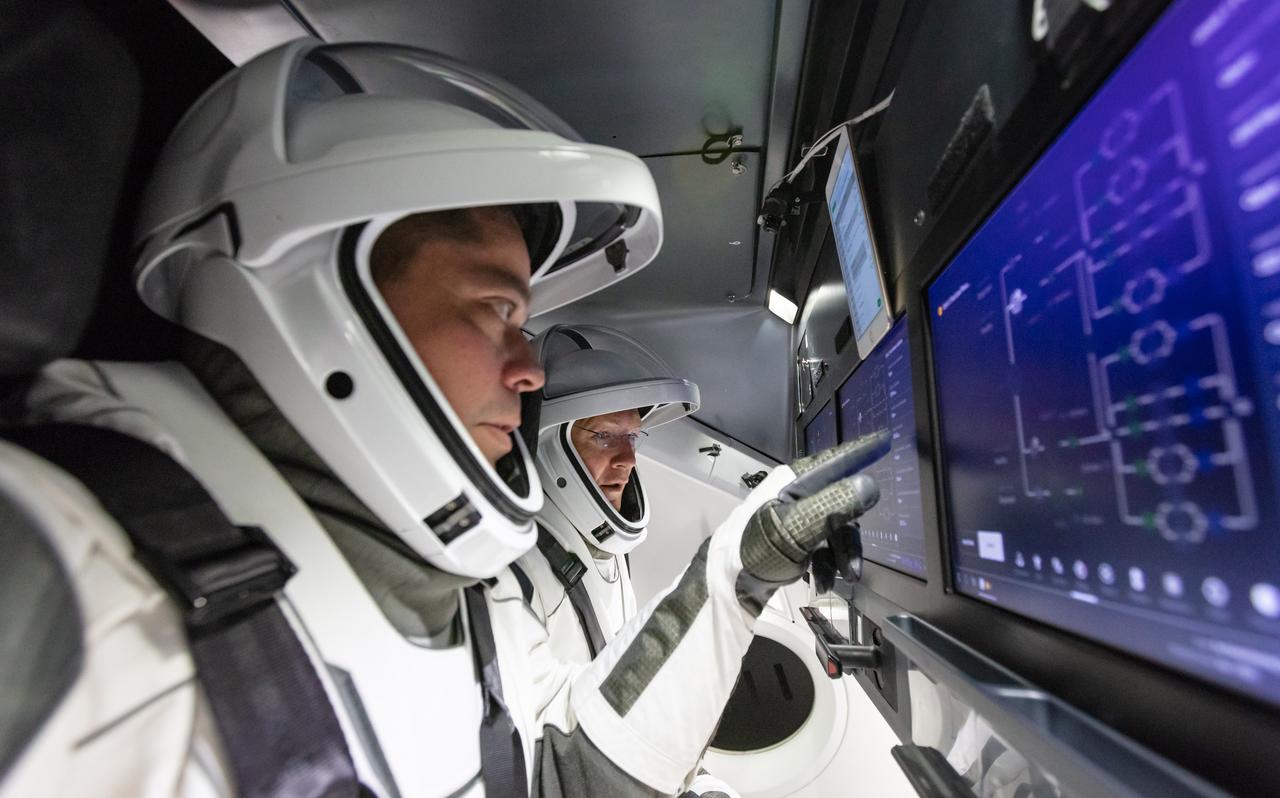
NASA astronauts Doug Hurley and Bob Behnken familiarize themselves with SpaceX’s Crew Dragon, the spacecraft that will transport them to the International Space Station as part of NASA’s Commercial Crew Program. Their upcoming flight test is known as Demo-2, short for Demonstration Mission 2. The Crew Dragon will launch on SpaceX’s Falcon 9 rocket from Launch Complex 39A at NASA’s Kennedy Space Center in Florida. In March 2019, SpaceX completed an uncrewed flight test of Crew Dragon known as Demo-1, which was designed to validate end-to-end systems and capabilities, bringing NASA closer to certification of SpaceX systems to fly a crew.
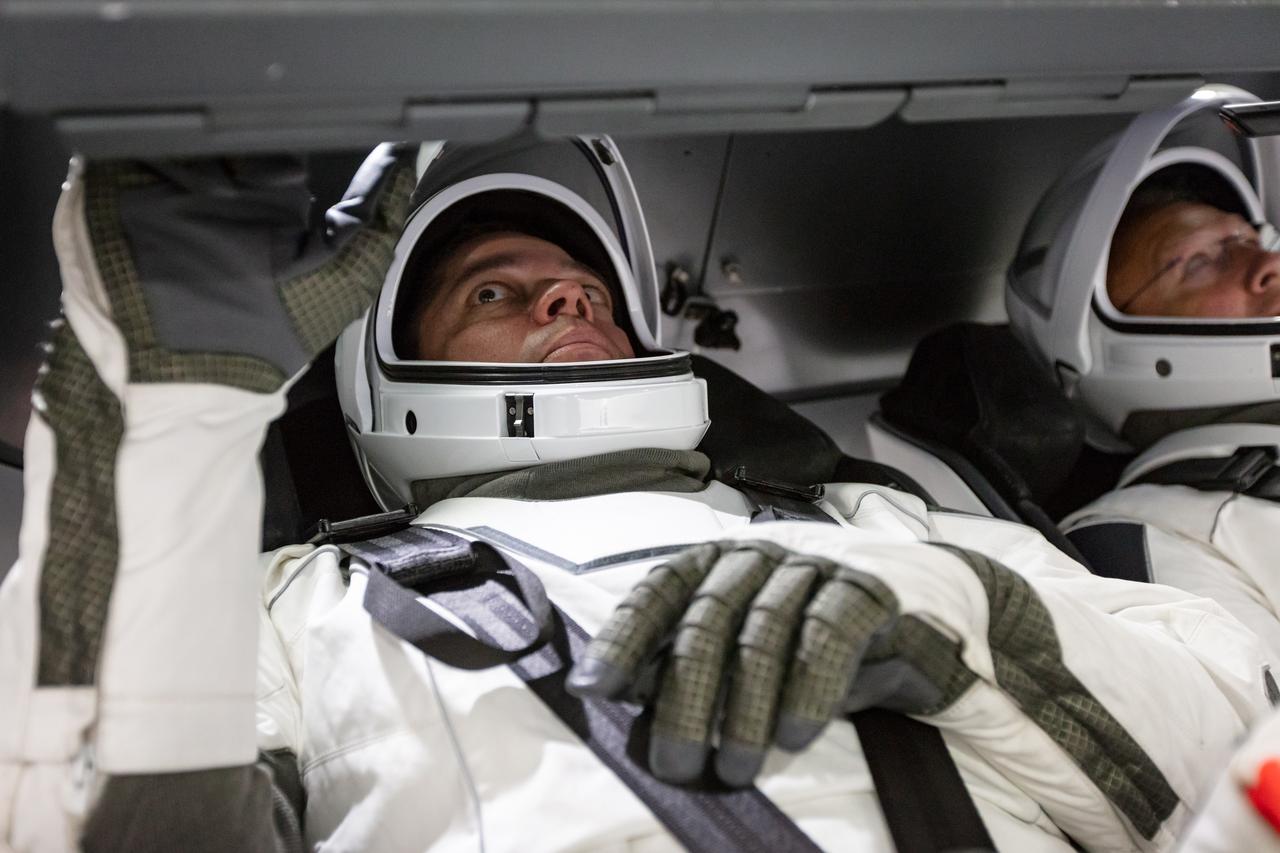
NASA astronauts Doug Hurley and Bob Behnken familiarize themselves with SpaceX’s Crew Dragon, the spacecraft that will transport them to the International Space Station as part of NASA’s Commercial Crew Program. Their upcoming flight test is known as Demo-2, short for Demonstration Mission 2. The Crew Dragon will launch on SpaceX’s Falcon 9 rocket from Launch Complex 39A at NASA’s Kennedy Space Center in Florida. In March 2019, SpaceX completed an uncrewed flight test of Crew Dragon known as Demo-1, which was designed to validate end-to-end systems and capabilities, bringing NASA closer to certification of SpaceX systems to fly a crew.
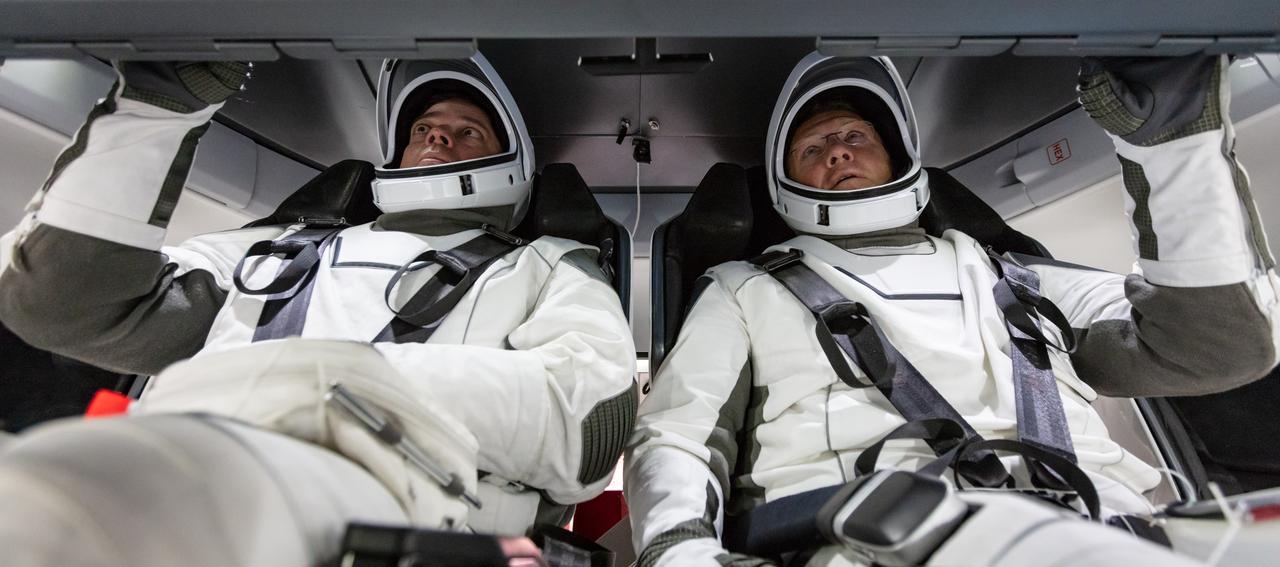
NASA astronauts Doug Hurley and Bob Behnken familiarize themselves with SpaceX’s Crew Dragon, the spacecraft that will transport them to the International Space Station as part of NASA’s Commercial Crew Program. Their upcoming flight test is known as Demo-2, short for Demonstration Mission 2. The Crew Dragon will launch on SpaceX’s Falcon 9 rocket from Launch Complex 39A at NASA’s Kennedy Space Center in Florida. In March 2019, SpaceX completed an uncrewed flight test of Crew Dragon known as Demo-1, which was designed to validate end-to-end systems and capabilities, bringing NASA closer to certification of SpaceX systems to fly a crew.
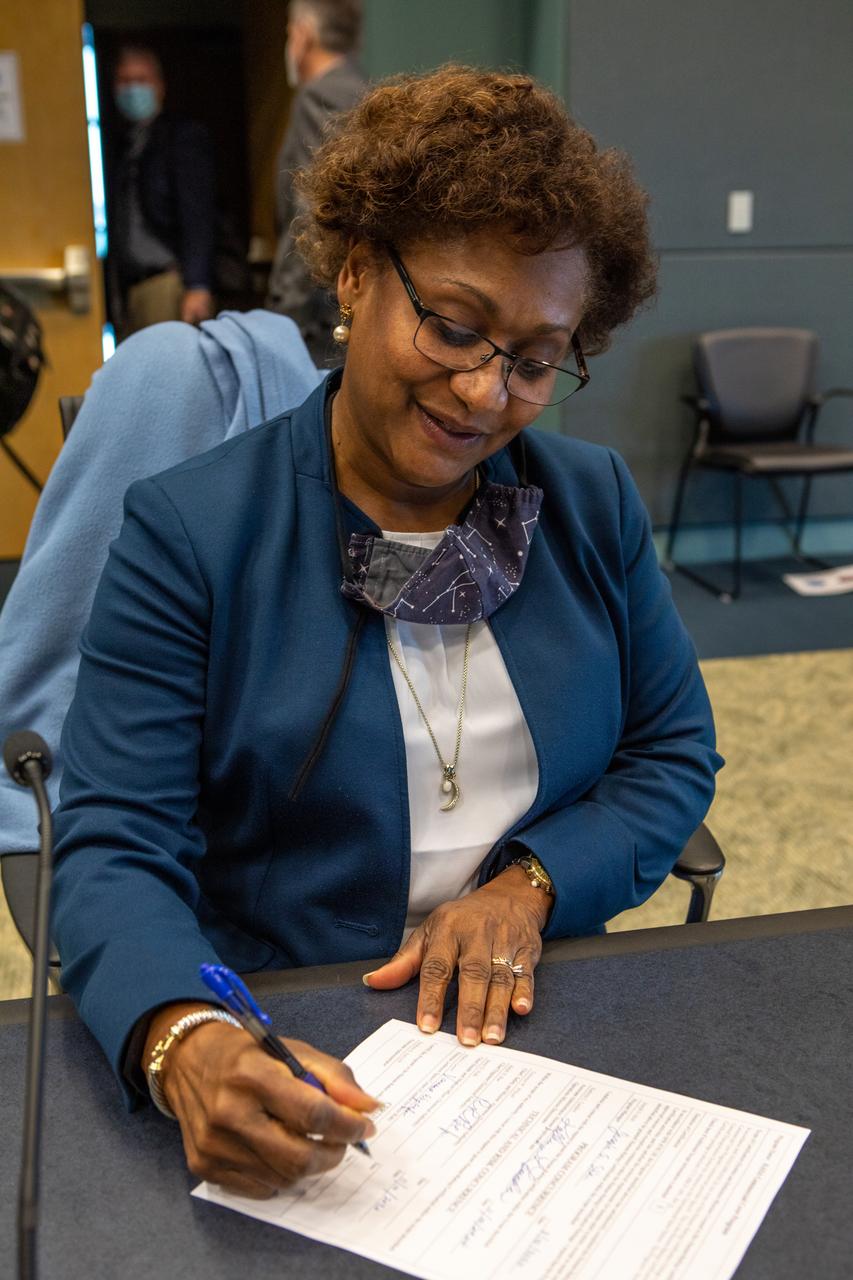
Johnson Space Center Deputy Director Vanessa Wyche signs the Human Rating Certification Plan for SpaceX’s crew transportation system, officially certifying the first commercial spacecraft system in history capable of transporting humans to and from the International Space Station as part of the agency’s Commercial Crew Program. The signing occurred during the Flight Readiness Review (FRR) for the NASA’s SpaceX Crew-1 mission at Kennedy Space Center in Florida on Nov. 10, 2020. The FRR focuses on the preparedness of SpaceX’s crew transportation system, the International Space Station, and its international partners to support the flight, and the certification of flight readiness. Crew-1 is the first regular crew mission of a U.S. commercial spacecraft with astronauts to the International Space Station as part of NASA’s Commercial Crew Program. The Crew Dragon Resilience capsule will launch atop a Falcon 9 rocket from Launch Complex 39A carrying NASA astronauts Michael Hopkins, Victor Glover, Shannon Walker and Japan Aerospace Exploration Agency (JAXA) astronaut Soichi Noguchi to the space station for a six-month science mission.

The SpaceX Falcon 9 rocket that will be used for the company’s In-Flight Abort Test arrives at SpaceX’s hangar at Launch Complex 39 at NASA’s Kennedy Space Center in Florida. The test will demonstrate the spacecraft and launch system’s ability to abort in the unlikely case of an emergency after liftoff. It is an important step before NASA astronauts Bob Behnken and Doug Hurley are transported to the International Space Station aboard Crew Dragon as part of NASA’s Commercial Crew Program.
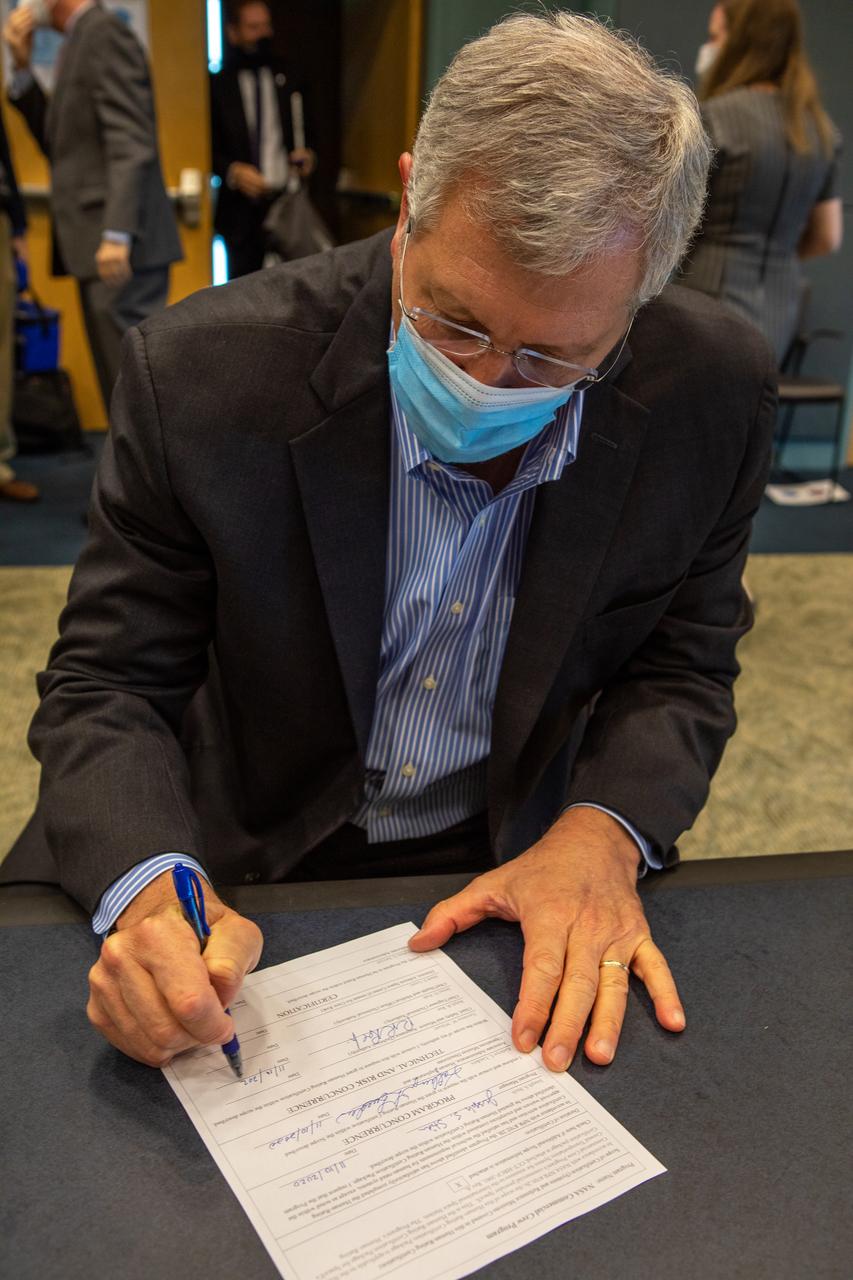
NASA Chief Engineer Ralph Roe signs the Human Rating Certification Plan for SpaceX’s crew transportation system, officially certifying the first commercial spacecraft system in history capable of transporting humans to and from the International Space Station as part of the agency’s Commercial Crew Program. The signing occurred during the Flight Readiness Review (FRR) for the NASA’s SpaceX Crew-1 mission at Kennedy Space Center in Florida on Nov. 10, 2020. The FRR focuses on the preparedness of SpaceX’s crew transportation system, the International Space Station, and its international partners to support the flight, and the certification of flight readiness. Crew-1 is the first regular crew mission of a U.S. commercial spacecraft with astronauts to the International Space Station as part of NASA’s Commercial Crew Program. The Crew Dragon Resilience capsule will launch atop a Falcon 9 rocket from Launch Complex 39A carrying NASA astronauts Michael Hopkins, Victor Glover, Shannon Walker and Japan Aerospace Exploration Agency (JAXA) astronaut Soichi Noguchi to the space station for a six-month science mission.
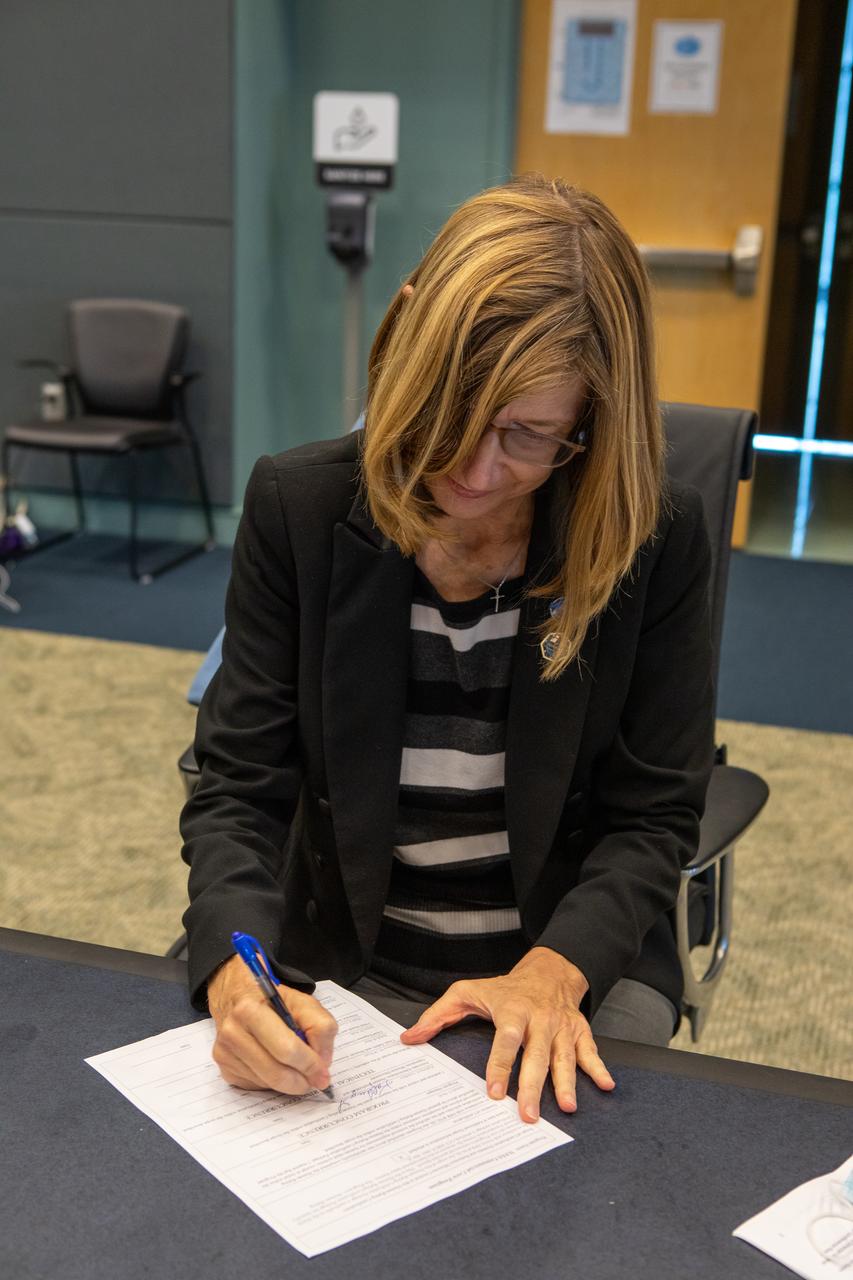
Kathy Lueders, NASA associate administrator of the Human Exploration and Operations Mission Directorate, signs the Human Rating Certification Plan for SpaceX’s crew transportation system, officially certifying the first commercial spacecraft system in history capable of transporting humans to and from the International Space Station as part of the agency’s Commercial Crew Program. The signing occurred during the Flight Readiness Review (FRR) for the agency’s SpaceX Crew-1 mission at NASA’s Kennedy Space Center in Florida on Nov. 10, 2020. The FRR focuses on the preparedness of SpaceX’s crew transportation system, the International Space Station, and its international partners to support the flight, and the certification of flight readiness. Crew-1 is the first regular crew mission of a U.S. commercial spacecraft with astronauts to the International Space Station as part of NASA’s Commercial Crew Program. The Crew Dragon Resilience capsule will launch atop a Falcon 9 rocket from Launch Complex 39A carrying NASA astronauts Michael Hopkins, Victor Glover, Shannon Walker and Japan Aerospace Exploration Agency (JAXA) astronaut Soichi Noguchi to the space station for a six-month science mission.
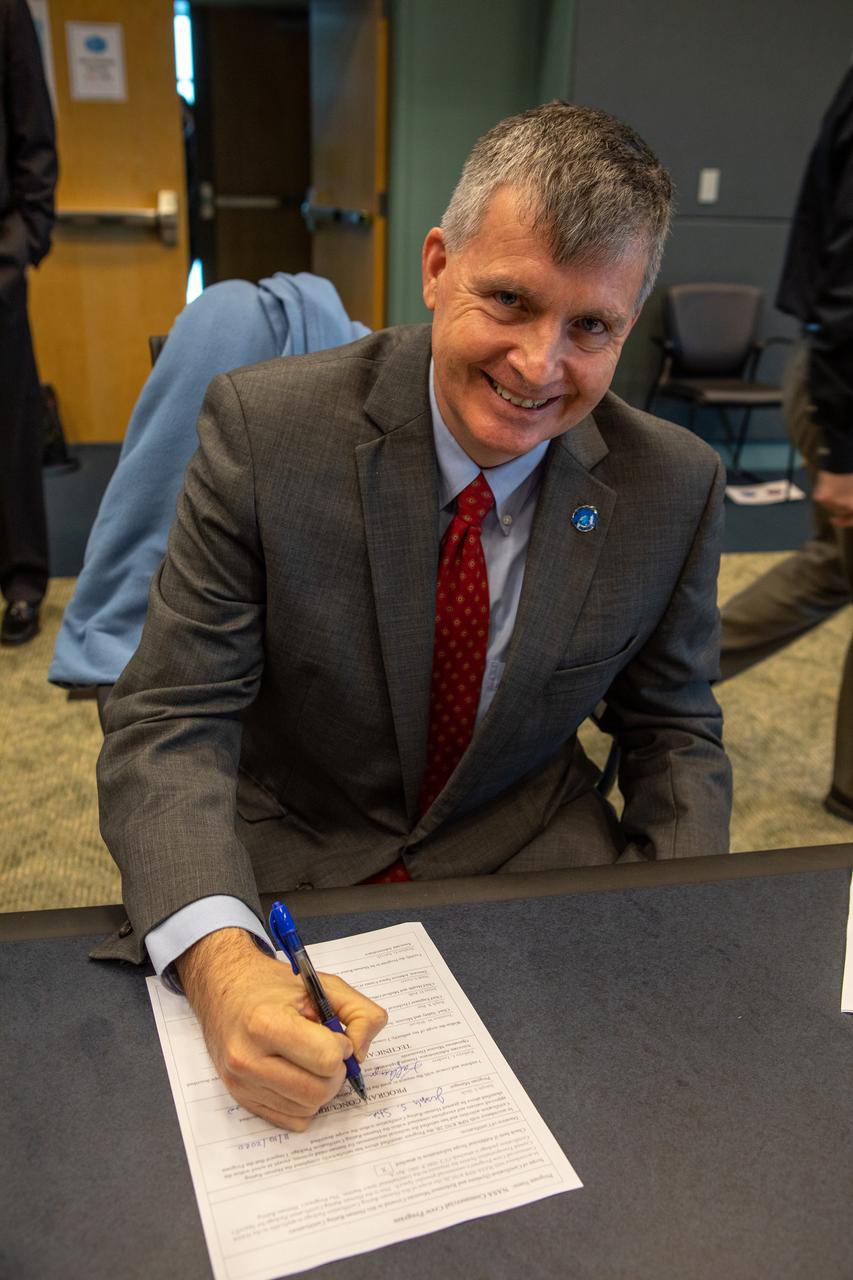
Steve Stich, manager of NASA’s Commercial Crew Program, signs the Human Rating Certification Plan for SpaceX’s crew transportation system, officially certifying the first commercial spacecraft system in history capable of transporting humans to and from the International Space Station as part of the agency’s Commercial Crew Program. The signing occurred during the Flight Readiness Review (FRR) for the NASA’s SpaceX Crew-1 mission at Kennedy Space Center in Florida on Nov. 10, 2020. The FRR focuses on the preparedness of SpaceX’s crew transportation system, the International Space Station, and its international partners to support the flight, and the certification of flight readiness. Crew-1 is the first regular crew mission of a U.S. commercial spacecraft with astronauts to the International Space Station as part of NASA’s Commercial Crew Program. The Crew Dragon Resilience capsule will launch atop a Falcon 9 rocket from Launch Complex 39A carrying NASA astronauts Michael Hopkins, Victor Glover, Shannon Walker and Japan Aerospace Exploration Agency (JAXA) astronaut Soichi Noguchi to the space station for a six-month science mission.
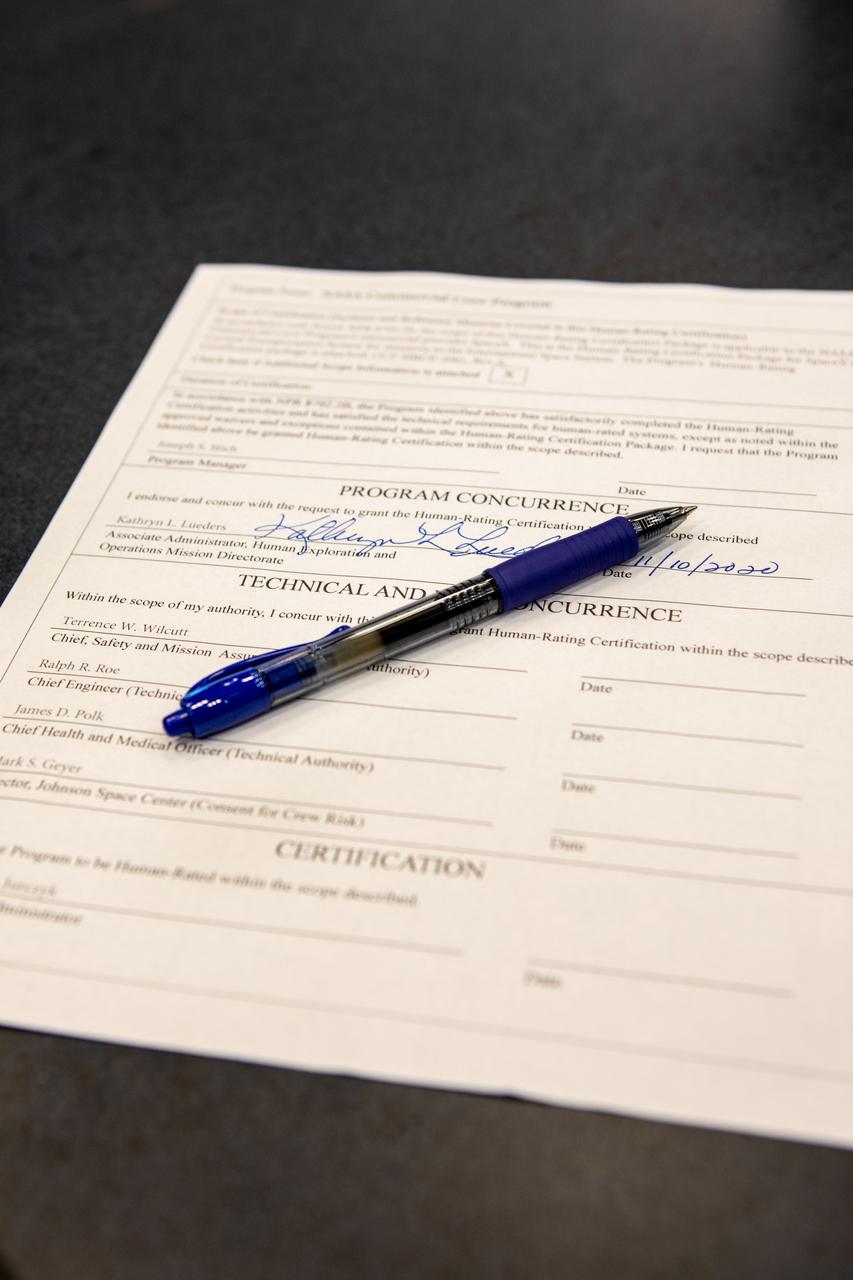
The Human Rating Certification Plan for SpaceX’s crew transportation system, officially certifying the first commercial spacecraft system in history capable of transporting humans to and from the International Space Station as part of the agency’s Commercial Crew Program was signed during the Flight Readiness Review (FRR) for the NASA’s SpaceX Crew-1 mission at Kennedy Space Center in Florida on Nov. 10, 2020. The FRR focuses on the preparedness of SpaceX’s crew transportation system, the International Space Station, and its international partners to support the flight, and the certification of flight readiness. Crew-1 is the first regular crew mission of a U.S. commercial spacecraft with astronauts to the International Space Station as part of NASA’s Commercial Crew Program. The Crew Dragon Resilience capsule will launch atop a Falcon 9 rocket from Launch Complex 39A carrying NASA astronauts Michael Hopkins, Victor Glover, Shannon Walker and Japan Aerospace Exploration Agency (JAXA) astronaut Soichi Noguchi to the space station for a six-month science mission.
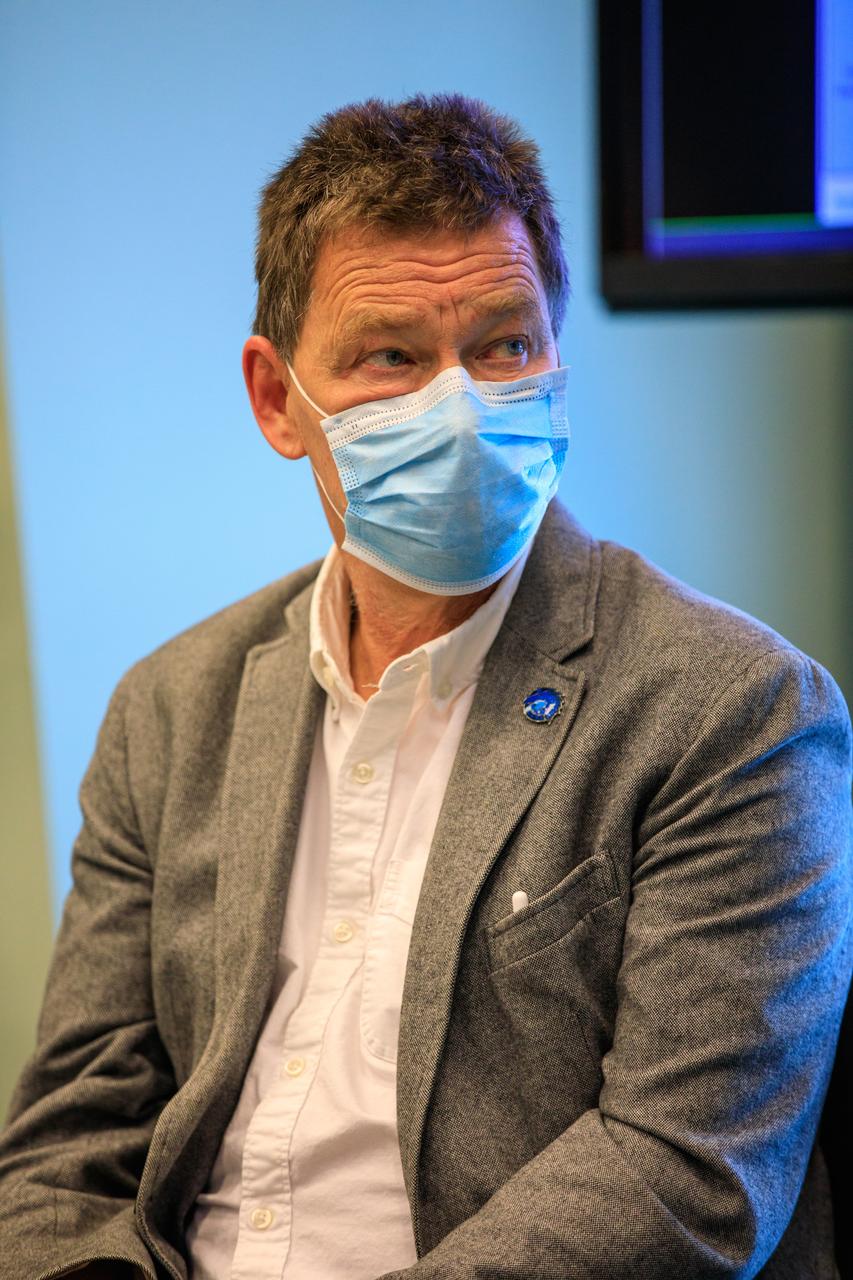
Hans Koenigsmann, vice president, Build and Flight Reliability with SpaceX, participates in a Flight Readiness Review (FRR) for NASA’s SpaceX Crew-1 mission at Kennedy Space Center in Florida on Nov. 9, 2020. The FRR focuses on the preparedness of SpaceX’s crew transportation system, the International Space Station, and its international partners to support the flight, and the certification of flight readiness. Crew-1 is the first regular crew mission of a U.S. commercial spacecraft with astronauts to the International Space Station as part of NASA’s Commercial Crew Program. The Crew Dragon Resilience capsule will launch atop a Falcon 9 rocket from Launch Complex 39A carrying NASA astronauts Michael Hopkins, Victor Glover, Shannon Walker and Japan Aerospace Exploration Agency (JAXA) astronaut Soichi Noguchi to the space station for a six-month science mission.
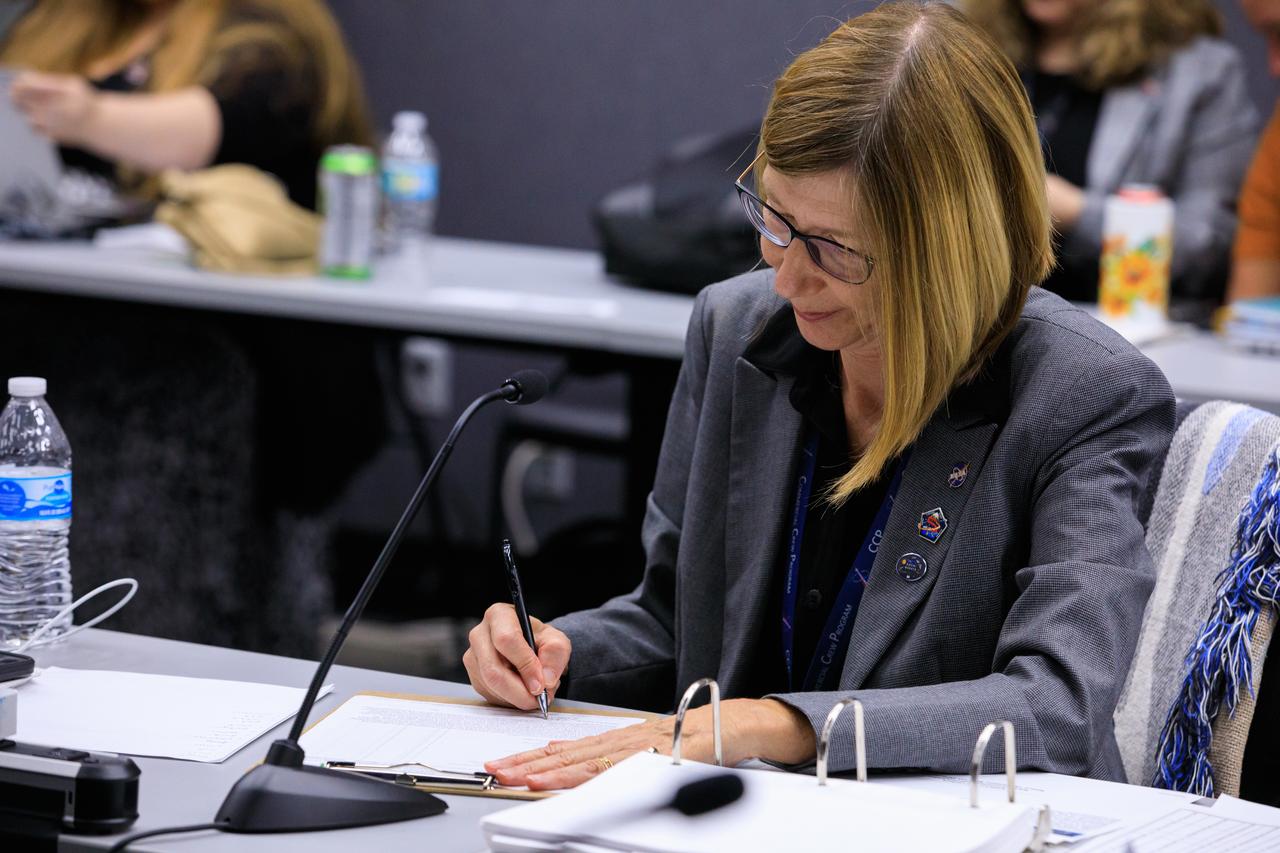
Kathryn Lueders, associate administrator for NASA’s Space Operations Mission Directorate, participates in a Flight Readiness Review for the agency’s Crew-5 mission at Kennedy Space Center in Florida on Sept. 26, 2022. NASA and SpaceX managers held the review to confirm the SpaceX Falcon 9 rocket and Crew Dragon spacecraft are ready for launch. Crew-5 is scheduled to launch to the International Space Station from Kennedy’s Launch Complex 39A as part of the agency’s Commercial Crew Program. This will be the fifth crew rotation mission of SpaceX’s human transportation system and its sixth flight with astronauts, including the Demo-2 test flight, to the space station.
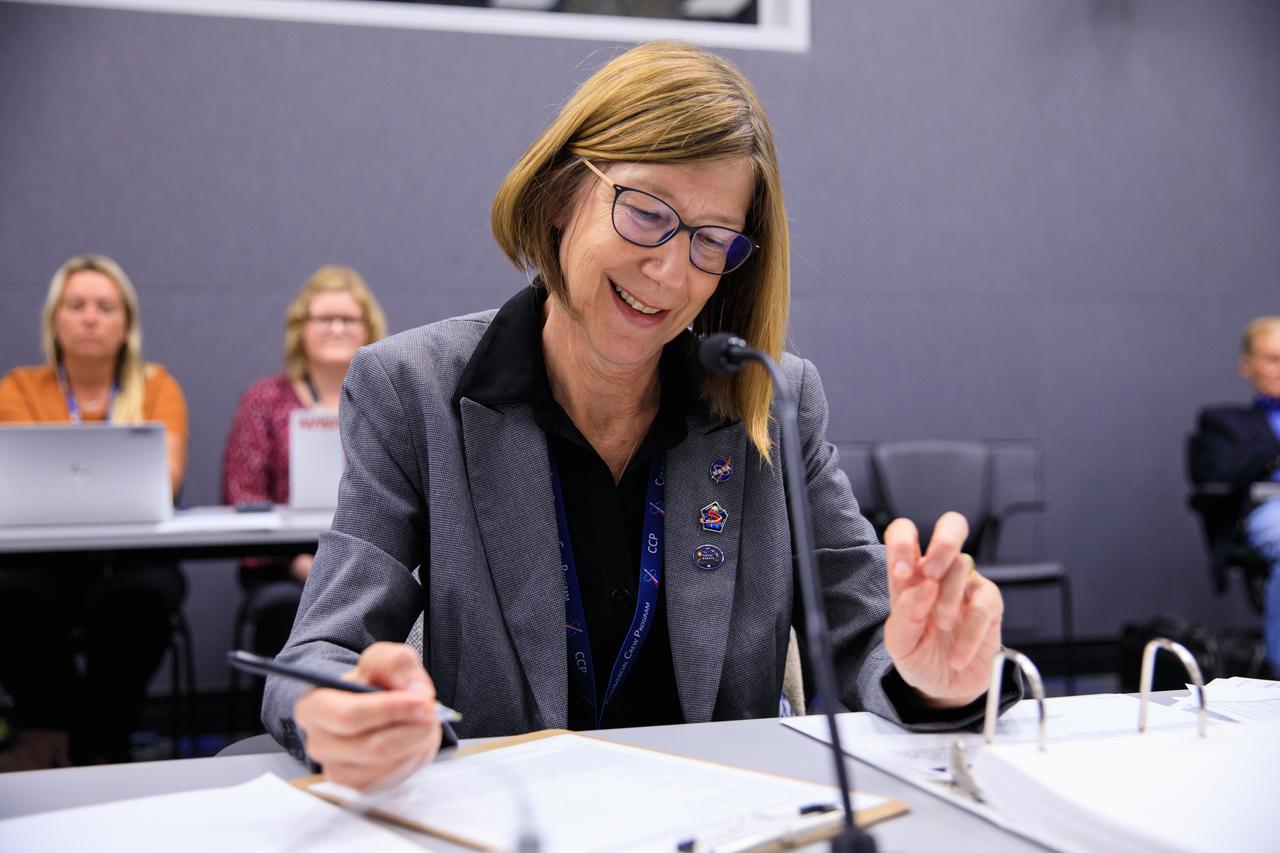
Kathryn Lueders, associate administrator for NASA’s Space Operations Mission Directorate, participates in a Flight Readiness Review for the agency’s Crew-5 mission at Kennedy Space Center in Florida on Sept. 26, 2022. NASA and SpaceX managers held the review to confirm the SpaceX Falcon 9 rocket and Crew Dragon spacecraft are ready for launch. Crew-5 is scheduled to launch to the International Space Station from Kennedy’s Launch Complex 39A as part of the agency’s Commercial Crew Program. This will be the fifth crew rotation mission of SpaceX’s human transportation system and its sixth flight with astronauts, including the Demo-2 test flight, to the space station.
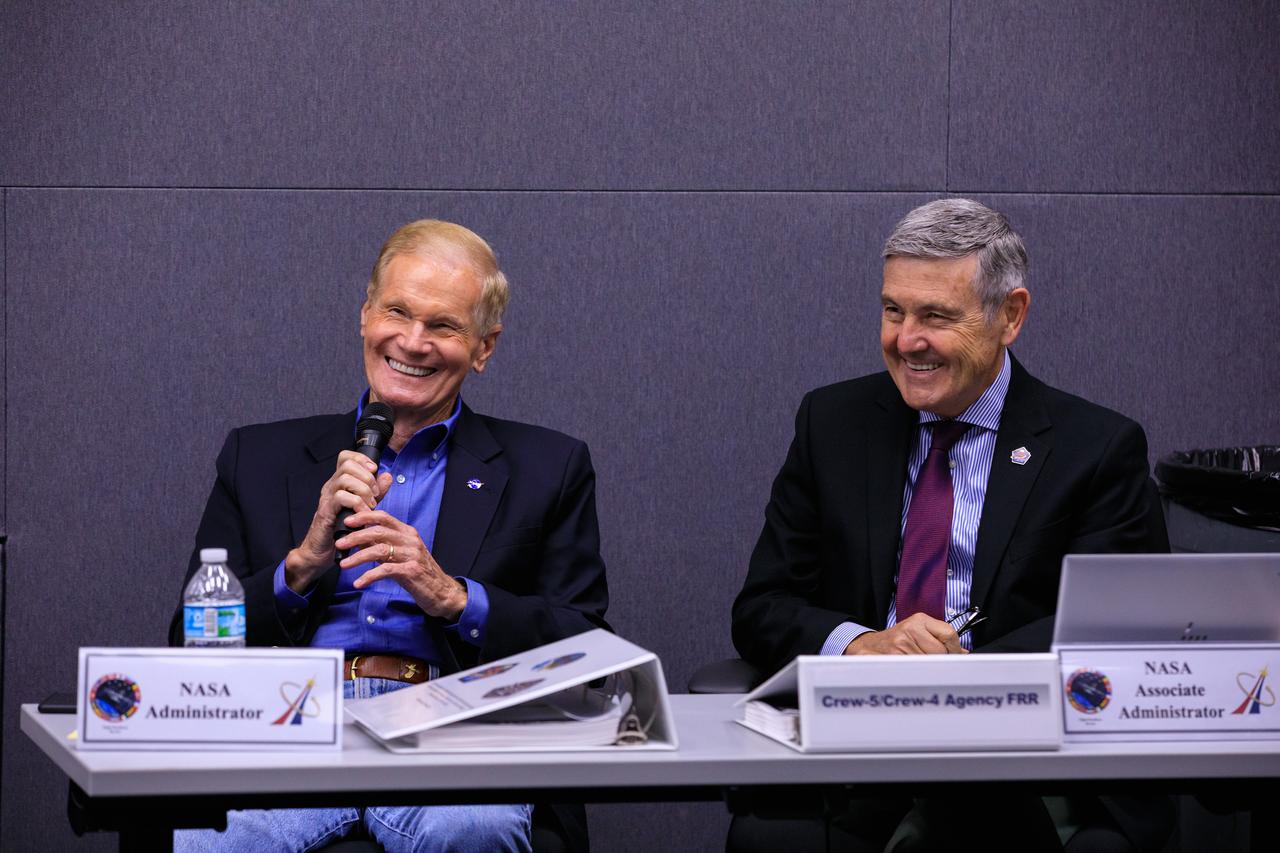
NASA Administrator Bill Nelson, left, and Associate Administrator Bob Cabana participate in a Flight Readiness Review for the agency’s Crew-5 mission at Kennedy Space Center in Florida on Sept. 26, 2022. NASA and SpaceX managers held the review to confirm the SpaceX Falcon 9 rocket and Crew Dragon spacecraft are ready for launch. Crew-5 is scheduled to launch to the International Space Station from Kennedy’s Launch Complex 39A as part of the agency’s Commercial Crew Program. This will be the fifth crew rotation mission of SpaceX’s human transportation system and its sixth flight with astronauts, including the Demo-2 test flight, to the space station.
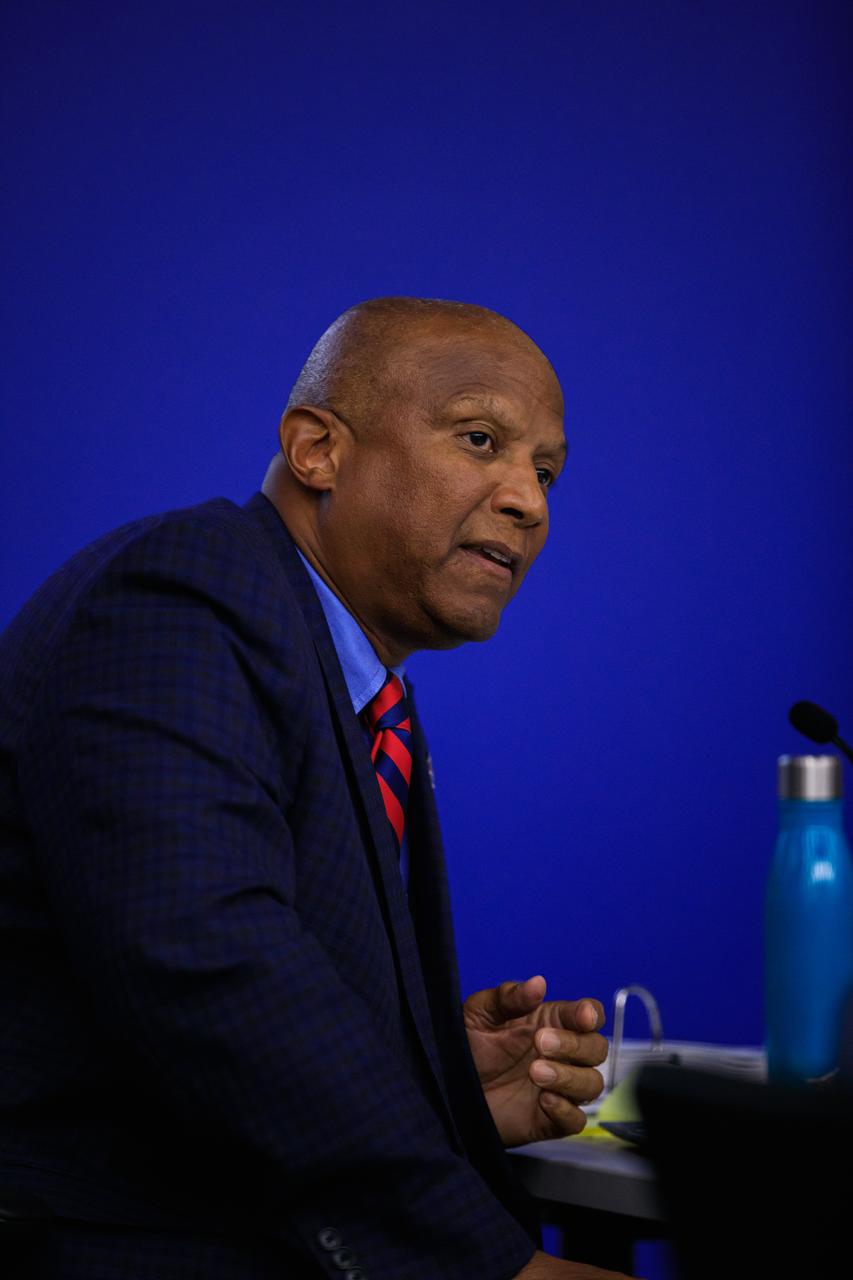
Kennedy Space Center Deputy Director Kelvin Manning participates in a Flight Readiness Review for NASA’s Crew-5 mission at the Florida spaceport on Sept. 26, 2022. NASA and SpaceX managers held the review to confirm the SpaceX Falcon 9 rocket and Crew Dragon spacecraft are ready for launch. Crew-5 is scheduled to launch to the International Space Station from Kennedy’s Launch Complex 39A as part of the agency’s Commercial Crew Program. This will be the fifth crew rotation mission of SpaceX’s human transportation system and its sixth flight with astronauts, including the Demo-2 test flight, to the space station.

Teams at NASA’s Kennedy Space Center in Florida practice the Artemis mission emergency escape or egress procedures during a series of integrated system verification and validation tests at Launch Complex 39B on Friday, Aug. 9, 2024. Simulated flight crew members practice getting out of the emergency egress basket and into the emergency transport vehicle to drive them to safety in the event of an unlikely emergency during launch countdown.
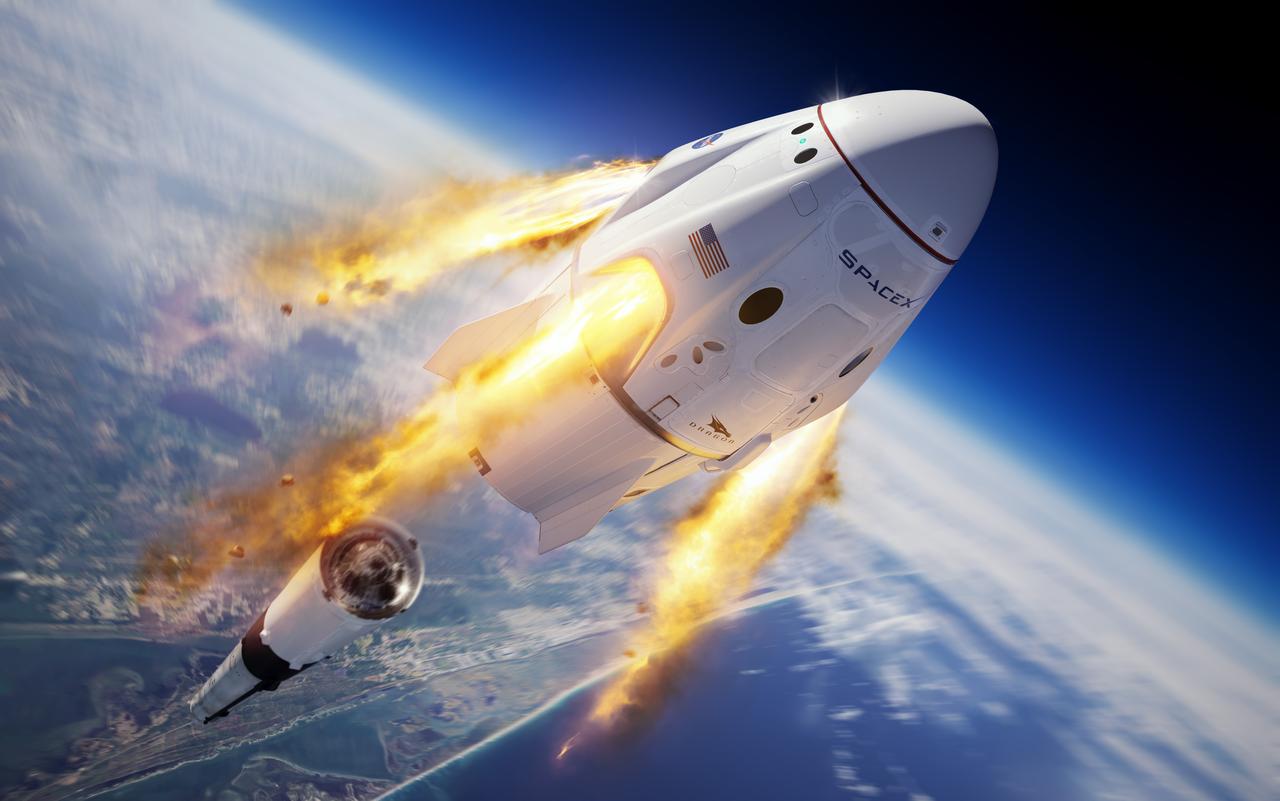
Illustration of the SpaceX Crew Dragon and Falcon 9 rocket during the company’s uncrewed In-Flight Abort Test for NASA’s Commercial Crew Program. This demonstration test of Crew Dragon’s launch escape capabilities is designed to provide valuable data toward NASA certifying SpaceX’s crew transportation system for carrying astronauts to and from the International Space Station.
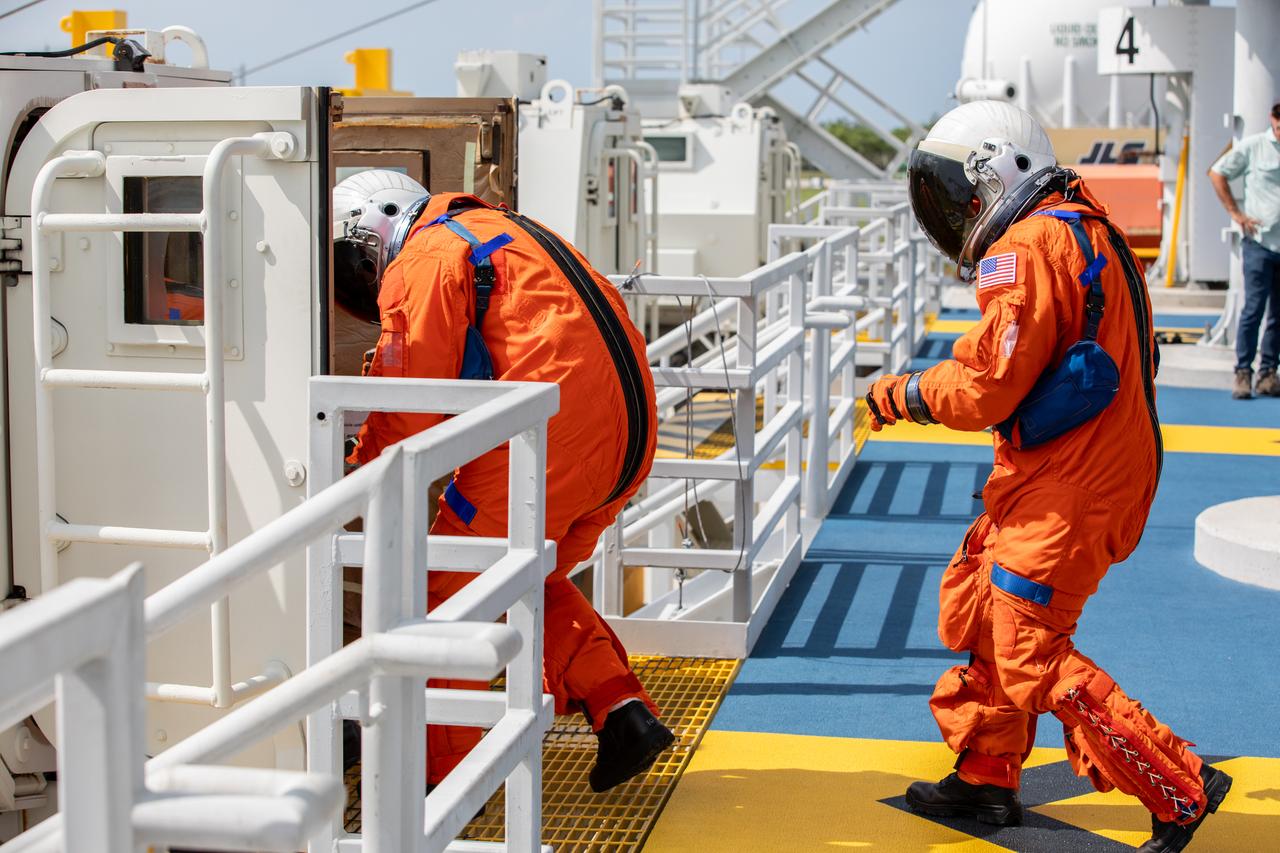
Teams at NASA’s Kennedy Space Center in Florida practice the Artemis mission emergency escape or egress procedures during a series of integrated system verification and validation tests at Launch Complex 39B on Friday, Aug. 9, 2024. Simulated flight crew members practice getting out of the emergency egress basket and into the emergency transport vehicle to drive them to safety in the event of an unlikely emergency during launch countdown.
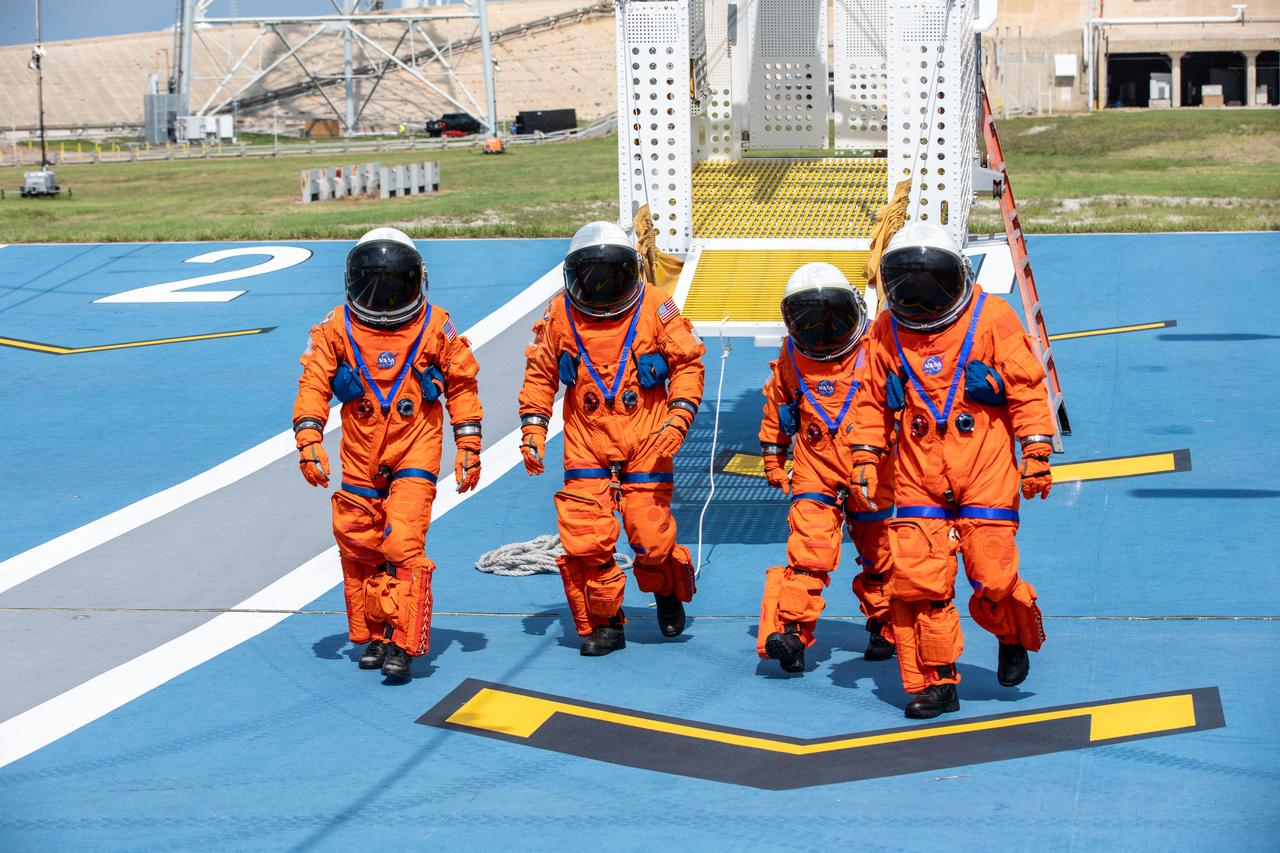
Teams at NASA’s Kennedy Space Center in Florida practice the Artemis mission emergency escape or egress procedures during a series of integrated system verification and validation tests at Launch Complex 39B on Friday, Aug. 9, 2024. Simulated flight crew members practice getting out of the emergency egress basket and into the emergency transport vehicle to drive them to safety in the event of an unlikely emergency during launch countdown.
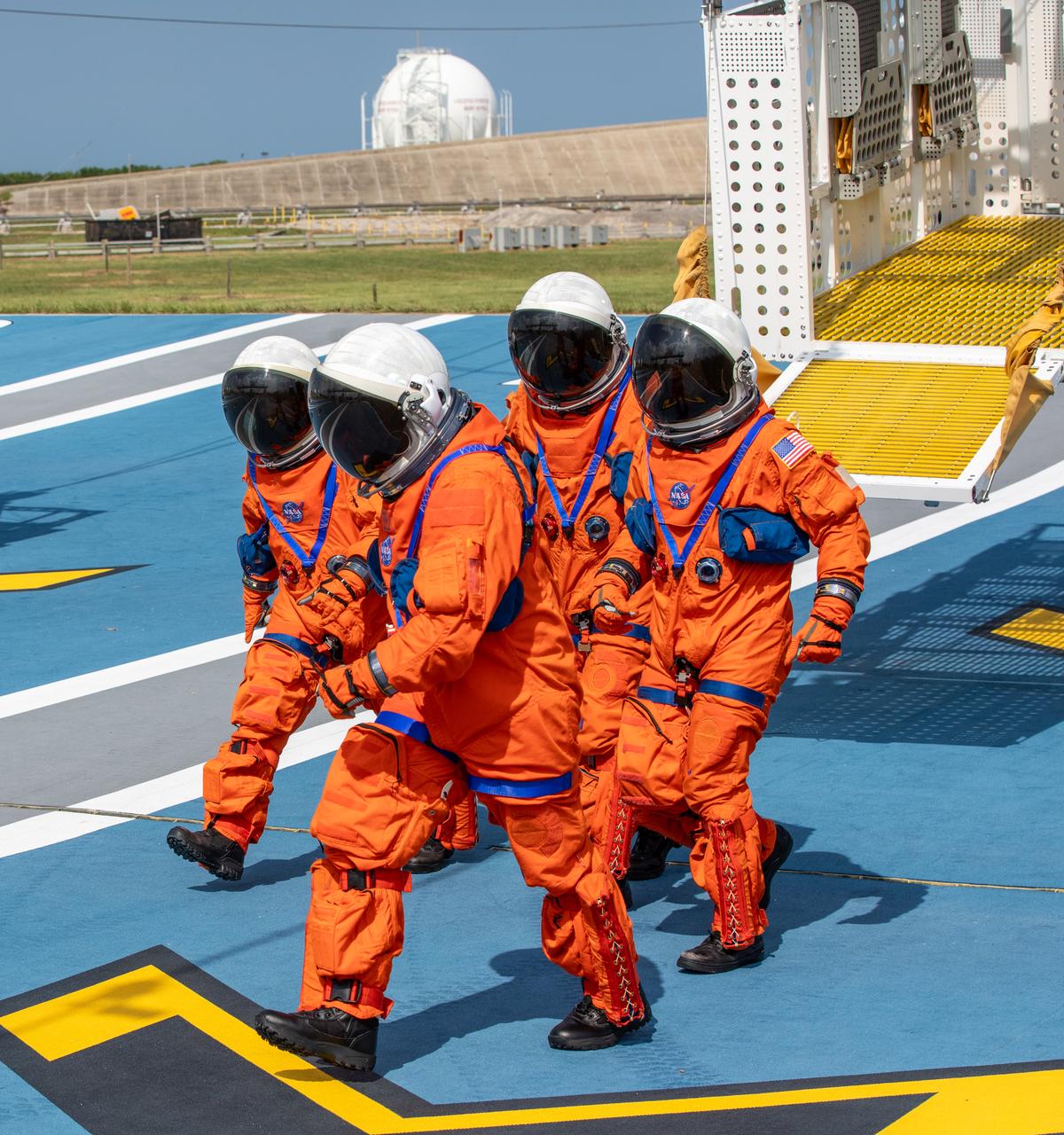
Teams at NASA’s Kennedy Space Center in Florida practice the Artemis mission emergency escape or egress procedures during a series of integrated system verification and validation tests at Launch Complex 39B on Friday, Aug. 9, 2024. Simulated flight crew members practice getting out of the emergency egress basket and into the emergency transport vehicle to drive them to safety in the event of an unlikely emergency during launch countdown.

Teams at NASA’s Kennedy Space Center in Florida practice the Artemis mission emergency escape or egress procedures during a series of integrated system verification and validation tests at Launch Complex 39B on Friday, Aug. 9, 2024. Simulated flight crew members practice getting out of the emergency egress basket and into the emergency transport vehicle to drive them to safety in the event of an unlikely emergency during launch countdown.
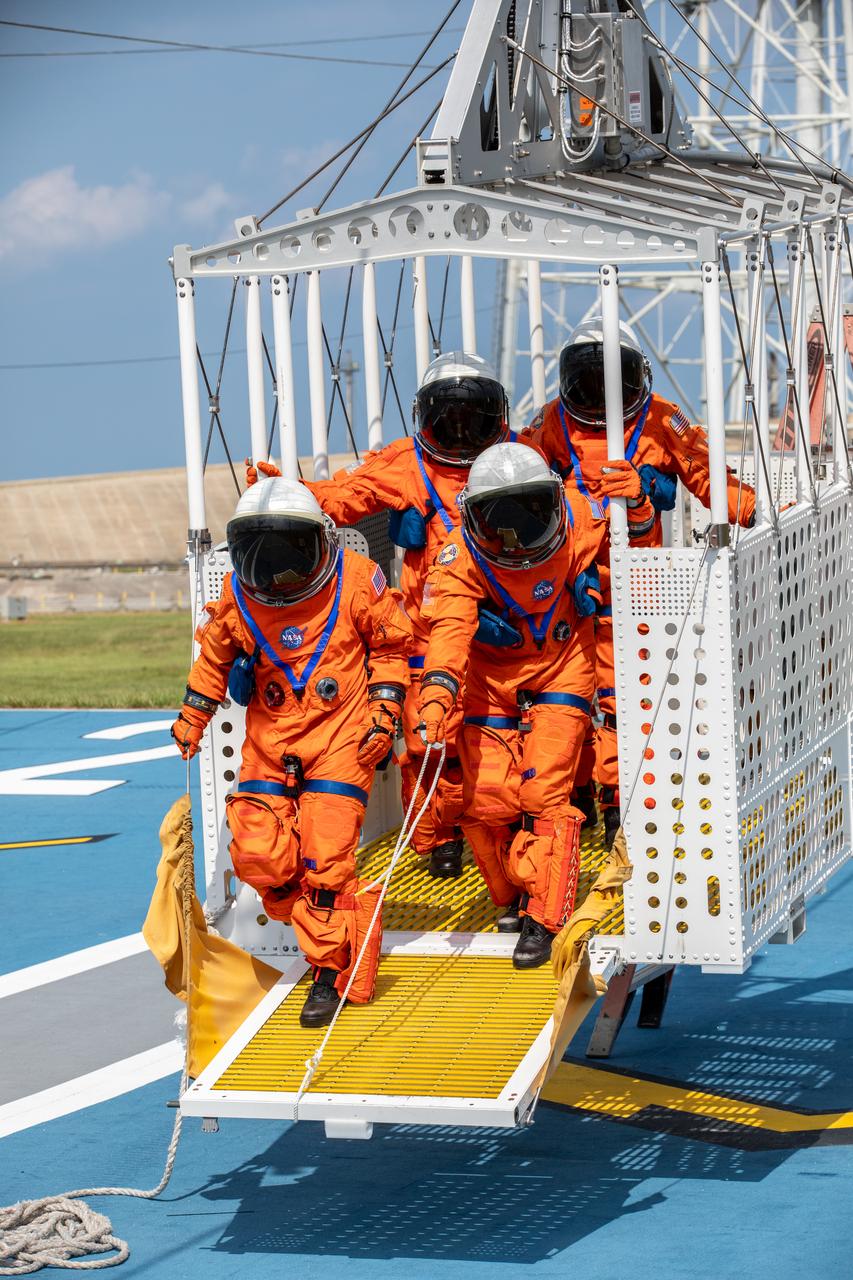
Teams at NASA’s Kennedy Space Center in Florida practice the Artemis mission emergency escape or egress procedures during a series of integrated system verification and validation tests at Launch Complex 39B on Friday, Aug. 9, 2024. Simulated flight crew members practice getting out of the emergency egress basket and into the emergency transport vehicle to drive them to safety in the event of an unlikely emergency during launch countdown.
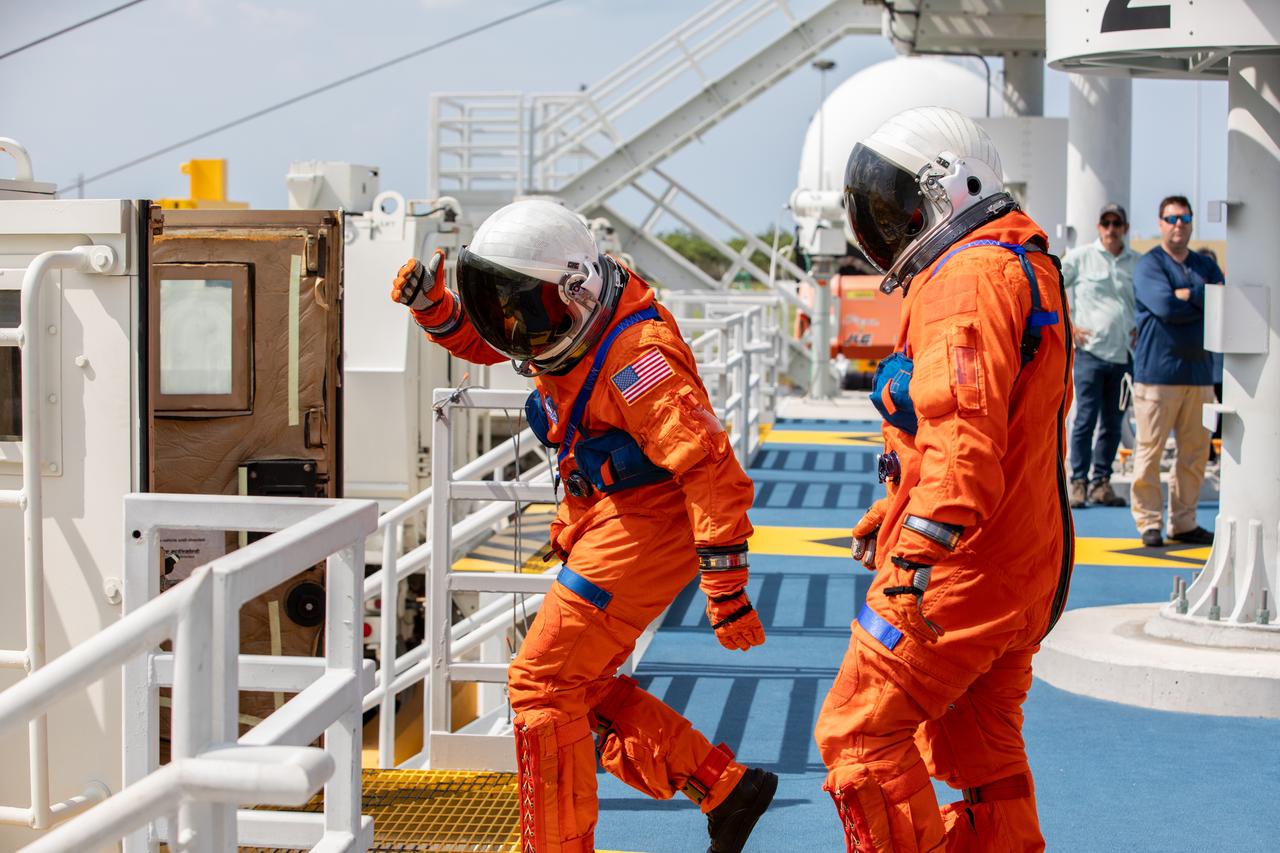
Teams at NASA’s Kennedy Space Center in Florida practice the Artemis mission emergency escape or egress procedures during a series of integrated system verification and validation tests at Launch Complex 39B on Friday, Aug. 9, 2024. Simulated flight crew members practice getting out of the emergency egress basket and into the emergency transport vehicle to drive them to safety in the event of an unlikely emergency during launch countdown.
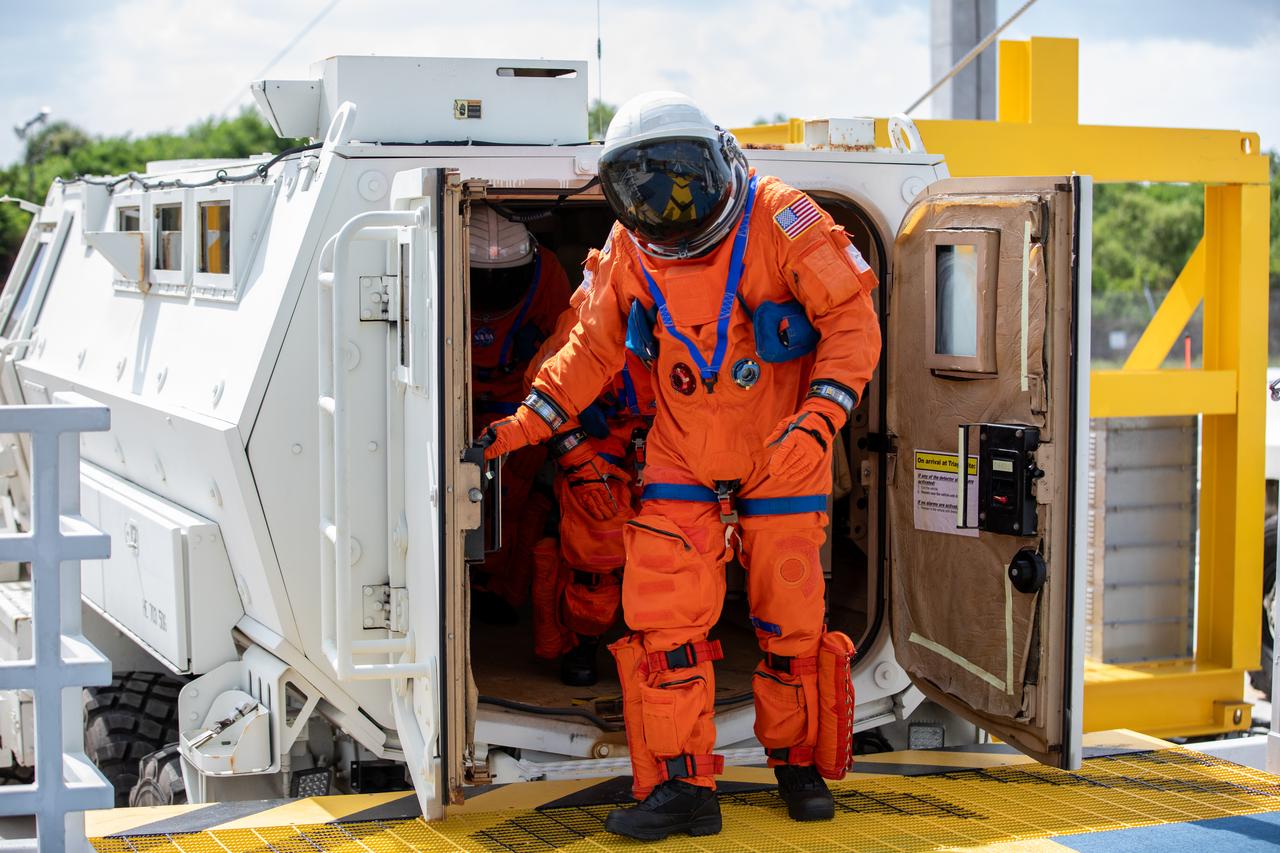
Teams at NASA’s Kennedy Space Center in Florida practice the Artemis mission emergency escape or egress procedures during a series of integrated system verification and validation tests at Launch Complex 39B on Friday, Aug. 9, 2024. Simulated flight crew members practice getting out of the emergency egress basket and into the emergency transport vehicle to drive them to safety in the event of an unlikely emergency during launch countdown.
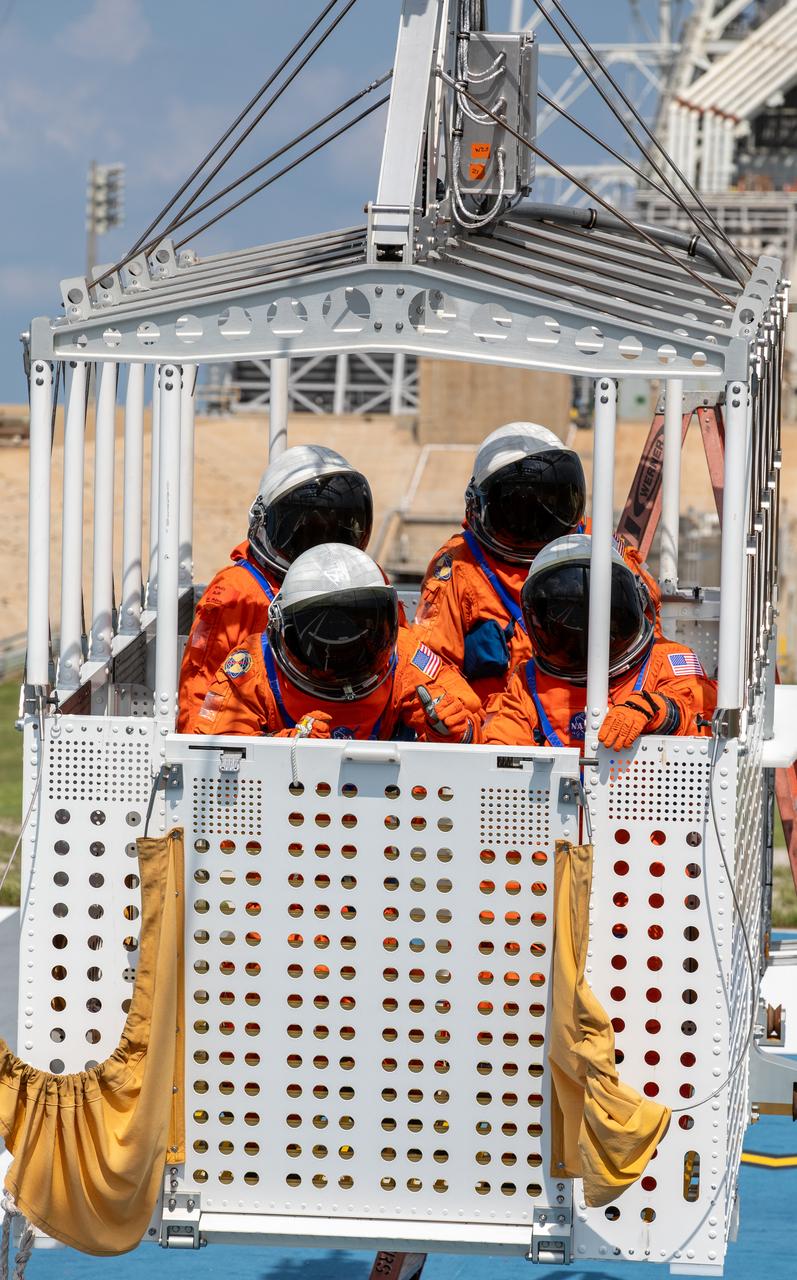
Teams at NASA’s Kennedy Space Center in Florida practice the Artemis mission emergency escape or egress procedures during a series of integrated system verification and validation tests at Launch Complex 39B on Friday, Aug. 9, 2024. Simulated flight crew members practice getting out of the emergency egress basket and into the emergency transport vehicle to drive them to safety in the event of an unlikely emergency during launch countdown.
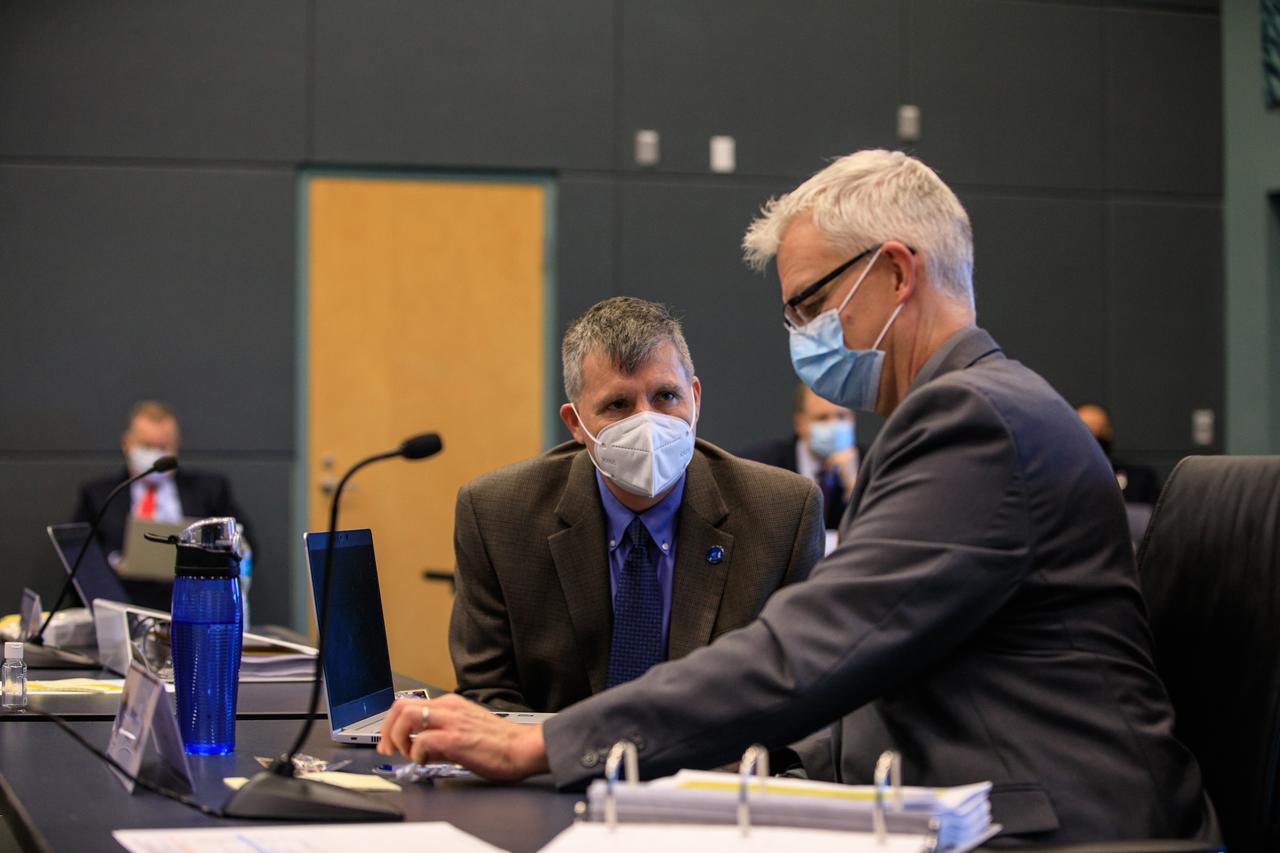
NASA and SpaceX leadership participate in a Flight Readiness Review (FRR) for the agency’s SpaceX Crew-1 mission at NASA’s Kennedy Space Center in Florida on Nov. 9, 2020. The FRR focuses on the preparedness of SpaceX’s crew transportation system, the International Space Station, and its international partners to support the flight, and the certification of flight readiness. Crew-1 is the first regular crew mission of a U.S. commercial spacecraft with astronauts to the International Space Station as part of NASA’s Commercial Crew Program. The Crew Dragon Resilience capsule will launch atop a Falcon 9 rocket from Launch Complex 39A carrying NASA astronauts Michael Hopkins, Victor Glover, Shannon Walker and Japan Aerospace Exploration Agency (JAXA) astronaut Soichi Noguchi to the space station for a six-month science mission.
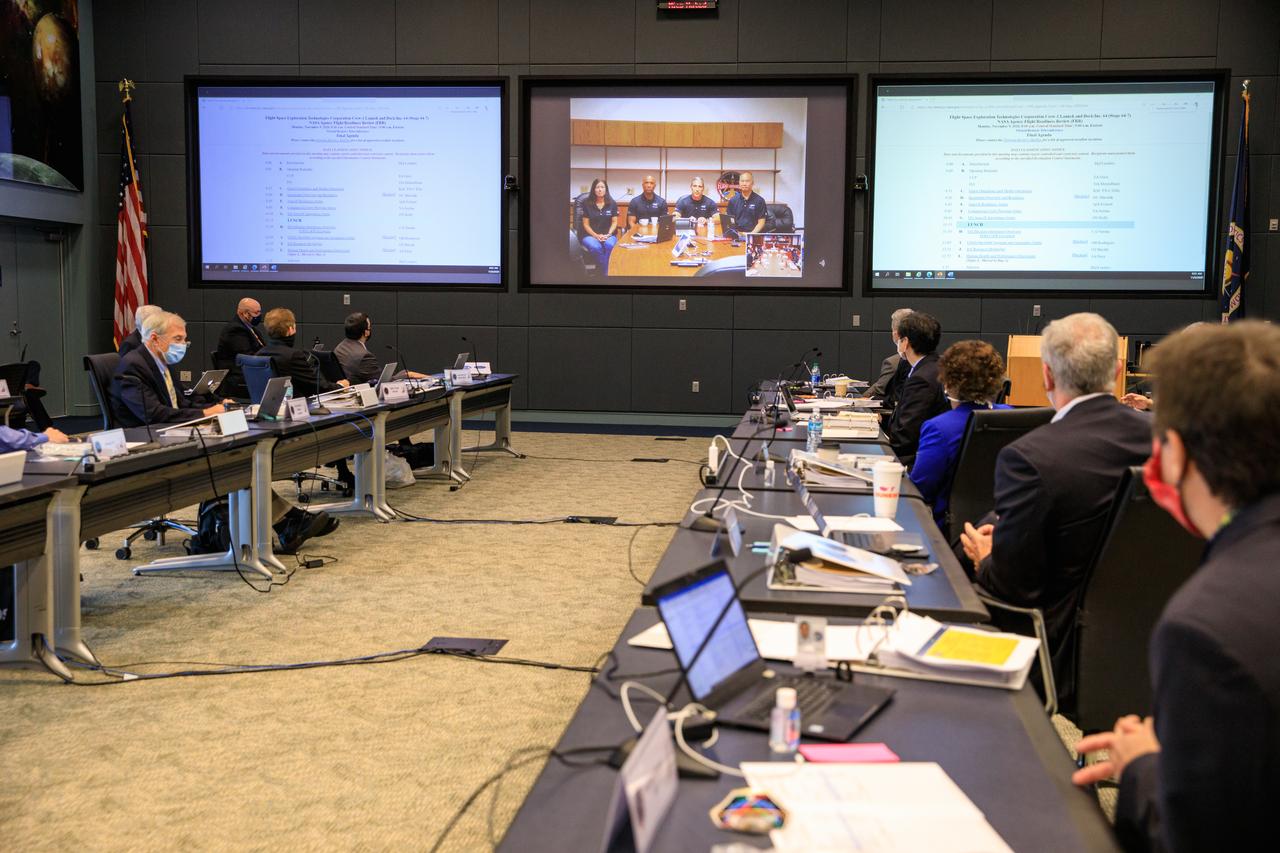
NASA and SpaceX leadership participate in a Flight Readiness Review (FRR) for the agency’s SpaceX Crew-1 mission at NASA’s Kennedy Space Center in Florida on Nov. 9, 2020. The FRR focuses on the preparedness of SpaceX’s crew transportation system, the International Space Station, and its international partners to support the flight, and the certification of flight readiness. Crew-1 is the first regular crew mission of a U.S. commercial spacecraft with astronauts to the International Space Station as part of NASA’s Commercial Crew Program. The Crew Dragon Resilience capsule will launch atop a Falcon 9 rocket from Launch Complex 39A carrying NASA astronauts Michael Hopkins, Victor Glover, Shannon Walker and Japan Aerospace Exploration Agency (JAXA) astronaut Soichi Noguchi to the space station for a six-month science mission.
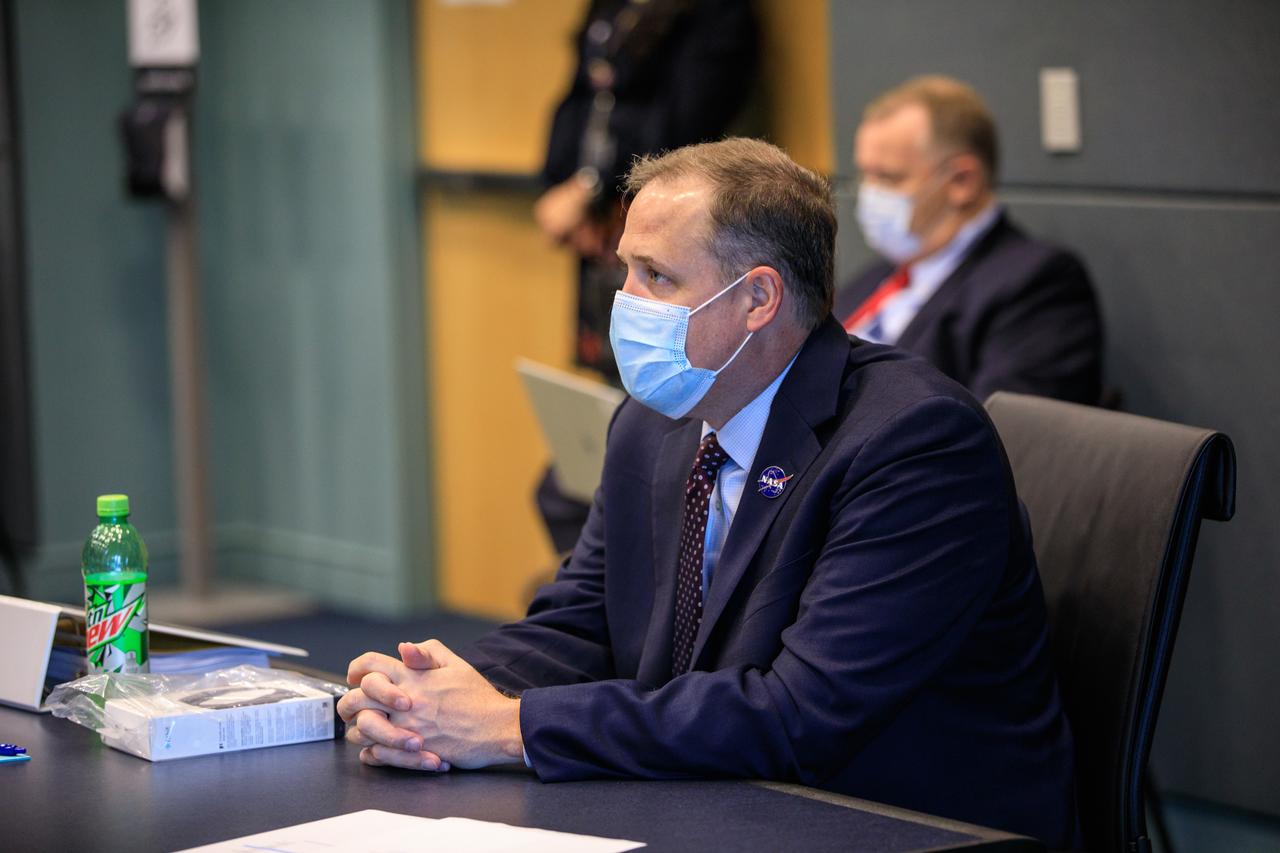
NASA Administrator Jim Bridenstine participates in a Flight Readiness Review (FRR) for the agency’s SpaceX Crew-1 mission at Kennedy Space Center in Florida on Nov. 9, 2020. The FRR focuses on the preparedness of SpaceX’s crew transportation system, the International Space Station, and its international partners to support the flight, and the certification of flight readiness. Crew-1 is the first regular crew mission of a U.S. commercial spacecraft with astronauts to the International Space Station as part of NASA’s Commercial Crew Program. The Crew Dragon Resilience capsule will launch atop a Falcon 9 rocket from Launch Complex 39A carrying NASA astronauts Michael Hopkins, Victor Glover, Shannon Walker and Japan Aerospace Exploration Agency (JAXA) astronaut Soichi Noguchi to the space station for a six-month science mission.
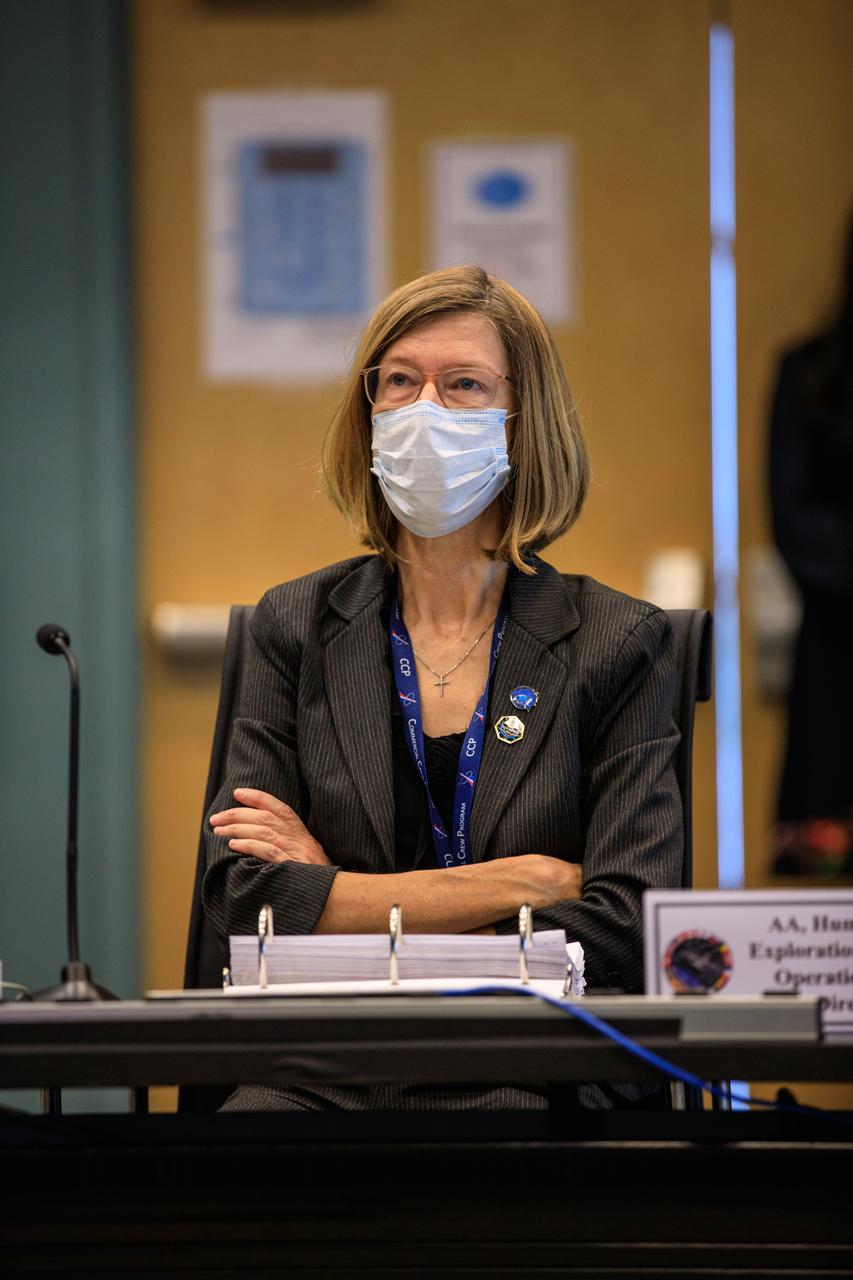
Kathy Lueders, NASA associate administrator of the Human Exploration and Operations Mission Directorate, leads a Flight Readiness Review (FRR) for the agency’s SpaceX Crew-1 mission at NASA’s Kennedy Space Center in Florida on Nov. 9, 2020. The FRR focuses on the preparedness of SpaceX’s crew transportation system, the International Space Station, and its international partners to support the flight, and the certification of flight readiness. Crew-1 is the first regular crew mission of a U.S. commercial spacecraft with astronauts to the International Space Station as part of NASA’s Commercial Crew Program. The Crew Dragon Resilience capsule will launch atop a Falcon 9 rocket from Launch Complex 39A carrying NASA astronauts Michael Hopkins, Victor Glover, Shannon Walker and Japan Aerospace Exploration Agency (JAXA) astronaut Soichi Noguchi to the space station for a six-month science mission.
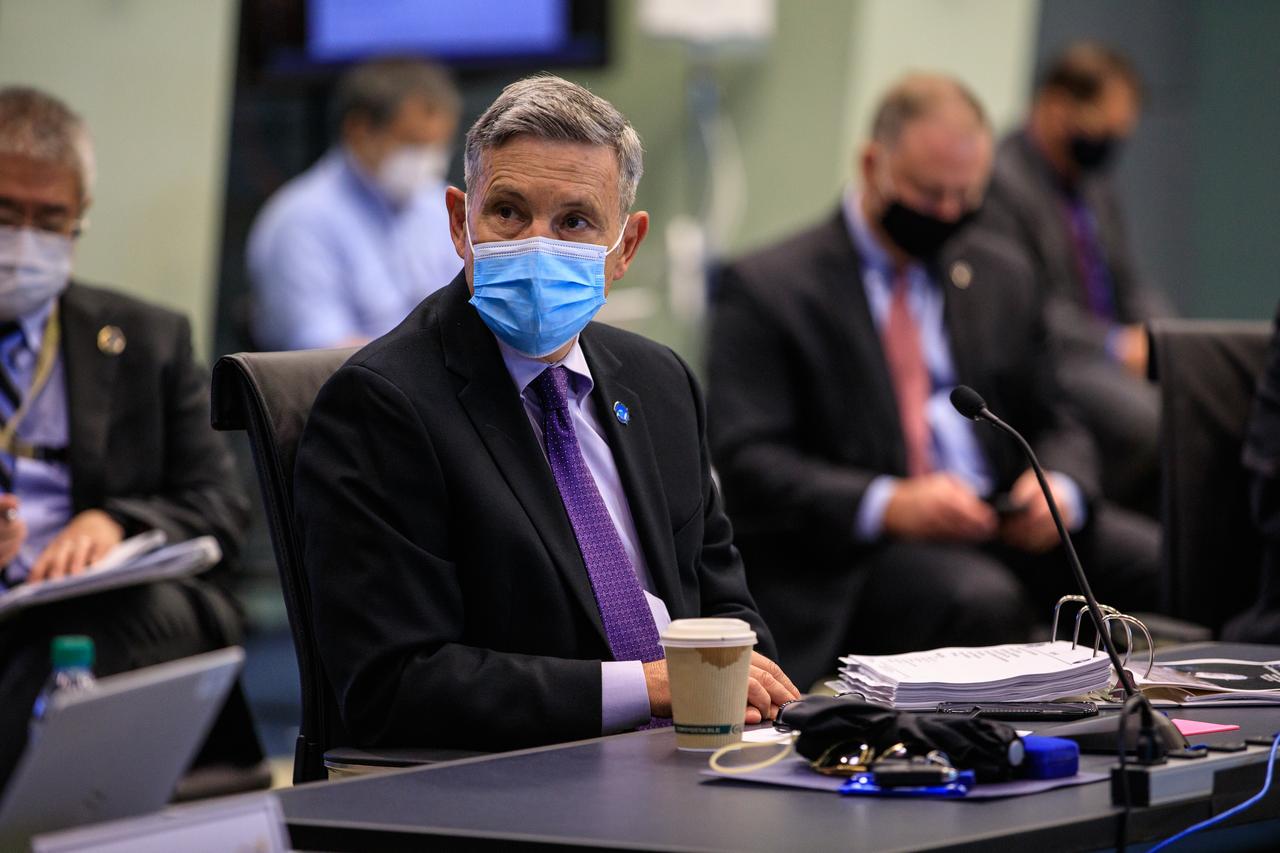
Kennedy Space Center Director Bob Cabana participates in a Flight Readiness Review (FRR) for the agency’s SpaceX Crew-1 mission at the center in Florida on Nov. 9, 2020. The FRR focuses on the preparedness of SpaceX’s crew transportation system, the International Space Station, and its international partners to support the flight, and the certification of flight readiness. Crew-1 is the first regular crew mission of a U.S. commercial spacecraft with astronauts to the International Space Station as part of NASA’s Commercial Crew Program. The Crew Dragon Resilience capsule will launch atop a Falcon 9 rocket from Launch Complex 39A carrying NASA astronauts Michael Hopkins, Victor Glover, Shannon Walker and Japan Aerospace Exploration Agency (JAXA) astronaut Soichi Noguchi to the space station for a six-month science mission.
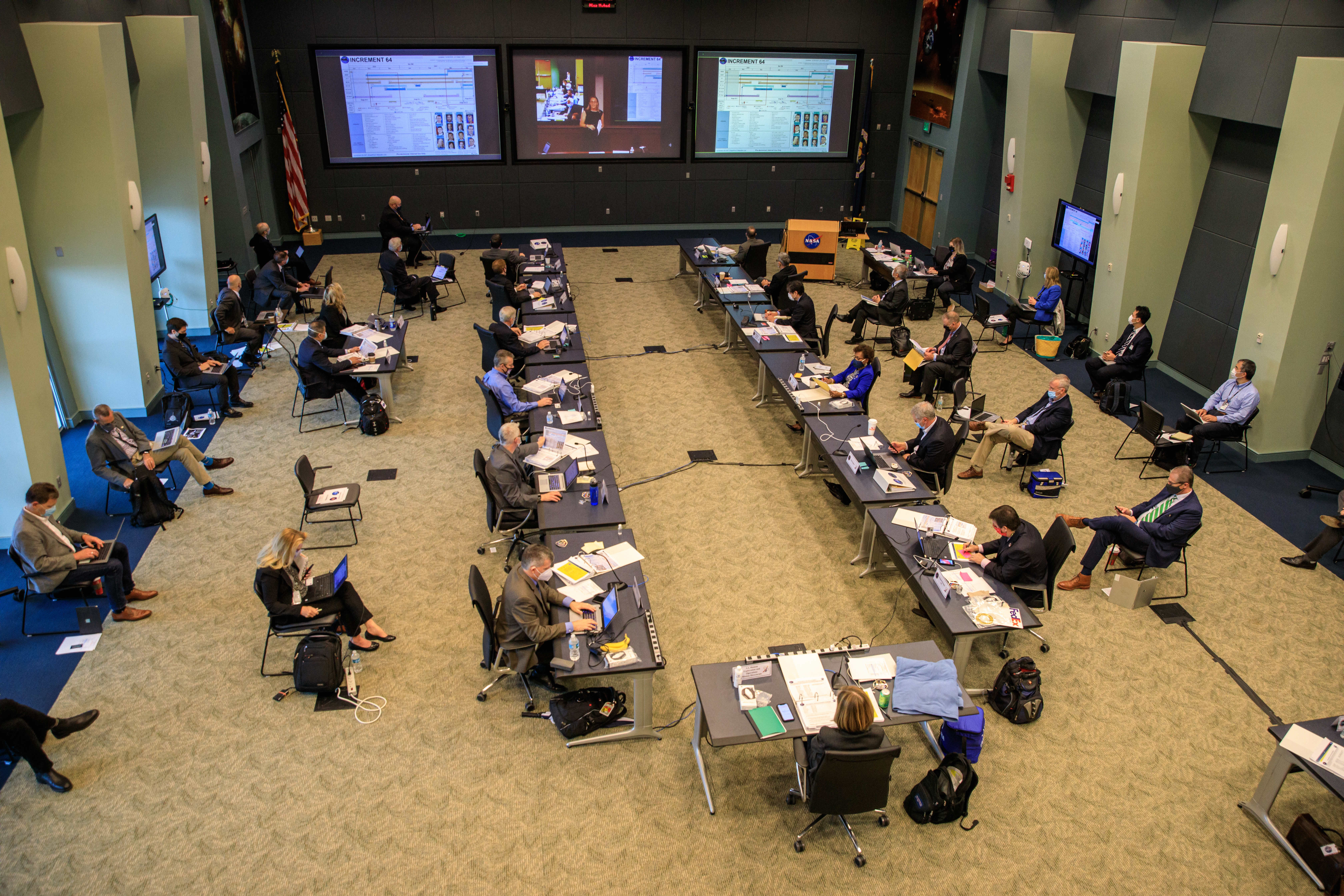
NASA and SpaceX leadership participate in a Flight Readiness Review (FRR) for the agency’s SpaceX Crew-1 mission at Kennedy Space Center in Florida on Nov. 9, 2020. The FRR focuses on the preparedness of SpaceX’s crew transportation system, the International Space Station, and its international partners to support the flight, and the certification of flight readiness. Crew-1 is the first regular crew mission of a U.S. commercial spacecraft with astronauts to the International Space Station as part of NASA’s Commercial Crew Program. The Crew Dragon Resilience capsule will launch atop a Falcon 9 rocket from Launch Complex 39A carrying NASA astronauts Michael Hopkins, Victor Glover, Shannon Walker and Japan Aerospace Exploration Agency (JAXA) astronaut Soichi Noguchi to the space station for a six-month science mission.
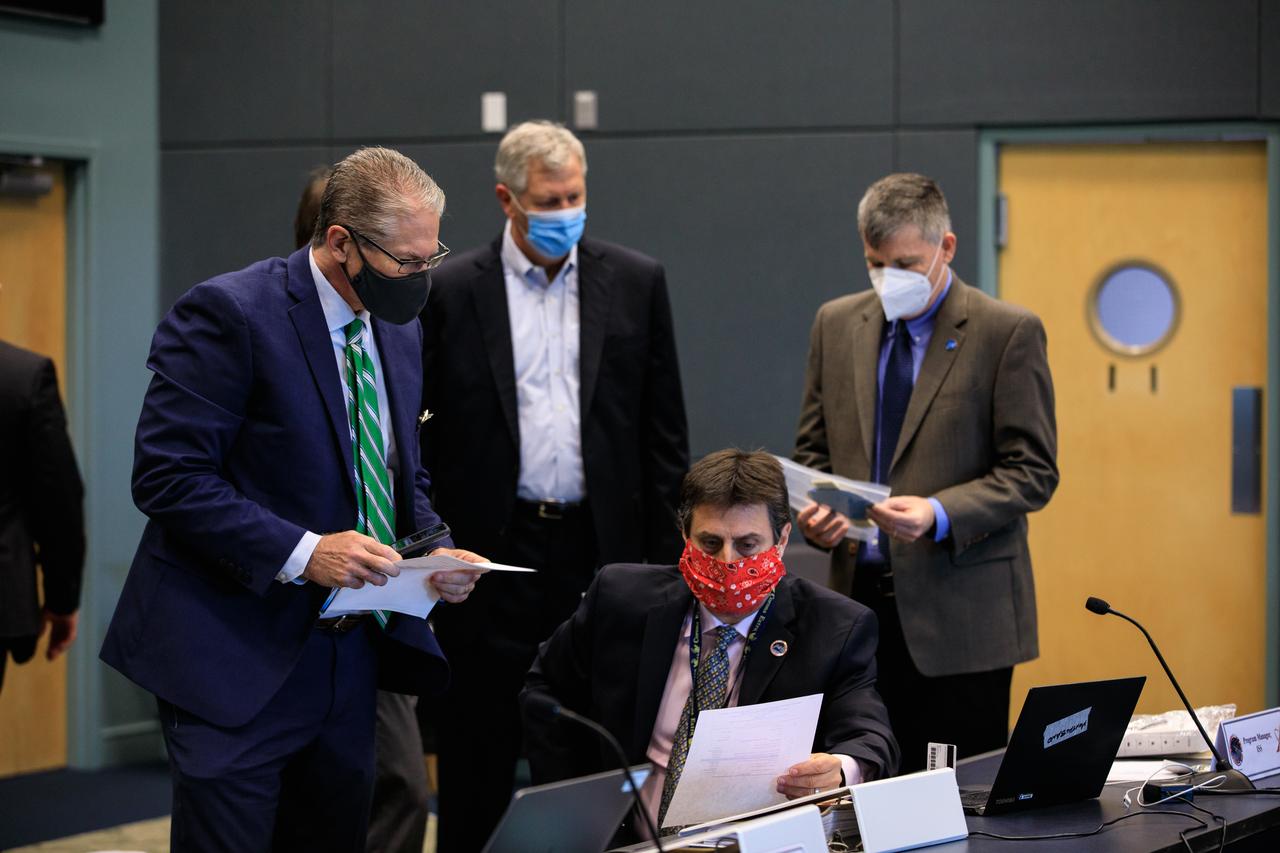
NASA and SpaceX leadership participate in a Flight Readiness Review (FRR) for the agency’s SpaceX Crew-1 mission at NASA’s Kennedy Space Center in Florida on Nov. 9, 2020. The FRR focuses on the preparedness of SpaceX’s crew transportation system, the International Space Station, and its international partners to support the flight, and the certification of flight readiness. Crew-1 is the first regular crew mission of a U.S. commercial spacecraft with astronauts to the International Space Station as part of NASA’s Commercial Crew Program. The Crew Dragon Resilience capsule will launch atop a Falcon 9 rocket from Launch Complex 39A carrying NASA astronauts Michael Hopkins, Victor Glover, Shannon Walker and Japan Aerospace Exploration Agency (JAXA) astronaut Soichi Noguchi to the space station for a six-month science mission.
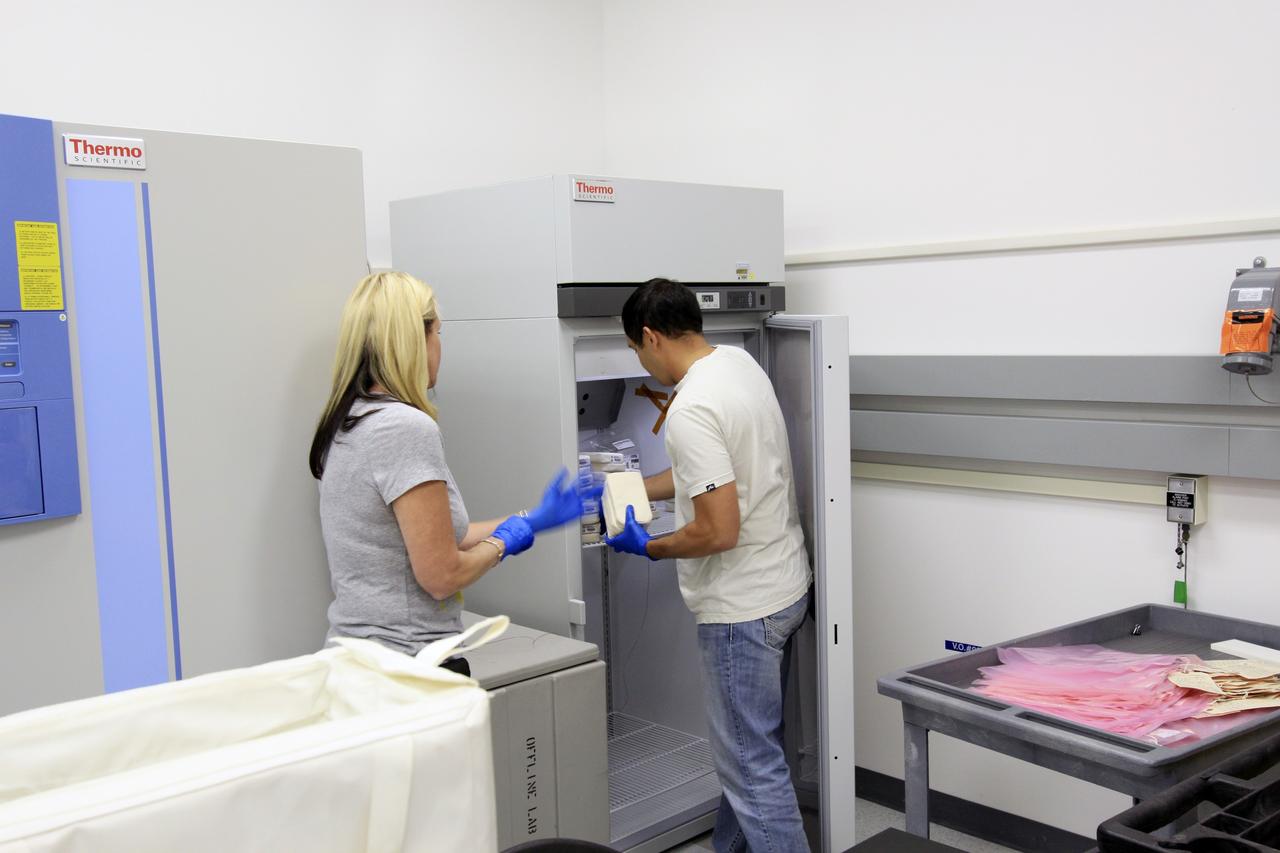
CAPE CANAVERAL, Fla. – In the Space Station Processing Facility at NASA’s Kennedy Space Center in Florida, refrigerated NanoRacks-CubeLabs Module-9 experiments are being prepared for transport to Space Launch Complex-40 on nearby Cape Canaveral Air Force Station. There, the bags will be loaded into the Space Exploration Technologies Dragon capsule in preparation for its scheduled April 30 liftoff aboard a Falcon 9 rocket. NanoRacks-CubeLabs Module-9 uses a two-cube unit box for student competition investigations using 15 liquid mixing tube assemblies that function similar to commercial glow sticks. The investigations range from microbial growth to water purification in microgravity. Known as SpaceX, the launch will be the company's second demonstration test flight for NASA's Commercial Orbital Transportation Services program, or COTS. During the flight, the capsule will conduct a series of check-out procedures to test and prove its systems, including rendezvous and berthing with the International Space Station. If the capsule performs as planned, the module and other cargo will be transferred to the station. The cargo includes food, water and provisions for the station’s Expedition crews, such as clothing, batteries and computer equipment. Under COTS, NASA has partnered with two private companies to launch cargo safely to the station. For more information, visit http://www.nasa.gov/spacex. Photo credit: NASA/Jim Grossmann

CAPE CANAVERAL, Fla. – In the Space Station Processing Facility at NASA’s Kennedy Space Center in Florida, a cargo bag designed to keep its contents cool is packed with NanoRacks-CubeLabs Module-9 experiments in preparation to transport it to Space Launch Complex-40 on nearby Cape Canaveral Air Force Station. There, the bag will be loaded into the Space Exploration Technologies Dragon capsule in preparation for its scheduled April 30 liftoff aboard a Falcon 9 rocket. NanoRacks-CubeLabs Module-9 uses a two-cube unit box for student competition investigations using 15 liquid mixing tube assemblies that function similar to commercial glow sticks. The investigations range from microbial growth to water purification in microgravity. Known as SpaceX, the launch will be the company's second demonstration test flight for NASA's Commercial Orbital Transportation Services program, or COTS. During the flight, the capsule will conduct a series of check-out procedures to test and prove its systems, including rendezvous and berthing with the International Space Station. If the capsule performs as planned, the module and other cargo will be transferred to the station. The cargo includes food, water and provisions for the station’s Expedition crews, such as clothing, batteries and computer equipment. Under COTS, NASA has partnered with two private companies to launch cargo safely to the station. For more information, visit http://www.nasa.gov/spacex. Photo credit: NASA/Jim Grossmann
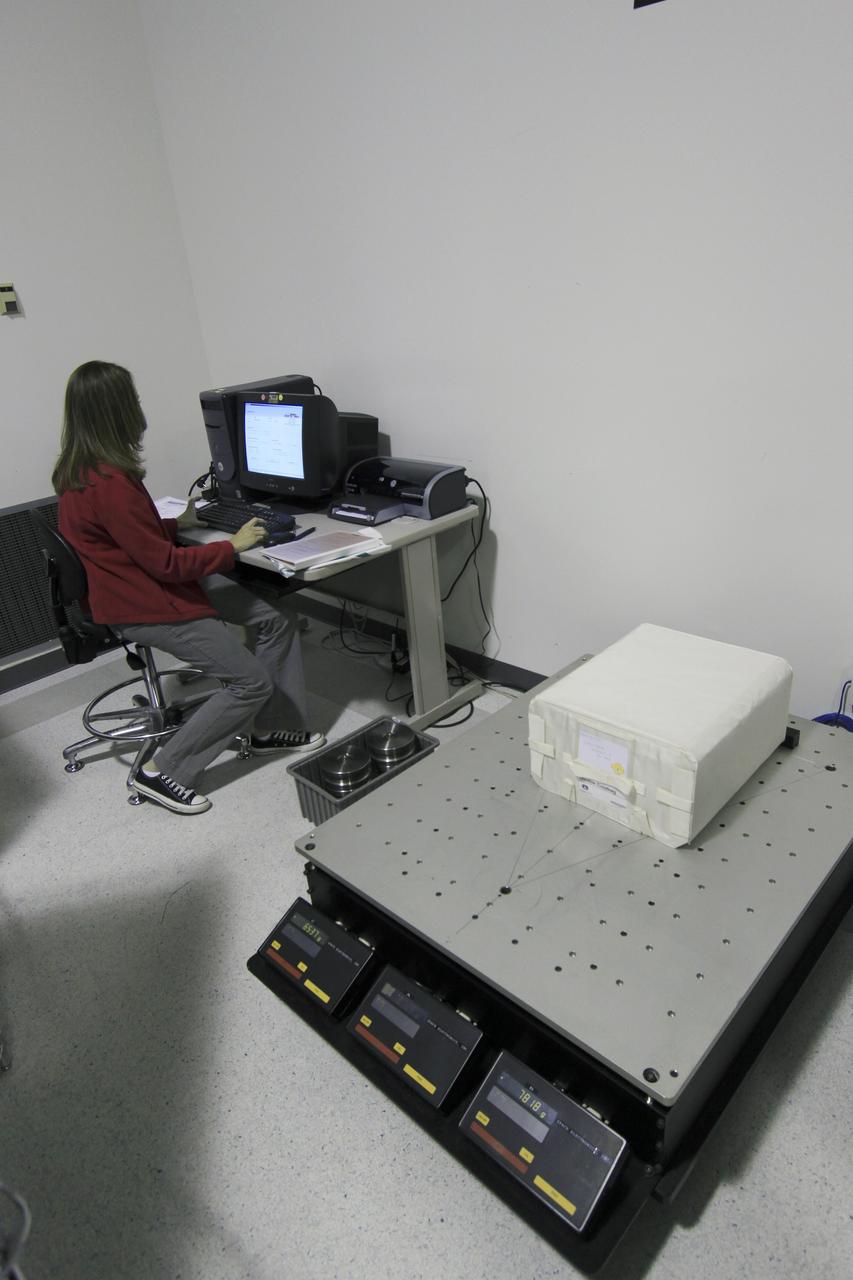
CAPE CANAVERAL, Fla. – In the Space Station Processing Facility at NASA’s Kennedy Space Center in Florida, a cargo bag packed with NanoRacks-CubeLabs Module-9 experiments is weighed before it is transported to Space Launch Complex-40 on nearby Cape Canaveral Air Force Station for cold stowage. There, the bag will be loaded into the Space Exploration Technologies Dragon capsule in preparation for its scheduled April 30 liftoff aboard a Falcon 9 rocket. NanoRacks-CubeLabs Module-9 uses a two-cube unit box for student competition investigations using 15 liquid mixing tube assemblies that function similar to commercial glow sticks. The investigations range from microbial growth to water purification in microgravity. Known as SpaceX, the launch will be the company's second demonstration test flight for NASA's Commercial Orbital Transportation Services program, or COTS. During the flight, the capsule will conduct a series of check-out procedures to test and prove its systems, including rendezvous and berthing with the International Space Station. If the capsule performs as planned, the module and other cargo will be transferred to the station. The cargo includes food, water and provisions for the station’s Expedition crews, such as clothing, batteries and computer equipment. Under COTS, NASA has partnered with two private companies to launch cargo safely to the station. For more information, visit http://www.nasa.gov/spacex. Photo credit: NASA/Jim Grossmann
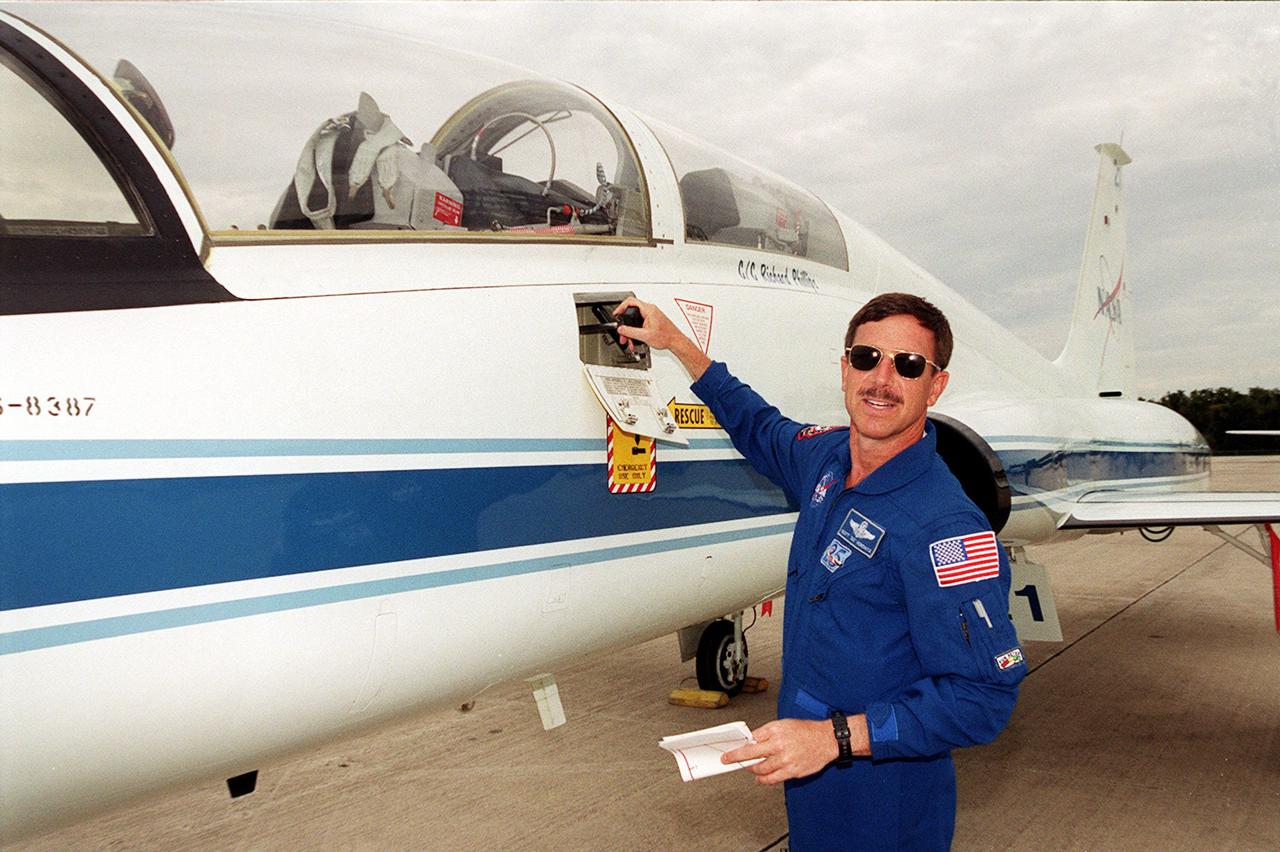
KENNEDY SPACE CENTER, Fla. -- STS-105 Commander Scott Horowitz checks over the T-38 before a morning training flight. Horowitz and the STS-105 crew are preparing for launch on Aug. 9. On mission STS-105, Discovery will be transporting the Expedition Three crew and several payloads and scientific experiments to the Space Station. The Early Ammonia Servicer (EAS) tank, which contains spare ammonia for the Station’s cooling system and will support the thermal control subsystems until a permanent system is activated, will be attached to the Station during two spacewalks. The three-member Expedition Two crew will be returning to Earth aboard Discovery after a five-month stay on the Station
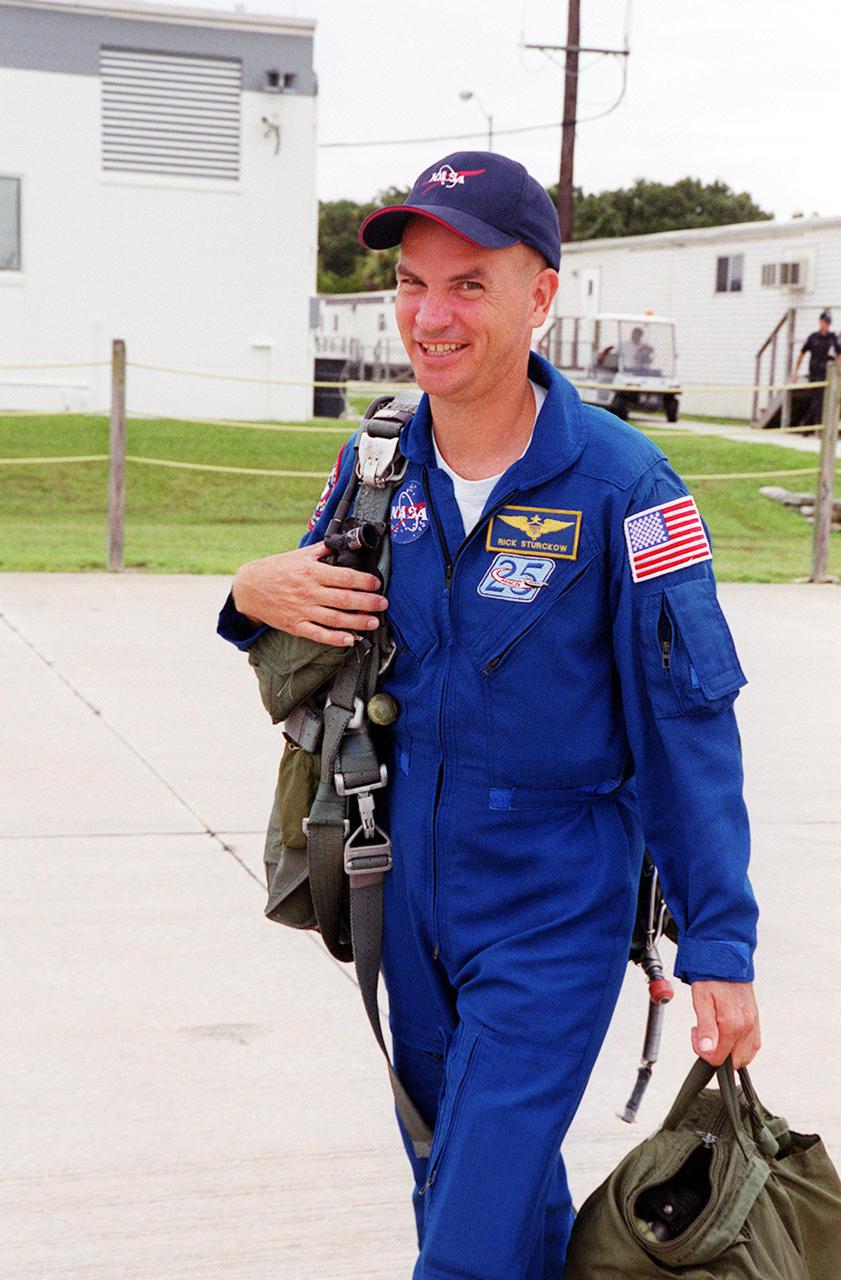
KENNEDY SPACE CENTER, Fla. -- STS-105 Pilot Rick Sturckow walks to a T-38 jet for a morning training flight. Sturckow and the STS-105 crew are preparing for launch on Aug. 9. On mission STS-105, Discovery will be transporting the Expedition Three crew and several payloads and scientific experiments to the Space Station. The Early Ammonia Servicer (EAS) tank, which contains spare ammonia for the Station’s cooling system and will support the thermal control subsystems until a permanent system is activated, will be attached to the Station during two spacewalks. The three-member Expedition Two crew will be returning to Earth aboard Discovery after a five-month stay on the Station
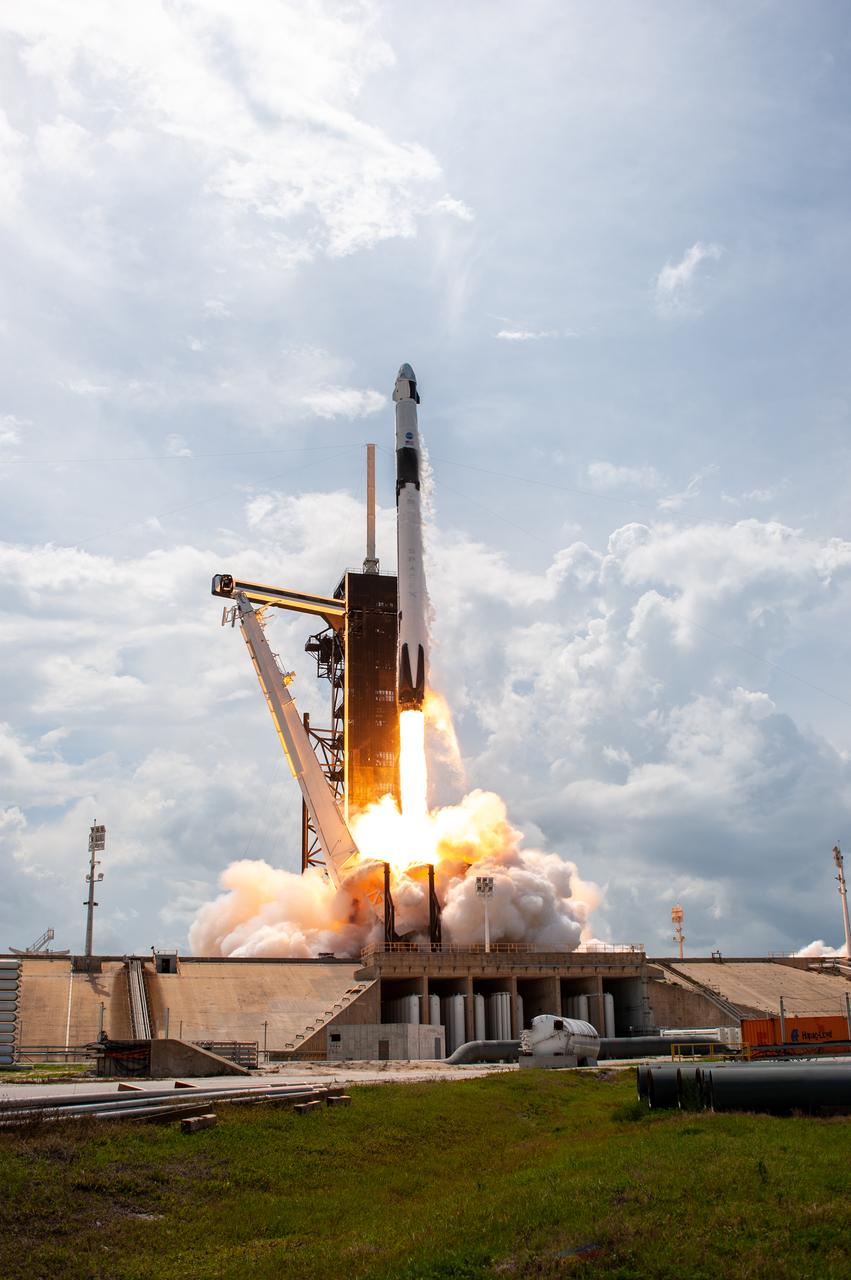
A SpaceX Falcon 9 rocket and Crew Dragon spacecraft lifts off from Launch Complex 39A at NASA’s Kennedy Space Center in Florida on May 30, 2020, carrying NASA astronauts Robert Behnken and Douglas Hurley to the International Space Station for the agency’s SpaceX Demo-2 mission. Liftoff occurred at 3:22 p.m. EDT. Behnken and Hurley are the first astronauts to launch from U.S. soil to the space station since the end of the Space Shuttle Program in 2011. Part of NASA’s Commercial Crew Program, this will be SpaceX’s final flight test, paving the way for the agency to certify the crew transportation system for regular, crewed flights to the orbiting laboratory.
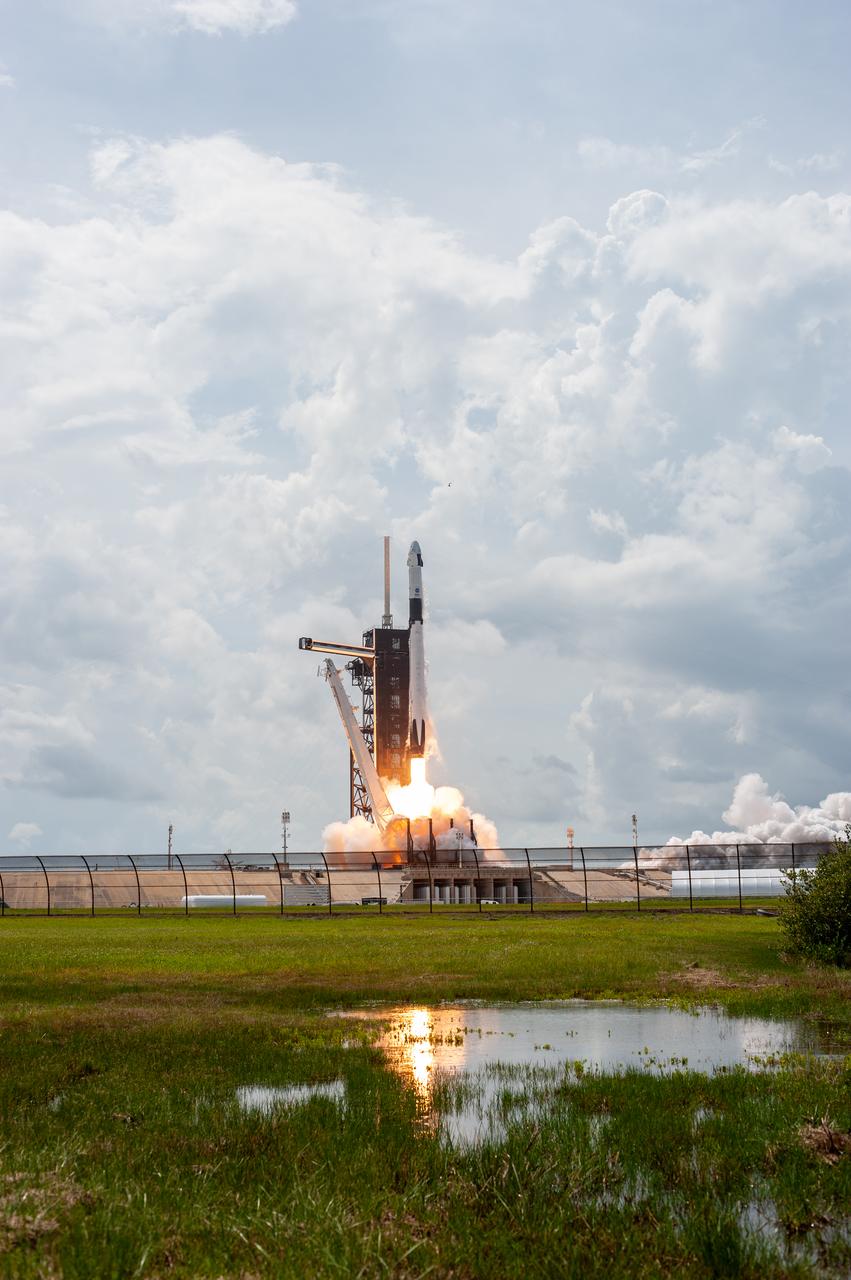
A SpaceX Falcon 9 rocket and Crew Dragon spacecraft lifts off from Launch Complex 39A at NASA’s Kennedy Space Center in Florida on May 30, 2020, carrying NASA astronauts Robert Behnken and Douglas Hurley to the International Space Station for the agency’s SpaceX Demo-2 mission. Liftoff occurred at 3:22 p.m. EDT. Behnken and Hurley are the first astronauts to launch from U.S. soil to the space station since the end of the Space Shuttle Program in 2011. Part of NASA’s Commercial Crew Program, this will be SpaceX’s final flight test, paving the way for the agency to certify the crew transportation system for regular, crewed flights to the orbiting laboratory.
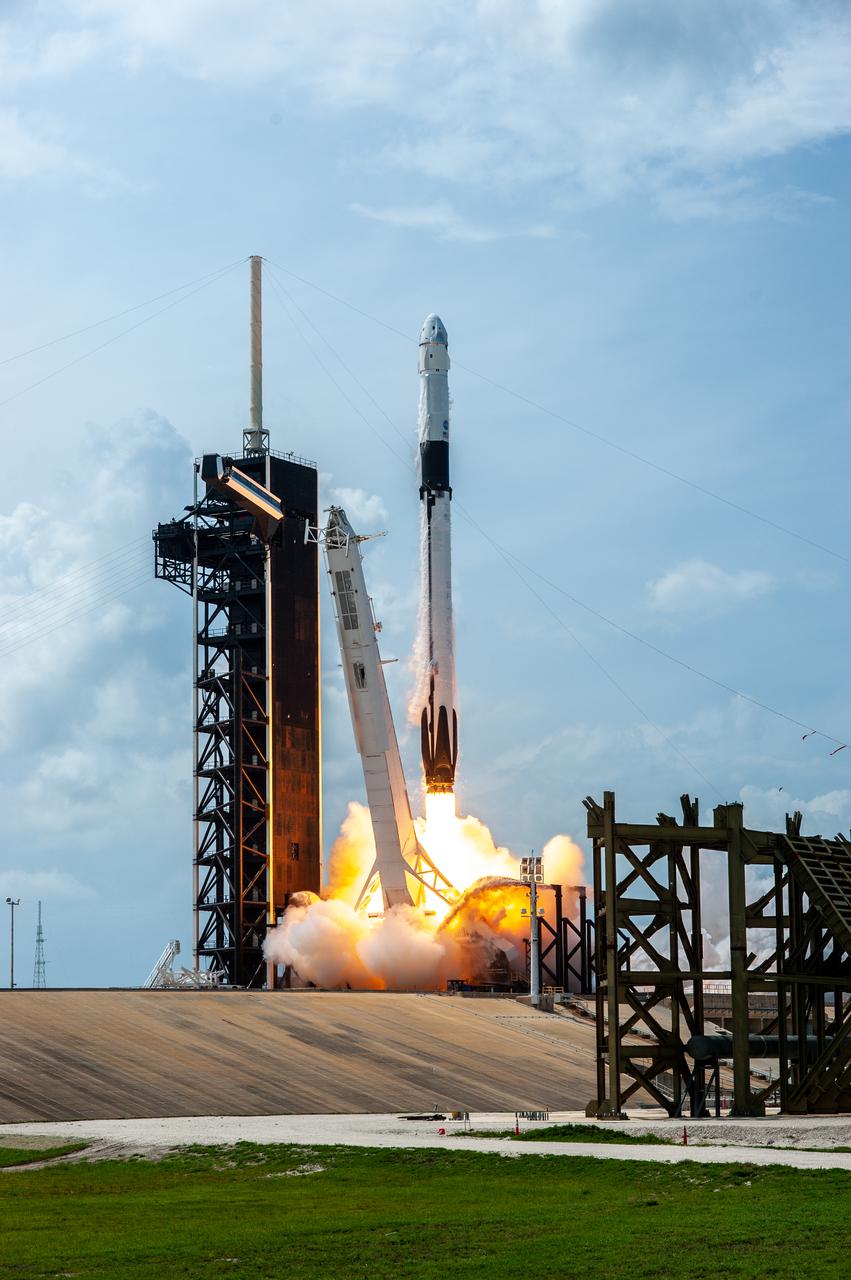
A SpaceX Falcon 9 rocket and Crew Dragon spacecraft lifts off from Launch Complex 39A at NASA’s Kennedy Space Center in Florida on May 30, 2020, carrying NASA astronauts Robert Behnken and Douglas Hurley to the International Space Station for the agency’s SpaceX Demo-2 mission. Liftoff occurred at 3:22 p.m. EDT. Behnken and Hurley are the first astronauts to launch from U.S. soil to the space station since the end of the Space Shuttle Program in 2011. Part of NASA’s Commercial Crew Program, this will be SpaceX’s final flight test, paving the way for the agency to certify the crew transportation system for regular, crewed flights to the orbiting laboratory.

A SpaceX Falcon 9 rocket and Crew Dragon spacecraft lifts off from Launch Complex 39A at NASA’s Kennedy Space Center in Florida on May 30, 2020, carrying NASA astronauts Robert Behnken and Douglas Hurley to the International Space Station for the agency’s SpaceX Demo-2 mission. Liftoff occurred at 3:22 p.m. EDT. Behnken and Hurley are the first astronauts to launch from U.S. soil to the space station since the end of the Space Shuttle Program in 2011. Part of NASA’s Commercial Crew Program, this will be SpaceX’s final flight test, paving the way for the agency to certify the crew transportation system for regular, crewed flights to the orbiting laboratory.
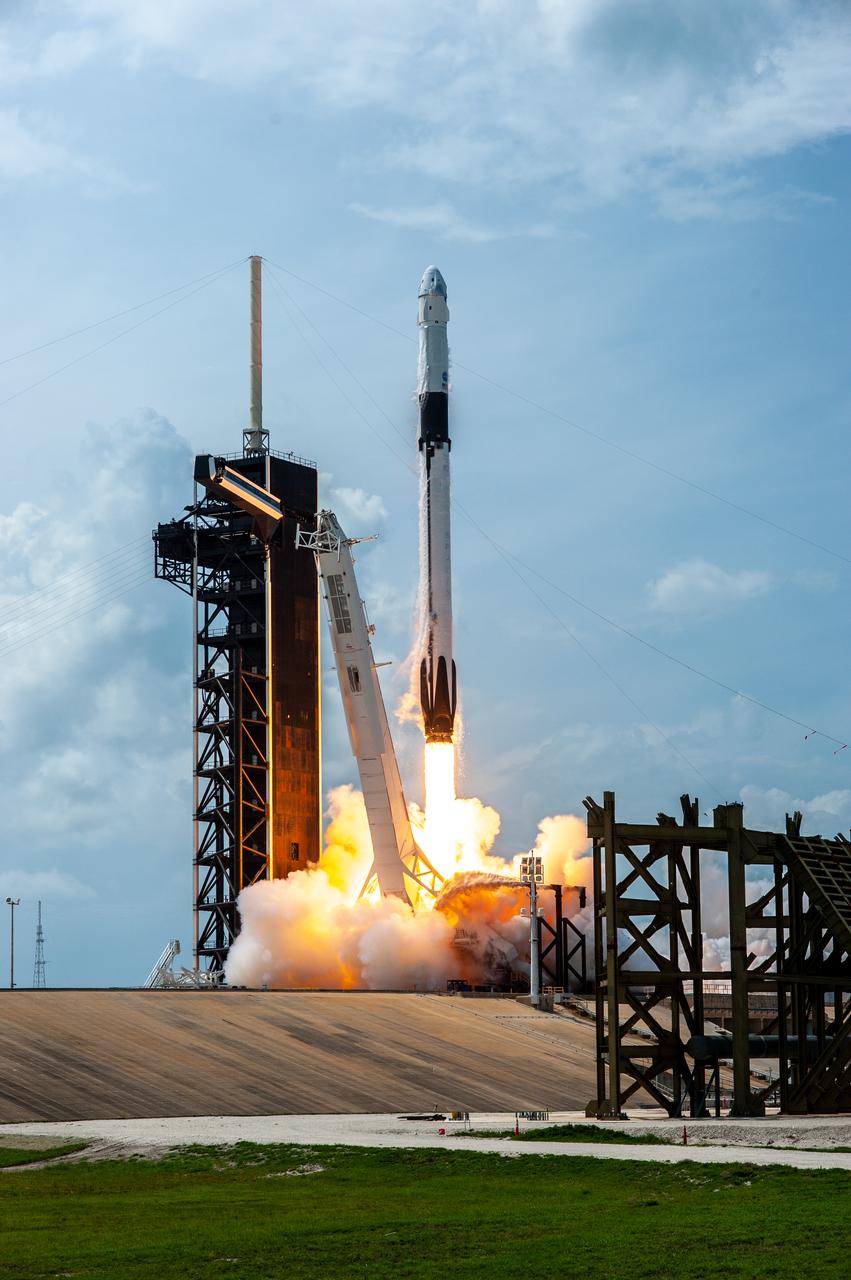
A SpaceX Falcon 9 rocket and Crew Dragon spacecraft lifts off from Launch Complex 39A at NASA’s Kennedy Space Center in Florida on May 30, 2020, carrying NASA astronauts Robert Behnken and Douglas Hurley to the International Space Station for the agency’s SpaceX Demo-2 mission. Liftoff occurred at 3:22 p.m. EDT. Behnken and Hurley are the first astronauts to launch from U.S. soil to the space station since the end of the Space Shuttle Program in 2011. Part of NASA’s Commercial Crew Program, this will be SpaceX’s final flight test, paving the way for the agency to certify the crew transportation system for regular, crewed flights to the orbiting laboratory.
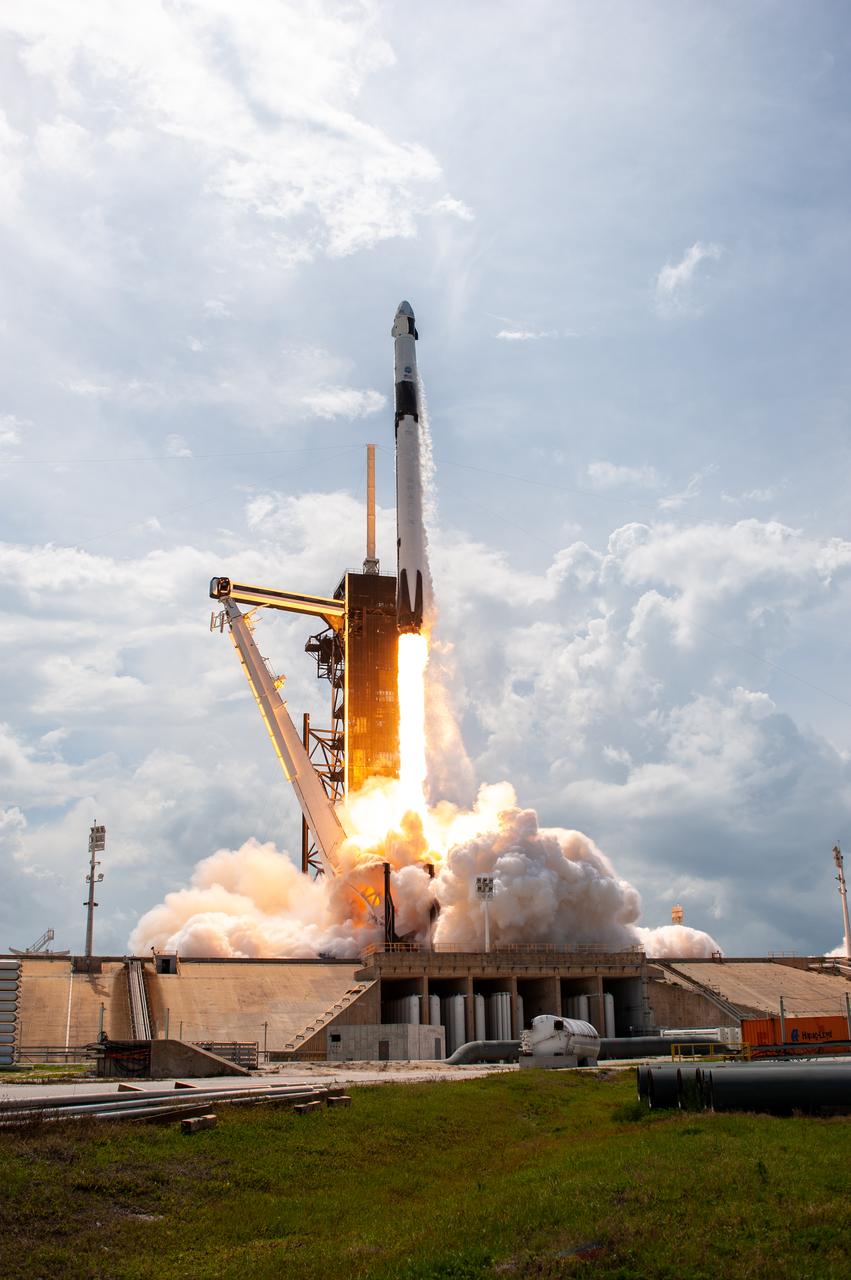
A SpaceX Falcon 9 rocket and Crew Dragon spacecraft lifts off from Launch Complex 39A at NASA’s Kennedy Space Center in Florida on May 30, 2020, carrying NASA astronauts Robert Behnken and Douglas Hurley to the International Space Station for the agency’s SpaceX Demo-2 mission. Liftoff occurred at 3:22 p.m. EDT. Behnken and Hurley are the first astronauts to launch from U.S. soil to the space station since the end of the Space Shuttle Program in 2011. Part of NASA’s Commercial Crew Program, this will be SpaceX’s final flight test, paving the way for the agency to certify the crew transportation system for regular, crewed flights to the orbiting laboratory.
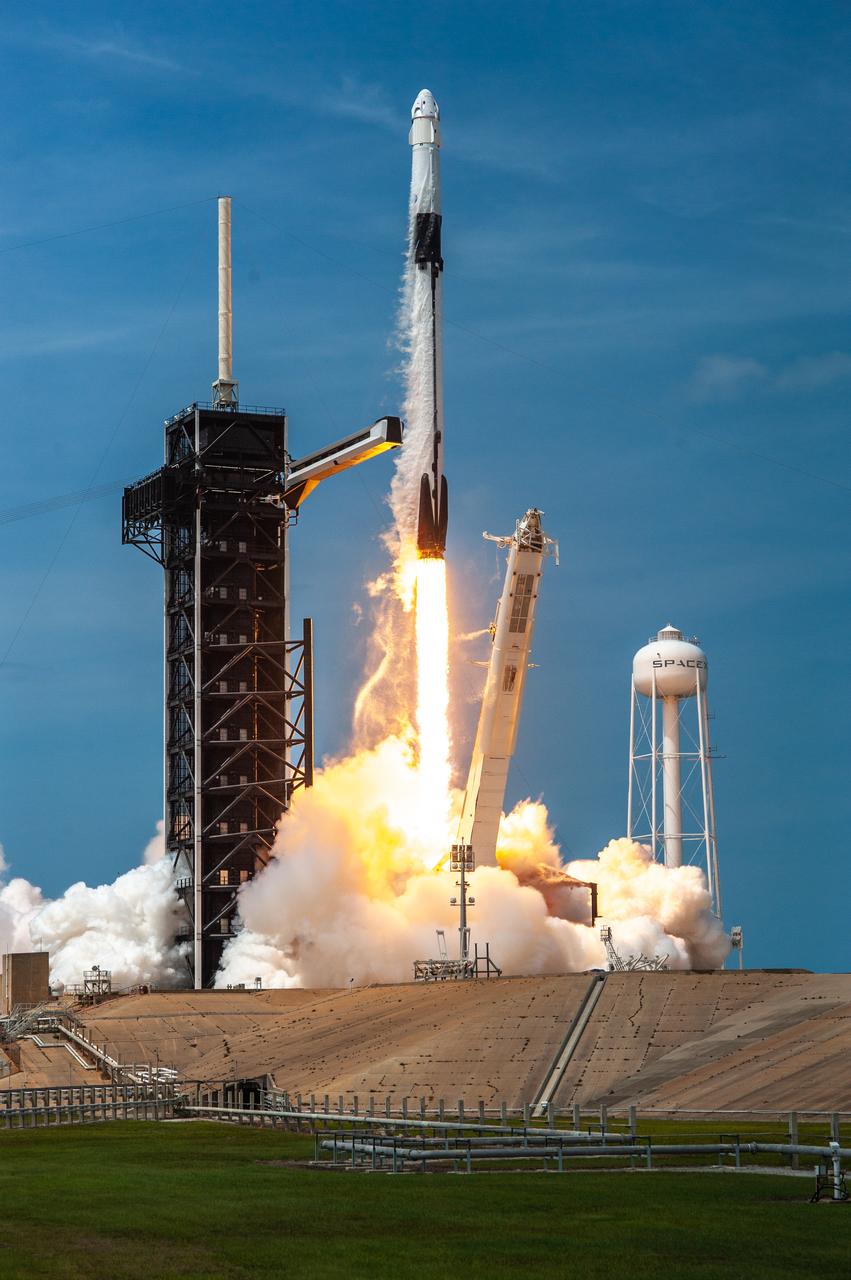
A SpaceX Falcon 9 rocket and Crew Dragon spacecraft lifts off from Launch Complex 39A at NASA’s Kennedy Space Center in Florida on May 30, 2020, carrying NASA astronauts Robert Behnken and Douglas Hurley to the International Space Station for the agency’s SpaceX Demo-2 mission. Liftoff occurred at 3:22 p.m. EDT. Behnken and Hurley are the first astronauts to launch from U.S. soil to the space station since the end of the Space Shuttle Program in 2011. Part of NASA’s Commercial Crew Program, this will be SpaceX’s final flight test, paving the way for the agency to certify the crew transportation system for regular, crewed flights to the orbiting laboratory.
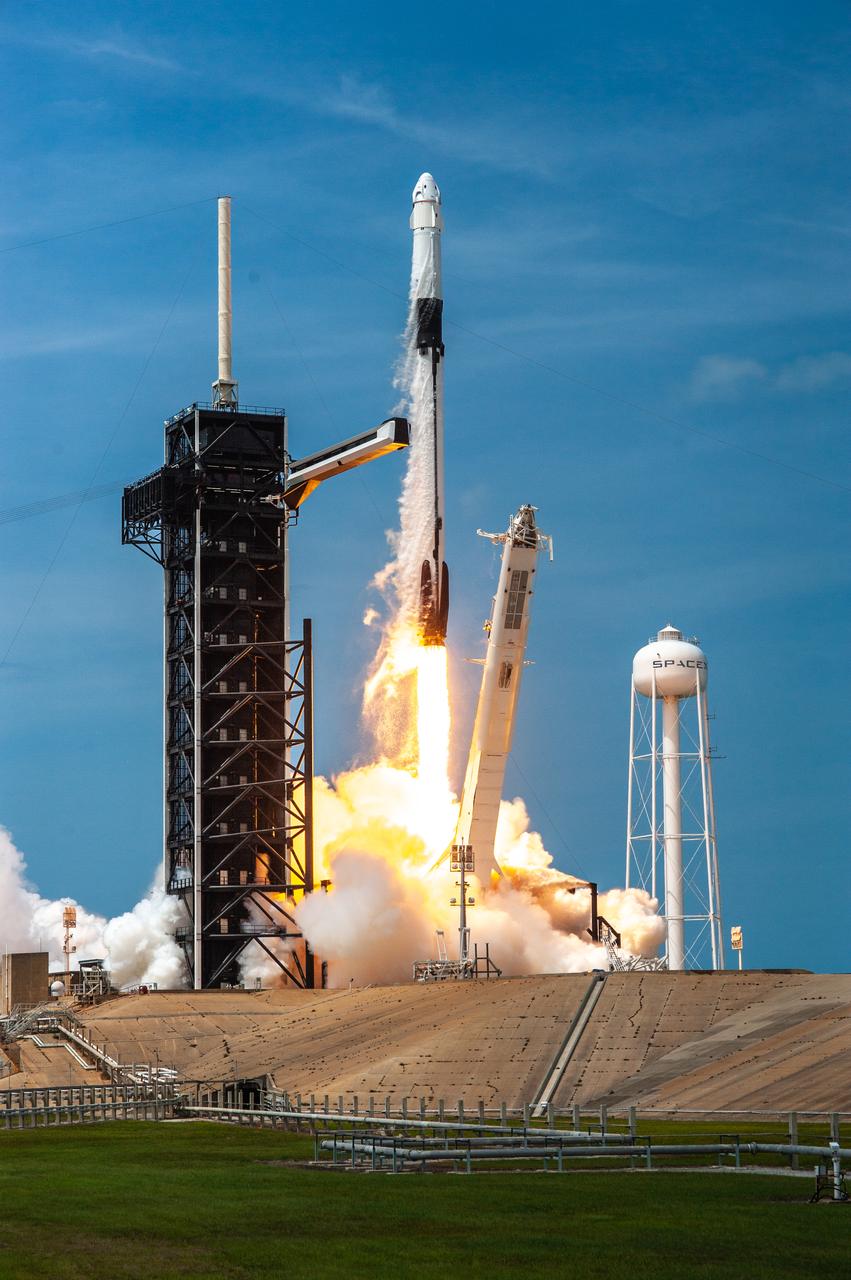
A SpaceX Falcon 9 rocket and Crew Dragon spacecraft lifts off from Launch Complex 39A at NASA’s Kennedy Space Center in Florida on May 30, 2020, carrying NASA astronauts Robert Behnken and Douglas Hurley to the International Space Station for the agency’s SpaceX Demo-2 mission. Liftoff occurred at 3:22 p.m. EDT. Behnken and Hurley are the first astronauts to launch from U.S. soil to the space station since the end of the Space Shuttle Program in 2011. Part of NASA’s Commercial Crew Program, this will be SpaceX’s final flight test, paving the way for the agency to certify the crew transportation system for regular, crewed flights to the orbiting laboratory.

A SpaceX Falcon 9 rocket and Crew Dragon spacecraft lifts off from Launch Complex 39A at NASA’s Kennedy Space Center in Florida on May 30, 2020, carrying NASA astronauts Robert Behnken and Douglas Hurley to the International Space Station for the agency’s SpaceX Demo-2 mission. Liftoff occurred at 3:22 p.m. EDT. Behnken and Hurley are the first astronauts to launch from U.S. soil to the space station since the end of the Space Shuttle Program in 2011. Part of NASA’s Commercial Crew Program, this will be SpaceX’s final flight test, paving the way for the agency to certify the crew transportation system for regular, crewed flights to the orbiting laboratory.
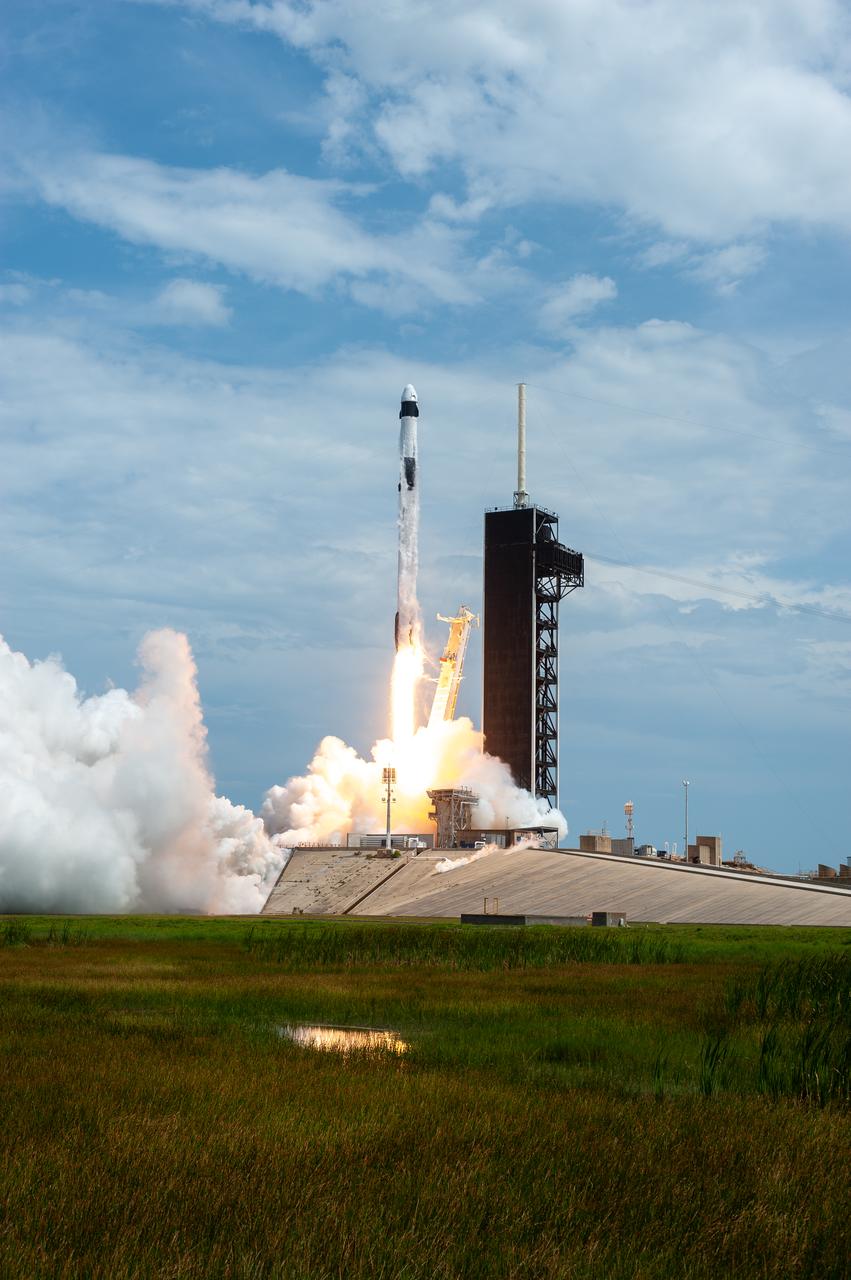
A SpaceX Falcon 9 rocket and Crew Dragon spacecraft lifts off from Launch Complex 39A at NASA’s Kennedy Space Center in Florida on May 30, 2020, carrying NASA astronauts Robert Behnken and Douglas Hurley to the International Space Station for the agency’s SpaceX Demo-2 mission. Liftoff occurred at 3:22 p.m. EDT. Behnken and Hurley are the first astronauts to launch from U.S. soil to the space station since the end of the Space Shuttle Program in 2011. Part of NASA’s Commercial Crew Program, this will be SpaceX’s final flight test, paving the way for the agency to certify the crew transportation system for regular, crewed flights to the orbiting laboratory.
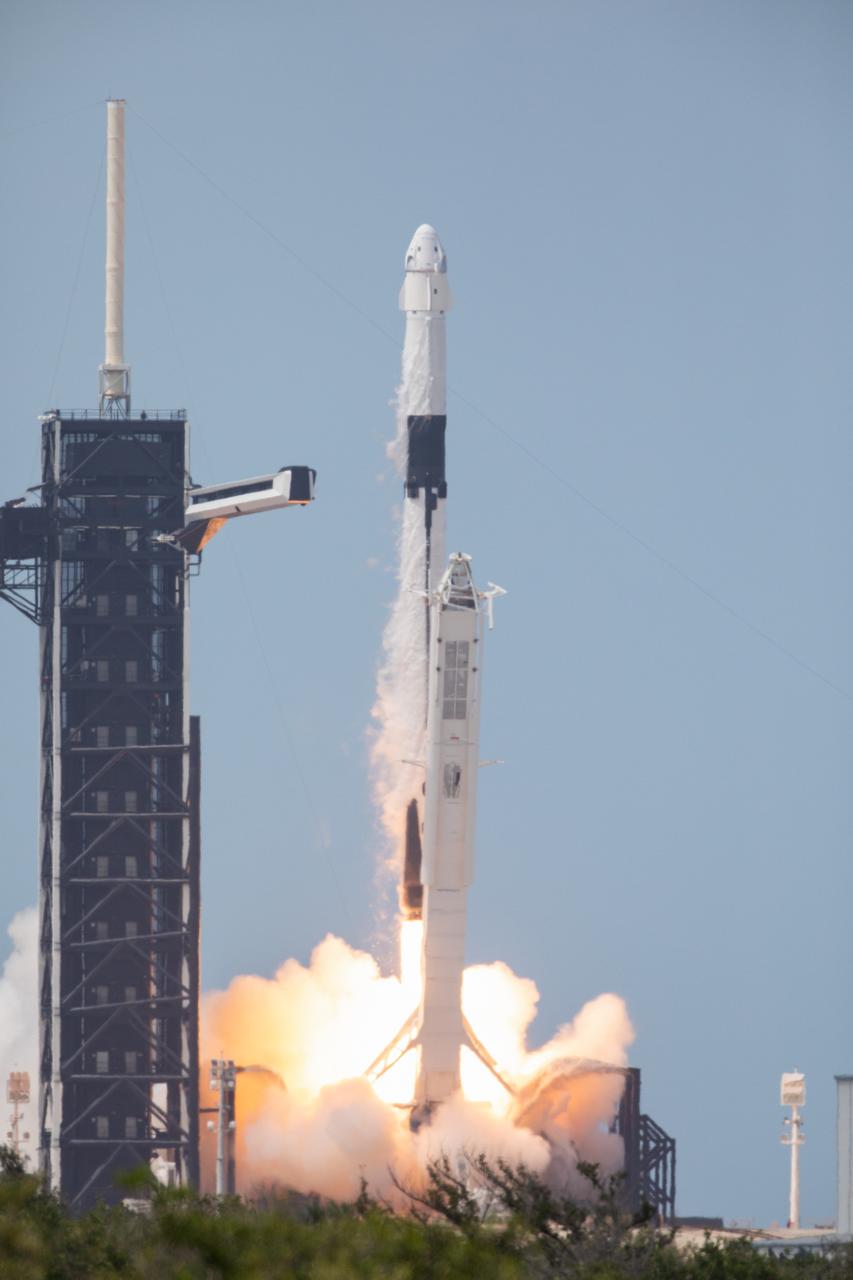
A SpaceX Falcon 9 rocket and Crew Dragon spacecraft lifts off from Launch Complex 39A at NASA’s Kennedy Space Center in Florida on May 30, 2020, carrying NASA astronauts Robert Behnken and Douglas Hurley to the International Space Station for the agency’s SpaceX Demo-2 mission. Liftoff occurred at 3:22 p.m. EDT. Behnken and Hurley are the first astronauts to launch from U.S. soil to the space station since the end of the Space Shuttle Program in 2011. Part of NASA’s Commercial Crew Program, this will be SpaceX’s final flight test, paving the way for the agency to certify the crew transportation system for regular, crewed flights to the orbiting laboratory.
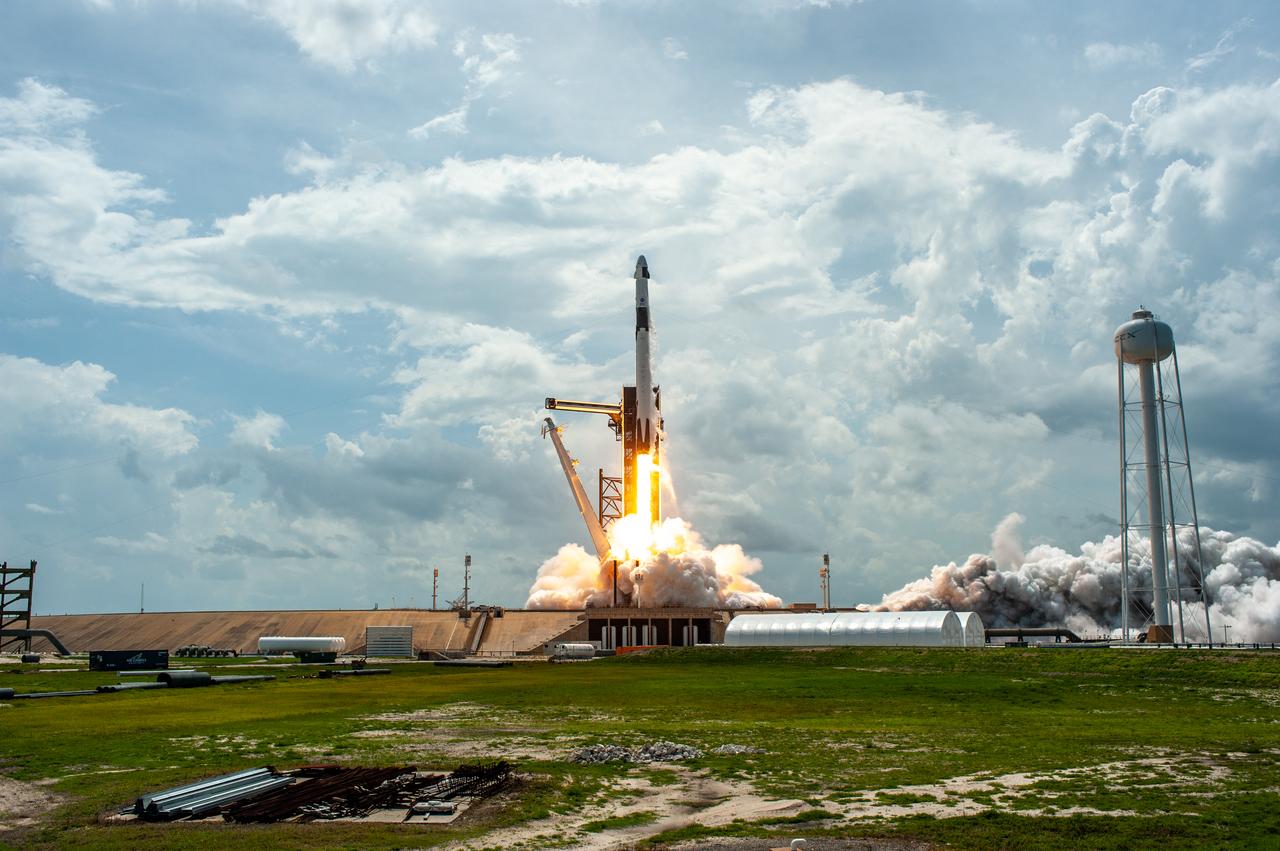
A SpaceX Falcon 9 rocket and Crew Dragon spacecraft lifts off from Launch Complex 39A at NASA’s Kennedy Space Center in Florida on May 30, 2020, carrying NASA astronauts Robert Behnken and Douglas Hurley to the International Space Station for the agency’s SpaceX Demo-2 mission. Liftoff occurred at 3:22 p.m. EDT. Behnken and Hurley are the first astronauts to launch from U.S. soil to the space station since the end of the Space Shuttle Program in 2011. Part of NASA’s Commercial Crew Program, this will be SpaceX’s final flight test, paving the way for the agency to certify the crew transportation system for regular, crewed flights to the orbiting laboratory.
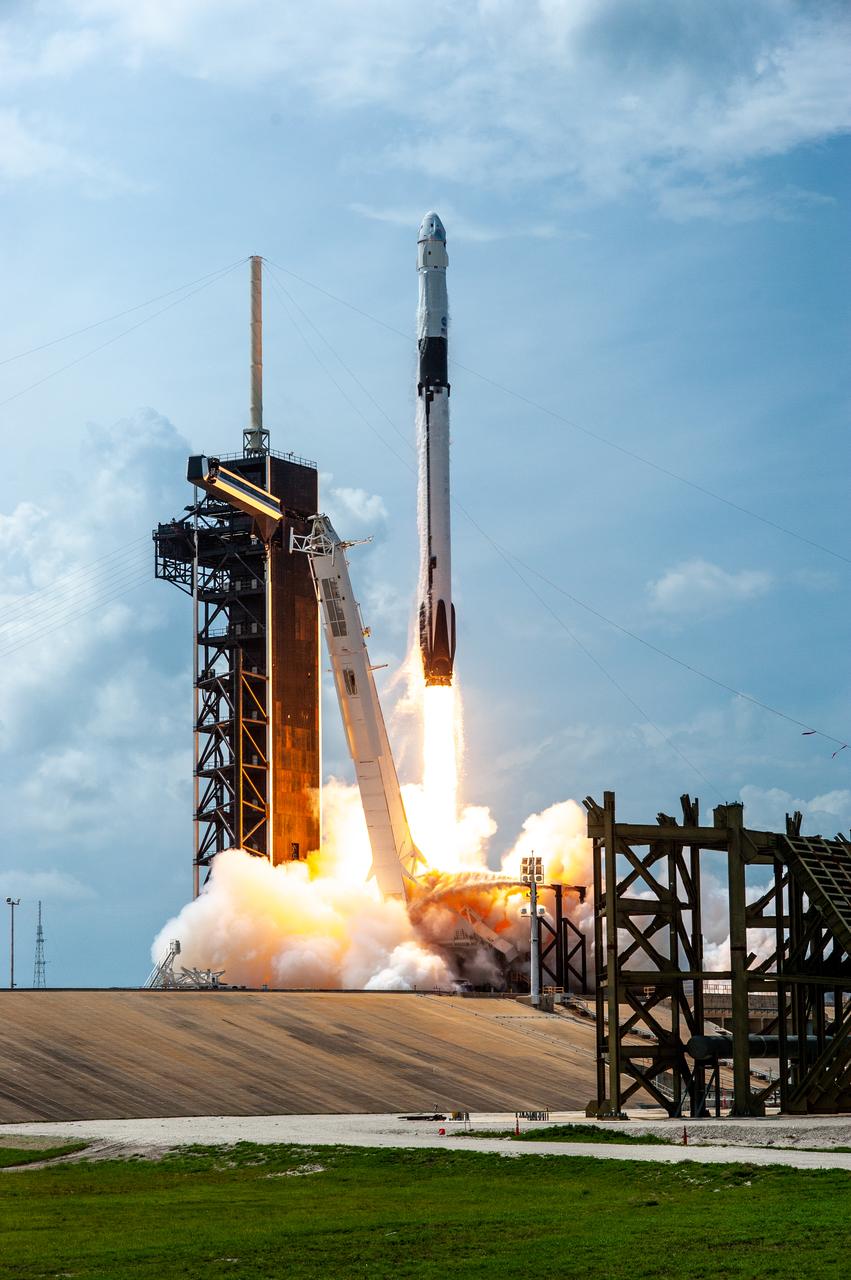
A SpaceX Falcon 9 rocket and Crew Dragon spacecraft lifts off from Launch Complex 39A at NASA’s Kennedy Space Center in Florida on May 30, 2020, carrying NASA astronauts Robert Behnken and Douglas Hurley to the International Space Station for the agency’s SpaceX Demo-2 mission. Liftoff occurred at 3:22 p.m. EDT. Behnken and Hurley are the first astronauts to launch from U.S. soil to the space station since the end of the Space Shuttle Program in 2011. Part of NASA’s Commercial Crew Program, this will be SpaceX’s final flight test, paving the way for the agency to certify the crew transportation system for regular, crewed flights to the orbiting laboratory.
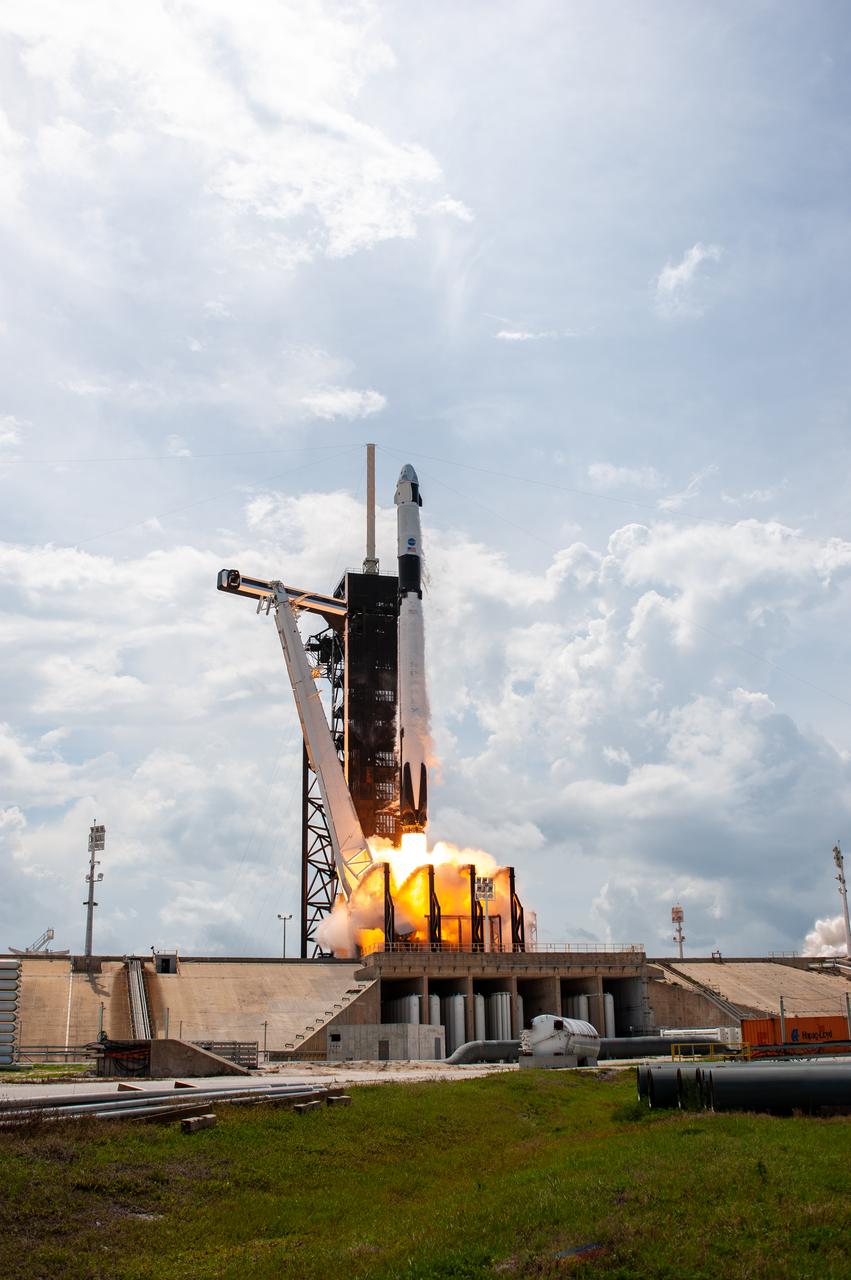
A SpaceX Falcon 9 rocket and Crew Dragon spacecraft lifts off from Launch Complex 39A at NASA’s Kennedy Space Center in Florida on May 30, 2020, carrying NASA astronauts Robert Behnken and Douglas Hurley to the International Space Station for the agency’s SpaceX Demo-2 mission. Liftoff occurred at 3:22 p.m. EDT. Behnken and Hurley are the first astronauts to launch from U.S. soil to the space station since the end of the Space Shuttle Program in 2011. Part of NASA’s Commercial Crew Program, this will be SpaceX’s final flight test, paving the way for the agency to certify the crew transportation system for regular, crewed flights to the orbiting laboratory.
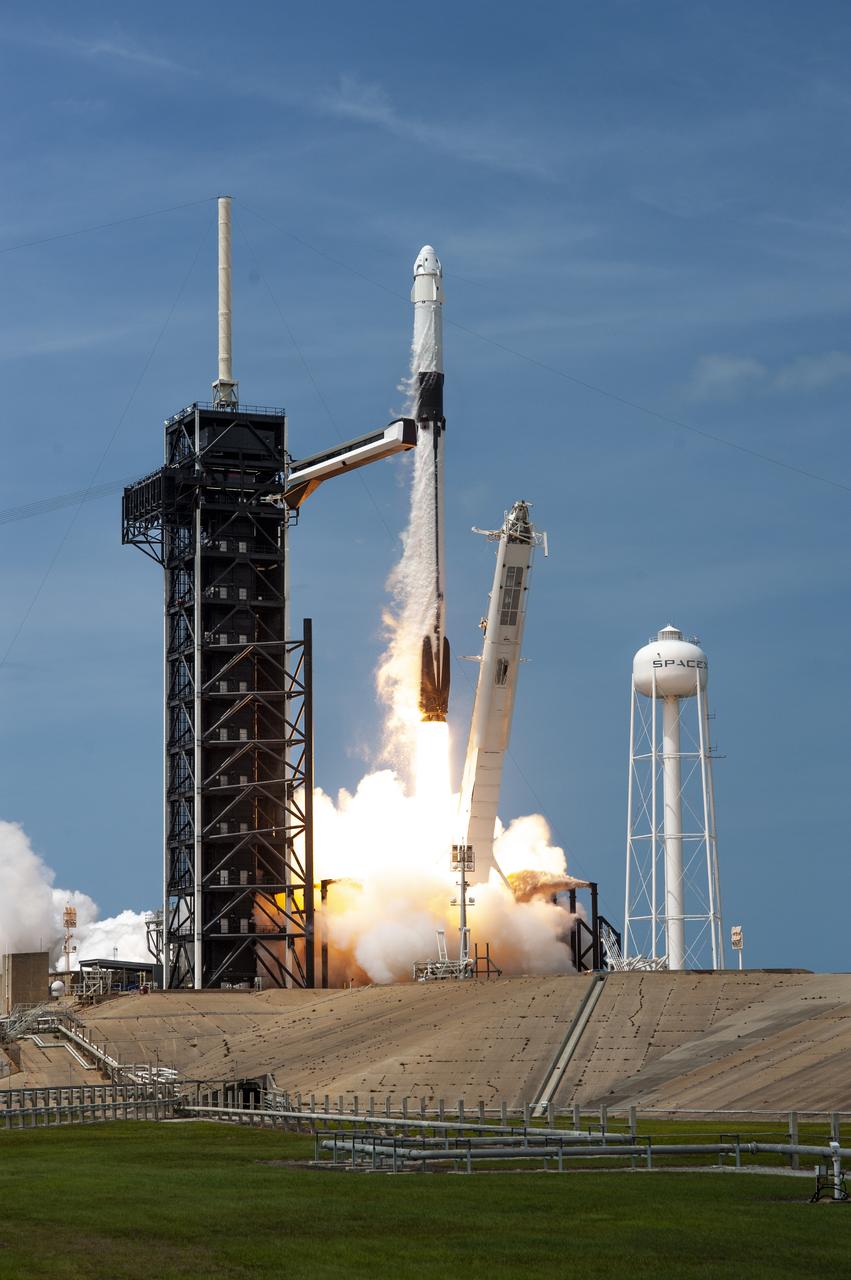
A SpaceX Falcon 9 rocket and Crew Dragon spacecraft lifts off from Launch Complex 39A at NASA’s Kennedy Space Center in Florida on May 30, 2020, carrying NASA astronauts Robert Behnken and Douglas Hurley to the International Space Station for the agency’s SpaceX Demo-2 mission. Liftoff occurred at 3:22 p.m. EDT. Behnken and Hurley are the first astronauts to launch from U.S. soil to the space station since the end of the Space Shuttle Program in 2011. Part of NASA’s Commercial Crew Program, this will be SpaceX’s final flight test, paving the way for the agency to certify the crew transportation system for regular, crewed flights to the orbiting laboratory.
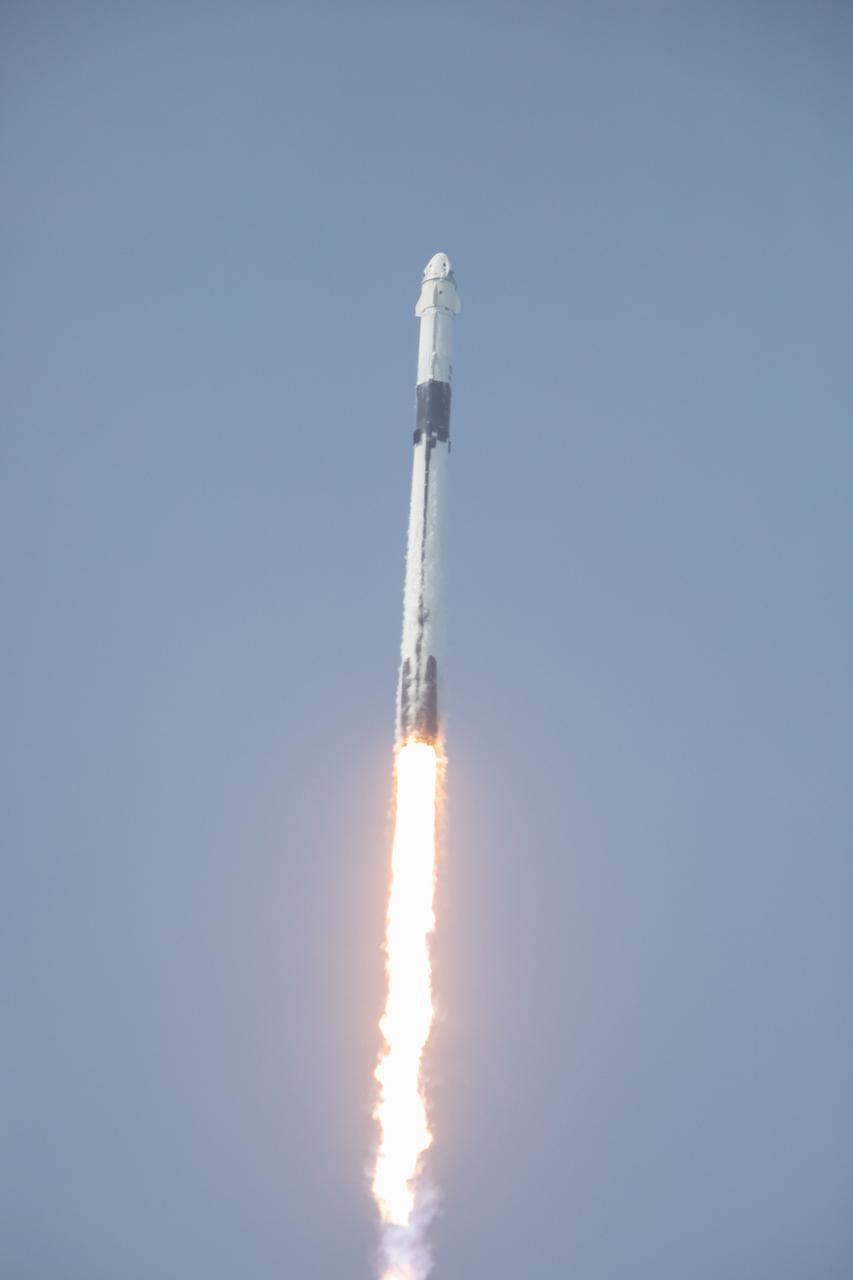
A SpaceX Falcon 9 rocket and Crew Dragon spacecraft lifts off from Launch Complex 39A at NASA’s Kennedy Space Center in Florida on May 30, 2020, carrying NASA astronauts Robert Behnken and Douglas Hurley to the International Space Station for the agency’s SpaceX Demo-2 mission. Liftoff occurred at 3:22 p.m. EDT. Behnken and Hurley are the first astronauts to launch from U.S. soil to the space station since the end of the Space Shuttle Program in 2011. Part of NASA’s Commercial Crew Program, this will be SpaceX’s final flight test, paving the way for the agency to certify the crew transportation system for regular, crewed flights to the orbiting laboratory.
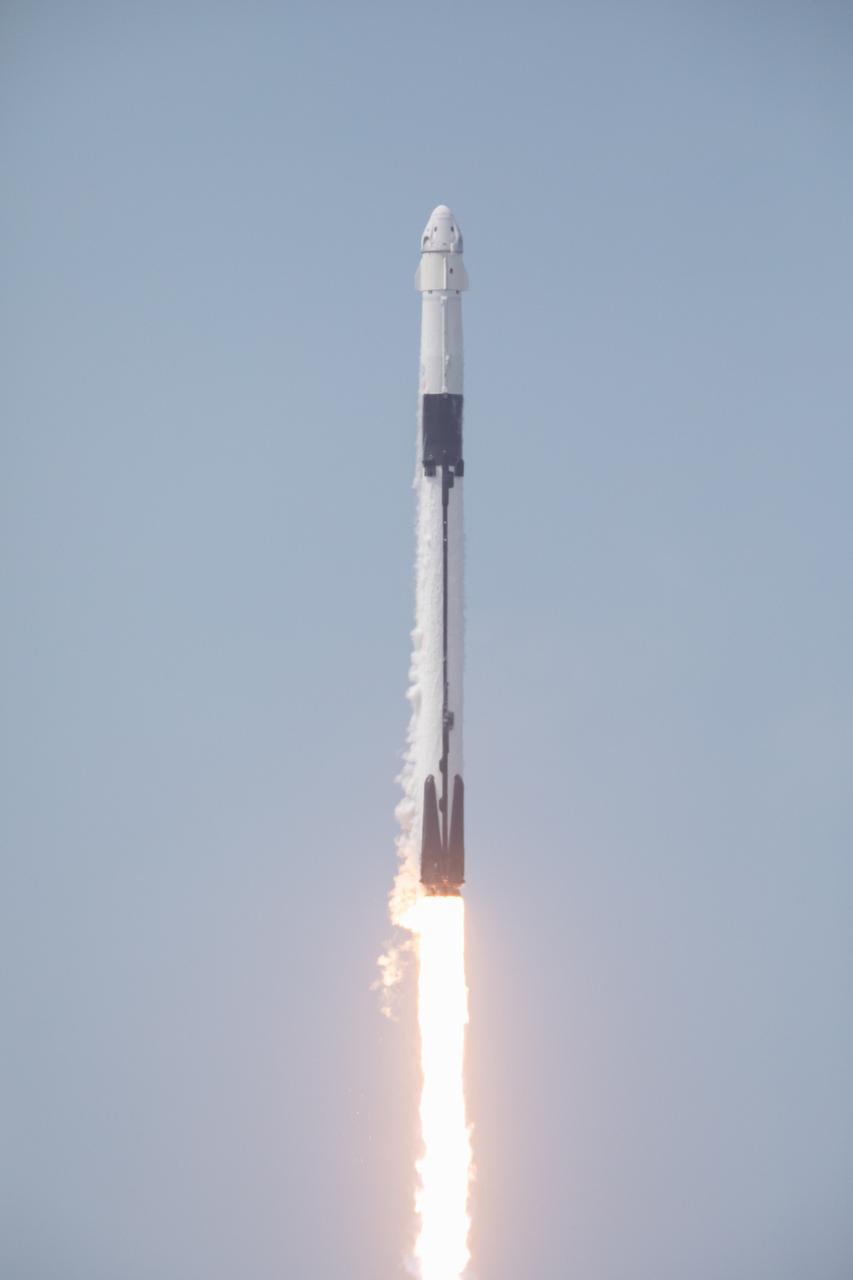
A SpaceX Falcon 9 rocket and Crew Dragon spacecraft lifts off from Launch Complex 39A at NASA’s Kennedy Space Center in Florida on May 30, 2020, carrying NASA astronauts Robert Behnken and Douglas Hurley to the International Space Station for the agency’s SpaceX Demo-2 mission. Liftoff occurred at 3:22 p.m. EDT. Behnken and Hurley are the first astronauts to launch from U.S. soil to the space station since the end of the Space Shuttle Program in 2011. Part of NASA’s Commercial Crew Program, this will be SpaceX’s final flight test, paving the way for the agency to certify the crew transportation system for regular, crewed flights to the orbiting laboratory.

A SpaceX Falcon 9 rocket and Crew Dragon spacecraft lifts off from Launch Complex 39A at NASA’s Kennedy Space Center in Florida on May 30, 2020, carrying NASA astronauts Robert Behnken and Douglas Hurley to the International Space Station for the agency’s SpaceX Demo-2 mission. Liftoff occurred at 3:22 p.m. EDT. Behnken and Hurley are the first astronauts to launch from U.S. soil to the space station since the end of the Space Shuttle Program in 2011. Part of NASA’s Commercial Crew Program, this will be SpaceX’s final flight test, paving the way for the agency to certify the crew transportation system for regular, crewed flights to the orbiting laboratory.
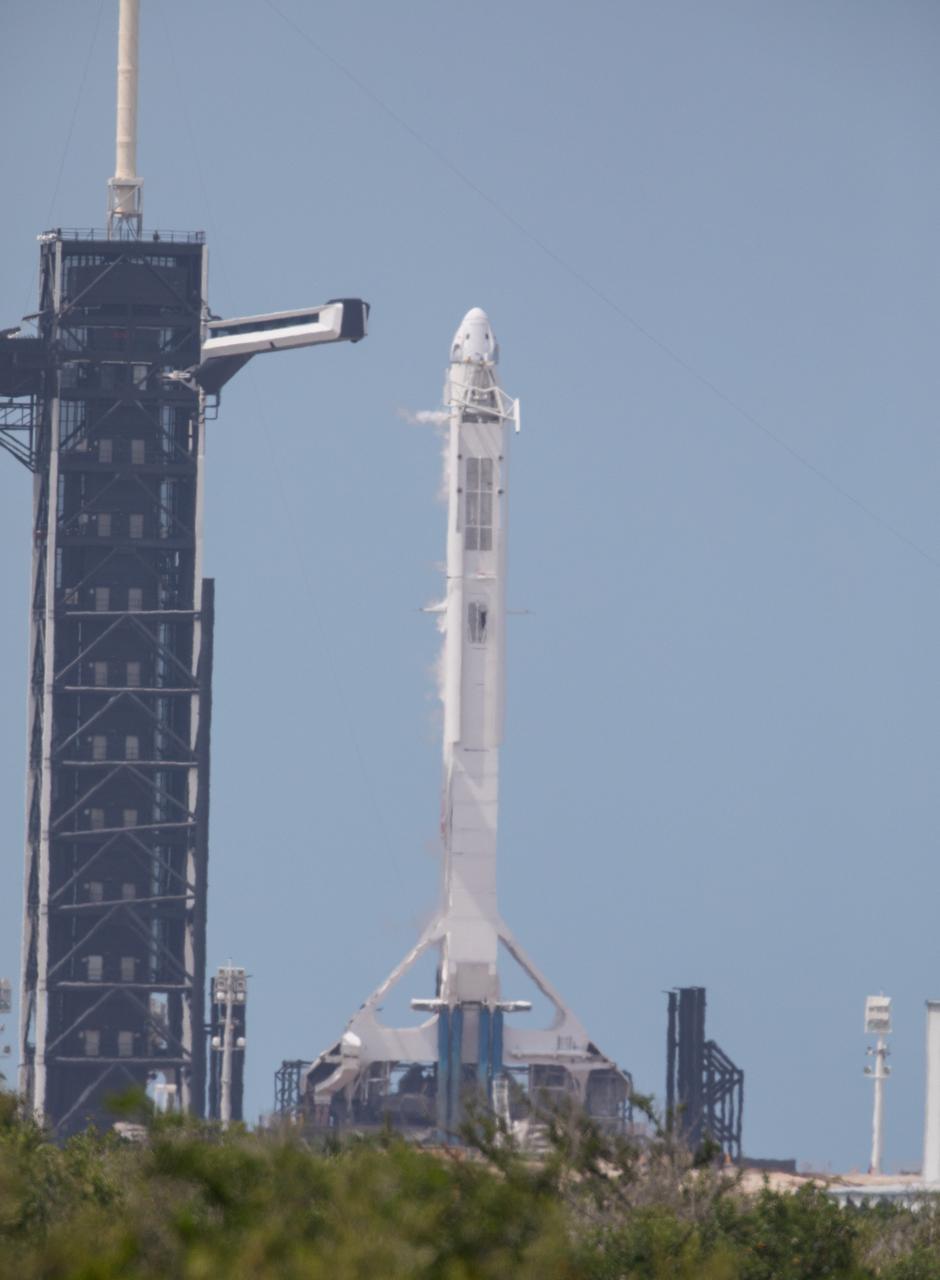
A SpaceX Falcon 9 rocket and Crew Dragon spacecraft stand poised for launch at historic Launch Complex 39A at NASA’s Kennedy Space Center in Florida on May 30, 2020, ahead of the agency’s SpaceX Demo-2 mission to the International Space Station. Liftoff occurred at 3:22 p.m. EDT. NASA astronauts Robert Behnken and Douglas Hurley are the first astronauts to launch from U.S. soil to the space station since the end of the Space Shuttle Program in 2011. Part of NASA’s Commercial Crew Program, this will be SpaceX’s final flight test, paving the way for the agency to certify the crew transportation system for regular, crewed flights to the orbiting laboratory.
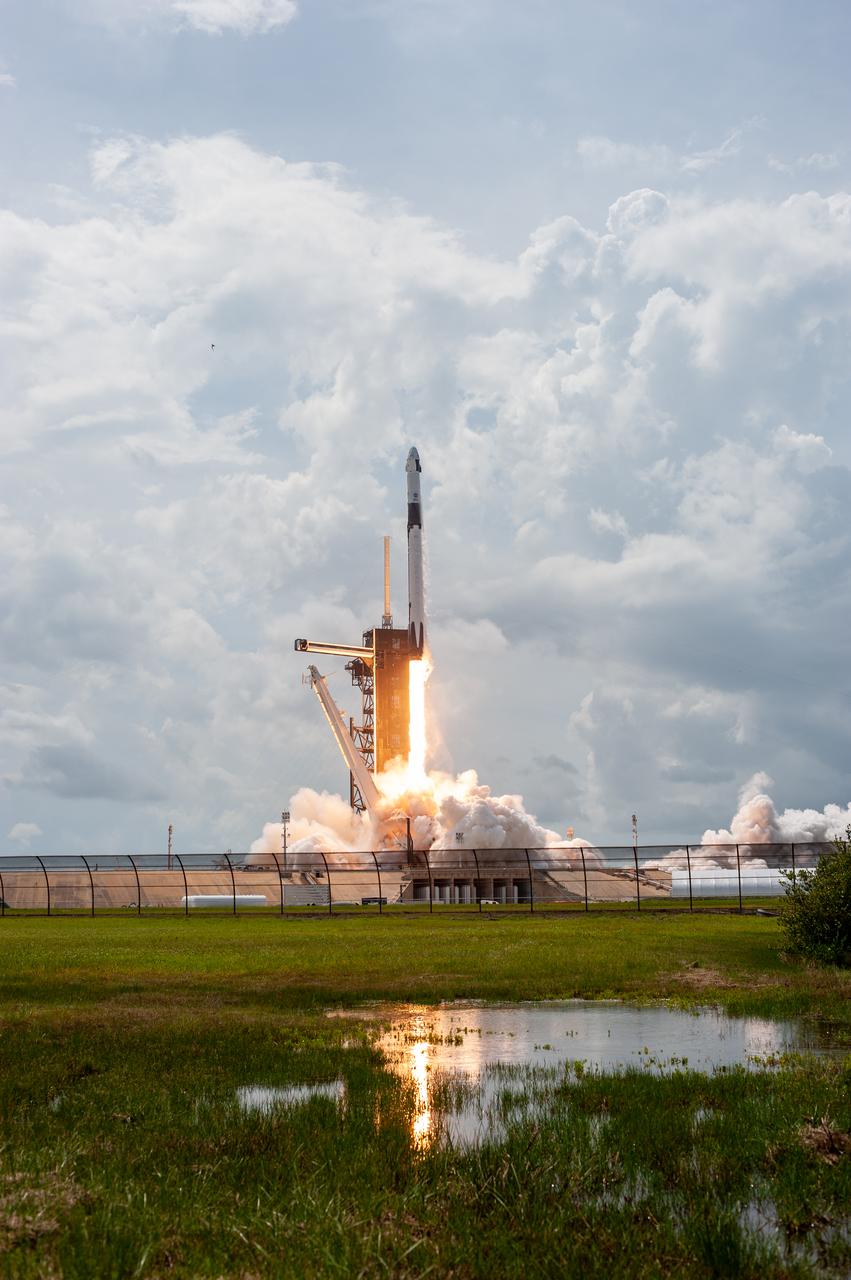
A SpaceX Falcon 9 rocket and Crew Dragon spacecraft lifts off from Launch Complex 39A at NASA’s Kennedy Space Center in Florida on May 30, 2020, carrying NASA astronauts Robert Behnken and Douglas Hurley to the International Space Station for the agency’s SpaceX Demo-2 mission. Liftoff occurred at 3:22 p.m. EDT. Behnken and Hurley are the first astronauts to launch from U.S. soil to the space station since the end of the Space Shuttle Program in 2011. Part of NASA’s Commercial Crew Program, this will be SpaceX’s final flight test, paving the way for the agency to certify the crew transportation system for regular, crewed flights to the orbiting laboratory.
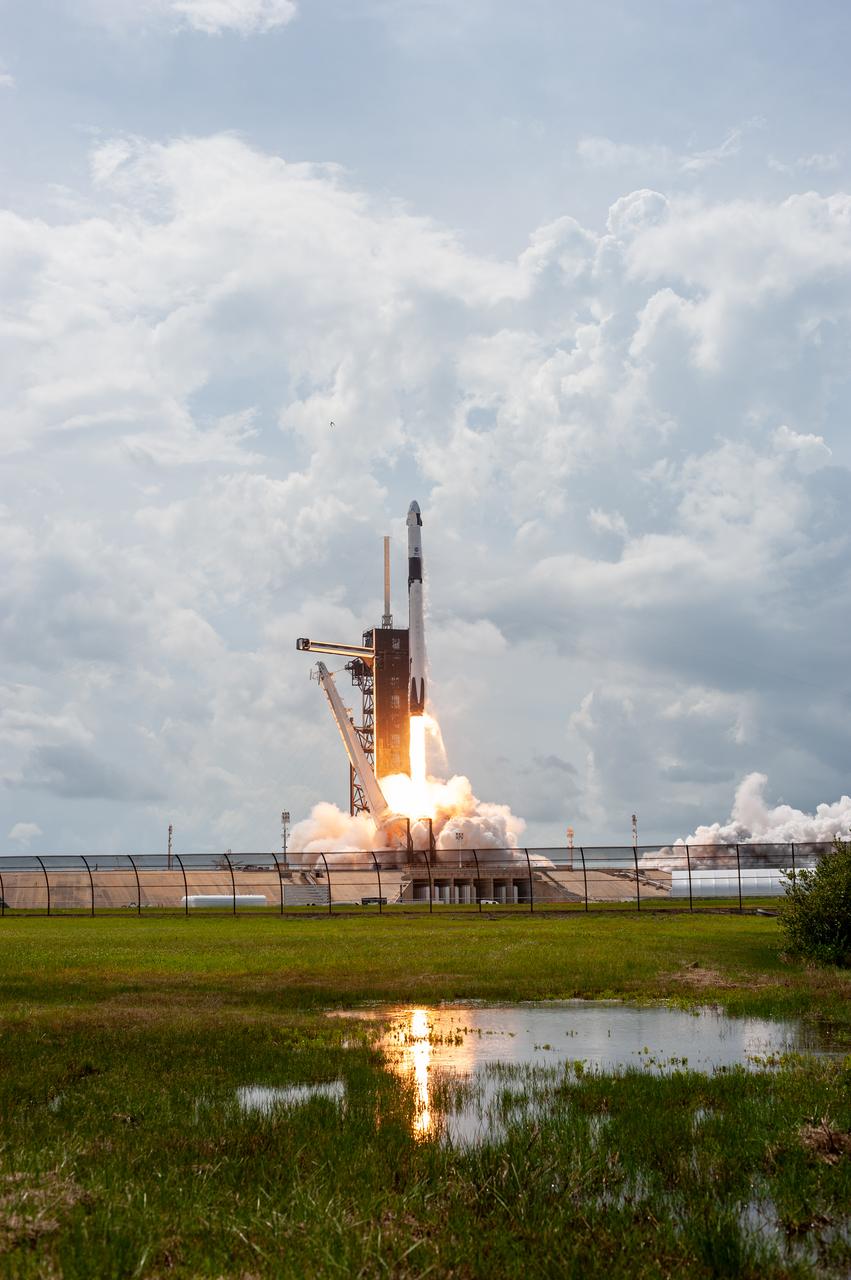
A SpaceX Falcon 9 rocket and Crew Dragon spacecraft lifts off from Launch Complex 39A at NASA’s Kennedy Space Center in Florida on May 30, 2020, carrying NASA astronauts Robert Behnken and Douglas Hurley to the International Space Station for the agency’s SpaceX Demo-2 mission. Liftoff occurred at 3:22 p.m. EDT. Behnken and Hurley are the first astronauts to launch from U.S. soil to the space station since the end of the Space Shuttle Program in 2011. Part of NASA’s Commercial Crew Program, this will be SpaceX’s final flight test, paving the way for the agency to certify the crew transportation system for regular, crewed flights to the orbiting laboratory.
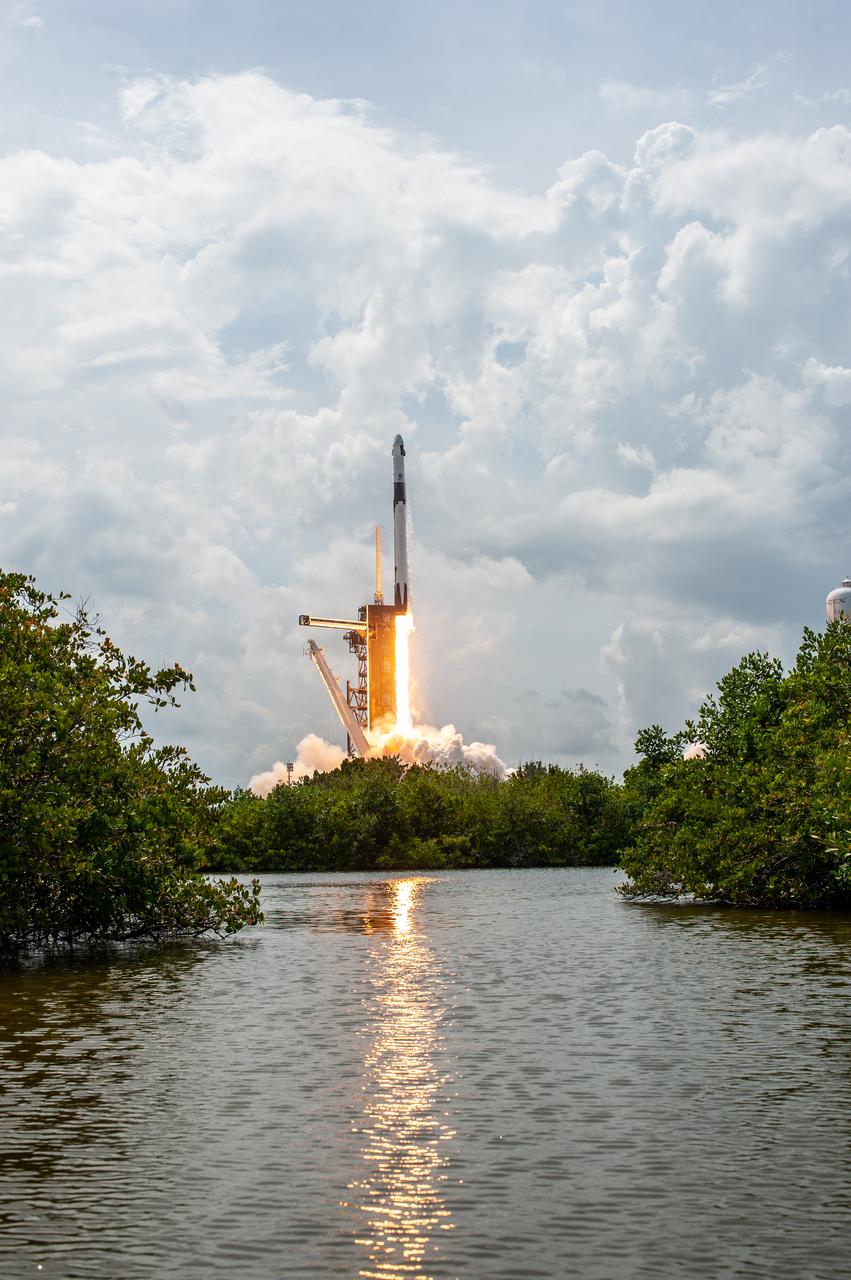
A SpaceX Falcon 9 rocket and Crew Dragon spacecraft lifts off from Launch Complex 39A at NASA’s Kennedy Space Center in Florida on May 30, 2020, carrying NASA astronauts Robert Behnken and Douglas Hurley to the International Space Station for the agency’s SpaceX Demo-2 mission. Liftoff occurred at 3:22 p.m. EDT. Behnken and Hurley are the first astronauts to launch from U.S. soil to the space station since the end of the Space Shuttle Program in 2011. Part of NASA’s Commercial Crew Program, this will be SpaceX’s final flight test, paving the way for the agency to certify the crew transportation system for regular, crewed flights to the orbiting laboratory.
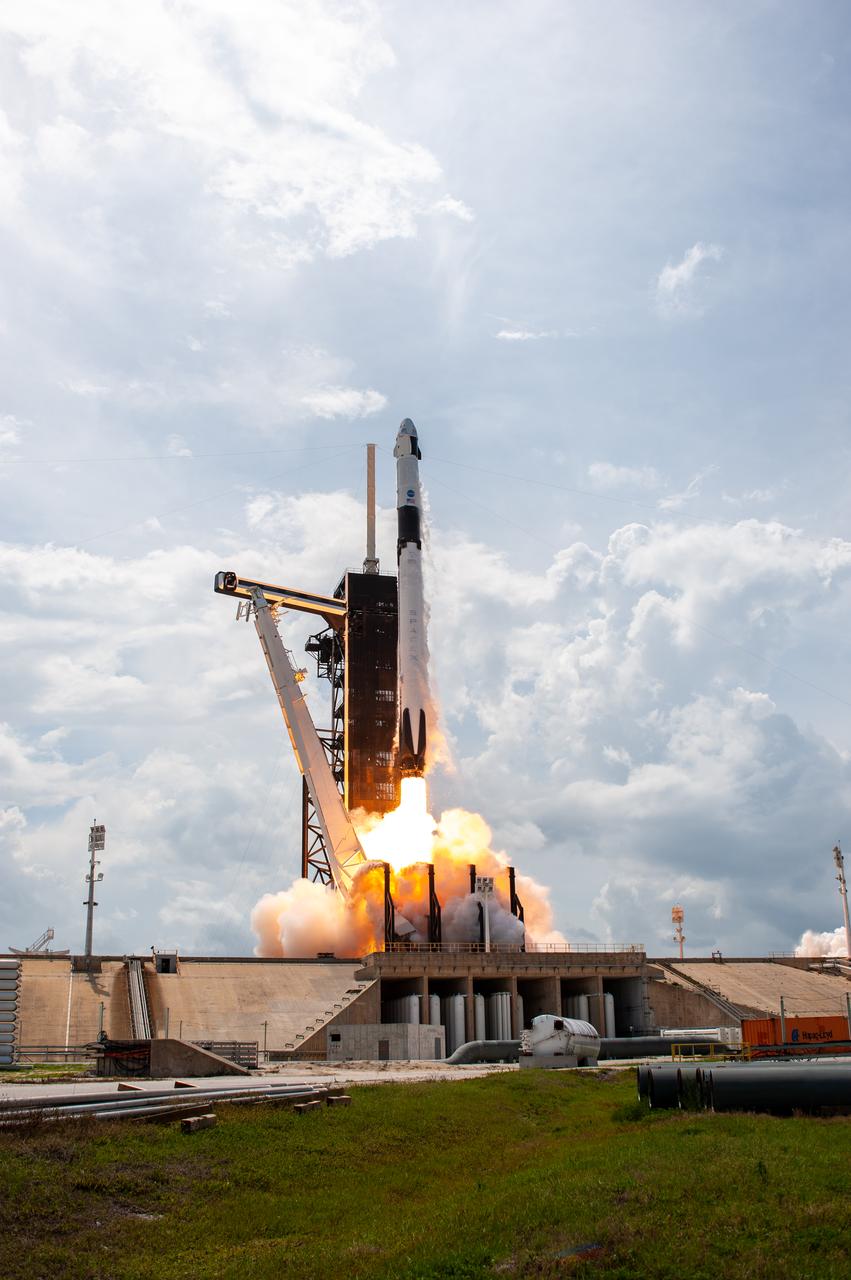
A SpaceX Falcon 9 rocket and Crew Dragon spacecraft lifts off from Launch Complex 39A at NASA’s Kennedy Space Center in Florida on May 30, 2020, carrying NASA astronauts Robert Behnken and Douglas Hurley to the International Space Station for the agency’s SpaceX Demo-2 mission. Liftoff occurred at 3:22 p.m. EDT. Behnken and Hurley are the first astronauts to launch from U.S. soil to the space station since the end of the Space Shuttle Program in 2011. Part of NASA’s Commercial Crew Program, this will be SpaceX’s final flight test, paving the way for the agency to certify the crew transportation system for regular, crewed flights to the orbiting laboratory.
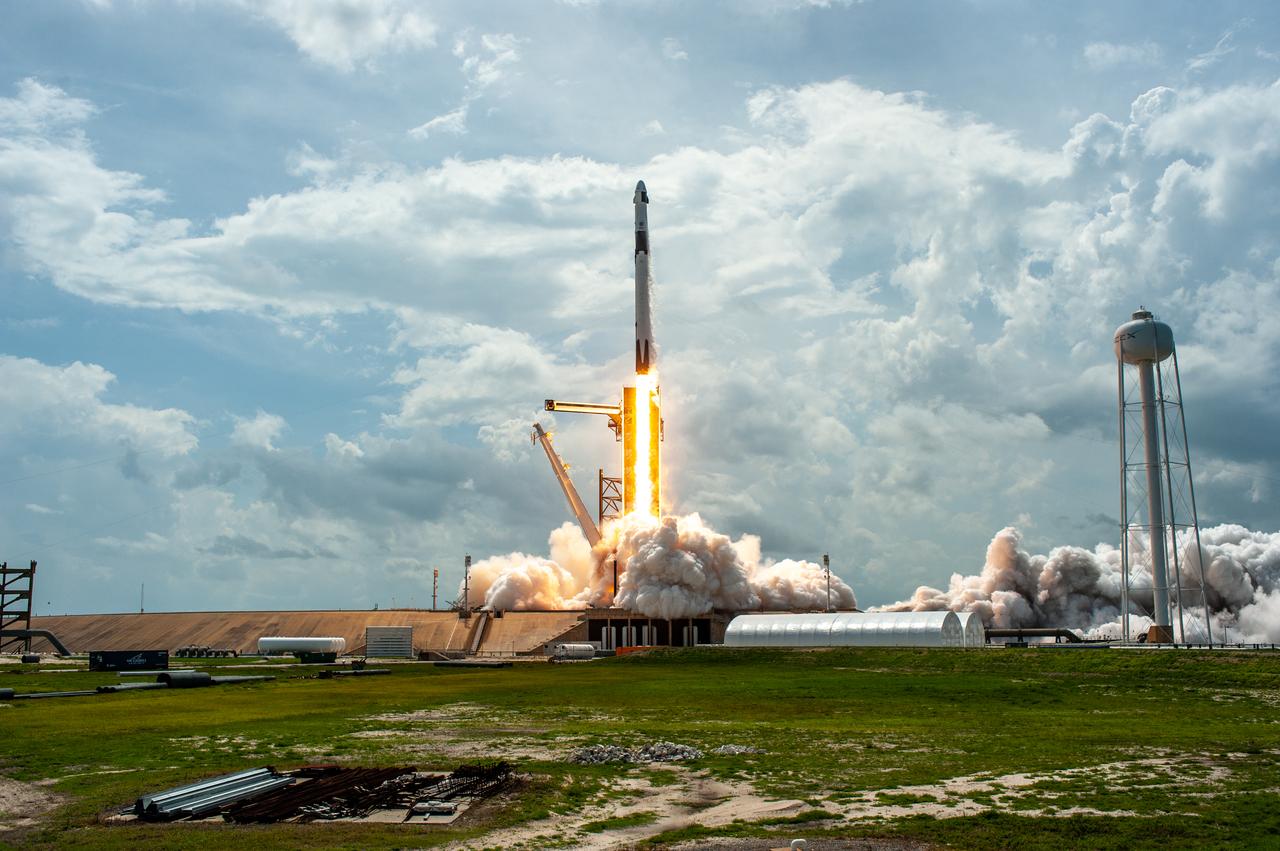
A SpaceX Falcon 9 rocket and Crew Dragon spacecraft lifts off from Launch Complex 39A at NASA’s Kennedy Space Center in Florida on May 30, 2020, carrying NASA astronauts Robert Behnken and Douglas Hurley to the International Space Station for the agency’s SpaceX Demo-2 mission. Liftoff occurred at 3:22 p.m. EDT. Behnken and Hurley are the first astronauts to launch from U.S. soil to the space station since the end of the Space Shuttle Program in 2011. Part of NASA’s Commercial Crew Program, this will be SpaceX’s final flight test, paving the way for the agency to certify the crew transportation system for regular, crewed flights to the orbiting laboratory.
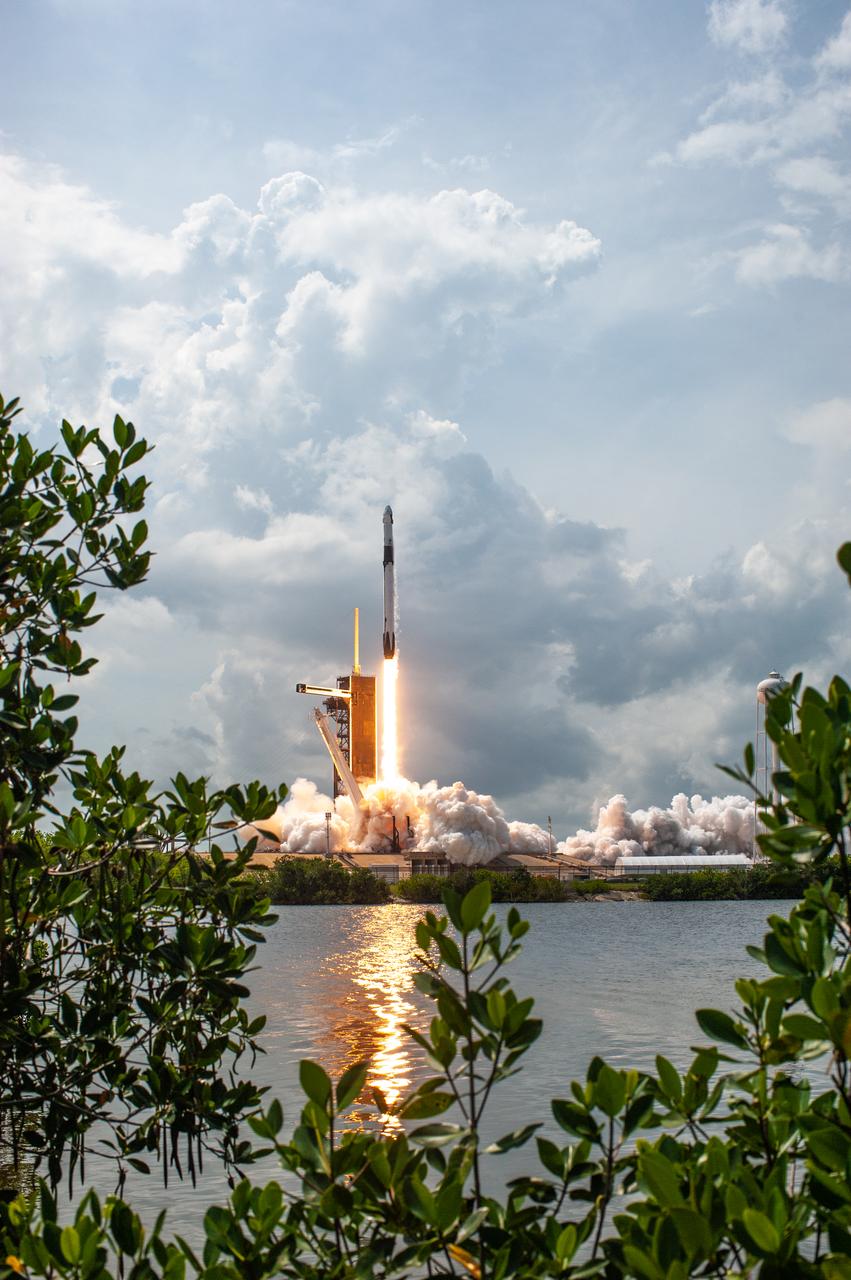
A SpaceX Falcon 9 rocket and Crew Dragon spacecraft lifts off from Launch Complex 39A at NASA’s Kennedy Space Center in Florida on May 30, 2020, carrying NASA astronauts Robert Behnken and Douglas Hurley to the International Space Station for the agency’s SpaceX Demo-2 mission. Liftoff occurred at 3:22 p.m. EDT. Behnken and Hurley are the first astronauts to launch from U.S. soil to the space station since the end of the Space Shuttle Program in 2011. Part of NASA’s Commercial Crew Program, this will be SpaceX’s final flight test, paving the way for the agency to certify the crew transportation system for regular, crewed flights to the orbiting laboratory.
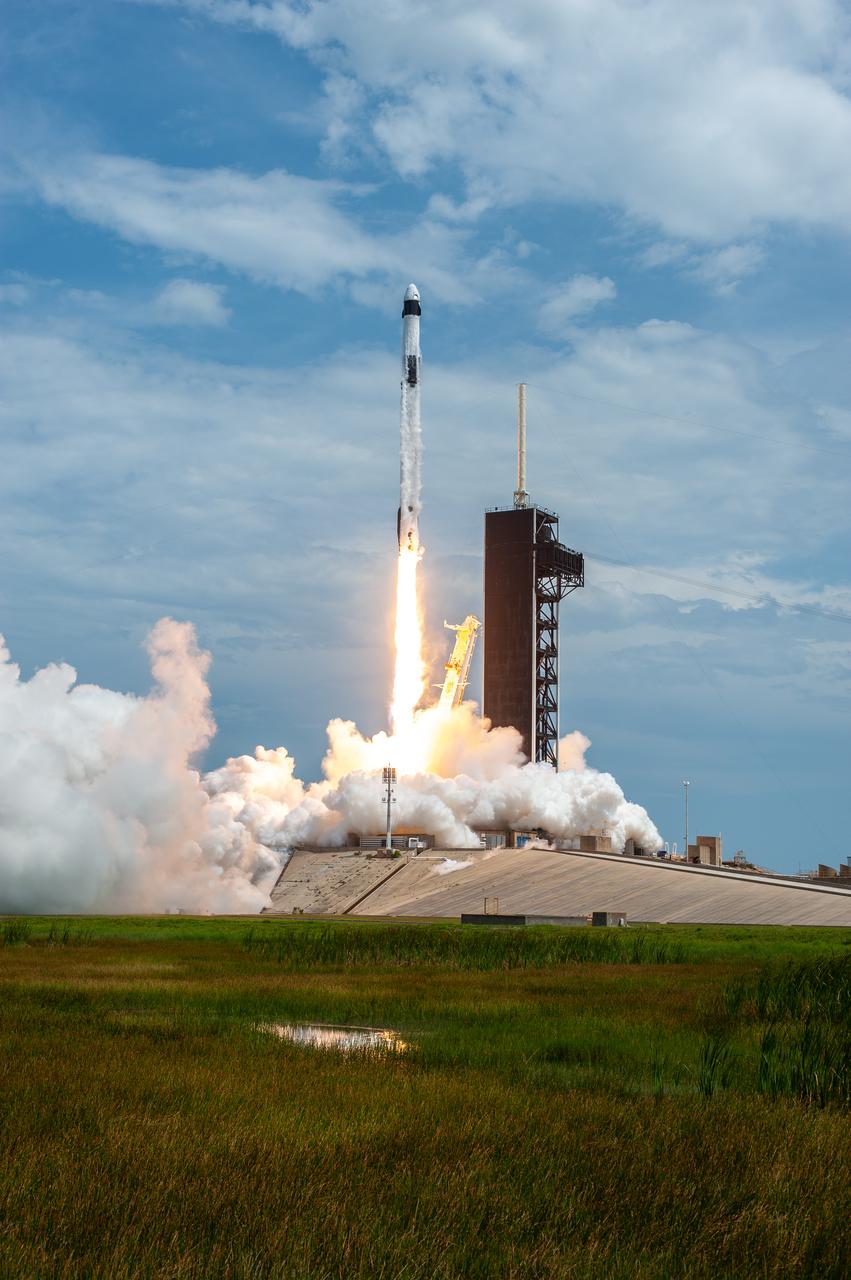
A SpaceX Falcon 9 rocket and Crew Dragon spacecraft lifts off from Launch Complex 39A at NASA’s Kennedy Space Center in Florida on May 30, 2020, carrying NASA astronauts Robert Behnken and Douglas Hurley to the International Space Station for the agency’s SpaceX Demo-2 mission. Liftoff occurred at 3:22 p.m. EDT. Behnken and Hurley are the first astronauts to launch from U.S. soil to the space station since the end of the Space Shuttle Program in 2011. Part of NASA’s Commercial Crew Program, this will be SpaceX’s final flight test, paving the way for the agency to certify the crew transportation system for regular, crewed flights to the orbiting laboratory.
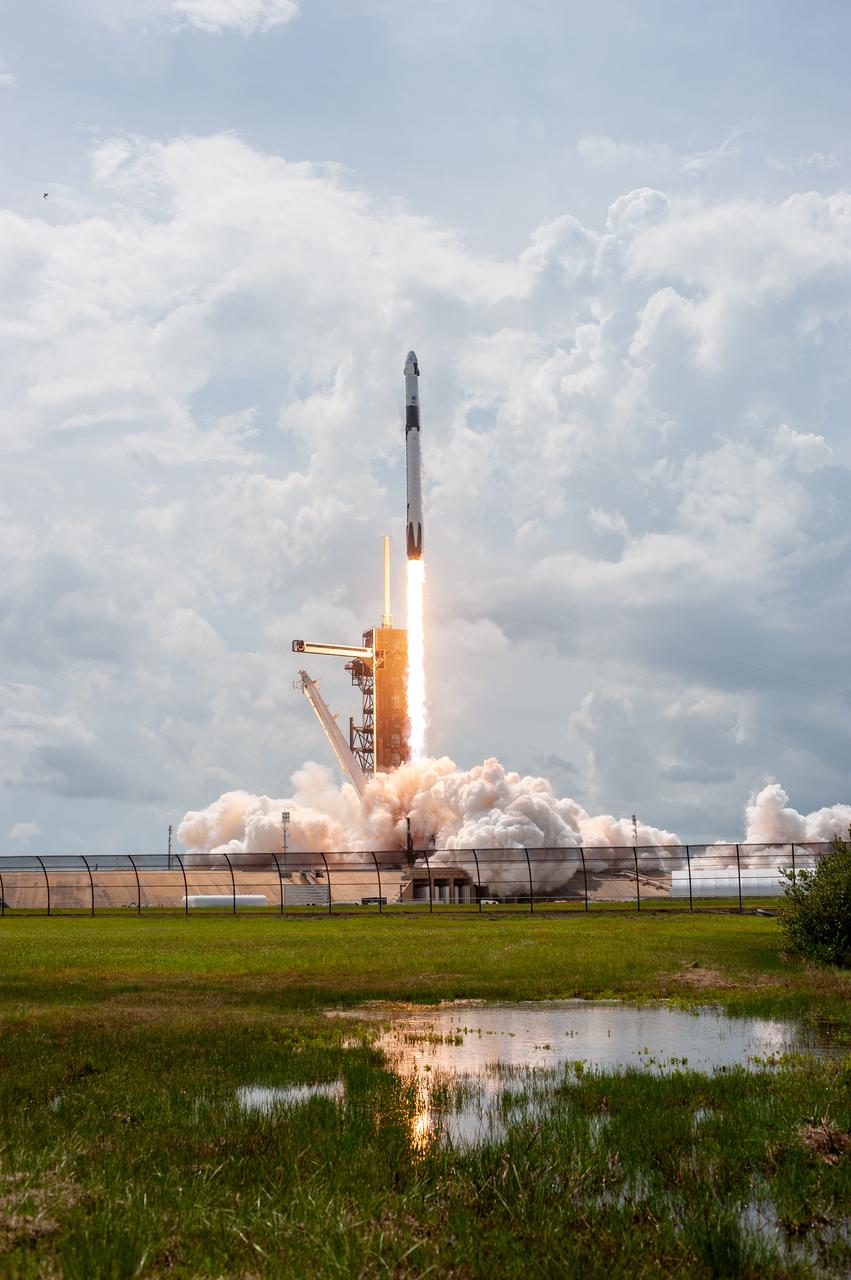
A SpaceX Falcon 9 rocket and Crew Dragon spacecraft lifts off from Launch Complex 39A at NASA’s Kennedy Space Center in Florida on May 30, 2020, carrying NASA astronauts Robert Behnken and Douglas Hurley to the International Space Station for the agency’s SpaceX Demo-2 mission. Liftoff occurred at 3:22 p.m. EDT. Behnken and Hurley are the first astronauts to launch from U.S. soil to the space station since the end of the Space Shuttle Program in 2011. Part of NASA’s Commercial Crew Program, this will be SpaceX’s final flight test, paving the way for the agency to certify the crew transportation system for regular, crewed flights to the orbiting laboratory.
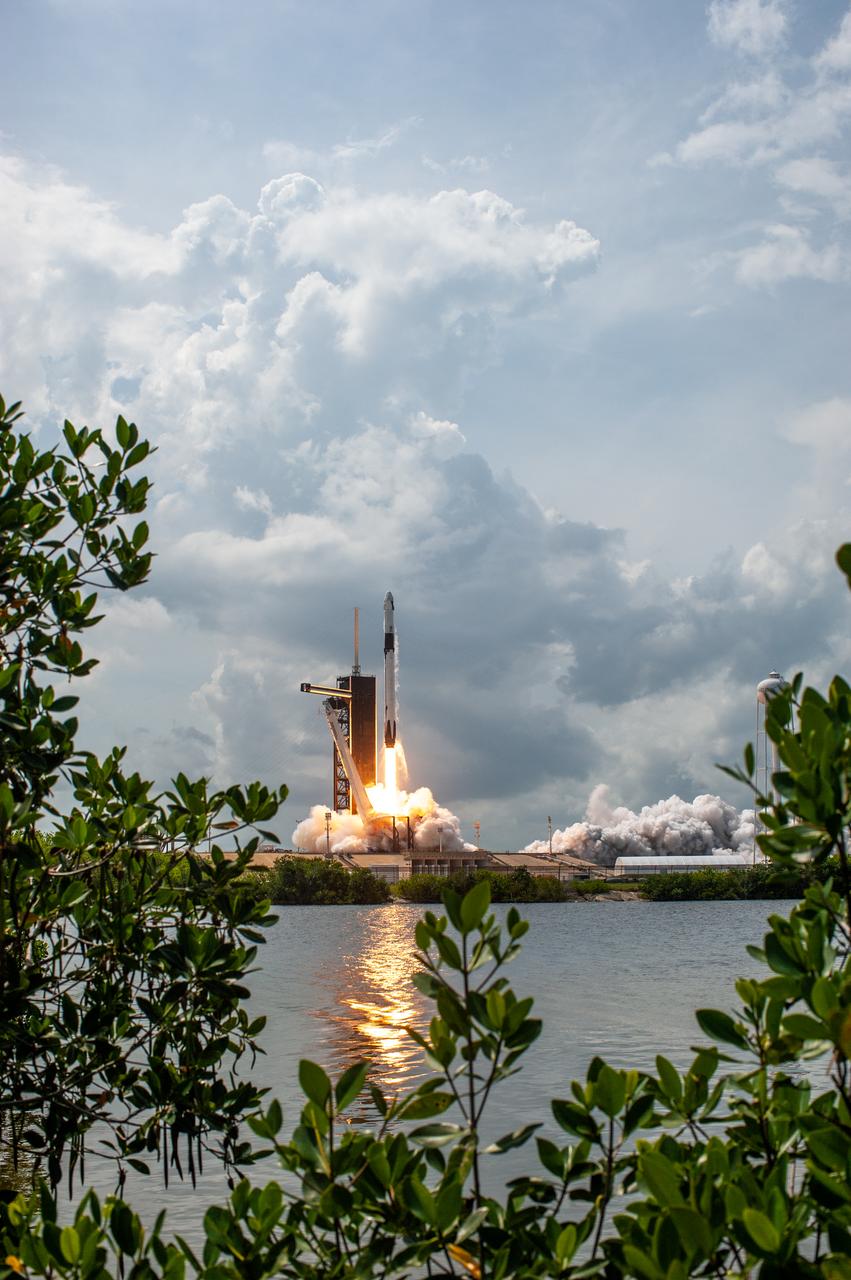
A SpaceX Falcon 9 rocket and Crew Dragon spacecraft lifts off from Launch Complex 39A at NASA’s Kennedy Space Center in Florida on May 30, 2020, carrying NASA astronauts Robert Behnken and Douglas Hurley to the International Space Station for the agency’s SpaceX Demo-2 mission. Liftoff occurred at 3:22 p.m. EDT. Behnken and Hurley are the first astronauts to launch from U.S. soil to the space station since the end of the Space Shuttle Program in 2011. Part of NASA’s Commercial Crew Program, this will be SpaceX’s final flight test, paving the way for the agency to certify the crew transportation system for regular, crewed flights to the orbiting laboratory.
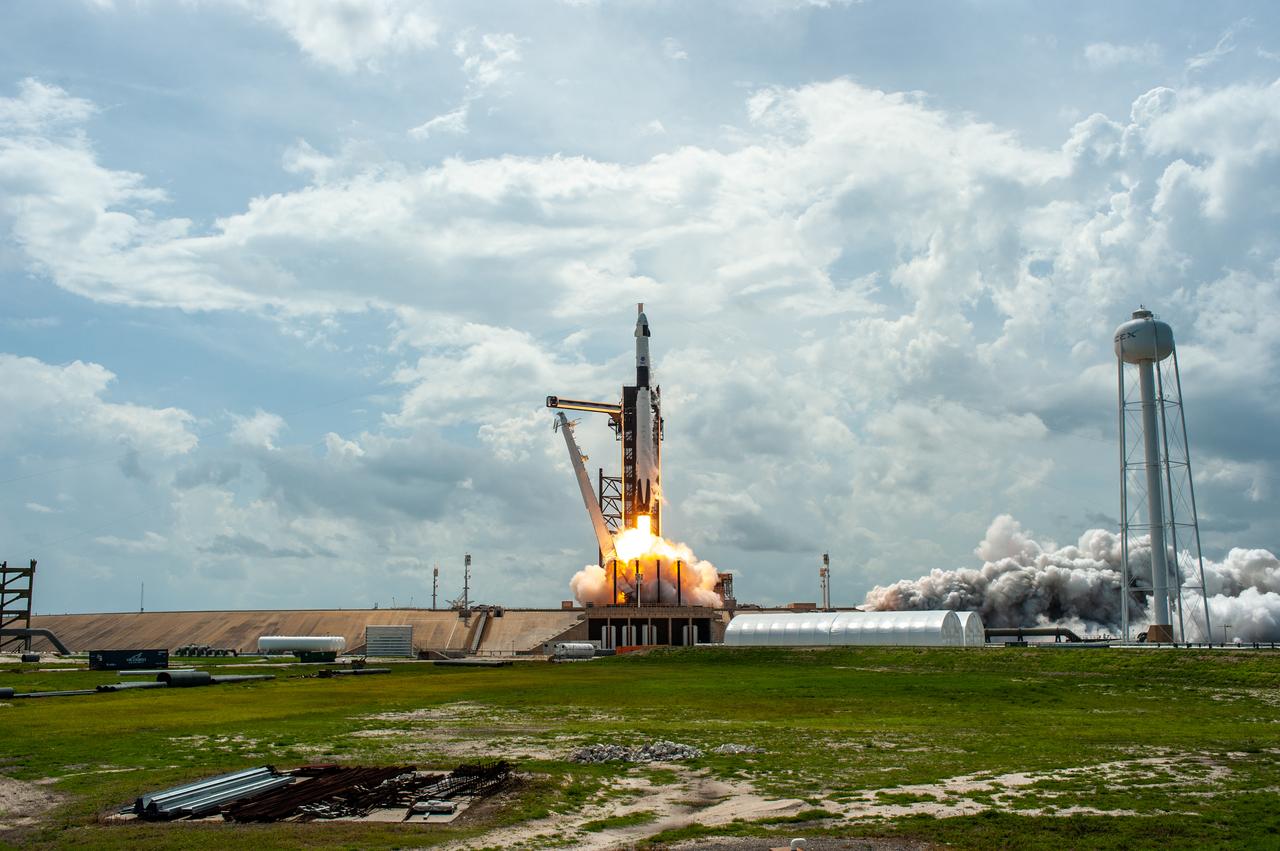
A SpaceX Falcon 9 rocket and Crew Dragon spacecraft lifts off from Launch Complex 39A at NASA’s Kennedy Space Center in Florida on May 30, 2020, carrying NASA astronauts Robert Behnken and Douglas Hurley to the International Space Station for the agency’s SpaceX Demo-2 mission. Liftoff occurred at 3:22 p.m. EDT. Behnken and Hurley are the first astronauts to launch from U.S. soil to the space station since the end of the Space Shuttle Program in 2011. Part of NASA’s Commercial Crew Program, this will be SpaceX’s final flight test, paving the way for the agency to certify the crew transportation system for regular, crewed flights to the orbiting laboratory.
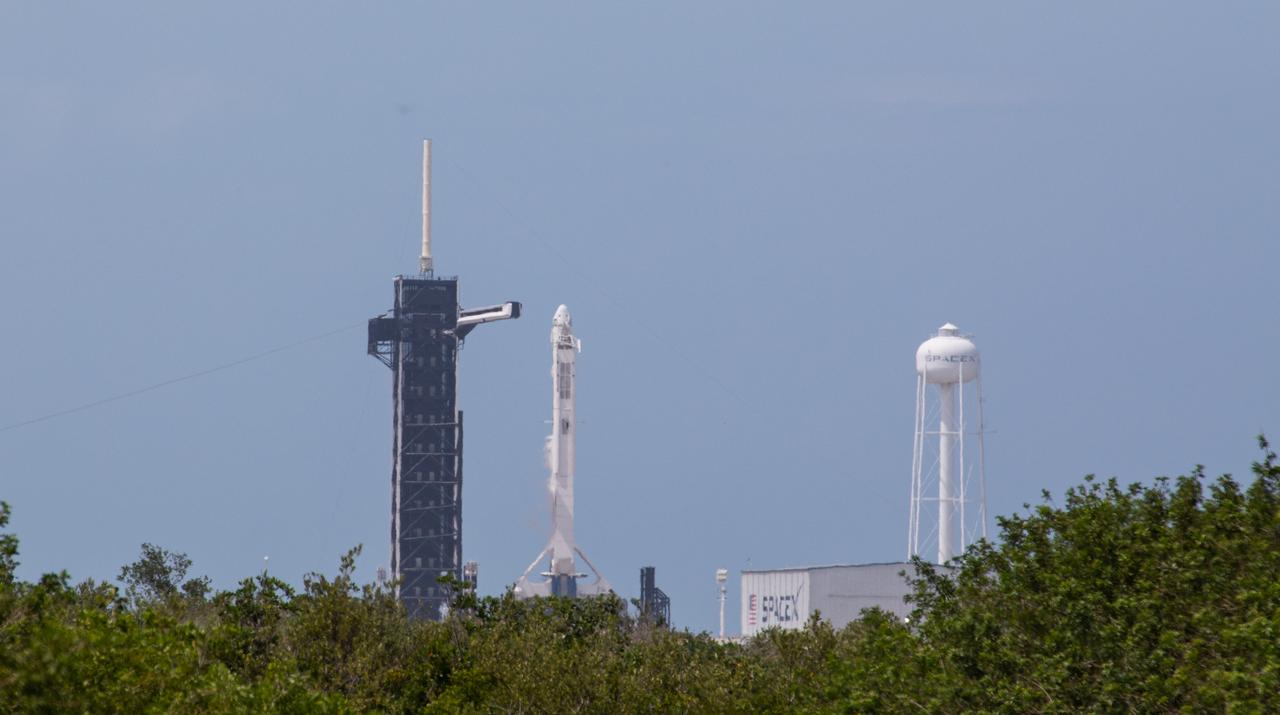
A SpaceX Falcon 9 rocket and Crew Dragon spacecraft stand poised for launch at historic Launch Complex 39A at NASA’s Kennedy Space Center in Florida on May 30, 2020, ahead of the agency’s SpaceX Demo-2 mission to the International Space Station. Liftoff occurred at 3:22 p.m. EDT. NASA astronauts Robert Behnken and Douglas Hurley are the first astronauts to launch from U.S. soil to the space station since the end of the Space Shuttle Program in 2011. Part of NASA’s Commercial Crew Program, this will be SpaceX’s final flight test, paving the way for the agency to certify the crew transportation system for regular, crewed flights to the orbiting laboratory.
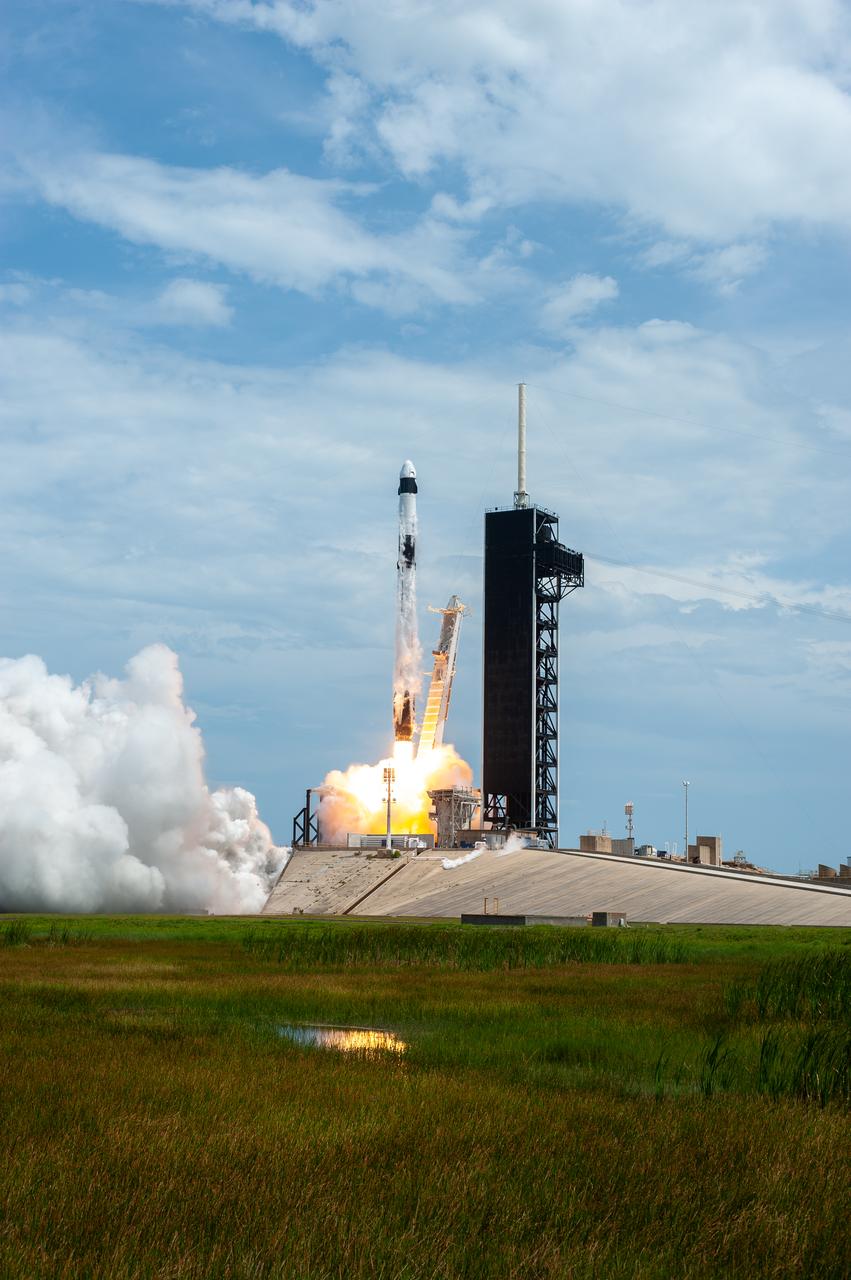
A SpaceX Falcon 9 rocket and Crew Dragon spacecraft lifts off from Launch Complex 39A at NASA’s Kennedy Space Center in Florida on May 30, 2020, carrying NASA astronauts Robert Behnken and Douglas Hurley to the International Space Station for the agency’s SpaceX Demo-2 mission. Liftoff occurred at 3:22 p.m. EDT. Behnken and Hurley are the first astronauts to launch from U.S. soil to the space station since the end of the Space Shuttle Program in 2011. Part of NASA’s Commercial Crew Program, this will be SpaceX’s final flight test, paving the way for the agency to certify the crew transportation system for regular, crewed flights to the orbiting laboratory.
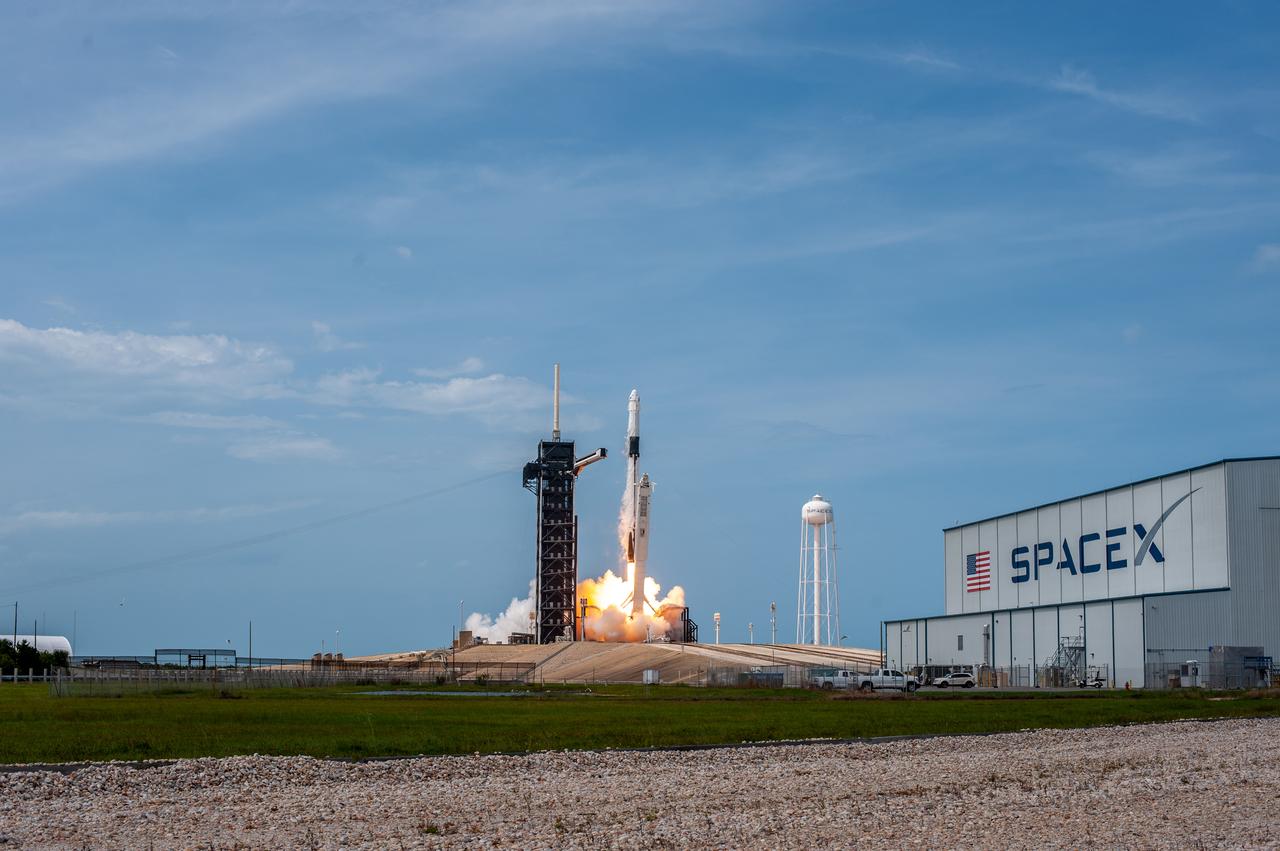
A SpaceX Falcon 9 rocket and Crew Dragon spacecraft lifts off from Launch Complex 39A at NASA’s Kennedy Space Center in Florida on May 30, 2020, carrying NASA astronauts Robert Behnken and Douglas Hurley to the International Space Station for the agency’s SpaceX Demo-2 mission. Liftoff occurred at 3:22 p.m. EDT. Behnken and Hurley are the first astronauts to launch from U.S. soil to the space station since the end of the Space Shuttle Program in 2011. Part of NASA’s Commercial Crew Program, this will be SpaceX’s final flight test, paving the way for the agency to certify the crew transportation system for regular, crewed flights to the orbiting laboratory.
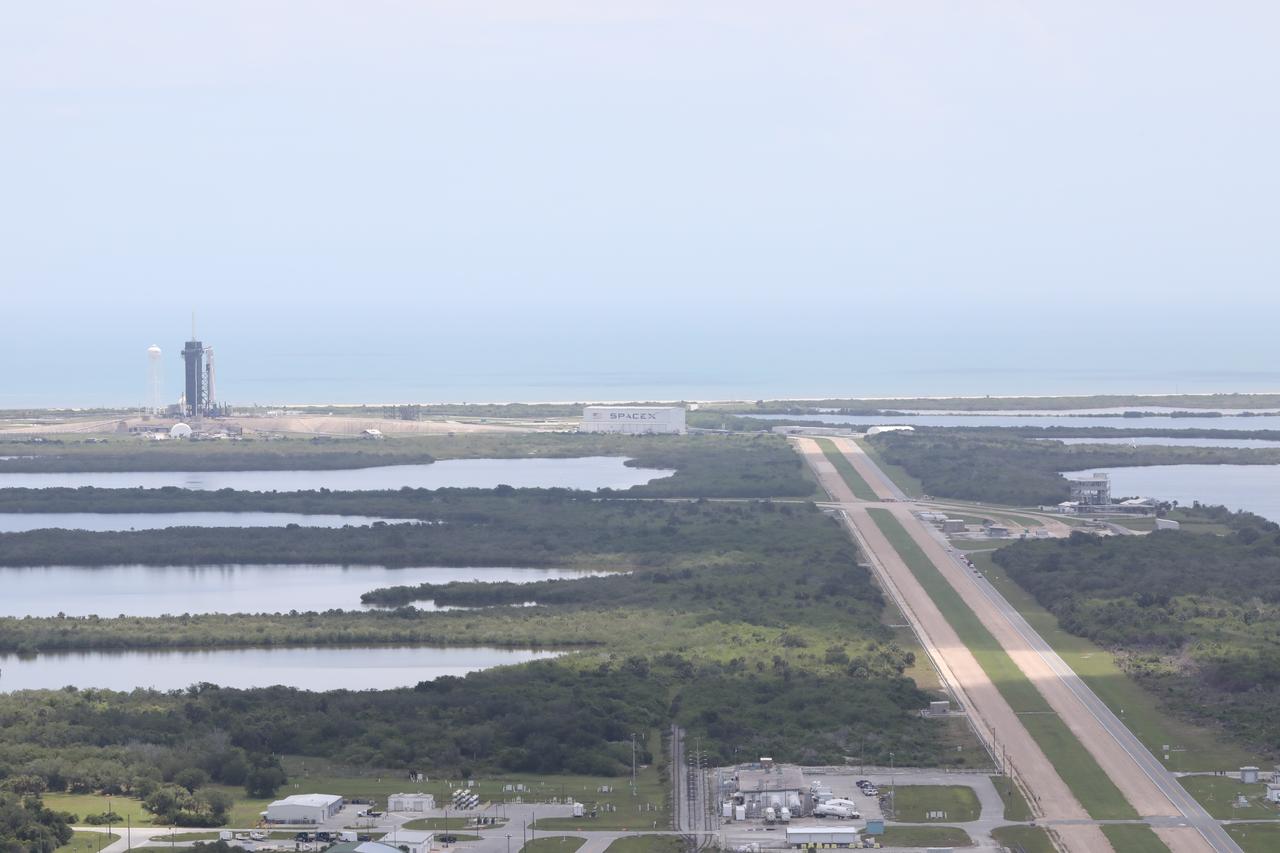
A SpaceX Falcon 9 rocket and Crew Dragon spacecraft stand poised for launch at historic Launch Complex 39A at NASA’s Kennedy Space Center in Florida on May 30, 2020, ahead of the agency’s SpaceX Demo-2 mission to the International Space Station. Liftoff occurred at 3:22 p.m. EDT. NASA astronauts Robert Behnken and Douglas Hurley are the first astronauts to launch from U.S. soil to the space station since the end of the Space Shuttle Program in 2011. Part of NASA’s Commercial Crew Program, this will be SpaceX’s final flight test, paving the way for the agency to certify the crew transportation system for regular, crewed flights to the orbiting laboratory.
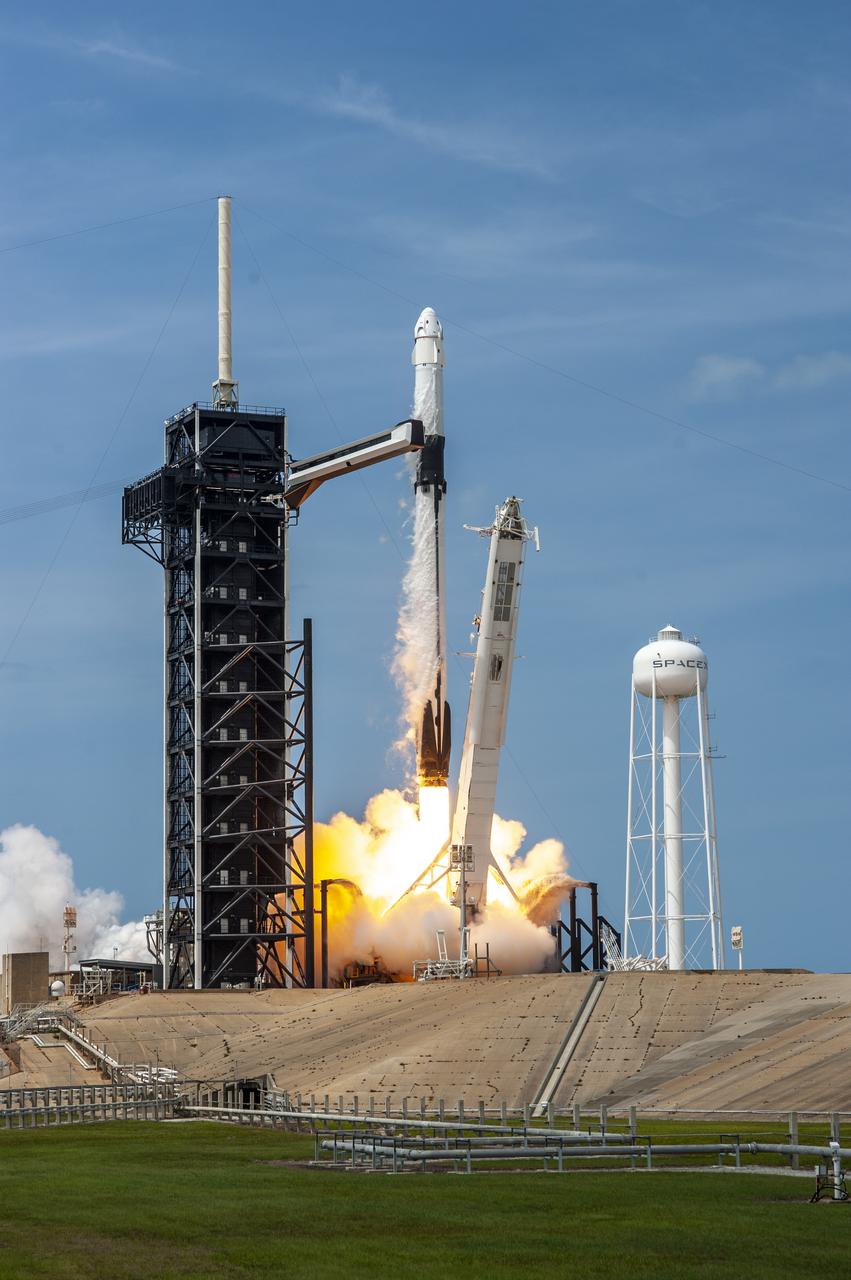
A SpaceX Falcon 9 rocket and Crew Dragon spacecraft lifts off from Launch Complex 39A at NASA’s Kennedy Space Center in Florida on May 30, 2020, carrying NASA astronauts Robert Behnken and Douglas Hurley to the International Space Station for the agency’s SpaceX Demo-2 mission. Liftoff occurred at 3:22 p.m. EDT. Behnken and Hurley are the first astronauts to launch from U.S. soil to the space station since the end of the Space Shuttle Program in 2011. Part of NASA’s Commercial Crew Program, this will be SpaceX’s final flight test, paving the way for the agency to certify the crew transportation system for regular, crewed flights to the orbiting laboratory.
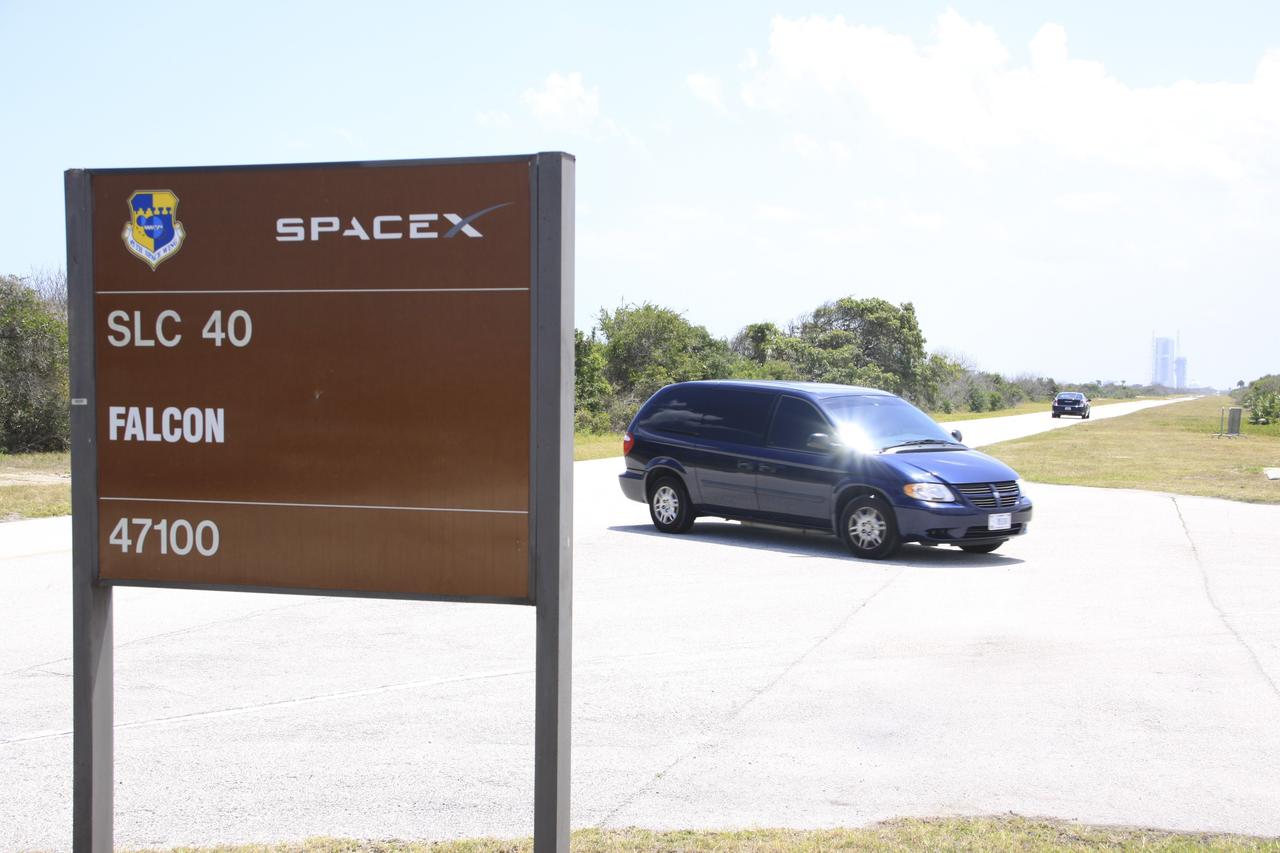
CAPE CANAVERAL, Fla. – The van transporting the cargo bag packed with NanoRacks-CubeLabs Module-9 experiments, arrives at Space Launch Complex-40 on Cape Canaveral Air Force Station in Florida for cold stowage. The bag will be loaded into the Space Exploration Technologies Dragon capsule in preparation for its scheduled April 30 liftoff aboard a Falcon 9 rocket. NanoRacks-CubeLabs Module-9 uses a two-cube unit box for student competition investigations using 15 liquid mixing tube assemblies that function similar to commercial glow sticks. The investigations range from microbial growth to water purification in microgravity. Known as SpaceX, the launch will be the company's second demonstration test flight for NASA's Commercial Orbital Transportation Services program, or COTS. During the flight, the capsule will conduct a series of check-out procedures to test and prove its systems, including rendezvous and berthing with the International Space Station. If the capsule performs as planned, the module and other cargo will be transferred to the station. The cargo includes food, water and provisions for the station’s Expedition crews, such as clothing, batteries and computer equipment. Under COTS, NASA has partnered with two private companies to launch cargo safely to the station. For more information, visit http://www.nasa.gov/spacex. Photo credit: NASA/Jim Grossmann
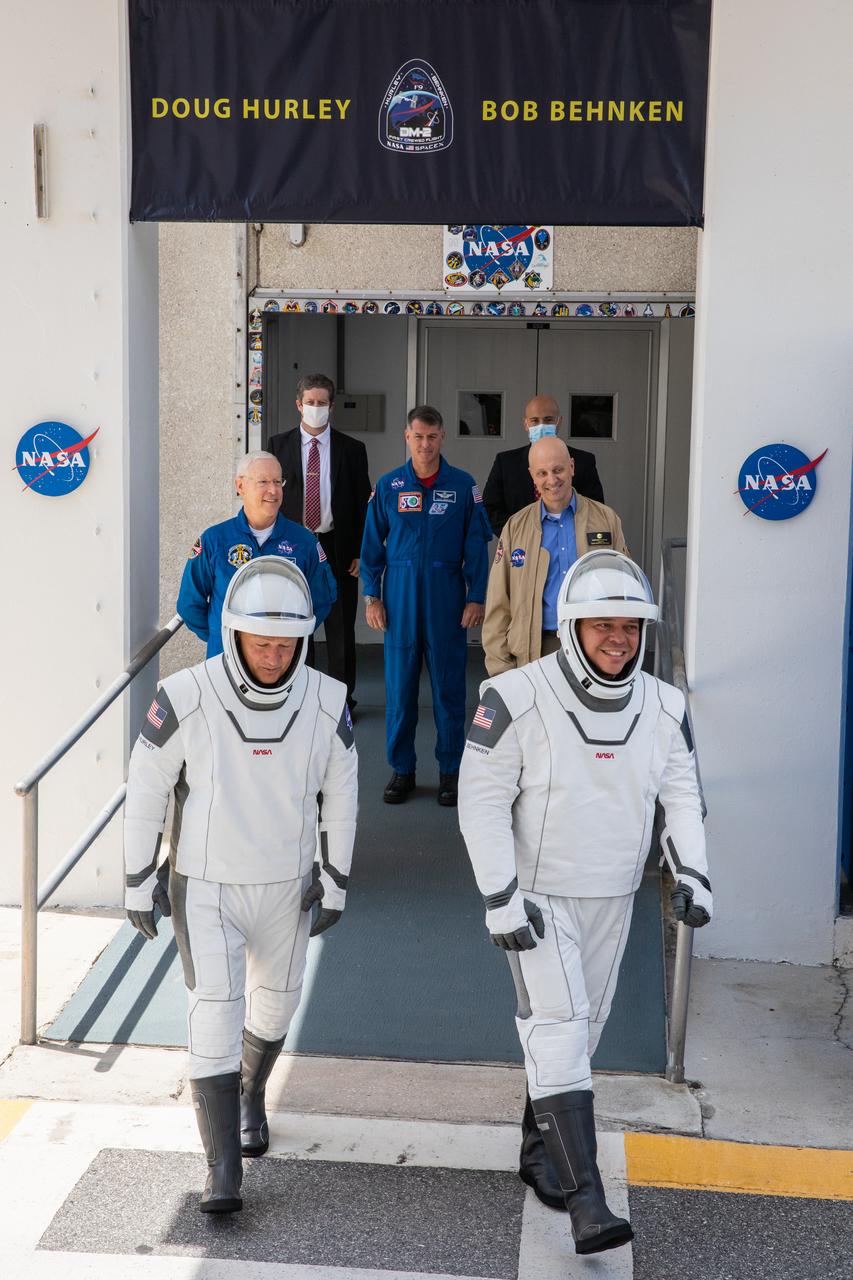
NASA astronauts Douglas Hurley (left) and Robert Behnken exit the Neil A. Armstrong Operations and Checkout Building at the agency’s Kennedy Space Center in Florida on May 30, 2020, in preparation for transport to Launch Complex 39A ahead of embarking on NASA’s SpaceX Demo-2 mission to the International Space Station. The SpaceX Falcon 9 rocket and Crew Dragon spacecraft lifted off at 3:22 p.m. EDT. Behnken and Hurley are the first astronauts to launch to the space station from U.S. soil since the end of the Space Shuttle Program in 2011. Part of NASA’s Commercial Crew Program, this will be SpaceX’s final flight test, paving the way for the agency to certify the crew transportation system for regular, crewed flights to the orbiting laboratory.
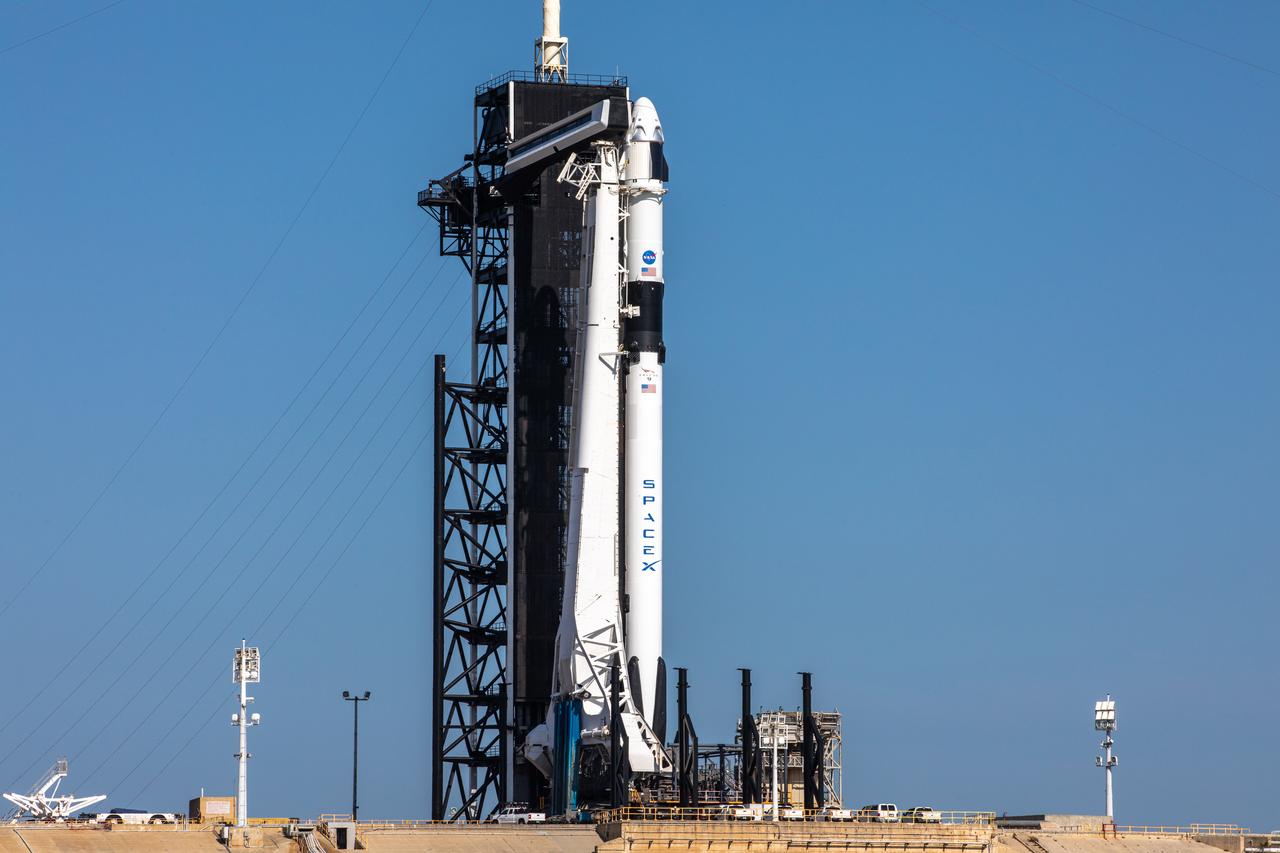
A SpaceX Falcon 9 rocket, with the Crew Dragon atop, stands poised for launch at historic Launch Complex 39A at NASA’s Kennedy Space Center in Florida on May 21, 2020, ahead of NASA’s SpaceX Demo-2 mission. The rocket and spacecraft will carry NASA astronauts Robert Behnken and Douglas Hurley to the International Space Station as part of the agency’s Commercial Crew Program, returning human spaceflight capability to the U.S. after nearly a decade. This will be SpaceX’s final flight test, paving the way for NASA to certify the crew transportation system for regular, crewed flights to the orbiting laboratory. Launch is slated for 4:33 p.m. EDT on Wednesday, May 27.
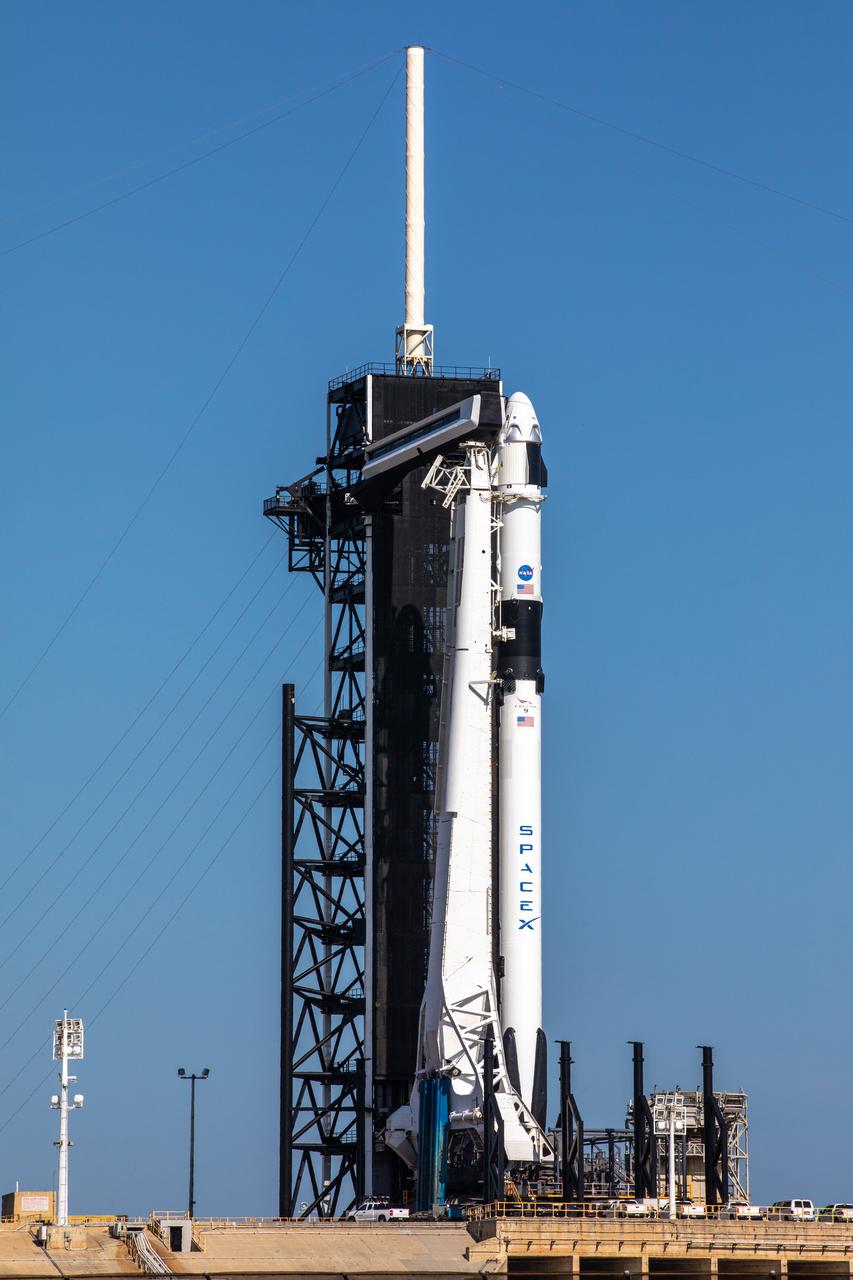
A SpaceX Falcon 9 rocket, with the Crew Dragon atop, stands poised for launch at historic Launch Complex 39A at NASA’s Kennedy Space Center in Florida on May 21, 2020, ahead of NASA’s SpaceX Demo-2 mission. The rocket and spacecraft will carry NASA astronauts Robert Behnken and Douglas Hurley to the International Space Station as part of the agency’s Commercial Crew Program, returning human spaceflight capability to the U.S. after nearly a decade. This will be SpaceX’s final flight test, paving the way for NASA to certify the crew transportation system for regular, crewed flights to the orbiting laboratory. Launch is slated for 4:33 p.m. EDT on Wednesday, May 27.
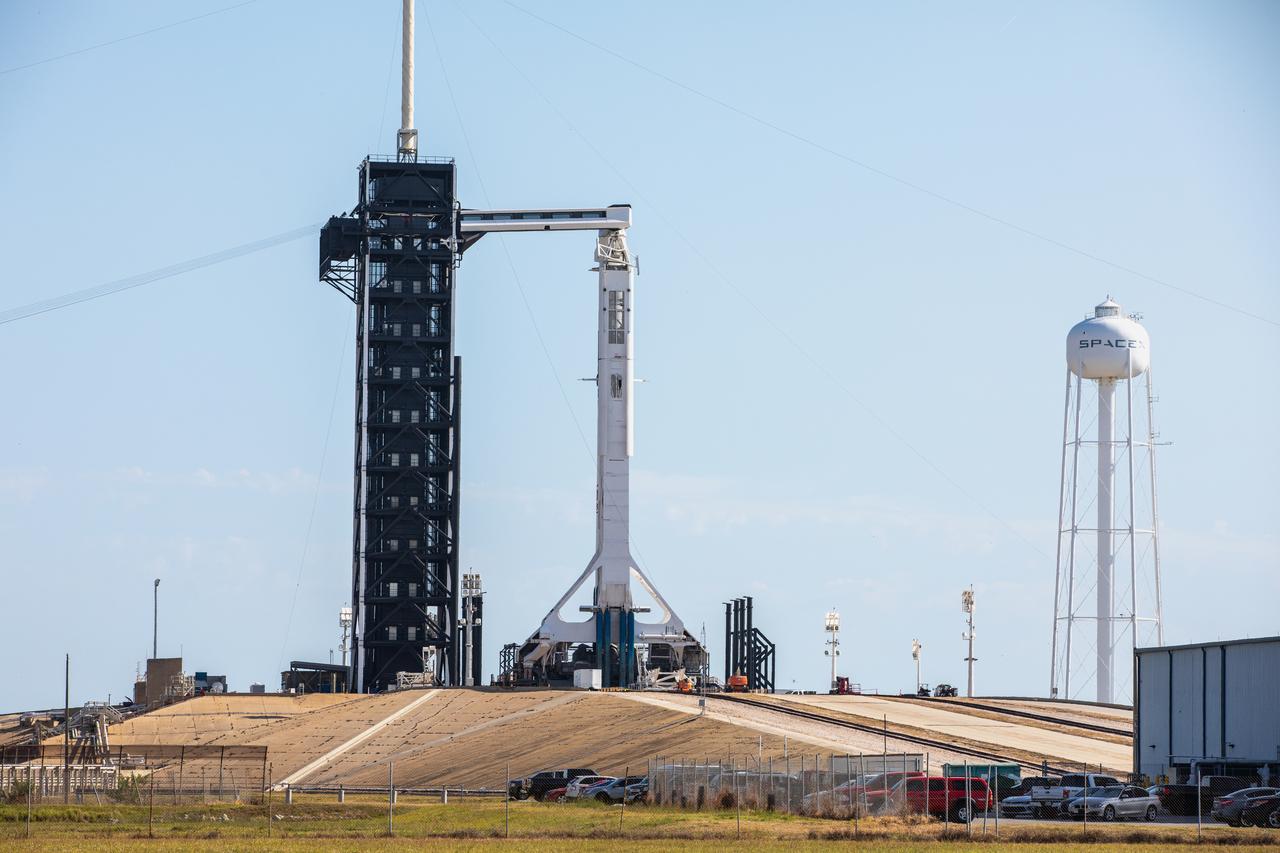
SpaceX’s Crew Dragon spacecraft, atop the company’s Falcon 9 rocket, stands poised at the pad at historic Launch Complex 39A at NASA’s Kennedy Space Center in Florida on May 21, 2020, ahead of NASA’s SpaceX Demo-2 launch. The rocket and spacecraft will carry NASA astronauts Robert Behnken and Douglas Hurley to the International Space Station as part of the agency’s Commercial Crew Program, returning human spaceflight capability to the U.S. after nearly a decade. This will be SpaceX’s final flight test, paving the way for NASA to certify the crew transportation system for regular, crewed flights to the orbiting laboratory. Launch is slated for 4:33 p.m. EDT on Wednesday, May 27.

SpaceX’s Crew Dragon spacecraft, atop the company’s Falcon 9 rocket, stands poised at the pad at historic Launch Complex 39A at NASA’s Kennedy Space Center in Florida on May 21, 2020, ahead of NASA’s SpaceX Demo-2 launch. The rocket and spacecraft will carry NASA astronauts Robert Behnken and Douglas Hurley to the International Space Station as part of the agency’s Commercial Crew Program, returning human spaceflight capability to the U.S. after nearly a decade. This will be SpaceX’s final flight test, paving the way for NASA to certify the crew transportation system for regular, crewed flights to the orbiting laboratory. Launch is slated for 4:33 p.m. EDT on Wednesday, May 27.
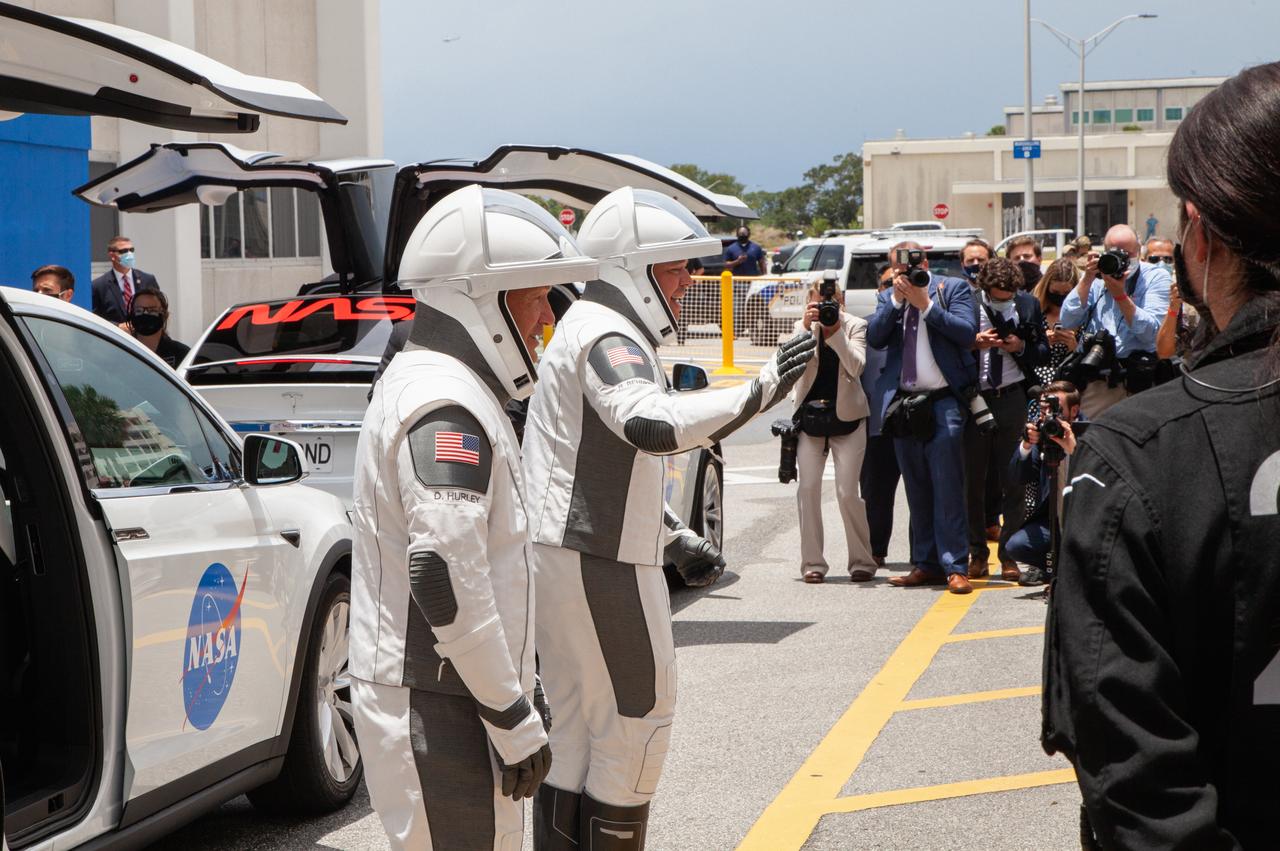
NASA astronauts Douglas Hurley (left) and Robert Behnken speak to their families before entering the Tesla Model X that will transport them from the Neil A. Armstrong Operations and Checkout Building to historic Launch Complex 39A at the Kennedy Space Center in Florida for NASA’s SpaceX Demo-2 mission. The launch, initially scheduled for May 27, 2020, was scrubbed due to unfavorable weather conditions around Launch Complex 39A. The next launch attempt will be Saturday, May 30. Liftoff of the SpaceX Falcon 9 rocket and Crew Dragon spacecraft is scheduled for 3:22 p.m. EDT from historic Launch Complex 39A. Behnken and Hurley will be the first astronauts to launch to the International Space Station from U.S. soil since the end of the Space Shuttle Program in 2011. Part of NASA’s Commercial Crew Program, this will be SpaceX’s final flight test, paving the way for the agency to certify the crew transportation system for regular, crewed flights to the orbiting laboratory.
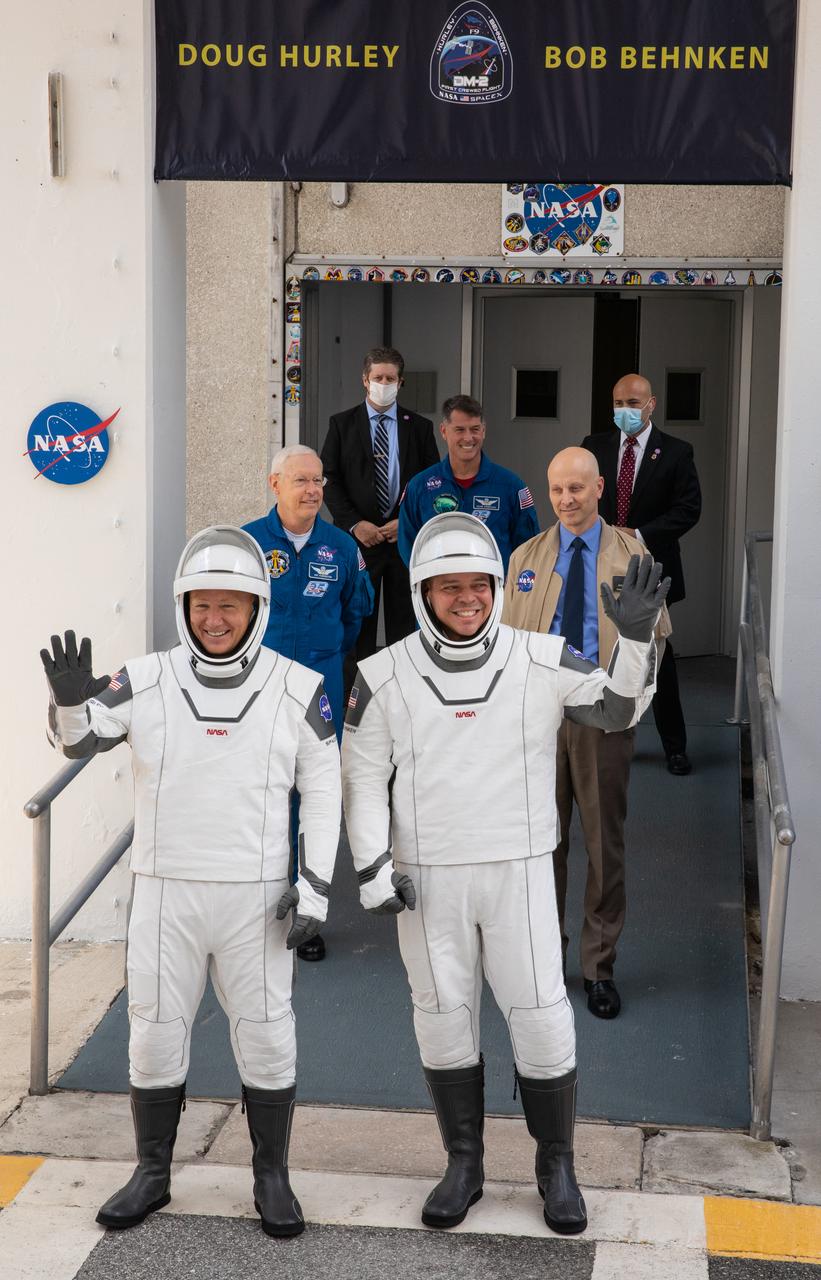
NASA astronauts Douglas Hurley (left) and Robert Behnken wave as they exit the Neil A. Armstrong Operations and Checkout Building at the agency’s Kennedy Space Center in Florida in preparation for transport to Launch Complex 39A to launch on NASA’s SpaceX Demo-2 mission. The launch, initially scheduled for May 27, 2020, was scrubbed due to unfavorable weather conditions around Launch Complex 39A. The next launch attempt will be Saturday, May 30. Liftoff of the SpaceX Falcon 9 rocket and Crew Dragon spacecraft is scheduled for 3:22 p.m. EDT from historic Launch Complex 39A. Behnken and Hurley will be the first astronauts to launch to the International Space Station from U.S. soil since the end of the Space Shuttle Program in 2011. Part of NASA’s Commercial Crew Program, this will be SpaceX’s final flight test, paving the way for the agency to certify the crew transportation system for regular, crewed flights to the orbiting laboratory.
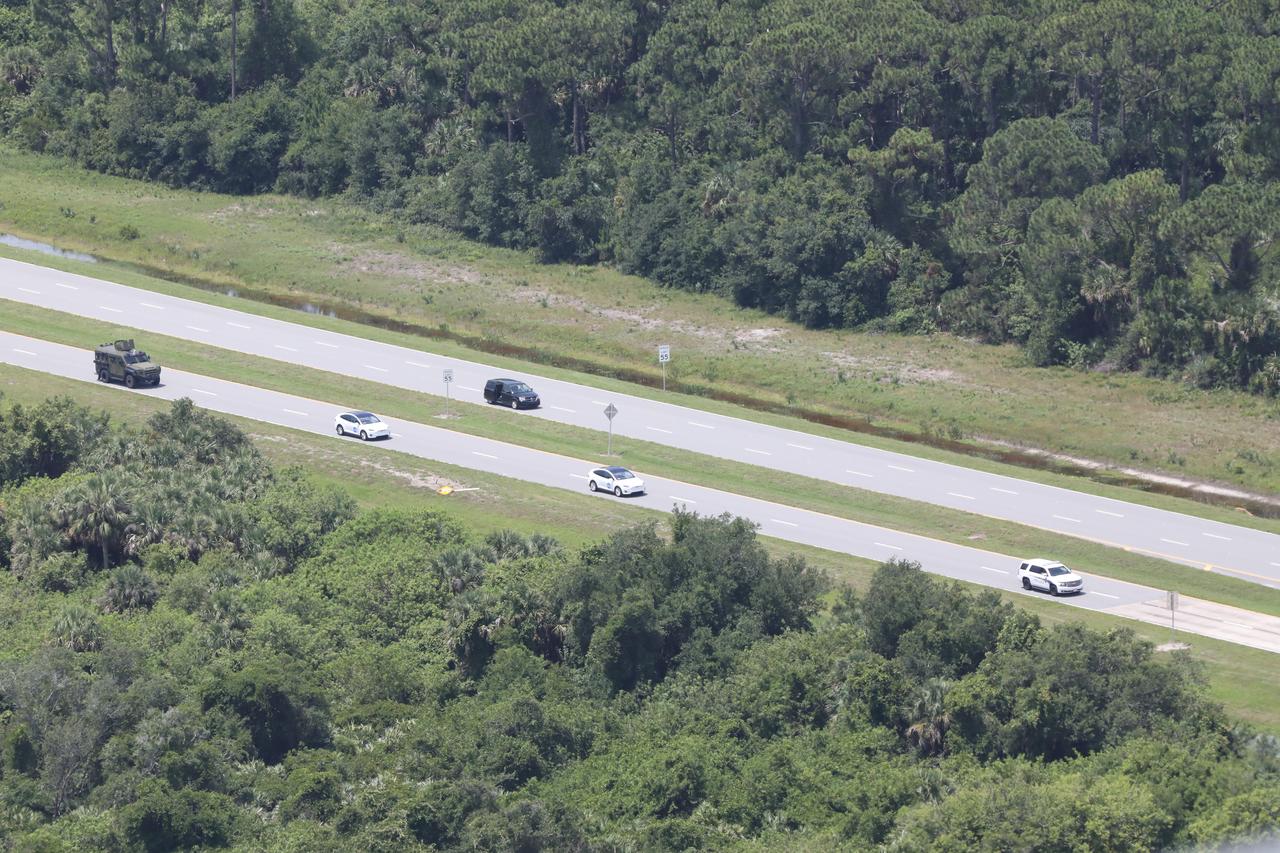
NASA astronauts Robert Behnken and Douglas Hurley make the journey from the Neil A. Armstrong Operations and Checkout Building to historic Launch Complex 39A at the agency’s Kennedy Space Center in Florida as they prepare to embark on NASA’s SpaceX Demo-2 mission on May 30, 2020. The astronauts are being transported to the launch pad in a Tesla Model X. Behnken and Hurley are the first astronauts to launch to the International Space Station from U.S. soil since the end of the Space Shuttle Program in 2011. Liftoff of the SpaceX Falcon 9 rocket and Crew Dragon spacecraft occurred at 3:22 p.m. EDT. Part of NASA’s Commercial Crew Program, this will be SpaceX’s final flight test, paving the way for the agency to certify the crew transportation system for regular, crewed flights to the orbiting laboratory.

NASA astronauts Robert Behnken and Douglas Hurley (right) enter the Tesla Model X that will transport them from the Neil A. Armstrong Operations and Checkout Building to historic Launch Complex 39A at the Kennedy Space Center in Florida for the agency’s SpaceX Demo-2 launch on May 30, 2020. The SpaceX Falcon 9 rocket and Crew Dragon spacecraft lifted off at 3:22 p.m. EDT. Behnken and Hurley are the first astronauts to launch to the International Space Station from U.S. soil since the end of the Space Shuttle Program in 2011. Part of NASA’s Commercial Crew Program, this will be SpaceX’s final flight test, paving the way for the agency to certify the crew transportation system for regular, crewed flights to the orbiting laboratory.
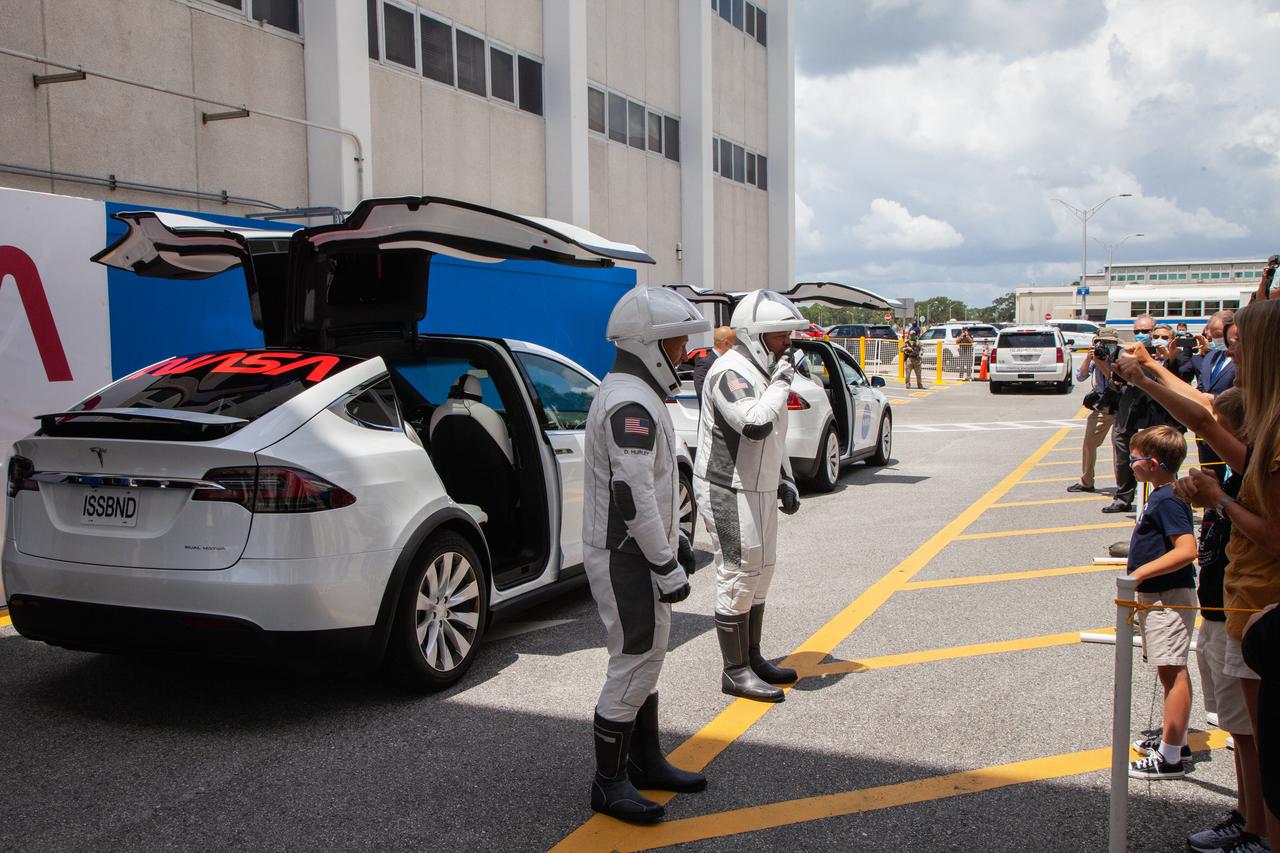
NASA astronauts Douglas Hurley (left) and Robert Behnken speak to their families before entering the Tesla Model X that will transport them from the Neil A. Armstrong Operations and Checkout Building to historic Launch Complex 39A at the Kennedy Space Center in Florida for NASA’s SpaceX Demo-2 launch on May 30, 2020. The SpaceX Falcon 9 rocket and Crew Dragon spacecraft lifted off at 3:22 p.m. EDT. Behnken and Hurley are the first astronauts to launch to the International Space Station from U.S. soil since the end of the Space Shuttle Program in 2011. Part of NASA’s Commercial Crew Program, this will be SpaceX’s final flight test, paving the way for the agency to certify the crew transportation system for regular, crewed flights to the orbiting laboratory.
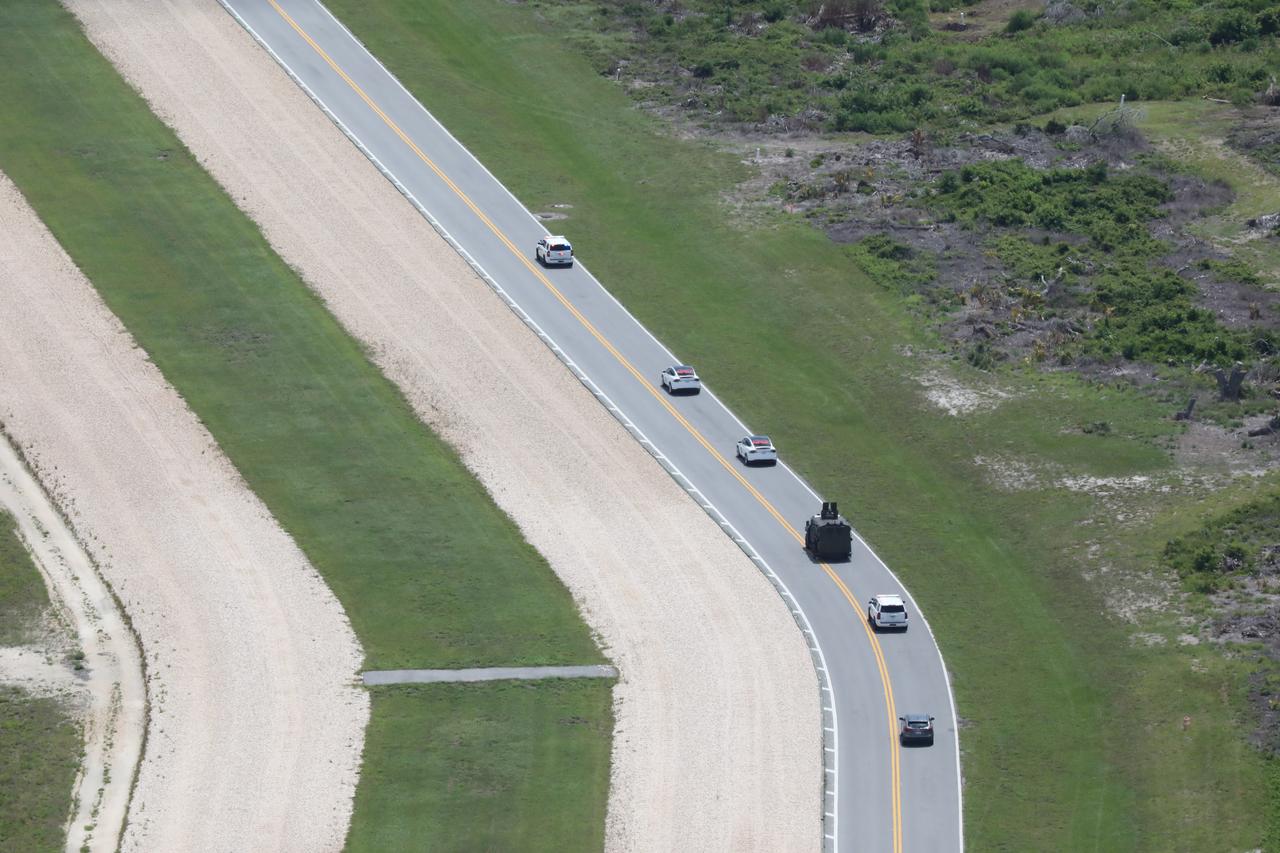
NASA astronauts Robert Behnken and Douglas Hurley make the journey from the Neil A. Armstrong Operations and Checkout Building to historic Launch Complex 39A at the agency’s Kennedy Space Center in Florida as they prepare to embark on NASA’s SpaceX Demo-2 mission on May 30, 2020. The astronauts are being transported to the launch pad in a Tesla Model X. Behnken and Hurley are the first astronauts to launch to the International Space Station from U.S. soil since the end of the Space Shuttle Program in 2011. Liftoff of the SpaceX Falcon 9 rocket and Crew Dragon spacecraft occurred at 3:22 p.m. EDT. Part of NASA’s Commercial Crew Program, this will be SpaceX’s final flight test, paving the way for the agency to certify the crew transportation system for regular, crewed flights to the orbiting laboratory.
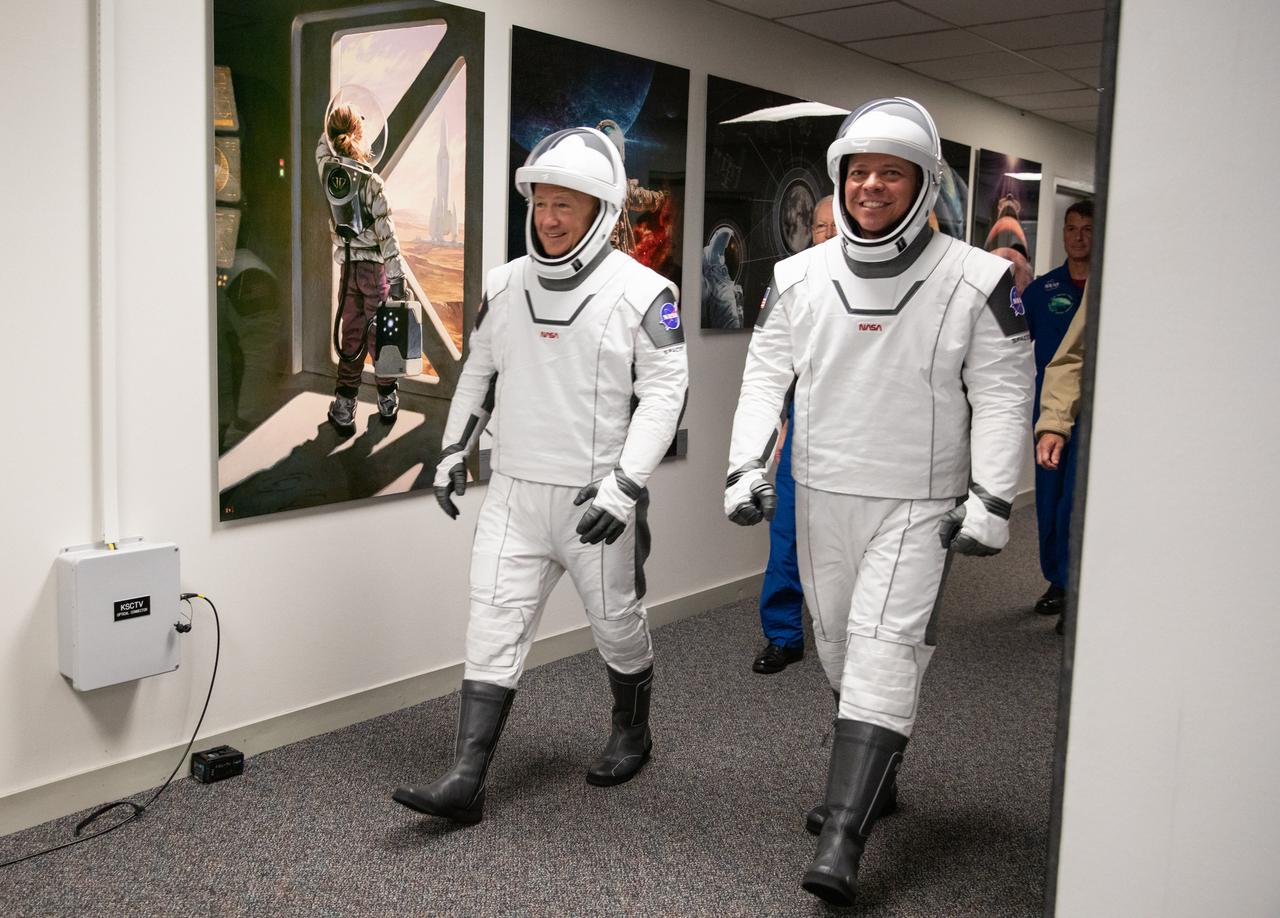
NASA astronauts Douglas Hurley (left) and Robert Behnken depart the Neil A. Armstrong Operations and Checkout Building at the agency’s Kennedy Space Center in Florida on May 27, 2020, in preparation for transport to Launch Complex 39A ahead of NASA’s SpaceX Demo-2 mission. The launch was scrubbed due to unfavorable weather conditions around Launch Complex 39A, and the next launch attempt will be Saturday, May 30. Liftoff of the SpaceX Falcon 9 rocket and Crew Dragon spacecraft is scheduled for 3:22 p.m. EDT from historic Launch Complex 39A. Behnken and Hurley will be the first astronauts to launch to the International Space Station from U.S. soil since the end of the Space Shuttle Program in 2011. Part of NASA’s Commercial Crew Program, this will be SpaceX’s final flight test, paving the way for the agency to certify the crew transportation system for regular, crewed flights to the orbiting laboratory.
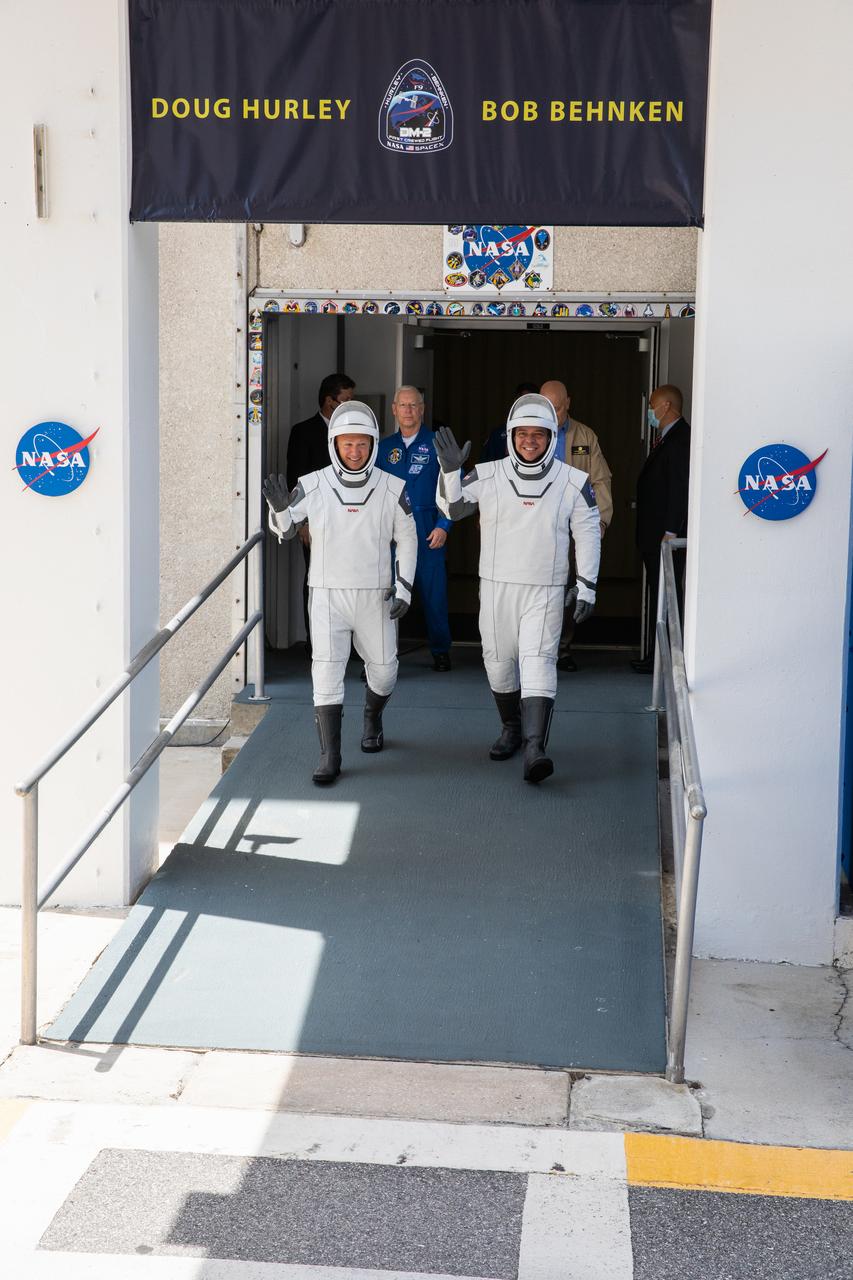
NASA astronauts Douglas Hurley (left) and Robert Behnken wave as they exit the Neil A. Armstrong Operations and Checkout Building at the agency’s Kennedy Space Center in Florida on May 30, 2020, in preparation for transport to Launch Complex 39A ahead of embarking on NASA’s SpaceX Demo-2 mission. The SpaceX Falcon 9 rocket and Crew Dragon spacecraft lifted off at 3:22 p.m. EDT. Behnken and Hurley are the first astronauts to launch to the International Space Station from U.S. soil since the end of the Space Shuttle Program in 2011. Part of NASA’s Commercial Crew Program, this will be SpaceX’s final flight test, paving the way for the agency to certify the crew transportation system for regular, crewed flights to the orbiting laboratory.
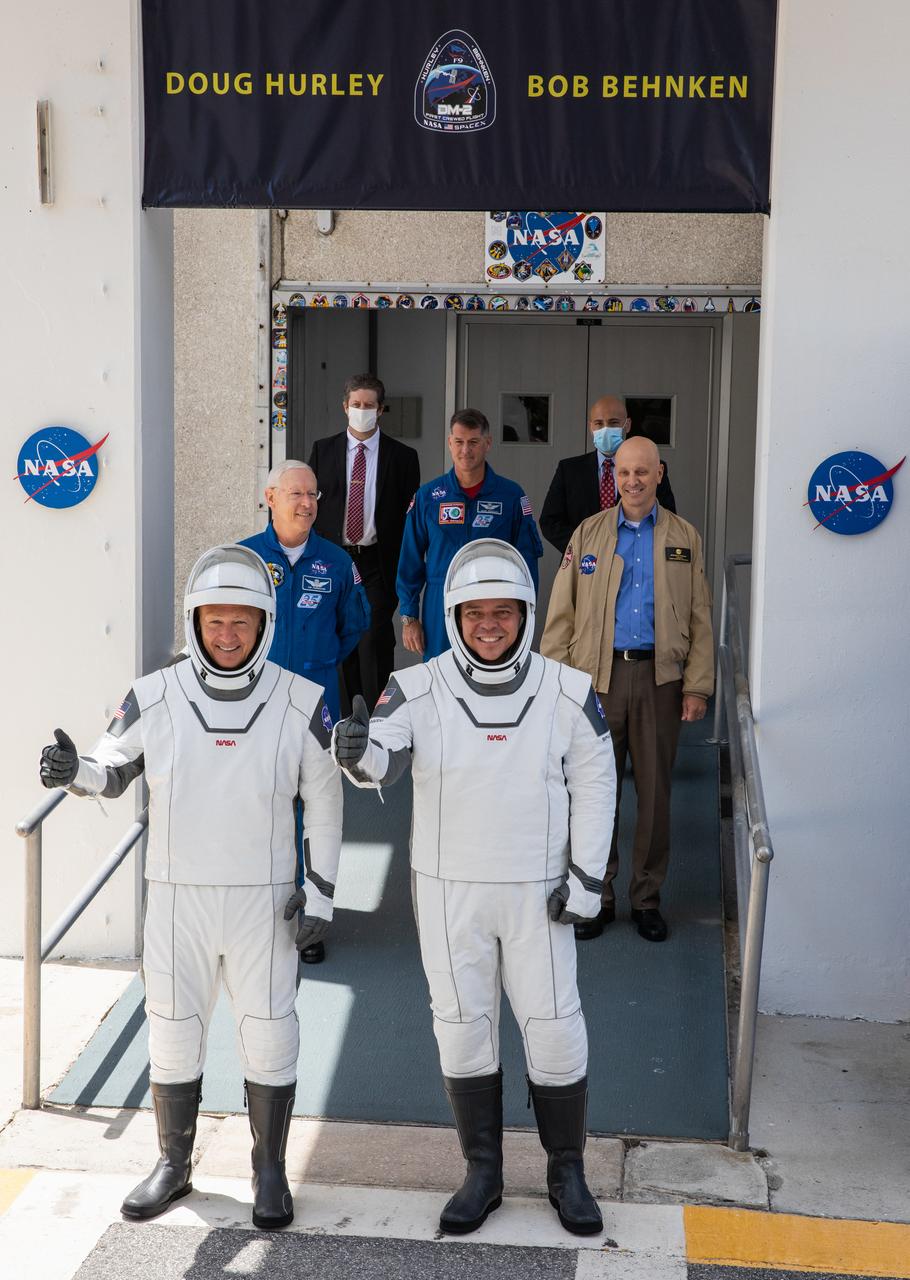
NASA astronauts Douglas Hurley (left) and Robert Behnken pause for a photo as they exit the Neil A. Armstrong Operations and Checkout Building at the agency’s Kennedy Space Center in Florida on May 30, 2020, in preparation for transport to Launch Complex 39A ahead of embarking on NASA’s SpaceX Demo-2 mission. The SpaceX Falcon 9 rocket and Crew Dragon spacecraft lifted off at 3:22 p.m. EDT. Behnken and Hurley are the first astronauts to launch to the International Space Station from U.S. soil since the end of the Space Shuttle Program in 2011. Part of NASA’s Commercial Crew Program, this will be SpaceX’s final flight test, paving the way for the agency to certify the crew transportation system for regular, crewed flights to the orbiting laboratory.
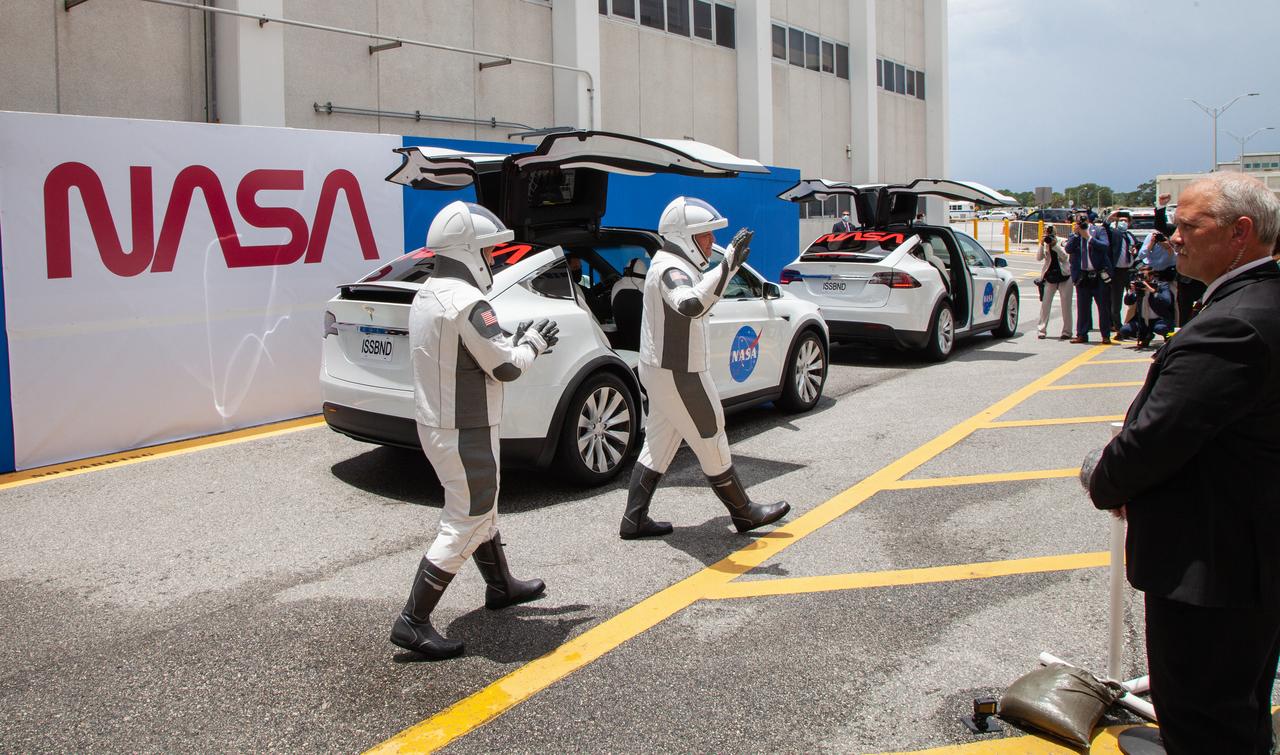
NASA astronauts Douglas Hurley (left) and Robert Behnken wave as they exit the Neil A. Armstrong Operations and Checkout Building at the agency’s Kennedy Space Center in Florida in preparation for transport to Launch Complex 39A to launch on NASA’s SpaceX Demo-2 mission. The launch, initially scheduled for May 27, 2020, was scrubbed due to unfavorable weather conditions around Launch Complex 39A. The next launch attempt will be Saturday, May 30. Liftoff of the SpaceX Falcon 9 rocket and Crew Dragon spacecraft is scheduled for 3:22 p.m. EDT from historic Launch Complex 39A. Behnken and Hurley will be the first astronauts to launch to the International Space Station from U.S. soil since the end of the Space Shuttle Program in 2011. Part of NASA’s Commercial Crew Program, this will be SpaceX’s final flight test, paving the way for the agency to certify the crew transportation system for regular, crewed flights to the orbiting laboratory.
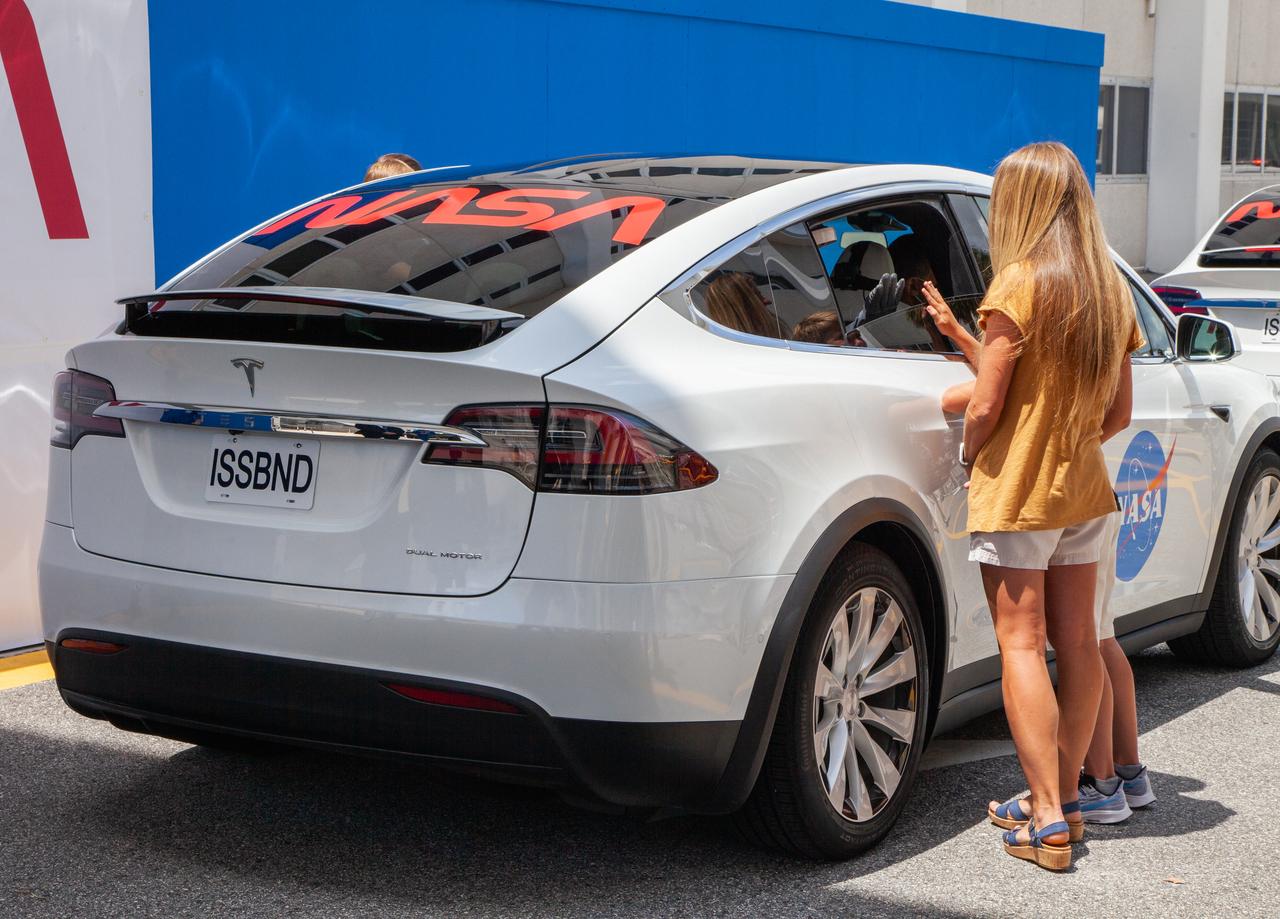
After NASA astronauts Robert Behnken and Douglas Hurley enter the Tesla Model X that will transport them from the Neil A. Armstrong Operations and Checkout Building to historic Launch Complex 39A at the Kennedy Space Center in Florida, their families approach the car to give their goodbyes ahead of the agency’s SpaceX Demo-2 mission on May 30, 2020. Liftoff of the SpaceX Falcon 9 rocket and Crew Dragon spacecraft occurred at 3:22 p.m. EDT. Behnken and Hurley are the first astronauts to launch to the International Space Station from U.S. soil since the end of the Space Shuttle Program in 2011. Part of NASA’s Commercial Crew Program, this will be SpaceX’s final flight test, paving the way for the agency to certify the crew transportation system for regular, crewed flights to the orbiting laboratory.
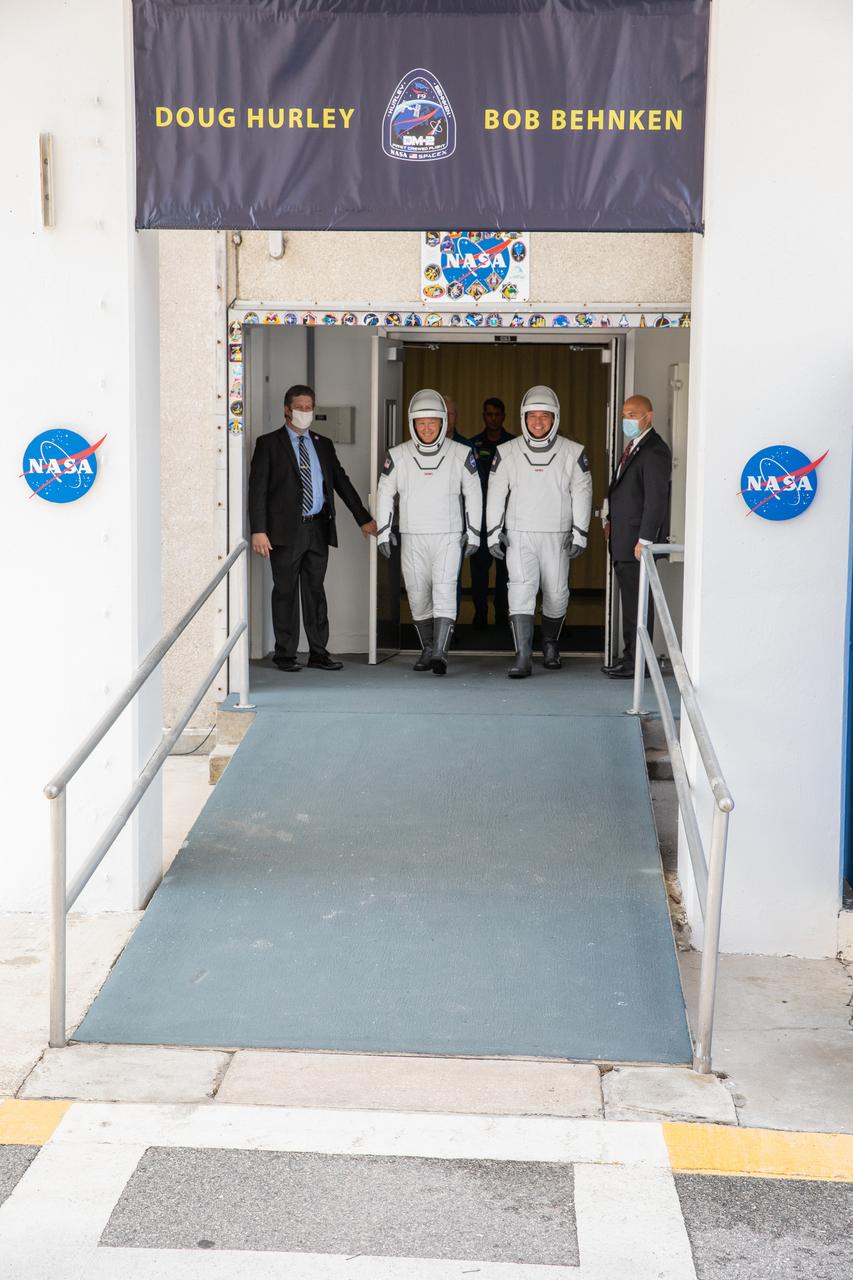
NASA astronauts Douglas Hurley (left) and Robert Behnken exit the Neil A. Armstrong Operations and Checkout Building at the agency’s Kennedy Space Center in Florida in preparation for transport to Launch Complex 39A to launch on NASA’s SpaceX Demo-2 mission. The launch, initially scheduled for May 27, 2020, was scrubbed due to unfavorable weather conditions around Launch Complex 39A. The next launch attempt will be Saturday, May 30. Liftoff of the SpaceX Falcon 9 rocket and Crew Dragon spacecraft is scheduled for 3:22 p.m. EDT from historic Launch Complex 39A. Behnken and Hurley will be the first astronauts to launch to the International Space Station from U.S. soil since the end of the Space Shuttle Program in 2011. Part of NASA’s Commercial Crew Program, this will be SpaceX’s final flight test, paving the way for the agency to certify the crew transportation system for regular, crewed flights to the orbiting laboratory.
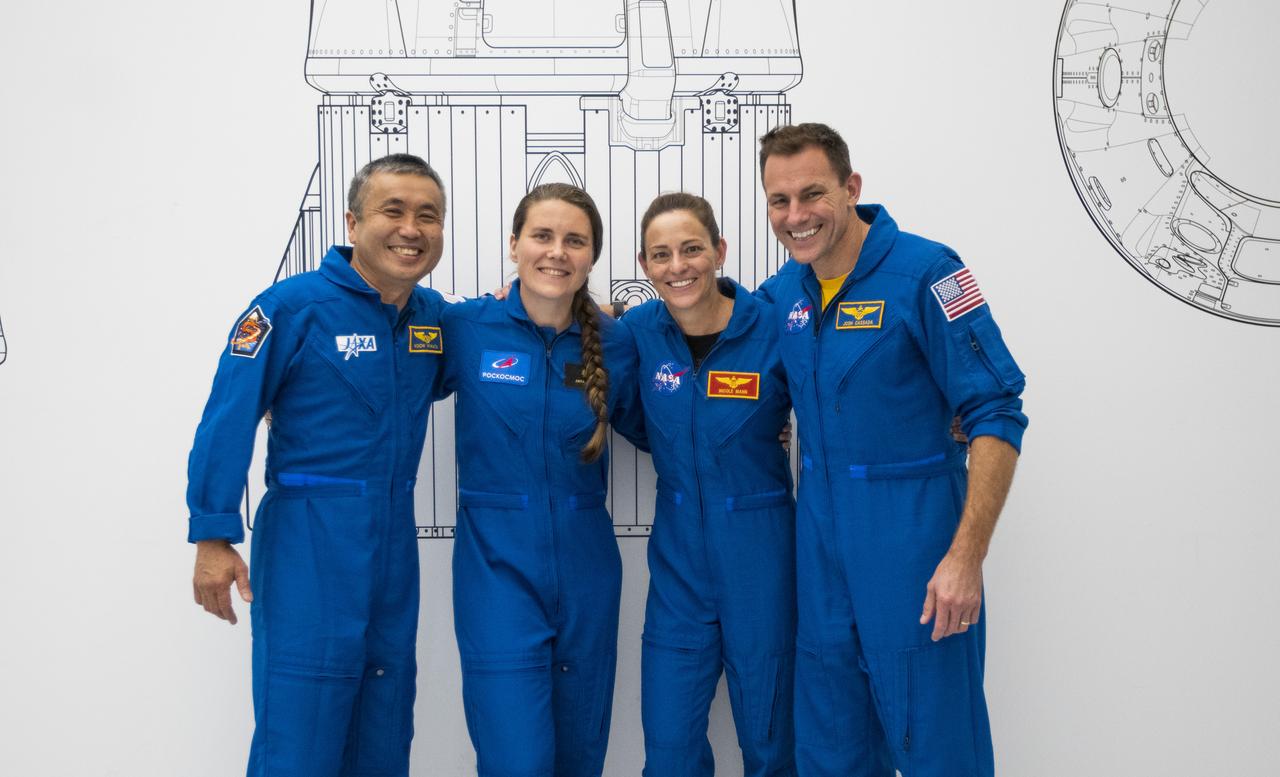
From left, Koichi Wakata, of JAXA (Japan Aerospace Exploration Agency), Roscosmos cosmonaut Anna Kikina, and NASA astronauts Nicole Mann and Josh Cassada will fly aboard NASA’s SpaceX Crew-5 mission. The crew will lift off aboard SpaceX’s Crew Dragon spacecraft – atop the company’s Falcon 9 rocket – from NASA Kennedy Space Center’s Launch Complex 39A in Florida. This marks the fifth crew rotation mission of the company’s human space transportation system, and its sixth flight with astronauts, to the space station for the agency’s Commercial Crew Program.
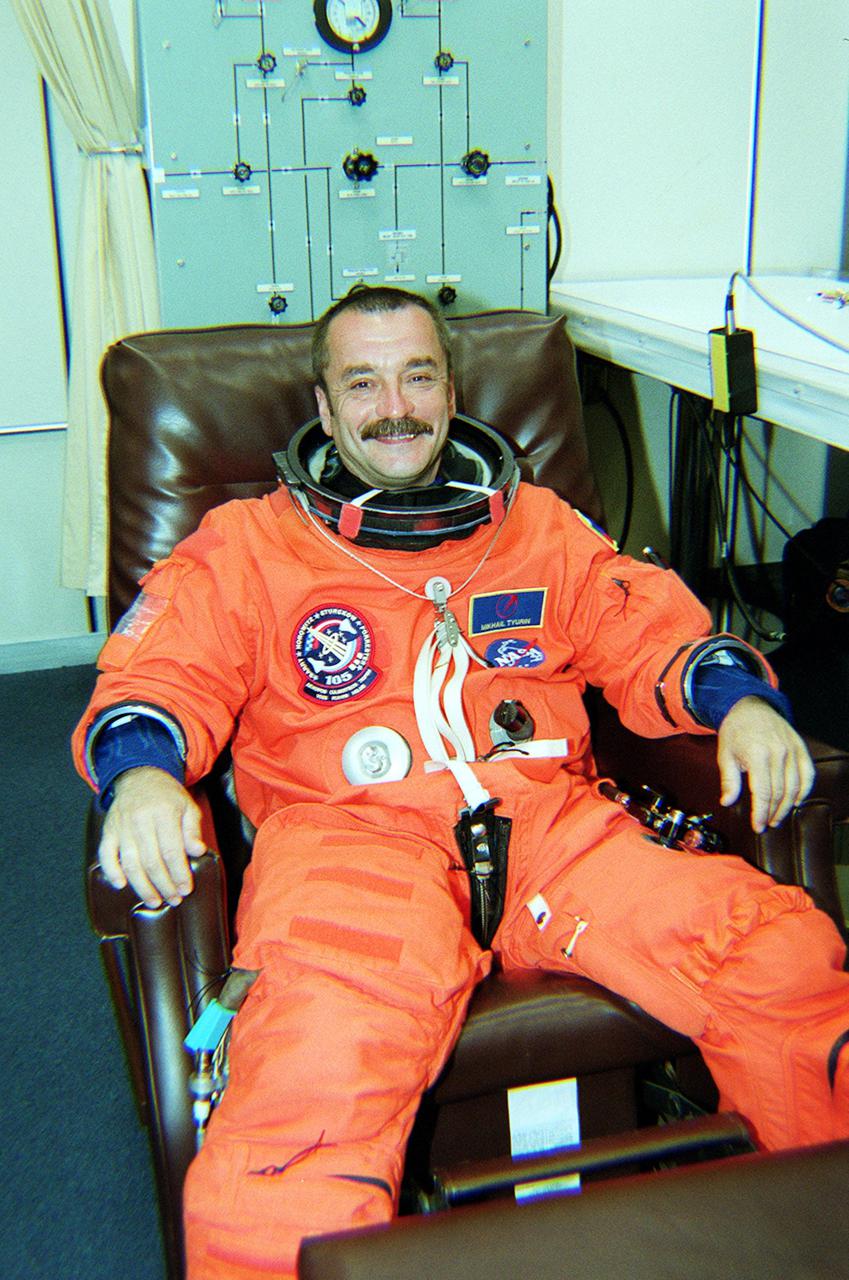
KENNEDY SPACE CENTER, Fla. -- Expedition Three cosmonaut Mikhail Tyurin suits up for launch on mission STS-105. The mission will be Tyurin’s first space flight. On the mission, Discovery will be transporting the Expedition Three crew and several scientific experiments and payloads to the International Space Station, including the Early Ammonia Servicer (EAS) tank. The EAS, which will support the thermal control subsystems until a permanent system is activated, will be attached to the Station during two spacewalks. The three-member Expedition Two crew will be returning to Earth aboard Discovery after a five-month stay on the Station. Launch is scheduled for 5:38 p.m. EDT Aug. 9
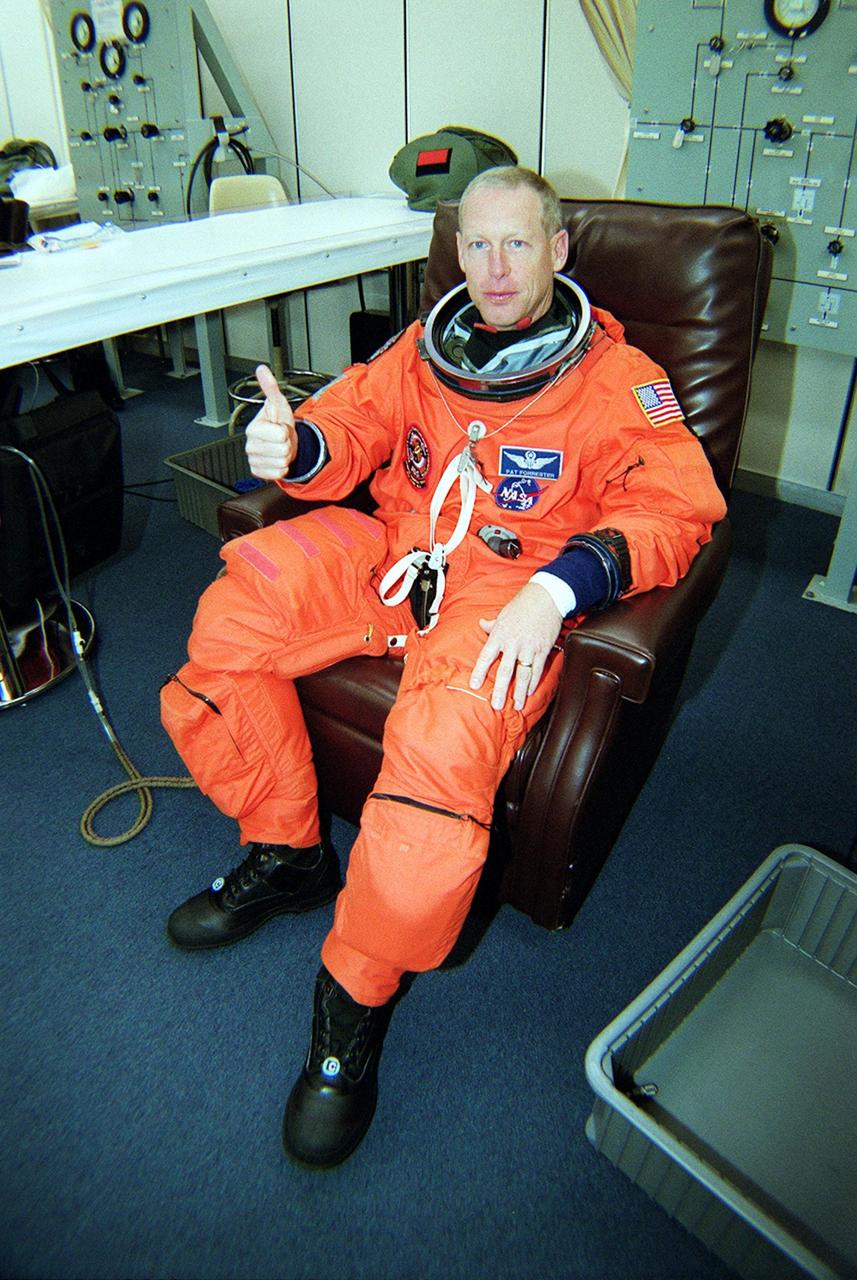
KENNEDY SPACE CENTER, Fla. -- STS-105 Mission Specialist Patrick Forrester suits up for launch on mission STS-105. The mission is Forrester’s first space flight. On the mission, Discovery will be transporting the Expedition Three crew and several scientific experiments and payloads to the International Space Station, including the Early Ammonia Servicer (EAS) tank. The EAS, which will support the thermal control subsystems until a permanent system is activated, will be attached to the Station during two spacewalks. The three-member Expedition Two crew will be returning to Earth aboard Discovery after a five-month stay on the Station. Launch is scheduled for 5:38 p.m. EDT Aug. 9
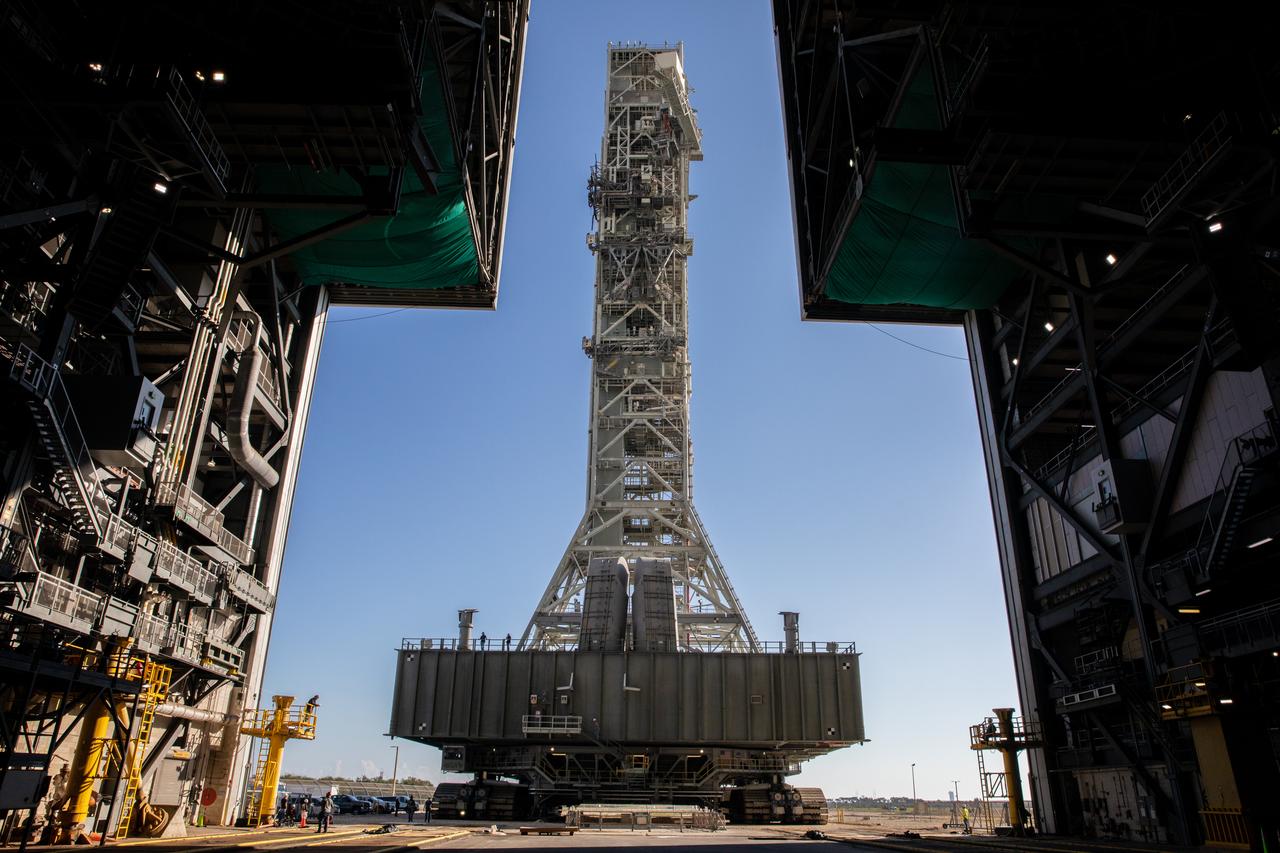
A view from inside the Vehicle Assembly Building (VAB) at NASA’s Kennedy Space Center in Florida on Dec. 9, 2022, as the mobile launcher, carried atop the crawler-transporter 2, arrives at the entrance to the transfer aisle, following the successful launch of the agency’s Space Launch System (SLS) rocket and Orion spacecraft on the Artemis I flight test on Nov. 16, 2022. The mobile launcher will stay inside the VAB and remain there for several weeks as teams get it ready for the Artemis II crewed mission. Following its stay in the VAB, it will go to the mobile launcher park site location at Kennedy where it will undergo emergency egress modifications and testing to support future Artemis missions.
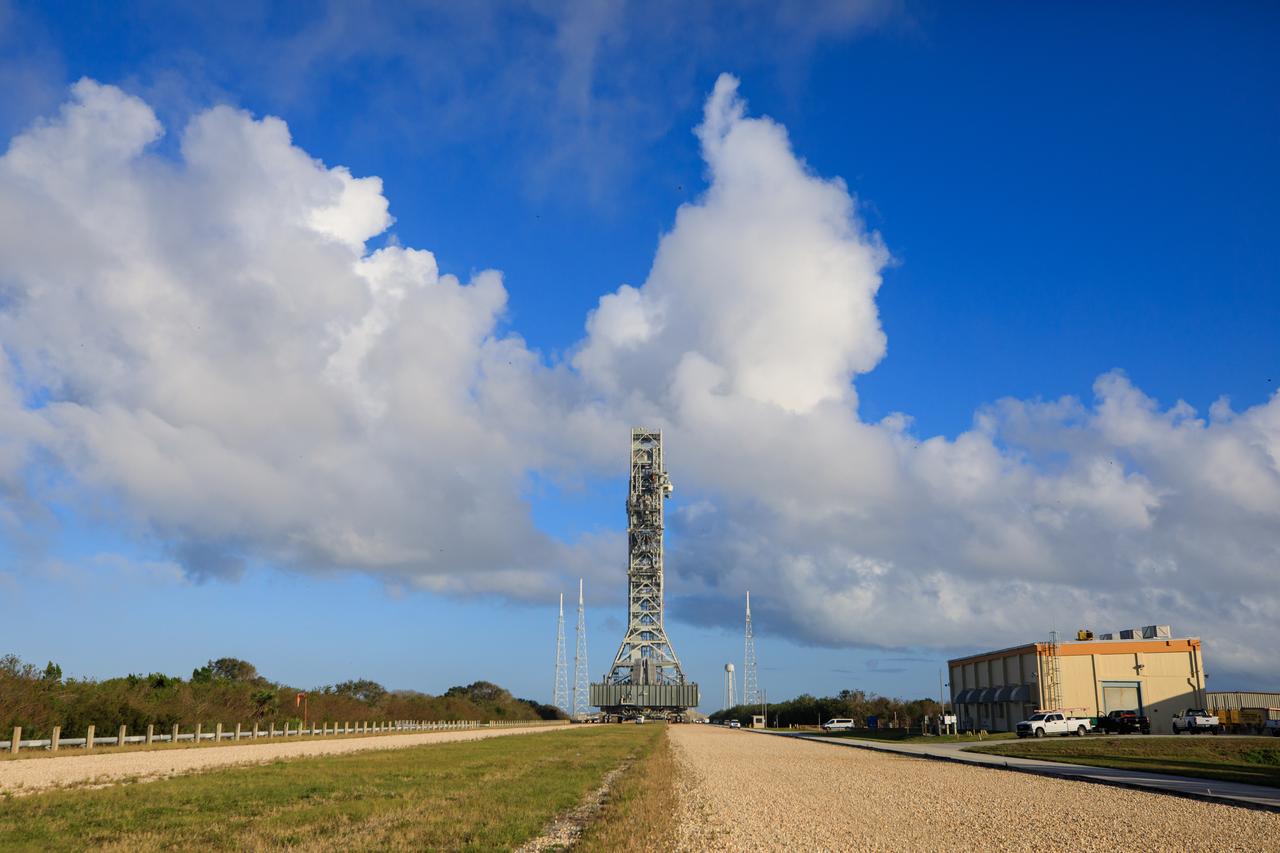
NASA’s mobile launcher, carried atop the crawler-transporter 2, left launch pad 39B at NASA’s Kennedy Space Center in Florida on Dec. 8, 2022, following the successful launch of the agency’s Space Launch System (SLS) rocket and Orion spacecraft on the Artemis I flight test on Nov. 16, 2022. The mobile launcher is scheduled to return to the Vehicle Assembly Building (VAB) on Dec. 9, 2022, and it will remain inside the VAB for several weeks as teams get it ready for the Artemis II crewed mission. Following its stay in the VAB, it will go to the mobile launcher park site location at Kennedy where it will undergo emergency egress modifications and testing to support future Artemis missions.
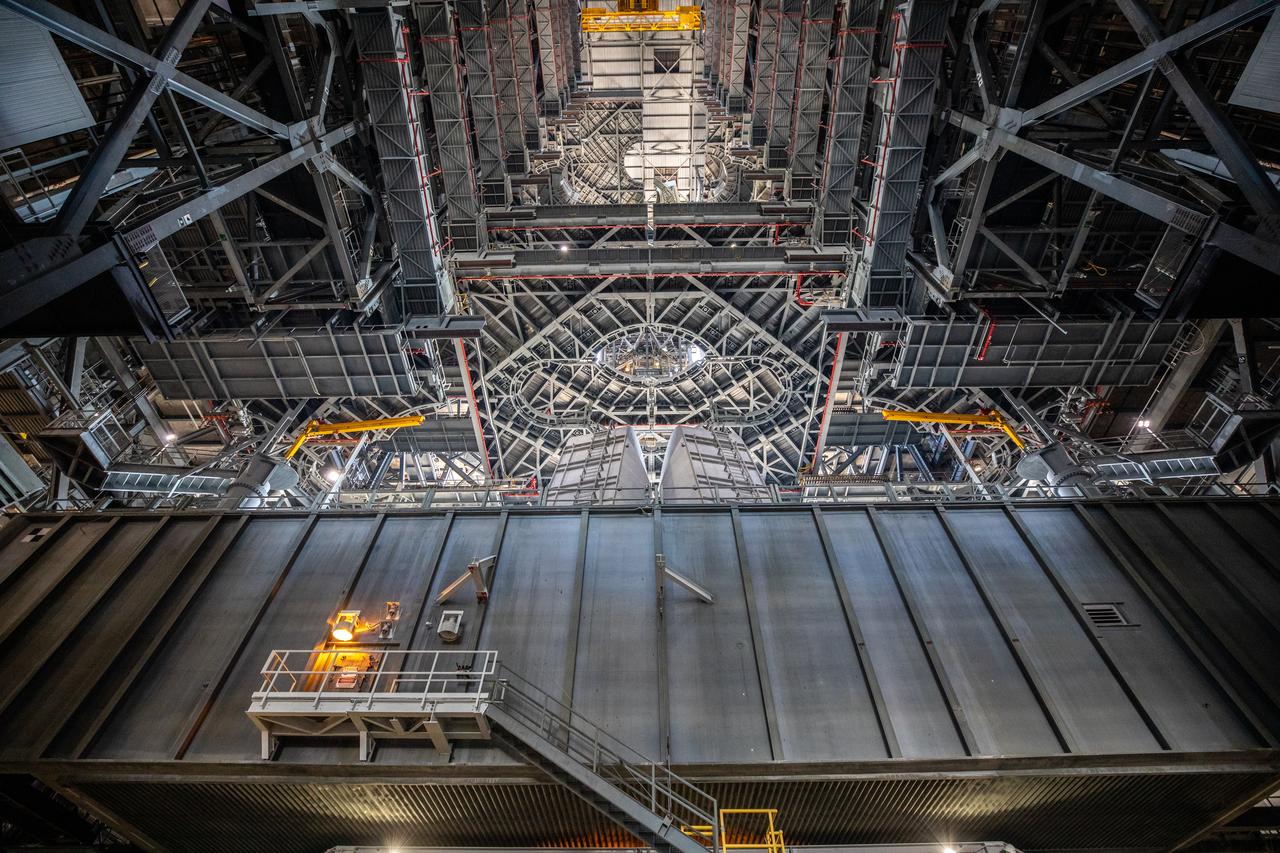
NASA’s mobile launcher, carried atop the crawler-transporter 2, is moved inside High Bay 3 of the Vehicle Assembly Building (VAB) at NASA’s Kennedy Space Center in Florida on Dec. 9, 2022, following the successful launch of the agency’s Space Launch System (SLS) rocket and Orion spacecraft on the Artemis I flight test on Nov. 16, 2022. The mobile launcher will remain inside the VAB for several weeks as teams get it ready for the Artemis II crewed mission. Following its stay in the VAB, it will go to the mobile launcher park site location at Kennedy where it will undergo emergency egress modifications and testing to support future Artemis missions.
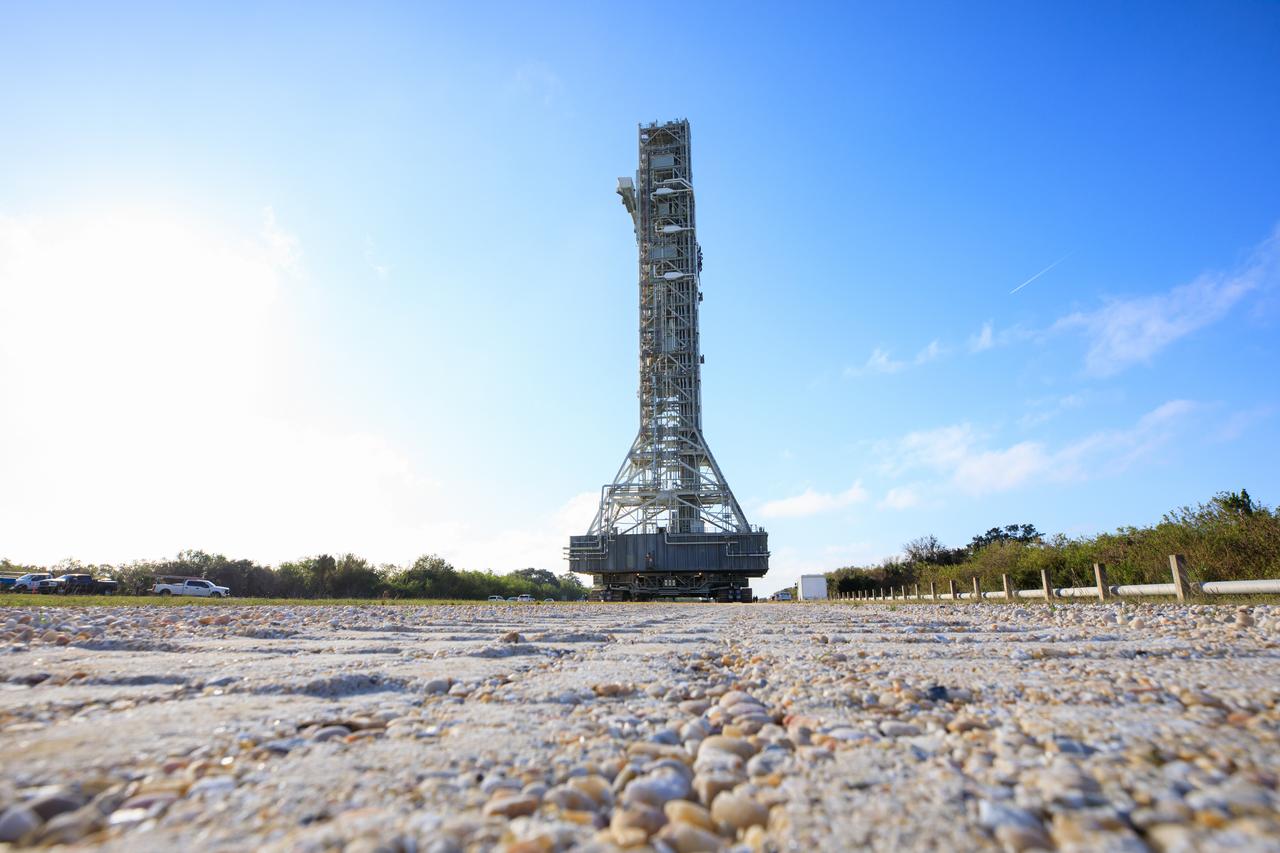
NASA’s mobile launcher, carried atop the crawler-transporter 2, left launch pad 39B at NASA’s Kennedy Space Center in Florida on Dec. 8, 2022, following the successful launch of the agency’s Space Launch System (SLS) rocket and Orion spacecraft on the Artemis I flight test on Nov. 16, 2022. The mobile launcher is scheduled to return to the Vehicle Assembly Building (VAB) on Dec. 9, 2022, and it will remain inside the VAB for several weeks as teams get it ready for the Artemis II crewed mission. Following its stay in the VAB, it will go to the mobile launcher park site location at Kennedy where it will undergo emergency egress modifications and testing to support future Artemis missions.