S65-05399 (1965) --- Composite drawing showing the vertical, lateral, forward and aft maneuvering control of the Gemini spacecraft.
GEMINI SPACECRAFT - MANEUVERING CONTROL - MSC
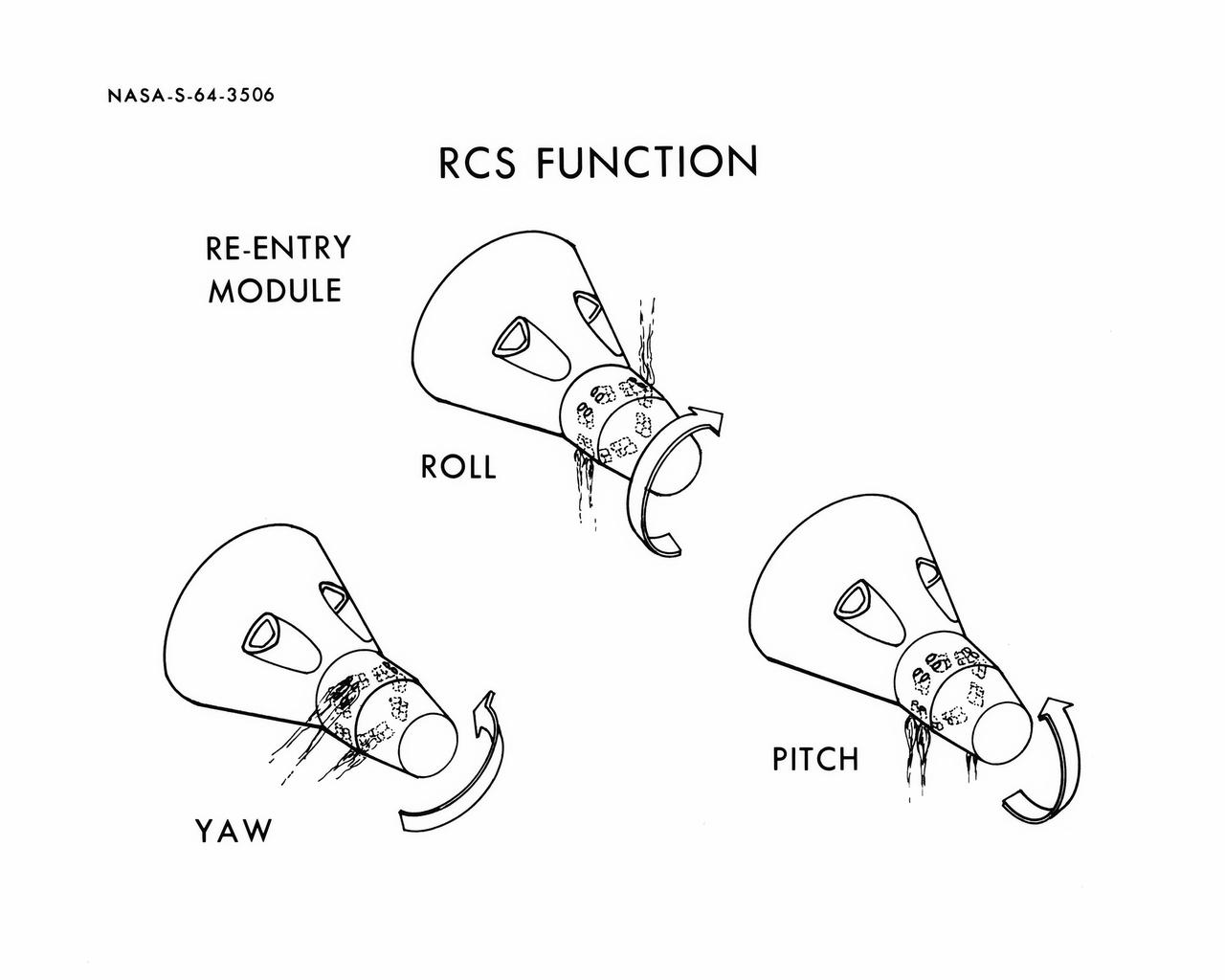
S64-03506 (1964) --- Diagrams shows Gemini spacecraft functions of the thrusters in the Gemini spacecraft's re-entry control system. Thrusters may be fired in various combinations to cause yaw, roll and pitch.
Diagrams of Spacecraft Reaction Control System (RCS) Function
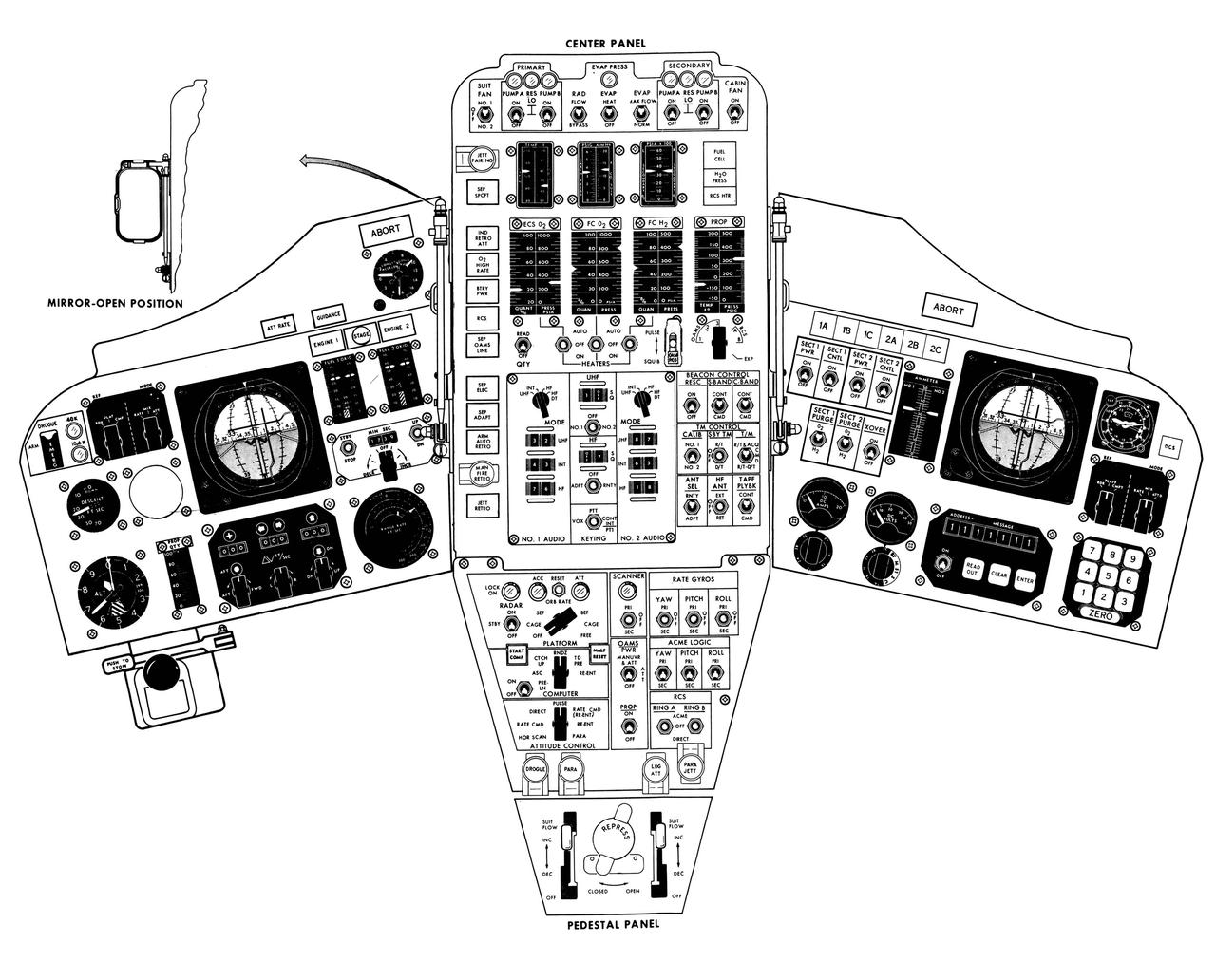
S65-14095 (1965) --- Artist concept of the Gemini spacecraft control panel.
Artist concept of the Gemini spacecraft control panel
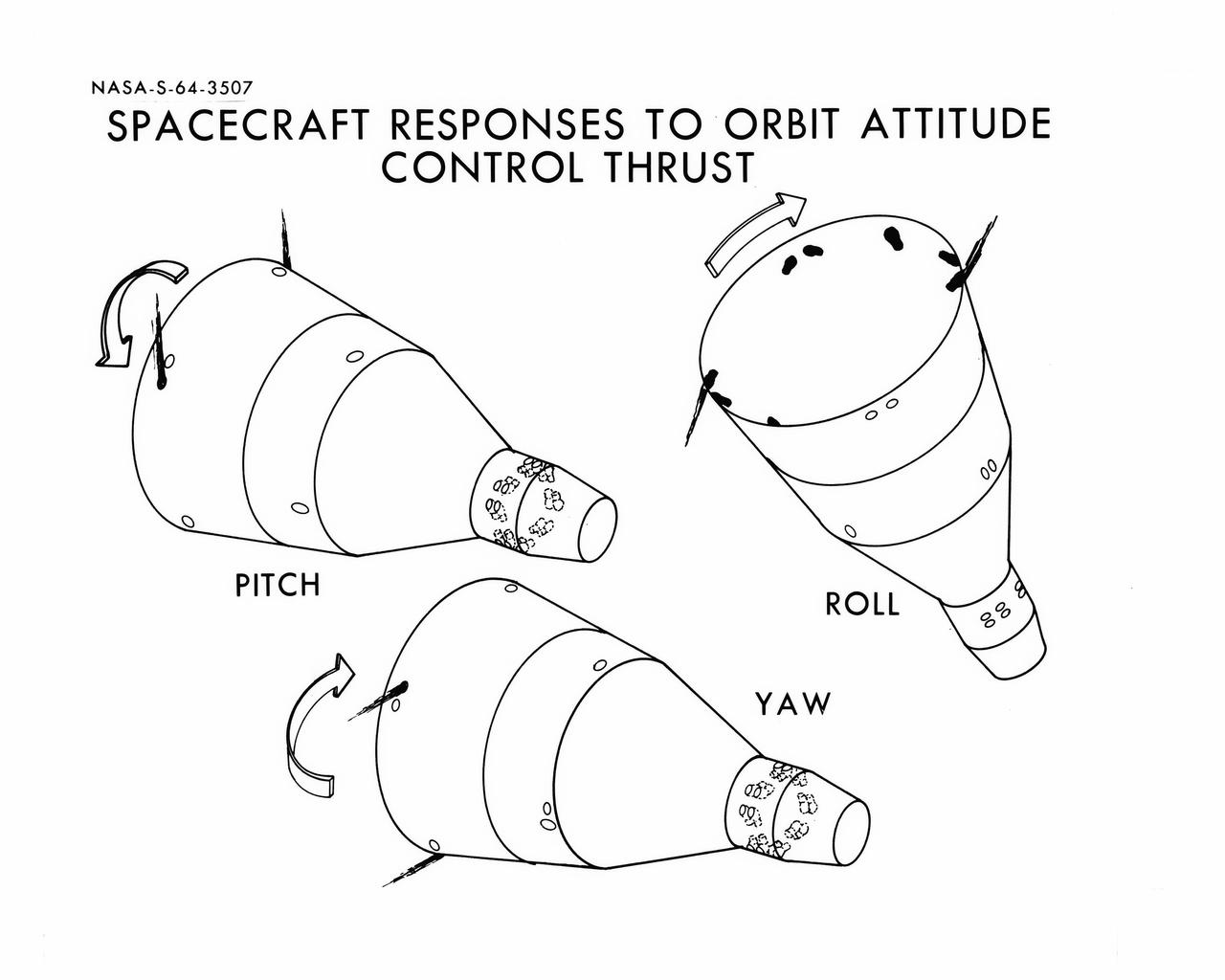
S64-03507 (1964) --- Diagrams shows Gemini spacecraft responses to orbital attitude systems's thrusters. Firing of appropriate combination of the thrusters cause pitch, roll and yaw.
Diagrams of Spacecraft Responses to Orbit Attitude Control Thrust
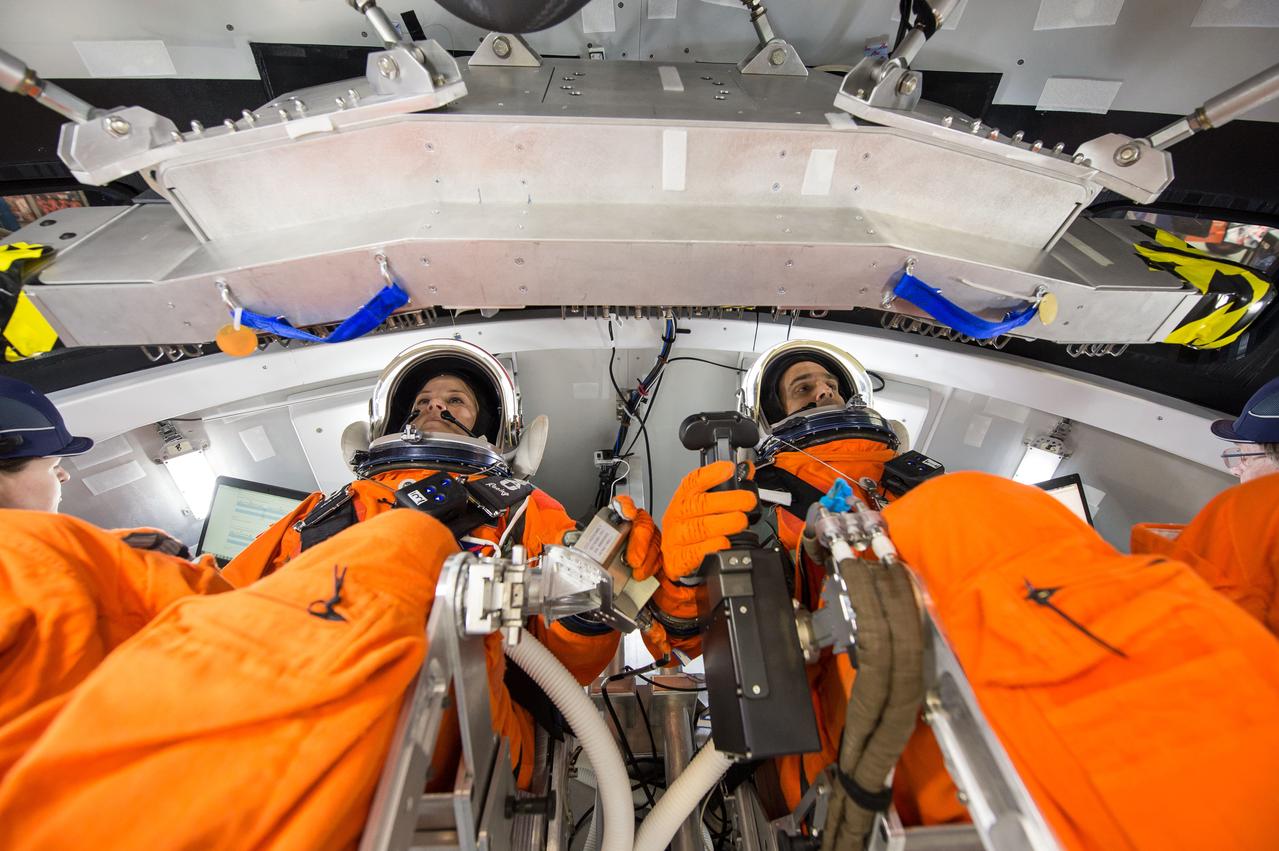
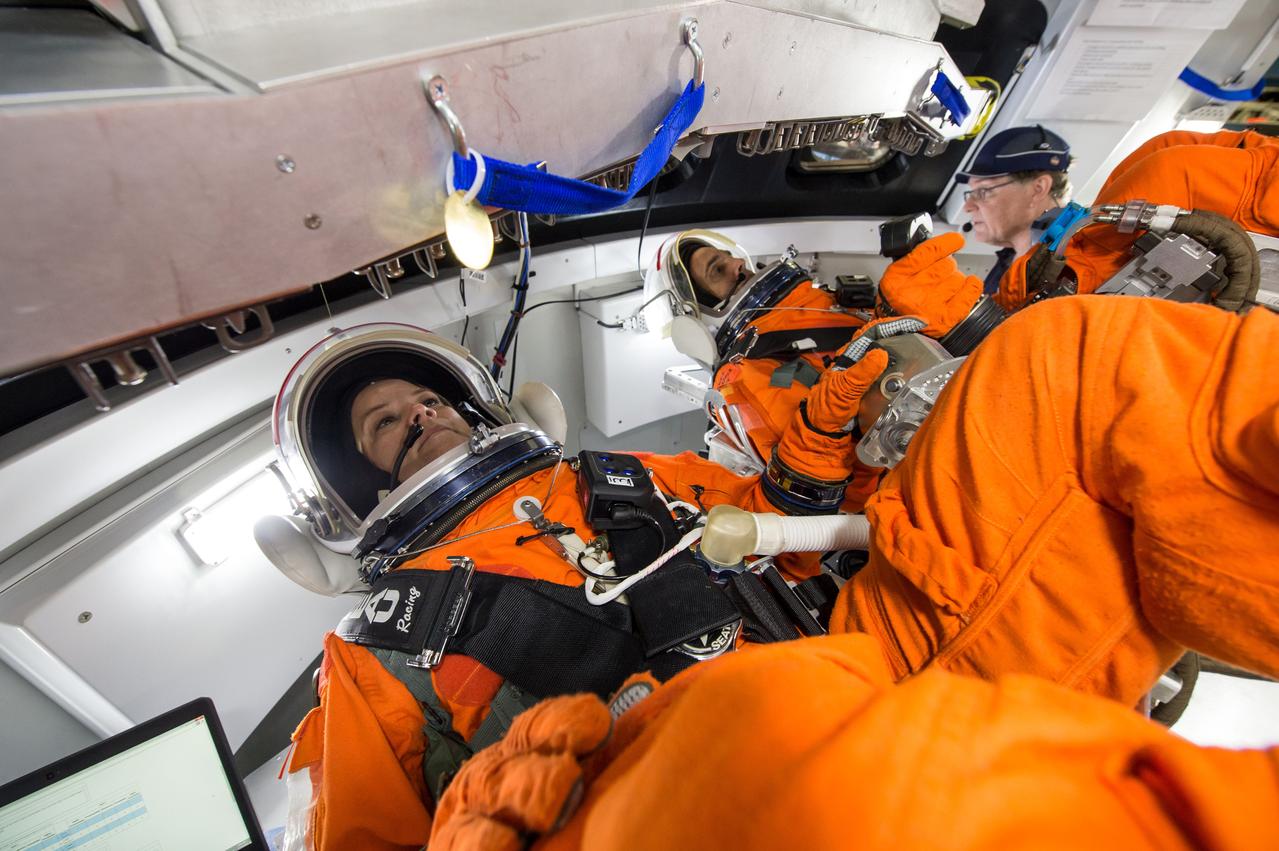
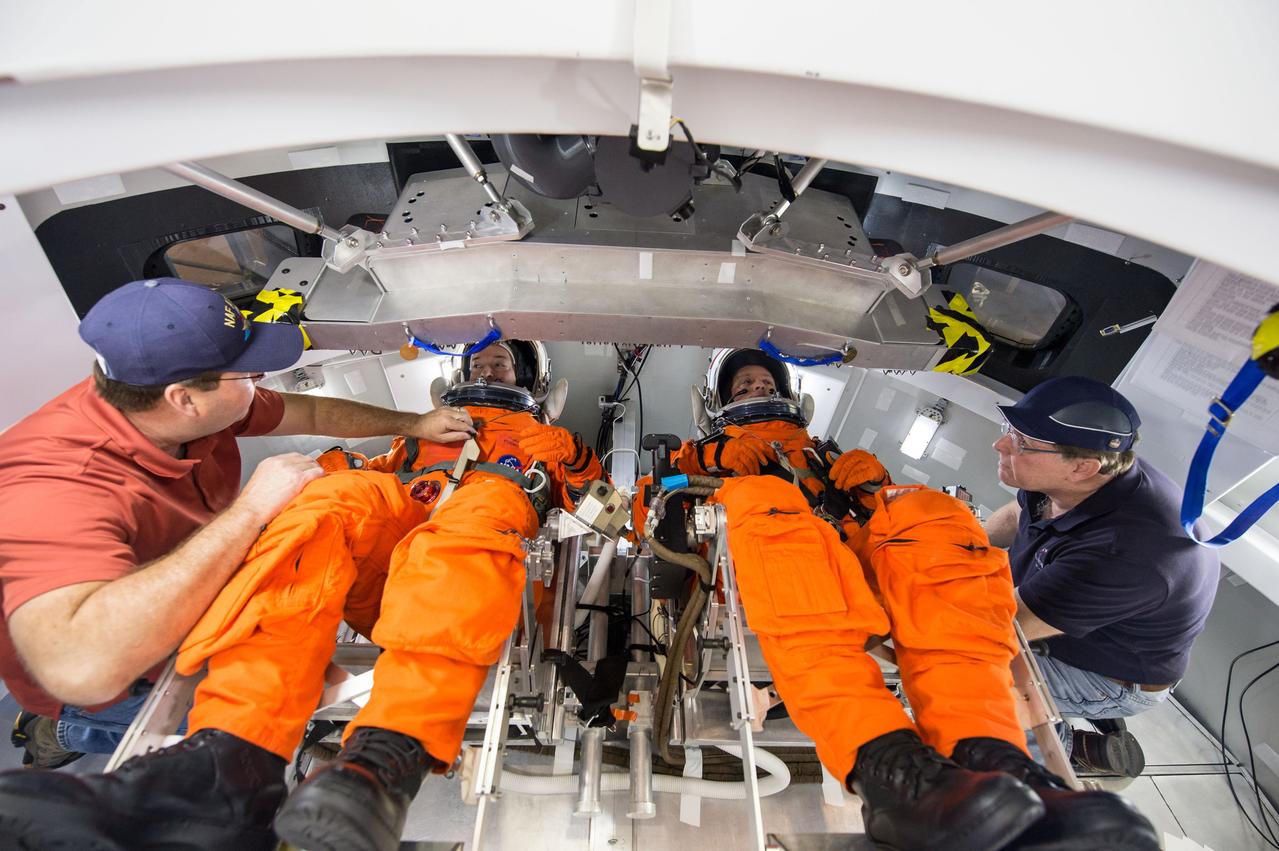
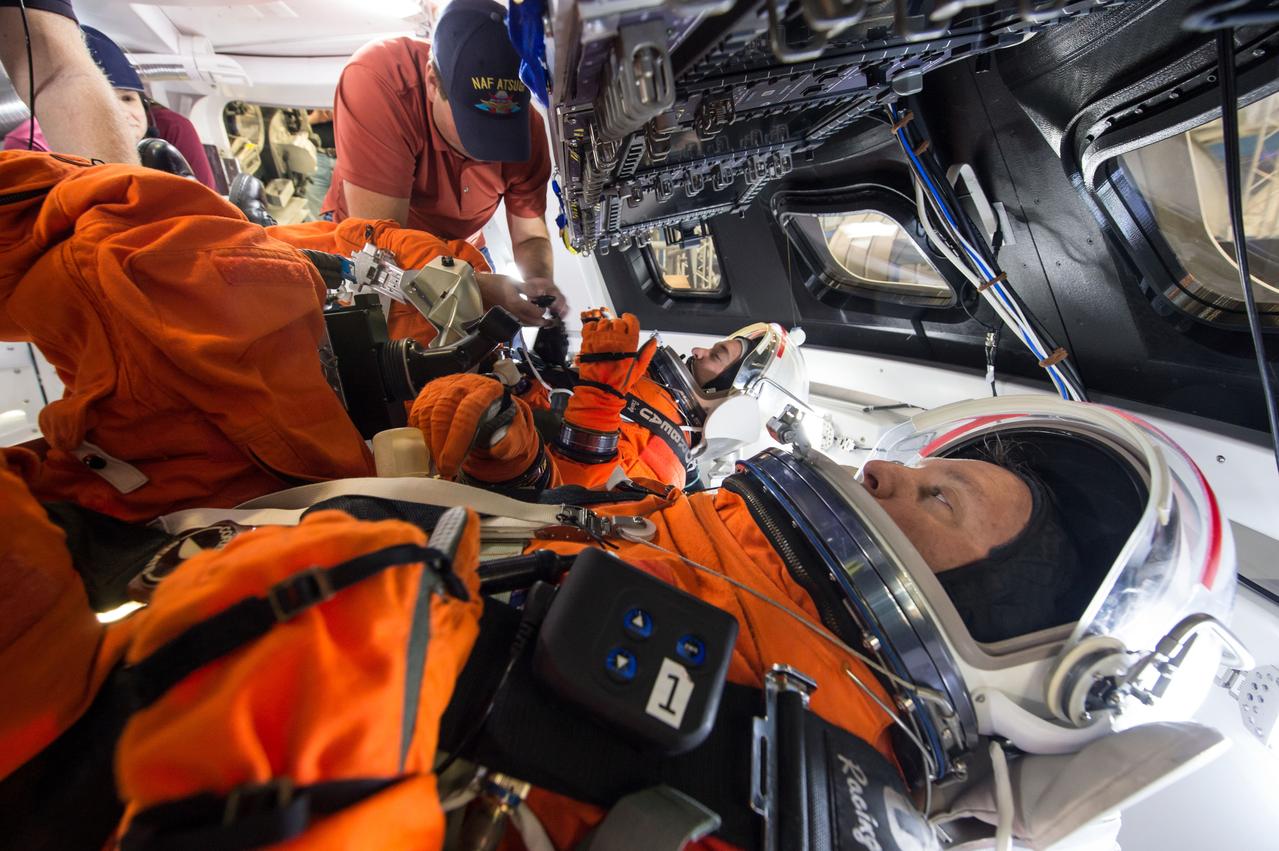
Engineers at NASA's Johnson Space Center in Houston evaluate how crews inside a mockup of the Orion spacecraft interact with the rotational hand controller and cursor control device while inside their Modified Advanced Crew Escape spacesuits on March 24, 2016. The controllers are used to operate Orion’s displays and control system, which the crew will use to maneuver and interact with the spacecraft during missions to deep space destinations. The testing aims to provide data that teams need to make sure astronauts who ride to space in Orion can appropriately interact with the control system while in their suits.
Orion spacecraft control evaluation
Engineers at NASA's Johnson Space Center in Houston evaluate how crews inside a mockup of the Orion spacecraft interact with the rotational hand controller and cursor control device while inside their Modified Advanced Crew Escape spacesuits on March 24, 2016. The controllers are used to operate Orion’s displays and control system, which the crew will use to maneuver and interact with the spacecraft during missions to deep space destinations. The testing aims to provide data that teams need to make sure astronauts who ride to space in Orion can appropriately interact with the control system while in their suits.
Orion spacecraft control evaluation
Engineers at NASA's Johnson Space Center in Houston evaluate how crews inside a mockup of the Orion spacecraft interact with the rotational hand controller and cursor control device while inside their Modified Advanced Crew Escape spacesuits on March 24, 2016. The controllers are used to operate Orion’s displays and control system, which the crew will use to maneuver and interact with the spacecraft during missions to deep space destinations. The testing aims to provide data that teams need to make sure astronauts who ride to space in Orion can appropriately interact with the control system while in their suits.
Orion spacecraft control evaluation
Engineers at NASA's Johnson Space Center in Houston evaluate how crews inside a mockup of the Orion spacecraft interact with the rotational hand controller and cursor control device while inside their Modified Advanced Crew Escape spacesuits on March 24, 2016. The controllers are used to operate Orion’s displays and control system, which the crew will use to maneuver and interact with the spacecraft during missions to deep space destinations. The testing aims to provide data that teams need to make sure astronauts who ride to space in Orion can appropriately interact with the control system while in their suits.
Orion spacecraft control evaluation
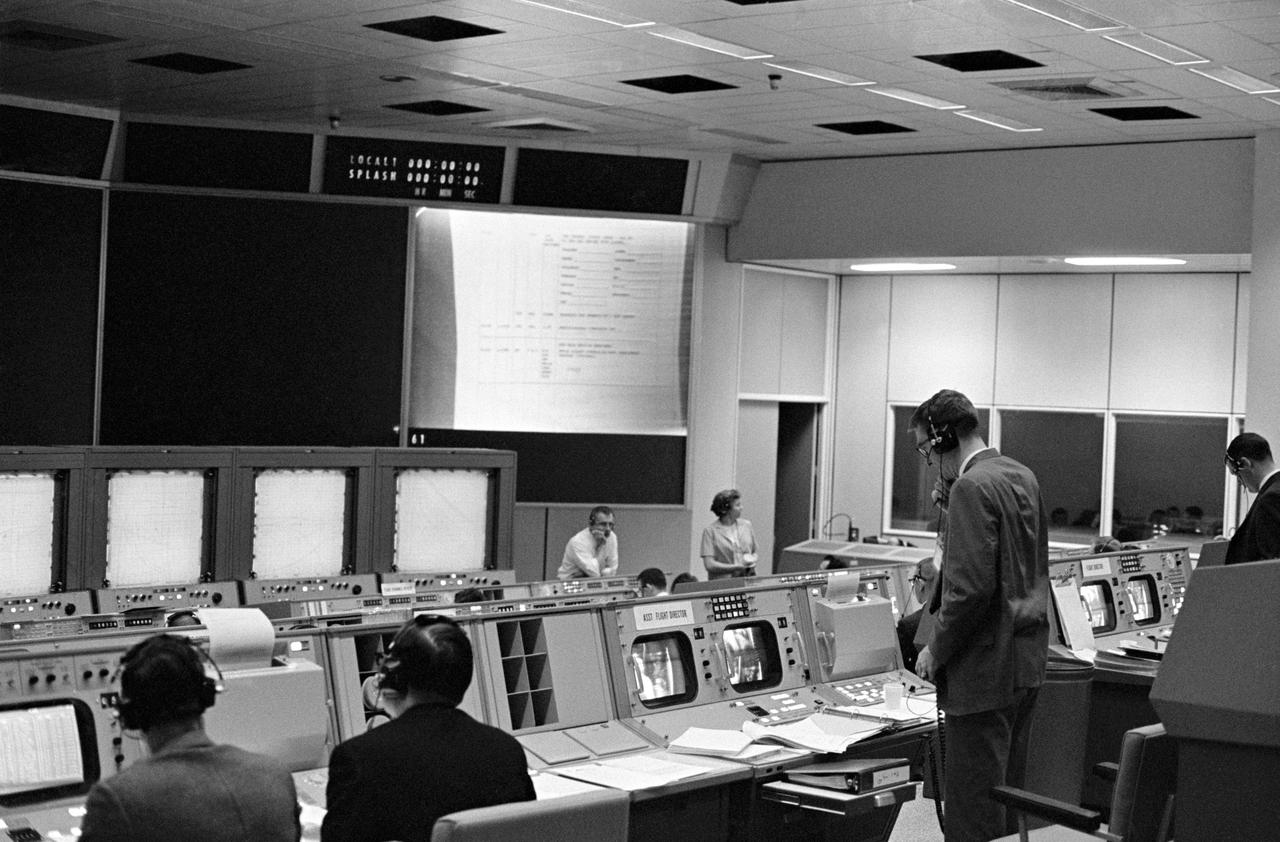
S65-18200 (23 March 1965) --- Overall view of the Mission Control Center at the Manned Spacecraft Center in Houston, Texas during the Gemini-Titan 3 flight.
MISSION CONTROL CENTER (MCC) - GEMINI-TITAN (GT)-3 ACTIVITY - MSC
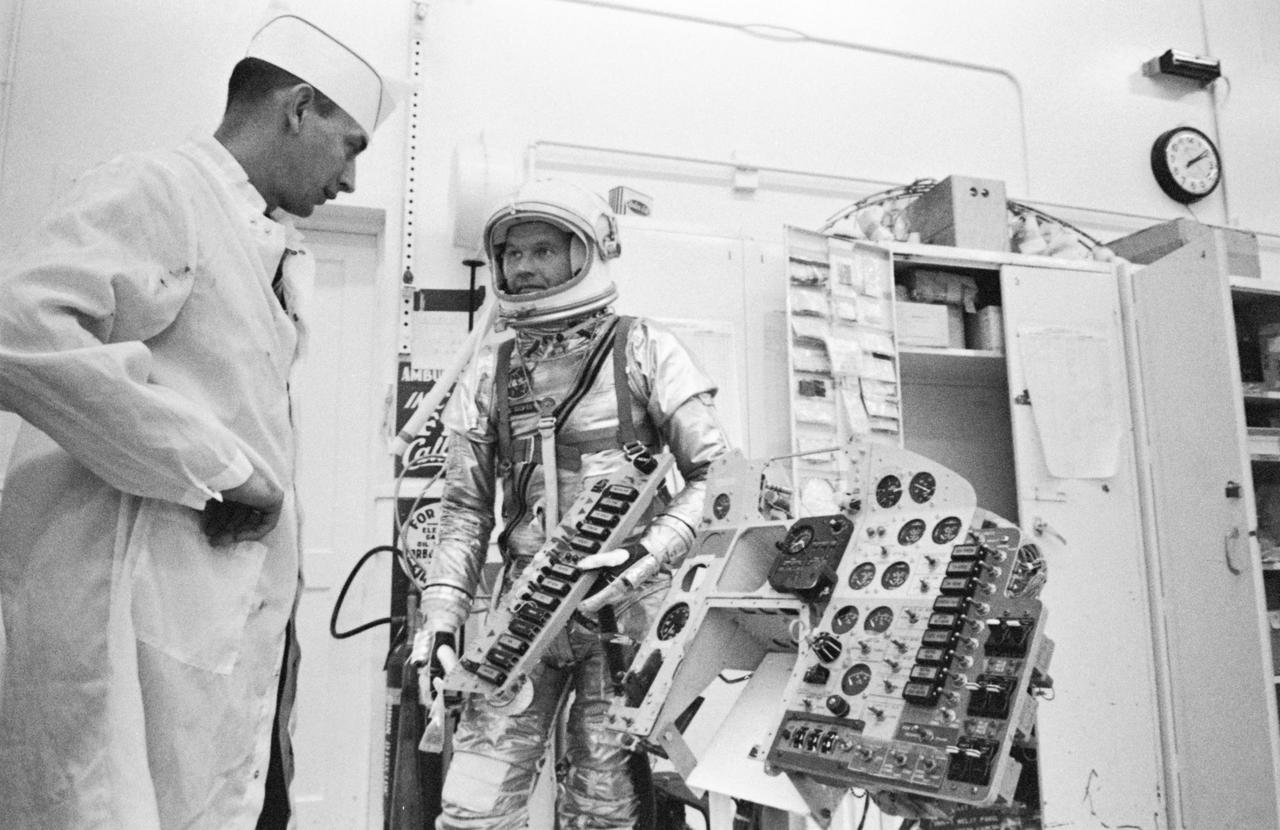
S61-03257 (1961) --- View of Mercury spacecraft instrument control panels. Photo credit: NASA
View of Mercury Spacecraft instrument control panels
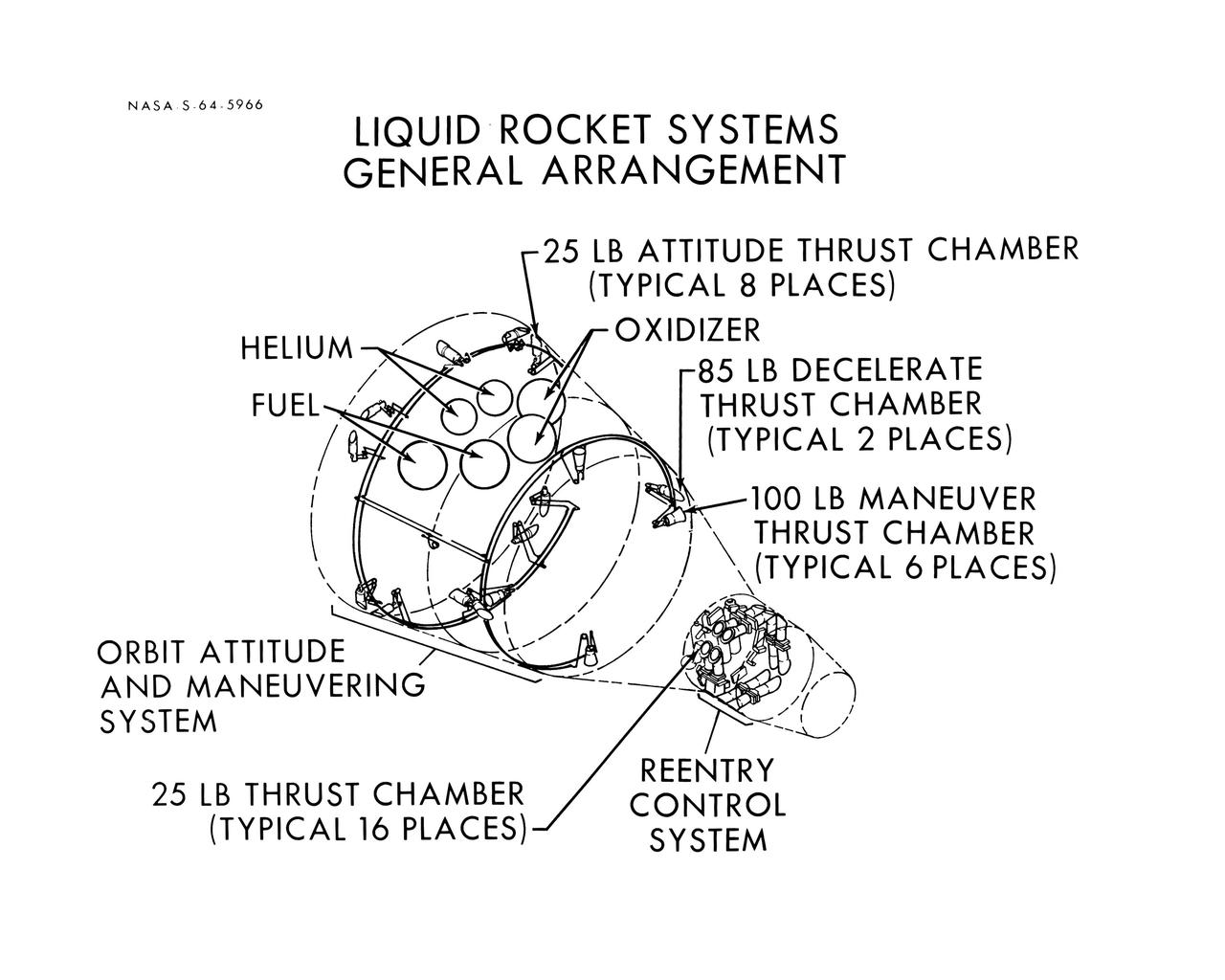
S64-05966 (1964) --- Diagram shows the general arrangement of the liquid rocket systems on the Gemini spacecraft are shown. The locations of the 25-pound, 85-pound and 100-pound thrusters of the orbital attitude and maneuver system and the 25-pound thrusters of the re-entry control system are shown.
Diagram of Liquid Rocket Systems General Arrangement
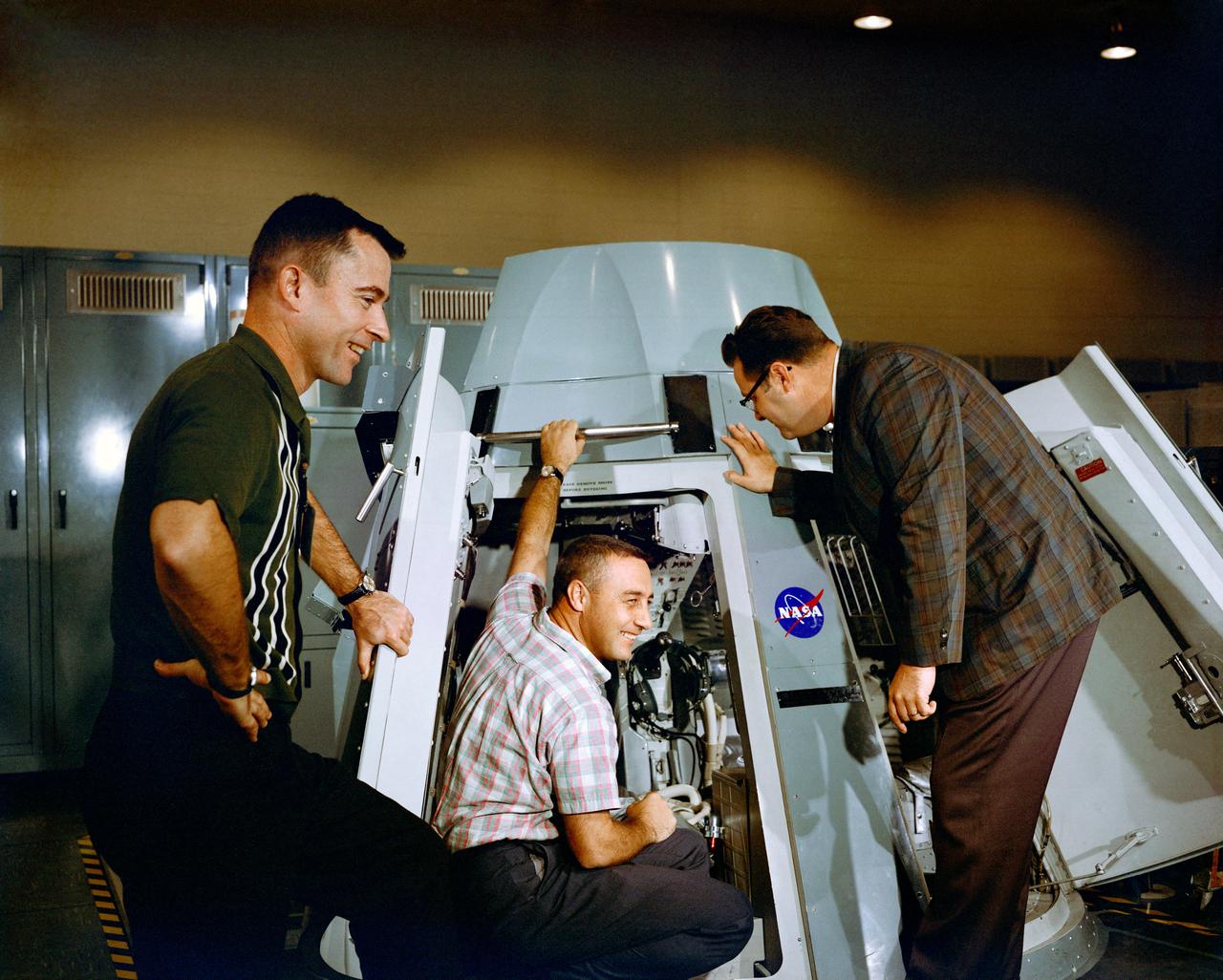
S64-40294 (19 Nov. 1964) --- Astronauts Virgil I. Grissom (center) and John W. Young (left), prime crew for the Gemini-Titan 3 mission, are shown inspecting the inside of Gemini spacecraft at the Mission Control Center at Cape Kennedy, Florida. Riley D. McCafferty is at right. Photo credit: NASA
ASTRONAUTS Young and Grissom - TRAINING - SIMULATOR - CAPE
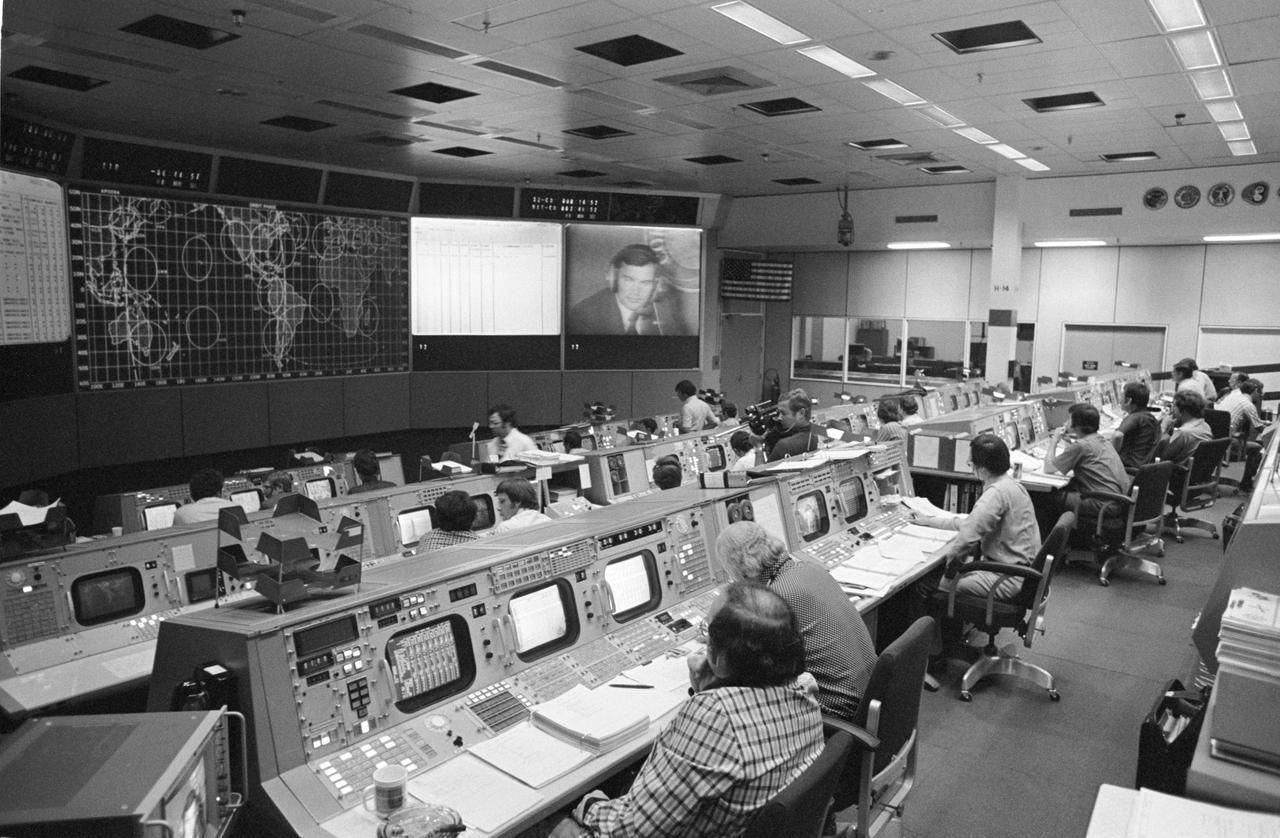
S75-28483 (15 July 1975) --- An overall view of the Mission Operations Control Room in the Mission Control Center on the first day of the Apollo-Soyuz Test Project docking mission in Earth orbit. The American ASTP flight controllers at NASA's Johnson Space Center were monitoring the progress of the Soviet ASTP launch when this photograph was taken.  The television monitor shows cosmonaut Yuri V. Romanenko at his spacecraft communicator?s console in the ASTP mission control center in the Soviet Union. The American ASTP liftoff followed the Soviet ASTP launch by seven and one-half hours.
VIew of Mission Control on first day of ASTP docking in Earth orbit
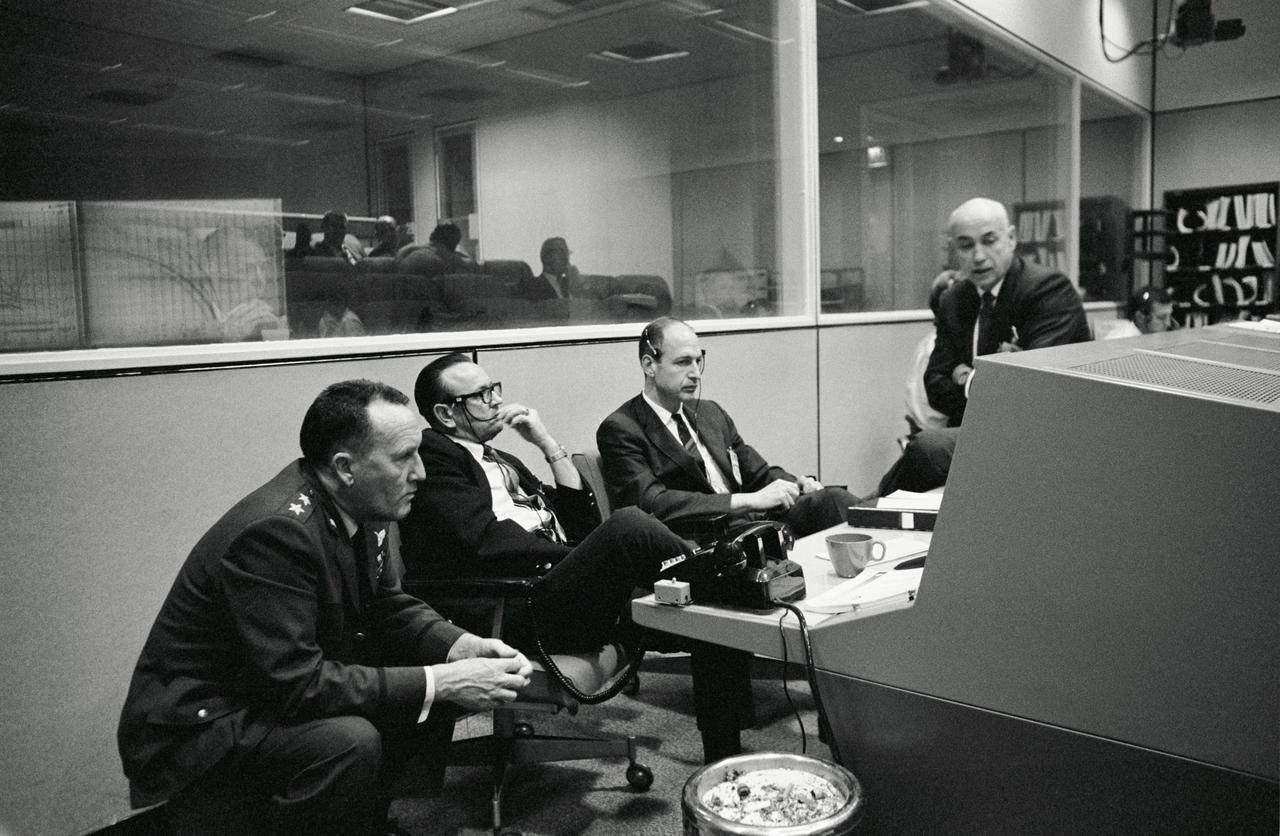
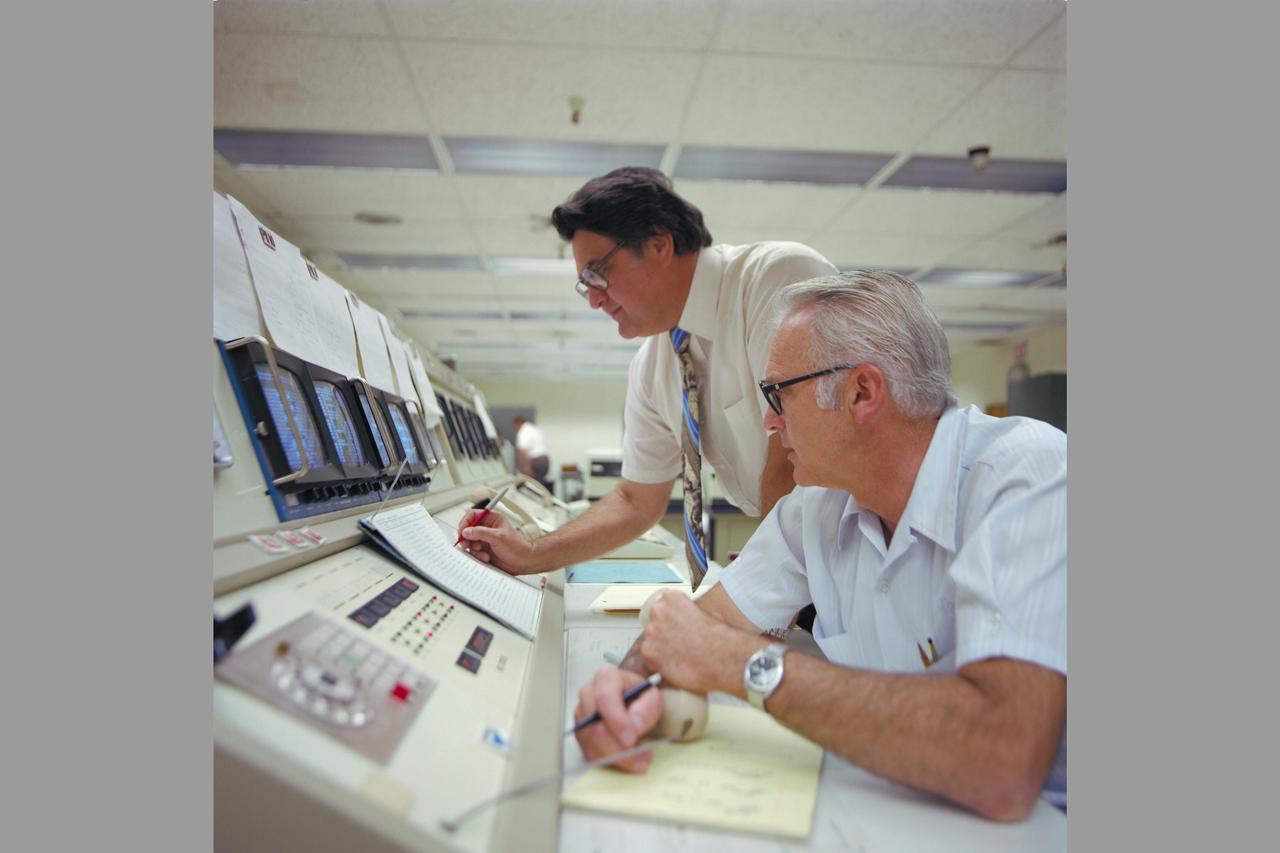
S68-20986 (4 April 1968) --- Scene at the flight operations director's console in the Mission Control Center, Building 30, during the Apollo 6 (Spacecraft 020/Saturn 520) unmanned space flight. Left to right, are Air Force Maj. Gen. Vincent G. Huston, DOD Manager, Manned Space Flight Operations, Andrews Air Force Base, Washington, D.C.; Dr. Christopher C. Kraft Jr., MSC director of flight operations; George M. Low, manager, MSC Apollo Spacecraft Program Office; and Dr. Robert R. Gilruth, MSC Director.
Scene at the Flight Operations Director's console during Apollo 6
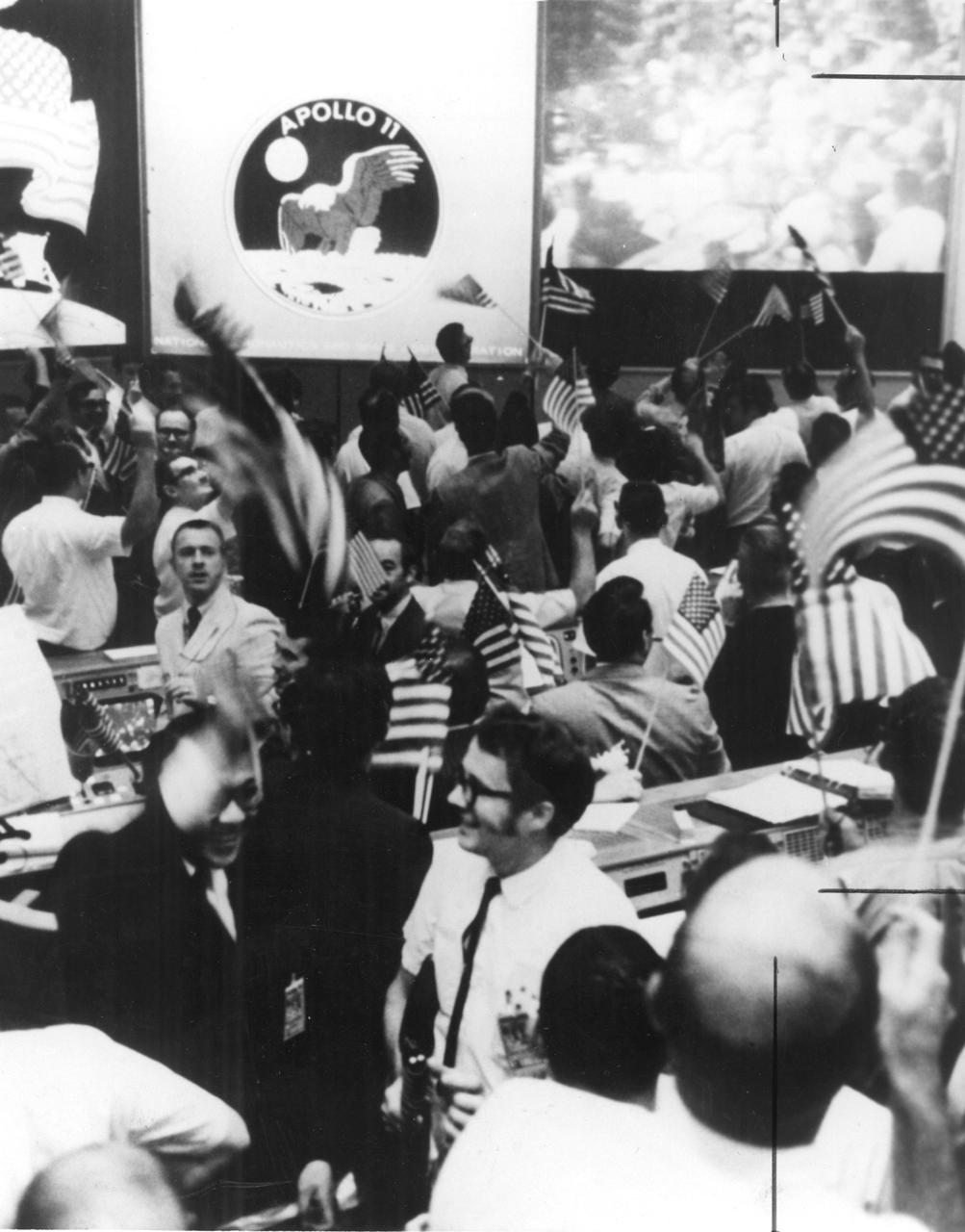
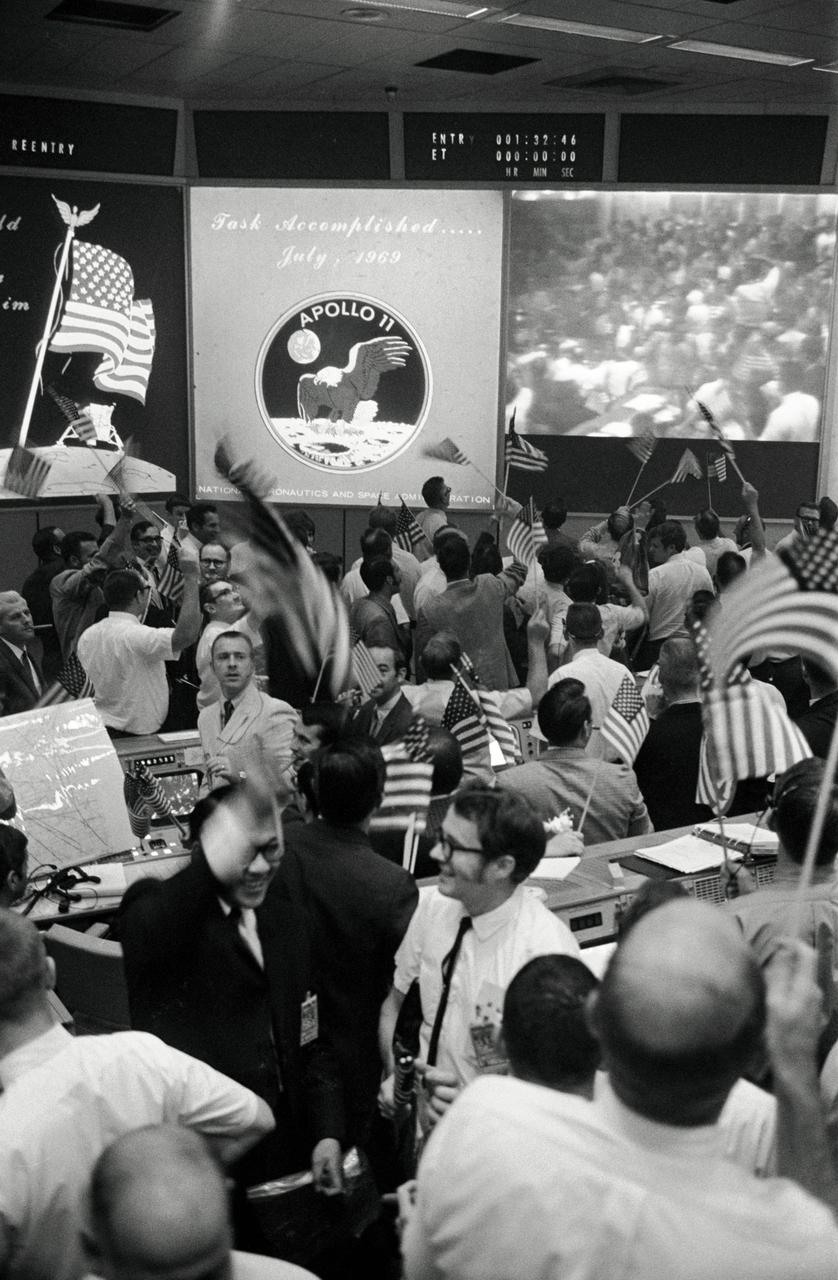
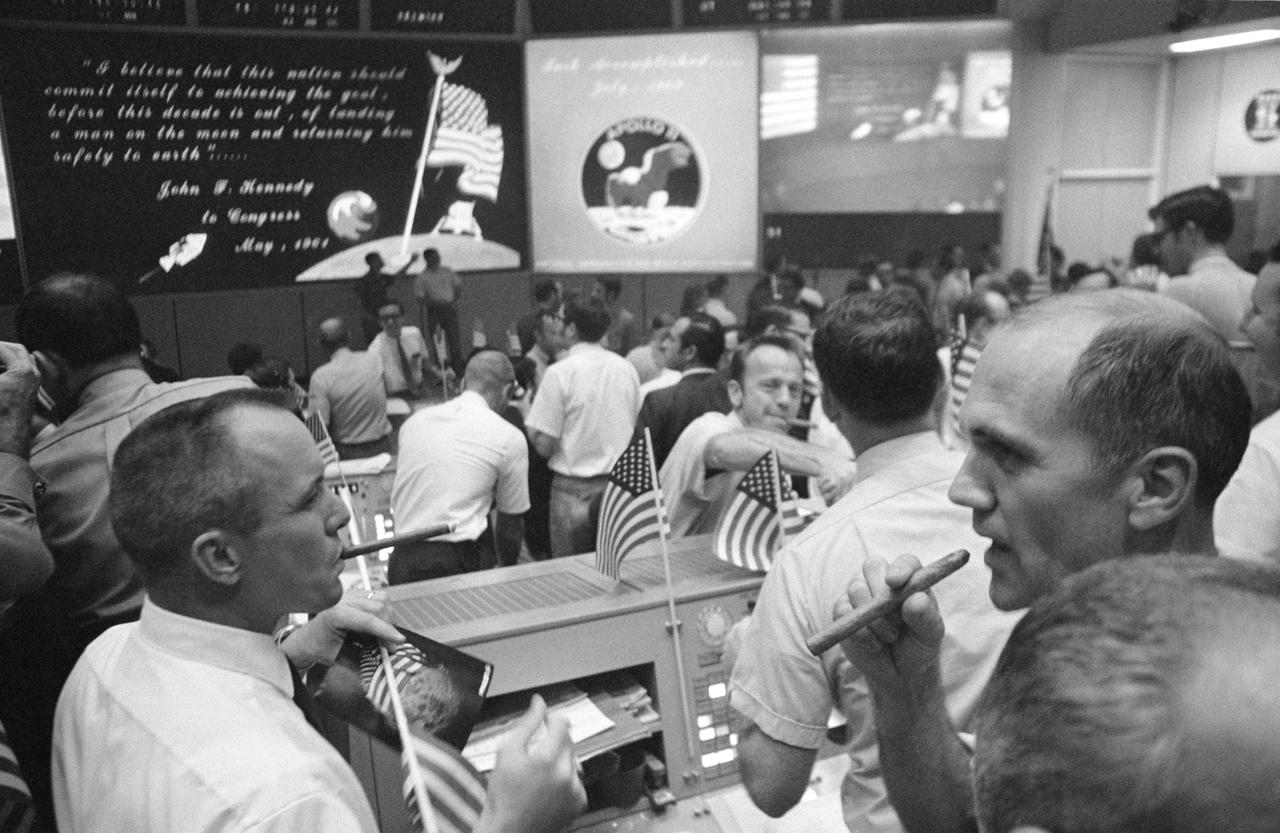
The Apollo 11 mission, the first manned lunar mission, launched from the Kennedy Space Center, Florida via the Marshall Space Flight Center (MSFC) developed Saturn V launch vehicle on July 16, 1969 and safely returned to Earth on July 24, 1969. Aboard he space craft were astronauts Neil A. Armstrong, commander; Michael Collins, Command Module (CM) pilot; and Edwin E. Aldrin Jr., Lunar Module (LM) pilot. The CM, piloted by Michael Collins remained in a parking orbit around the Moon while the LM, named “Eagle’’, carrying astronauts Neil Armstrong and Edwin Aldrin, landed on the Moon. During 2½ hours of surface exploration, the crew collected 47 pounds of lunar surface material for analysis back on Earth. Splashdown occurred in the Pacific Ocean on July 24, 1969. This overall view of the Mission Operations Control Room in the Mission Control Center at the NASA Manned Spacecraft Center (MSC) in Houston Texas shows the jubilation of the celebration of mission success. Mission controllers wave their American flags just after Apollo 11 had been recovered from the Pacific Ocean.
Saturn Apollo Program
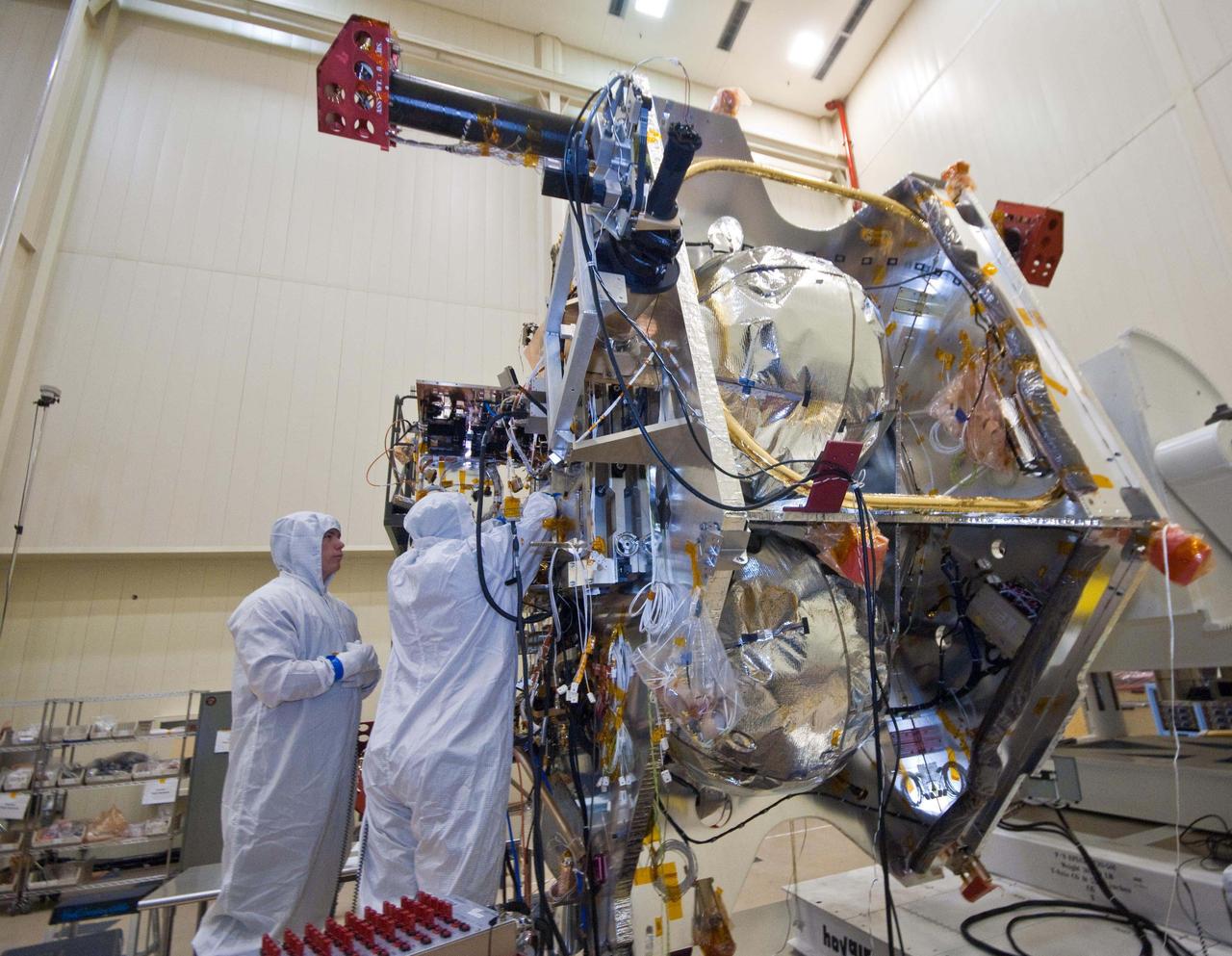
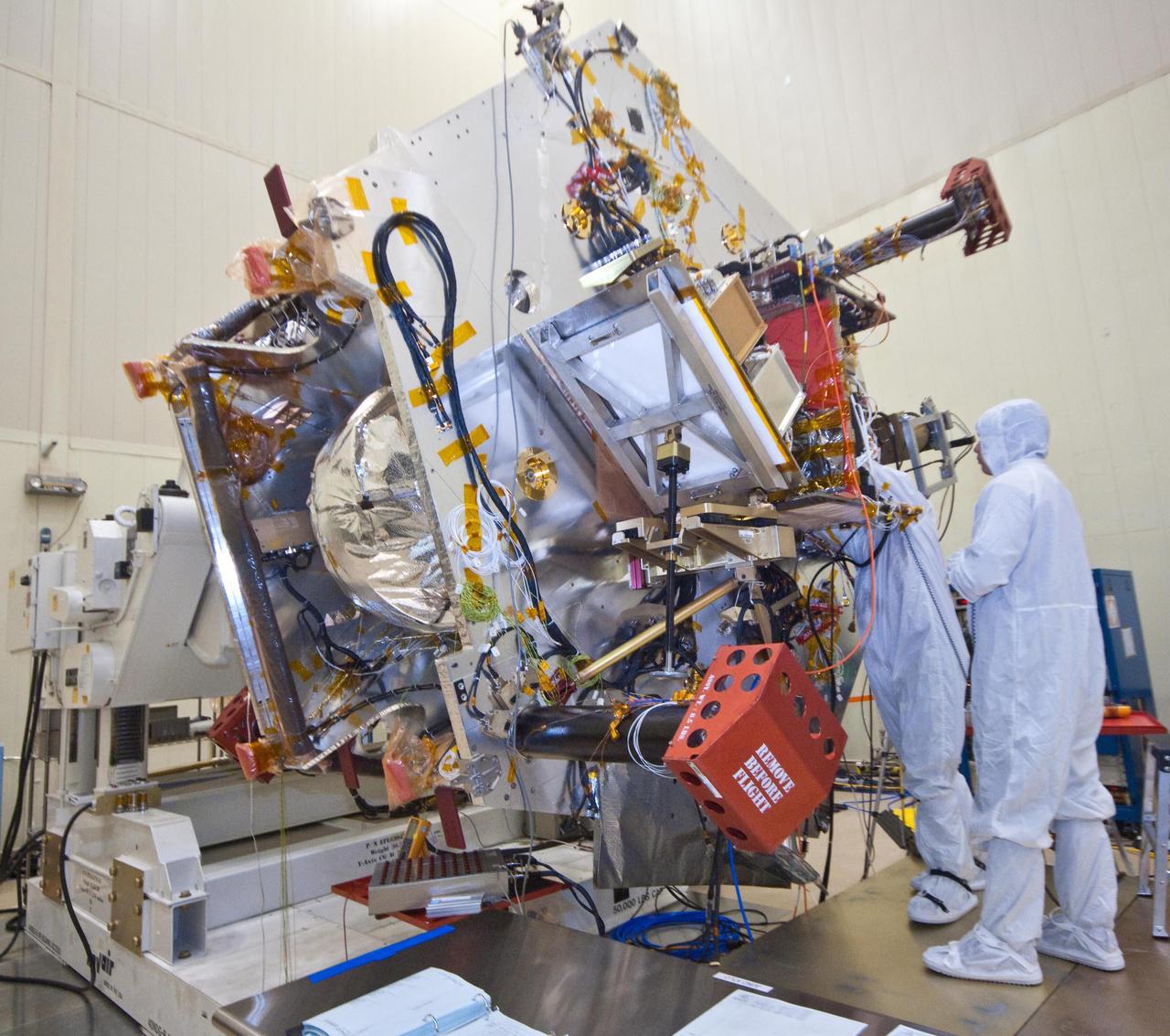
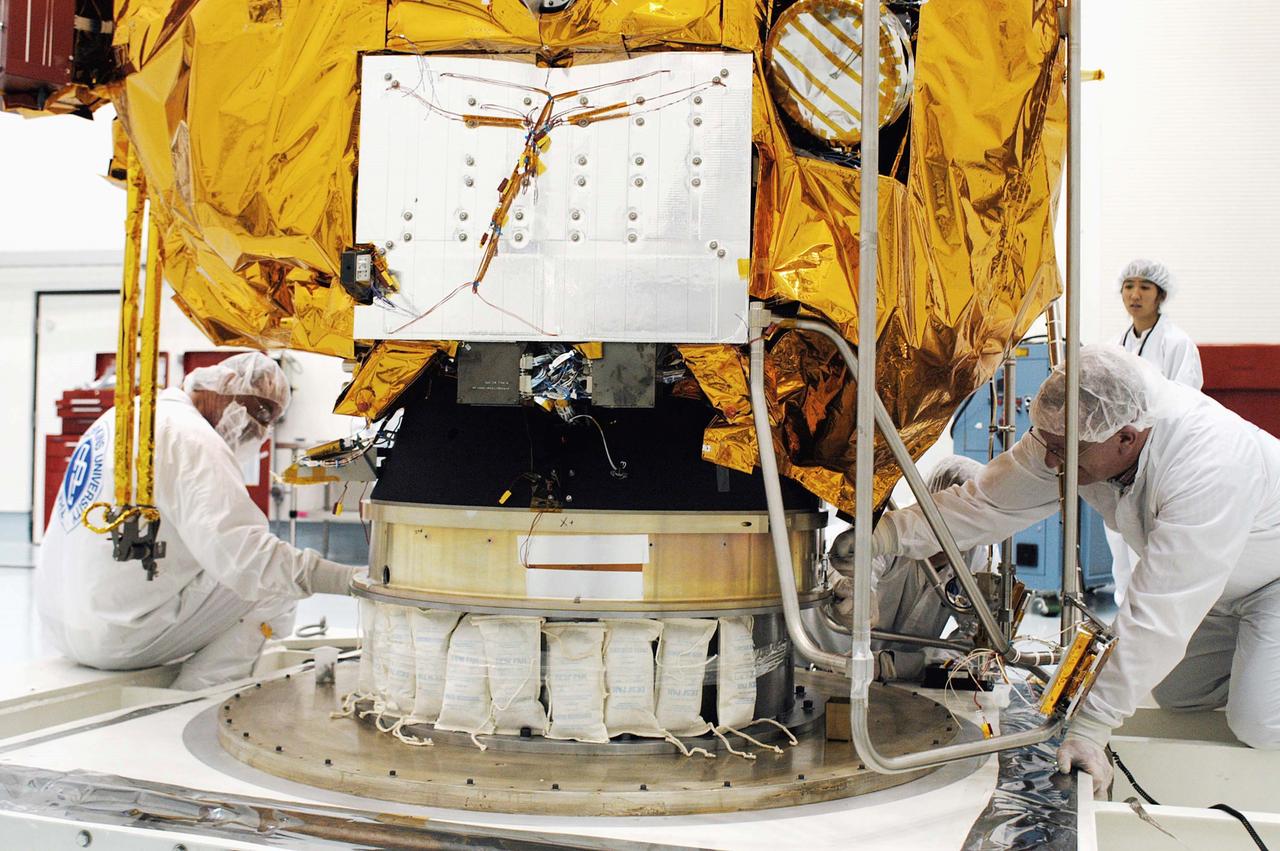
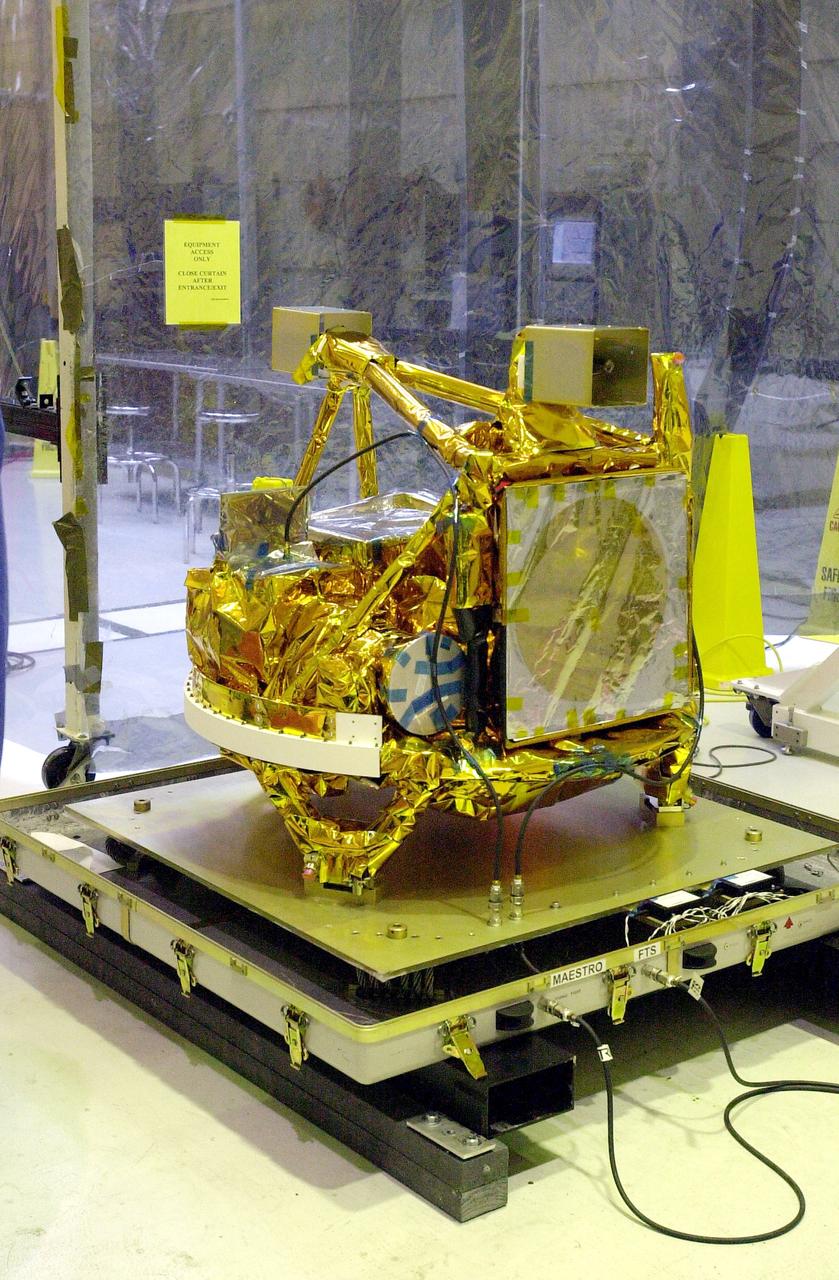
Technicians install components that will aid with guidance, navigation and control of NASA Juno spacecraft.
Building Juno Electronic Brain
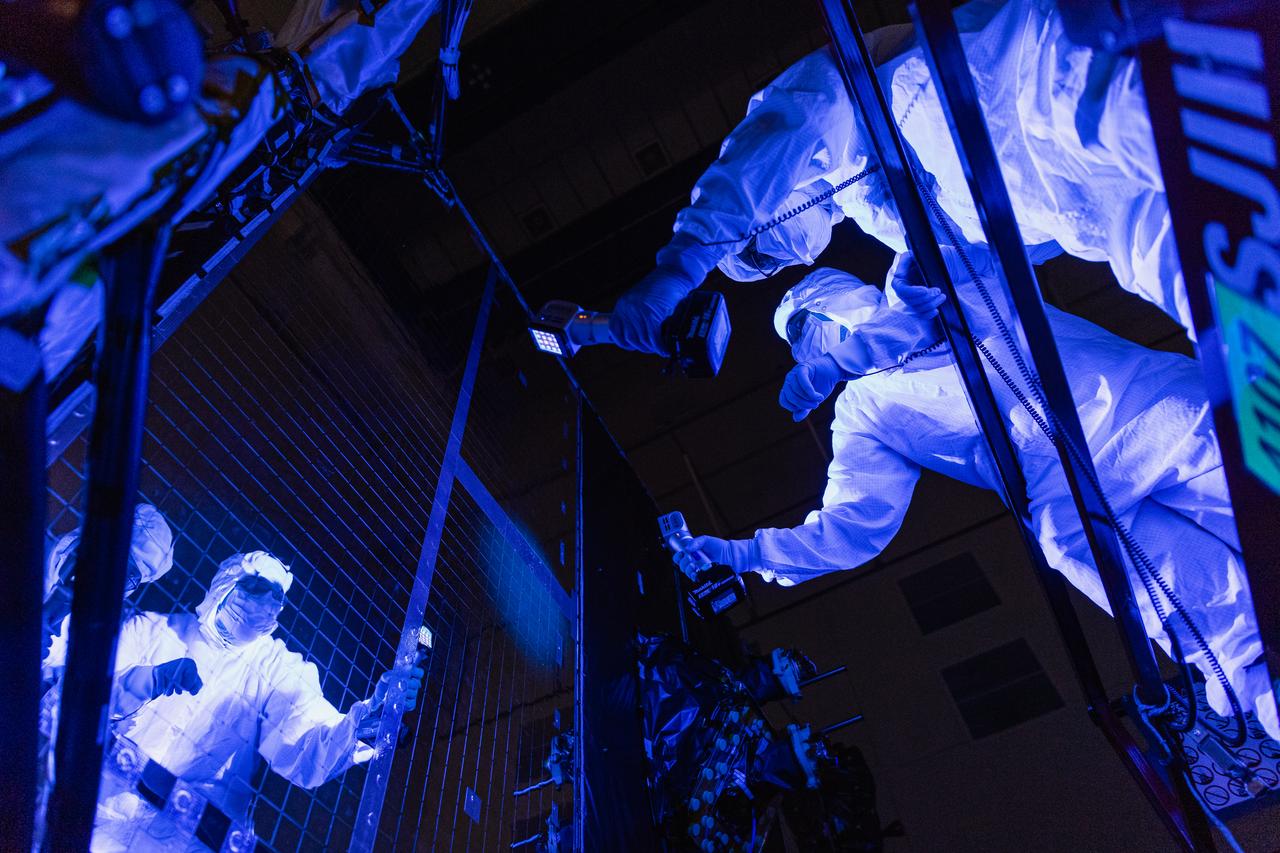
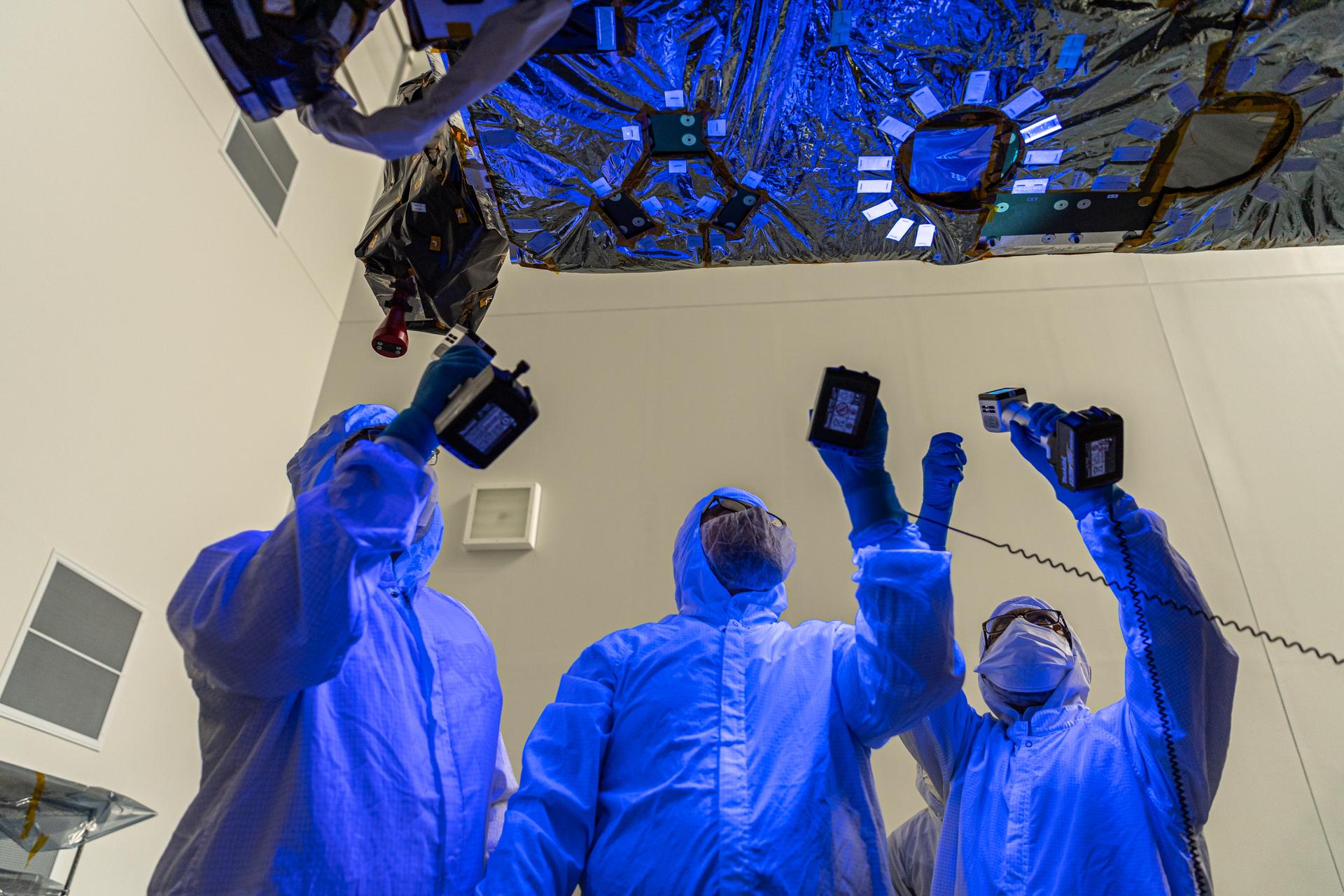
NASA Contamination control engineers perform a blacklight inspection on the OSAM-1 Spacecraft Bus at Goddard Space Flight Center, Greenbelt Md., Sept 30, 2023. This photo has been reviewed by OSAM1 project management, Maxar public release authority, and the Export Control Office and is released for public view. NASA/Mike Guinto
GSFC_20230930_OSAM1_036823
Technicians install components that will aid with guidance, navigation and control of NASA Juno spacecraft. Like most of Juno sensitive electronics, these components are situated within the spacecraft titanium radiation vault.
Installing Electronics in Juno Vault
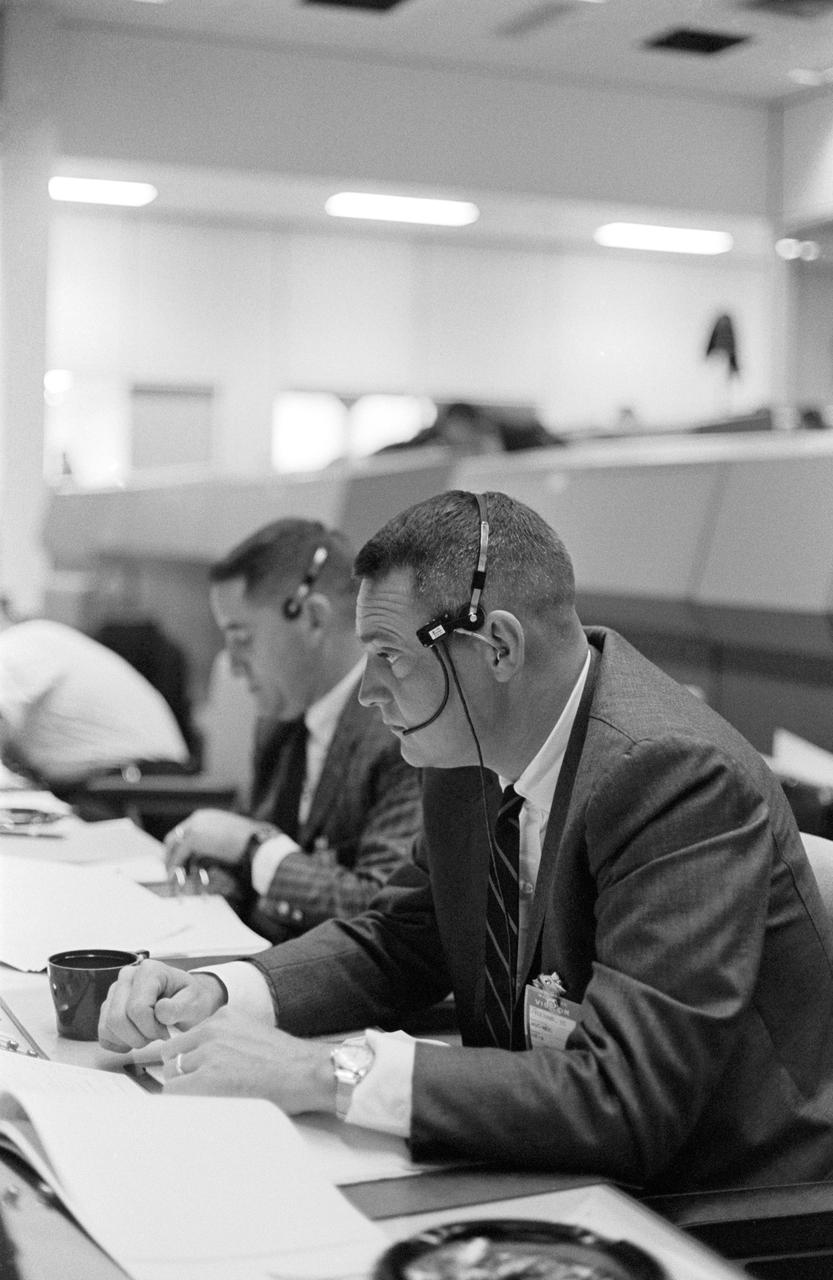
S65-18063 (23 March 1965) --- Astronaut Clifton C. Williams is shown at console in the Mission Control Center (MCC) in Houston, Texas during the Gemini-Titan 3 flight. The GT-3 flight was monitored by the MCC in Houston, but was controlled by the MCC at Cape Kennedy.
WILLIAMS, CLIFTON C. ASTRONAUT - MISSION CONTROL CENTER (MCC) - GEMINI-TITAN (GT)-3 - MSC
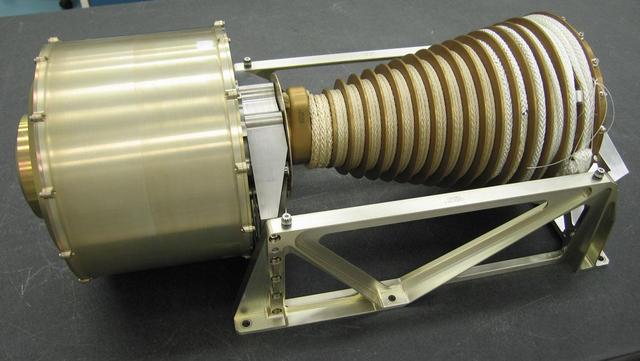
This is hardware for controlling the final lowering of NASA Mars Science Laboratory rover to the surface of Mars from the spacecraft hovering, rocket-powered descent stage.
Device for Lowering Mars Science Laboratory Rover to the Surface
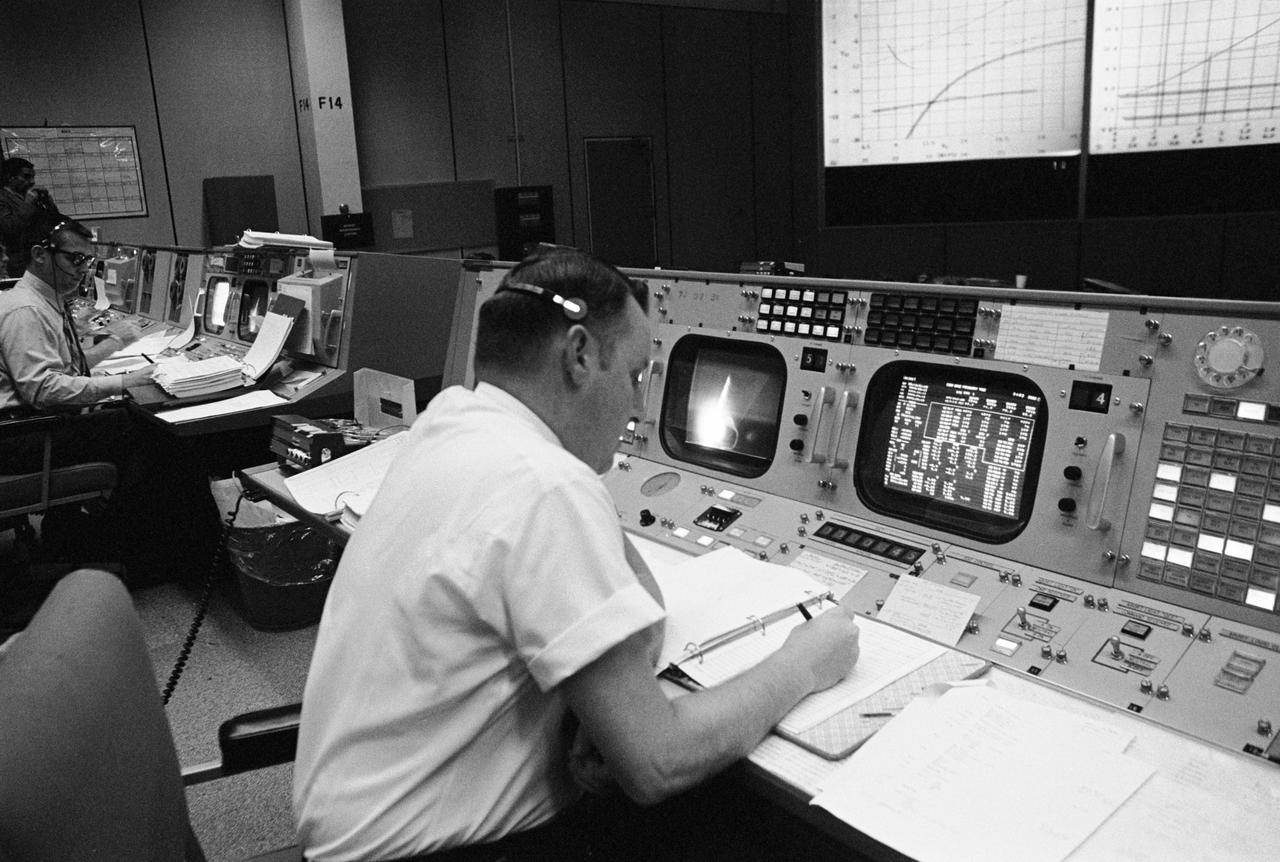
S68-18733 (22 Jan. 1968) --- Dr. Robert R. Gilruth (right), MSC Director, sits with Dr. Christopher C. Kraft Jr., MSC director of flight operations, at his flight operations director console in the Mission Control Center, Building 30, during the Apollo 5 (LM-1/Saturn 204) unmanned space mission.
Dr. Gilruth and Dr. Kraft - Mission Control Center (MCC) - Apollo V Launch - MSC
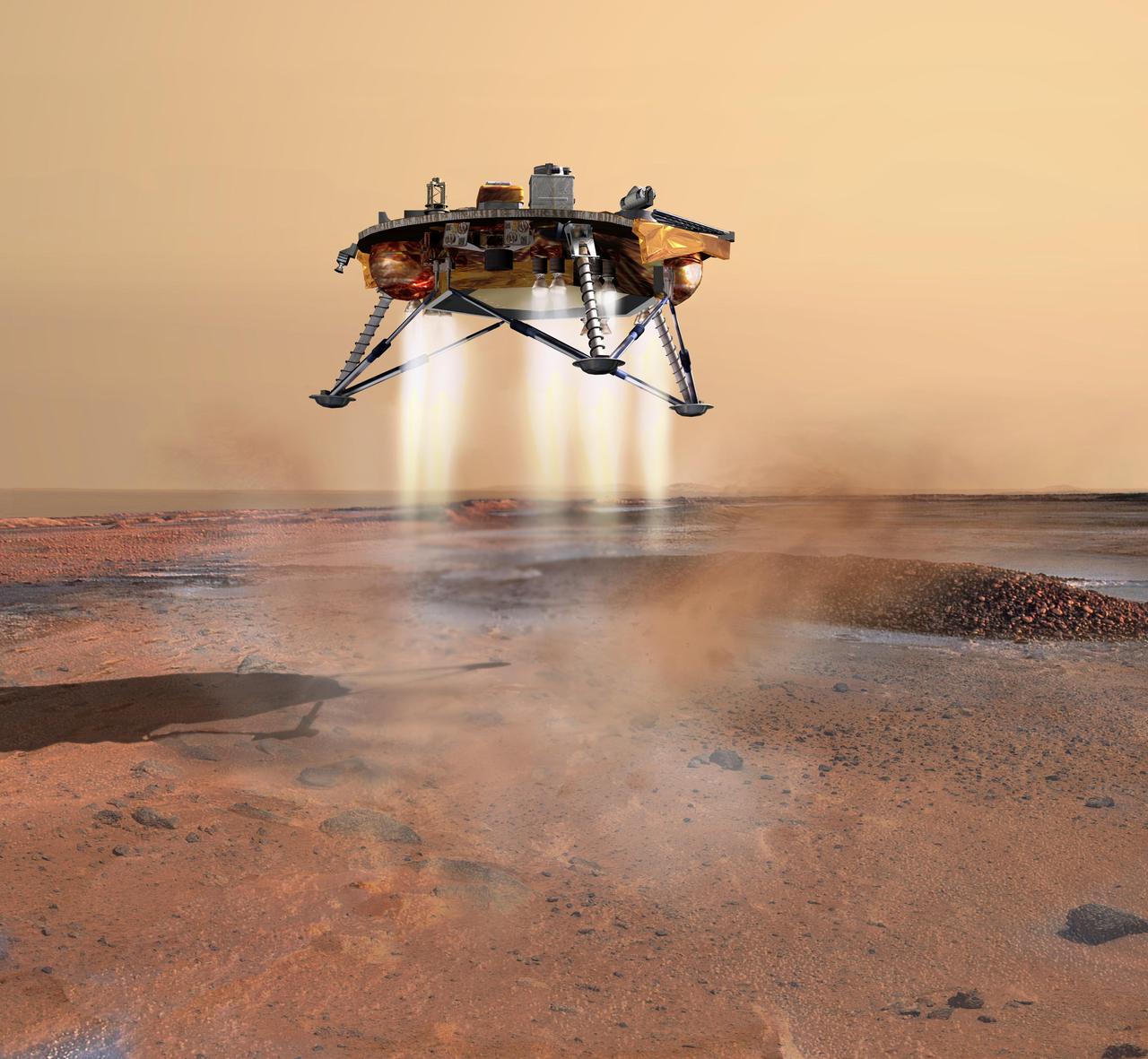
This artist concept depicts NASA Phoenix Mars Lander a moment before its 2008 touchdown on the arctic plains of Mars. Pulsed rocket engines control the spacecraft speed during the final seconds of descent.
Powered Landing of Phoenix Artist Concept
These side-by-side, 3-D comparisons depict the unnamed lunar mountain targeted by the NASA Gravity Recovery and Interior Laboratory GRAIL mission for controlled impact of the Ebb and Flow spacecraft.
Ebb and Flow Final Moments
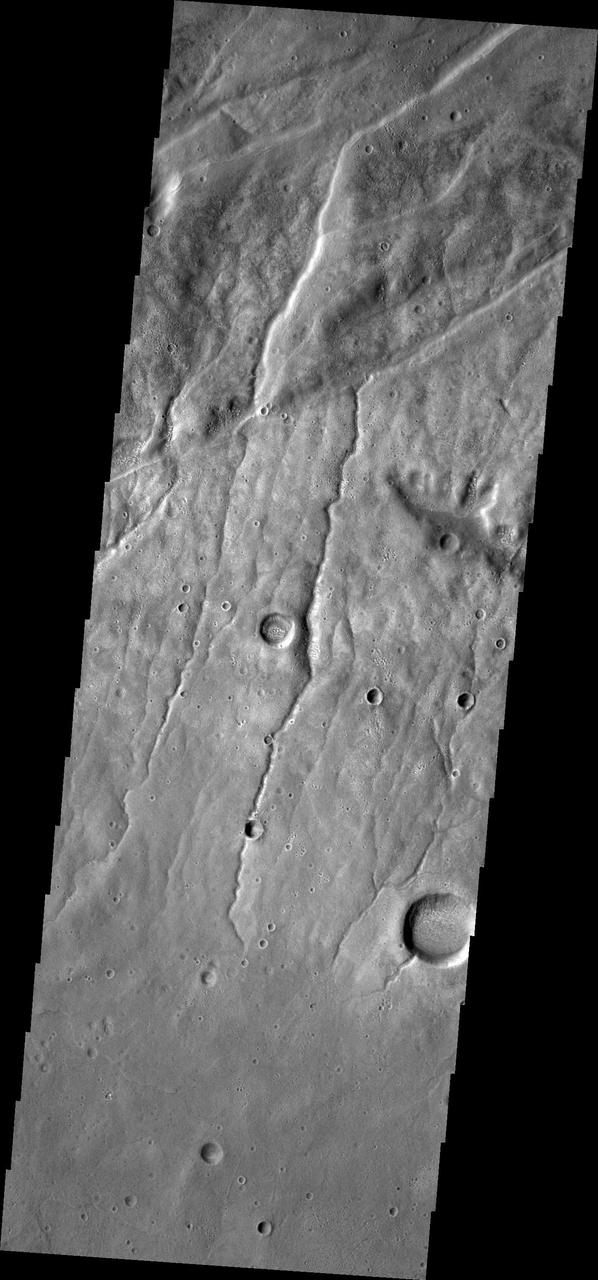
This image from NASA 2001 Mars Odyssey spacecraft of the Claritas Fossae region illustrates how fractures affect other features. In this instance, the fractures control the path of several channels from upper right towards lower left.
Fractures and Channels
The worst forest fires in nearly two decades are burning out of control on Borneo, creating the thick blanket of smoke in this Oct. 14, 2015 image from NASA Terra spacecraft.
Borneo on Fire
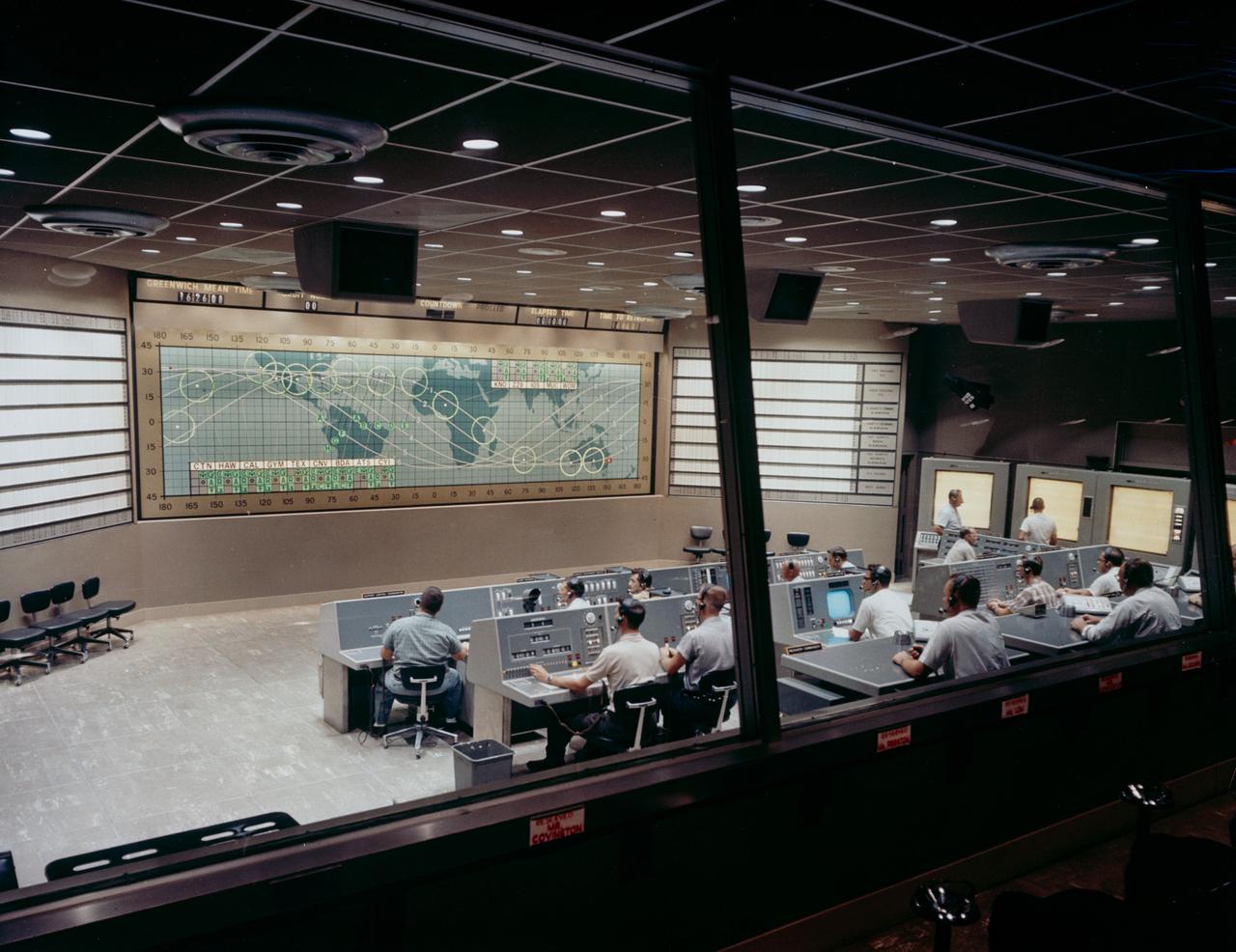
S62-05139 (1962) --- View of Mercury Control Center prior to the Mercury-Atlas 8 (MA-8) flight of the Sigma 7. Photo credit: NASA
View of Mercury Control Center prior to MA-8 flight
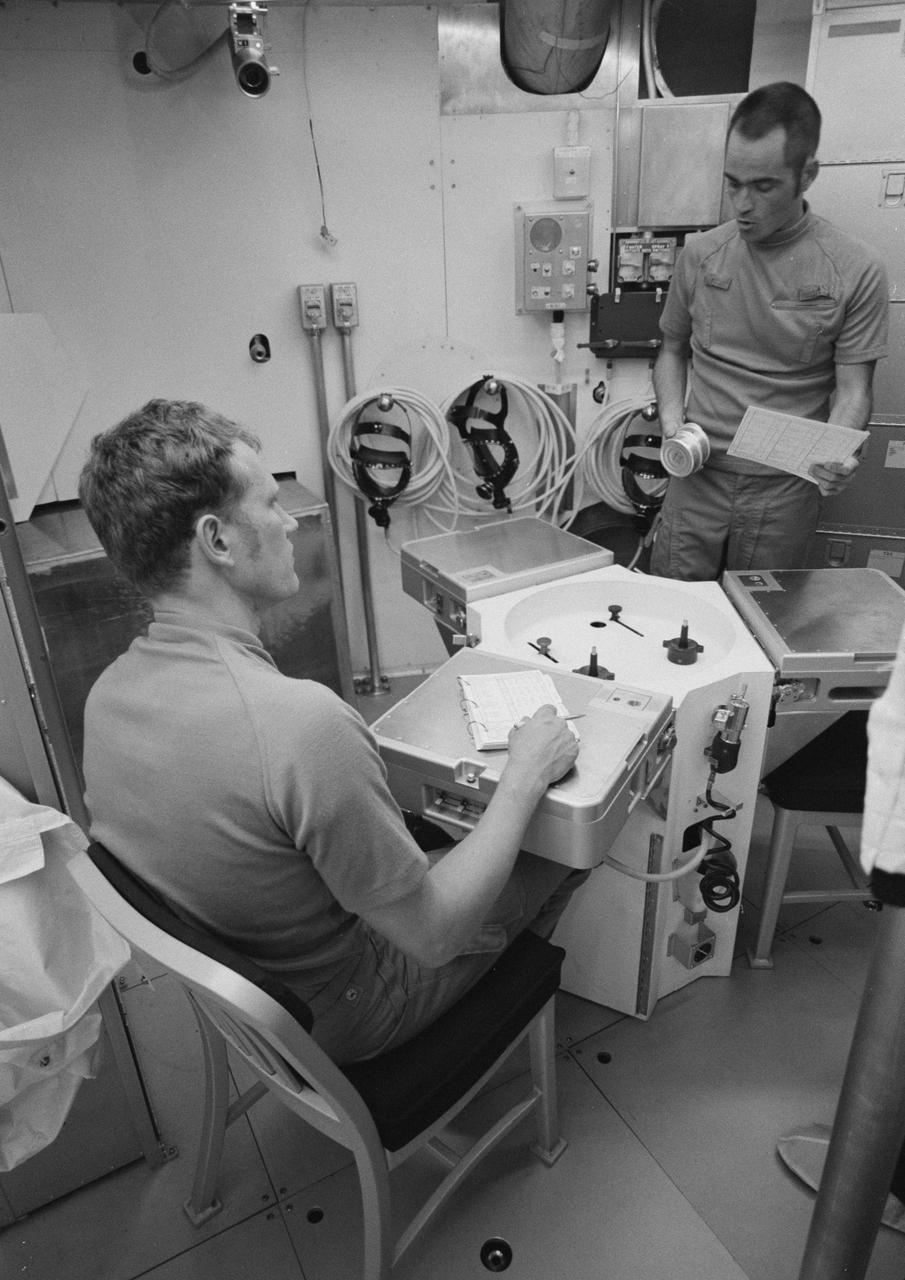
S72-41853 (15 June 1972) --- Two members of the three-man Skylab Medical Experiment Altitude Test (SMEAT) crew, that will spend up to 56 days in the Crew Systems Division's 20-foot altitude chamber at the Manned Spacecraft Center (MSC) beginning in mid-July, go over a menu in the food preparation area. Seated at the simulated wardroom food table is astronaut Karol J. Bobko, SMEAT pilot, and standing is astronaut Robert L. Crippen, SMEAT commander. Dr. William E. Thornton, SMEAT science pilot, the third crew member is not shown in this view. Photo credit: NASA
Skylab - Skylab Medical Evaluation Activities Test (SMEAT) - MSC
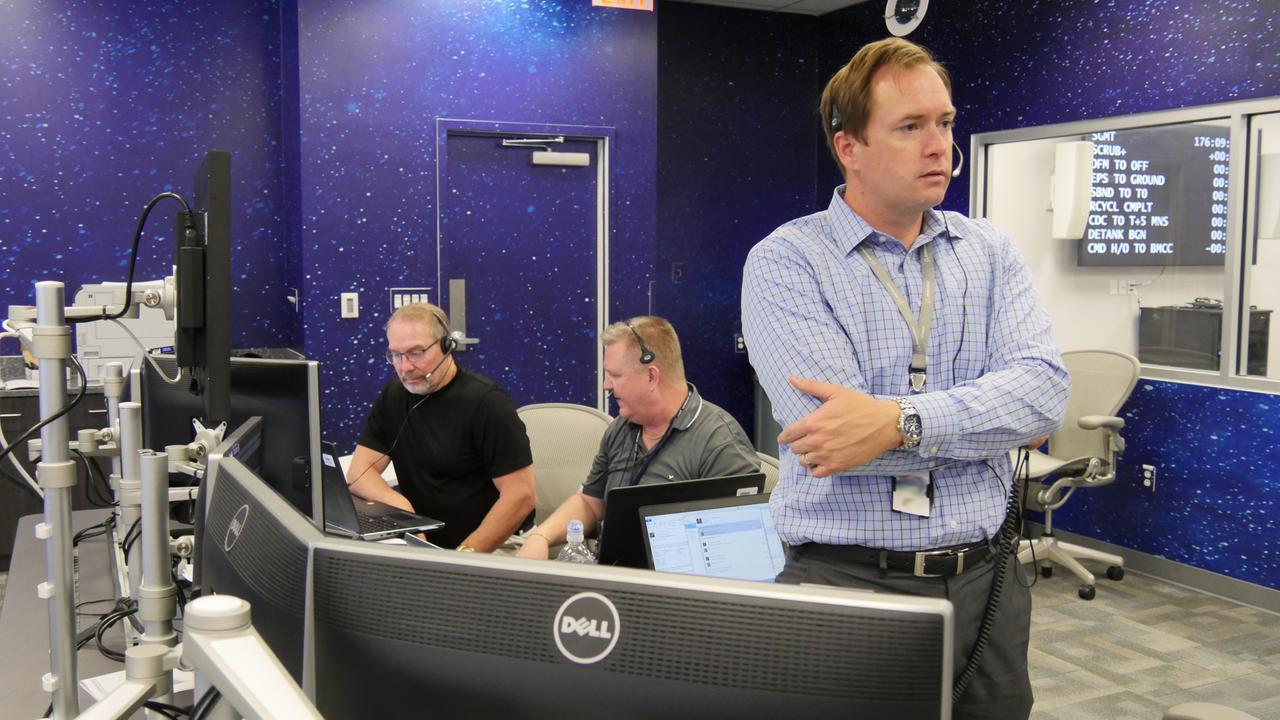
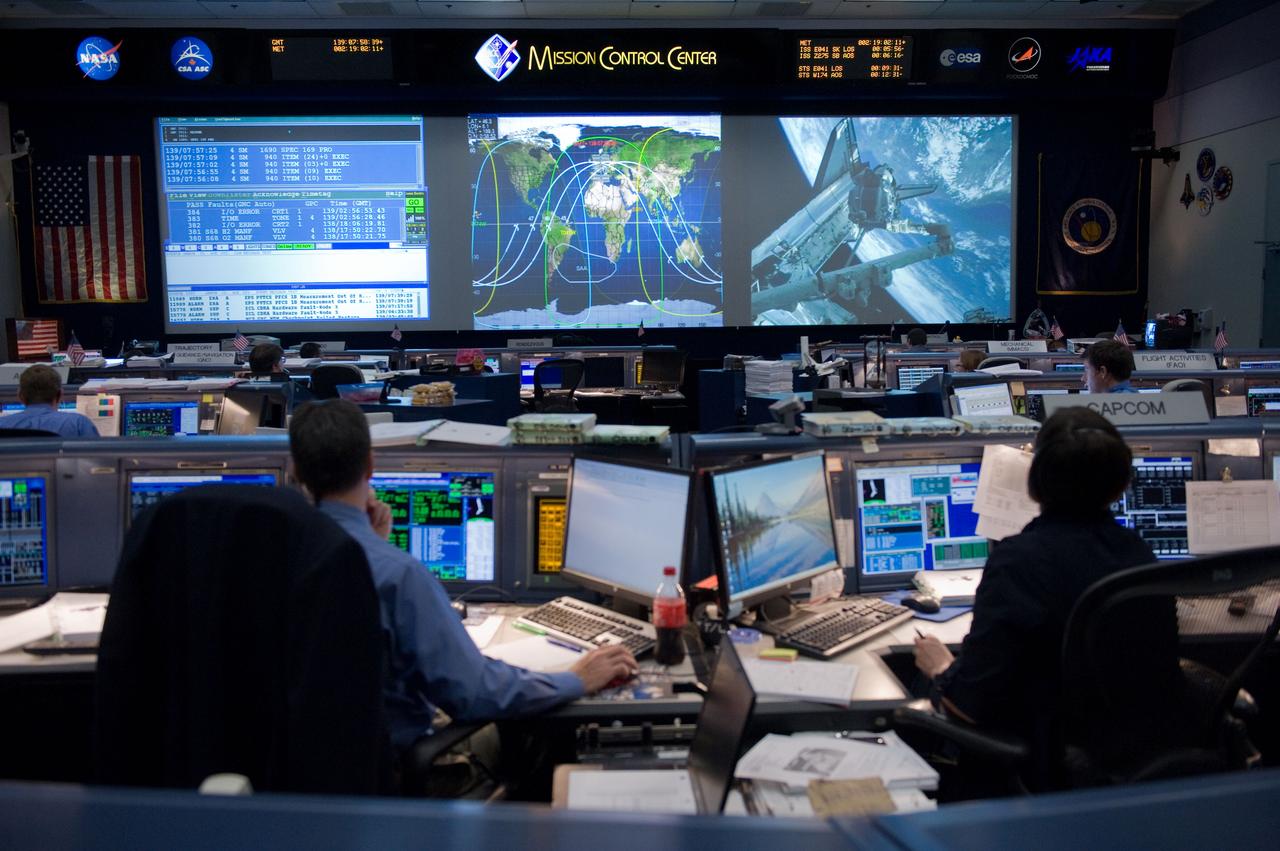
Date: 03-11-15 Location: Bldg 30, FCR-1 Subject:  Expedition 42 flight controllers on console in FCR-1 during the undocking of Expedition 42 crew (Samokutyaev, Wilmore, Serova) on the Soyuz TMA-14M spacecraft from the Poisk module on ISS Photographer: James Blair
Date: 03-11-15.Location: Bldg 30, FCR-1.Subject: Expedition 42 flight controllers on console in FCR-1 during the undocking of Expedition 42 crew (Samokutyaev, Wilmore, Serova) on the Soyuz TMA-14M spacecraft from the Poisk module on ISS.Photographer: James Blair
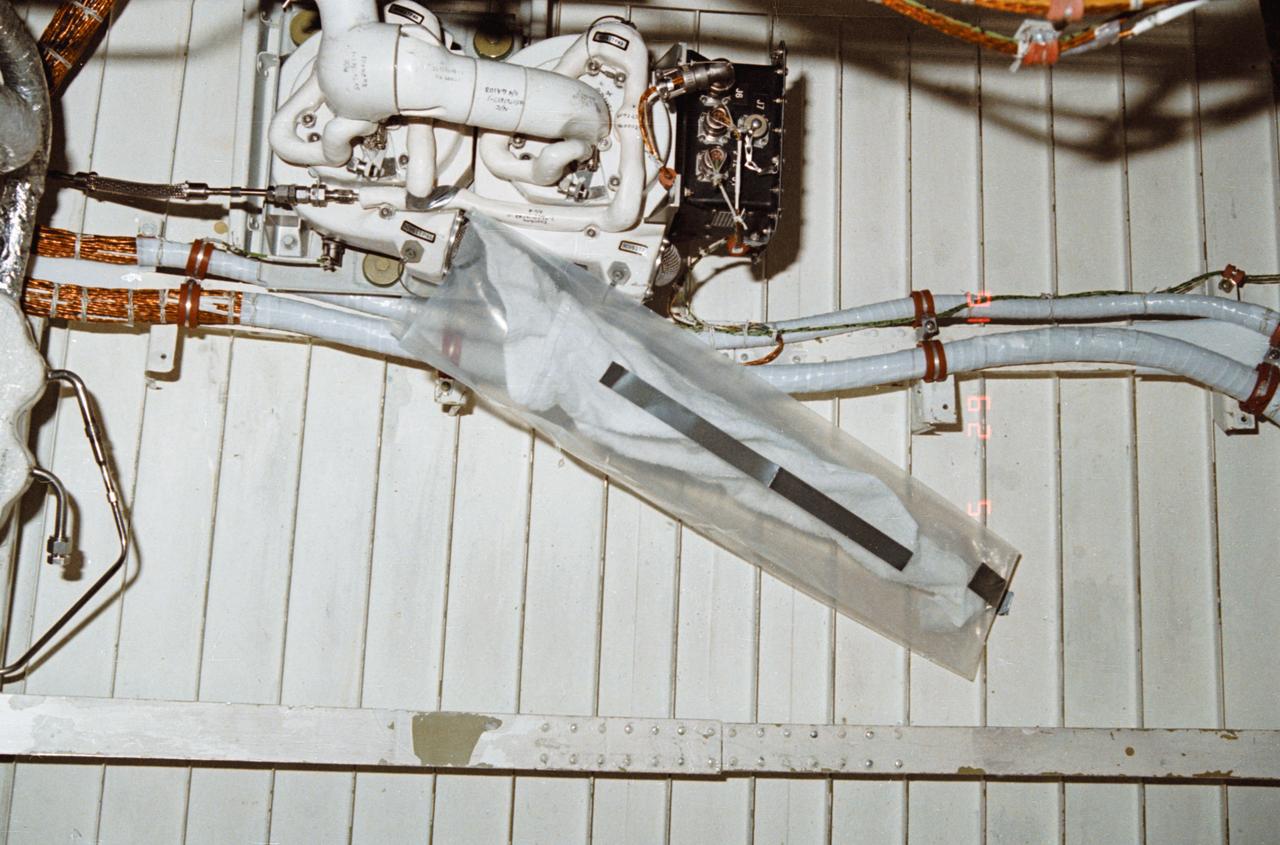
During STS-32, onboard Columbia, Orbiter Vehicle (OV) 102, a leakage problem at environmental control and life support system (ECLSS) air revitalization system (ARS) humidity separator A below the middeck is solved with a plastic bag and a towel. The towel inserted inside a plastic bag absorbed the water that had collected at the separator inlet.
STS-32 OV-102 air revitalization system (ARS) humidity separator problem
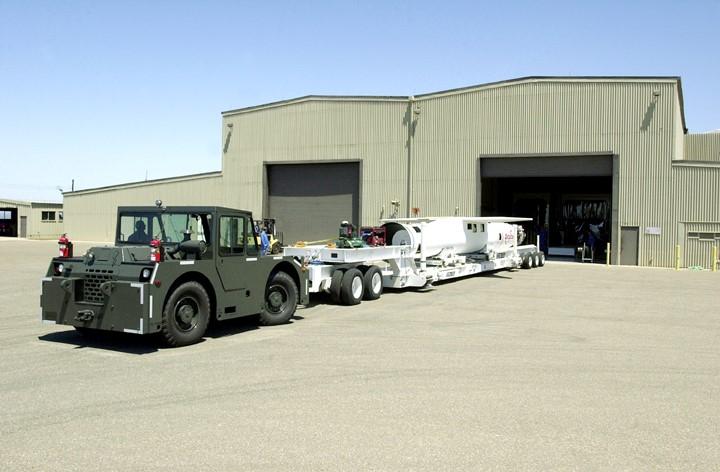
KENNEDY SPACE CENTER, FLA. - At Vandenberg Air Force Base, Calif., the Pegasus launch vehicle is moved into its hangar.  The Pegasus will carry the SciSat-1 spacecraft in a 400-mile-high polar orbit to investigate processes that control the distribution of ozone in the upper atmosphere.  The scientific mission of SciSat-1 is to measure and understand the chemical processes that control the distribution of ozone in the Earth’s atmosphere, particularly at high altitudes.  The data from the satellite will provide Canadian and international scientists with improved measurements relating to global ozone processes and help policymakers assess existing environmental policy and develop protective measures for improving the health of our atmosphere, preventing further ozone depletion.  The mission is designed to last two years.
KENNEDY SPACE CENTER, FLA. - At Vandenberg Air Force Base, Calif., the Pegasus launch vehicle is moved into its hangar. The Pegasus will carry the SciSat-1 spacecraft in a 400-mile-high polar orbit to investigate processes that control the distribution of ozone in the upper atmosphere. The scientific mission of SciSat-1 is to measure and understand the chemical processes that control the distribution of ozone in the Earth’s atmosphere, particularly at high altitudes. The data from the satellite will provide Canadian and international scientists with improved measurements relating to global ozone processes and help policymakers assess existing environmental policy and develop protective measures for improving the health of our atmosphere, preventing further ozone depletion. The mission is designed to last two years.
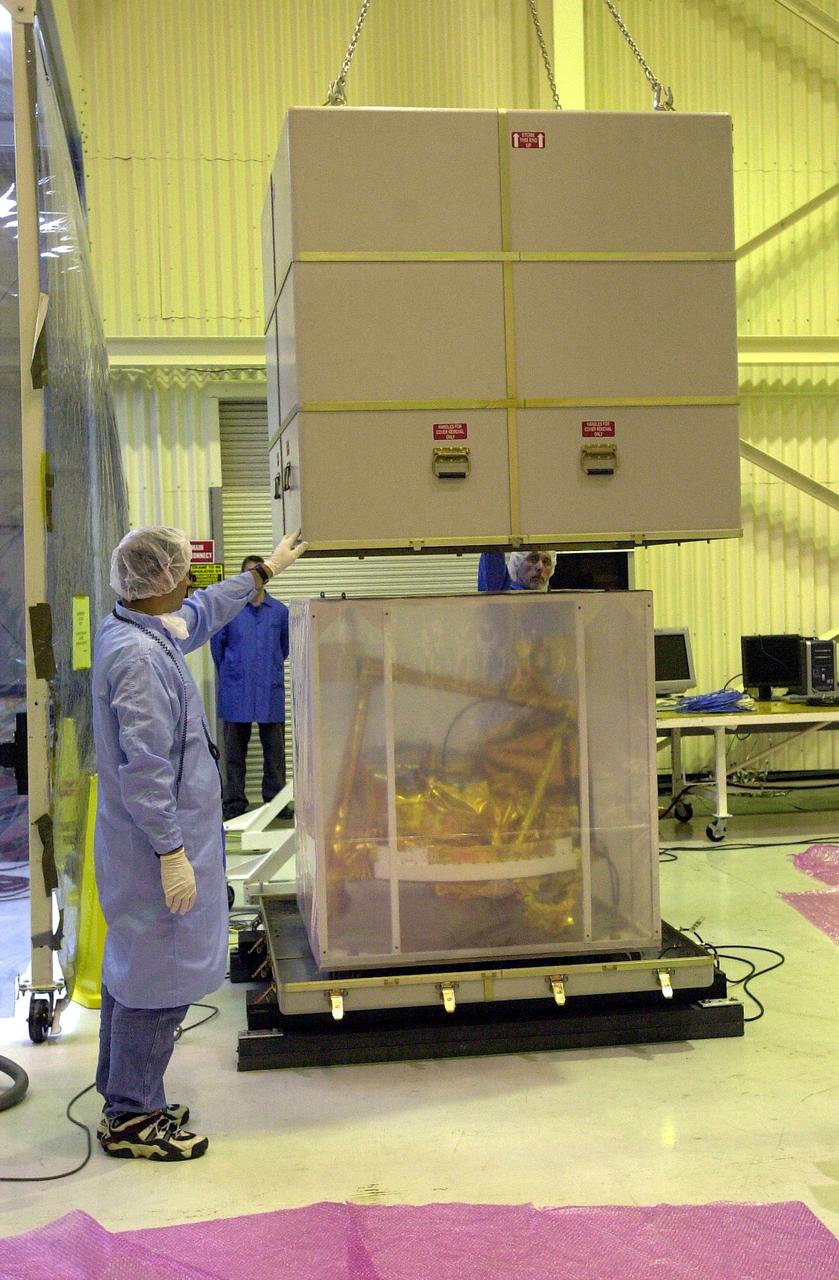
KENNEDY SPACE CENTER, FLA. -  The SciSat-1 spacecraft is uncrated at Vandenberg Air Force Base, Calif.  SciSat-1 weighs approximately 330 pounds and will be placed in a 400-mile-high polar orbit to investigate processes that control the distribution of ozone in the upper atmosphere.  The scientific mission of SciSat-1 is to measure and understand the chemical processes that control the distribution of ozone in the Earth’s atmosphere, particularly at high altitudes.  The data from the satellite will provide Canadian and international scientists with improved measurements relating to global ozone processes and help policymakers assess existing environmental policy and develop protective measures for improving the health of our atmosphere, preventing further ozone depletion.  The mission is designed to last two years.
KENNEDY SPACE CENTER, FLA. - The SciSat-1 spacecraft is uncrated at Vandenberg Air Force Base, Calif. SciSat-1 weighs approximately 330 pounds and will be placed in a 400-mile-high polar orbit to investigate processes that control the distribution of ozone in the upper atmosphere. The scientific mission of SciSat-1 is to measure and understand the chemical processes that control the distribution of ozone in the Earth’s atmosphere, particularly at high altitudes. The data from the satellite will provide Canadian and international scientists with improved measurements relating to global ozone processes and help policymakers assess existing environmental policy and develop protective measures for improving the health of our atmosphere, preventing further ozone depletion. The mission is designed to last two years.
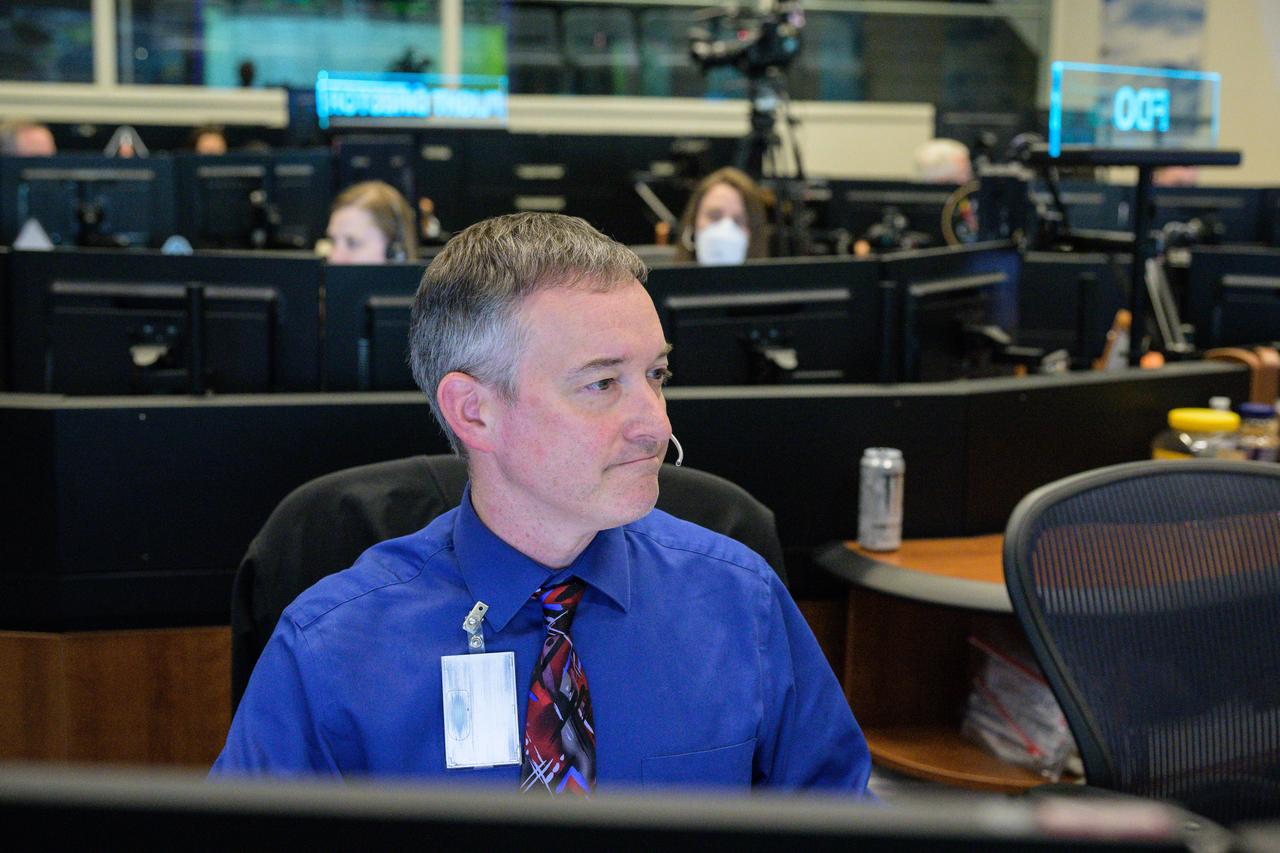
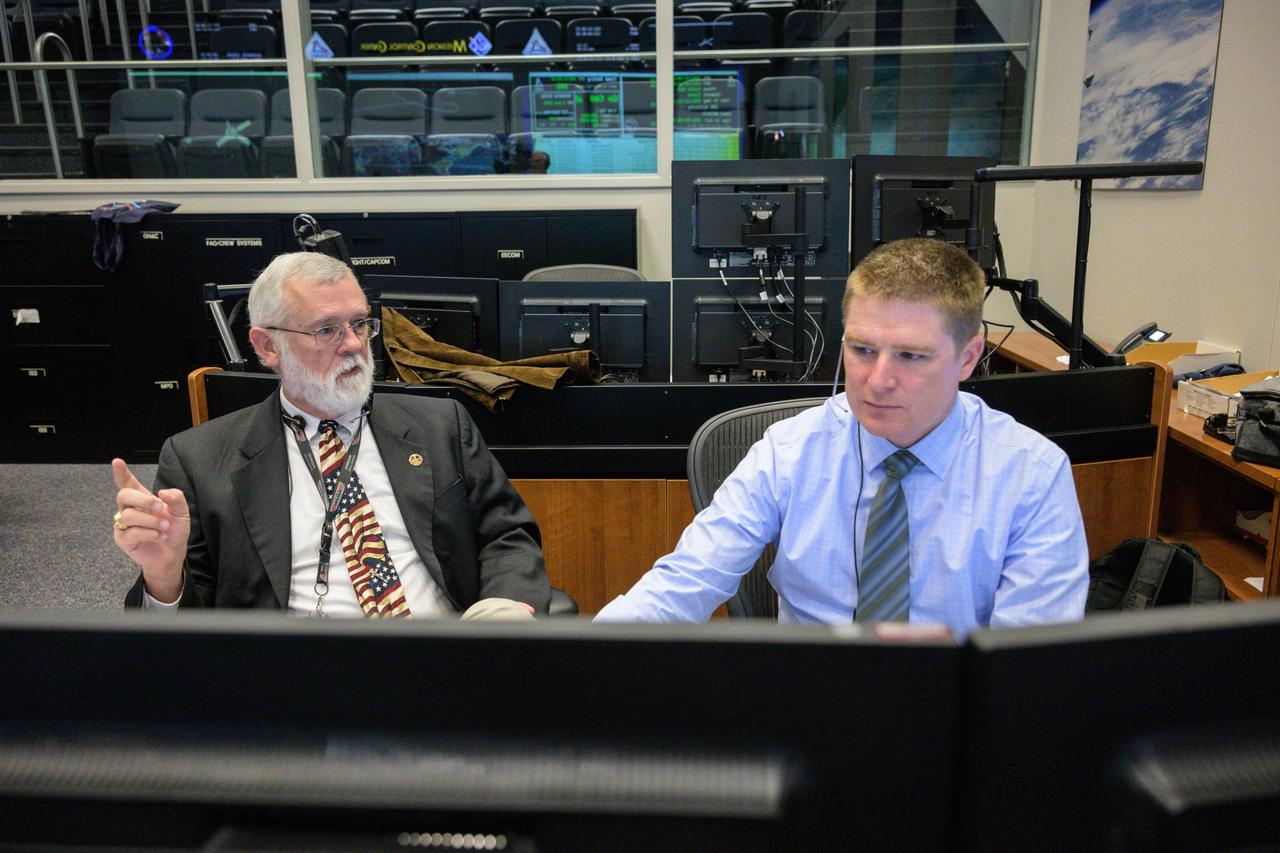
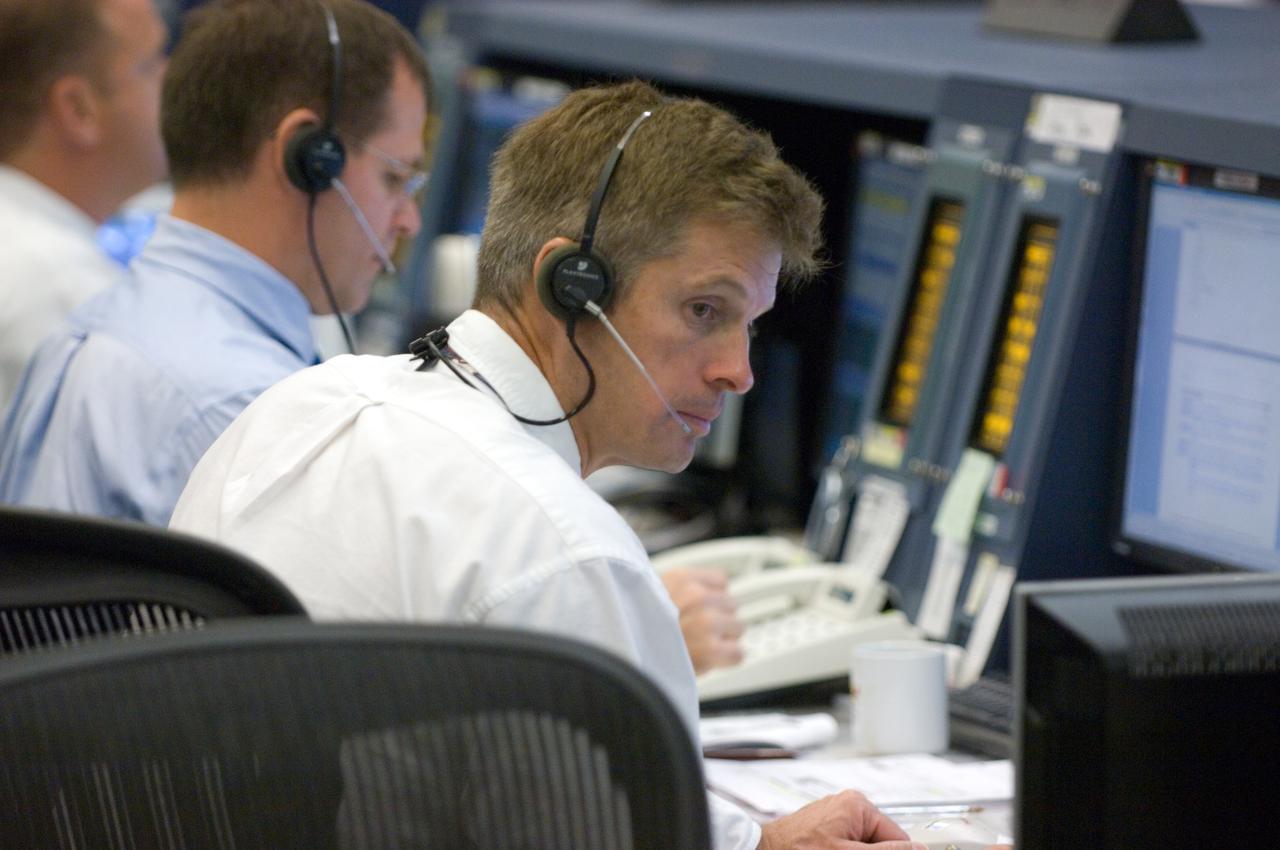
jsc2022e090764 (Dec. 1, 2022): Flight controller Jason Helms at the guidance, navigation and control console in Houston’s Mission Control Center observes the Orion spacecraft under the direction of Flight Director Rick LaBrode. The spacecraft departed its distant retrograde orbit on flight day 16 of the Artemis I mission – one of the steps needed to bring the spacecraft home from the Moon. Credit: NASA/Robert Markowitz
Flight Day 16: Mission Control during Distant Retrograde Departure
NASA Terra spacecraft shows the water flow after the U.S. Army Corps of Engineers opened the Morganza Spillway, a flood control structure along the western bank of the Mississippi River in Louisiana, to ease flooding along levee systems on May 14, 2011.
NASA Images Mississippi River Flooding in Louisiana
Inside the Boeing Mission Control Center at Kennedy Space Center, Fla., launch control teams for the CST-100 Starliner rehearse a fully integrated prelaunch simulation of the spacecraft’s upcoming Orbital Flight Test. Boeing Spacecraft Launch Conductor Louis Atchison speaks on console to the Mission Management Team as the countdown in the launch simulation progresses.
Boeing CST-100 Starliner Simulation at Kennedy Space Center
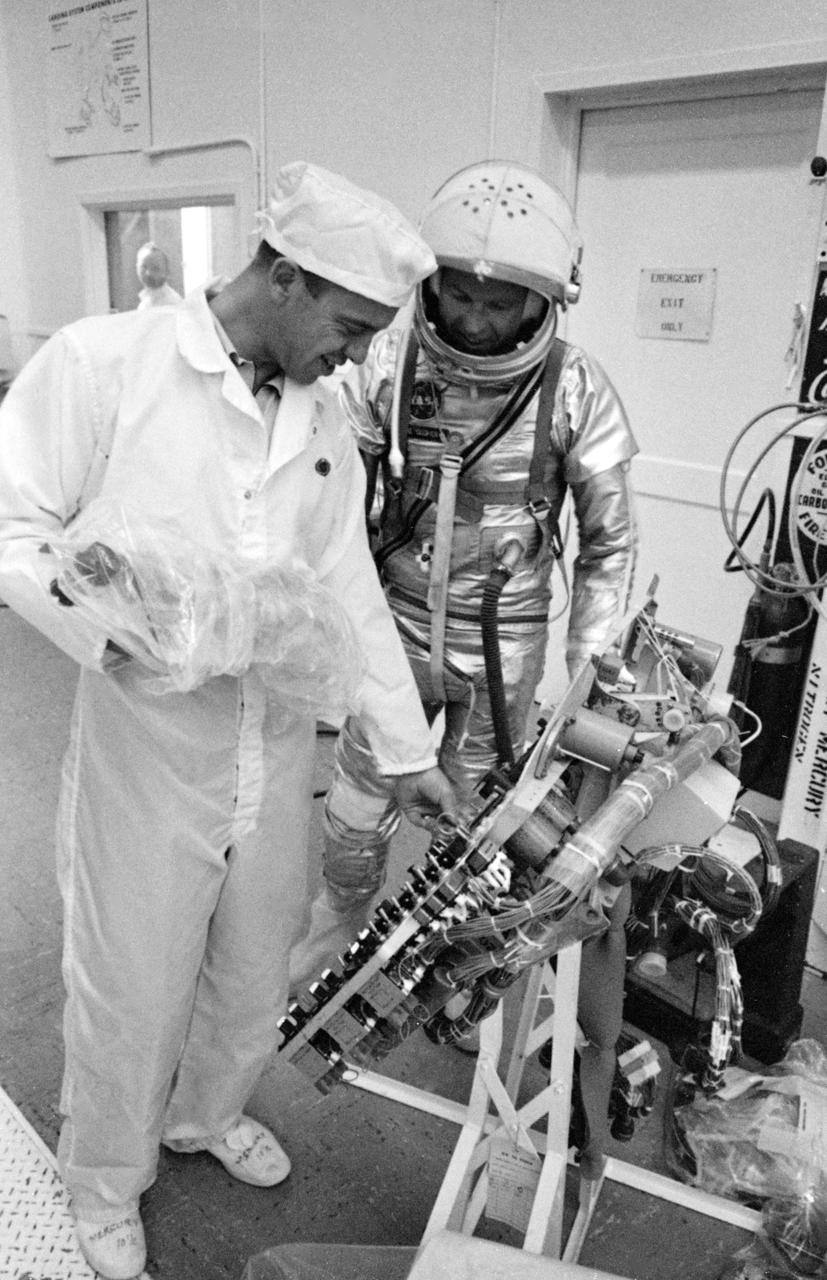
S63-03965 (1963) --- Astronauts Alan Shepard (left) and L. Gordon Cooper Jr.(in suit) check over the instrument panel from Mercury spacecraft #20. It contains the instruments necessary to monitor spacecraft systems and sequencing, the controls required to initiate primary sequences manually, and the necessary flight control displays. Photo credit: NASA
White Room - Mercury-Atlas (MA)-9 Prelaunch Activities - Astronauts Cooper and Shepard - Cape
Boeing’s Flight Control Team participated in a rehearsal of prelaunch procedures for the company’s upcoming Orbital Flight Test in the White Flight Control Room in the Mission Control Center at Johnson Space Center in Houston. Boeing’s CST-100 Starliner will fly uncrewed to the International Space Station before NASA will certify the spacecraft to carry astronauts to station.
Orbital Flight Test Simulation at Johnson Space Center
S69-40025 (24 July 1969) --- Overall view of the Mission Operations Control Room (MOCR) in the Mission Control Center (MCC), Building 30, Manned Spacecraft Center (MSC), showing the flight controllers celebrating the successful conclusion of the Apollo 11 lunar landing mission.
Mission Control Center (MCC) - Celebration - Conclusion - Apollo XI Mission - MSC
S69-40023 (24 July 1969) --- Overall view of the Mission Operations Control Room (MOCR) in the Mission Control Center (MCC), Building 30, Manned Spacecraft Center (MSC), showing the flight controllers celebrating the successful conclusion of the Apollo 11 lunar landing mission.
MISSION CONTROL CENTER (MCC) - CELEBRATION - CONCLUSION - APOLLO 11 MISSION - MSC
S69-40022 (24 July 1969) --- Overall view of the Mission Operations Control Room (MOCR) in the Mission Control Center (MCC), Building 30, Manned Spacecraft Center (MSC), showing the flight controllers celebrating the successful conclusion of the Apollo 11 lunar landing mission.
View of Mission Control Center celebrating conclusion of Apollo 11 mission
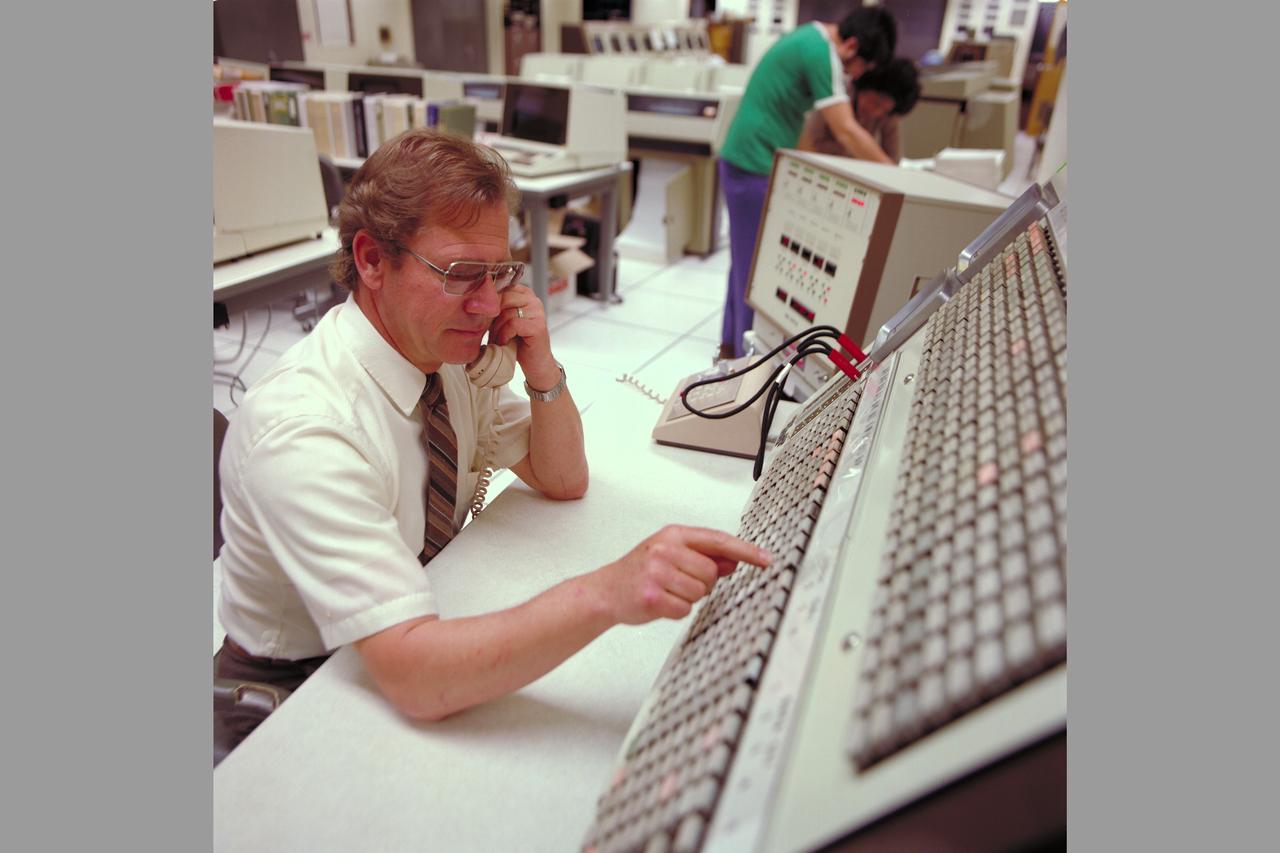
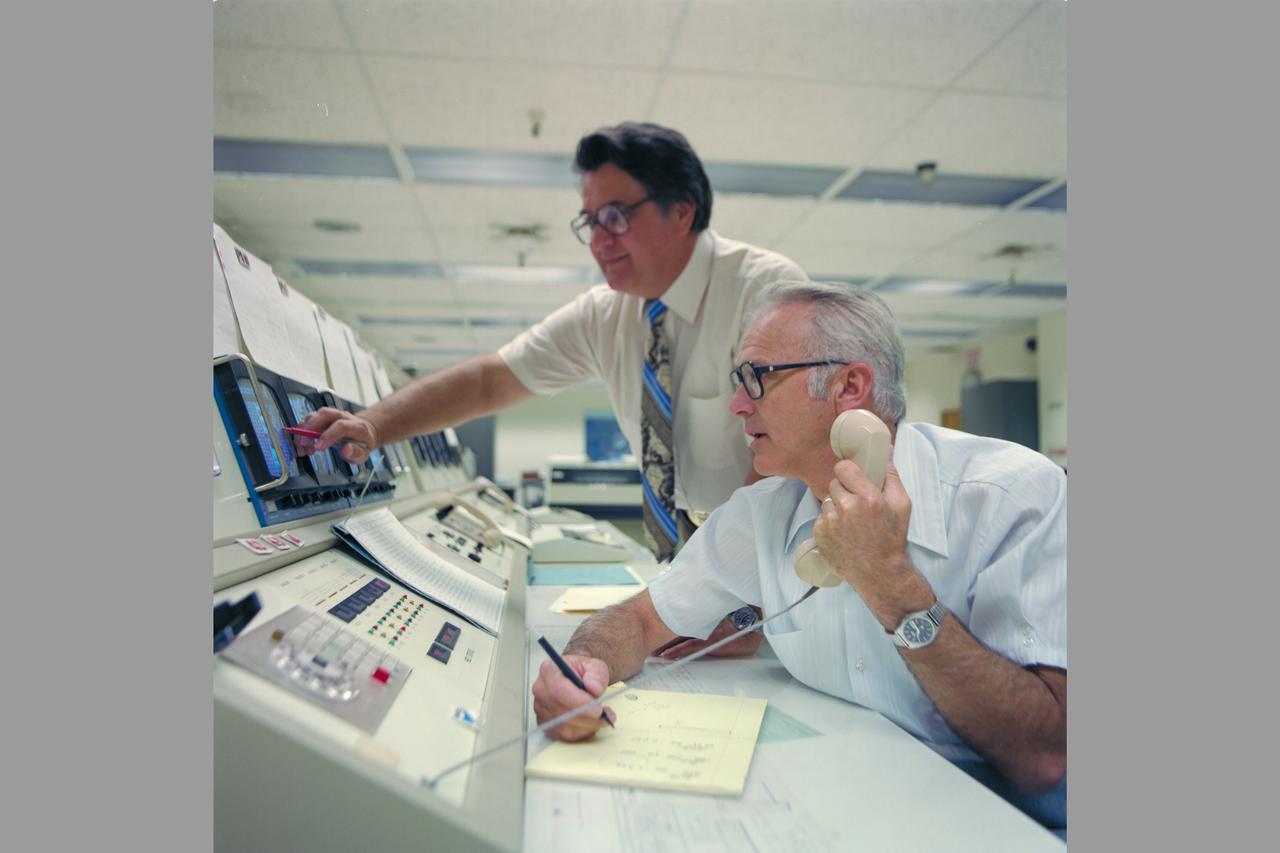
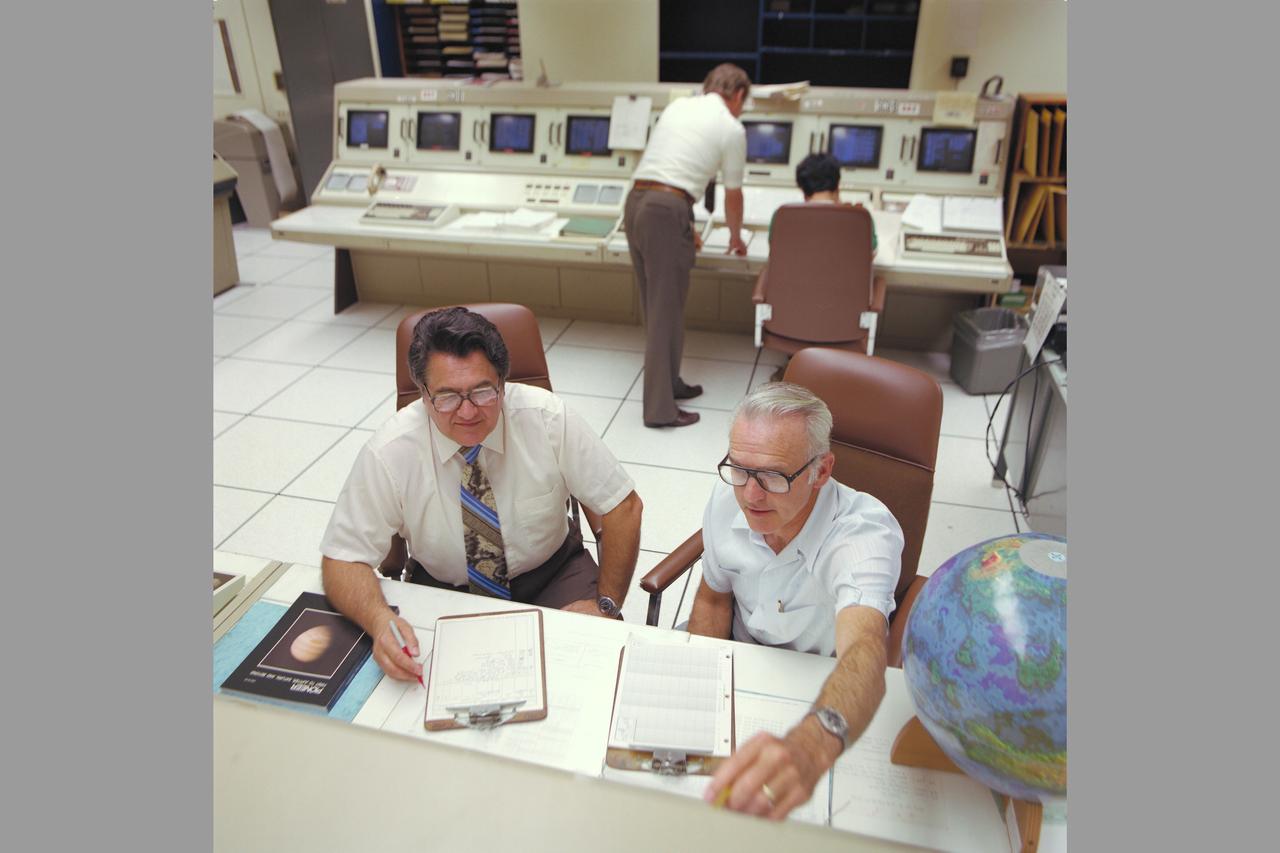
Pioneer Mission Control Center with personnel monitoring spacecraft (PMOC)
ARC-1983-AC83-0378-35
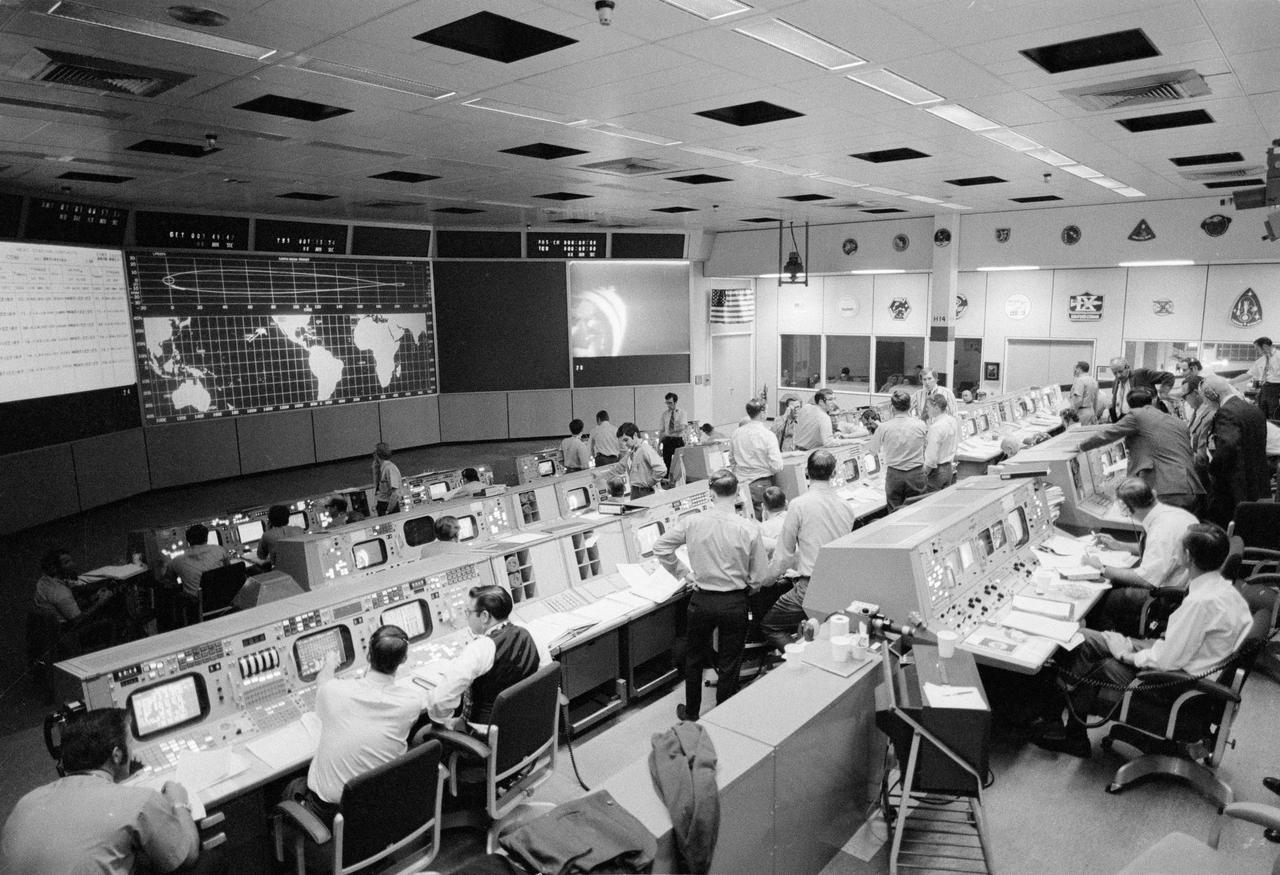
S71-16879 (31 Jan. 1971) --- Overall view of activity in the Mission Operations Control Room in the Mission Control Center during the Apollo 14 transposition and docking maneuvers. The Apollo 14 Lunar Module, still attached to the Saturn IVB stage, can be seen on the large television monitor. Due to difficulty with the docking mechanism six attempts were made before a successful "hard dock" of the Command Module with the Lunar Module was accomplished. Aboard the Command Module were astronauts Alan B. Shepard Jr., Stuart A. Roosa, and Edgar D. Mitchell.
Overall view of Mission Control Center during Apollo 14
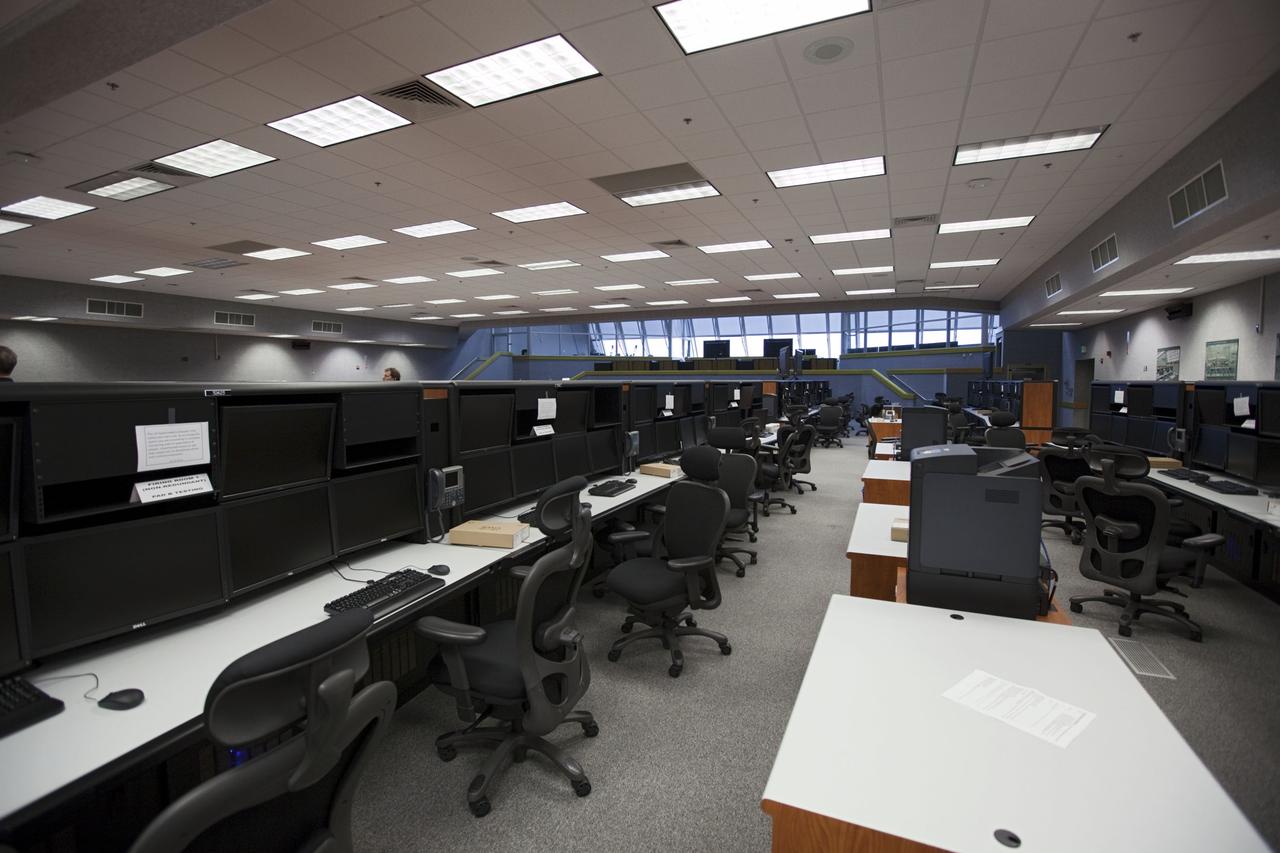
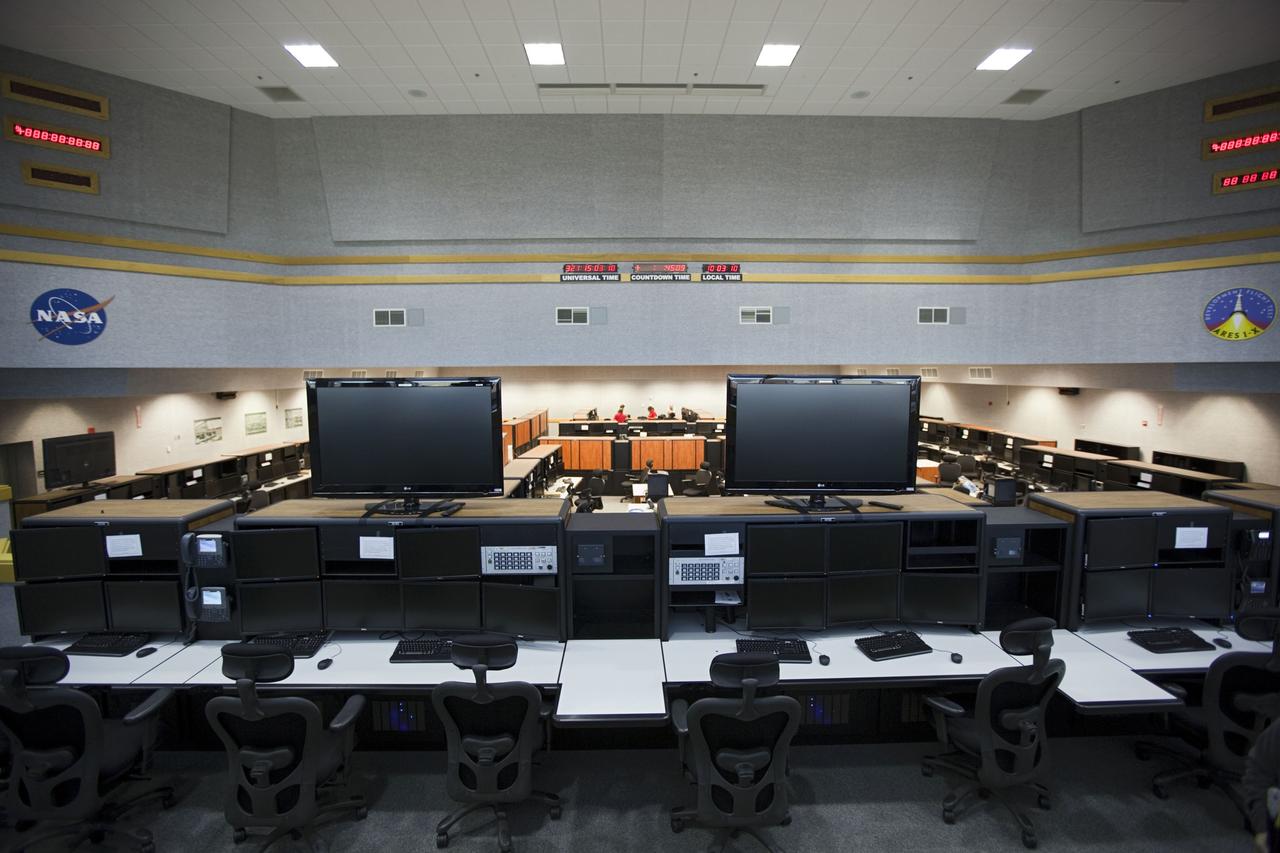
CAPE CANAVERAL, Fla. – Firing Room 1, also known as the Young-Crippen Firing Room, has been outfitted with computer, communications and networking systems to host rockets and spacecraft that are currently under development. The firing room is where the launch of rockets and spacecraft are controlled at NASA's Kennedy Space Center in Florida. Flight controllers also monitor processing and preparations of launch vehicles from the firing room. There are four firing rooms inside the Launch Control Center at Kennedy. Photo credit: NASA/Dmitri Gerondidakis
KSC-2012-6402
CAPE CANAVERAL, Fla. – Firing Room 1, also known as the Young-Crippen Firing Room, has been outfitted with computer, communications and networking systems to host rockets and spacecraft that are currently under development. The firing room is where the launch of rockets and spacecraft are controlled at NASA's Kennedy Space Center in Florida. Flight controllers also monitor processing and preparations of launch vehicles from the firing room. There are four firing rooms inside the Launch Control Center at Kennedy. Photo credit: NASA/Dmitri Gerondidakis
KSC-2012-6401
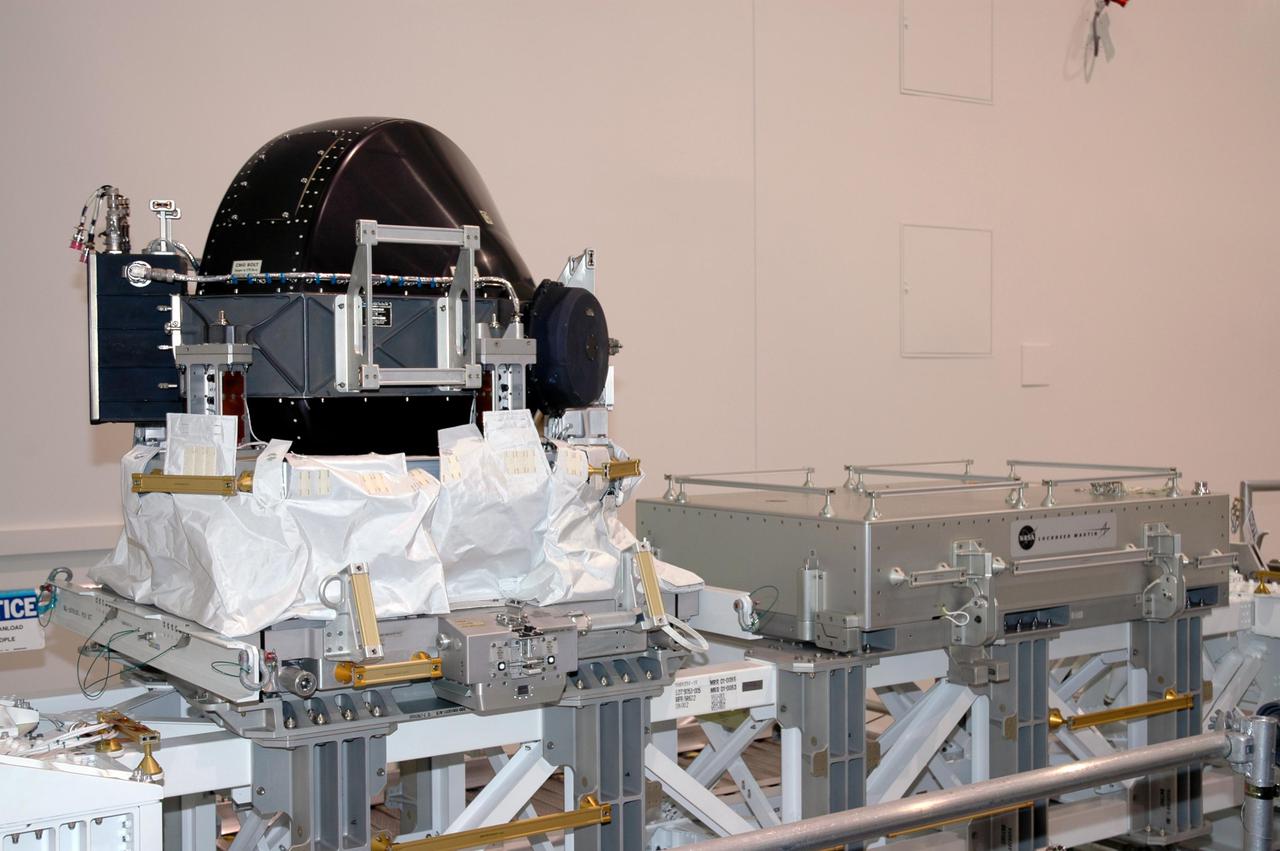
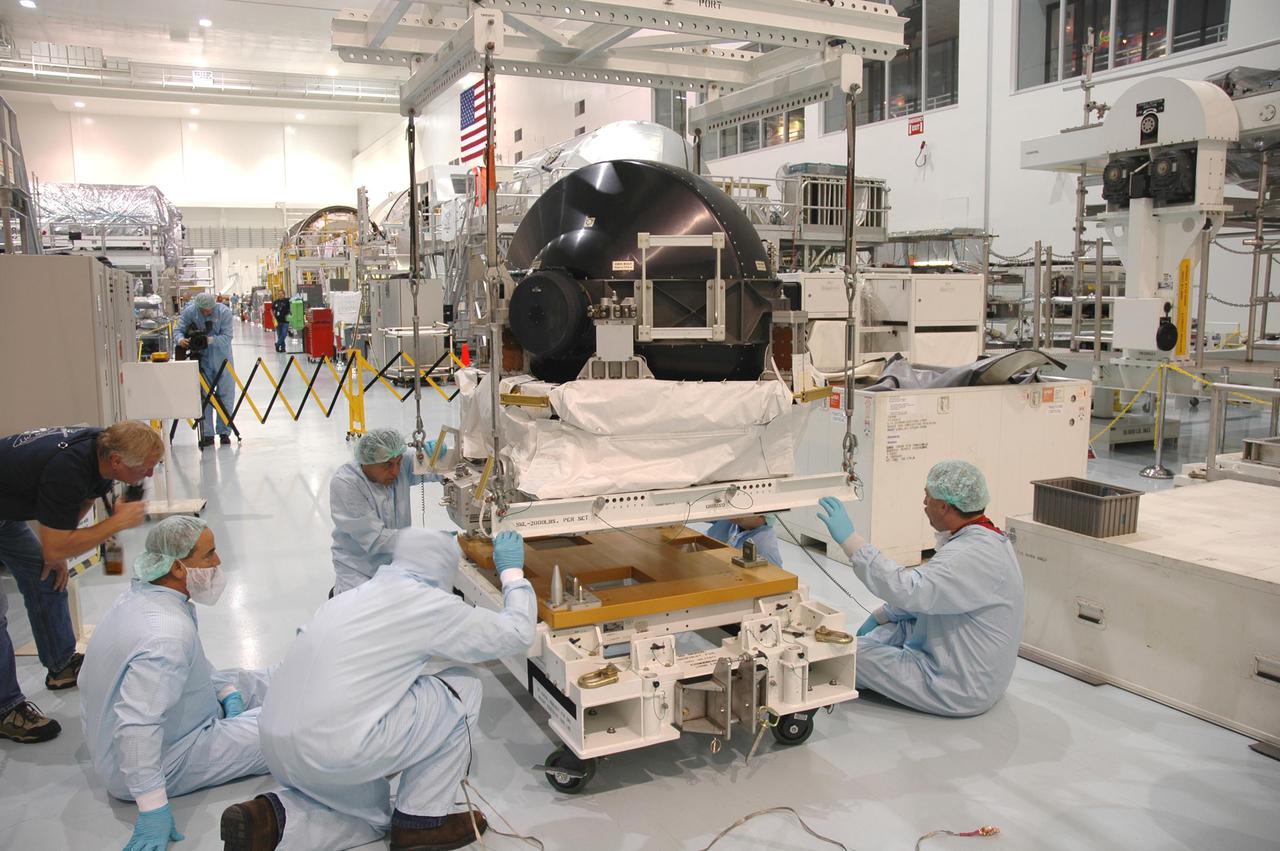
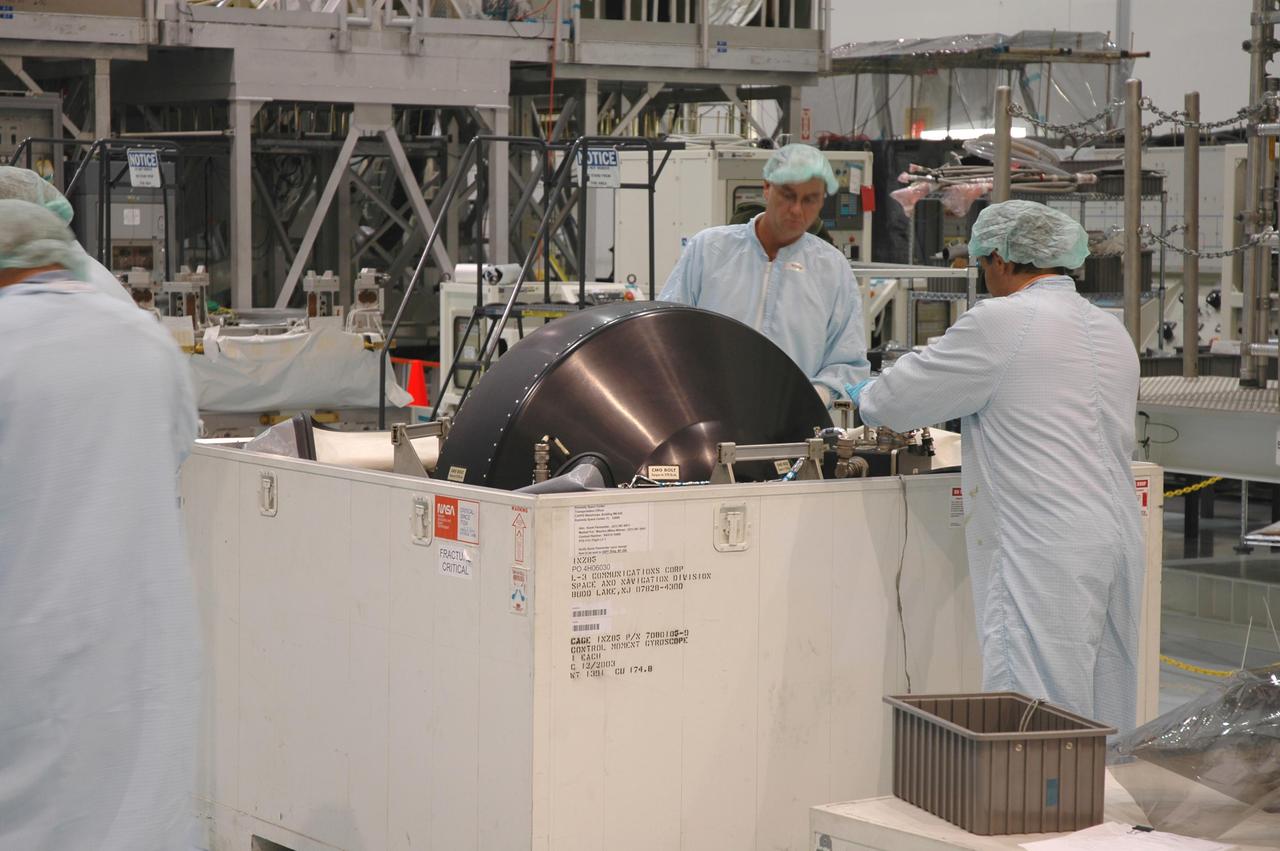
KENNEDY SPACE CENTER, FLA.  -  In the Space Station Processing Facility, workers help maneuver the Control Moment Gyroscope (CMG) onto a stand prior to its being returned to the vendor for repair.  The faulty CMG was removed from the International Space Station and replaced with a new one on mission STS-114 in August.  A control moment gyroscope  is an actuator used to apply very high attitude-control torques to agile spacecraft.  The Space Station uses four massive control moment gyroscopes to maintain the Station’s orientation in space.
KSC-05PD-2068
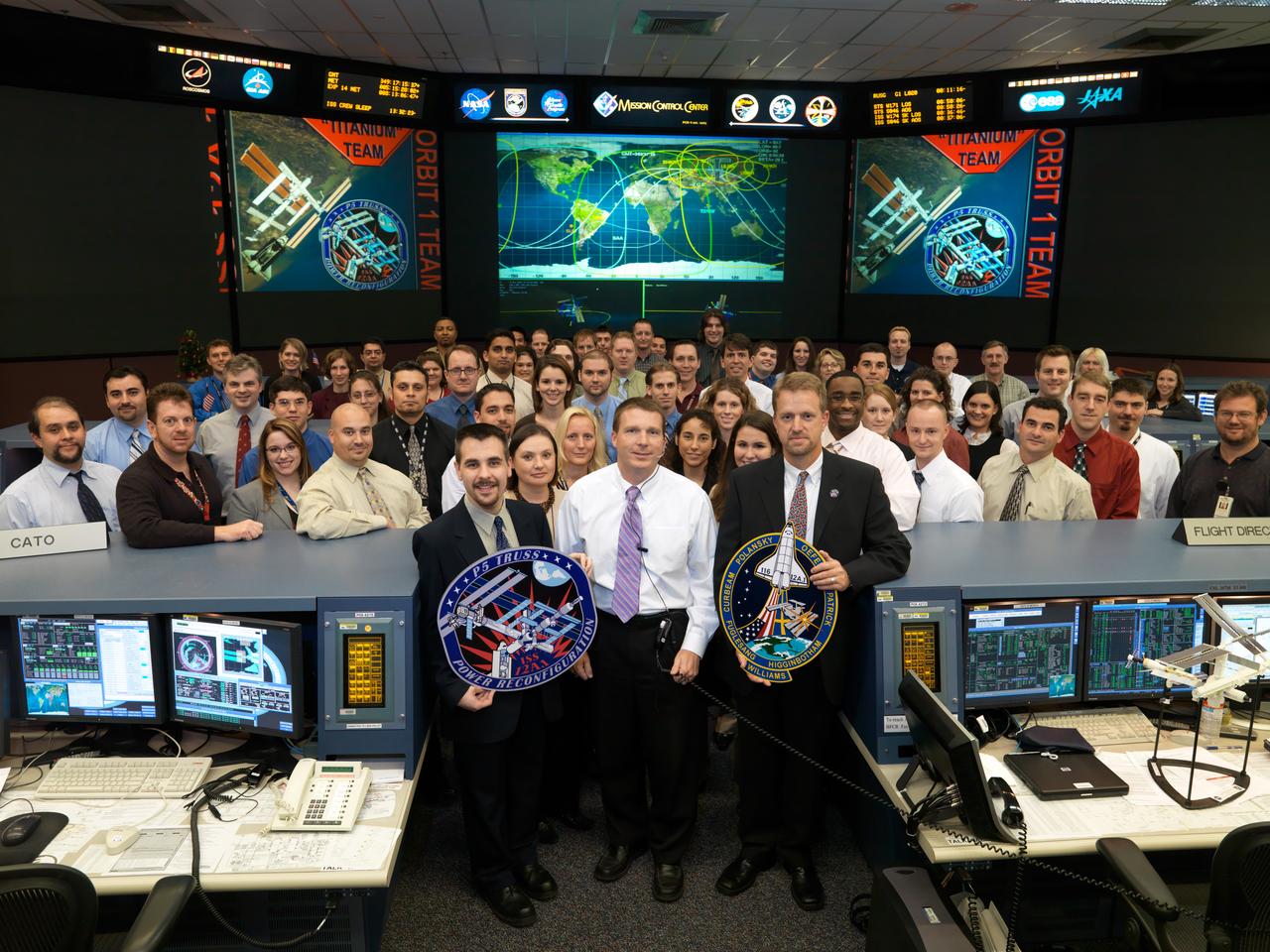
JSC2006-E-54411 (15 Dec. 2006) --- The members of the STS-116/12A.1 ISS Orbit 1 flight control team pose for a group portrait in the station flight control room of Houston's Mission Control Center (MCC). Flight director Derek Hassman (center right) holds the STS-116 mission logo. Astronaut Terry W. Virts Jr., spacecraft communicator (CAPCOM), is at center. PHALCON flight controller Scott Stover (center left) holds the P5 truss power reconfiguration logo.
ISS-12A.1 Orbit 1 Flight Control Team in FCR-1 with Flight Director Derek Hassmann
KENNEDY SPACE CENTER, FLA.  -  In the Space Station Processing Facility, the Control Moment Gyroscope (CMG) at left is being returned to the vendor for repair.  The faulty CMG was removed from the International Space Station and replaced with a new one on mission STS-114 in August.  A control moment gyroscope  is an actuator used to apply very high attitude-control torques to agile spacecraft.  The Space Station uses four massive control moment gyroscopes to maintain the Station’s orientation in space.
KSC-05PD-2065
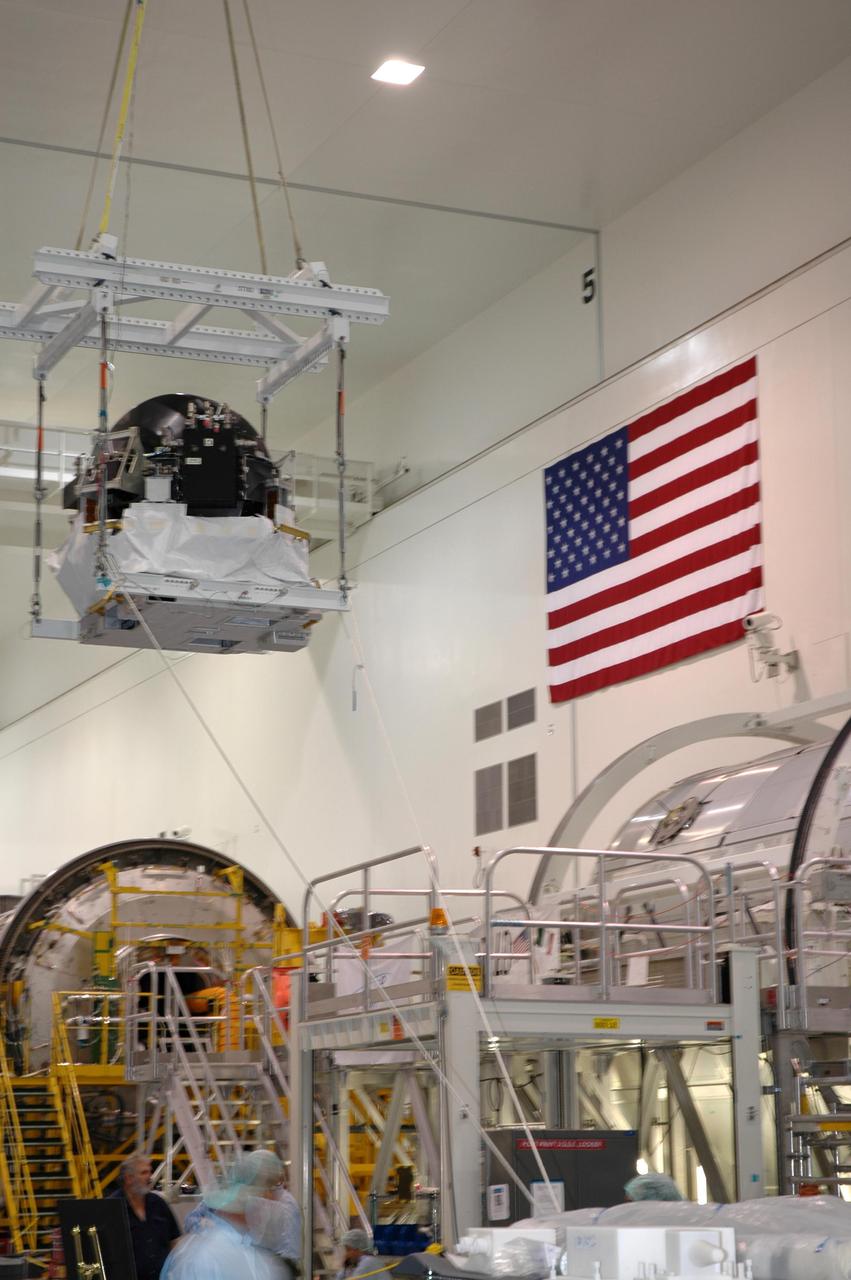
KENNEDY SPACE CENTER, FLA.  - In the Space Station Processing Facility, the Control Moment Gyroscope (CMG) is moved toward a stand prior to its being returned to the vendor for repair.  The faulty CMG was removed from the International Space Station and replaced with a new one on mission STS-114 in August.   A control moment gyroscope  is an actuator used to apply very high attitude-control torques to agile spacecraft.  The Space Station uses four massive control moment gyroscopes to maintain the Station’s orientation in space.
KSC-05PD-2067
KENNEDY SPACE CENTER, FLA.  -  In the Space Station Processing Facility, workers oversee the packing of the Control Moment Gyroscope (CMG) in a shipping container.  The faulty CMG was removed from the International Space Station and replaced with a new one on mission STS-114 in August.   A control moment gyroscope  is an actuator used to apply very high attitude-control torques to agile spacecraft.  The Space Station uses four massive control moment gyroscopes to maintain the Station’s orientation in space.
KSC-05PD-2070
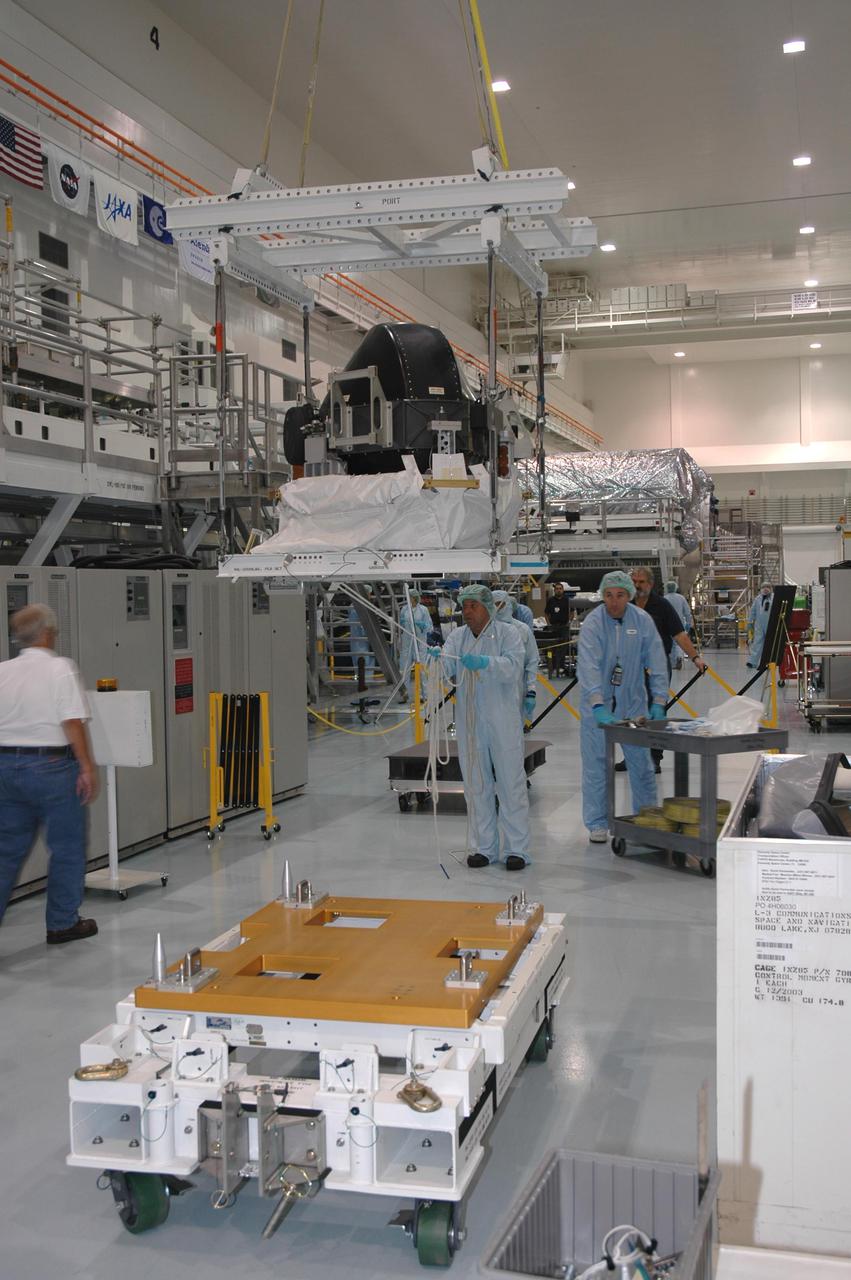
KENNEDY SPACE CENTER, FLA.  - The Control Moment Gyroscope (CMG) is moved across the floor of the Space Station Processing Facility.  It is being transferred to a stand prior to its being returned to the vendor for repair.  The faulty CMG was removed from the International Space Station and replaced with a new one on mission STS-114 in August.  A control moment gyroscope  is an actuator used to apply very high attitude-control torques to agile spacecraft.  The Space Station uses four massive control moment gyroscopes to maintain the Station’s orientation in space.
KSC-05PD-2066
Pioneer Mission Control Center with personnel monitoring spacecraft (PMOC) including Dr Richard Fimmel
ARC-1983-AC83-0378-36
Pioneer Mission Control Center with personnel monitoring spacecraft (PMOC) includes Dr Richard Fimmel
ARC-1983-AC83-0378-41
S64-12007 (1964) --- Artist concept of Gemini spacecraft and Command Module with two astronauts seated at the controls.
GEMINI SPACECRAFT - ARTIST CONCEPT
Pioneer Mission Control Center with personnel monitoring spacecraft (PMOC) includes Dr Richard Fimmel
ARC-1983-AC83-0378-40
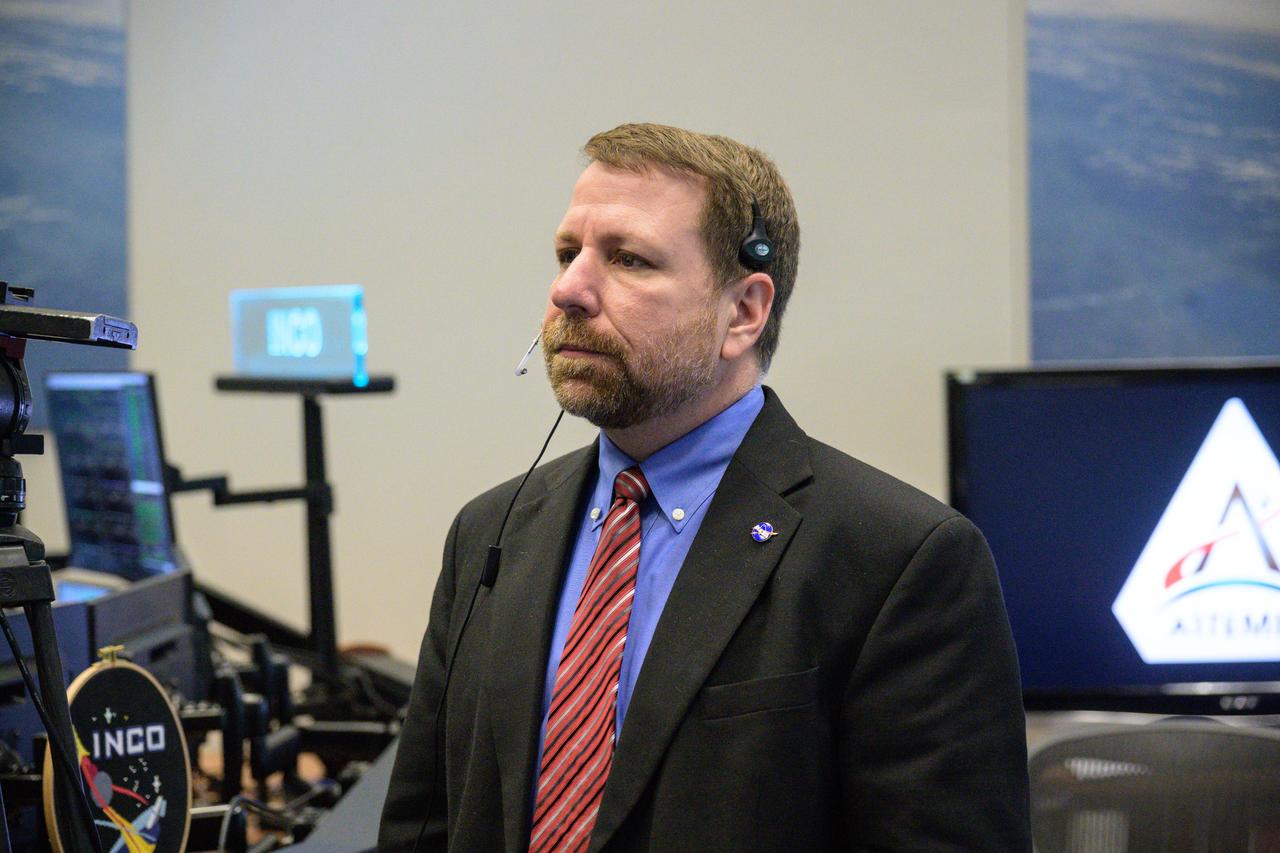
jsc2022e090759 (Dec. 1, 2022): Flight controllers Steve Sides and Brian Crisp at the instrumentation and communications officer console in Houston’s Mission Control Center observe the Orion spacecraft under the direction of Flight Director Rick LaBrode. The spacecraft departed its distant retrograde orbit on flight day 16 of the Artemis I mission – one of the steps needed to bring the spacecraft home from the Moon. Credit: NASA/Robert Markowitz
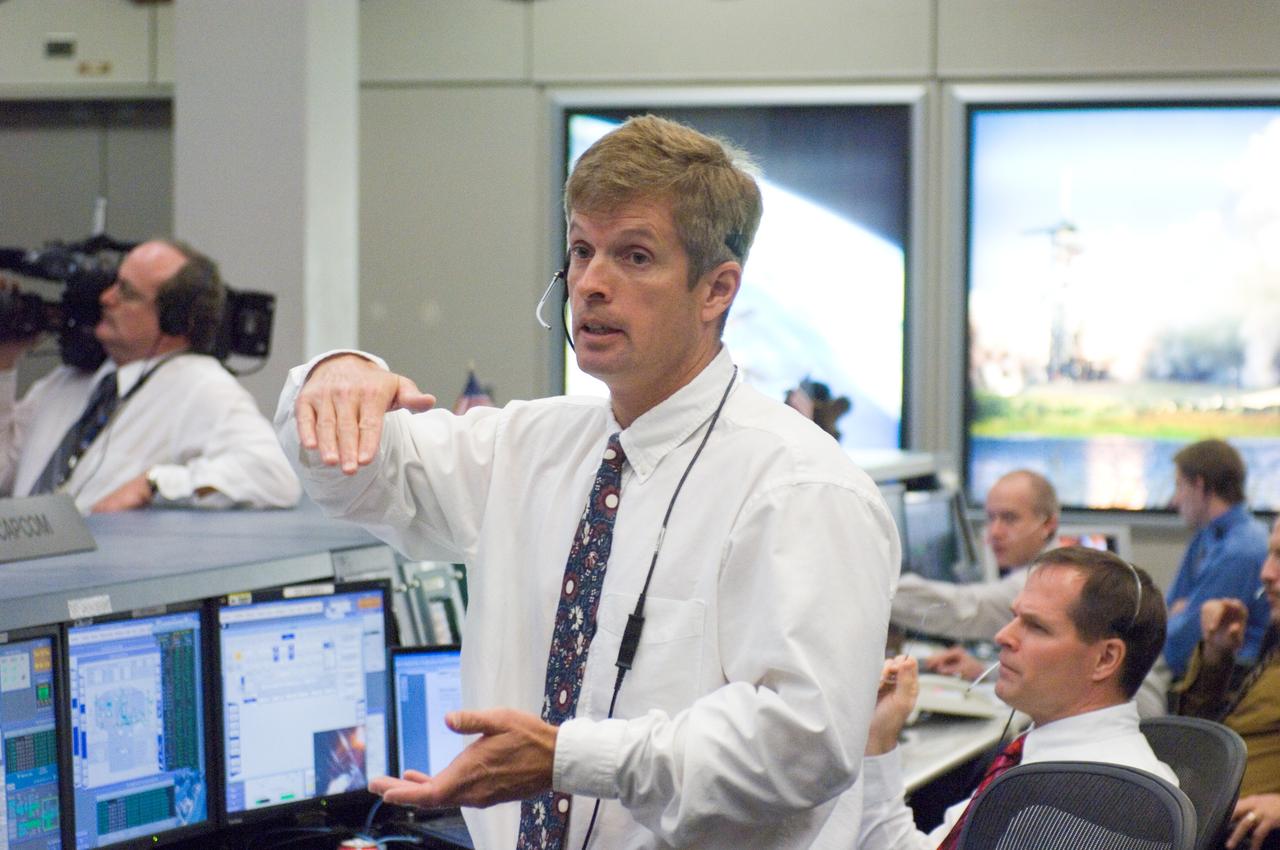
Flight Day 16: Mission Control during Distant Retrograde Departure
jsc2022e090757 (Dec. 1, 2022): Flight controller Joel Appel (right) at the propulsion console in Houston’s Mission Control Center observes the Orion spacecraft under the direction of Flight Director Rick LaBrode. The spacecraft departed its distant retrograde orbit on flight day 16 of the Artemis I mission – one of the steps needed to bring the spacecraft home from the Moon. Credit: NASA/Robert Markowitz
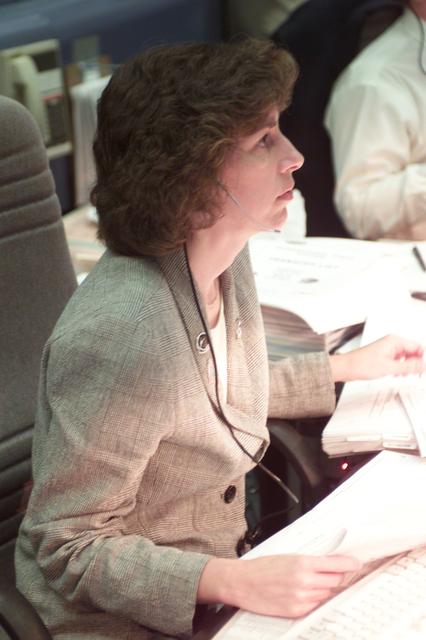
Flight Day 16: Mission Control during Distant Retrograde Departure
S63-03960 (1 Feb. 1963) --- Astronaut L. Gordon Cooper Jr., prime pilot for the Mercury-Atlas 9 (MA-9) mission, checks over the instrument panel from Mercury spacecraft #20 with Robert Graham, McDonnell Aircraft Corp. spacecraft engineer. It contains the instruments necessary to monitor spacecraft systems and sequencing, the controls required to initiate primary sequences manually, and flight control displays. Photo credit: NASA
MERCURY-ATLAS (MA)-9 - "FRIENDSHIP 7" SPACECRAFT - PRELAUNCH ACTIVITIES - CAPE
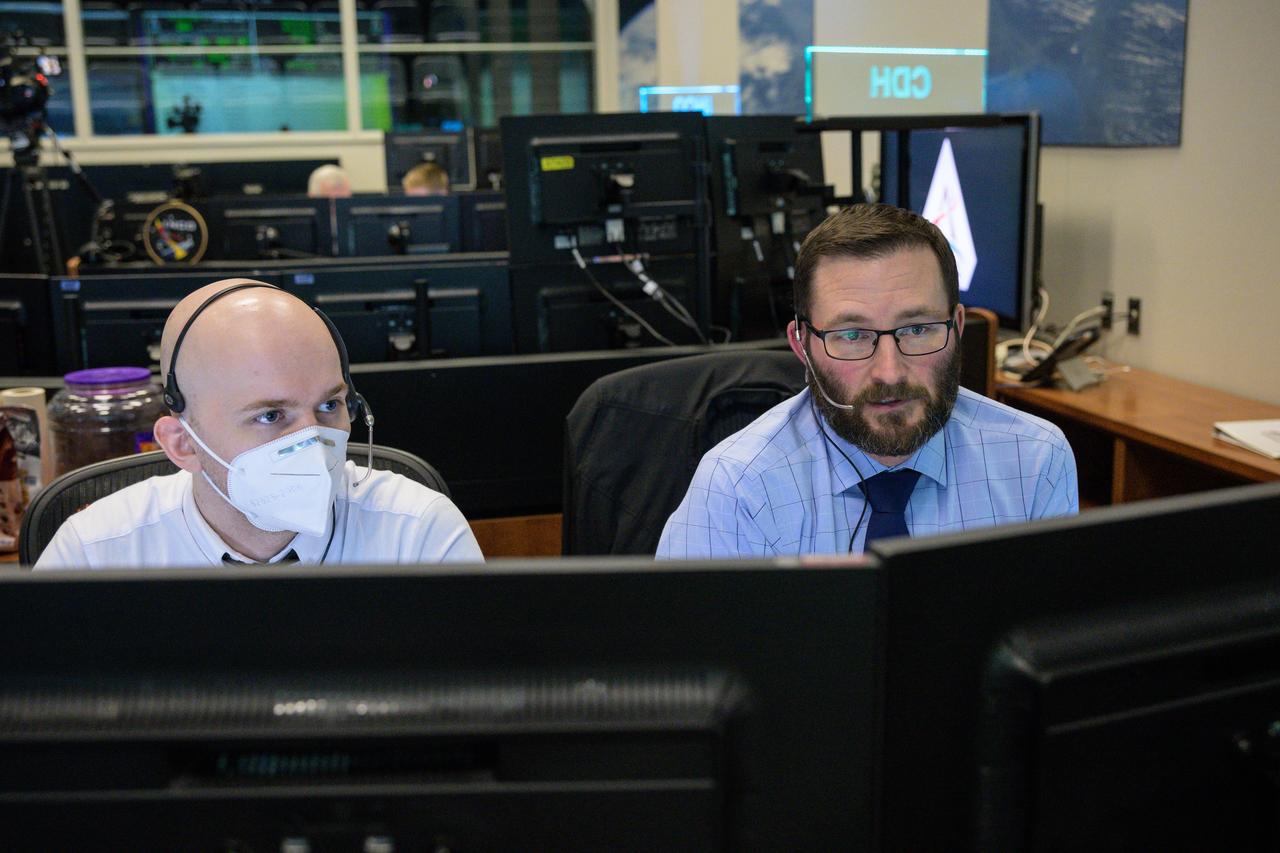
jsc2022e090746 (Dec. 1, 2022): Flight controller Todd Quasny at the command and data handling console in Houston’s Mission Control Center observes the Orion spacecraft under the direction of Flight Director Rick LaBrode. The spacecraft departed its distant retrograde orbit on flight day 16 of the Artemis I mission – one of the steps needed to bring the spacecraft home from the Moon. Credit: NASA/Robert Markowitz
Flight Day 16: Mission Control during Distant Retrograde Departure
jsc2022e090753 (Dec. 1, 2022): Flight controller Julie Reed at the flight dynamics officer console in Houston’s Mission Control Center observes the Orion spacecraft under the direction of Flight Director Rick LaBrode. The spacecraft departed its distant retrograde orbit on flight day 16 of the Artemis I mission – one of the steps needed to bring the spacecraft home from the Moon. Credit: NASA/Robert Markowitz
Flight Day 16: Mission Control during Distant Retrograde Departure
jsc2022e090747 (Dec. 1, 2022): Flight controllers Doug Haskovec and Amar Ollero at the mechanical and power officer console in Houston’s Mission Control Center observe the Orion spacecraft under the direction of Flight Director Rick LaBrode. The spacecraft departed its distant retrograde orbit on flight day 16 of the Artemis I mission – one of the steps needed to bring the spacecraft home from the Moon. Credit: NASA/Robert Markowitz
Flight Day 16: Mission Control during Distant Retrograde Departure
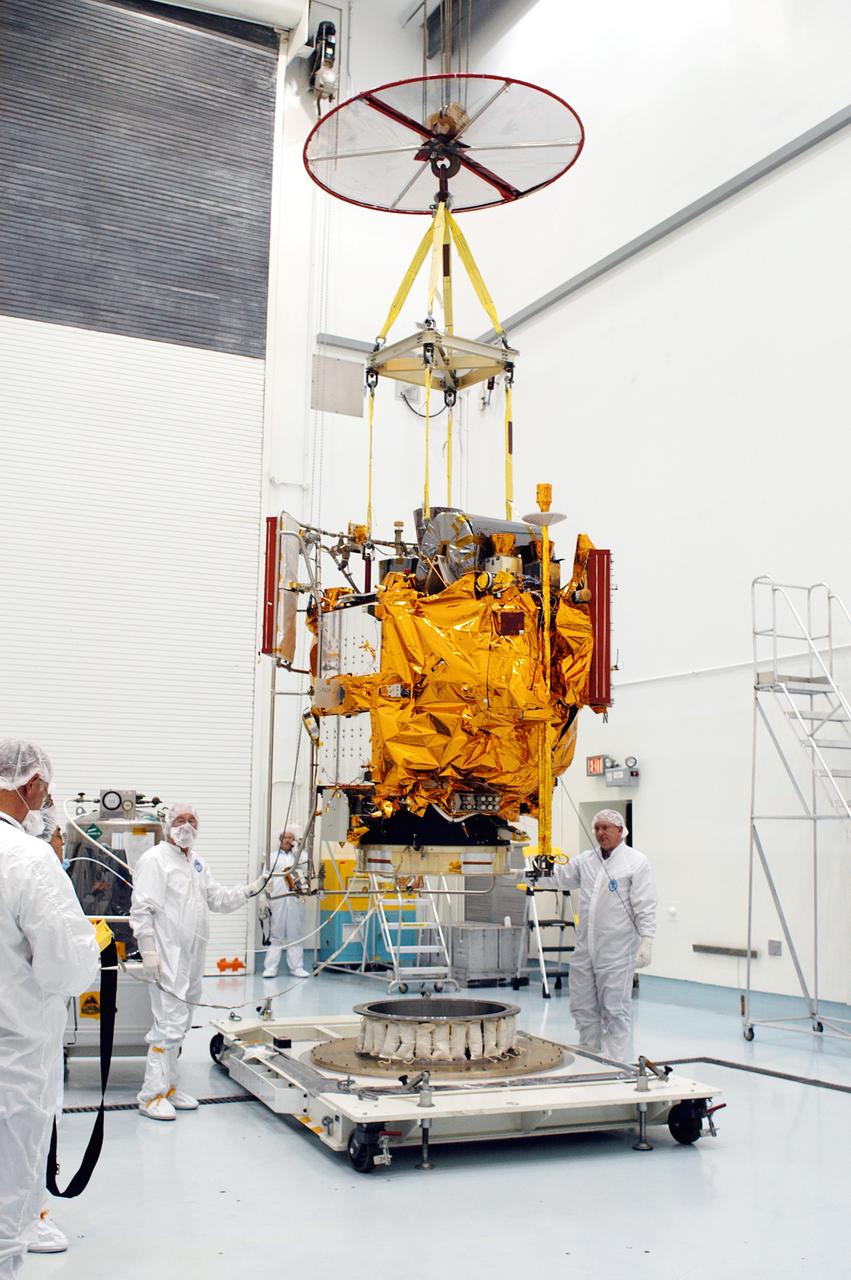
KENNEDY SPACE CENTER, FLA. -  At the Astrotech Space Operations processing facilities, an overhead crane moves NASA’s MESSENGER spacecraft toward a work stand. There employees of the Johns Hopkins University Applied Physics Laboratory, builders of the spacecraft, will perform an initial state-of-health check.  Then processing for launch can begin, including checkout of the power systems, communications systems and control systems.  The thermal blankets will also be attached for flight.  MESSENGER - short for MErcury Surface, Space ENvironment, GEochemistry and Ranging - will be launched May 11 on a six-year mission aboard a Boeing Delta II rocket.  Liftoff is targeted for 2:26 a.m. EDT on Tuesday, May 11.
KENNEDY SPACE CENTER, FLA. - At the Astrotech Space Operations processing facilities, an overhead crane moves NASA’s MESSENGER spacecraft toward a work stand. There employees of the Johns Hopkins University Applied Physics Laboratory, builders of the spacecraft, will perform an initial state-of-health check. Then processing for launch can begin, including checkout of the power systems, communications systems and control systems. The thermal blankets will also be attached for flight. MESSENGER - short for MErcury Surface, Space ENvironment, GEochemistry and Ranging - will be launched May 11 on a six-year mission aboard a Boeing Delta II rocket. Liftoff is targeted for 2:26 a.m. EDT on Tuesday, May 11.
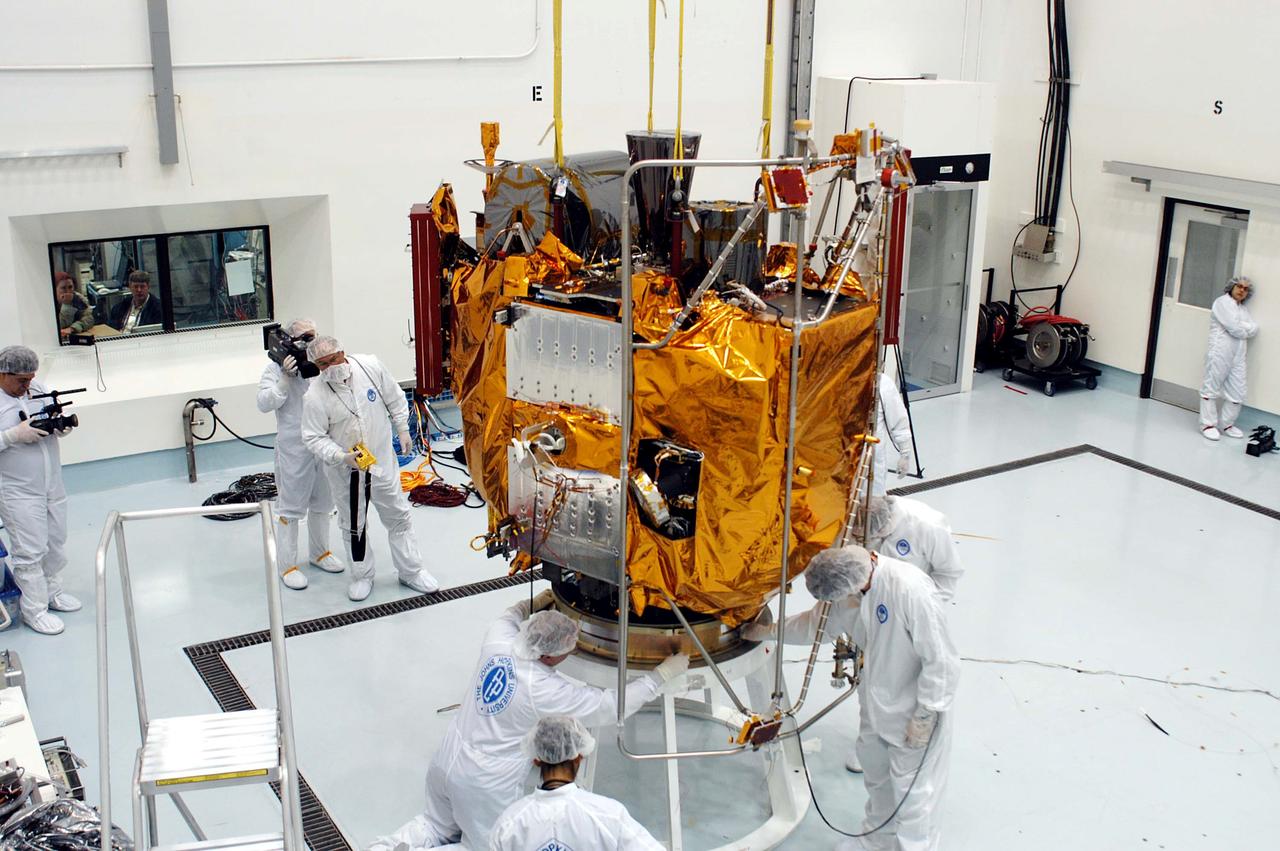
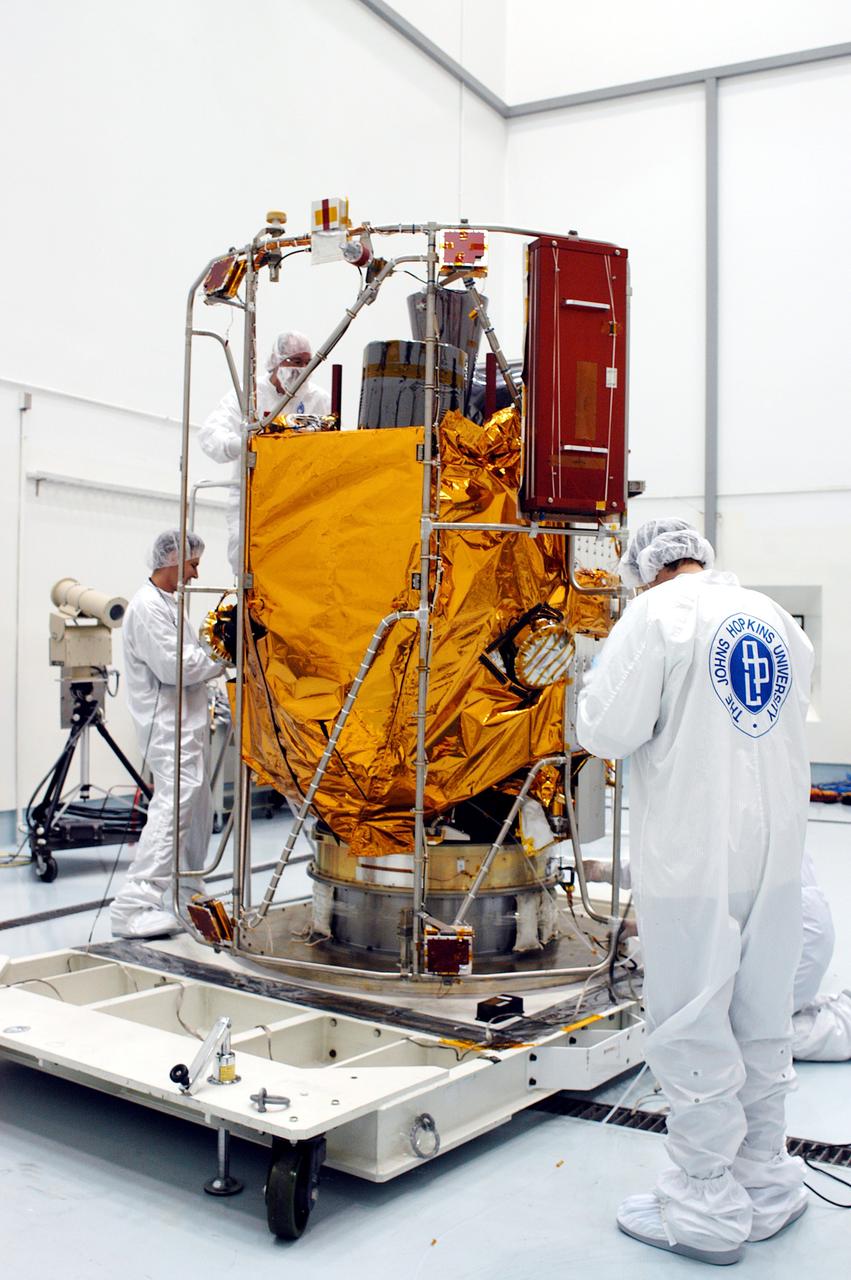
KENNEDY SPACE CENTER, FLA. -  At the Astrotech Space Operations processing facilities, NASA’s MESSENGER spacecraft is secure after transfer to the work stand. There employees of the Johns Hopkins University Applied Physics Laboratory, builders of the spacecraft, will perform an initial state-of-health check.  Then processing for launch can begin, including checkout of the power systems, communications systems and control systems.  The thermal blankets will also be attached for flight.  MESSENGER - short for MErcury Surface, Space ENvironment, GEochemistry and Ranging - will be launched May 11 on a six-year mission aboard a Boeing Delta II rocket.  Liftoff is targeted for 2:26 a.m. EDT on Tuesday, May 11.
KENNEDY SPACE CENTER, FLA. - At the Astrotech Space Operations processing facilities, NASA’s MESSENGER spacecraft is secure after transfer to the work stand. There employees of the Johns Hopkins University Applied Physics Laboratory, builders of the spacecraft, will perform an initial state-of-health check. Then processing for launch can begin, including checkout of the power systems, communications systems and control systems. The thermal blankets will also be attached for flight. MESSENGER - short for MErcury Surface, Space ENvironment, GEochemistry and Ranging - will be launched May 11 on a six-year mission aboard a Boeing Delta II rocket. Liftoff is targeted for 2:26 a.m. EDT on Tuesday, May 11.
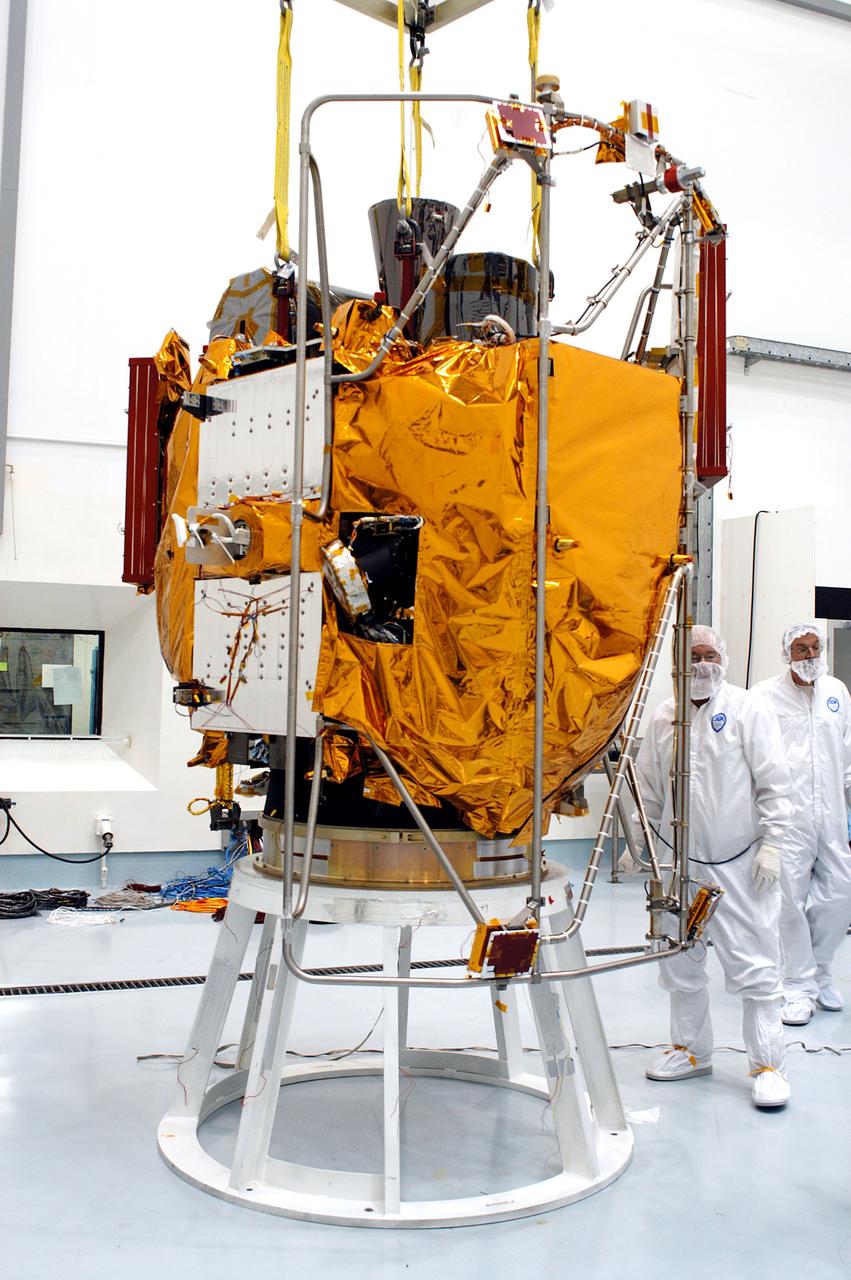
KENNEDY SPACE CENTER, FLA. -  At the Astrotech Space Operations processing facilities, an overhead crane lowers NASA’s MESSENGER spacecraft onto a work stand. There employees of the Johns Hopkins University Applied Physics Laboratory, builders of the spacecraft, will perform an initial state-of-health check.  Then processing for launch can begin, including checkout of the power systems, communications systems and control systems.  The thermal blankets will also be attached for flight.  MESSENGER - short for MErcury Surface, Space ENvironment, GEochemistry and Ranging - will be launched May 11 on a six-year mission aboard a Boeing Delta II rocket.  Liftoff is targeted for 2:26 a.m. EDT on Tuesday, May 11.
KENNEDY SPACE CENTER, FLA. - At the Astrotech Space Operations processing facilities, an overhead crane lowers NASA’s MESSENGER spacecraft onto a work stand. There employees of the Johns Hopkins University Applied Physics Laboratory, builders of the spacecraft, will perform an initial state-of-health check. Then processing for launch can begin, including checkout of the power systems, communications systems and control systems. The thermal blankets will also be attached for flight. MESSENGER - short for MErcury Surface, Space ENvironment, GEochemistry and Ranging - will be launched May 11 on a six-year mission aboard a Boeing Delta II rocket. Liftoff is targeted for 2:26 a.m. EDT on Tuesday, May 11.
KENNEDY SPACE CENTER, FLA. -  In the high bay clean room at the Astrotech Space Operations processing facilities near KSC, NASA’s MESSENGER spacecraft is revealed.  Employees of the Johns Hopkins University Applied Physics Laboratory, builders of the spacecraft, will perform an initial state-of-health check.  Then processing for launch can begin, including checkout of the power systems, communications systems and control systems.  The thermal blankets will also be attached for flight.  MESSENGER - short for MErcury Surface, Space ENvironment, GEochemistry and Ranging - will be launched May 11 on a six-year mission aboard a Boeing Delta II rocket.  Liftoff is targeted for 2:26 a.m. EDT on Tuesday, May 11.
KENNEDY SPACE CENTER, FLA. - In the high bay clean room at the Astrotech Space Operations processing facilities near KSC, NASA’s MESSENGER spacecraft is revealed. Employees of the Johns Hopkins University Applied Physics Laboratory, builders of the spacecraft, will perform an initial state-of-health check. Then processing for launch can begin, including checkout of the power systems, communications systems and control systems. The thermal blankets will also be attached for flight. MESSENGER - short for MErcury Surface, Space ENvironment, GEochemistry and Ranging - will be launched May 11 on a six-year mission aboard a Boeing Delta II rocket. Liftoff is targeted for 2:26 a.m. EDT on Tuesday, May 11.
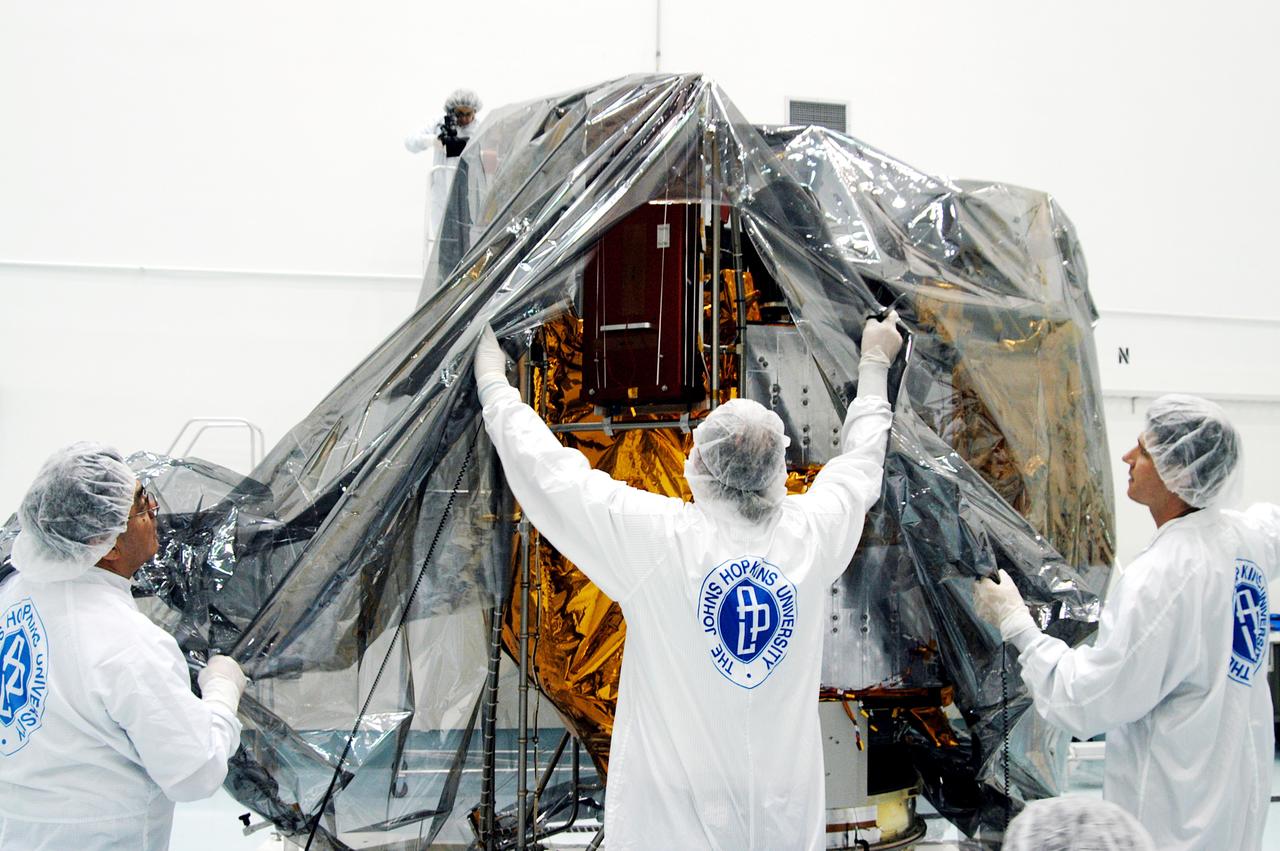
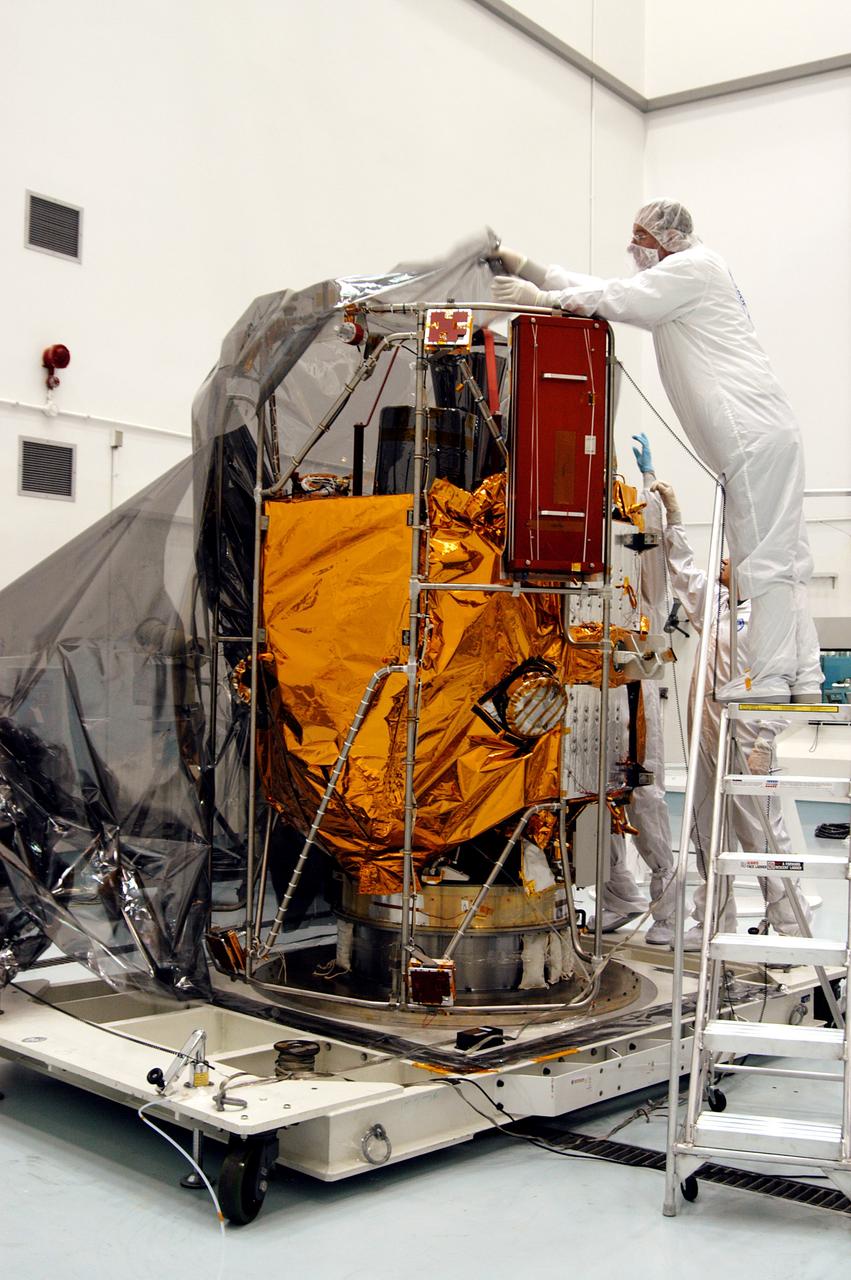
KENNEDY SPACE CENTER, FLA. -  In the high bay clean room at the Astrotech Space Operations processing facilities near KSC, workers remove the protective cover from NASA’s MESSENGER spacecraft.  Employees of the Johns Hopkins University Applied Physics Laboratory, builders of the spacecraft, will perform an initial state-of-health check.  Then processing for launch can begin, including checkout of the power systems, communications systems and control systems.  The thermal blankets will also be attached for flight.  MESSENGER - short for MErcury Surface, Space ENvironment, GEochemistry and Ranging - will be launched May 11 on a six-year mission aboard a Boeing Delta II rocket.  Liftoff is targeted for 2:26 a.m. EDT on Tuesday, May 11.
KENNEDY SPACE CENTER, FLA. - In the high bay clean room at the Astrotech Space Operations processing facilities near KSC, workers remove the protective cover from NASA’s MESSENGER spacecraft. Employees of the Johns Hopkins University Applied Physics Laboratory, builders of the spacecraft, will perform an initial state-of-health check. Then processing for launch can begin, including checkout of the power systems, communications systems and control systems. The thermal blankets will also be attached for flight. MESSENGER - short for MErcury Surface, Space ENvironment, GEochemistry and Ranging - will be launched May 11 on a six-year mission aboard a Boeing Delta II rocket. Liftoff is targeted for 2:26 a.m. EDT on Tuesday, May 11.
KENNEDY SPACE CENTER, FLA. -  At the Astrotech Space Operations processing facilities, workers check the placement of NASA’s MESSENGER spacecraft on a work stand. There employees of the Johns Hopkins University Applied Physics Laboratory, builders of the spacecraft, will perform an initial state-of-health check.  Then processing for launch can begin, including checkout of the power systems, communications systems and control systems.  The thermal blankets will also be attached for flight.  MESSENGER - short for MErcury Surface, Space ENvironment, GEochemistry and Ranging - will be launched May 11 on a six-year mission aboard a Boeing Delta II rocket.  Liftoff is targeted for 2:26 a.m. EDT on Tuesday, May 11.
KENNEDY SPACE CENTER, FLA. - At the Astrotech Space Operations processing facilities, workers check the placement of NASA’s MESSENGER spacecraft on a work stand. There employees of the Johns Hopkins University Applied Physics Laboratory, builders of the spacecraft, will perform an initial state-of-health check. Then processing for launch can begin, including checkout of the power systems, communications systems and control systems. The thermal blankets will also be attached for flight. MESSENGER - short for MErcury Surface, Space ENvironment, GEochemistry and Ranging - will be launched May 11 on a six-year mission aboard a Boeing Delta II rocket. Liftoff is targeted for 2:26 a.m. EDT on Tuesday, May 11.
KENNEDY SPACE CENTER, FLA. -  In the high bay clean room at the Astrotech Space Operations processing facilities near KSC, workers remove the protective cover from NASA’s MESSENGER spacecraft.  Employees of the Johns Hopkins University Applied Physics Laboratory, builders of the spacecraft, will perform an initial state-of-health check.  Then processing for launch can begin, including checkout of the power systems, communications systems and control systems.  The thermal blankets will also be attached for flight.  MESSENGER - short for MErcury Surface, Space ENvironment, GEochemistry and Ranging - will be launched May 11 on a six-year mission aboard a Boeing Delta II rocket.  Liftoff is targeted for 2:26 a.m. EDT on Tuesday, May 11.
KENNEDY SPACE CENTER, FLA. - In the high bay clean room at the Astrotech Space Operations processing facilities near KSC, workers remove the protective cover from NASA’s MESSENGER spacecraft. Employees of the Johns Hopkins University Applied Physics Laboratory, builders of the spacecraft, will perform an initial state-of-health check. Then processing for launch can begin, including checkout of the power systems, communications systems and control systems. The thermal blankets will also be attached for flight. MESSENGER - short for MErcury Surface, Space ENvironment, GEochemistry and Ranging - will be launched May 11 on a six-year mission aboard a Boeing Delta II rocket. Liftoff is targeted for 2:26 a.m. EDT on Tuesday, May 11.
KENNEDY SPACE CENTER, FLA. -  In the high bay clean room at the Astrotech Space Operations processing facilities near KSC, workers prepare NASA’s MESSENGER spacecraft for transfer to a work stand.  There employees of the Johns Hopkins University Applied Physics Laboratory, builders of the spacecraft, will perform an initial state-of-health check.  Then processing for launch can begin, including checkout of the power systems, communications systems and control systems.  The thermal blankets will also be attached for flight.  MESSENGER - short for MErcury Surface, Space ENvironment, GEochemistry and Ranging - will be launched May 11 on a six-year mission aboard a Boeing Delta II rocket.  Liftoff is targeted for 2:26 a.m. EDT on Tuesday, May 11.
KENNEDY SPACE CENTER, FLA. - In the high bay clean room at the Astrotech Space Operations processing facilities near KSC, workers prepare NASA’s MESSENGER spacecraft for transfer to a work stand. There employees of the Johns Hopkins University Applied Physics Laboratory, builders of the spacecraft, will perform an initial state-of-health check. Then processing for launch can begin, including checkout of the power systems, communications systems and control systems. The thermal blankets will also be attached for flight. MESSENGER - short for MErcury Surface, Space ENvironment, GEochemistry and Ranging - will be launched May 11 on a six-year mission aboard a Boeing Delta II rocket. Liftoff is targeted for 2:26 a.m. EDT on Tuesday, May 11.
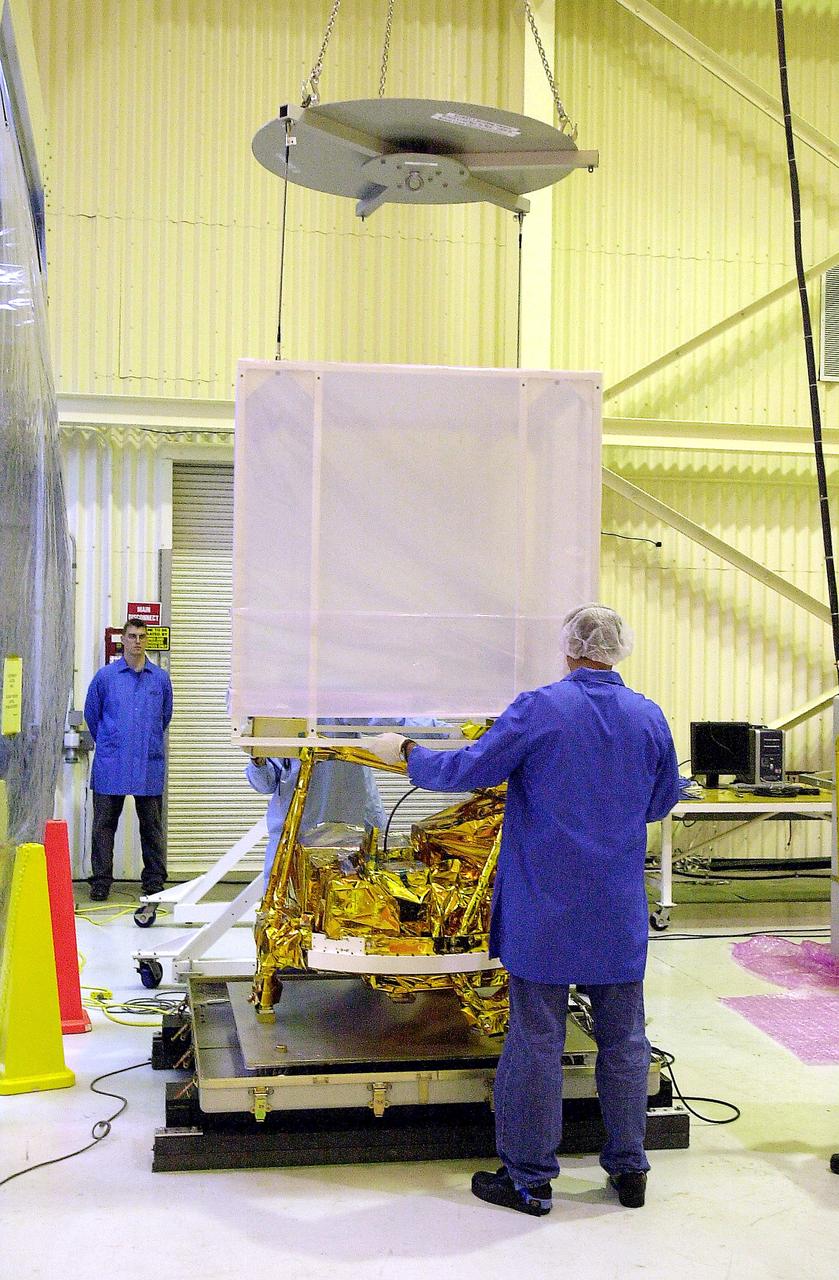
VANDENBERG AIR FORCE BASE, CALIF.- The cover is being lifted off SciSat-1 spacecraft at Vandenberg Air Force Base, Calif.   Sci-Sat, which will undergo instrument checkout and spacecraft functional testing, weighs approximately 330 pounds and after launch will be placed in a 400-mile-high polar orbit to investigate processes that control the distribution of ozone in the upper atmosphere. The data from the satellite will provide Canadian and international scientists with improved measurements relating to global ozone processes and help policymakers assess existing environmental policy and develop protective measures for improving the health of our atmosphere, preventing further ozone depletion. The mission is designed to last two years.
VANDENBERG AIR FORCE BASE, CALIF.- The cover is being lifted off SciSat-1 spacecraft at Vandenberg Air Force Base, Calif. Sci-Sat, which will undergo instrument checkout and spacecraft functional testing, weighs approximately 330 pounds and after launch will be placed in a 400-mile-high polar orbit to investigate processes that control the distribution of ozone in the upper atmosphere. The data from the satellite will provide Canadian and international scientists with improved measurements relating to global ozone processes and help policymakers assess existing environmental policy and develop protective measures for improving the health of our atmosphere, preventing further ozone depletion. The mission is designed to last two years.
KENNEDY SPACE CENTER, FLA. -  At the Astrotech Space Operations processing facilities, an overhead crane lowers NASA’s MESSENGER spacecraft onto a work stand. There employees of the Johns Hopkins University Applied Physics Laboratory, builders of the spacecraft, will perform an initial state-of-health check.  Then processing for launch can begin, including checkout of the power systems, communications systems and control systems.  The thermal blankets will also be attached for flight.  MESSENGER - short for MErcury Surface, Space ENvironment, GEochemistry and Ranging - will be launched May 11 on a six-year mission aboard a Boeing Delta II rocket.  Liftoff is targeted for 2:26 a.m. EDT on Tuesday, May 11.
KENNEDY SPACE CENTER, FLA. - At the Astrotech Space Operations processing facilities, an overhead crane lowers NASA’s MESSENGER spacecraft onto a work stand. There employees of the Johns Hopkins University Applied Physics Laboratory, builders of the spacecraft, will perform an initial state-of-health check. Then processing for launch can begin, including checkout of the power systems, communications systems and control systems. The thermal blankets will also be attached for flight. MESSENGER - short for MErcury Surface, Space ENvironment, GEochemistry and Ranging - will be launched May 11 on a six-year mission aboard a Boeing Delta II rocket. Liftoff is targeted for 2:26 a.m. EDT on Tuesday, May 11.
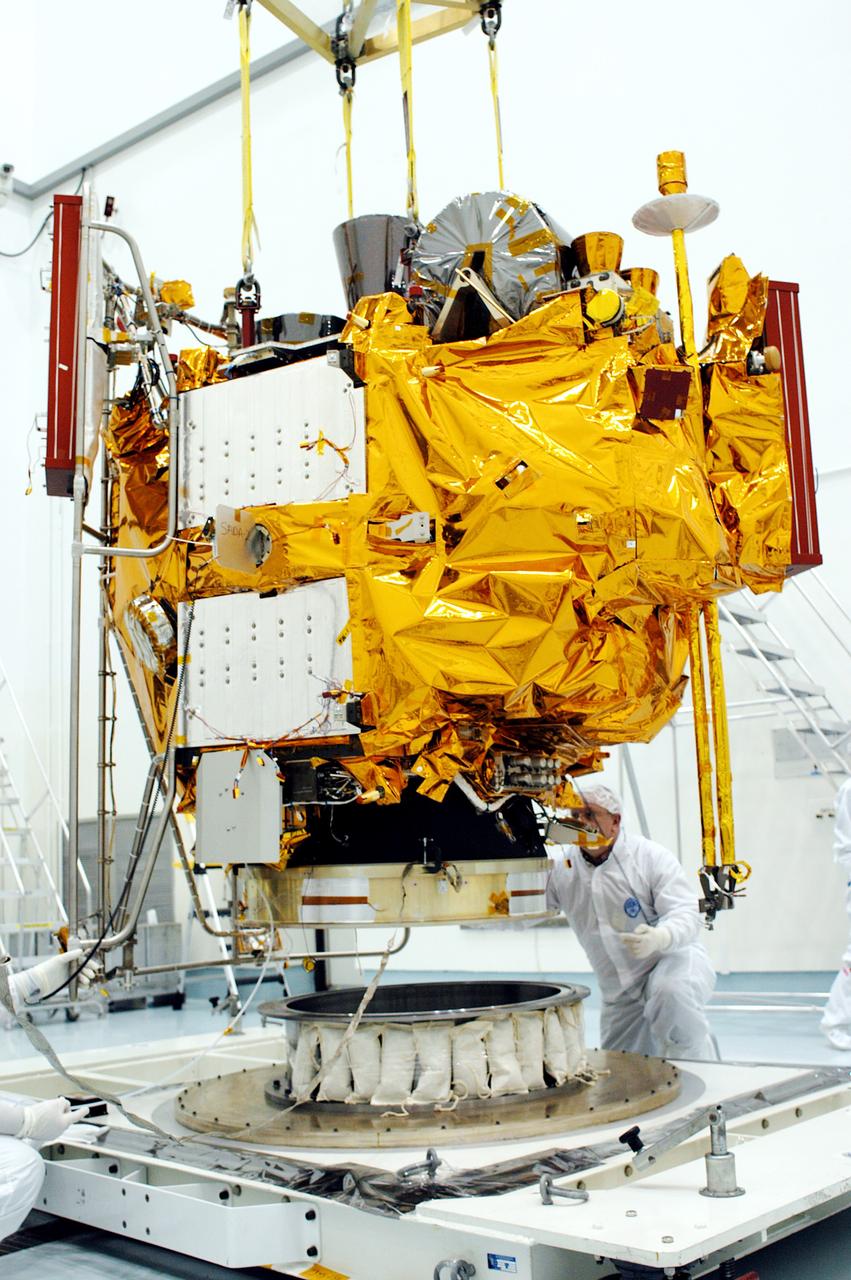
KENNEDY SPACE CENTER, FLA. -  At the Astrotech Space Operations processing facilities, NASA’s MESSENGER spacecraft is lifted off the pallet for transfer to a work stand. There employees of the Johns Hopkins University Applied Physics Laboratory, builders of the spacecraft, will perform an initial state-of-health check.  Then processing for launch can begin, including checkout of the power systems, communications systems and control systems.  The thermal blankets will also be attached for flight.  MESSENGER - short for MErcury Surface, Space ENvironment, GEochemistry and Ranging - will be launched May 11 on a six-year mission aboard a Boeing Delta II rocket.  Liftoff is targeted for 2:26 a.m. EDT on Tuesday, May 11.
KENNEDY SPACE CENTER, FLA. - At the Astrotech Space Operations processing facilities, NASA’s MESSENGER spacecraft is lifted off the pallet for transfer to a work stand. There employees of the Johns Hopkins University Applied Physics Laboratory, builders of the spacecraft, will perform an initial state-of-health check. Then processing for launch can begin, including checkout of the power systems, communications systems and control systems. The thermal blankets will also be attached for flight. MESSENGER - short for MErcury Surface, Space ENvironment, GEochemistry and Ranging - will be launched May 11 on a six-year mission aboard a Boeing Delta II rocket. Liftoff is targeted for 2:26 a.m. EDT on Tuesday, May 11.
VANDENBERG AIR FORCE BASE, CALIF. - The SciSat-1 spacecraft is revealed at Vandenberg Air Force Base, Calif.   Sci-Sat, which will undergo instrument checkout and spacecraft functional testing, weighs approximately 330 pounds and after launch will be placed in a 400-mile-high polar orbit to investigate processes that control the distribution of ozone in the upper atmosphere. The data from the satellite will provide Canadian and international scientists with improved measurements relating to global ozone processes and help policymakers assess existing environmental policy and develop protective measures for improving the health of our atmosphere, preventing further ozone depletion. The mission is designed to last two years.
VANDENBERG AIR FORCE BASE, CALIF. - The SciSat-1 spacecraft is revealed at Vandenberg Air Force Base, Calif. Sci-Sat, which will undergo instrument checkout and spacecraft functional testing, weighs approximately 330 pounds and after launch will be placed in a 400-mile-high polar orbit to investigate processes that control the distribution of ozone in the upper atmosphere. The data from the satellite will provide Canadian and international scientists with improved measurements relating to global ozone processes and help policymakers assess existing environmental policy and develop protective measures for improving the health of our atmosphere, preventing further ozone depletion. The mission is designed to last two years.
KENNEDY SPACE CENTER, FLA. -  At the Astrotech Space Operations processing facilities near KSC, workers move NASA’s MESSENGER spacecraft into a high bay clean room.  Employees of the Johns Hopkins University Applied Physics Laboratory, builders of the spacecraft, will perform an initial state-of-health check.  Then processing for launch can begin, including checkout of the power systems, communications systems and control systems.  The thermal blankets will also be attached for flight.  MESSENGER - short for MErcury Surface, Space ENvironment, GEochemistry and Ranging - will be launched May 11 on a six-year mission aboard a Boeing Delta II rocket.  Liftoff is targeted for 2:26 a.m. EDT on Tuesday, May 11.
KENNEDY SPACE CENTER, FLA. - At the Astrotech Space Operations processing facilities near KSC, workers move NASA’s MESSENGER spacecraft into a high bay clean room. Employees of the Johns Hopkins University Applied Physics Laboratory, builders of the spacecraft, will perform an initial state-of-health check. Then processing for launch can begin, including checkout of the power systems, communications systems and control systems. The thermal blankets will also be attached for flight. MESSENGER - short for MErcury Surface, Space ENvironment, GEochemistry and Ranging - will be launched May 11 on a six-year mission aboard a Boeing Delta II rocket. Liftoff is targeted for 2:26 a.m. EDT on Tuesday, May 11.
KENNEDY SPACE CENTER, FLA. -  At the Astrotech Space Operations processing facilities, NASA’s MESSENGER spacecraft is lifted off the pallet for transfer to a work stand. There employees of the Johns Hopkins University Applied Physics Laboratory, builders of the spacecraft, will perform an initial state-of-health check.  Then processing for launch can begin, including checkout of the power systems, communications systems and control systems.  The thermal blankets will also be attached for flight.  MESSENGER - short for MErcury Surface, Space ENvironment, GEochemistry and Ranging - will be launched May 11 on a six-year mission aboard a Boeing Delta II rocket.  Liftoff is targeted for 2:26 a.m. EDT on Tuesday, May 11.
KENNEDY SPACE CENTER, FLA. - At the Astrotech Space Operations processing facilities, NASA’s MESSENGER spacecraft is lifted off the pallet for transfer to a work stand. There employees of the Johns Hopkins University Applied Physics Laboratory, builders of the spacecraft, will perform an initial state-of-health check. Then processing for launch can begin, including checkout of the power systems, communications systems and control systems. The thermal blankets will also be attached for flight. MESSENGER - short for MErcury Surface, Space ENvironment, GEochemistry and Ranging - will be launched May 11 on a six-year mission aboard a Boeing Delta II rocket. Liftoff is targeted for 2:26 a.m. EDT on Tuesday, May 11.
KENNEDY SPACE CENTER, FLA. -  At the Astrotech Space Operations processing facilities, workers check the placement of NASA’s MESSENGER spacecraft on a work stand. There employees of the Johns Hopkins University Applied Physics Laboratory, builders of the spacecraft, will perform an initial state-of-health check.  Then processing for launch can begin, including checkout of the power systems, communications systems and control systems.  The thermal blankets will also be attached for flight.  MESSENGER - short for MErcury Surface, Space ENvironment, GEochemistry and Ranging - will be launched May 11 on a six-year mission aboard a Boeing Delta II rocket.  Liftoff is targeted for 2:26 a.m. EDT on Tuesday, May 11.
KENNEDY SPACE CENTER, FLA. - At the Astrotech Space Operations processing facilities, workers check the placement of NASA’s MESSENGER spacecraft on a work stand. There employees of the Johns Hopkins University Applied Physics Laboratory, builders of the spacecraft, will perform an initial state-of-health check. Then processing for launch can begin, including checkout of the power systems, communications systems and control systems. The thermal blankets will also be attached for flight. MESSENGER - short for MErcury Surface, Space ENvironment, GEochemistry and Ranging - will be launched May 11 on a six-year mission aboard a Boeing Delta II rocket. Liftoff is targeted for 2:26 a.m. EDT on Tuesday, May 11.
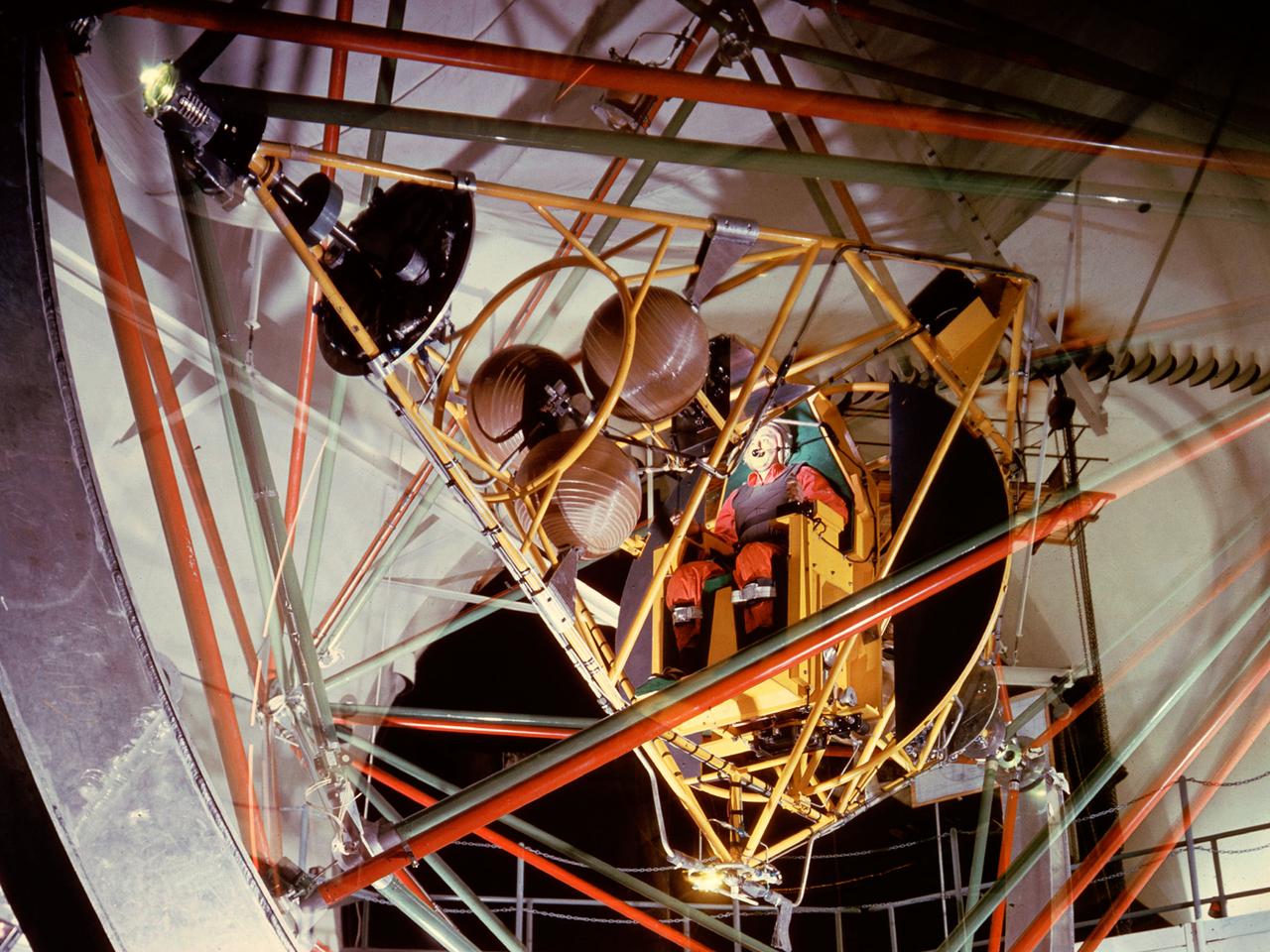
National Aeronautics and Space Administration (NASA) pilot Joe Algranti tests the Multi-Axis Space Test Inertia Facility (MASTIF) inside the Altitude Wind Tunnel while researcher Robert Miller looks on. The MASTIF was a three-axis rig with a pilot’s chair mounted in the center to train Project Mercury pilots to bring a spinning spacecraft under control. An astronaut was secured in a foam couch in the center of the rig. The rig then spun on three axes from 2 to 50 rotations per minute. Small nitrogen gas thrusters were used by the astronauts to bring the MASTIF under control.     The device was originally designed in early 1959 without the chair and controllers. It was used by Lewis researchers to determine if the Lewis-designed autopilot system could rectify the capsule’s attitude following separation. If the control system failed to work properly, the heatshield would be out of place and the spacecraft would burn up during reentry. The system was flight tested during the September 1959 launch of the Lewis-assembled Big Joe capsule.    The MASTIF was adapted in late 1959 for the astronaut training. NASA engineers added a pilot’s chair, a hand controller, and an instrument display to the MASTIF in order familiarize the astronauts with the sensations of an out-of-control spacecraft. NASA Lewis researcher James Useller and Algranti perfected and calibrated the MASTIF in the fall of 1959. In February and March 1960, the seven Project Mercury astronauts traveled to Cleveland to train on the MASTIF.
The Multi-Axis Space Test Inertia Facility in the Altitude Wind Tunnel
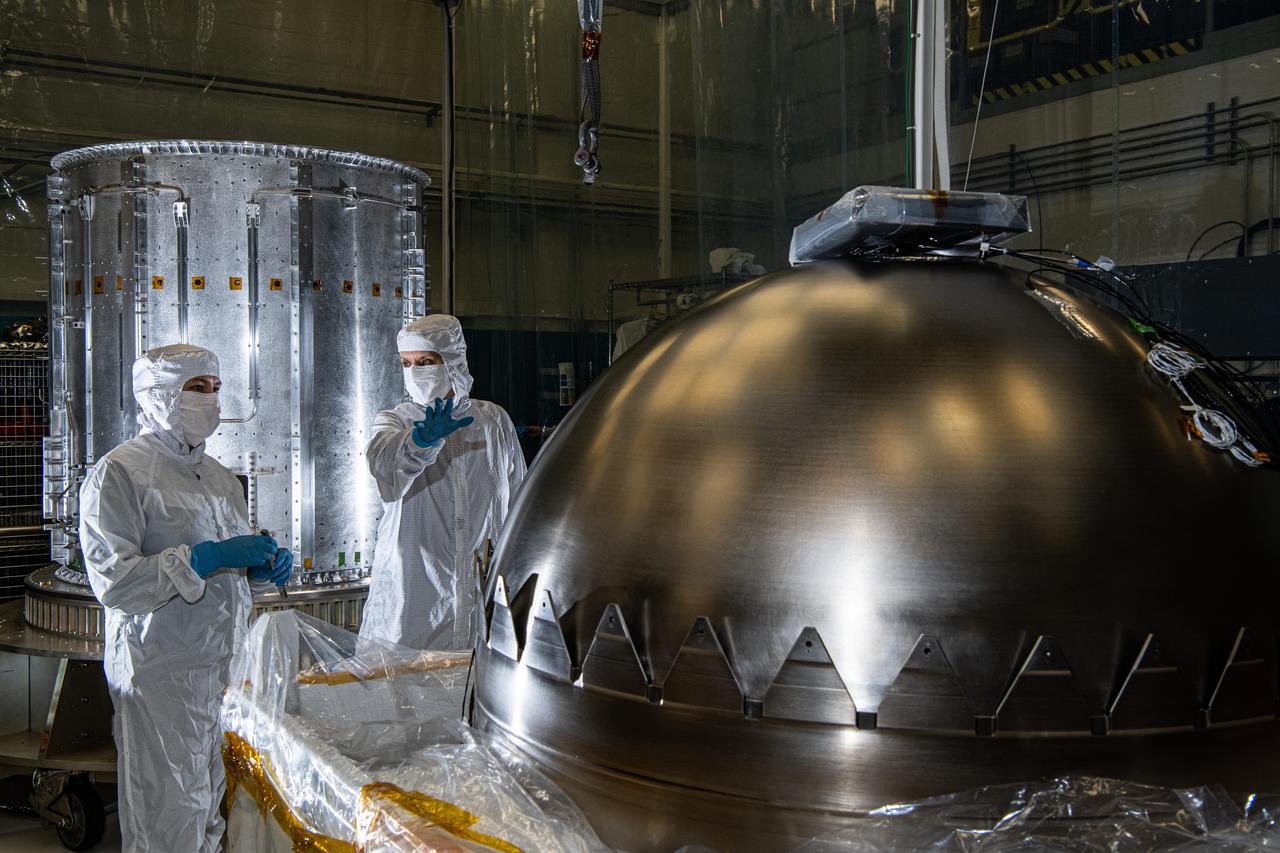
Contamination control engineers in a clean room at NASA's Goddard Space Flight Center in Greenbelt, Maryland, evaluate a propellant tank before it is installed in NASA's Europa Clipper spacecraft. The tank is one of two that will be used to hold the spacecraft's propellant. It will be inserted into the cylinder seen at left in the background, one of two cylinders that make up the propulsion module.  With an internal global ocean under a thick layer of ice, Jupiter's moon Europa may have the potential to harbor existing life. Europa Clipper will swoop around Jupiter on an elliptical path, dipping close to the moon on each flyby to collect data. Understanding Europa's habitability will help scientists better understand how life developed on Earth and the potential for finding life beyond our planet. Europa Clipper is set to launch in 2024.  https://photojournal.jpl.nasa.gov/catalog/PIA24478
Prepping Europa Clipper's Propulsion Tanks
JSC2002-E-47668 (26 November 2002) --- Astronaut Michael J. Massimino, ISS spacecraft communicator (CAPCOM), monitors data at his console in the station flight control room (BFCR) in Houston’s Mission Control Center (MCC).
STS-113 Mission Control Coverage: WFCR, BFCR and Backrooms.
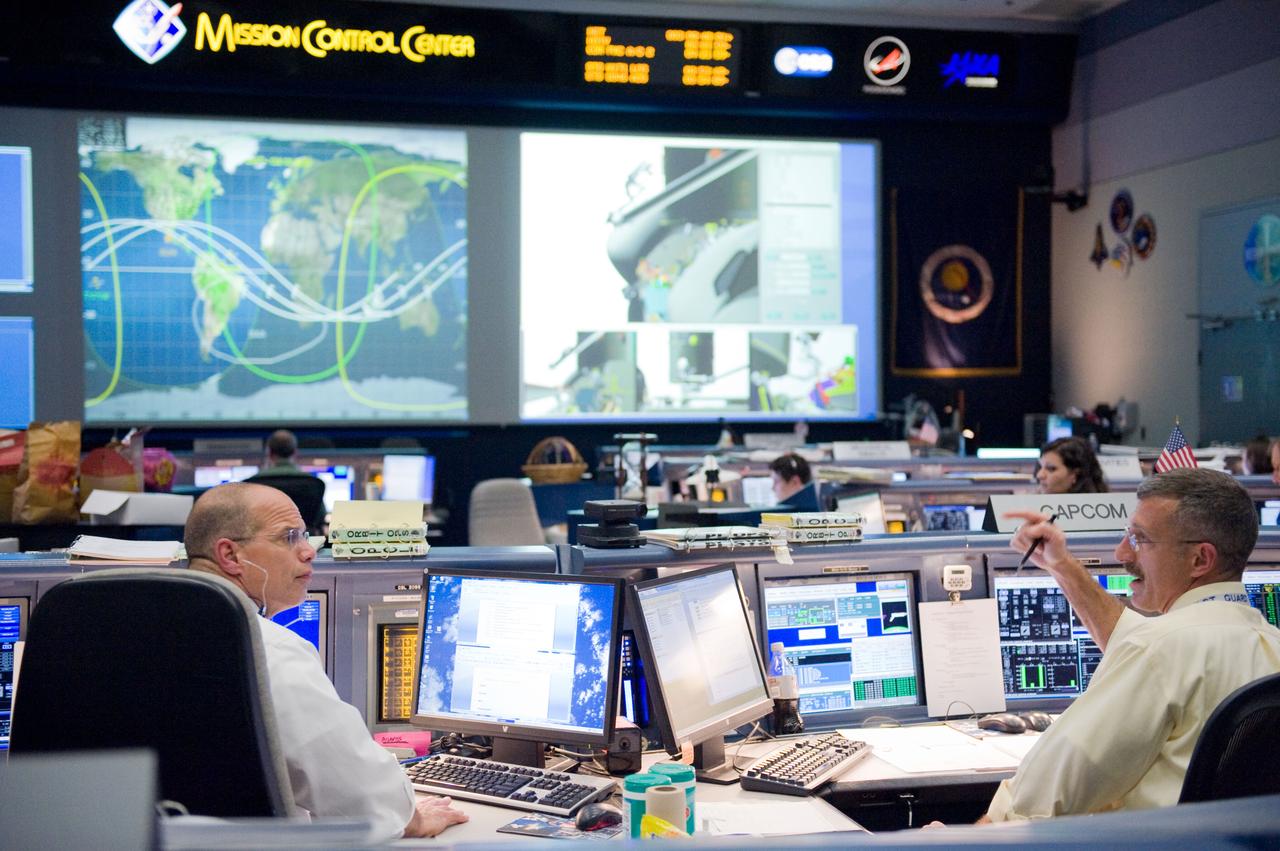
JSC2007-E-095996 (3 Nov. 2007) ---Astronaut Steve Swanson, standing near the spacecraft communicator (CAPCOM) console in the space station control room of JSC's Mission Control Center, communicates with astronauts in space during the Nov. 3 spacewalk planned to repair a tear in a solar panel on the International Space Station.
STS-120 EVA - Thermal Blanket Repair Operations
JSC2001-E-25473 (16 August 2001) --- Astronaut Robert L. Curbeam, Jr., spacecraft communicator (CAPCOM), monitors data at his console in the shuttle flight control room (WFCR) in Houston's Mission Control Center (MCC) during the STS-105 mission.
STS-105 Planning Team
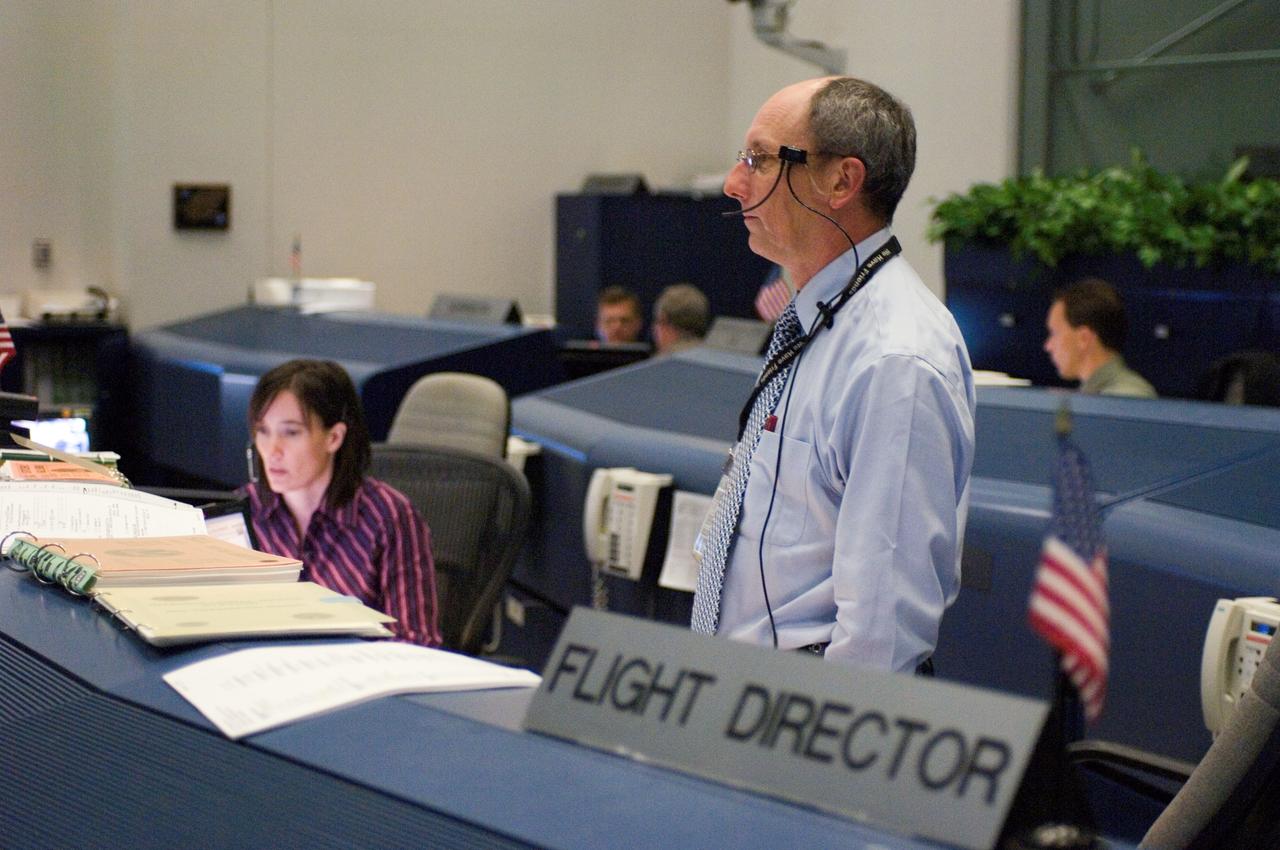
JSC2011-E-046832 (19 May 2011) --- Flight director Gary Horlacher and astronaut Megan McArthur, STS-134 spacecraft communicator (CAPCOM), are pictured at their consoles in the space shuttle flight control room in the Mission Control Center at NASA's Johnson Space Center during flight day four activities. Photo credit: NASA
STS-134 Orbit 1 flight controllers on console during AMS install
JSC2006-E-38929 (31 Aug. 2006) --- Astronaut Andrew J. Feustel (background), spacecraft communicator (CAPCOM), and flight director Rick LaBrode monitor data at their consoles in the Station (Blue) Flight Control Room in Houston's Mission Control Center during Expedition 13 mission activities.
Expedition 13 flight controller on console during mission - Orbit 1, BFCR
JSC2010-E-084214 (17 May 2010) --- NASA astronauts Rex Walheim (left) and Steve Swanson, spacecraft communicators (CAPCOM) for the STS-132 mission, are pictured in the space station flight control room in the Mission Control Center at NASA's Johnson Space Center during flight day four activities.
STS-132/ULF4 Flight Controllers on Console - Orbit 2
2000-E-29788 (30 November 2000) ---  Astronauts Scott J. Kelly, from the left, Dominic L. Gorie and Christopher J. Loria at the spacecraft communicator (CAPCOM) console during STS-97 pre-launch activity in the shuttle flight control room (WFCR) of Houston's Mission Control Center (MCC).
STS-97 WFCR launch Day activities
JSC2006-E-39881 (10 Sept. 2006) --- In the Shuttle (White) Flight Control Room of Houston's Mission Control Center, flight director Paul Dye (right) and spacecraft communicator (CAPCOM) Megan McArthur monitor data during the STS-115 inspection of the wings' leading edge and nose cap of the Space Shuttle Atlantis.
Coverage of STS-115 Mission Control during launch
JSC2001-E-25411 (17 August 2001) --- Astronaut Joan E. Higginbotham, ISS spacecraft communicator (CAPCOM), inputs data into her computer at her console in the station flight control room (BFCR) in Houston's Mission Control Center (MCC) during the STS-105 mission.
MCC Coverage during STS-105
JSC2010-E-081909 (18 May 2010) --- Flight director Mike Sarafin (left) and NASA astronaut Chris Cassidy, spacecraft communicator (CAPCOM) for the STS-132 mission, are pictured at their consoles in the space shuttle flight control room in the Mission Control Center at NASA's Johnson Space Center during flight day five activities.
STS-132/ULF4 Flight Controllers on Console
S68-55742 (21 Dec. 1968) --- Clifford E. Charlesworth, Apollo 8 "Green Team" flight director, is seated at his console in the Mission Operations Control Room in the Mission Control Center, Building 30, during the launch of the Apollo 8 (Spacecraft 103/Saturn 503) manned lunar orbit space mission.
Clifford Charlesworth seated at his console in Mission Control Room
JSC2000-06245 (September 2000) --- The ISS orbit 3 team of flight controllers  are pictured with flight director Rick  LaBrode in the ISS flight control room during STS-106. Astronaut Stephanie Wilson, spacecraft communicator (CAPCOM), is at front center.
STS-106 BFCR orbit 3 and WFCR Orbit 2 flight teams
JSC2001-E-25401 (17 August 2001) --- Astronaut Mario Runco Jr., STS-105 spacecraft communicator (CAPCOM), monitors data at his console in the shuttle flight control room (WFCR) in Houston's Mission Control Center (MCC).
MCC Coverage during STS-105
JSC2009-E-119391 (12 May 2009) --- Astronaut Alan Poindexter, STS-125 spacecraft communicator (CAPCOM), monitors data at his console in the space shuttle flight control room in the Mission Control Center at NASA's Johnson Space Center during flight day two activities.
STS-125 Flight Controllers on Console - (Orbit Shift 2). Flight Director: Richard LaBrode
JSC2011-E-046802 (19 May 2011) --- NASA astronaut Megan McArthur, STS-134 spacecraft communicator (CAPCOM), monitors data at her console in the space shuttle flight control room in the Mission Control Center at NASA's Johnson Space Center during flight day four activities. Photo credit: NASA
STS-134 Orbit 1 flight controllers on console during AMS install
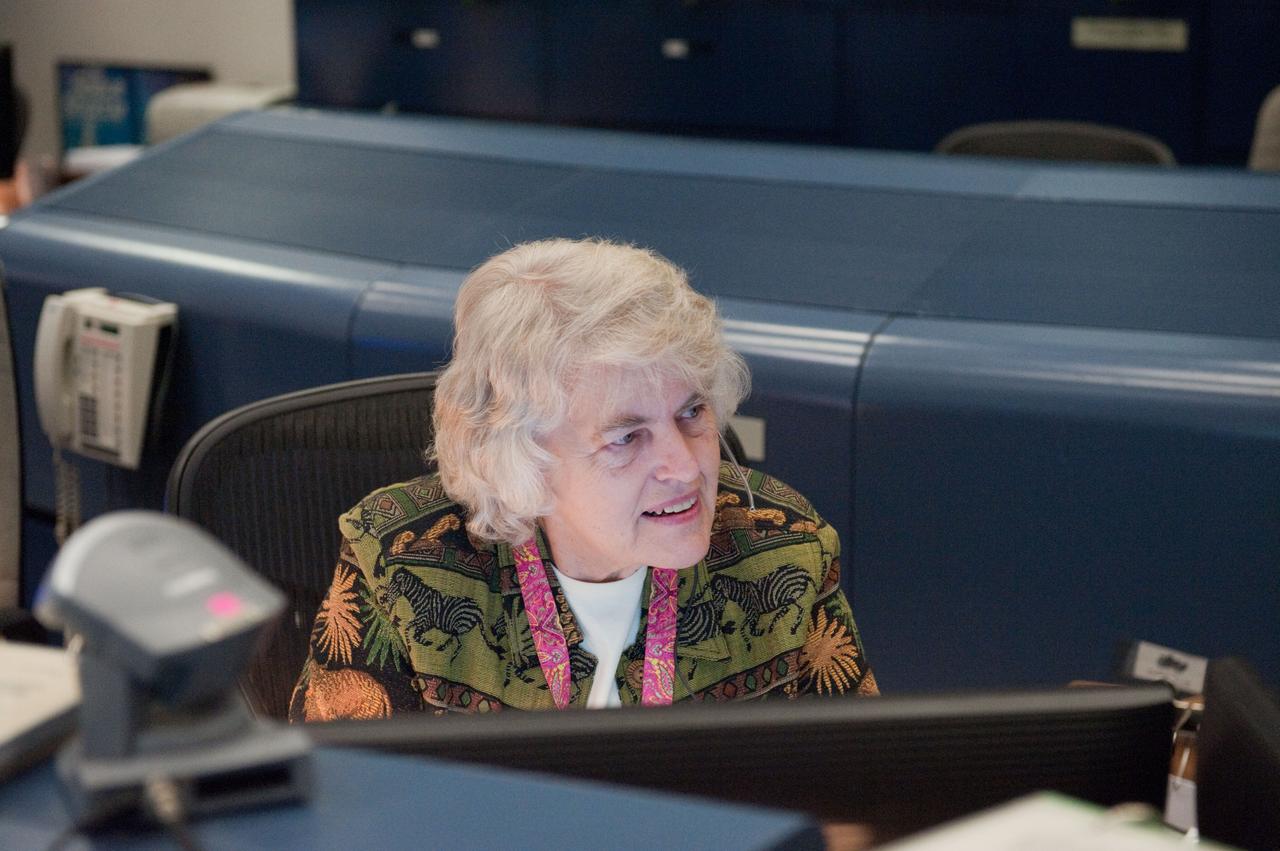
JSC2011-E-046428 (19 May 2011) --- NASA astronaut Shannon Lucid, STS-134 spacecraft communicator (CAPCOM), is pictured at her console in the space shuttle flight control room in the Mission Control Center at NASA?s Johnson Space Center during flight day four activities. Photo credit: NASA
STS-134 Orbit 3 Flight Controllers on Console
JSC2000-E-29791 (30 November 2000) ---  Astronaut Dominic L. Gorie, spacecraft communicator (CAPCOM), follows STS-97 pre-launch activity from the CAPCOM console in the shuttle flight control room (WFCR) at Houston's Mission Control Center (MCC).
STS-97 WFCR launch Day activities
JSC2010-E-084362 (17 May 2010) --- NASA astronaut Stanley Love, spacecraft communicator (CAPCOM) for the STS-132 mission, monitors data at his console in the space shuttle flight control room in the Mission Control Center at NASA's Johnson Space Center during flight day four activities.
STS-132/ULF4 Flight Controllers on Console - Orbit 2
S68-56007 (23 Dec. 1968) --- Overall view of the Mission Operations Control Room in the Mission Control Center, Building 30, on the third day of the Apollo 8 lunar orbit mission. Seen on the television monitor is a picture of Earth which was telecast from the Apollo 8 spacecraft 176,000 miles away.
Mission Control Center (MCC) - Apollo 8
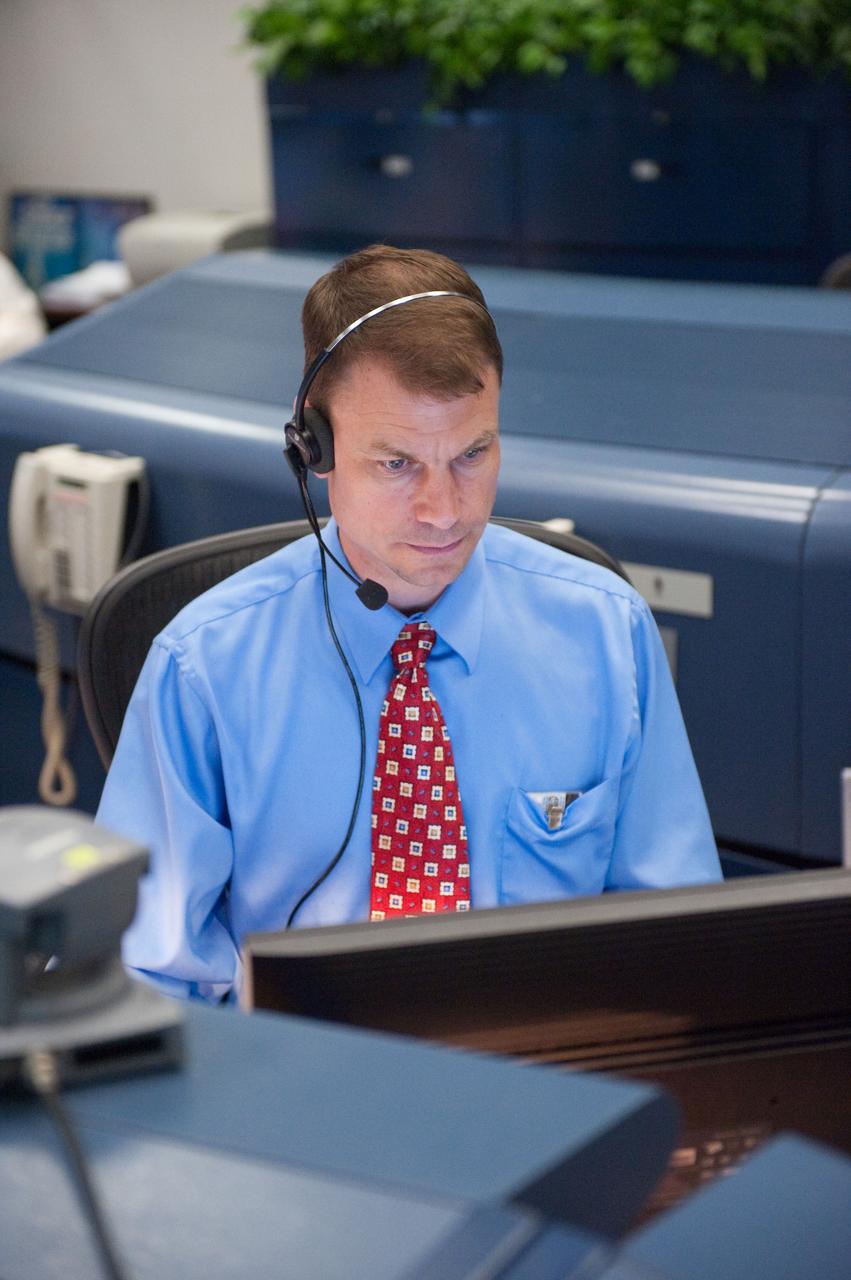
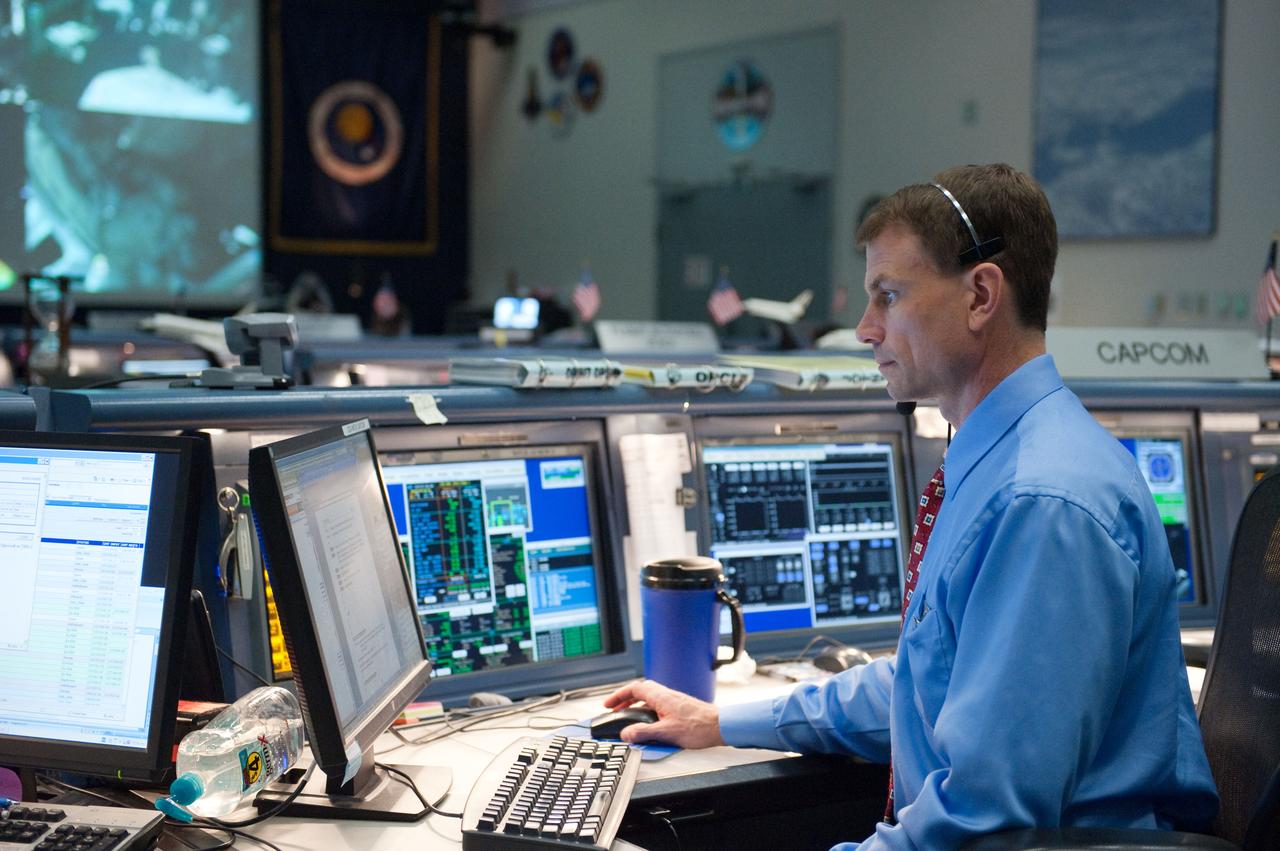
JSC2001-E-12474 (April 2001) --- Astronaut Ellen Ochoa, at the Spacecraft Communicator (CAPCOM) console in the flight control room of Houston's Mission Control Center, watches monitors and displays while communicating with the Space Shuttle Endeavour crew in space.
CMG-EA J5 connector and attaching CMG cable
JSC2009-E-119632 (13 May 2009) --- Flight director Tony Ceccacci and astronaut Dan Burbank (background), STS-125 spacecraft communicator (CAPCOM), monitor data at their consoles in the space shuttle flight control room in the Mission Control Center at NASA's Johnson Space Center during flight day three activities.
STS-125 Flight Controllers on Console During HST Grapple - Orbit 1. Flight Director: Tony Ceccacci
JSC2010-E-084271 (17 May 2010) --- Flight director Chris Edelen (right) and NASA astronaut Stanley Love, spacecraft communicator (CAPCOM) for the STS-132 mission, are pictured at their consoles in the space shuttle flight control room in the Mission Control Center at NASA's Johnson Space Center during flight day four activities.
STS-132/ULF4 Flight Controllers on Console - Orbit 2
JSC2010-E-084364 (17 May 2010) --- NASA astronaut Stanley Love, spacecraft communicator (CAPCOM) for the STS-132 mission, monitors data at his console in the space shuttle flight control room in the Mission Control Center at NASA's Johnson Space Center during flight day four activities.
STS-132/ULF4 Flight Controllers on Console - Orbit 2
JSC2009-E-120483 (14 May 2009) --- Flight director Tony Ceccacci (left) and astronaut Dan Burbank, STS-125 spacecraft communicator (CAPCOM), are pictured at their consoles in the space shuttle flight control room in the Mission Control Center at NASA's Johnson Space Center during flight day four activities.
STS-125 Flight Controllers on Console - (Orbit Shift 1). Flight Director: Anthony Ceccacci