
S73-02395 (August 1973) --- An artist?s concept illustrating an Apollo-type spacecraft (on left) about to dock with a Soviet Soyuz-type spacecraft. A recent agreement between the United States and the Union of Soviet Socialist Republics provides for the docking in space of the Soyuz and Apollo-type spacecraft in Earth orbit in 1975. The joint venture is called the Apollo-Soyuz Test Project.
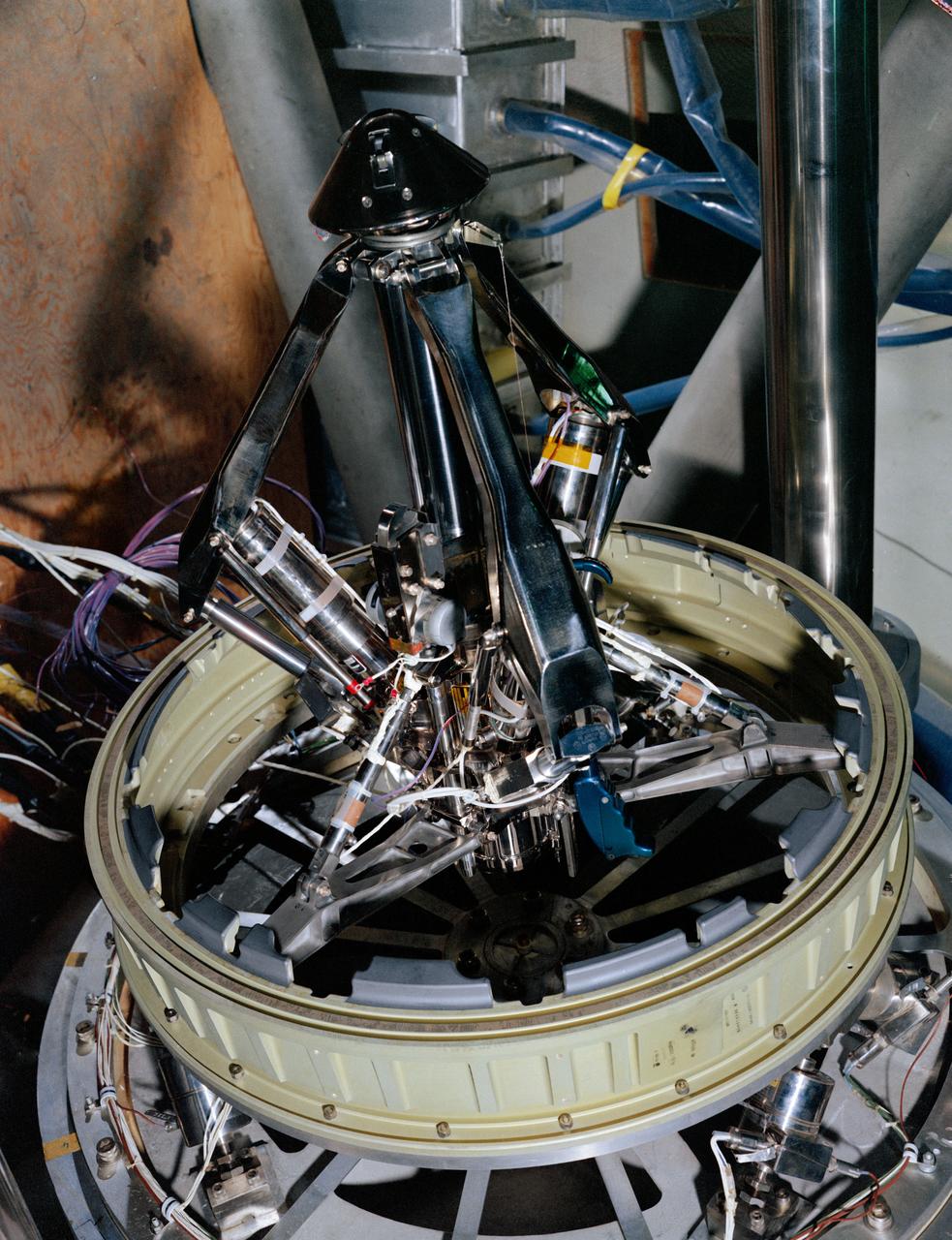
S68-50870 (1968) --- An engineering set up illustrating the probe portion of the docking system of the Apollo spacecraft. During docking maneuvers the docking probe on the Command Module (CM) engages the cone shaped drogue of the Lunar Module (LM). The primary docking structure is the tunnel through which the astronauts transfer from one module to the other. This tunnel is partly in the nose of the CM and partly in the top of the LM. Following CSM/LM docking the drogue and probe are removed to open the passageway between the modules.
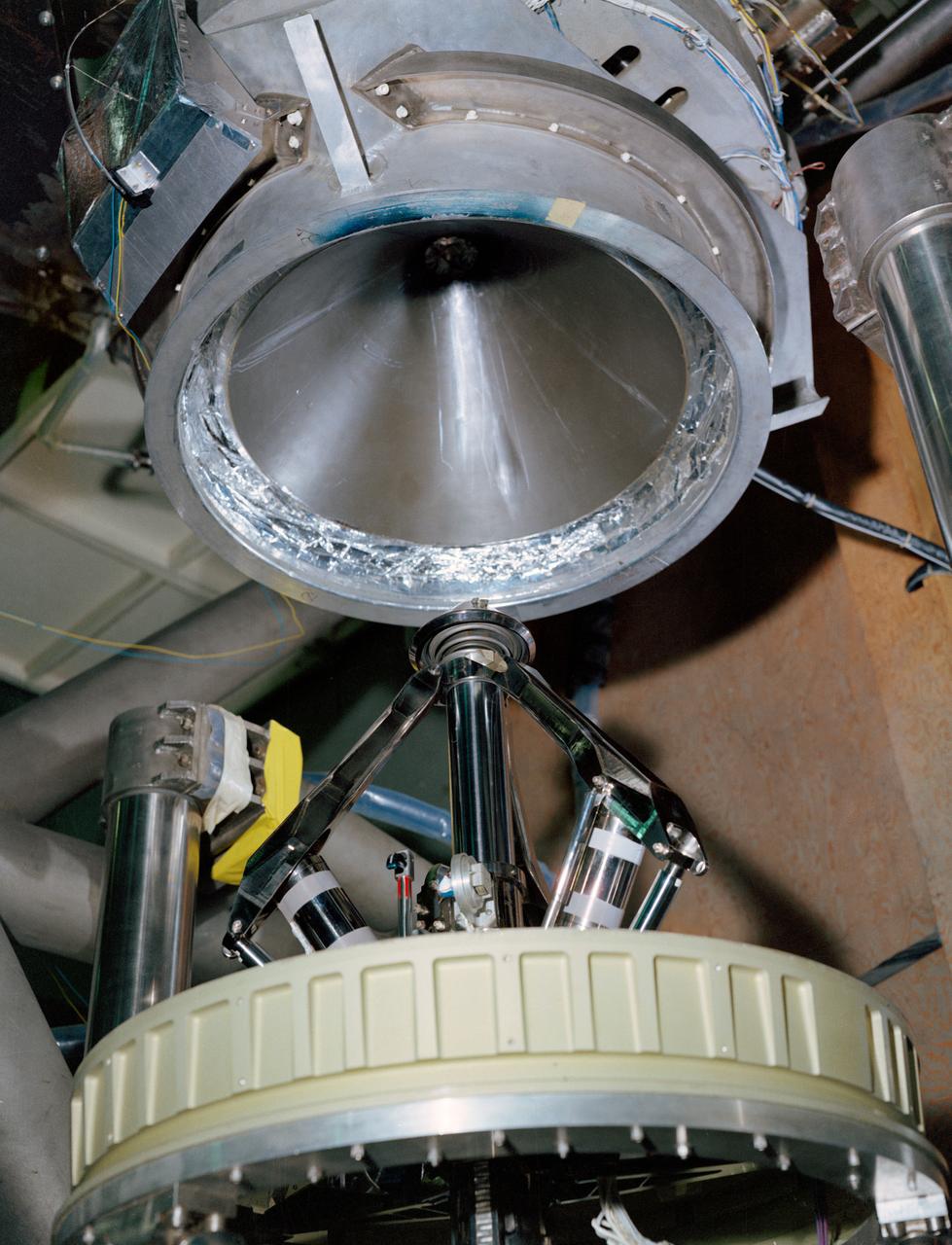
S68-50869 (1968) --- An engineering set up illustrating the docking system of the Apollo spacecraft. During docking maneuvers the docking probe on the Command Module engages the cone-shaped drogue of the Lunar Module. The primary docking structure is the tunnel through which the astronauts transfer from one module to the other. This tunnel is partly in the nose of the Command Module and partly in the top of the Lunar Module. Following CSM/LM docking the drogue and probe are removed to open the passageway between the modules.
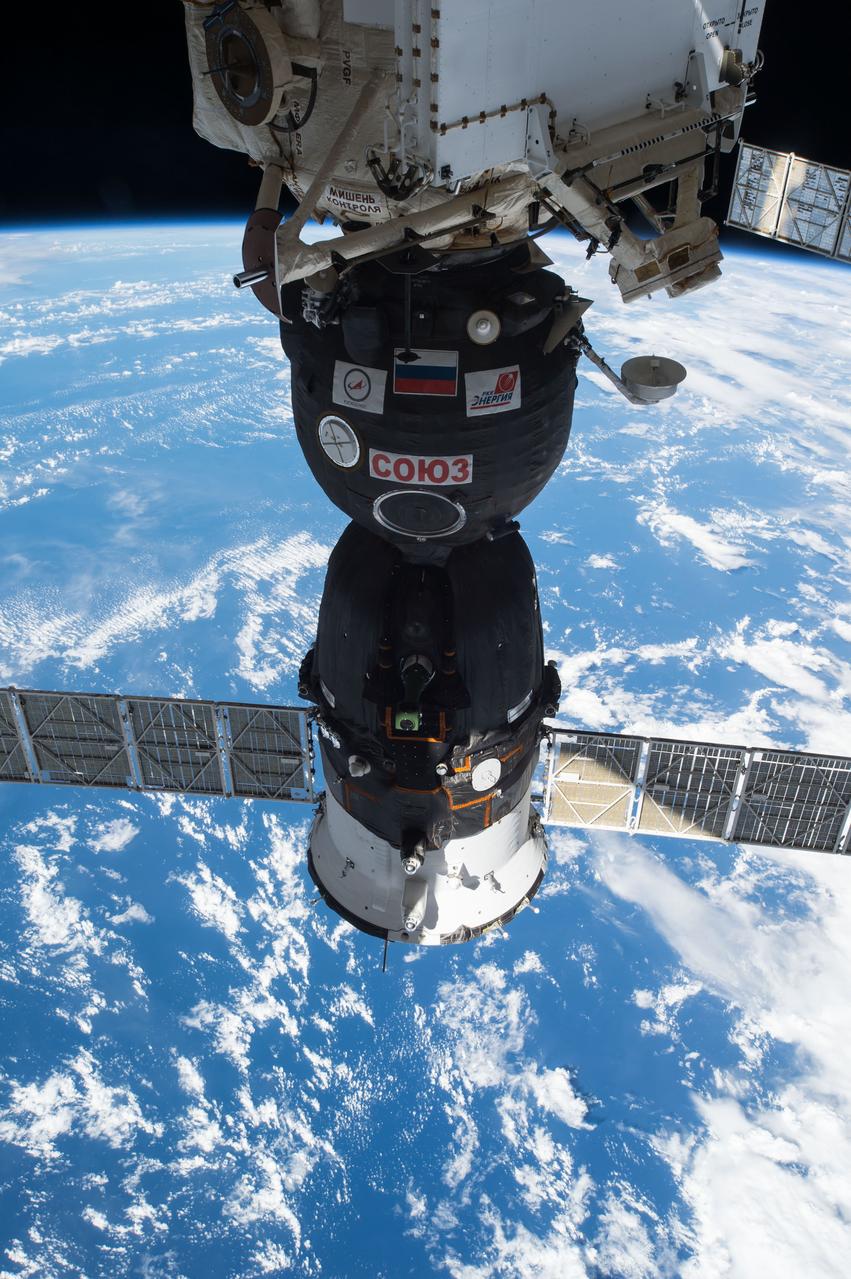
View of the Soyuz TMA-15M spacecraft docked to Rassvet Mini-Research Module 1 (MRM1) An Earth limb is in view.
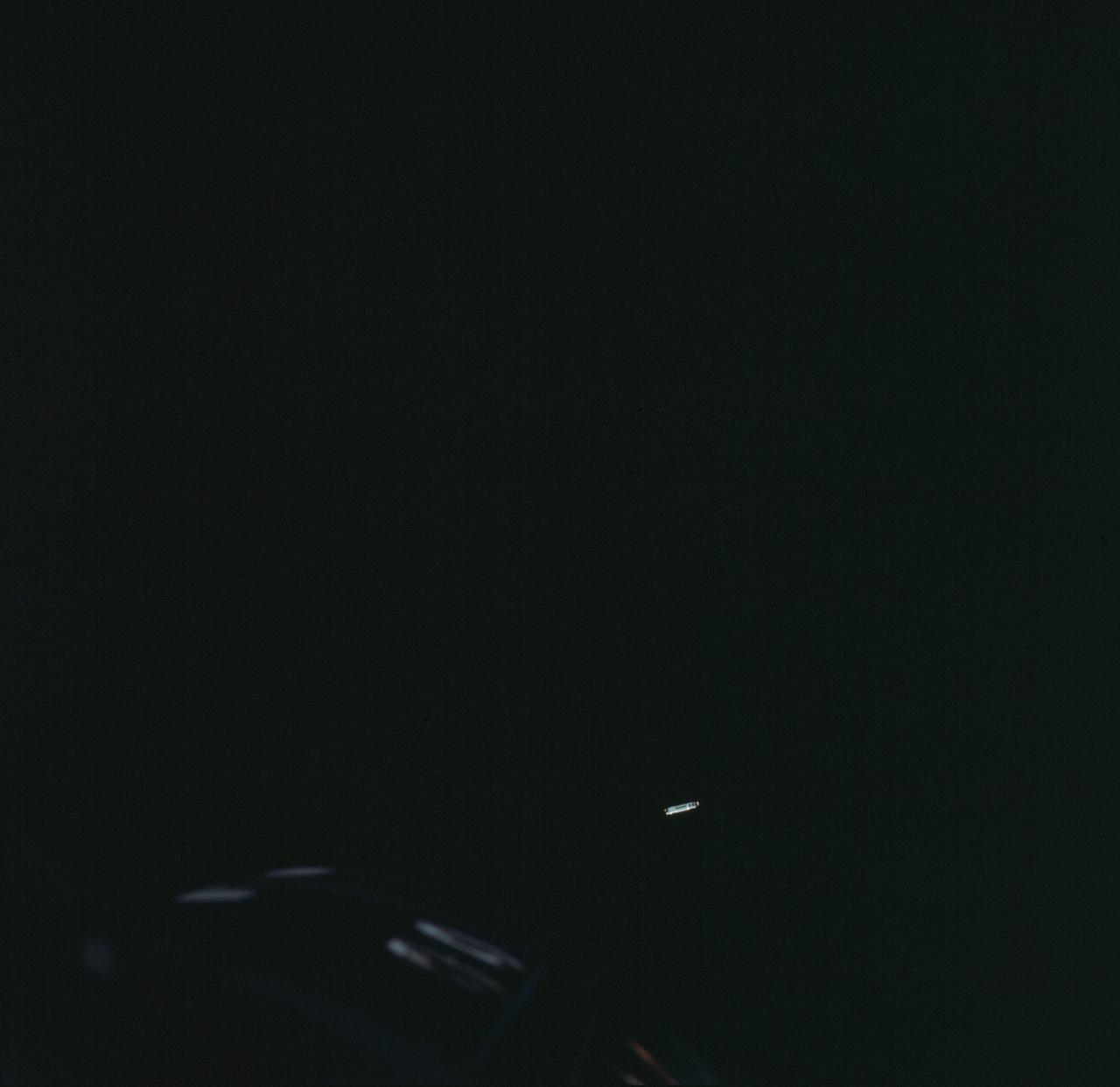
S66-25774 (16 March 1966) --- The Agena Target Docking vehicle seen from the Gemini-8 spacecraft during rendezvous in space. The Agena is approximately 1,000 feet away from the nose of the spacecraft (lower left). Photo credit: NASA
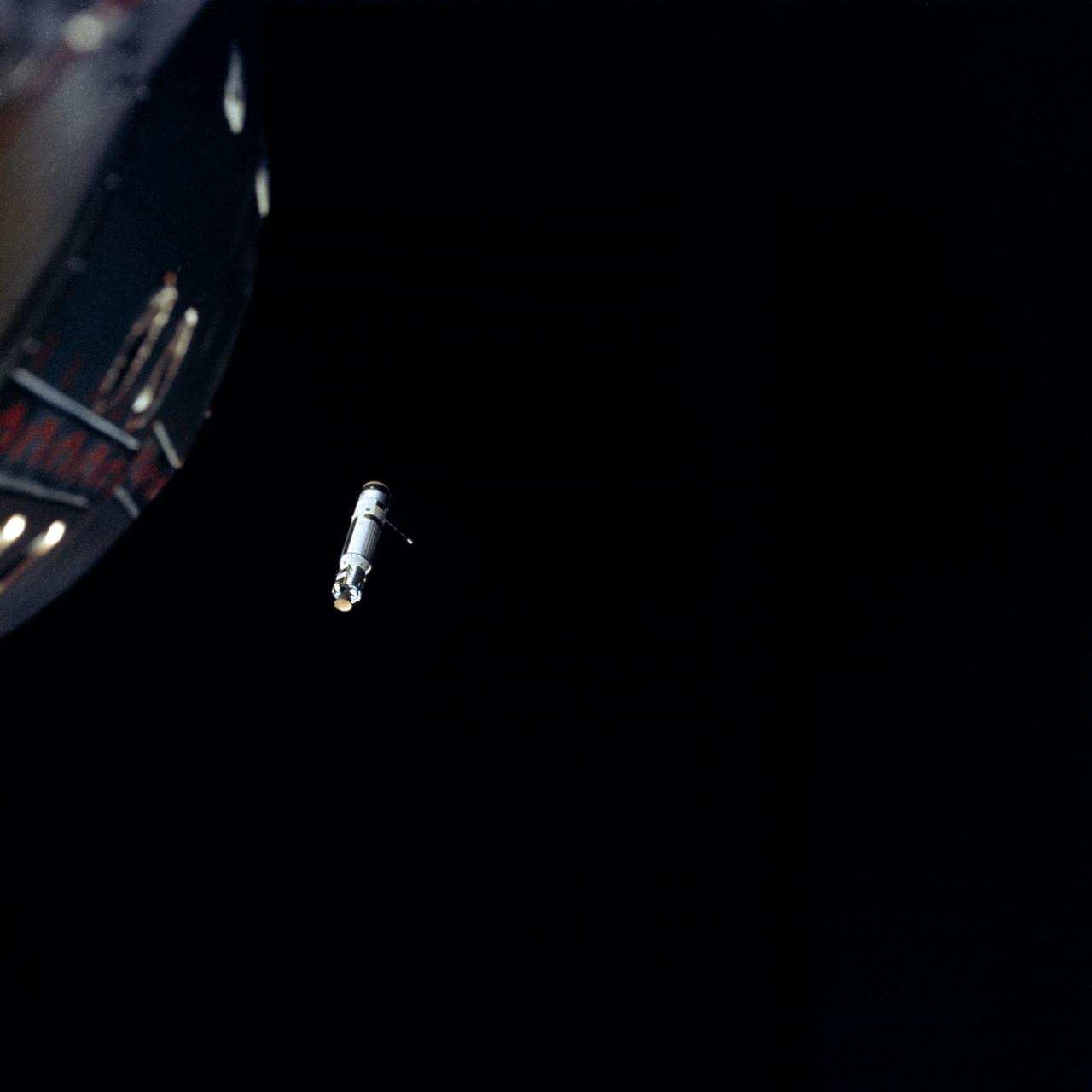
S66-25778 (16 March 1966) --? The Agena Target Docking Vehicle seen from the National Aeronautics and Space Administration?s Gemini-8 spacecraft during rendezvous in space. The Agena is approximately 260 feet away from the nose of the spacecraft (lower left). Crewmen for the Gemini-8 mission are astronauts Neil A. Armstrong, command pilot, and David R. Scott, pilot. Photo credit: NASA
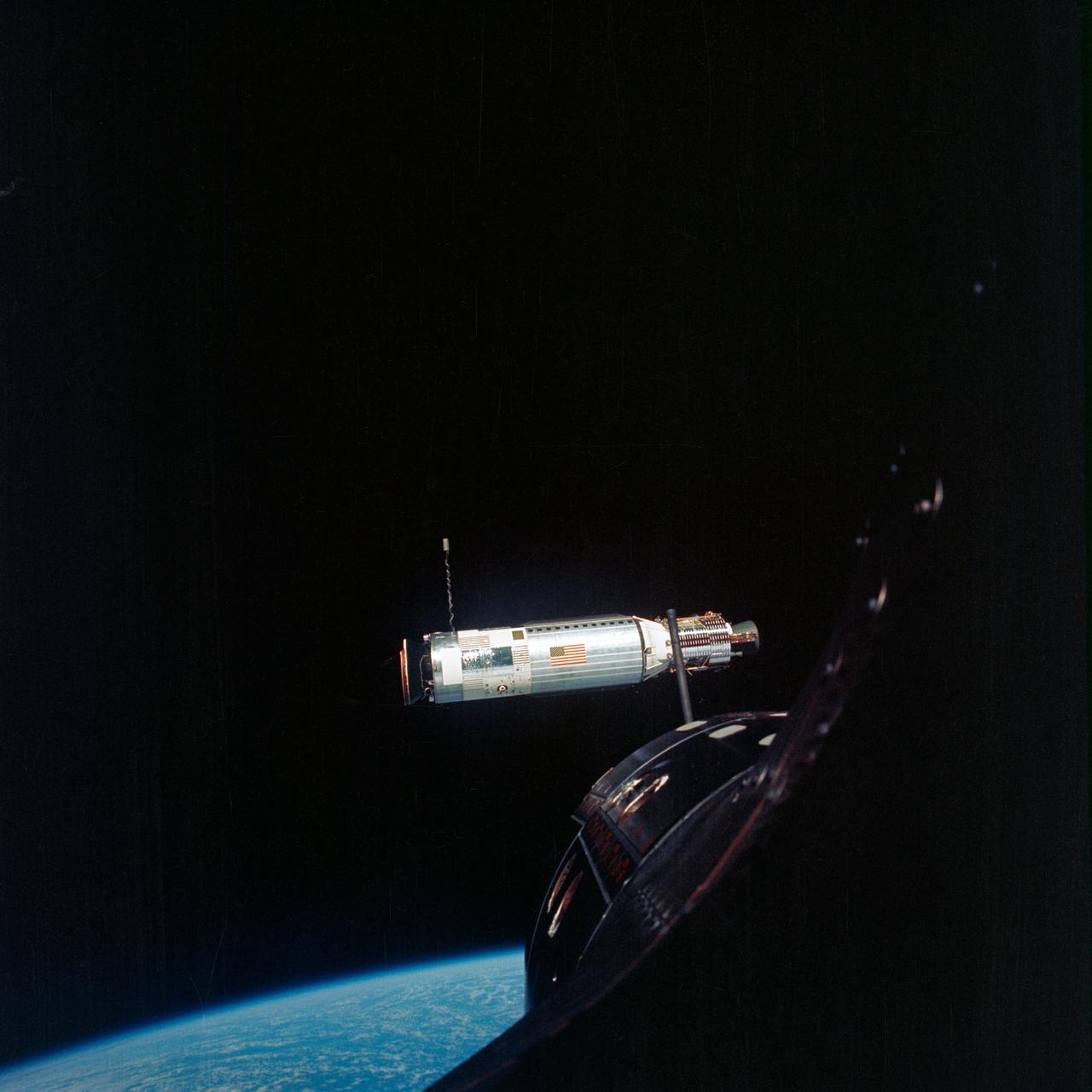
S66-46124 (18 July 1966) --- Agena Target Docking Vehicle 5005 is photographed from the Gemini-10 spacecraft during rendezvous in space. The two spacecraft are about 41 feet apart. After docking with the Agena, astronauts John W. Young, command pilot, and Michael Collins, pilot, fired the 16,000-pound thrust engine of Agena-10's primary propulsion system to boost the combined vehicles into an orbit with an apogee of 413 nautical miles to set a new altitude record for manned spaceflight. Photo credit: NASA
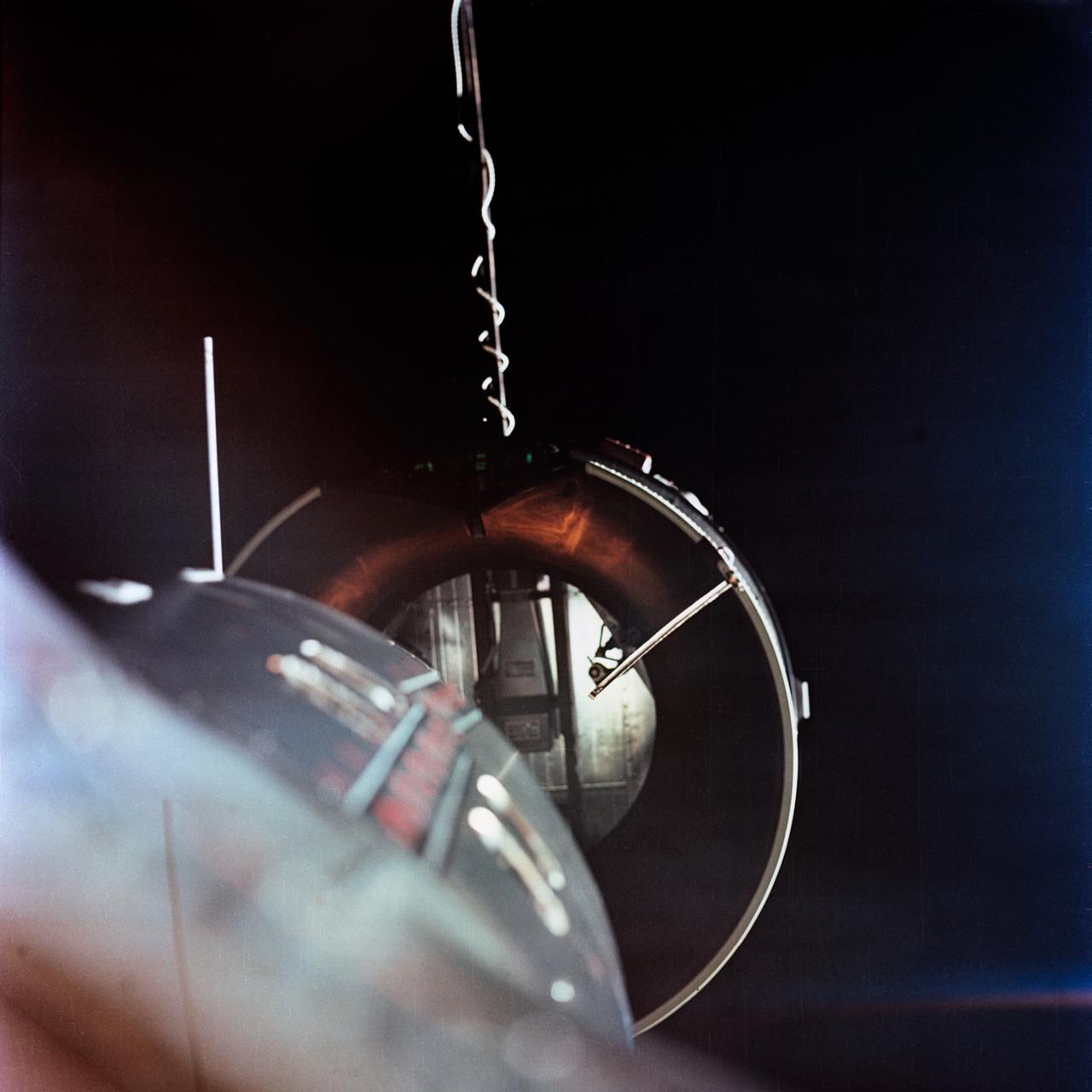
S66-25784 (16 March 1966) --? The Agena Target Docking Vehicle seen from the National Aeronautics and Space Administration?s Gemini adapter of the Agena is approximately two feet from the nose of the spacecraft (lower left). Crewmen for the Gemini-8 mission were astronauts Neil A. Armstrong, command pilot, and David R. Scott, pilot. Photo credit: NASA
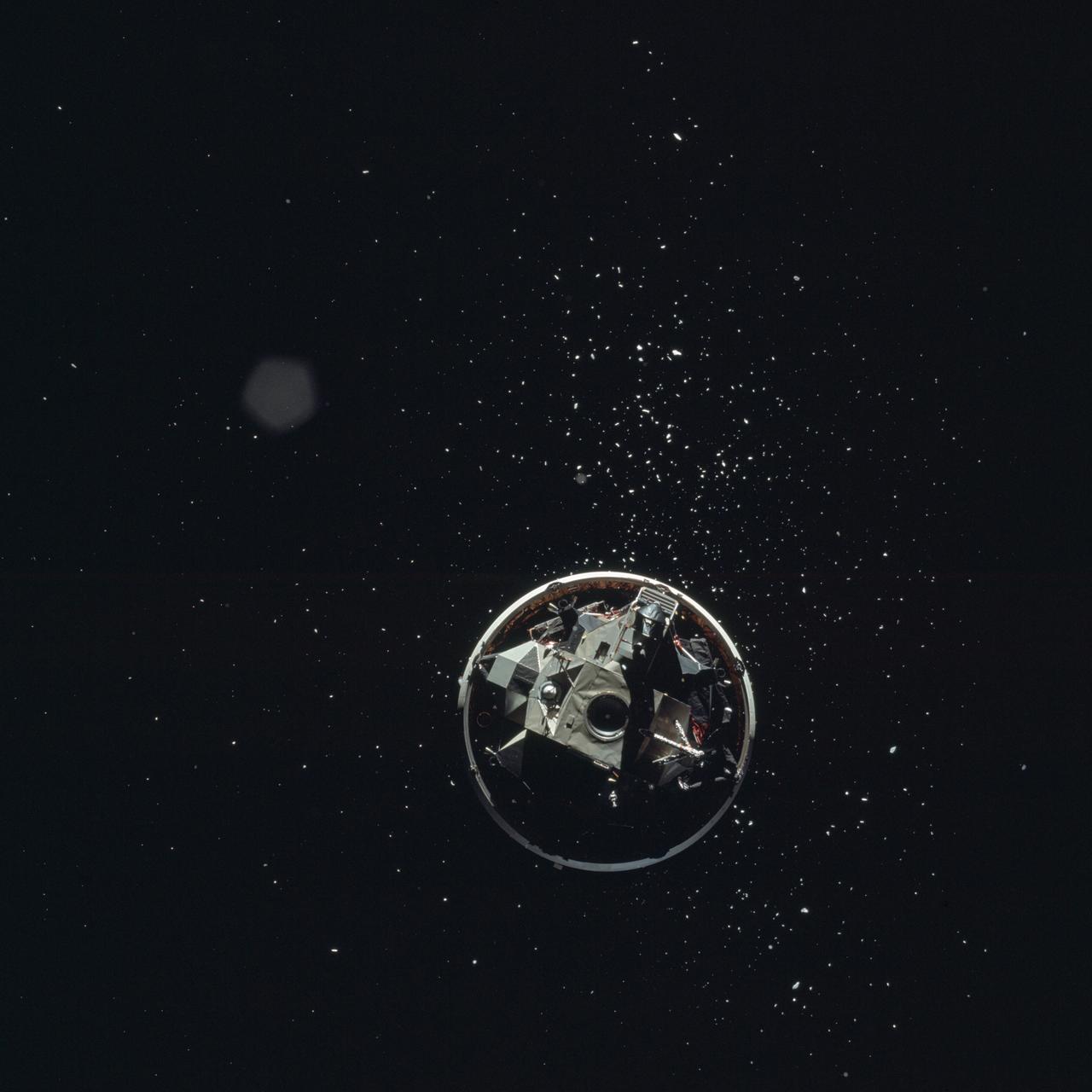
AS17-148-22688 (7-19 Dec. 1972) --- View of the Lunar Module from the Apollo 17 spacecraft after transposition/docking maneuvers. The white dots surrounding the Lunar Module are debris from the Saturn S-IVB stage separation.
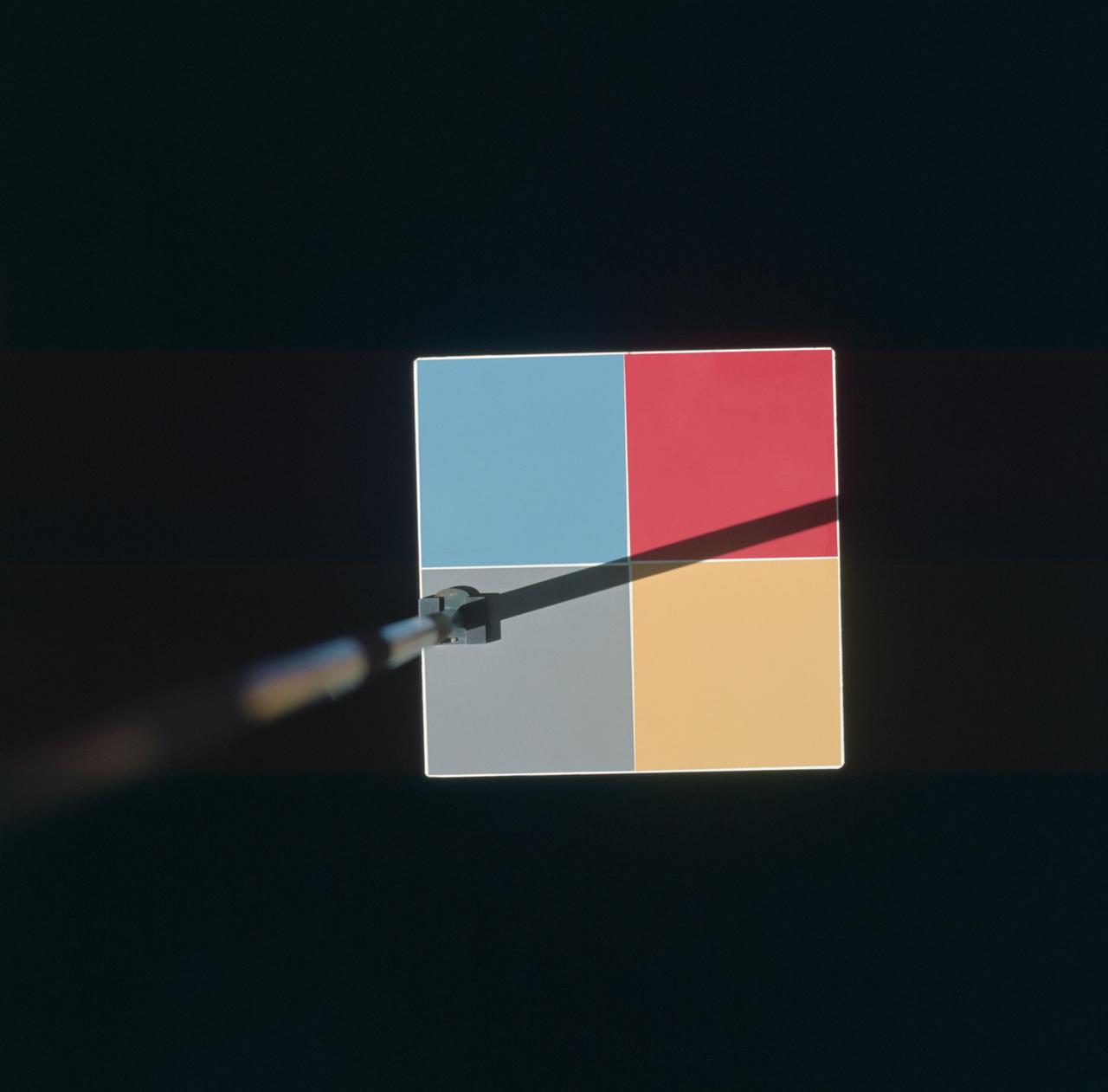
S66-46025 (18 July 1966) --- Astronaut Michael Collins, Gemini-10 pilot, photographed this MSC-8 color patch outside the spacecraft during the Gemini-10/Agena docking mission. The experiment was for the purpose of showing what effect the environment of space will have upon the color photography taken in cislunar space and on the lunar surface during an Apollo mission. Photo credit: NASA
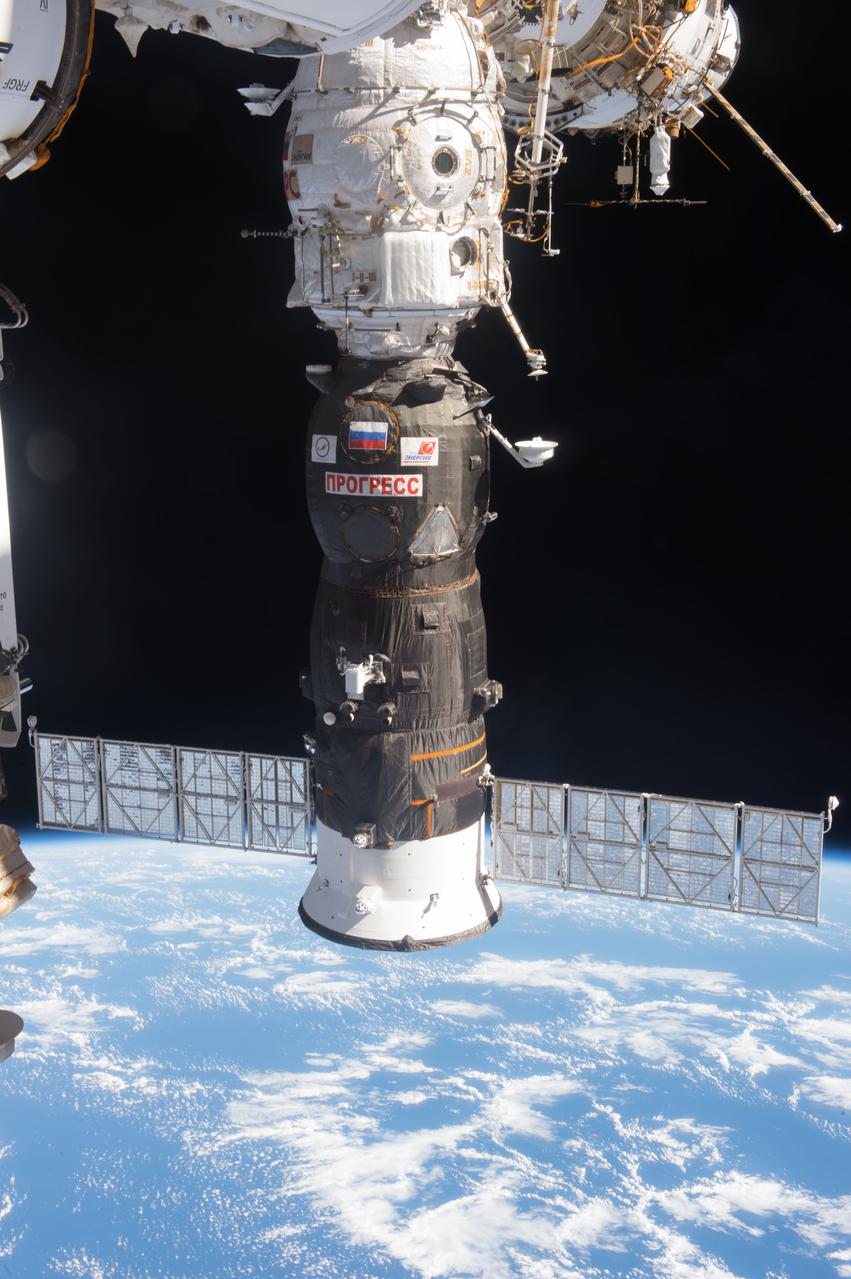
View of the Progress 64P spacecraft docked to Pirs Docking Compartment (DC1), taken against a backdrop of Earth and space.
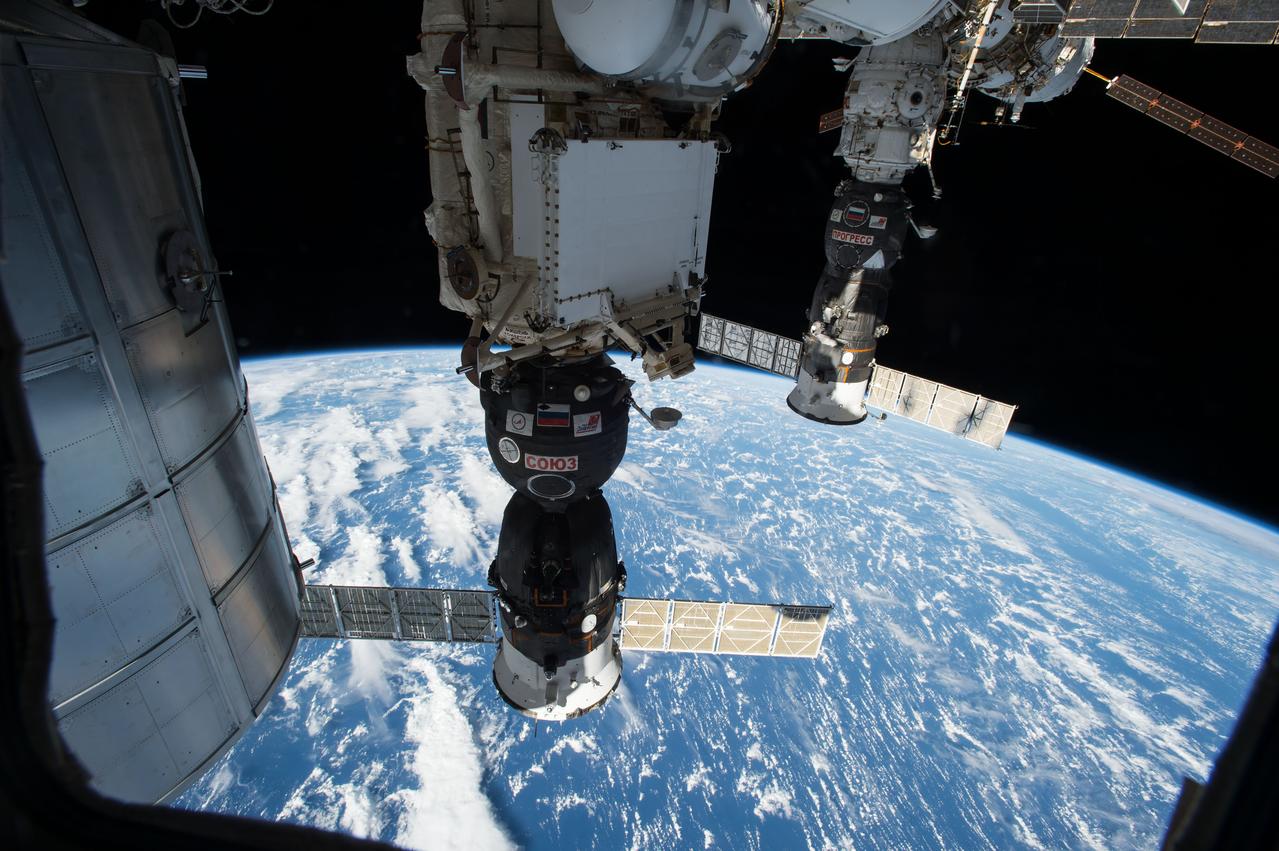
View of the Soyuz TMA-15M spacecraft docked to Rassvet Mini-Research Module 1 (MRM1) and the Progress 57P spacecraft docked to Pirs Docking Compartment (DC1). Portions of the Leonardo Permanent Multipurpose Module (PMM), aft ISS, and an Earth limb are in view. Image was released by astronaut on Twitter.
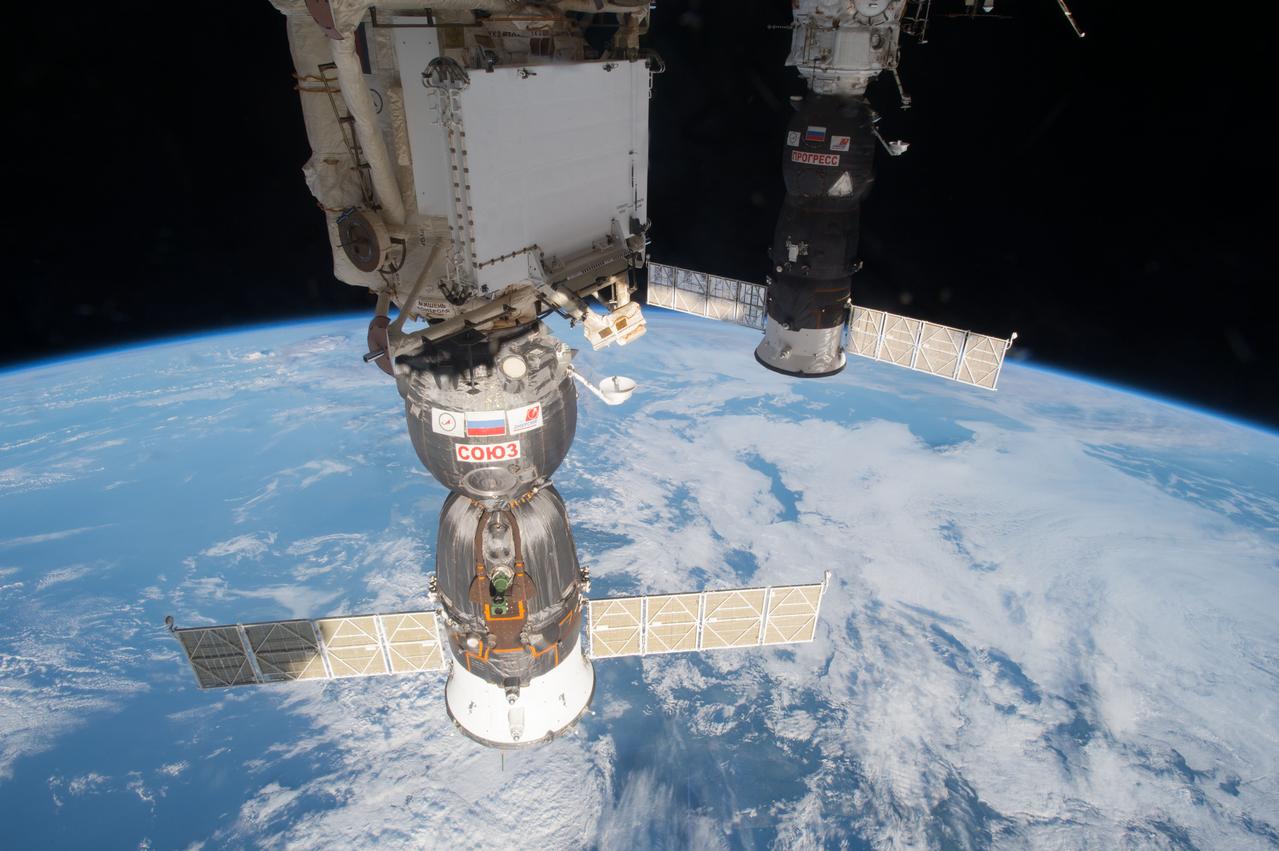
View of the docked Soyuz MS-01 (47S) and Progress 64P spacecraft against a backdrop of Earth and space.
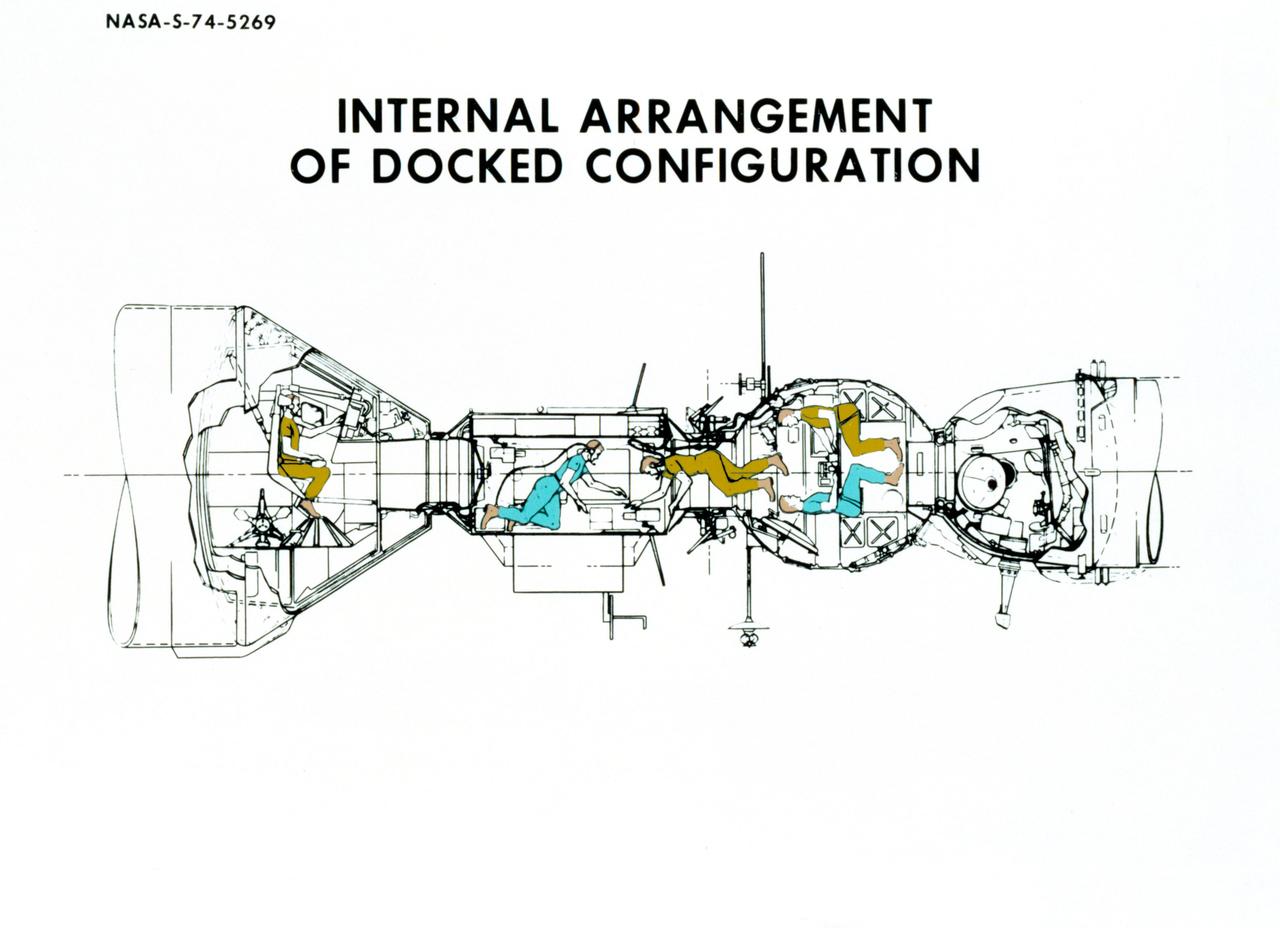
S74-05269 (December 1974) --- An artist?s drawing illustrating the internal arrangement of the Apollo and Soyuz spacecraft in Earth orbit in a docked configuration. The three American Apollo crewmen and the two Soviet Soyuz crewmen will transfer to each other?s spacecraft during the July 1975 ASTP mission. The four Apollo-Soyuz Test Project visible components are, left to right, the Apollo Command Module, the Docking Module, the Soyuz Orbital Module and the Soyuz Descent Vehicle.
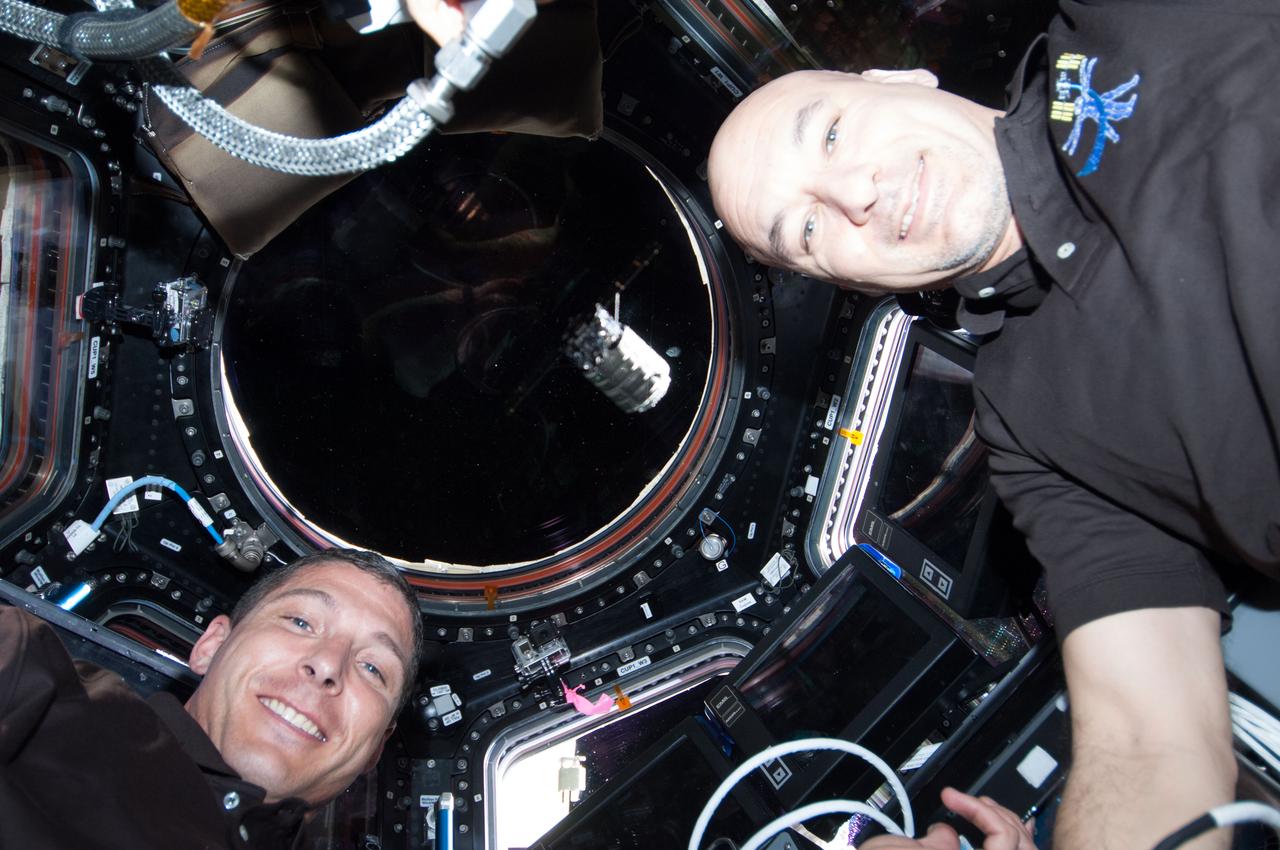
ISS037-E-003935 (29 Sept. 2013) --- NASA astronaut Michael Hopkins (left) and European Space Agency astronaut Luca Parmitano, both Expedition 37 flight engineers, pose for a photo near the windows in the International Space Station?s Cupola during rendezvous, capture and docking operations with the first Cygnus commercial cargo spacecraft (visible at center frame) built by Orbital Sciences Corp. The two spacecraft converged at 7:01 a.m. EDT on Sept. 29, 2013.
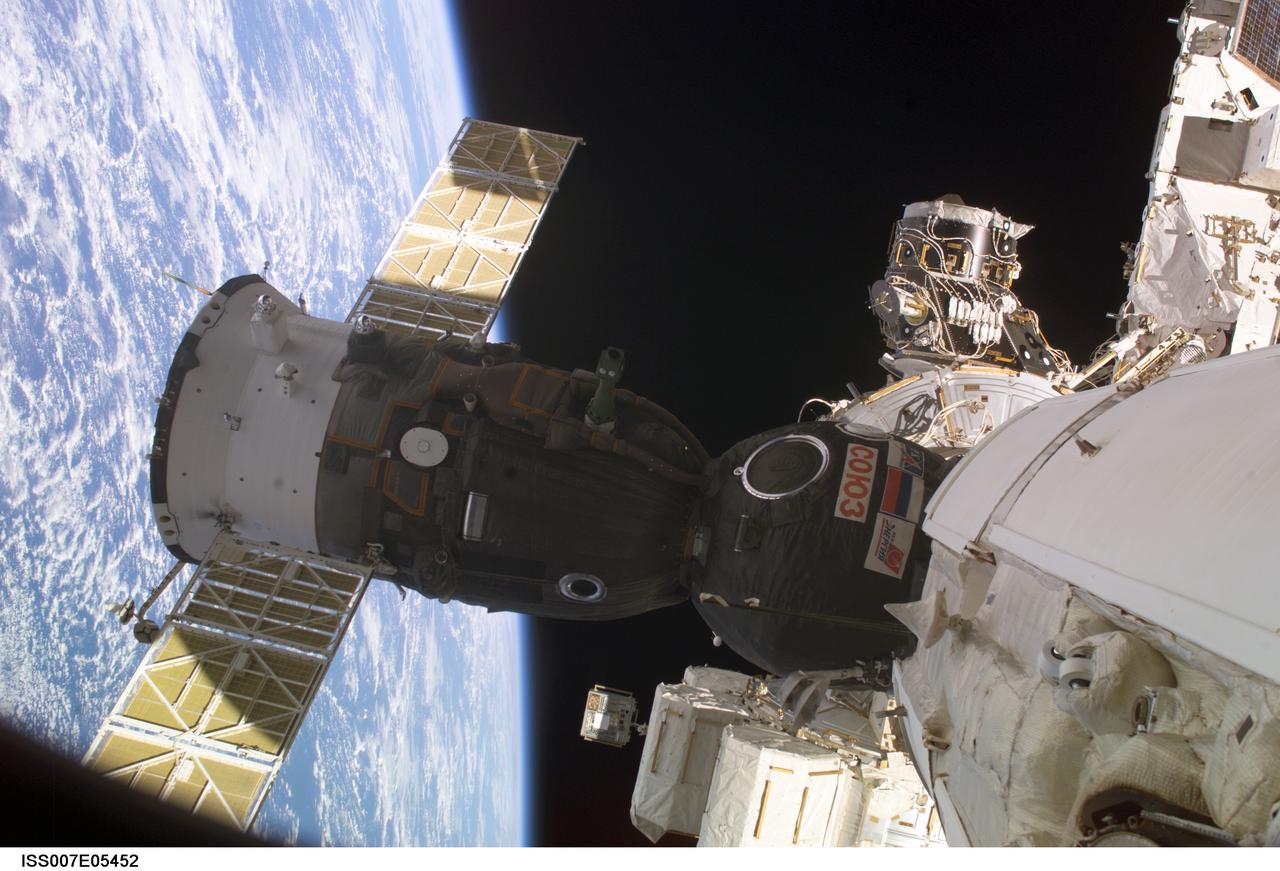
ISS007-E-05452 (14 May 2003) --- The Soyuz TMA-2 spacecraft, docked to the functional cargo block (FGB) nadir port on the International Space Station (ISS), was photographed by an Expedition Seven crewmember. The blackness of space and Earth’s horizon provide the backdrop for the scene.
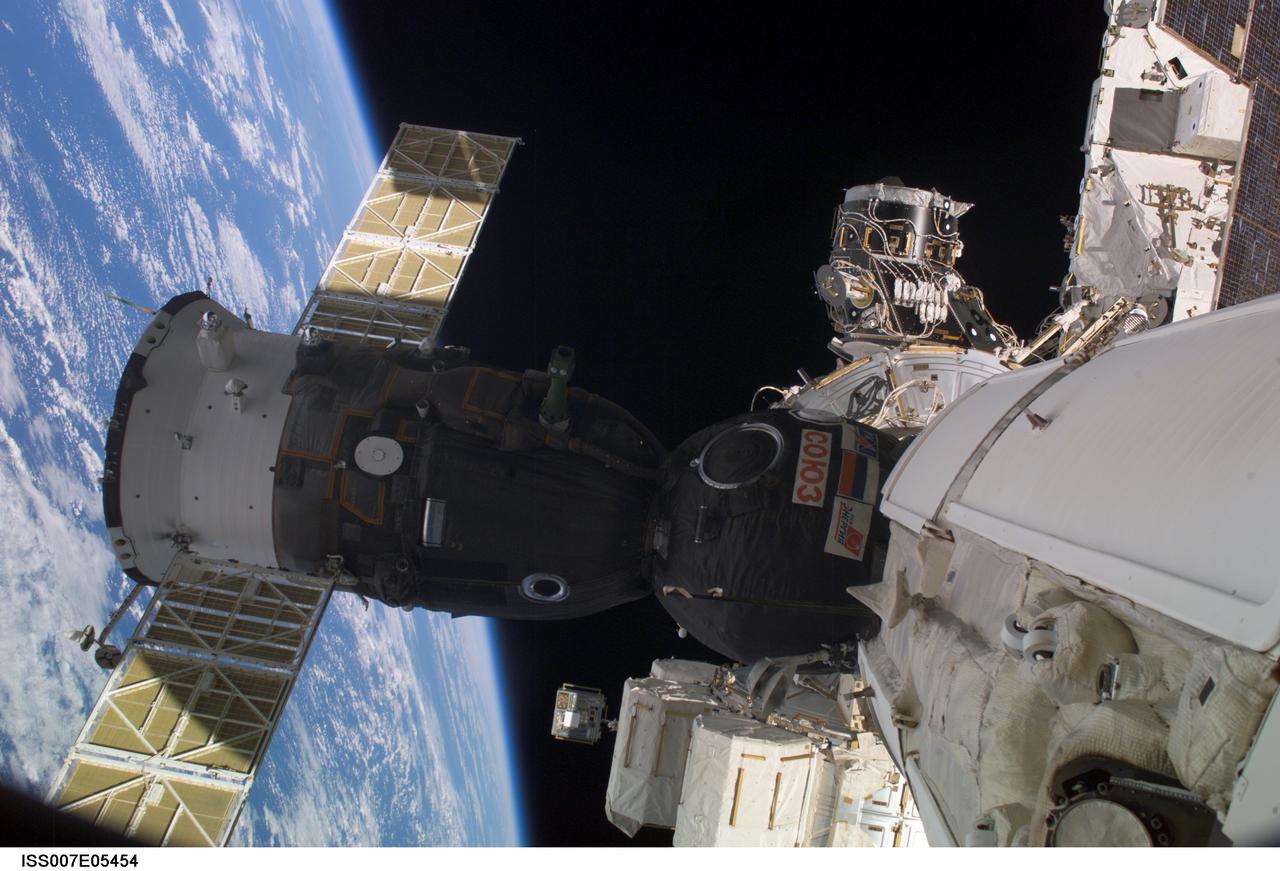
ISS007-E-05454 (14 May 2003) --- The Soyuz TMA-2 spacecraft, docked to the functional cargo block (FGB) nadir port on the International Space Station (ISS), was photographed by an Expedition Seven crewmember. The blackness of space and Earth’s horizon provide the backdrop for the scene.
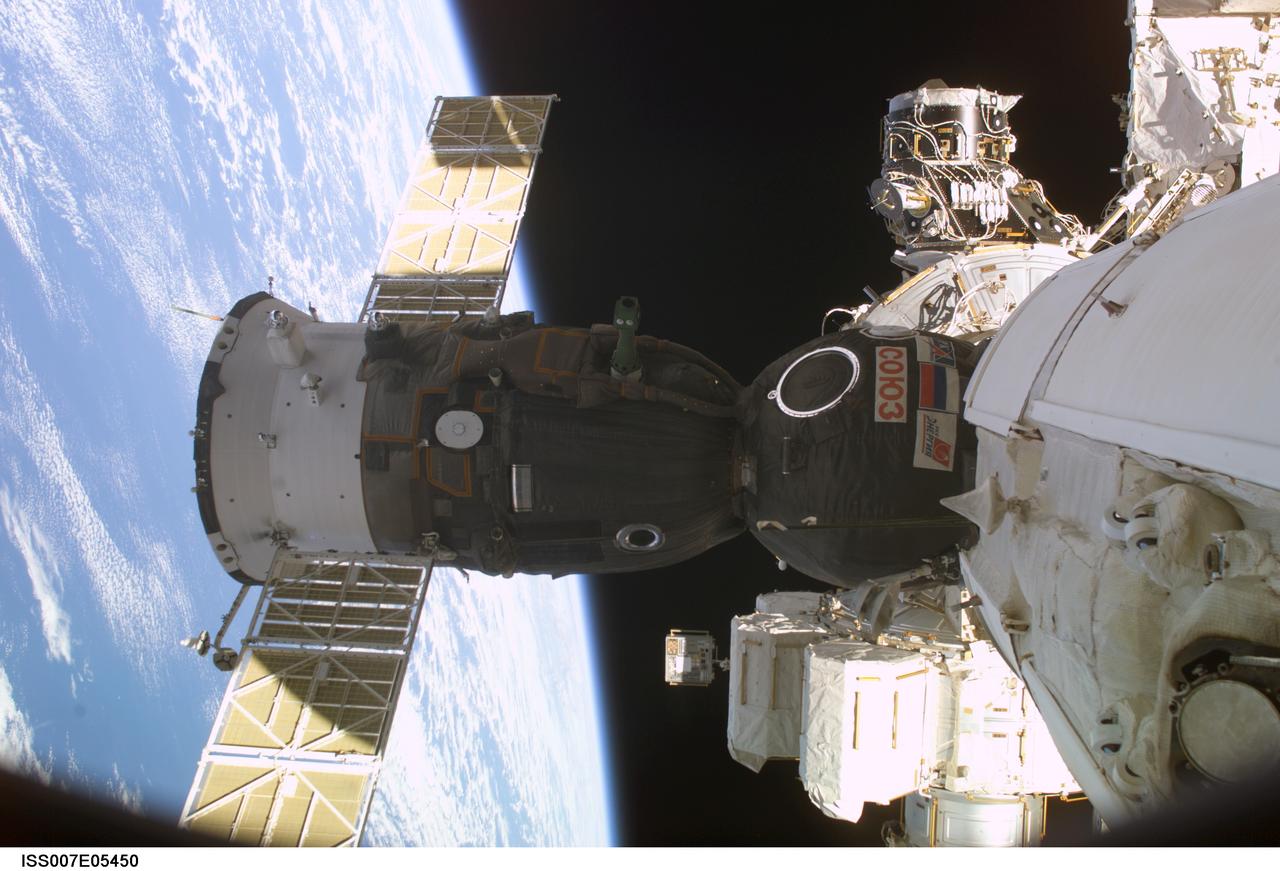
ISS007-E-05450 (14 May 2003) --- The Soyuz TMA-2 spacecraft, docked to the functional cargo block (FGB) nadir port on the International Space Station (ISS), was photographed by an Expedition Seven crewmember. The blackness of space and Earth’s horizon provide the backdrop for the scene.
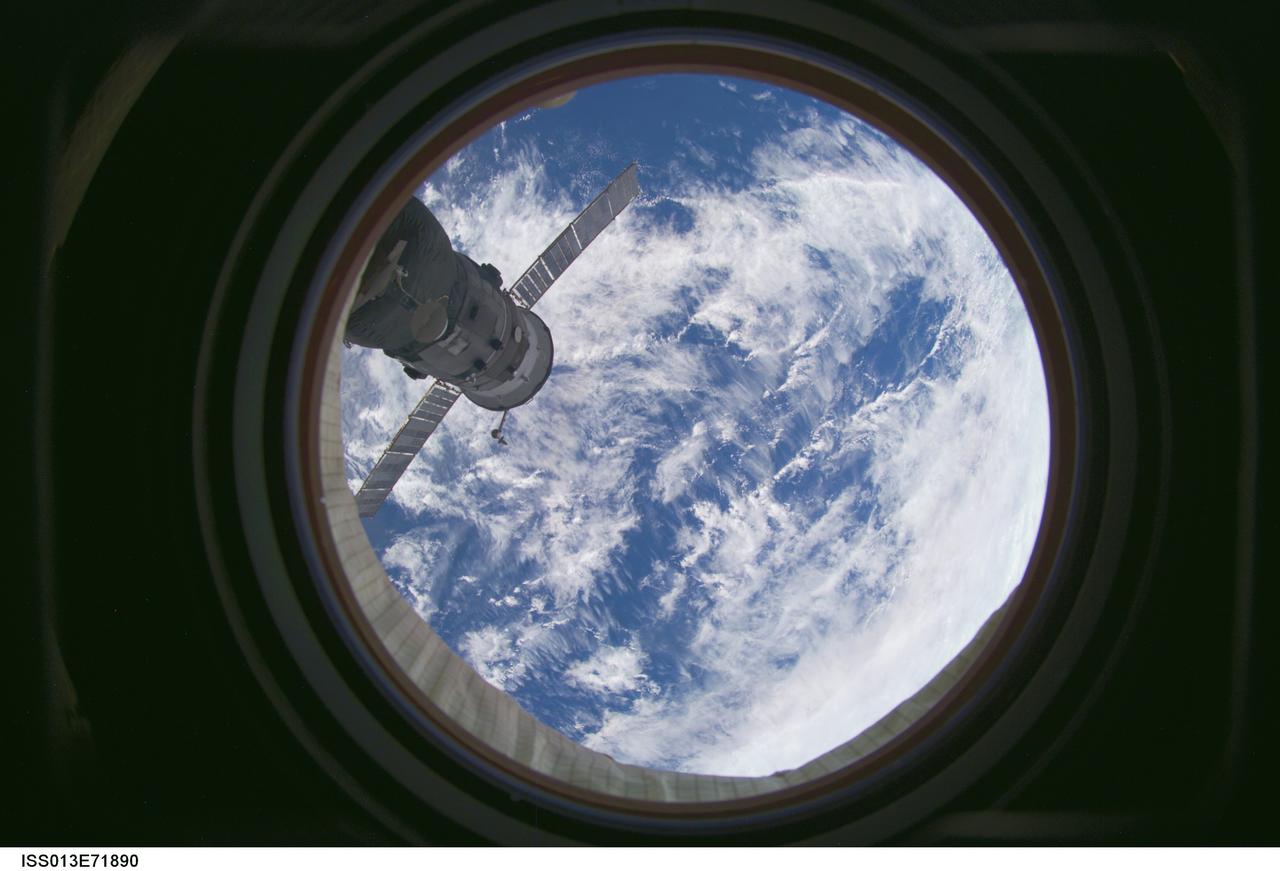
ISS013-E-71890 (28 Aug. 2006) --- A blue and white Earth and the docked Progress 22 spacecraft are featured in this image photographed by an Expedition 13 crewmember from a window on the International Space Station.
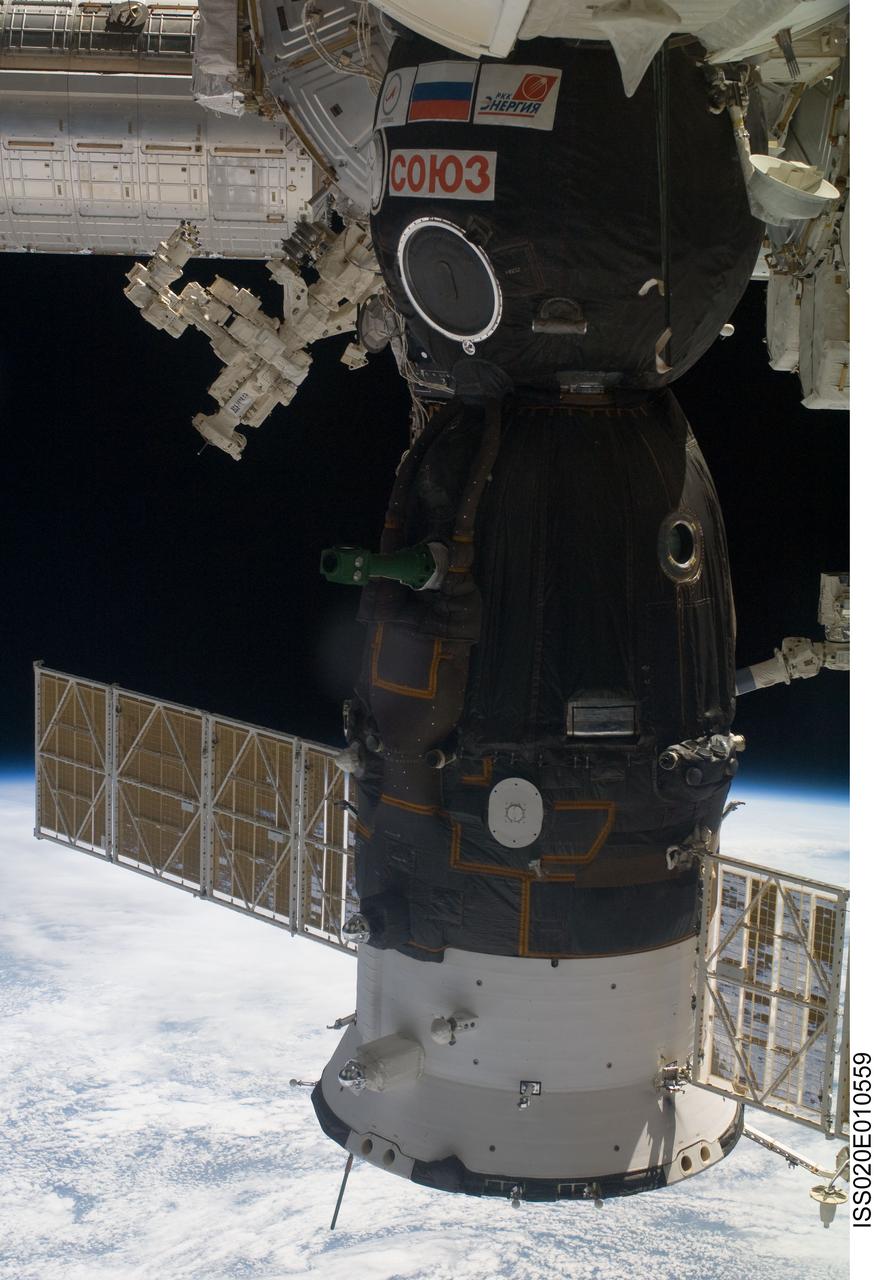
ISS020-E-010559 (16 June 2009) --- A Soyuz spacecraft docked with the International Space Station, the Canadian-built Dextre, also known as the Special Purpose Dextrous Manipulator (top left) and a portion of the Japanese Kibo laboratory (upper left corner) are featured in this image photographed by an Expedition 20 crew member on the station. The blackness of space and Earth’s horizon provide the backdrop for the scene.
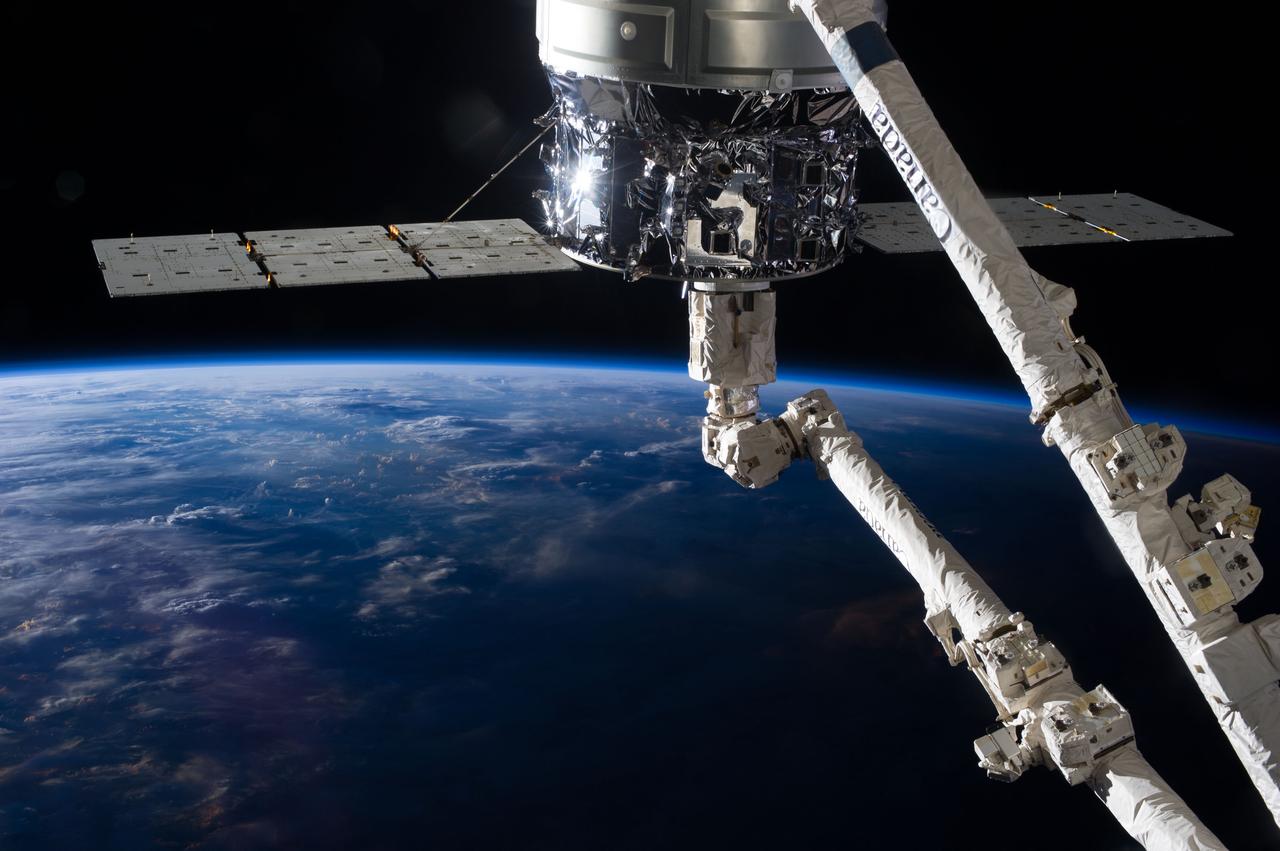
View of the first Cygnus commercial cargo spacecraft built by Orbital Sciences Corp attached to the end of the robotic arm (AKA Canadarm2) and docked the Node 2 module of the ISS. Per Twitter message: Sunrise on #Cygnus and #Canadarm2.
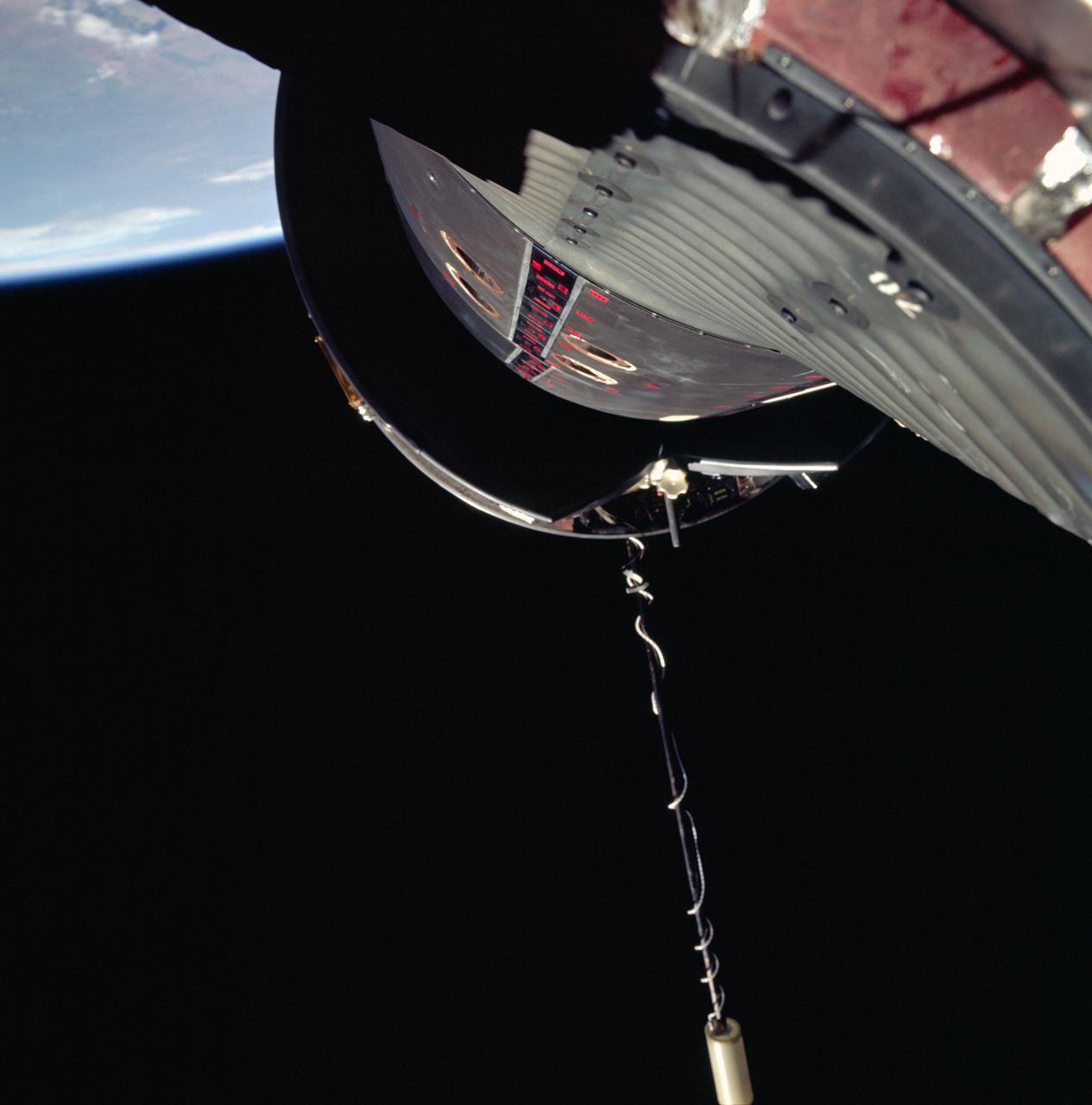
S66-54656 (13 Sept. 1966) --- Nose of Gemini-11 spacecraft and Agena Target Vehicle while docked as photographed by astronaut Richard F. Gordon Jr., pilot, during his stand-up extravehicular activity (EVA). Taken with a modified 70mm Hasselblad camera, using Eastman Kodak, Ektachrome, MS (S.O. 368) color film. Photo credit: NASA
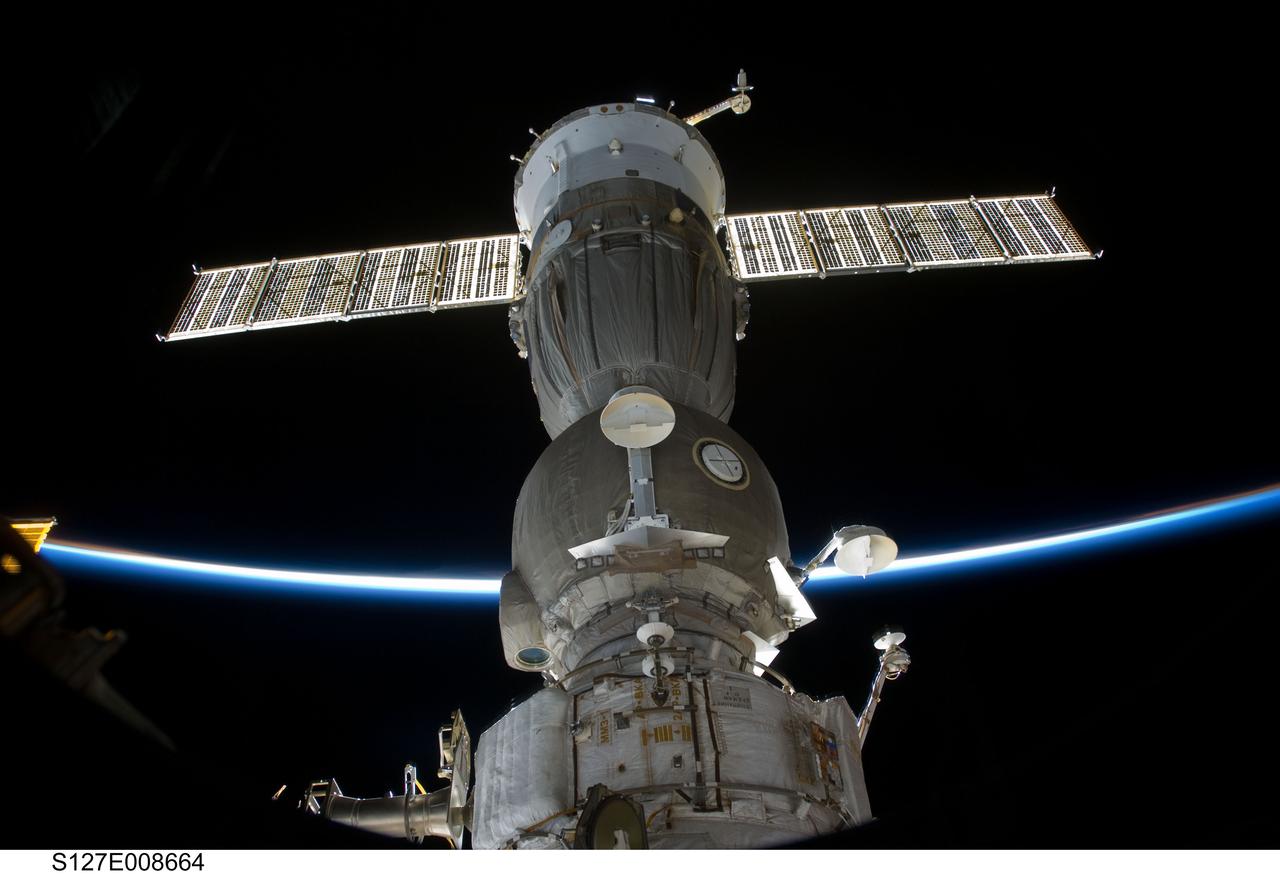
S127-E-008664 (25 July 2009) --- The limb of Earth intersects one of two Soyuz spacecraft that are docked with the Inernational Space Station.
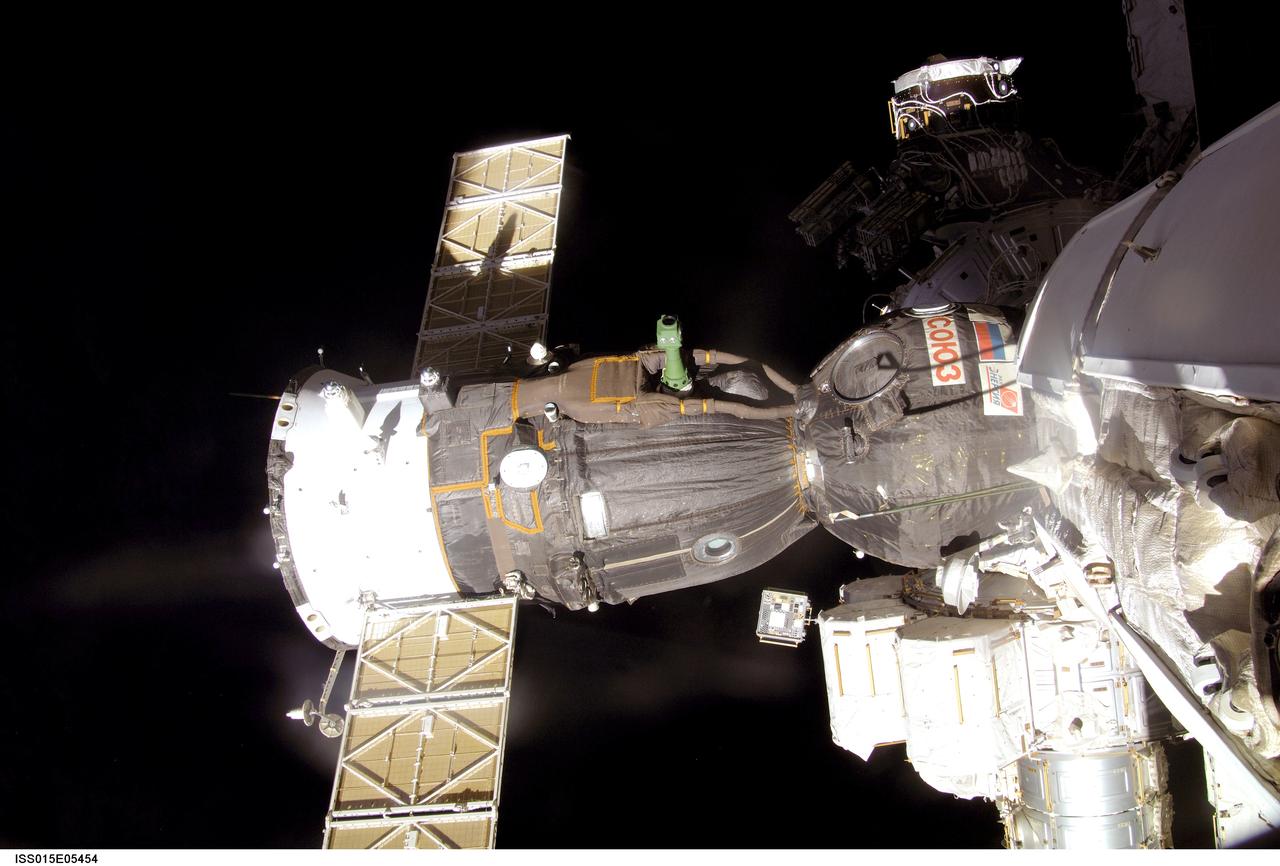
ISS015-E-05454 (April 2007) --- Backdropped by the blackness of space, the Soyuz 14 (TMA-10) spacecraft docked to the Zarya Module nadir port of the International Space Station is featured in this image photographed by an Expedition 15 crewmember.
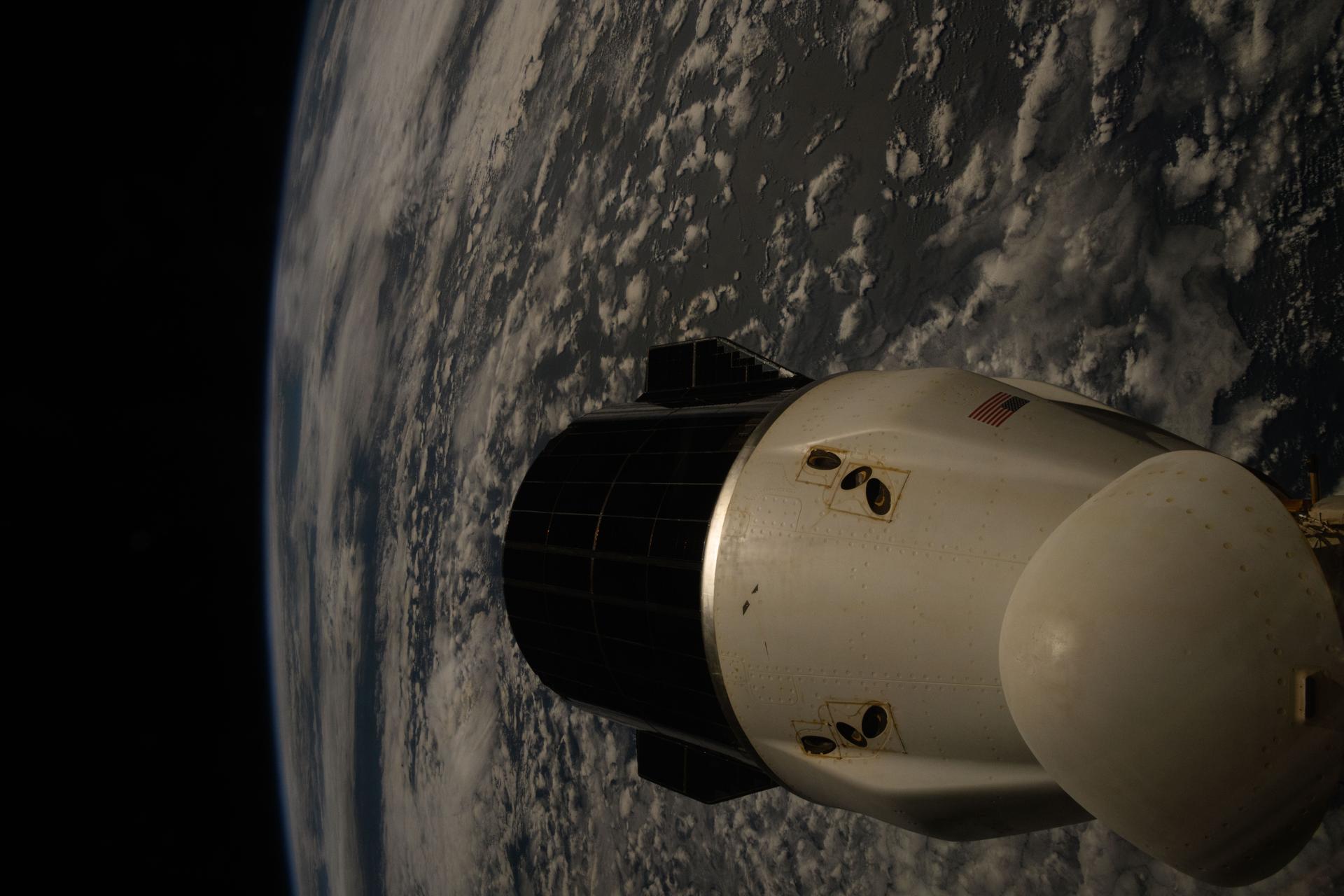
iss074e0100627 (Dec. 29, 2025) --- A SpaceX Dragon spacecraft is pictured docked to the International Space Station as the orbital outpost soared 269 miles above the Atlantic Ocean northwest of the South Georgia and the South Sandwich Islands.
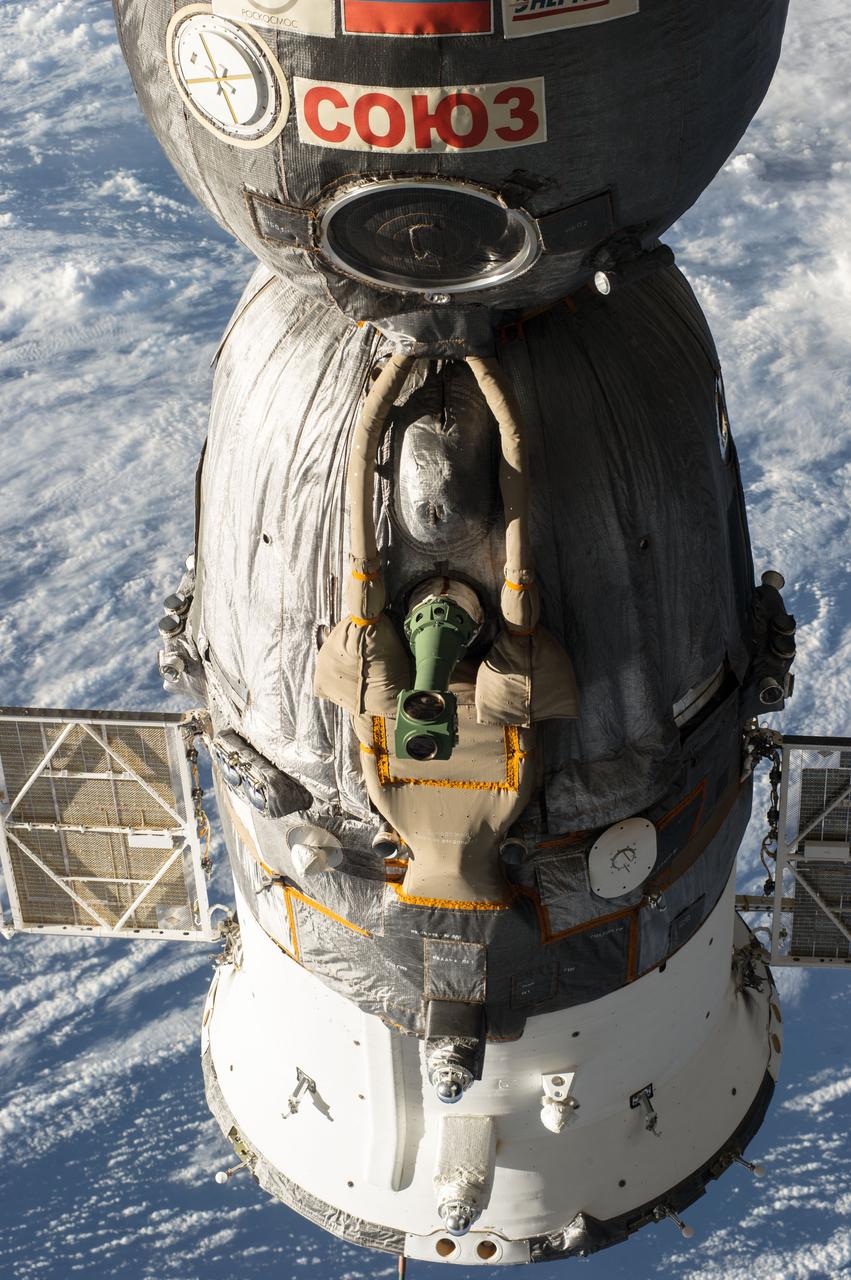
ISS039-E-019122 (5 May 2014) --– A Russian Soyuz spacecraft is seen docked to the International Space Station, as photographed by one of the Expedition 39 crew members aboard the orbital outpost. The Soyuz's periscope is in the center of the vehicle.
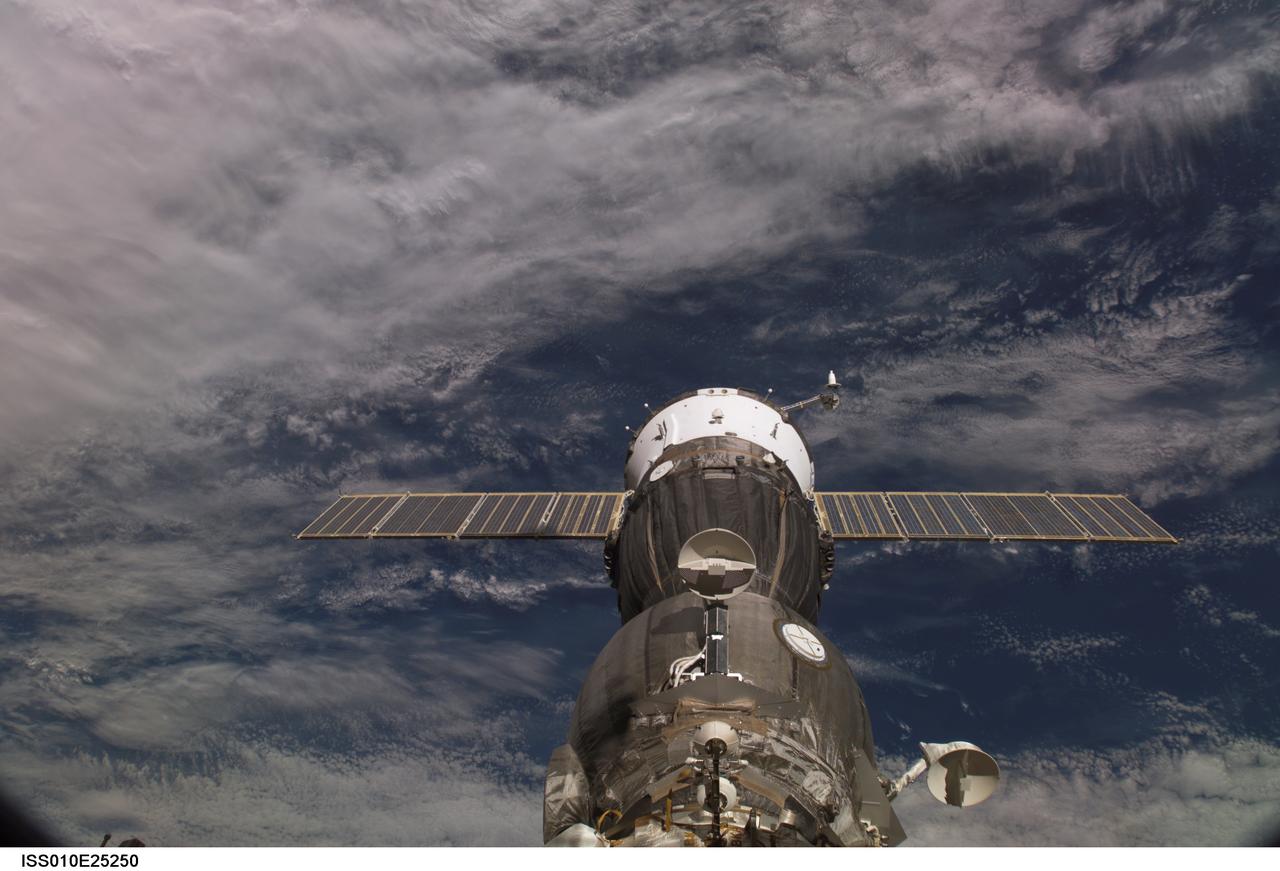
ISS010-E-25250 (18 April 2005) --- A blanket of clouds provides the backdrop for this scene of the Soyuz TMA-6 spacecraft, docked to the Pirs Docking Compartment on the International Space Station (ISS). The scene was photographed by an Expedition 10 crewmember.
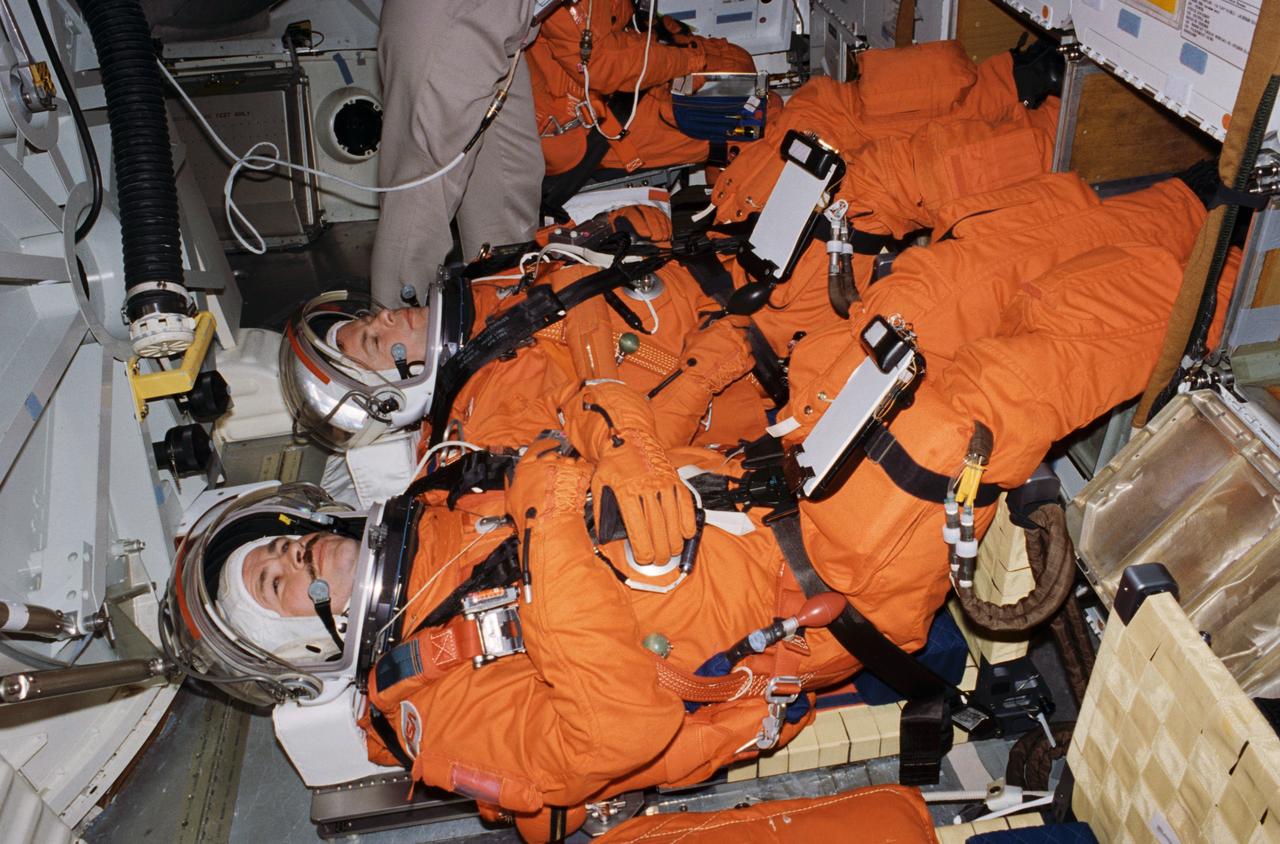
S94-47071 (Nov. 1994) --- In a Shuttle mockup trainer at the Johnson Space Center (JSC), two Russian cosmonauts assigned to Russia's Mir 19 mission check out hardware like that to be flown onboard NASA's Space Shuttle Atlantis, the spacecraft that will take the pair to their orbital destination. Anatoly Y. Solovyev, mission commander; and Nikolai M. Budarin (nearest camera), flight engineer, practice using the Recumbent Seating System (RSS). RSS has been manifest to be carried on the Space Shuttle Atlantis for the STS-71 mission. When Atlantis docks with the Mir space station in 1995, a NASA astronaut and two other Russian cosmonauts, who will have been onboard Mir for a long duration stay, will join the STS-71 crew for the return to Earth. Solovyev and Budarin will remain aboard Mir, to return to Earth later in one of Russia's Soyuz spacecraft.
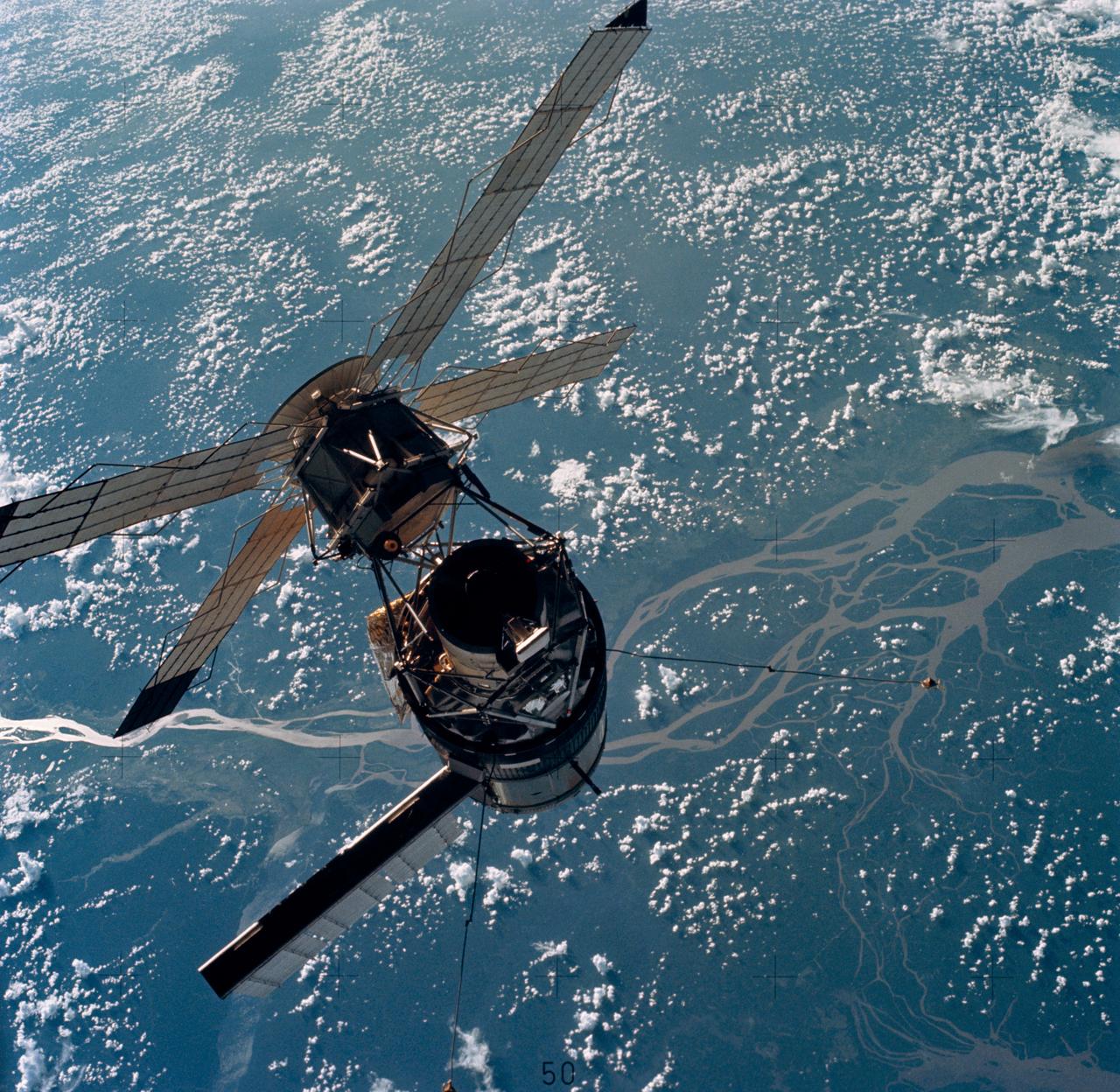
SL3-114-1683 (28 July 1973) --- A close-up view of the Skylab space station photographed against an Earth background from the Skylab 3 Command and Service Modules (CSM) during station-keeping maneuvers prior to docking. Aboard the Command Module (CM) were astronauts Alan L. Bean, Owen K. Garriott and Jack R. Lousma, who remained with the Skylab Space Station in Earth orbit for 59 days. This picture was taken with a hand-held 70mm Hasselblad camera using a 100mm lens and SO-368 medium speed Ektachrome film. Note the one solar array system wing on the Orbital Workshop (OWS) which was successfully deployed during extravehicular activity (EVA) on the first manned Skylab flight. The parasol solar shield which was deployed by the Skylab 2 crew can be seen through the support struts of the Apollo Telescope Mount (ATM). Photo credit: NASA
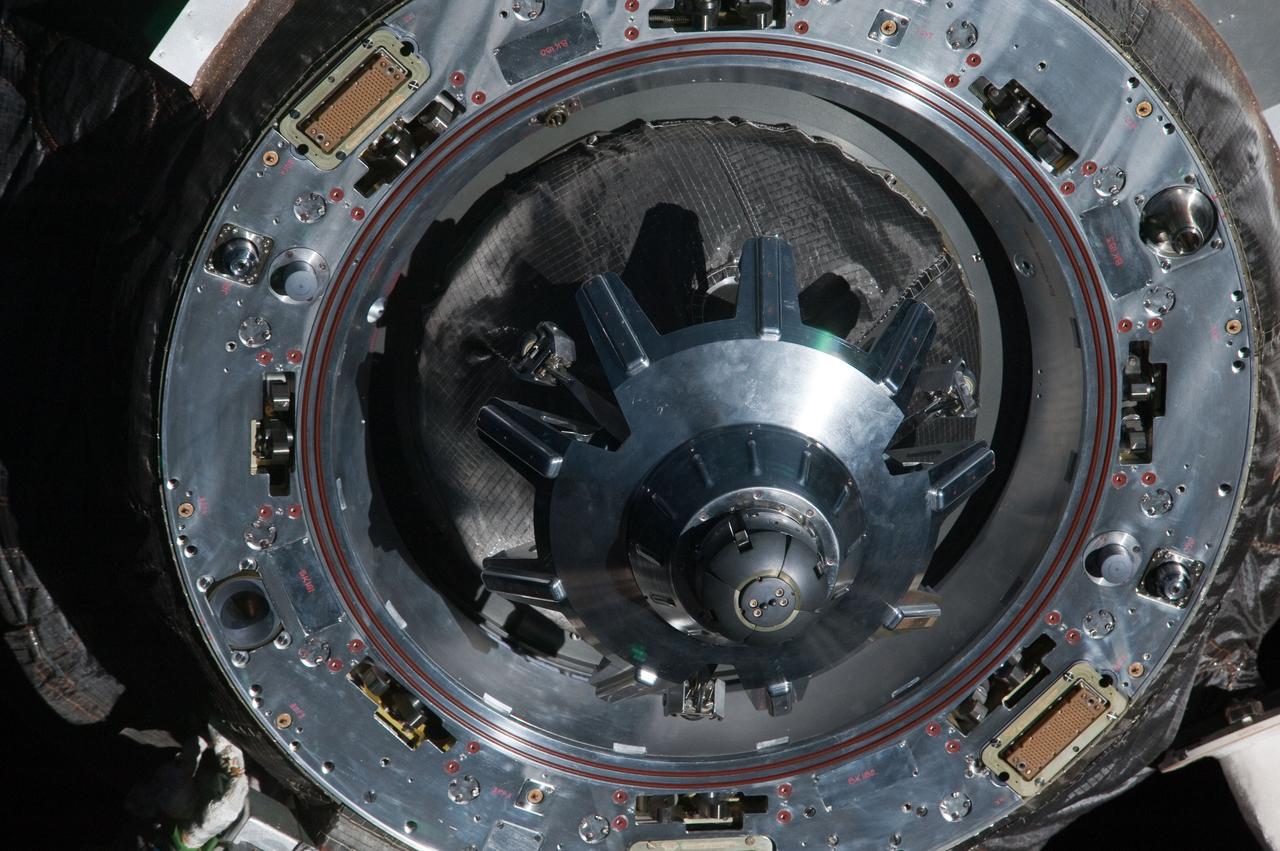
ISS030-E-238803 (19 April 2012) --- A close-up view of the docking mechanism of the unpiloted ISS Russian Progress 46 spacecraft is featured in this image photographed by an Expedition 30 crew member as Progress departs from the International Space Station.
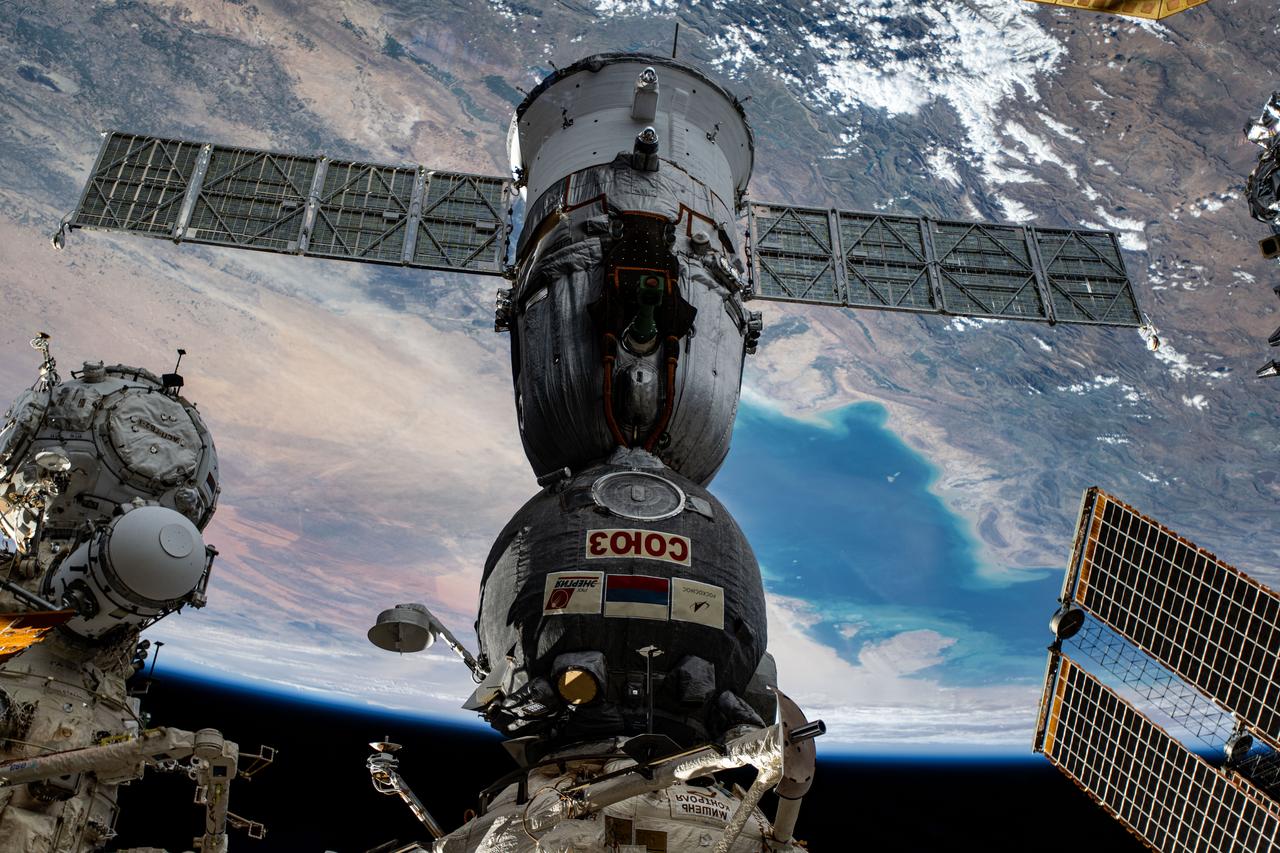
iss072e838101 (March 24, 2025) --- The Soyuz MS-26 spacecraft that launched NASA astronaut Don Pettit and Roscosmos cosmonauts Alexey Ovchinin and Ivan Vagner to the International Space Station is pictured docked to the Rassvet module. The orbiting lab was soaring 260 miles above Turkmenistan near the Caspian Sea.
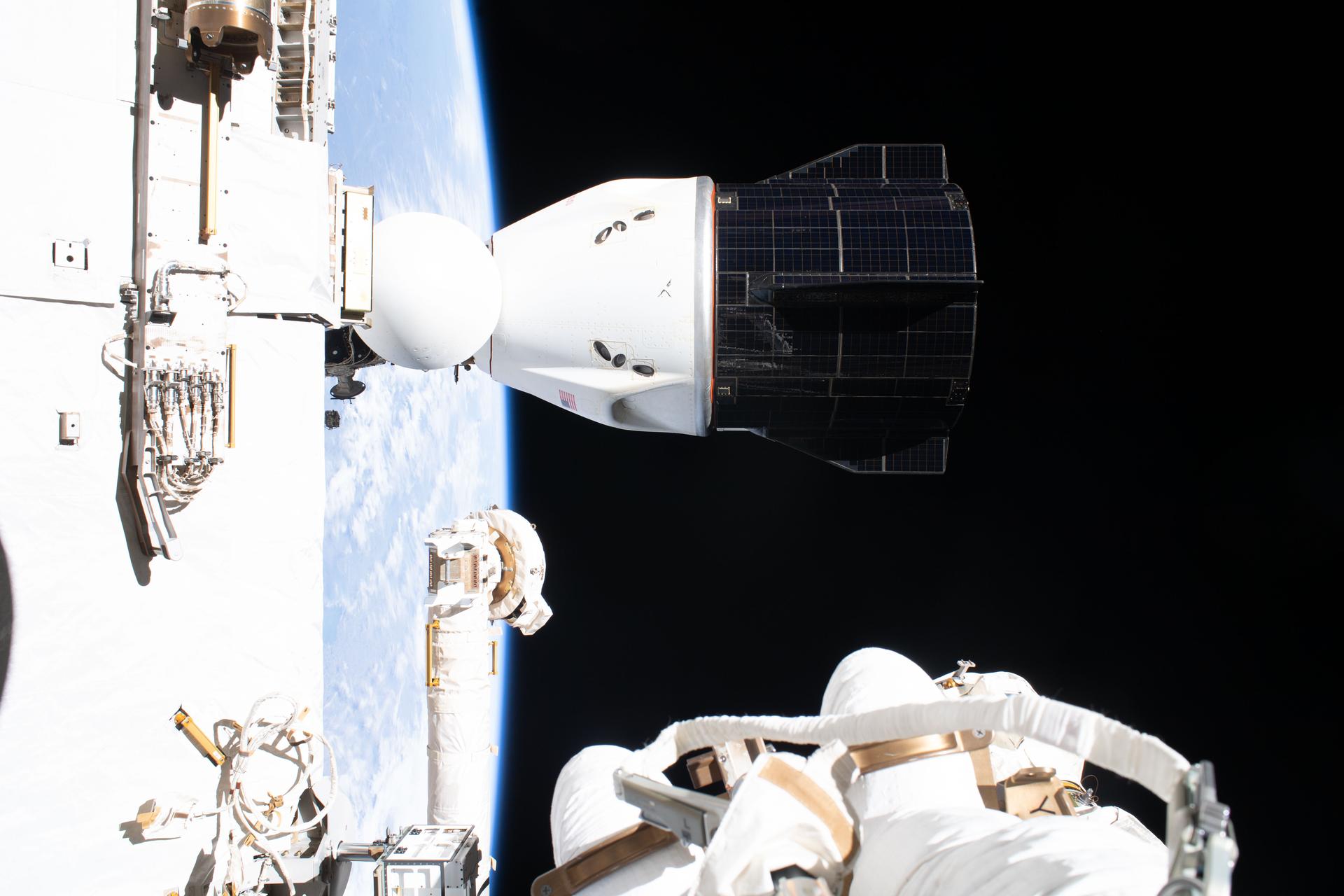
iss075e0069001 (Aug. 25, 2026) --- This photograph of the SpaceX Dragon spacecraft, which launched four Crew-12 members to the International Space Station on Feb. 13, 2026, and docked to the Harmony module the next day, was captured during a spacewalk by NASA astronaut and Expedition 75 flight engineer Anil Menon. Credit: NASA/Anil Menon
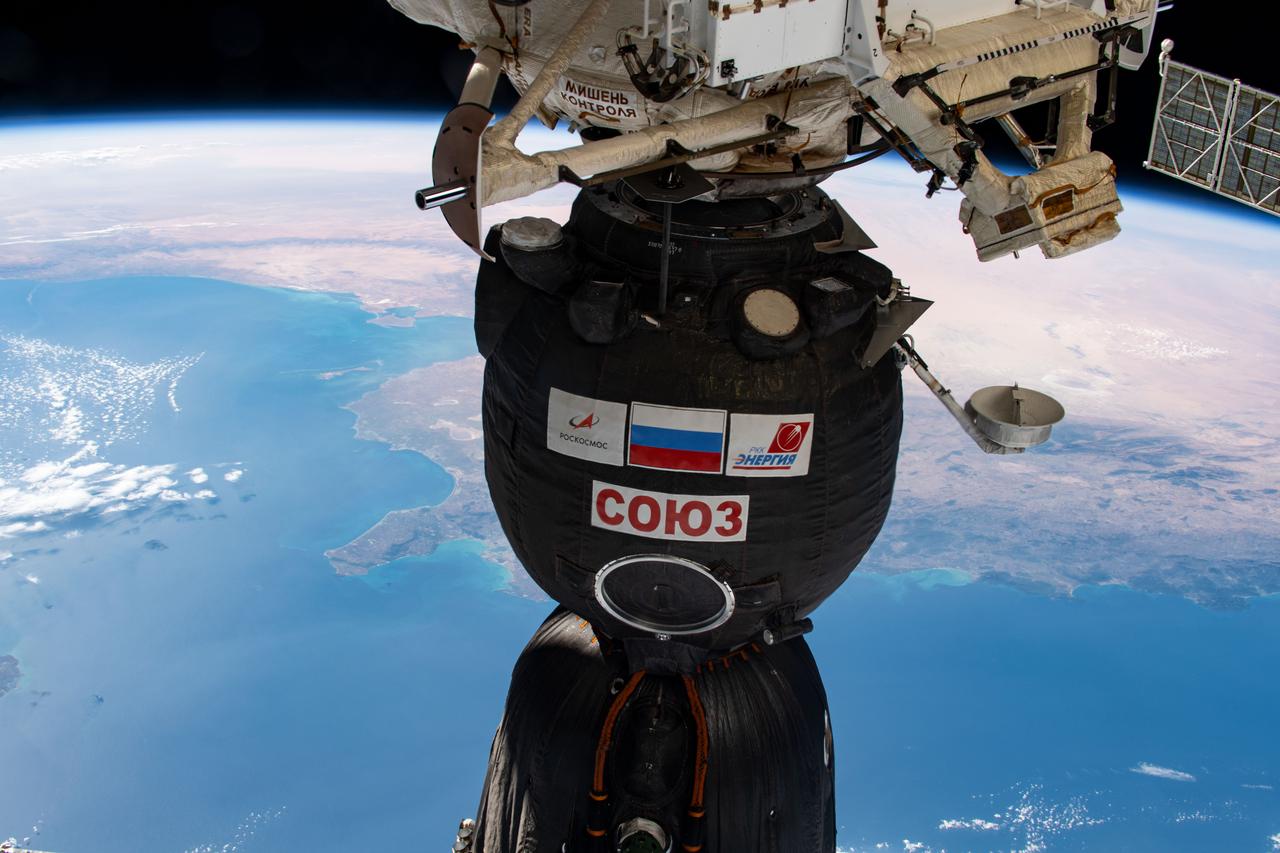
iss063e107419 (Oct. 14, 2020) --- The Soyuz MS-17 spacecraft, with Expedition 64 crew members Kate Rubins of NASA and Roscosmos cosmonauts Sergey Ryzhikov and Sergey Kud-Sverchkov, docked to the Rassvet module as the International Space Station was orbiting above the Mediterranean Sea.
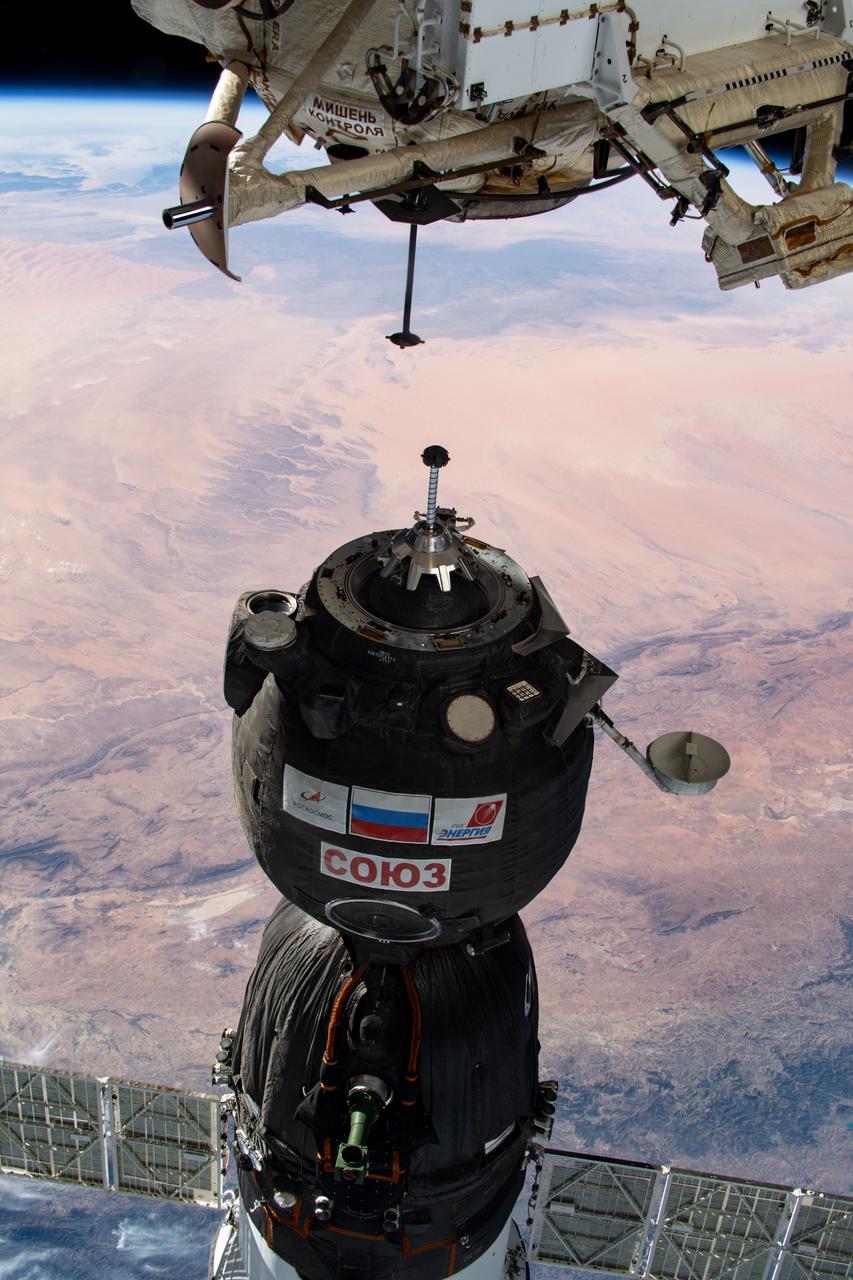
iss063e107308 (Oct. 14, 2020) --- The Soyuz MS-17 spacecraft, with Expedition 64 crew members Kate Rubins of NASA and Roscosmos cosmonauts Sergey Ryzhikov and Sergey Kud-Sverchkov, is just a few meters from docking to the Rassvet module. This photograph was taken as the International Space Station was orbiting above the Mediterranean Sea.
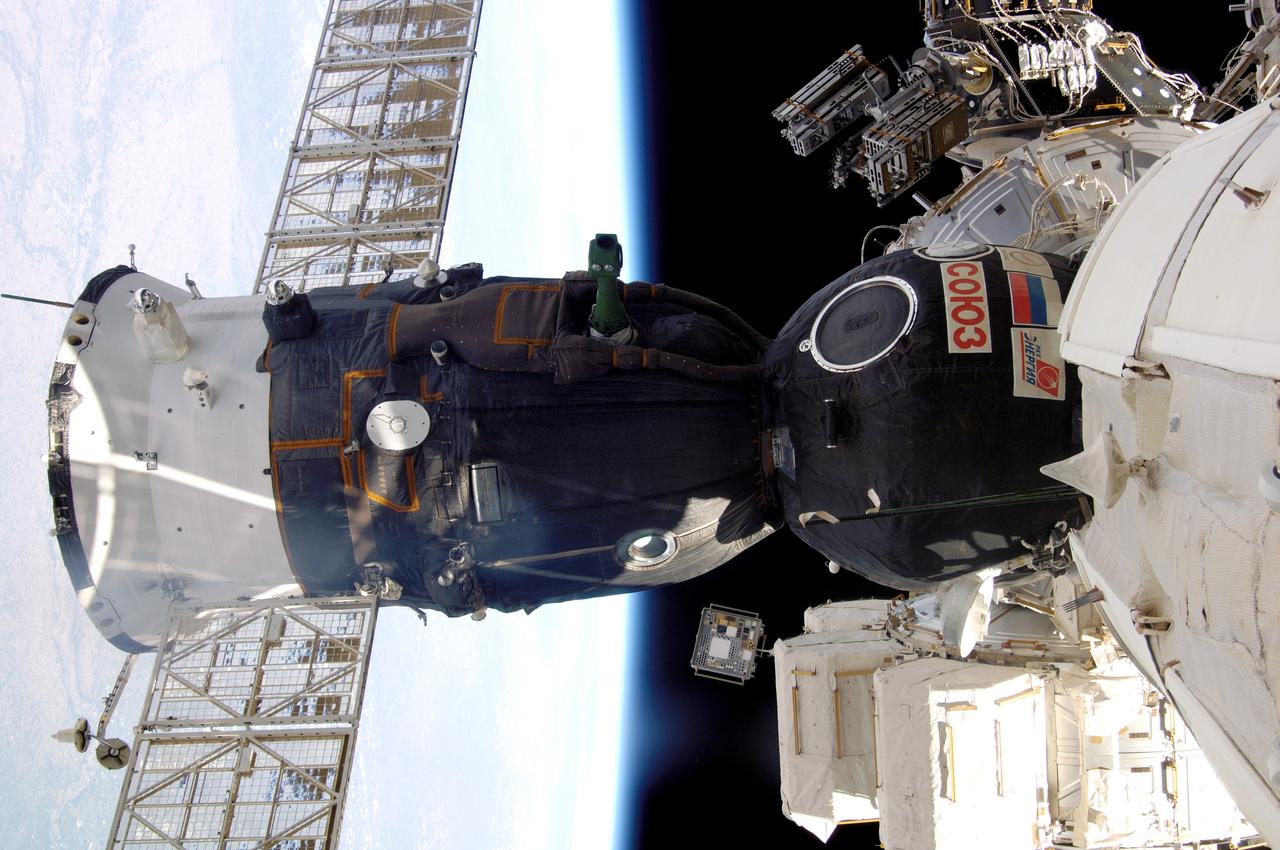
ISS015-E-05371 (April 2007) --- Backdropped by the blackness of space and Earth's horizon, the Soyuz 14 (TMA-10) spacecraft docked to the Zarya Module nadir port of the International Space Station is featured in this image photographed by an Expedition 15 crewmember.
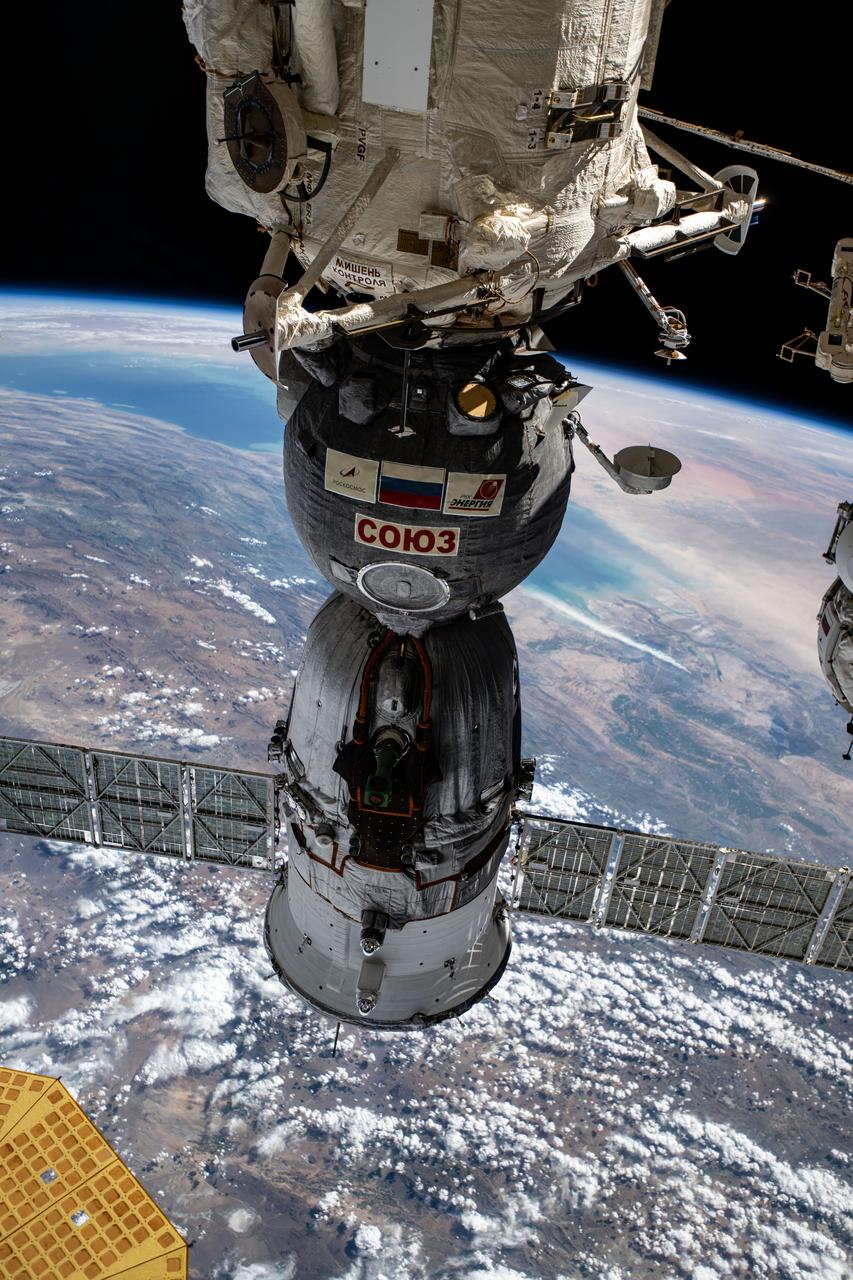
iss072e838106 (March 24, 2025) --- The Soyuz MS-26 spacecraft that launched NASA astronaut Don Pettit and Roscosmos cosmonauts Alexey Ovchinin and Ivan Vagner to the International Space Station is pictured docked to the Rassvet module. The orbiting lab was soaring 260 miles above Turkmenistan near the Caspian Sea.
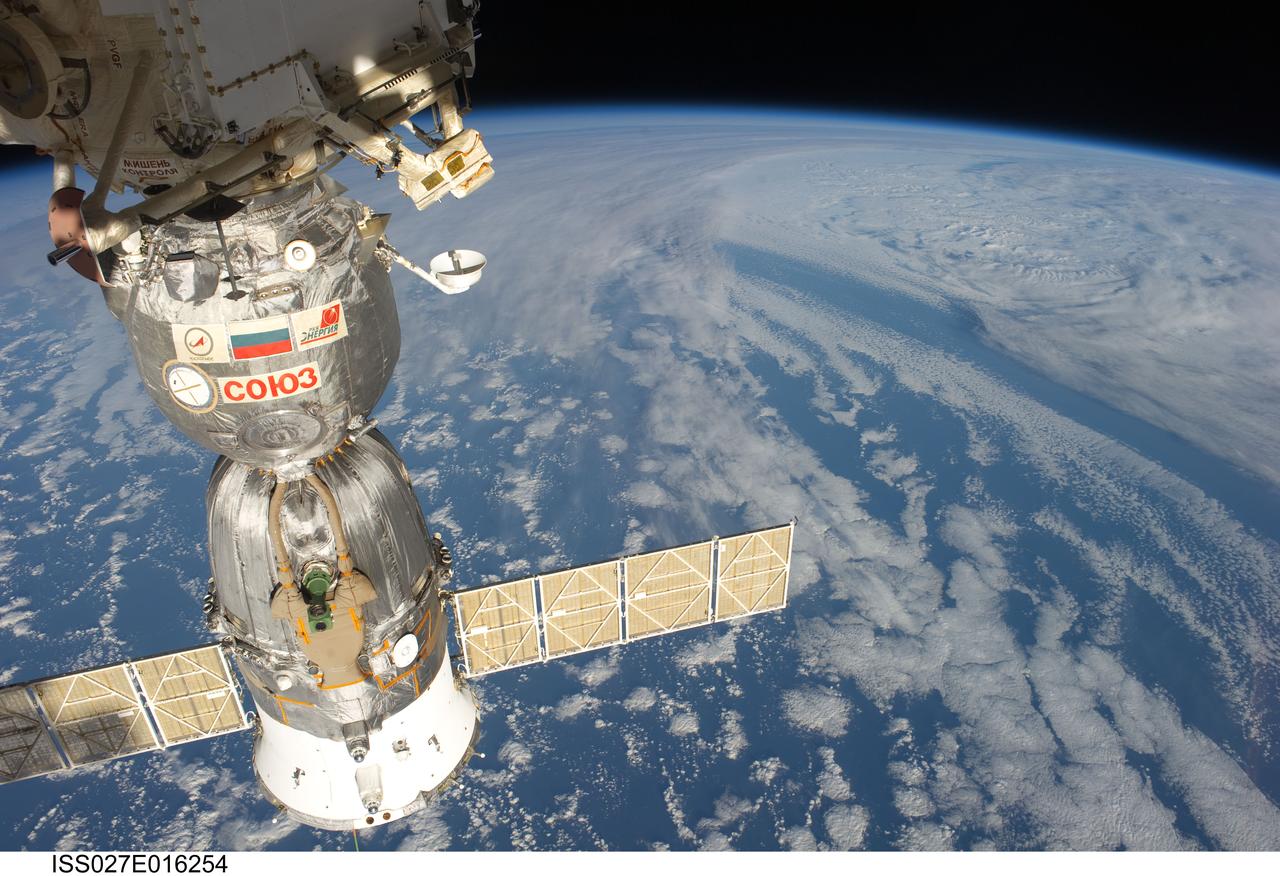
ISS027-E-016254 (22 April 2011) --- A docked Russian Soyuz spacecraft is featured in this image photographed by an Expedition 27 crew member on the International Space Station. A blue and white part of Earth and the blackness of space provide the backdrop for the scene.
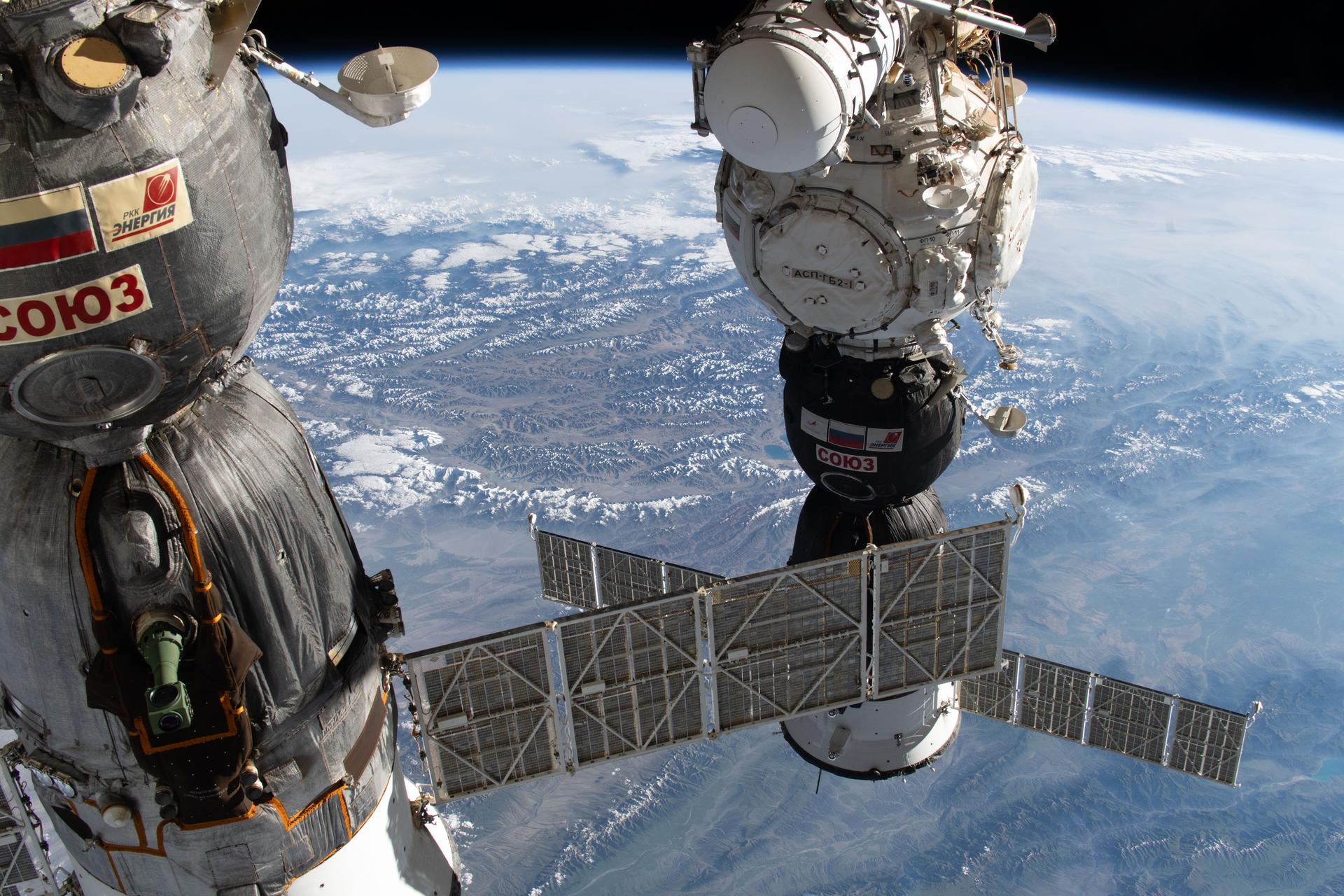
iss074e0825704 (July 17, 2026) --- Two Soyuz crew spacecraft, the MS-28 docked to the Rassvet module (foreground) and the MS-29 docked to the Prichal module (background), are pictured attached to the International Space Station as it orbited 265 miles above eastern Kazakhstan. Credit: NASA/Jessica Meir
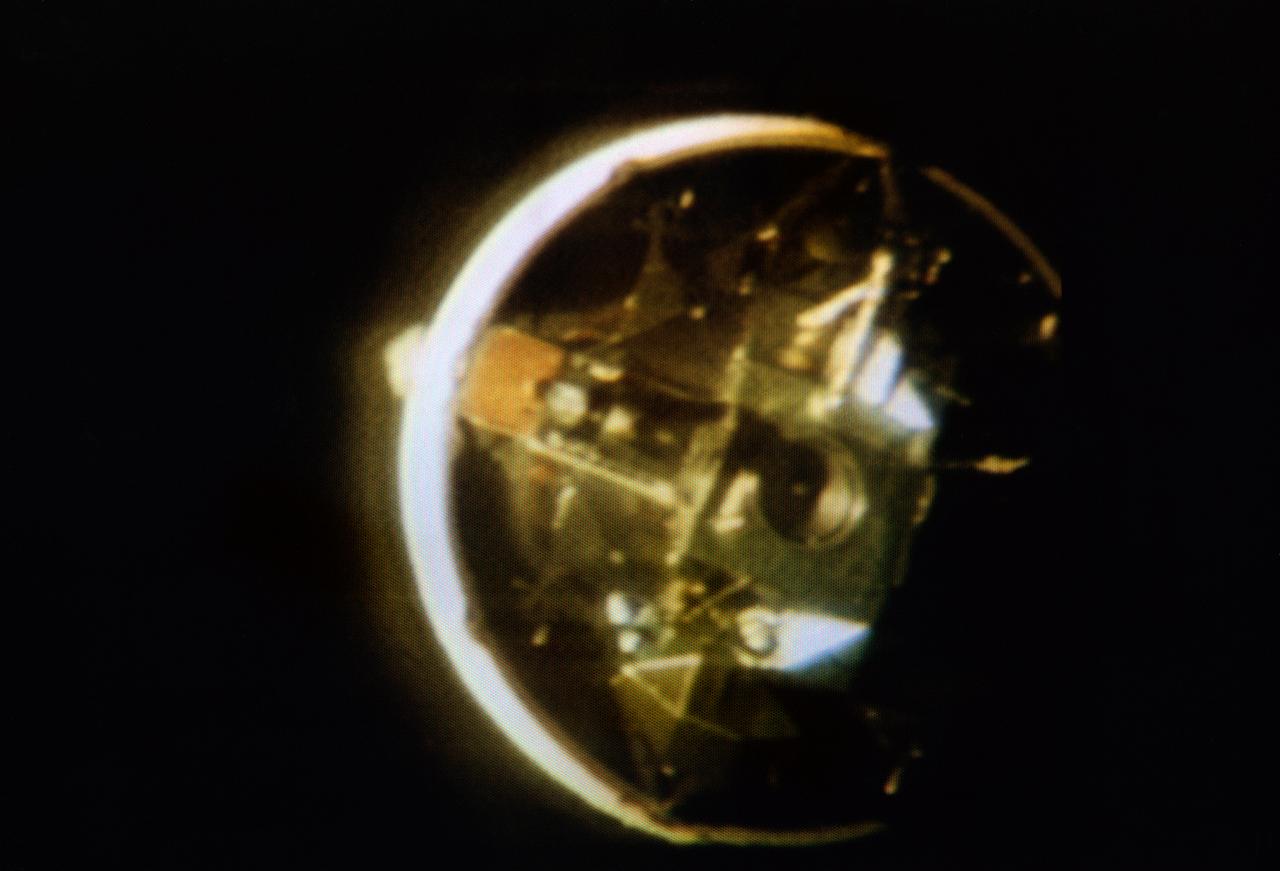
S69-33994 (18 May 1969) --- The Apollo 10 Lunar Module, still attached to the Saturn IVB stage, is seen in this color reproduction taken from the first television transmission made by the color television camera aboard the Apollo 10 spacecraft. This picture was made following CSM/LM-S-IVB separation, and prior to LM extraction from the S-IVB. The Command and Service Modules were making the docking approach to the LM/S-IVB. The circular object is the docking drogue assembly on the LM. Aboard the Command Module were astronauts Thomas P. Stafford, commander; John W. Young, command module pilot; and Eugene A. Cernan, lunar module pilot.
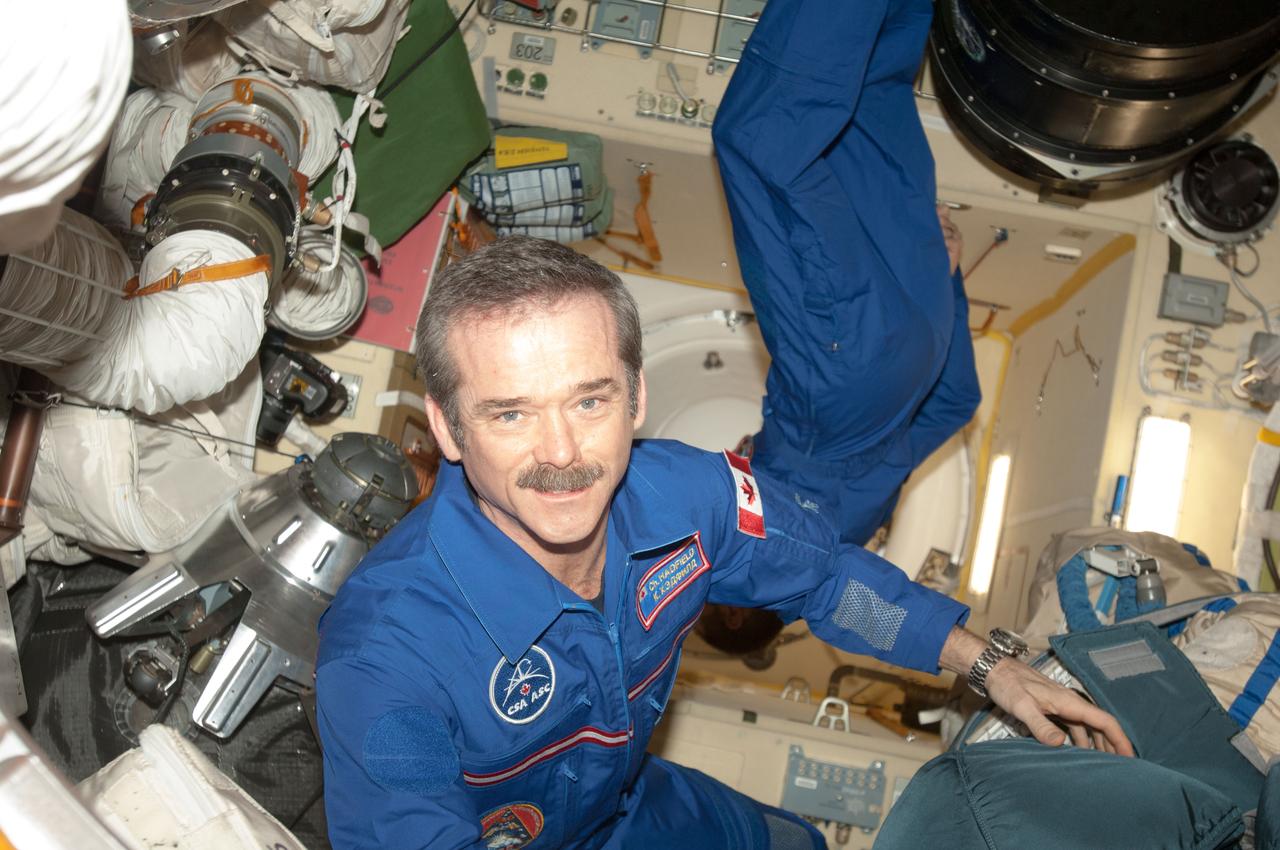
Expedition 35 commander Chris Hadfield and flight engineer Tom Marshburn (partially obscured) are photographed in the Poisk Mini-Research Module 2 (MRM2) during preparations for hatch opening with the docked Soyuz TMA-08M/34S spacecraft. Hadfield is a Canadian Space Agency (CSA) astronaut.
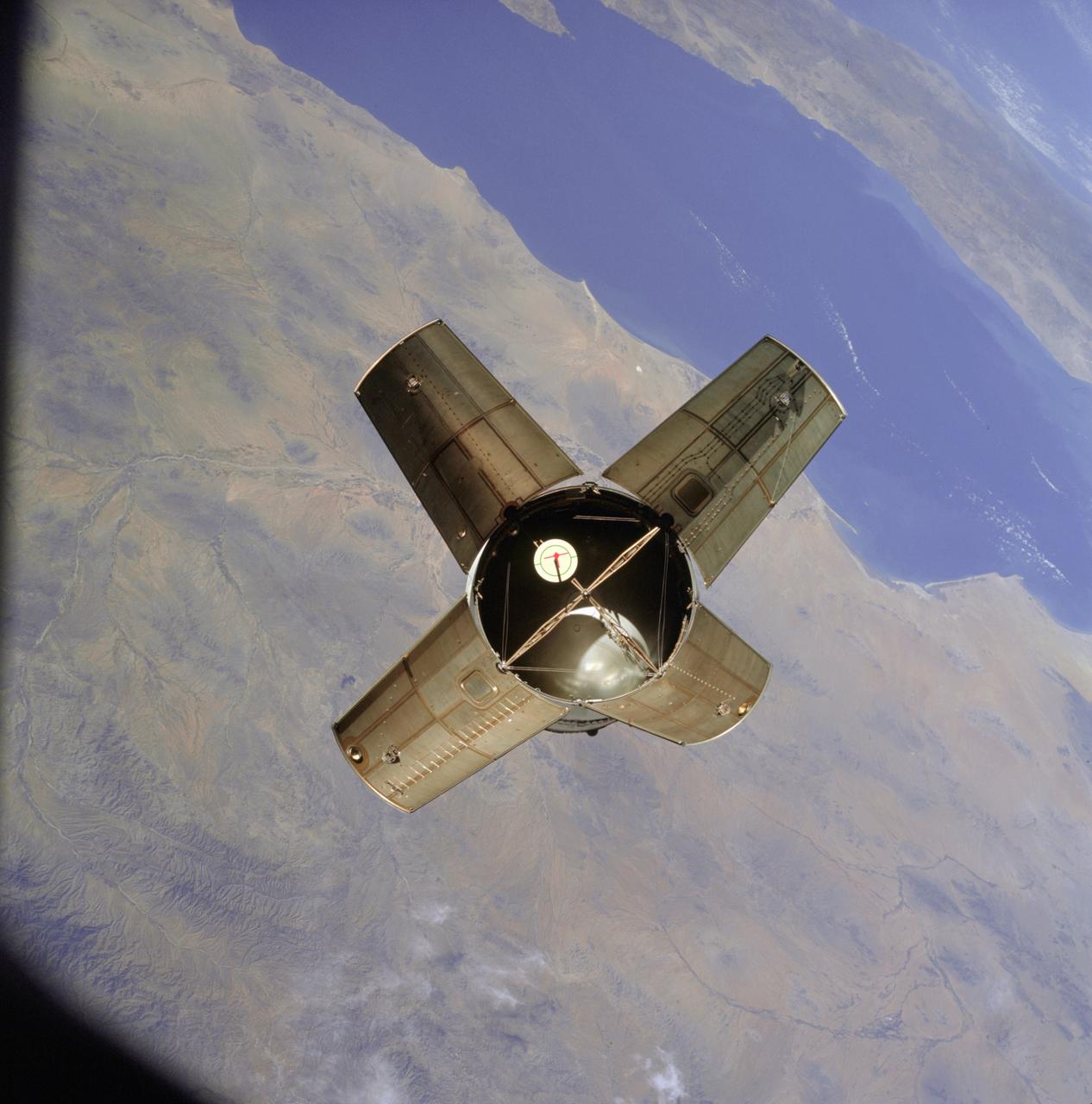
AS07-03-1531 (11 Oct. 1968) --- The expended Saturn IVB stage as photographed from the Apollo 7 spacecraft during transposition and docking maneuvers. This photograph was taken over Sonora, Mexico, during Apollo 7's second revolution of Earth. The round, white disc inside the open panels of the Saturn IVB is a simulated docking target similar to that used on the lunar module for docking during lunar missions.

AS07-03-1538 (11 Oct. 1968) --- The expended Saturn IVB stage as photographed from the Apollo 7 spacecraft during transposition and docking maneuvers. This photograph was taken during Apollo 7's second revolution of Earth. Earth below has heavy cloud cover. The round, white disc inside the open panels of the Saturn IVB is a simulated docking target similar to that used on the lunar module for docking during lunar missions.
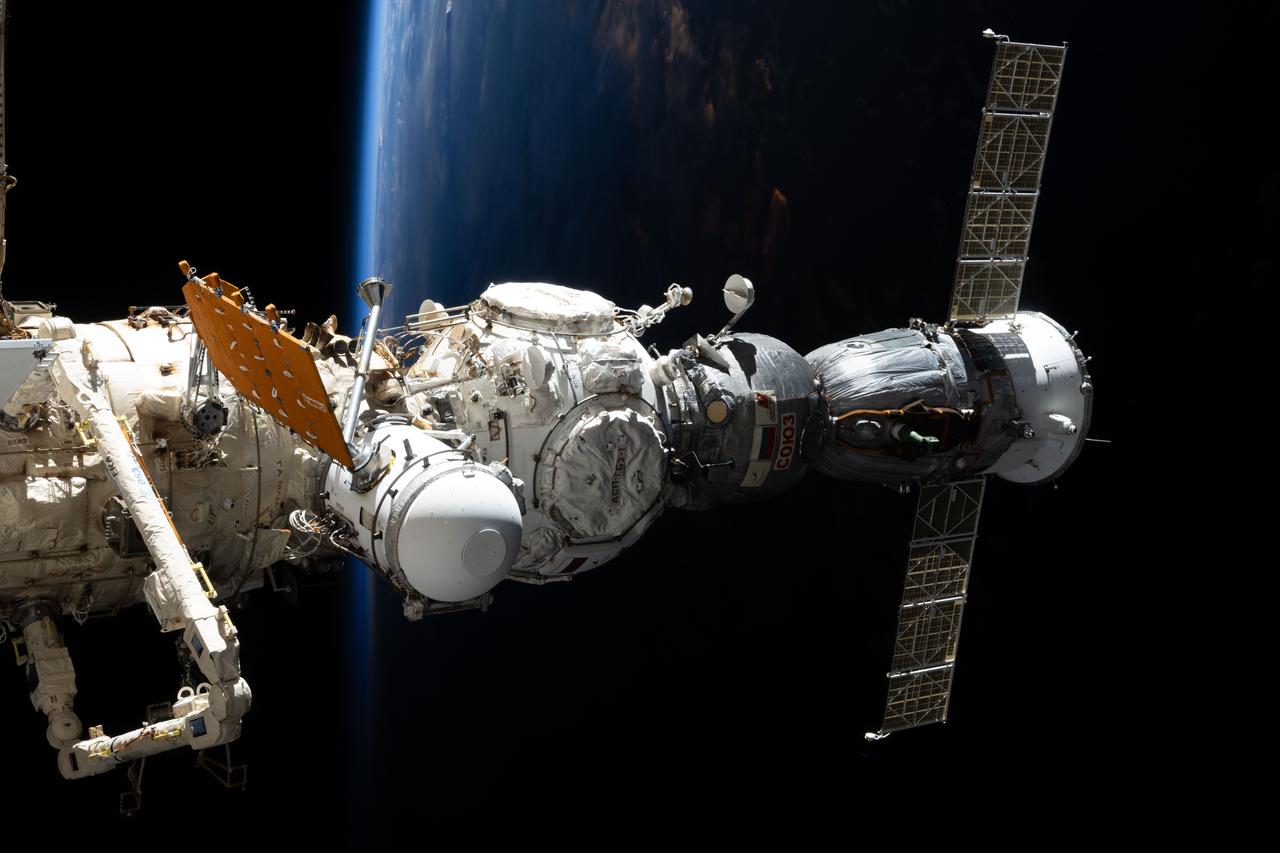
iss073e0775529 (Sept. 8, 2025) --- The Soyuz MS-27 spacecraft, which launched three Expedition 73 crew members to the International Space Station, is pictured docked to the Prichal module. Prichal is itself connected to the Nauka science module on the station’s Roscosmos segment. Below, the Pacific Ocean fades from view as an orbital sunset descends 258 miles beneath the orbiting complex.

iss073e0775543 (Sept. 8, 2025) --- The Soyuz MS-27 spacecraft, which launched three Expedition 73 crew members to the International Space Station, is pictured docked to the Prichal module. Prichal is itself connected to the Nauka science module on the station’s Roscosmos segment. Below, the Pacific Ocean fades from view as an orbital sunset descends 258 miles beneath the orbiting complex.
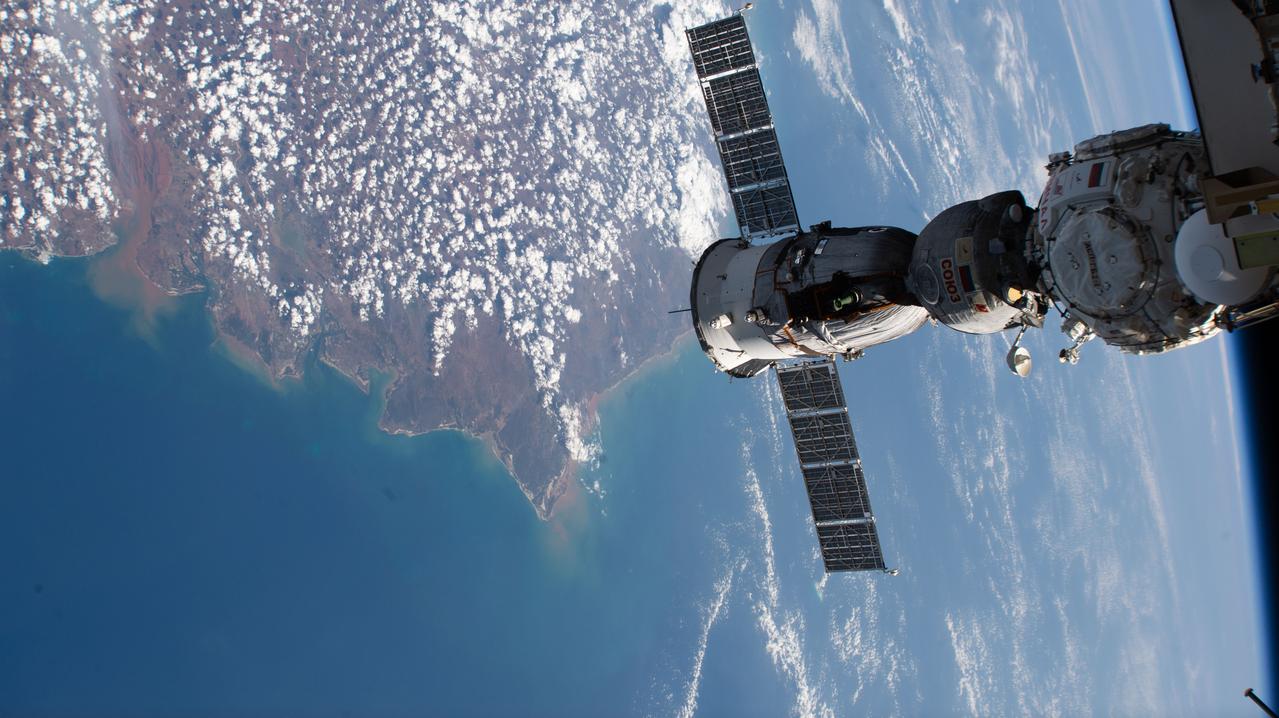
iss073e0659744 (Sept. 14, 2025) --- The Soyuz MS-27 spacecraft is pictured docked to the International Space Station's Prichal module as the orbital outpost soared 259 miles above the northern coast of Madagascar.

ISS013-E-08167 (19 April 2006) --- A mass of storm clouds was photographed by an Expedition 13 crewmember from a window on the International Space Station. A Soyuz spacecraft docked to the station and the Canadarm2 are visible at right.
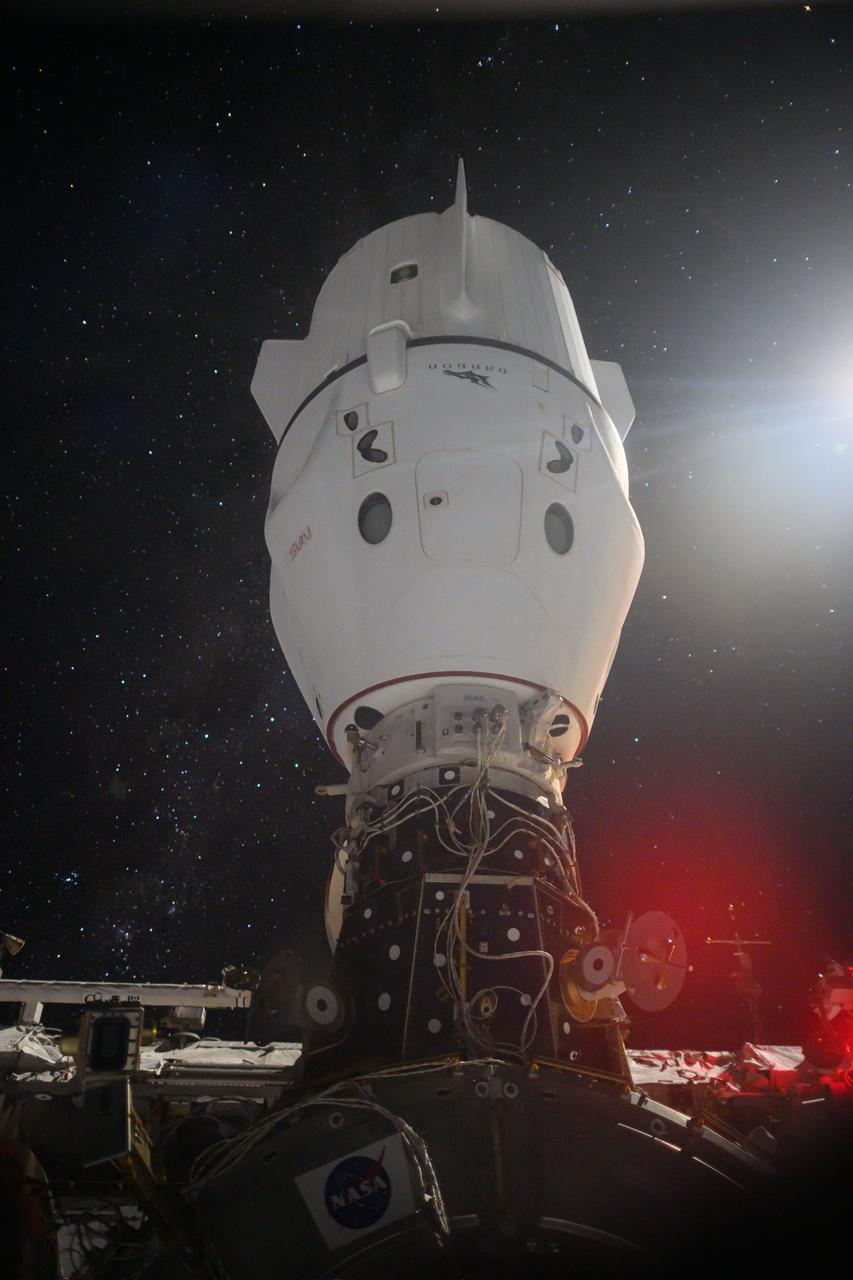
iss071e200795 (June 18, 2024) -- A SpaceX Dragon Endeavour spacecraft is pictured docked to the zenith port of the International Space Station's Harmony module as the orbiting complex soared 265 miles above the Indian Ocean.

ISS013-E-71899 (28 Aug. 2006) --- The docked Progress 22 spacecraft is featured in this image photographed by an Expedition 13 crewmember from a window on the International Space Station. Western Cuba provided the backdrop for the image.
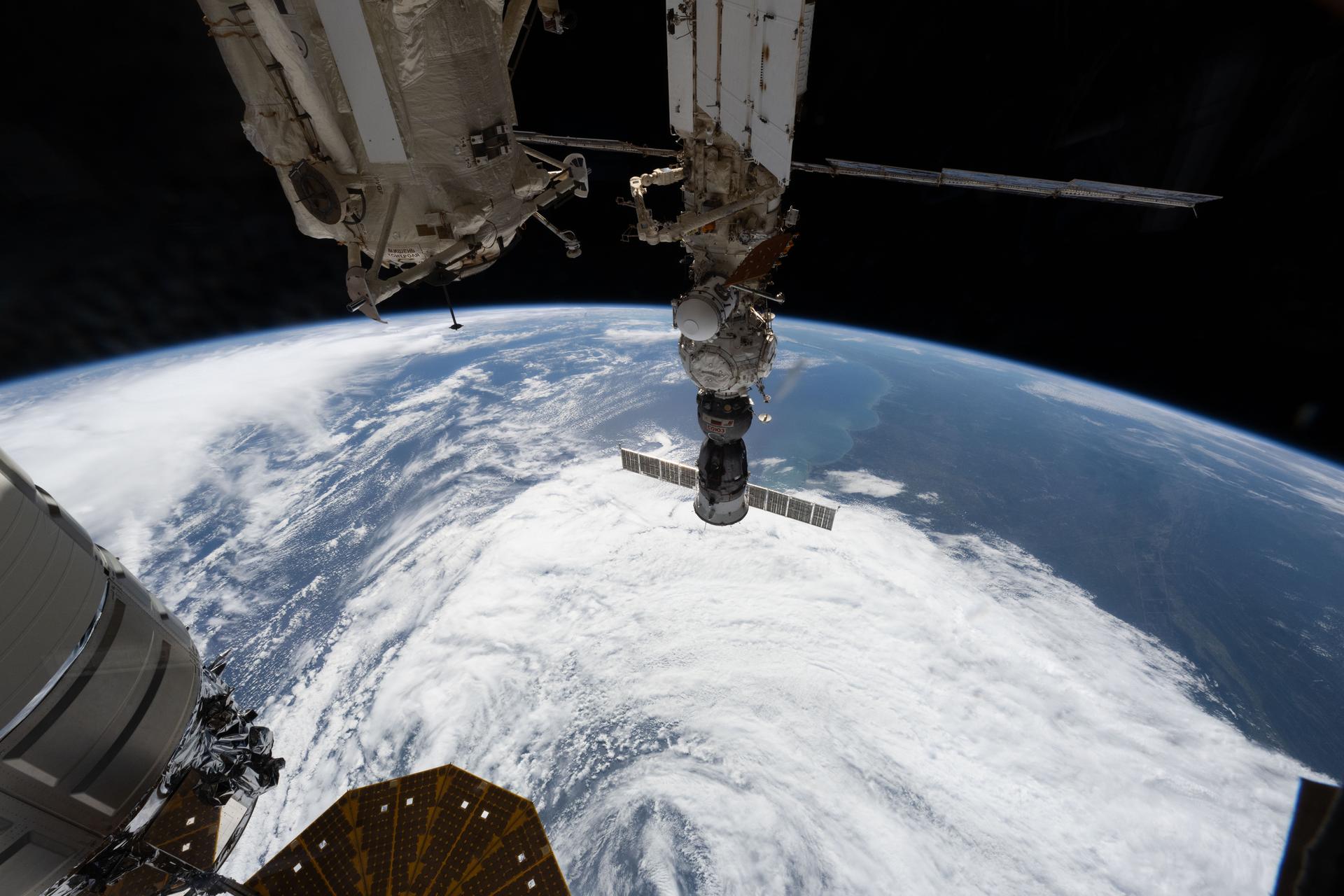
iss075e0153938 (Sept. 28, 20267) --- At center, the Soyuz MS-29 crew spacecraft is pictured docked to the Prichal module as the International Space Station orbited 263 miles above a cloudy southern Europe. Credit: ESA/Sophie Adenot
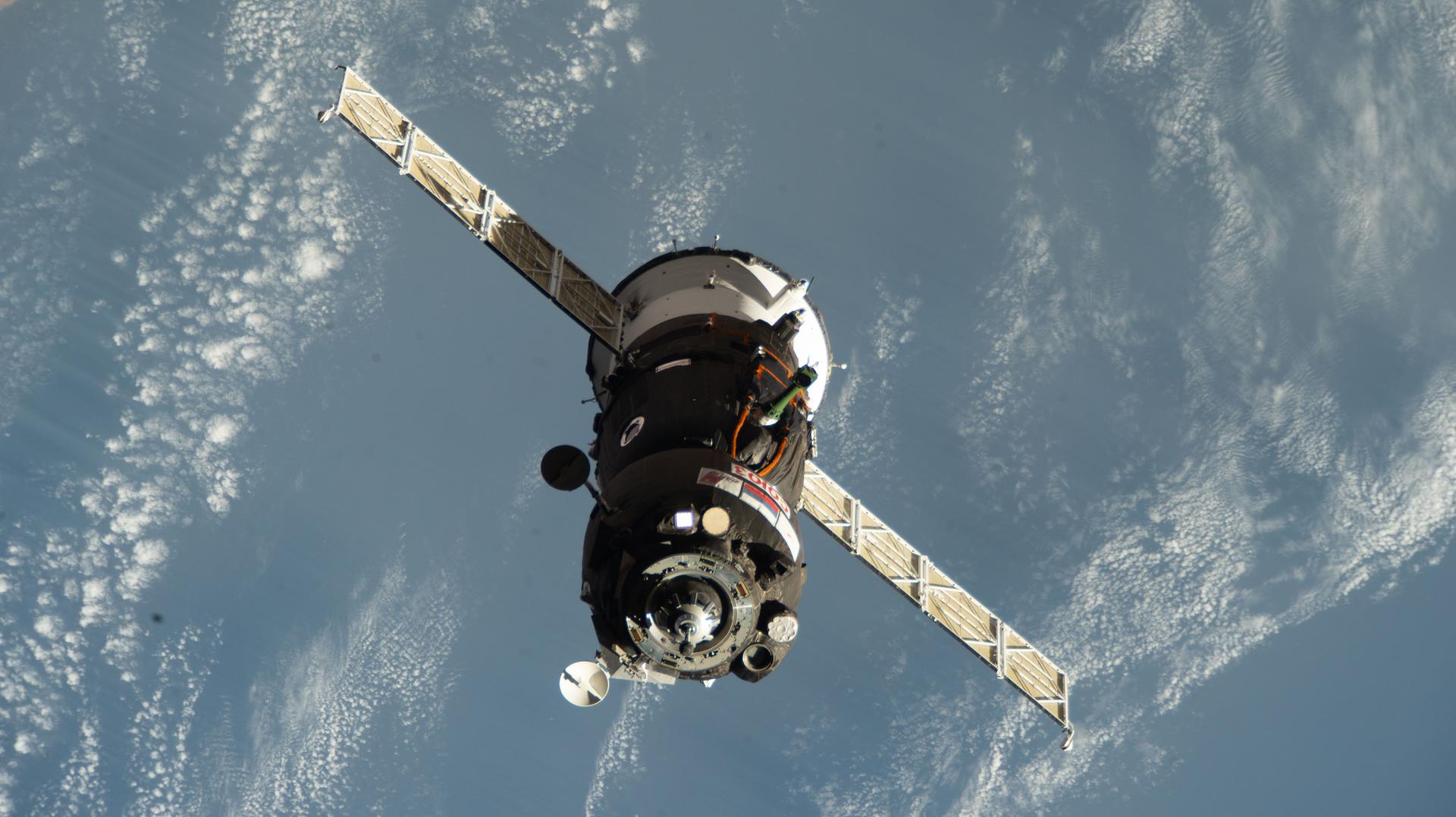
iss074e0814091 (June 14, 2026) --- The Soyuz MS-29 spacecraft, carrying NASA astronaut Anil Menon and Roscosmos cosmonauts Pyotr Dubrov and Anna Kikina, approaches the International Space Station for an automated docking while both spacecraft were orbiting 262 miles above Western Sahara. Credit: NASA
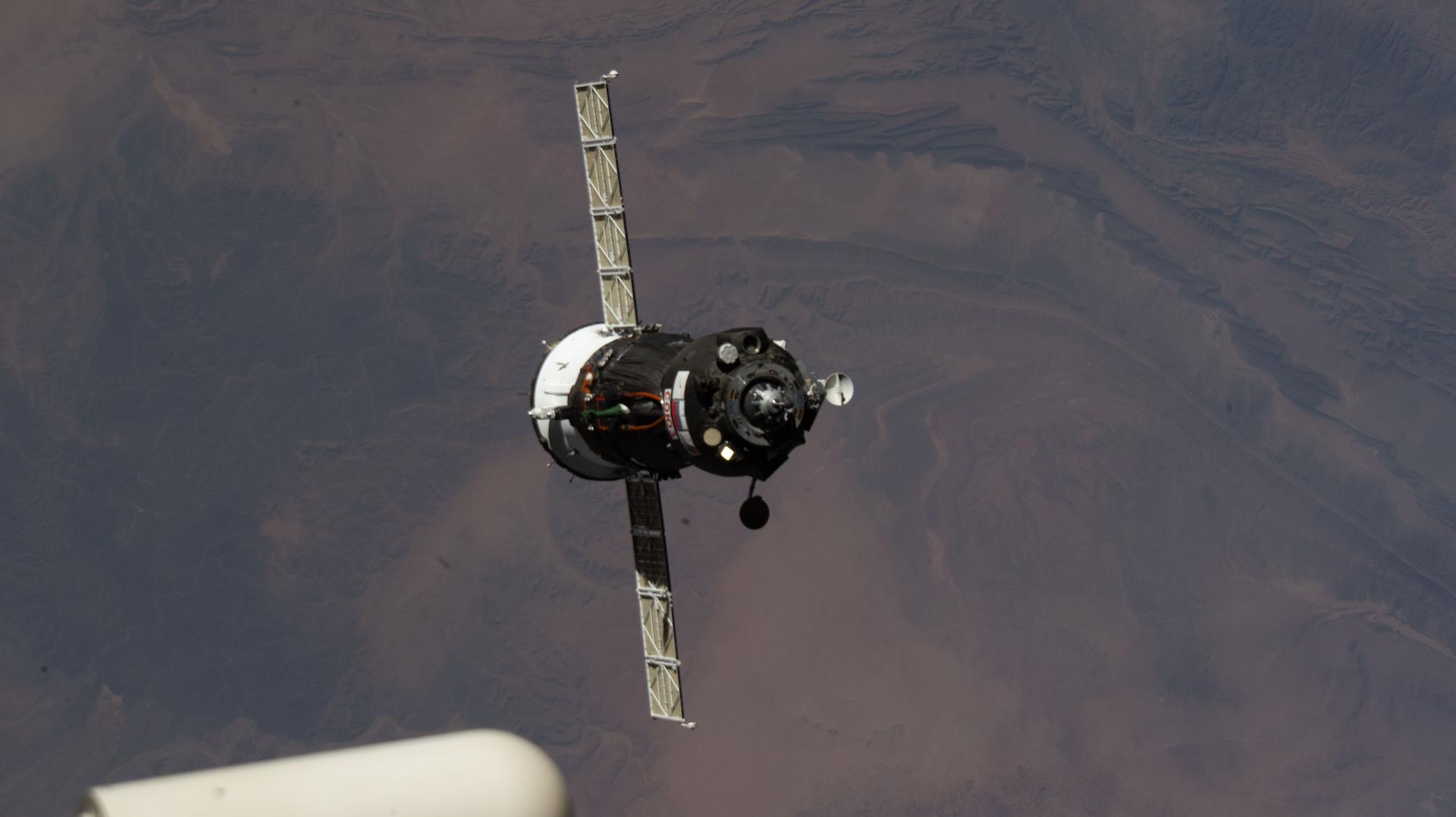
iss074e0814100 (June 14, 2026) --- The Soyuz MS-29 spacecraft, carrying NASA astronaut Anil Menon and Roscosmos cosmonauts Pyotr Dubrov and Anna Kikina, approaches the International Space Station for an automated docking while both spacecraft were orbiting 262 miles above Western Sahara. Credit: NASA
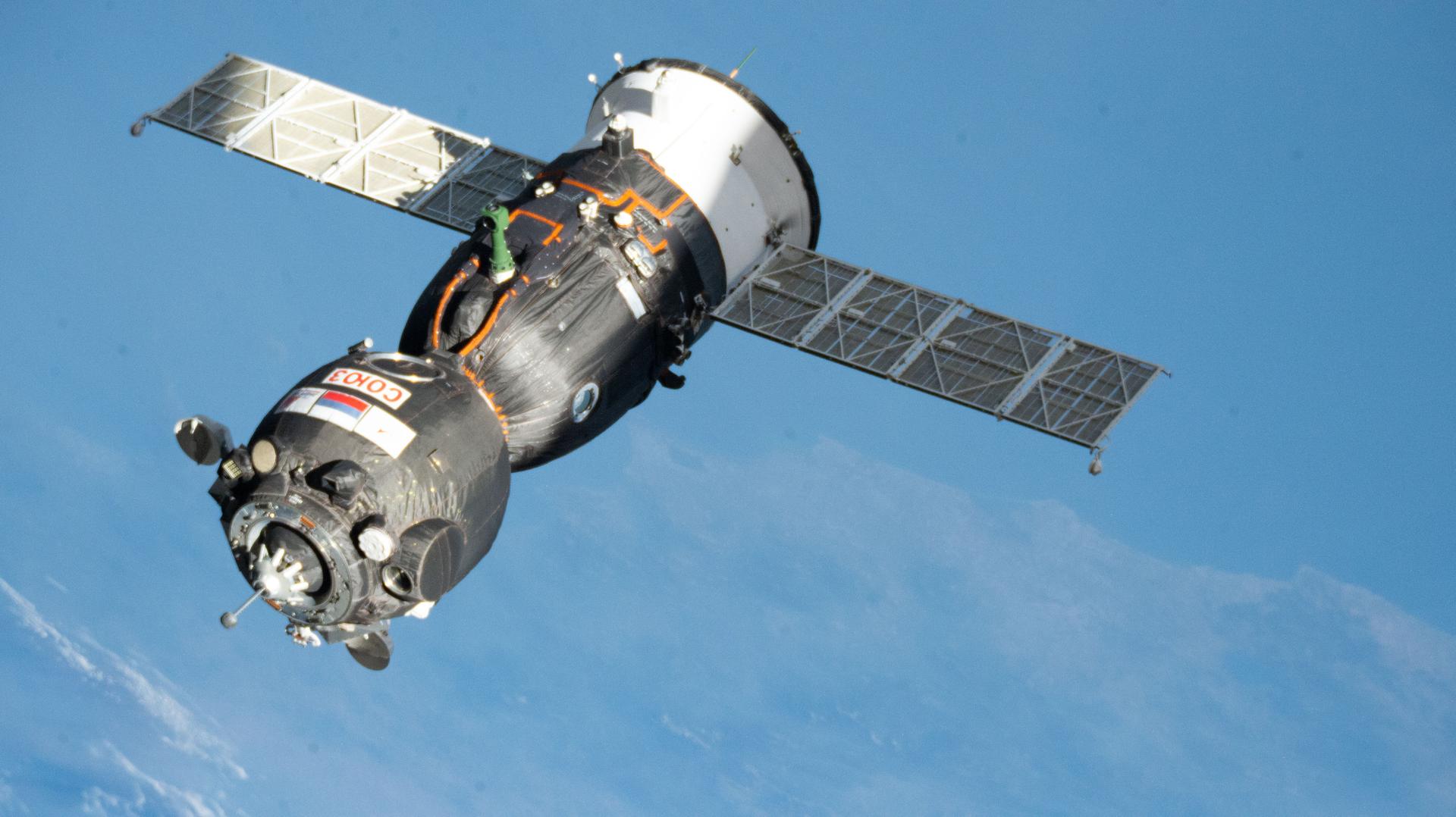
iss074e0814098 (June 14, 2026) --- The Soyuz MS-29 spacecraft, carrying NASA astronaut Anil Menon and Roscosmos cosmonauts Pyotr Dubrov and Anna Kikina, approaches the International Space Station for an automated docking while both spacecraft were orbiting 264 miles above the Mediterranean Sea in between Spain and Italy. Credit: NASA
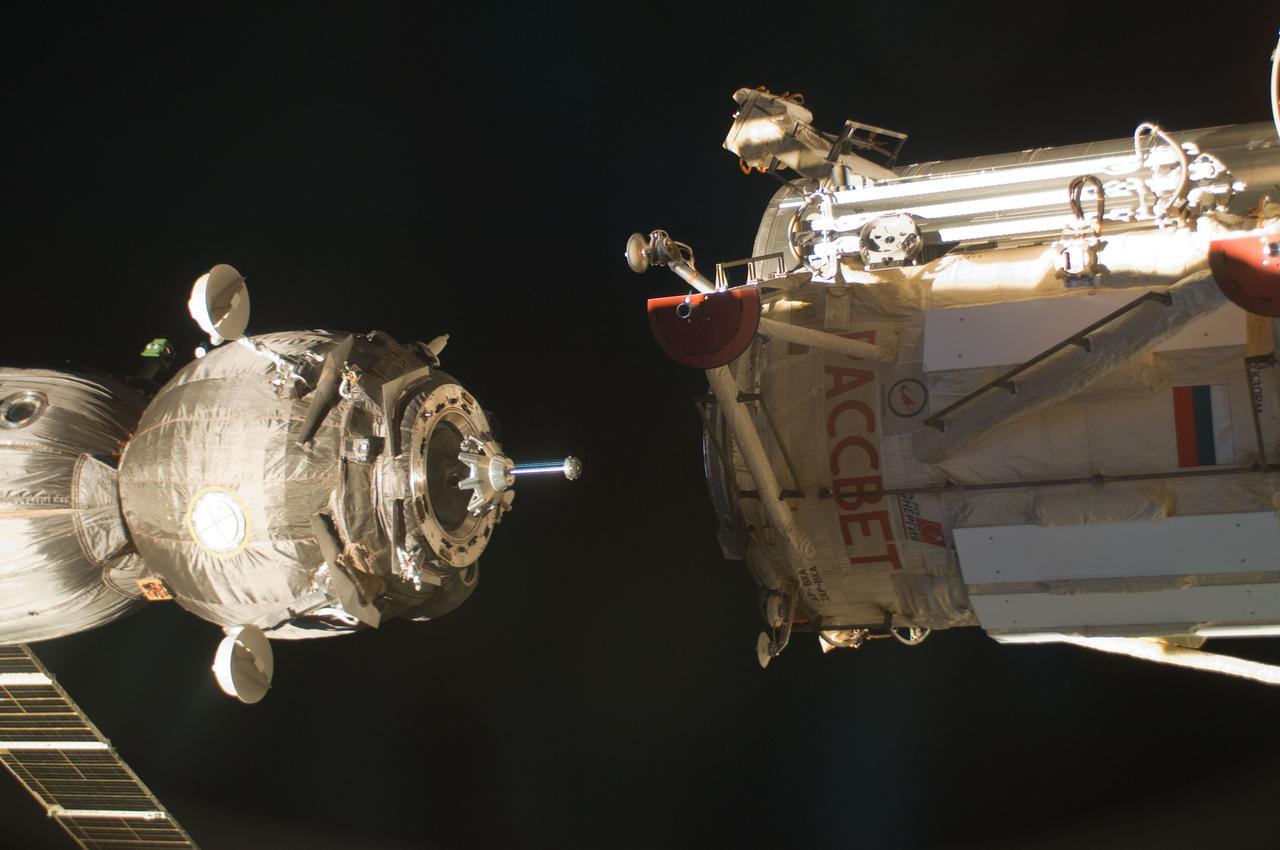
ISS030-E-015603 (23 Dec. 2011) --- With the three Expedition 30/31 crew members aboard, the Soyuz TMA-03M spacecraft (left) eases toward its docking with the Russian-built Mini-Research Module 1 (MRM-1), also known as Rassvet, Russian for "dawn." The docking, which once more enables six astronauts and cosmonauts to work together aboard the Earth-orbiting International Space Station, took place at 9:19 a.m. (CST) on Dec. 23, 2011.
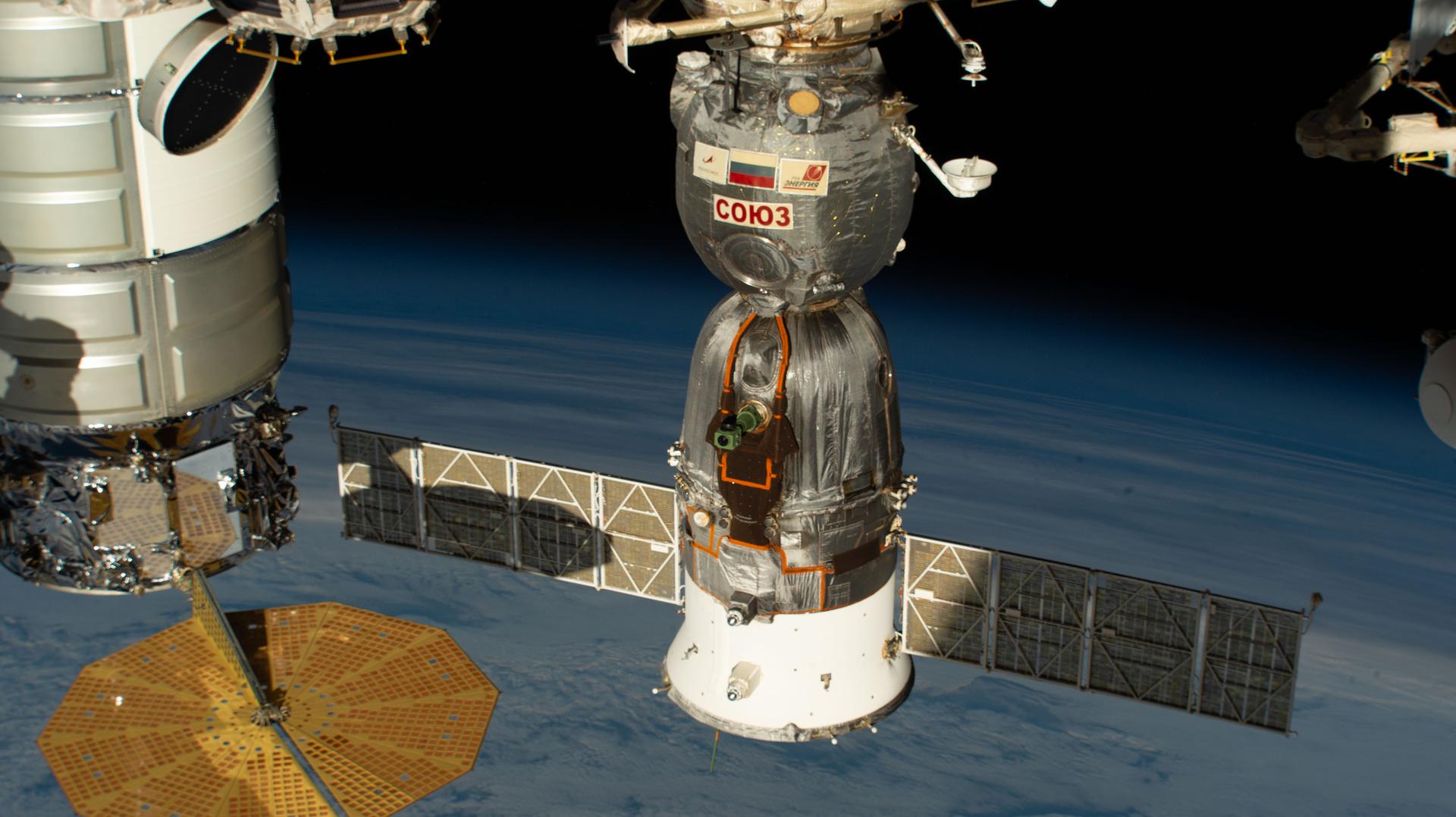
iss074e0812341 (July 13, 2026) --- The Soyuz MS‑28 crew spacecraft, which launched and docked to the International Space Station on Nov. 25, 2025, is pictured docked to the Rassvet module. The Soyuz MS‑28 will return NASA astronaut Chris Williams and Roscosmos cosmonauts Sergey Kud‑Sverchkov and Sergei Mikaev to Earth at the end of July, completing an eight‑month space research mission. Credit: NASA
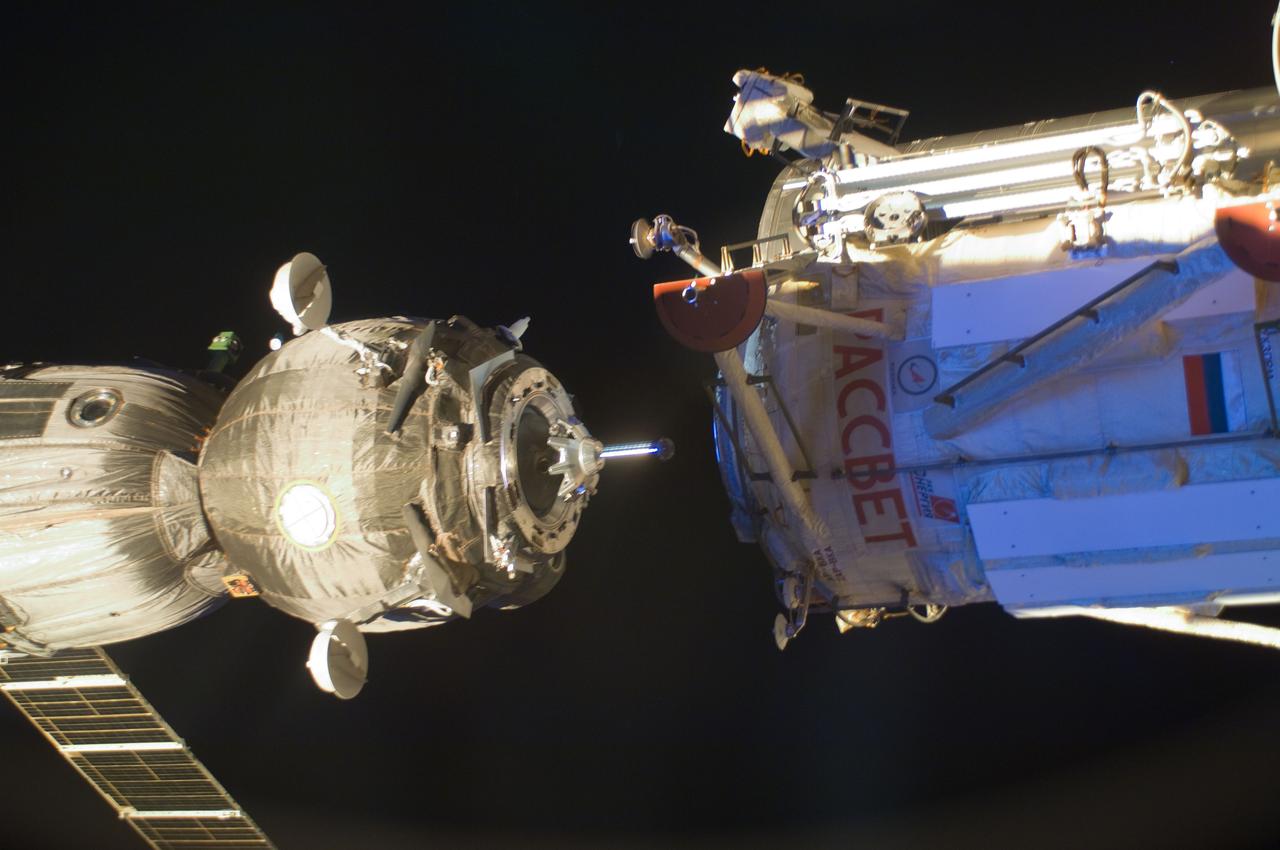
ISS030-E-015605 (23 Dec. 2011) --- With the three Expedition 30/31 crew members aboard, the Soyuz TMA-03M spacecraft (left) eases toward its docking with the Russian-built Mini-Research Module 1 (MRM-1), also known as Rassvet, Russian for "dawn." The docking, which once more enables six astronauts and cosmonauts to work together aboard the Earth-orbiting International Space Station, took place at 9:19 a.m. (CST) on Dec. 23, 2011.

ISS005-E-19567 (4 November 2002) --- A Soyuz spacecraft, which carried the Soyuz 5 taxi crew, is docked to the Pirs docking compartment on the International Space Station (ISS). The new Soyuz TMA-1 vehicle was designed to accommodate larger or smaller crewmembers, and is equipped with upgraded computers, a new cockpit control panel and improved avionics. The blackness of space and Earth’s horizon provide the backdrop for the scene.
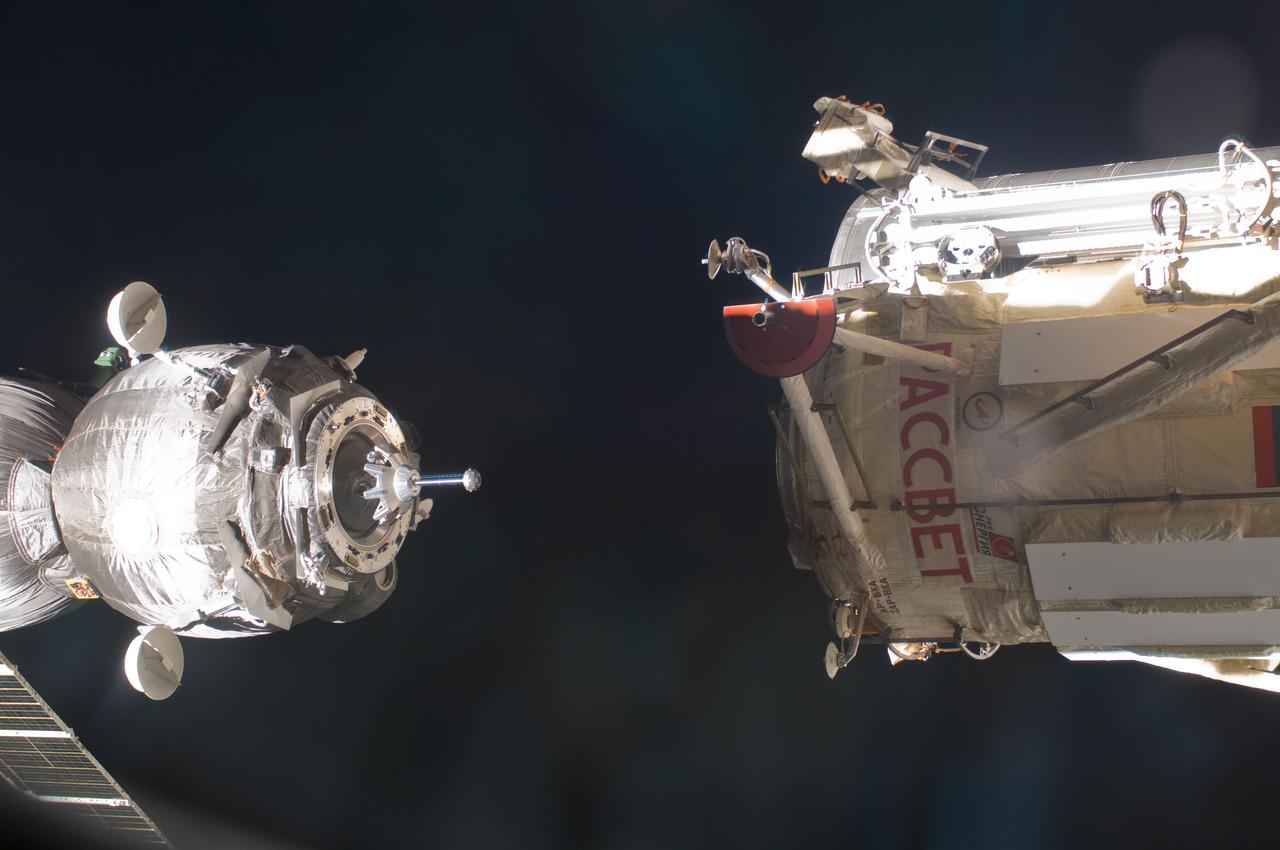
ISS030-E-015599 (23 Dec. 2011) --- With the three Expedition 30/31 crew members aboard, the Soyuz TMA-03M spacecraft (left) eases toward its docking with the Russian-built Mini-Research Module 1 (MRM-1), also known as Rassvet, Russian for "dawn." The docking, which once more enables six astronauts and cosmonauts to work together aboard the Earth-orbiting International Space Station, took place at 9:19 a.m. (CST) on Dec. 23, 2011.
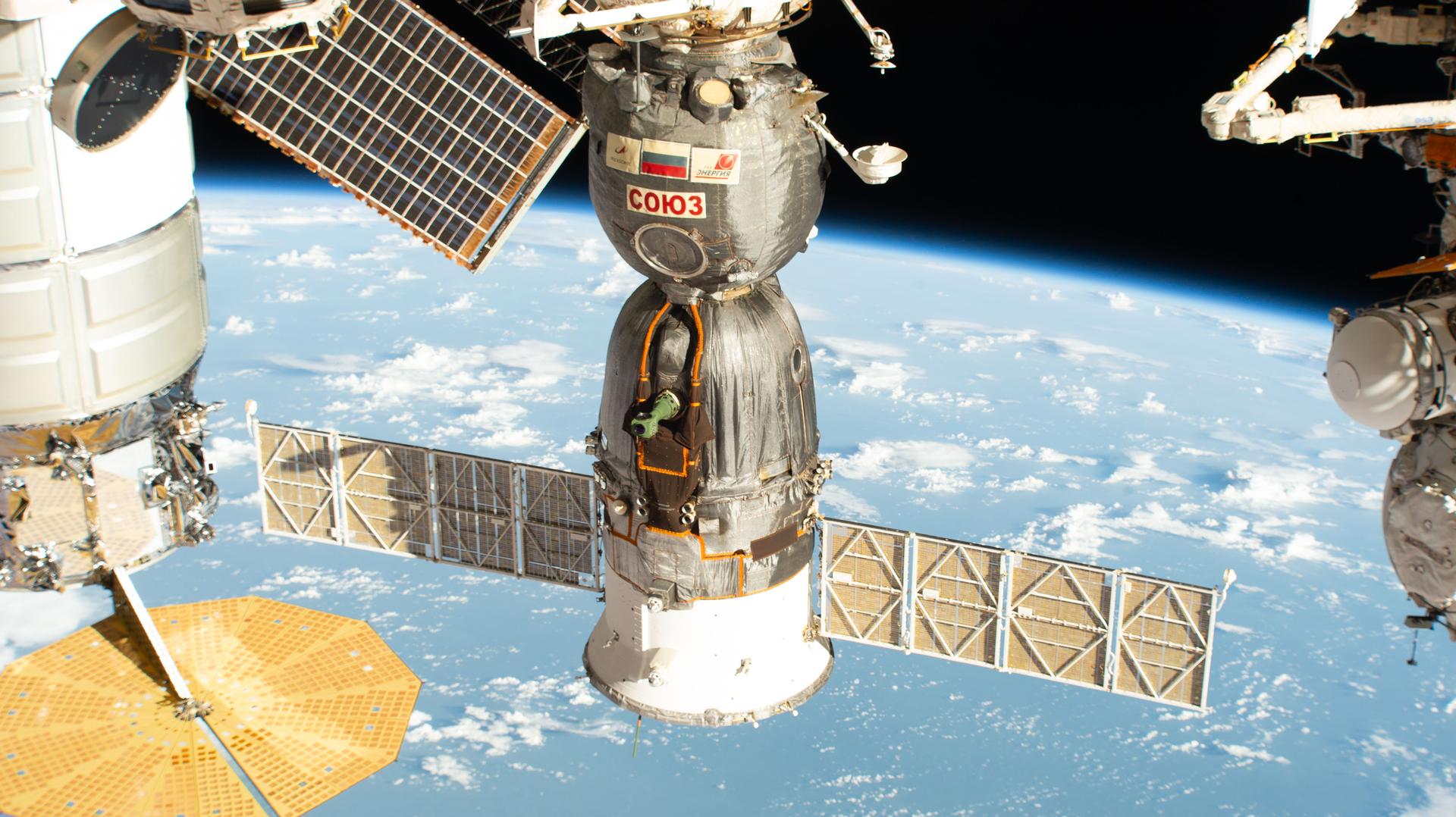
iss074e0812301 (July 13, 2026) --- The Soyuz MS‑28 crew spacecraft, which launched and docked to the International Space Station on Nov. 25, 2025, is pictured docked to the Rassvet module. The Soyuz MS‑28 will return NASA astronaut Chris Williams and Roscosmos cosmonauts Sergey Kud‑Sverchkov and Sergei Mikaev to Earth at the end of July, completing an eight‑month space research mission. Credit: NASA
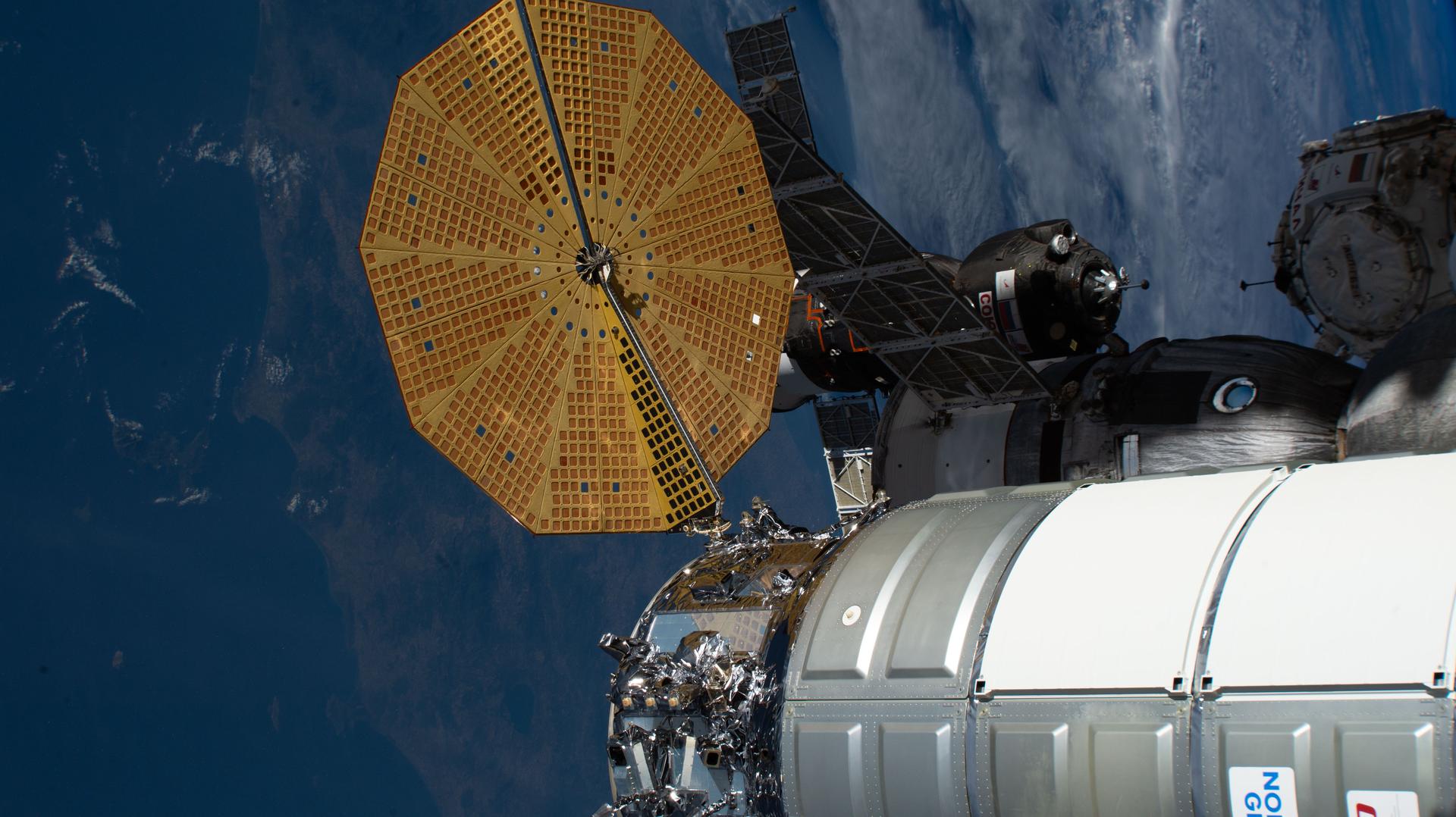
iss074e0814102 (June 14, 2026) --- In the background, the Soyuz MS-29 spacecraft, carrying NASA astronaut Anil Menon and Roscosmos cosmonauts Pyotr Dubrov and Anna Kikina, approaches the International Space Station for an automated docking to the Prichal module while both spacecraft were orbiting 264 miles above the Mediterranean Sea in between Spain and Italy. In the foreground, is the Northrop Grumman Cygnus XL cargo spacecraft with one of its prominent cymbal-shaped UltraFlex solar arrays. Credit: NASA
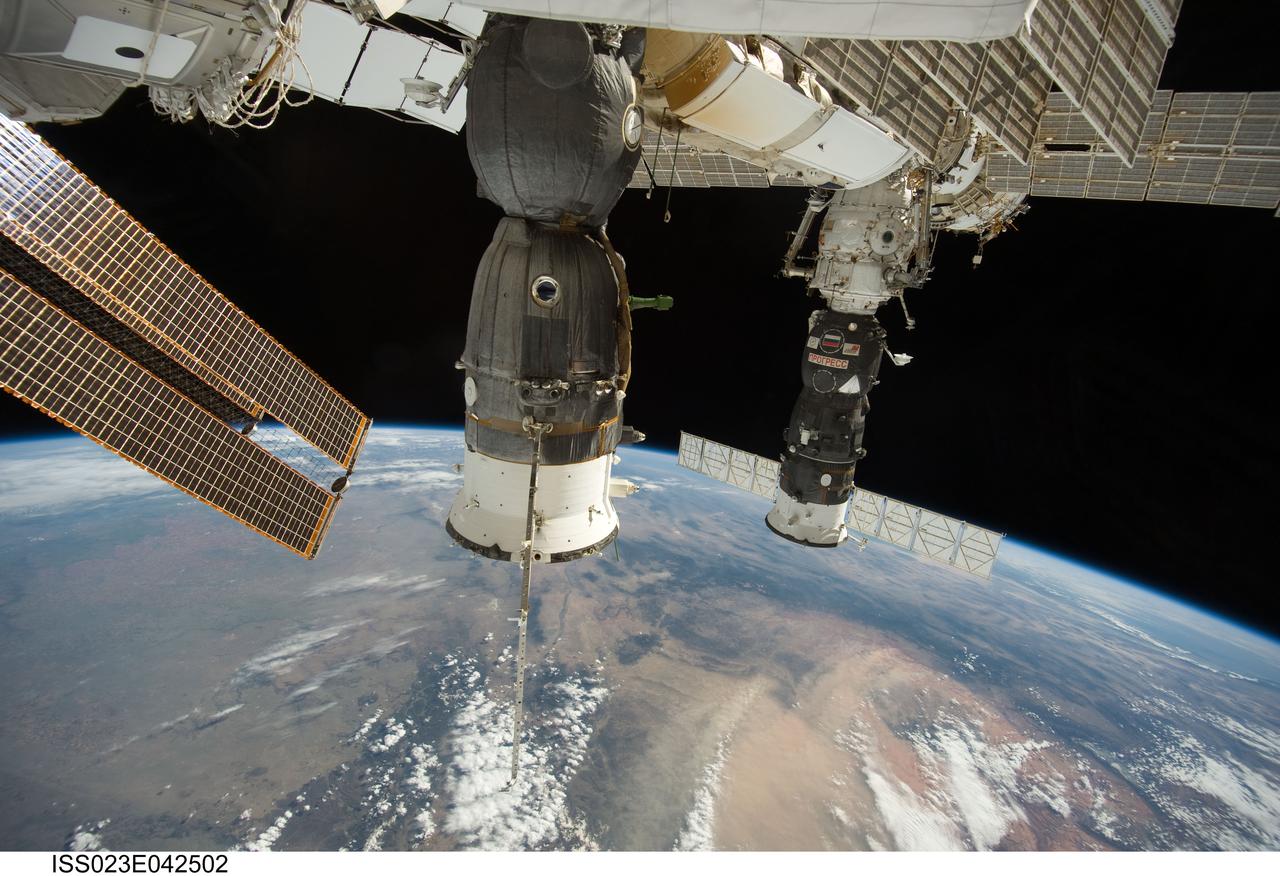
ISS023-E-042502 (11 May 2010) --- Two Russian spacecraft, docked with the International Space Station, are featured in this image photographed by an Expedition 23 crew member on the station. Earth?s horizon and the blackness of space provide the backdrop for the scene.

ISS013-E-08180 (19 April 2006) --- A Soyuz spacecraft, docked to the International Space Station, and the Canadarm2 are featured in this image photographed by an Expedition 13 crewmember from a station window. Earth’s horizon and the blackness of space provided the backdrop for this scene.

iss073e0248045 (May 29, 2025) --- The Soyuz MS-27 spacecraft is pictured docked to the International Space Station's Prichal module while soaring 263 miles above the Canadian province of Quebec. Prominently featured in the center of this photograph is the 214 million-year-old Manicouagan crater.
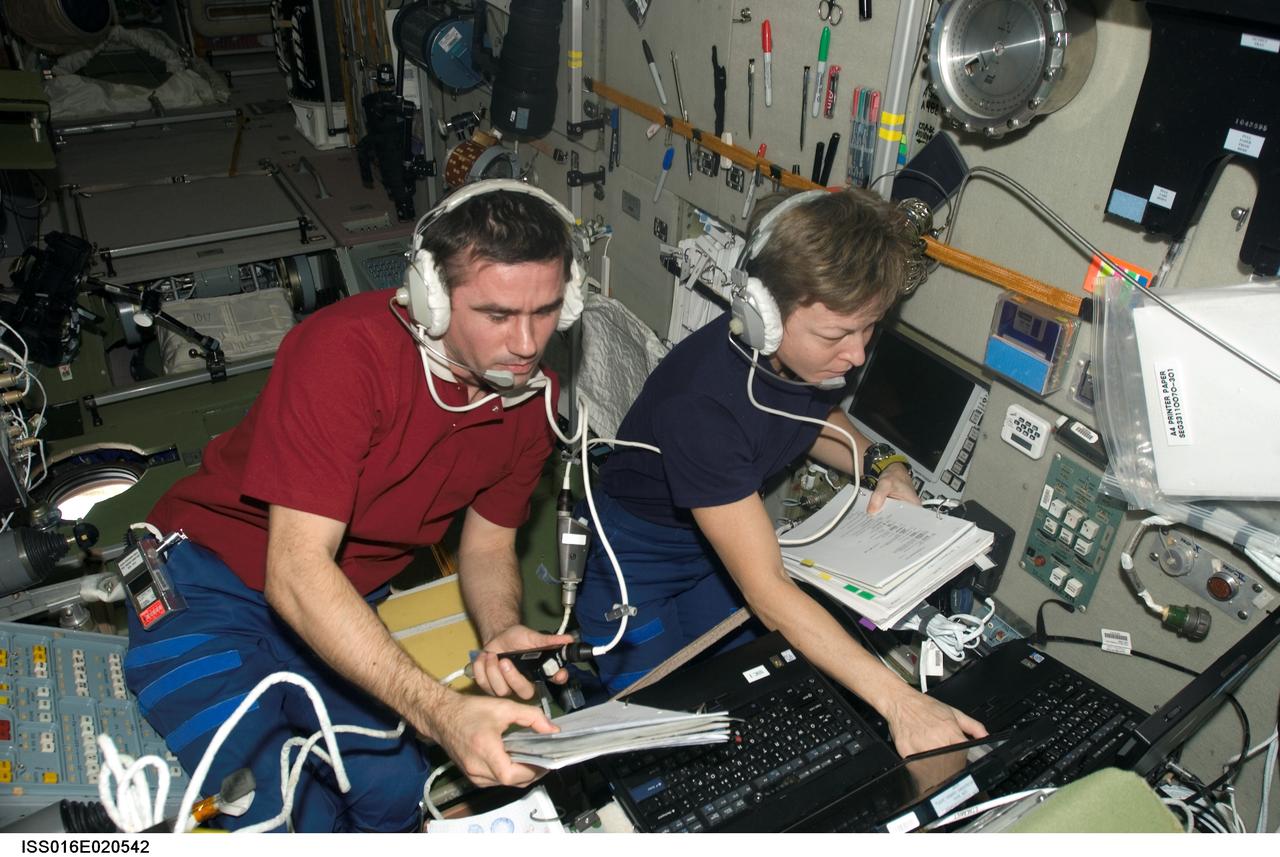
ISS016-E-020542 (26 Dec. 2007) --- NASA astronaut Peggy A. Whitson (right), Expedition 16 commander, and cosmonaut Yuri I. Malenchenko, flight engineer representing Russia's Federal Space Agency, work in tandem in the Zvezda Service Module of the International Space Station during the rendezvous and docking of the unpiloted Progress 27 spacecraft.

iss073e1197954 (Dec. 2, 2025) --- The Soyuz MS-28 crew spacecraft carrying NASA astronaut Chris Williams and Roscosmos cosmonauts Sergey Kud-Sverchkov and Sergei Mikaev is pictured shortly after docking to the International Space Station's Rassvet module.
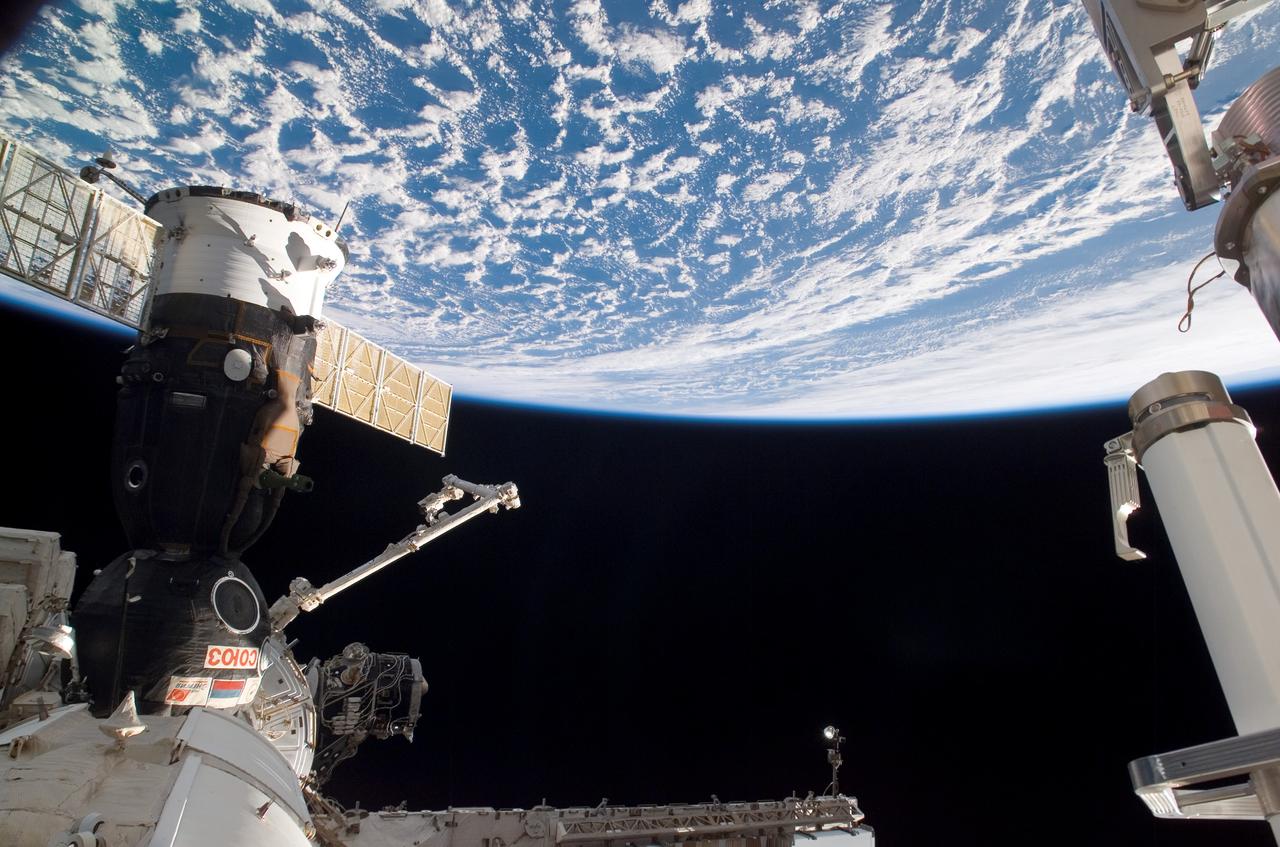
ISS013-E-08178 (19 April 2006) --- A Soyuz spacecraft, docked to the International Space Station, and the Canadarm2 are featured in this image photographed by an Expedition 13 crewmember from a station window. Earth's horizon and the blackness of space provided the backdrop for this scene.
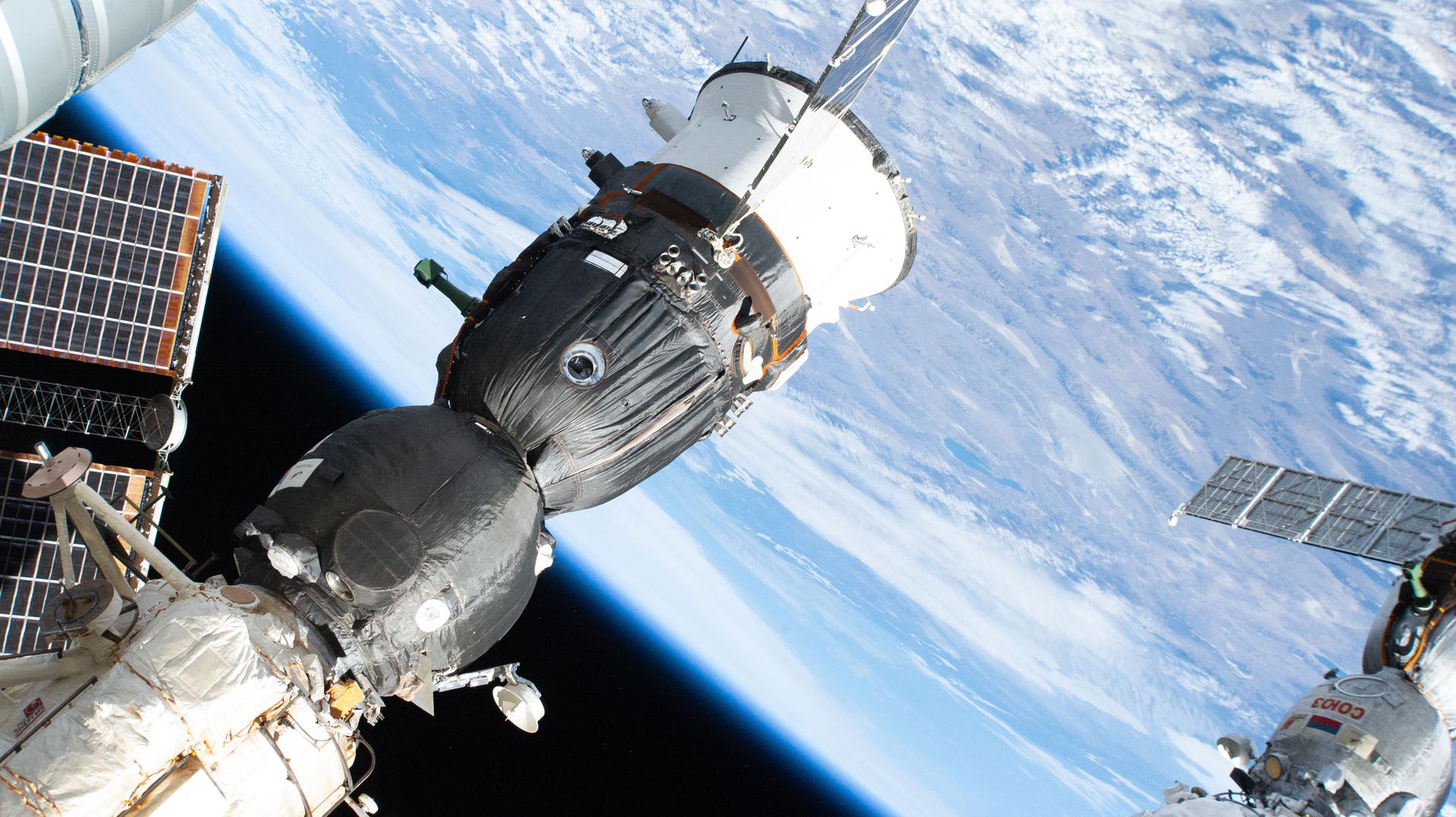
iss073e1231962 (Dec. 2, 2025) --- The Soyuz MS-28 crew spacecraft is pictured docked to the Rassvet module as the International Space Station orbited 264 miles the midwestern United States. The Soyuz launched NASA astronaut Chris Williams and Roscosmos cosmonauts Sergey Kud-Sverchkov and Sergei Mikaev to the orbital outpost on Nov. 27, 2025.
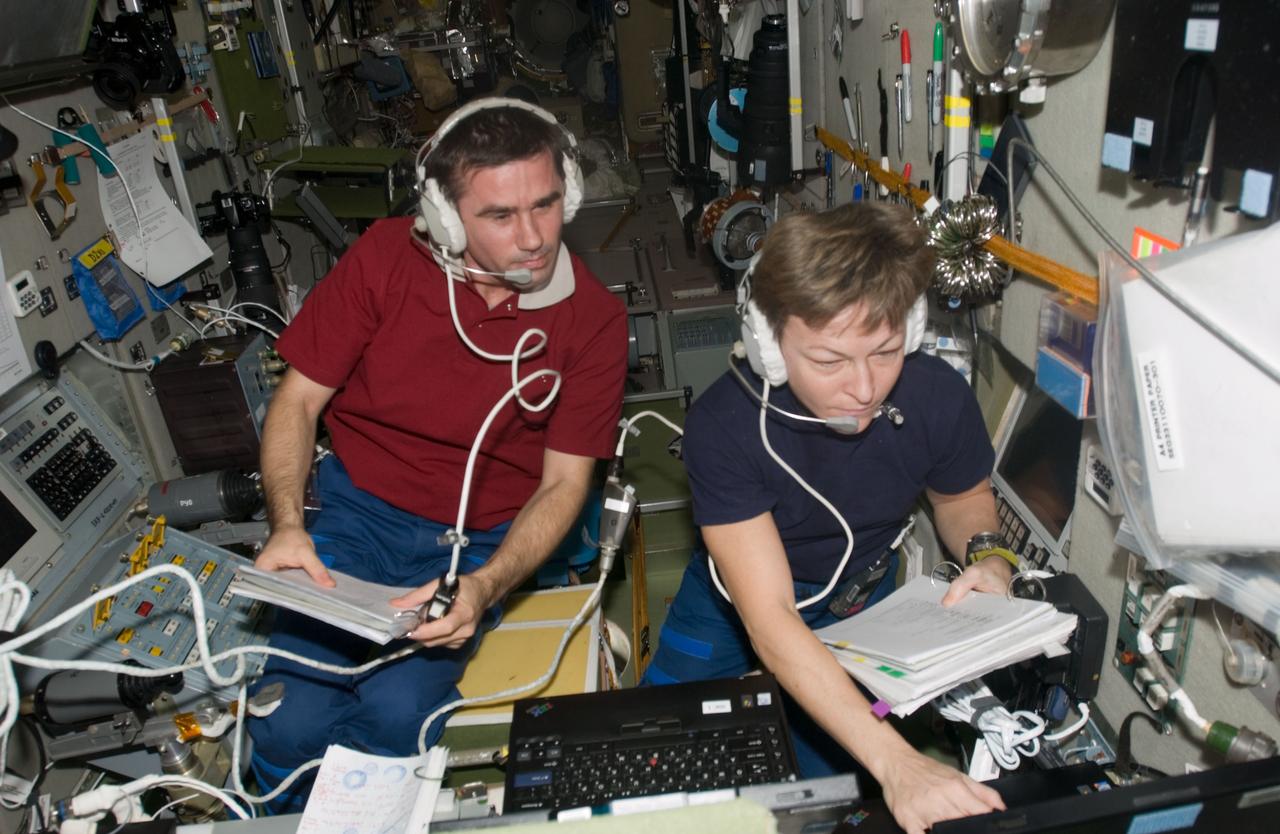
ISS016-E-020536 (26 Dec. 2007) --- NASA astronaut Peggy A. Whitson (right), Expedition 16 commander, and cosmonaut Yuri I. Malenchenko, flight engineer representing Russia's Federal Space Agency, work in tandem in the Zvezda Service Module of the International Space Station during the rendezvous and docking of the unpiloted Progress 27 spacecraft.
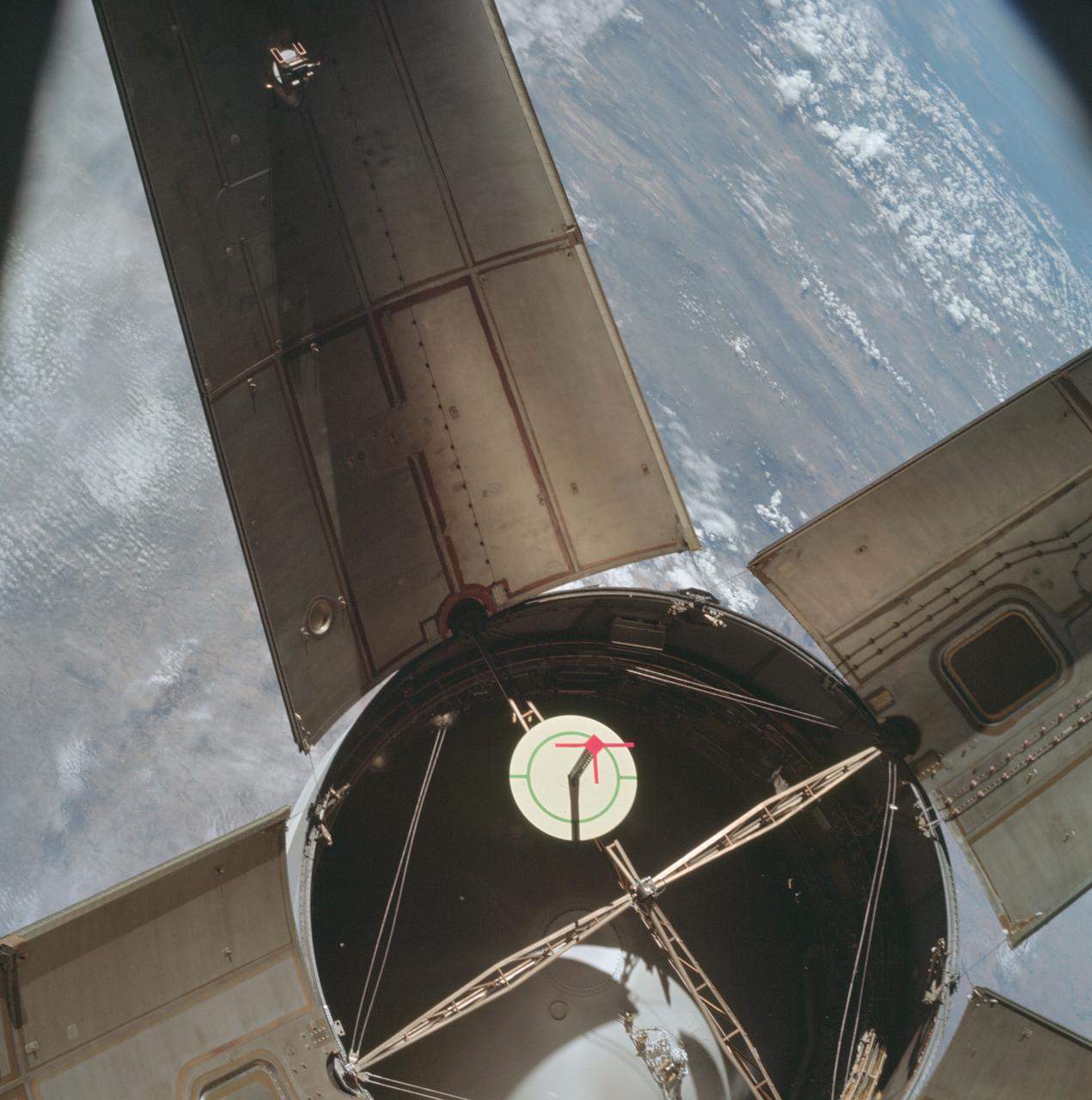
AS07-03-1535 (11 Oct. 1968) --- The expended Saturn IVB stage as photographed from the Apollo 7 spacecraft during transposition and docking maneuvers at an altitude of 126 nautical miles, at ground elapsed time of three hours, 11 minutes. The round, white disc inside the open panels of the Saturn IVB is a simulated docking target similar to that used on the lunar module for docking during lunar missions. The spacecraft is directly over Odessa-Midland, Texas. The view between the two panels (area of large puffy clouds) extends southwest across Texas into the Mexican State of Chihuahua. The distance between the Apollo 7 spacecraft and the S-IVB is approximately 50 feet.
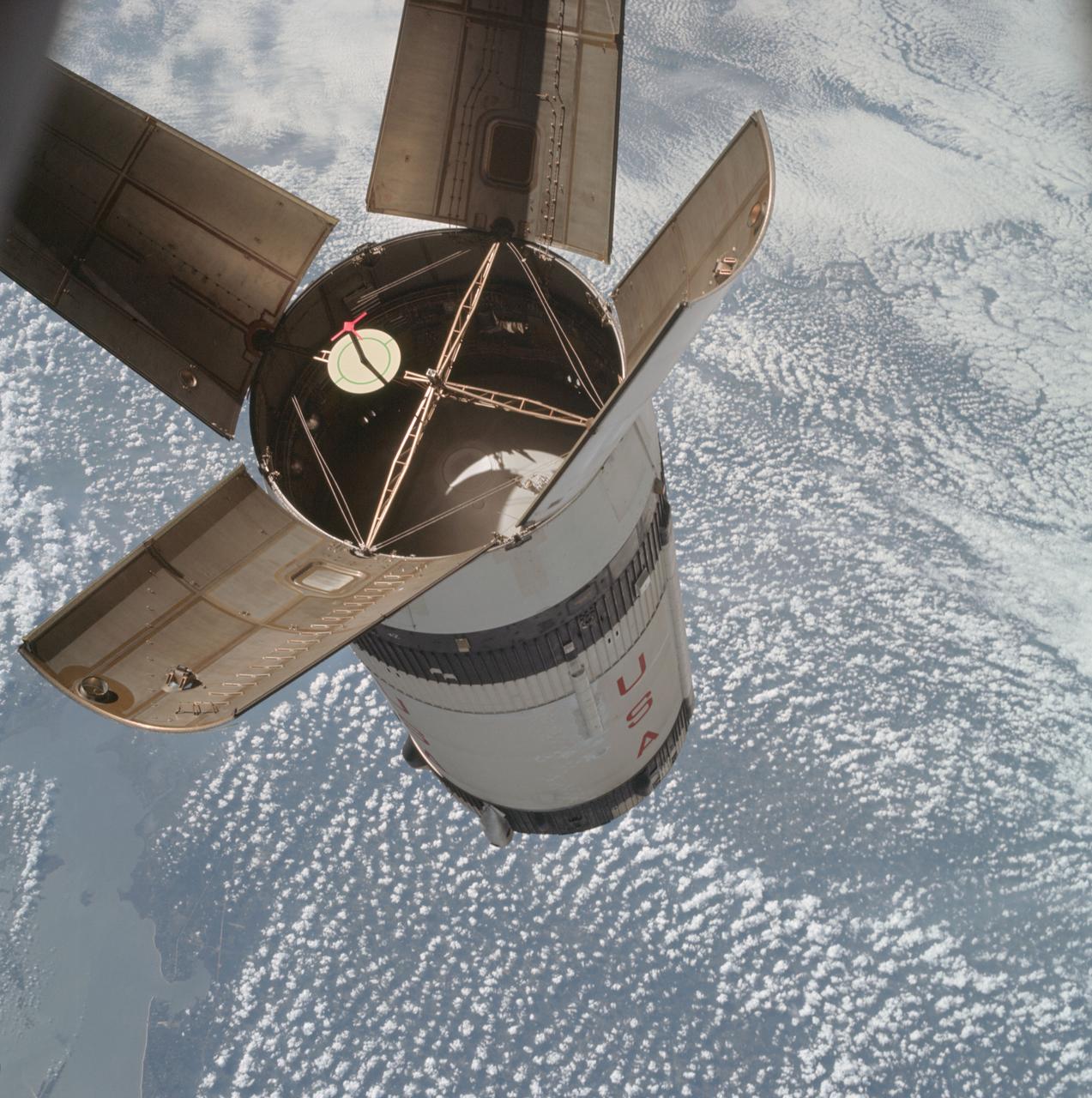
AS07-03-1541 (11 Oct. 1968) --- The expended Saturn IVB stage as photographed from the Apollo 7 spacecraft during transposition and docking maneuvers. St. Louis Bay and Lake Borgne area just east of New Orleans is seen below. The round, white disc inside the open panels of the Saturn IVB is a simulated docking target similar to that used on the lunar module for docking during lunar missions.

iss074e0409125 (March 24, 2026) -- The Progress 94 cargo spacecraft is pictured docked to the International Space Station's Poisk module. Credit: NASA
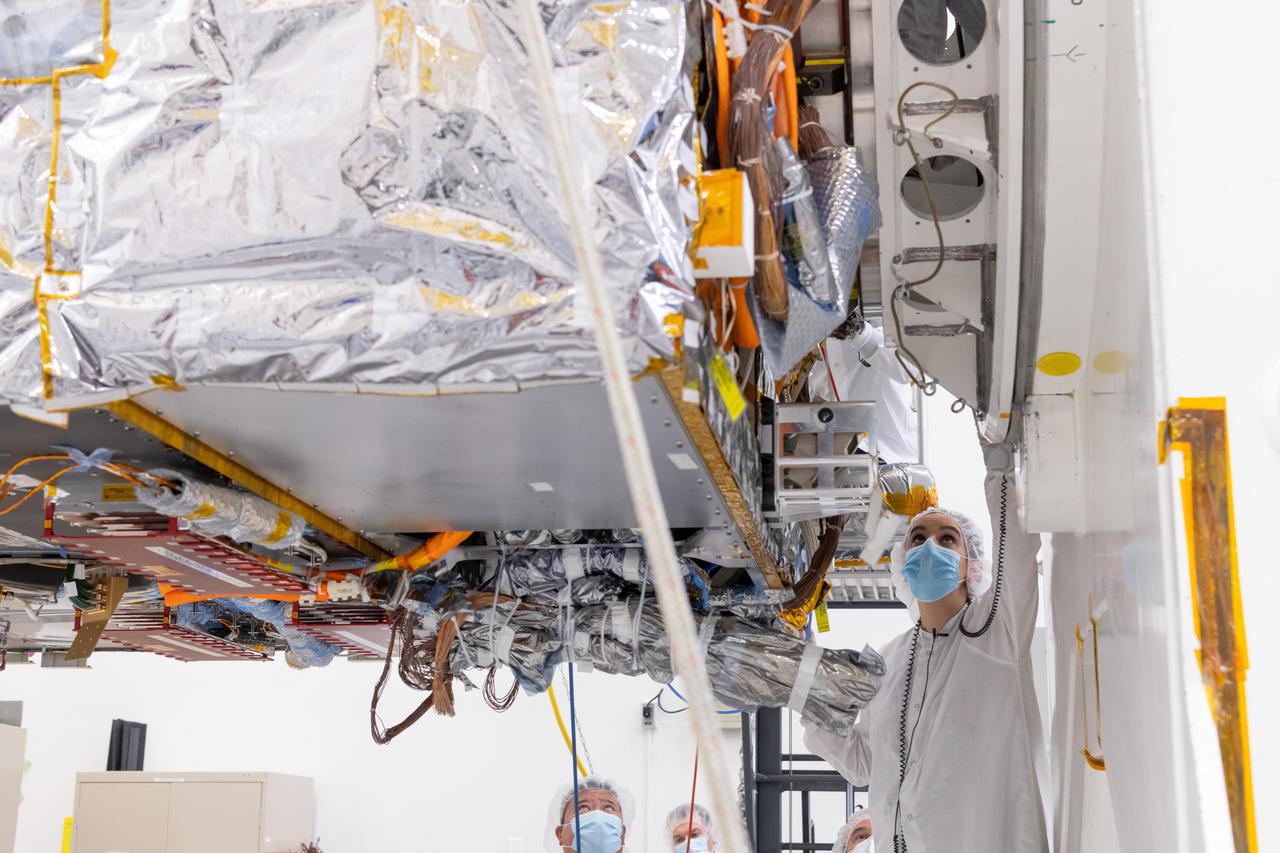
The Solar Electric Propulsion (SEP) Chassis of NASA's Psyche spacecraft is mounted onto a rotation fixture in High Bay 1 of the Spacecraft Assembly Facility at NASA's Jet Propulsion Laboratory in Southern California. This photo was taken March 28, 2021, just after the chassis — a major component of the Psyche spacecraft — was delivered to JPL by Maxar Technologies. Maxar's team in Palo Alto, California, designed and built the chassis, which includes all the primary and secondary structure and the hardware components needed for the high-power electrical system, the propulsion system, the thermal system, guidance and navigation sensors and actuators, and the high-gain antenna. The phase known as assembly test, and launch operations (ATLO) for Psyche is now underway at JPL. In this photo, ATLO Mechanical Lead Michelle Colizzi of JPL oversees the docking of the chassis to the dolly. Over the next year additional hardware will be added to the spacecraft including the command and data handling system, a power distribution assembly, the X-band telecommunications hardware suite, three science instruments (two imagers, two magnetometers, and a Gamma Ray Neutron Spectrometer), and a deep space optical communications technology demonstrator. The spacecraft will finish assembly and then undergo rigorous checkout and testing, before it's shipped to NASA's Kennedy Space Center in Cape Canaveral, Florida, for an August 2022 launch to the main asteroid belt. Psyche will arrive at the metal-rich asteroid of the same name in 2026, orbiting for 21 months to investigate its composition. Scientists think that Psyche is made up of mostly iron and nickel — similar to Earth's core. Exploring the asteroid could give valuable insight into how our own planet and others formed. https://photojournal.jpl.nasa.gov/catalog/PIA24476
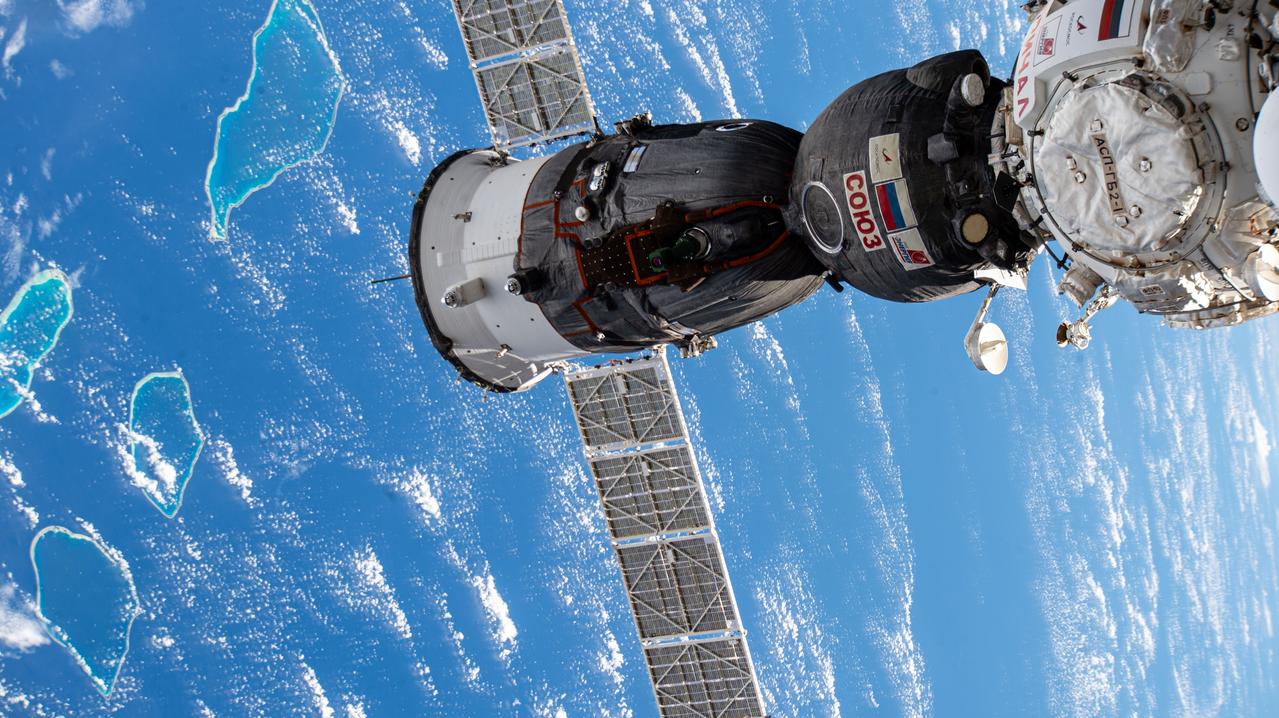
iss073e0002705 (April 26, 2025) --- The Soyuz MS-27 spacecraft is pictured docked to the Prichal module as the International Space Station orbited 264 miles above French Polynesia, France's oveseas collectivity of over 100 islands in the Pacific Ocean. The Soyuz launched NASA astronaut Jonny Kim and Roscosmos cosmonauts Sergey Ryzhikov and Alexey Zubritsky to the orbital outpost on April 8.
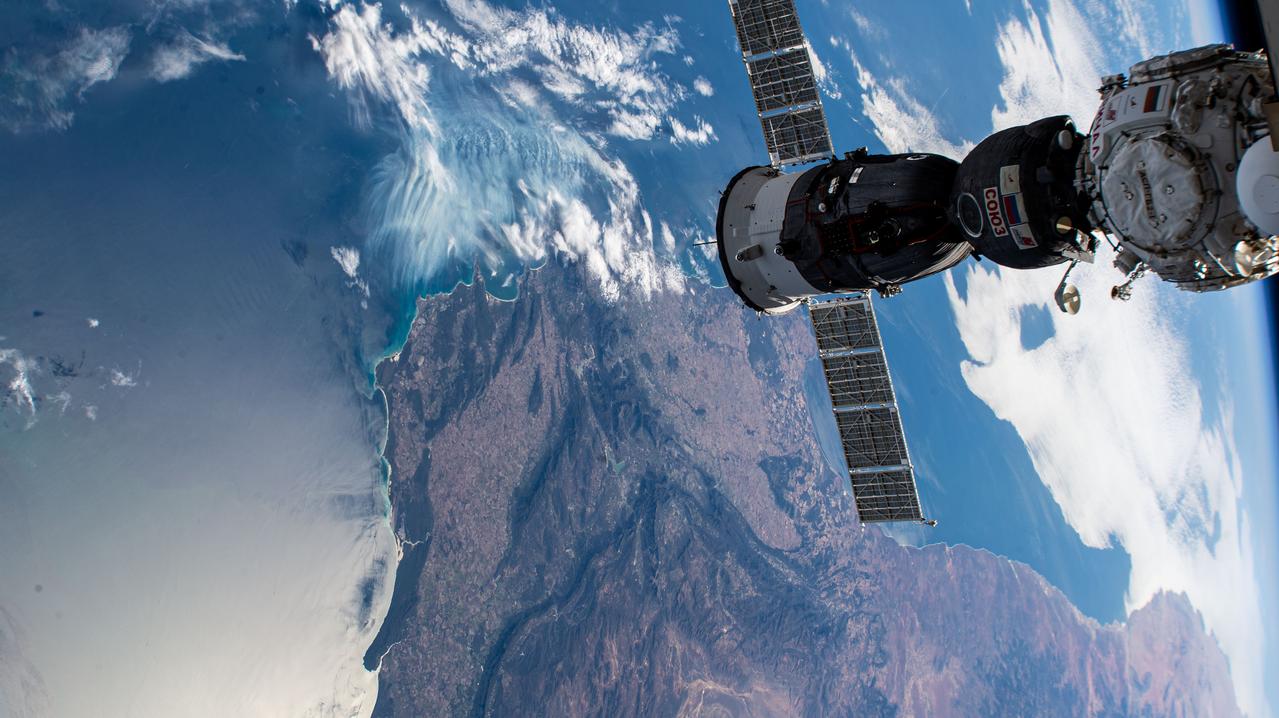
iss073e0002707 (April 27, 2025) --- The Soyuz MS-27 spacecraft is pictured docked to the Prichal module as the International Space Station orbited 269 miles above the Indian Ocean off the coast of South Africa. The Soyuz launched NASA astronaut Jonny Kim and Roscosmos cosmonauts Sergey Ryzhikov and Alexey Zubritsky to the orbital outpost on April 8.
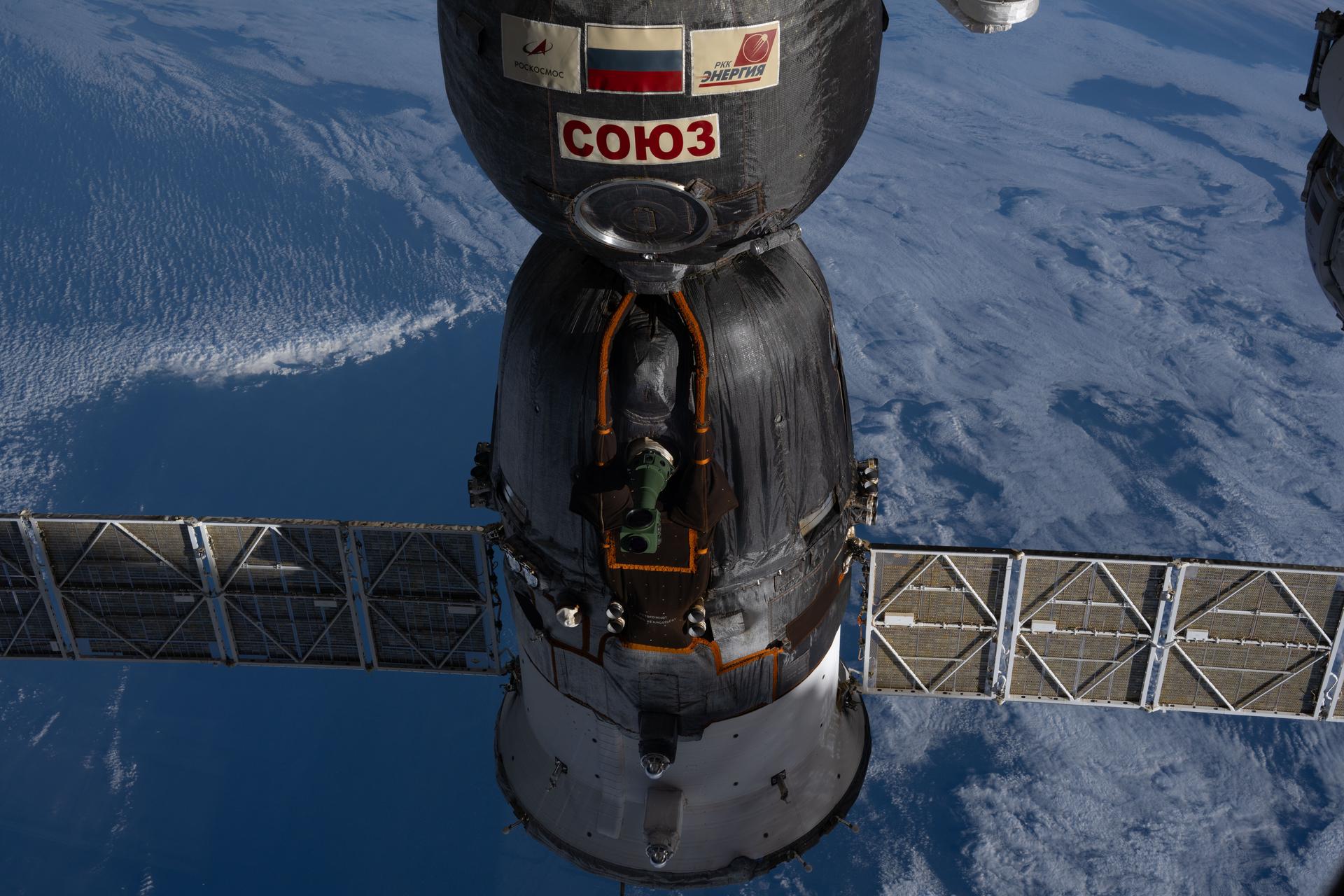
iss074e0794862 (July 4, 2026) --- The Soyuz MS-28 spacecraft, which will carry NASA astronaut Chris Williams and Roscosmos cosmonauts Sergey Kud-Sverchkov and Sergei Mikaev back to Earth, is pictured docked to the International Space Station. The orbital outpost was soaring 269 miles above the South Atlantic Ocean between the tips of South America and Africa at the time of this photograph. Credit: NASA/Chris Williams
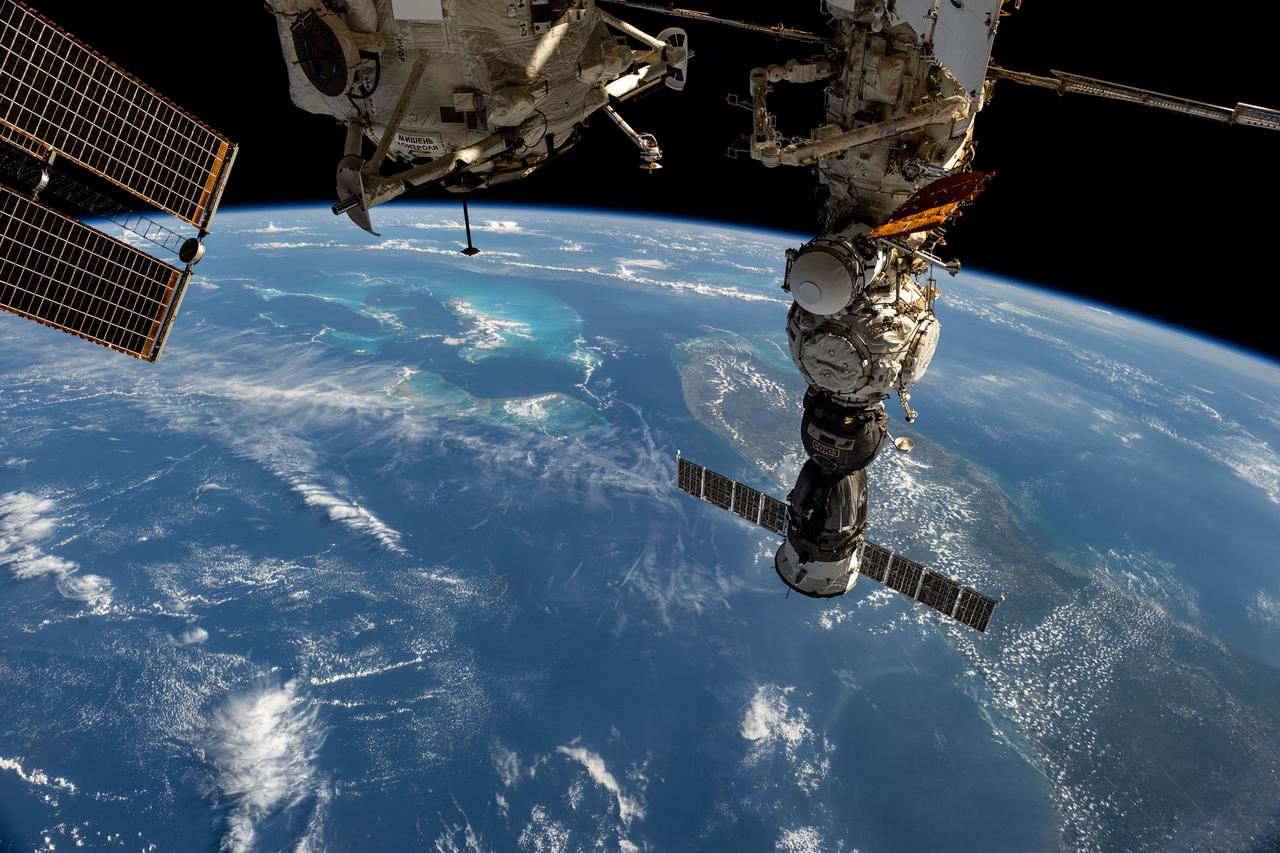
iss073e0134239 (May 20, 2025) --- The Soyuz MS-27 spacecraft that launched three Expedition 72-73 flight engineers to the International Space Station on April 8, 2025, is pictured docked to the Prichal module. 261 miles below the orbital outpost is the state of Florida and the island country of the Bahamas, also known as the Commonwealth of the Bahamas, in the Atlantic Ocean.
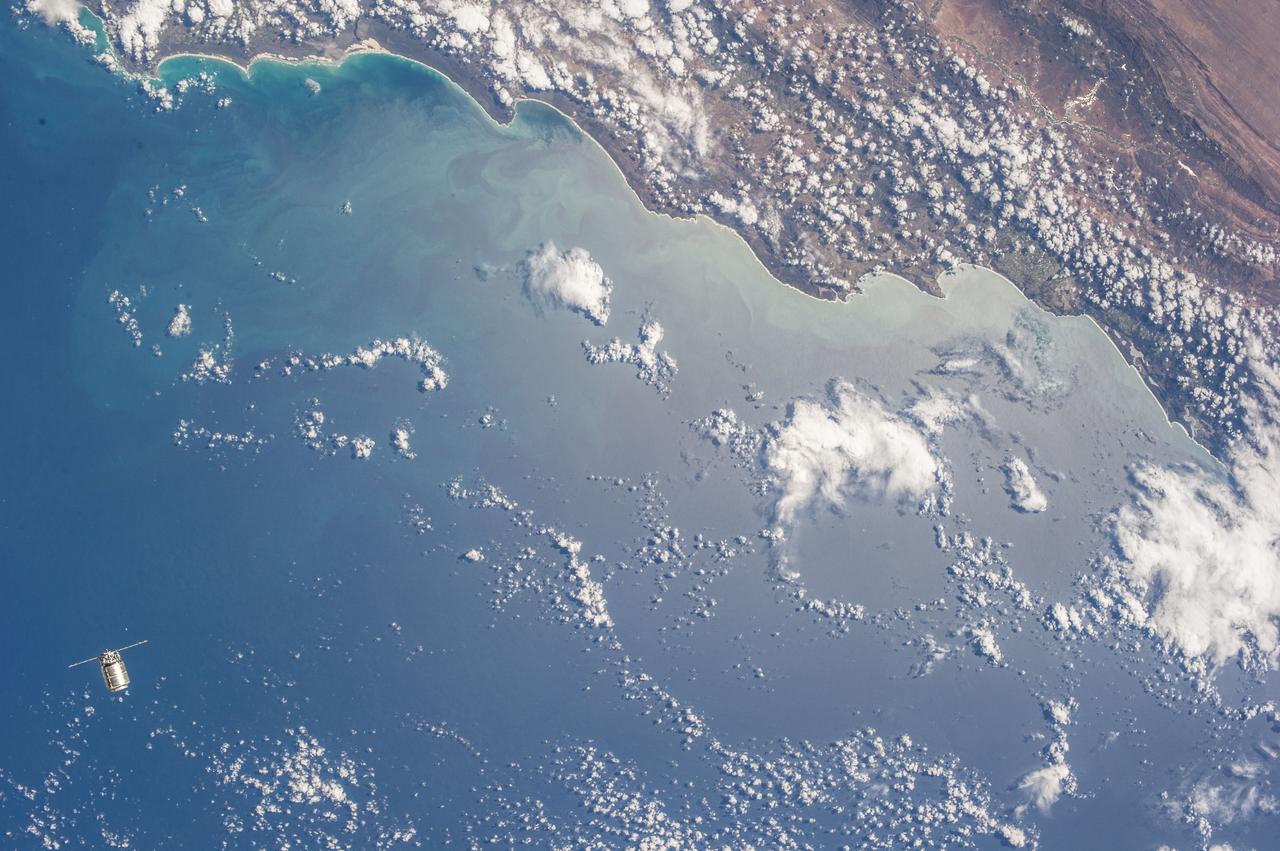
Very distant view of the approach of the first Cygnus commercial cargo spacecraft built by Orbital Sciences Corp to the International Space Station(ISS) with the Earth in the background. Per Twitter message: #Cygnus, approaching us from below as we pass the coast of South Africa.
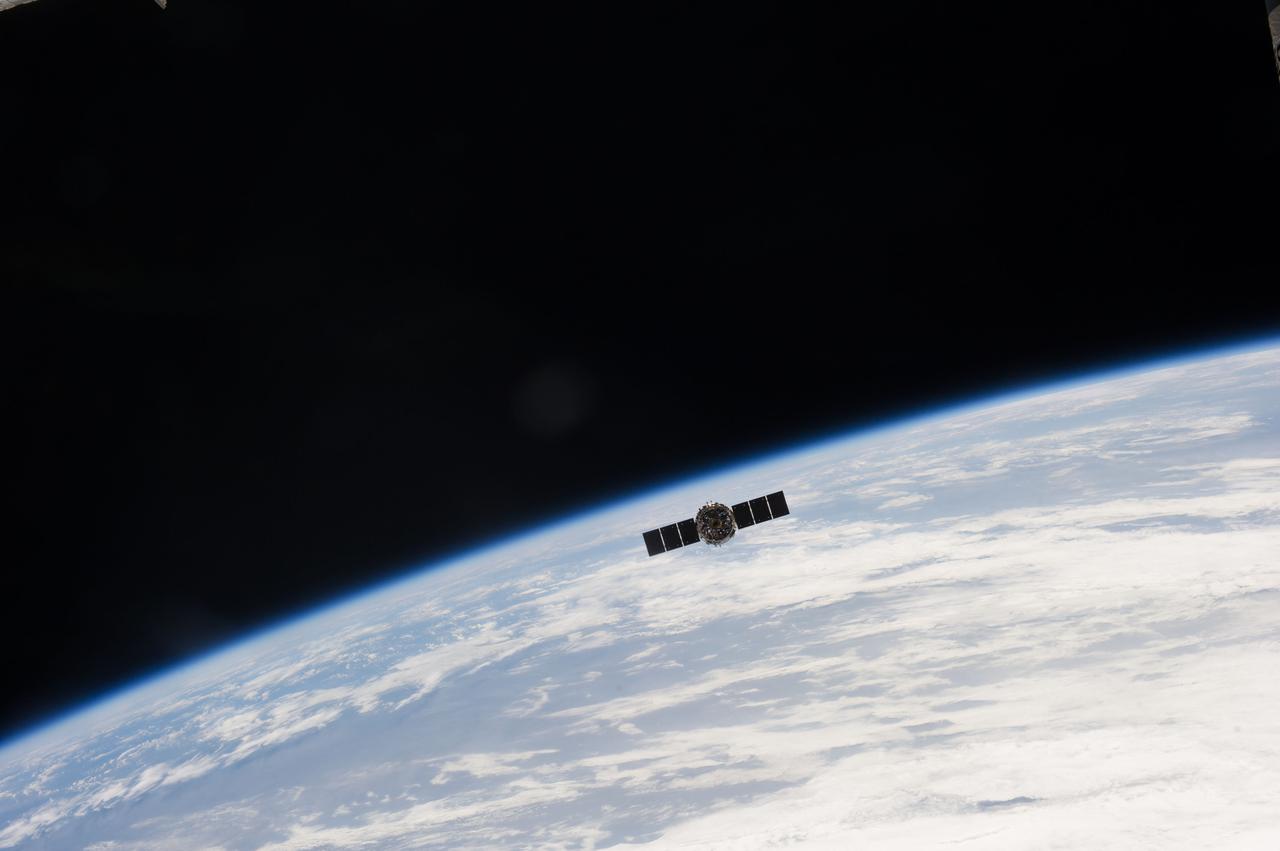
The Orbital Sciences Cygnus commercial craft begins its relative separation from the International Space Station after three weeks at the station.
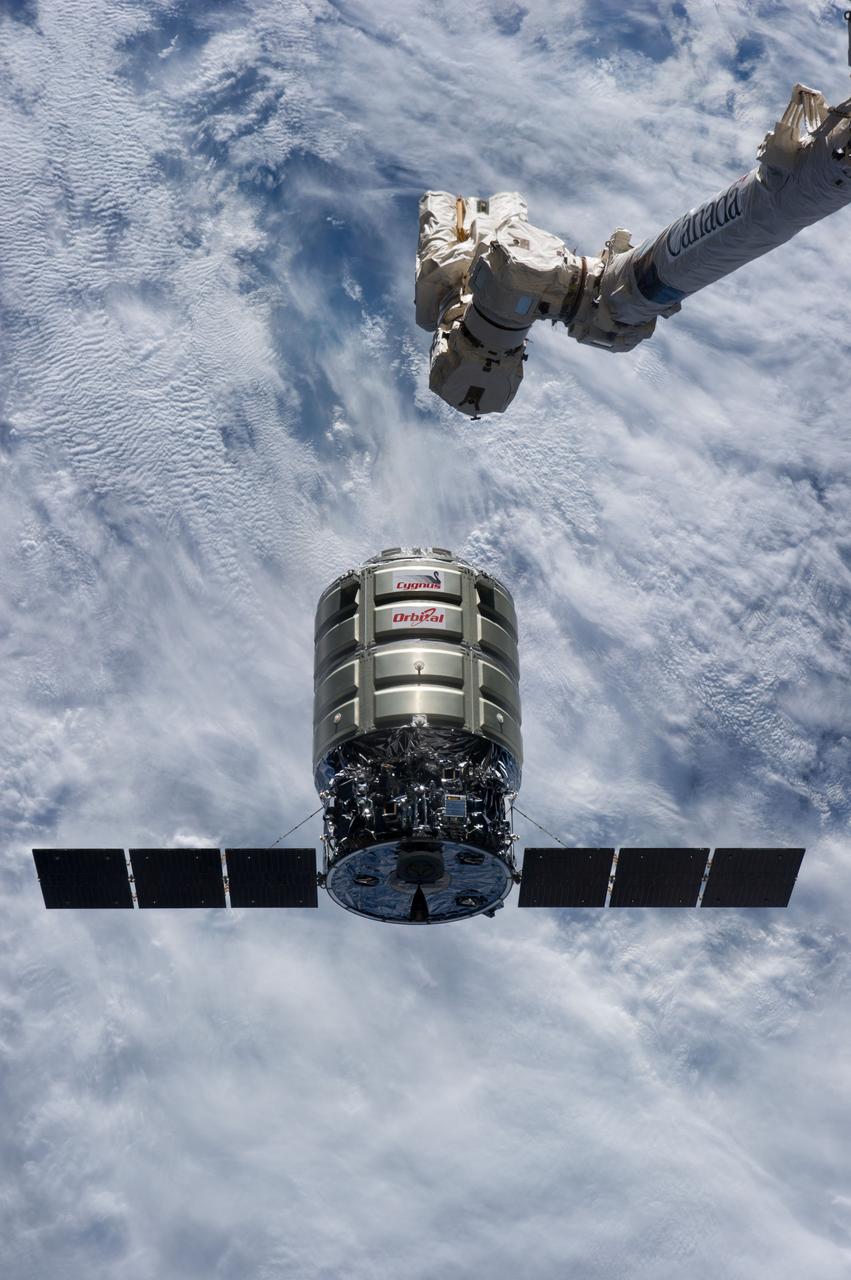
ISS040-E-069105 (16 July 2014) --- Operated by an Expedition 40 crew member inside the station?s Cupola, the Canadarm2 moves toward the Orbital Sciences? Cygnus cargo craft as it approaches the International Space Station. The two spacecraft converged at 6:36 a.m. (EDT) on July 16, 2014.
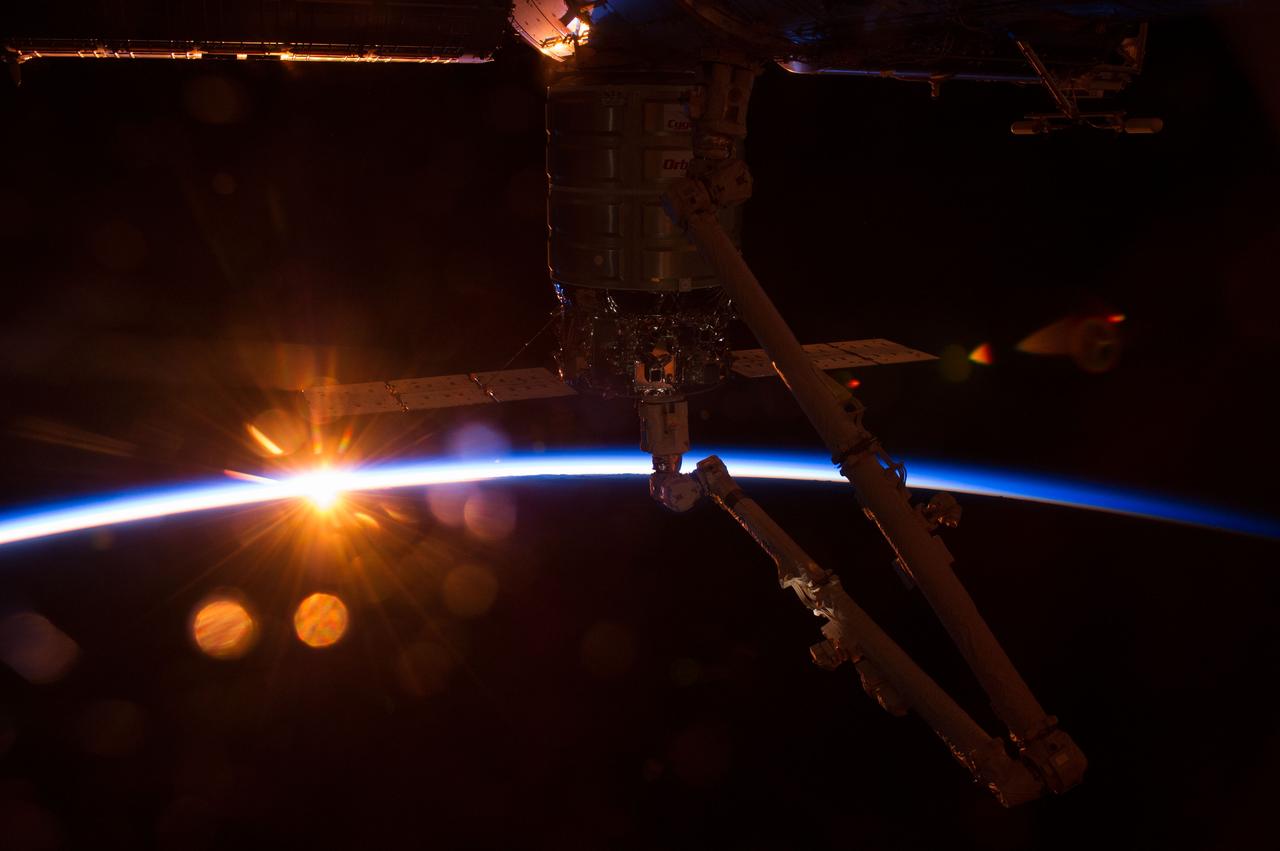
ISS040-E-069192 (16 July 2014) --- Intersecting the thin line of Earth’s atmosphere during an orbital sunrise, the Orbital Sciences’ Cygnus cargo craft attached to the end of the Canadarm2 robotic arm is berthed to the nadir port of the Harmony node of the International Space Station.
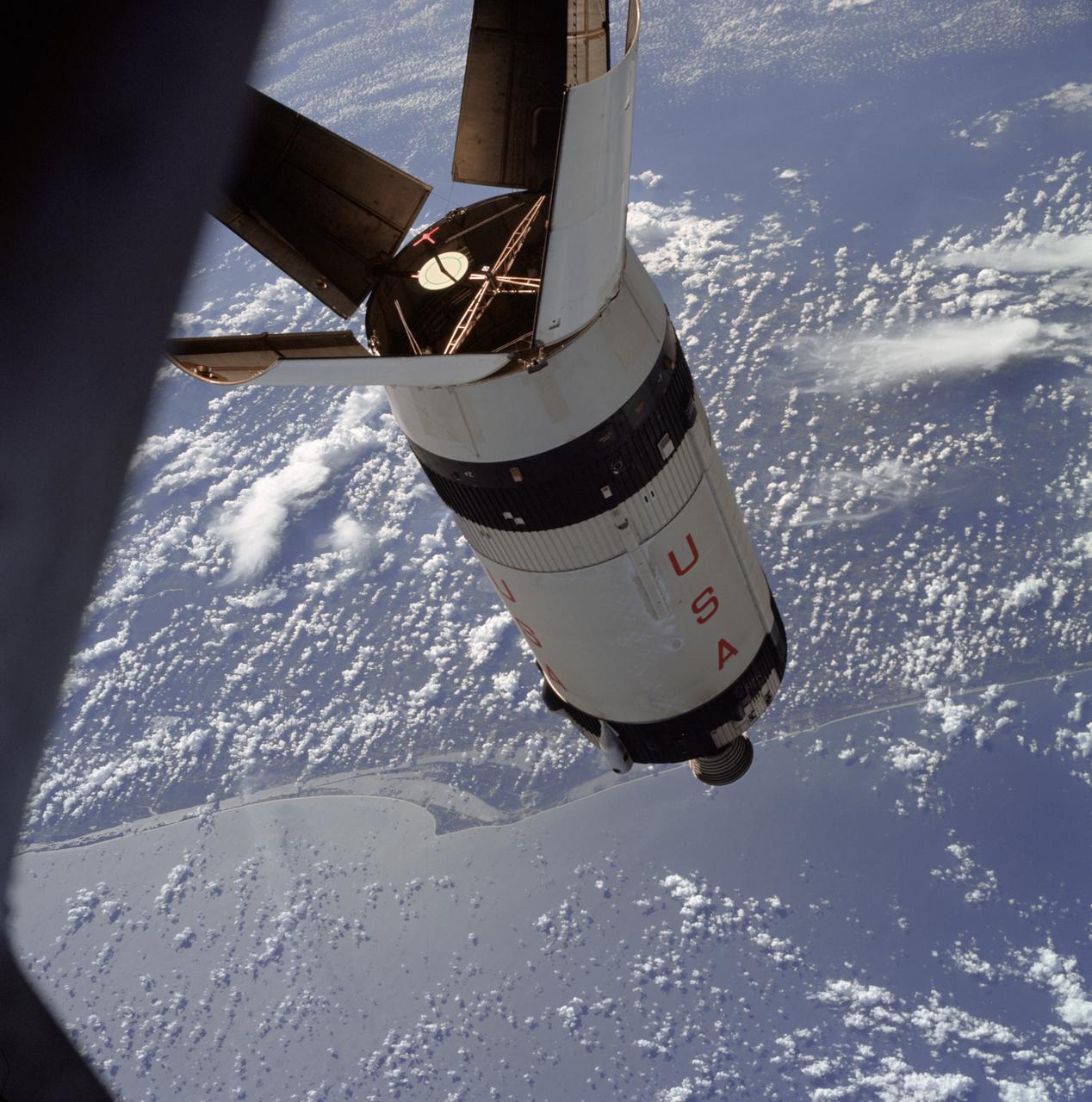
AS07-03-1545 (11 Oct. 1968) --- The expended Saturn S-IVB stage as photographed from the Apollo 7 spacecraft during transposition and docking maneuvers at an approximate altitude of 125 nautical miles, at ground elapsed time of three hours and 16 minutes (beginning of third revolution). This view is over the Atlantic Ocean off the coast of Cape Kennedy, Florida. The Florida coastline from Flagler Beach southward to Vero Beach is clearly visible in picture. Much of the Florida peninsula can be seen. Behind the open panels is the Gulf of Mexico. Distance between the Apollo 7 spacecraft and the S-IVB is approximately 100 feet. The round, white disc inside the open panels of the S-IVB is a simulated docking target similar to that used on the Lunar Module (LM) for docking during lunar missions.
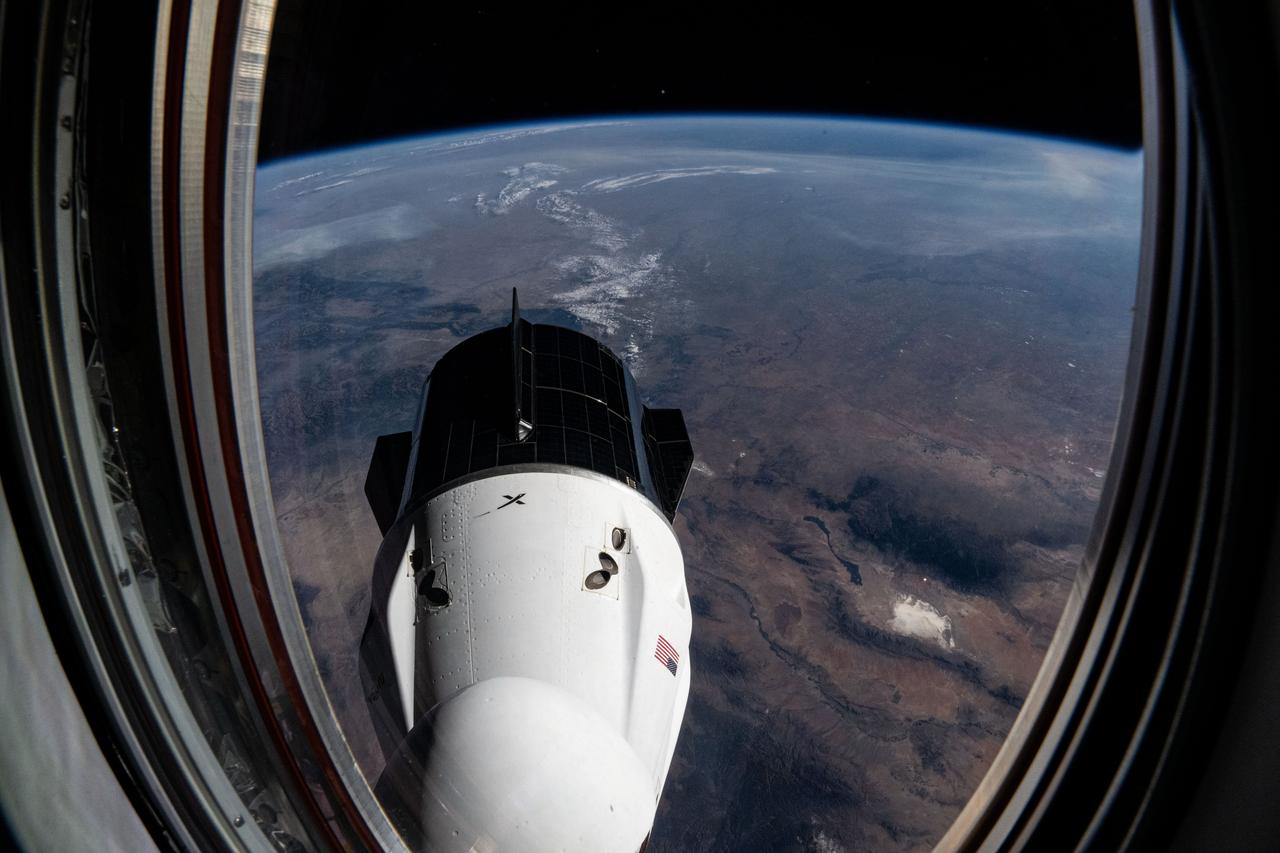
iss072e031300 (Oct. 7, 2024) -- The SpaceX Dragon Freedom spacecraft, docked to the forward-facing port of the International Space Station's Harmony module, was photographed as the orbiting lab soared 258 miles above the state of Colorado.
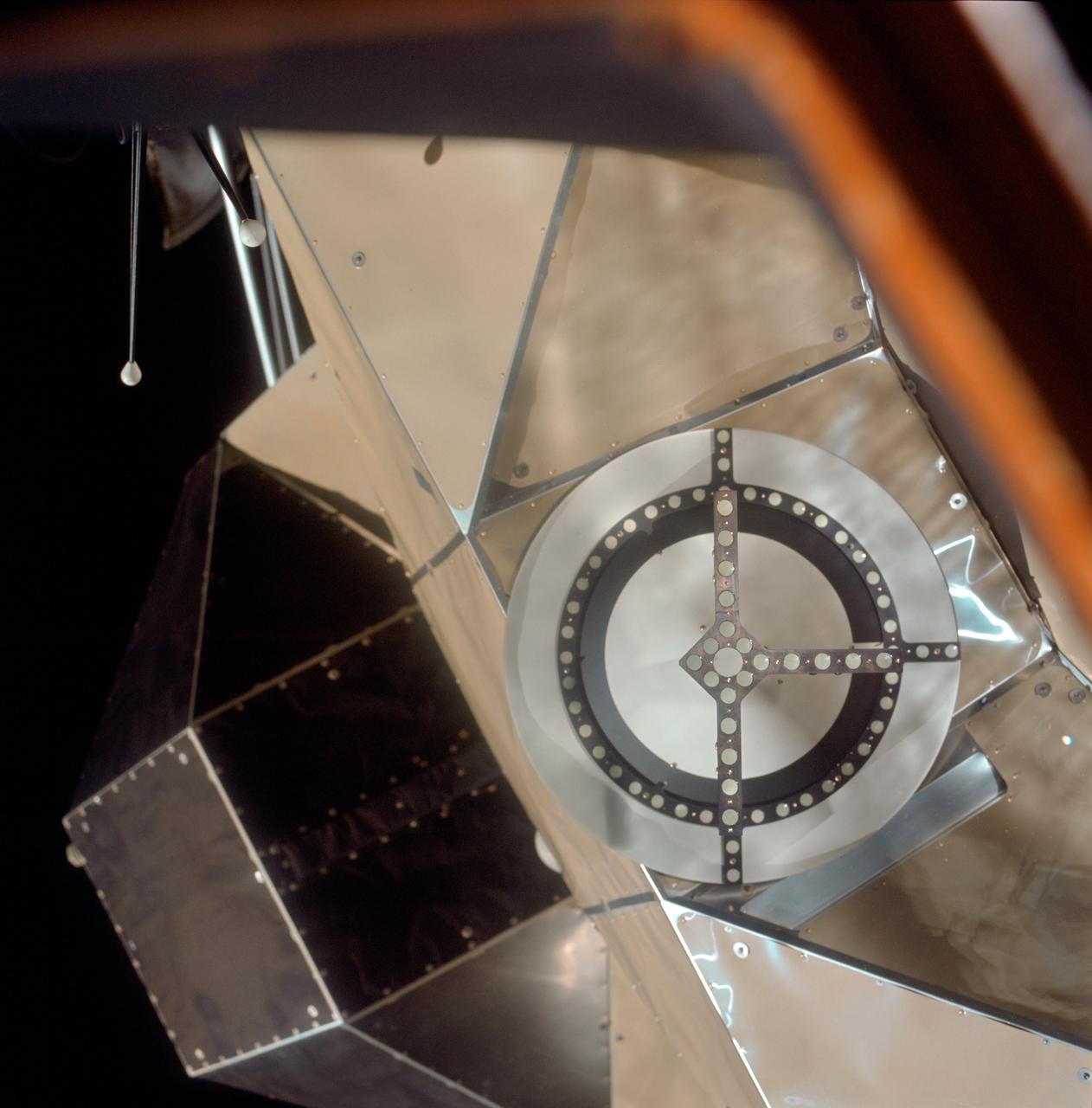
AS11-36-5365 (21 July 1969) --- A close-up view of the docking target on the Apollo 11 Lunar Module (LM) photographed from the Command Module during the LM/CSM docking in lunar orbit. Astronauts Neil A. Armstrong, commander, and Edwin E. Aldrin Jr., lunar module pilot, in the LM, were returning from the lunar surface. Astronaut Michael Collins, command module pilot, remained with the Command and Service Modules (CSM) in lunar orbit while Armstrong and Aldrin explored the moon.
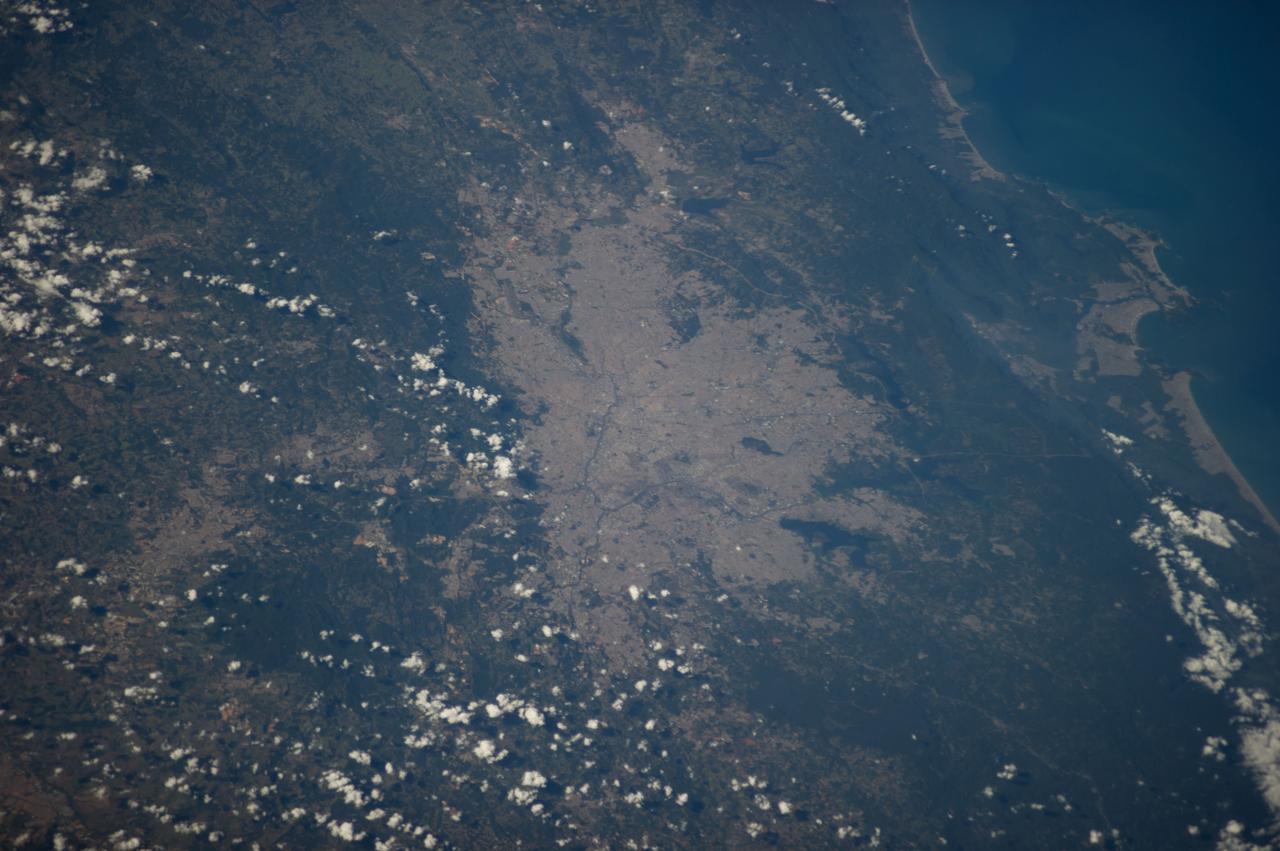
ISS040-E-010803 (12 June 2014) --- One of the Expedition 40 crew members aboard the International Space Station photographed this image featuring Sao Paulo, one of the host cities in Brazil for the 2014 World Cup. A 200mm focal length was used to record the photograph on June 12.
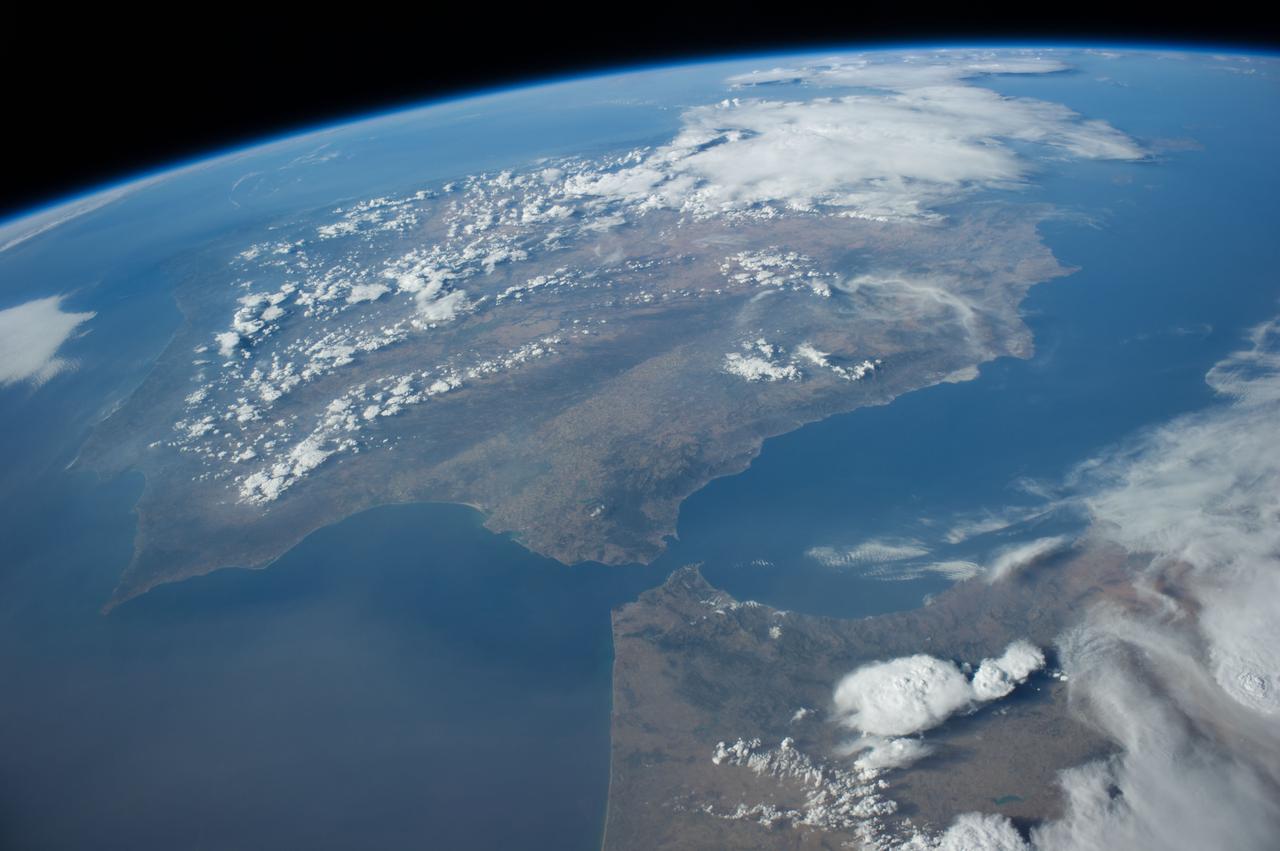
ISS040-E-010889 (12 June 2014) --- One of the Expedition 40 crew members aboard the Earth-orbiting International Space Station recorded this image of the Strait of Gibraltar, showing parts of Morocco and Spain, on June 12, 2014.
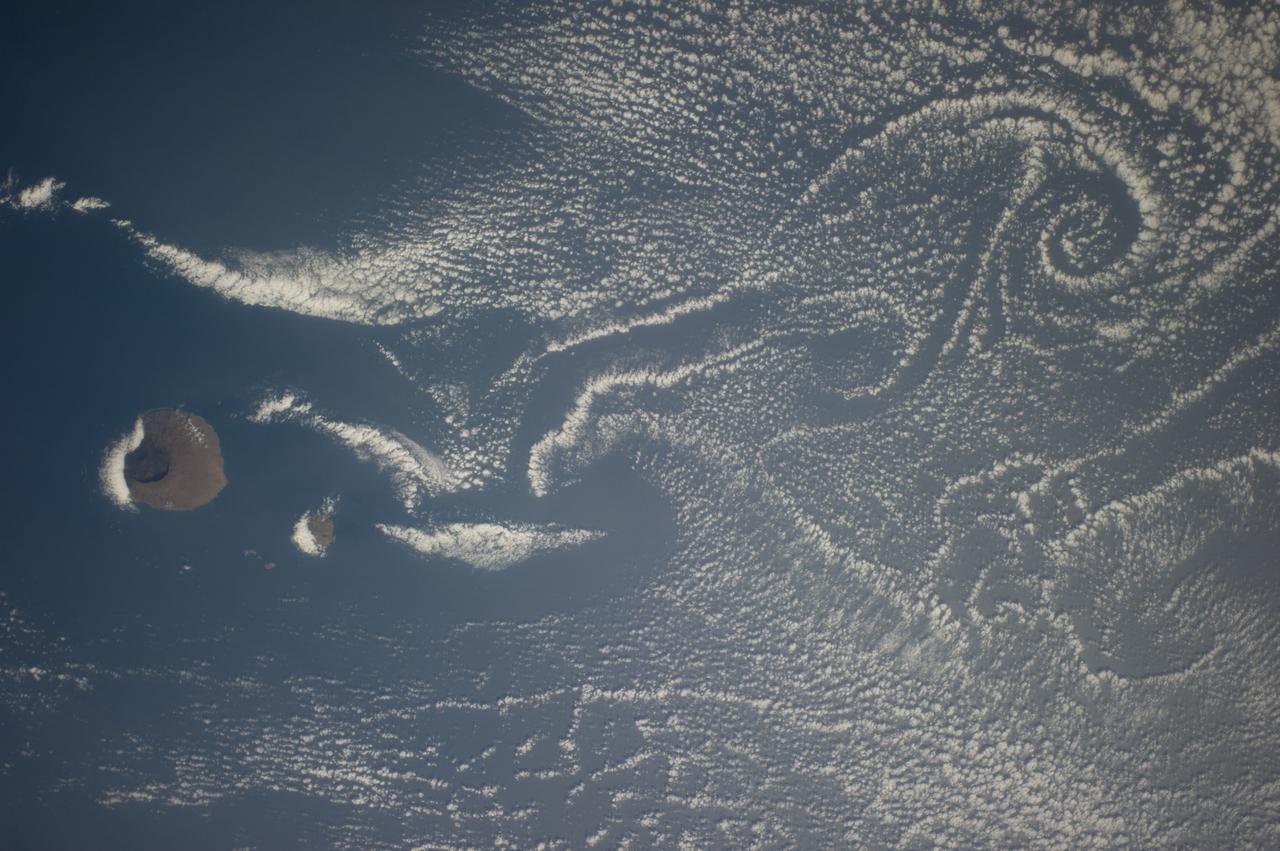
Earth Observation taken during a day pass by the Expedition 40 crew aboard the International Space Station (ISS). Folder lists this group as: Brazil, Africa, Volcanoes, Gibralter, Spain, Portugal.
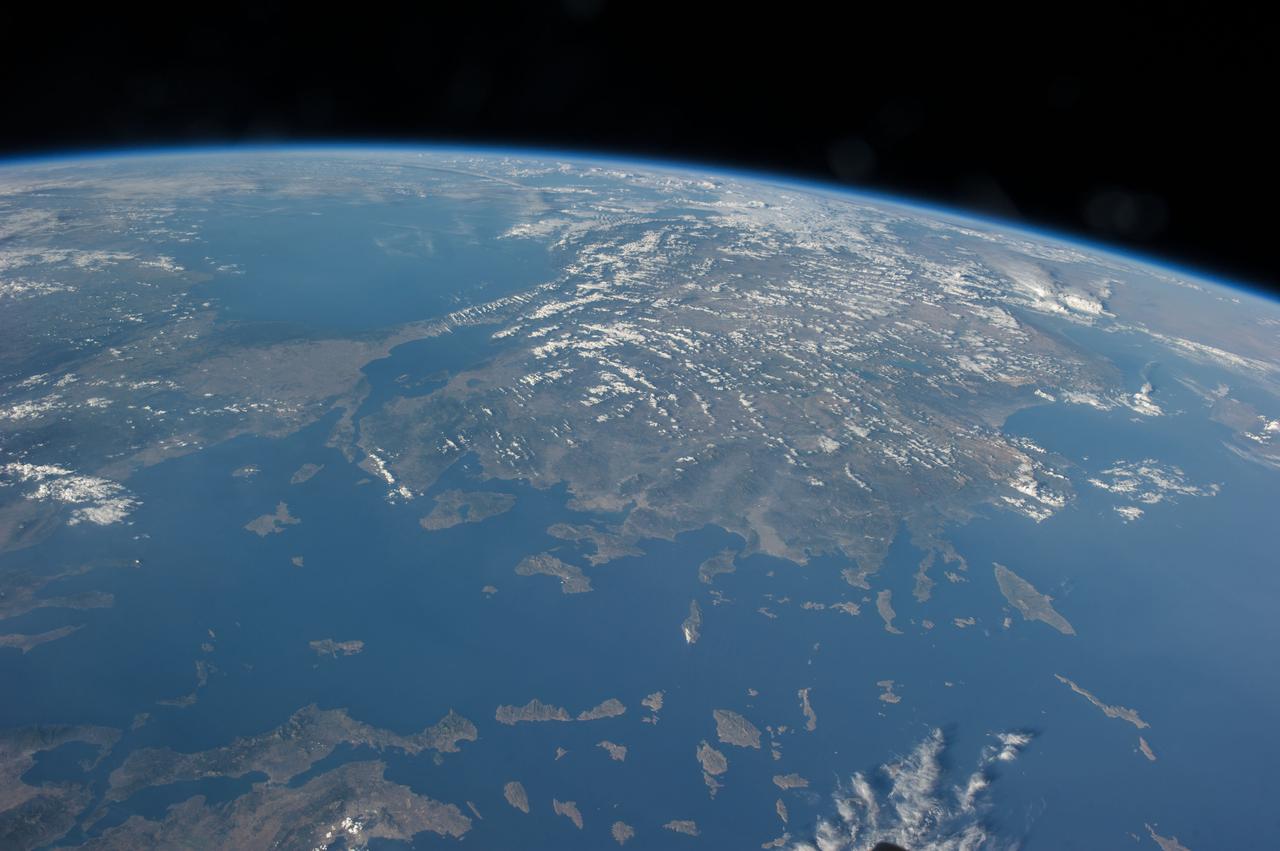
Earth Observation taken during a day pass by the Expedition 40 crew aboard the International Space Station (ISS). Folder lists this group as: Italy,Greece,and a little bit of Russia.
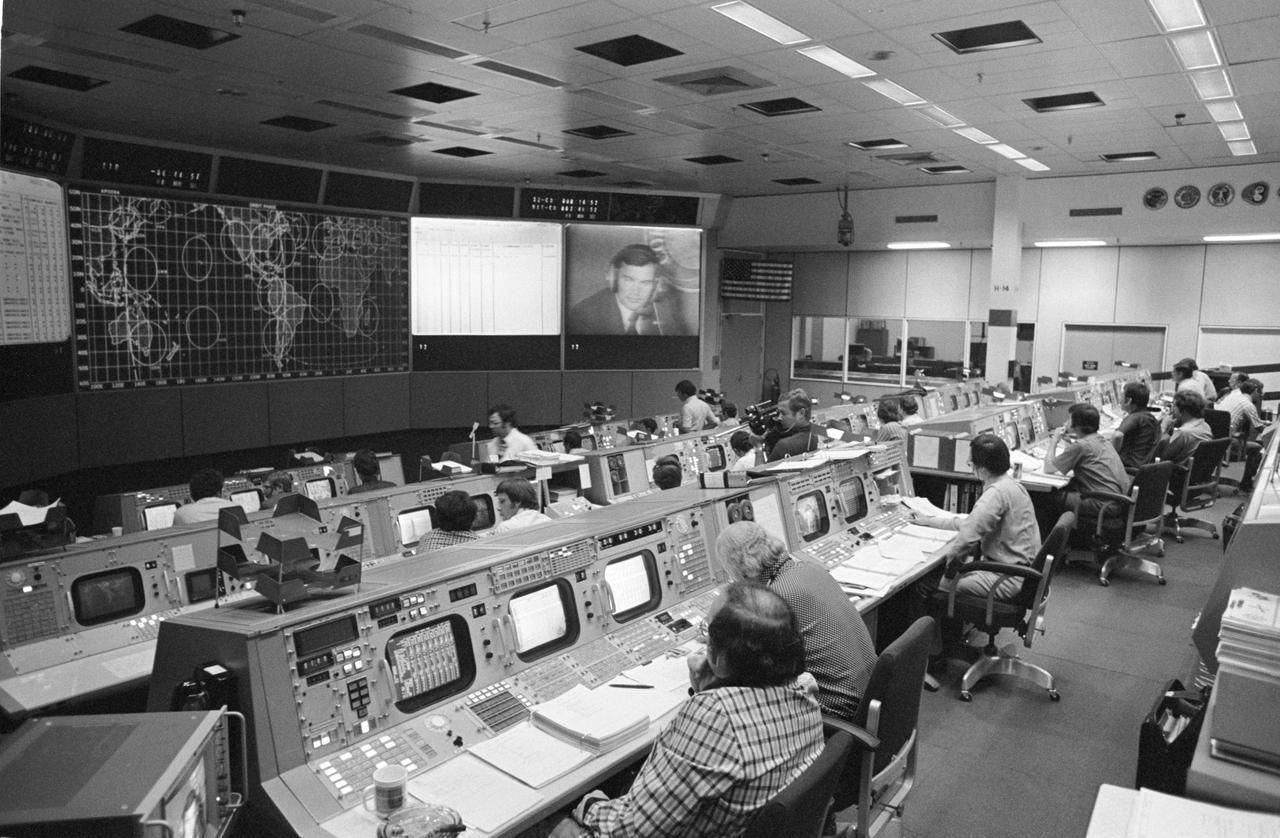
S75-28483 (15 July 1975) --- An overall view of the Mission Operations Control Room in the Mission Control Center on the first day of the Apollo-Soyuz Test Project docking mission in Earth orbit. The American ASTP flight controllers at NASA's Johnson Space Center were monitoring the progress of the Soviet ASTP launch when this photograph was taken. The television monitor shows cosmonaut Yuri V. Romanenko at his spacecraft communicator?s console in the ASTP mission control center in the Soviet Union. The American ASTP liftoff followed the Soviet ASTP launch by seven and one-half hours.
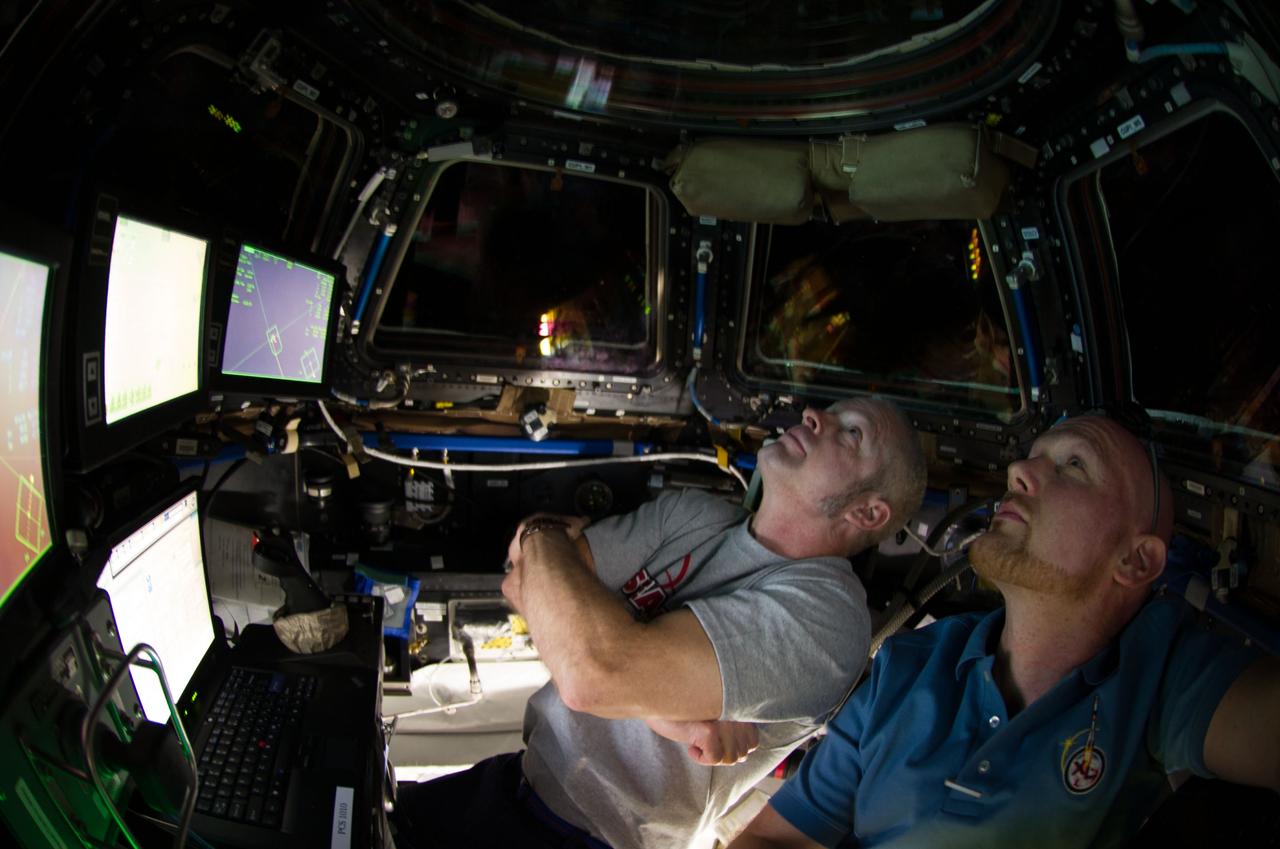
ISS040-E-067869 (16 July 2014) --- NASA astronaut Steve Swanson (left), Expedition 40 commander; and European Space Agency astronaut Alexander Gerst, flight engineer, are pictured in the International Space Station?s Cupola during rendezvous and capture operations of the Orbital Sciences? Cygnus cargo craft.
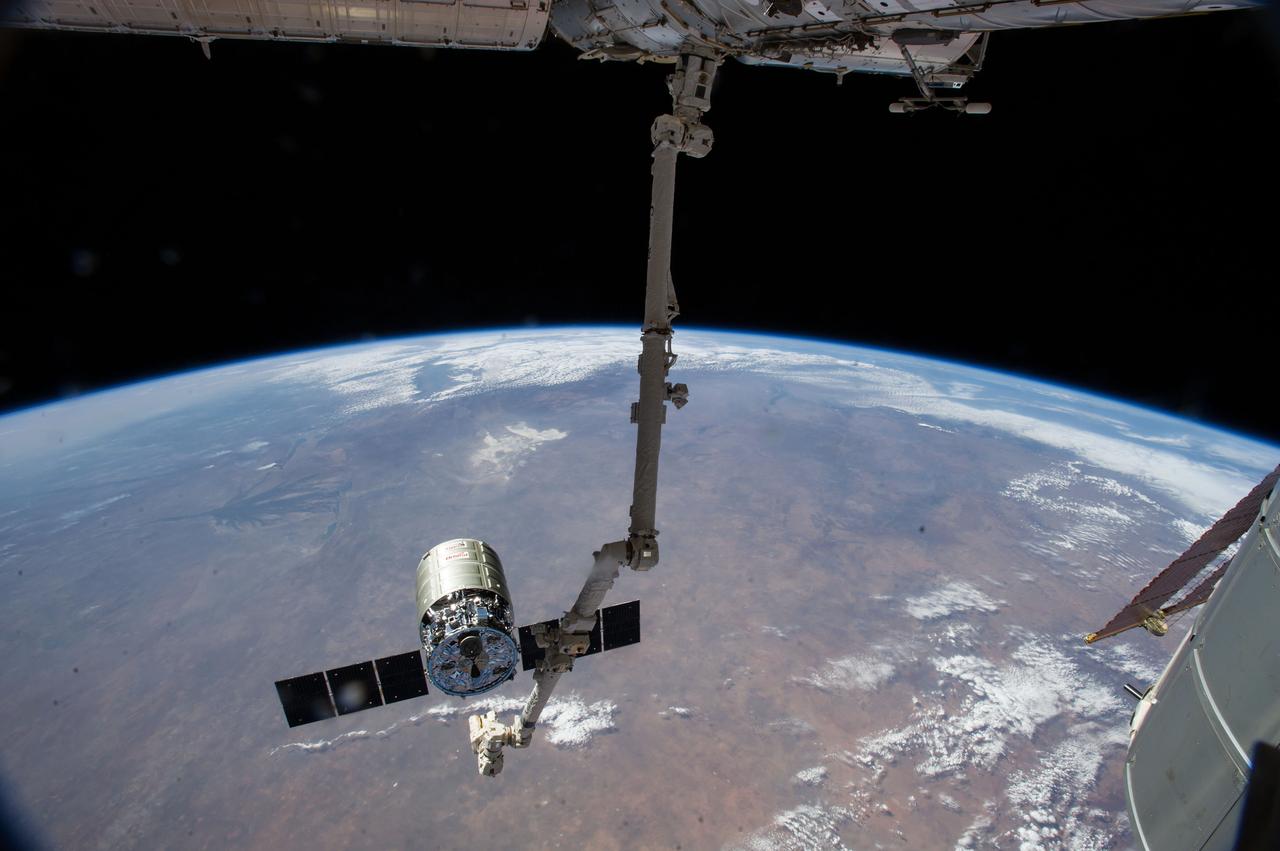
ISS040-E-095229 (15 Aug. 2014) --- The International Space Station's Canadarm2 prepares to release the Orbital Sciences Corporation's commercial cargo craft after a month visiting the orbital outpost. European Space Agency astronaut Alexander Gerst and NASA astronaut Reid Wiseman, both Expedition 40 flight engineers, were at the controls of the robotics workstation in the Cupola removing Cygnus from the Harmony node then safely releasing it at 6:40 a.m. (EDT) Aug. 15, 2014. Much of lower the continent of Africa provides the panoramic background for the scene with Botswana's Okavango Delta being the most conspicuous feature at left center.
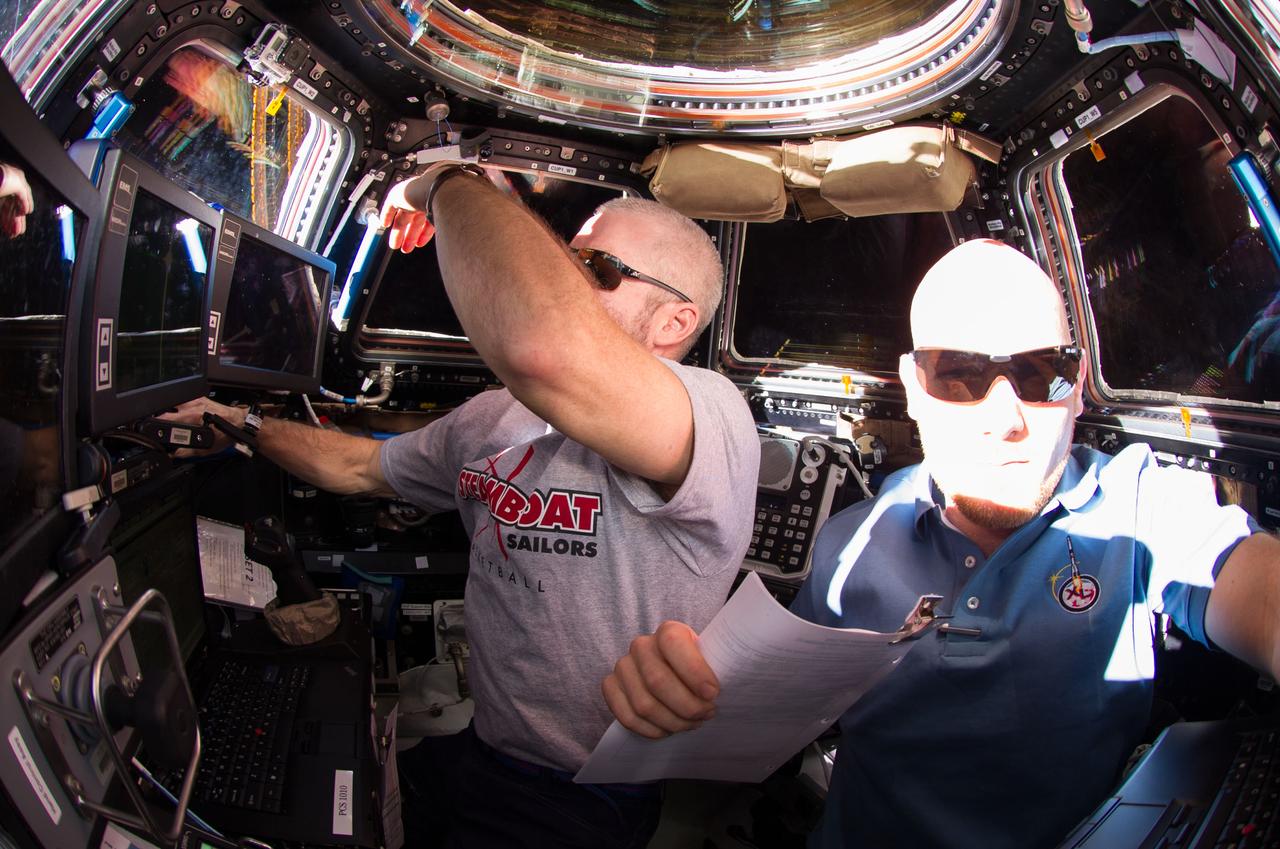
NASA astronaut Steve Swanson (left), Expedition 40 commander; and European Space Agency astronaut Alexander Gerst, flight engineer, are pictured in the International Space Station's Cupola during rendezvous and capture operations of the Orbital Sciences' Cygnus cargo craft.
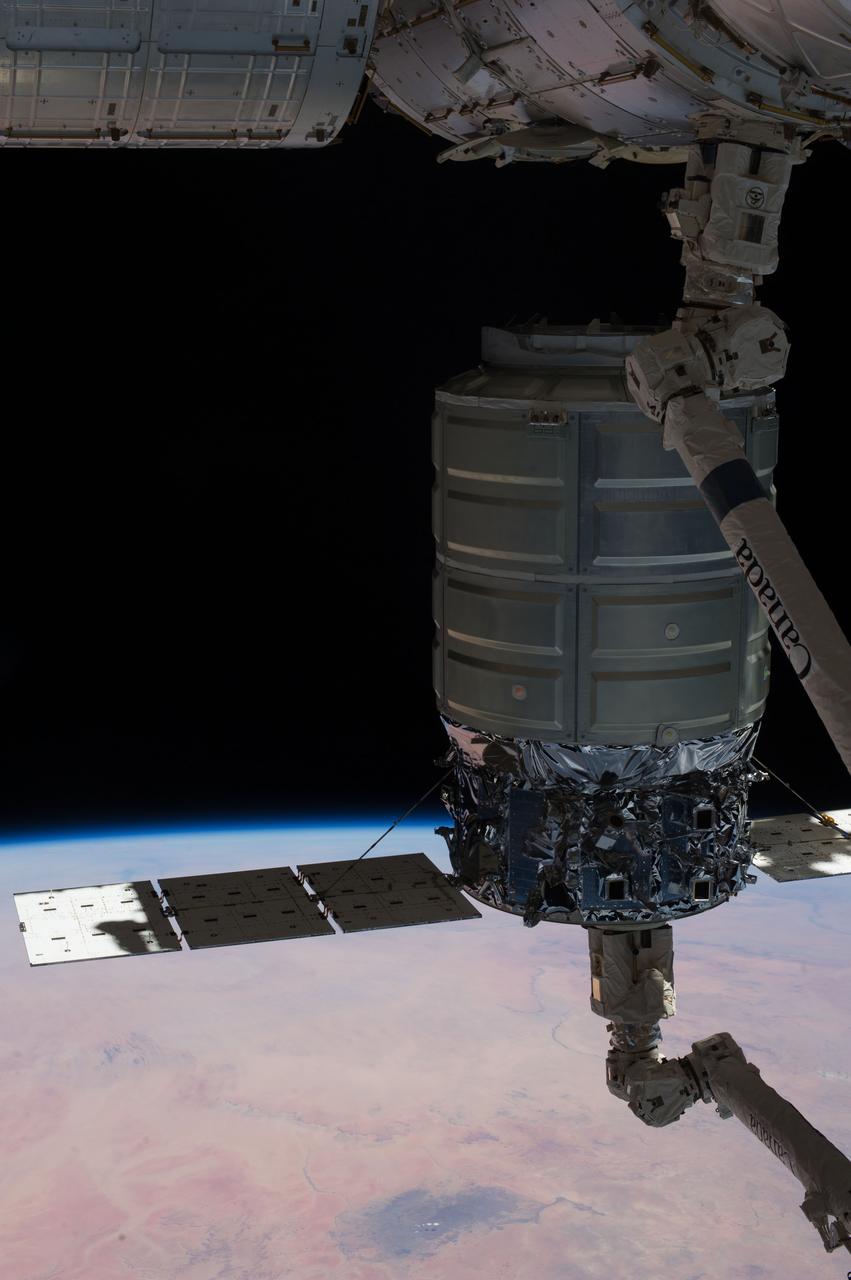
The International Space Stations Remote Manipulator System (SSRMS) arm or Canadarm2 prepares to release the Orbital Sciences Cygnus commercial craft after three weeks at the space station.
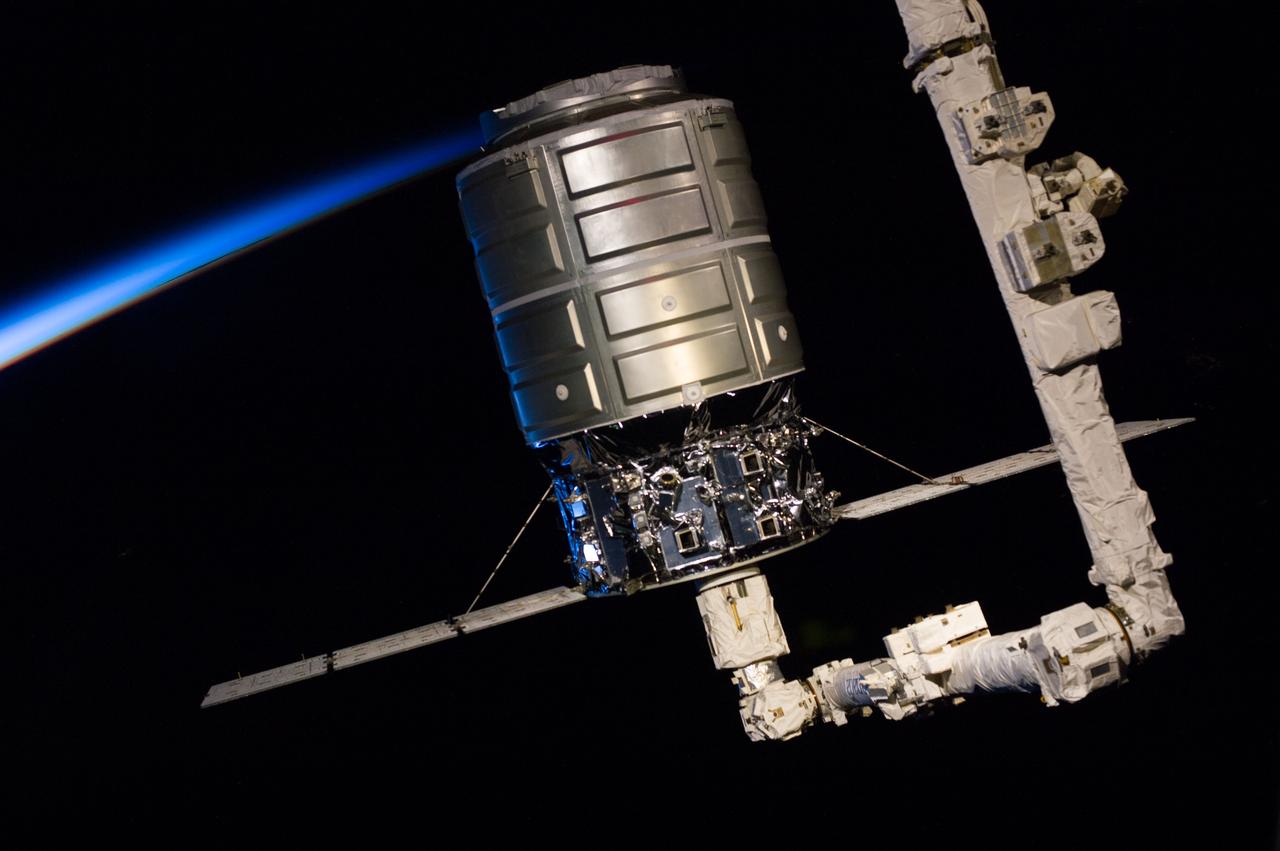
"View of the capture of the first Cygnus commercial cargo spacecraft built by Orbital Sciences Corp attached to the end of the robotic arm (AKA Canadarm2) on the International Space Station after the two spacecraft converged at 7:01 a.m. EDT on Sept. 29, 2013. " Also sent as Twitter message.
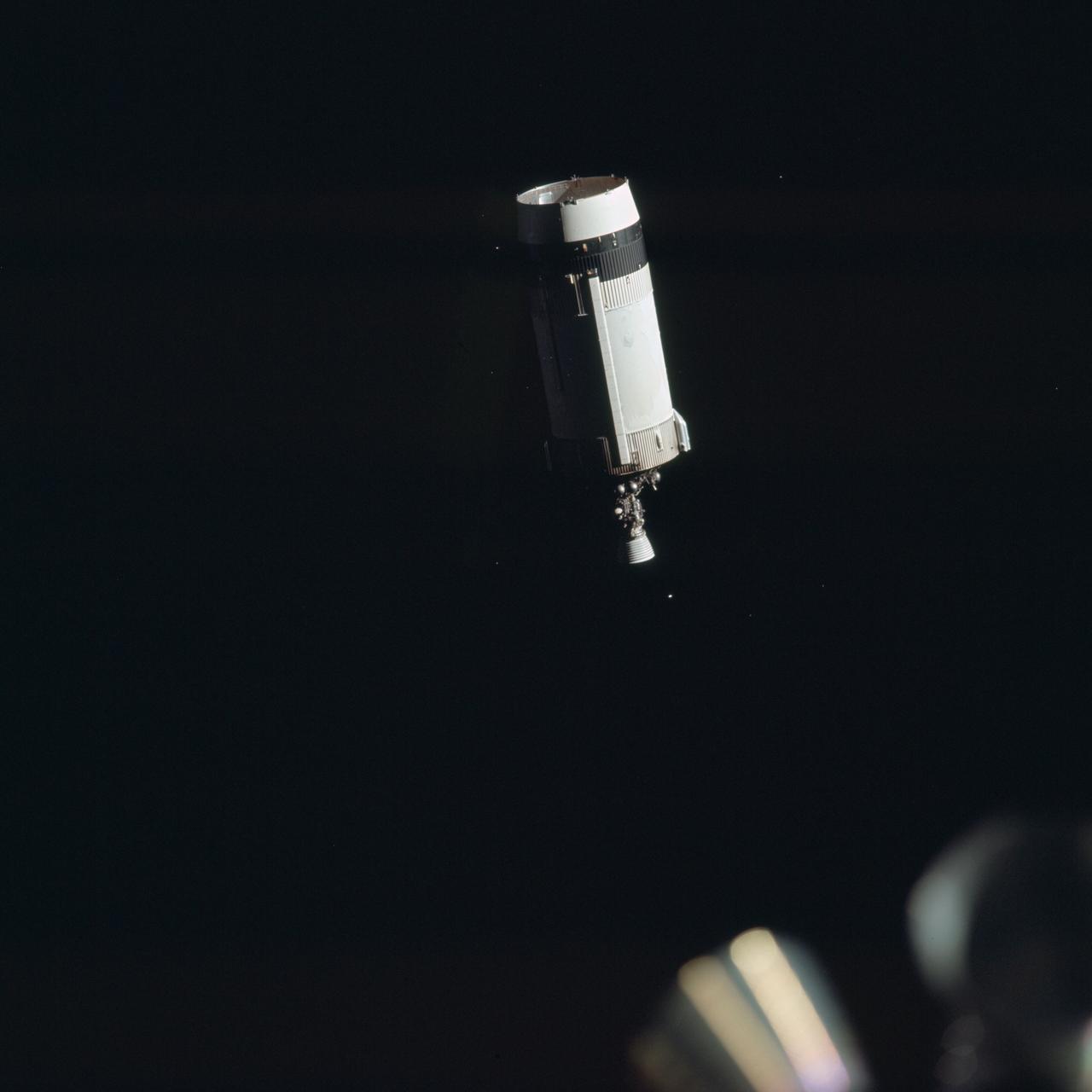
AS17-148-22714 (7-19 Dec. 1972) --- View of the expended Saturn IVB stage before Apollo 17 transposition/docking maneuvers.
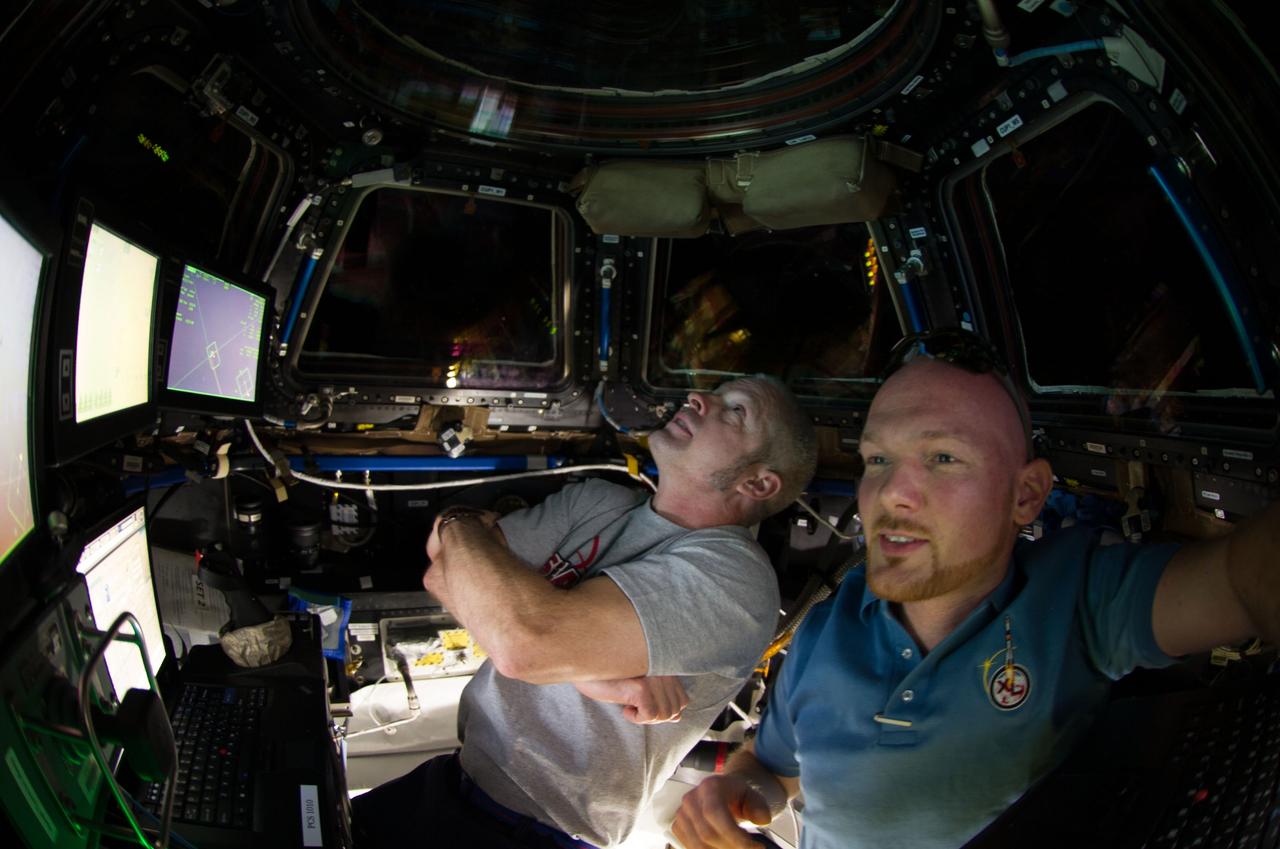
ISS040-E-067864 (16 July 2014) --- NASA astronaut Steve Swanson (left), Expedition 40 commander; and European Space Agency astronaut Alexander Gerst, flight engineer, are pictured in the International Space Station?s Cupola during rendezvous and capture operations of the Orbital Sciences? Cygnus cargo craft.
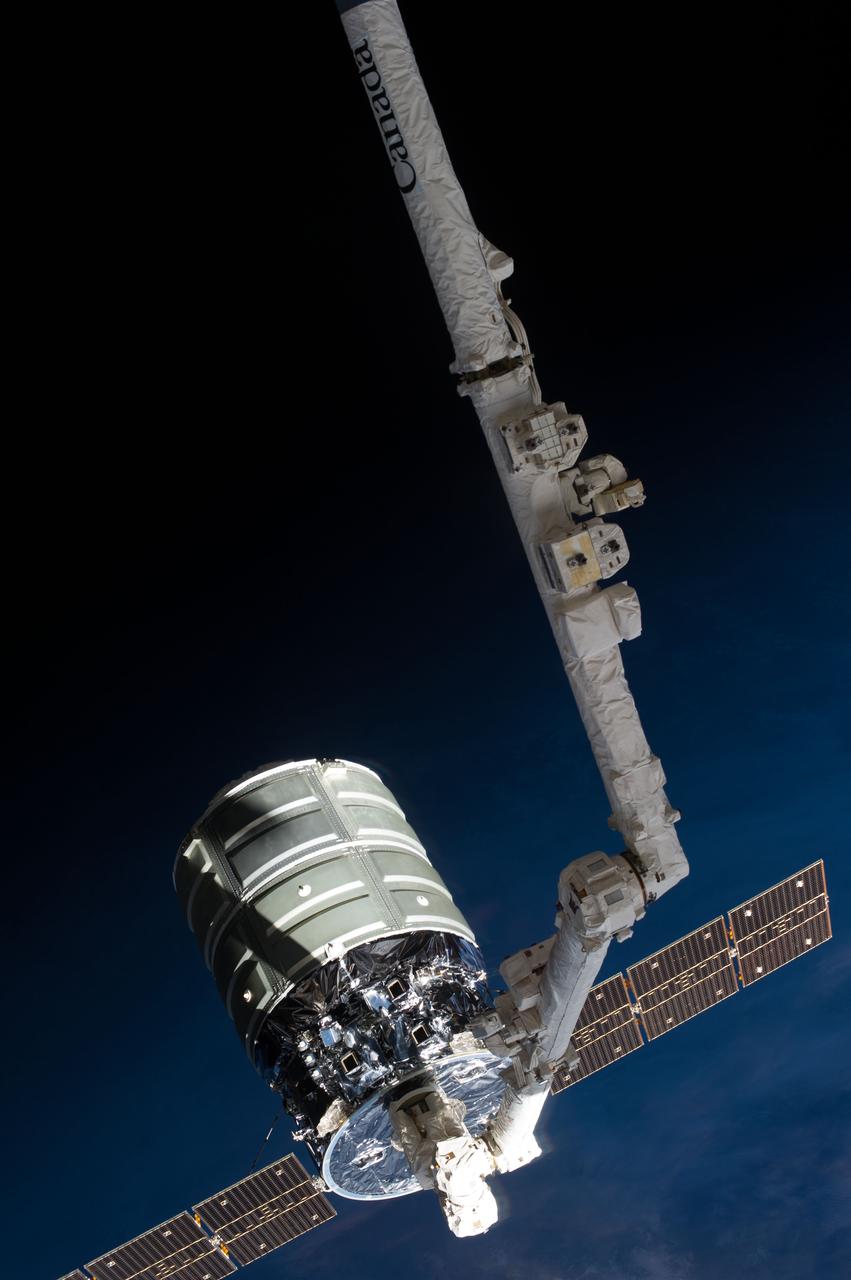
ISS037-E-018544 (22 Oct. 2013) --- The International Space Station’s Canadarm2 prepares to release the Orbital Sciences’ Cygnus commercial craft after three weeks at the space station. European Space Agency astronaut Luca Parmitano and NASA astronaut Karen Nyberg, both Expedition 37 flight engineers, were at the controls of the robotics workstation removing Cygnus from the Harmony node then safely releasing it at 7:31 a.m. (EDT) Oct. 22, 2013. On Oct. 23, the Cygnus will fire its engines for the last time at 1:41 p.m. and re-enter Earth’s atmosphere for destruction over the Pacific Ocean.
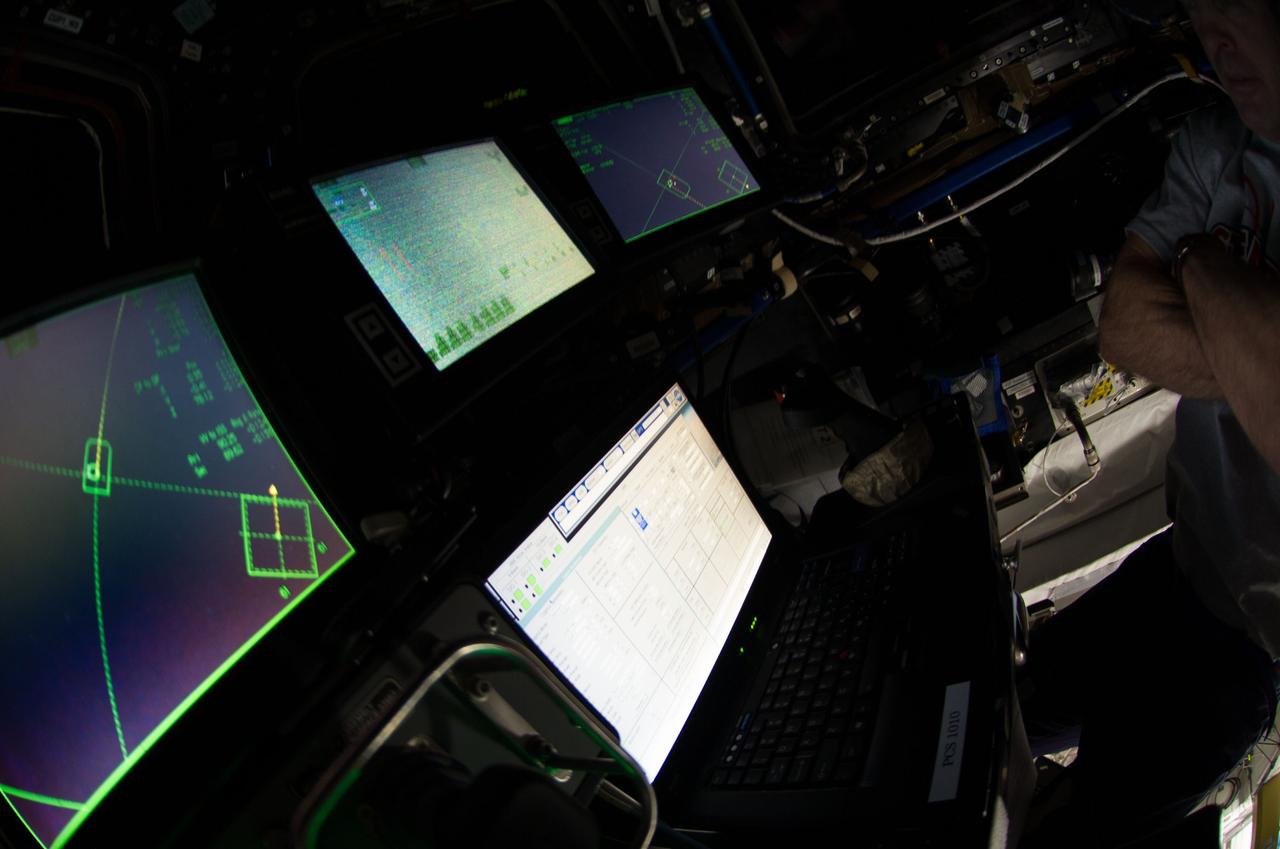
Control boards pictured in the International Space Stations Cupola during rendezvous and capture operations of the Orbital Sciences Cygnus cargo craft.
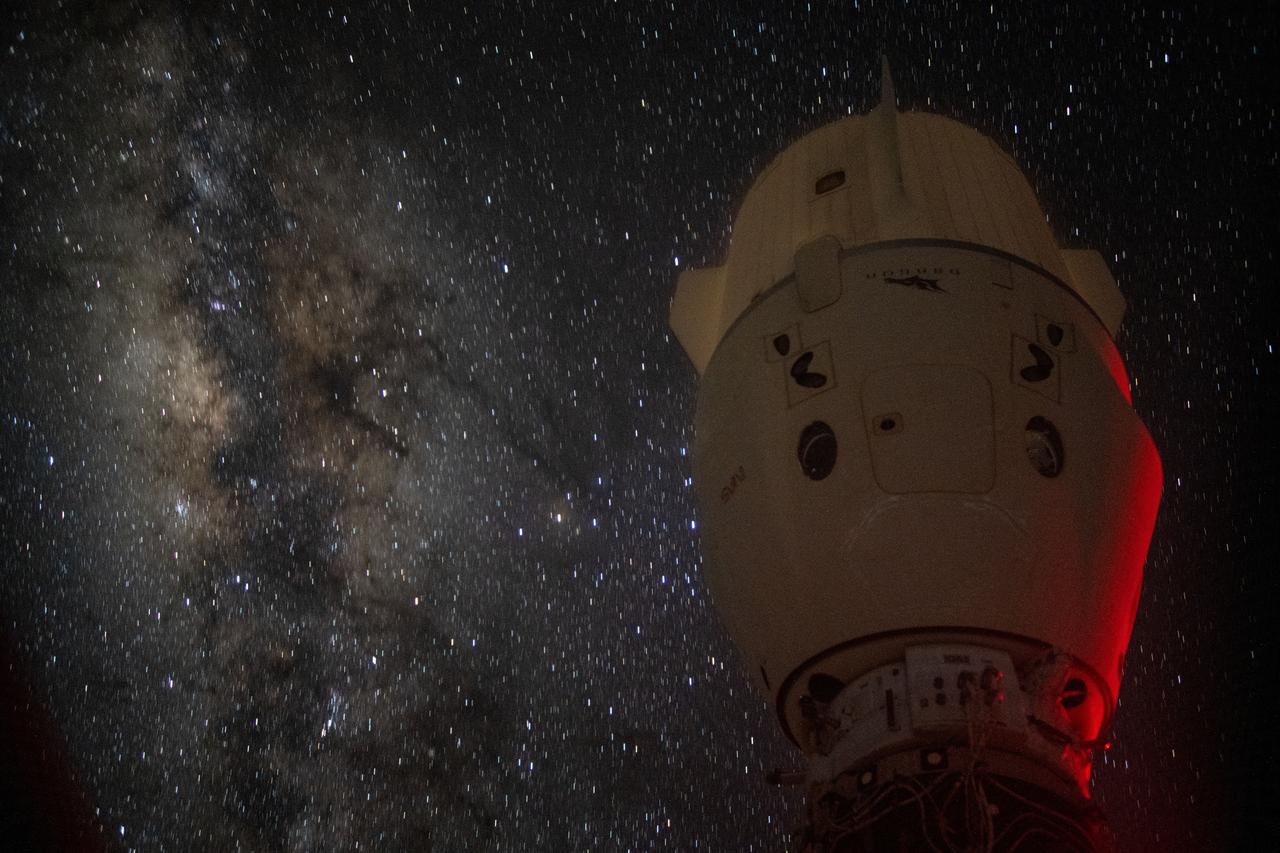
iss071e256593 (July 1, 2024) --- The Milky Way appears in the vastness of space behind the dimly lit SpaceX Dragon Endeavour spacecraft docked to the Harmony module's space-facing port on the International Space Station.
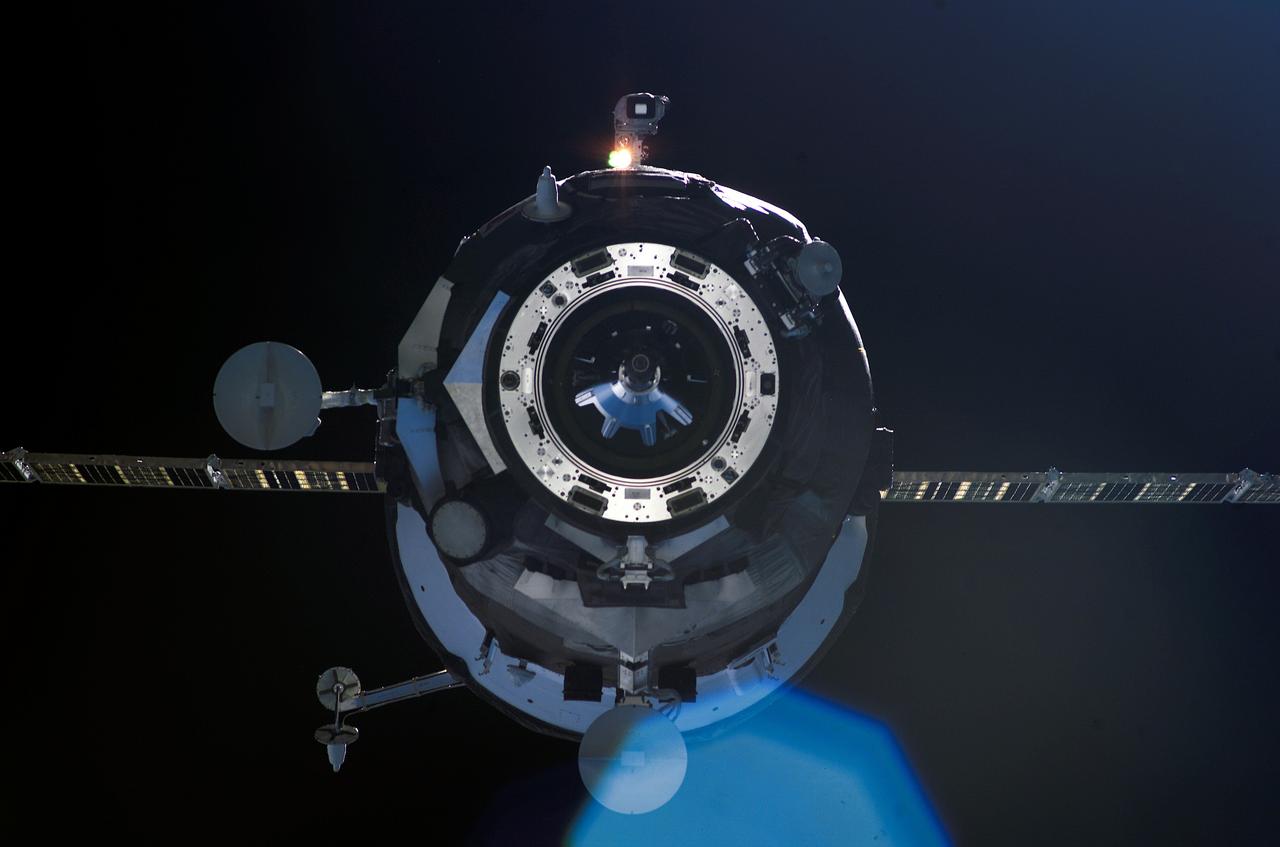
ISS012-E-13564 (23 Dec. 2005) --- Backdropped by the blackness of space, an unpiloted Progress supply vehicle approaches the International Space Station. The Progress 20 resupply craft launched at 12:38 p.m. (CST) on Dec. 21, 2005 from the Baikonur Cosmodrome in Kazakhstan to deliver 2.8 tons of supplies, gifts, food, water, fuel and equipment to the Expedition 12 crew members onboard the station. Progress docked to the Pirs Docking Compartment at 1:46 p.m. (CST) on Dec. 23 as the station flew approximately 220 statute miles above the Atlantic off the east coast of South America.
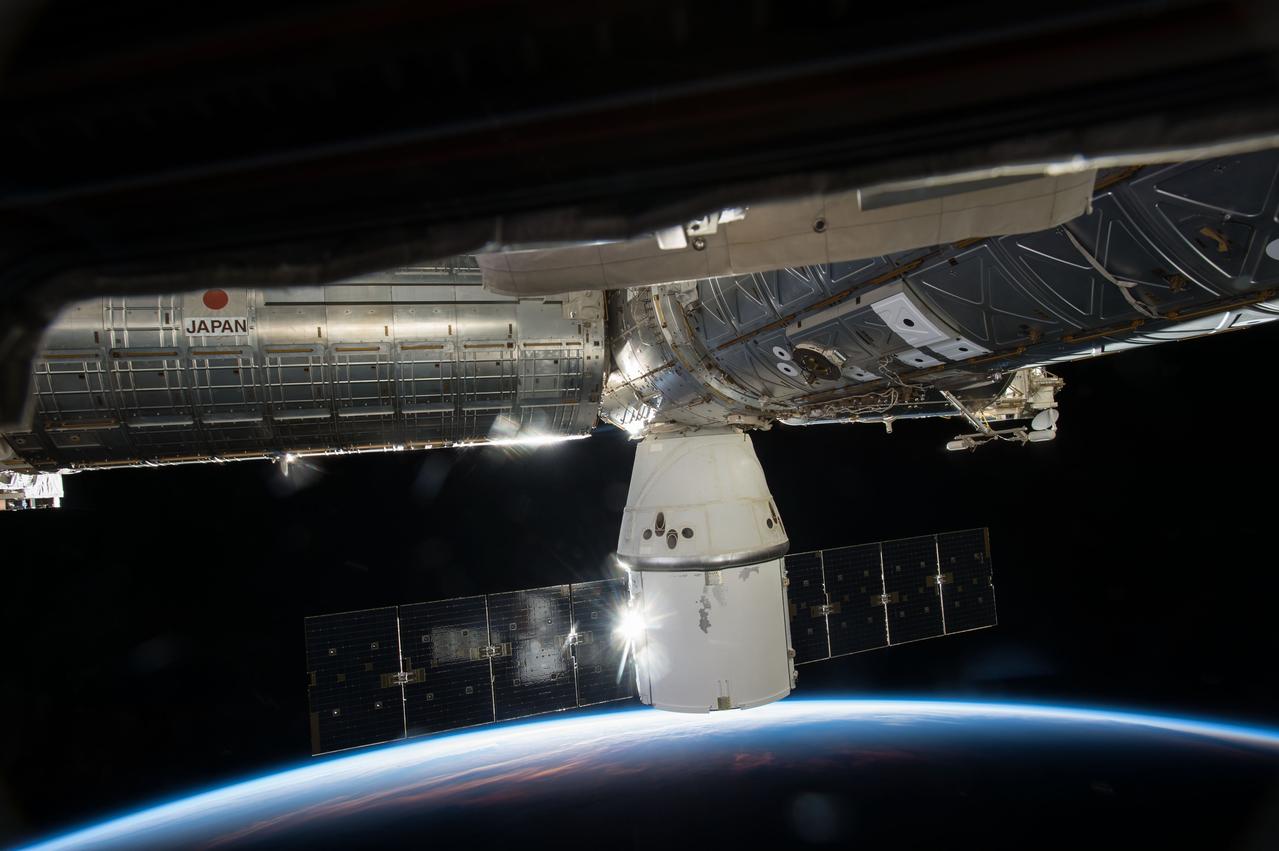
ISS043E190604 (05/13/2015) --- SpaceX’s Dragon cargo capsule is seen here docked to the Earth facing port of the Harmony module. SpaceX’s sixth commercial resupply flight to the International Space Station launched on April 14th and arrived three days later. It will depart with over 3,100 pounds of research samples and equipment and splashdown in the Pacific Ocean on May 21.
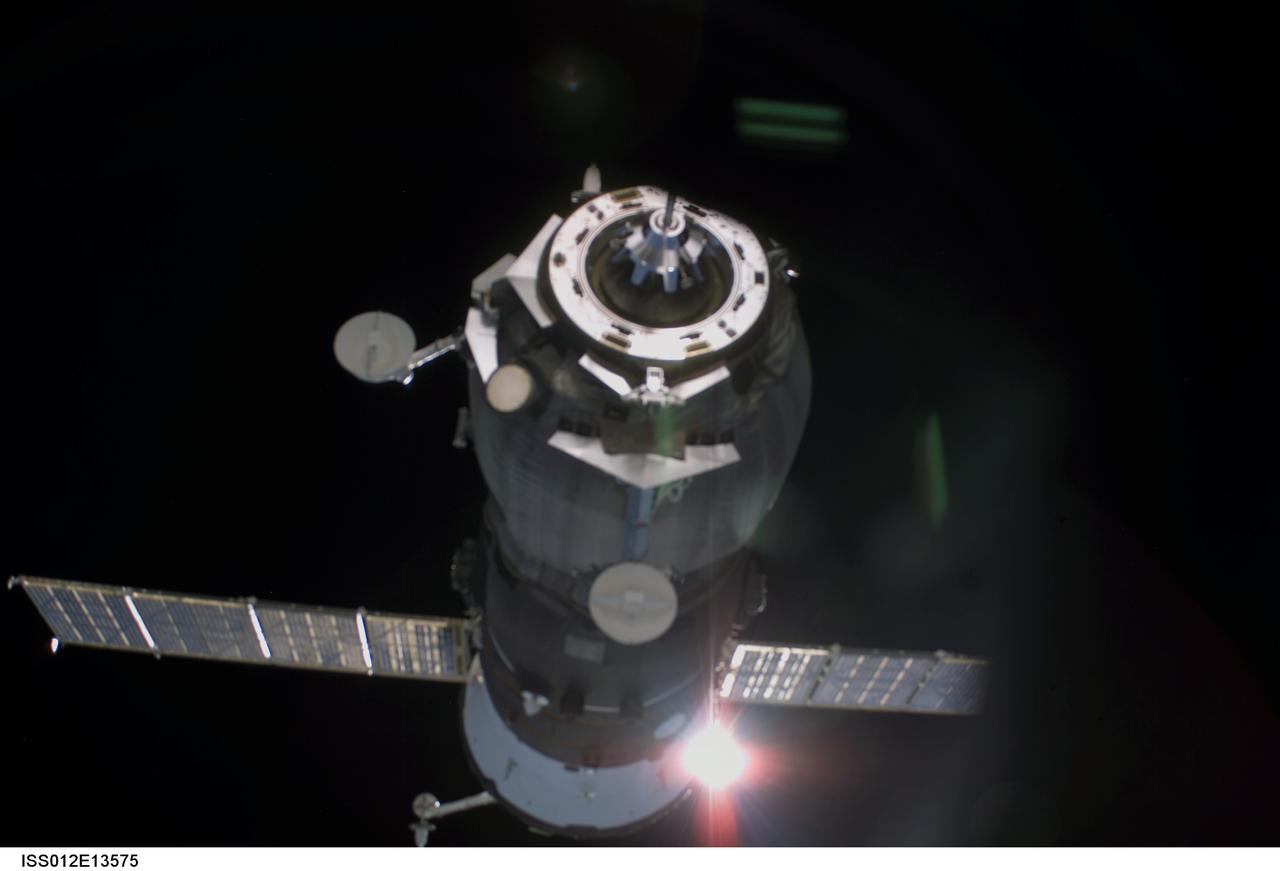
ISS012-E-13575 (23 Dec. 2005) --- Backdropped by the blackness of space, an unpiloted Progress supply vehicle approaches the International Space Station. The Progress 20 resupply craft launched at 12:38 p.m. (CST) on Dec. 21, 2005 from the Baikonur Cosmodrome in Kazakhstan to deliver 2.8 tons of supplies, gifts, food, water, fuel and equipment to the Expedition 12 crew members onboard the station. Progress docked to the Pirs Docking Compartment at 1:46 p.m. (CST) on Dec. 23 as the station flew approximately 220 statute miles above the Atlantic off the east coast of South America.