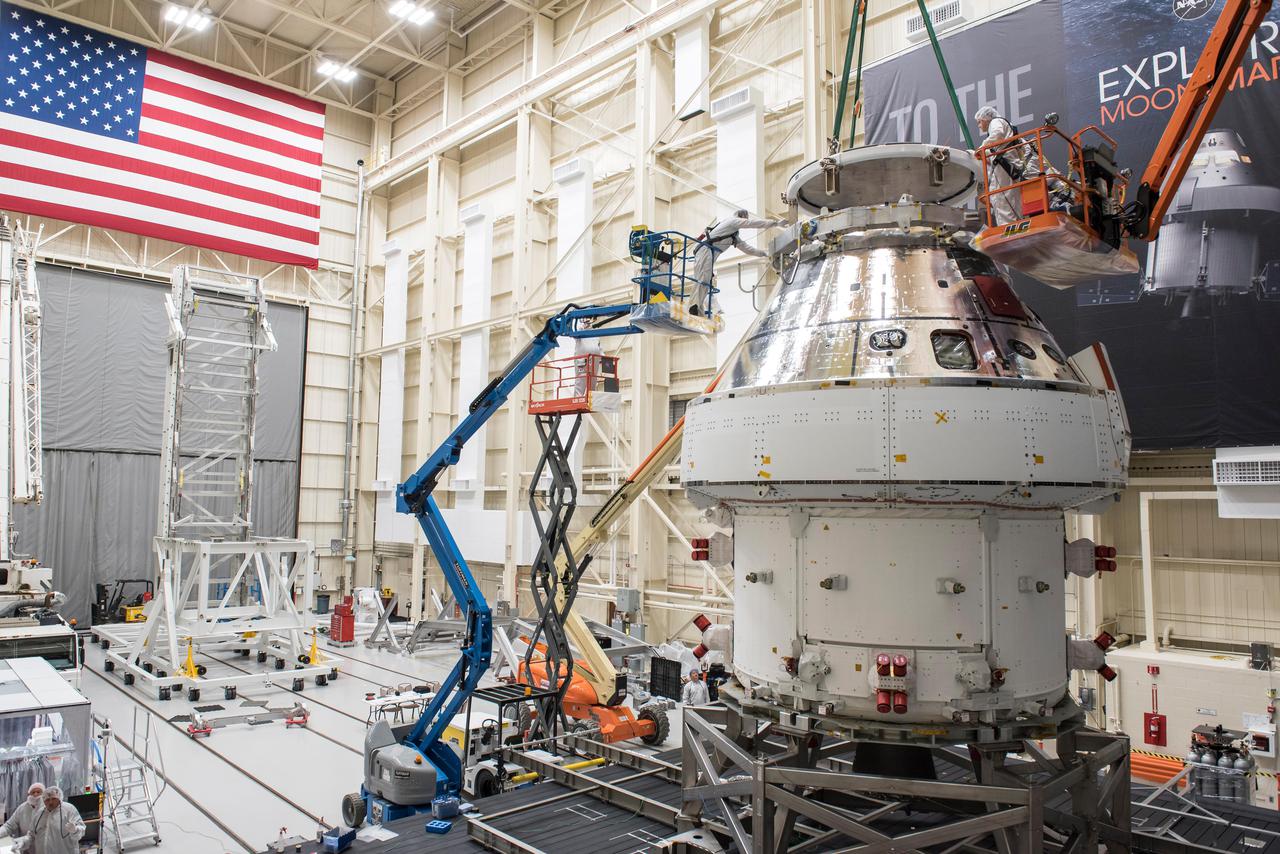
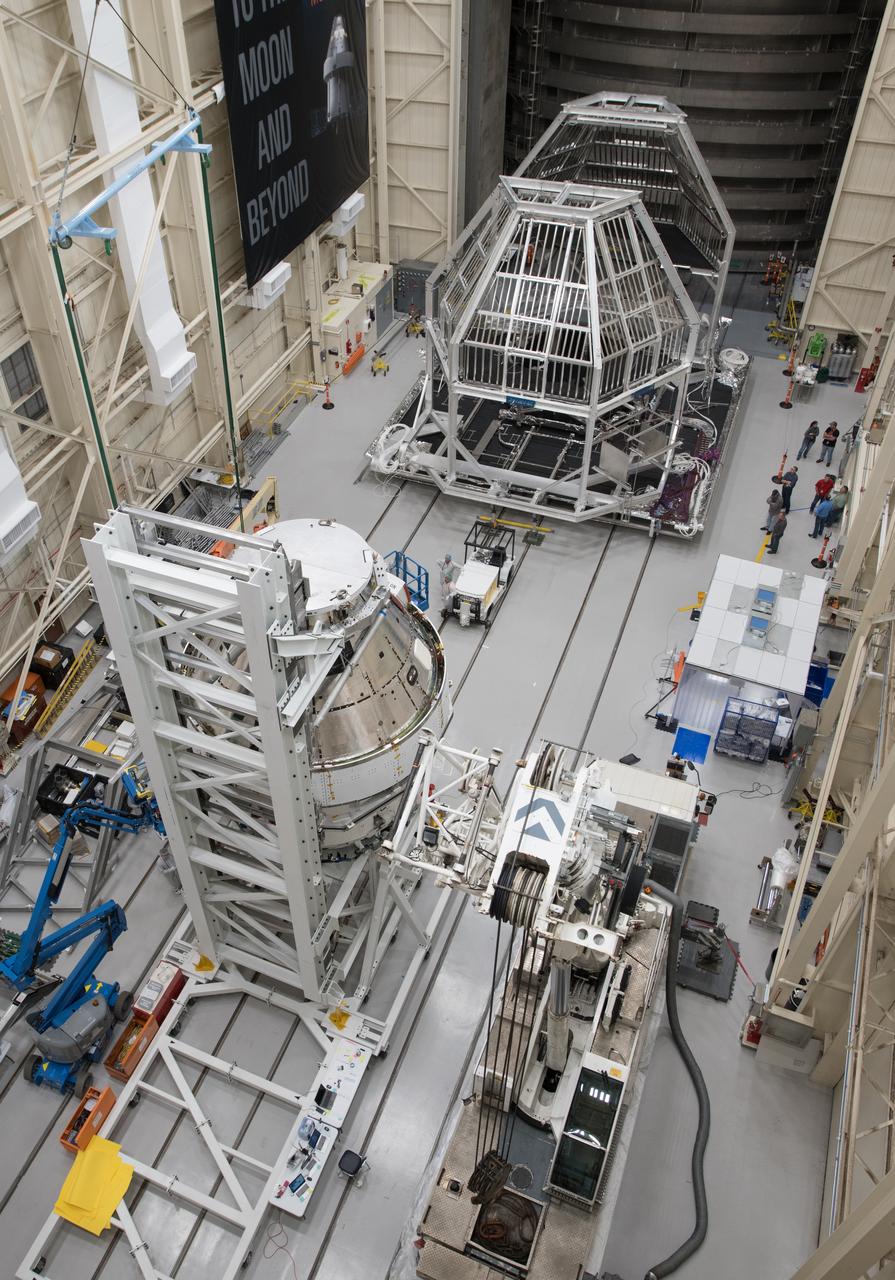
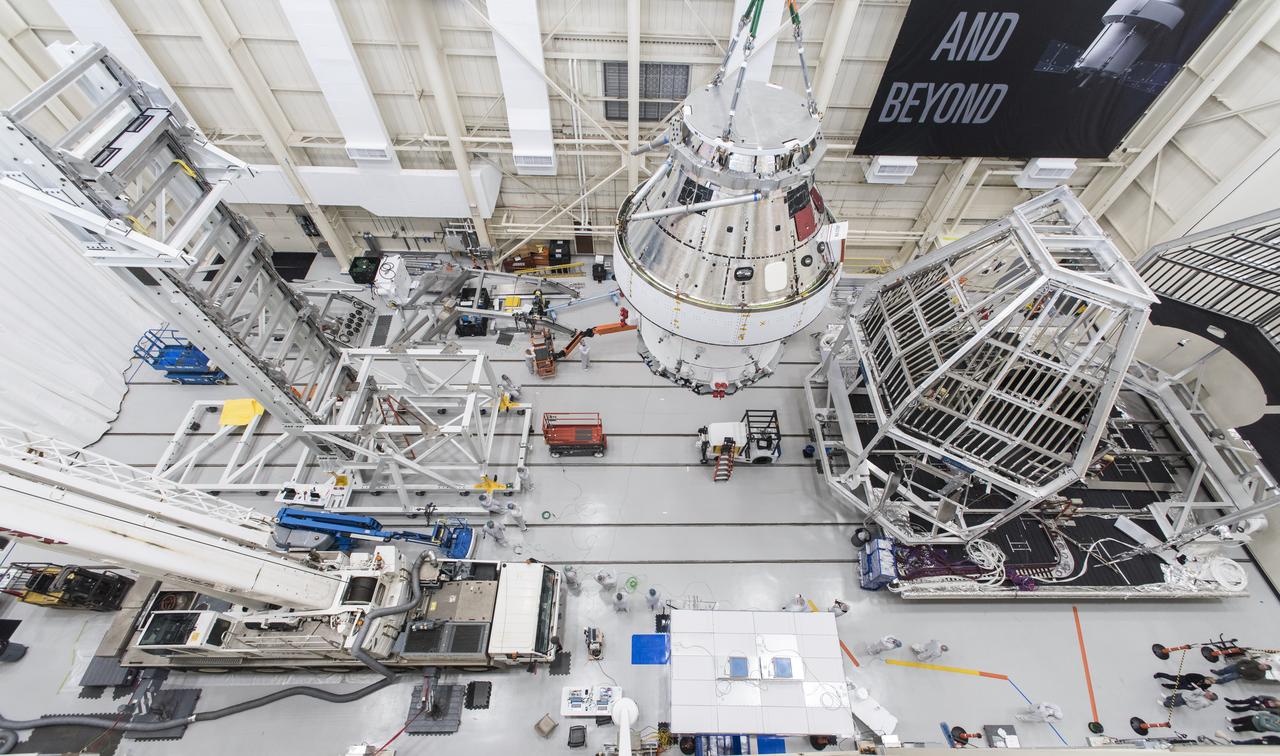
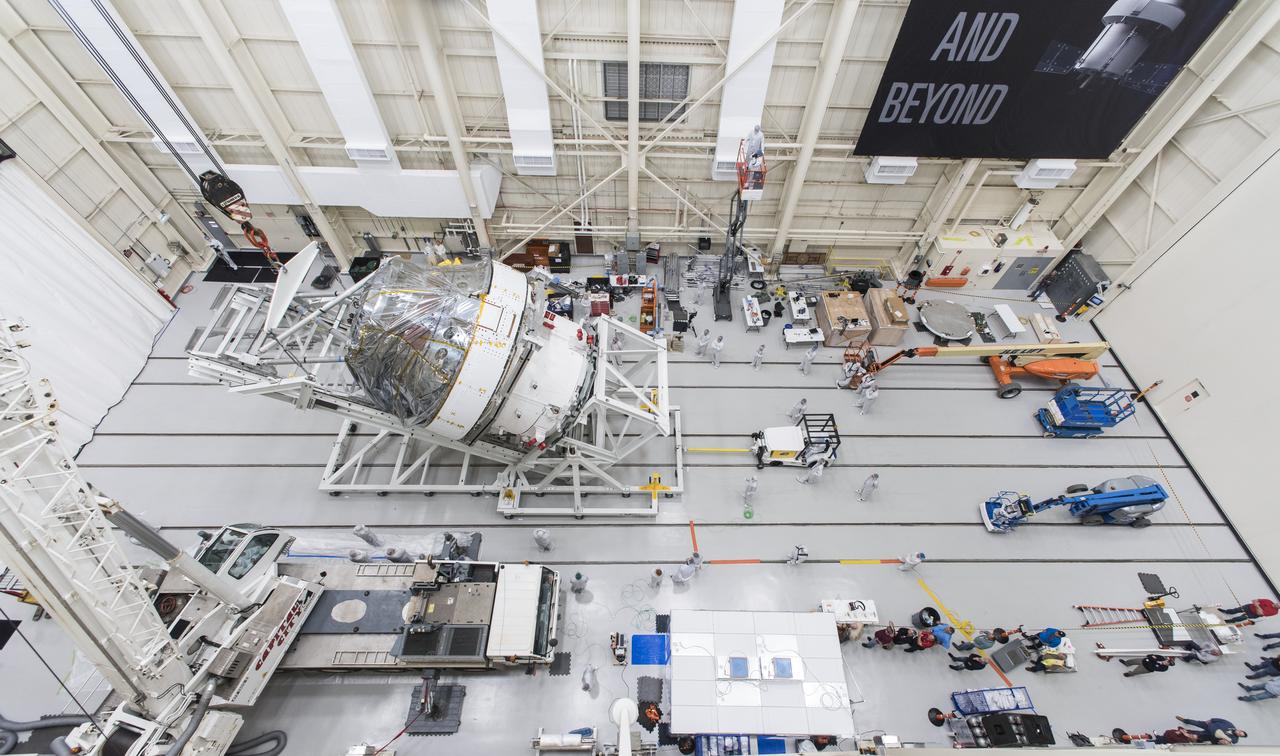
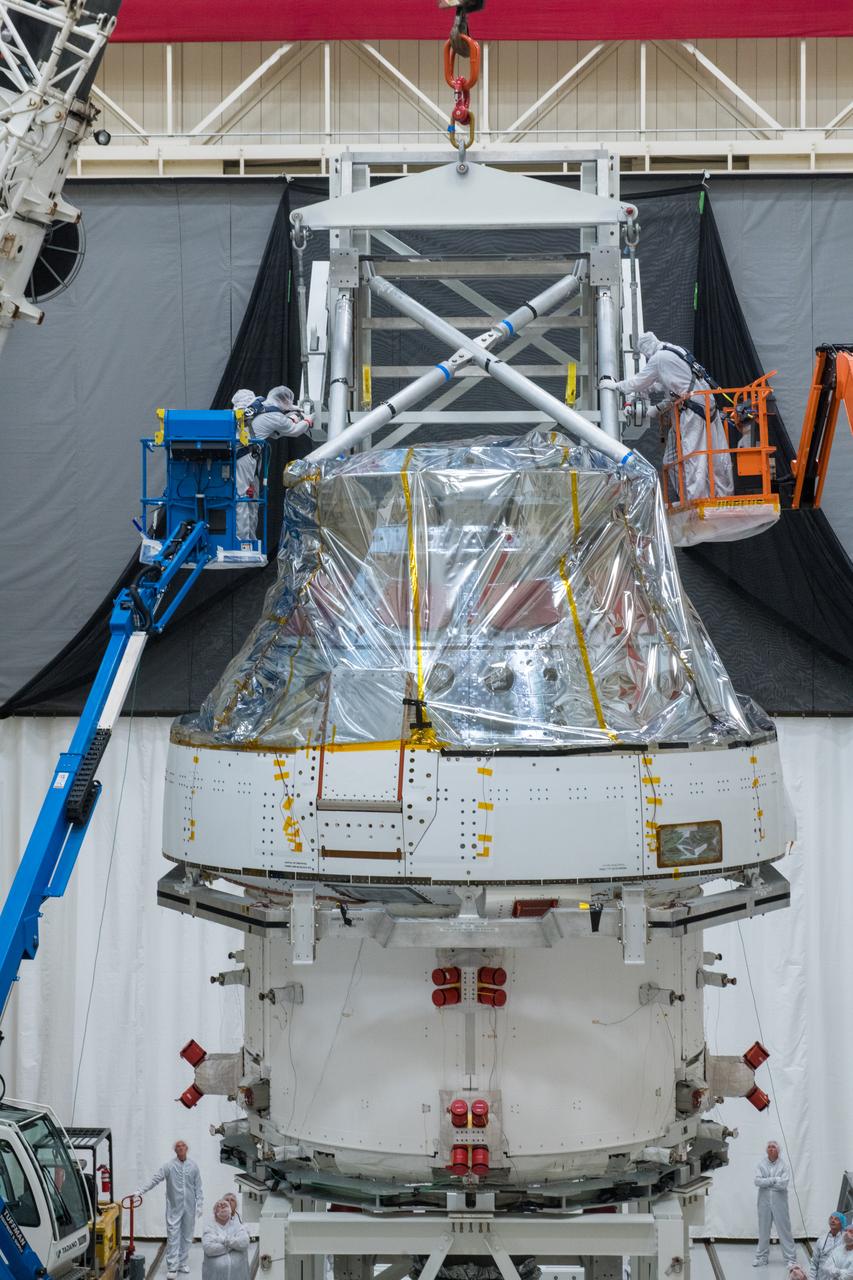
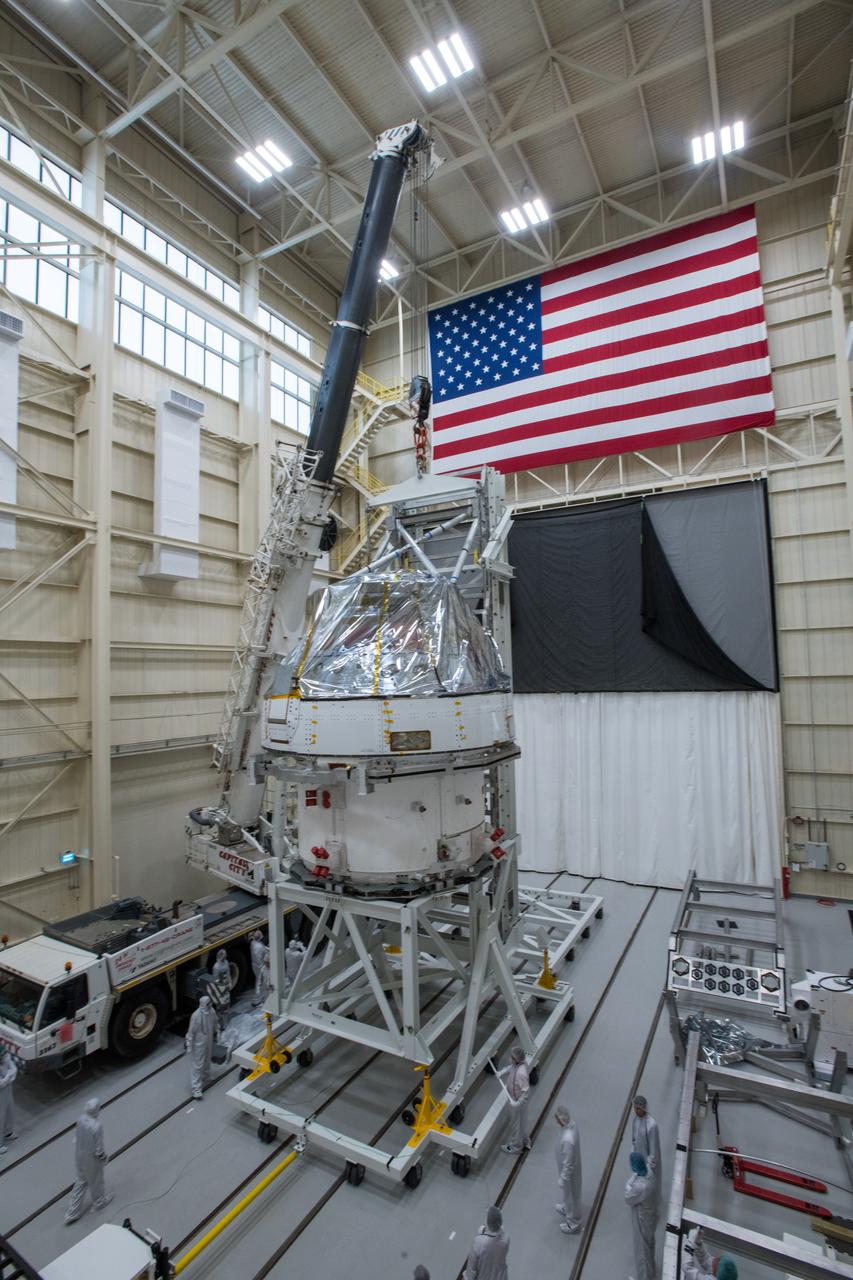
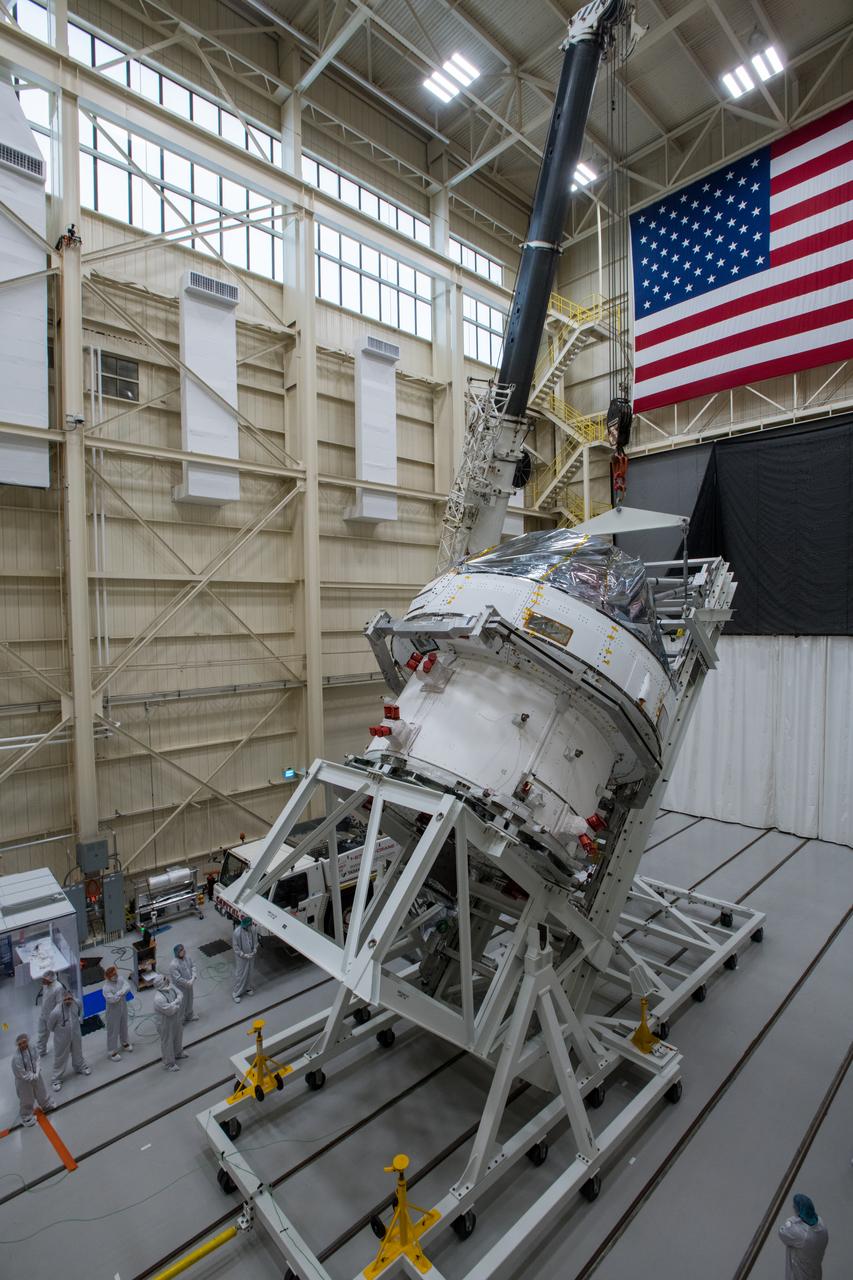
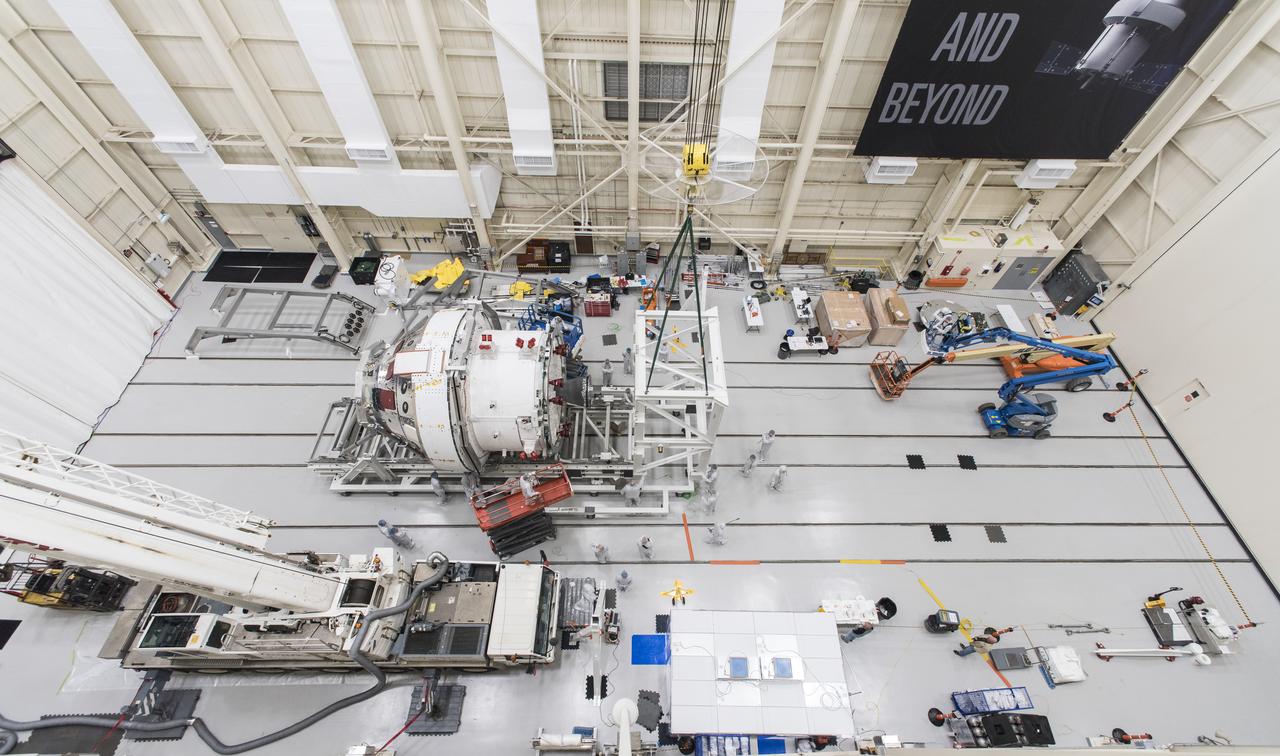
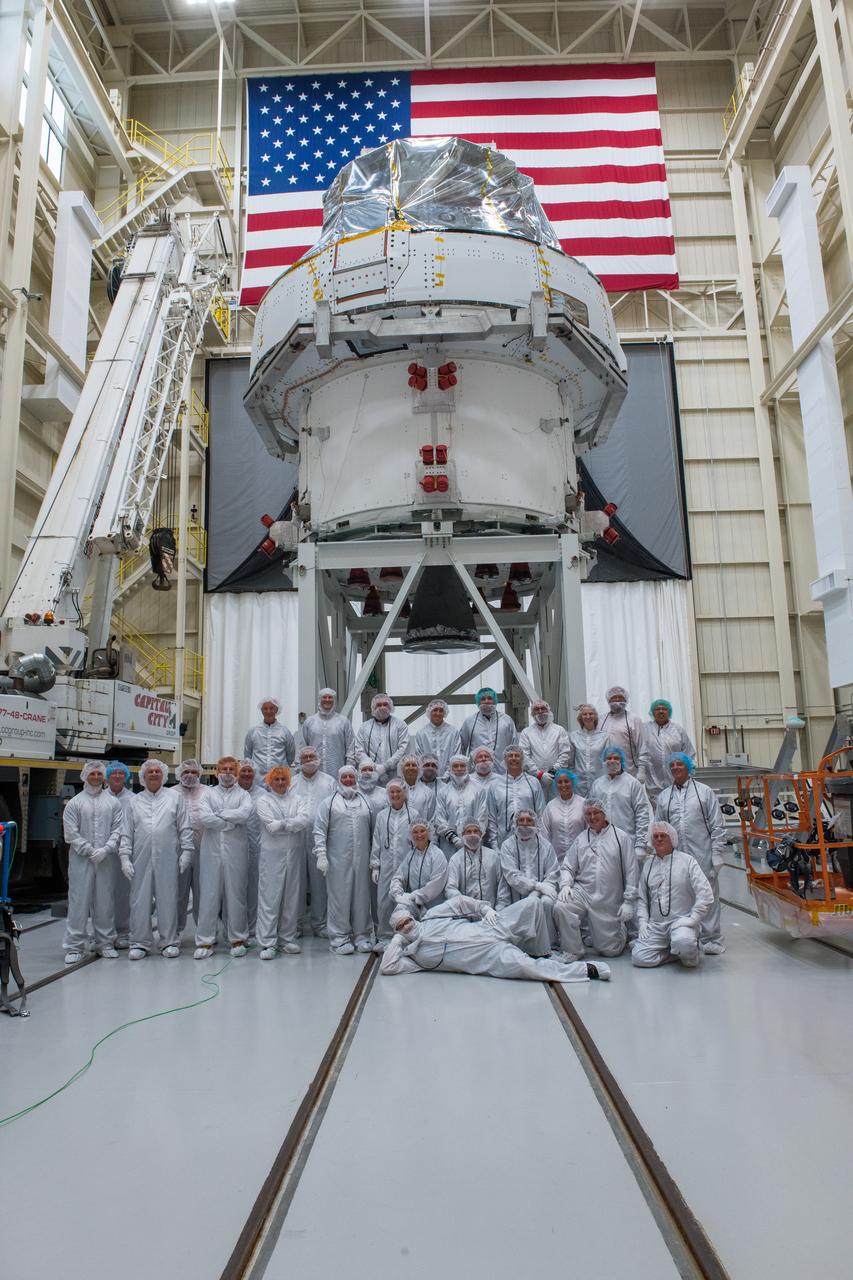
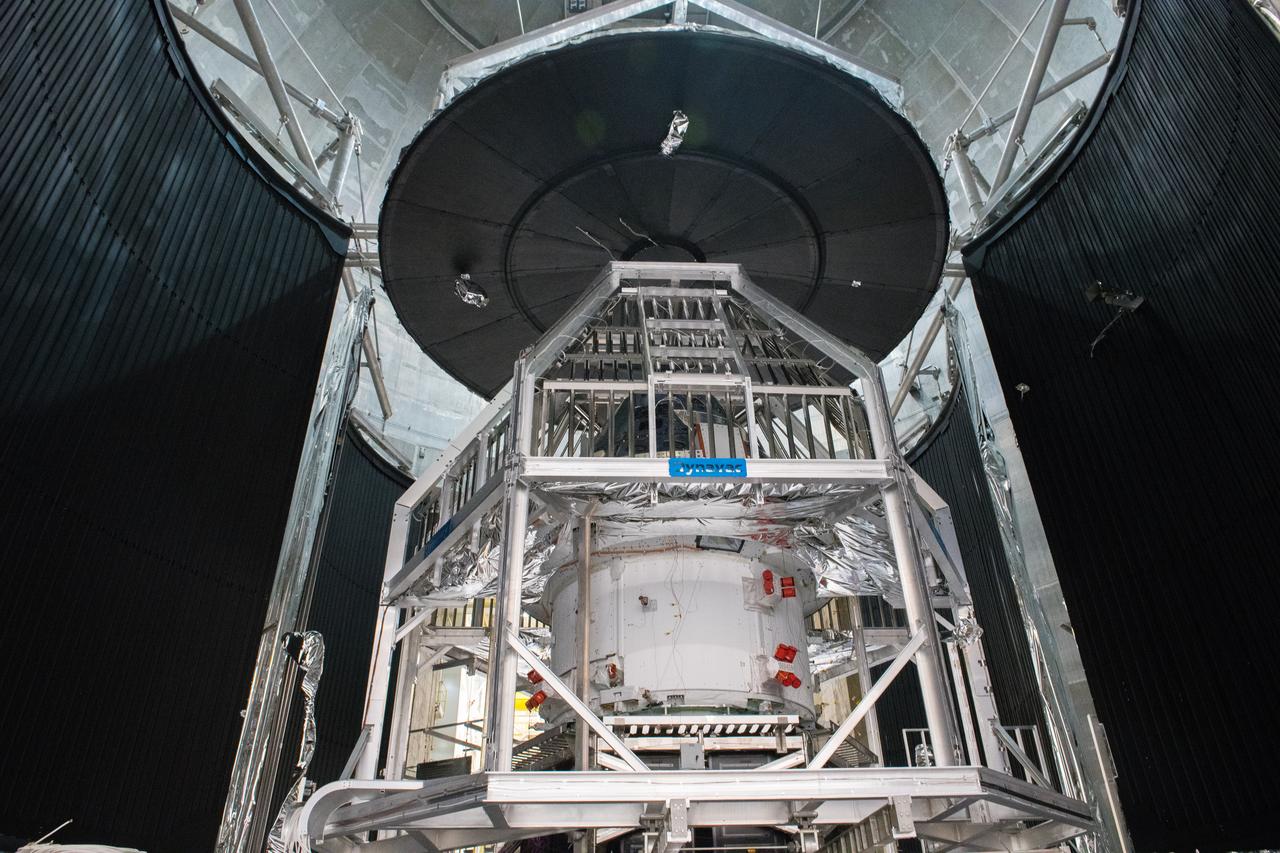
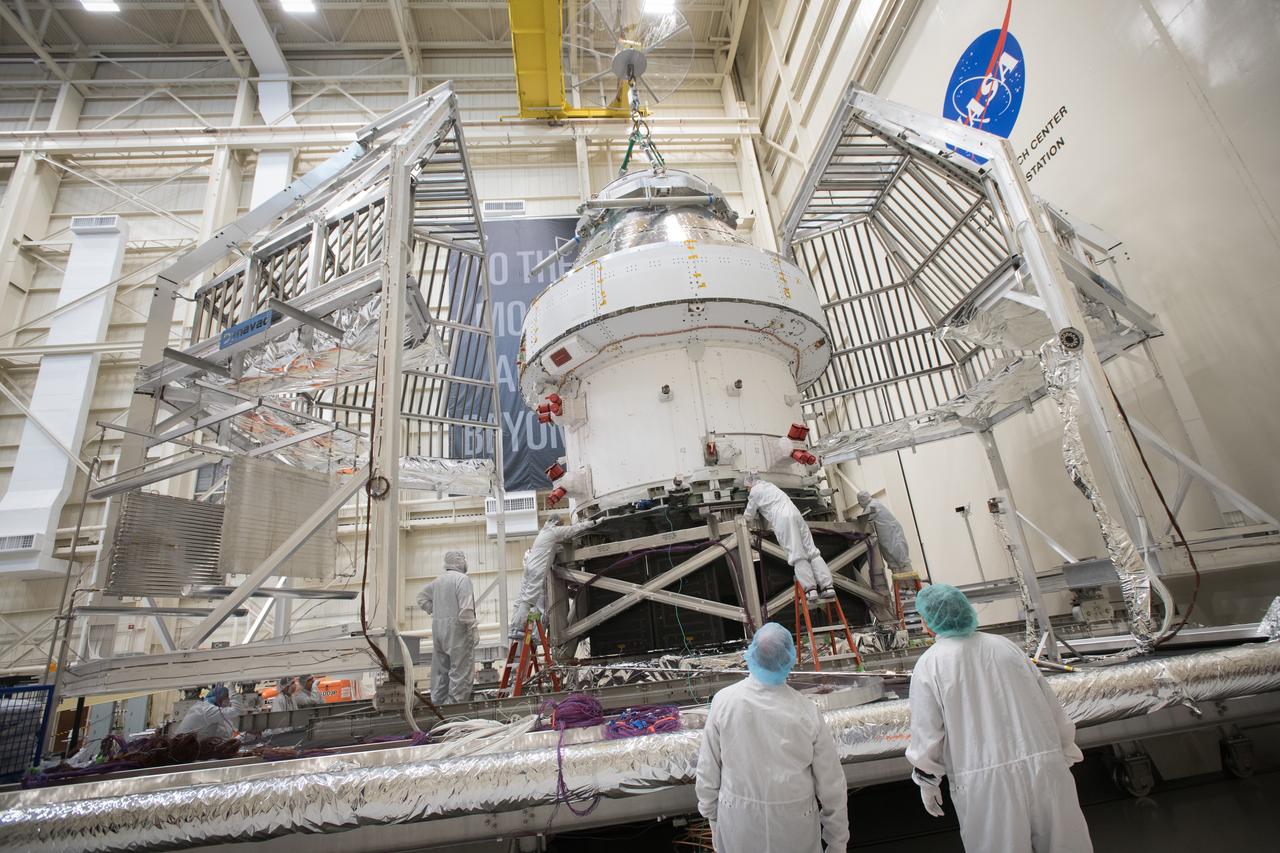
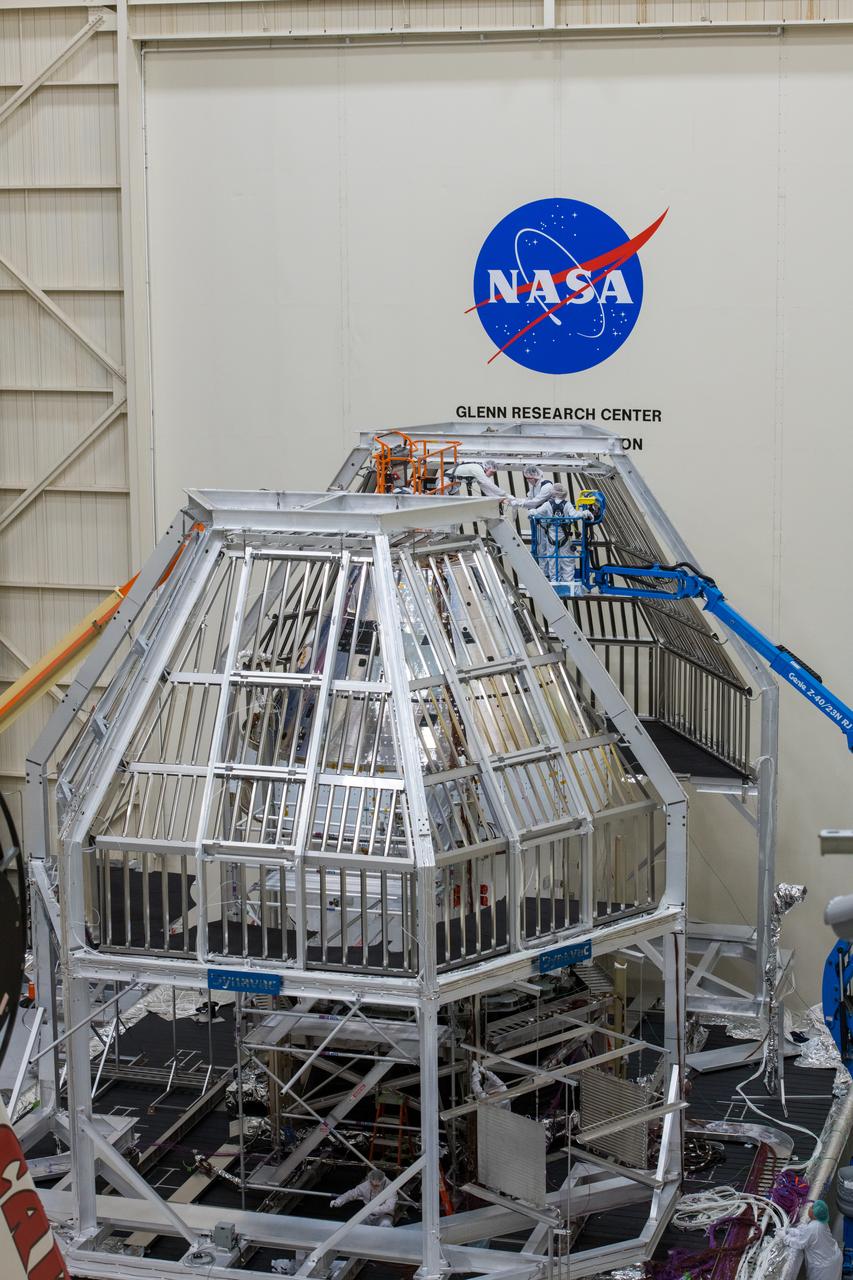
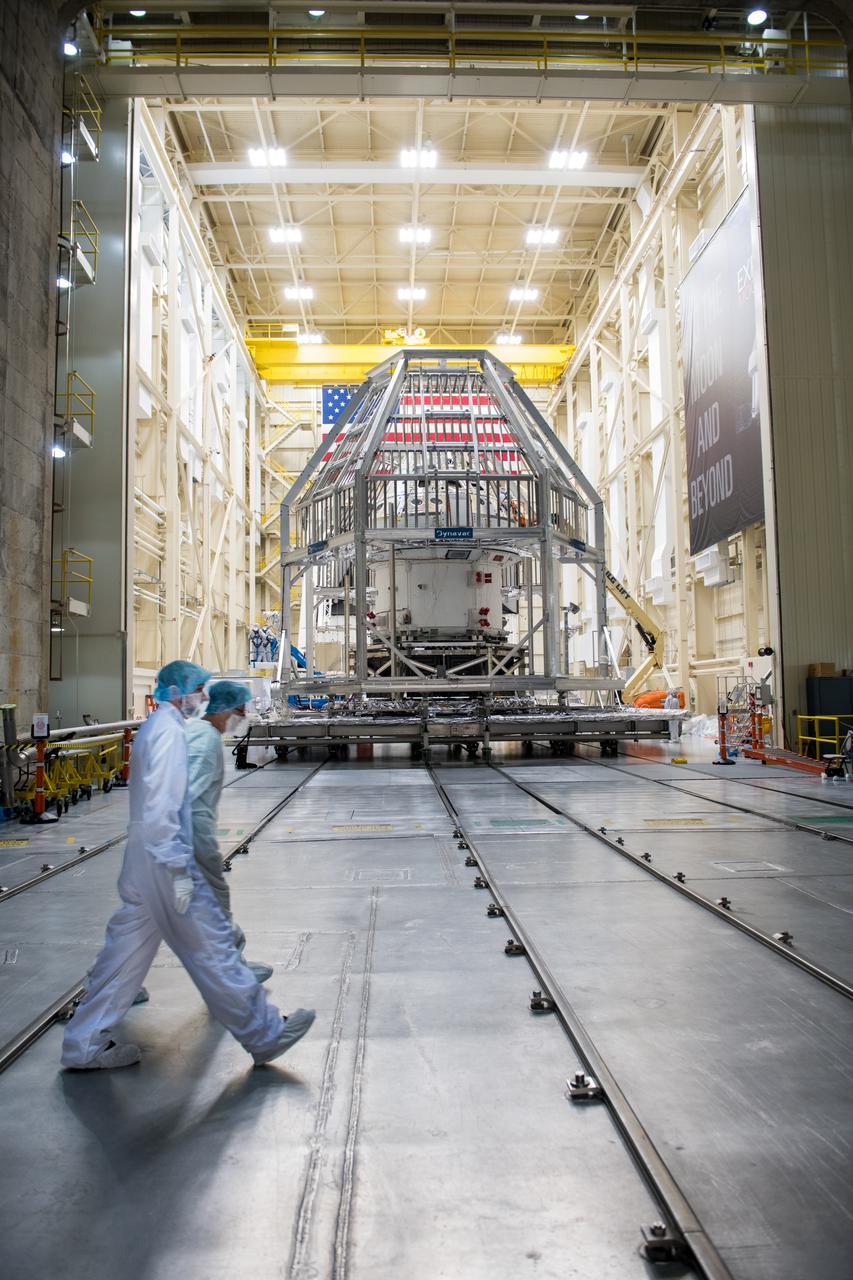
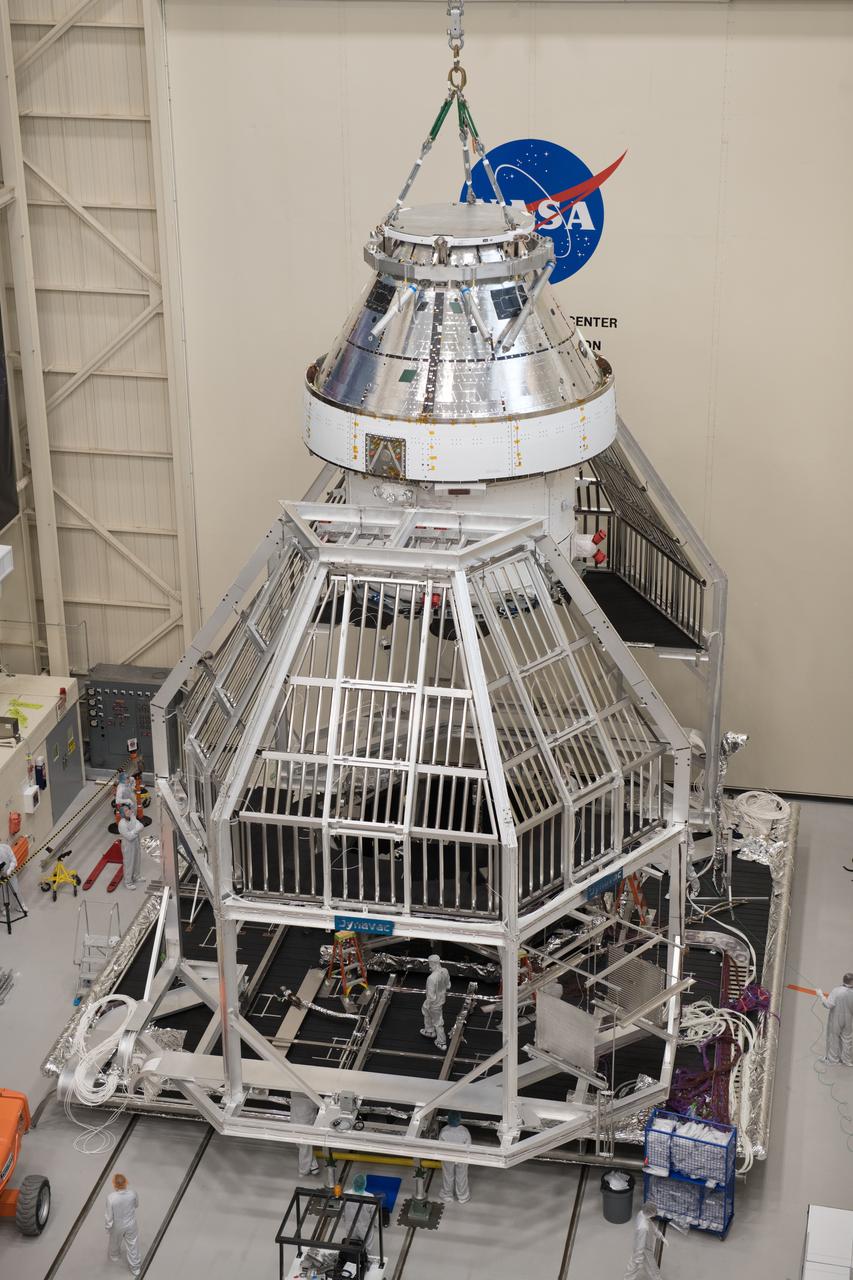
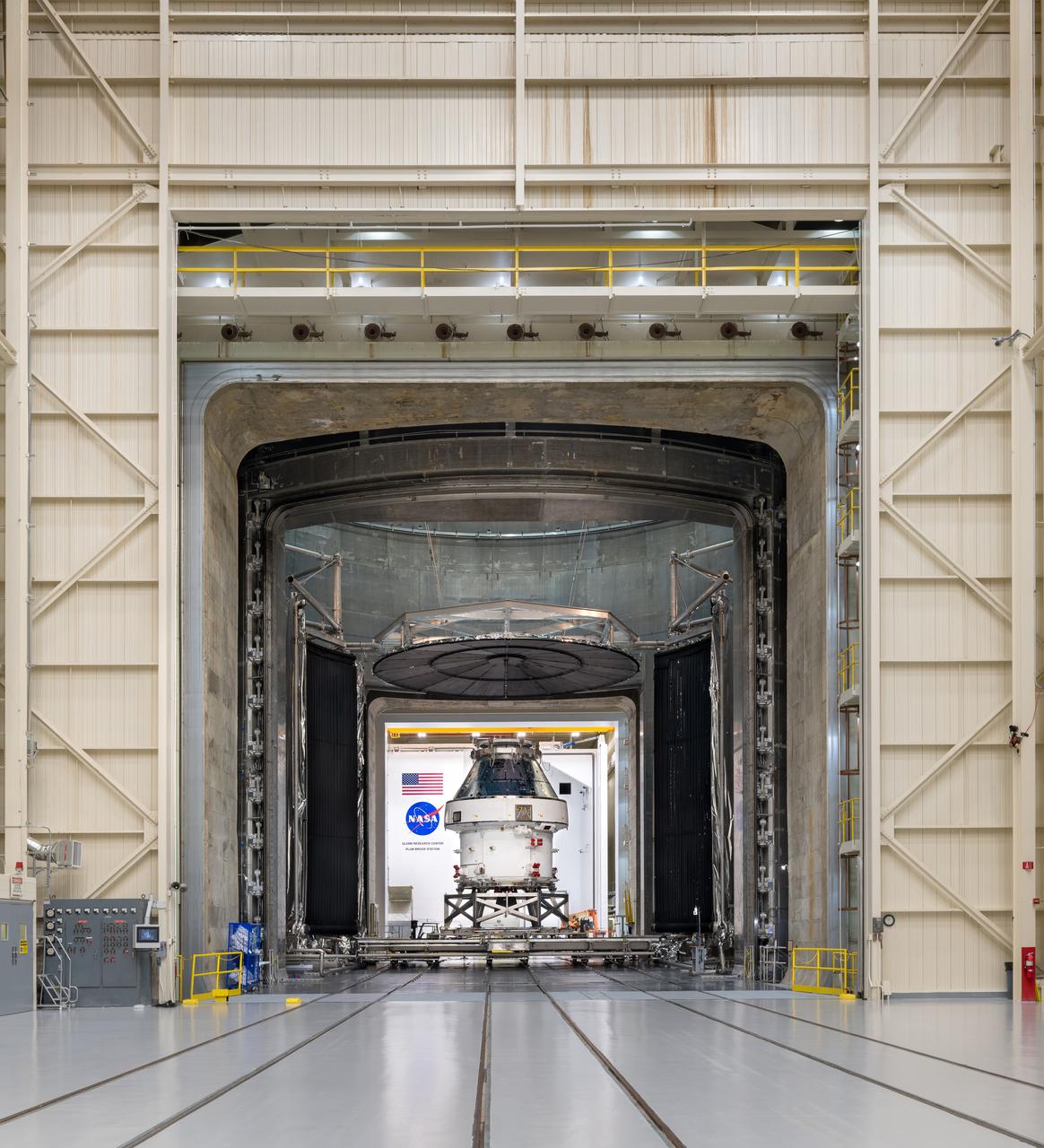
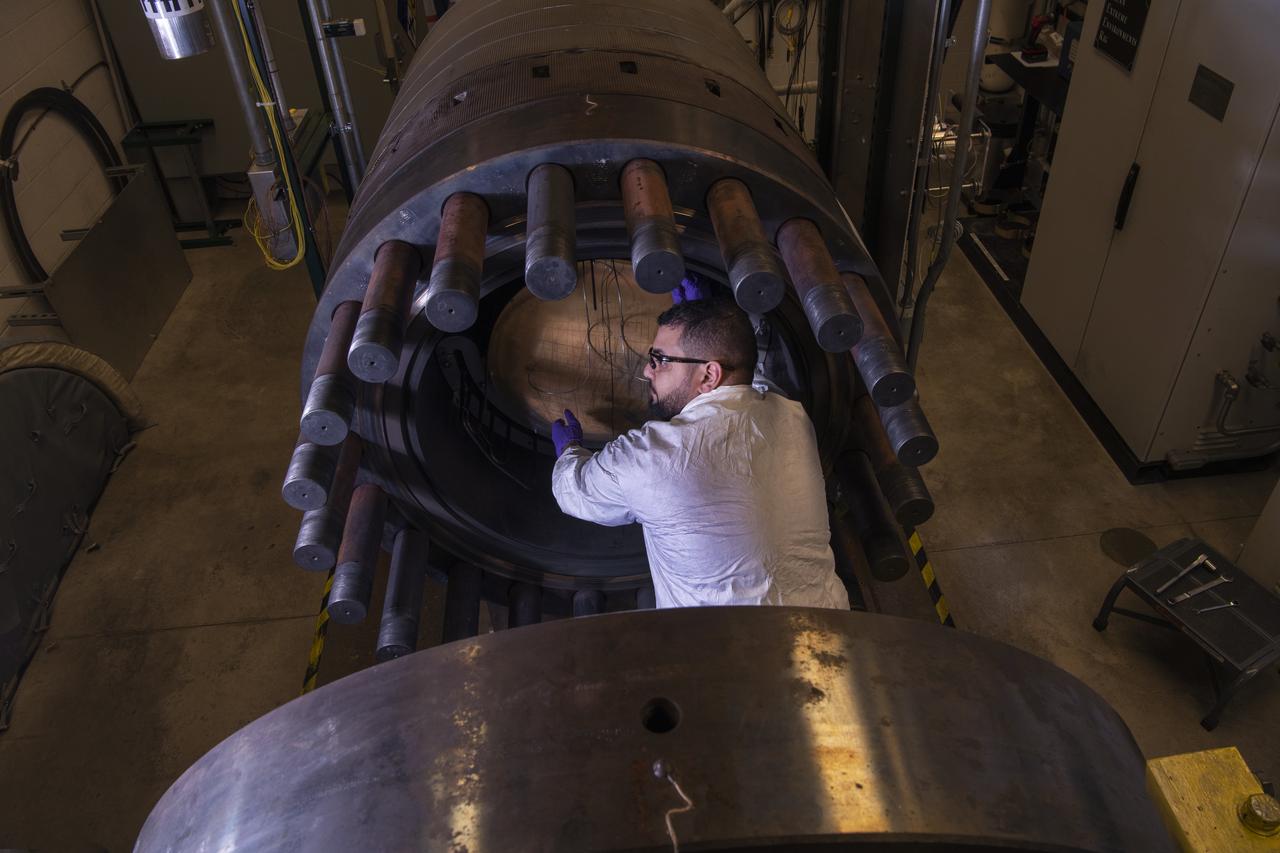
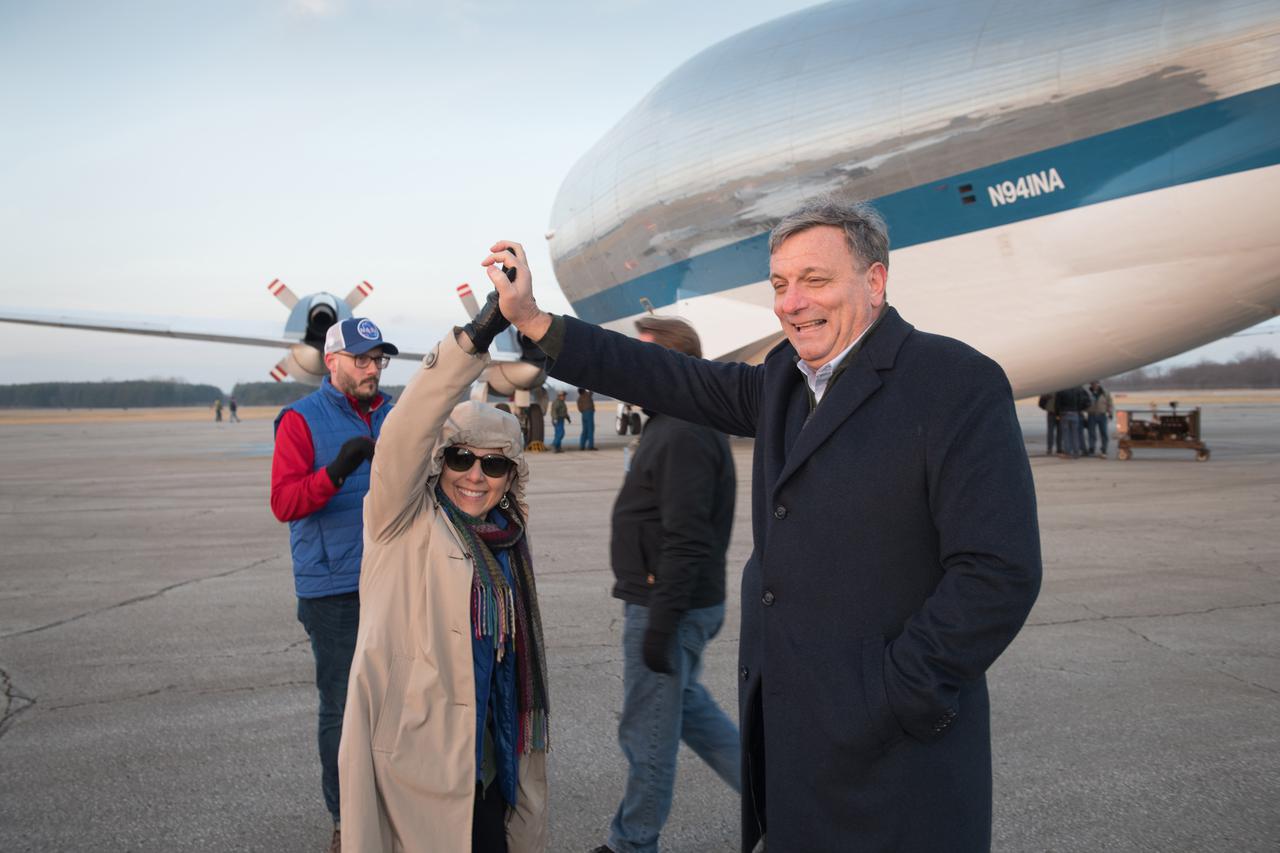
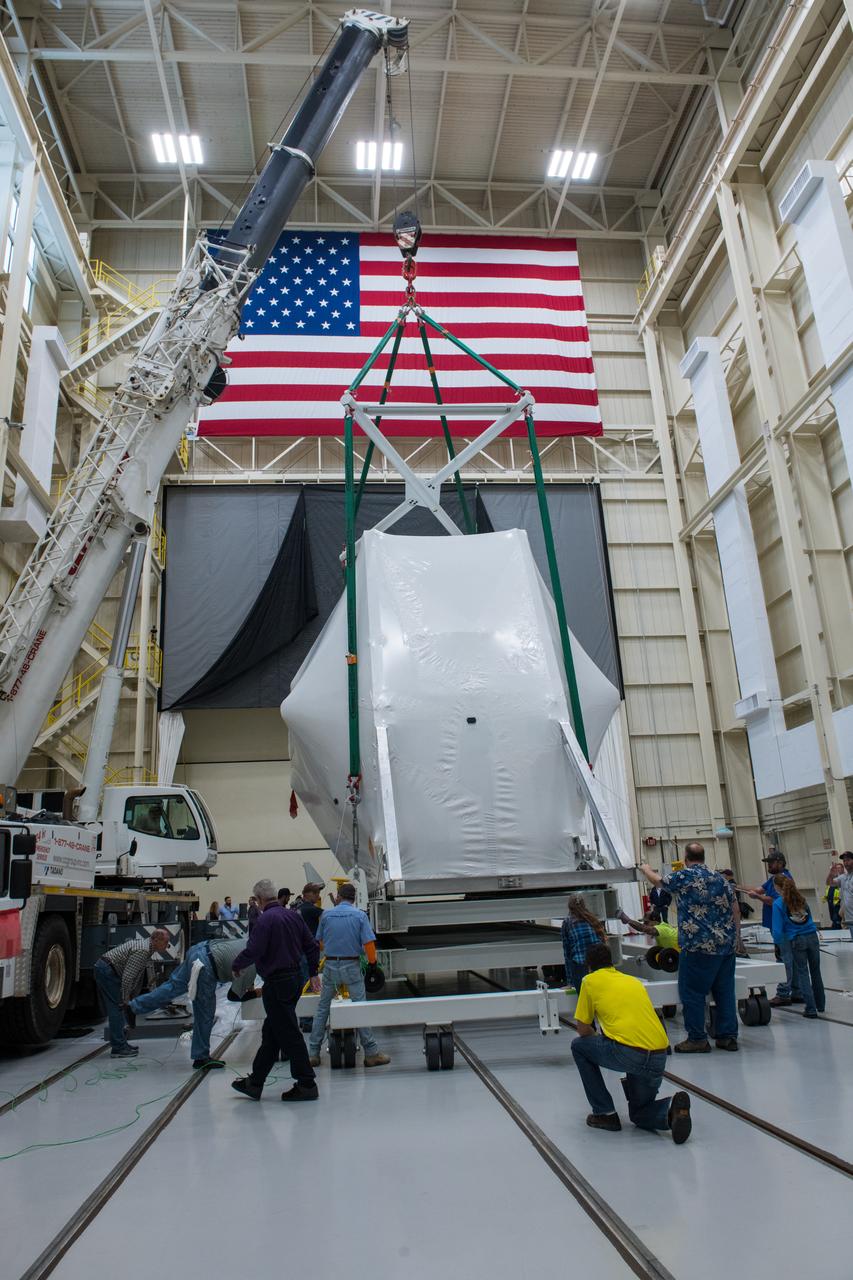
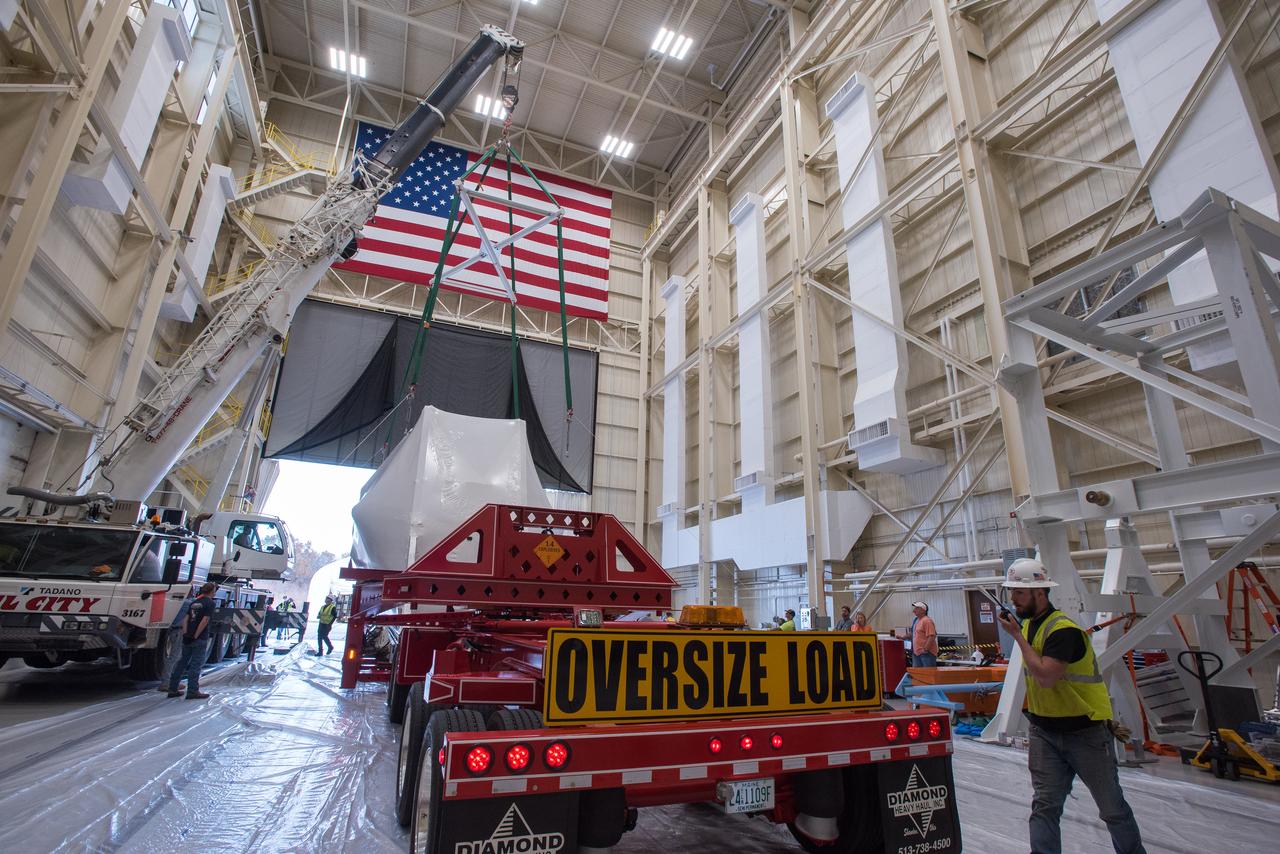
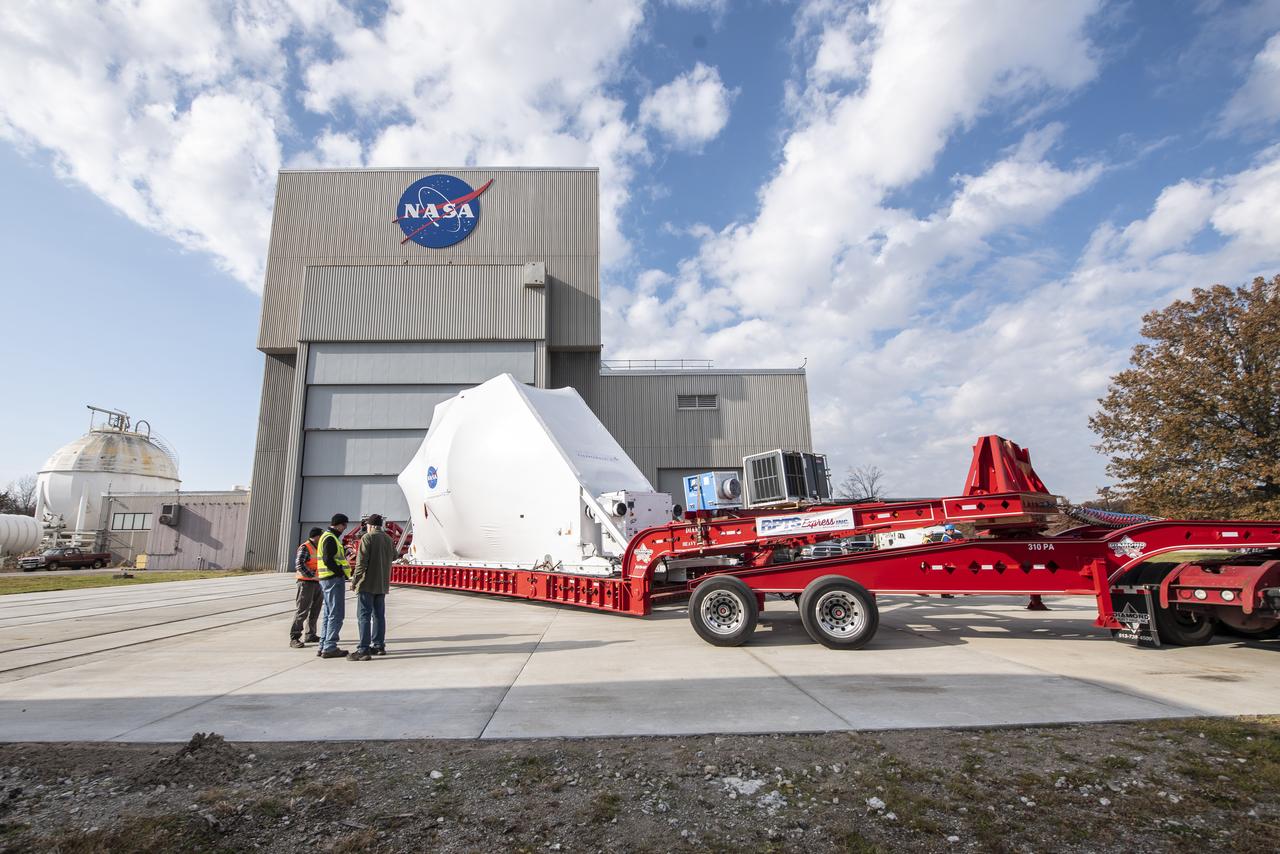
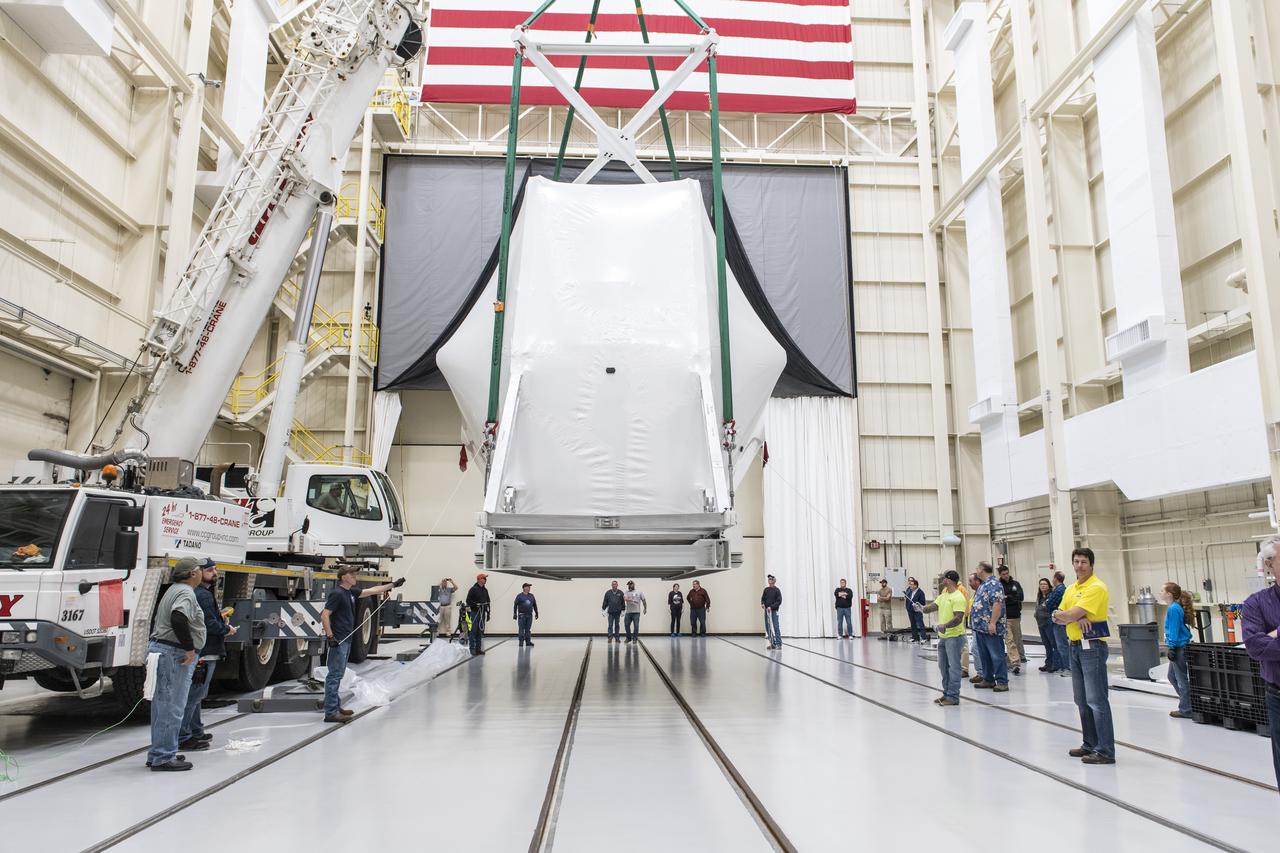
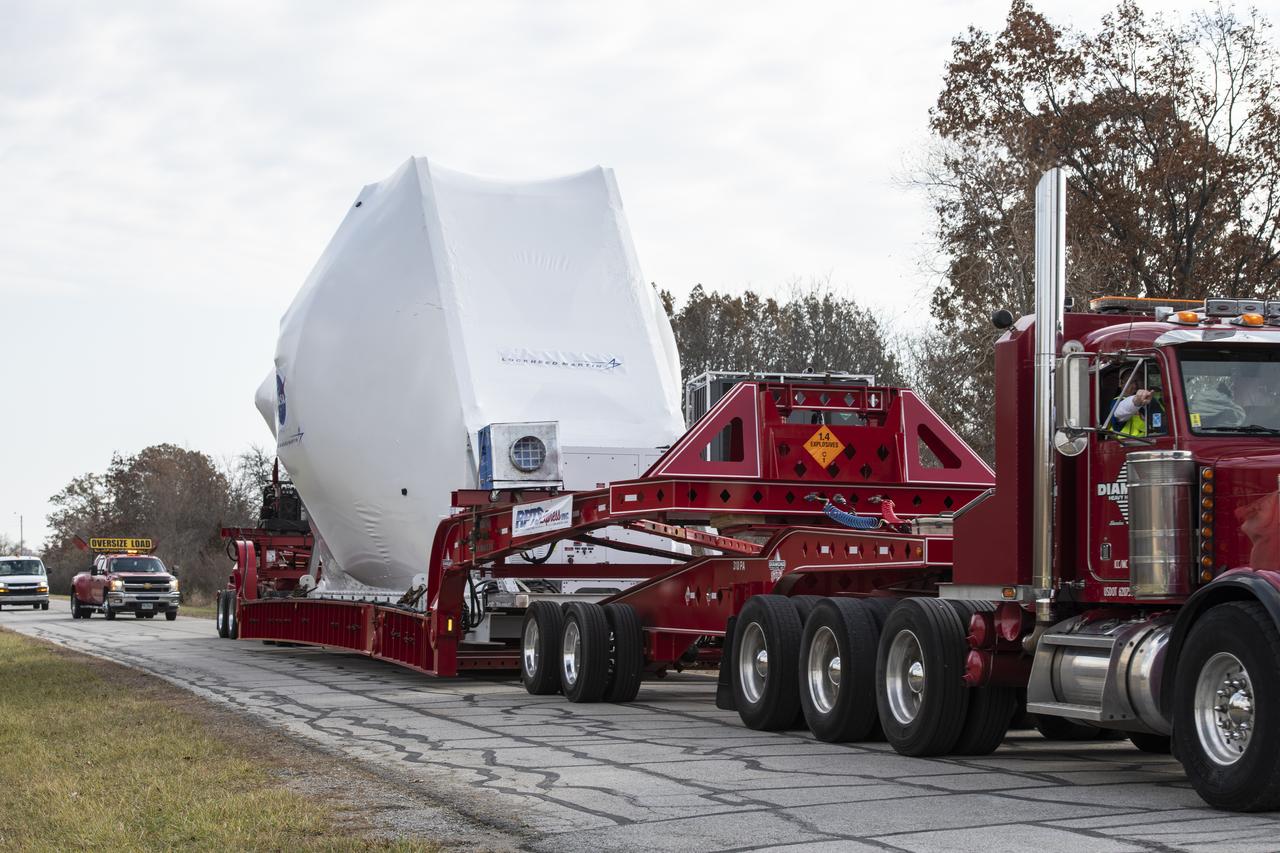
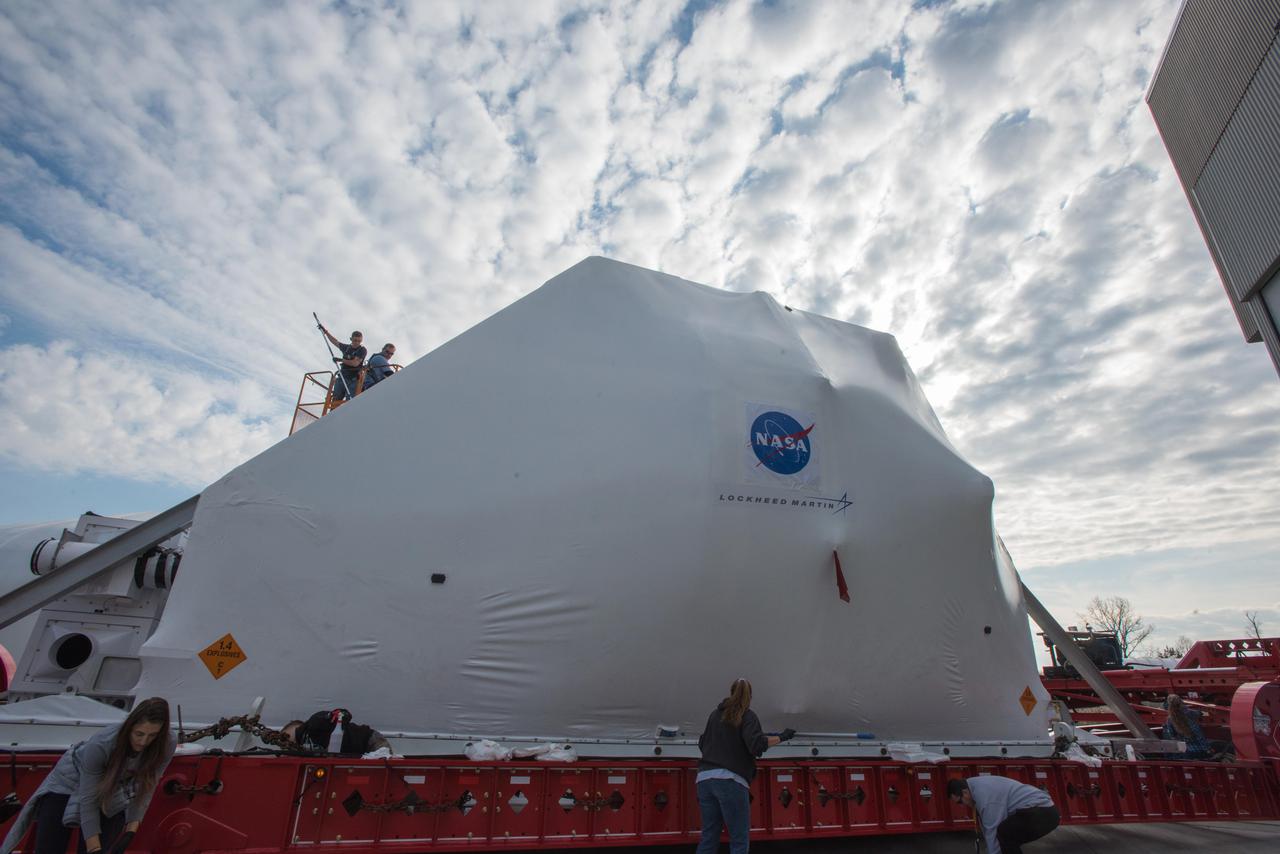
Orion - EM-1 - Artemis Spacecraft Departure at the Space Environments Complex, SEC Thermal Vacuum Chamber at the Neil A. Armstrong Test Facility, Transportation to Mansfield Lahm Airport
Orion Spacecraft is prepared for Space Environment Testing at the Glenn Research Center, GRC Plum Brook Station, Space Environments Complex, SEC
Orion Spacecraft is prepared for Space Environment Testing at th
Orion Spacecraft is prepared for Space Environment Testing at the Glenn Research Center, GRC Plum Brook Station, Space Environments Complex, SEC
Orion Spacecraft is prepared for Space Environment Testing at th
Orion Spacecraft is prepared for Space Environment Testing at the Glenn Research Center, GRC Plum Brook Station, Space Environments Complex, SEC
Orion Spacecraft is prepared for Space Environment Testing at th
Orion Spacecraft is prepared for Space Environment Testing at the Glenn Research Center, GRC Plum Brook Station, Space Environments Complex, SEC
Orion Spacecraft is prepared for Space Environment Testing at th
Orion Spacecraft is prepared for Space Environment Testing at the Glenn Research Center, GRC Plum Brook Station, Space Environments Complex, SEC
Orion Spacecraft is prepared for Space Environment Testing at th
Orion Spacecraft is prepared for Space Environment Testing at the Glenn Research Center, GRC Plum Brook Station, Space Environments Complex, SEC
Orion Spacecraft is prepared for Space Environment Testing at th
Orion Spacecraft is prepared for Space Environment Testing at the Glenn Research Center, GRC Plum Brook Station, Space Environments Complex, SEC
Orion Spacecraft is prepared for Space Environment Testing at th
Orion Spacecraft is prepared for Space Environment Testing at the Glenn Research Center, GRC Plum Brook Station, Space Environments Complex, SEC
Orion Spacecraft is prepared for Space Environment Testing at th
Orion Spacecraft is prepared for Space Environment Testing at the Glenn Research Center, GRC Plum Brook Station, Space Environments Complex, SEC
Orion Spacecraft is prepared for Space Environment Testing at th
Orion Spacecraft is prepared for Space Environment Testing at the Glenn Research Center, GRC Plum Brook Station, Space Environments Complex, SEC
Orion Spacecraft is prepared for Space Environment Testing at th
Orion Spacecraft is prepared for Space Environment Testing at the Glenn Research Center, GRC Plum Brook Station, Space Environments Complex, SEC
Orion Spacecraft is prepared for Space Environment Testing at th
Orion Spacecraft is prepared for Space Environment Testing at the Glenn Research Center, GRC Plum Brook Station, Space Environments Complex, SEC
Orion Spacecraft is prepared for Space Environment Testing at th
Orion Spacecraft is prepared for Space Environment Testing at the Glenn Research Center, GRC Plum Brook Station, Space Environments Complex, SEC
Orion Spacecraft is prepared for Space Environment Testing at th
Orion Spacecraft is prepared for Space Environment Testing at the Glenn Research Center, GRC Plum Brook Station, Space Environments Complex, SEC
Orion Spacecraft is prepared for Space Environment Testing at th
Orion Spacecraft is prepared for Space Environment Testing at the Glenn Research Center, GRC Plum Brook Station, Space Environments Complex, SEC
Orion Spacecraft is prepared for Space Environment Testing at th
Orion Spacecraft is prepared for Space Environment Testing at the Glenn Research Center, GRC Plum Brook Station, Space Environments Complex, SEC
Orion Spacecraft is prepared for Space Environment Testing at th
Orion Spacecraft is prepared for Space Environment Testing at the Glenn Research Center, GRC Plum Brook Station, Space Environments Complex, SEC
Orion Spacecraft is prepared for Space Environment Testing at th
Orion Spacecraft is prepared for Space Environment Testing at the Glenn Research Center, GRC Plum Brook Station, Space Environments Complex, SEC
Orion Spacecraft is prepared for Space Environment Testing at th
Orion Spacecraft is prepared for Space Environment Testing at the Glenn Research Center, GRC Plum Brook Station, Space Environments Complex, SEC
Orion Spacecraft is prepared for Space Environment Testing at th
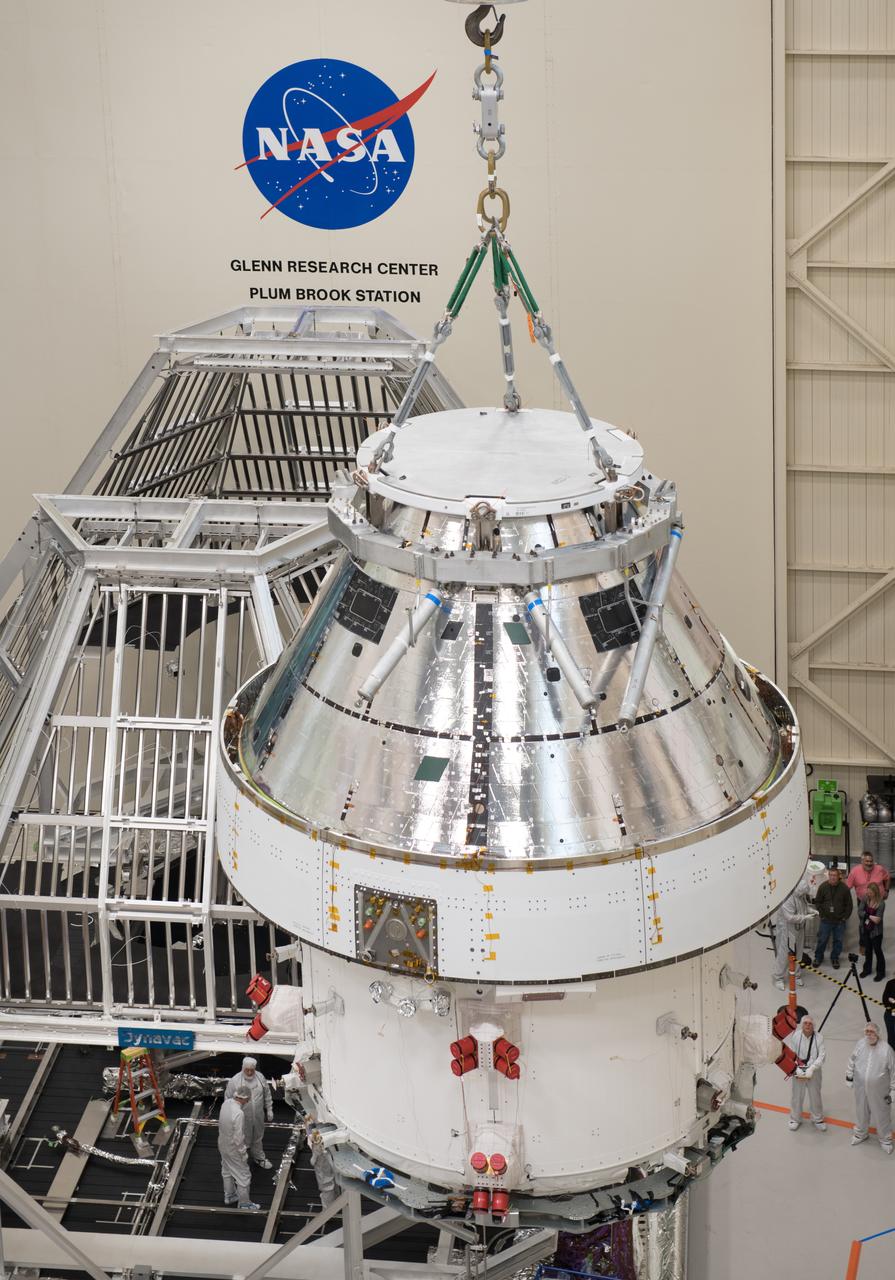
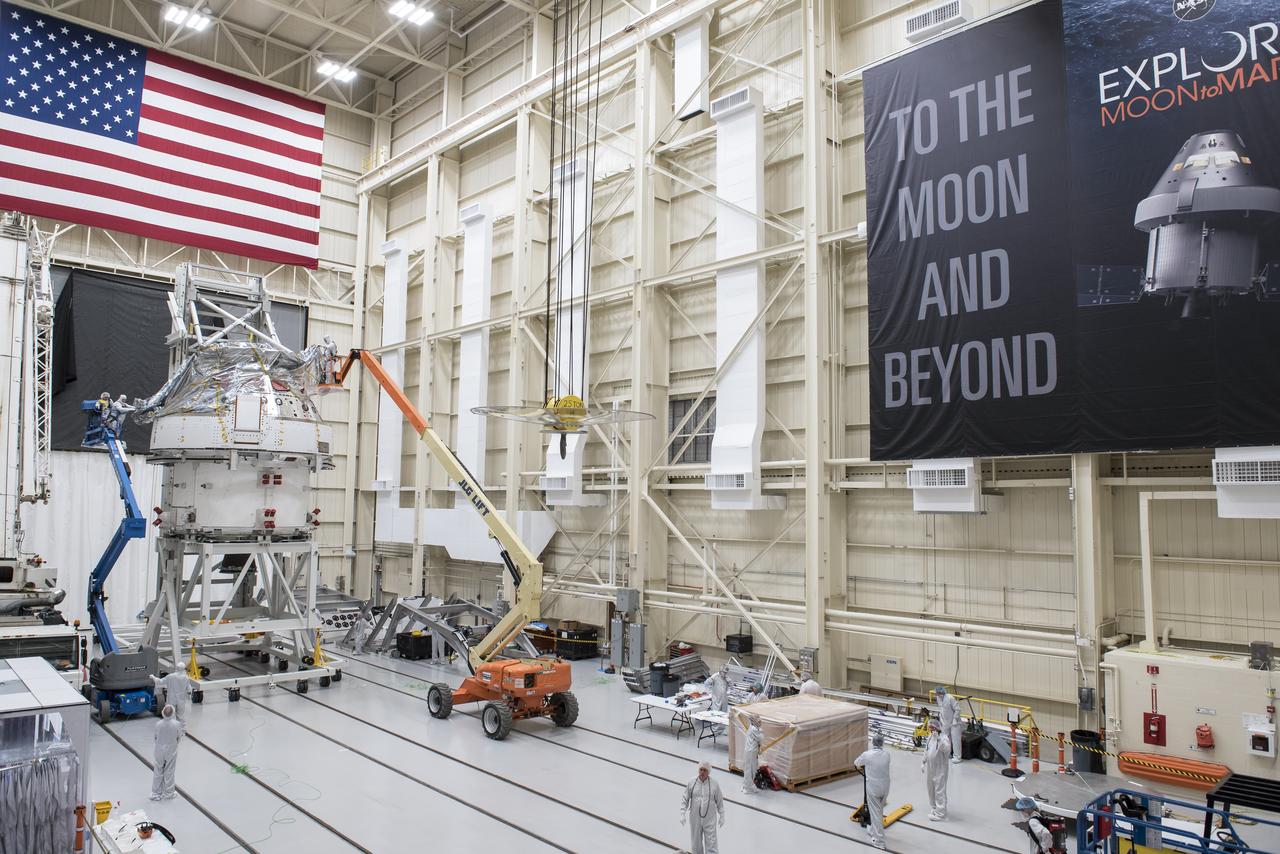
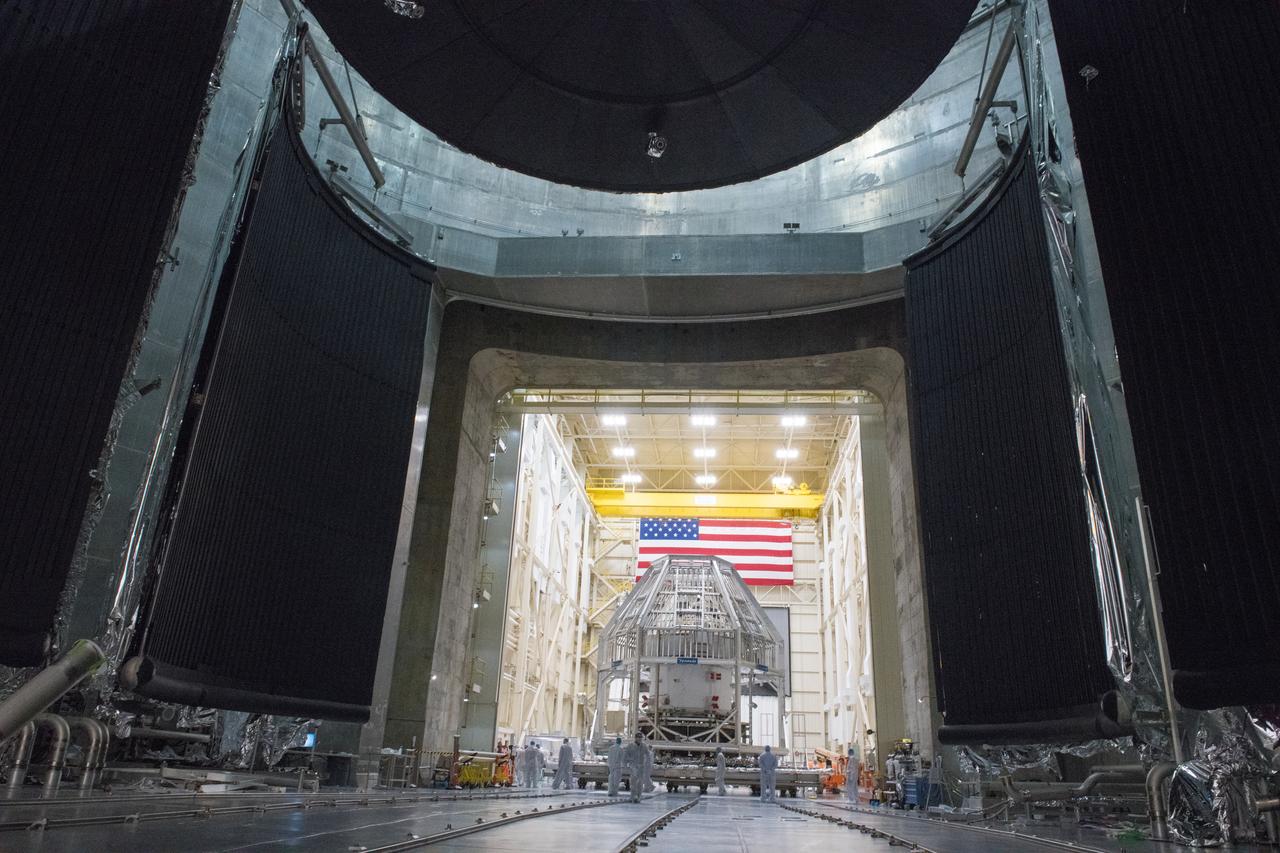
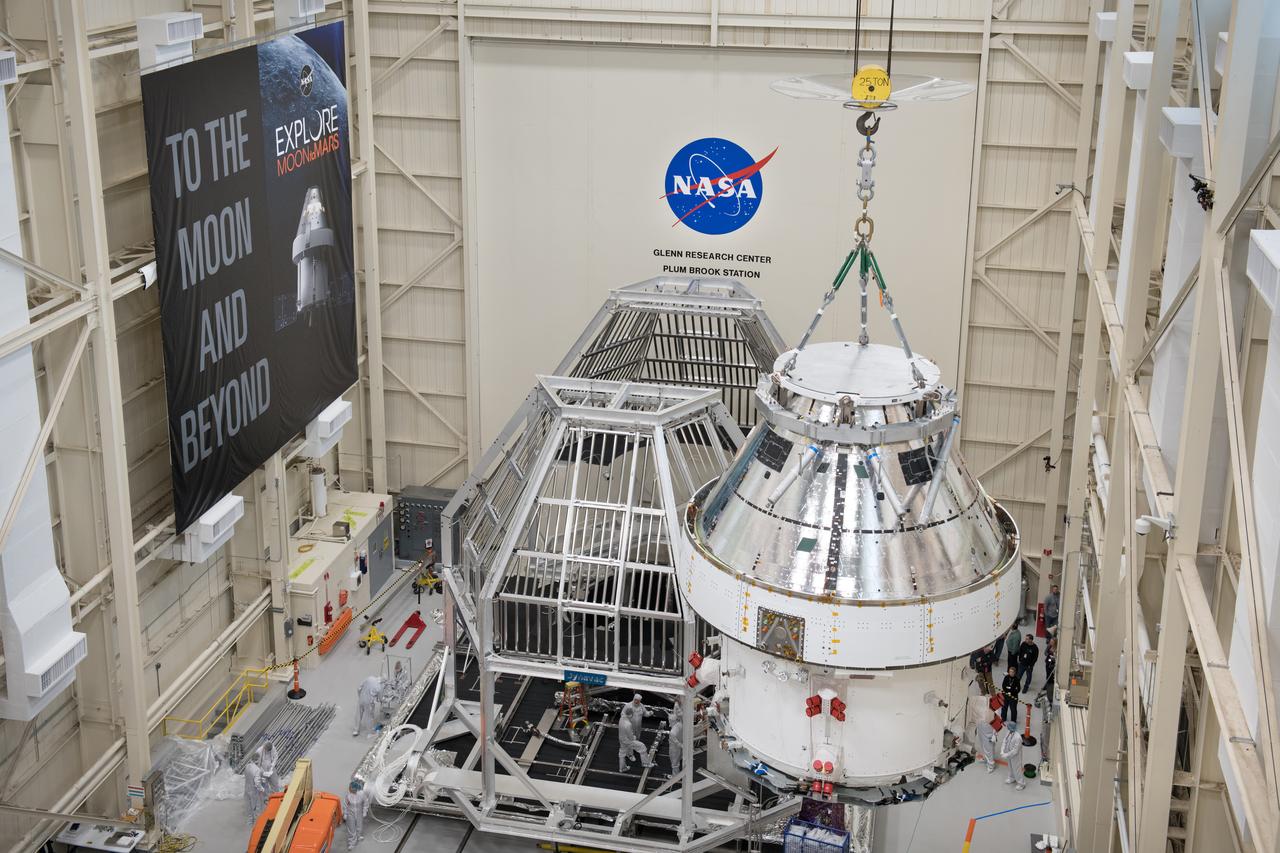
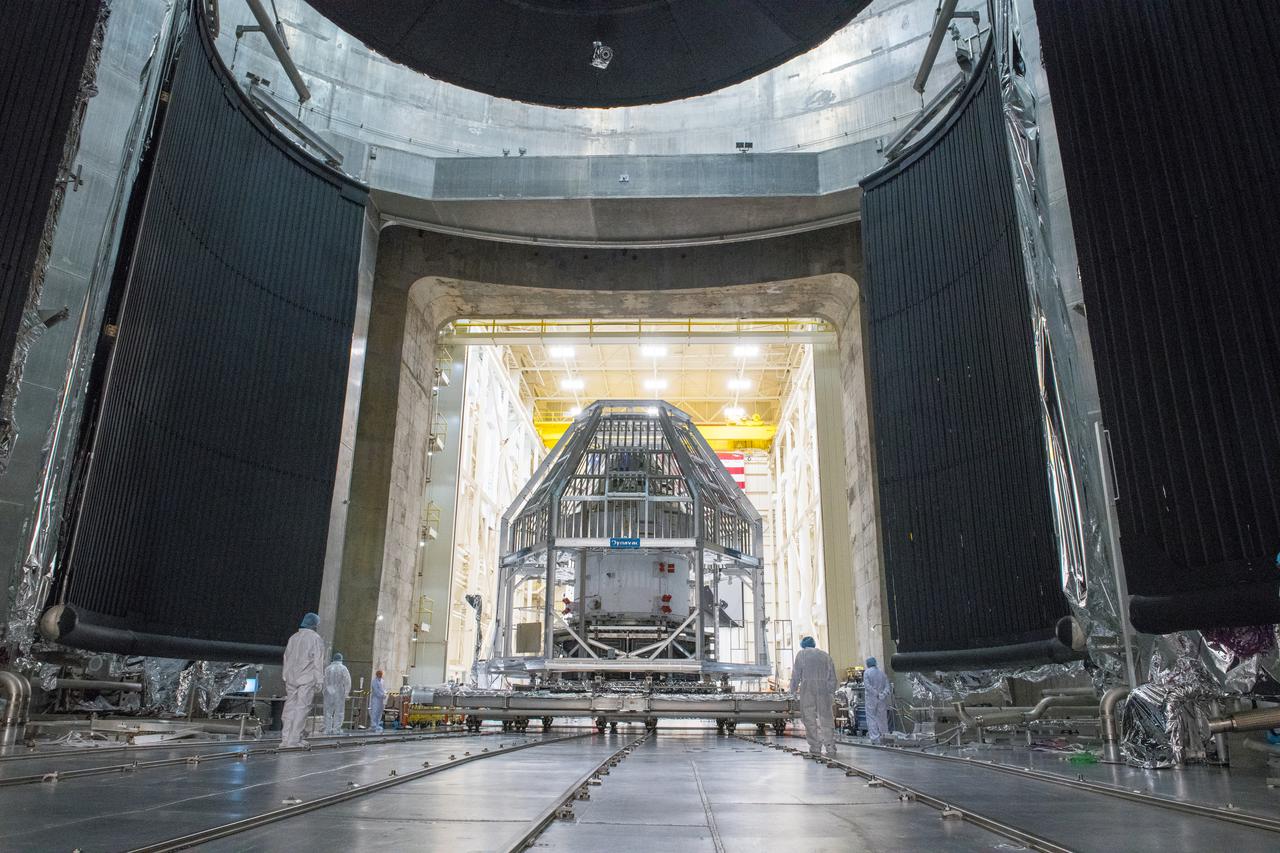
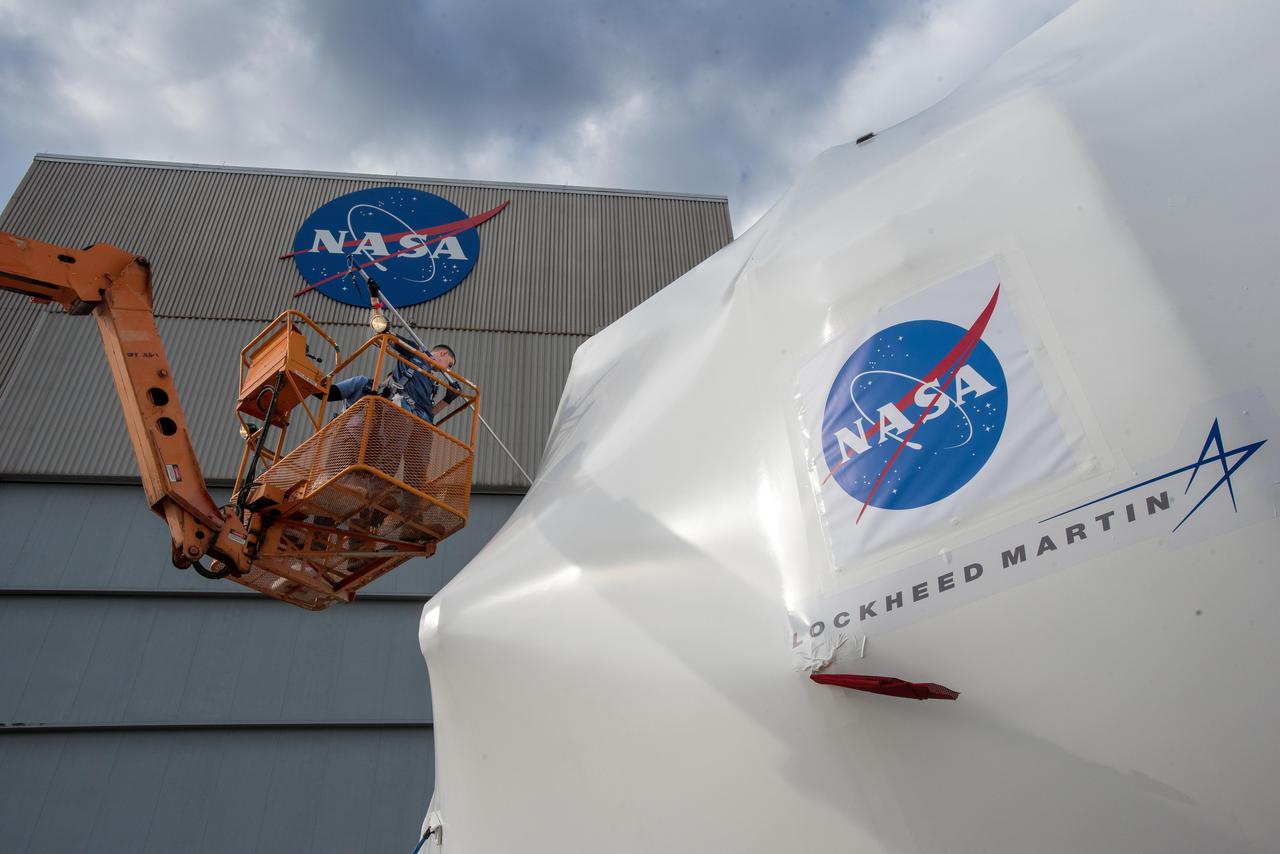
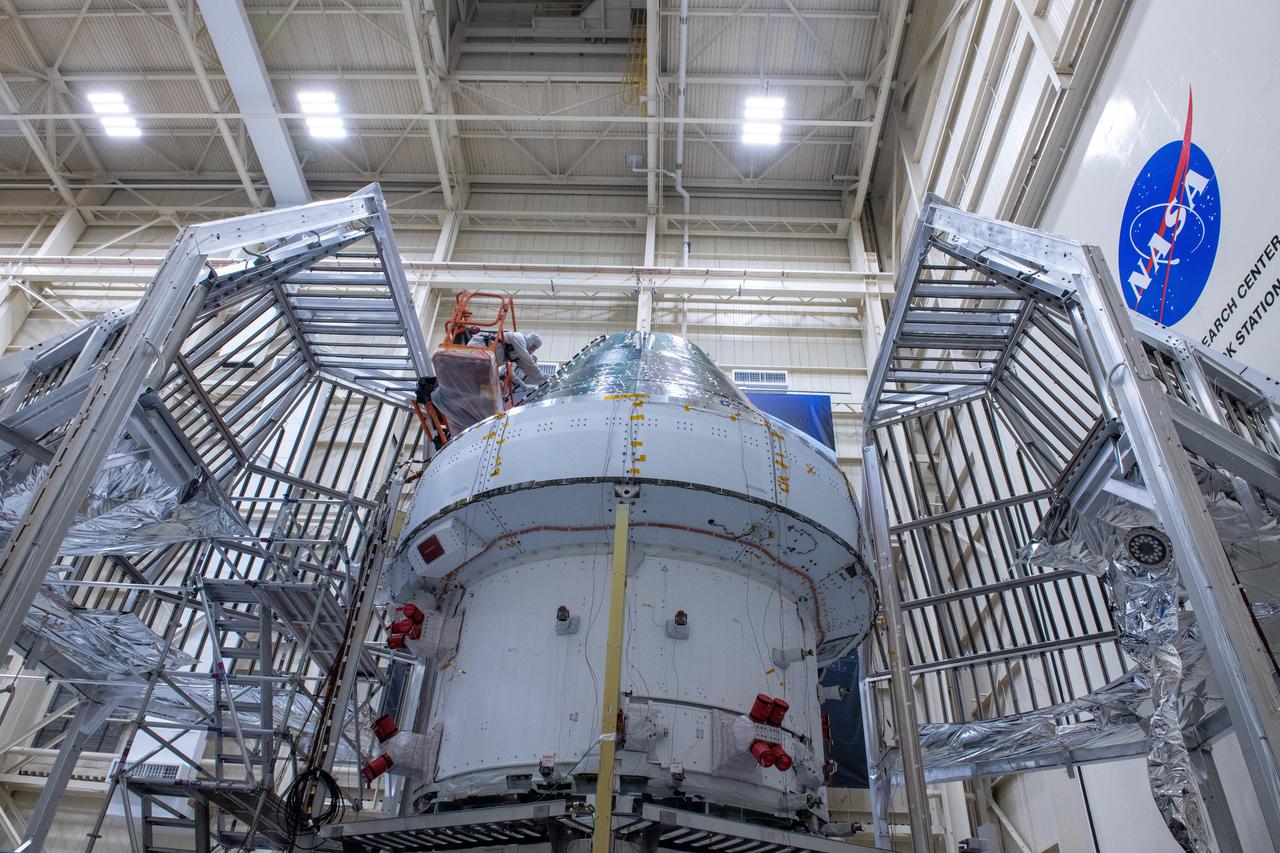
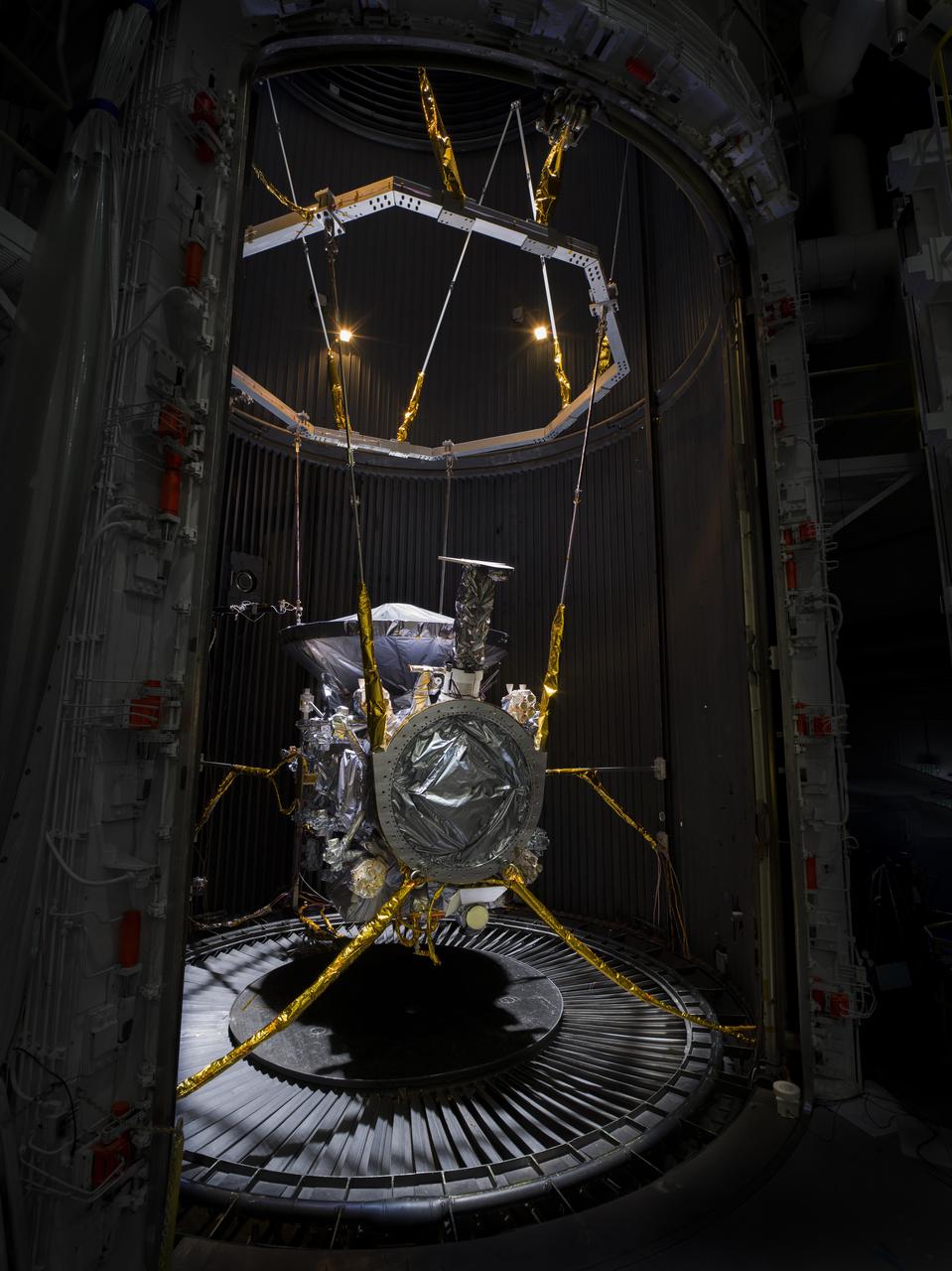
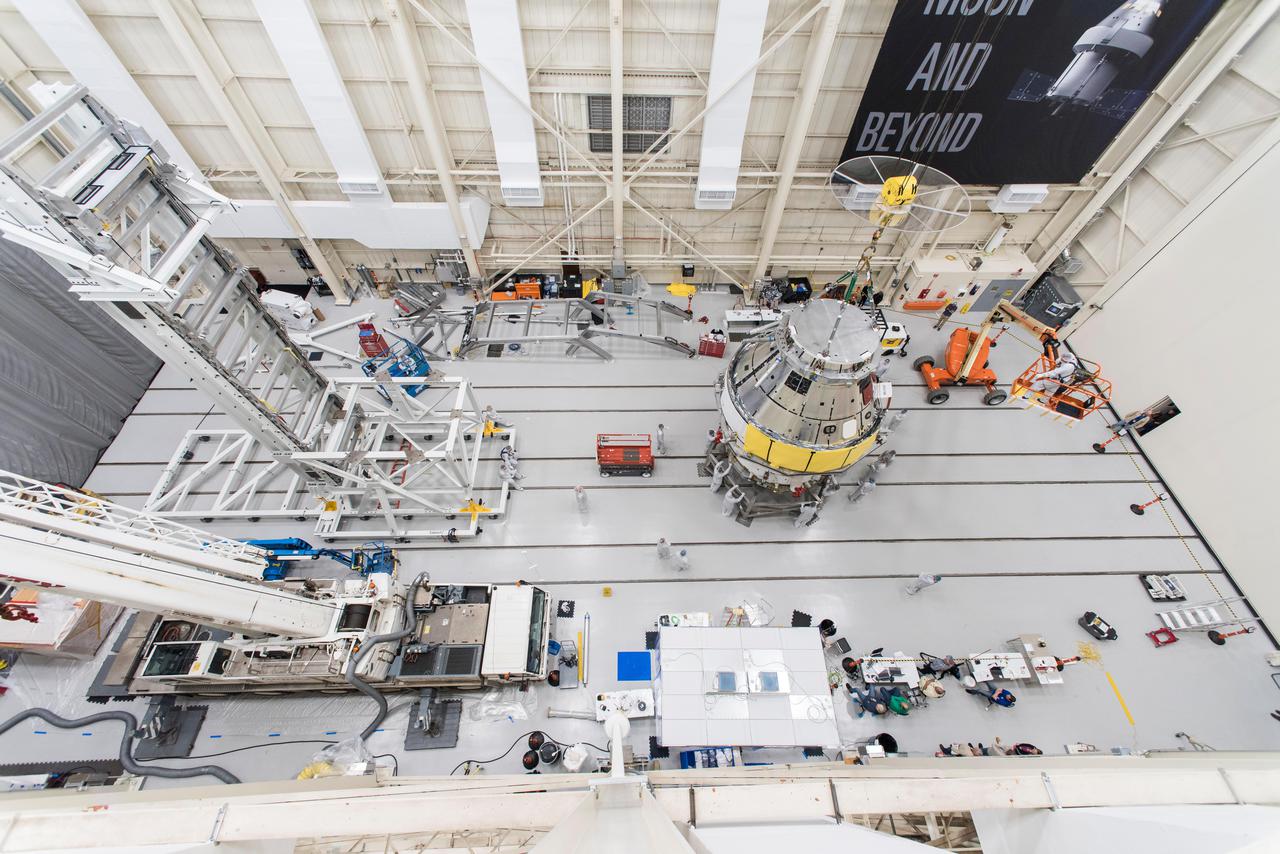
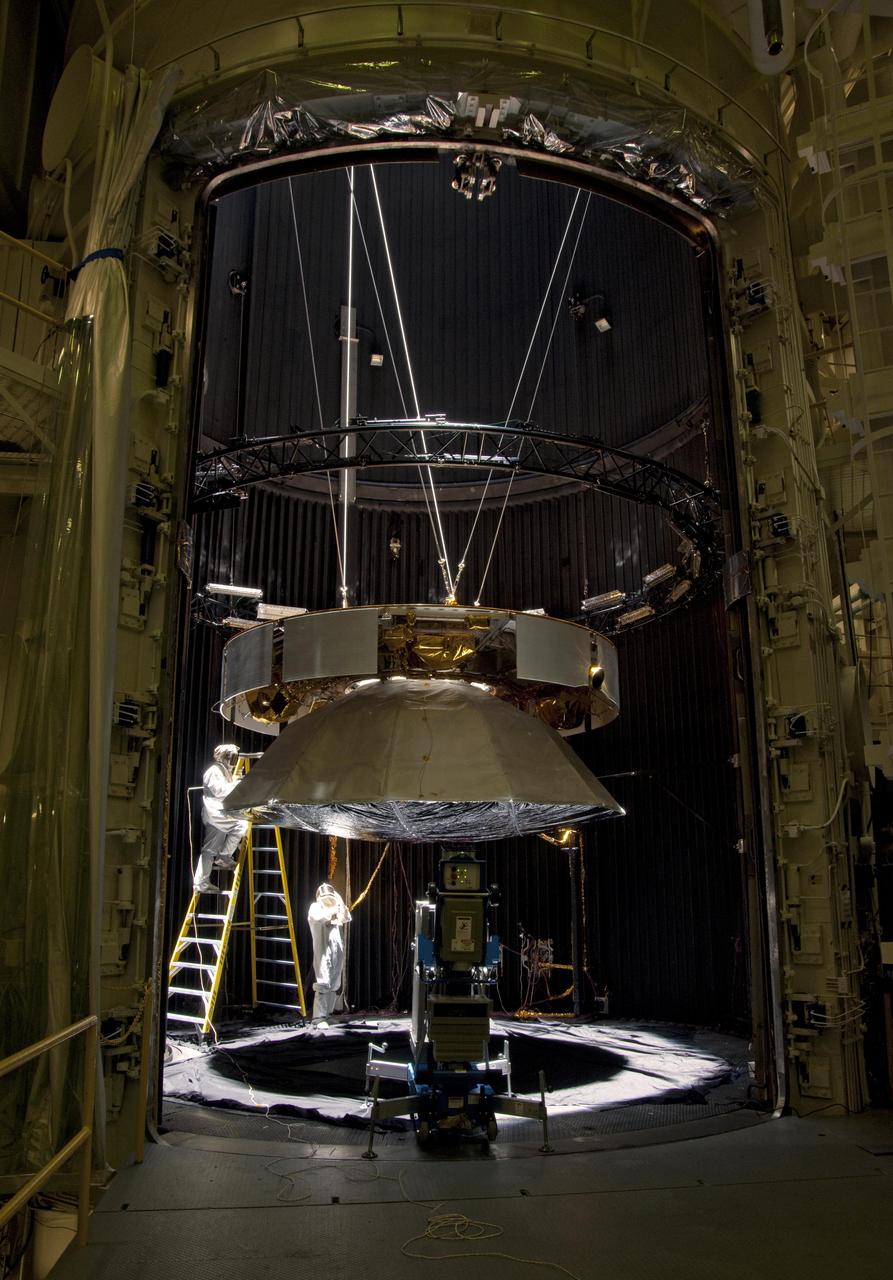
The Orion spacecraft for the Artemis I Mission, consisting of the crew module and European-built service module, sits in the NASA Glenn Research Center, Plum Brook Station, Space Environments Complex, SEC, Thermal Vacuum Chamber after more than three months of testing where it was subjected to the extreme temperatures and electromagnetic environment it will experience in the vacuum of space during Artemis missions.    Orion is a key component of Artemis I, an uncrewed test flight around the Moon that will land the first woman and next man on the lunar surface by 2024.
Orion spacecraft for the Artemis I Mission, consisting of the crew module and European-built service module, sits in the NASA Glenn Research Center, Plum Brook Station, Space Environments Complex, SEC, Thermal Vacuum Chamber
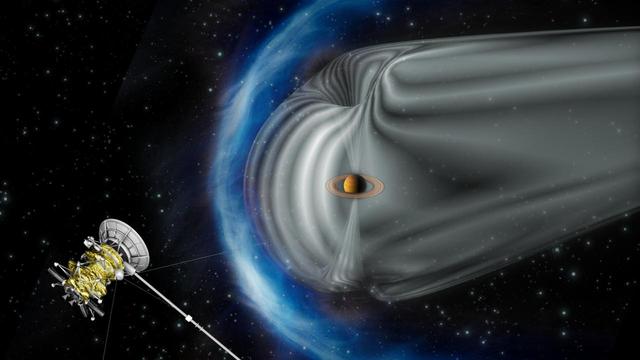
This artist impression by the European Space Agency shows NASA Cassini spacecraft exploring the magnetic environment of Saturn. The image is not to scale.
Cassini at Saturn Bow Shock Artist Concept
Artist impression of NASA MErcury Surface, Space ENvironment, GEochemistry, and Ranging MESSENGER spacecraft in orbit at Mercury.
MESSENGER at Mercury Artist Concept
Juno testing in Glenn Extreme Environments Rig, GEER Laboratory.  Juno is a solar-powered NASA spacecraft that spans the width of a basketball court and makes long, looping orbits around giant planet Jupiter
GRC-2022-C-00970
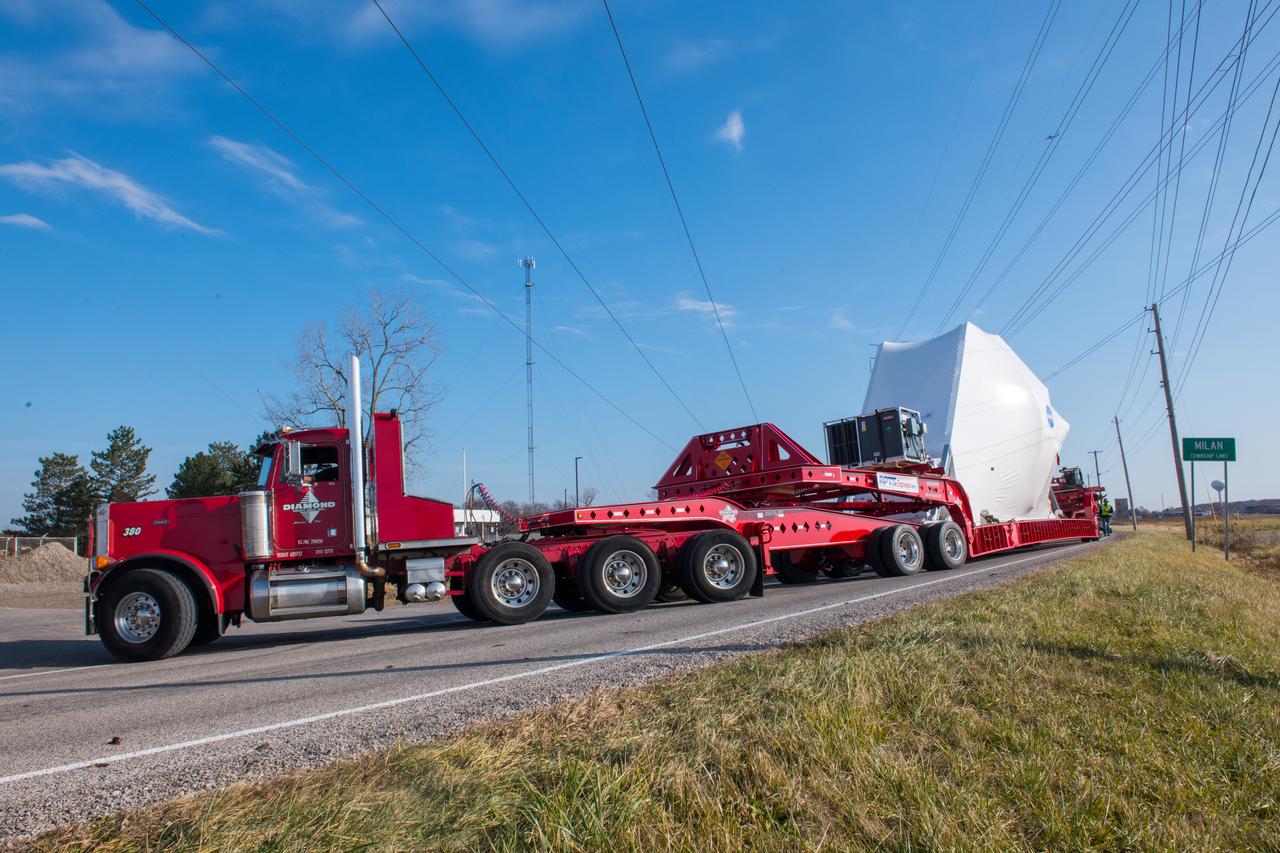
Orion - EM-1 - Artemis Spacecraft Arrival at Mansfield Lahm Airport, Transportation to Plum Brook Station and Installation in the Space Environment Complex, SEC Thermal Vacuum Chamber
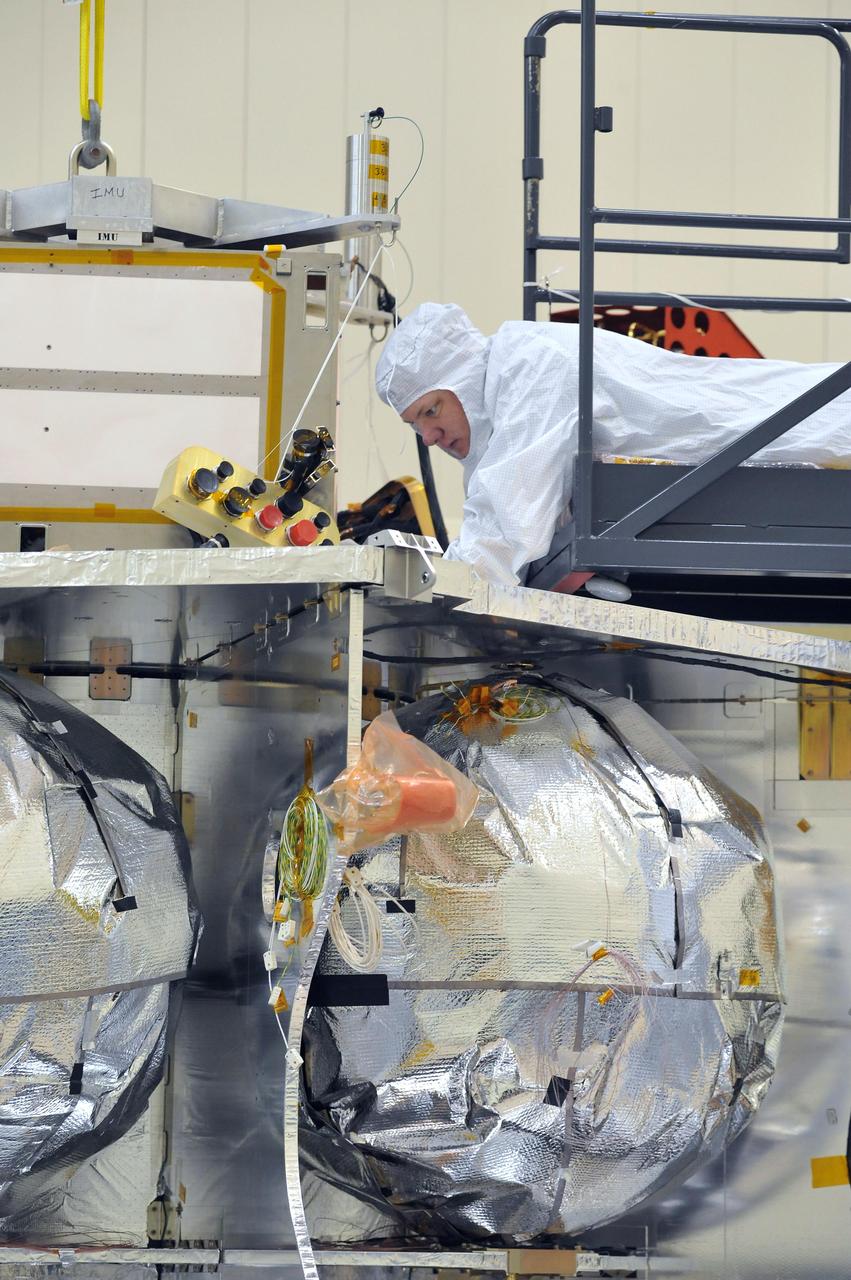
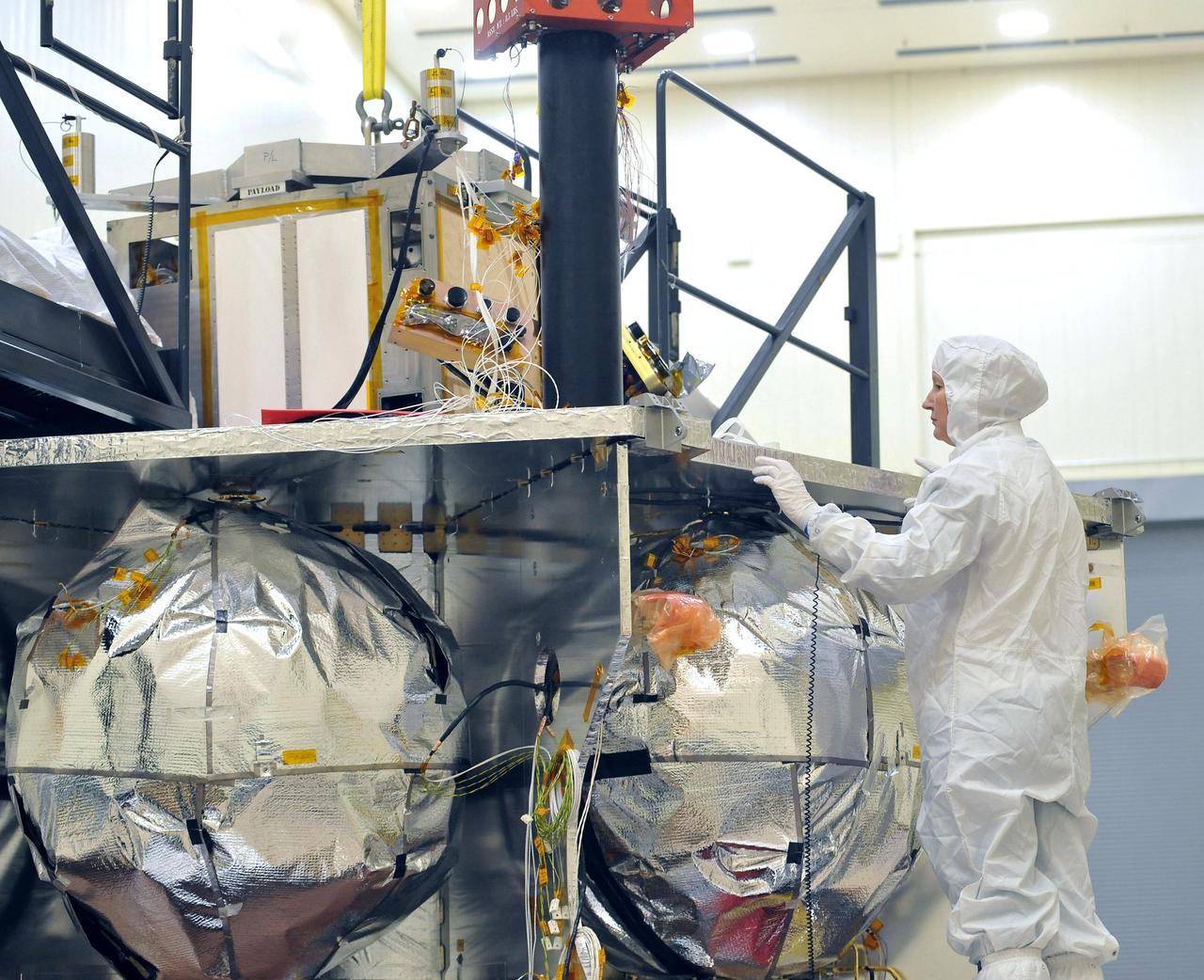
Technicians installed the special radiation vault for NASA Juno spacecraft on the propulsion module. The radiation vault has titanium walls to protect the spacecraft electronic brain and heart from Jupiter harsh radiation environment.
Protecting Juno Electronics from Radiation
A technician inspects the special radiation vault being installed atop the propulsion module of NASA Juno spacecraft; the vault has titanium walls to protect the spacecraft electronic brain and heart from Jupiter harsh radiation environment.
Inspecting Juno Radiation Vault
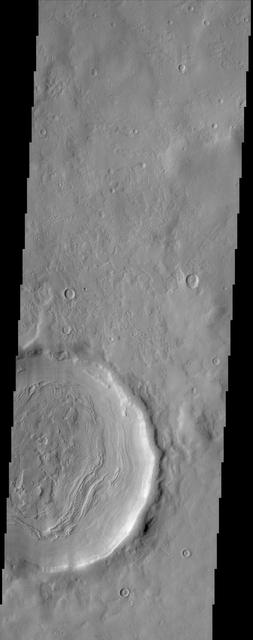
The layering of material observed at the bottom of this impact crater imaged by NASA Mars Odyssey spacecraft suggests multiple depositional and erosional episodes in a changing environment.  http://photojournal.jpl.nasa.gov/catalog/PIA04021
Impact Crater
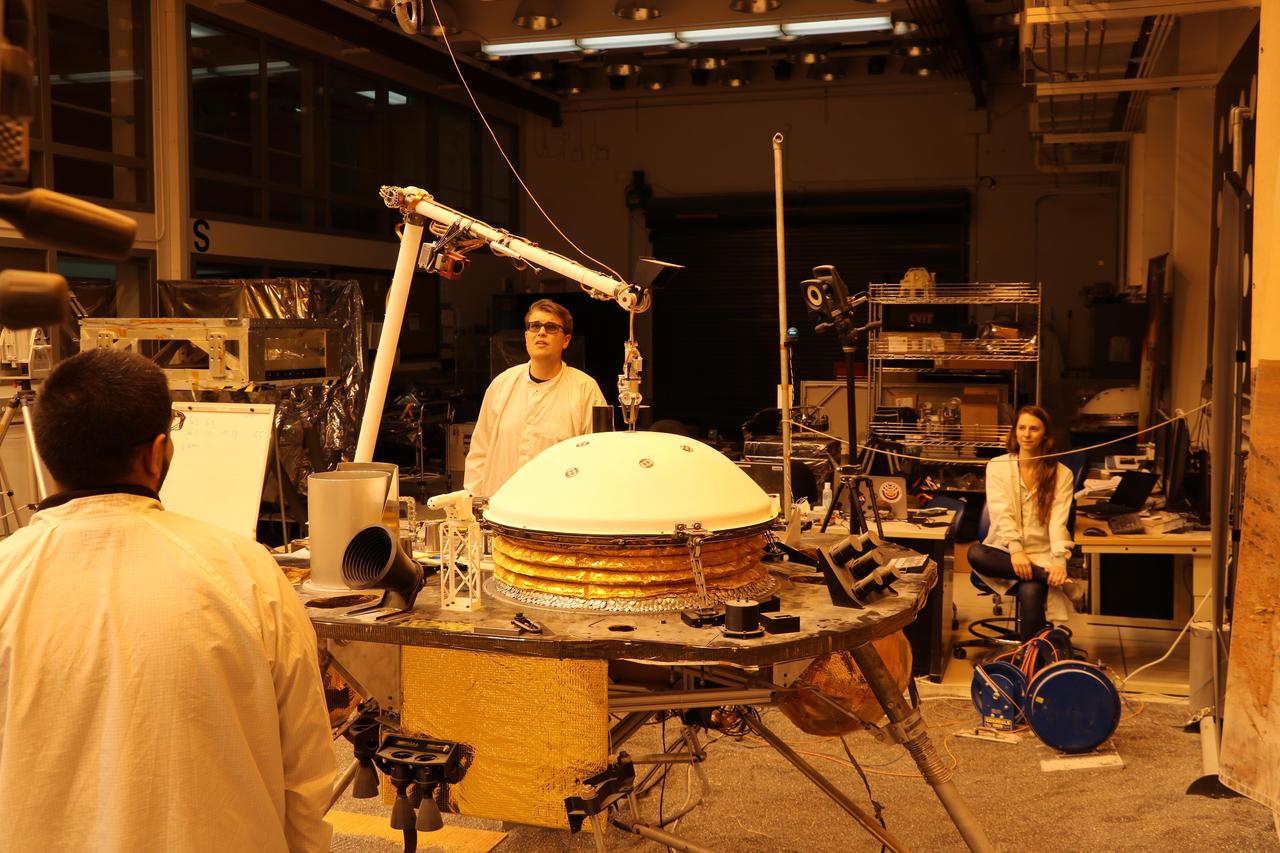
NASA's InSight mission tests an engineering version of the spacecraft's robotic arm in a Mars-like environment at NASA's Jet Propulsion Laboratory. The five-fingered grapple on the end of the robotic arm is lifting up the Wind and Thermal Shield, a protective covering for InSight's seismometer. The test is being conducted under reddish "Mars lighting" to simulate activities on the Red Planet.  https://photojournal.jpl.nasa.gov/catalog/PIA22806
InSight Robotic Arm Test Lift of Wind and Thermal Shield
Testing of the cruise stage for NASA Mars Science Laboratory in August 2010 included a session in a facility that simulates the environment found in interplanetary space. Spacecraft technicians at JPL prepare a space-simulation test.
Cruise Stage Testing for Mars Science Laboratory
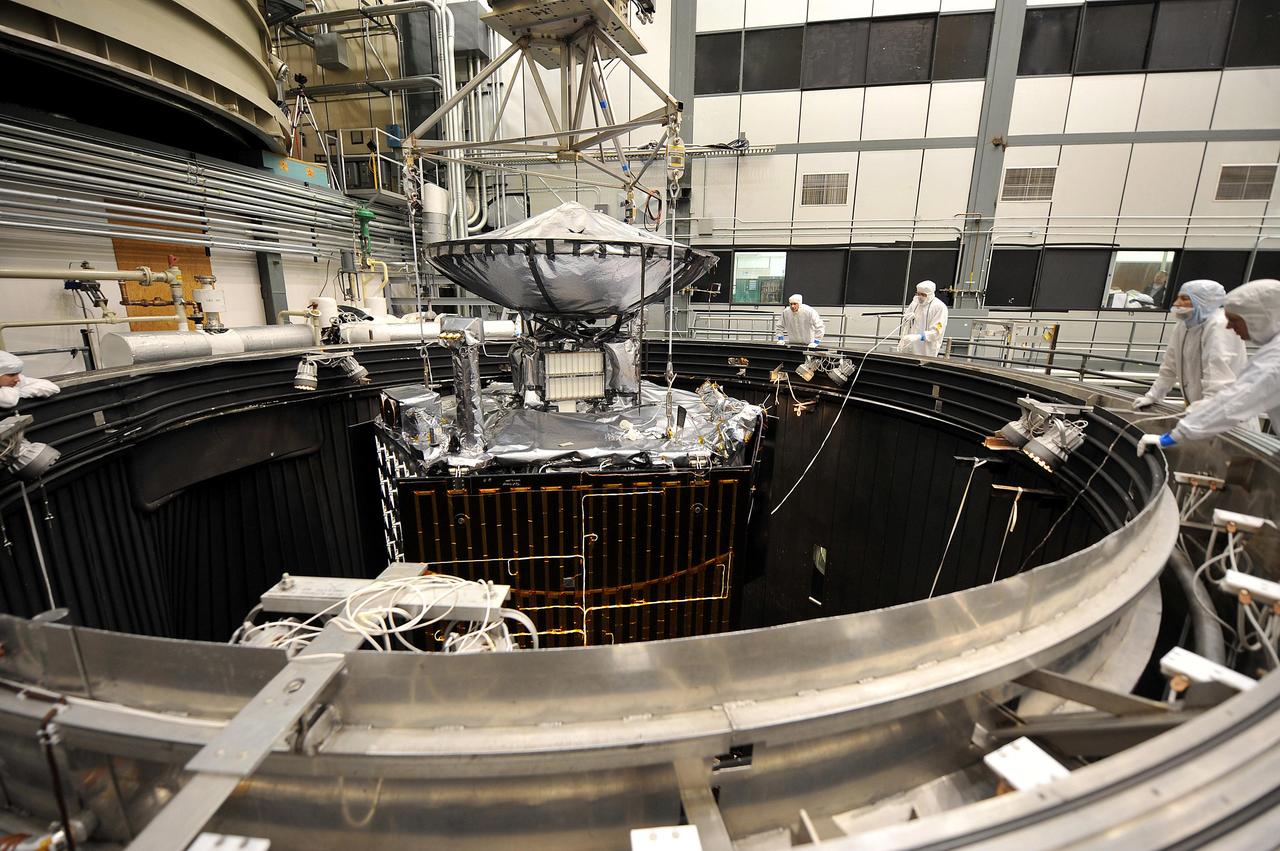
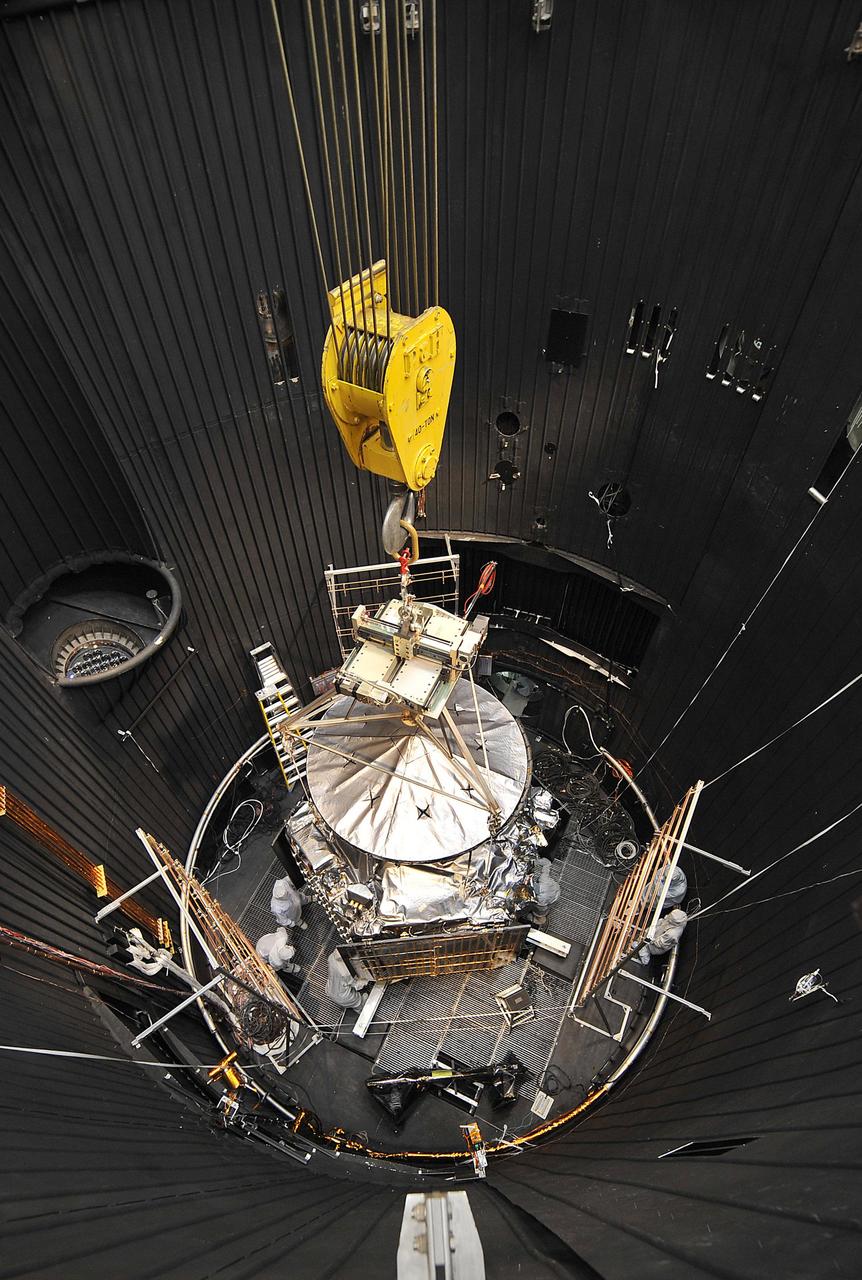
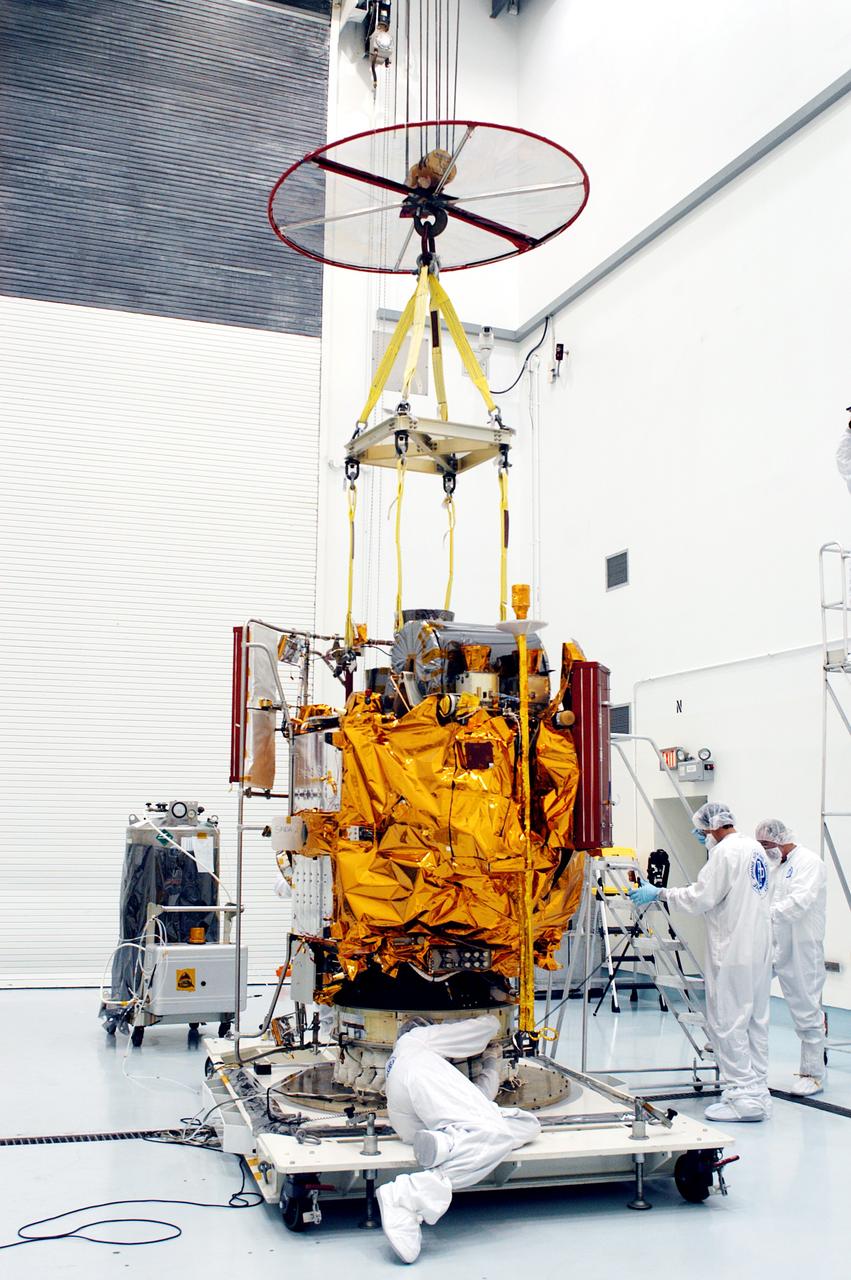
NASA Juno spacecraft is raised out of a thermal vacuum chamber following tests that simulated the environment of space over the range of conditions the probe will encounter during its mission.
Juno Emerges from Thermal-Vac Testing
NASA Juno spacecraft is readied for lifting out of a thermal vacuum chamber following testing to simulate the environment of space over the range of conditions the probe will encounter during its mission.
Juno Gets a Taste of Space
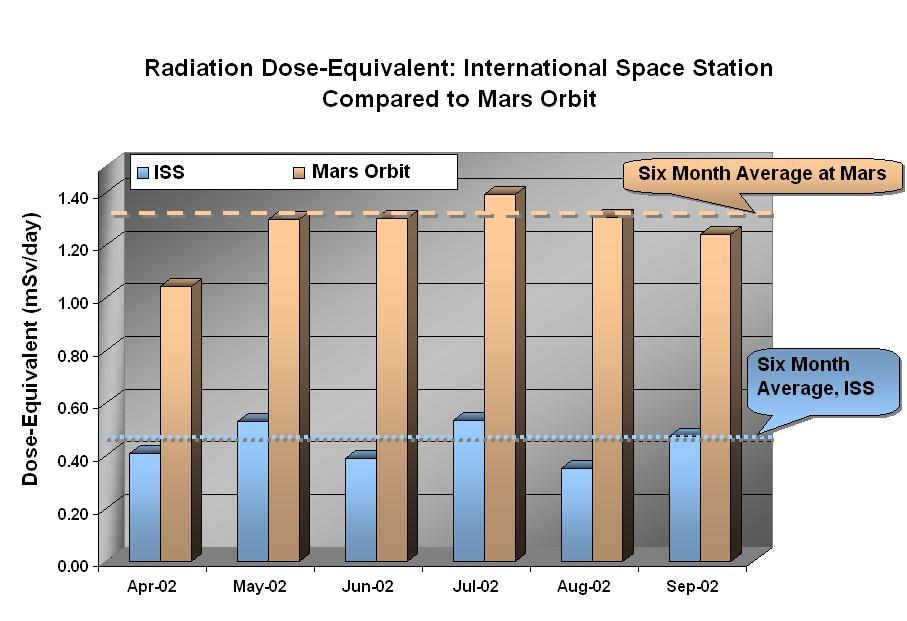
Data from NASA Mars Odyssey spacecraft Martian radiation environment experiment show that the radiation dose equivalent at Mars is two to three times greater than that aboard the International Space Station.
Odyssey/Marie
Orion Spacecraft Arrives at the Glenn Research Center, GRC Plum Brook Station, Space Environments Complex, SEC for Space Environment Testing
Orion Spacecraft Arrives at the Glenn Research Center, GRC Plum
Orion Spacecraft Arrives at the Glenn Research Center, GRC Plum Brook Station, Space Environments Complex, SEC for Space Environment Testing
Orion Spacecraft Arrives at the Glenn Research Center, GRC Plum
Orion Spacecraft Arrives at the Glenn Research Center, GRC Plum Brook Station, Space Environments Complex, SEC for Space Environment Testing
Orion Spacecraft Arrives at the Glenn Research Center, GRC Plum
Orion Spacecraft Arrives at the Glenn Research Center, GRC Plum Brook Station, Space Environments Complex, SEC for Space Environment Testing
Orion Spacecraft Arrives at the Glenn Research Center, GRC Plum
Orion Spacecraft Arrives at the Glenn Research Center, GRC Plum Brook Station, Space Environments Complex, SEC for Space Environment Testing
Orion Spacecraft Arrives at the Glenn Research Center, GRC Plum
Orion Spacecraft Arrives at the Glenn Research Center, GRC Plum Brook Station, Space Environments Complex, SEC for Space Environment Testing
Orion Spacecraft Arrives at the Glenn Research Center, GRC Plum
Orion Spacecraft Arrives at the Glenn Research Center, GRC Plum Brook Station, Space Environments Complex, SEC for Space Environment Testing
Orion Spacecraft Arrives at the Glenn Research Center, GRC Plum
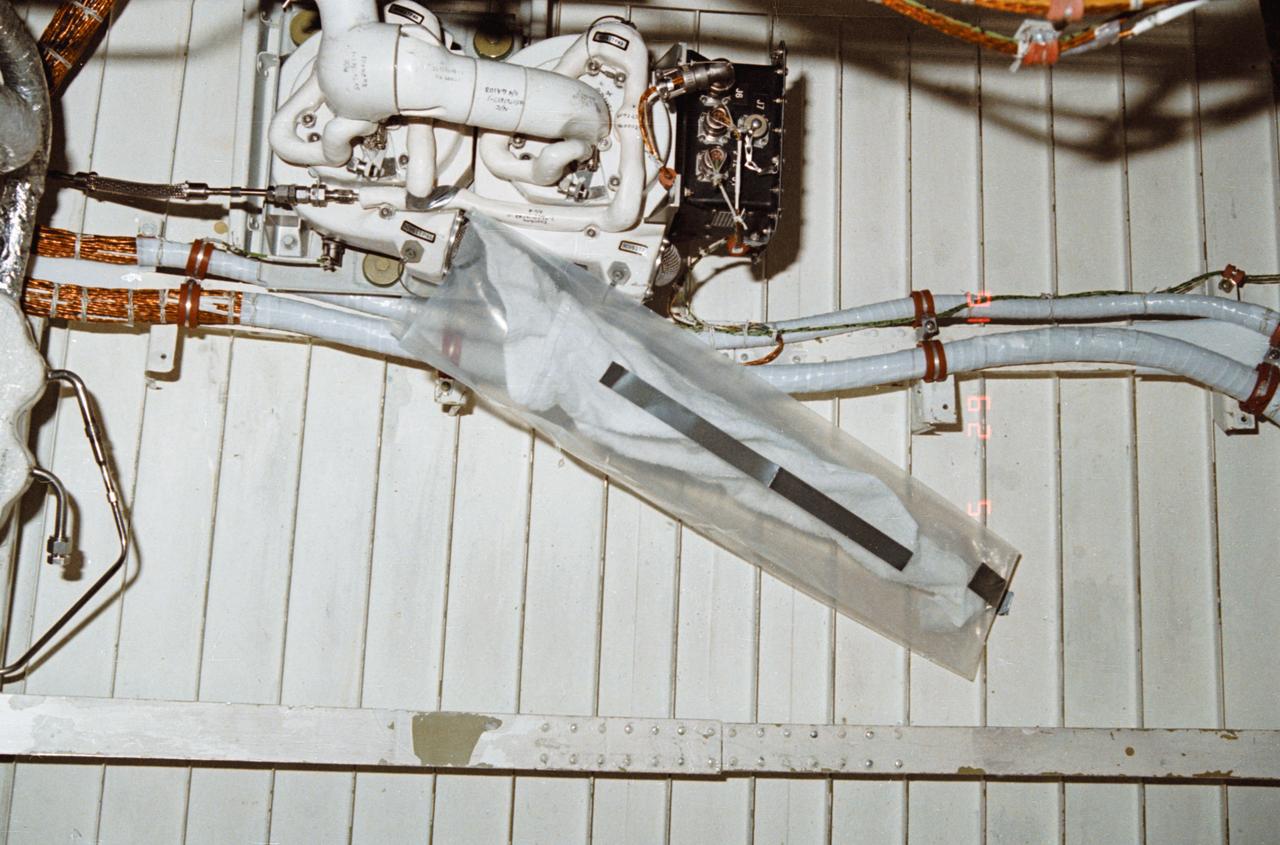
During STS-32, onboard Columbia, Orbiter Vehicle (OV) 102, a leakage problem at environmental control and life support system (ECLSS) air revitalization system (ARS) humidity separator A below the middeck is solved with a plastic bag and a towel. The towel inserted inside a plastic bag absorbed the water that had collected at the separator inlet.
STS-32 OV-102 air revitalization system (ARS) humidity separator problem
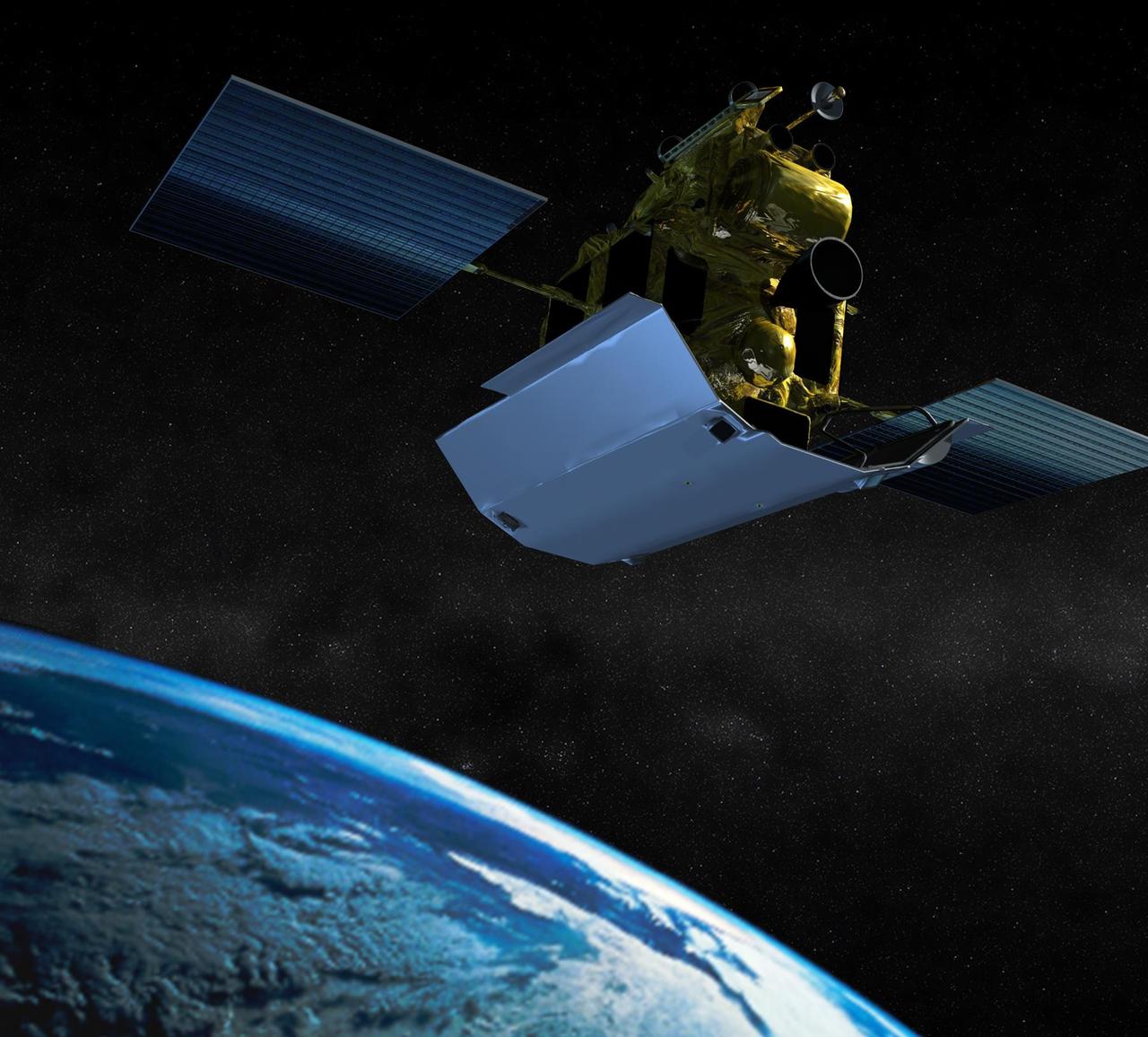
Artist impression of NASA MErcury Surface, Space ENvironment, GEochemistry, and Ranging MESSENGER spacecraft as it leaves Earth, following its Aug. 3, 2004 launch from Cape Canaveral Air Force Station, Fla. aboard a Delta II rocket.
MESSENGER Departing Earth Artist Concept
Orion - EM-1 - Artemis Spacecraft Installation in the Space Environment Complex, SEC Thermal Vacuum Chamber
Orion - EM-1 - Artemis Spacecraft is prepared for testing in the Space Expirements Complex, NASA Glenn Research Center, Plum Brook Station
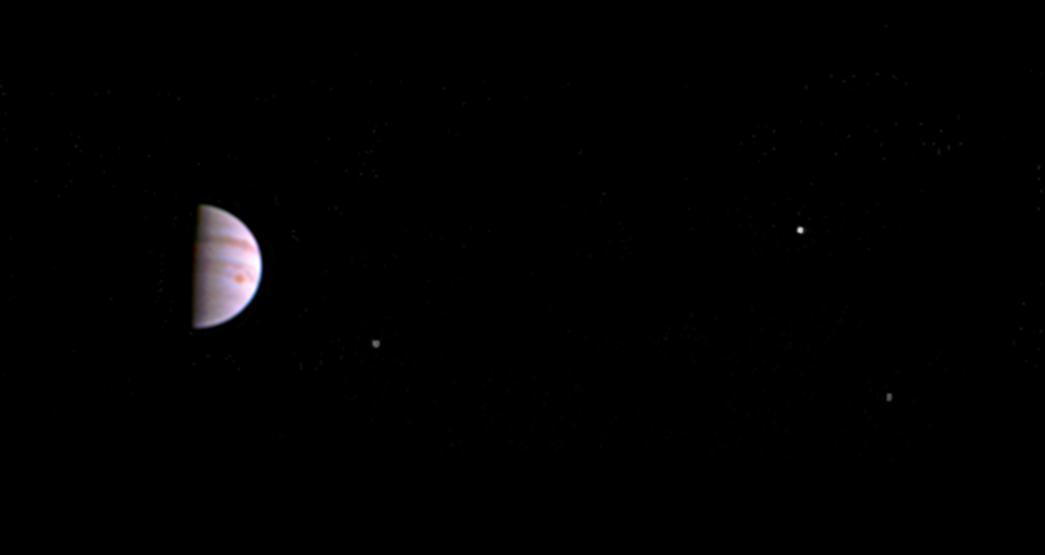
This color view from NASA's Juno spacecraft is made from some of the first images taken by JunoCam after the spacecraft entered orbit around Jupiter on July 5th (UTC). The view shows that JunoCam survived its first pass through Jupiter's extreme radiation environment, and is ready to collect images of the giant planet as Juno begins its mission.  The image was taken on July 10, 2016 at 5:30 UTC, when the spacecraft was 2.7 million miles (4.3 million kilometers) from Jupiter on the outbound leg of its initial 53.5-day capture orbit. The image shows atmospheric features on Jupiter, including the Great Red Spot, and three of Jupiter's four largest moons.  JunoCam will continue to image Jupiter during Juno's capture orbits. The first high-resolution images of the planet will be taken on August 27 when the Juno spacecraft makes its next close pass to Jupiter.  http://photojournal.jpl.nasa.gov/catalog/PIA20707
Juno Post-arrival View
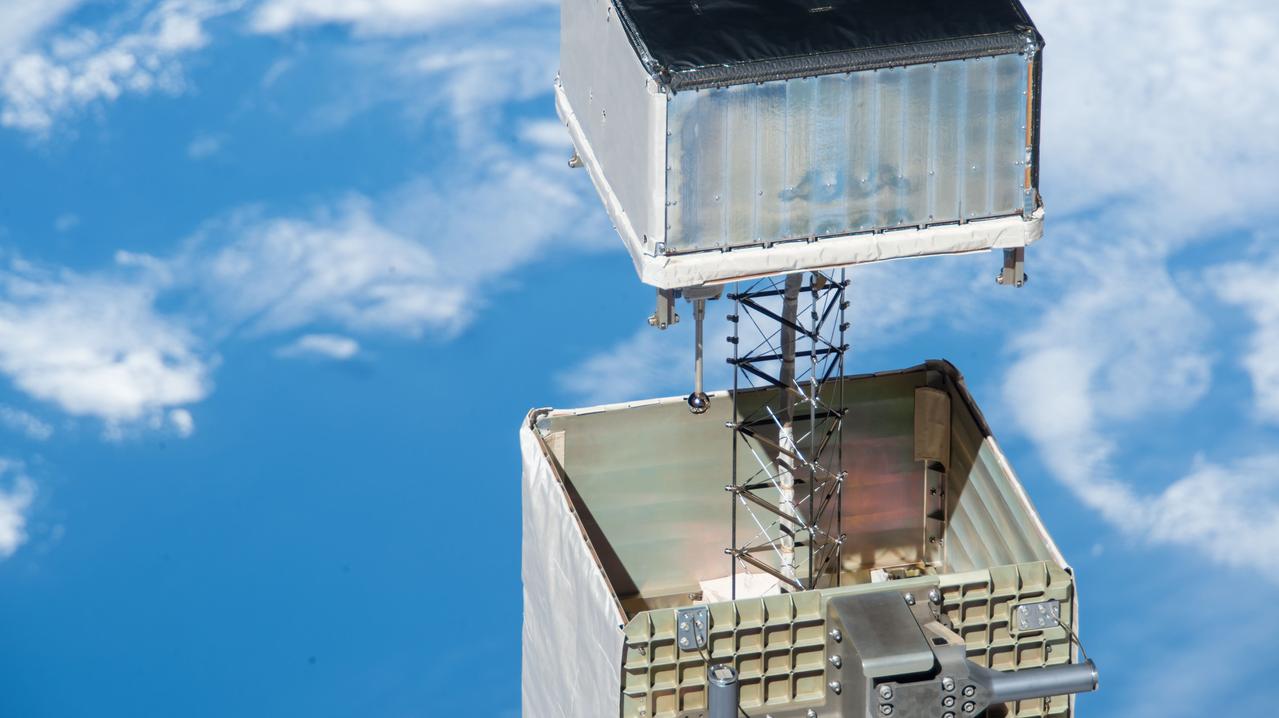
iss057e080455 (11/12/2018) --- A view of  the Space Environment Data Acquisition Equipment - Attached Payload (SEDA-AP) located on the Japanese Experiment Module - Exposed Facility (JEM-EF). The SEDA-AP investigation consists of eight small instruments designed to measure the space environment. Five radiation and particle monitors, an electronic device performance monitor, a micro-particle capture , and a space environment exposure device will provide data to help researchers characterize the environment around space vehicles in low-Earth orbit, which will be used to develop shielding to ensure future spacecraft are safe.
iss057e080455
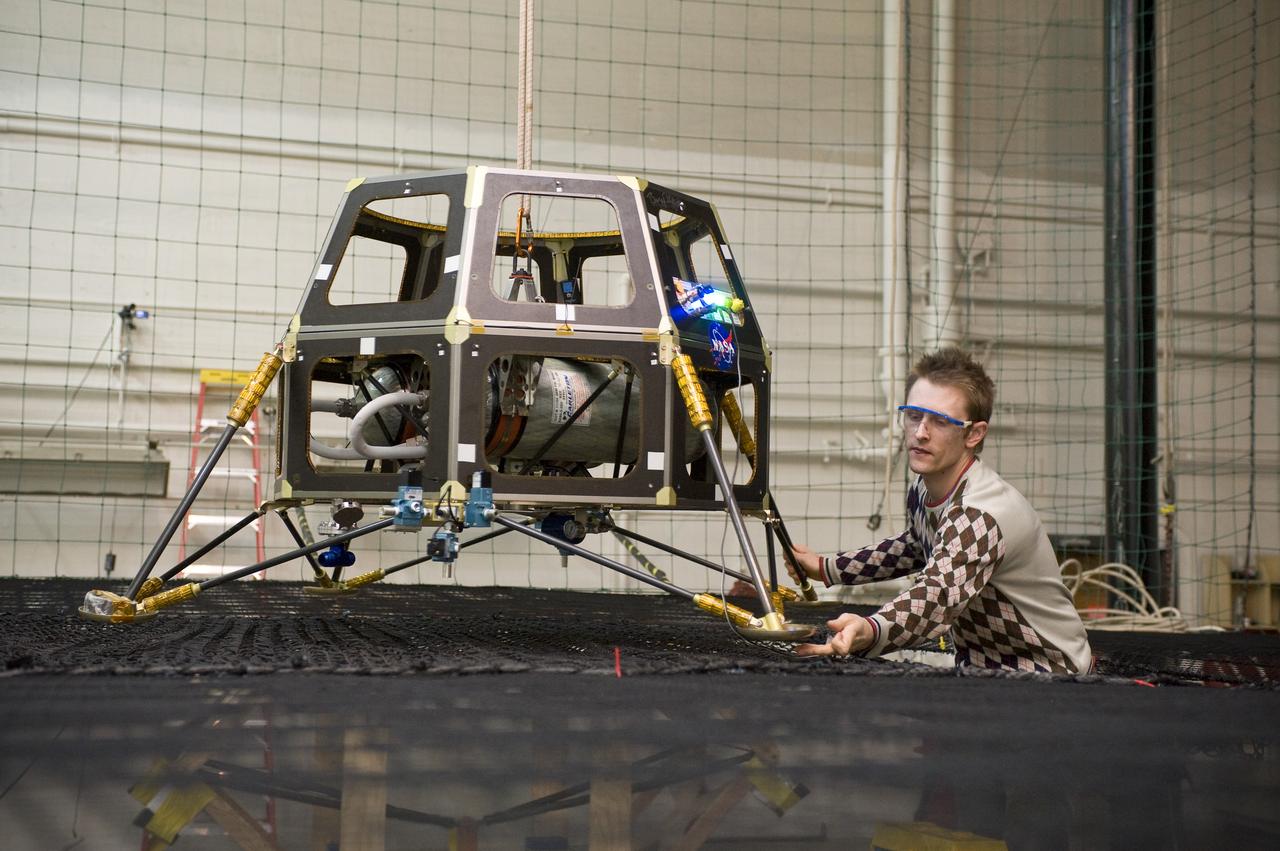
Lunar Atmosphere and Dust Environment Explorer (LADEE) Project in Building 45 Modular Common Spacecraft Bus as a hover test vehicle, here they are installing spacecraft electronics & payloads.
ARC-2008-ACD08-0259-001
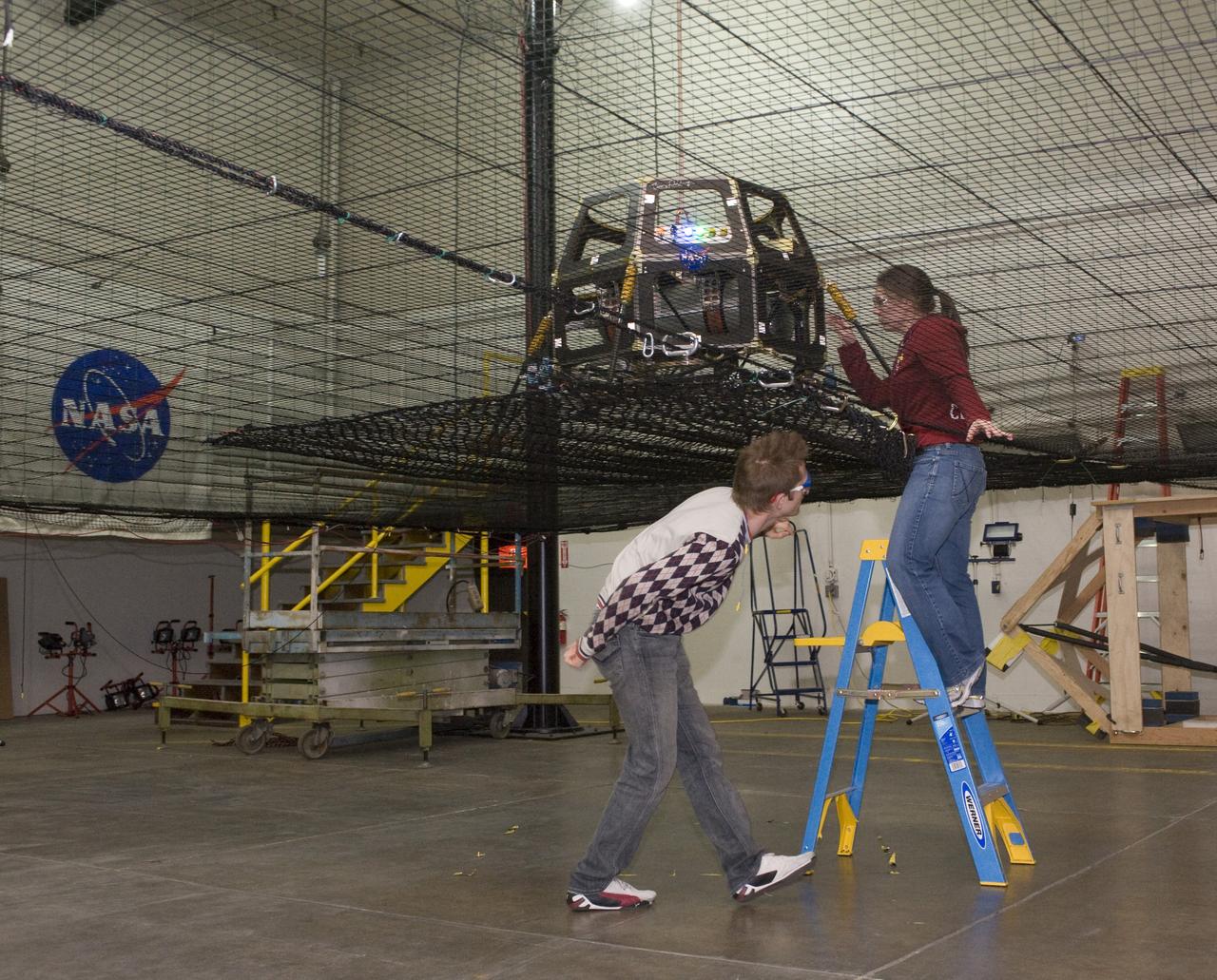
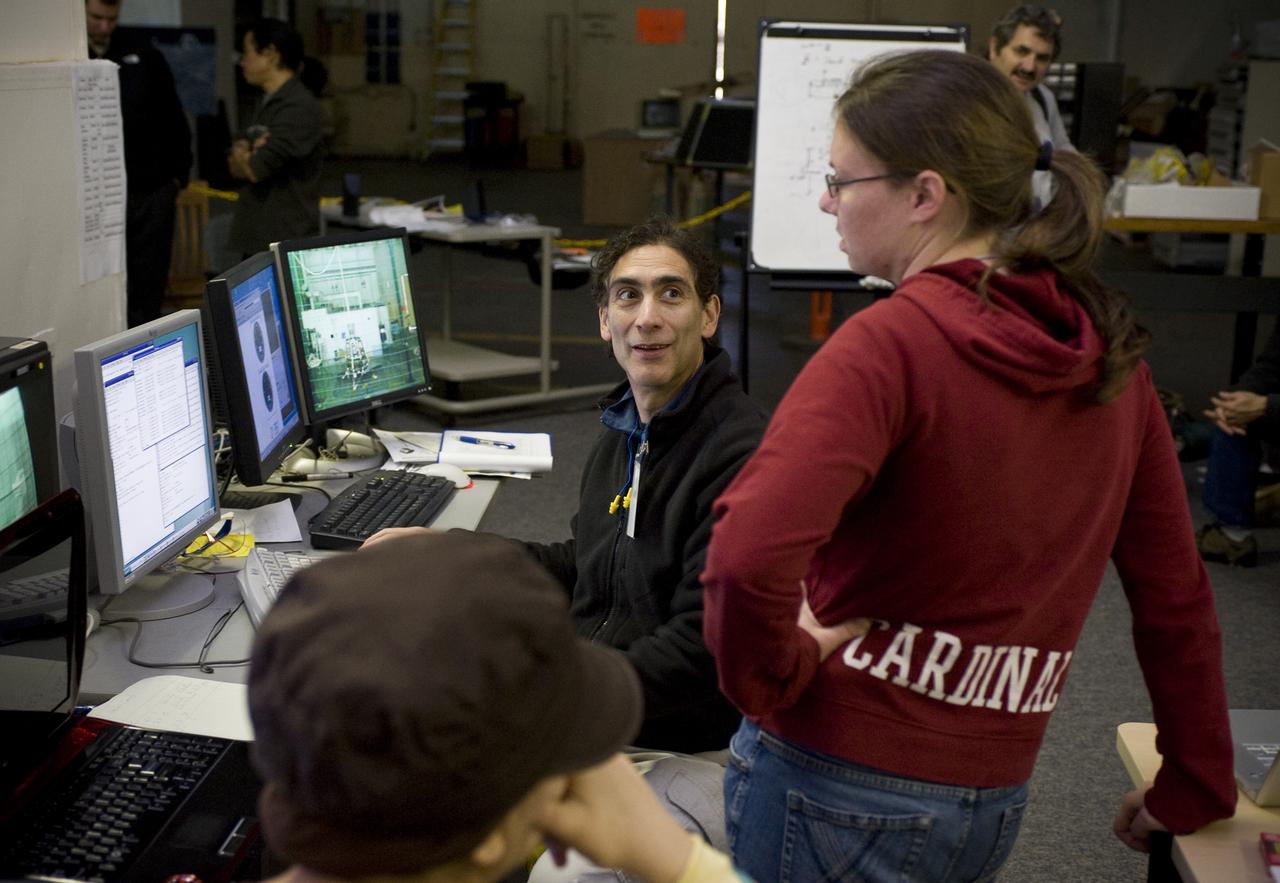
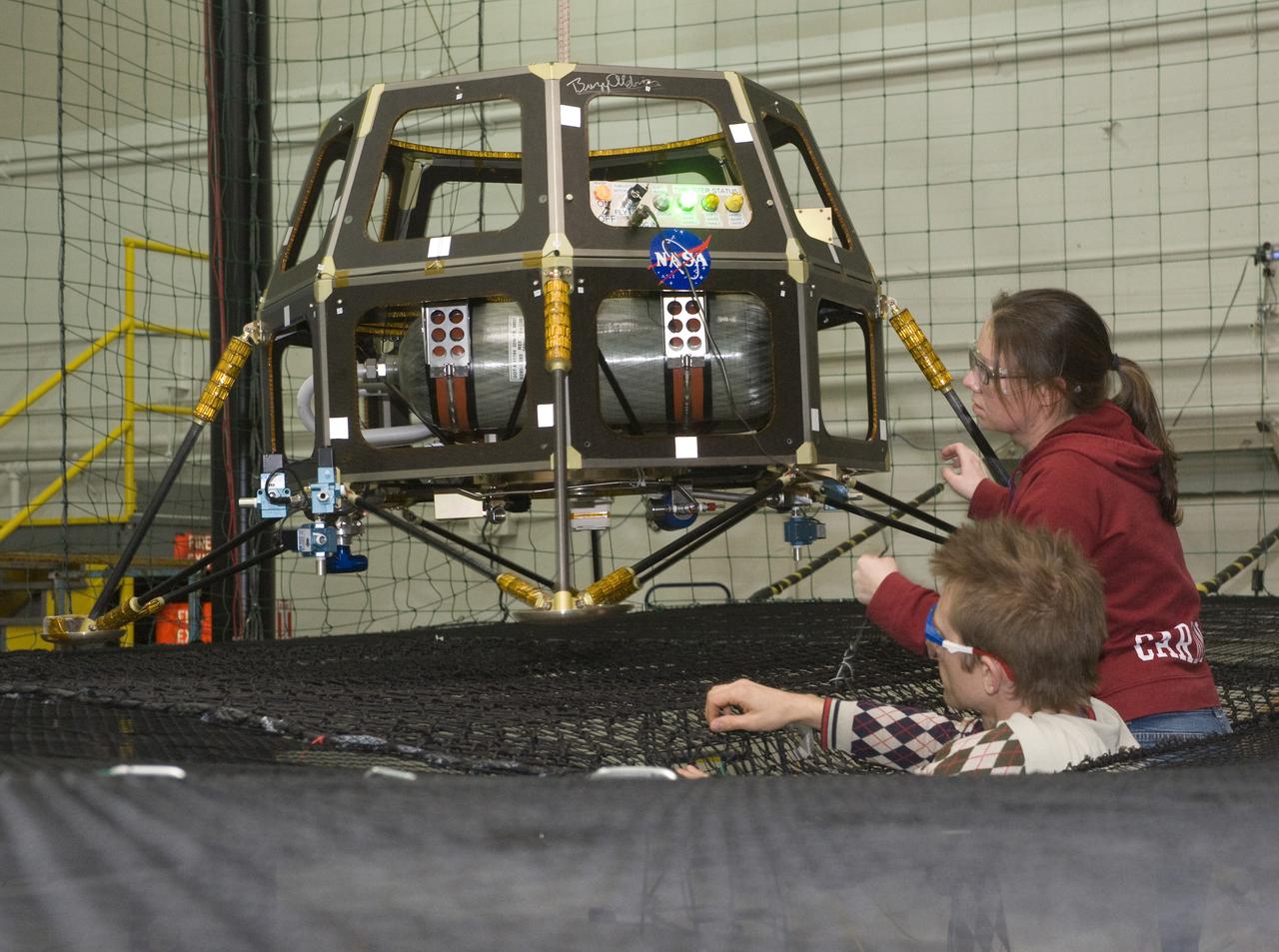
Lunar Atmosphere and Dust Environment Explorer (LADEE) Project in Building 45 Modular Common Spacecraft Bus as a hover test vehicle, here they are installing spacecraft electronics & payloads.  with Chris Boshuizen (in plaid) and Eleanor Crane (in red)
ARC-2008-ACD08-0259-016
Lunar Atmosphere and Dust Environment Explorer (LADEE) Project in Building 45 Modular Common Spacecraft Bus as a hover test vehicle, here they are installing spacecraft electronics & payloads.  Whith Doug Forman (seated) and Eleanor Crane (standing)
ARC-2008-ACD08-0259-005
Lunar Atmosphere and Dust Environment Explorer (LADEE) Project in Building 45 Modular Common Spacecraft Bus as a hover test vehicle, here they are installing spacecraft electronics & payloads.  with Chris Boshuizen (in plaid) and Eleanor Crane (in red)
ARC-2008-ACD08-0259-018
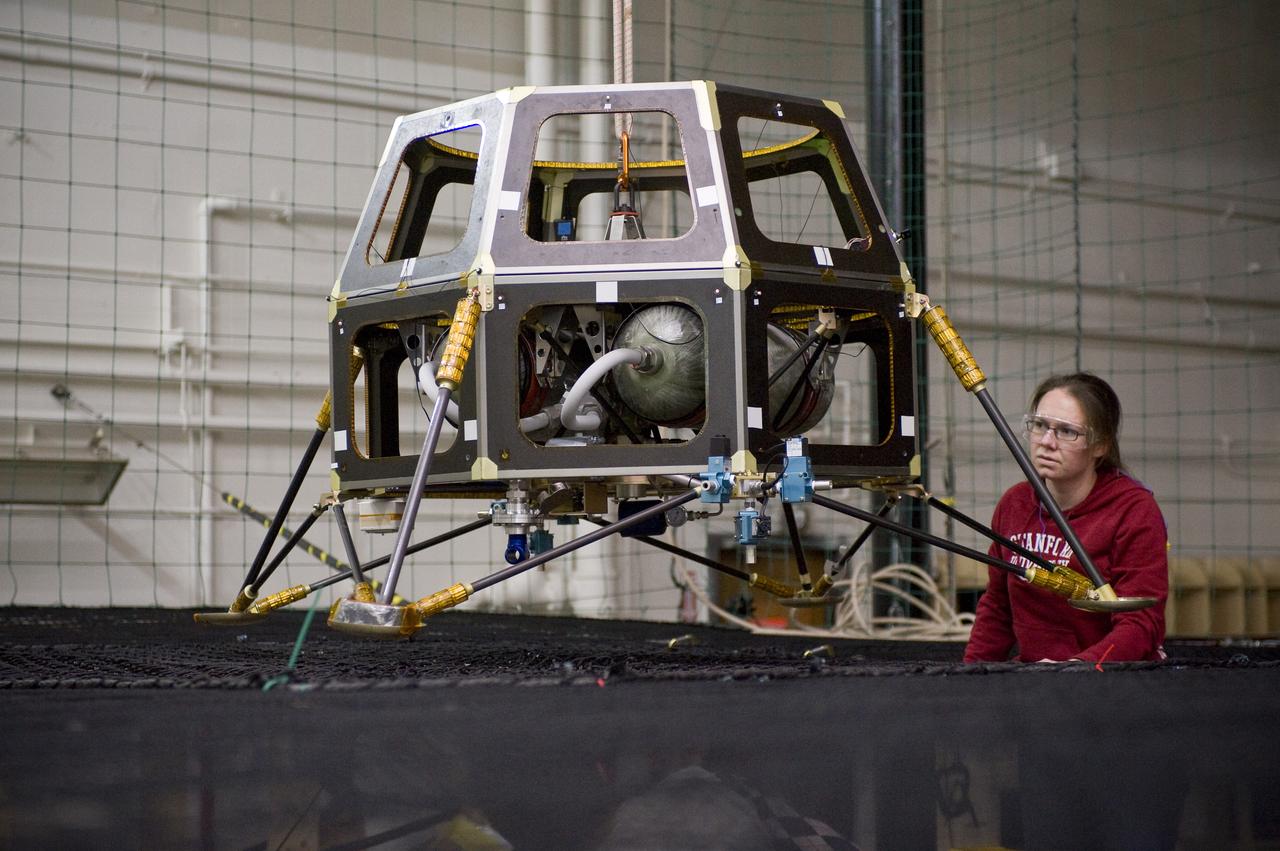
Lunar Atmosphere and Dust Environment Explorer (LADEE) Project in Building 45 Modular Common Spacecraft Bus as a hover test vehicle, here they are installing spacecraft electronics & payloads.  With Eleanor Crane.
ARC-2008-ACD08-0259-007
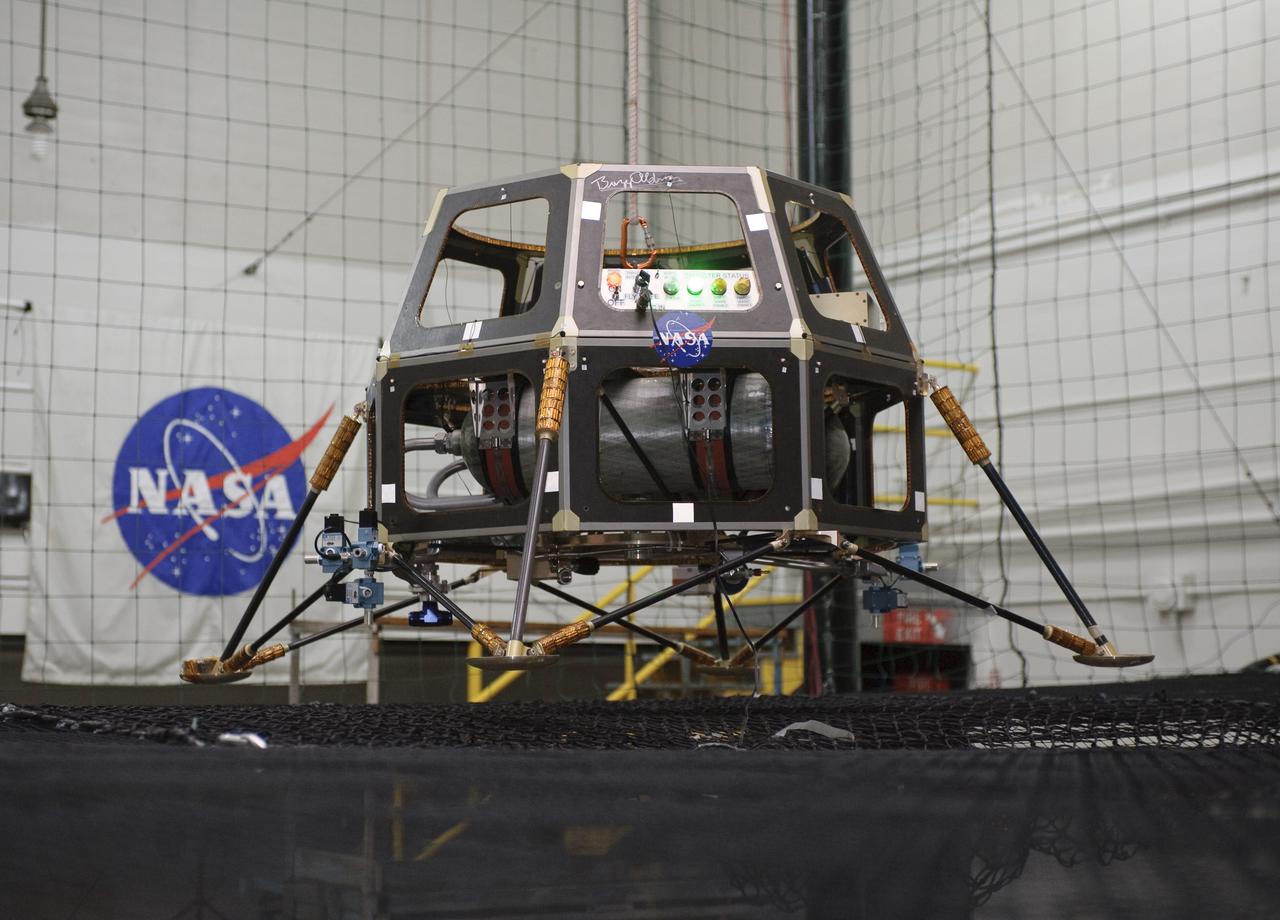
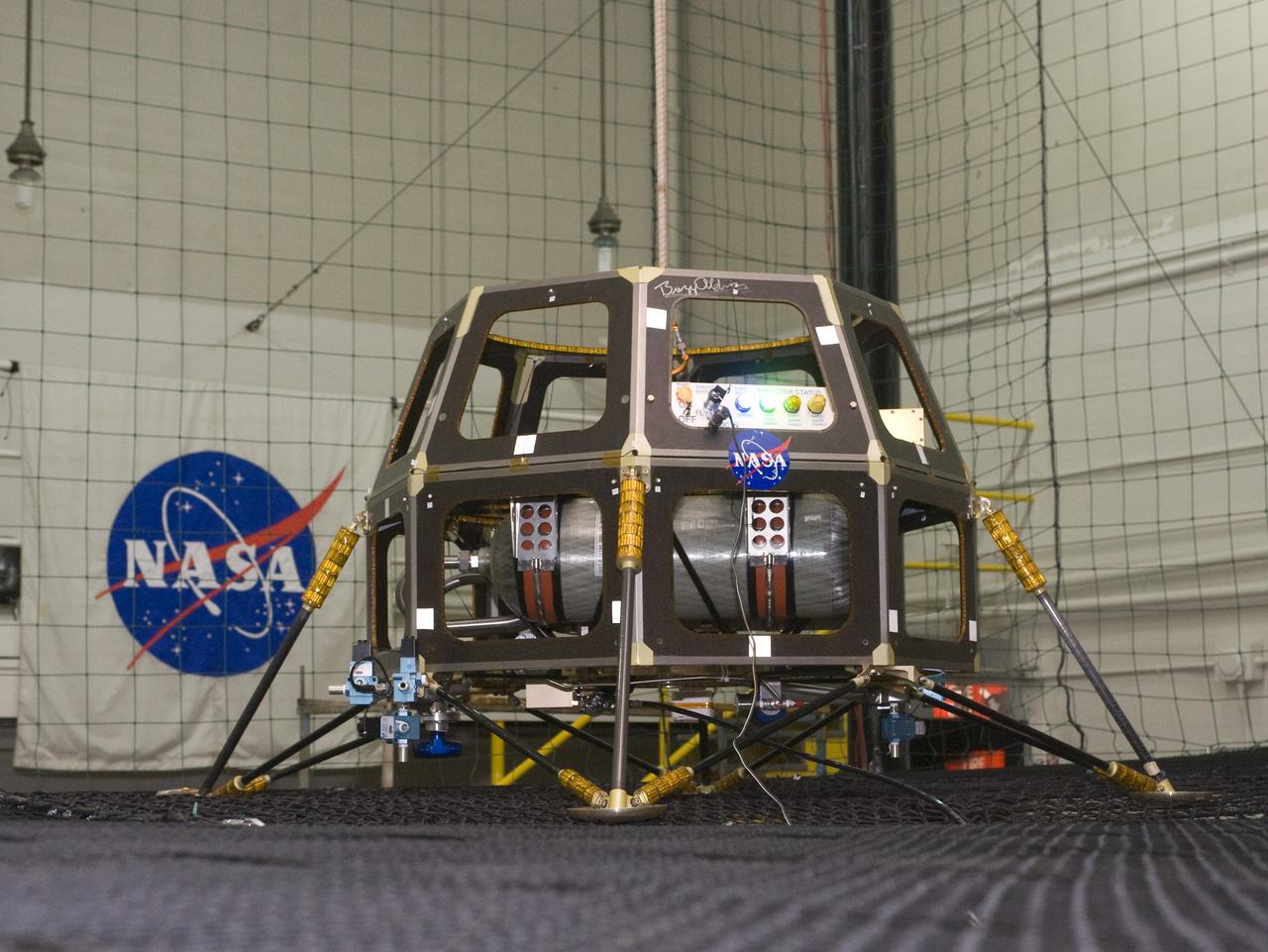
Lunar Atmosphere and Dust Environment Explorer (LADEE) Project in Building 45 Modular Common Spacecraft Bus as a hover test vehicle, here they are installing spacecraft electronics & payloads.
ARC-2008-ACD08-0259-014
Lunar Atmosphere and Dust Environment Explorer (LADEE) Project in Building 45 Modular Common Spacecraft Bus as a hover test vehicle, here they are installing spacecraft electronics & payloads.  With Chris Boshuizen
ARC-2008-ACD08-0259-010
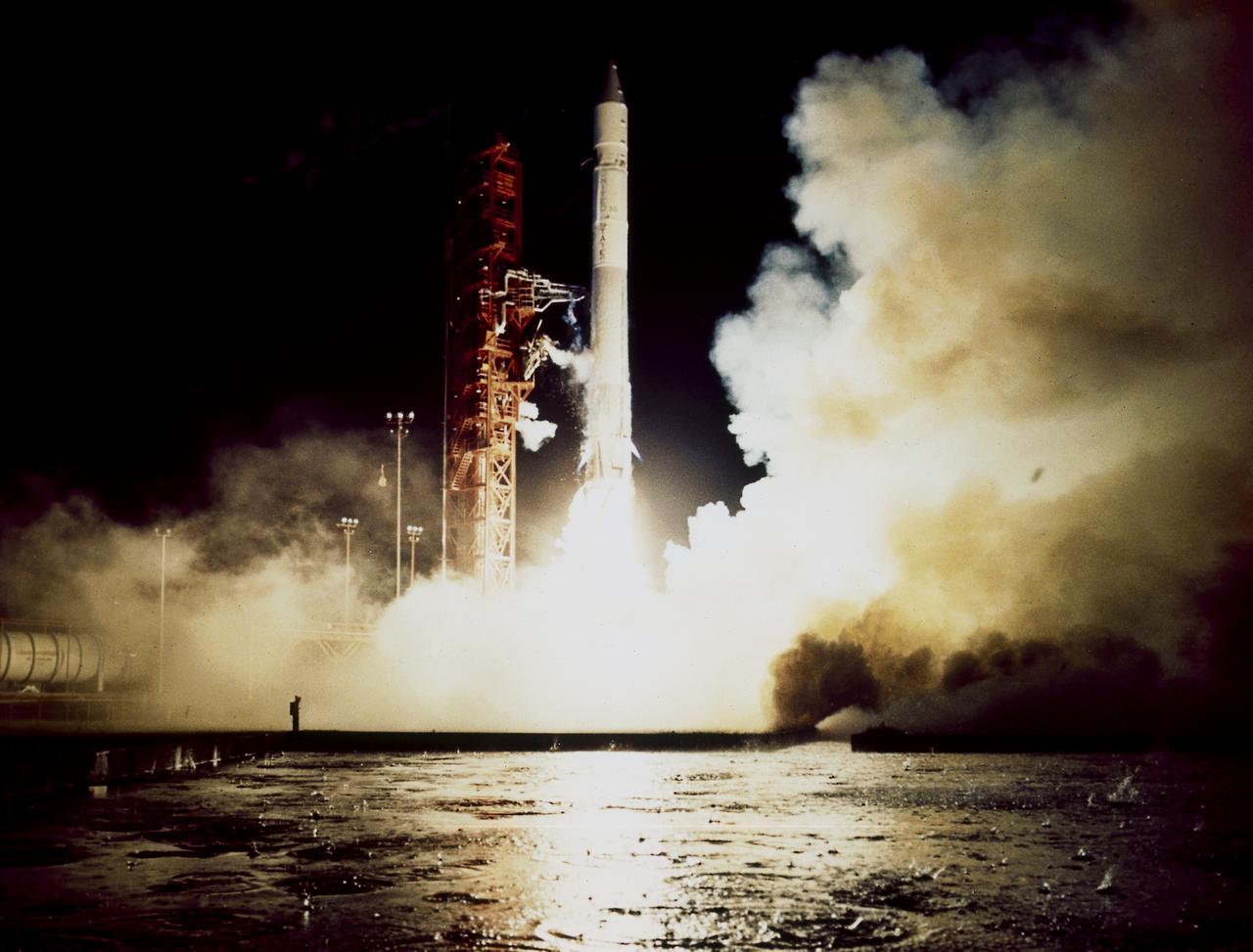
The launch of the Atlas-Centaur carrying the Pioneer G (11) spacecraft on April 5, 1973. The objects of this flight was to explore the planet Jupiter and its environment.
Launch Vehicles
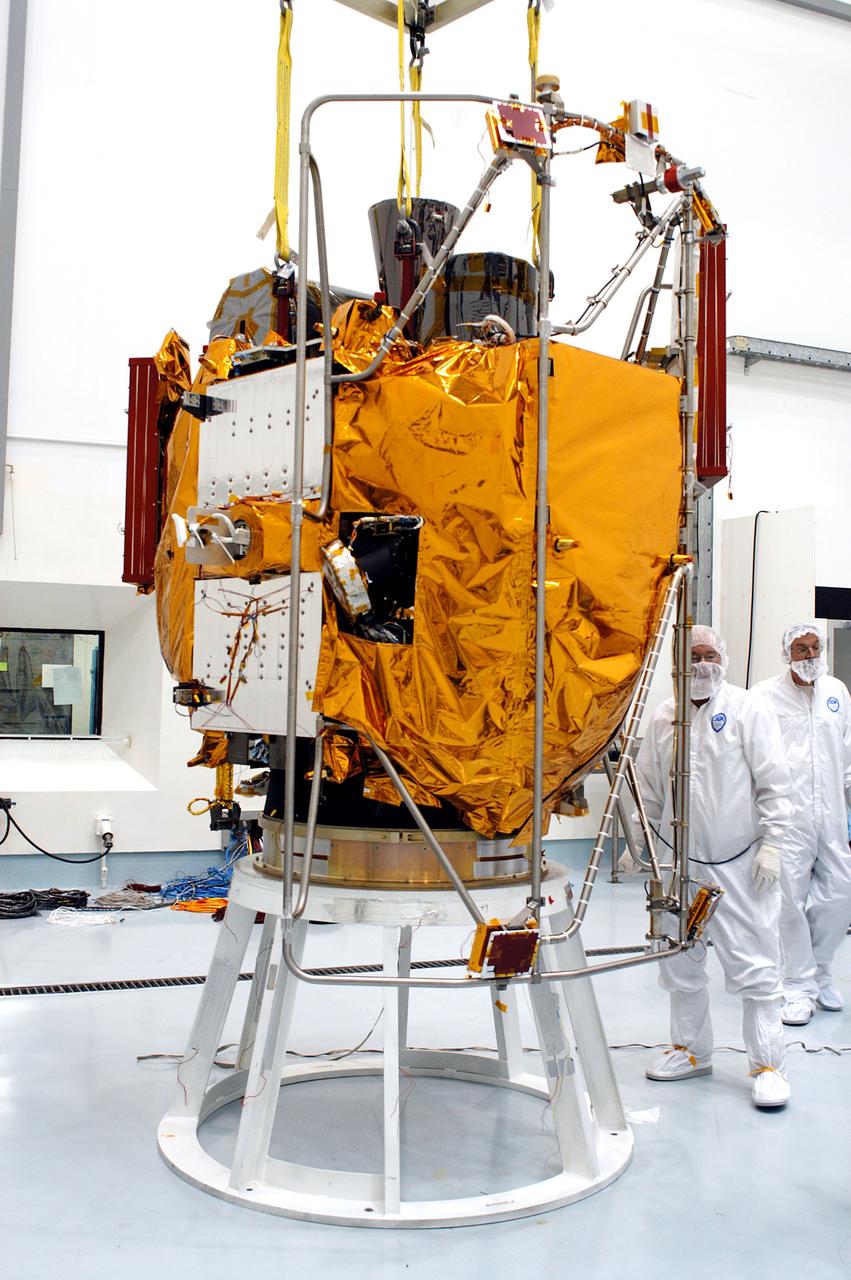
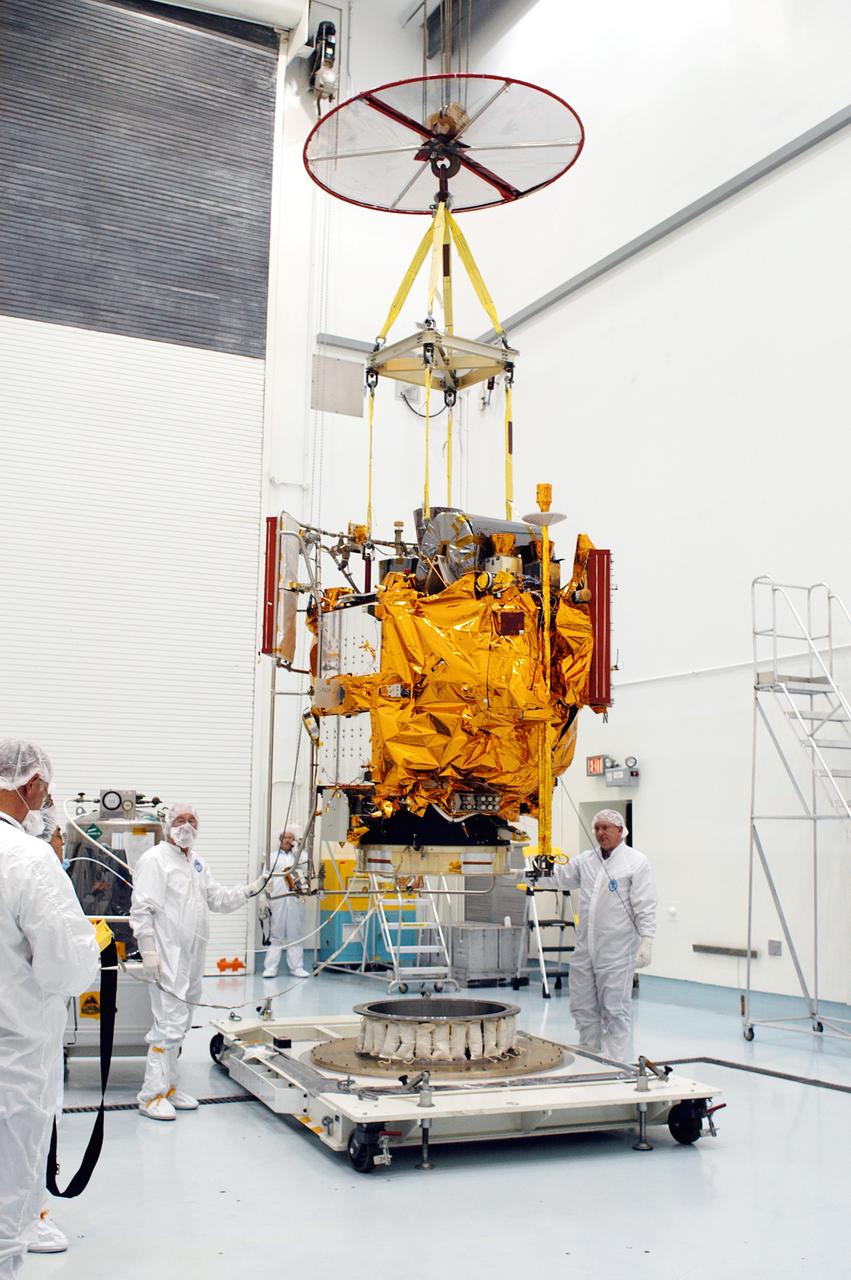
KENNEDY SPACE CENTER, FLA. -  At the Astrotech Space Operations processing facilities, an overhead crane moves NASA’s MESSENGER spacecraft toward a work stand. There employees of the Johns Hopkins University Applied Physics Laboratory, builders of the spacecraft, will perform an initial state-of-health check.  Then processing for launch can begin, including checkout of the power systems, communications systems and control systems.  The thermal blankets will also be attached for flight.  MESSENGER - short for MErcury Surface, Space ENvironment, GEochemistry and Ranging - will be launched May 11 on a six-year mission aboard a Boeing Delta II rocket.  Liftoff is targeted for 2:26 a.m. EDT on Tuesday, May 11.
KENNEDY SPACE CENTER, FLA. - At the Astrotech Space Operations processing facilities, an overhead crane moves NASA’s MESSENGER spacecraft toward a work stand. There employees of the Johns Hopkins University Applied Physics Laboratory, builders of the spacecraft, will perform an initial state-of-health check. Then processing for launch can begin, including checkout of the power systems, communications systems and control systems. The thermal blankets will also be attached for flight. MESSENGER - short for MErcury Surface, Space ENvironment, GEochemistry and Ranging - will be launched May 11 on a six-year mission aboard a Boeing Delta II rocket. Liftoff is targeted for 2:26 a.m. EDT on Tuesday, May 11.
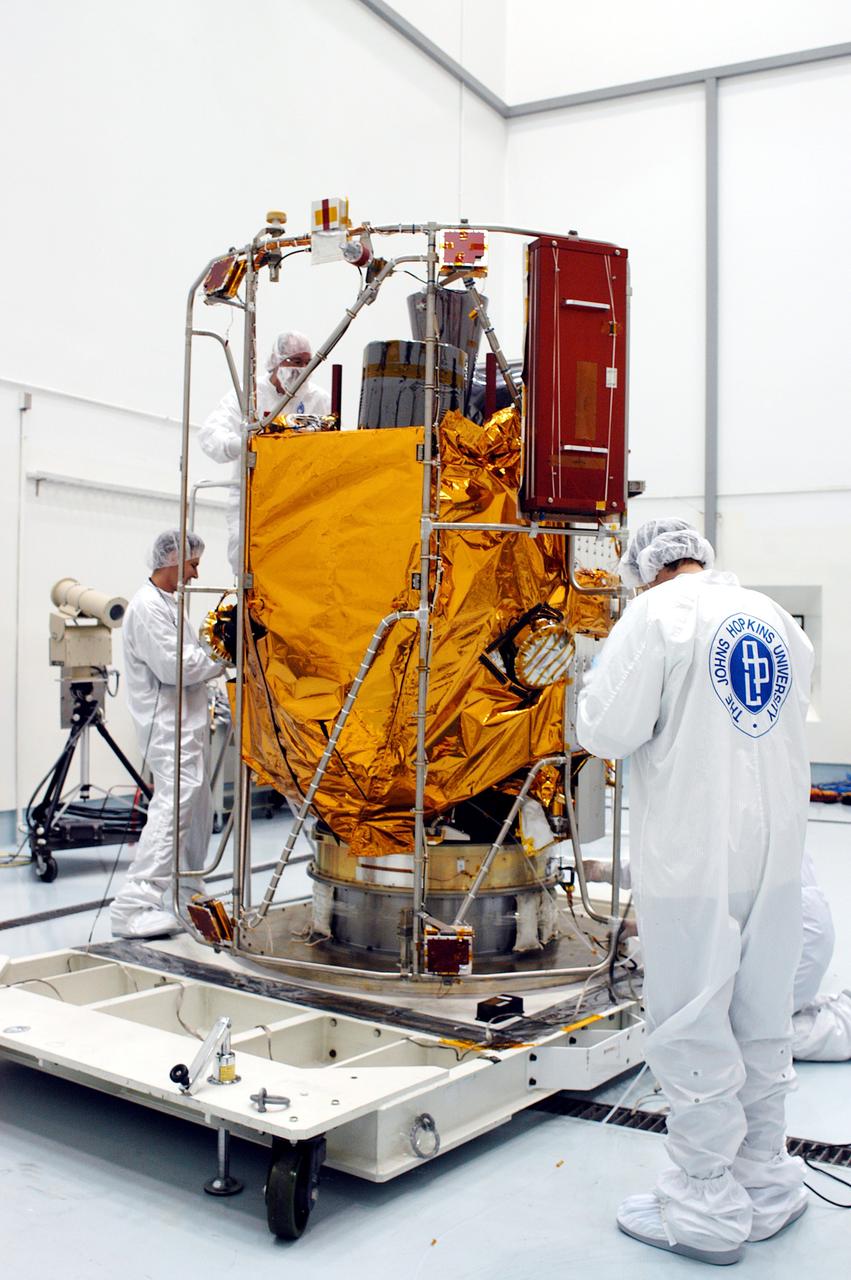
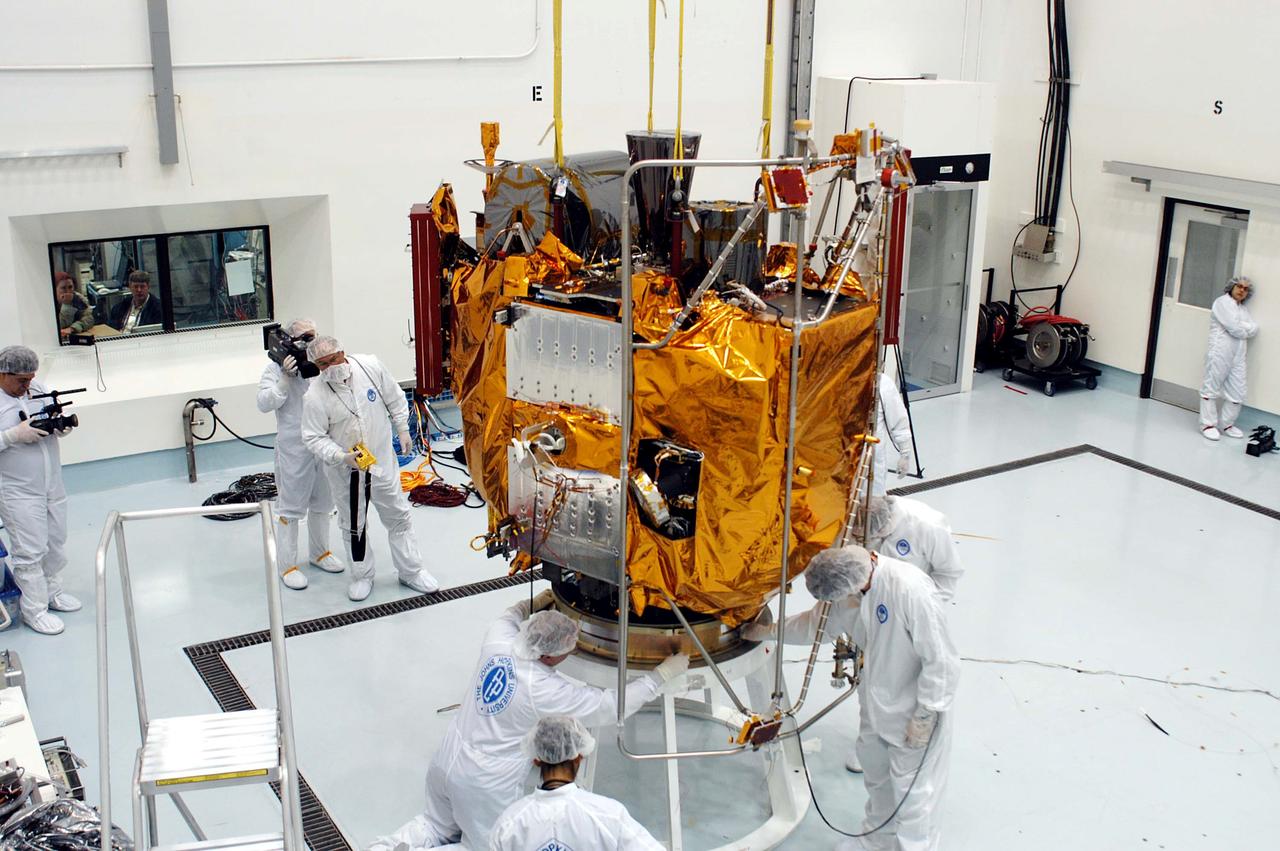
KENNEDY SPACE CENTER, FLA. -  At the Astrotech Space Operations processing facilities, NASA’s MESSENGER spacecraft is secure after transfer to the work stand. There employees of the Johns Hopkins University Applied Physics Laboratory, builders of the spacecraft, will perform an initial state-of-health check.  Then processing for launch can begin, including checkout of the power systems, communications systems and control systems.  The thermal blankets will also be attached for flight.  MESSENGER - short for MErcury Surface, Space ENvironment, GEochemistry and Ranging - will be launched May 11 on a six-year mission aboard a Boeing Delta II rocket.  Liftoff is targeted for 2:26 a.m. EDT on Tuesday, May 11.
KENNEDY SPACE CENTER, FLA. - At the Astrotech Space Operations processing facilities, NASA’s MESSENGER spacecraft is secure after transfer to the work stand. There employees of the Johns Hopkins University Applied Physics Laboratory, builders of the spacecraft, will perform an initial state-of-health check. Then processing for launch can begin, including checkout of the power systems, communications systems and control systems. The thermal blankets will also be attached for flight. MESSENGER - short for MErcury Surface, Space ENvironment, GEochemistry and Ranging - will be launched May 11 on a six-year mission aboard a Boeing Delta II rocket. Liftoff is targeted for 2:26 a.m. EDT on Tuesday, May 11.
KENNEDY SPACE CENTER, FLA. -  At the Astrotech Space Operations processing facilities, an overhead crane lowers NASA’s MESSENGER spacecraft onto a work stand. There employees of the Johns Hopkins University Applied Physics Laboratory, builders of the spacecraft, will perform an initial state-of-health check.  Then processing for launch can begin, including checkout of the power systems, communications systems and control systems.  The thermal blankets will also be attached for flight.  MESSENGER - short for MErcury Surface, Space ENvironment, GEochemistry and Ranging - will be launched May 11 on a six-year mission aboard a Boeing Delta II rocket.  Liftoff is targeted for 2:26 a.m. EDT on Tuesday, May 11.
KENNEDY SPACE CENTER, FLA. - At the Astrotech Space Operations processing facilities, an overhead crane lowers NASA’s MESSENGER spacecraft onto a work stand. There employees of the Johns Hopkins University Applied Physics Laboratory, builders of the spacecraft, will perform an initial state-of-health check. Then processing for launch can begin, including checkout of the power systems, communications systems and control systems. The thermal blankets will also be attached for flight. MESSENGER - short for MErcury Surface, Space ENvironment, GEochemistry and Ranging - will be launched May 11 on a six-year mission aboard a Boeing Delta II rocket. Liftoff is targeted for 2:26 a.m. EDT on Tuesday, May 11.
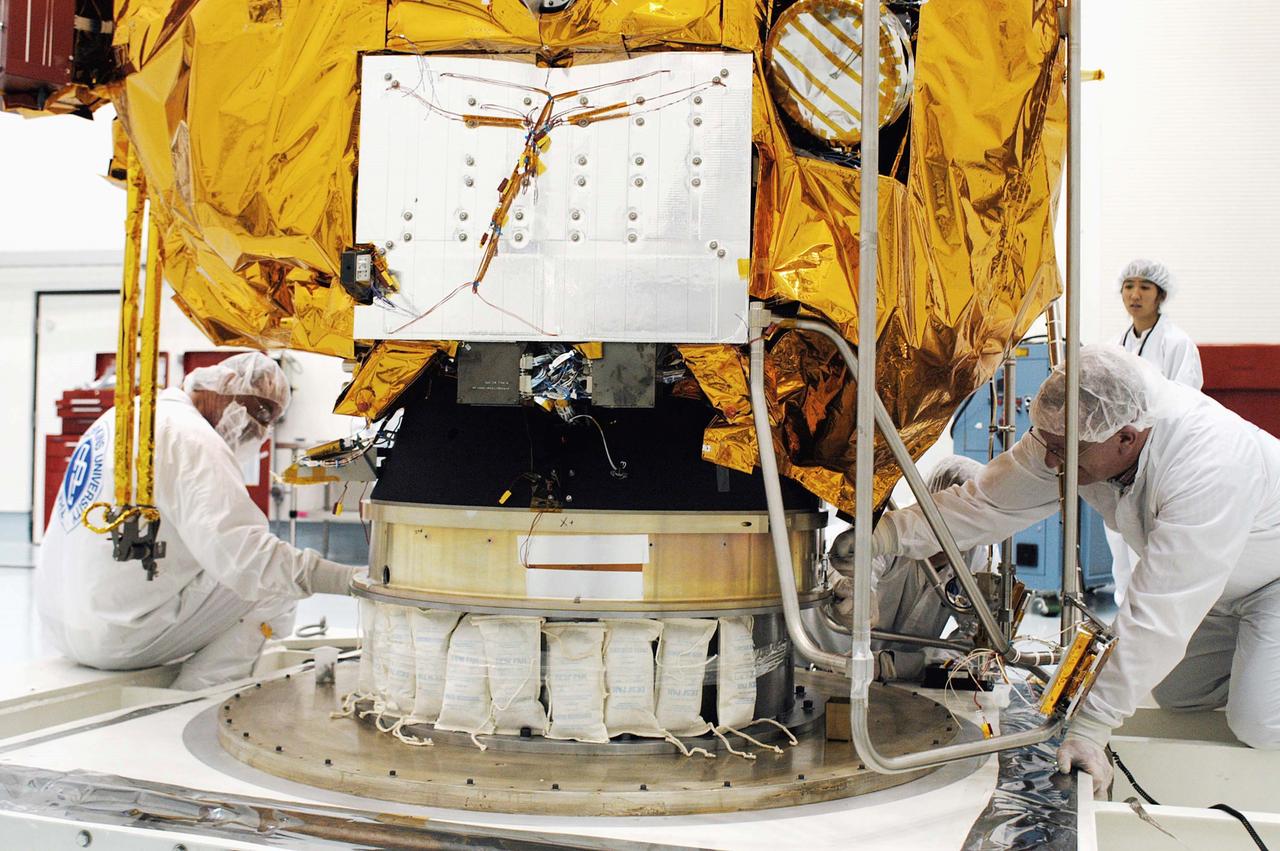
KENNEDY SPACE CENTER, FLA. -  In the high bay clean room at the Astrotech Space Operations processing facilities near KSC, NASA’s MESSENGER spacecraft is revealed.  Employees of the Johns Hopkins University Applied Physics Laboratory, builders of the spacecraft, will perform an initial state-of-health check.  Then processing for launch can begin, including checkout of the power systems, communications systems and control systems.  The thermal blankets will also be attached for flight.  MESSENGER - short for MErcury Surface, Space ENvironment, GEochemistry and Ranging - will be launched May 11 on a six-year mission aboard a Boeing Delta II rocket.  Liftoff is targeted for 2:26 a.m. EDT on Tuesday, May 11.
KENNEDY SPACE CENTER, FLA. - In the high bay clean room at the Astrotech Space Operations processing facilities near KSC, NASA’s MESSENGER spacecraft is revealed. Employees of the Johns Hopkins University Applied Physics Laboratory, builders of the spacecraft, will perform an initial state-of-health check. Then processing for launch can begin, including checkout of the power systems, communications systems and control systems. The thermal blankets will also be attached for flight. MESSENGER - short for MErcury Surface, Space ENvironment, GEochemistry and Ranging - will be launched May 11 on a six-year mission aboard a Boeing Delta II rocket. Liftoff is targeted for 2:26 a.m. EDT on Tuesday, May 11.
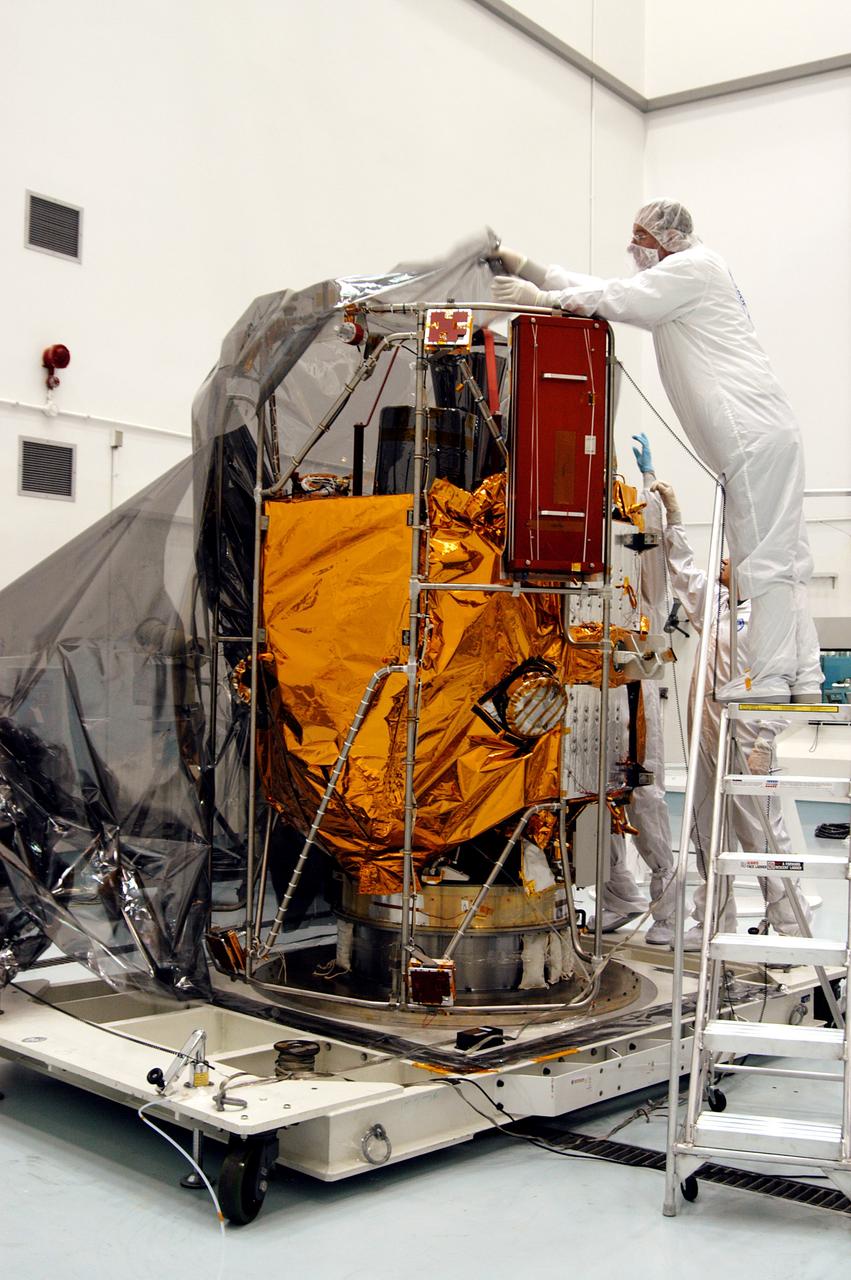
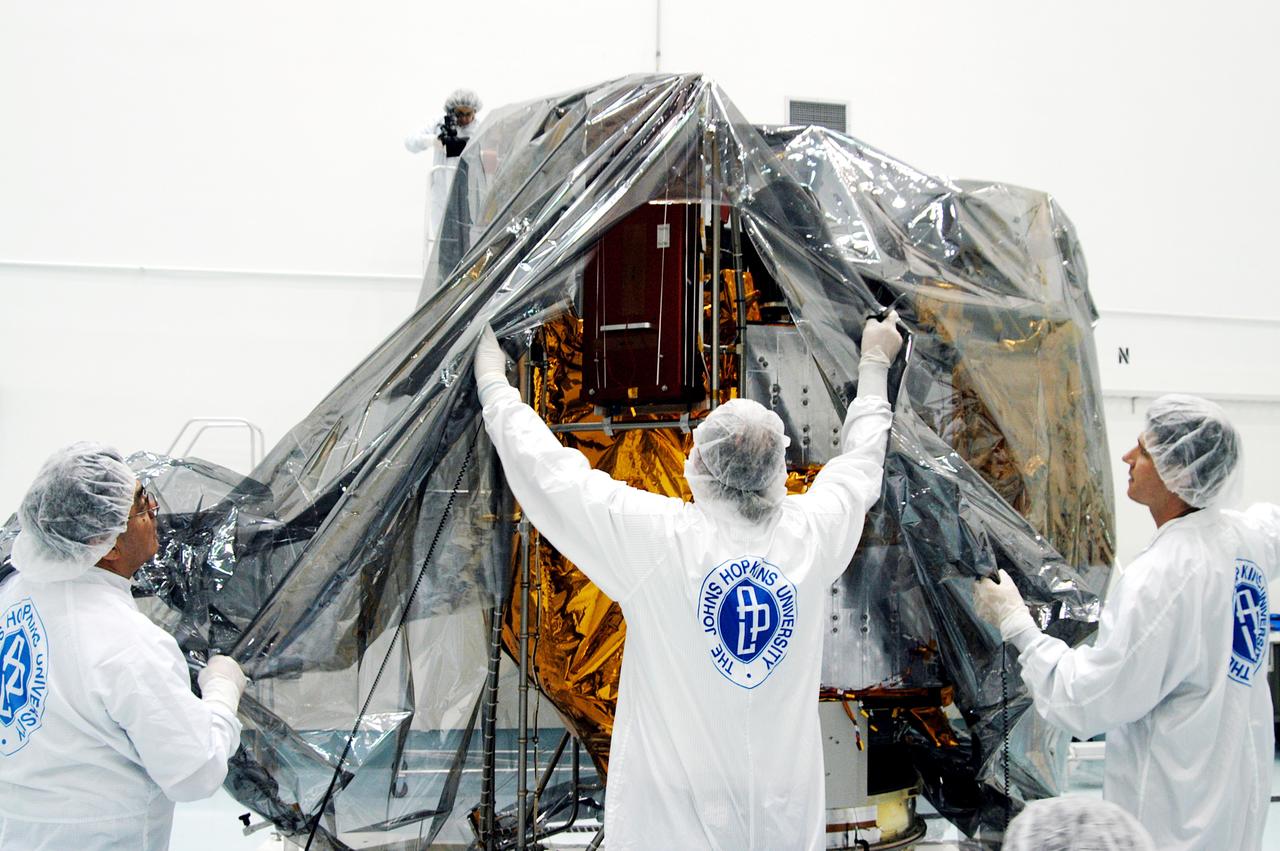
KENNEDY SPACE CENTER, FLA. -  In the high bay clean room at the Astrotech Space Operations processing facilities near KSC, workers remove the protective cover from NASA’s MESSENGER spacecraft.  Employees of the Johns Hopkins University Applied Physics Laboratory, builders of the spacecraft, will perform an initial state-of-health check.  Then processing for launch can begin, including checkout of the power systems, communications systems and control systems.  The thermal blankets will also be attached for flight.  MESSENGER - short for MErcury Surface, Space ENvironment, GEochemistry and Ranging - will be launched May 11 on a six-year mission aboard a Boeing Delta II rocket.  Liftoff is targeted for 2:26 a.m. EDT on Tuesday, May 11.
KENNEDY SPACE CENTER, FLA. - In the high bay clean room at the Astrotech Space Operations processing facilities near KSC, workers remove the protective cover from NASA’s MESSENGER spacecraft. Employees of the Johns Hopkins University Applied Physics Laboratory, builders of the spacecraft, will perform an initial state-of-health check. Then processing for launch can begin, including checkout of the power systems, communications systems and control systems. The thermal blankets will also be attached for flight. MESSENGER - short for MErcury Surface, Space ENvironment, GEochemistry and Ranging - will be launched May 11 on a six-year mission aboard a Boeing Delta II rocket. Liftoff is targeted for 2:26 a.m. EDT on Tuesday, May 11.
KENNEDY SPACE CENTER, FLA. -  At the Astrotech Space Operations processing facilities, workers check the placement of NASA’s MESSENGER spacecraft on a work stand. There employees of the Johns Hopkins University Applied Physics Laboratory, builders of the spacecraft, will perform an initial state-of-health check.  Then processing for launch can begin, including checkout of the power systems, communications systems and control systems.  The thermal blankets will also be attached for flight.  MESSENGER - short for MErcury Surface, Space ENvironment, GEochemistry and Ranging - will be launched May 11 on a six-year mission aboard a Boeing Delta II rocket.  Liftoff is targeted for 2:26 a.m. EDT on Tuesday, May 11.
KENNEDY SPACE CENTER, FLA. - At the Astrotech Space Operations processing facilities, workers check the placement of NASA’s MESSENGER spacecraft on a work stand. There employees of the Johns Hopkins University Applied Physics Laboratory, builders of the spacecraft, will perform an initial state-of-health check. Then processing for launch can begin, including checkout of the power systems, communications systems and control systems. The thermal blankets will also be attached for flight. MESSENGER - short for MErcury Surface, Space ENvironment, GEochemistry and Ranging - will be launched May 11 on a six-year mission aboard a Boeing Delta II rocket. Liftoff is targeted for 2:26 a.m. EDT on Tuesday, May 11.
KENNEDY SPACE CENTER, FLA. -  In the high bay clean room at the Astrotech Space Operations processing facilities near KSC, workers remove the protective cover from NASA’s MESSENGER spacecraft.  Employees of the Johns Hopkins University Applied Physics Laboratory, builders of the spacecraft, will perform an initial state-of-health check.  Then processing for launch can begin, including checkout of the power systems, communications systems and control systems.  The thermal blankets will also be attached for flight.  MESSENGER - short for MErcury Surface, Space ENvironment, GEochemistry and Ranging - will be launched May 11 on a six-year mission aboard a Boeing Delta II rocket.  Liftoff is targeted for 2:26 a.m. EDT on Tuesday, May 11.
KENNEDY SPACE CENTER, FLA. - In the high bay clean room at the Astrotech Space Operations processing facilities near KSC, workers remove the protective cover from NASA’s MESSENGER spacecraft. Employees of the Johns Hopkins University Applied Physics Laboratory, builders of the spacecraft, will perform an initial state-of-health check. Then processing for launch can begin, including checkout of the power systems, communications systems and control systems. The thermal blankets will also be attached for flight. MESSENGER - short for MErcury Surface, Space ENvironment, GEochemistry and Ranging - will be launched May 11 on a six-year mission aboard a Boeing Delta II rocket. Liftoff is targeted for 2:26 a.m. EDT on Tuesday, May 11.
KENNEDY SPACE CENTER, FLA. -  In the high bay clean room at the Astrotech Space Operations processing facilities near KSC, workers prepare NASA’s MESSENGER spacecraft for transfer to a work stand.  There employees of the Johns Hopkins University Applied Physics Laboratory, builders of the spacecraft, will perform an initial state-of-health check.  Then processing for launch can begin, including checkout of the power systems, communications systems and control systems.  The thermal blankets will also be attached for flight.  MESSENGER - short for MErcury Surface, Space ENvironment, GEochemistry and Ranging - will be launched May 11 on a six-year mission aboard a Boeing Delta II rocket.  Liftoff is targeted for 2:26 a.m. EDT on Tuesday, May 11.
KENNEDY SPACE CENTER, FLA. - In the high bay clean room at the Astrotech Space Operations processing facilities near KSC, workers prepare NASA’s MESSENGER spacecraft for transfer to a work stand. There employees of the Johns Hopkins University Applied Physics Laboratory, builders of the spacecraft, will perform an initial state-of-health check. Then processing for launch can begin, including checkout of the power systems, communications systems and control systems. The thermal blankets will also be attached for flight. MESSENGER - short for MErcury Surface, Space ENvironment, GEochemistry and Ranging - will be launched May 11 on a six-year mission aboard a Boeing Delta II rocket. Liftoff is targeted for 2:26 a.m. EDT on Tuesday, May 11.
KENNEDY SPACE CENTER, FLA. -  At the Astrotech Space Operations processing facilities, an overhead crane lowers NASA’s MESSENGER spacecraft onto a work stand. There employees of the Johns Hopkins University Applied Physics Laboratory, builders of the spacecraft, will perform an initial state-of-health check.  Then processing for launch can begin, including checkout of the power systems, communications systems and control systems.  The thermal blankets will also be attached for flight.  MESSENGER - short for MErcury Surface, Space ENvironment, GEochemistry and Ranging - will be launched May 11 on a six-year mission aboard a Boeing Delta II rocket.  Liftoff is targeted for 2:26 a.m. EDT on Tuesday, May 11.
KENNEDY SPACE CENTER, FLA. - At the Astrotech Space Operations processing facilities, an overhead crane lowers NASA’s MESSENGER spacecraft onto a work stand. There employees of the Johns Hopkins University Applied Physics Laboratory, builders of the spacecraft, will perform an initial state-of-health check. Then processing for launch can begin, including checkout of the power systems, communications systems and control systems. The thermal blankets will also be attached for flight. MESSENGER - short for MErcury Surface, Space ENvironment, GEochemistry and Ranging - will be launched May 11 on a six-year mission aboard a Boeing Delta II rocket. Liftoff is targeted for 2:26 a.m. EDT on Tuesday, May 11.
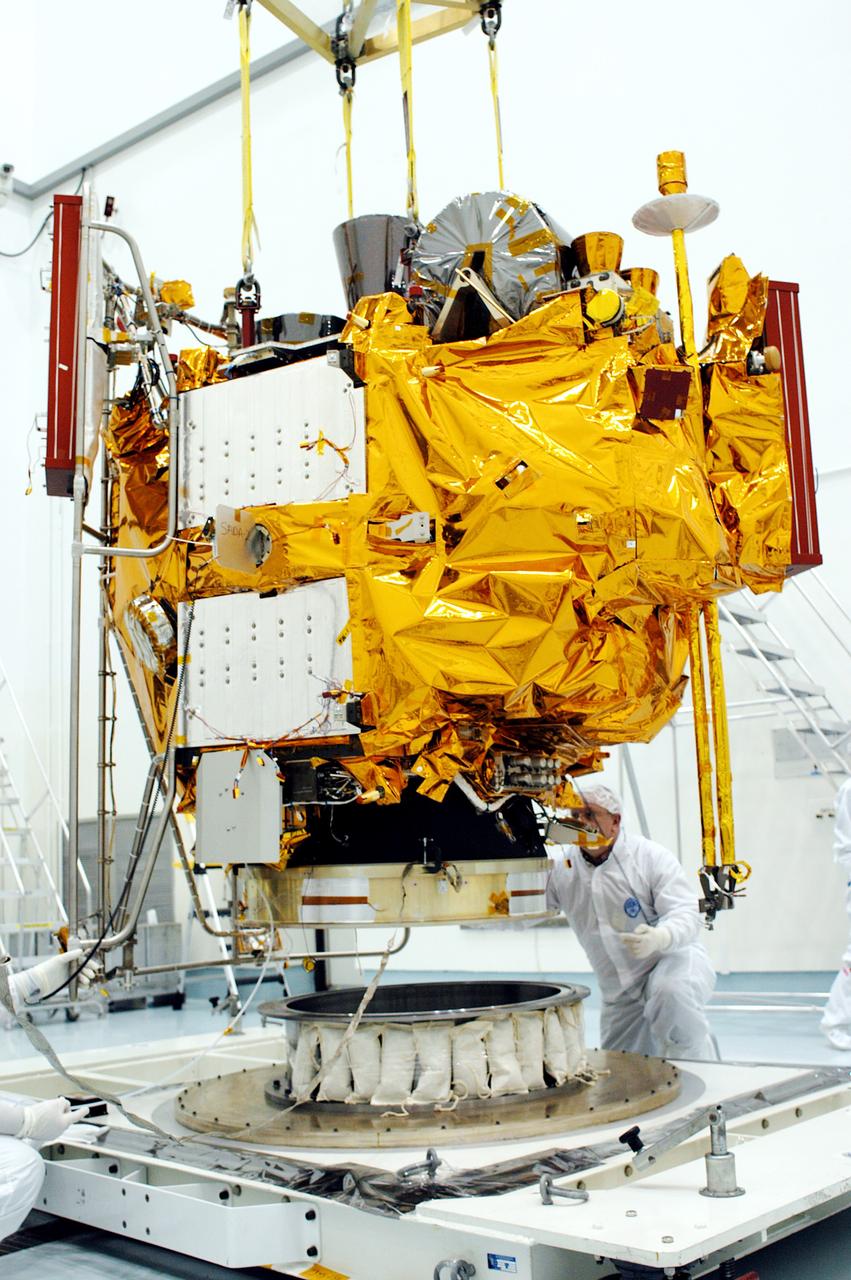
KENNEDY SPACE CENTER, FLA. -  At the Astrotech Space Operations processing facilities, NASA’s MESSENGER spacecraft is lifted off the pallet for transfer to a work stand. There employees of the Johns Hopkins University Applied Physics Laboratory, builders of the spacecraft, will perform an initial state-of-health check.  Then processing for launch can begin, including checkout of the power systems, communications systems and control systems.  The thermal blankets will also be attached for flight.  MESSENGER - short for MErcury Surface, Space ENvironment, GEochemistry and Ranging - will be launched May 11 on a six-year mission aboard a Boeing Delta II rocket.  Liftoff is targeted for 2:26 a.m. EDT on Tuesday, May 11.
KENNEDY SPACE CENTER, FLA. - At the Astrotech Space Operations processing facilities, NASA’s MESSENGER spacecraft is lifted off the pallet for transfer to a work stand. There employees of the Johns Hopkins University Applied Physics Laboratory, builders of the spacecraft, will perform an initial state-of-health check. Then processing for launch can begin, including checkout of the power systems, communications systems and control systems. The thermal blankets will also be attached for flight. MESSENGER - short for MErcury Surface, Space ENvironment, GEochemistry and Ranging - will be launched May 11 on a six-year mission aboard a Boeing Delta II rocket. Liftoff is targeted for 2:26 a.m. EDT on Tuesday, May 11.
KENNEDY SPACE CENTER, FLA. -  At the Astrotech Space Operations processing facilities near KSC, workers move NASA’s MESSENGER spacecraft into a high bay clean room.  Employees of the Johns Hopkins University Applied Physics Laboratory, builders of the spacecraft, will perform an initial state-of-health check.  Then processing for launch can begin, including checkout of the power systems, communications systems and control systems.  The thermal blankets will also be attached for flight.  MESSENGER - short for MErcury Surface, Space ENvironment, GEochemistry and Ranging - will be launched May 11 on a six-year mission aboard a Boeing Delta II rocket.  Liftoff is targeted for 2:26 a.m. EDT on Tuesday, May 11.
KENNEDY SPACE CENTER, FLA. - At the Astrotech Space Operations processing facilities near KSC, workers move NASA’s MESSENGER spacecraft into a high bay clean room. Employees of the Johns Hopkins University Applied Physics Laboratory, builders of the spacecraft, will perform an initial state-of-health check. Then processing for launch can begin, including checkout of the power systems, communications systems and control systems. The thermal blankets will also be attached for flight. MESSENGER - short for MErcury Surface, Space ENvironment, GEochemistry and Ranging - will be launched May 11 on a six-year mission aboard a Boeing Delta II rocket. Liftoff is targeted for 2:26 a.m. EDT on Tuesday, May 11.
KENNEDY SPACE CENTER, FLA. -  At the Astrotech Space Operations processing facilities, NASA’s MESSENGER spacecraft is lifted off the pallet for transfer to a work stand. There employees of the Johns Hopkins University Applied Physics Laboratory, builders of the spacecraft, will perform an initial state-of-health check.  Then processing for launch can begin, including checkout of the power systems, communications systems and control systems.  The thermal blankets will also be attached for flight.  MESSENGER - short for MErcury Surface, Space ENvironment, GEochemistry and Ranging - will be launched May 11 on a six-year mission aboard a Boeing Delta II rocket.  Liftoff is targeted for 2:26 a.m. EDT on Tuesday, May 11.
KENNEDY SPACE CENTER, FLA. - At the Astrotech Space Operations processing facilities, NASA’s MESSENGER spacecraft is lifted off the pallet for transfer to a work stand. There employees of the Johns Hopkins University Applied Physics Laboratory, builders of the spacecraft, will perform an initial state-of-health check. Then processing for launch can begin, including checkout of the power systems, communications systems and control systems. The thermal blankets will also be attached for flight. MESSENGER - short for MErcury Surface, Space ENvironment, GEochemistry and Ranging - will be launched May 11 on a six-year mission aboard a Boeing Delta II rocket. Liftoff is targeted for 2:26 a.m. EDT on Tuesday, May 11.
KENNEDY SPACE CENTER, FLA. -  At the Astrotech Space Operations processing facilities, workers check the placement of NASA’s MESSENGER spacecraft on a work stand. There employees of the Johns Hopkins University Applied Physics Laboratory, builders of the spacecraft, will perform an initial state-of-health check.  Then processing for launch can begin, including checkout of the power systems, communications systems and control systems.  The thermal blankets will also be attached for flight.  MESSENGER - short for MErcury Surface, Space ENvironment, GEochemistry and Ranging - will be launched May 11 on a six-year mission aboard a Boeing Delta II rocket.  Liftoff is targeted for 2:26 a.m. EDT on Tuesday, May 11.
KENNEDY SPACE CENTER, FLA. - At the Astrotech Space Operations processing facilities, workers check the placement of NASA’s MESSENGER spacecraft on a work stand. There employees of the Johns Hopkins University Applied Physics Laboratory, builders of the spacecraft, will perform an initial state-of-health check. Then processing for launch can begin, including checkout of the power systems, communications systems and control systems. The thermal blankets will also be attached for flight. MESSENGER - short for MErcury Surface, Space ENvironment, GEochemistry and Ranging - will be launched May 11 on a six-year mission aboard a Boeing Delta II rocket. Liftoff is targeted for 2:26 a.m. EDT on Tuesday, May 11.
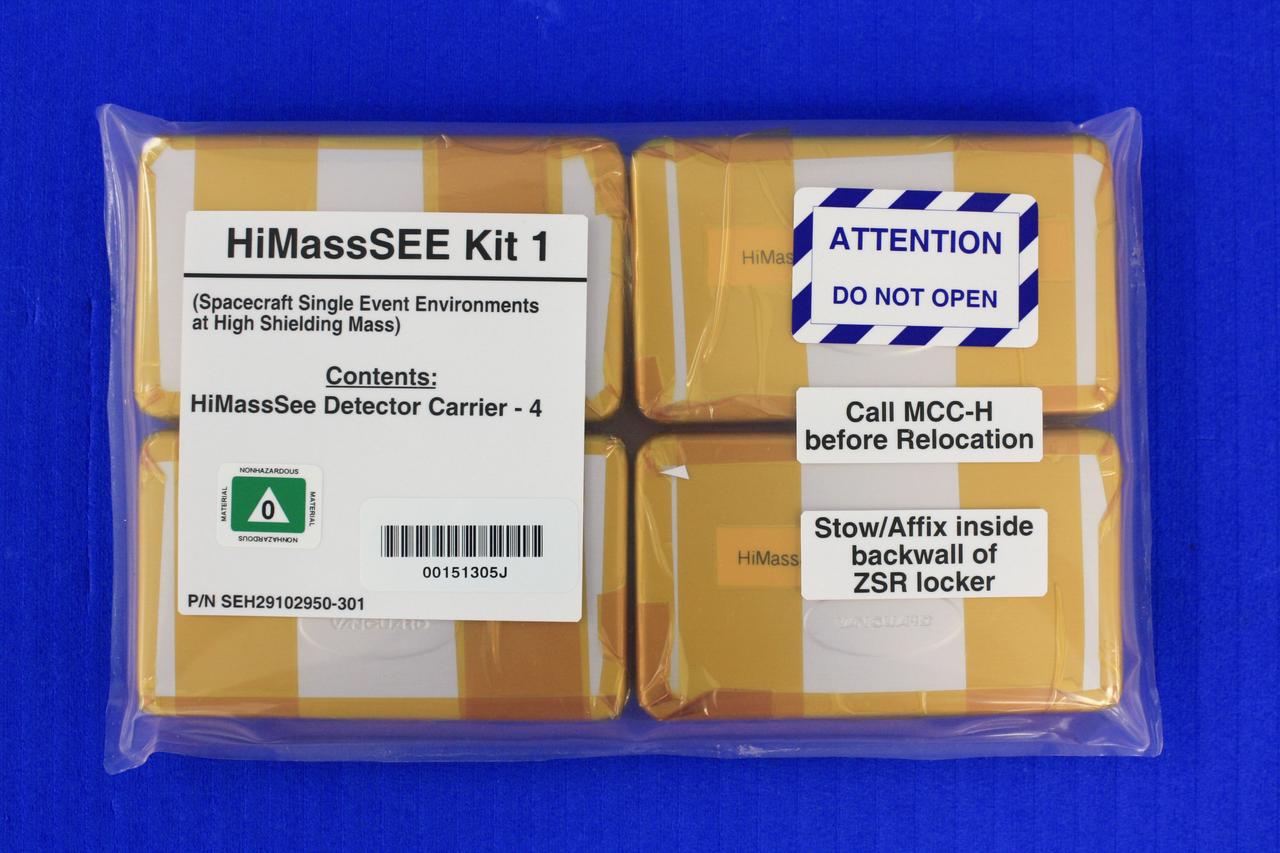
jsc2011e080236 (8/25/2011) --- A preflight view of Hi Shielding Mass Single Event Environment (HiMassSEE) Kit 1 within plastic bag. Spacecraft Single Event Environments at High Shielding Mass (HiMassSEE) measures space radiation interactions with spacecraft structure and shielding using several passive track detector technologies to provide a more accurate definition of International Space Station (ISS) payload accommodations, radiation transport model validation, and flight demonstration data on advanced microelectronics and chemical dosimeters.
Hi Shielding Mass Single Event Environment (HiMassSEE) Kit 1
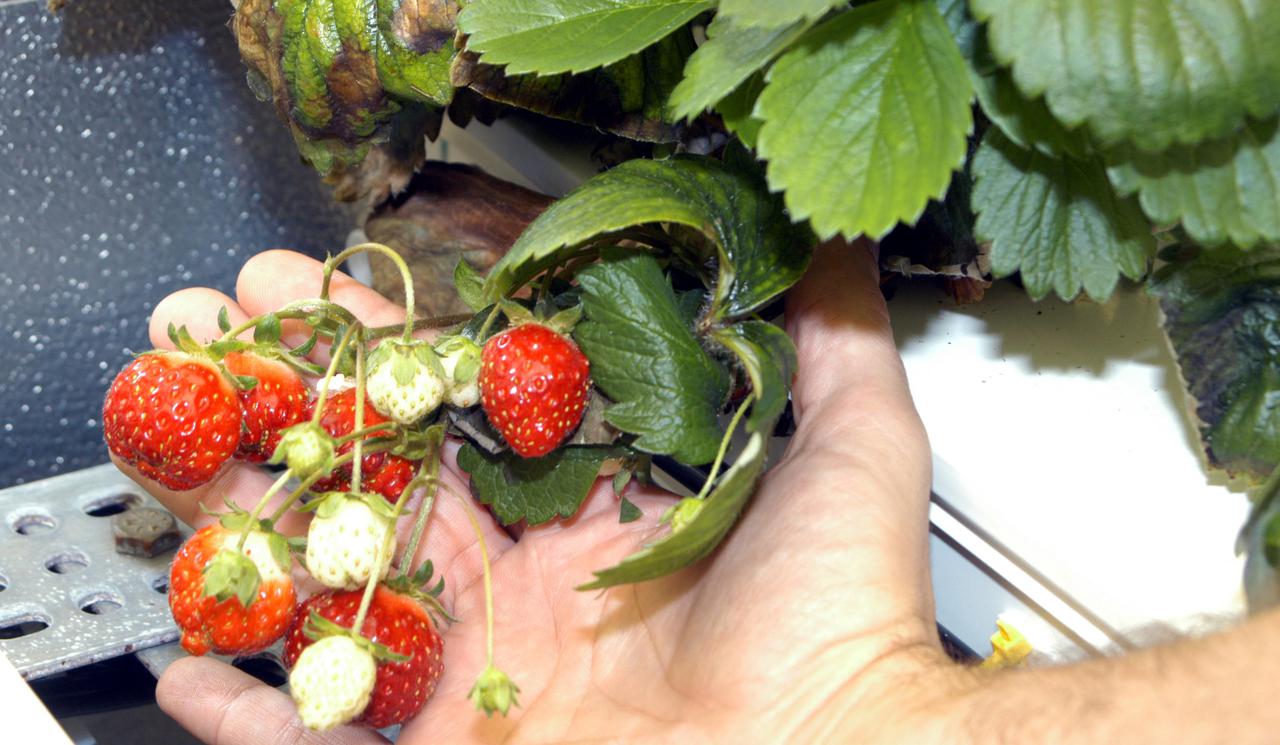
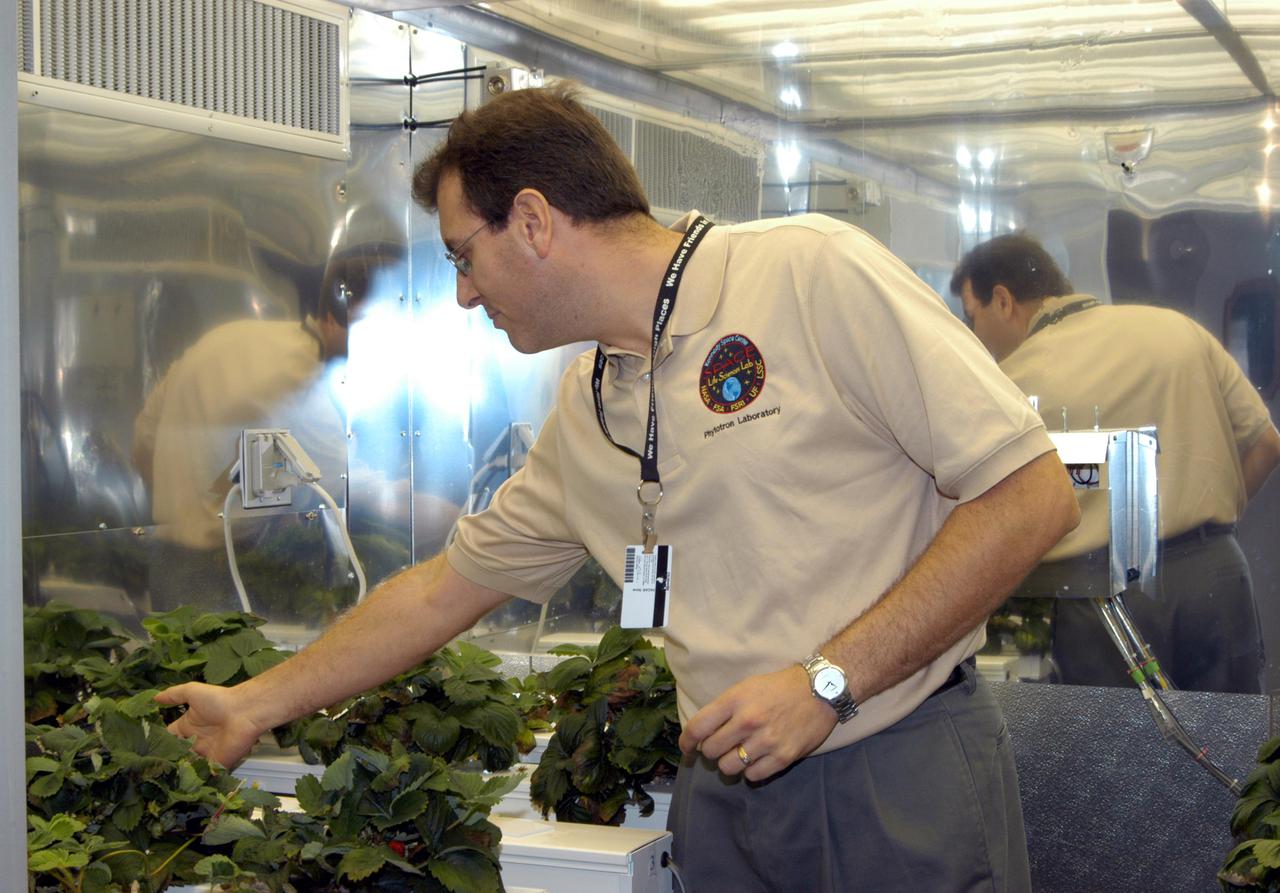
KENNEDY SPACE CENTER, FLA. -  A crop of strawberries grown in a controlled environment chamber at the Space Life Sciences Lab is displayed during a tour of the facility for members of the news media.  In missions to the International Space Station or early planetary outposts, plant production systems will likely be small and rely upon the spacecraft or habitat environment to regulate temperature, relative humidity, and carbon dioxide concentrations. Various crops are being grown in conditions that might be experienced in a spacecraft to evaluate the effects of different environmental conditions on plant growth, crop yield, and product quality.
KSC-04pd-2550
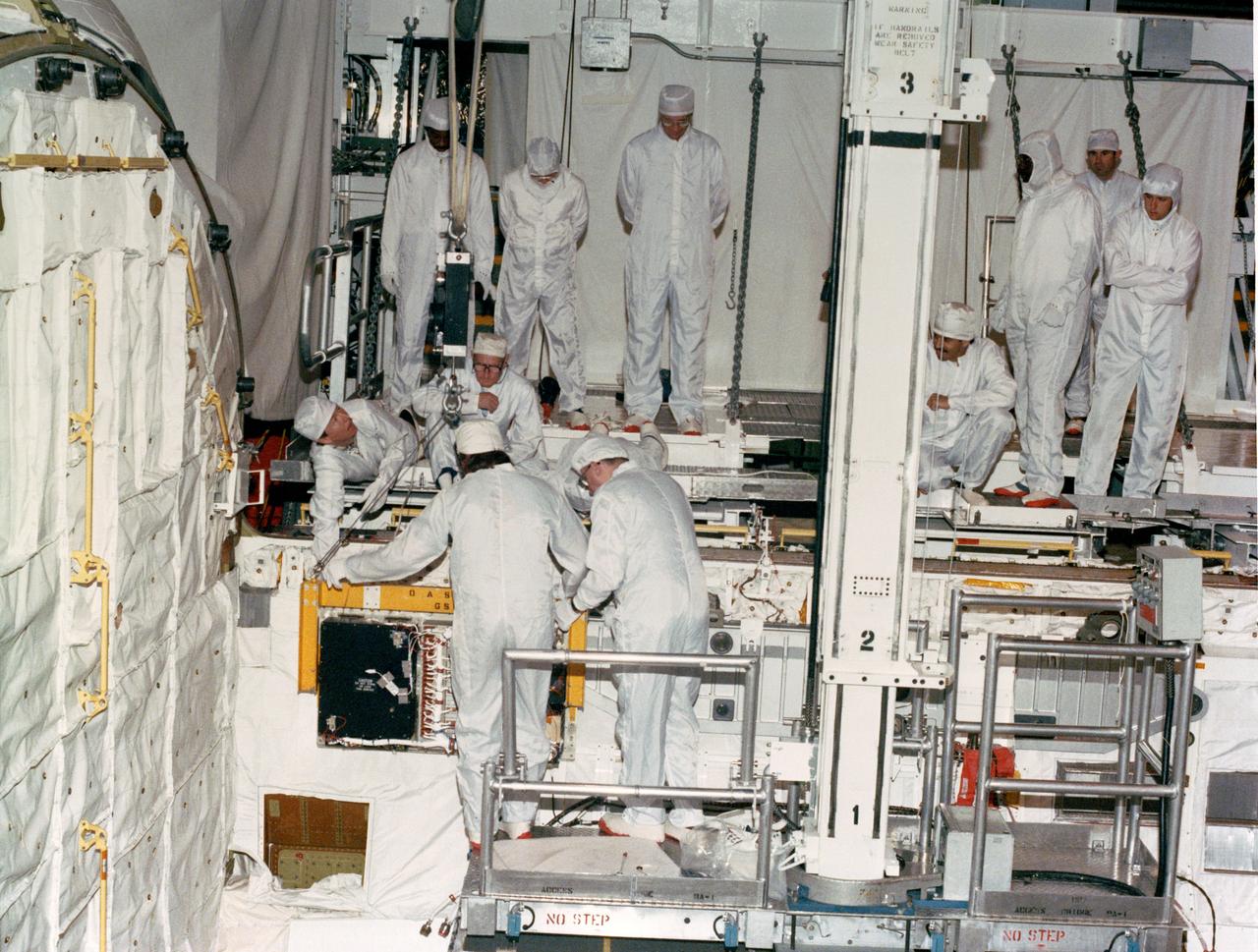
S88-37764 (18 April 1988) --- OASIS, instrumentation which will record the environment experienced by Discovery during the STS-26 Space Shuttle mission, is lowered into position for attachment to the orbiter's aft port sill.  Instrumentation sensors in the payload bay which are connected to the tape recorder module will document a variety of environmental measurements during various phases of the flight including temperature, pressure, vibration, sounds, acceleration, stress, and strain.  OASIS will also record data during the Flight Readiness Firing.  NASA is flying OASIS aboard Discovery in support of the Inertial Upper Stage (IUS) program office of the Air Force Space Division.  The system was developed by Lockheed under a NASA contract, funded by the Air Force.
STS-26 Discovery, OV-103, OASIS equipment is mounted in payload bay (PLB)
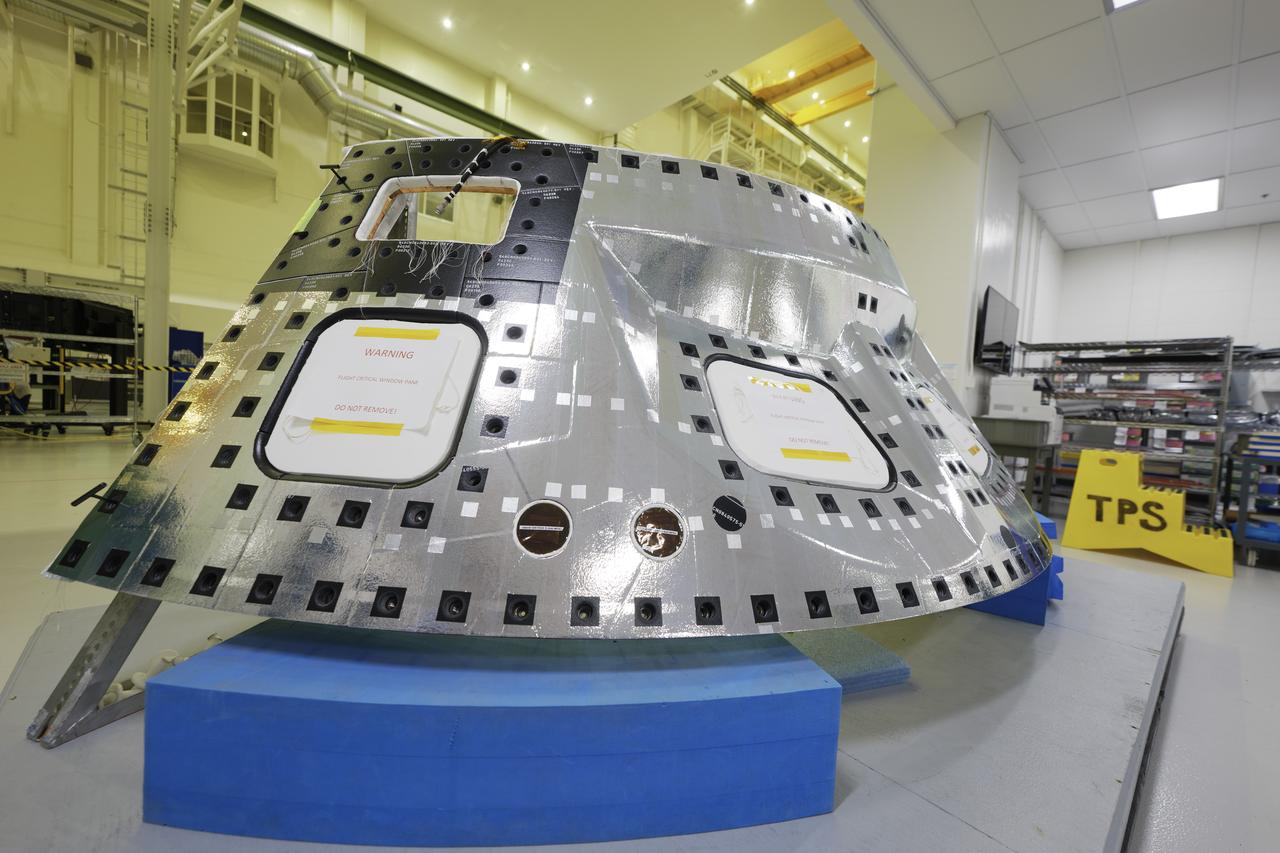
Inside the Operations and Checkout building at NASA's Kennedy Space Center in Florida on Thursday, Feb. 1, 2024, backshell panels and insulation for the Artemis II Orion spacecraft’s exterior are prepped for install. The spacecraft’s exterior will protect the Orion spacecraft and the astronauts inside from the harsh environments they will encounter on their mission.⁣
Artemis II Orion Hardware
Inside the Operations and Checkout building at NASA's Kennedy Space Center in Florida on Thursday, Feb. 1, 2024, backshell panels and insulation for the Artemis II Orion spacecraft’s exterior are prepped for install. The spacecraft’s exterior will protect the Orion spacecraft and the astronauts inside from the harsh environments they will encounter on their mission.⁣
Artemis II Orion Hardware
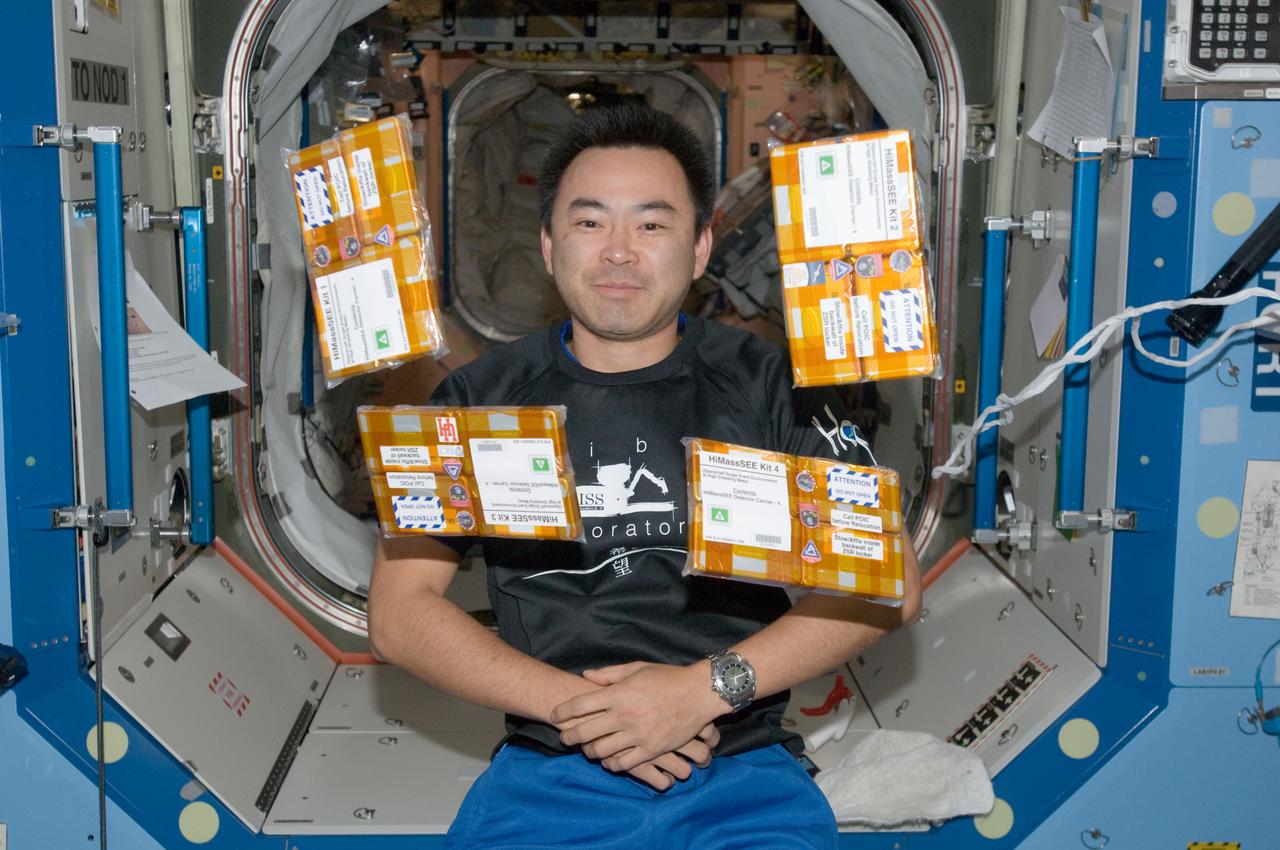
iss032e016946 (8/11/2012) --- Japan Aerospace Exploration Agency (JAXA) astronaut Akihiko Hoshide poses with the HiMassSEE (Spacecraft Single Event Environments at High Shielding Mass) kits 1,2,3 and 4 in the U.S. Lab aboard the International Space Station (ISS). Spacecraft Single Event Environments at High Shielding Mass (HiMassSEE) measures space radiation interactions with spacecraft structure and shielding using several passive track detector technologies to provide a more accurate definition of International Space Station (ISS) payload accommodations, radiation transport model validation, and flight demonstration data on advanced microelectronics and chemical dosimeters.
Hoshide with HiMassSee kits
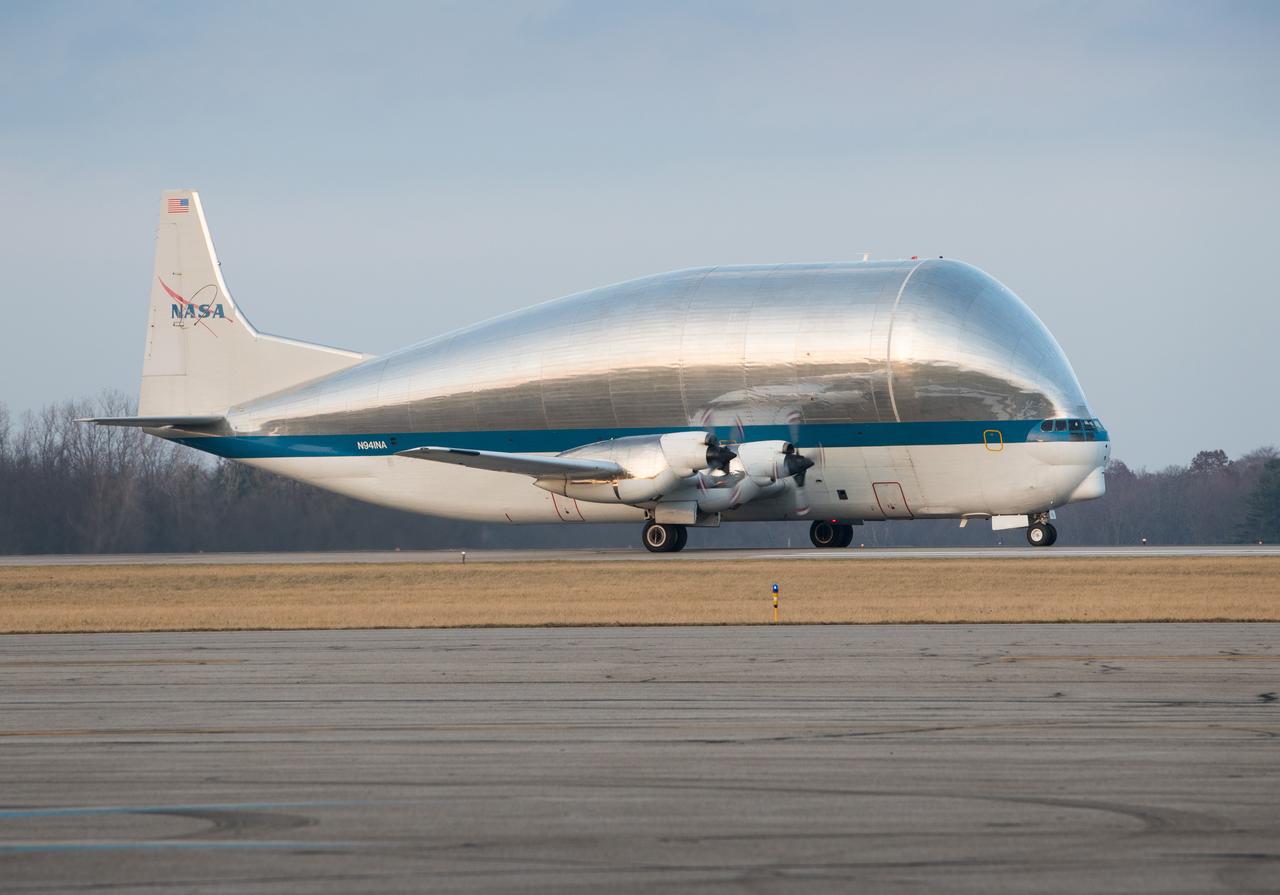
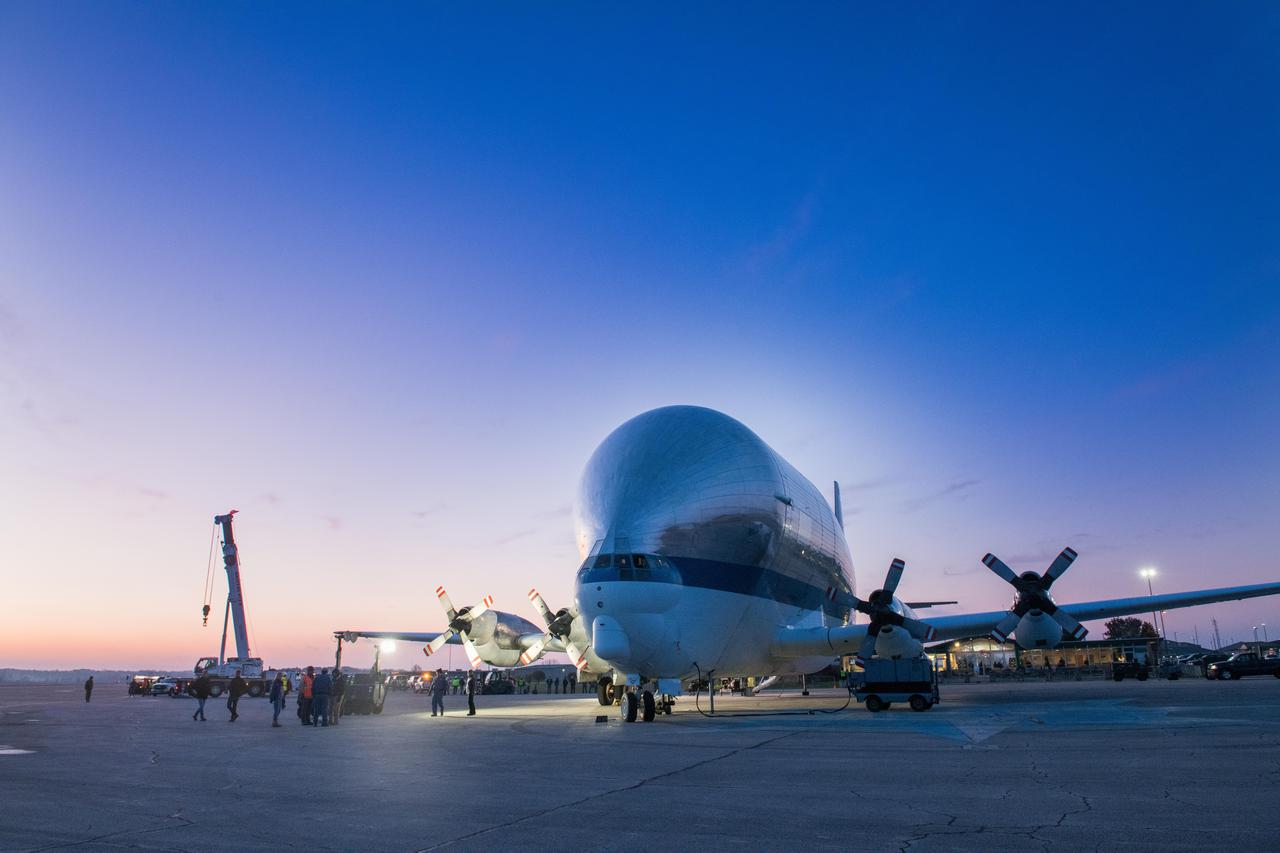
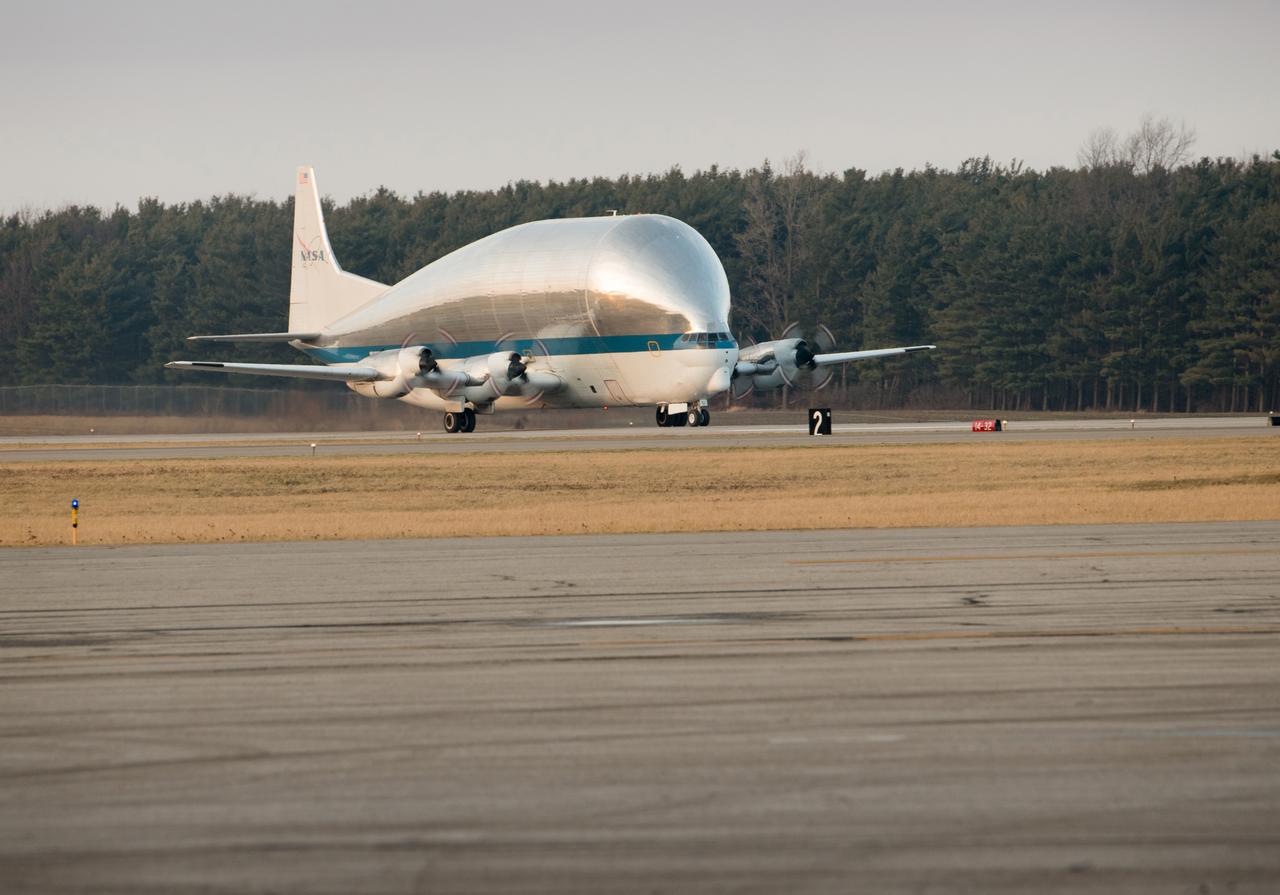
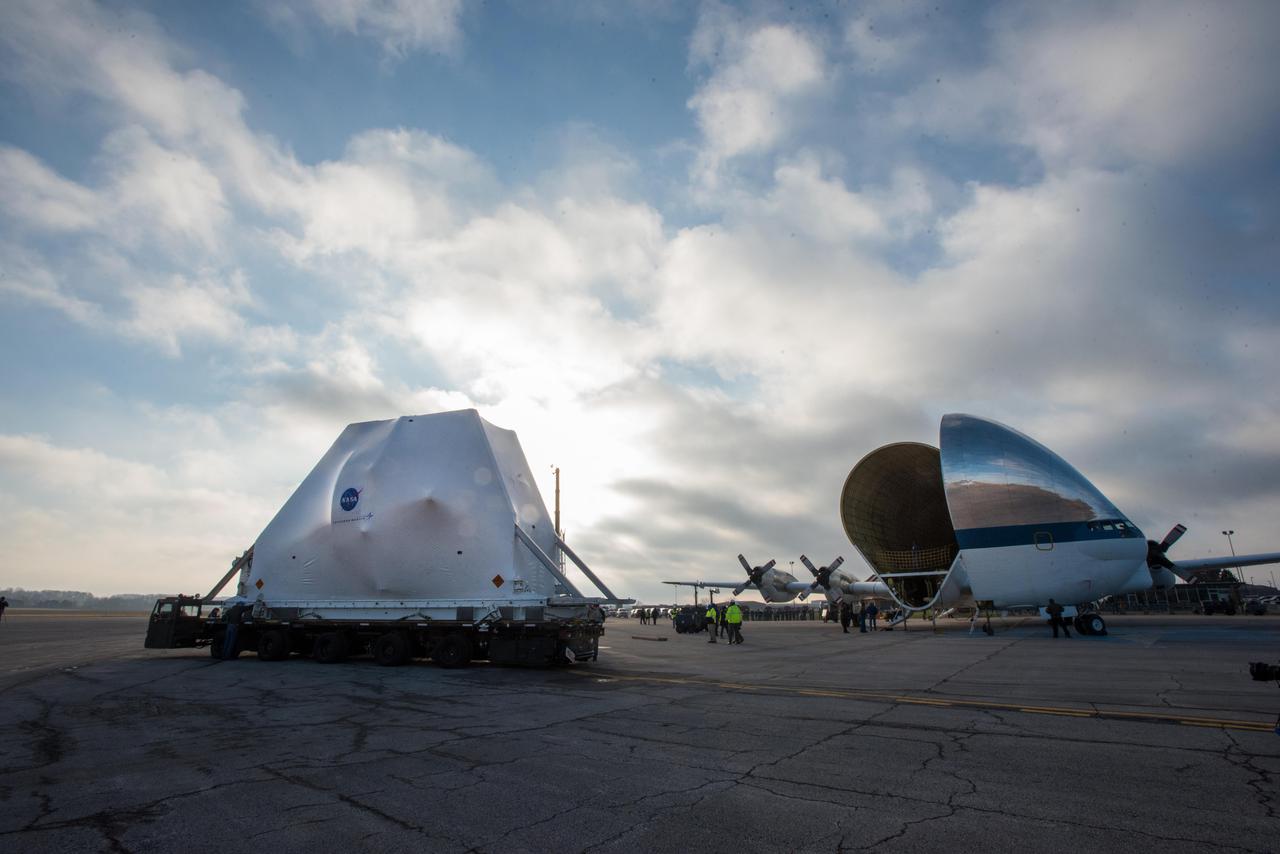
Orion - EM-1 - Artemis Spacecraft Arrival at Mansfield Lahm Airport on Board the Super Guppy Aircraft, Transportation to Plum Brook Station and Installation in the Space Environment Complex, SEC Thermal Vacuum Chamber
Orion - EM-1 - Artemis Spacecraft Arrival at Mansfield Lahm A...
Orion - EM-1 - Artemis Spacecraft Arrival at Mansfield Lahm Airport, Transportation to Plum Brook Station and Installation in the Space Environment Complex, SEC Thermal Vacuum Chamber
Orion - EM-1 - Artemis Spacecraft Arrival at Mansfield Lahm A...
Orion - EM-1 - Artemis Spacecraft Arrival at Mansfield Lahm Airport on board the Super Guppy Aircraft, Transportation to Plum Brook Station and Installation in the Space Environment Complex, SEC Thermal Vacuum Chamber
Orion - EM-1 - Artemis Spacecraft Arrival at Mansfield Lahm A...
Orion - EM-1 - Artemis Spacecraft Arrival at Mansfield Lahm Airport, Transportation to Plum Brook Station and Installation in the Space Environment Complex, SEC Thermal Vacuum Chamber
Orion - EM-1 - Artemis Spacecraft Arrival at Mansfield Lahm A...
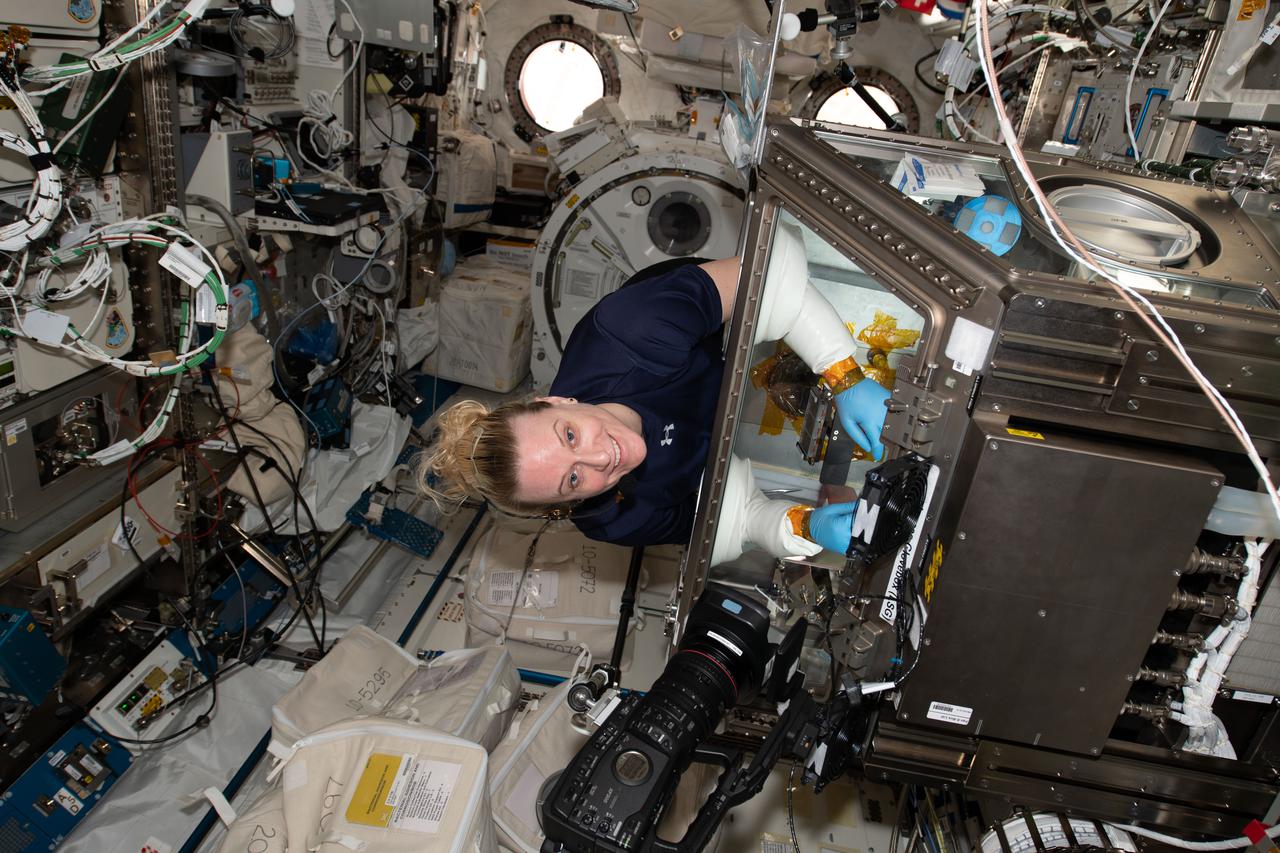
iss064e020688 (Jan. 7, 2021) --- NASA astronaut Kate Rubins works in the Kibo laboratory module's Life Sciences Glovebox servicing samples of microbes for an experiment that seeks to understand the microbial risk to a spacecraft’s environment.
iss064e020688
Orion - EM-1 - Artemis Spacecraft Arrival at Mansfield Lahm Airport, Transportation to Plum Brook Station and Installation in the Space Environment Complex, SEC Thermal Vacuum Chamber
Orion - EM-1 - Artemis Spacecraft Arrival at Mansfield Lahm A...
Orion - EM-1 - Artemis Spacecraft Arrival at Mansfield Lahm Airport, Transportation to Plum Brook Station and Installation in the Space Environment Complex, SEC Thermal Vacuum Chamber
Orion - EM-1 - Artemis Spacecraft Arrival at Mansfield Lahm A...
Orion - EM-1 - Artemis Spacecraft Arrival at Mansfield Lahm Airport, Transportation to Plum Brook Station and Installation in the Space Environment Complex, SEC Thermal Vacuum Chamber
Orion - EM-1 - Artemis Spacecraft Arrival at Mansfield Lahm A...
KENNEDY SPACE CENTER, FLA. -  In the high bay clean room at the Astrotech Space Operations processing facilities near KSC, workers attach an overhead crane to NASA’s MESSENGER spacecraft.  The spacecraft will be moved to a work stand where employees of the Johns Hopkins University Applied Physics Laboratory, builders of the spacecraft, will perform an initial state-of-health check.  Then processing for launch can begin, including checkout of the power systems, communications systems and control systems.  The thermal blankets will also be attached for flight.  MESSENGER - short for MErcury Surface, Space ENvironment, GEochemistry and Ranging - will be launched May 11 on a six-year mission aboard a Boeing Delta II rocket.  Liftoff is targeted for 2:26 a.m. EDT on Tuesday, May 11.
KENNEDY SPACE CENTER, FLA. - In the high bay clean room at the Astrotech Space Operations processing facilities near KSC, workers attach an overhead crane to NASA’s MESSENGER spacecraft. The spacecraft will be moved to a work stand where employees of the Johns Hopkins University Applied Physics Laboratory, builders of the spacecraft, will perform an initial state-of-health check. Then processing for launch can begin, including checkout of the power systems, communications systems and control systems. The thermal blankets will also be attached for flight. MESSENGER - short for MErcury Surface, Space ENvironment, GEochemistry and Ranging - will be launched May 11 on a six-year mission aboard a Boeing Delta II rocket. Liftoff is targeted for 2:26 a.m. EDT on Tuesday, May 11.
KENNEDY SPACE CENTER, FLA. -  In the high bay clean room at the Astrotech Space Operations processing facilities near KSC, workers prepare to attach an overhead crane to NASA’s MESSENGER spacecraft.  The spacecraft will be moved to a work stand where employees of the Johns Hopkins University Applied Physics Laboratory, builders of the spacecraft, will perform an initial state-of-health check.  Then processing for launch can begin, including checkout of the power systems, communications systems and control systems.  The thermal blankets will also be attached for flight.  MESSENGER - short for MErcury Surface, Space ENvironment, GEochemistry and Ranging - will be launched May 11 on a six-year mission aboard a Boeing Delta II rocket.  Liftoff is targeted for 2:26 a.m. EDT on Tuesday, May 11.
KENNEDY SPACE CENTER, FLA. - In the high bay clean room at the Astrotech Space Operations processing facilities near KSC, workers prepare to attach an overhead crane to NASA’s MESSENGER spacecraft. The spacecraft will be moved to a work stand where employees of the Johns Hopkins University Applied Physics Laboratory, builders of the spacecraft, will perform an initial state-of-health check. Then processing for launch can begin, including checkout of the power systems, communications systems and control systems. The thermal blankets will also be attached for flight. MESSENGER - short for MErcury Surface, Space ENvironment, GEochemistry and Ranging - will be launched May 11 on a six-year mission aboard a Boeing Delta II rocket. Liftoff is targeted for 2:26 a.m. EDT on Tuesday, May 11.
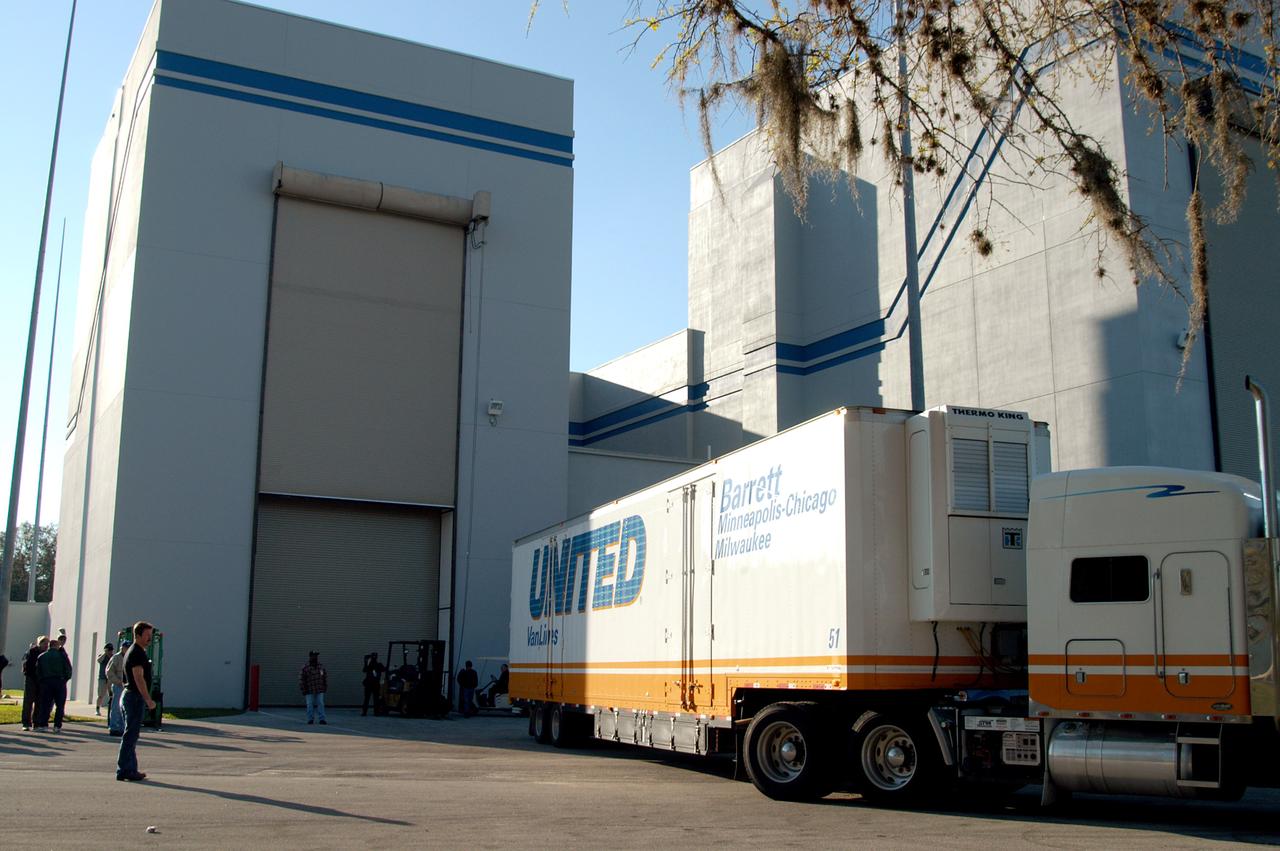
KENNEDY SPACE CENTER, FLA. -  Shipped in an air-conditioned transportation van from NASA’s Goddard Space Flight Center in Greenbelt, Md., NASA’s MESSENGER spacecraft, the first Mercury orbiter, arrives at the Astrotech Space Operations processing facilities near KSC.    MESSENGER - short for MErcury Surface, Space ENvironment, GEochemistry and Ranging - will be offloaded and taken into a high bay clean room.  After the spacecraft is removed from its shipping container, employees of the Johns Hopkins University Applied Physics Laboratory, builders of the spacecraft, will perform an initial state-of-health check.  Then processing for launch can begin, including checkout of the power systems, communications systems and control systems.  The thermal blankets will also be attached for flight.  MESSENGER will be launched May 11 on a six-year mission aboard a Boeing Delta II rocket.  Liftoff is targeted for 2:26 a.m. EDT on Tuesday, May 11.
KENNEDY SPACE CENTER, FLA. - Shipped in an air-conditioned transportation van from NASA’s Goddard Space Flight Center in Greenbelt, Md., NASA’s MESSENGER spacecraft, the first Mercury orbiter, arrives at the Astrotech Space Operations processing facilities near KSC. MESSENGER - short for MErcury Surface, Space ENvironment, GEochemistry and Ranging - will be offloaded and taken into a high bay clean room. After the spacecraft is removed from its shipping container, employees of the Johns Hopkins University Applied Physics Laboratory, builders of the spacecraft, will perform an initial state-of-health check. Then processing for launch can begin, including checkout of the power systems, communications systems and control systems. The thermal blankets will also be attached for flight. MESSENGER will be launched May 11 on a six-year mission aboard a Boeing Delta II rocket. Liftoff is targeted for 2:26 a.m. EDT on Tuesday, May 11.
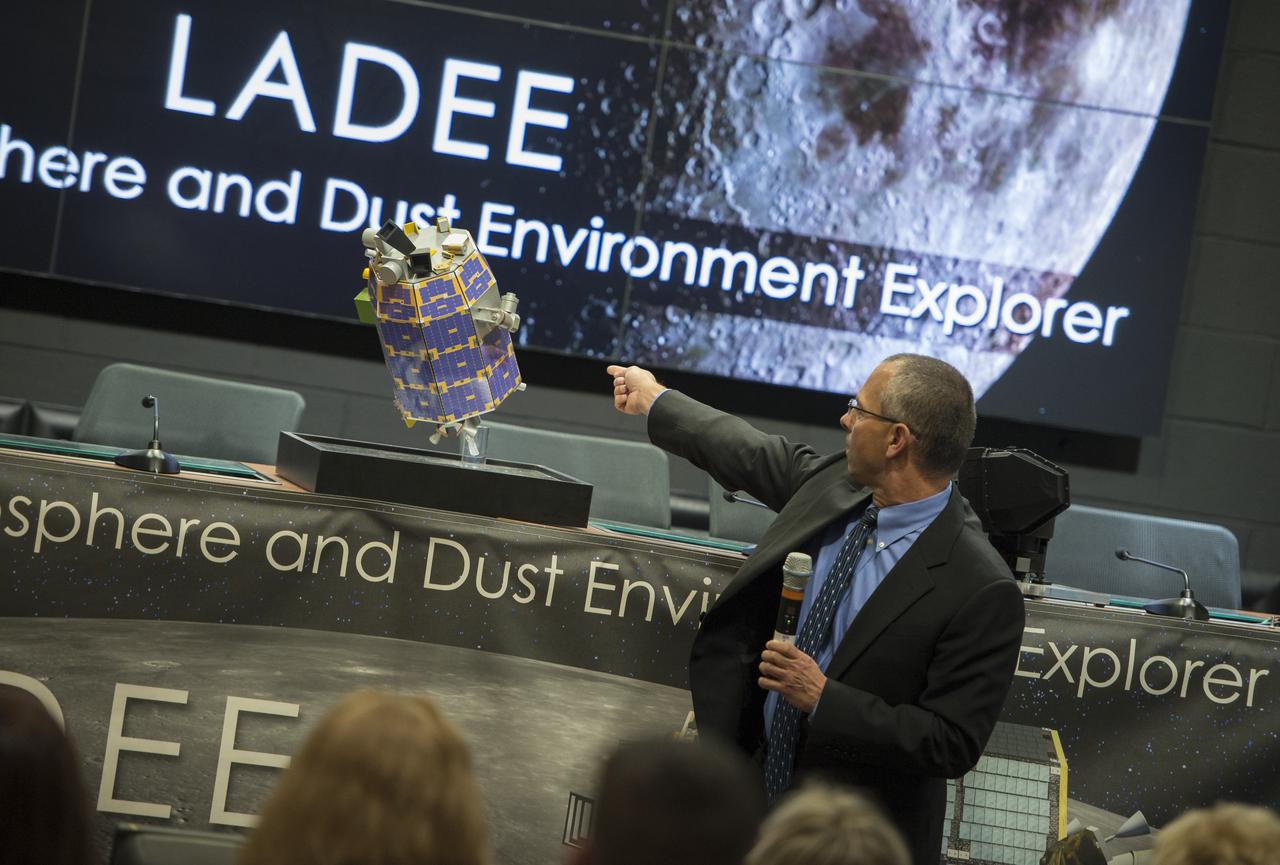
Bob Barber, Lunar Atmosphere and Dust Environment Explorer (LADEE) Spacecraft Systems Engineer at NASA Ames Research Center, points to a model of the LADEE spacecraft a NASA Social, Thursday, Sept. 5, 2013 at NASA Wallops Flight Facility in Virginia.  Fifty of NASA's social media followers are attending a two-day event in support of the LADEE launch.  Data from LADEE will provide unprecedented information about the environment around the moon and give scientists a better understanding of other planetary bodies in our solar system and beyond. LADEE is scheduled to launch at 11:27 p.m. Friday, Sept. 6, from NASA's Wallops Flight Facility.  Photo Credit: (NASA/Carla Cioffi)
LADEE NASA Social
KENNEDY SPACE CENTER, FLA. -  Jeff Richards, a plant physiologist with Dynamac Corporation, displays a crop of strawberries grown in a controlled environment chamber at the Space Life Sciences Lab during a tour of the facility for members of the news media.   In missions to the International Space Station or early planetary outposts, plant production systems will likely be small and rely upon the spacecraft or habitat environment to regulate temperature, relative humidity, and carbon dioxide concentrations.  Various crops are being grown in conditions that might be experienced in a spacecraft to evaluate the effects of different environmental conditions on plant growth, crop yield, and product quality.
KSC-04pd-2549
NASA's Europa Clipper spacecraft is seen in the 85-foot-tall, 25-foot-wide (26-meter-by-8-meter) vacuum chamber, known as the Space Simulator, at the agency's Jet Propulsion Laboratory in Southern California in February 2024. Shortly after this photo was taken, the spacecraft underwent 16 days of thermal vacuum chamber (TVAC) testing so that engineers can be sure the hardware will survive the extreme temperatures and airless environment of space. TVAC is part of a regimen called environmental testing that takes place before spacecraft are approved for flight.  Europa Clipper, set to launch in October 2024 from Kennedy Space Center in Florida, will arrive at the Jupiter system in 2030 and conduct about 50 flybys of the moon Europa. The mission's main science goal is to determine whether there are places below the surface of Europa that could support life. The mission's three main science objectives are to determine the thickness of the moon's icy shell and its surface interactions with the ocean below, to investigate its composition, and to characterize its geology. The mission's detailed exploration of Europa will help scientists better understand the astrobiological potential for habitable worlds beyond our planet.  https://photojournal.jpl.nasa.gov/catalog/PIA26064
Europa Clipper Prepares for Test in Space Simulator
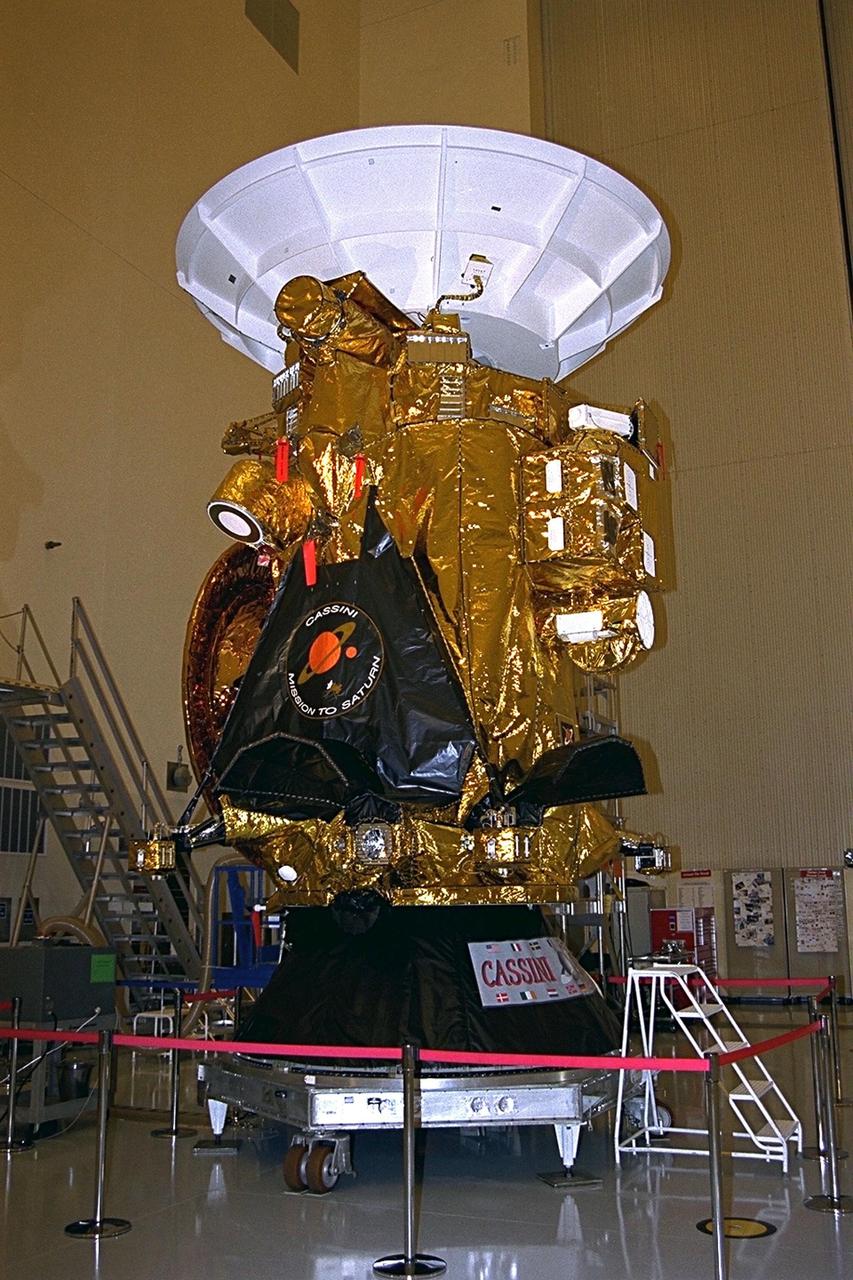
The Cassini spacecraft is on view for the media in the Payload Hazardous Servicing Facility (PHSF) at Kennedy Space Center, Florida. The two-story-tall spacecraft, scheduled for launch on an Air Force Titan IV/Centaur launch vehicle on Oct. 6, is destined to arrive at Saturn in July 2004, where it will orbit and study Saturn, its rings, moons and magnetic environment in detail over a four-year period. Cassini carries a scientific probe called Huygens, provided by the European Space Agency. Huygens will be released from the main Cassini spacecraft and parachute through the atmosphere of Saturn's most intriguing moon, Titan, which is thought to chemically resemble a very cold version of Earth's environment before life began. The Cassini mission is managed for NASA by the Jet Propulsion Laboratory, a division of the California Institute of Technology
KSC-97PC1273
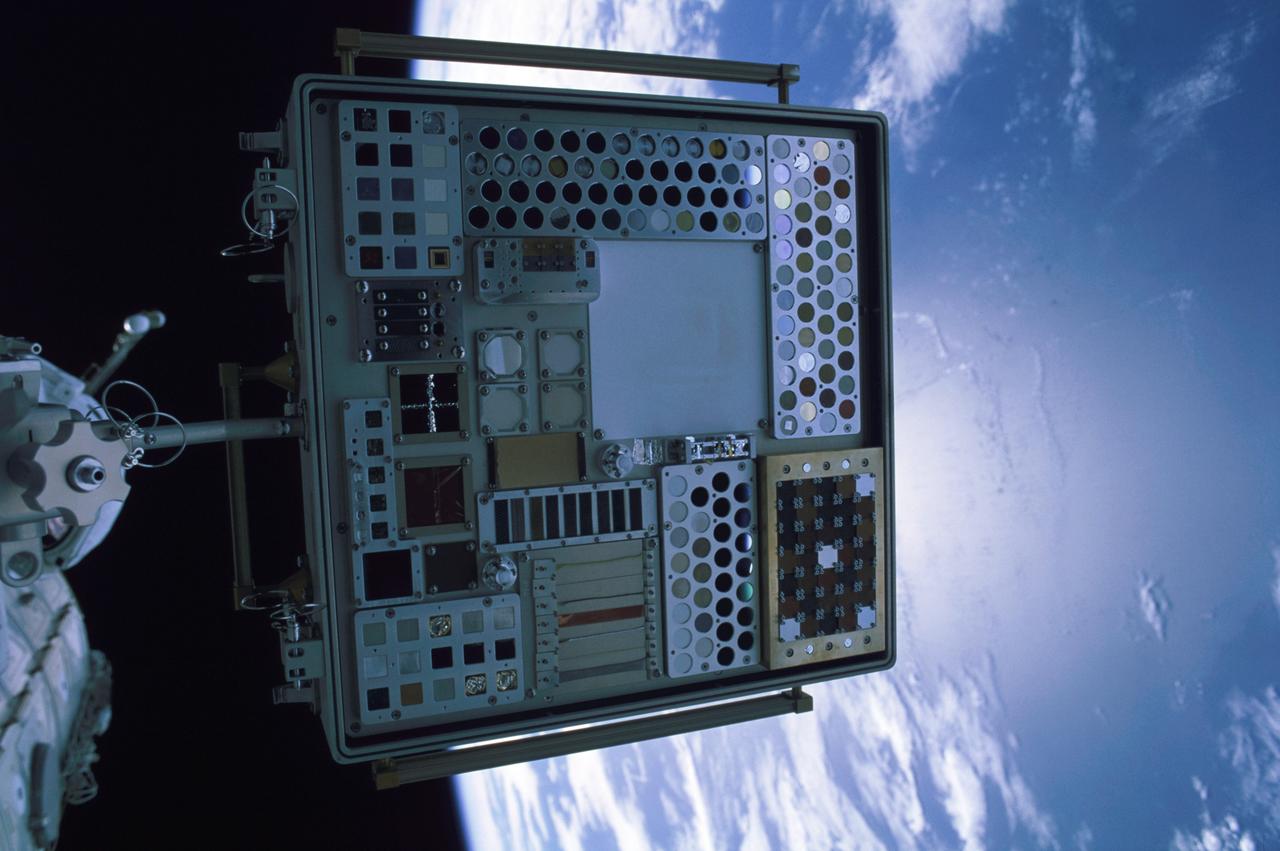
ISS006-348-019 (January 2003)  ---- Materials International Space Station Experiment (MISSE), a suitcase-sized experiment attached to the outside of the space station to expose hundreds of potential space construction materials to the environment, leading to stronger, more durable spacecraft construction. Photographed by one of the Expedition 6 crew members with a 35mm camera.
View of MISSE taken during Expedition Six
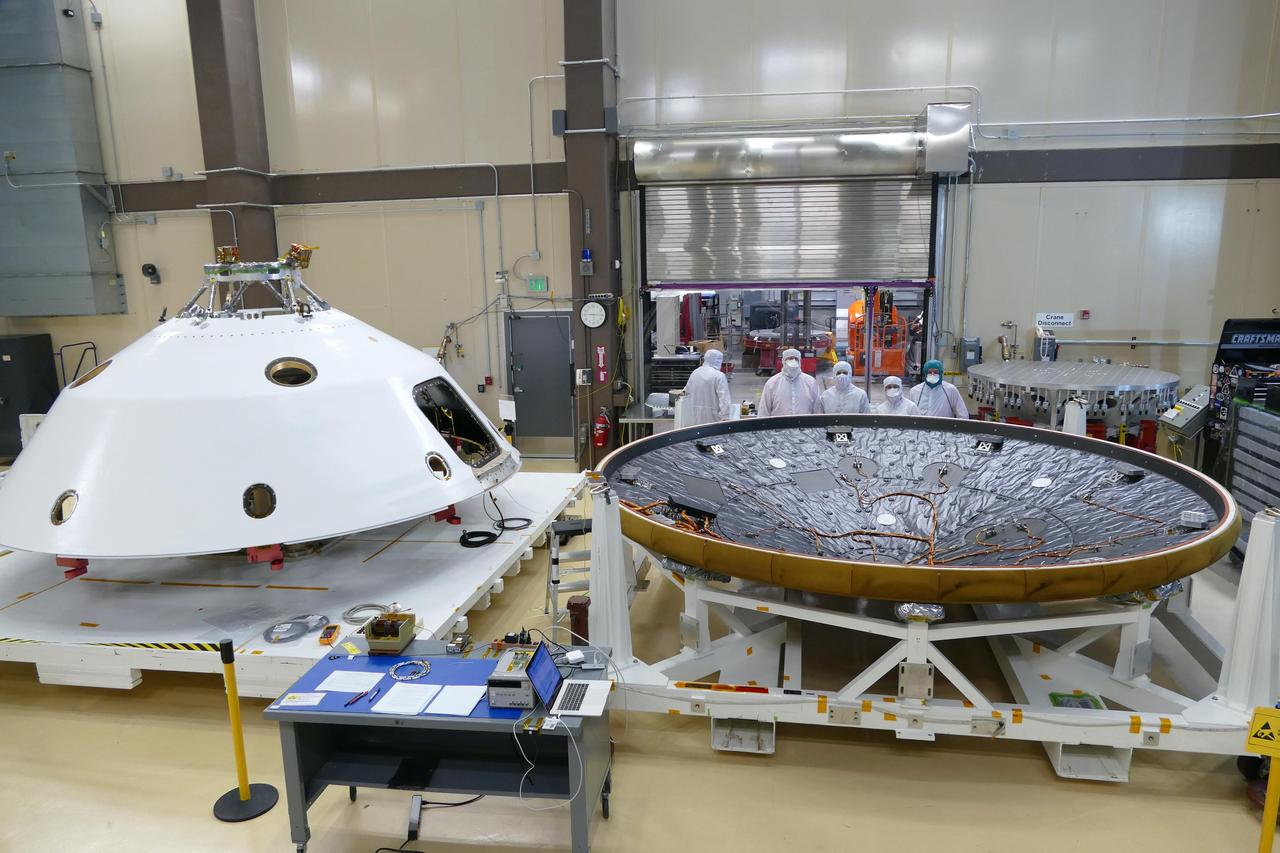
MEDLI2 sensors are installed on the Mars 2020 heat shield and back shell prior to launch. The sensors will measure the environment surrounding the spacecraft and the performance of thermal protection system material during the atmospheric entry phase of NASA's Mars 2020 Perseverance rover mission.  https://photojournal.jpl.nasa.gov/catalog/PIA23989
MEDLI2 Onboard Mars 2020 Spacecraft
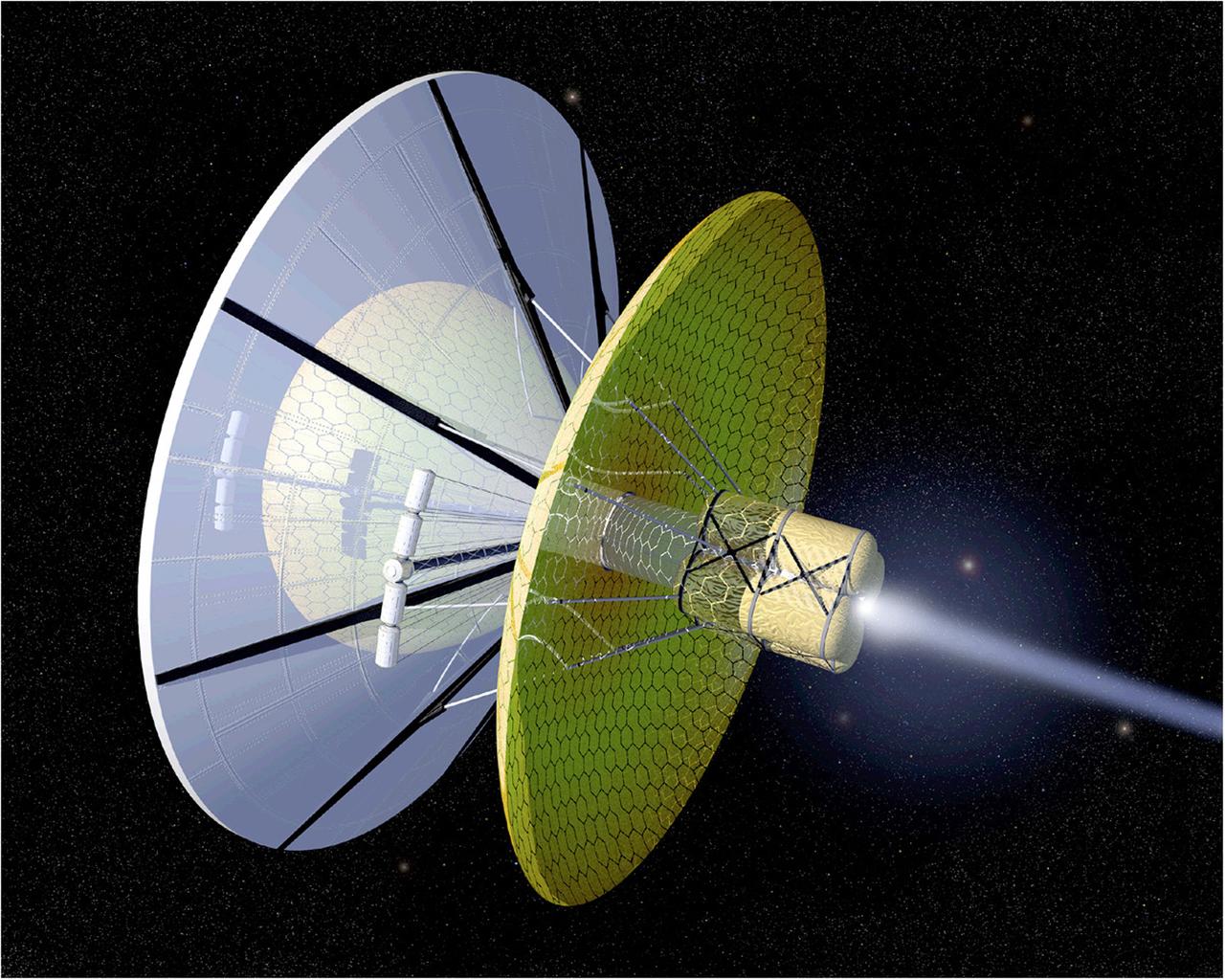
The Boussard Interstellar Ramjet engine concept uses interstellar hydrogen scooped up from its environment as the spacecraft passes by to provide propellant mass. The hydrogen is then ionized and then collected by an electromagentic field. In this image, an onboard laser is uded to heat the plasma, and the laser or electron beam is used to trigger fusion pulses thereby creating propulsion.
Research Technology
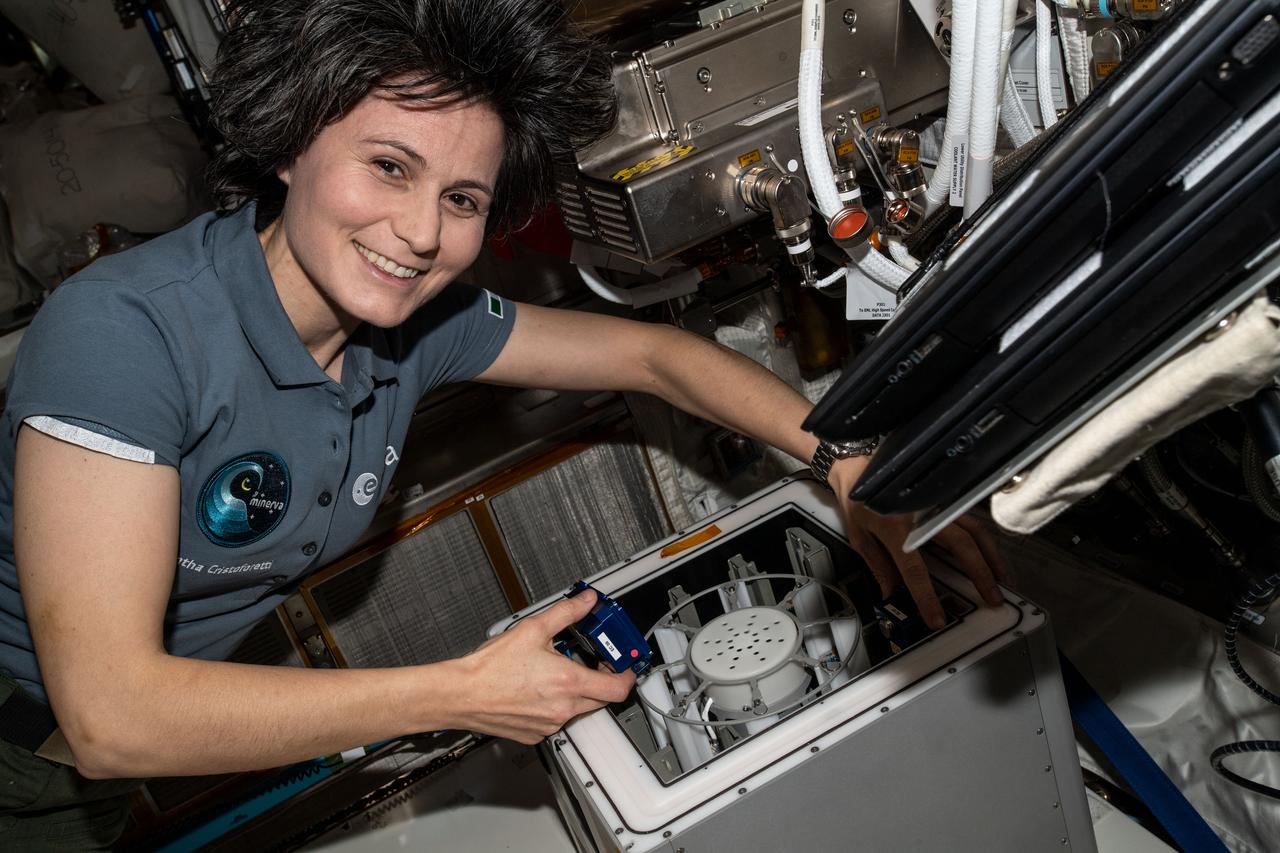
iss067e214036 (Aug. 2, 2022) --- Expedition 67 Flight Engineer and ESA (European Space Agency) astronaut Samantha Cristoforetti packs experiment containers for the Biofilms investigation aboard the International Space Station. The biotechnology study explores ways to protect astronaut health and maintain spacecraft safety from microbes living in the orbiting's lab environment.
iss067e214036
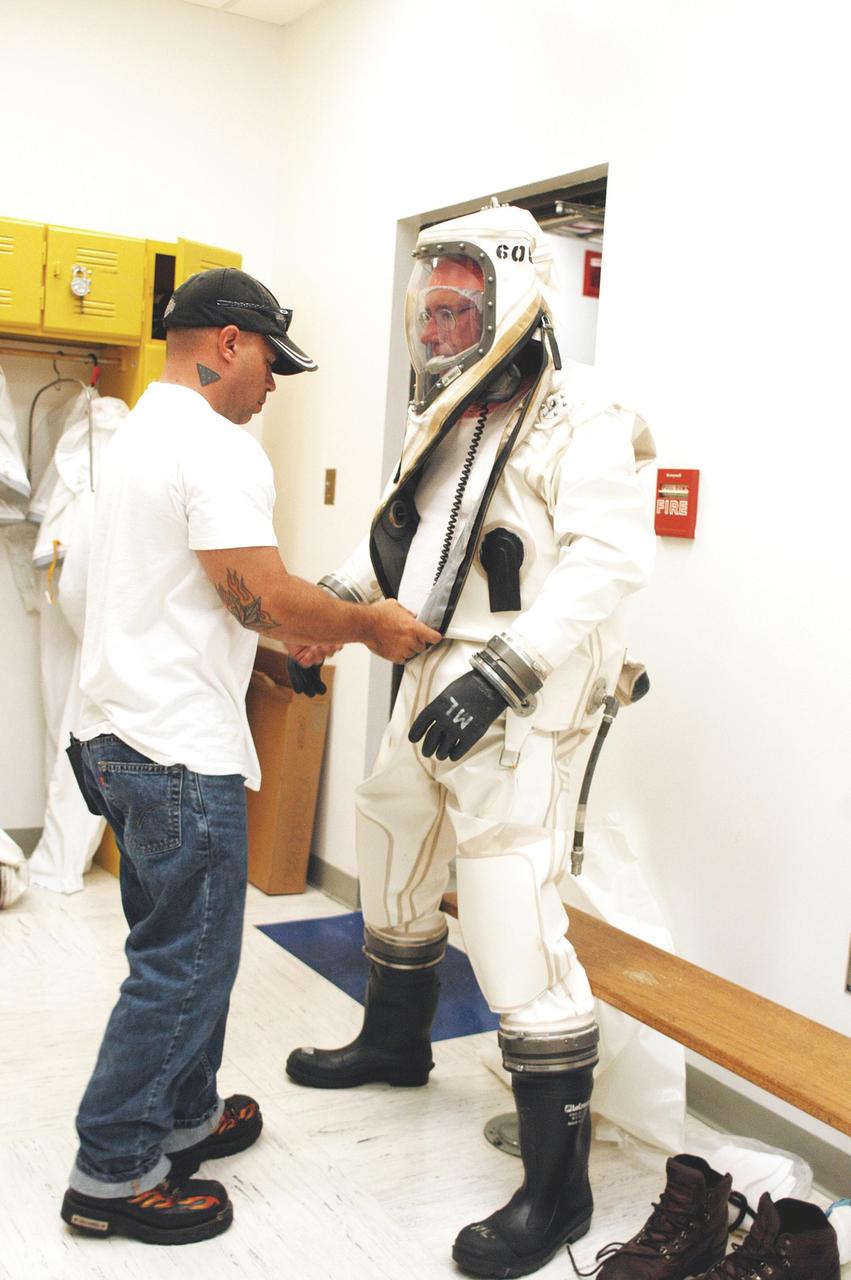
KENNEDY SPACE CENTER, FLA. - A worker at Astrotech Space Operations in Titusville, Fla., helps suit up another worker for spacecraft propellant loading of the MESSENGER (Mercury Surface, Space Environment, Geochemistry and Ranging) spacecraft.  Liftoff of MESSENGER aboard a Boeing Delta II Heavy rocket, bound for Mercury, is scheduled for Aug. 2.  The spacecraft is expected to reach orbit around the planet in March 2011.  MESSENGER was built for NASA by the Johns Hopkins University Applied Physics Laboratory in Laurel, Md.
KSC-04pd1432
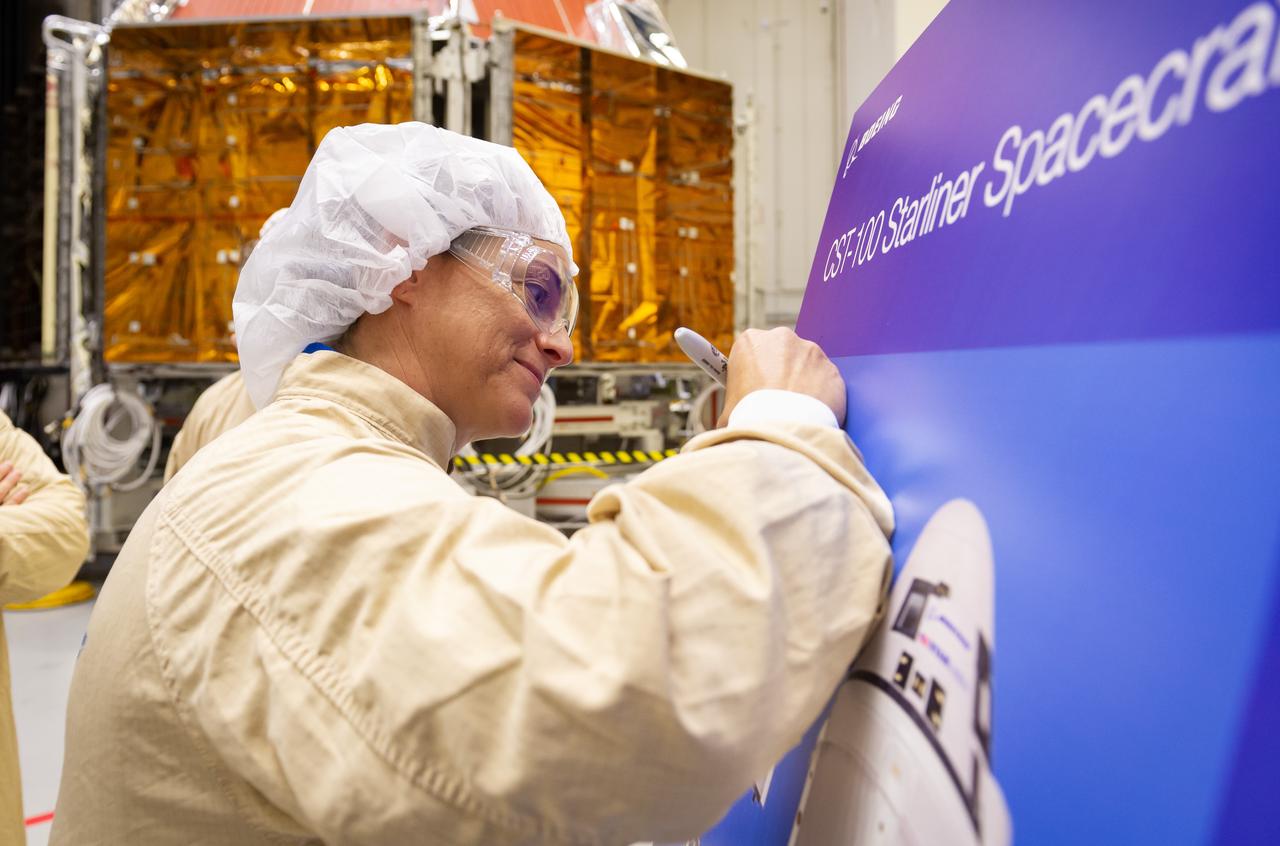
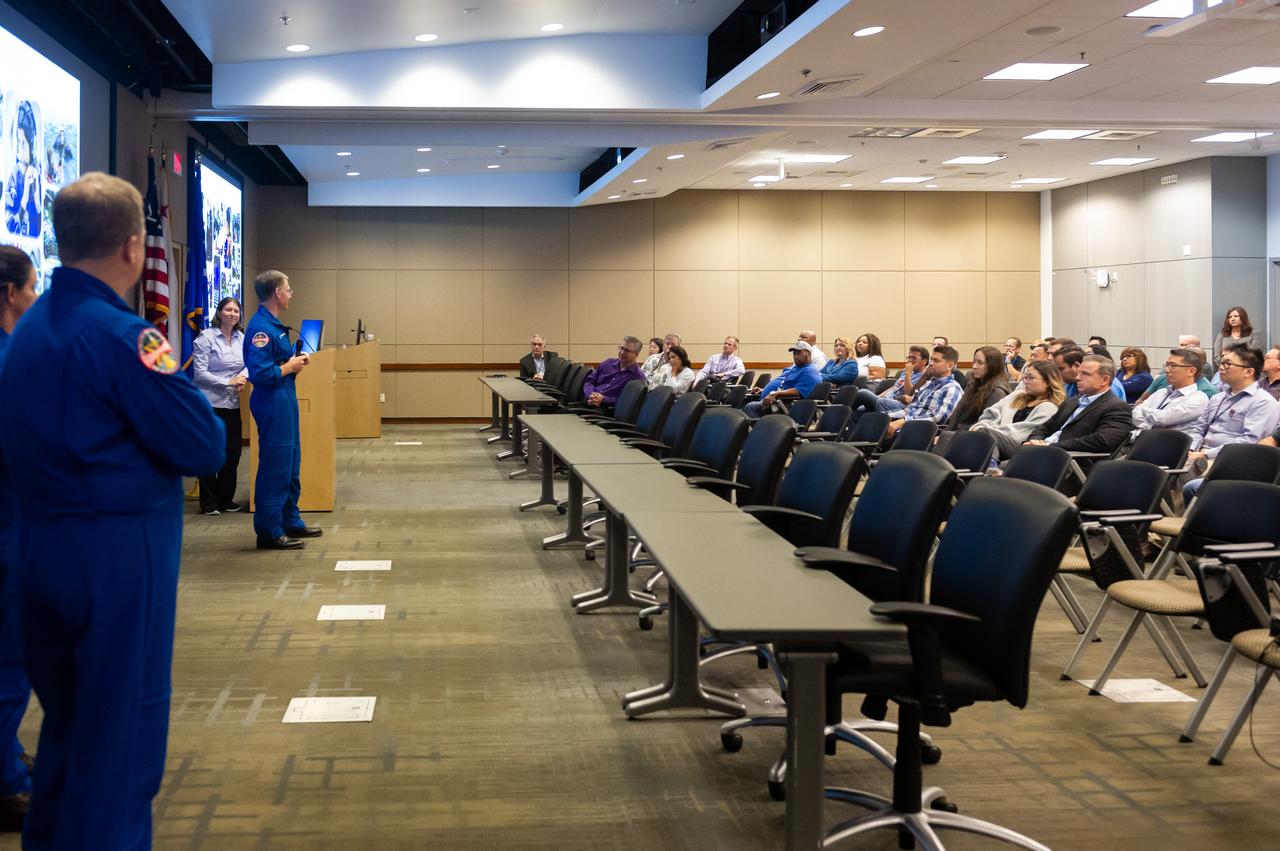
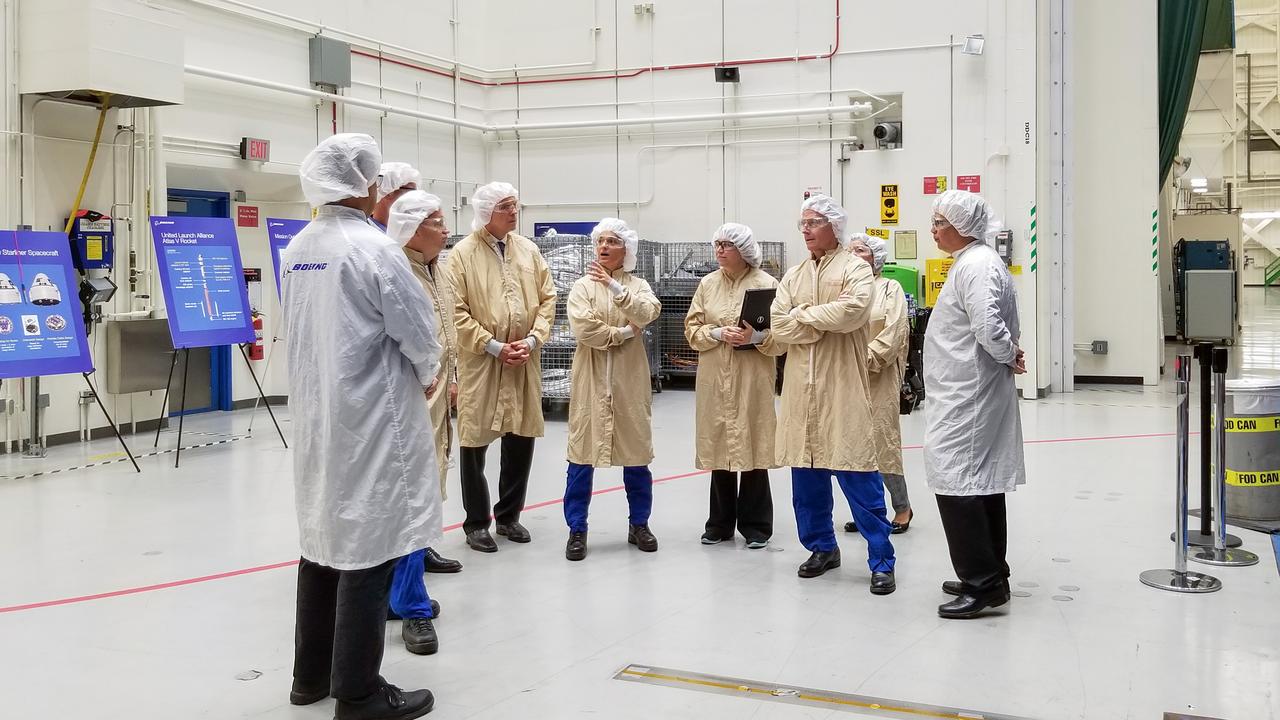
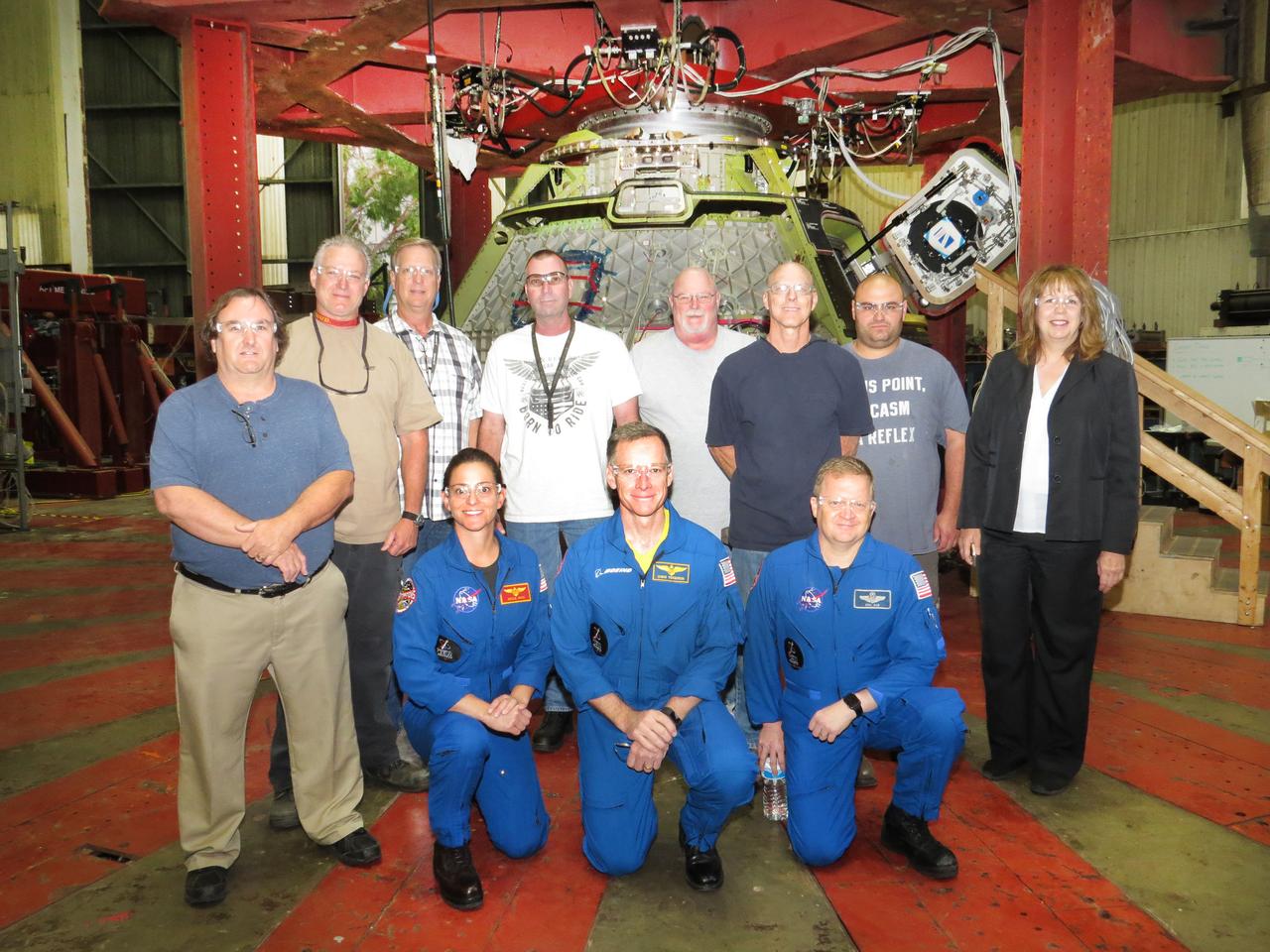
NASA’s Nicole Mann is one of three astronauts who will fly on Boeing’s CST-100 Starliner in an upcoming Crew Flight Test to the International Space Station. Mann, along with fellow commercial crew astronauts Eric Boe and Chris Ferguson, recently toured spacecraft testing facilities in Huntington Beach and El Segundo, Calif. Structural testing in Huntington Beach confirms the spacecraft can withstand the pressures it will experience during flight. Environmental qualification testing in El Segundo ensures the spacecraft can withstand the extreme environments of space.
CCP Astronauts Visit Test Facilities in California
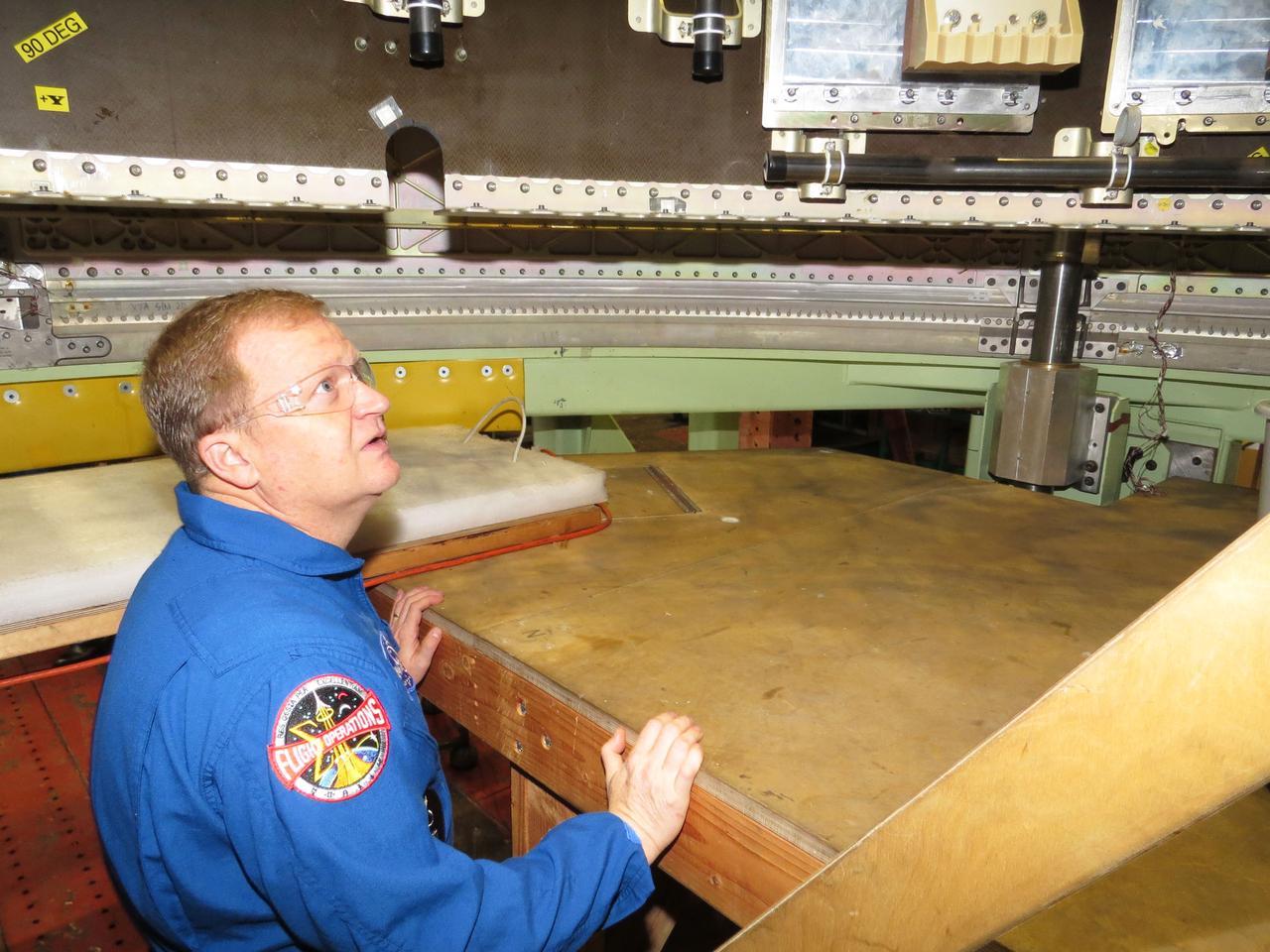
NASA’s Eric Boe, left, is one of three astronauts who will fly on Boeing’s CST-100 Starliner in an upcoming crew flight test to the International Space Station. Boe, along with fellow commercial crew astronauts Nicole Mann and Chris Ferguson, recently toured spacecraft testing facilities in Huntington Beach and El Segundo, Calif. Structural testing in Huntington Beach confirms the spacecraft can withstand the pressures it will experience during flight. Environmental qualification testing in El Segundo ensures the spacecraft can withstand the extreme environments of space.
CCP Astronauts Visit Test Facilities in California
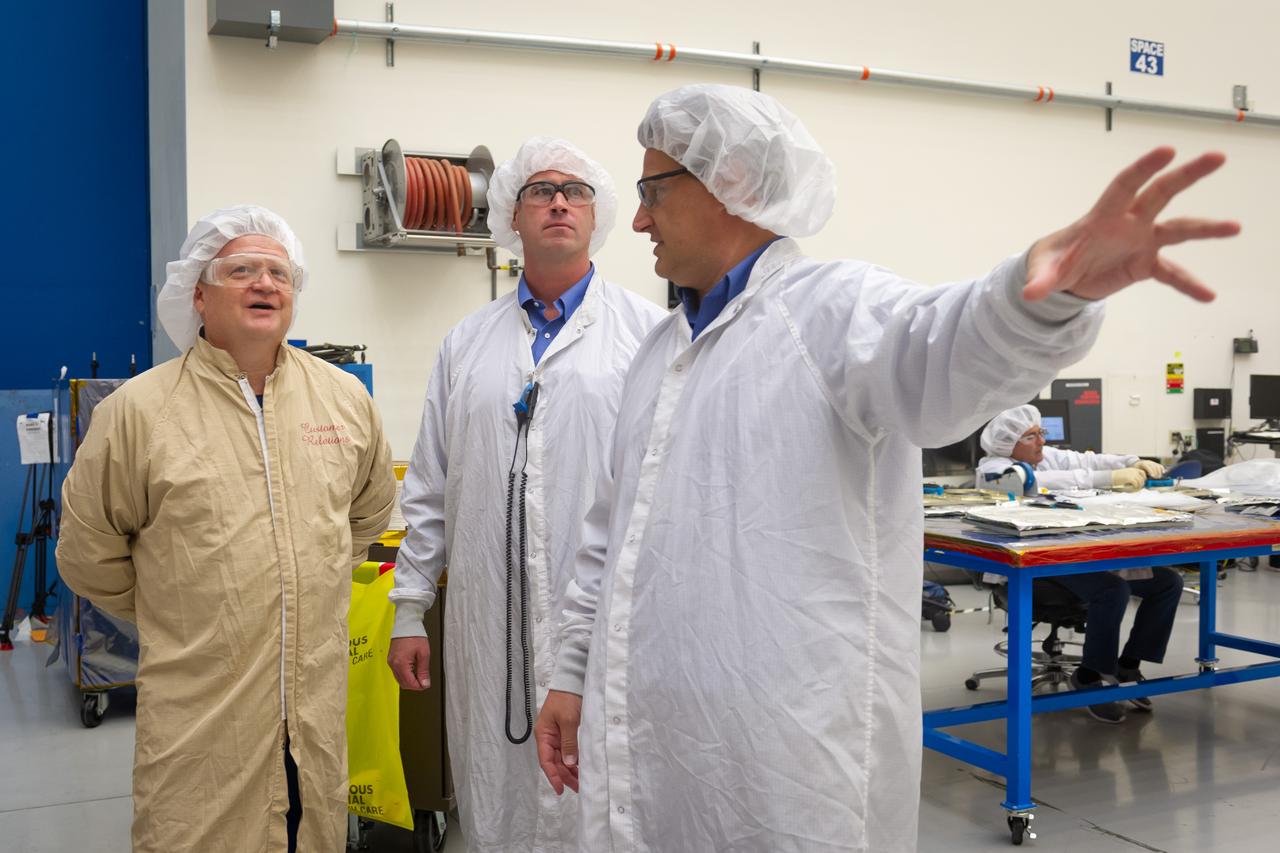
Commercial crew astronauts Eric Boe, Nicole Mann and Chris Ferguson recently toured Boeing’s spacecraft testing facilities in Huntington Beach and El Segundo, Calif. All three astronauts will fly on Boeing’s CST-100 Starliner in an upcoming Crew Flight Test to the International Space Station. Structural testing in Huntington Beach confirms the spacecraft can withstand the pressures it will experience during flight. Environmental qualification testing in El Segundo ensures the spacecraft can withstand the extreme environments of space.
CCP Astronauts Visit Test Facilities in California
Commercial crew astronauts Eric Boe, Chris Ferguson and Nicole Mann recently toured Boeing’s spacecraft testing facilities in Huntington Beach and El Segundo, Calif. All three astronauts will fly on Boeing’s CST-100 Starliner in an upcoming Crew Flight Test to the International Space Station. Structural testing in Huntington Beach confirms the spacecraft can withstand the pressures it will experience during flight. Environmental qualification testing in El Segundo ensures the spacecraft can withstand the extreme environments of space.
CCP Astronauts Visit Test Facilities in California
Commercial Crew astronauts Chris Ferguson, Nicole Mann and Eric Boe recently toured spacecraft testing facilities in El Segundo and Huntington Beach, Calif. All three astronauts will fly on Boeing’s CST-100 Starliner in an upcoming crew flight test to the International Space Station. Environmental qualification testing in El Segundo ensures the spacecraft can withstand the extreme environments of space. Structural testing in Huntington Beach confirms the spacecraft can withstand the pressures it will experience during flight.
CCP Astronauts Tour Test Facilities in Southern California
Commercial crew astronauts Nicole Mann, Chris Ferguson and Eric Boe recently toured Boeing’s spacecraft testing facilities in Huntington Beach and El Segundo, Calif. All three astronauts will fly on Boeing’s CST-100 Starliner in an upcoming Crew Flight Test to the International Space Station. Structural testing in Huntington Beach confirms the spacecraft can withstand the pressures it will experience during flight. Environmental qualification testing in El Segundo ensures the spacecraft can withstand the extreme environments of space.
CCP Astronauts Visit Test Facilities in California
NASA’s Eric Boe is one of three astronauts who will fly on Boeing’s CST-100 Starliner in an upcoming Crew Flight Test to the International Space Station. Boe, along with fellow commercial crew astronauts Nicole Mann and Chris Ferguson, recently toured Boeing’s spacecraft testing facilities in Huntington Beach and El Segundo, Calif. Structural testing in Huntington Beach confirms the spacecraft can withstand the pressures it will experience during flight. Environmental qualification testing in El Segundo ensures the spacecraft can withstand the extreme environments of space.
CCP Astronauts Visit Test Facilities in California