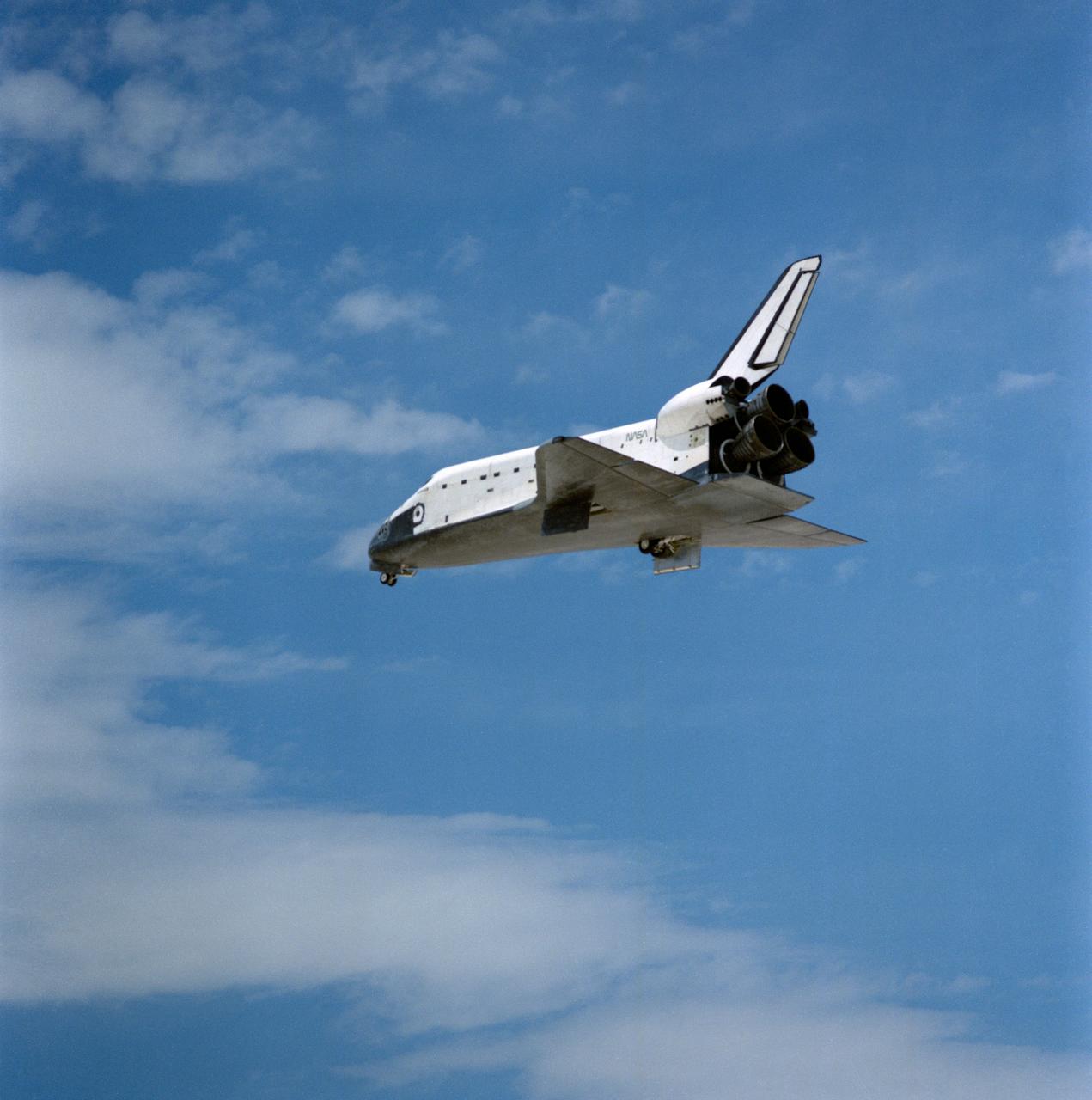
STS030-S-128 (8 May 1989) --- Space Shuttle Atlantis? landing gear has just appeared and the spacecraft, with five astronaut crewmembers aboard, heads for a smooth landing on runway 22 at Edwards Air Force Base in southern California. Onboard the spacecraft were astronauts David M. Walker, Ronald J. Grabe, Norman E. Thagard, Mary L. Cleave and Mark C. Lee. The crew spend just over four full days in space, having released the Magellan spacecraft toward Venus on the first day.
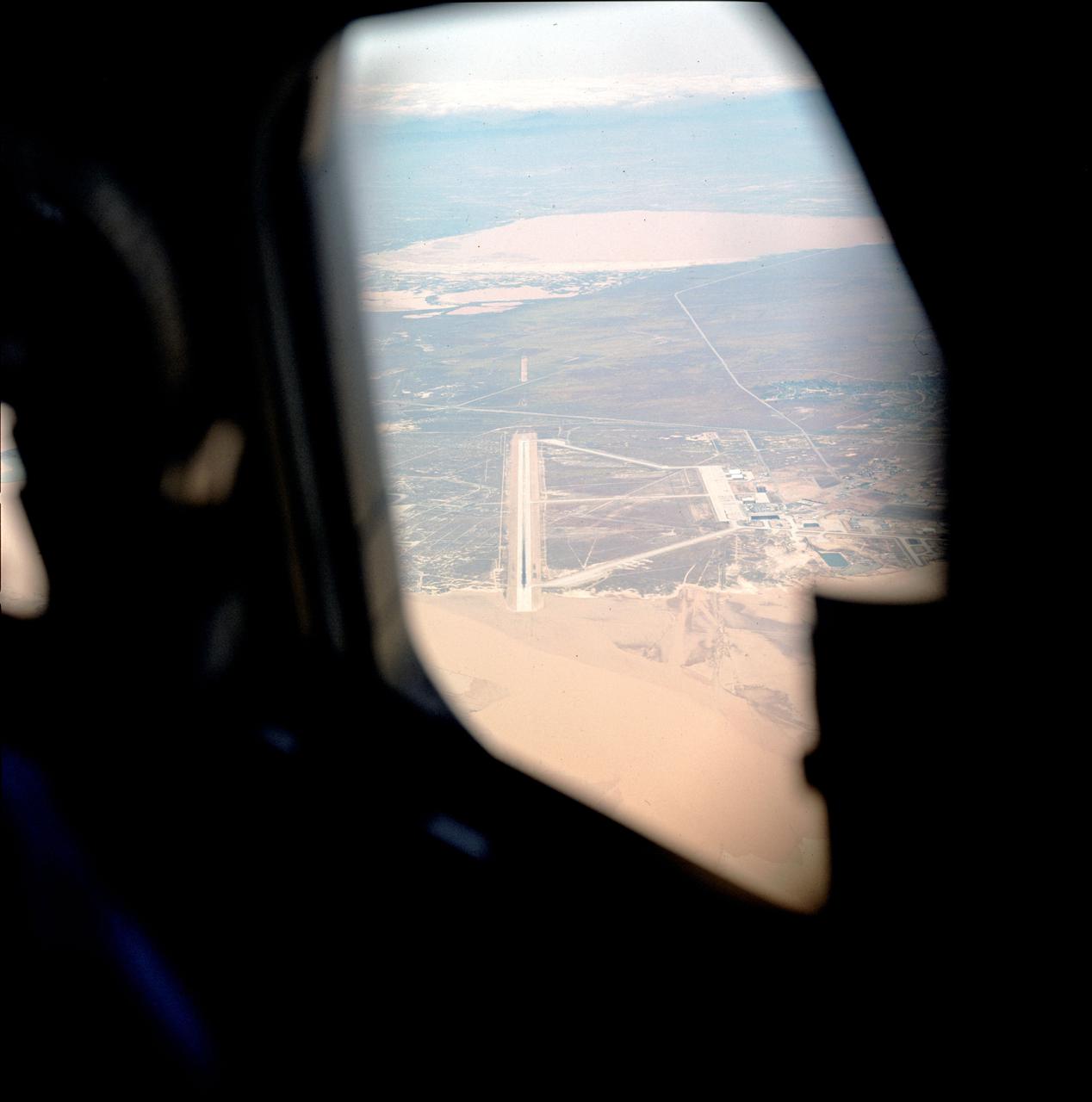
STS006-46-667 (9 April 1983) --- One of the final pictures taken aboard the space shuttle Challenger is this 35mm frame of Landing Strip 22 at Edwards Air Force Base as the reusable spacecraft was lined up for its landing only seconds later. The frame was exposed by astronaut Donald H. Peterson, STS-6 mission specialist, who was stretching behind the commander’s seat occupied by astronaut Paul J. Weitz on the flight deck. Also onboard the spacecraft for the five-day flight were astronauts Karol J. Bobko, pilot, and Dr. F. Story Musgrave, mission specialist. Photo credit: NASA
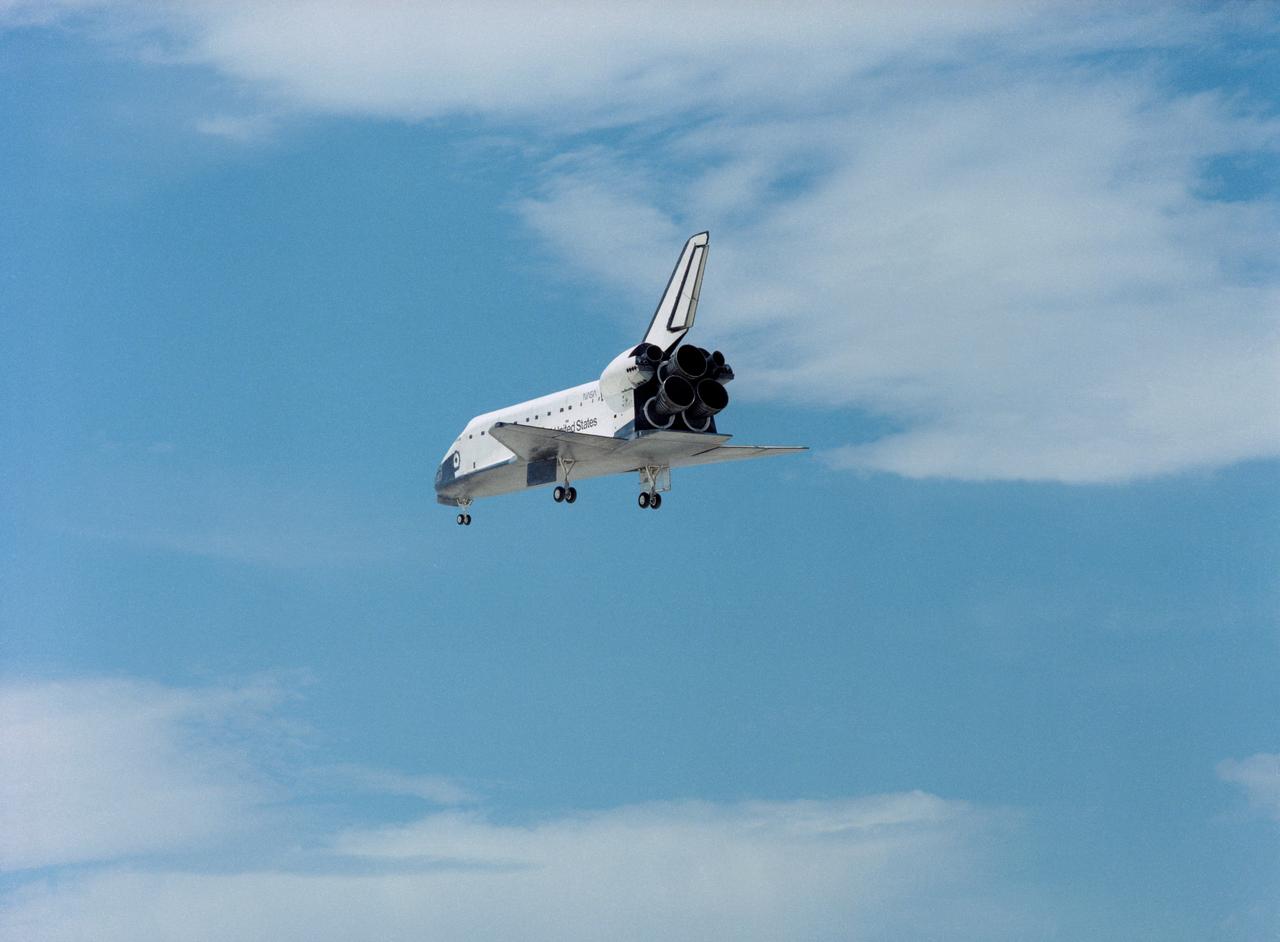
STS030-S-124 (8 May 1989) --- Its landing gear fully deployed, Space Shuttle Atlantis is lined up for its approach to Runway 22 at Edwards Air Force Base in southern California. Minutes later, at 12:44:33 (PDT), the spacecraft's wheels had come to a complete stop, marking the successful conclusion for the four-day STS-30 mission. Onboard were astronauts David M. Walker, Ronald J. Grabe, Norman E. Thagard, Mary L. Cleave and Mark C. Lee.

STS029-S-063 (18 March 1989) --- Discovery's main landing gear touches down on Runway 22 at Edwards Air Force Base in California following a successful five-day mission in Earth orbit. Onboard the spacecraft were Astronauts Michael L. Coats, John E. Blaha, James F. Buchli, Robert C. Springer and James P. Bagian. Wheels came to a stop at 6:36:40 a.m. (PST), March 18, 1989.
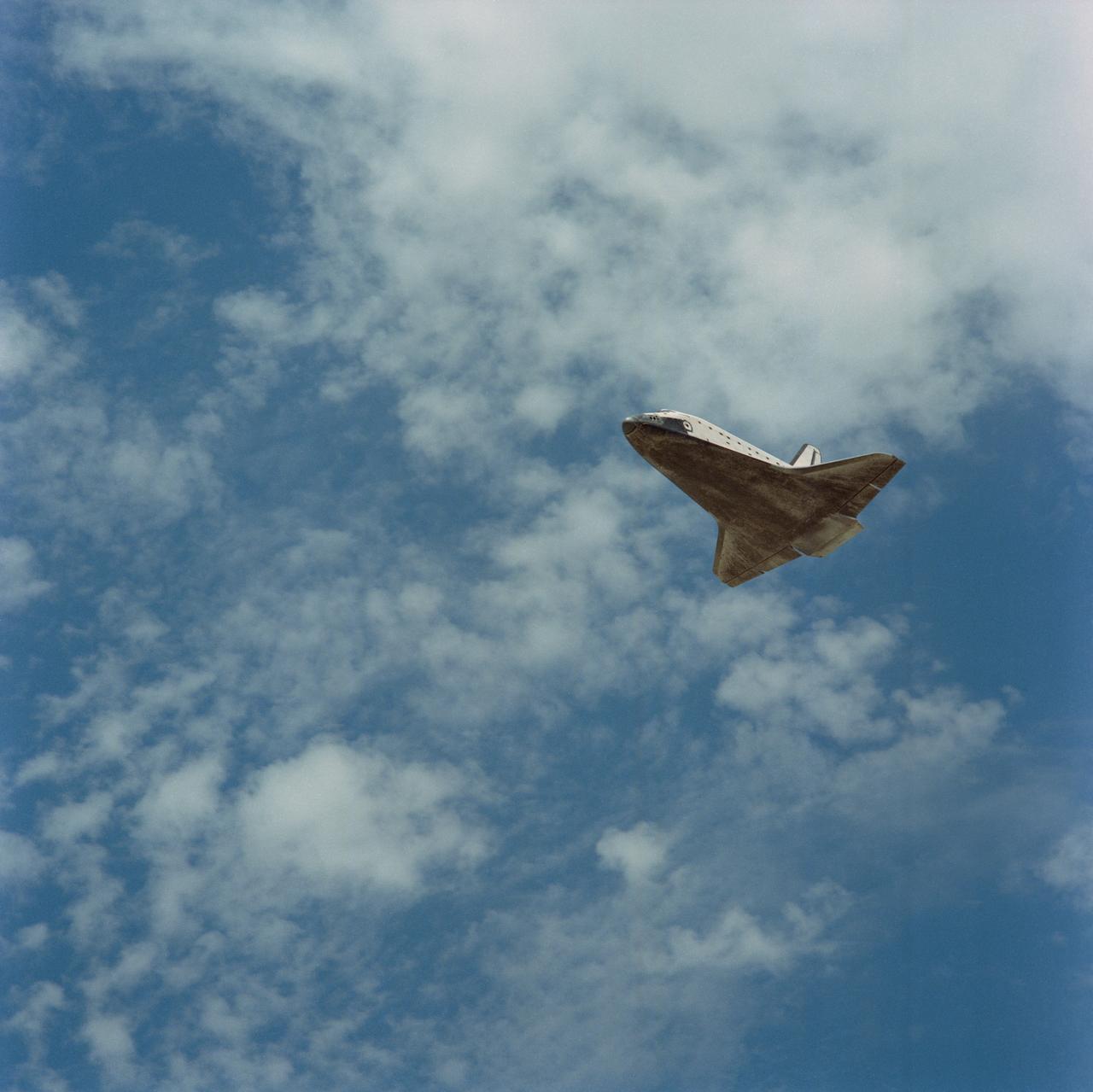
STS030-S-123 (8 May 1989) --- The Space Shuttle Atlantis glides toward a landing on the Mojave Desert after spending just over four full days in space. Aboard were astronauts David. M. Walker, Ronald J. Grabe, Norman E. Thagard, Mary L. Cleave and Mark C. Lee. Moments later, the spacecraft?s landing gear came to a stop at 12:44:33 P.M. (PDT), 8 May 1989. It landed on runway 22, a concrete facility, like a number of other NASA flights. Still others have landed on unpaved dry lakebed strips.
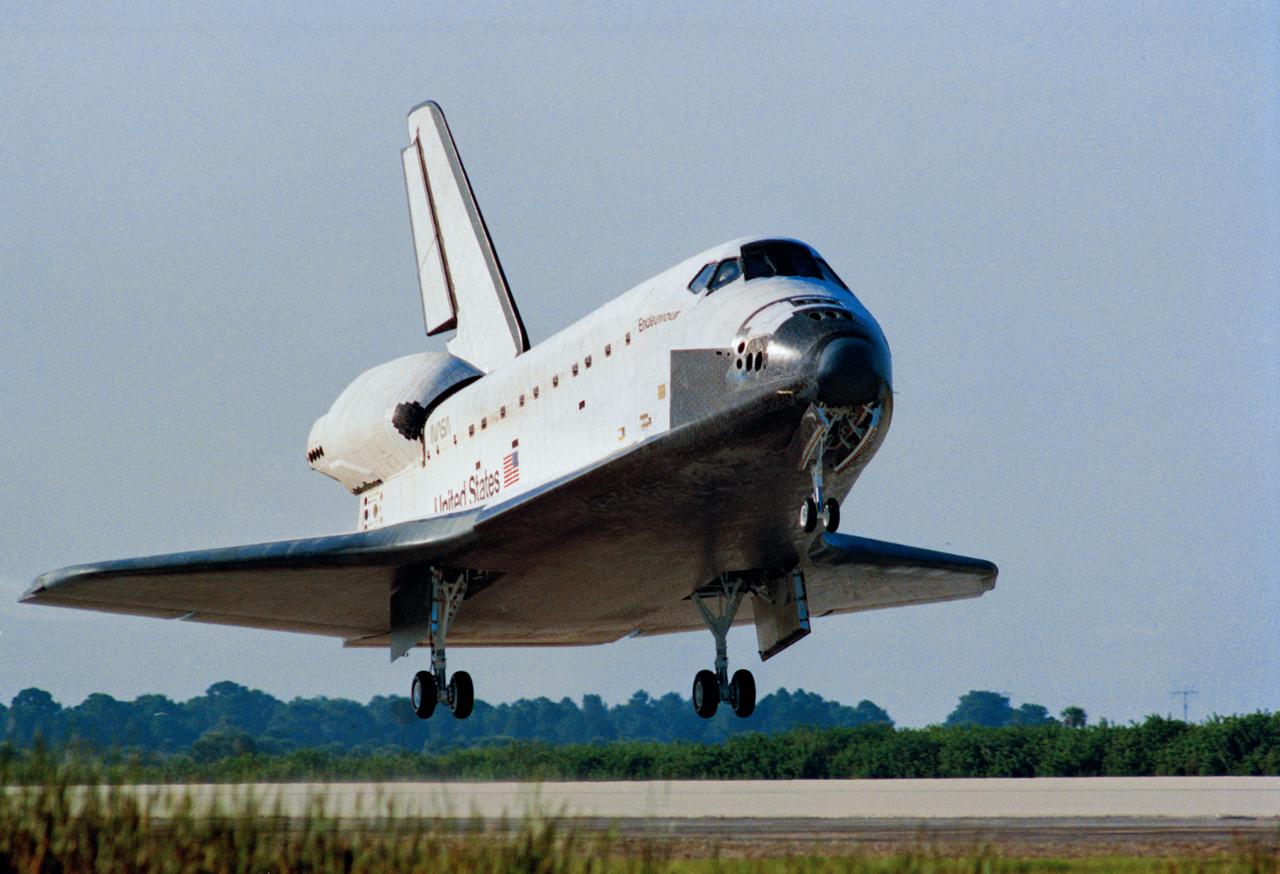
STS047-S-116 (20 Sept 1992) --- The Space Shuttle Endeavour prepares to land on the Kennedy Space Center's Shuttle landing facility runway. The successful landing marked the completion of an eight-day Earth-orbital mission for the orbiter, its seven-member crew and the Spacelab-J payload. Landing occurred at 8:53 a.m. (EDT), September 20, 1992. Onboard the spacecraft were astronauts Robert L. Gibson, Curtis L. Brown Jr., Mark C. Lee, Jerome (Jay) Apt, N. Jan Davis and Mae C. Jemison, along with Japanese payload specialist Dr. Mamoru Mohri.
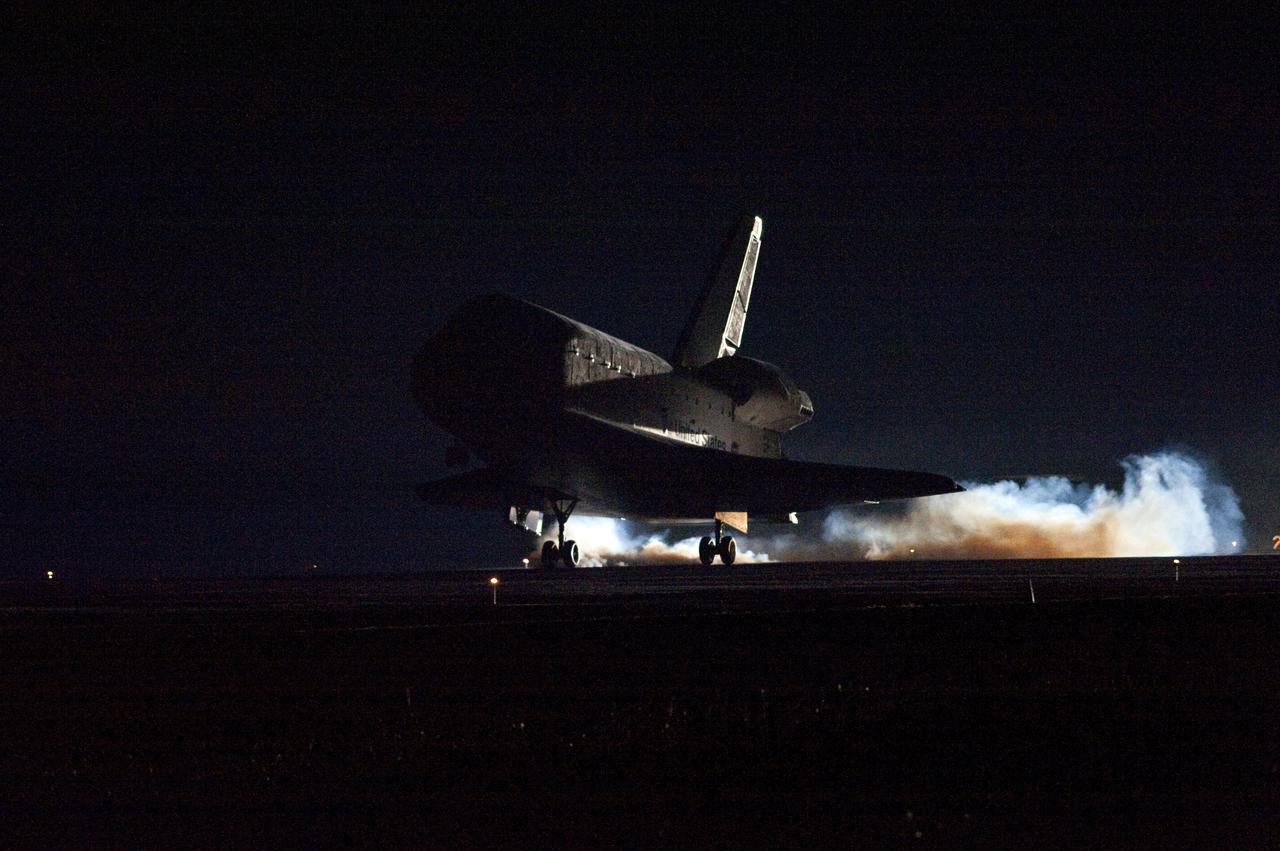
STS130-S-092 (21 Feb. 2010) --- Space shuttle Endeavour lands on Runway 15 at the Shuttle Landing Facility at NASA's Kennedy Space Center in Florida after 14 days in space, completing the 5.7-million-mile STS-130 mission to the International Space Station on orbit 217. Main gear touchdown was at 10:20:31 p.m. (EST) on Feb. 21, 2010; followed by nose gear touchdown at 10:20:39 p.m. and wheels stop at 10:22:10 p.m. It was the 23rd night landing in shuttle history and the 17th at Kennedy. Aboard are NASA astronauts George Zamka, commander; Terry Virts, pilot; Robert Behnken, Nicholas Patrick, Kathryn Hire and Stephen Robinson, all mission specialists. During Endeavour's STS-130 mission, astronauts installed the Tranquility node, a module that provides additional room for crew members and many of the station's life support and environmental control systems. Attached to Tranquility is a Cupola with seven windows that provide a panoramic view of Earth, celestial objects and visiting spacecraft. The module was built in Turin, Italy, by Thales Alenia Space for the European Space Agency. The orbiting laboratory is approximately 90 percent complete now in terms of mass. STS-130 was the 24th flight for Endeavour, the 32nd shuttle mission devoted to ISS assembly and maintenance, and the 130th shuttle mission to date.
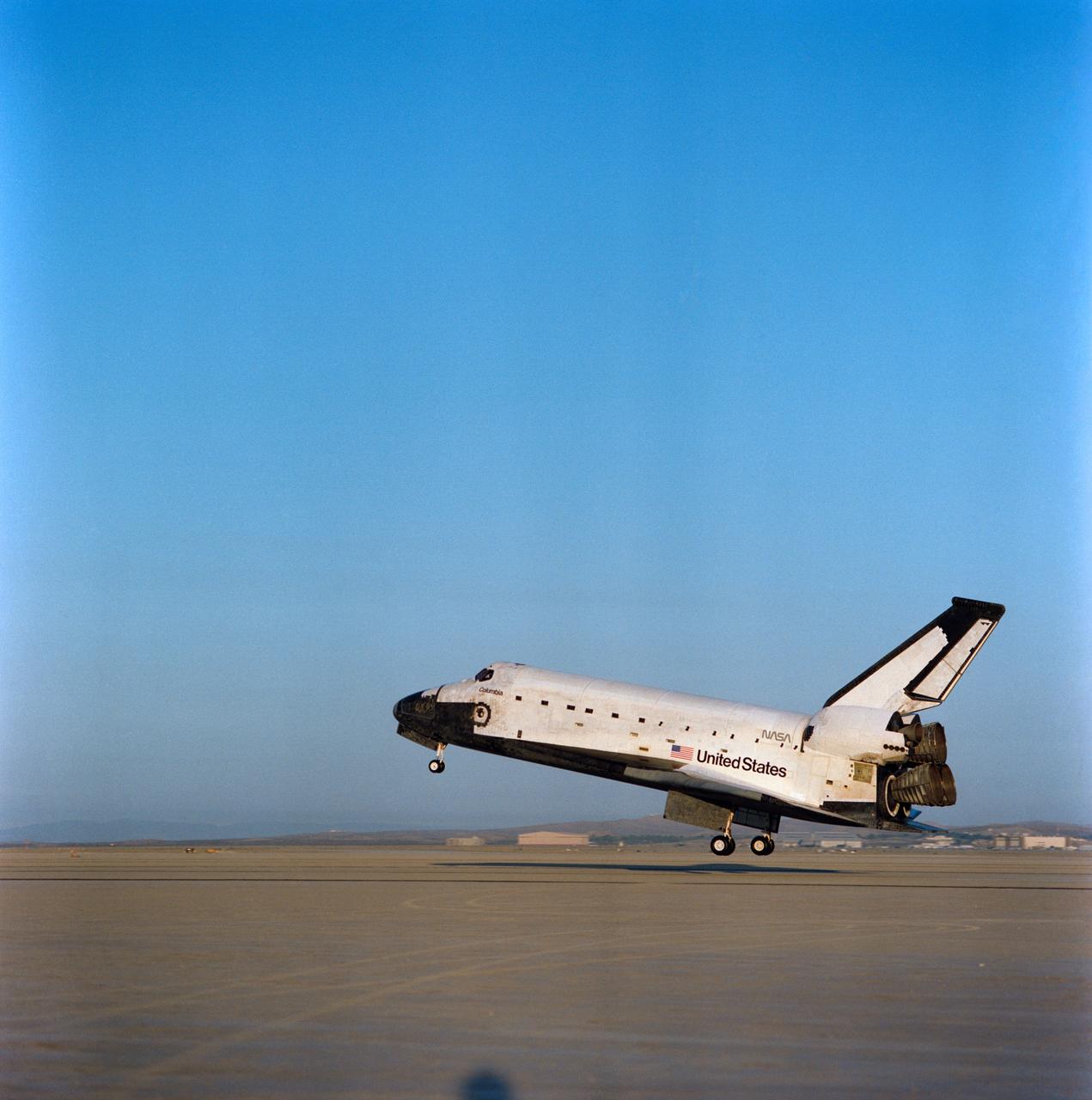
STS028-S-013 (13 Aug 1989) --- The Space Shuttle Columbia is captured on film just prior to main gear touchdown at Edwards Air Force Base in Southern California. The landing marked a successful end to a five-day DOD-devoted mission. Onboard the spacecraft were Astronauts Brewster H. Shaw Jr., Richard N. Richards, David C. Leestma, James C. Adamson and Mark N. Brown.
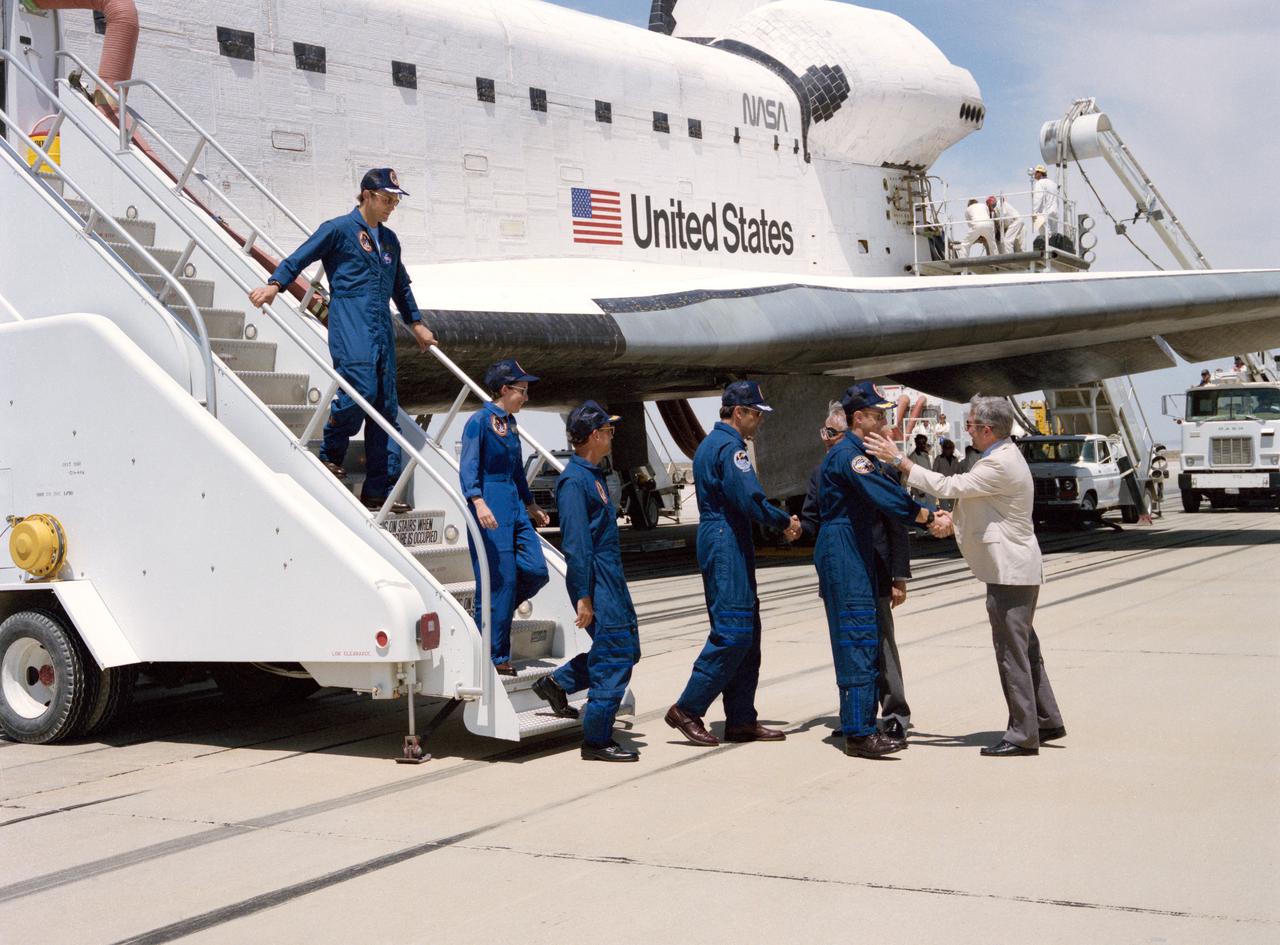
STS030-S-131 (8 May 1989) --- Crewmembers who spent just over four full days in space aboard Space Shuttle Atlantis egress their temporary home for a welcome meeting with terra firma. Astronaut David M. Walker, mission commander, shakes hands with Rear Admiral Richard H. Truly, acting NASA Administrator. Astronaut Ronald J. Grabe (center frame), pilot, is greeted by Dale D. Myers, Deputy Administrator. Pictured behind Grabe, from bottom of steps to top, are astronauts Norman E. Thagard, Mary L. Cleave and Mark C. Lee, all mission specialists. Minutes earlier, the spacecraft?s landing gear came to a stop at 12:44:33 P.M. (PDT), 8 May 1989. It landed on runway 22, a concrete facility, like a number of other NASA flights. Still others have landed on unpaved dry lakebed stripes.
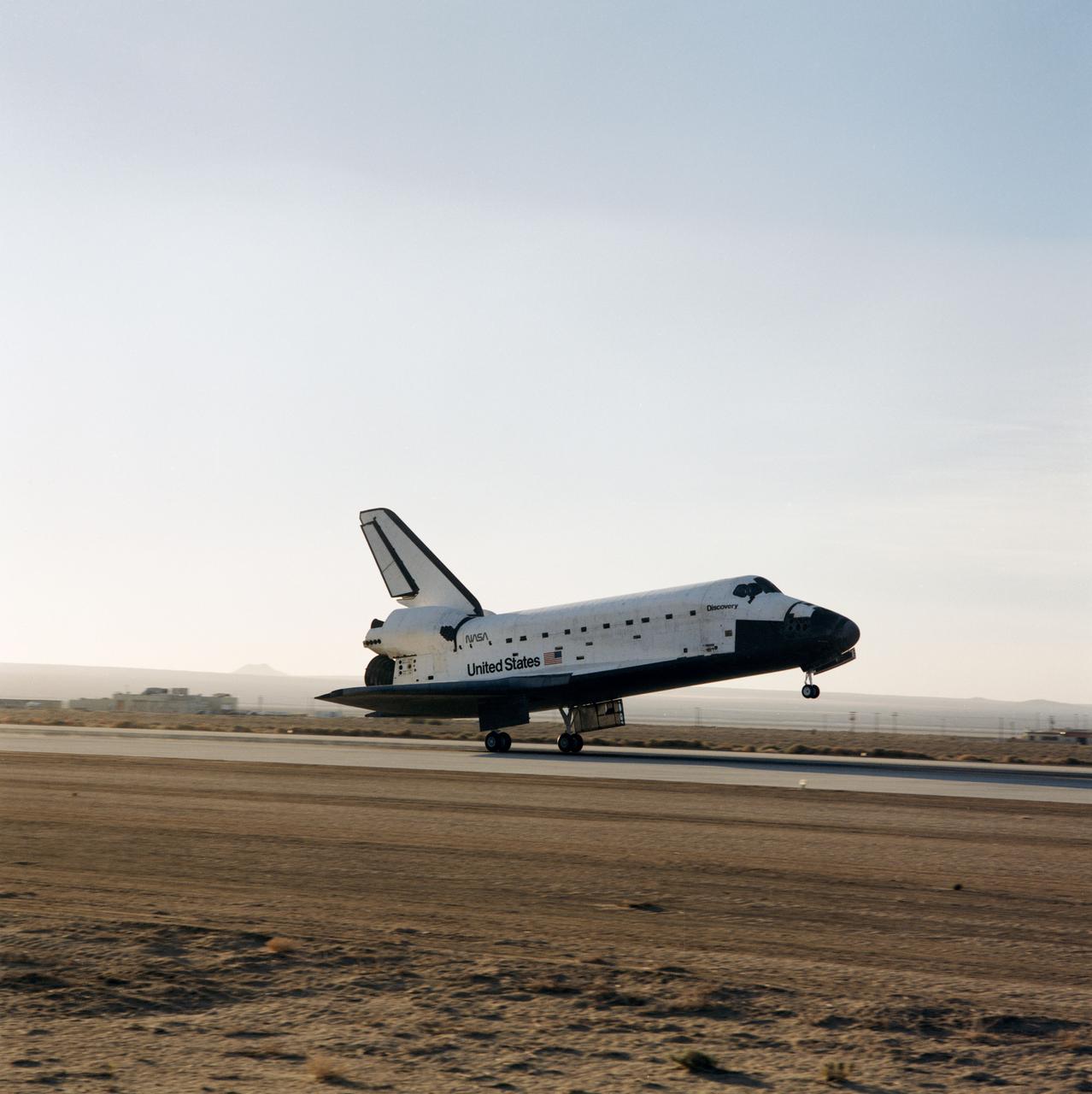
STS031-S-135 (29 April 1990) --- The Space Shuttle Discovery makes a smooth landing on the runway at Edwards Air Force Base to complete a highly successful five-day mission. It was an Earth orbital flight during which the Hubble Space Telescope (HST) was sent toward its 15-year mission. Landing was completed at 6:51 a.m. (PDT), April 29, 1990. Inside the spacecraft for STS-31 were Astronauts Loren J. Shriver, Charles F. Bolden, Bruce McCandless II, Kathryn D. Sullivan and Steven A. Hawley.
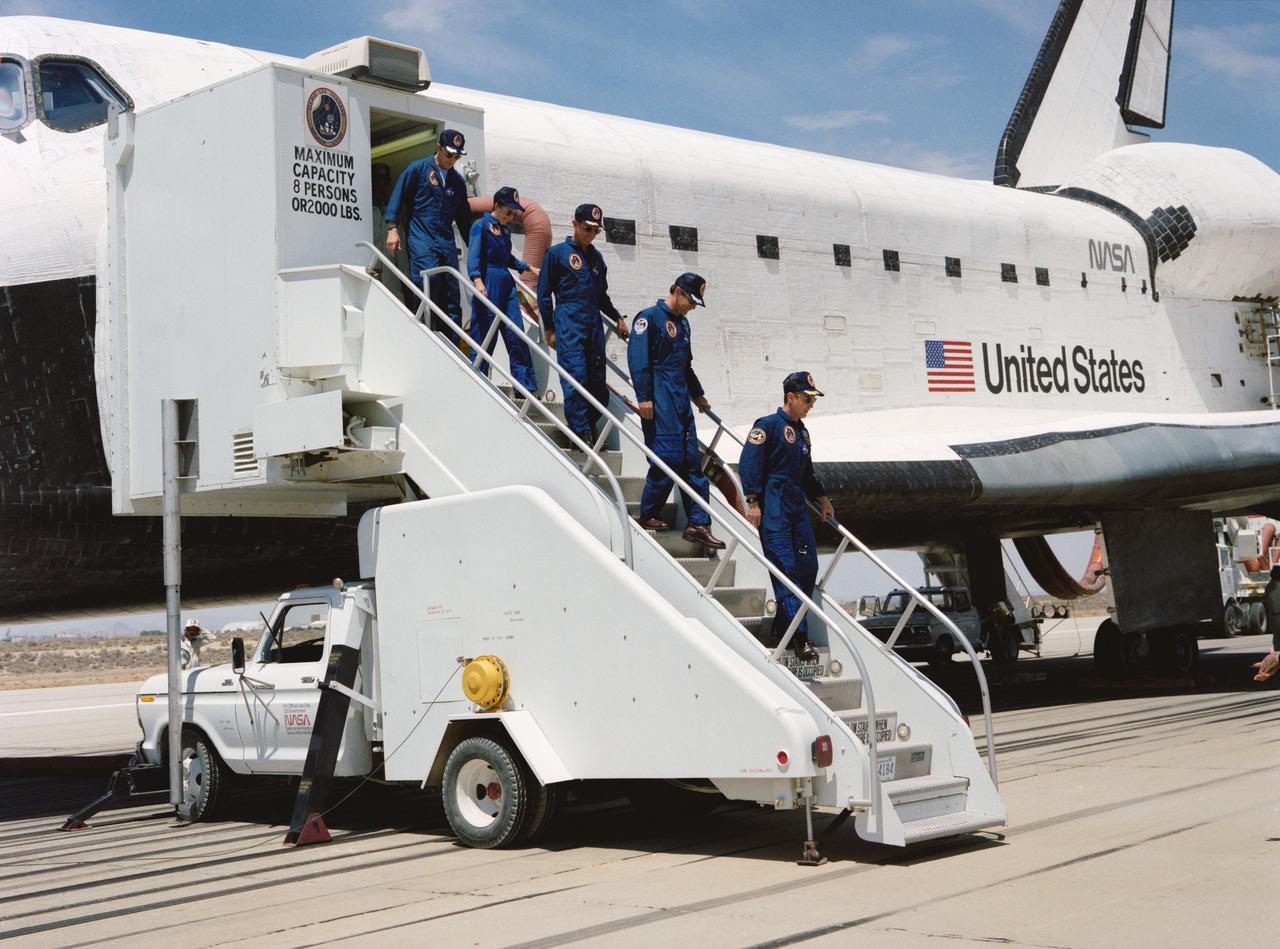
STS030-S-132 (8 May 1989) --- Crewmembers who spent just over four full days in space aboard Space Shuttle Atlantis egress their temporary home for a welcome meeting with terra firma. Pictured, from bottom of steps to top, are astronauts David M. Walker, Ronald J. Grabe, Norman E. Thagard, Mary L. Cleave and Mark C. Lee. Minutes earlier, the spacecraft?s landing gear came to a stop at 12:44:33 P.M. (PDT), 8 May 1989. It landed on runway 22, a concrete facility, like a number of other NASA flights. Still others have landed on unpaved dry lakebed stripes.
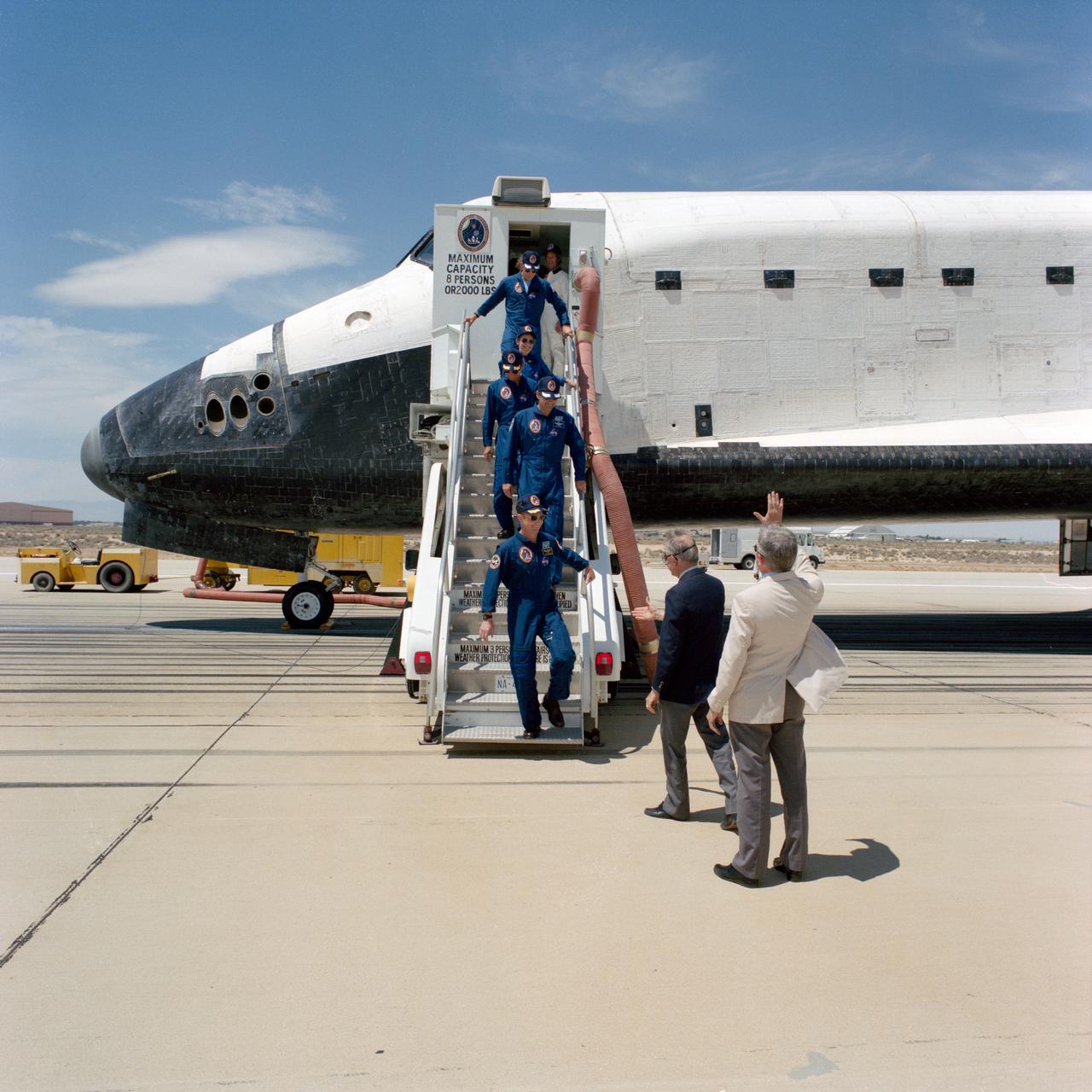
STS030-S-137 (8 May 1989) --- Crewmembers who spent four full days in space aboard Space Shuttle Atlantis egress their temporary home for a welcome meeting with terra firma. Pictured, from bottom of steps to top, are Astronauts David M.Walker, Ronald J. Grabe, Norman E. Thagard, Mary L. Cleave and Mark C. Lee. Rear Admiral Richard H. Truly (foreground), acting NASA Administrator, and Dale D. Myers, Deputy Administrator of NASA, await to greet the crewmembers. Minutes earlier, the spacecraft's landing gear came to a stop at 12:44:33 p.m. (PDT), 8 May 1989. It landed on Runway 22, a concrete facility, like a number of other NASA flights. Still others have landed on unpaved dry lake bed strips.
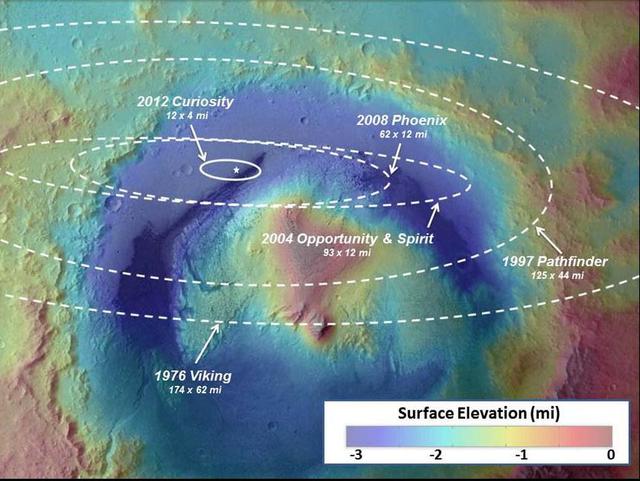
This image illustrates how spacecraft landings on Mars have become more and more precise over the years. Since NASA first Mars landing of Viking in 1976, the targeted landing regions, or ellipses, have shrunk.
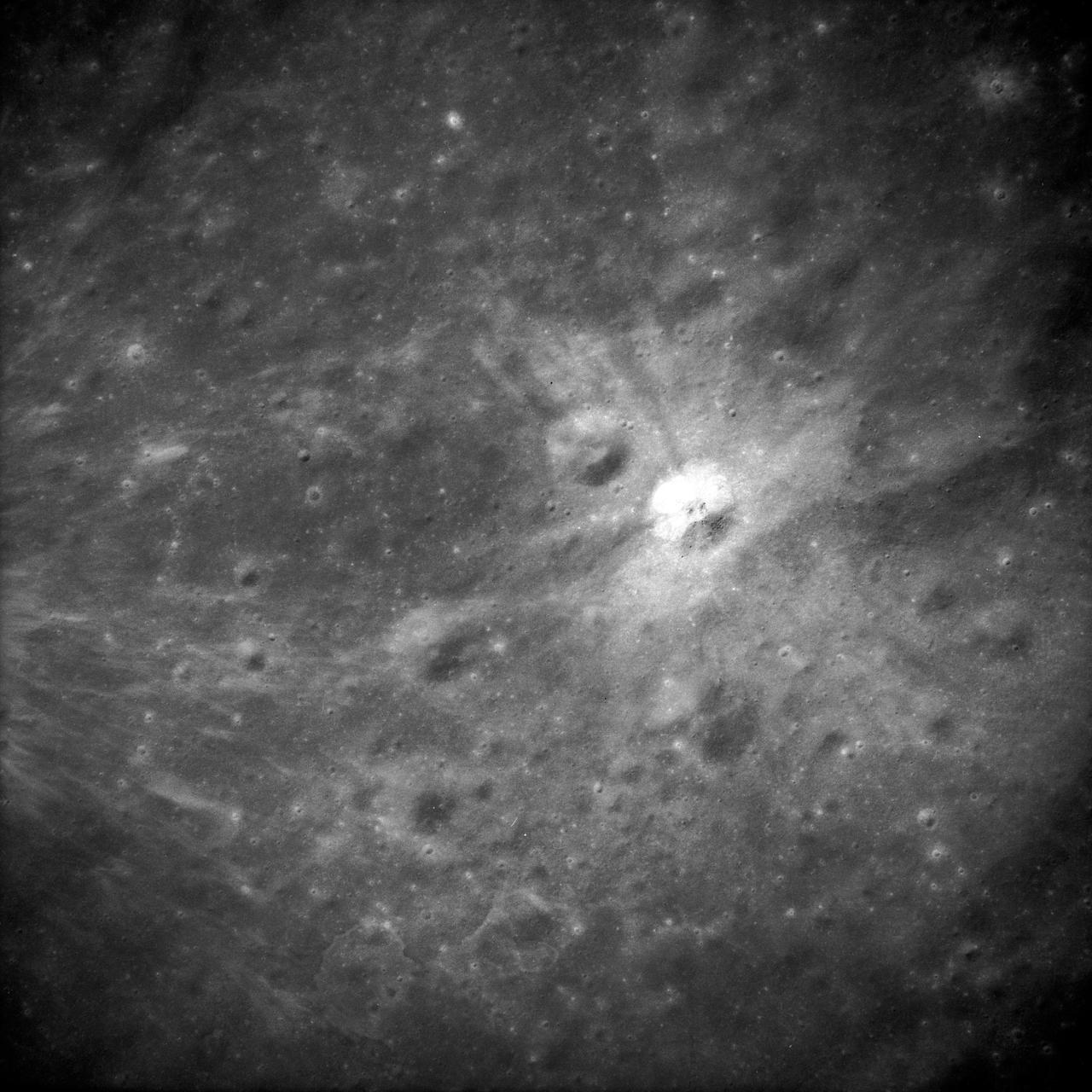
AS14-69-9560 (February 1971) --- This 500mm vertical frame taken from the Apollo 14 spacecraft is of the Apollo 16 proposed landing site "Descartes". The actual location of the target area is near the upper left. This photograph was taken with a 56 degree sun angle. The large bright crater is approximately one kilometer in diameter and has a distinctive ray pattern which serves as an excellent landmark.
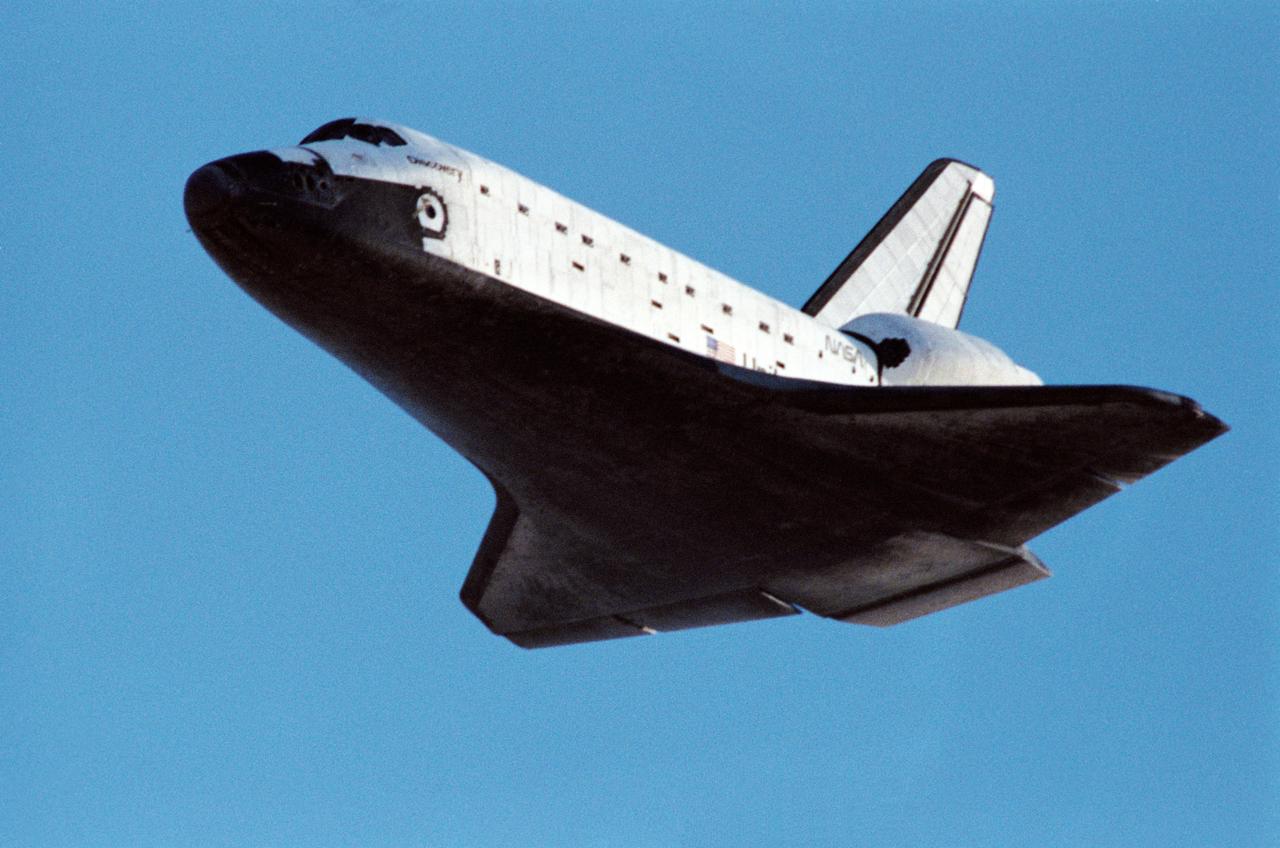
STS031-S-131 (29 April 1990) --- Low angle view of the Space Shuttle Discovery as it approaches for landing on a concrete runway at Edwards Air Force Base to complete a highly successful five-day mission. It was a long awaited Earth orbital flight during which the Hubble Space Telescope (HST) was sent toward its 15-year mission. Discovery's wheels came to a complete stop at 6:51:00 a.m. (PDT), April 29, 1990. The landing gear was deployed just moments after this frame was exposed. Inside the spacecraft for STS-31 were astronauts Loren J. Shriver, Charles F. Bolden, Bruce McCandless II, Kathryn D. Sullivan and Steven A. Hawley.
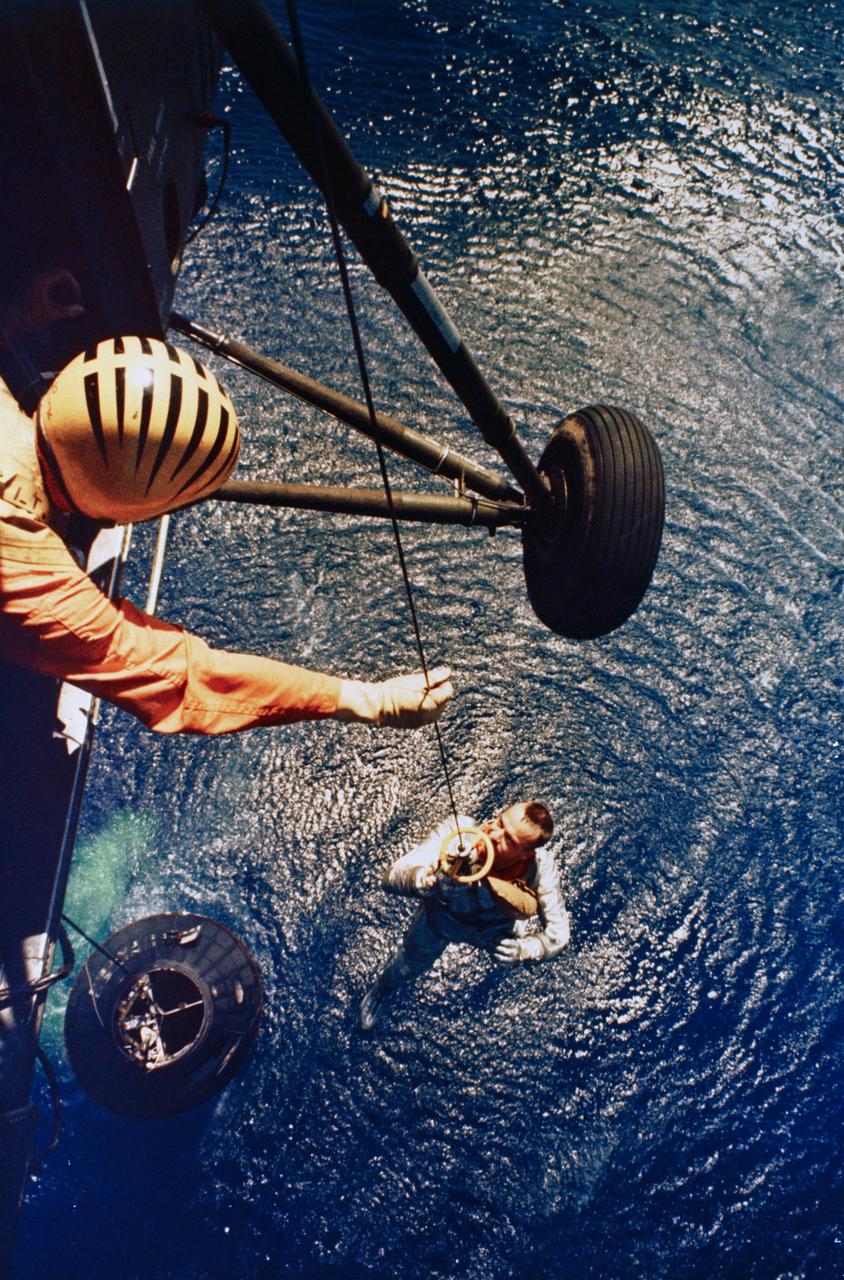
S88-31376 (5 May 1961) --- Astronaut Alan B. Shepard Jr., pilot of the Mercury-Redstone 3 (MR-3) suborbital spaceflight, is retrieved by a helicopter from the USS Lake Champlain during recovery operations in the western Atlantic Ocean. Shepard and the Mercury spacecraft designated the ?Freedom 7? (floating in water below) were flown to the deck of the recovery ship within 11 minutes of splashdown. MR-3 was the United States? first manned space mission. The spacecraft attained a maximum speed of 5,180 miles per hour, reached an altitude of 116 1/2 statute miles, and landed 302 statute miles downrange from Cape Canaveral, Florida. The suborbital mission lasted 15 minutes and 22 seconds. Photo credit: NASA or National Aeronautics and Space Administration
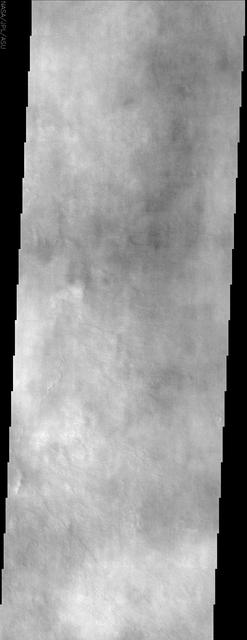
Splotchy water ice clouds obscure the northern lowland plains in the region where NASA Viking 2 spacecraft landed in this image by NASA Mars Odyssey spacecraft.
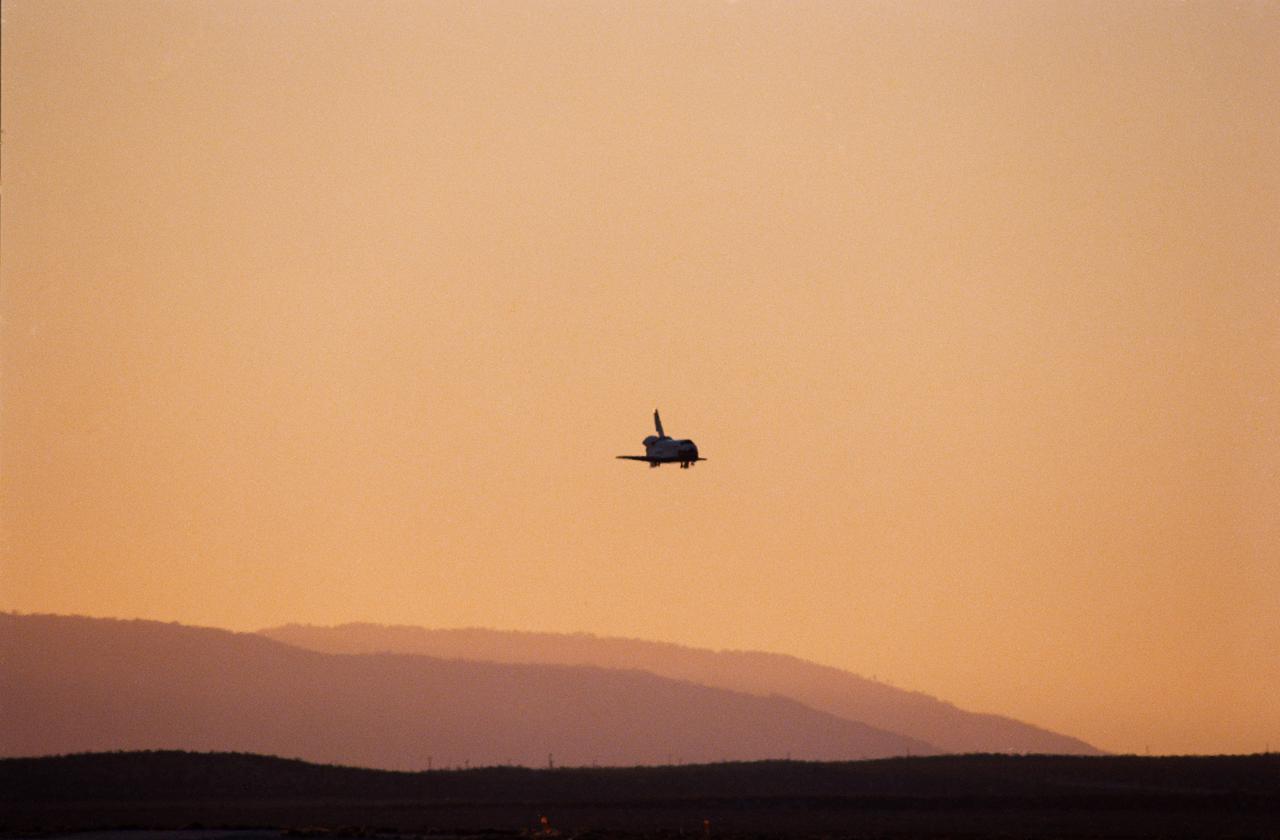
STS033-S-014 (27 Nov 1989) --- The Space Shuttle Discovery is silhouetted against late afternoon California skies as it approaches the runway for landing at Edwards Air Force Base in southern California. A five-member crew aboard was about to complete the DOD-devoted STS-33 mission. The landing occurred at 16:31:02 p.m. (PST), Nov. 27, 1989. Onboard Discovery for the mission were Astronauts Frederick D. Gregory, John E. Blaha, Kathryn C. Thornton, F. Story Musgrave and Manley L. Carter.
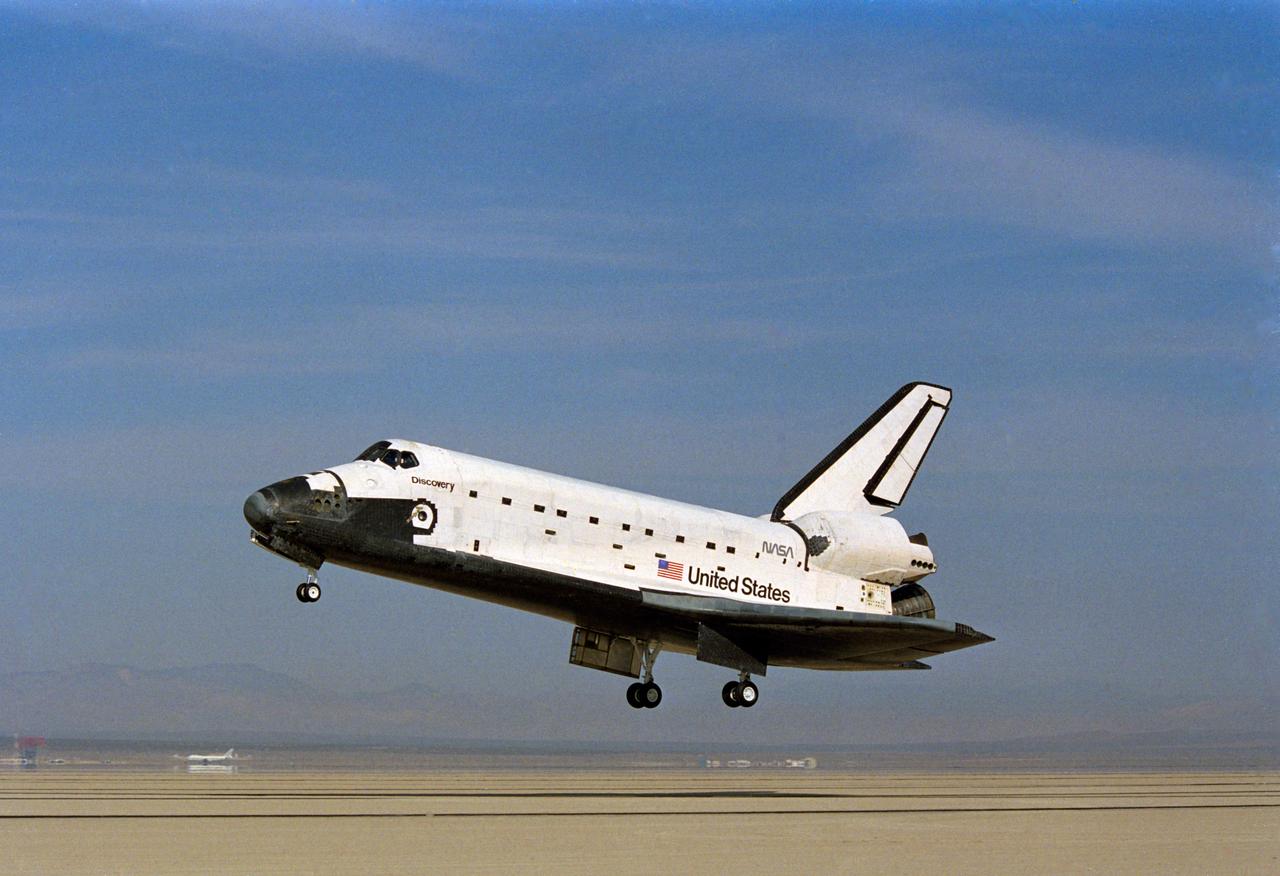
STS-26 Discovery, Orbiter Vehicle (OV) 103, with nose landing gear (NLG) and main landing gear (MLG) deployed glides above dry lakebed runway 17 at Edwards Air Force Base (EAFB), California. This profile view shows OV-103's port side just before MLG touchdown.

STS038-S-041 (20 Nov 1990) --- STS-38 Atlantis, Orbiter Vehicle (OV) 104, lands on runway 33 at Kennedy Space Center (KSC) Shuttle Landing Facility (SLF). The main landing gear (MLG) has just touched down on the runway surface as the nose landing gear (NLG) glides above it. The Department of Defense (DOD)-devoted mission came to an end (with complete wheel stop) at 4:43:37 pm (Eastern Standard Time (EST)).
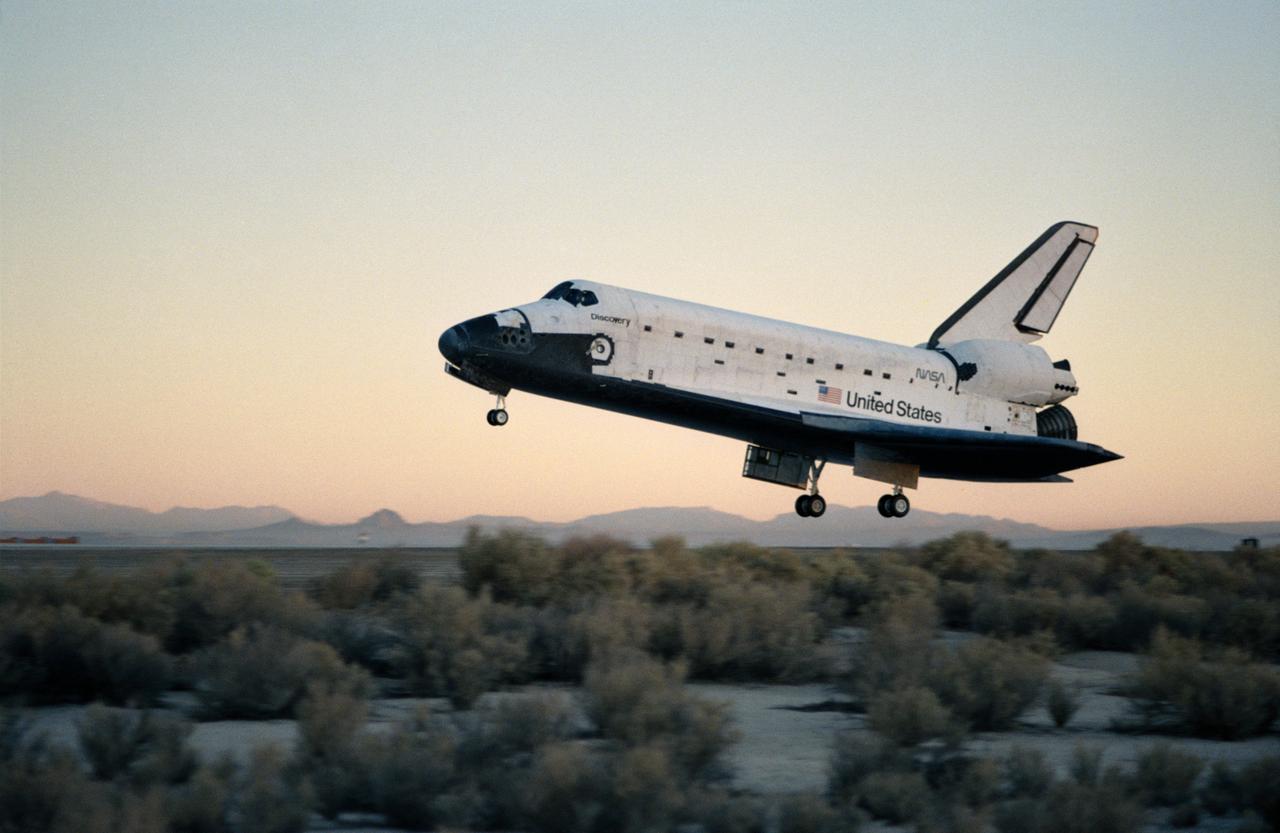
STS-41 Discovery, Orbiter Vehicle (OV) 103, with nose landing gear (NLG) and main landing gear (MLG) deployed, glides over concrete runway 22 at Edwards Air Force Base (EAFB), California, prior to touchdown.
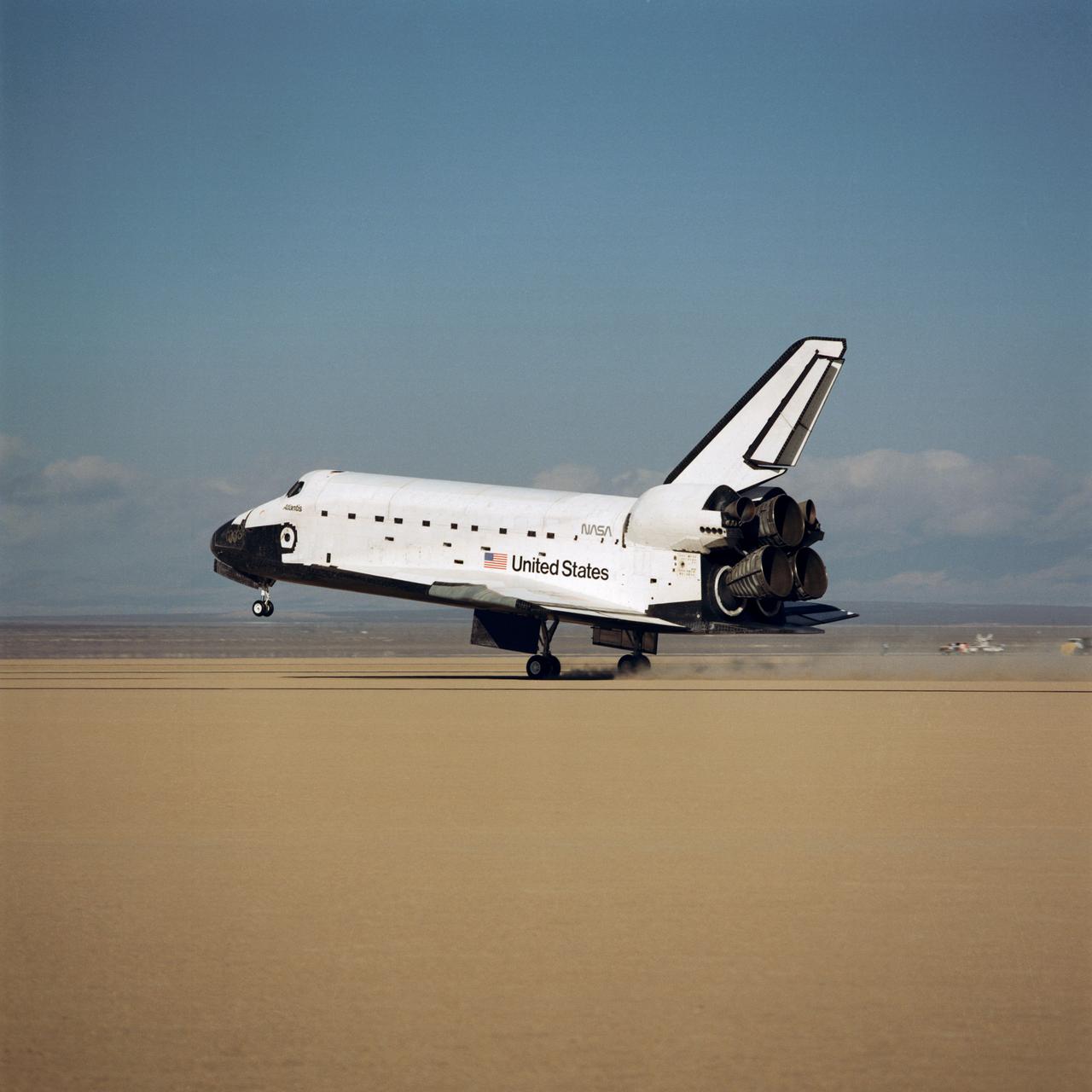
STS-34 Atlantis, Orbiter Vehicle (OV) 104, main landing gear (MLG) touches down on Runway 23 dry lake bed at Edwards Air Force Base (EAFB), California. The nose landing gear rides above runway before touchdown as the MLG wheels produce a cloud of dust. OV-104's port side profile is captured as it glides by at a speed of approximately 195 knots (224 miles per hour). The tail section with deployed speedbrake/rudder and space shuttle main engines (SSMEs) are visible.
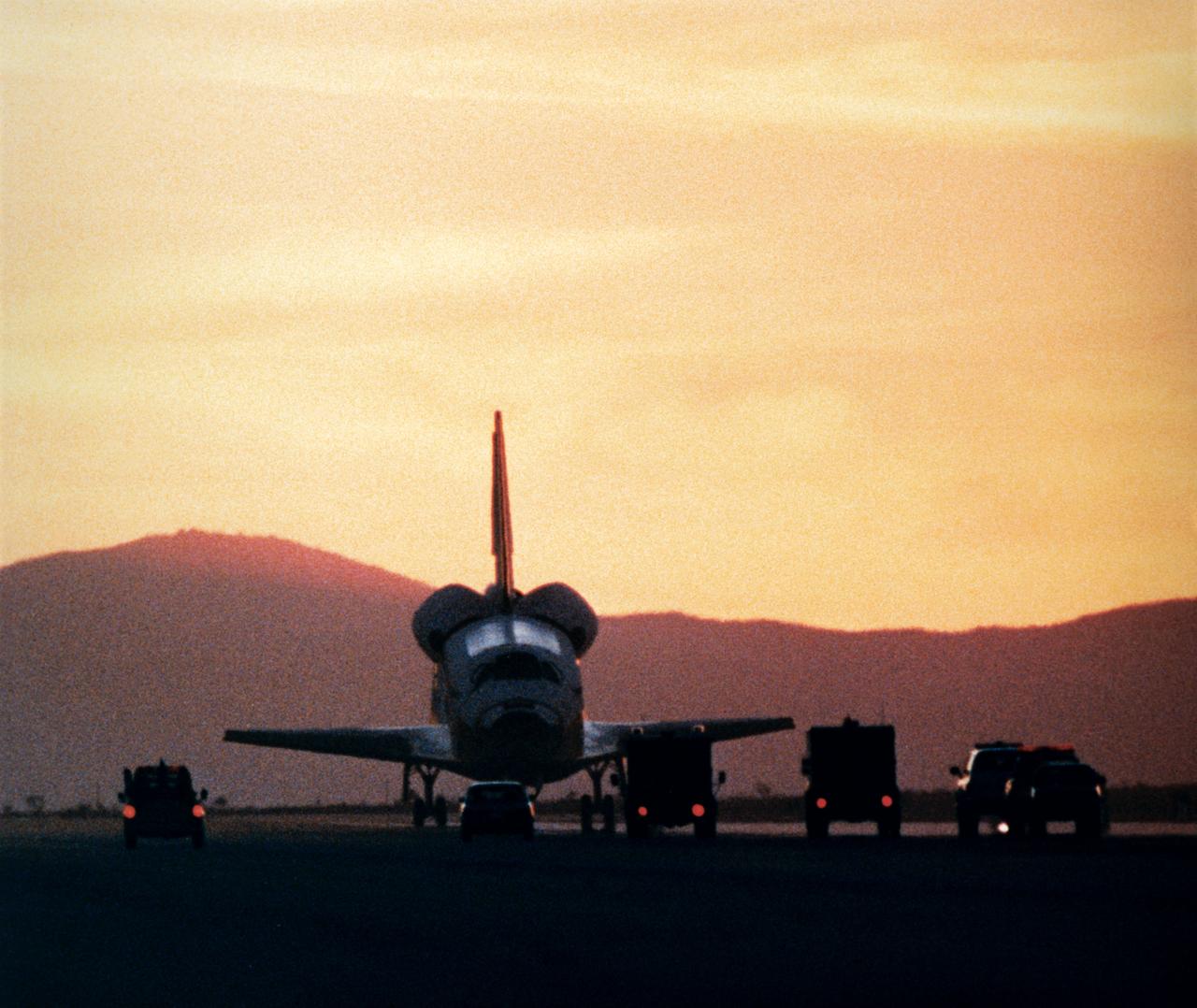
STS033-S-017 (27 Nov 1989) --- The Space Shuttle Discovery is approached by safing vehicles and team members following its late-afternoon landing at Edwards Air Force Base in southern California. A five member crew aboard had just completed the DOD-devoted STS-33 mission. The landing occurred at 16:31:02 p.m. (PST), Nov. 27, 1989. Onboard Discovery for the mission and still aboard the craft when this photo was made were Astronauts Frederick D. Gregory, John E. Blaha, Kathryn C. Thornton, F. Story Musgrave and Manley L. Carter.

NASA Viking Project found a place in history when it became the first U.S. mission to land a spacecraft successfully on the surface of Mars.
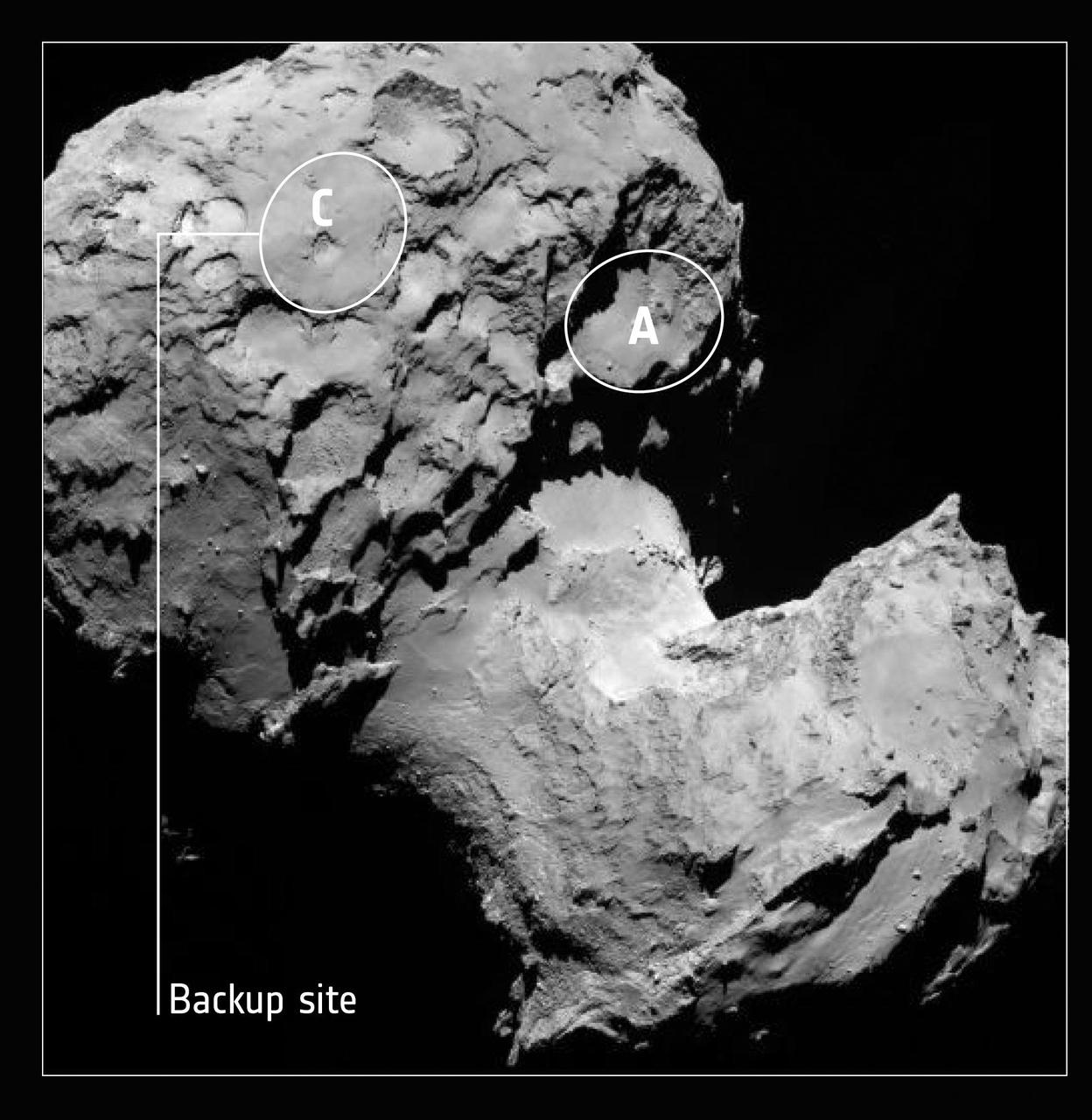
This annotated image depicts the backup landing site Site C chosen for ESA Rosetta spacecraft Philae lander.
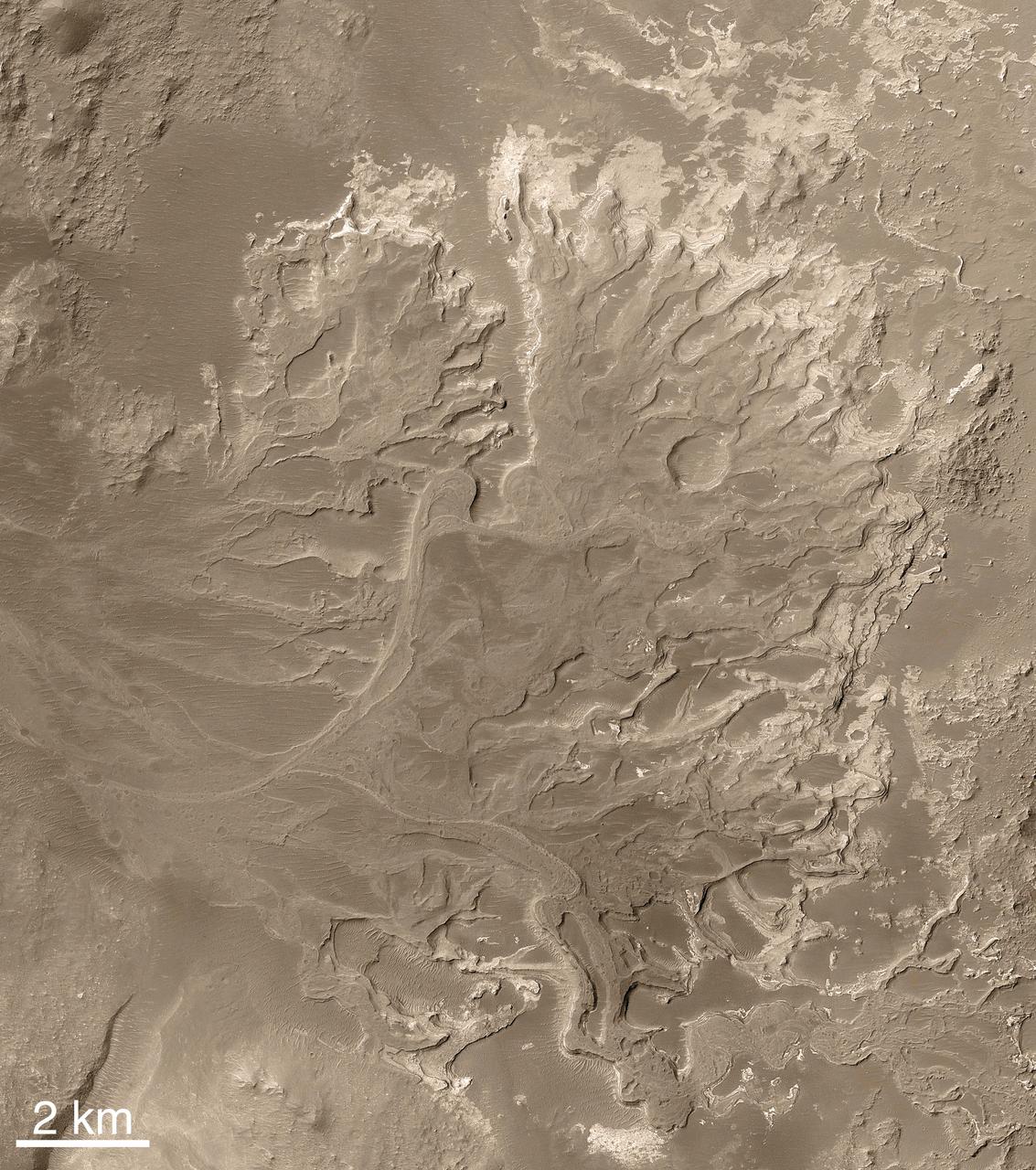
NASA is considering Eberswalde crater as a possible landing site for the Mars Science Laboratory mission; the spacecraft will arrive at Mars in August 2012.
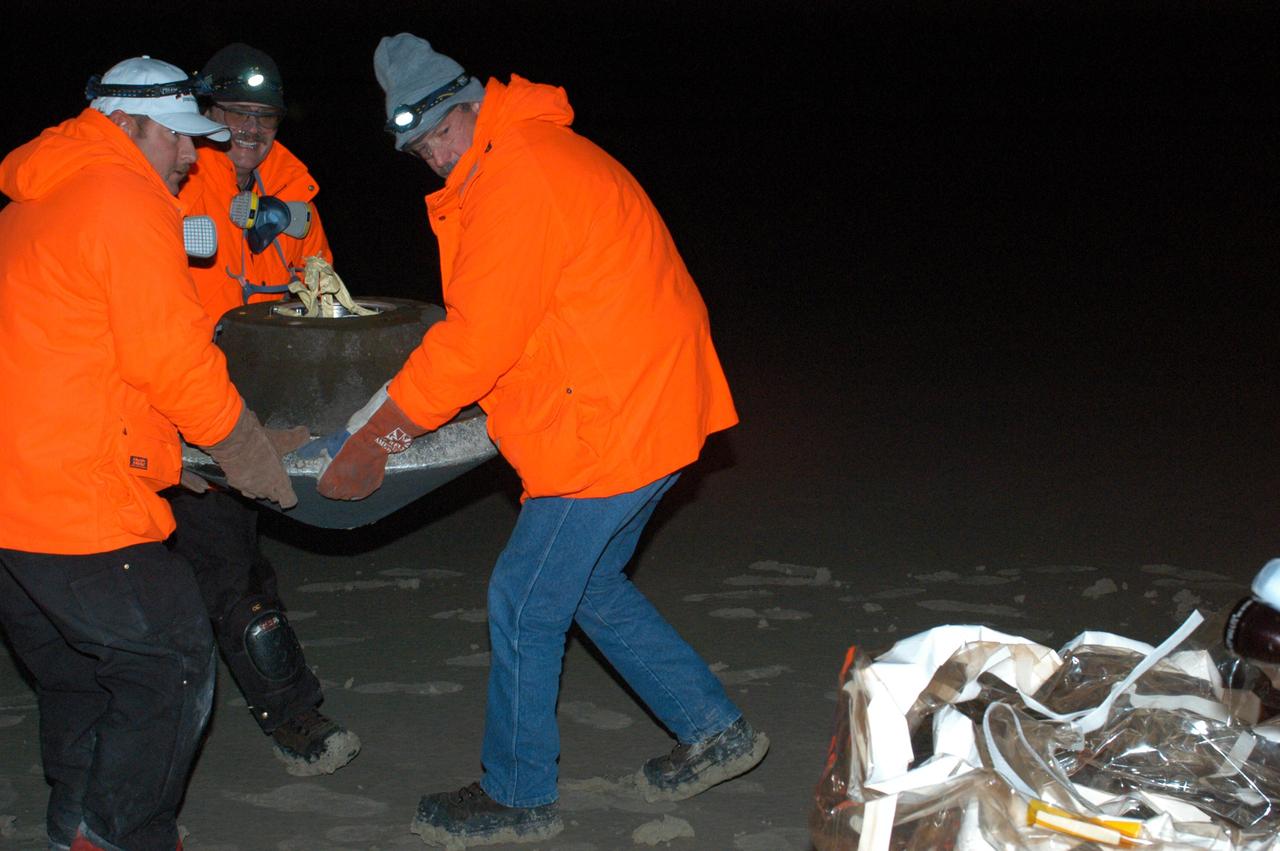
The capsule contains cometary and interstellar samples gathered by NASA Stardust spacecraft. Here, the capsule is being lifted at the landing site.

Image of Surveyor 1 shadow against the lunar surface in the late lunar afternoon, with the horizon at the upper right. Surveyor 1, the first of the Surveyor missions to make a successful soft landing, proved the spacecraft design and landing technique
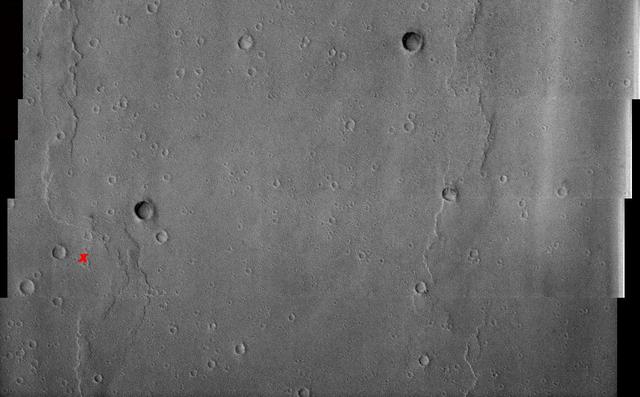
NASA Viking 1 landing site is shown in this commemorative image from NASA Mars Odyssey spacecraft to celebrate the July 20, 1969 and 1976 anniversaries of NASA Apollo 11 and Viking 1 landings on the Moon and Mars, respectively.
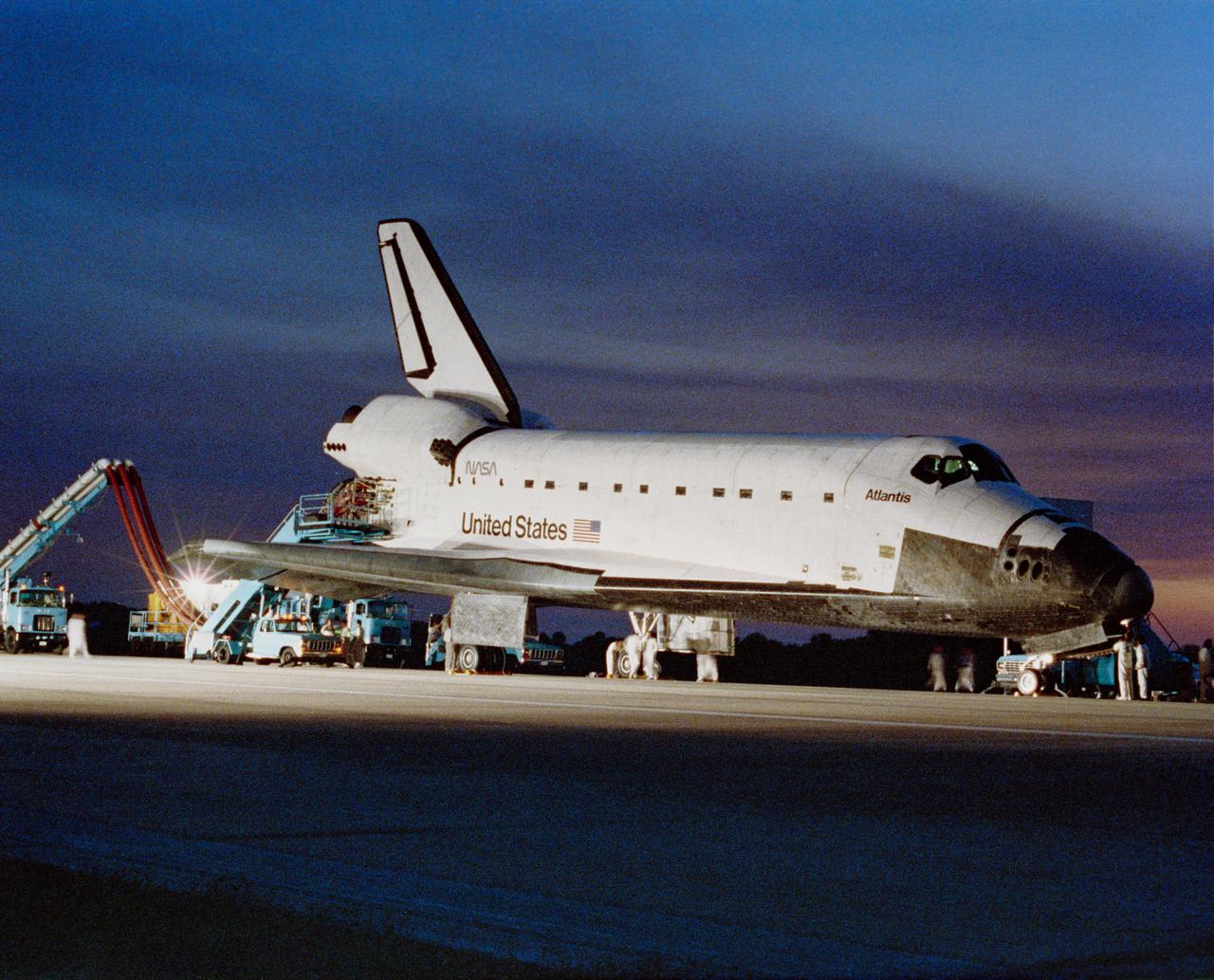
Spotlights illuminate Atlantis, Orbiter Vehicle (OV) 104, during safing operations at the Kennedy Space Center's (KSC's) Shuttle Landing Facility (SLF). OV-104 parked on runway 33 is serviced by KSC ground crews. STS-38, a Department of Defense (DOD)-devoted mission, came to an end (with complete wheel stop) at 4:43:37 pm (Eastern Standard Time (EST)).
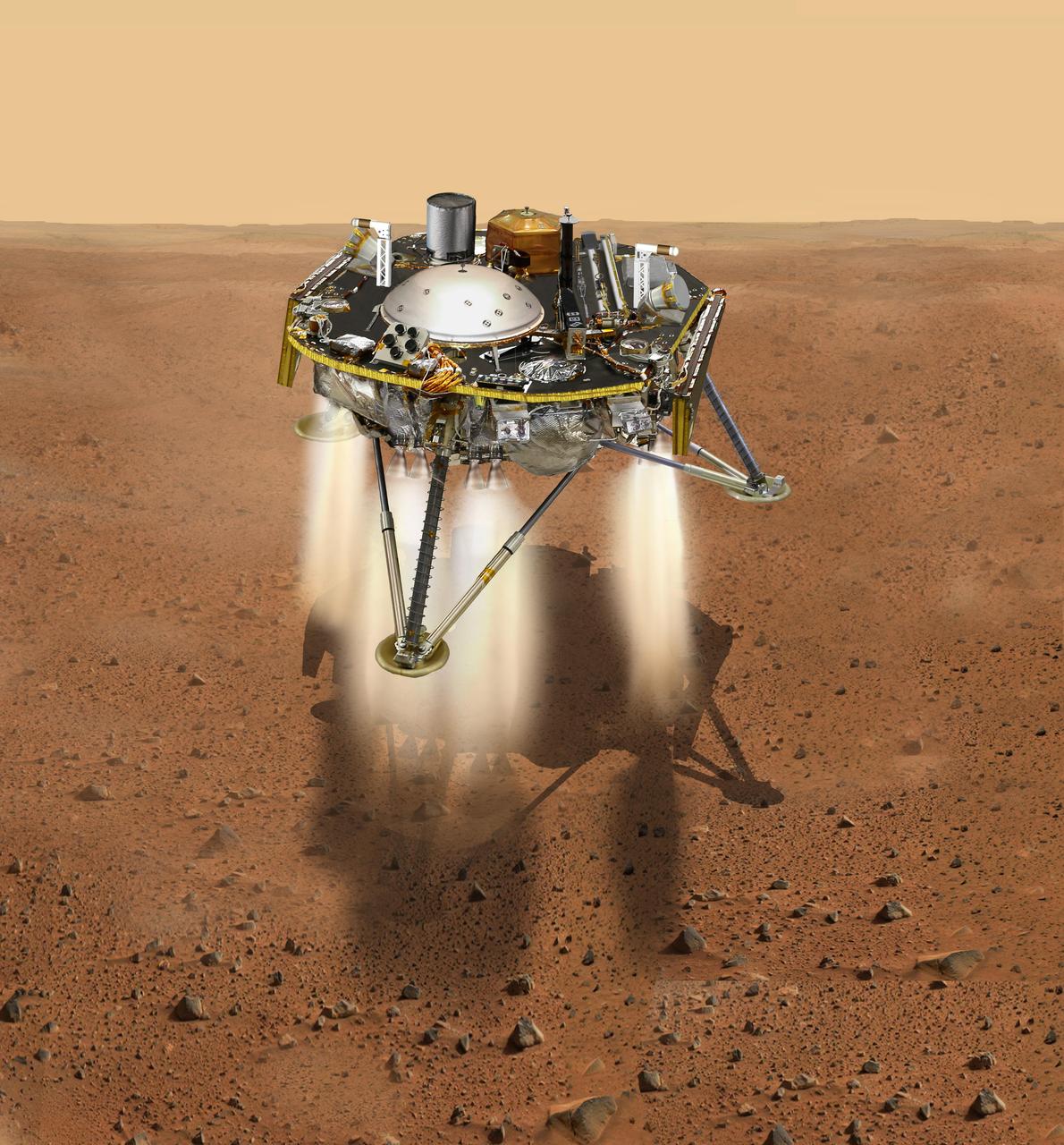
This is an illustration showing a simulated view of NASA's InSight about to land on the surface of Mars. This view shows the top of the spacecraft. https://photojournal.jpl.nasa.gov/catalog/PIA22813
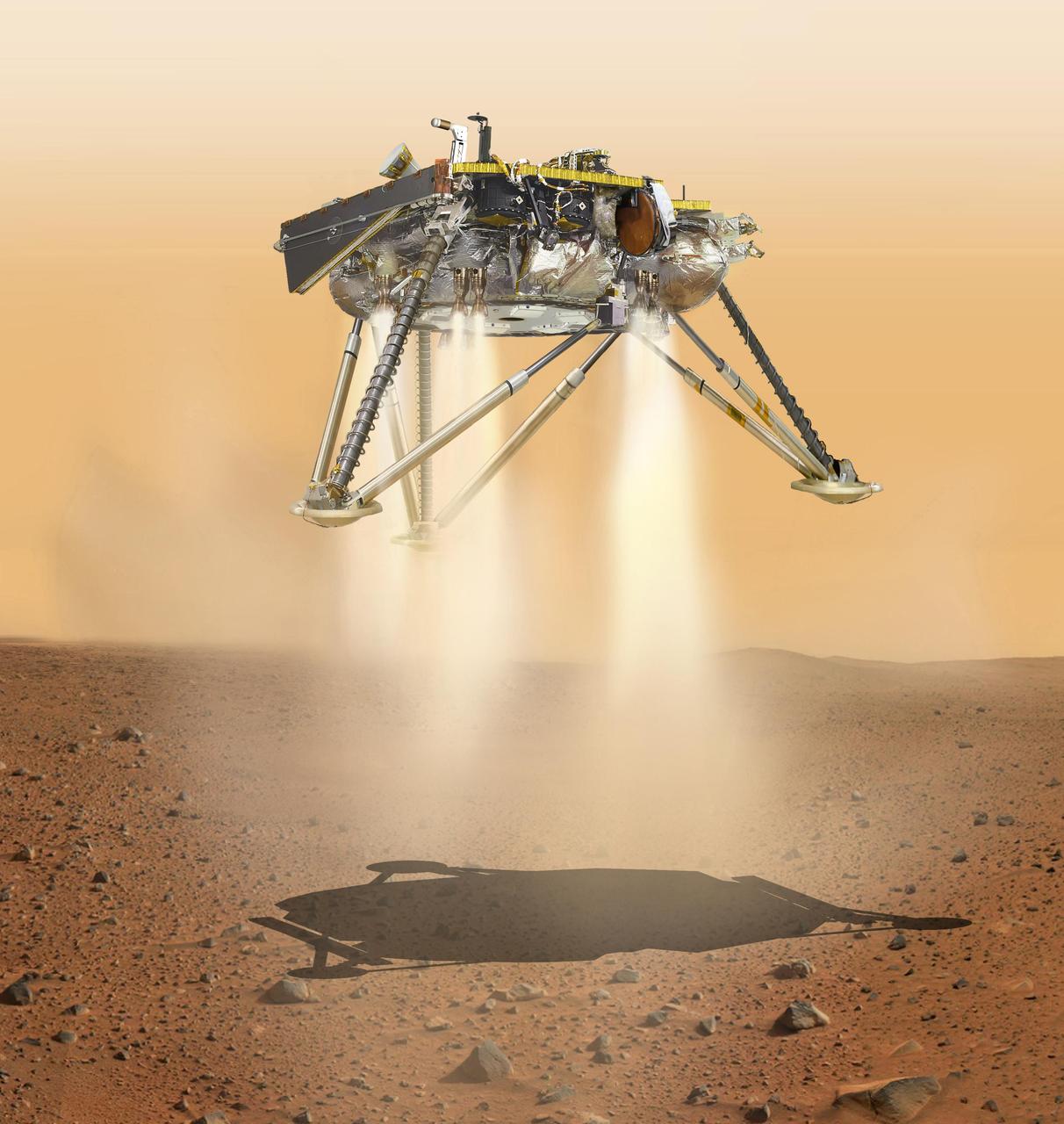
This is an illustration showing a simulated view of NASA's InSight lander about to land on the surface of Mars. This view shows the underside of the spacecraft. https://photojournal.jpl.nasa.gov/catalog/PIA22812
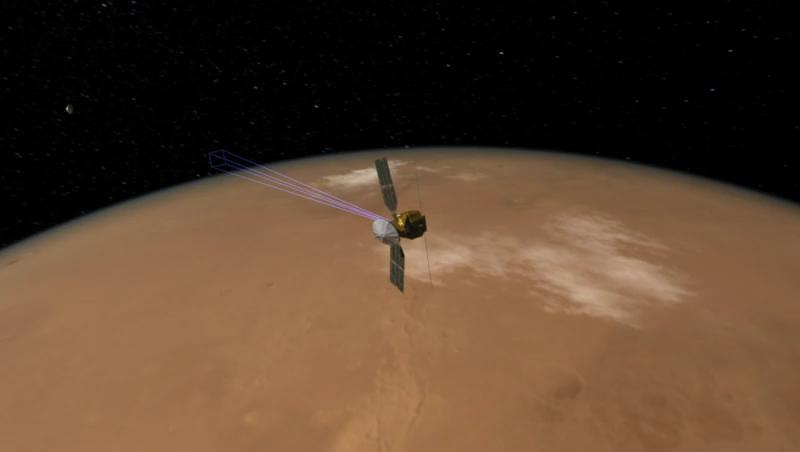
This image shows how NASA Mars Reconnaissance Orbiter was able to snap a picture of NASA Phoenix Mars Lander as it parachuted down to the surface of Mars.
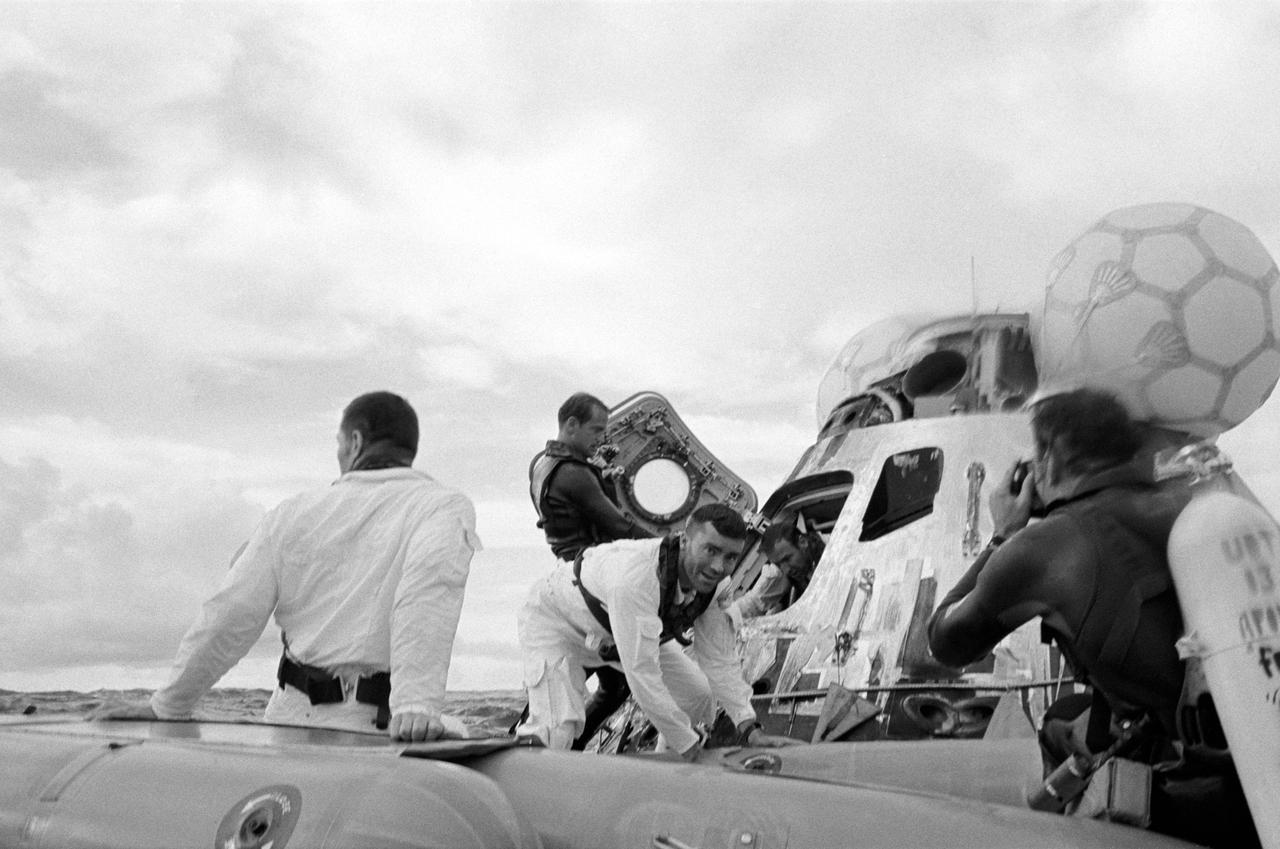
S70-35610 (17 April 1970) --- A water level view of the Apollo 13 recovery operations in the South Pacific Ocean. The three astronauts as seen egressing their spacecraft. John L. Swigert Jr. (back to camera), command module pilot, is already in the life raft. Fred W. Haise Jr., lunar module pilot, facing camera, is stepping into the life raft. James A. Lovell Jr., commander, is leaving the spacecraft in the background. A United States Navy underwater demolition team assists with the recovery operations. The three crewmembers were picked up by helicopter and flown to the prime recovery ship, USS Iwo Jima. The Apollo 13 Command Module (CM) splashed down at 12:07:44 p.m. (CST), April 17, 1970, to conclude safely a perilous space flight. Though the Apollo lunar landing mission was canceled, a disastrous loss of three astronauts was averted.
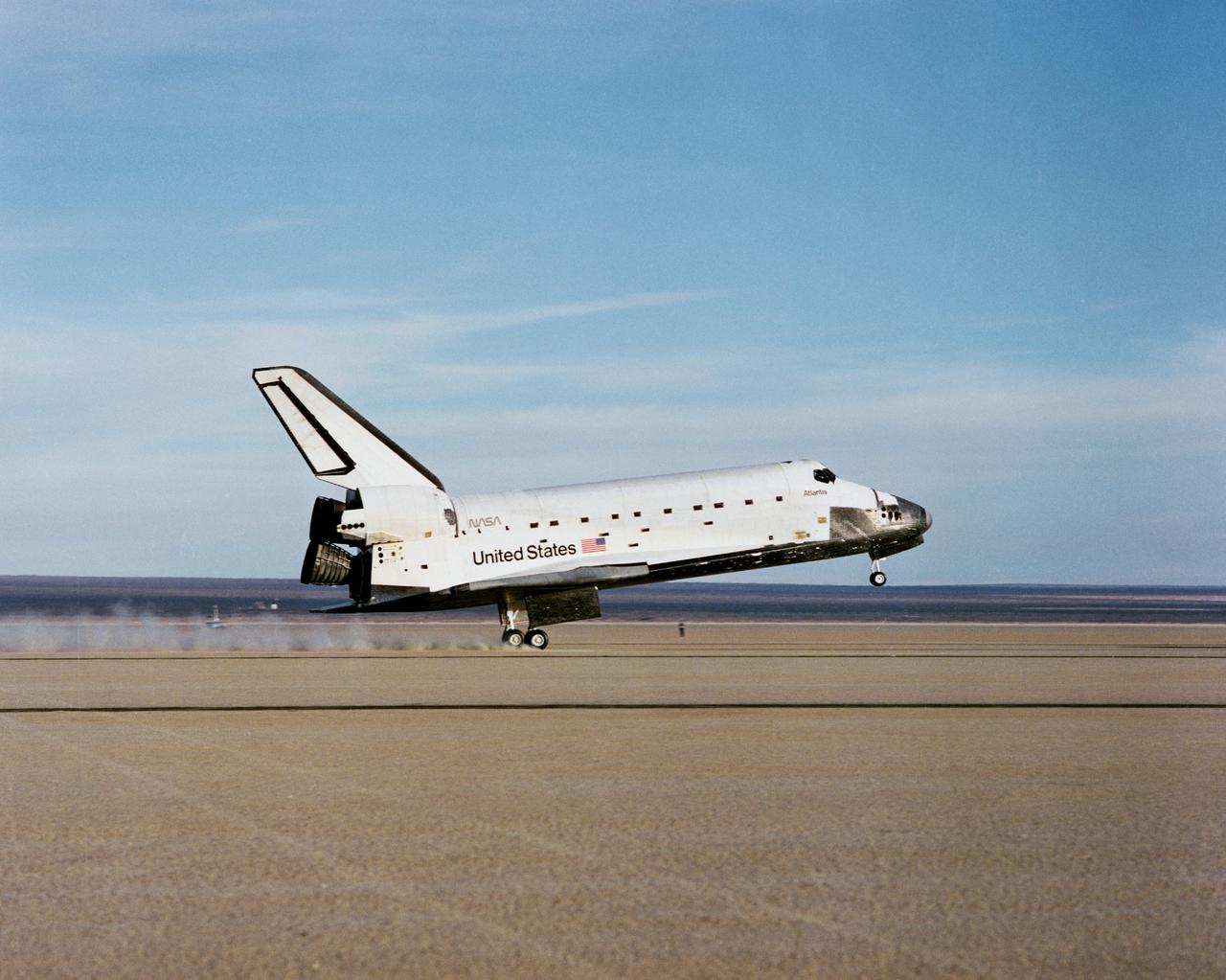
STS027-S-014 (6 Dec. 1988) --- A 70mm camera records the landing of the space shuttle Atlantis on Rogers Dry Lake Bed near the Dryden Flight Research Facility in California. The wheels of the vehicle came to a stop at 3:36:53 p.m. (PST), marking the completion of a successful mission which involved five veteran NASA astronauts. Onboard for the four-day flight were astronauts Robert L. Gibson, Guy S. Gardner, Jerry L. Ross, Richard M. (Mike) Mullane and William M. Shepherd. Photo credit: NASA
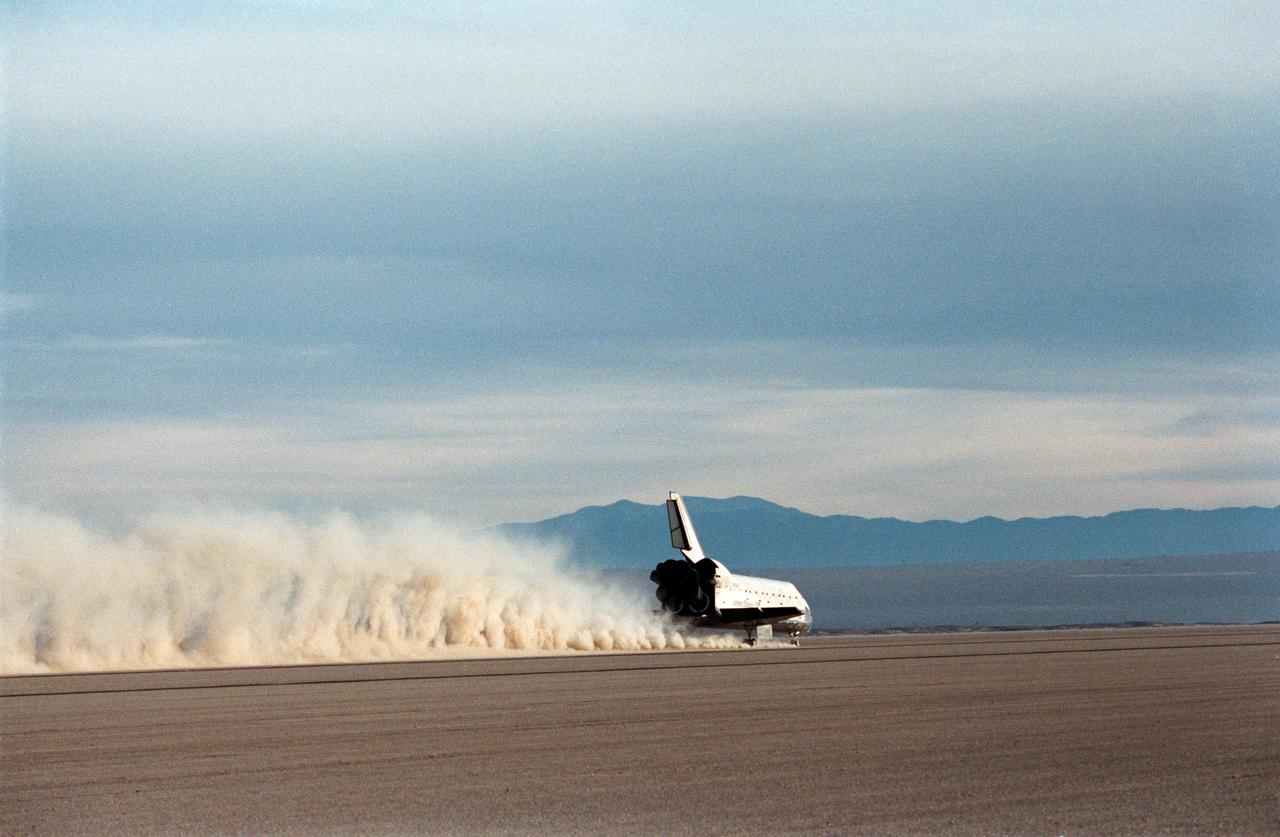
STS027-S-012 (6 Dec. 1988) --- A 70mm camera records the landing of the Space Shuttle Atlantis on Rogers Dry Lake Bed near the Dryden Flight Research Facility in California. The wheels of the vehicle came to a stop at 3:36:53 p.m. (PST), marking the completion of a successful mission which involved five veteran NASA astronauts. Onboard for the four-day flight were astronauts Robert L. Gibson, Guy S. Gardner, Jerry L. Ross, Richard M. (Mike) Mullane and William M. Shepherd.
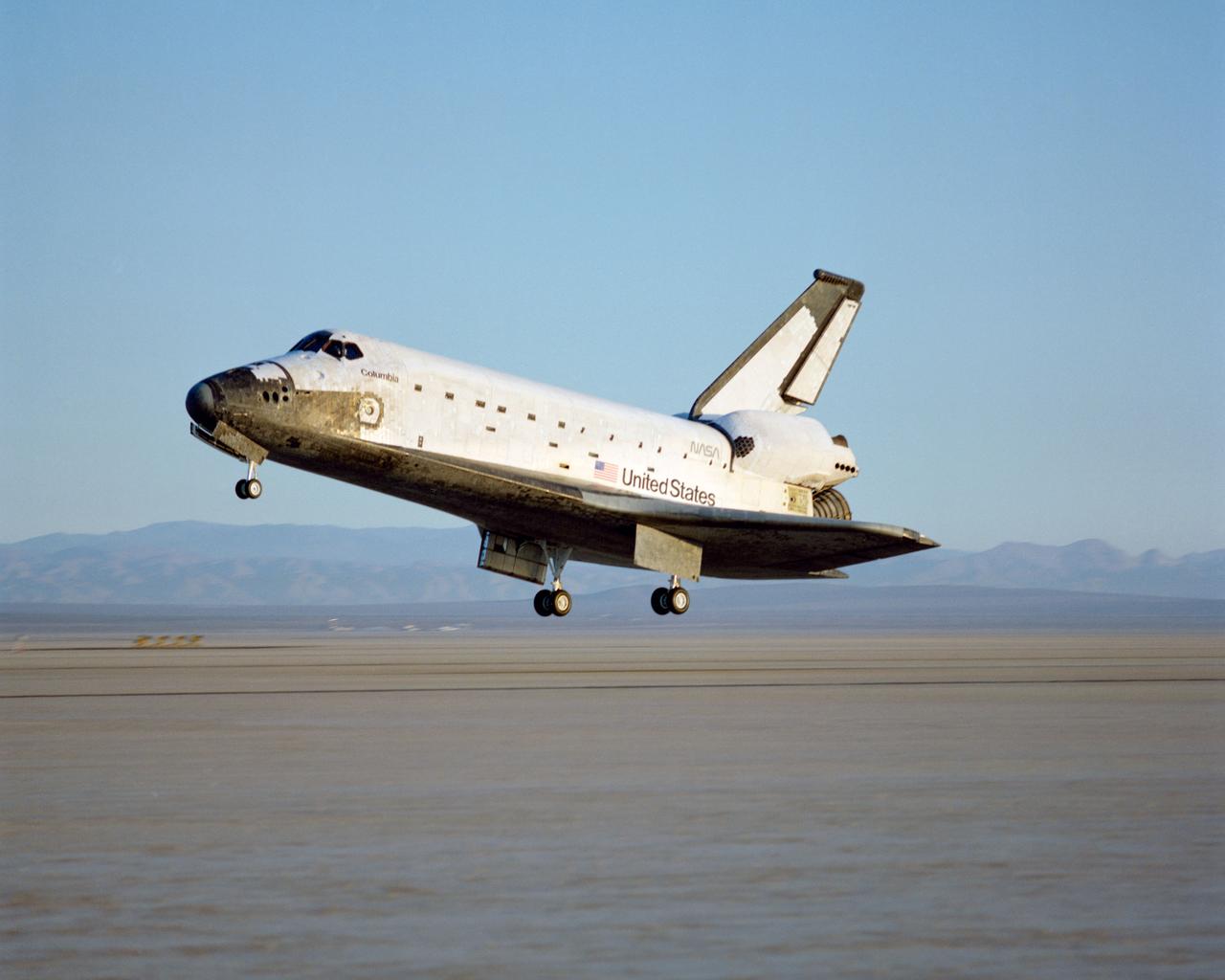
STS-28 Columbia, Orbiter Vehicle (OV) 102, approaches Runway 17 dry lake bed at Edwards Air Force Base (EAFB) California and is photographed just moments before main landing gear (MLG) touchdown. In the distance, are peaks of Southern California mountain range.
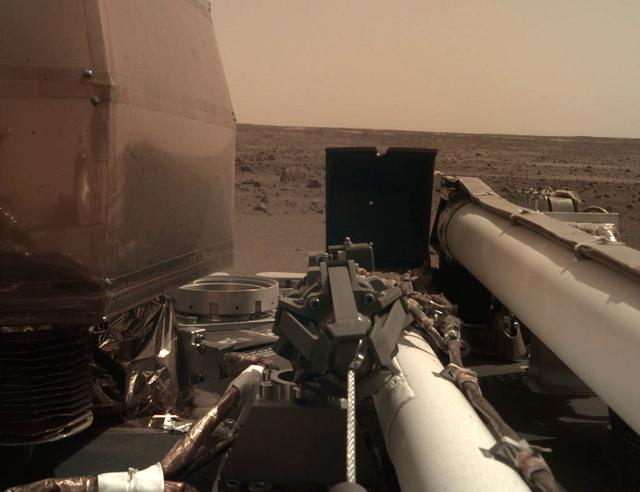
As visible in this image, NASA's InSight spacecraft unlatched its robotic arm on Nov. 27, 2018, the day after it landed on Mars. Animation available at https://photojournal.jpl.nasa.gov/catalog/PIA22892
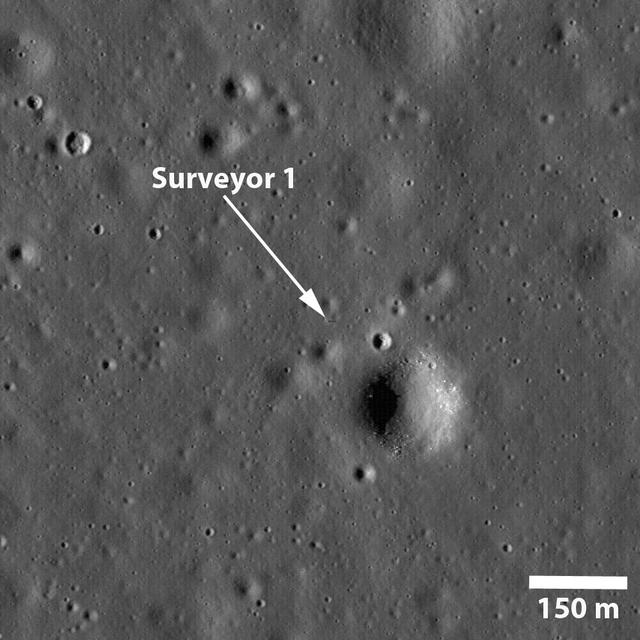
NASA Surveyor 1 spacecraft sitting silently on Oceanus Procellarum, the first US spacecraft to land on another planet on June 2, 1966 in this image taken by NASA Lunar Reconnaissance Orbiter.
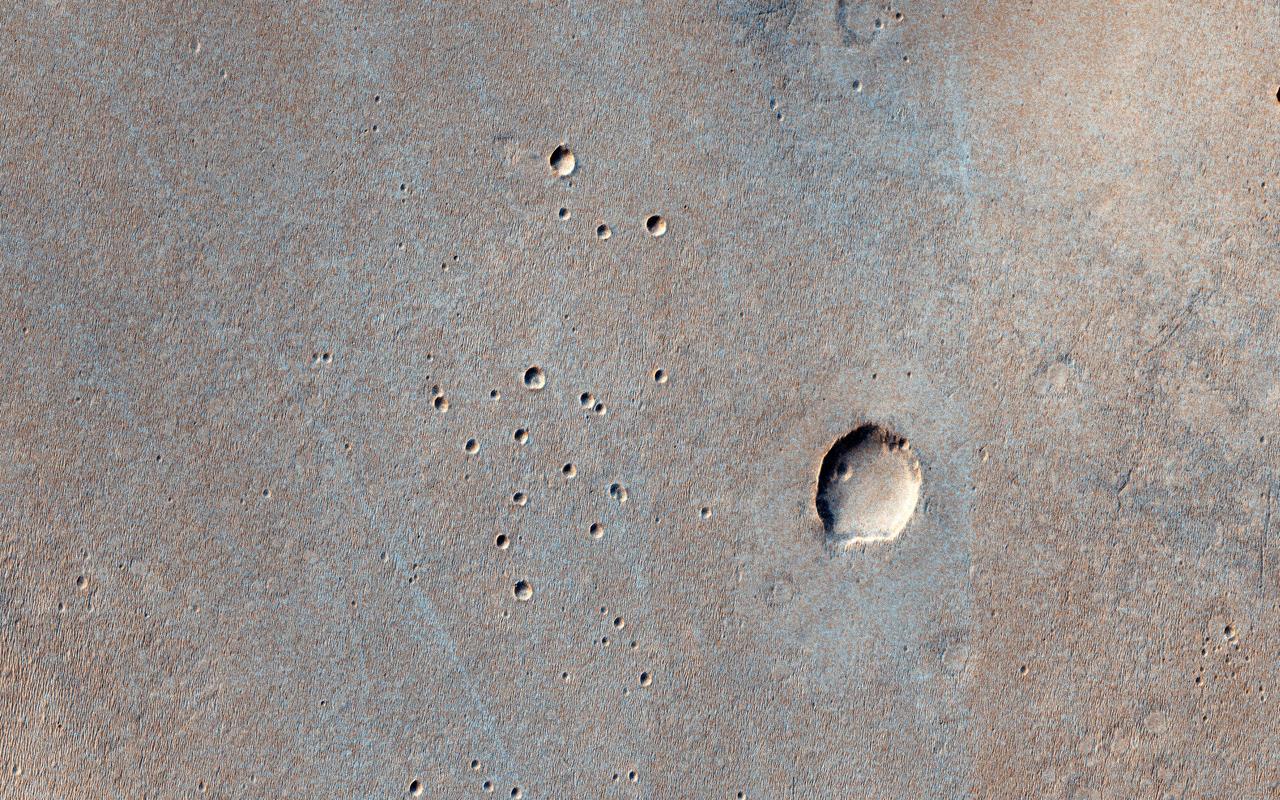
This image from NASA Mars Reconnaissance Orbiter spacecraft is of a landing site that the flattest, safest place on Mars: part of Meridiani Planum, close to where the Opportunity rover landed. In March 2016, the European Space Agency in partnership with Roscosmos will launch the ExoMars Trace Gas Orbiter. This orbiter will also carry an Entry, Descent, and Landing Demonstration Module (EDM): a lander designed primarily to demonstrate the capability to land on Mars. The EDM will survive for only a few days, running on battery power, but will make a few environmental measurements. The landing site is the flattest, safest place on Mars: part of Meridiani Planum, close to where the Opportunity rover landed. This image shows what this terrain is like: very flat and featureless. A full-resolution sample reveals the major surface features: small craters and wind ripples. HiRISE has been imaging the landing site region in advance of the landing, and will re-image the site after landing to identify the major pieces of hardware: heat shield, backshell with parachute, and the lander itself. The distribution of these pieces will provide information about the entry, descent and landing. http://photojournal.jpl.nasa.gov/catalog/PIA20159
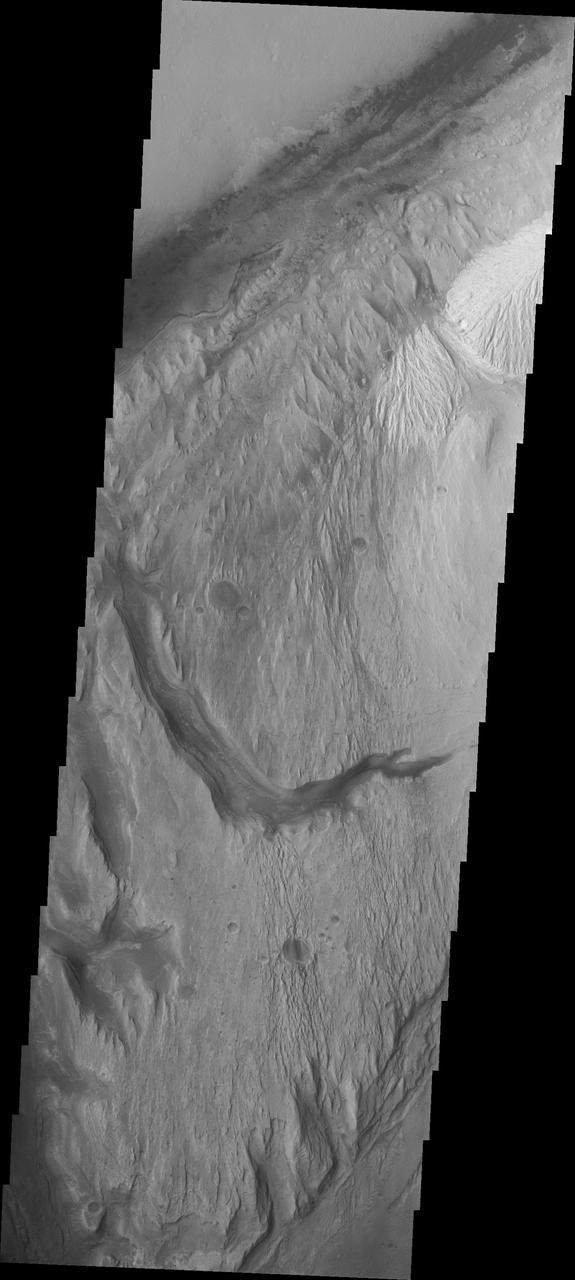
This image captured by NASA 2001 Mars Odyssey spacecraft continues to follow the channel seen in the past two images. The rover landing site is at the top margin of this image.
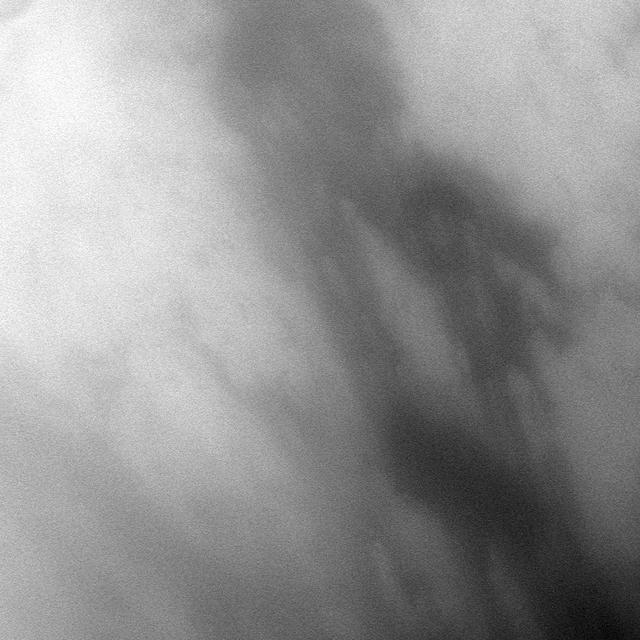
NASA Cassini spacecraft peers through Titan atmosphere at the region called Adiri, west of the landing site of the Huygens probe on the anti-Saturn side of the moon.
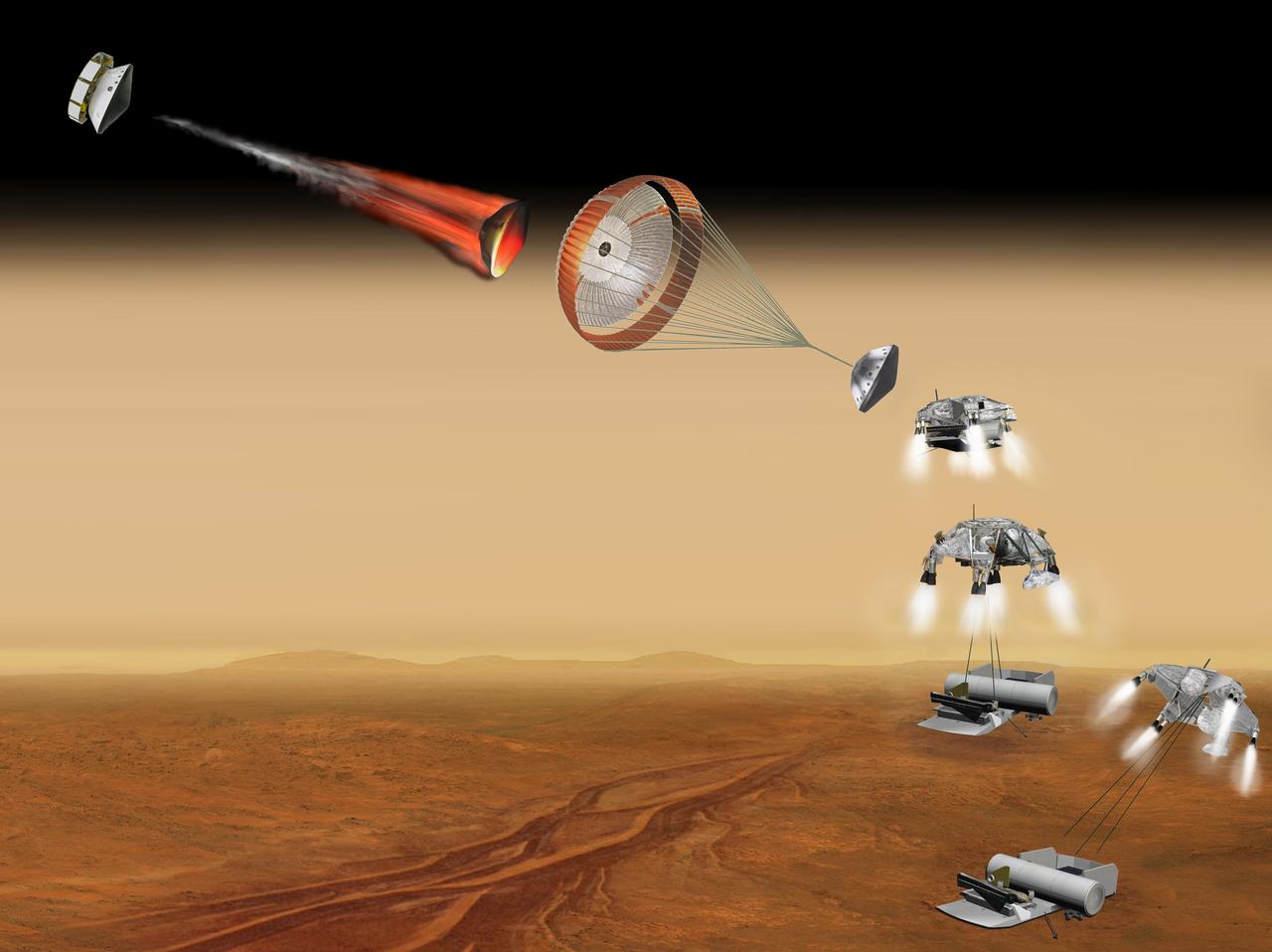
This artist concept of a proposed NASA and European Space Agency collaboration on proposals for a Mars sample return mission portrays a series of six steps in the spacecraft landing on Mars.
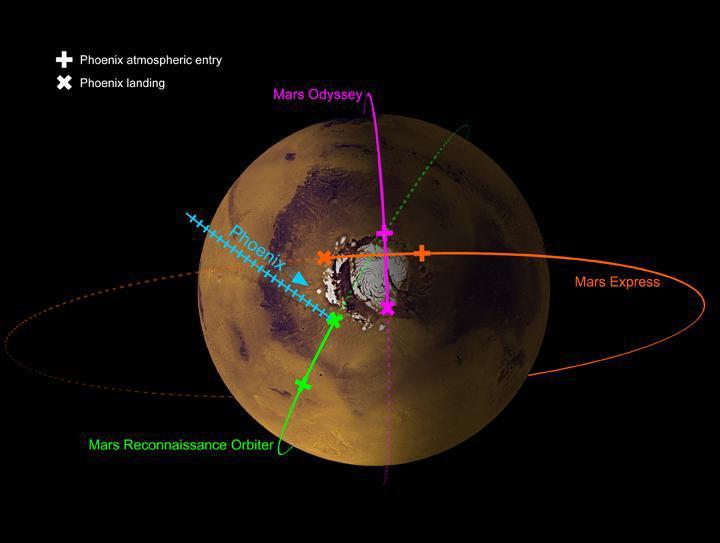
This image shows the paths of three spacecraft currently in orbit around Mars, as well as the path by which NASA Phoenix Mars Lander will approach and land on the planet.

This image from NASA Terra spacecraft shows Nunavut, in northern Canada, the largest and newest federal territory of the country. The name means our land in Inuktitut.

This image from NASA Terra spacecraft shows Ellesmere Island, which is part of the Qikiqtaaluk Region of the Canadian territory of Nunavut, with the most northerly point of land in Canada.

An annotated mosaic from the Rosetta spacecraft shows Site J, the primary landing site on comet 67P/Churyumov-Gerasimenko for the mission Philae lander.

These views from NASA Terra spacecraft portray the Lutzow-Holm Bay region of Queen Maud Land, East Antarctica, on September 5, 2002.

Sled tests will allow NASA Low-Density Supersonic Decelerator Project, or LDSD, to test inflatable and parachute decelerators to slow spacecraft prior to landing.

NASA's InSight spacecraft captured this panorama of its landing site on Dec. 9, 2018, the 14th Martian day, or sol, of its mission. The 290-degree perspective surveys the rim of the degraded crater InSight landed in, nicknamed "Homestead Hollow." The panorama is made of 30 individual images that were taken by the spacecraft's Instrument Deployment Camera, located on its robotic arm. https://photojournal.jpl.nasa.gov/catalog/PIA23140
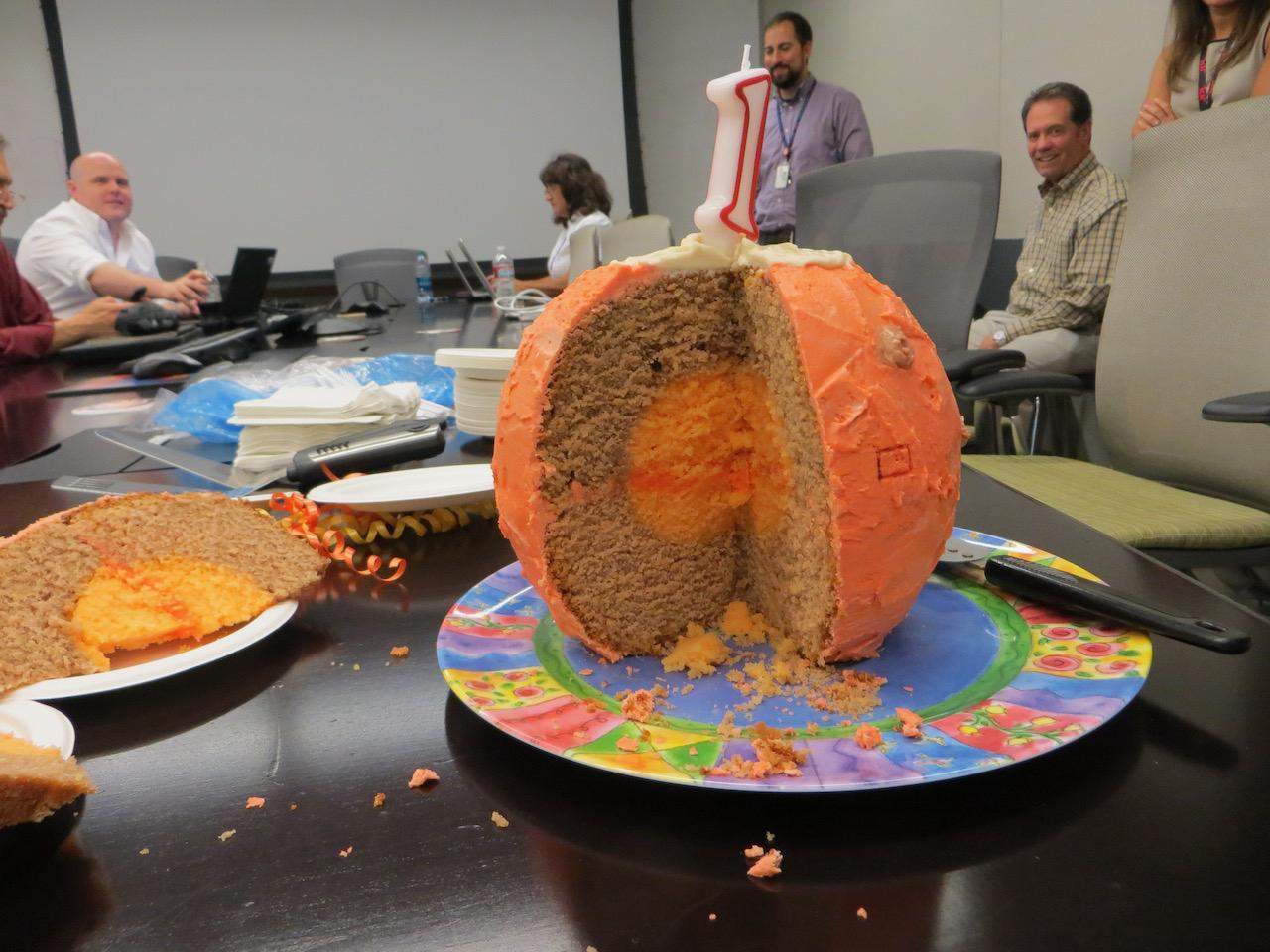
NASA's InSight lander team enjoyed this Mars-shaped cake on the first anniversary of the spacecraft's Nov. 26, 2018, landing. The cake came complete with its own inner layers – just like the Red Planet. https://photojournal.jpl.nasa.gov/catalog/PIA25283
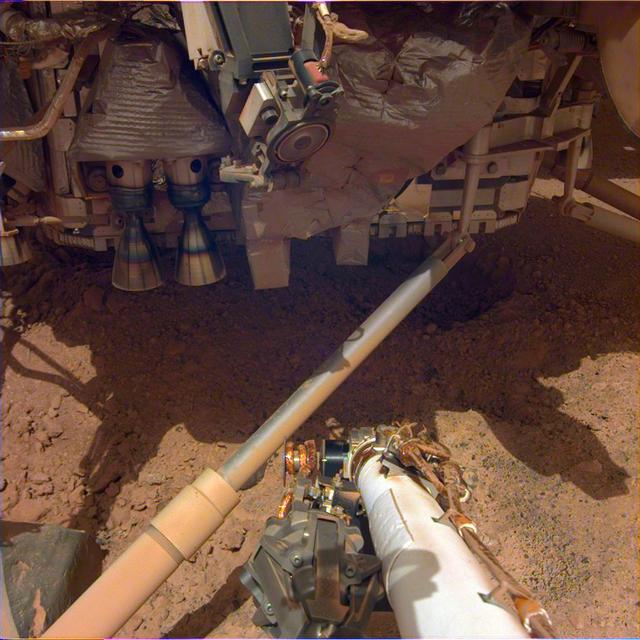
While NASA's InSight spacecraft landed on Mars, thrusters on the bottom of the spacecraft churned up the soil beneath it. This image shows pits that the thrusters excavated. This image was taken Dec. 14, 2018, the 18th Martian day, or sol, of the mission, using the Instrument Deployment Camera on InSight's robotic arm. https://photojournal.jpl.nasa.gov/catalog/PIA23250
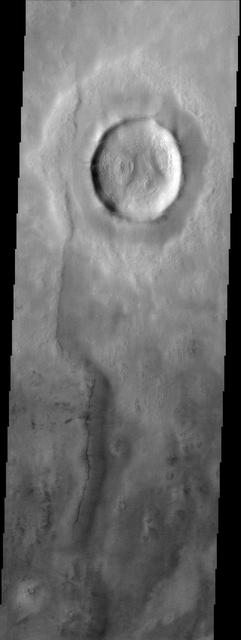
This image from NASA Mars Odyssey spacecraft shows Rampart crater in Utopia Planitia, west of NASA Viking 2 landing site. http://photojournal.jpl.nasa.gov/catalog/PIA04029

This graphic shows the location of four cameras and a microphone on the spacecraft for NASA's Mars 2020 Perseverance mission. These cameras will capture the entry, descent, and landing phase of the mission. https://photojournal.jpl.nasa.gov/catalog/PIA24378
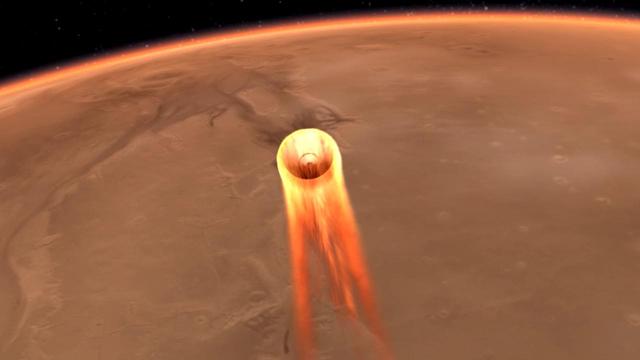
An artist's impression of InSight's Entry, Descent and Landing (EDL). InSight is short for Interior Exploration using Seismic Investigations, Geodesy and Heat Transport. The mission is the first outer space explorer to study the "inner space" of Mars. The lander probes deep beneath the surface of Mars to study the fingerprints of the processes that first formed the rocky planets of our solar system. Entry, descent, and landing (EDL) begins when the spacecraft reaches the Martian atmosphere, about 80 miles (about 128 kilometers) above the surface, and ends with the lander safe and sound on the surface of Mars six minutes later. https://photojournal.jpl.nasa.gov/catalog/PIA22100
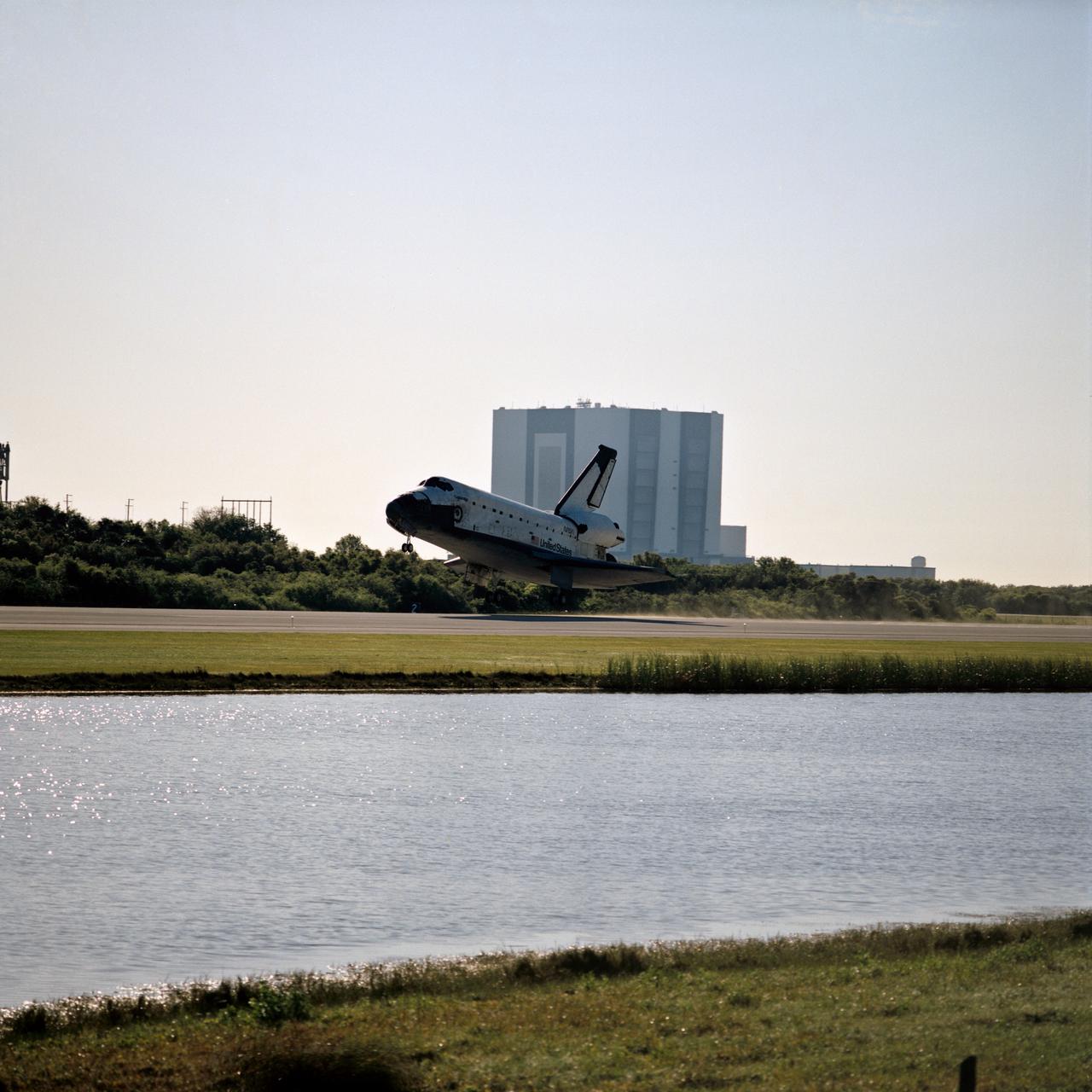
STS062-S-030 (18 March 1994) --- The Space Shuttle Columbia is about to touch down on the Shuttle landing facility following almost 14 days in earth orbit for five NASA astronauts and a variety of experiments. The giant Vehicle Assembly Building (VAB) where Columbia had been mated to its external fuel tank and two solid rockets is in the background. Touchdown occurred at 8:09 a.m. (EST), March 18, 1994. Thirteen days, 23 hours and 16 minutes were logged by the crew members -- astronauts John H. Casper, Andrew M. Allen, Marsha S. Ivins, Pierre J. Thuot and Charles D. (Sam) Gemar.
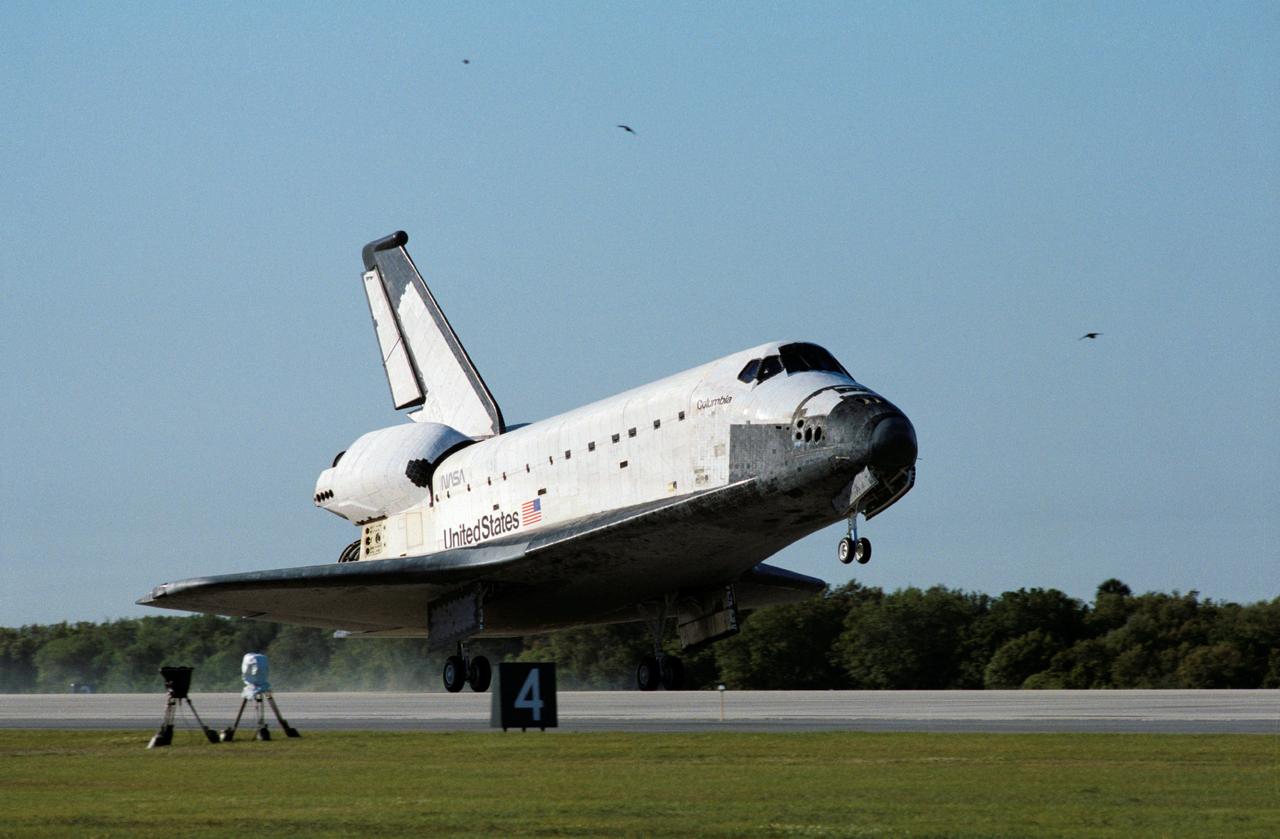
STS062-S-031 (18 March 1994) --- The main landing gear on the Space Shuttle Columbia touches down on the Shuttle Landing Facility at Kennedy Space Center (KSC). The scene followed almost 14-days in Earth-orbit for five NASA astronauts and a variety of experiments. Touch down occurred at 8:09 a.m. (EST), March 18, 1994. Thirteen days, 23 hours and 16 minutes were logged by the crew members -- astronauts John H. Casper, Andrew M. Allen, Marsha S. Ivins, Pierre J. Thuot and Charles D. (Sam) Gemar.
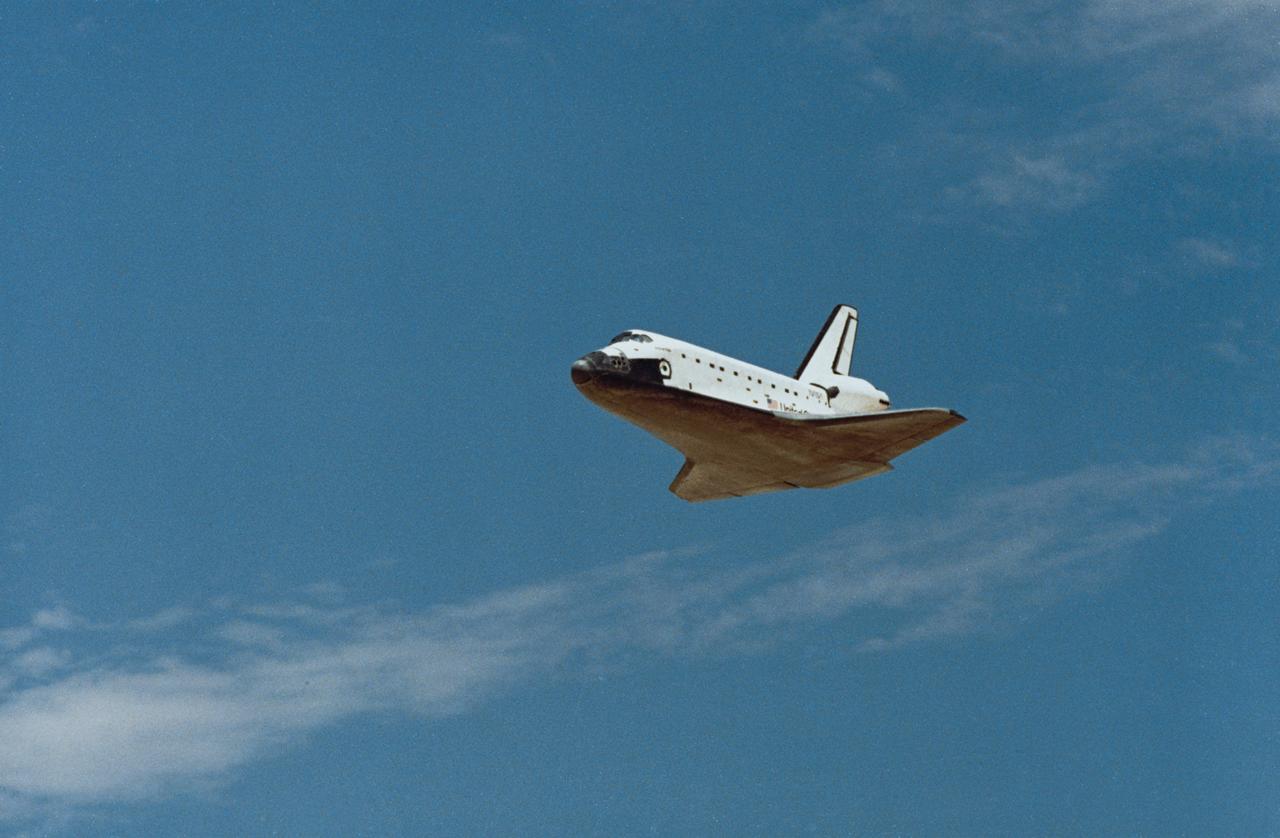
STS030-S-126 (8 May 1989) --- The space shuttle Atlantis, as seen in a low angle view on its glide in from Earth orbit, heads toward a concrete runway at Edwards Air Force Base in California. Onboard were astronauts David M. Walker, STS-30 commander; Ronald J. Grabe, pilot; and astronauts Norman E. Thagard, Mary L. Cleave and Mark C. Lee ? all mission specialists. Photo credit: NASA
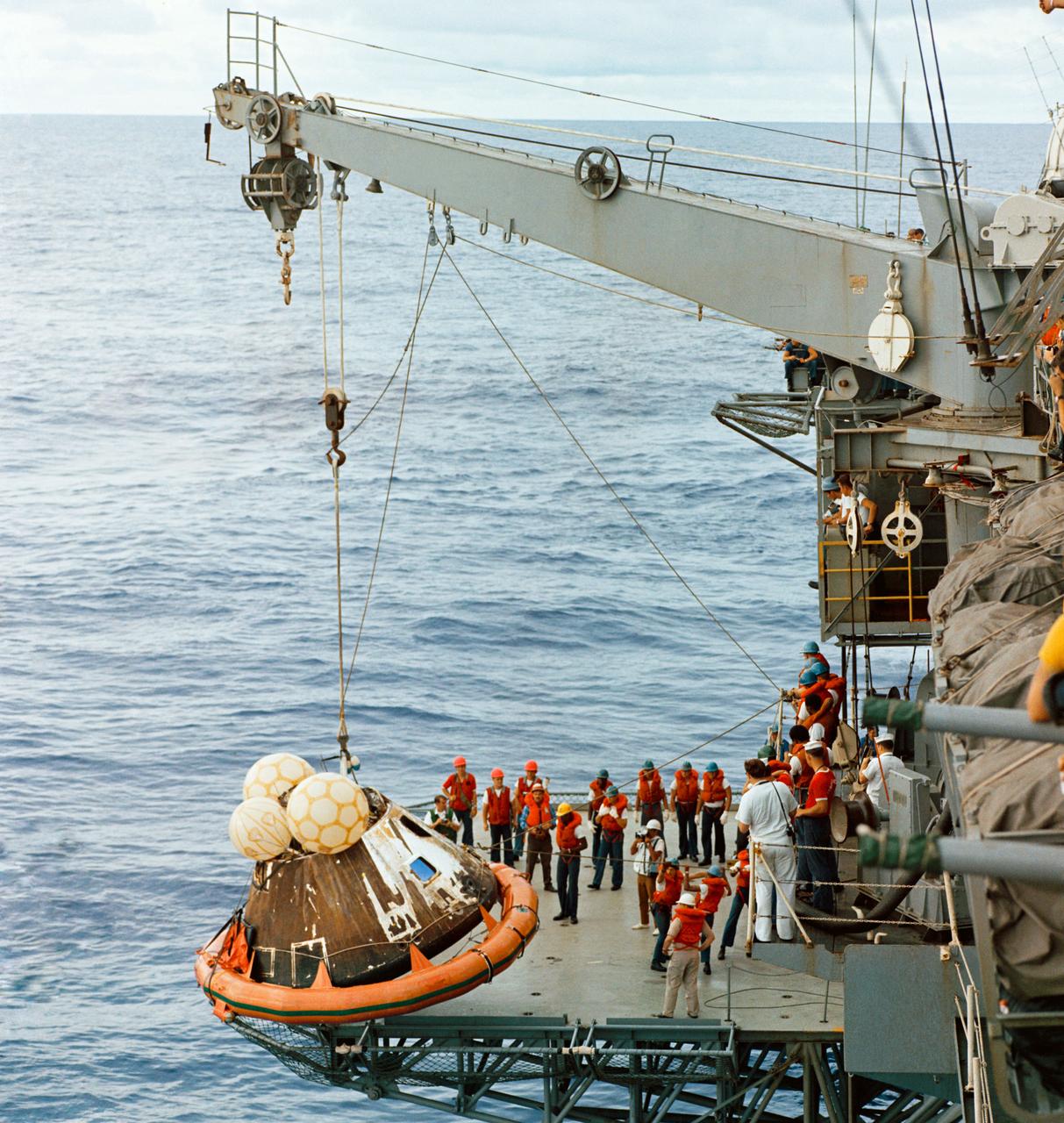
S70-15530 (17 April 1970) --- Crew men aboard the USS Iwo Jima, prime recovery ship for the Apollo 13 mission, hoist the Command Module (CM) aboard ship. The Apollo 13 crew men, astronauts James A. Lovell Jr., John L. Swigert Jr. and Fred W. Haise Jr., were already aboard the Iwo Jima when this photograph was taken. The CM, with the three tired crew men aboard, splashed down at 12:07:44 p.m. (CST), April 17, 1970, only about four miles from the recovery vessel in the South Pacific Ocean.
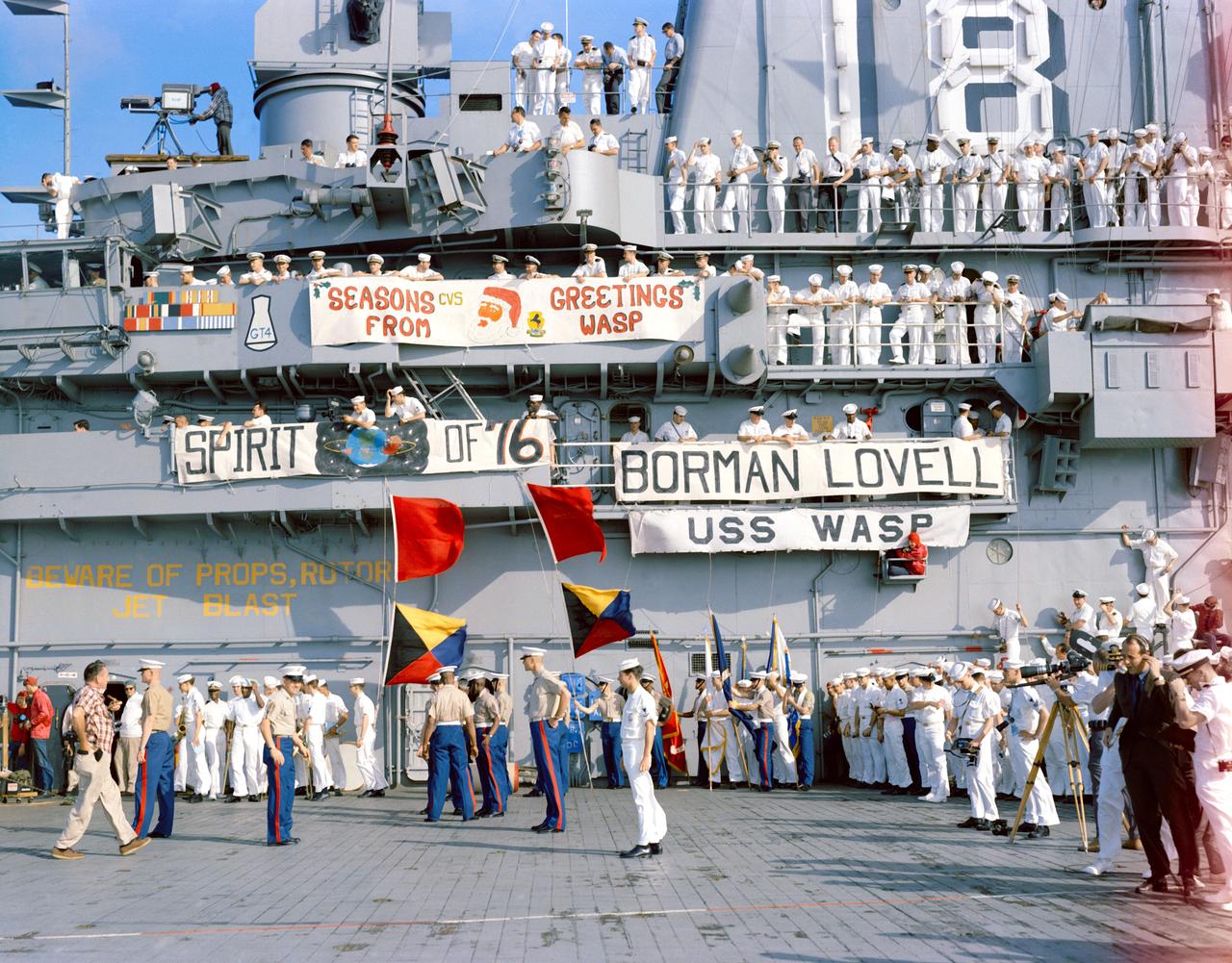
S65-63644 (18 Dec. 1965) --- Crewmen of the aircraft carrier USS Wasp gather on deck to watch the recovery of the National Aeronautics and Space Administration's Gemini-7 spacecraft and astronauts. Gemini-7, with astronauts Frank Borman, command pilot, and James A. Lovell Jr., pilot, splashed down in the western Atlantic at 9:05 a.m. (EST), Dec. 18, 1965, to conclude a record-breaking 14-day mission in space. Photo credit: NASA

STS-41 Discovery, Orbiter Vehicle (OV) 103, with nose landing gear (NLG) and main landing gear (MLG) deployed, glides over concrete runway 22 at Edwards Air Force Base (EAFB), California, prior to touchdown.
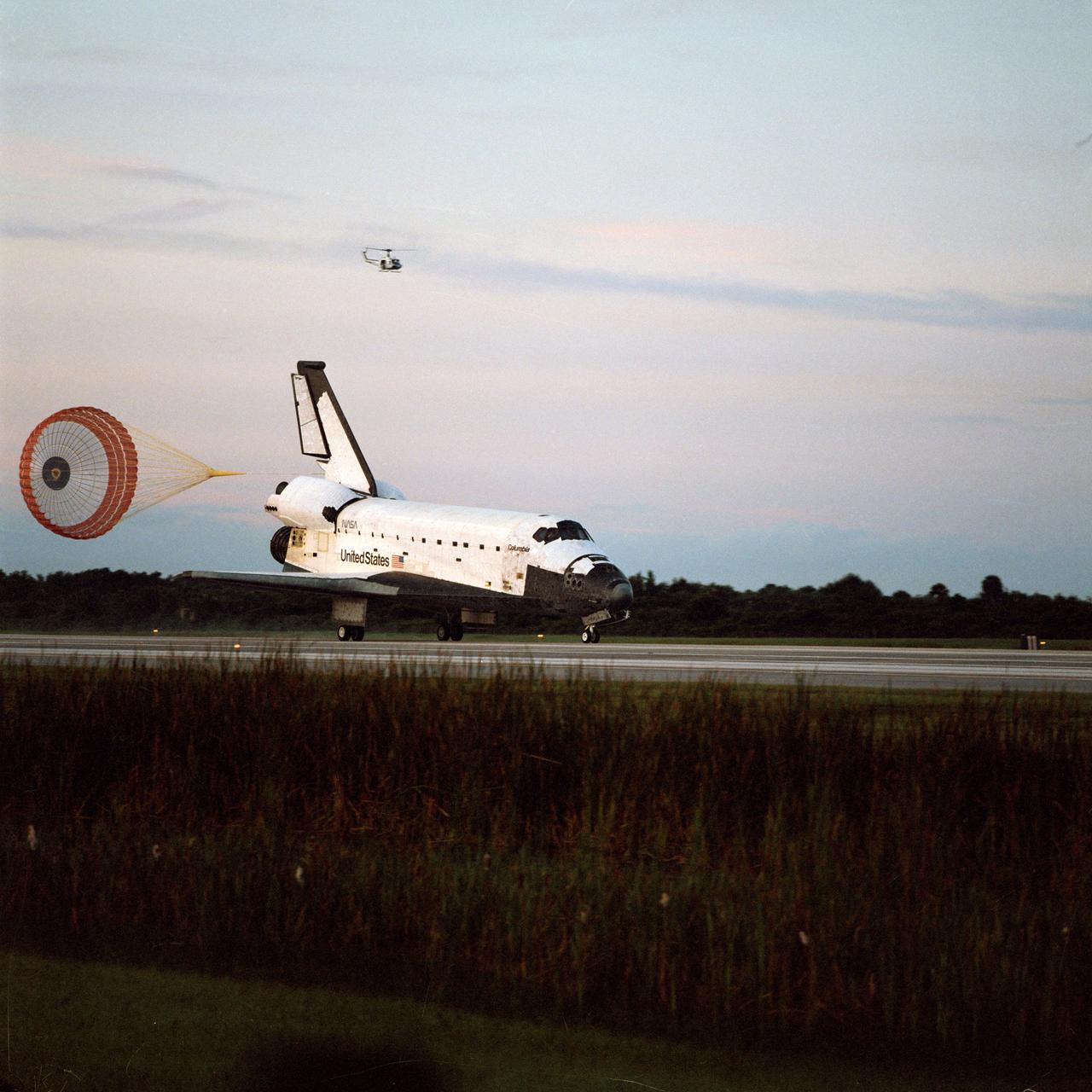
The Space Shuttle Columbia, Orbiter Vehicle (OV) 102, its drag chute fully deployed, completes a record duration mission as it lands on Runway 33 at the Kennedy Space Center (KSC) Shuttle Landing Facility (SLF). A helicopter flying overhead observes as OV-102's nose landing gear (NLG) and main landing gear (MLG) roll along the runway. Landing occurred at 6:38 am (Eastern Daylight Time (EDT)). STS-65 mission duration was 14 days 17 hours and 56 minutes. Onboard were six NASA astronauts and a Japanese payload specialist who conducted experiments in support of the International Microgravity Laboratory 2 (IML-2) during the mission.
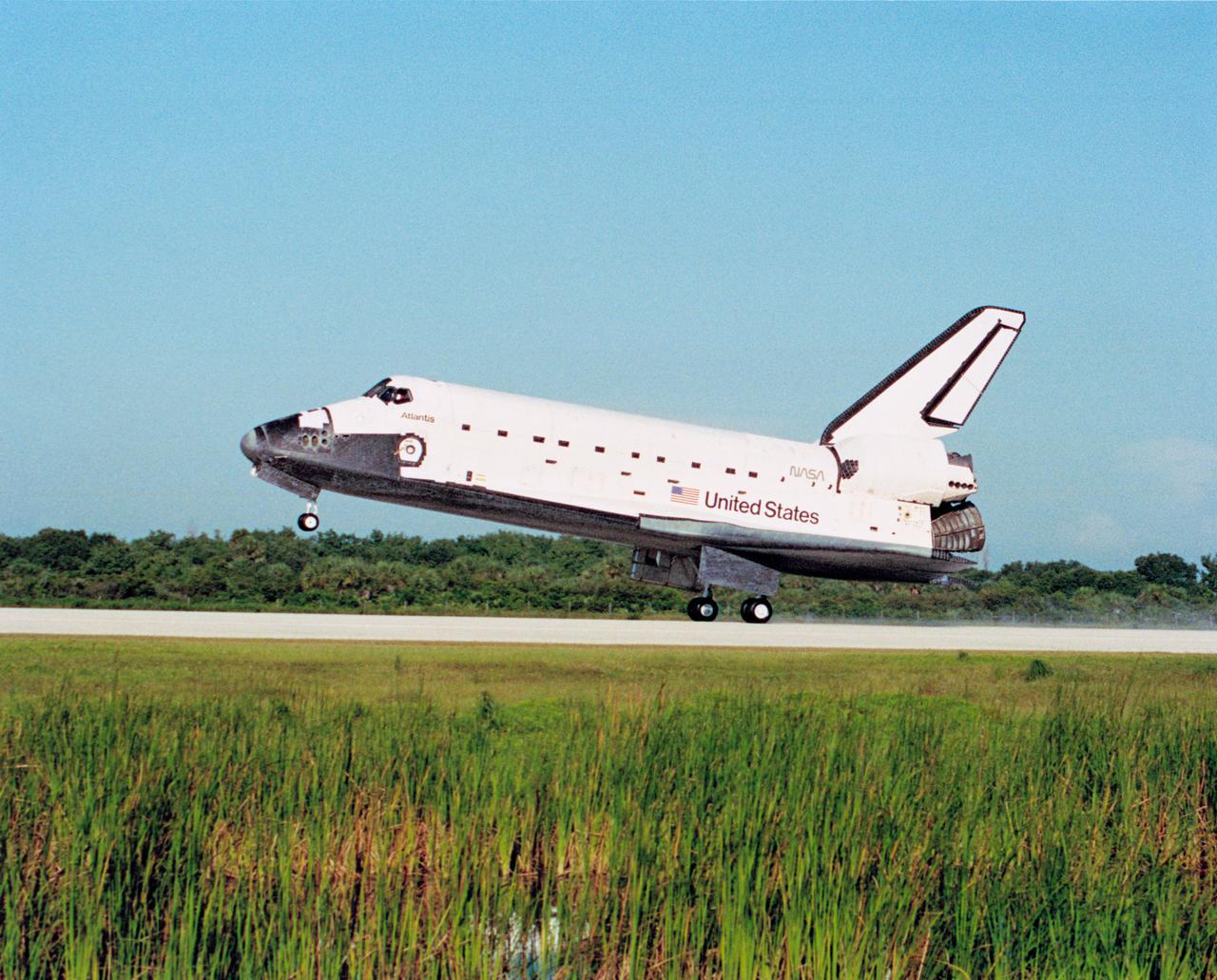
STS-43 Atlantis, Orbiter Vehicle (OV) 104, lands on runway 15 at the Kennedy Space Center's (KSC's) Shuttle Landing Facility (SLF). The main landing gear (MLG) touched down at 8:23:25 am (Eastern Daylight Time (EDT)). OV-104 glides toward wheel stop as the nose landing gear (NLG) rides above the runway.
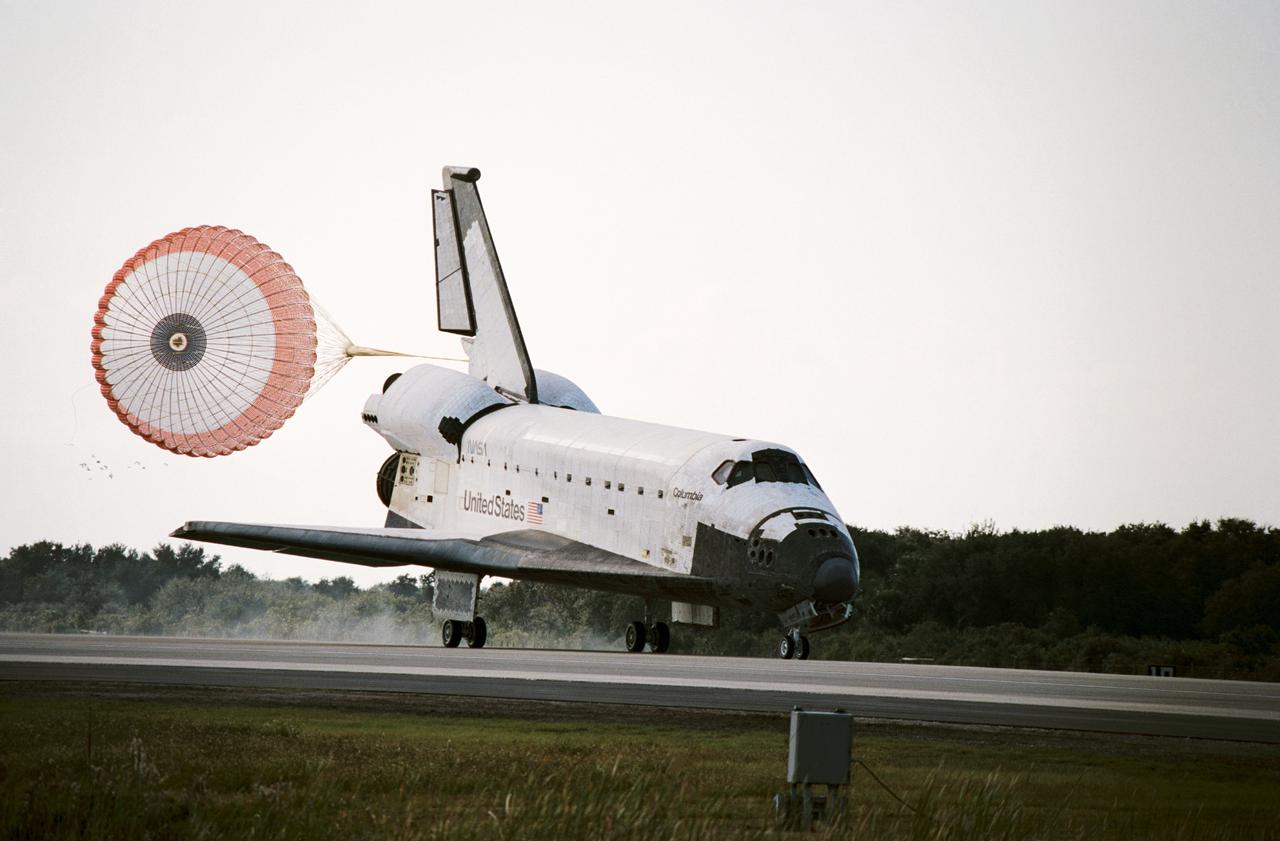
STS052-S-099 (1 Nov. 1992) --- This three-quarter front view shows the Space Shuttle Columbia just after deployment of the drag chute during landing at KSC's Shuttle Landing Facility. Onboard were a crew of five NASA astronauts and a Canadian payload specialist. Landing occurred at 9:05:53 a.m. (EST), November 1, 1992. Crewmembers are astronauts James D. Wetherbee, Michael A. Baker, Tamara E. Jernigan, Charles L. (Lacy) Veach and William M. Shepherd along with payload specialist Steven G. MacLean. The photo was taken with a 35mm camera.
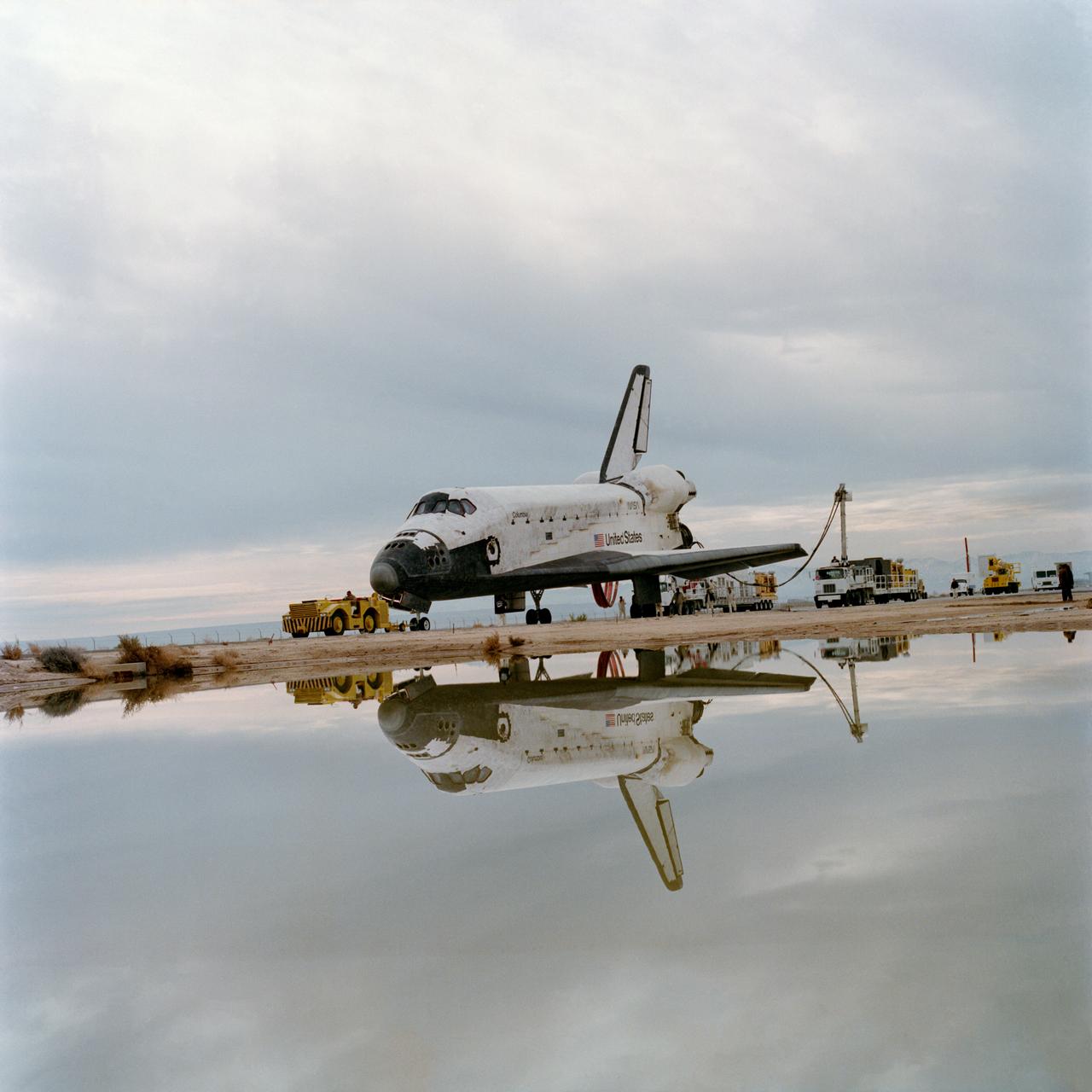
S82-39888 (16 Nov. 1982) --- Post-landing processing of the space shuttle Columbia is seen in double in this rare scene at the Dryden Flight Research Facility (DFRF) in southern California. Uncommon rainwater has given a mirror effect to the normally dry lakebed. Columbia, with its first four-member crew aboard, touched down earlier today to complete a successful five-day, two-hour mission. The runway used was Number 22 at Edwards Air Force Base. Photo credit: NASA
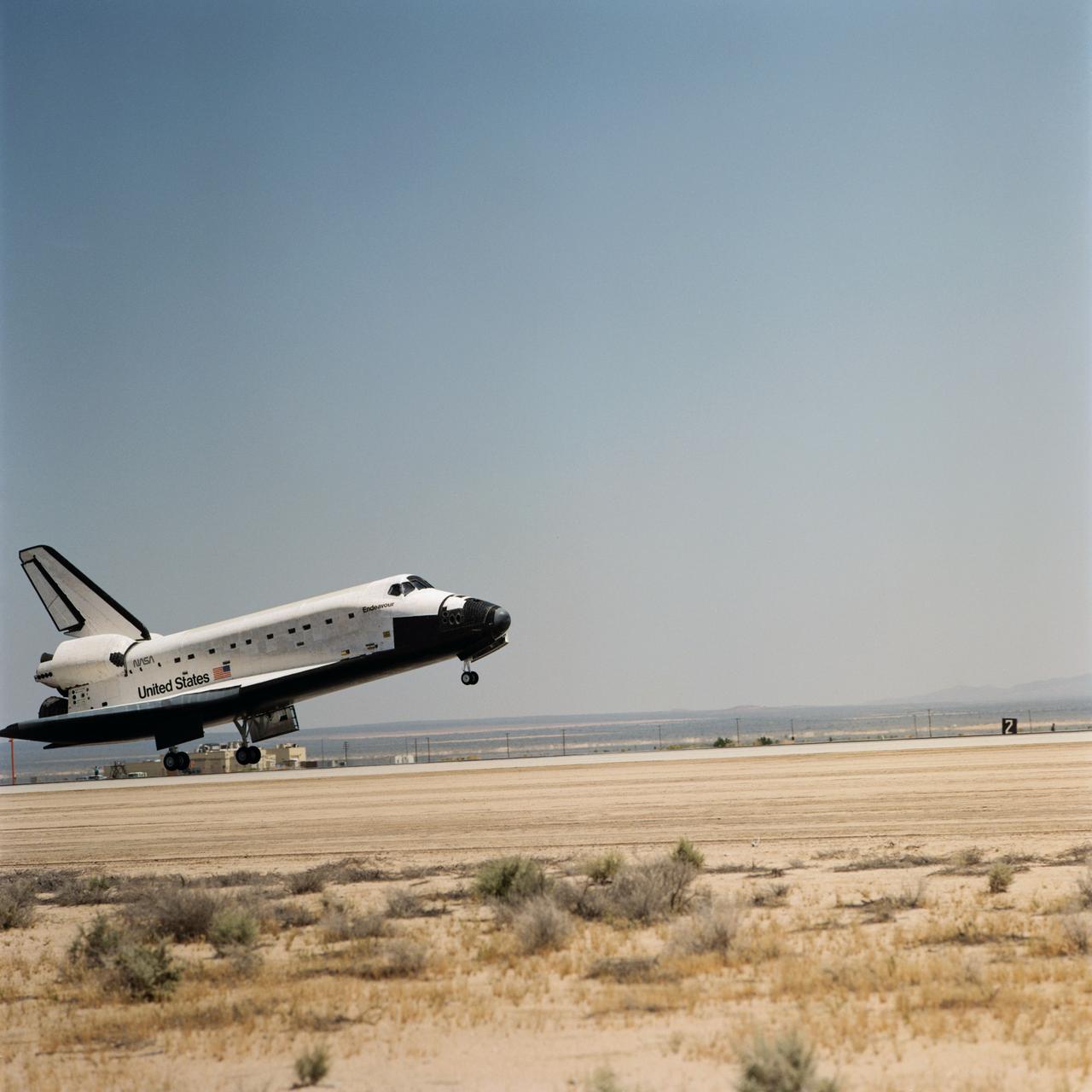
STS049-S-325 (16 May 1992) --- The main landing gear of Endeavour is just about to touch down at Edwards Air Force Base to draw to an end NASA's nine-day STS-49 mission. Crewmembers onboard were astronauts Daniel C. Brandenstein, mission commander; Kevin P. Chilton, pilot; and Thomas D. Akers, Richard J. Hieb, Bruce E. Melnick, Kathryn C. Thornton and Pierre J. Thout, all mission specialists. Landing occurred at 1:36:38 p.m. (PDT), May 16, 1992.
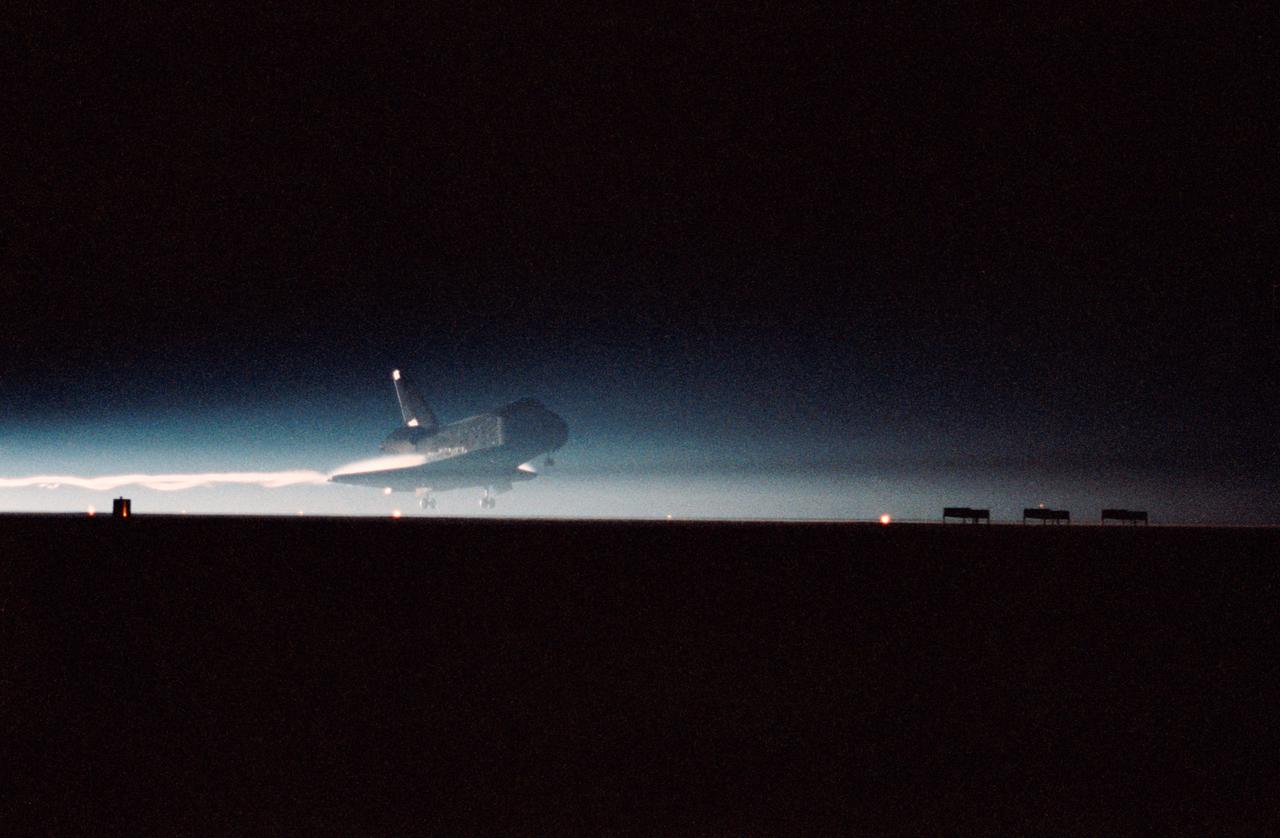
STS-32 Columbia, Orbiter Vehicle (OV) 102, is captured as its main landing gear (MLG) touches down on runway 22 at Edwards Air Force Base (EAFB), California, in the early morning darkness. The night landing ended a record 11-day mission in space. Moments later, at 1:36:38 am Pacific Standard Time (PST), OV-102 came to a complete stop, having logged 4,509,972 miles in flight.
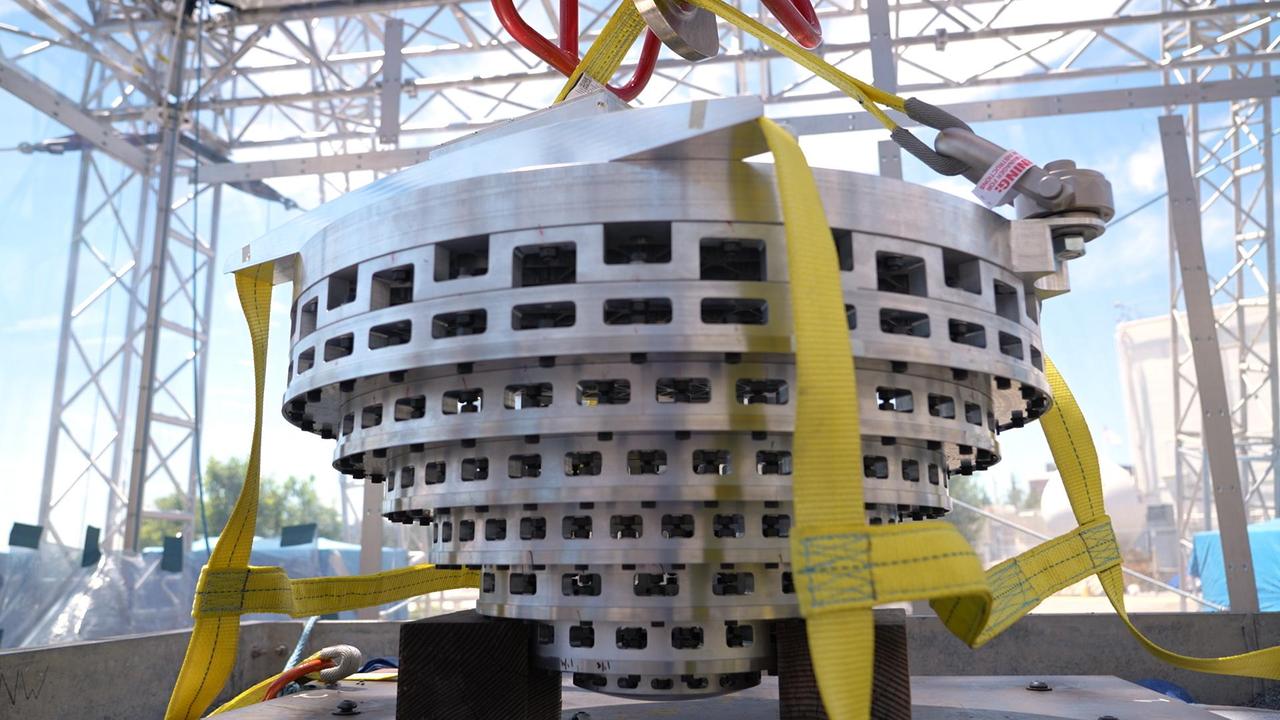
This prototype of a collapsible Mars lander base is part of SHIELD (Simplified High Impact Energy Landing Device), a project aimed at developing spacecraft that would intentionally crash land on the Red Planet, using an accordion-like, collapsible base that acts like the crumple zone of a car to absorb the energy of a hard impact. The design could drastically reduce the cost of landing on Mars by simplifying the harrowing entry, descent, and landing process and expanding options for possible landing sites. Developed at NASA's Jet Propulsion Laboratory in Southern California, the prototype was attached to a drop tower on Aug. 12, 2022, at JPL. https://photojournal.jpl.nasa.gov/catalog/PIA25420
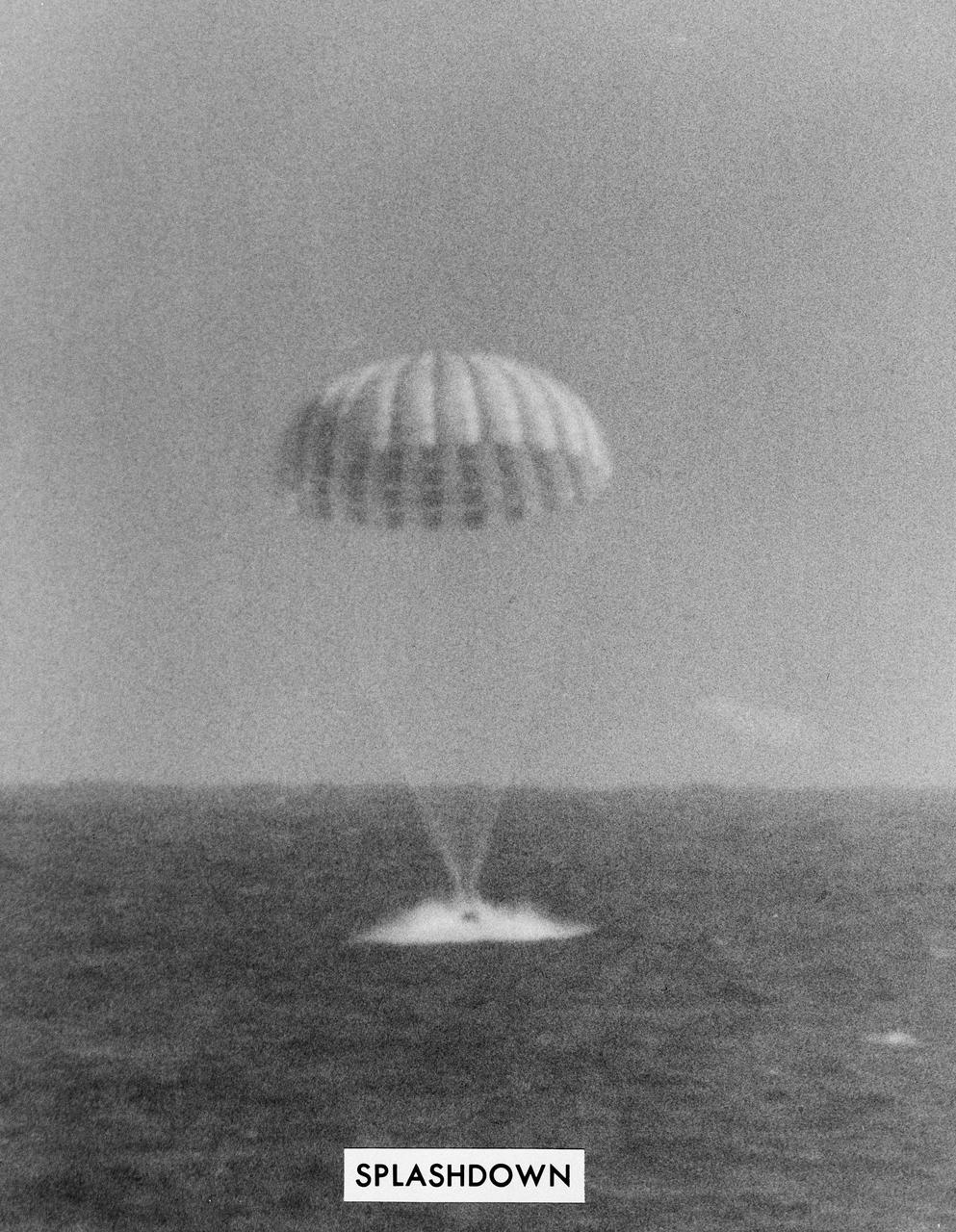
S63-00693 (3 Oct. 1962) --- Landing with parachute extended of astronaut Walter M. Schirra's Mercury-Atlas 8 (MA-8) capsule, called the Sigma 7, after a world orbital flight. Photo is labeled "Splashdown". Photo credit: NASA
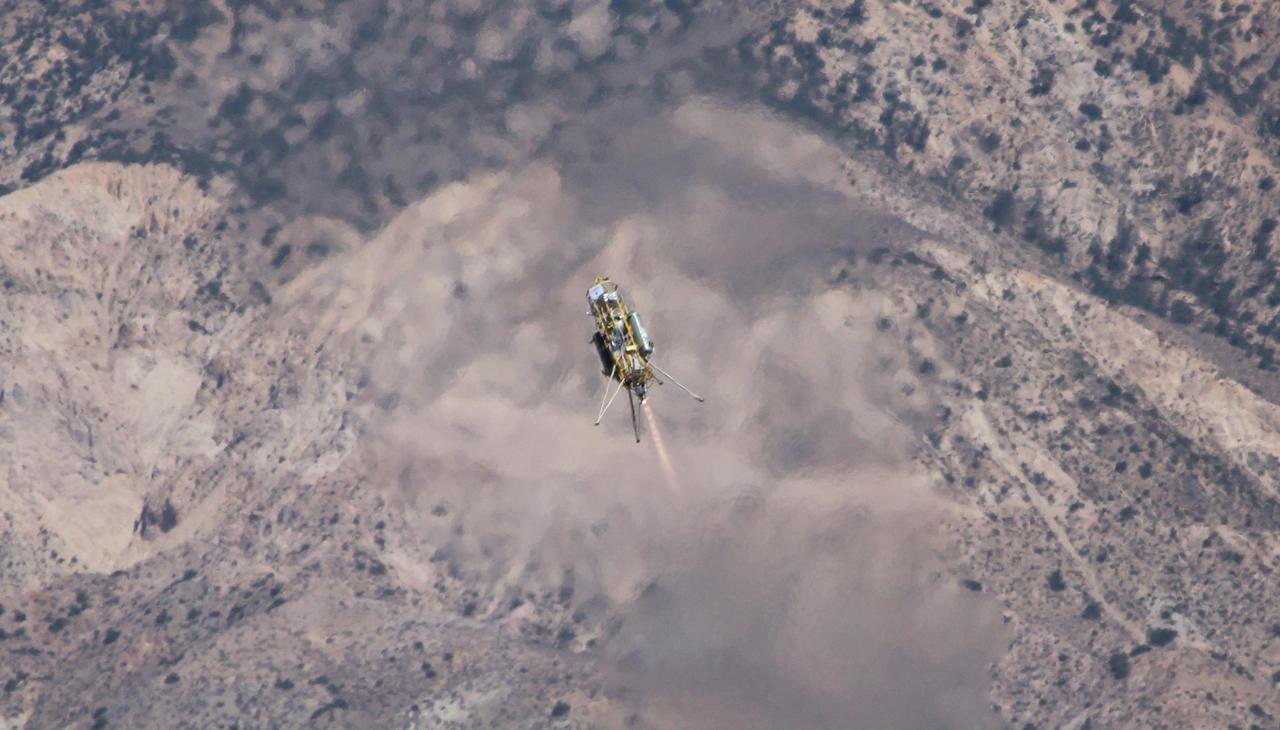
A Xombie technology demonstrator from Masten Space Systems, Mojave, Calif., ascends from its pad at Mojave Air and Space Port on a test for NASA Jet Propulsion Laboratory. The vehicle is a vertical-takeoff, vertical-landing experimental rocket.
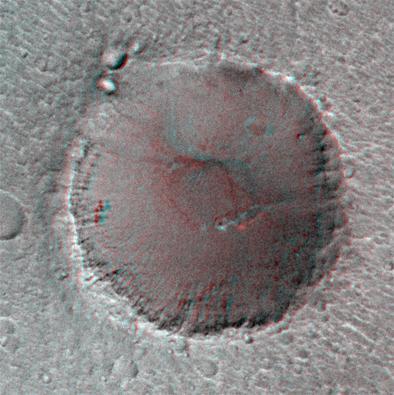
On its 256th orbit of Mars, the camera on-board NASA Mars Global Surveyor spacecraft successfully observed the vicinity of the Mars Pathfinder landing site. 3D glasses are necessary to identify surface detail.
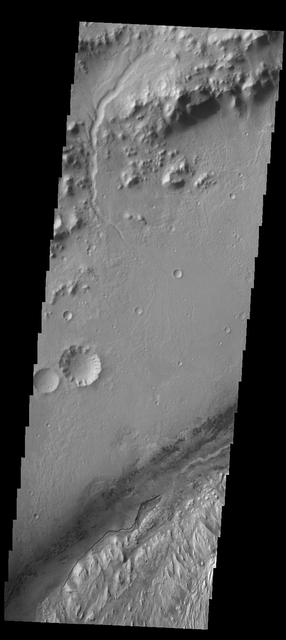
This image from NASA 2001 Mars Odyssey spacecraft shows the northwestern floor and rim of Gale crater. A channel dissects the rim, and the edge of the central mound is visible in the bottom right corner. This is the landing site of NASA rover, Curiosi
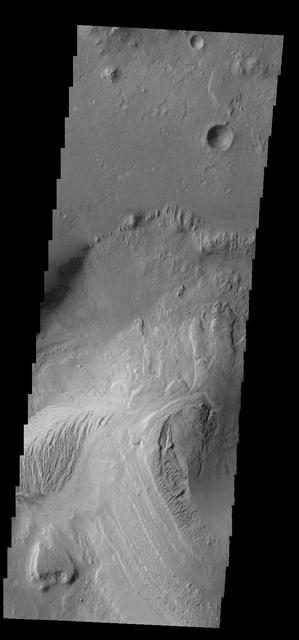
Gale Crater contains a large layered deposit, part of which is shown in this image captured by NASA 2001 Mars Odyssey spacecraft. This deposit is the target of the Curiosity Lander due to land in early August 2012.
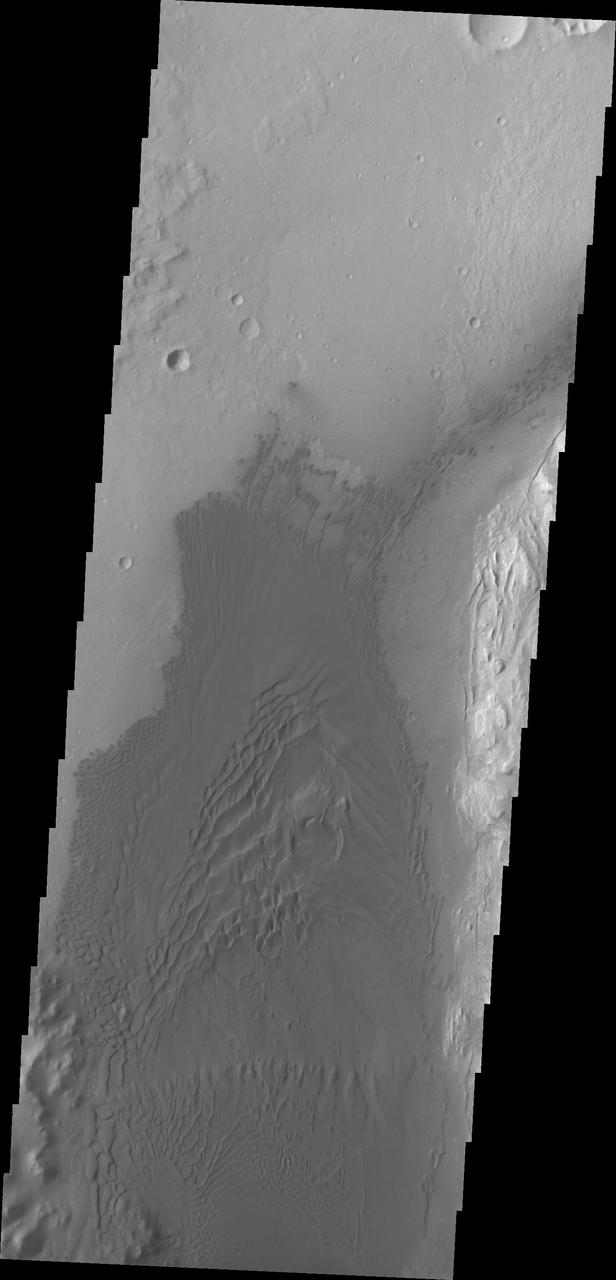
This image captured by NASA 2001 Mars Odyssey spacecraft of the western floor of Gale Crater shows the large region of sand and sand dunes present southwest of the landing site.
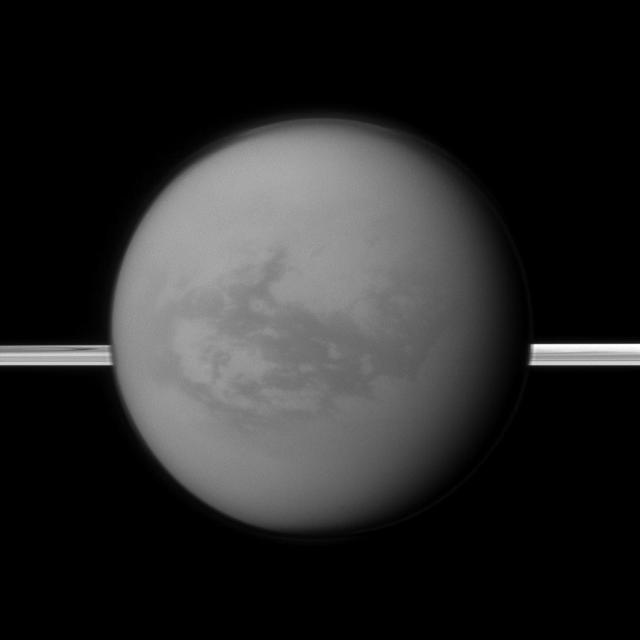
Saturn rings lie in the distance as NASA Cassini spacecraft looks toward Titan and its dark region called Shangri-La, east of the landing site of the Huygens Probe.
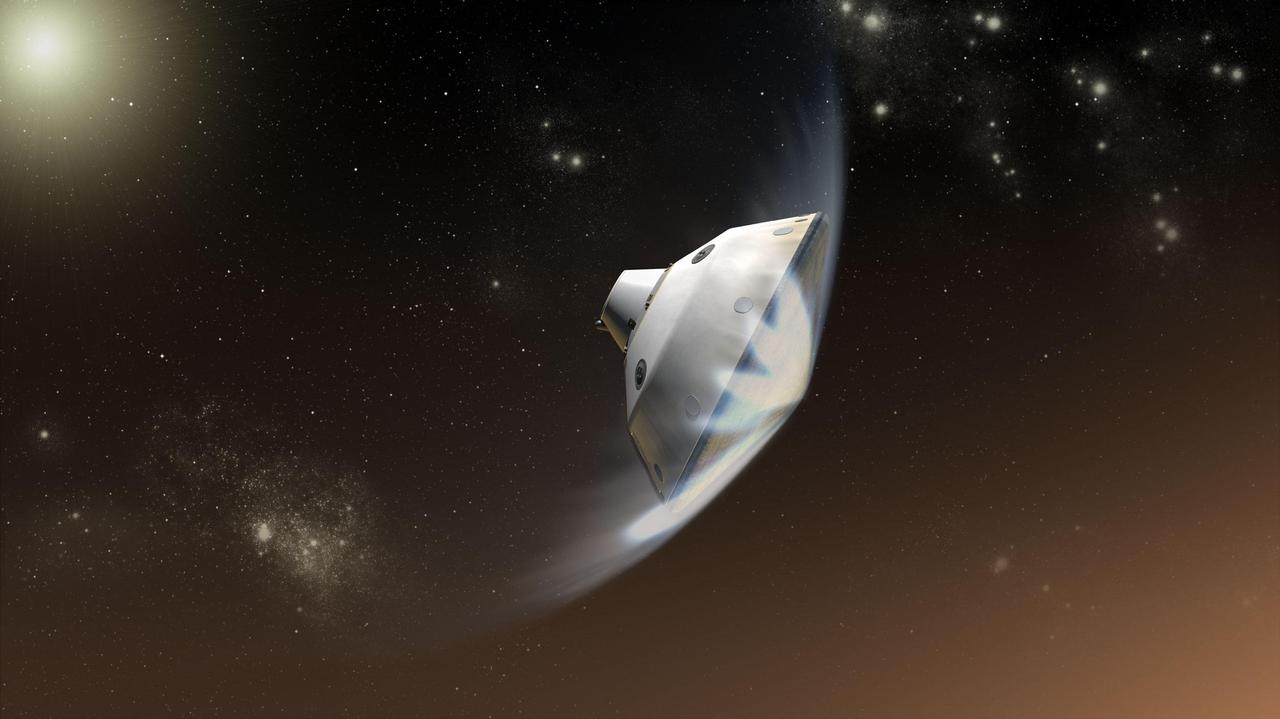
This artist concept depicts the interaction of NASA Mars Science Laboratory spacecraft with the upper atmosphere of Mars during the entry, descent and landing of the Curiosity rover onto the Martian surface.
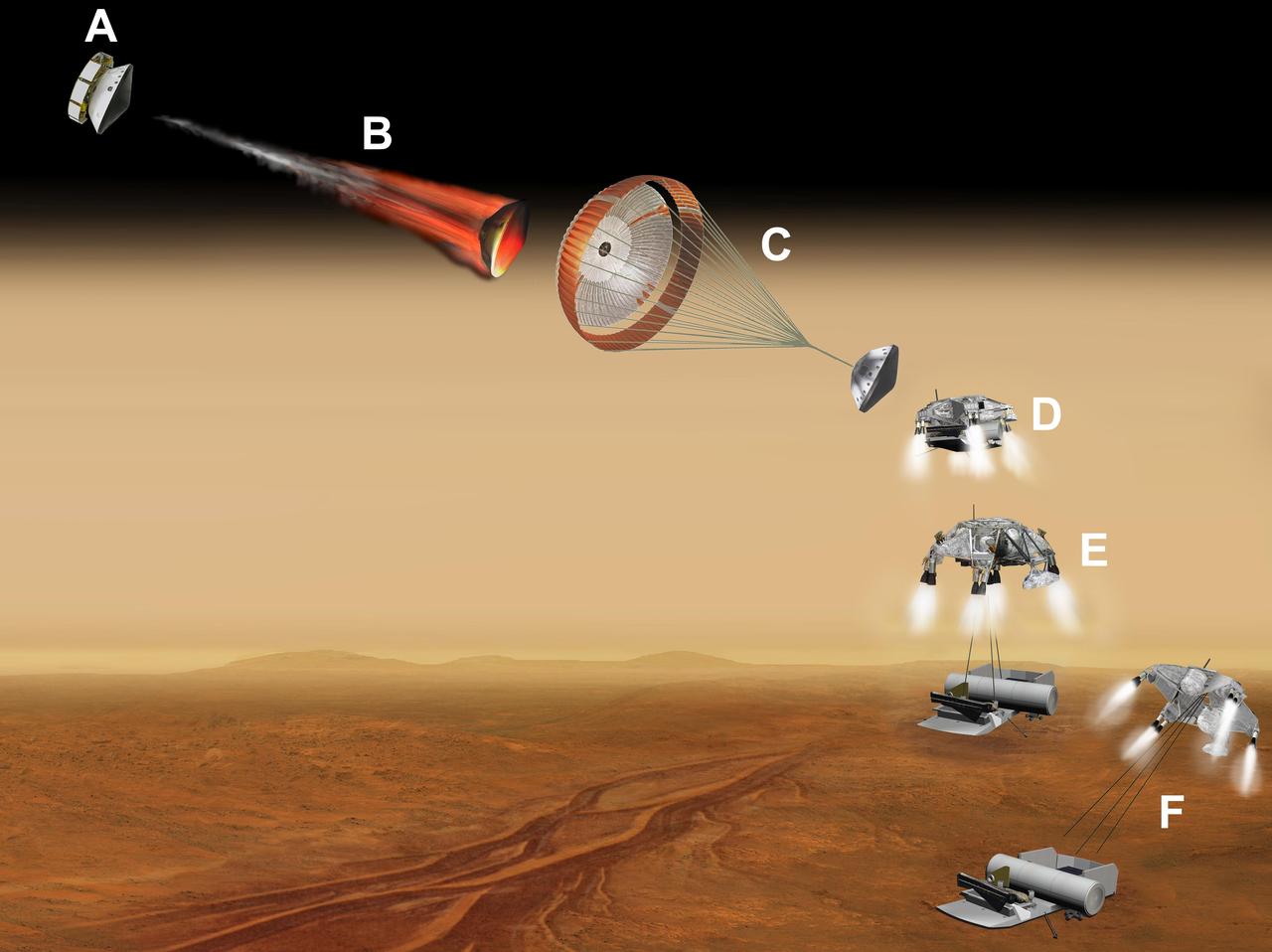
This artist concept of a proposed NASA and European Space Agency collaboration on proposals for a Mars sample return mission portrays a series of six steps A through F in the spacecraft landing on Mars.
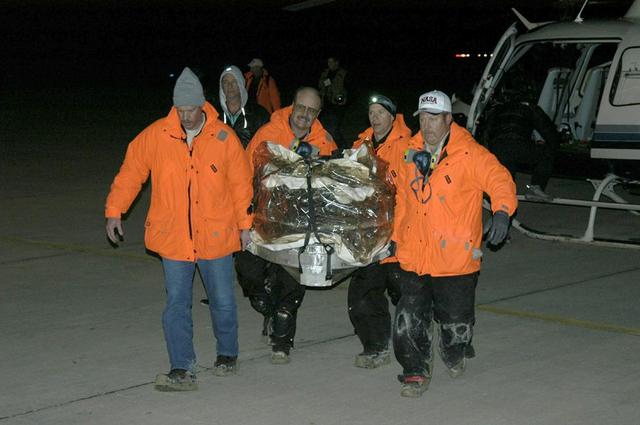
This image shows the return capsule inside a protective covering. The capsule, which landed at 2:10 a.m. Pacific time 3:10 a.m. Mountain time, contains cometary and interstellar samples gathered by NASA Stardust spacecraft.
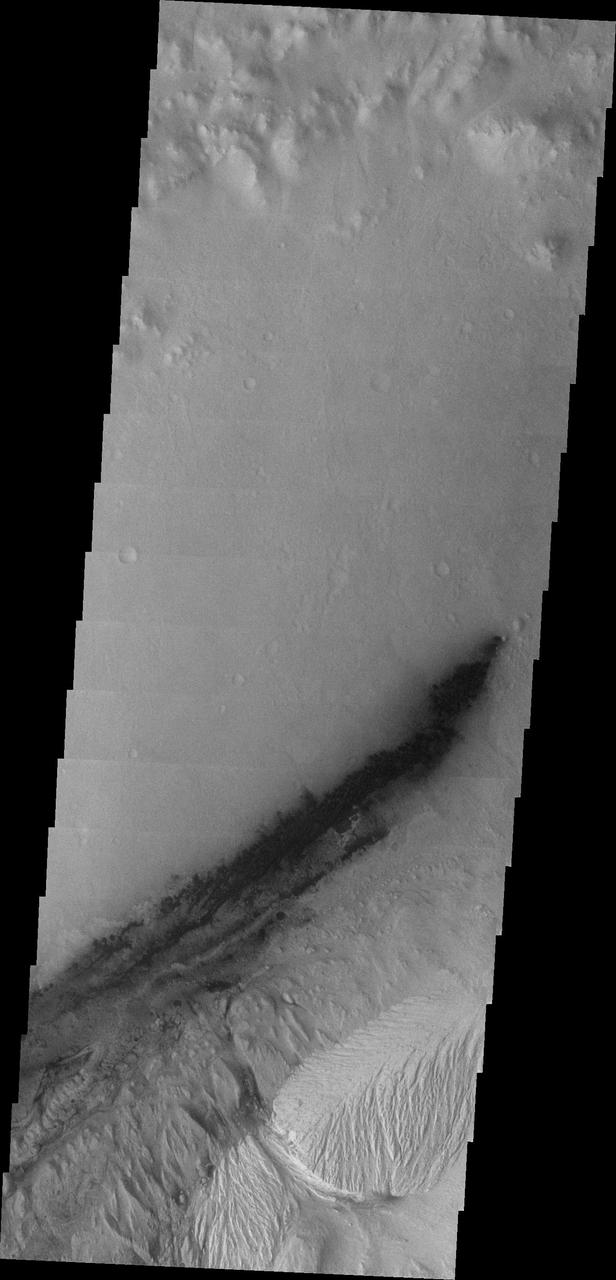
This image captured by NASA 2001 Mars Odyssey spacecraft shows Gale Crater, which contains the landing site of the Mars rover, Curiosity; the rover will have to navigate sand dunes to get to Mt. Sharp.
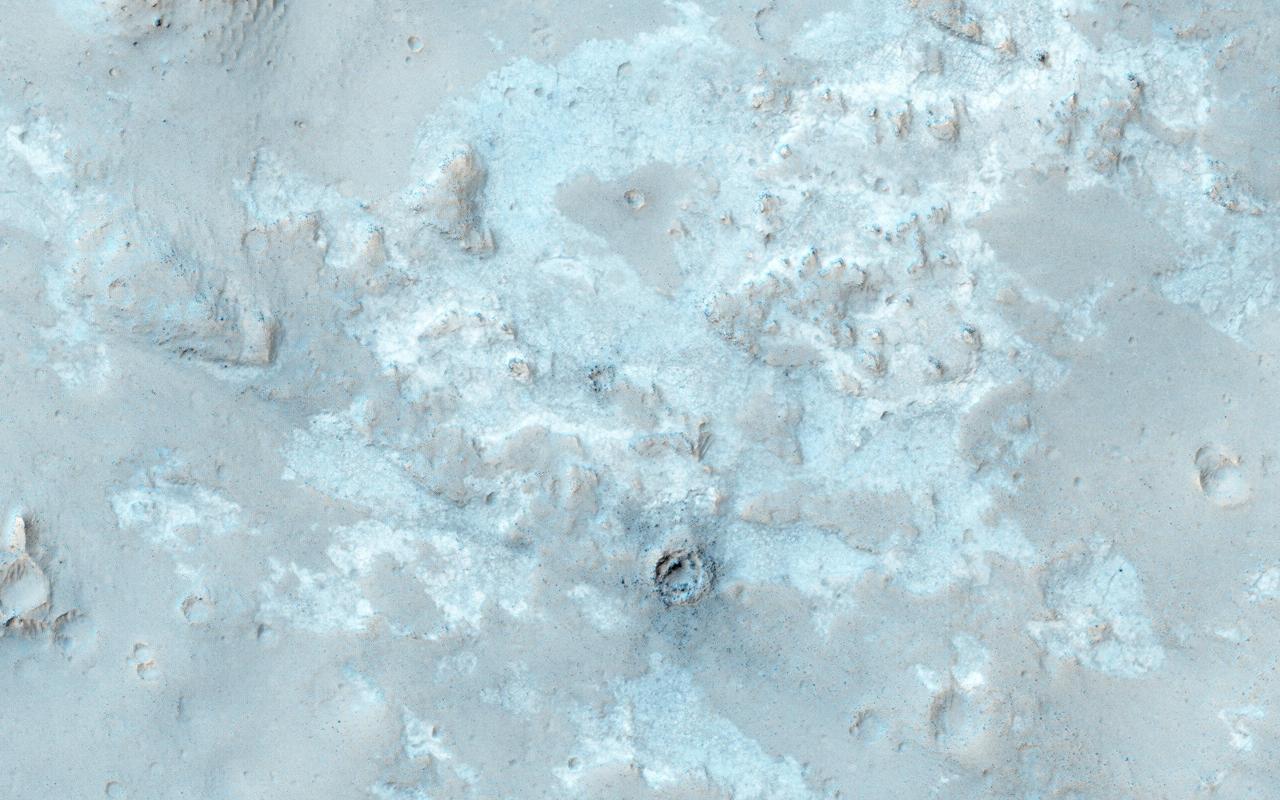
West of NASA Curiosity landing site, this image from NASA Mars Reconnaissance Orbiter spacecraft along the northwestern floor of Gale Crater is between Aeolis Mons informally called Mt. Sharp and the crater rim.

This image of the river-delineated border between western Brazil Acre province, and northwestern Bolivia Pando Department, demarcates a remarkable difference in land use and development practices as seen by NASA Terra spacecraft.

This image captured by NASA 2001 Mars Odyssey spacecraft contains the landing site in the bottom right portion of the image, near the dark dunes. Note the channel that cuts through the crater rim on the left side of the image.

The Isthmus of Corinth has played a very important role in the history of Greece. It is the only land bridge between the country north Attica and south Peloponnese. This image was acquired by NASA Terra spacecraft.
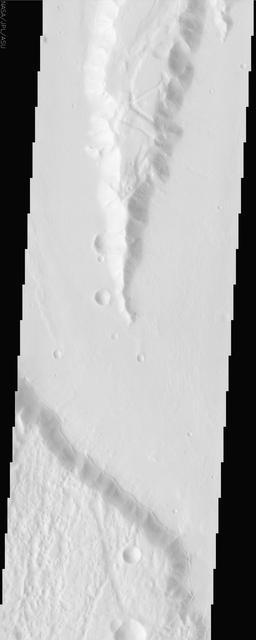
This image by NASA Mars Odyssey spacecraft is within a region called Lunae Planum, west of NASA Viking 1 landing site, that marks the transition between the Tharsis rise, a giant volcanic complex, and the northern lowland plains.
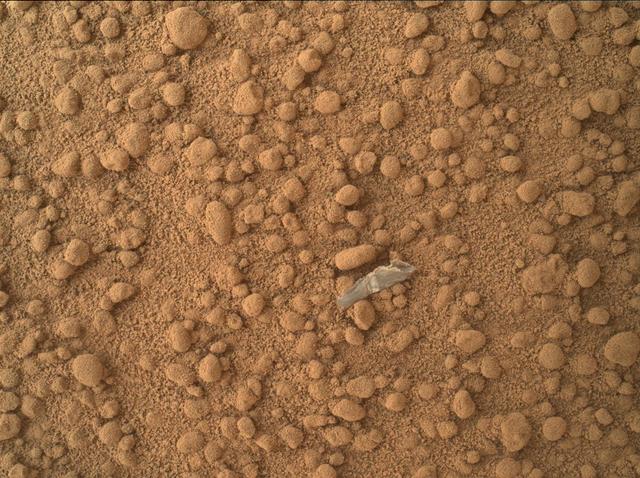
This image from NASA Mars rover Curiosity shows a small bright object on the ground beside the rover at the Rocknest site. The rover team has assessed this object as debris from the spacecraft, possibly from the events of landing on Mars.

This image from NASA Terra spacecraft shows the Kerguelen Islands also known as the Desolation Islands, which are part of the French Southern and Antarctic lands. The islands are among the most isolated places on Earth.

Acquired by NASA Terra spacecraft, this image shows the west coast of Greenland, one of Earth premiere incubators for icebergs -- large blocks of land ice that break off from glaciers or ice shelves and float in the ocean.

This chart plots the minimum daily atmospheric temperature measured by NASA Phoenix Mars Lander spacecraft since landing on Mars. As the temperature increased through the summer season, the atmospheric humidity also increased.

This image from NASA Terra spacecraft is of Franz Josef Land, an archipelago in the far north of Russia. It consists of 191 islands covering an area of about 200 by 325 km, and has no native inhabitants.
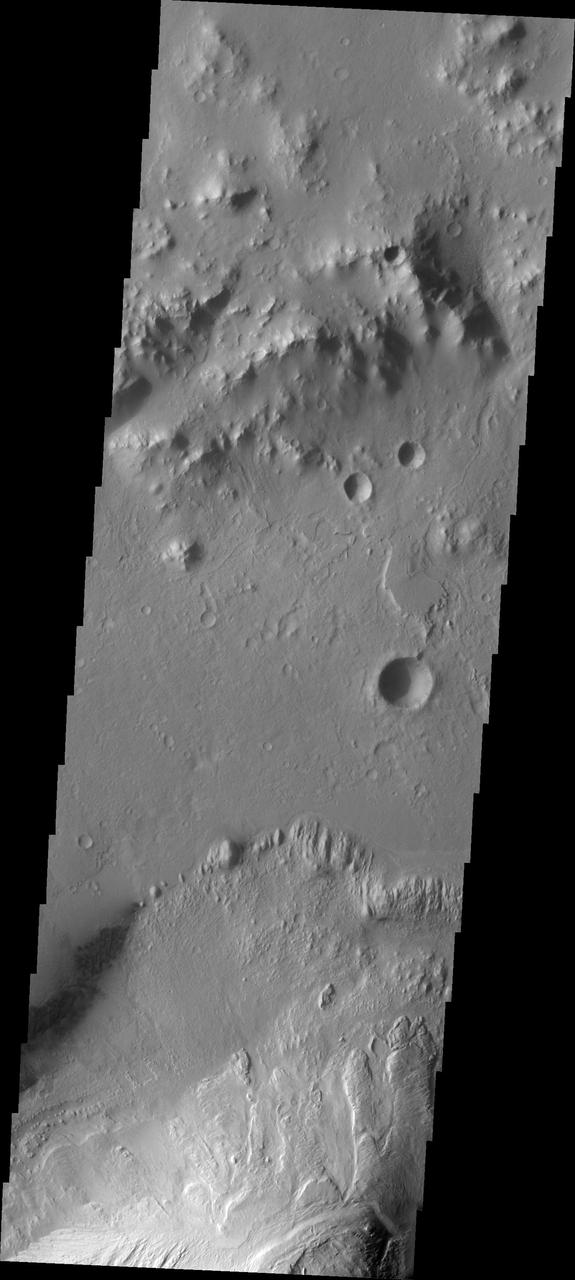
This image from NASA Mars Odyssey spacecraft shows Gale crater, which is east of the landing site. It shows the northern extent of the dunes, and the layers in Mt. Sharp are visible at the bottom of the image.
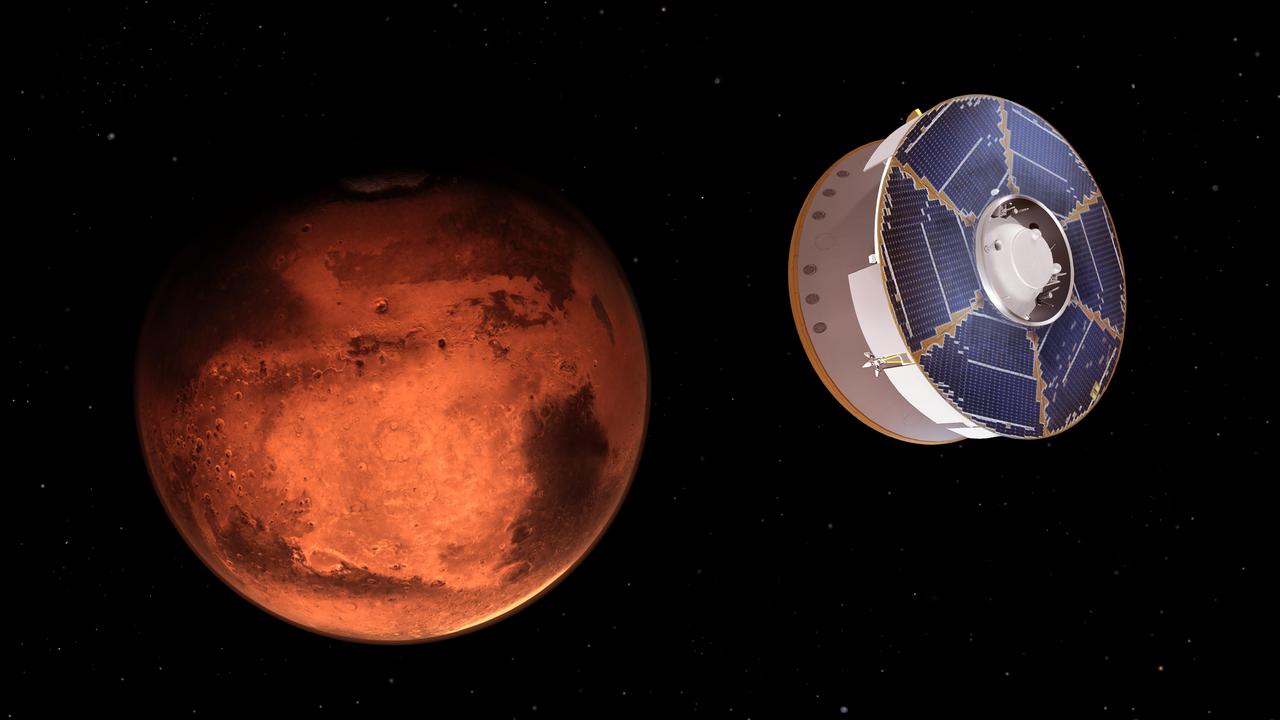
This illustration shows NASA's Mars 2020 spacecraft carrying the Perseverance rover as it approaches Mars. Hundreds of critical events must execute perfectly and exactly on time for the rover to land on Mars safely on Feb. 18, 2021. Solar panels powering the spacecraft are visible on the cruise state at the top. The cruise stage is attached to the aeroshell, which encloses the rover and descent stage. Entry, Descent, and Landing, or "EDL," begins when the aeroshell reaches the top of the Martian atmosphere, traveling nearly 12,500 mph (20,000 kph). It ends about seven minutes later, with Perseverance stationary on the Martian surface. https://photojournal.jpl.nasa.gov/catalog/PIA24311
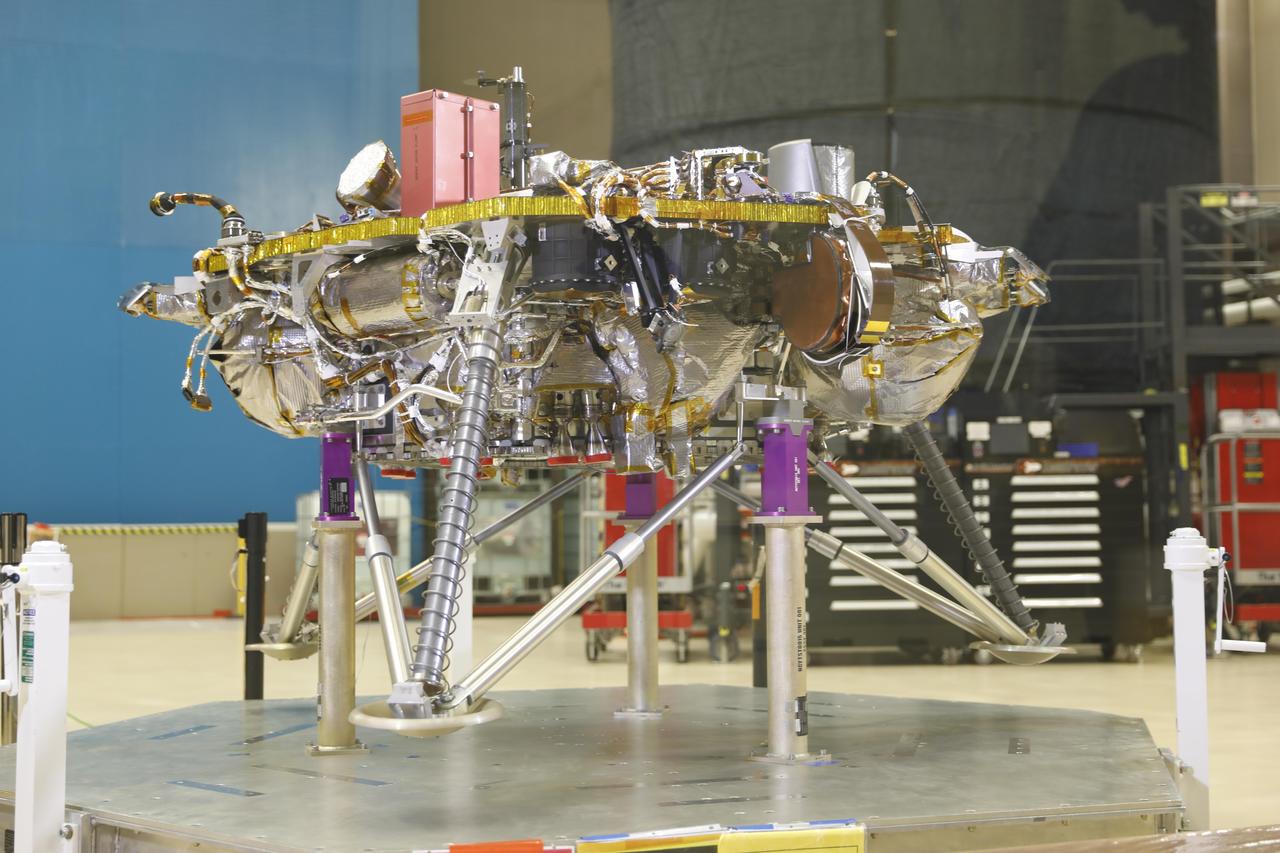
Once NASA's InSight Mars lander enters the Martian atmosphere and approaches the planet's surface, propulsive landing gear will slow the spacecraft down to about 5.5 mph (8.8 km/h) and safely set it down on the surface of the Red Planet. This image, taken at Lockheed Martin Space in Littleton, Colorado, shows several of the critical landing systems including the thrusters, lander legs and science deck. https://photojournal.jpl.nasa.gov/catalog/PIA22572
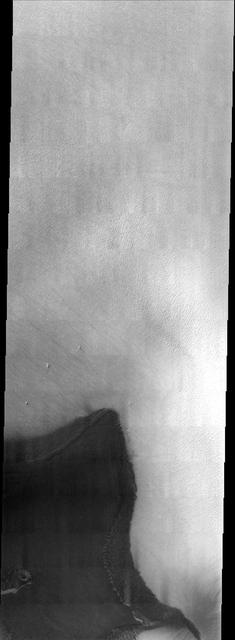
On December 3, 1999) Mars Polar Lander (MPL) was set to touchdown on the enigmatic layered terrain located near the South Pole. Unfortunately, communications with the spacecraft were lost and never regained. The Mars Program Independent Assessment Team concluded that this loss was most likely due to premature retrorocket shutdown resulting in the crash of the lander. The image primarily shows what appears to be a ridged surface with some small isolated hills. Historically, exploration has and will continue to be a very hard and risky endeavor and sometimes you lose. But the spirit of exploration and discovery has served mankind well throughout the ages and it has now driven us to the far reaches of space. Therefore, with this in mind the THEMIS Team today is releasing an image of the region where MPL was set to land in memory of this mission and the unquenchable spirit of exploration. It is hoped that in the near future we will once again attempt another landing in the Martian polar regions. http://photojournal.jpl.nasa.gov/catalog/PIA04016
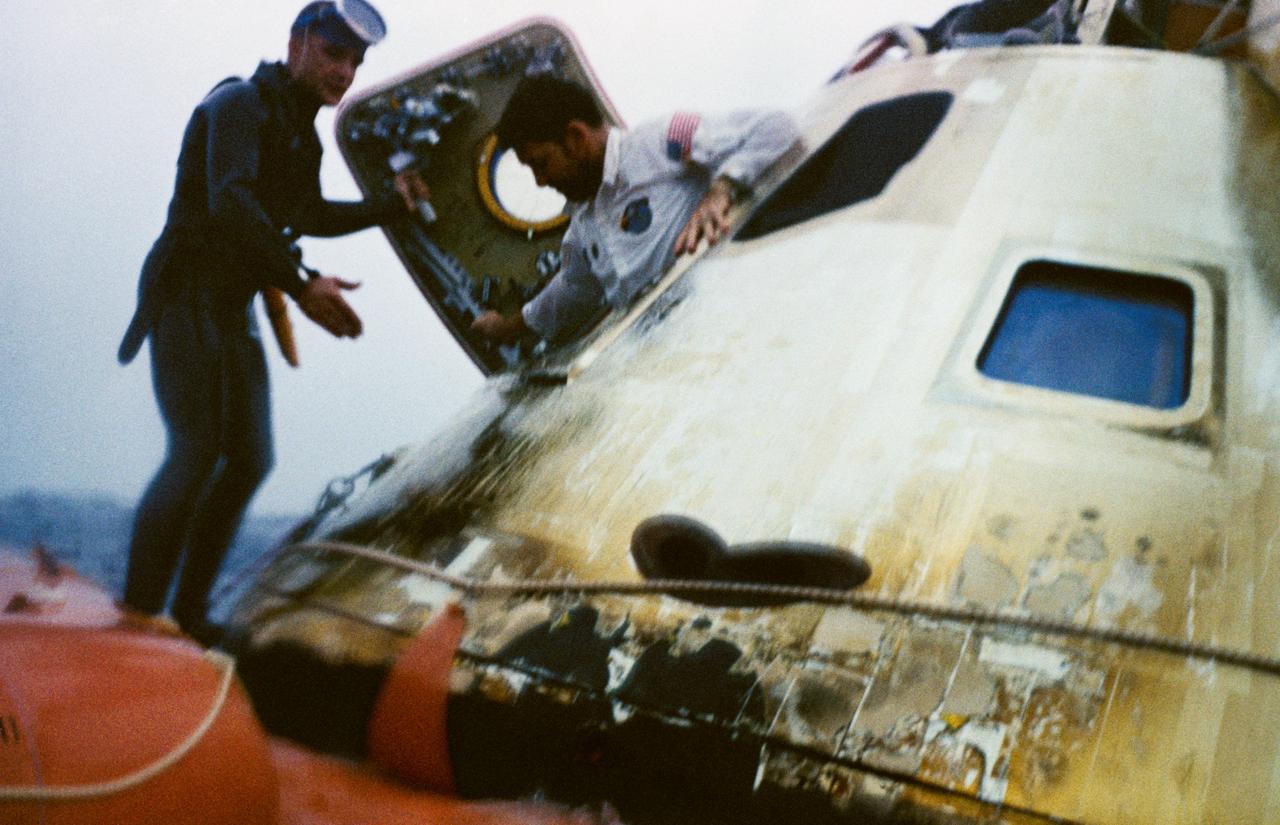
Astronaut Walter M. Schirra, Jr., Apollo 7 commander, egresses the spacecraft during recovery operations in the Atlantic. He is assisted by a member of the U.S. Navy frogman team. The Apollo 7 spacecraft splashed down at 7:11 a.m., October 22, 1968, approximately 200 nautical miles south-southwest of Bermuda.
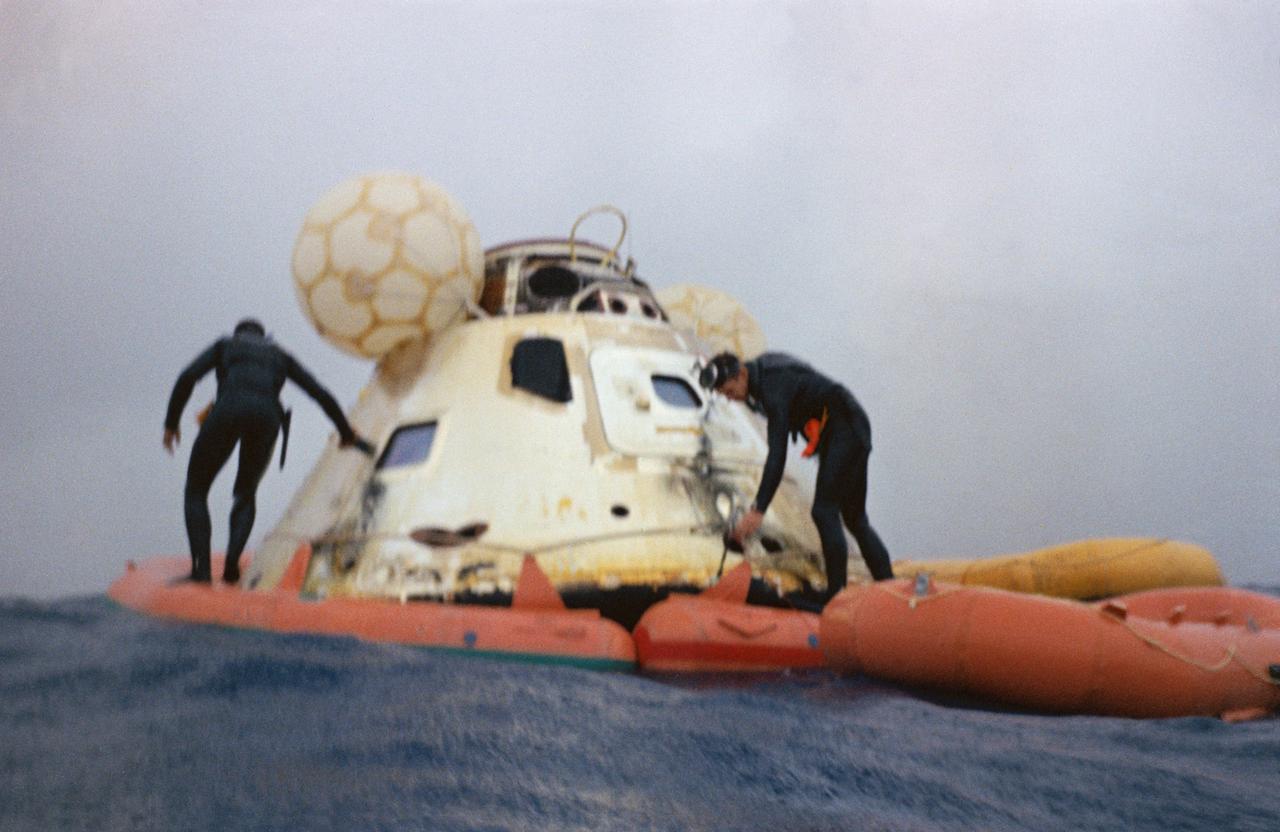
U.S. Navy frogmen attach a flotation collar to the Apollo 7 command module during recovery operations in the Atlantic. The Apollo 7 spacecraft splashed down at 7:11 a.m., October 22, 1968, approximately 200 nautical miles south-southwest of Bermuda.
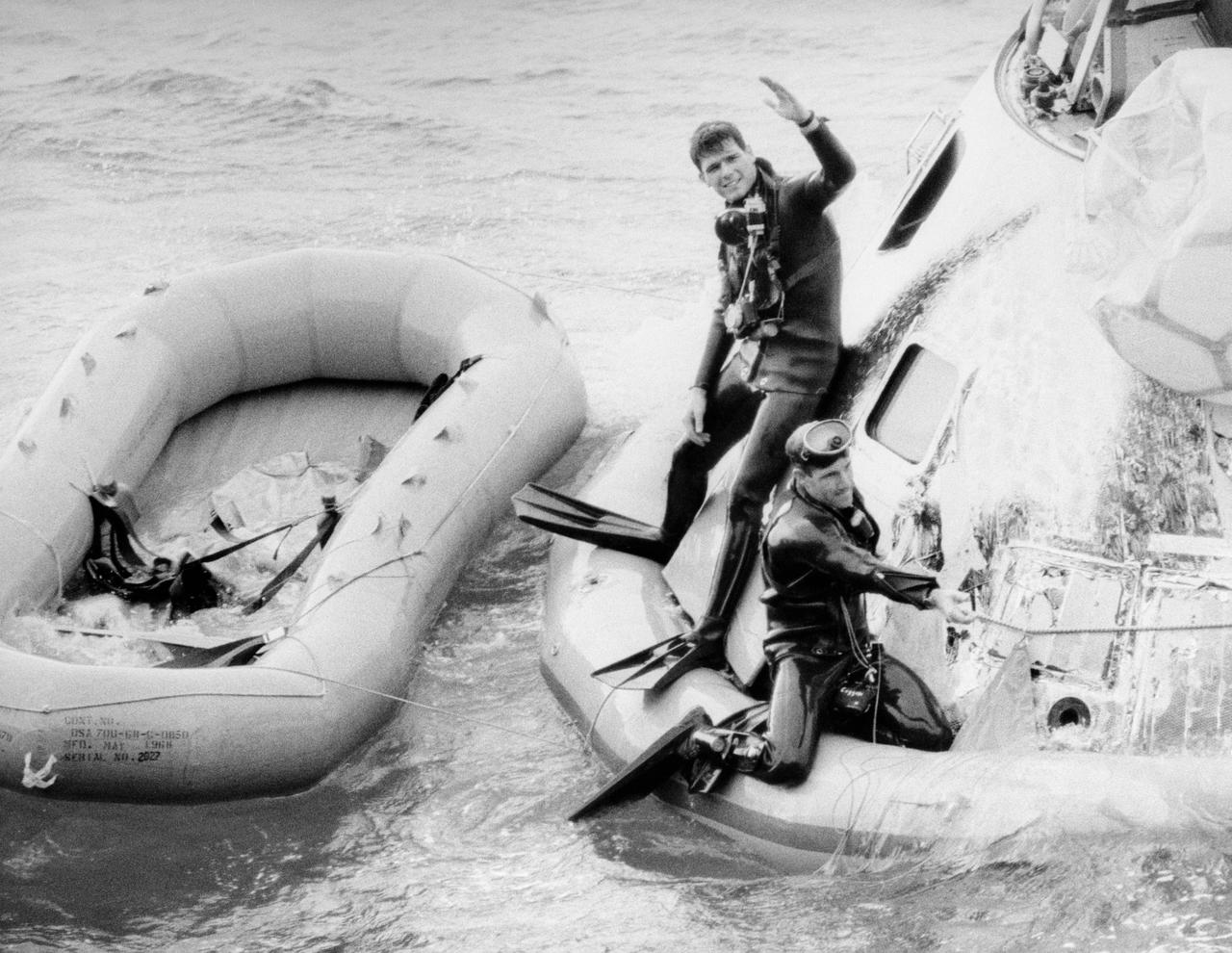
S69-15732 (27 Dec. 1968) --- A U.S. Navy frogman team participates in the Apollo 8 recovery operations. The Apollo crew, astronauts Frank Borman, James A. Lovell Jr., and William A. Anders, were recovered by helicopter and flown to the deck of the USS Yorktown, prime recovery ship for the historic Apollo 8 lunar orbit mission. Apollo 8 splashed down at 10:51 a.m. (EST), Dec. 27, 1968, about 1,000 miles south-southwest of Hawaii.
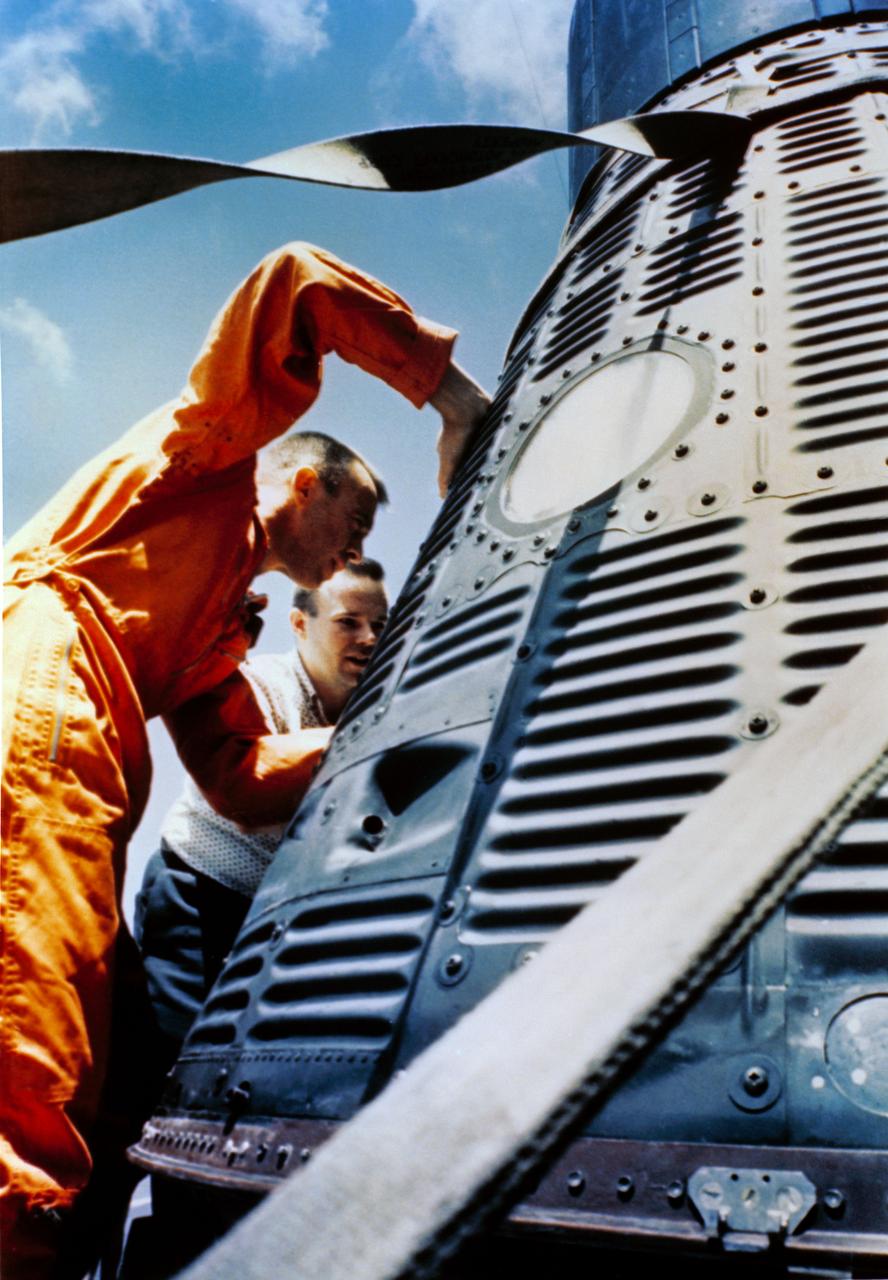
S88-31384 (5 May 1961) --- Astronaut Alan B. Shepard Jr., Mercury-Redstone 3 (MR-3) pilot, is pictured near his Freedom 7 capsule during a postflight inspection aboard the U.S. Navy Carrier Champlain after the recovery of his Mercury vehicle. Earlier Shepard had completed the historical 15-minute suborbital Mercury-Redstone 3 mission, marking the U.S. inaugural manned space mission. (NASA Hq. No. 61-MR3-107 or MR3-44) Photo credit: NASA or National Aeronautics and Space Administration
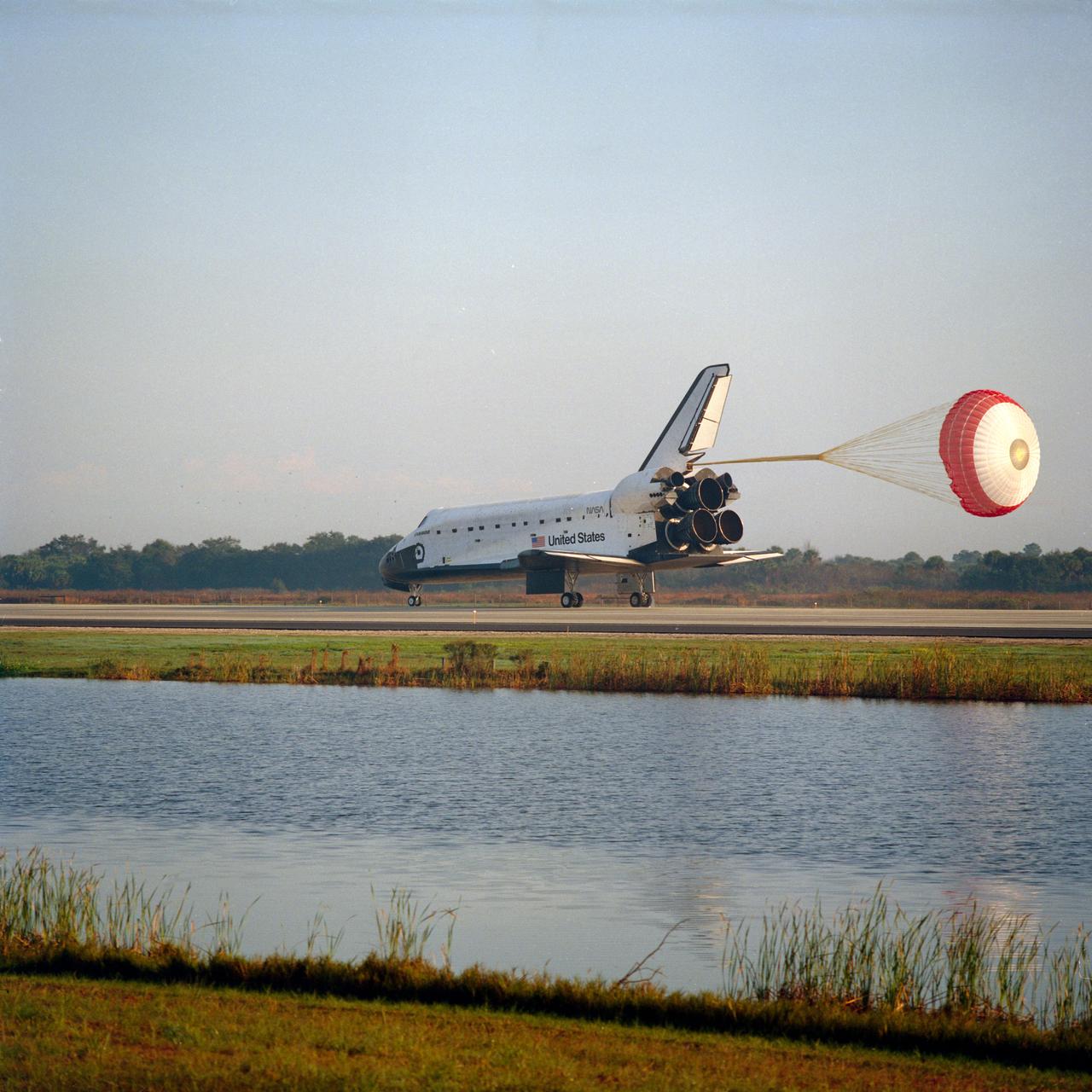
STS054-S-100 (19 Jan 1993) --- The drag chute is fully deployed as the Space Shuttle Endeavour rolls toward wheelstop at KSC's Shuttle landing facility. Landing occurred at 8:38 a.m. (EST), Jan. 19, 1993. Onboard for the six-day mission were astronauts John H. Casper, mission commander, Donald R. McMonagle, pilot, Gregory J. Harbaugh, Mario Runco Jr. and Susan J. Helms, mission specialists.
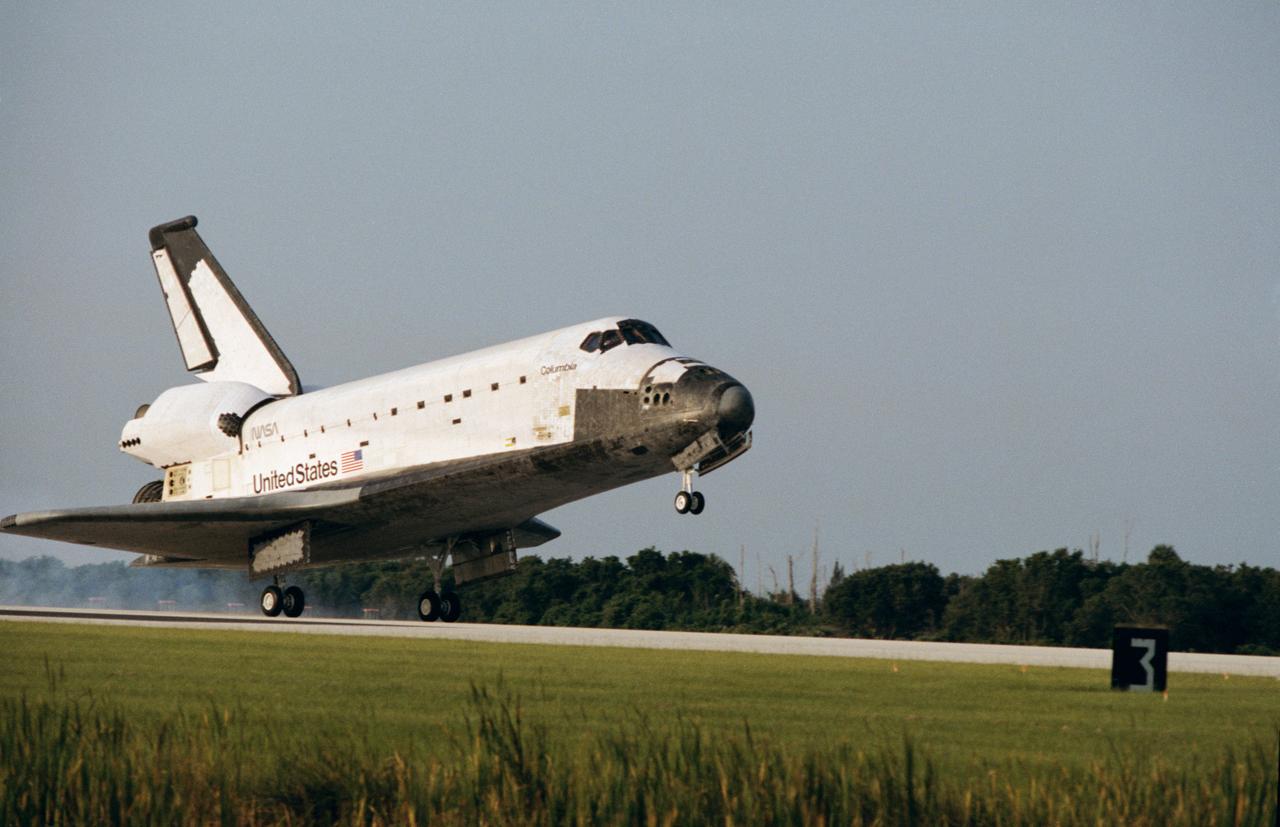
STS-50 Columbia's, Orbiter Vehicle (OV) 102's, main landing gear touches down on runway 33 at the Kennedy Space Center (KSC) Shuttle Landing Facility (SLF) producing a small cloud of dust. Landing occurred at 7:42 am (Eastern Daylight Time (EDT)). In this view of the OV-102's starboard side, the nose landing gear (NLG) continues to ride above the runway surface. Florida vegetation, a runway sign, and runway lights appear in the foreground.
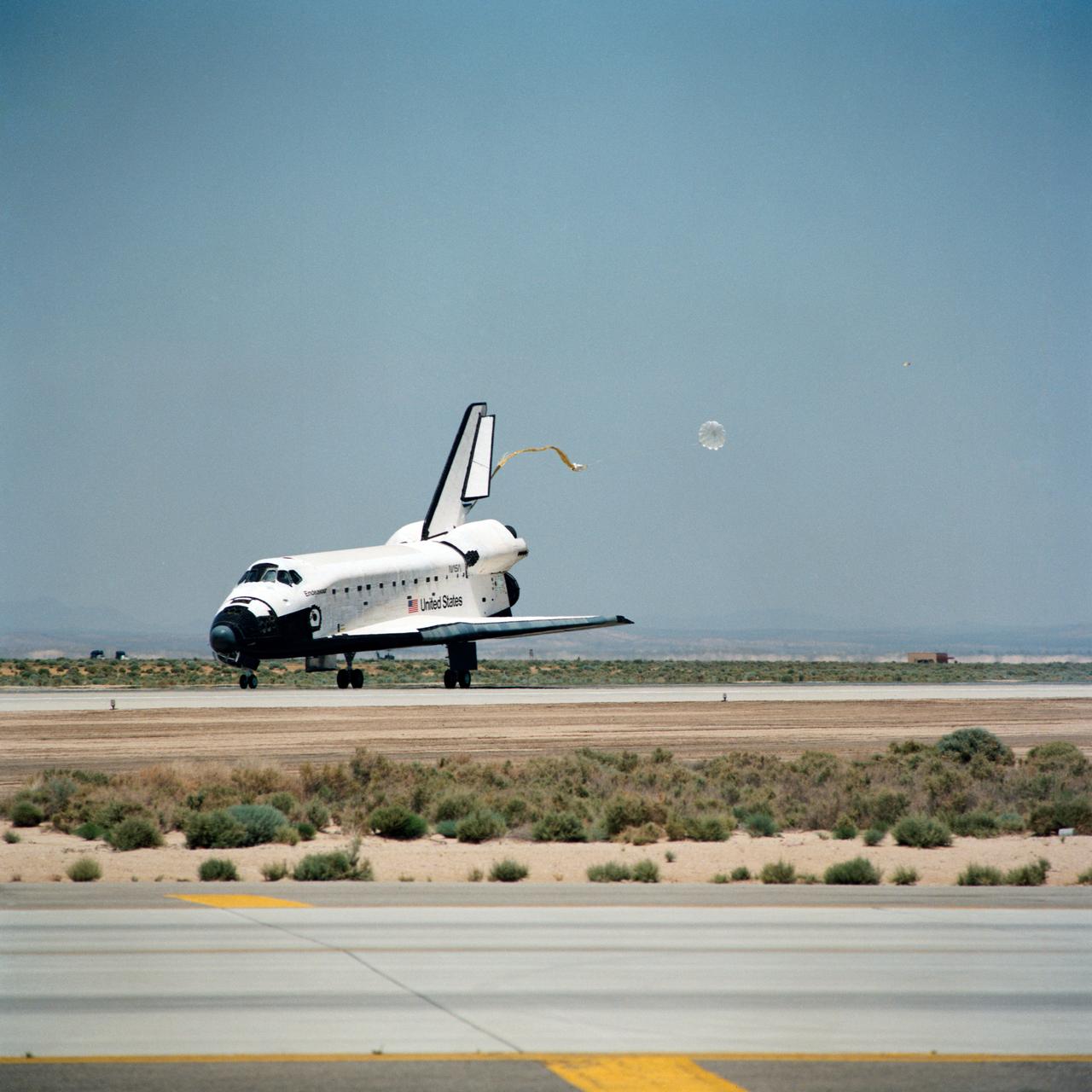
STS049-S-268 (16 May 1992) --- A three-quarter forward view of the Space Shuttle Endeavour making its first landing, following a successful nine-day mission in Earth orbit. The drogue chute precedes the main chute in NASA's first exercise of its detailed test objective (DTO-521) on the drag chute system. Main gear touchdown occurred at 1:57:38 p.m. (PDT), May 16, 1992.