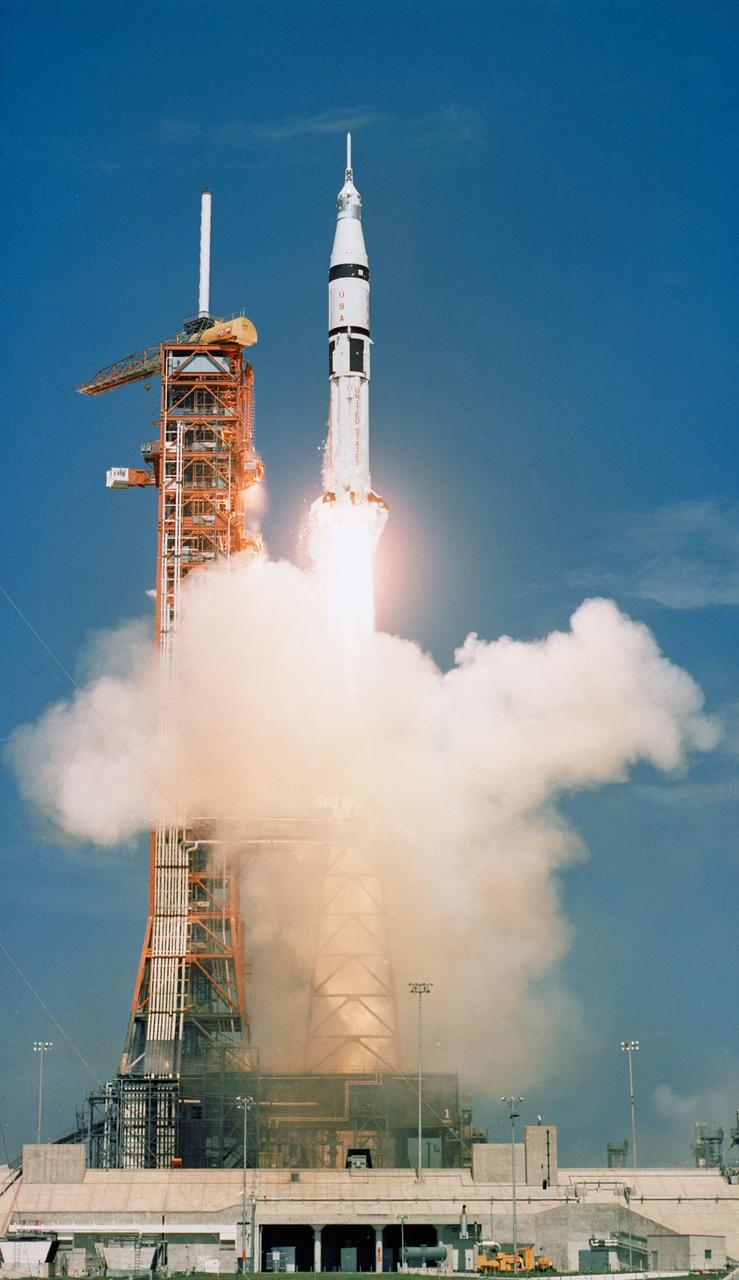
S75-28550 (15 July 1975) --- The Apollo-Soyuz Test Project's (ASTP) NASA Apollo/Saturn 1B space vehicle is launched from Pad B, Launch Complex 39, Kennedy Space Center (KSC), Florida, at 3:50 p.m. (EDT), July 15, 1975, to begin Apollo's catch-up journey toward the already Earth-orbiting Soviet Soyuz spacecraft. Aboard the Apollo spacecraft were astronauts Thomas P. Stafford, Vance D. Brand and Donald K. (Deke) Slayton.
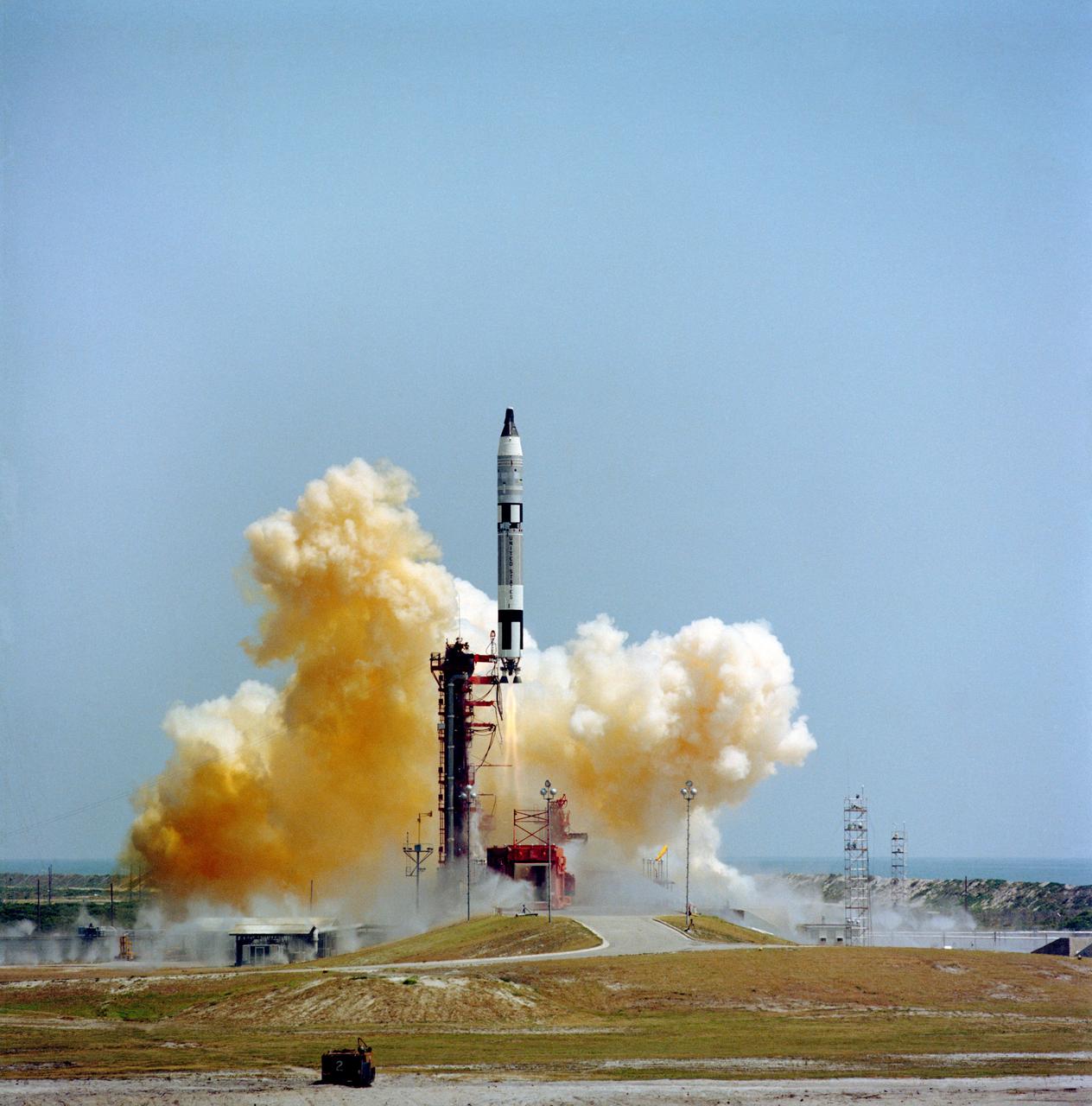
S65-29639 (3 June 1965) --- The Gemini-Titan 4 (GT-4) spaceflight launches from Cape Kennedy's Pad 19 at 10:16 a.m. (EST) on June 3, 1965. The GT-4 spacecraft carried astronauts James A. McDivitt, command pilot, and Edward H. White II, pilot, on a four-day, 62-revolution mission.

View of Astronaut Virgil I. Grissom through spacecraft window prior to launch of Gemini-Titan 3 mission.
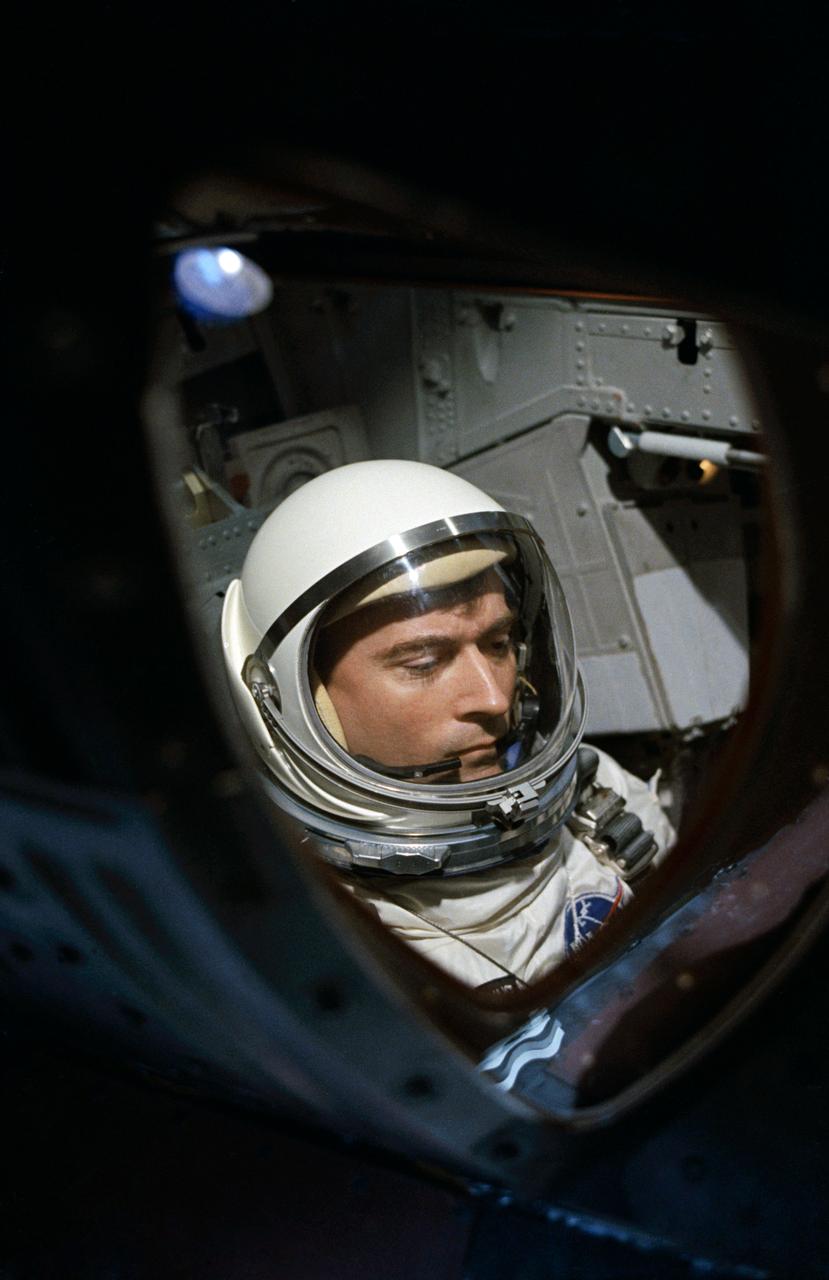
View of Astronaut John W. Young through spacecraft window prior to launch of Gemini-Titan 3 mission.
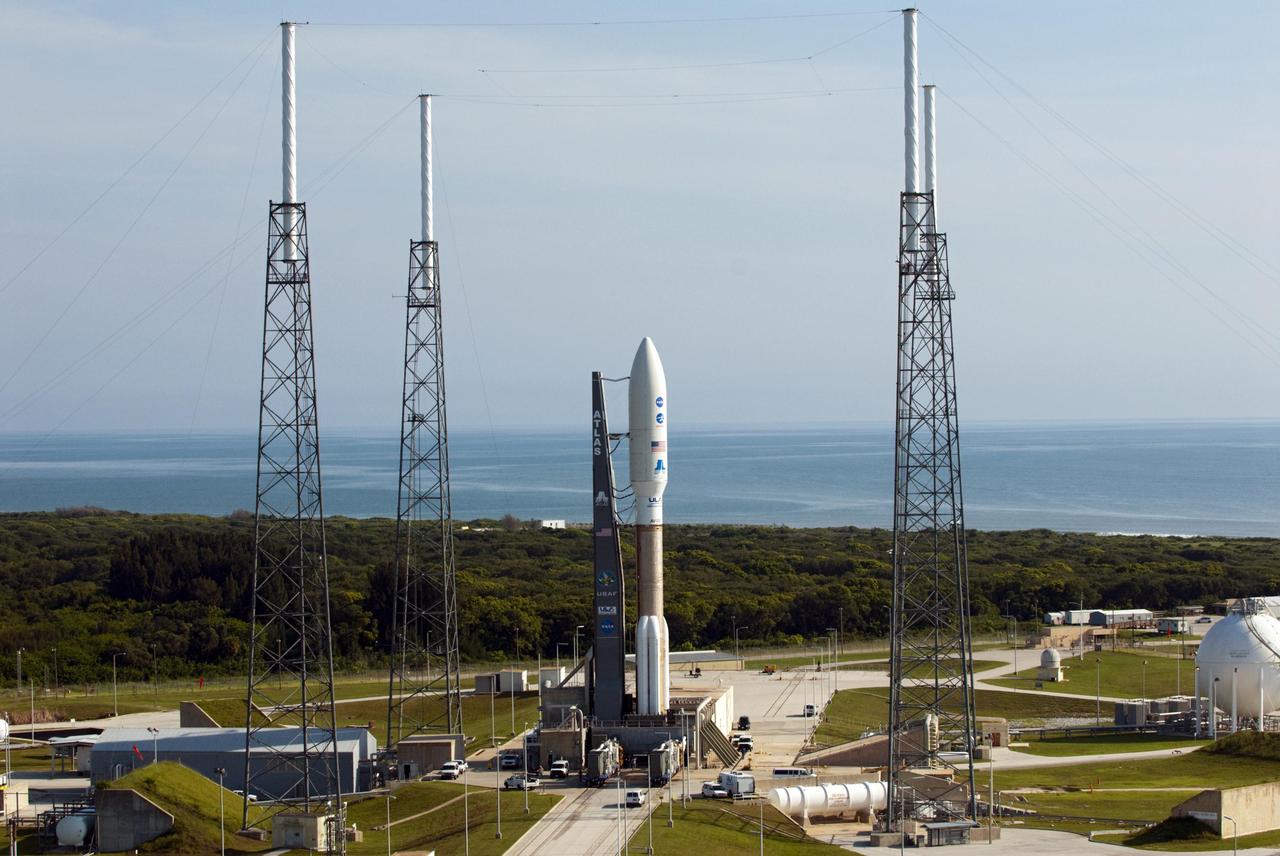
NASA Juno spacecraft awaits launch from inside the payload fairing atop a United Launch Alliance Atlas V-551 launch vehicle. Juno and its rocket are at Space Launch Complex 41 on Cape Canaveral Air Force Station in Florida.
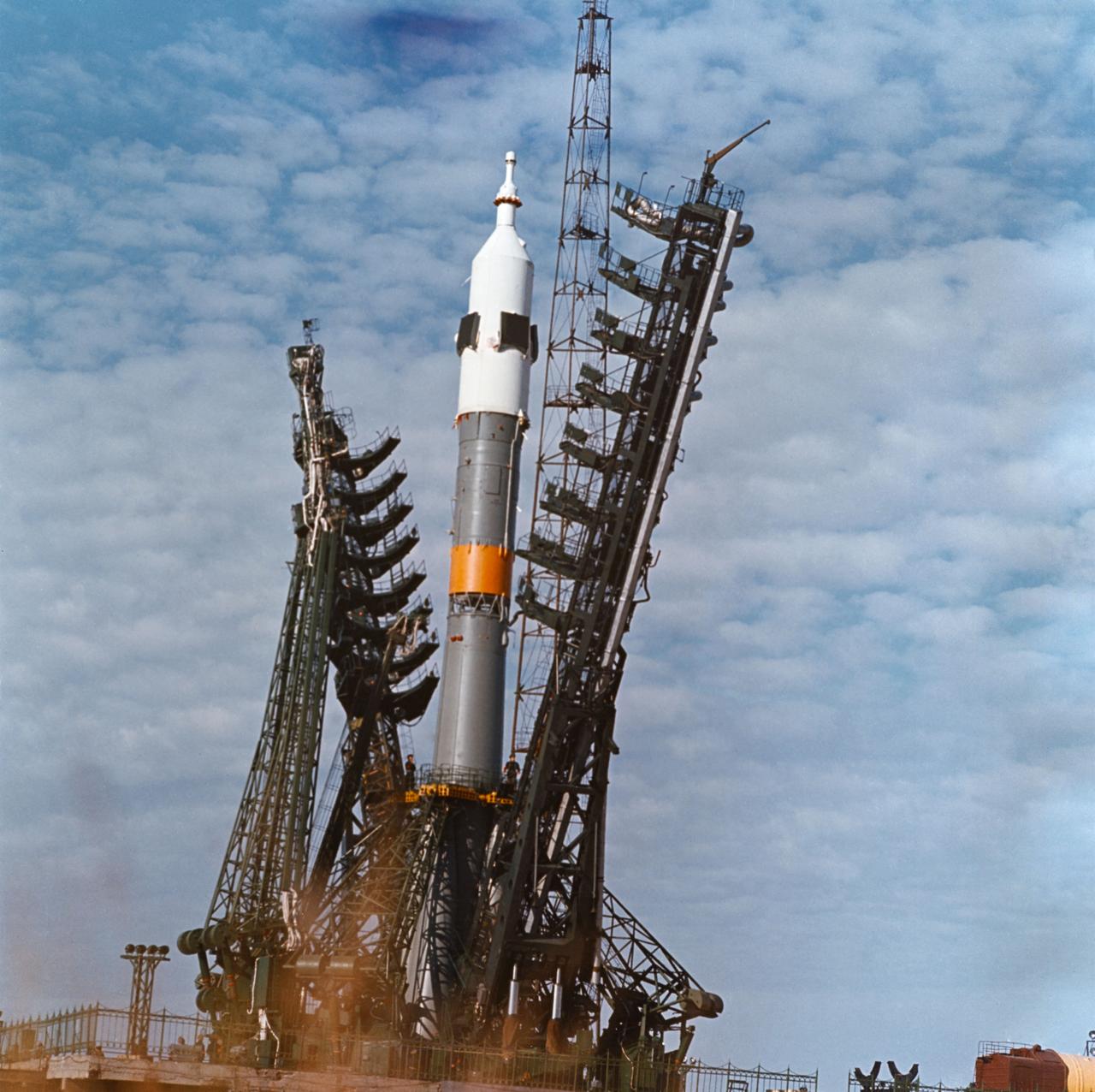
S75-32339 (28 Jan. 1974) --- A low-angle view of a launch pad at the Baikonur Cosmodrome in Kazakhstan showing the installation of a Soyuz spacecraft and its launch vehicle. The 49.3-meter-high (162 feet) space vehicle is composed of the three-stage booster, a three-module, two-man Soyuz spacecraft and a launch escape system. The weight of the space vehicle at launch is approximately 300,000 kilograms. The first stage vacuum thrust is about 1,000,400 newtons, the second stage is 956,500 newtons, and the third stage is 299,000 newtons. This earlier Soyuz mission illustrates the approximate launch configuration of the Soviet Union?s Apollo-Soyuz Test Project (ASTP) Soyuz space vehicle. PHOTO COURTESY: USSR ACADEMY OF SCIENCES
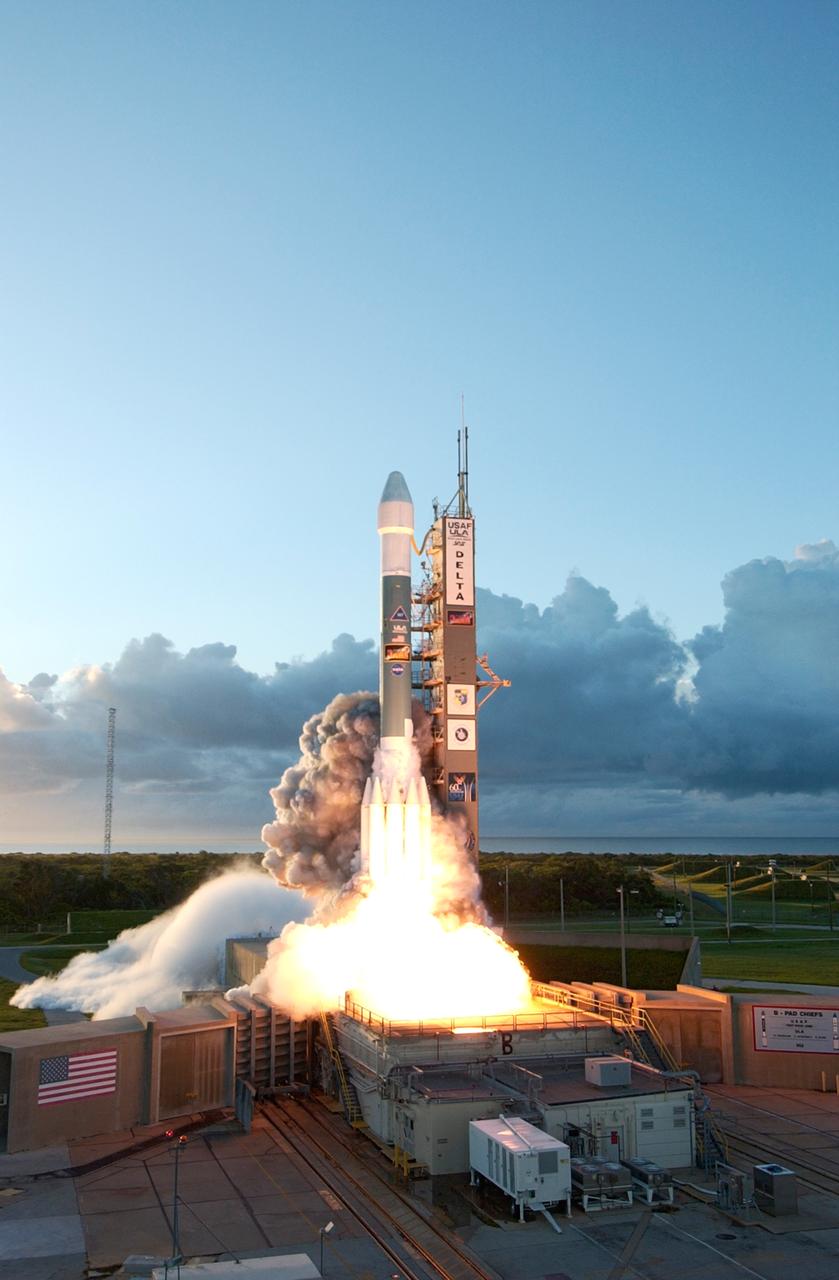
Against a backdrop of clouds on the horizon, the Delta II rocket carrying NASA's Dawn spacecraft rises from the smoke and fire on the launch pad to begin its 1.7-billion-mile journey through the inner solar system to study a pair of asteroids. Liftoff was at 7:34 a.m. EDT from Pad 17-B at Cape Canaveral Air Force Station. Dawn is the ninth mission in NASA's Discovery Program. The spacecraft will be the first to orbit two planetary bodies, asteroid Vesta and dwarf planet Ceres, during a single mission. Vesta and Ceres lie in the asteroid belt between Mars and Jupiter. It is also NASA's first purely scientific mission powered by three solar electric ion propulsion engines.
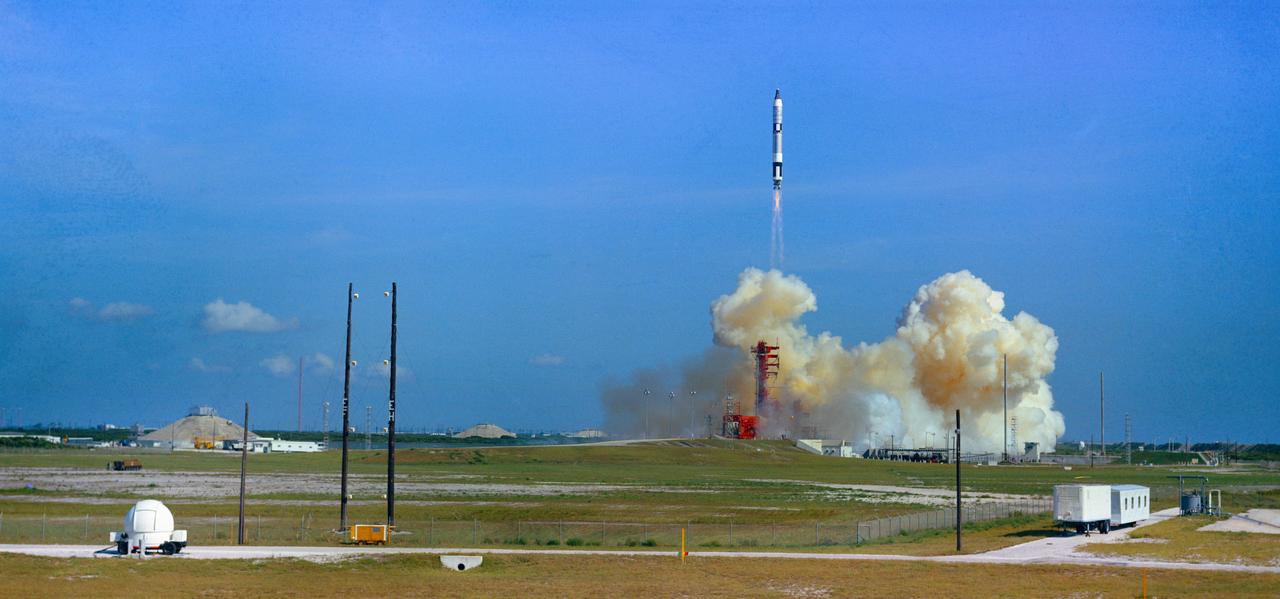
S65-50774 (21 Aug. 1965) --- The National Aeronautics and Space Administration launched the Gemini-5 spacecraft from Pad 19 at 9 a.m. (EST) Aug. 21, 1965, on a planned eight-day orbital mission. Astronaut L. Gordon Cooper Jr. was the command pilot; and astronaut Charles Conrad Jr. was the pilot. A full duration mission will achieve the longest manned spaceflight to date.
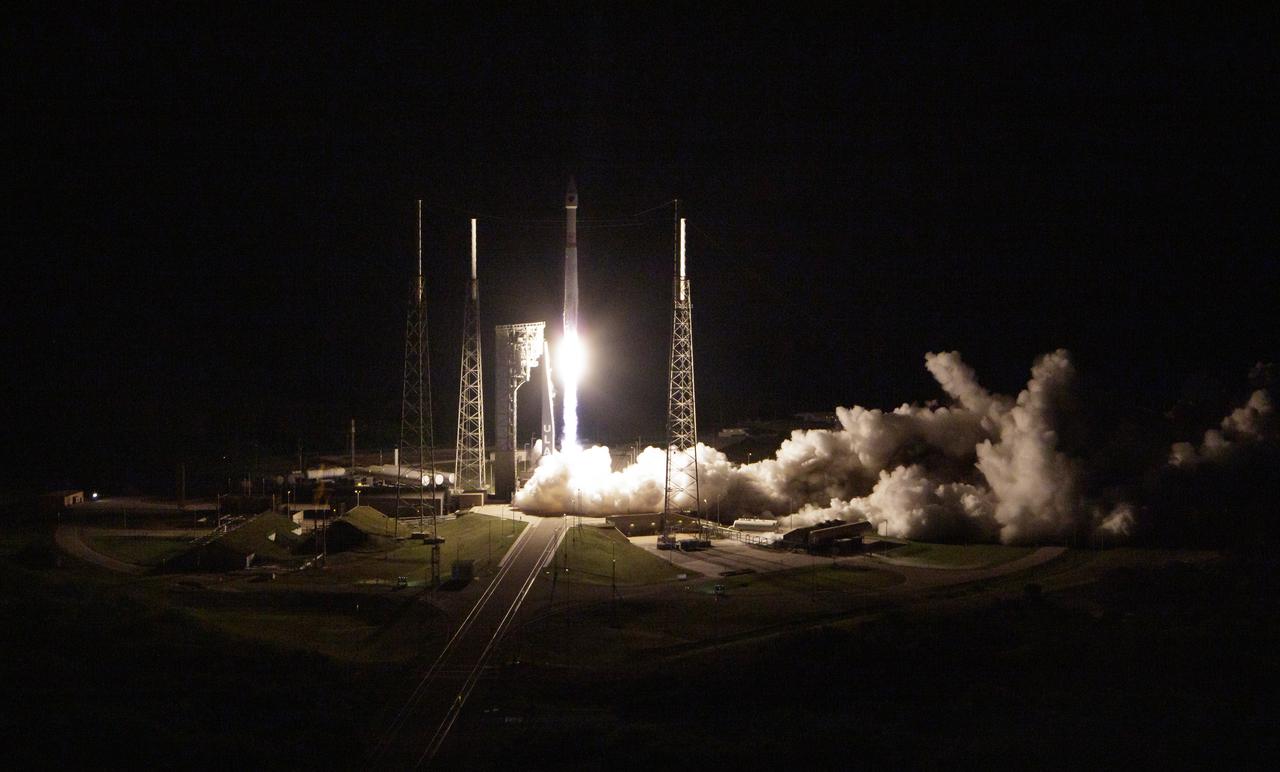
A United Launch Alliance Atlas V rocket with the Lucy spacecraft aboard launches from Space Launch Complex 41, Saturday, Oct. 16, 2021, at Cape Canaveral Space Force Station in Florida. Lucy will be the first spacecraft to study Jupiter's Trojan Asteroids. Like the mission's namesake – the fossilized human ancestor, "Lucy," whose skeleton provided unique insight into humanity's evolution – Lucy will revolutionize our knowledge of planetary origins and the formation of the solar system. Photo Credit: (NASA/Bill Ingalls)
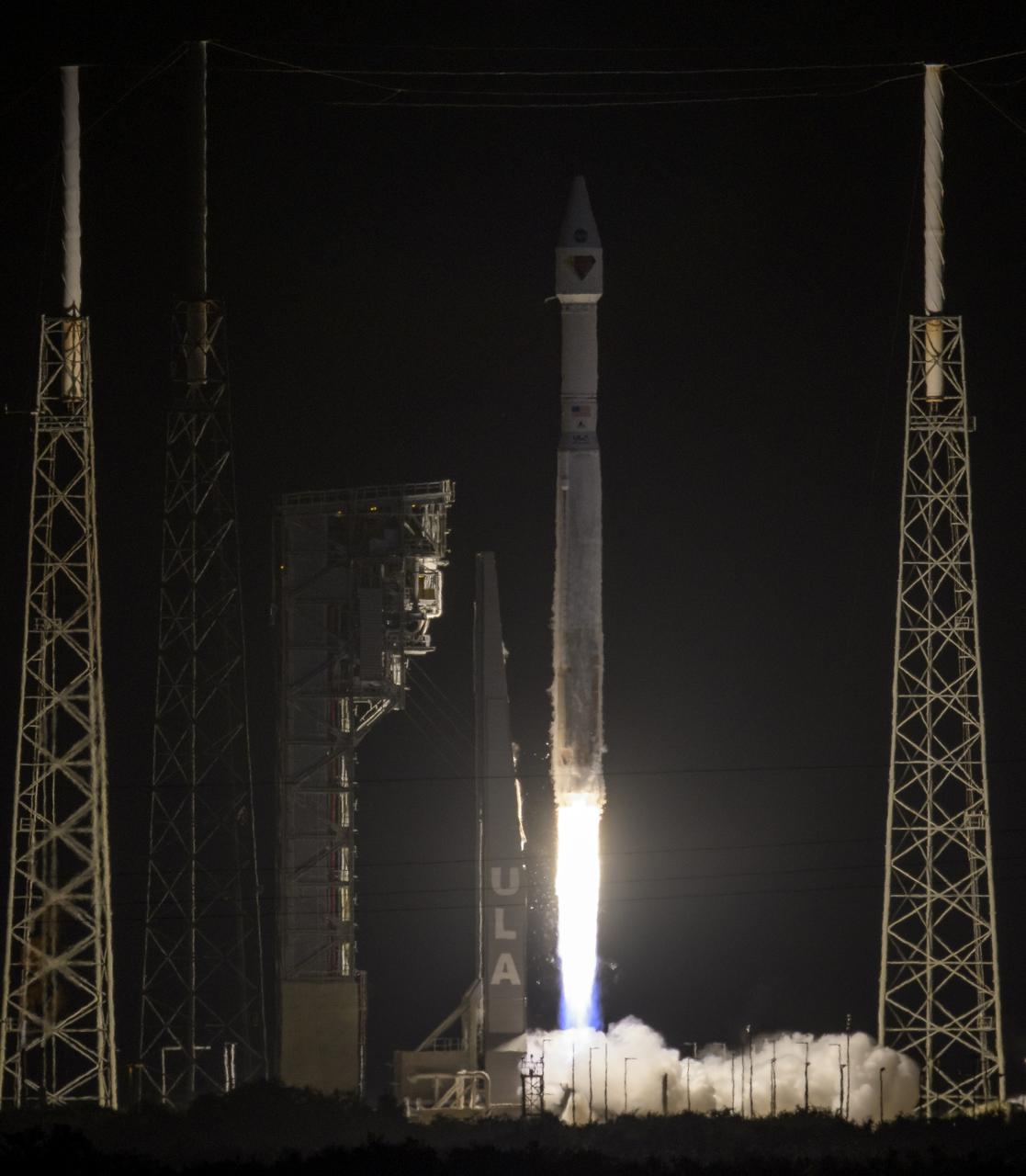
A United Launch Alliance Atlas V rocket with the Lucy spacecraft aboard launches from Space Launch Complex 41, Saturday, Oct. 16, 2021, at Cape Canaveral Space Force Station in Florida. Lucy will be the first spacecraft to study Jupiter's Trojan Asteroids. Like the mission's namesake – the fossilized human ancestor, "Lucy," whose skeleton provided unique insight into humanity's evolution – Lucy will revolutionize our knowledge of planetary origins and the formation of the solar system. Photo Credit: (NASA/Bill Ingalls)
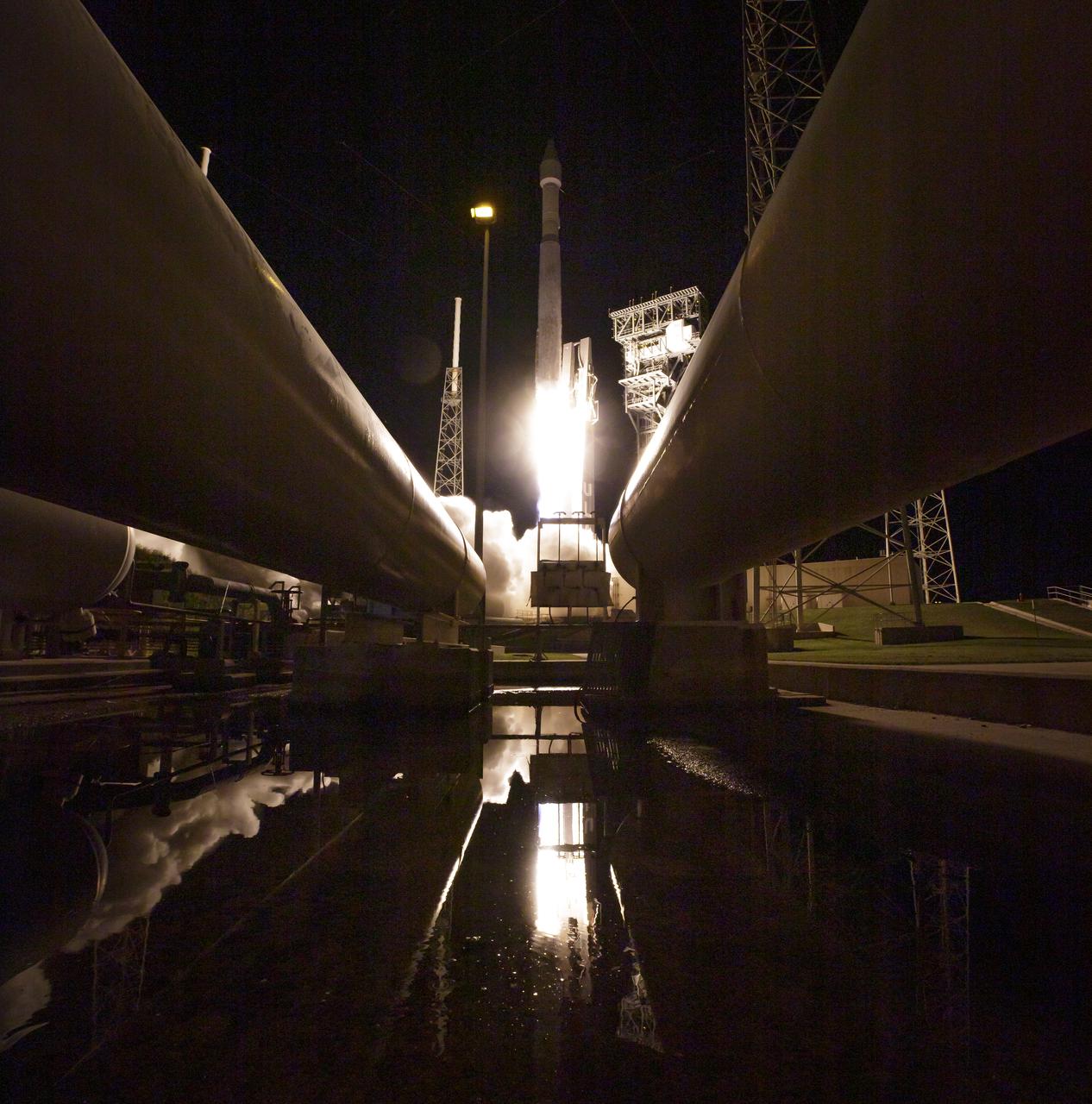
A United Launch Alliance Atlas V rocket with the Lucy spacecraft aboard launches from Space Launch Complex 41, Saturday, Oct. 16, 2021, at Cape Canaveral Space Force Station in Florida. Lucy will be the first spacecraft to study Jupiter's Trojan Asteroids. Like the mission's namesake – the fossilized human ancestor, "Lucy," whose skeleton provided unique insight into humanity's evolution – Lucy will revolutionize our knowledge of planetary origins and the formation of the solar system. Photo Credit: (NASA/Bill Ingalls)
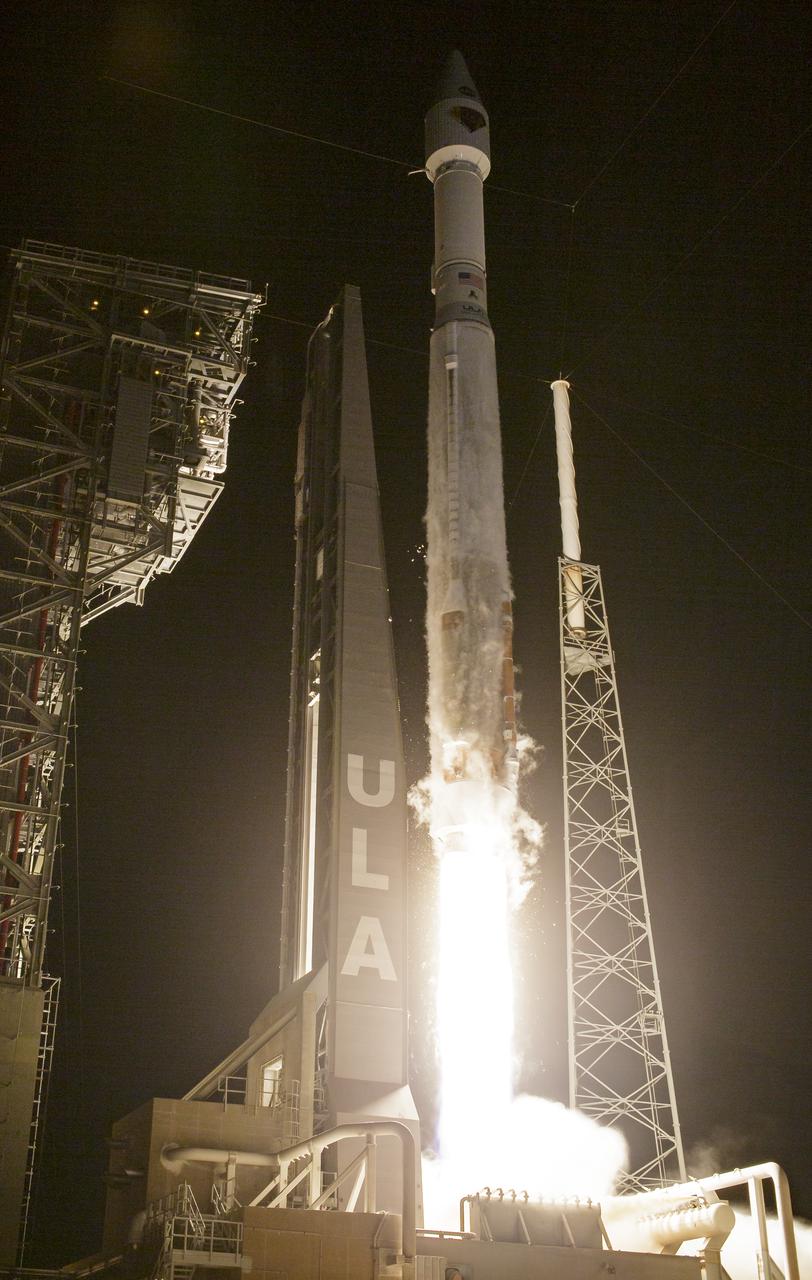
A United Launch Alliance Atlas V rocket with the Lucy spacecraft aboard launches from Space Launch Complex 41, Saturday, Oct. 16, 2021, at Cape Canaveral Space Force Station in Florida. Lucy will be the first spacecraft to study Jupiter's Trojan Asteroids. Like the mission's namesake – the fossilized human ancestor, "Lucy," whose skeleton provided unique insight into humanity's evolution – Lucy will revolutionize our knowledge of planetary origins and the formation of the solar system. Photo Credit: (NASA/Bill Ingalls)
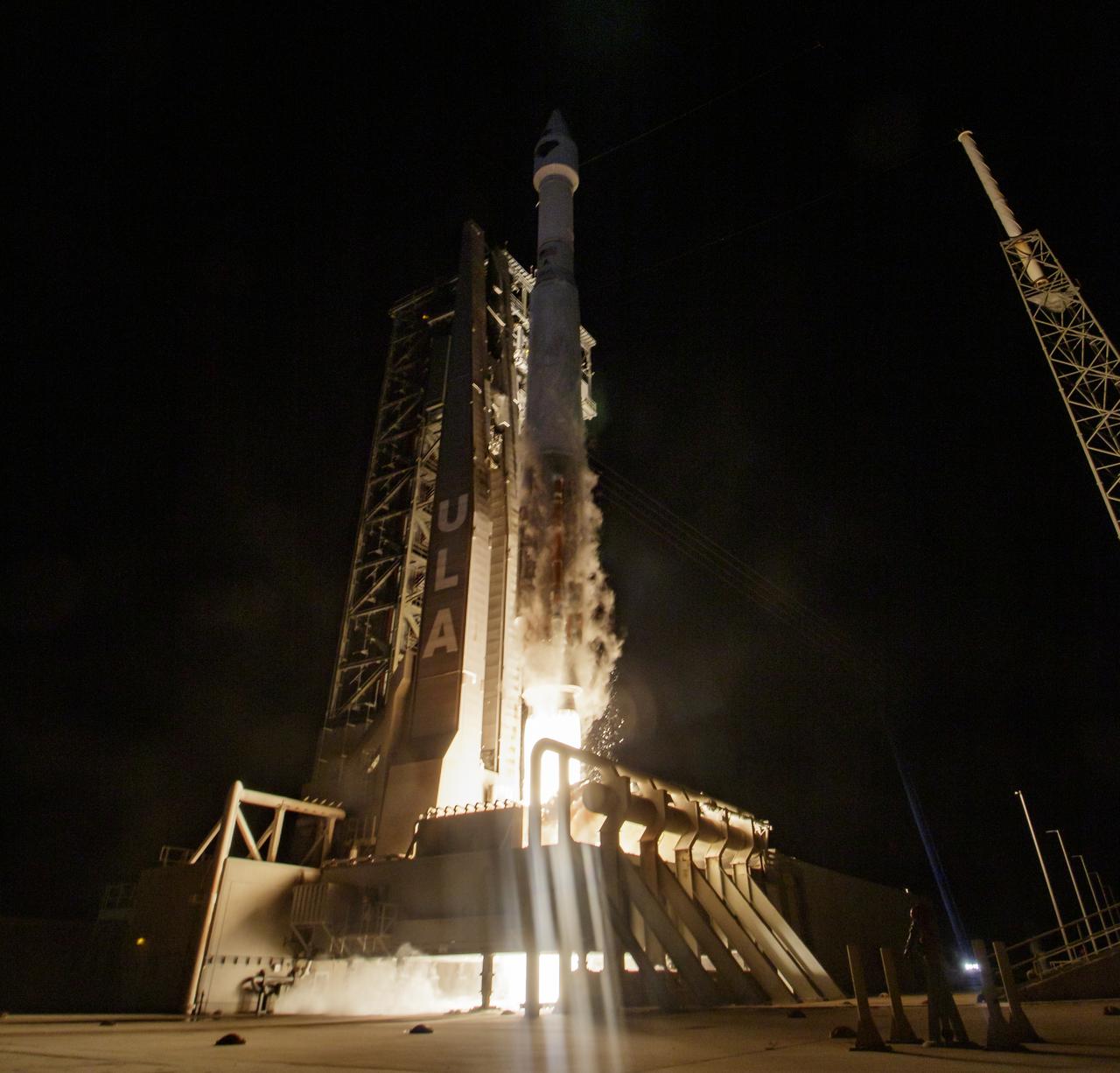
A United Launch Alliance Atlas V rocket with the Lucy spacecraft aboard launches from Space Launch Complex 41, Saturday, Oct. 16, 2021, at Cape Canaveral Space Force Station in Florida. Lucy will be the first spacecraft to study Jupiter's Trojan Asteroids. Like the mission's namesake – the fossilized human ancestor, "Lucy," whose skeleton provided unique insight into humanity's evolution – Lucy will revolutionize our knowledge of planetary origins and the formation of the solar system. Photo Credit: (NASA/Bill Ingalls)
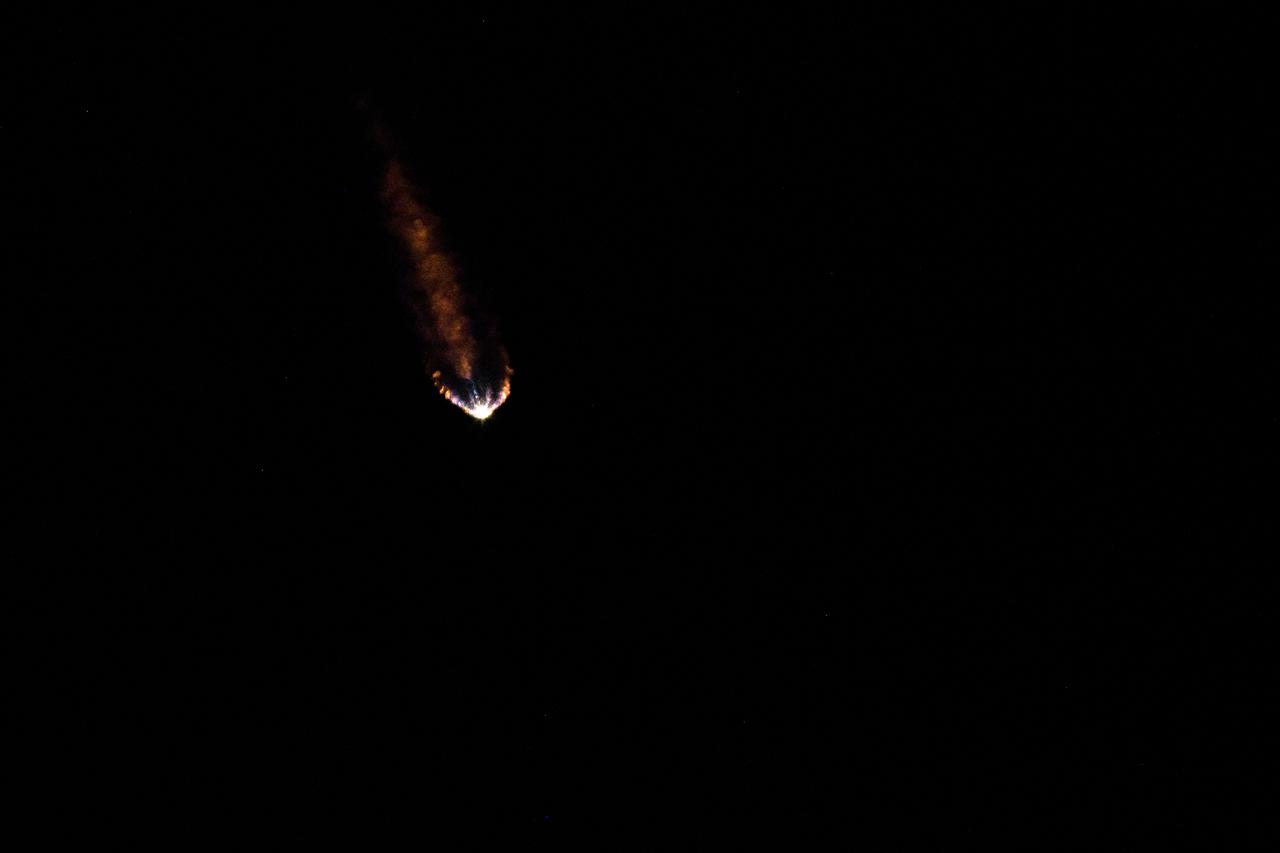
A United Launch Alliance Atlas V rocket with the Lucy spacecraft aboard launches from Space Launch Complex 41, Saturday, Oct. 16, 2021, at Cape Canaveral Space Force Station in Florida. Lucy will be the first spacecraft to study Jupiter's Trojan Asteroids. Like the mission's namesake – the fossilized human ancestor, "Lucy," whose skeleton provided unique insight into humanity's evolution – Lucy will revolutionize our knowledge of planetary origins and the formation of the solar system. Photo Credit: (NASA/Bill Ingalls)
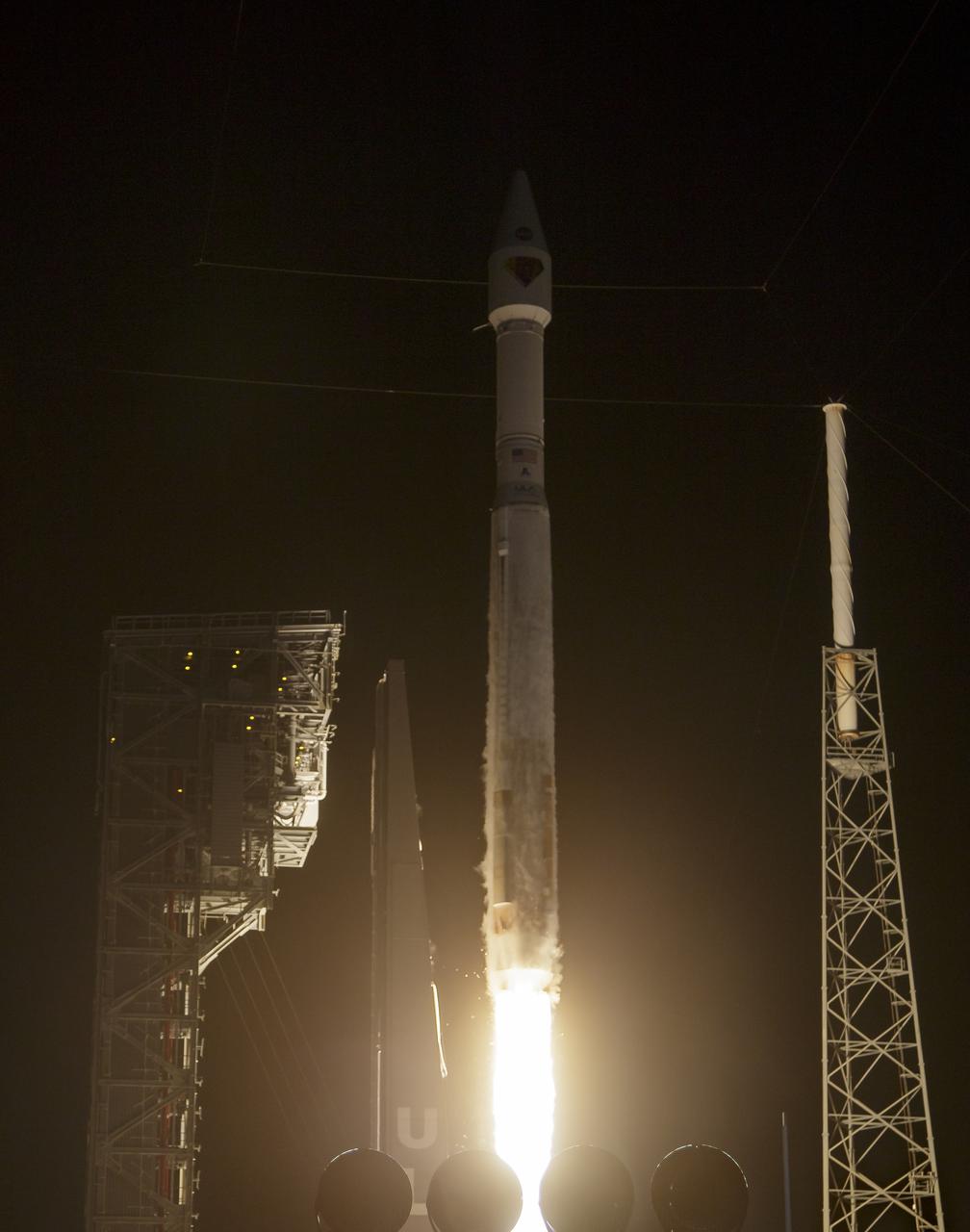
A United Launch Alliance Atlas V rocket with the Lucy spacecraft aboard launches from Space Launch Complex 41, Saturday, Oct. 16, 2021, at Cape Canaveral Space Force Station in Florida. Lucy will be the first spacecraft to study Jupiter's Trojan Asteroids. Like the mission's namesake – the fossilized human ancestor, "Lucy," whose skeleton provided unique insight into humanity's evolution – Lucy will revolutionize our knowledge of planetary origins and the formation of the solar system. Photo Credit: (NASA/Bill Ingalls)
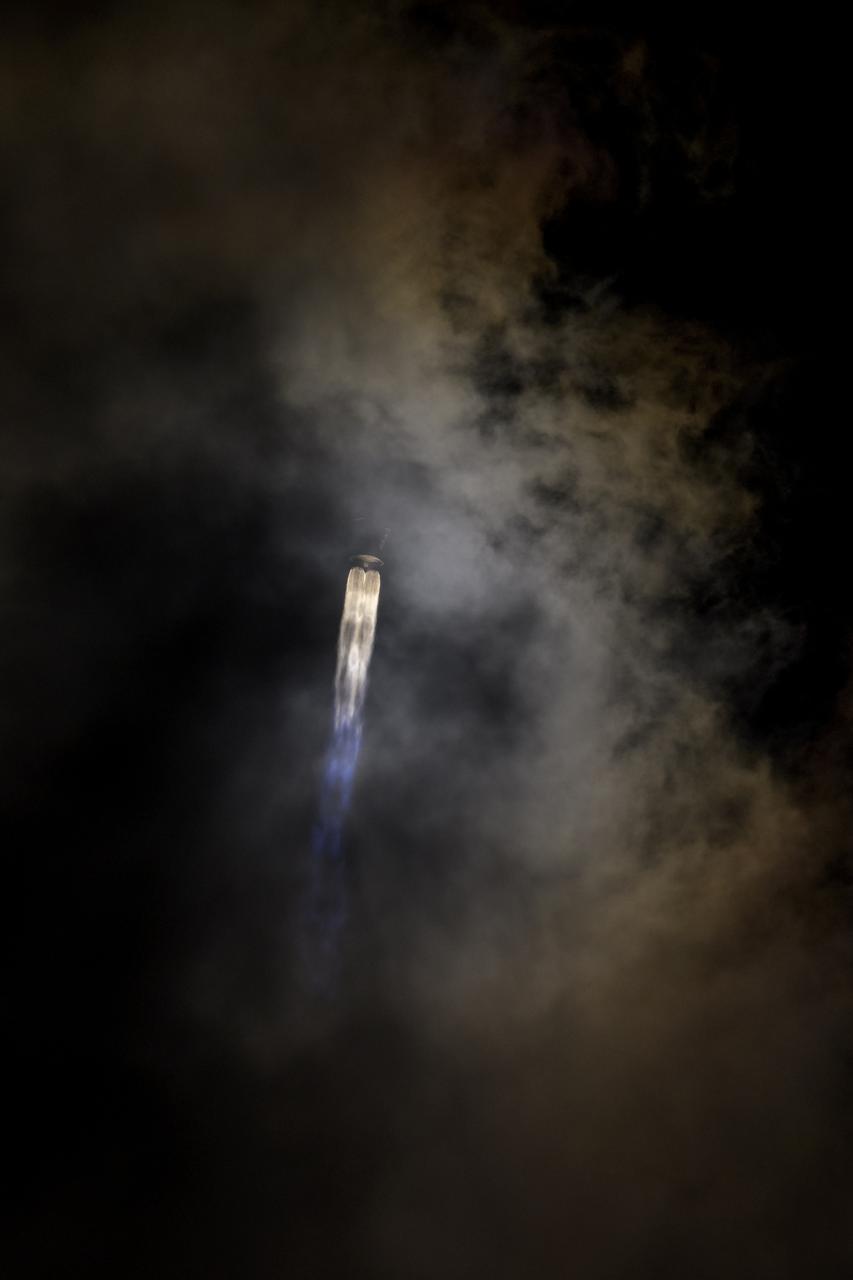
A United Launch Alliance Atlas V rocket with the Lucy spacecraft aboard launches from Space Launch Complex 41, Saturday, Oct. 16, 2021, at Cape Canaveral Space Force Station in Florida. Lucy will be the first spacecraft to study Jupiter's Trojan Asteroids. Like the mission's namesake – the fossilized human ancestor, "Lucy," whose skeleton provided unique insight into humanity's evolution – Lucy will revolutionize our knowledge of planetary origins and the formation of the solar system. Photo Credit: (NASA/Bill Ingalls)
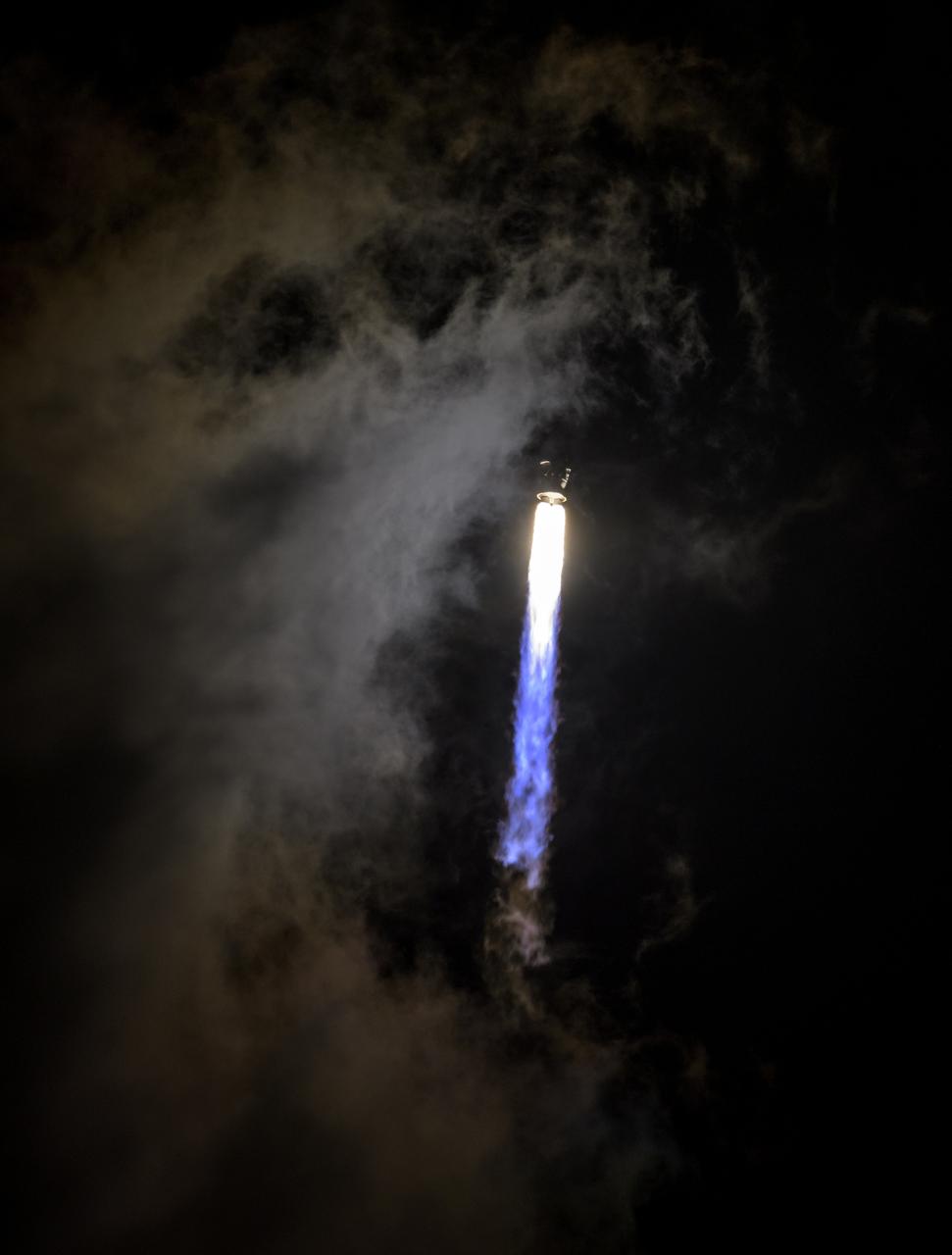
A United Launch Alliance Atlas V rocket with the Lucy spacecraft aboard launches from Space Launch Complex 41, Saturday, Oct. 16, 2021, at Cape Canaveral Space Force Station in Florida. Lucy will be the first spacecraft to study Jupiter's Trojan Asteroids. Like the mission's namesake – the fossilized human ancestor, "Lucy," whose skeleton provided unique insight into humanity's evolution – Lucy will revolutionize our knowledge of planetary origins and the formation of the solar system. Photo Credit: (NASA/Bill Ingalls)
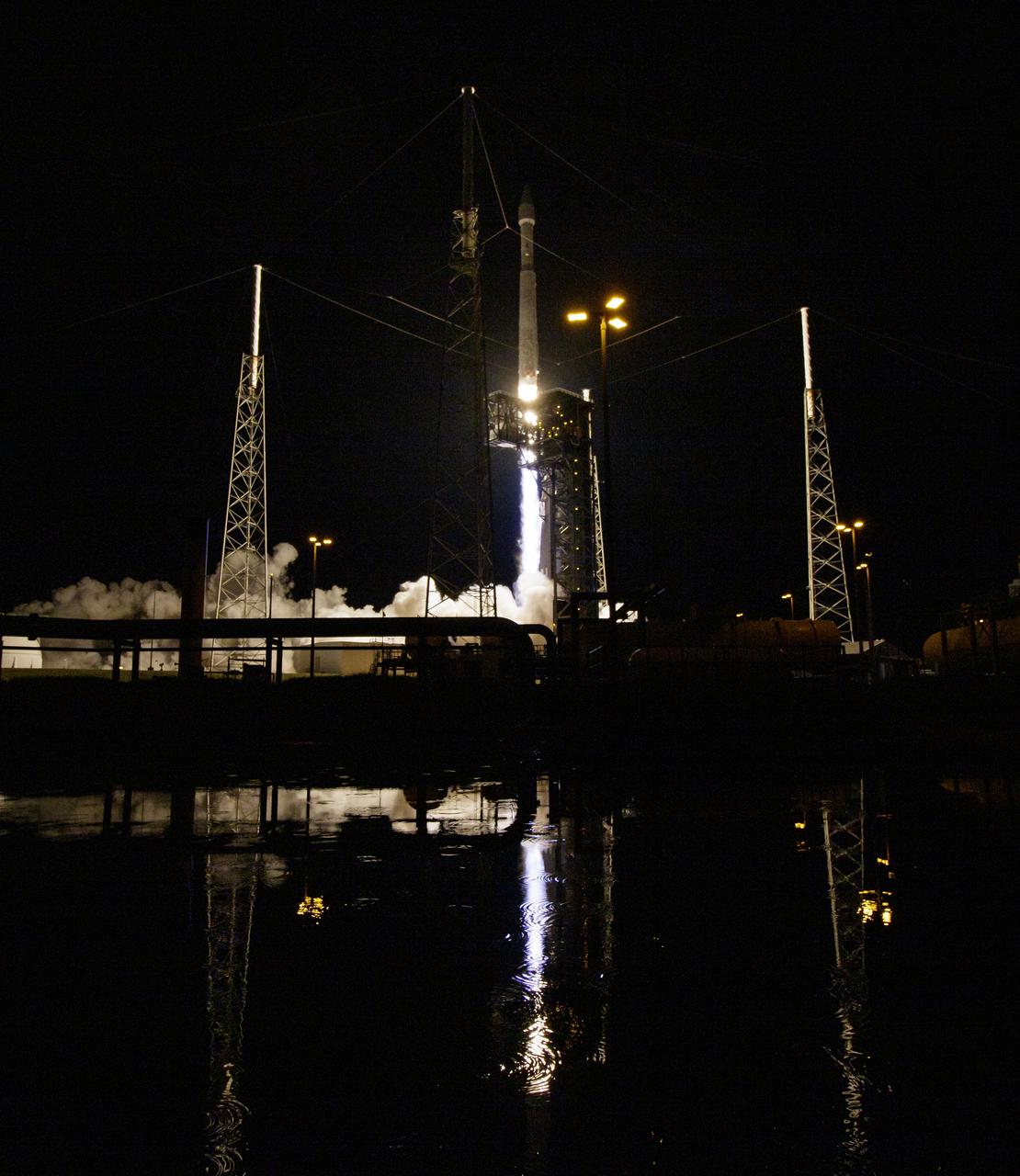
A United Launch Alliance Atlas V rocket with the Lucy spacecraft aboard launches from Space Launch Complex 41, Saturday, Oct. 16, 2021, at Cape Canaveral Space Force Station in Florida. Lucy will be the first spacecraft to study Jupiter's Trojan Asteroids. Like the mission's namesake – the fossilized human ancestor, "Lucy," whose skeleton provided unique insight into humanity's evolution – Lucy will revolutionize our knowledge of planetary origins and the formation of the solar system. Photo Credit: (NASA/Bill Ingalls)

A United Launch Alliance Atlas V rocket with the Lucy spacecraft aboard launches from Space Launch Complex 41, Saturday, Oct. 16, 2021, at Cape Canaveral Space Force Station in Florida. Lucy will be the first spacecraft to study Jupiter's Trojan Asteroids. Like the mission's namesake – the fossilized human ancestor, "Lucy," whose skeleton provided unique insight into humanity's evolution – Lucy will revolutionize our knowledge of planetary origins and the formation of the solar system. Photo Credit: (NASA/Bill Ingalls)
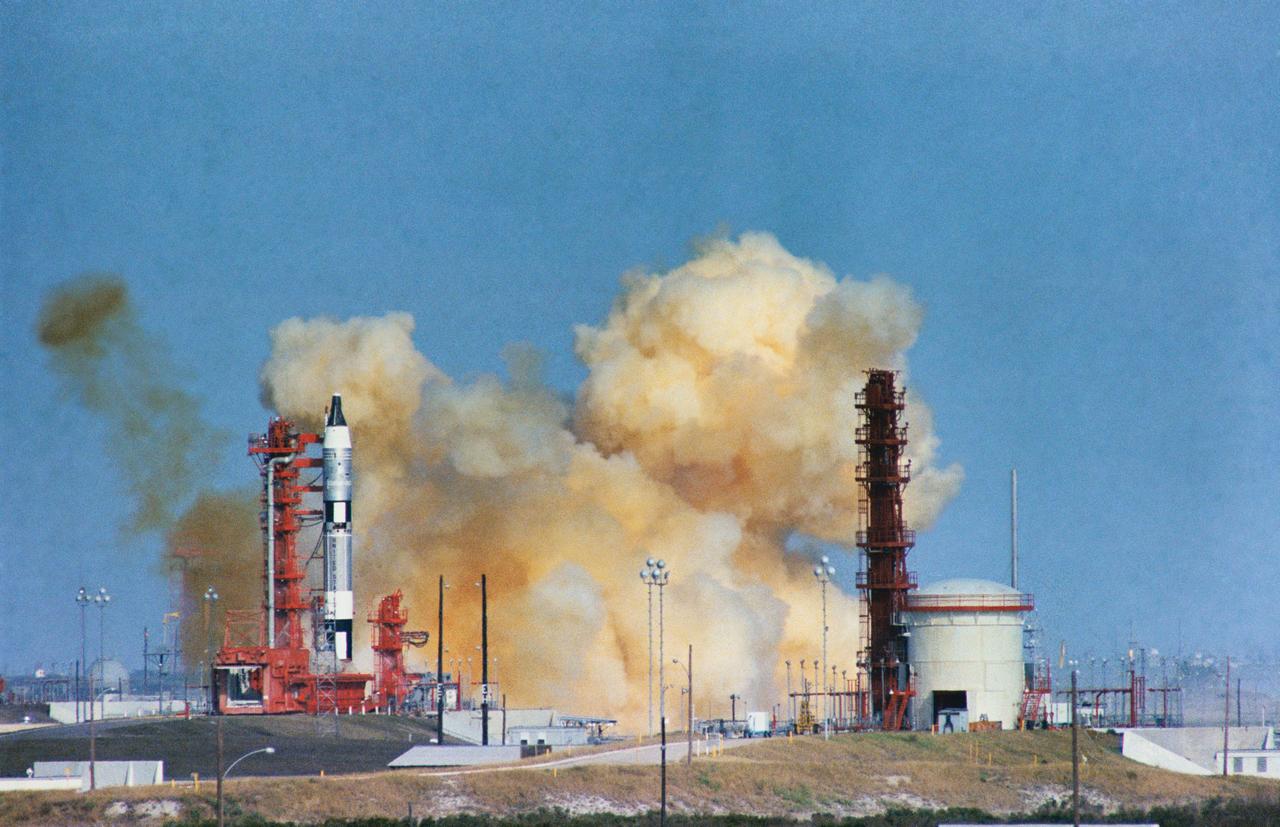
S65-59967 (12 Dec. 1965) --- The National Aeronautics and Space Administration (NASA) attempted to launch Gemini-6 at 9:54 a.m. (EST), Dec. 12, 1965. However, seconds after ignition the first stage engine of the Gemini Launch Vehicle 6 shut down due to a faulty release of a liftoff umbilical plug. Inside the spacecraft were astronauts Walter M. Schirra Jr., command pilot, and Thomas P. Stafford, pilot. Photo credit: NASA or National Aeronautics and Space Administration
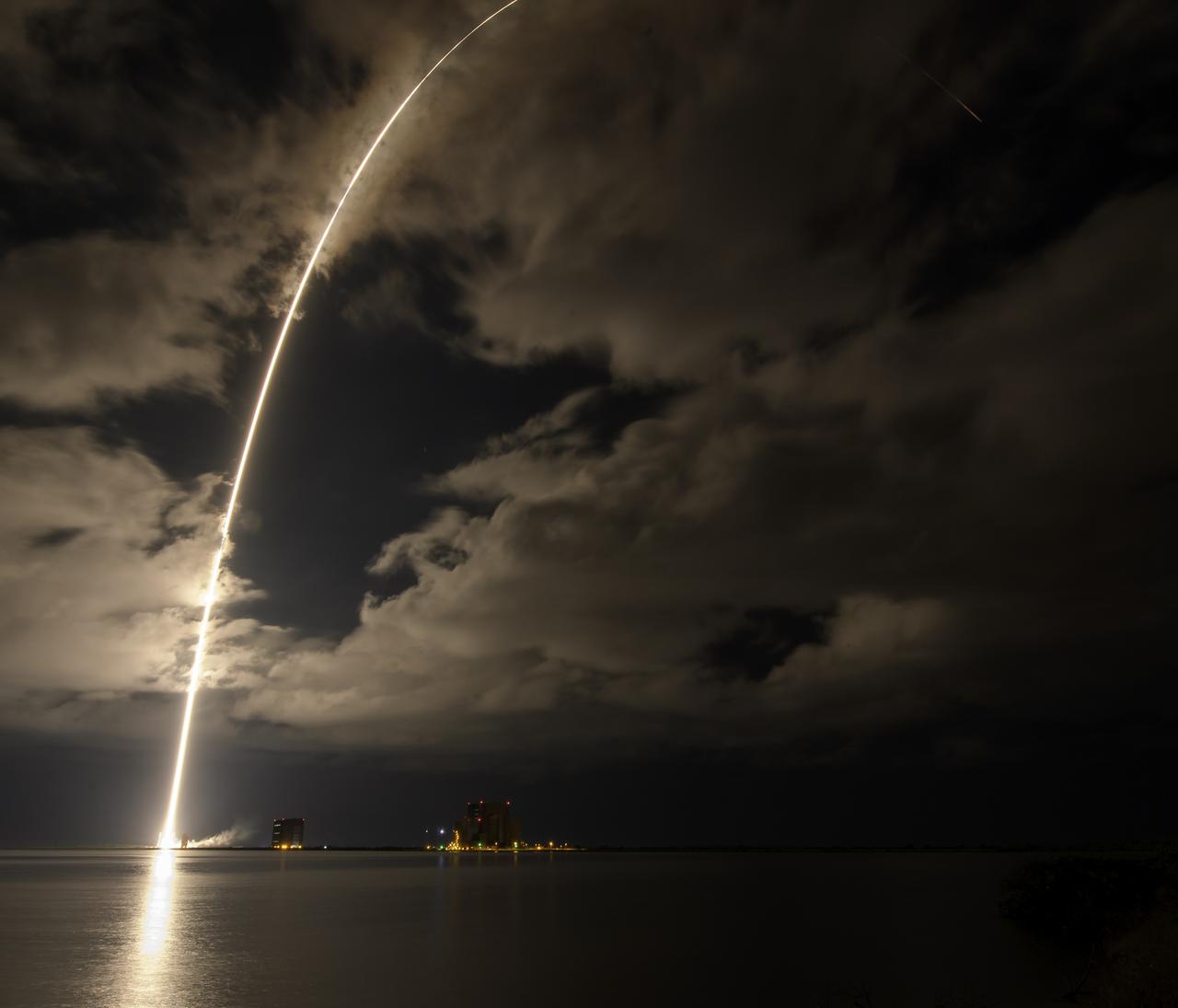
A United Launch Alliance Atlas V rocket with the Lucy spacecraft aboard is seen in this 2 minute and 30 second exposure photograph as it launches from Space Launch Complex 41, Saturday, Oct. 16, 2021, at Cape Canaveral Space Force Station in Florida. Lucy will be the first spacecraft to study Jupiter's Trojan Asteroids. Like the mission's namesake – the fossilized human ancestor, "Lucy," whose skeleton provided unique insight into humanity's evolution – Lucy will revolutionize our knowledge of planetary origins and the formation of the solar system. Photo Credit: (NASA/Bill Ingalls)
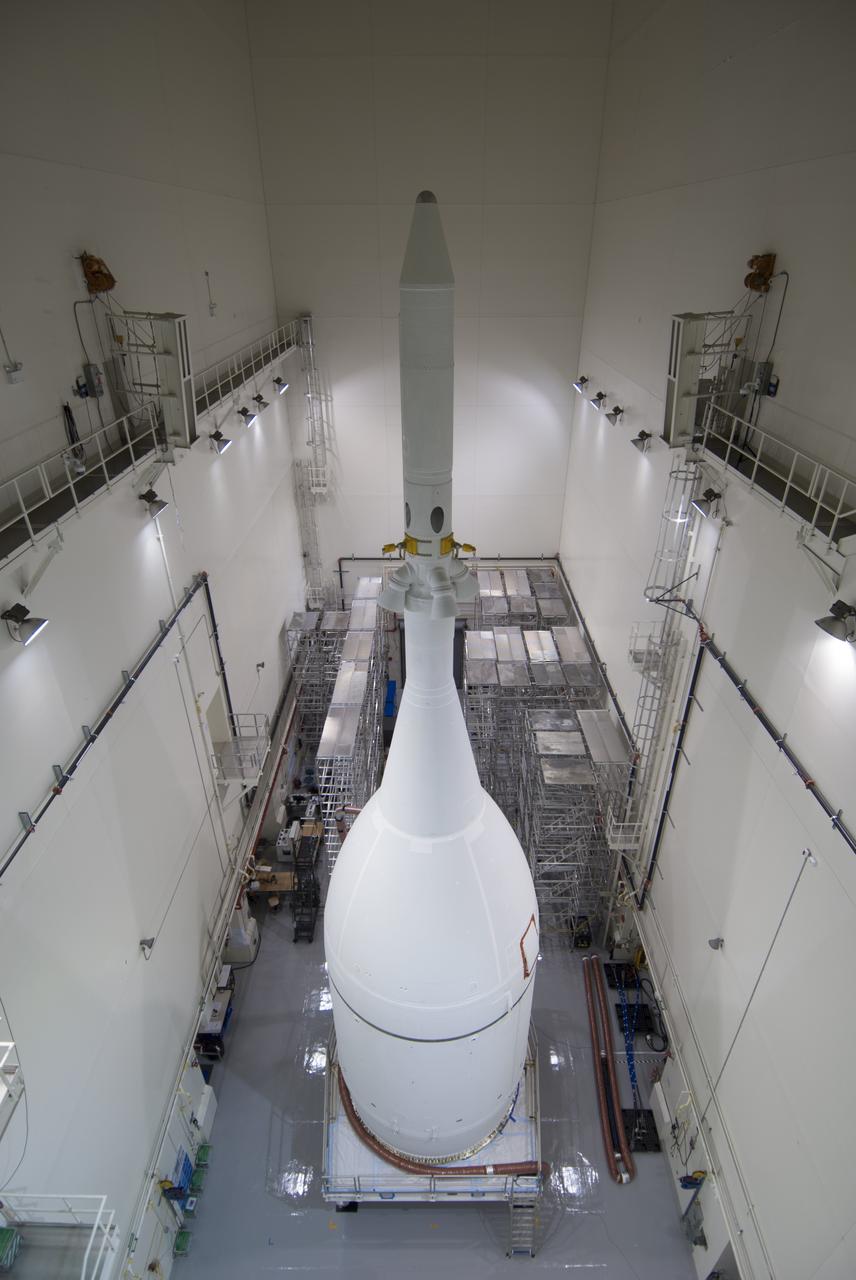
The Orion spacecraft sits inside the Launch Abort System Facility at NASA's Kennedy Space Center in Florida. The Ogive panels have been installed around the launch abort system. The panels will smooth the airflow over the conical spacecraft to limit sound and vibration, which will make for a much smoother ride for the astronauts who will ride inside Orion in the future. The spacecraft is being readied for its move to Space Launch Complex 37 at Cape Canaveral Air Force Station for its flight test. Orion is the exploration spacecraft designed to carry astronauts to destinations not yet explored by humans, including an asteroid and Mars. It will have emergency abort capability, sustain the crew during space travel and provide safe re-entry from deep space return velocities. The first unpiloted flight test of Orion is scheduled to launch in December 2014 atop a United Launch Alliance Delta IV Heavy rocket, and in 2018 on NASA’s Space Launch System rocket.
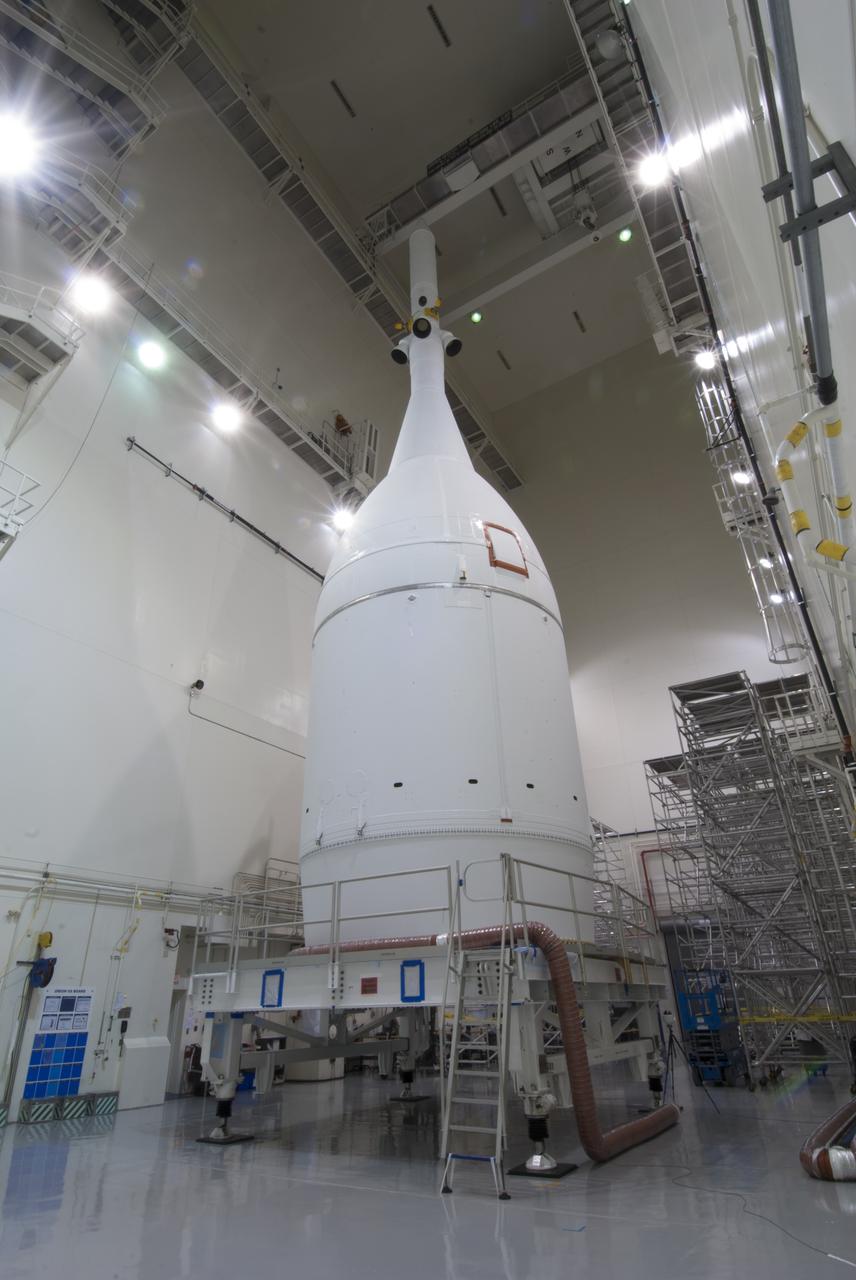
The Orion spacecraft sits inside the Launch Abort System Facility at NASA's Kennedy Space Center in Florida. The Ogive panels have been installed around the launch abort system. The panels will smooth the airflow over the conical spacecraft to limit sound and vibration, which will make for a much smoother ride for the astronauts who will ride inside Orion in the future. The spacecraft is being readied for its move to Space Launch Complex 37 at Cape Canaveral Air Force Station for its flight test. Orion is the exploration spacecraft designed to carry astronauts to destinations not yet explored by humans, including an asteroid and Mars. It will have emergency abort capability, sustain the crew during space travel and provide safe re-entry from deep space return velocities. The first unpiloted flight test of Orion is scheduled to launch in December 2014 atop a United Launch Alliance Delta IV Heavy rocket, and in 2018 on NASA’s Space Launch System rocket.
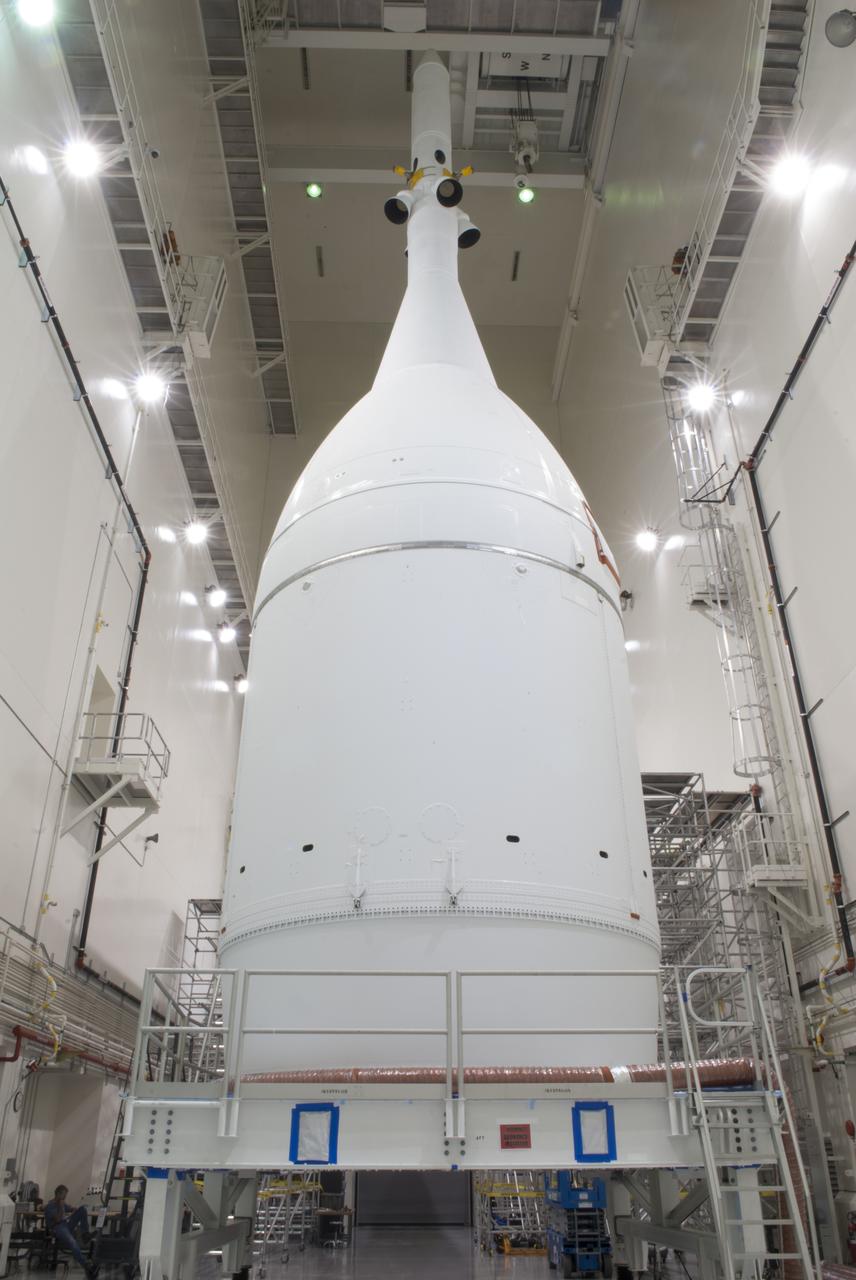
The Orion spacecraft sits inside the Launch Abort System Facility at NASA's Kennedy Space Center in Florida. The Ogive panels have been installed around the launch abort system. The panels will smooth the airflow over the conical spacecraft to limit sound and vibration, which will make for a much smoother ride for the astronauts who will ride inside Orion in the future. The spacecraft is being readied for its move to Space Launch Complex 37 at Cape Canaveral Air Force Station for its flight test. Orion is the exploration spacecraft designed to carry astronauts to destinations not yet explored by humans, including an asteroid and Mars. It will have emergency abort capability, sustain the crew during space travel and provide safe re-entry from deep space return velocities. The first unpiloted flight test of Orion is scheduled to launch in December 2014 atop a United Launch Alliance Delta IV Heavy rocket, and in 2018 on NASA’s Space Launch System rocket.
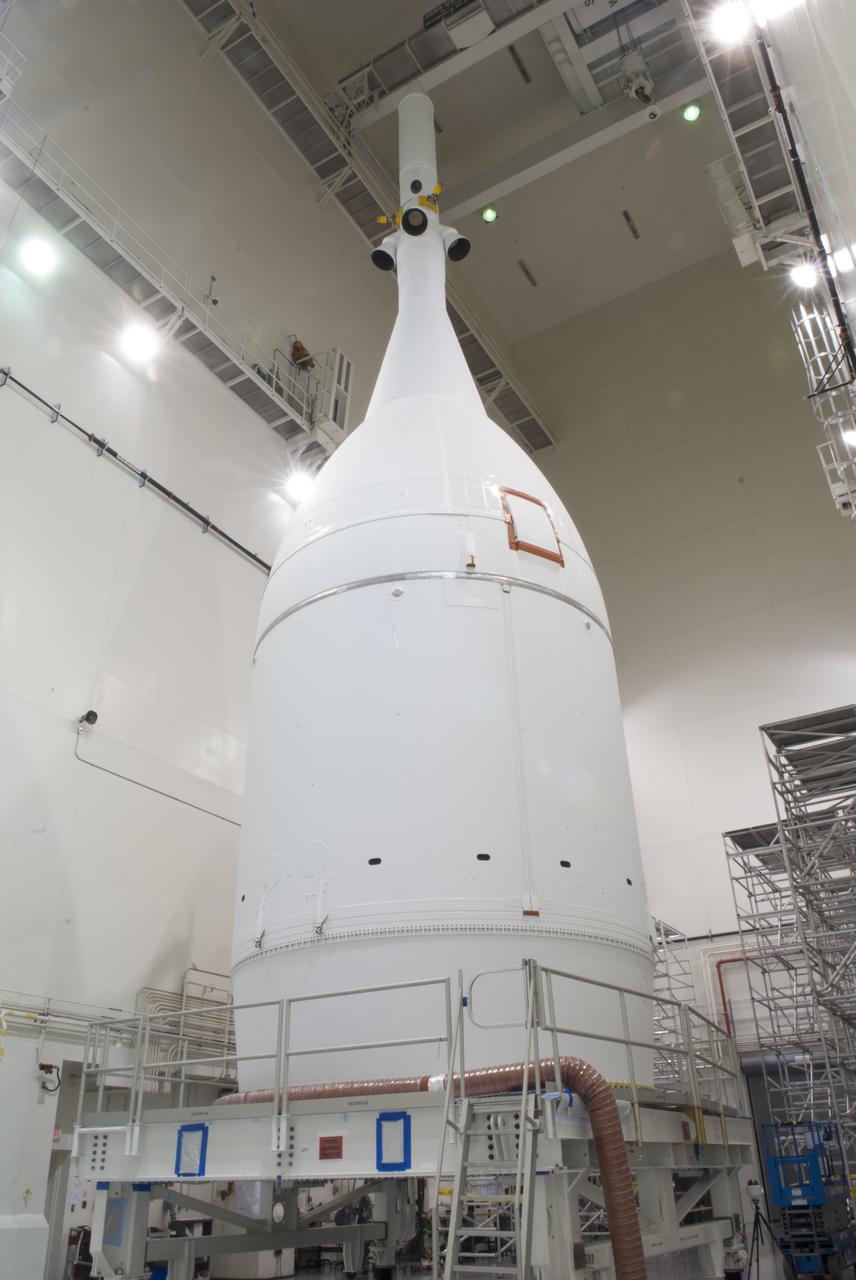
The Orion spacecraft sits inside the Launch Abort System Facility at NASA's Kennedy Space Center in Florida. The Ogive panels have been installed around the launch abort system. The panels will smooth the airflow over the conical spacecraft to limit sound and vibration, which will make for a much smoother ride for the astronauts who will ride inside Orion in the future. The spacecraft is being readied for its move to Space Launch Complex 37 at Cape Canaveral Air Force Station for its flight test. Orion is the exploration spacecraft designed to carry astronauts to destinations not yet explored by humans, including an asteroid and Mars. It will have emergency abort capability, sustain the crew during space travel and provide safe re-entry from deep space return velocities. The first unpiloted flight test of Orion is scheduled to launch in December 2014 atop a United Launch Alliance Delta IV Heavy rocket, and in 2018 on NASA’s Space Launch System rocket.
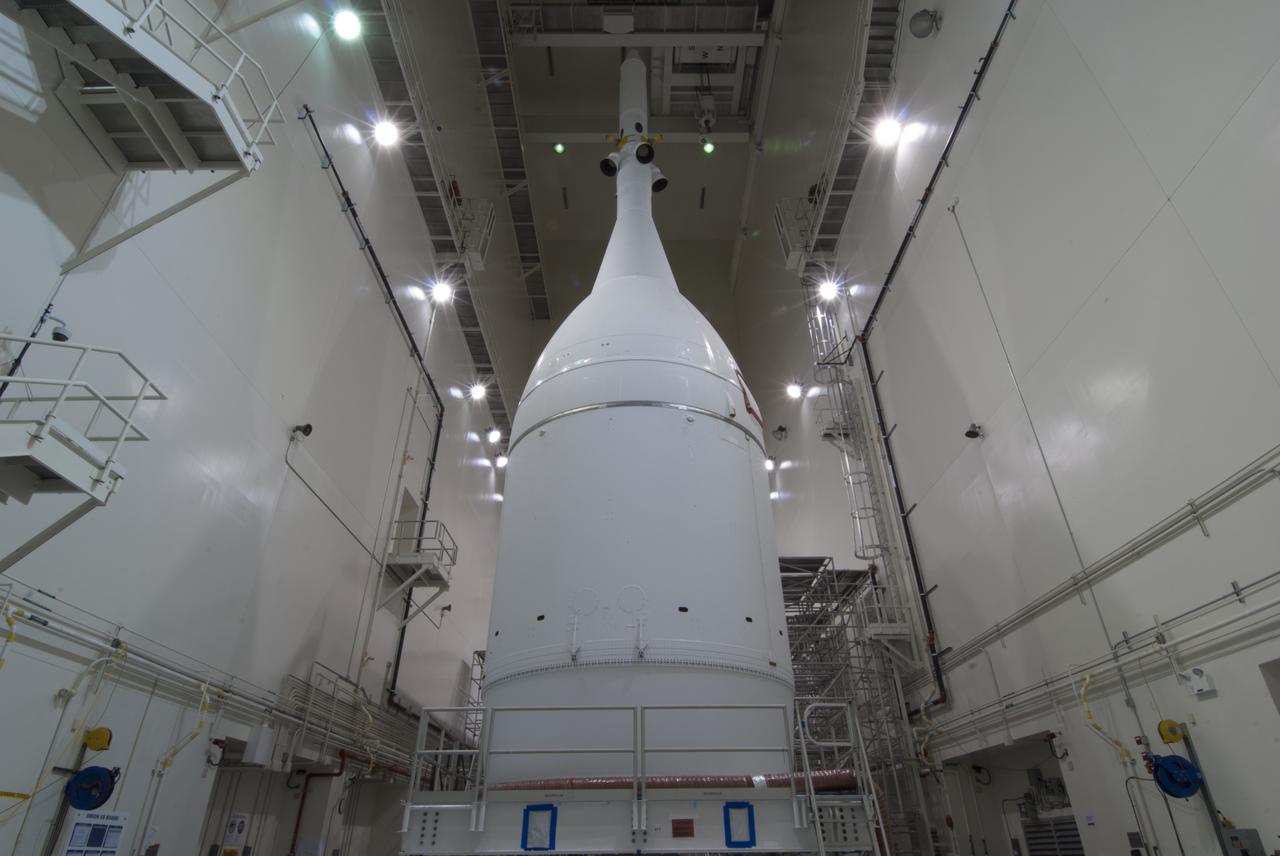
The Orion spacecraft sits inside the Launch Abort System Facility at NASA's Kennedy Space Center in Florida. The Ogive panels have been installed around the launch abort system. The panels will smooth the airflow over the conical spacecraft to limit sound and vibration, which will make for a much smoother ride for the astronauts who will ride inside Orion in the future. The spacecraft is being readied for its move to Space Launch Complex 37 at Cape Canaveral Air Force Station for its flight test. Orion is the exploration spacecraft designed to carry astronauts to destinations not yet explored by humans, including an asteroid and Mars. It will have emergency abort capability, sustain the crew during space travel and provide safe re-entry from deep space return velocities. The first unpiloted flight test of Orion is scheduled to launch in December 2014 atop a United Launch Alliance Delta IV Heavy rocket, and in 2018 on NASA’s Space Launch System rocket.
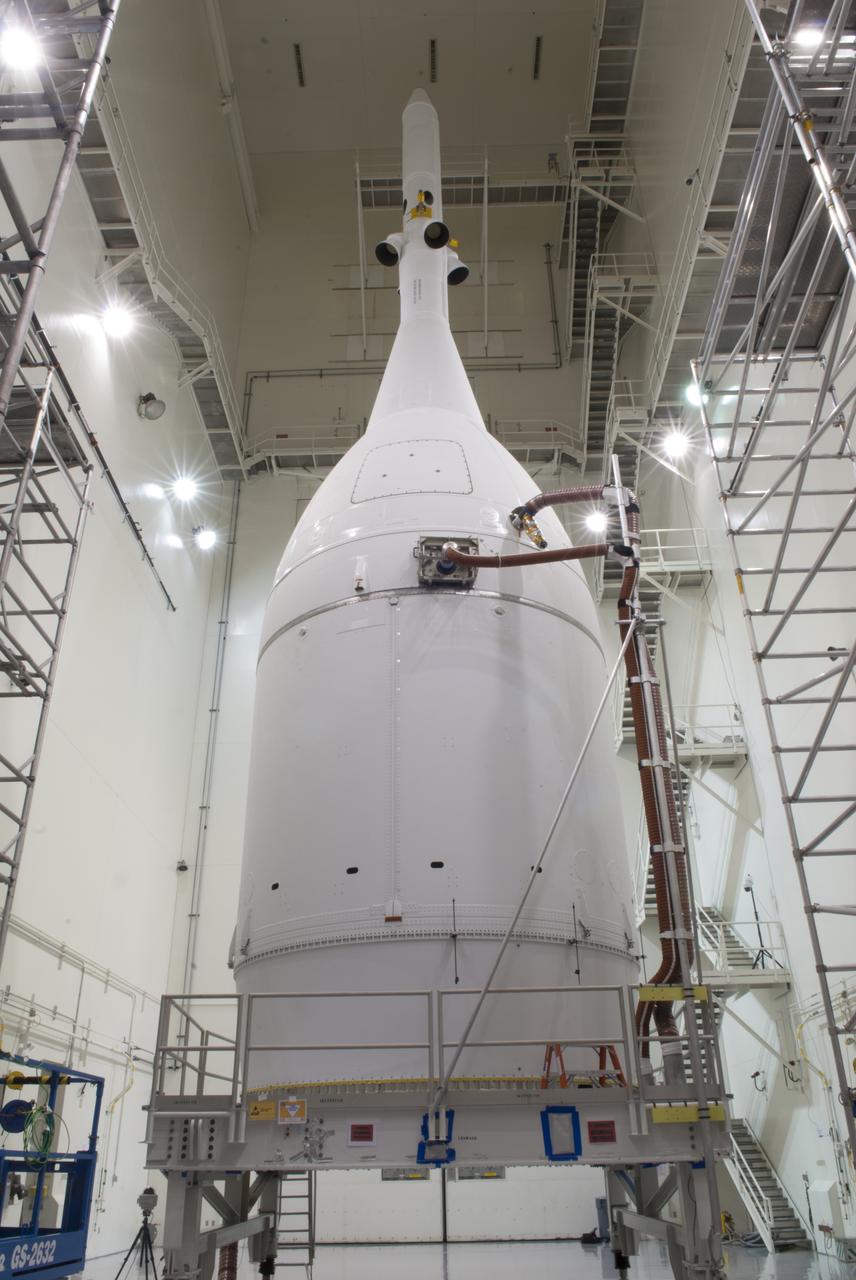
The Orion spacecraft sits inside the Launch Abort System Facility at NASA's Kennedy Space Center in Florida. The Ogive panels have been installed around the launch abort system. The panels will smooth the airflow over the conical spacecraft to limit sound and vibration, which will make for a much smoother ride for the astronauts who will ride inside Orion in the future. The spacecraft is being readied for its move to Space Launch Complex 37 at Cape Canaveral Air Force Station for its flight test. Orion is the exploration spacecraft designed to carry astronauts to destinations not yet explored by humans, including an asteroid and Mars. It will have emergency abort capability, sustain the crew during space travel and provide safe re-entry from deep space return velocities. The first unpiloted flight test of Orion is scheduled to launch in December 2014 atop a United Launch Alliance Delta IV Heavy rocket, and in 2018 on NASA’s Space Launch System rocket.
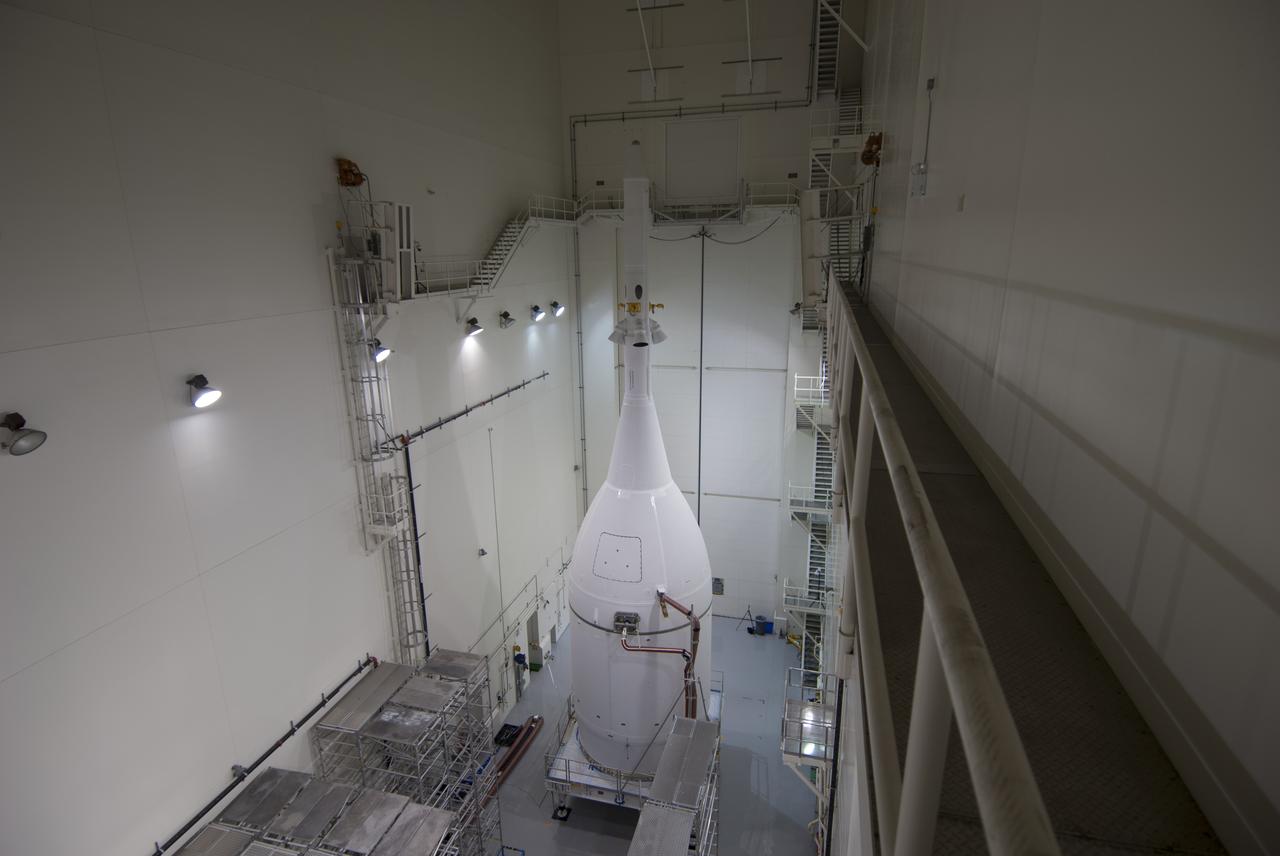
The Orion spacecraft sits inside the Launch Abort System Facility at NASA's Kennedy Space Center in Florida. The Ogive panels have been installed around the launch abort system. The panels will smooth the airflow over the conical spacecraft to limit sound and vibration, which will make for a much smoother ride for the astronauts who will ride inside Orion in the future. The spacecraft is being readied for its move to Space Launch Complex 37 at Cape Canaveral Air Force Station for its flight test. Orion is the exploration spacecraft designed to carry astronauts to destinations not yet explored by humans, including an asteroid and Mars. It will have emergency abort capability, sustain the crew during space travel and provide safe re-entry from deep space return velocities. The first unpiloted flight test of Orion is scheduled to launch in December 2014 atop a United Launch Alliance Delta IV Heavy rocket, and in 2018 on NASA’s Space Launch System rocket.

The Space Launch System (SLS) rocket and Orion Spacecraft roll out of the Vehicle Assembly Building (VAB) to Launch Pad 39B at NASA's Kennedy Space Center in Florida for the first time on March 17, 2022.

The Space Launch System (SLS) rocket and Orion Spacecraft roll out of the Vehicle Assembly Building (VAB) to Launch Pad 39B at NASA's Kennedy Space Center in Florida for the first time on March 17, 2022.
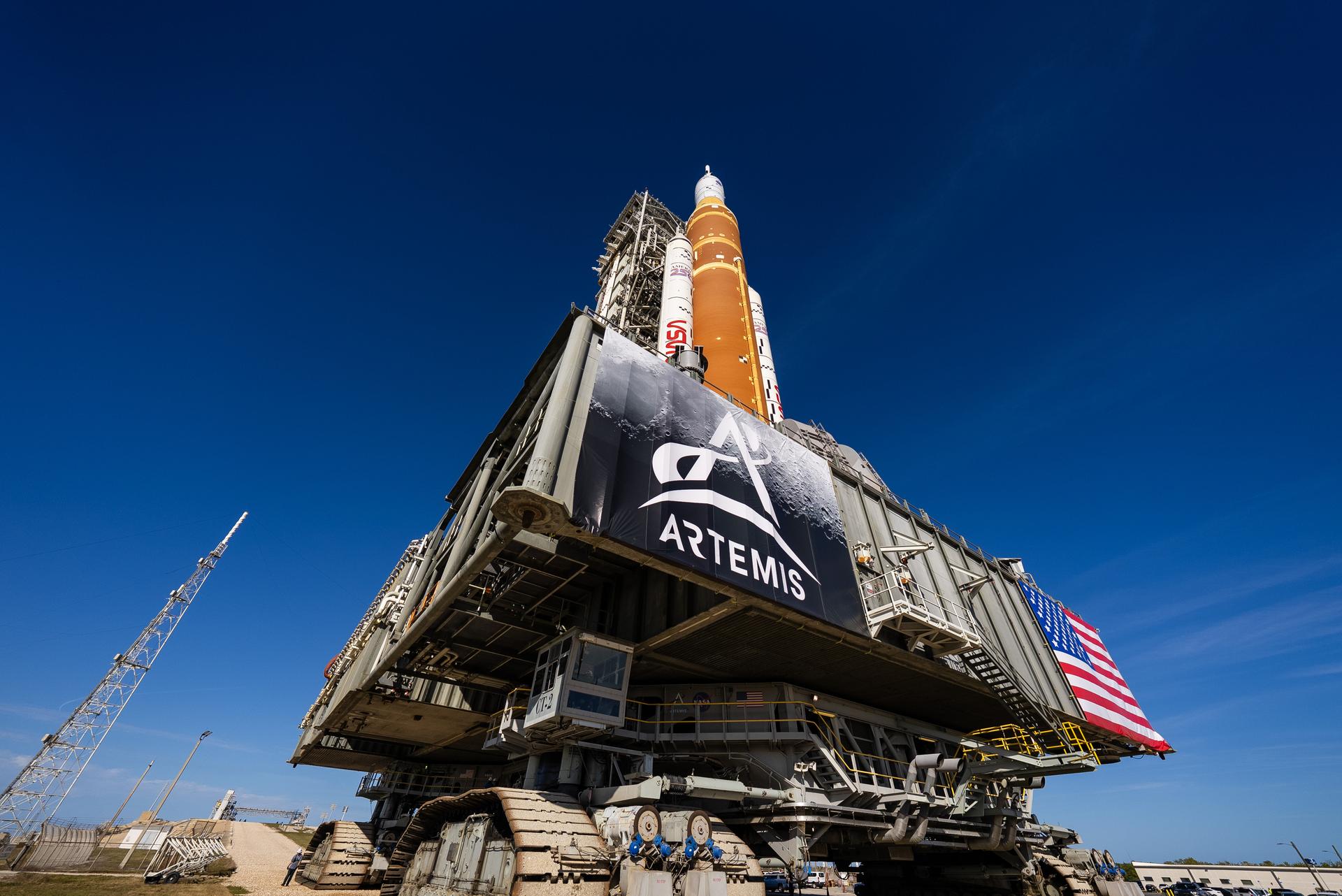
This image shows NASA’s SLS (Space Launch System) and Orion spacecraft rolling out of the Vehicle Assembly Building at NASA’s Kennedy Space Center. NASA's massive Crawler-Transporter, upgraded for the Artemis program, carries the powerful SLS rocket and Orion spacecraft on the Mobile Launcher from the Vehicle Assembly Building to Launch Pad 39B at Kennedy Space Center in preparation for the Artemis II mission.
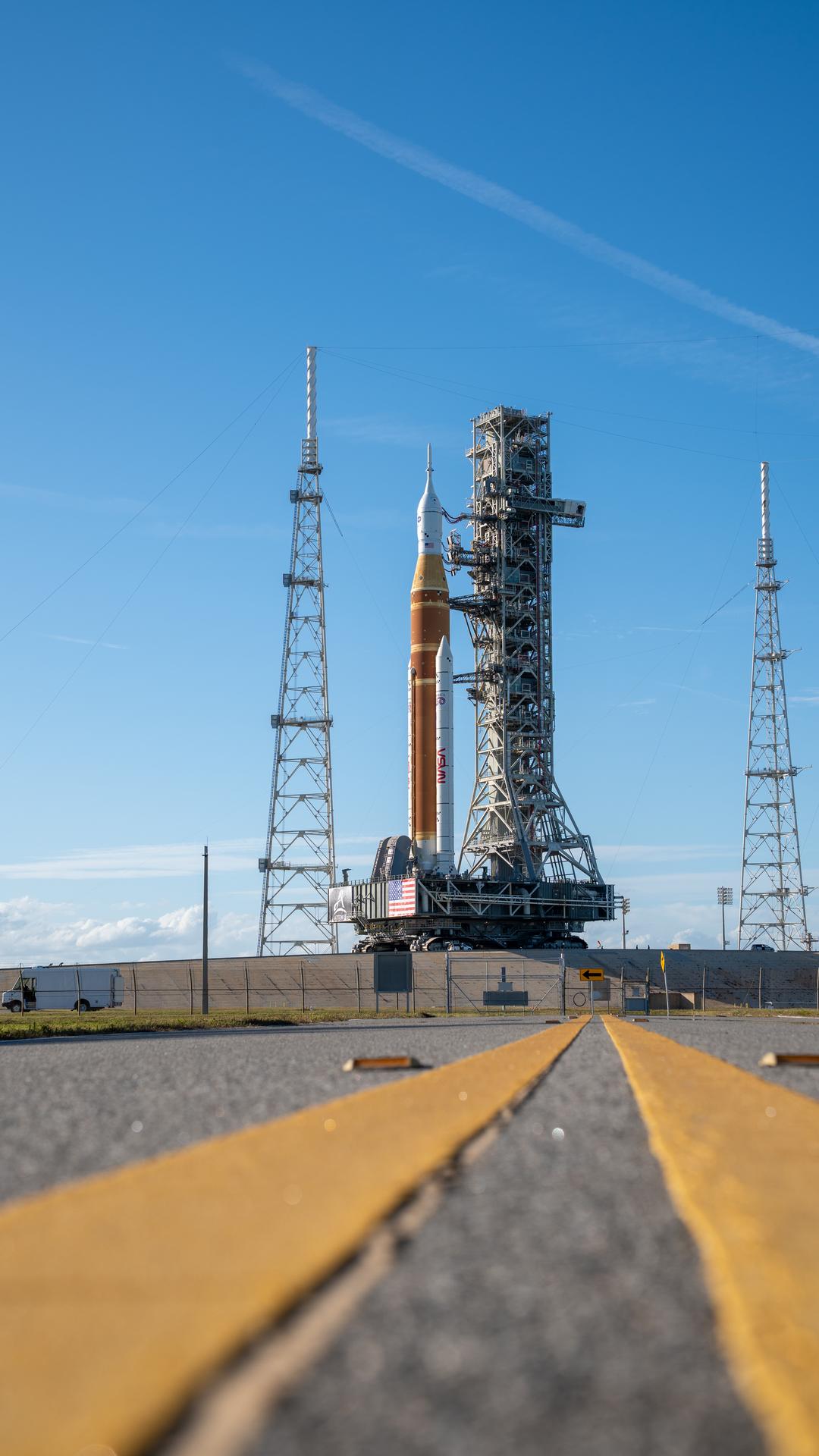
This image shows NASA’s SLS (Space Launch System) and Orion spacecraft rolling out of the Vehicle Assembly Building at NASA’s Kennedy Space Center. NASA's massive Crawler-Transporter, upgraded for the Artemis program, carries the powerful SLS rocket and Orion spacecraft on the Mobile Launcher from the Vehicle Assembly Building to Launch Pad 39B at Kennedy Space Center in preparation for the Artemis II mission.
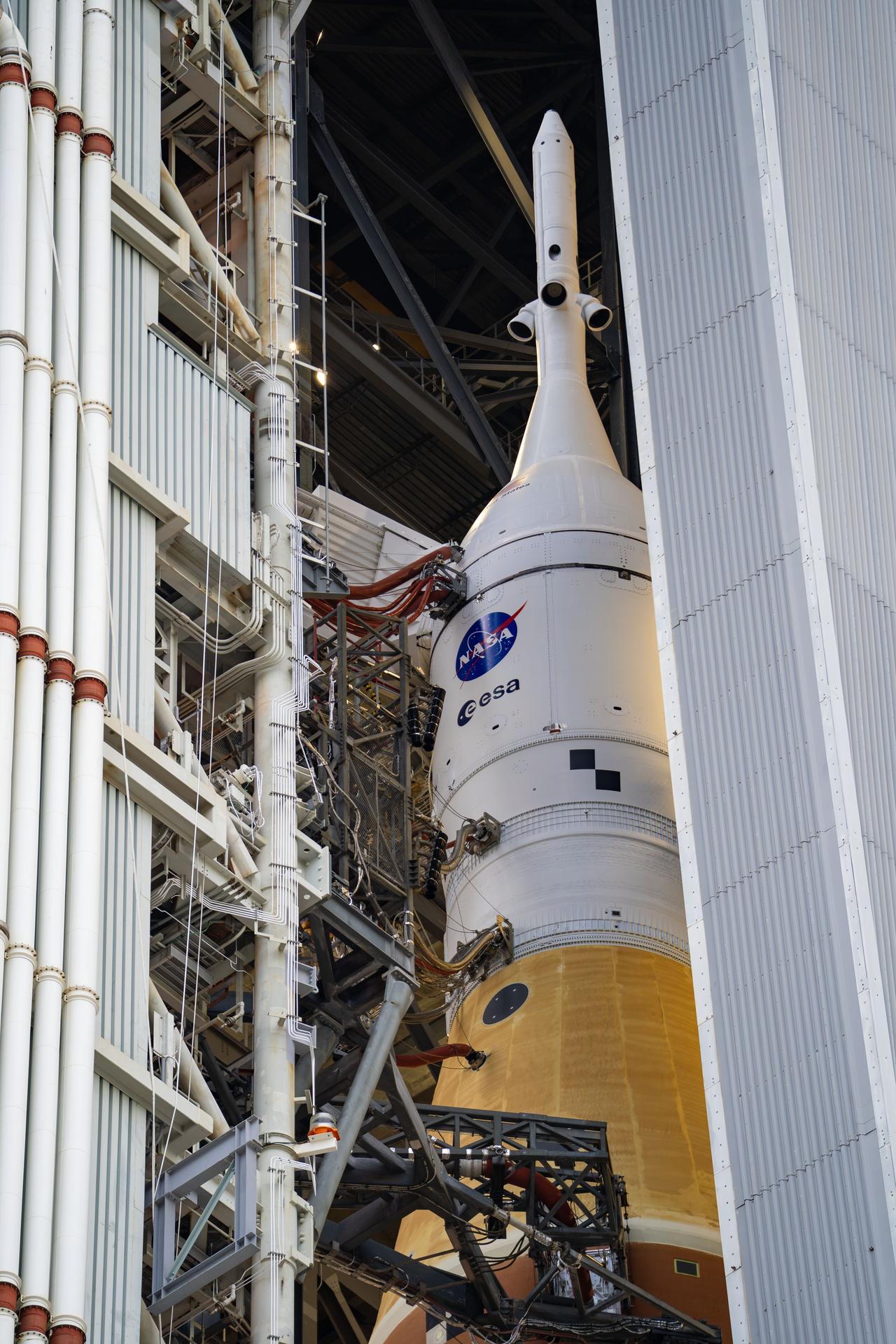
This image shows NASA’s SLS (Space Launch System) and Orion spacecraft rolling out of the Vehicle Assembly Building at NASA’s Kennedy Space Center. NASA's massive Crawler-Transporter, upgraded for the Artemis program, carries the powerful SLS rocket and Orion spacecraft on the Mobile Launcher from the Vehicle Assembly Building to Launch Pad 39B at Kennedy Space Center in preparation for the Artemis II mission.
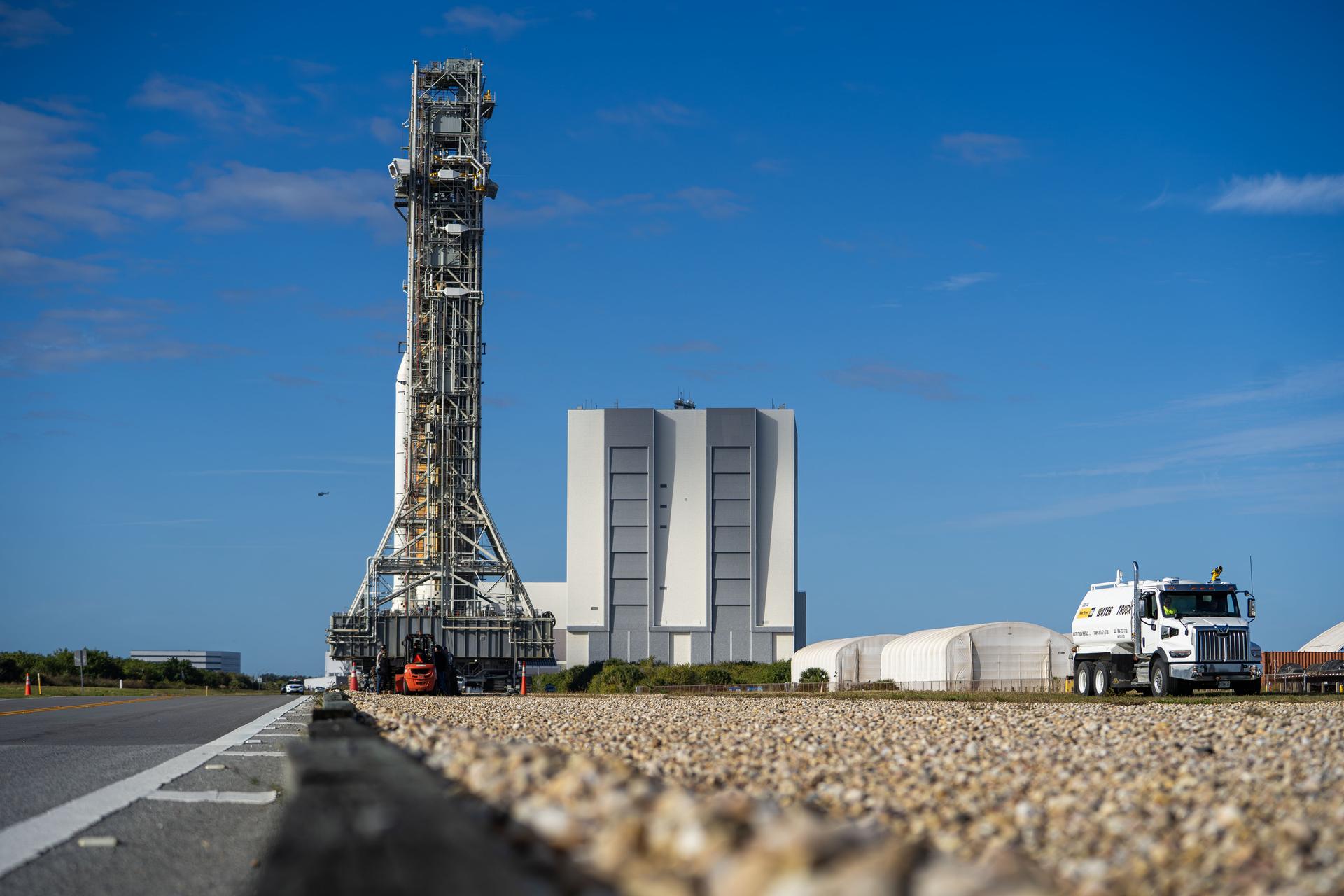
This image shows NASA’s SLS (Space Launch System) and Orion spacecraft rolling out of the Vehicle Assembly Building at NASA’s Kennedy Space Center. NASA's massive Crawler-Transporter, upgraded for the Artemis program, carries the powerful SLS rocket and Orion spacecraft on the Mobile Launcher from the Vehicle Assembly Building to Launch Pad 39B at Kennedy Space Center in preparation for the Artemis II mission.
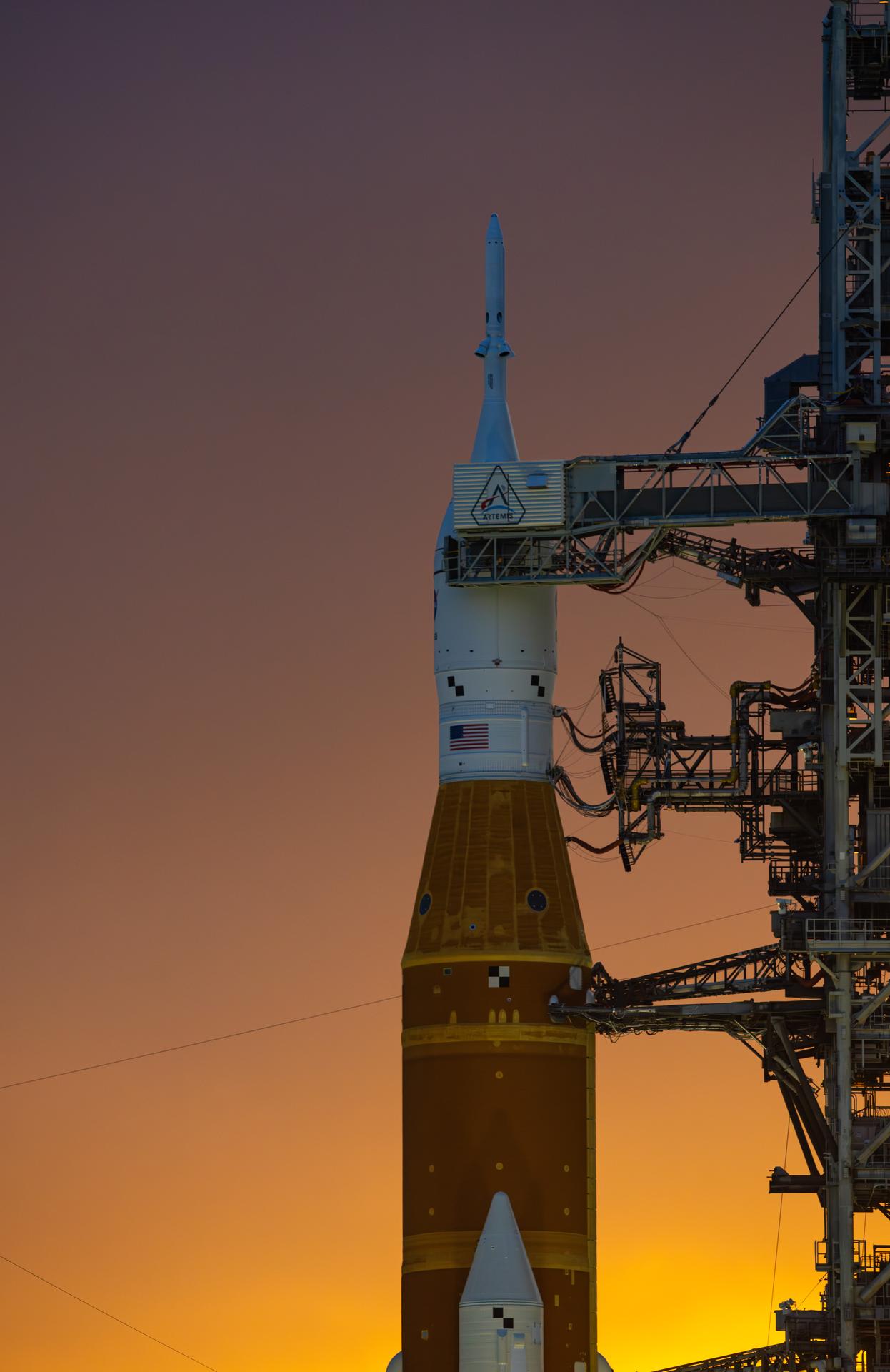
This image shows a sunset of NASA’s SLS (Space Launch System) and Orion spacecraft at NASA’s Kennedy Space Center. NASA's massive Crawler-Transporter, upgraded for the Artemis program, carried the powerful SLS rocket and Orion spacecraft on the Mobile Launcher from the Vehicle Assembly Building to Launch Pad 39B at Kennedy Space Center in preparation for the Artemis II mission.
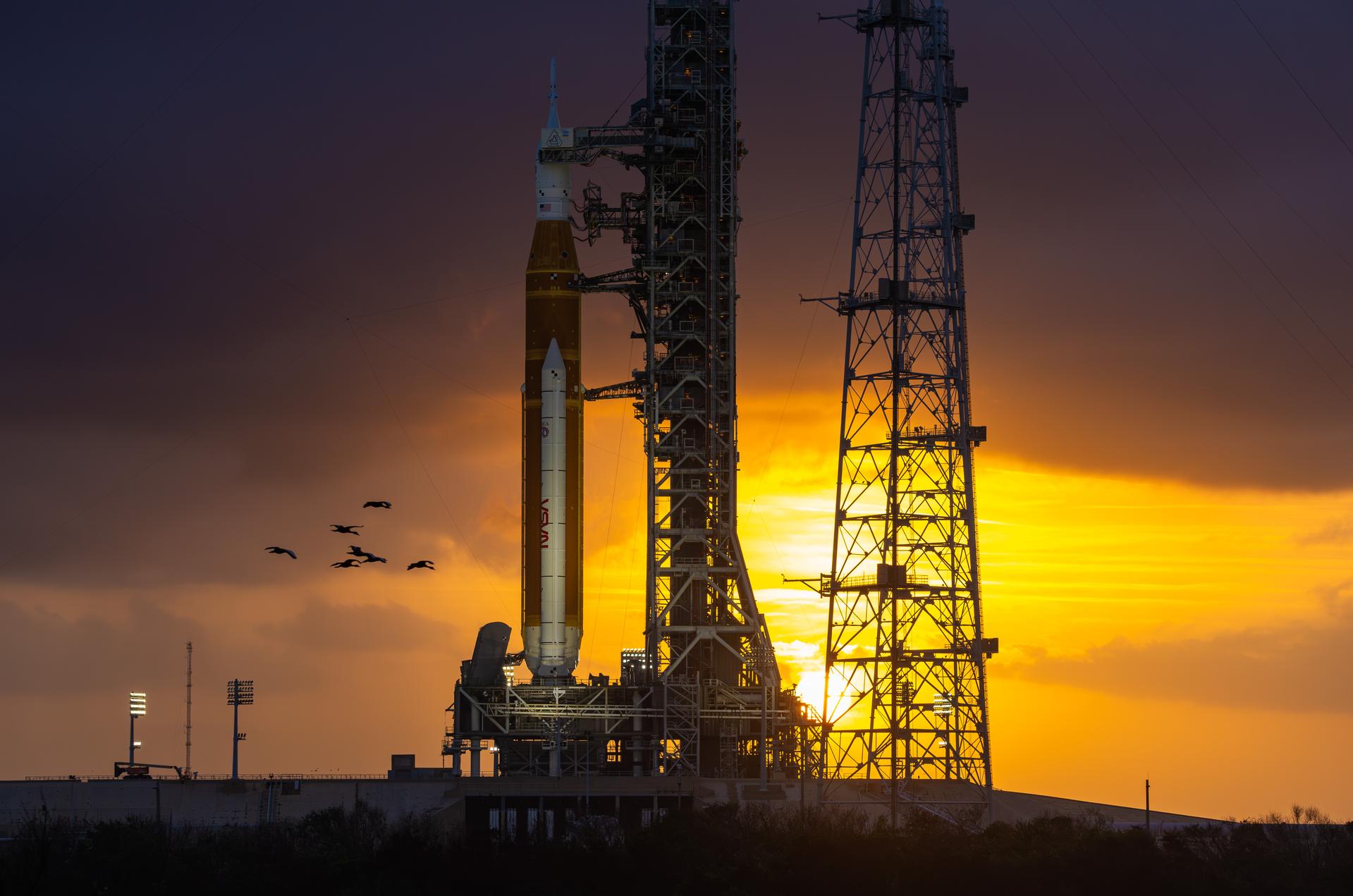
This image shows a sunset of NASA’s SLS (Space Launch System) and Orion spacecraft at NASA’s Kennedy Space Center. NASA's massive Crawler-Transporter, upgraded for the Artemis program, carried the powerful SLS rocket and Orion spacecraft on the Mobile Launcher from the Vehicle Assembly Building to Launch Pad 39B at Kennedy Space Center in preparation for the Artemis II mission.
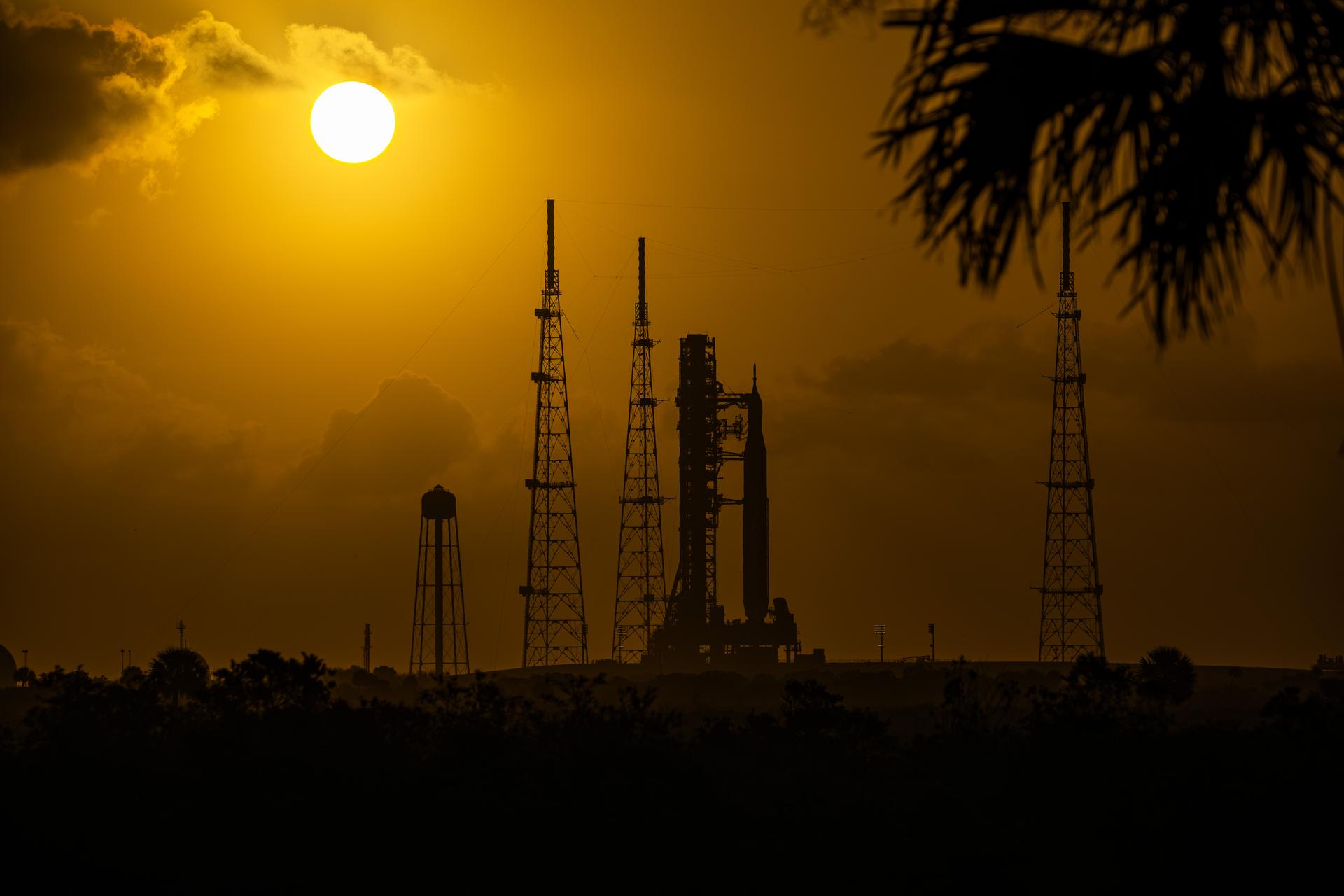
This image shows a sunset of NASA’s SLS (Space Launch System) and Orion spacecraft at NASA’s Kennedy Space Center. NASA's massive Crawler-Transporter, upgraded for the Artemis program, carried the powerful SLS rocket and Orion spacecraft on the Mobile Launcher from the Vehicle Assembly Building to Launch Pad 39B at Kennedy Space Center in preparation for the Artemis II mission.
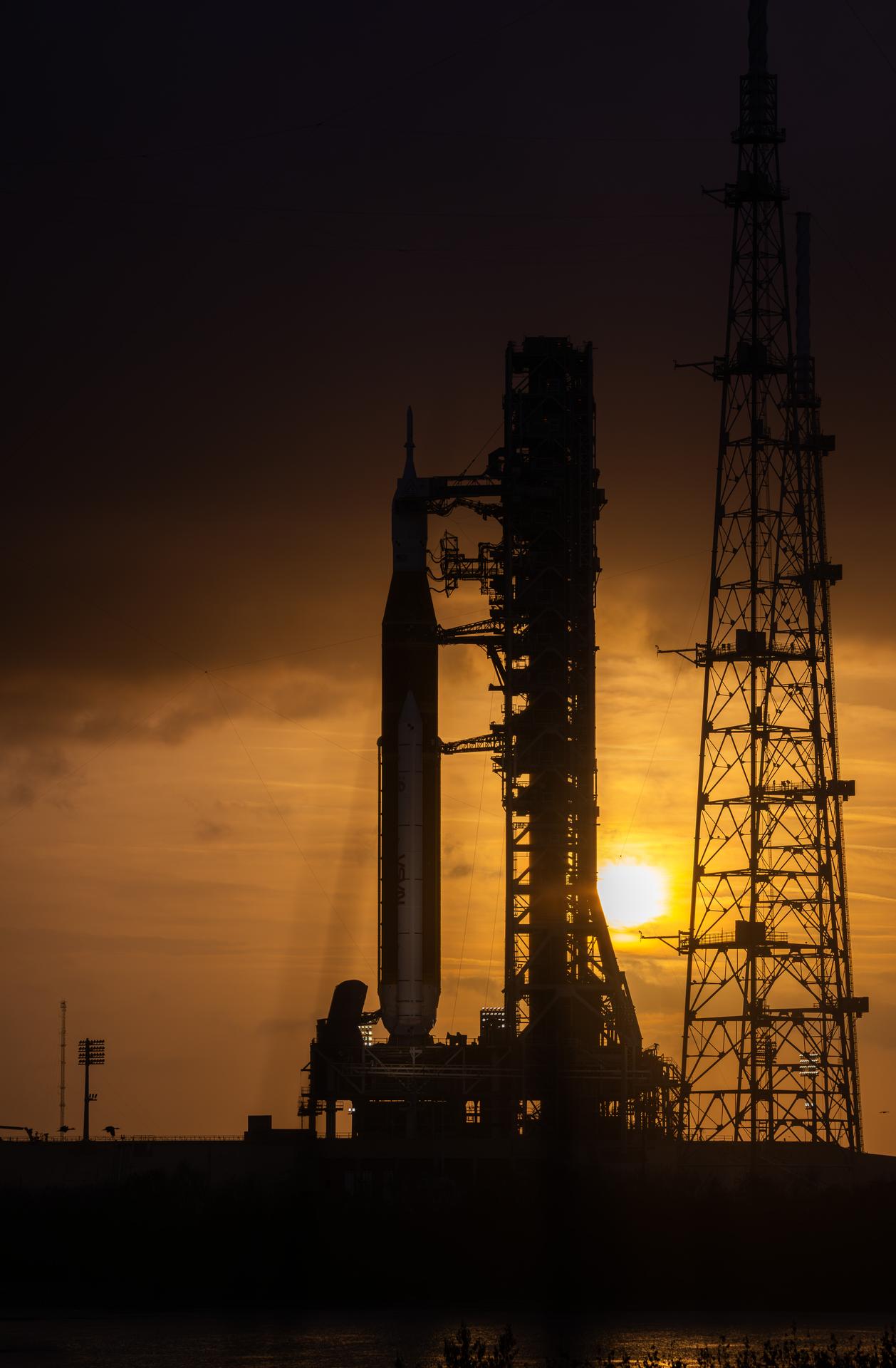
This image shows a sunset of NASA’s SLS (Space Launch System) and Orion spacecraft at NASA’s Kennedy Space Center. NASA's massive Crawler-Transporter, upgraded for the Artemis program, carried the powerful SLS rocket and Orion spacecraft on the Mobile Launcher from the Vehicle Assembly Building to Launch Pad 39B at Kennedy Space Center in preparation for the Artemis II mission.
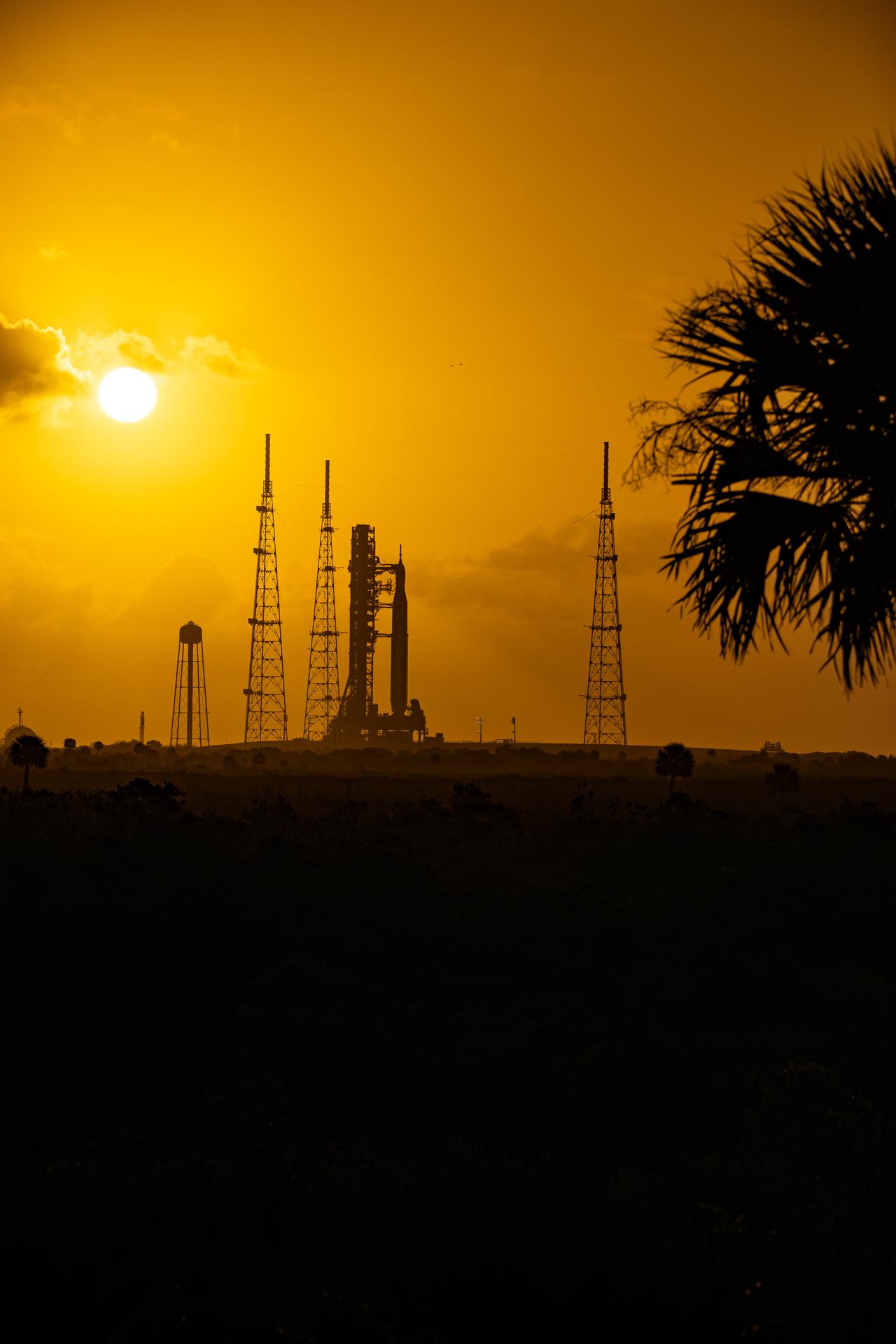
This image shows a sunset of NASA’s SLS (Space Launch System) and Orion spacecraft at NASA’s Kennedy Space Center. NASA's massive Crawler-Transporter, upgraded for the Artemis program, carried the powerful SLS rocket and Orion spacecraft on the Mobile Launcher from the Vehicle Assembly Building to Launch Pad 39B at Kennedy Space Center in preparation for the Artemis II mission.
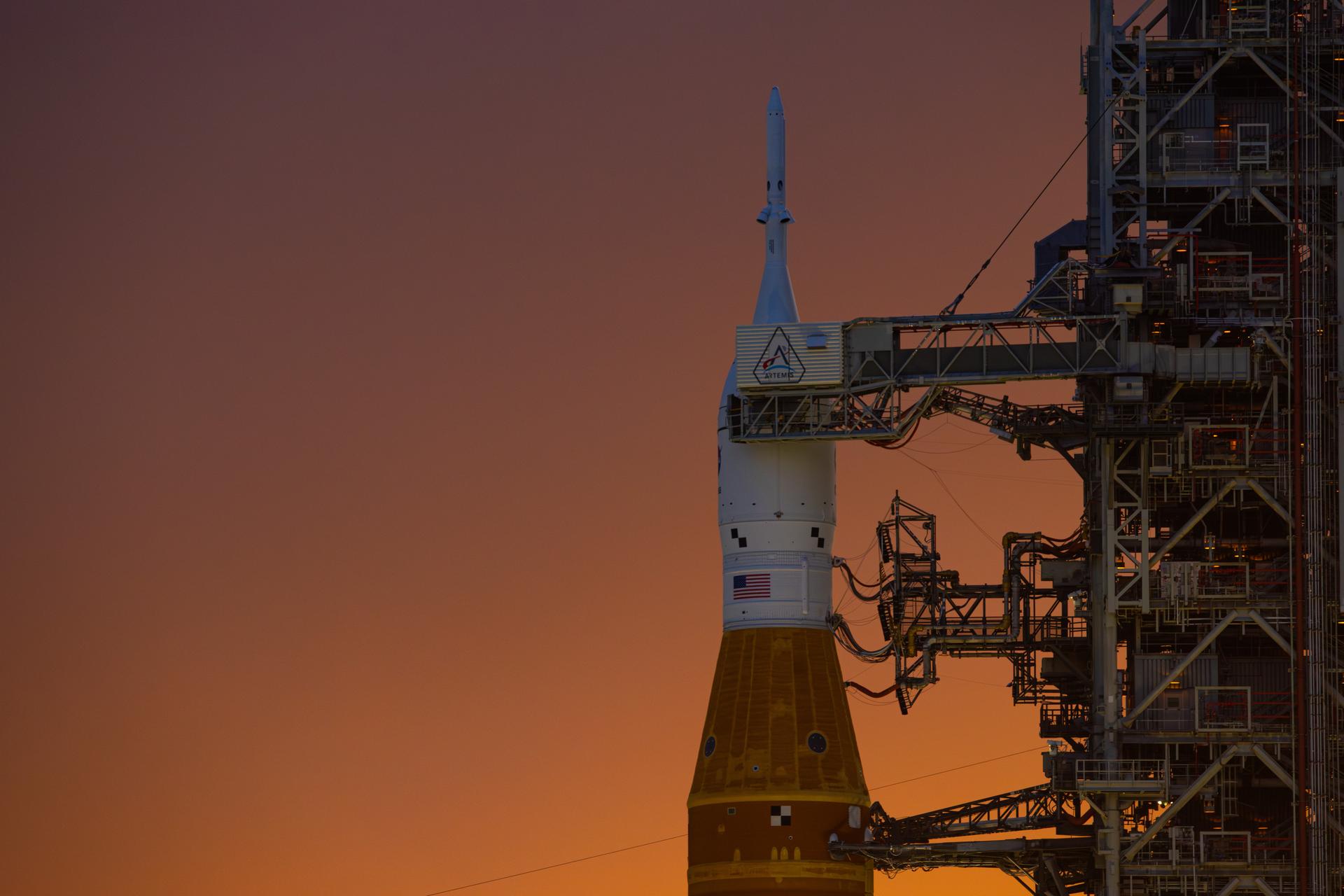
This image shows a sunset of NASA’s SLS (Space Launch System) and Orion spacecraft at NASA’s Kennedy Space Center. NASA's massive Crawler-Transporter, upgraded for the Artemis program, carried the powerful SLS rocket and Orion spacecraft on the Mobile Launcher from the Vehicle Assembly Building to Launch Pad 39B at Kennedy Space Center in preparation for the Artemis II mission.
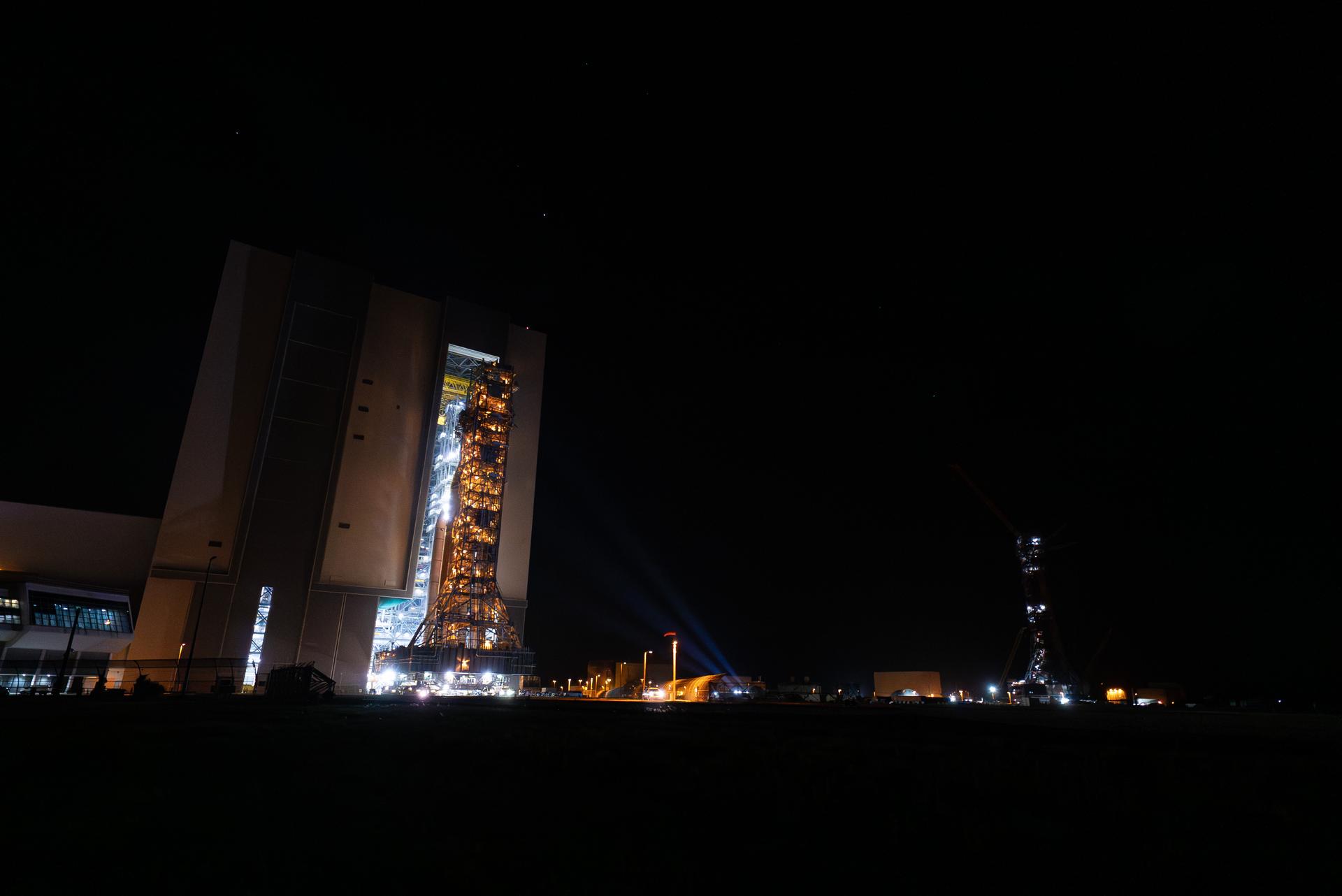
This image shows NASA’s SLS (Space Launch System) and Orion spacecraft rolling out of the Vehicle Assembly Building at NASA’s Kennedy Space Center. NASA's massive Crawler-Transporter, upgraded for the Artemis program, carries the powerful SLS rocket and Orion spacecraft on the Mobile Launcher from the Vehicle Assembly Building to Launch Pad 39B at Kennedy Space Center in preparation for the Artemis II mission.
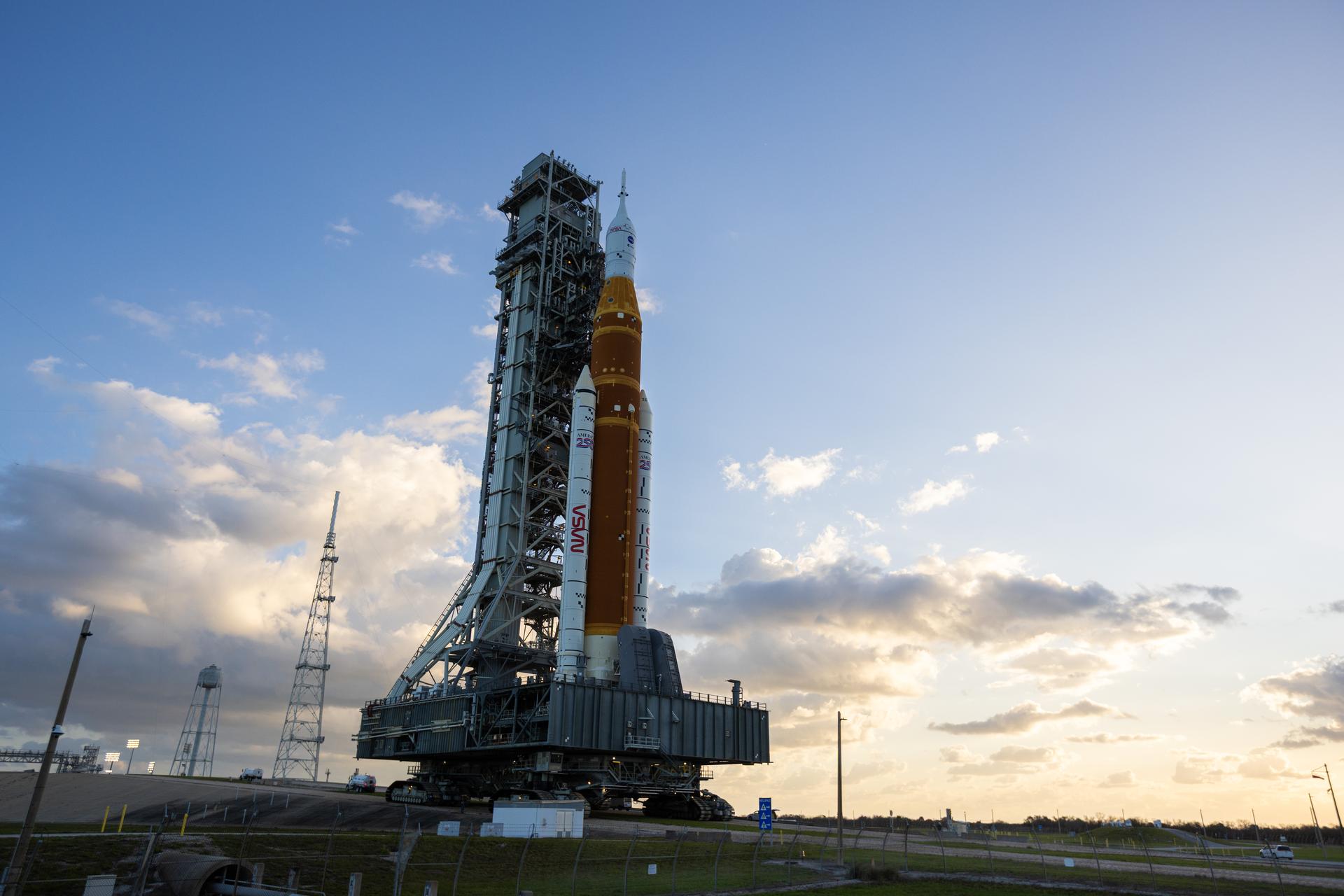
This image shows NASA’s SLS (Space Launch System) and Orion spacecraft rolling out of the Vehicle Assembly Building at NASA’s Kennedy Space Center. NASA's massive Crawler-Transporter, upgraded for the Artemis program, carries the powerful SLS rocket and Orion spacecraft on the Mobile Launcher from the Vehicle Assembly Building to Launch Pad 39B at Kennedy Space Center in preparation for the Artemis II mission.
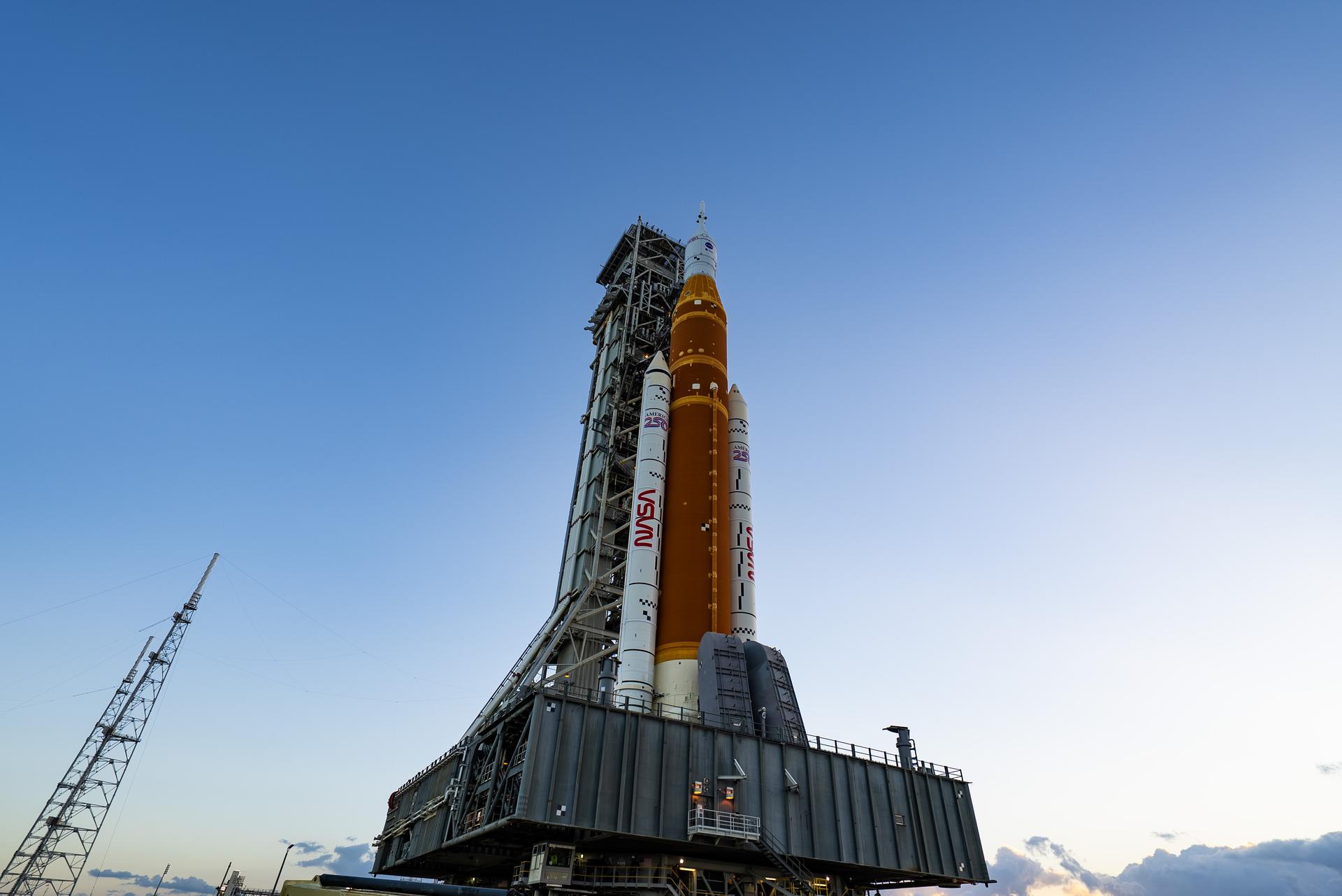
This image shows NASA’s SLS (Space Launch System) and Orion spacecraft rolling out of the Vehicle Assembly Building at NASA’s Kennedy Space Center. NASA's massive Crawler-Transporter, upgraded for the Artemis program, carries the powerful SLS rocket and Orion spacecraft on the Mobile Launcher from the Vehicle Assembly Building to Launch Pad 39B at Kennedy Space Center in preparation for the Artemis II mission.
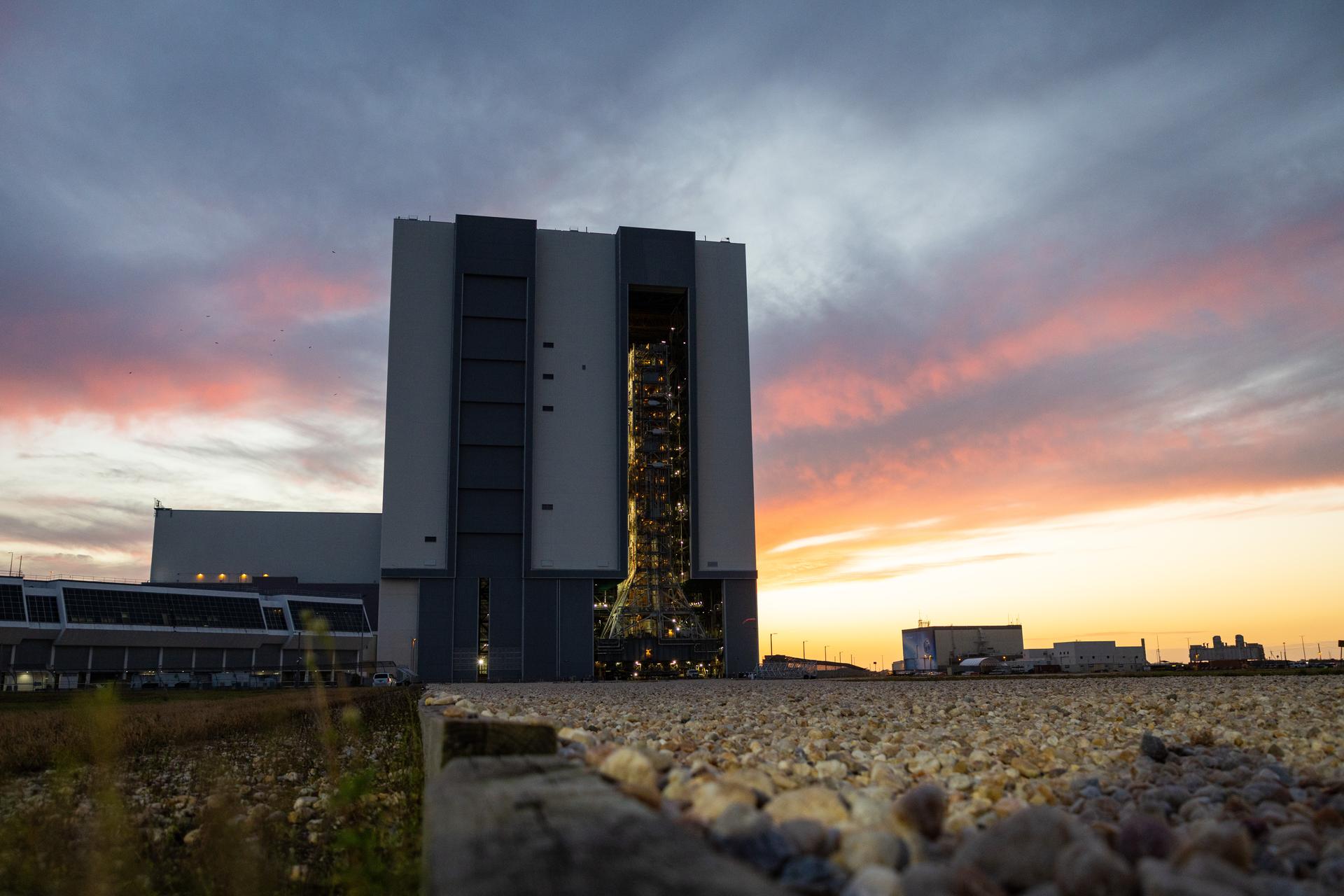
This image shows NASA’s SLS (Space Launch System) and Orion spacecraft rolling out of the Vehicle Assembly Building at NASA’s Kennedy Space Center. NASA's massive Crawler-Transporter, upgraded for the Artemis program, carries the powerful SLS rocket and Orion spacecraft on the Mobile Launcher from the Vehicle Assembly Building to Launch Pad 39B at Kennedy Space Center in preparation for the Artemis II mission.
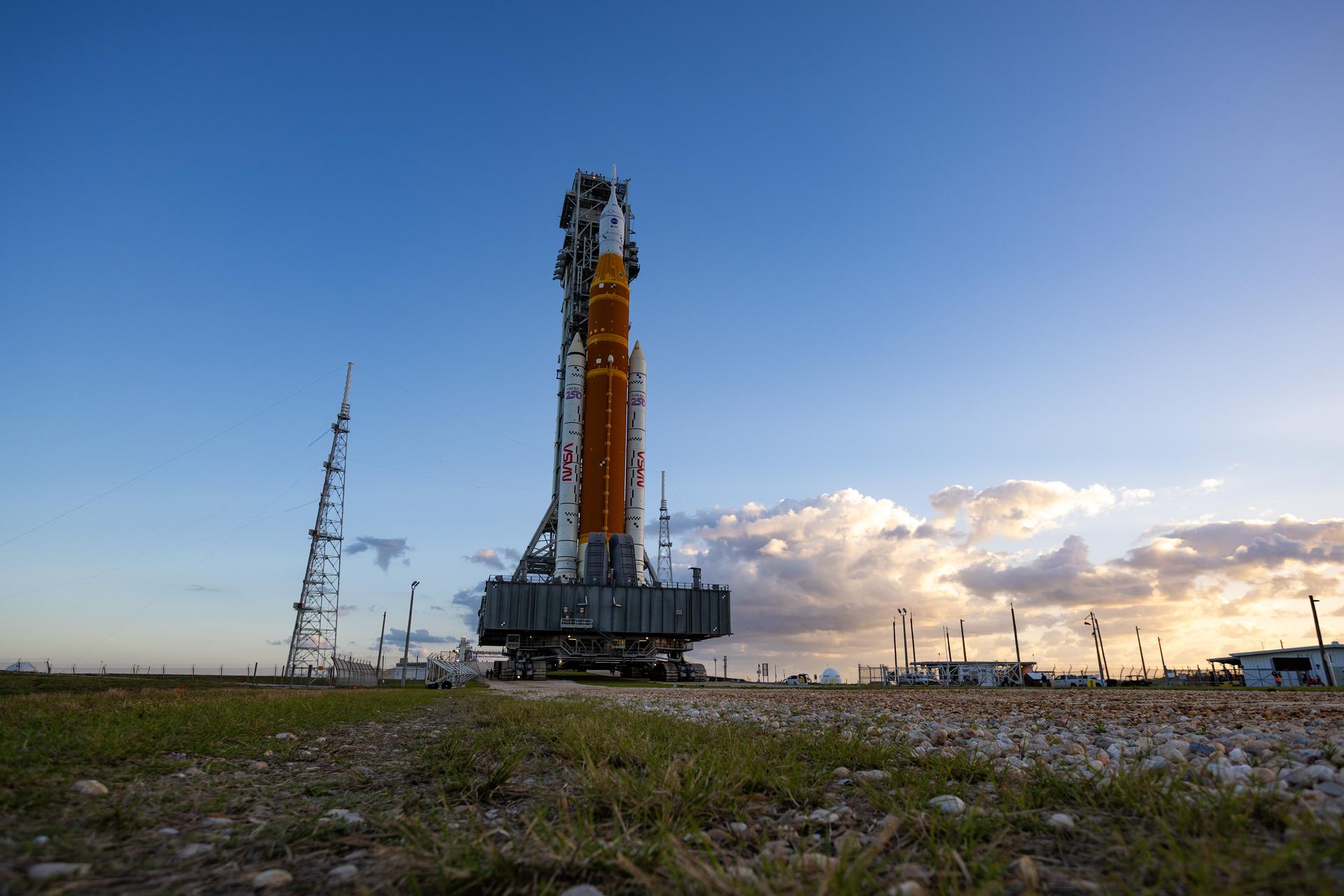
This image shows NASA’s SLS (Space Launch System) and Orion spacecraft rolling out of the Vehicle Assembly Building at NASA’s Kennedy Space Center. NASA's massive Crawler-Transporter, upgraded for the Artemis program, carries the powerful SLS rocket and Orion spacecraft on the Mobile Launcher from the Vehicle Assembly Building to Launch Pad 39B at Kennedy Space Center in preparation for the Artemis II mission.
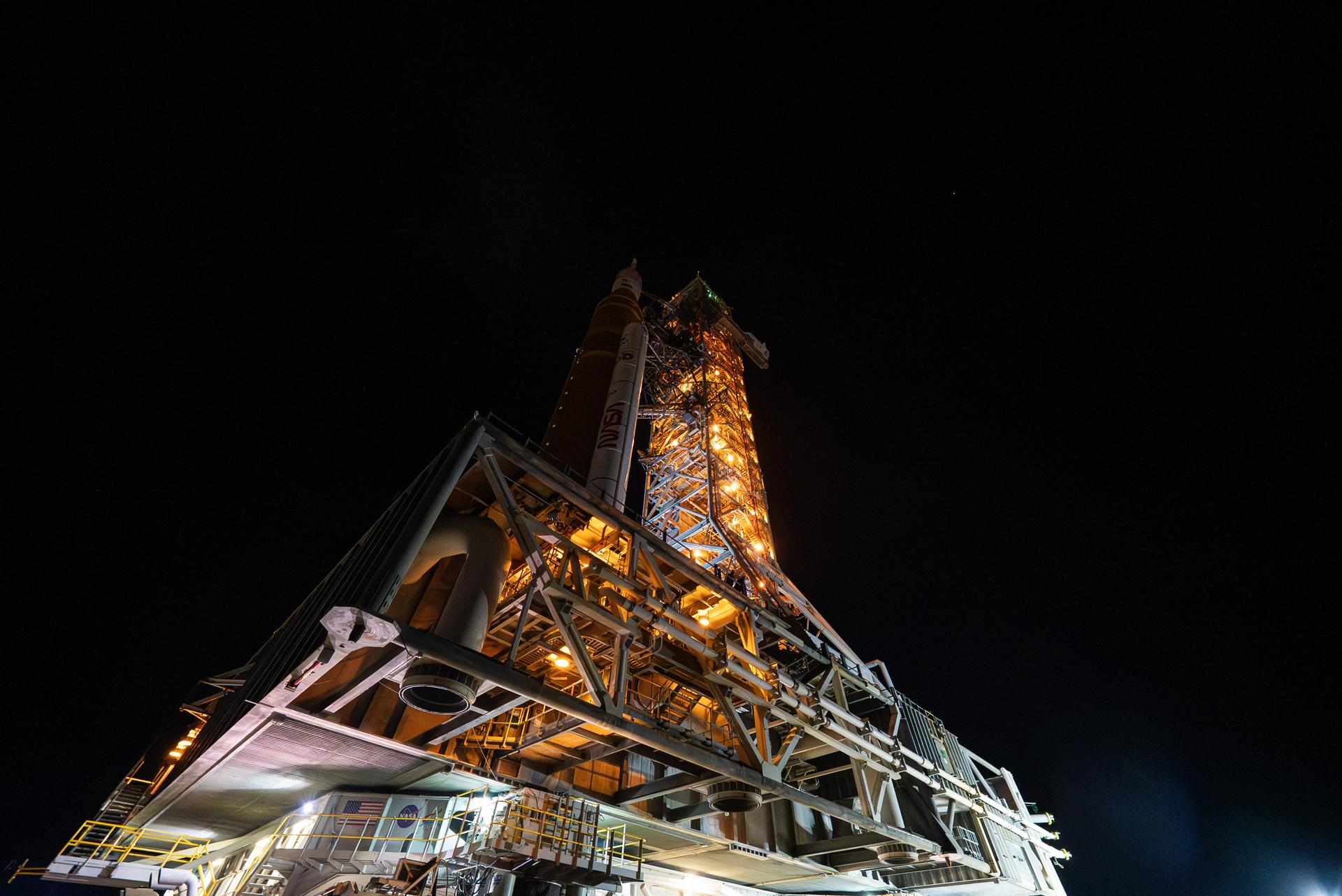
This image shows NASA’s SLS (Space Launch System) and Orion spacecraft rolling out of the Vehicle Assembly Building at NASA’s Kennedy Space Center. NASA's massive Crawler-Transporter, upgraded for the Artemis program, carries the powerful SLS rocket and Orion spacecraft on the Mobile Launcher from the Vehicle Assembly Building to Launch Pad 39B at Kennedy Space Center in preparation for the Artemis II mission.
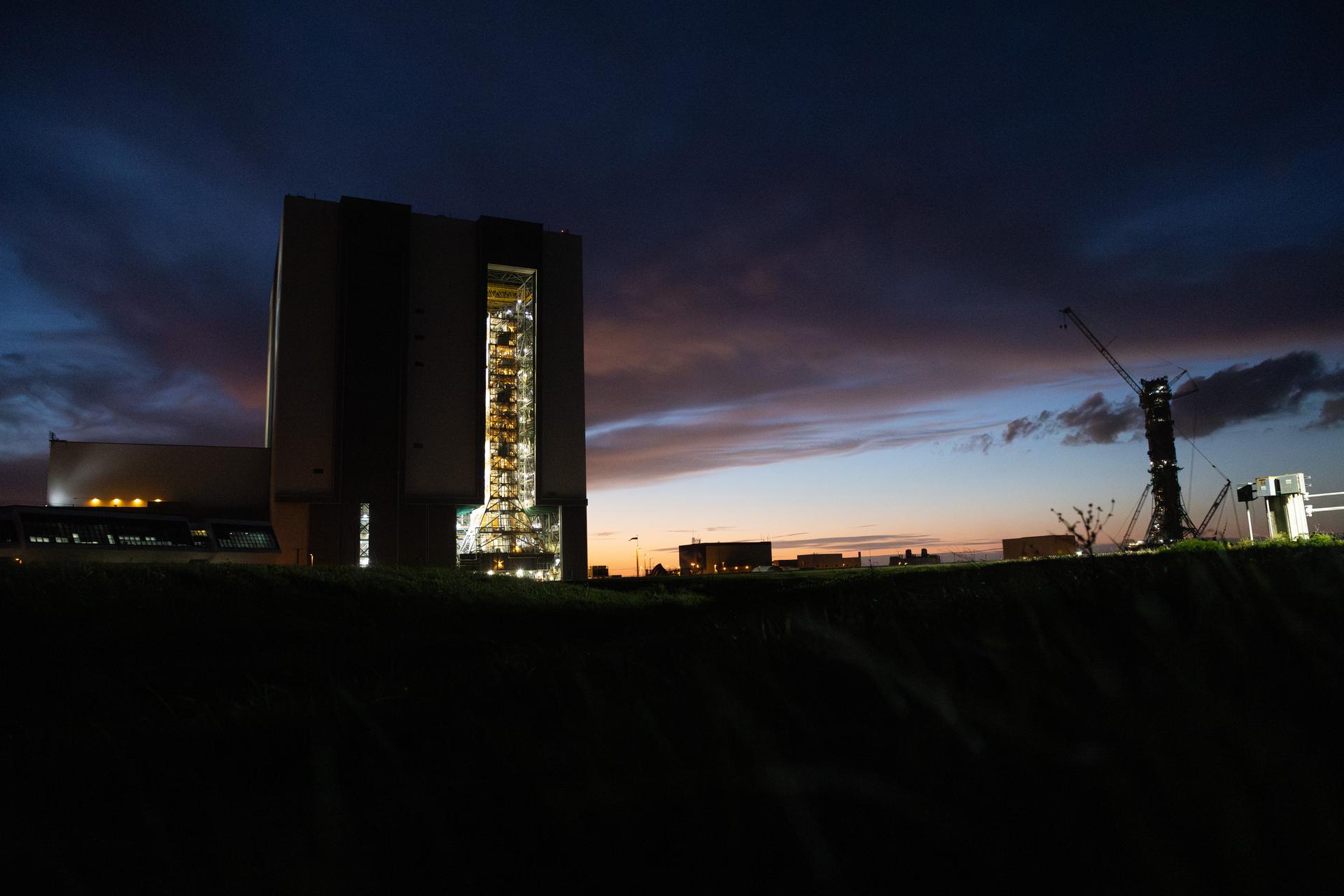
This image shows NASA’s SLS (Space Launch System) and Orion spacecraft rolling out of the Vehicle Assembly Building at NASA’s Kennedy Space Center. NASA's massive Crawler-Transporter, upgraded for the Artemis program, carries the powerful SLS rocket and Orion spacecraft on the Mobile Launcher from the Vehicle Assembly Building to Launch Pad 39B at Kennedy Space Center in preparation for the Artemis II mission.
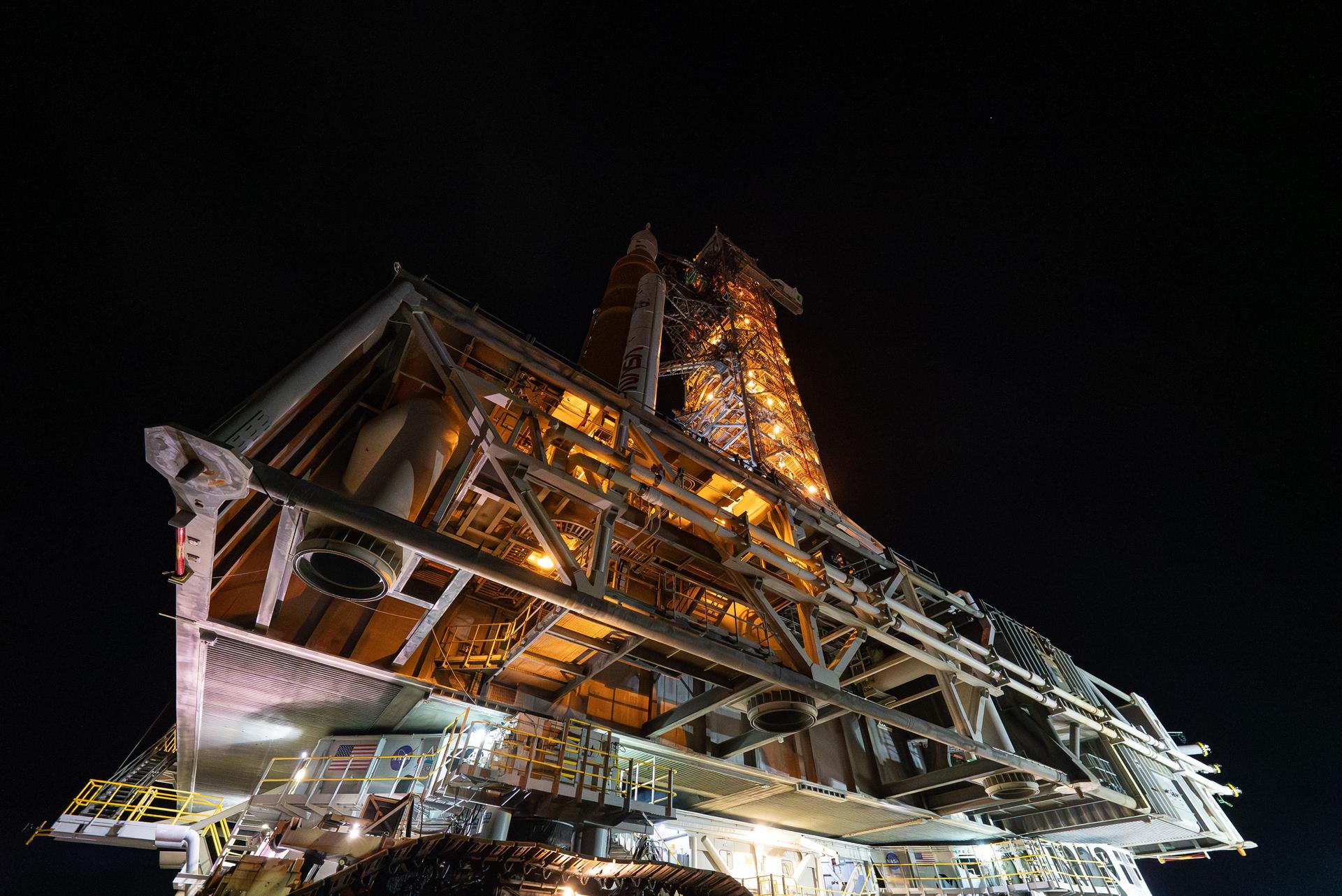
This image shows NASA’s SLS (Space Launch System) and Orion spacecraft rolling out of the Vehicle Assembly Building at NASA’s Kennedy Space Center. NASA's massive Crawler-Transporter, upgraded for the Artemis program, carries the powerful SLS rocket and Orion spacecraft on the Mobile Launcher from the Vehicle Assembly Building to Launch Pad 39B at Kennedy Space Center in preparation for the Artemis II mission.
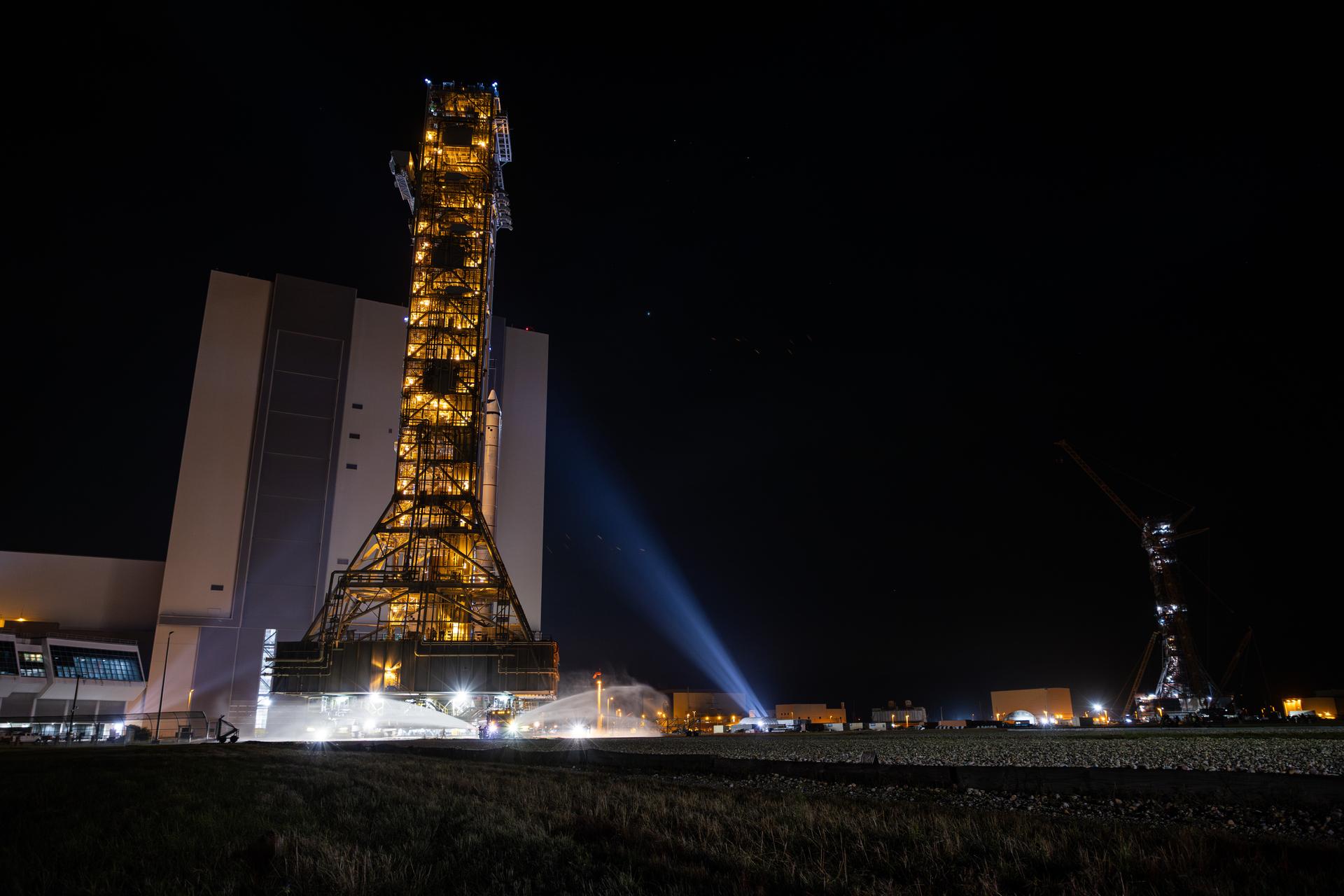
This image shows NASA’s SLS (Space Launch System) and Orion spacecraft rolling out of the Vehicle Assembly Building at NASA’s Kennedy Space Center. NASA's massive Crawler-Transporter, upgraded for the Artemis program, carries the powerful SLS rocket and Orion spacecraft on the Mobile Launcher from the Vehicle Assembly Building to Launch Pad 39B at Kennedy Space Center in preparation for the Artemis II mission.
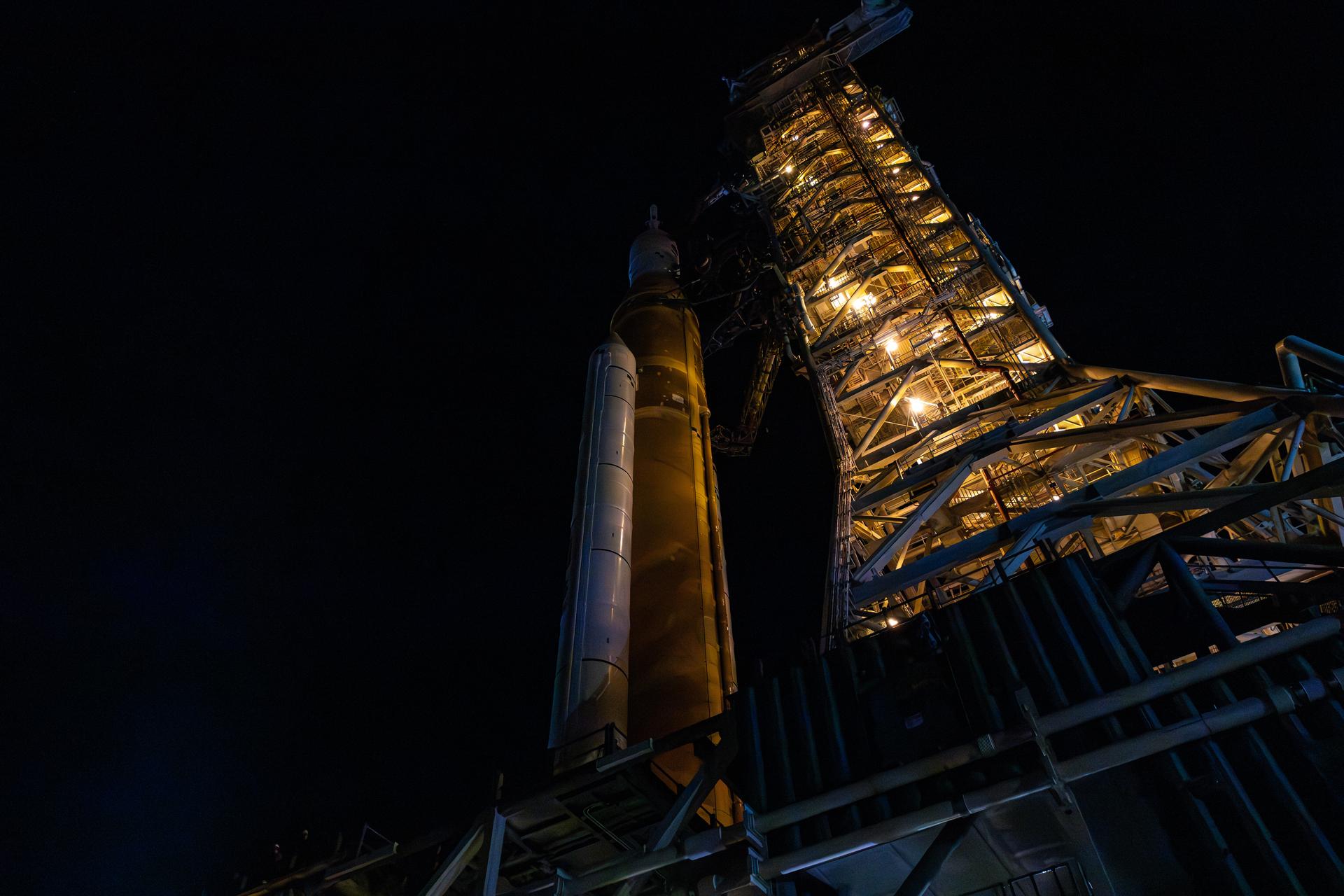
This image shows NASA’s SLS (Space Launch System) and Orion spacecraft rolling out of the Vehicle Assembly Building at NASA’s Kennedy Space Center. NASA's massive Crawler-Transporter, upgraded for the Artemis program, carries the powerful SLS rocket and Orion spacecraft on the Mobile Launcher from the Vehicle Assembly Building to Launch Pad 39B at Kennedy Space Center in preparation for the Artemis II mission.
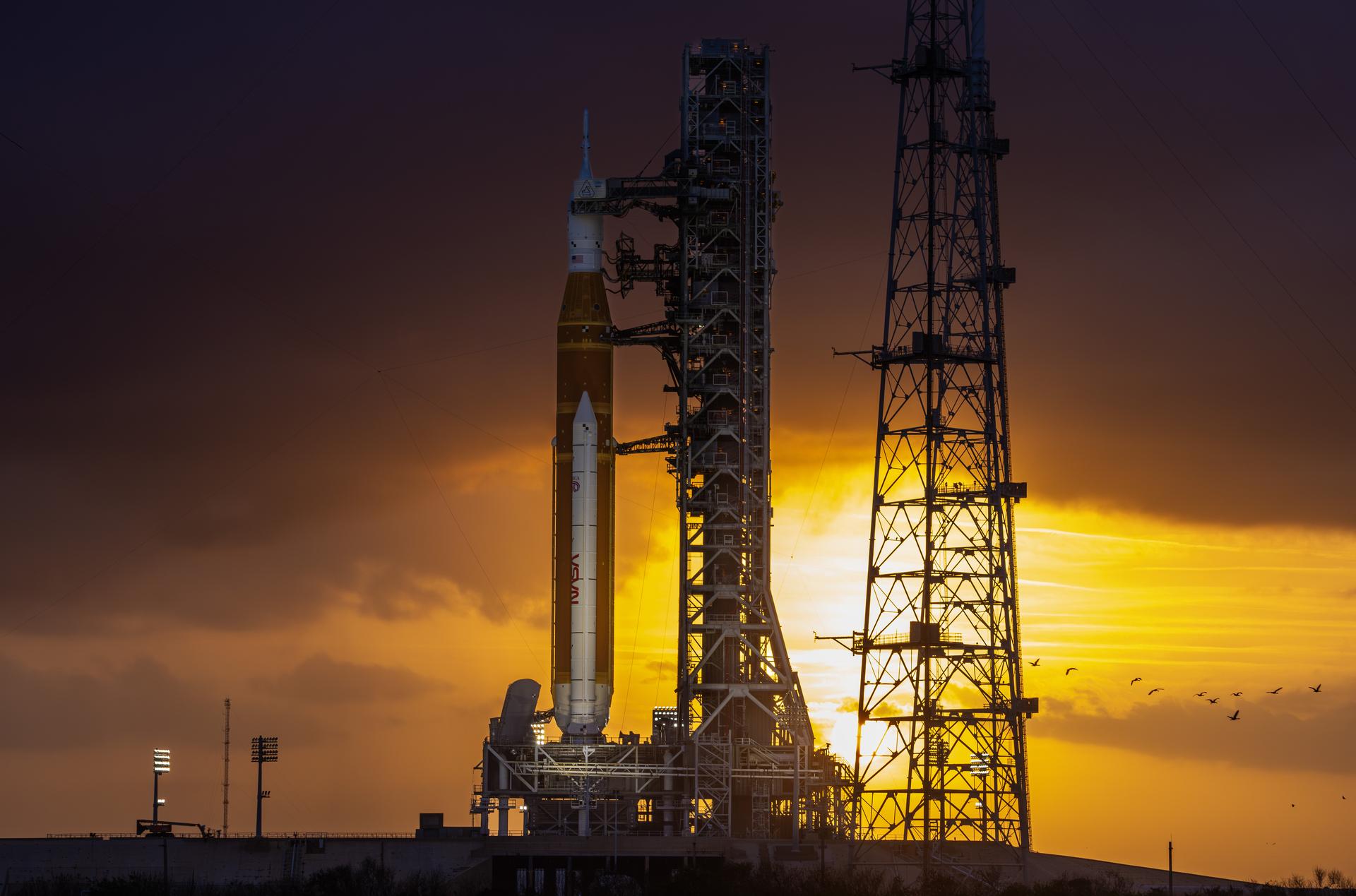
This image shows a sunset of NASA’s SLS (Space Launch System) and Orion spacecraft at NASA’s Kennedy Space Center. NASA's massive Crawler-Transporter, upgraded for the Artemis program, carried the powerful SLS rocket and Orion spacecraft on the Mobile Launcher from the Vehicle Assembly Building to Launch Pad 39B at Kennedy Space Center in preparation for the Artemis II mission.
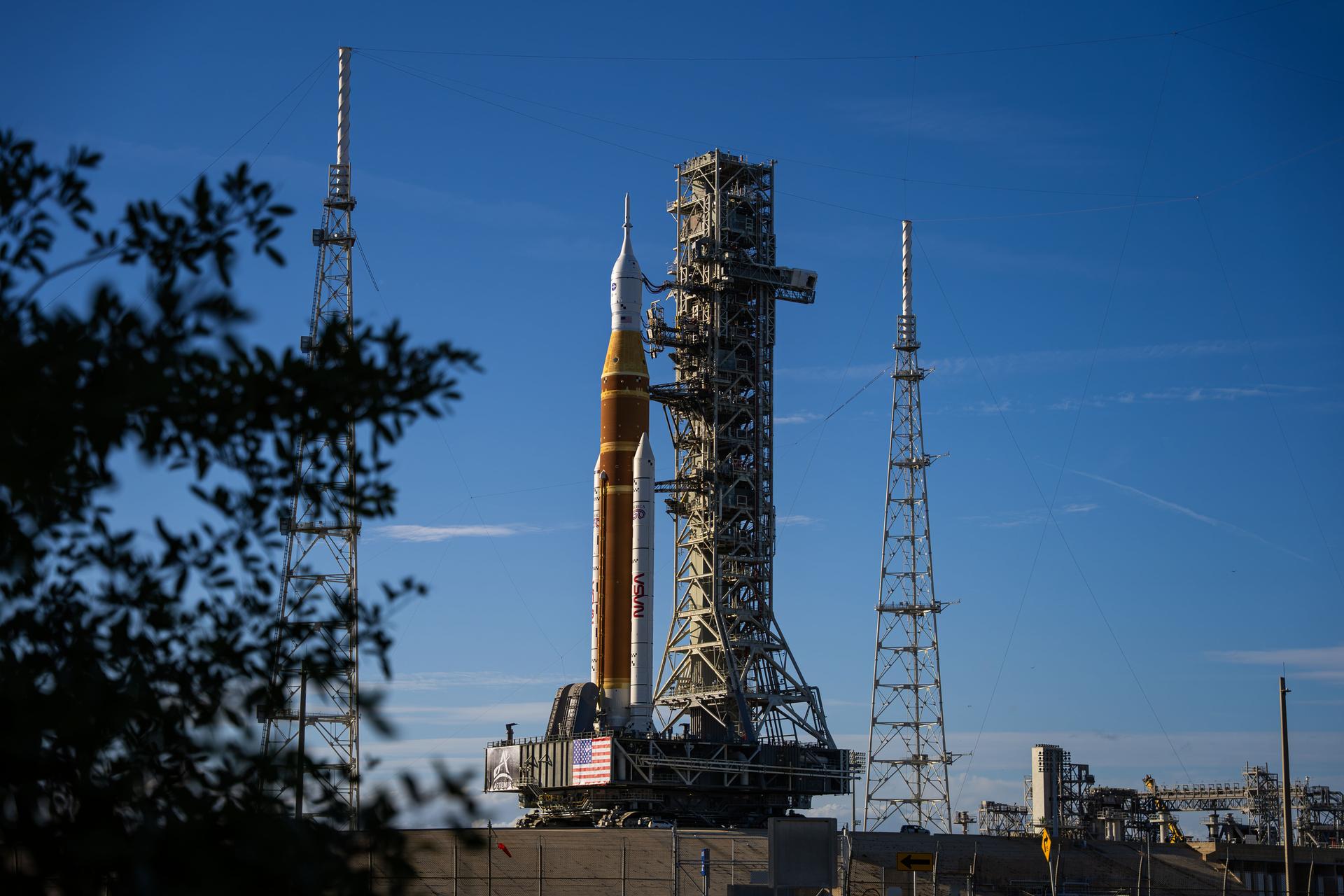
This image shows NASA’s SLS (Space Launch System) and Orion spacecraft rolling out of the Vehicle Assembly Building at NASA’s Kennedy Space Center. NASA's massive Crawler-Transporter, upgraded for the Artemis program, carries the powerful SLS rocket and Orion spacecraft on the Mobile Launcher from the Vehicle Assembly Building to Launch Pad 39B at Kennedy Space Center in preparation for the Artemis II mission.
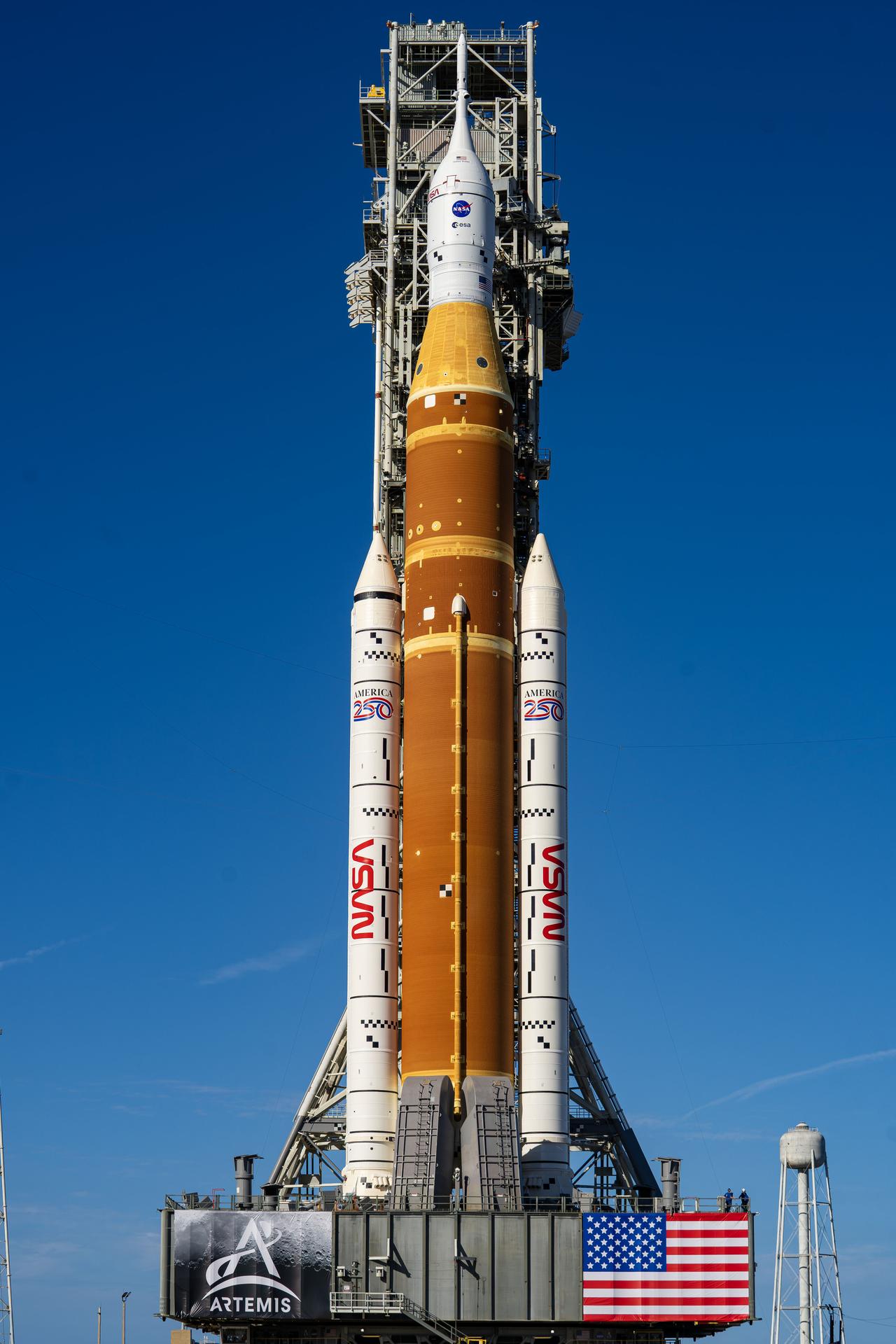
This image shows NASA’s SLS (Space Launch System) and Orion spacecraft rolling out of the Vehicle Assembly Building at NASA’s Kennedy Space Center. NASA's massive Crawler-Transporter, upgraded for the Artemis program, carries the powerful SLS rocket and Orion spacecraft on the Mobile Launcher from the Vehicle Assembly Building to Launch Pad 39B at Kennedy Space Center in preparation for the Artemis II mission.
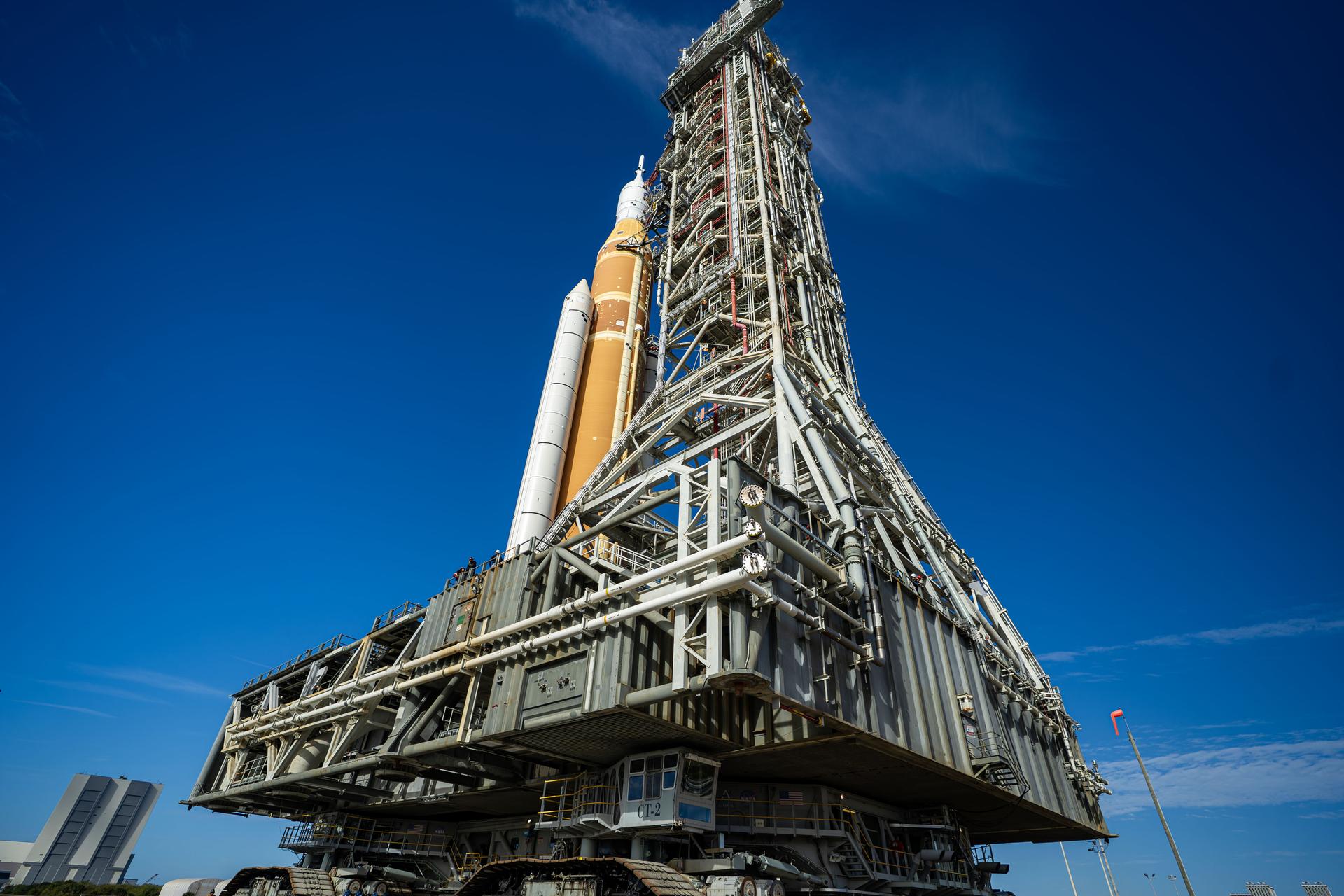
This image shows NASA’s SLS (Space Launch System) and Orion spacecraft rolling out of the Vehicle Assembly Building at NASA’s Kennedy Space Center. NASA's massive Crawler-Transporter, upgraded for the Artemis program, carries the powerful SLS rocket and Orion spacecraft on the Mobile Launcher from the Vehicle Assembly Building to Launch Pad 39B at Kennedy Space Center in preparation for the Artemis II mission.
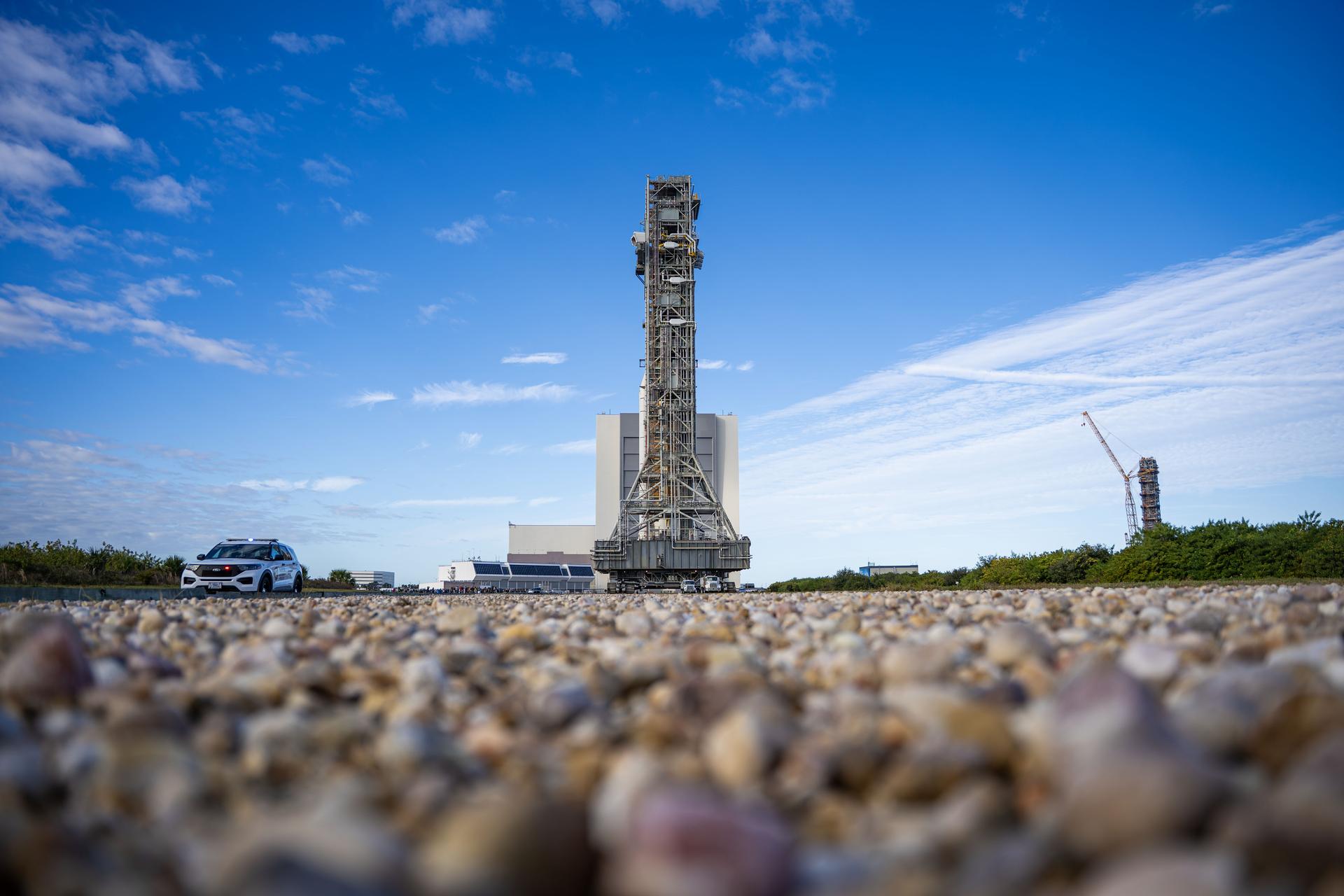
This image shows NASA’s SLS (Space Launch System) and Orion spacecraft rolling out of the Vehicle Assembly Building at NASA’s Kennedy Space Center. NASA's massive Crawler-Transporter, upgraded for the Artemis program, carries the powerful SLS rocket and Orion spacecraft on the Mobile Launcher from the Vehicle Assembly Building to Launch Pad 39B at Kennedy Space Center in preparation for the Artemis II mission.
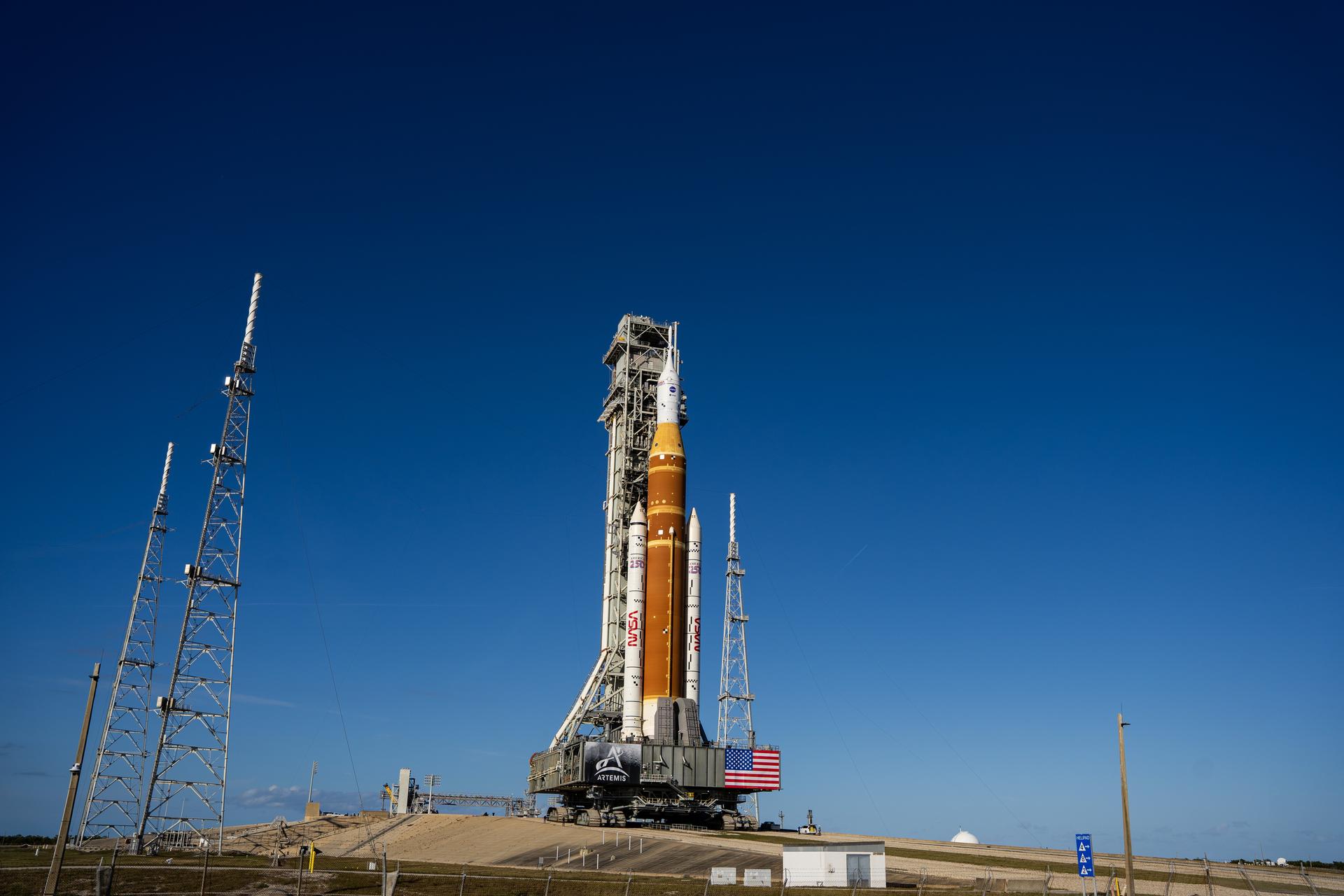
This image shows NASA’s SLS (Space Launch System) and Orion spacecraft rolling out of the Vehicle Assembly Building at NASA’s Kennedy Space Center. NASA's massive Crawler-Transporter, upgraded for the Artemis program, carries the powerful SLS rocket and Orion spacecraft on the Mobile Launcher from the Vehicle Assembly Building to Launch Pad 39B at Kennedy Space Center in preparation for the Artemis II mission.
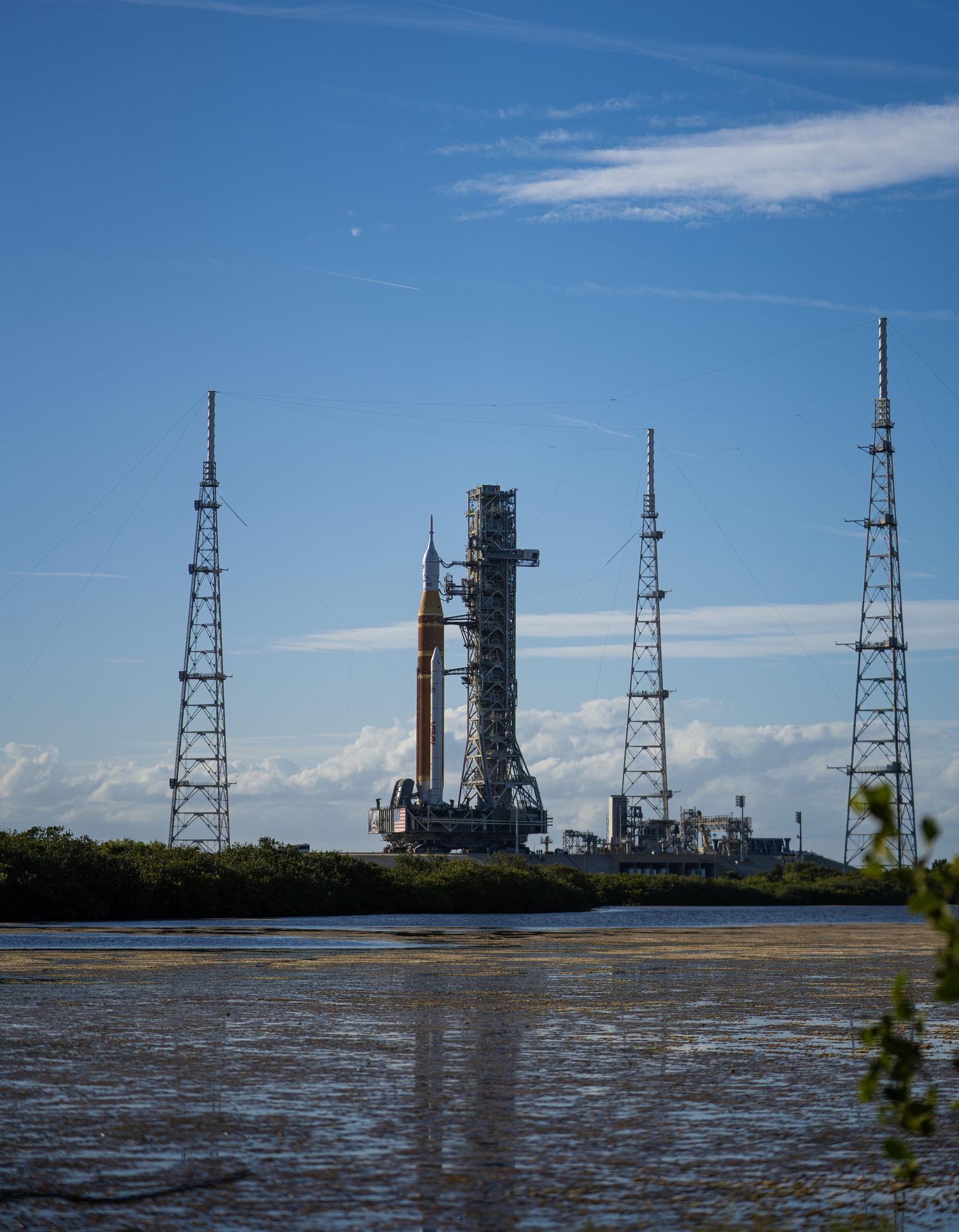
This image shows NASA’s SLS (Space Launch System) and Orion spacecraft rolling out of the Vehicle Assembly Building at NASA’s Kennedy Space Center. NASA's massive Crawler-Transporter, upgraded for the Artemis program, carries the powerful SLS rocket and Orion spacecraft on the Mobile Launcher from the Vehicle Assembly Building to Launch Pad 39B at Kennedy Space Center in preparation for the Artemis II mission.
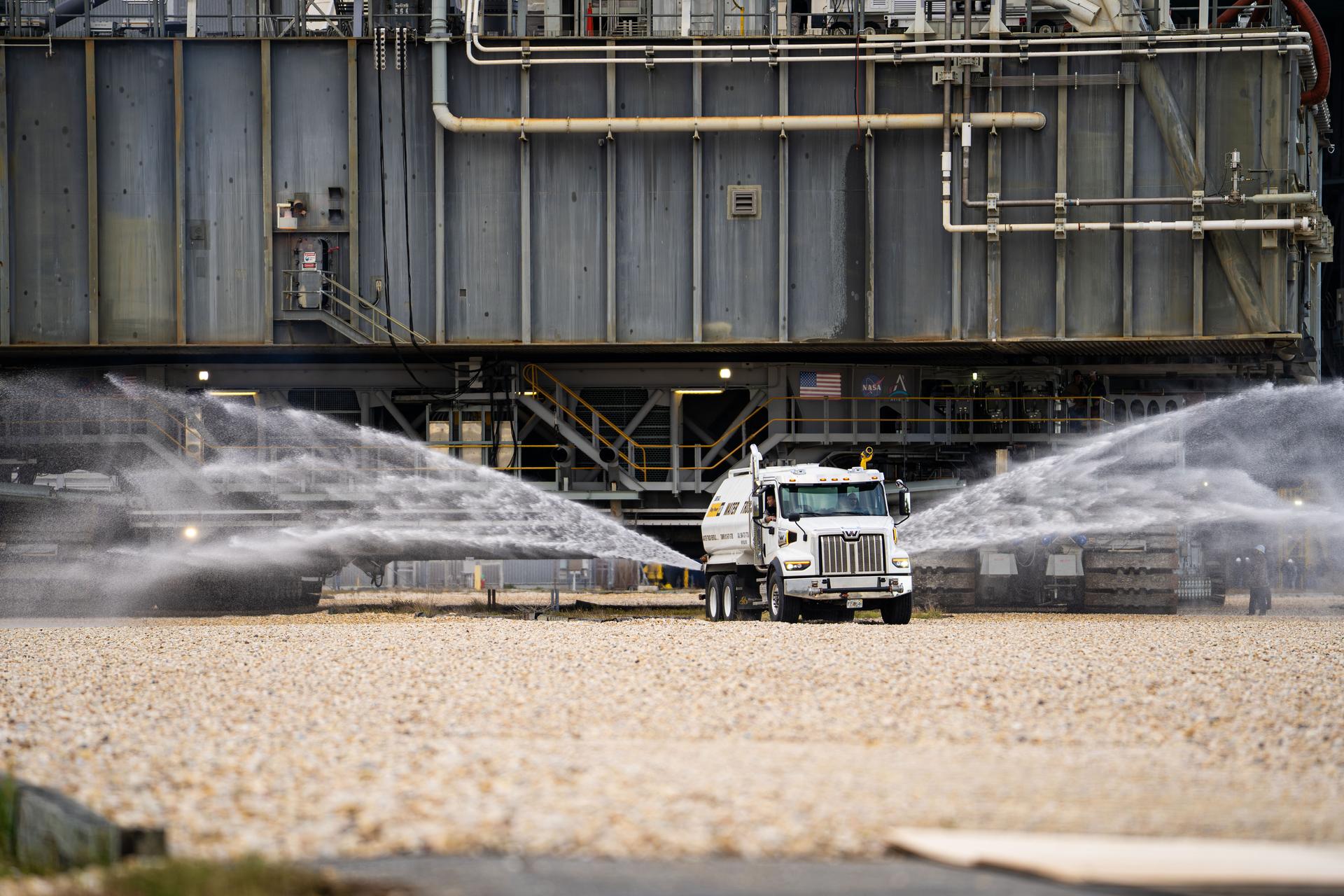
This image shows NASA’s SLS (Space Launch System) and Orion spacecraft rolling out of the Vehicle Assembly Building at NASA’s Kennedy Space Center. NASA's massive Crawler-Transporter, upgraded for the Artemis program, carries the powerful SLS rocket and Orion spacecraft on the Mobile Launcher from the Vehicle Assembly Building to Launch Pad 39B at Kennedy Space Center in preparation for the Artemis II mission.
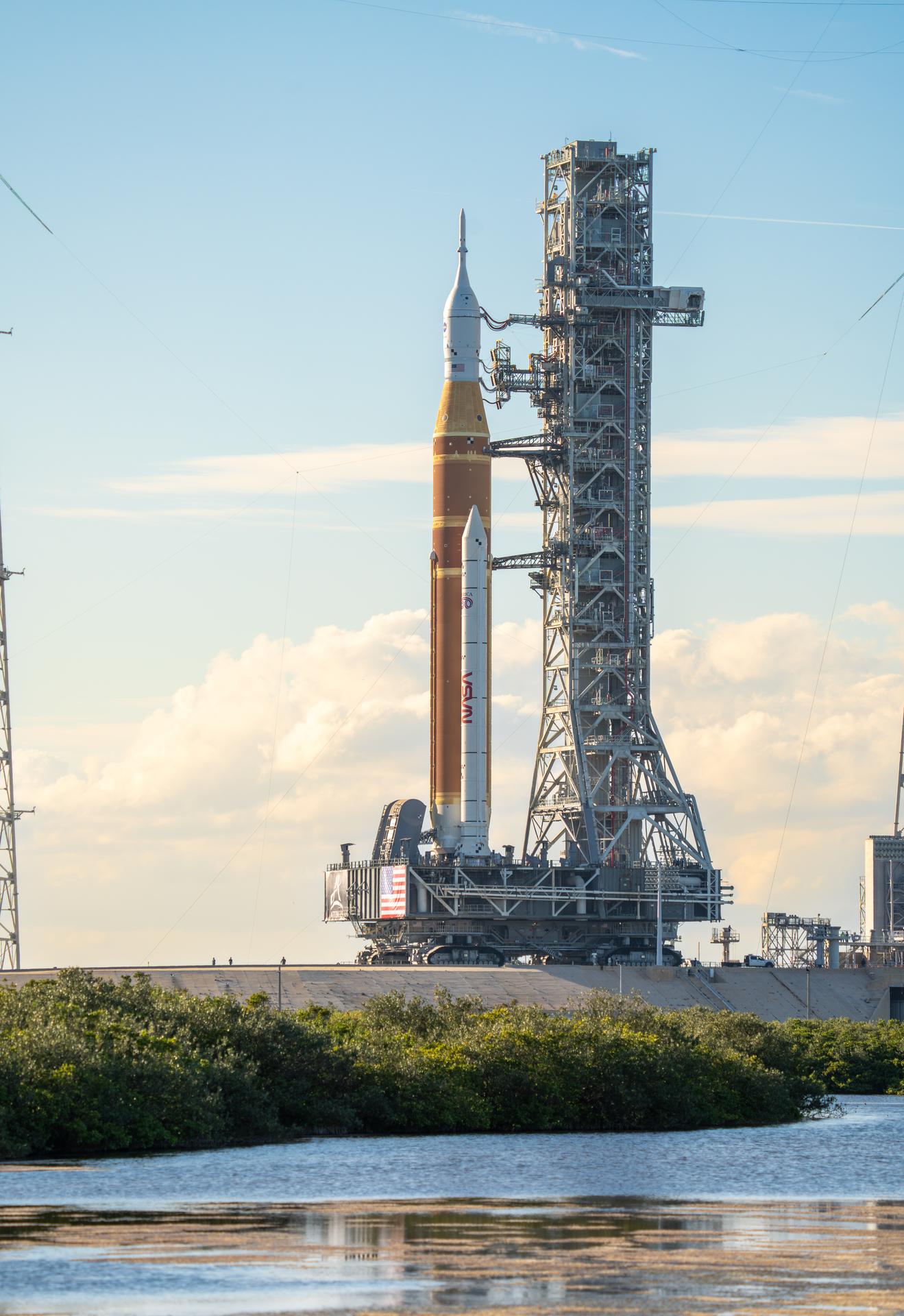
This image shows NASA’s SLS (Space Launch System) and Orion spacecraft rolling out of the Vehicle Assembly Building at NASA’s Kennedy Space Center. NASA's massive Crawler-Transporter, upgraded for the Artemis program, carries the powerful SLS rocket and Orion spacecraft on the Mobile Launcher from the Vehicle Assembly Building to Launch Pad 39B at Kennedy Space Center in preparation for the Artemis II mission.
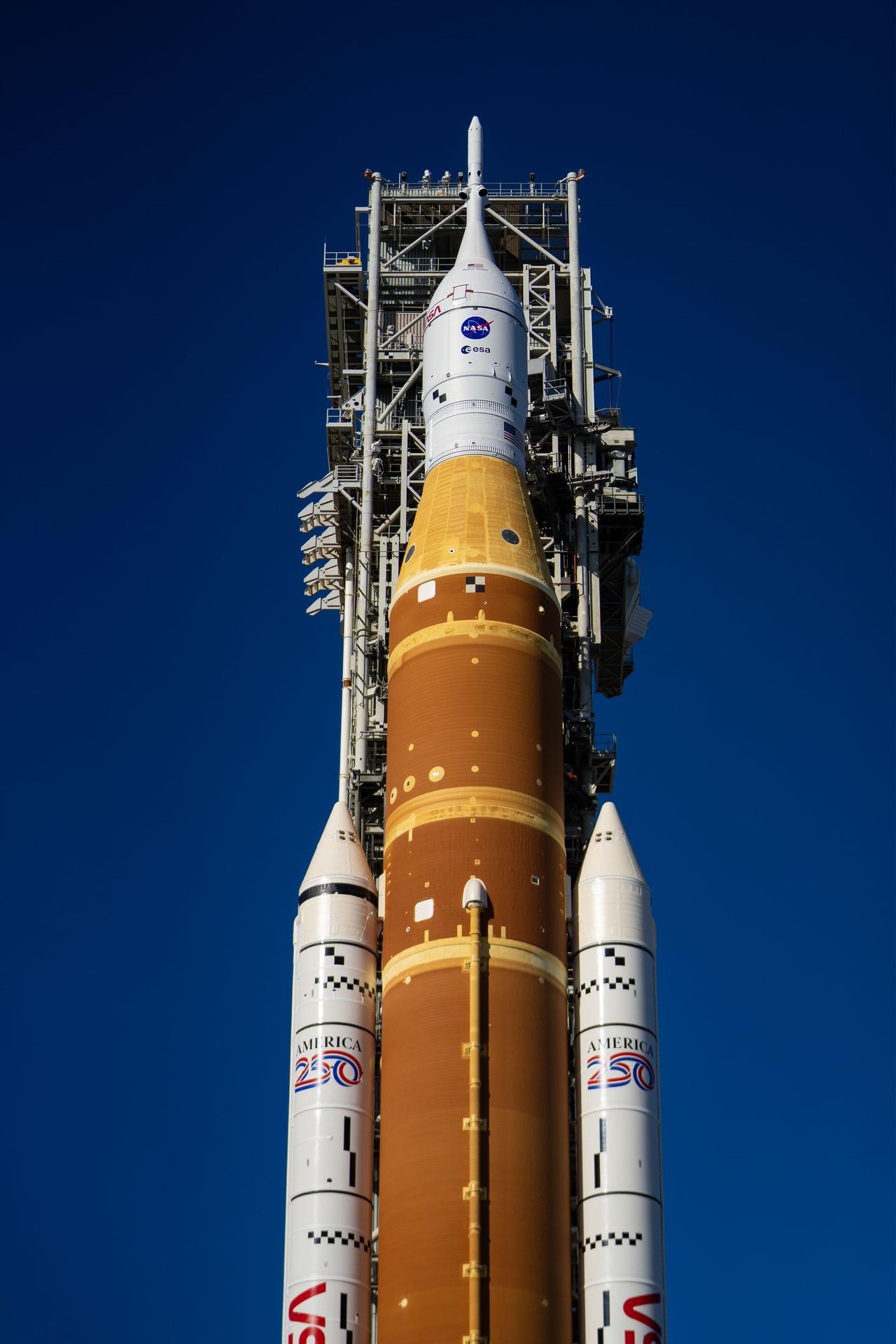
This image shows NASA’s SLS (Space Launch System) and Orion spacecraft rolling out of the Vehicle Assembly Building at NASA’s Kennedy Space Center. NASA's massive Crawler-Transporter, upgraded for the Artemis program, carries the powerful SLS rocket and Orion spacecraft on the Mobile Launcher from the Vehicle Assembly Building to Launch Pad 39B at Kennedy Space Center in preparation for the Artemis II mission.
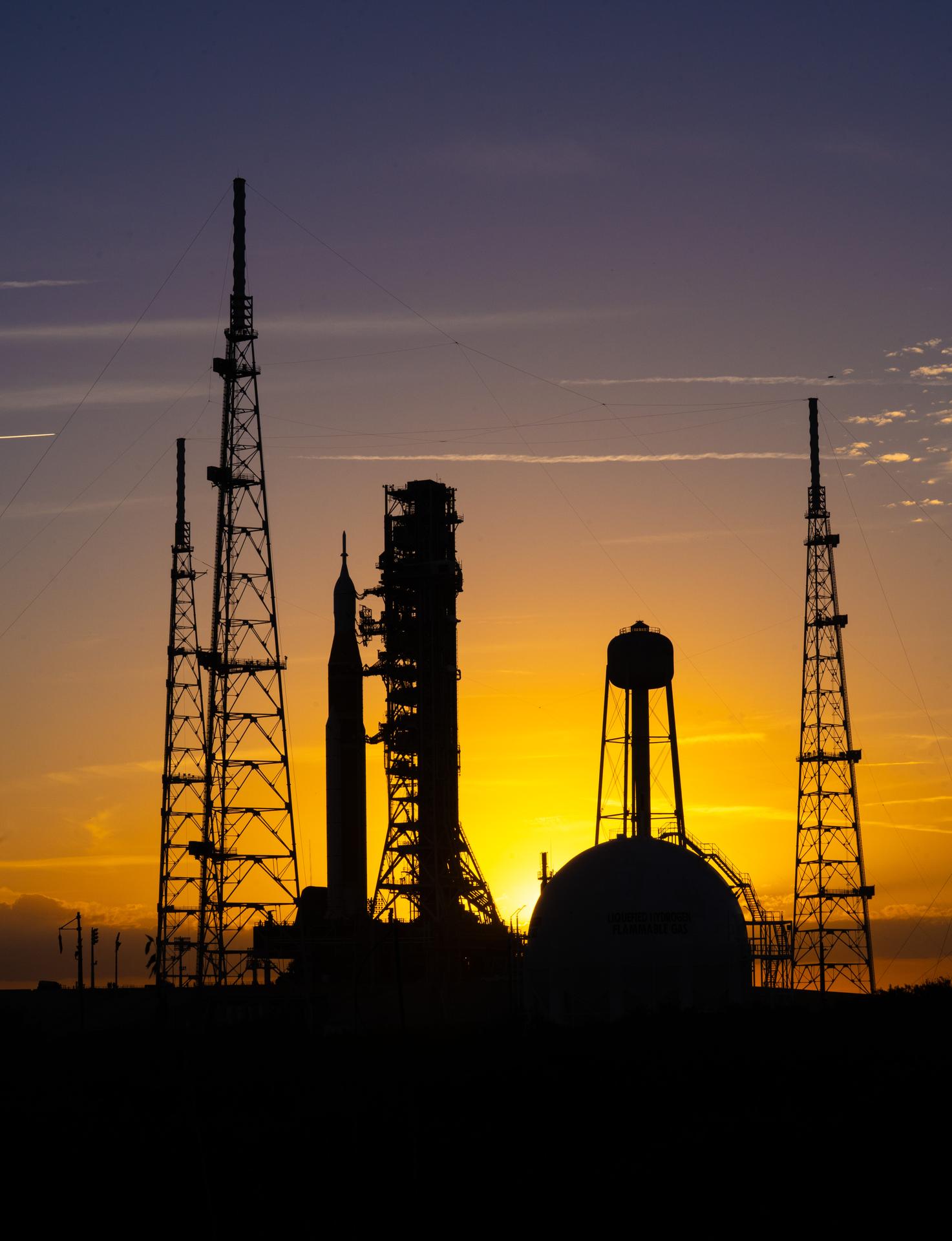
This image shows NASA’s SLS (Space Launch System) and Orion spacecraft rolling out of the Vehicle Assembly Building at NASA’s Kennedy Space Center. NASA's massive Crawler-Transporter, upgraded for the Artemis program, carries the powerful SLS rocket and Orion spacecraft on the Mobile Launcher from the Vehicle Assembly Building to Launch Pad 39B at Kennedy Space Center in preparation for the Artemis II mission.
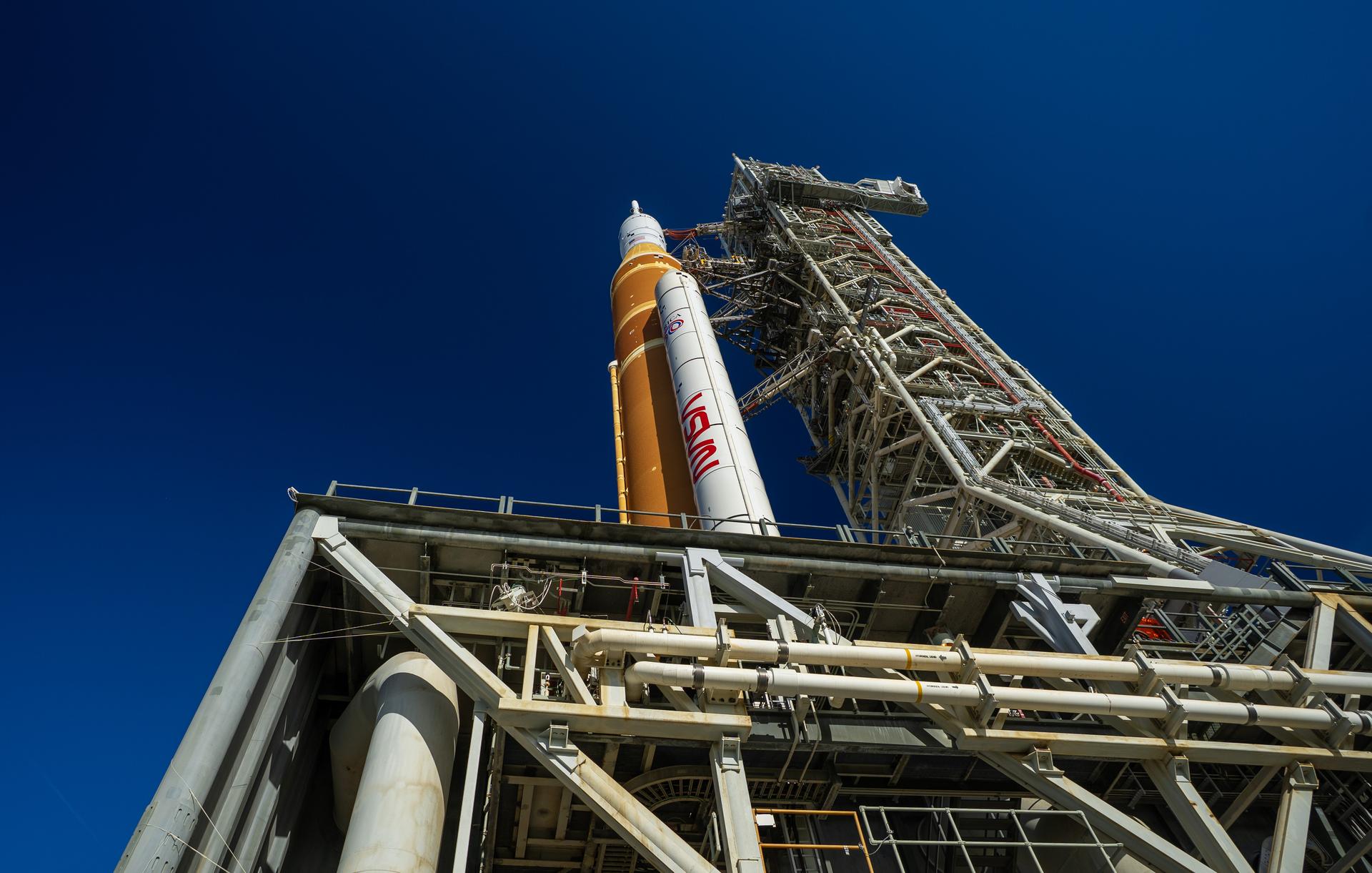
This image shows NASA’s SLS (Space Launch System) and Orion spacecraft rolling out of the Vehicle Assembly Building at NASA’s Kennedy Space Center. NASA's massive Crawler-Transporter, upgraded for the Artemis program, carries the powerful SLS rocket and Orion spacecraft on the Mobile Launcher from the Vehicle Assembly Building to Launch Pad 39B at Kennedy Space Center in preparation for the Artemis II mission.
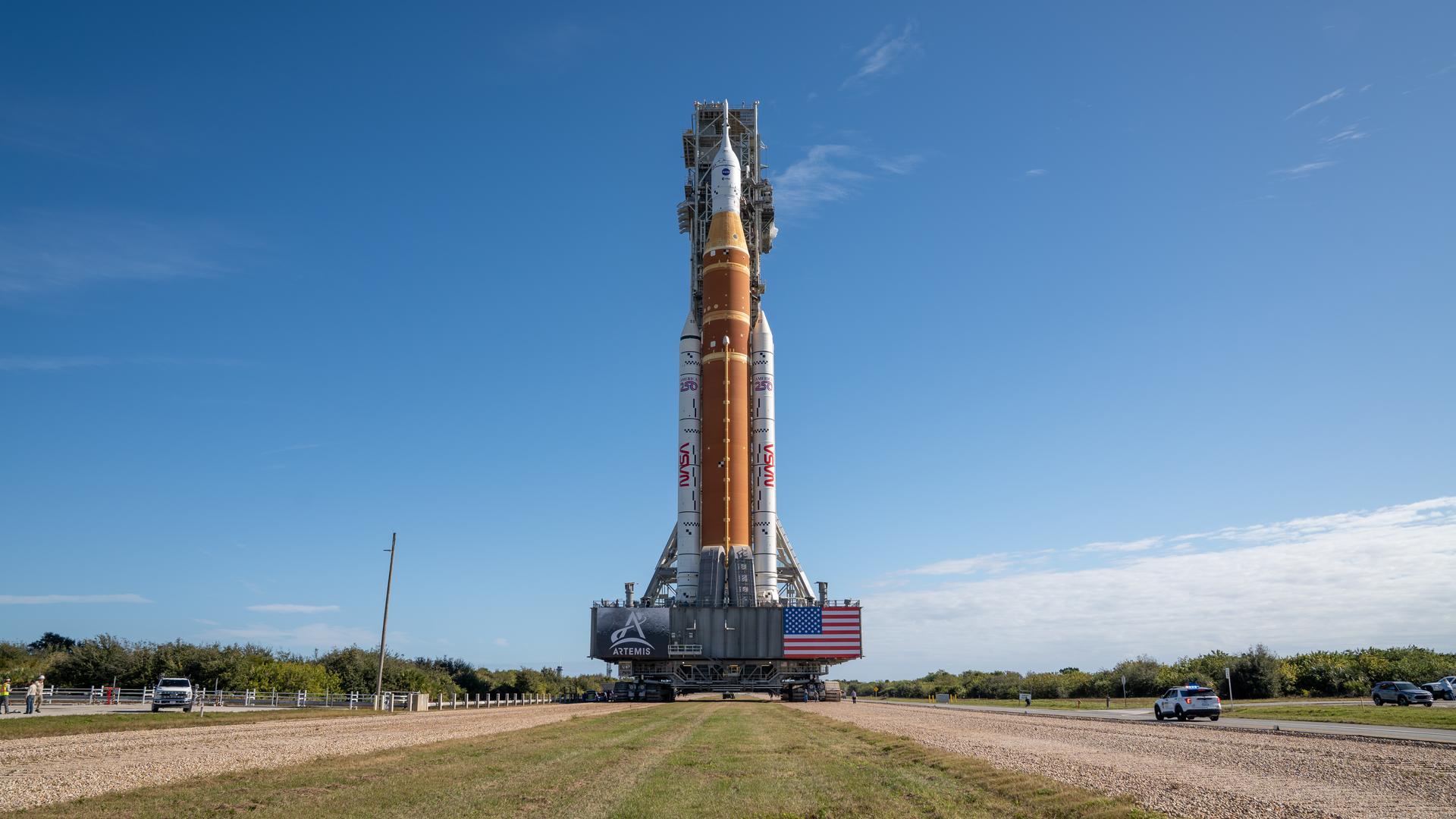
This image shows NASA’s SLS (Space Launch System) and Orion spacecraft rolling out of the Vehicle Assembly Building at NASA’s Kennedy Space Center. NASA's massive Crawler-Transporter, upgraded for the Artemis program, carries the powerful SLS rocket and Orion spacecraft on the Mobile Launcher from the Vehicle Assembly Building to Launch Pad 39B at Kennedy Space Center in preparation for the Artemis II mission.
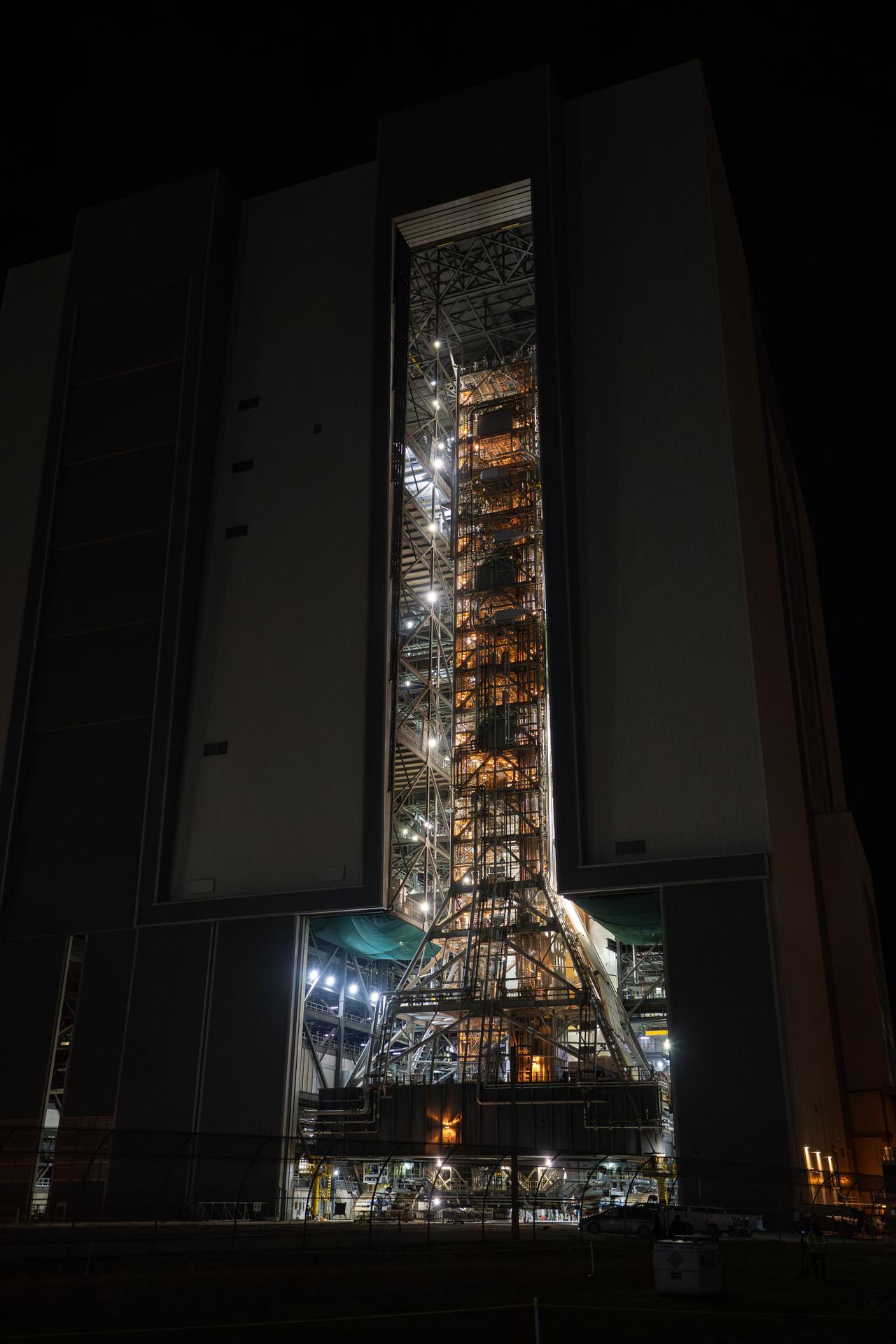
This image shows NASA’s SLS (Space Launch System) and Orion spacecraft rolling out of the Vehicle Assembly Building at NASA’s Kennedy Space Center. NASA's massive Crawler-Transporter, upgraded for the Artemis program, carries the powerful SLS rocket and Orion spacecraft on the Mobile Launcher from the Vehicle Assembly Building to Launch Pad 39B at Kennedy Space Center in preparation for the Artemis II mission.
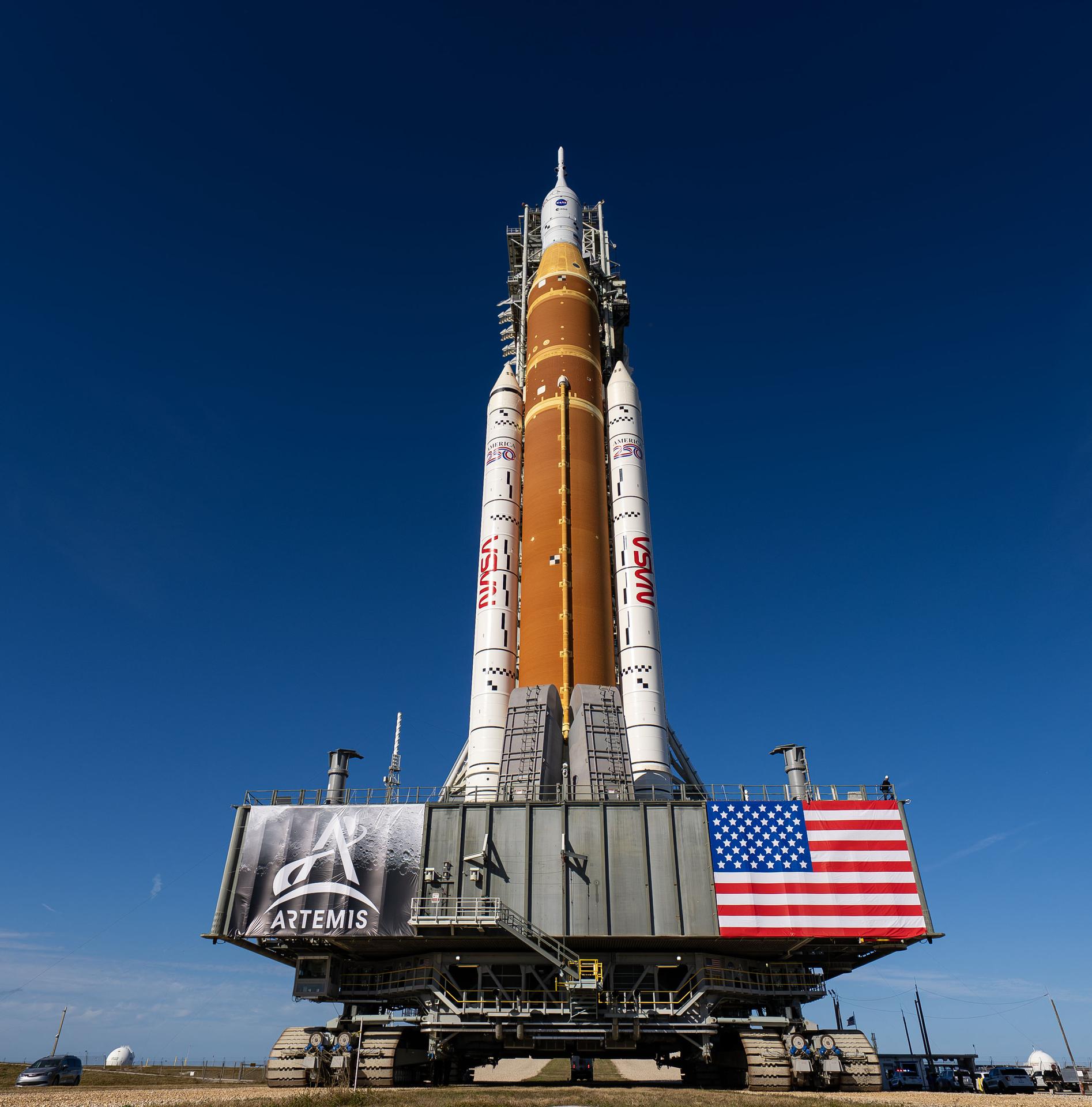
This image shows NASA’s SLS (Space Launch System) and Orion spacecraft rolling out of the Vehicle Assembly Building at NASA’s Kennedy Space Center. NASA's massive Crawler-Transporter, upgraded for the Artemis program, carries the powerful SLS rocket and Orion spacecraft on the Mobile Launcher from the Vehicle Assembly Building to Launch Pad 39B at Kennedy Space Center in preparation for the Artemis II mission.
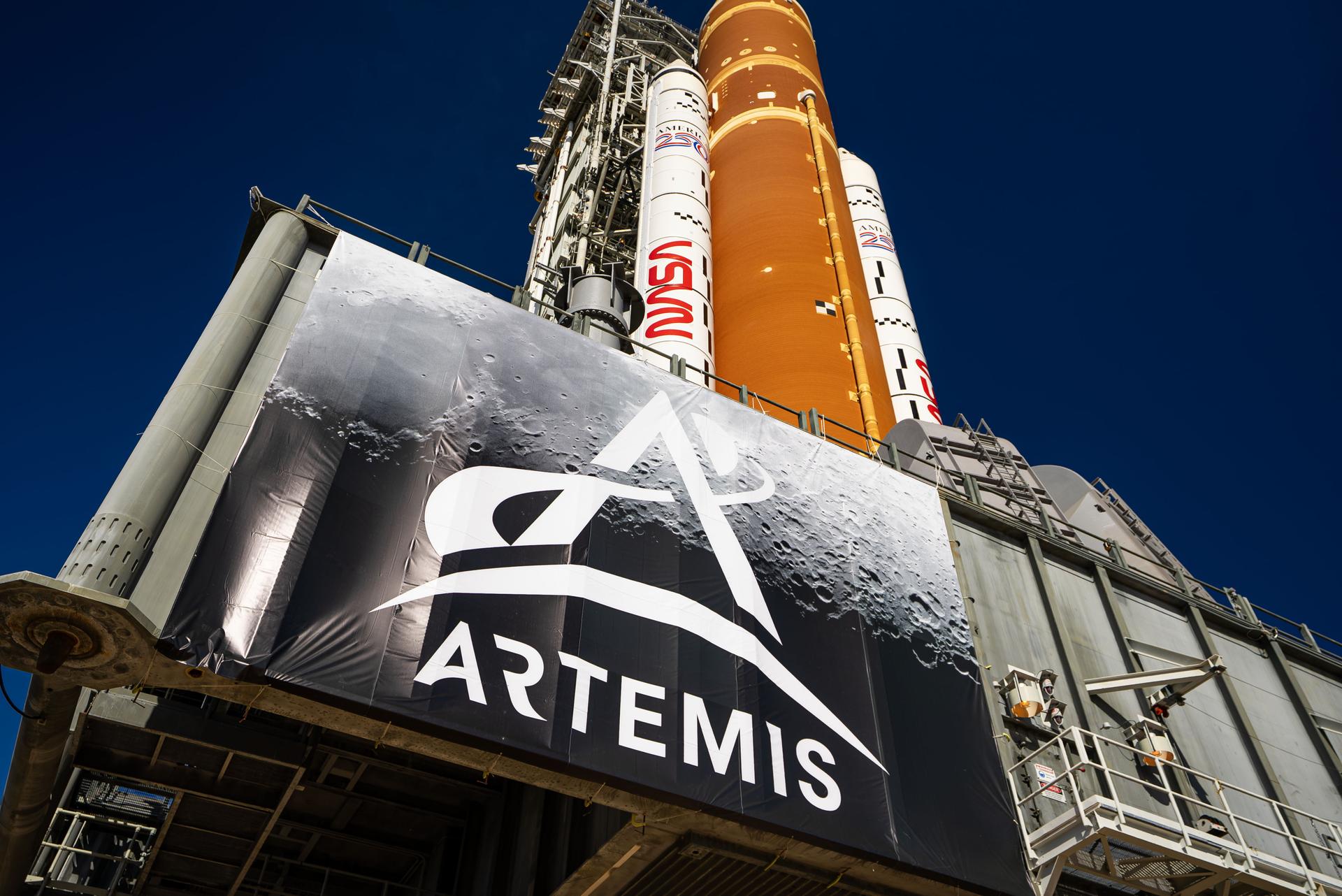
This image shows NASA’s SLS (Space Launch System) and Orion spacecraft rolling out of the Vehicle Assembly Building at NASA’s Kennedy Space Center. NASA's massive Crawler-Transporter, upgraded for the Artemis program, carries the powerful SLS rocket and Orion spacecraft on the Mobile Launcher from the Vehicle Assembly Building to Launch Pad 39B at Kennedy Space Center in preparation for the Artemis II mission.
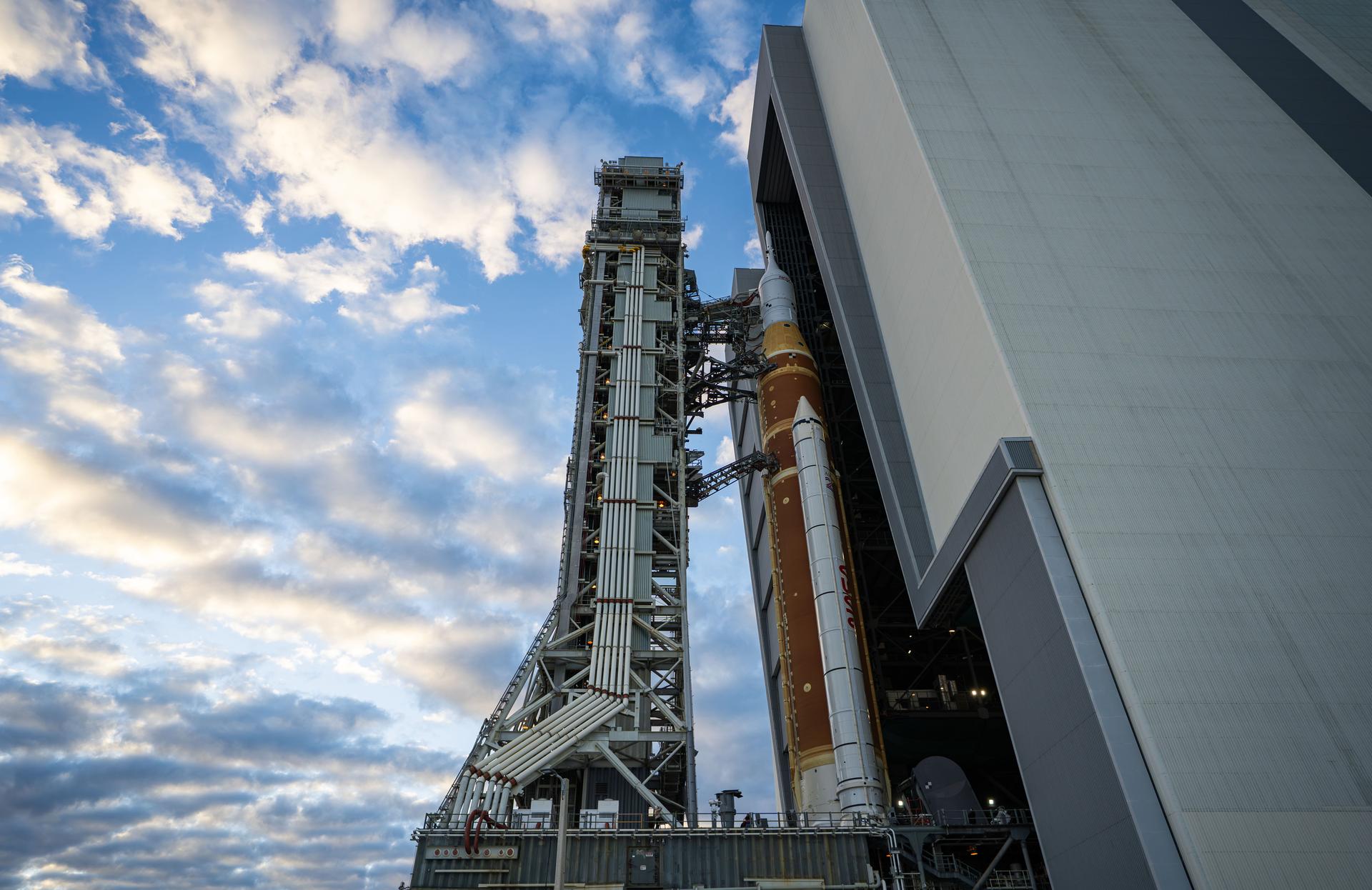
This image shows NASA’s SLS (Space Launch System) and Orion spacecraft rolling out of the Vehicle Assembly Building at NASA’s Kennedy Space Center. NASA's massive Crawler-Transporter, upgraded for the Artemis program, carries the powerful SLS rocket and Orion spacecraft on the Mobile Launcher from the Vehicle Assembly Building to Launch Pad 39B at Kennedy Space Center in preparation for the Artemis II mission.
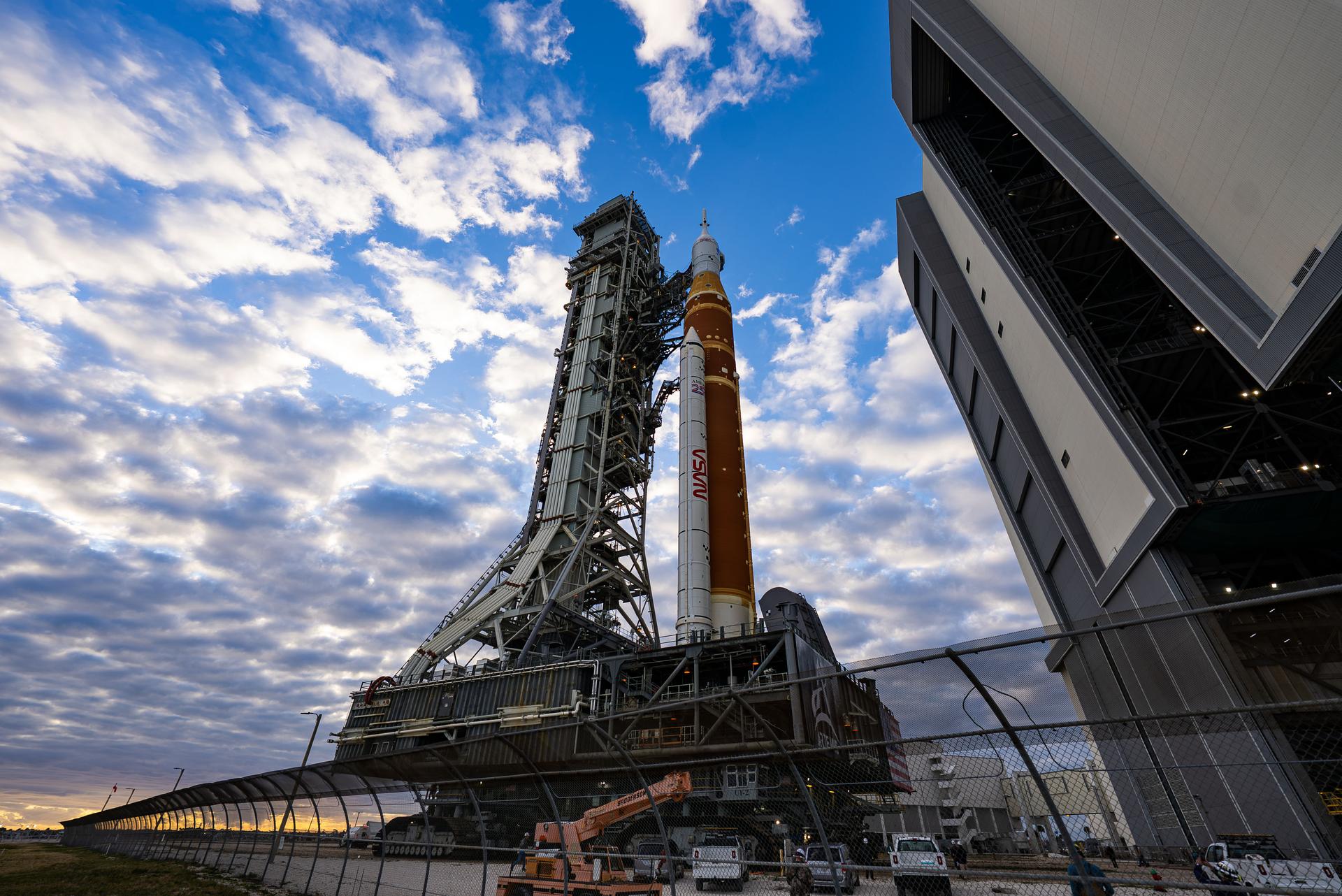
This image shows NASA’s SLS (Space Launch System) and Orion spacecraft rolling out of the Vehicle Assembly Building at NASA’s Kennedy Space Center. NASA's massive Crawler-Transporter, upgraded for the Artemis program, carries the powerful SLS rocket and Orion spacecraft on the Mobile Launcher from the Vehicle Assembly Building to Launch Pad 39B at Kennedy Space Center in preparation for the Artemis II mission.
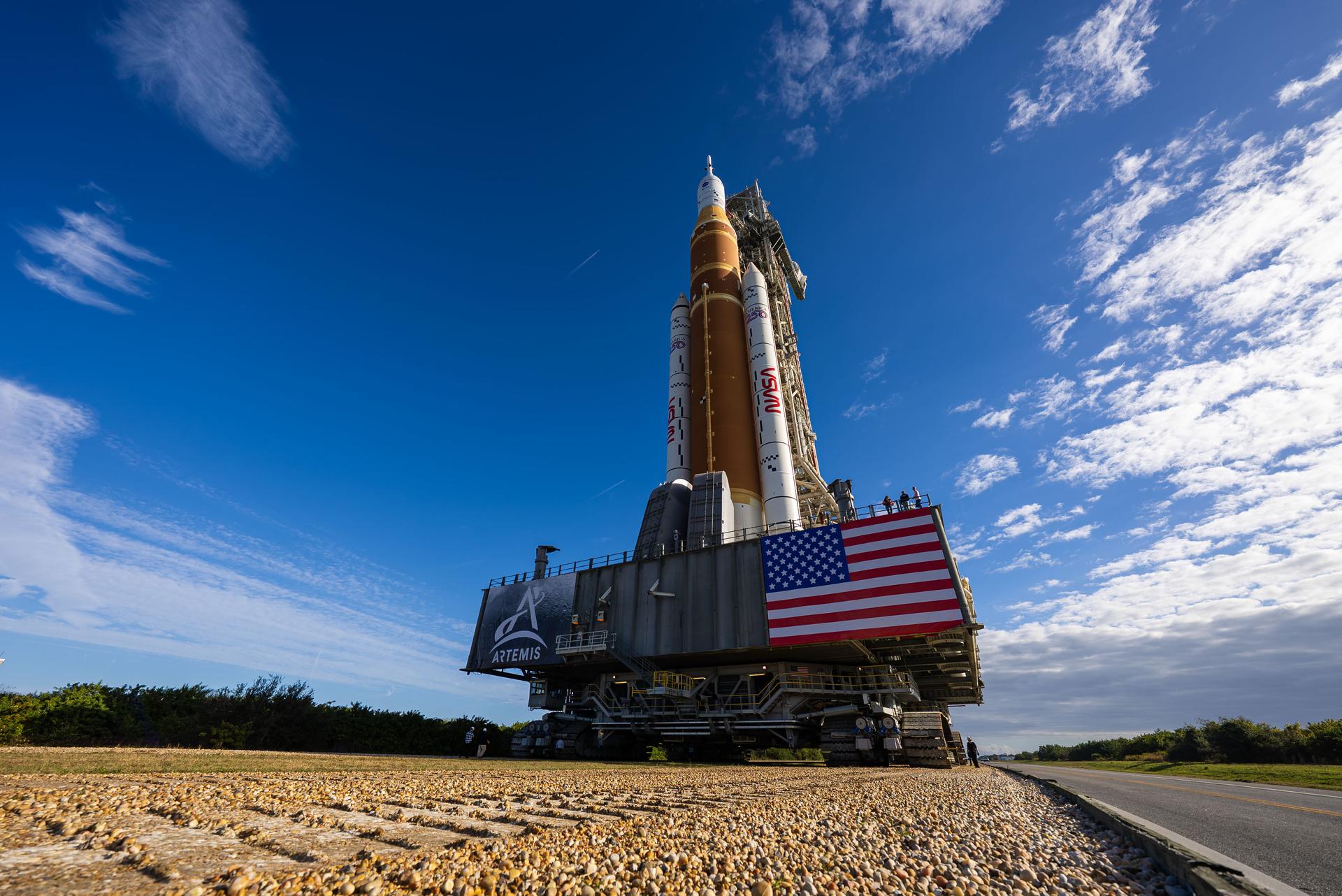
This image shows NASA’s SLS (Space Launch System) and Orion spacecraft rolling out of the Vehicle Assembly Building at NASA’s Kennedy Space Center. NASA's massive Crawler-Transporter, upgraded for the Artemis program, carries the powerful SLS rocket and Orion spacecraft on the Mobile Launcher from the Vehicle Assembly Building to Launch Pad 39B at Kennedy Space Center in preparation for the Artemis II mission.
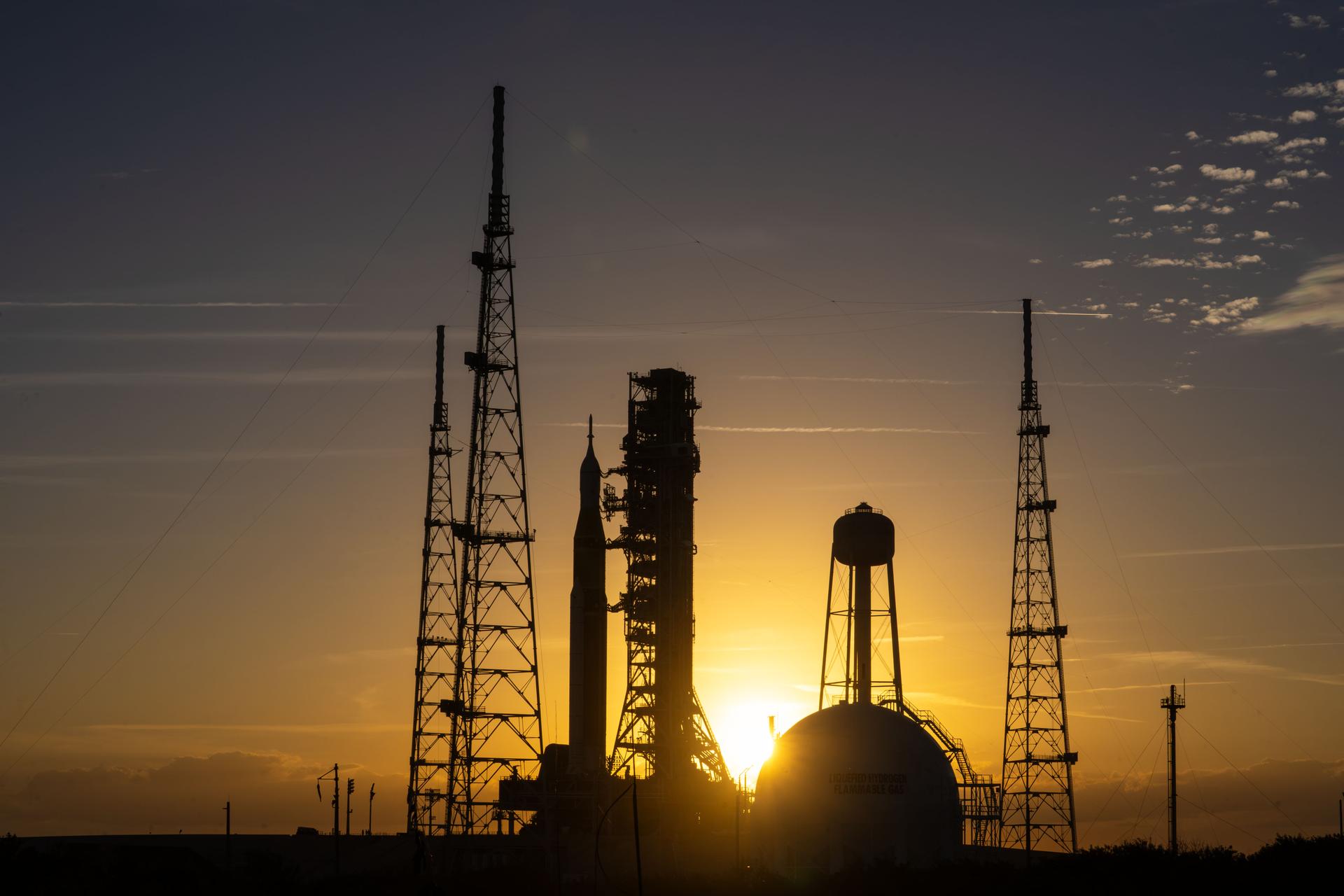
These images and video show NASA’s SLS (Space Launch System) and Orion spacecraft rolling out of the Vehicle Assembly Building at NASA’s Kennedy Space Center. NASA's massive Crawler-Transporter, upgraded for the Artemis program, carries the powerful SLS rocket and Orion spacecraft on the Mobile Launcher from the Vehicle Assembly Building to Launch Pad 39B at Kennedy Space Center in preparation for the Artemis II mission.
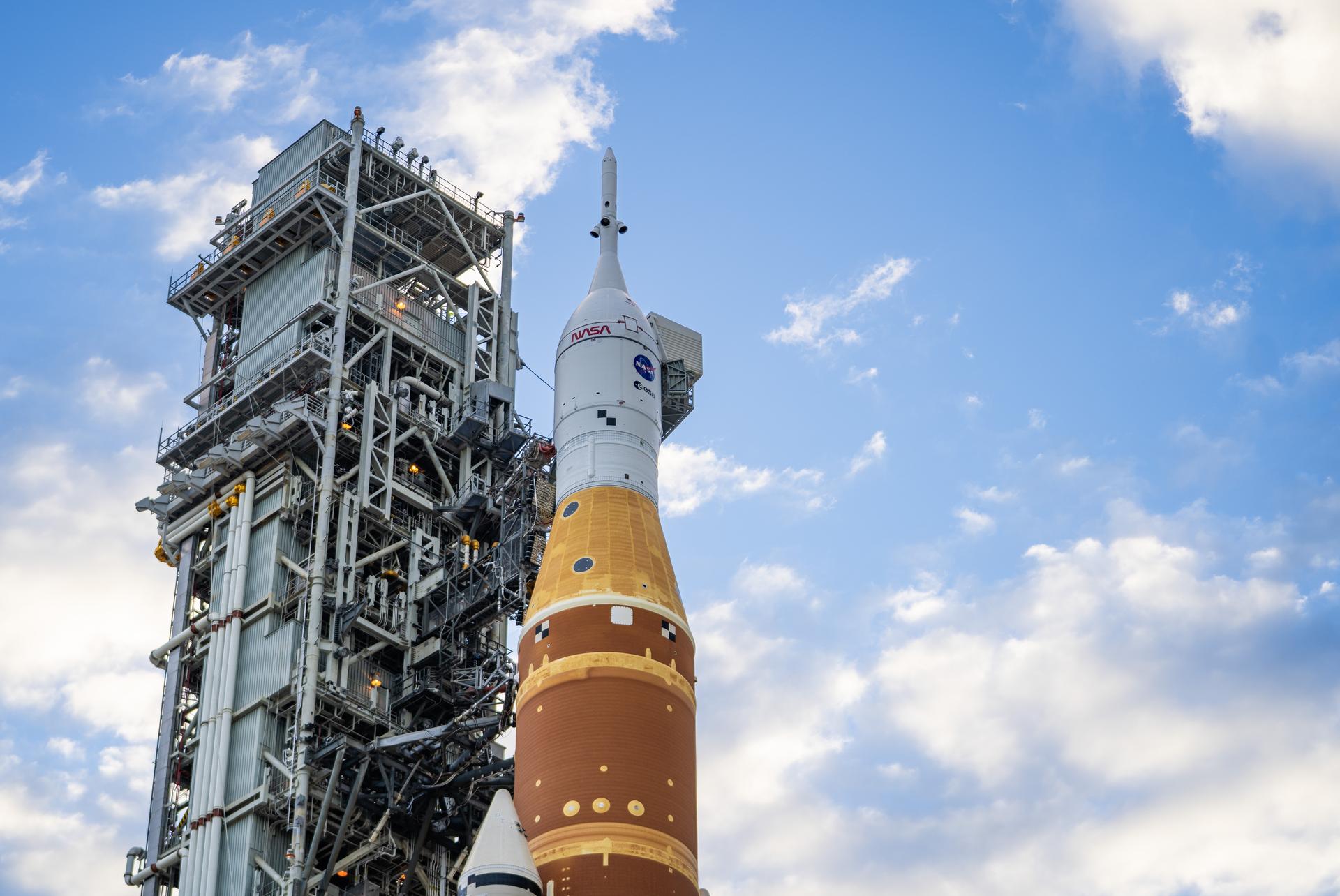
This image shows NASA’s SLS (Space Launch System) and Orion spacecraft rolling out of the Vehicle Assembly Building at NASA’s Kennedy Space Center. NASA's massive Crawler-Transporter, upgraded for the Artemis program, carries the powerful SLS rocket and Orion spacecraft on the Mobile Launcher from the Vehicle Assembly Building to Launch Pad 39B at Kennedy Space Center in preparation for the Artemis II mission.
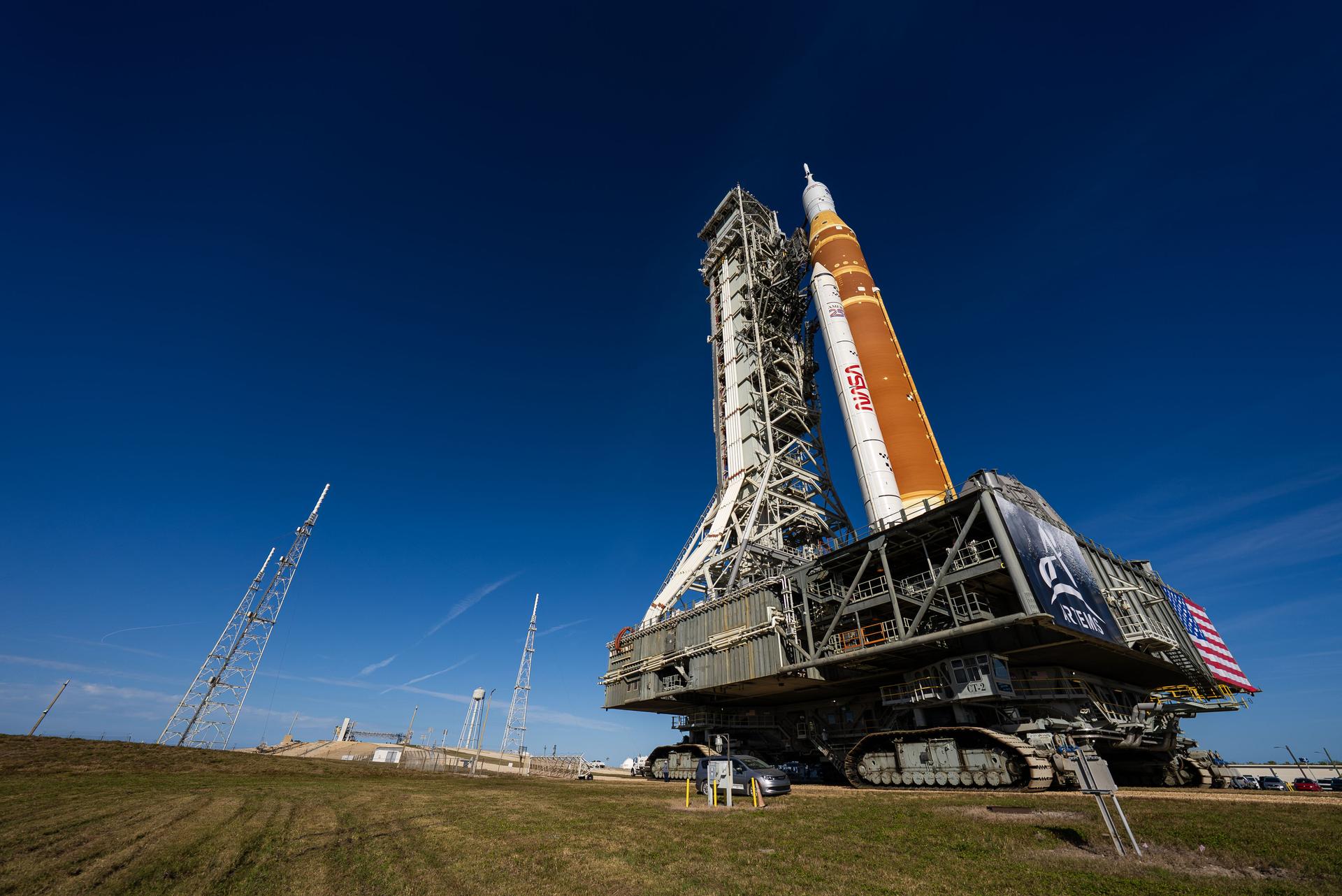
This image shows NASA’s SLS (Space Launch System) and Orion spacecraft rolling out of the Vehicle Assembly Building at NASA’s Kennedy Space Center. NASA's massive Crawler-Transporter, upgraded for the Artemis program, carries the powerful SLS rocket and Orion spacecraft on the Mobile Launcher from the Vehicle Assembly Building to Launch Pad 39B at Kennedy Space Center in preparation for the Artemis II mission.
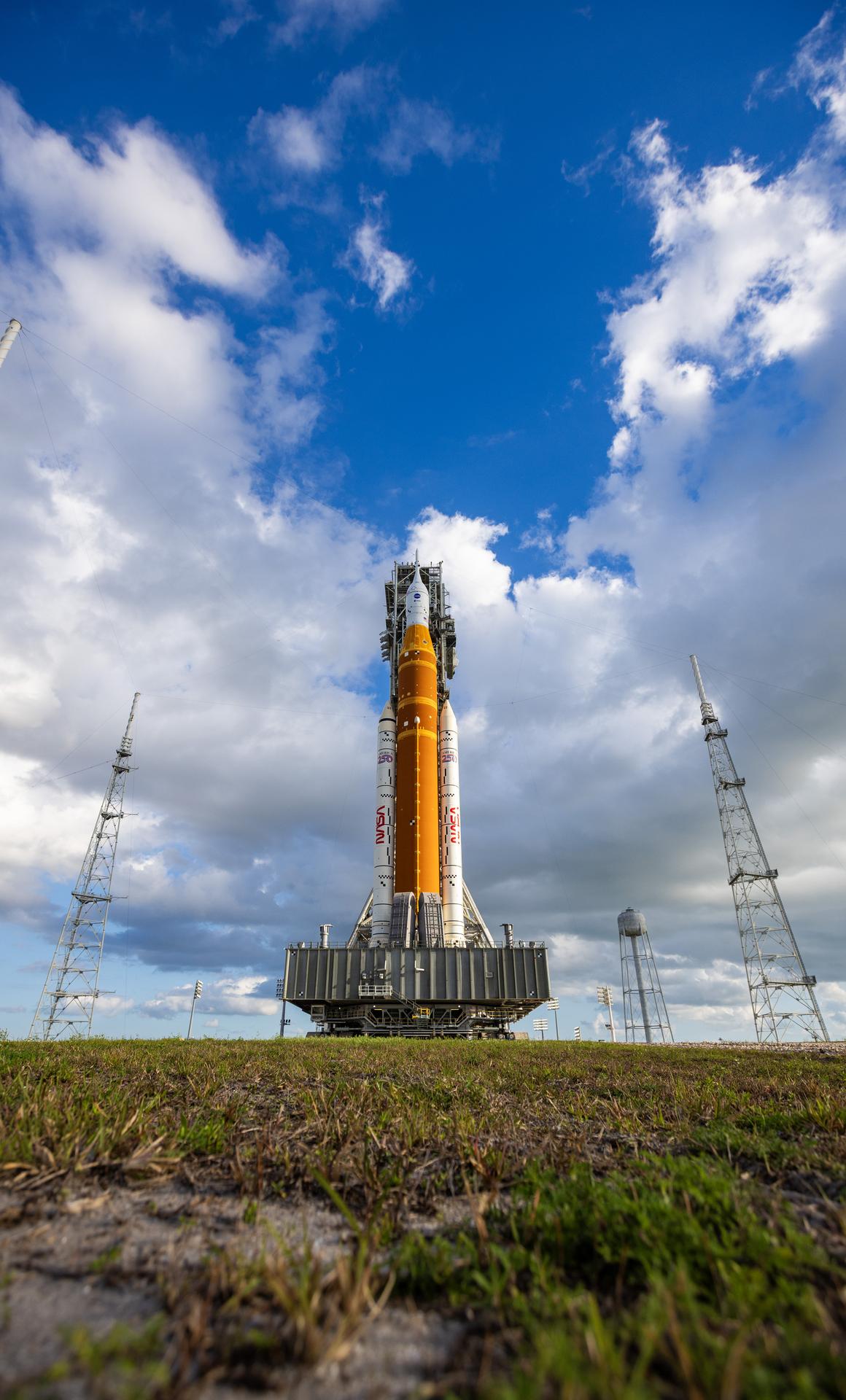
This image shows NASA’s SLS (Space Launch System) and Orion spacecraft rolling out of the Vehicle Assembly Building at NASA’s Kennedy Space Center. NASA's massive Crawler-Transporter, upgraded for the Artemis program, carries the powerful SLS rocket and Orion spacecraft on the Mobile Launcher from the Vehicle Assembly Building to Launch Pad 39B at Kennedy Space Center in preparation for the Artemis II mission.
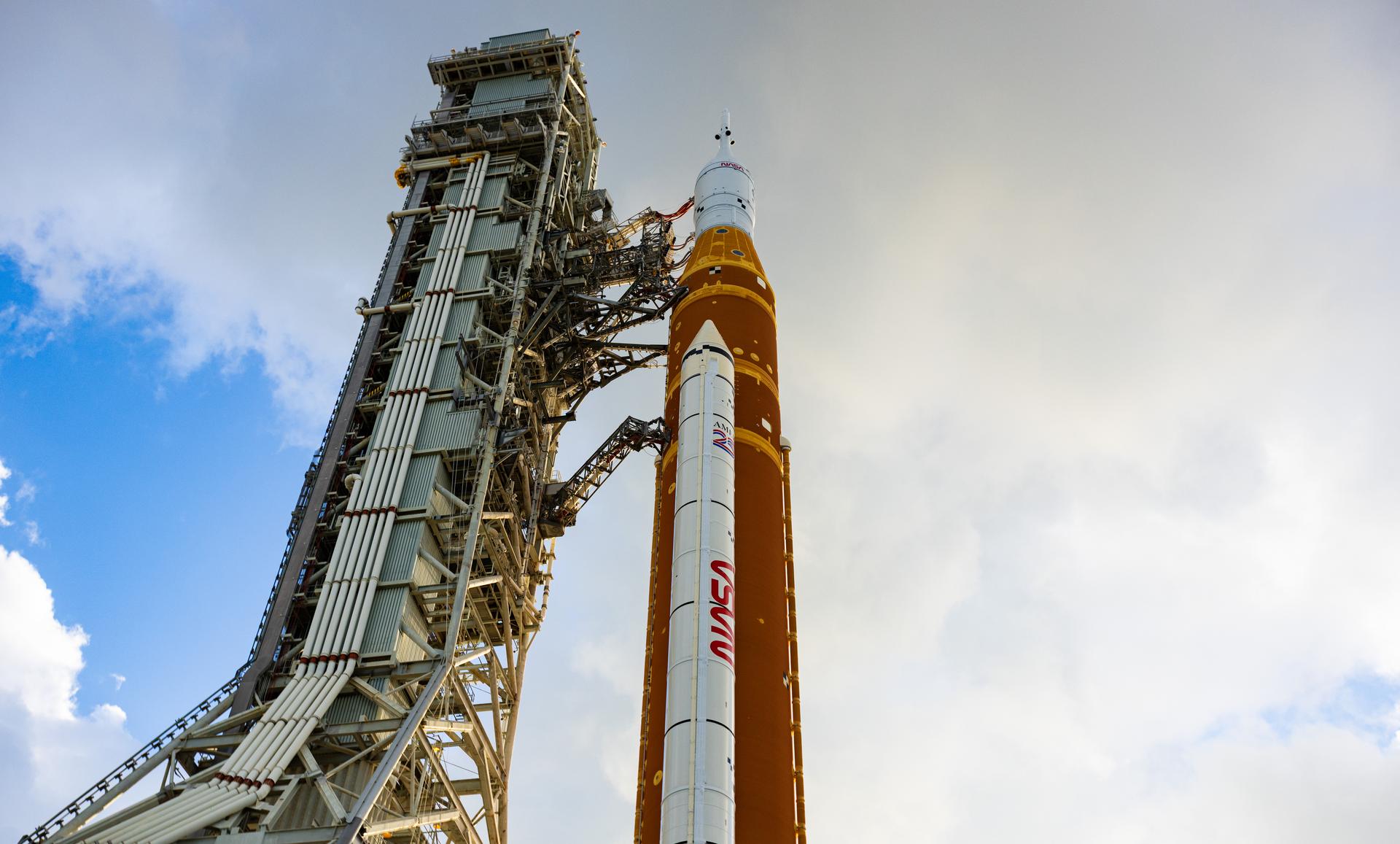
This image shows NASA’s SLS (Space Launch System) and Orion spacecraft rolling out of the Vehicle Assembly Building at NASA’s Kennedy Space Center. NASA's massive Crawler-Transporter, upgraded for the Artemis program, carries the powerful SLS rocket and Orion spacecraft on the Mobile Launcher from the Vehicle Assembly Building to Launch Pad 39B at Kennedy Space Center in preparation for the Artemis II mission.
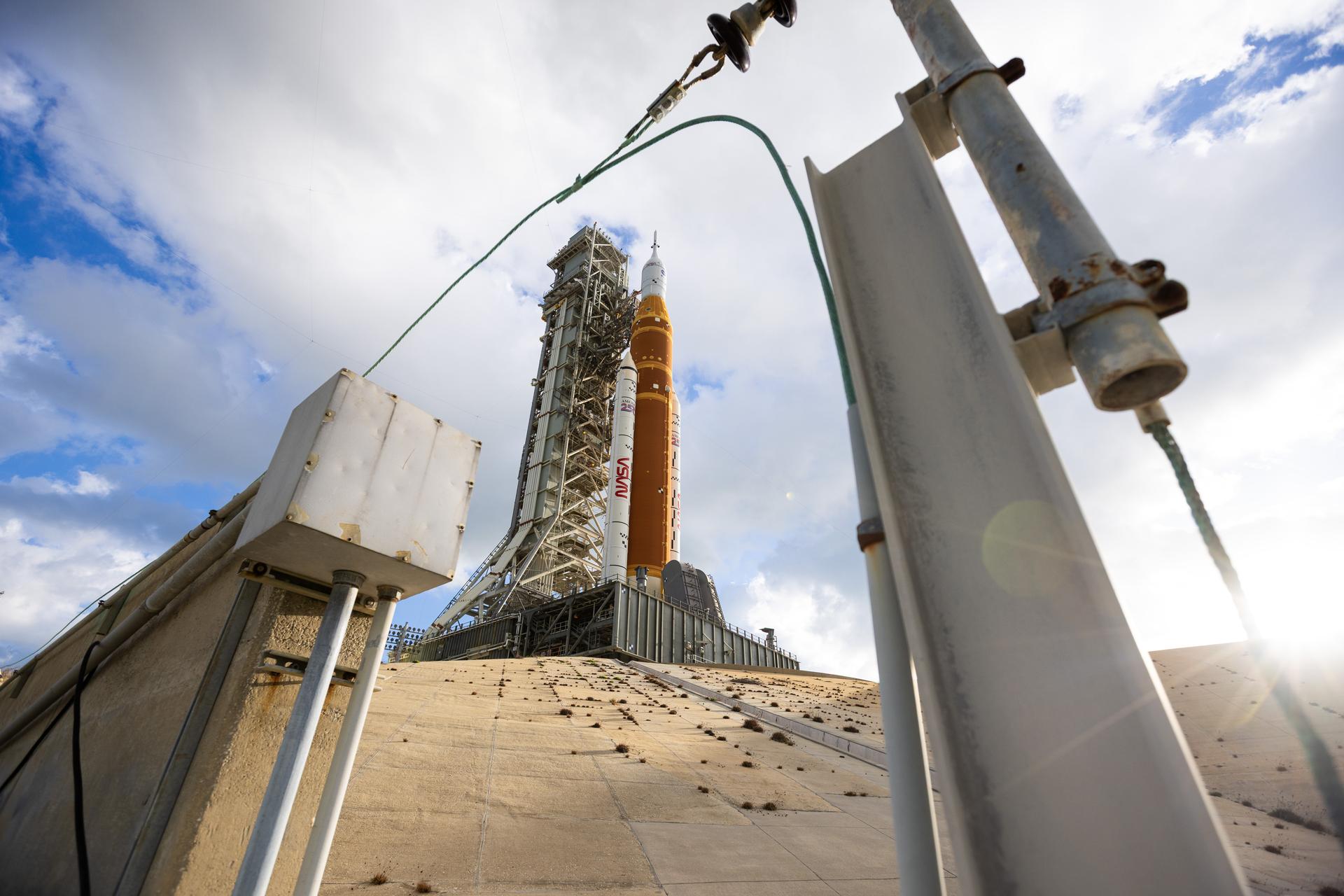
This image shows NASA’s SLS (Space Launch System) and Orion spacecraft rolling out of the Vehicle Assembly Building at NASA’s Kennedy Space Center. NASA's massive Crawler-Transporter, upgraded for the Artemis program, carries the powerful SLS rocket and Orion spacecraft on the Mobile Launcher from the Vehicle Assembly Building to Launch Pad 39B at Kennedy Space Center in preparation for the Artemis II mission.
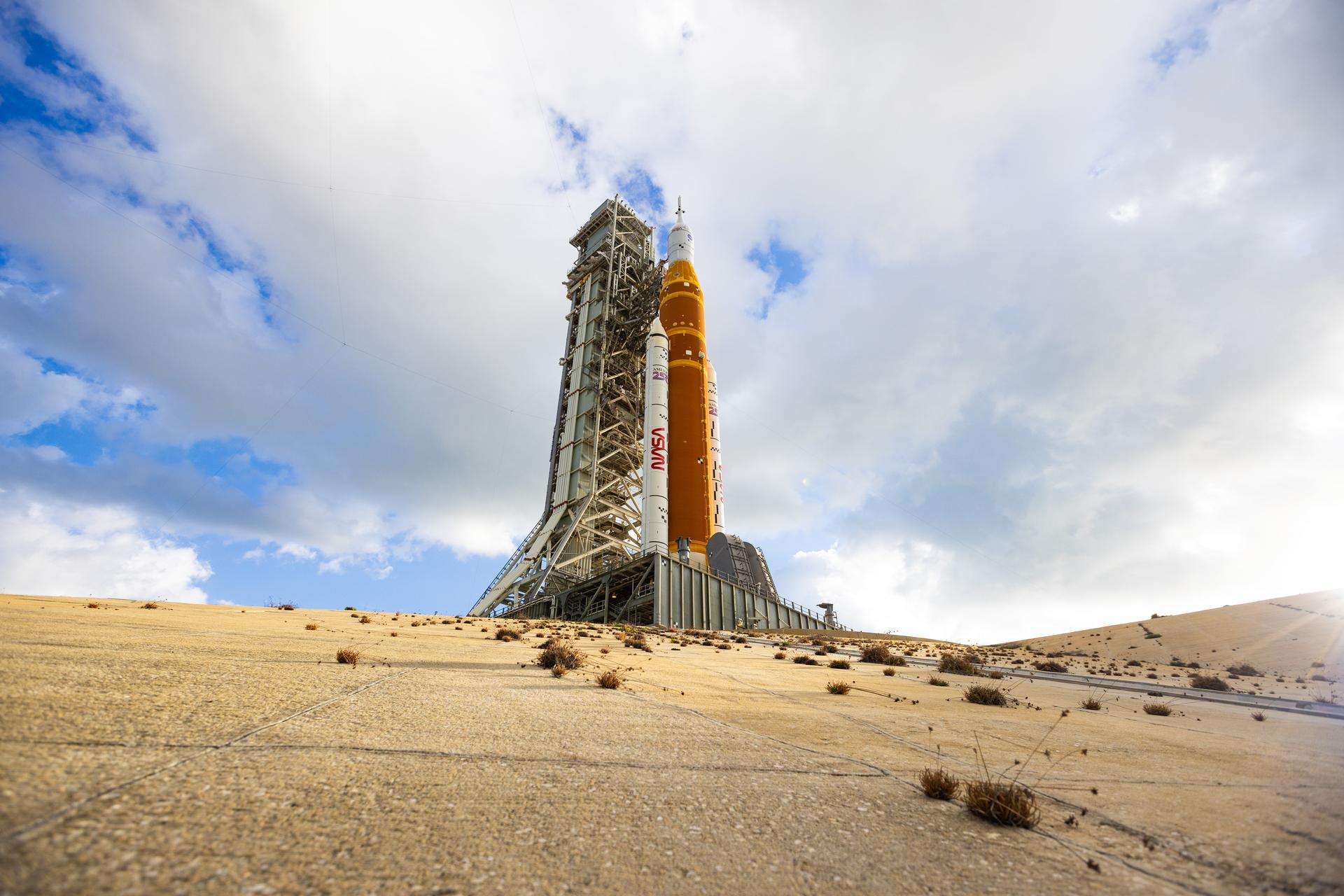
This image shows NASA’s SLS (Space Launch System) and Orion spacecraft rolling out of the Vehicle Assembly Building at NASA’s Kennedy Space Center. NASA's massive Crawler-Transporter, upgraded for the Artemis program, carries the powerful SLS rocket and Orion spacecraft on the Mobile Launcher from the Vehicle Assembly Building to Launch Pad 39B at Kennedy Space Center in preparation for the Artemis II mission.
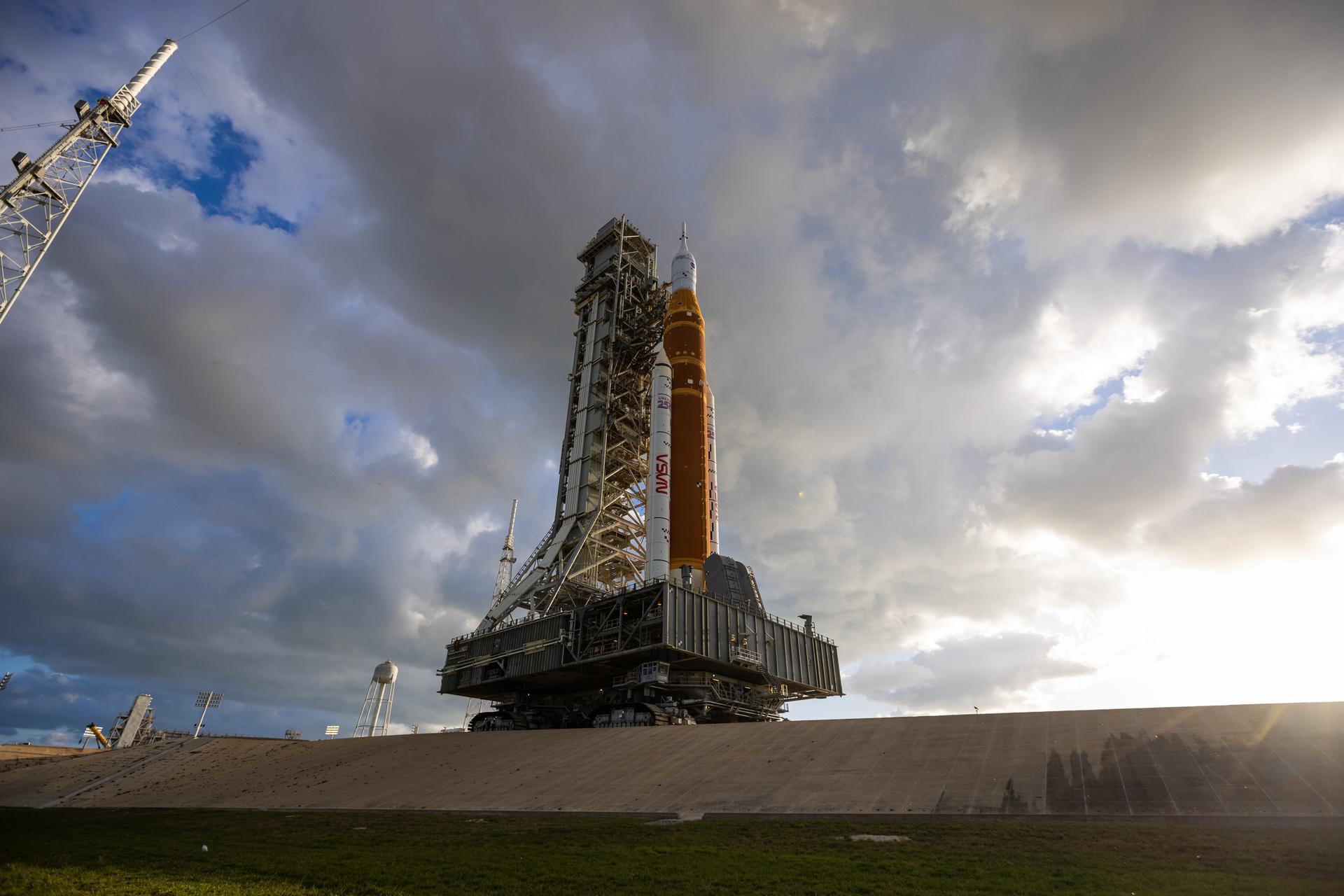
This image shows NASA’s SLS (Space Launch System) and Orion spacecraft rolling out of the Vehicle Assembly Building at NASA’s Kennedy Space Center. NASA's massive Crawler-Transporter, upgraded for the Artemis program, carries the powerful SLS rocket and Orion spacecraft on the Mobile Launcher from the Vehicle Assembly Building to Launch Pad 39B at Kennedy Space Center in preparation for the Artemis II mission.
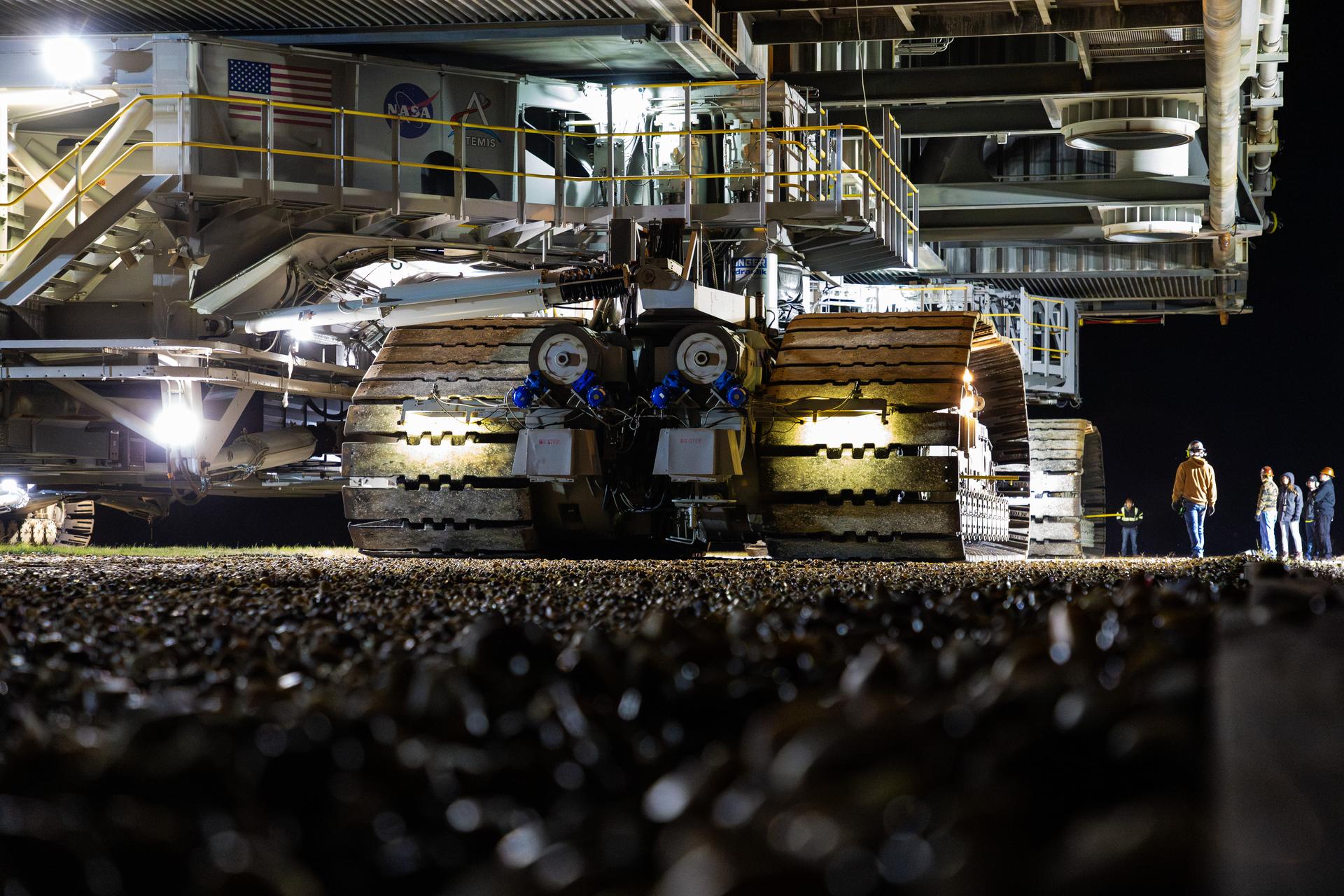
This image shows NASA’s SLS (Space Launch System) and Orion spacecraft rolling out of the Vehicle Assembly Building at NASA’s Kennedy Space Center. NASA's massive Crawler-Transporter, upgraded for the Artemis program, carries the powerful SLS rocket and Orion spacecraft on the Mobile Launcher from the Vehicle Assembly Building to Launch Pad 39B at Kennedy Space Center in preparation for the Artemis II mission.
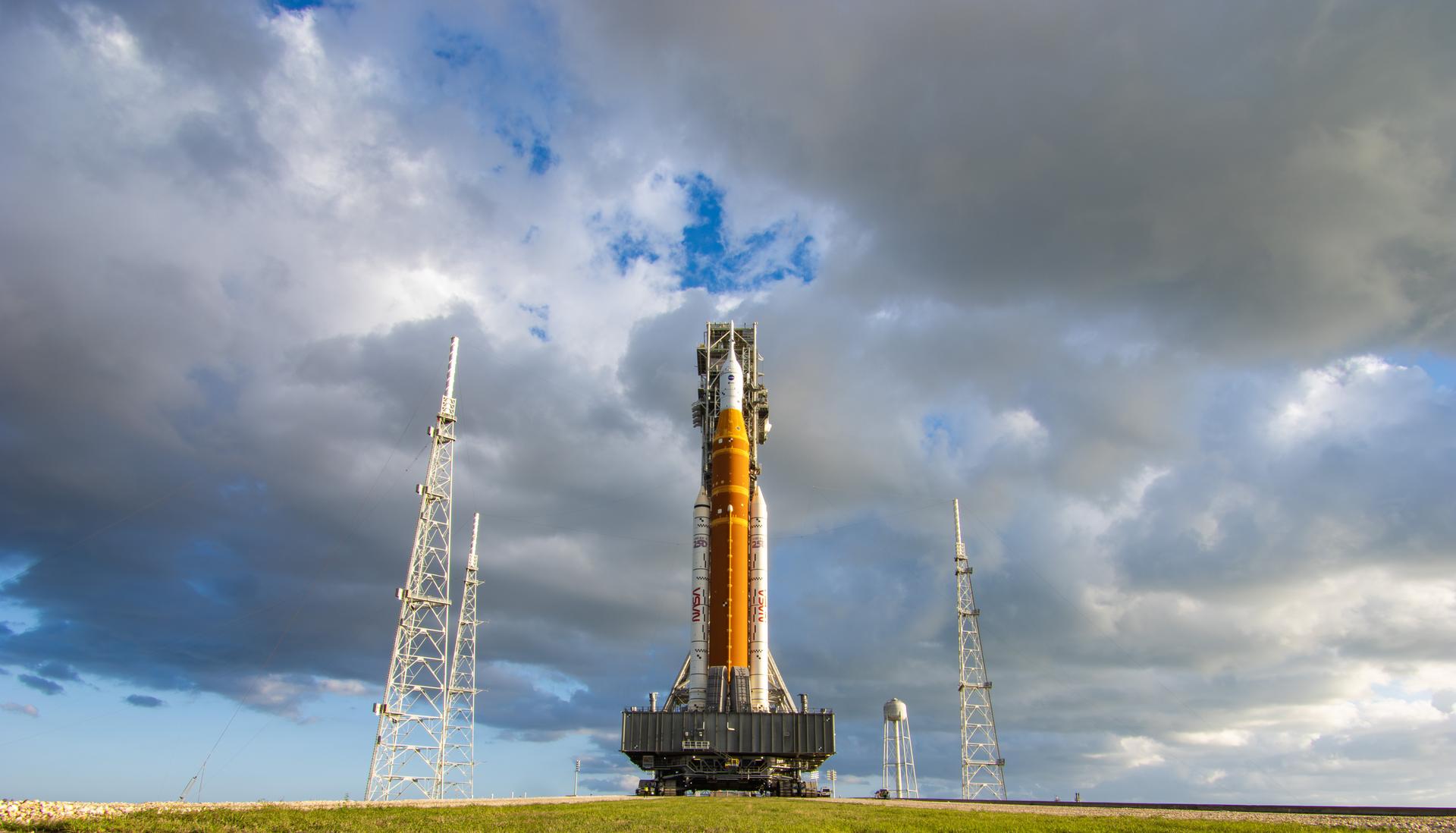
This image shows NASA’s SLS (Space Launch System) and Orion spacecraft rolling out of the Vehicle Assembly Building at NASA’s Kennedy Space Center. NASA's massive Crawler-Transporter, upgraded for the Artemis program, carries the powerful SLS rocket and Orion spacecraft on the Mobile Launcher from the Vehicle Assembly Building to Launch Pad 39B at Kennedy Space Center in preparation for the Artemis II mission.
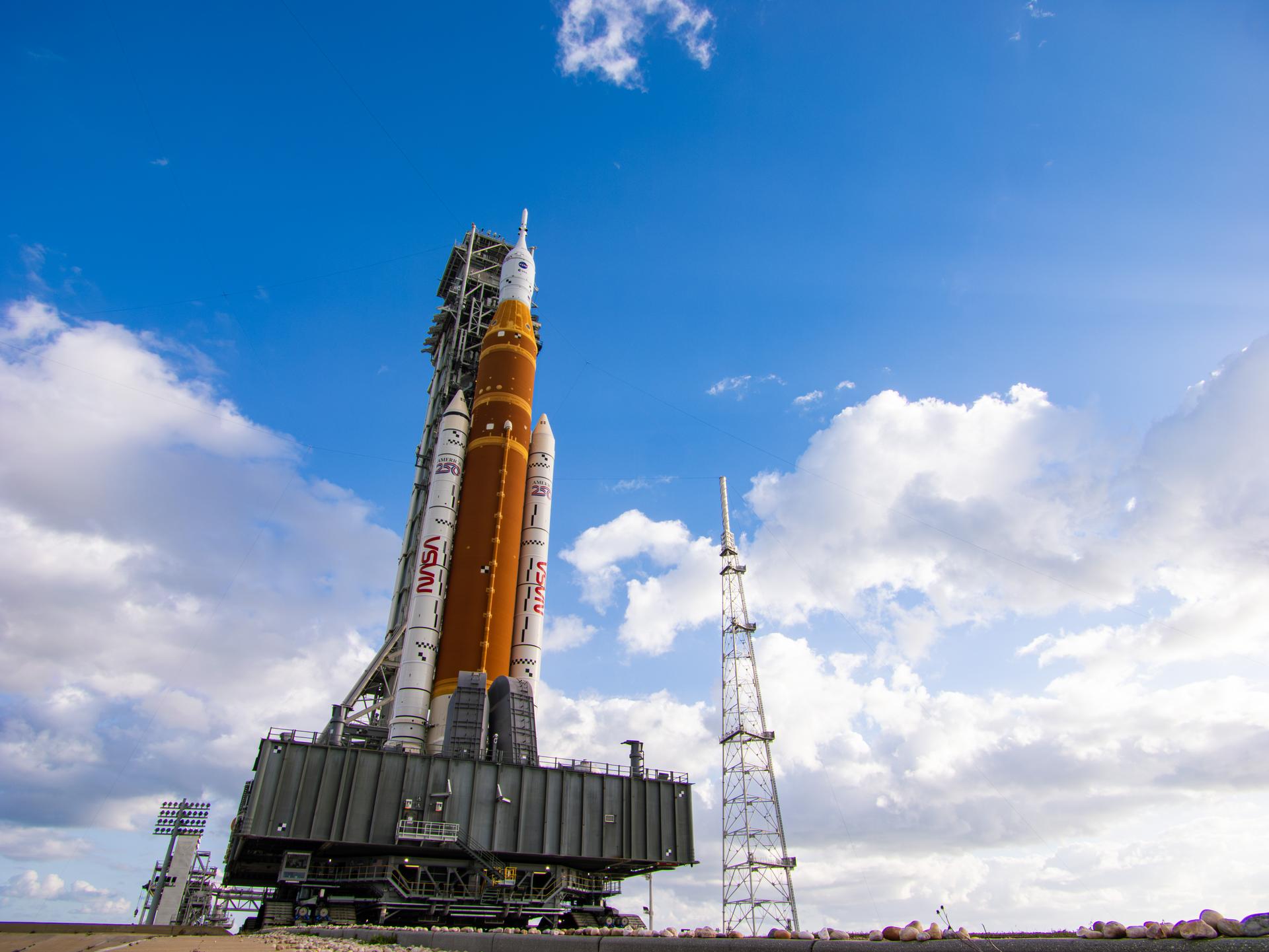
This image shows NASA’s SLS (Space Launch System) and Orion spacecraft rolling out of the Vehicle Assembly Building at NASA’s Kennedy Space Center. NASA's massive Crawler-Transporter, upgraded for the Artemis program, carries the powerful SLS rocket and Orion spacecraft on the Mobile Launcher from the Vehicle Assembly Building to Launch Pad 39B at Kennedy Space Center in preparation for the Artemis II mission.
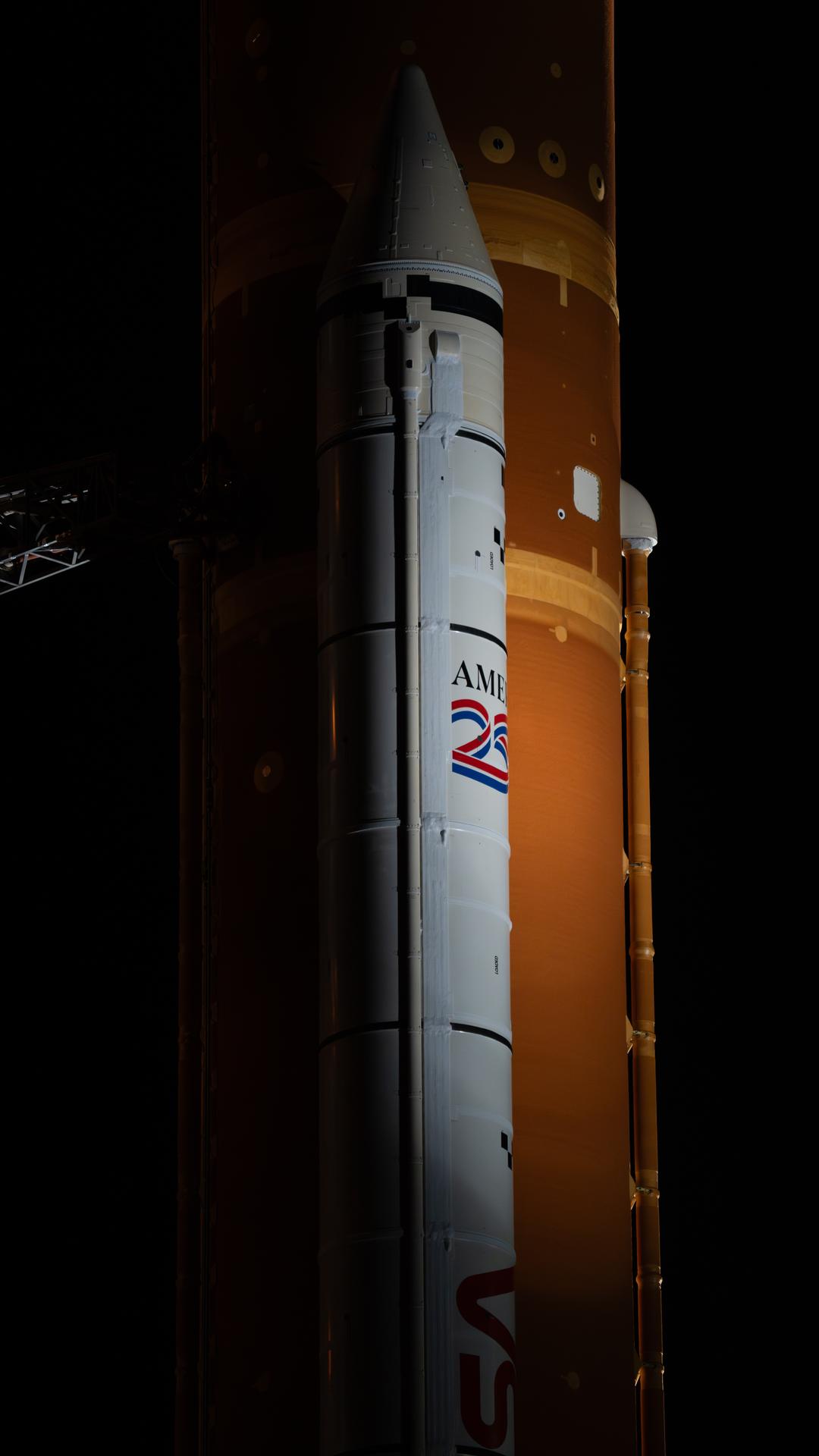
This image shows NASA’s SLS (Space Launch System) and Orion spacecraft rolling out of the Vehicle Assembly Building at NASA’s Kennedy Space Center. NASA's massive Crawler-Transporter, upgraded for the Artemis program, carries the powerful SLS rocket and Orion spacecraft on the Mobile Launcher from the Vehicle Assembly Building to Launch Pad 39B at Kennedy Space Center in preparation for the Artemis II mission.
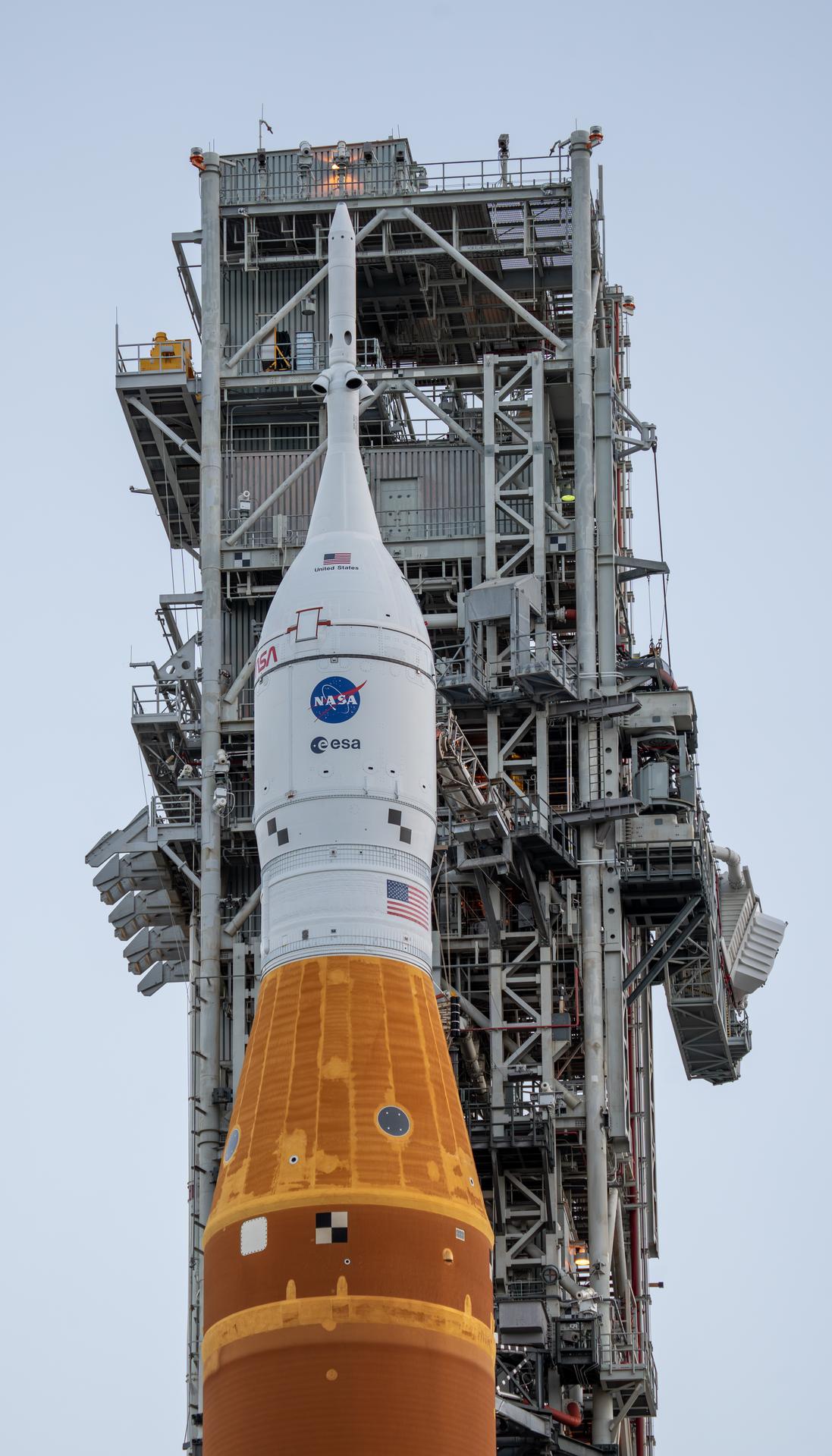
This image shows NASA’s SLS (Space Launch System) and Orion spacecraft rolling out of the Vehicle Assembly Building at NASA’s Kennedy Space Center. NASA's massive Crawler-Transporter, upgraded for the Artemis program, carries the powerful SLS rocket and Orion spacecraft on the Mobile Launcher from the Vehicle Assembly Building to Launch Pad 39B at Kennedy Space Center in preparation for the Artemis II mission.
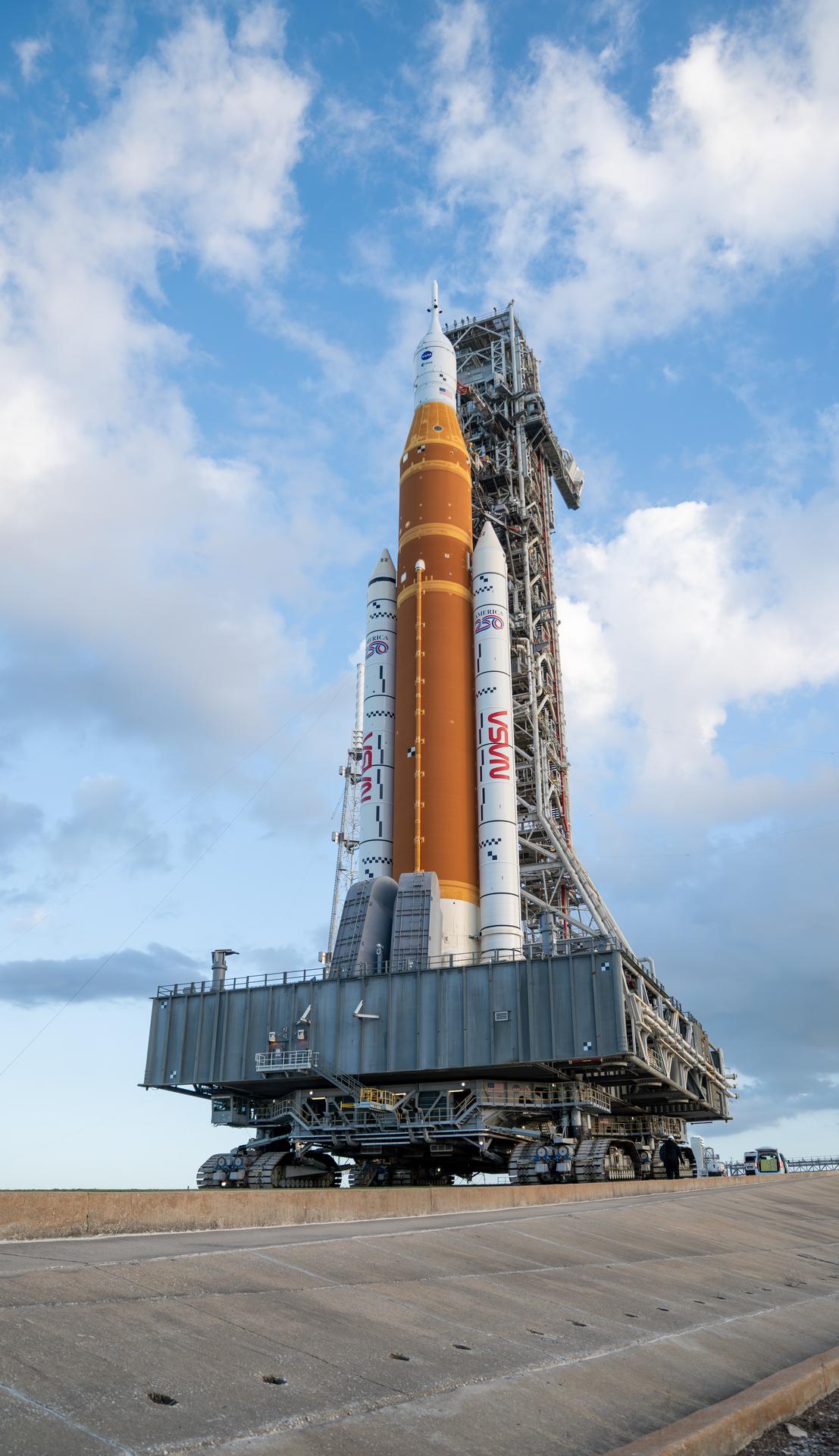
This image shows NASA’s SLS (Space Launch System) and Orion spacecraft rolling out of the Vehicle Assembly Building at NASA’s Kennedy Space Center. NASA's massive Crawler-Transporter, upgraded for the Artemis program, carries the powerful SLS rocket and Orion spacecraft on the Mobile Launcher from the Vehicle Assembly Building to Launch Pad 39B at Kennedy Space Center in preparation for the Artemis II mission.
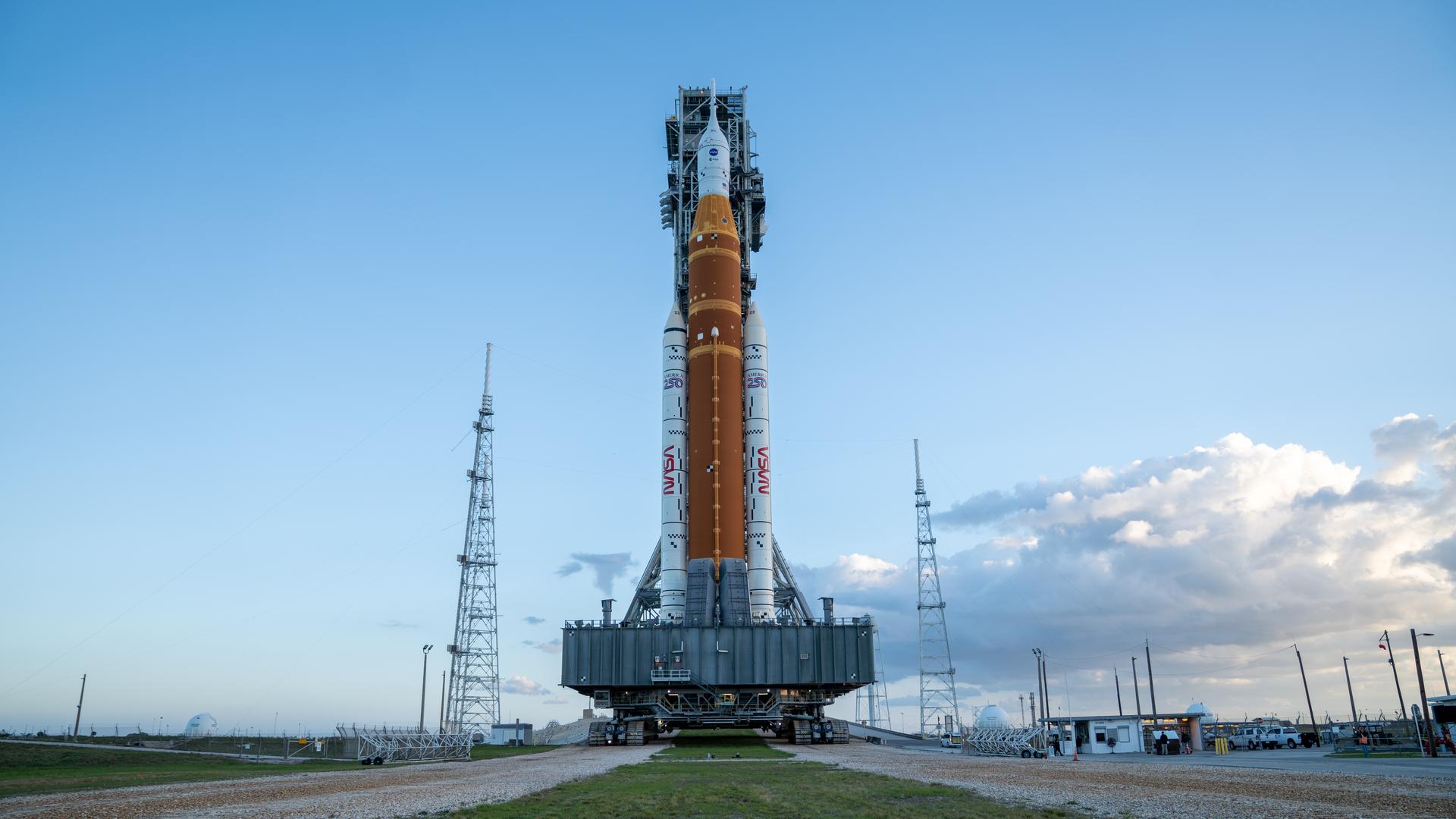
This image shows NASA’s SLS (Space Launch System) and Orion spacecraft rolling out of the Vehicle Assembly Building at NASA’s Kennedy Space Center. NASA's massive Crawler-Transporter, upgraded for the Artemis program, carries the powerful SLS rocket and Orion spacecraft on the Mobile Launcher from the Vehicle Assembly Building to Launch Pad 39B at Kennedy Space Center in preparation for the Artemis II mission.
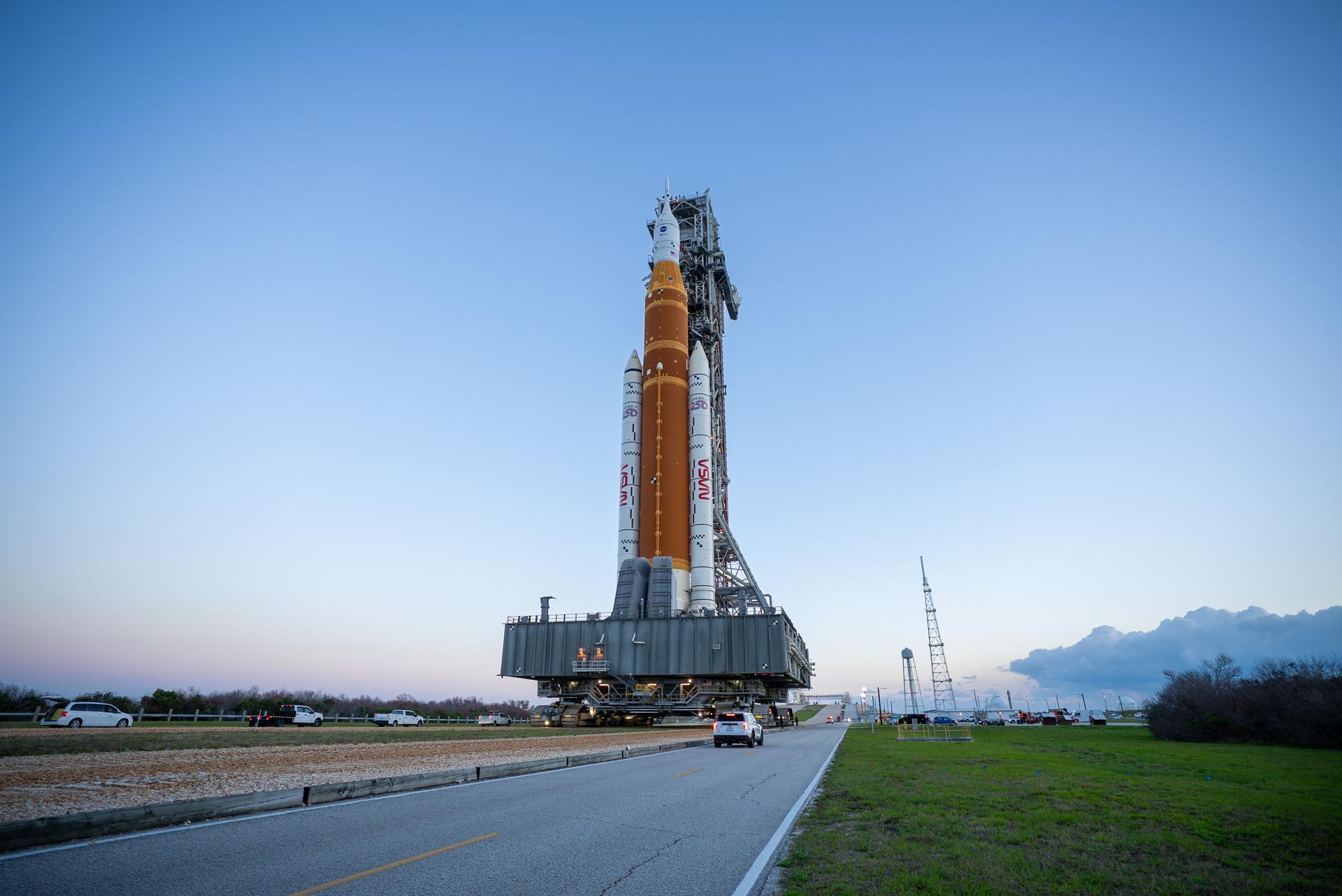
This image shows NASA’s SLS (Space Launch System) and Orion spacecraft rolling out of the Vehicle Assembly Building at NASA’s Kennedy Space Center. NASA's massive Crawler-Transporter, upgraded for the Artemis program, carries the powerful SLS rocket and Orion spacecraft on the Mobile Launcher from the Vehicle Assembly Building to Launch Pad 39B at Kennedy Space Center in preparation for the Artemis II mission.
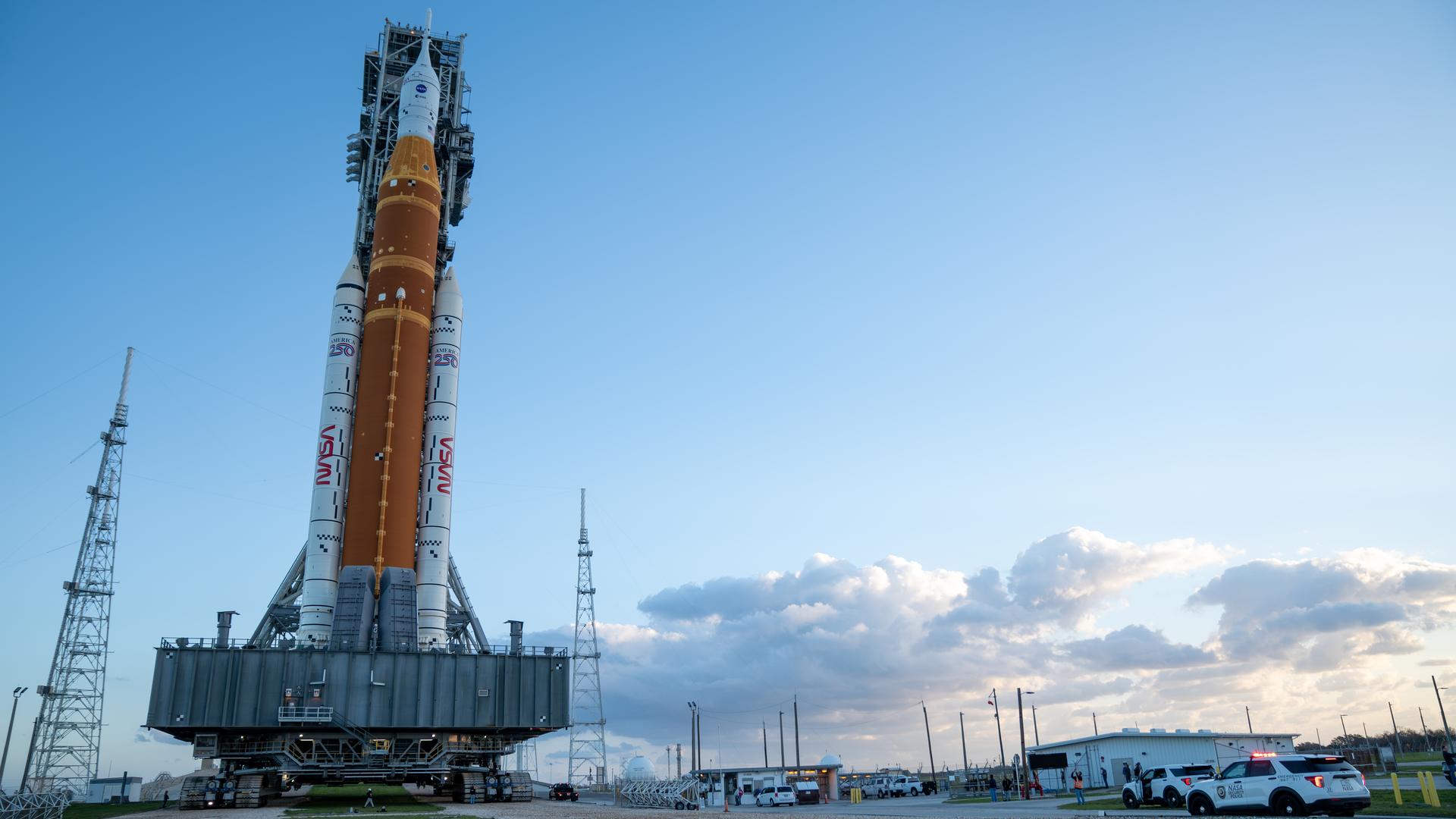
This image shows NASA’s SLS (Space Launch System) and Orion spacecraft rolling out of the Vehicle Assembly Building at NASA’s Kennedy Space Center. NASA's massive Crawler-Transporter, upgraded for the Artemis program, carries the powerful SLS rocket and Orion spacecraft on the Mobile Launcher from the Vehicle Assembly Building to Launch Pad 39B at Kennedy Space Center in preparation for the Artemis II mission.
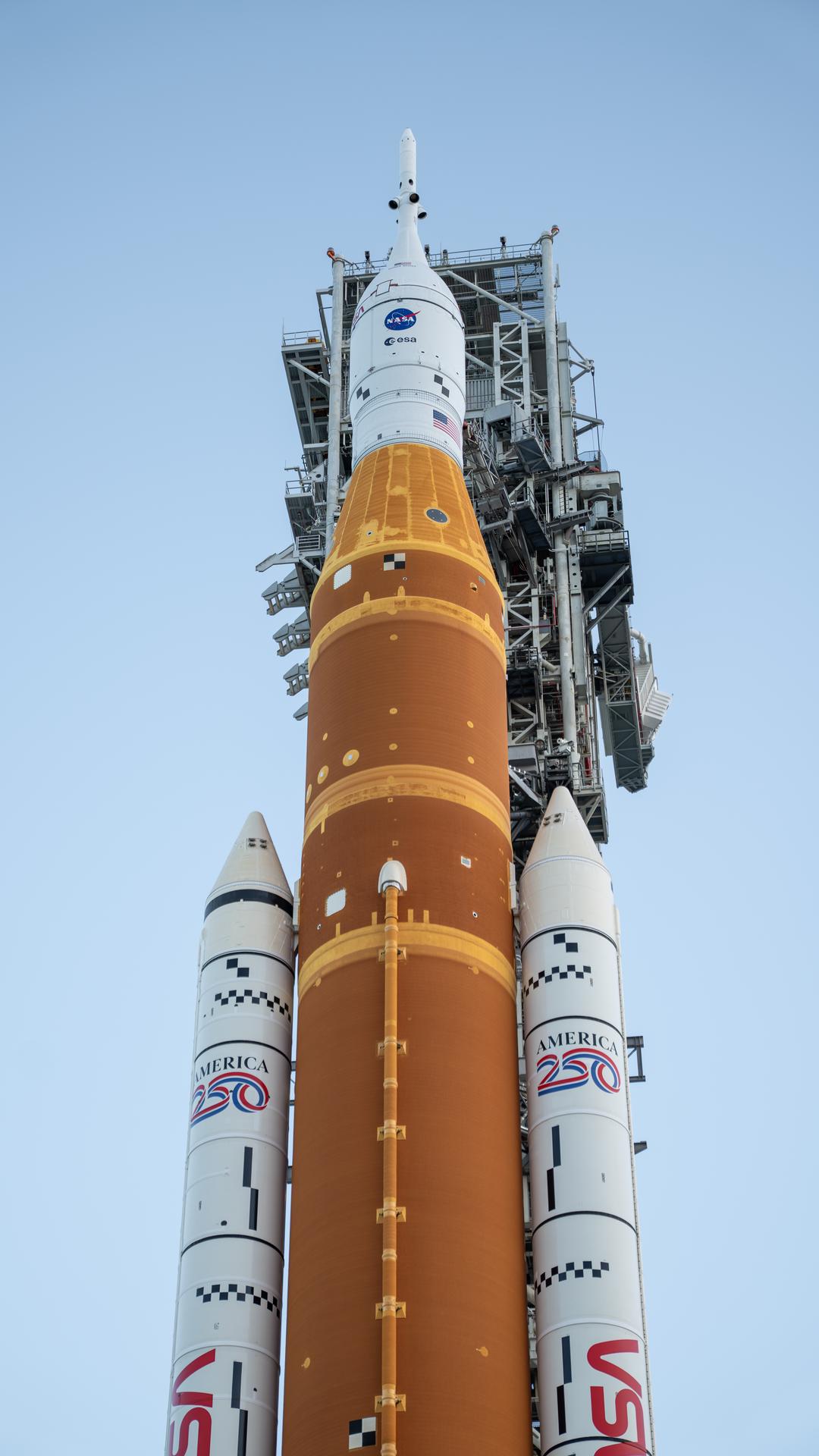
This image shows NASA’s SLS (Space Launch System) and Orion spacecraft rolling out of the Vehicle Assembly Building at NASA’s Kennedy Space Center. NASA's massive Crawler-Transporter, upgraded for the Artemis program, carries the powerful SLS rocket and Orion spacecraft on the Mobile Launcher from the Vehicle Assembly Building to Launch Pad 39B at Kennedy Space Center in preparation for the Artemis II mission.
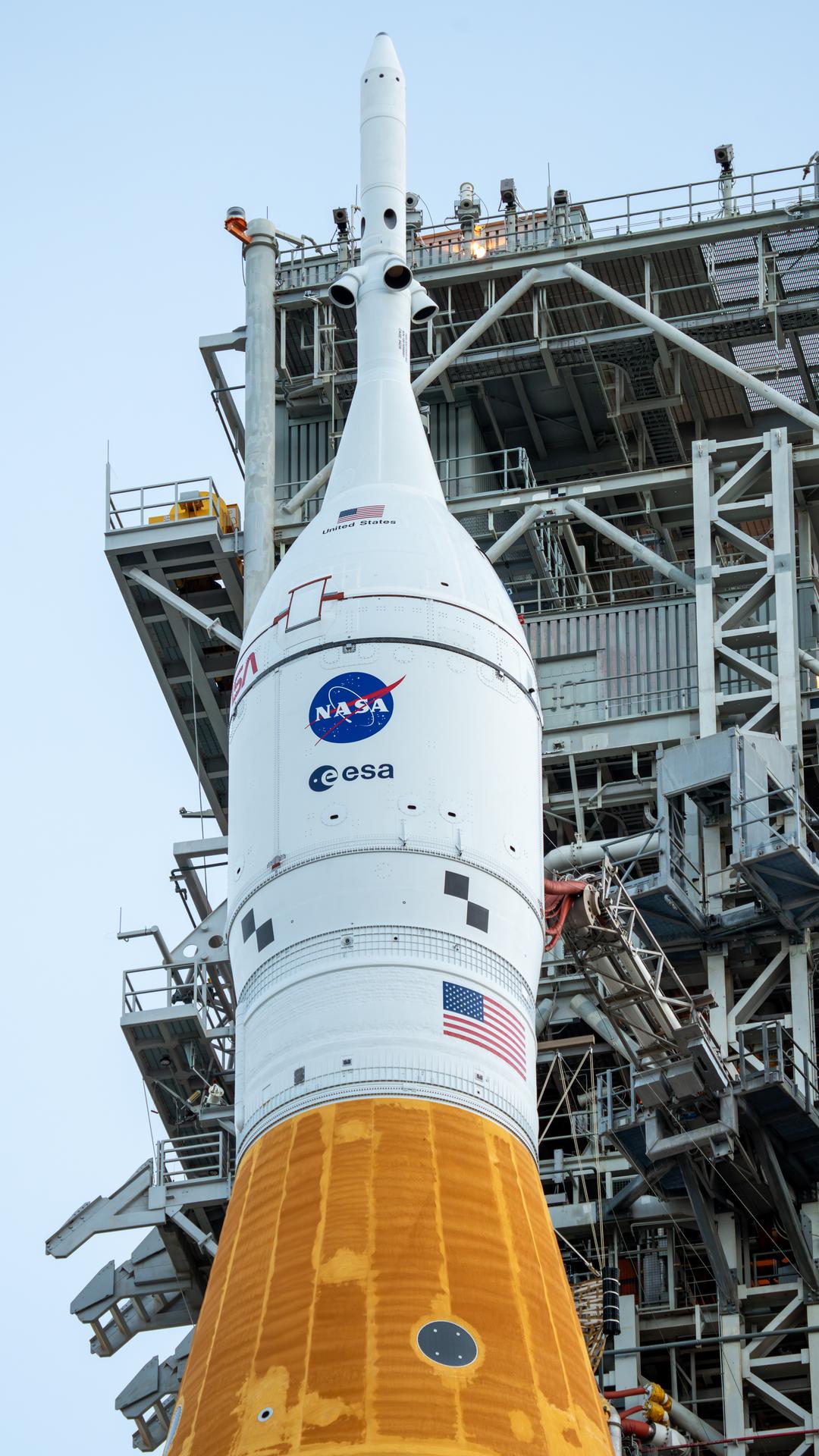
This image shows NASA’s SLS (Space Launch System) and Orion spacecraft rolling out of the Vehicle Assembly Building at NASA’s Kennedy Space Center. NASA's massive Crawler-Transporter, upgraded for the Artemis program, carries the powerful SLS rocket and Orion spacecraft on the Mobile Launcher from the Vehicle Assembly Building to Launch Pad 39B at Kennedy Space Center in preparation for the Artemis II mission.
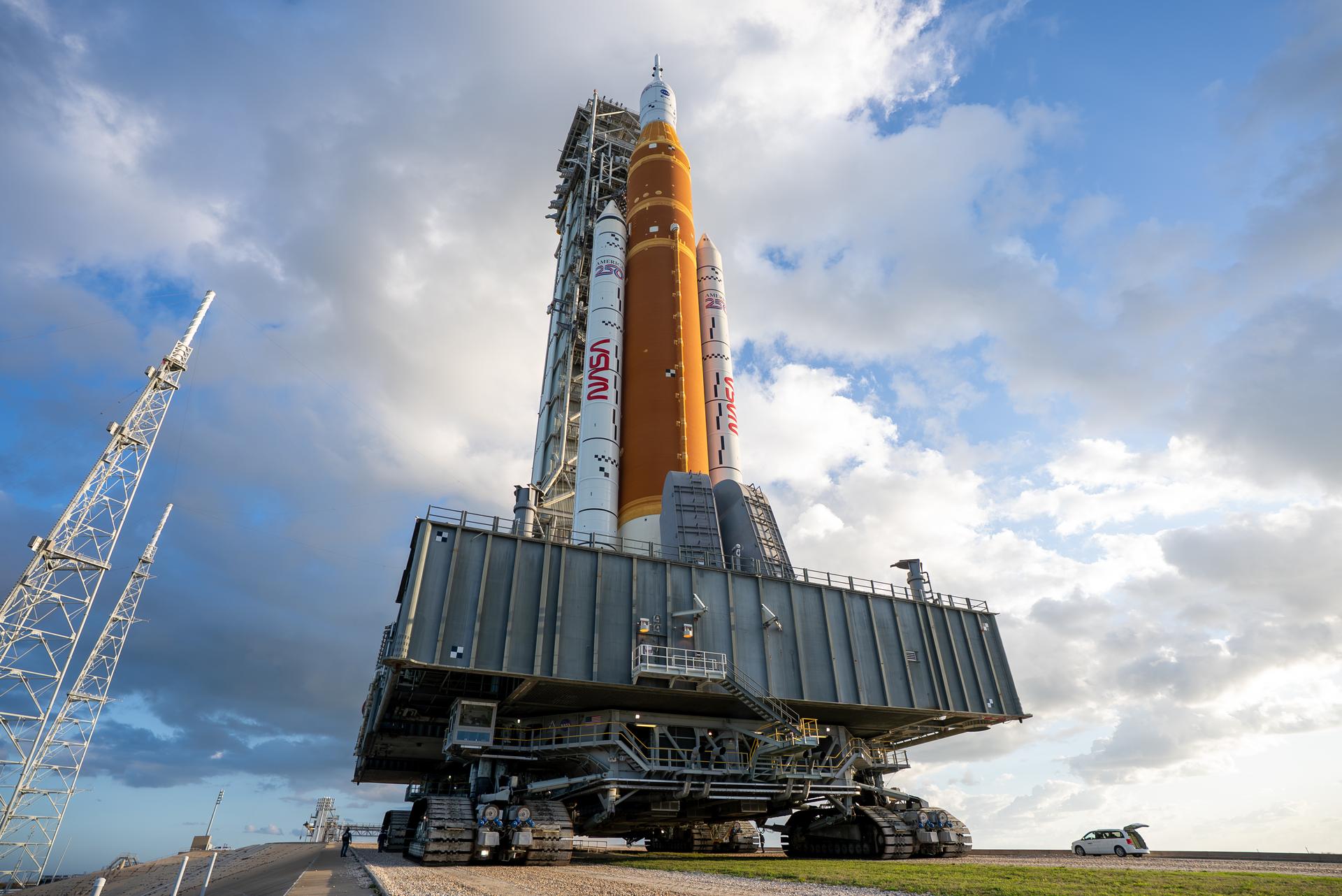
This image shows NASA’s SLS (Space Launch System) and Orion spacecraft rolling out of the Vehicle Assembly Building at NASA’s Kennedy Space Center. NASA's massive Crawler-Transporter, upgraded for the Artemis program, carries the powerful SLS rocket and Orion spacecraft on the Mobile Launcher from the Vehicle Assembly Building to Launch Pad 39B at Kennedy Space Center in preparation for the Artemis II mission.
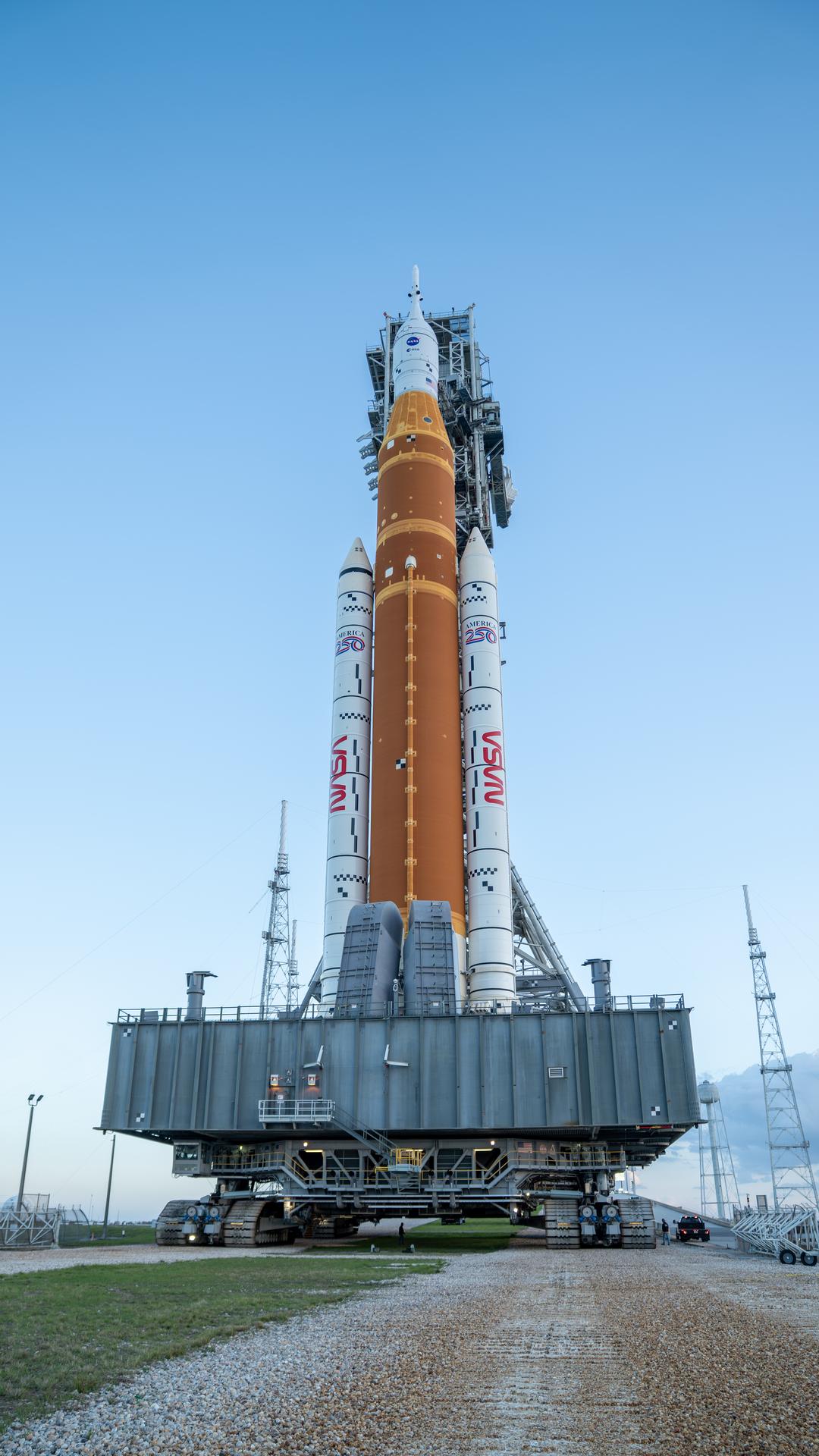
This image shows NASA’s SLS (Space Launch System) and Orion spacecraft rolling out of the Vehicle Assembly Building at NASA’s Kennedy Space Center. NASA's massive Crawler-Transporter, upgraded for the Artemis program, carries the powerful SLS rocket and Orion spacecraft on the Mobile Launcher from the Vehicle Assembly Building to Launch Pad 39B at Kennedy Space Center in preparation for the Artemis II mission.
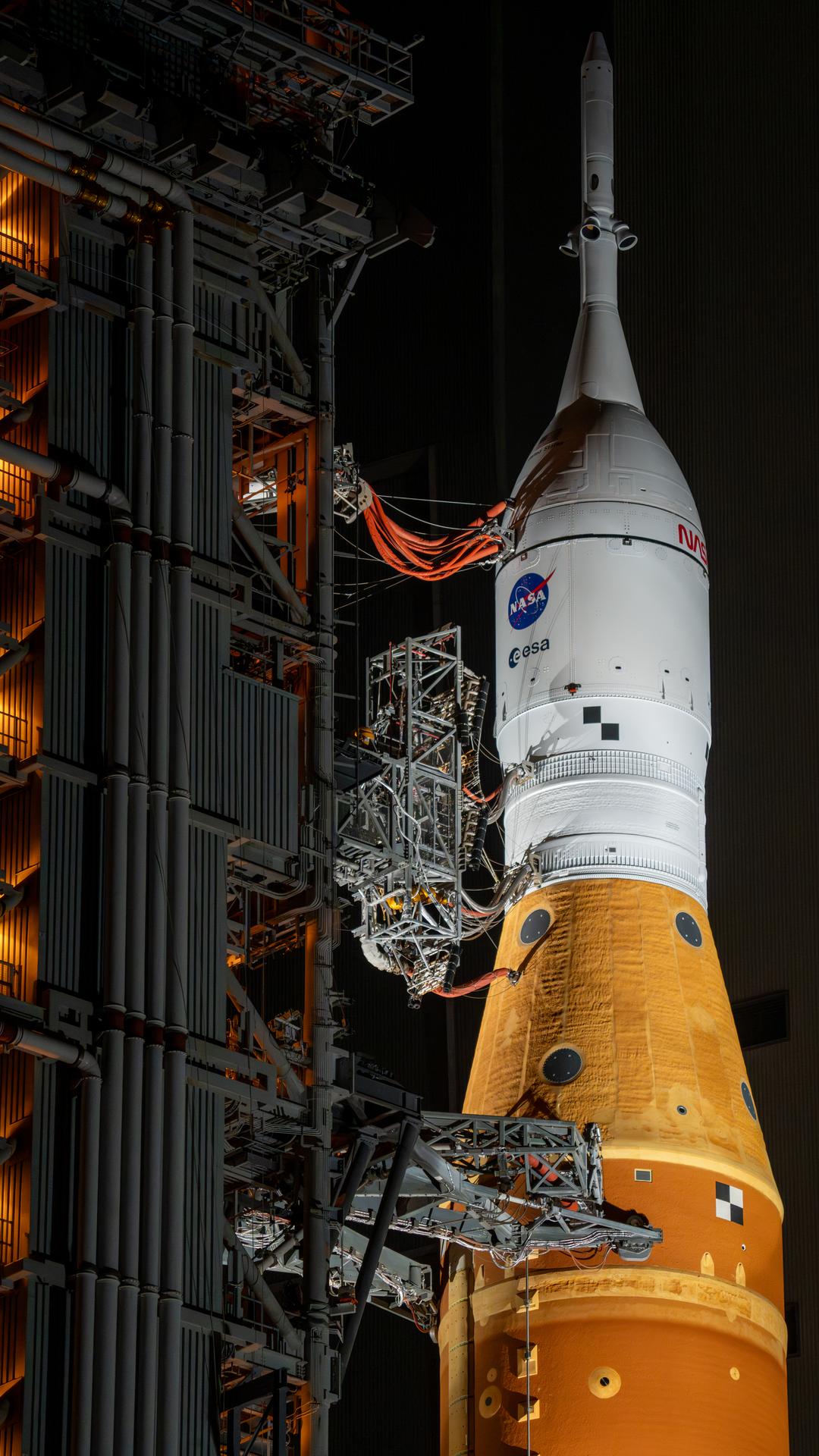
This image shows NASA’s SLS (Space Launch System) and Orion spacecraft rolling out of the Vehicle Assembly Building at NASA’s Kennedy Space Center. NASA's massive Crawler-Transporter, upgraded for the Artemis program, carries the powerful SLS rocket and Orion spacecraft on the Mobile Launcher from the Vehicle Assembly Building to Launch Pad 39B at Kennedy Space Center in preparation for the Artemis II mission.
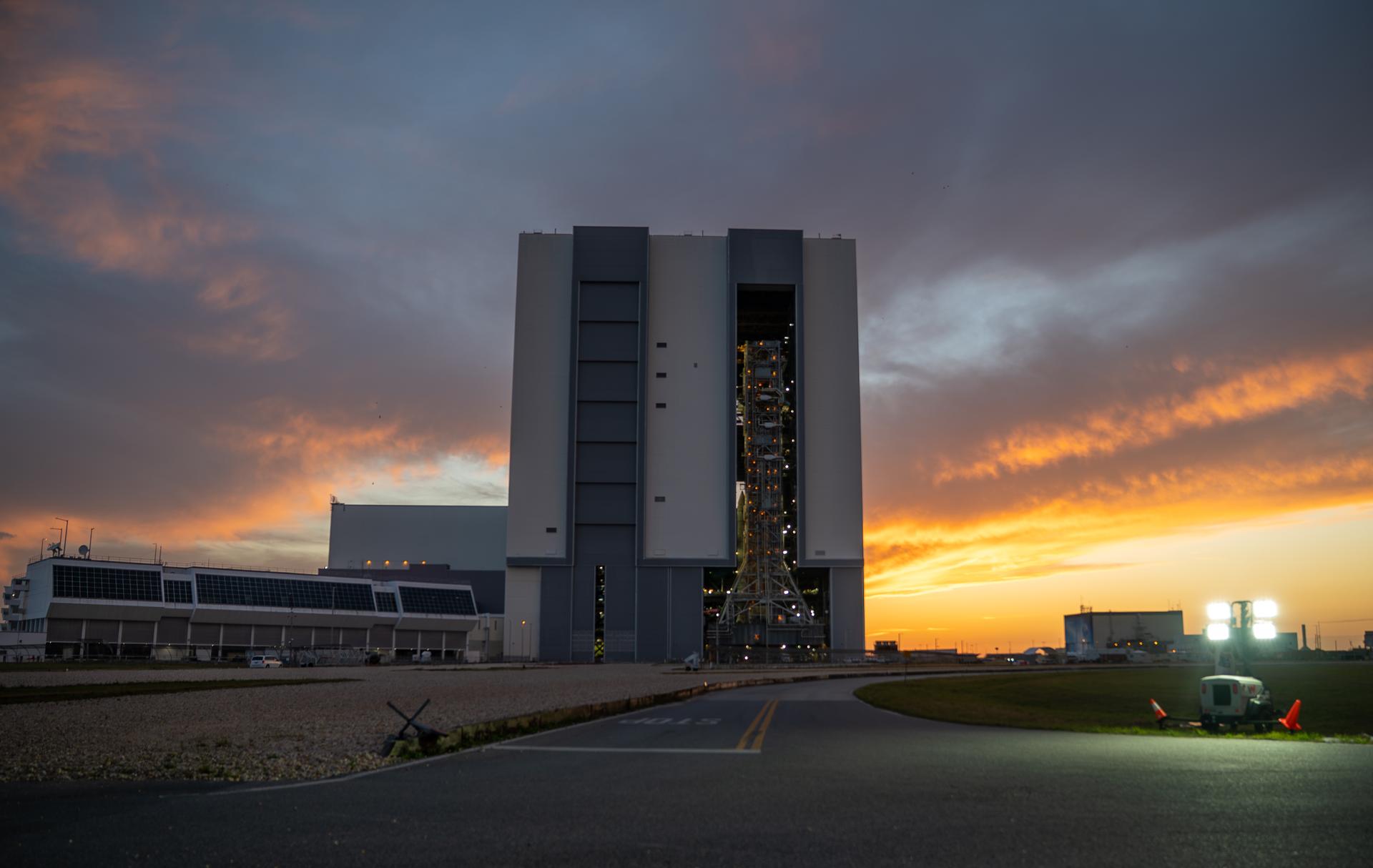
This image shows NASA’s SLS (Space Launch System) and Orion spacecraft rolling out of the Vehicle Assembly Building at NASA’s Kennedy Space Center. NASA's massive Crawler-Transporter, upgraded for the Artemis program, carries the powerful SLS rocket and Orion spacecraft on the Mobile Launcher from the Vehicle Assembly Building to Launch Pad 39B at Kennedy Space Center in preparation for the Artemis II mission.
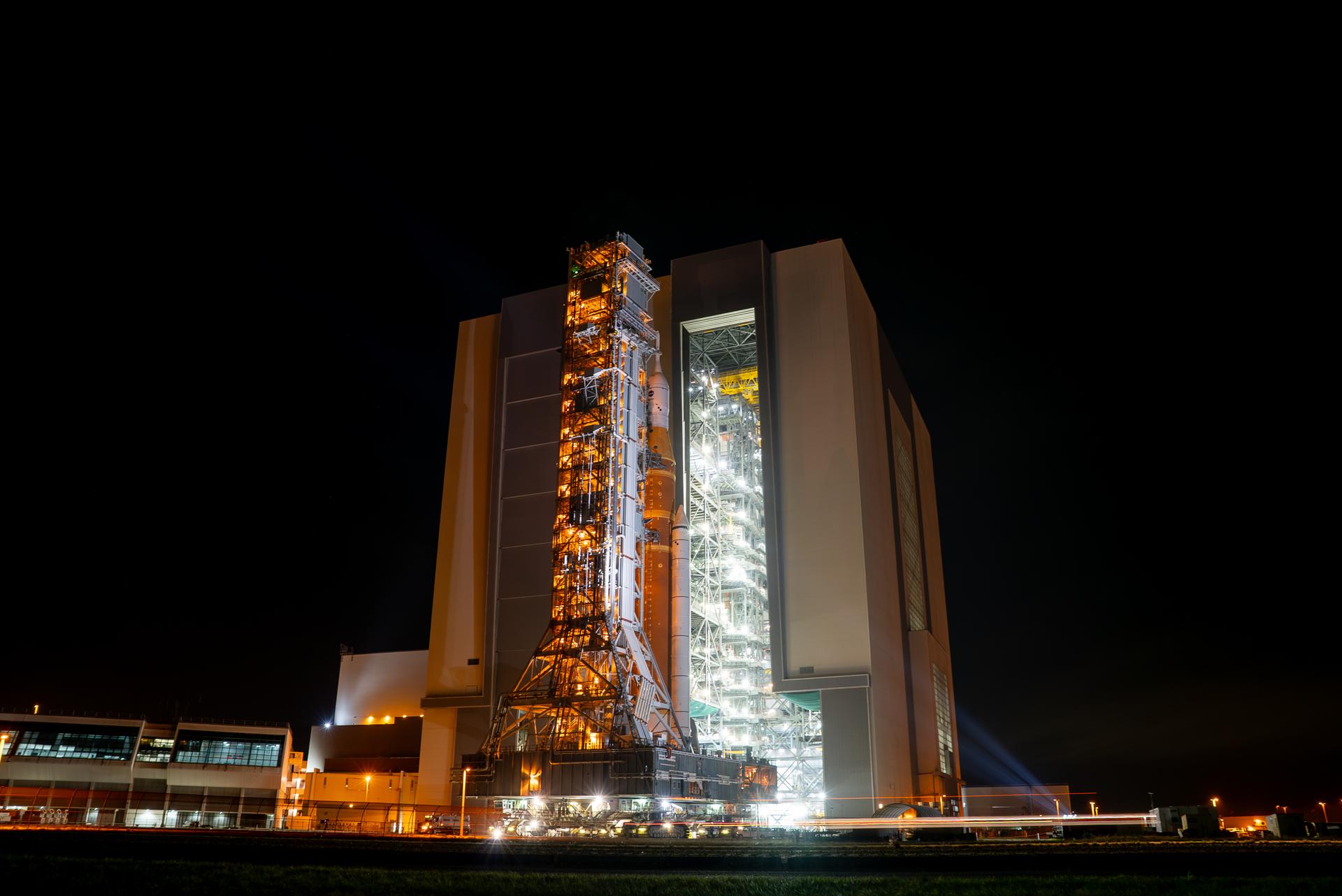
This image shows NASA’s SLS (Space Launch System) and Orion spacecraft rolling out of the Vehicle Assembly Building at NASA’s Kennedy Space Center. NASA's massive Crawler-Transporter, upgraded for the Artemis program, carries the powerful SLS rocket and Orion spacecraft on the Mobile Launcher from the Vehicle Assembly Building to Launch Pad 39B at Kennedy Space Center in preparation for the Artemis II mission.
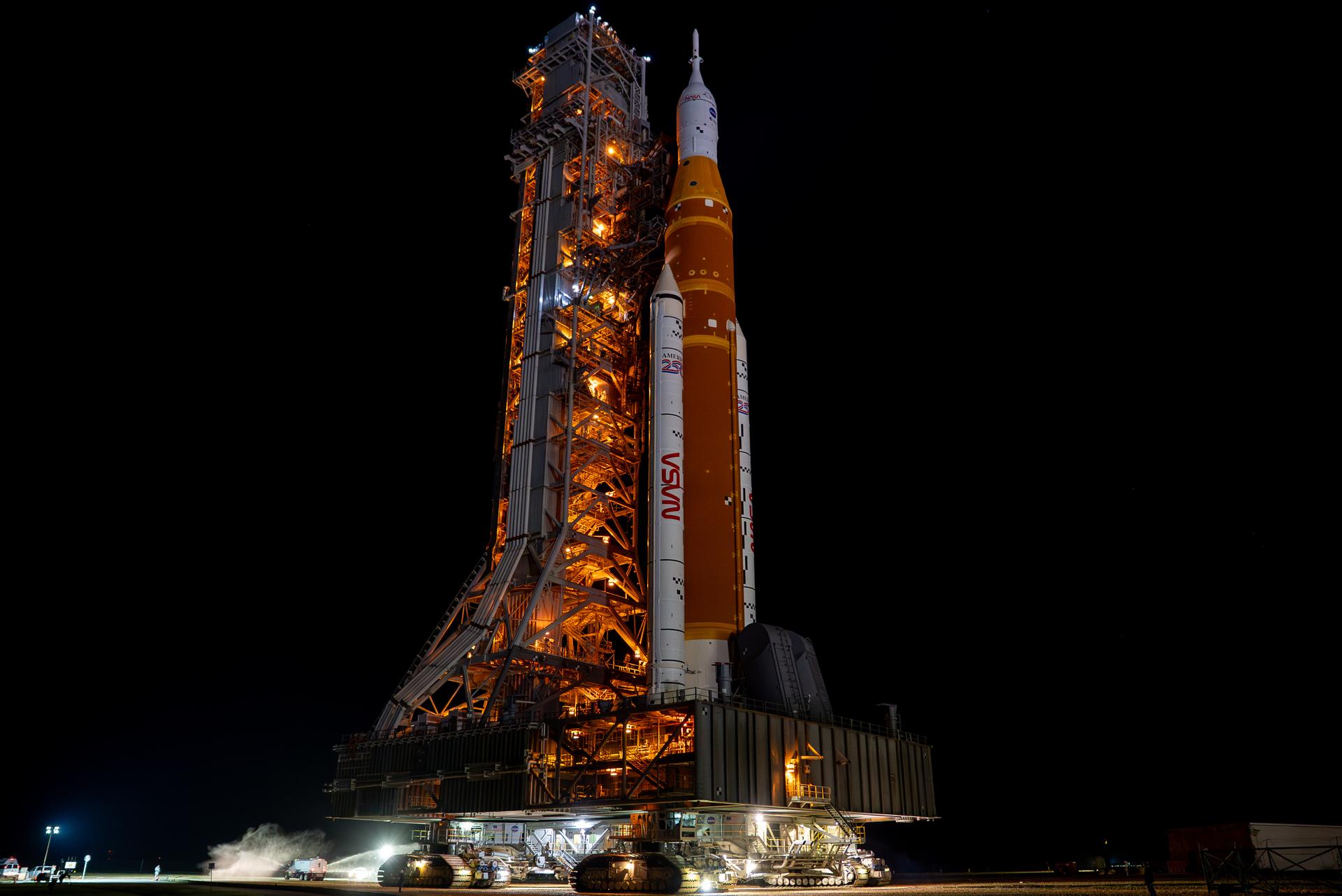
This image shows NASA’s SLS (Space Launch System) and Orion spacecraft rolling out of the Vehicle Assembly Building at NASA’s Kennedy Space Center. NASA's massive Crawler-Transporter, upgraded for the Artemis program, carries the powerful SLS rocket and Orion spacecraft on the Mobile Launcher from the Vehicle Assembly Building to Launch Pad 39B at Kennedy Space Center in preparation for the Artemis II mission.
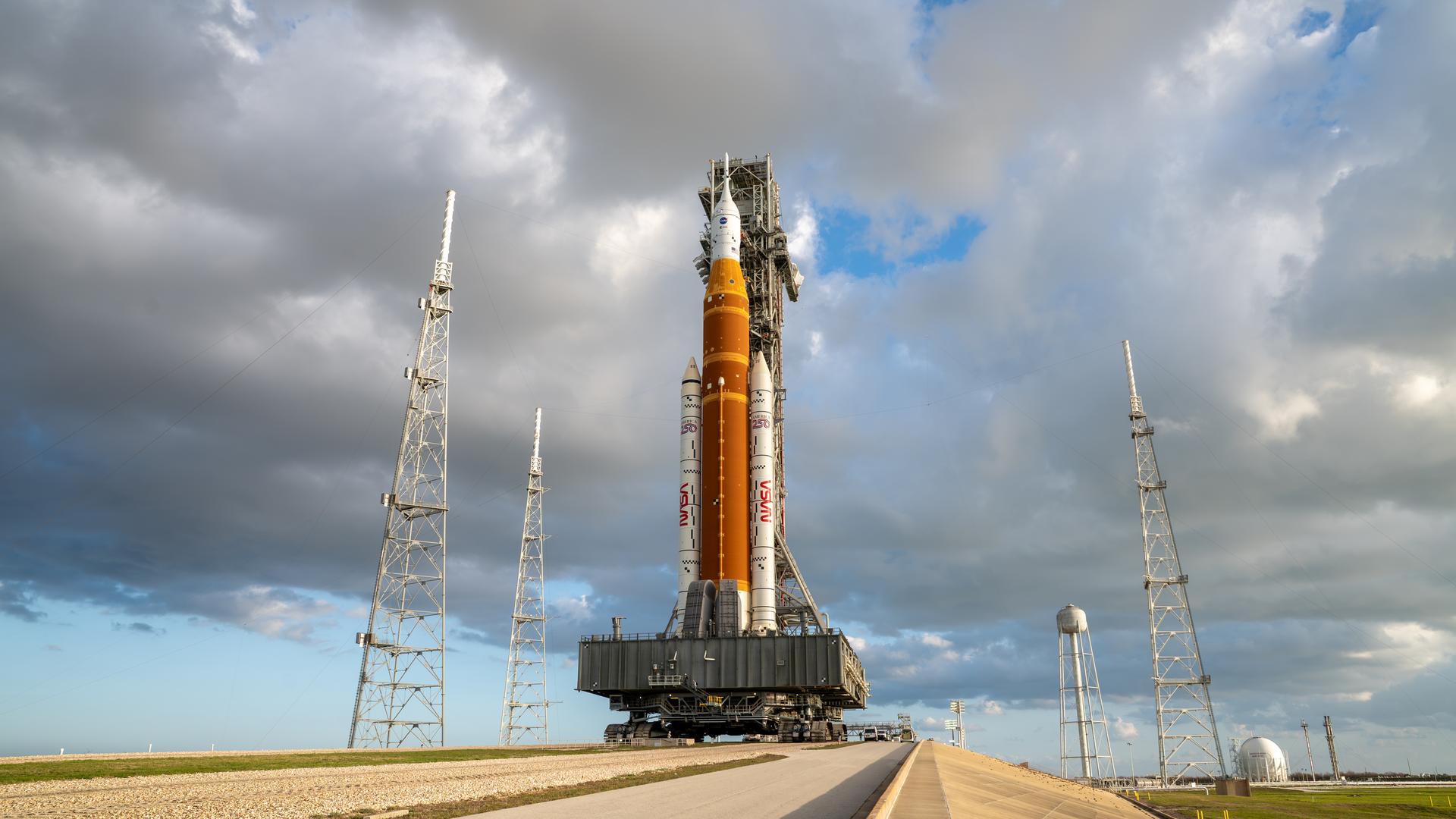
This image shows NASA’s SLS (Space Launch System) and Orion spacecraft rolling out of the Vehicle Assembly Building at NASA’s Kennedy Space Center. NASA's massive Crawler-Transporter, upgraded for the Artemis program, carries the powerful SLS rocket and Orion spacecraft on the Mobile Launcher from the Vehicle Assembly Building to Launch Pad 39B at Kennedy Space Center in preparation for the Artemis II mission.
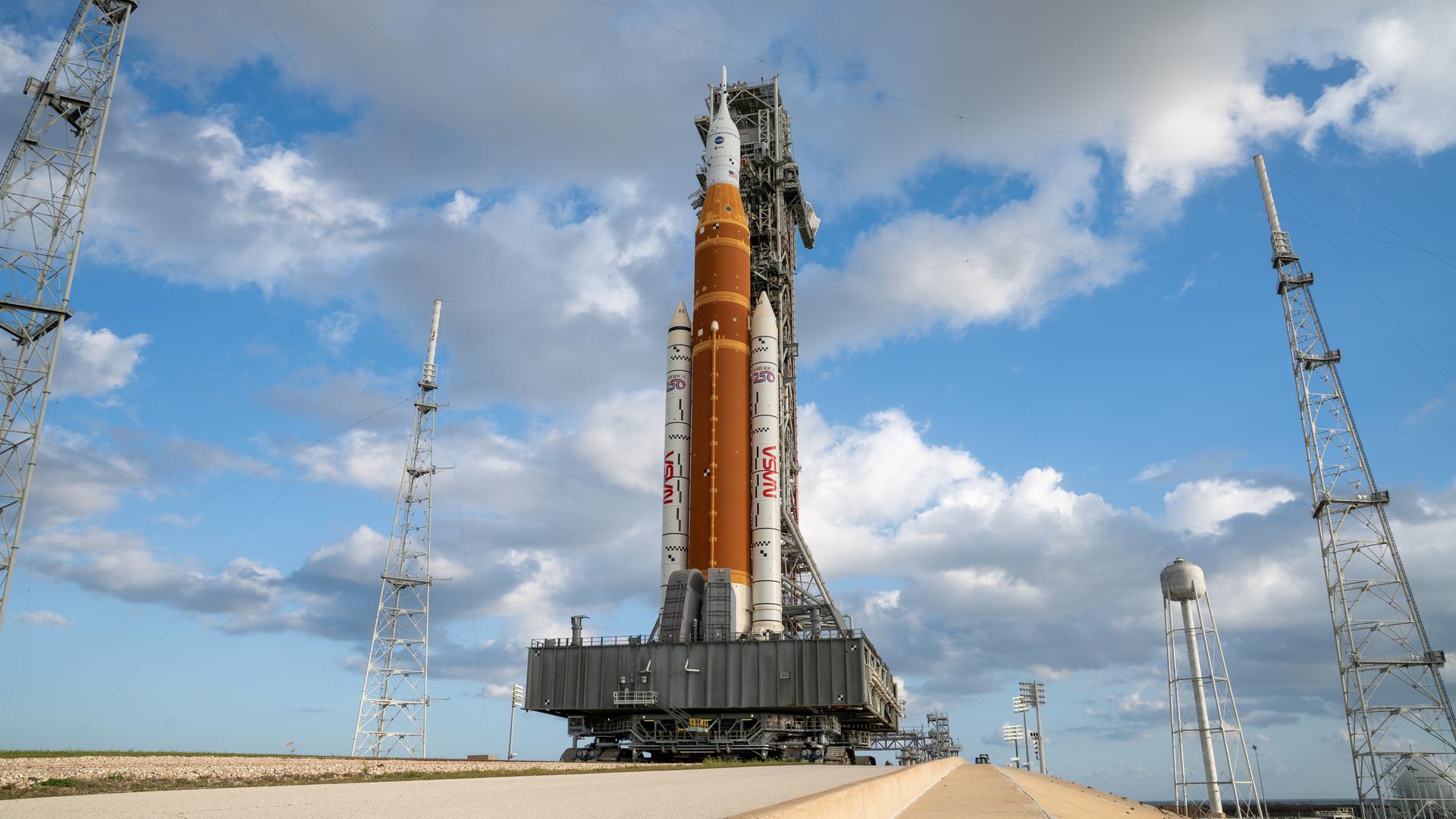
This image shows NASA’s SLS (Space Launch System) and Orion spacecraft rolling out of the Vehicle Assembly Building at NASA’s Kennedy Space Center. NASA's massive Crawler-Transporter, upgraded for the Artemis program, carries the powerful SLS rocket and Orion spacecraft on the Mobile Launcher from the Vehicle Assembly Building to Launch Pad 39B at Kennedy Space Center in preparation for the Artemis II mission.
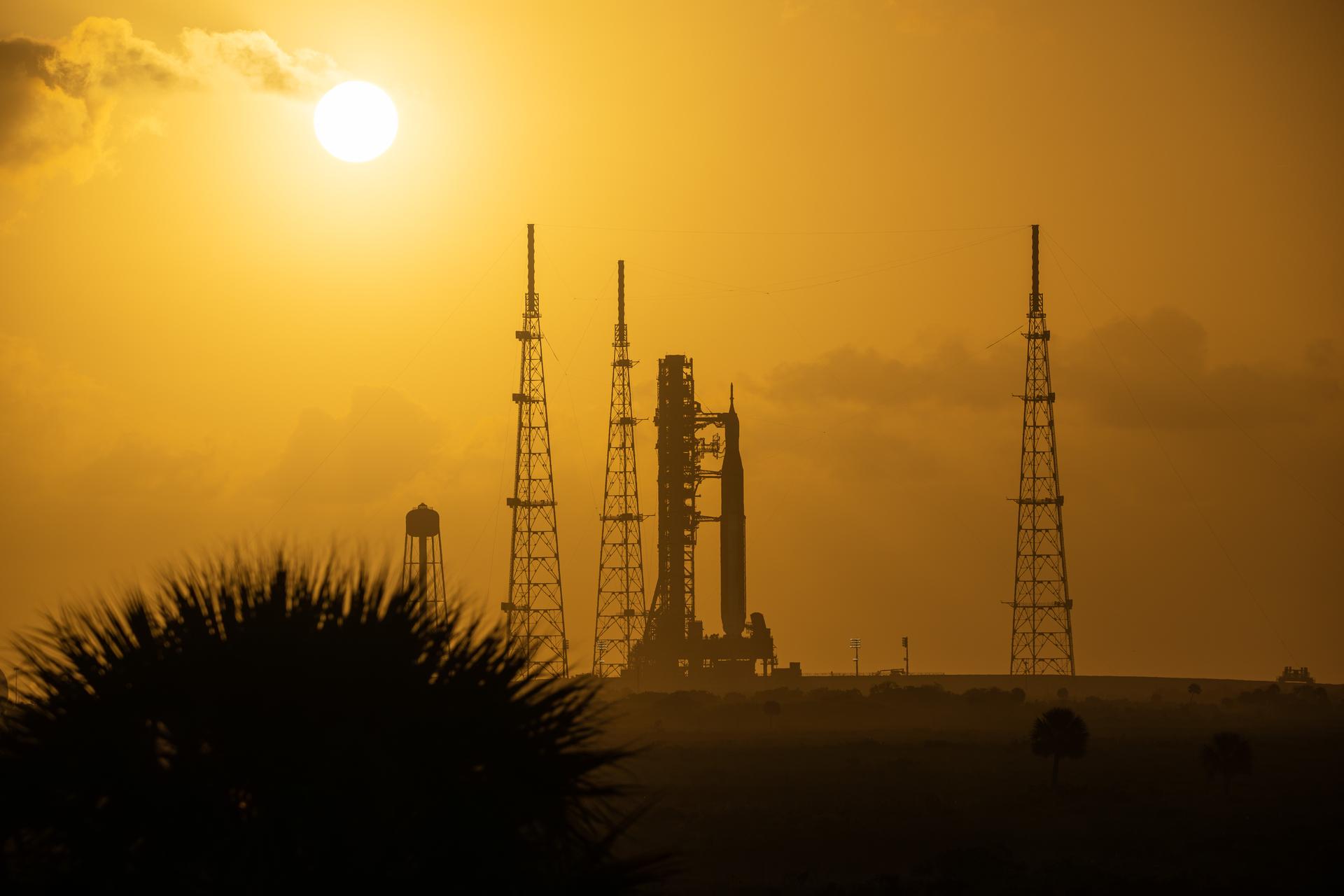
This image shows a sunset of NASA’s SLS (Space Launch System) and Orion spacecraft at NASA’s Kennedy Space Center. NASA's massive Crawler-Transporter, upgraded for the Artemis program, carried the powerful SLS rocket and Orion spacecraft on the Mobile Launcher from the Vehicle Assembly Building to Launch Pad 39B at Kennedy Space Center in preparation for the Artemis II mission.
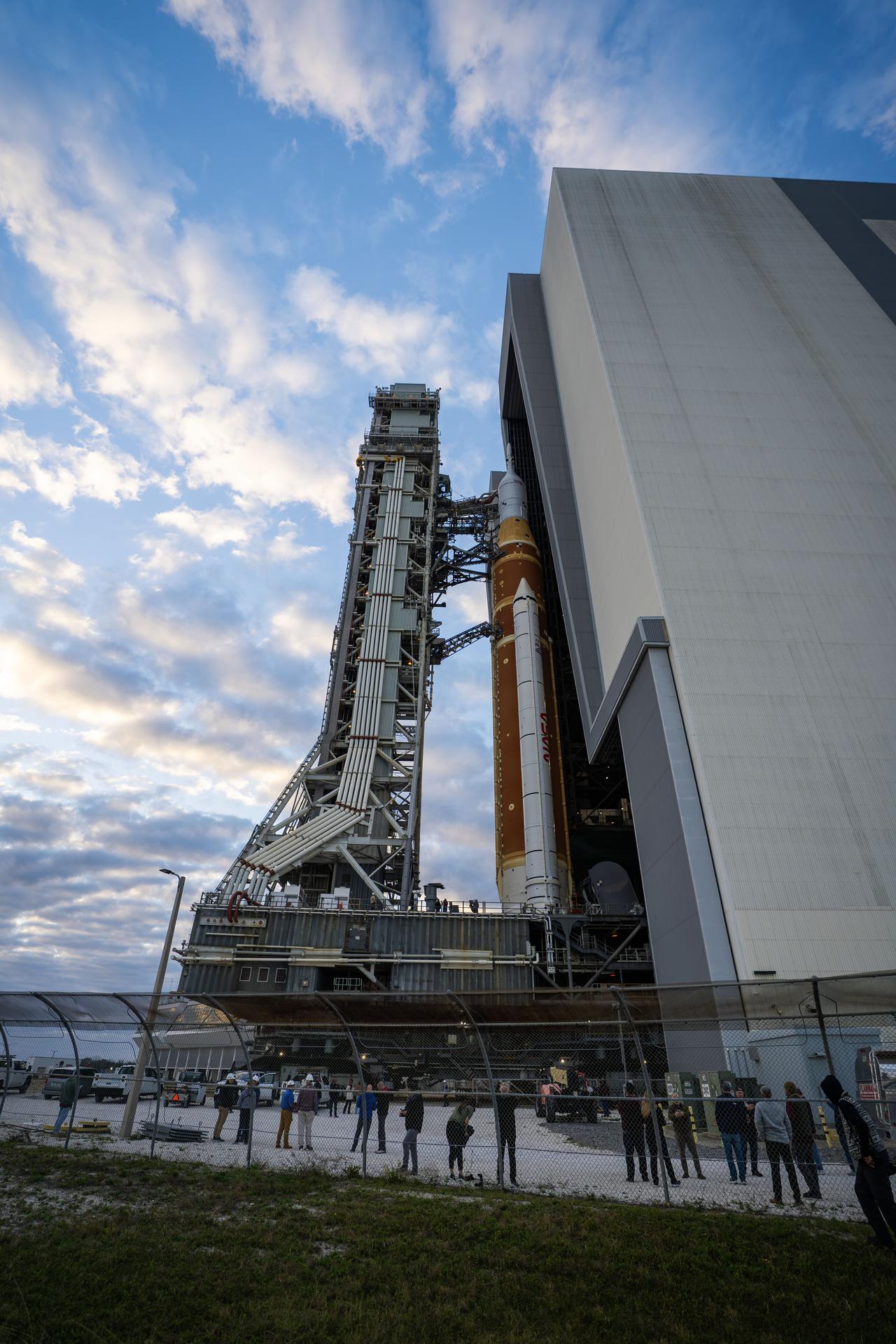
This image shows NASA’s SLS (Space Launch System) and Orion spacecraft rolling out of the Vehicle Assembly Building at NASA’s Kennedy Space Center. NASA's massive Crawler-Transporter, upgraded for the Artemis program, carries the powerful SLS rocket and Orion spacecraft on the Mobile Launcher from the Vehicle Assembly Building to Launch Pad 39B at Kennedy Space Center in preparation for the Artemis II mission.
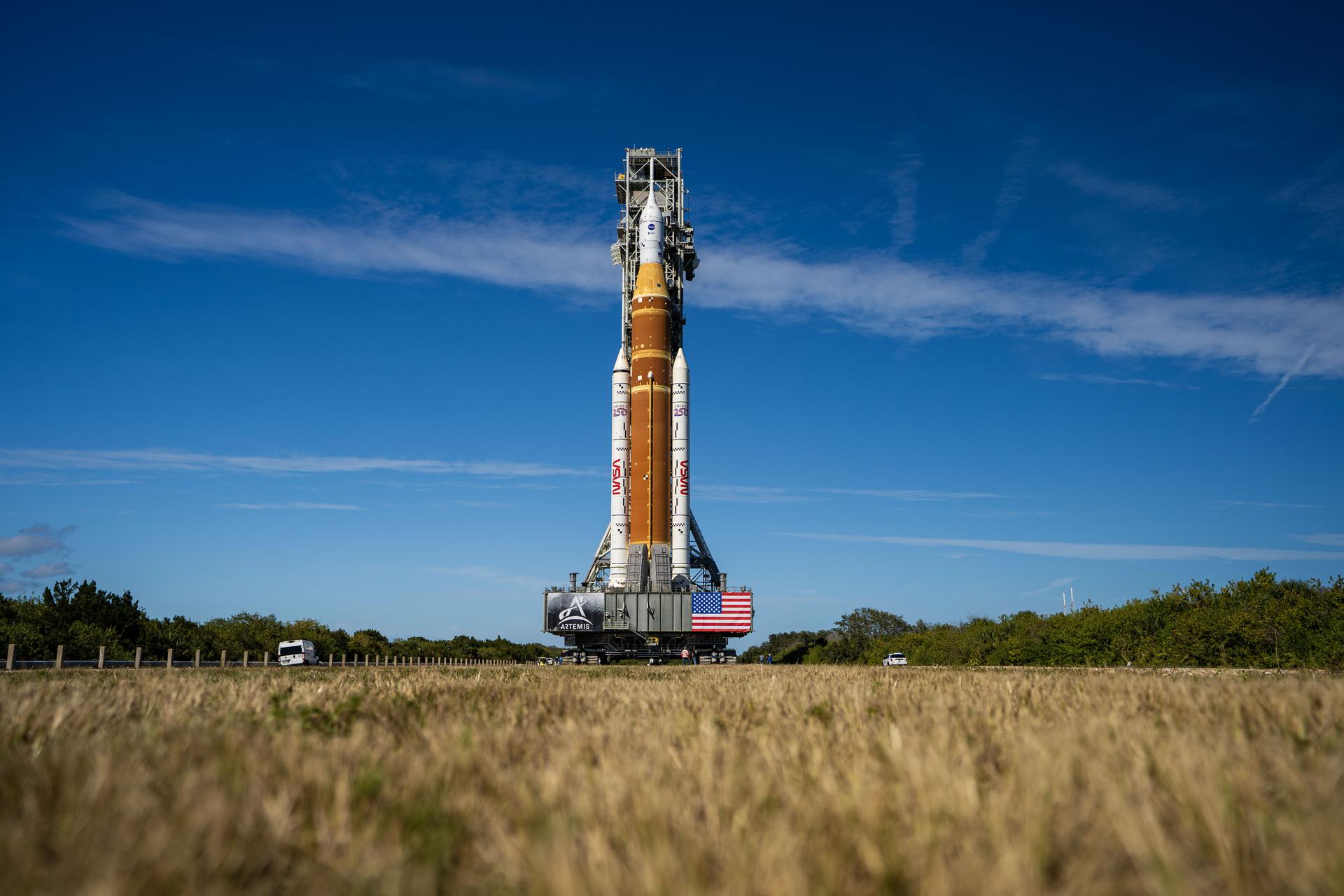
This image shows NASA’s SLS (Space Launch System) and Orion spacecraft rolling out of the Vehicle Assembly Building at NASA’s Kennedy Space Center. NASA's massive Crawler-Transporter, upgraded for the Artemis program, carries the powerful SLS rocket and Orion spacecraft on the Mobile Launcher from the Vehicle Assembly Building to Launch Pad 39B at Kennedy Space Center in preparation for the Artemis II mission.
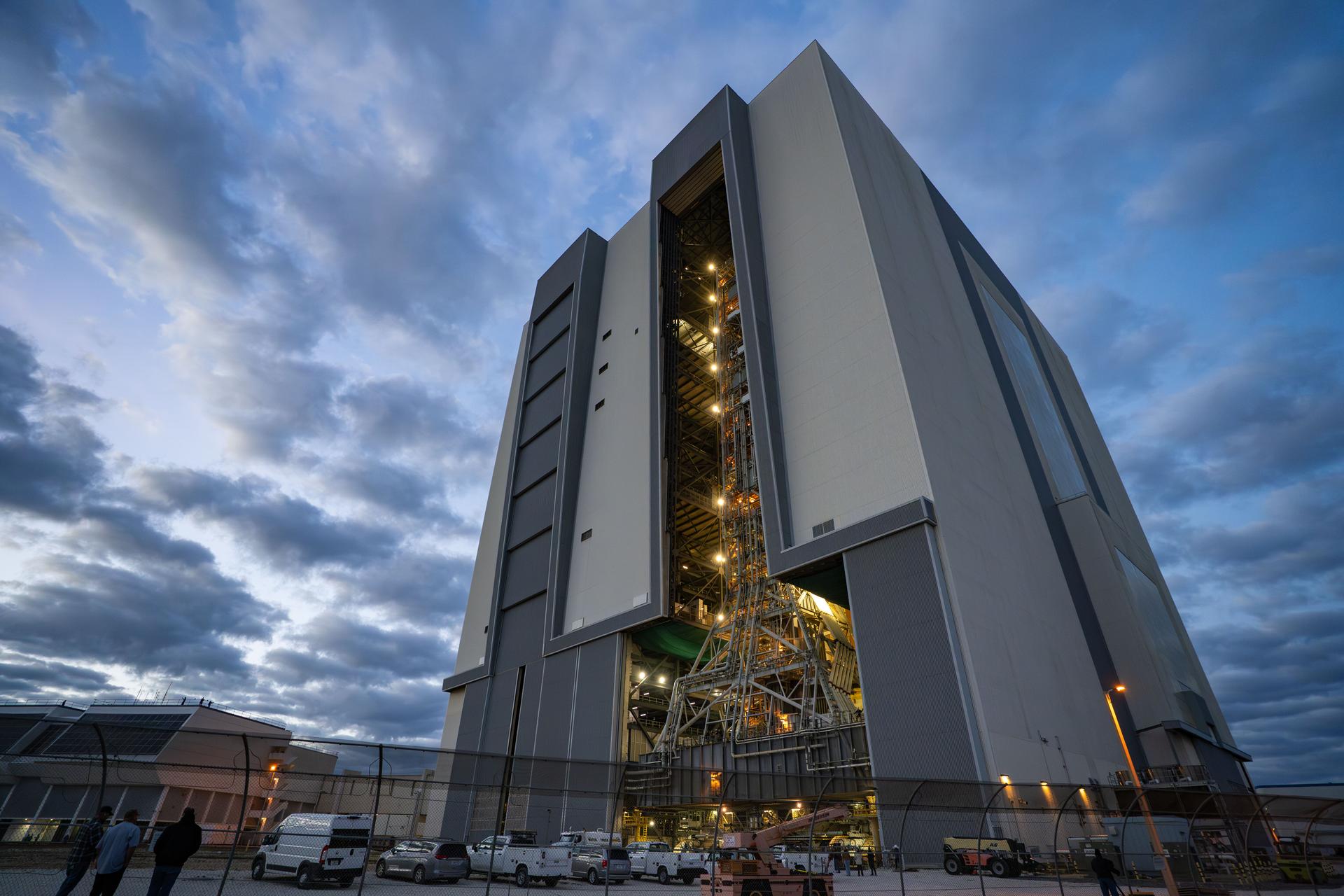
This image shows NASA’s SLS (Space Launch System) and Orion spacecraft rolling out of the Vehicle Assembly Building at NASA’s Kennedy Space Center. NASA's massive Crawler-Transporter, upgraded for the Artemis program, carries the powerful SLS rocket and Orion spacecraft on the Mobile Launcher from the Vehicle Assembly Building to Launch Pad 39B at Kennedy Space Center in preparation for the Artemis II mission.