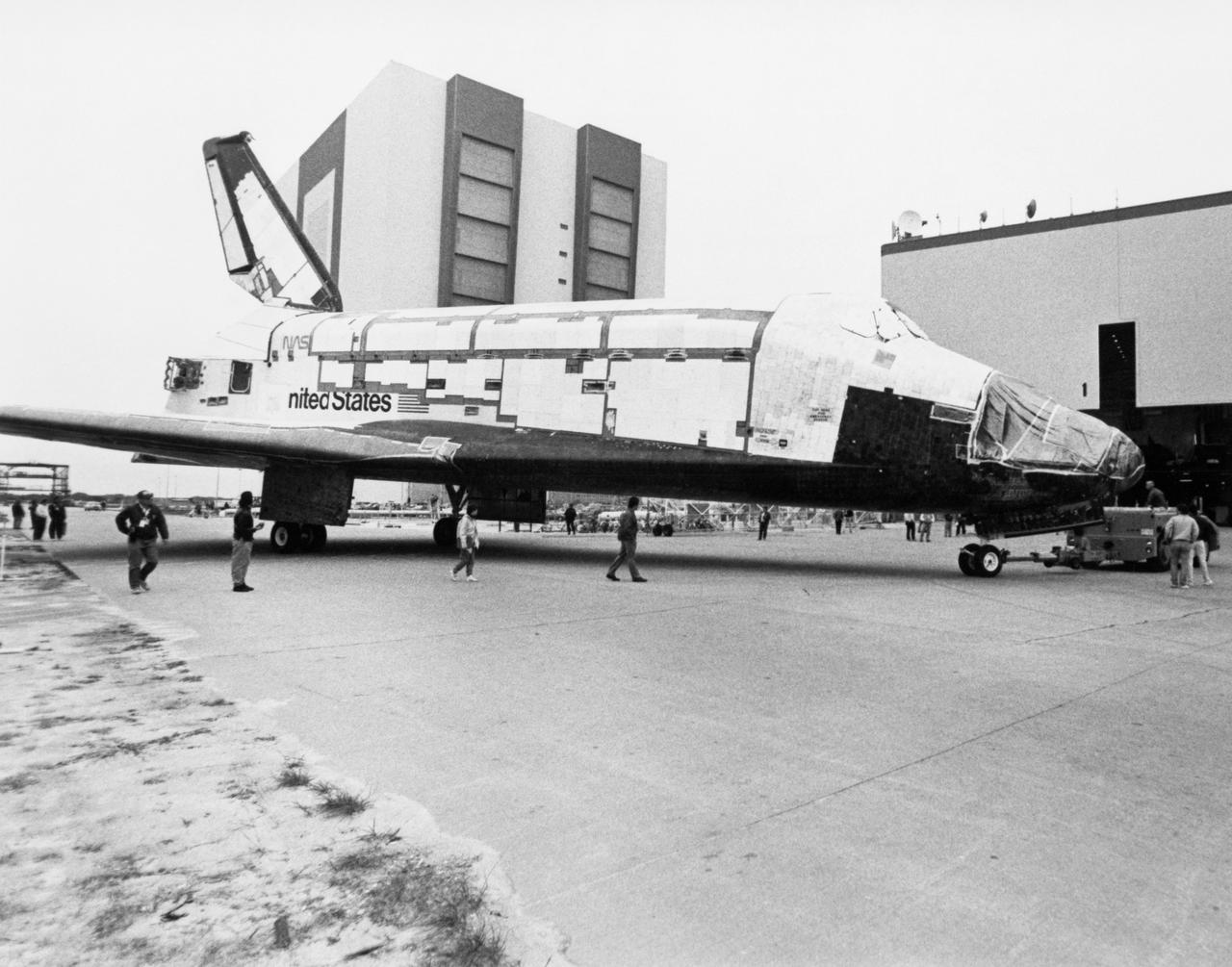
S89-28090 (24 Jan 1989) --- The orbiter Columbia, slated for mission STS-28 is rolled over from the Orbiter Maintenance and Refurbishment Facility to the Orbiter Processing Facility bay 1 to begin processing for its mission in July 1989. The Department of Defense dedicted mission will be commanded by astronaut Brewster Shaw.
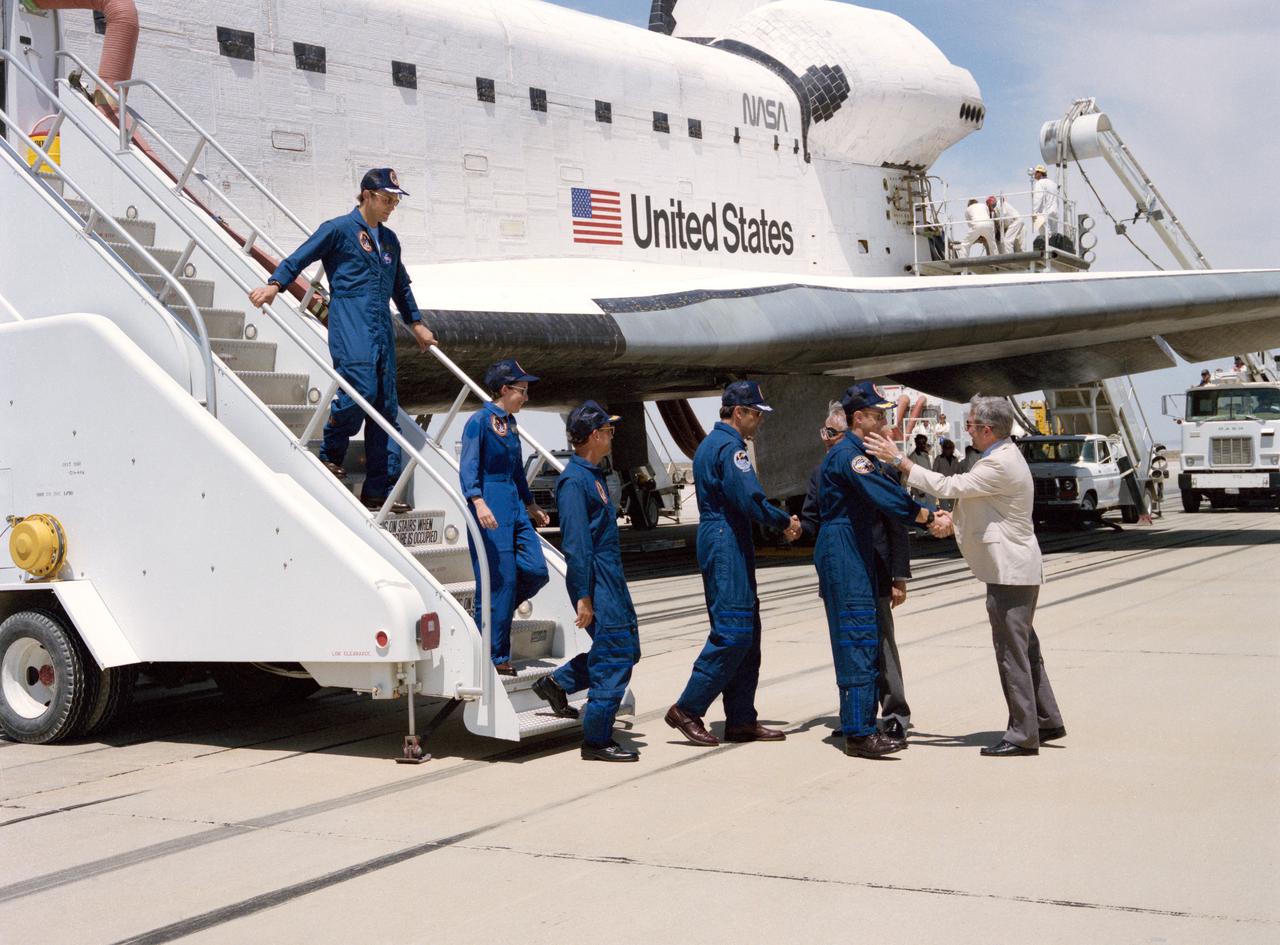
STS030-S-131 (8 May 1989) --- Crewmembers who spent just over four full days in space aboard Space Shuttle Atlantis egress their temporary home for a welcome meeting with terra firma. Astronaut David M. Walker, mission commander, shakes hands with Rear Admiral Richard H. Truly, acting NASA Administrator. Astronaut Ronald J. Grabe (center frame), pilot, is greeted by Dale D. Myers, Deputy Administrator. Pictured behind Grabe, from bottom of steps to top, are astronauts Norman E. Thagard, Mary L. Cleave and Mark C. Lee, all mission specialists. Minutes earlier, the spacecraft?s landing gear came to a stop at 12:44:33 P.M. (PDT), 8 May 1989. It landed on runway 22, a concrete facility, like a number of other NASA flights. Still others have landed on unpaved dry lakebed stripes.
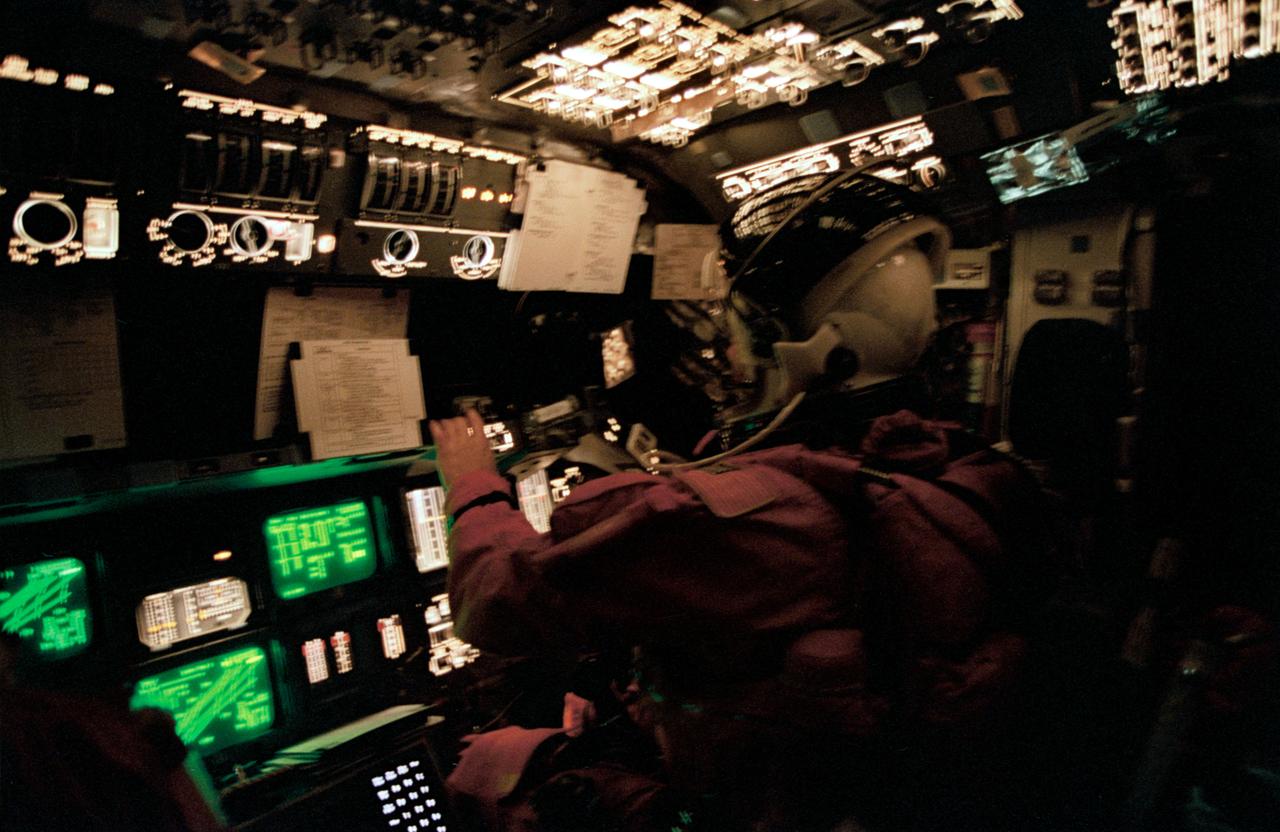
STS062-41-025 (18 March 1994) --- Astronaut Andrew M. Allen monitors Columbia's systems from the pilot's station during the entry phase of the STS-62 mission. The fast-speed 35mm film highlights the many controls and displays and the cathode ray tubes on the forward flight deck.
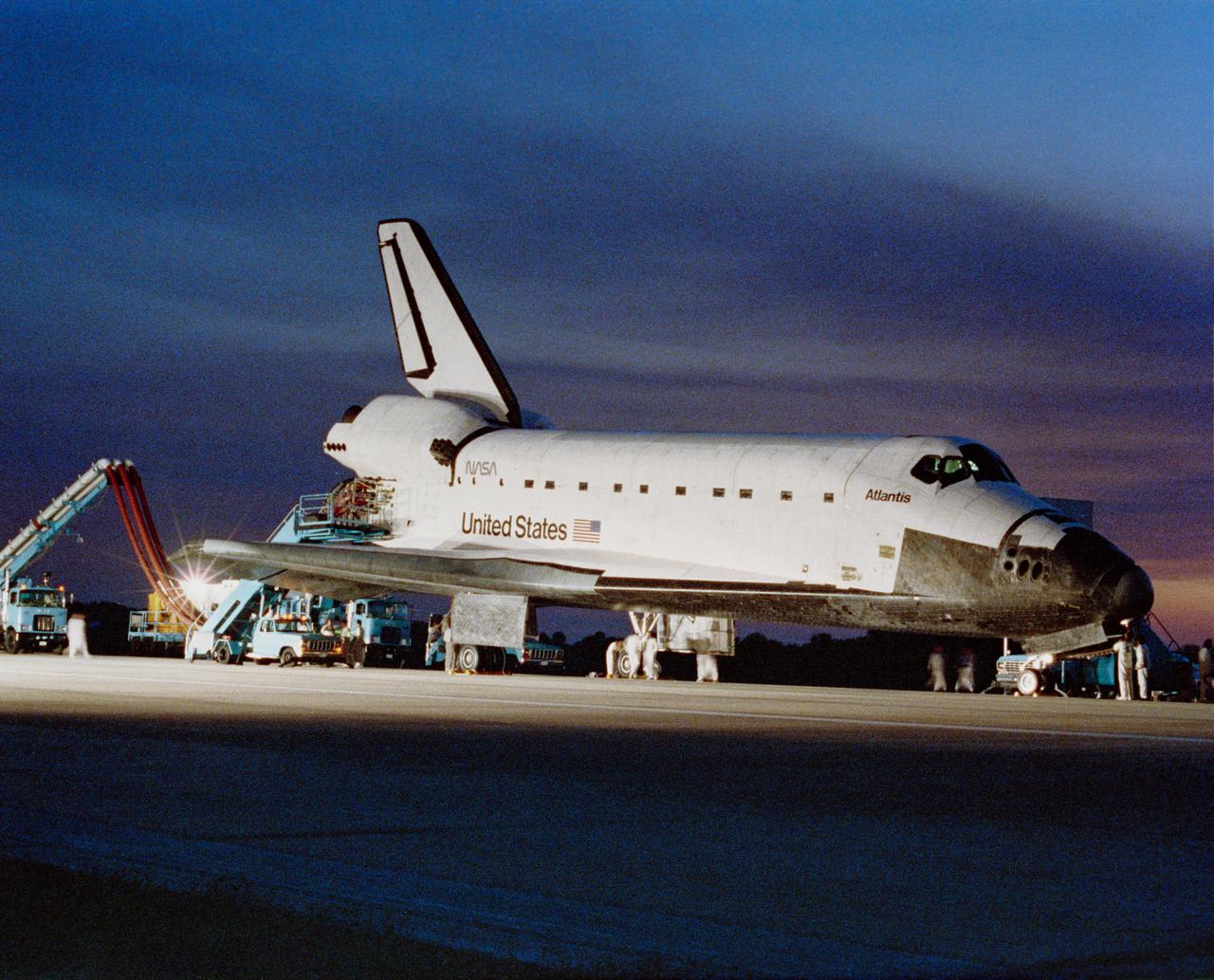
Spotlights illuminate Atlantis, Orbiter Vehicle (OV) 104, during safing operations at the Kennedy Space Center's (KSC's) Shuttle Landing Facility (SLF). OV-104 parked on runway 33 is serviced by KSC ground crews. STS-38, a Department of Defense (DOD)-devoted mission, came to an end (with complete wheel stop) at 4:43:37 pm (Eastern Standard Time (EST)).
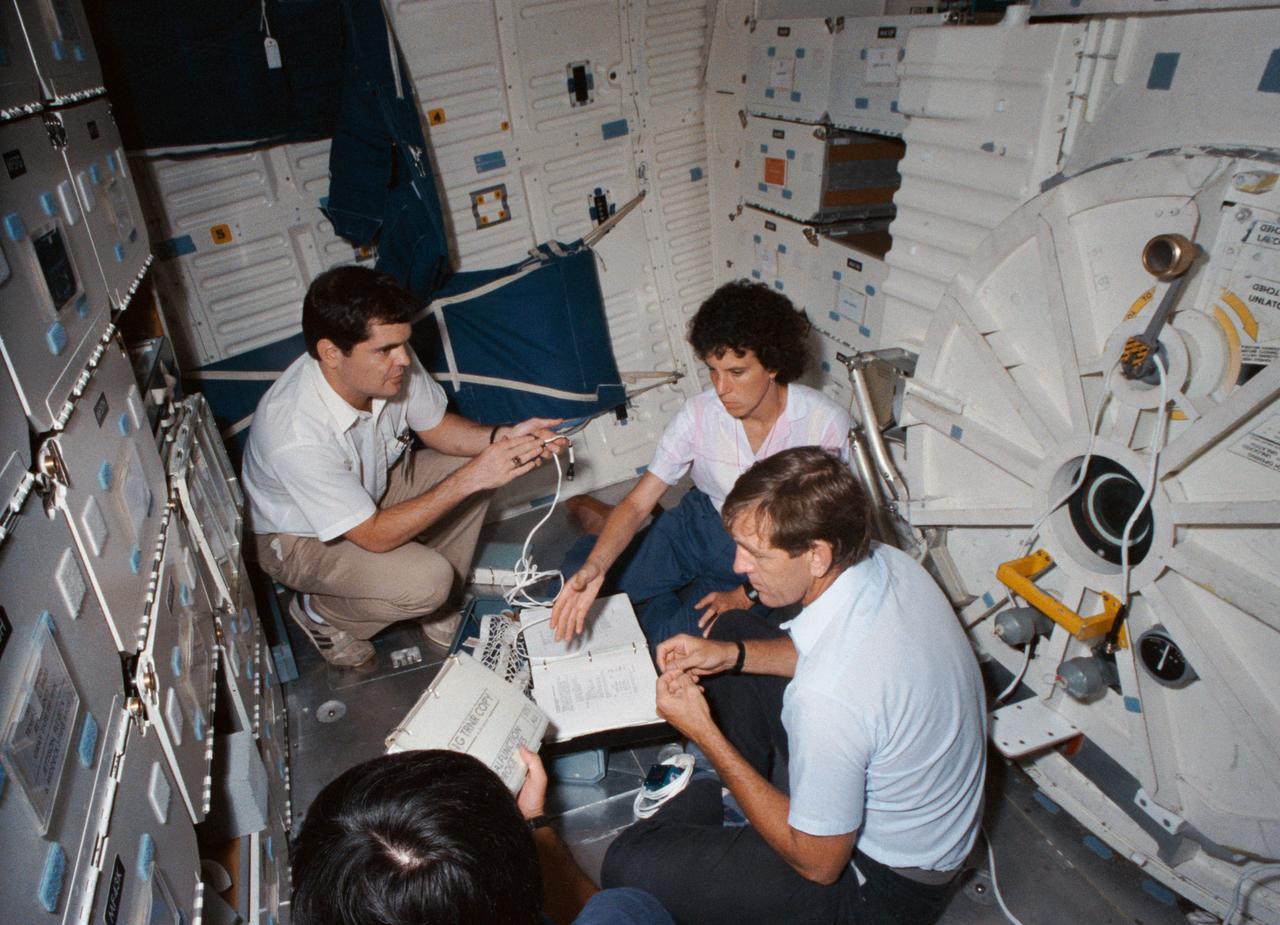
S89-39537 (July 1989) --- Two astronaut-crewmembers for NASA's STS-34 mission are briefed on inflight maintenance procedures on the mid-deck of the Space Shuttle crew compartment trainer in JSC's Shuttle mockup and integration laboratory. They are Ellen S. Baker and Michael J. McCulley, mission specialist and pilot, respectively for the scheduled Oct. 1989 mission aboard the Atlantis.
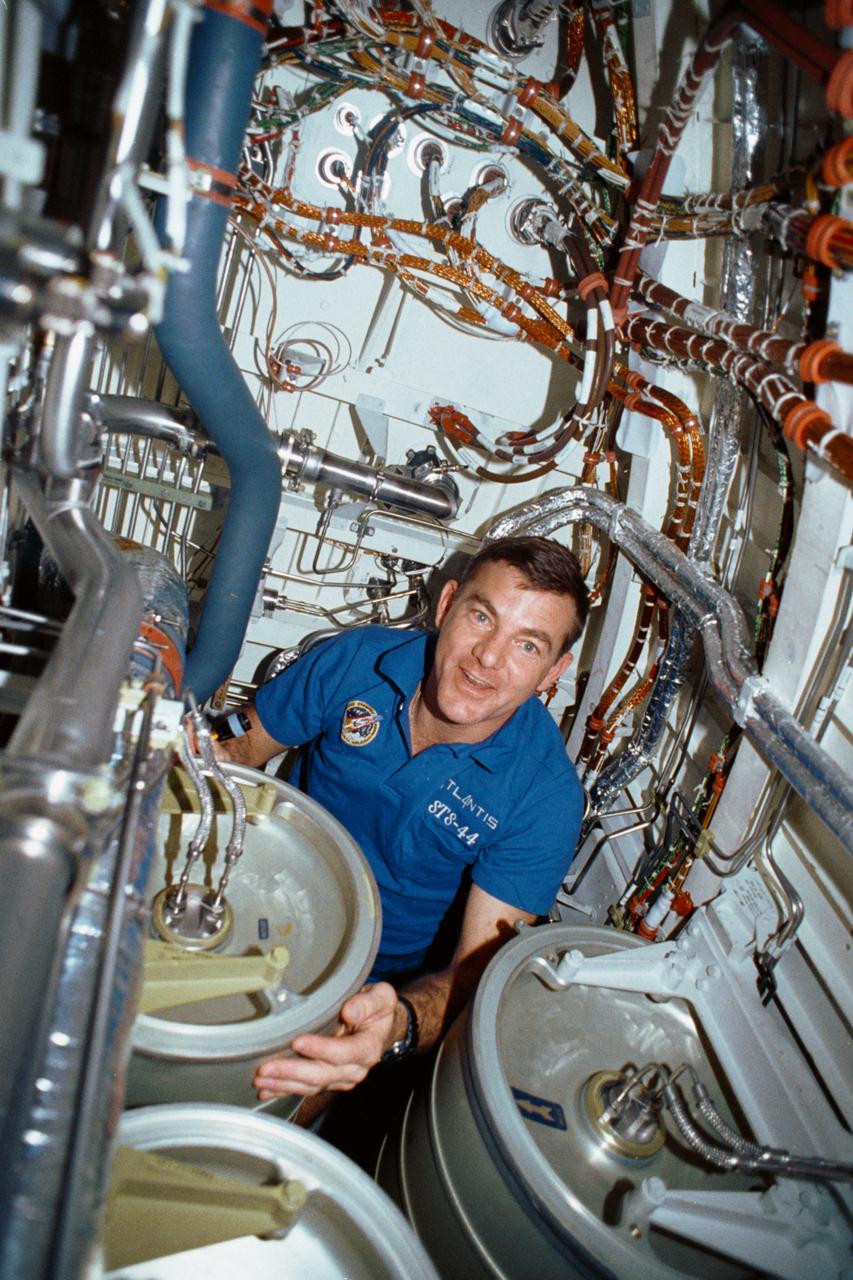
STS-44 Mission Specialist (MS) James S. Voss works under the middeck subfloor of Atlantis, Orbiter Vehicle (OV) 104, to repair humidity separator leakage problems. Voss is surrounded by several water tanks and a maze of shuttle wiring and plumbing. Voss earned the nickname of "Bilge Man" because of his time spent on the lower deck tending to the leakage problem. This is the first photo released of a crewmember in this area of the shuttle.
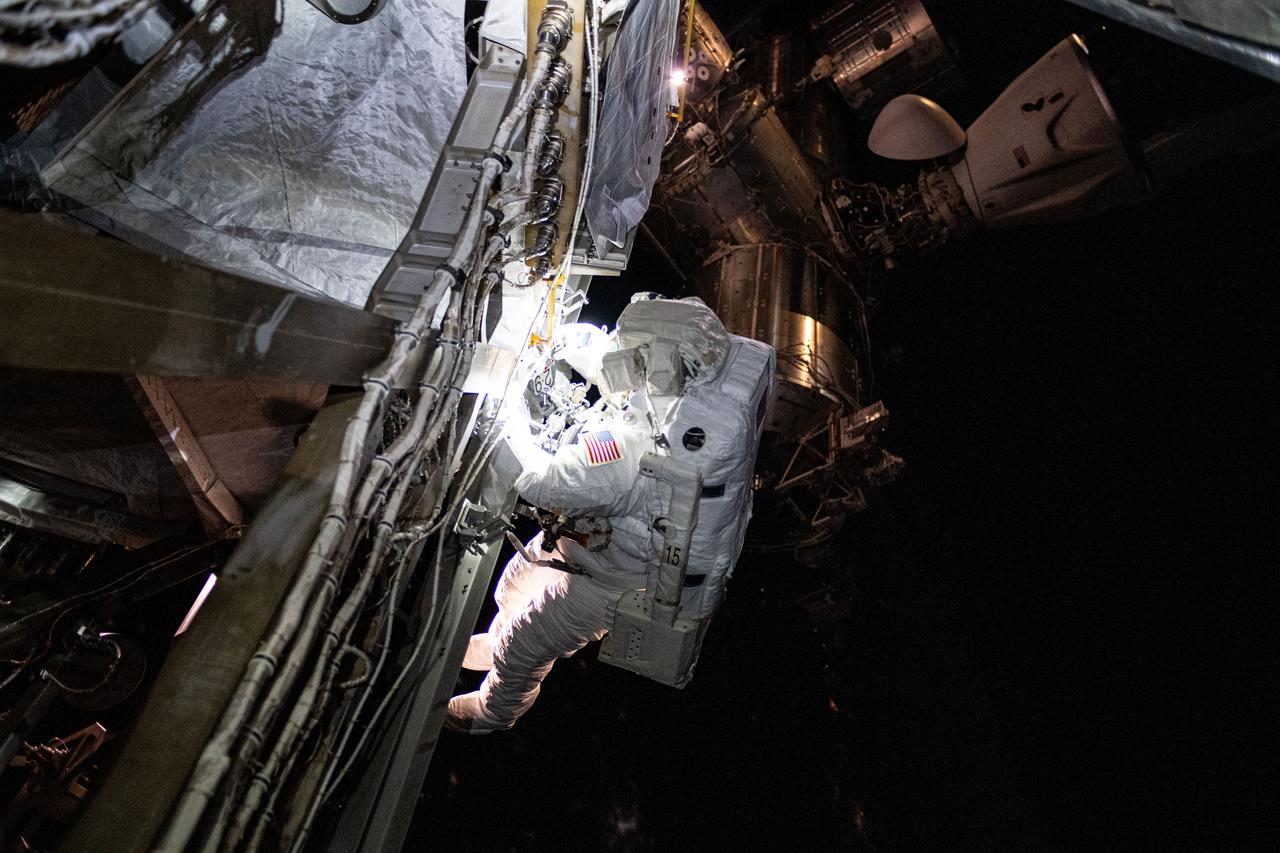
iss072e488376 (Jan. 16, 2025) --- NASA astronaut and Expedition 72 Commander Suni Williams is pictured during a six-hour spacewalk for science and maintenance on the International Space Station. At upper right, is the SpaceX Dragon crew spacecraft docked to the Harmony module's space-facing port.
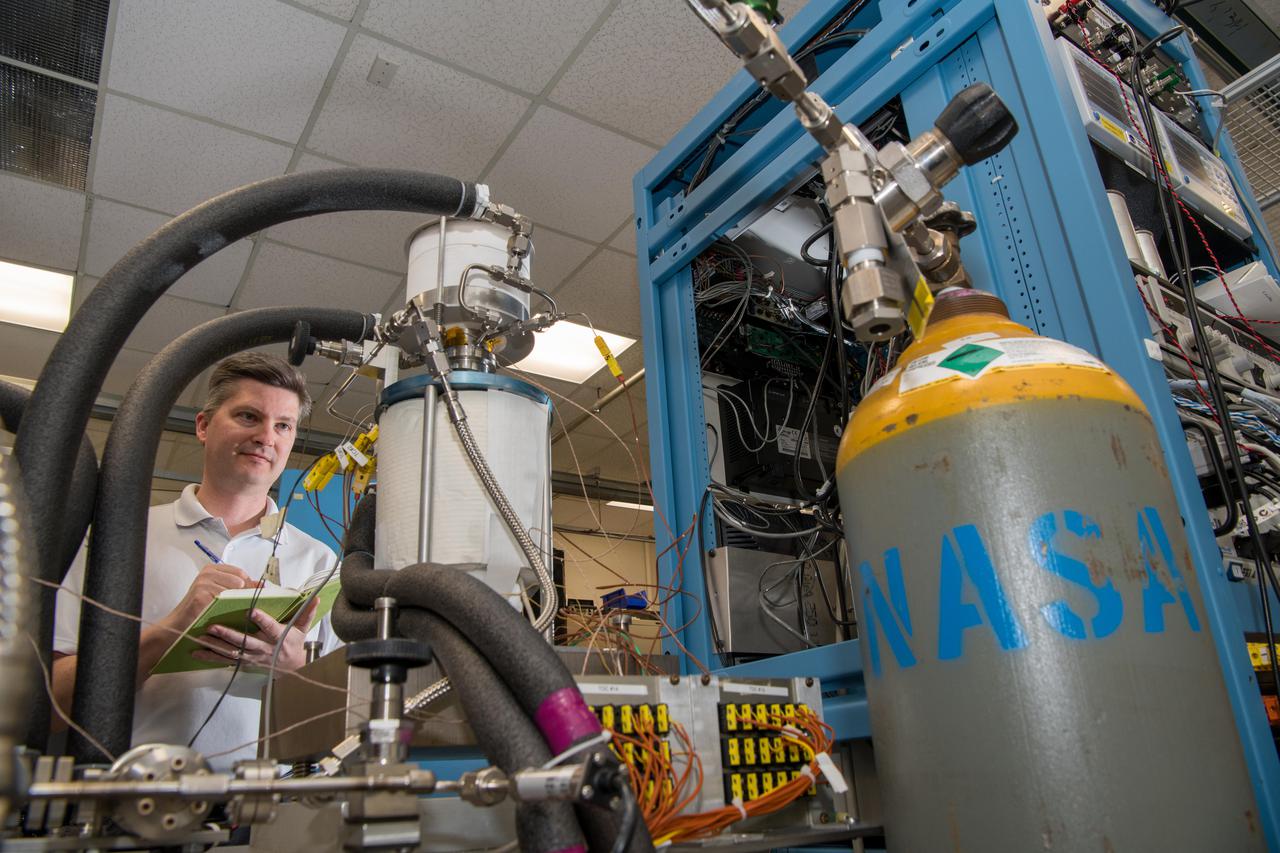
Glenn’s Technology Demonstration Convertor (TDC) #13, a free-piston Stirling power convertor, achieved a milestone of 14 years of maintenance-free operation in the Stirling Research Laboratory in building 301. This technology is proving our capability to power spacecraft on longer-duration future scientific missions.
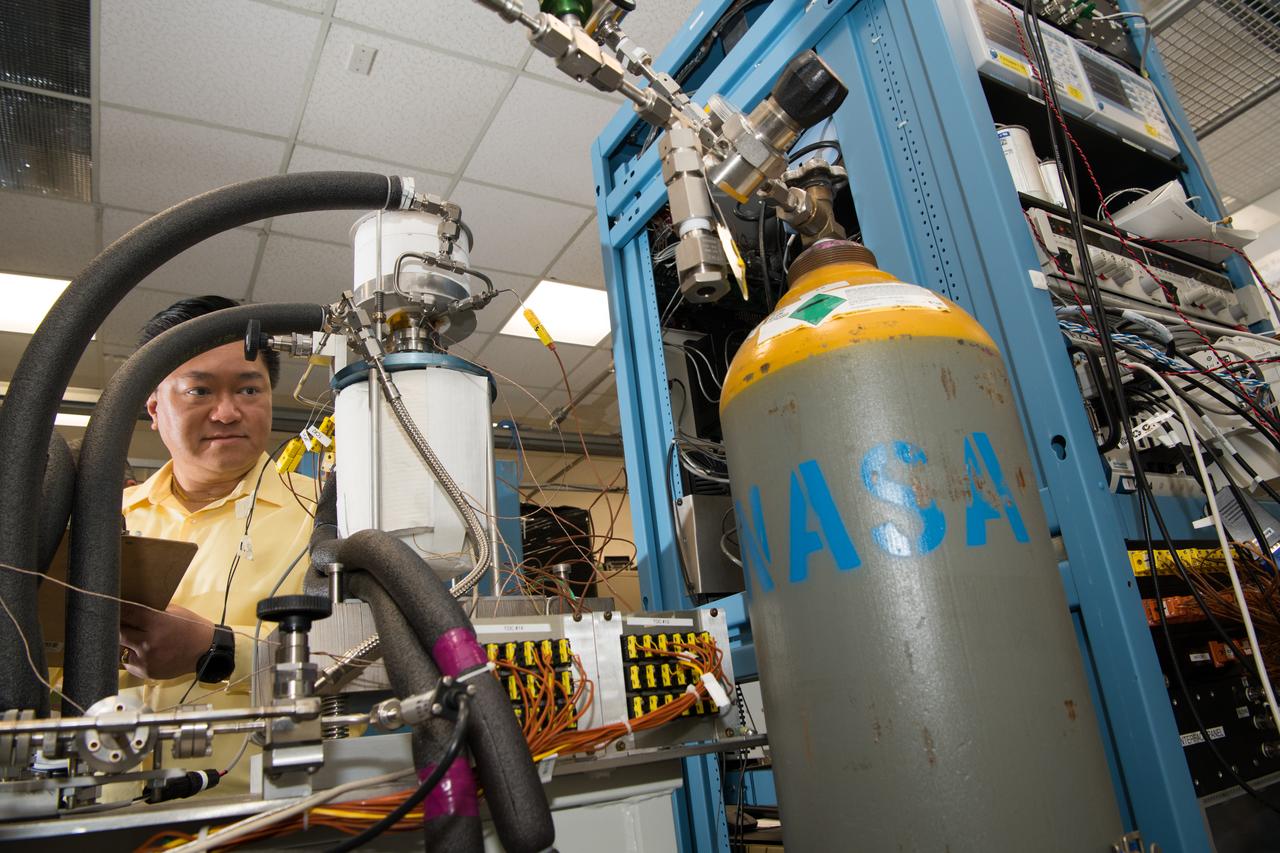
Glenn’s Technology Demonstration Convertor (TDC) #13, a free-piston Stirling power convertor, achieved a milestone of 14 years of maintenance-free operation in the Stirling Research Laboratory in building 301. This technology is proving our capability to power spacecraft on longer-duration future scientific missions.
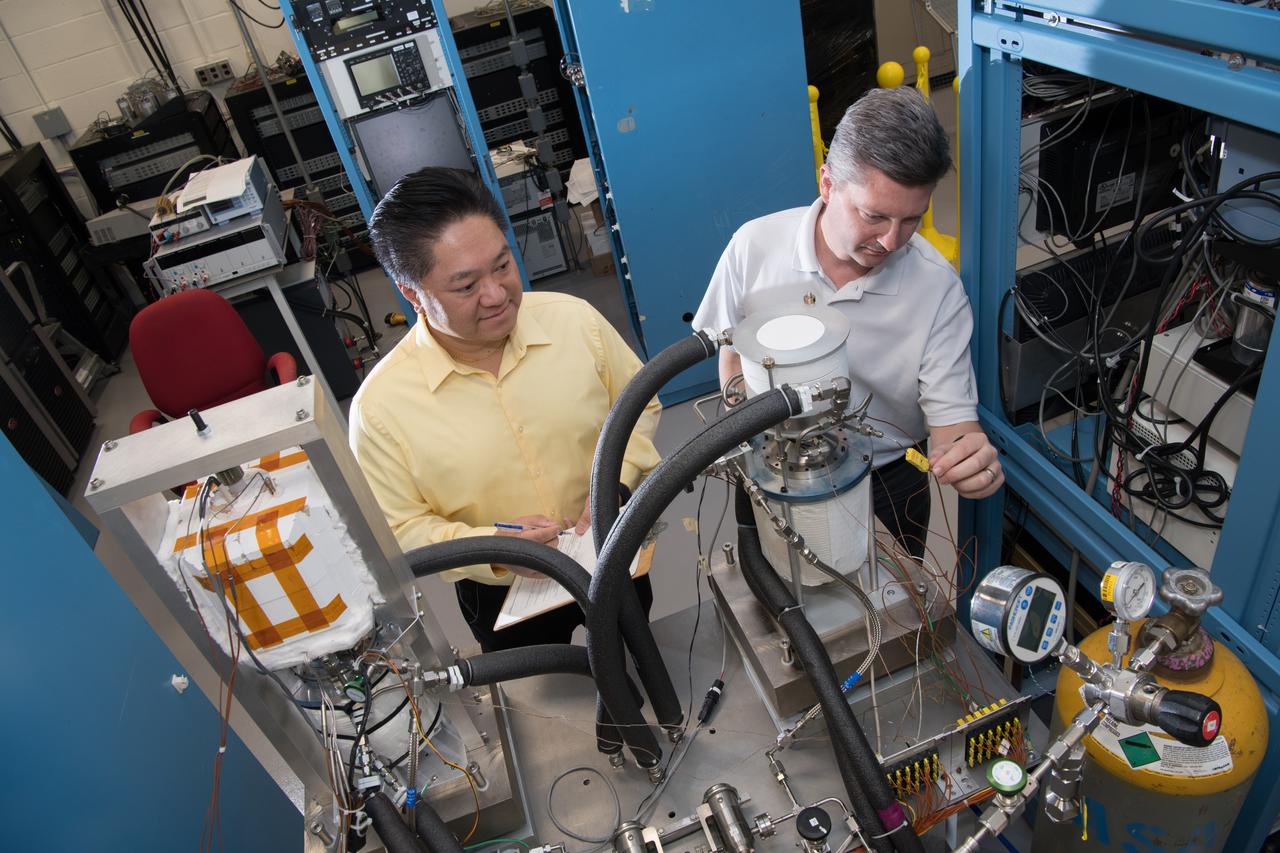
Glenn’s Technology Demonstration Convertor (TDC) #13, a free-piston Stirling power convertor, achieved a milestone of 14 years of maintenance-free operation in the Stirling Research Laboratory in building 301. This technology is proving our capability to power spacecraft on longer-duration future scientific missions.
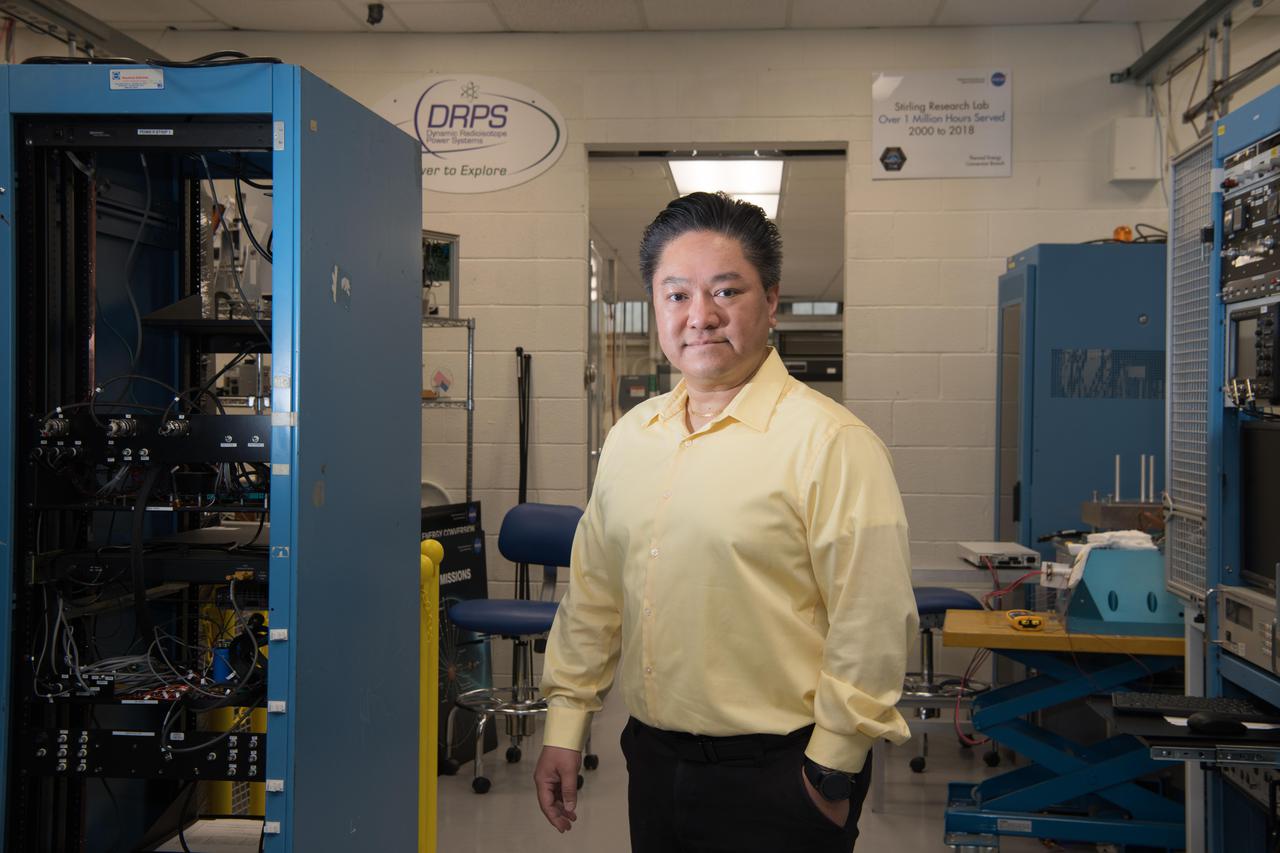
Glenn’s Technology Demonstration Convertor (TDC) #13, a free-piston Stirling power convertor, achieved a milestone of 14 years of maintenance-free operation in the Stirling Research Laboratory in building 301. This technology is proving our capability to power spacecraft on longer-duration future scientific missions.
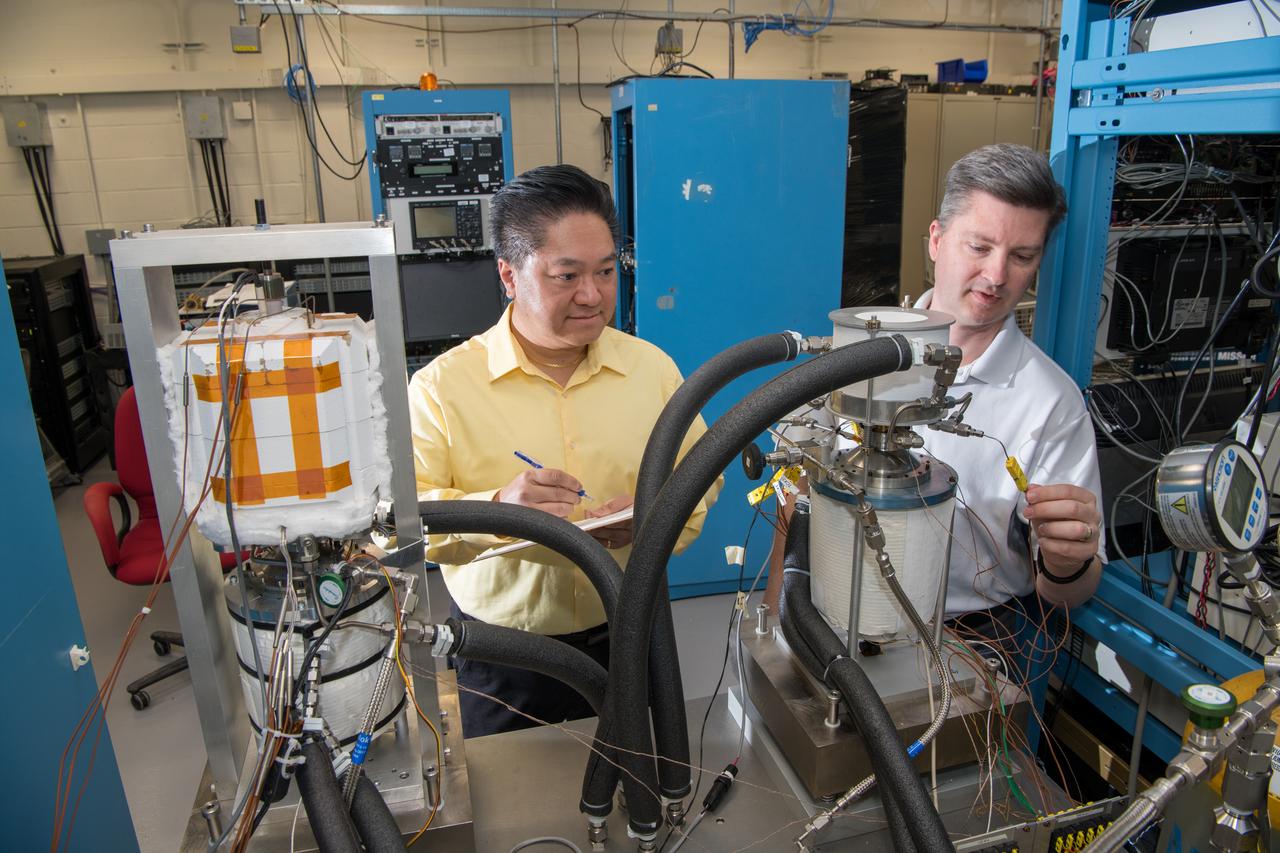
Glenn’s Technology Demonstration Convertor (TDC) #13, a free-piston Stirling power convertor, achieved a milestone of 14 years of maintenance-free operation in the Stirling Research Laboratory in building 301. This technology is proving our capability to power spacecraft on longer-duration future scientific missions.
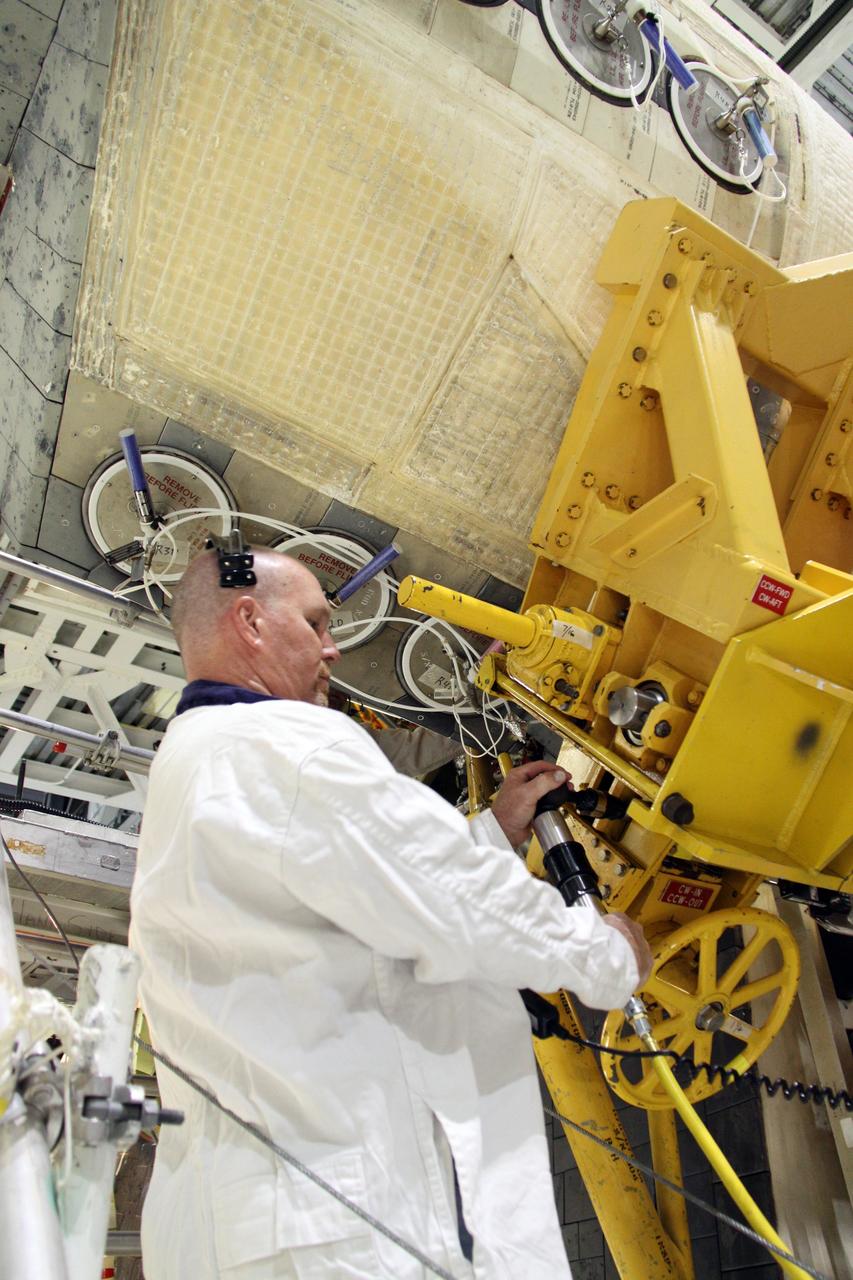
CAPE CANAVERAL, Fla. - In Orbiter Processing Facility-2 at NASA's Kennedy Space Center in Florida, workers use a crane to grapple shuttle Discovery's right-hand orbital maneuvering system, or OMS, pod for removal. It then will be transported to the Hypergol Maintenance Facility. The removal is part of Discovery's transition and retirement processing. Work performed on Discovery is expected to help rocket designers build next-generation spacecraft and prepare the shuttle for future public display. Photo credit: NASA/Troy Cryder
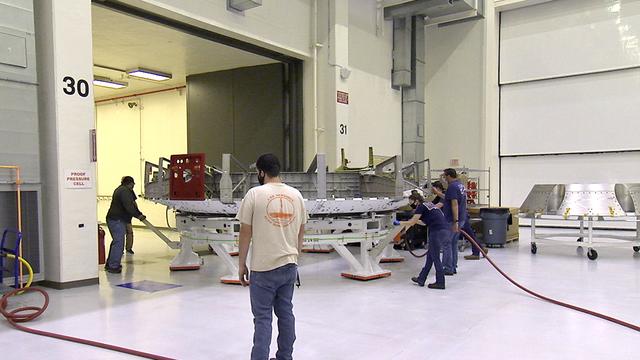
Inside the Neil Armstrong Operations and Checkout Building at NASA's Kennedy Space Center in Florida, the Artemis II crew module adapter (CMA) is being relocated from the clean room to the Pressure Proof Cell for additional testing and maintenance. The CMA connects the crew module to the service module. Artemis II is the first crewed mission in a series of missions to the Moon and on to Mars. Artemis II will confirm all of the Orion spacecraft’s systems operate as designed in the actual environment of deep space with astronauts aboard.
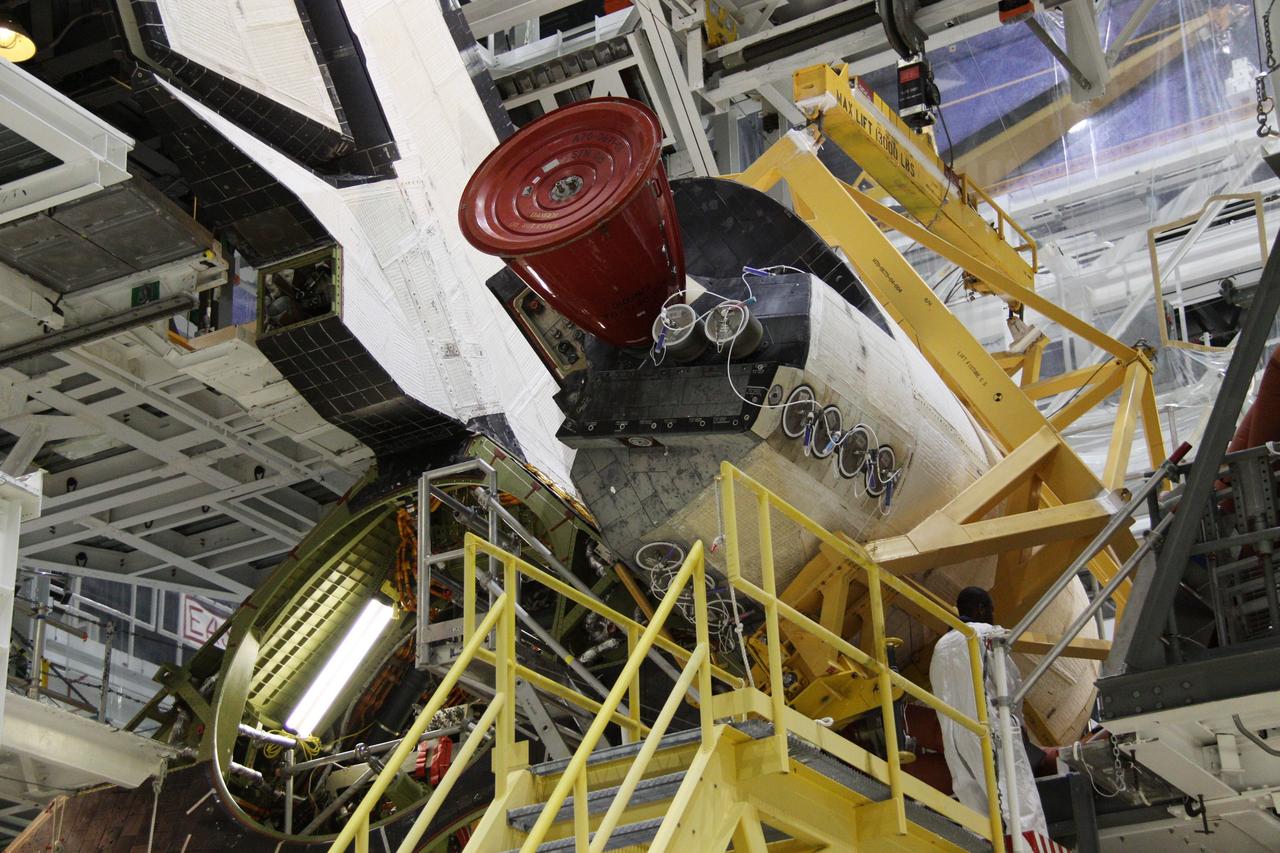
CAPE CANAVERAL, Fla. - In Orbiter Processing Facility-2 at NASA's Kennedy Space Center in Florida, workers use a crane to grapple shuttle Discovery's right-hand orbital maneuvering system, or OMS, pod for removal. It then will be transported to the Hypergol Maintenance Facility. The removal is part of Discovery's transition and retirement processing. Work performed on Discovery is expected to help rocket designers build next-generation spacecraft and prepare the shuttle for future public display. Photo credit: NASA/Troy Cryder
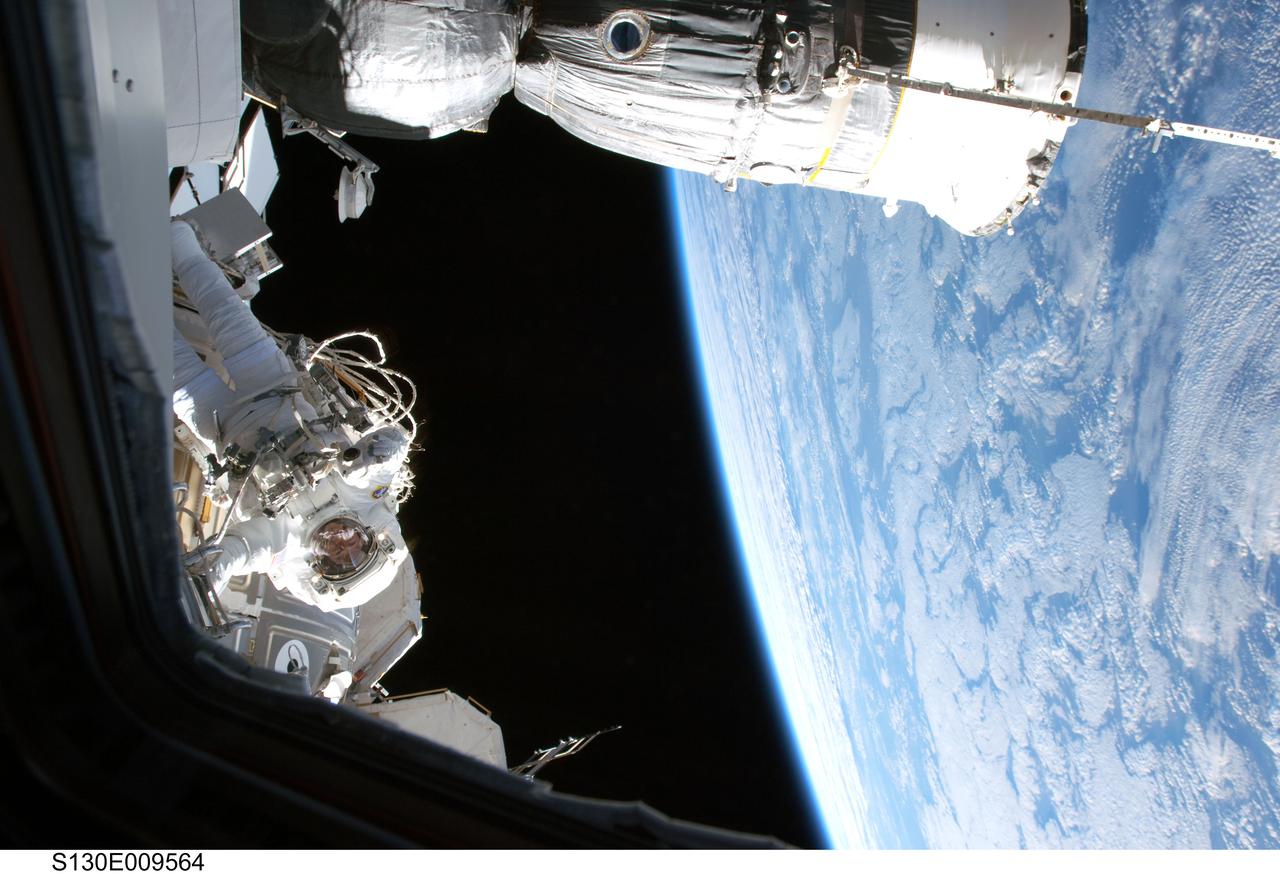
S130-E-009564 (17 Feb. 2010) --- NASA astronaut Nicholas Patrick, STS-130 mission specialist, participates in the mission’s third and final session of extravehicular activity (EVA) as construction and maintenance continue on the International Space Station. During the five-hour, 48-minute spacewalk, Patrick and astronaut Robert Behnken (out of frame), mission specialist, completed all of their planned tasks, removing insulation blankets and removing launch restraint bolts from each of the Cupola’s seven windows. A Russian spacecraft docked to the station is at top.
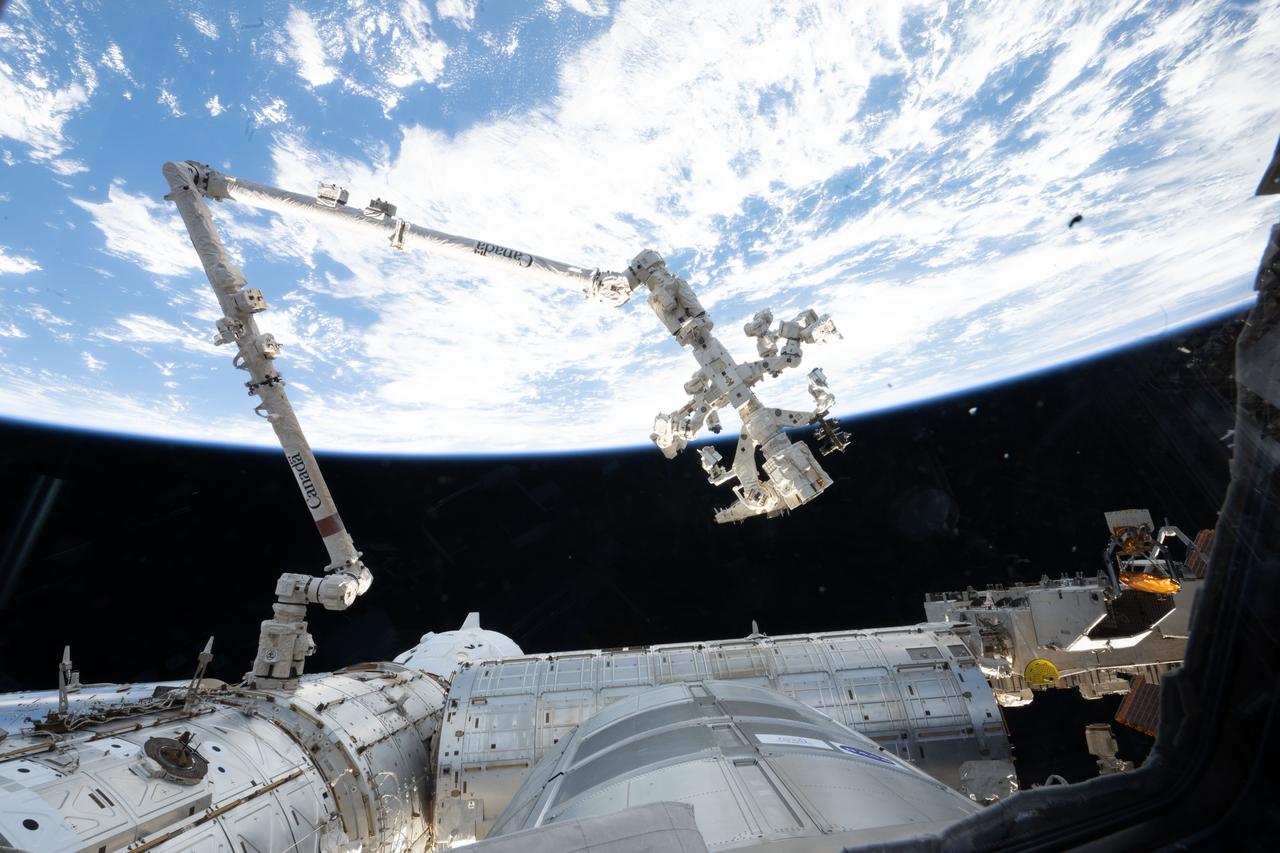
iss073e0575226 (July 23, 2025) --- The 57.7-foot-long Canadarm2 robotic arm extends from a data grapple fixture on the International Space Station’s Harmony module. Attached to its latching end effector is Dextre, the station’s fine-tuned robotic hand designed for delicate external maintenance tasks. The SpaceX Dragon crew spacecraft, partially obscured, is docked to Harmony’s forward port 259 miles above a cloudy Pacific Ocean southwest of Mexico.
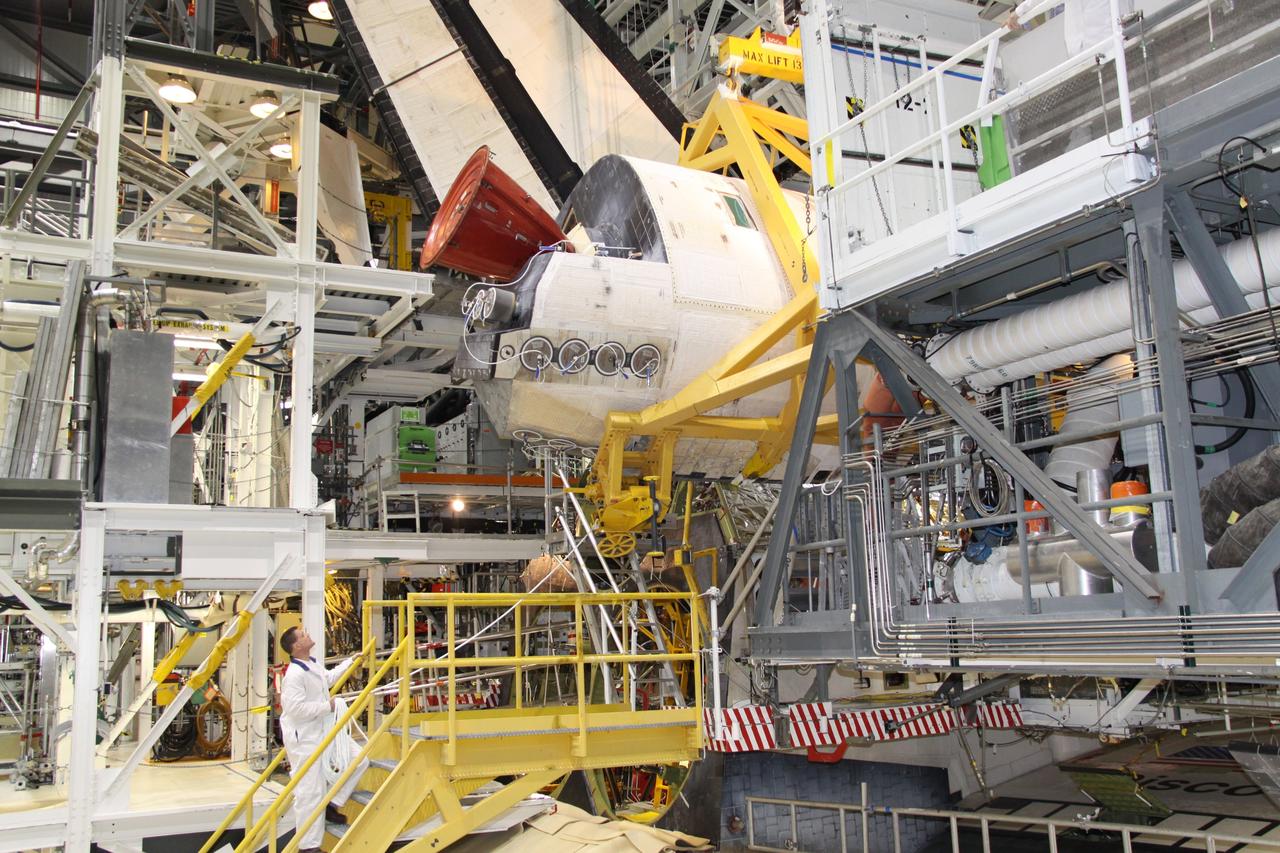
CAPE CANAVERAL, Fla. - In Orbiter Processing Facility-2 at NASA's Kennedy Space Center in Florida, workers use a crane to grapple shuttle Discovery's right-hand orbital maneuvering system, or OMS, pod for removal. It then will be transported to the Hypergol Maintenance Facility. The removal is part of Discovery's transition and retirement processing. Work performed on Discovery is expected to help rocket designers build next-generation spacecraft and prepare the shuttle for future public display. Photo credit: NASA/Jack Pfaller
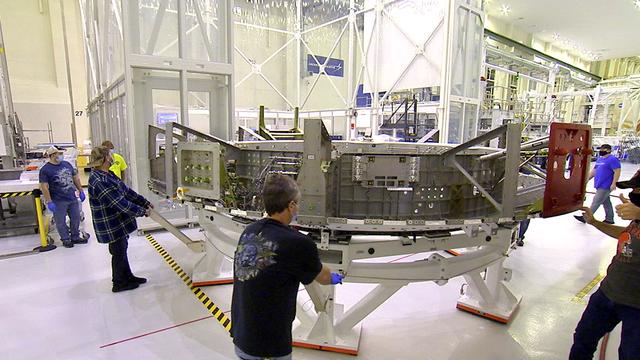
Inside the Neil Armstrong Operations and Checkout Building at NASA's Kennedy Space Center in Florida, the Artemis II crew module adapter (CMA) is being relocated from the clean room to the Pressure Proof Cell for additional testing and maintenance. The CMA connects the crew module to the service module. Artemis II is the first crewed mission in a series of missions to the Moon and on to Mars. Artemis II will confirm all of the Orion spacecraft’s systems operate as designed in the actual environment of deep space with astronauts aboard.
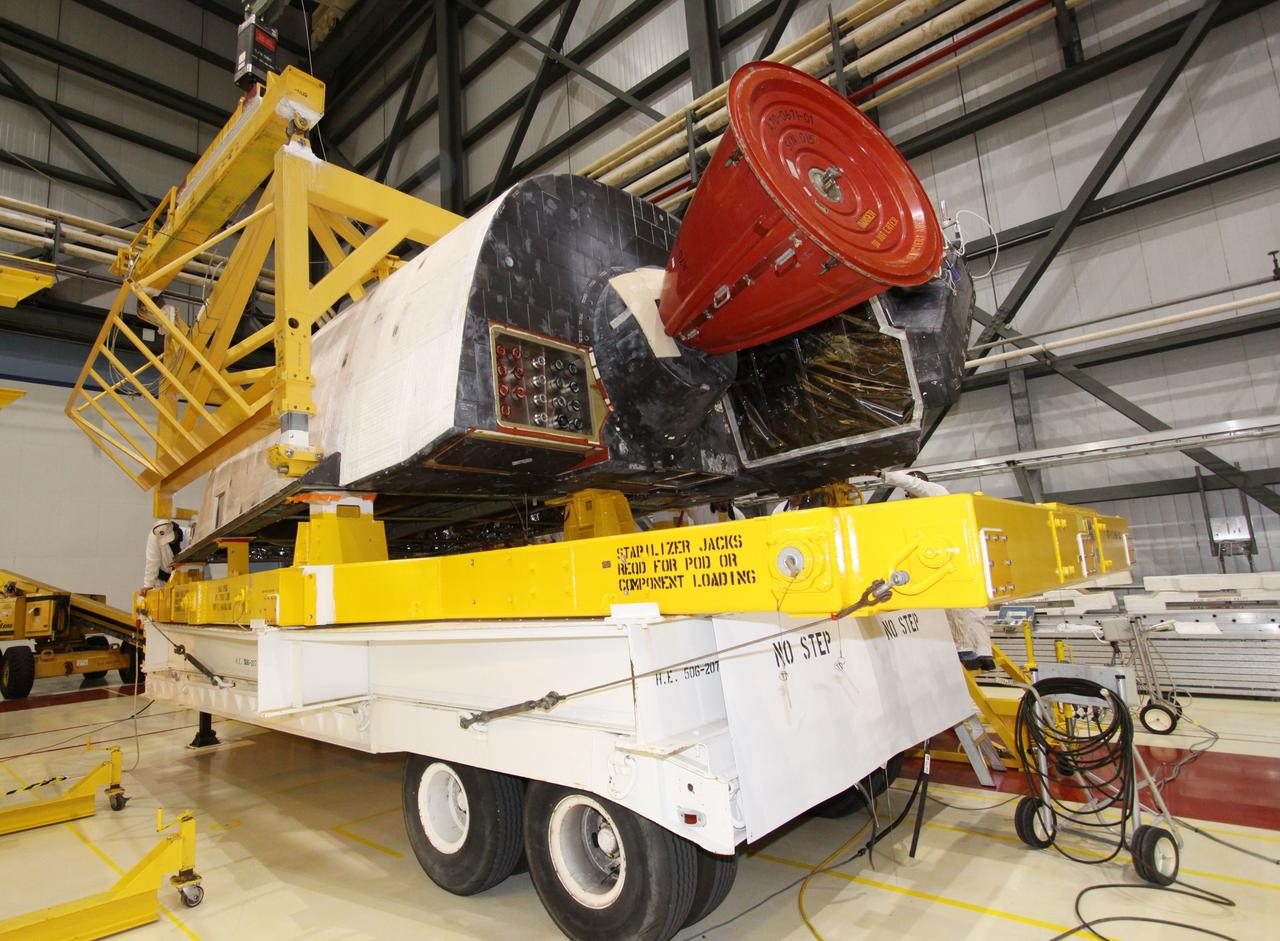
CAPE CANAVERAL, Fla. -- In Orbiter Processing Facility-2 at NASA's Kennedy Space Center in Florida, an overhead crane lowered shuttle Discovery's right-hand orbital maneuvering system, or OMS, pod onto a transporter. It then will be moved to the Hypergol Maintenance Facility. The removal is part of Discovery's transition and retirement processing. Work performed on Discovery is expected to help rocket designers build next-generation spacecraft and prepare the shuttle for future public display. Photo credit: NASA/Jack Pfaller
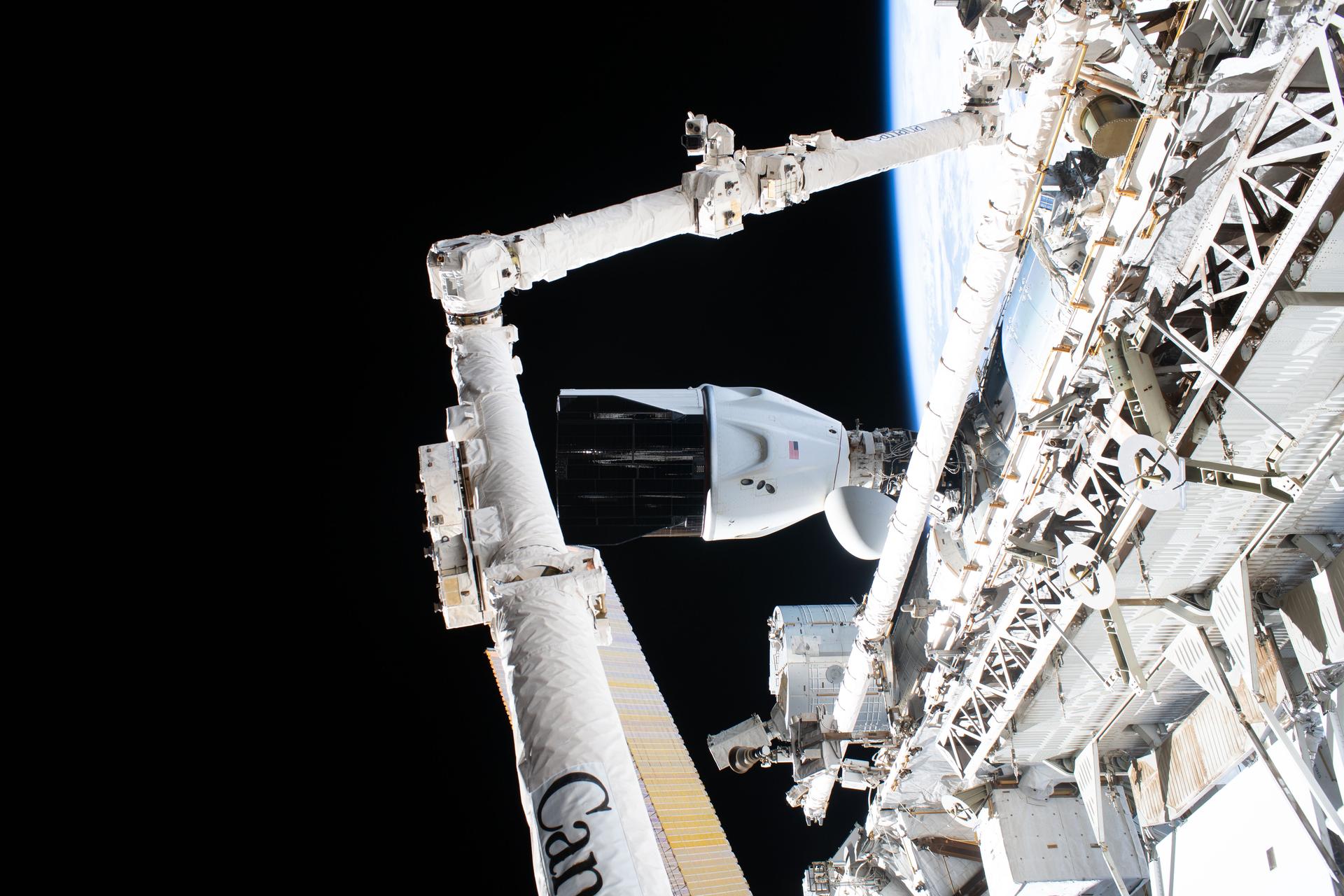
iss075e0086300 (Sept. 1, 2026) --- The SpaceX Dragon spacecraft, which launched four SpaceX Crew‑12 members to the International Space Station and will return them to Earth, is pictured docked to the orbital outpost’s space‑facing port on the Harmony module. In the foreground, the Canadarm2 robotic arm extends across the frame during a spacewalk conducted by astronauts Jessica Meir of NASA and Sophie Adenot of ESA (European Space Agency) for external maintenance. Credit: NASA/Jessica Meir
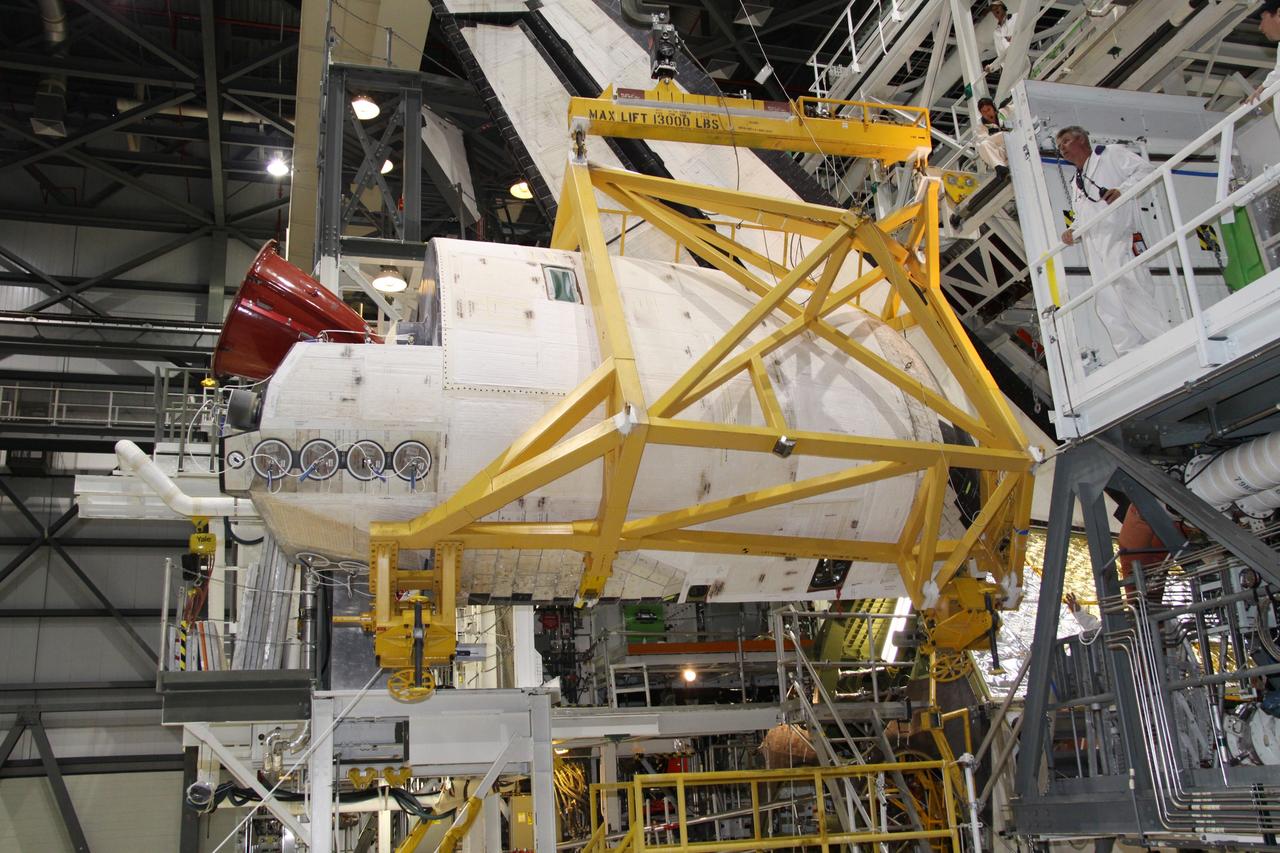
CAPE CANAVERAL, Fla. - In Orbiter Processing Facility-2 at NASA's Kennedy Space Center in Florida, workers use a crane to grapple shuttle Discovery's right-hand orbital maneuvering system, or OMS, pod for removal. It then will be transported to the Hypergol Maintenance Facility. The removal is part of Discovery's transition and retirement processing. Work performed on Discovery is expected to help rocket designers build next-generation spacecraft and prepare the shuttle for future public display. Photo credit: NASA/Jack Pfaller
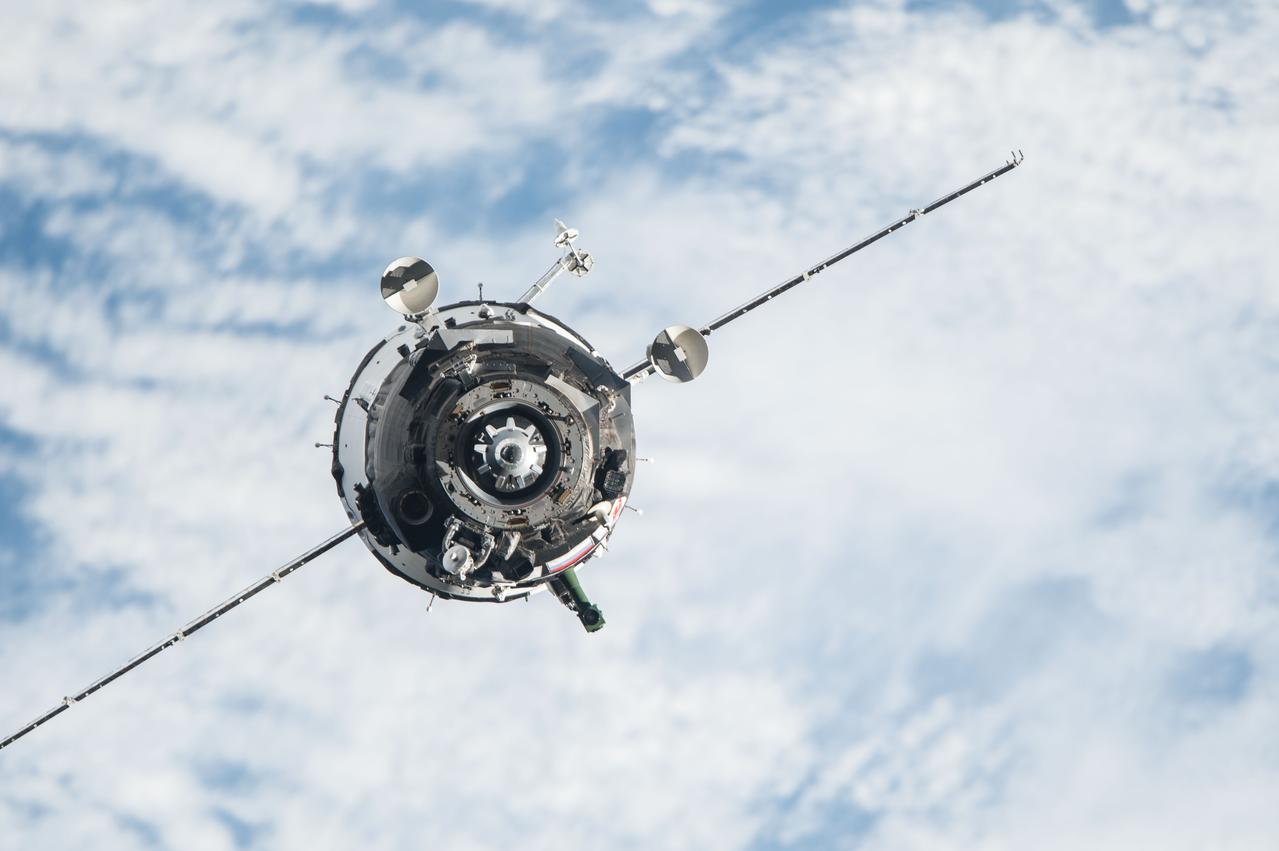
ISS047e011906 (03/19/2016) --- NASA and Russian cosmonauts arrive at the international space station Mar 19, 2016. NASA astronaut Jeff Williams and Russian cosmonauts Alexey Ovchinin and Oleg Skripochka docked to the International Space Station in their Soyuz TMA-20M spacecraft. They will spend 6 months onboard the station carrying out scientific experiments, performing maintenance and other duties.
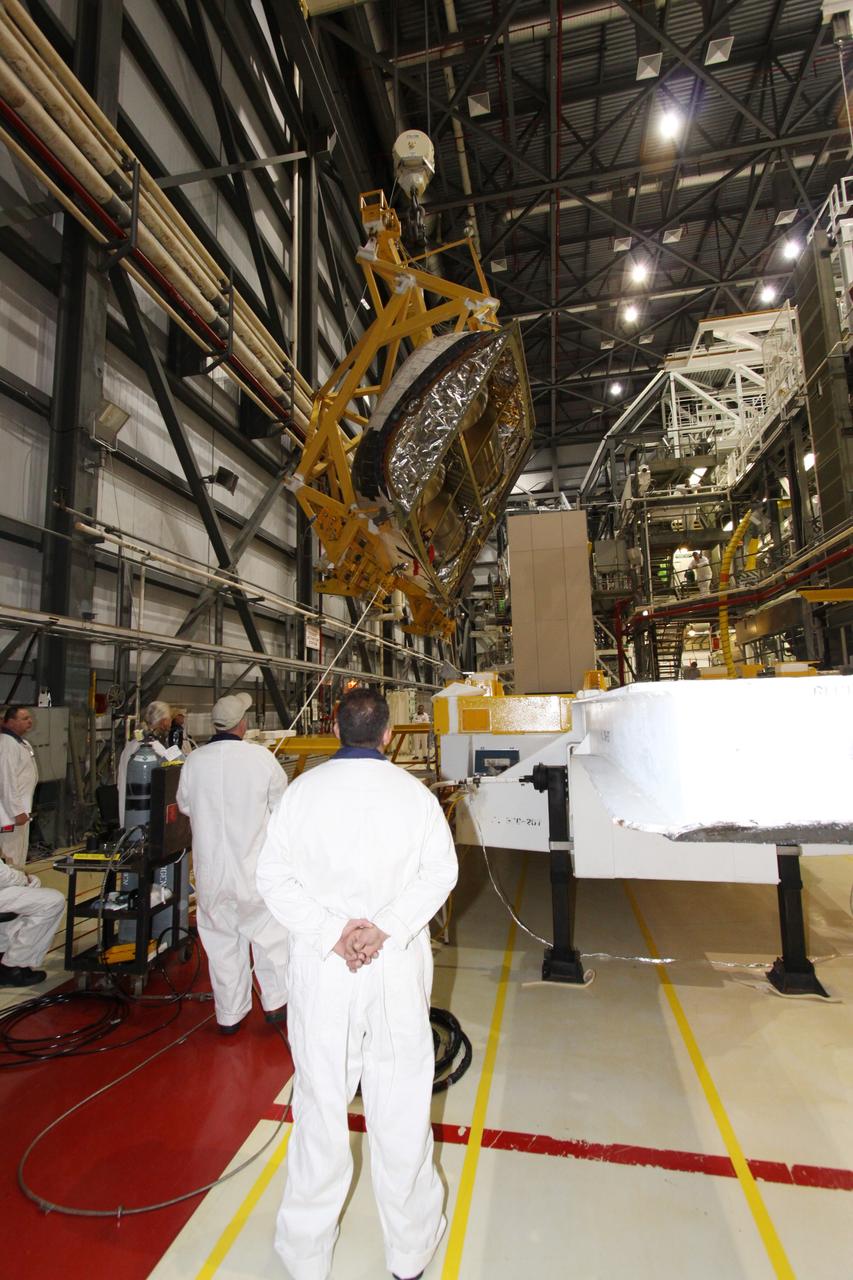
CAPE CANAVERAL, Fla. -- In Orbiter Processing Facility-2 at NASA's Kennedy Space Center in Florida, workers monitor an overhead crane as it lowers shuttle Discovery's right-hand orbital maneuvering system, or OMS, pod toward a transporter. It then will be moved to the Hypergol Maintenance Facility. The removal is part of Discovery's transition and retirement processing. Work performed on Discovery is expected to help rocket designers build next-generation spacecraft and prepare the shuttle for future public display. Photo credit: NASA/Jack Pfaller
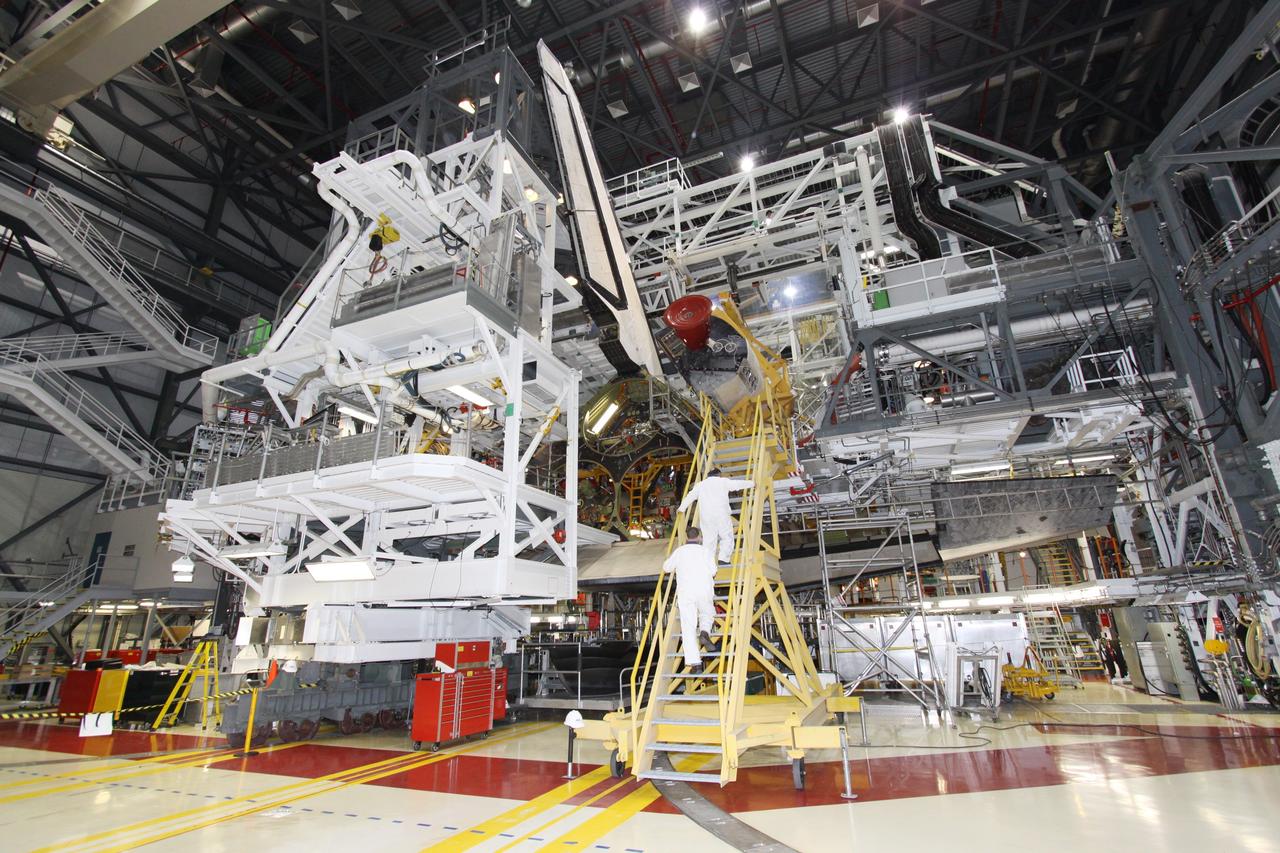
CAPE CANAVERAL, Fla. - In Orbiter Processing Facility-2 at NASA's Kennedy Space Center in Florida, workers climb up to the level where a crane is being used to grapple shuttle Discovery's right-hand orbital maneuvering system, or OMS, pod for removal. It then will be transported to the Hypergol Maintenance Facility. The removal is part of Discovery's transition and retirement processing. Work performed on Discovery is expected to help rocket designers build next-generation spacecraft and prepare the shuttle for future public display. Photo credit: NASA/Jack Pfaller
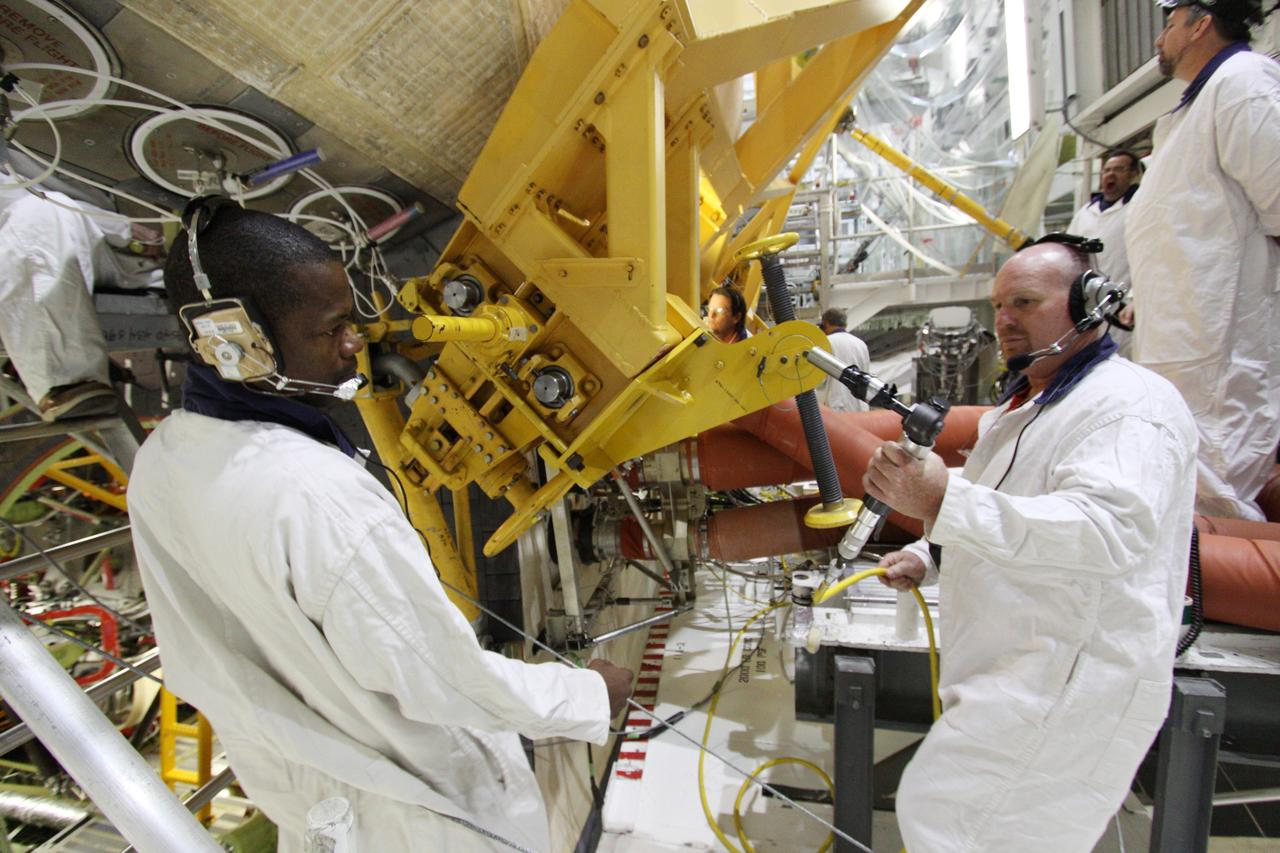
CAPE CANAVERAL, Fla. - In Orbiter Processing Facility-2 at NASA's Kennedy Space Center in Florida, workers use a crane to grapple shuttle Discovery's right-hand orbital maneuvering system, or OMS, pod for removal. It then will be transported to the Hypergol Maintenance Facility. The removal is part of Discovery's transition and retirement processing. Work performed on Discovery is expected to help rocket designers build next-generation spacecraft and prepare the shuttle for future public display. Photo credit: NASA/Troy Cryder
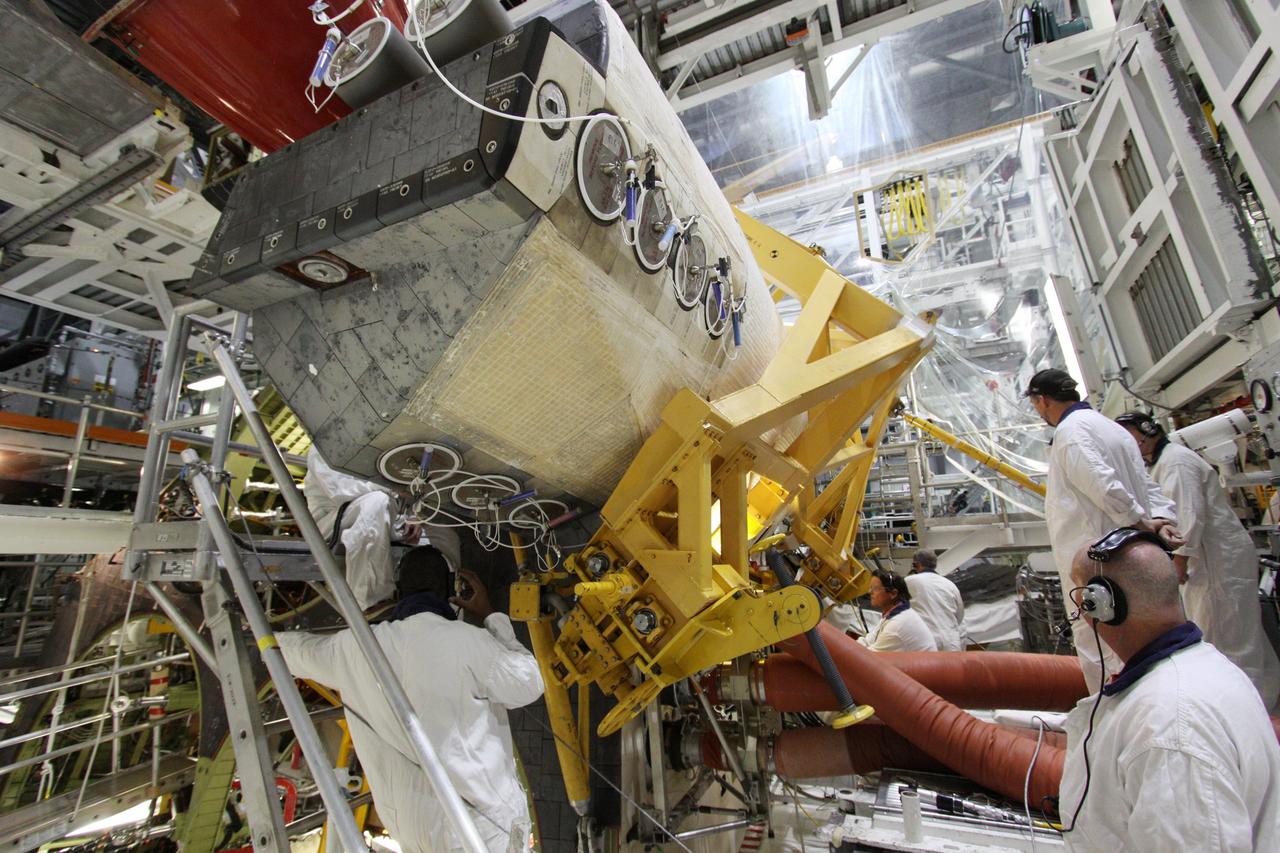
CAPE CANAVERAL, Fla. - In Orbiter Processing Facility-2 at NASA's Kennedy Space Center in Florida, workers use a crane to grapple shuttle Discovery's right-hand orbital maneuvering system, or OMS, pod for removal. It then will be transported to the Hypergol Maintenance Facility. The removal is part of Discovery's transition and retirement processing. Work performed on Discovery is expected to help rocket designers build next-generation spacecraft and prepare the shuttle for future public display. Photo credit: NASA/Troy Cryder
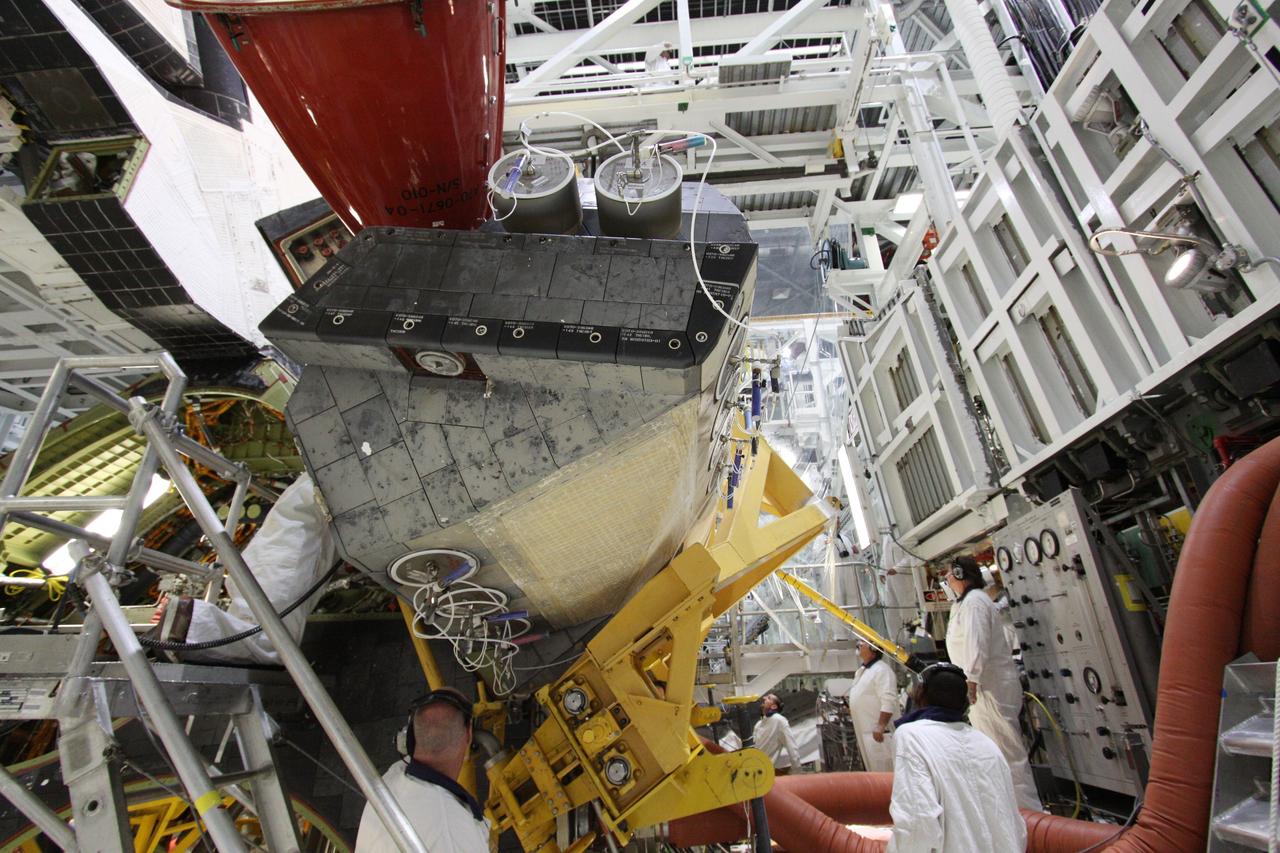
CAPE CANAVERAL, Fla. - In Orbiter Processing Facility-2 at NASA's Kennedy Space Center in Florida, workers use a crane to grapple shuttle Discovery's right-hand orbital maneuvering system, or OMS, pod for removal. It then will be transported to the Hypergol Maintenance Facility. The removal is part of Discovery's transition and retirement processing. Work performed on Discovery is expected to help rocket designers build next-generation spacecraft and prepare the shuttle for future public display. Photo credit: NASA/Troy Cryder
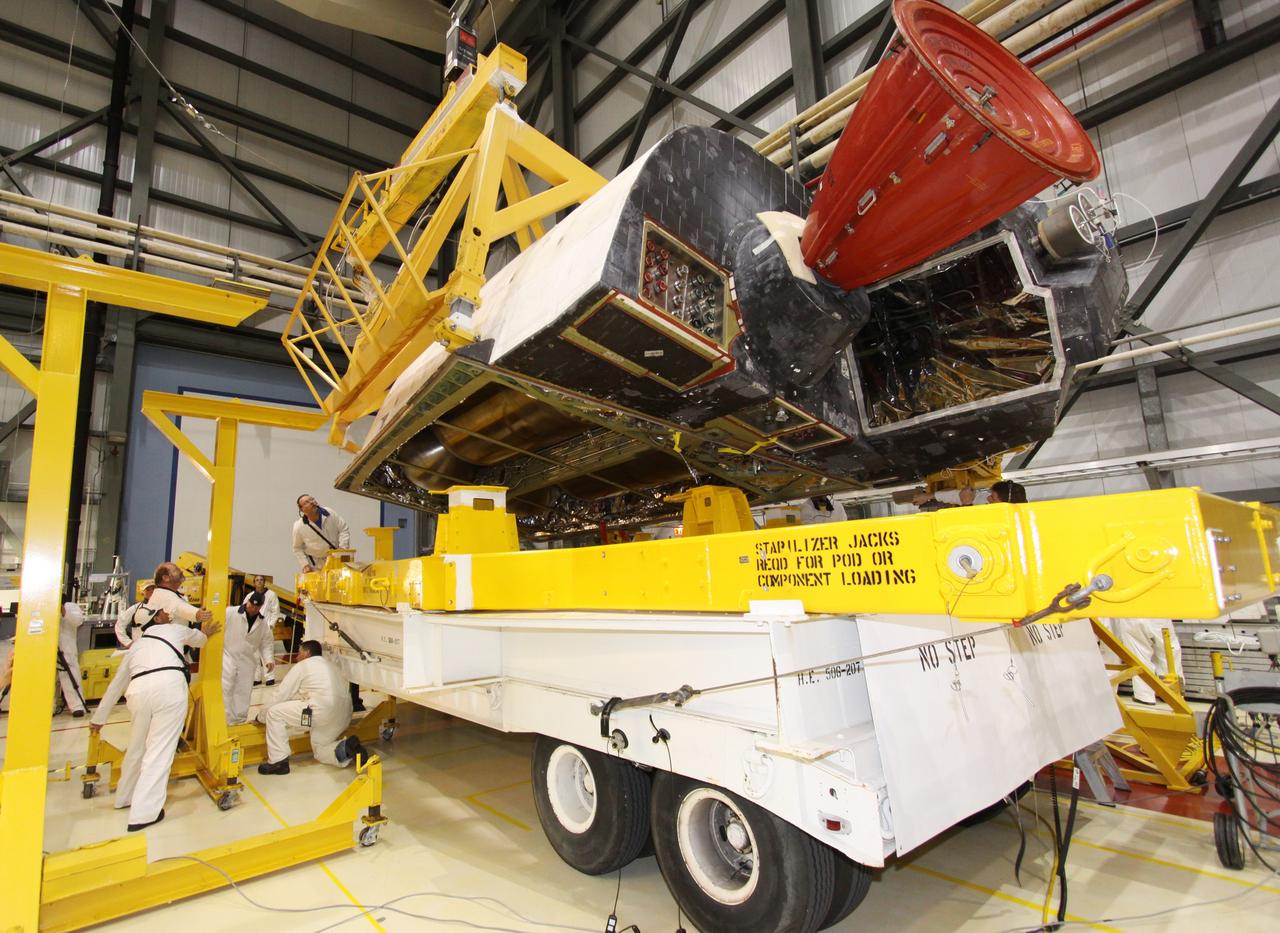
CAPE CANAVERAL, Fla. -- In Orbiter Processing Facility-2 at NASA's Kennedy Space Center in Florida, workers monitor an overhead crane as it lowers shuttle Discovery's right-hand orbital maneuvering system, or OMS, pod toward a transporter. It then will be moved to the Hypergol Maintenance Facility. The removal is part of Discovery's transition and retirement processing. Work performed on Discovery is expected to help rocket designers build next-generation spacecraft and prepare the shuttle for future public display. Photo credit: NASA/Jack Pfaller
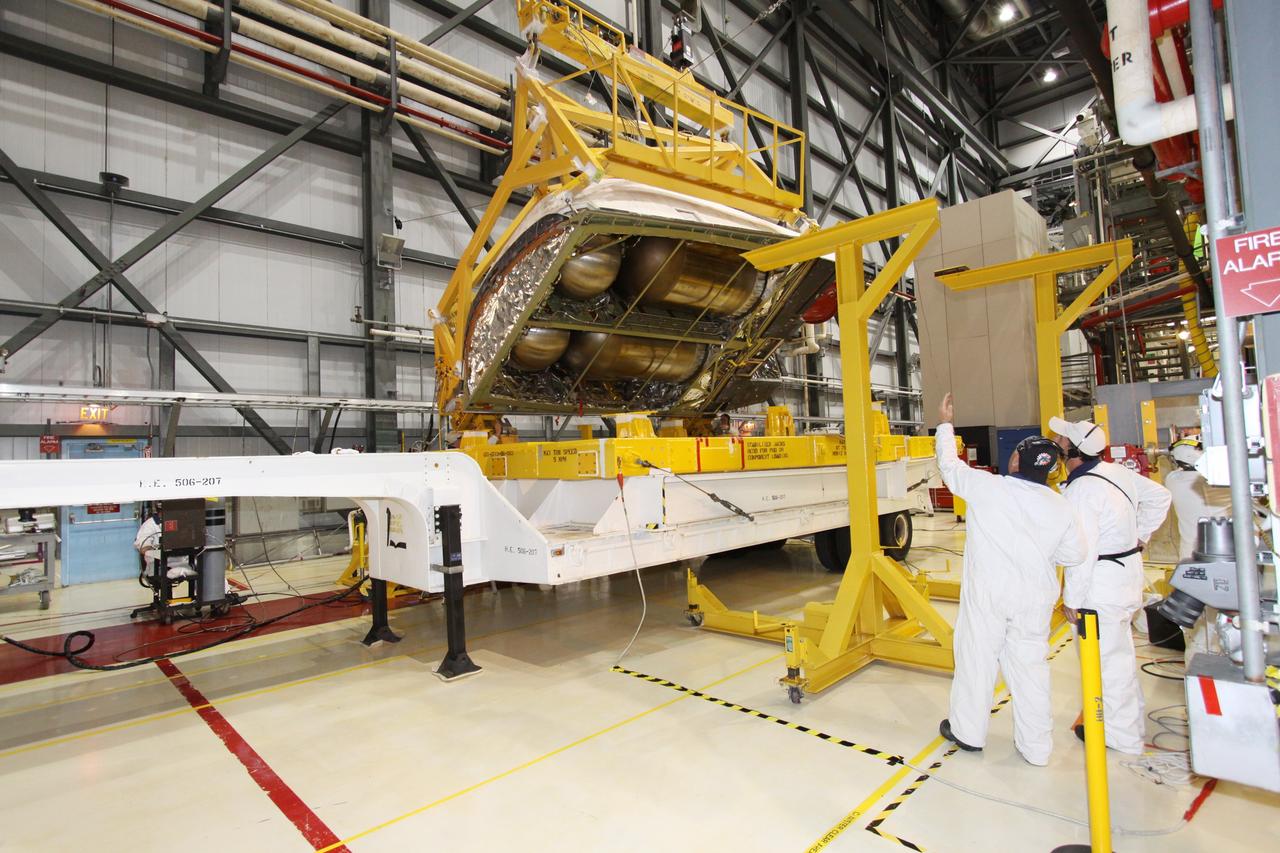
CAPE CANAVERAL, Fla. -- In Orbiter Processing Facility-2 at NASA's Kennedy Space Center in Florida, workers monitor an overhead crane as it lowers shuttle Discovery's right-hand orbital maneuvering system, or OMS, pod toward a transporter. It then will be moved to the Hypergol Maintenance Facility. The removal is part of Discovery's transition and retirement processing. Work performed on Discovery is expected to help rocket designers build next-generation spacecraft and prepare the shuttle for future public display. Photo credit: NASA/Jack Pfaller
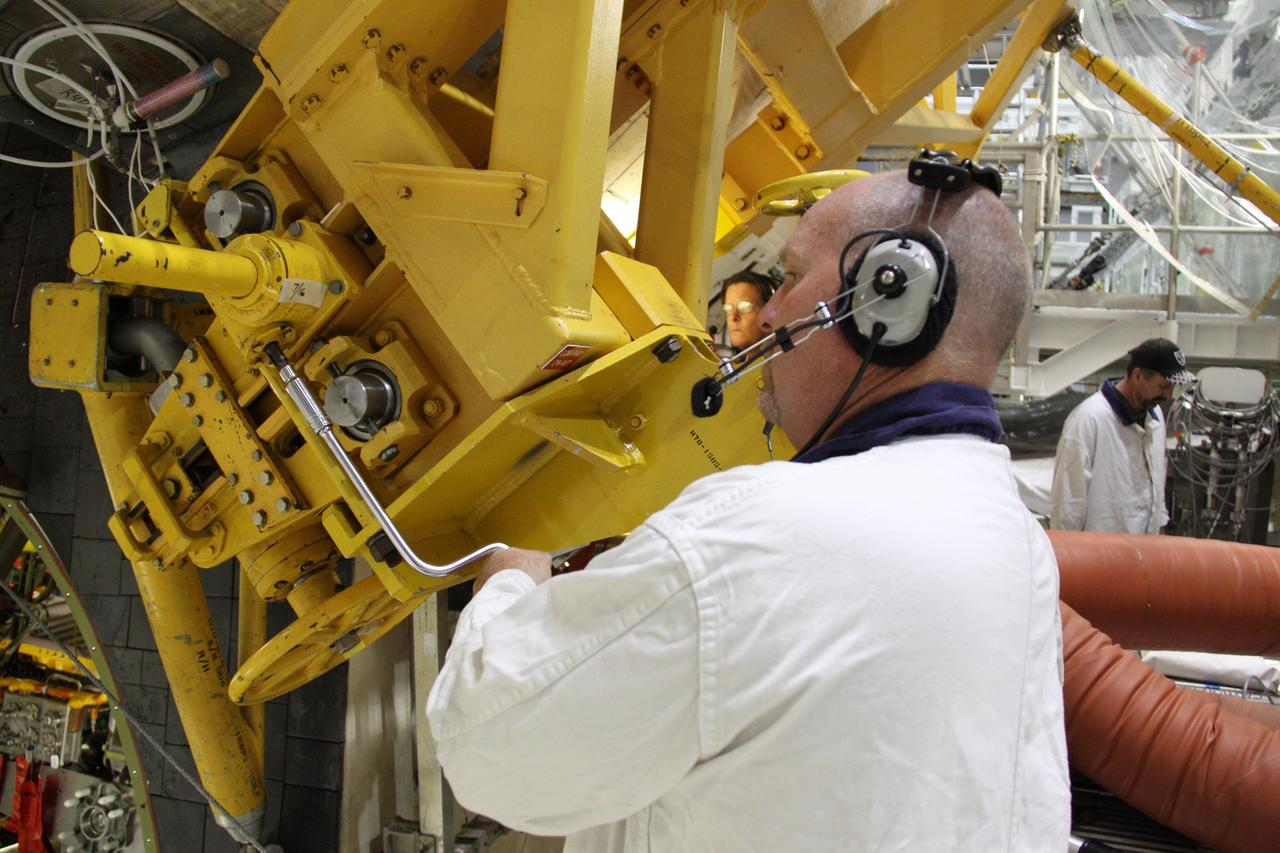
CAPE CANAVERAL, Fla. - In Orbiter Processing Facility-2 at NASA's Kennedy Space Center in Florida, workers use a crane to grapple shuttle Discovery's right-hand orbital maneuvering system, or OMS, pod for removal. It then will be transported to the Hypergol Maintenance Facility. The removal is part of Discovery's transition and retirement processing. Work performed on Discovery is expected to help rocket designers build next-generation spacecraft and prepare the shuttle for future public display. Photo credit: NASA/Troy Cryder
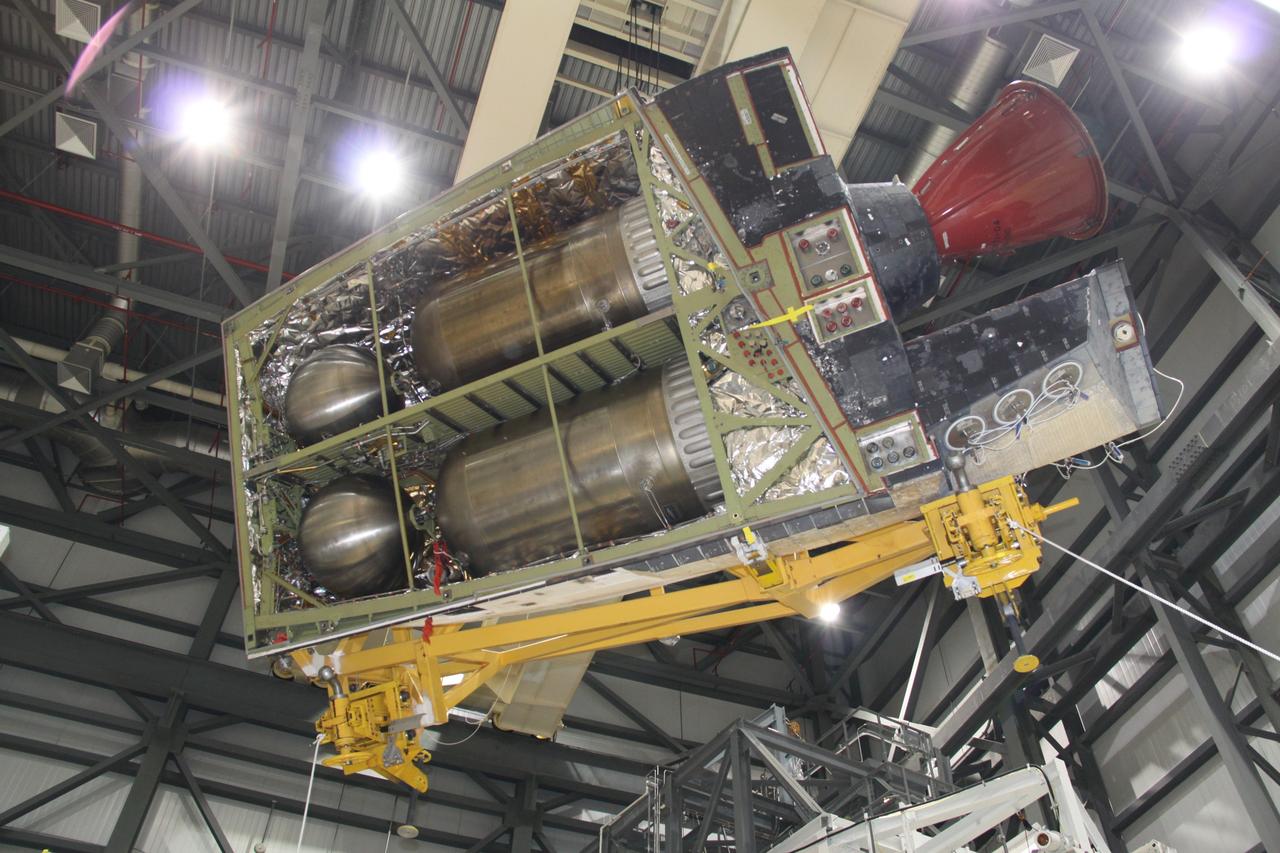
CAPE CANAVERAL, Fla. -- In Orbiter Processing Facility-2 at NASA's Kennedy Space Center in Florida, an overhead crane removes shuttle Discovery's right-hand orbital maneuvering system, or OMS, pod. It then will be transported to the Hypergol Maintenance Facility. The removal is part of Discovery's transition and retirement processing. Work performed on Discovery is expected to help rocket designers build next-generation spacecraft and prepare the shuttle for future public display. Photo credit: NASA/Jack Pfaller
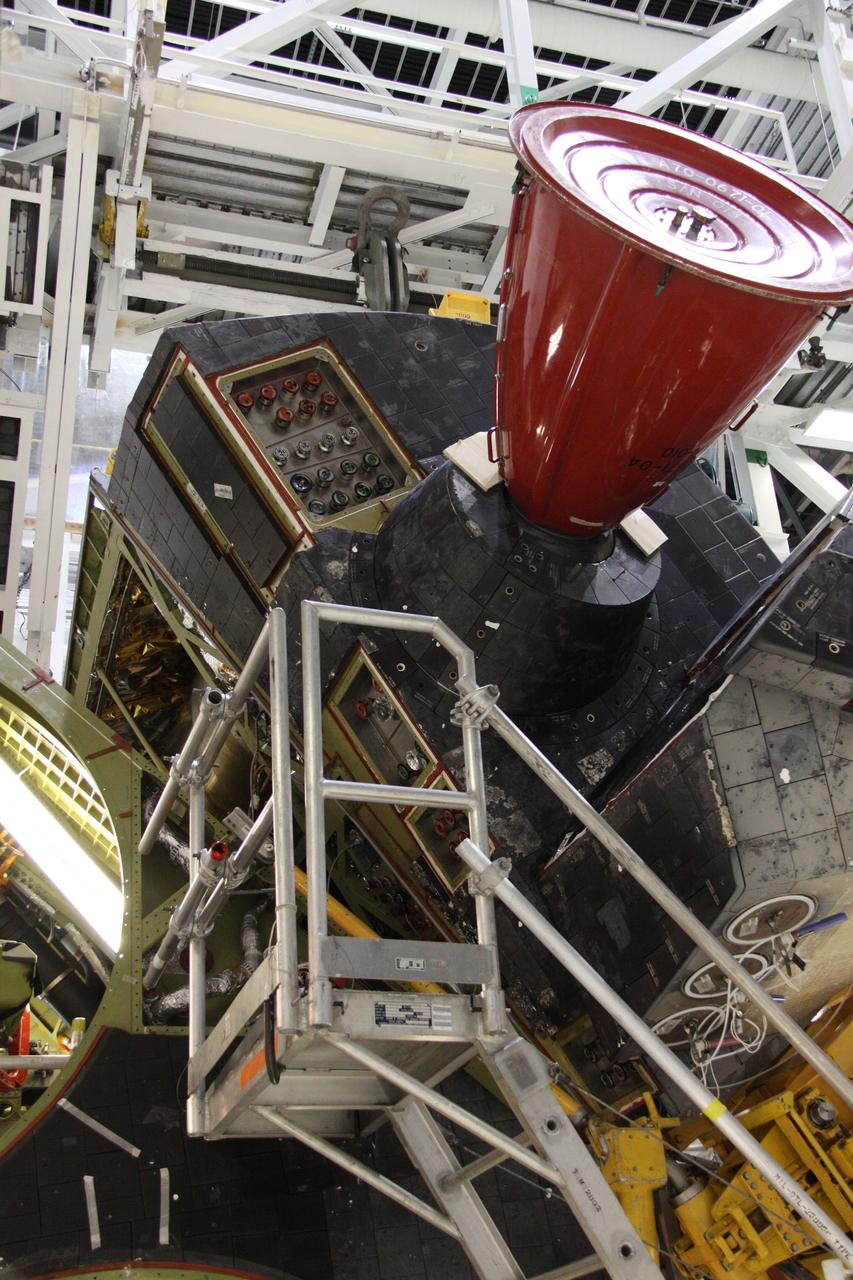
CAPE CANAVERAL, Fla. -- In Orbiter Processing Facility-2 at NASA's Kennedy Space Center in Florida, workers use a crane to remove shuttle Discovery's right-hand orbital maneuvering system, or OMS, pod. It then will be transported to the Hypergol Maintenance Facility. The removal is part of Discovery's transition and retirement processing. Work performed on Discovery is expected to help rocket designers build next-generation spacecraft and prepare the shuttle for future public display. Photo credit: NASA/Troy Cryder
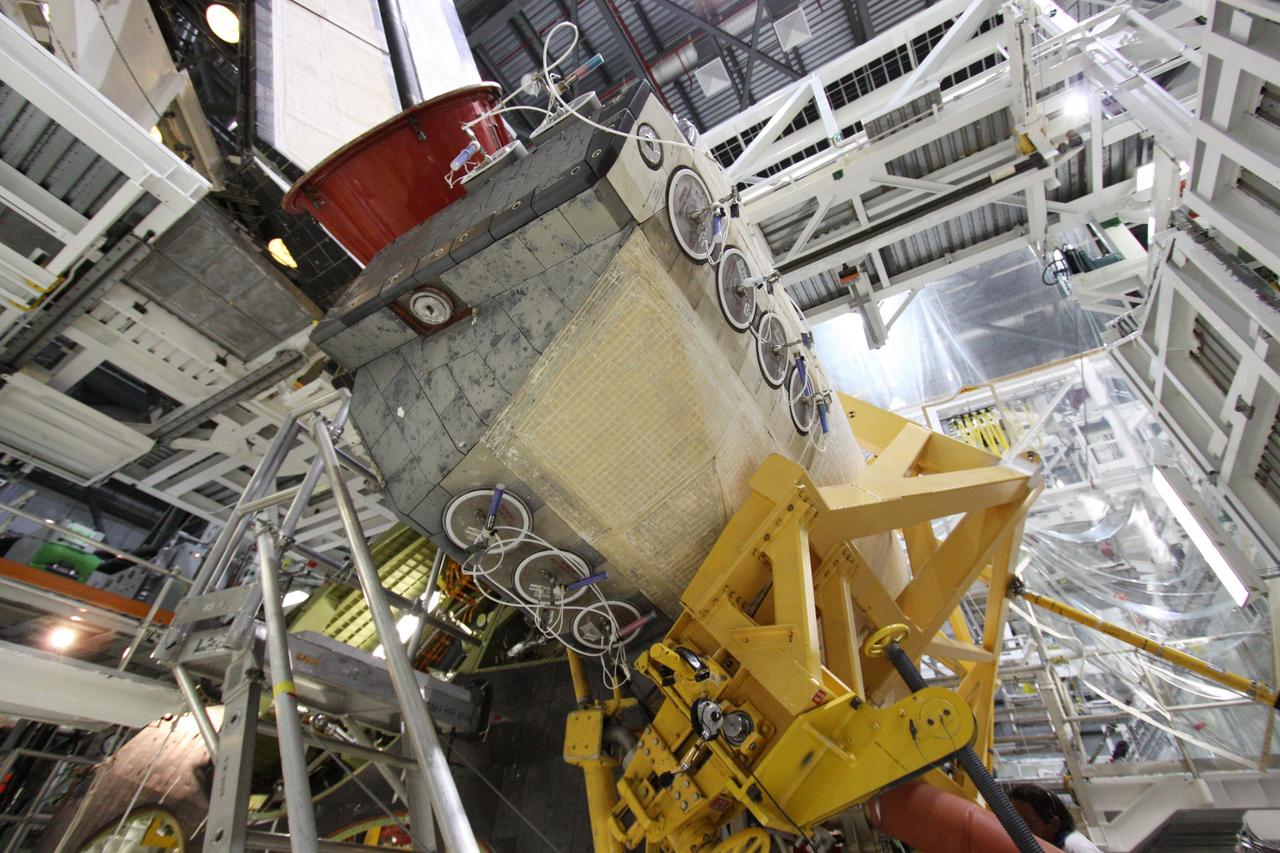
CAPE CANAVERAL, Fla. - In Orbiter Processing Facility-2 at NASA's Kennedy Space Center in Florida, workers use a crane to grapple shuttle Discovery's right-hand orbital maneuvering system, or OMS, pod for removal. It then will be transported to the Hypergol Maintenance Facility. The removal is part of Discovery's transition and retirement processing. Work performed on Discovery is expected to help rocket designers build next-generation spacecraft and prepare the shuttle for future public display. Photo credit: NASA/Troy Cryder
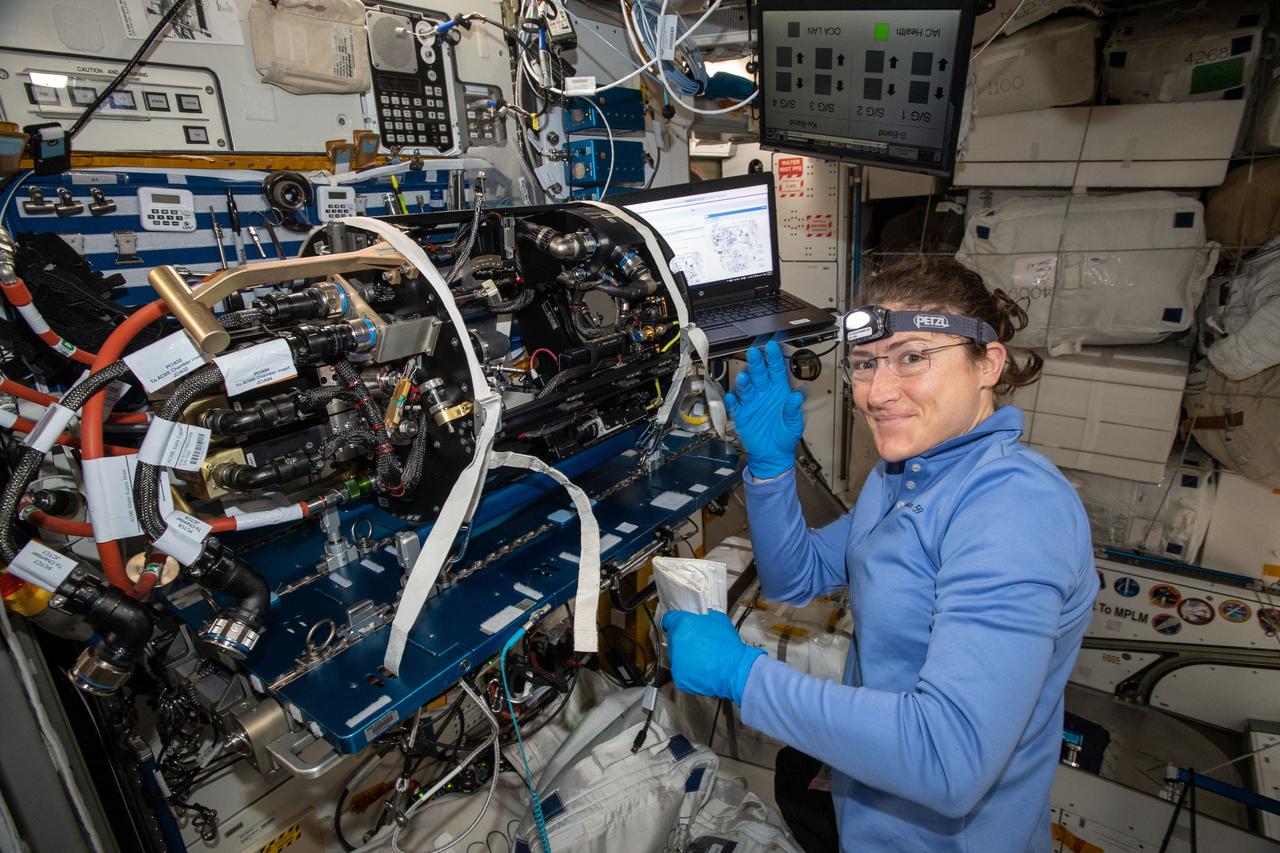
iss059e017072 (April 9, 2018) --- NASA astronaut and Expedition 59 Flight Engineer Christina Koch works on the Unity module's Maintenance Work Area where the Advanced Combustion via Microgravity Experiments (ACME) Chamber Insert was attached for hardware replacement. ACME is a set of five independent studies researching improved fuel efficiency and reduced pollutant production in practical combustion on Earth, as well as spacecraft fire prevention through innovative research focused on materials flammability.
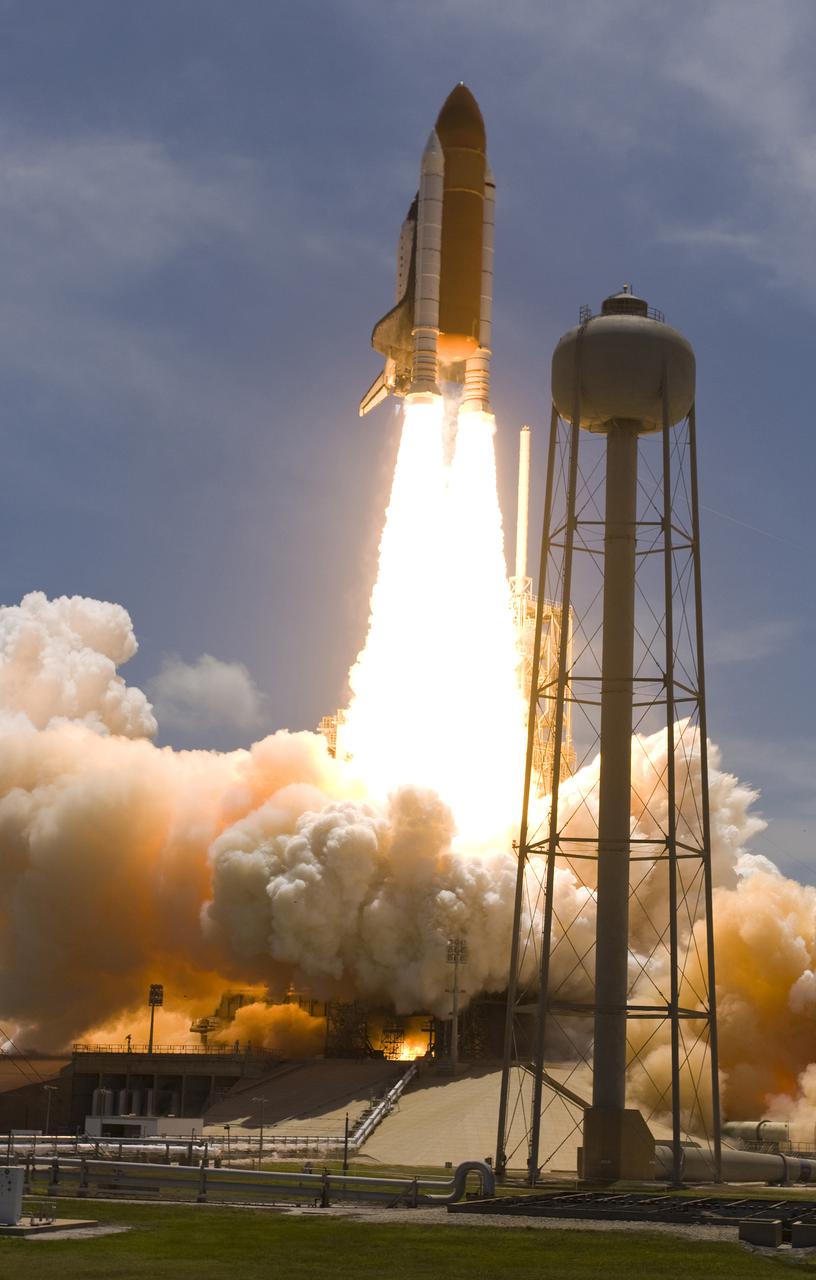
CAPE CANAVERAL, Fla. - Space shuttle Atlantis' twin solid rocket boosters propel the spacecraft off NASA Kennedy Space Center's Launch Pad 39A and into orbit. Atlantis' STS-132 mission to the International Space Station launched on time at 2:20 p.m. EDT on May 14. STS-132 is the 132nd shuttle flight, the 32nd for Atlantis and the 34th shuttle mission dedicated to station assembly and maintenance. For more information on the STS-132 mission objectives, payload and crew, visit www.nasa.gov_mission_pages_shuttle_shuttlemissions_sts132_index.html. Photo courtesy of Scott Andrews
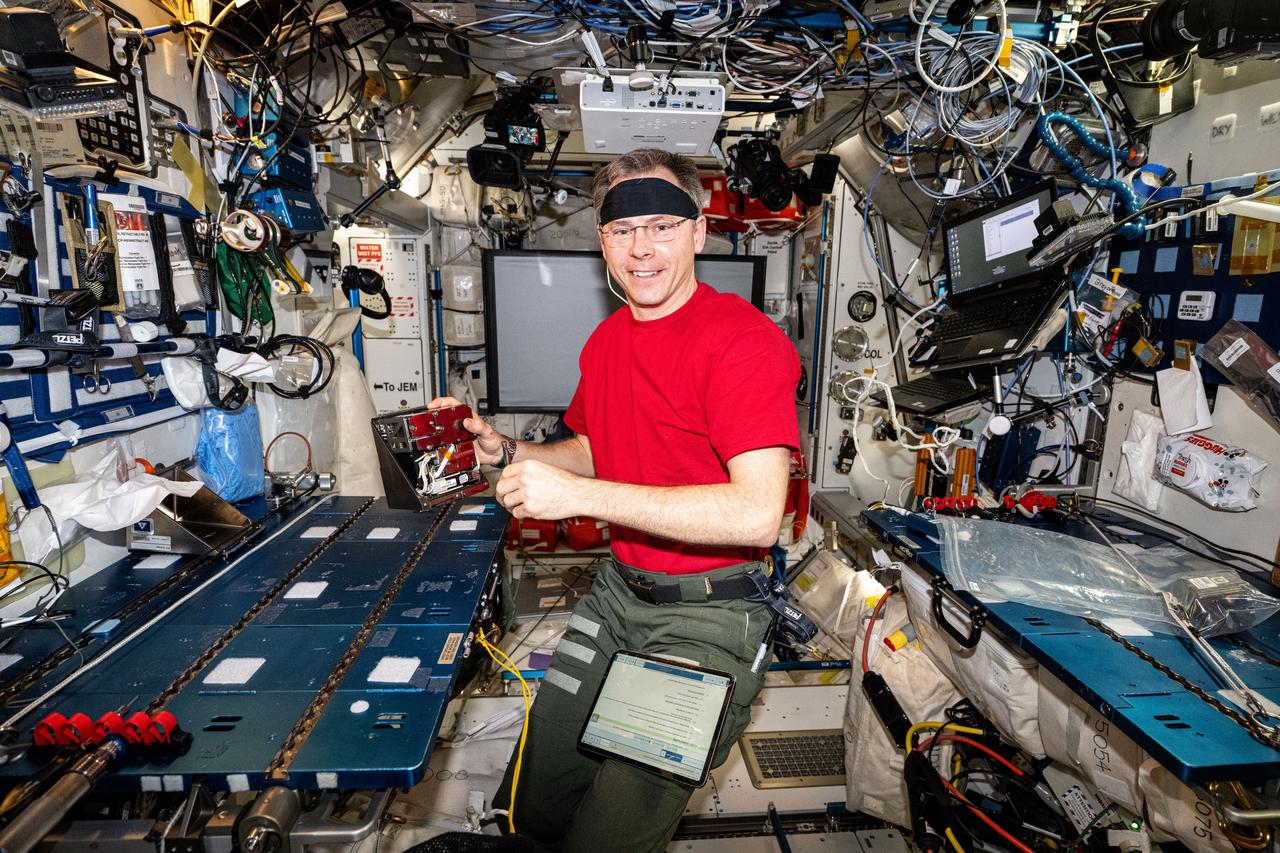
iss072e452598 (Jan. 10, 2025) --- NASA astronaut and Expedition 72 Flight Engineer Nick Hague processes samples of micro-algae at the Harmony module's maintenance work area aboard the International Space Station. The Arthrospira C biotechnology investigation exposes micro-algae to cosmic radiation and microgravity to learn how to revitalize the spacecraft environment using photosynthesis and produce fresh food on long-term space missions.
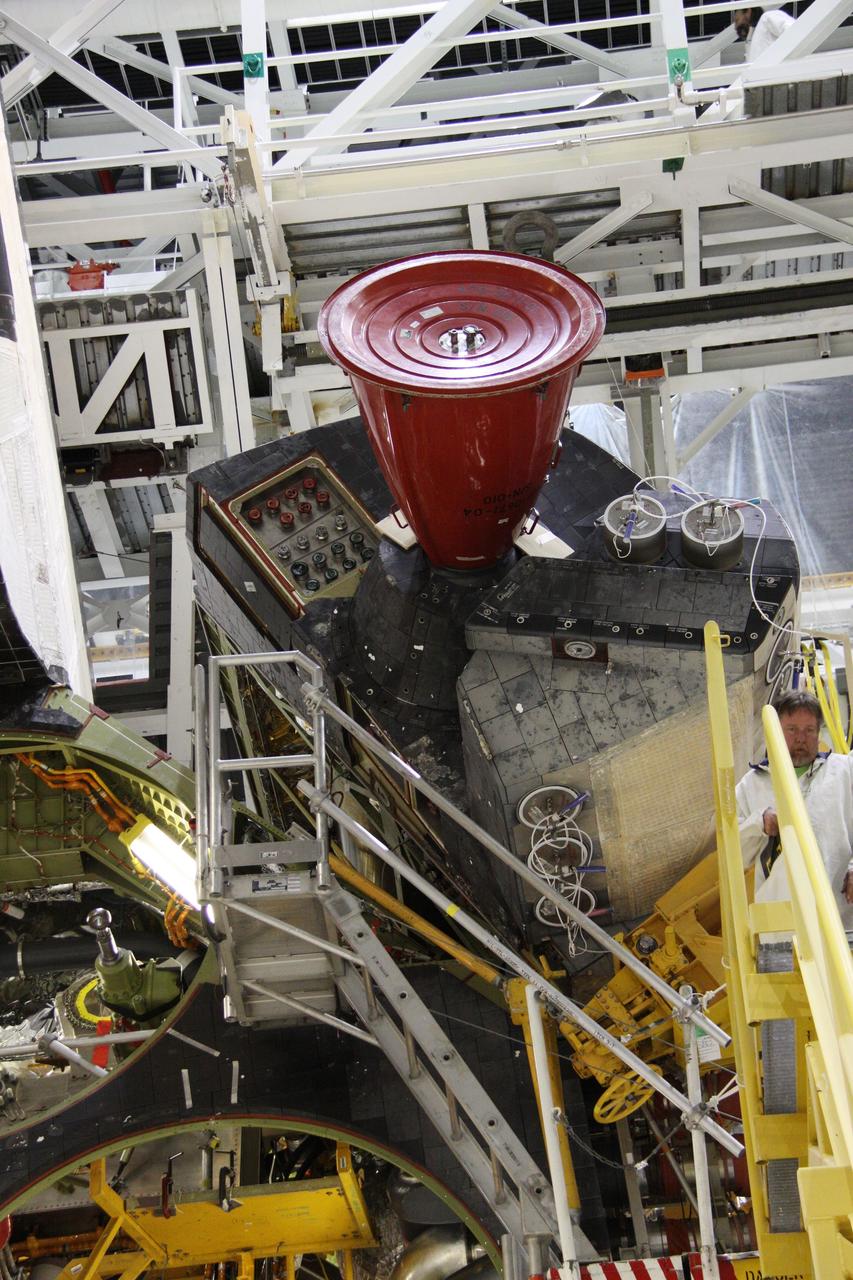
CAPE CANAVERAL, Fla. - In Orbiter Processing Facility-2 at NASA's Kennedy Space Center in Florida, workers use a crane to grapple shuttle Discovery's right-hand orbital maneuvering system, or OMS, pod for removal. It then will be transported to the Hypergol Maintenance Facility. The removal is part of Discovery's transition and retirement processing. Work performed on Discovery is expected to help rocket designers build next-generation spacecraft and prepare the shuttle for future public display. Photo credit: NASA/Troy Cryder
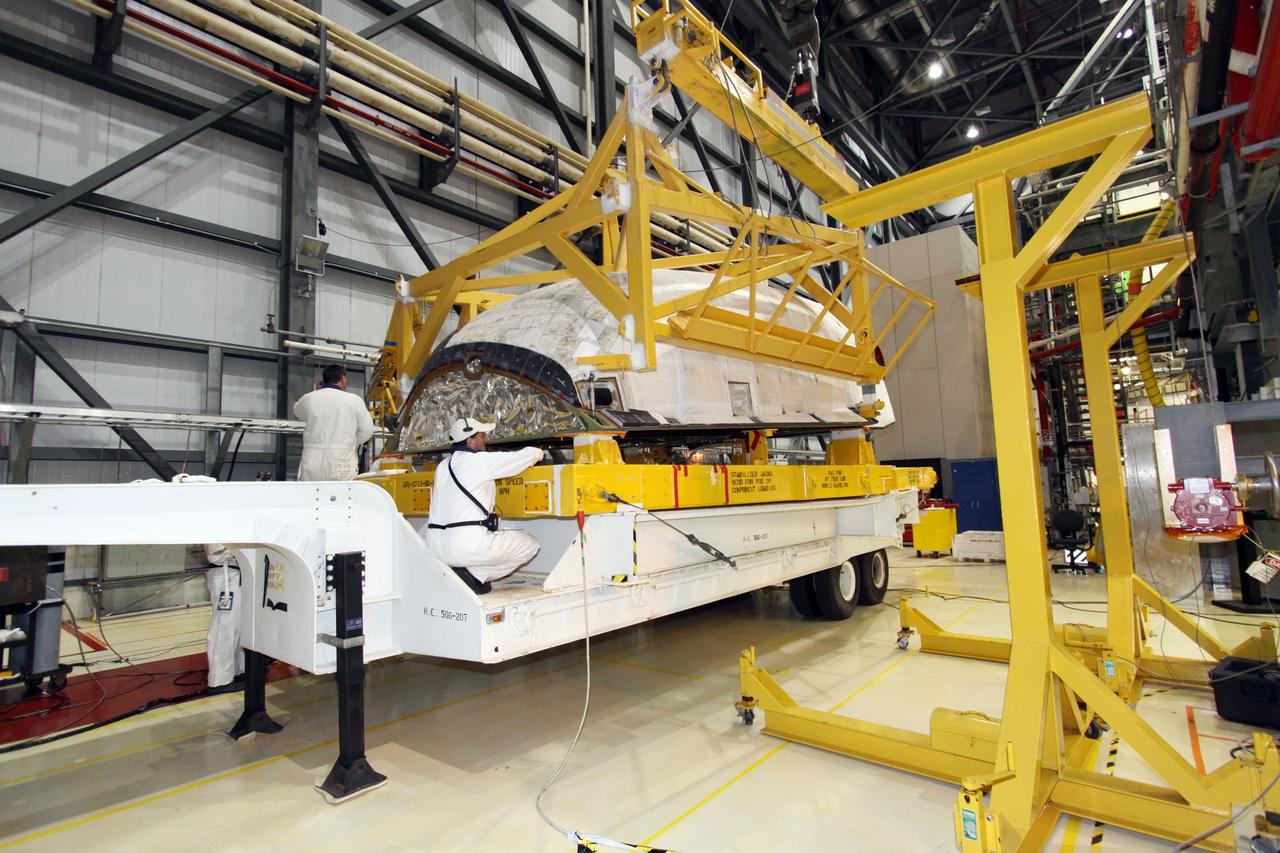
CAPE CANAVERAL, Fla. -- In Orbiter Processing Facility-2 at NASA's Kennedy Space Center in Florida, workers position shuttle Discovery's right-hand orbital maneuvering system, or OMS, pod onto a transporter. It then will be moved to the Hypergol Maintenance Facility. The removal is part of Discovery's transition and retirement processing. Work performed on Discovery is expected to help rocket designers build next-generation spacecraft and prepare the shuttle for future public display. Photo credit: NASA/Jack Pfaller
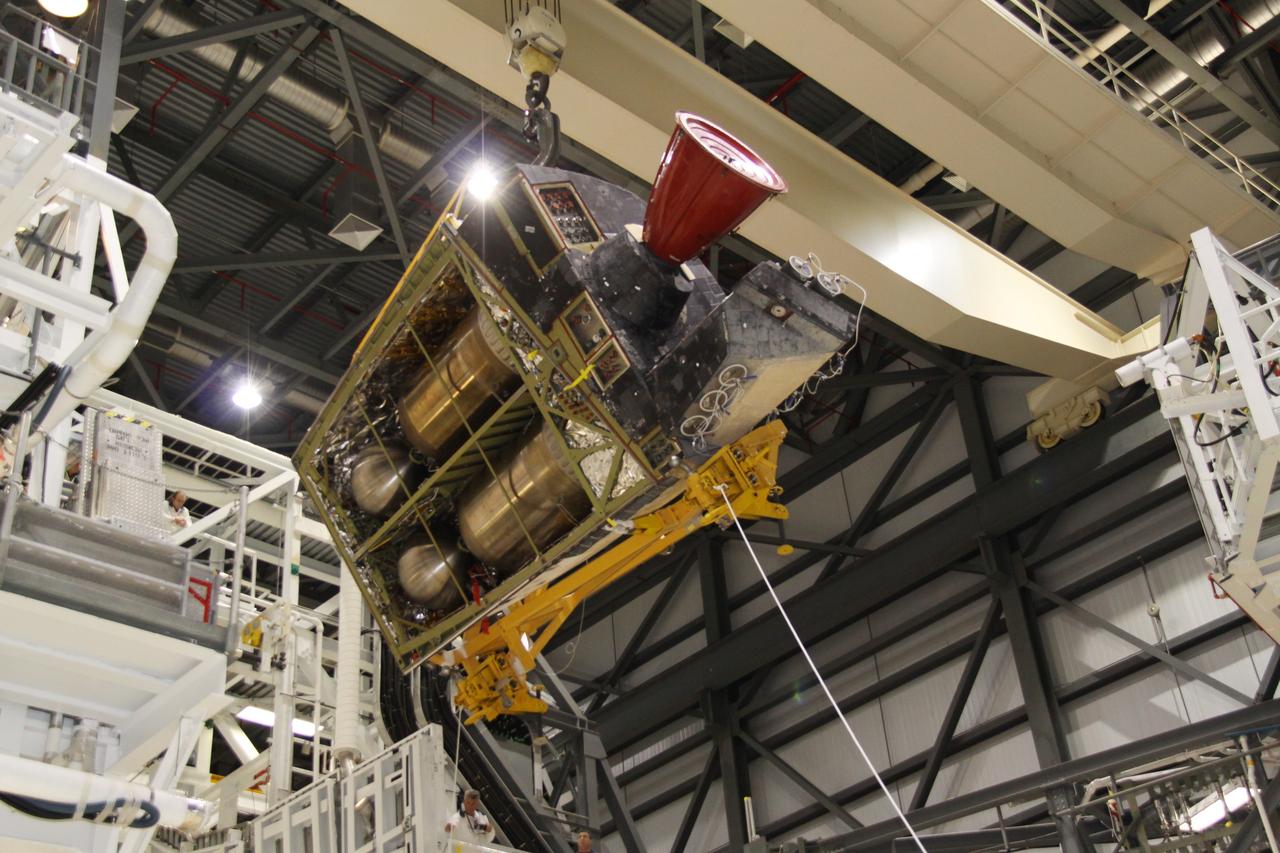
CAPE CANAVERAL, Fla. -- In Orbiter Processing Facility-2 at NASA's Kennedy Space Center in Florida, an overhead crane removes shuttle Discovery's right-hand orbital maneuvering system, or OMS, pod. It then will be transported to the Hypergol Maintenance Facility. The removal is part of Discovery's transition and retirement processing. Work performed on Discovery is expected to help rocket designers build next-generation spacecraft and prepare the shuttle for future public display. Photo credit: NASA/Jack Pfaller
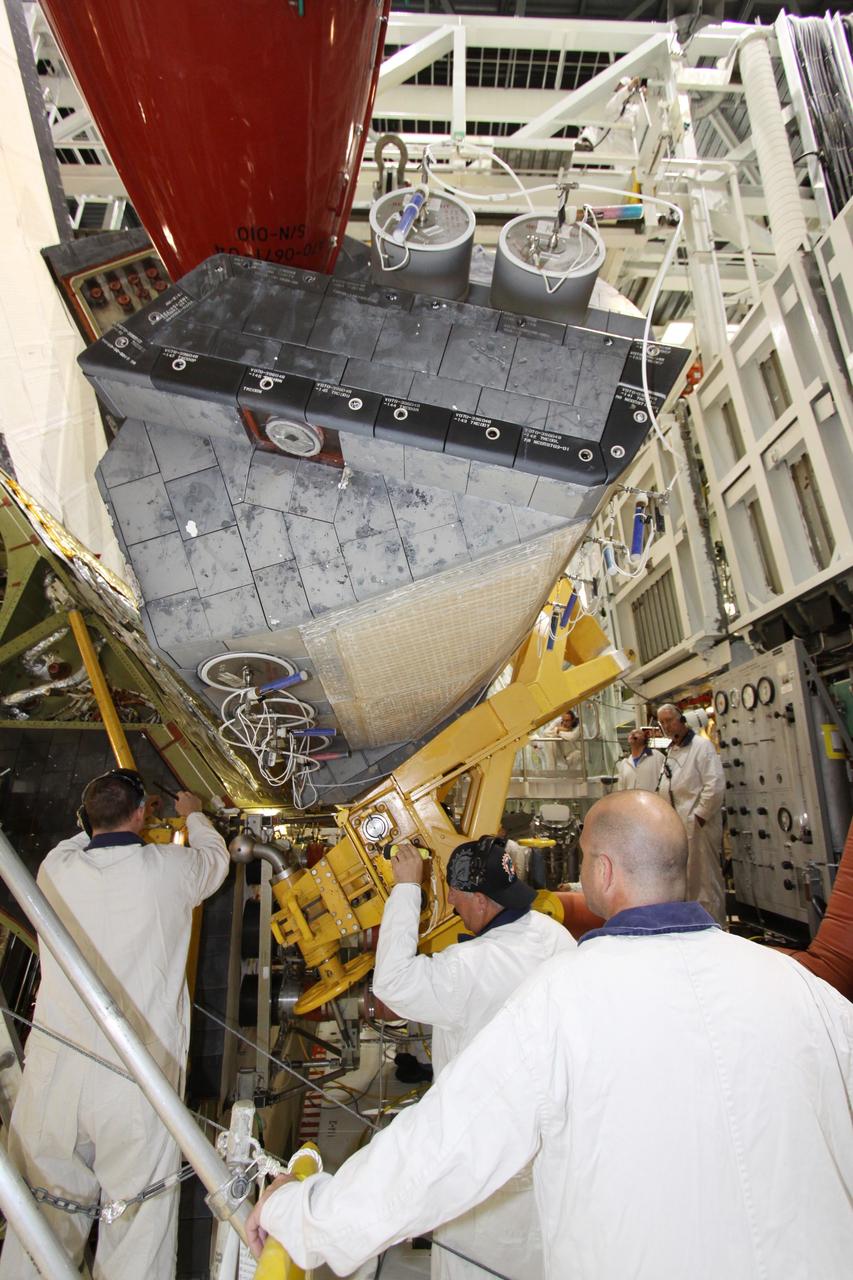
CAPE CANAVERAL, Fla. - In Orbiter Processing Facility-2 at NASA's Kennedy Space Center in Florida, workers use a crane to grapple shuttle Discovery's right-hand orbital maneuvering system, or OMS, pod for removal. It then will be transported to the Hypergol Maintenance Facility. The removal is part of Discovery's transition and retirement processing. Work performed on Discovery is expected to help rocket designers build next-generation spacecraft and prepare the shuttle for future public display. Photo credit: NASA/Jack Pfaller
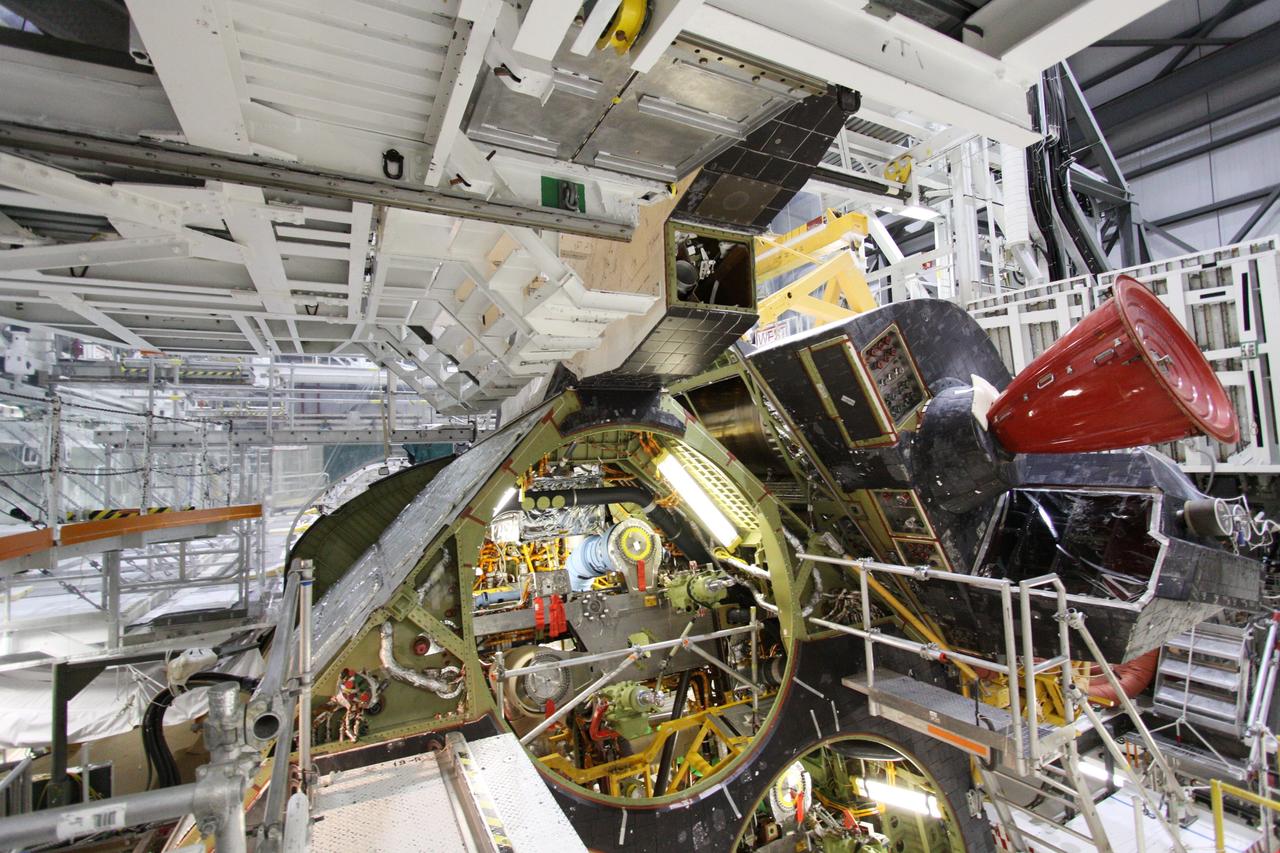
CAPE CANAVERAL, Fla. -- In Orbiter Processing Facility-2 at NASA's Kennedy Space Center in Florida, workers use a crane to remove shuttle Discovery's right-hand orbital maneuvering system, or OMS, pod. It then will be transported to the Hypergol Maintenance Facility. The removal is part of Discovery's transition and retirement processing. Work performed on Discovery is expected to help rocket designers build next-generation spacecraft and prepare the shuttle for future public display. Photo credit: NASA/Troy Cryder
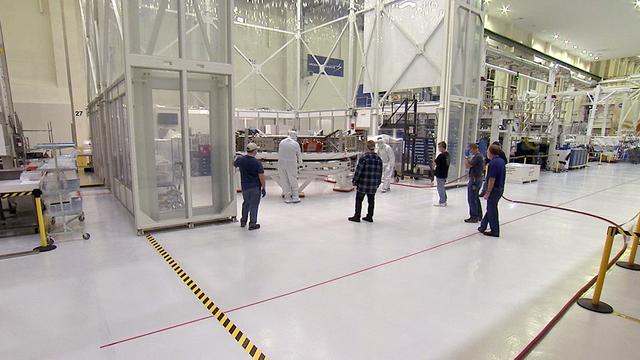
Inside the Neil Armstrong Operations and Checkout Building at NASA's Kennedy Space Center in Florida, the Artemis II crew module adapter (CMA) is being relocated from the clean room to the Pressure Proof Cell for additional testing and maintenance. The CMA connects the crew module to the service module. Artemis II is the first crewed mission in a series of missions to the Moon and on to Mars. Artemis II will confirm all of the Orion spacecraft’s systems operate as designed in the actual environment of deep space with astronauts aboard.
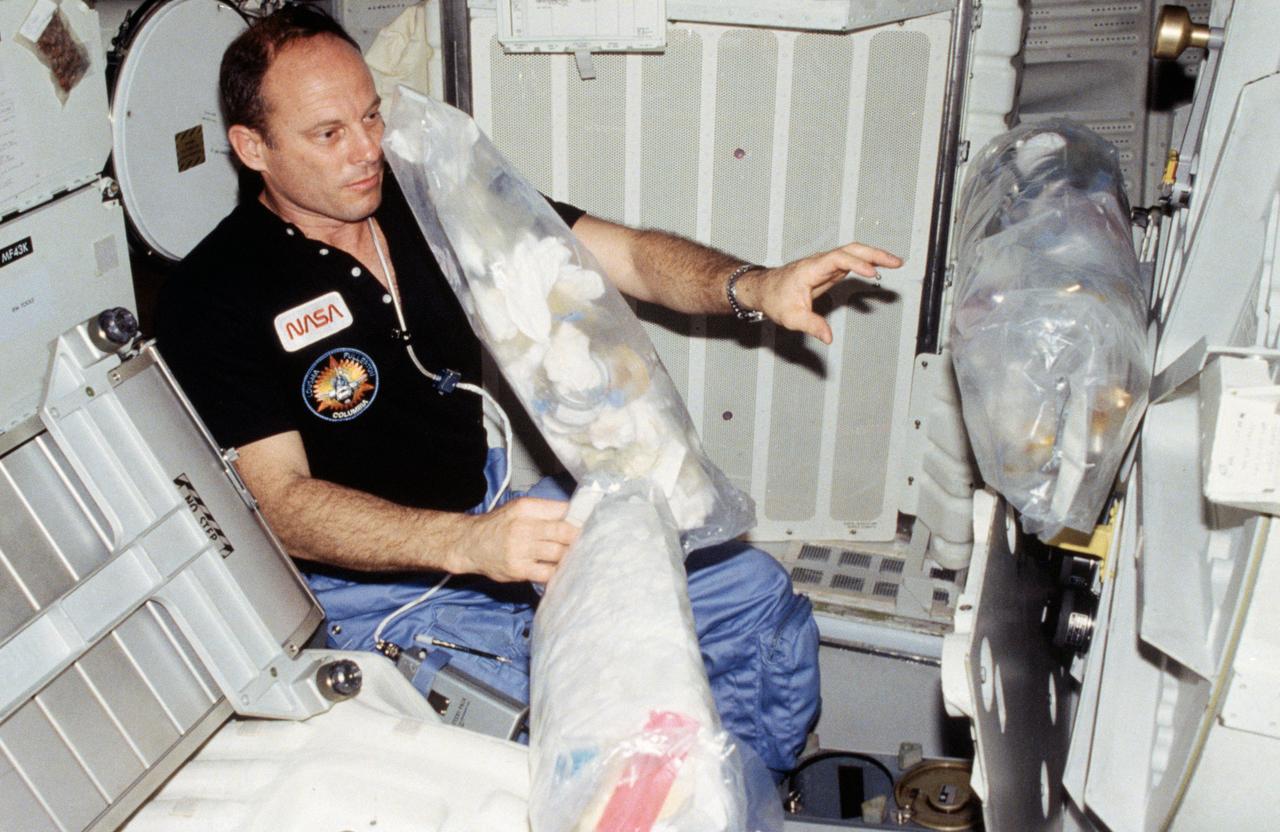
STS003-25-231 (22-30 March 1982) --- Astronaut Jack R. Lousma, STS-3 commander, wearing communication kit assembly mini headset, gathers three freefloating plastic trash bags filled with empty containers, paper towels, straws, etc. Lousma will stow them in a designated stowage volume. Photo credit: NASA
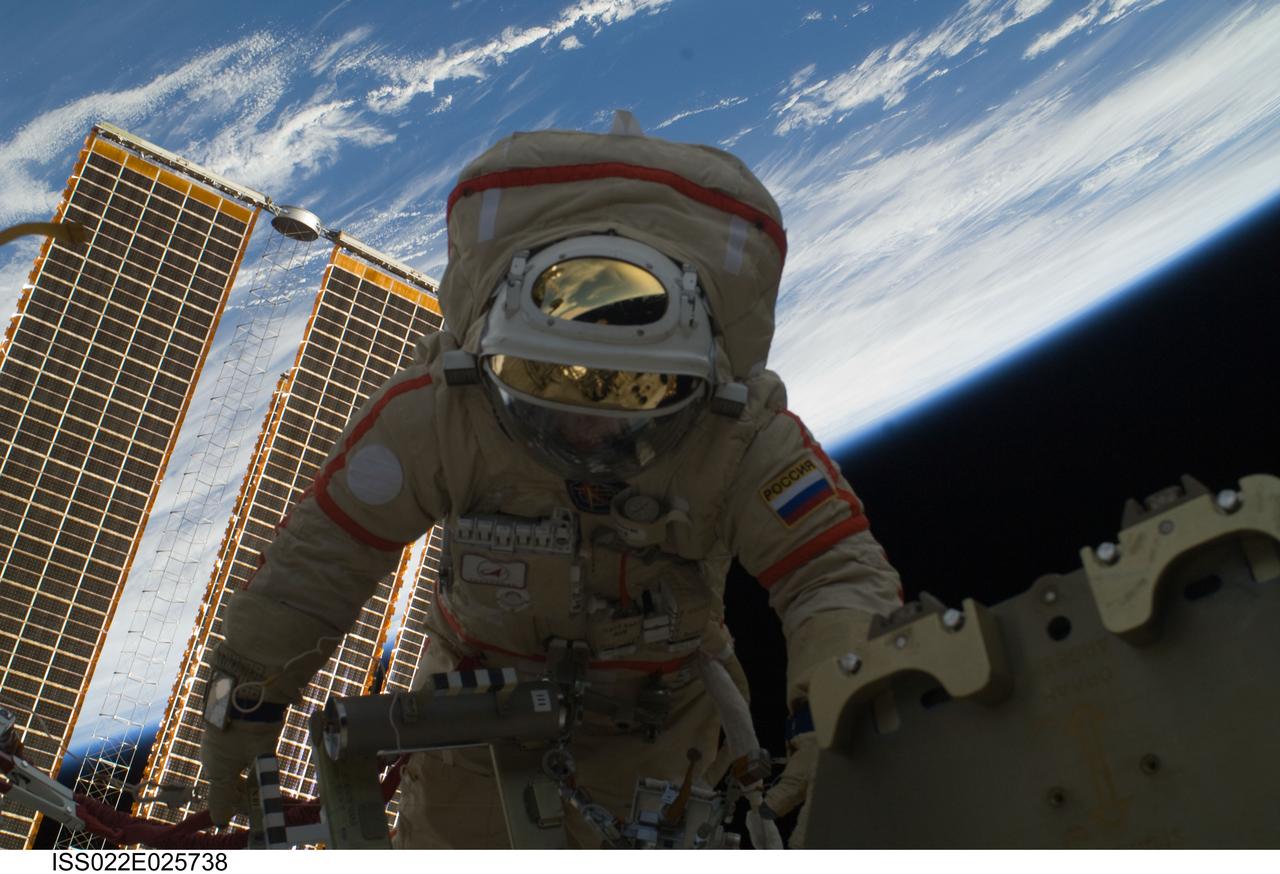
ISS022-E-025738 (14 Jan. 2010) --- Russian cosmonauts Oleg Kotov and Maxim Suraev (out of frame), both Expedition 22 flight engineers, participate in a session of extravehicular activity (EVA) as maintenance and construction continue on the International Space Station. During the spacewalk, Kotov and Suraev prepared the Mini-Research Module 2 (MRM2), known as Poisk, for future Russian vehicle dockings. Suraev and NASA astronaut Jeffrey Williams, commander, will be the first to use the new docking port when they relocate their Soyuz TMA-16 spacecraft from the aft port of the Zvezda Service Module on Jan. 21. Earth’s horizon and the blackness of space provide the backdrop for the scene.
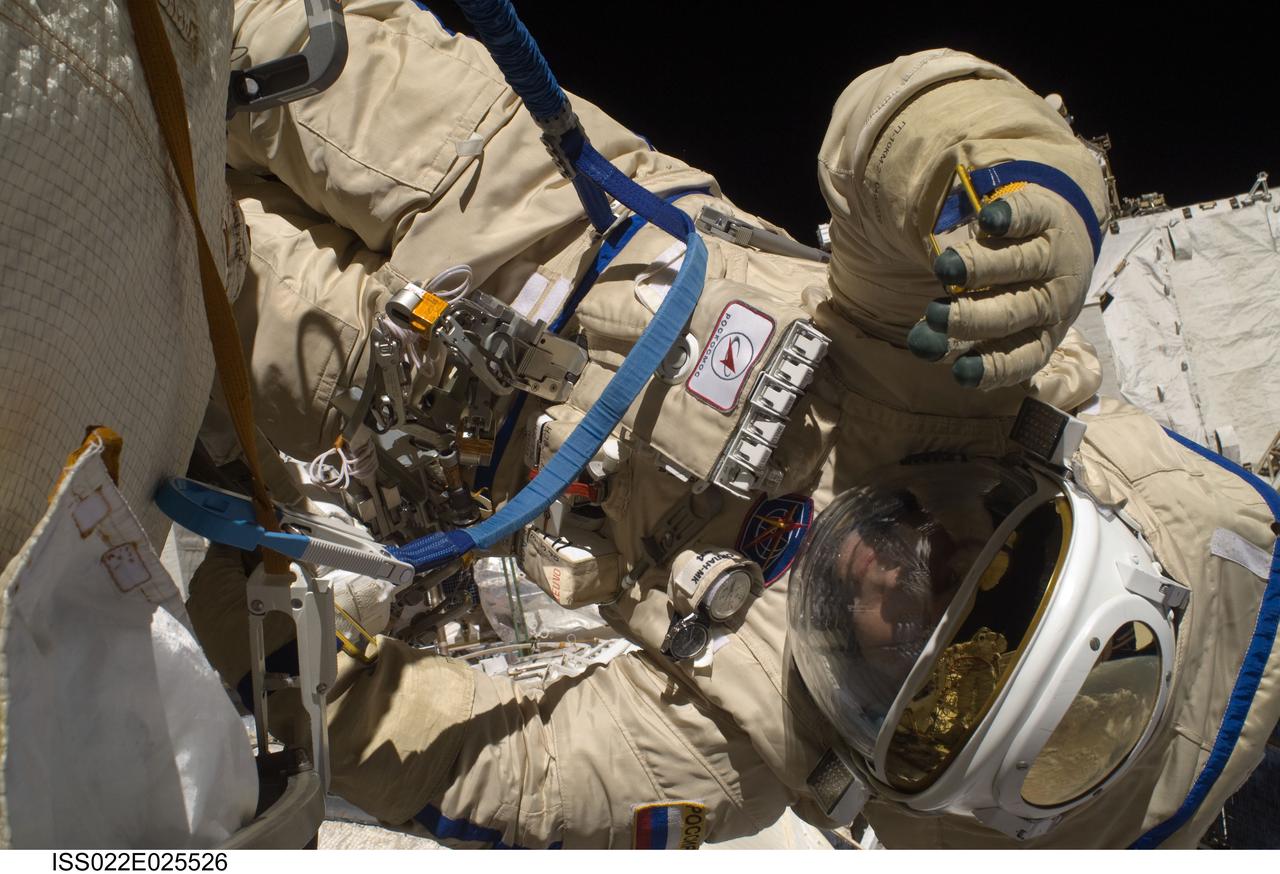
ISS022-E-025526 (14 Jan. 2010) --- Russian cosmonauts Maxim Suraev and Oleg Kotov (out of frame), both Expedition 22 flight engineers, participate in a session of extravehicular activity (EVA) as maintenance and construction continue on the International Space Station. During the spacewalk, Suraev and Kotov prepared the Mini-Research Module 2 (MRM2), known as Poisk, for future Russian vehicle dockings. Suraev and NASA astronaut Jeffrey Williams, commander, will be the first to use the new docking port when they relocate their Soyuz TMA-16 spacecraft from the aft port of the Zvezda Service Module on Jan. 21.
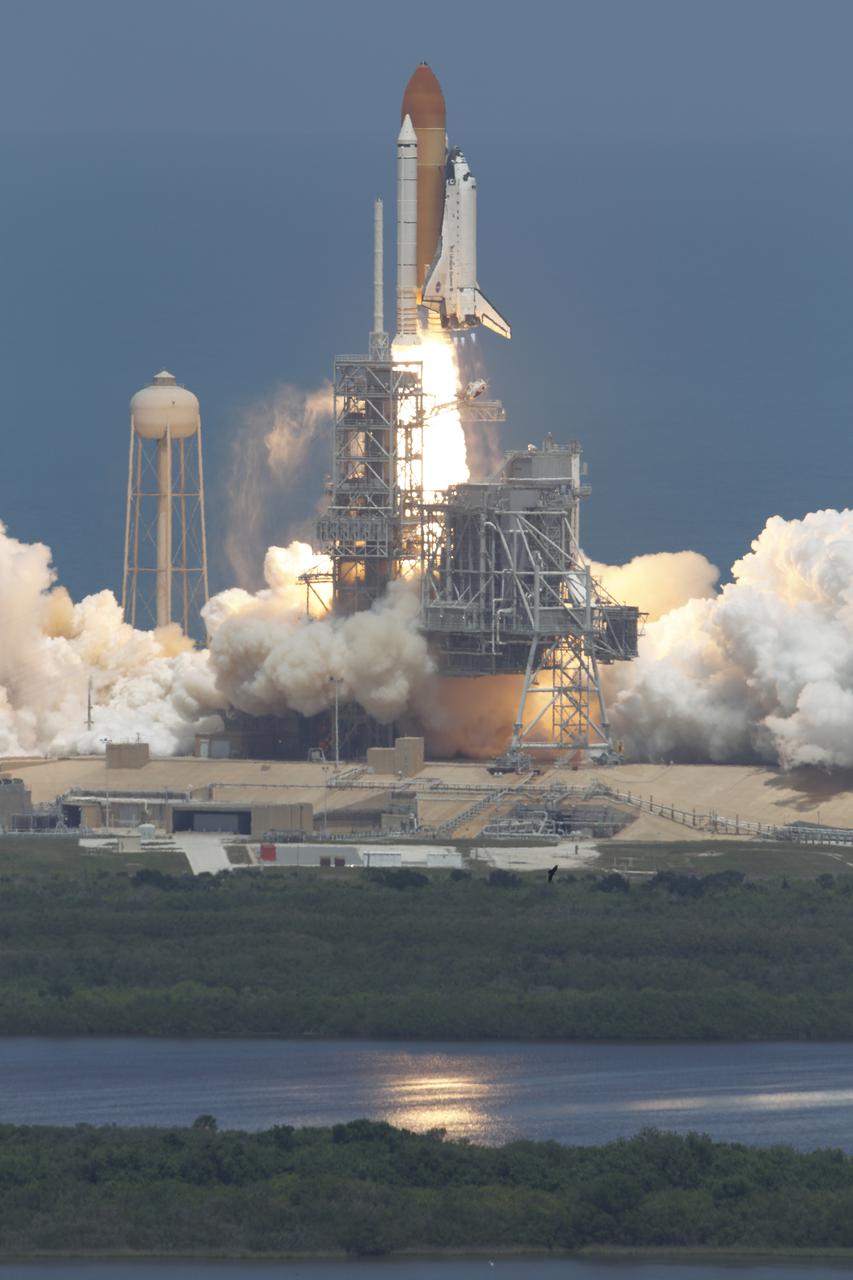
CAPE CANAVERAL, Fla. - Space shuttle Atlantis soars toward orbit from Florida's Space Coast, beginning the STS-132 mission to the International Space Station. The spacecraft took off from NASA Kennedy Space Center's Launch Pad 39A at 2:20 p.m. EDT on May 14. STS-132 is the 132nd shuttle flight, the 32nd for Atlantis and the 34th shuttle mission dedicated to station assembly and maintenance. For more information on the STS-132 mission objectives, payload and crew, visit www.nasa.gov_mission_pages_shuttle_shuttlemissions_sts132_index.html. Photo courtesy of Scott Andrews
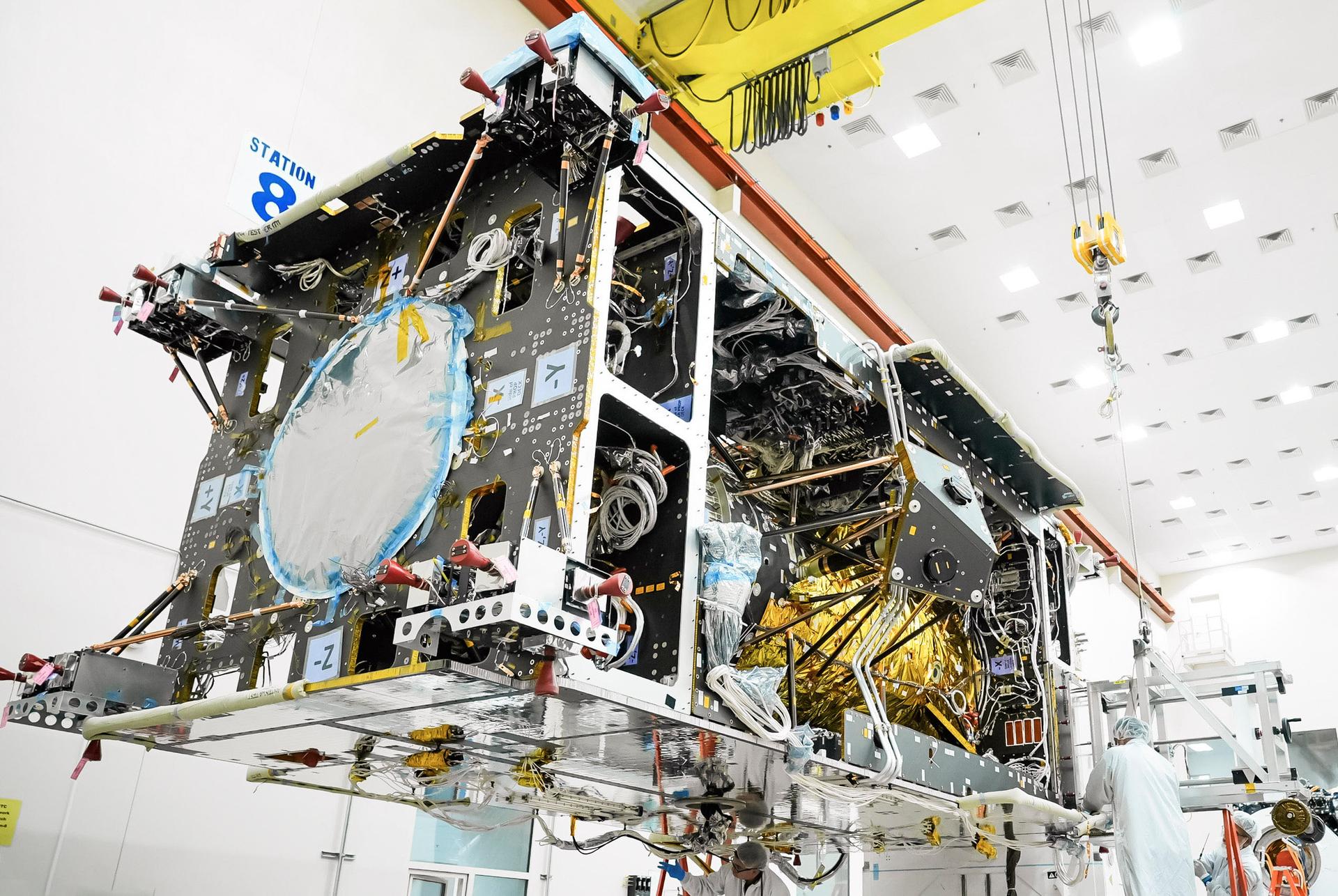
Gateway’s Power and Propulsion Element (PPE) undergoes battery installations at Lanteris Space Systems in Palo Alto, California, in January 2026. PPE is a 60-kilowatt solar electric propulsion spacecraft that will supply the lunar space station with power, high-rate communications, attitude control, orbit maintenance, and orbit transfer capabilities. Its design is based on Lanteris Space Systems’ commercial 1300 bus, enhanced with the most powerful Advanced Electric Propulsion System (AEPS) thrusters and the largest roll-out solar arrays (ROSAs) ever developed. Lanteris Space Systems is the lead industry partner for PPE’s design, manufacturing, and integration.
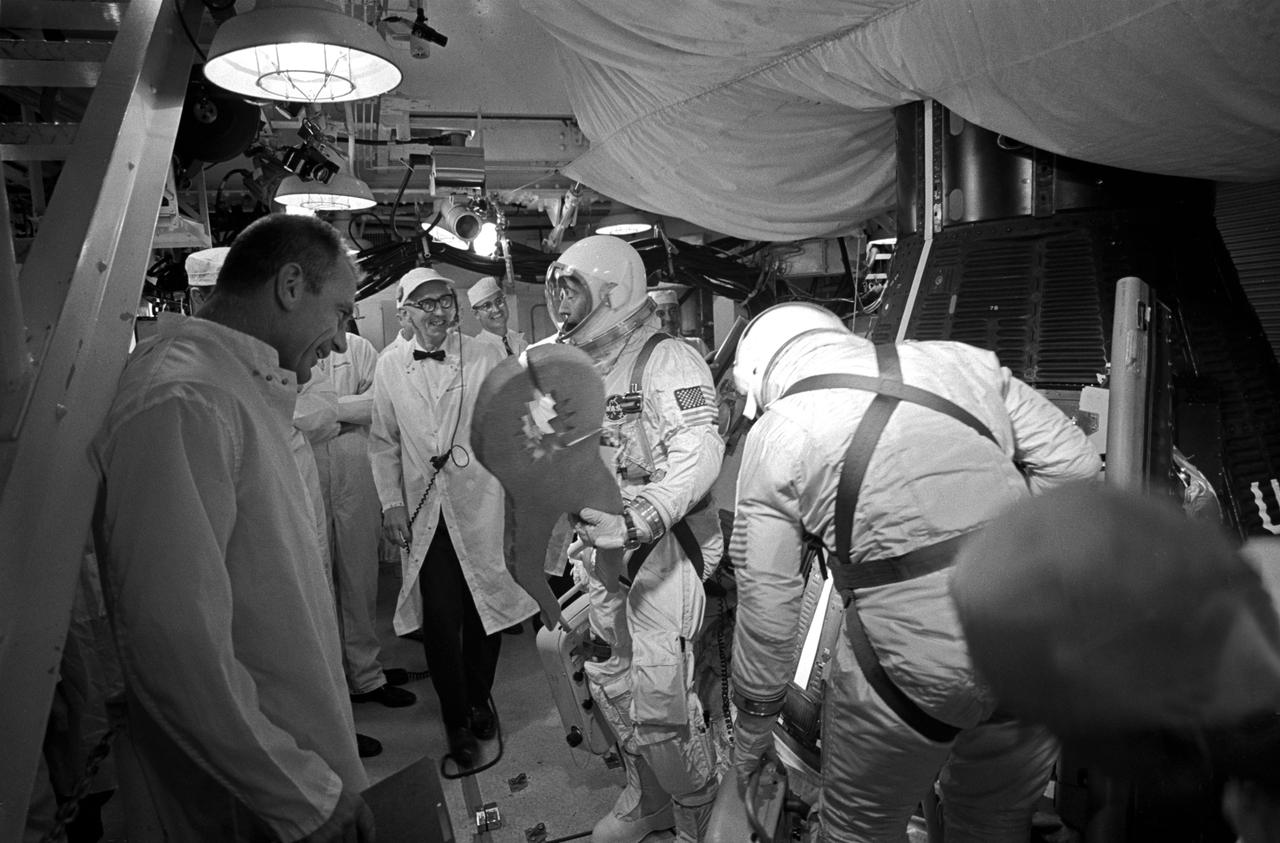
S66-42738 (18 July 1966) --- Astronaut John W. Young, Gemini-10 command pilot, holds a pair of king-size pliers presented to him by the crew at Pad 19 for in-flight first-echelon maintenance of a spacecraft utility power cord Young earlier had difficulty in connecting. Gunther Wendt (right center background), Pad 19 leader, jokes with Young about the pliers. At right is Dr. Donald K. Slayton, MSC Director of Flight Crew Operations. At left is astronaut Michael Collins, Gemini-10 pilot. Photo credit: NASA
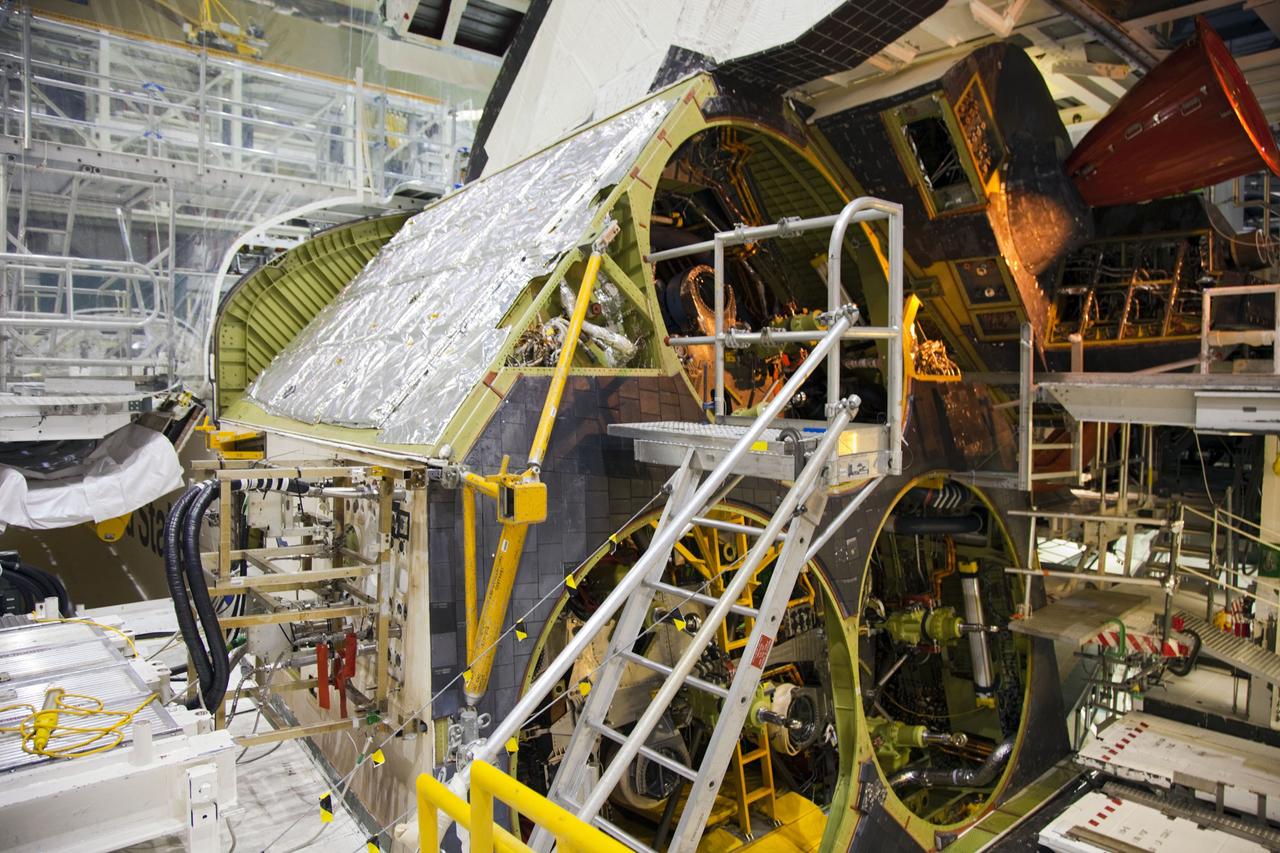
CAPE CANAVERAL, Fla. -- In Orbiter Processing Facility-1 at NASA’s Kennedy Space Center in Florida, shuttle Endeavour’s left-hand orbital maneuvering system, or OMS, pod was removed and lowered onto a transporter. It will then be moved to the Hypergol Maintenance Facility. The work is part of Endeavour’s transition and retirement processing. The spacecraft is being prepared for public display at the California Science Center in Los Angeles. Endeavour flew 25 missions, spent 299 days in space, orbited Earth 4,671 times and traveled 122, 883, 151 miles over the course of its 19-year career. Endeavour’s STS-134 and final mission was completed after landing on June 1, 2011. Photo credit: Frank Michaux
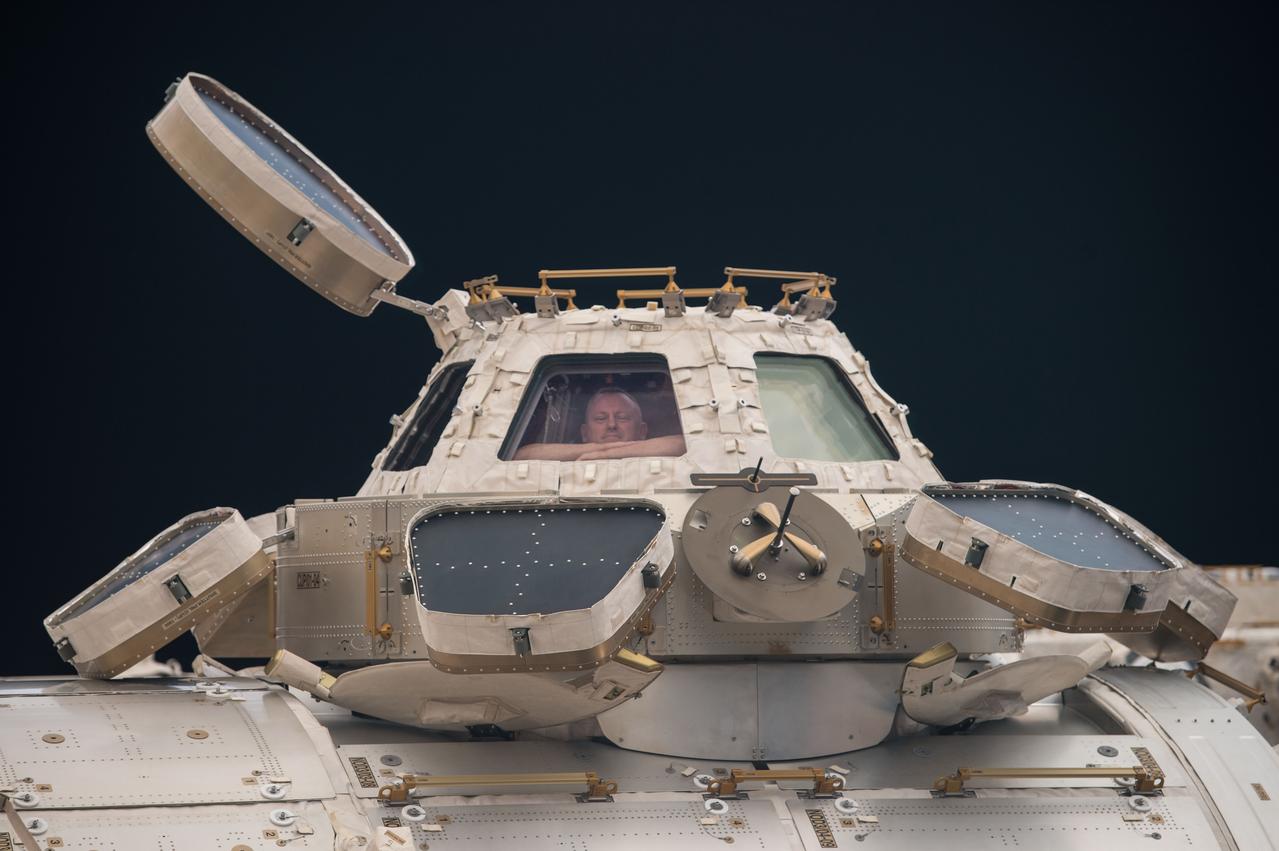
iss042e078481 (12/28/2014) --- US Astronaut Barry Wilmore, Commander of Expedition 42 aboard the International Space Station (ISS) looks out of the Cupola viewing station taking in the sights of the blue orb of Earth while on a break from science and maintenance duties. The Cupola is a panoramic control tower for the ISS with windows through which operations on the outside of the station can be observed and guided. Through the robotics workstation, astronauts are able to control the space station’s robotic arm, which helps with the attachment and assembly of various station elements, very much like the operator of a building crane. Spacewalking activities can also be observed from the Cupola along with visiting spacecraft and external areas of the station.
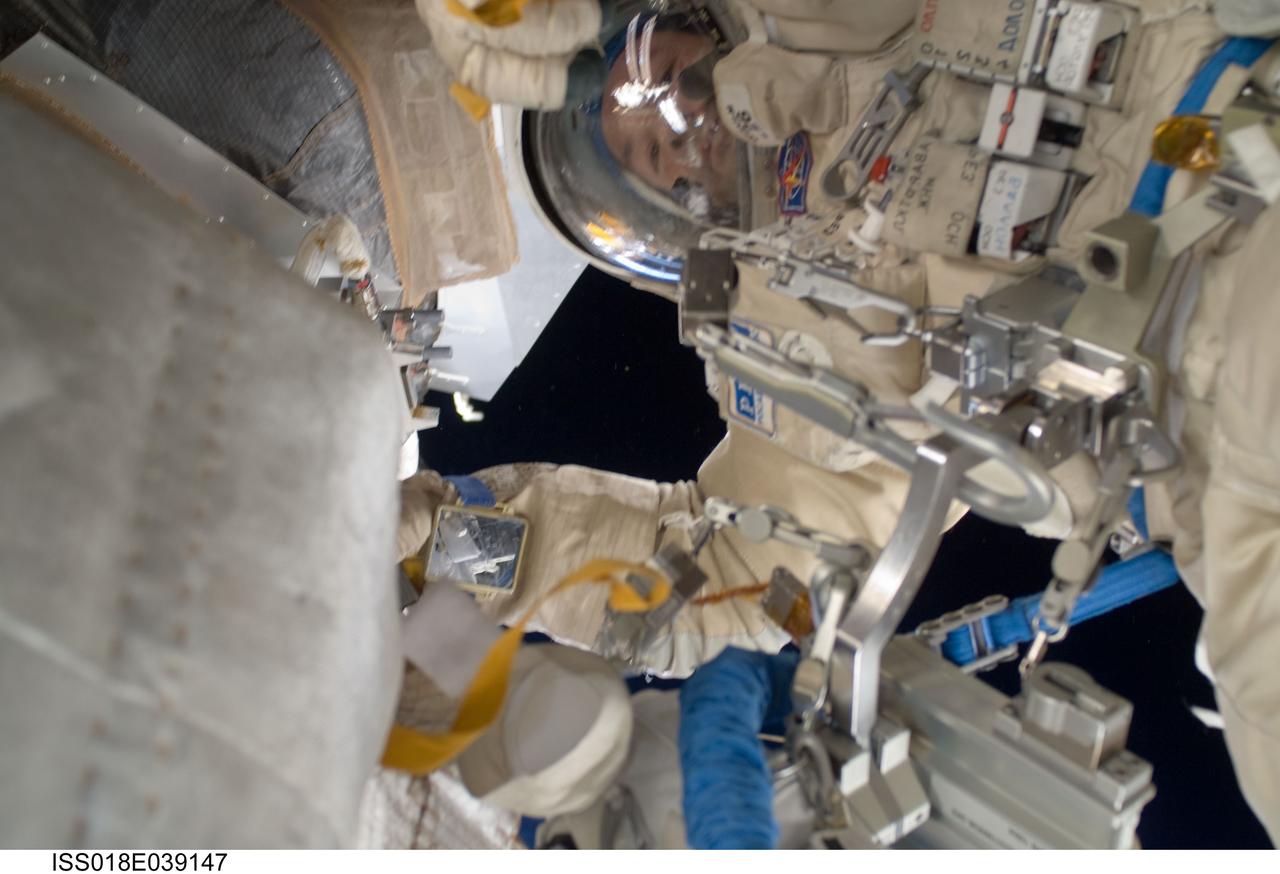
ISS018-E-039147 (10 March 2009) --- Cosmonaut Yury Lonchakov, Expedition 18 flight engineer, participates in a session of extravehicular activity (EVA) to perform maintenance on the International Space Station. During the 4-hour, 49-minute spacewalk, Lonchakov and astronaut Michael Fincke (out of frame), commander, reinstalled the Exposing Specimens of Organic and Biological Materials to Open Space (Expose-R) experiment on the universal science platform mounted to the exterior of the Zvezda Service Module. The spacewalkers also removed straps, or tape, from the area of the docking target on the Pirs airlock and docking compartment. The tape was removed to ensure it does not get in the way during the arrival of visiting Soyuz or Progress spacecraft.
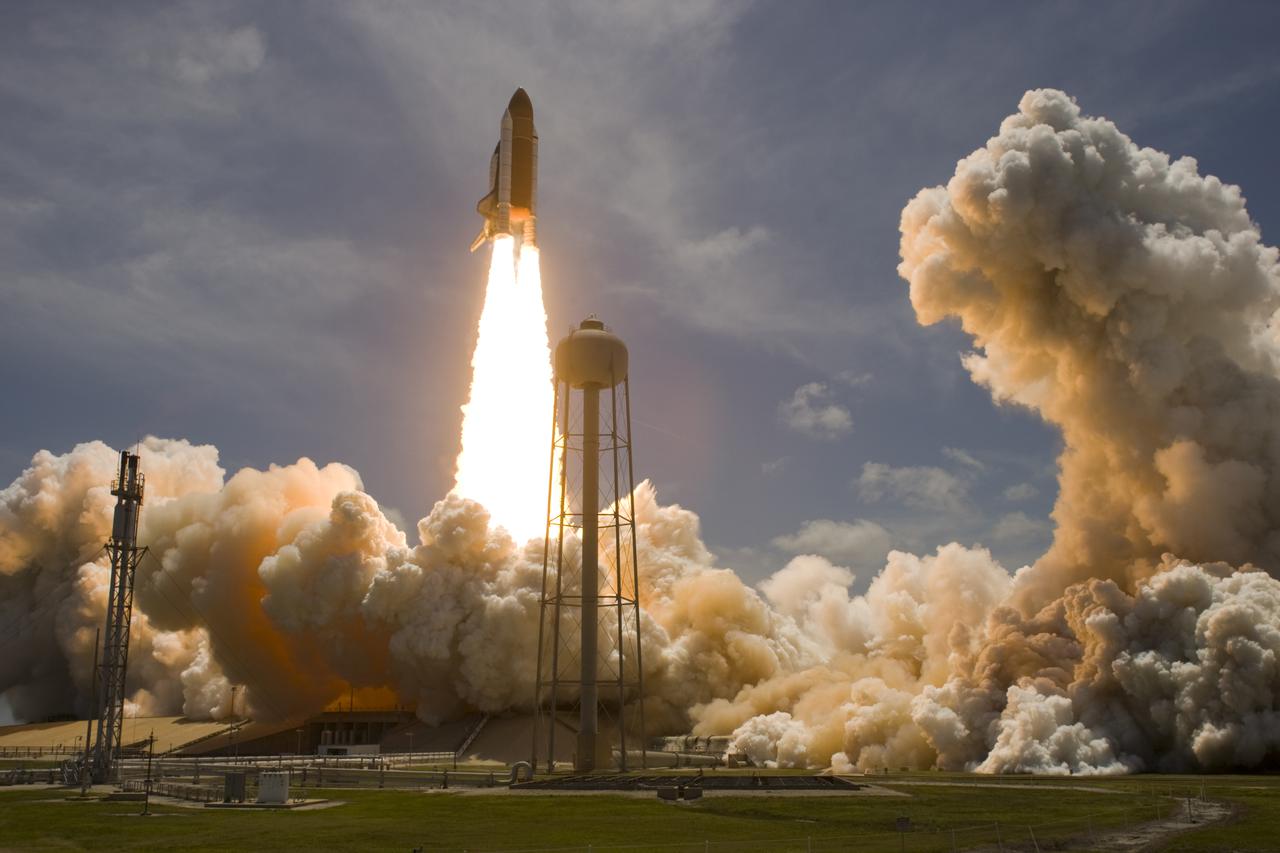
CAPE CANAVERAL, Fla. - Space shuttle Atlantis soars toward orbit from Florida's Space Coast, beginning the STS-132 mission to the International Space Station. The spacecraft took off from NASA Kennedy Space Center's Launch Pad 39A at 2:20 p.m. EDT on May 14. STS-132 is the 132nd shuttle flight, the 32nd for Atlantis and the 34th shuttle mission dedicated to station assembly and maintenance. For more information on the STS-132 mission objectives, payload and crew, visit www.nasa.gov_mission_pages_shuttle_shuttlemissions_sts132_index.html. Photo courtesy of Scott Andrews
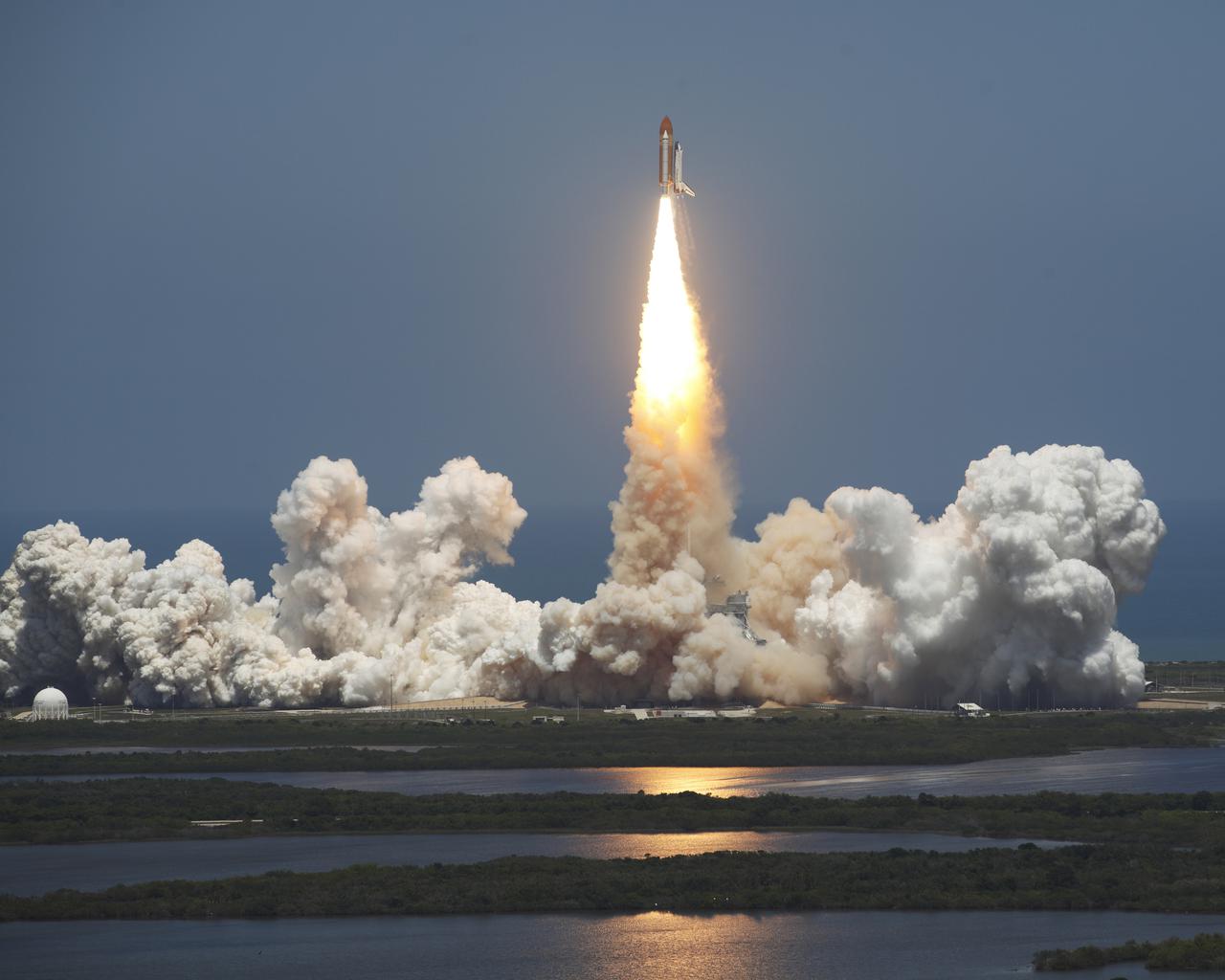
CAPE CANAVERAL, Fla. - Space shuttle Atlantis soars toward orbit from Florida's Space Coast, beginning the STS-132 mission to the International Space Station. The spacecraft took off from NASA Kennedy Space Center's Launch Pad 39A at 2:20 p.m. EDT on May 14. STS-132 is the 132nd shuttle flight, the 32nd for Atlantis and the 34th shuttle mission dedicated to station assembly and maintenance. For more information on the STS-132 mission objectives, payload and crew, visit www.nasa.gov_mission_pages_shuttle_shuttlemissions_sts132_index.html. Photo courtesy of Scott Andrews
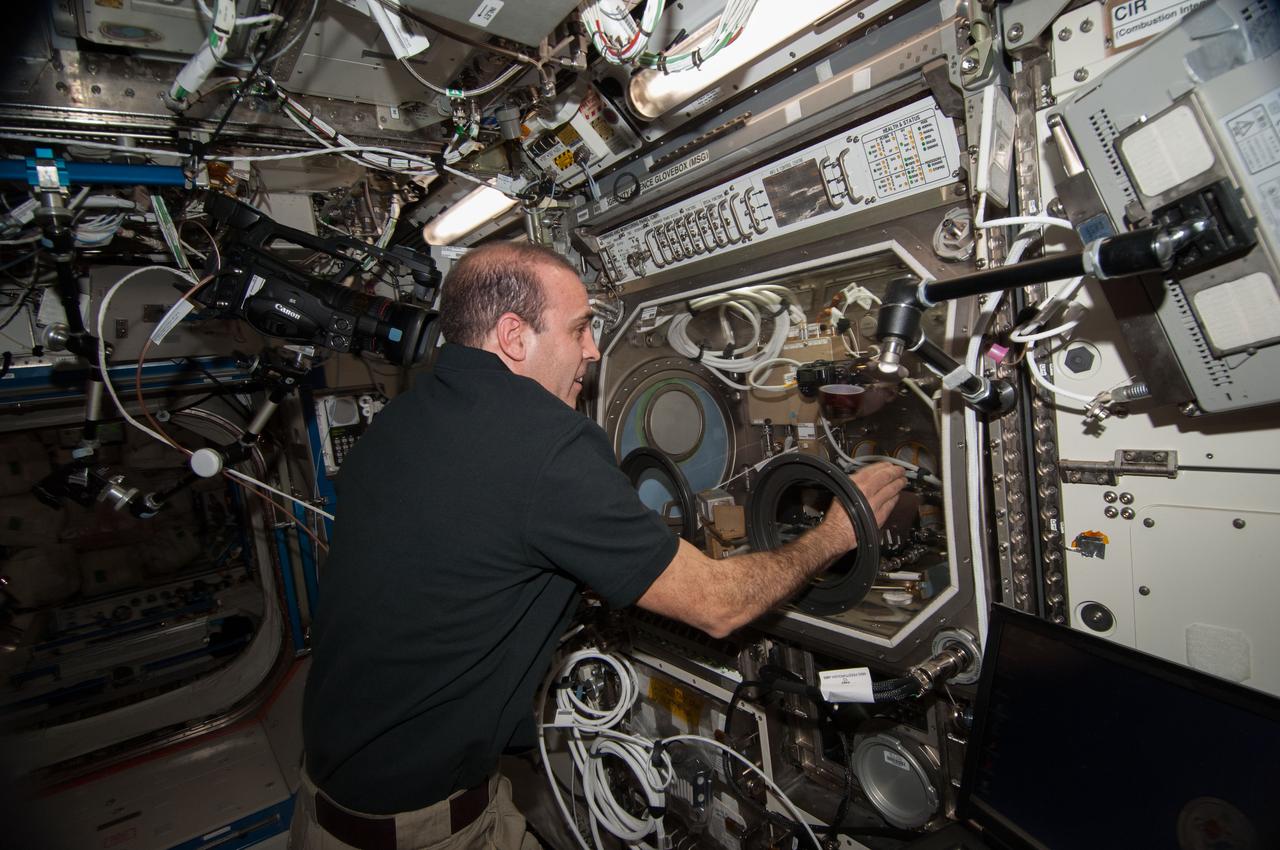
ISS039-E-005726 (27 March 2014) --- Expedition 39 Flight Engineer Rick Mastracchio performs inflight maintenance on an experiment called Burning and Suppression of Solids (BASS)-II. The investigation examines the burning and extinction characteristics of a wide variety of fuel samples in microgravity. The BASS-II experiment will guide strategies for materials flammability screening for use in spacecraft as well as provide valuable data on solid fuel burning behavior in microgravity. BASS-II results contribute to the combustion computational models used in the design of fire detection and suppression systems in microgravity and on Earth.
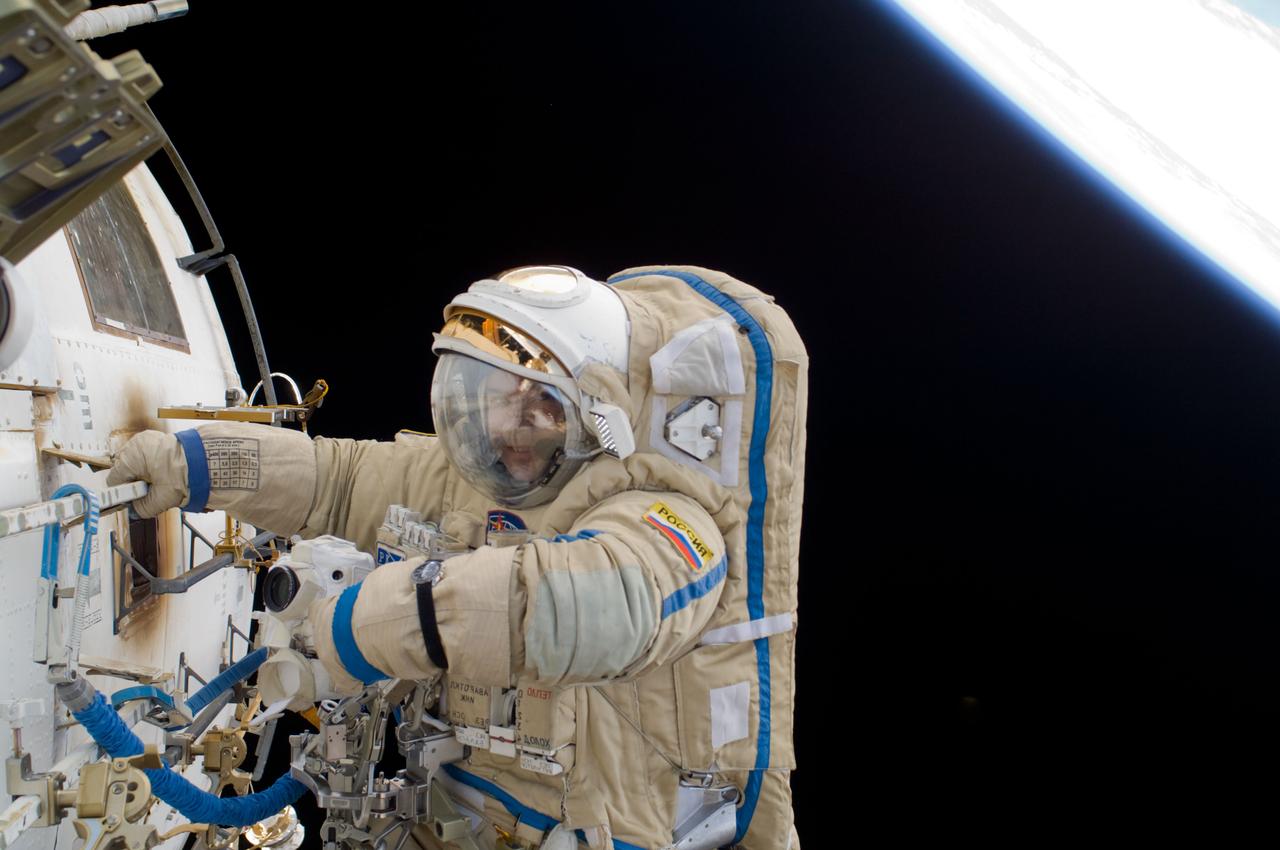
ISS018-E-039241 (10 March 2009) --- Cosmonaut Yury Lonchakov, Expedition 18 flight engineer, participates in a session of extravehicular activity (EVA) to perform maintenance on the International Space Station. During the 4-hour, 49-minute spacewalk, Lonchakov and astronaut Michael Fincke (out of frame), commander, reinstalled the Exposing Specimens of Organic and Biological Materials to Open Space (Expose-R) experiment on the universal science platform mounted to the exterior of the Zvezda Service Module. The spacewalkers also removed straps, or tape, from the area of the docking target on the Pirs airlock and docking compartment. The tape was removed to ensure it does not get in the way during the arrival of visiting Soyuz or Progress spacecraft.
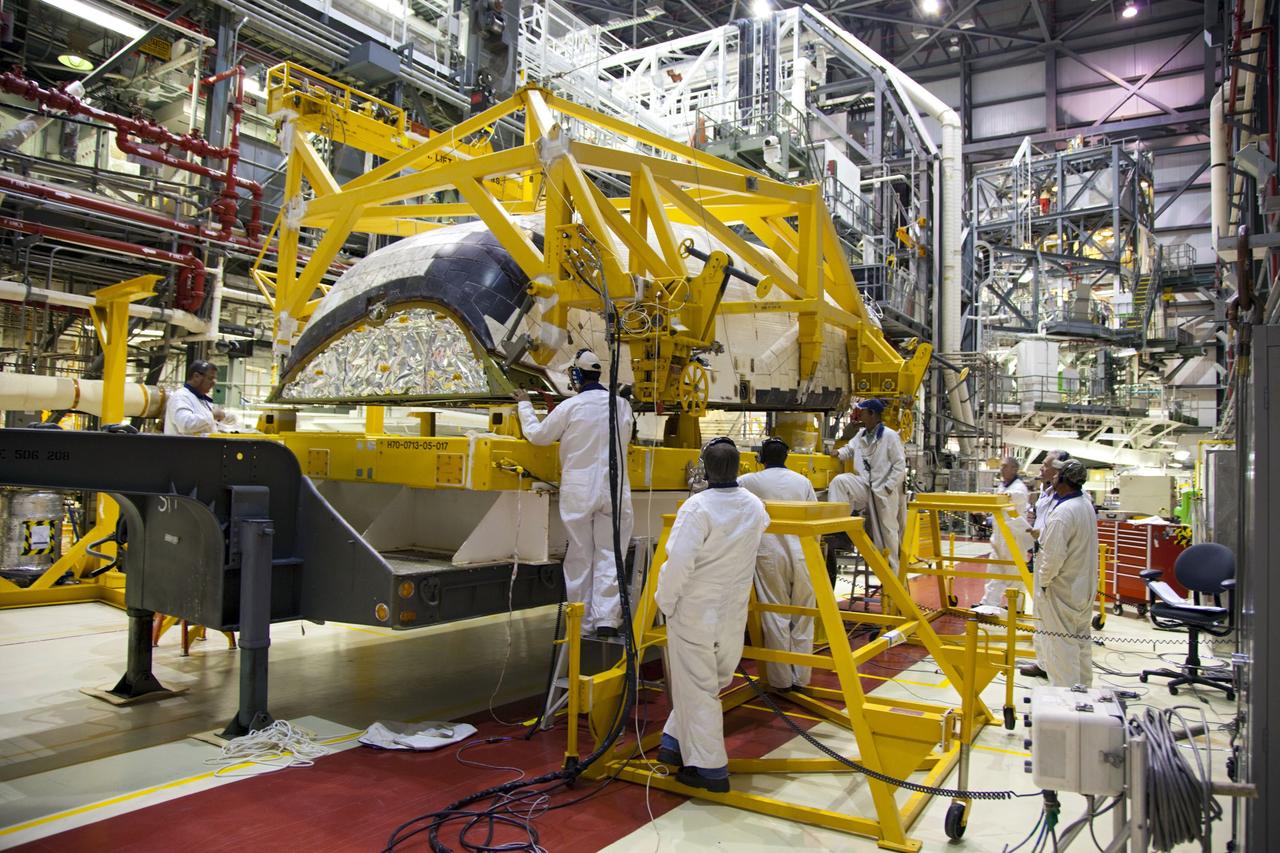
CAPE CANAVERAL, Fla. -- In Orbiter Processing Facility-1 at NASA’s Kennedy Space Center in Florida, technicians secure shuttle Endeavour’s left-hand orbital maneuvering system, or OMS, pod onto a transporter. It will then be moved to the Hypergol Maintenance Facility. The work is part of Endeavour’s transition and retirement processing. The spacecraft is being prepared for public display at the California Science Center in Los Angeles. Endeavour flew 25 missions, spent 299 days in space, orbited Earth 4,671 times and traveled 122, 883, 151 miles over the course of its 19-year career. Endeavour’s STS-134 and final mission was completed after landing on June 1, 2011. Photo credit: Frank Michaux
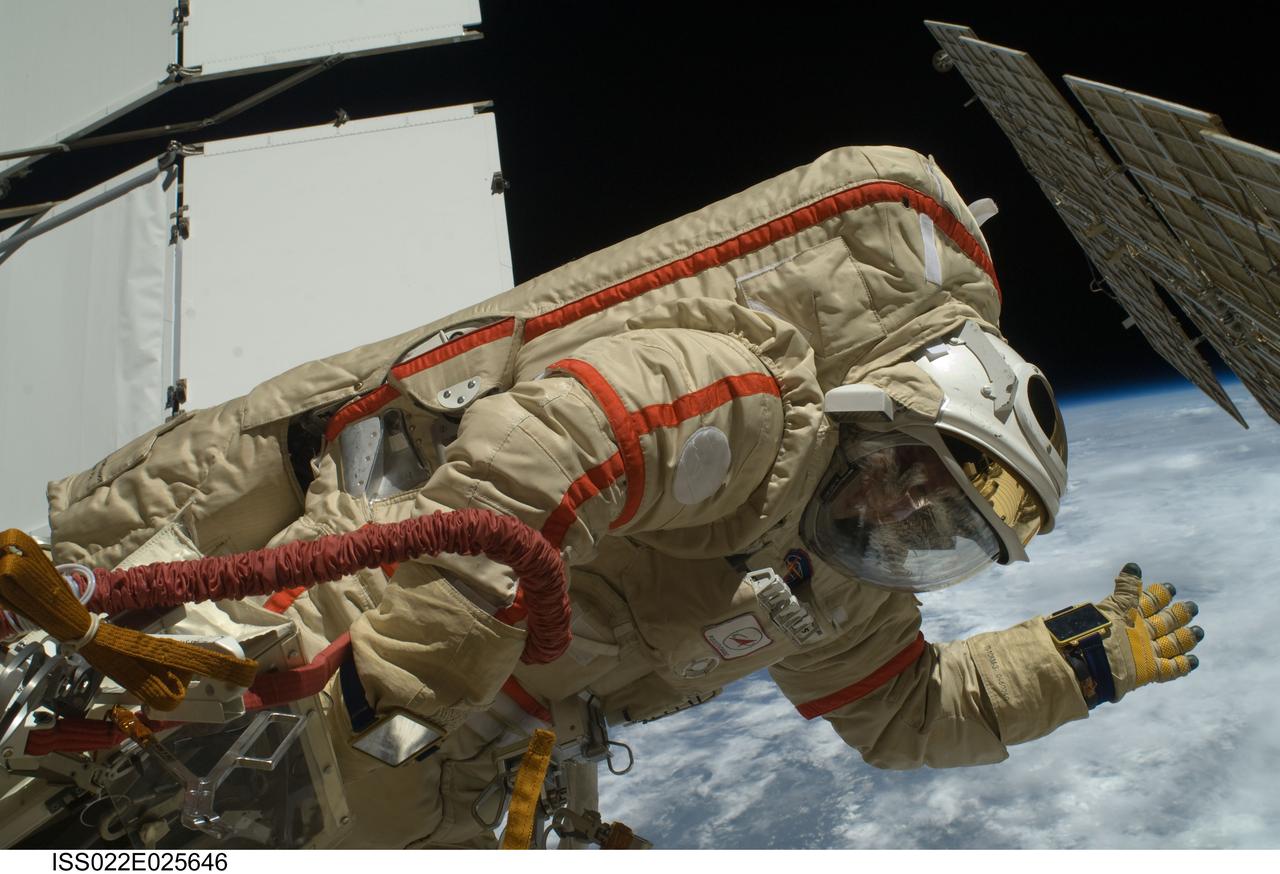
ISS022-E-025646 (14 Jan. 2010) --- Russian cosmonauts Oleg Kotov and Maxim Suraev (out of frame), both Expedition 22 flight engineers, participate in a session of extravehicular activity (EVA) as maintenance and construction continue on the International Space Station. During the spacewalk, Kotov and Suraev prepared the Mini-Research Module 2 (MRM2), known as Poisk, for future Russian vehicle dockings. Suraev and NASA astronaut Jeffrey Williams, commander, will be the first to use the new docking port when they relocate their Soyuz TMA-16 spacecraft from the aft port of the Zvezda Service Module on Jan. 21. Earth’s horizon and the blackness of space provide the backdrop for the scene.
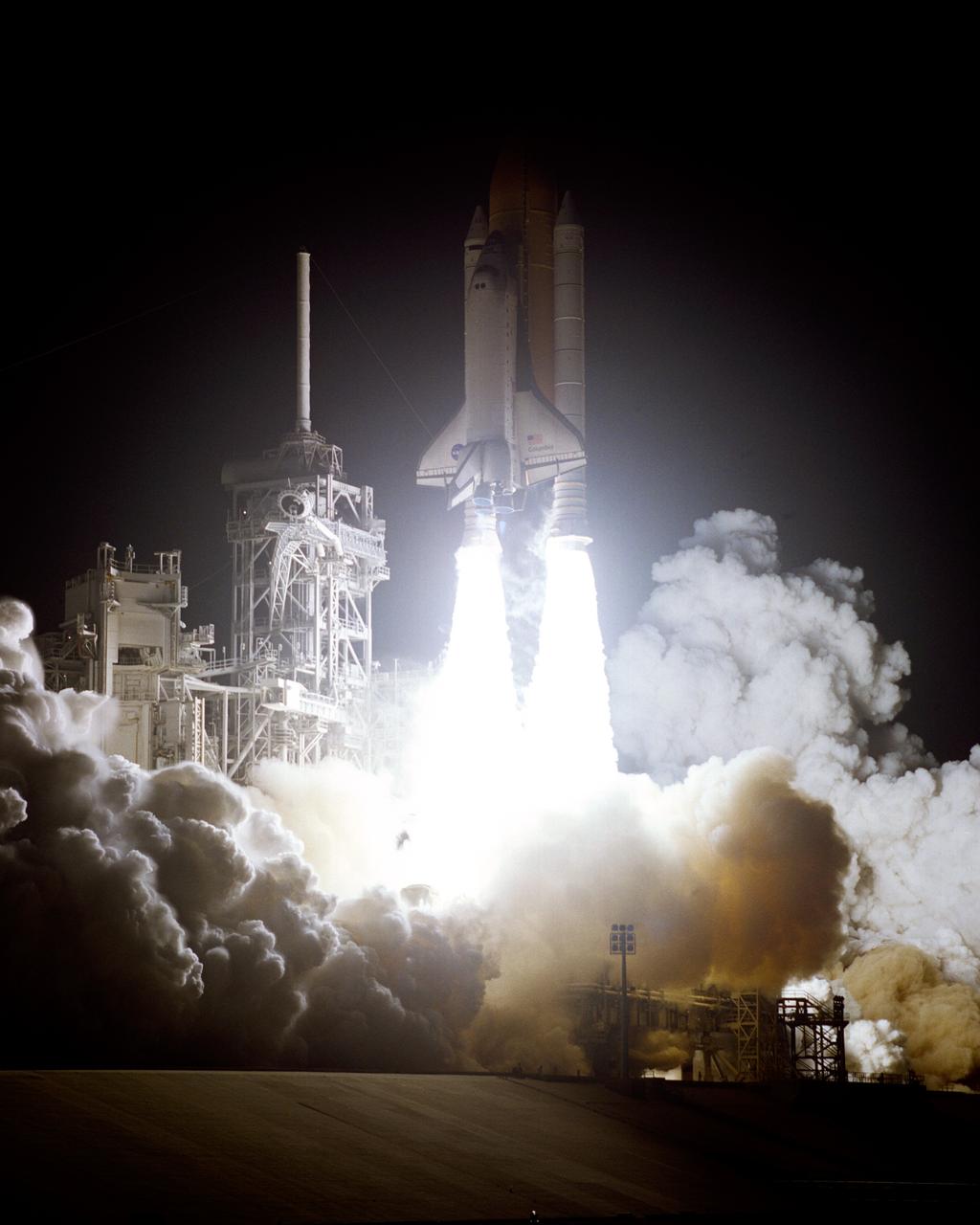
STS109-S-007 (1 March 2002) --- The Space Shuttle Columbia begins its 27th flight in the pre-dawn hours from Launch Pad 39A. Liftoff for STS-109 occurred at 6:22:02:08 a.m., EST (11:22:02:08 GMT). The goal of the mission is the maintenance and upgrade of the Hubble Space Telescope, to be carried out in five space walks. On board the spacecraft were astronauts Scott D. Altman, Duane G. Carey, Nancy J. Currie, John M. Grunsfeld, James H. Newman, Richard M. Linnehan and Michael J. Massimino.
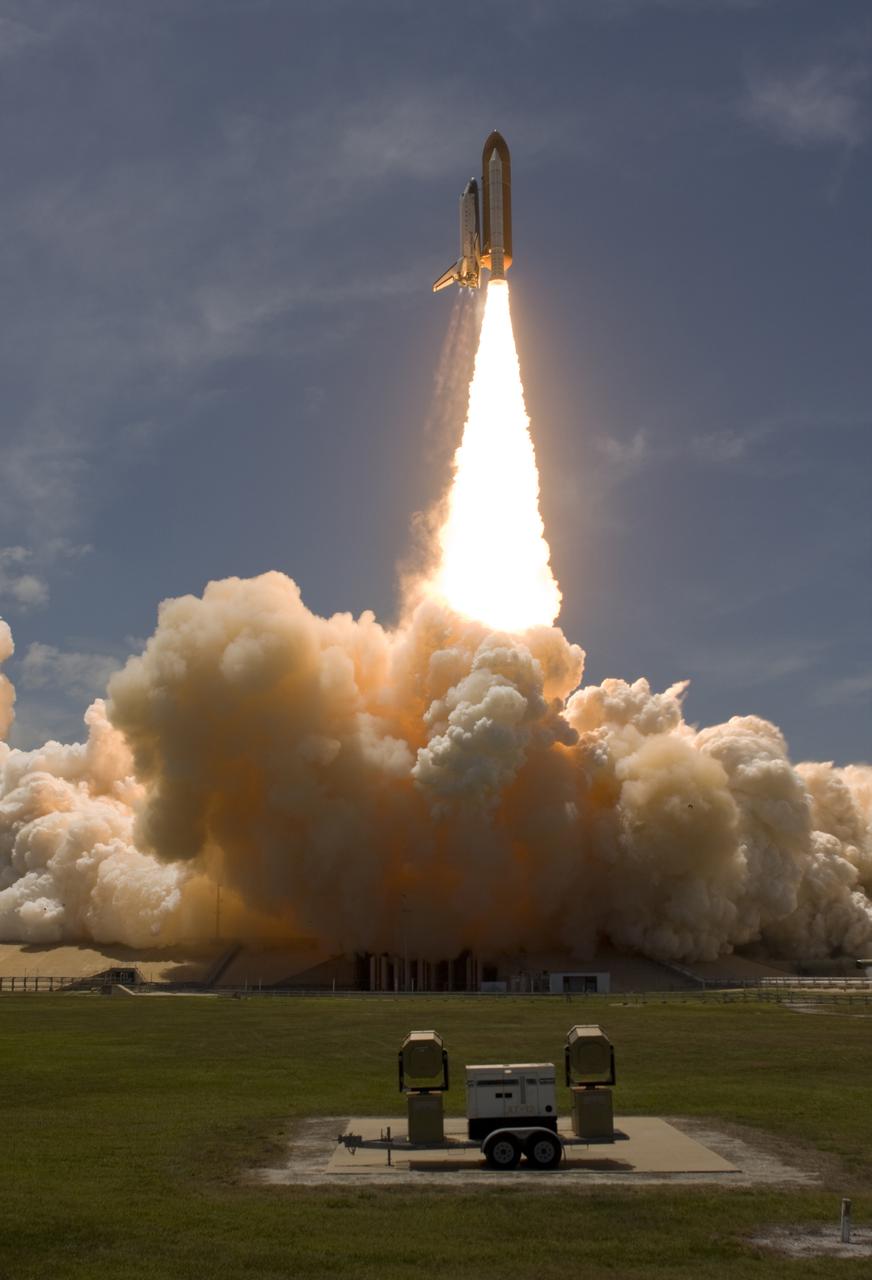
CAPE CANAVERAL, Fla. - Space shuttle Atlantis soars toward orbit from Florida's Space Coast, beginning the STS-132 mission to the International Space Station. The spacecraft took off from NASA Kennedy Space Center's Launch Pad 39A at 2:20 p.m. EDT on May 14. STS-132 is the 132nd shuttle flight, the 32nd for Atlantis and the 34th shuttle mission dedicated to station assembly and maintenance. For more information on the STS-132 mission objectives, payload and crew, visit www.nasa.gov_mission_pages_shuttle_shuttlemissions_sts132_index.html. Photo courtesy of Scott Andrews
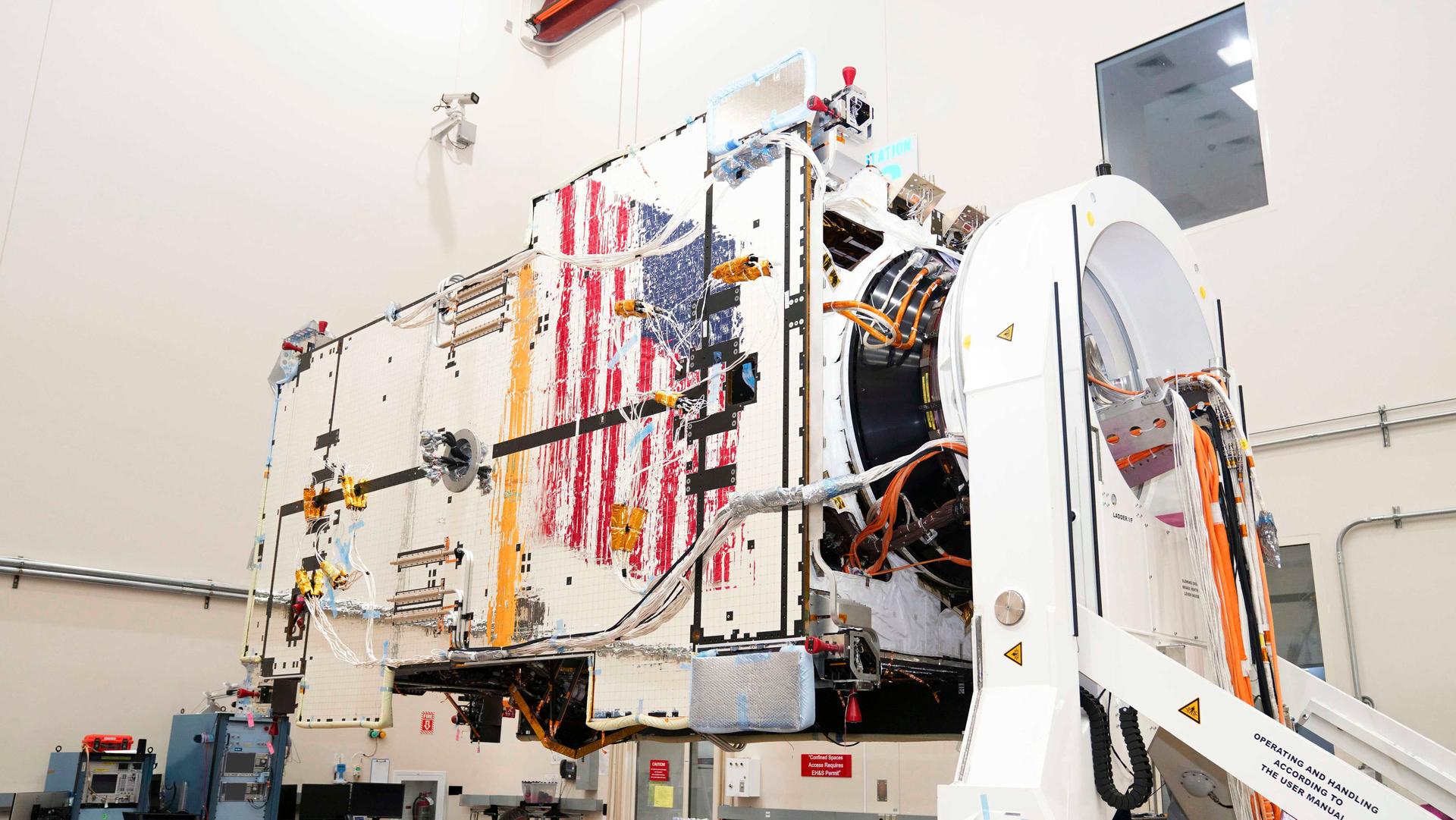
Gateway’s Power and Propulsion Element (PPE) undergoes battery installations at Lanteris Space Systems in Palo Alto, California, in January 2026. PPE is a 60-kilowatt solar electric propulsion spacecraft that will supply the lunar space station with power, high-rate communications, attitude control, orbit maintenance, and orbit transfer capabilities. Its design is based on Lanteris Space Systems’ commercial 1300 bus, enhanced with the most powerful Advanced Electric Propulsion System (AEPS) thrusters and the largest roll-out solar arrays (ROSAs) ever developed. Lanteris Space Systems is the lead industry partner for PPE’s design, manufacturing, and integration.
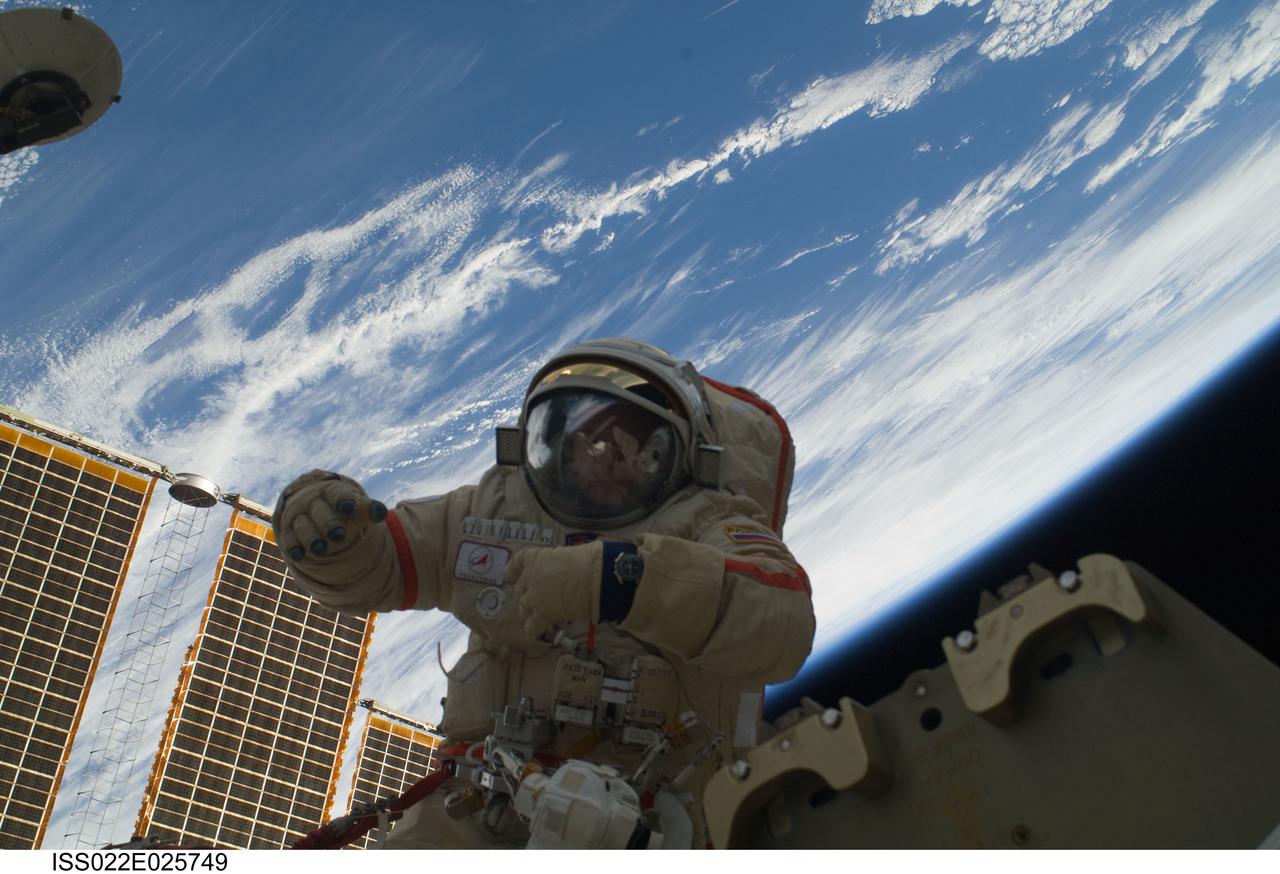
ISS022-E-025749 (14 Jan. 2010) --- Russian cosmonauts Oleg Kotov and Maxim Suraev (out of frame), both Expedition 22 flight engineers, participate in a session of extravehicular activity (EVA) as maintenance and construction continue on the International Space Station. During the spacewalk, Kotov and Suraev prepared the Mini-Research Module 2 (MRM2), known as Poisk, for future Russian vehicle dockings. Suraev and NASA astronaut Jeffrey Williams, commander, will be the first to use the new docking port when they relocate their Soyuz TMA-16 spacecraft from the aft port of the Zvezda Service Module on Jan. 21. Earth’s horizon and the blackness of space provide the backdrop for the scene.
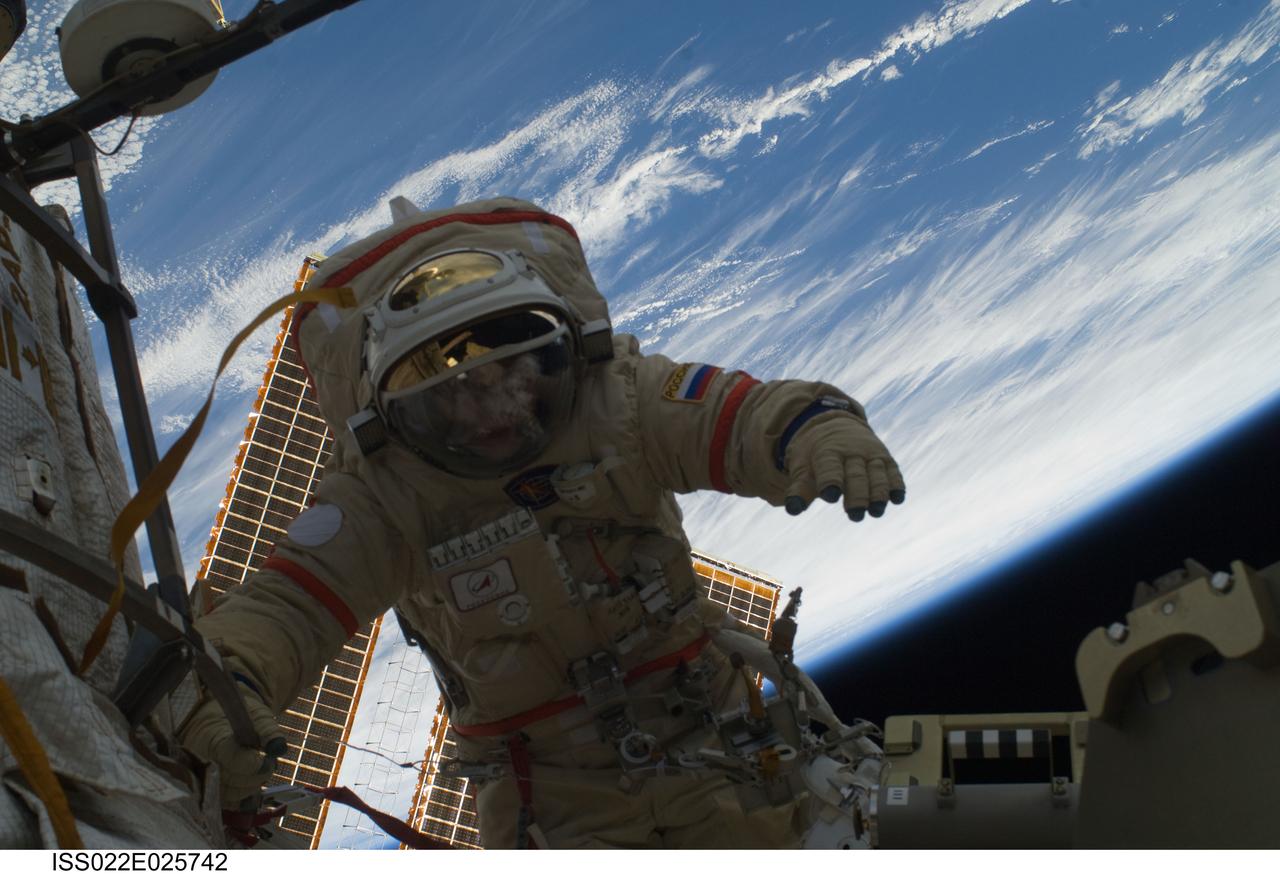
ISS022-E-025742 (14 Jan. 2010) --- Russian cosmonauts Oleg Kotov and Maxim Suraev (out of frame), both Expedition 22 flight engineers, participate in a session of extravehicular activity (EVA) as maintenance and construction continue on the International Space Station. During the spacewalk, Kotov and Suraev prepared the Mini-Research Module 2 (MRM2), known as Poisk, for future Russian vehicle dockings. Suraev and NASA astronaut Jeffrey Williams, commander, will be the first to use the new docking port when they relocate their Soyuz TMA-16 spacecraft from the aft port of the Zvezda Service Module on Jan. 21. Earth’s horizon and the blackness of space provide the backdrop for the scene.
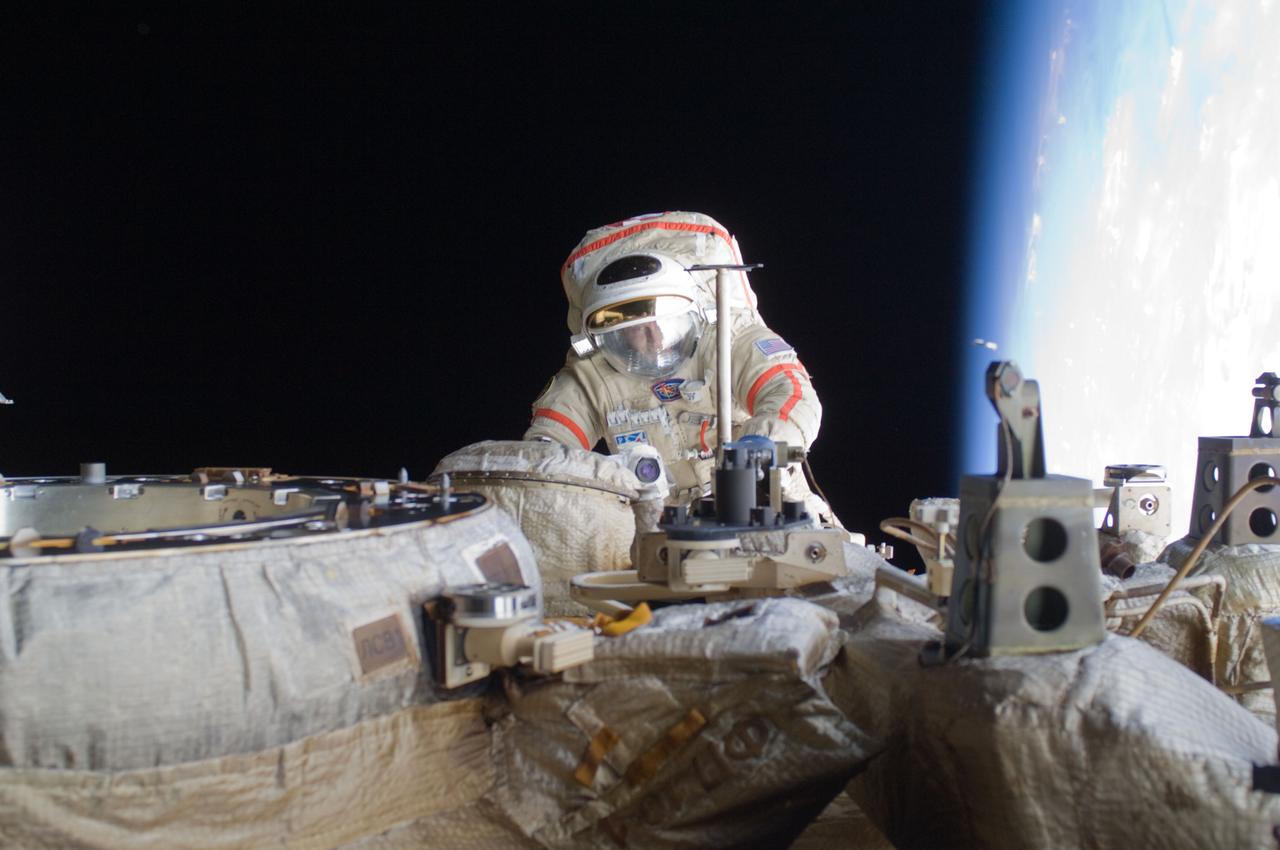
ISS018-E-039022 (10 March 2009) --- Astronaut Michael Fincke, Expedition 18 commander, participates in a session of extravehicular activity (EVA) to perform maintenance on the International Space Station. During the 4-hour, 49-minute spacewalk, Fincke and cosmonaut Yury Lonchakov (out of frame) reinstalled the Exposing Specimens of Organic and Biological Materials to Open Space (Expose-R) experiment on the universal science platform mounted to the exterior of the Zvezda Service Module. The spacewalkers also removed straps, or tape, from the area of the docking target on the Pirs airlock and docking compartment. The tape was removed to ensure it does not get in the way during the arrival of visiting Soyuz or Progress spacecraft.
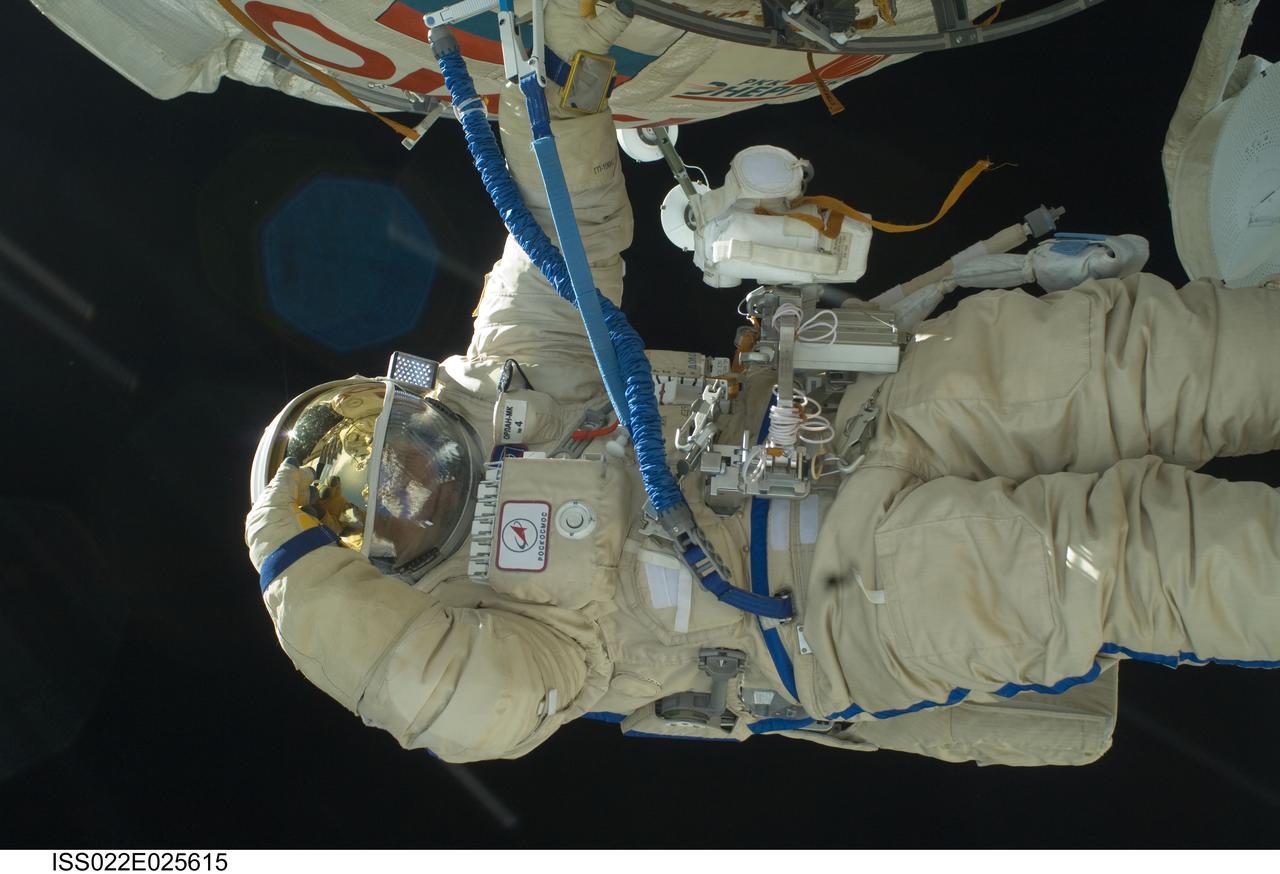
ISS022-E-025615 (14 Jan. 2010) --- Russian cosmonauts Maxim Suraev and Oleg Kotov (out of frame), both Expedition 22 flight engineers, participate in a session of extravehicular activity (EVA) as maintenance and construction continue on the International Space Station. During the spacewalk, Suraev and Kotov prepared the Mini-Research Module 2 (MRM2), known as Poisk, for future Russian vehicle dockings. Suraev and NASA astronaut Jeffrey Williams, commander, will be the first to use the new docking port when they relocate their Soyuz TMA-16 spacecraft from the aft port of the Zvezda Service Module on Jan. 21.
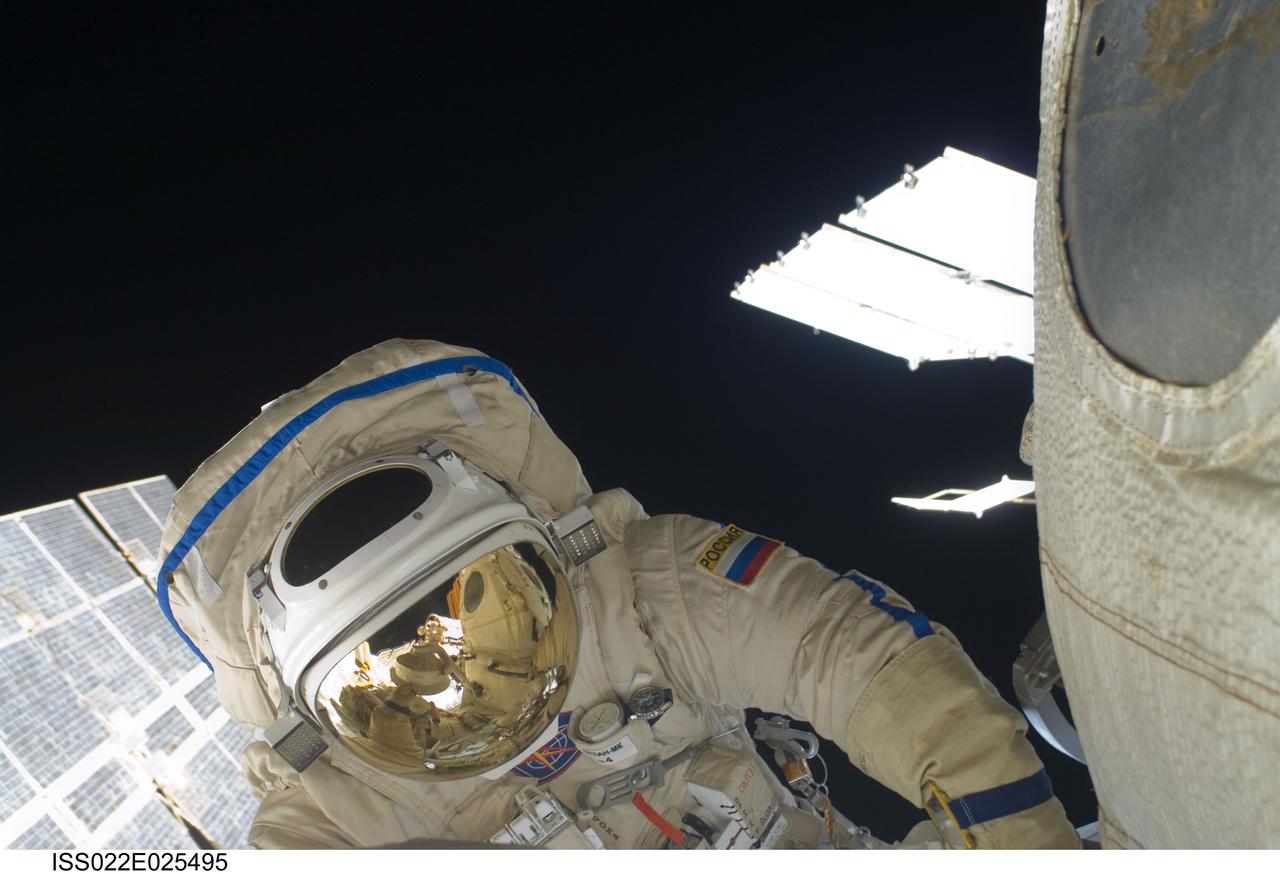
ISS022-E-025495 (14 Jan. 2010) --- Russian cosmonauts Maxim Suraev and Oleg Kotov (out of frame), both Expedition 22 flight engineers, participate in a session of extravehicular activity (EVA) as maintenance and construction continue on the International Space Station. During the spacewalk, Suraev and Kotov prepared the Mini-Research Module 2 (MRM2), known as Poisk, for future Russian vehicle dockings. Suraev and NASA astronaut Jeffrey Williams, commander, will be the first to use the new docking port when they relocate their Soyuz TMA-16 spacecraft from the aft port of the Zvezda Service Module on Jan. 21.
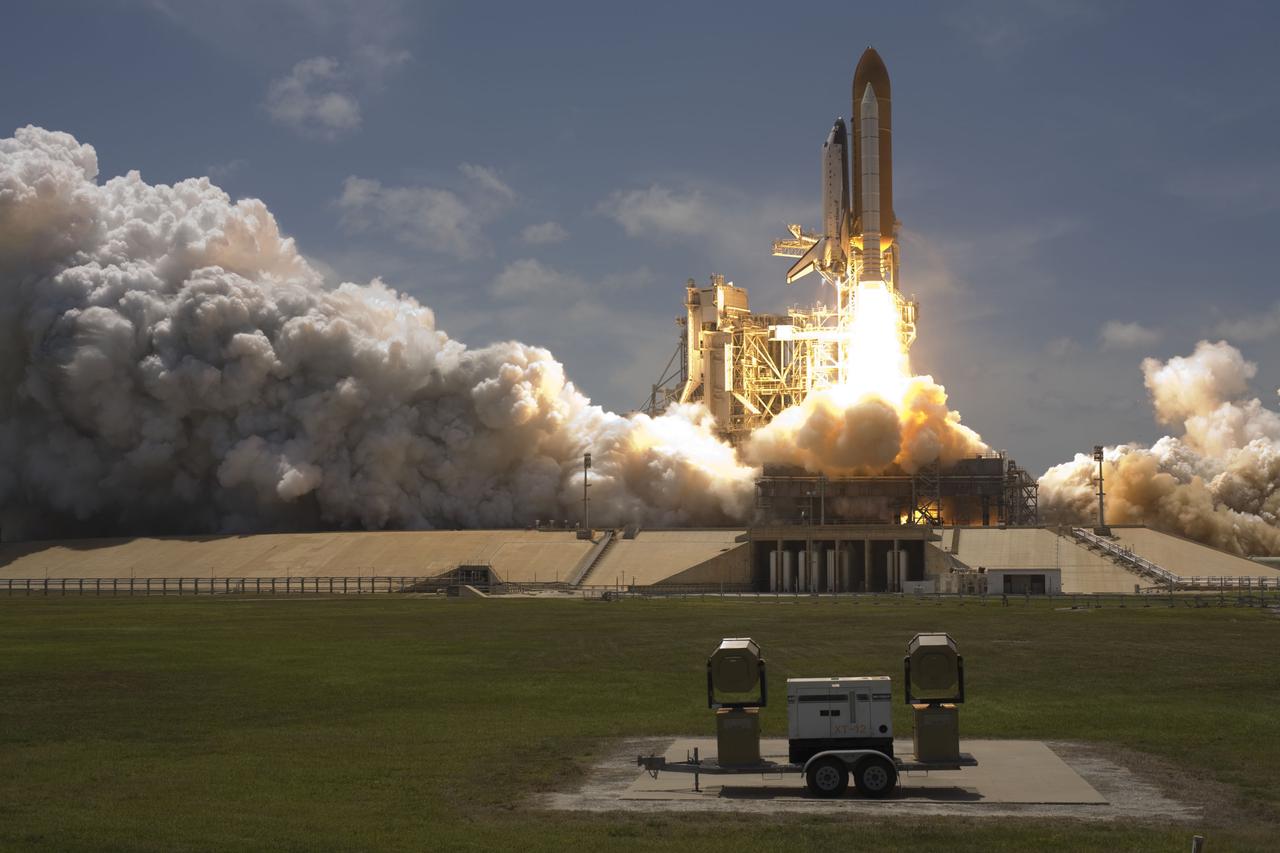
CAPE CANAVERAL, Fla. - Space shuttle Atlantis soars toward orbit from Florida's Space Coast, beginning the STS-132 mission to the International Space Station. The spacecraft took off from NASA Kennedy Space Center's Launch Pad 39A at 2:20 p.m. EDT on May 14. STS-132 is the 132nd shuttle flight, the 32nd for Atlantis and the 34th shuttle mission dedicated to station assembly and maintenance. For more information on the STS-132 mission objectives, payload and crew, visit www.nasa.gov_mission_pages_shuttle_shuttlemissions_sts132_index.html. Photo courtesy of Scott Andrews
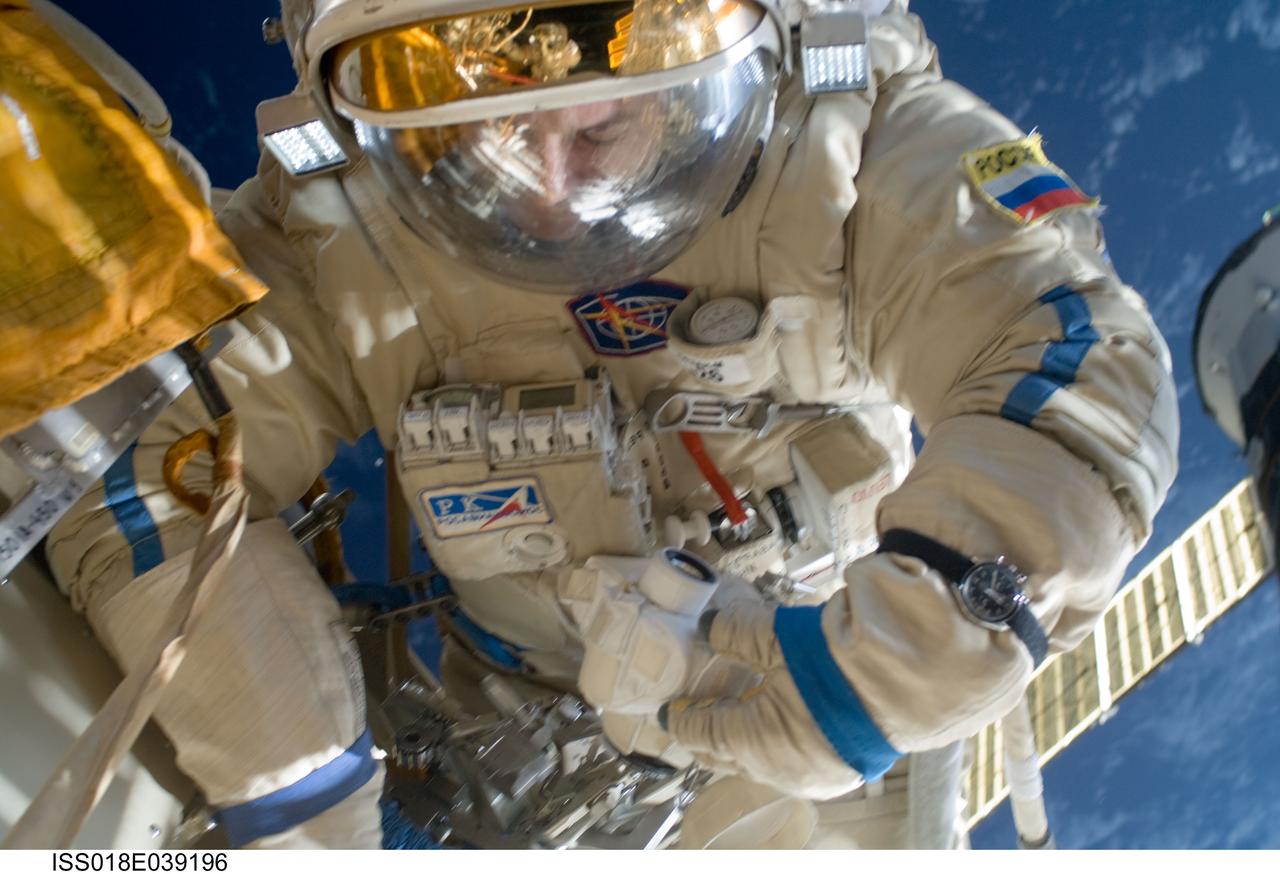
ISS018-E-039196 (10 March 2009) --- Cosmonaut Yury Lonchakov, Expedition 18 flight engineer, participates in a session of extravehicular activity (EVA) to perform maintenance on the International Space Station. During the 4-hour, 49-minute spacewalk, Lonchakov and astronaut Michael Fincke (out of frame), commander, reinstalled the Exposing Specimens of Organic and Biological Materials to Open Space (Expose-R) experiment on the universal science platform mounted to the exterior of the Zvezda Service Module. The spacewalkers also removed straps, or tape, from the area of the docking target on the Pirs airlock and docking compartment. The tape was removed to ensure it does not get in the way during the arrival of visiting Soyuz or Progress spacecraft.
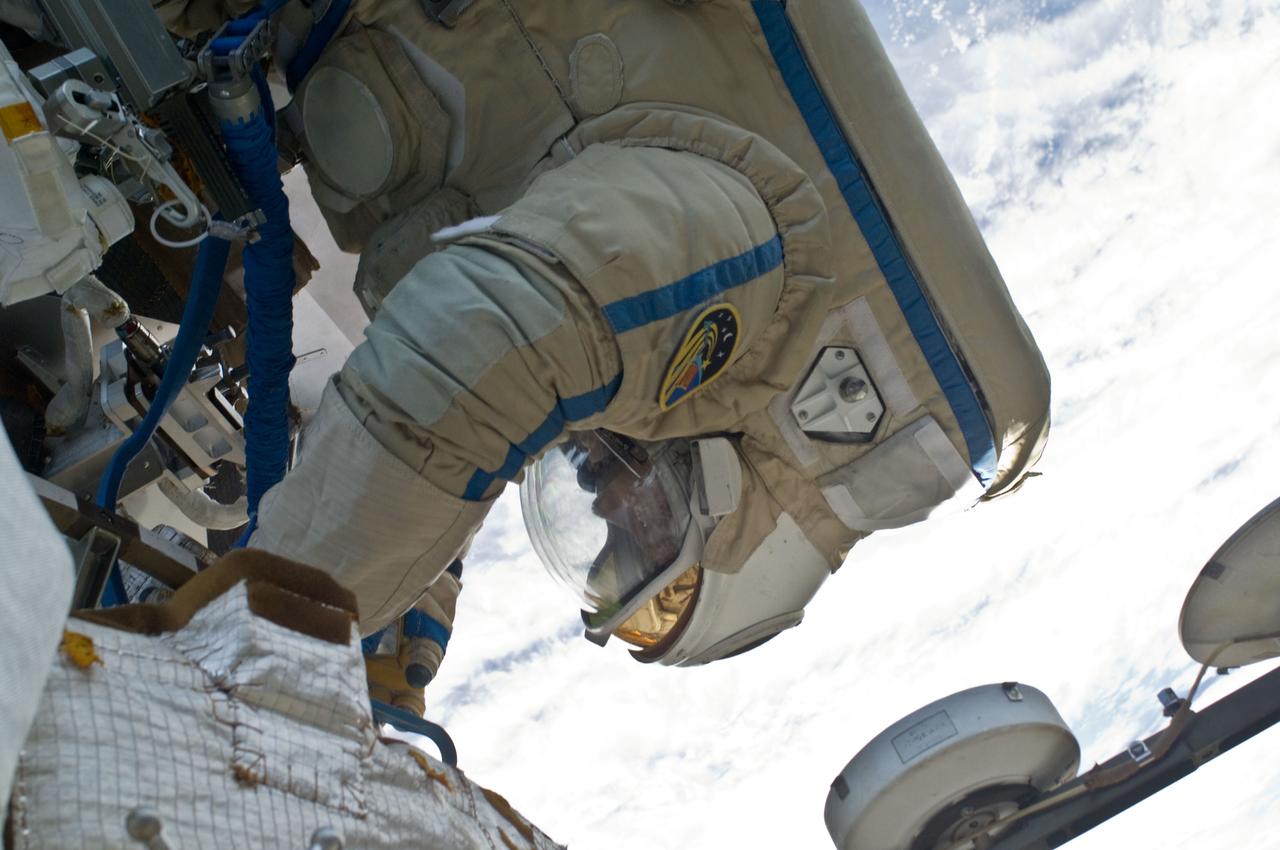
ISS018-E-039156 (10 March 2009) --- Cosmonaut Yury Lonchakov, Expedition 18 flight engineer, participates in a session of extravehicular activity (EVA) to perform maintenance on the International Space Station. During the 4-hour, 49-minute spacewalk, Lonchakov and astronaut Michael Fincke (out of frame), commander, reinstalled the Exposing Specimens of Organic and Biological Materials to Open Space (Expose-R) experiment on the universal science platform mounted to the exterior of the Zvezda Service Module. The spacewalkers also removed straps, or tape, from the area of the docking target on the Pirs airlock and docking compartment. The tape was removed to ensure it does not get in the way during the arrival of visiting Soyuz or Progress spacecraft.
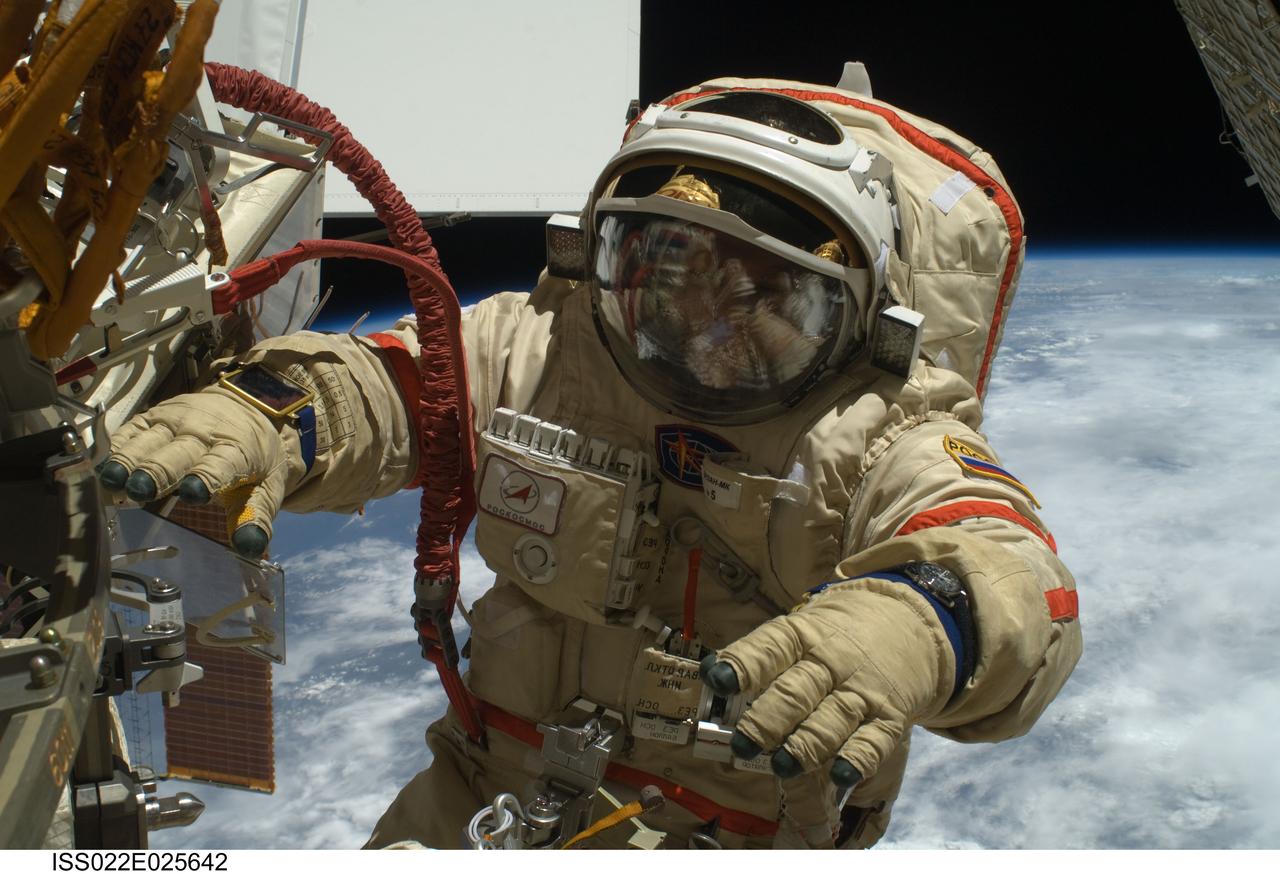
ISS022-E-025642 (14 Jan. 2010) --- Russian cosmonauts Oleg Kotov and Maxim Suraev (out of frame), both Expedition 22 flight engineers, participate in a session of extravehicular activity (EVA) as maintenance and construction continue on the International Space Station. During the spacewalk, Kotov and Suraev prepared the Mini-Research Module 2 (MRM2), known as Poisk, for future Russian vehicle dockings. Suraev and NASA astronaut Jeffrey Williams, commander, will be the first to use the new docking port when they relocate their Soyuz TMA-16 spacecraft from the aft port of the Zvezda Service Module on Jan. 21. Earth’s horizon and the blackness of space provide the backdrop for the scene.
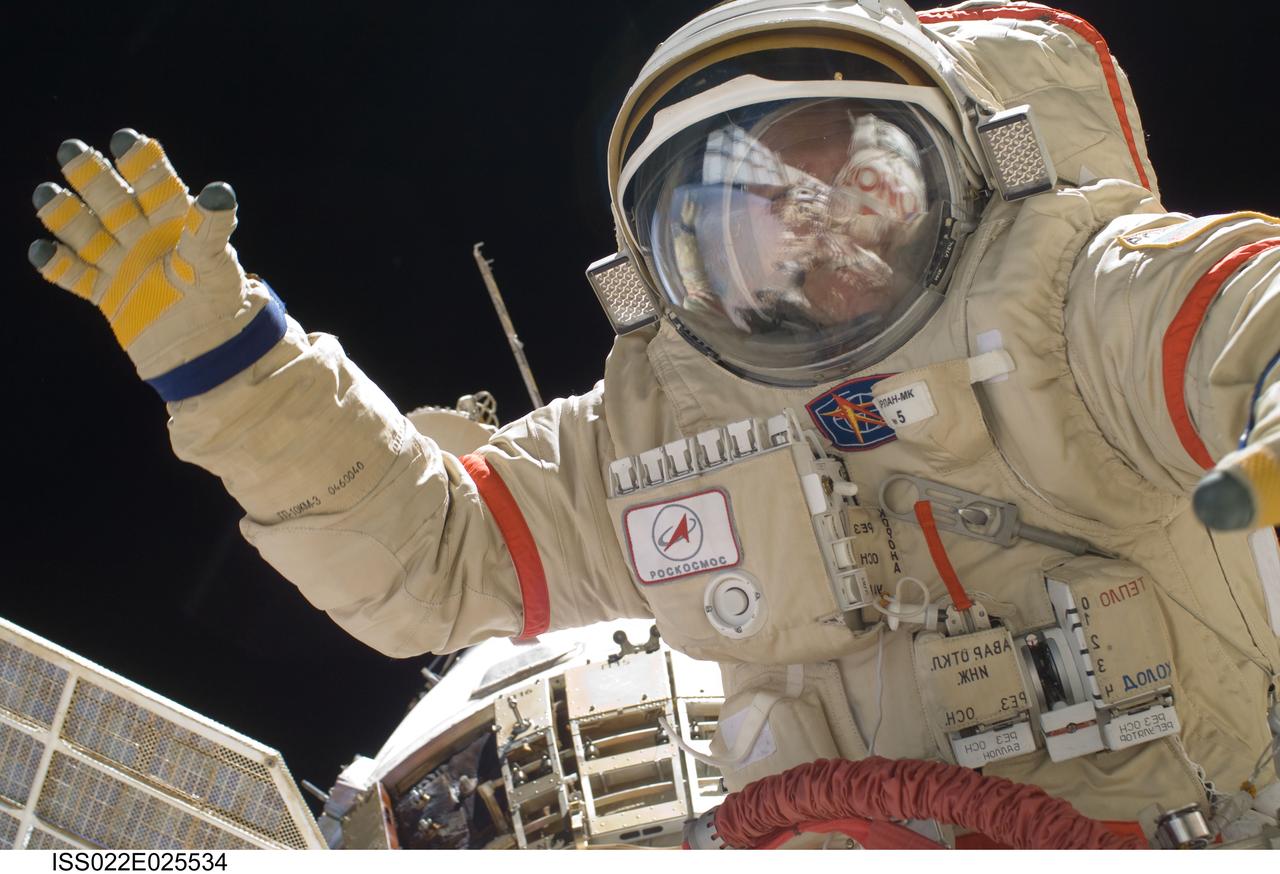
ISS022-E-025534 (14 Jan. 2010) --- Russian cosmonauts Oleg Kotov and Maxim Suraev (out of frame), both Expedition 22 flight engineers, participate in a session of extravehicular activity (EVA) as maintenance and construction continue on the International Space Station. During the spacewalk, Kotov and Suraev prepared the Mini-Research Module 2 (MRM2), known as Poisk, for future Russian vehicle dockings. Suraev and NASA astronaut Jeffrey Williams, commander, will be the first to use the new docking port when they relocate their Soyuz TMA-16 spacecraft from the aft port of the Zvezda Service Module on Jan. 21.
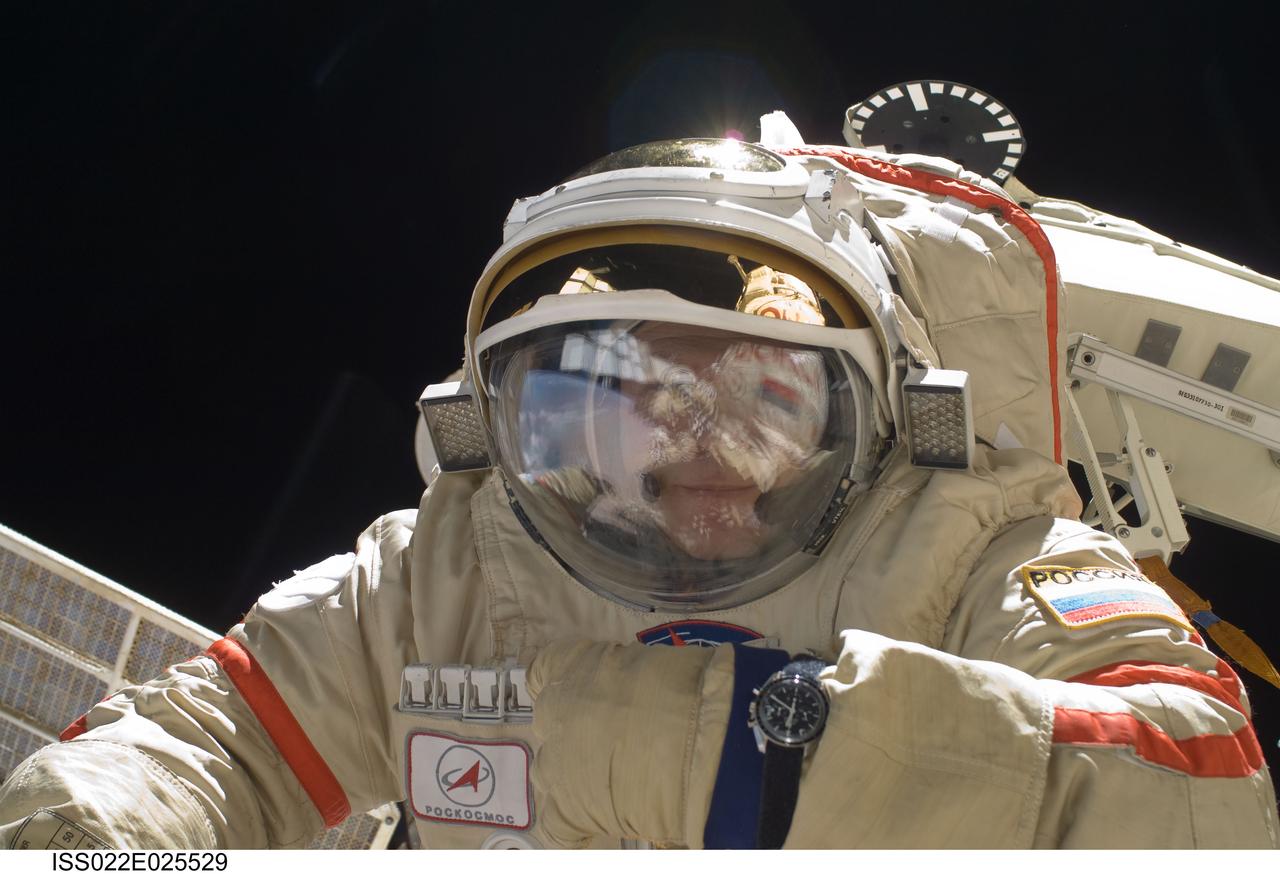
ISS022-E-025529 (14 Jan. 2010) --- Russian cosmonauts Oleg Kotov and Maxim Suraev (out of frame), both Expedition 22 flight engineers, participate in a session of extravehicular activity (EVA) as maintenance and construction continue on the International Space Station. During the spacewalk, Kotov and Suraev prepared the Mini-Research Module 2 (MRM2), known as Poisk, for future Russian vehicle dockings. Suraev and NASA astronaut Jeffrey Williams, commander, will be the first to use the new docking port when they relocate their Soyuz TMA-16 spacecraft from the aft port of the Zvezda Service Module on Jan. 21.
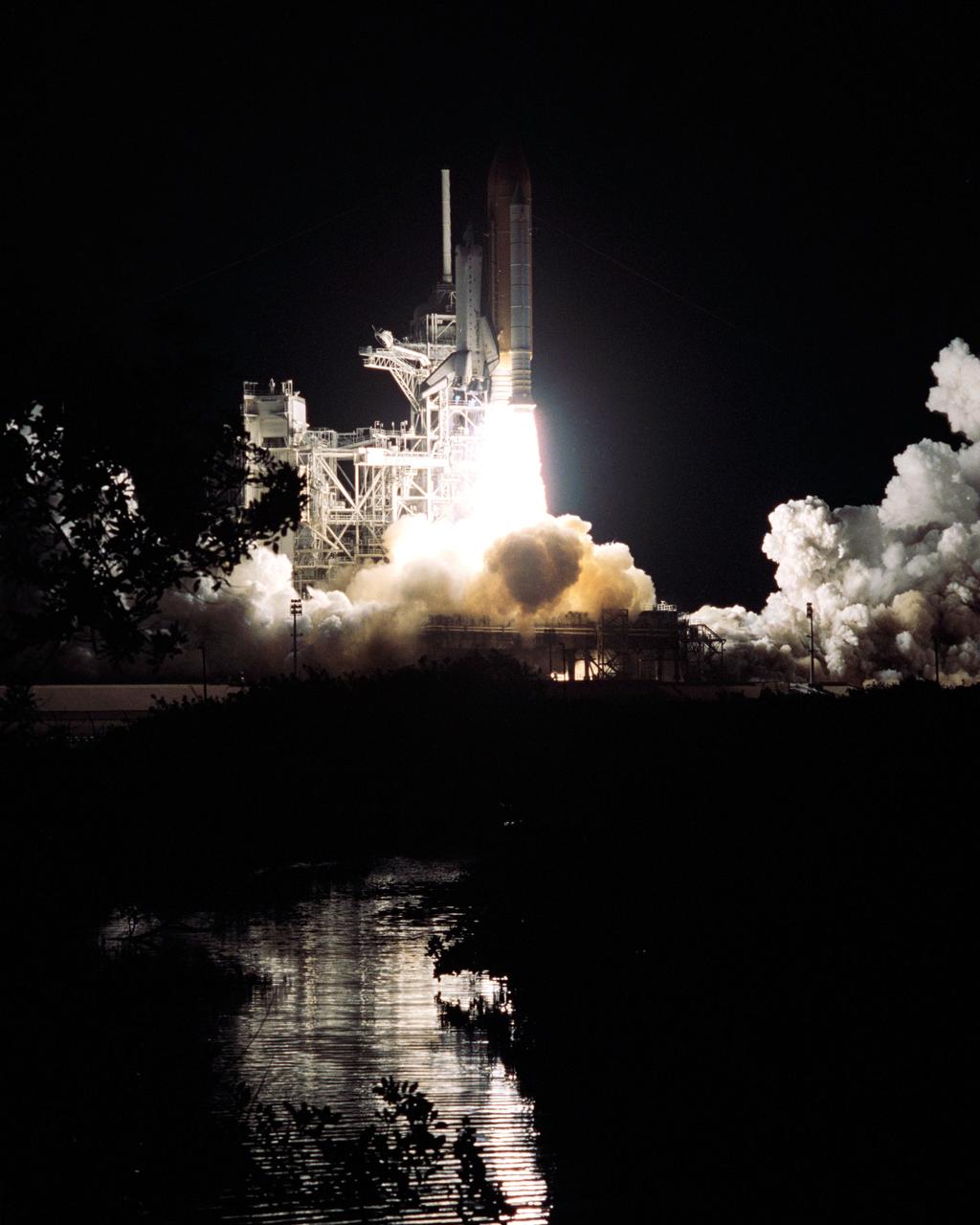
STS109-S-006 (1 March 2002) --- The Space Shuttle Columbia begins its 27th flight in the pre-dawn hours from Launch Pad 39A. Liftoff for STS-109 occurred at 6:22:02:08 a.m., EST (11:22:02:08 GMT). The goal of the mission is the maintenance and upgrade of the Hubble Space Telescope, to be carried out in five space walks. On board the spacecraft were astronauts Scott D. Altman, Duane G. Carey, Nancy J. Currie, John M. Grunsfeld, James H. Newman, Richard M. Linnehan and Michael J. Massimino.
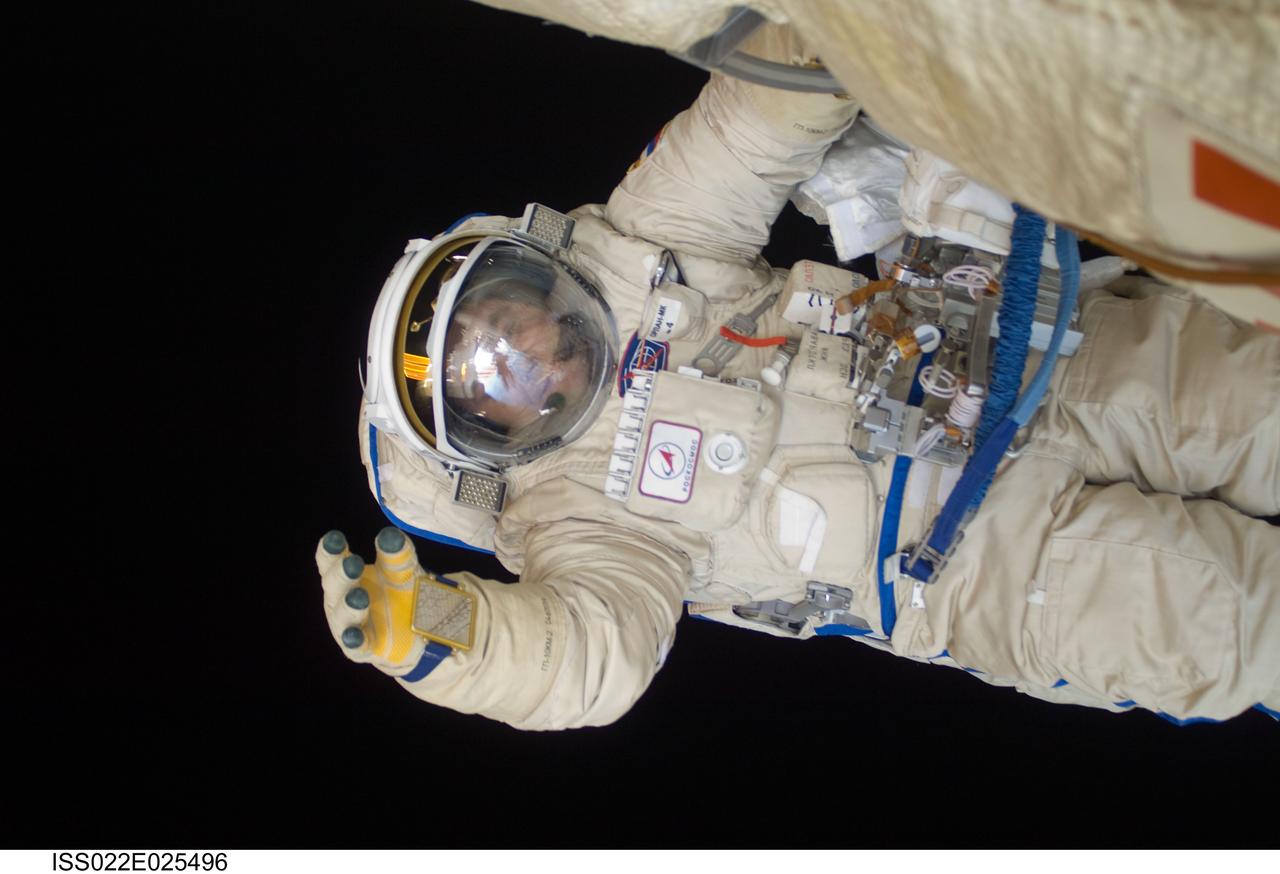
ISS022-E-025496 (14 Jan. 2010) --- Russian cosmonauts Maxim Suraev and Oleg Kotov (out of frame), both Expedition 22 flight engineers, participate in a session of extravehicular activity (EVA) as maintenance and construction continue on the International Space Station. During the spacewalk, Suraev and Kotov prepared the Mini-Research Module 2 (MRM2), known as Poisk, for future Russian vehicle dockings. Suraev and NASA astronaut Jeffrey Williams, commander, will be the first to use the new docking port when they relocate their Soyuz TMA-16 spacecraft from the aft port of the Zvezda Service Module on Jan. 21.
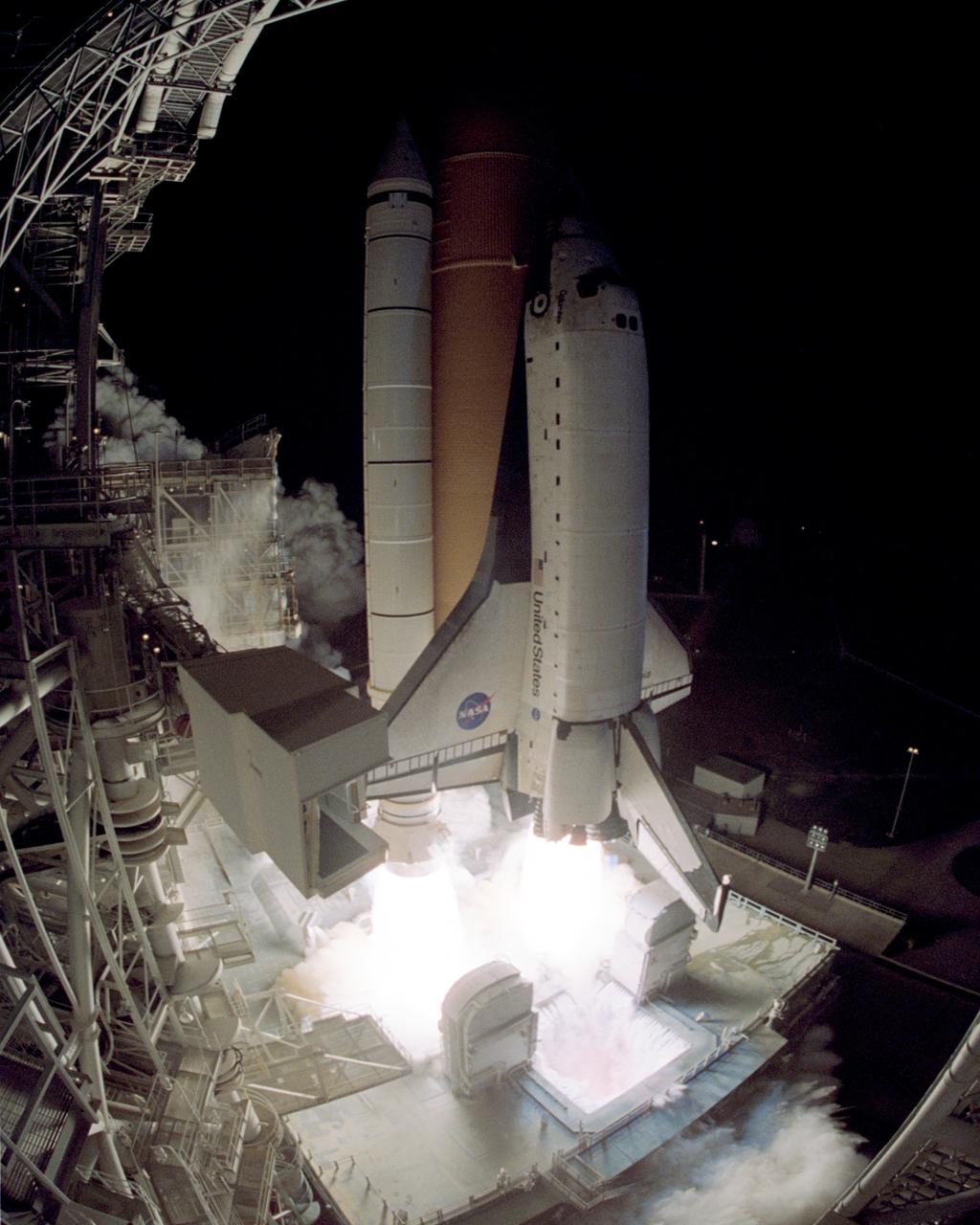
STS109-S-005 (1 March 2002) --- The Space Shuttle Columbia begins its 27th flight in the pre-dawn hours from Launch Pad 39A. Liftoff for STS-109 occurred at 6:22:02:08 a.m., EST (11:22:02:08 GMT). The goal of the mission is the maintenance and upgrade of the Hubble Space Telescope, to be carried out in five space walks. On board the spacecraft were astronauts Scott D. Altman, Duane G. Carey, Nancy J. Currie, John M. Grunsfeld, James H. Newman, Richard M. Linnehan and Michael J. Massimino.
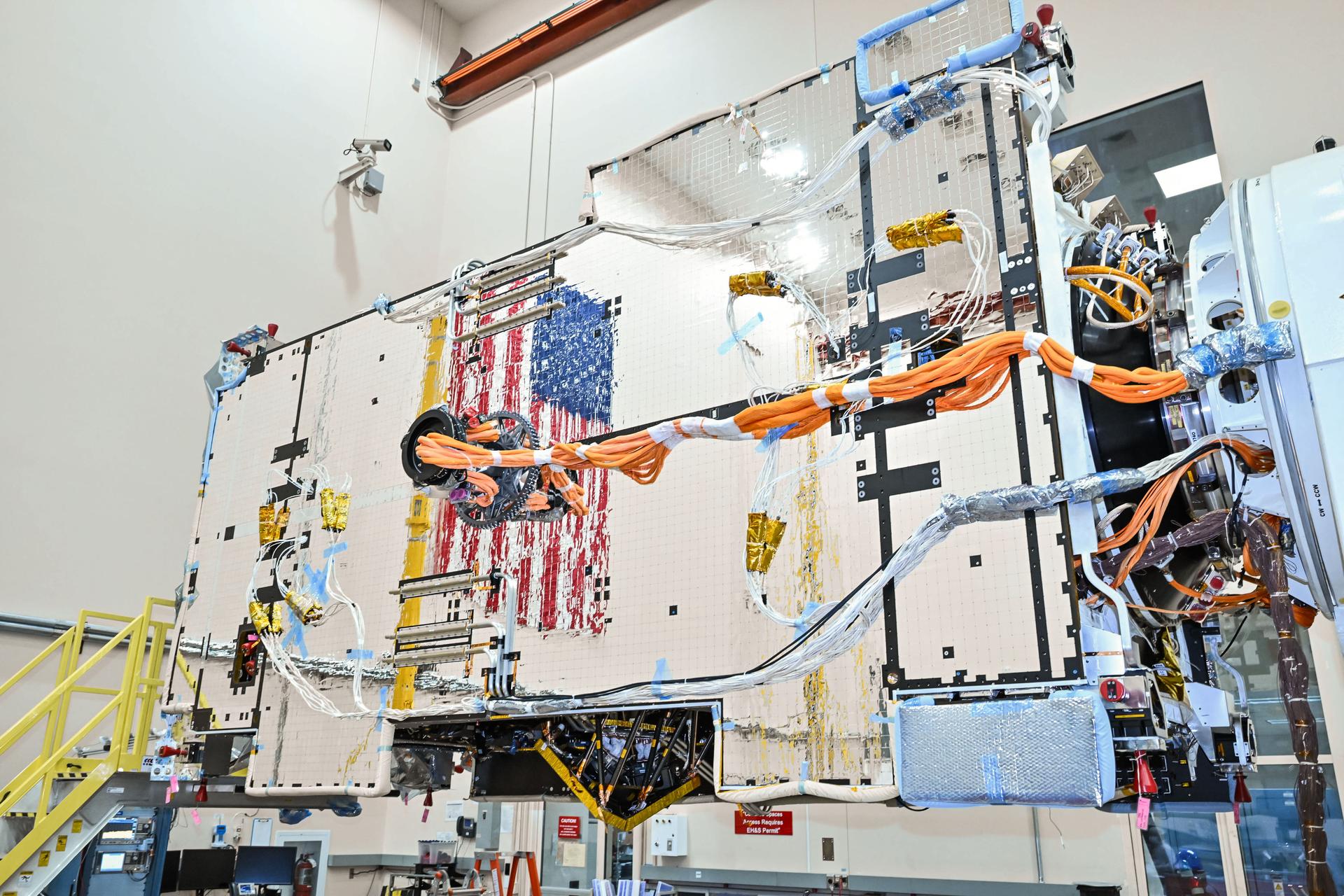
Gateway’s Power and Propulsion Element (PPE) undergoes flight software uploads at Lanteris Space Systems in Palo Alto, California, in January 2026. PPE is a 60-kilowatt solar electric propulsion spacecraft that will supply the lunar space station with power, high-rate communications, attitude control, orbit maintenance, and orbit transfer capabilities. Its design is based on Lanteris Space Systems’ commercial 1300 bus, enhanced with the most powerful Advanced Electric Propulsion System (AEPS) thrusters and the largest roll-out solar arrays (ROSAs) ever developed. Lanteris Space Systems is the lead industry partner for PPE’s design, manufacturing, and integration.
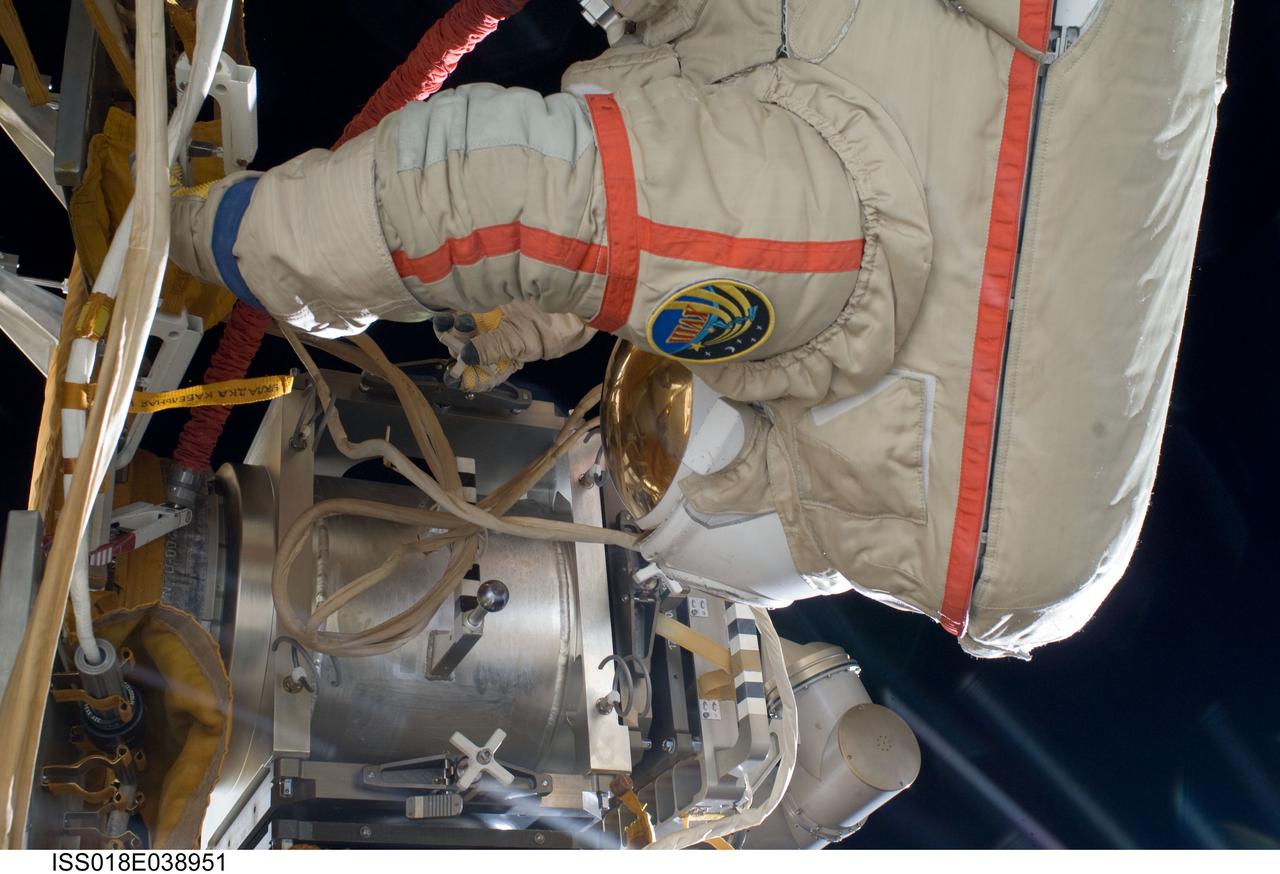
ISS018-E-038951 (10 March 2009) --- Astronaut Michael Fincke, Expedition 18 commander, participates in a session of extravehicular activity (EVA) to perform maintenance on the International Space Station. During the 4-hour, 49-minute spacewalk, Fincke and cosmonaut Yury Lonchakov (out of frame) reinstalled the Exposing Specimens of Organic and Biological Materials to Open Space (Expose-R) experiment on the universal science platform mounted to the exterior of the Zvezda Service Module. The spacewalkers also removed straps, or tape, from the area of the docking target on the Pirs airlock and docking compartment. The tape was removed to ensure it does not get in the way during the arrival of visiting Soyuz or Progress spacecraft.
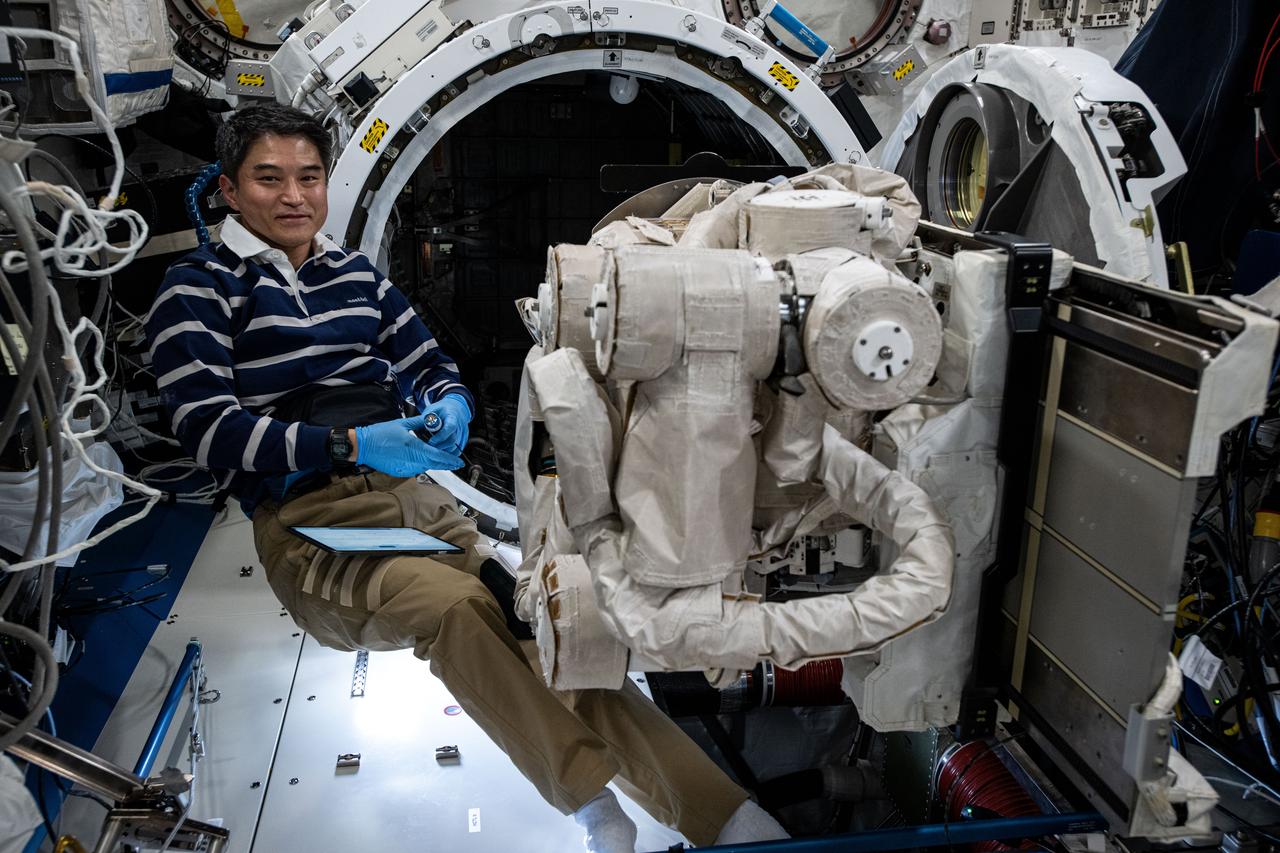
iss073e0133686 (June 3, 2025) --- JAXA (Japan Aerospace Exploration Agency) astronaut and Expedition 73 Commander is pictured during maintenance operations on the Japanese robotic arm's Small Fine Arm inside the Kibo laboratory module. The Small Fine Arm is used for precise and dexterous robotic maneuvers when grappling small components or payloads on the outside of the International Space Station. There are two other robotic arms on the outside of the orbital outpost including the Canadarm2 robotic arm and the European robotic arm (ERA). Canadarm2 can be used to maneuver spacecraft, spacewalkers, and large payloads. ERA can also be used to maneuver spacewalkers and space station components.
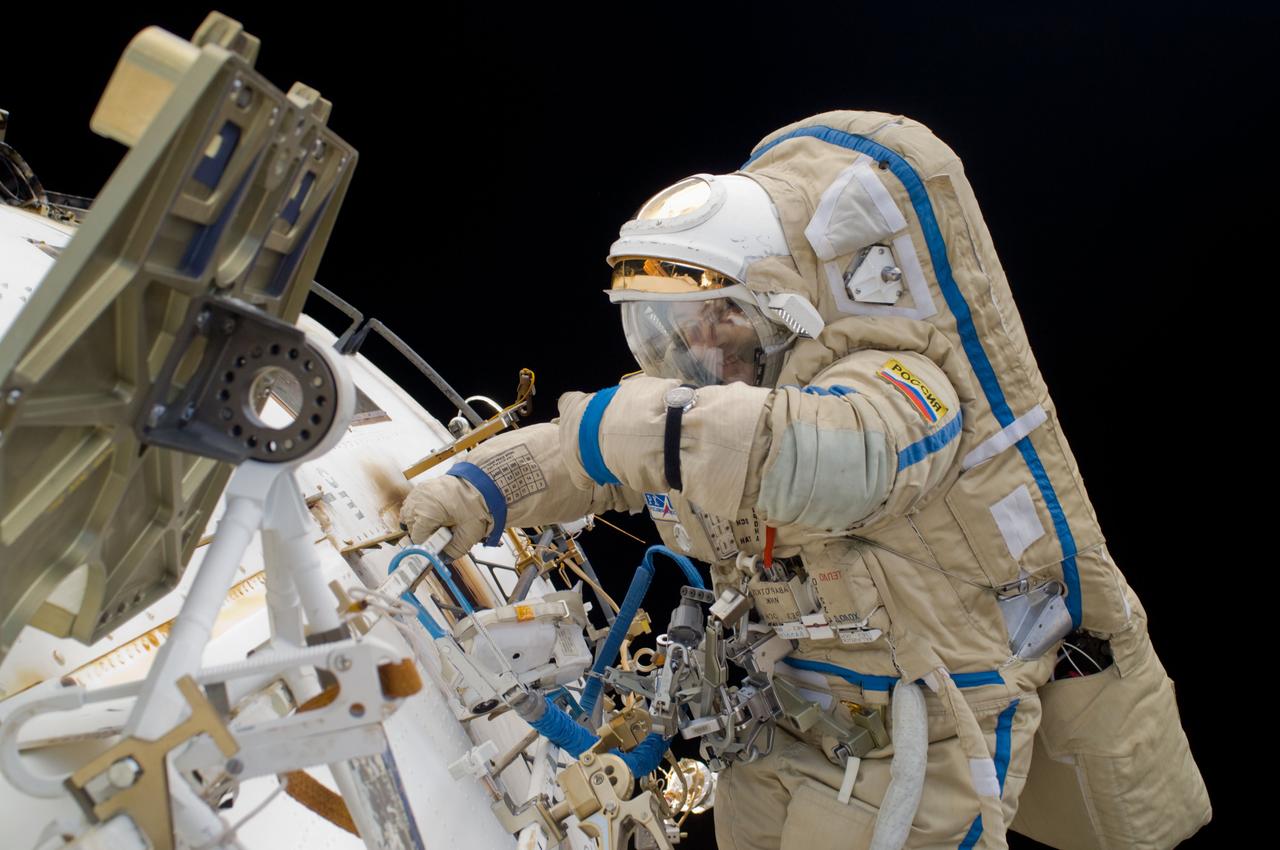
ISS018-E-039239 (10 March 2009) --- Cosmonaut Yury Lonchakov, Expedition 18 flight engineer, participates in a session of extravehicular activity (EVA) to perform maintenance on the International Space Station. During the 4-hour, 49-minute spacewalk, Lonchakov and astronaut Michael Fincke (out of frame), commander, reinstalled the Exposing Specimens of Organic and Biological Materials to Open Space (Expose-R) experiment on the universal science platform mounted to the exterior of the Zvezda Service Module. The spacewalkers also removed straps, or tape, from the area of the docking target on the Pirs airlock and docking compartment. The tape was removed to ensure it does not get in the way during the arrival of visiting Soyuz or Progress spacecraft.
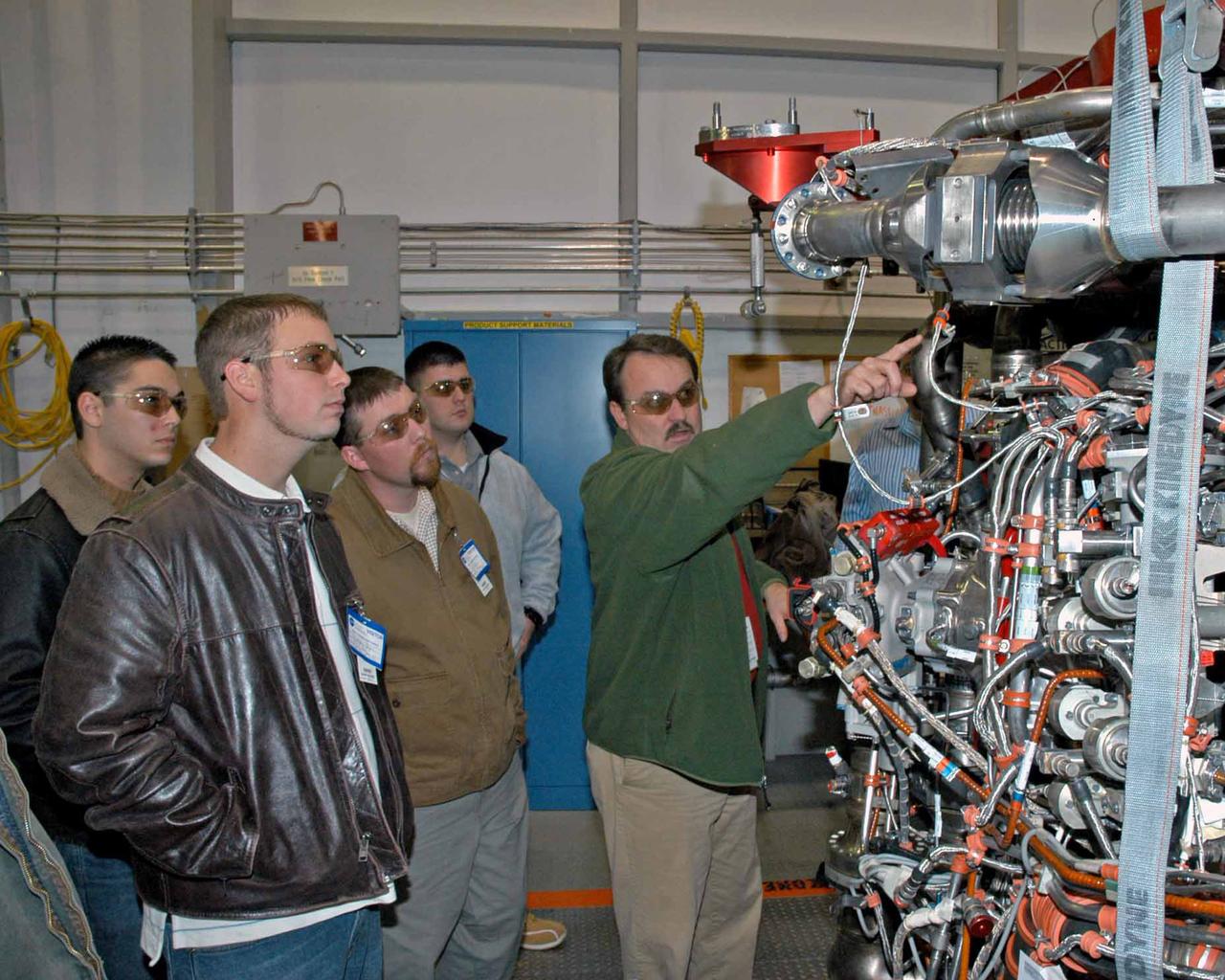
Pratt & Whitney Rocketdyne's Jeff Hansell, right, explains functions of a space shuttle main engine to Pearl River Community College Aviation Maintenance Technology Program students. Christopher Bryon, left, of Bay St. Louis, Ret Tolar of Kiln, Dan Holston of Baxterville and Billy Zugg of Long Beach took a recent tour of the SSME Processing Facility and the E-1 Test Complex at Stennis Space Center in South Mississippi. The students attend class adjacent to the Stennis International Airport tarmac in Kiln, where they get hands-on experience. PRCC's program prepares students to be responsible for the inspection, repair and maintenance of technologically advanced aircraft. A contractor to NASA, Pratt & Whitney Rocketdyne in Canoga Park, Calif., manufactures the space shuttle main engine and its high-pressure turbo pumps. SSC was established in the 1960s to test the huge engines for the Saturn V moon rockets. Now 40 years later, the center tests every main engine for the space shuttle, and is America's largest rocket engine test complex. SSC will soon begin testing the rocket engines that will power spacecraft carrying Americans back to the moon and on to Mars.

CAPE CANAVERAL, Fla. - Space shuttle Atlantis' twin solid rocket boosters ignite to propel the spacecraft off NASA Kennedy Space Center's Launch Pad 39A and into orbit at 2:20 p.m. EDT on May 14. On board Atlantis, for its last planned flight, are six veteran NASA astronauts. Atlantis' primary payload for the STS-132 mission is the Russian-built Mini Research Module-1, which will provide additional storage space and a new docking port for Russian Soyuz and Progress spacecraft aboard the International Space Station. STS-132 is the 132nd shuttle flight, the 32nd for Atlantis and the 34th shuttle mission dedicated to station assembly and maintenance. For more information on the STS-132 mission objectives, payload and crew, visit www.nasa.gov_mission_pages_shuttle_shuttlemissions_sts132_index.html. Photo credit: NASA_Sandra Joseph and Kevin O'Connell
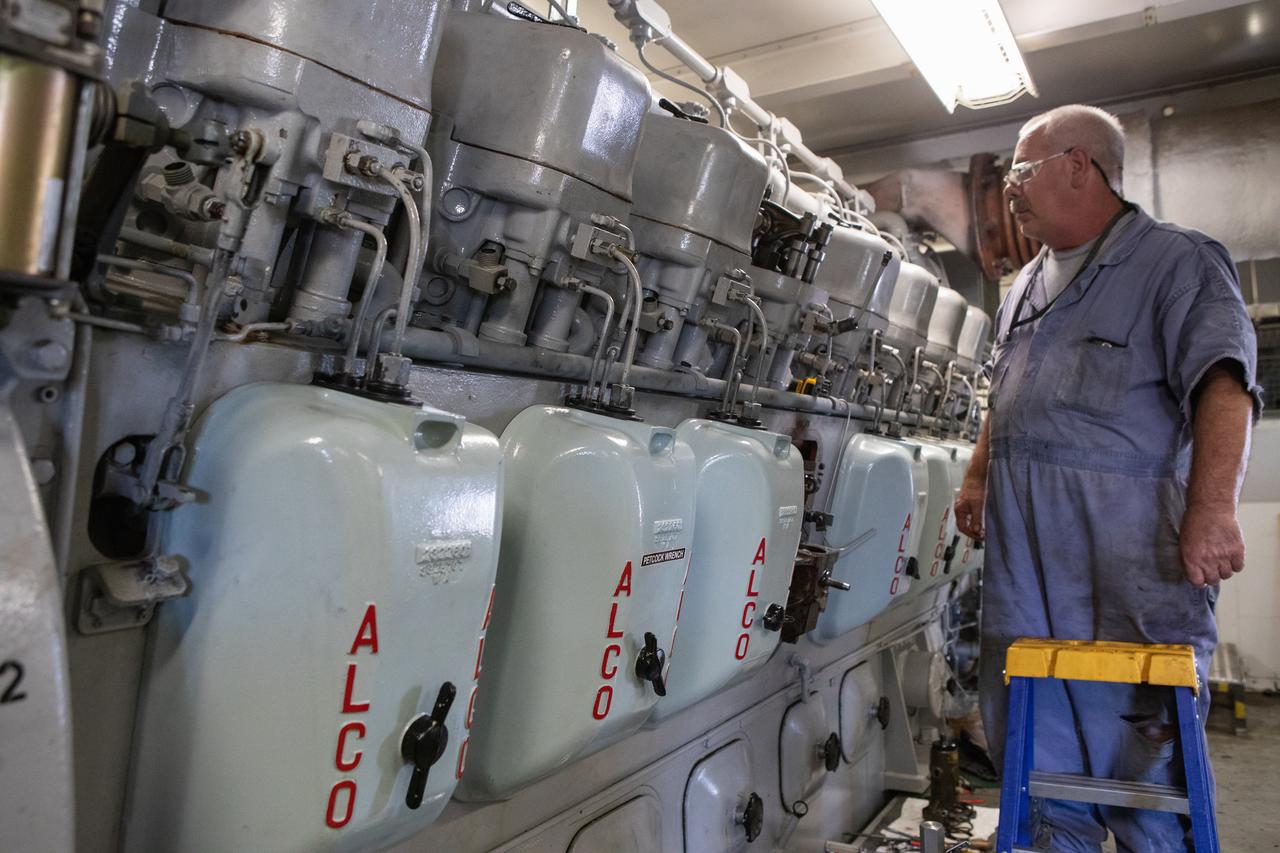
William Vardaman, a mechanical technician with the Jacobs contracting team, performs engine maintenance on NASA's crawler-transporter 2 on March 26, 2019, in the crawler yard located in Kennedy Space Center's Launch Complex 39 area. Recent engine work included rebuilding the vehicles’ fuel pump assemblies and installing new oil pumps that will help minimize future wear. This is one of two crawler-transporters that carried rockets and spacecraft, including the Apollo/Saturn V and space shuttle, from the Vehicle Assembly Building to the launch pad. NASA’s Exploration Ground Systems oversaw modifications and upgrades to crawler-transporter 2 so it can carry the mobile launcher and NASA's Space Launch System rocket, topped by the Orion spacecraft, to Launch Pad 39B for Exploration Mission-1.
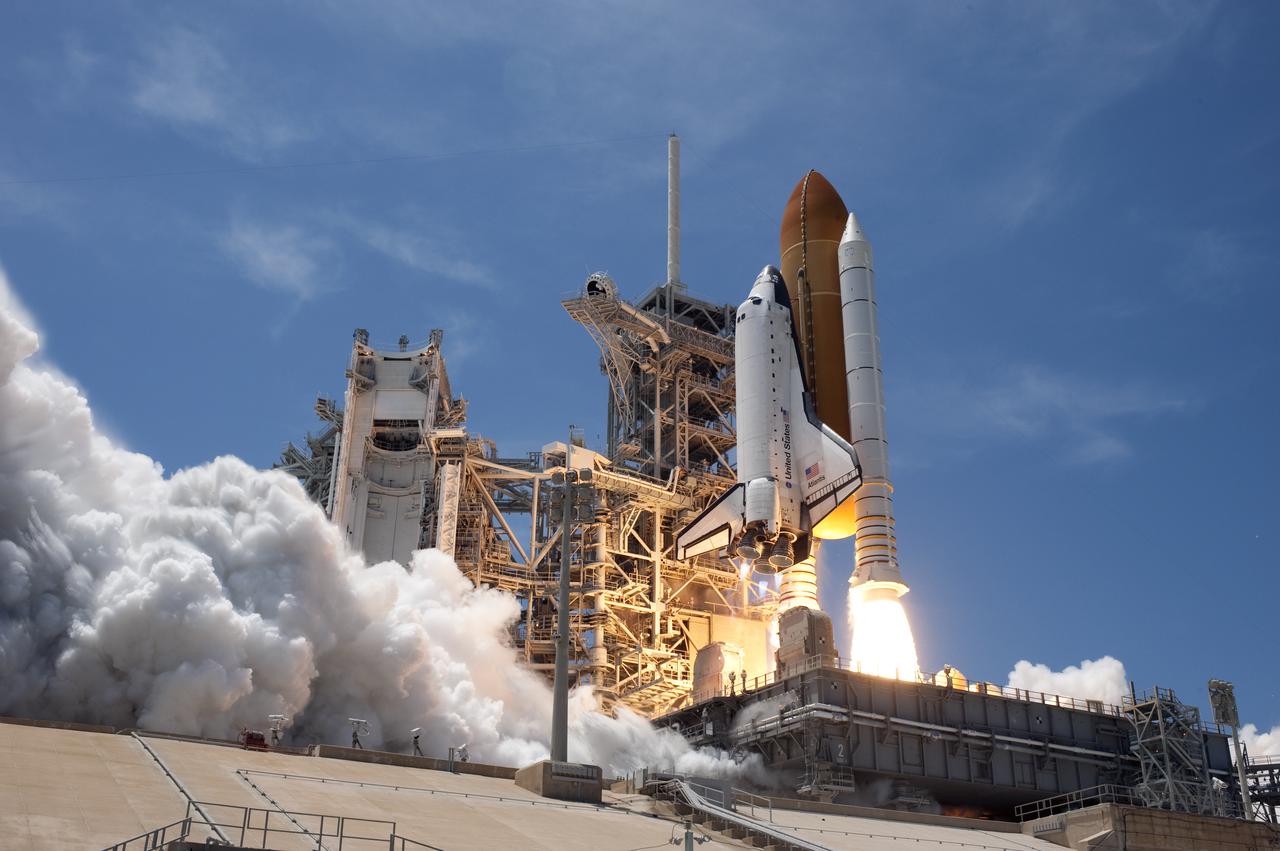
CAPE CANAVERAL, Fla. - Space shuttle Atlantis' twin solid rocket boosters ignite to propel the spacecraft off NASA Kennedy Space Center's Launch Pad 39A and into orbit at 2:20 p.m. EDT on May 14. On board Atlantis, for its last planned flight, are six veteran NASA astronauts. Atlantis' primary payload for the STS-132 mission is the Russian-built Mini Research Module-1, which will provide additional storage space and a new docking port for Russian Soyuz and Progress spacecraft aboard the International Space Station. STS-132 is the 132nd shuttle flight, the 32nd for Atlantis and the 34th shuttle mission dedicated to station assembly and maintenance. For more information on the STS-132 mission objectives, payload and crew, visit www.nasa.gov_mission_pages_shuttle_shuttlemissions_sts132_index.html. Photo credit: NASA_Sandra Joseph and Kevin O'Connell
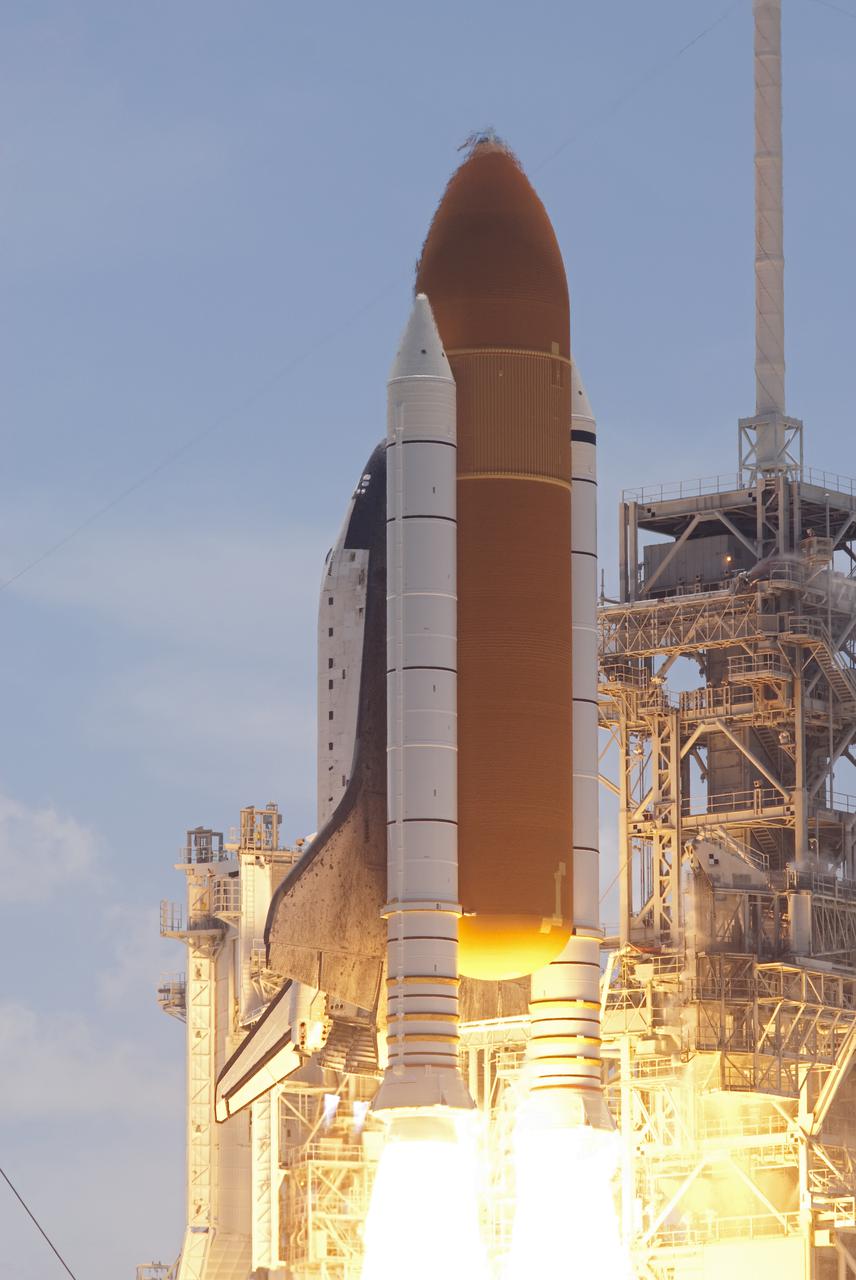
CAPE CANAVERAL, Fla. - Space shuttle Atlantis' twin solid rocket boosters ignite to propel the spacecraft off NASA Kennedy Space Center's Launch Pad 39A and into orbit at 2:20 p.m. EDT on May 14. On board Atlantis, for its last planned flight, are six veteran NASA astronauts. Atlantis' primary payload for the STS-132 mission is the Russian-built Mini Research Module-1, which will provide additional storage space and a new docking port for Russian Soyuz and Progress spacecraft aboard the International Space Station. STS-132 is the 132nd shuttle flight, the 32nd for Atlantis and the 34th shuttle mission dedicated to station assembly and maintenance. For more information on the STS-132 mission objectives, payload and crew, visit www.nasa.gov_mission_pages_shuttle_shuttlemissions_sts132_index.html. Photo credit: NASA_Rusty Backer and Michael Gayle
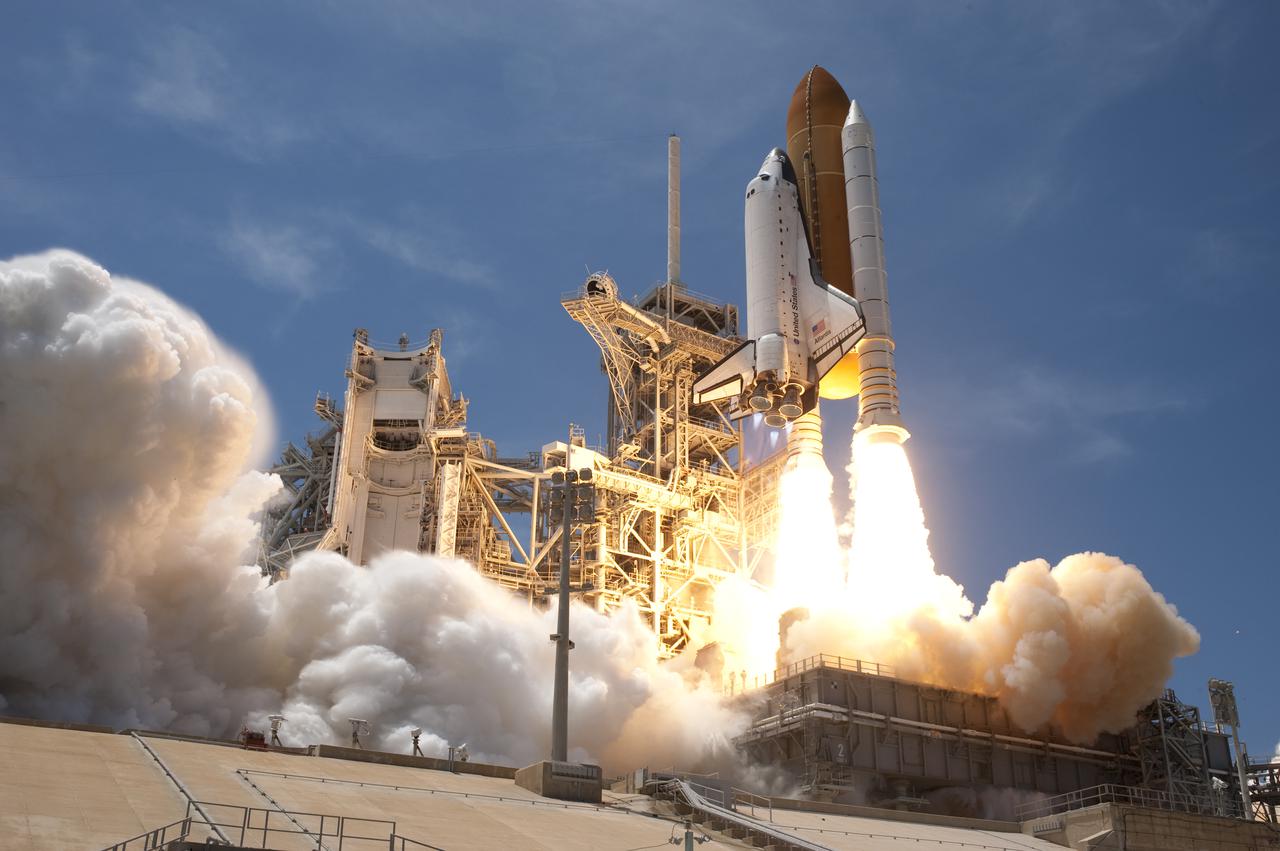
CAPE CANAVERAL, Fla. - Space shuttle Atlantis' twin solid rocket boosters ignite to propel the spacecraft off NASA Kennedy Space Center's Launch Pad 39A and into orbit at 2:20 p.m. EDT on May 14. On board Atlantis, for its last planned flight, are six veteran NASA astronauts. Atlantis' primary payload for the STS-132 mission is the Russian-built Mini Research Module-1, which will provide additional storage space and a new docking port for Russian Soyuz and Progress spacecraft aboard the International Space Station. STS-132 is the 132nd shuttle flight, the 32nd for Atlantis and the 34th shuttle mission dedicated to station assembly and maintenance. For more information on the STS-132 mission objectives, payload and crew, visit www.nasa.gov_mission_pages_shuttle_shuttlemissions_sts132_index.html. Photo credit: NASA_Sandra Joseph and Kevin O'Connell
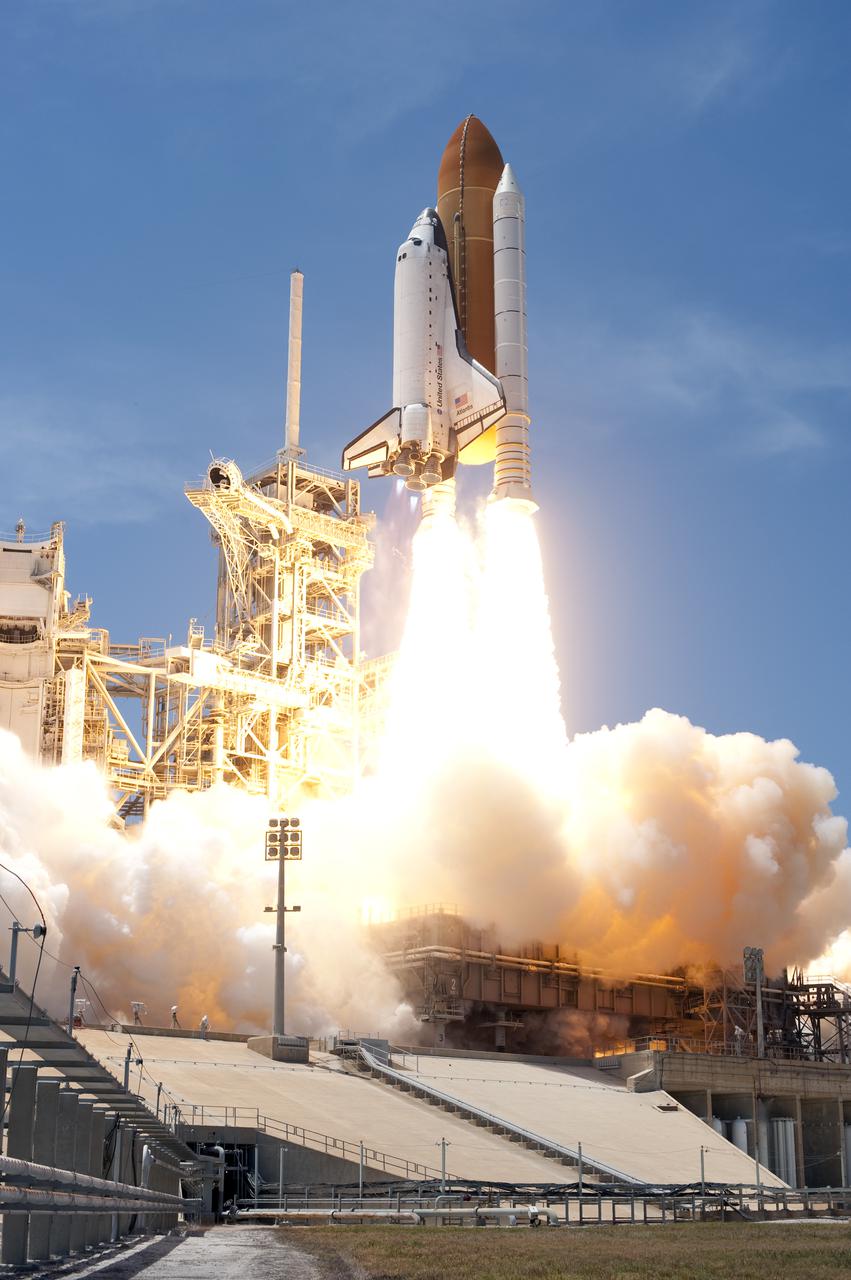
CAPE CANAVERAL, Fla. - Space shuttle Atlantis' twin solid rocket boosters propel to launch the spacecraft off NASA Kennedy Space Center's Launch Pad 39A and into orbit at 2:20 p.m. EDT on May 14. On board Atlantis, for its last planned flight, are six veteran NASA astronauts. Atlantis' primary payload for the STS-132 mission is the Russian-built Mini Research Module-1, which will provide additional storage space and a new docking port for Russian Soyuz and Progress spacecraft aboard the International Space Station. STS-132 is the 132nd shuttle flight, the 32nd for Atlantis and the 34th shuttle mission dedicated to station assembly and maintenance. For more information on the STS-132 mission objectives, payload and crew, visit www.nasa.gov_mission_pages_shuttle_shuttlemissions_sts132_index.html. Photo credit: NASA_Tony Gray and Tom Farrar
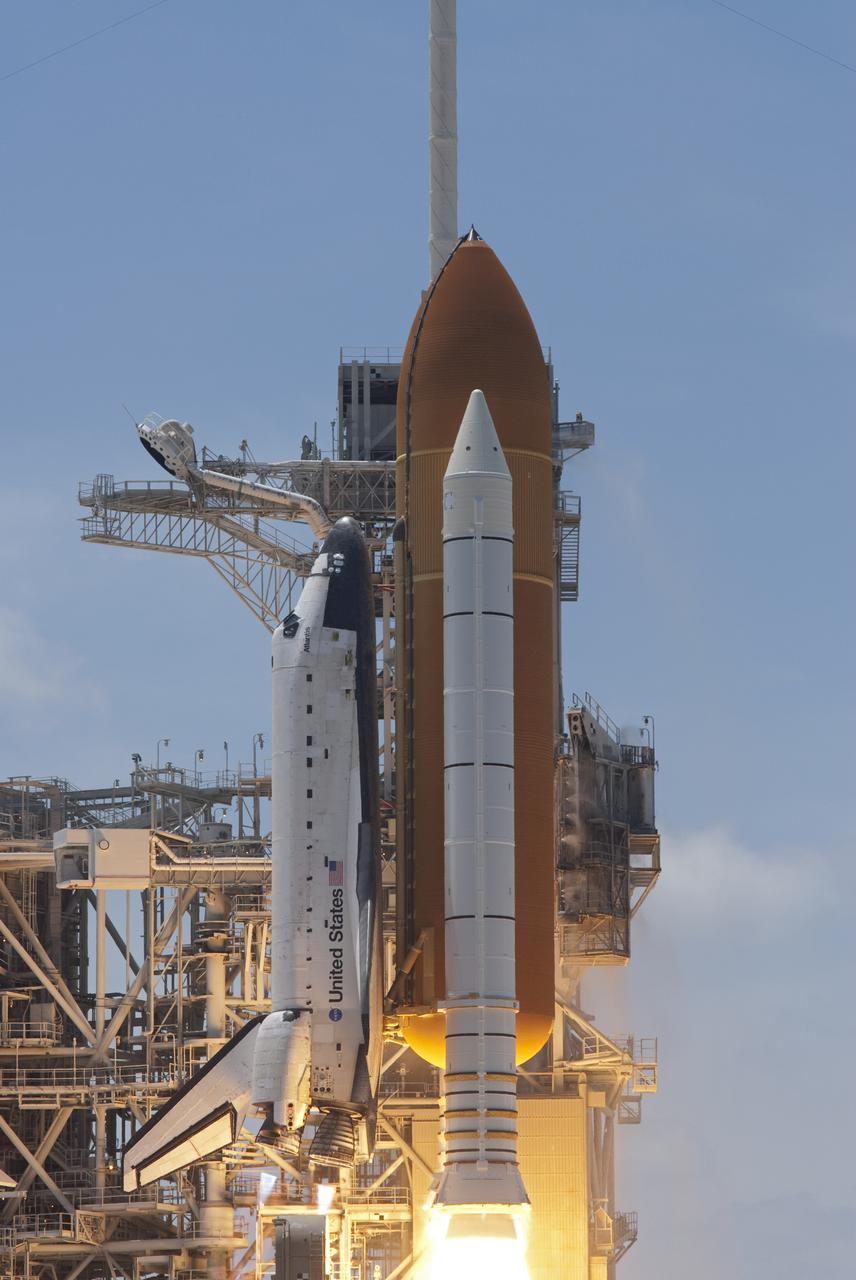
CAPE CANAVERAL, Fla. - Space shuttle Atlantis' twin solid rocket boosters and three main engines ignite to propel the spacecraft off NASA Kennedy Space Center's Launch Pad 39A and into orbit at 2:20 p.m. EDT on May 14. On board Atlantis, for its last planned flight, are six veteran NASA astronauts. Atlantis' primary payload for the STS-132 mission is the Russian-built Mini Research Module-1, which will provide additional storage space and a new docking port for Russian Soyuz and Progress spacecraft aboard the International Space Station. STS-132 is the 132nd shuttle flight, the 32nd for Atlantis and the 34th shuttle mission dedicated to station assembly and maintenance. For more information on the STS-132 mission objectives, payload and crew, visit www.nasa.gov_mission_pages_shuttle_shuttlemissions_sts132_index.html. Photo credit: NASA_Rusty Backer and Michael Gayle
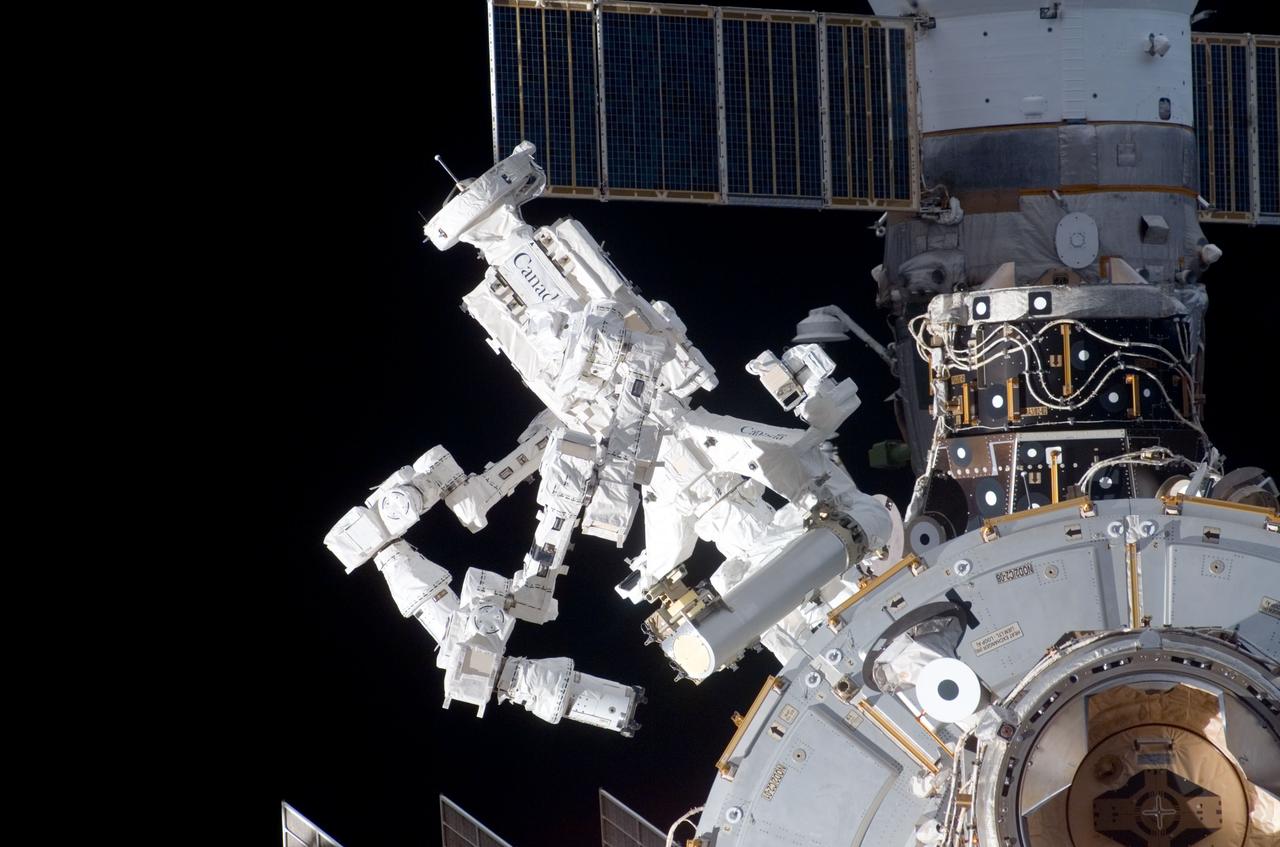
S123-E-009714 (24 March 2008) --- Located on the exterior of the International Space Station's Harmony node, the Canadian-built Dextre, also known as the Special Purpose Dextrous Manipulator, is photographed from Space Shuttle Endeavour as the two spacecraft begin their relative separation. Designed for station maintenance and service, Dextre is capable of sensing forces and movement of objects it is manipulating. It can automatically compensate for those forces and movements to ensure an object is moved smoothly. Dextre is the final element of the station's Mobile Servicing System. Earlier the STS-123 and Expedition 16 crews concluded 12 days of cooperative work onboard the shuttle and station. Undocking of the two spacecraft occurred at 7:25 p.m. (CDT) on March 24, 2008.
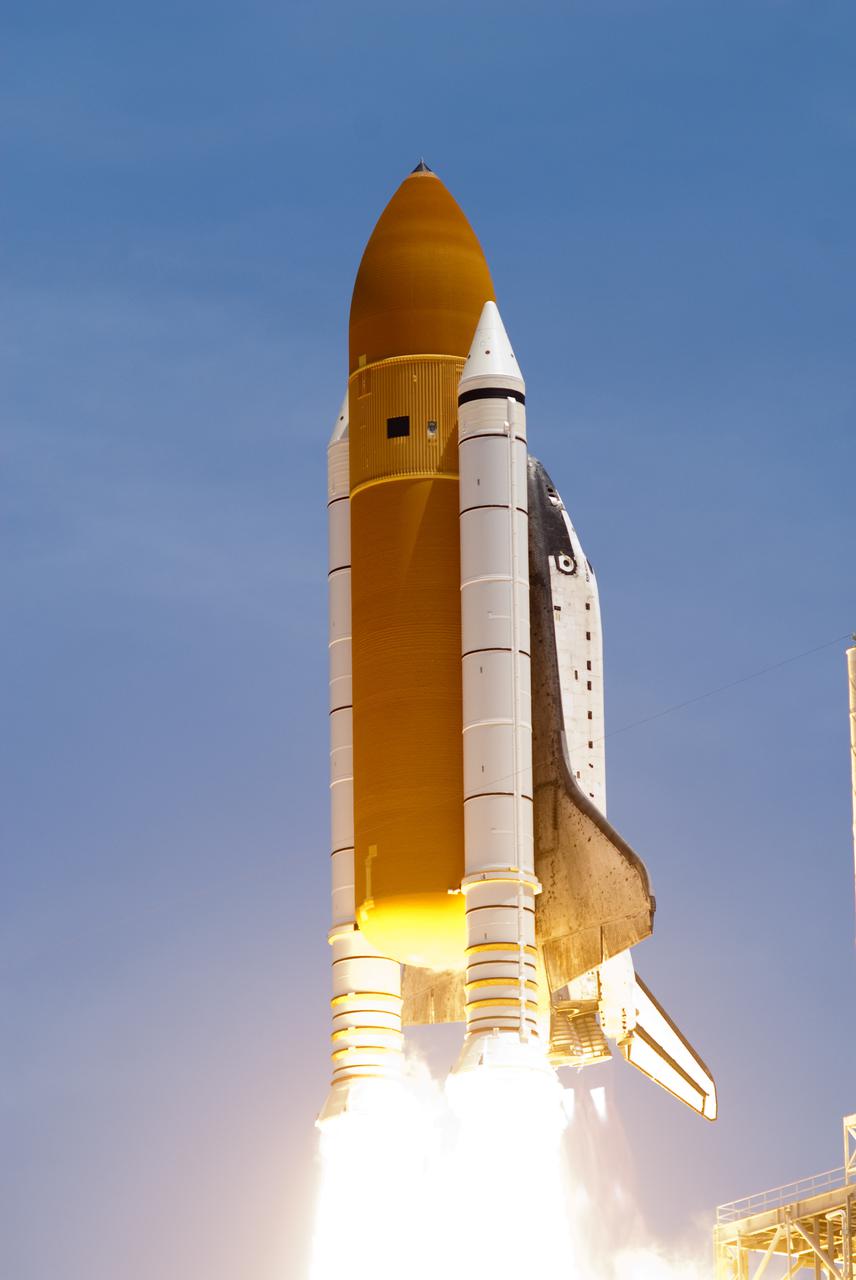
CAPE CANAVERAL, Fla. - Space shuttle Atlantis' twin solid rocket boosters ignite to propel the spacecraft off NASA Kennedy Space Center's Launch Pad 39A and into orbit at 2:20 p.m. EDT on May 14. The Russian-built Mini Research Module-1 known as Rassvet, or 'dawn,' is inside the shuttle's cargo bay. It will provide additional storage space and a new docking port for Russian Soyuz and Progress spacecraft. The laboratory will be attached to the bottom port of the station's Zarya module. The mission's three spacewalks will focus on storing spare components outside the station, including six batteries, a communications antenna and parts for the Canadian Dextre robotic arm. STS-132 is the 132nd shuttle flight, the 32nd for Atlantis and the 34th shuttle mission dedicated to station assembly and maintenance. For more information on the STS-132 mission objectives, payload and crew, visit www.nasa.gov_mission_pages_shuttle_shuttlemissions_sts132_index.html. Photo Credit: NASA_Rusty Backer and Michael Gayle
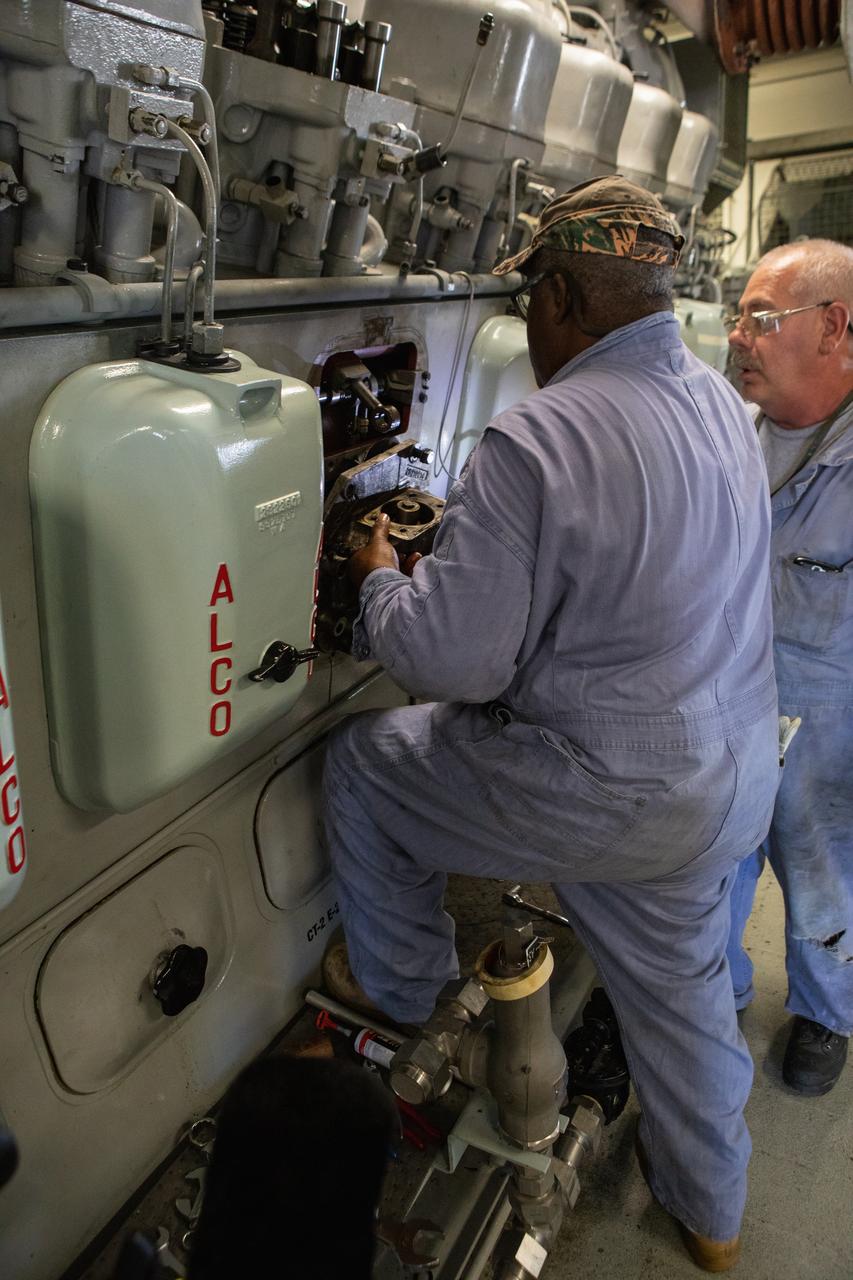
Pat Brown, left, and William Vardaman, mechanical technicians with the Jacobs contracting team, perform engine maintenance on NASA's crawler-transporter 2 on March 26, 2019, in the crawler yard located in Kennedy Space Center's Launch Complex 39 area. Recent engine work included rebuilding the vehicles’ fuel pump assemblies and installing new oil pumps that will help minimize future wear. This is one of two crawler-transporters that carried rockets and spacecraft, including the Apollo/Saturn V and space shuttle, from the Vehicle Assembly Building to the launch pad. NASA’s Exploration Ground Systems oversaw modifications and upgrades to crawler-transporter 2 so it can carry the mobile launcher and NASA's Space Launch System rocket, topped by the Orion spacecraft, to Launch Pad 39B for Exploration Mission-1.
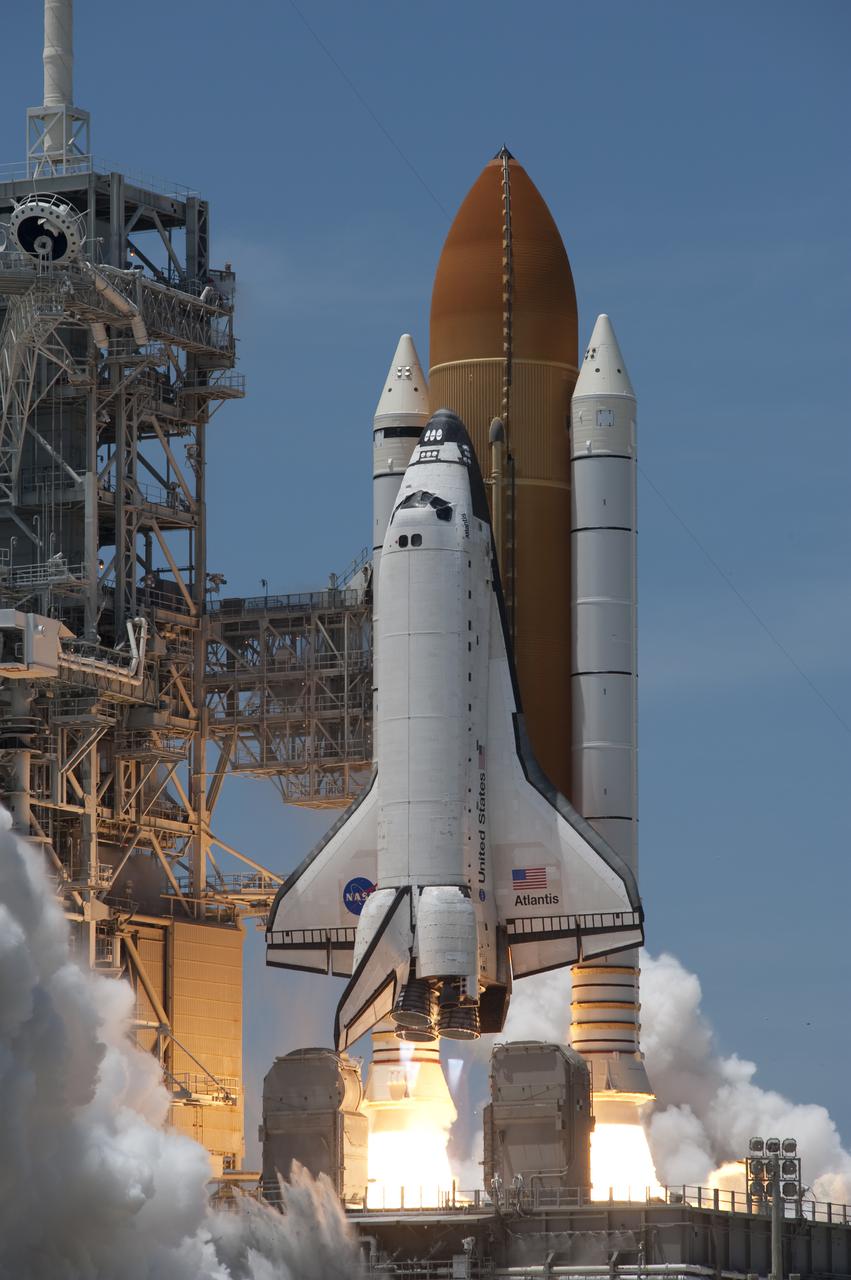
CAPE CANAVERAL, Fla. - Space shuttle Atlantis' twin solid rocket boosters ignite to propel the spacecraft off NASA Kennedy Space Center's Launch Pad 39A and into orbit at 2:20 p.m. EDT on May 14. On board Atlantis, for its last planned flight, are six veteran NASA astronauts. Atlantis' primary payload for the STS-132 mission is the Russian-built Mini Research Module-1, which will provide additional storage space and a new docking port for Russian Soyuz and Progress spacecraft aboard the International Space Station. STS-132 is the 132nd shuttle flight, the 32nd for Atlantis and the 34th shuttle mission dedicated to station assembly and maintenance. For more information on the STS-132 mission objectives, payload and crew, visit www.nasa.gov_mission_pages_shuttle_shuttlemissions_sts132_index.html. Photo credit: NASA_Sandra Joseph and Kevin O'Connell
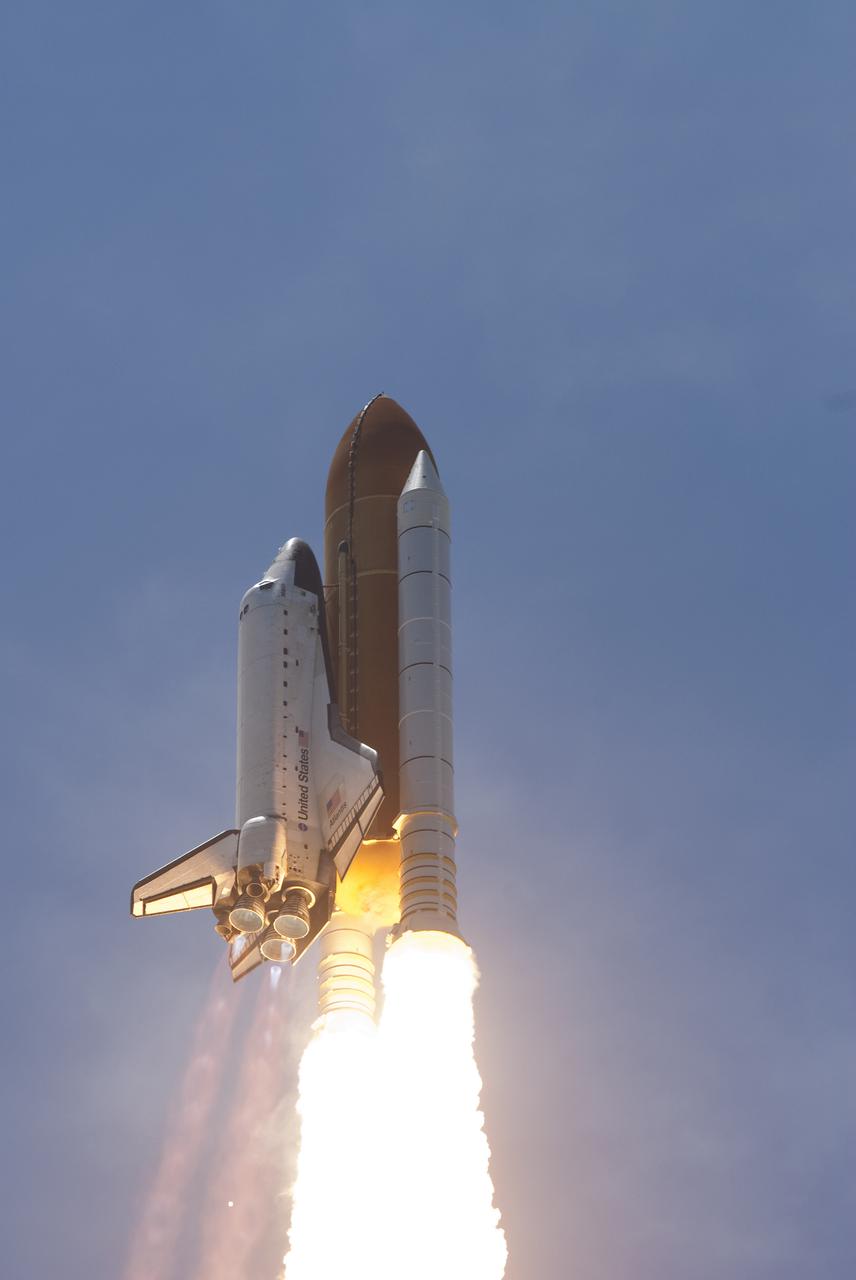
CAPE CANAVERAL, Fla. - Space shuttle Atlantis' twin solid rocket boosters and three main engines ignite to propel the spacecraft off NASA Kennedy Space Center's Launch Pad 39A and into orbit at 2:20 p.m. EDT on May 14. On board Atlantis, for its last planned flight, are six veteran NASA astronauts. Atlantis' primary payload for the STS-132 mission is the Russian-built Mini Research Module-1, which will provide additional storage space and a new docking port for Russian Soyuz and Progress spacecraft aboard the International Space Station. STS-132 is the 132nd shuttle flight, the 32nd for Atlantis and the 34th shuttle mission dedicated to station assembly and maintenance. For more information on the STS-132 mission objectives, payload and crew, visit www.nasa.gov_mission_pages_shuttle_shuttlemissions_sts132_index.html. Photo credit: NASA_Rusty Backer and Michael Gayle
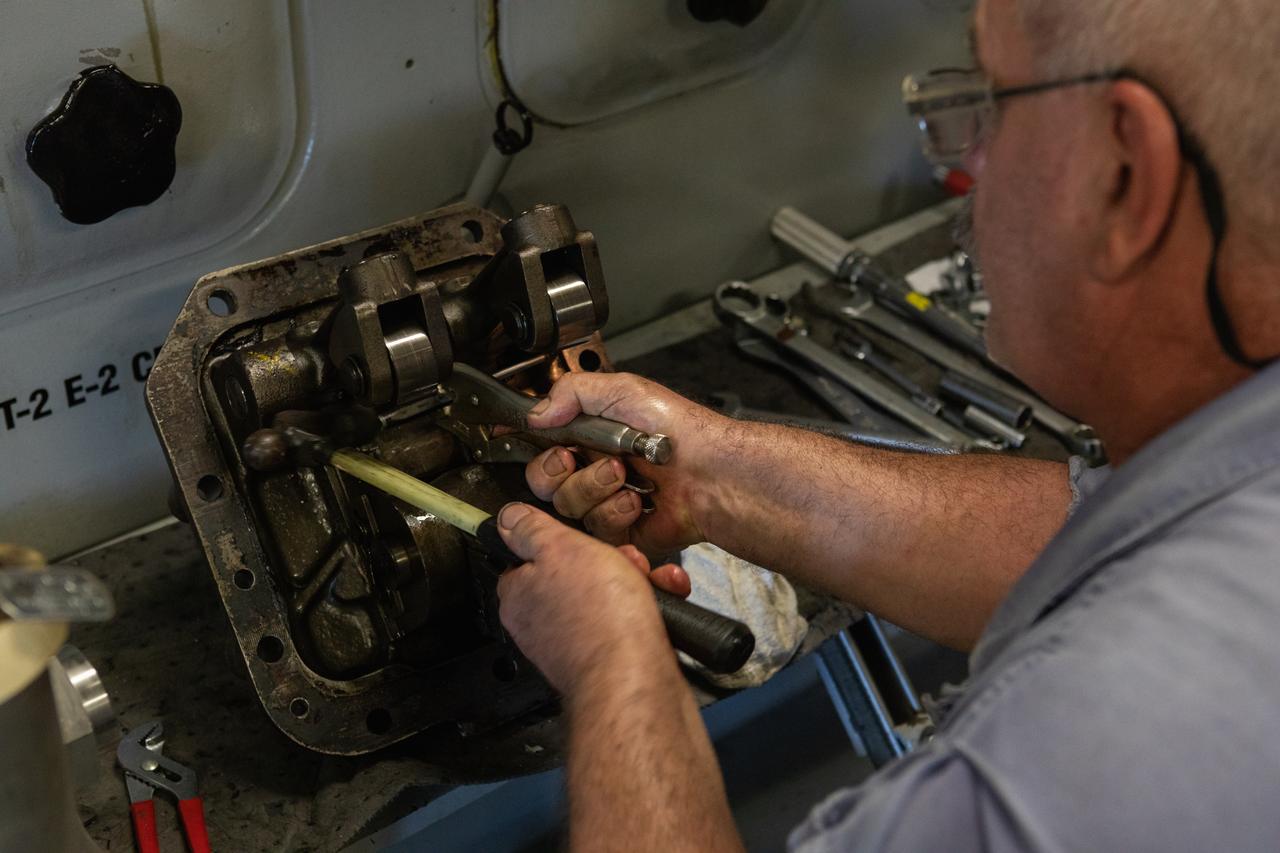
William Vardaman, a mechanical technician with the Jacobs contracting team, performs engine maintenance on NASA's crawler-transporter 2 on March 26, 2019, in the crawler yard located in Kennedy Space Center's Launch Complex 39 area. Recent engine work included rebuilding the vehicles’ fuel pump assemblies and installing new oil pumps that will help minimize future wear. This is one of two crawler-transporters that carried rockets and spacecraft, including the Apollo/Saturn V and space shuttle, from the Vehicle Assembly Building to the launch pad. NASA’s Exploration Ground Systems oversaw modifications and upgrades to crawler-transporter 2 so it can carry the mobile launcher and NASA's Space Launch System rocket, topped by the Orion spacecraft, to Launch Pad 39B for Exploration Mission-1.
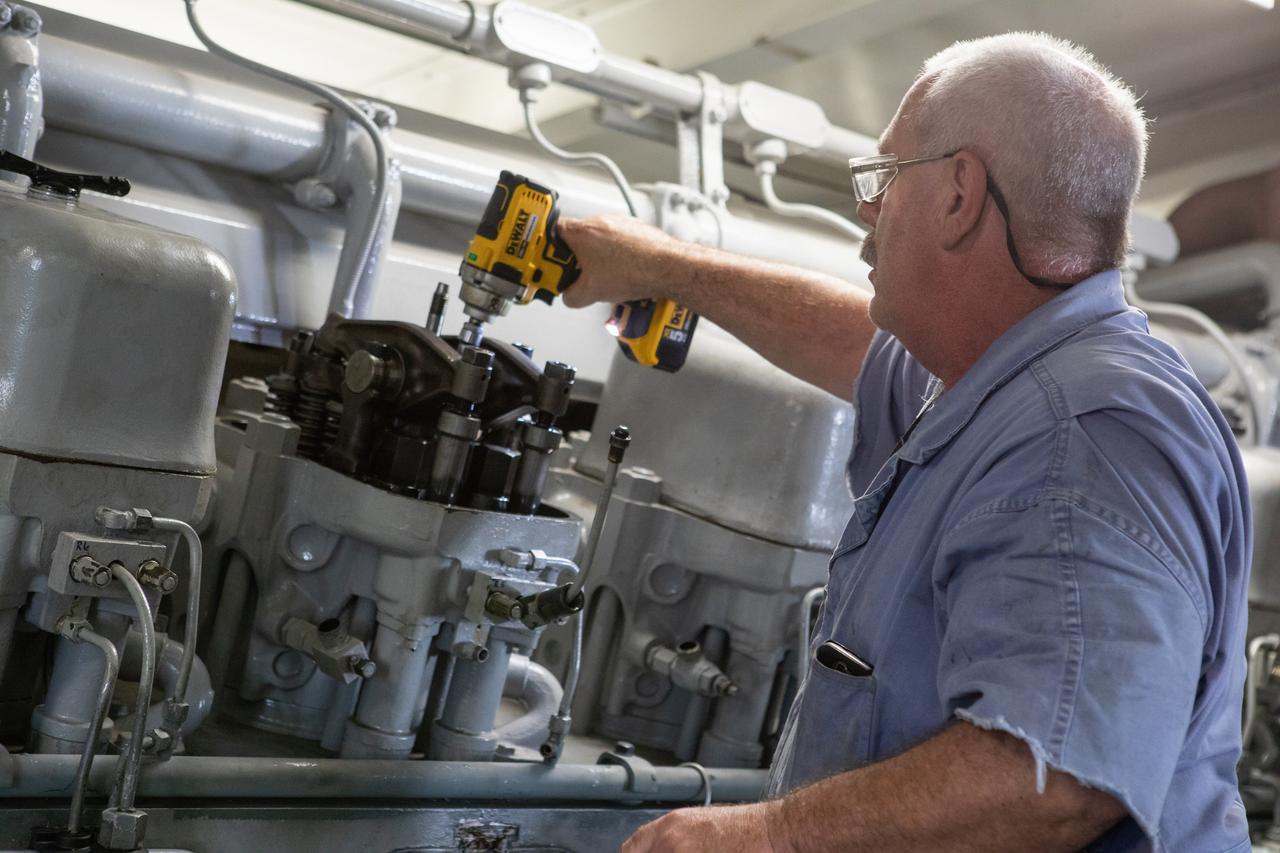
William Vardaman, a mechanical technician with the Jacobs contracting team, performs engine maintenance on NASA's crawler-transporter 2 on March 26, 2019, in the crawler yard located in Kennedy Space Center's Launch Complex 39 area. Recent engine work included rebuilding the vehicles’ fuel pump assemblies and installing new oil pumps that will help minimize future wear. This is one of two crawler-transporters that carried rockets and spacecraft, including the Apollo/Saturn V and space shuttle, from the Vehicle Assembly Building to the launch pad. NASA’s Exploration Ground Systems oversaw modifications and upgrades to crawler-transporter 2 so it can carry the mobile launcher and NASA's Space Launch System rocket, topped by the Orion spacecraft, to Launch Pad 39B for Exploration Mission-1.
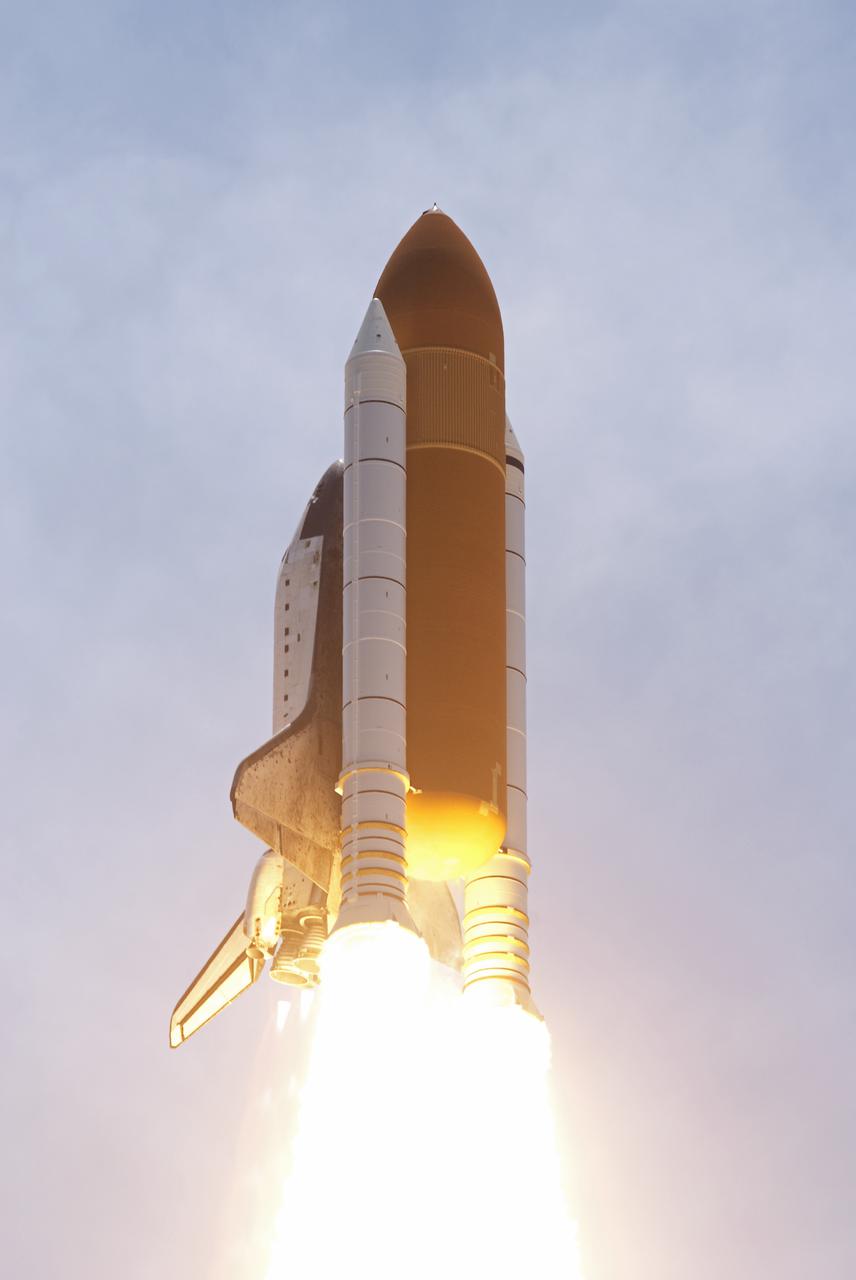
CAPE CANAVERAL, Fla. - Space shuttle Atlantis' twin solid rocket boosters propel to launch the spacecraft off NASA Kennedy Space Center's Launch Pad 39A and into orbit at 2:20 p.m. EDT on May 14. On board Atlantis, for its last planned flight, are six veteran NASA astronauts. Atlantis' primary payload for the STS-132 mission is the Russian-built Mini Research Module-1, which will provide additional storage space and a new docking port for Russian Soyuz and Progress spacecraft aboard the International Space Station. STS-132 is the 132nd shuttle flight, the 32nd for Atlantis and the 34th shuttle mission dedicated to station assembly and maintenance. For more information on the STS-132 mission objectives, payload and crew, visit www.nasa.gov_mission_pages_shuttle_shuttlemissions_sts132_index.html. Photo credit: NASA_Rusty Backer and Michael Gayle
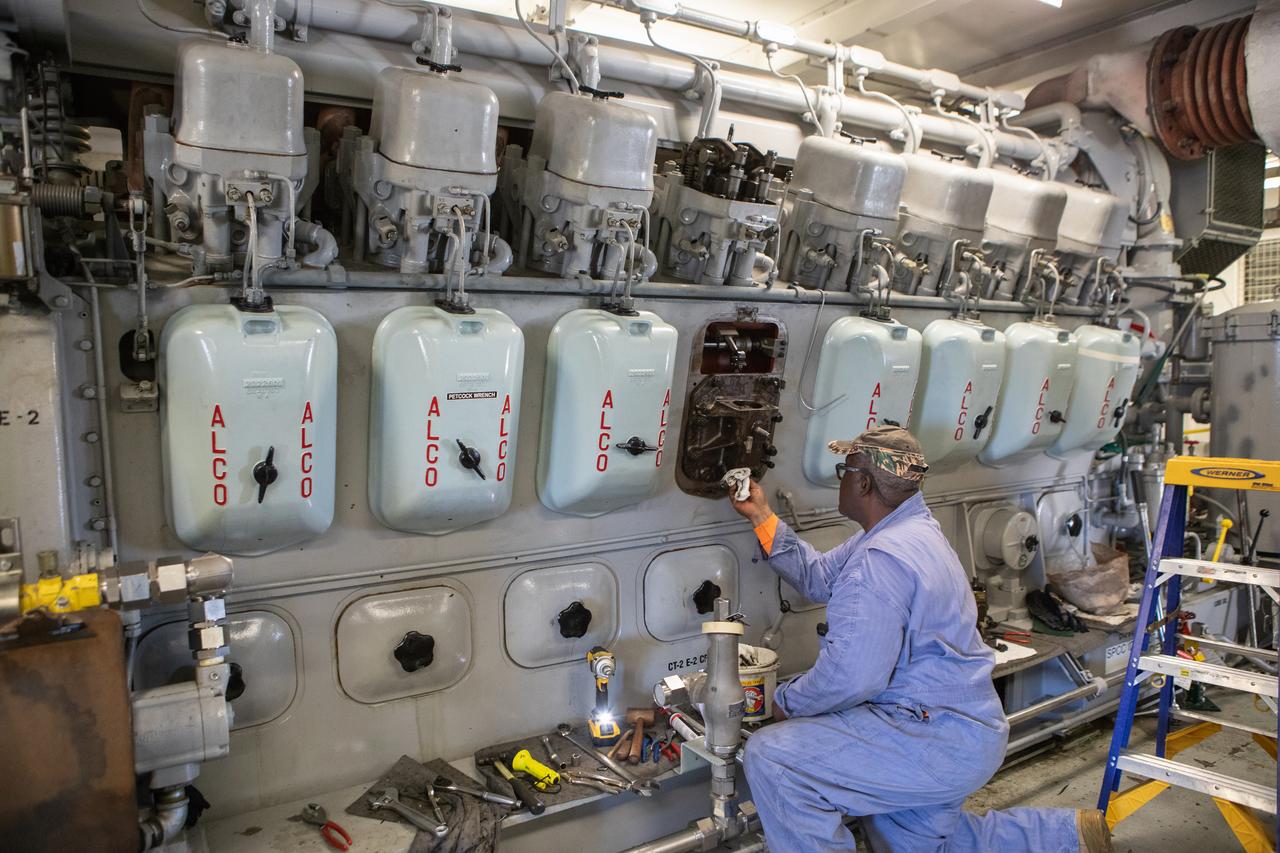
Pat Brown, a mechanical technician with Jacobs, performs engine maintenance on NASA's crawler-transporter 2 on March 26, 2019, in the crawler yard located in Kennedy Space Center's Launch Complex 39 area. Recent engine work included rebuilding the vehicles’ fuel pump assemblies and installing new oil pumps that will help minimize future wear. This is one of two crawler-transporters that carried rockets and spacecraft, including the Apollo/Saturn V and space shuttle, from the Vehicle Assembly Building to the launch pad. NASA’s Exploration Ground Systems oversaw modifications and upgrades to crawler-transporter 2 so it can carry the mobile launcher and NASA's Space Launch System rocket, topped by the Orion spacecraft, to Launch Pad 39B for Exploration Mission-1.
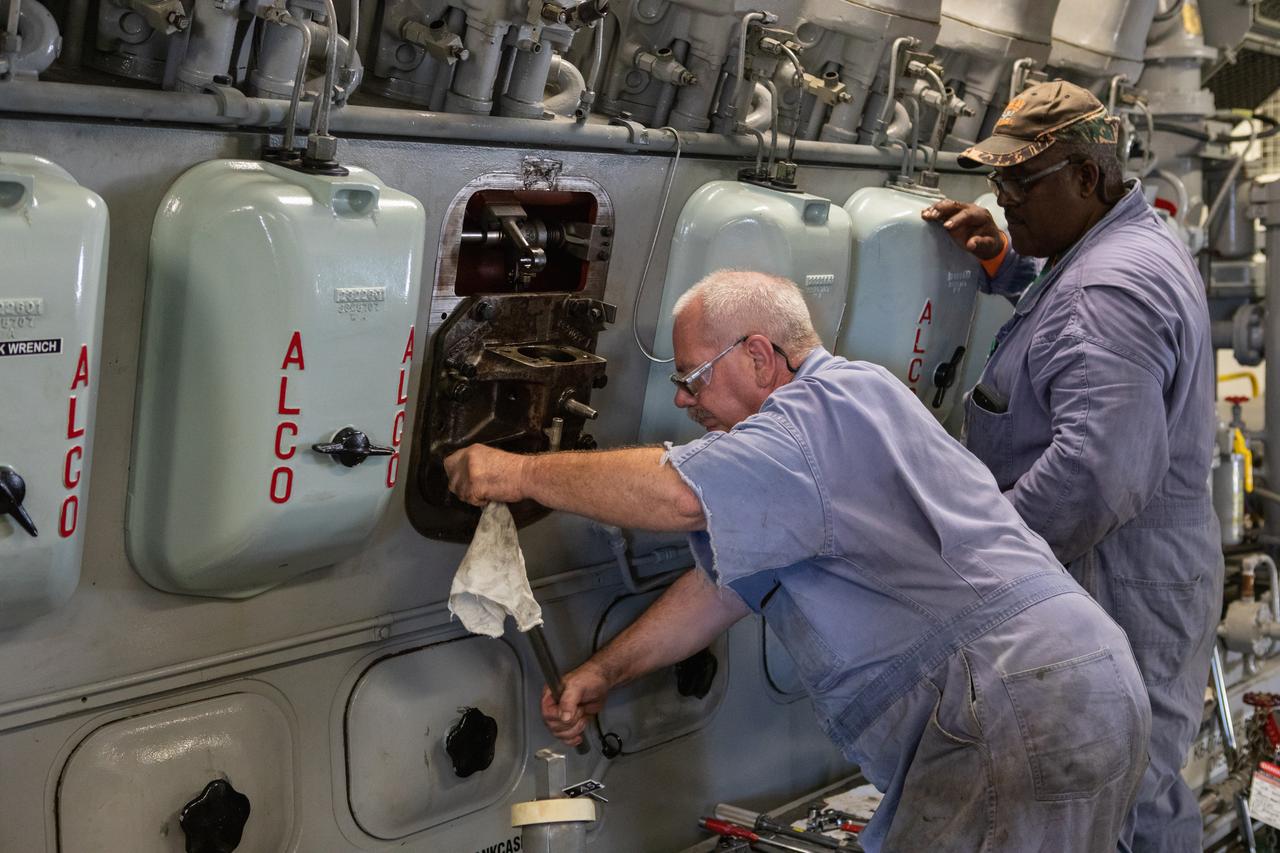
William Vardaman, left, and Pat Brown, mechanical technicians with the Jacobs contracting team, perform engine maintenance on NASA's crawler-transporter 2 on March 26, 2019, in the crawler yard located in Kennedy Space Center's Launch Complex 39 area. Recent engine work included rebuilding the vehicles’ fuel pump assemblies and installing new oil pumps that will help minimize future wear. This is one of two crawler-transporters that carried rockets and spacecraft, including the Apollo/Saturn V and space shuttle, from the Vehicle Assembly Building to the launch pad. NASA’s Exploration Ground Systems oversaw modifications and upgrades to crawler-transporter 2 so it can carry the mobile launcher and NASA's Space Launch System rocket, topped by the Orion spacecraft, to Launch Pad 39B for Exploration Mission-1.
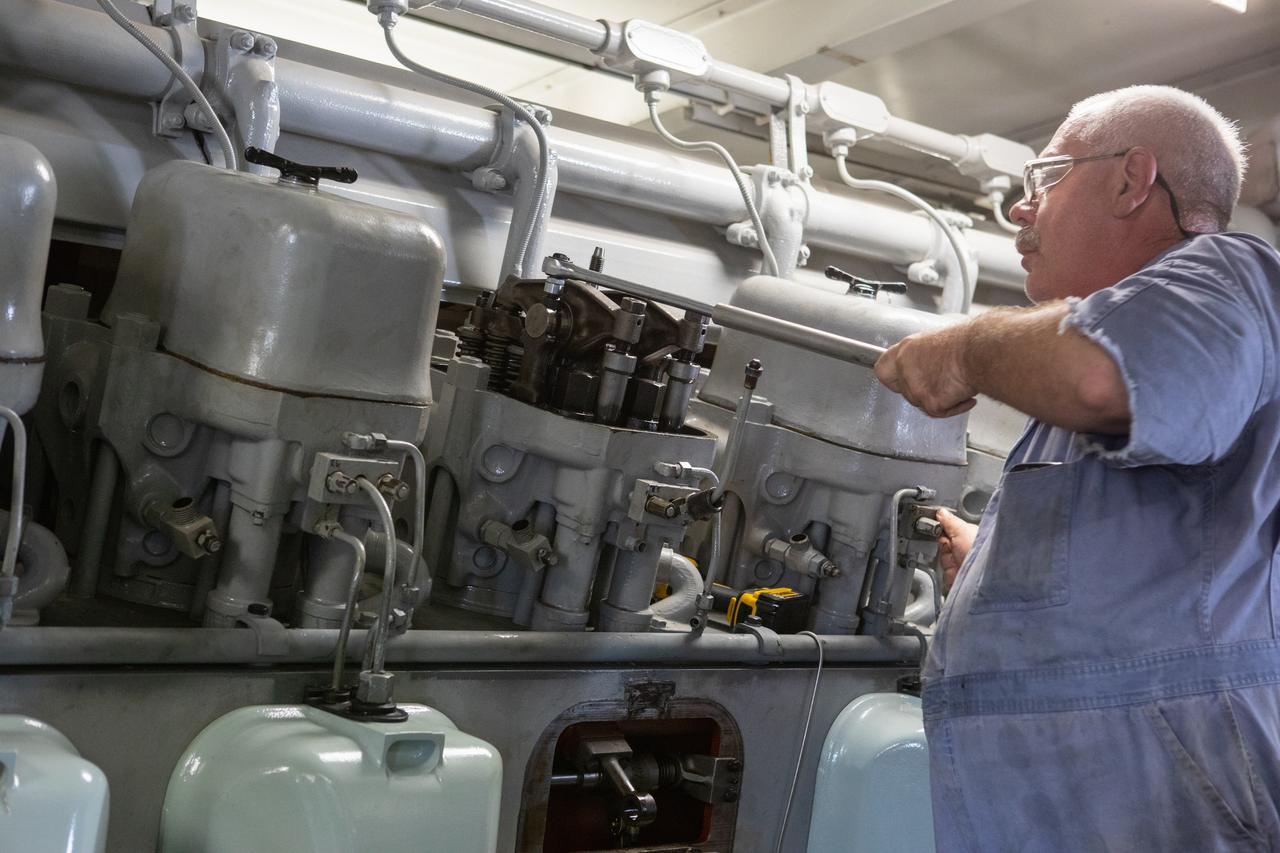
William Vardaman, mechanical technician with the Jacobs contracting team, performs engine maintenance on NASA's crawler-transporter 2 on March 26, 2019, in the crawler yard located in Kennedy Space Center's Launch Complex 39 area. Recent engine work included rebuilding the vehicles’ fuel pump assemblies and installing new oil pumps that will help minimize future wear. This is one of two crawler-transporters that carried rockets and spacecraft, including the Apollo/Saturn V and space shuttle, from the Vehicle Assembly Building to the launch pad. NASA’s Exploration Ground Systems oversaw modifications and upgrades to crawler-transporter 2 so it can carry the mobile launcher and NASA's Space Launch System rocket, topped by the Orion spacecraft, to Launch Pad 39B for Exploration Mission-1.
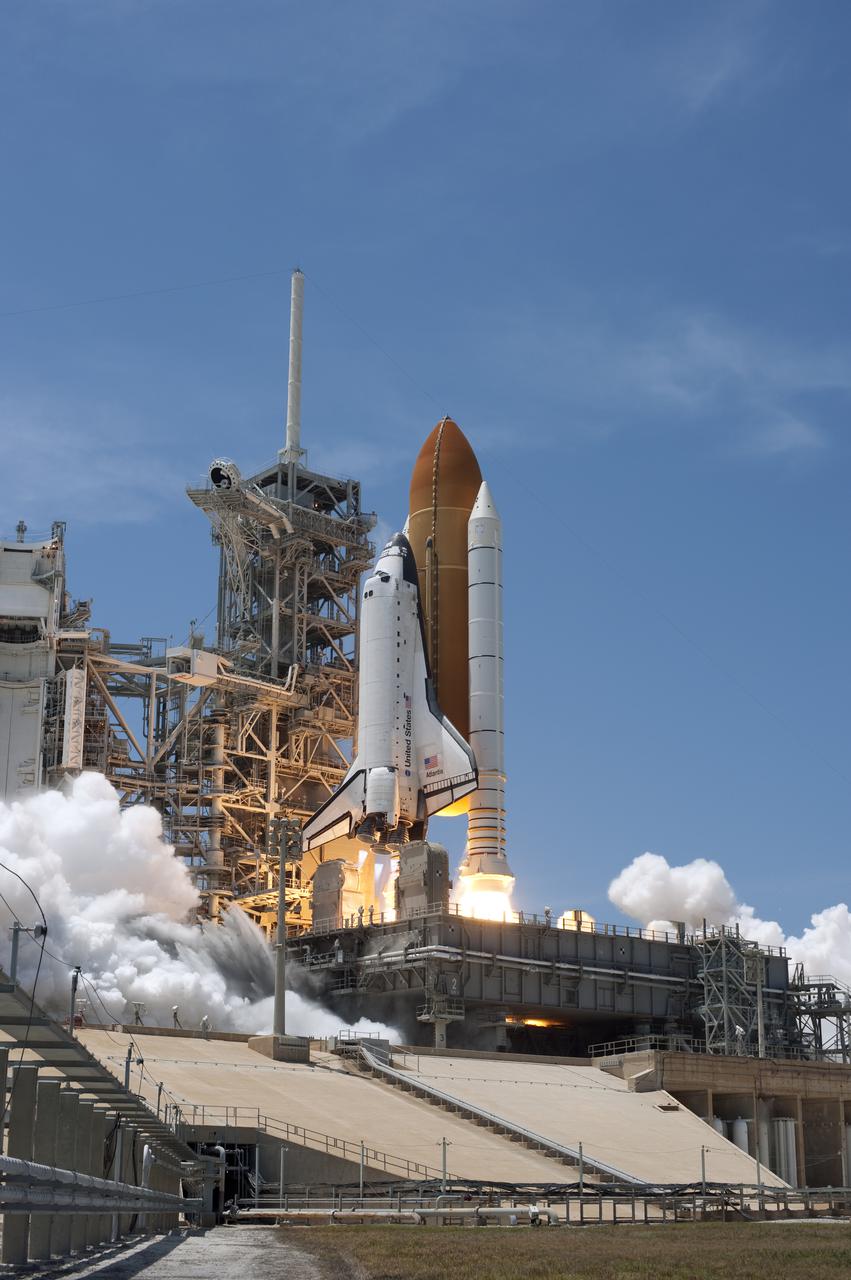
CAPE CANAVERAL, Fla. - Space shuttle Atlantis' twin solid rocket boosters ignite to propel the spacecraft off NASA Kennedy Space Center's Launch Pad 39A and into orbit at 2:20 p.m. EDT on May 14. On board Atlantis, for its last planned flight, are six veteran NASA astronauts. Atlantis' primary payload for the STS-132 mission is the Russian-built Mini Research Module-1, which will provide additional storage space and a new docking port for Russian Soyuz and Progress spacecraft aboard the International Space Station. STS-132 is the 132nd shuttle flight, the 32nd for Atlantis and the 34th shuttle mission dedicated to station assembly and maintenance. For more information on the STS-132 mission objectives, payload and crew, visit www.nasa.gov_mission_pages_shuttle_shuttlemissions_sts132_index.html. Photo credit: NASA_Tony Gray and Tom Farrar
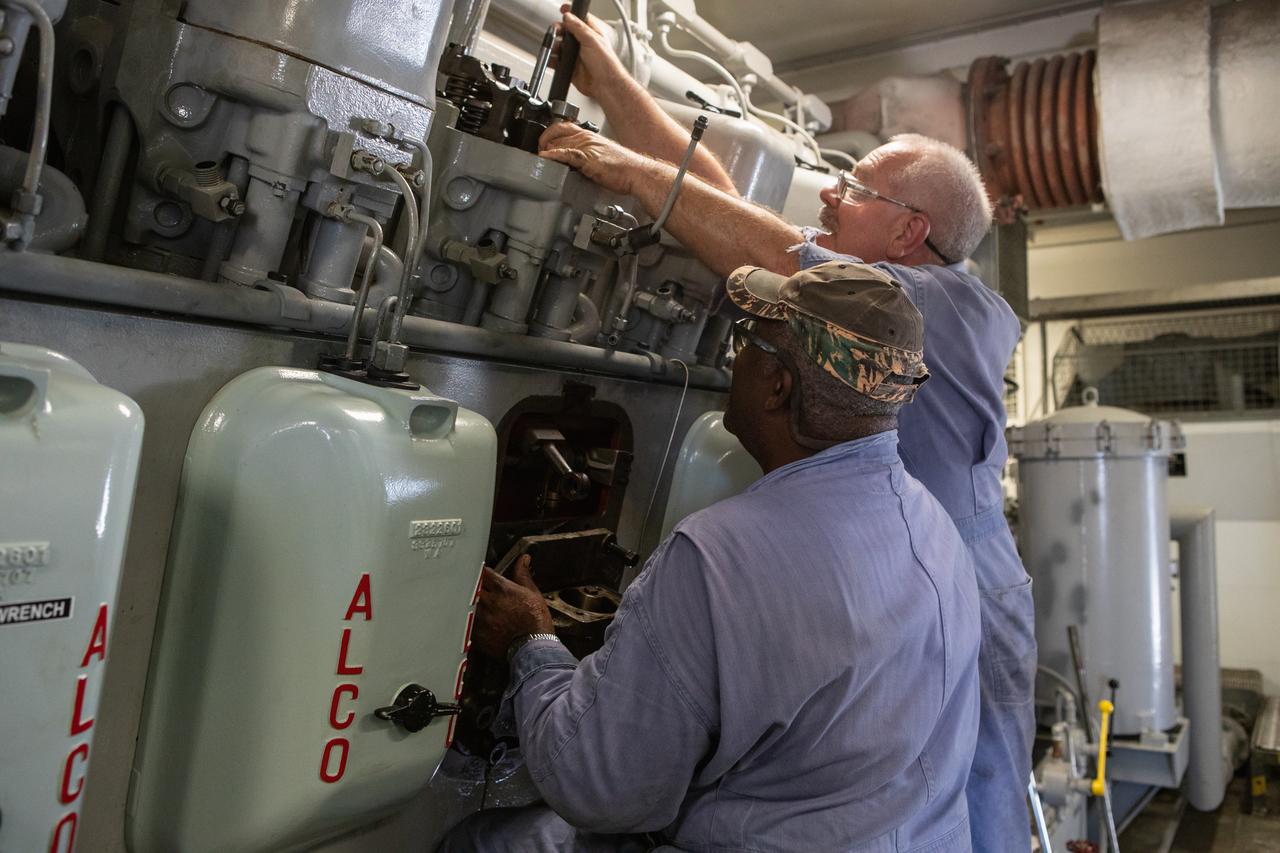
Pat Brown, left, and William Vardaman, mechanical technicians with the Jacobs contracting team, perform engine maintenance on NASA's crawler-transporter 2 on March 26, 2019, in the crawler yard located in Kennedy Space Center's Launch Complex 39 area. Recent engine work included rebuilding the vehicles’ fuel pump assemblies and installing new oil pumps that will help minimize future wear. This is one of two crawler-transporters that carried rockets and spacecraft, including the Apollo/Saturn V and space shuttle, from the Vehicle Assembly Building to the launch pad. NASA’s Exploration Ground Systems oversaw modifications and upgrades to crawler-transporter 2 so it can carry the mobile launcher and NASA's Space Launch System rocket, topped by the Orion spacecraft, to Launch Pad 39B for Exploration Mission-1.