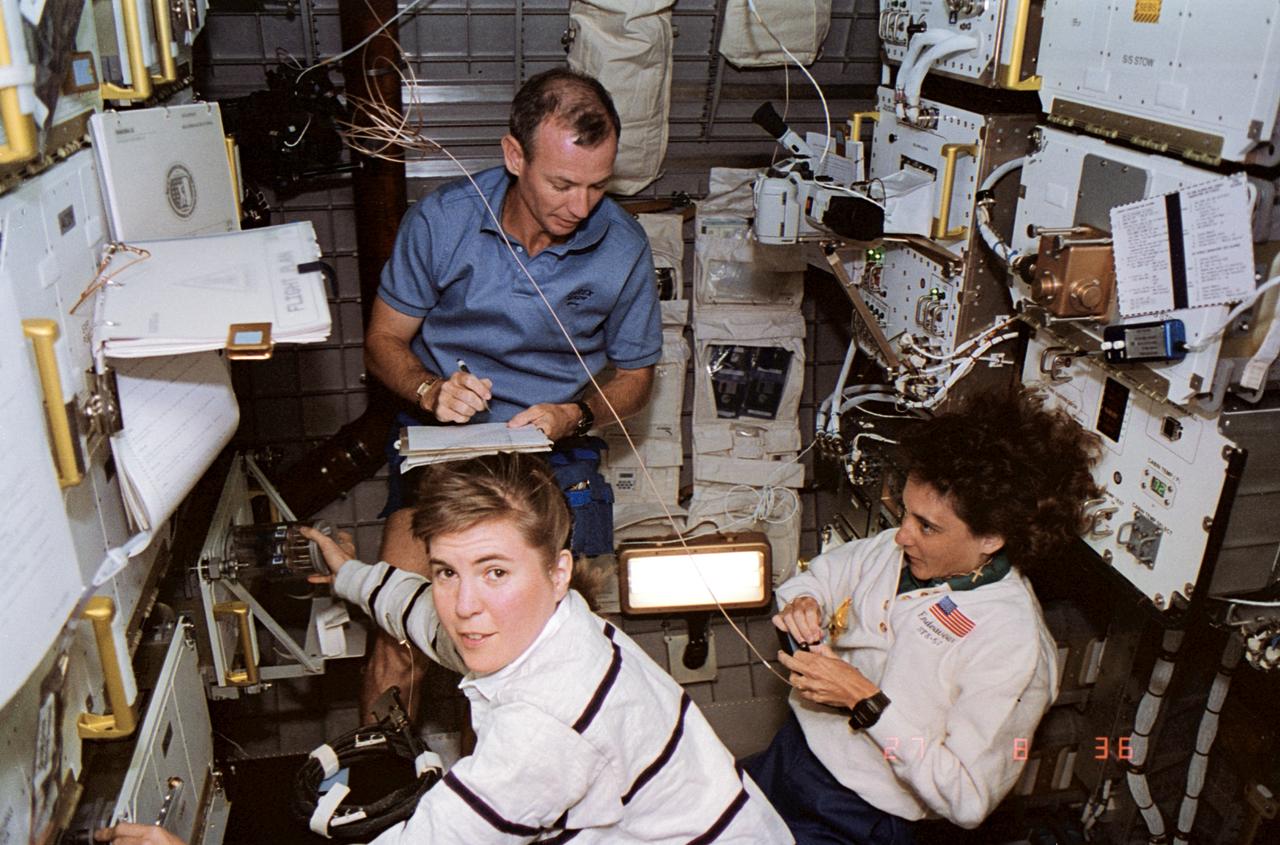
STS057-39-001 (27 June 1993) --- This high angle shot inside the SPACEHAB module, onboard the Space Shuttle Endeavour, typifies the pace of activity conducted there during the ten-day STS-57 mission. Astronaut Janice E. Voss (foreground), mission specialist, works with biomaterials products, while astronauts Brian Duffy, pilot, and Nancy J. Sherlock, mission specialist, participate in other tasks.
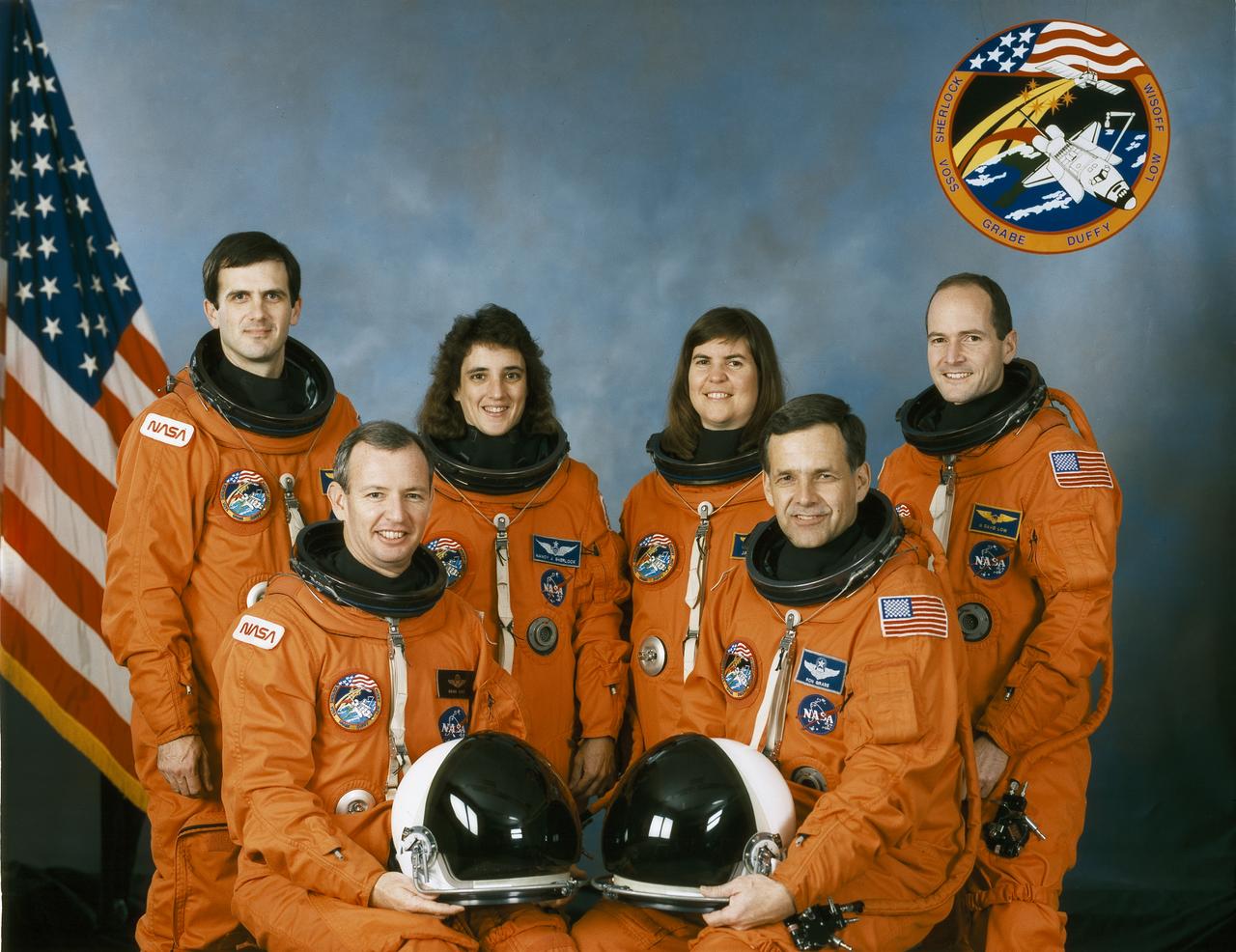
Pictured in the STS-57 crew portrait (front left to right) are Brian Duffy, pilot; and Ronald J. Grabe, commander. On the back row (left to right) are Peter J. Wisoff, Nancy J. Sherlock, and Janice E. Voss, all mission specialists; and G. David Low, payload commander. Launched aboard the Space Shuttle Endeavour on June 21, 1993 at 9:07:00 am (EDT), the STS-57 mission marked the first flight of the commercially developed SPACEHAB pressurized laboratory.
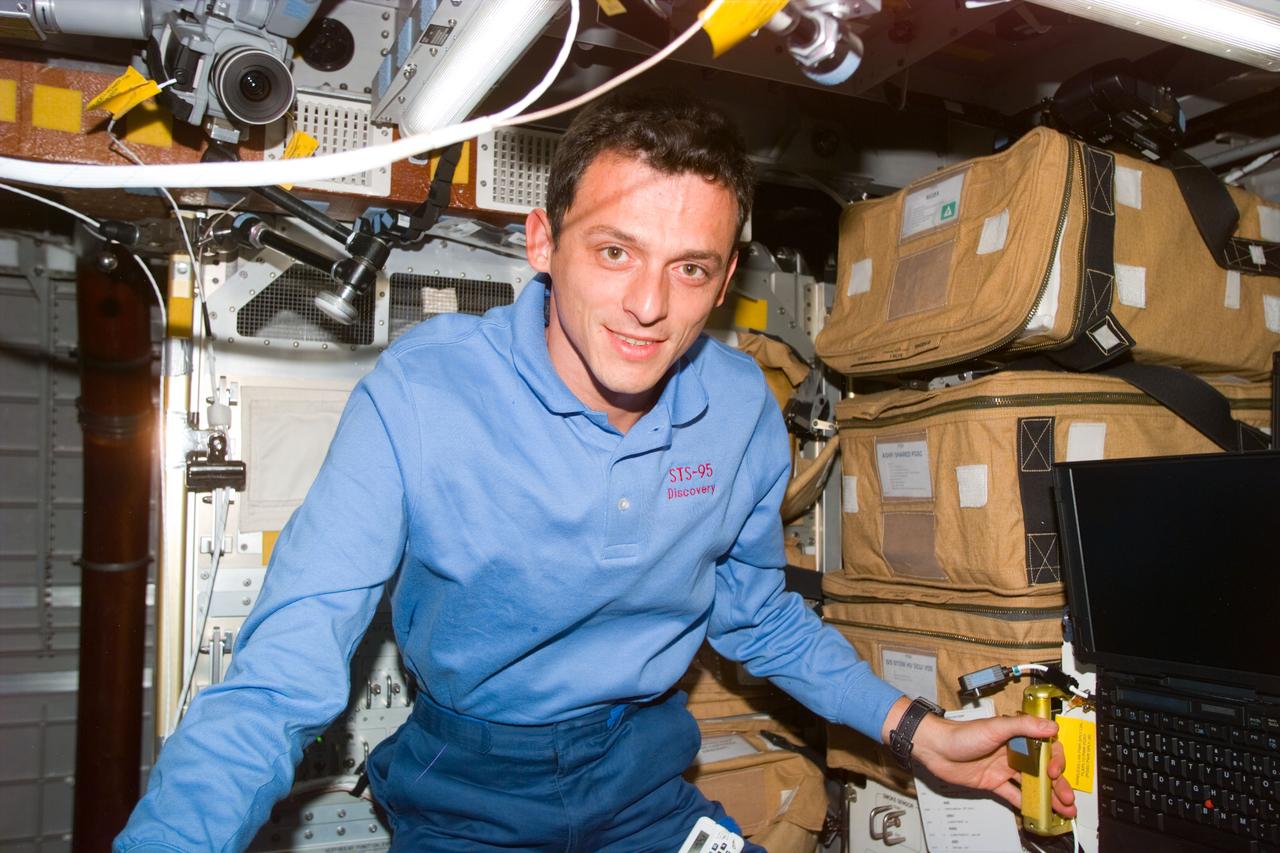
STS095-E-5153 (1 Nov. 1998) --- Astronaut Pedro Duque, STS-95 mission specialist representing the European Space Agency (ESA) moves toward a laptop computer in Spacehab facility aboard Discovery. The photo was taken at 00:57:29 GMT, Nov. 1.
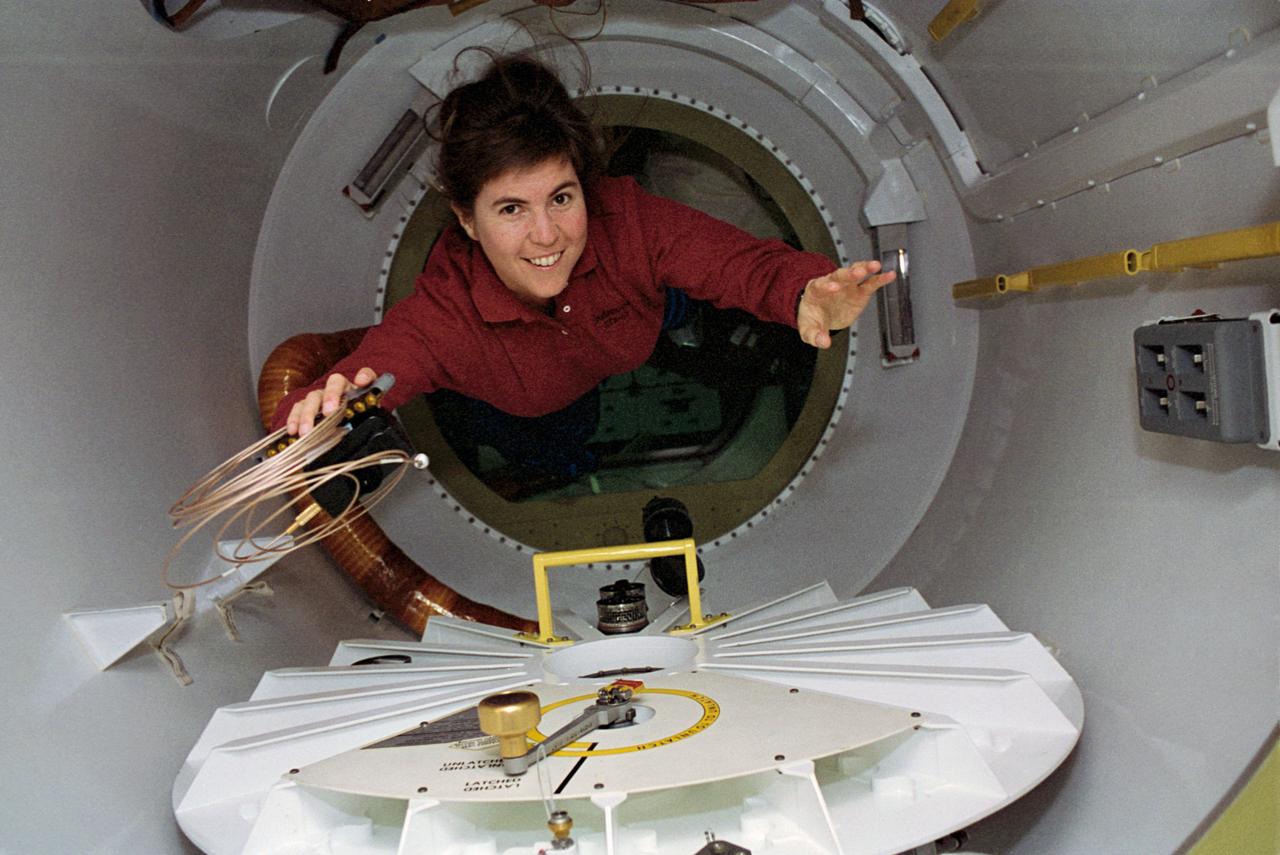
STS057-28-013 (21 June - 1 July 1993) --- With a camera and cable in hand, astronaut Janice E. Voss, mission specialist, floats through a special tunnel into the SpaceHab module. Voss and five other NASA astronauts spent almost ten days aboard the Space Shuttle Endeavour in Earth-orbit supporting the SpaceHab mission, retrieving the European Retrievable Carrier (EURECA) and conducting various experiments.
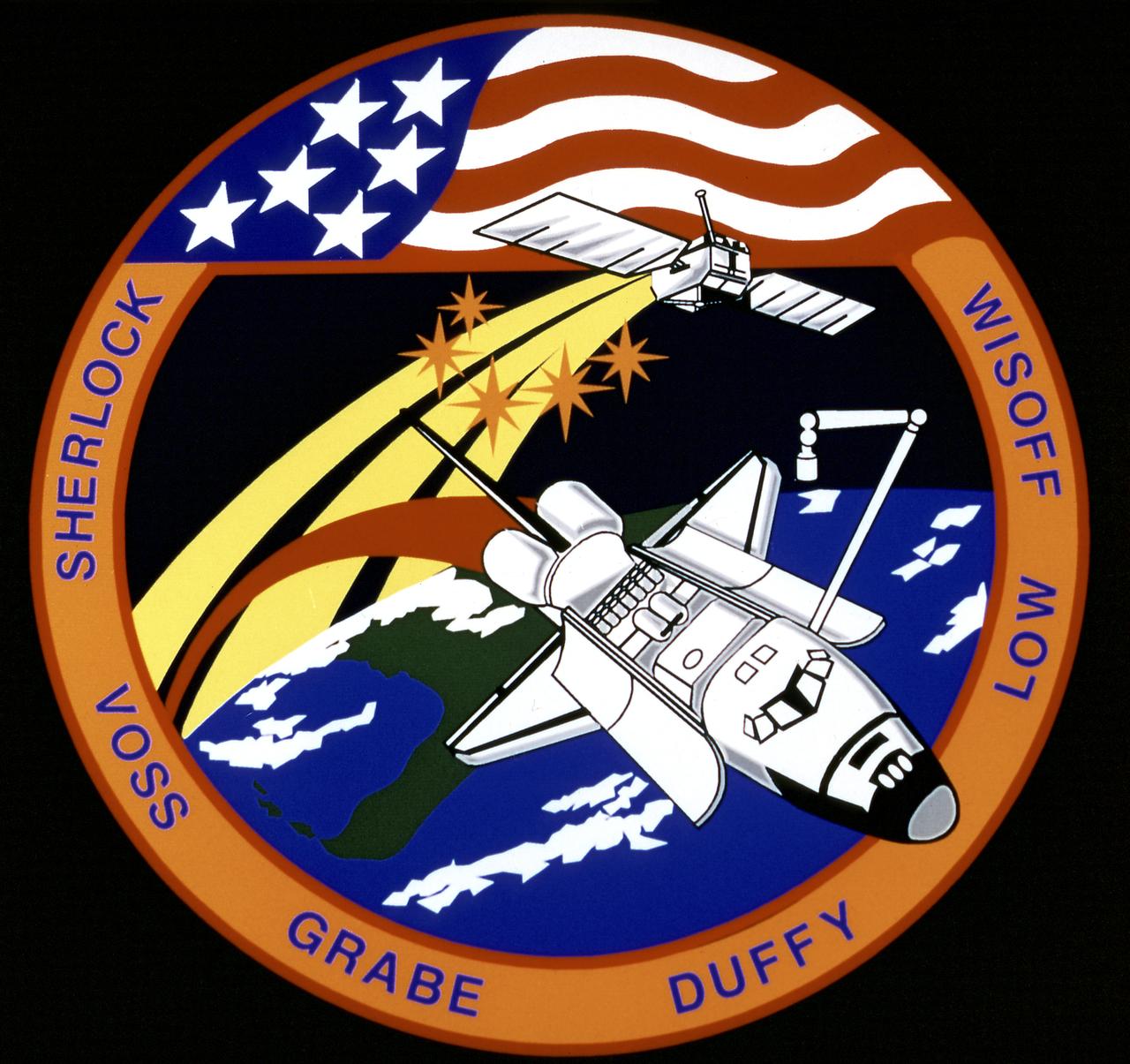
Designed by the mission’s crew members, the STS-57 crew patch depicts the Space Shuttle Endeavour maneuvering to retrieve the European Space Agency's microgravity experiment satellite EURECA. SpaceHab, the first commercial space laboratory, is depicted in the cargo bay, and its characteristic shape is represented by the inner red border of the patch. The three gold plumes surrounded by the five stars trailing EURECA are suggestive of the U.S. astronaut logo. The five gold stars together with the shape of the orbiter's mechanical arm form the mission's numerical designation. The six stars on the American flag represent the U.S. astronauts who comprise the crew. With detailed input from the crew members, the final artwork was accomplished by artist Tim Hall.
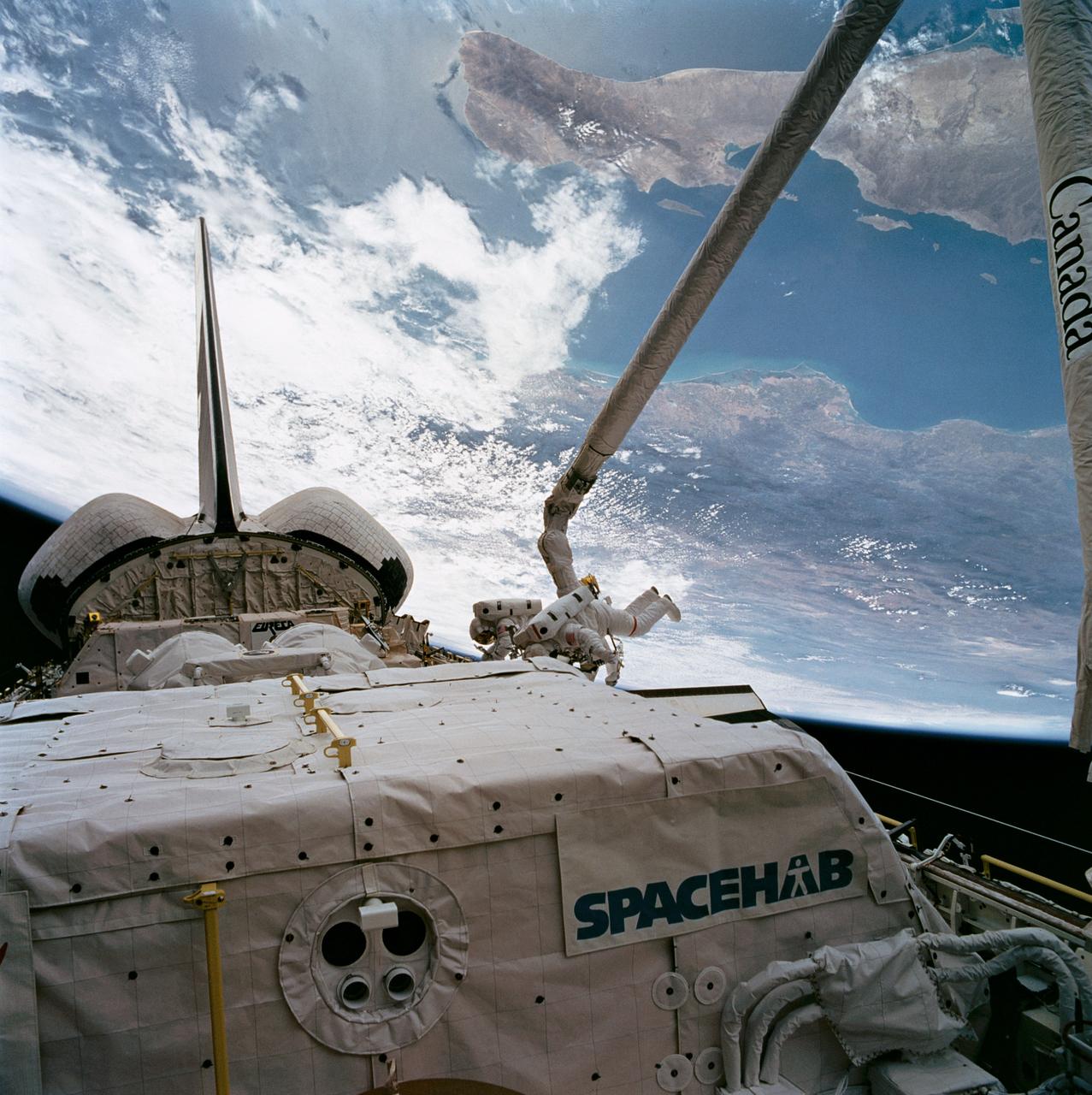
STS057-89-042 (24 June 1993) --- Baja California forms the backdrop for this extravehicular activity (EVA) scene captured on 70mm film by one of the STS-57 crew members in the Space Shuttle Endeavour's crew cabin. Working near the recently "captured" European Retrievable Carrier (EURECA) at frame center are astronauts G. David Low (nearest camera) and Peter J. K. (Jeff) Wisoff. Low is attached to a mobile foot restraint to the end of the Canadian-built Remote Manipulator System (RMS) arm. The SPACEHAB module is seen in the foreground and EURECA is partially visible near Endeavour's aft firewall.
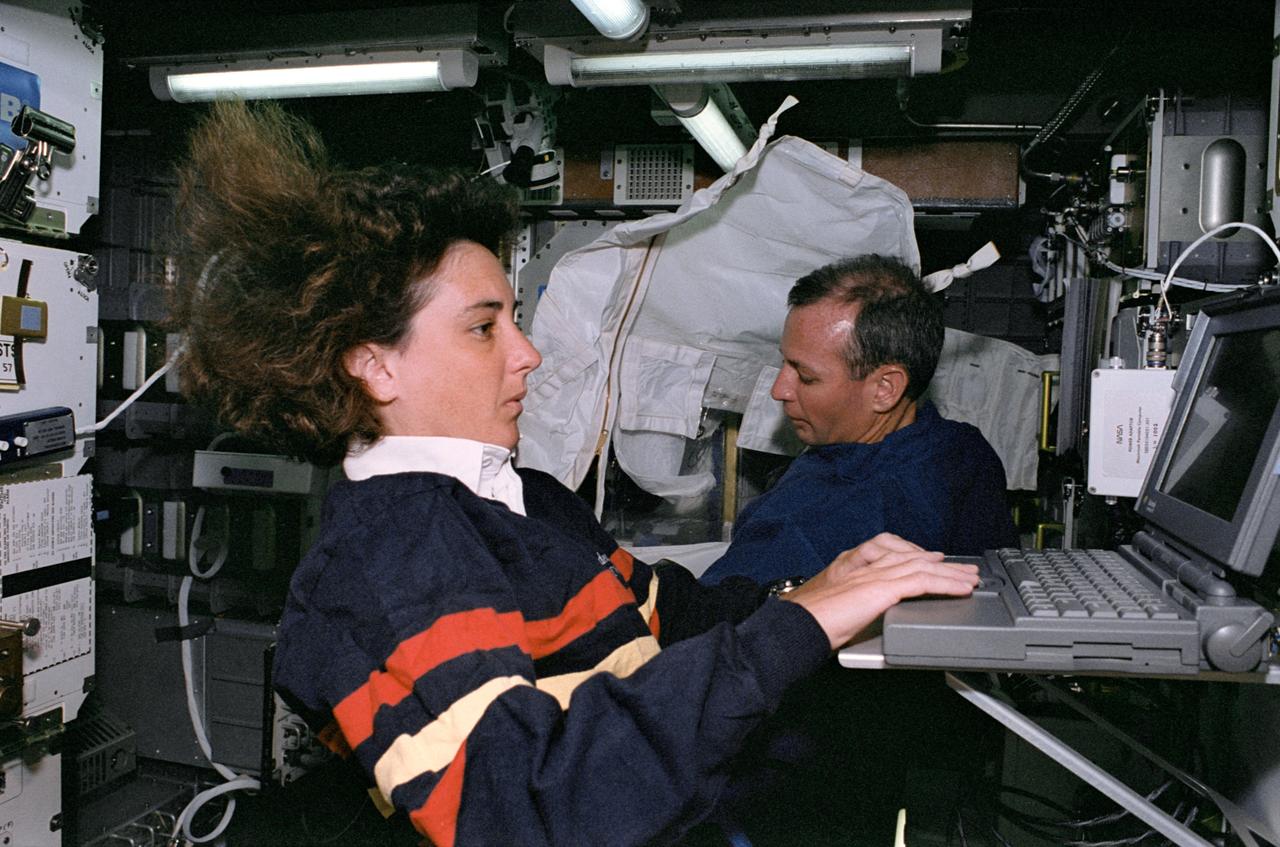
STS057-34-029 (21 June-1 July 1993) --- Astronaut Nancy J. Sherlock works on the Electronic Procedures Portion (EPROC) of the Human Factors Assessment (HFA) experiment. Astronaut Brian Duffy works nearby. The computer portion of HFA-EPROC simulated a space station propulsion system task. Sherlock, Duffy and four other astronauts spent almost ten days aboard the Space Shuttle Endeavour for the STS-57 mission.

STS057-30-021 (21 June-1 July 1993) --- Astronaut Brian Duffy, pilot, handles a soldering tool onboard the Earth-orbiting Space Shuttle Endeavour. The Soldering Experiment (SE) called for a crew member to solder on a printed circuit board containing 45 connection points, then de-solder 35 points on a similar board. The SE was part of a larger project called the Tools and Diagnostic Systems (TDS), sponsored by the Space and Life Sciences Directorate at Johnson Space Center (JSC). TDS represents a group of equipment selected from the tools and diagnostic hardware to be supported by the International Space Station program. TDS was designed to demonstrate the maintenance of experiment hardware on-orbit and to evaluate the adequacy of its design and the crew interface. Duffy and five other NASA astronauts spent almost ten days aboard the Space Shuttle Endeavour in Earth-orbit supporting the SpaceHab mission, retrieving the European Retrievable Carrier (EURECA) and conducting various experiments.
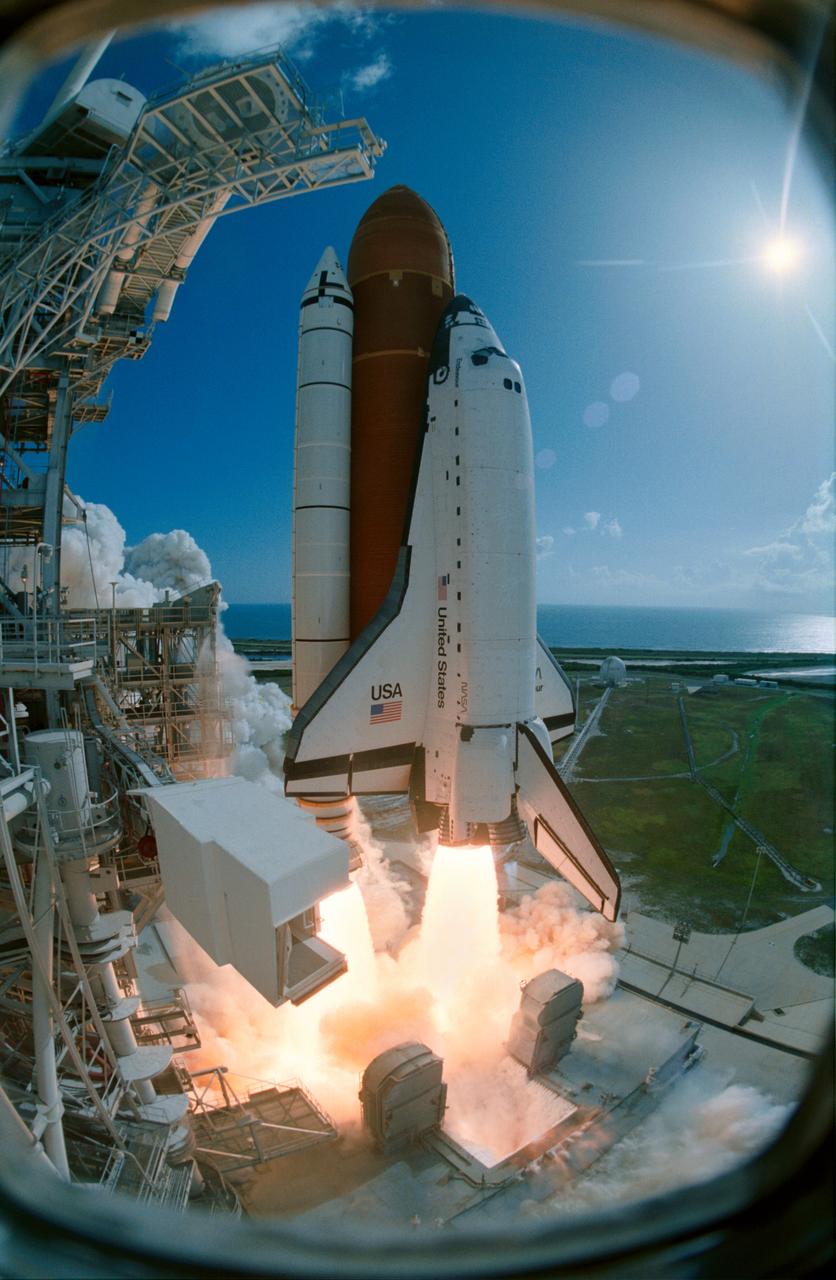
STS057-S-053 (21 June 1993) --- The Space Shuttle Endeavour lifts off Launch Pad 39B as captured on film by an audio-activated camera positioned at the 270-feet level on the Rotating Service Structure (RSS) at Launch Pad 39B. STS-57 launch occurred at 9:07:22 a.m. (EDT), June 21, 1993. The mission represents the first flight of the commercially developed SpaceHab laboratory module and also will feature a retrieval of the European Retrievable Carrier (EURECA). Onboard for Endeavour's fourth flight are a crew of six NASA astronauts; Ronald J. Grabe, mission commander; Brian Duffy, pilot; G. David Low, payload commander; and Nancy J. Sherlock, Peter J. K. (Jeff) Wisoff and Janice E. Voss, all mission specialists. An earlier launch attempt was scrubbed due to unacceptable weather conditions both at the Kennedy Space Center (KSC) and the overseas contingency landing sites.
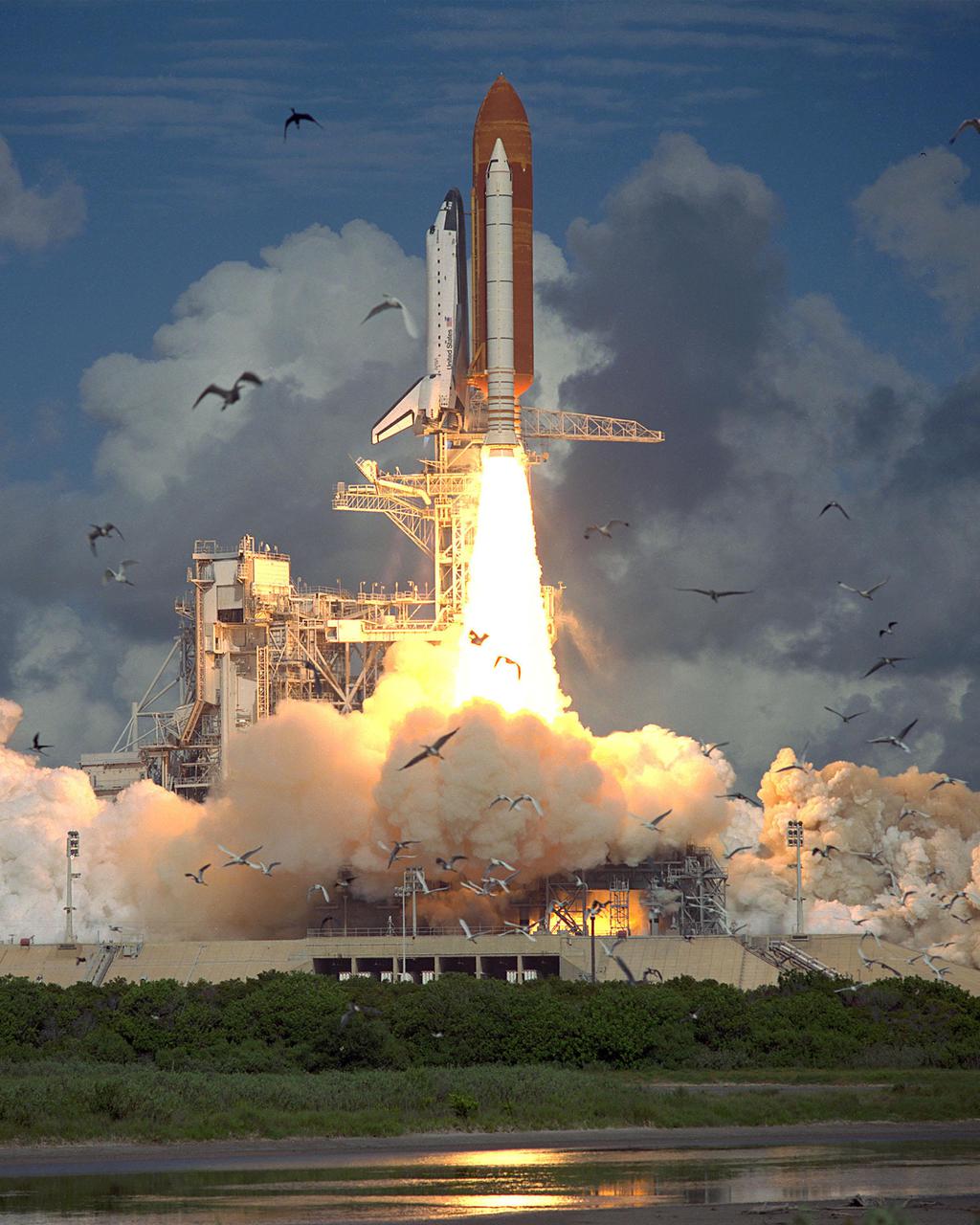
KENNEDY SPACE CENTER, FLA. -- The first flight of the commercially developed SPACEHAB laboratory module begins with the flawless liftoff of the Space Shuttle Endeavour from Launch Pad 39B at 9:07:22 a.m. EDT, June 21. Also planned for the eight-day flight of Mission STS-57 is the retrieval of the European Retrievable Carrier (EURECA). Onboard for the fourth flight of Endeavour are a crew of six: Mission Commander Ronald J. Grabe, Pilot Brian Duffy, Payload Commander G. David Low, and Mission Specialists Nancy Jane Sherlock, Peter J.K. 'Jeff' Wisoff, and Janice E. Voss. A first launch attempt on June 20 was scrubbed due to unacceptable weather conditions both at KSC and the overseas contingency landing sites.
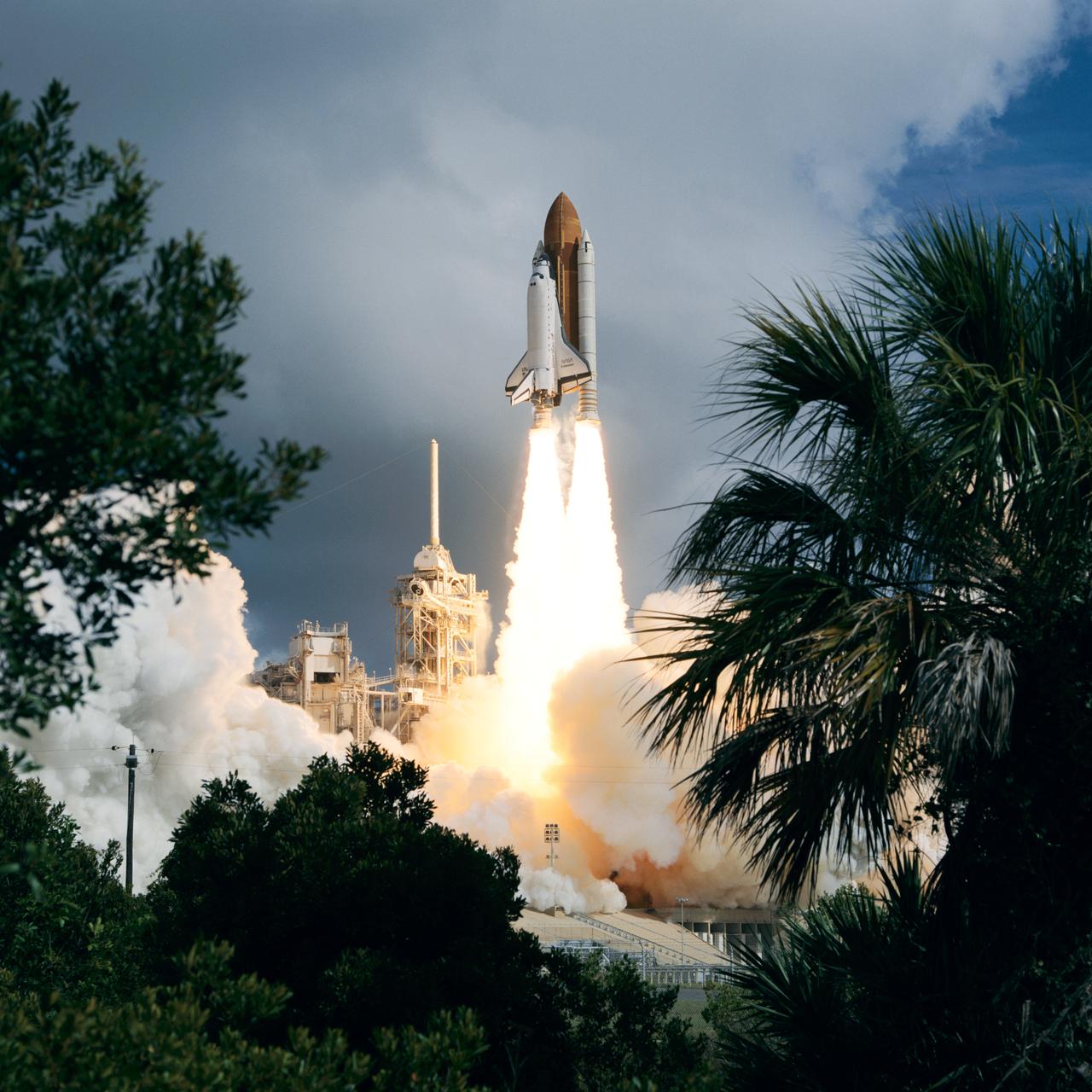
STS057-S-055 (21 June 1993) --- Framed by a variety of flora types, the Space Shuttle Endeavour lifts off Launch Pad 39B to begin the STS-57 mission. Launch occurred at 9:07:22 a.m. (EDT), June 21, 1993. The mission represents the first flight of the commercially developed SPACEHAB laboratory module and also will feature a retrieval of the European Retrievable Carrier (EURECA). Onboard for Endeavour's fourth flight are a crew of six - Ronald J. Grabe, mission commander; Brian Duffy, pilot; G. David Low, payload commander; and Nancy J. Sherlock, Peter J.K. (Jeff) Wisoff and Janice E. Voss, all mission specialists. An earlier launch attempt was scrubbed due to unacceptable weather conditions both at KSC and the overseas contingency landing sites.

STS057-S-001 (February 1993) --- Designed by the crew members, the STS-57 crew patch depicts the space shuttle Endeavour maneuvering to retrieve the European Space Agency's (ESA) microgravity experiment satellite EURECA. SpaceHab - the first commercial space laboratory - is depicted in the cargo bay, and its characteristic shape is represented by the inner red border of the patch. The three gold plumes surrounded by the five stars trailing EURECA are suggestive of the United States astronaut logo. The five gold stars together with the shape of the orbiter's mechanical arm form the mission's numerical designation. The six stars on the American flag represent the United States astronauts who comprise the crew. With detailed input from the crew members, the final artwork was accomplished by artist Tim Hall. The NASA insignia design for space shuttle flights is reserved for use by the astronauts and for other official use as the NASA Administrator may authorize. Public availability has been approved only in the form of illustrations by the various news media. When and if there is any change in this policy, which we do not anticipate, it will be publicly announced. Photo credit: NASA