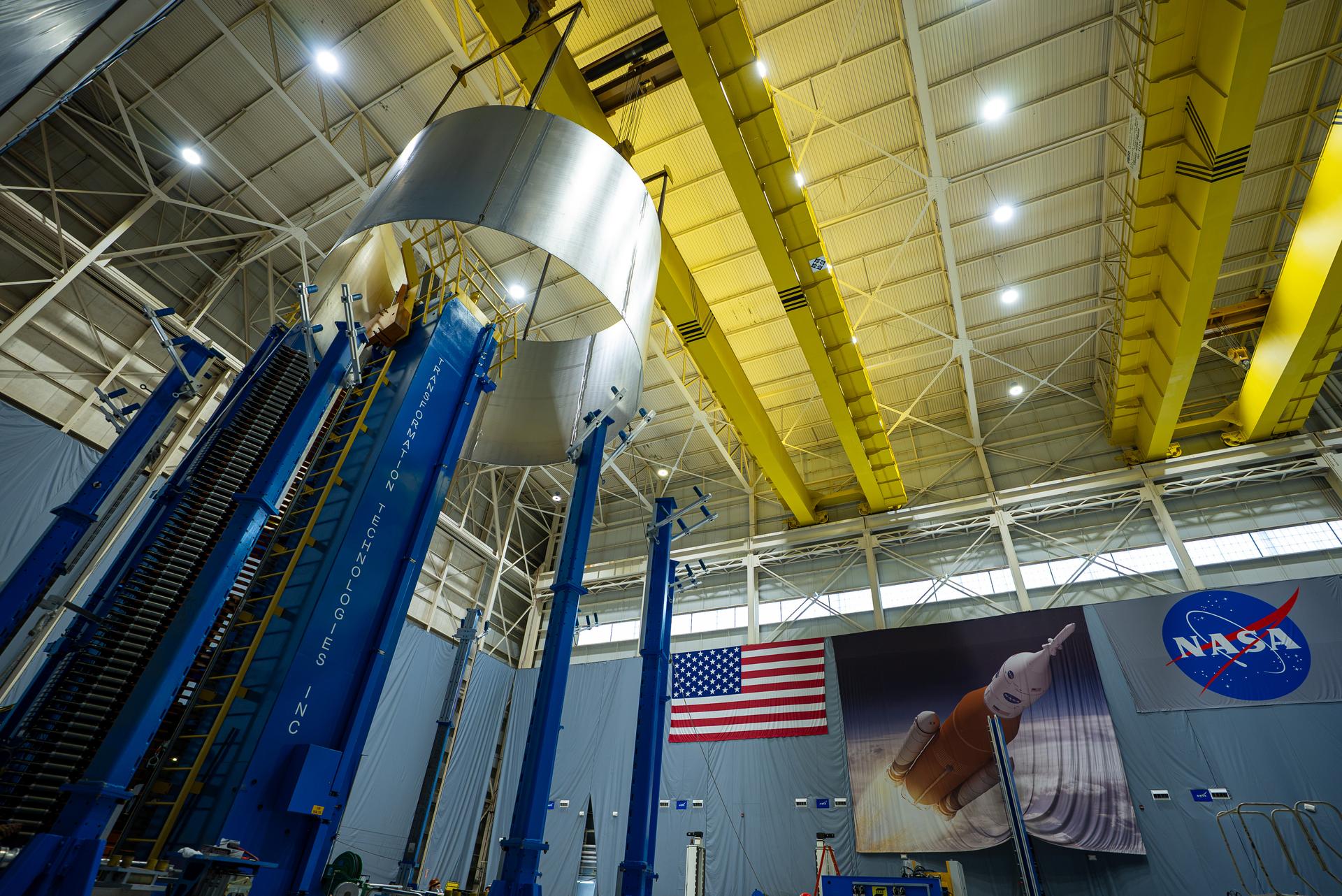
These images show the spacer that will be used on NASA’s (SLS) Space Launch System for the Artemis III mission. At NASA’s Marshall Space Flight Center in Huntsville, Alabama, technicians complete the eighth and final friction stir weld on the barrel section. With the barrel now removed from the Vertical Weld Tool, inspections are underway. The next major milestone will be the installation of the top and bottom rings. The spacer will take the place of the interim cryogenic propulsion stage (ICPS) on Artemis III, with the ICPS reassigned for use on the Artemis IV mission.
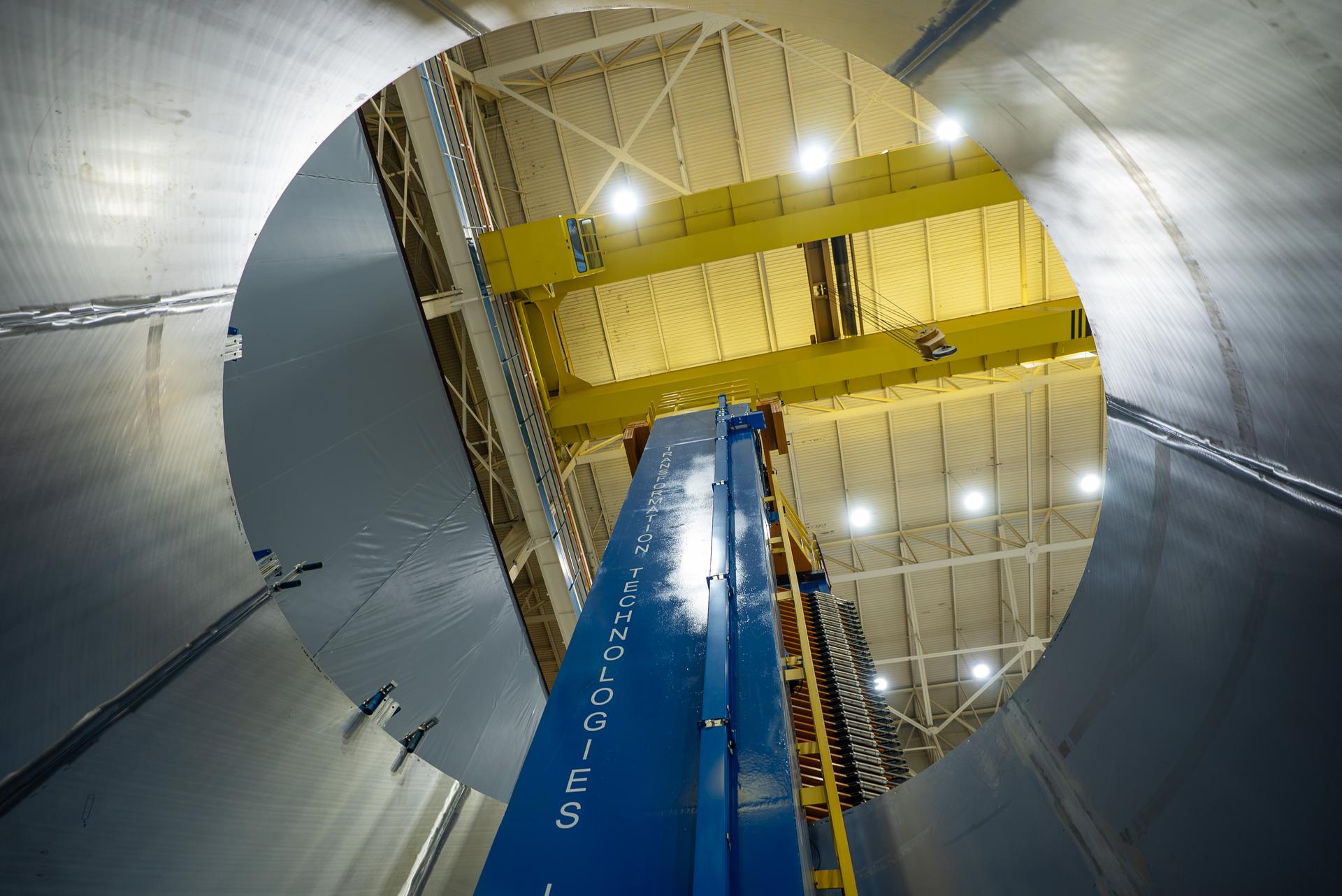
These images show the spacer that will be used on NASA’s (SLS) Space Launch System for the Artemis III mission. At NASA’s Marshall Space Flight Center in Huntsville, Alabama, technicians complete the eighth and final friction stir weld on the barrel section. With the barrel now removed from the Vertical Weld Tool, inspections are underway. The next major milestone will be the installation of the top and bottom rings. The spacer will take the place of the interim cryogenic propulsion stage (ICPS) on Artemis III, with the ICPS reassigned for use on the Artemis IV mission.
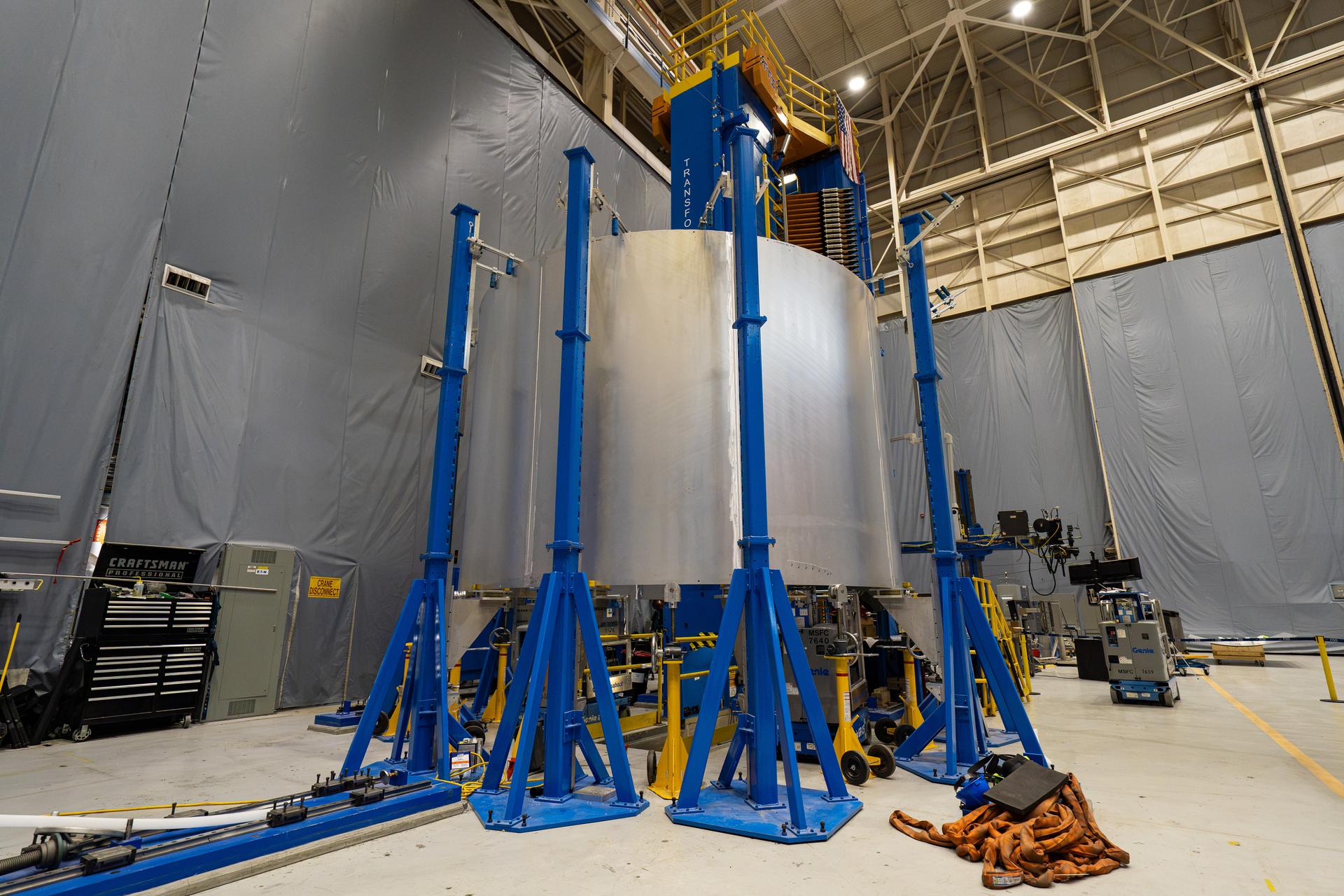
These images show the spacer that will be used on NASA’s (SLS) Space Launch System for the Artemis III mission. At NASA’s Marshall Space Flight Center in Huntsville, Alabama, technicians complete the eighth and final friction stir weld on the barrel section. With the barrel now removed from the Vertical Weld Tool, inspections are underway. The next major milestone will be the installation of the top and bottom rings. The spacer will take the place of the interim cryogenic propulsion stage (ICPS) on Artemis III, with the ICPS reassigned for use on the Artemis IV mission.
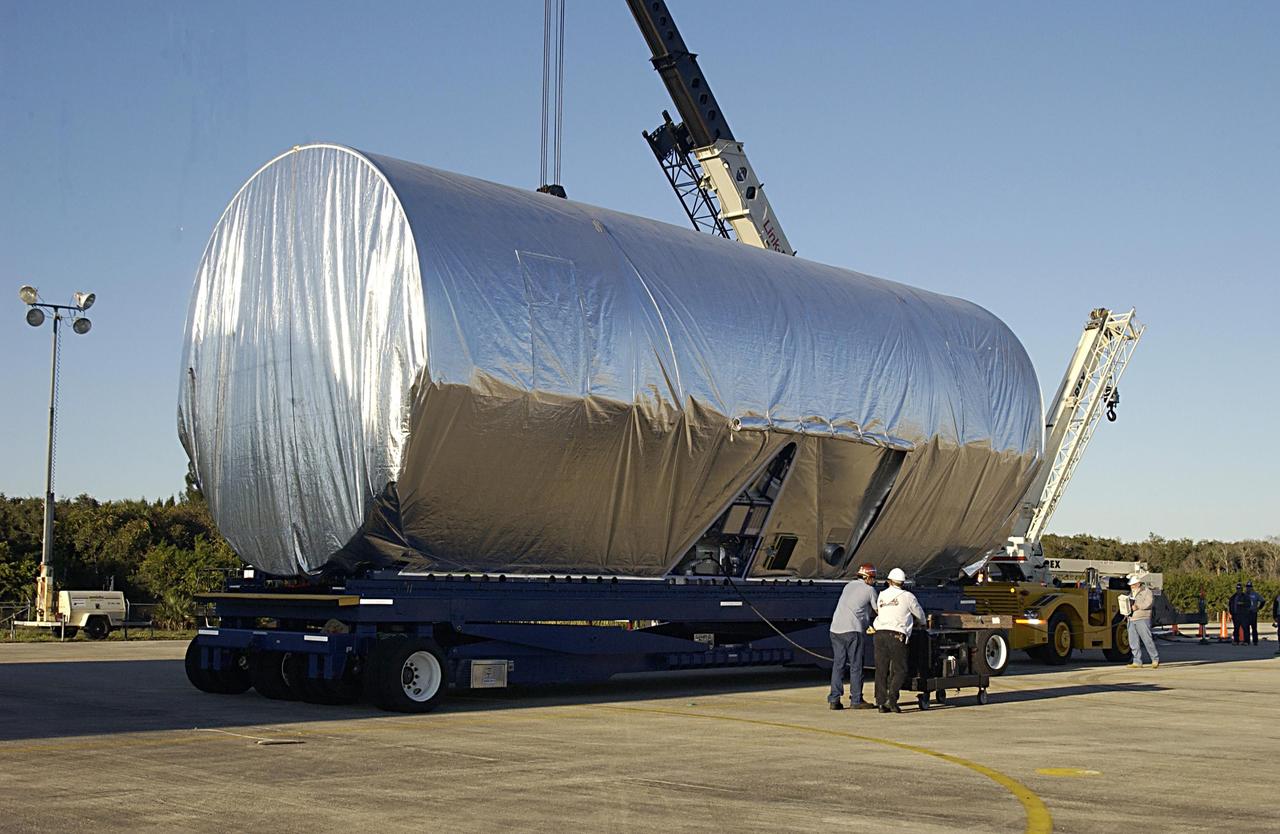
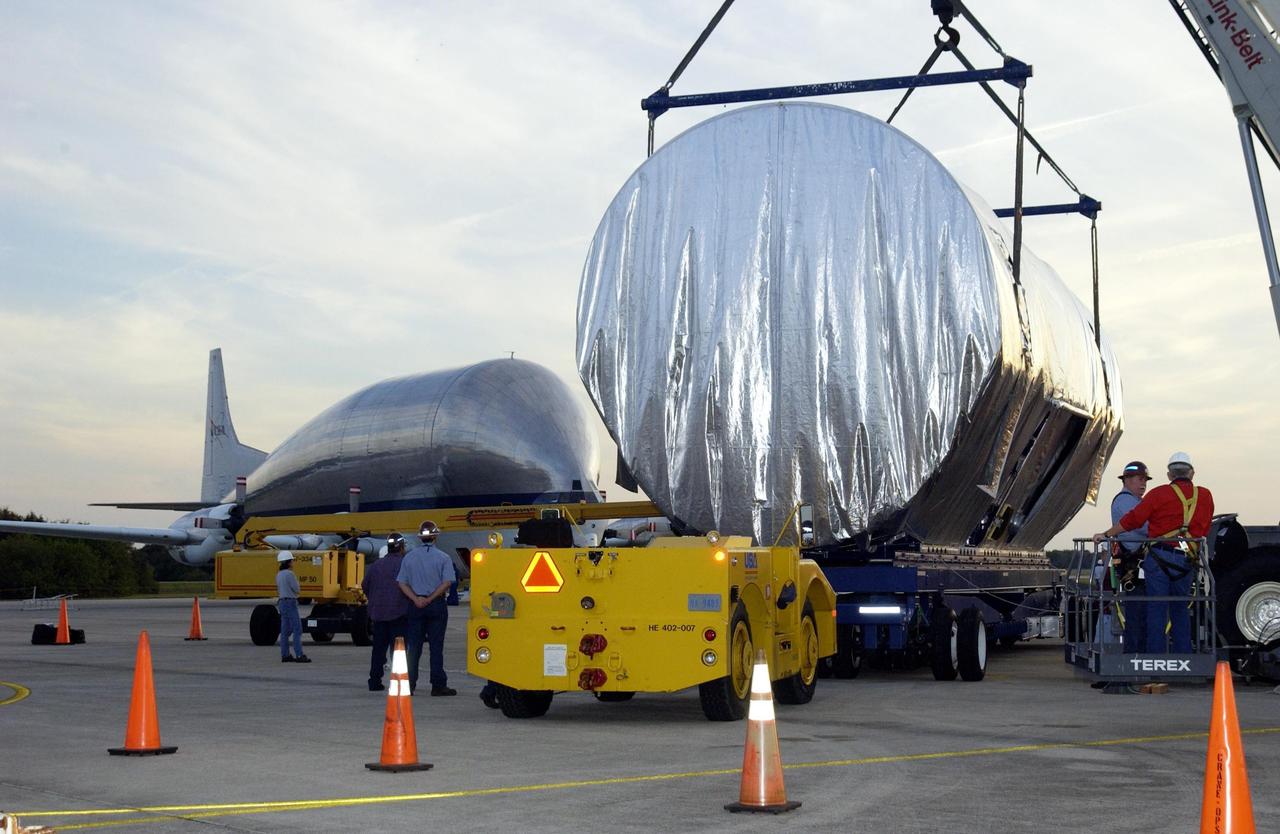
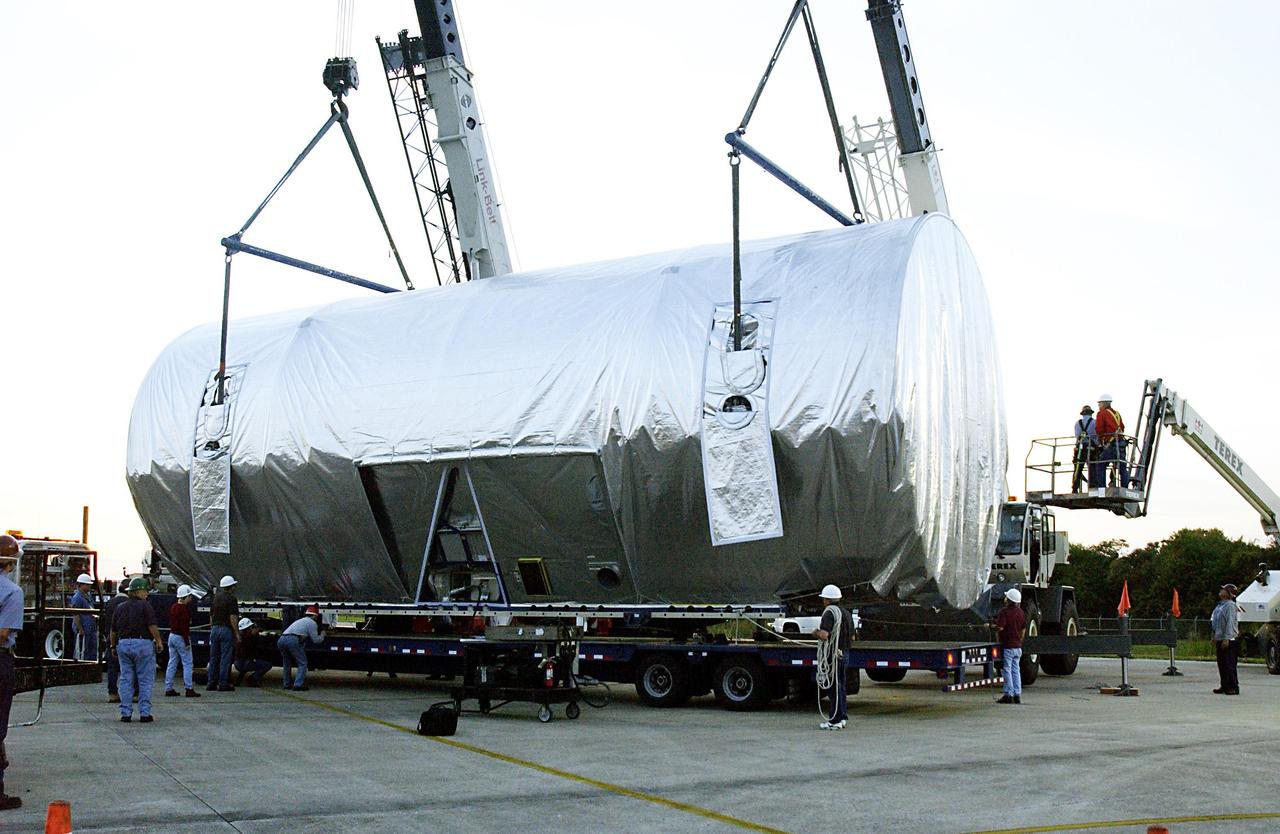
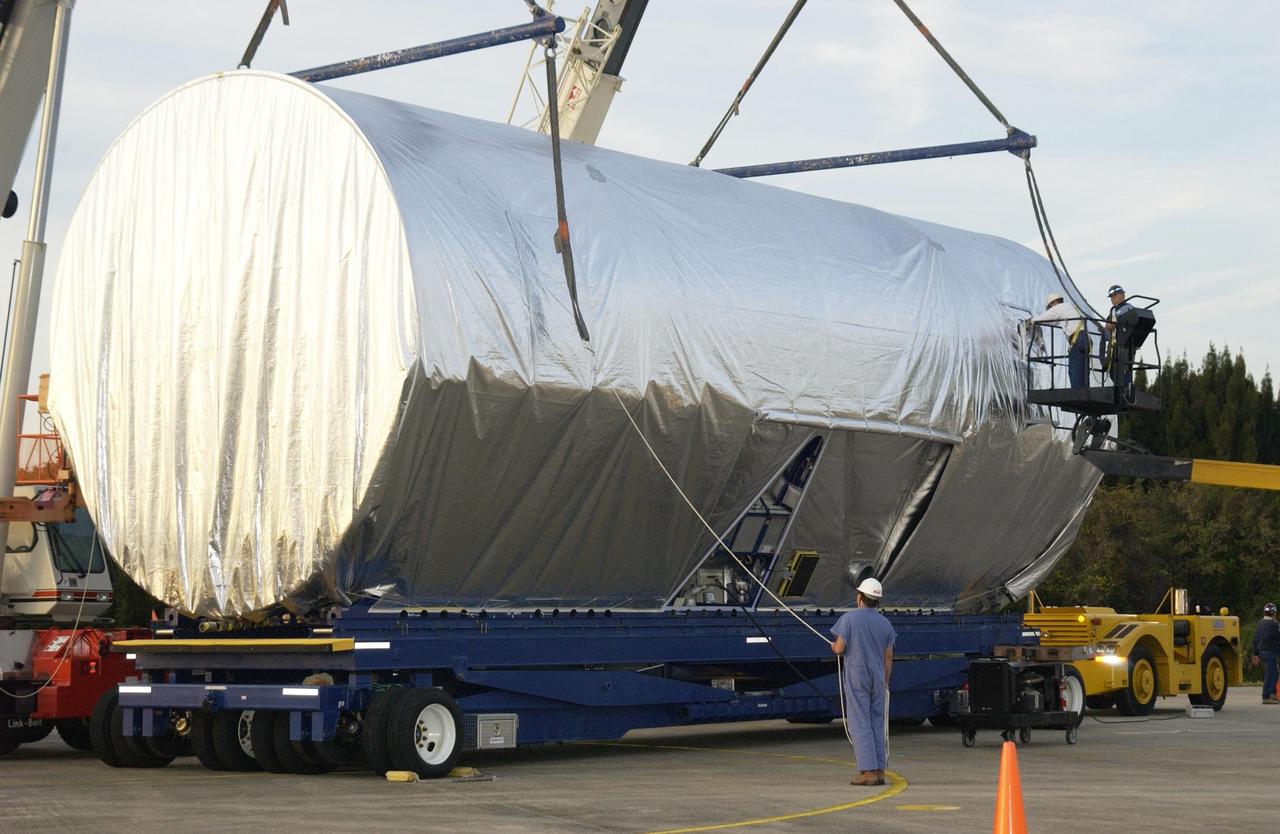
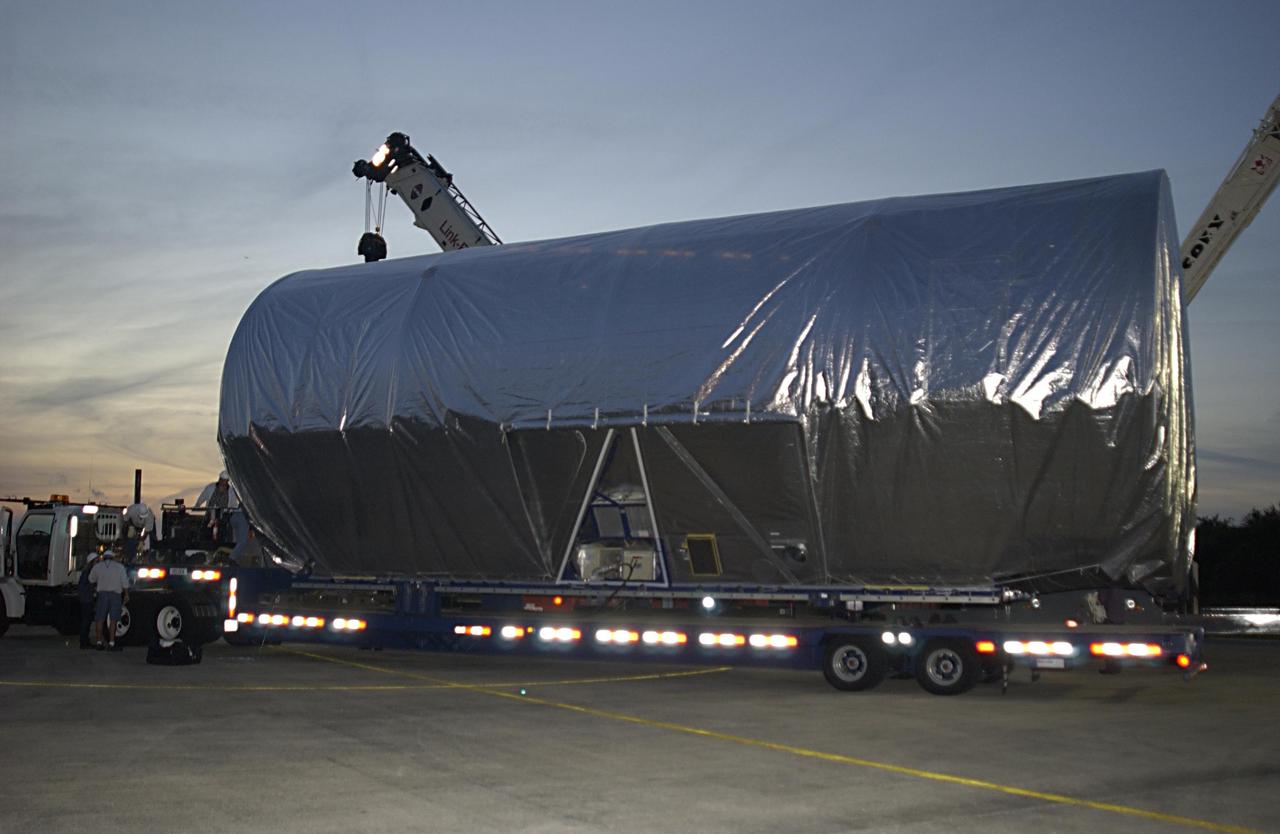
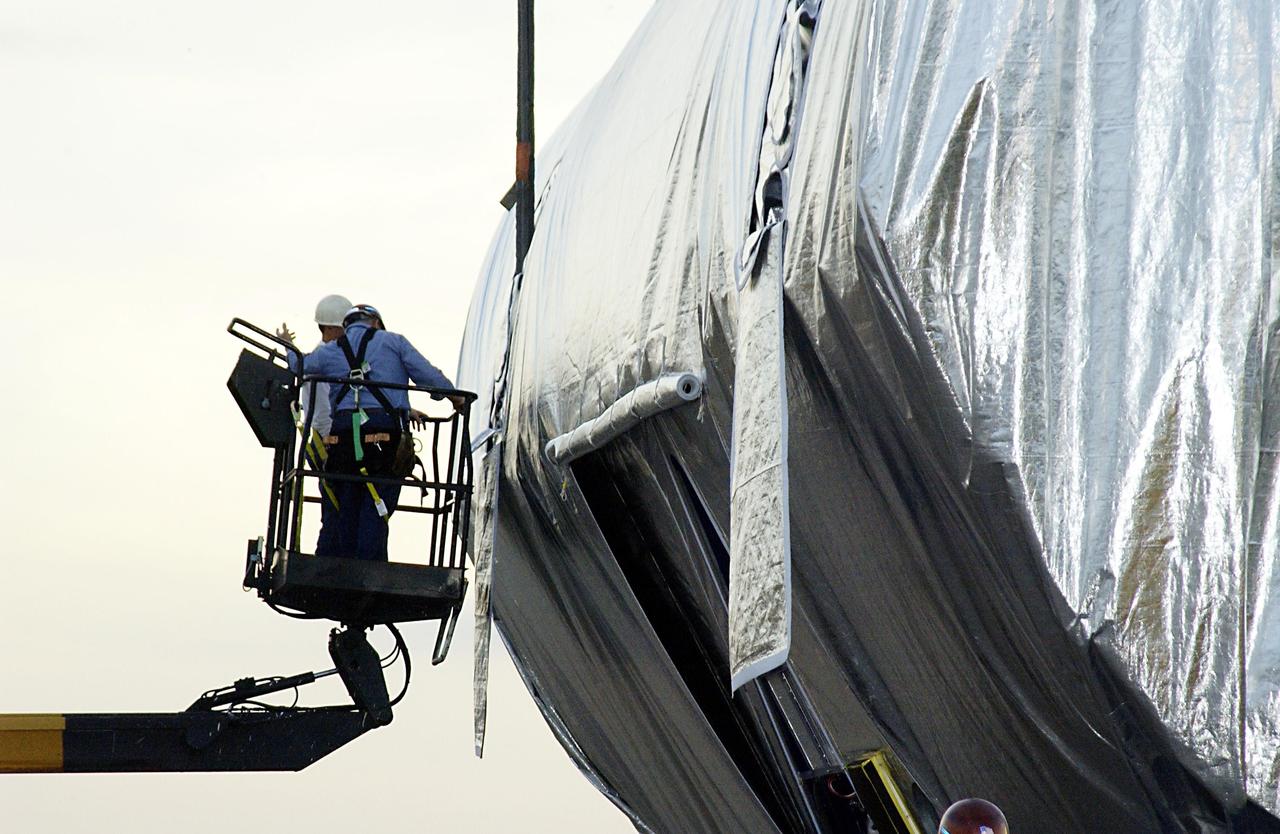
KENNEDY SPACE CENTER, FLA. -- The Long Spacer (LS), the second and final piece of the Starboard 6 (S6) Integrated Truss Segment, is secured on a flatbed truck for transport to the Space Station Processing Facility where it will undergo inspections and verification tests. Eventually the LS will be integrated with the S6 Integrated Equipment Assembly already at KSC and will fly as one segment to the International Space Station on Space Shuttle mission STS-119 in early 2004. Together the segment pieces weigh 26,000 pounds and measure 45 feet long. .

KENNEDY SPACE CENTER, FLA. -- The Long Spacer (LS), the second and final piece of the Starboard 6 (S6) Integrated Truss Segment, rolls out of NASA's Super Guppy cargo airplane. The LS will be transported to the Space Station Processing Facility for inspections and verification tests. Eventually the LS will be integrated with the S6 Integrated Equipment Assembly already at KSC and will fly as one segment to the International Space Station on Space Shuttle mission STS-119 in early 2004. Together the segment pieces weigh 26,000 pounds and measure 45 feet long. .
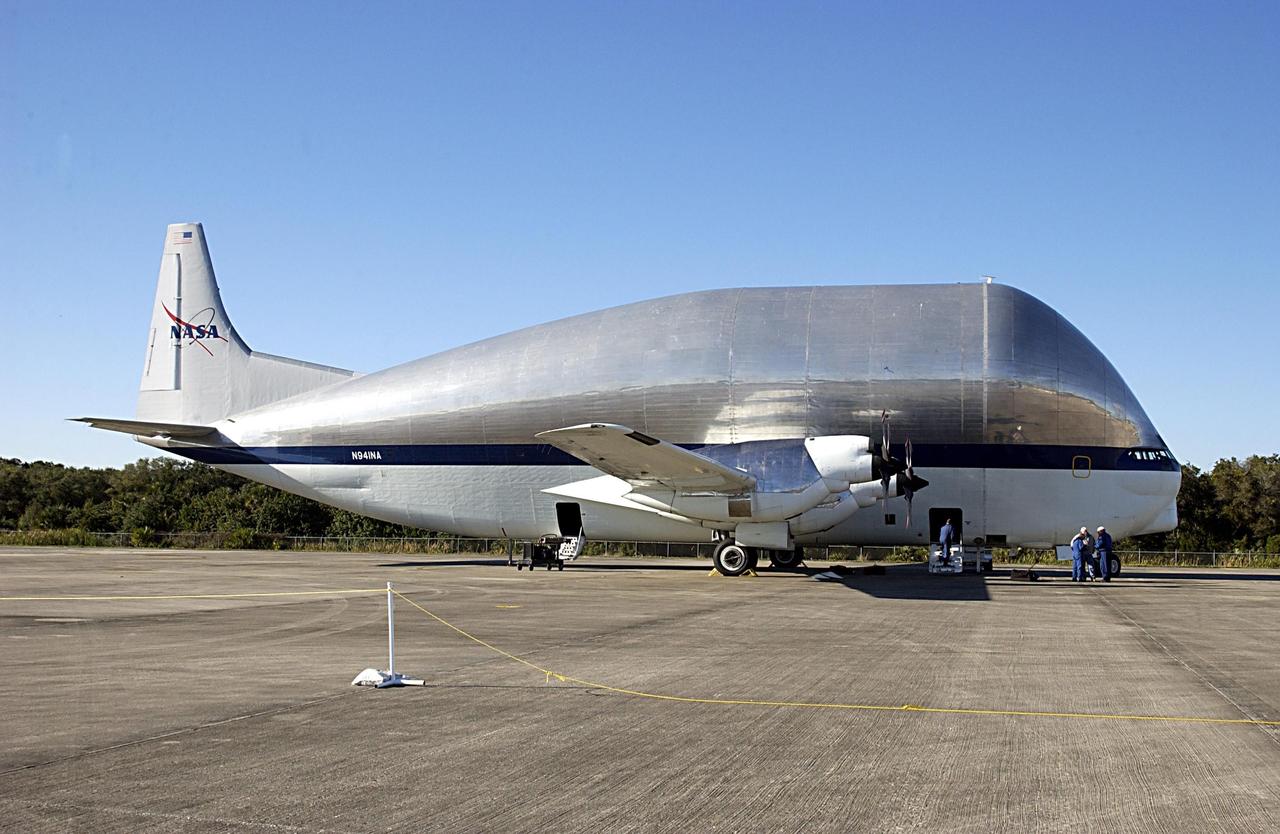
KENNEDY SPACE CENTER, FLA. - NASA's Super Guppy cargo airplane parks on the Shuttle Landing Facility at KSC before offloading the Long Spacer (LS), the second and final piece of the Starboard 6 (S6) Integrated Truss Segment. The LS will be transported to the Space Station Processing Facility for inspections and verification tests. Eventually the LS will be integrated with the S6 Integrated Equipment Assembly already at KSC and will fly as one segment to the International Space Station on Space Shuttle mission STS-119 in early 2004. Together the segment pieces weigh 26,000 pounds and measure 45 feet long. .
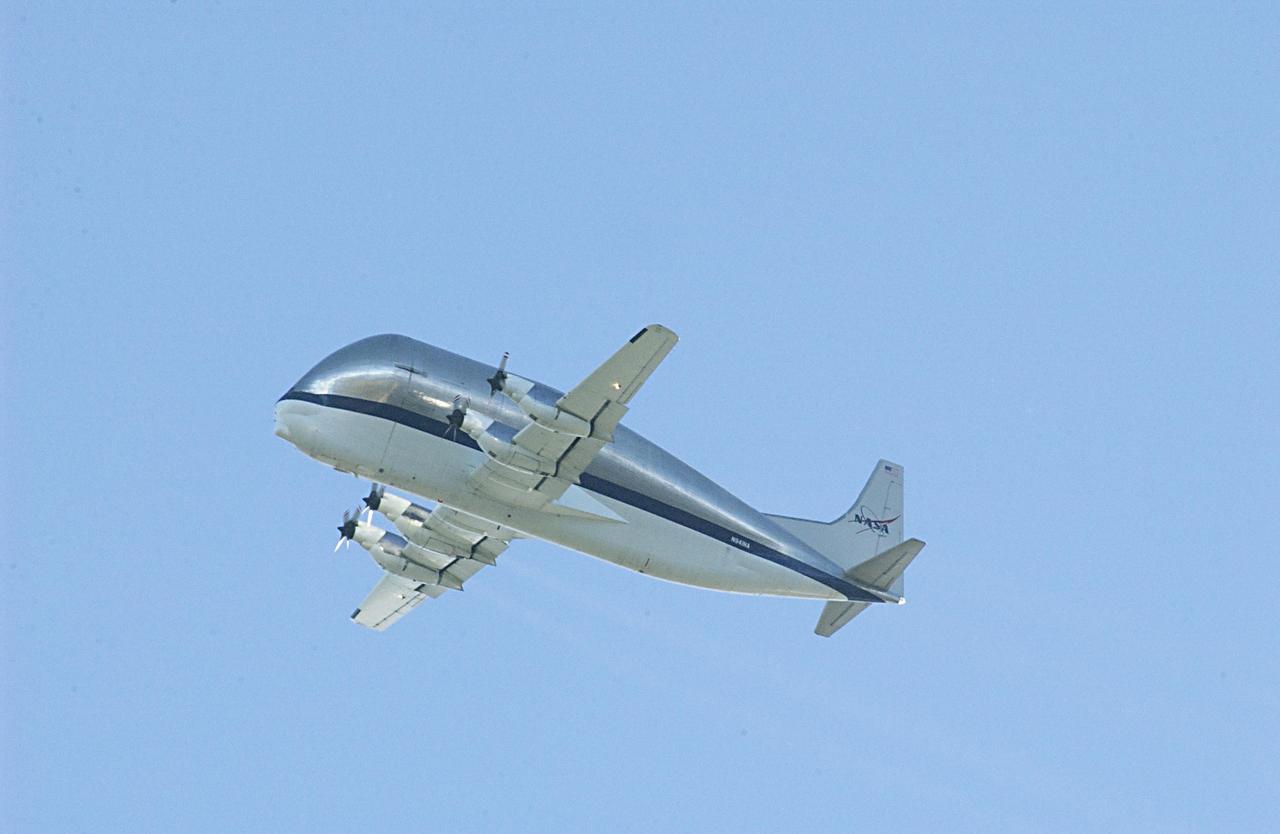
KENNEDY SPACE CENTER, FLA. - NASA's Super Guppy cargo airplane arrives at KSC carrying the Long Spacer (LS), the second and final piece of the Starboard 6 (S6) Integrated Truss Segment. After landing and offloading, the LS will be transported to the Space Station Processing Facility for inspections and verification tests. Eventually the LS will be integrated with the S6 Integrated Equipment Assembly already at KSC and will fly as one segment to the International Space Station on Space Shuttle mission STS-119 in early 2004. Together the segment pieces weigh 26,000 pounds and measure 45 feet long.
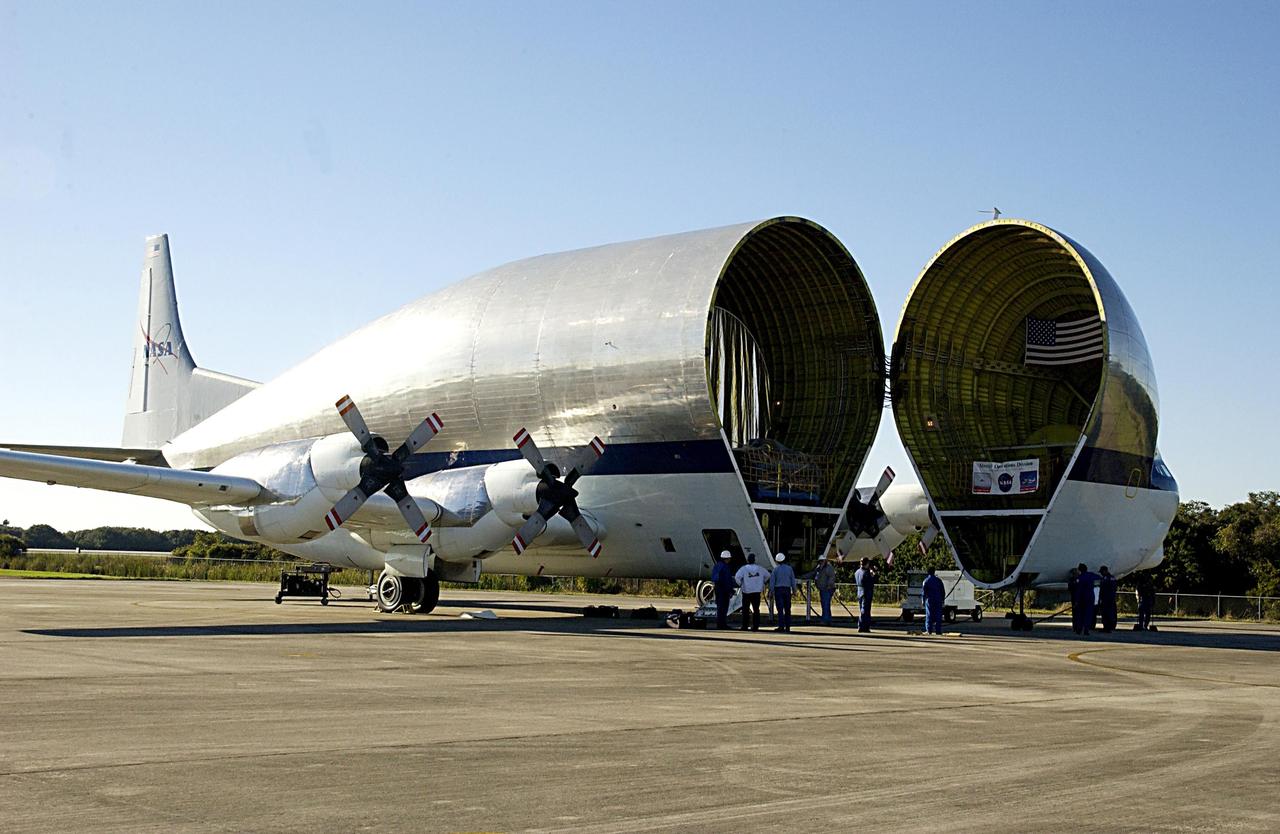
KENNEDY SPACE CENTER, FLA. - After landing at the KSC Shuttle Landing Facility, NASA's Super Guppy cargo airplane opens to remove its cargo, the Long Spacer (LS), the second and final piece of the Starboard 6 (S6) Integrated Truss Segment. The LS will be transported to the Space Station Processing Facility for inspections and verification tests. Eventually the LS will be integrated with the S6 Integrated Equipment Assembly already at KSC and will fly as one segment to the International Space Station on Space Shuttle mission STS-119 in early 2004. Together the segment pieces weigh 26,000 pounds and measure 45 feet long. .
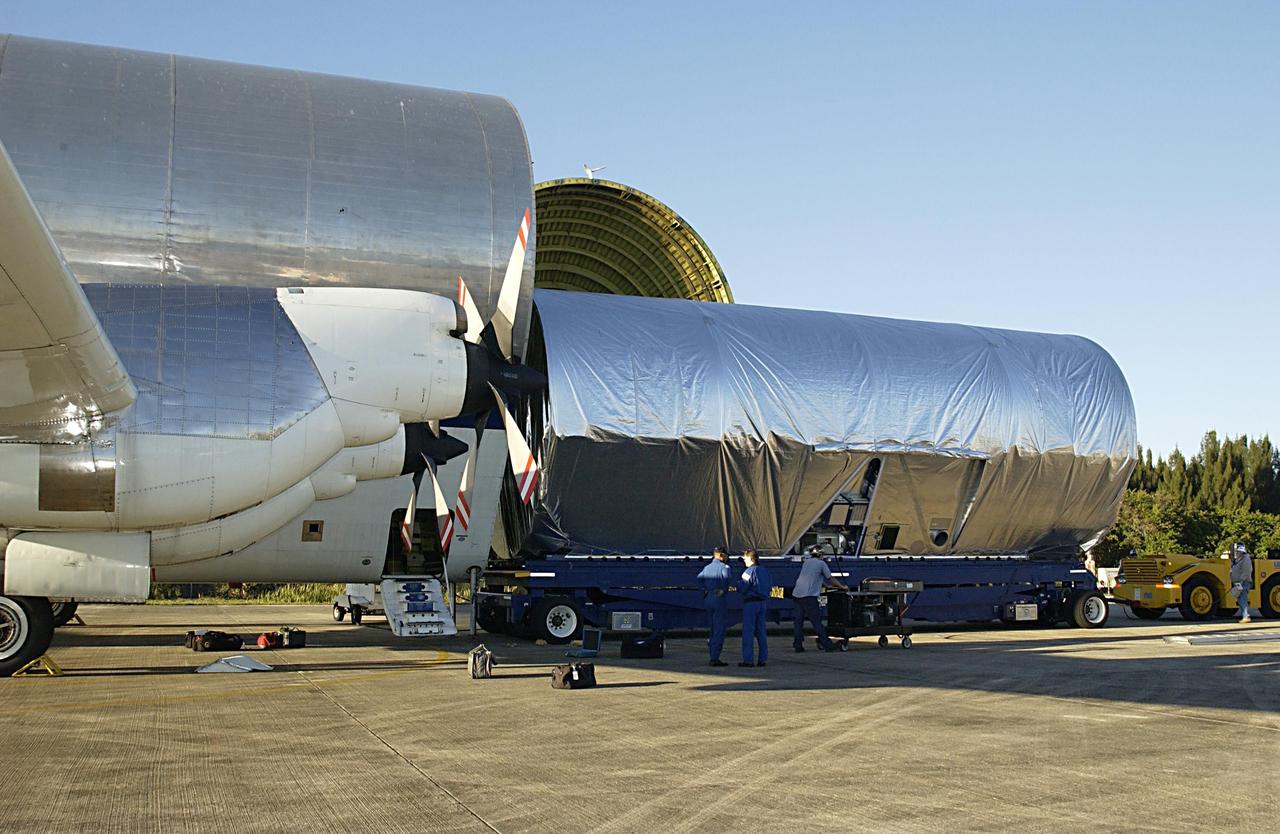
KENNEDY SPACE CENTER, FLA. -- The Long Spacer (LS), the second and final piece of the Starboard 6 (S6) Integrated Truss Segment, rolls out of NASA's Super Guppy cargo airplane onto a transporter. The LS will be moved to the Space Station Processing Facility for inspections and verification tests. Eventually the LS will be integrated with the S6 Integrated Equipment Assembly already at KSC and will fly as one segment to the International Space Station on Space Shuttle mission STS-119 in early 2004. Together the segment pieces weigh 26,000 pounds and measure 45 feet long. .
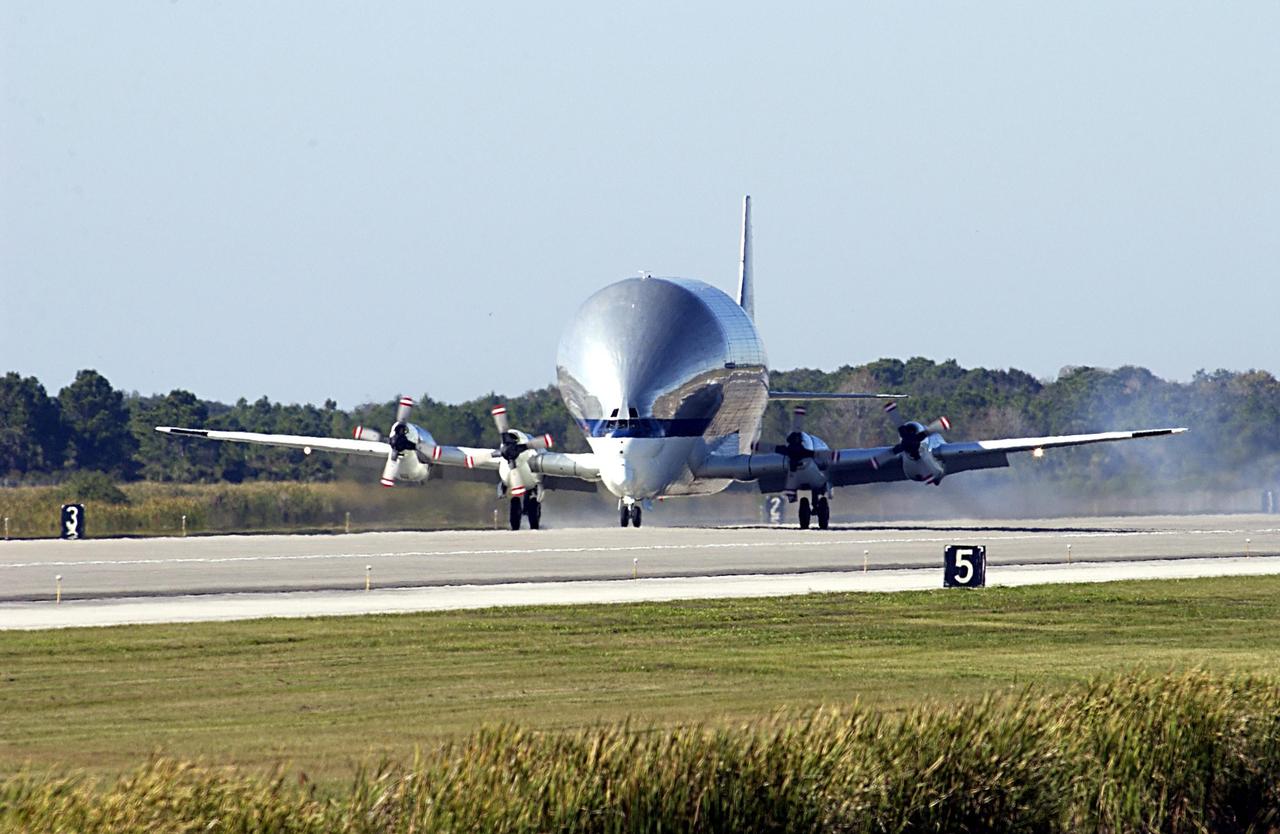
KENNEDY SPACE CENTER, FLA. - - NASA's Super Guppy cargo airplane arrives at KSC carrying the Long Spacer (LS), the second and final piece of the Starboard 6 (S6) Integrated Truss Segment. After landing and offloading, the LS will be transported to the Space Station Processing Facility for inspections and verification tests. Eventually the LS will be integrated with the S6 Integrated Equipment Assembly already at KSC and will fly as one segment to the International Space Station on Space Shuttle mission STS-119 in early 2004. Together the segment pieces weigh 26,000 pounds and measure 45 feet long. .
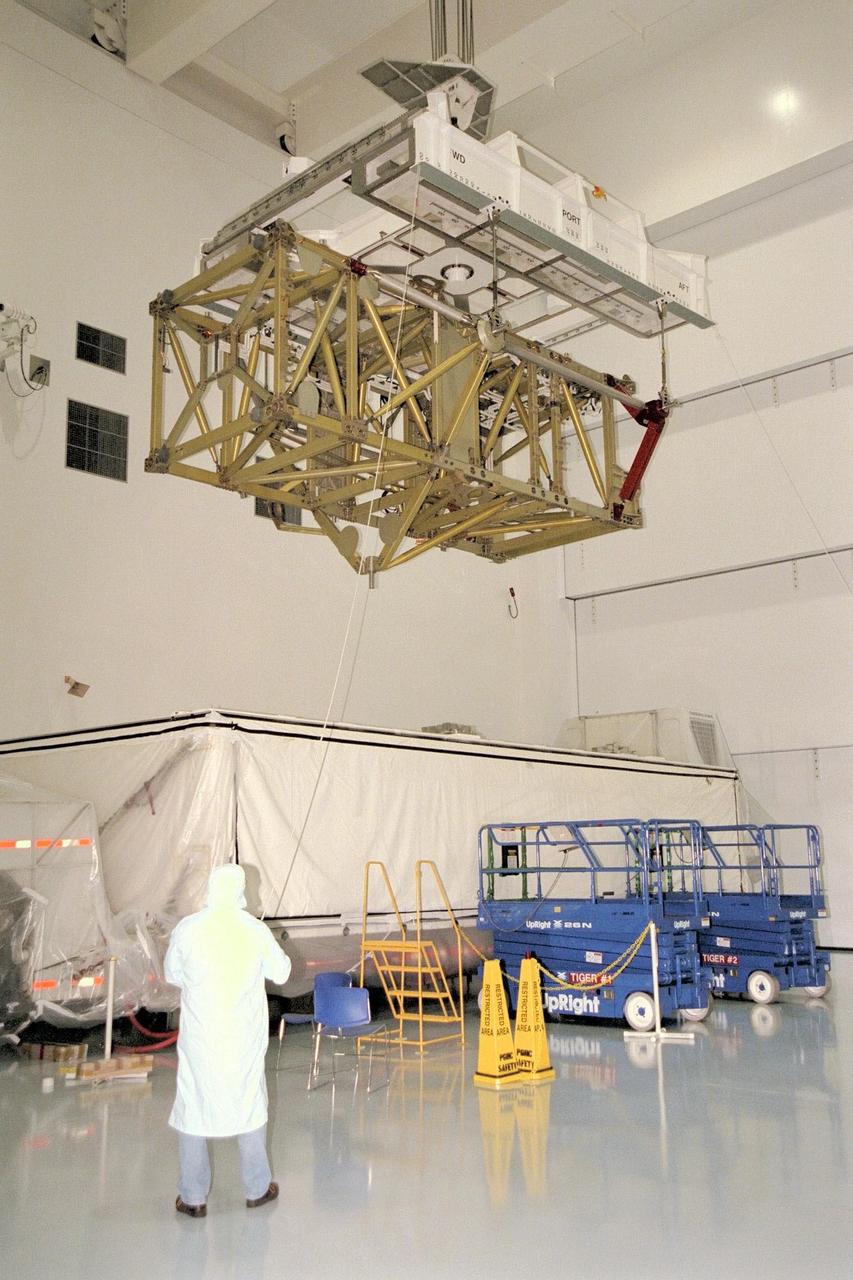
KENNEDY SPACE CENTER, FLA. -- The Long Spacer, a component of the International Space Station, arrives and is moved to its test stand in the northeast corner of the high bay in KSC's Space Station Processing Facility. The Long Spacer provides structural support for the outboard Photovoltaic Modules that supply power to the station. Now just a structure, the Long Spacer will have attached to it as part of processing a heat dissipation radiator and two Pump and Flow Control subassemblies that circulate ammonia to cool the solar array electronics. Also to be mounted are ammonia fluid lines as part of the cooling system and the cabling necessary for power and control of the station. The Long Spacer becomes an integral part of a station truss segment when it is mated with the Integrated Equipment Assembly, which stores the electrical power generated by the solar arrays for use by the station modules. The Long Spacer is being processed in preparation for STS-97, currently planned for launch aboard Discovery in April 1999

KENNEDY SPACE CENTER, FLA. -- The Long Spacer, a component of the International Space Station, arrives and is moved to its test stand in the northeast corner of the high bay in KSC's Space Station Processing Facility. The Long Spacer provides structural support for the outboard Photovoltaic Modules that supply power to the station. Now just a structure, the Long Spacer will have attached to it as part of processing a heat dissipation radiator and two Pump and Flow Control subassemblies that circulate ammonia to cool the solar array electronics. Also to be mounted are ammonia fluid lines as part of the cooling system and the cabling necessary for power and control of the station. The Long Spacer becomes an integral part of a station truss segment when it is mated with the Integrated Equipment Assembly, which stores the electrical power generated by the solar arrays for use by the station modules. The Long Spacer is being processed in preparation for STS-97, currently planned for launch aboard Discovery in April 1999
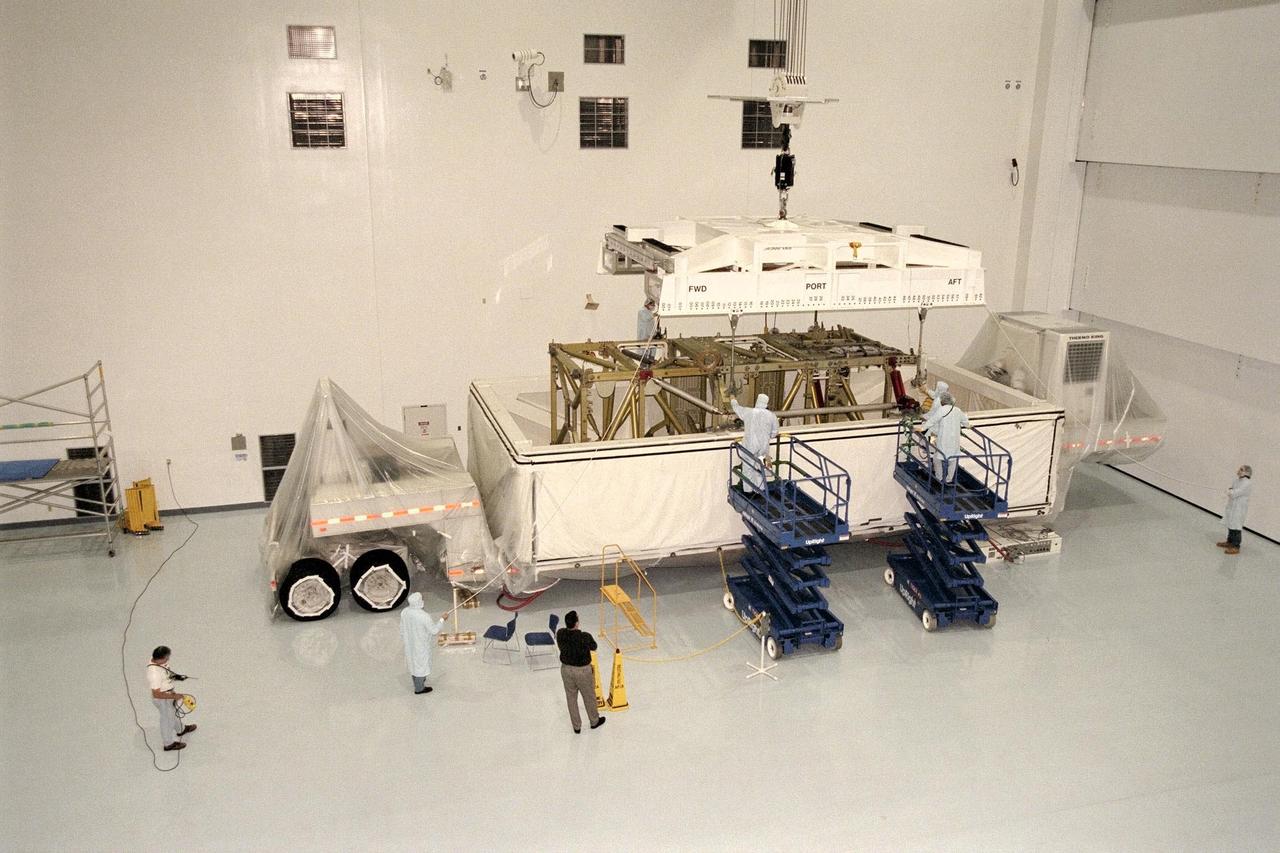
KENNEDY SPACE CENTER, FLA. -- The Long Spacer, a component of the International Space Station, arrives and is moved to its test stand in the northeast corner of the high bay in KSC's Space Station Processing Facility. The Long Spacer provides structural support for the outboard Photovoltaic Modules that supply power to the station. Now just a structure, the Long Spacer will have attached to it as part of processing a heat dissipation radiator and two Pump and Flow Control subassemblies that circulate ammonia to cool the solar array electronics. Also to be mounted are ammonia fluid lines as part of the cooling system and the cabling necessary for power and control of the station. The Long Spacer becomes an integral part of a station truss segment when it is mated with the Integrated Equipment Assembly, which stores the electrical power generated by the solar arrays for use by the station modules. The Long Spacer is being processed in preparation for STS-97, currently planned for launch aboard Discovery in April 1999

KENNEDY SPACE CENTER, FLA. -- The Long Spacer, a component of the International Space Station, arrives and is moved to its test stand in the northeast corner of the high bay in KSC's Space Station Processing Facility. The Long Spacer provides structural support for the outboard Photovoltaic Modules that supply power to the station. Now just a structure, the Long Spacer will have attached to it as part of processing a heat dissipation radiator and two Pump and Flow Control subassemblies that circulate ammonia to cool the solar array electronics. Also to be mounted are ammonia fluid lines as part of the cooling system and the cabling necessary for power and control of the station. The Long Spacer becomes an integral part of a station truss segment when it is mated with the Integrated Equipment Assembly, which stores the electrical power generated by the solar arrays for use by the station modules. The Long Spacer is being processed in preparation for STS-97, currently planned for launch aboard Discovery in April 1999
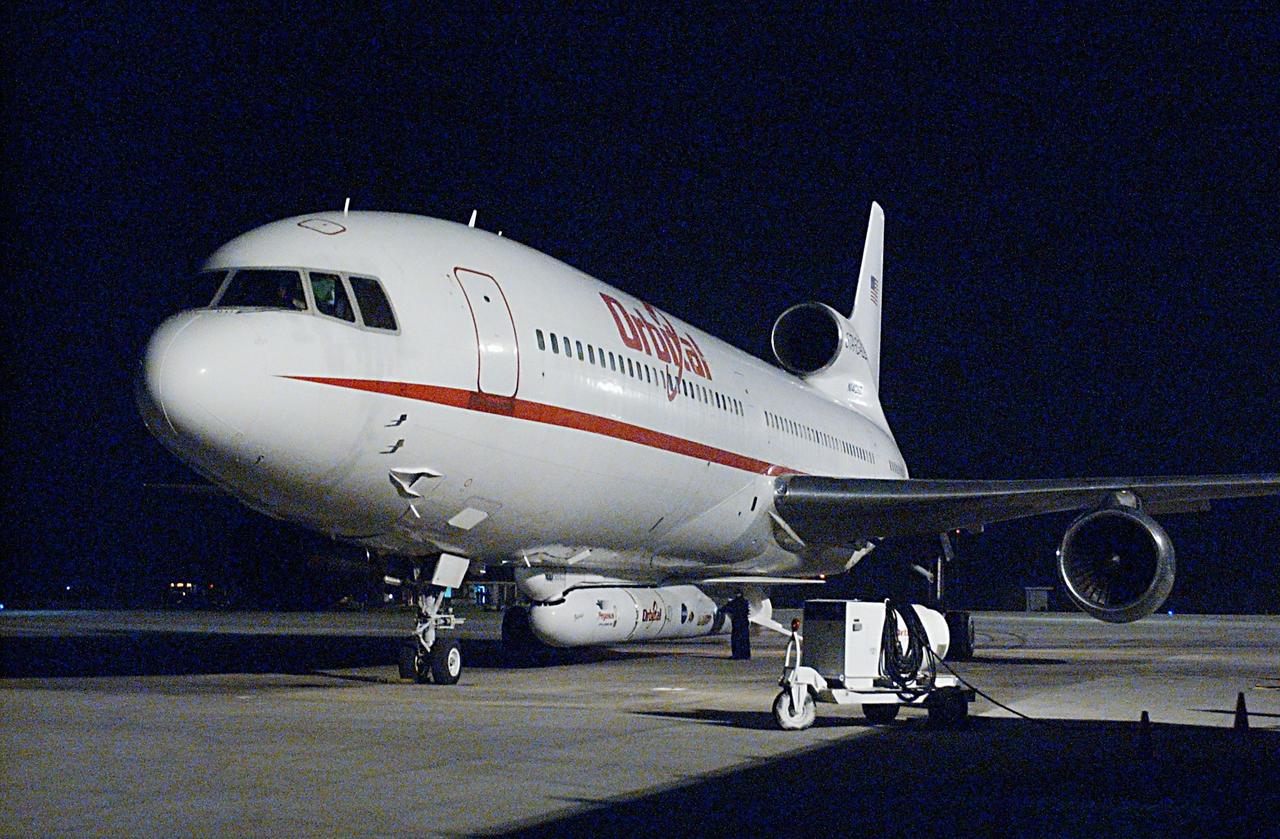
KENNEDY SPACE CENTER, FLA. - An Orbital Sciences L-1011 aircraft arrives at the Cape Canaveral Air Force Station Skid Strip. Attached underneath the aircraft is the Pegasus XL Expendable Launch Vehicle, which will be transported to the Multi-Payload Processing Facility for testing and verification. The Pegasus will undergo three flight simulations prior to its scheduled launch in late January 2003. The Pegasus XL will carry NASA's Solar Radiation and Climate Experiment (SORCE) into orbit. Built by Orbital Sciences Space Systems Group, SORCE will study and measure solar irradiance as a source of energy in the Earth's atmosphere. .
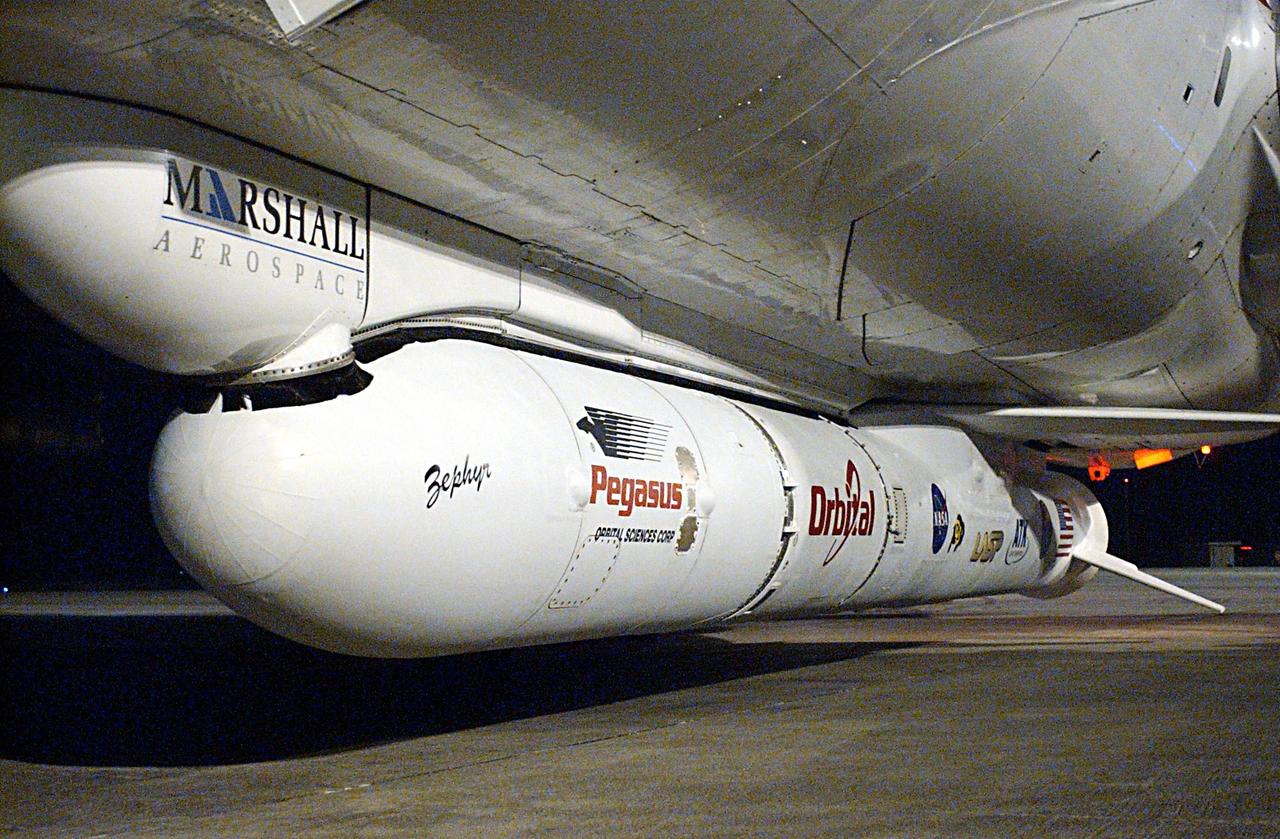
KENNEDY SPACE CENTER, FLA. -- Attached underneath the Orbital Sciences L-1011 aircraft is the Pegasus XL Expendable Launch Vehicle, which will be transported to the Multi-Payload Processing Facility for testing and verification. The Pegasus will undergo three flight simulations prior to its scheduled launch in late January 2003. The Pegasus XL will carry NASA's Solar Radiation and Climate Experiment (SORCE) into orbit. Built by Orbital Sciences Space Systems Group, SORCE will study and measure solar irradiance as a source of energy in the Earth's atmosphere. .
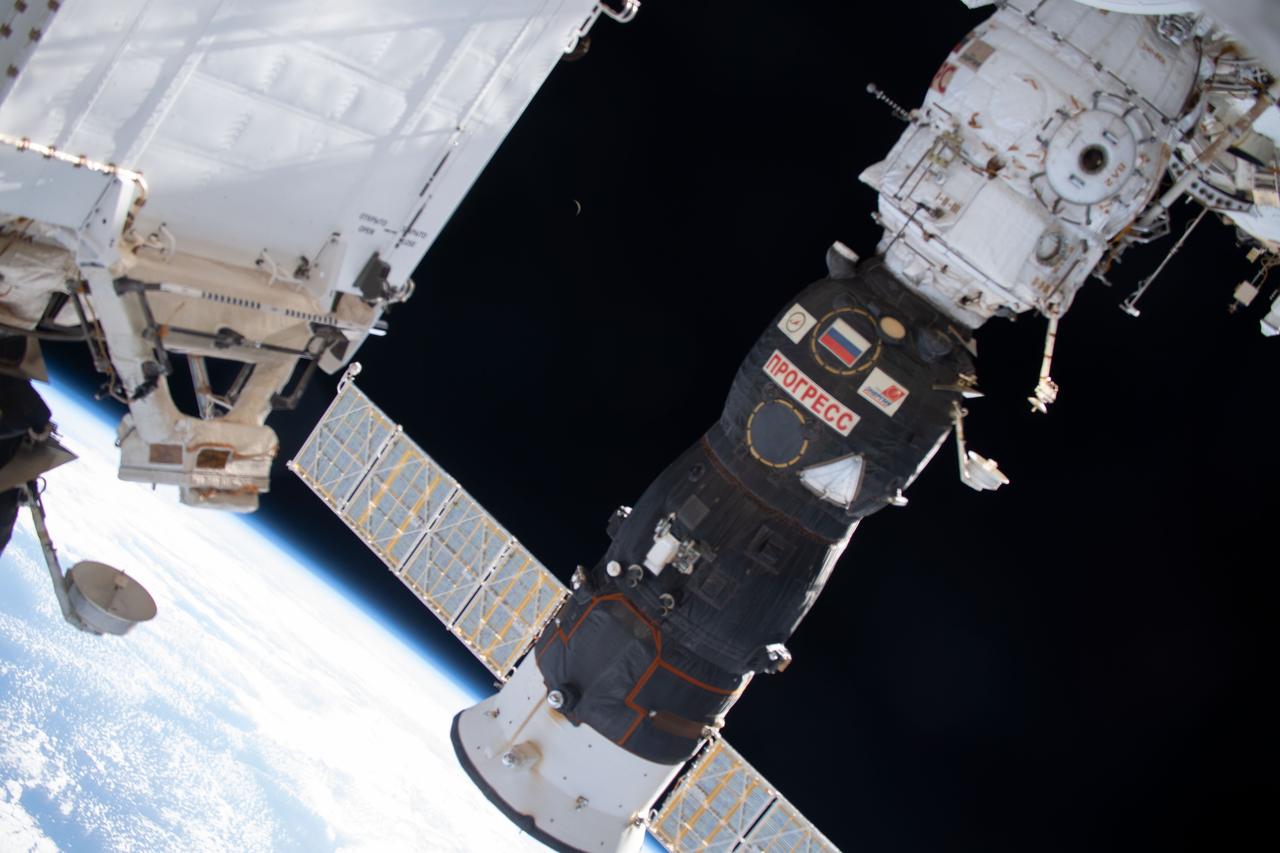
iss060e001774 (June 29, 2019) --- A waning crescent moon is barely visible in the center background as the International Spacer Station orbited 262 miles above the Indian Ocean east of Madagascar. Dominating the foreground is Russia's Progress 72 resupply ship docked to the Pirs module.
KENNEDY SPACE CENTER, FLA. -- The Integrated Equipment Assembly (IEA), one of two major components of the Starboard 6 (S6) truss segment for the International Space Station (ISS), is offloaded onto a cargo transporter following its arrival at the Shuttle Landing Facility. The IEA will be joined to its companion piece, the Long Spacer, before launch early in 2004. The S6 truss segment will be the 11th and final piece of the Station's Integrated Truss Structure and will support the fourth and final set of solar arrays, batteries, and electronics.
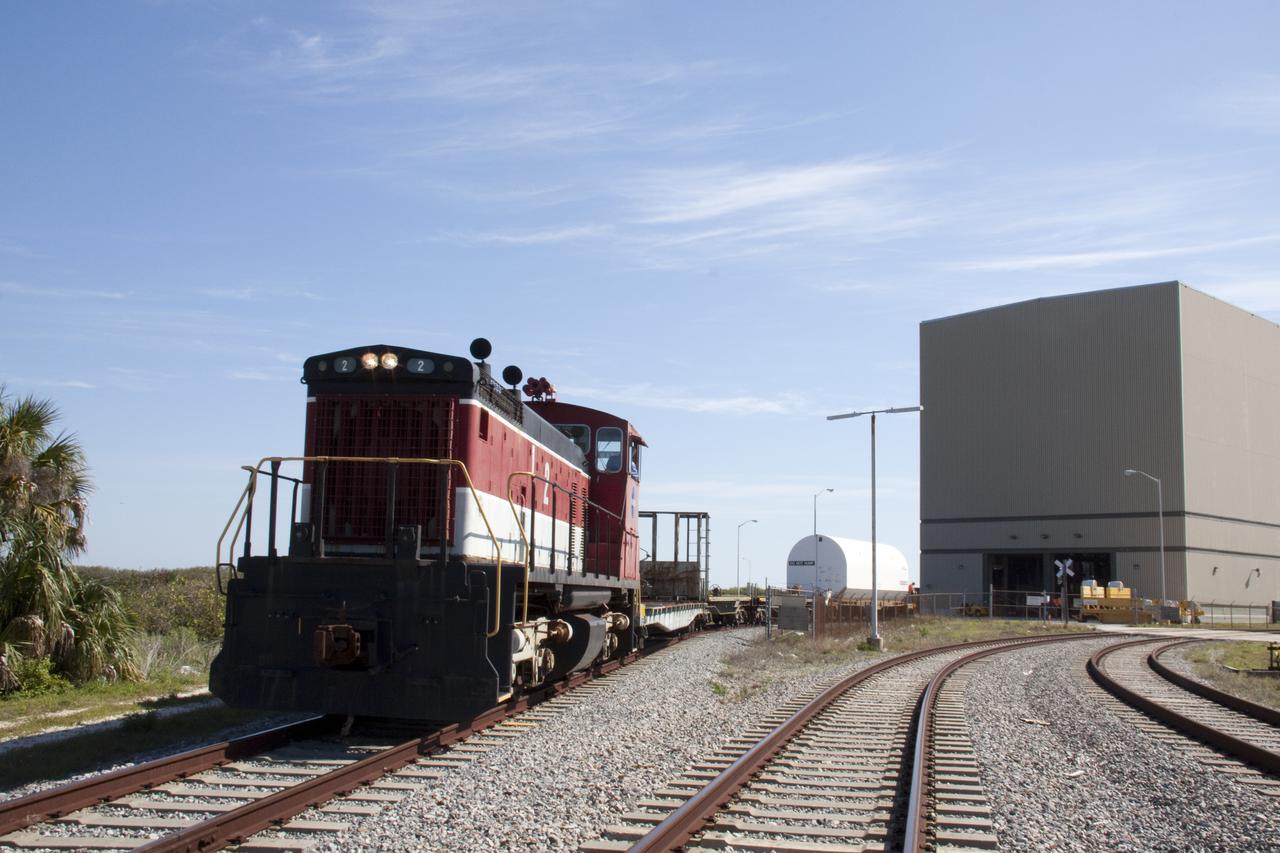
CAPE CANAVERAL, Fla. – Secured inside a railway car, a nozzle exit cone for a solid rocket booster that will be used on space shuttle Discovery's STS-133 mission is moved by locomotive no. 2 to the Rotation, Processing and Surge Facility at NASA's Kennedy Space Center in Florida. The boosters are manufactured by Alliant Techsystems Inc., or ATK. EGandG_URS runs Kennedy's railway system for NASA. The locomotive, one of three at Kennedy, will push the railway car into the facility, necessitating the use of spacer cars behind the locomotive as a safety measure. Photo credit: NASA_Troy Cryder
KENNEDY SPACE CENTER, FLA. -- KSC technicians supervise the transfer of the Integrated Equipment Assembly (IEA), one of two major components of the Starboard 6 (S6) truss segment for the International Space Station (ISS), onto a cargo transporter following its arrival at the Shuttle Landing Facility. The IEA will be joined to its companion piece, the Long Spacer, before launch early in 2004. The S6 truss segment will be the 11th and final piece of the Station's Integrated Truss Structure and will support the fourth and final set of solar arrays, batteries, and electronics.
KENNEDY SPACE CENTER, FLA. -- The Integrated Equipment Assembly (IEA), one of two major components of the Starboard 6 (S6) truss segment for the International Space Station (ISS), is offloaded onto a cargo transporter following its arrival at the Shuttle Landing Facility. The IEA will be joined to its companion piece, the Long Spacer, before launch early in 2004. The S6 truss segment will be the 11th and final piece of the Station's Integrated Truss Structure and will support the fourth and final set of solar arrays, batteries, and electronics.
KENNEDY SPACE CENTER, FLA. -- The Integrated Equipment Assembly (IEA), one of two major components of the Starboard 6 (S6) truss segment for the International Space Station (ISS), sits on a cargo transporter following its arrival at the Shuttle Landing Facility. The IEA will be joined to its companion piece, the Long Spacer, before launch early in 2004. The S6 truss segment will be the 11th and final piece of the Station's Integrated Truss Structure and will support the fourth and final set of solar arrays, batteries, and electronics.
KENNEDY SPACE CENTER, FLA. -- KSC technicians supervise the offloading of the Integrated Equipment Assembly (IEA), one of two major components of the Starboard 6 (S6) truss segment for the International Space Station (ISS), onto a cargo transporter following its arrival at the Shuttle Landing Facility. The IEA will be joined to its companion piece, the Long Spacer, before launch early in 2004. The S6 truss segment will be the 11th and final piece of the Station's Integrated Truss Structure and will support the fourth and final set of solar arrays, batteries, and electronics.
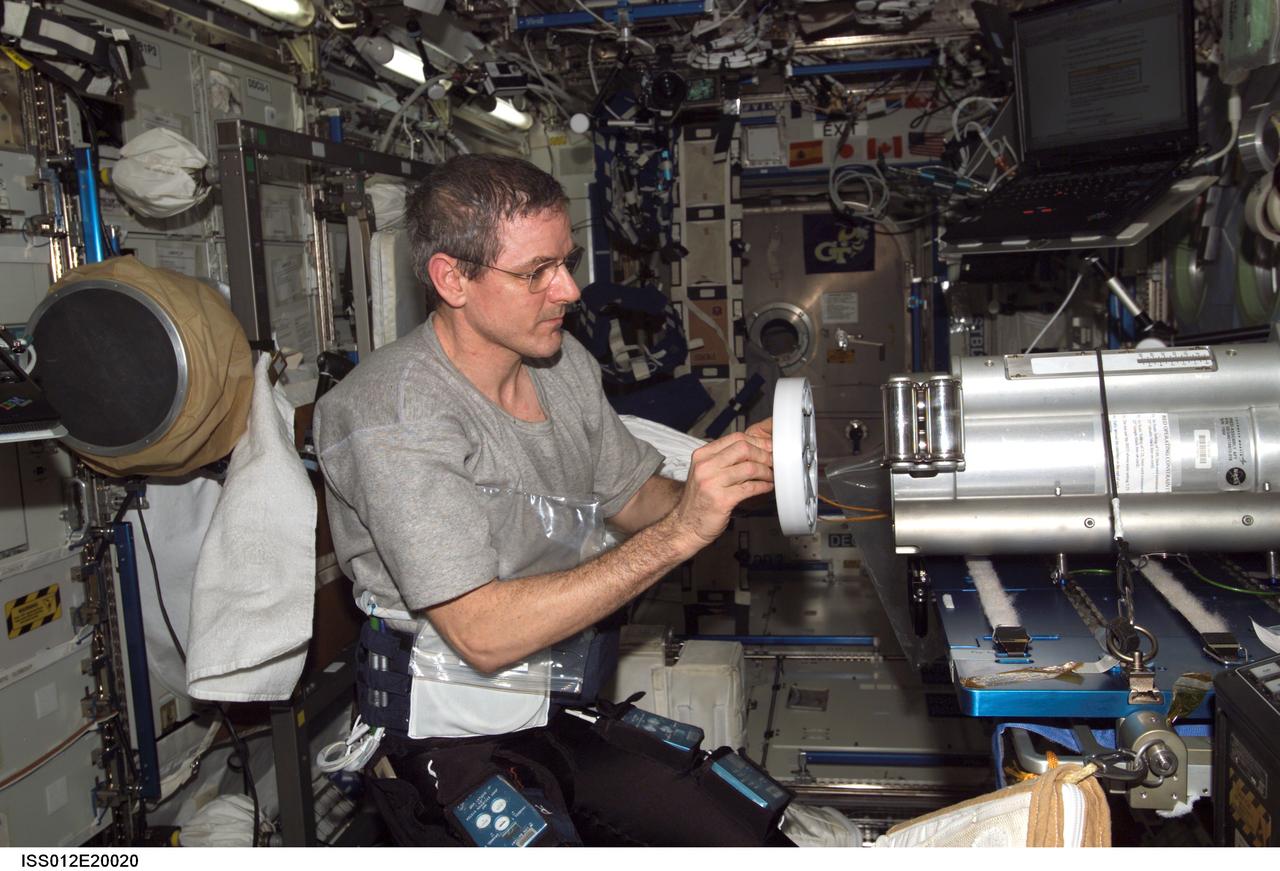
ISS012-E-20020 (9 March 2006) --- Astronaut William S. (Bill) McArthur, Expedition 12 commander and NASA space station science officer, works with a portion of the Resistive Exercise Device (RED) in the Destiny laboratory of the International Space Station. In this view, McArthur replaced RED flex packs, which are external splines and spacers that were approaching the end of their certified life.
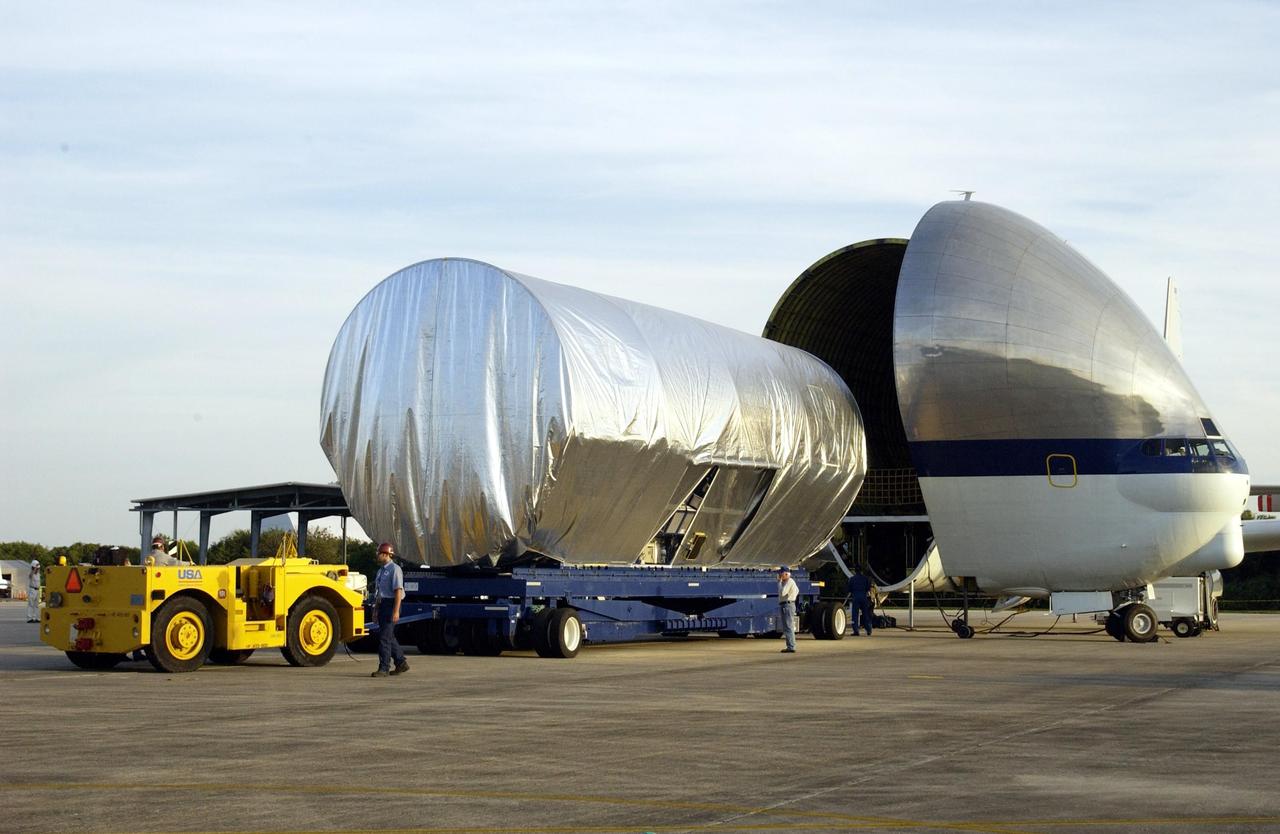
KENNEDY SPACE CENTER, FLA. -- The Integrated Equipment Assembly (IEA), one of two major components of the Starboard 6 (S6) truss segment for the International Space Station (ISS), is offloaded from NASA's Super Guppy cargo airplane following its arrival at the Shuttle Landing Facility. The customized four-engine aricraft has a 24-foot-diameter fuselage and a foldaway nose enabling it to load and transport oversize cargo. The IEA will be joined to its companion piece, the Long Spacer, before launch early in 2004. The S6 truss segment will be the 11th and final piece of the Station's Integrated Truss Structure and will support the fourth and final set of solar arrays, batteries, and electronics.
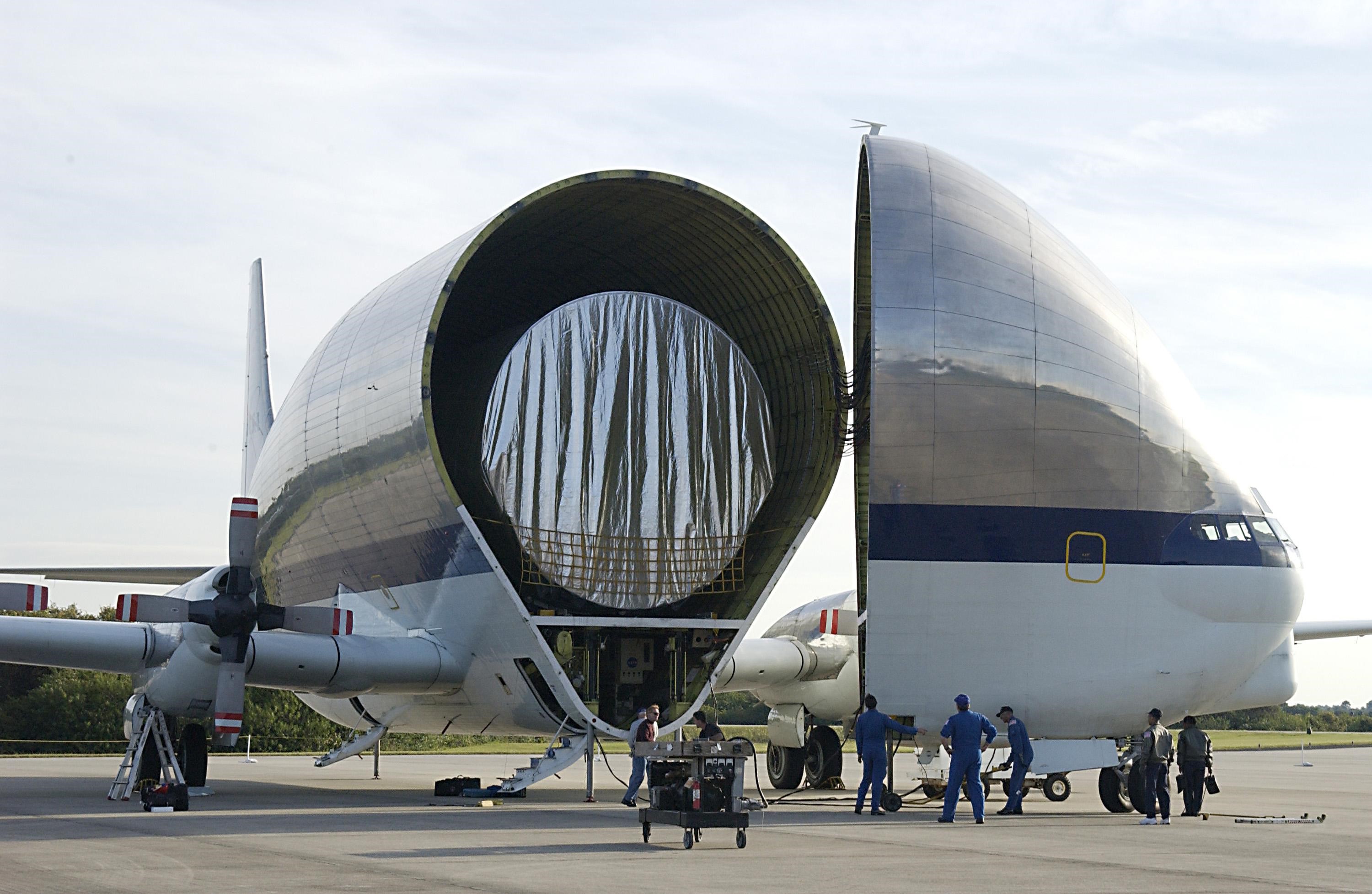
KENNEDY SPACE CENTER, FLA. -- The Integrated Equipment Assembly (IEA), one of two major components of the Starboard 6 (S6) truss segment for the International Space Station (ISS), is revealed inside NASA's Super Guppy cargo airplane following its arrival at the Shuttle Landing Facility. The customized four-engine aricraft has a 24-foot-diameter fuselage and a foldaway nose enabling it to load and transport oversize cargo. The IEA will be joined to its companion piece, the Long Spacer, before launch early in 2004. The S6 truss segment will be the 11th and final piece of the Station's Integrated Truss Structure and will support the fourth and final set of solar arrays, batteries, and electronics.
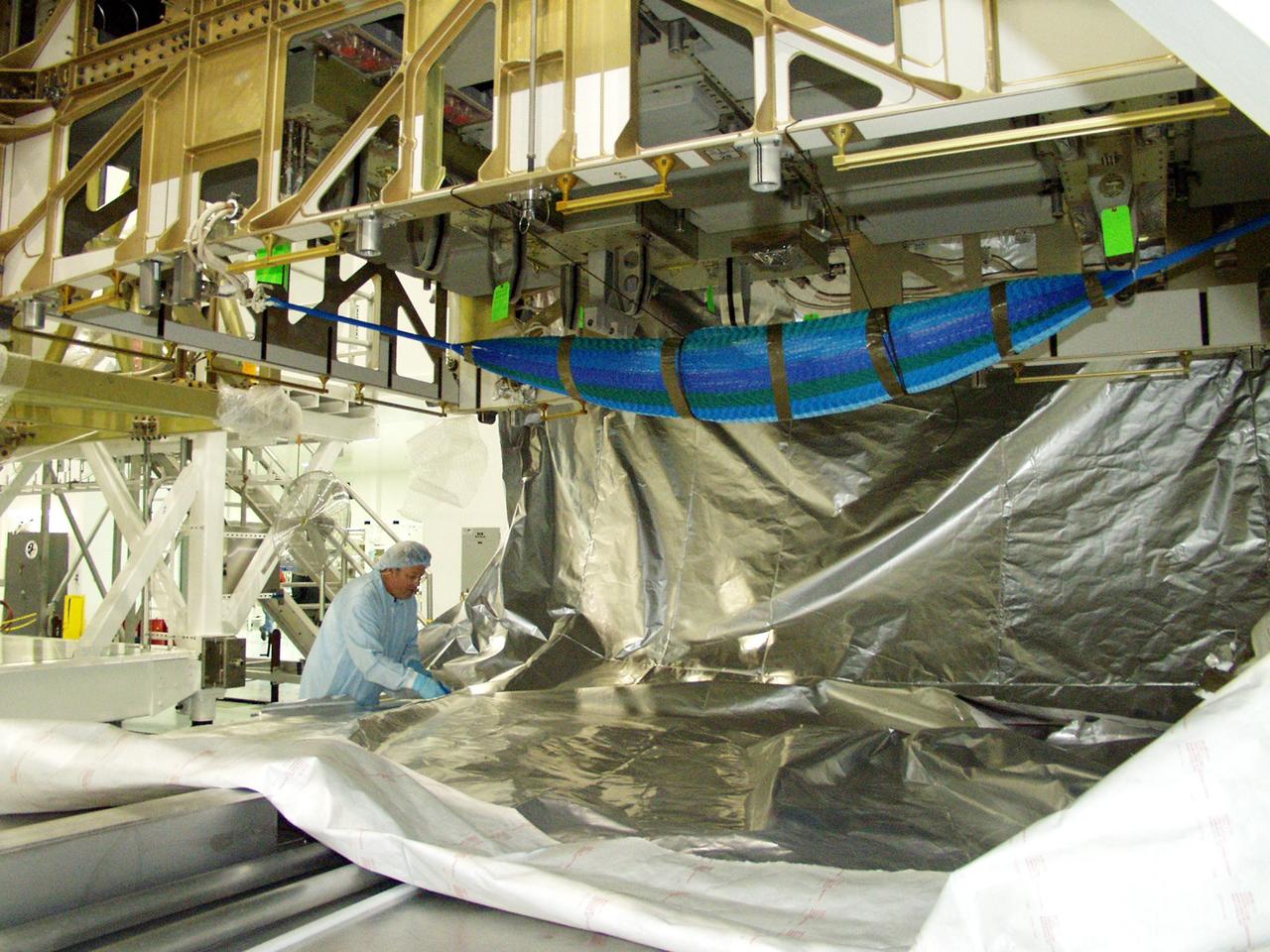
KENNEDY SPACE CENTER, FLA. -- In the Space Station Processing Facility, workers begin uncovering the Long Spacer (LS), the second and final piece of the S6 Integrated Truss Segment. Both the LS and the S6 Integrated Equipment Assembly (IEA) will undergo inspections and verifications tests to prepare them for flight to the International Space Station in early 2004. Although separate for now, the two segments will be integrated and fly as one on mission STS-119. Together the two pieces weigh 26,000 pounds and measure 45 feet long. The S6 is the 11th and final piece of the Station's Integrated Truss Structure, which will measure more than 300 feet in all. .

KENNEDY SPACE CENTER, FLA. -- The Integrated Equipment Assembly (IEA), one of two major components of the Starboard 6 (S6) truss segment for the International Space Station (ISS), arrives at the Shuttle Landing Facility aboard NASA's Super Guppy cargo airplane. The customized four-engine aricraft has a 24-foot-diameter fuselage and a foldaway nose enabling it to load and transport oversize cargo. The IEA will be joined to its companion piece, the Long Spacer, before launch early in 2004. The S6 truss segment will be the 11th and final piece of the Station's Integrated Truss Structure and will support the fourth and final set of solar arrays, batteries, and electronics.
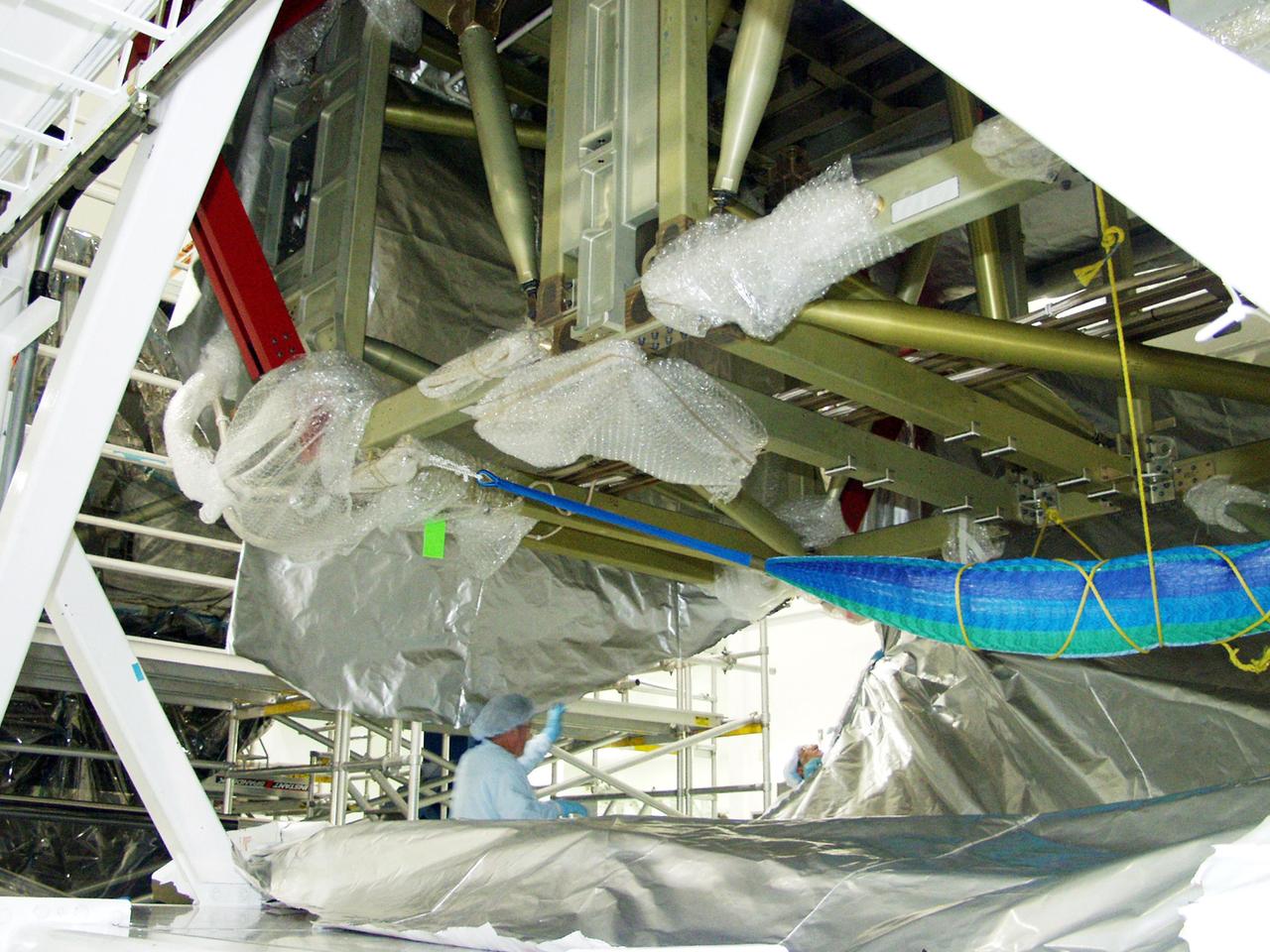
KENNEDY SPACE CENTER, FLA. -- In the Space Station Processing Facility, workers begin uncovering the Long Spacer (LS), the second and final piece of the S6 Integrated Truss Segment. Both the LS and the S6 Integrated Equipment Assembly (IEA) will undergo inspections and verifications tests to prepare them for flight to the International Space Station in early 2004. Although separate for now, the two segments will be integrated and fly as one on mission STS-119. Together the two pieces weigh 26,000 pounds and measure 45 feet long. The S6 is the 11th and final piece of the Station's Integrated Truss Structure, which will measure more than 300 feet in all. .
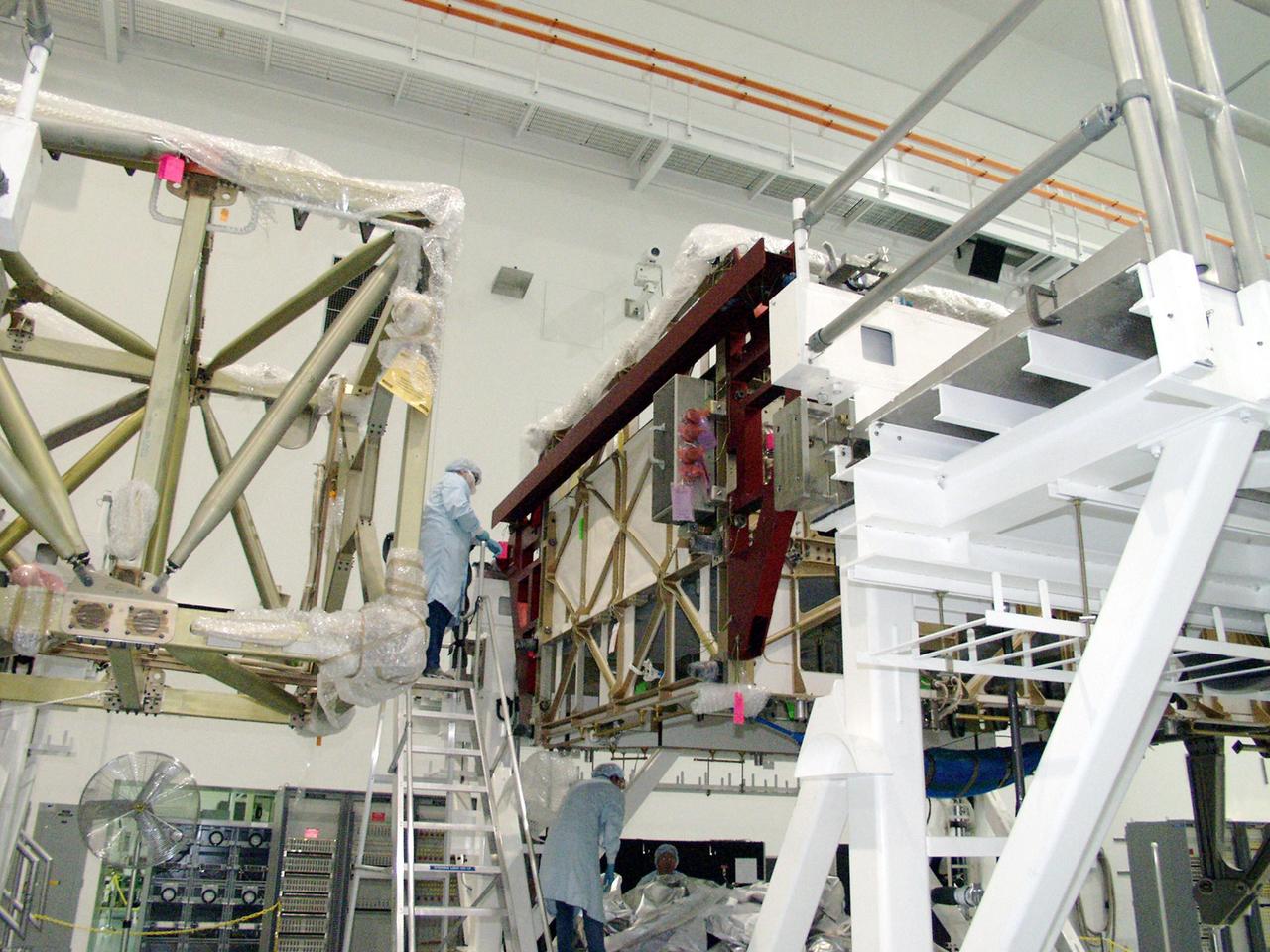
KENNEDY SPACE CENTER, FLA. -- In the Space Station Processing Facility, workers finish uncovering the Long Spacer (LS), the second and final piece of the S6 Integrated Truss Segment. Both the LS and the S6 Integrated Equipment Assembly (IEA) will undergo inspections and verifications tests to prepare them for flight to the International Space Station in early 2004. Although separate for now, the two segments will be integrated and fly as one on mission STS-119. Together the two pieces weigh 26,000 pounds and measure 45 feet long. The S6 is the 11th and final piece of the Station's Integrated Truss Structure, which will measure more than 300 feet in all. .
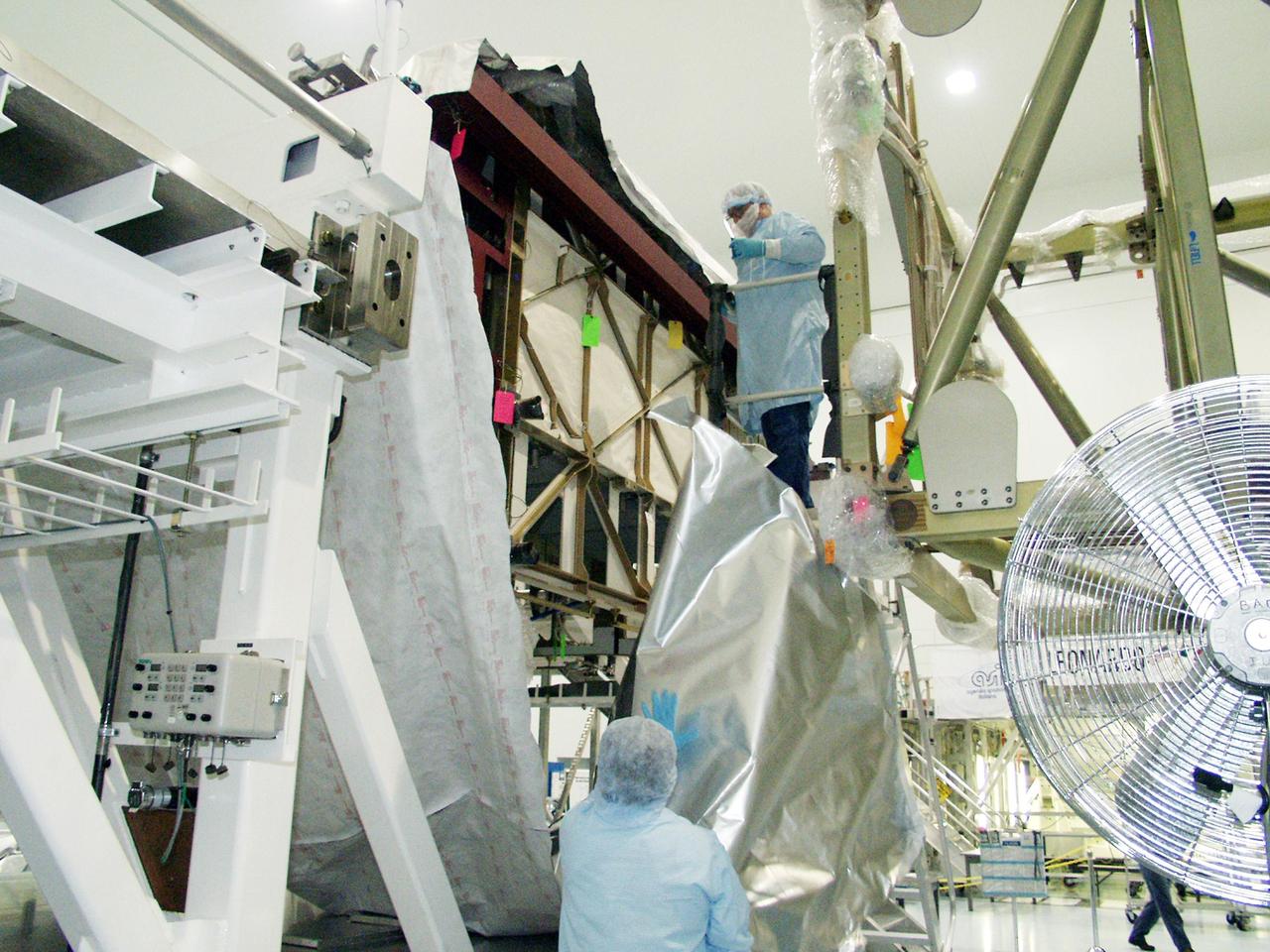
KENNEDY SPACE CENTER, FLA. -- In the Space Station Processing Facility, workers begin uncovering the Long Spacer (LS), the second and final piece of the S6 Integrated Truss Segment. Both the LS and the S6 Integrated Equipment Assembly (IEA) will undergo inspections and verifications tests to prepare them for flight to the International Space Station in early 2004. Although separate for now, the two segments will be integrated and fly as one on mission STS-119. Together the two pieces weigh 26,000 pounds and measure 45 feet long. The S6 is the 11th and final piece of the Station's Integrated Truss Structure, which will measure more than 300 feet in all. .

KENNEDY SPACE CENTER, FLA. -- Perry Becker, an engineer with NASA, looks at a spacer on the bearing in one of the jacking, equalization and leveling (JEL) cylinders on Crawler-Transporter No. 2. During inspections, technicians removed two of the 16 JEL cylinders on the vehicle to gain access to the bearings for routine maintenance and found three of the four bearings had cracks. Of the three bearings, two had extensive damage. Further eddy current inspections indicate that cracks are present on 15 of the bearings. There are 16 cylinders and 32 bearings per crawler. Although no cause for the cracks is known at this time, engineers are currently evaluating the situation to determine the most appropriate solution.
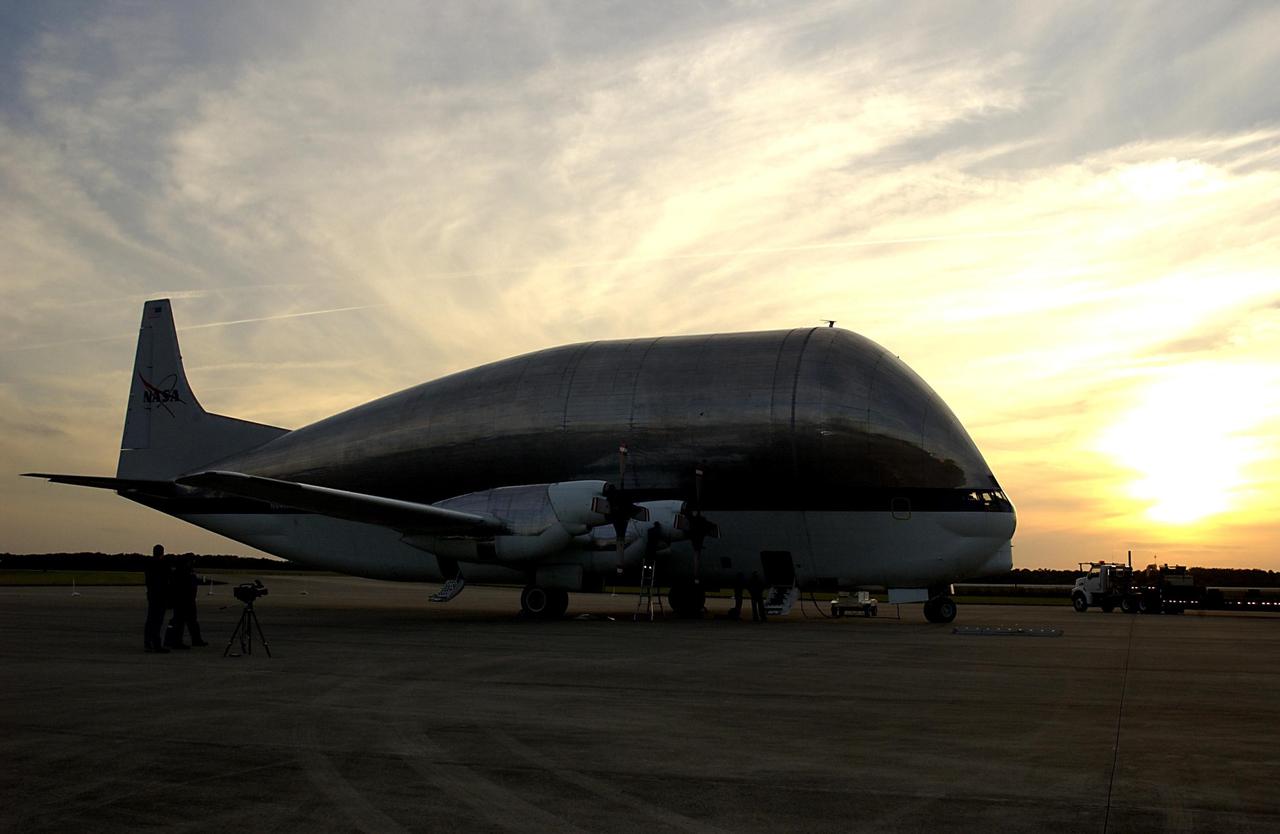
KENNEDY SPACE CENTER, FLA. -- The Integrated Equipment Assembly (IEA), one of two major components of the Starboard 6 (S6) truss segment for the International Space Station (ISS), arrives at the Shuttle Landing Facility aboard NASA's Super Guppy cargo airplane. The customized four-engine aricraft has a 24-foot-diameter fuselage and a foldaway nose enabling it to load and transport oversize cargo. The IEA will be joined to its companion piece, the Long Spacer, before launch early in 2004. The S6 truss segment will be the 11th and final piece of the Station's Integrated Truss Structure and will support the fourth and final set of solar arrays, batteries, and electronics.
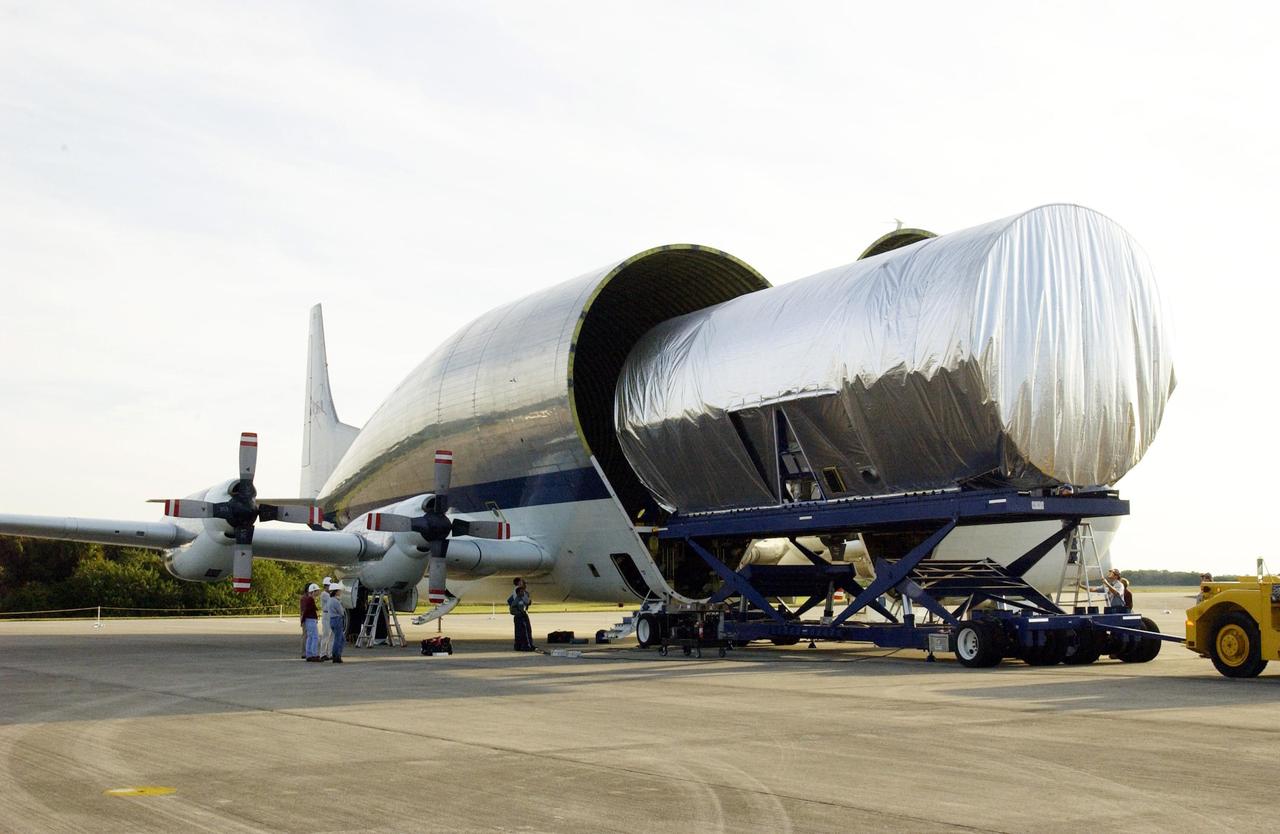
KENNEDY SPACE CENTER, FLA. -- The Integrated Equipment Assembly (IEA), one of two major components of the Starboard 6 (S6) truss segment for the International Space Station (ISS), is offloaded from NASA's Super Guppy cargo airplane following its arrival at the Shuttle Landing Facility. The customized four-engine aricraft has a 24-foot-diameter fuselage and a foldaway nose enabling it to load and transport oversize cargo. The IEA will be joined to its companion piece, the Long Spacer, before launch early in 2004. The S6 truss segment will be the 11th and final piece of the Station's Integrated Truss Structure and will support the fourth and final set of solar arrays, batteries, and electronics.
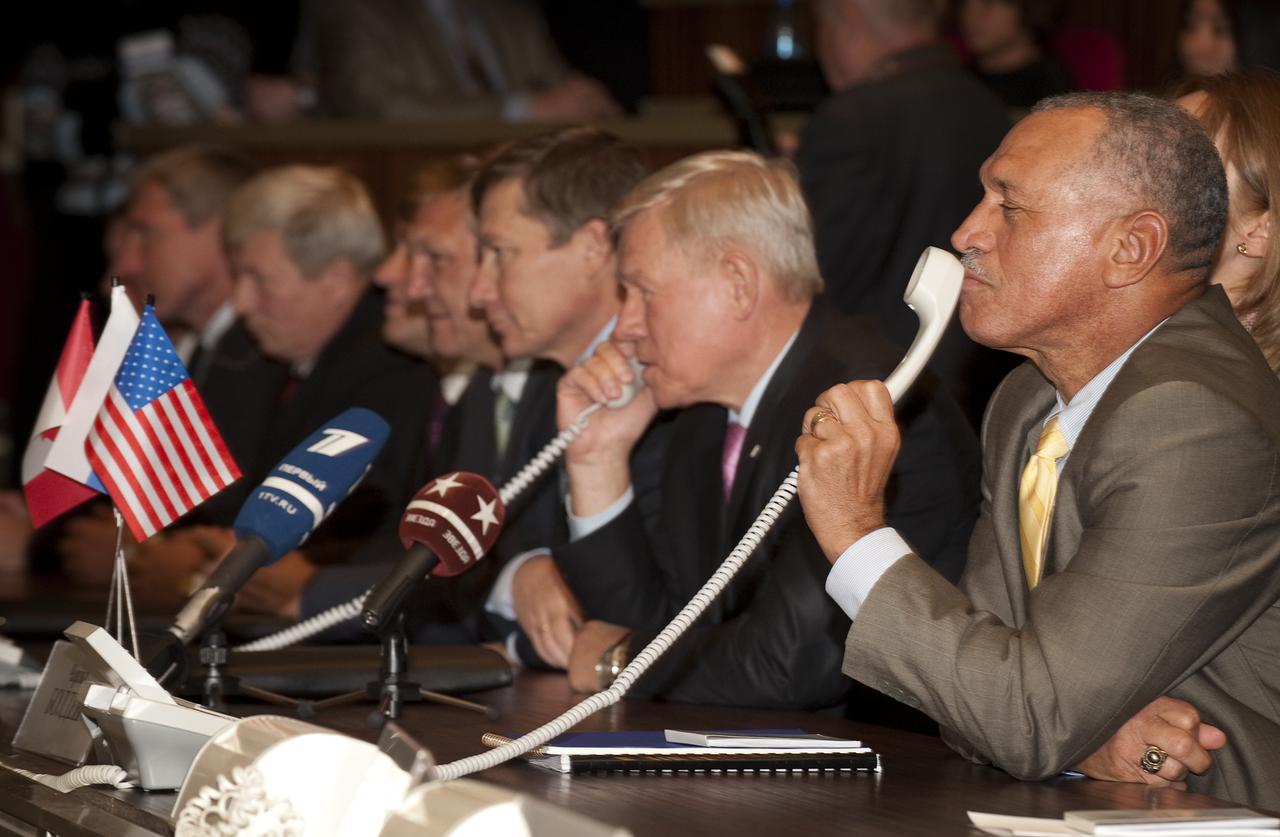
NASA Administrator Charles Bolden, right, holds the phone while Head of the Russian Federal Space Agency, Anatoly Perminov, talks to the crew of the International Spacer Station (ISS) from the Mission Control Center Moscow in Korolev, Russia shortly after the successful docking of the Soyuz TMA-16 spacecraft with the International Space Station marking the start of Expedition 21 with Flight Engineer Jeffrey N. Williams, Expedition 21 Flight Engineer Maxim Suraev, and Spaceflight Participant Guy Laliberté, Friday, Oct. 2, 2009. Photo Credit: (NASA/Bill Ingalls)

KENNEDY SPACE CENTER, FLA. -- In the Space Station Processing Facility, a worker begins uncovering the Long Spacer (LS), the second and final piece of the S6 Integrated Truss Segment. Both the LS and the S6 Integrated Equipment Assembly (IEA) will undergo inspections and verifications tests to prepare them for flight to the International Space Station in early 2004. Although separate for now, the two segments will be integrated and fly as one on mission STS-119. Together the two pieces weigh 26,000 pounds and measure 45 feet long. The S6 is the 11th and final piece of the Station's Integrated Truss Structure, which will measure more than 300 feet in all. .
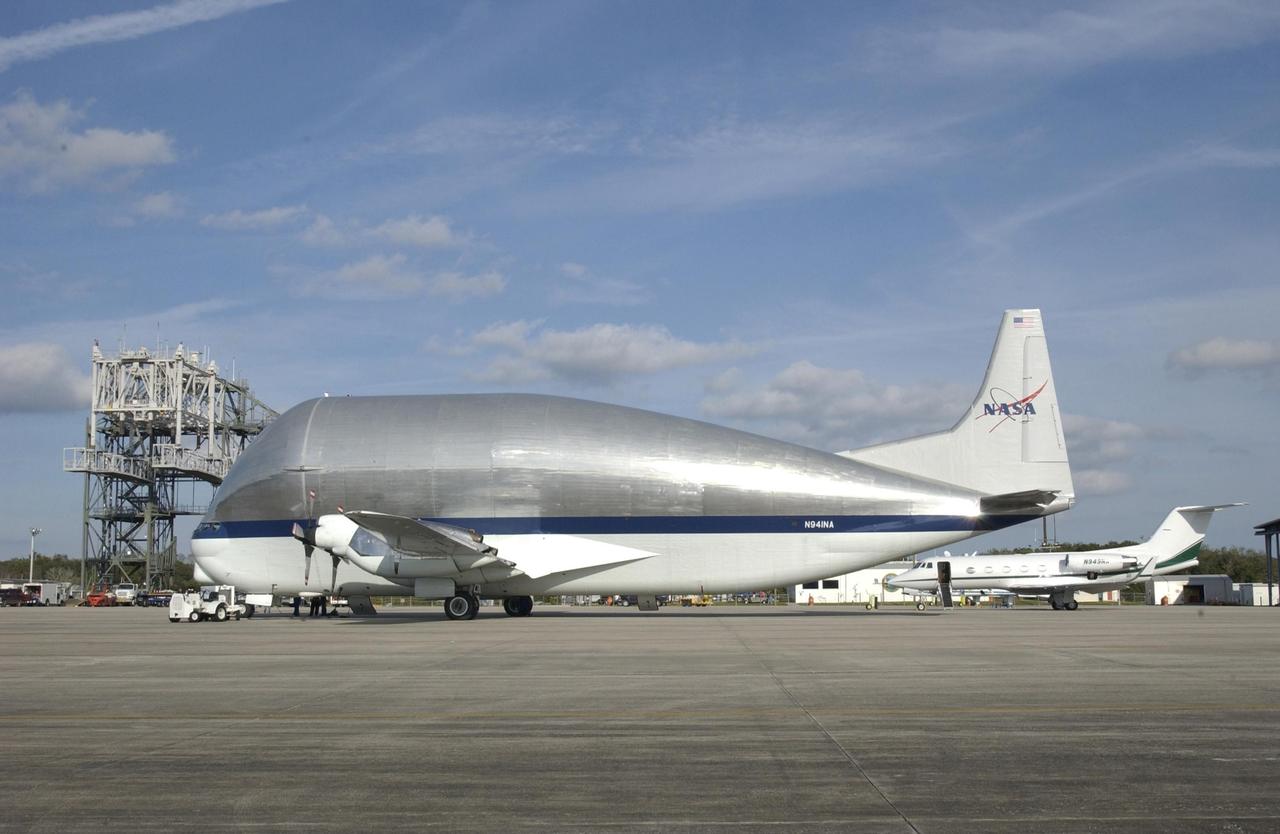
KENNEDY SPACE CENTER, FLA. -- The Integrated Equipment Assembly (IEA), one of two major components of the Starboard 6 (S6) truss segment for the International Space Station (ISS), arrives at the Shuttle Landing Facility aboard NASA's Super Guppy cargo airplane. The customized four-engine aricraft has a 24-foot-diameter fuselage and a foldaway nose enabling it to load and transport oversize cargo. The IEA will be joined to its companion piece, the Long Spacer, before launch early in 2004. The S6 truss segment will be the 11th and final piece of the Station's Integrated Truss Structure and will support the fourth and final set of solar arrays, batteries, and electronics.
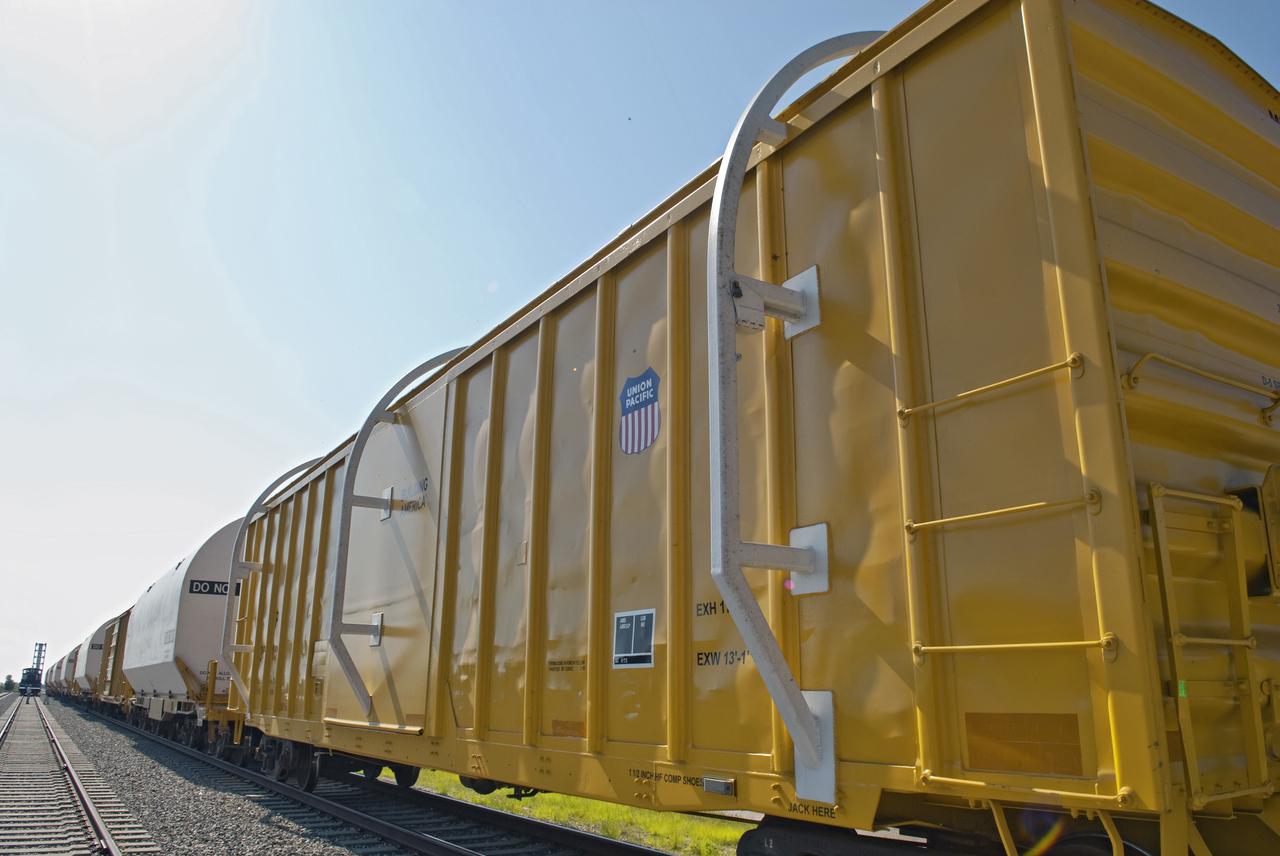
CAPE CANAVERAL, Fla. - At the Jay Jay Rail Yard in Titusville, Fla., the NASA Railroad train is ready to carry the last space shuttle solid rocket booster segments into NASA's Kennedy Space Center. The white railings on the orange spacer cars ensure clearance on their journey. Six cars transported the segments along the Florida East Coast Railway, which began at the ATK solid rocket booster plant in Promontory, Utah. The booster segments will be used for shuttle Atlantis on what currently is planned as the 'launch on need,' or potential rescue mission for the final shuttle flight, Endeavour's STS-134 mission. For information, visit www.nasa.gov_shuttle. Photo credit: NASA_Jim Grossmann
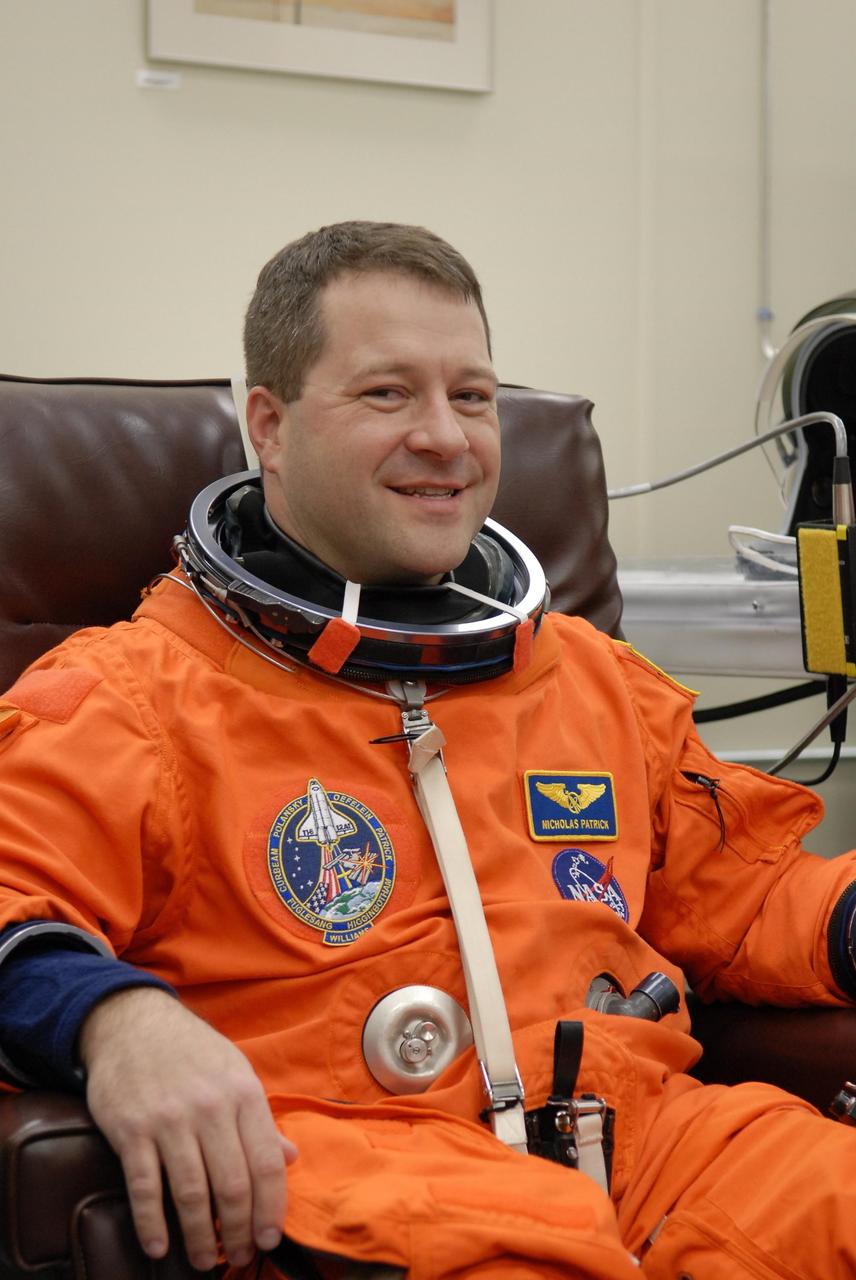
KENNEDY SPACE CENTER, FLA. -- The crew members of mission STS-116 are suiting up for a second launch attempt at 8:47 p.m. EST from Launch Pad 39B aboard Space Shuttle Discovery. Pictured here is Mission Specialist Nicholas Patrick, who will be making his first shuttle flight. The first launch attempt of STS-116 on Dec. 7 was postponed due a low cloud ceiling over Kennedy Space Center. This is Discovery's 33rd mission and the first night launch since 2002. The 20th shuttle mission to the International Space Station, STS-116 carries another truss segment, P5. It will serve as a spacer, mated to the P4 truss that was attached in September. After installing the P5, the crew will reconfigure and redistribute the power generated by two pairs of U.S. solar arrays. Landing is expected Dec. 19 at KSC. Photo credit: NASA/Kim Shiflett
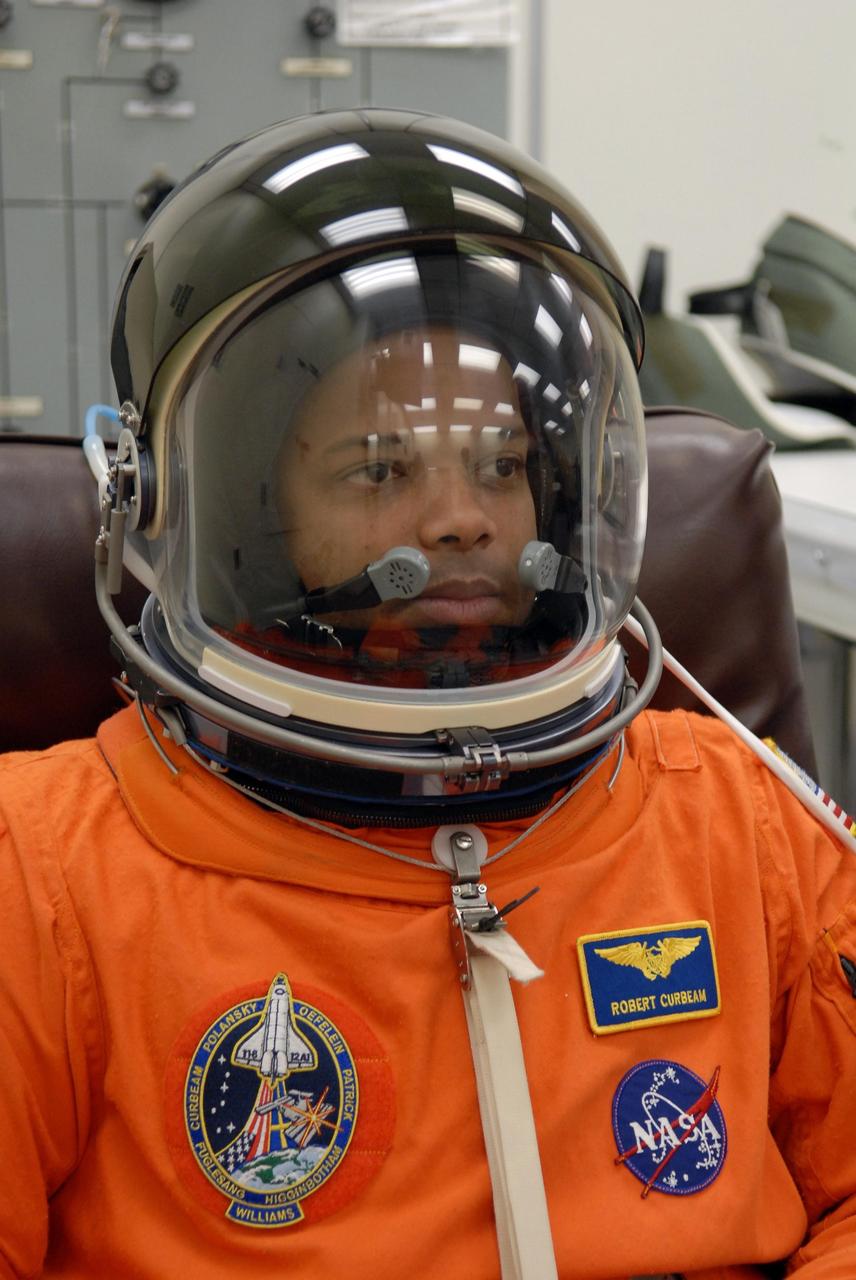
KENNEDY SPACE CENTER, FLA. -- The crew members of mission STS-116 are suiting up for a second launch attempt at 8:47 p.m. EST from Launch Pad 39B aboard Space Shuttle Discovery. Pictured here is Mission Specialist Robert Curbeam, after donning his helmet. Curbeam will be making his third shuttle flight. The first launch attempt of STS-116 on Dec. 7 was postponed due a low cloud ceiling over Kennedy Space Center. This is Discovery's 33rd mission and the first night launch since 2002. The 20th shuttle mission to the International Space Station, STS-116 carries another truss segment, P5. It will serve as a spacer, mated to the P4 truss that was attached in September. After installing the P5, the crew will reconfigure and redistribute the power generated by two pairs of U.S. solar arrays. Landing is expected Dec. 19 at KSC. Photo credit: NASA/Kim Shiflett
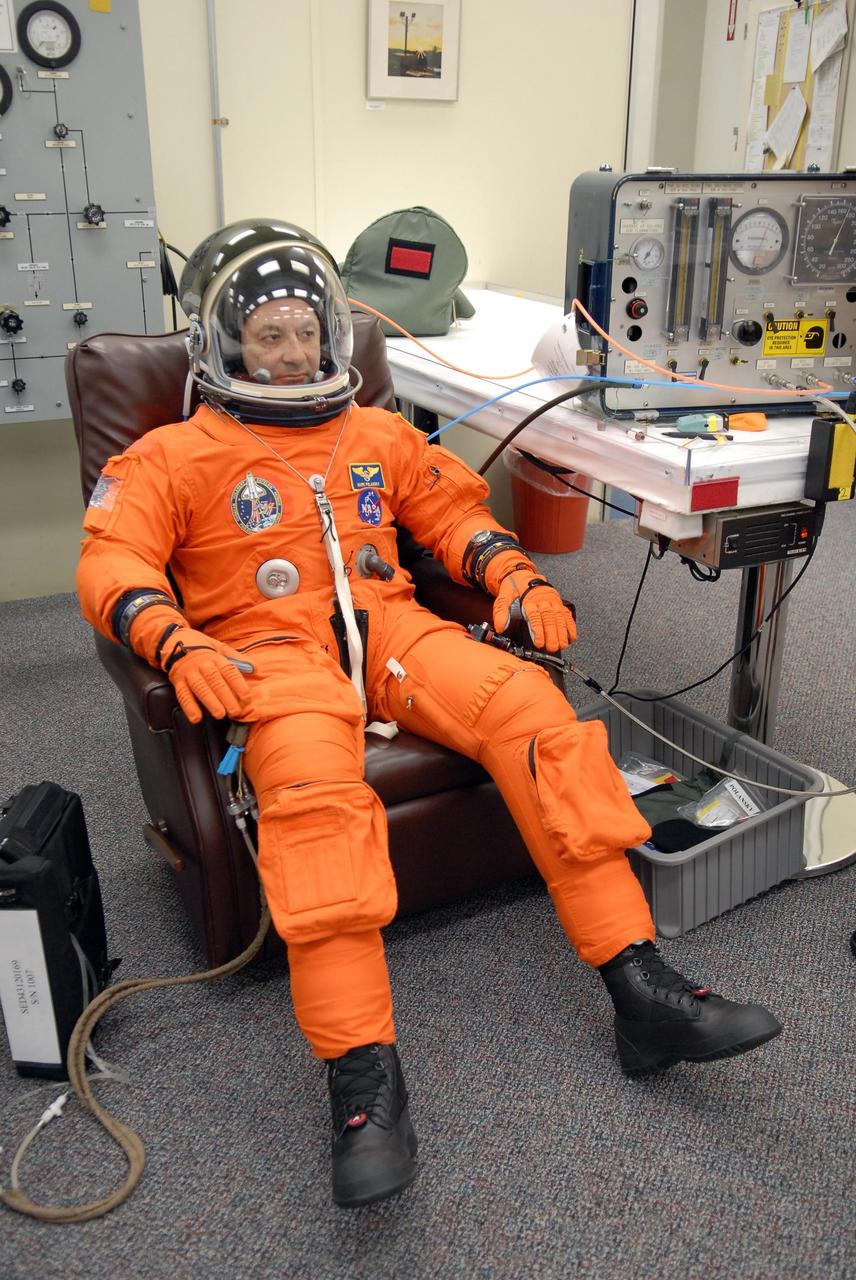
KENNEDY SPACE CENTER, FLA. -- The crew members of mission STS-116 are suiting up for launch at 9:35 p.m. EST from Launch Pad 39B aboard Space Shuttle Discovery. Here, Commander Mark Polansky has completed donning all the elements, from boots to helmet. Polansky will be making his second shuttle flight. This is Discovery's 33rd mission and the first night launch since 2003. The 20th shuttle mission to the International Space Station, STS-116 carries another truss segment, P5. It will serve as a spacer, mated to the P4 truss that was attached in September. After installing the P5, the crew will reconfigure and redistribute the power generated by two pairs of U.S. solar arrays. Landing is expected Dec. 19 at KSC. Photo credit: NASA/Kim Shiflett
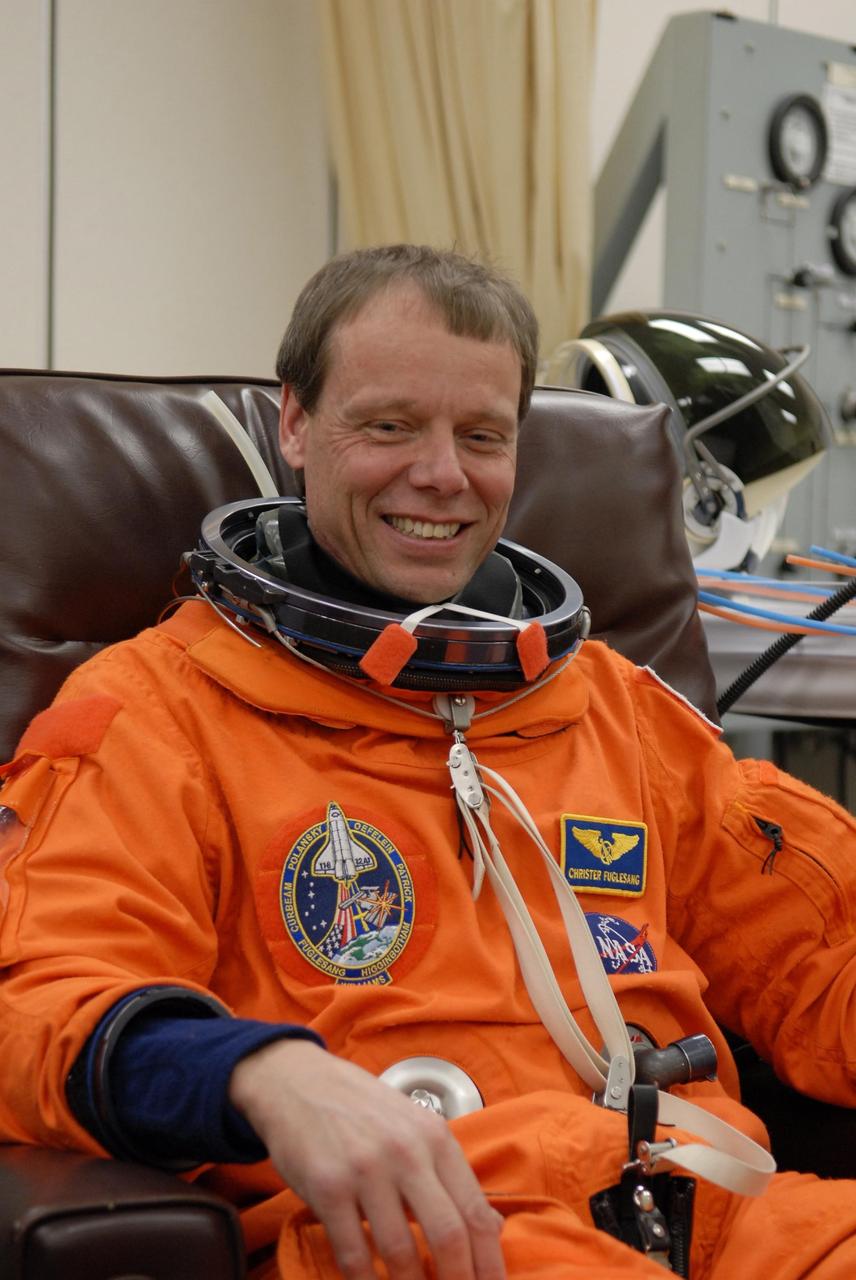
KENNEDY SPACE CENTER, FLA. -- The crew members of mission STS-116 are suiting up for a second launch attempt at 8:47 p.m. EST from Launch Pad 39B aboard Space Shuttle Discovery. Pictured here is Mission Specialist Christer Fuglesang, who represents the European Space Agency. Fuglesang is making his first shuttle flight. The first launch attempt of STS-116 on Dec. 7 was postponed due a low cloud ceiling over Kennedy Space Center. This is Discovery's 33rd mission and the first night launch since 2002. The 20th shuttle mission to the International Space Station, STS-116 carries another truss segment, P5. It will serve as a spacer, mated to the P4 truss that was attached in September. After installing the P5, the crew will reconfigure and redistribute the power generated by two pairs of U.S. solar arrays. Landing is expected Dec. 19 at KSC. Photo credit: NASA/Kim Shiflett
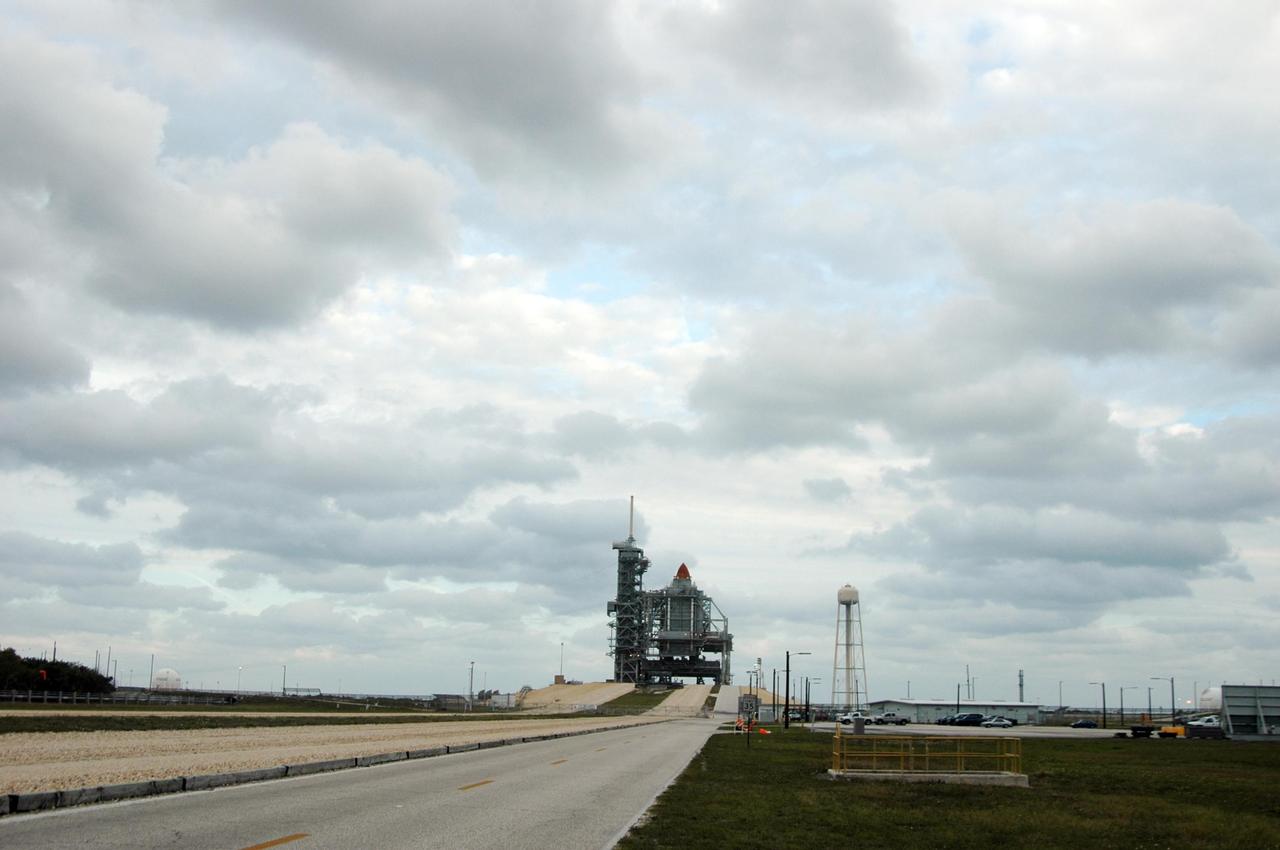
KENNEDY SPACE CENTER, FLA. -- Clouds still dominate the sky over Launch Pad 39B the day after launch of Space Shuttle Discovery was scrubbed. The launch attempt of STS-116 was postponed due a low cloud ceiling over Kennedy Space Center. The next launch attempt was scheduled for Saturday, Dec. 9, at 8:47 p.m. In the photo, the rotating service structure has been rolled into place around the shuttle. This will be Discovery's 33rd mission and the first night launch since 2002. The 20th shuttle mission to the International Space Station, STS-116 carries another truss segment, P5. It will serve as a spacer, mated to the P4 truss that was attached in September. After installing the P5, the crew will reconfigure and redistribute the power generated by two pairs of U.S. solar arrays. Landing is expected Dec. 19 at KSC. Photo credit: NASA/Ken Thornsley
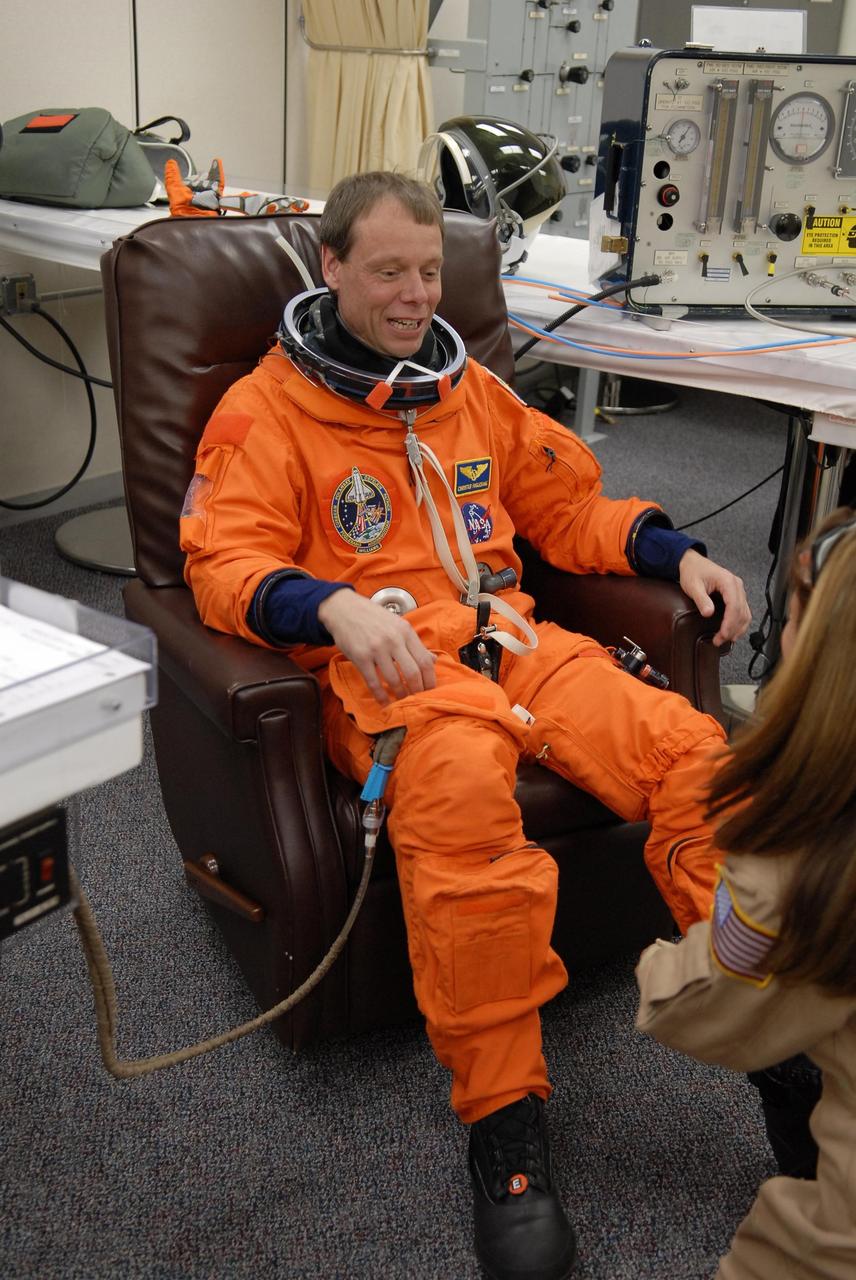
KENNEDY SPACE CENTER, FLA. -- The crew members of mission STS-116 are suiting up for a second launch attempt at 8:47 p.m. EST from Launch Pad 39B aboard Space Shuttle Discovery. Pictured here, Mission Specialist Christer Fuglesang is helped with his boot. Fuglesang represents the European Space Agency. He is making his first shuttle flight. The first launch attempt of STS-116 on Dec. 7 was postponed due a low cloud ceiling over Kennedy Space Center. This is Discovery's 33rd mission and the first night launch since 2002. The 20th shuttle mission to the International Space Station, STS-116 carries another truss segment, P5. It will serve as a spacer, mated to the P4 truss that was attached in September. After installing the P5, the crew will reconfigure and redistribute the power generated by two pairs of U.S. solar arrays. Landing is expected Dec. 19 at KSC. Photo credit: NASA/Kim Shiflett

KENNEDY SPACE CENTER, FLA. -- The smoke and steam obscure Launch Pad 39B as Space Shuttle Discovery rockets through the black skies into space on mission STS-116. Liftoff occurred at 8:47 p.m. EST. This was the second launch attempt for mission STS-116. The first launch attempt on Dec. 7 was postponed due a low cloud ceiling over Kennedy Space Center. This is Discovery's 33rd mission and the first night launch since 2003. The 20th shuttle mission to the International Space Station, STS-116 carries another truss segment, P5. It will serve as a spacer, mated to the P4 truss that was attached in September. After installing the P5, the crew will reconfigure and redistribute the power generated by two pairs of U.S. solar arrays. Landing is expected Dec. 21 at KSC. Photo credit: NASA/Sandy Joseph, Robert Murray & Chris Lynch
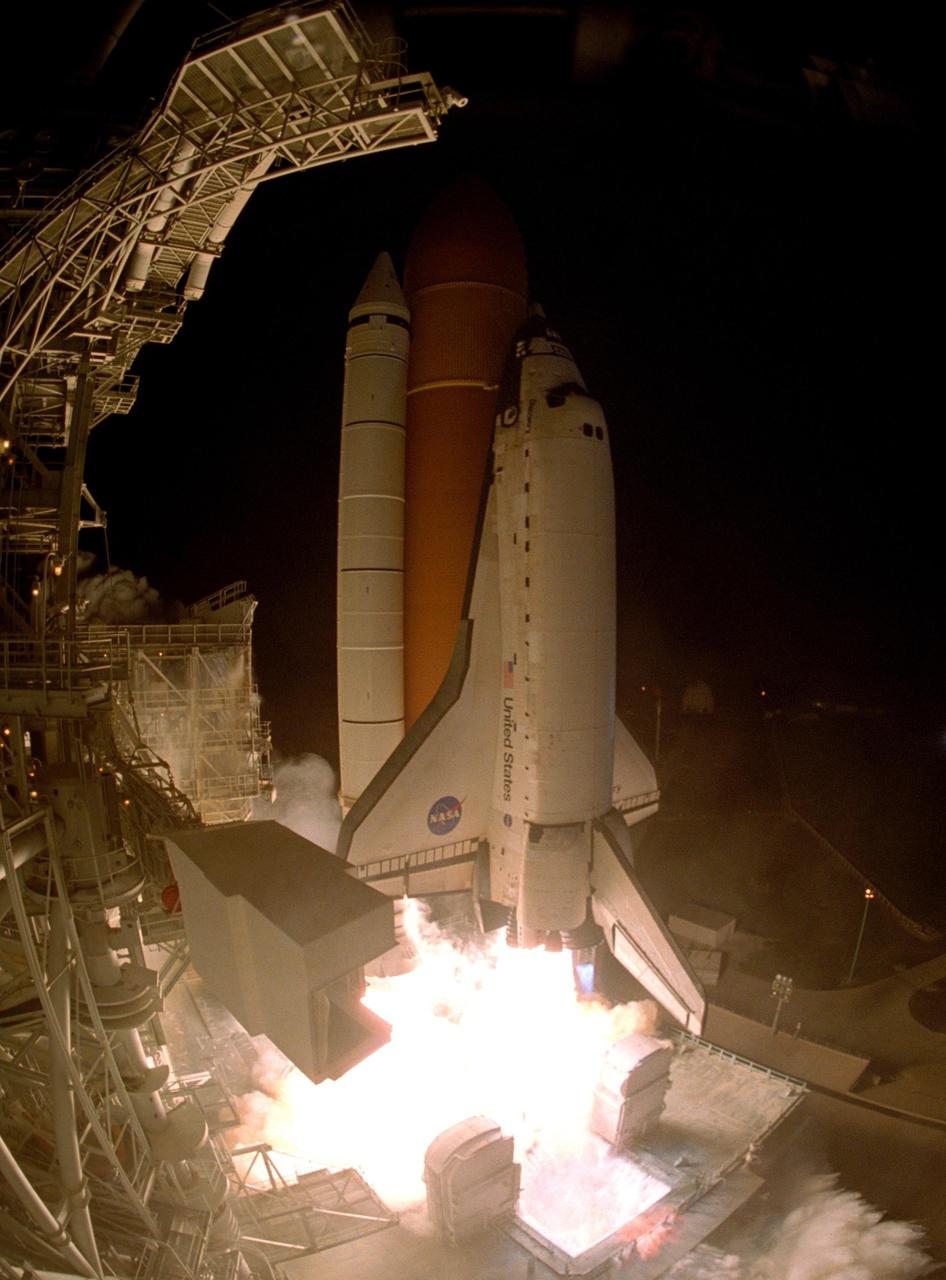
KENNEDY SPACE CENTER, FLA. -- This fish-eye view shows the water flooding the mobile launcher platform as Space Shuttle Discovery lifts off Launch Pad 39B on mission STS-116. Liftoff occurred on time at 8:47 p.m. EST. This was the second launch attempt for mission STS-116. The first launch attempt on Dec. 7 was postponed due a low cloud ceiling over Kennedy Space Center. This is Discovery's 33rd mission and the first night launch since 2002. The 20th shuttle mission to the International Space Station, STS-116 carries another truss segment, P5. It will serve as a spacer, mated to the P4 truss that was attached in September. After installing the P5, the crew will reconfigure and redistribute the power generated by two pairs of U.S. solar arrays. Landing is expected Dec. 21 at KSC. Photo credit: NASA/Tony Gray & Don Kight
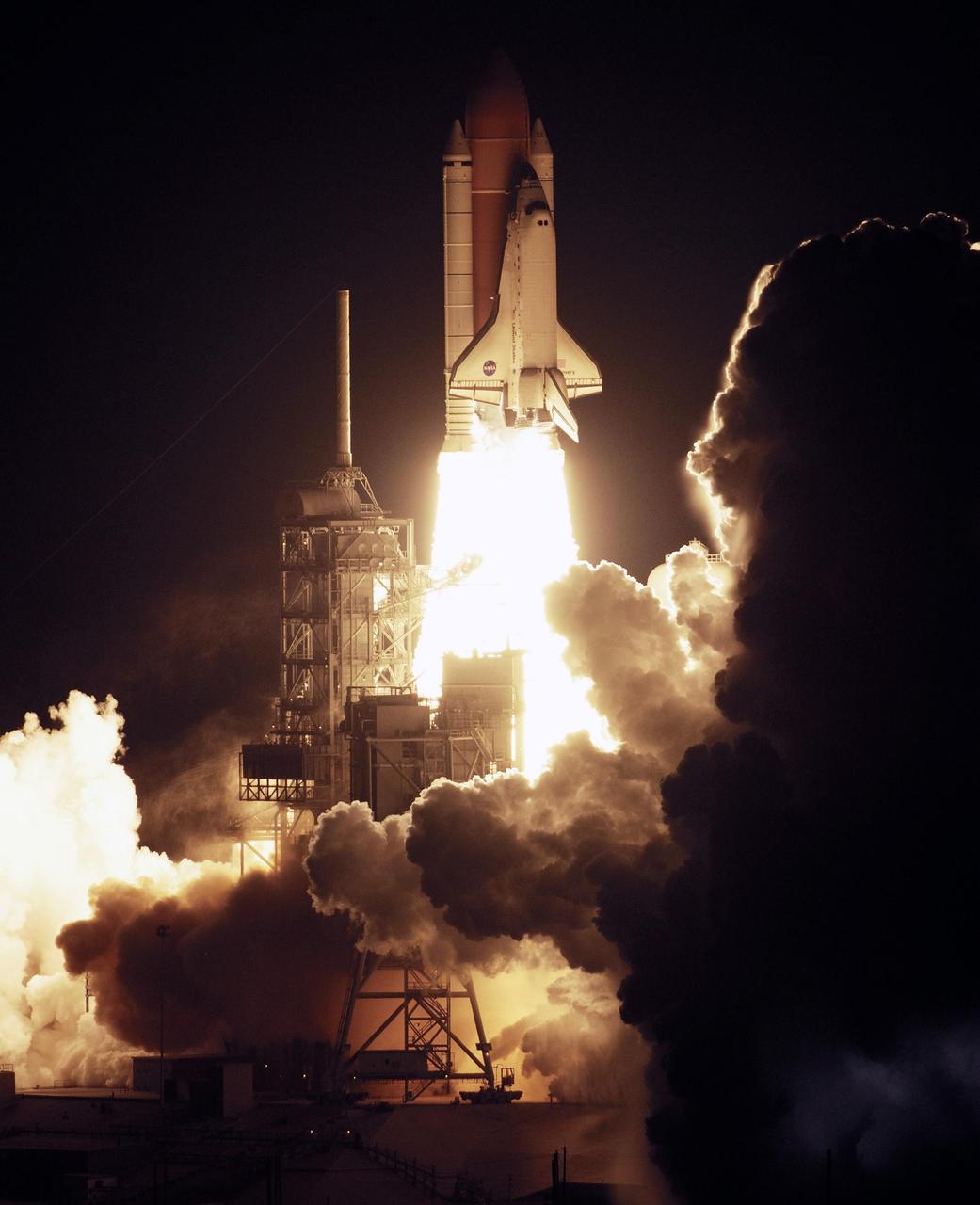
KENNEDY SPACE CENTER, FLA. -- Rising on columns of fire above the smoke and steam below, Space Shuttle Discovery leaps toward the sky past the lightning mast on Launch Pad 39B on mission STS-116. Liftoff occurred on time at 8:47 p.m. EST. This was the second launch attempt for mission STS-116. The first launch attempt on Dec. 7 was postponed due a low cloud ceiling over Kennedy Space Center. This is Discovery's 33rd mission and the first night launch since 2002. The 20th shuttle mission to the International Space Station, STS-116 carries another truss segment, P5. It will serve as a spacer, mated to the P4 truss that was attached in September. After installing the P5, the crew will reconfigure and redistribute the power generated by two pairs of U.S. solar arrays. Landing is expected Dec. 21 at KSC. Photo courtesy of Nikon/Scott Andrews

S116-E-07153 (19 Dec. 2006) --- Backdropped by the blackness of space and Earth's horizon, the International Space Station moves away from Space Shuttle Discovery. Earlier the STS-116 and Expedition 14 crews concluded eight days of cooperative work onboard the shuttle and station. Undocking of the two spacecraft occurred at 4:10 p.m. (CST) on Dec. 19, 2006. Astronaut William A. (Bill) Oefelein, STS-116 pilot, was at the controls for the fly-around, which gave Discovery's crew a look at its handiwork, a new P5 spacer truss segment and a fully retracted P6 solar array wing. During their stay on orbital outpost, the combined crew installed the newest piece of the station's backbone and completely rewired the power grid over the course of four spacewalks.
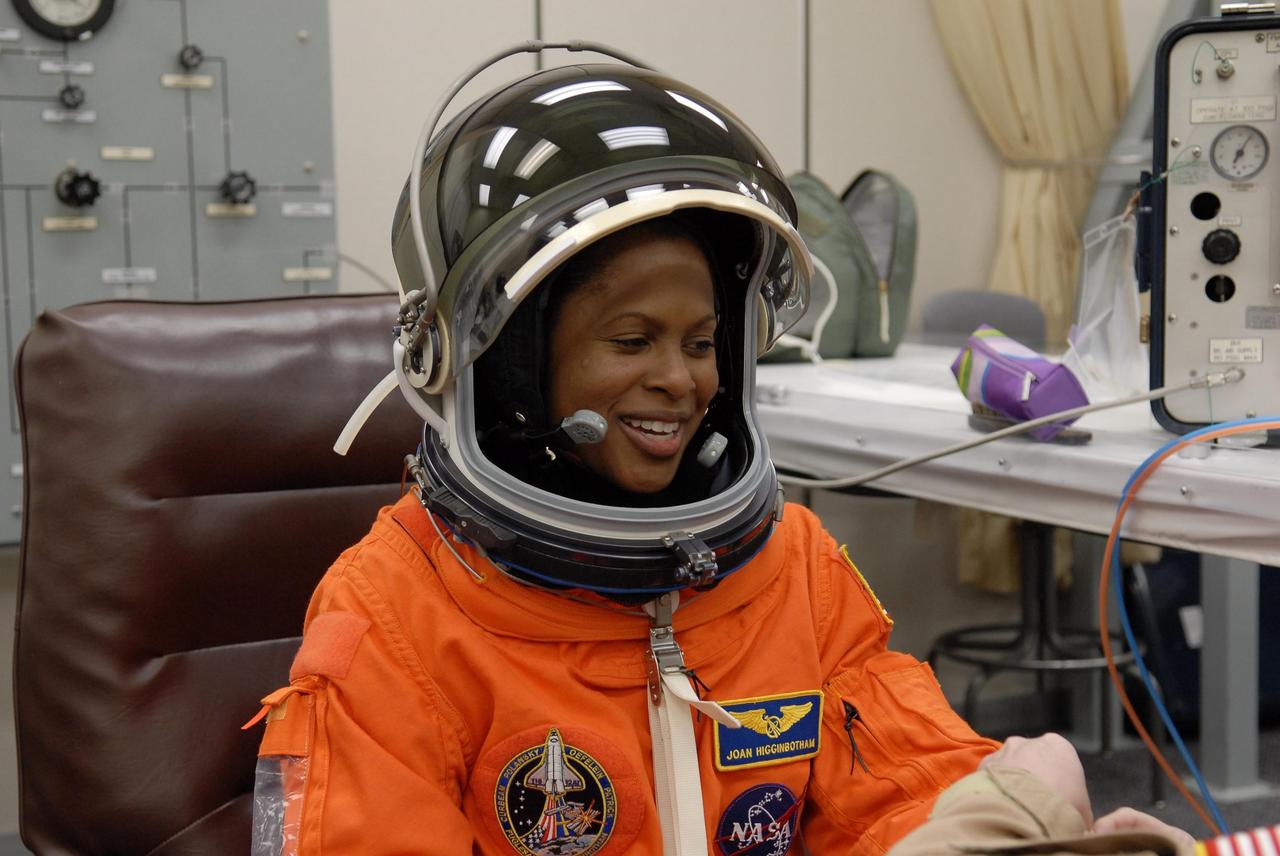
KENNEDY SPACE CENTER, FLA. -- The crew members of mission STS-116 are suiting up for a second launch attempt at 8:47 p.m. EST from Launch Pad 39B aboard Space Shuttle Discovery. Pictured here, Mission Specialist Joan Higginbotham, who will be making her first shuttle flight, has donned her helmet. The first launch attempt of STS-116 on Dec. 7 was postponed due a low cloud ceiling over Kennedy Space Center. This is Discovery's 33rd mission and the first night launch since 2002. The 20th shuttle mission to the International Space Station, STS-116 carries another truss segment, P5. It will serve as a spacer, mated to the P4 truss that was attached in September. After installing the P5, the crew will reconfigure and redistribute the power generated by two pairs of U.S. solar arrays. Landing is expected Dec. 19 at KSC. Photo credit: NASA/Kim Shiflett
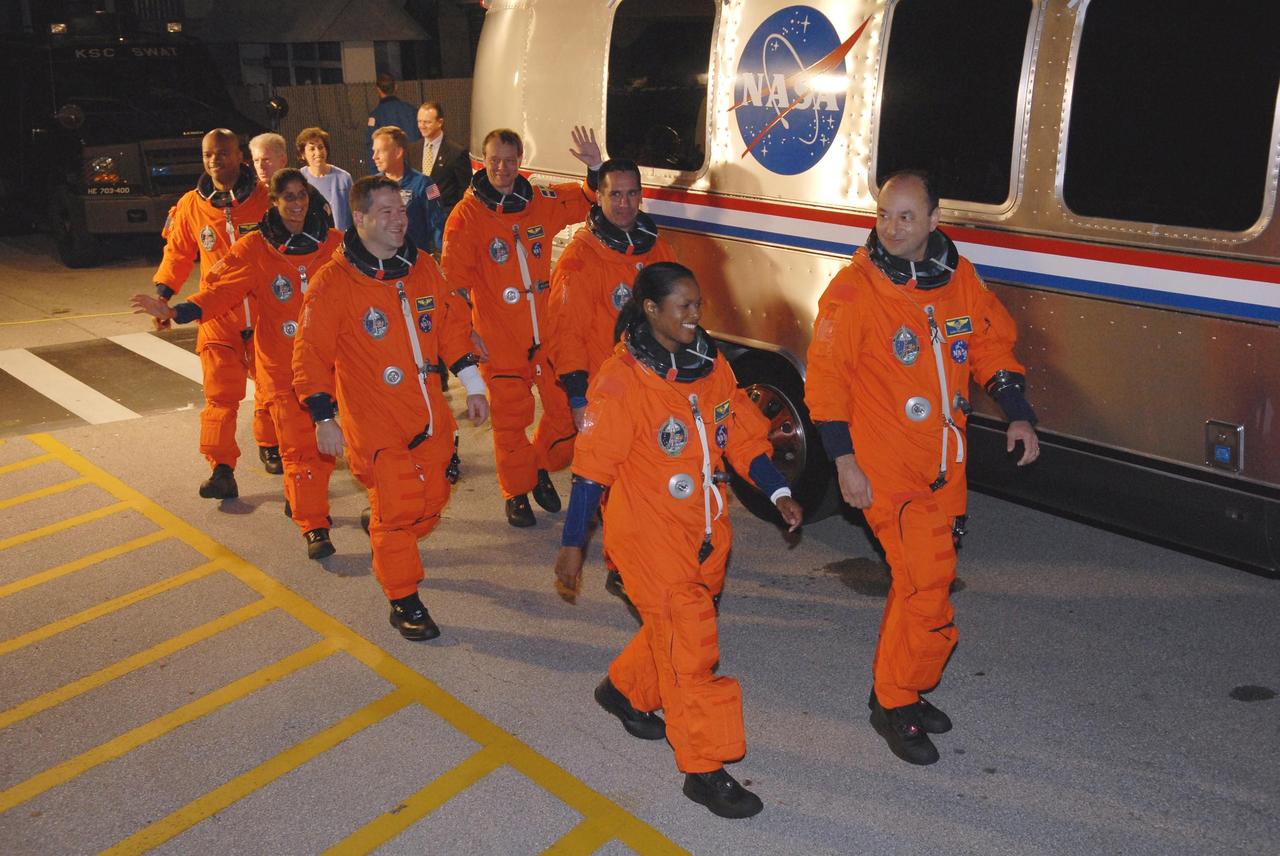
KENNEDY SPACE CENTER, FLA. -- The STS-116 crew walks to the Astrovan for the drive to Launch Pad 39B. From left are Mission Specialists Robert Curbeam, Sunita Williams, Nicholas Patrick and Christer Fuglesang; Pilot William Oefelein; Mission Specialist Joan Higginbotham; and Commander Mark Polansky. Fuglesang represents the European Space Agency. Williams will replace Expedition 14 crew member Thomas Reiter, who will return to Earth aboard Discovery in her place. This is Discovery's 33rd mission and the first night launch since 2002. The 20th shuttle mission to the International Space Station, STS-116 carries another truss segment, P5. It will serve as a spacer, mated to the P4 truss that was attached in September. After installing the P5, the crew will reconfigure and redistribute the power generated by two pairs of U.S. solar arrays. Landing is expected Dec. 19 at KSC. Photo credit: NASA/Kim Shiflett
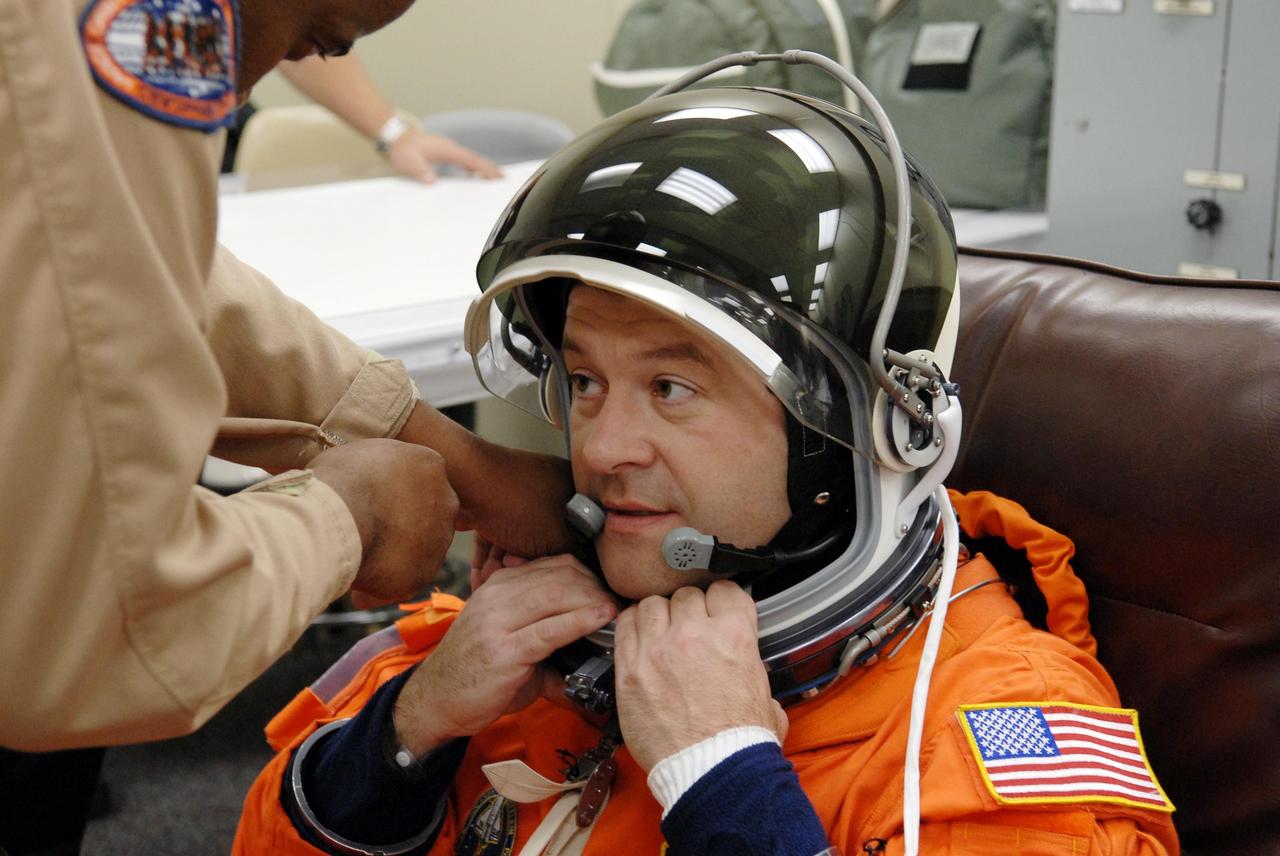
KENNEDY SPACE CENTER, FLA. -- The crew members of mission STS-116 are suiting up for a second launch attempt at 8:47 p.m. EST from Launch Pad 39B aboard Space Shuttle Discovery. Pictured here is Mission Specialist Nicholas Patrick, who will be making his first shuttle flight, being helped with his helmet. The first launch attempt of STS-116 on Dec. 7 was postponed due a low cloud ceiling over Kennedy Space Center. This is Discovery's 33rd mission and the first night launch since 2002. The 20th shuttle mission to the International Space Station, STS-116 carries another truss segment, P5. It will serve as a spacer, mated to the P4 truss that was attached in September. After installing the P5, the crew will reconfigure and redistribute the power generated by two pairs of U.S. solar arrays. Landing is expected Dec. 19 at KSC. Photo credit: NASA/Kim Shiflett
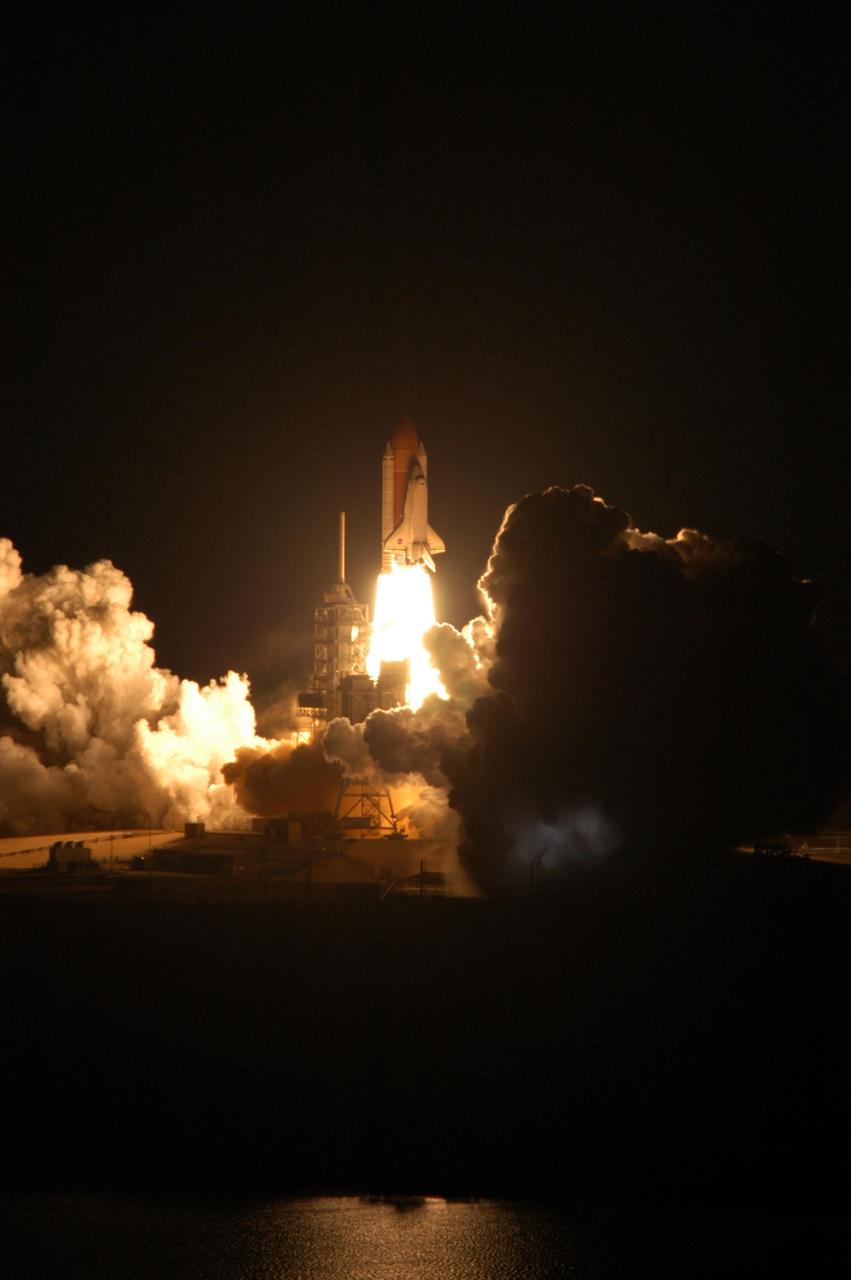
KENNEDY SPACE CENTER, FLA. -- Flooding the night sky with its blazing light, Space Shuttle Discovery leaps toward the sky from Launch Pad 39B on mission STS-116. The launch occurred at 8:47:35 p.m. EST. This was the second launch attempt for mission STS-116. The first launch attempt on Dec. 7 was postponed due a low cloud ceiling over Kennedy Space Center. This is Discovery's 33rd mission and the first night launch since 2002. The 20th shuttle mission to the International Space Station, STS-116 carries another truss segment, P5. It will serve as a spacer, mated to the P4 truss that was attached in September. After installing the P5, the crew will reconfigure and redistribute the power generated by two pairs of U.S. solar arrays. Landing is expected Dec. 21 at KSC. Photo credit: NASA/George Shelton

S116-E-07106 (19 Dec. 2006) --- Backdropped by the blackness of space and Earth's horizon, the International Space Station moves away from Space Shuttle Discovery. Earlier the STS-116 and Expedition 14 crews concluded eight days of cooperative work onboard the shuttle and station. Undocking of the two spacecraft occurred at 4:10 p.m. (CST) on Dec. 19, 2006. Astronaut William A. (Bill) Oefelein, STS-116 pilot, was at the controls for the fly-around, which gave Discovery's crew a look at its handiwork, a new P5 spacer truss segment and a fully retracted P6 solar array wing. During their stay on orbital outpost, the combined crew installed the newest piece of the station's backbone and completely rewired the power grid over the course of four spacewalks.
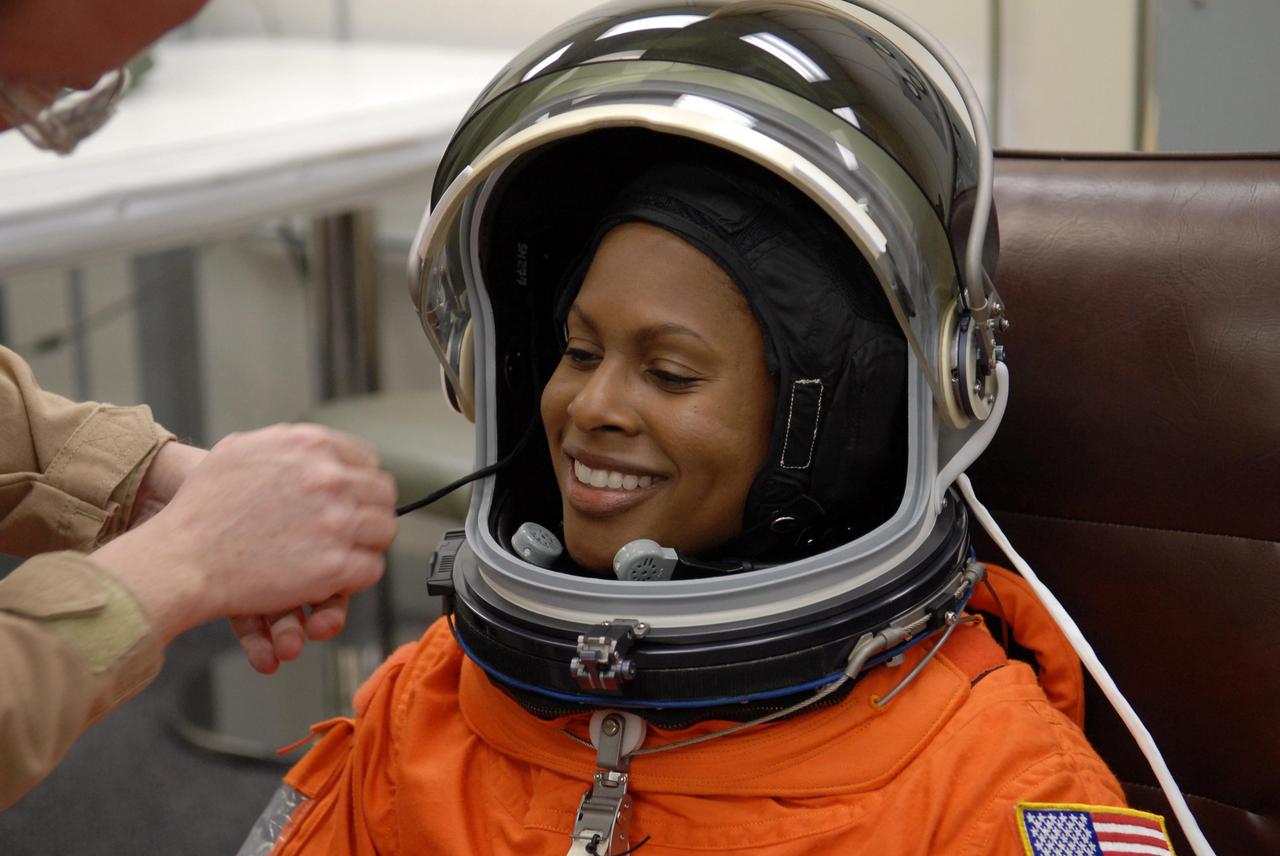
KENNEDY SPACE CENTER, FLA. -- The crew members of mission STS-116 are suiting up for launch at 9:35 p.m. EST from Launch Pad 39B aboard Space Shuttle Discovery. Pictured here, Mission Specialist Joan Higginbotham is helped with her helmet. Higginbotham will be making her first shuttle flight. This is Discovery's 33rd mission and the first night launch since 2003. The 20th shuttle mission to the International Space Station, STS-116 carries another truss segment, P5. It will serve as a spacer, mated to the P4 truss that was attached in September. After installing the P5, the crew will reconfigure and redistribute the power generated by two pairs of U.S. solar arrays. Landing is expected Dec. 19 at KSC. Photo credit: NASA/Kim Shiflett
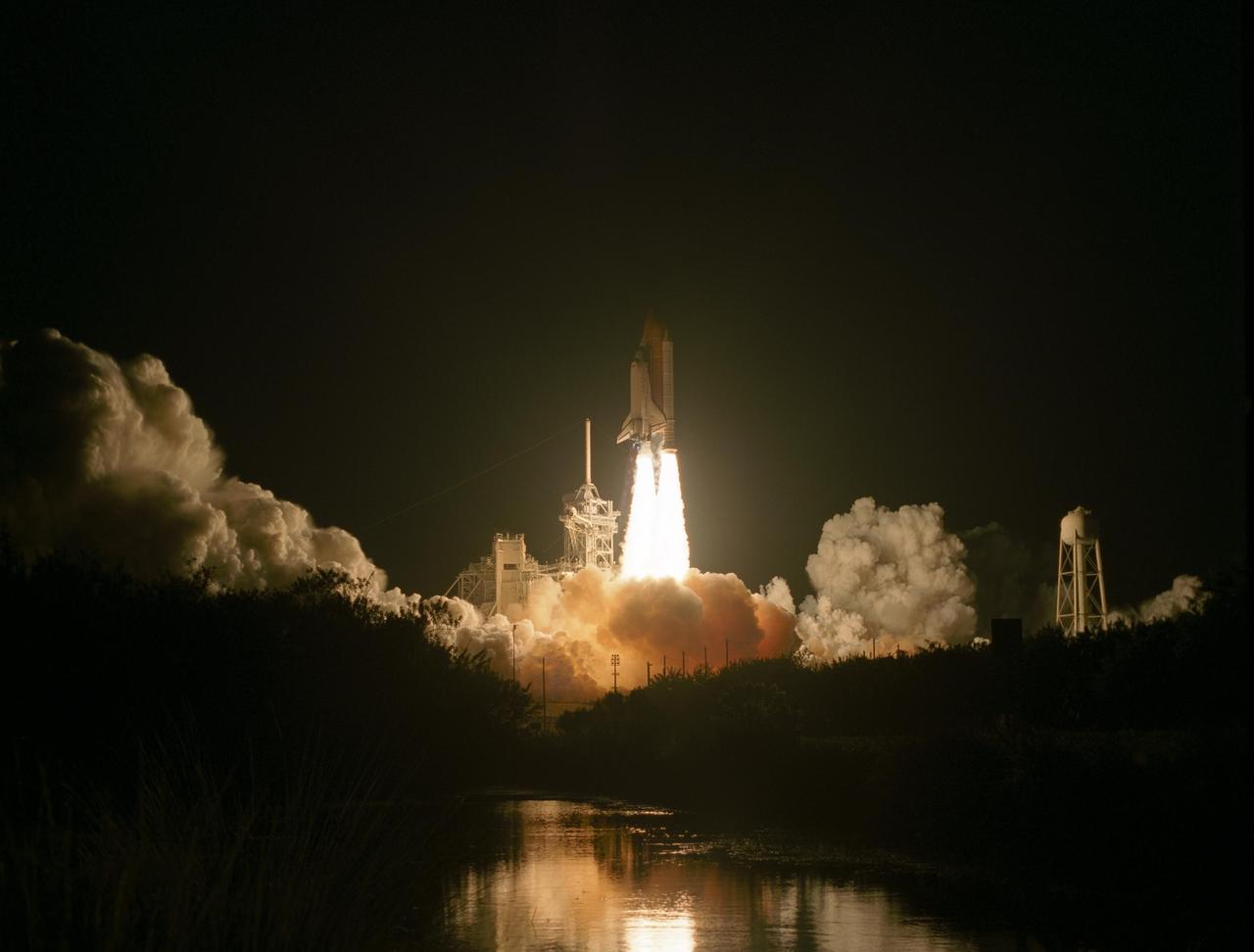
KENNEDY SPACE CENTER, FLA. -- Rising on columns of fire from amid the smoke and steam below, Space Shuttle Discovery leaps toward the sky past the lightning mast on Launch Pad 39B on mission STS-116. Liftoff occurred on time at 8:47 p.m. EST. This was the second launch attempt of Discovery on mission STS-116. The first launch attempt on Dec. 7 was postponed due a low cloud ceiling over Kennedy Space Center. This is Discovery's 33rd mission and the first night launch since 2002. The 20th shuttle mission to the International Space Station, STS-116 carries another truss segment, P5. It will serve as a spacer, mated to the P4 truss that was attached in September. After installing the P5, the crew will reconfigure and redistribute the power generated by two pairs of U.S. solar arrays. Landing is expected Dec. 21 at KSC. Photo credit: NASA/Sandra Joseph, Robert Murray, Chris Lynch
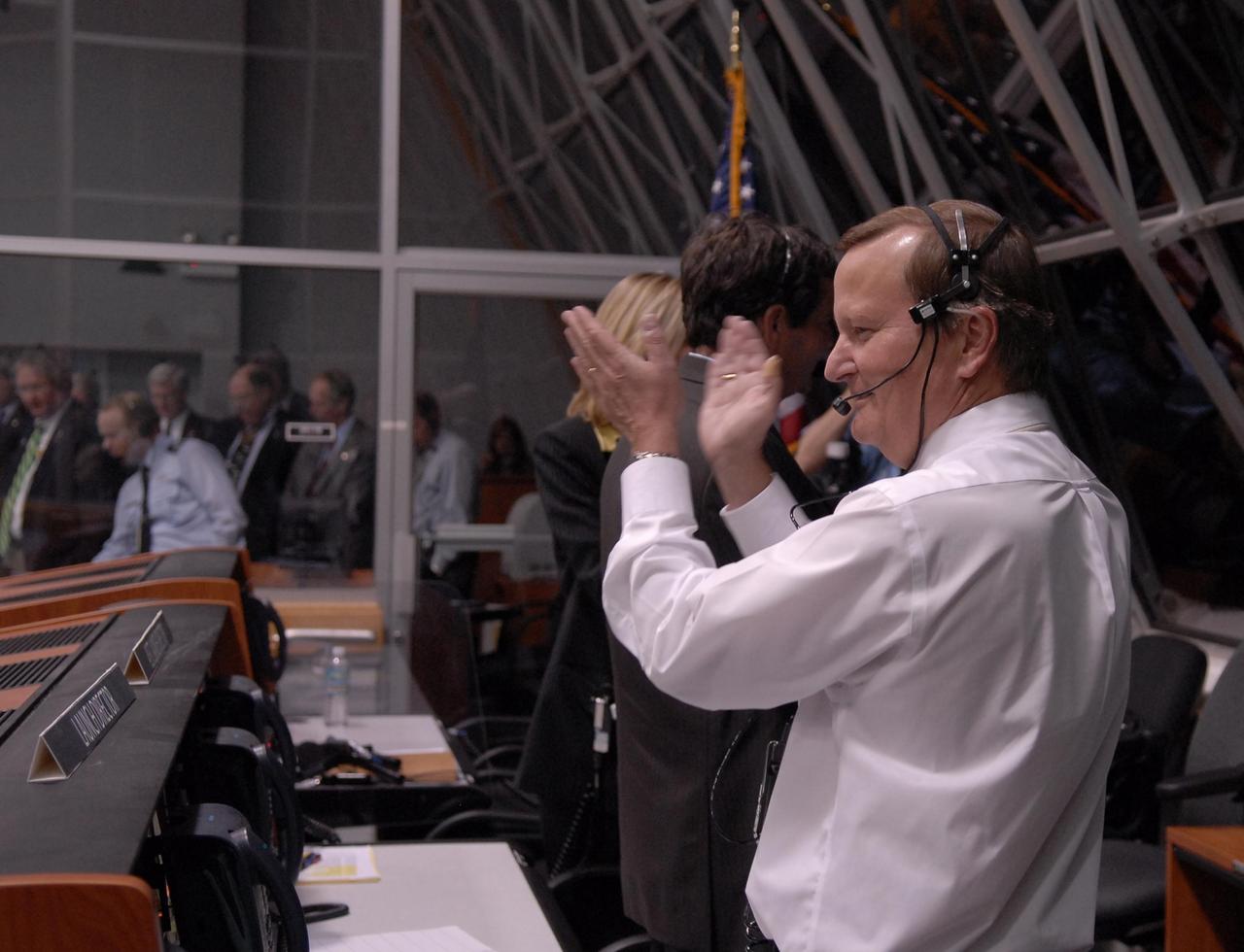
KENNEDY SPACE CENTER, FLA. -- In the firing room at the Launch Control Center, Shuttle Launch Director Mike Leinbach applauds the successful launch of Space Shuttle Discovery on mission STS-116. Liftoff occurred on time at 8:47 p.m. EST. This was the second launch attempt for mission STS-116. The first launch attempt on Dec. 7 was postponed due a low cloud ceiling over Kennedy Space Center. This is Discovery's 33rd mission and the first night launch since 2002. The 20th shuttle mission to the International Space Station, STS-116 carries another truss segment, P5. It will serve as a spacer, mated to the P4 truss that was attached in September. After installing the P5, the crew will reconfigure and redistribute the power generated by two pairs of U.S. solar arrays. Landing is expected Dec. 21 at KSC. Photo credit: NASA/Kim Shiflett
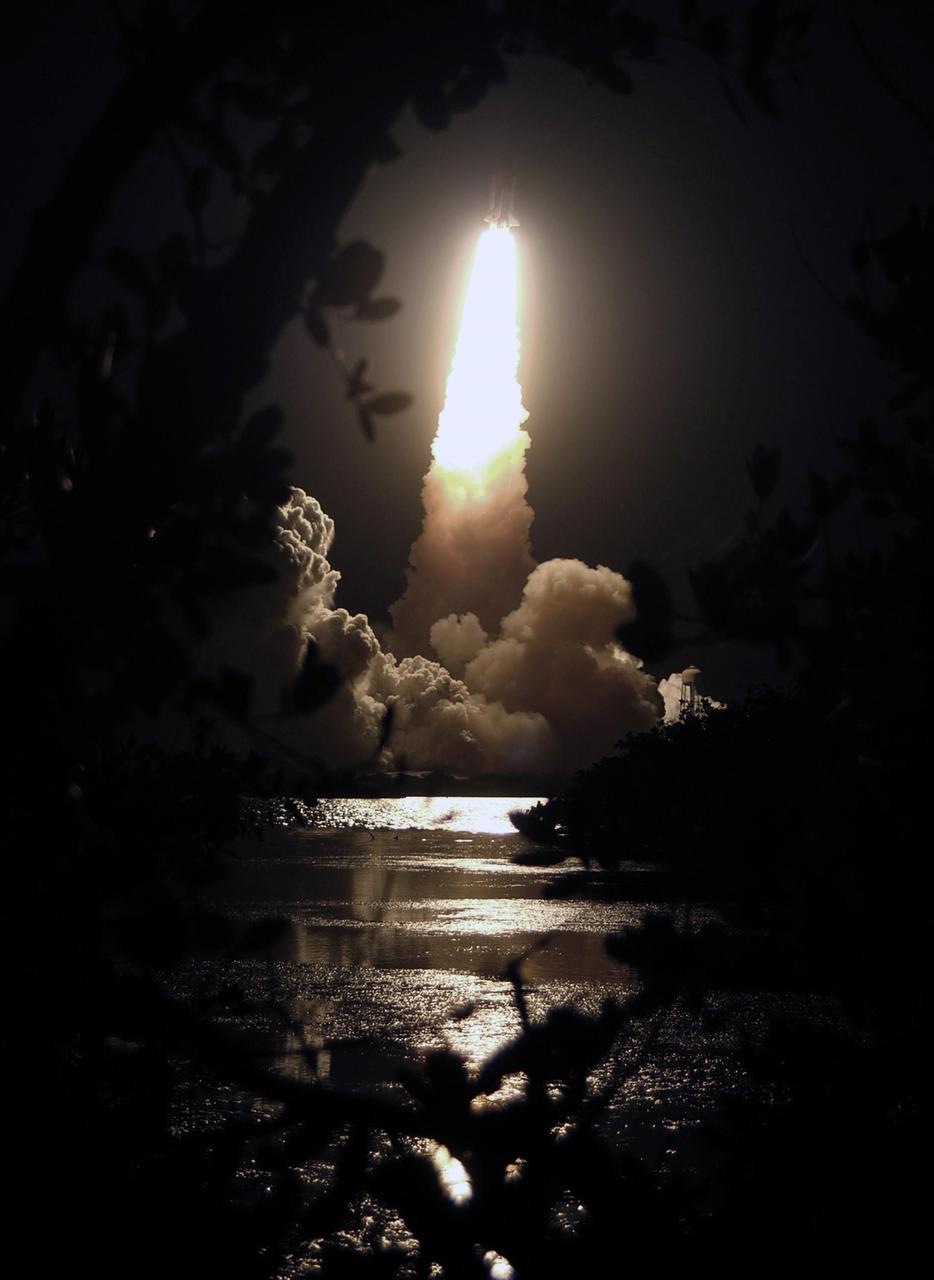
KENNEDY SPACE CENTER, FLA. -- Looking like a shooting star, Space Shuttle Discovery roars into the night sky on mission STS-116. The trailing blaze lighted the sky and nearby water, while clouds of smoke and steam billowed across the launch pad. Liftoff occurred on time at 8:47 p.m. EST. This was the second launch attempt for mission STS-116. The first launch attempt on Dec. 7 was postponed due a low cloud ceiling over Kennedy Space Center. This is Discovery's 33rd mission and the first night launch since 2002. The 20th shuttle mission to the International Space Station, STS-116 carries another truss segment, P5. It will serve as a spacer, mated to the P4 truss that was attached in September. After installing the P5, the crew will reconfigure and redistribute the power generated by two pairs of U.S. solar arrays. Landing is expected Dec. 21 at KSC. Photo courtesy of Nikon/Scott Andrews
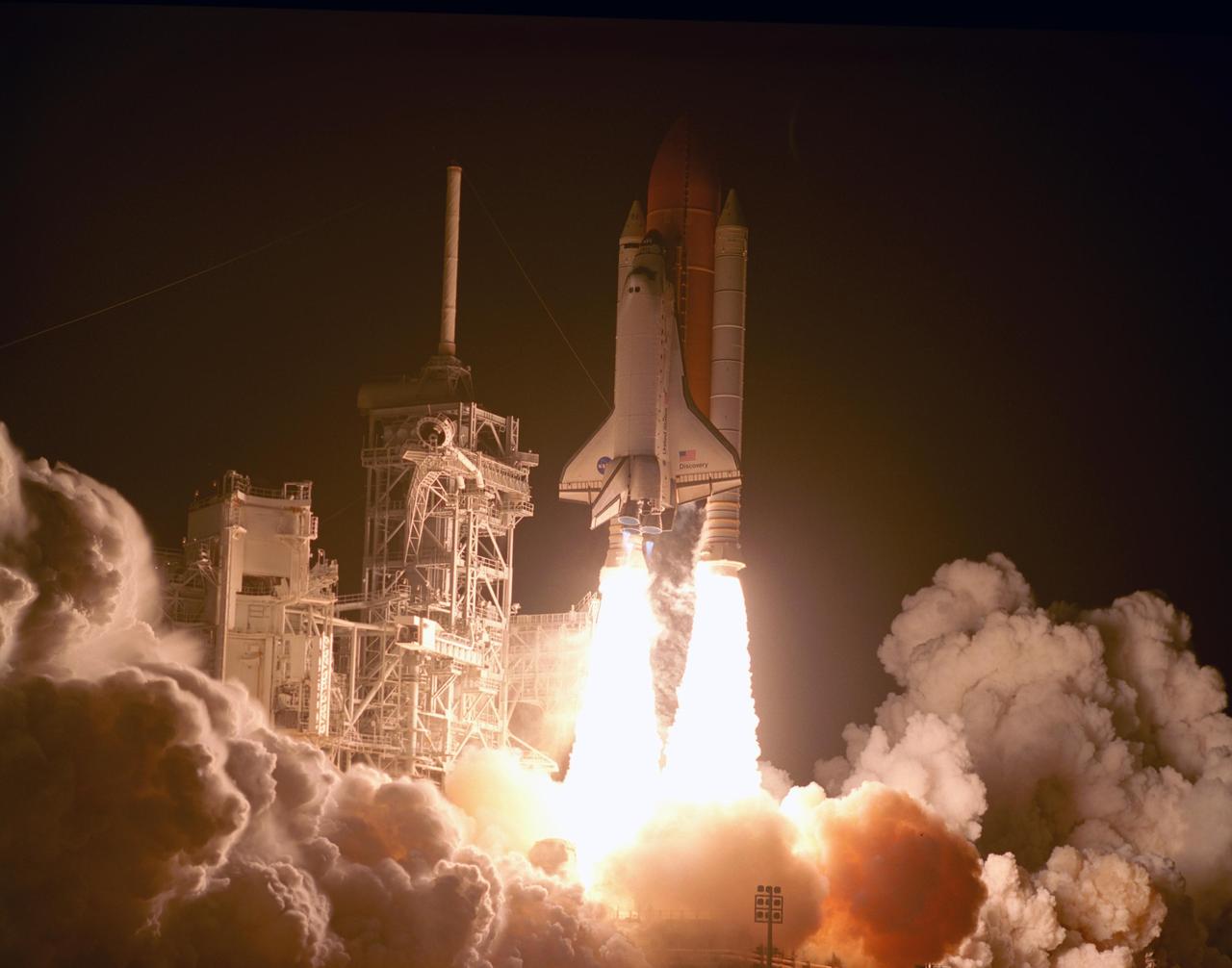
KENNEDY SPACE CENTER, FLA. -- Space Shuttle Discovery seems to be standing on the fiery columns erupting from the solid rocket boosters as it lifts off Launch Pad 39B on mission STS-116. Liftoff occurred on time at 8:47 p.m. EST. This was the second launch attempt for mission STS-116. The first launch attempt on Dec. 7 was postponed due a low cloud ceiling over Kennedy Space Center. This is Discovery's 33rd mission and the first night launch since 2002. The 20th shuttle mission to the International Space Station, STS-116 carries another truss segment, P5. It will serve as a spacer, mated to the P4 truss that was attached in September. After installing the P5, the crew will reconfigure and redistribute the power generated by two pairs of U.S. solar arrays. Landing is expected Dec. 21 at KSC. Photo credit: NASA/Regina Mitchell-Ryall & Tim Powers
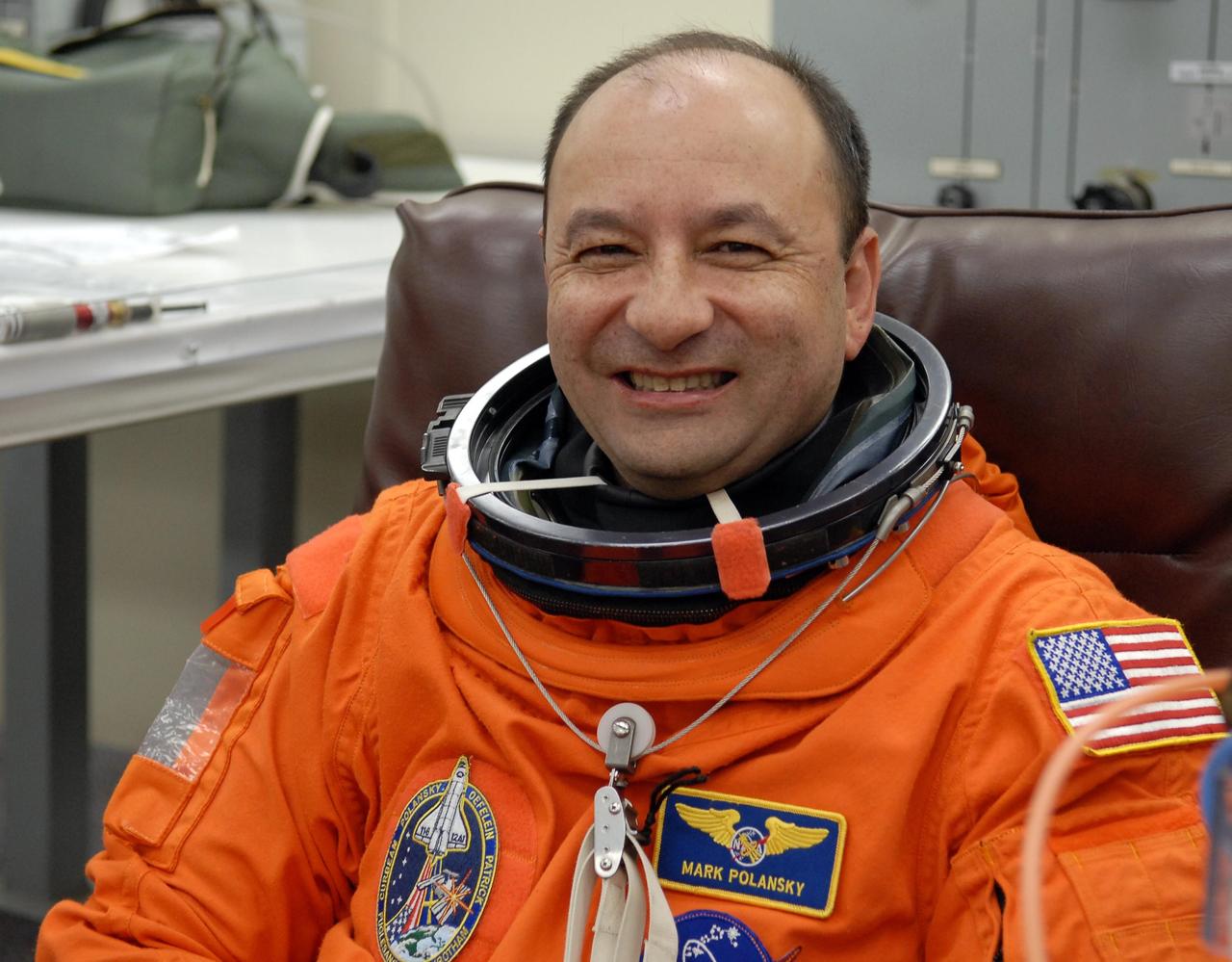
KENNEDY SPACE CENTER, FLA. -- The crew members of mission STS-116 are suiting up for a second launch attempt at 8:47 p.m. EST from Launch Pad 39B aboard Space Shuttle Discovery. Pictured here is Commander Mark Polansky, who shows his delight in progressing toward another launch attempt. The first launch attempt of STS-116 on Dec. 7 was postponed due a low cloud ceiling over Kennedy Space Center. This is Discovery's 33rd mission and the first night launch since 2002. The 20th shuttle mission to the International Space Station, STS-116 carries another truss segment, P5. It will serve as a spacer, mated to the P4 truss that was attached in September. After installing the P5, the crew will reconfigure and redistribute the power generated by two pairs of U.S. solar arrays. Landing is expected Dec. 19 at KSC. Photo credit: NASA/Kim Shiflett
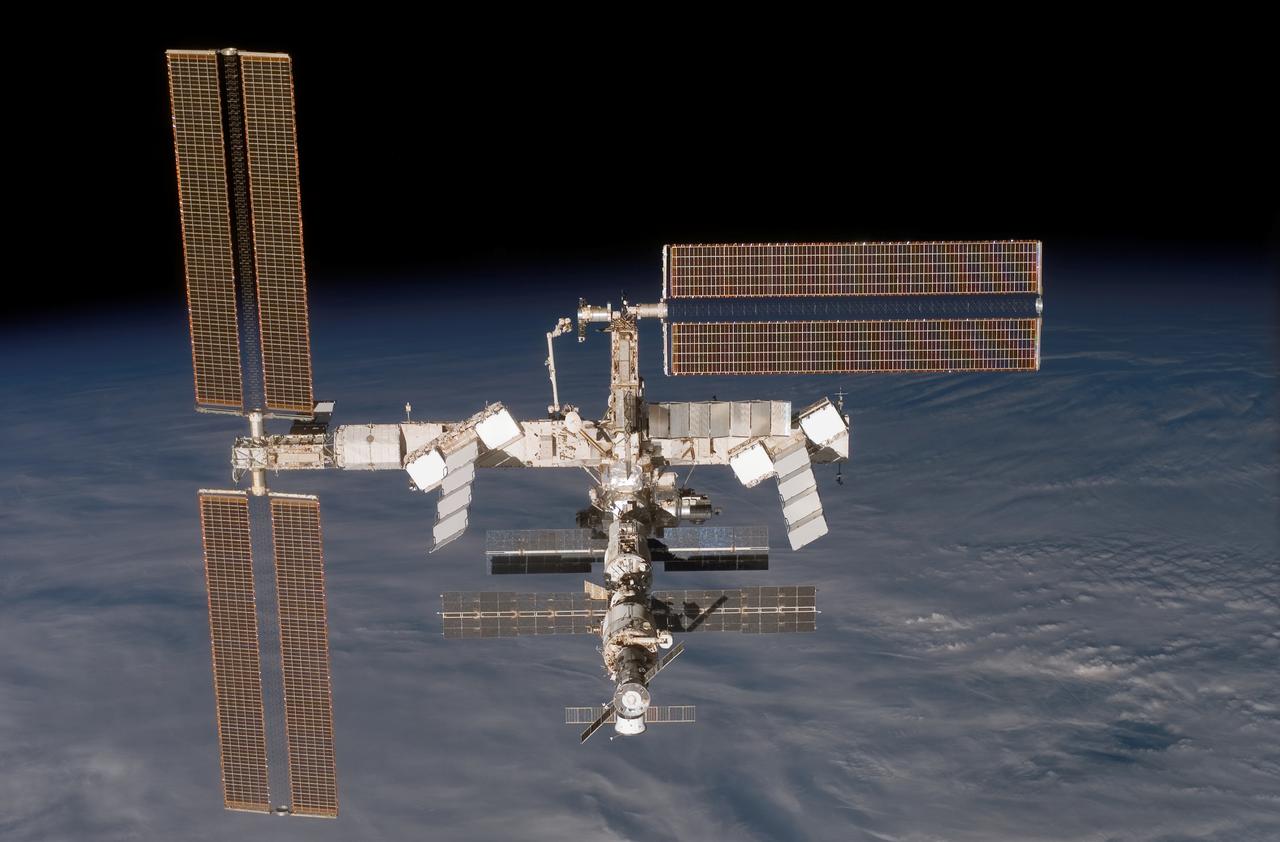
Photographed from the Space Shuttle Discovery upon its separation from the orbital outpost, the International Space Station (ISS) is shown sporting its new additions. A fly-around gave the crew a look at their handiwork, a new P5 spacer truss segment and a fully retracted P6 solar array wing. Earlier, the STS-116 and Expedition 14 crews concluded eight days of cooperative work onboard the shuttle and station where they accomplished the installation of the newest piece of the station and completely rewired the power grid over the course of four space walks. The station is currently the size of a typical three-bedroom house, with a surface area large enough to cover four basketball courts. The image reflects the latest configuration of the ISS as of December 19, 2006.
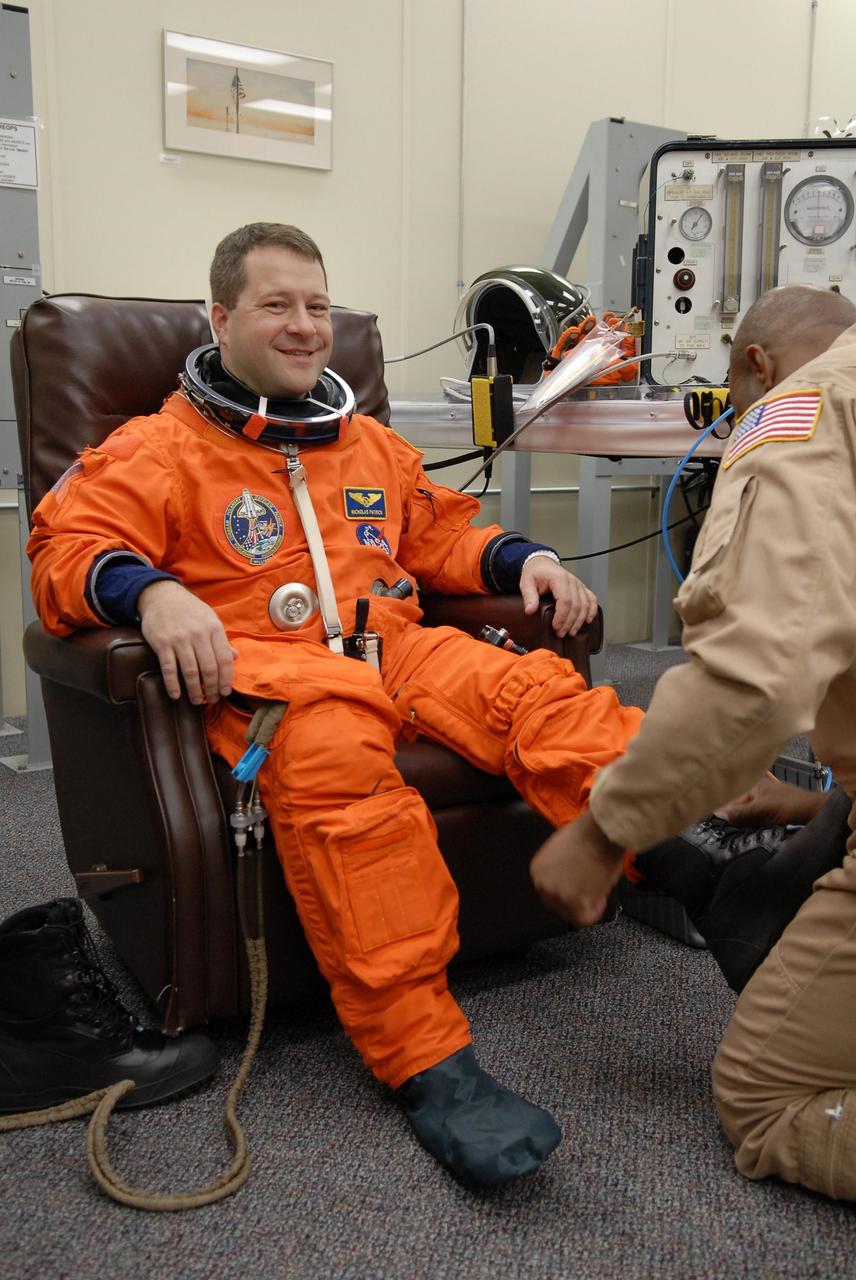
KENNEDY SPACE CENTER, FLA. -- The crew members of mission STS-116 are suiting up for a second launch attempt at 8:47 p.m. EST from Launch Pad 39B aboard Space Shuttle Discovery. Pictured here is Mission Specialist Nicholas Patrick, who will be making his first shuttle flight, being helped with his boot. The first launch attempt of STS-116 on Dec. 7 was postponed due a low cloud ceiling over Kennedy Space Center. This is Discovery's 33rd mission and the first night launch since 2002. The 20th shuttle mission to the International Space Station, STS-116 carries another truss segment, P5. It will serve as a spacer, mated to the P4 truss that was attached in September. After installing the P5, the crew will reconfigure and redistribute the power generated by two pairs of U.S. solar arrays. Landing is expected Dec. 19 at KSC. Photo credit: NASA/Kim Shiflett
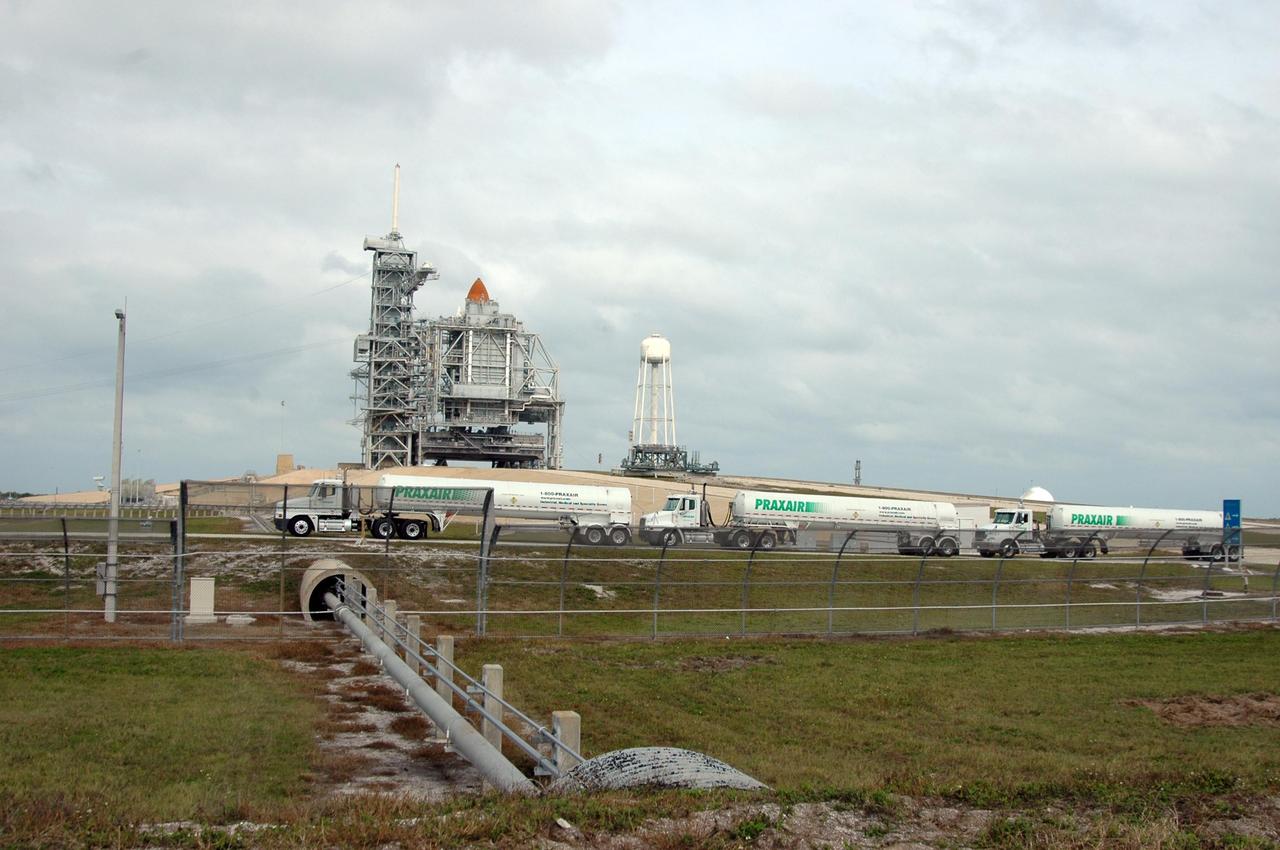
KENNEDY SPACE CENTER, FLA. -- Fuel trucks head for Launch Pad 39B to refill the external tank on Space Shuttle Discovery. The top of the external tank can be seen above the rotating service structure that encloses the space shuttle. The launch attempt of Discovery on mission STS-116 was postponed Dec. 7 due a low cloud ceiling over Kennedy Space Center. The next launch attempt was scheduled for Saturday, Dec. 9, at 8:47 p.m. This will be Discovery's 33rd mission and the first night launch since 2002. The 20th shuttle mission to the International Space Station, STS-116 carries another truss segment, P5. It will serve as a spacer, mated to the P4 truss that was attached in September. After installing the P5, the crew will reconfigure and redistribute the power generated by two pairs of U.S. solar arrays. Landing is expected Dec. 19 at KSC. Photo credit: NASA/Ken Thornsley
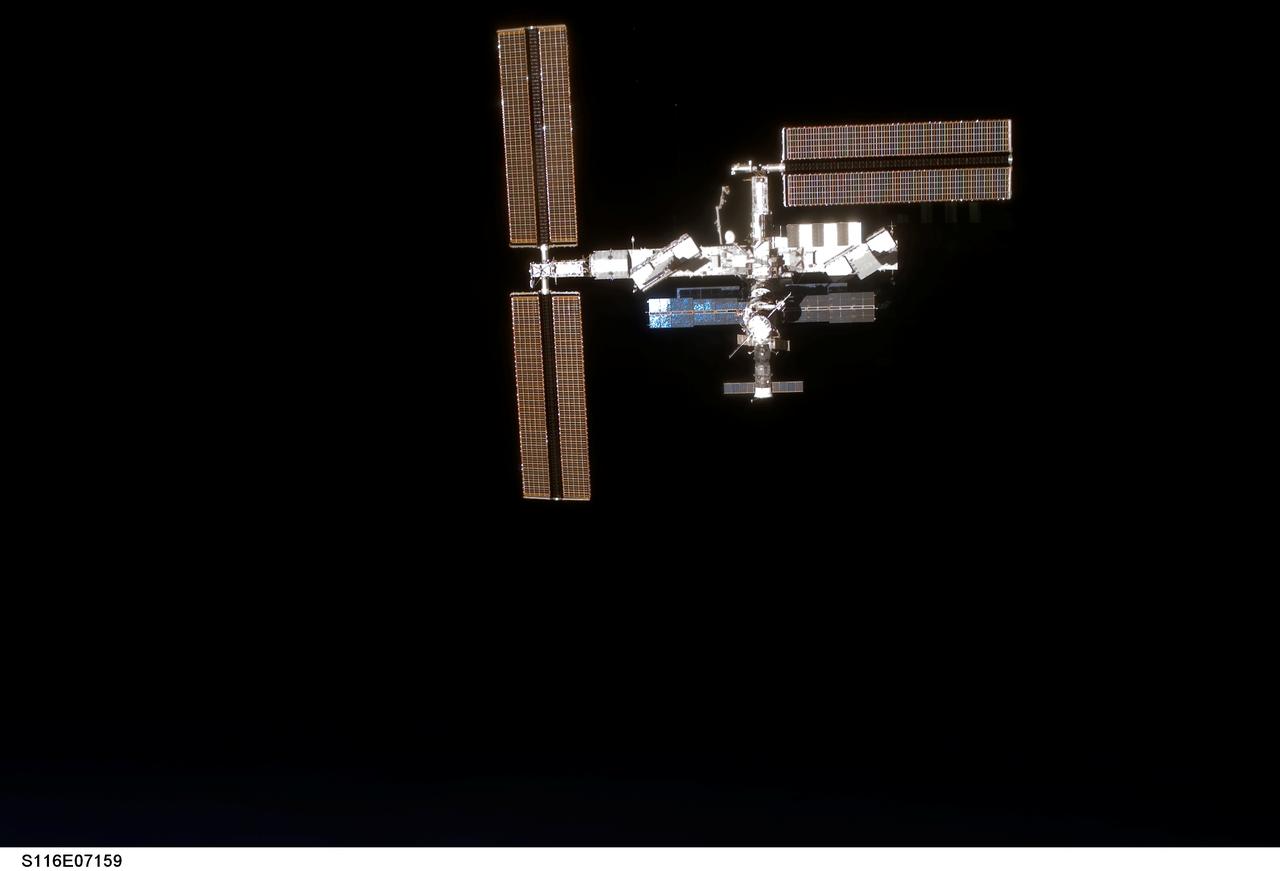
S116-E-07159 (19 Dec. 2006) --- Backdropped by the blackness of space, the International Space Station moves away from Space Shuttle Discovery. Earlier the STS-116 and Expedition 14 crews concluded eight days of cooperative work onboard the shuttle and station. Undocking of the two spacecraft occurred at 4:10 p.m. (CST) on Dec. 19, 2006. Astronaut William A. (Bill) Oefelein, STS-116 pilot, was at the controls for the fly-around, which gave Discovery's crew a look at its handiwork, a new P5 spacer truss segment and a fully retracted P6 solar array wing. During their stay on orbital outpost, the combined crew installed the newest piece of the station's backbone and completely rewired the power grid over the course of four spacewalks.
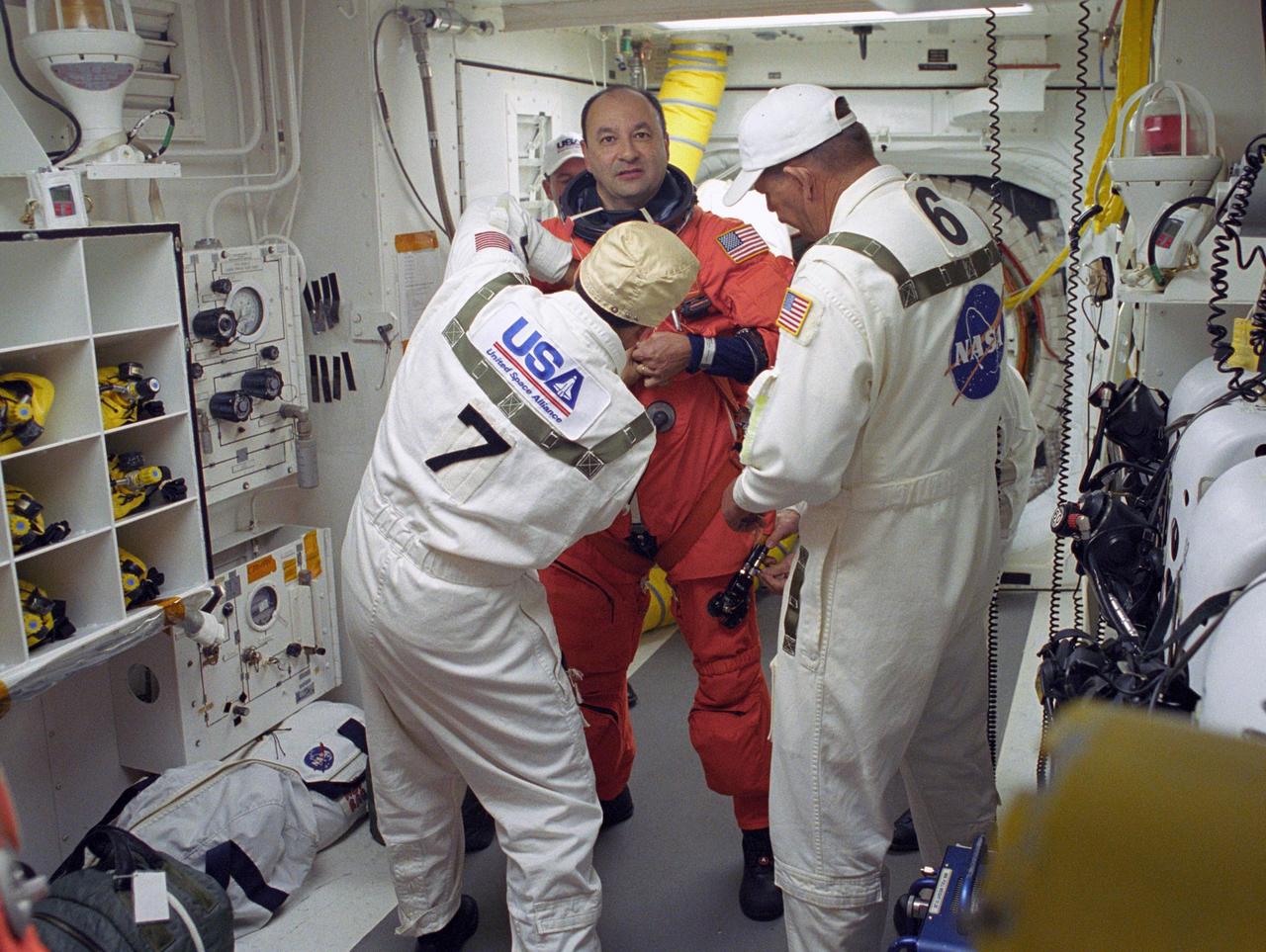
KENNEDY SPACE CENTER, FLA. -- STS-116 Commander Mark Polansky is helped by the closeout crew in the White Room to secure his launch suit before climbing into Space Shuttle Discovery. The White Room is at the end of the orbiter access arm that extends from the fixed service structure and provides entry into the orbiter. The first launch attempt of STS-116 on Dec. 7 was postponed due a low cloud ceiling over Kennedy Space Center. This second launch attempt is scheduled for 8:47 p.m. This is Discovery's 33rd mission and the first night launch since 2002. The 20th shuttle mission to the International Space Station, STS-116 carries another truss segment, P5. It will serve as a spacer, mated to the P4 truss that was attached in September. After installing the P5, the crew will reconfigure and redistribute the power generated by two pairs of U.S. solar arrays. Landing is expected Dec. 21 at KSC. Photo credit: NASA/Tony Gray & Don Kight
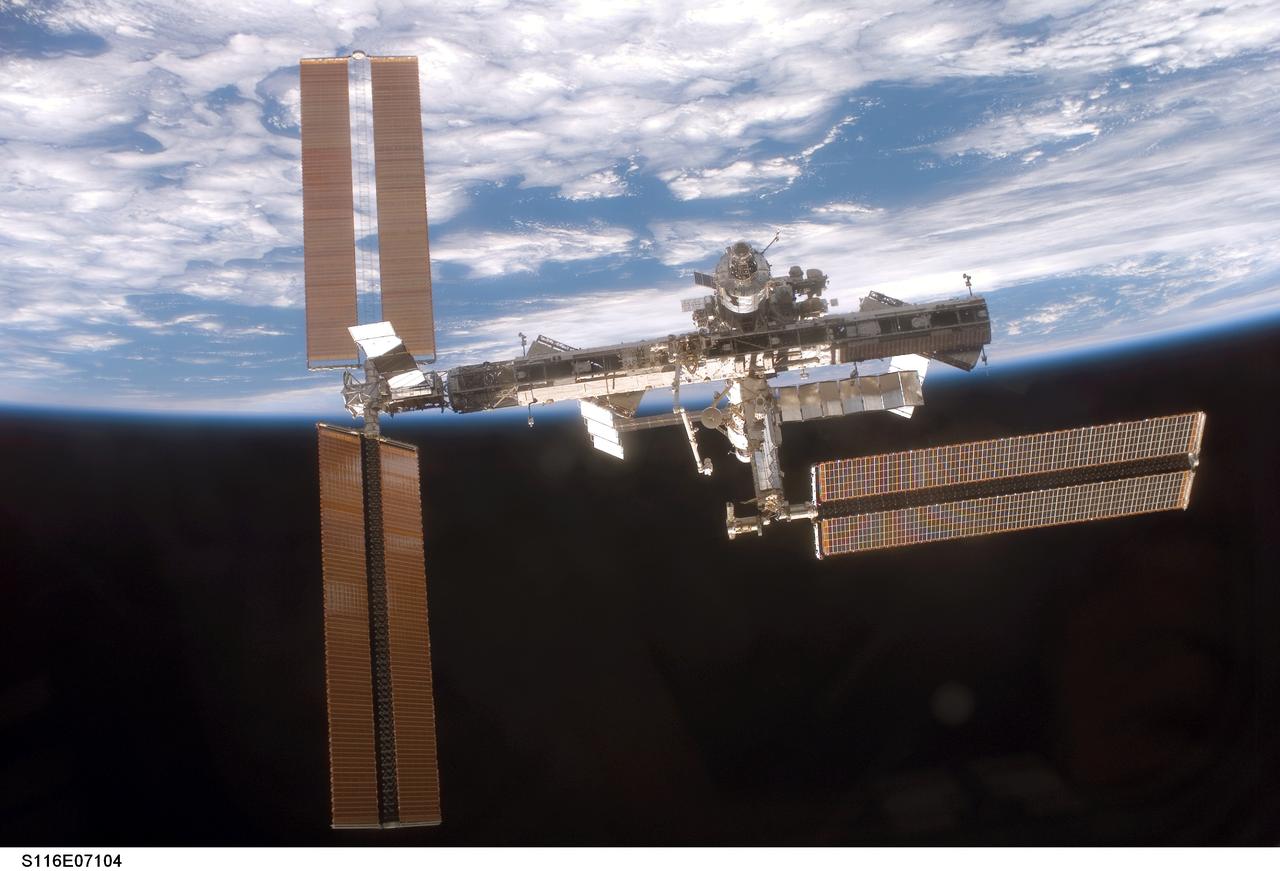
S116-E-07104 (19 Dec. 2006) --- Backdropped by the blackness of space and Earth's horizon, the International Space Station moves away from Space Shuttle Discovery. Earlier the STS-116 and Expedition 14 crews concluded eight days of cooperative work onboard the shuttle and station. Undocking of the two spacecraft occurred at 4:10 p.m. (CST) on Dec. 19, 2006. Astronaut William A. (Bill) Oefelein, STS-116 pilot, was at the controls for the fly-around, which gave Discovery's crew a look at its handiwork, a new P5 spacer truss segment and a fully retracted P6 solar array wing. During their stay on orbital outpost, the combined crew installed the newest piece of the station's backbone and completely rewired the power grid over the course of four spacewalks.
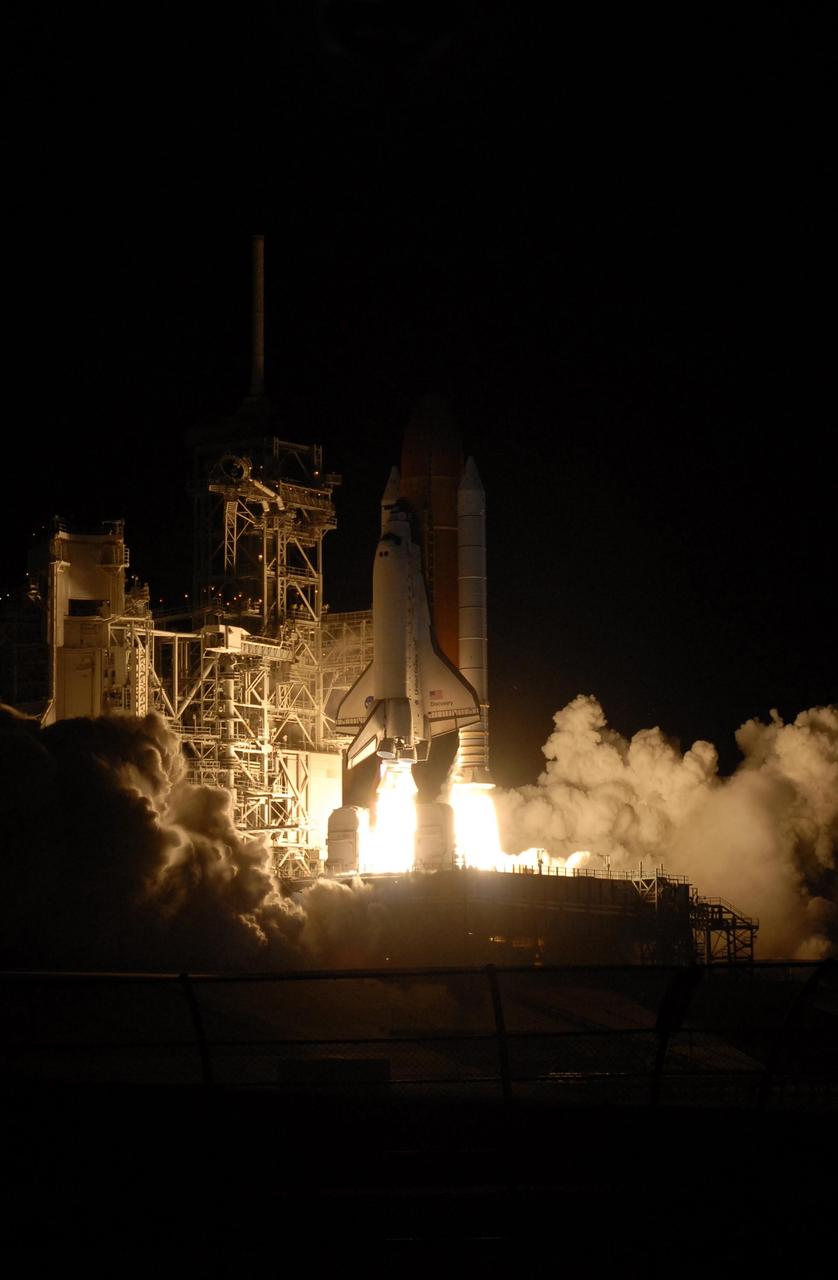
KENNEDY SPACE CENTER, FLA. -- Space Shuttle Discovery seems to be standing on the fiery columns erupting from the solid rocket boosters as it lifts off Launch Pad 39B on mission STS-116. Liftoff occurred on time at 8:47 p.m. EST. This was the second launch attempt of Discovery on mission STS-116. The first launch attempt on Dec. 7 was postponed due a low cloud ceiling over Kennedy Space Center. This is Discovery's 33rd mission and the first night launch since 2002. The 20th shuttle mission to the International Space Station, STS-116 carries another truss segment, P5. It will serve as a spacer, mated to the P4 truss that was attached in September. After installing the P5, the crew will reconfigure and redistribute the power generated by two pairs of U.S. solar arrays. Landing is expected Dec. 21 at KSC. Photo credit: NASA/Sandra Joseph, Robert Murray, Chris Lynch
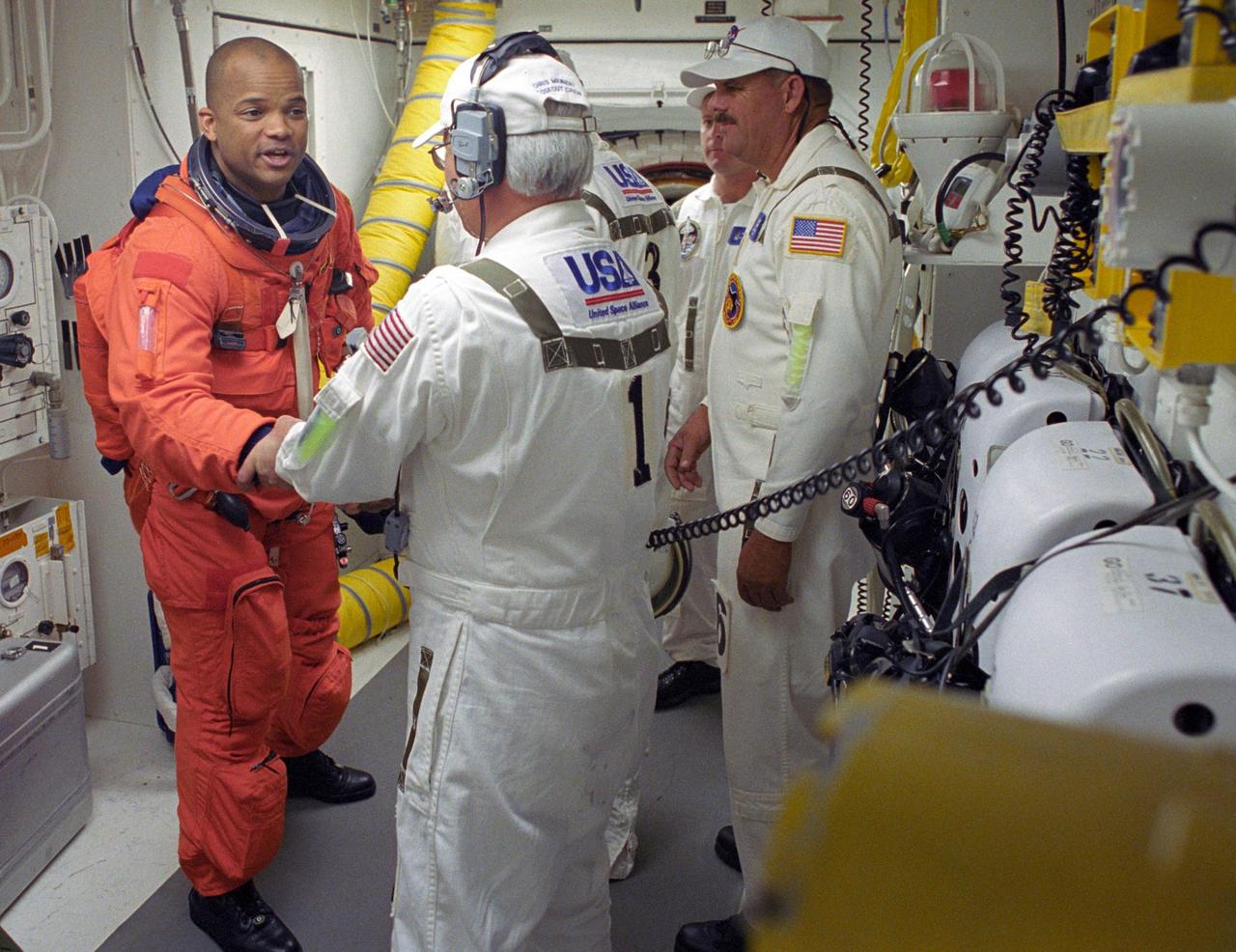
KENNEDY SPACE CENTER, FLA. -- STS-116 Mission Specialist Robert Curbeam thanks the closeout crew for their help in completing his suitup before climbing into Space Shuttle Discovery. The White Room is at the end of the orbiter access arm that extends from the fixed service structure and provides entry into the orbiter. The first launch attempt of STS-116 on Dec. 7 was postponed due a low cloud ceiling over Kennedy Space Center. This second launch attempt is scheduled for 8:47 p.m. This is Discovery's 33rd mission and the first night launch since 2002. The 20th shuttle mission to the International Space Station, STS-116 carries another truss segment, P5. It will serve as a spacer, mated to the P4 truss that was attached in September. After installing the P5, the crew will reconfigure and redistribute the power generated by two pairs of U.S. solar arrays. Landing is expected Dec. 21 at KSC. Photo credit: NASA/Tony Gray & Don Kight
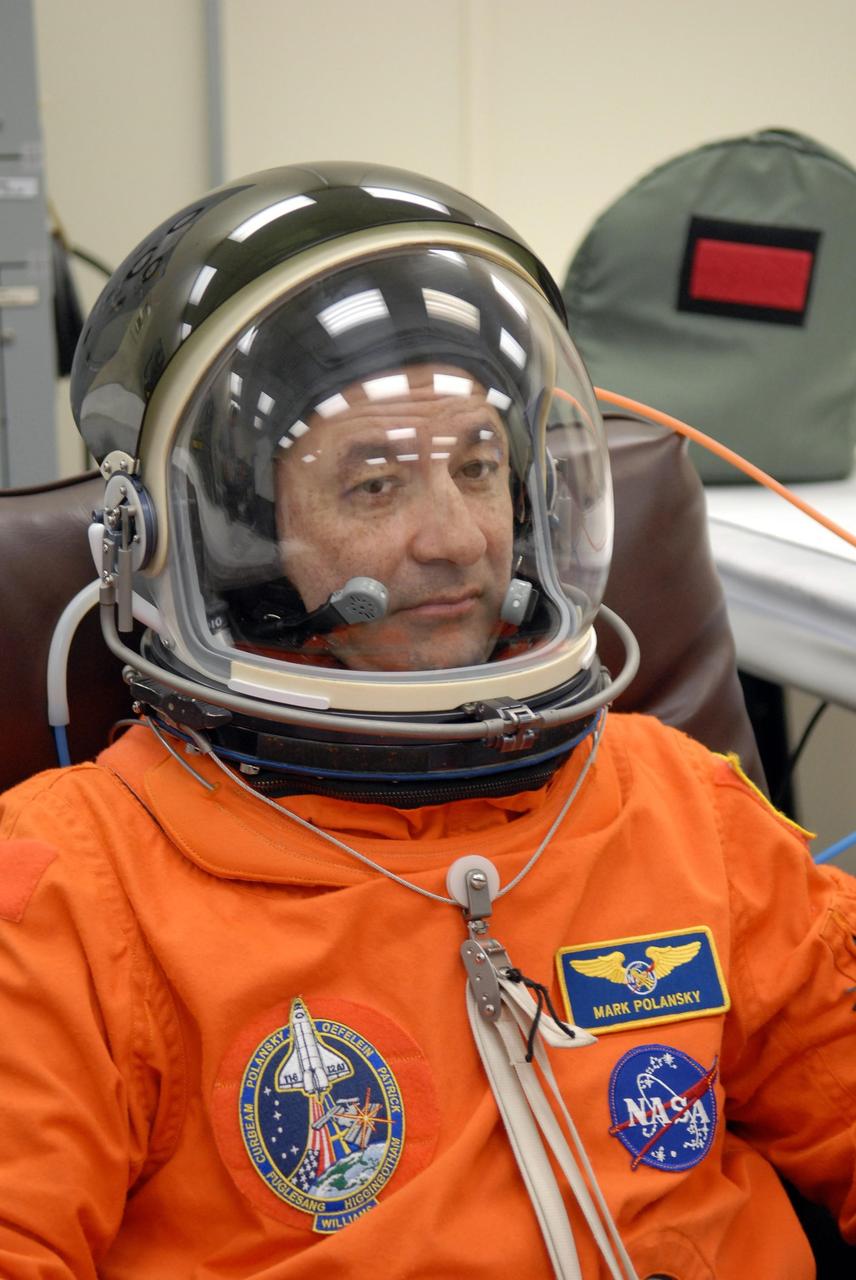
KENNEDY SPACE CENTER, FLA. -- The crew members of mission STS-116 are suiting up for launch at 9:35 p.m. EST from Launch Pad 39B aboard Space Shuttle Discovery. Pictured here is Commander Mark Polansky, after donning his helmet. Polansky will be making his second shuttle flight. This is Discovery's 33rd mission and the first night launch since 2003. The 20th shuttle mission to the International Space Station, STS-116 carries another truss segment, P5. It will serve as a spacer, mated to the P4 truss that was attached in September. After installing the P5, the crew will reconfigure and redistribute the power generated by two pairs of U.S. solar arrays. Landing is expected Dec. 19 at KSC. Photo credit: NASA/Kim Shiflett
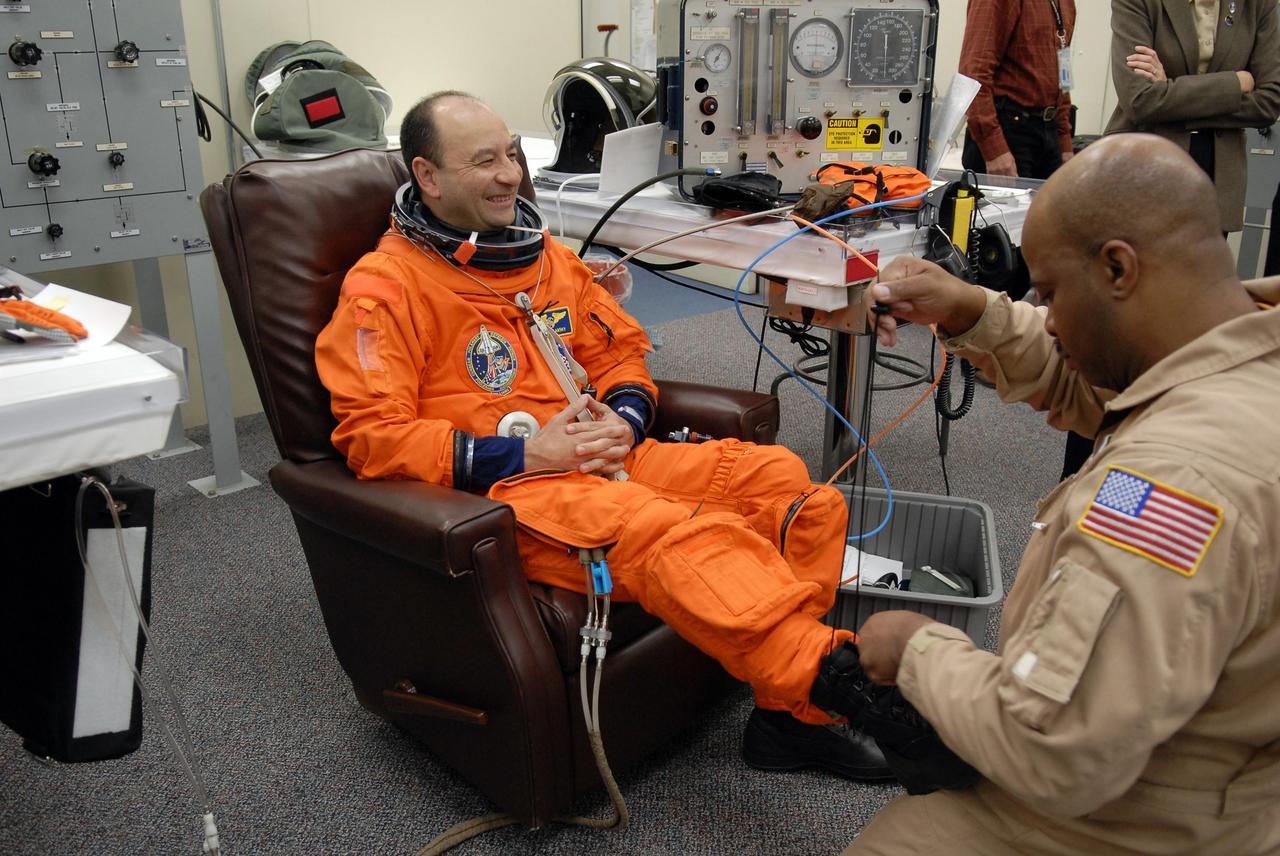
KENNEDY SPACE CENTER, FLA. -- The crew members of mission STS-116 are suiting up for a second launch attempt at 8:47 p.m. EST from Launch Pad 39B aboard Space Shuttle Discovery. Pictured here is Commander Mark Polansky, being helped with his boot. Polansky will be making his second shuttle flight. The first launch attempt of STS-116 on Dec. 7 was postponed due a low cloud ceiling over Kennedy Space Center. This is Discovery's 33rd mission and the first night launch since 2002. The 20th shuttle mission to the International Space Station, STS-116 carries another truss segment, P5. It will serve as a spacer, mated to the P4 truss that was attached in September. After installing the P5, the crew will reconfigure and redistribute the power generated by two pairs of U.S. solar arrays. Landing is expected Dec. 19 at KSC. Photo credit: NASA/Kim Shiflett
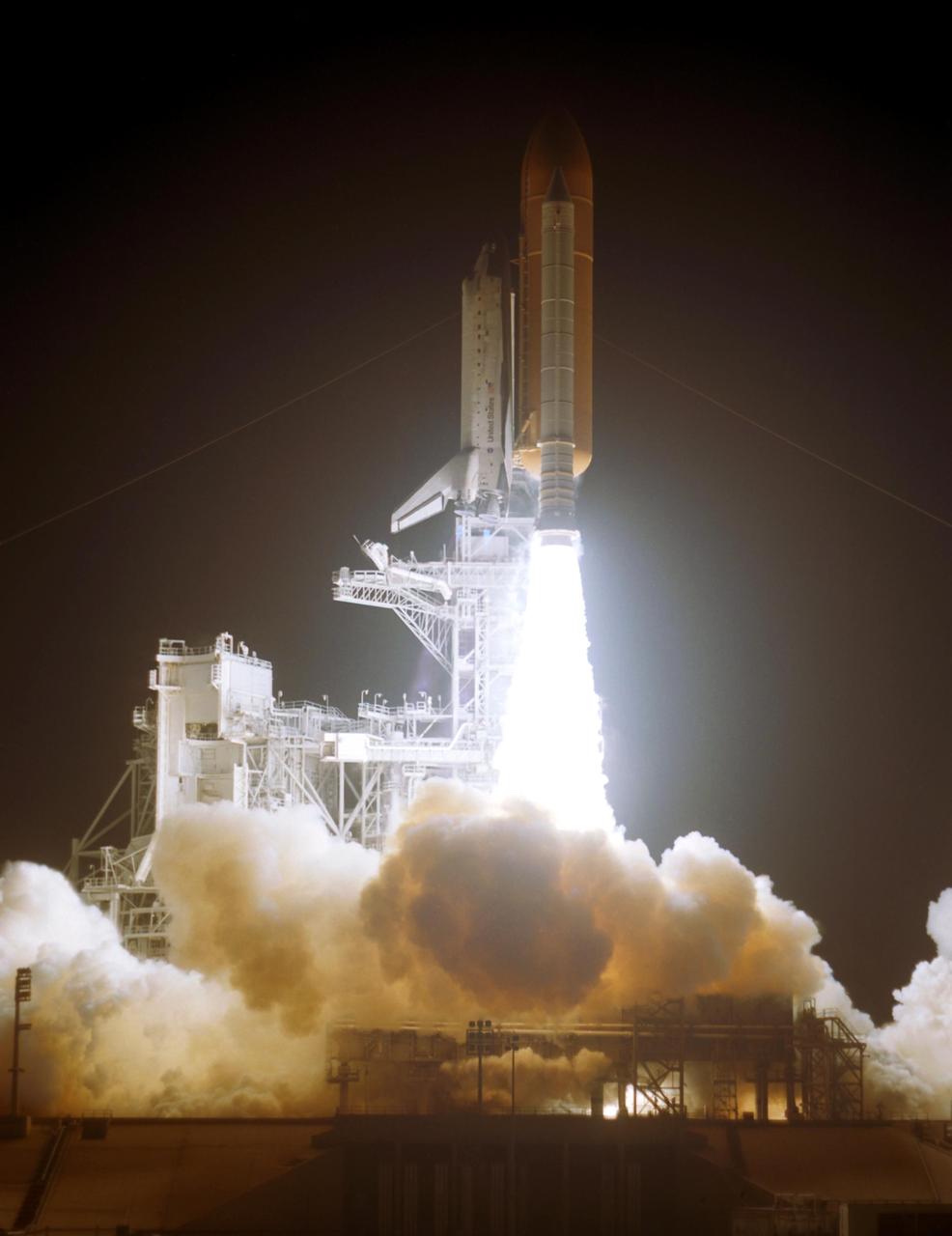
KENNEDY SPACE CENTER, FLA. -- Rising on columns of fire above the smoke and steam below, Space Shuttle Discovery leaps toward the sky past the lightning mast on Launch Pad 39B on mission STS-116. Liftoff occurred at 8:47 p.m. EST. This was the second launch attempt for mission STS-116. The first launch attempt on Dec. 7 was postponed due a low cloud ceiling over Kennedy Space Center. This is Discovery's 33rd mission and the first night launch since 2002. The 20th shuttle mission to the International Space Station, STS-116 carries another truss segment, P5. It will serve as a spacer, mated to the P4 truss that was attached in September. After installing the P5, the crew will reconfigure and redistribute the power generated by two pairs of U.S. solar arrays. Landing is expected Dec. 21 at KSC. Photo credit: NASA/Regina Mitchell-Ryall & Tim Powers
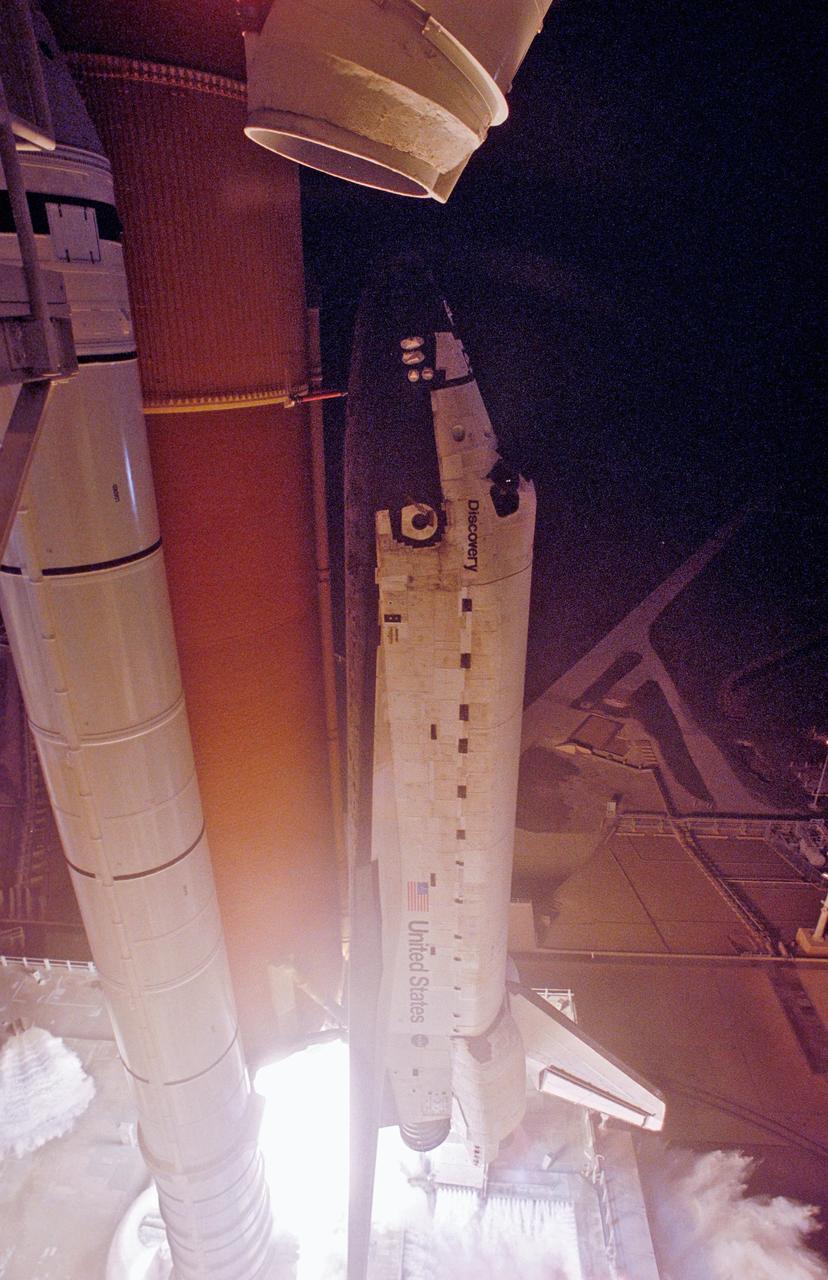
KENNEDY SPACE CENTER, FLA. -- This closeup view shows the water flooding the mobile launcher platform below Space Shuttle Discovery as it lifts off Launch Pad 39B on mission STS-116. Discovery lifted off from KSC's Launch Pad 39B at 8:47 p.m. EST on mission STS-116. This was the second launch attempt for mission STS-116. The first launch attempt on Dec. 7 was postponed due a low cloud ceiling over Kennedy Space Center. This is Discovery's 33rd mission and the first night launch since 2002. The 20th shuttle mission to the International Space Station, STS-116 carries another truss segment, P5. It will serve as a spacer, mated to the P4 truss that was attached in September. After installing the P5, the crew will reconfigure and redistribute the power generated by two pairs of U.S. solar arrays. Landing is expected Dec. 21 at KSC.
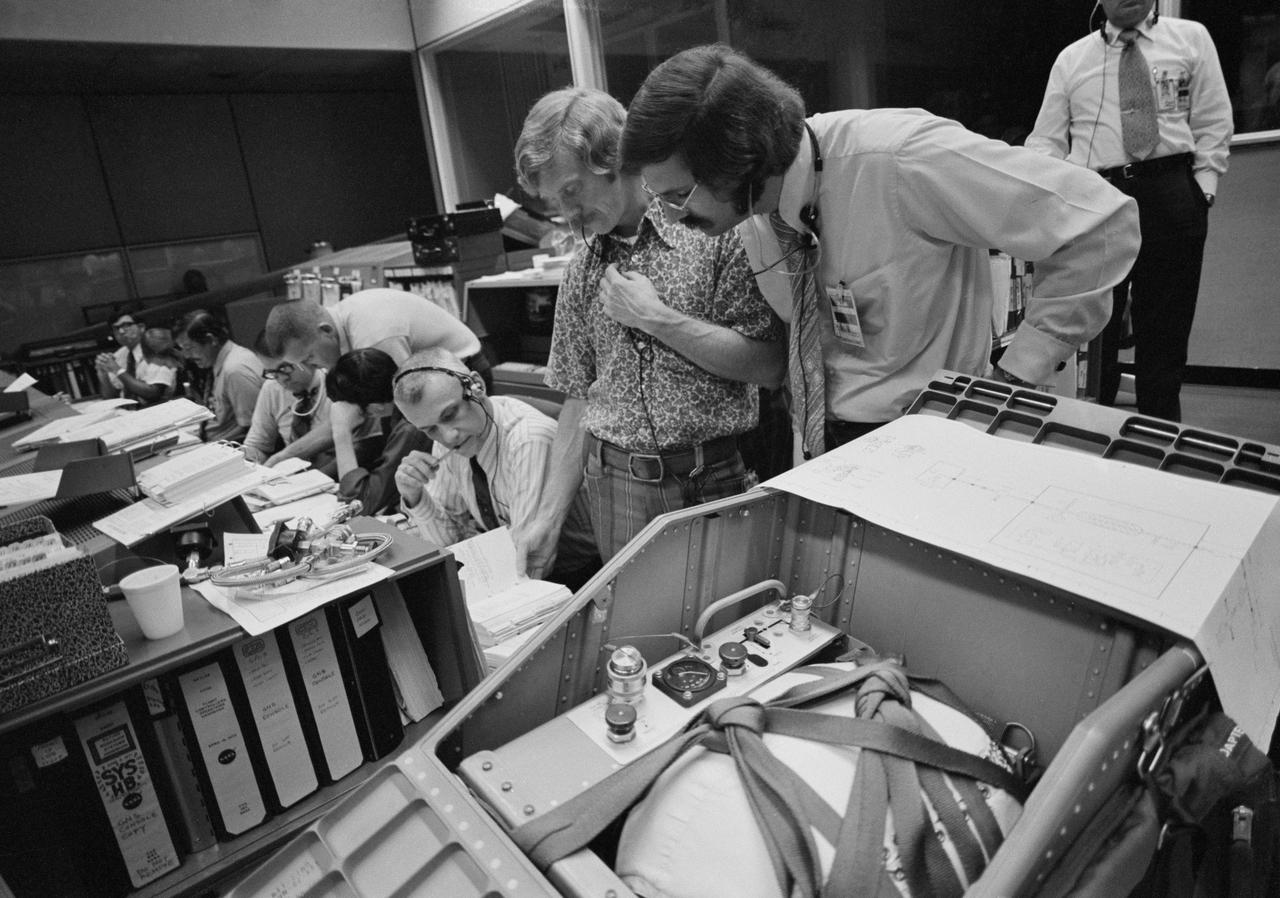
S73-37030 (November 1973) --- The procedures for repairing the coolant system aboard the Airlock Module of the Skylab space station in Earth orbit are discussed by flight controllers in the Mission Operations Control Room in the Mission Control Center at Johnson Space Center. Skylab 4 flight director Neil Hutchinson is on the right. Astronaut Russell L. Schweickart is wearing the sports shirt. Astronaut Bruce McCandless II, a Skylab 4 CAPCOM, is seated next to Schweickart. Items of equipment in the foreground are similar to components of a special coolant re-servicing kit which was taken to Earth orbit by the Skylab 4 crewmen. The kit consists of a tank containing 42 pounds of COOLANOL, a series of saddle valves, bolts and spacers, and leak-check hoses. The re-supply tank is a modified command module reaction control subsystem (RCS) fuel tank. Photo credit: NASA
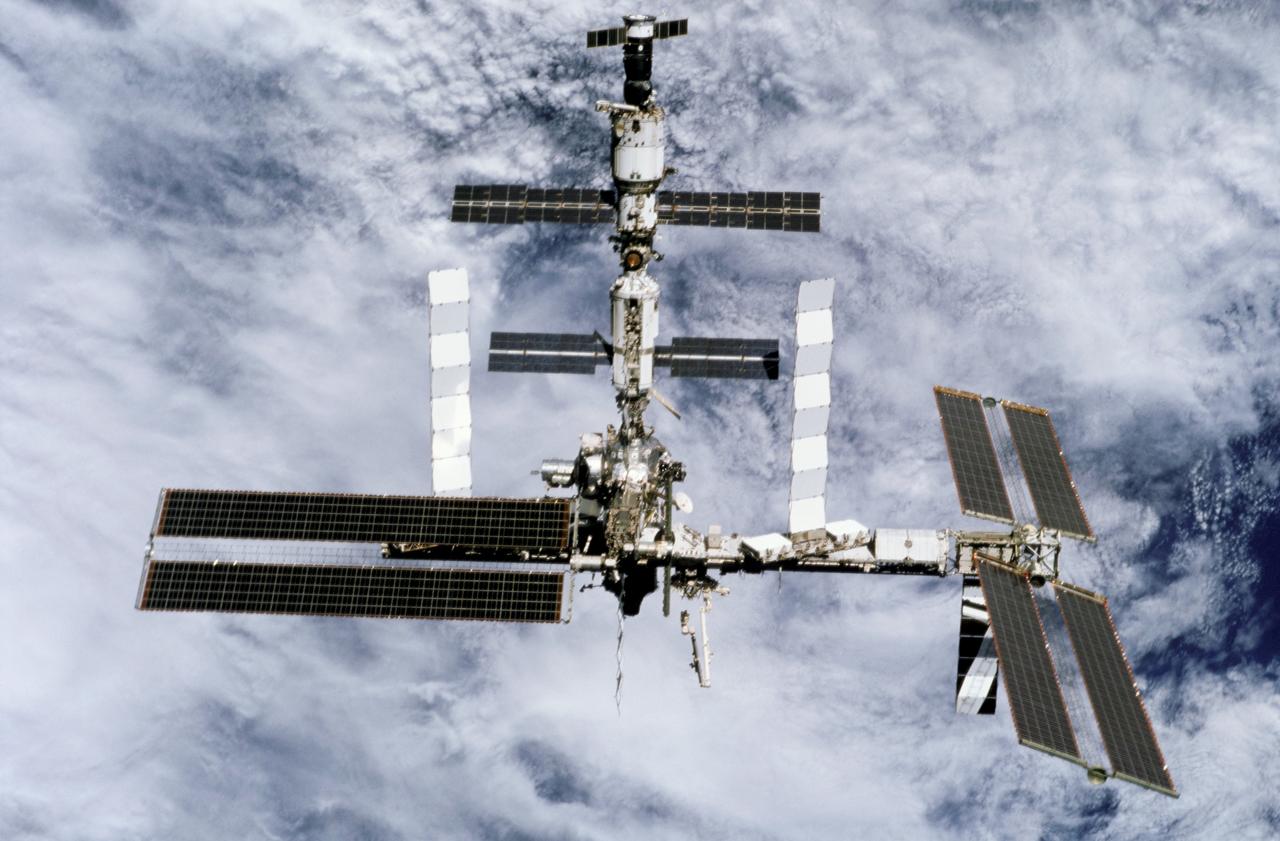
STS116-303-031 (19 Dec. 2006) --- Backdropped by a cloud-covered Earth, the International Space Station moves away from Space Shuttle Discovery. Earlier the STS-116 and Expedition 14 crews concluded eight days of cooperative work onboard the shuttle and station. Undocking of the two spacecraft occurred at 4:10 p.m. (CST) on Dec. 19, 2006. Astronaut William A. (Bill) Oefelein, STS-116 pilot, was at the controls during the fly-around, which gave Discovery's crew a look at its handiwork, a new P5 spacer truss segment and a fully retracted P6 solar array wing. During their stay on orbital outpost, the combined crew installed the newest piece of the station's backbone and completely rewired the power grid over the course of four spacewalks. This image was recorded with a 35mm film-equipped camera.
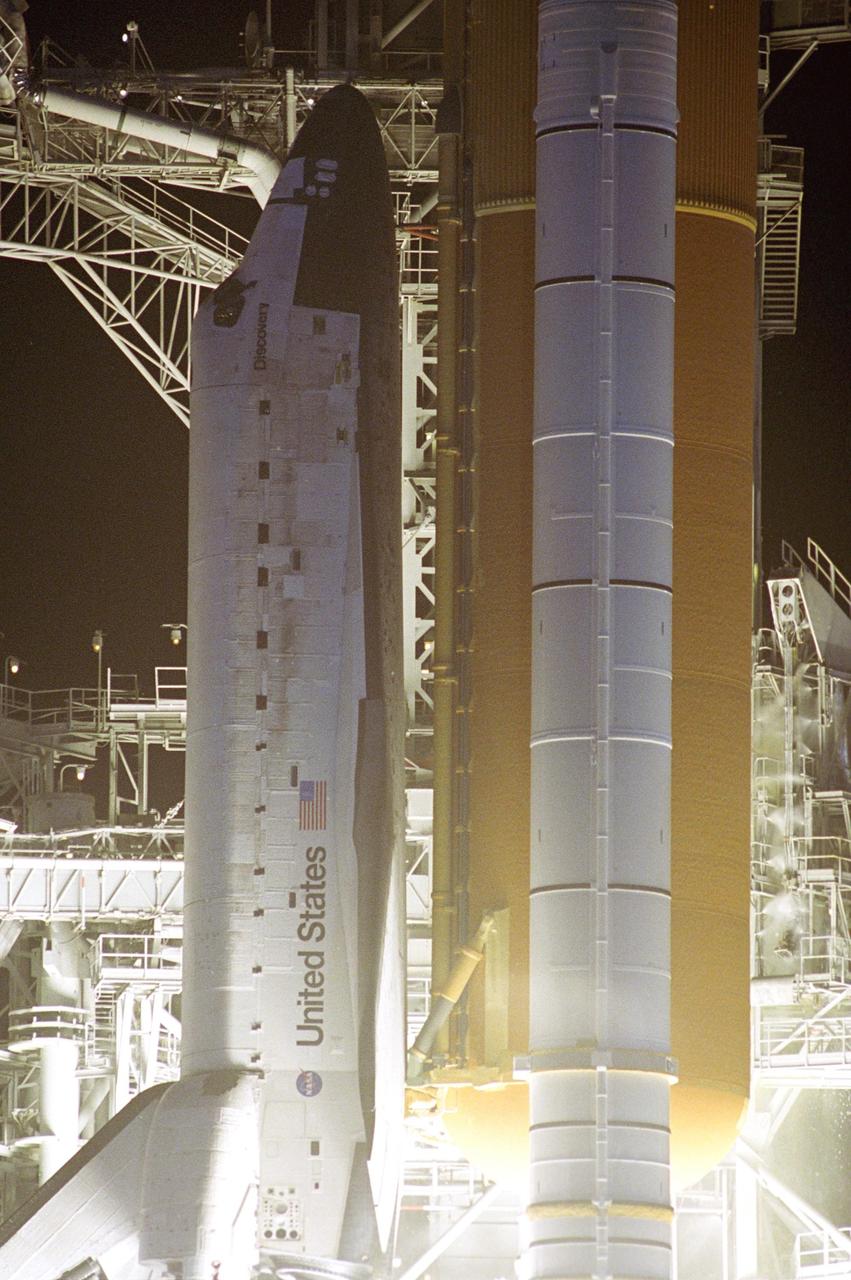
KENNEDY SPACE CENTER, FLA. -- A closeup of Space Shuttle Discovery at liftoff from Launch Pad 39B on mission STS-116. Liftoff occurred on time at 8:47 p.m. EST. This was the second launch attempt for mission STS-116. The first launch attempt on Dec. 7 was postponed due a low cloud ceiling over Kennedy Space Center. This is Discovery's 33rd mission and the first night launch since 2002. The 20th shuttle mission to the International Space Station, STS-116 carries another truss segment, P5. It will serve as a spacer, mated to the P4 truss that was attached in September. After installing the P5, the crew will reconfigure and redistribute the power generated by two pairs of U.S. solar arrays. Landing is expected Dec. 21 at KSC. Photo credit: NASA/Jerry Cannon & Mike Kerley
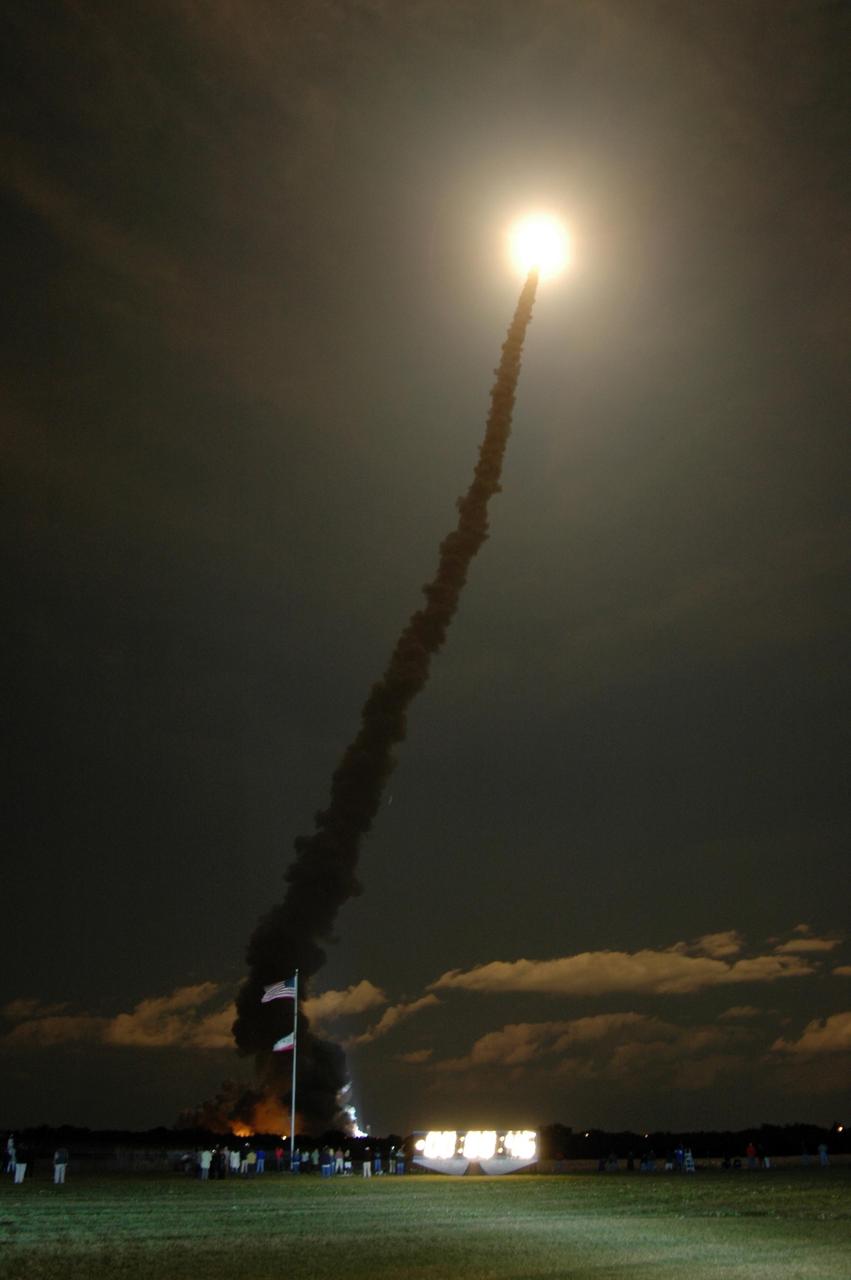
KENNEDY SPACE CENTER, FLA. -- Like a shooting star flooding the night sky with its blazing light, Space Shuttle Discovery leaps toward the sky from Launch Pad 39B on mission STS-116. The launch occurred at 8:47:35 p.m. EST. This was the second launch attempt for mission STS-116. The first launch attempt on Dec. 7 was postponed due a low cloud ceiling over Kennedy Space Center. This is Discovery's 33rd mission and the first night launch since 2002. The 20th shuttle mission to the International Space Station, STS-116 carries another truss segment, P5. It will serve as a spacer, mated to the P4 truss that was attached in September. After installing the P5, the crew will reconfigure and redistribute the power generated by two pairs of U.S. solar arrays. Landing is expected Dec. 21 at KSC. Photo credit: NASA/Jim Grossmann
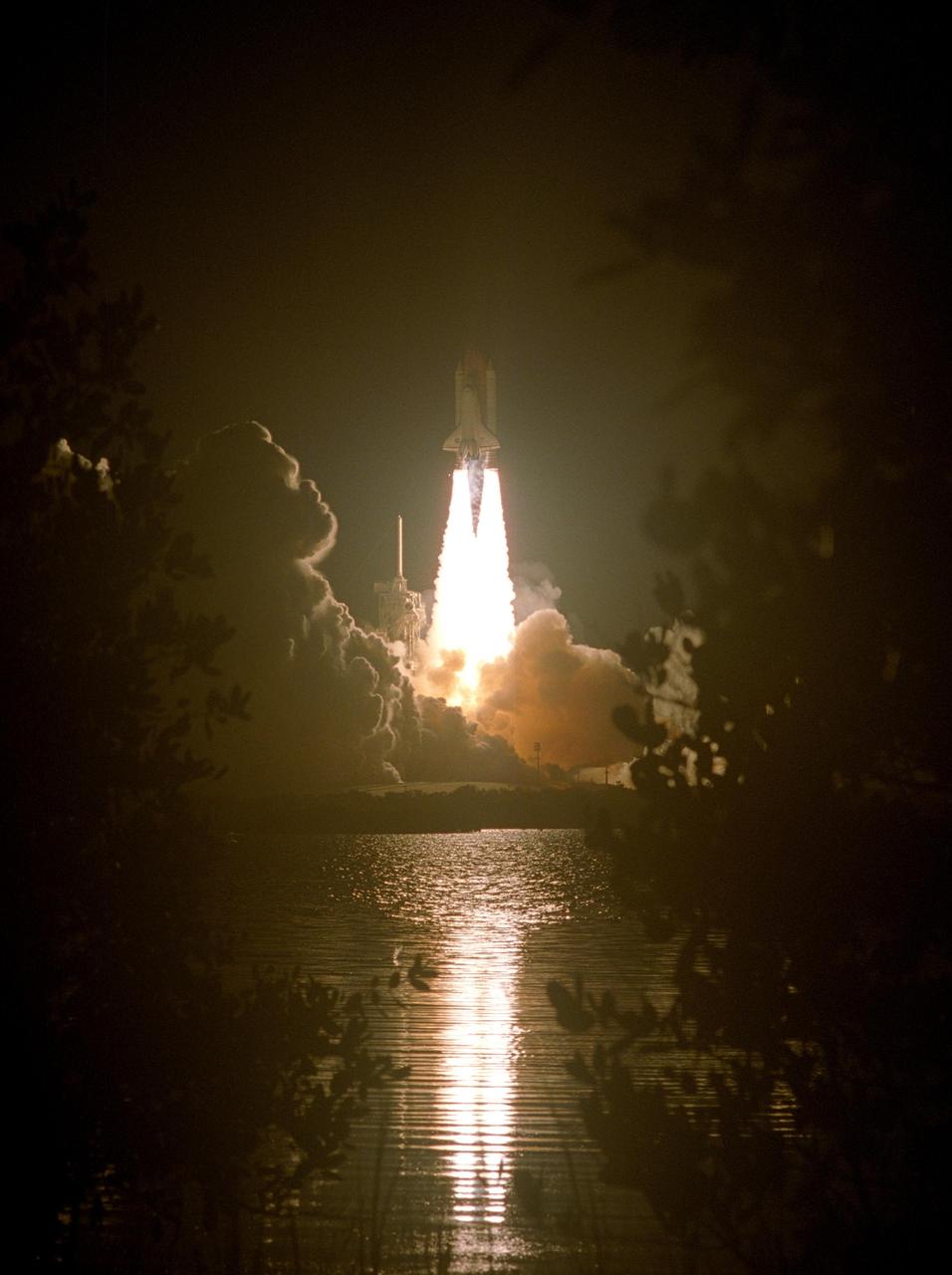
KENNEDY SPACE CENTER, FLA. -- The fiery liftoff of Space Shuttle Discovery from Launch Pad 39B on mission STS-116 is captured in the nearby water. Liftoff occurred on time at 8:47 p.m. EST. This was the second launch attempt for mission STS-116. The first launch attempt on Dec. 7 was postponed due a low cloud ceiling over Kennedy Space Center. This is Discovery's 33rd mission and the first night launch since 2002. The 20th shuttle mission to the International Space Station, STS-116 carries another truss segment, P5. It will serve as a spacer, mated to the P4 truss that was attached in September. After installing the P5, the crew will reconfigure and redistribute the power generated by two pairs of U.S. solar arrays. Landing is expected Dec. 21 at KSC. Photo credit: NASA/Sandy Joseph, Robert Murray & Chris Lynch
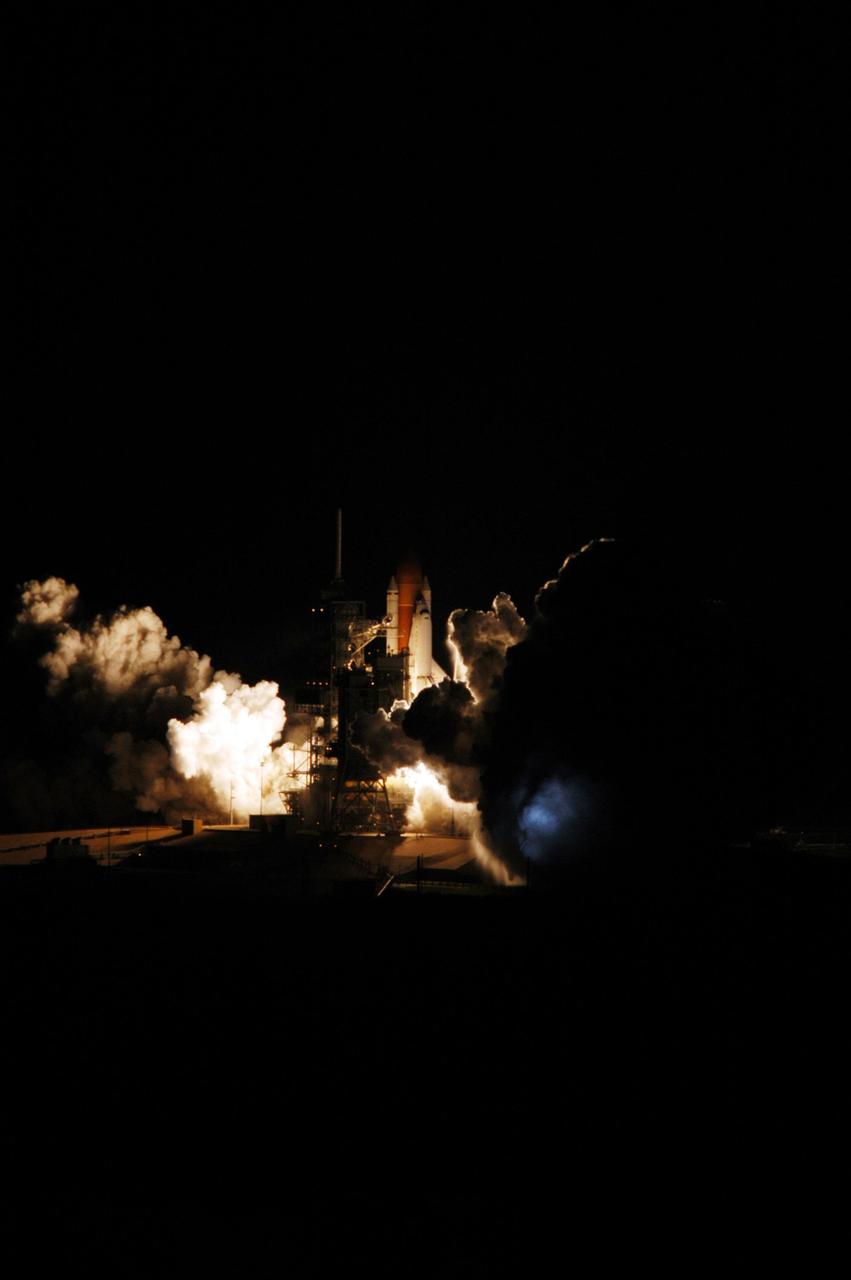
KENNEDY SPACE CENTER, FLA. -- At liftoff from Launch Pad 39B, Space Shuttle Discovery spreads a blaze of light as it leaps into the night sky. The launch occurred at 8:47:35 p.m. EST. This was the second launch attempt for mission STS-116. The first launch attempt on Dec. 7 was postponed due a low cloud ceiling over Kennedy Space Center. This is Discovery's 33rd mission and the first night launch since 2002. The 20th shuttle mission to the International Space Station, STS-116 carries another truss segment, P5. It will serve as a spacer, mated to the P4 truss that was attached in September. After installing the P5, the crew will reconfigure and redistribute the power generated by two pairs of U.S. solar arrays. Landing is expected Dec. 21 at KSC. Photo credit: NASA/George Shelton
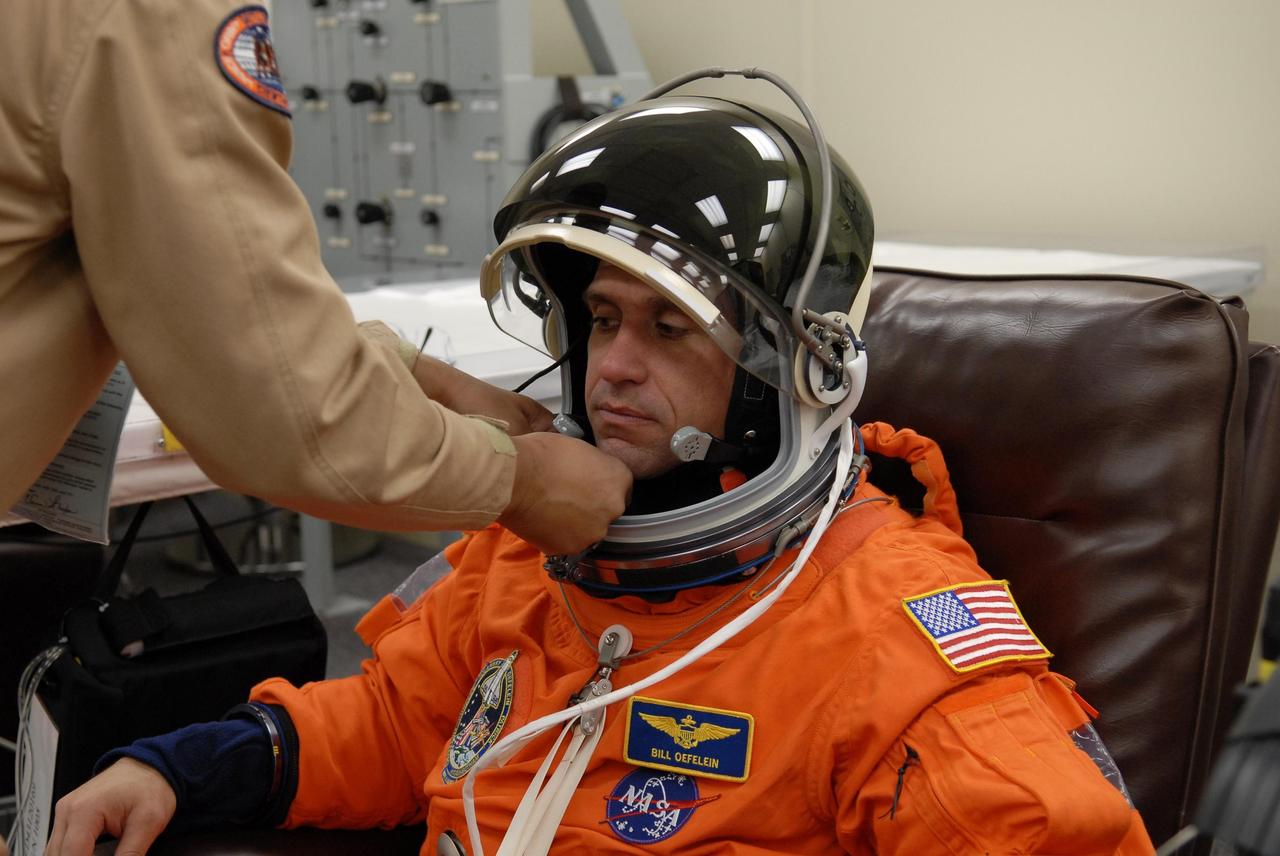
KENNEDY SPACE CENTER, FLA. -- The crew members of mission STS-116 are suiting up for a second launch attempt at 8:47 p.m. EST from Launch Pad 39B aboard Space Shuttle Discovery. Pictured here is Pilot William Oefelein, being helped with his helmet. Oefelein is making his first shuttle flight. The first launch attempt of STS-116 on Dec. 7 was postponed due a low cloud ceiling over Kennedy Space Center. This is Discovery's 33rd mission and the first night launch since 2002. The 20th shuttle mission to the International Space Station, STS-116 carries another truss segment, P5. It will serve as a spacer, mated to the P4 truss that was attached in September. After installing the P5, the crew will reconfigure and redistribute the power generated by two pairs of U.S. solar arrays. Landing is expected Dec. 19 at KSC. Photo credit: NASA/Kim Shiflett
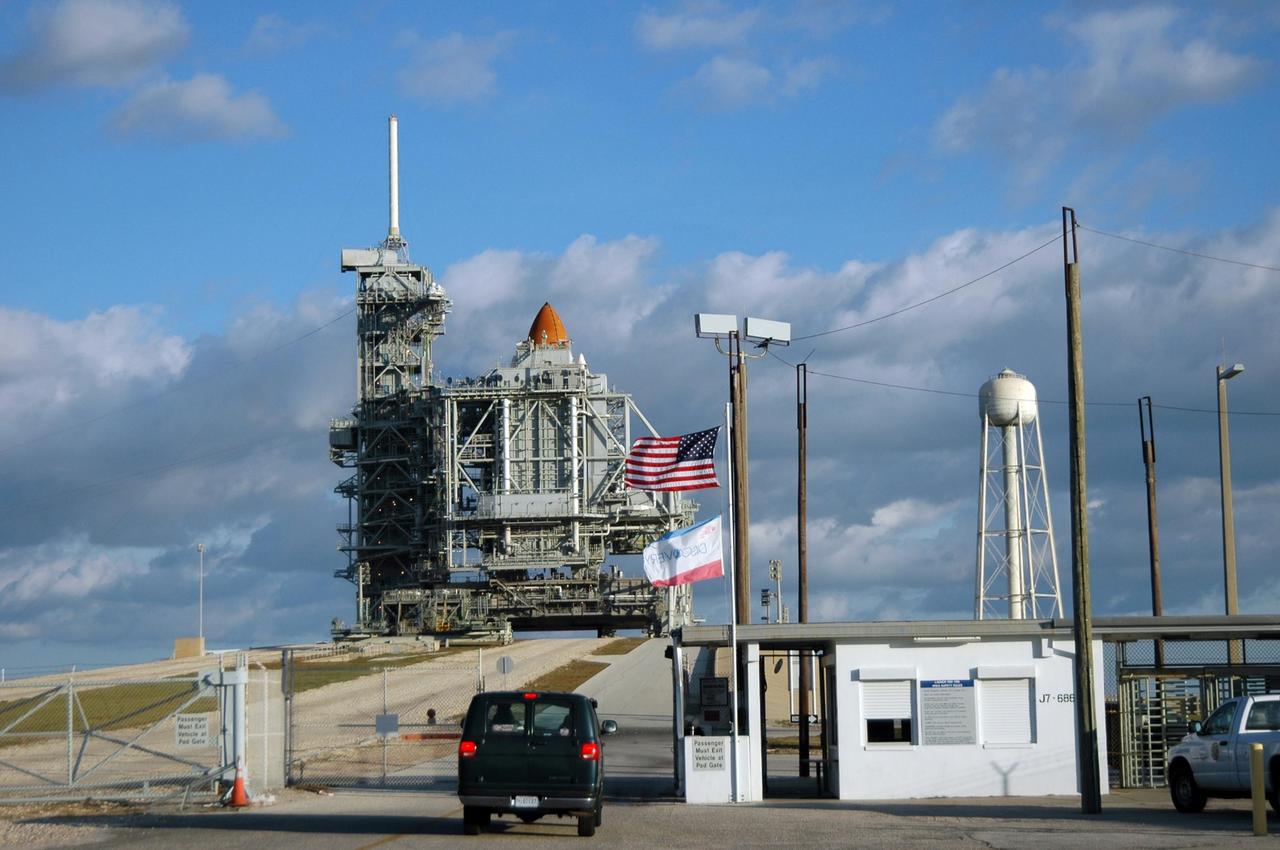
KENNEDY SPACE CENTER, FLA. -- On the morning of the second launch attempt, Space Shuttle Discovery is ready on Launch Pad 39B. It is still surrounded by the rotating service structure, hiding all but the top of the external tank. On the left side is the fixed service structure, topped by the 80-foot-tall lightning mast. The first launch attempt of STS-116 Dec. 7 was postponed due a low cloud ceiling over Kennedy Space Center. The next launch attempt was scheduled for Saturday, Dec. 9, at 8:47 p.m. This will be Discovery's 33rd mission and the first night launch since 2002. The 20th shuttle mission to the International Space Station, STS-116 carries another truss segment, P5. It will serve as a spacer, mated to the P4 truss that was attached in September. After installing the P5, the crew will reconfigure and redistribute the power generated by two pairs of U.S. solar arrays. Landing is expected Dec. 19 at KSC. Photo credit: NASA/Ken Thornsley
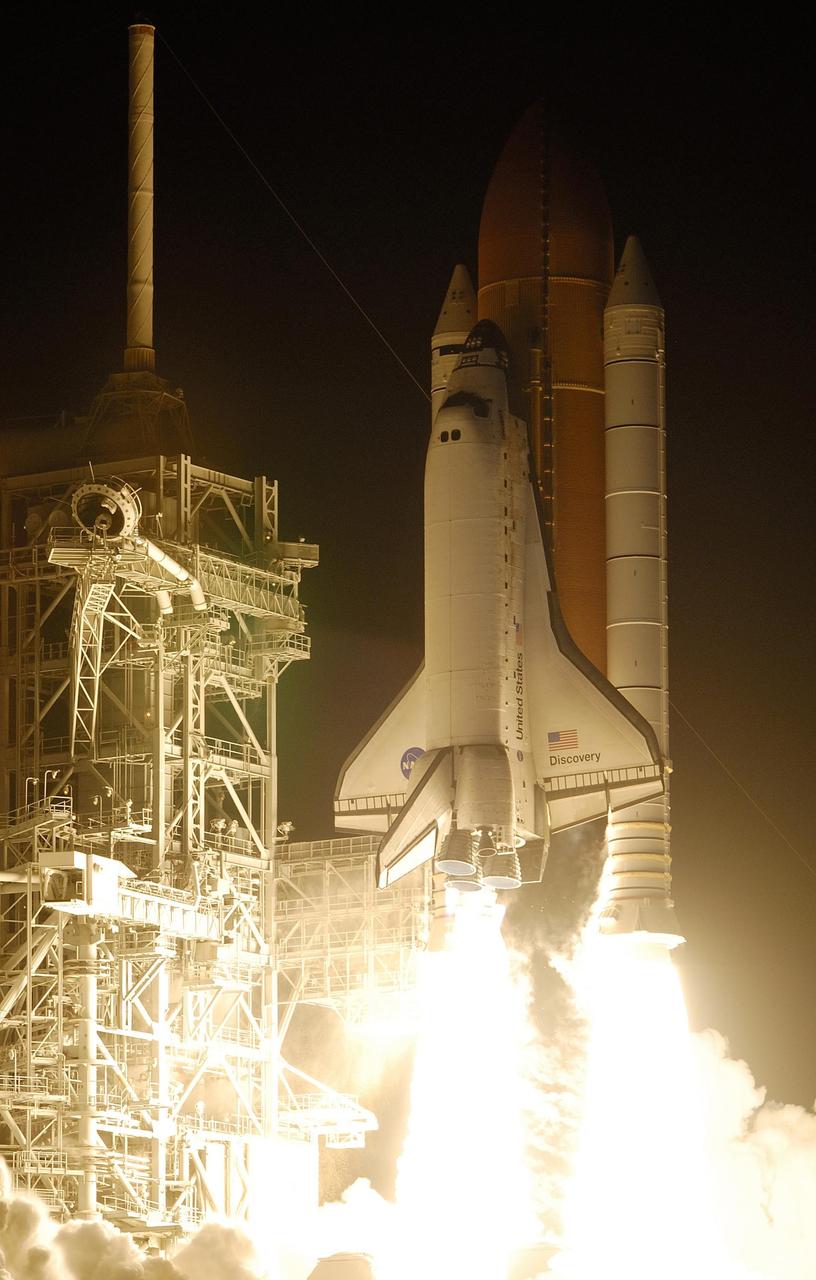
KENNEDY SPACE CENTER, FLA. -- Space Shuttle Discovery seems to be standing on the fiery columns erupting from the solid rocket boosters as it lifts off Launch Pad 39B on mission STS-116. The blazing light illuminated the launch pad and fixed service structure, at left. Liftoff occurred on time at 8:47 p.m. EST. This was the second launch attempt for mission STS-116. The first launch attempt on Dec. 7 was postponed due a low cloud ceiling over Kennedy Space Center. This is Discovery's 33rd mission and the first night launch since 2002. The 20th shuttle mission to the International Space Station, STS-116 carries another truss segment, P5. It will serve as a spacer, mated to the P4 truss that was attached in September. After installing the P5, the crew will reconfigure and redistribute the power generated by two pairs of U.S. solar arrays. Landing is expected Dec. 21 at KSC. Photo courtesy of Nikon/Scott Andrews
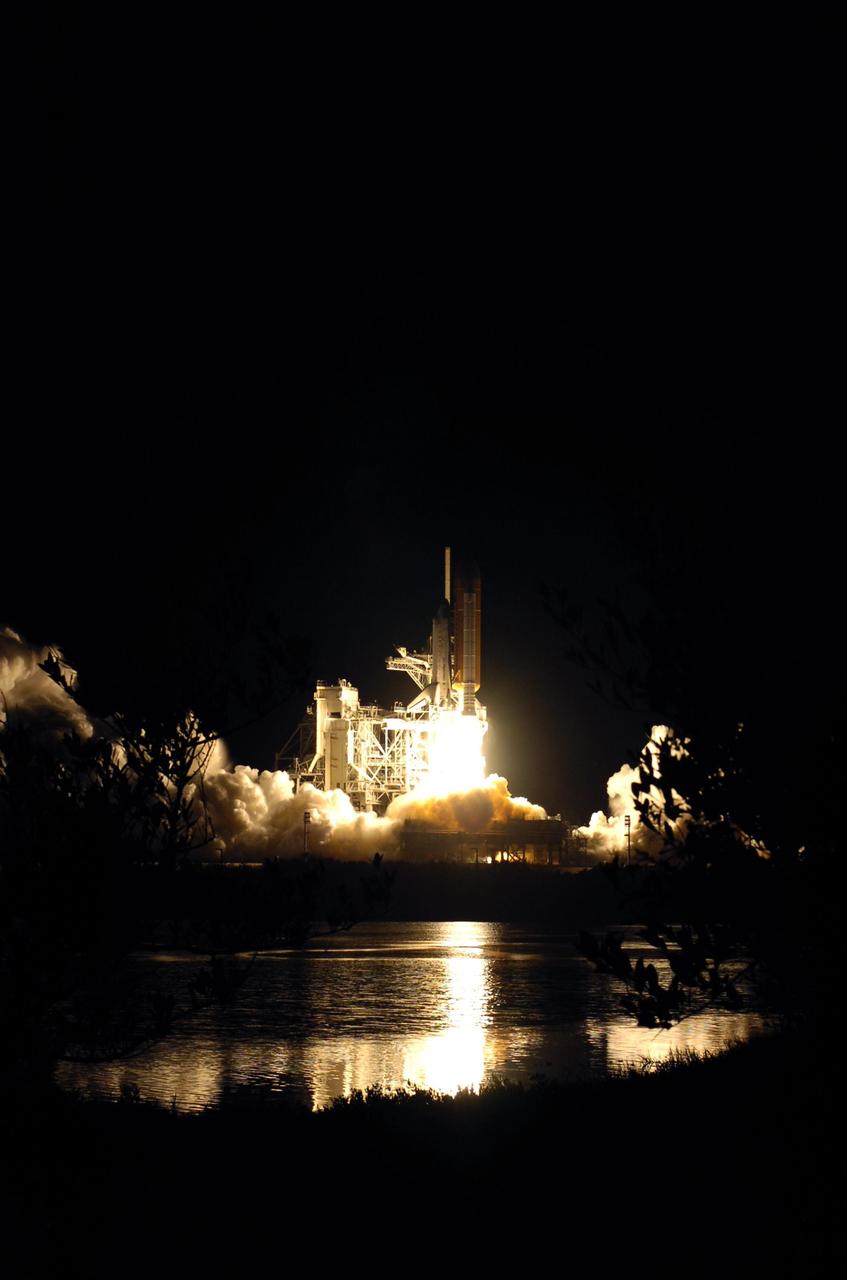
KENNEDY SPACE CENTER, FLA. -- The fiery liftoff of Space Shuttle Discovery from Launch Pad 39B on mission STS-116 is captured in the nearby water. Liftoff occurred on time at 8:47 p.m. EST. This was the second launch attempt of Discovery on mission STS-116. The first launch attempt on Dec. 7 was postponed due a low cloud ceiling over Kennedy Space Center. This is Discovery's 33rd mission and the first night launch since 2002. The 20th shuttle mission to the International Space Station, STS-116 carries another truss segment, P5. It will serve as a spacer, mated to the P4 truss that was attached in September. After installing the P5, the crew will reconfigure and redistribute the power generated by two pairs of U.S. solar arrays. Landing is expected Dec. 21 at KSC. Photo credit: NASA/Sandra Joseph, Robert Murray, Chris Lynch
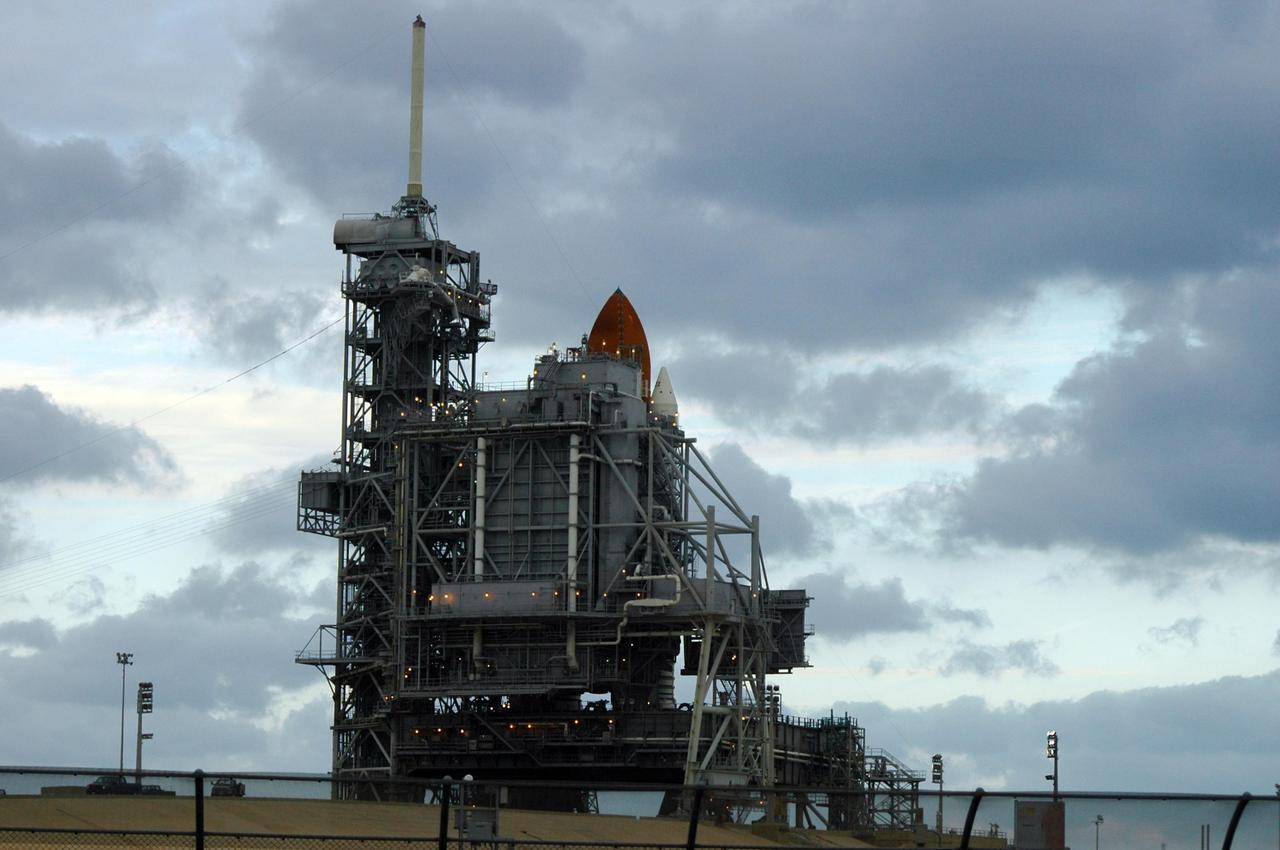
KENNEDY SPACE CENTER, FLA. -- The launch attempt of STS-116 was postponed due a low cloud ceiling over Kennedy Space Center. The next launch attempt was scheduled for Saturday, Dec. 9, at 8:47 p.m. In the photo, the rotating service structure has been rolled into place around the shuttle. This will be Discovery's 33rd mission and the first night launch since 2002. The 20th shuttle mission to the International Space Station, STS-116 carries another truss segment, P5. It will serve as a spacer, mated to the P4 truss that was attached in September. After installing the P5, the crew will reconfigure and redistribute the power generated by two pairs of U.S. solar arrays. Landing is expected Dec. 19 at KSC. Photo credit: NASA/Ken Thornsley
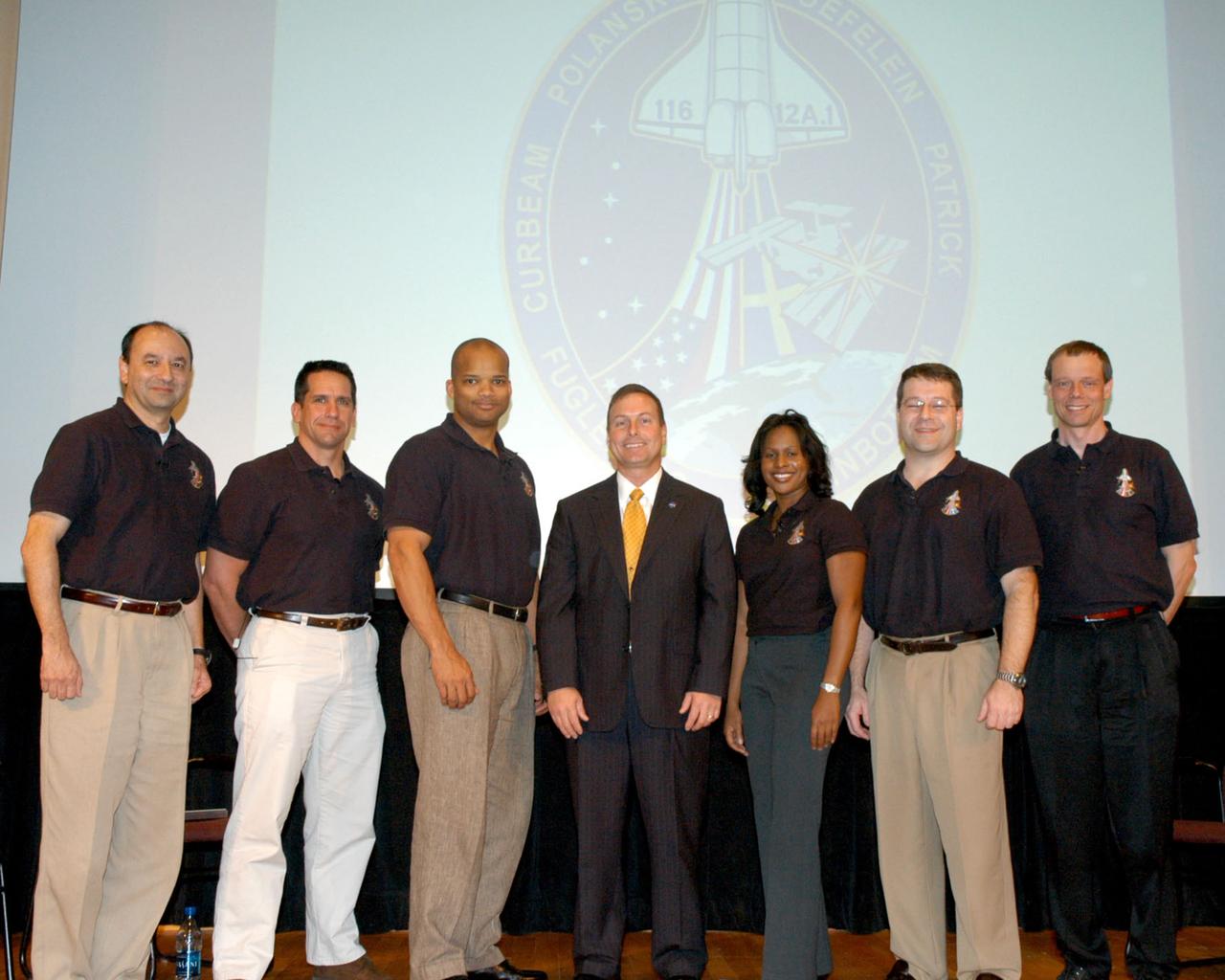
The astronauts of NASA's STS-116 space shuttle mission visited NASA Stennis Space Center in south Mississippi to share highlights of their 13-day mission and to thank SSC employees for the reliability of the space shuttle's main engines, which helped propel Space Shuttle Discovery into orbit during its Dec. 9, 2006, launch. Pictured (from left) are STS-116 crewmembers Commander Mark Polansky, Pilot Bill Oefelein, Mission Specialist Robert Curbeam, SSC Center Director, Richard Gilbrech, Mission Specialists Joan Higginbotham, Nicholas Patrick and Christer Fuglesang. During the mission, which began with the first evening launch since 2002, the astronauts installed the P5 spacer truss segment and rewired the International Space Station's power system.
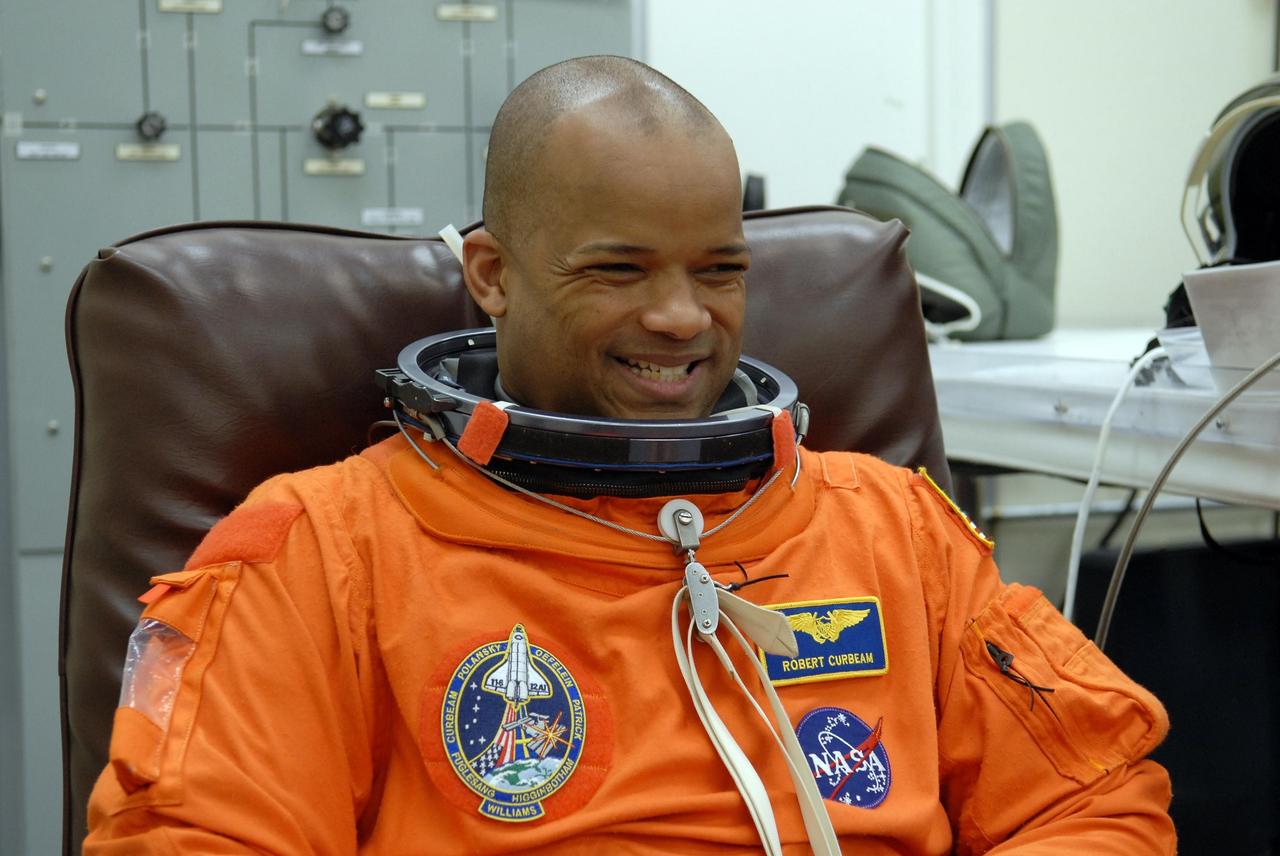
KENNEDY SPACE CENTER, FLA. -- The crew members of mission STS-116 are suiting up for a second launch attempt at 8:47 p.m. EST from Launch Pad 39B aboard Space Shuttle Discovery. Pictured here is Mission Specialist Robert Curbeam, who is making his third shuttle flight. The first launch attempt of STS-116 on Dec. 7 was postponed due a low cloud ceiling over Kennedy Space Center. This is Discovery's 33rd mission and the first night launch since 2002. The 20th shuttle mission to the International Space Station, STS-116 carries another truss segment, P5. It will serve as a spacer, mated to the P4 truss that was attached in September. After installing the P5, the crew will reconfigure and redistribute the power generated by two pairs of U.S. solar arrays. Landing is expected Dec. 19 at KSC. Photo credit: NASA/Kim Shiflett
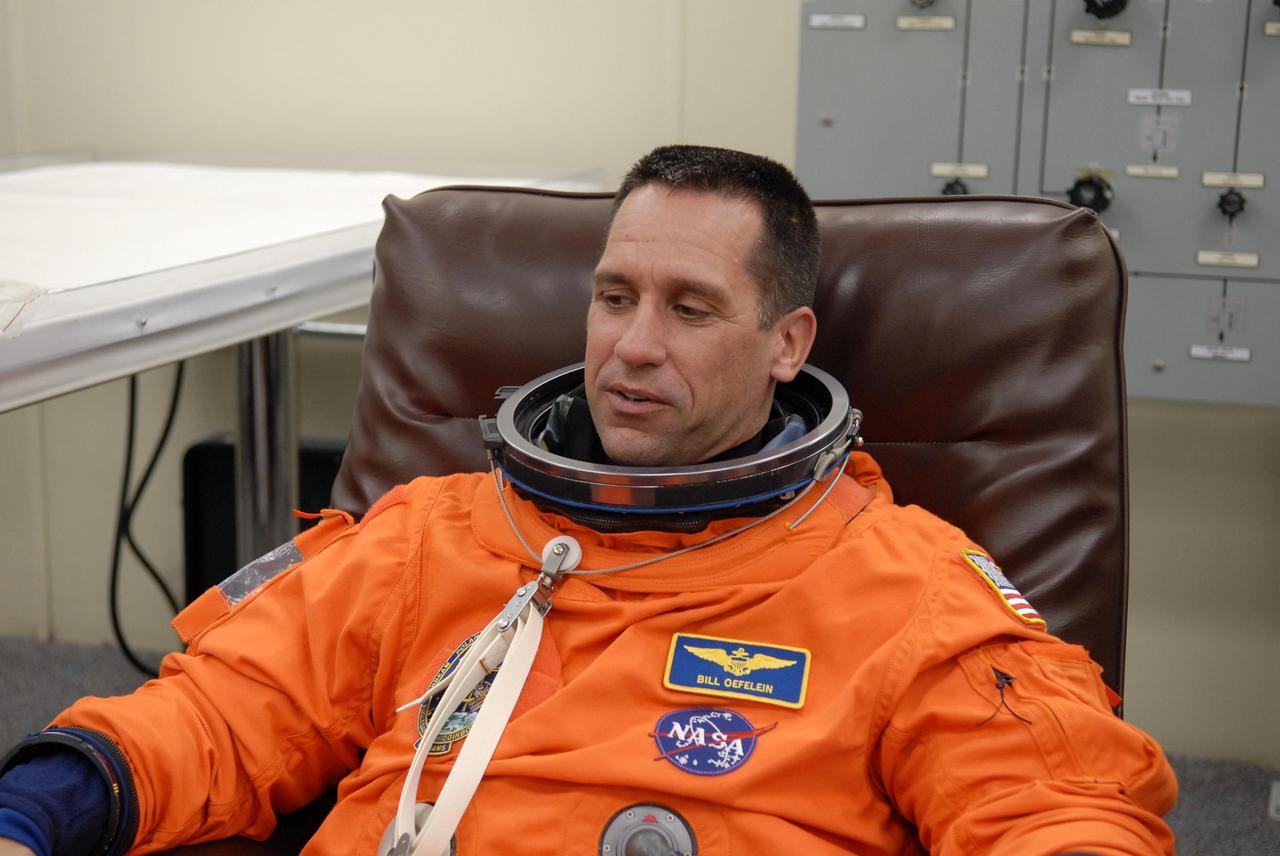
KENNEDY SPACE CENTER, FLA. -- The crew members of mission STS-116 are suiting up for launch at 9:35 p.m. EST from Launch Pad 39B aboard Space Shuttle Discovery. Pictured here is Pilot William Oefelein, who will be making his first shuttle flight. This is Discovery's 33rd mission and the first night launch since 2003. The 20th shuttle mission to the International Space Station, STS-116 carries another truss segment, P5. It will serve as a spacer, mated to the P4 truss that was attached in September. After installing the P5, the crew will reconfigure and redistribute the power generated by two pairs of U.S. solar arrays. Landing is expected Dec. 19 at KSC. Photo credit: NASA/Kim Shiflett
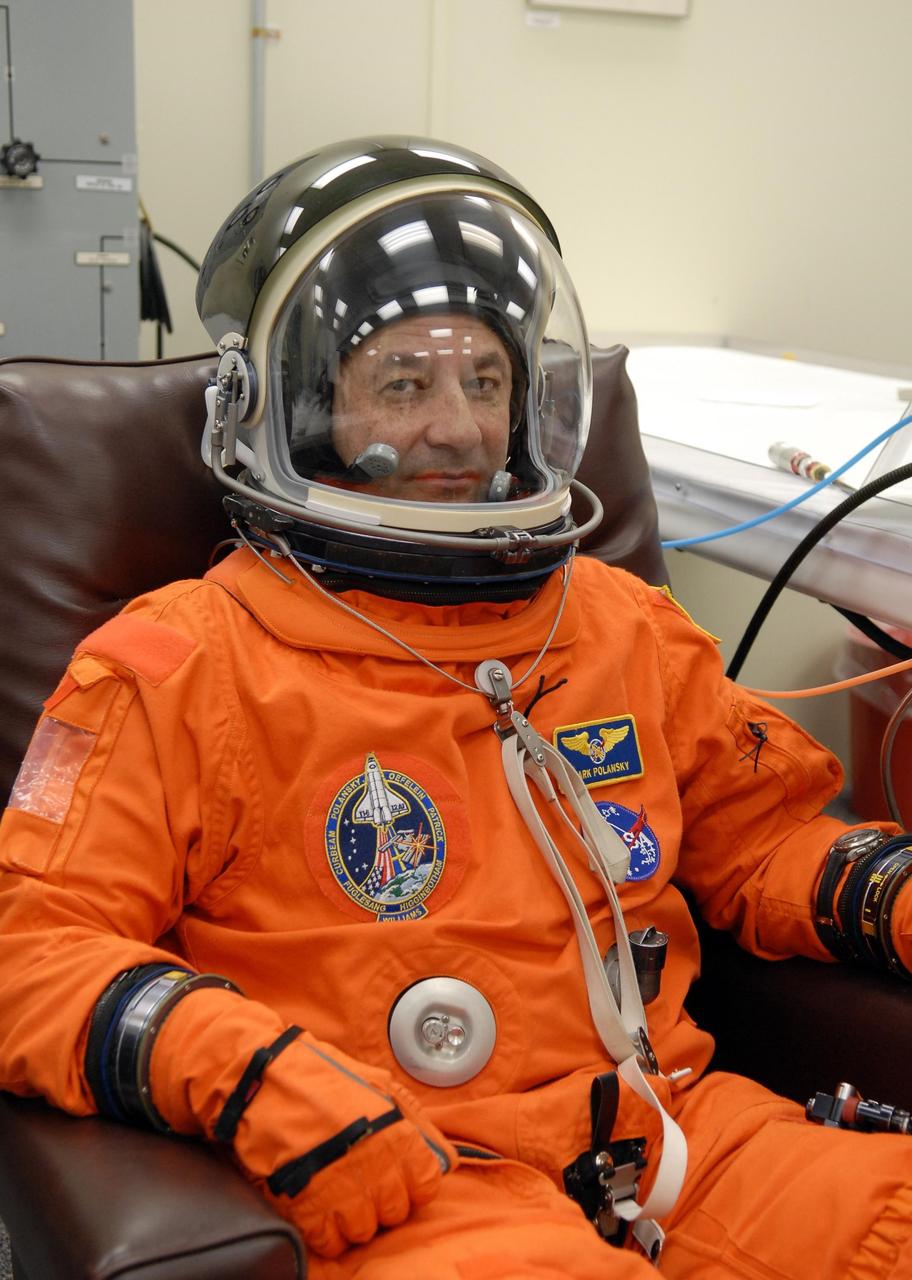
KENNEDY SPACE CENTER, FLA. -- The crew members of mission STS-116 are suiting up for a second launch attempt at 8:47 p.m. EST from Launch Pad 39B aboard Space Shuttle Discovery. Polansky is making his second shuttle flight. The first launch attempt of STS-116 on Dec. 7 was postponed due a low cloud ceiling over Kennedy Space Center. This is Discovery's 33rd mission and the first night launch since 2002. The 20th shuttle mission to the International Space Station, STS-116 carries another truss segment, P5. It will serve as a spacer, mated to the P4 truss that was attached in September. After installing the P5, the crew will reconfigure and redistribute the power generated by two pairs of U.S. solar arrays. Landing is expected Dec. 19 at KSC. Photo credit: NASA/Kim Shiflett
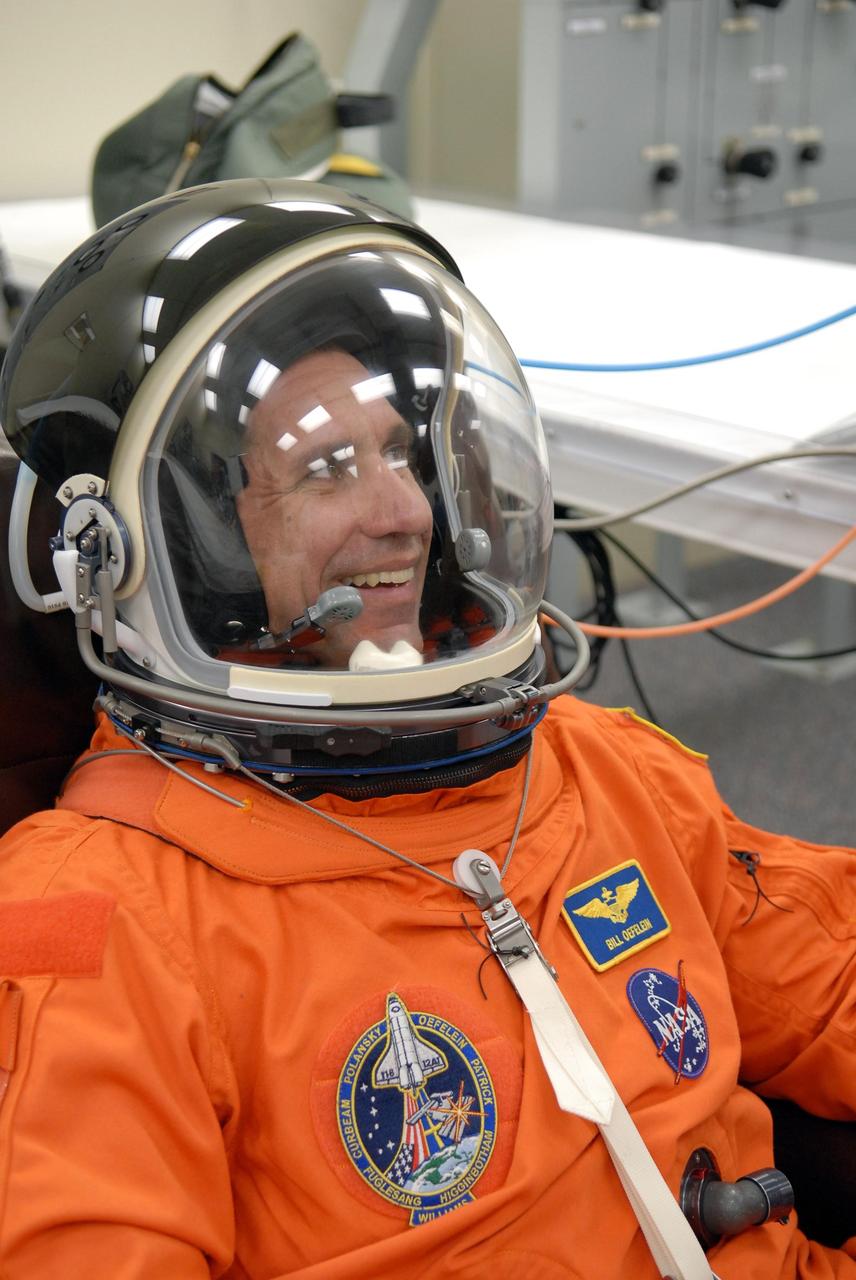
KENNEDY SPACE CENTER, FLA. -- The crew members of mission STS-116 are suiting up for launch at 9:35 p.m. EST from Launch Pad 39B aboard Space Shuttle Discovery. Pictured here is Pilot William Oefelein, who will be making his first shuttle flight. This is Discovery's 33rd mission and the first night launch since 2003. The 20th shuttle mission to the International Space Station, STS-116 carries another truss segment, P5. It will serve as a spacer, mated to the P4 truss that was attached in September. After installing the P5, the crew will reconfigure and redistribute the power generated by two pairs of U.S. solar arrays. Landing is expected Dec. 19 at KSC. Photo credit: NASA/Kim Shiflett
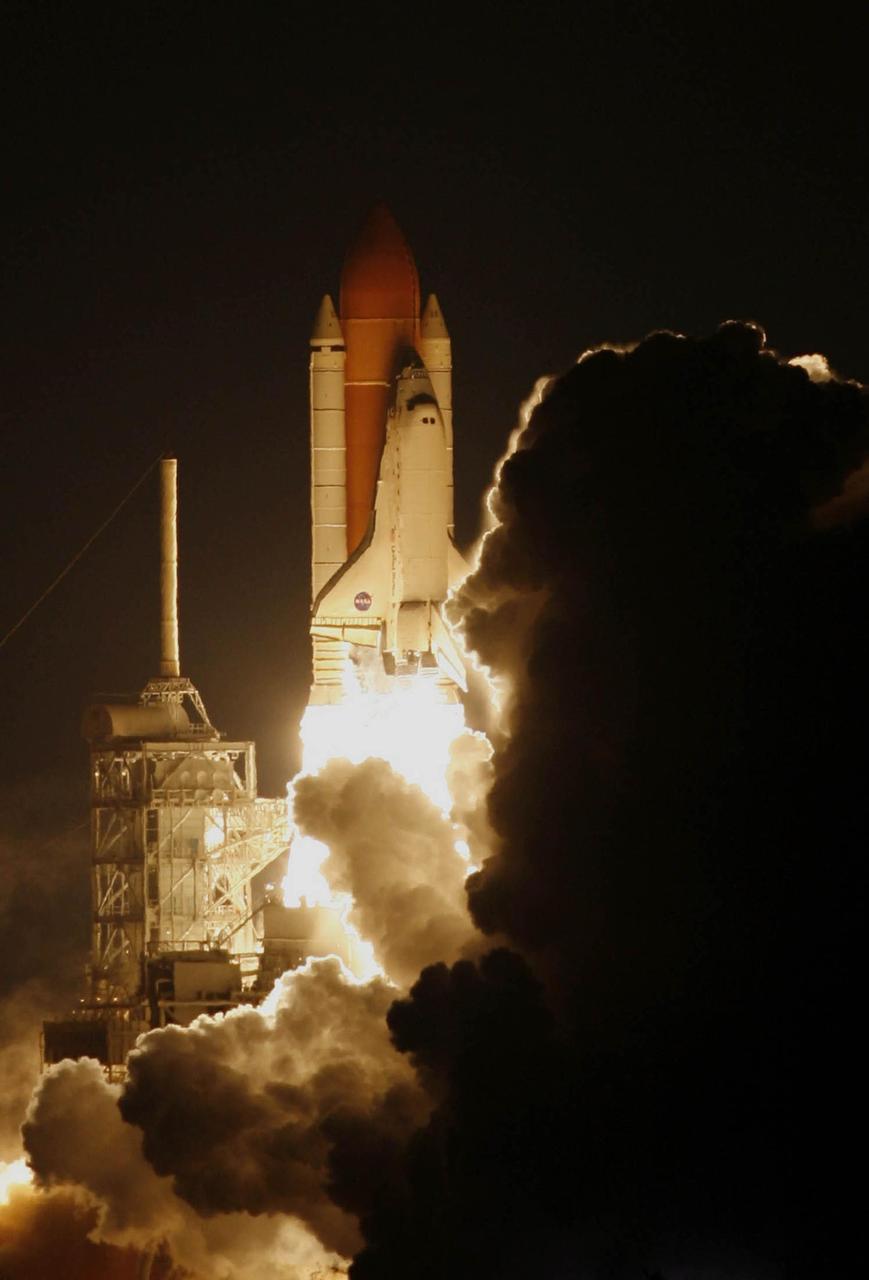
KENNEDY SPACE CENTER, FLA. -- From amid the smoke and steam, Space Shuttle Discovery leaps toward the sky past the lightning mast on Launch Pad 39B on mission STS-116. The launch occurred at 8:47:35 p.m. EST. This was the second launch attempt for mission STS-116. The first launch attempt on Dec. 7 was postponed due a low cloud ceiling over Kennedy Space Center. This is Discovery's 33rd mission and the first night launch since 2002. The 20th shuttle mission to the International Space Station, STS-116 carries another truss segment, P5. It will serve as a spacer, mated to the P4 truss that was attached in September. After installing the P5, the crew will reconfigure and redistribute the power generated by two pairs of U.S. solar arrays. Landing is expected Dec. 21 at KSC. Photo courtesy of Reuters/Larry Rubenstein and Peter Jones
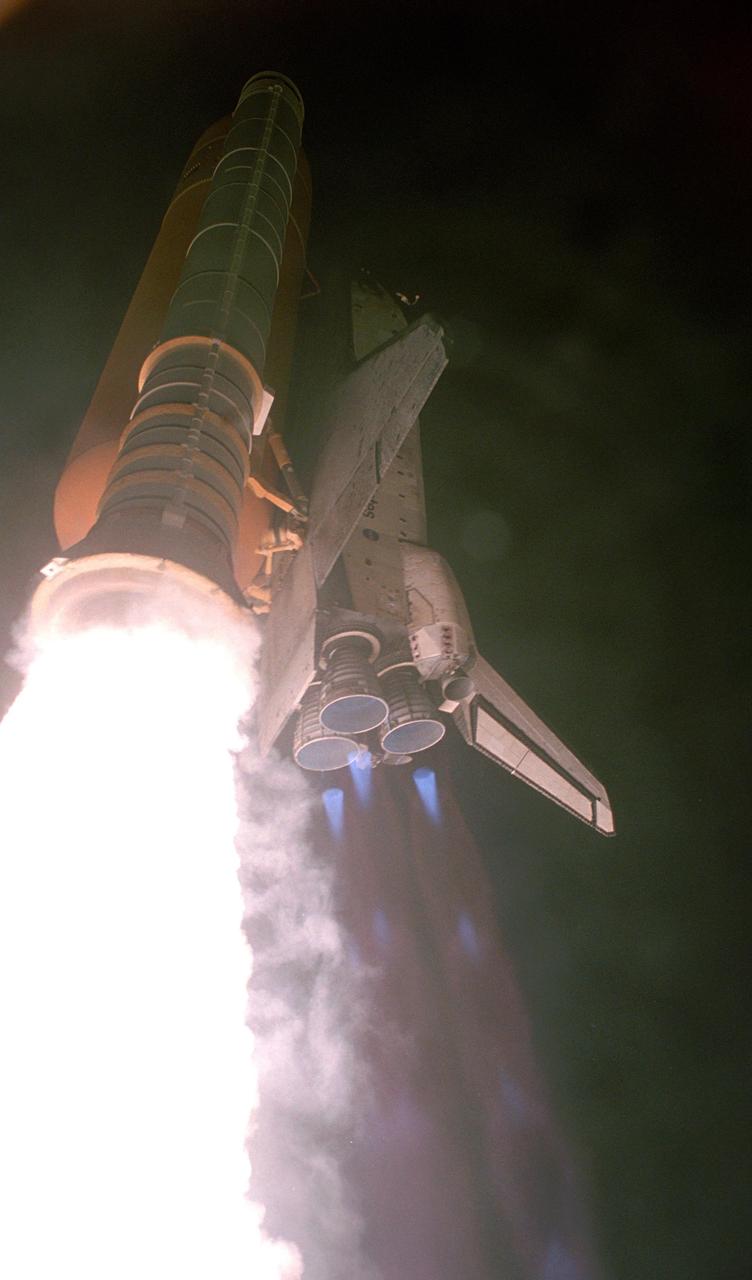
KENNEDY SPACE CENTER, FLA. -- Mach diamonds appear beneath Space Shuttle Discovery's main engines as the vehicle roars into the night sky after liftoff on mission STS-116. Mach diamonds are a formation of shock waves in the exhaust plume of an aerospace propulsion system. Liftoff occurred on time at 8:47 p.m. EST. This was the second launch attempt for mission STS-116. The first launch attempt on Dec. 7 was postponed due a low cloud ceiling over Kennedy Space Center. This is Discovery's 33rd mission and the first night launch since 2002. The 20th shuttle mission to the International Space Station, STS-116 carries another truss segment, P5. It will serve as a spacer, mated to the P4 truss that was attached in September. After installing the P5, the crew will reconfigure and redistribute the power generated by two pairs of U.S. solar arrays. Landing is expected Dec. 21 at KSC. Photo credit: NASA/Tony Gray & Don Kight
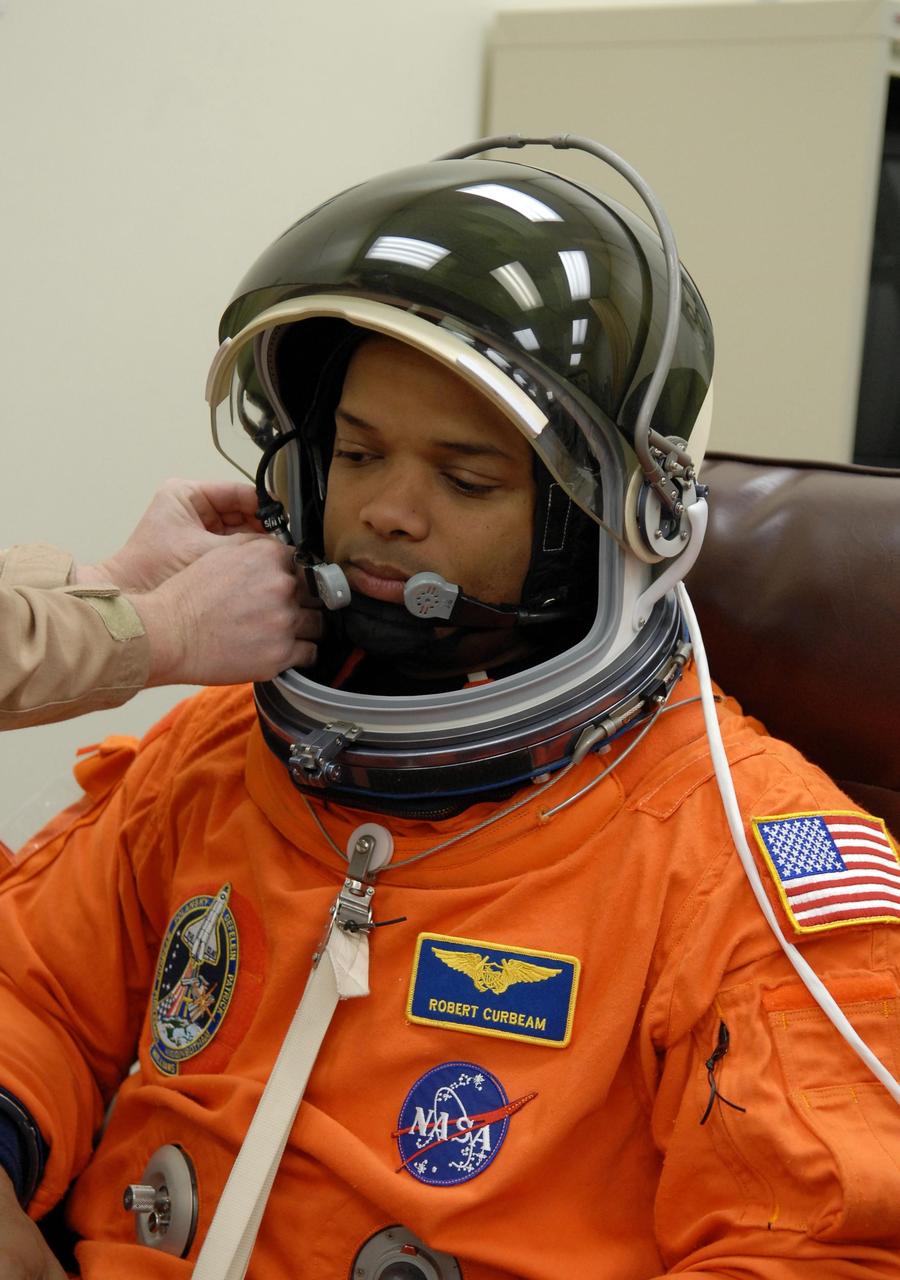
KENNEDY SPACE CENTER, FLA. -- The crew members of mission STS-116 are suiting up for a second launch attempt at 8:47 p.m. EST from Launch Pad 39B aboard Space Shuttle Discovery. Pictured here is Mission Specialist Robert Curbeam, getting help with the helmet. Curbeam will be making his third shuttle flight. The first launch attempt of STS-116 on Dec. 7 was postponed due a low cloud ceiling over Kennedy Space Center. This is Discovery's 33rd mission and the first night launch since 2002. The 20th shuttle mission to the International Space Station, STS-116 carries another truss segment, P5. It will serve as a spacer, mated to the P4 truss that was attached in September. After installing the P5, the crew will reconfigure and redistribute the power generated by two pairs of U.S. solar arrays. Landing is expected Dec. 19 at KSC. Photo credit: NASA/Kim Shiflett
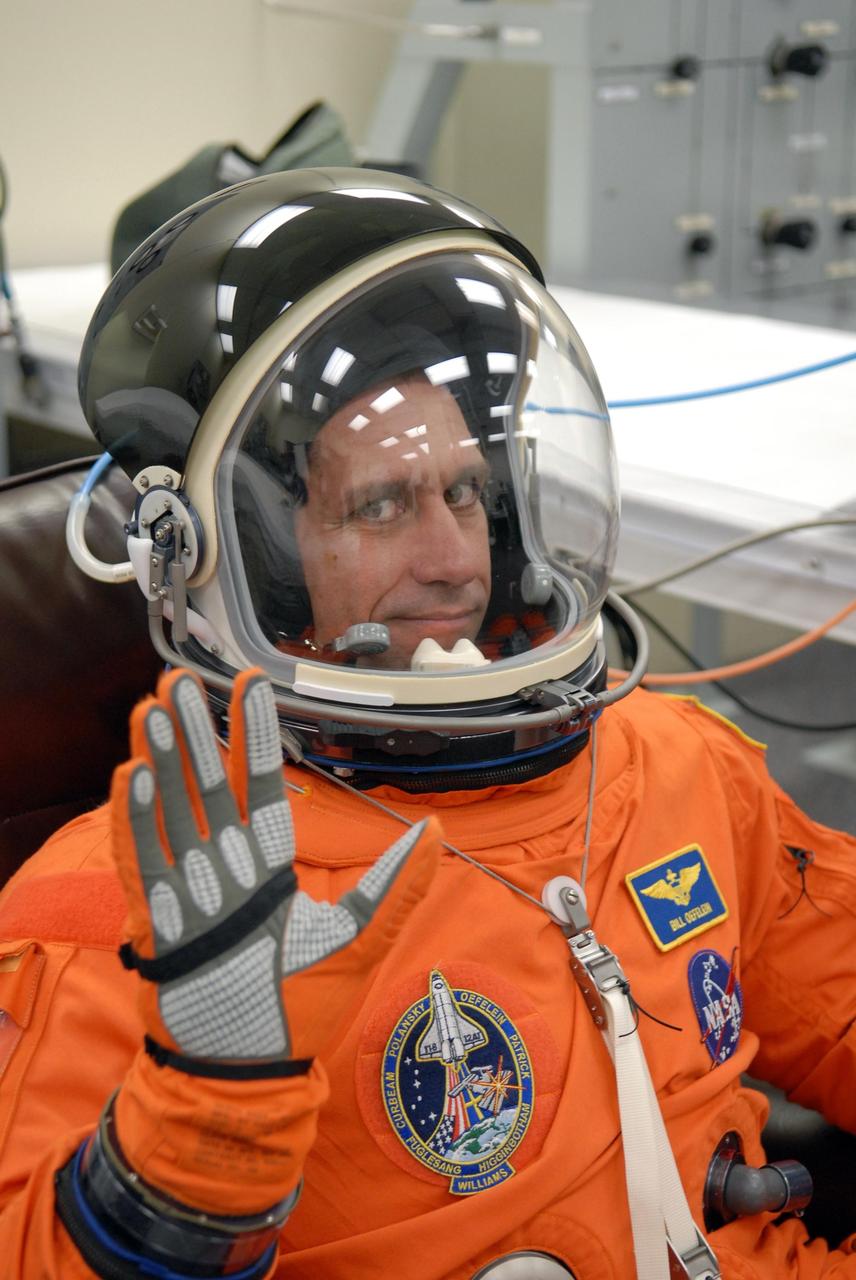
KENNEDY SPACE CENTER, FLA. -- The crew members of mission STS-116 are suiting up for launch at 9:35 p.m. EST from Launch Pad 39B aboard Space Shuttle Discovery. Pictured here is Pilot William Oefelein, who signals his helmet is working. Oefelein is making his first shuttle flight. This is Discovery's 33rd mission and the first night launch since 2003. The 20th shuttle mission to the International Space Station, STS-116 carries another truss segment, P5. It will serve as a spacer, mated to the P4 truss that was attached in September. After installing the P5, the crew will reconfigure and redistribute the power generated by two pairs of U.S. solar arrays. Landing is expected Dec. 19 at KSC. Photo credit: NASA/Kim Shiflett
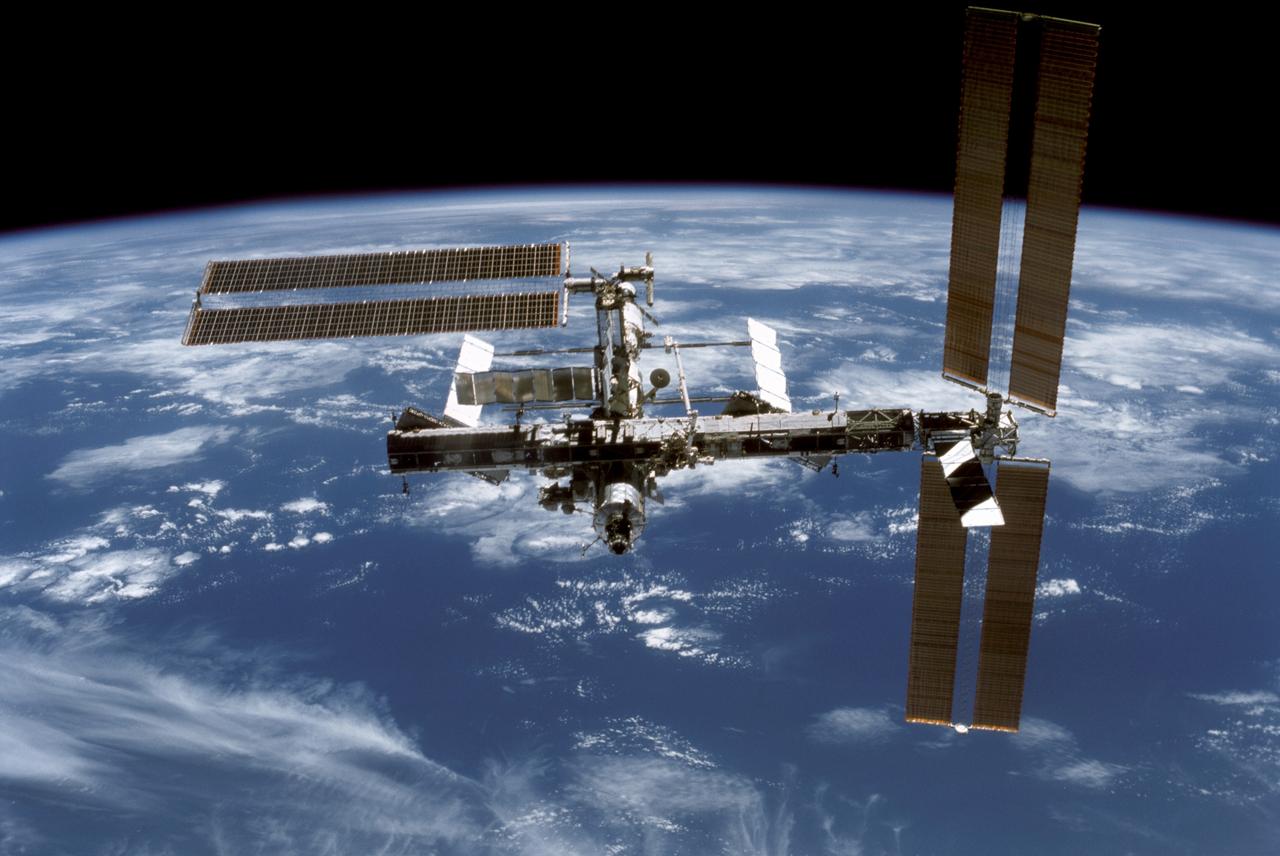
STS116-301-028 (19 Dec. 2006) --- Backdropped by the blackness of space and Earth's horizon, the International Space Station moves away from Space Shuttle Discovery. Earlier the STS-116 and Expedition 14 crews concluded eight days of cooperative work onboard the shuttle and station. Undocking of the two spacecraft occurred at 4:10 p.m. (CST) on Dec. 19, 2006. Astronaut William A. (Bill) Oefelein, STS-116 pilot, was at the controls during the fly-around, which gave Discovery's crew a look at its handiwork, a new P5 spacer truss segment and a fully retracted P6 solar array wing. During their stay on orbital outpost, the combined crew installed the newest piece of the station's backbone and completely rewired the power grid over the course of four spacewalks. This image was recorded with a 35mm film-equipped camera.
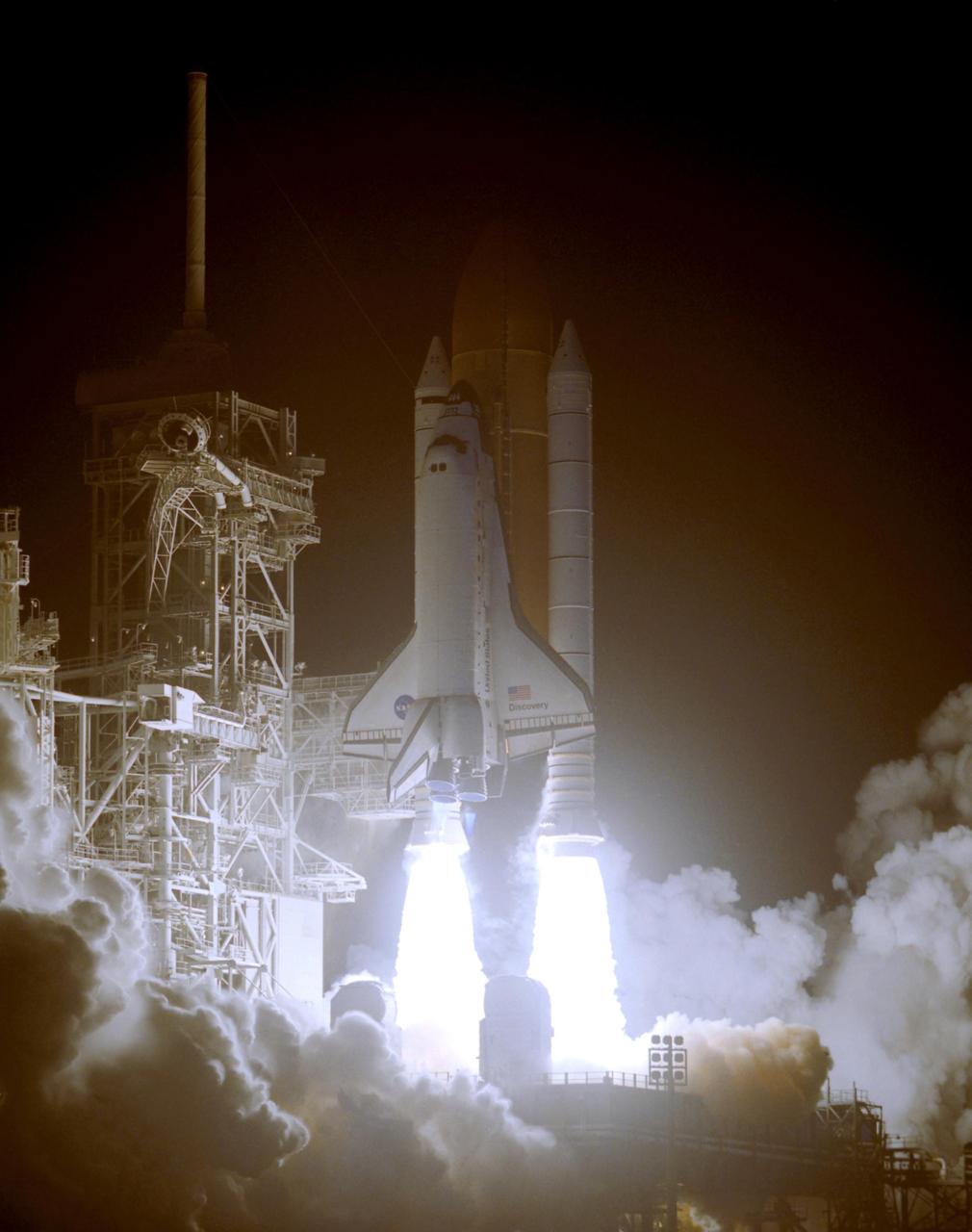
KENNEDY SPACE CENTER, FLA. -- Space Shuttle Discovery seems to be standing on the fiery columns erupting from the solid rocket boosters as it lifts off Launch Pad 39B on mission STS-116. Liftoff occurred at 8:47 p.m. EST. This was the second launch attempt for mission STS-116. The first launch attempt on Dec. 7 was postponed due a low cloud ceiling over Kennedy Space Center. This is Discovery's 33rd mission and the first night launch since 2002. The 20th shuttle mission to the International Space Station, STS-116 carries another truss segment, P5. It will serve as a spacer, mated to the P4 truss that was attached in September. After installing the P5, the crew will reconfigure and redistribute the power generated by two pairs of U.S. solar arrays. Landing is expected Dec. 21 at KSC. Photo credit: NASA/Regina Mitchell-Ryall & Tim Powers
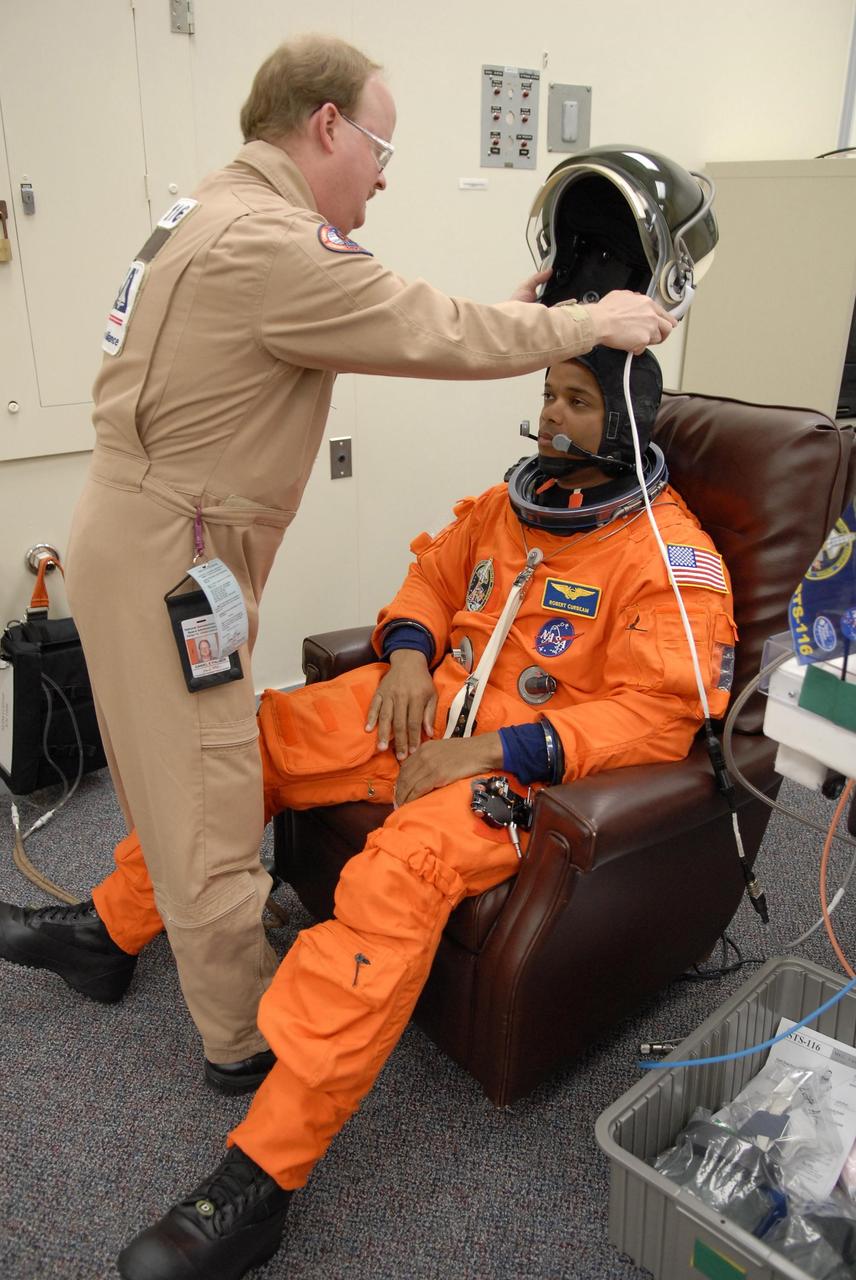
KENNEDY SPACE CENTER, FLA. -- The crew members of mission STS-116 are suiting up for launch at 9:35 p.m. EST from Launch Pad 39B aboard Space Shuttle Discovery. Pictured here is Mission Specialist Robert Curbeam, waiting for the suit technician to place the helmet. Curbeam will be making his third shuttle flight. This is Discovery's 33rd mission and the first night launch since 2003. The 20th shuttle mission to the International Space Station, STS-116 carries another truss segment, P5. It will serve as a spacer, mated to the P4 truss that was attached in September. After installing the P5, the crew will reconfigure and redistribute the power generated by two pairs of U.S. solar arrays. Landing is expected Dec. 19 at KSC. Photo credit: NASA/Kim Shiflett
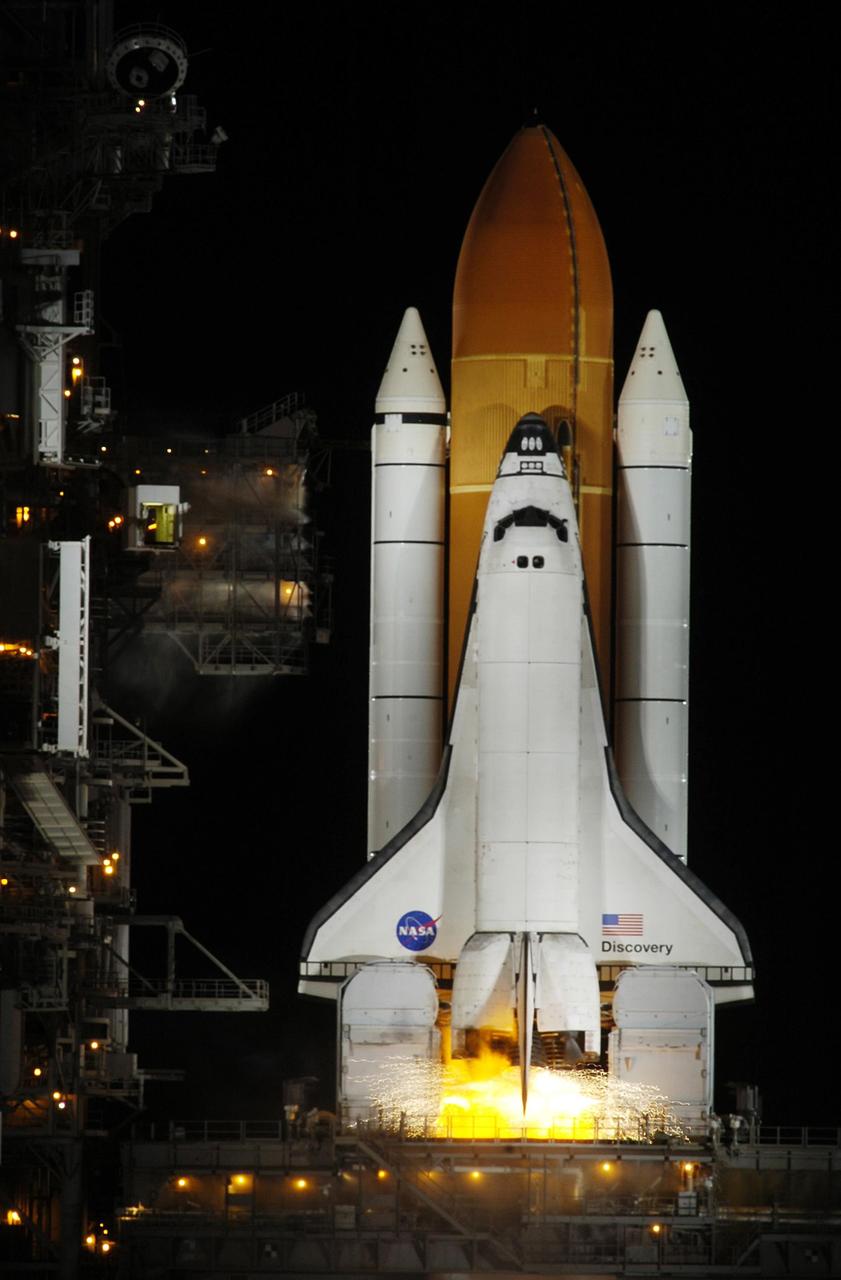
KENNEDY SPACE CENTER, FLA. -- Sparks appear just prior to Space Shuttle Discovery's main engines firing approximately T-7 seconds before liftoff. Once the engines are running normally, the solid rocket boosters are ignited and the shuttle lifts off. Discovery lifted off on mission STS-116 at 8:47 p.m. EST. This was the second launch attempt for mission STS-116. The first launch attempt on Dec. 7 was postponed due a low cloud ceiling over Kennedy Space Center. This is Discovery's 33rd mission and the first night launch since 2002. The 20th shuttle mission to the International Space Station, STS-116 carries another truss segment, P5. It will serve as a spacer, mated to the P4 truss that was attached in September. After installing the P5, the crew will reconfigure and redistribute the power generated by two pairs of U.S. solar arrays. Landing is expected Dec. 21 at KSC. Photo courtesy of Nikon/Scott Andrews
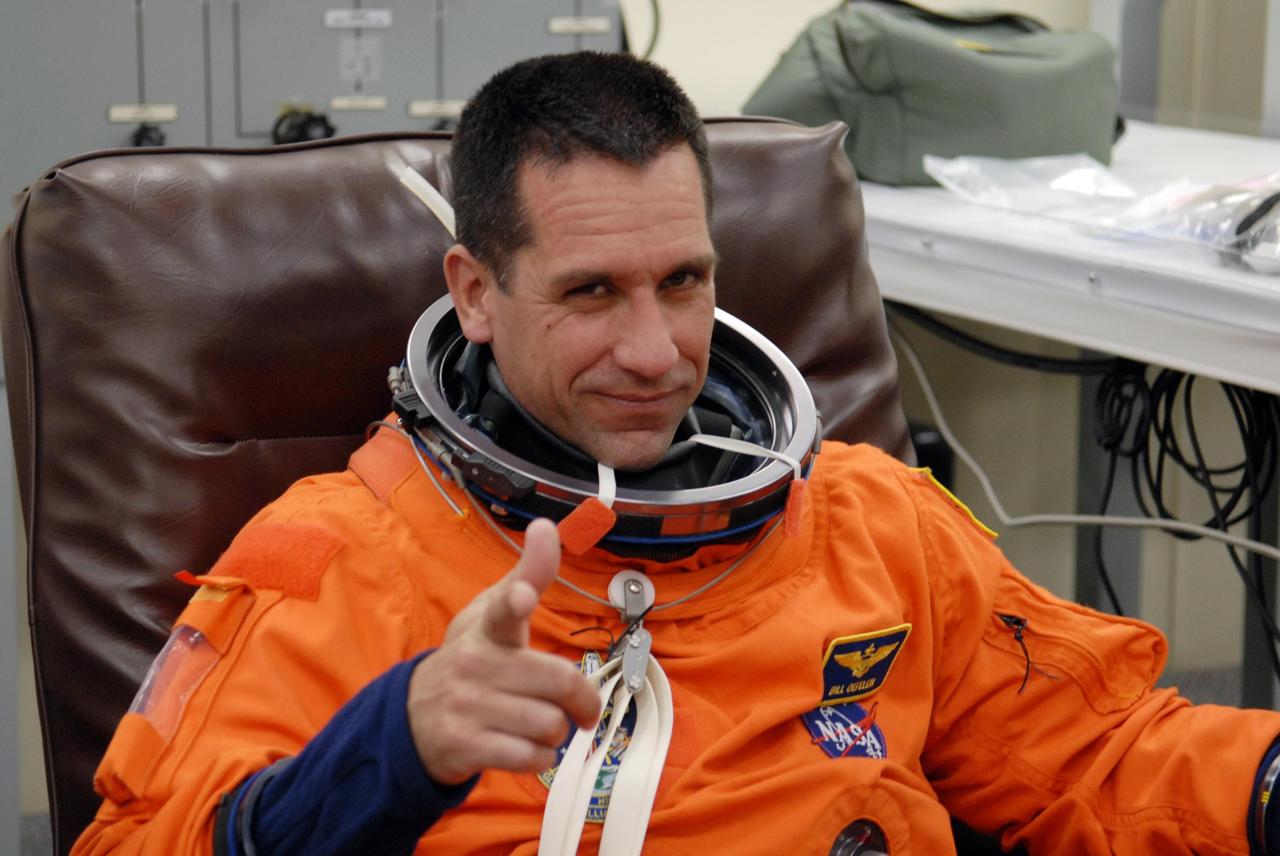
KENNEDY SPACE CENTER, FLA. -- The crew members of mission STS-116 are suiting up for a second launch attempt at 8:47 p.m. EST from Launch Pad 39B aboard Space Shuttle Discovery. Pictured here is Pilot William Oefelein, who will be making his first shuttle flight. The first launch attempt of STS-116 on Dec. 7 was postponed due a low cloud ceiling over Kennedy Space Center. This is Discovery's 33rd mission and the first night launch since 2002. The 20th shuttle mission to the International Space Station, STS-116 carries another truss segment, P5. It will serve as a spacer, mated to the P4 truss that was attached in September. After installing the P5, the crew will reconfigure and redistribute the power generated by two pairs of U.S. solar arrays. Landing is expected Dec. 19 at KSC. Photo credit: NASA/Kim Shiflett
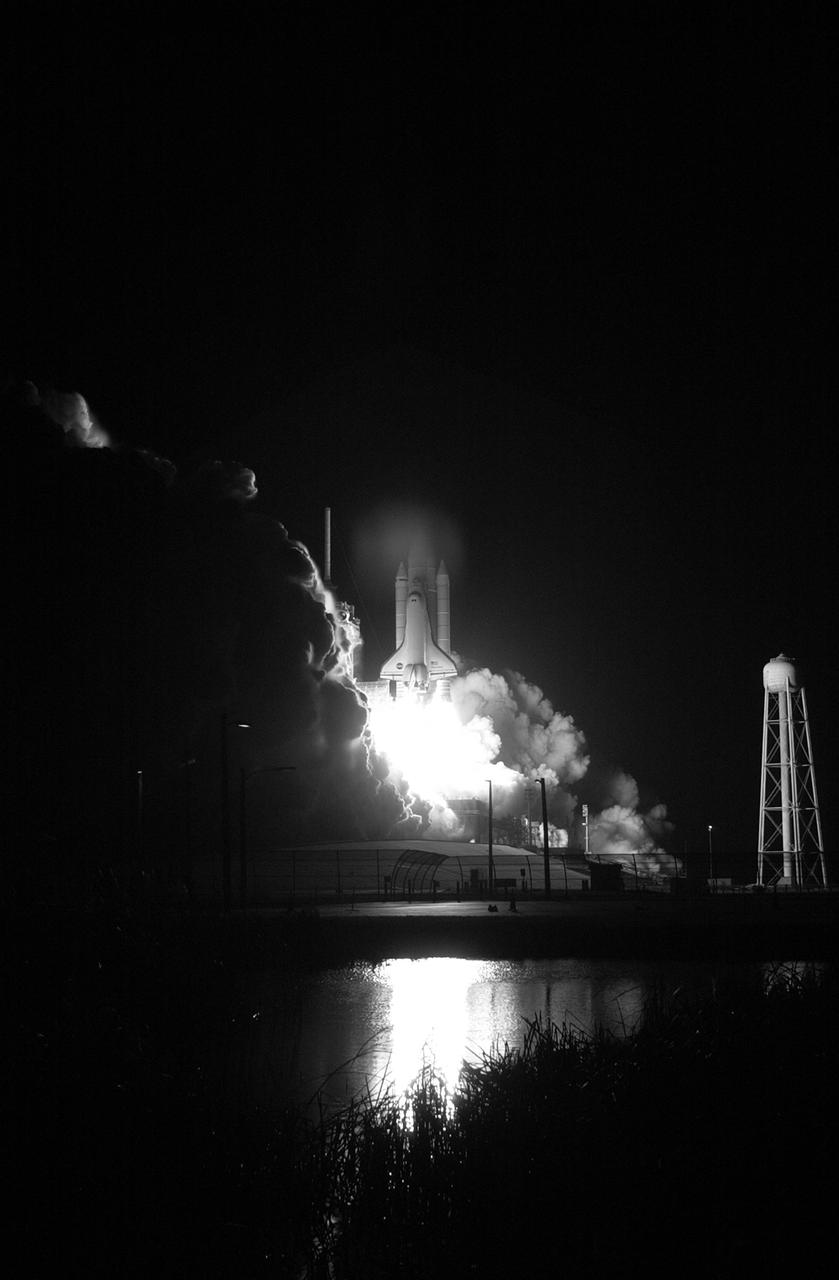
KENNEDY SPACE CENTER, FLA. -- The fiery liftoff of Space Shuttle Discovery from Launch Pad 39B on mission STS-116 is captured in the nearby water. Liftoff occurred on time at 8:47 p.m. EST. This was the second launch attempt of Discovery on mission STS-116. The first launch attempt on Dec. 7 was postponed due a low cloud ceiling over Kennedy Space Center. This is Discovery's 33rd mission and the first night launch since 2002. The 20th shuttle mission to the International Space Station, STS-116 carries another truss segment, P5. It will serve as a spacer, mated to the P4 truss that was attached in September. After installing the P5, the crew will reconfigure and redistribute the power generated by two pairs of U.S. solar arrays. Landing is expected Dec. 21 at KSC. Photo credit: NASA/Sandra Joseph, Robert Murray, Chris Lynch
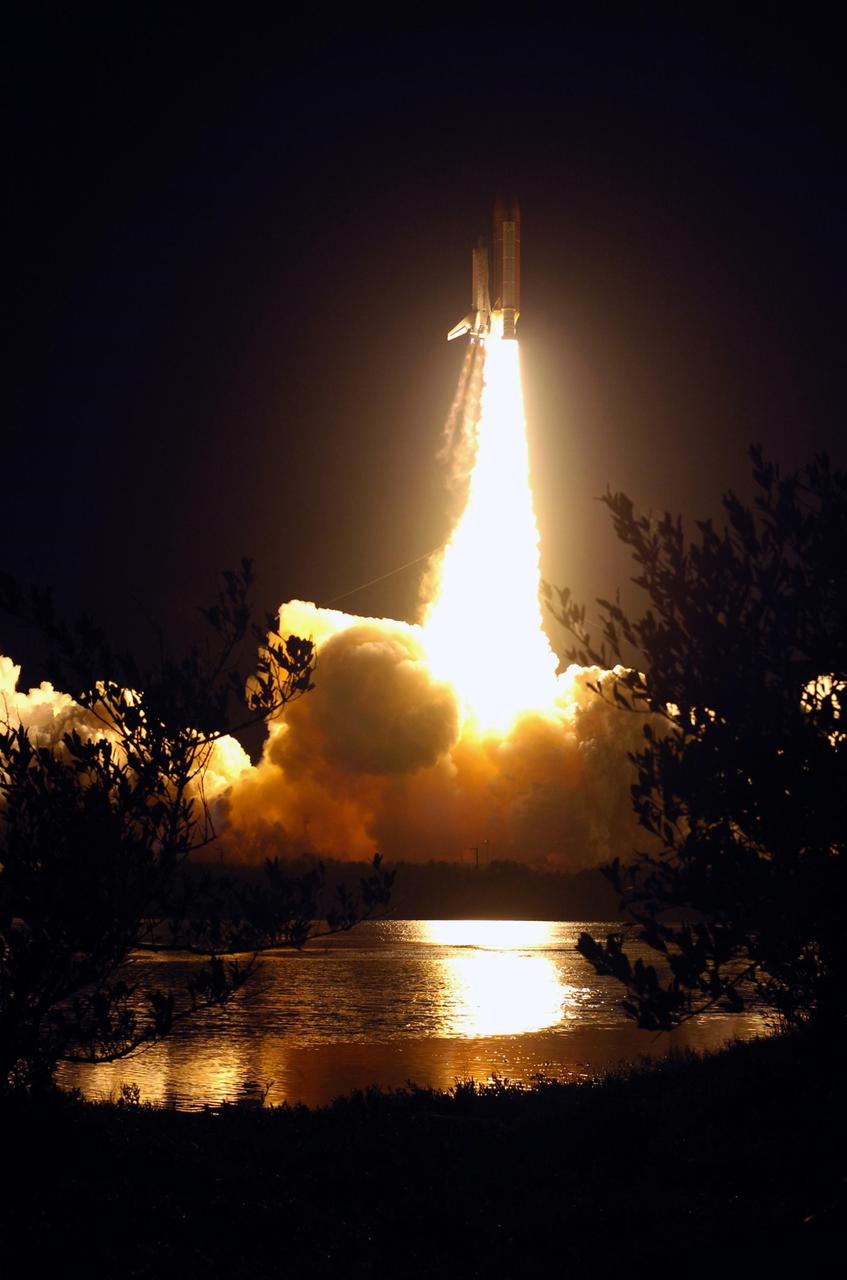
KENNEDY SPACE CENTER, FLA. --Space Shuttle Discovery soars away from the fiery clouds on Launch Pad 39B on mission STS-116. The light is captured in the nearby water. Liftoff occurred on time at 8:47 p.m. EST. This was the second launch attempt of Discovery on mission STS-116. The first launch attempt on Dec. 7 was postponed due a low cloud ceiling over Kennedy Space Center. This is Discovery's 33rd mission and the first night launch since 2002. The 20th shuttle mission to the International Space Station, STS-116 carries another truss segment, P5. It will serve as a spacer, mated to the P4 truss that was attached in September. After installing the P5, the crew will reconfigure and redistribute the power generated by two pairs of U.S. solar arrays. Landing is expected Dec. 21 at KSC. Photo credit: NASA/Sandra Joseph, Robert Murray, Chris Lynch
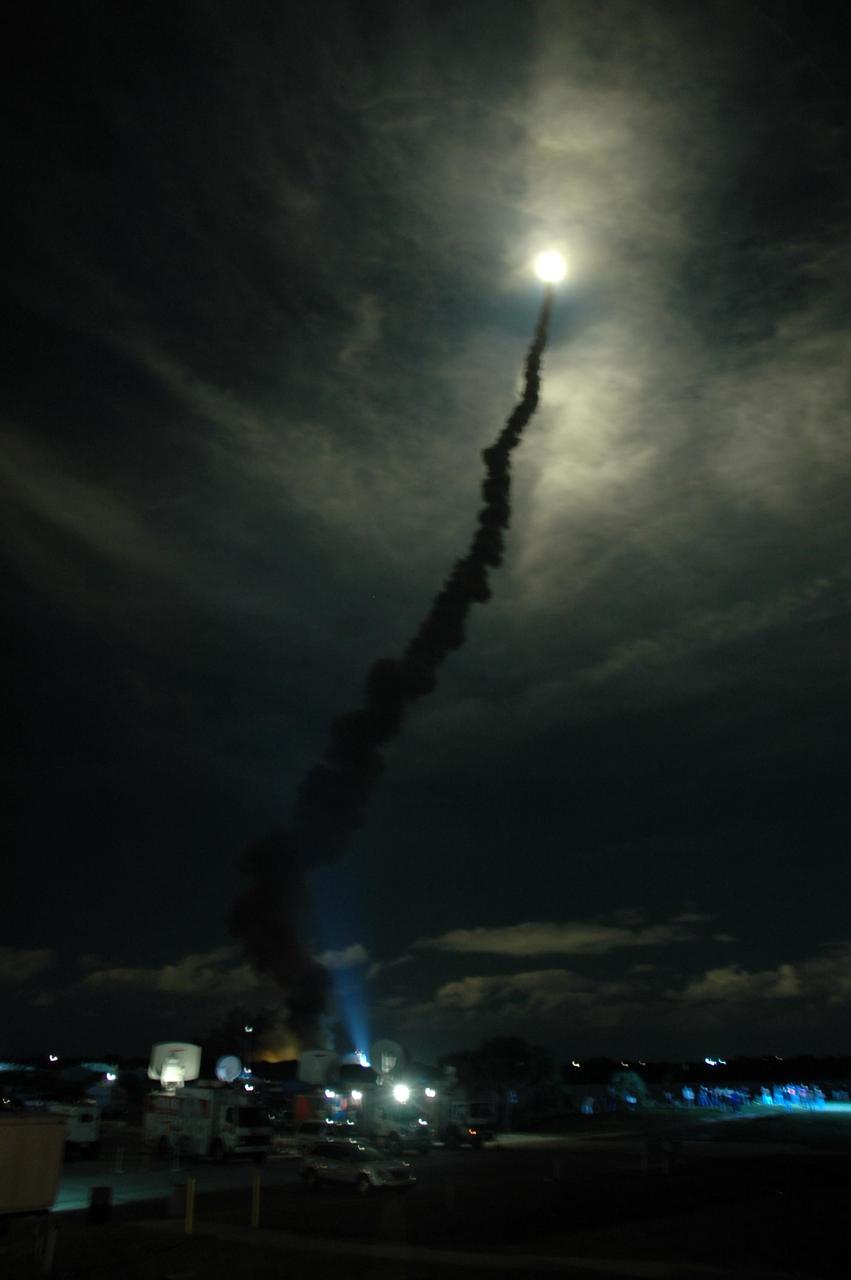
KENNEDY SPACE CENTER, FLA. -- Flooding the night sky with light, Space Shuttle Discovery streaks through the clouds after liftoff from Launch Pad 39B on mission STS-116. The launch occurred at 8:47:35 p.m. EST. This was the second launch attempt for mission STS-116. The first launch attempt on Dec. 7 was postponed due a low cloud ceiling over Kennedy Space Center. This is Discovery's 33rd mission and the first night launch since 2002. The 20th shuttle mission to the International Space Station, STS-116 carries another truss segment, P5. It will serve as a spacer, mated to the P4 truss that was attached in September. After installing the P5, the crew will reconfigure and redistribute the power generated by two pairs of U.S. solar arrays. Landing is expected Dec. 21 at KSC. Photo credit: NASA/Amanda Diller

S116-E-07141 (19 Dec. 2006) --- Backdropped by a blue and white Earth, the International Space Station moves away from Space Shuttle Discovery. Earlier the STS-116 and Expedition 14 crews concluded eight days of cooperative work onboard the shuttle and station. Undocking of the two spacecraft occurred at 4:10 p.m. (CST) on Dec. 19, 2006. Astronaut William A. (Bill) Oefelein, STS-116 pilot, was at the controls for the fly-around, which gave Discovery's crew a look at its handiwork, a new P5 spacer truss segment and a fully retracted P6 solar array wing. During their stay on the orbital outpost, the combined crew installed the newest piece of the station's backbone and completely rewired the power grid over the course of four spacewalks.