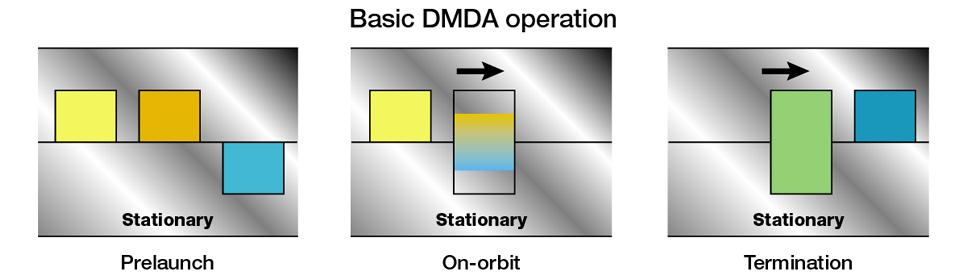
Experiments to seek solutions for a range of biomedical issues are at the heart of several investigations that will be hosted by the Commercial Instrumentation Technology Associates (ITA), Inc. Biomedical Experiments (CIBX-2) payload. CIBX-2 is unique, encompassing more than 20 separate experiments including cancer research, commercial experiments, and student hands-on experiments from 10 schools as part of ITA's ongoing University Among the Stars program. This drawing depicts a cross-section of a set of Dual-Materials Dispersion Apparatus (DMDA) specimen wells, one of which can include a reverse osmosis membrane to dewater a protein solution and thus cause crystallization. Depending on individual needs, two or three wells may be used, the membrane may be absent, or other proprietary enhancements may be present. The experiments are sponsored by NASA's Space Product Development Program (SPD).
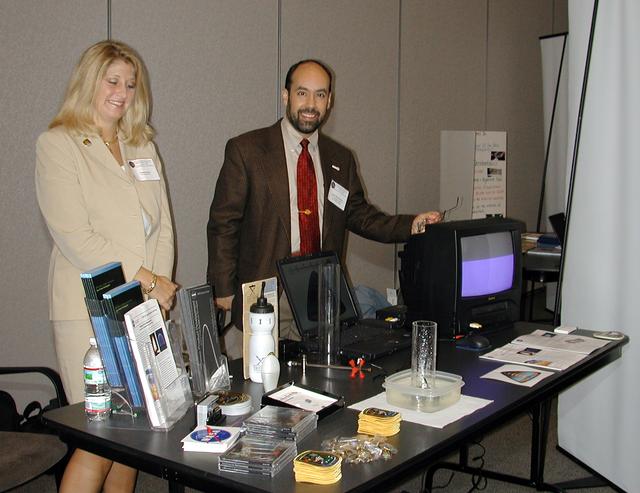
Christi Parker of CST Inc. of Huntsville, AL, and Angel Abbud-Madrid, of the Center for Commercial Applications of Combustion in Space (CCACS) at the Colorado school of Mines, prepare a demonstration of the CCACS Water Mist experiment scheduled to fly on the STS-107 space research mission in 2003. The activity was part of the Space Research and You education event held by NASA's Office of Biological and Physical Research on June 25, 2002, in Arlington, VA, to highlight the research that will be conducted on STS-107. (Digital camera image; no film original.
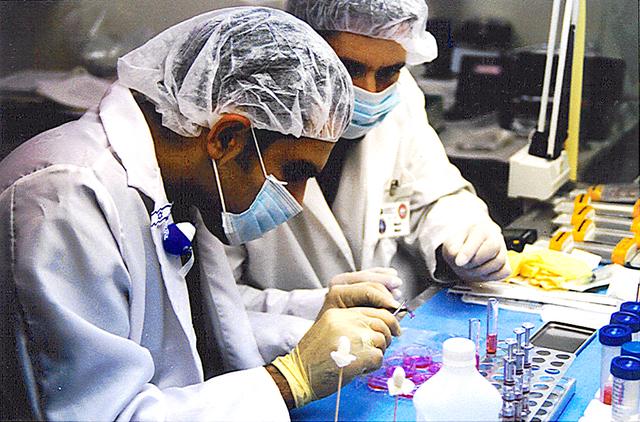
Experiments to seek solutions for a range of biomedical issues are at the heart of several investigations that will be hosted by the Commercial Instrumentation Technology Associates (ITA), Inc. Biomedical Experiments (CIBX-2) payload. CIBX-2 is unique, encompassing more than 20 separate experiments including cancer research, commercial experiments, and student hands-on experiments from 10 schools as part of ITA's ongoing University Among the Stars program. Student Marnix Aklian and ITA's Mark Bem prepare biological samples for flight as part of ITA's hands-on student outreach program on STS-95. Similar activities are a part of the CIBX-2 payload. The experiments are sponsored by NASA's Space Product Development Program (SPD).
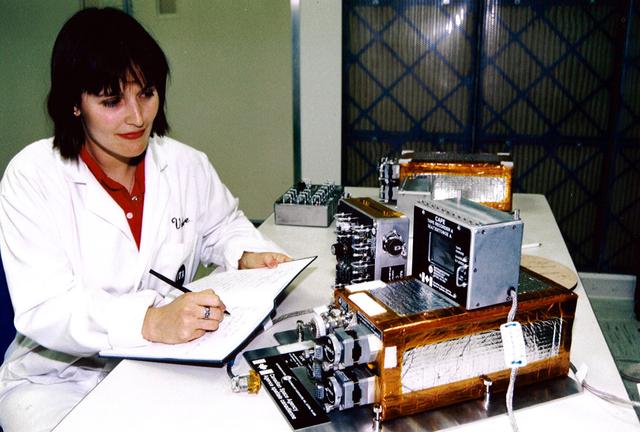
Experiments to seek solutions for a range of biomedical issues are at the heart of several investigations that will be hosted by the Commercial Instrumentation Technology Associates (ITA), Inc. Biomedical Experiments (CIBX-2) payload. CIBX-2 is unique, encompassing more than 20 separate experiments including cancer research, commercial experiments, and student hands-on experiments from 10 schools as part of ITA's ongoing University Among the Stars program. Valerie Cassanto of ITA checks the Canadian Protein Crystallization Experiment (CAPE) carried by STS-86 to Mir in 1997. The experiments are sponsored by NASA's Space Product Development Program (SPD).
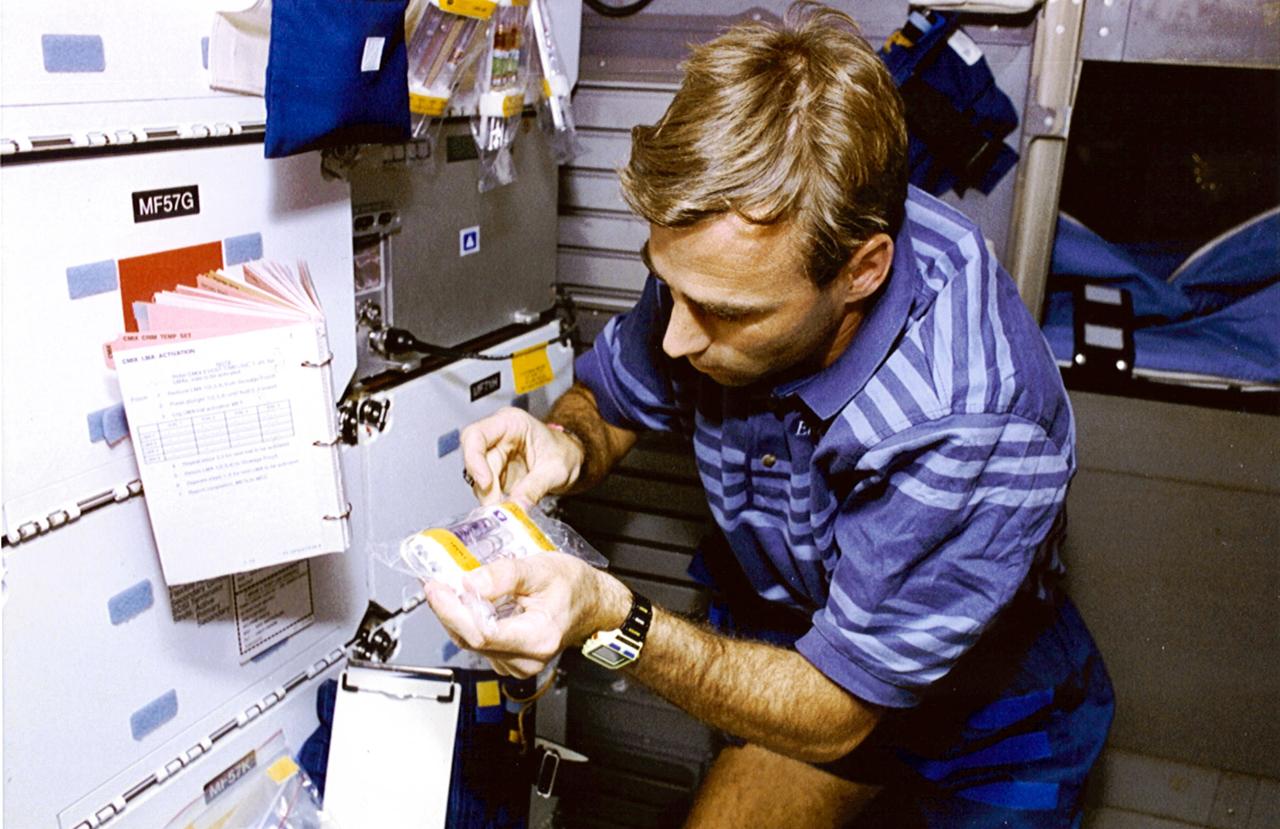
Experiments to seek solutions for a range of biomedical issues are at the heart of several investigations that will be hosted by the Commercial Instrumentation Technology Associates (ITA), Inc. Biomedical Experiments (CIBX-2) payload. CIBX-2 is unique, encompassing more than 20 separate experiments including cancer research, commercial experiments, and student hands-on experiments from 10 schools as part of ITA's ongoing University Among the Stars program. Astronaut William G. Gregory activates Liquids Mixing Apparatus (LMA) vials during STS-67. Other LMAs hang at top on the face of the middeck locker array. The experiments are sponsored under NASA's Space Product Development Program (SPD).
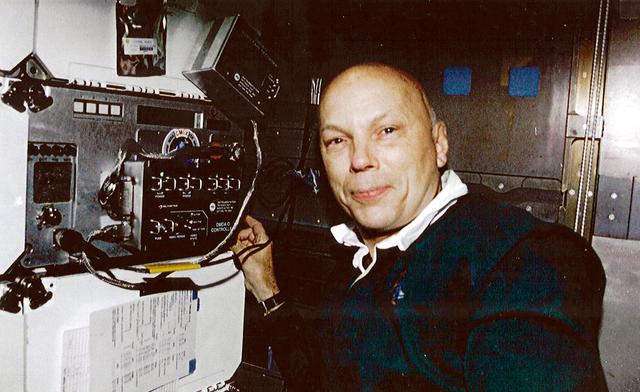
Experiments to seek solutions for a range of biomedical issues are at the heart of several investigations that will be hosted by the Commercial Instrumentation Technology Associates (ITA), Inc. The biomedical experiments CIBX-2 payload is unique, encompassing more than 20 separate experiments including cancer research, commercial experiments, and student hands-on experiments from 10 schools as part of ITA's ongoing University Among the stars program. Here, Astronaut Story Musgrave activates the CMIX-5 (Commercial MDA ITA experiment) payload in the Space Shuttle mid deck during the STS-80 mission in 1996 which is similar to CIBX-2. The experiments are sponsored by NASA's Space Product Development Program (SPD).
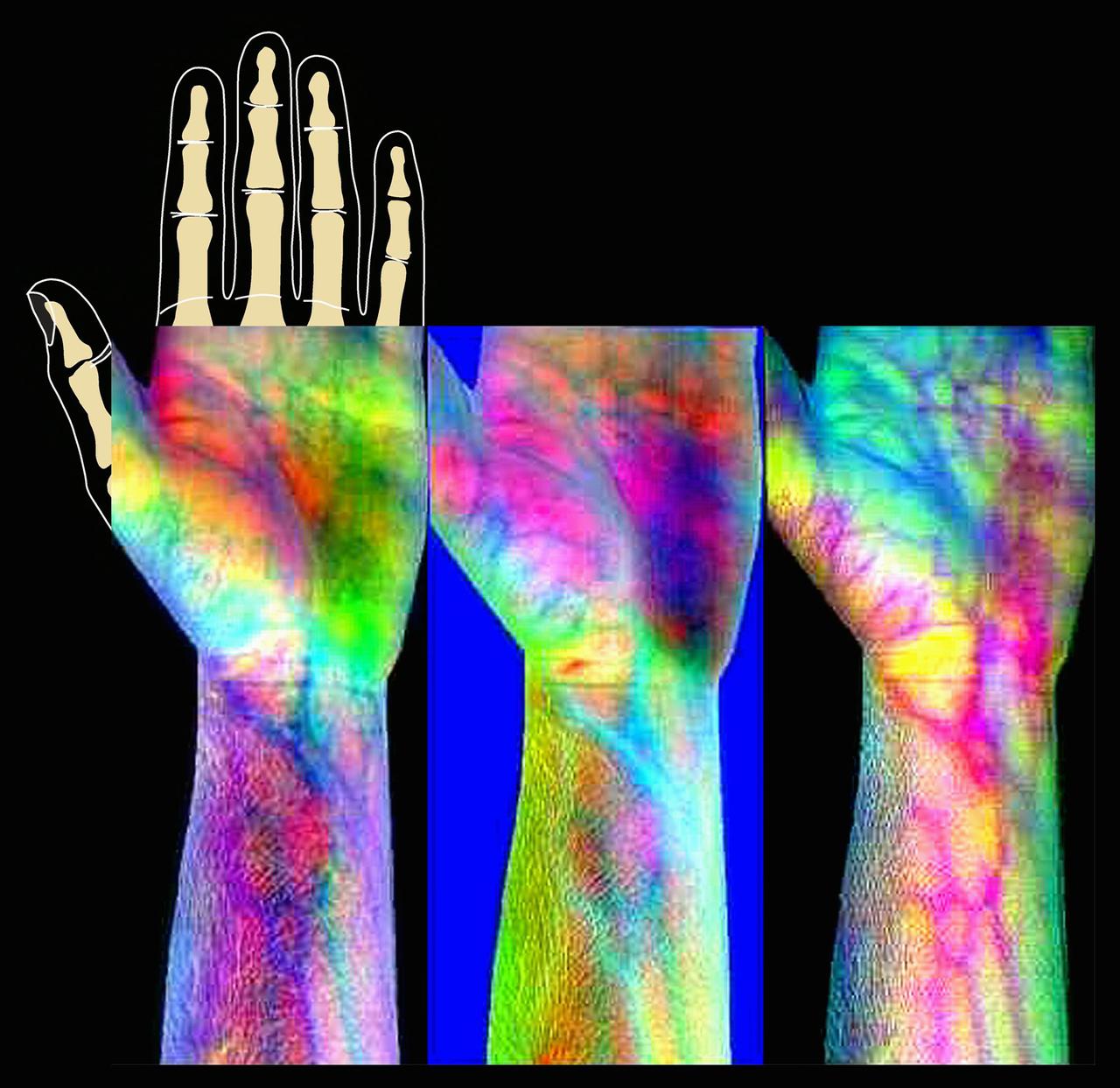
ProVision Technologies, a NASA research partnership center at Sternis Space Center in Mississippi, has developed a new hyperspectral imaging (HSI) system that is much smaller than the original large units used aboard remote sensing aircraft and satellites. The new apparatus is about the size of a breadbox. Health-related applications of HSI include non-invasive analysis of human skin to characterize wounds and wound healing rates (especially important for space travelers who heal more slowly), determining if burns are first-, second-, or third degree (rather than painful punch biopsies). The work is sponsored under NASA's Space Product Development (SPD) program.
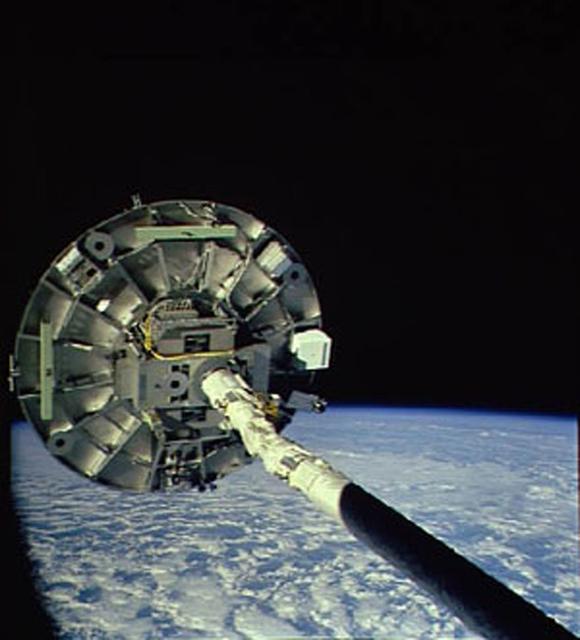
The Wake Shield Facility (WSF) is a free-flying research and development facility that is designed to use the pure vacuum of space to conduct scientific research in the development of new materials. The thin film materials technology developed by the WSF could some day lead to applications such as faster electronics components for computers.
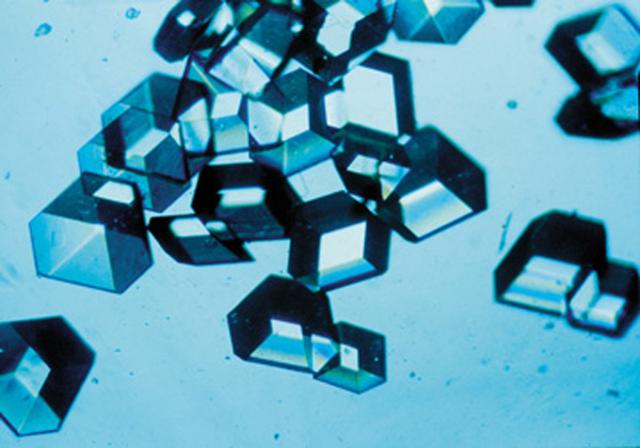
The manipulation of organic materials--cells, tissues, and even living organisms--offers many exciting possibilities for the future from organic computers to improved aquaculture. Commercial researchers are using the microgravity environment to produce large near perfect protein crystals Research on insulin has yielded crystals that far surpass the quality of insulin crystals grown on the ground. Using these crystals industry partners are working to develop new and improved treatments for diabetes. Other researchers are exploring the possibility of producing antibiotics using plant cell cultures which could lead to both orbital production and the improvement of ground-based antibiotic production.
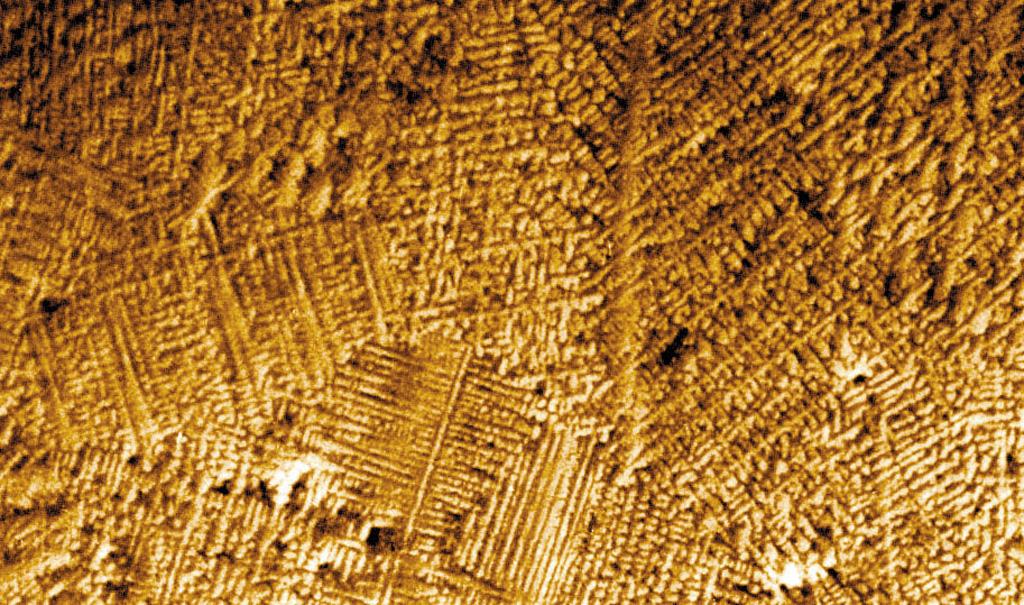
Researchers have found that as melted metals and alloys (combinations of metals) solidify, they can form with different arrangements of atoms, called microstructures. These microstructures depend on the shape of the interface (boundary) between the melted metal and the solid crystal it is forming. There are generally three shapes that the interface can take: planar, or flat; cellular, which looks like the cells of a beehive; and dendritic, which resembles tiny fir trees. Convection at this interface can affect the interface shape and hide the other phenomena (physical events). To reduce the effects of convection, researchers conduct experiments that examine and control conditions at the interface in microgravity. Microgravity also helps in the study of alloys composed of two metals that do not mix. On Earth, the liquid mixtures of these alloys settle into different layers due to gravity. In microgravity, the liquid metals do not settle, and a solid more uniform mixture of both metals can be formed.
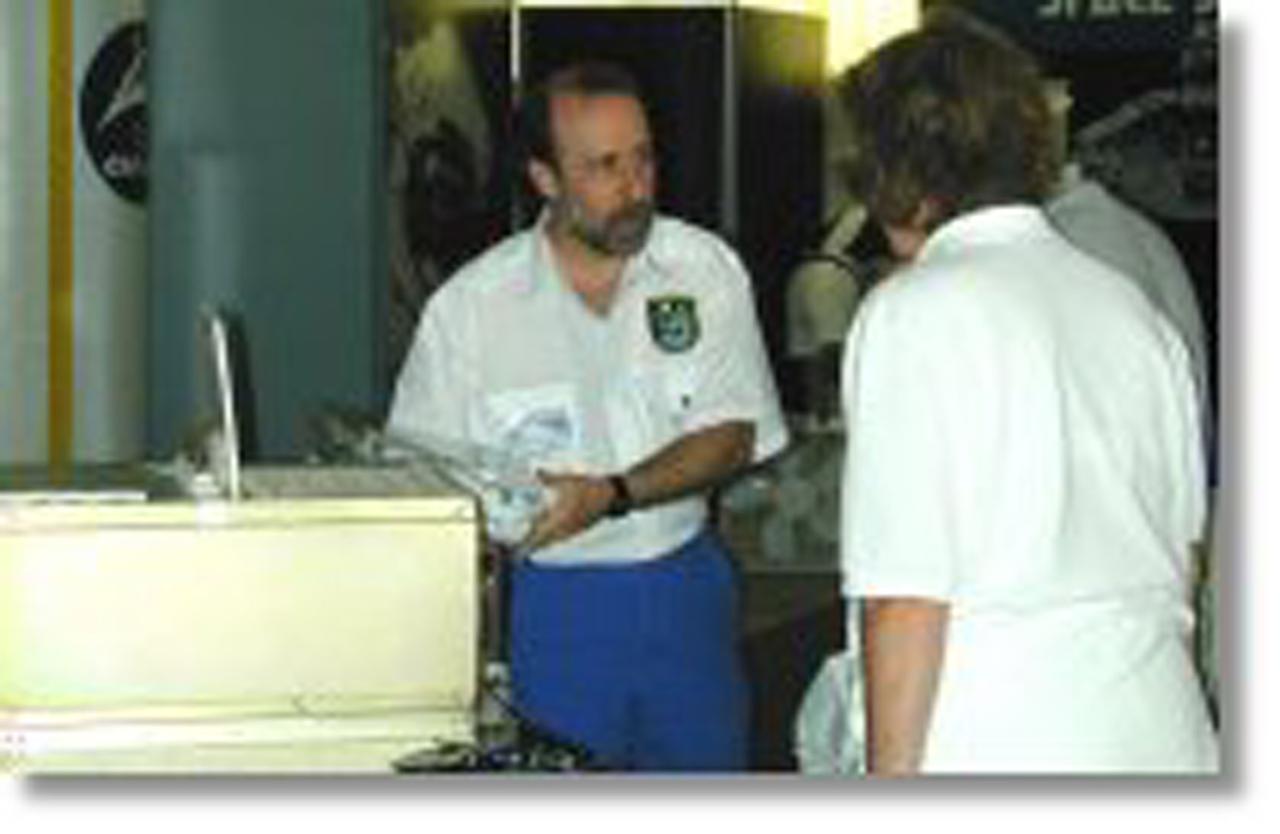
SPD representative Steve Lambing shows the PentaPure water purification unit to some EAA visitors. The Microgravity Research and the Space Product Development Programs joined with the Johnson Space Center (JSC) for a first time ever ISS/Microgravity Research space-focused exhibit at Oshkosh AirVenture'99 from July 28-August 3, 1999. The Space Product Development (SPD) display included the STS-95 ASTROCULTURE training hardware used by John Glenn and his crewmates, a PentaPure water purfication system, and a Ford engine block.
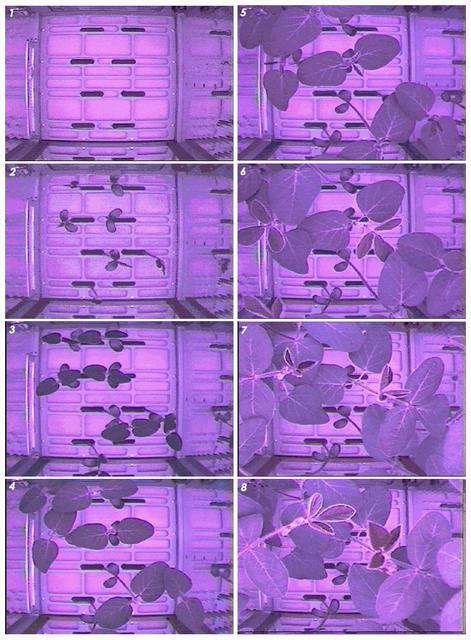
This composite image shows soybean plants growing in the Advanced Astroculture experiment aboard the International Space Station during June 11-July 2, 2002. DuPont is partnering with NASA and the Wisconsin Center for Space Automation and Robotics (WCSAR) at the University of Wisconsin-Madison to grow soybeans aboard the Space Station to find out if they have improved oil, protein, carbohydrates or secondary metabolites that could benefit farmers and consumers. Principal Investigators: Dr. Tom Corbin, Pioneer Hi-Bred International Inc., a Dupont Company, with headquarters in Des Moines, Iowa, and Dr. Weijia Zhou, Wisconsin Center for Space Automation and Robotics (WCSAR), University of Wisconsin-Madison.
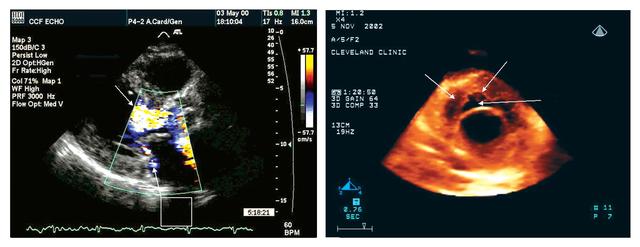
Echocardiography uses sound waves to image the heart and other organs. Developing a compact version of the latest technology improved the ease of monitoring crew member health, a critical task during long space flights. NASA researchers plan to adapt the three-dimensional (3-D) echocardiogram for space flight. The two-dimensional (2-D) echocardiogram utilized in orbit on the International Space Station (ISS) was effective, but difficult to use with precision. A heart image from a 2-D echocardiogram (left) is of a better quality than that from a 3-D device (right), but the 3-D imaging procedure is more user-friendly.
Vice President Mike Pence shakes hands with Steve Jurczyk, associate administrator, NASA, after a discussion about the progress on Space Policy Directive 1 (SPD-1), Wednesday, Dec. 12, 2018 at NASA Headquarters in Washington. Photo Credit: (NASA/Aubrey Gemignani)
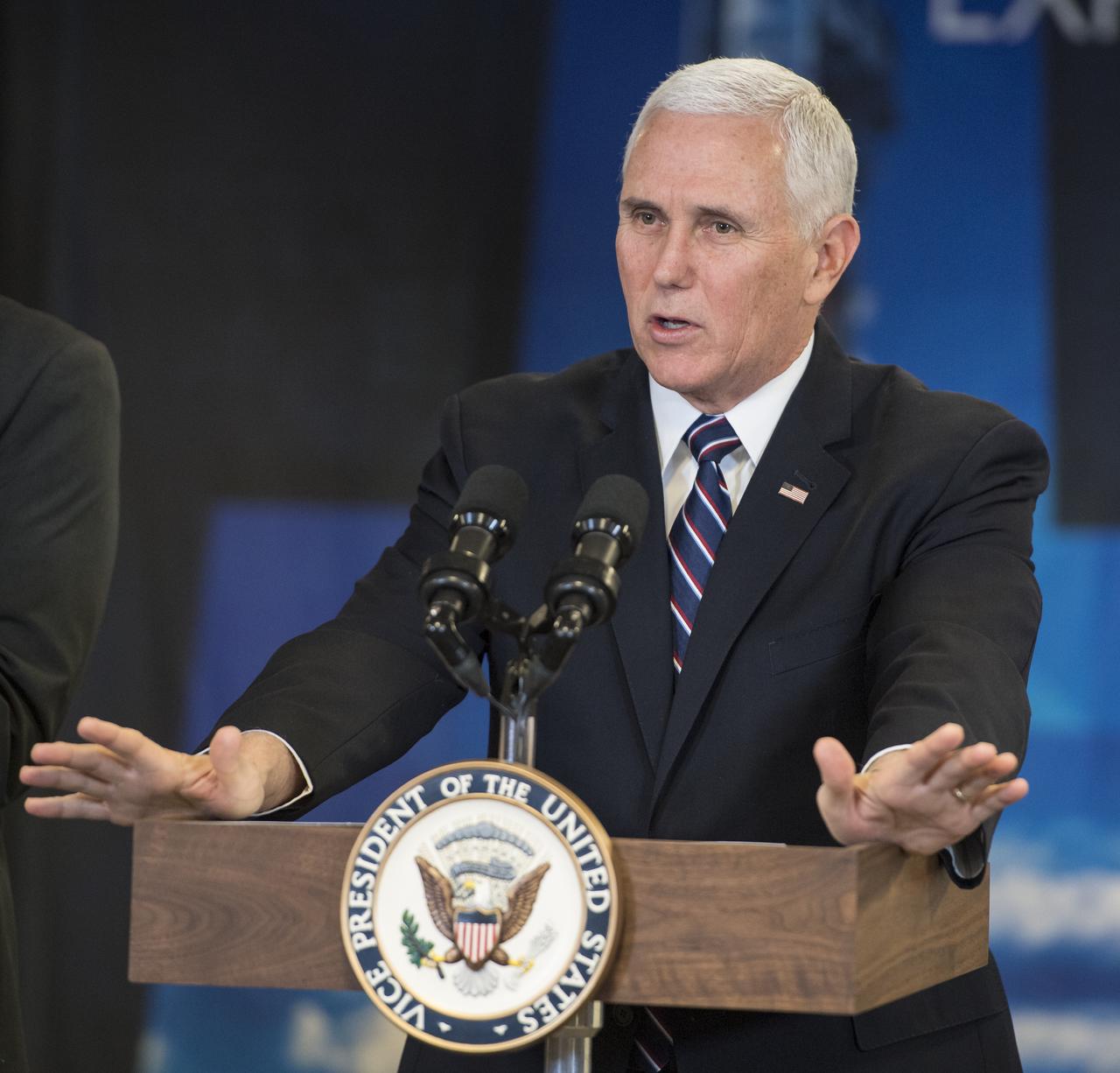
Vice President Mike Pence speaks to NASA employees, Wednesday, Dec. 12, 2018 at NASA Headquarters in Washington. The Vice President visited NASA to discuss the progress on Space Policy Directive 1 (SPD-1) with NASA leadership. Photo Credit: (NASA/Aubrey Gemignani)
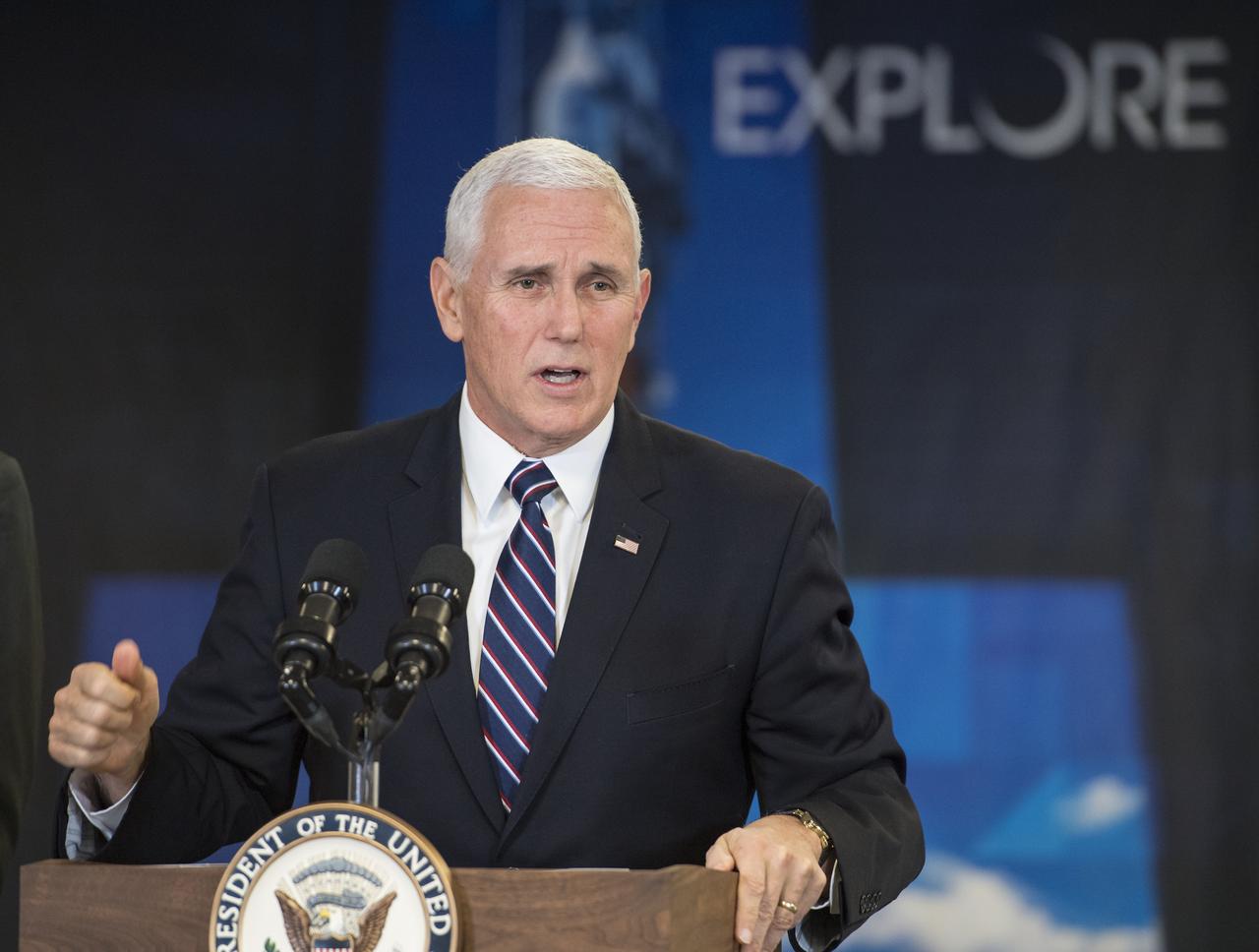
Vice President Mike Pence speaks to NASA employees, Wednesday, Dec. 12, 2018 at NASA Headquarters in Washington. The Vice President visited NASA to discuss the progress on Space Policy Directive 1 (SPD-1) with NASA leadership. Photo Credit: (NASA/Aubrey Gemignani)
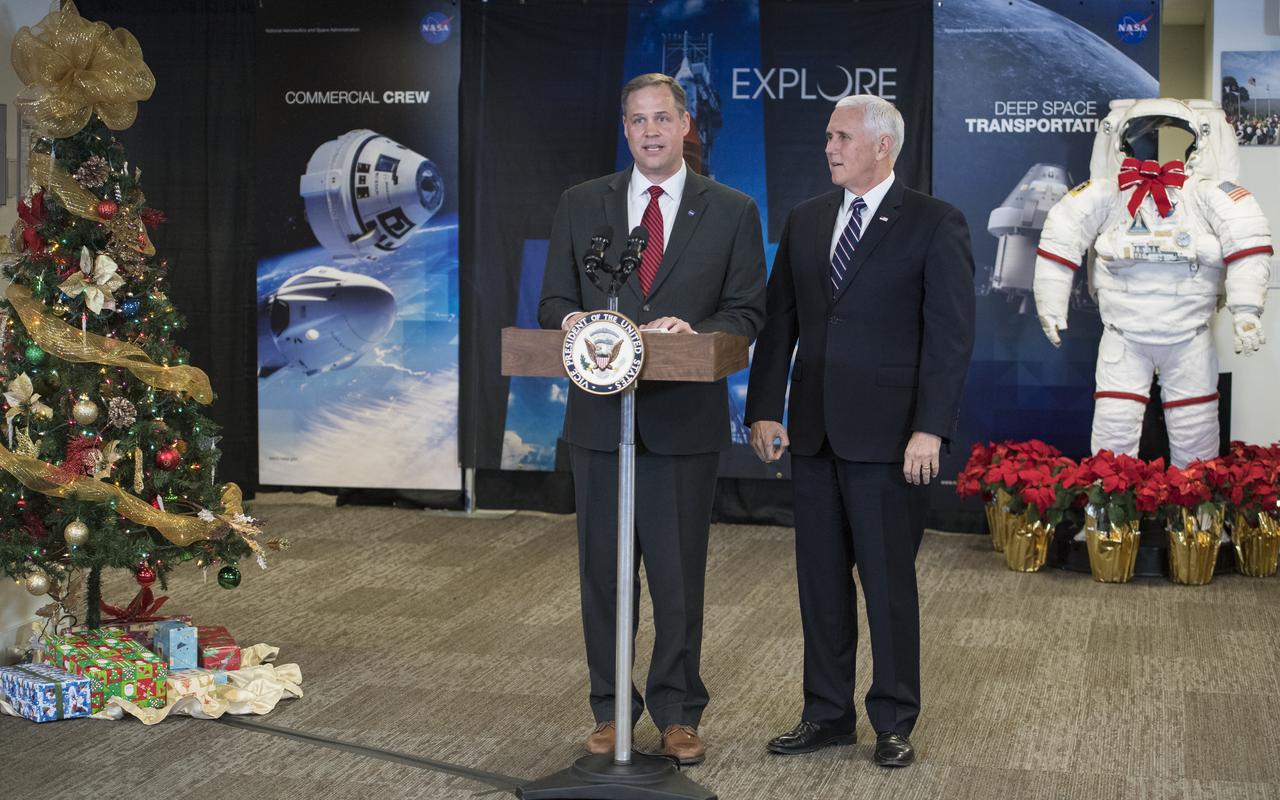
NASA Administrator Jim Bridenstine introduces Vice President Mike Pence after he met with NASA leadership to discuss the progress on Space Policy Directive 1 (SPD-1), Wednesday, Dec. 12, 2018 at NASA Headquarters in Washington. Photo Credit: (NASA/Aubrey Gemignani)
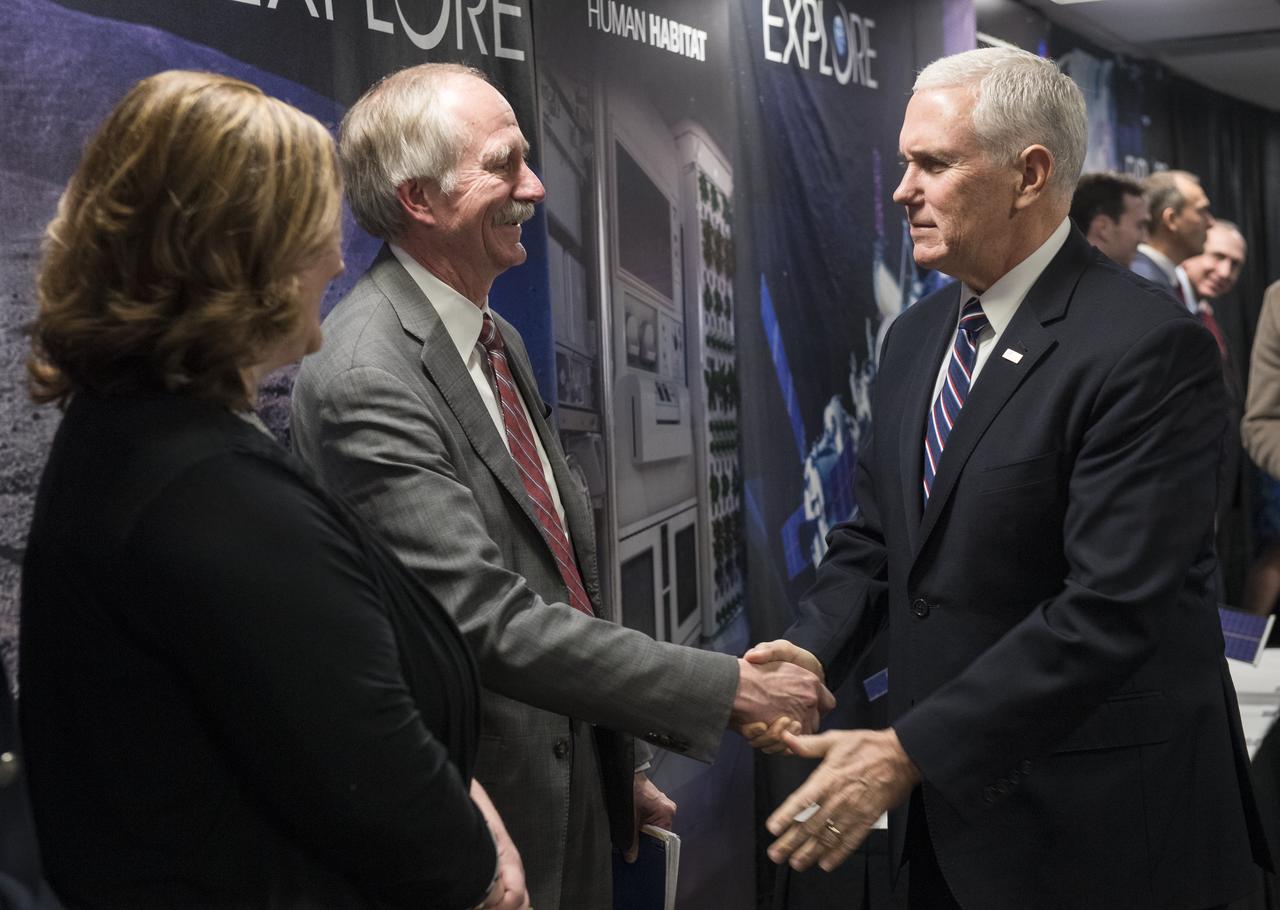
Vice President Mike Pence shakes hands with Bill Gerstenmaier, associate administrator, Human Exploration and Operations, NASA, after a discussion about the progress on Space Policy Directive 1 (SPD-1), Wednesday, Dec. 12, 2018 at NASA Headquarters in Washington. Photo Credit: (NASA/Aubrey Gemignani)
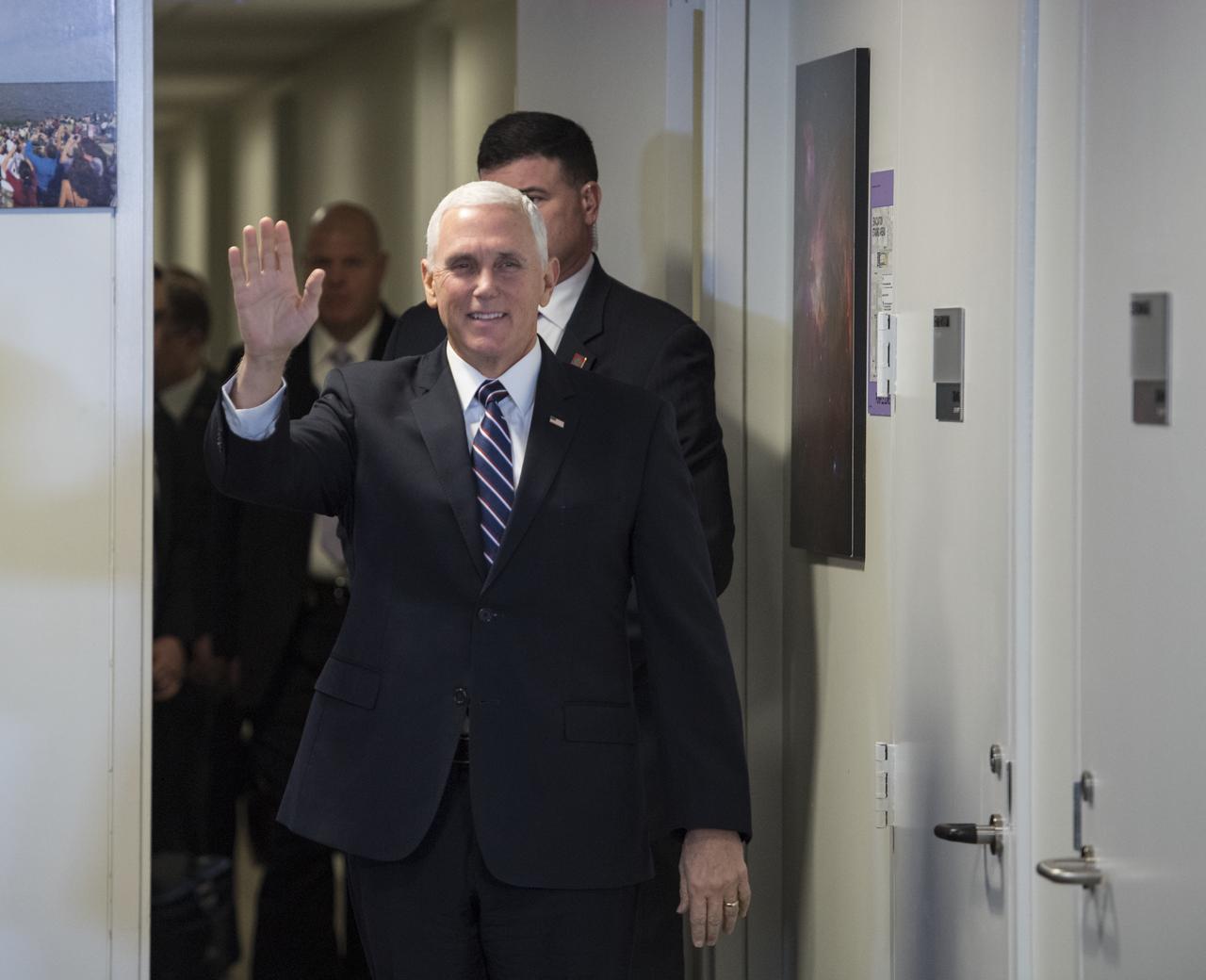
Vice President Mike Pence waves as he arrives to meet with NASA employees, after a discussion with NASA leadership about the progress on Space Policy Directive 1 (SPD-1), Wednesday, Dec. 12, 2018 at NASA Headquarters in Washington. Photo Credit: (NASA/Aubrey Gemignani)
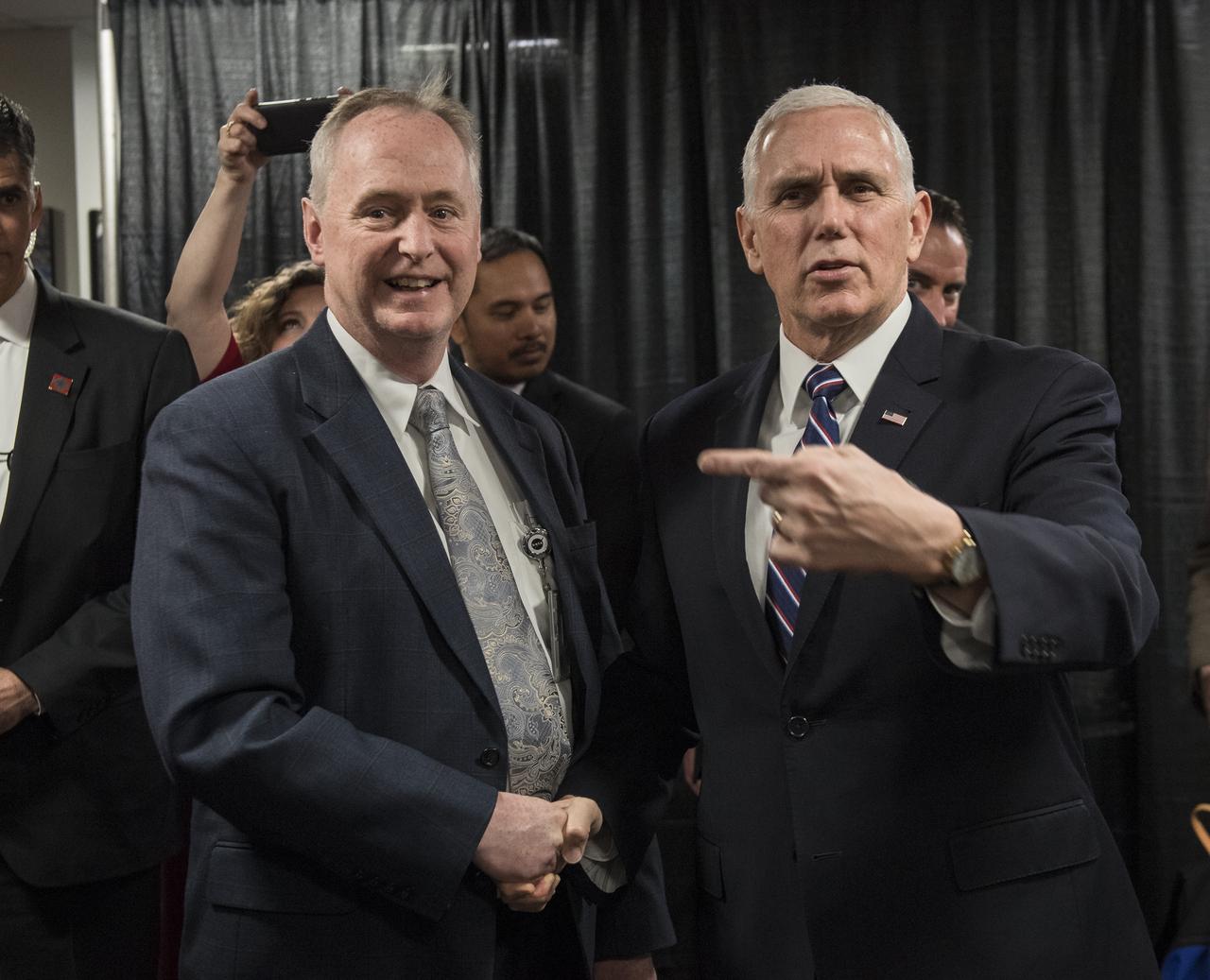
Vice President Mike Pence, meets with NASA employees after a discussion with NASA leadership about the progress on Space Policy Directive 1 (SPD-1), Wednesday, Dec. 12, 2018 at NASA Headquarters in Washington. Photo Credit: (NASA/Aubrey Gemignani)
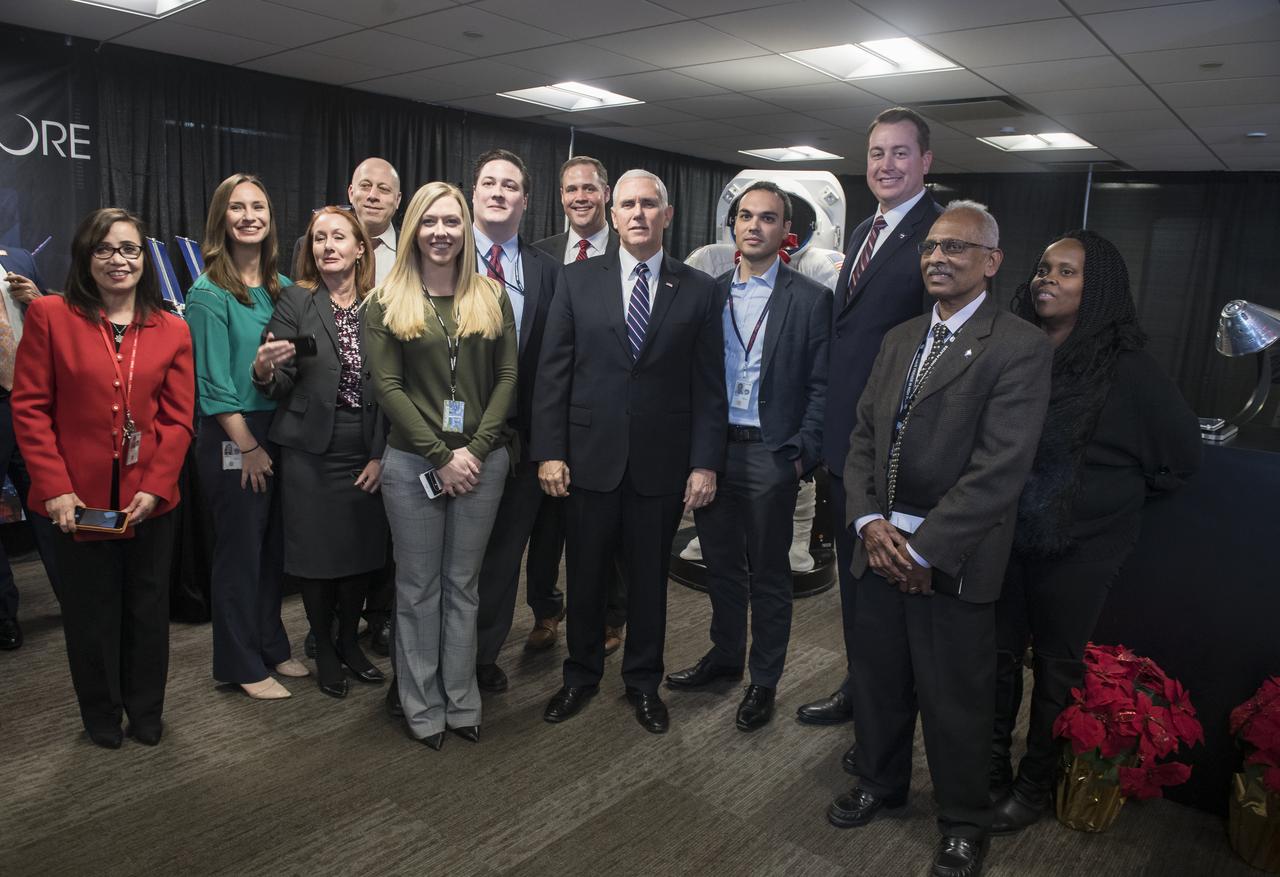
Vice President Mike Pence, poses for a photo with NASA leadership and employees after a discussion about the progress on Space Policy Directive 1 (SPD-1), Wednesday, Dec. 12, 2018 at NASA Headquarters in Washington. Photo Credit: (NASA/Aubrey Gemignani)

Vice President Mike Pence waves goodbye after meeting with NASA employees, Wednesday, Dec. 12, 2018 at NASA Headquarters in Washington. The Vice President visited NASA to discuss the progress on Space Policy Directive 1 (SPD-1) with NASA leadership. Photo Credit: (NASA/Aubrey Gemignani)
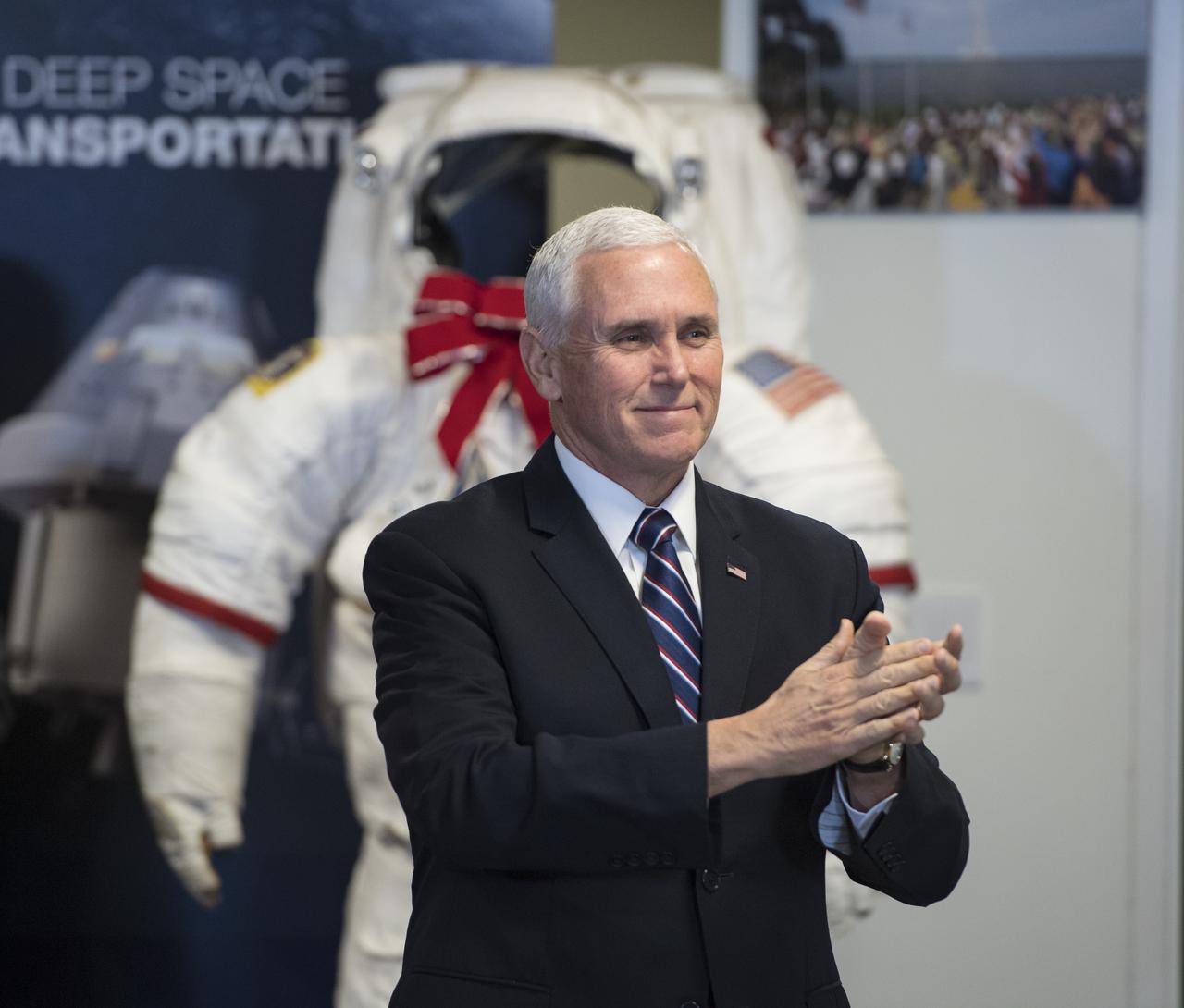
Vice President Mike Pence applauds NASA employees after a discussion with NASA leadership about the progress on Space Policy Directive 1 (SPD-1), Wednesday, Dec. 12, 2018 at NASA Headquarters in Washington. Photo Credit: (NASA/Aubrey Gemignani)
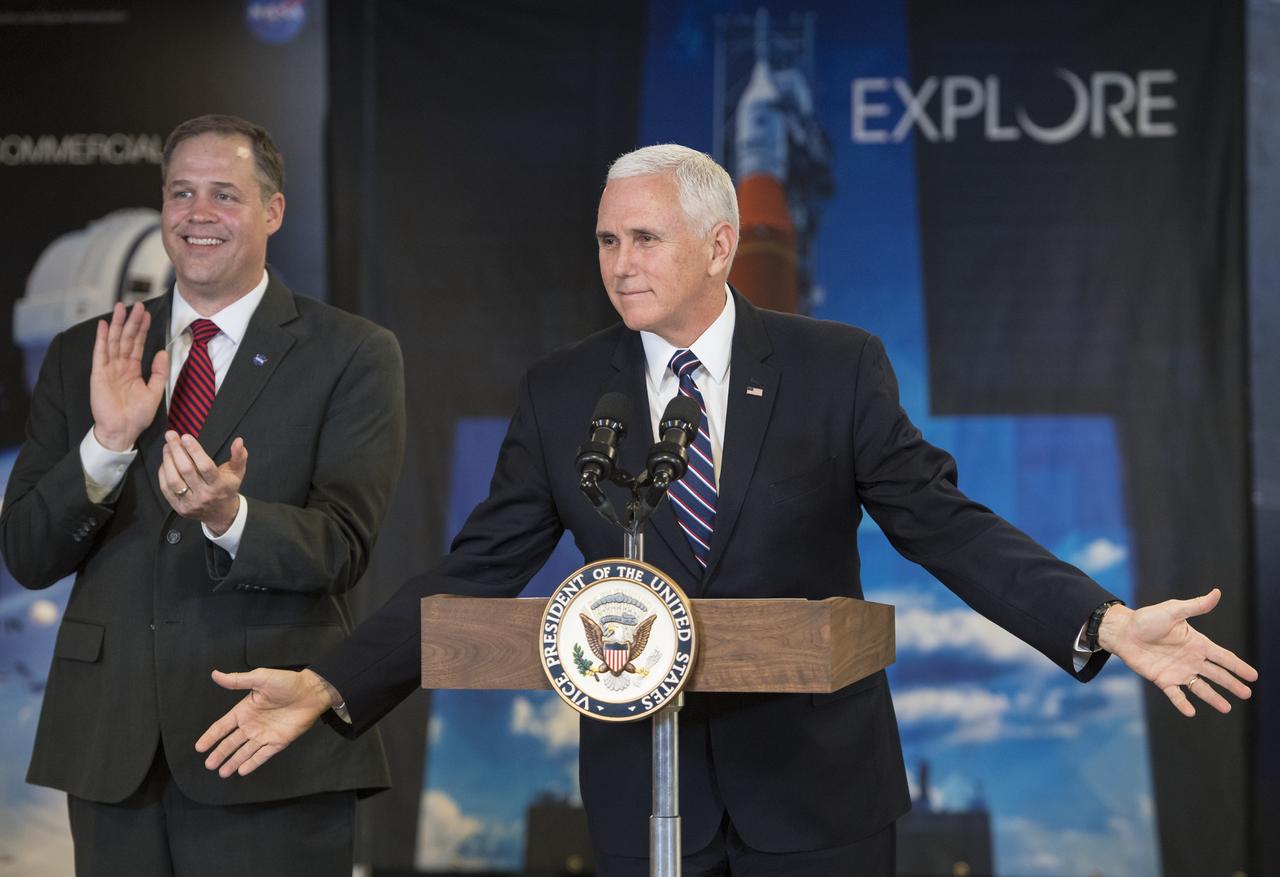
Vice President Mike Pence speaks to NASA employees, Wednesday, Dec. 12, 2018 at NASA Headquarters in Washington. The Vice President visited NASA to discuss the progress on Space Policy Directive 1 (SPD-1) with NASA leadership. Photo Credit: (NASA/Aubrey Gemignani)
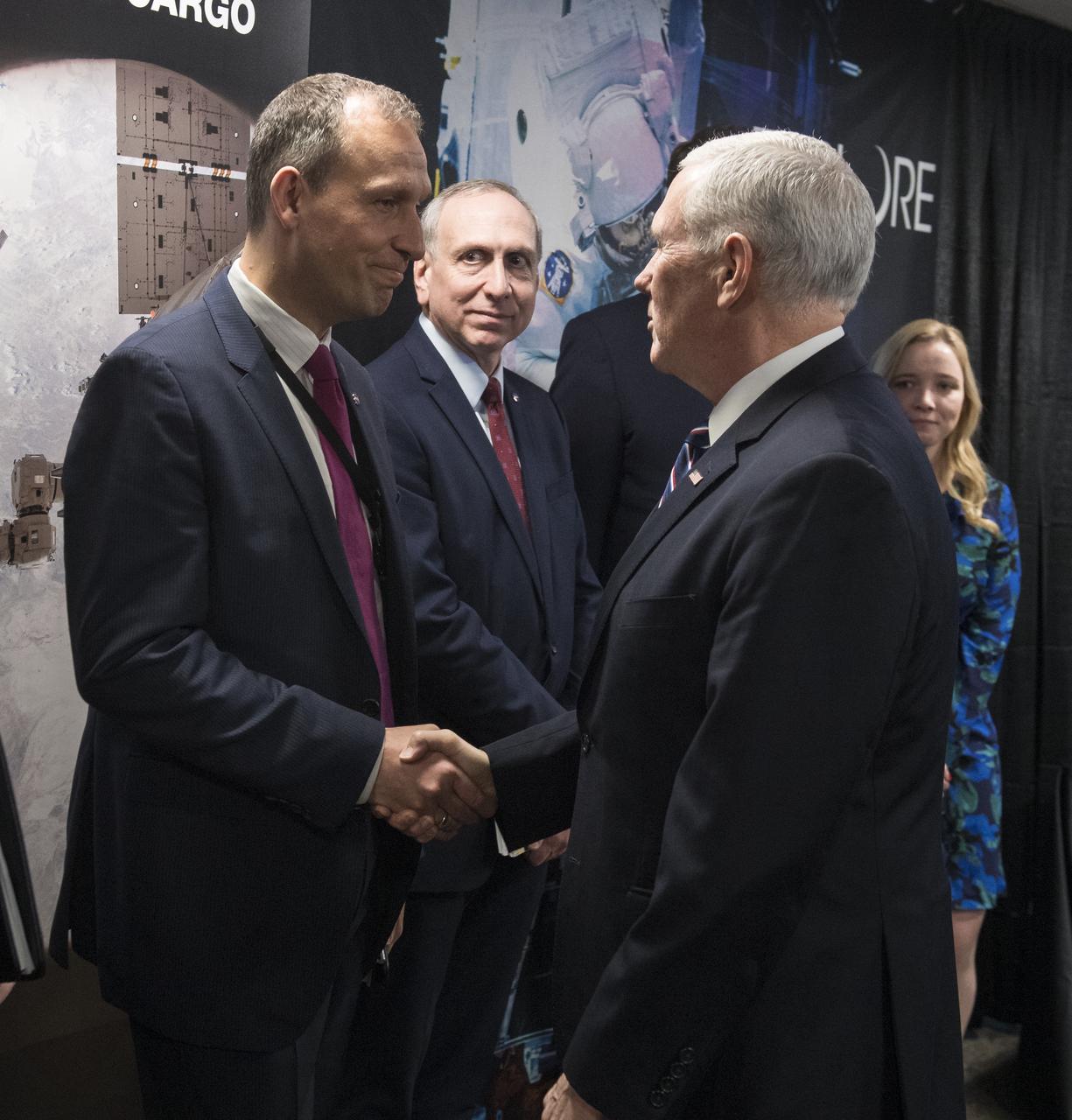
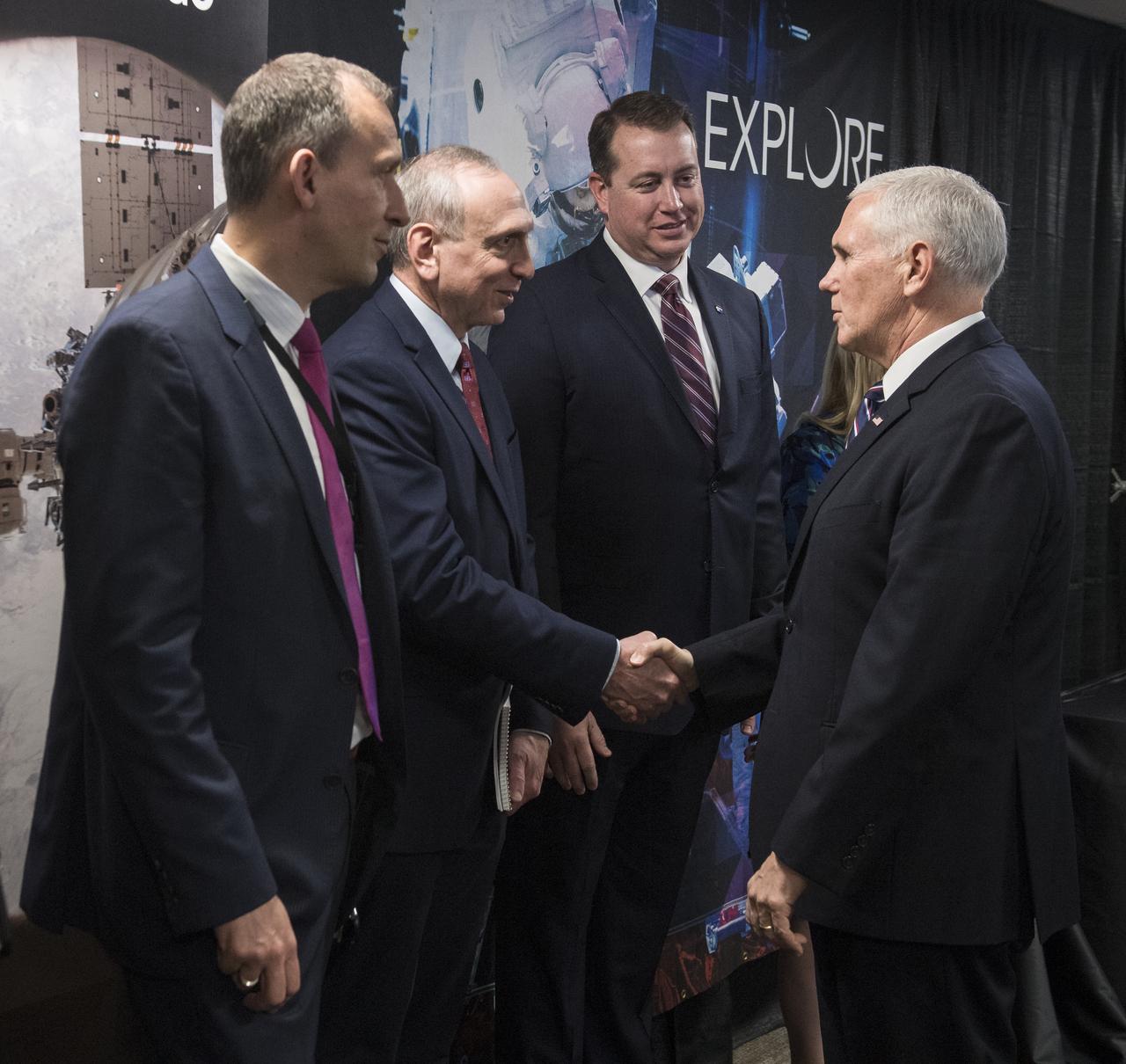
Vice President Mike Pence shakes hands with Thomas Zurbuchen, associate administrator, Science Mission Directorate, NASA, after a discussion about the progress on Space Policy Directive 1 (SPD-1), Wednesday, Dec. 12, 2018 at NASA Headquarters in Washington. Photo Credit: (NASA/Aubrey Gemignani)

Vice President Mike Pence, right, shakes hands with NASA Administrator Jim Bridenstine after meeting with him and other NASA leadership to discuss the progress on Space Policy Directive 1 (SPD-1), Wednesday, Dec. 12, 2018 at NASA Headquarters in Washington. Photo Credit: (NASA/Aubrey Gemignani)
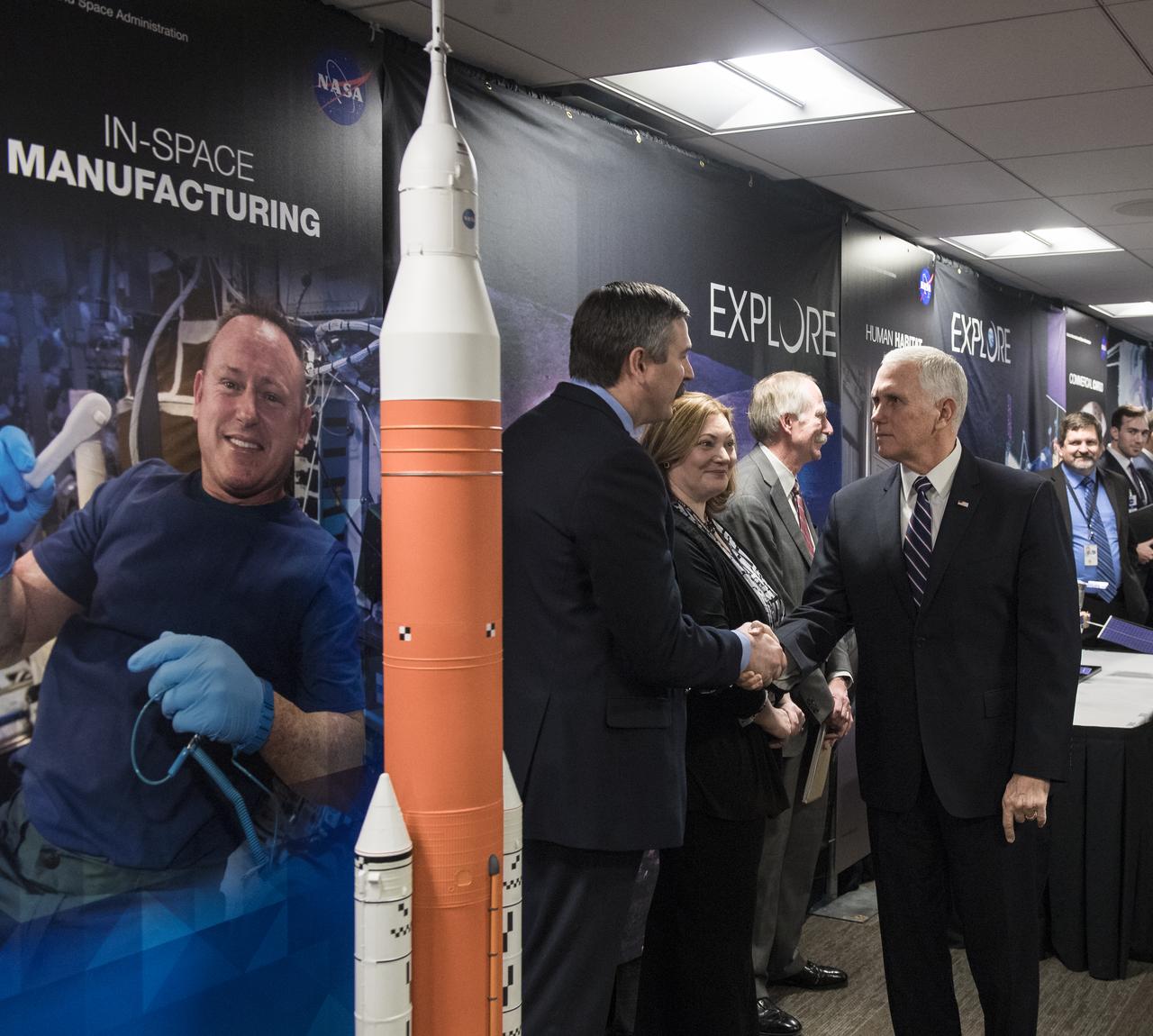
Vice President Mike Pence, meets with NASA employees after a discussion with NASA leadership about the progress on Space Policy Directive 1 (SPD-1), Wednesday, Dec. 12, 2018 at NASA Headquarters in Washington. Photo Credit: (NASA/Aubrey Gemignani)
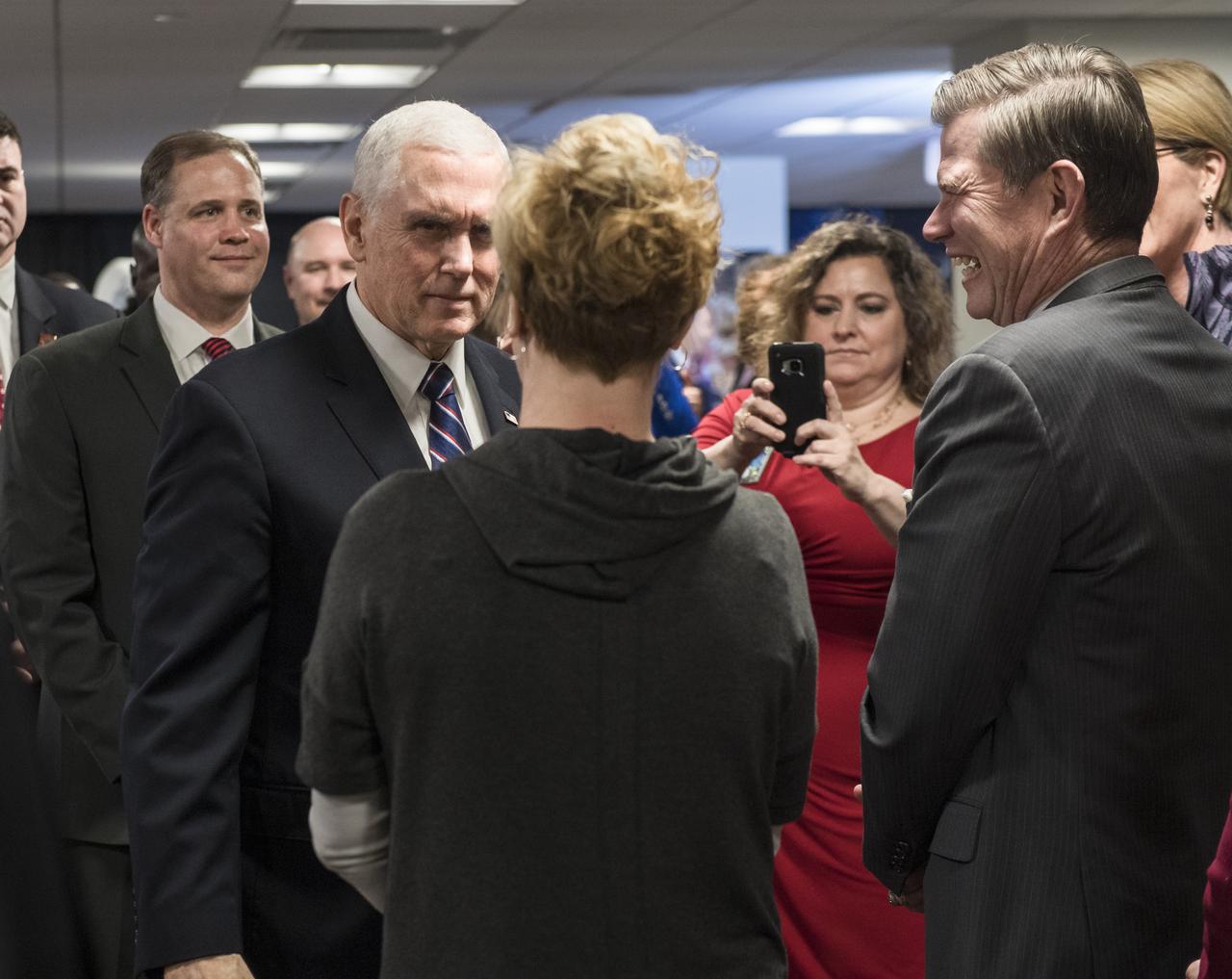
Vice President Mike Pence, meets with NASA employees after a discussion with NASA leadership about the progress on Space Policy Directive 1 (SPD-1), Wednesday, Dec. 12, 2018 at NASA Headquarters in Washington. Photo Credit: (NASA/Aubrey Gemignani)
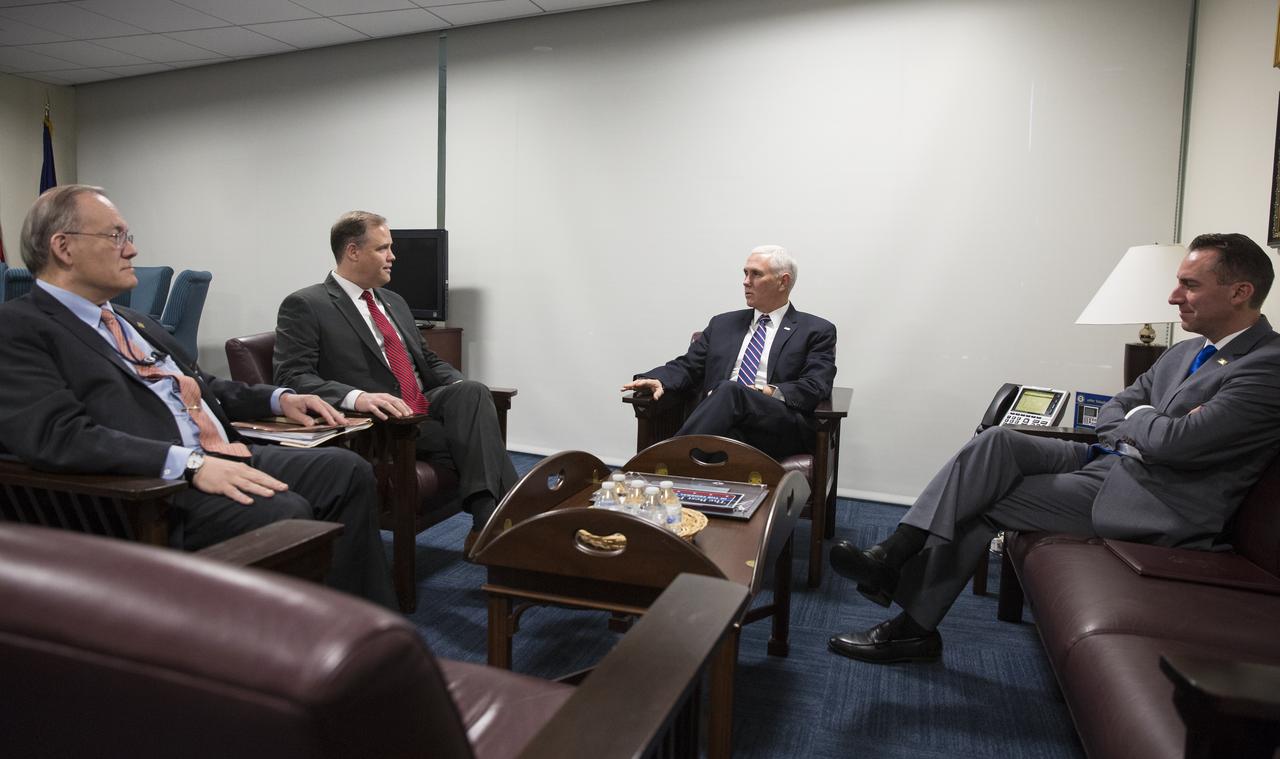
NASA Administrator Jim Bridenstine, second from left speaks with Vice President Mike Pence, second from right, Scott Pace, Executive Director of the National Space Council, left, and acting Chief of Staff to the Vice President, Jarrod Agen, right, prior to a meeting with NASA leadership about the progress on Space Policy Directive 1 (SPD-1), Wednesday, Dec. 12, 2018 at NASA Headquarters in Washington. Photo Credit: (NASA/Joel Kowsky)
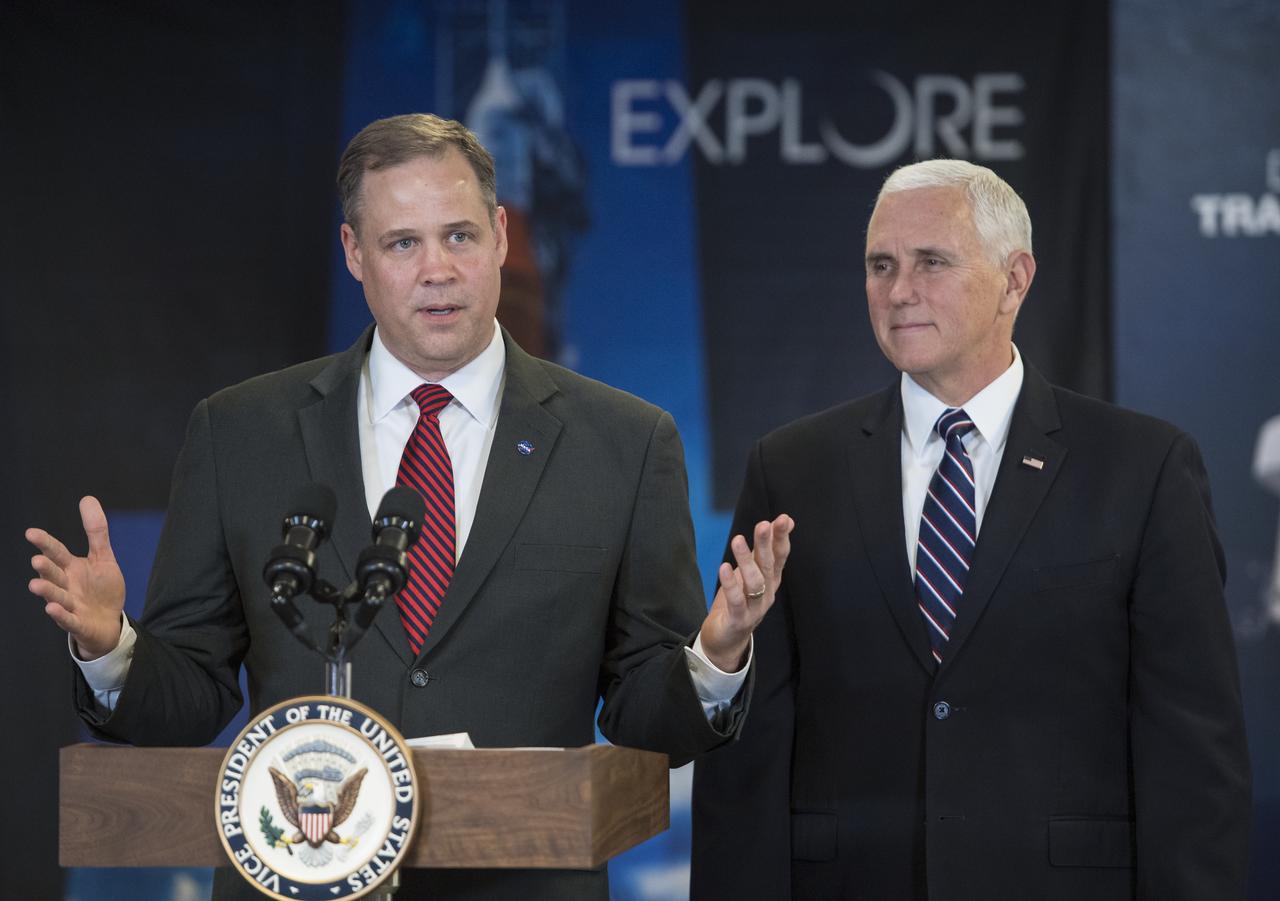
NASA Administrator Jim Bridenstine announces that NASA has again been awarded best place to work in the federal government during a visit by Vice President Mike Pence, Wednesday, Dec. 12, 2018 at NASA Headquarters in Washington. The Vice President visited NASA to discuss the progress on Space Policy Directive 1 (SPD-1) with NASA leadership. Photo Credit: (NASA/Aubrey Gemignani)
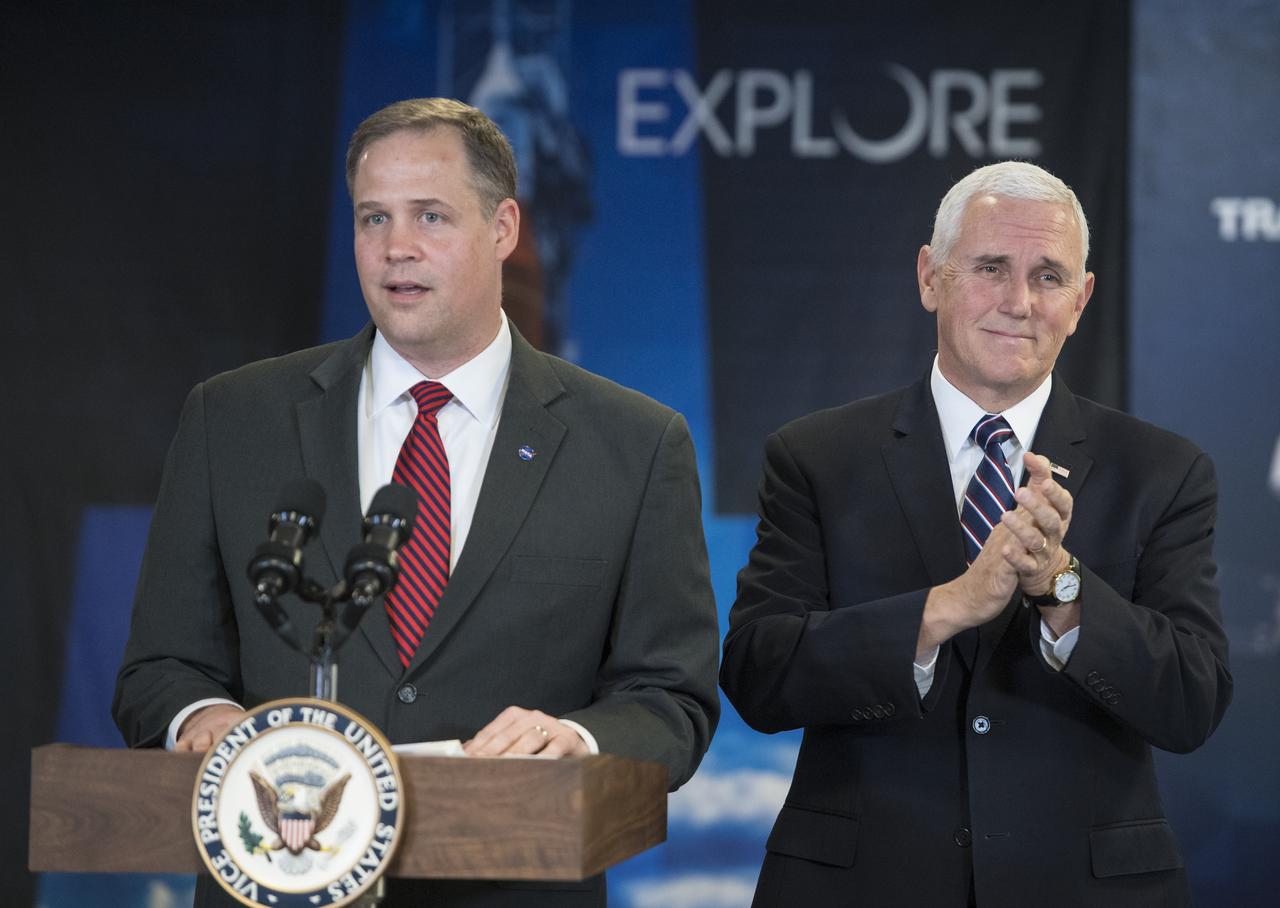
Vice President Mike Pence applauds NASA employees after learning that NASA has again been awarded best place to work in the federal government, Wednesday, Dec. 12, 2018 at NASA Headquarters in Washington. The Vice President visited NASA to discuss the progress on Space Policy Directive 1 (SPD-1) with NASA leadership. Photo Credit: (NASA/Aubrey Gemignani)
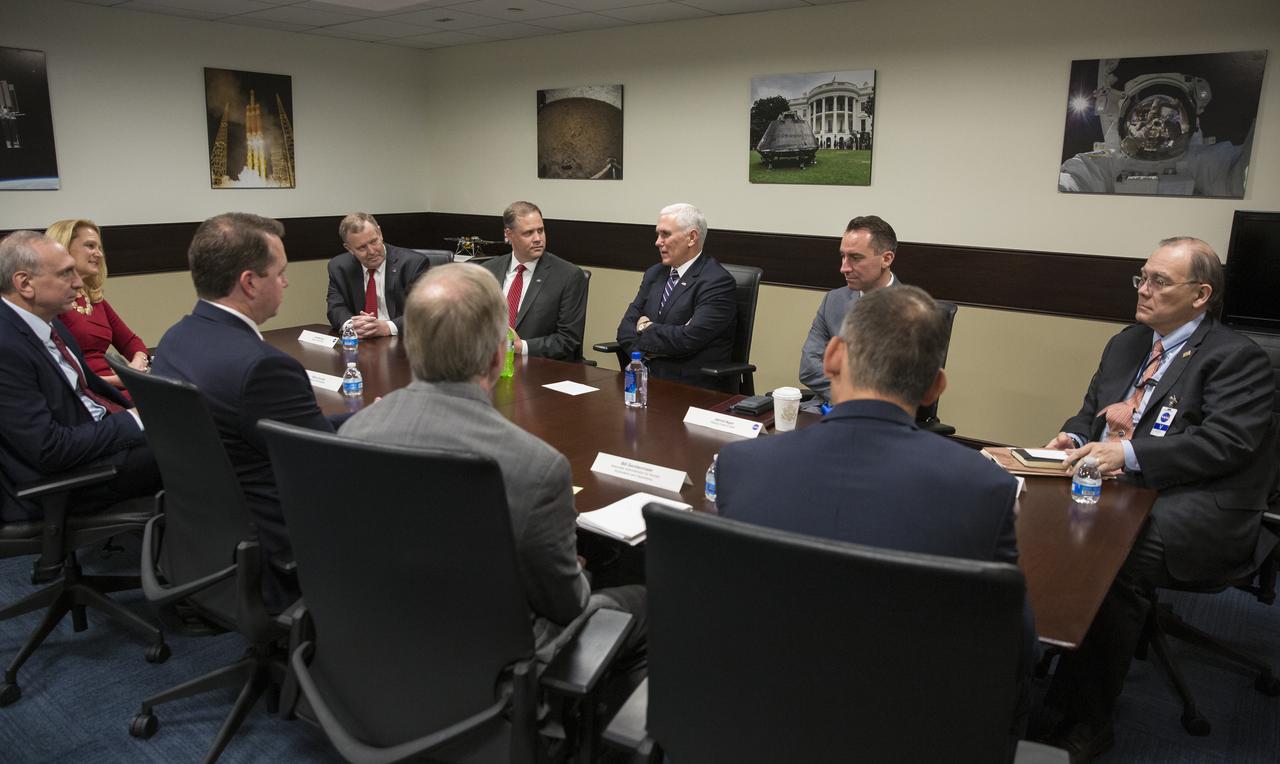
Vice President Mike Pence, center, meets with NASA Administrator Jim Bridenstine, second from left, and NASA Deputy Administrator Jim Morhard, left, to discuss the progress on Space Policy Directive 1 (SPD-1), Wednesday, Dec. 12, 2018 at NASA Headquarters in Washington. Also attending the meeting was NASA Chief of Staff Janet Karika, NASA Associate Administrator Steve Jurczyk, Chief Financial Officer Jeff DeWit, Associate Administrator for Human Exploration and Operations William Gerstenmaier, and Associate Administrator for the Science Mission Directorate Thomas Zurbuchen, along with acting Chief of Staff to the Vice President Jarrod Agen and Executive Director of the National Space Council Scott Pace. Photo Credit: (NASA/Joel Kowsky)