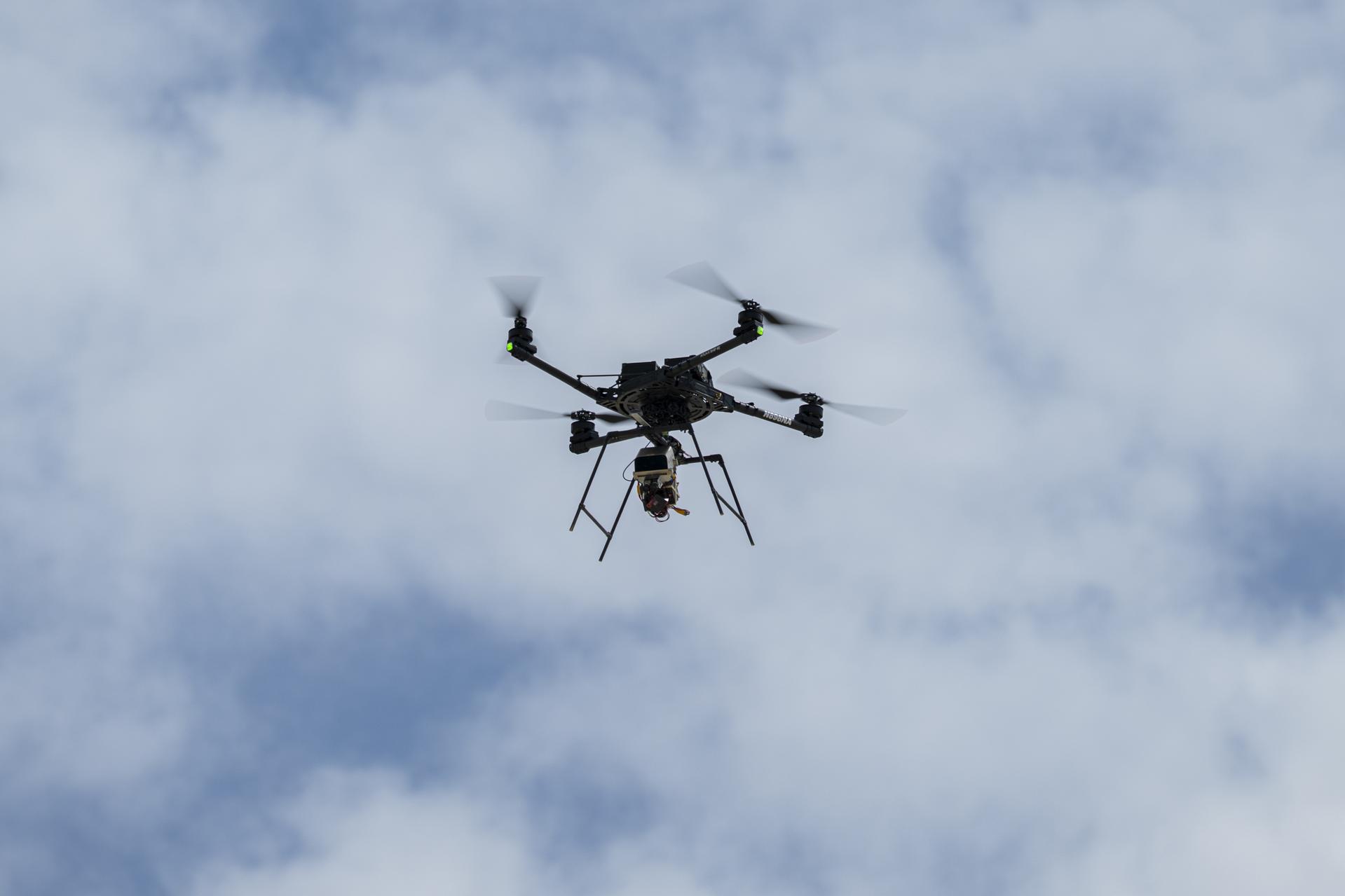
An Alta-X drone flies an advanced guidance and navigation system known as the Safe and Precise Landing – Integrated Capabilities Evolution (SPLICE) experiment near NASA’s Armstrong Flight Research Center in Edwards, California, on Thursday, Aug. 27, 2026. Researchers at NASA’s Johnson Space Center in Houston developed SPLICE, which successfully completed simulated lunar descent and landing maneuvers during recent testing. SPLICE will help spacecraft land precisely and detect and avoid potential hazards, which is critical for NASA missions to the Moon and to Mars.
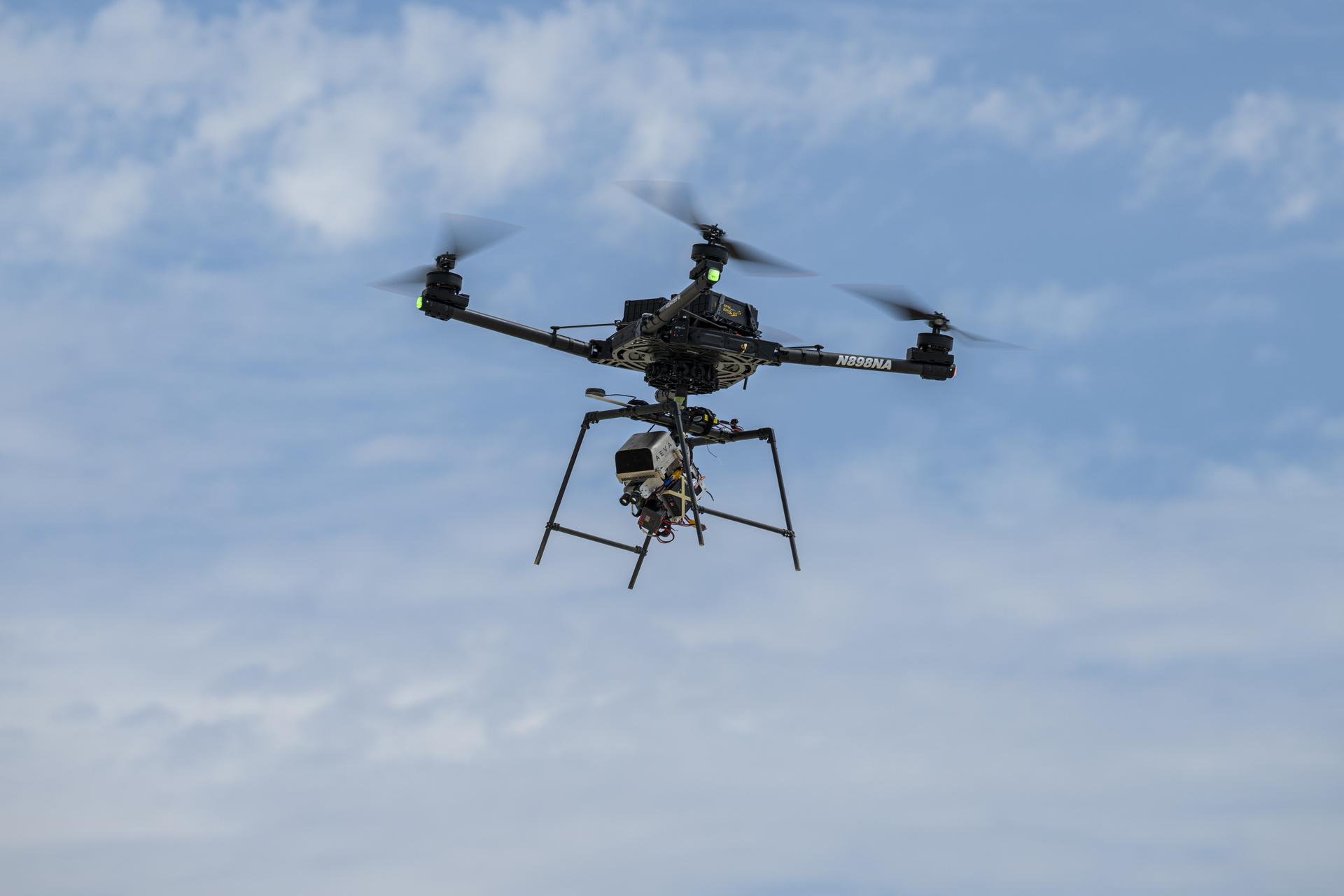
An Alta-X drone flies an advanced guidance and navigation system known as the Safe and Precise Landing – Integrated Capabilities Evolution (SPLICE) experiment near NASA’s Armstrong Flight Research Center in Edwards, California, on Thursday, Aug. 27, 2026. Researchers at NASA’s Johnson Space Center in Houston developed SPLICE, which successfully completed simulated lunar descent and landing maneuvers during recent testing. SPLICE will help spacecraft land precisely and detect and avoid potential hazards, which is critical for NASA missions to the Moon and to Mars.
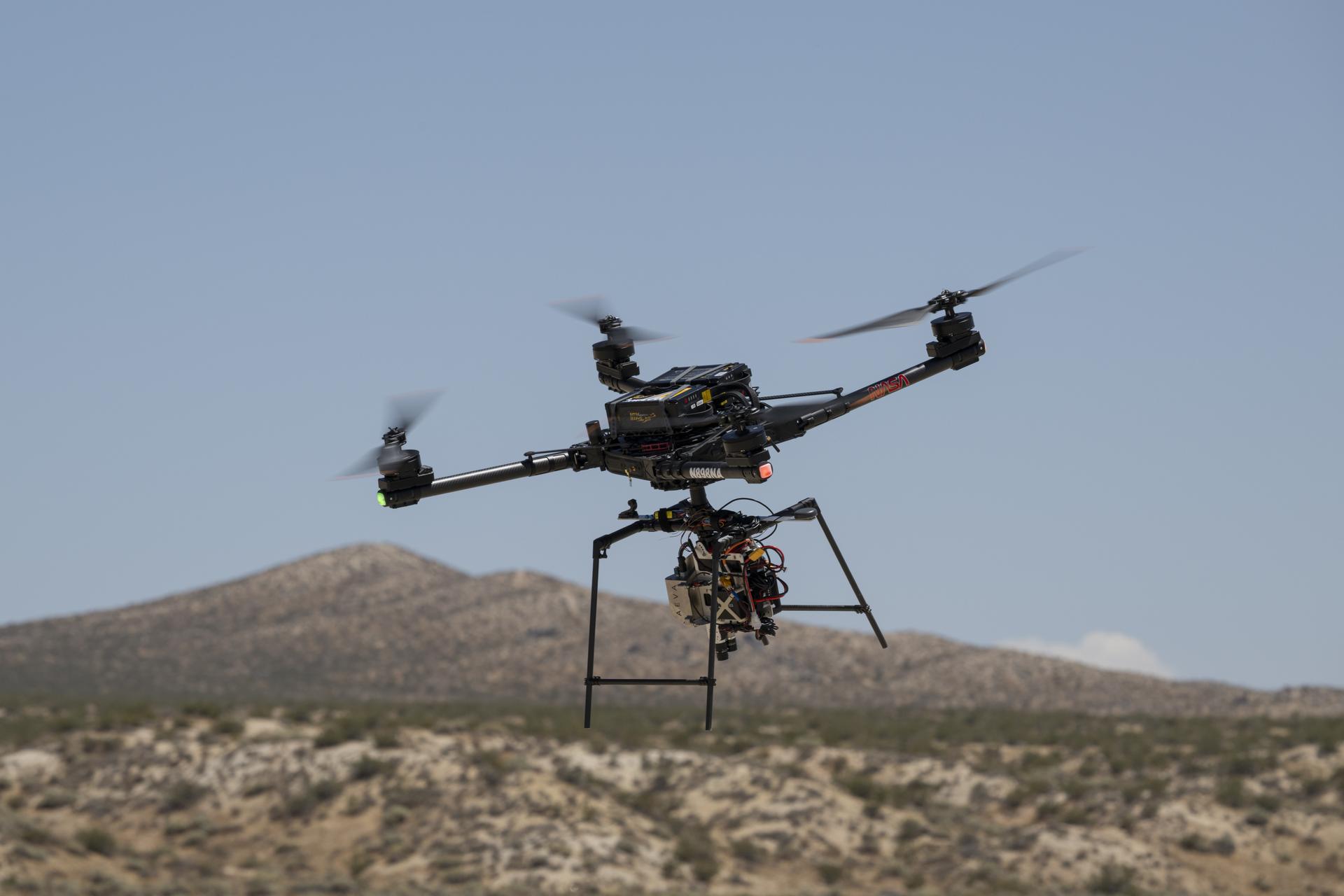
An Alta-X drone flies an advanced guidance and navigation system known as the Safe and Precise Landing – Integrated Capabilities Evolution (SPLICE) experiment near NASA’s Armstrong Flight Research Center in Edwards, California, on Wednesday, July 15, 2026. Researchers at NASA’s Johnson Space Center in Houston developed SPLICE, which successfully communicated with the remotely piloted aircraft during hover maneuvers in flight. SPLICE will help spacecraft land precisely and detect and avoid potential hazards, which is critical for NASA missions to the Moon and to Mars.

Davis Adams, project manager, confirms that an advanced guidance and navigation system known as the Safe and Precise Landing – Integrated Capabilities Evolution (SPLICE) experiment is communicating with an Alta-X drone near NASA’s Armstrong Flight Research Center in Edwards, California, on Wednesday, July 15, 2026. Researchers at NASA’s Johnson Space Center in Houston developed SPLICE, which successfully communicated with the remotely piloted aircraft during hover maneuvers in flight. SPLICE will help spacecraft land precisely and detect and avoid potential hazards, which is critical for NASA missions to the Moon and to Mars.
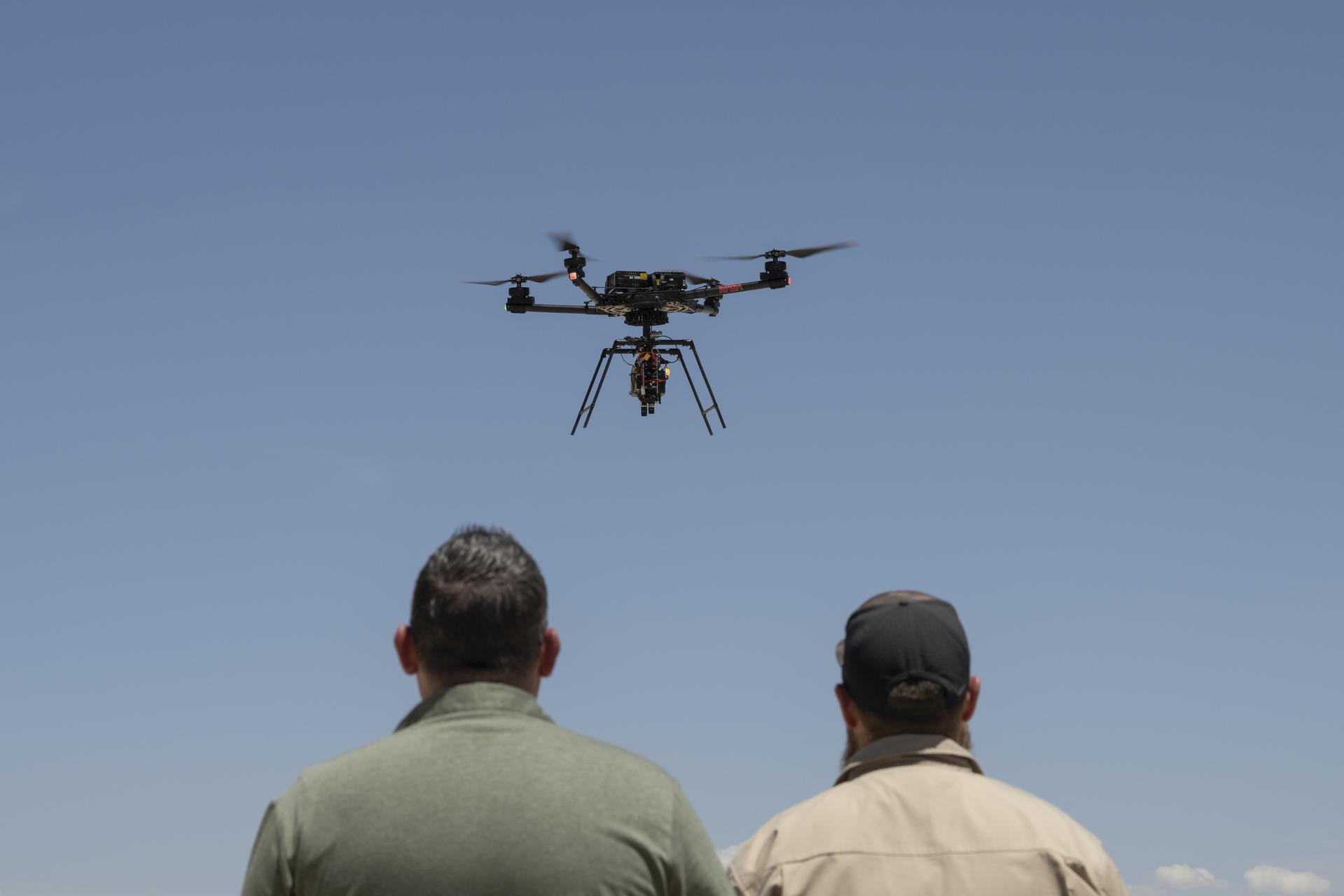
Justin Link, a small uncrewed aircraft pilot, left, and Justin Hall, chief pilot, fly a NASA Alta-X drone carrying an advanced guidance and navigation system known as the Safe and Precise Landing – Integrated Capabilities Evolution (SPLICE) experiment near NASA’s Armstrong Flight Research Center in Edwards, California, on Wednesday, July 15, 2026. Researchers at NASA’s Johnson Space Center in Houston developed SPLICE, which successfully communicated with the remotely piloted aircraft during hover maneuvers in flight. SPLICE will help spacecraft land precisely and detect and avoid potential hazards, which is critical for NASA missions to the Moon and to Mars.

Davis Adams, project manager, sitting, and Jeanette Harper, flight software team member, check the guidance and navigation system known as the Safe and Precise Landing – Integrated Capabilities Evolution (SPLICE) experiment on an Alta-X drone near NASA’s Armstrong Flight Research Center in Edwards, California, on Thursday, Aug. 27, 2026. Researchers at NASA’s Johnson Space Center in Houston developed SPLICE, which recently completed simulated lunar descent and landing maneuvers. SPLICE will help spacecraft land precisely and detect and avoid potential hazards, which is critical for NASA missions to the Moon and to Mars.

Justin Link, a small uncrewed aircraft pilot, left, Justin Hall, chief pilot, and Davis Adams, project manager, test an advanced guidance and navigation system known as the Safe and Precise Landing – Integrated Capabilities Evolution (SPLICE) experiment on an Alta-X drone near NASA’s Armstrong Flight Research Center in Edwards, California, on Wednesday, July 15, 2026. Researchers at NASA’s Johnson Space Center in Houston developed SPLICE, which successfully communicated with the remotely piloted aircraft during hover maneuvers in flight. SPLICE will help spacecraft land precisely and detect and avoid potential hazards, which is critical for NASA missions to the Moon and to Mars.
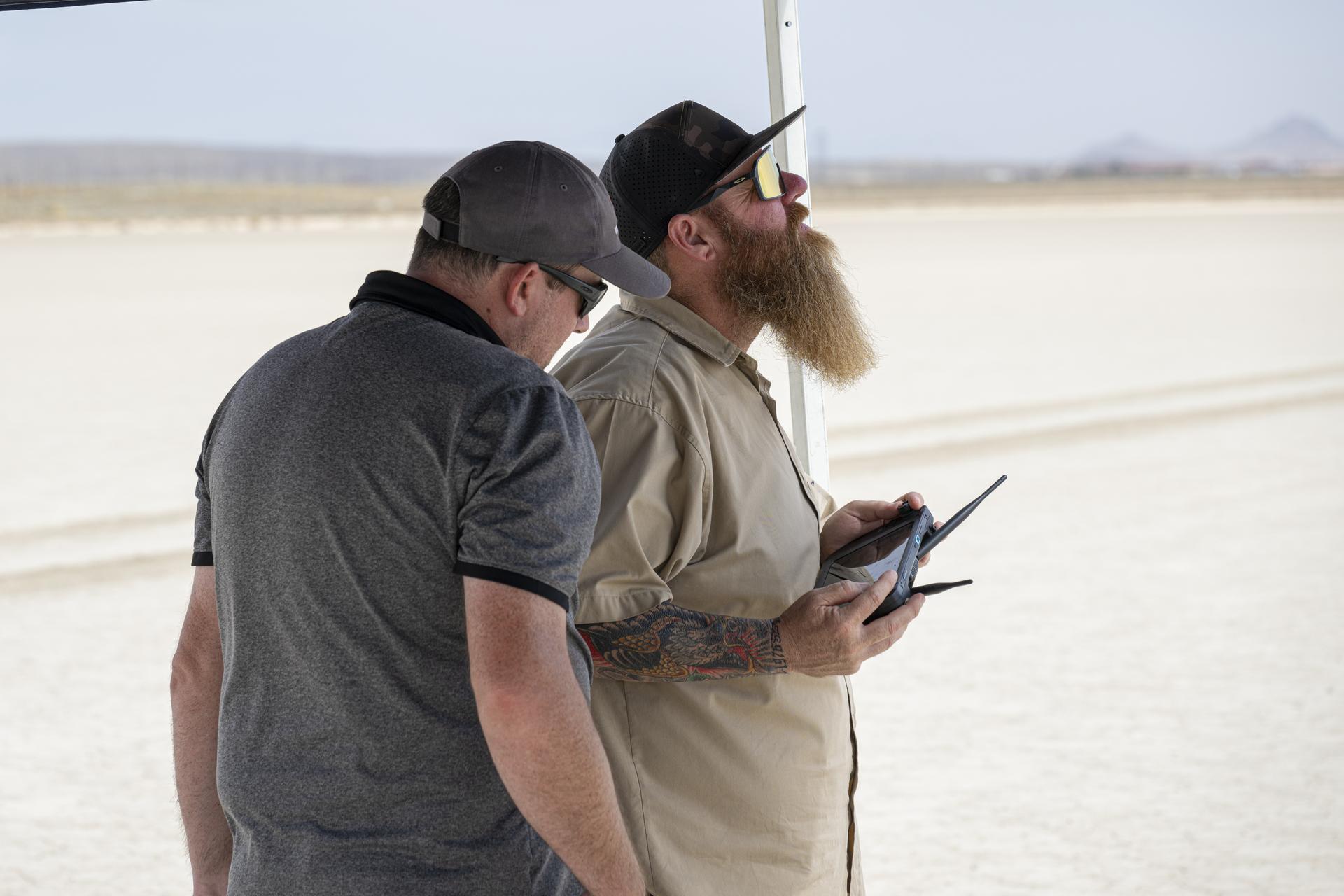
Justin Link, small uncrewed aircraft pilot, left, reads altitude data on a handheld display, as Justin Hall, Dale Reed Subscale Flight Research Laboratory chief pilot, flies NASA’s Alta-X drone near NASA’s Armstrong Flight Research Center in Edwards, California, on Thursday, Aug. 27, 2026. Researchers at NASA’s Johnson Space Center in Houston developed the advanced guidance and navigation system known as the Safe and Precise Landing – Integrated Capabilities Evolution (SPLICE) experiment, which is installed on the drone. SPLICE will help spacecraft land precisely and detect and avoid potential hazards, which is critical for NASA missions to the Moon and to Mars.
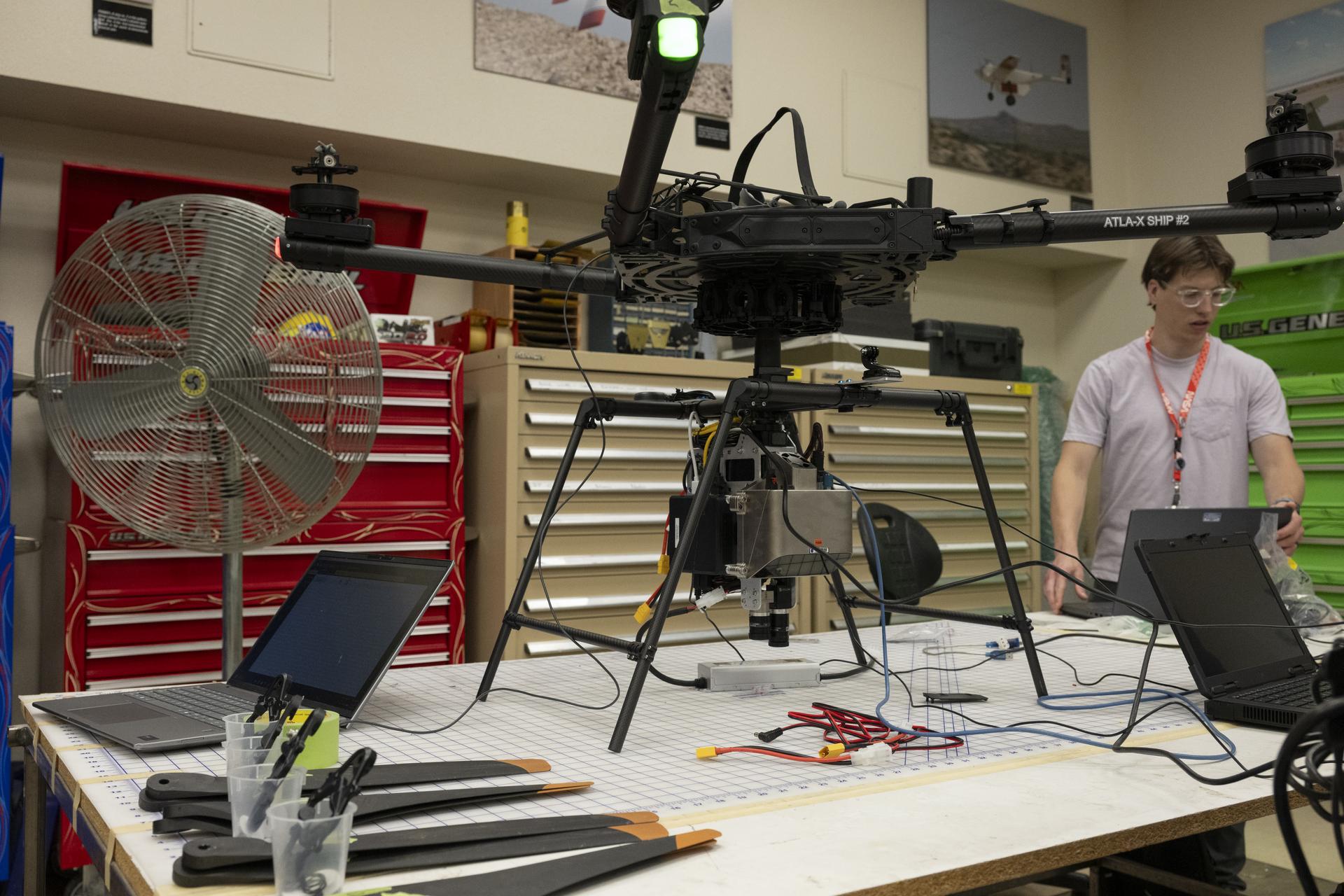
Isaac Rowe, flight software lead, tests how the advanced guidance and navigation system, known as the Safe and Precise Landing – Integrated Capabilities Evolution (SPLICE) experiment, communicates with the Alta-X drone at the Dale Reed Subscale Flight Research Laboratory at NASA’s Armstrong Flight Research Center in Edwards, California, on Monday, June 22, 2026. Rowe developed the system as part of a team at NASA’s Johnson Space Center in Houston. SPLICE will help spacecraft land precisely and detect and avoid potential hazards, which is critical for NASA missions to the Moon and to Mars.

Derek Abramson, Dale Reed Subscale Flight Research Laboratory chief engineer, left, and Justin Link, small uncrewed aircraft pilot, carry NASA’s Alta-X drone near NASA’s Armstrong Flight Research Center in Edwards, California, on Thursday, Aug. 27, 2026. Researchers at NASA’s Johnson Space Center in Houston developed the advanced guidance and navigation system known as the Safe and Precise Landing – Integrated Capabilities Evolution (SPLICE) experiment, which is installed on this drone. SPLICE will help spacecraft land precisely and detect and avoid potential hazards, which is critical for NASA missions to the Moon and to Mars.
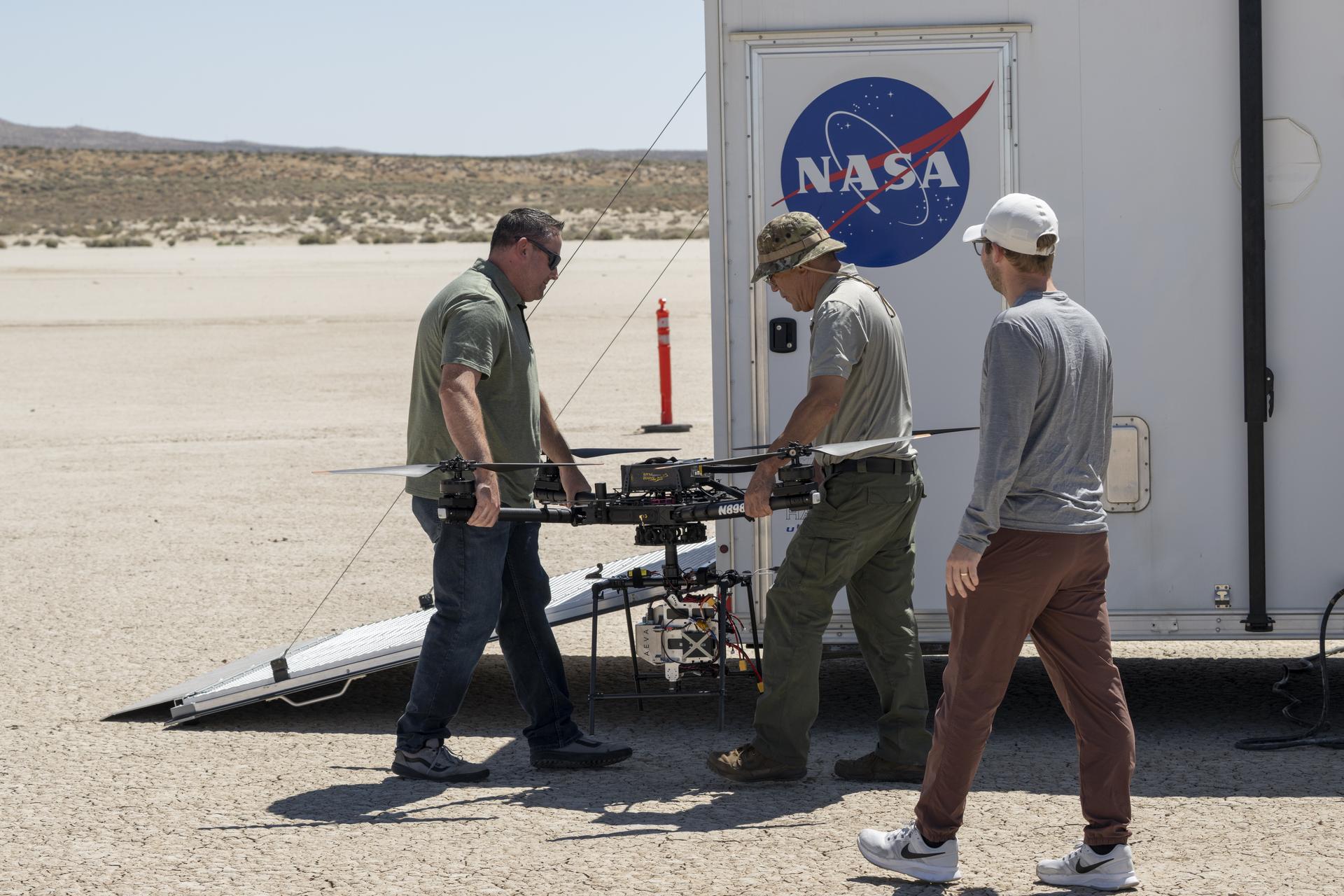
Justin Link, small uncrewed aircraft pilot, left, and Derek Abramson, chief engineer, carry NASA’s Alta-X drone as Davis Adams, project manager, observes test preparations near NASA’s Armstrong Flight Research Center in Edwards, California, on Wednesday, July 15, 2026. Researchers at NASA’s Johnson Space Center in Houston developed the advanced guidance and navigation system known as the Safe and Precise Landing – Integrated Capabilities Evolution (SPLICE) experiment, which was integrated with this drone. SPLICE will help spacecraft land precisely and detect and avoid potential hazards, which is critical for NASA missions to the Moon and to Mars.

Derek Abramson, Dale Reed Subscale Flight Research Laboratory chief engineer, left, communicates with the Edwards Air Force Base air traffic control tower for approval to fly the Alta-X drone near NASA’s Armstrong Flight Research Center in Edwards, California, on Thursday, Aug. 27, 2026. Justin Link, small uncrewed aircraft pilot, second from left, and laboratory chief pilot Justin Hall await flight clearance. Researchers at NASA’s Johnson Space Center in Houston developed the advanced guidance and navigation system known as the Safe and Precise Landing – Integrated Capabilities Evolution (SPLICE) experiment, which is installed on the Alta-X. SPLICE will help spacecraft land precisely and detect and avoid potential hazards, which is critical for NASA missions to the Moon and to Mars.
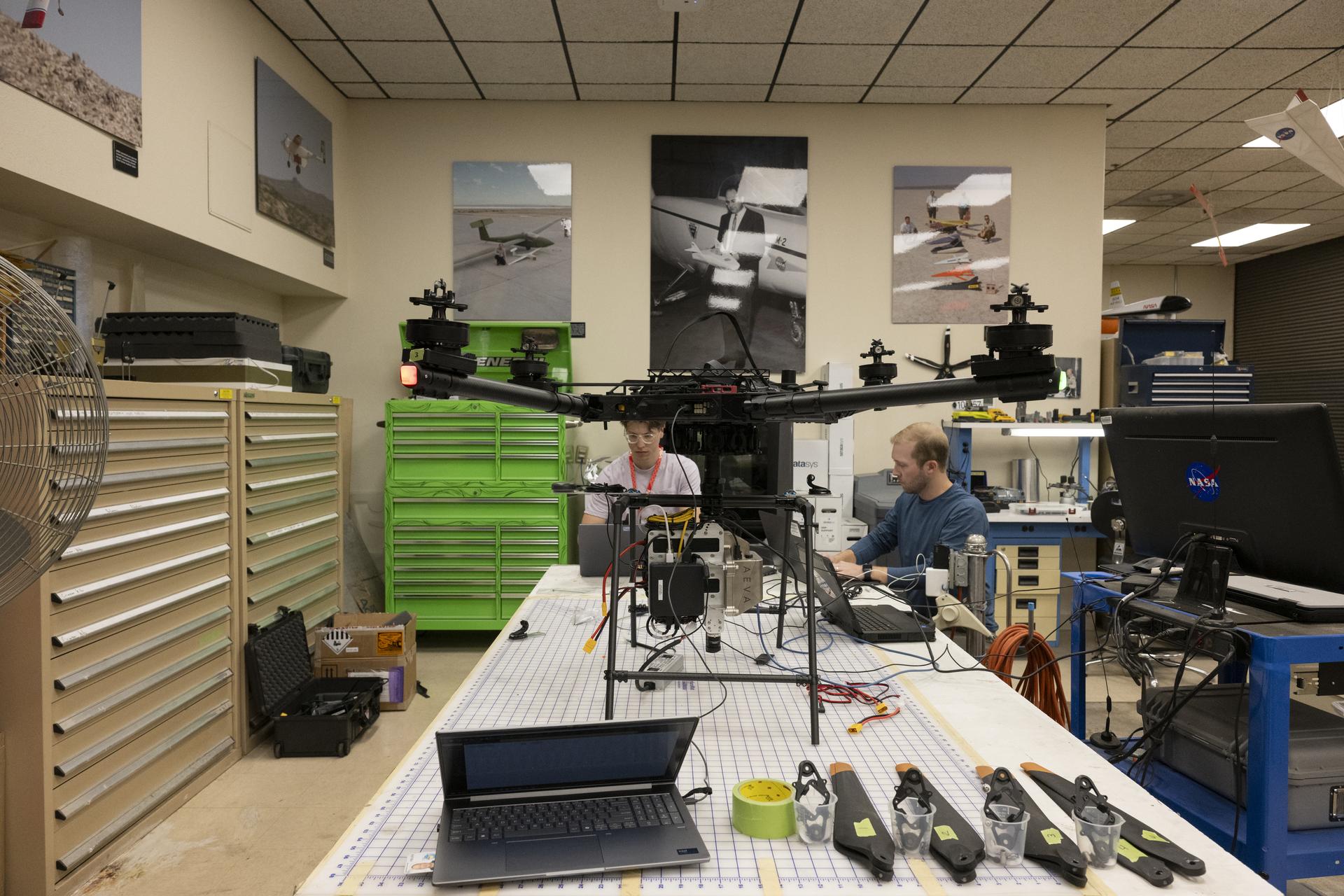
Isaac Rowe, left, flight software lead, and Davis Adams, project manager, work to integrate the advanced guidance and navigation system, known as the Safe and Precise Landing – Integrated Capabilities Evolution (SPLICE) experiment, with the Alta-X drone on Monday, June 22, 2026. Rowe and Adams developed the system at NASA’s Johnson Space Center in Houston. They worked with the Dale Reed Subscale Flight Research Laboratory team at NASA’s Armstrong Flight Research Center in Edwards, California, to test how the system and the drone communicated. The system will help spacecraft land precisely and detect and avoid potential hazards, which is critical for NASA missions to the Moon and to Mars.
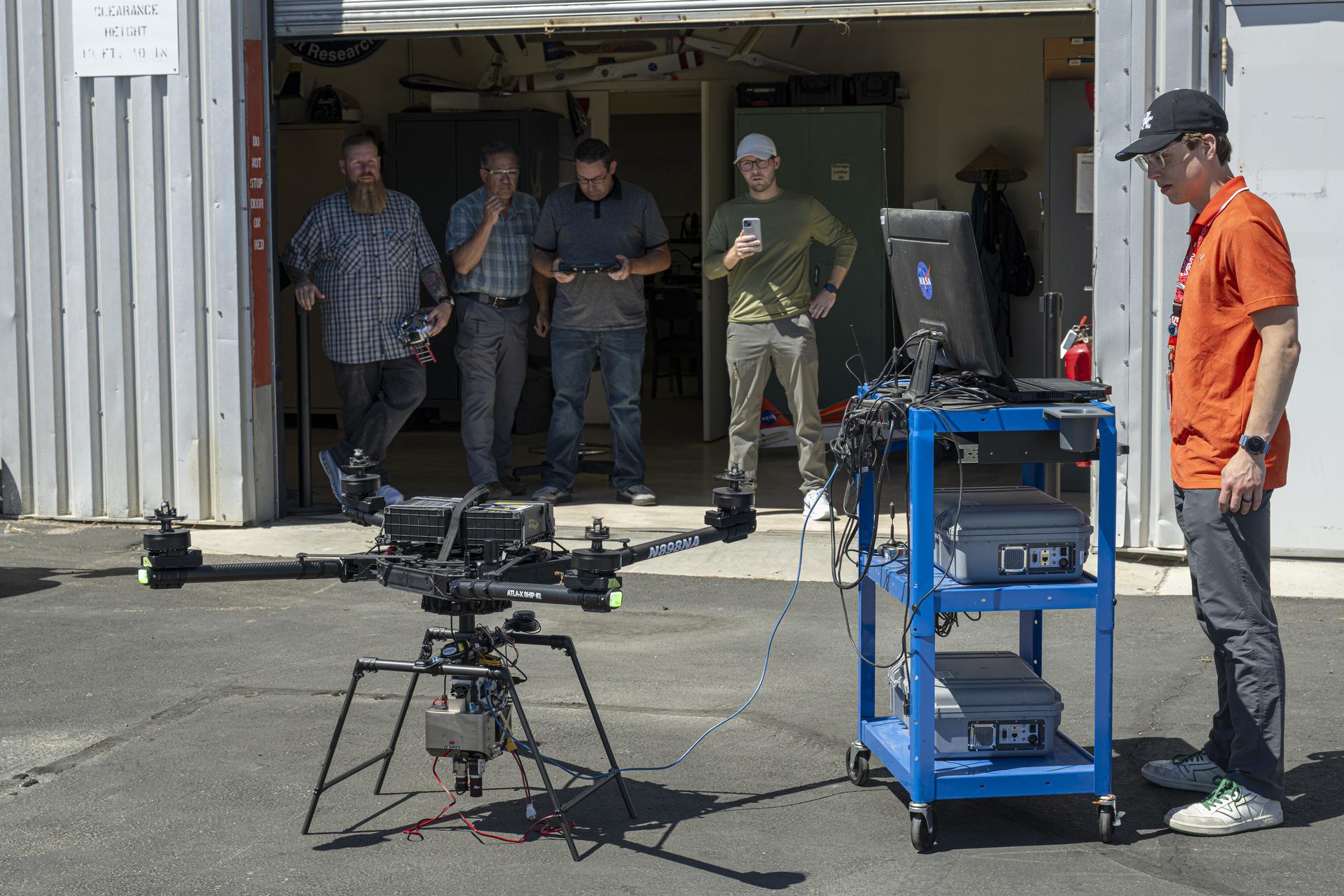
A team from NASA’s Johnson Space Center in Houston and NASA’s Armstrong Flight Research Center in Edwards, California, tests an advanced guidance and navigation system, known as the Safe and Precise Landing – Integrated Capabilities Evolution (SPLICE) experiment, with the Alta-X drone on Monday, June 22, 2026. From left are Dale Reed Subscale Flight Research Laboratory staff Justin Hall, chief pilot; Derek Abramson, chief engineer; Justin Link, a small uncrewed aircraft pilot; and, from Houston, Davis Adams, project manager, and Isaac Rowe, flight software lead. The system will help spacecraft land precisely and detect and avoid potential hazards, which is critical for NASA missions to the Moon and to Mars.
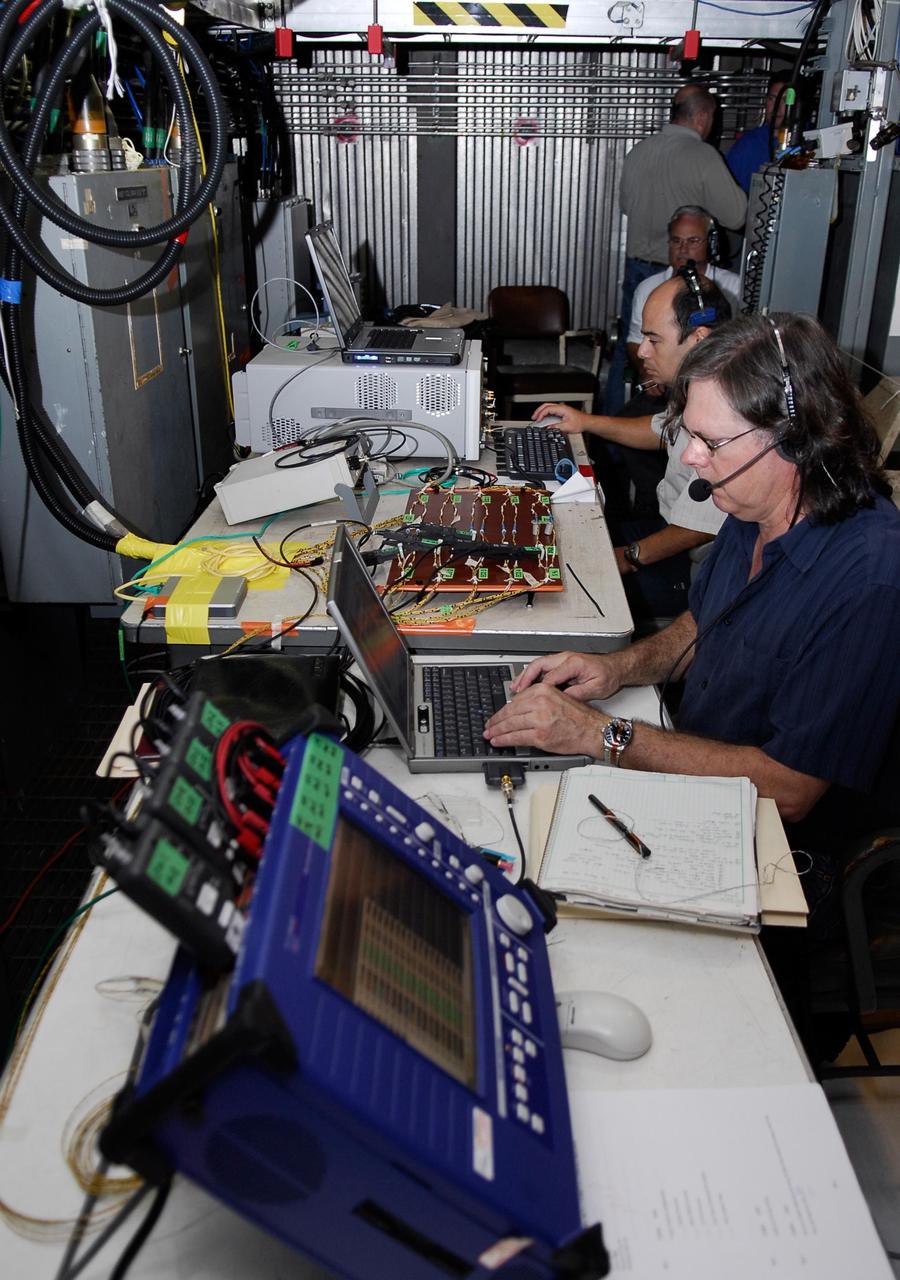
KENNEDY SPACE CENTER, FLA. -- On Launch Pad 39A at NASA's Kennedy Space Center, the wiring is checked and validated before the tanking test on space shuttle Atlantis' external tank set for Dec. 18. The test wiring has been spliced into an electrical harness in the aft main engine compartment connected with the engine cut-off, or ECO, sensor system. The attached wiring leads to the interior of the mobile launcher platform where the time domain reflectometry, or TDR, test equipment is located. Photo credit: NASA/Kim Shiflett
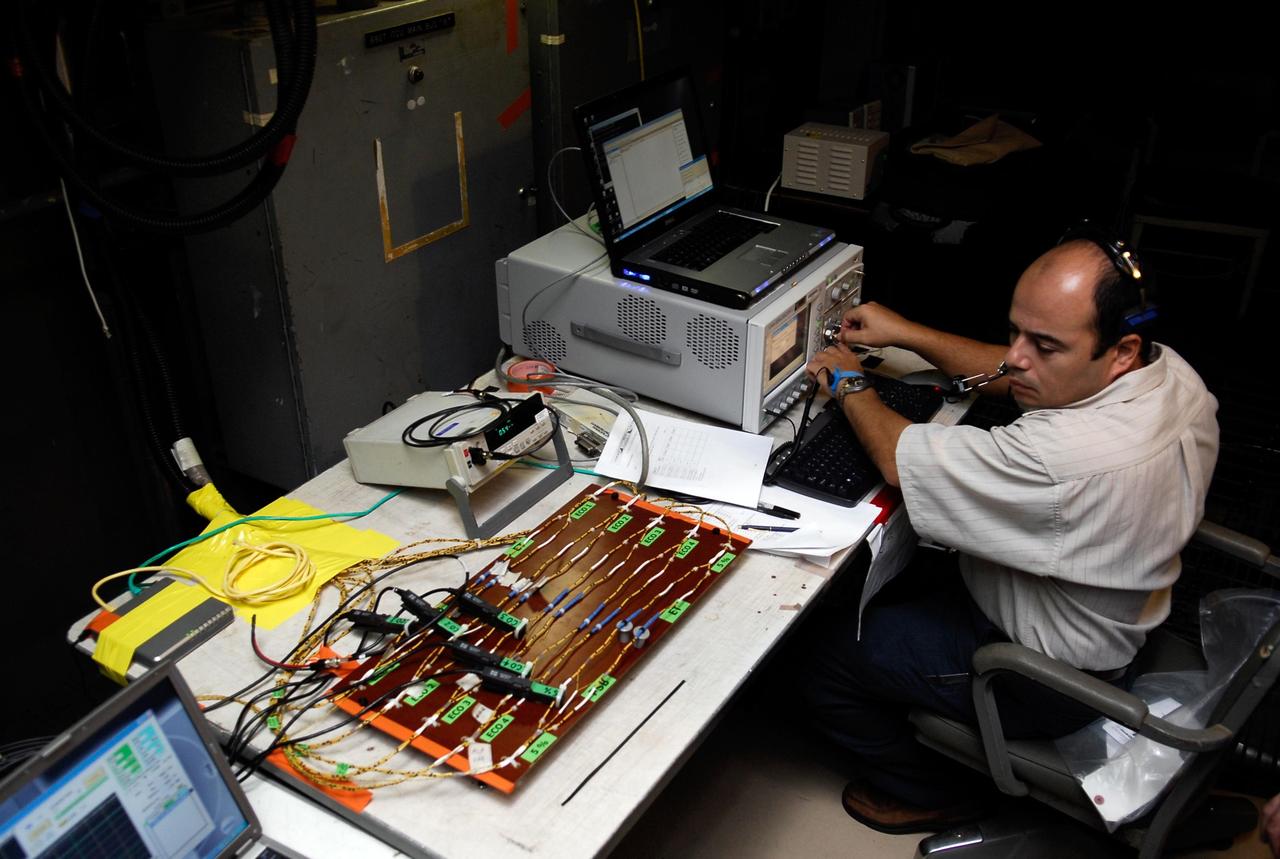
KENNEDY SPACE CENTER, FLA. -- On Launch Pad 39A at NASA's Kennedy Space Center, the wiring is checked and validated before the tanking test on space shuttle Atlantis' external tank set for Dec. 18. The test wiring has been spliced into an electrical harness in the aft main engine compartment connected with the engine cut-off, or ECO, sensor system. The attached wiring leads to the interior of the mobile launcher platform where the time domain reflectometry, or TDR, test equipment is located. Photo credit: NASA/Kim Shiflett

KENNEDY SPACE CENTER, FLA. -- On Launch Pad 39A at NASA's Kennedy Space Center, the wiring is checked and validated before the tanking test on space shuttle Atlantis' external tank set for Dec. 18. The test wiring has been spliced into an electrical harness in the aft main engine compartment connected with the engine cut-off, or ECO, sensor system. The attached wiring leads to the interior of the mobile launcher platform where the time domain reflectometry, or TDR, test equipment is located. Photo credit: NASA/Kim Shiflett
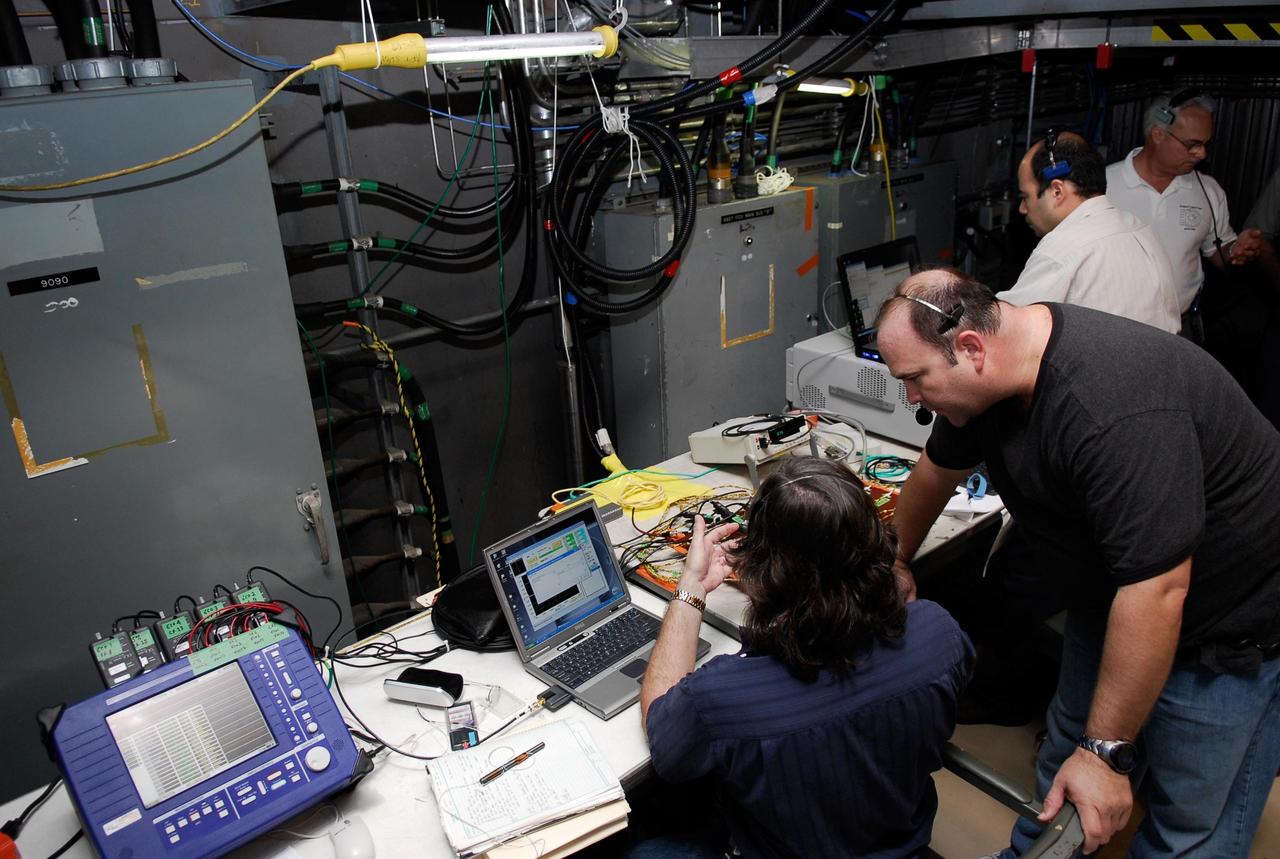
KENNEDY SPACE CENTER, FLA. -- On Launch Pad 39A at NASA's Kennedy Space Center, the wiring is checked and validated before the tanking test on space shuttle Atlantis' external tank set for Dec. 18. The test wiring has been spliced into an electrical harness in the aft main engine compartment connected with the engine cut-off, or ECO, sensor system. The attached wiring leads to the interior of the mobile launcher platform where the time domain reflectometry, or TDR, test equipment is located. Photo credit: NASA/Kim Shiflett
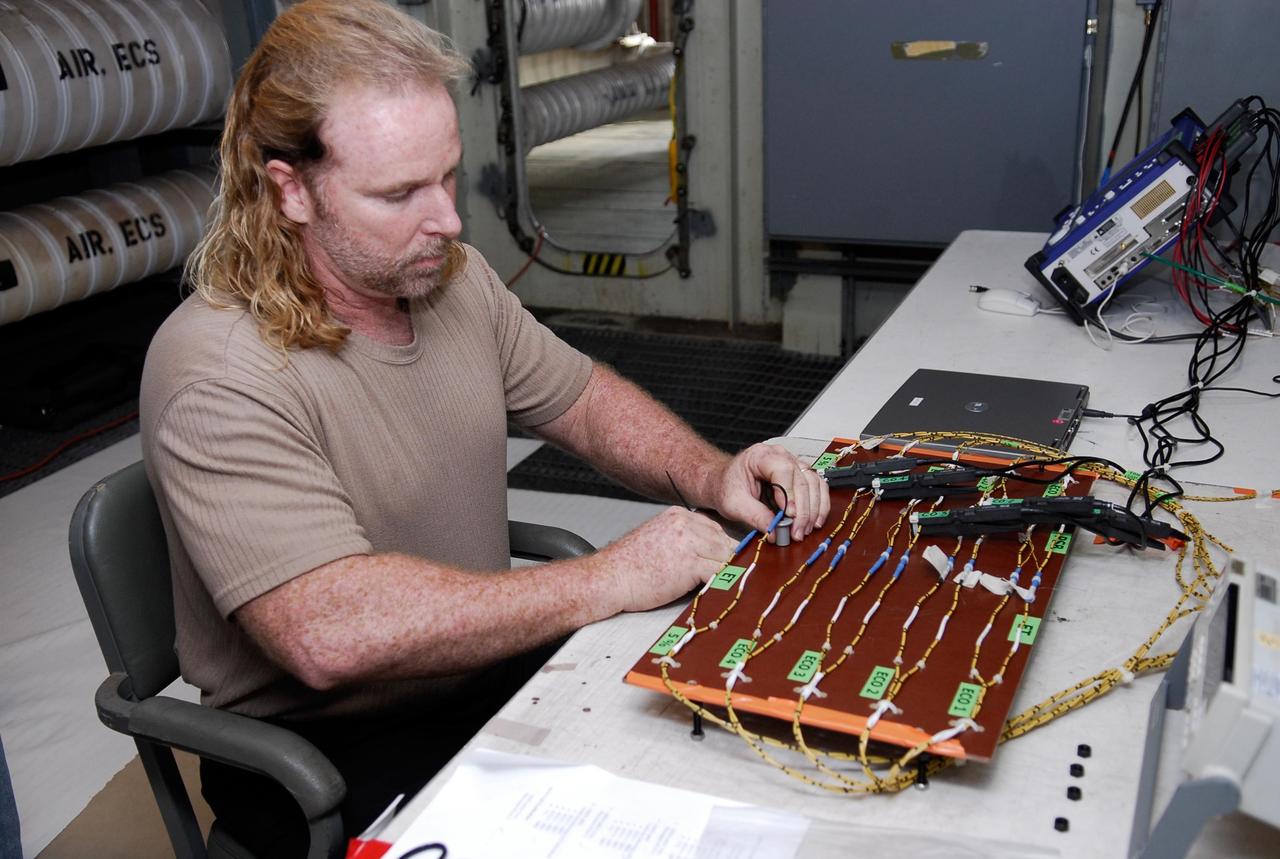
KENNEDY SPACE CENTER, FLA. -- On Launch Pad 39A at NASA's Kennedy Space Center, a technician sets up wiring for the tanking test on space shuttle Atlantis' external tank set for Dec. 18. The test wiring has been spliced into an electrical harness in the aft main engine compartment connected with the engine cut-off, or ECO, sensor system. The attached wiring leads to the interior of the mobile launcher platform where the time domain reflectometry, or TDR, test equipment is located. Photo credit: NASA/Kim Shiflett
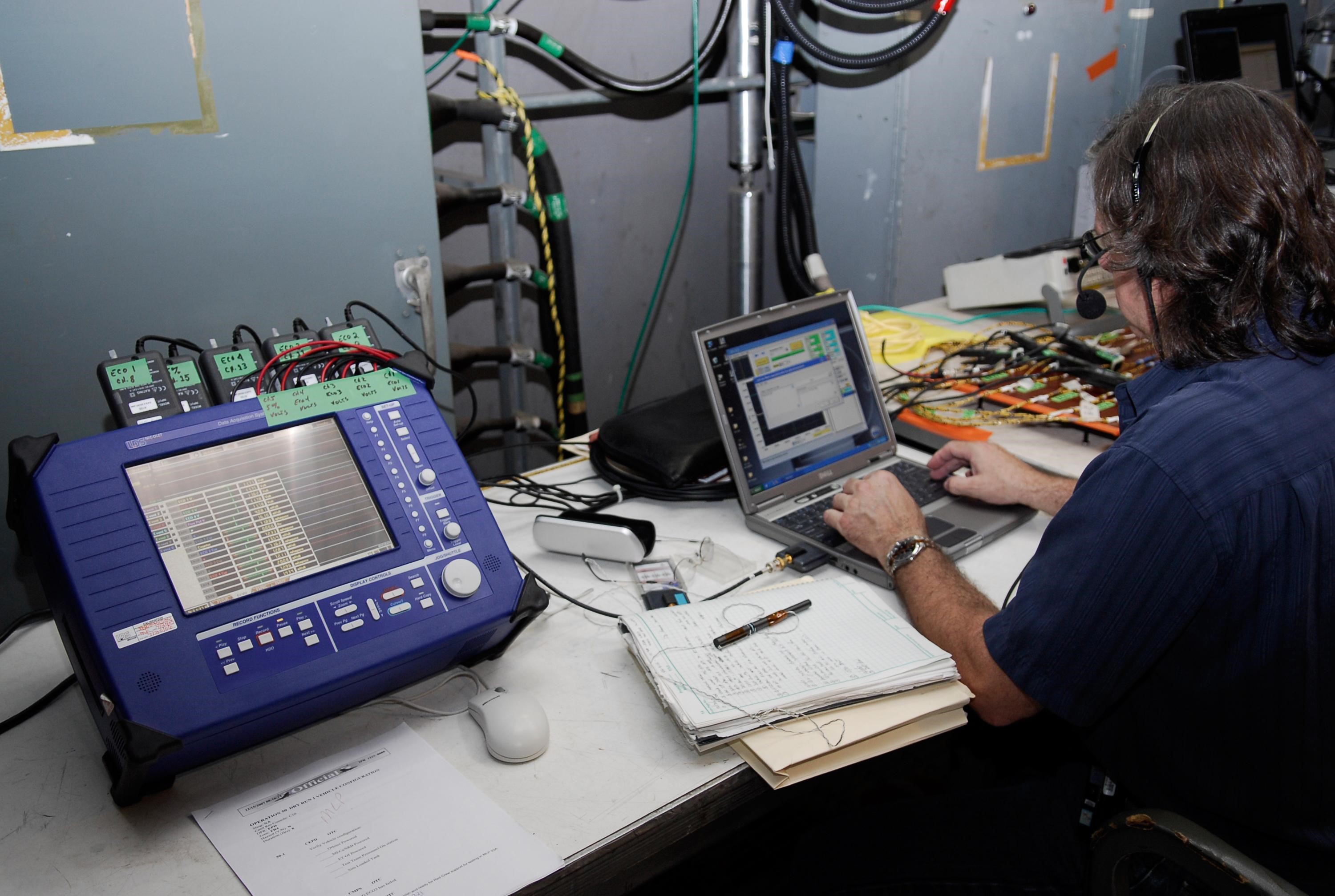
KENNEDY SPACE CENTER, FLA. -- On Launch Pad 39A at NASA's Kennedy Space Center, the wiring is checked and validated before the tanking test on space shuttle Atlantis' external tank set for Dec. 18. The test wiring has been spliced into an electrical harness in the aft main engine compartment connected with the engine cut-off, or ECO, sensor system. The attached wiring leads to the interior of the mobile launcher platform where the time domain reflectometry, or TDR, test equipment is located. Photo credit: NASA/Kim Shiflett
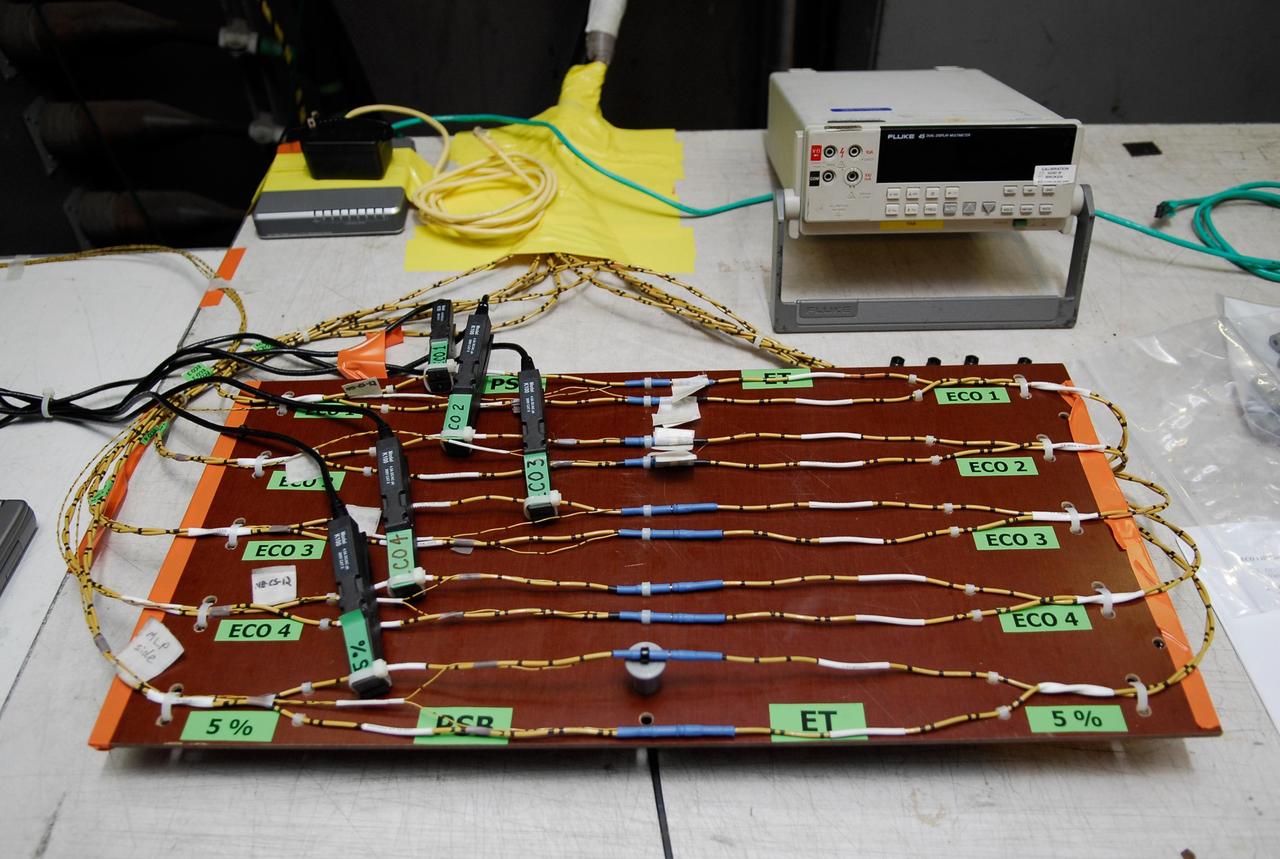
KENNEDY SPACE CENTER, FLA. -- On Launch Pad 39A at NASA's Kennedy Space Center, a wiring board has been set up for the tanking test on space shuttle Atlantis' external tank set for Dec. 18. The test wiring has been spliced into an electrical harness in the aft main engine compartment connected with the engine cut-off, or ECO, sensor system. The attached wiring leads to the interior of the mobile launcher platform where the time domain reflectometry, or TDR, test equipment is located. Photo credit: NASA/Kim Shiflett
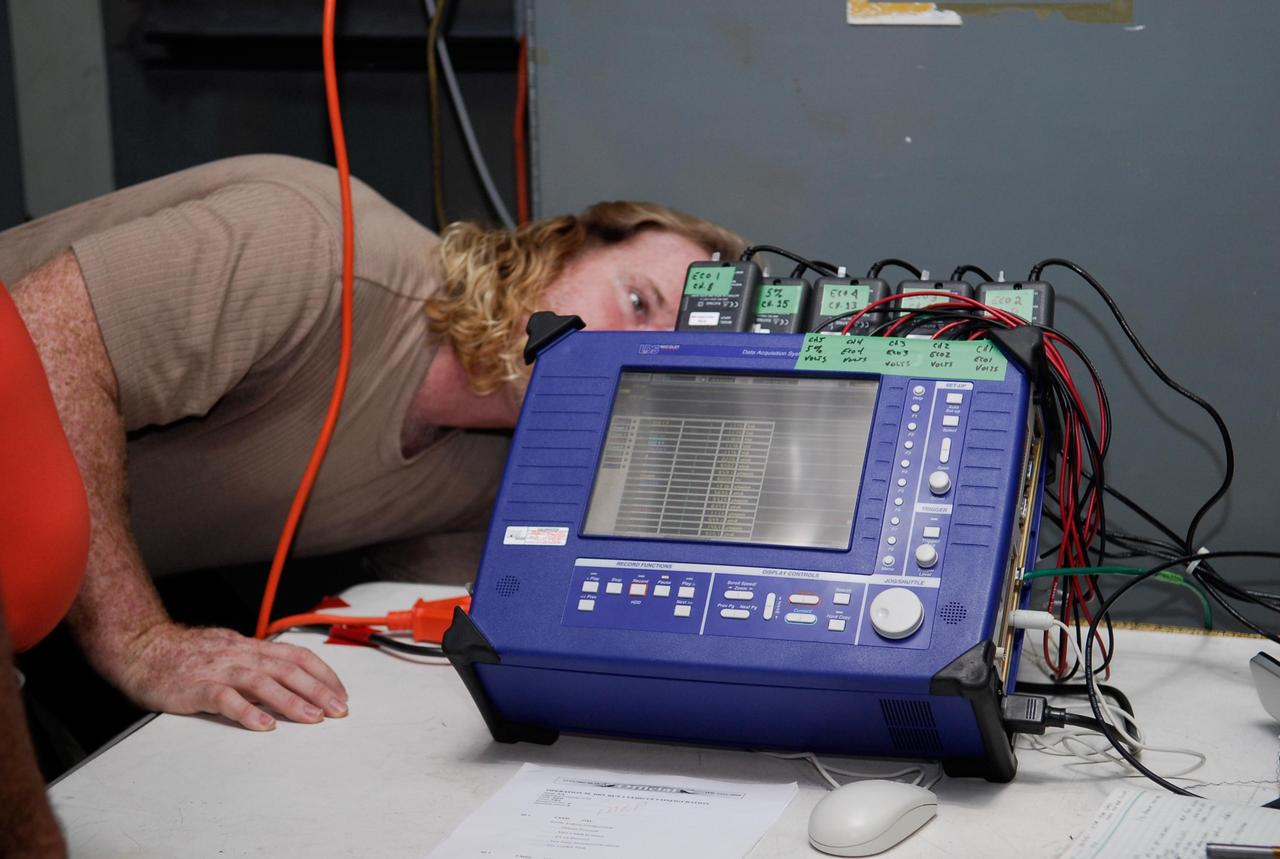
KENNEDY SPACE CENTER, FLA. -- On Launch Pad 39A at NASA's Kennedy Space Center, a technician checks the blue monitor that will be used to validate the circuit on test wiring during the tanking test on space shuttle Atlantis' external tank. The test wiring has been spliced into an electrical harness in the aft main engine compartment connected with the engine cut-off, or ECO, sensor system. The attached wiring leads to the interior of the mobile launcher platform where the time domain reflectometry, or TDR, test equipment is located. Photo credit: NASA/Kim Shiflett
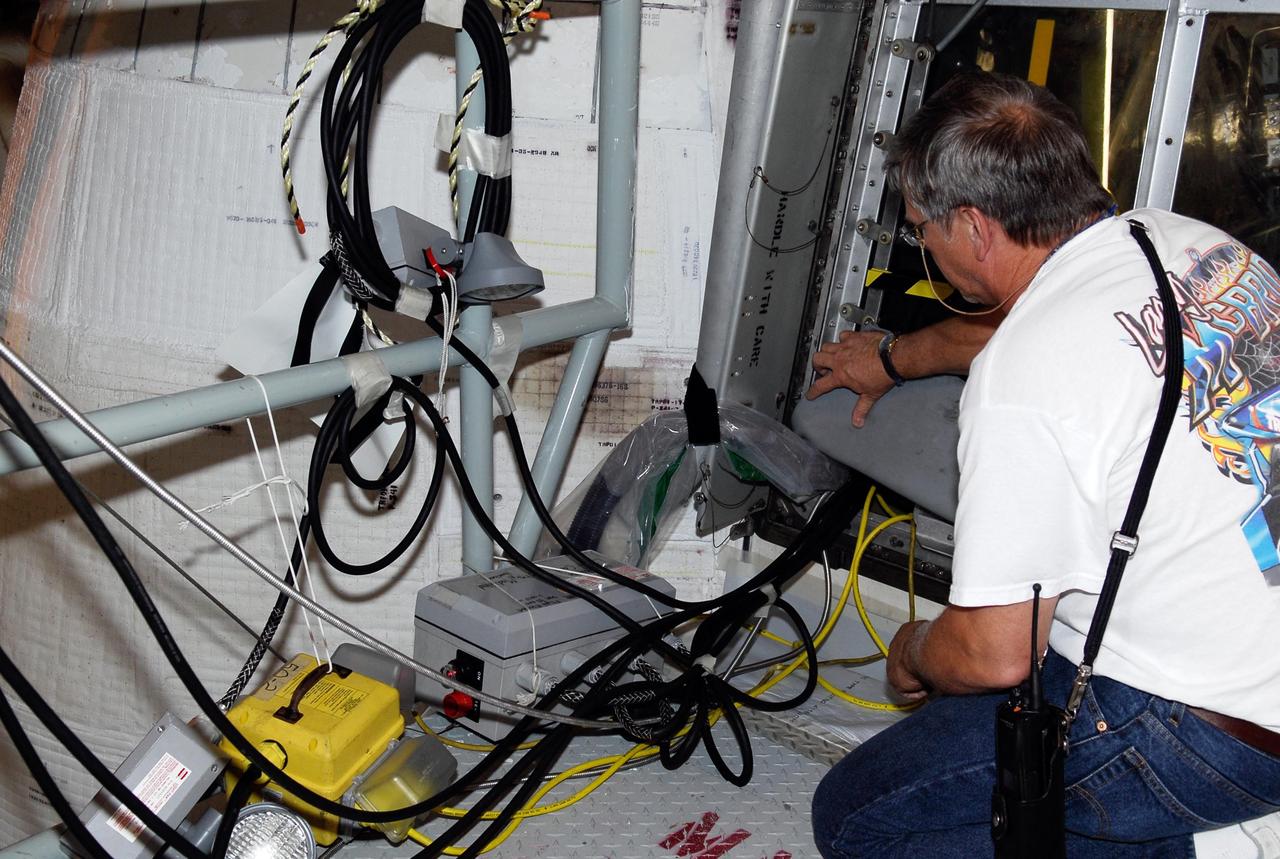
KENNEDY SPACE CENTER, FLA. -- On Launch Pad 39A, a technician checks test wiring spliced into an electrical harness in space shuttle Atlantis' aft main engine compartment connected with the engine cut-off, or ECO, system. The test wiring leads to the interior of the mobile launcher platform where the Time Domain Reflectometry, or TDR, test equipment will be located to test the sensor system. The shuttle's planned launches on Dec. 6 and Dec. 9 were postponed because of false readings from the part of the ECO system that monitors the liquid hydrogen section of the tank. The liftoff date from NASA's Kennedy Space Center, Florida, is now targeted for Jan. 10, depending on the resolution of the problem in the fuel sensor system. Photo credit: NASA/Kim Shiflett
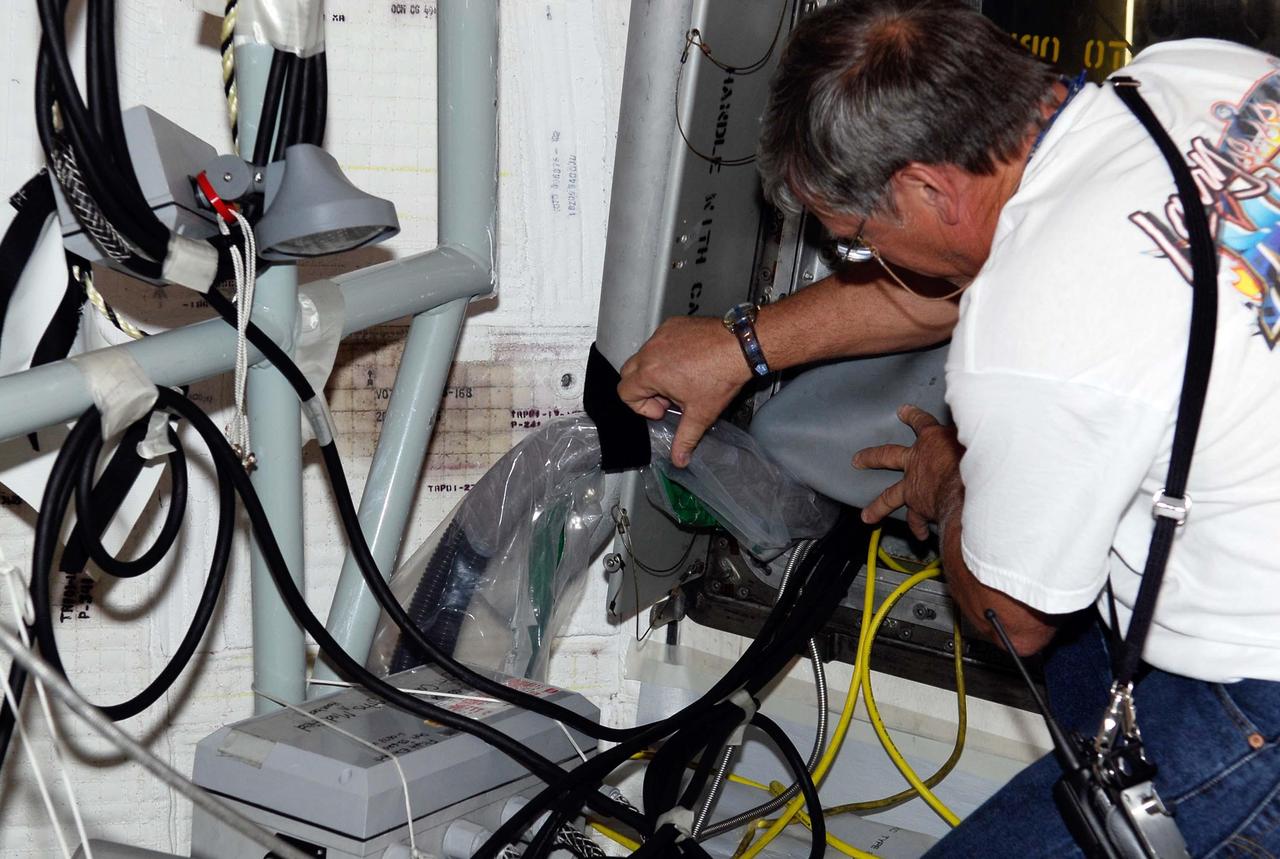
KENNEDY SPACE CENTER, FLA. -- On Launch Pad 39A, a technician checks test wiring spliced into an electrical harness in space shuttle Atlantis' aft main engine compartment connected with the engine cut-off, or ECO, system. The test wiring leads to the interior of the mobile launcher platform where the Time Domain Reflectometry, or TDR, test equipment will be located to test the sensor system. The shuttle's planned launches on Dec. 6 and Dec. 9 were postponed because of false readings from the part of the ECO system that monitors the liquid hydrogen section of the tank. The liftoff date from NASA's Kennedy Space Center, Florida, is now targeted for Jan. 10, depending on the resolution of the problem in the fuel sensor system. Photo credit: NASA/Kim Shiflett
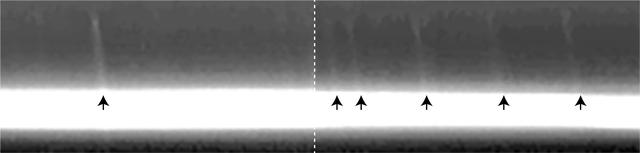
The core region of the F ring is visible here, showing evidence that a population of small objects impacted the rings at the same time and caused streaks of material to emerge. The mini-jets, noted with black arrows, leave trails that extend approximately 19 miles (30 kilometers). They have the same length and orientation, showing that they were likely caused by a flock of impactors that all struck the ring at approximately the same time. This shows that the ring is shaped by streams of material that orbit Saturn itself rather than, for instance, by cometary debris moving around the Sun that happens to crash into the rings. The dashed line in the center of the image indicates where two images were spliced together. The F ring core (at bottom) is overexposed in the figure, partly to enhance the image and make the streaks visible. The figure was produced from ISS narrow-angle camera images taken July 13, 2017. https://photojournal.jpl.nasa.gov/catalog/PIA23169
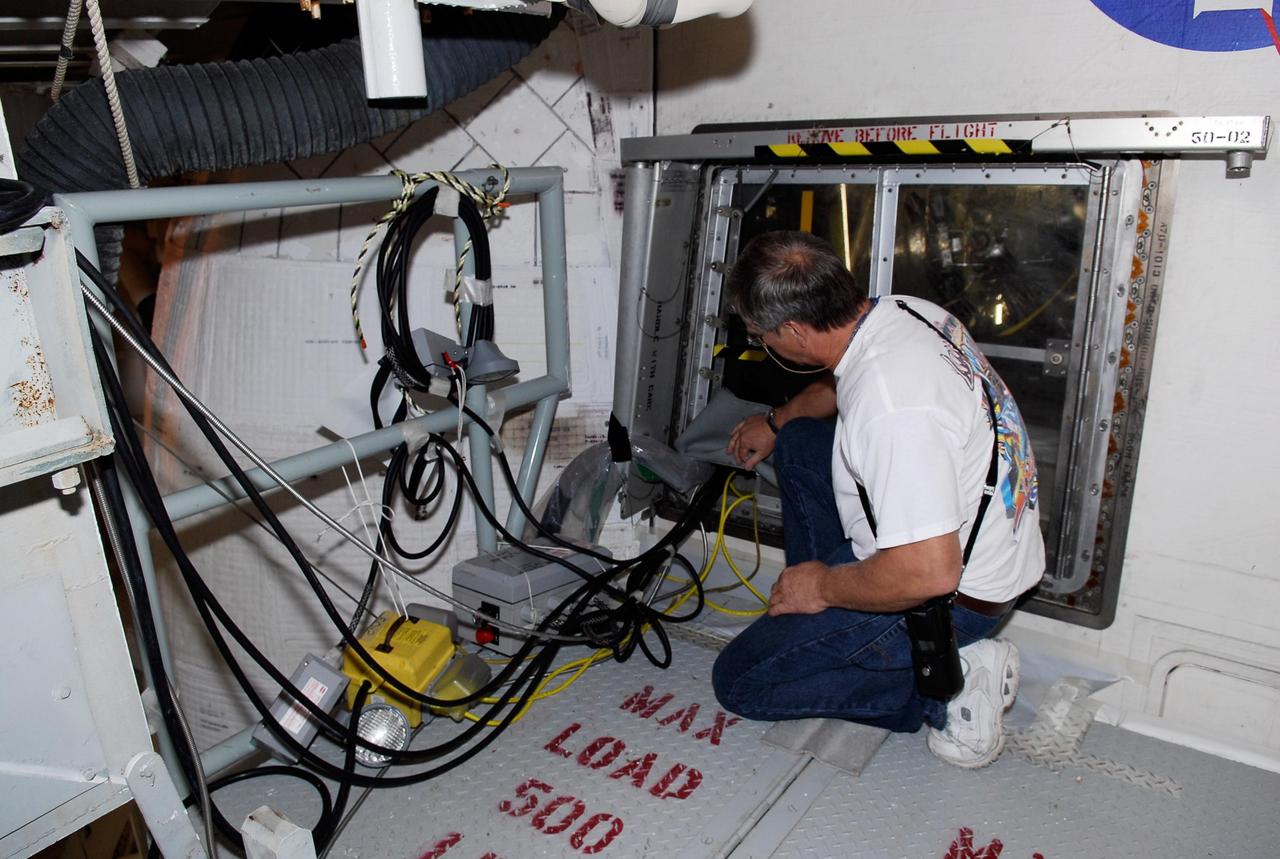
KENNEDY SPACE CENTER, FLA. -- On Launch Pad 39A, a technician checks test wiring spliced into an electrical harness in space shuttle Atlantis' aft main engine compartment connected with the engine cut-off, or ECO, system. The test wiring leads to the interior of the mobile launcher platform where the Time Domain Reflectometry, or TDR, test equipment will be located to test the sensor system. The shuttle's planned launches on Dec. 6 and Dec. 9 were postponed because of false readings from the part of the ECO system that monitors the liquid hydrogen section of the tank. The liftoff date from NASA's Kennedy Space Center, Florida, is now targeted for Jan. 10, depending on the resolution of the problem in the fuel sensor system. Photo credit: NASA/Kim Shiflett
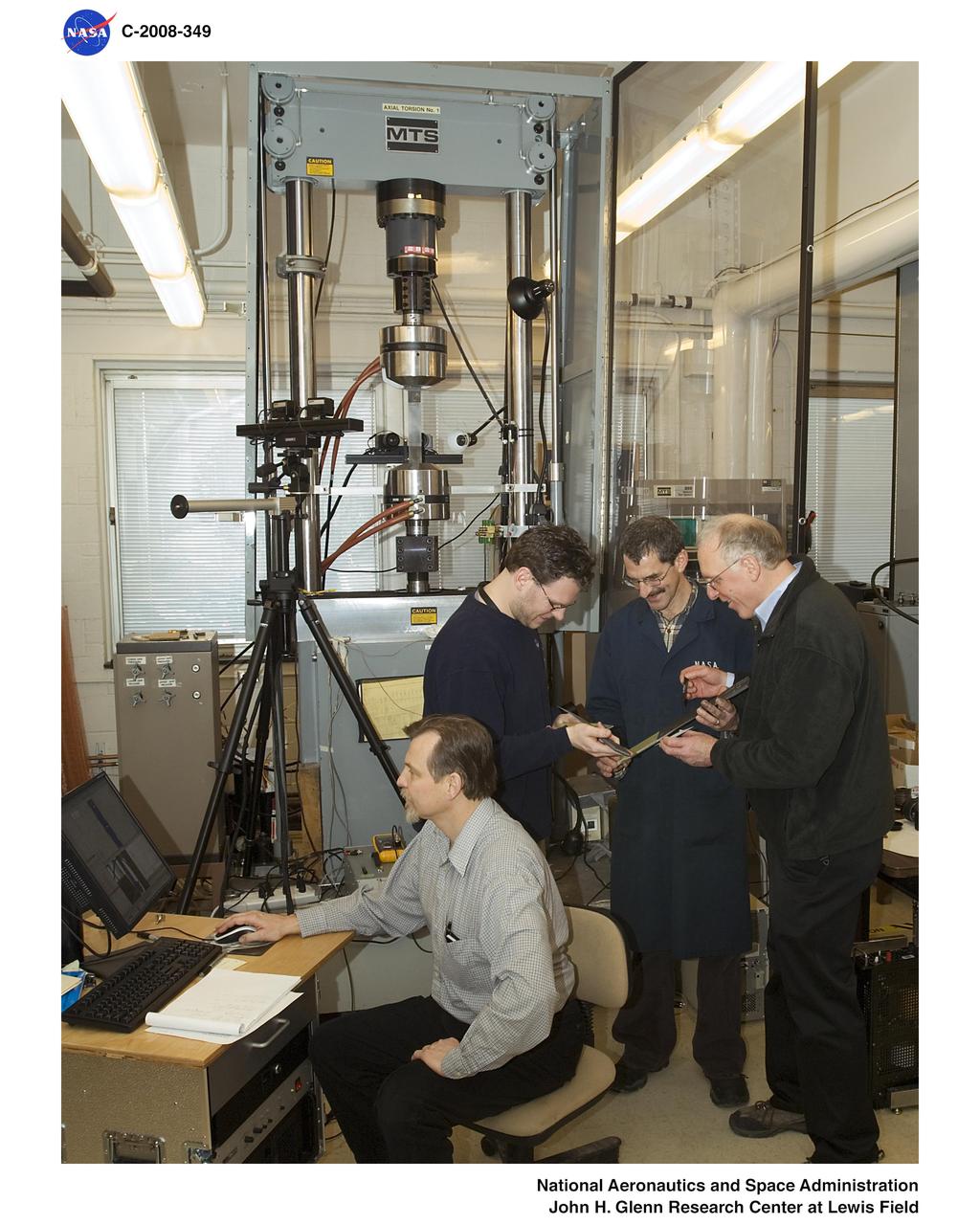
Code R and Code D hosted NESC Principal Engineer Mike Kirsch who is Program Leader for Composite Crew Module (CCM). The purpose of the visit was to review/observe experiments that GRC is performing in support of the CCM program. The test object is the critical Low Impact Docking System/Tunnel interface joint that links the metal docking ring with the polymer composite tunnel element of the crew module pressure vessel. The rectangular specimens simulated the splice joint between the aluminum and the PMC sheets, including a PMC doubler sheet. GRC was selected for these tests due to our expertise in composite testing and our ability to perform 3D fullfield displacement and strain measurements of the complex bond geometry using digital image correlation. The specimens performed above their minimum load requirements and the full field strain measurements showed the strain levels at the critical bond line. This work is part of a joint Code D & R investigation.
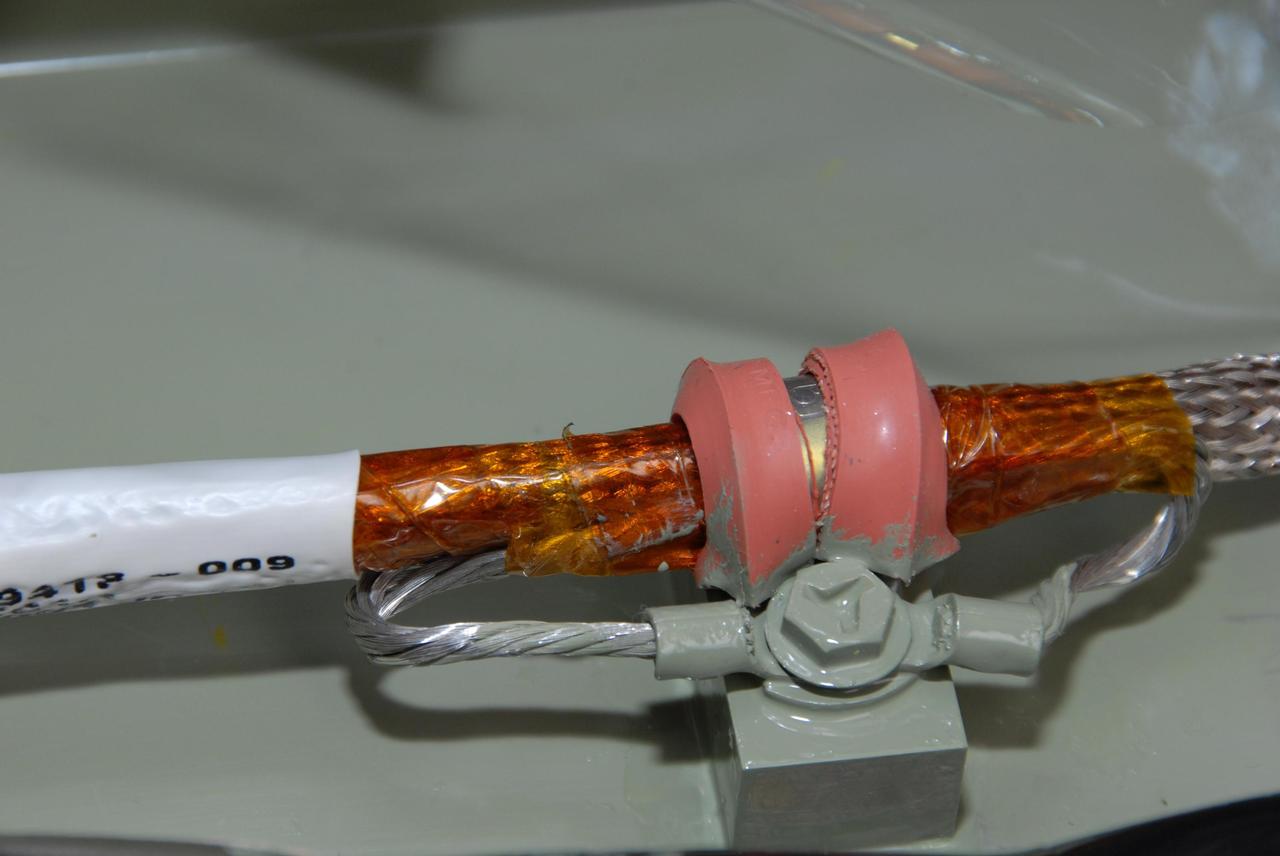
KENNEDY SPACE CENTER, FLA. -- This closeup shows the final splicing completed on the wiring between space shuttle Atlantis' external tank and the engine cutoff, or ECO, sensor system before the replacement feed-through connector in the ECO sensor system is installed. Cryogenic shielding is installed around the wiring. The feed-through connector passes the wires from the inside of the tank to the outside. Results of a tanking test on Dec. 18 pointed to an open circuit in the feed-through connector wiring, which is located at the base of the tank. The pins in the replacement connector have been precisely soldered to create a connection that allows sensors inside the tank to send signals to the computers onboard Atlantis. The work is being done on Launch Pad 39A. Space shuttle Atlantis is now targeted for launch on Feb. 7. Photo credit: NASA/George Shelton

KENNEDY SPACE CENTER, FLA. -- On Launch Pad 39A, Lockheed Martin engineer Ray Clark splices wires between space shuttle Atlantis' external tank and the engine cutoff, or ECO, sensor system. The replacement feed-through connector in the ECO sensor system will be installed later. Some of the tank's ECO sensors gave failed readings during propellant tanking for Atlantis' STS-122 mission launch attempts on Dec. 6 and Dec. 9. Results of a tanking test on Dec. 18 pointed to an open circuit in the feed-through connector wiring, which is located at the base of the tank. The feed-through connector passes the wires from the inside of the tank to the outside. The pins in the replacement connector have been precisely soldered to create a connection that allows sensors inside the tank to send signals to the computers onboard Atlantis. No problems with the ECO sensors themselves have been found. NASA's Space Shuttle Program has proposed a target launch date of Feb. 7 for the STS-122 mission. That proposed launch date remains under evaluation pending coordination with all partners in the International Space Station Program. Photo credit: NASA/George Shelton
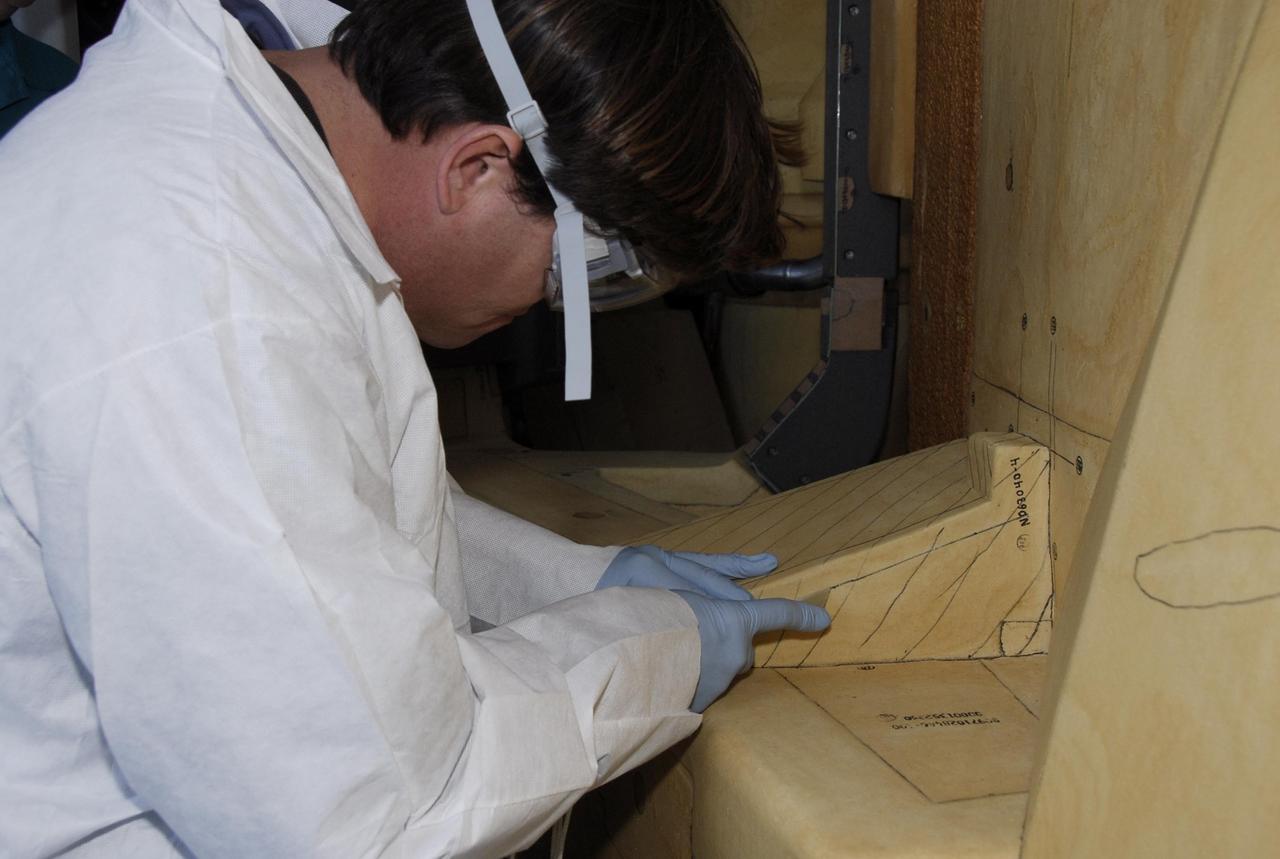
KENNEDY SPACE CENTER, FLA. -- At Launch Pad 39A, a United Space Alliance technician carefully cuts away the foam insulation surrounding the covers over the feed-through connector box on the external tank for space shuttle Atlantis' STS-122 mission. The covers will be removed for access to the feed-through connectors. Following the failure of some of the tank's engine cutoff sensors, or ECO sensors, during propellant tanking for launch attempts on Dec. 6 and Dec. 9, a tanking test was conducted on Dec. 18 to aid in troubleshooting the cause. Technicians spliced test wiring into the ECO sensor electrical system and used time domain reflectometry equipment to help locate the electrical anomaly. Results of the tanking test pointed to an open circuit in the feed-through connector wiring, which is located at the base of the tank. The feed-through connector passes the wires from the inside of the tank to the outside. During the holiday period, workers from Lockheed Martin will begin inspecting and testing the connector. Shuttle program managers will meet on Dec. 27 to review the test and analysis, and decide on a forward plan. Photo credit: NASA/Kim Shiflett
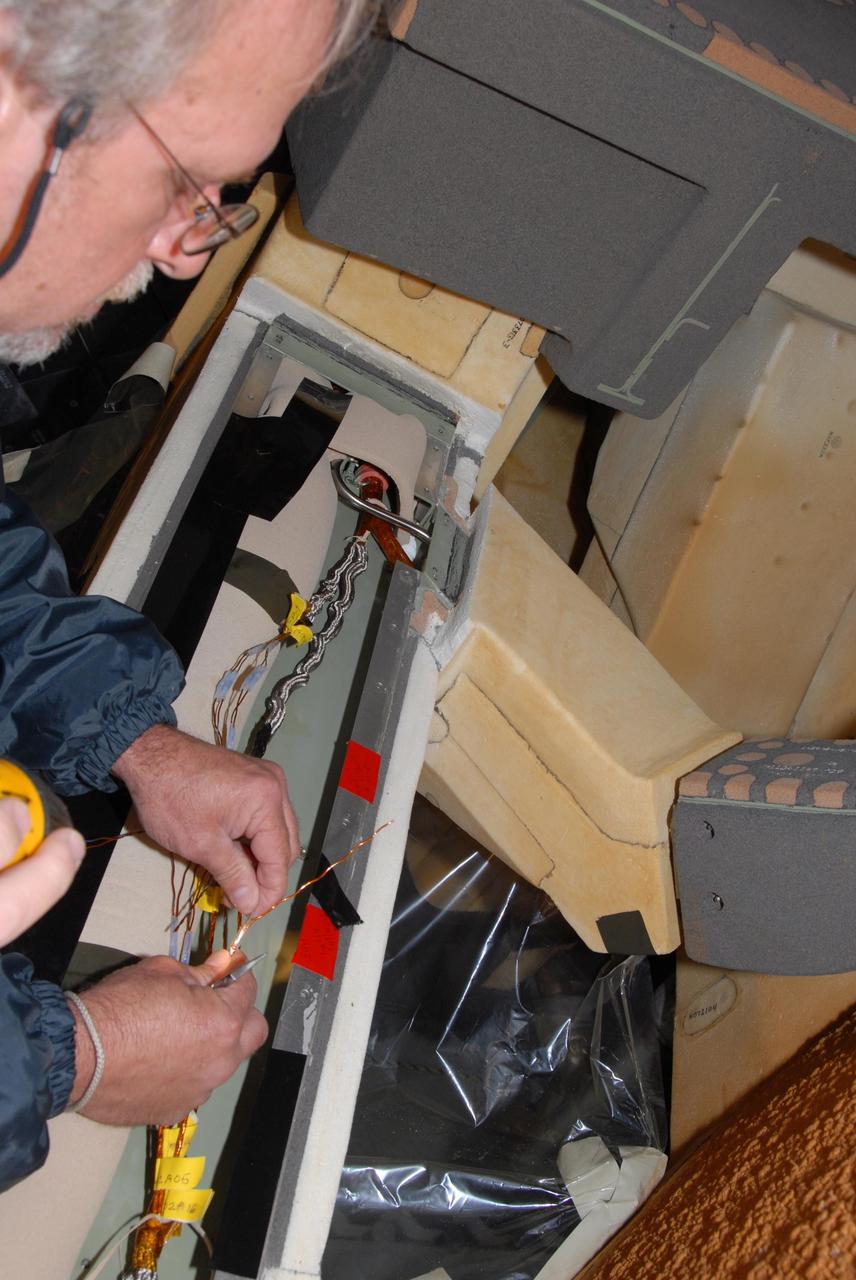
KENNEDY SPACE CENTER, FLA. -- On Launch Pad 39A, Lockheed Martin engineer Ray Clark splices wires between space shuttle Atlantis' external tank and the engine cutoff, or ECO, sensor system. The replacement feed-through connector in the ECO sensor system will be installed later. Some of the tank's ECO sensors gave failed readings during propellant tanking for Atlantis' STS-122 mission launch attempts on Dec. 6 and Dec. 9. Results of a tanking test on Dec. 18 pointed to an open circuit in the feed-through connector wiring, which is located at the base of the tank. The feed-through connector passes the wires from the inside of the tank to the outside. The pins in the replacement connector have been precisely soldered to create a connection that allows sensors inside the tank to send signals to the computers onboard Atlantis. No problems with the ECO sensors themselves have been found. NASA's Space Shuttle Program has proposed a target launch date of Feb. 7 for the STS-122 mission. That proposed launch date remains under evaluation pending coordination with all partners in the International Space Station Program. Photo credit: NASA/George Shelton
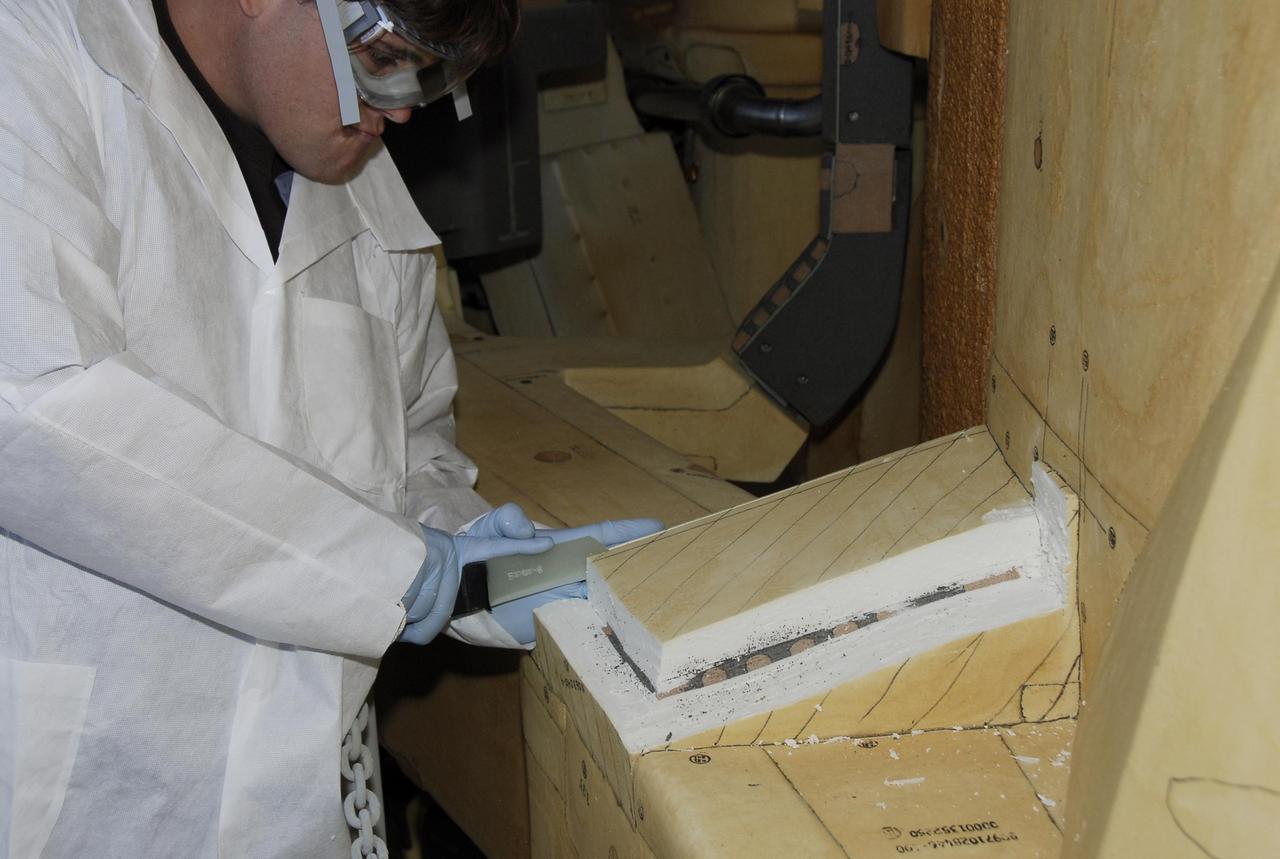
KENNEDY SPACE CENTER, FLA. -- At Launch Pad 39A, a United Space Alliance technician carefully cuts away the foam insulation surrounding the covers over the feed-through connector box on the external tank for space shuttle Atlantis' STS-122 mission, revealing the fastener holes on the covers. The covers will be removed for access to the feed-through connectors. Following the failure of some of the tank's engine cutoff sensors, or ECO sensors, during propellant tanking for launch attempts on Dec. 6 and Dec. 9, a tanking test was conducted on Dec. 18 to aid in troubleshooting the cause. Technicians spliced test wiring into the ECO sensor electrical system and used time domain reflectometry equipment to help locate the electrical anomaly. Results of the tanking test pointed to an open circuit in the feed-through connector wiring, which is located at the base of the tank. The feed-through connector passes the wires from the inside of the tank to the outside. During the holiday period, workers from Lockheed Martin will begin inspecting and testing the connector. Shuttle program managers will meet on Dec. 27 to review the test and analysis, and decide on a forward plan. Photo credit: NASA/Kim Shiflett
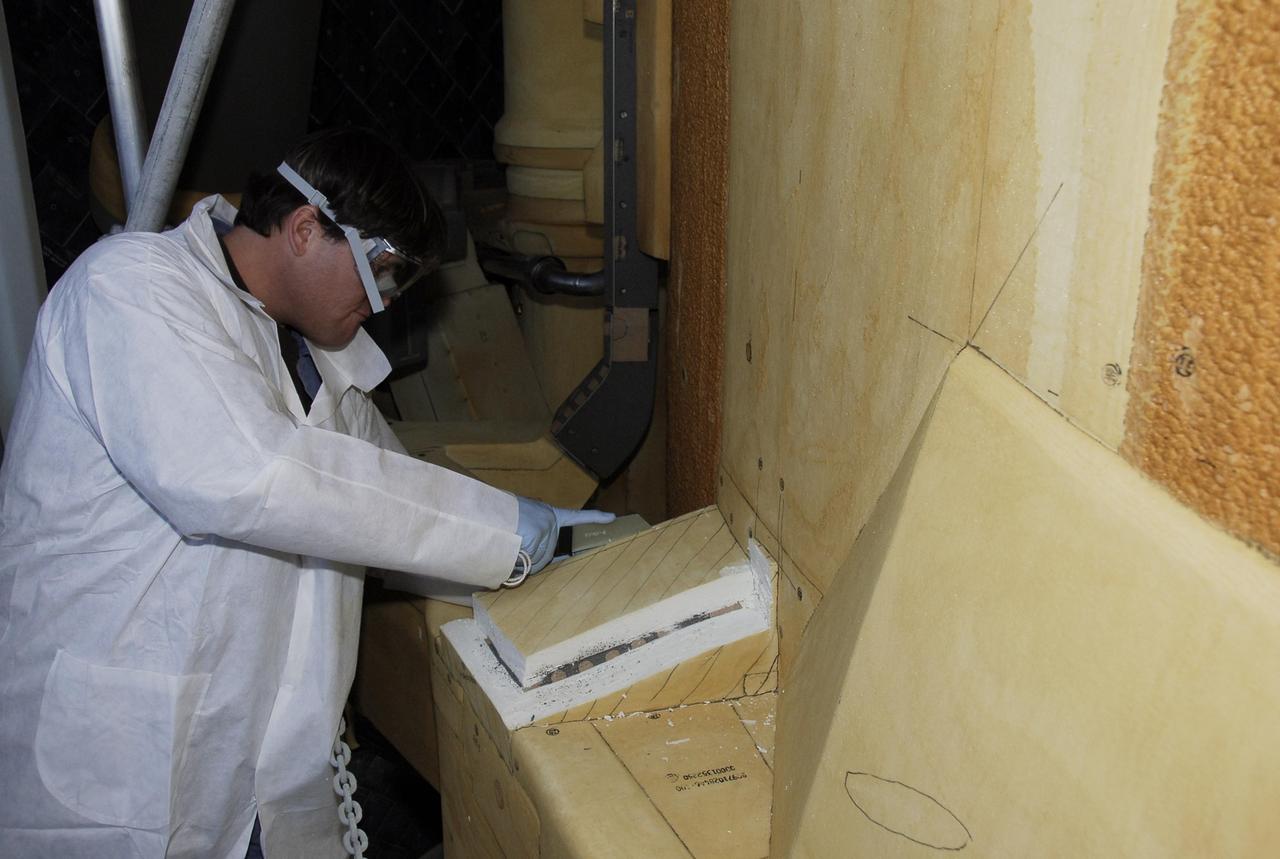
KENNEDY SPACE CENTER, FLA. -- At Launch Pad 39A, a United Space Alliance technician carefully cuts away the foam insulation surrounding the covers over the feed-through connector box on the external tank for space shuttle Atlantis' STS-122 mission, revealing the fastener holes on the covers. The covers will be removed for access to the feed-through connectors. Following the failure of some of the tank's engine cutoff sensors, or ECO sensors, during propellant tanking for launch attempts on Dec. 6 and Dec. 9, a tanking test was conducted on Dec. 18 to aid in troubleshooting the cause. Technicians spliced test wiring into the ECO sensor electrical system and used time domain reflectometry equipment to help locate the electrical anomaly. Results of the tanking test pointed to an open circuit in the feed-through connector wiring, which is located at the base of the tank. The feed-through connector passes the wires from the inside of the tank to the outside. During the holiday period, workers from Lockheed Martin will begin inspecting and testing the connector. Shuttle program managers will meet on Dec. 27 to review the test and analysis, and decide on a forward plan. Photo credit: NASA/Kim Shiflett
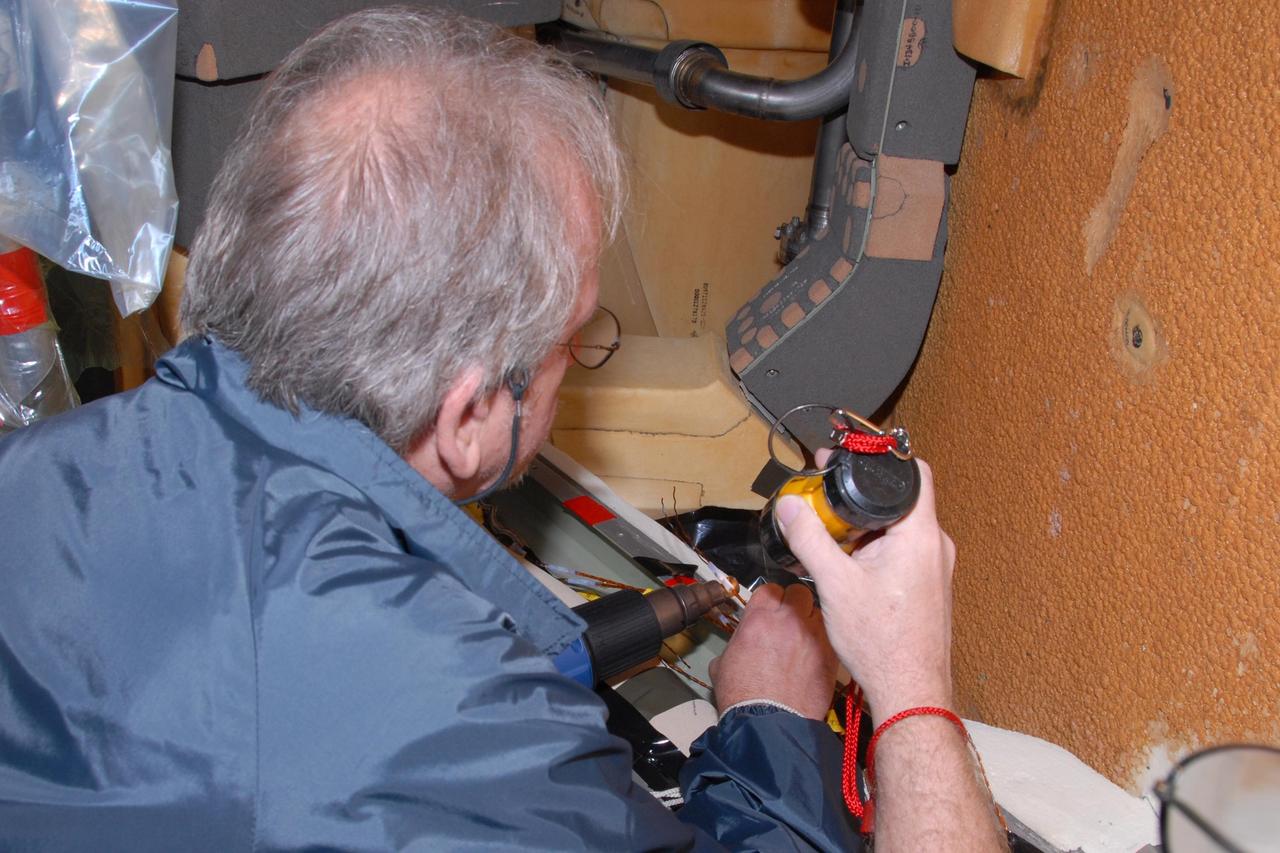
KENNEDY SPACE CENTER, FLA. -- On Launch Pad 39A, Lockheed Martin engineer Ray Clark splices wires between space shuttle Atlantis' external tank and the engine cutoff, or ECO, sensor system. The replacement feed-through connector in the ECO sensor system will be installed later. Some of the tank's ECO sensors gave failed readings during propellant tanking for Atlantis' STS-122 mission launch attempts on Dec. 6 and Dec. 9. Results of a tanking test on Dec. 18 pointed to an open circuit in the feed-through connector wiring, which is located at the base of the tank. The feed-through connector passes the wires from the inside of the tank to the outside. The pins in the replacement connector have been precisely soldered to create a connection that allows sensors inside the tank to send signals to the computers onboard Atlantis. No problems with the ECO sensors themselves have been found. NASA's Space Shuttle Program has proposed a target launch date of Feb. 7 for the STS-122 mission. That proposed launch date remains under evaluation pending coordination with all partners in the International Space Station Program. Photo credit: NASA/George Shelton

KENNEDY SPACE CENTER, FLA. -- At Launch Pad 39A, a United Space Alliance technician removes foam insulation revealing the fastener holes on the covers over the feed-through connector box on the external tank for space shuttle Atlantis' STS-122 mission. The covers will be removed for access to the feed-through connectors. Following the failure of some of the tank's engine cutoff sensors, or ECO sensors, during propellant tanking for launch attempts on Dec. 6 and Dec. 9, a tanking test was conducted on Dec. 18 to aid in troubleshooting the cause. Technicians spliced test wiring into the ECO sensor electrical system and used time domain reflectometry equipment to help locate the electrical anomaly. Results of the tanking test pointed to an open circuit in the feed-through connector wiring, which is located at the base of the tank. The feed-through connector passes the wires from the inside of the tank to the outside. During the holiday period, workers from Lockheed Martin will begin inspecting and testing the connector. Shuttle program managers will meet on Dec. 27 to review the test and analysis, and decide on a forward plan. Photo credit: NASA/Kim Shiflett
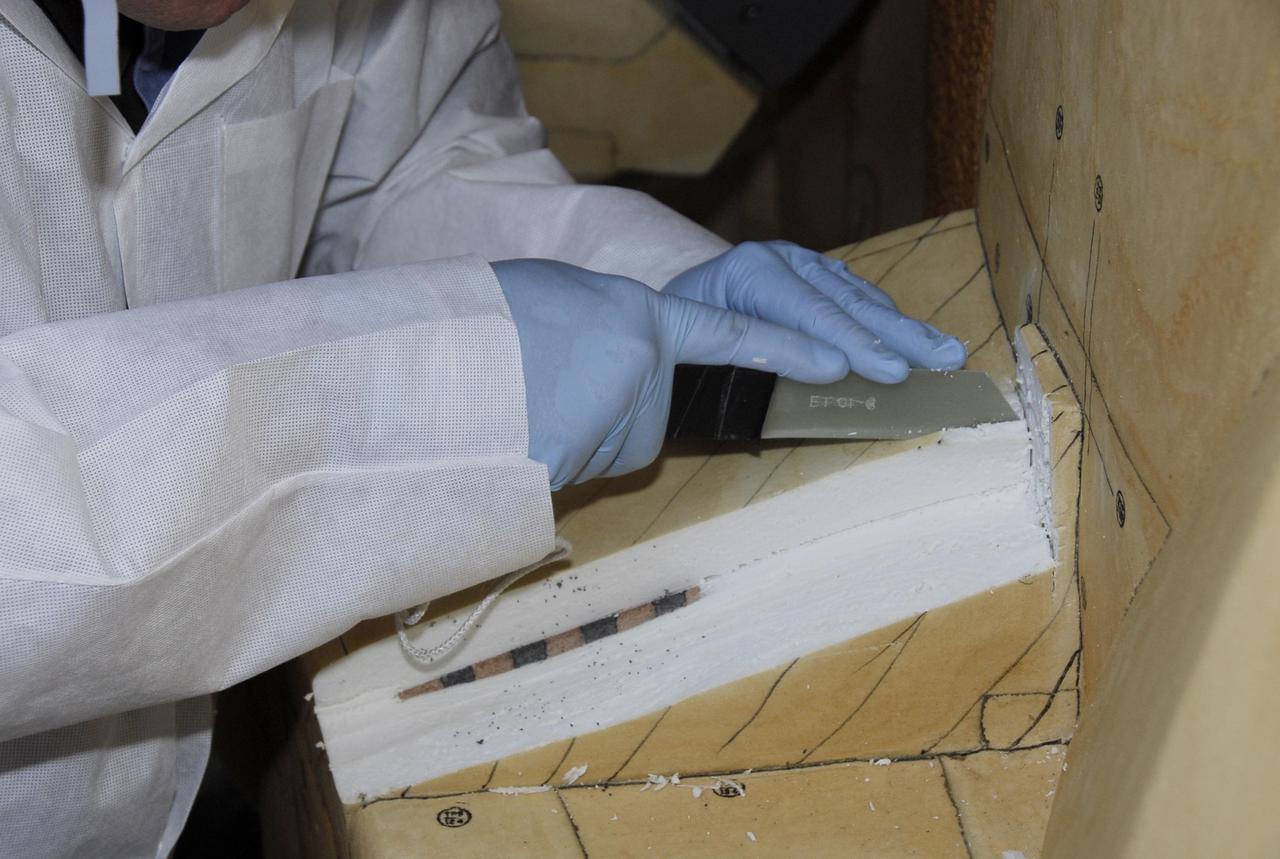
KENNEDY SPACE CENTER, FLA. -- At Launch Pad 39A, the foam insulation surrounding the covers over the feed-through connector box on the external tank for space shuttle Atlantis' STS-122 mission is carefully cut away by a United Space Alliance technician. The covers will be removed for access to the feed-through connectors. Following the failure of some of the tank's engine cutoff sensors, or ECO sensors, during propellant tanking for launch attempts on Dec. 6 and Dec. 9, a tanking test was conducted on Dec. 18 to aid in troubleshooting the cause. Technicians spliced test wiring into the ECO sensor electrical system and used time domain reflectometry equipment to help locate the electrical anomaly. Results of the tanking test pointed to an open circuit in the feed-through connector wiring, which is located at the base of the tank. The feed-through connector passes the wires from the inside of the tank to the outside. During the holiday period, workers from Lockheed Martin will begin inspecting and testing the connector. Shuttle program managers will meet on Dec. 27 to review the test and analysis, and decide on a forward plan. Photo credit: NASA/Kim Shiflett