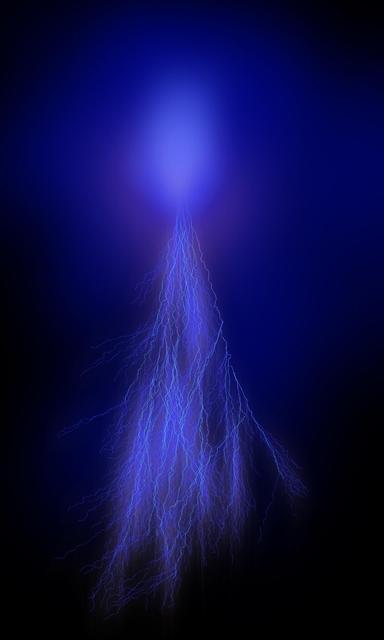
This illustration shows what a sprite could look like in Jupiter's atmosphere. Named after a mischievous, quick-witted character in English folklore, sprites last for only a few milliseconds. They feature a central blob of light with long tendrils of light extending down toward the ground and upward. In Earth's upper atmosphere, their interaction with nitrogen give sprites a reddish hue. At Jupiter, where the predominance of hydrogen in the upper atmosphere would likely give them a blue hue. https://photojournal.jpl.nasa.gov/catalog/PIA23990

iss071e170351 (6/3/2024) --- NASA astronaut Matthew Dominick captured red sprites from space station. The bright red flashes in the center of this image are a little-understood phenomenon associated with powerful lightning events and appear high above the clouds in Earth’s upper atmosphere. Red sprites are one type of Transient Luminous Events, colorful bursts of energy that appear above storms due to lightning activity occurring in and below storms on Earth. Understanding processes occurring in Earth’s atmosphere can help improve climate modeling and monitoring.
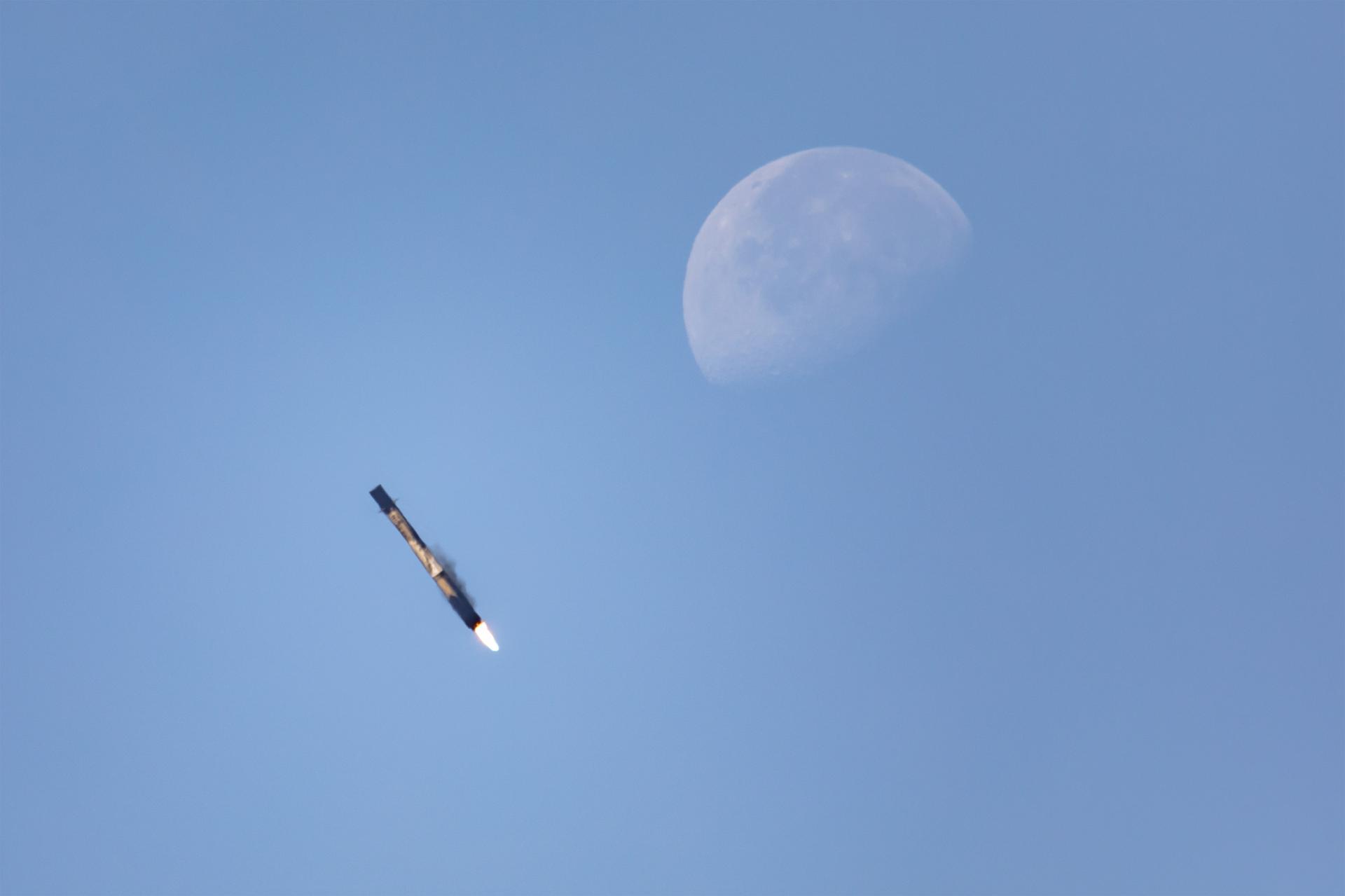
A SpaceX Falcon 9 rocket carrying three NASA-supported small spacecraft launched at 11:32 a.m. PDT Thursday, Oct. 1, 2026, as part of the company’s Transporter-18 mission from Space Launch Complex 4 East at Vandenberg Space Force Base in California. The ASCENT Propulsion Dual Mode CubeSat, the Supernova Remnants and Proxies for ReIonization Testbed Experiment (SPRITE) CubeSat, and the Small Spacecraft Propulsion and Inspection Capability (SSPICY) mission will demonstrate new propulsion technologies, study how galactic dust and high-energy radiation move through galaxies, and advance capabilities for inspecting inactive satellites.
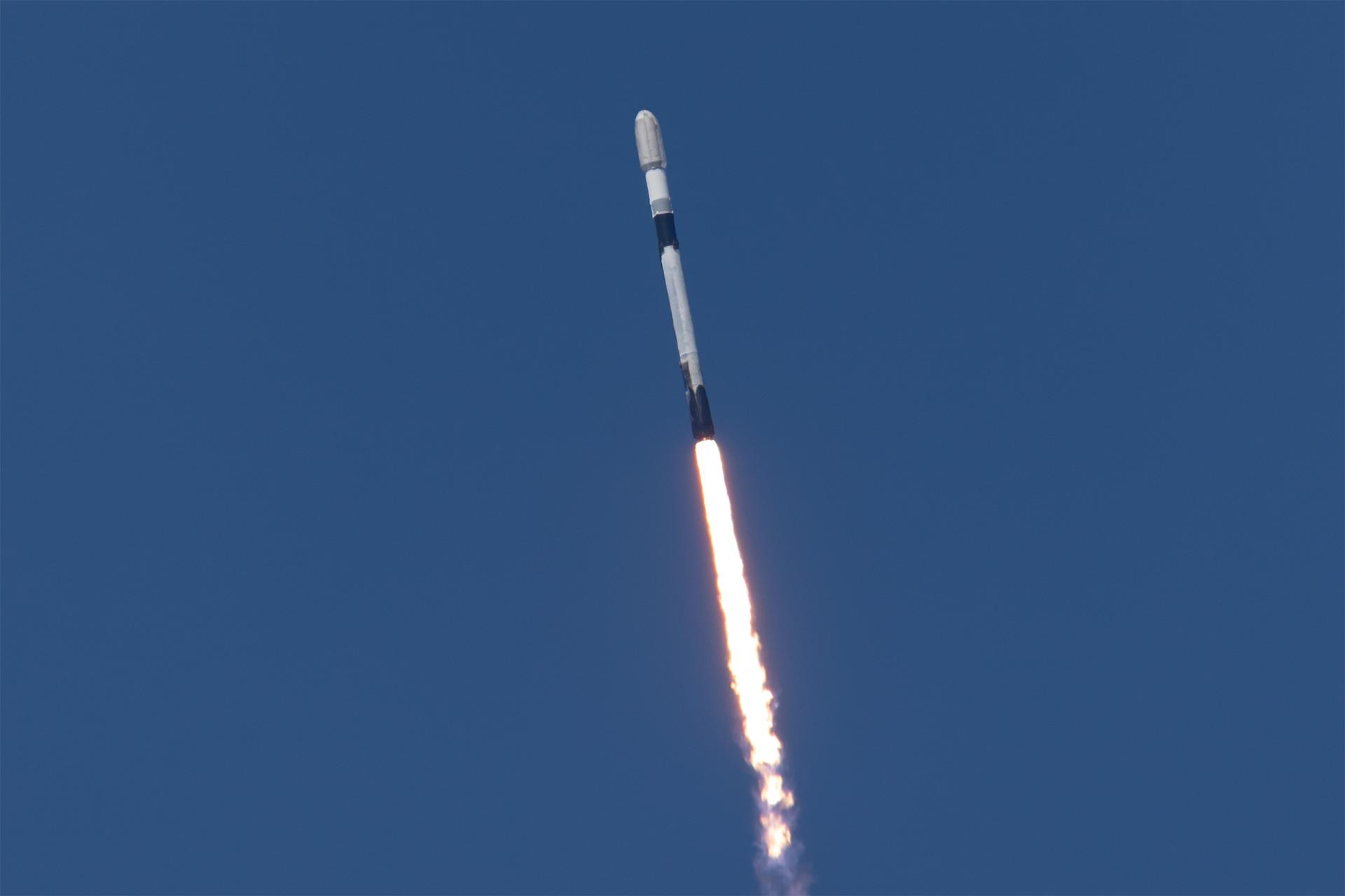
A SpaceX Falcon 9 rocket carrying three NASA-supported small spacecraft launched at 11:32 a.m. PDT Thursday, Oct. 1, 2026, as part of the company’s Transporter-18 mission from Space Launch Complex 4 East at Vandenberg Space Force Base in California. The ASCENT Propulsion Dual Mode CubeSat, the Supernova Remnants and Proxies for ReIonization Testbed Experiment (SPRITE) CubeSat, and the Small Spacecraft Propulsion and Inspection Capability (SSPICY) mission will demonstrate new propulsion technologies, study how galactic dust and high-energy radiation move through galaxies, and advance capabilities for inspecting inactive satellites.
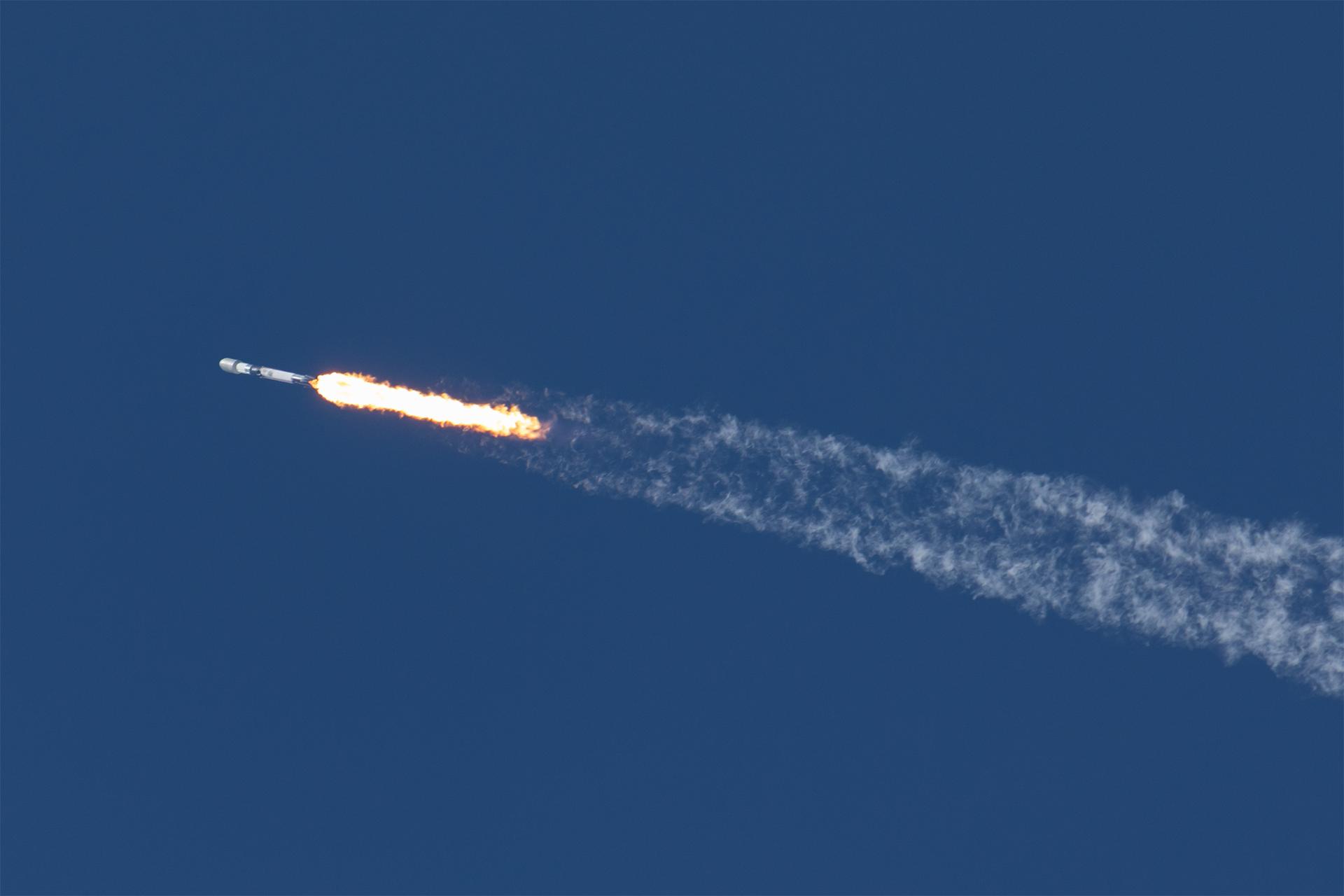
A SpaceX Falcon 9 rocket carrying three NASA-supported small spacecraft launched at 11:32 a.m. PDT Thursday, Oct. 1, 2026, as part of the company’s Transporter-18 mission from Space Launch Complex 4 East at Vandenberg Space Force Base in California. The ASCENT Propulsion Dual Mode CubeSat, the Supernova Remnants and Proxies for ReIonization Testbed Experiment (SPRITE) CubeSat, and the Small Spacecraft Propulsion and Inspection Capability (SSPICY) mission will demonstrate new propulsion technologies, study how galactic dust and high-energy radiation move through galaxies, and advance capabilities for inspecting inactive satellites.
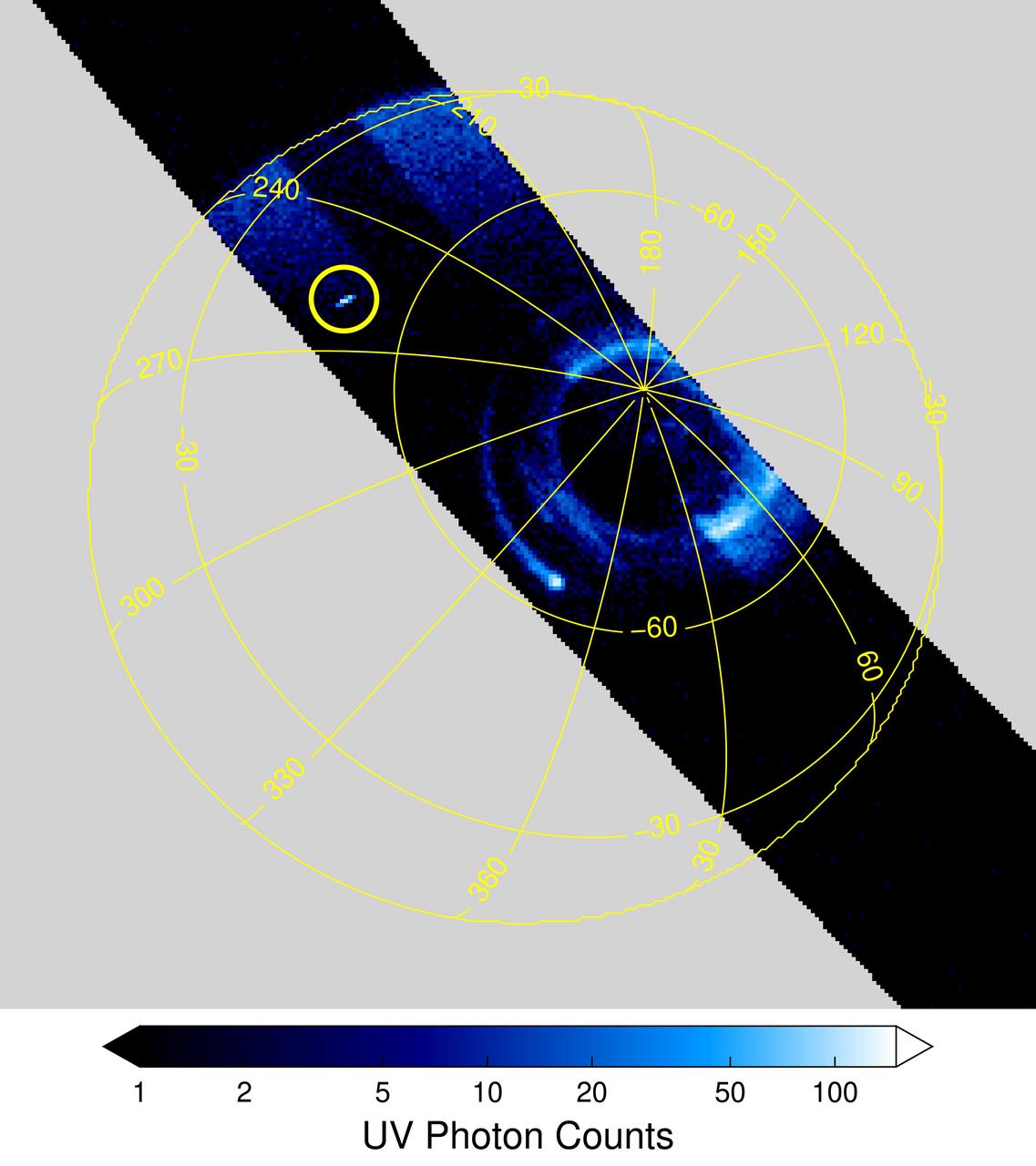
The south pole of Jupiter is seen in this annotated image of data from the ultraviolet spectrograph (UVS) instrument aboard NASA's Juno spacecraft. Bands of bright white and blue near the south pole are Jupiter's southern aurora. But researchers also noticed an unusual bright flash of light well away from the auroral region, highlighted here by the yellow circle at about the 10 o'clock position (between longitudinal lines 270 and 240). Juno scientists believe it could be an indication of a bright, unpredictable, and extremely brief flash of light — known as a transient luminous event — that was triggered by lightning discharges from thunderstorms far below. The data for this UVS image was acquired on April 10, 2020. https://photojournal.jpl.nasa.gov/catalog/PIA24050
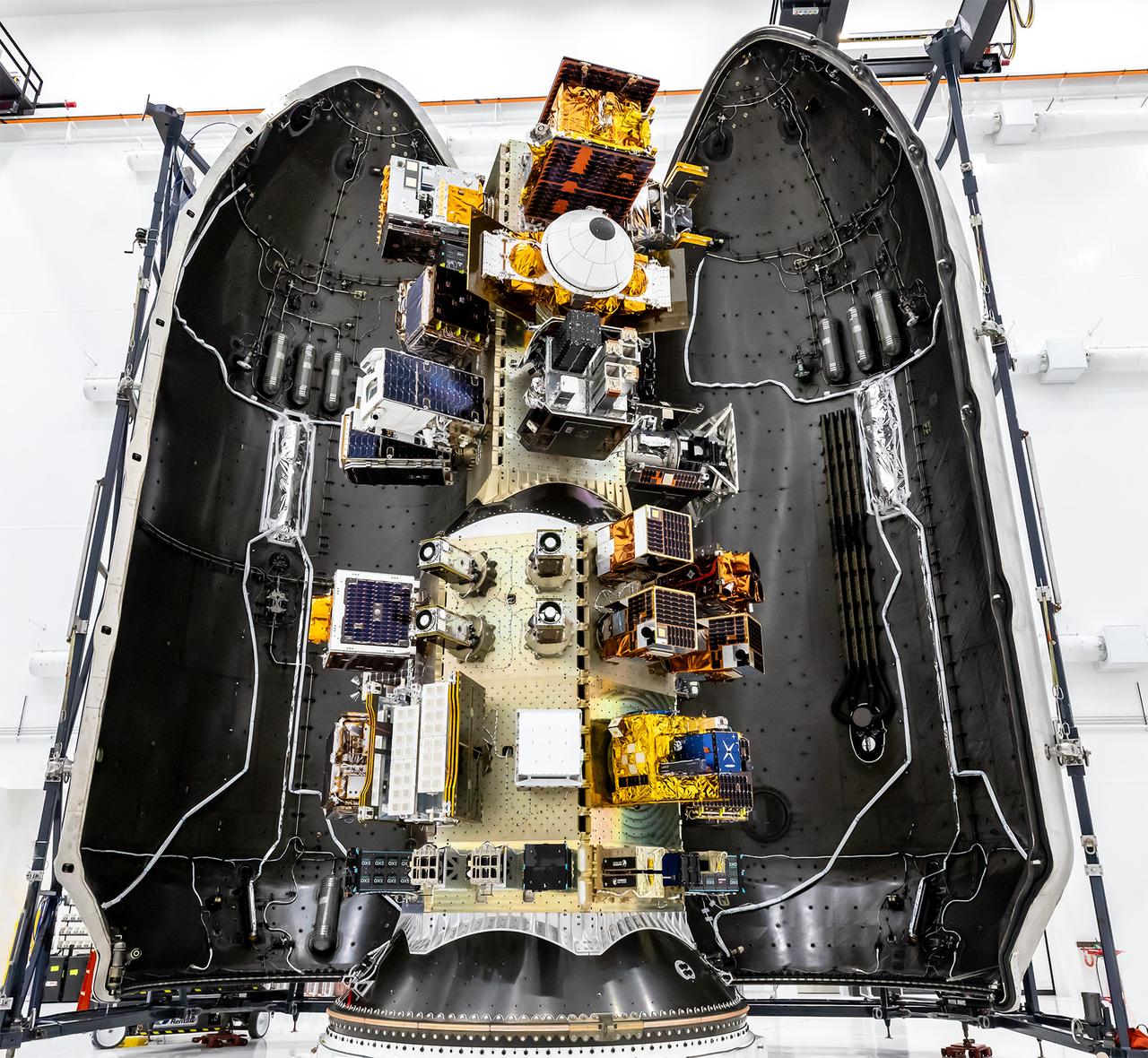
Three NASA-supported small spacecraft, shown along with many commercial payloads, before being encapsulated in a SpaceX Falcon 9. The rocket launched the payloads into low-Earth orbit at 11:32 a.m. PDT Thursday, Oct. 1, 2026, as part of the company’s Transporter-18 mission from Space Launch Complex 4 East at Vandenberg Space Force Base in California. The ASCENT Propulsion Dual Mode CubeSat, the Supernova Remnants and Proxies for ReIonization Testbed Experiment (SPRITE) CubeSat, and the Small Spacecraft Propulsion and Inspection Capability (SSPICY) mission will demonstrate new propulsion technologies, study how galactic dust and high-energy radiation move through galaxies, and advance capabilities for inspecting inactive satellites.
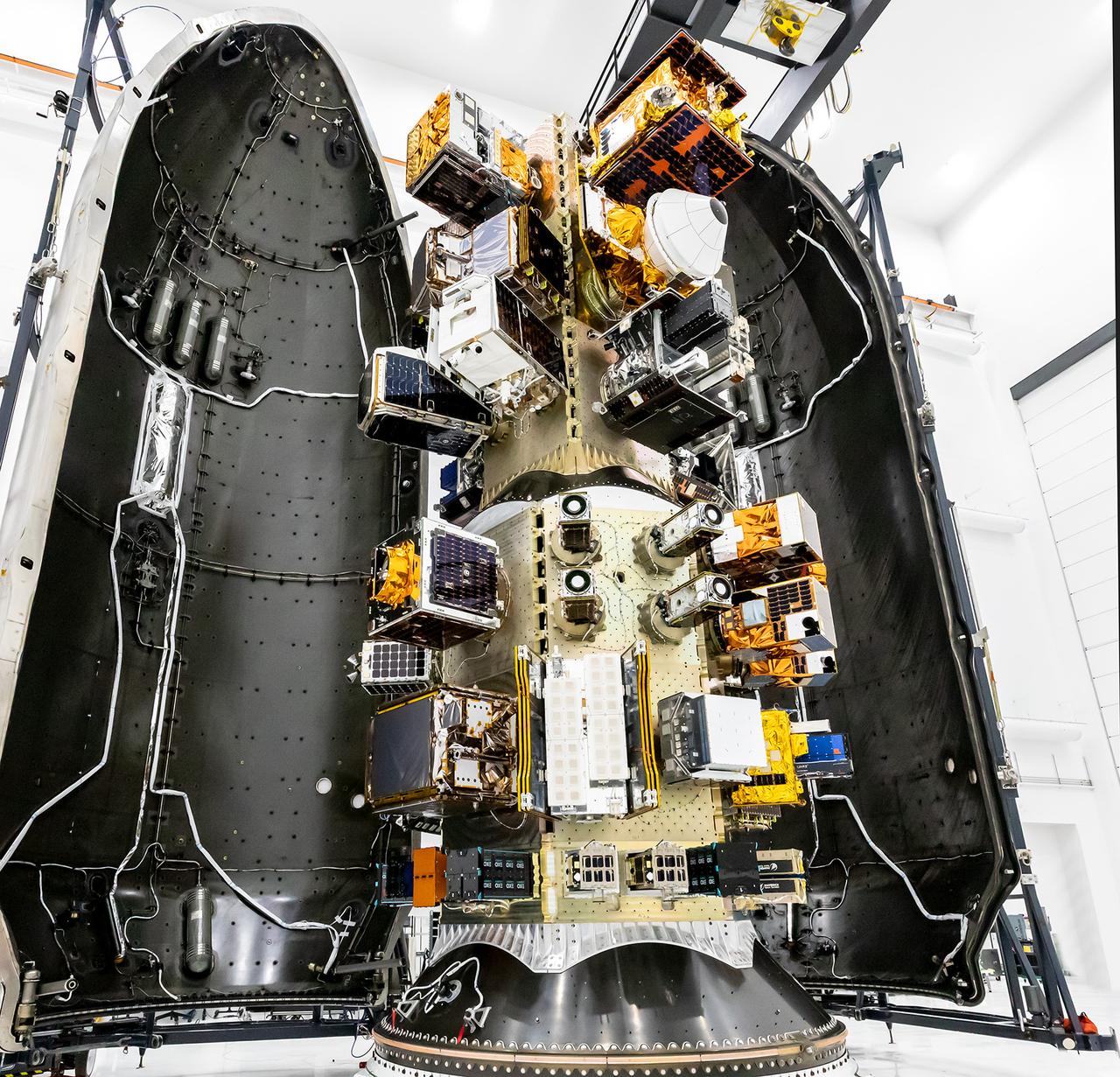
Three NASA-supported small spacecraft, shown along with many commercial payloads, before being encapsulated in a SpaceX Falcon 9. The rocket launched the payloads into low-Earth orbit at 11:32 a.m. PDT Thursday, Oct. 1, 2026, as part of the company’s Transporter-18 mission from Space Launch Complex 4 East at Vandenberg Space Force Base in California. The ASCENT Propulsion Dual Mode CubeSat, the Supernova Remnants and Proxies for ReIonization Testbed Experiment (SPRITE) CubeSat, and the Small Spacecraft Propulsion and Inspection Capability (SSPICY) mission will demonstrate new propulsion technologies, study how galactic dust and high-energy radiation move through galaxies, and advance capabilities for inspecting inactive satellites.
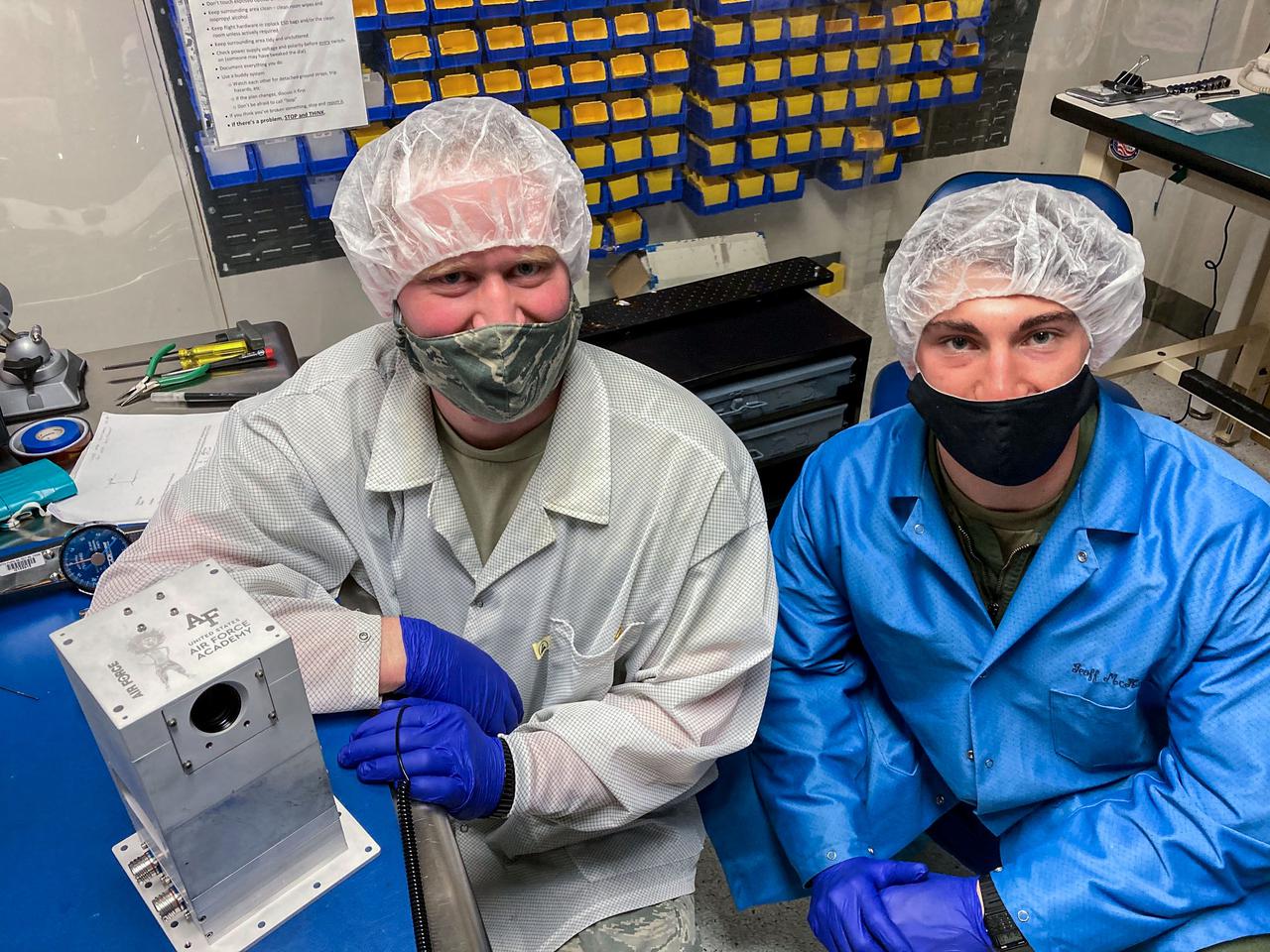
jsc2021e048047 (2/19/2021) --- Captain Hayden Richards (left) and Cadet Madison Yates (Right) with the flight unit of Falcon Neuro. Lightning and sprites are related forms of electrical discharges in Earth’s atmosphere. Space Test Program-Houston 7-Falcon Neuro (STP-H7-Falcon Neuro) demonstrates using event-based sensors (EBSs) to detect lightning in cloud tops and electrical discharges in the middle atmosphere. EBSs provide the high-speed optical sensing needed to capture such brief phenomena and data rates fast enough for making these observations from space. This technology could improve understanding of atmospheric electrical phenomena. Image courtesy of United States Air Force Academy.