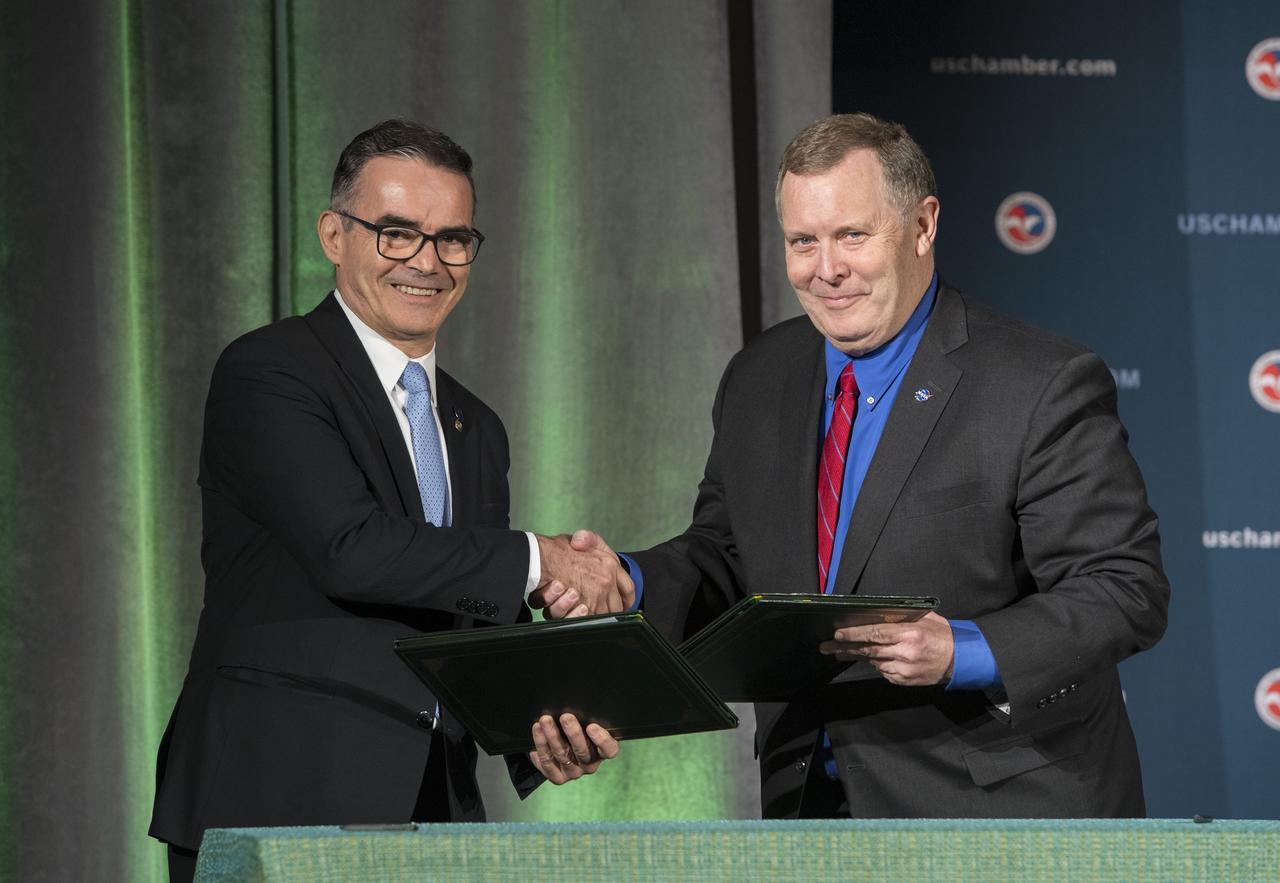
NASA Deputy Administrator James Morhard, right, shakes hands with President of the Brazilian Space Agency (AEB) Carlos Augusto Teixeira de Moura, left, after signing an agreement for cooperation on the Scintillation Prediction Observations Research Task (SPORT), an upcoming NASA-AEB heliophysics CubeSat partnership, Monday, March 18, 2019, at the U.S. Chamber of Commerce in Washington. The SPORT CubeSat will investigate two ionospheric phenomena, equatorial plasma bubbles and scintillation, that disrupt radio communication systems, satellite technologies, and Global Positioning System (GPS) signals. SPORT is currently projected to launch in the 2020 timeframe. Photo Credit: (NASA/ Aubrey Gemignani)

NASA Deputy Administrator James Morhard, left, speaks with H.E. President Jair Bolsonaro of Brazil, just before signing an agreement with President of the Brazilian Space Agency (AEB), Carlos Augusto Teixeira de Moura, for cooperation on the Scintillation Prediction Observations Research Task (SPORT), an upcoming NASA-AEB heliophysics CubeSat partnership, Monday, March 18, 2019, at the U.S. Chamber of Commerce in Washington. The SPORT CubeSat will investigate two ionospheric phenomena, equatorial plasma bubbles and scintillation, that disrupt radio communication systems, satellite technologies, and Global Positioning System (GPS) signals. SPORT is currently projected to launch in the 2020 timeframe. Photo Credit: (NASA/ Aubrey Gemignani)
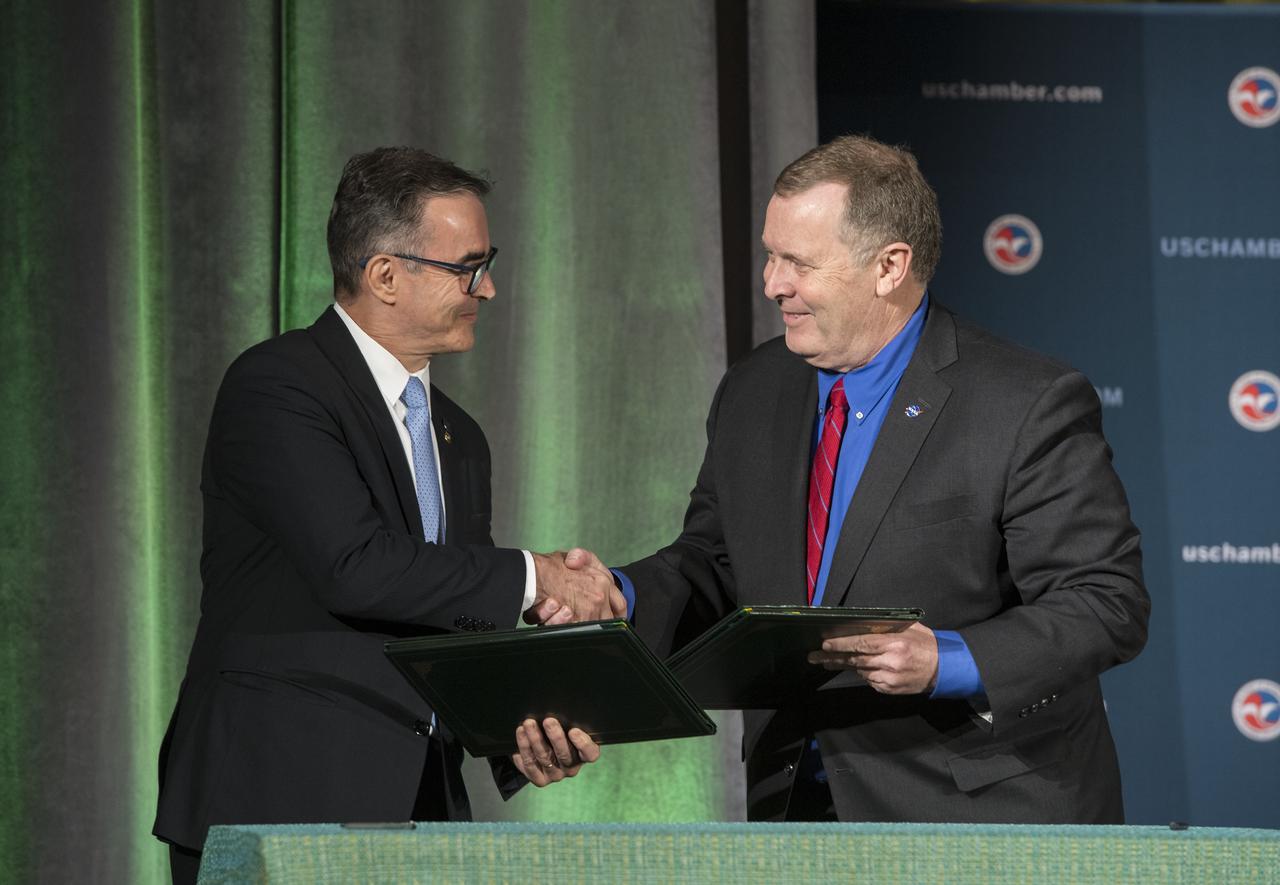
NASA Deputy Administrator James Morhard, right, shakes hands with President of the Brazilian Space Agency (AEB) Carlos Augusto Teixeira de Moura, left, after signing an agreement for cooperation on the Scintillation Prediction Observations Research Task (SPORT), an upcoming NASA-AEB heliophysics CubeSat partnership, Monday, March 18, 2019, at the U.S. Chamber of Commerce in Washington. The SPORT CubeSat will investigate two ionospheric phenomena, equatorial plasma bubbles and scintillation, that disrupt radio communication systems, satellite technologies, and Global Positioning System (GPS) signals. SPORT is currently projected to launch in the 2020 timeframe. Photo Credit: (NASA/ Aubrey Gemignani)
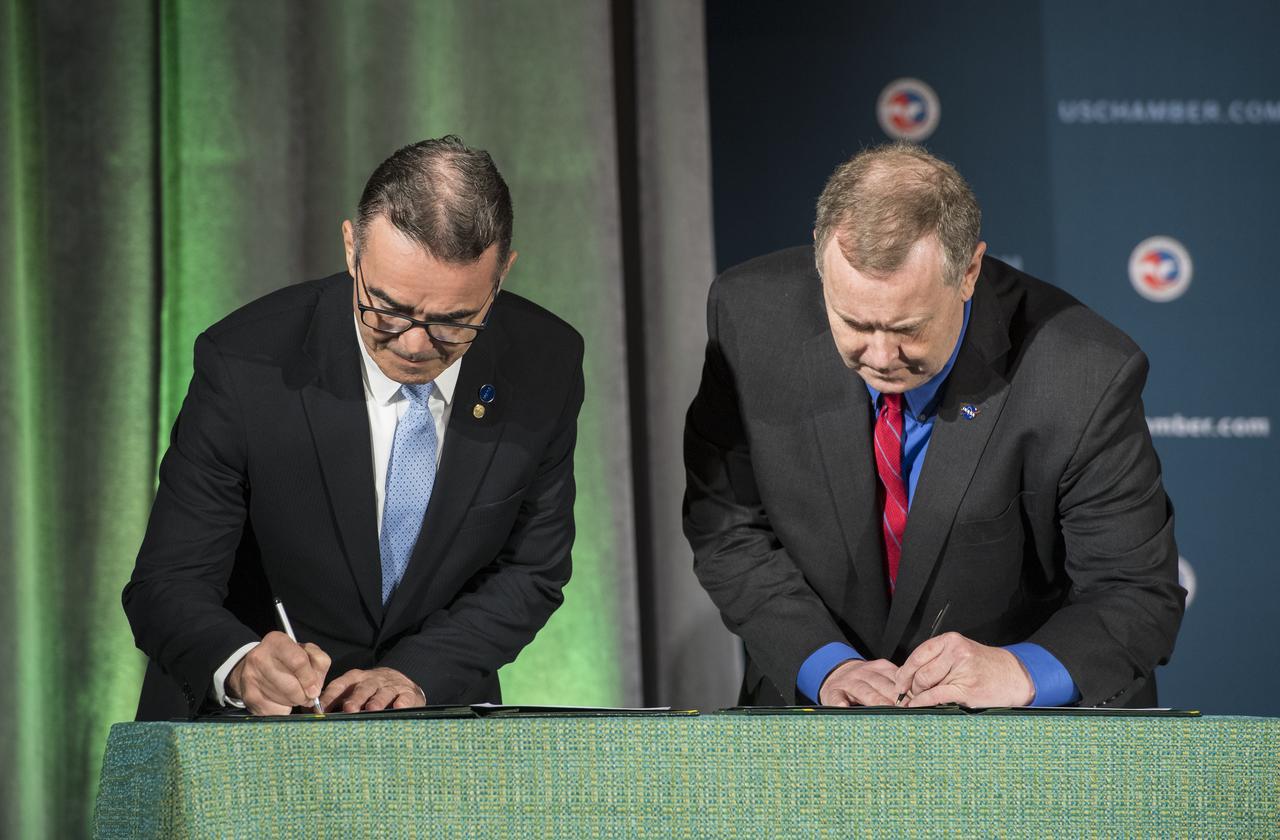
NASA Deputy Administrator James Morhard, right, and President of the Brazilian Space Agency (AEB) Carlos Augusto Teixeira de Moura, left, sign an agreement for cooperation on the Scintillation Prediction Observations Research Task (SPORT), an upcoming NASA-AEB heliophysics CubeSat partnership, Monday, March 18, 2019, at the U.S. Chamber of Commerce in Washington. The SPORT CubeSat will investigate two ionospheric phenomena, equatorial plasma bubbles and scintillation, that disrupt radio communication systems, satellite technologies, and Global Positioning System (GPS) signals. SPORT is currently projected to launch in the 2020 timeframe. Photo Credit: (NASA/ Aubrey Gemignani)
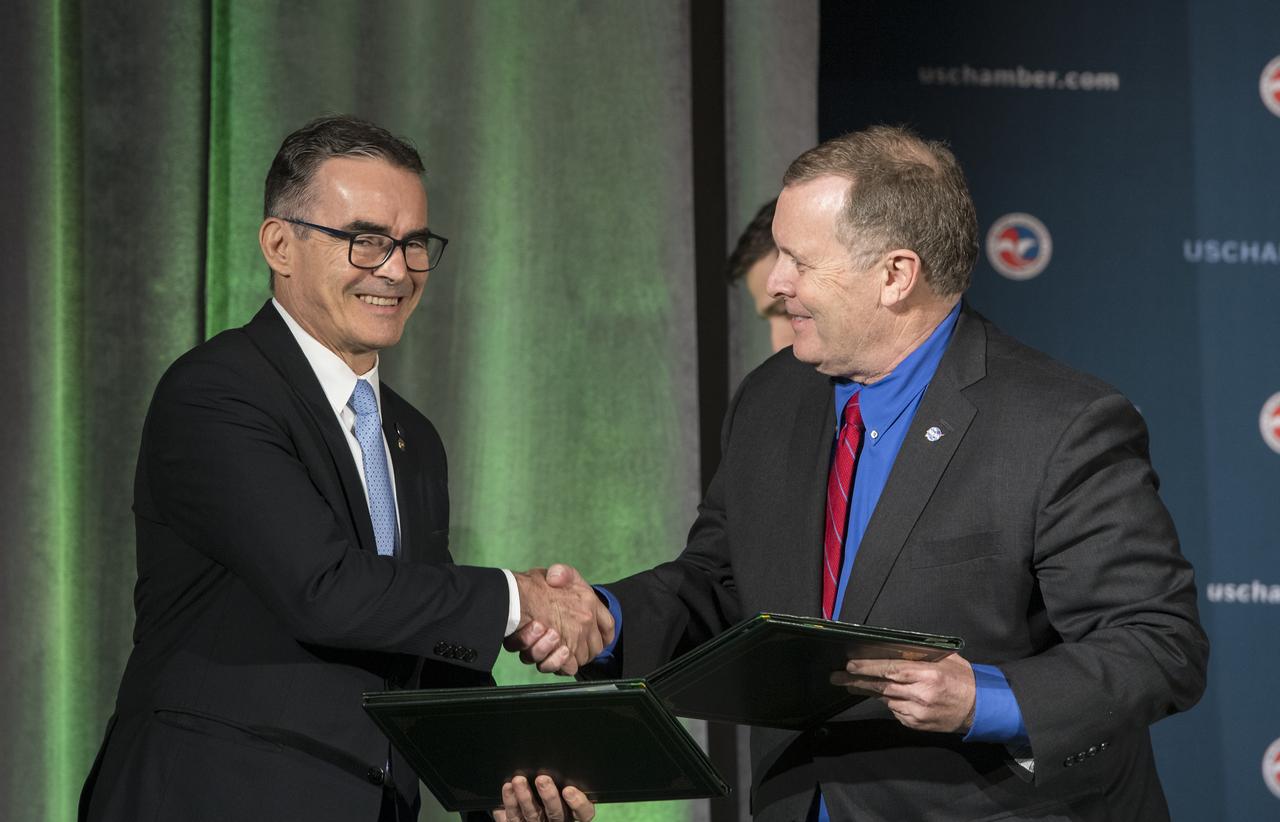
NASA Deputy Administrator James Morhard, right, shakes hands with President of the Brazilian Space Agency (AEB) Carlos Augusto Teixeira de Moura, left, after signing an agreement for cooperation on the Scintillation Prediction Observations Research Task (SPORT), an upcoming NASA-AEB heliophysics CubeSat partnership, Monday, March 18, 2019, at the U.S. Chamber of Commerce in Washington. The SPORT CubeSat will investigate two ionospheric phenomena, equatorial plasma bubbles and scintillation, that disrupt radio communication systems, satellite technologies, and Global Positioning System (GPS) signals. SPORT is currently projected to launch in the 2020 timeframe. Photo Credit: (NASA/ Aubrey Gemignani)
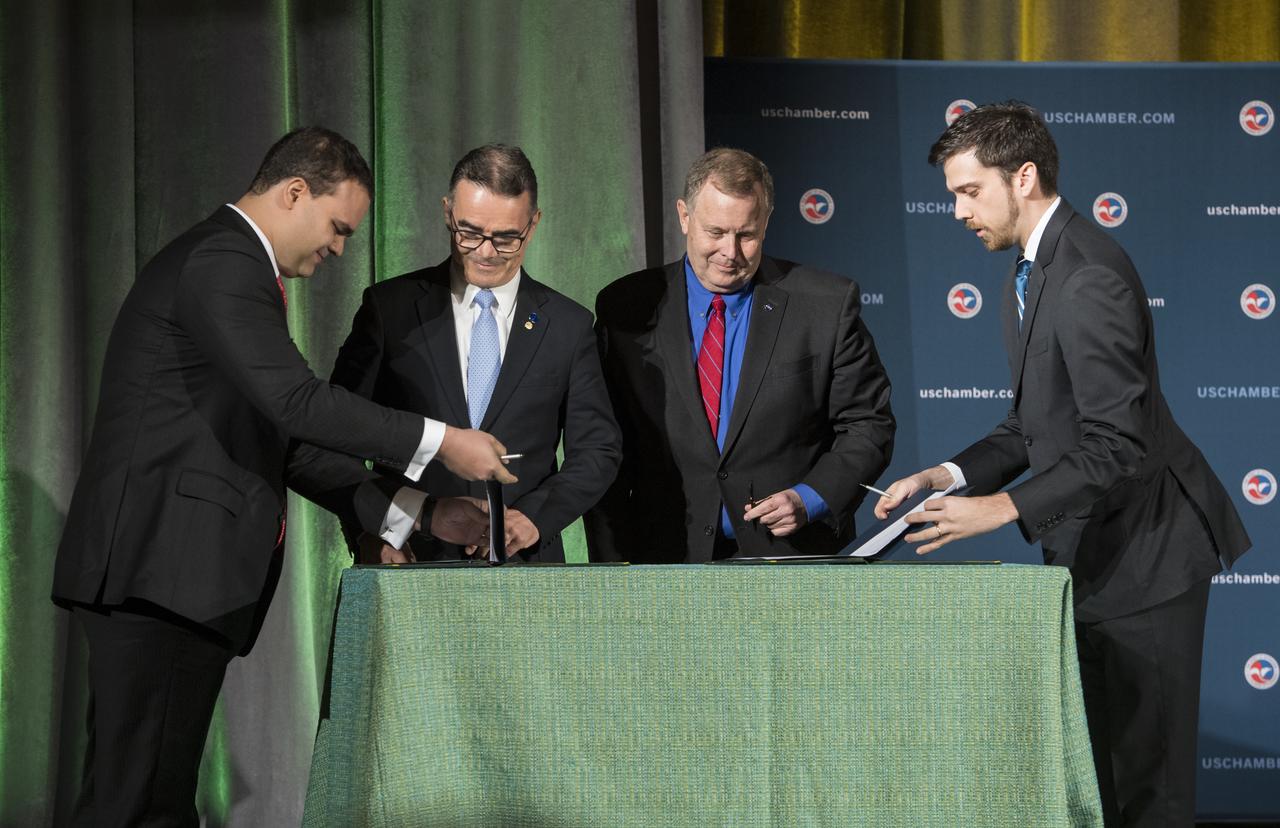
NASA Deputy Administrator James Morhard, center right, and President of the Brazilian Space Agency (AEB) Carlos Augusto Teixeira de Moura, center left, prepare to sign an agreement for cooperation on the Scintillation Prediction Observations Research Task (SPORT), an upcoming NASA-AEB heliophysics CubeSat partnership, Monday, March 18, 2019, at the U.S. Chamber of Commerce in Washington. The SPORT CubeSat will investigate two ionospheric phenomena, equatorial plasma bubbles and scintillation, that disrupt radio communication systems, satellite technologies, and Global Positioning System (GPS) signals. SPORT is currently projected to launch in the 2020 timeframe. Photo Credit: (NASA/ Aubrey Gemignani)

National Weather Service Director Louis Uccellini and deputy director Mary Erickson hear from Short-term Prediction Research and Transition (SPoRT) team members during a visit Sept. 11 to the National Space Science and Technology Center. Managed by NASA’s Marshall Space Flight Center, SPoRT is a project to transition unique Earth observations and research capabilities to the operational weather community to improve short-term forecasts on a regional scale.

National Weather Service Director Louis Uccellini and deputy director Mary Erickson hear from Short-term Prediction Research and Transition (SPoRT) team members during a visit Sept. 11 to the National Space Science and Technology Center. Managed by NASA’s Marshall Space Flight Center, SPoRT is a project to transition unique Earth observations and research capabilities to the operational weather community to improve short-term forecasts on a regional scale.

National Weather Service Director Louis Uccellini and deputy director Mary Erickson hear from Short-term Prediction Research and Transition (SPoRT) team members during a visit Sept. 11 to the National Space Science and Technology Center. Managed by NASA’s Marshall Space Flight Center, SPoRT is a project to transition unique Earth observations and research capabilities to the operational weather community to improve short-term forecasts on a regional scale.
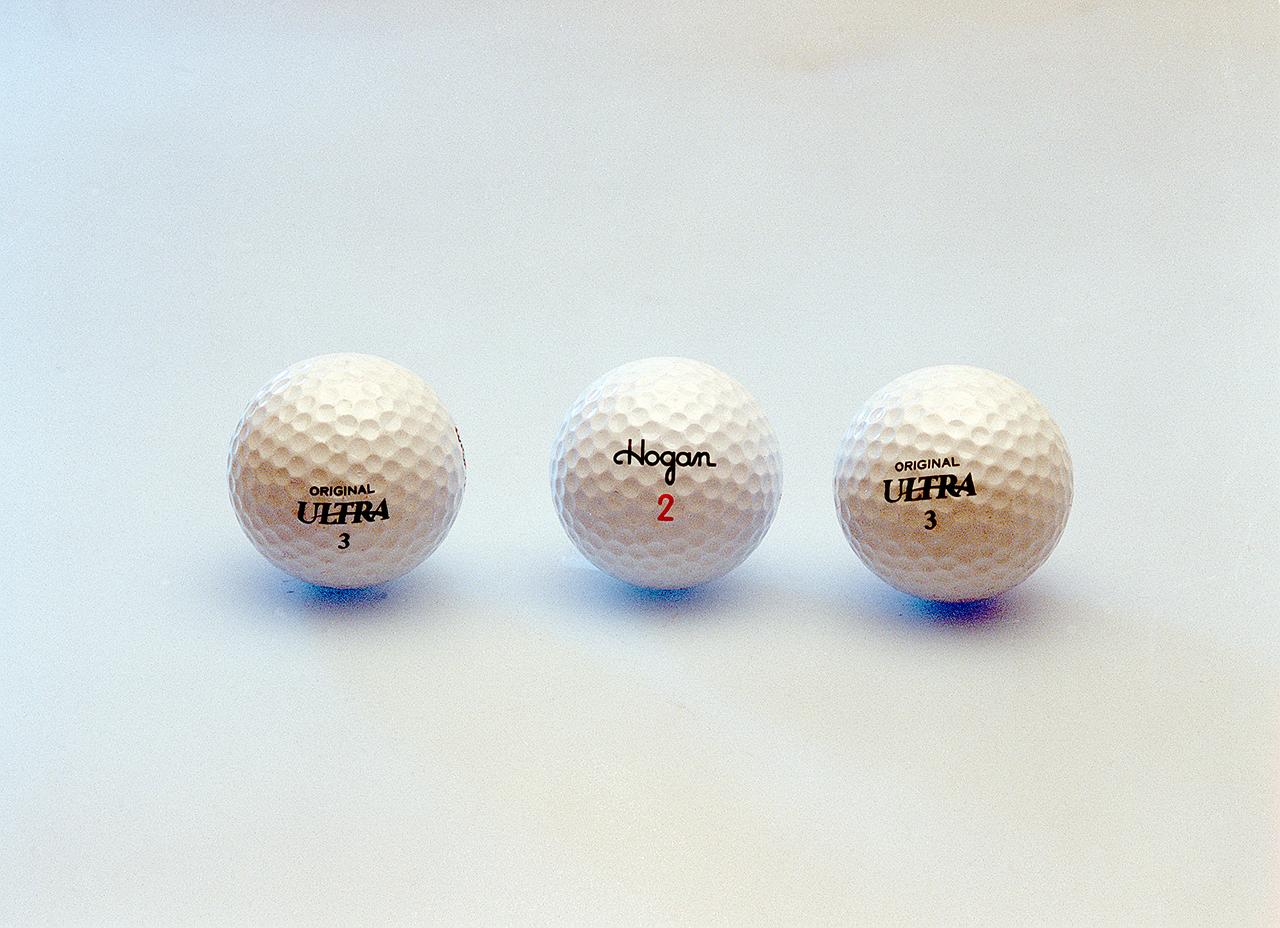
The Ultra 500 Series golf balls, introduced in 1995 by Wilson Sporting Goods Company, has 500 dimples arranged in a pattern of 60 spherical triangles. The design employs NASA's aerodynamics technology analysis of air loads of the tank and Shuttle orbiter that was performed under the Space Shuttle External Tank program. According to Wilson, this technology provides "the most symmetrical ball surface available, sustaining initial velocity longer and producing the most stable ball flight for unmatched accuracy and distance." The dimples are in three sizes, shapes and depths mathematically positioned for the best effect. The selection of dimples and their placement optimizes the interaction of opposing forces of lift and drag. Large dimples reduce air drag, enhance lift, and maintain spin for distance. Small dimples prevent excessive lift that destabilizes the ball flight and the medium size dimples blend the other two.
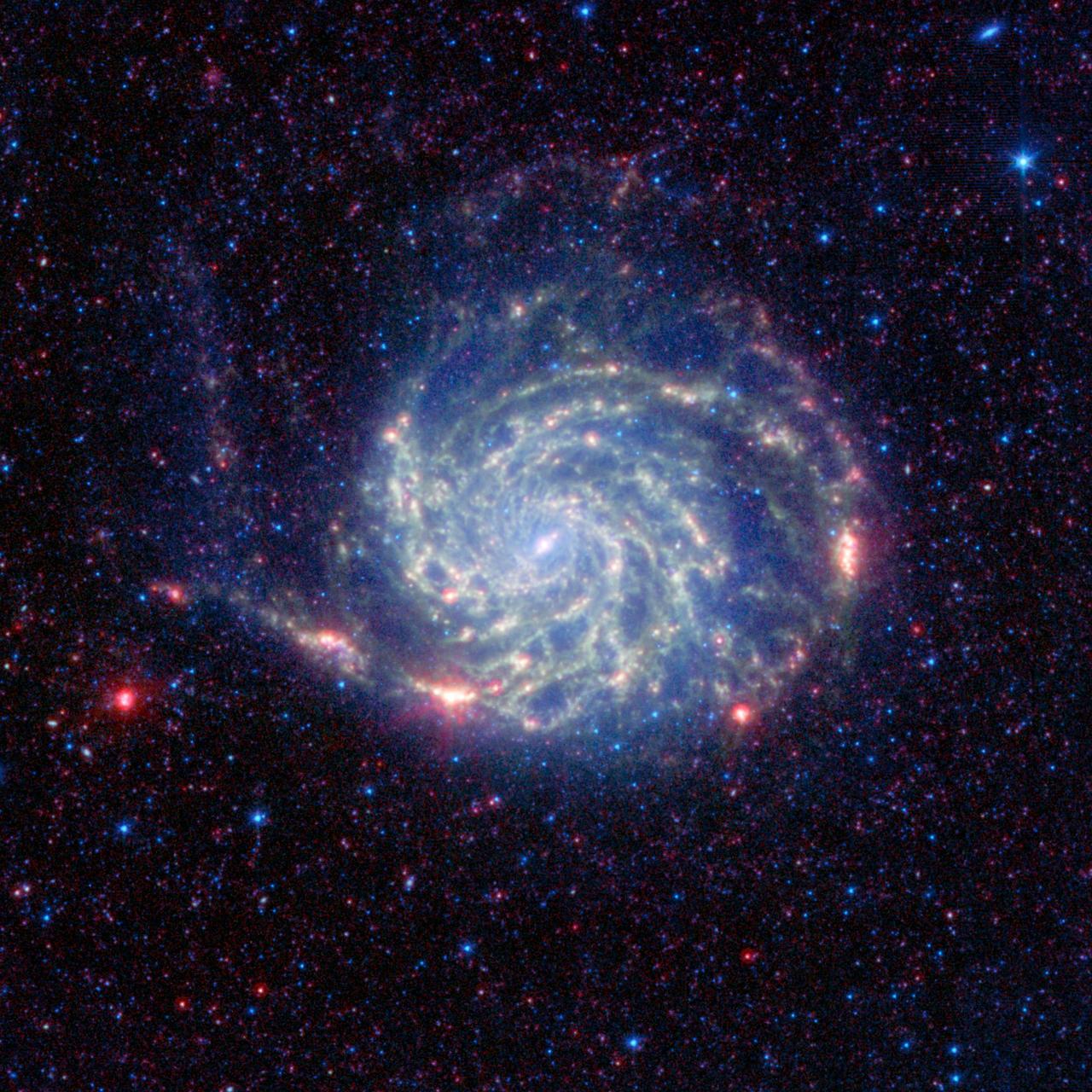
The Pinwheel galaxy, otherwise known as Messier 101, sports bright reddish edges in this new infrared image from NASA Spitzer Space Telescope.
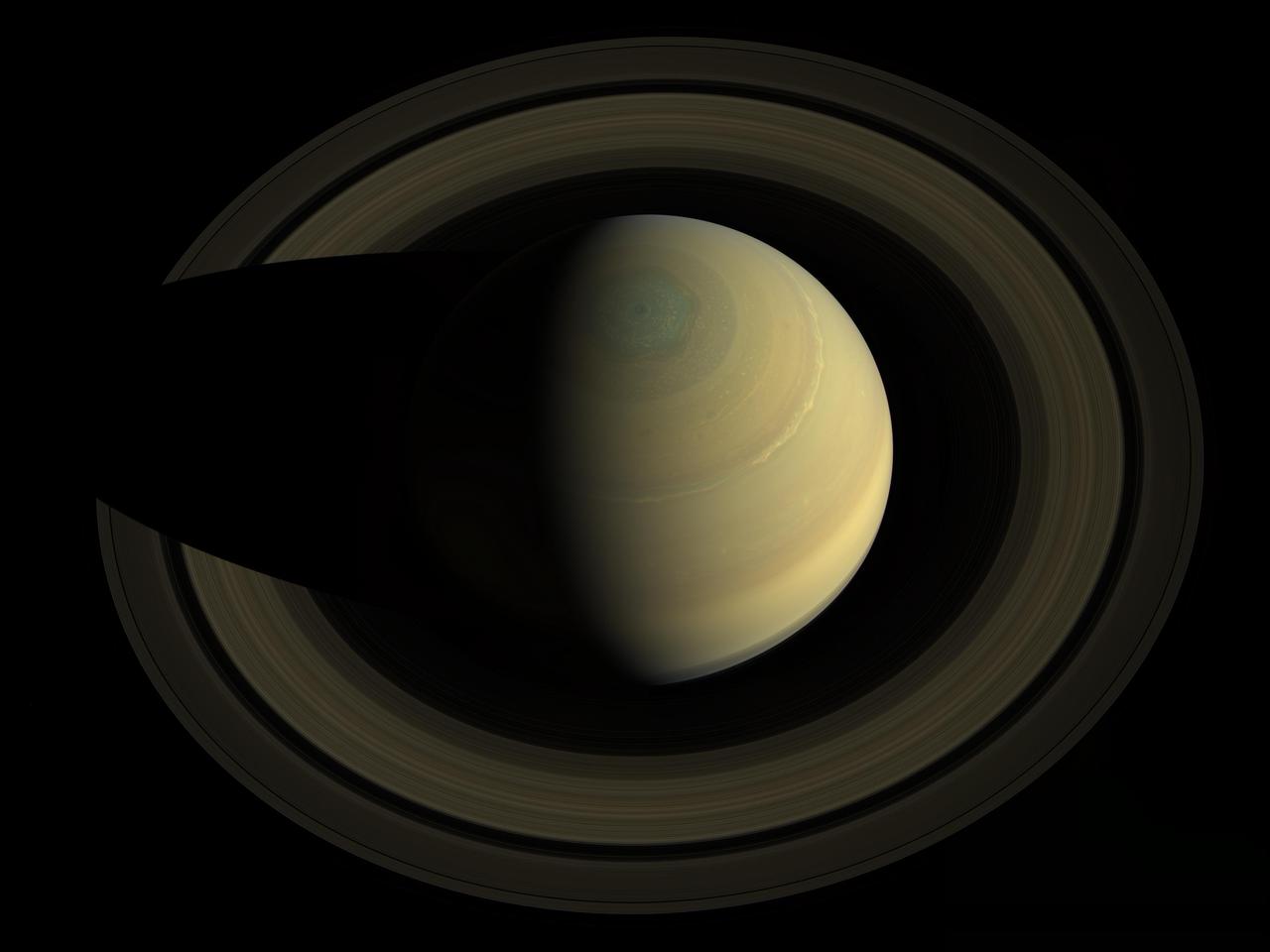
A swing high above Saturn by NASA Cassini spacecraft revealed this stately view of the golden-hued planet and its main rings. Saturn sports differently colored bands of weather in this image.
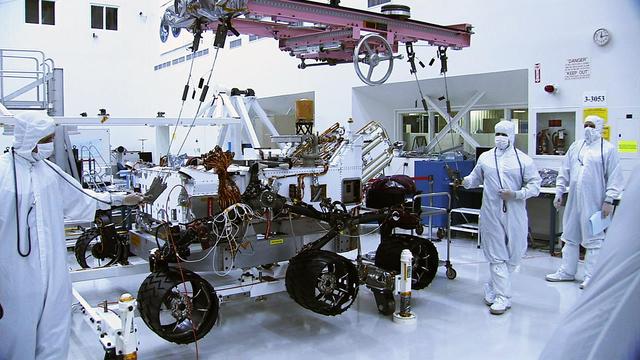
In this picture, the Curiosity rover sports a set of six new wheels. The wheels were installed on June 28 and 29 in the Spacecraft Assembly Facility at NASA Jet Propulsion Laboratory, Pasadena, Calif.
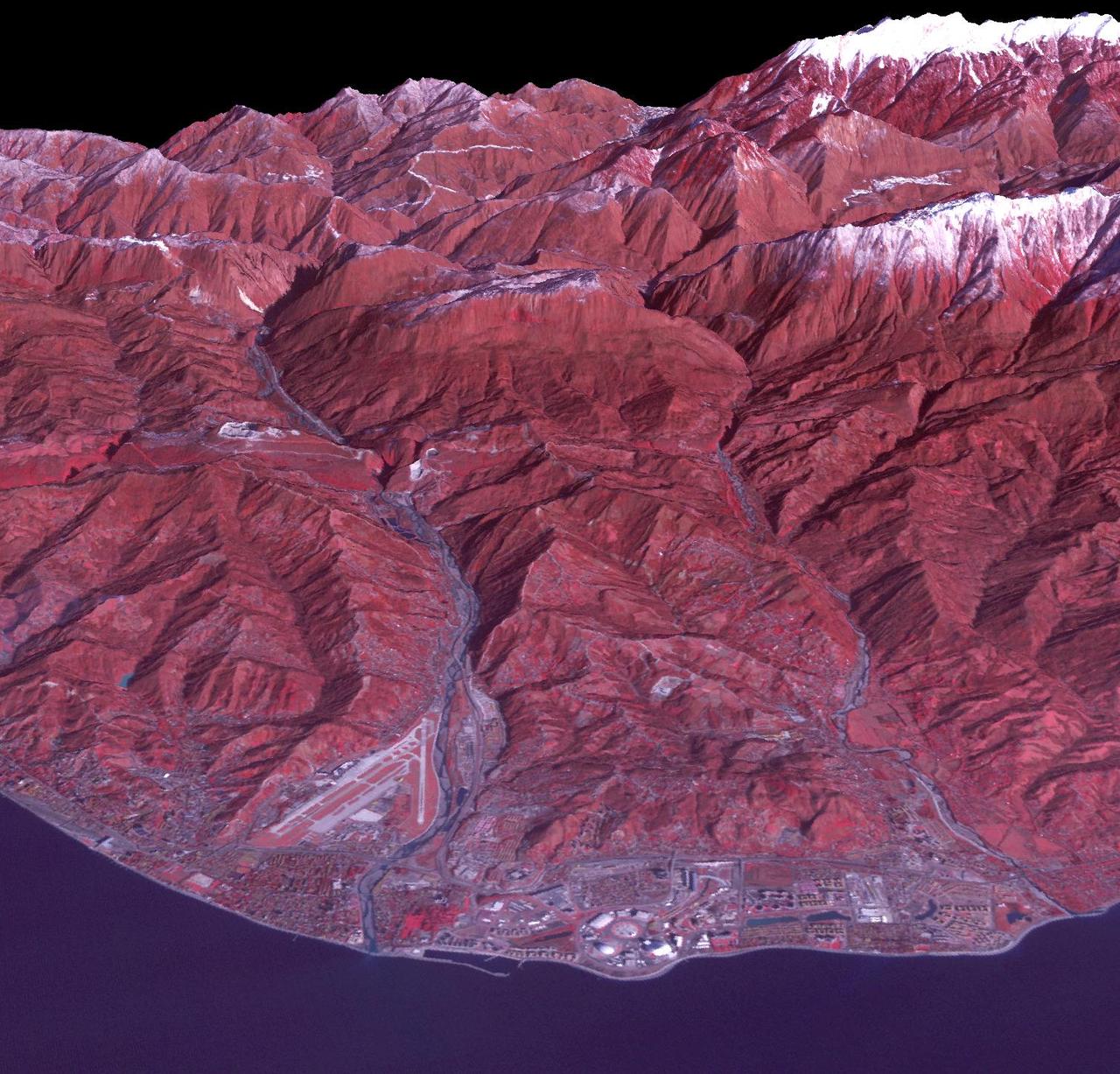
This image acquired by NASA Terra spacecraft shows the Sochi Olympic Park Coastal Cluster, the circular area on the shoreline in the bottom center of the image, which was built for Olympic indoor sports.
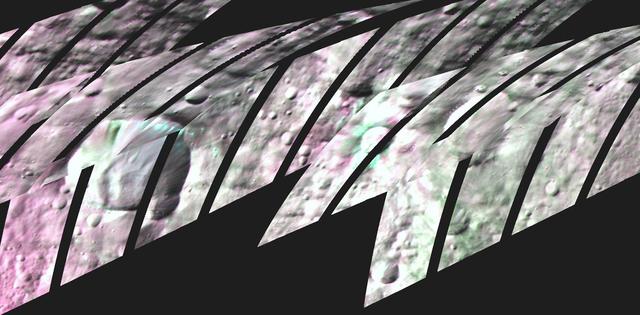
This image shows infrared views of two craters,Bellicia left and Arruntia right, at the giant asteroid Vesta that NASA Dawn mission has found to sport the mineral olivine.
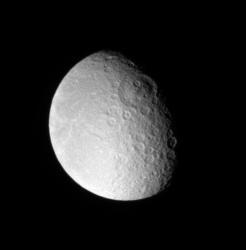
Rhea sports an immense impact scar on its leading hemisphere, like several other major Saturnian moons. The impact basin, seen above center on the day-night dividing line, or terminator, is named Tirawa

Recruiting Brochure: Shot of Bay Area Sports Activities 1979-1995
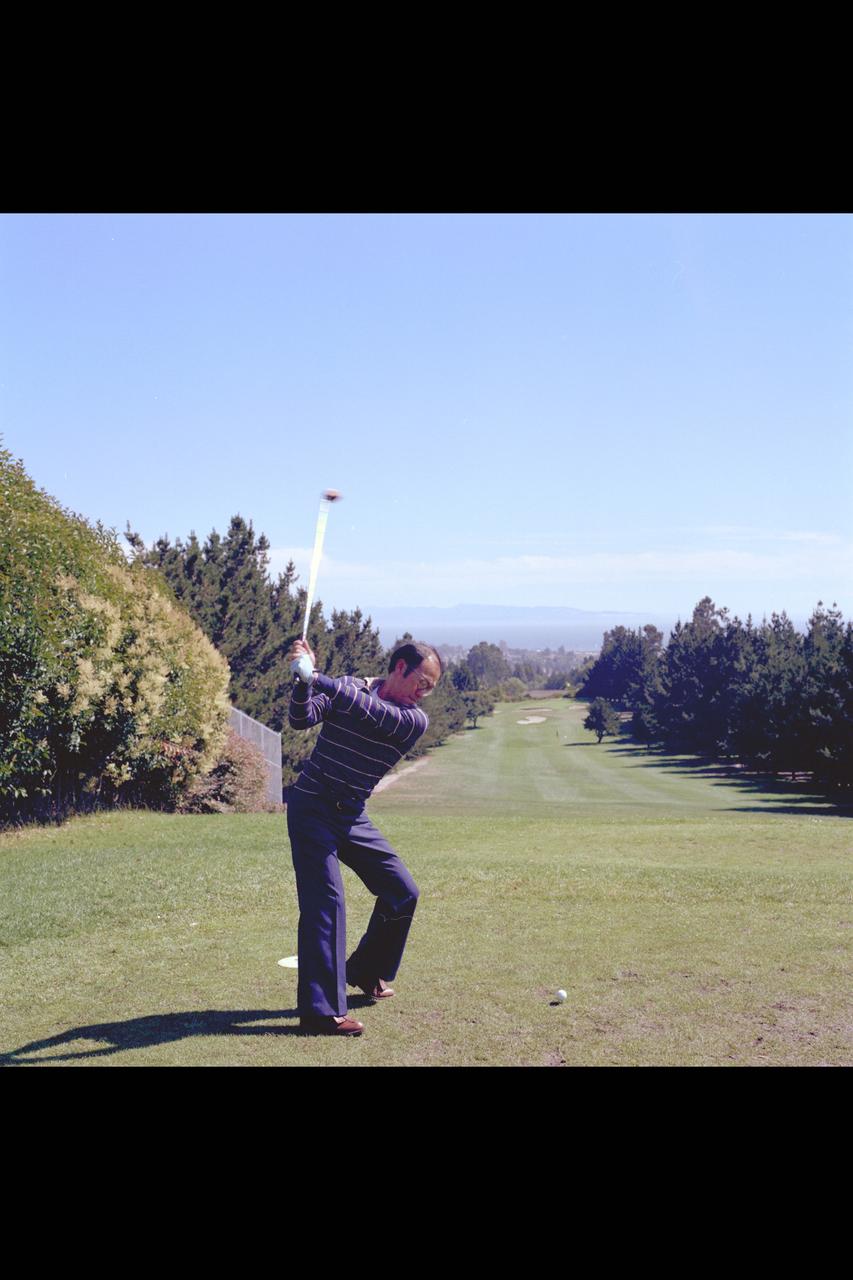
Shot of Bay Area Sports Activities for Ames Recruiting brochures 1979-1995
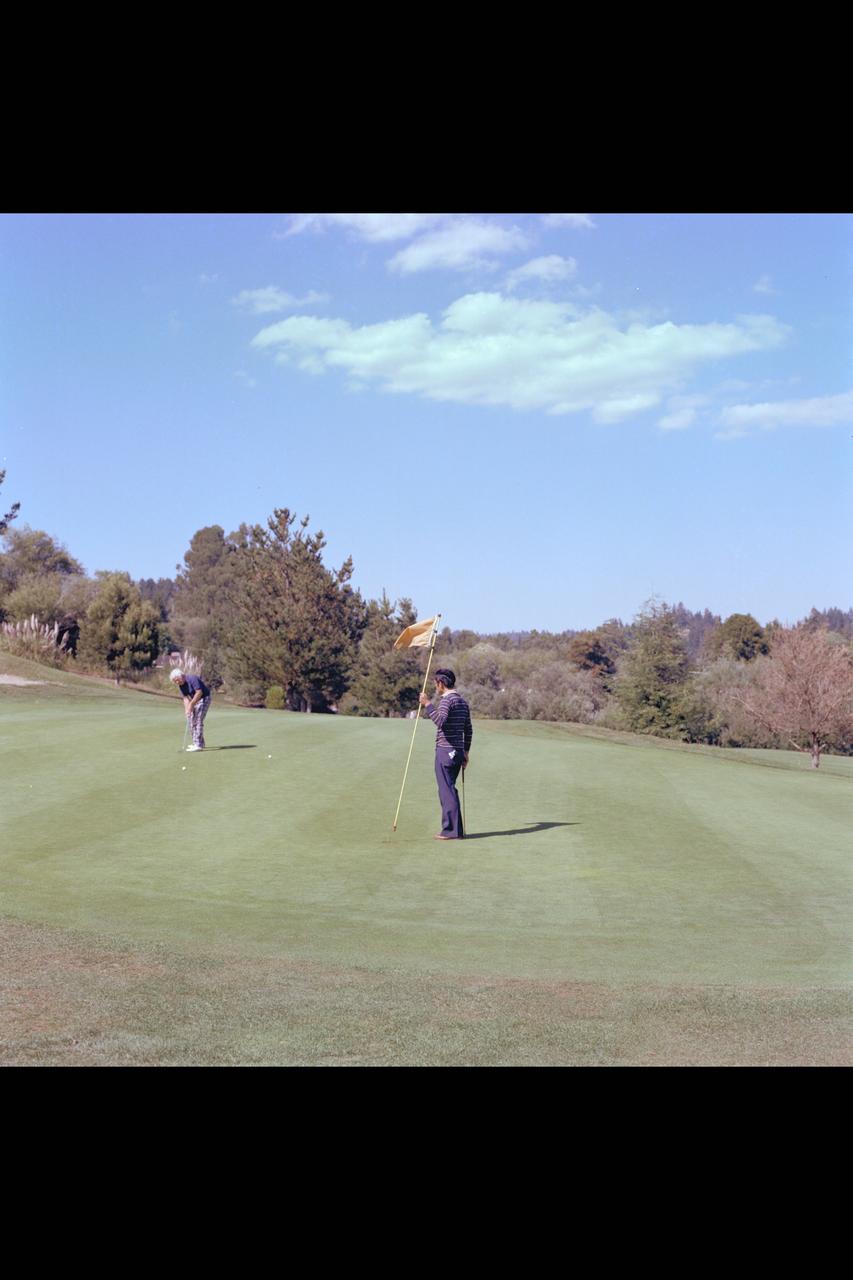
Shot of Bay Area Sports Activities for Ames Recruiting brochures 1979-1995
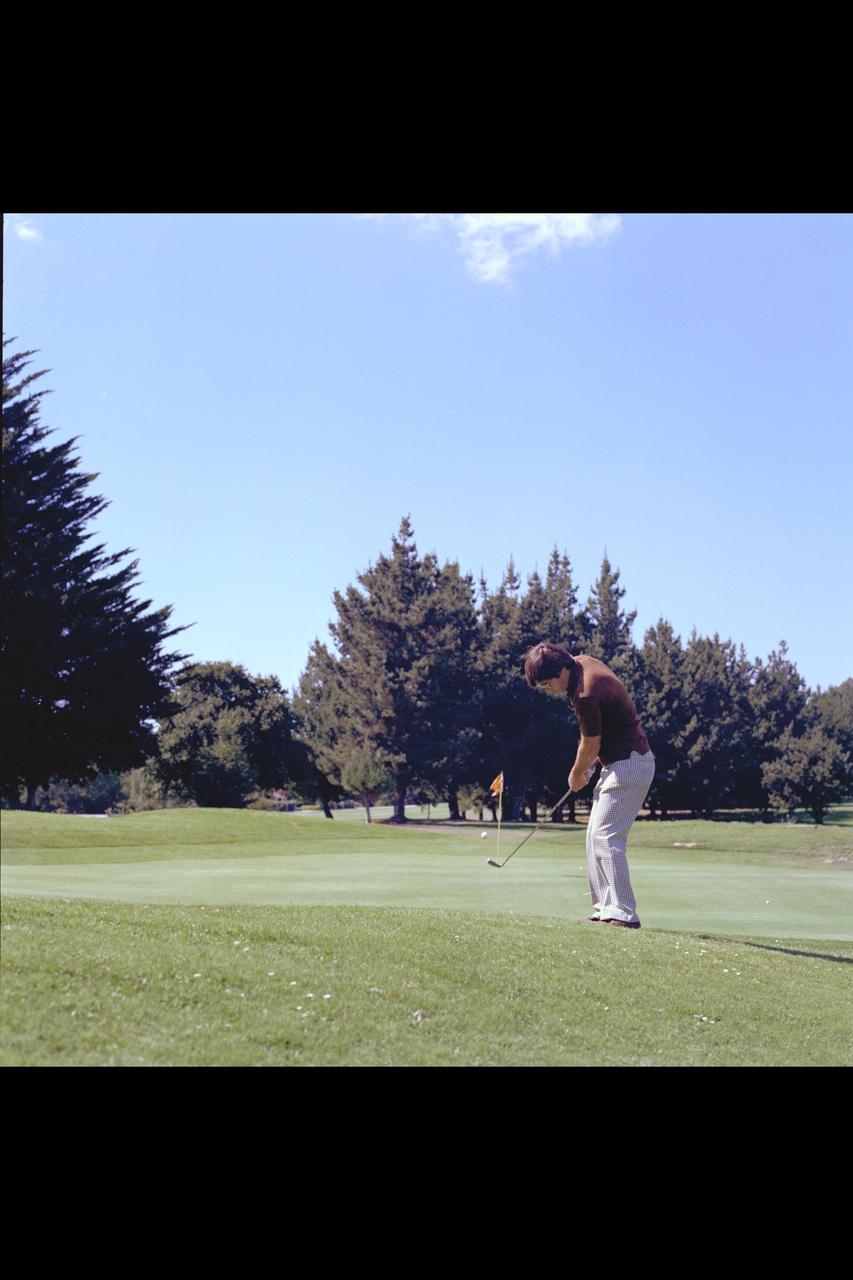
Recruiting Brochure: Shot of Bay Area Sports Activities 1979-1995
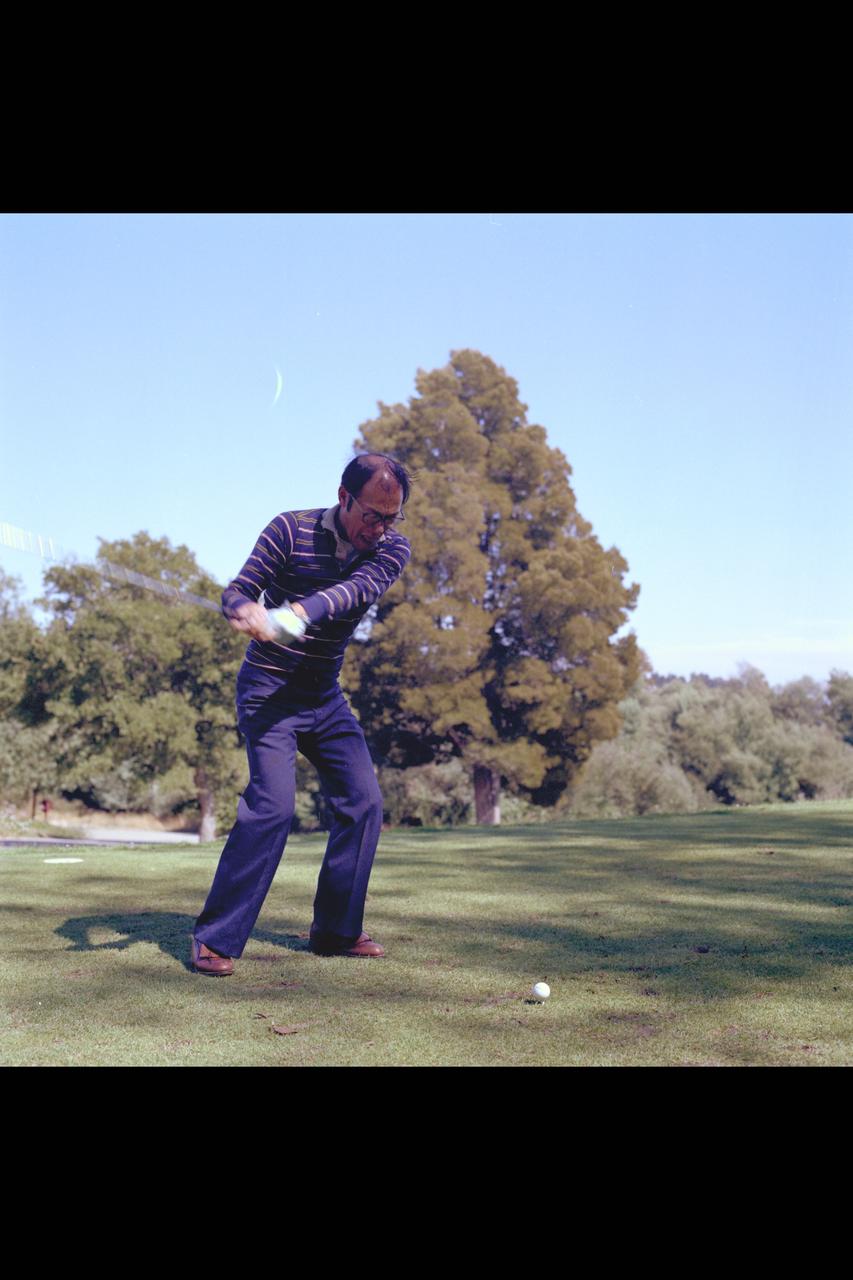
Recruiting Brochure: Shot of Bay Area Sports Activities 1979-1995
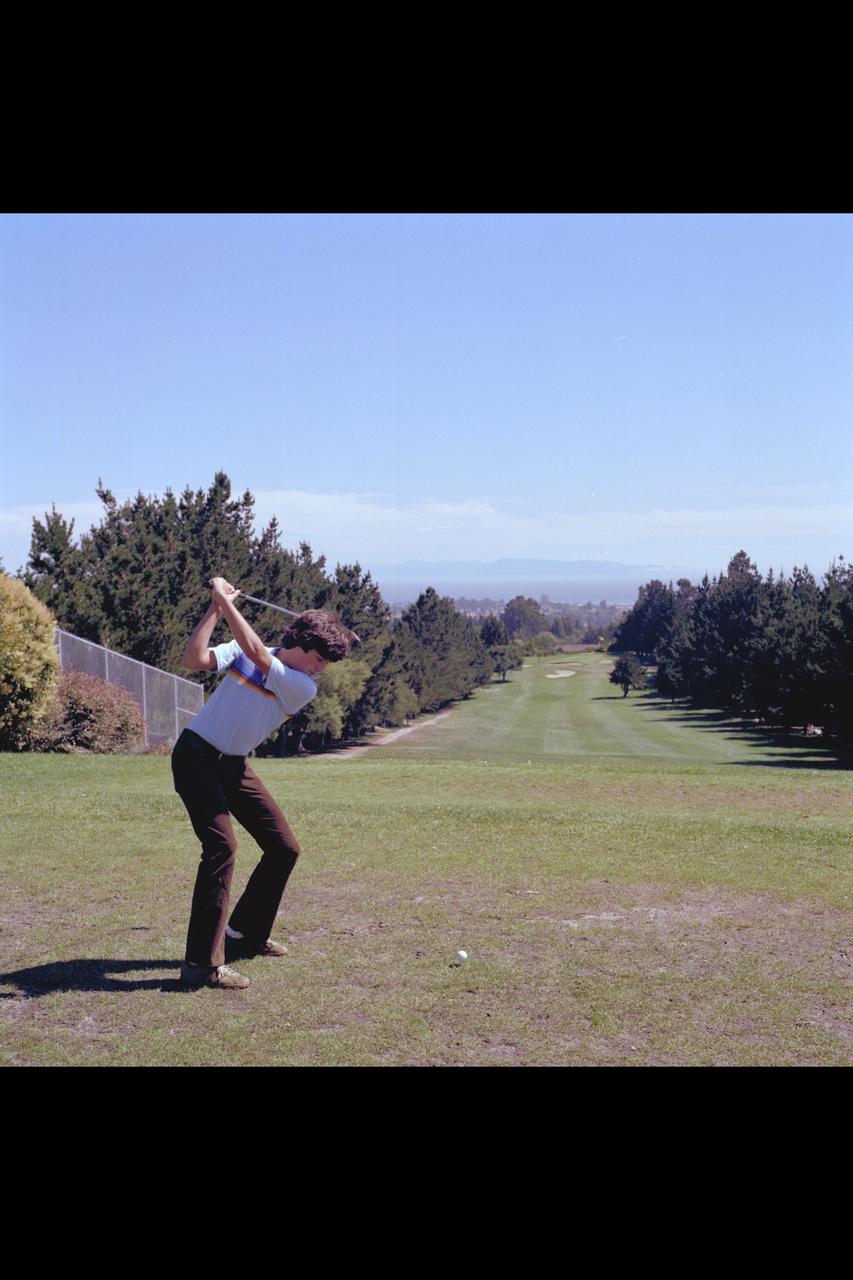
Recruiting Brochure: Shot of Bay Area Sports Activities 1979-1995
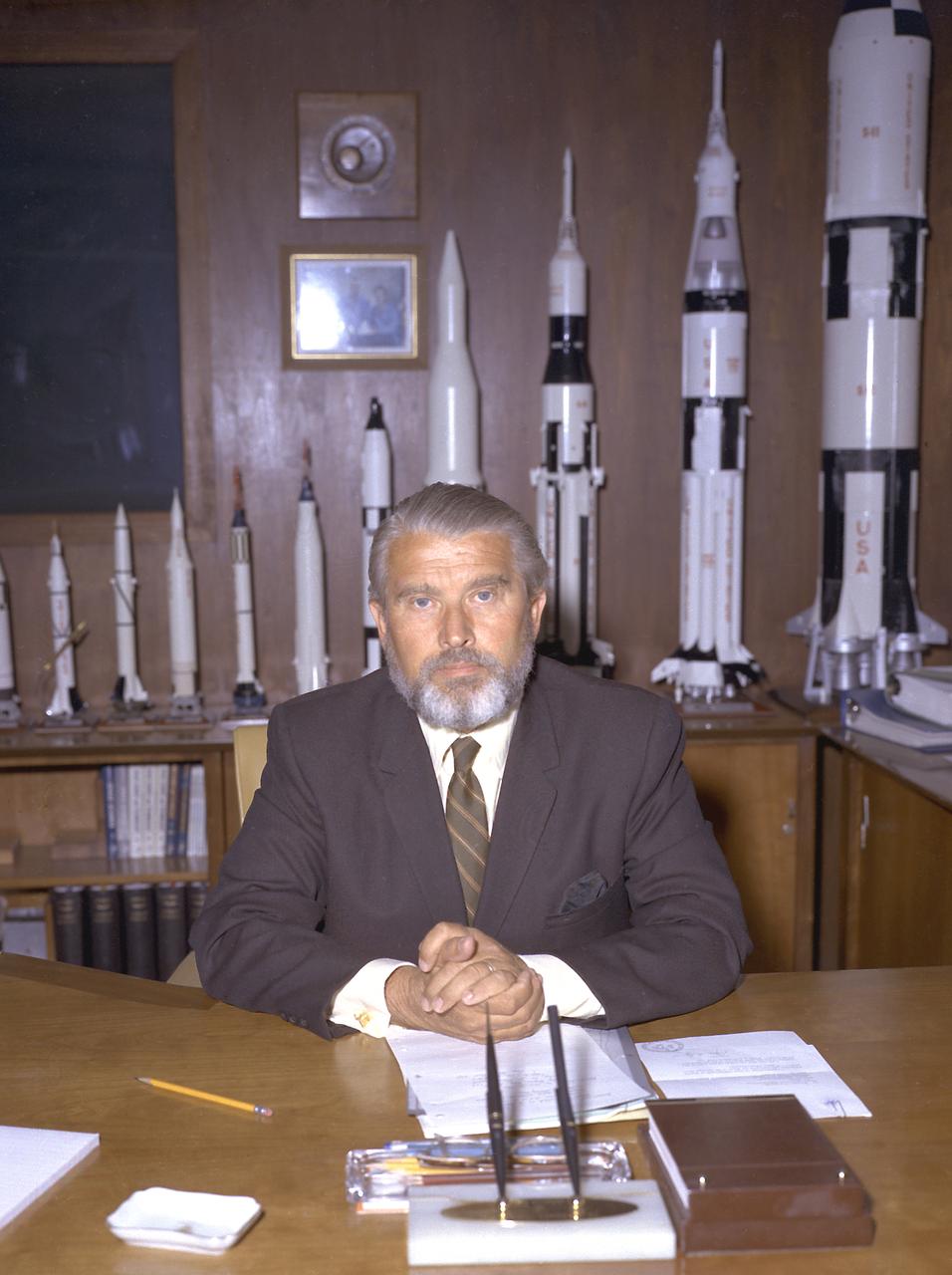
Upon return from a Bahamas vacation, Dr. von Braun pulled a practical joke upon his associates by sporting a beard.
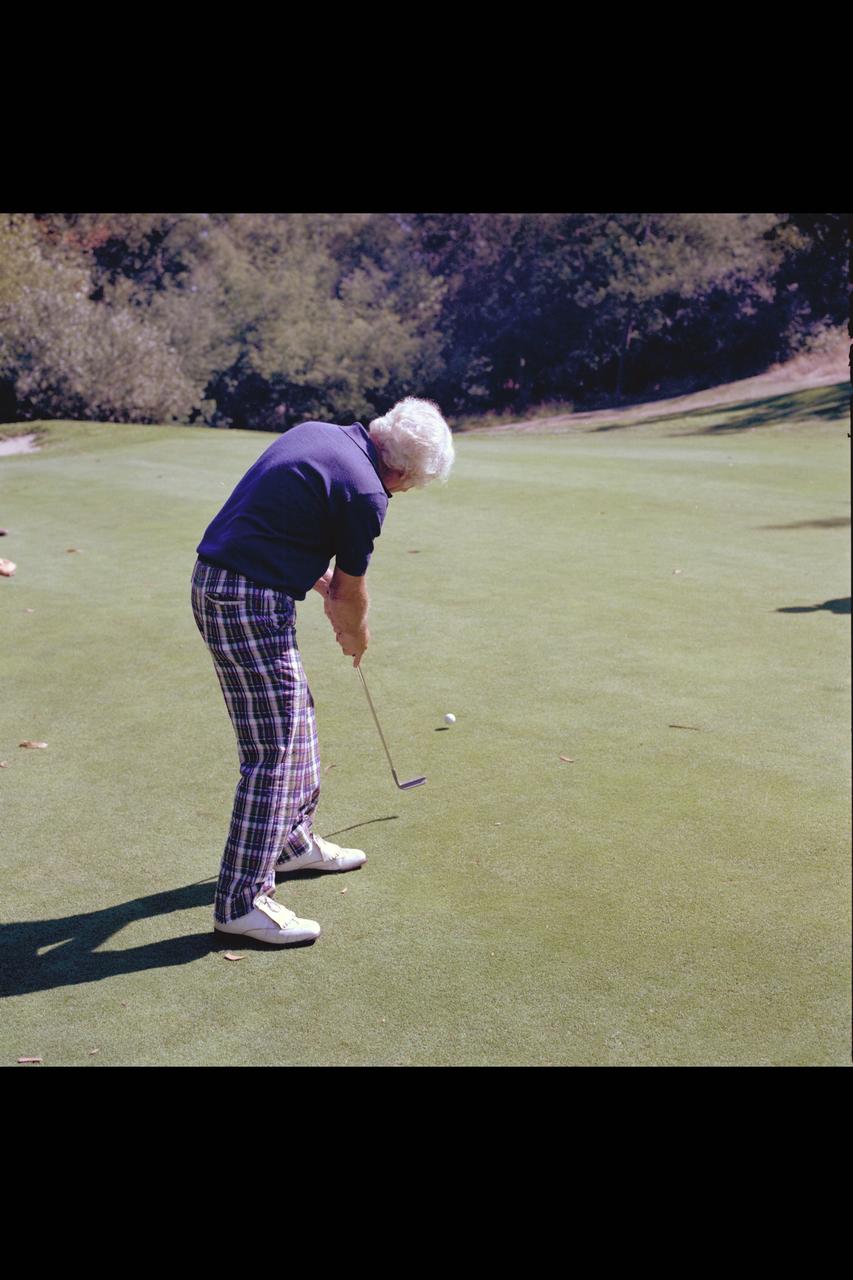
Recruiting Brochure: Shot of Bay Area Sports Activities 1979-1995 (Joe March)
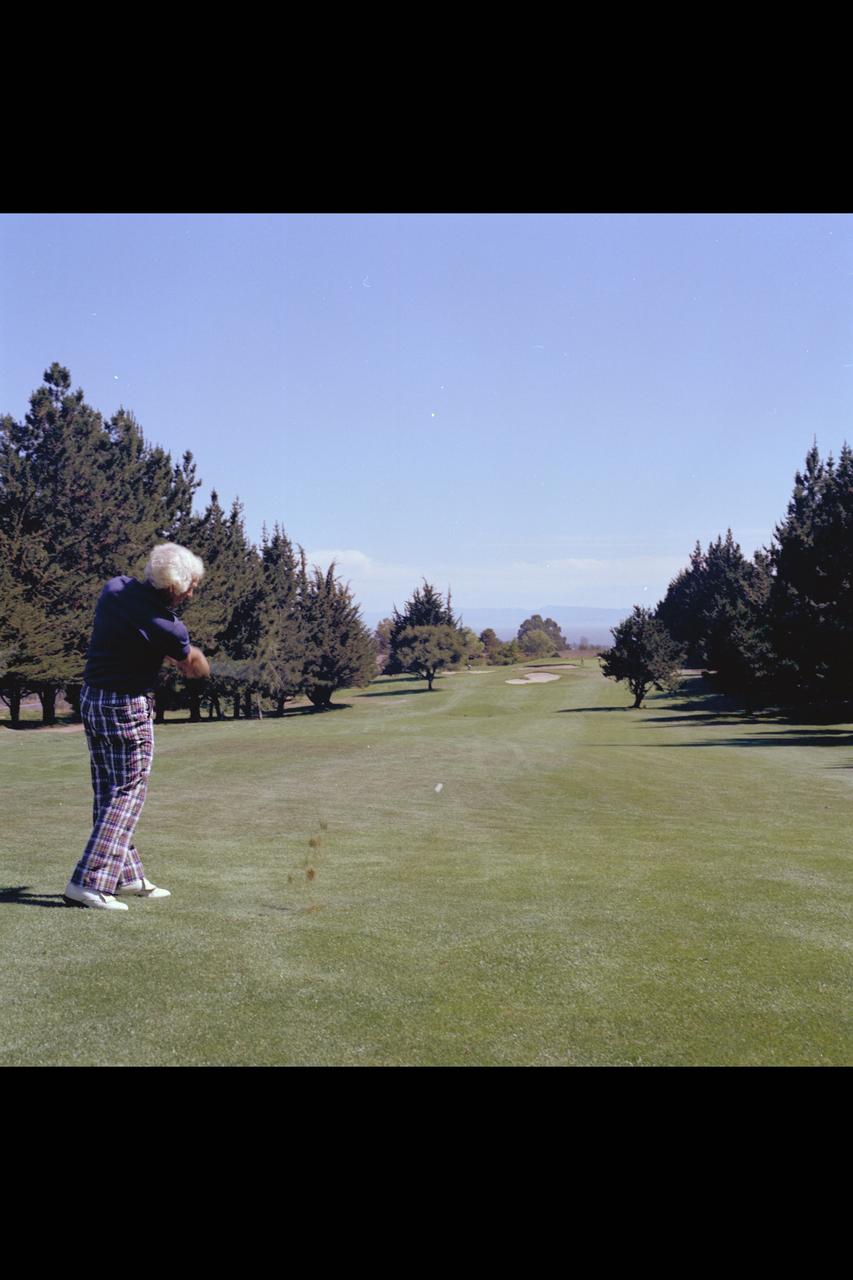
Recruiting Brochure: Shot of Bay Area Sports Activities 1979-1995 (Joe March at Moffett Golf Course)
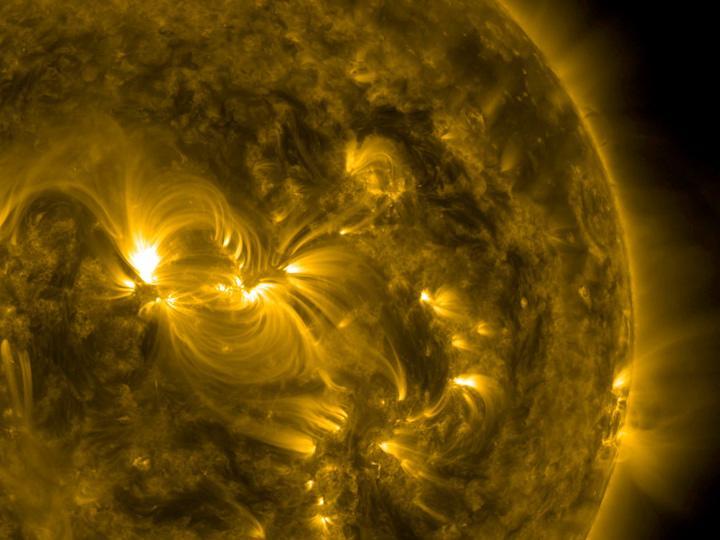
One broad active region sported a wonderful example of coiled magnetic field lines over almost a four-day period (July 15-18, 2016). The magnetic lines are easily visible in this 171 Angstrom wavelength of extreme ultraviolet light be cause charged particles are spiraling along the lines. The active region is a hotbed of struggling magnetic forces that were pushing out above the sun's surface. http://photojournal.jpl.nasa.gov/catalog/PIA17911
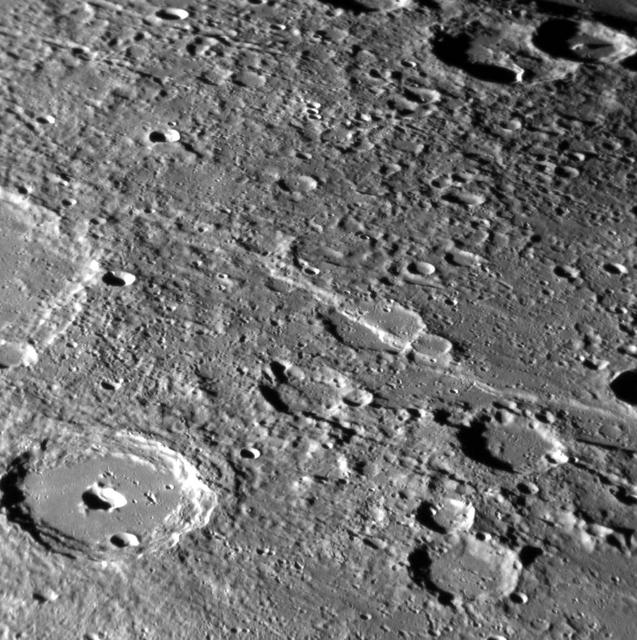
Lessing crater can be seen in the lower left of this image. Instead of the typical central peak found in a complex crater on Mercury, Lessing sports a central pit, likely formed by volcanic activity. A large tectonic scarp that formed when the planet's interior cooled and contracted can be seen running through a crater near the center of the image. http://photojournal.jpl.nasa.gov/catalog/PIA19276
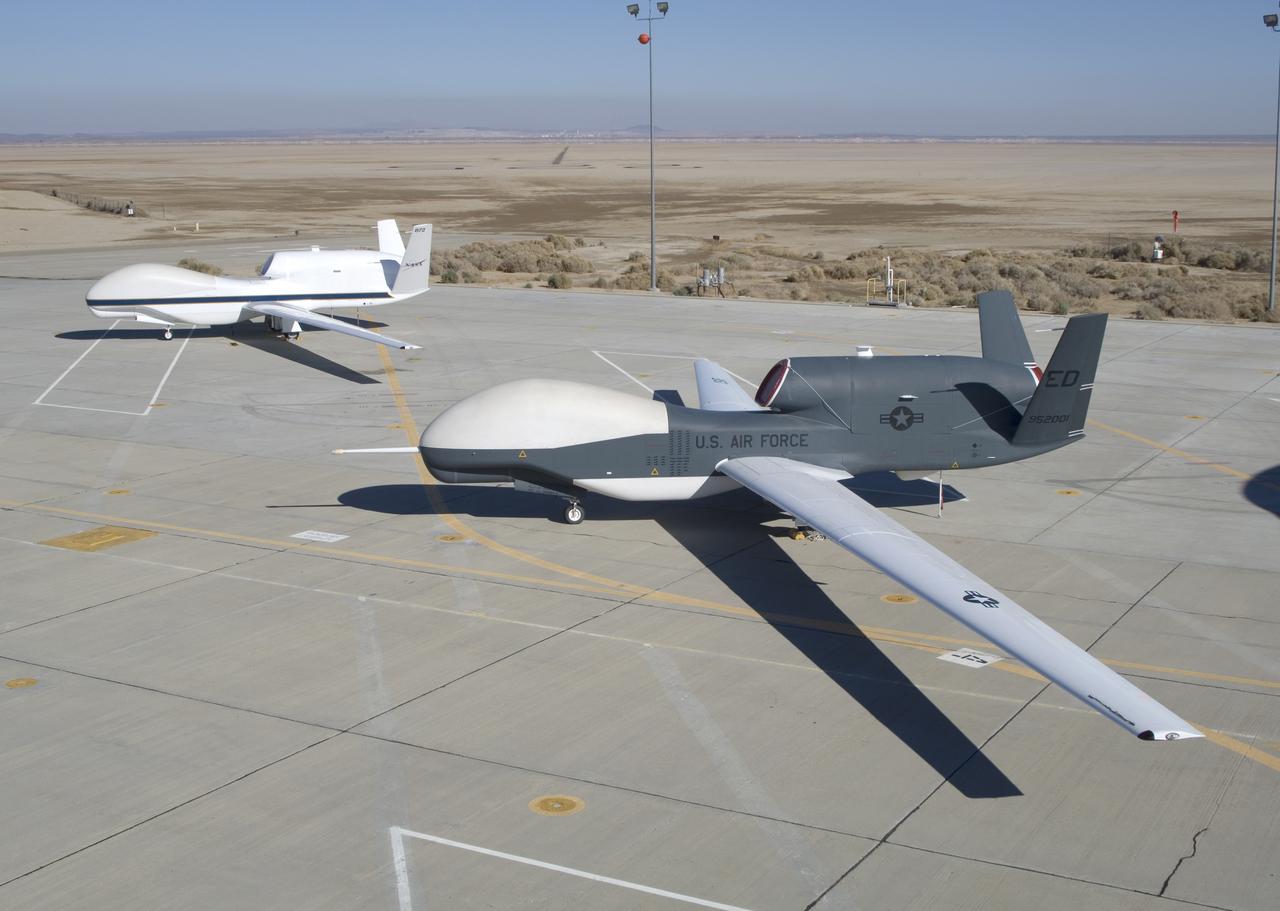
NASA's two Global Hawks, one sporting a NASA paint scheme, the other in its prior Air Force livery, are shown on the ramp at the Dryden Flight Research Center.
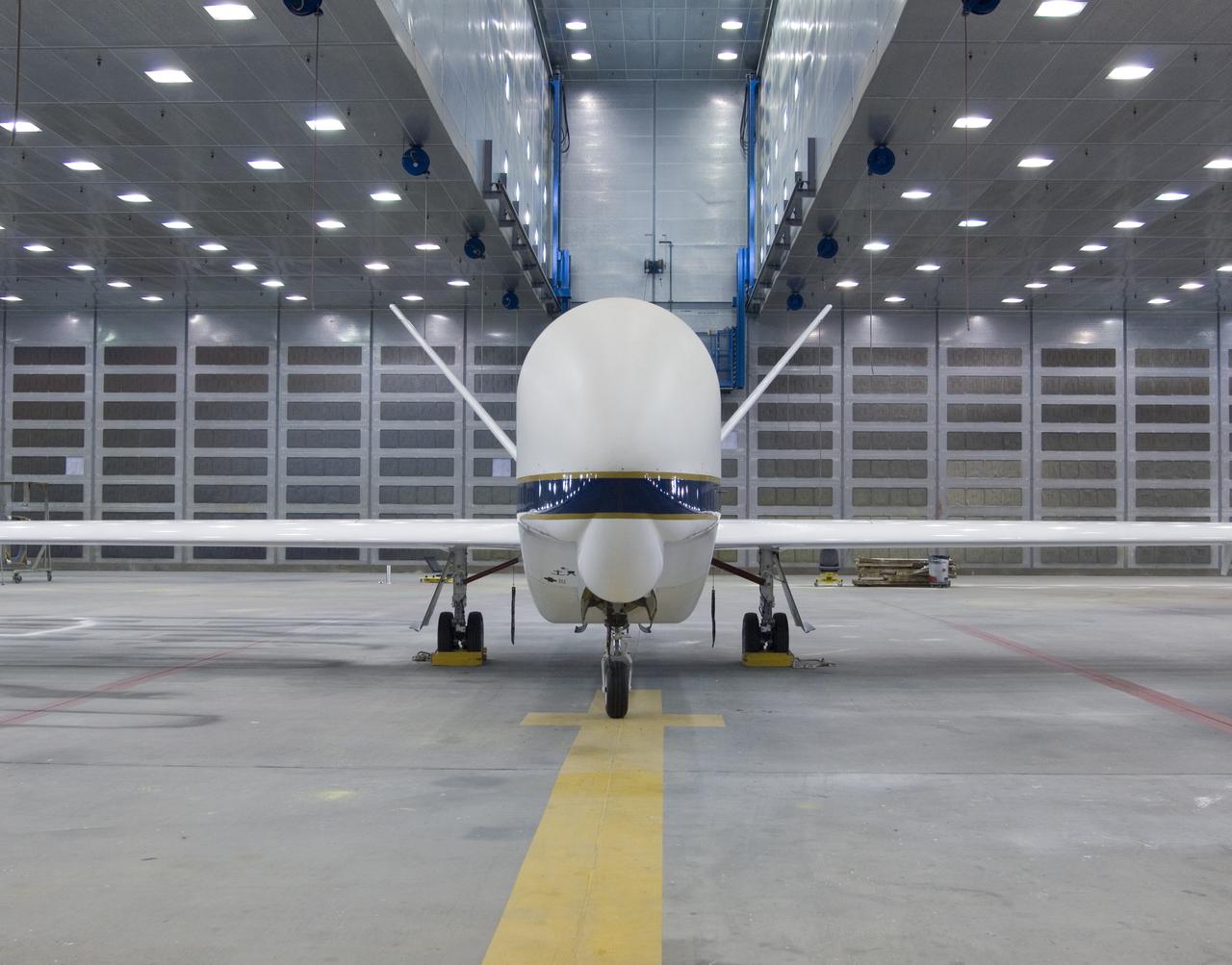
The bulbous nose of one of NASA's Global Hawk unmanned aircraft sports a blue-and-white paint scheme after repainting in the Edwards Air Force Base paint shop.
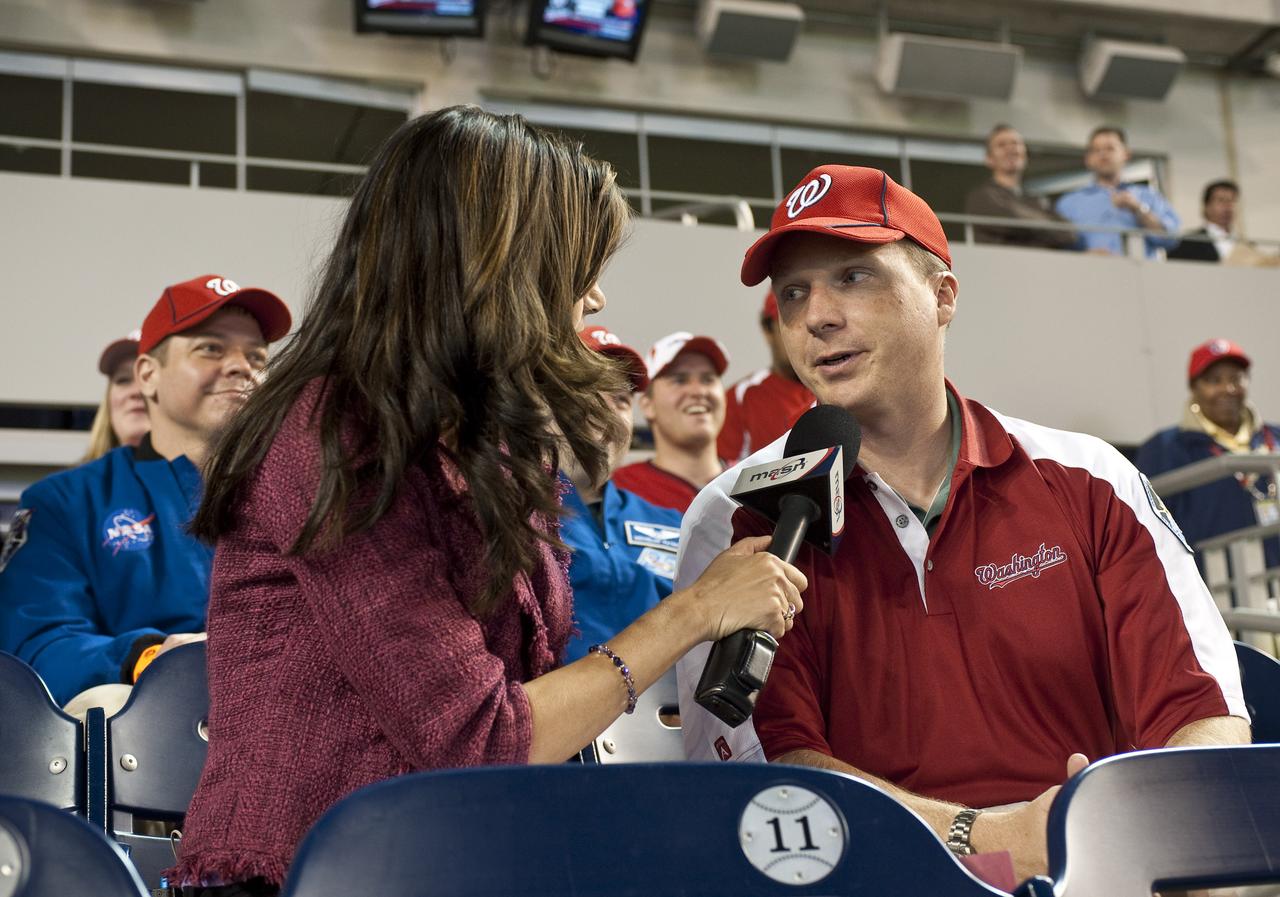
NASA STS-130 Pilot Terry Virts, right, is interviewed by Mid-Atlantic Sports Network (MASN) reporter Debbie Taylor at Nationals Park Tuesday, April 20, 2010, in Washington. Photo Credit: (NASA/Carla Cioffi)
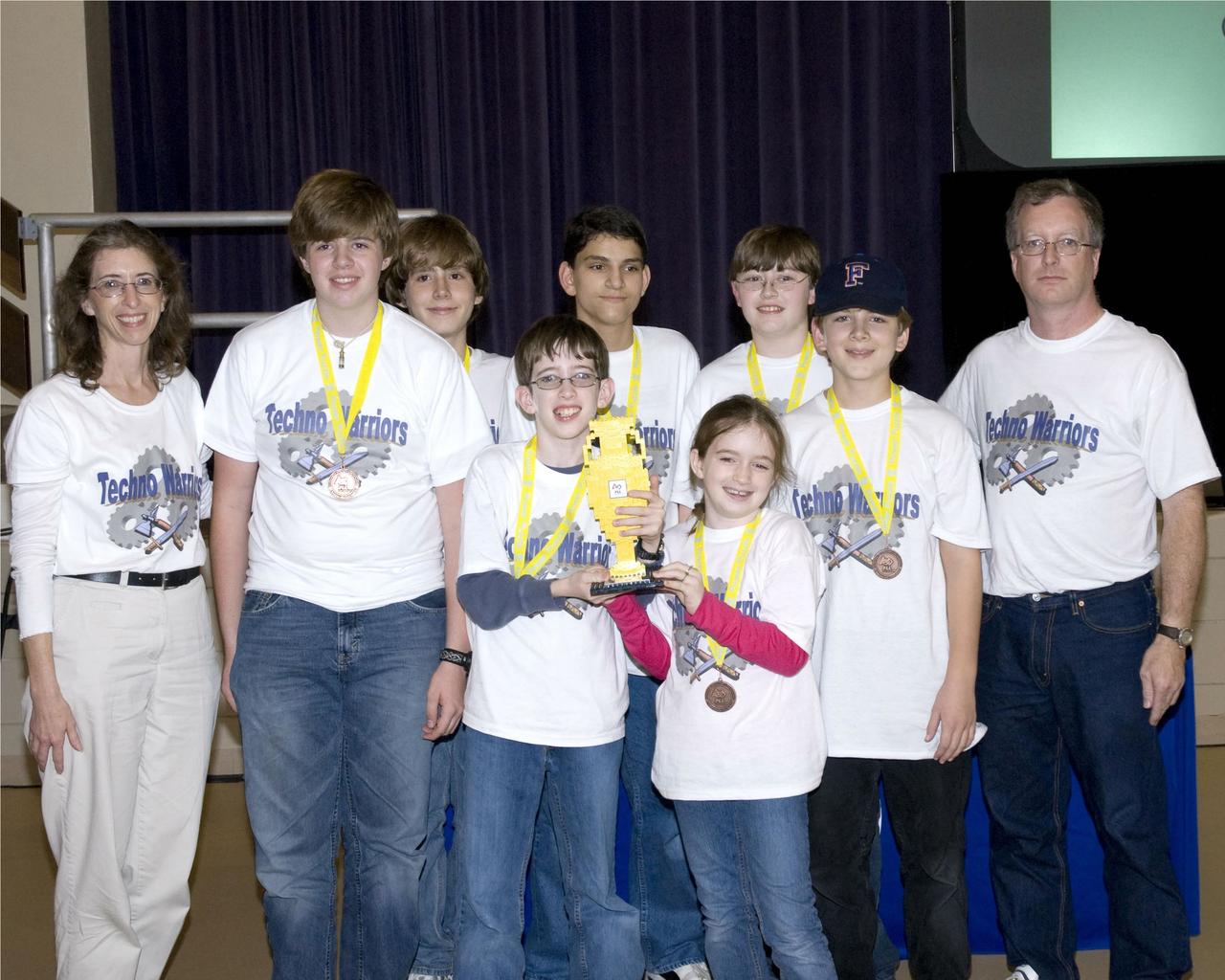
PEAK Home School Network Team 1832 'Techno Warriors' of Brandon sport the Champions Award they won during the Dec. 8 FIRST (For Inspiration and Recognition of Science and Technology) LEGO League 2007 Mississippi Championship Tournament.

S99-E-5480 (16 February 2000) --- Astronaut Janet L. Kavandi, mission specialist, sports a pair of sunglasses while looking at the bright Earth aboard Endeavour's flight deck.
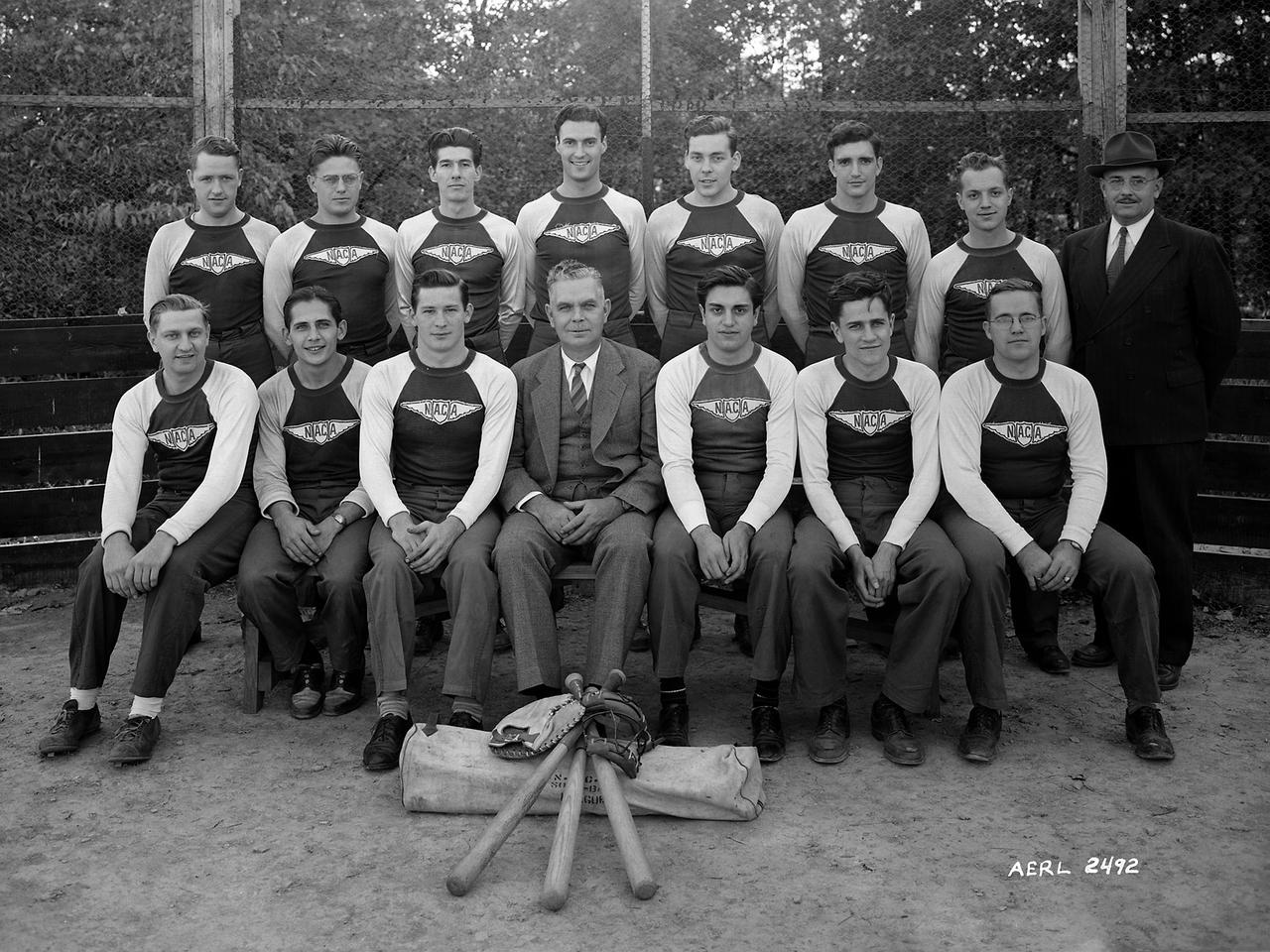
The NACA’s Aircraft Engine Research Laboratory’s baseball team photographed with director Raymond Sharp. The Exchange, which operated the non-profit cafeteria, sponsored several sports teams that participated in local leagues. The laboratory also had several intramural sports leagues. The baseball team, seen here in 1943, was suspended shortly thereafter as many of its members entered the military during World War II. The team was reconstituted after the war and became somewhat successful in the Class A Westlake League. After winning the championship in 1949 and 1950, the team was placed in the more advanced Middleberg League where they struggled.
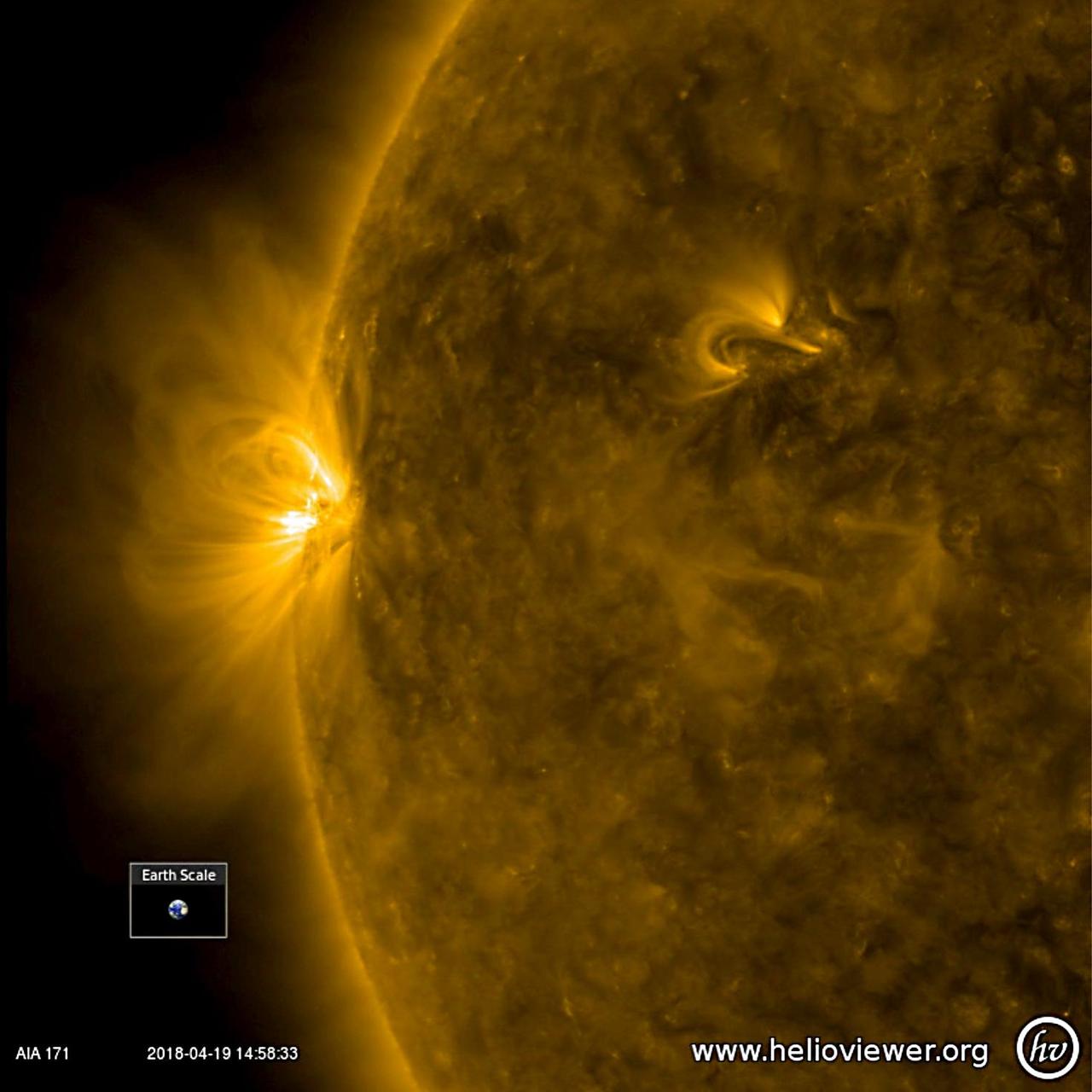
The sun featured just one, rather small active region over the past few days, but it developed rapidly and sported a lot of magnetic activity in just one day (Apr. 11-12, 2018). The activity was observed in a wavelength of extreme ultraviolet light. The loops and twisting arches above it are evidence of magnetic forces tangling with each other. The video clip was produced using Helioviewer software. Movies are available at https://photojournal.jpl.nasa.gov/catalog/PIA06676
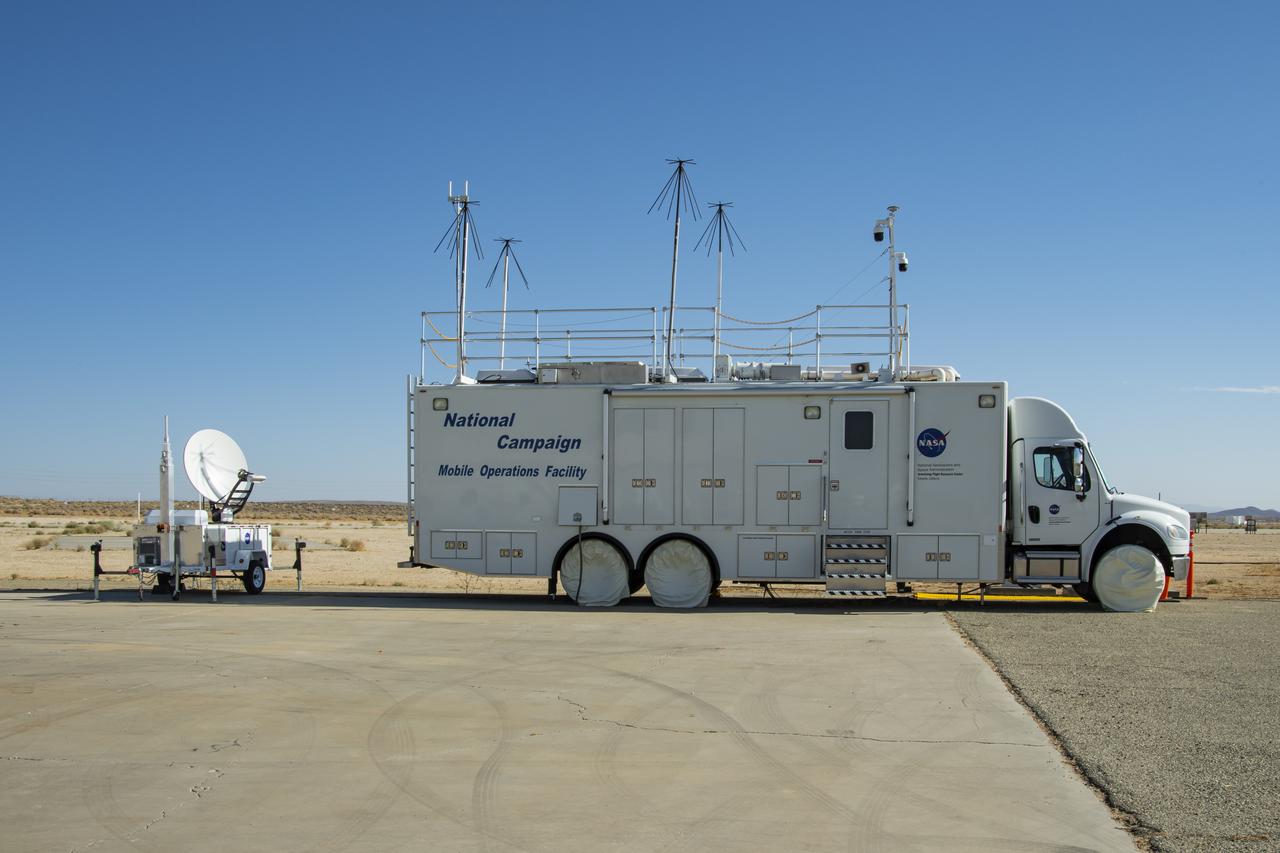
The NASA Mobile Operations Facility sports new decals while parked at NASA Armstrong Flight Research Center in Edwards, California on July 20, 2022. This vehicle, also known as the MOF, is a mission control and data collection center on wheels. NASA's Advanced Air Mobility project uses it for testing.

STS98-E-5310 (16 February 2001) --- Sporting an important new component in the Destiny laboratory (near center of frame), the International Space Station (ISS) is backdropped against the blackness of space following undocking. The photo was taken with a digital still camera.
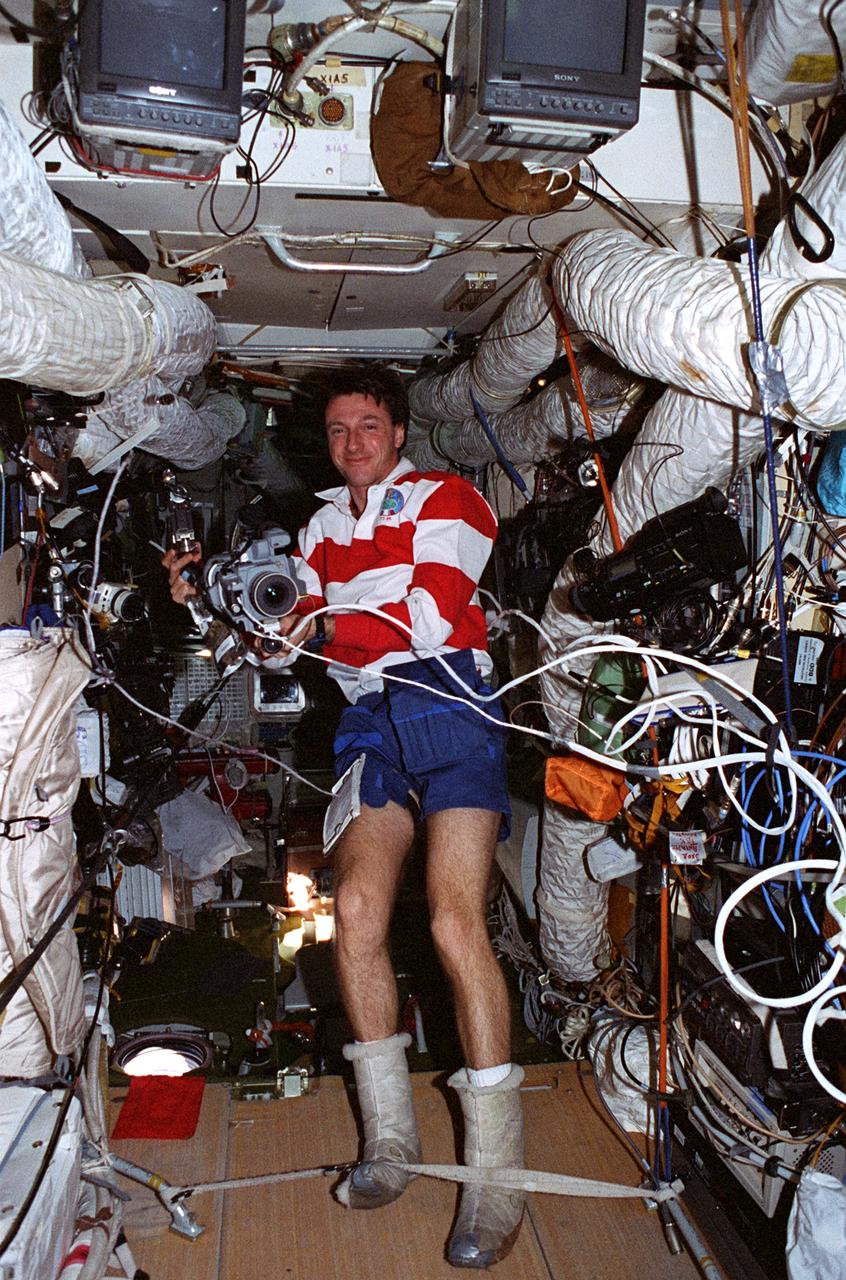
STS086-405-008 (25 Sept-6 Oct 1997) --- Astronaut C. Michael Foale, sporting attire representing the STS-86 crew after four months aboard Russia?s Mir Space Station in Russian wear, operates a video camera in Mir?s Base Block Module. Photo credit: NASA
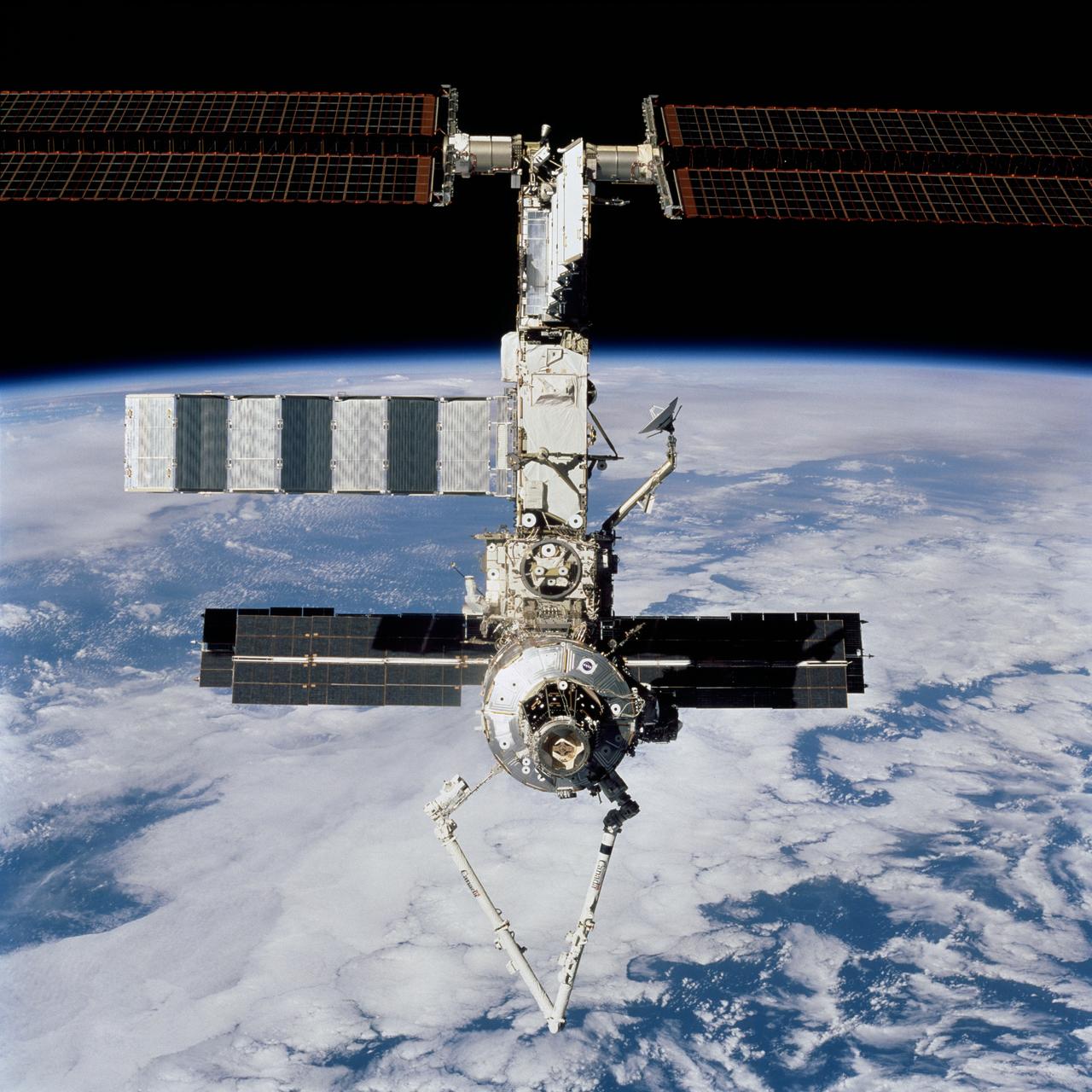
STS100-710-103 (29 April 2001) --- Backdropped against the blue and white Earth and sporting a readily visible new addition in the form of Canadarm2, the International Space Station (ISS) was photographed following separation from the Space Shuttle Endeavour. The 70mm frame was exposed by one of the STS-100 crewmembers onboard the shuttle.
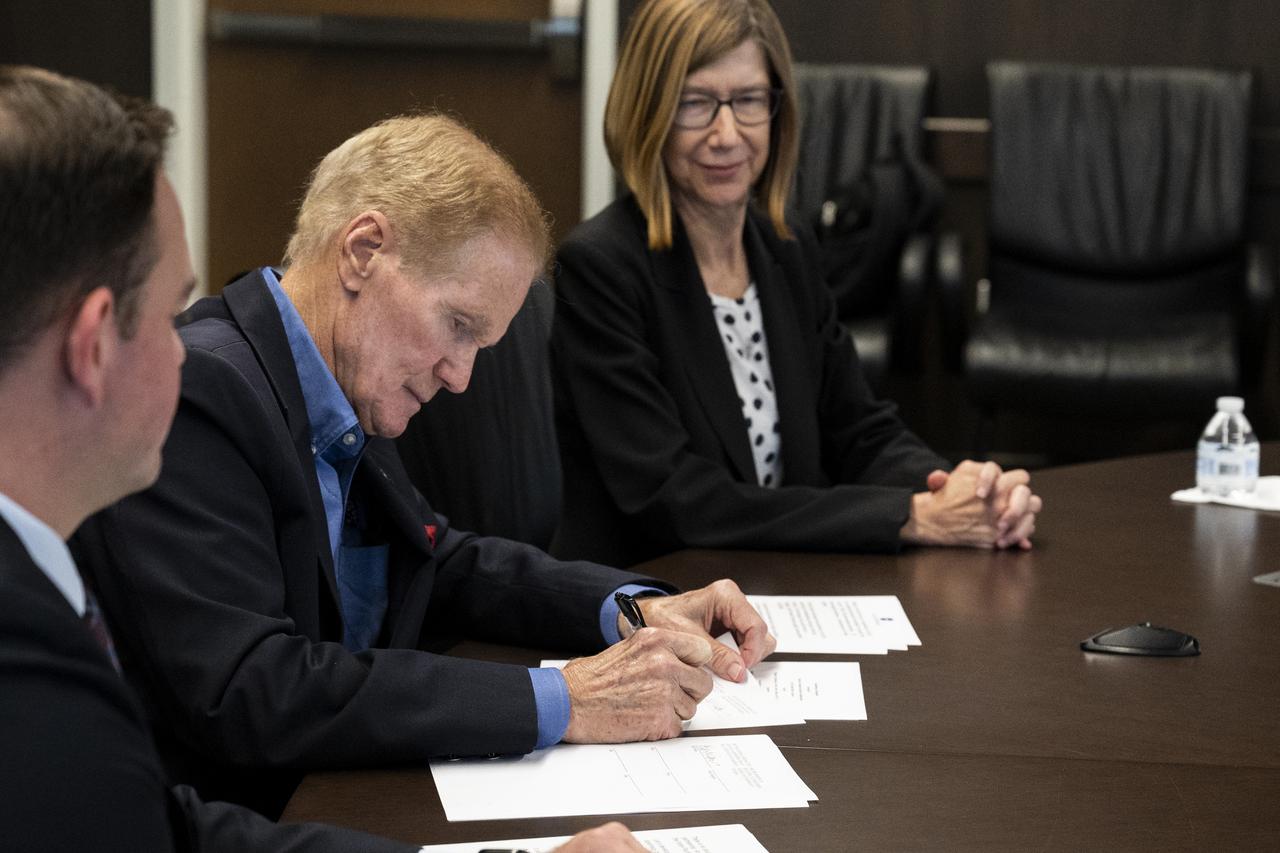
NASA Administrator Bill Nelson, joined by NASA Leadership, signs a Gateway implementing agreement during a virtual meeting hosted by Japanese Minister of Education, Culture, Sports, Science and Technology (MEXT) Keiko Nagaoka Thursday, Nov. 17, 2022, at NASA’s Kennedy Space Center in Florida. Photo Credit: (NASA/Keegan Barber)
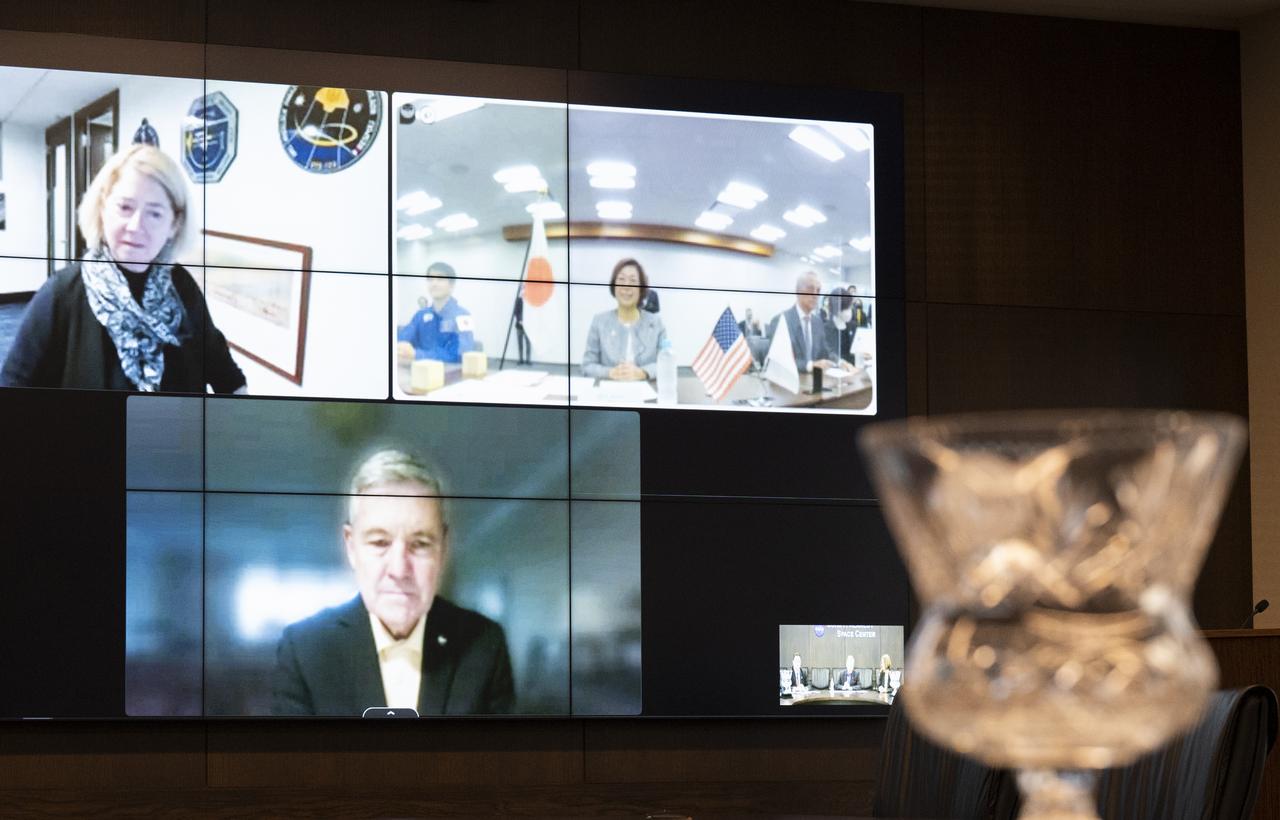
NASA Administrator Bill Nelson, joined by NASA Leadership, attends a virtual meeting hosted by Japanese Minister of Education, Culture, Sports, Science and Technology (MEXT) Keiko Nagaoka following the signing of a Gateway implementing agreement Thursday, Nov. 17, 2022, at NASA’s Kennedy Space Center in Florida. Photo Credit: (NASA/Keegan Barber)
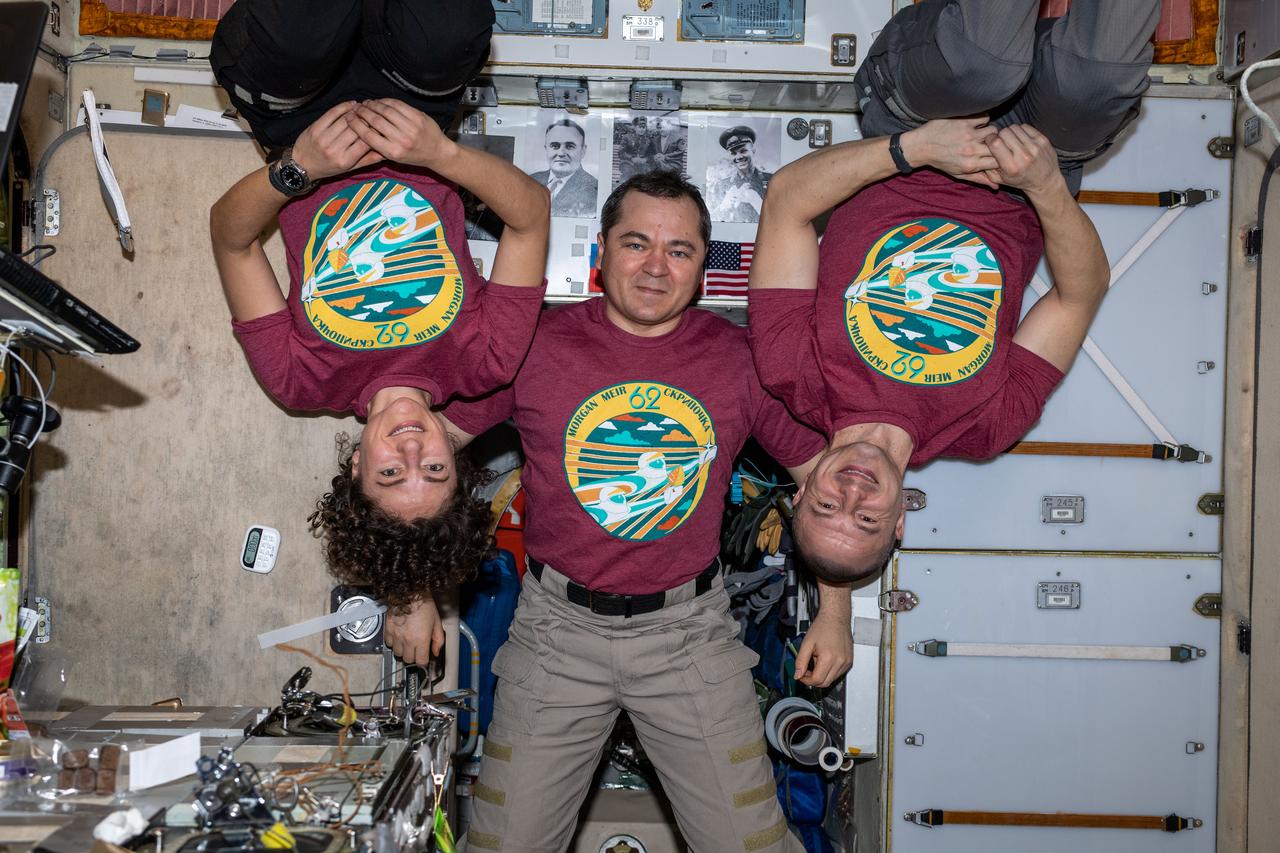
iss062e000449 (Feb. 7, 2020) --- The three-member Expedition 62 crew, sporting their mission patch on t-shirts, will be living aboard the International Space Station until April of this year. In the center, is Roscosmos Commander Oleg Skripochka flanked by NASA Flight Engineers Jessica Meir and Andrew Morgan.
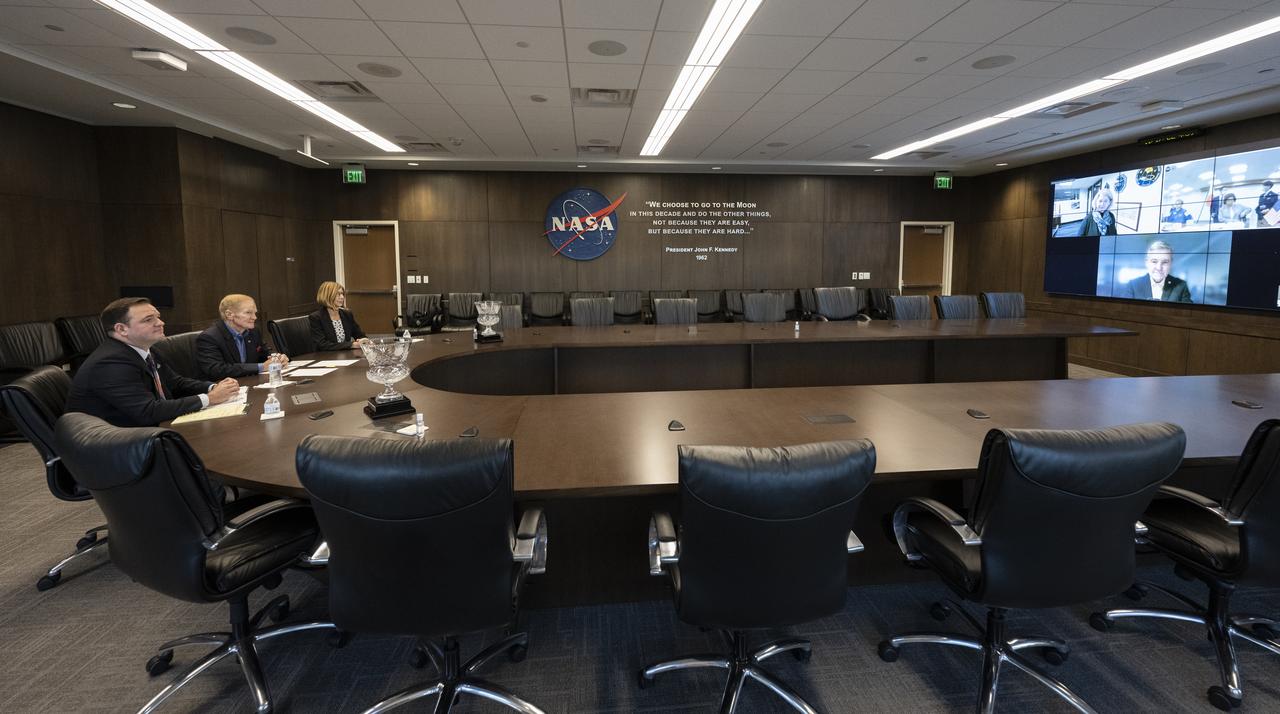
NASA Administrator Bill Nelson, joined by NASA Leadership, attends a virtual meeting hosted by Japanese Minister of Education, Culture, Sports, Science and Technology (MEXT) Keiko Nagaoka prior to signing a Gateway implementing agreement Thursday, Nov. 17, 2022, at NASA’s Kennedy Space Center in Florida. Photo Credit: (NASA/Keegan Barber)
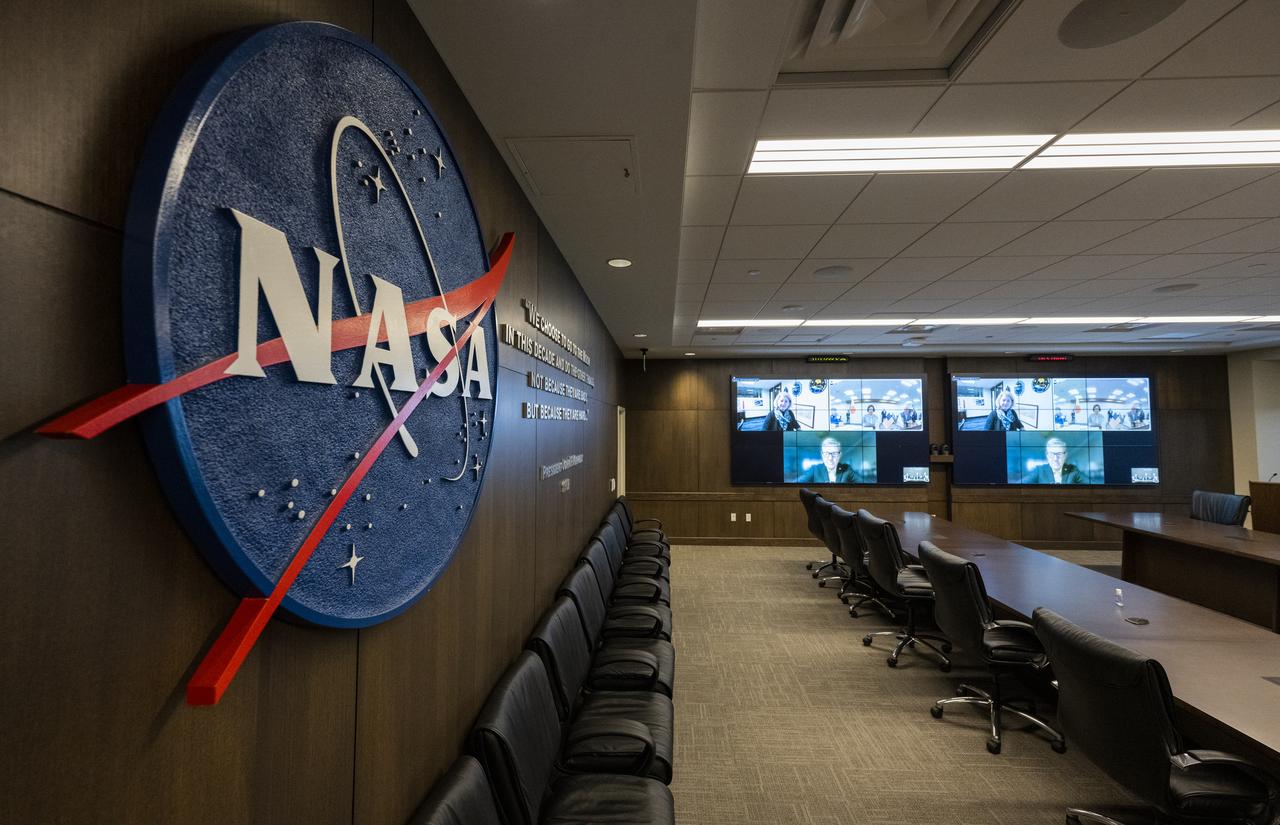
NASA Administrator Bill Nelson, joined by NASA Leadership, attends a virtual meeting hosted by Japanese Minister of Education, Culture, Sports, Science and Technology (MEXT) Keiko Nagaoka following the signing of a Gateway implementing agreement Thursday, Nov. 17, 2022, at NASA’s Kennedy Space Center in Florida. Photo Credit: (NASA/Keegan Barber)

NASA's New Horizons spacecraft captured this high-resolution enhanced color view of Pluto on July 14, 2015. The image combines blue, red and infrared images taken by the Ralph/Multispectral Visual Imaging Camera (MVIC). Pluto's surface sports a remarkable range of subtle colors, enhanced in this view to a rainbow of pale blues, yellows, oranges, and deep reds. Many landforms have their own distinct colors, telling a complex geological and climatological story that scientists have only just begun to decode. The image resolves details and colors on scales as small as 0.8 miles (1.3 kilometers). http://photojournal.jpl.nasa.gov/catalog/PIA19952
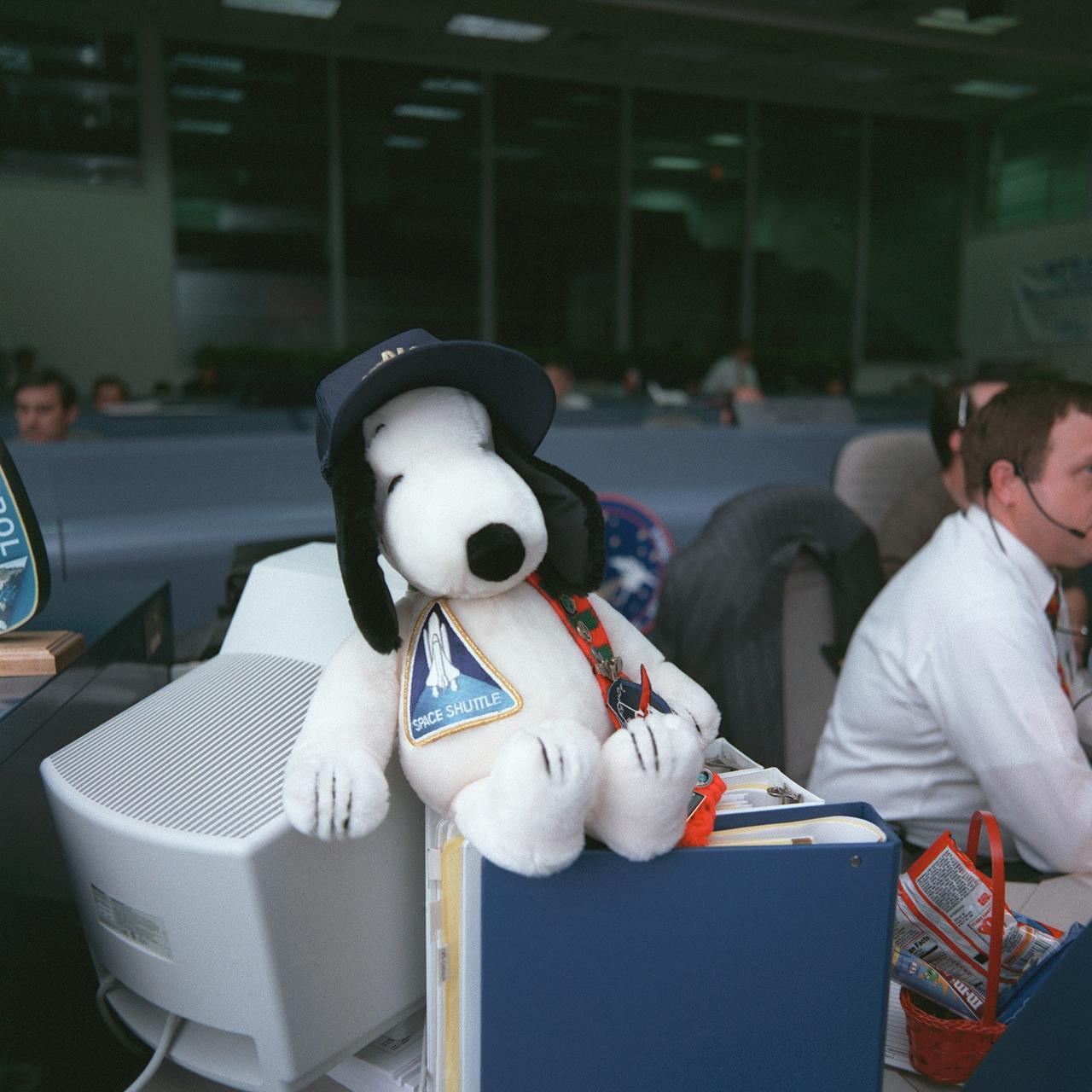
JSC2000-01580 (22 February 2000) --- Snoopy, who has had a long history with the astronauts and Houston's Mission Control Center, showed up in the Shuttle Flight Control Room on one of the consoles during the STS-99 mission. The NASA Astronaut personal safety award -- called the Silver Snoopy -- is given for outstanding performance by NASA employees or NASA contractors who contribute to flight safety or mission success. Snoopy is a product of the imagination of the late cartoonist Charles Schulz. Schulz died on Saturday, Feb. 12, 2000, the second day of the 11-day SRTM mission and on the eve of his final color strip appearing in Sunday newspapers on February 13, 2000.
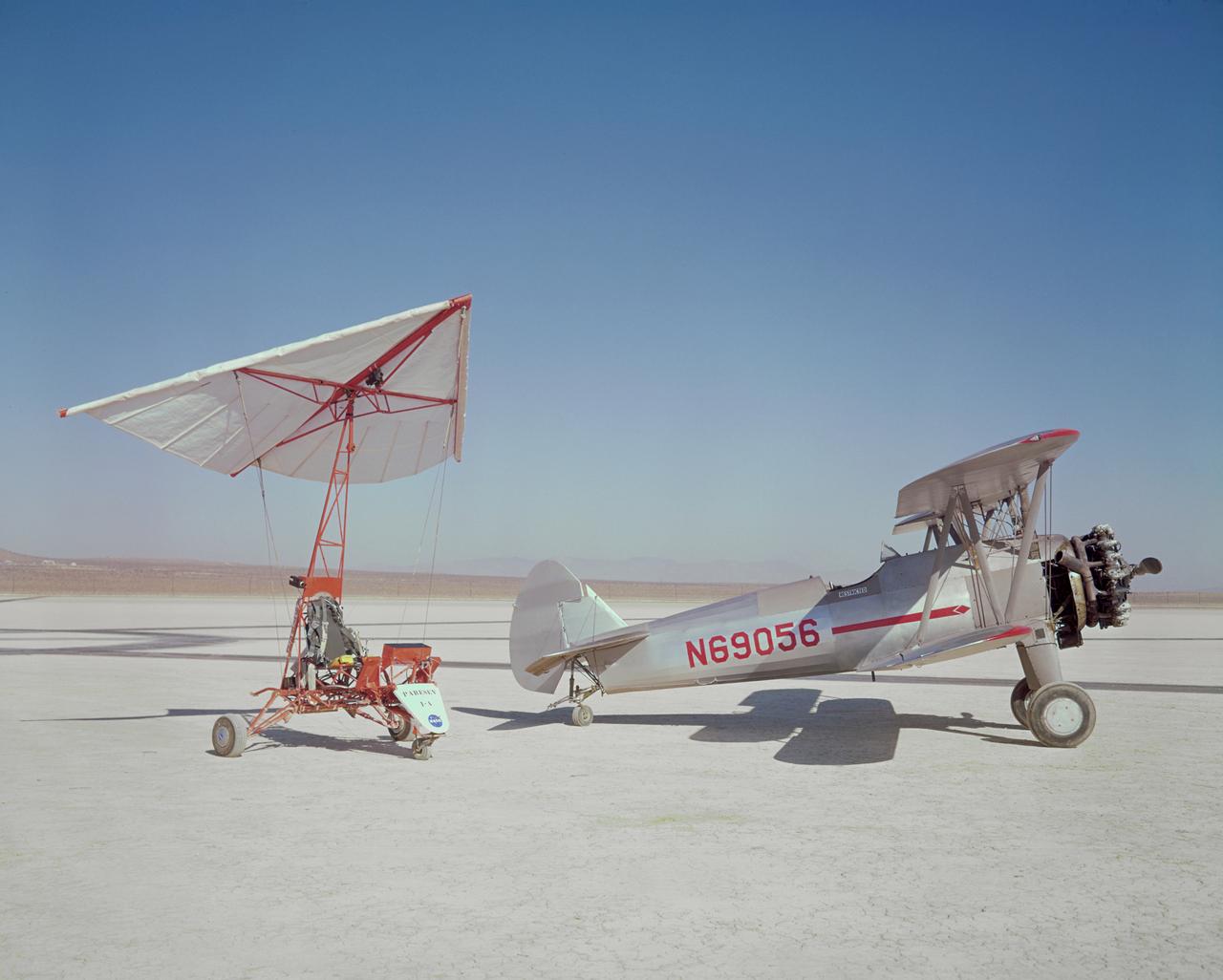
Paresev 1A and Stearman tow plane on lakebed.
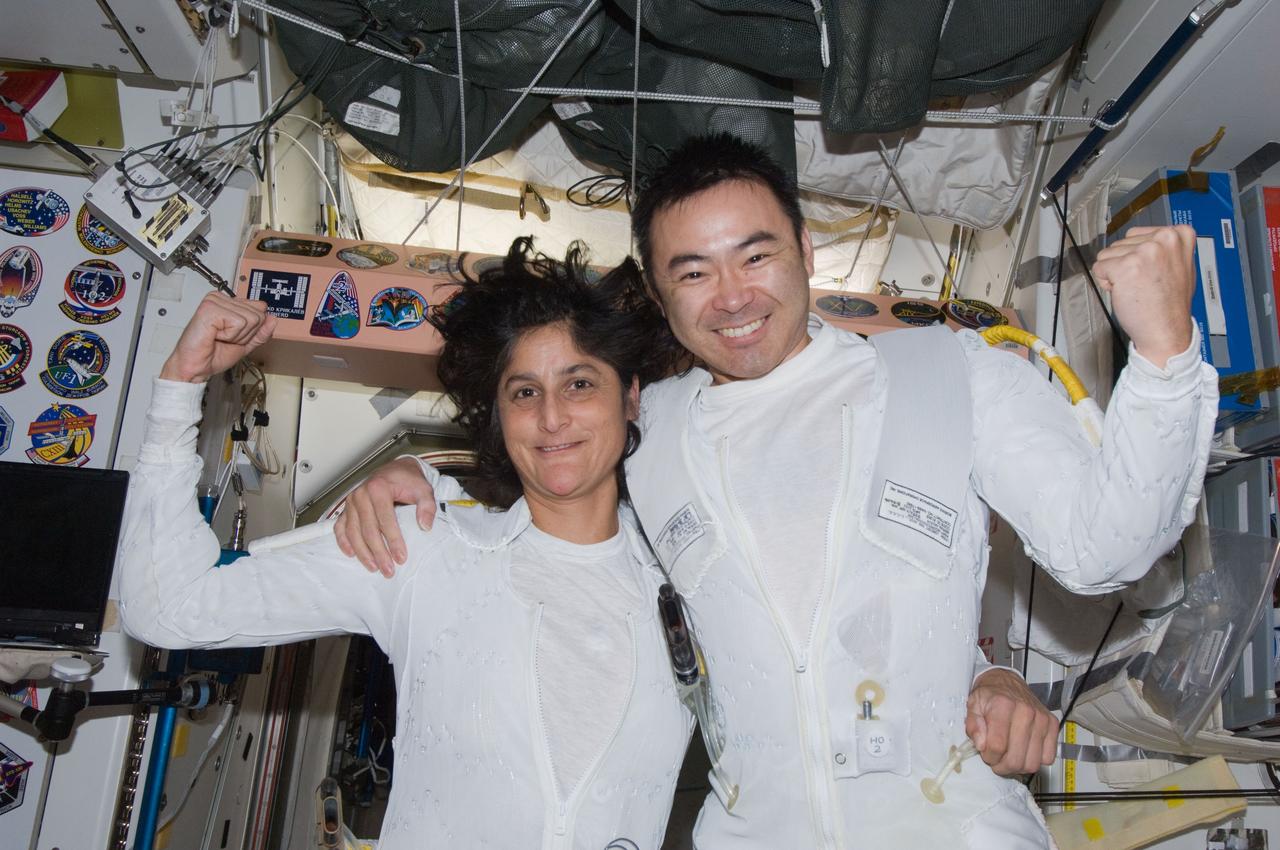
ISS032-E-025361 (5 Sept. 2012) --- Having doffed the outer layer of their Extravehicular Mobility Unit (EMU) spacesuits, Expedition 32 Flight Engineers Sunita Williams of NASA and Akihiko Hoshide of the Japan Aerospace Exploration Agency (JAXA) flex their muscles, celebrating success on their just-completed spacewalk, the second extravehicular activity for them in less than a week. They are still sporting their EMU thermal underwear in the Unity Node 1.
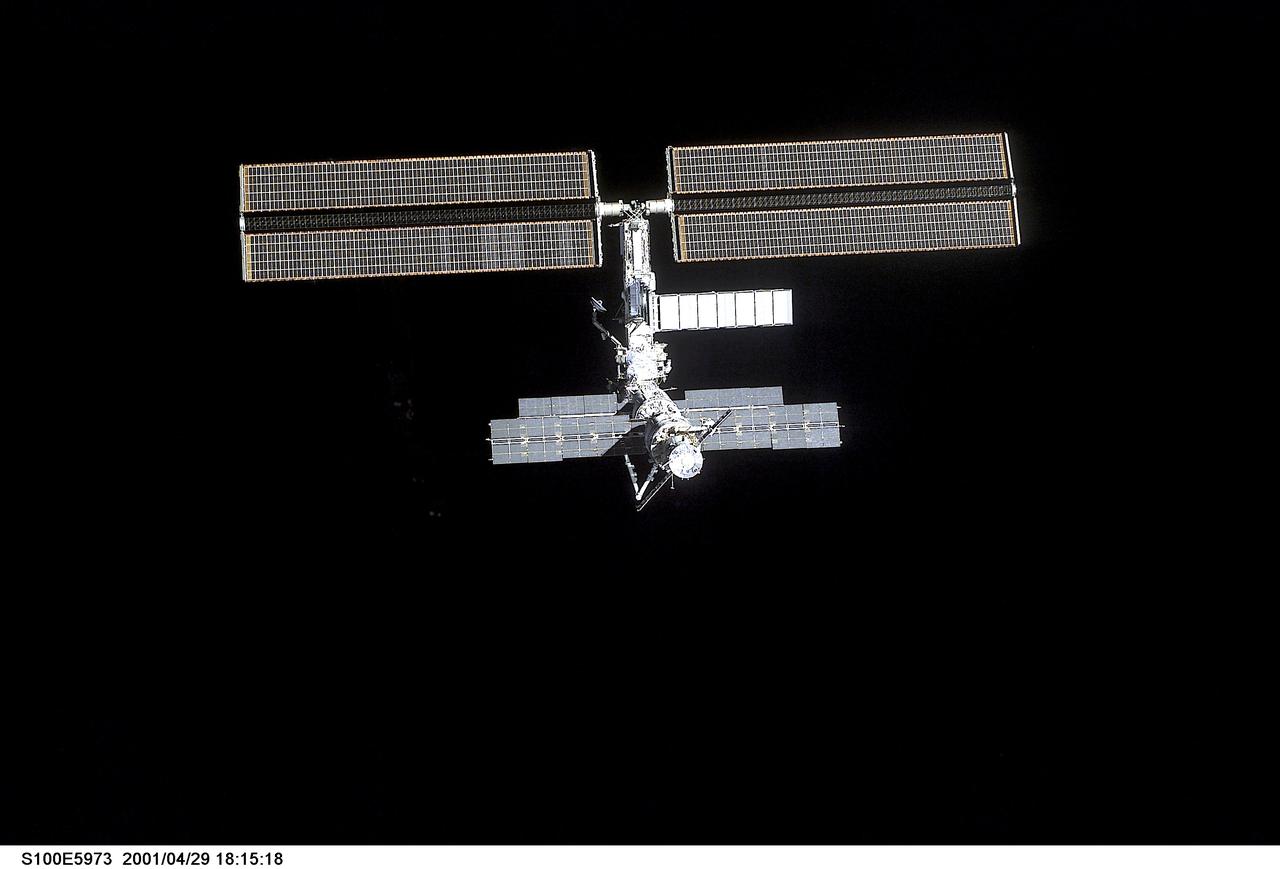
S100-E-5973 (29 April 2001) --- Backdropped against the blackness of space and sporting a readily visible new addition in the form of the Canadarm2 or space station robotic arm, the International Space Station (ISS) was photographed following separation from the Space Shuttle Endeavour. With six astronauts and a Rosaviakosmos cosmonaut aboard the shuttle, the spacecraft performed a fly-around survey of the station, which was inhabited by two astronauts and a Russian cosmonaut. The image was recorded with a digital still camera.
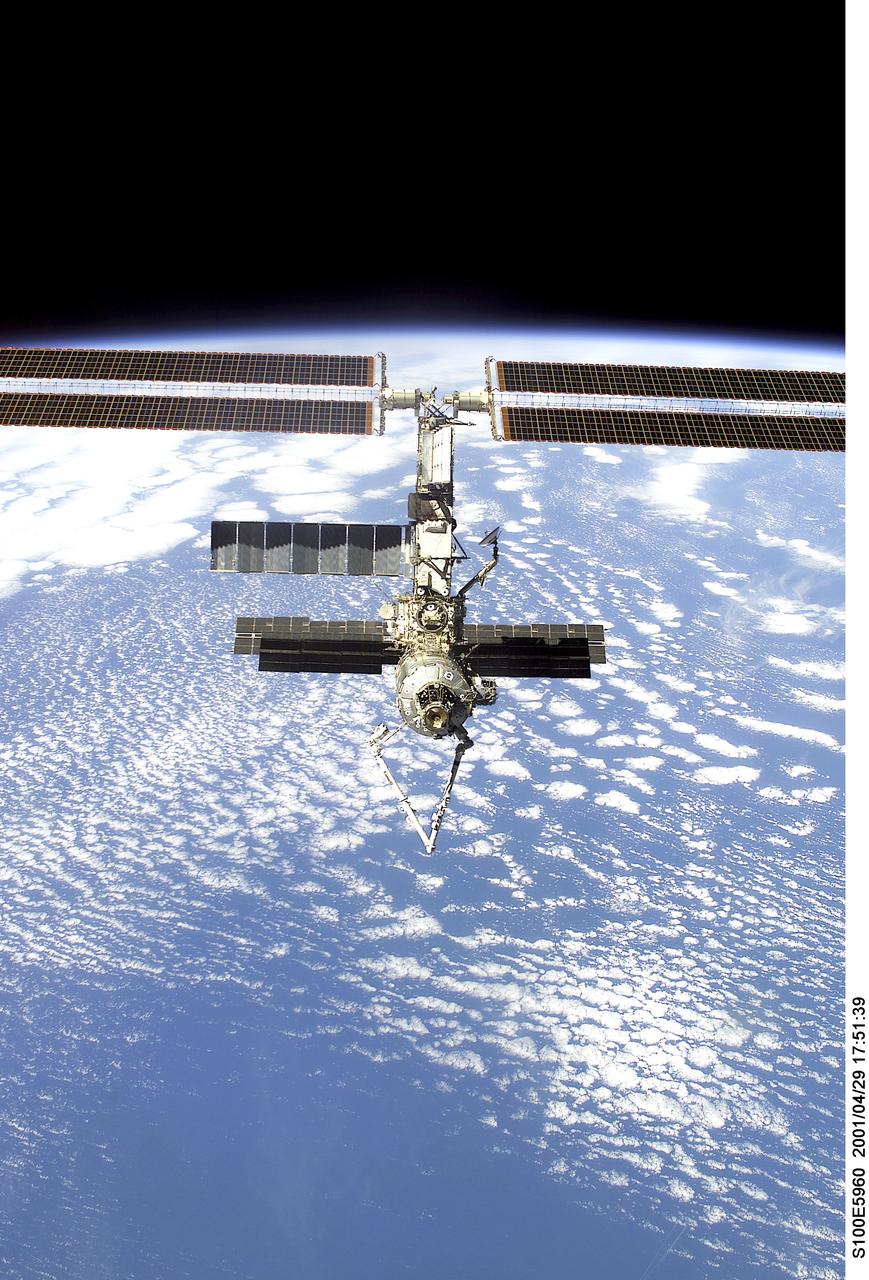
S100-E-5960 (29 April 2001) --- Backdropped against the blue and white Earth and sporting a readily visible new addition in the form of the Canadarm2 or space station robotic arm, the International Space Station (ISS) was photographed following separation from the Space Shuttle Endeavour. With six astronauts and a Rosaviakosmos cosmonaut aboard the shuttle, the spacecraft performed a fly-around survey of the station, which was inhabited by two astronauts and a Russian cosmonaut. The image was recorded with a digital still camera.
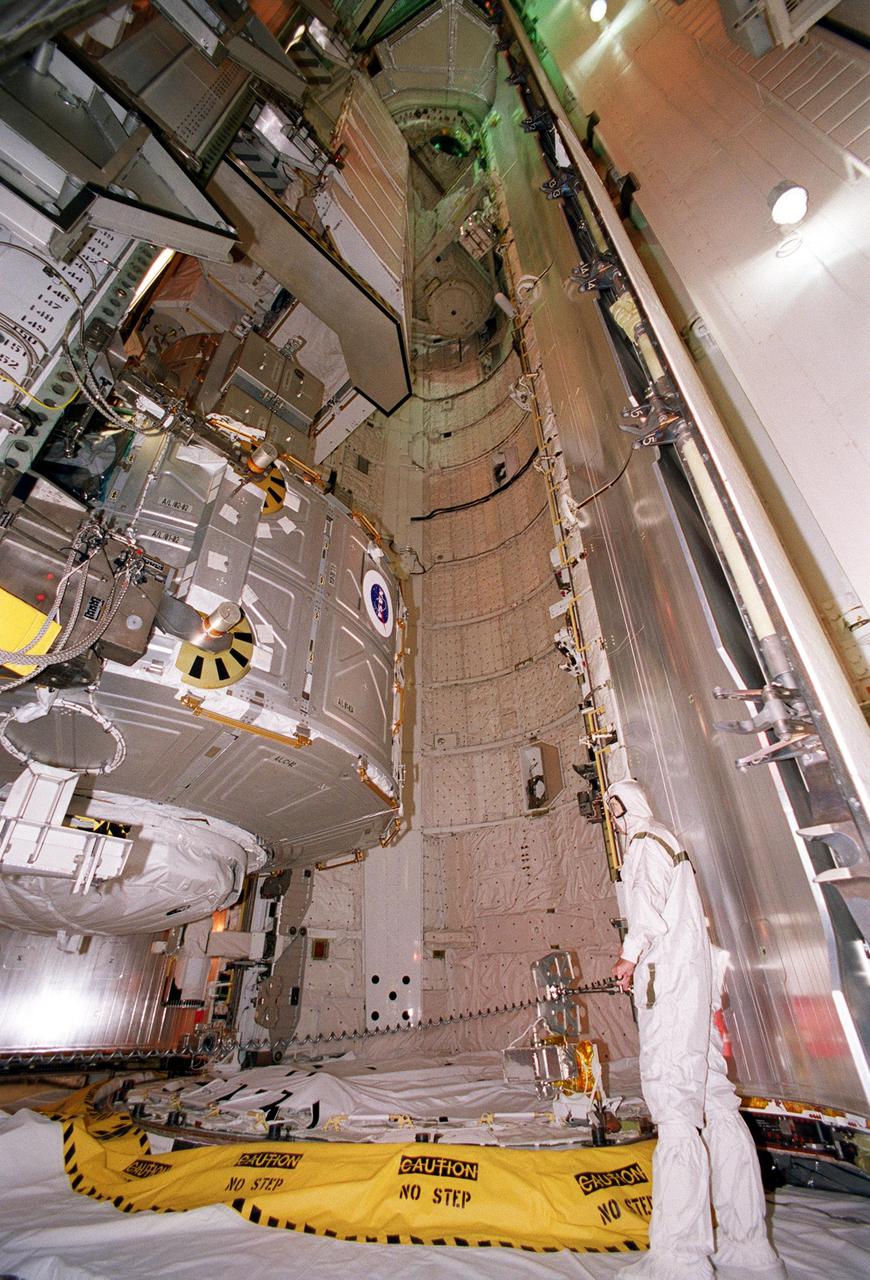
KENNEDY SPACE CENTER, Fla. -- The Joint Airlock Module, sporting a NASA logo, is moved toward the payload bay of Space Shuttle Atlantis for mission STS-104. Once installed and activated, the airlock becomes the primary path for International Space Station spacewalk entry and departure using U.S. spacesuits, which are known as Extravehicular Mobility Units, or EMUs. In addition, the Joint Airlock is designed to support the Russian Orlan spacesuit for EVA activity. Launch of Atlantis is scheduled no earlier than July 12 at 5:04 a.m. EDT
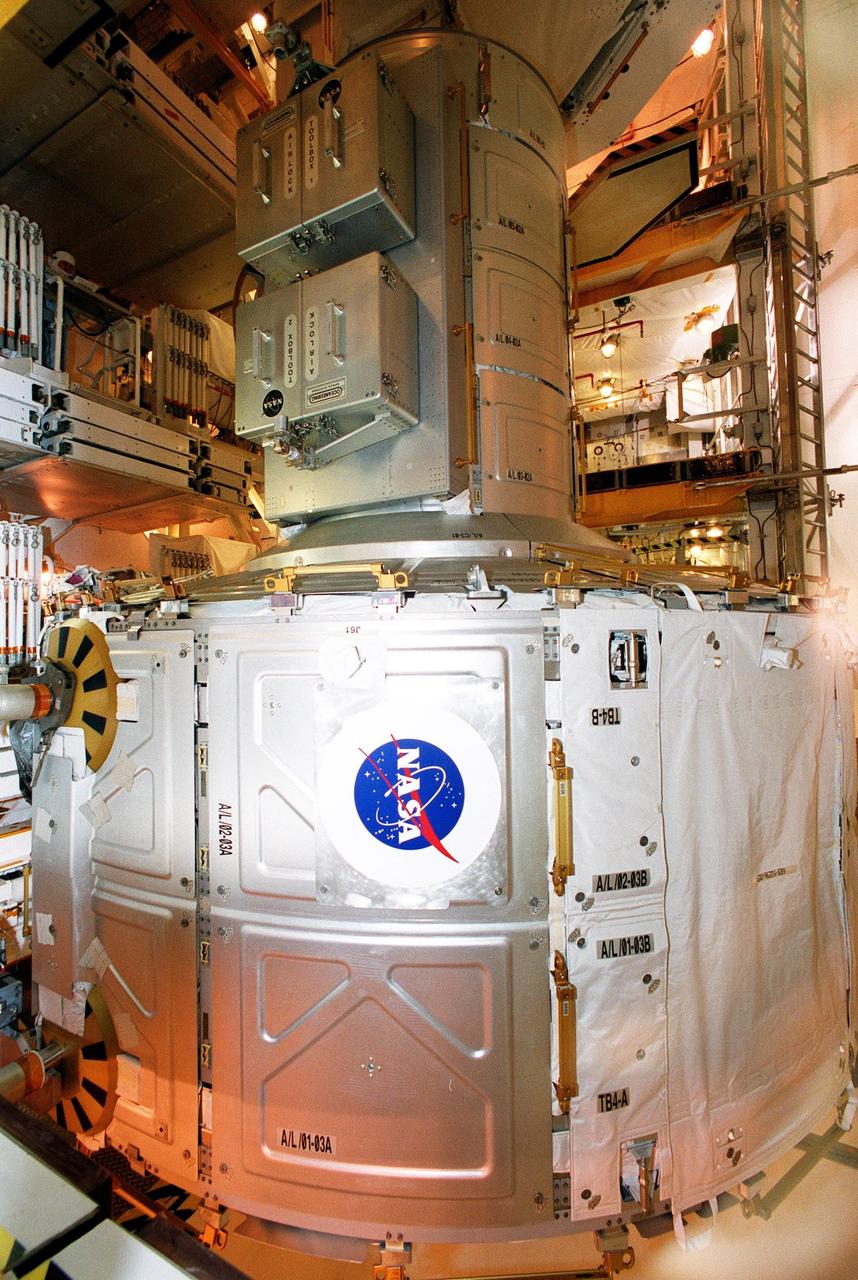
KENNEDY SPACE CENTER, Fla. -- The Joint Airlock Module, sporting a NASA logo, is moved toward the payload bay of Space Shuttle Atlantis for mission STS-104. Once installed and activated, the airlock becomes the primary path for International Space Station spacewalk entry and departure using U.S. spacesuits, which are known as Extravehicular Mobility Units, or EMUs. In addition, the Joint Airlock is designed to support the Russian Orlan spacesuit for EVA activity. Launch of Atlantis is scheduled no earlier than July 12 at 5:04 a.m. EDT
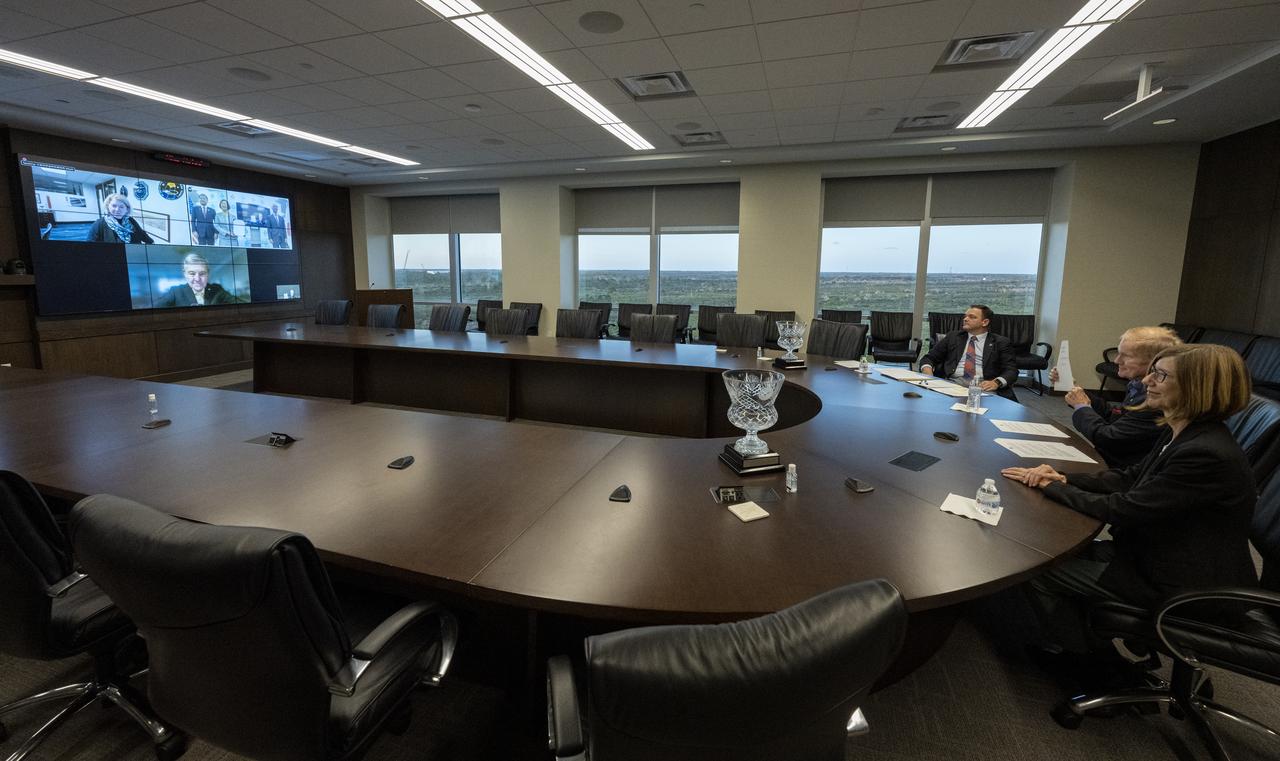
NASA Administrator Bill Nelson, joined by NASA Leadership, poses for photos following the signing of a Gateway implementing agreement during a virtual meeting hosted by Japanese Minister of Education, Culture, Sports, Science and Technology (MEXT) Keiko Nagaoka Thursday, Nov. 17, 2022, at NASA’s Kennedy Space Center in Florida. Photo Credit: (NASA/Keegan Barber)
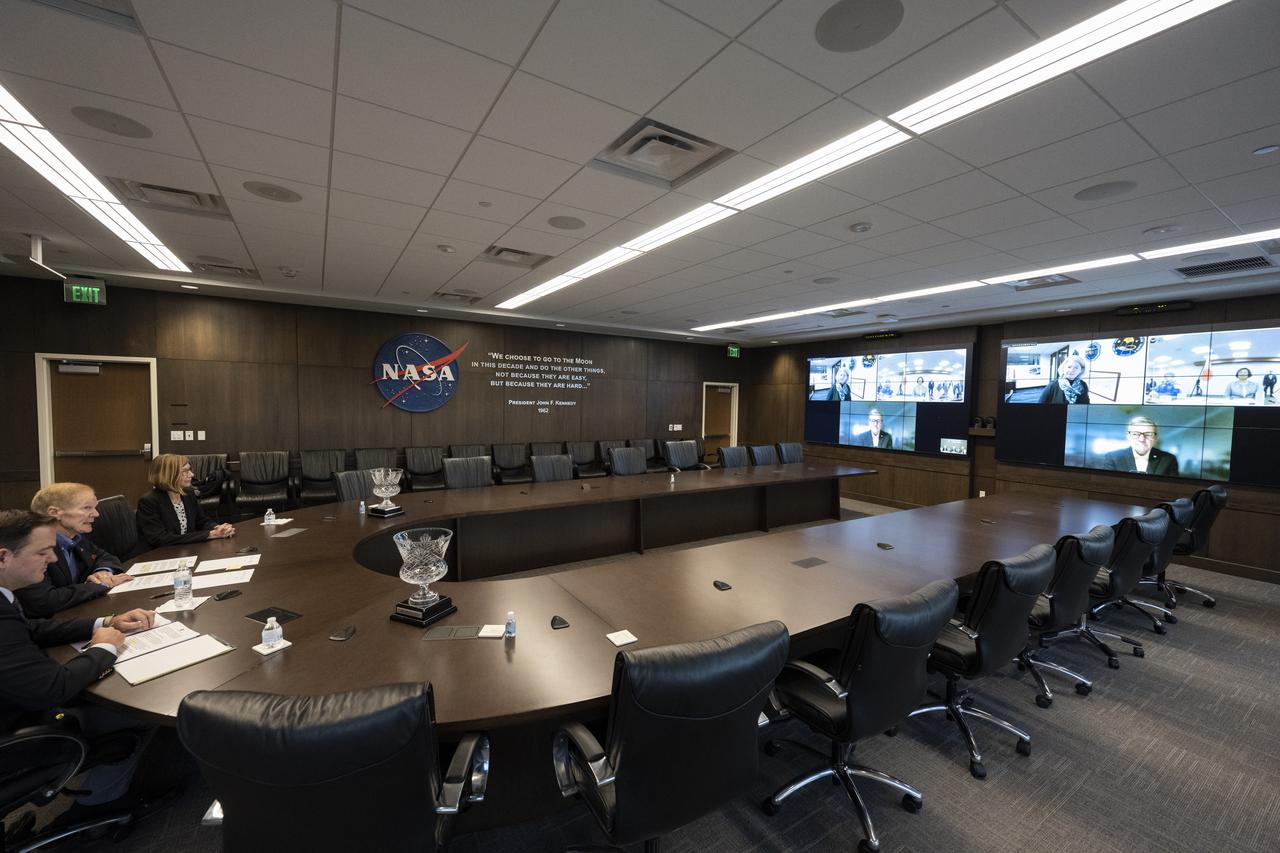
NASA Administrator Bill Nelson, joined by NASA Leadership, delivers opening remarks during a virtual meeting hosted by Japanese Minister of Education, Culture, Sports, Science and Technology (MEXT) Keiko Nagaoka prior to signing a Gateway implementing agreement Thursday, Nov. 17, 2022, at NASA’s Kennedy Space Center in Florida. Photo Credit: (NASA/Keegan Barber)
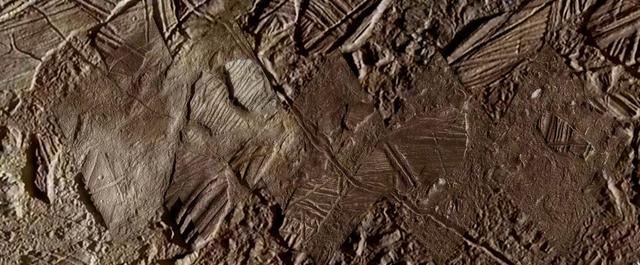
This image shows a close-up view of terrain within the region of Europa's surface named Conamara. This region sports ice rafts that look like those at Earth's poles, where large chunks of ice break away and float freely on the ocean. Much of the region bears the reddish/brownish discoloration seen here – the same as seen along many of Europa's fractures. Scientists believe this material may contain clues about the composition of an ocean beneath the icy surface, if it is proven to exist. https://photojournal.jpl.nasa.gov/catalog/PIA26446
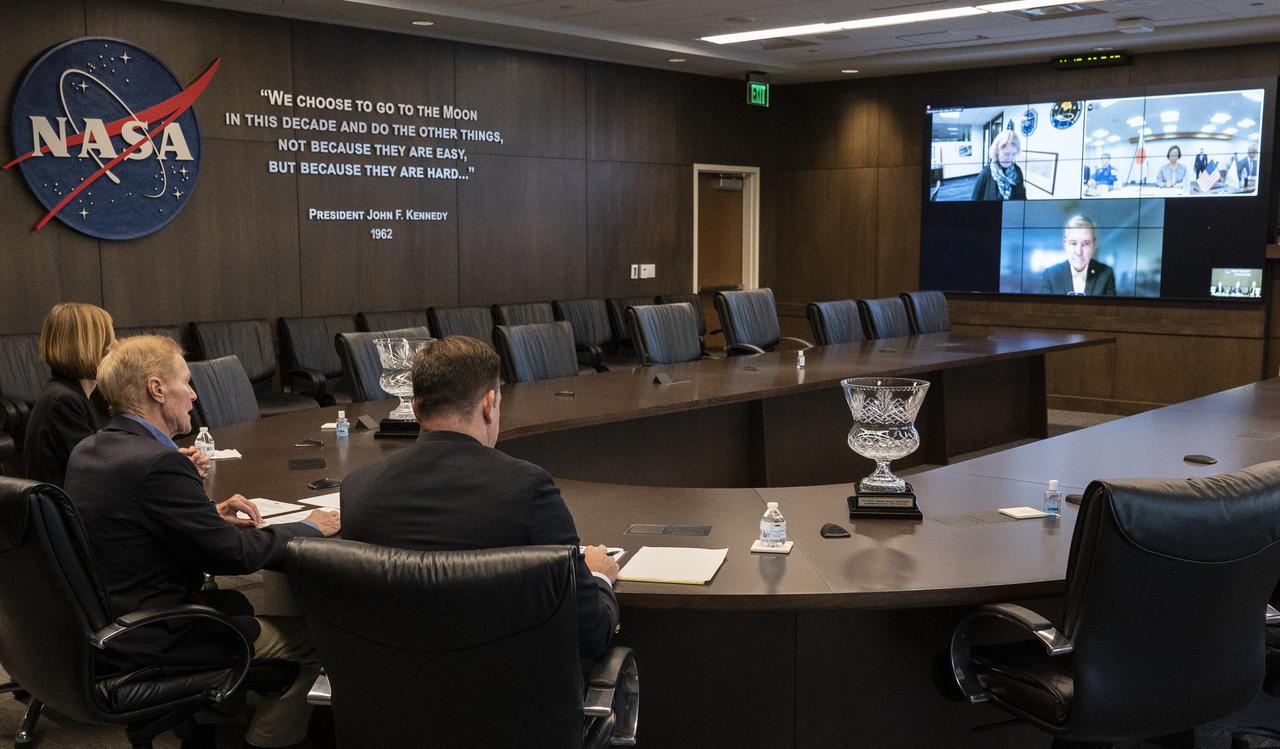
NASA Administrator Bill Nelson, joined by NASA Leadership, delivers opening remarks during a virtual meeting hosted by Japanese Minister of Education, Culture, Sports, Science and Technology (MEXT) Keiko Nagaoka prior to signing a Gateway implementing agreement Thursday, Nov. 17, 2022, at NASA’s Kennedy Space Center in Florida. Photo Credit: (NASA/Keegan Barber)
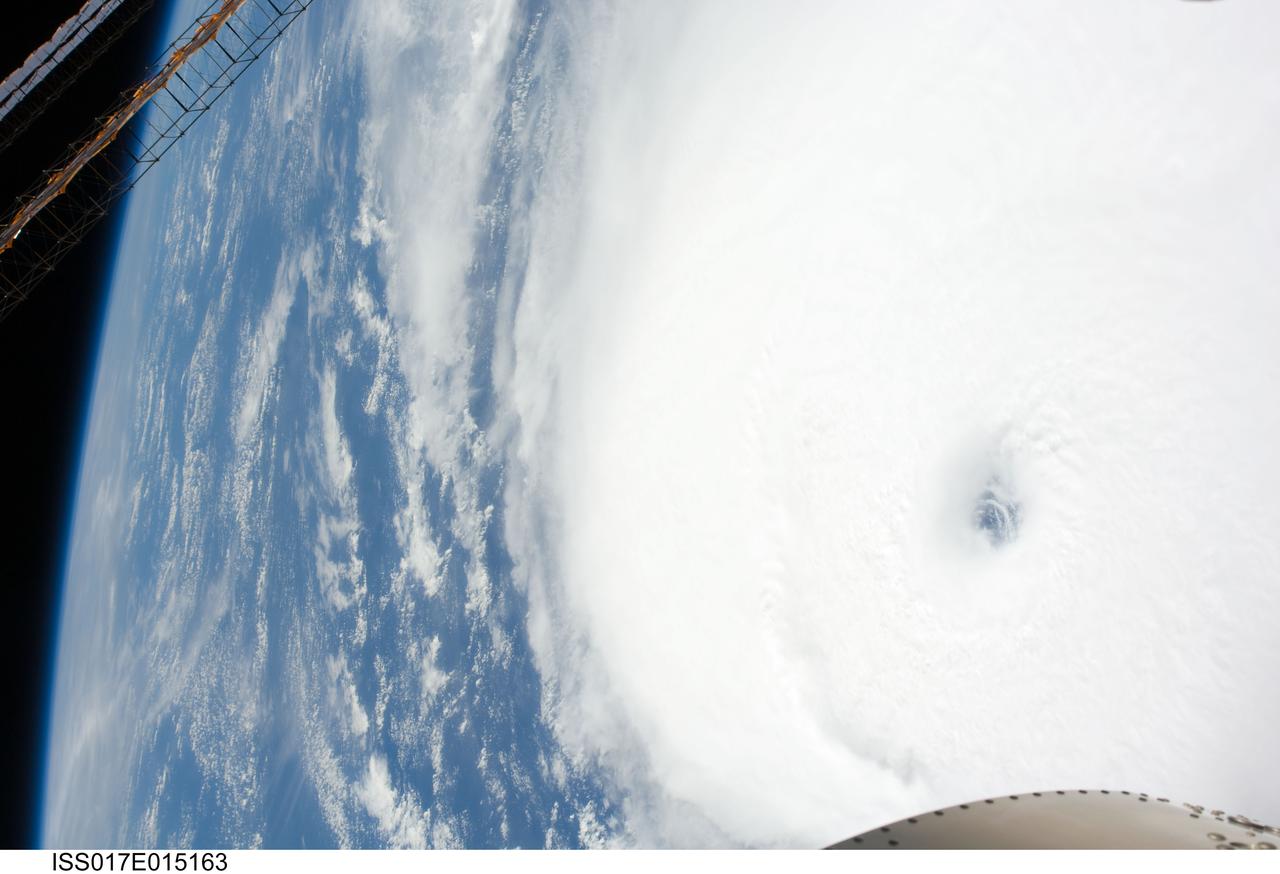
ISS017-E-015163 (4 Sept. 2008) --- Hurricane Ike was still a Category 4 storm on the morning of Sept. 4 when this photo was taken from the International Space Station's vantage point of 220 miles above the Earth. The season's ninth named storm was churning west-northwestward through the mid-Atlantic Ocean sporting winds of 120 nautical miles per hour with gusts to 145.
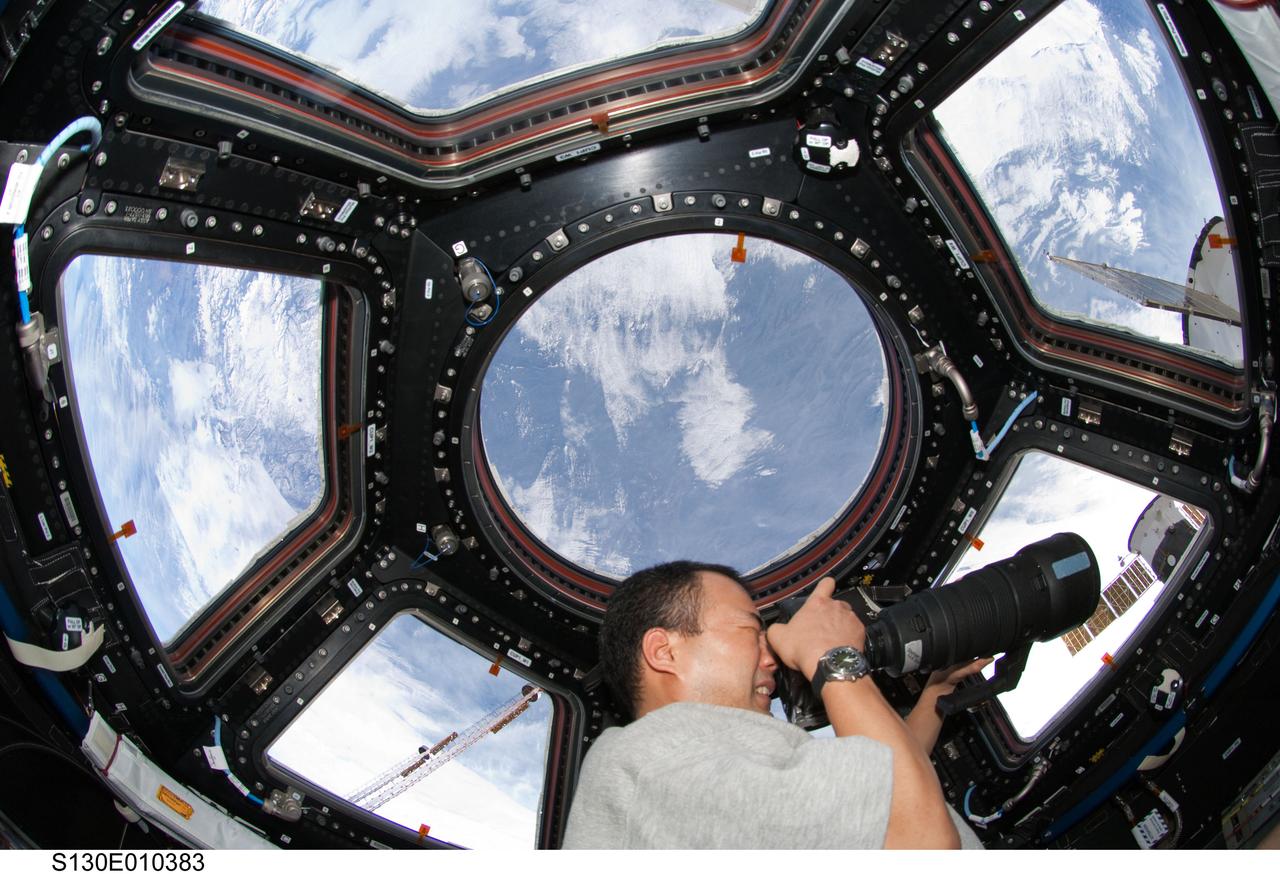
S130-E-010383 (19 Feb. 2010) --- Expedition 22 flight engineer Soichi Noguchi, Japan Aerospace Exploration Agency (JAXA) astronaut, takes photos through Window 5 in the Cupola aboard the International Space Station during Expedition 22 joint operations with the visiting STS-130 astronauts. One of the shuttle astronauts took this picture. Since the camera sports a large lens for this exercise, Noguchi is more than likely focusing in on a geographic site on Earth, as part of an ongoing Earth observations program. Photo credit: NASA

S79-29592 (28 Feb 1979) --- Sporting their new Shuttle-type constant-wear garments, these six astronaut candidates pose for a picture in the crew systems laboratory at the Johnson Space Center (JSC) with the personnel rescue enclosure (PRE) or "rescue ball" and an unoccupied Apollo EMU. From left to right are Rhea Seddon, Kathryn D. Sullivan, Judith A. Resnik, Sally K. Ride, Anna L. Fisher and Shannon W. Lucid.
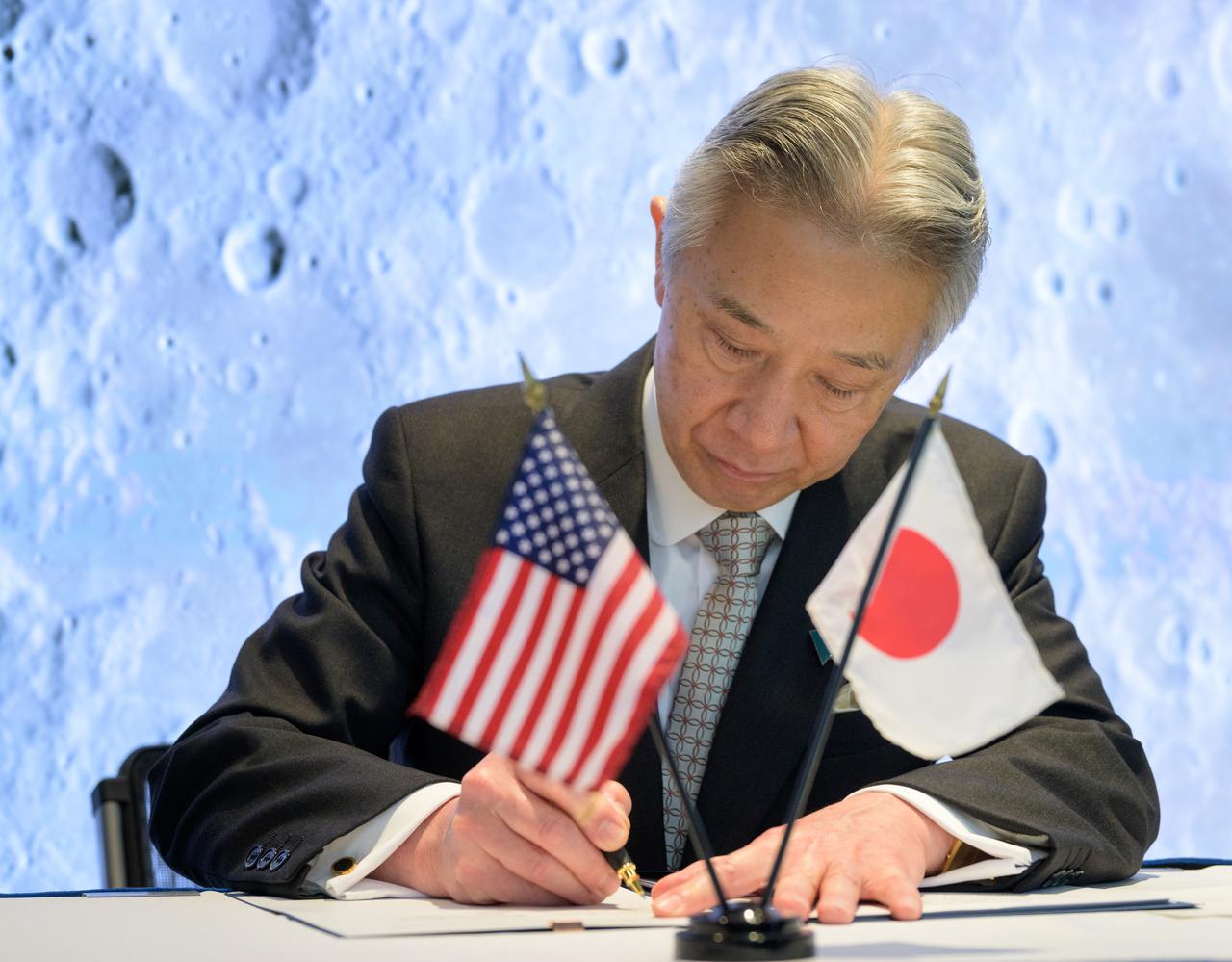
Japan’s Minister of Education, Culture, Sports, Science and Technology Masahito Moriyama, signs an historic agreement between the United States and Japan to advance sustainable human exploration of the Moon, Tuesday, April 9, 2024, at the NASA Headquarters Mary W. Jackson Building in Washington. Under the agreement, Japan will design, develop, and operate a pressurized rover for crewed and uncrewed exploration on the Moon. NASA will provide the launch and delivery of the rover to the Moon as well as two Japanese astronaut missions to the lunar surface. Photo Credit: (NASA/Bill Ingalls)
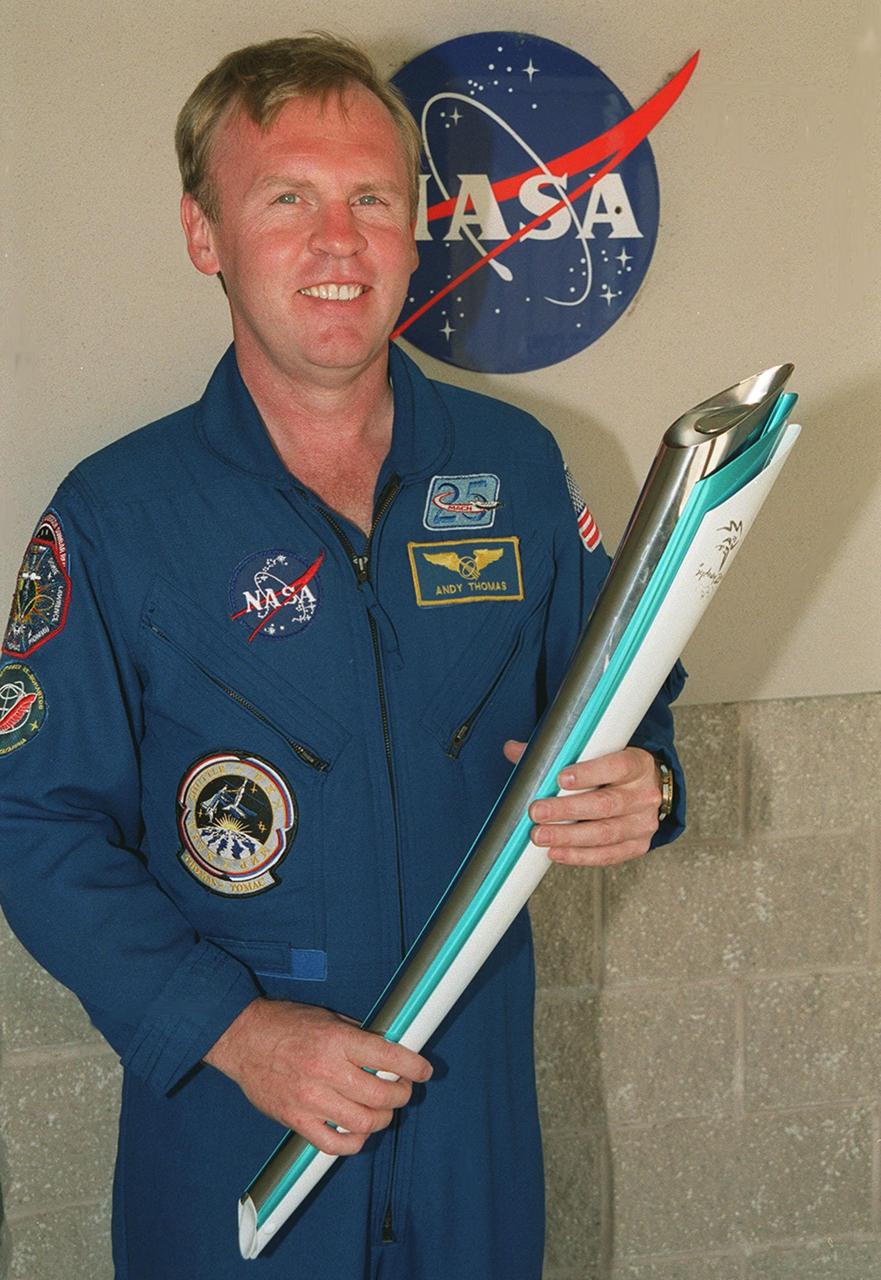
Astronaut Andy Thomas holds a facsimile of the Olympic torch that is being carried on Space Shuttle Atlantis during mission STS-101. Thomas is from Australia, which is the site of the 2000 Olympics. He coordinated the effort to have the torch added to the manifest so that it would truly circle the Earth in the spirit of the worldwide sporting event. The Sydney Olympic Torch Relay will arrive in Australia on June 8. The games begin Sept. 1
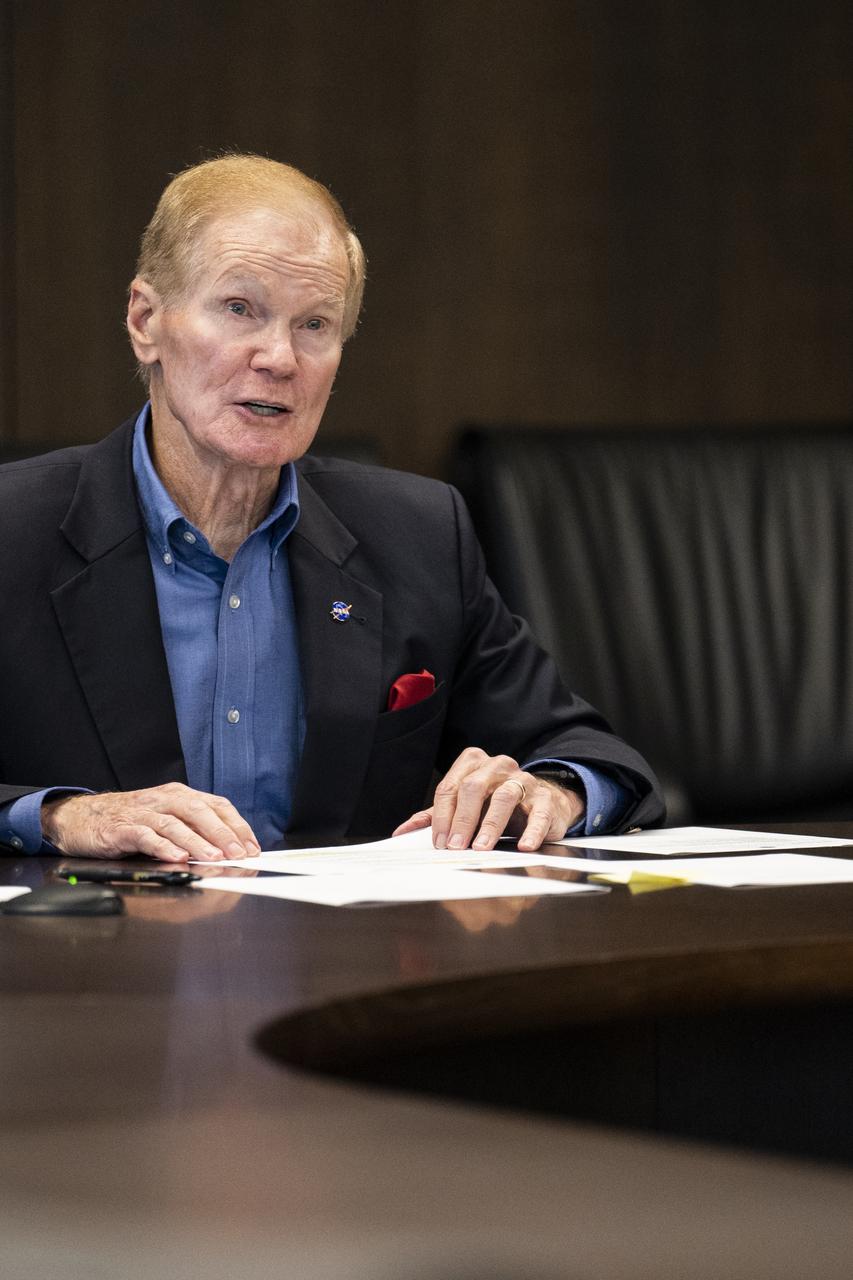
NASA Administrator Bill Nelson, joined by NASA Leadership, delivers opening remarks during a virtual meeting hosted by Japanese Minister of Education, Culture, Sports, Science and Technology (MEXT) Keiko Nagaoka prior to signing a Gateway implementing agreement Thursday, Nov. 17, 2022, at NASA’s Kennedy Space Center in Florida. Photo Credit: (NASA/Keegan Barber)

S79-29594 (28 Feb 1979) --- Sporting their new Shuttle-type constant-wear garments, these six astronaut candidates pose for a picture in the crew systems laboratory at the Johnson Space Center (JSC). From left to right are Rhea Seddon, Sally K. Ride, Kathryn D. Sullivan, Shannon W. Lucid, Anna L. Fisher and Judith A. Resnik.
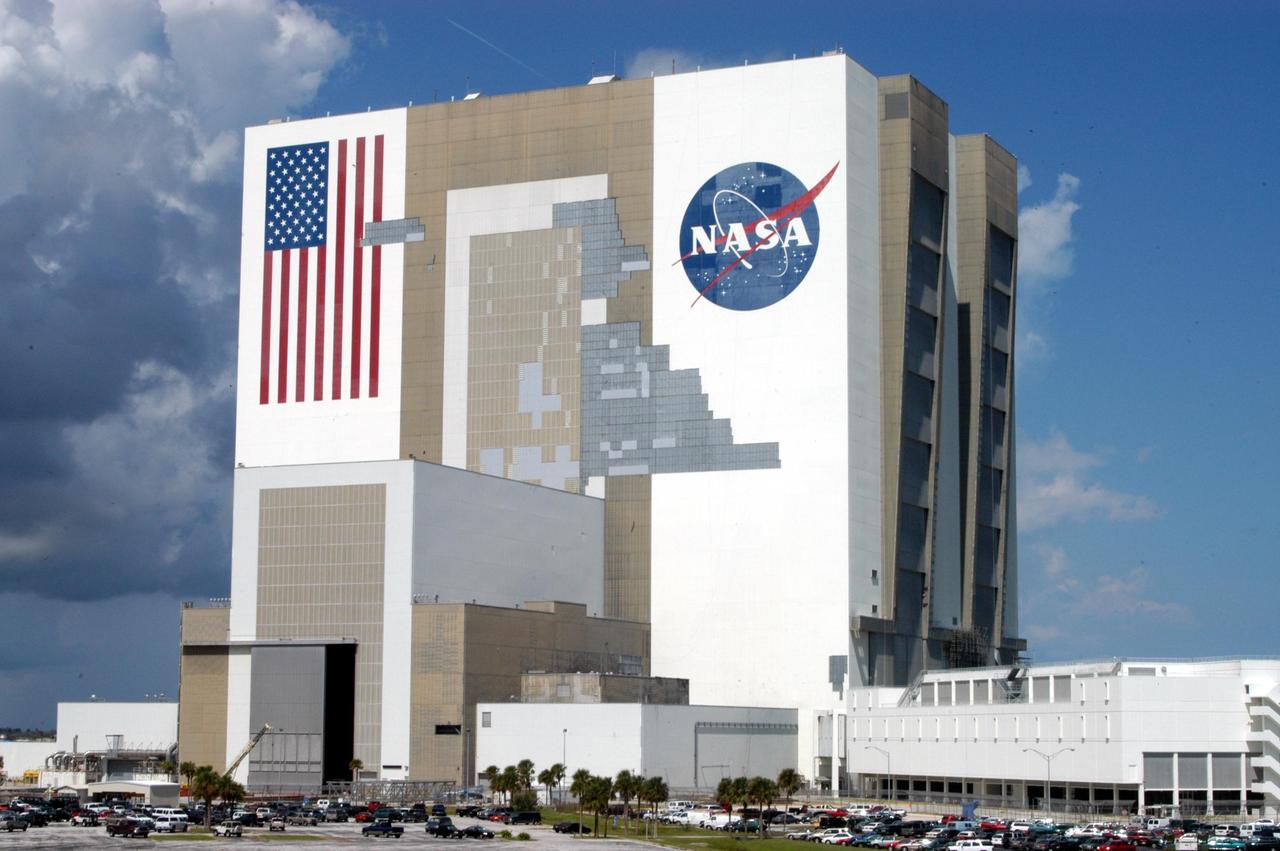
KENNEDY SPACE CENTER, FLA. - The Vehicle Assembly Building at KSC sports a patchwork façade after the holes created by recent hurricanes were covered with corrugated steel. The VAB lost 820 panels from the south wall during Hurricane Frances, and 25 additional panels pulled off the east wall by Hurricane Jeanne. Employees of Met-Con, a subcontractor in Cocoa, Fla., worked night and day on scaffolds hung from the 525-foot-high roof to close the holes and enable the facility to return to normal operations.
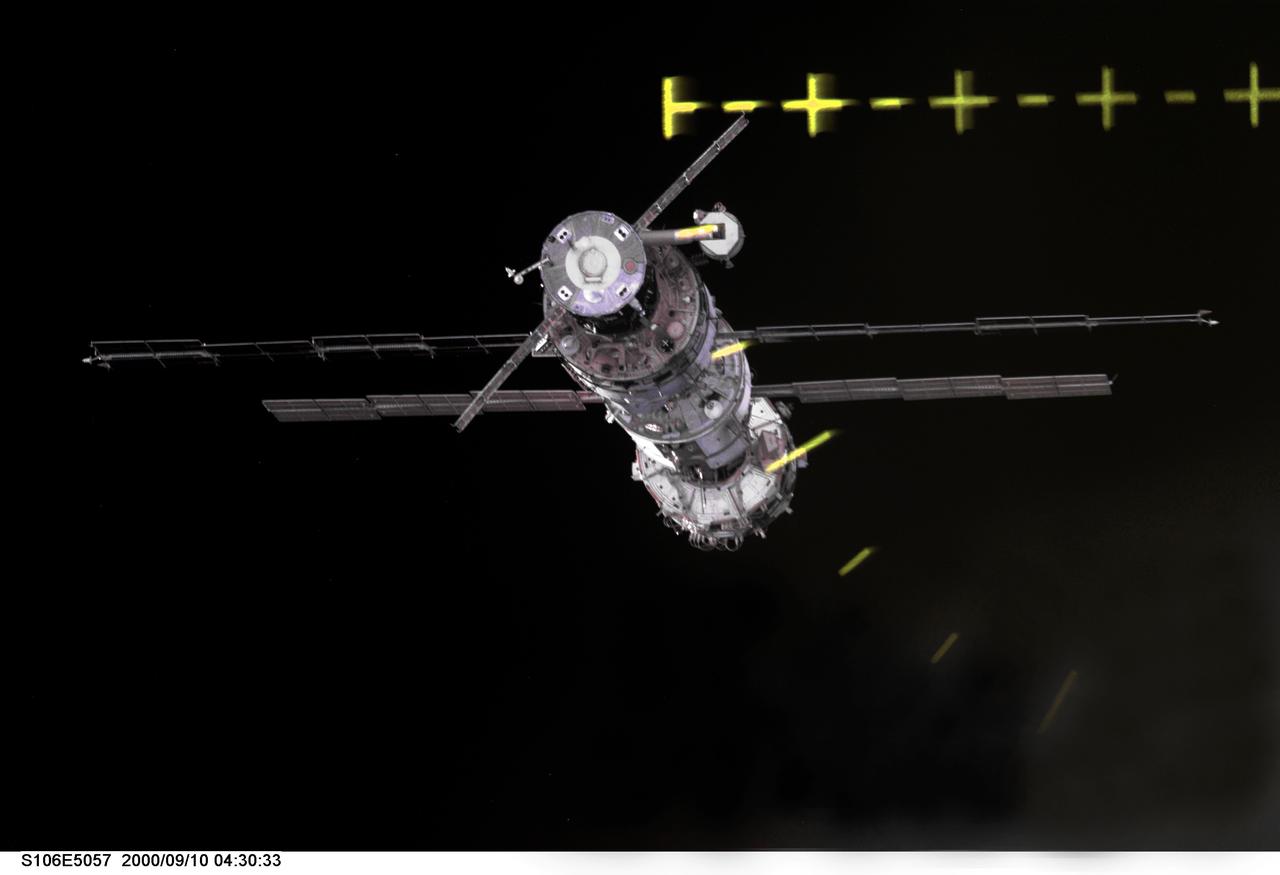
S106-E-5057 (10 September 2000) --- The International Space Station (ISS) is only a few hundred meters away from the Space Shuttle Atlantis in this electronic image. The last time astronauts saw the ISS, it was not sporting the recently-arriving Progress, which appears at the top in this perspective. Also, next to the Progress, appears the Zvezda service module, which had been delivered by a Proton rocket since the most recent human visit to ISS. The ruled markings in the upper right are part of the Crew Optical Alignment Sight (COAS) on Atlantis.
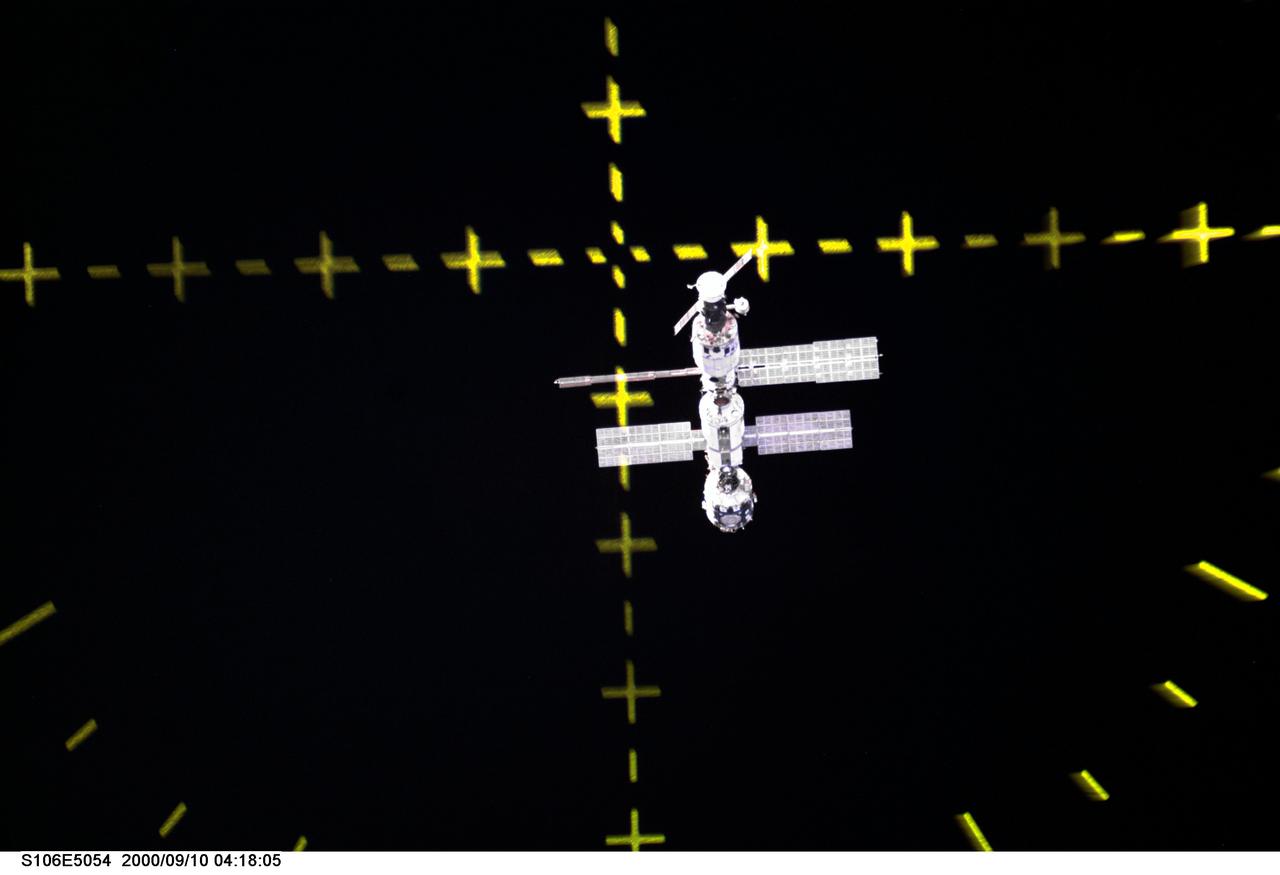
S106-E-5054 (10 September 2000) --- The International Space Station (ISS) is now in the view of the crew aboard the Space Shuttle Atlantis as evidenced in this electronic image. The markings in the photo are those of the Crew Optical Alignment Sight (COAS), an instrument used routinely for docking maneuvers. The last time astronauts saw the ISS, it was not sporting the recently-arriving Progress, which appears at the top in this perspective. Also, a Proton had earlier delivered the Zvezda service module to the station since the last human visit.
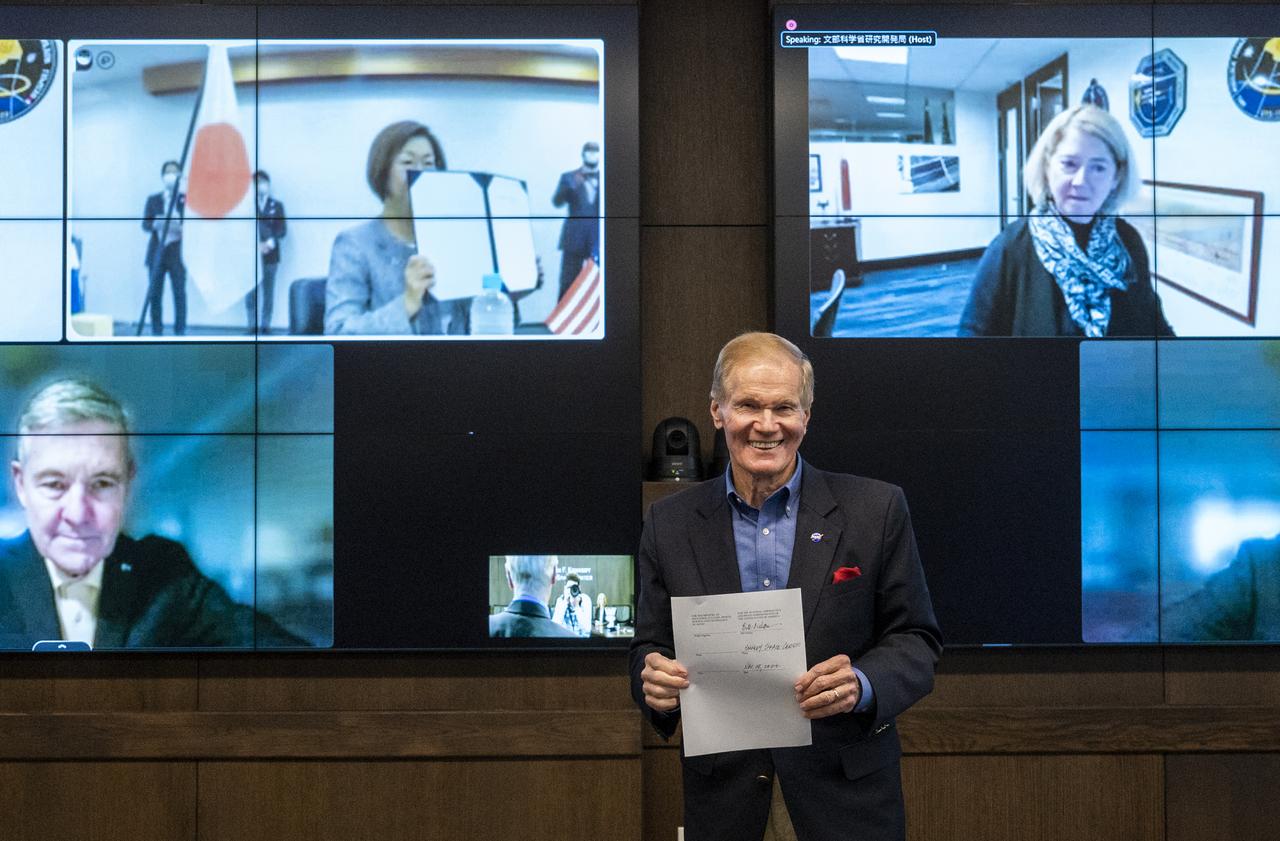
NASA Administrator Bill Nelson, joined by NASA Leadership, poses for photos following the signing of a Gateway implementing agreement during a virtual meeting hosted by Japanese Minister of Education, Culture, Sports, Science and Technology (MEXT) Keiko Nagaoka Thursday, Nov. 17, 2022, at NASA’s Kennedy Space Center in Florida. Photo Credit: (NASA/Keegan Barber)
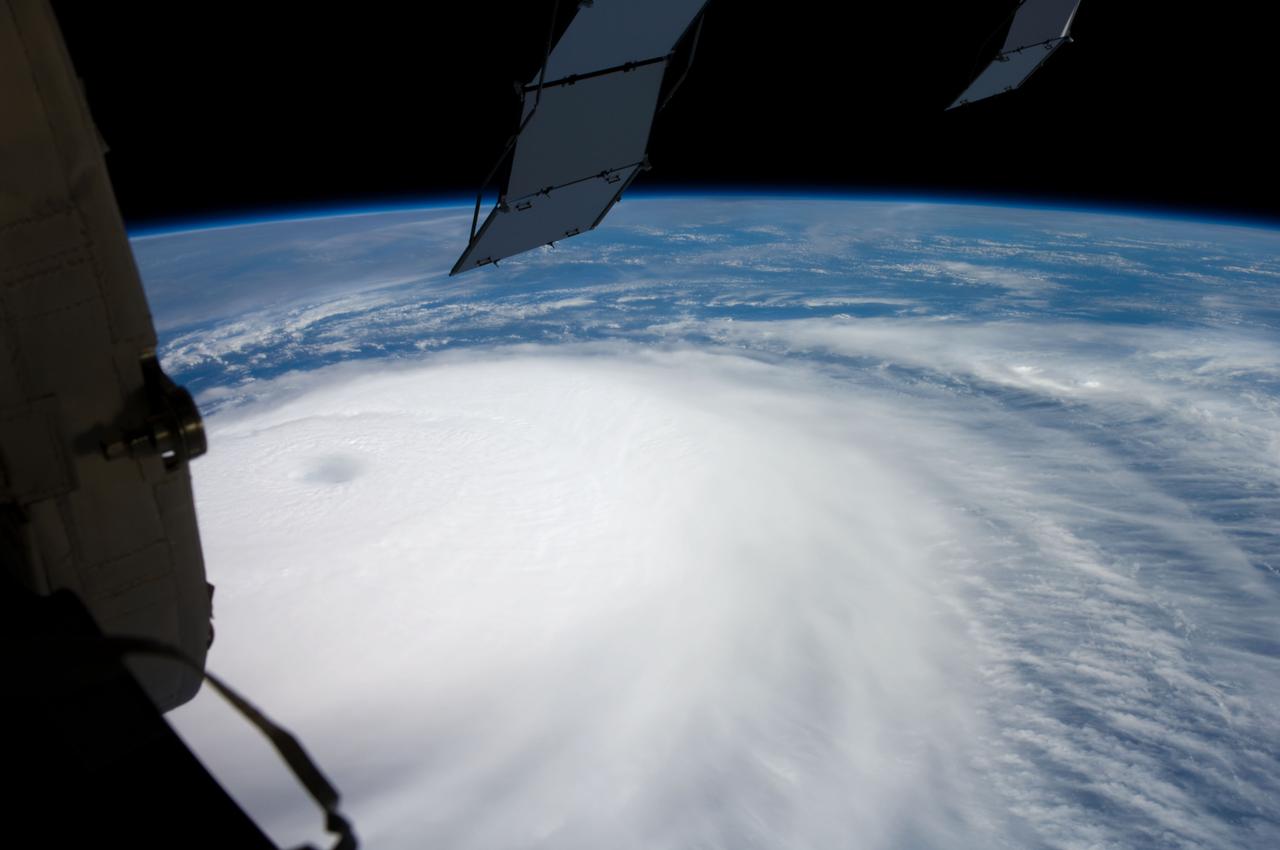
ISS017-E-015170 (4 Sept. 2008) --- Hurricane Ike was still a Category 4 storm on the morning of Sept. 4 when this photo was taken from the International Space Station's vantage point of 220 miles above the Earth. The season's ninth named storm was churning west-northwestward through the mid-Atlantic Ocean sporting winds of 120 nautical miles per hour with gusts to 145.
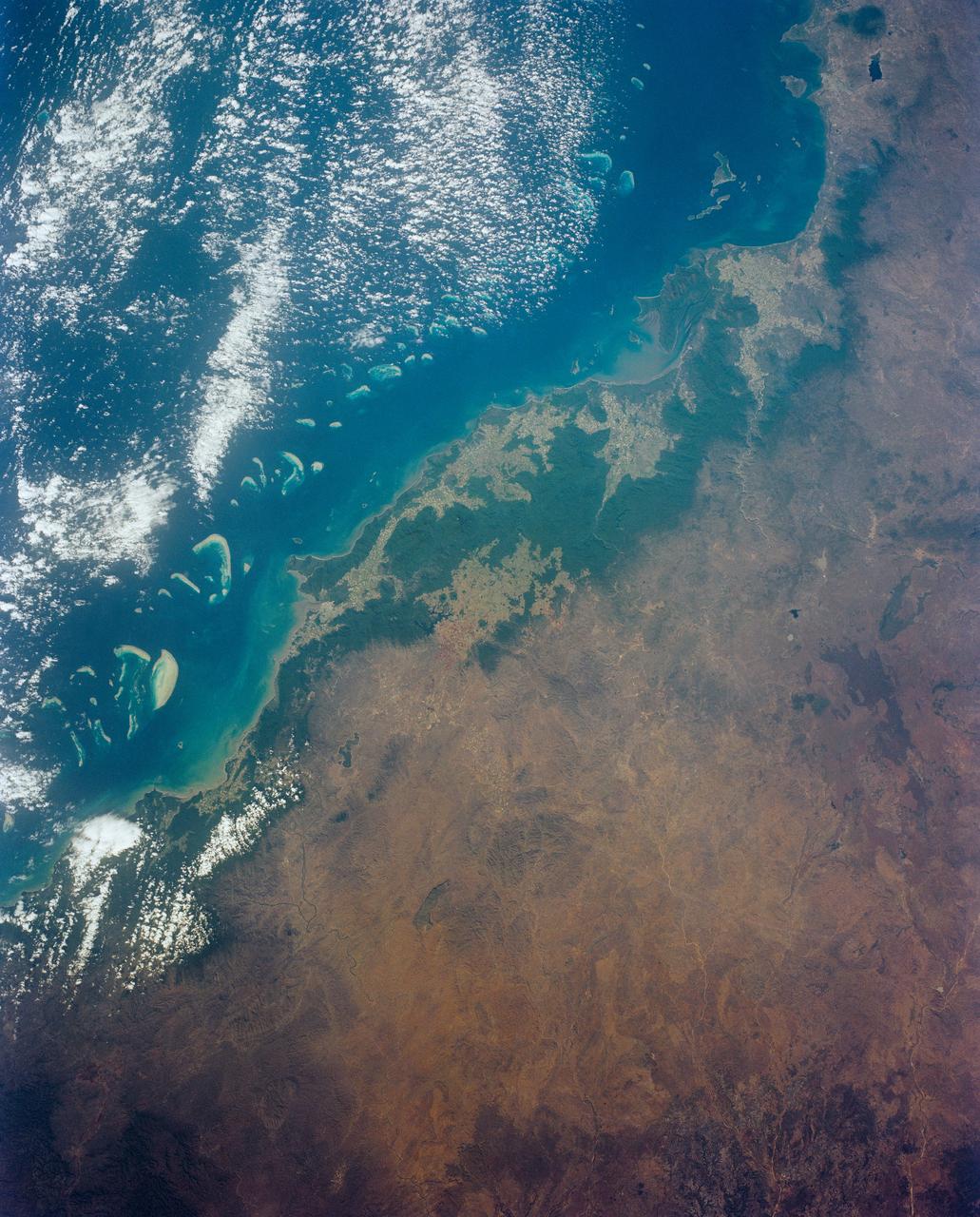
Cairns and Townsville area, on the northeast coast of Queensland, Australia (17.0S, 146.0E) is one of the best sport diving localities in the world where divers can explore the rich and varied flora and fauna of the nearby Great Barrier Reef. Onshore, the timbered foothills of the Great Dividing Range, seen as dark green areas, separate the semi arid interior of Queensland.
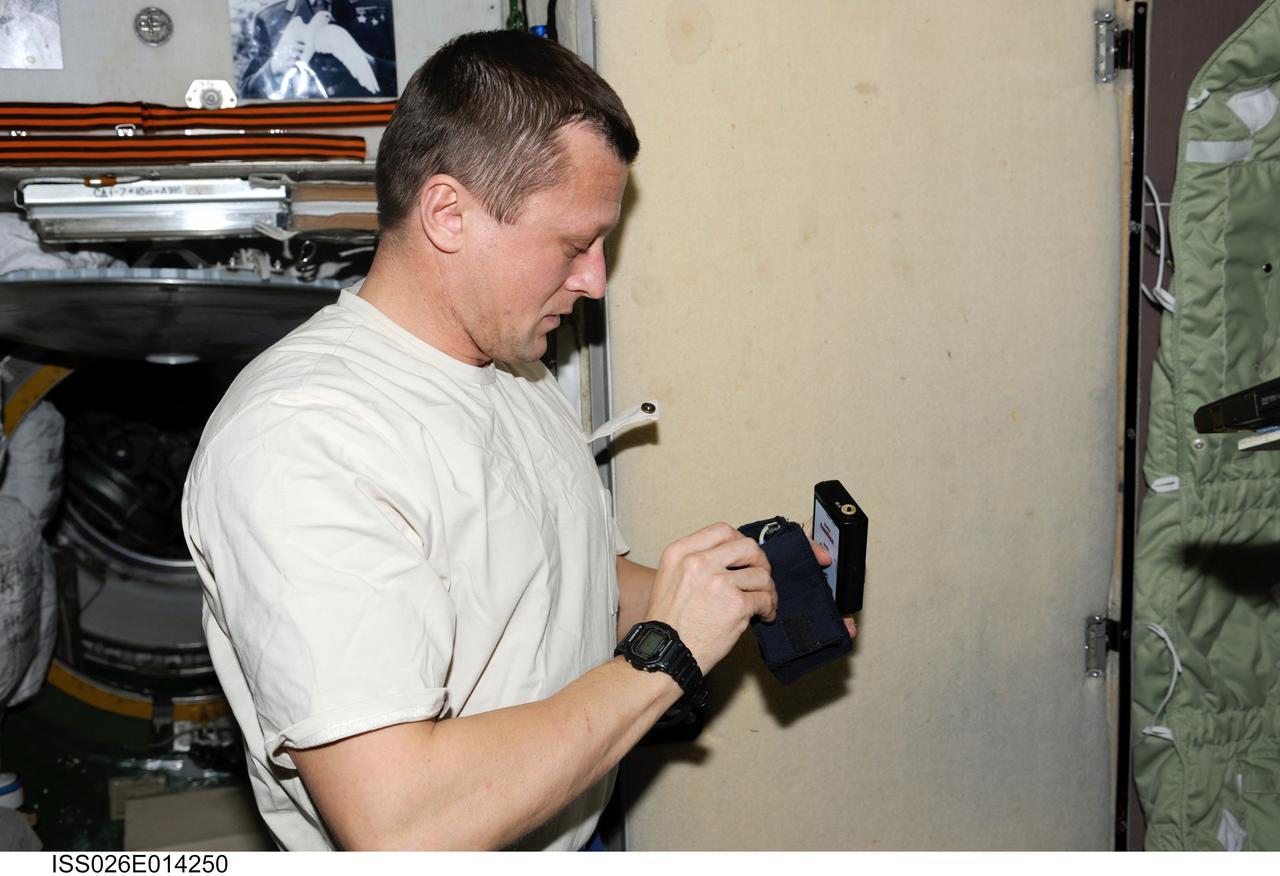
ISS026-E-014250 (3 Jan. 2011) --- Russian cosmonaut Dmitry Kondratyev, Expedition 26 flight engineer, sets up the Russian MBI-12 payload for a Sonokard experiment session in the Zvezda Service Module of the International Space Station. Kondratyev used a sports shirt from the Sonokard kit with a special device in the pocket for testing a new method for acquiring physiological data without using direct contact on the skin. Measurements are recorded on a data card for return to Earth.
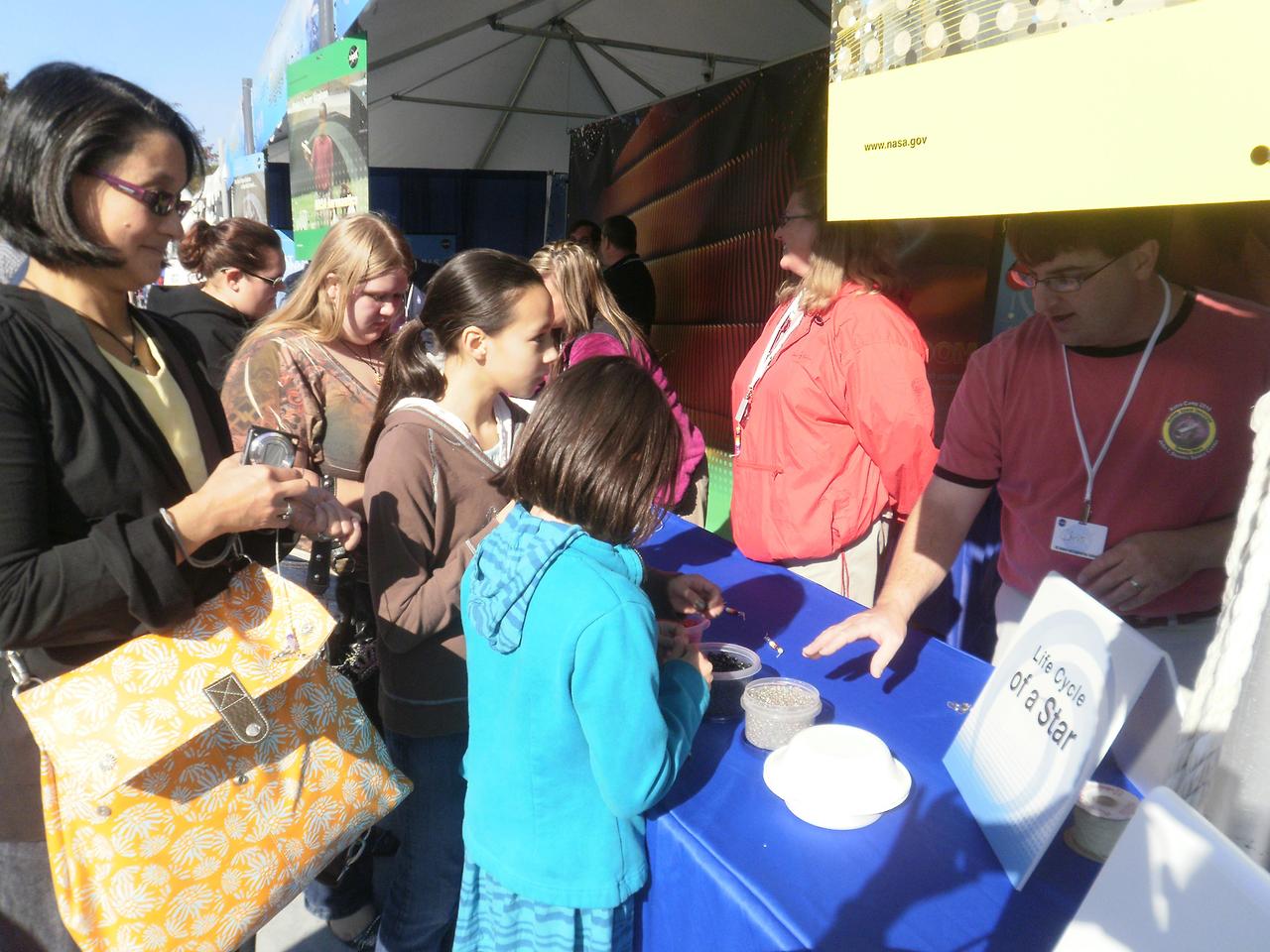
Young visitors to the inaugural USA Science and Engineering Festival at the National Mall in Washington, D.C., learn about the life cycle of a star at an exhibit sponsored by the John C. Stennis Space Center Education Office. Stennis personnel participated in the final weekend of the Oct. 10-24 festival with education activities and to present information on its new Spaced Out Sports Design Challenge.
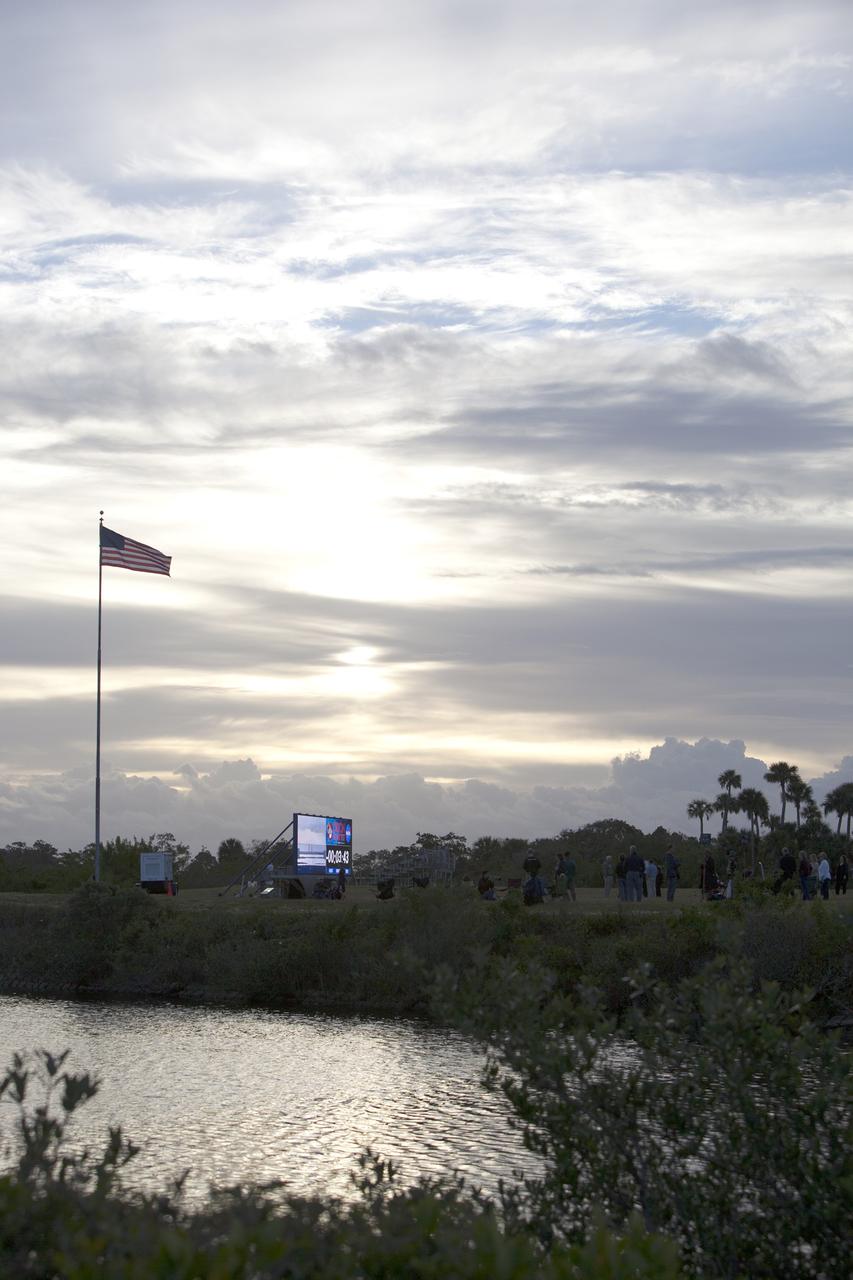
CAPE CANAVERAL, Fla. – At NASA's Kennedy Space Center in Florida, the new countdown clock at the spaceport's Press Site is used for the first time as preparations were underway for the Orion Flight Test. The modern, multimedia display is similar to the screens seen at sporting venues. The new screen is nearly 26 feet wide by 7 feet high, a foot taller than the original clock. For more information, visit www.nasa.gov/orion Photo credit: NASA/Frankie Martin

Japan’s Minister of Education, Culture, Sports, Science and Technology Masahito Moriyama speaks after signing an historic agreement between the United States and Japan to advance sustainable human exploration of the Moon, Tuesday, April 9, 2024, at the NASA Headquarters Mary W. Jackson Building in Washington. Under the agreement, Japan will design, develop, and operate a pressurized rover for crewed and uncrewed exploration on the Moon. NASA will provide the launch and delivery of the rover to the Moon as well as two Japanese astronaut missions to the lunar surface. Photo Credit: (NASA/Bill Ingalls)
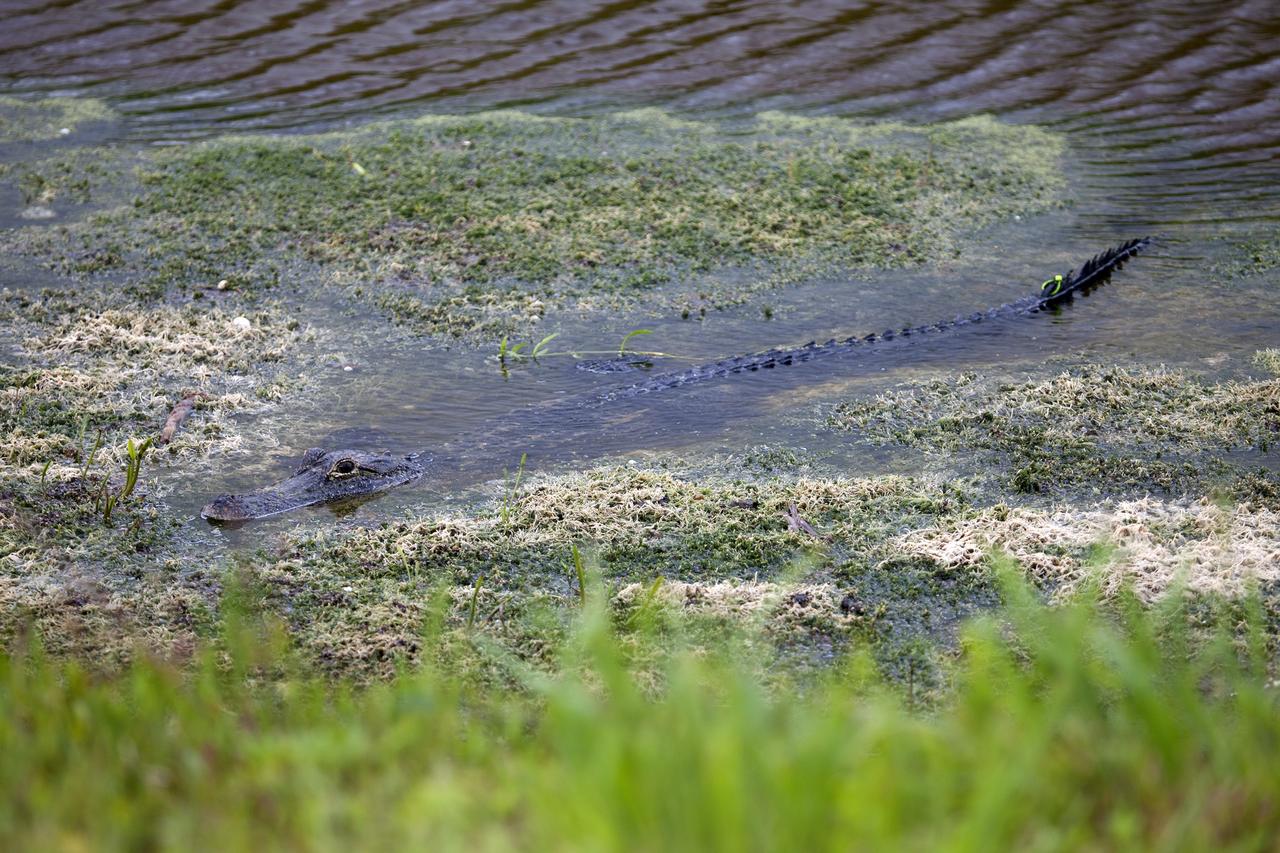
CAPE CANAVERAL, Fla. -- This alligator sports a florescent green tag on its tail, which blends in with the vegetation in the canal in which it is swimming on NASA's Kennedy Space Center in Florida. The undeveloped property on Kennedy Space Center is managed by the U.S. Fish and Wildlife Service through the Merritt Island National Wildlife Refuge. For information on the refuge, visit http://www.fws.gov/merrittisland/Index.html. For information on the alligators prowling the waterways at Kennedy, visit http://www.nasa.gov/content/ancient-creatures-on-the-prowl/. Photo credit: NASA/Daniel Casper
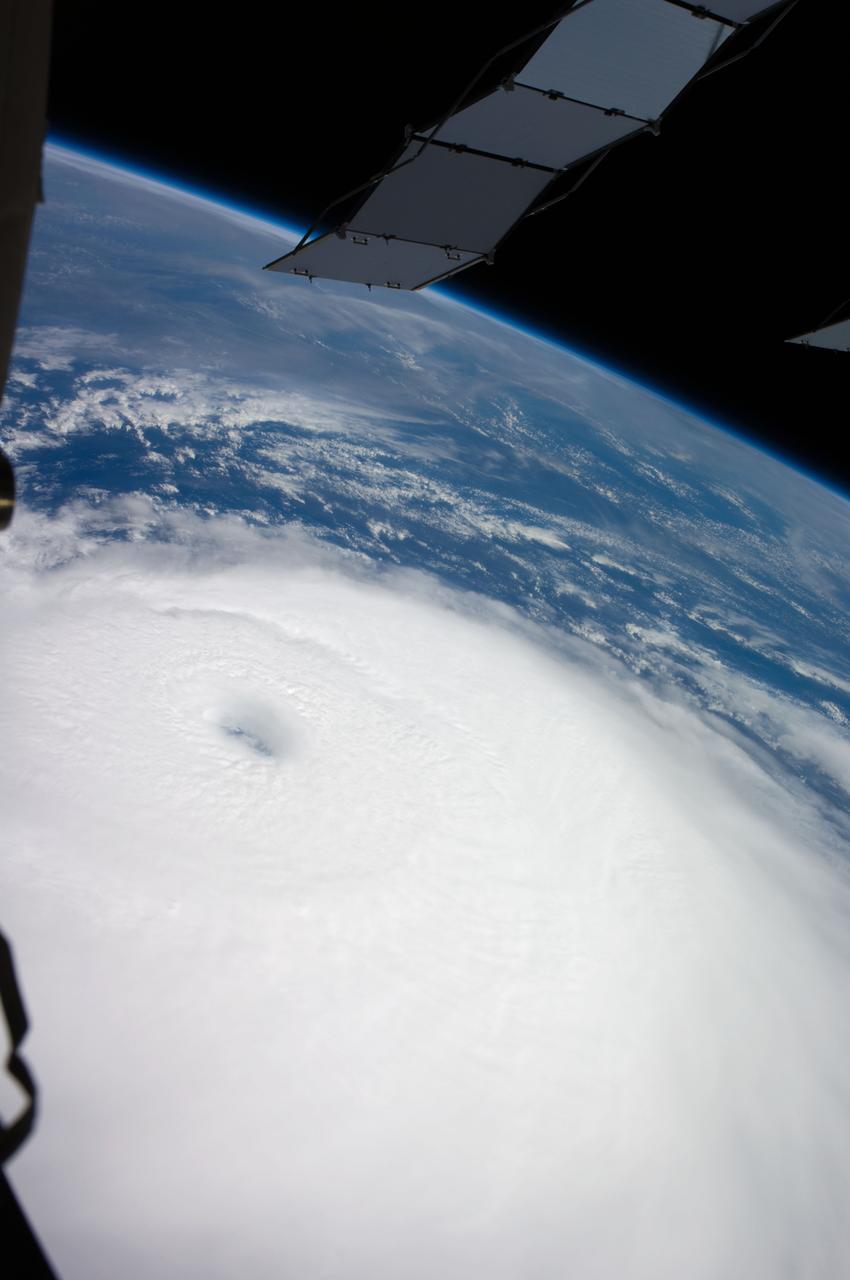
ISS017-E-015166 (4 Sept. 2008) --- Hurricane Ike was still a Category 4 storm on the morning of Sept. 4 when this photo was taken from the International Space Station's vantage point of 220 miles above the Earth. The season's ninth named storm was churning west-northwestward through the mid-Atlantic Ocean sporting winds of 120 nautical miles per hour with gusts to 145.
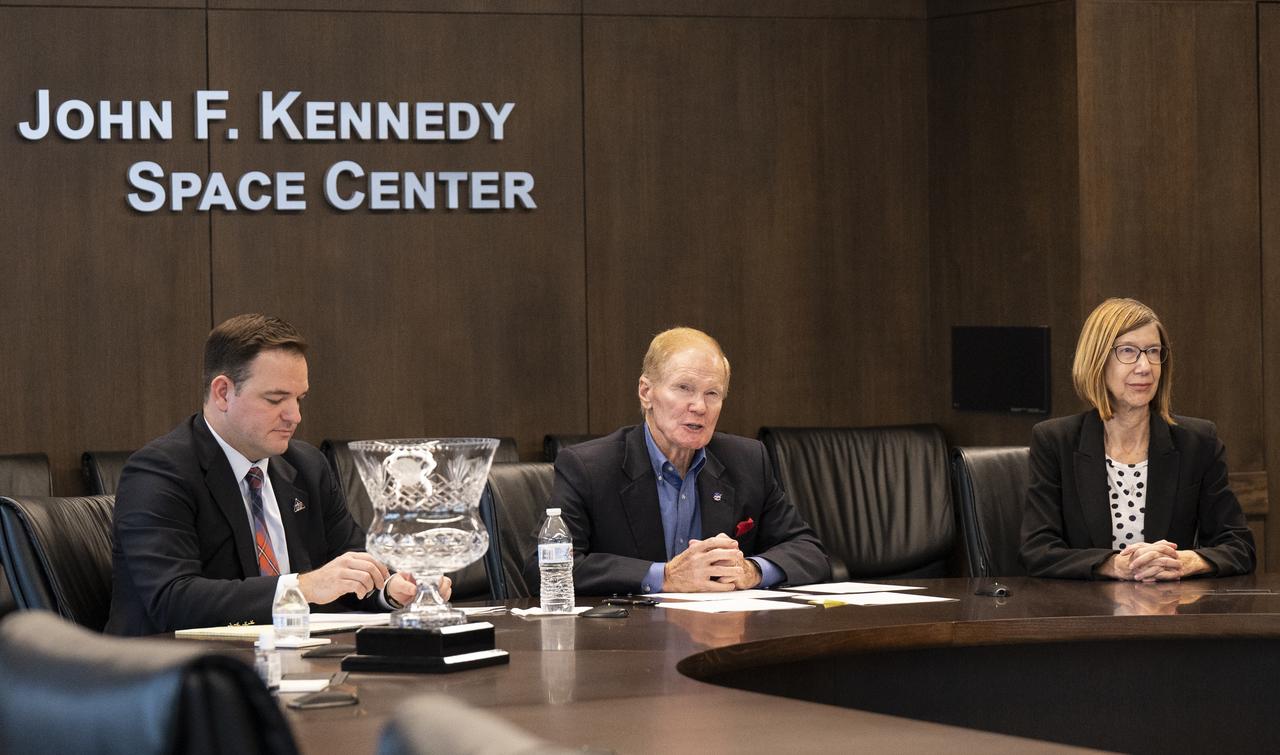
NASA Administrator Bill Nelson, joined by NASA Leadership, delivers opening remarks during a virtual meeting hosted by Japanese Minister of Education, Culture, Sports, Science and Technology (MEXT) Keiko Nagaoka prior to signing a Gateway implementing agreement Thursday, Nov. 17, 2022, at NASA’s Kennedy Space Center in Florida. Photo Credit: (NASA/Keegan Barber)
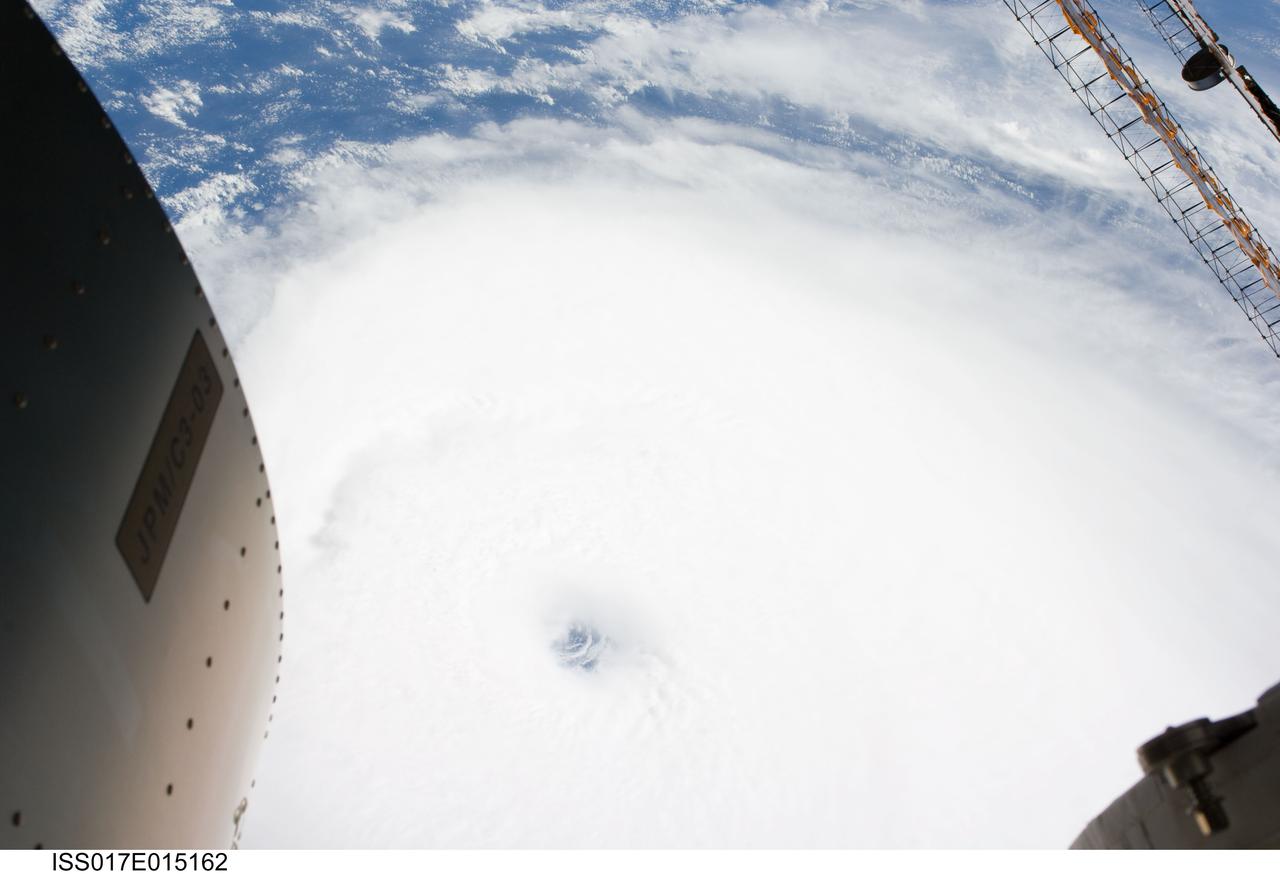
ISS017-E-015162 (4 Sept. 2008) --- Hurricane Ike was still a Category 4 storm on the morning of Sept. 4 when this photo was taken from the International Space Station's vantage point of 220 miles above the Earth. The season's ninth named storm was churning west-northwestward through the mid-Atlantic Ocean sporting winds of 120 nautical miles per hour with gusts to 145.
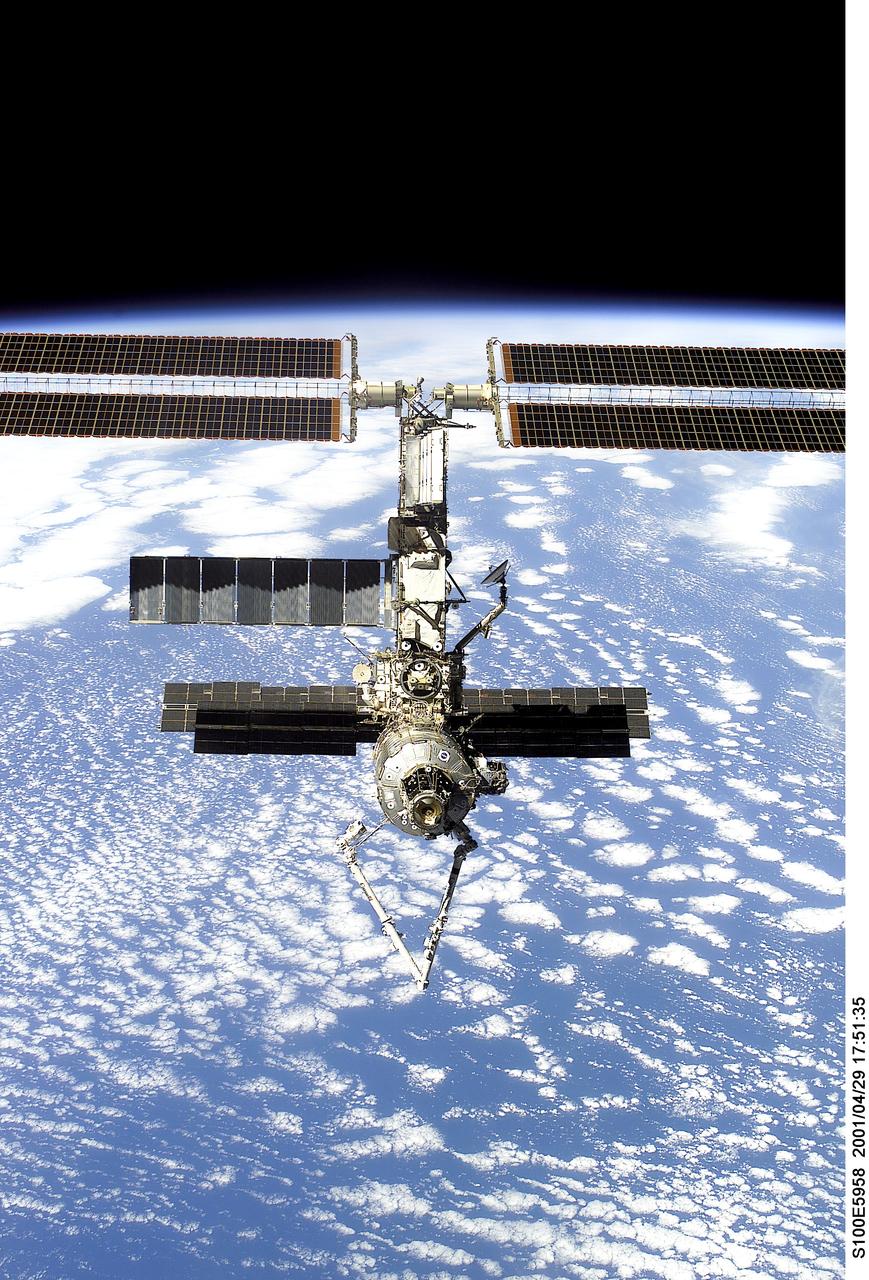
S100-E-5958 (29 April 2001) --- Backdropped against the blue and white Earth and sporting a readily visible new addition in the form of the Canadarm2 or space station robotic arm, the International Space Station (ISS) was photographed following separation from the Space Shuttle Endeavour. With six astronauts and a Rosaviakosmos cosmonaut aboard the shuttle, the spacecraft performed a fly-around survey of the station, which was inhabited by two astronauts and a Russian cosmonaut. The image was recorded with a digital still camera.
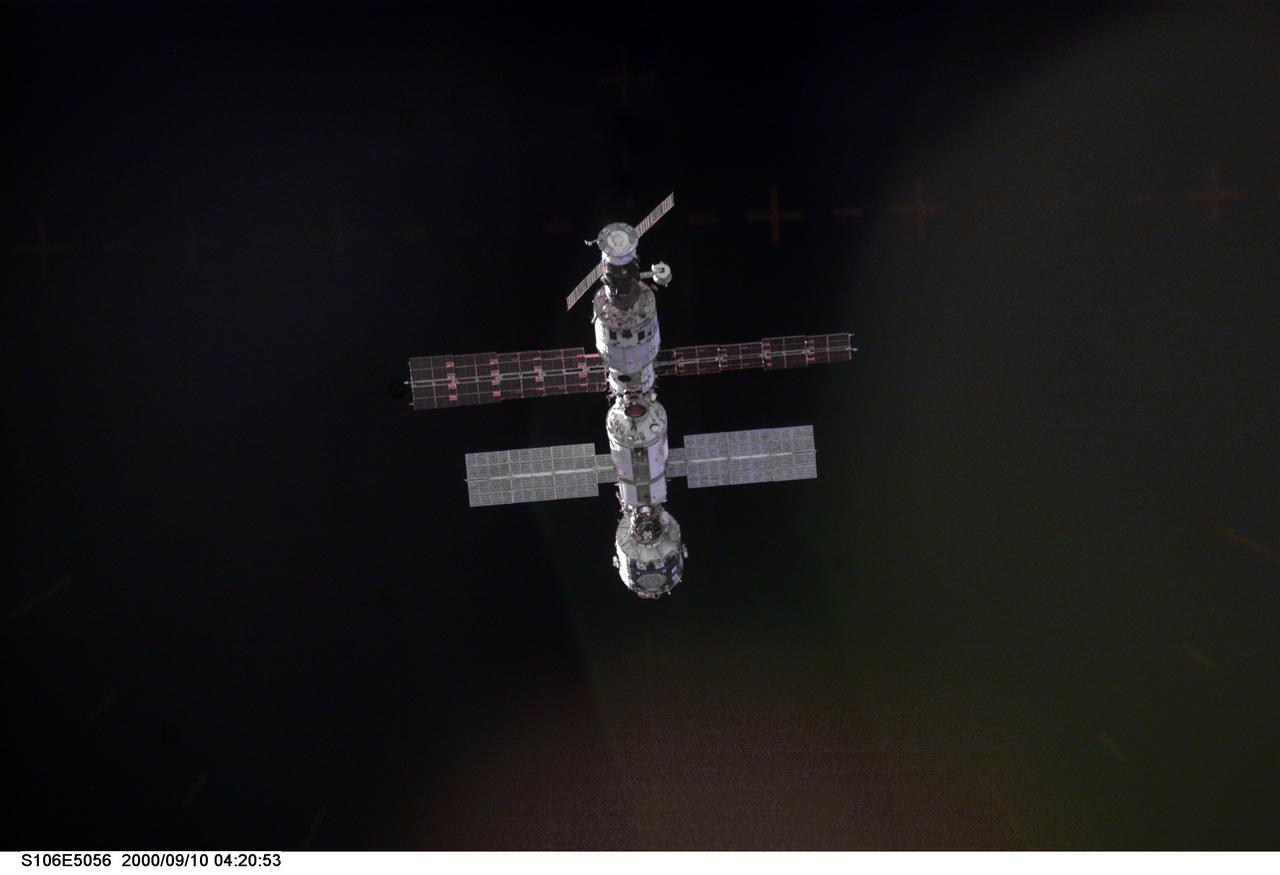
S106-E-5056 (10 September 2000) --- The International Space Station (ISS) is now in the view of the crew aboard the Space Shuttle Atlantis as evidenced in this electronic image. The last time astronauts saw the ISS, it was not sporting the recently-arriving Progress, which appears at the top in this perspective. Also, next to the Progress, appears the Zvezda service module, which had been delivered by a Proton rocket since the most recent human visit to ISS.
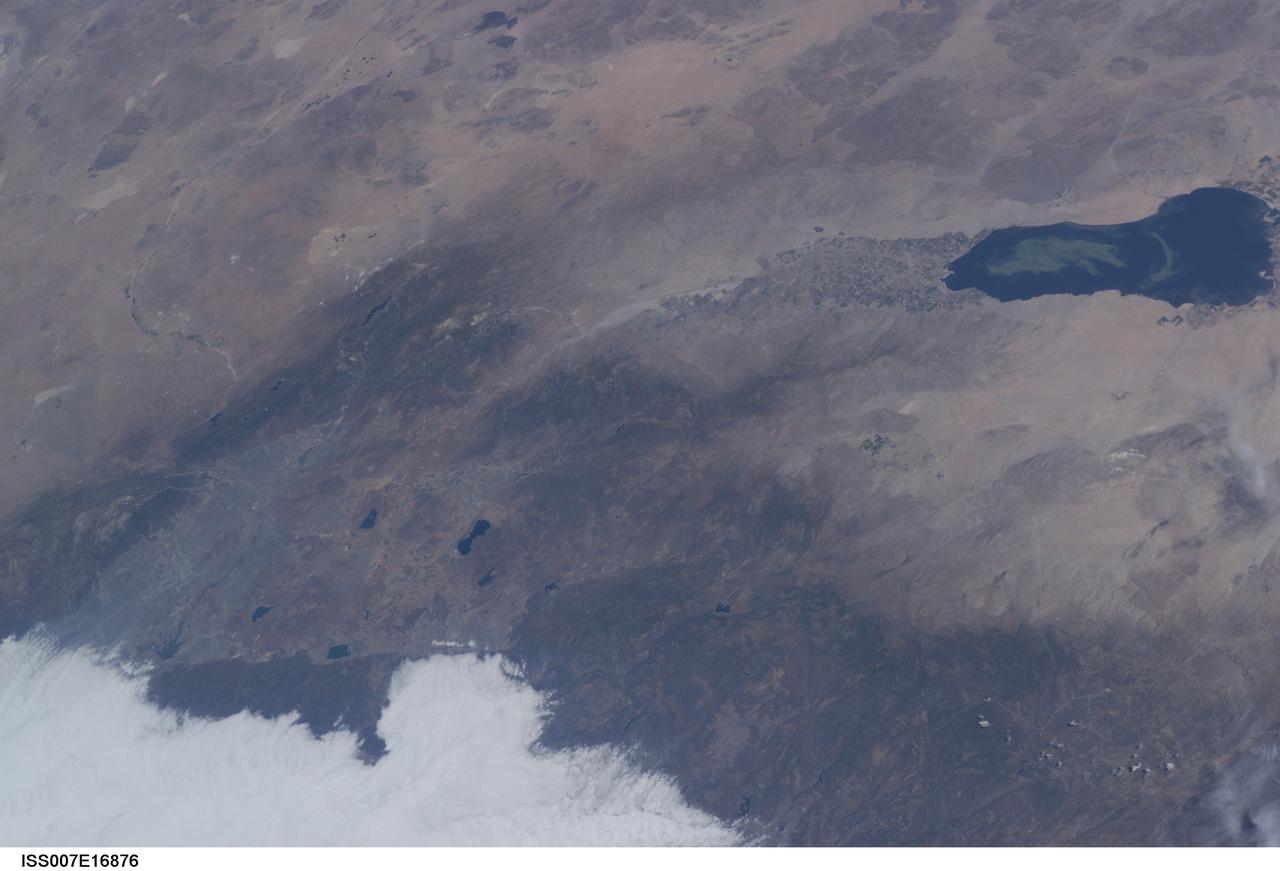
ISS007-E-16876 (9 October 2003) --- This view featuring the Salton Sea was taken by an Expedition 7 crewmember onboard the International Space Station (ISS). This wide image shows a portion of drought-stricken southern California, including the urban sprawl of San Bernardino and Riverside, the agricultural development of the Imperial Valley and the Salton Sea sporting a huge swirl, speculated to be an algal bloom. The coastal region is obscured by fog.
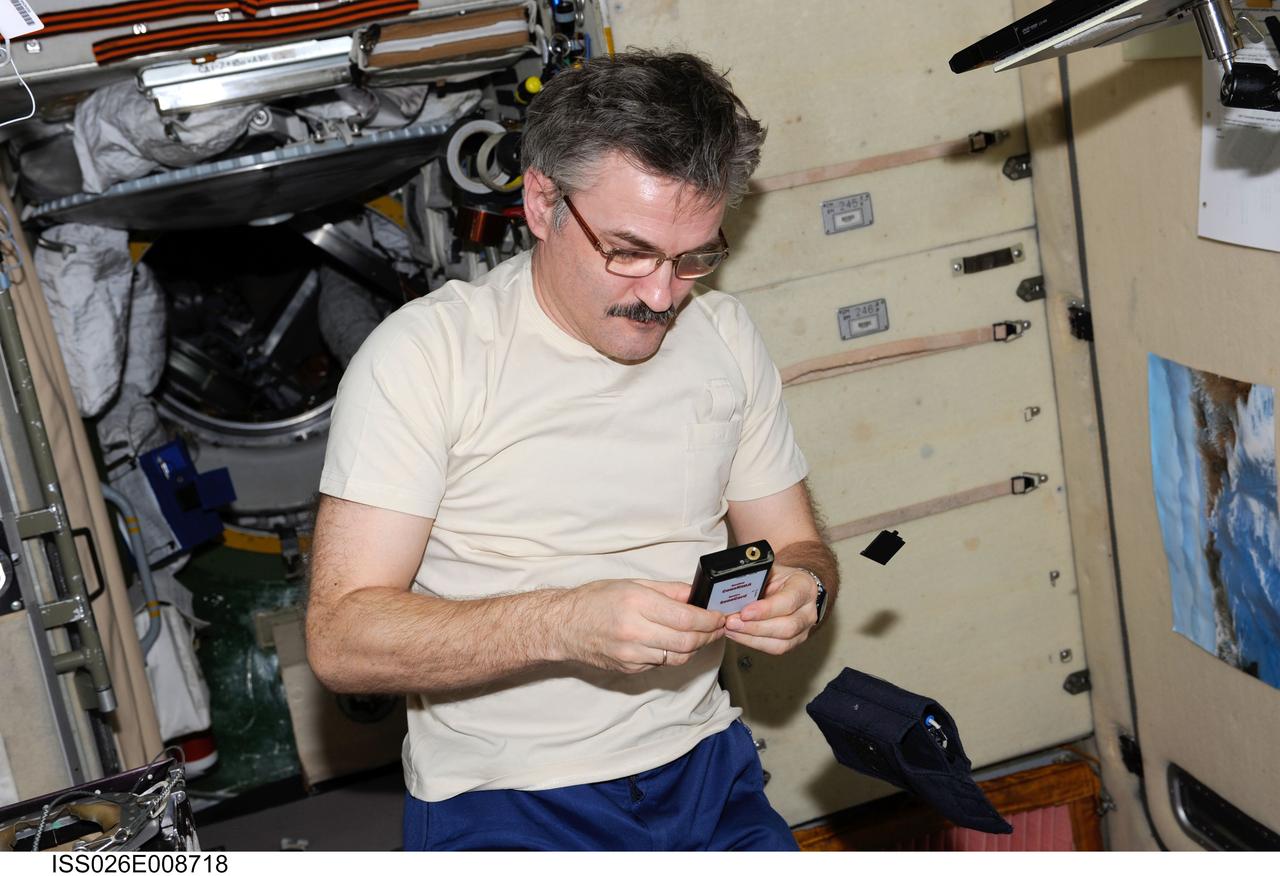
ISS026-E-008718 (8 Dec. 2010) --- Russian cosmonaut Alexander Kaleri, Expedition 26 flight engineer, sets up the Russian MBI-12 payload for a Sonokard experiment session in the Zvezda Service Module of the International Space Station. Kaleri used a sports shirt from the Sonokard kit with a special device in the pocket for testing a new method for acquiring physiological data without using direct contact on the skin. Measurements are recorded on a data card for return to Earth.
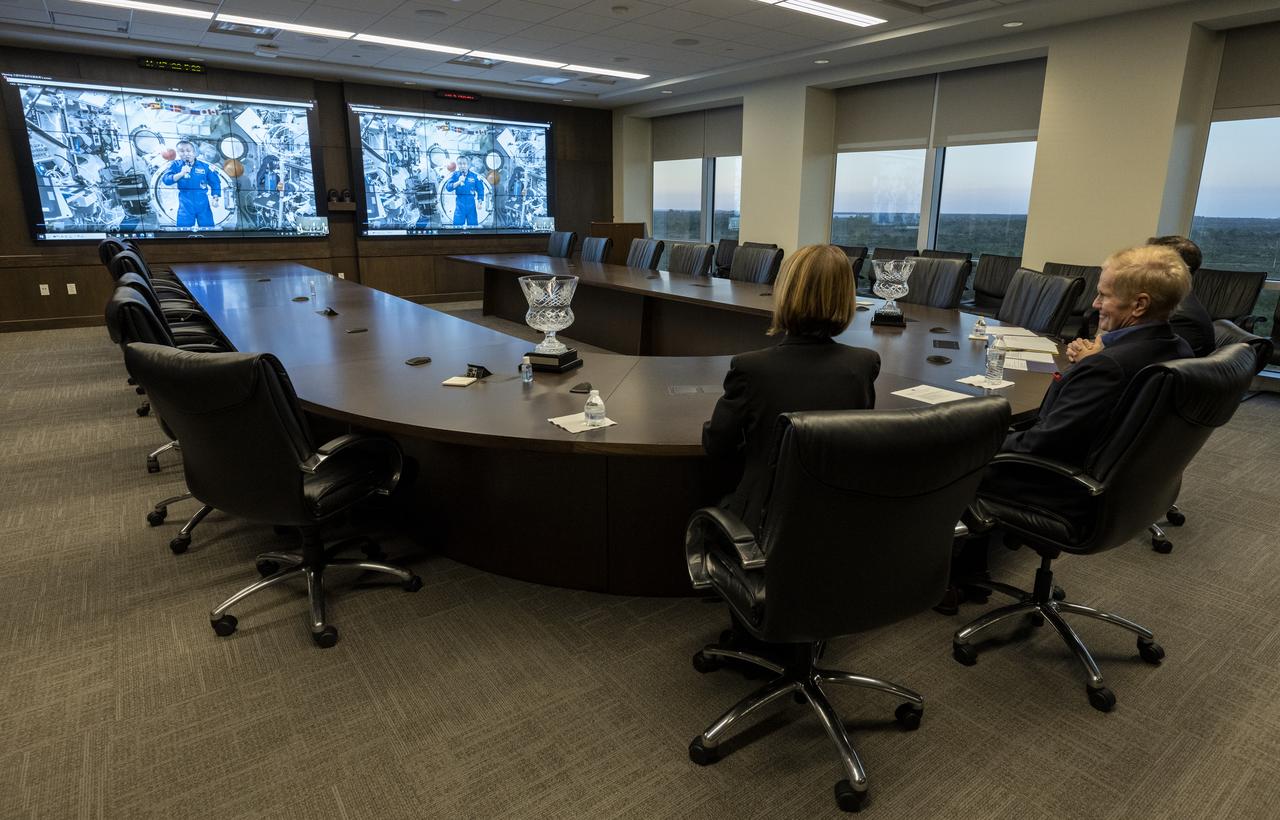
NASA Administrator Bill Nelson, joined by NASA Leadership, view a video message from Japan Aerospace Exploration Agency (JAXA) astronaut Akihiko Hoshide during a virtual meeting hosted by Japanese Minister of Education, Culture, Sports, Science and Technology (MEXT) Keiko Nagaoka following the signing of a Gateway implementing agreement Thursday, Nov. 17, 2022, at NASA’s Kennedy Space Center in Florida. Photo Credit: (NASA/Keegan Barber)
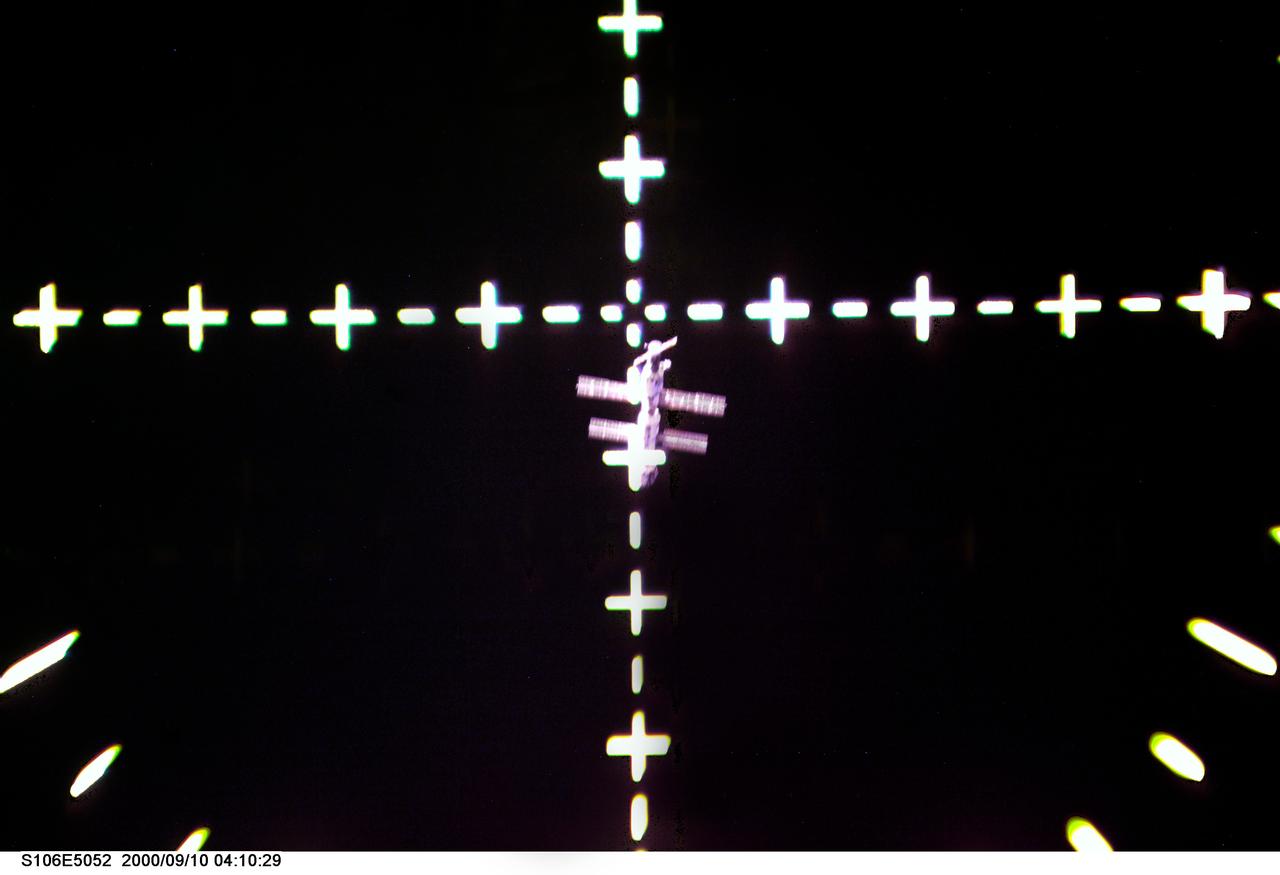
S106-E-5052 (10 September 2000) --- The International Space Station (ISS) is now in the view of the crew aboard the Space Shuttle Atlantis as evidenced in this electronic image. The markings in the photo are those of the Crew Optical Alignment Sight (COAS), an instrument used routinely for docking maneuvers. The last time astronauts saw the ISS, it was not sporting the recently-arriving Progress, which appears at the top in this perspective. Also, a Proton had earlier delivered the Zvezda service module to the station since the last human visit.
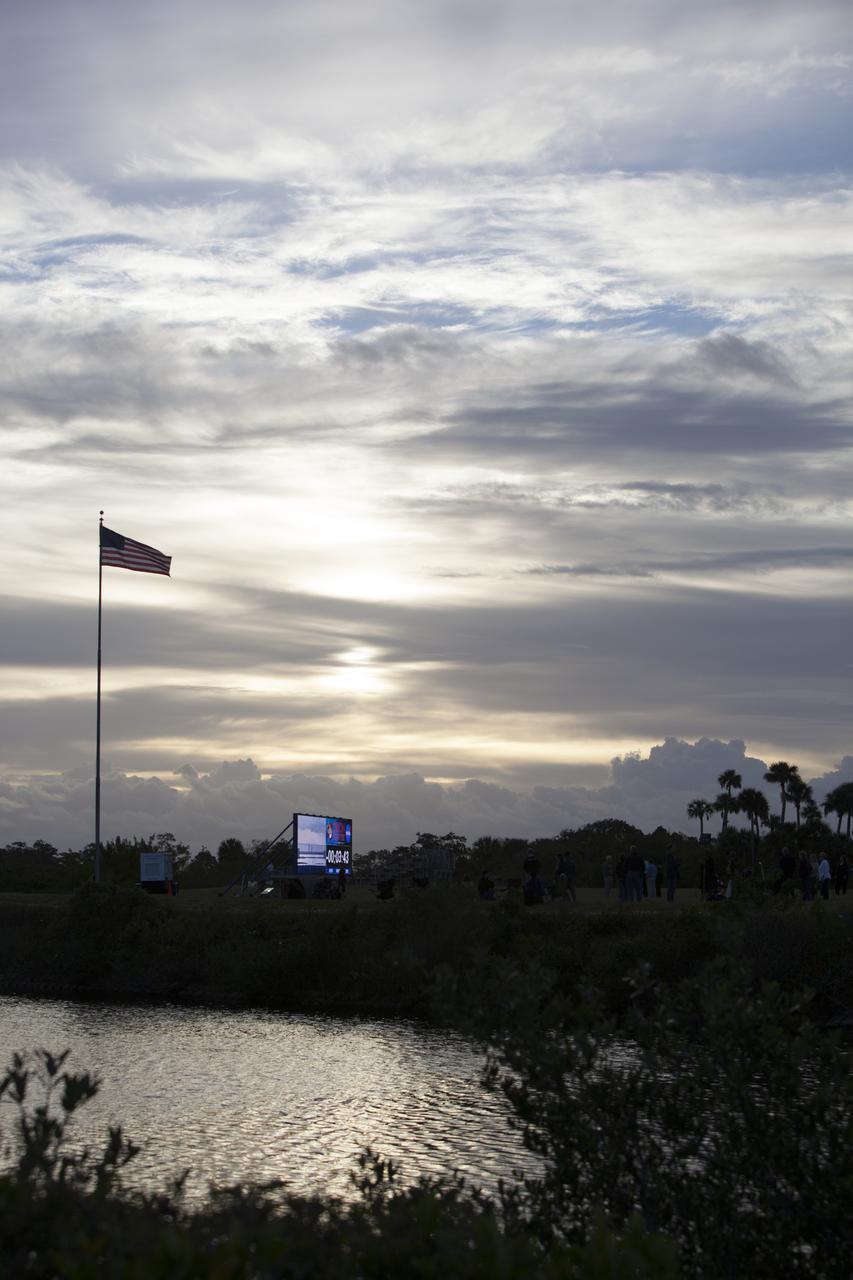
At NASA's Kennedy Space Center in Florida, the new countdown clock at the spaceport's Press Site is used for the first time as preparations were underway for the Orion Flight Test. The modern, multimedia display is similar to the screens seen at sporting venues. The new screen is nearly 26 feet wide by 7 feet high, a foot taller than the original clock.
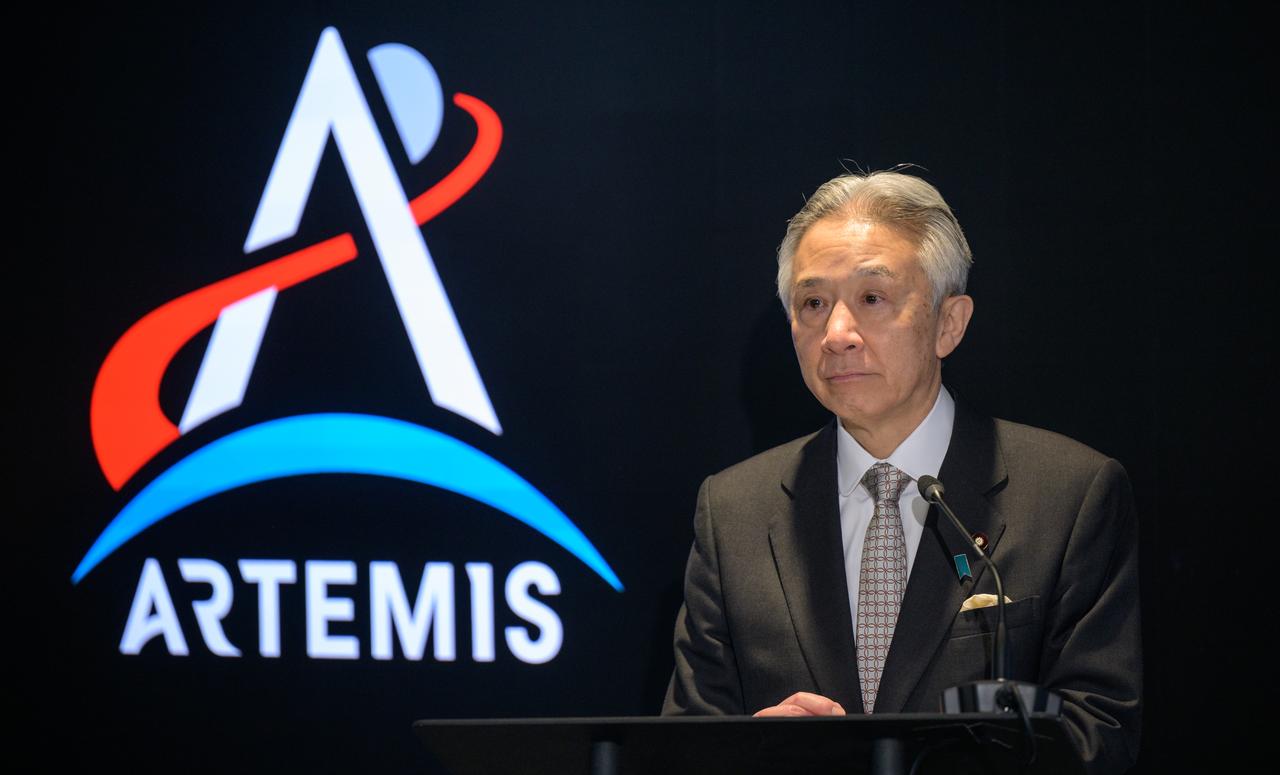
Japan’s Minister of Education, Culture, Sports, Science and Technology Masahito Moriyama speaks after signing an historic agreement between the United States and Japan to advance sustainable human exploration of the Moon, Tuesday, April 9, 2024, at the NASA Headquarters Mary W. Jackson Building in Washington. Under the agreement, Japan will design, develop, and operate a pressurized rover for crewed and uncrewed exploration on the Moon. NASA will provide the launch and delivery of the rover to the Moon as well as two Japanese astronaut missions to the lunar surface. Photo Credit: (NASA/Bill Ingalls)
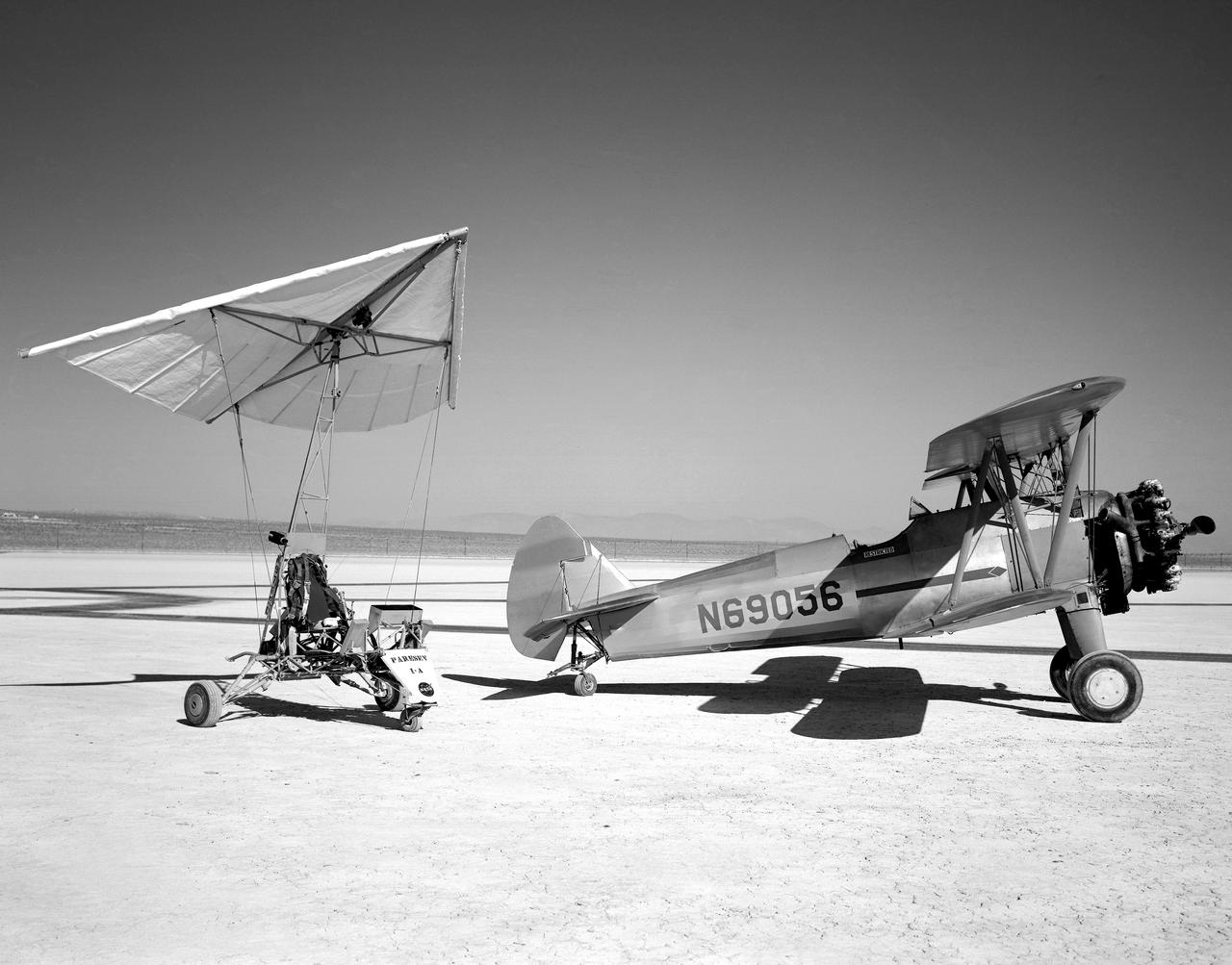
The Paresev 1-A (Paraglider Research Vehicle) and the tow airplane, 450-hp Stearman sport Biplane, sitting on Rogers dry lakebed, Edwards, California. The control system in the Paresev 1-A had a more conventional control stick position and was cable-operated; the main landing gear used shocks and bungees with the 100-square-foot wing membrane being made of 6-ounce unsealed Dacron.
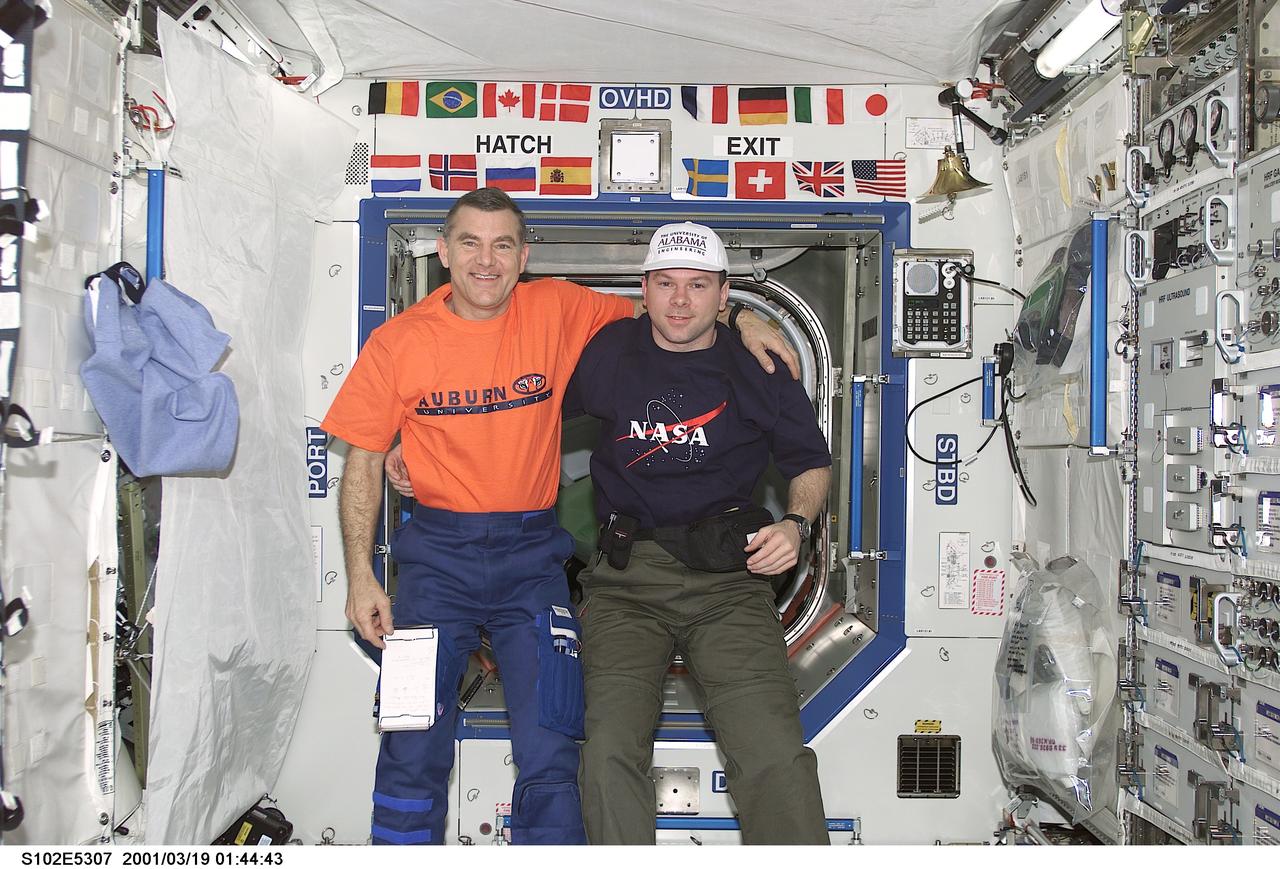
STS102-E-5307 (19 March 2001) --- Astronauts James S. Voss (left) and James M. Kelly share a friendly moment onboard the International Space Station's U.S. laboratory Destiny in spite of the long-standing academic/athletic rivalry between their respective alma maters--Auburn University and the University of Alabama. Voss, STS-102 mission specialist-turned Expedition Two flight engineer and a 1972 alumnus of Auburn with a bachelor of science degree in aerospace engineering, sports a T-shirt paying tribute to his university. Kelly, STS-102 pilot and masters of science degree graduate in aerospace engineering from the University of Alabama in 1996, is wearing a cap from that institution of higher learning.
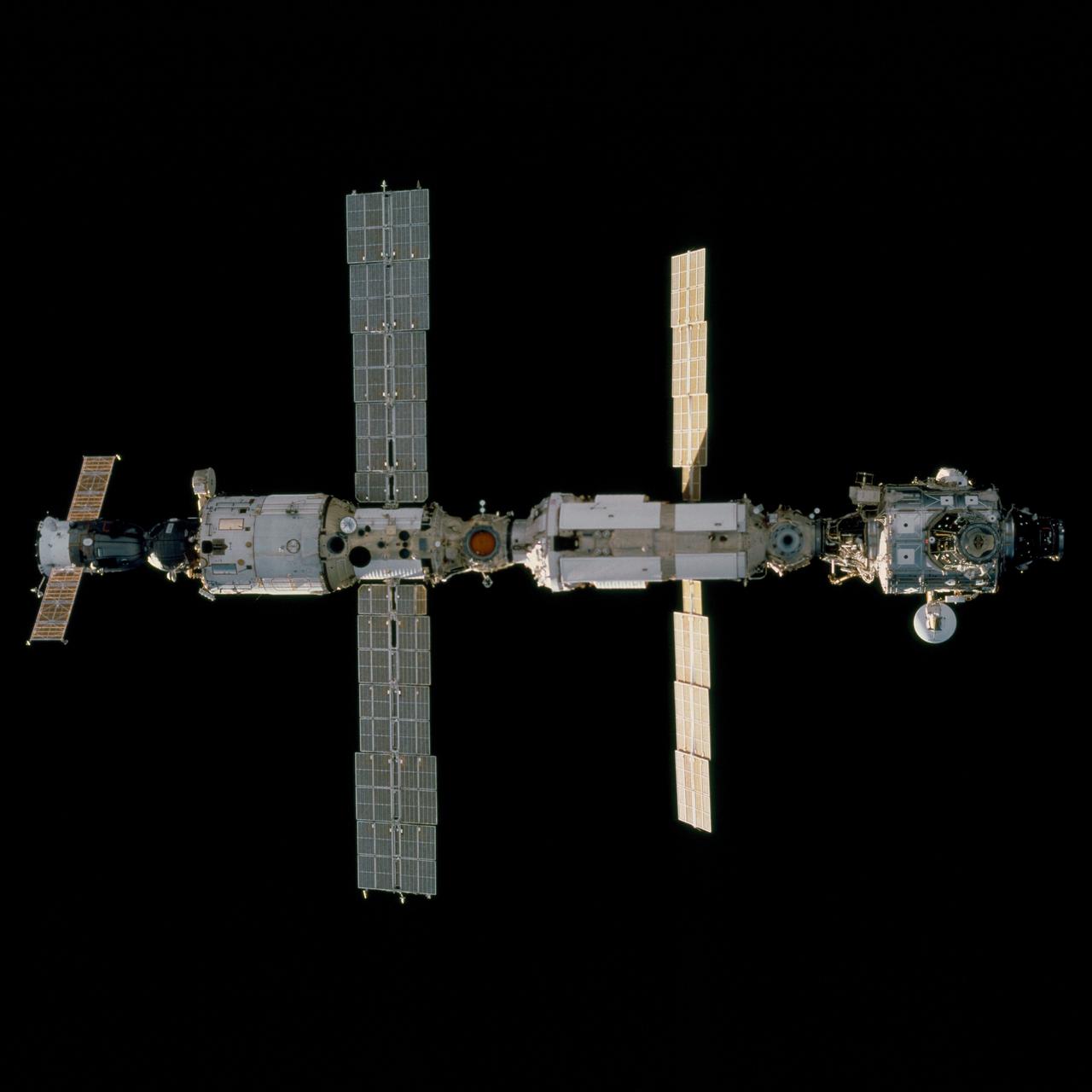
STS097-702-061 (2 December 2000) --- The International Space Station (ISS) moves in position for docking with the Space Shuttle Endeavour, in this 70mm frame photographed by one of the STS-97 astronauts on the flight deck of the shuttle. Most of the station's components are clearly visible in the frame, with the Soyuz spacecraft docked at left to the Zvezda Service Module, which is linked to the Zarya or Functional Cargo Block (FGB). The Unity node is at right, sporting the additions from the recent STS-92 mission of the Z1 truss structure (largely obscured) and a Pressurized Mating Adapter (PMA-3).
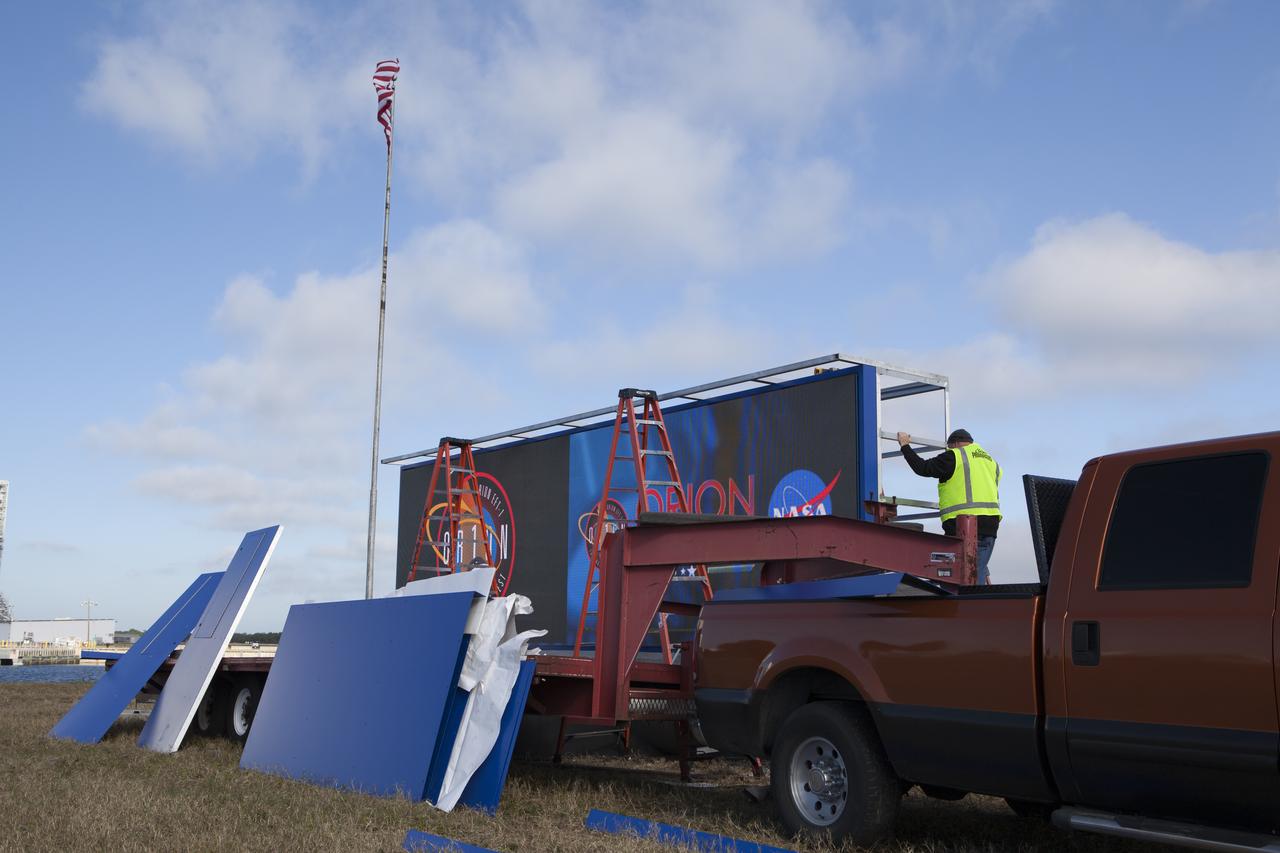
At NASA's Kennedy Space Center in Florida, a shade is placed around the new countdown clock at the spaceport's Press Site. The modern, multimedia display is similar to the screens seen at sporting venues. The new screen is nearly 26 feet wide by 7 feet high, a foot taller than the original clock. The historic countdown clock was designed by Kennedy engineers and built by space center technicians before Apollo 12 in 1969. NASA has acquired the countdown clock from the agency’s Artifact Working Group at the agency's Headquarters for display at the Kennedy Space Center Visitor Complex.
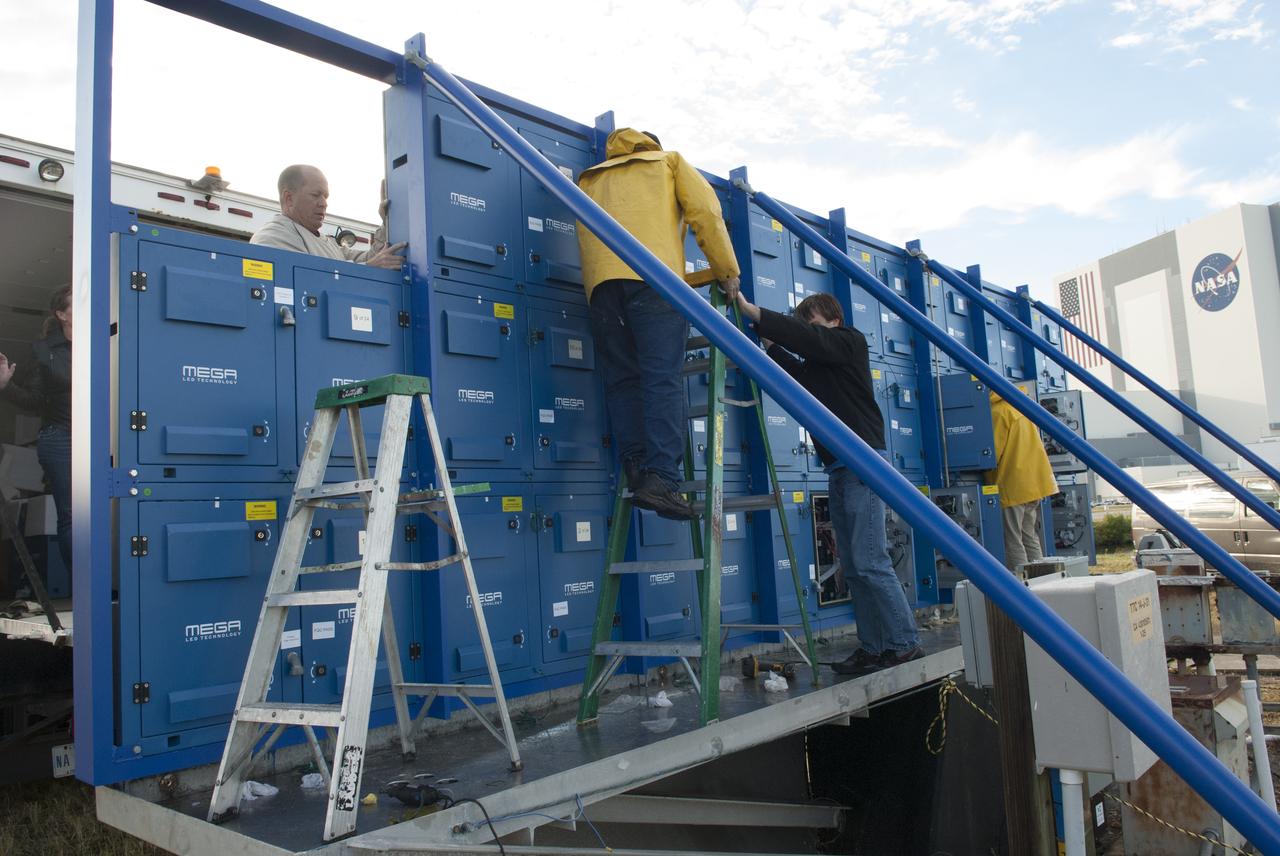
At NASA's Kennedy Space Center in Florida, work continues to install 24 light emitting diode LED panels in the new countdown clock at the spaceport's Press Site. The modern, multimedia display is similar to the screens seen at sporting venues. The new screen will be nearly 26 feet wide by 7 feet high, a foot taller than the original clock. The historic countdown clock was designed by Kennedy engineers and built by space center technicians before Apollo 12 in 1969. NASA has requested to acquire the countdown clock from the agency’s Artifact Working Group at the agency's Headquarters for display at the Kennedy Space Center Visitor Complex.
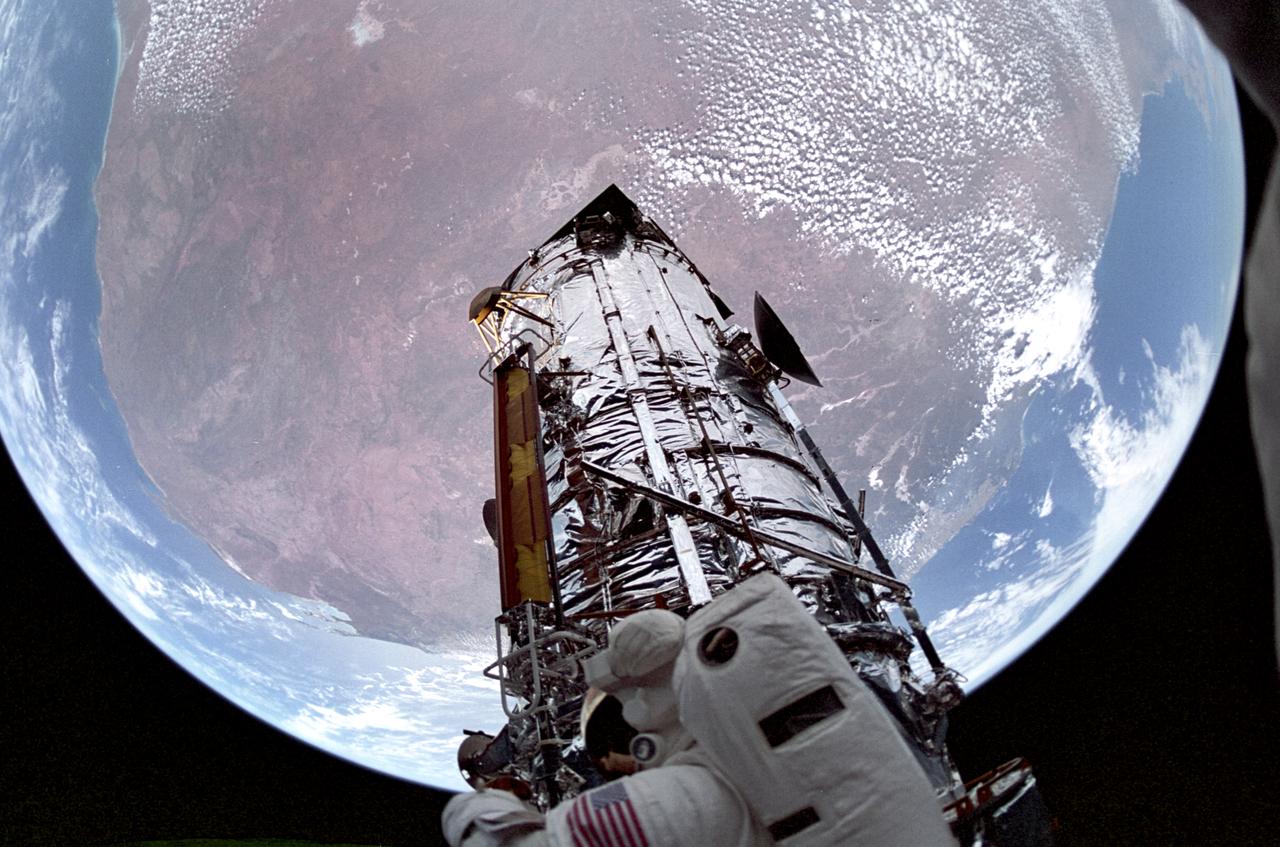
Backdropped against the Earth, the Hubble Space Telescope (HST)is shown sporting new and modified solar arrays stowed against its barrel. Orbiting Earth at an altitude of 325 nautical miles, an astronaut begins other repairs of the HST while perched atop a foot restraint on shuttle Endeavour's remote manipulator system arm. The 59th and final Shuttle flight of 1993 was one of most challenging and complex marned missions ever attempted. During record five back-to-back space walks totaling 35 hours and 28 minutes, two teams of astronauts completed the first servicing of the HST. The STS-061 mission was launched aboard Space Shuttle Endeavor on December 2, 1993.
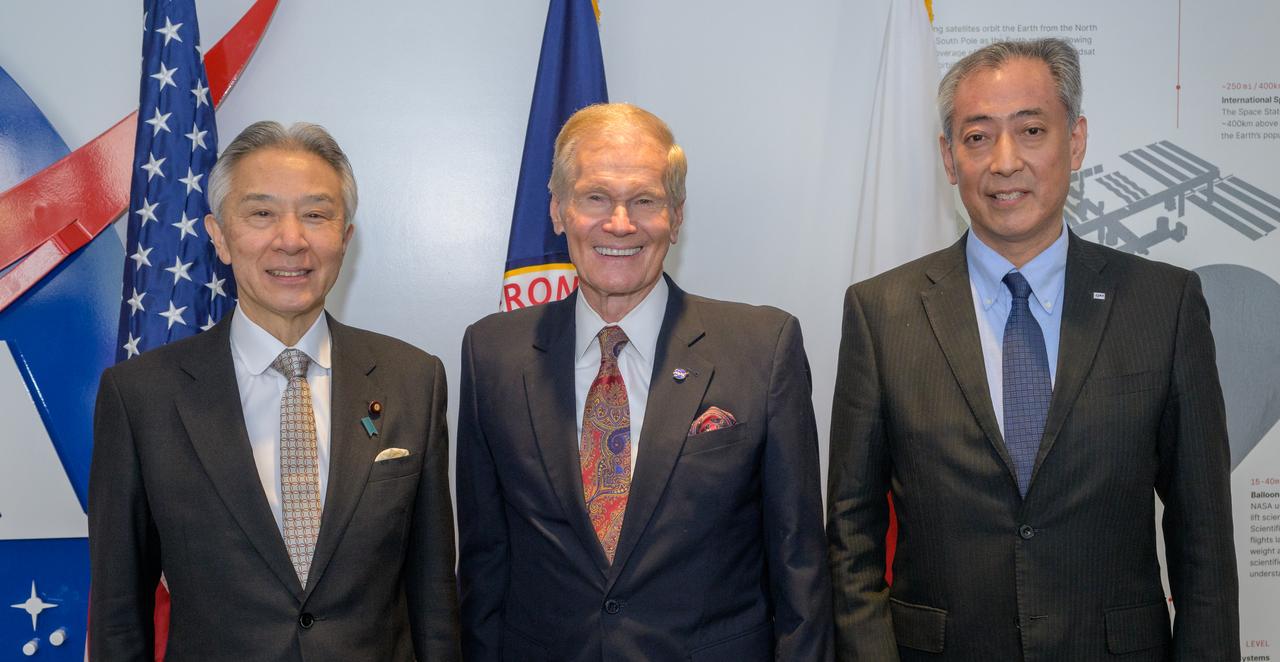
Japan’s Minister of Education, Culture, Sports, Science and Technology Masahito Moriyama, left, NASA Administrator Bill Nelson, and Japan Aerospace Exploration Agency (JAXA) President Hiroshi Yamakawa, right, pose for a photograph prior to the signing an historic agreement between the United States and Japan to advance sustainable human exploration of the Moon, Tuesday, April 9, 2024, at the NASA Headquarters Mary W. Jackson Building in Washington. Under the agreement, Japan will design, develop, and operate a pressurized rover for crewed and uncrewed exploration on the Moon. NASA will provide the launch and delivery of the rover to the Moon as well as two Japanese astronaut missions to the lunar surface. Photo Credit: (NASA/Bill Ingalls)
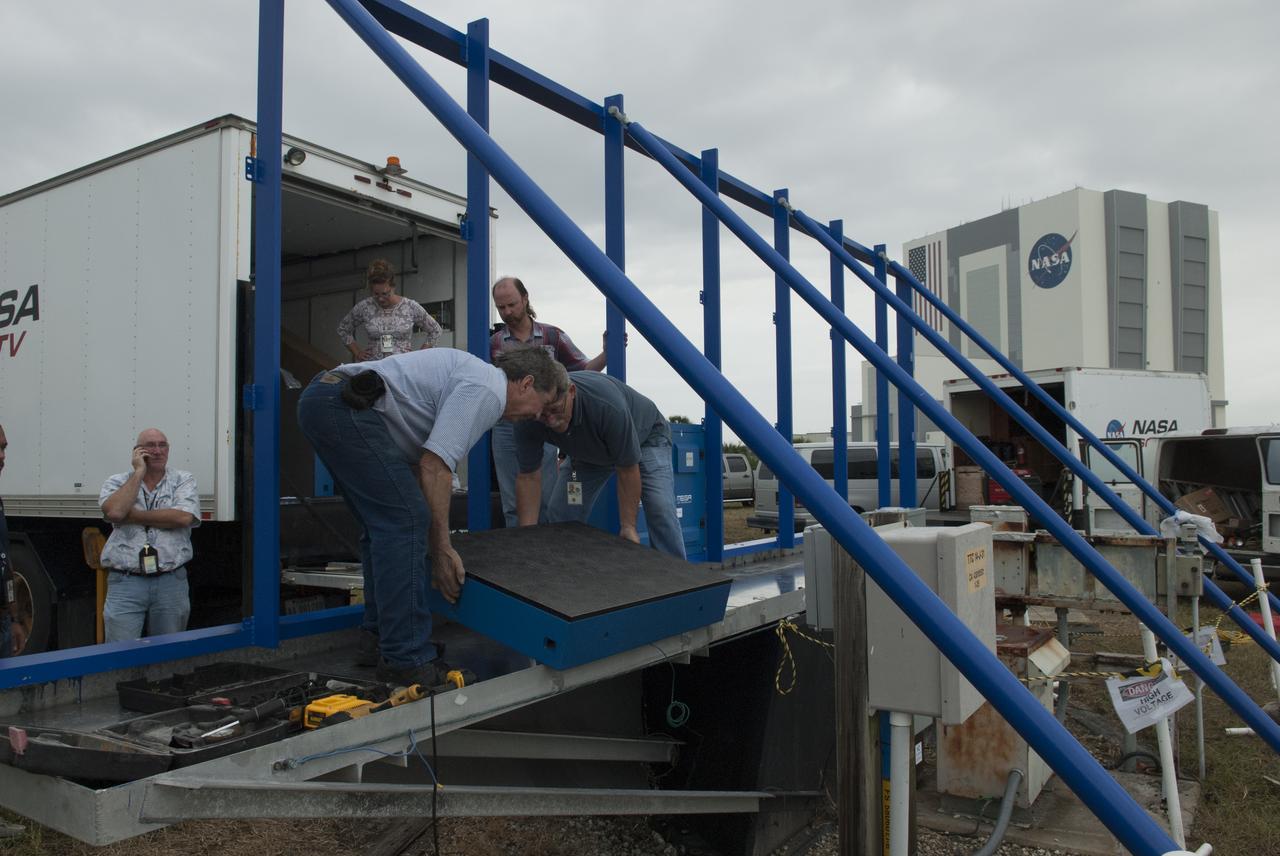
At NASA's Kennedy Space Center in Florida, assembly has begun on the first of 24 light emitting diode LED panels for installation in the new countdown clock at the spaceport's Press Site. The new modern, multimedia display will be similar to the screens seen at sporting venues. The new screen will be nearly 26 feet wide by 7 feet high, a foot taller than the original clock. The historic countdown clock was designed by Kennedy engineers and built by space center technicians before Apollo 12 in 1969. NASA has requested to acquire the countdown clock from the agency’s Artifact Working Group at the agency's Headquarters for likely display at the Kennedy Space Center Visitor Complex.
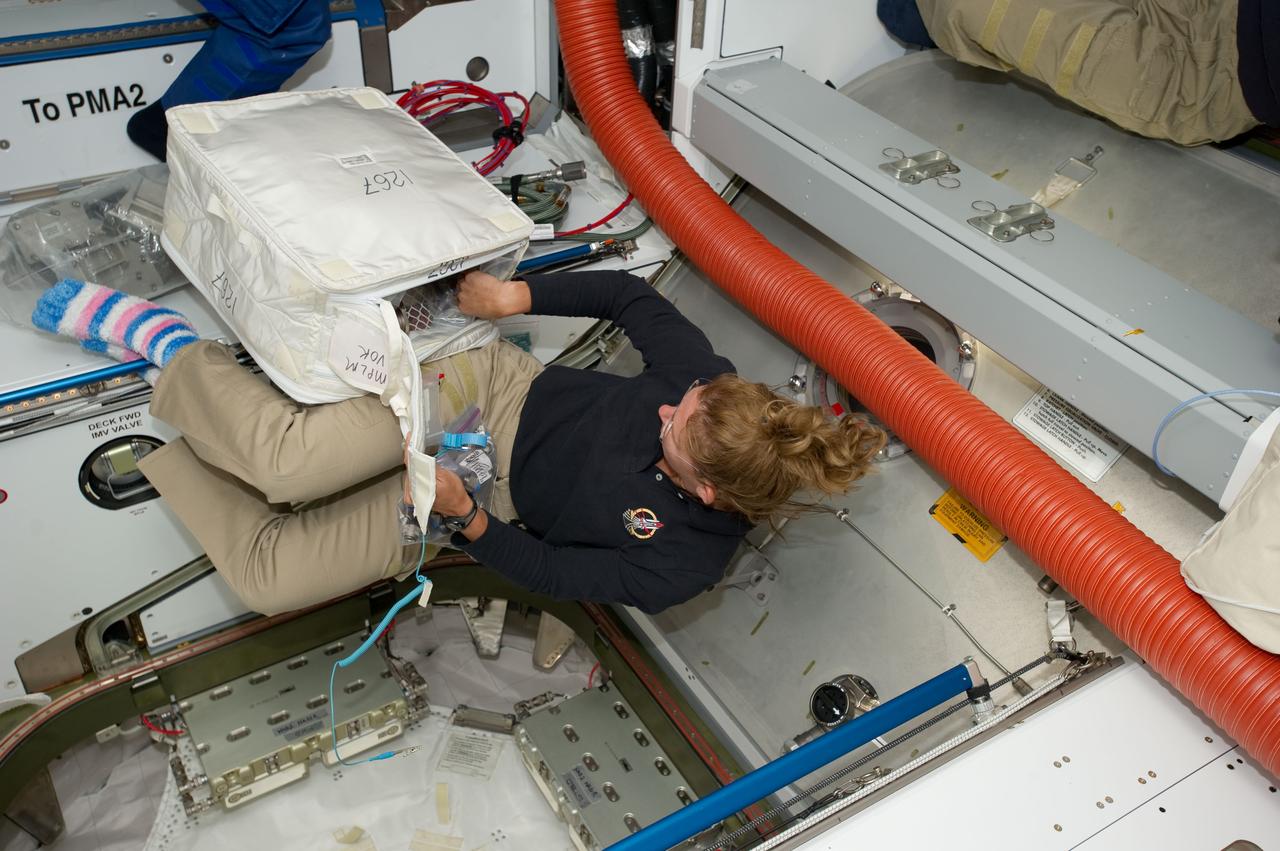
S135-E-007401 (11 July 2011) --- Toting a cargo transfer bag filled with supplies that was carried aboard Raffaello in Atlantis' cargo bay, NASA astronaut Sandy Magnus participates in a very busy move operation on the fourth day in space for the STS-135 crew. She is in Node 2 or Harmony, near the PMA-2 passageway, on the International Space Station. She is sporting the striped socks that she rediscovered on the station which had remained there since her long duration stay on the orbital outpost a few years ago. Photo credit: NASA

At NASA's Kennedy Space Center in Florida, a shade is placed around the new countdown clock at the spaceport's Press Site. The modern, multimedia display is similar to the screens seen at sporting venues. The new screen is nearly 26 feet wide by 7 feet high, a foot taller than the original clock. The historic countdown clock was designed by Kennedy engineers and built by space center technicians before Apollo 12 in 1969. NASA has acquired the countdown clock from the agency’s Artifact Working Group at the agency's Headquarters for display at the Kennedy Space Center Visitor Complex.
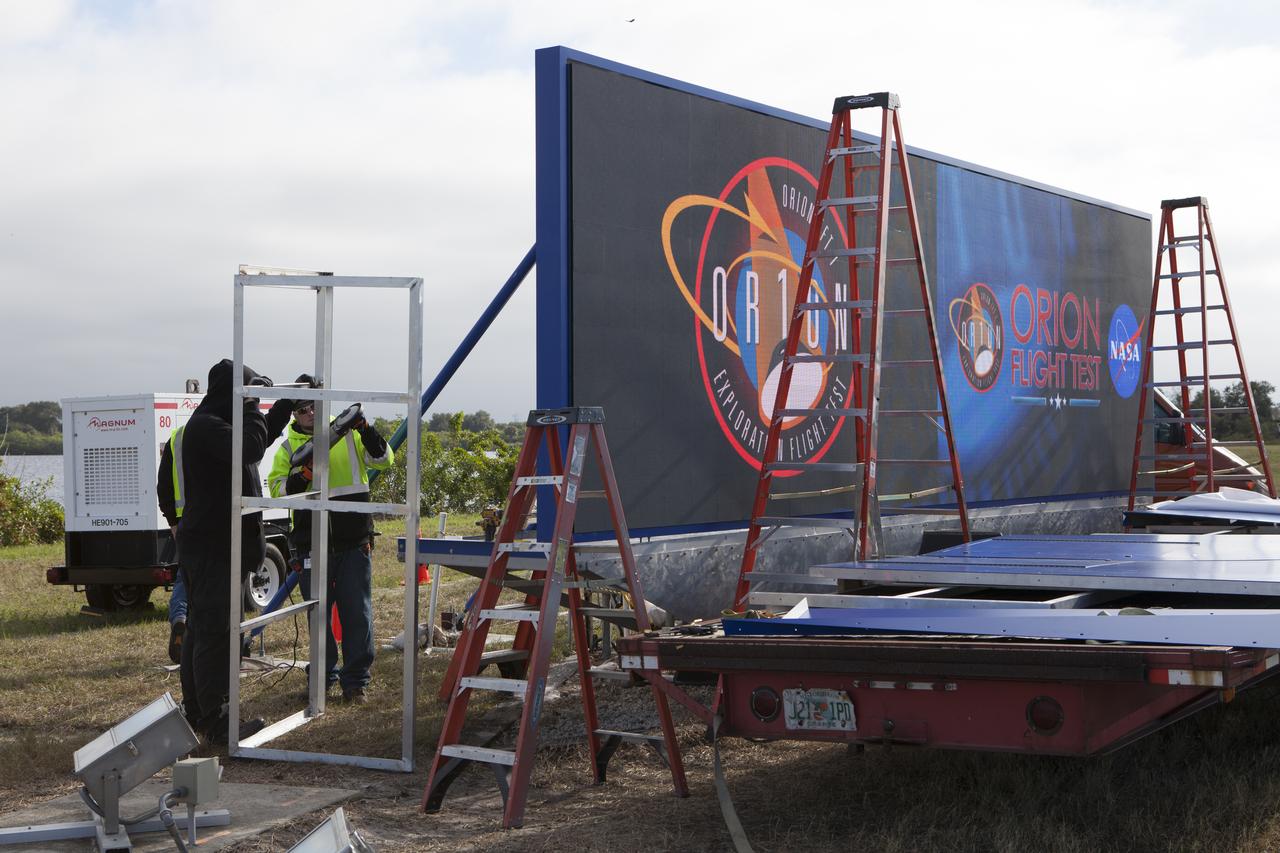
At NASA's Kennedy Space Center in Florida, a shade is placed around the new countdown clock at the spaceport's Press Site. The modern, multimedia display is similar to the screens seen at sporting venues. The new screen is nearly 26 feet wide by 7 feet high, a foot taller than the original clock. The historic countdown clock was designed by Kennedy engineers and built by space center technicians before Apollo 12 in 1969. NASA has acquired the countdown clock from the agency’s Artifact Working Group at the agency's Headquarters for display at the Kennedy Space Center Visitor Complex.
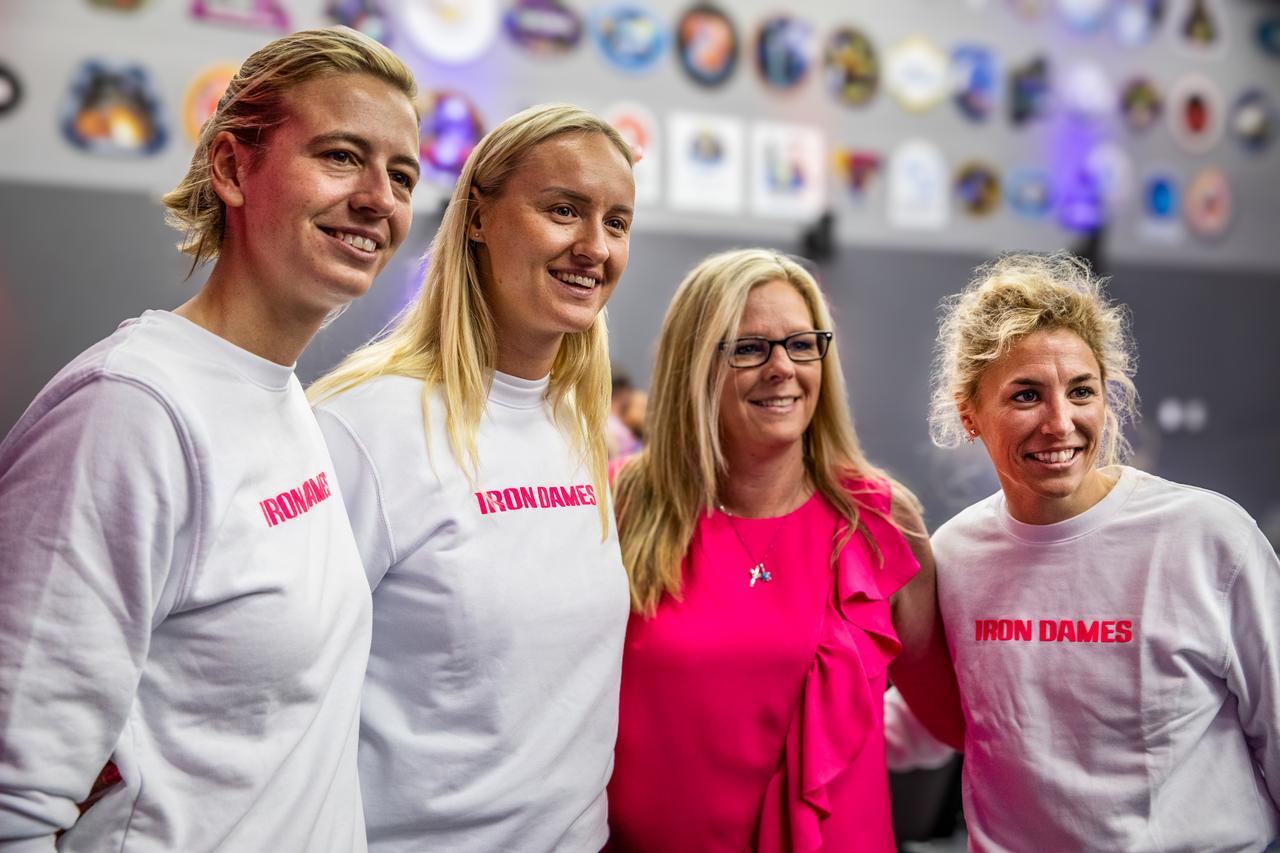
Members of the Iron Dames, from left to right, Sarah Bovy, Michelle Gatting, Christina Williams, business development specialist NASA Kennedy; and Iron Dames Rahel Frey, visit NASA’s Kennedy Space Center in Florida on Wednesday, March 13, 2024, to discuss their project to promote and support women in sports, and enable them to compete on equal terms with men in fields of jobs including driving, mechanics, engineers, and team leaders. The all-female team started in motorsports and became the first all-female team to win a race in the 2023 FIA World Endurance Championships at Sebring International Raceway in Sebring, Florida.
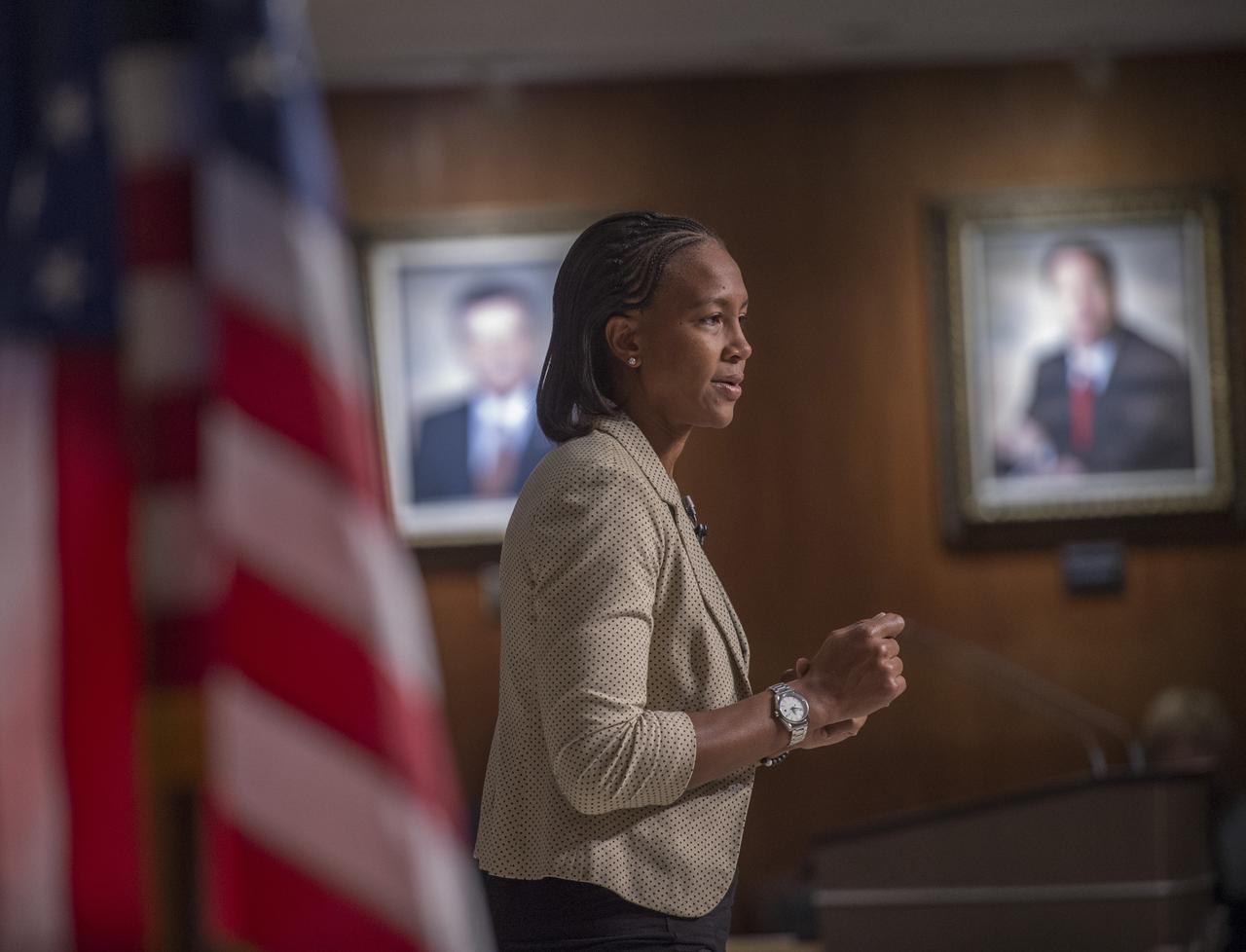
The 2017 Disabilities Awareness Month Program was presented at Marshall Space Flight Center's Morris Auditorium with guest speaker Tamika Catchings. Ms. Catchings is a retired WNBA player who spent her entire career with the Indiana Fever. She was the first recipient of ESPN’s Humanitarian Award in 2015. In 2016, Tamika became the first female recipient of the National Civil Rights Museum Sports Legacy Award. In 2016, Tamika released her autobiography, "Catch A Star," which became a New York Times best seller. She is also a world-renowned motivational and keynote speaker.
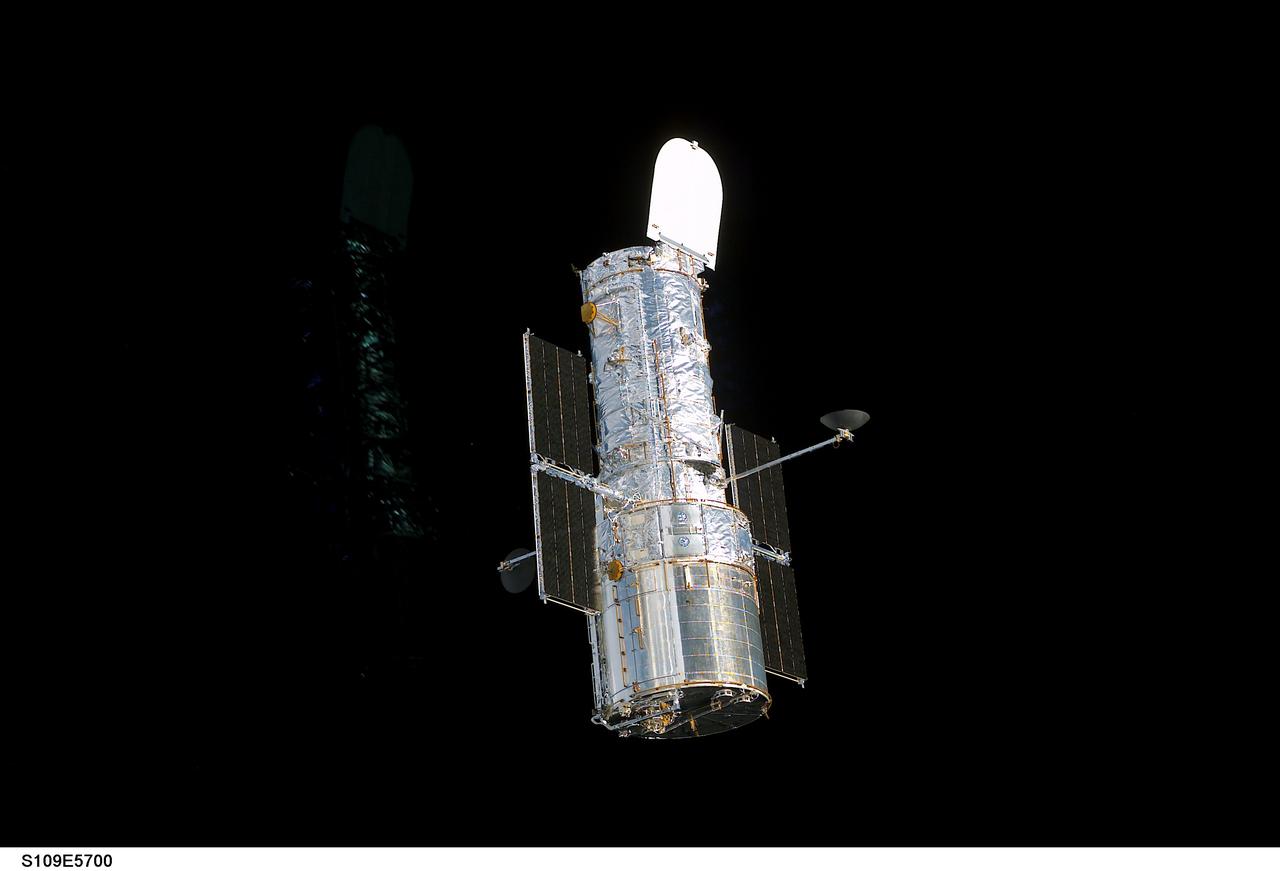
STS109-E-5700 (9 March 2002) --- The Hubble Space Telescope, sporting new solar arrays and other important but less visible new hardware, begins its separation from the Space Shuttle Columbia. The STS-109 crew deployed the giant telescope at 4:04 a.m. CST (1004 GMT), March 9, 2002. Afterward, the seven crew members began to focus their attention to the trip home, scheduled for March 12. The STS-109 astronauts conducted five space walks to service and upgrade Hubble. This image was recorded with a digital still camera.
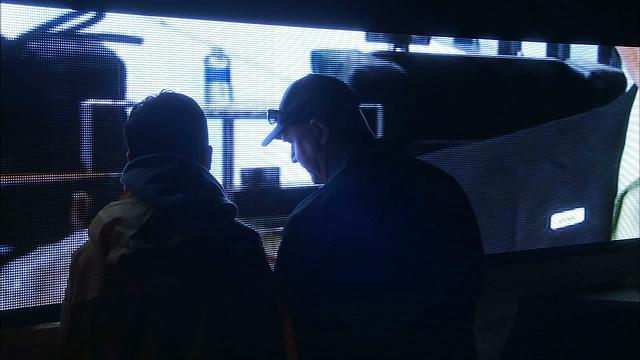
At NASA's Kennedy Space Center in Florida, the new countdown clock at the spaceport's Press Site is being tested. The modern, multimedia display is similar to the screens seen at sporting venues. The new screen will be nearly 26 feet wide by 7 feet high, a foot taller than the original clock. The historic countdown clock was designed by Kennedy engineers and built by space center technicians before Apollo 12 in 1969. NASA has requested to acquire the countdown clock from the agency’s Artifact Working Group at the agency's Headquarters for display at the Kennedy Space Center Visitor Complex.
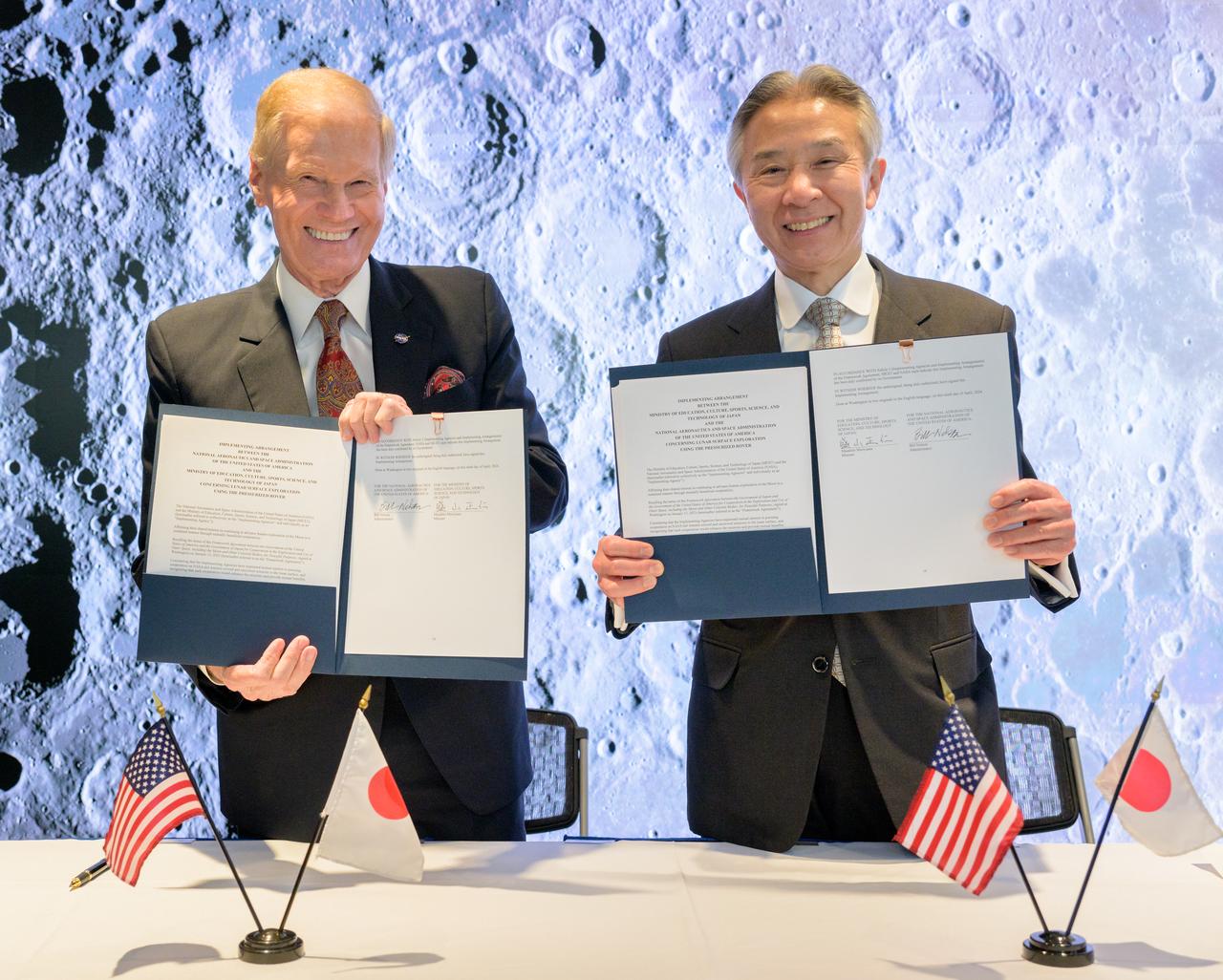
NASA Administrator Bill Nelson, left, and Japan’s Minister of Education, Culture, Sports, Science and Technology Masahito Moriyama, hold signed copies of an historic agreement between the United States and Japan to advance sustainable human exploration of the Moon, Tuesday, April 9, 2024, at the NASA Headquarters Mary W. Jackson Building in Washington. Under the agreement, Japan will design, develop, and operate a pressurized rover for crewed and uncrewed exploration on the Moon. NASA will provide the launch and delivery of the rover to the Moon as well as two Japanese astronaut missions to the lunar surface. Photo Credit: (NASA/Bill Ingalls)