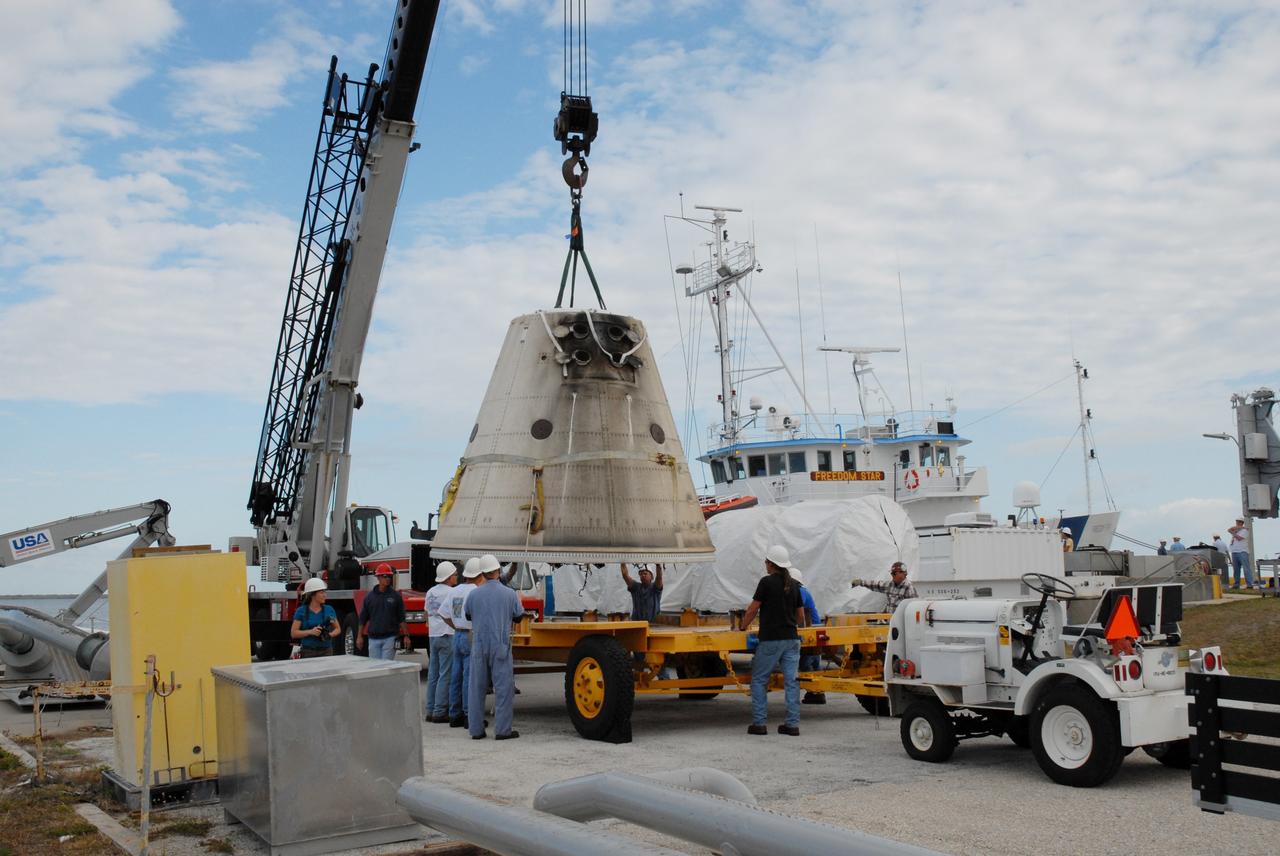
CAPE CANAVERAL, Fla. – At the dock at Hangar AF at Cape Canaveral Air Force Station in Florida, the frustum of a solid rocket booster is moved onto a transporter. The booster was used during space shuttle Discovery's launch on mission STS-119 from NASA's Kennedy Space Center in Florida March 15. The space shuttle’s solid rocket booster casings and associated flight hardware are recovered at sea after a launch. The spent rockets were recovered by NASA's Solid Rocket Booster Retrieval Ships Freedom Star and Liberty Star. The boosters impact the Atlantic Ocean approximately seven minutes after liftoff. The splashdown area is a square of about six by nine nautical miles located about 140 nautical miles downrange from the launch pad. The retrieval ships are stationed approximately 8 to 10 nautical miles from the impact area at the time of splashdown. As soon as the boosters enter the water, the ships accelerate to a speed of 15 knots and quickly close on the boosters. The pilot chutes and main parachutes are the first items to be brought on board. With the chutes and frustum recovered, attention turns to the boosters. The ship’s tow line is connected and the booster is returned to the Port and, after transfer to a position alongside the ship, to Hangar AF. There, the expended boosters are disassembled, refurbished and reloaded with solid propellant for reuse. Photo credit: NASA/Jack Pfaller
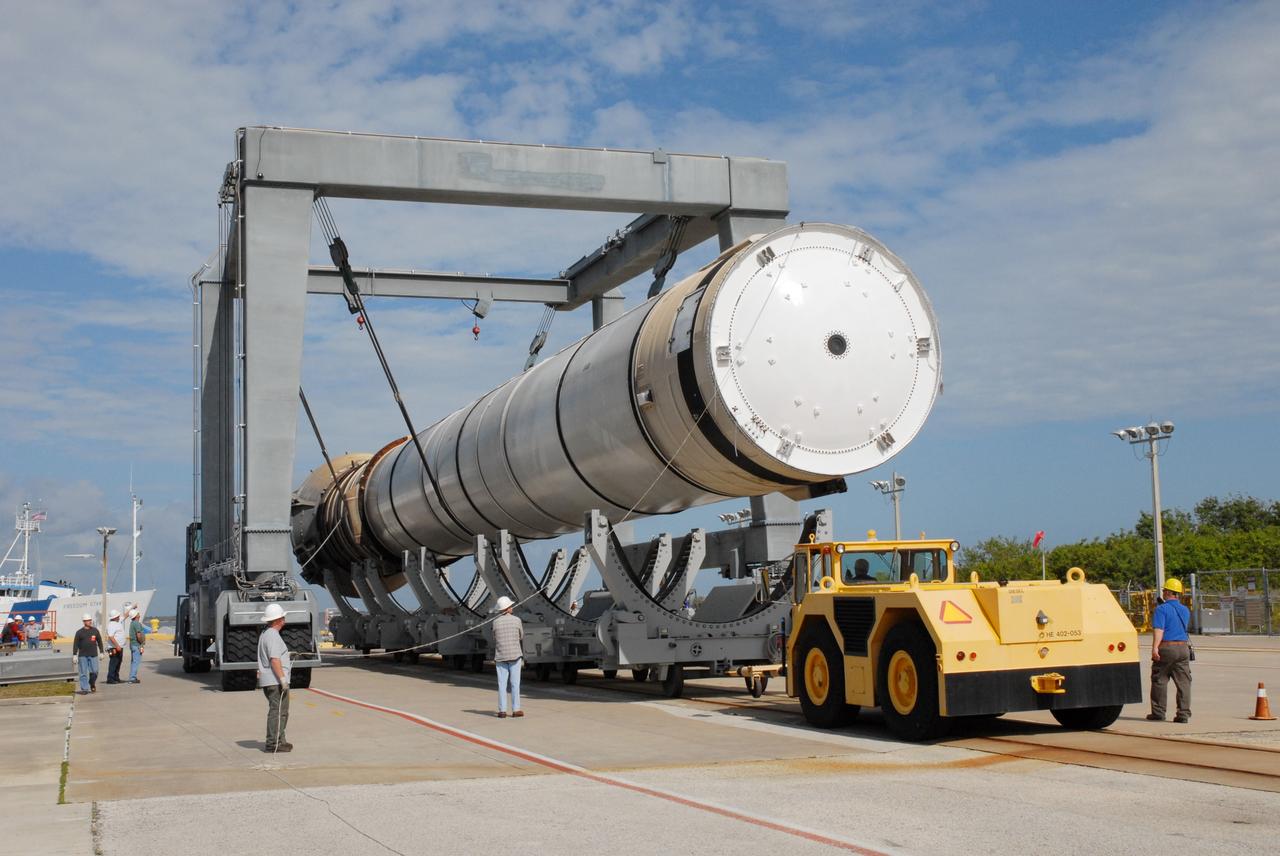
CAPE CANAVERAL, Fla. – At the dock at Hangar AF at Cape Canaveral Air Force Station in Florida, the straddle crane lowers a solid rocket booster onto a transporter. The booster was used during space shuttle Discovery's launch from NASA's Kennedy Space Center in Florida March 15 on mission STS-119. The space shuttle’s solid rocket booster casings and associated flight hardware are recovered at sea after a launch. The spent rockets were recovered by NASA's Solid Rocket Booster Retrieval Ships Freedom Star and Liberty Star. The boosters impact the Atlantic Ocean approximately seven minutes after liftoff. The splashdown area is a square of about six by nine nautical miles located about 140 nautical miles downrange from the launch pad. The retrieval ships are stationed approximately 8 to 10 nautical miles from the impact area at the time of splashdown. As soon as the boosters enter the water, the ships accelerate to a speed of 15 knots and quickly close on the boosters. The pilot chutes and main parachutes are the first items to be brought on board. With the chutes and frustum recovered, attention turns to the boosters. The ship’s tow line is connected and the booster is returned to the Port and, after transfer to a position alongside the ship, to Hangar AF. There, the expended boosters are disassembled, refurbished and reloaded with solid propellant for reuse. Photo credit: NASA/Jack Pfaller
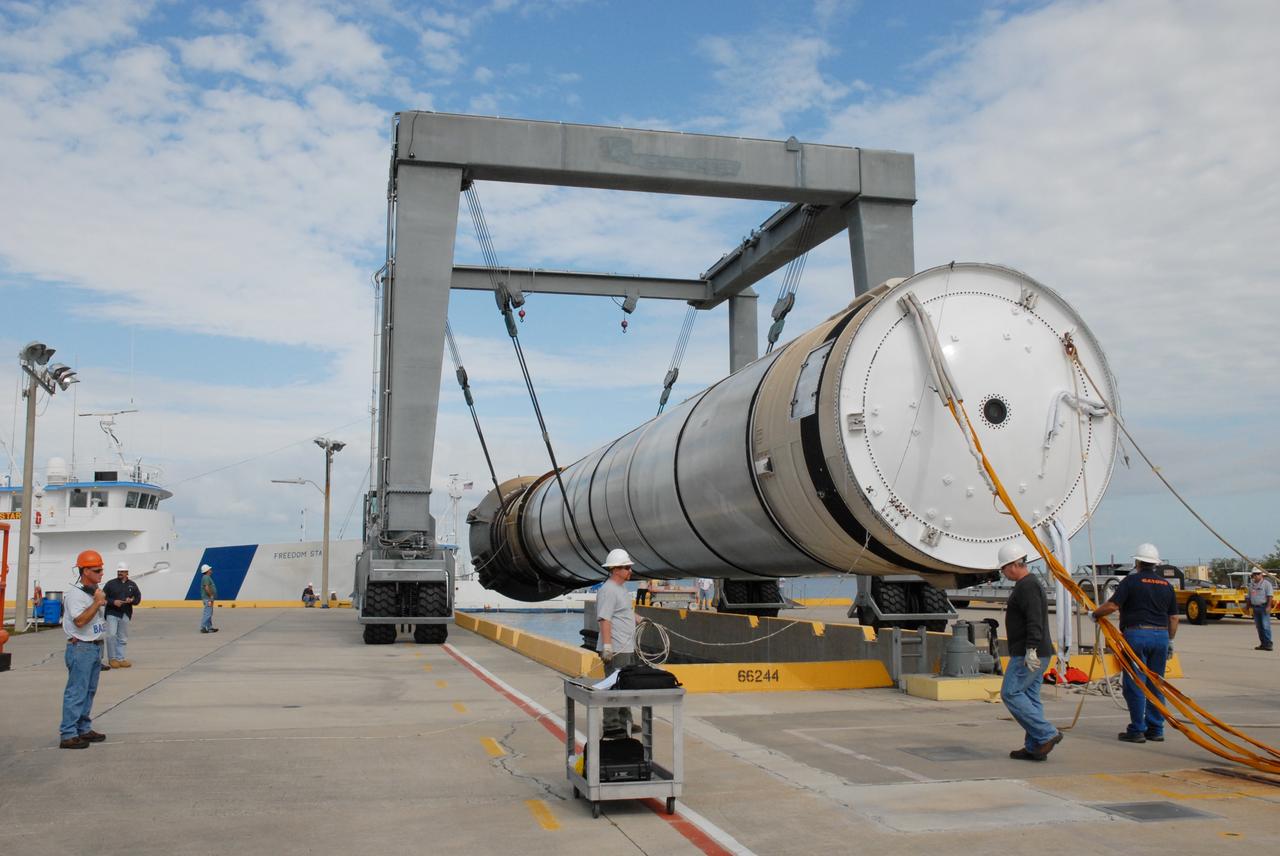
CAPE CANAVERAL, Fla. – At the dock at Hangar AF at Cape Canaveral Air Force Station in Florida, the solid rocket booster is lifted out of the water by the straddle crane. The booster, used during space shuttle Discovery's launch from NASA's Kennedy Space Center in Florida March 15 on mission STS-119, will be placed on a transporter. The space shuttle’s solid rocket booster casings and associated flight hardware are recovered at sea after a launch. The spent rockets were recovered by NASA's Solid Rocket Booster Retrieval Ships Freedom Star and Liberty Star. The boosters impact the Atlantic Ocean approximately seven minutes after liftoff. The splashdown area is a square of about six by nine nautical miles located about 140 nautical miles downrange from the launch pad. The retrieval ships are stationed approximately 8 to 10 nautical miles from the impact area at the time of splashdown. As soon as the boosters enter the water, the ships accelerate to a speed of 15 knots and quickly close on the boosters. The pilot chutes and main parachutes are the first items to be brought on board. With the chutes and frustum recovered, attention turns to the boosters. The ship’s tow line is connected and the booster is returned to the Port and, after transfer to a position alongside the ship, to Hangar AF. There, the expended boosters are disassembled, refurbished and reloaded with solid propellant for reuse. Photo credit: NASA/Jack Pfaller
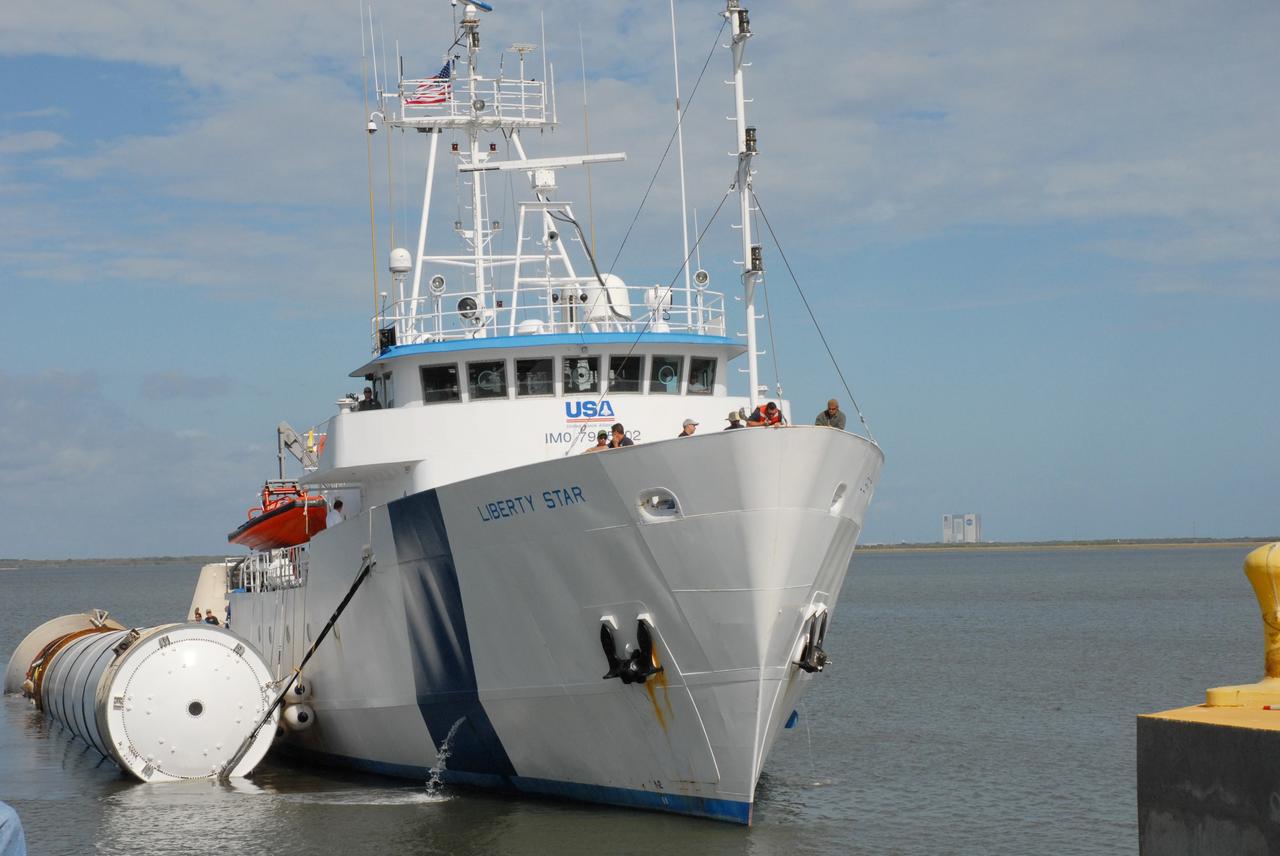
CAPE CANAVERAL, Fla. – The Solid Rocket Booster Retrieval Ship Liberty Star tows a booster to the dock at Hangar AF at Cape Canaveral Air Force Station in Florida. The booster was used during space shuttle Discovery's launch from NASA's Kennedy Space Center in Florida March 15 on mission STS-119. The space shuttle’s solid rocket booster casings and associated flight hardware are recovered at sea after a launch. The spent rockets were recovered by NASA's Solid Rocket Booster Retrieval Ships Freedom Star and Liberty Star. The boosters impact the Atlantic Ocean approximately seven minutes after liftoff. The splashdown area is a square of about six by nine nautical miles located about 140 nautical miles downrange from the launch pad. The retrieval ships are stationed approximately 8 to 10 nautical miles from the impact area at the time of splashdown. As soon as the boosters enter the water, the ships accelerate to a speed of 15 knots and quickly close on the boosters. The pilot chutes and main parachutes are the first items to be brought on board. With the chutes and frustum recovered, attention turns to the boosters. The ship’s tow line is connected and the booster is returned to the Port and, after transfer to a position alongside the ship, to Hangar AF. There, the expended boosters are disassembled, refurbished and reloaded with solid propellant for reuse. Photo credit: NASA/Jack Pfaller
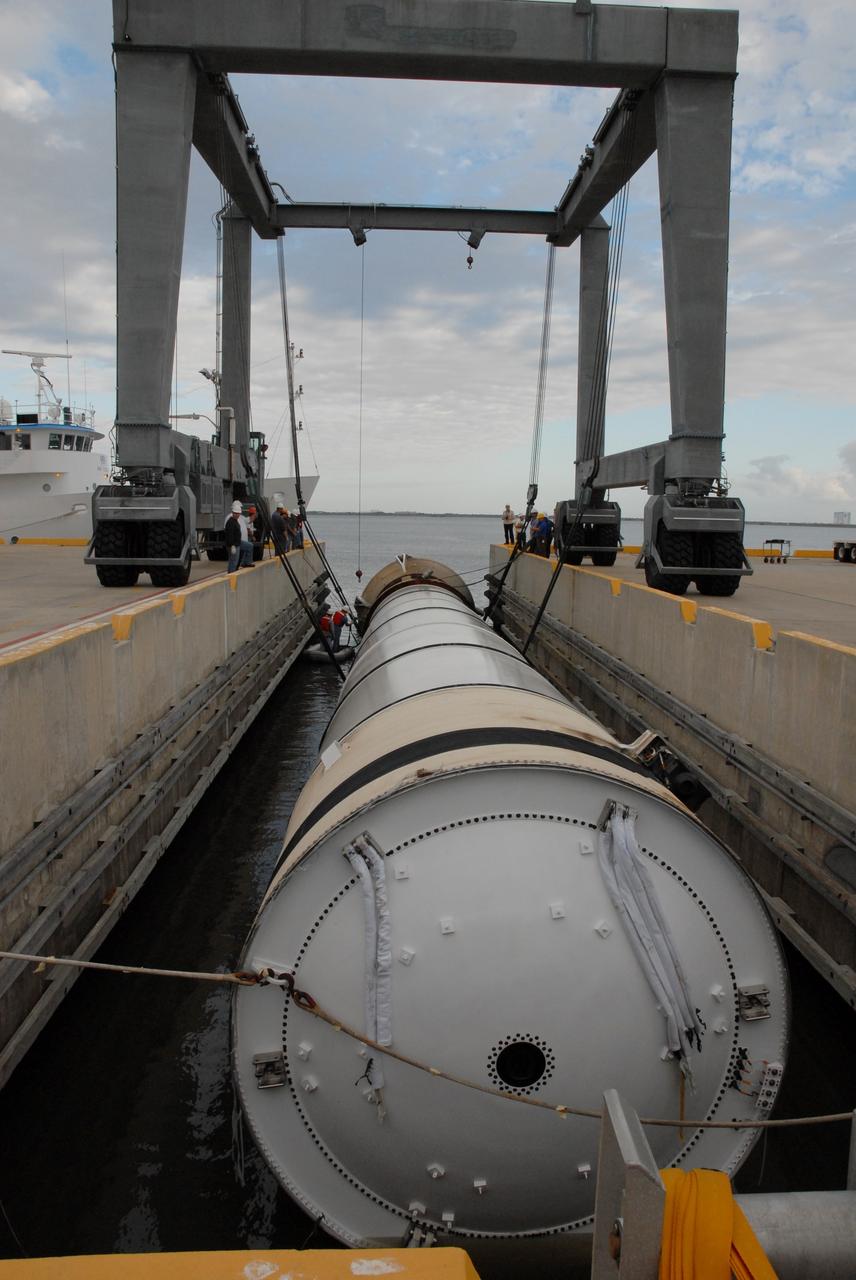
CAPE CANAVERAL, Fla. – At the dock at Hangar AF at Cape Canaveral Air Force Station in Florida, one of the solid rocket boosters used during space shuttle Discovery's launch March 15 on mission STS-119 is moved to an area beneath the straddle crane that will lift it out of the water. The space shuttle’s solid rocket booster casings and associated flight hardware are recovered at sea after a launch. The spent rockets were recovered by NASA's Solid Rocket Booster Retrieval Ships Freedom Star and Liberty Star. The boosters impact the Atlantic Ocean approximately seven minutes after liftoff. The splashdown area is a square of about six by nine nautical miles located about 140 nautical miles downrange from the launch pad. The retrieval ships are stationed approximately 8 to 10 nautical miles from the impact area at the time of splashdown. As soon as the boosters enter the water, the ships accelerate to a speed of 15 knots and quickly close on the boosters. The pilot chutes and main parachutes are the first items to be brought on board. With the chutes and frustum recovered, attention turns to the boosters. The ship’s tow line is connected and the booster is returned to the Port and, after transfer to a position alongside the ship, to Hangar AF. There, the expended boosters are disassembled, refurbished and reloaded with solid propellant for reuse. Photo credit: NASA/Jack Pfaller
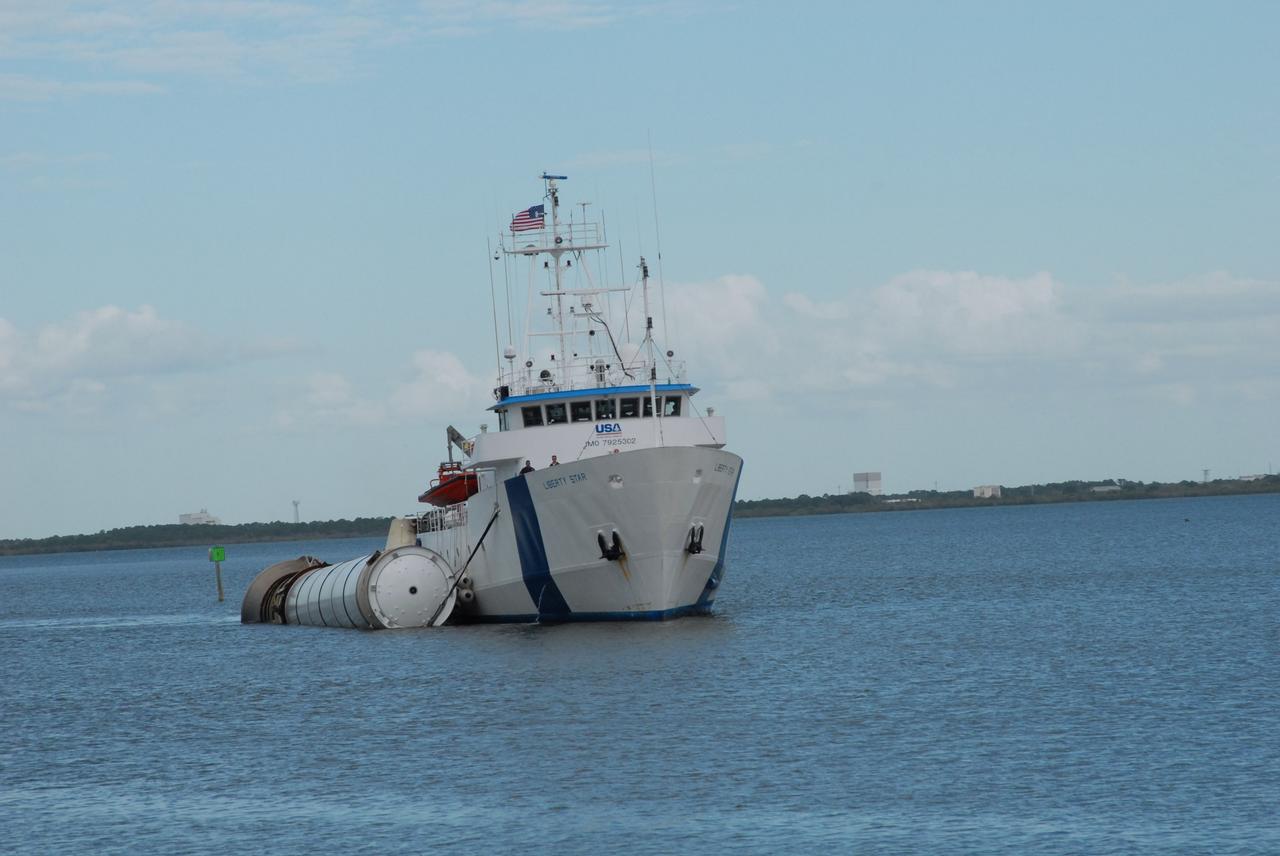
CAPE CANAVERAL, Fla. – The Solid Rocket Booster Retrieval Ship Liberty Star tows a booster to the dock at Hangar AF at Cape Canaveral Air Force Station in Florida. The booster was used during space shuttle Discovery's launch from NASA's Kennedy Space Center in Florida March 15 on mission STS-119. The space shuttle’s solid rocket booster casings and associated flight hardware are recovered at sea after a launch. The spent rockets were recovered by NASA's Solid Rocket Booster Retrieval Ships Freedom Star and Liberty Star. The boosters impact the Atlantic Ocean approximately seven minutes after liftoff. The splashdown area is a square of about six by nine nautical miles located about 140 nautical miles downrange from the launch pad. The retrieval ships are stationed approximately 8 to 10 nautical miles from the impact area at the time of splashdown. As soon as the boosters enter the water, the ships accelerate to a speed of 15 knots and quickly close on the boosters. The pilot chutes and main parachutes are the first items to be brought on board. With the chutes and frustum recovered, attention turns to the boosters. The ship’s tow line is connected and the booster is returned to the Port and, after transfer to a position alongside the ship, to Hangar AF. There, the expended boosters are disassembled, refurbished and reloaded with solid propellant for reuse. Photo credit: NASA/Jack Pfaller
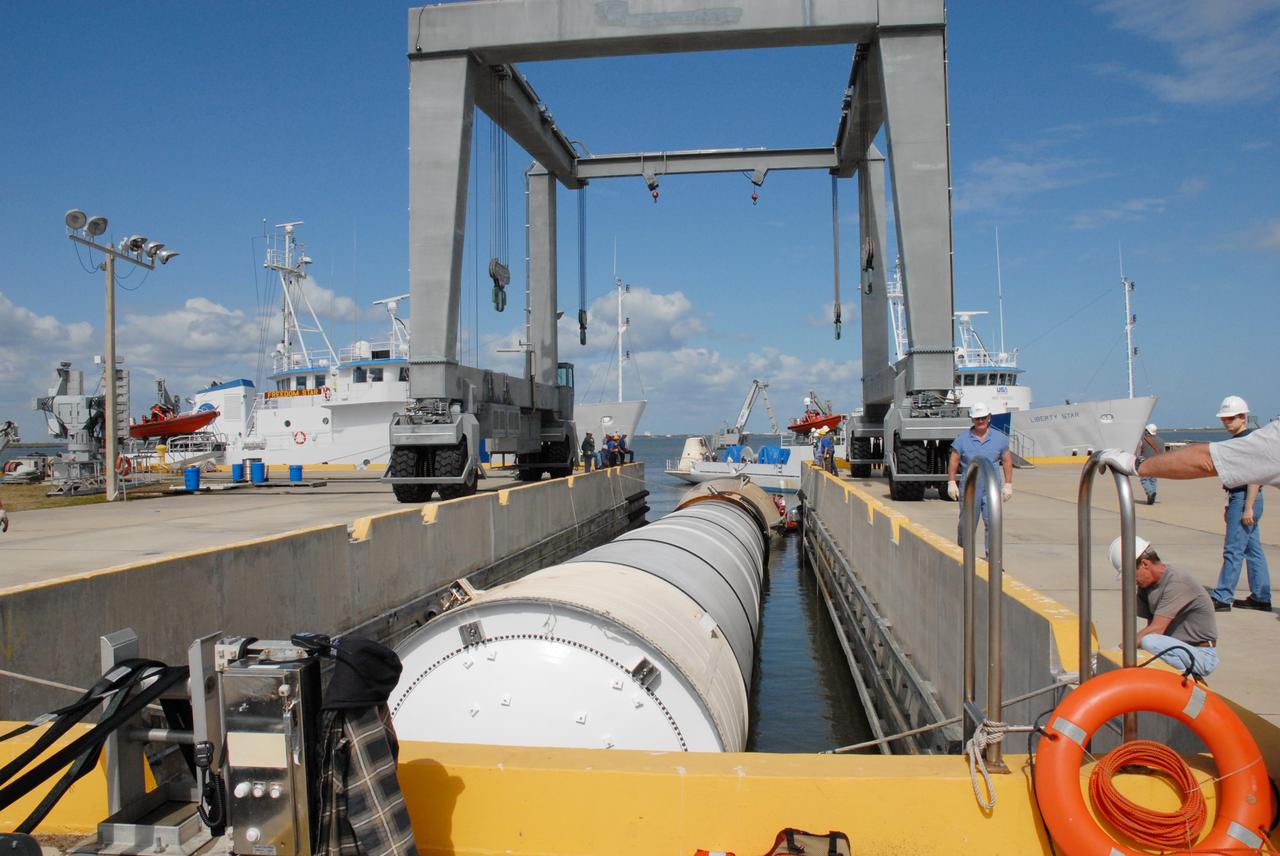
CAPE CANAVERAL, Fla. – At the dock at Hangar AF at Cape Canaveral Air Force Station in Florida, a solid rocket boosters used during space shuttle Discovery's launch from NASA's Kennedy Space Center in Florida March 15 on mission STS-119 waits in an area beneath the straddle crane that will lift it out of the water. The space shuttle’s solid rocket booster casings and associated flight hardware are recovered at sea after a launch. The spent rockets were recovered by NASA's Solid Rocket Booster Retrieval Ships Freedom Star and Liberty Star. The boosters impact the Atlantic Ocean approximately seven minutes after liftoff. The splashdown area is a square of about six by nine nautical miles located about 140 nautical miles downrange from the launch pad. The retrieval ships are stationed approximately 8 to 10 nautical miles from the impact area at the time of splashdown. As soon as the boosters enter the water, the ships accelerate to a speed of 15 knots and quickly close on the boosters. The pilot chutes and main parachutes are the first items to be brought on board. With the chutes and frustum recovered, attention turns to the boosters. The ship’s tow line is connected and the booster is returned to the Port and, after transfer to a position alongside the ship, to Hangar AF. There, the expended boosters are disassembled, refurbished and reloaded with solid propellant for reuse. Photo credit: NASA/Jack Pfaller