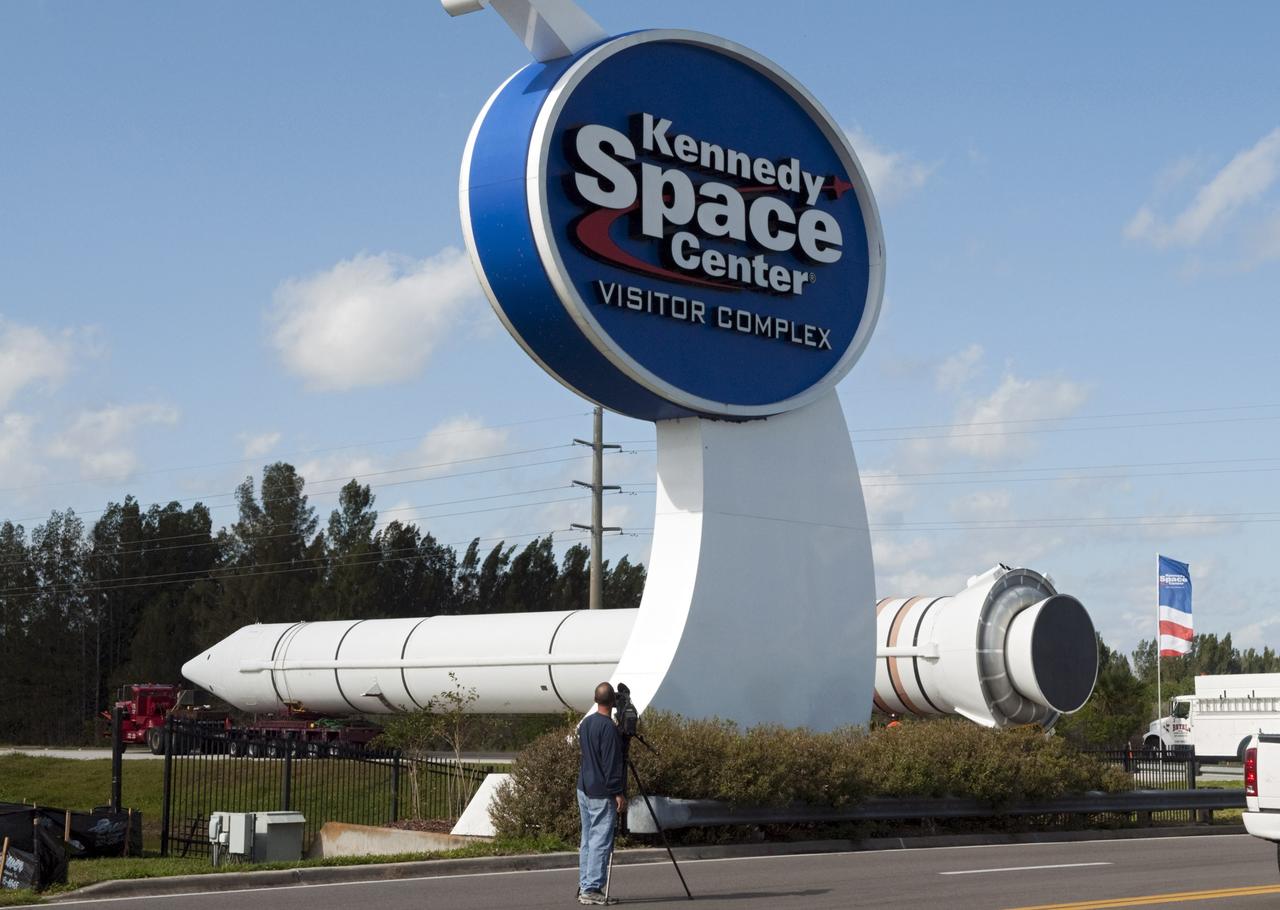
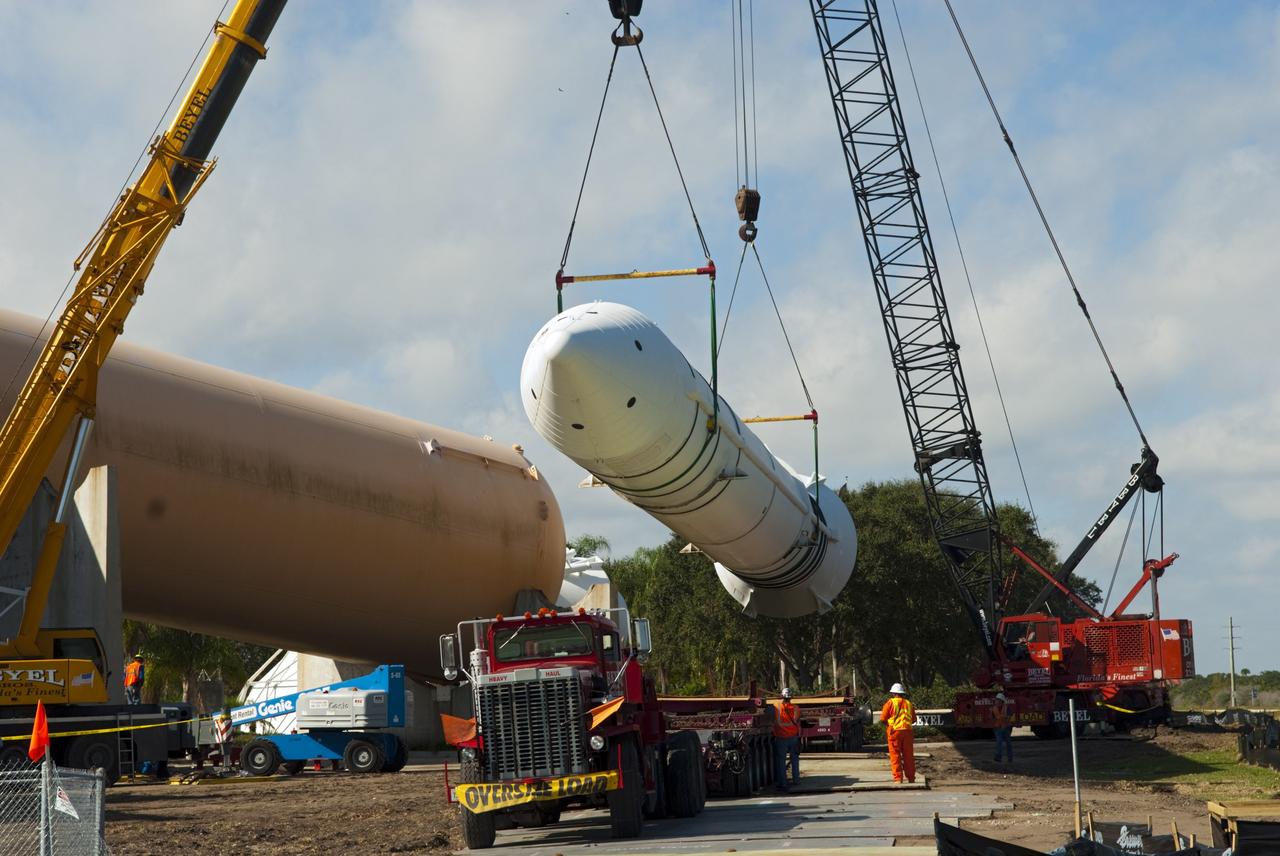
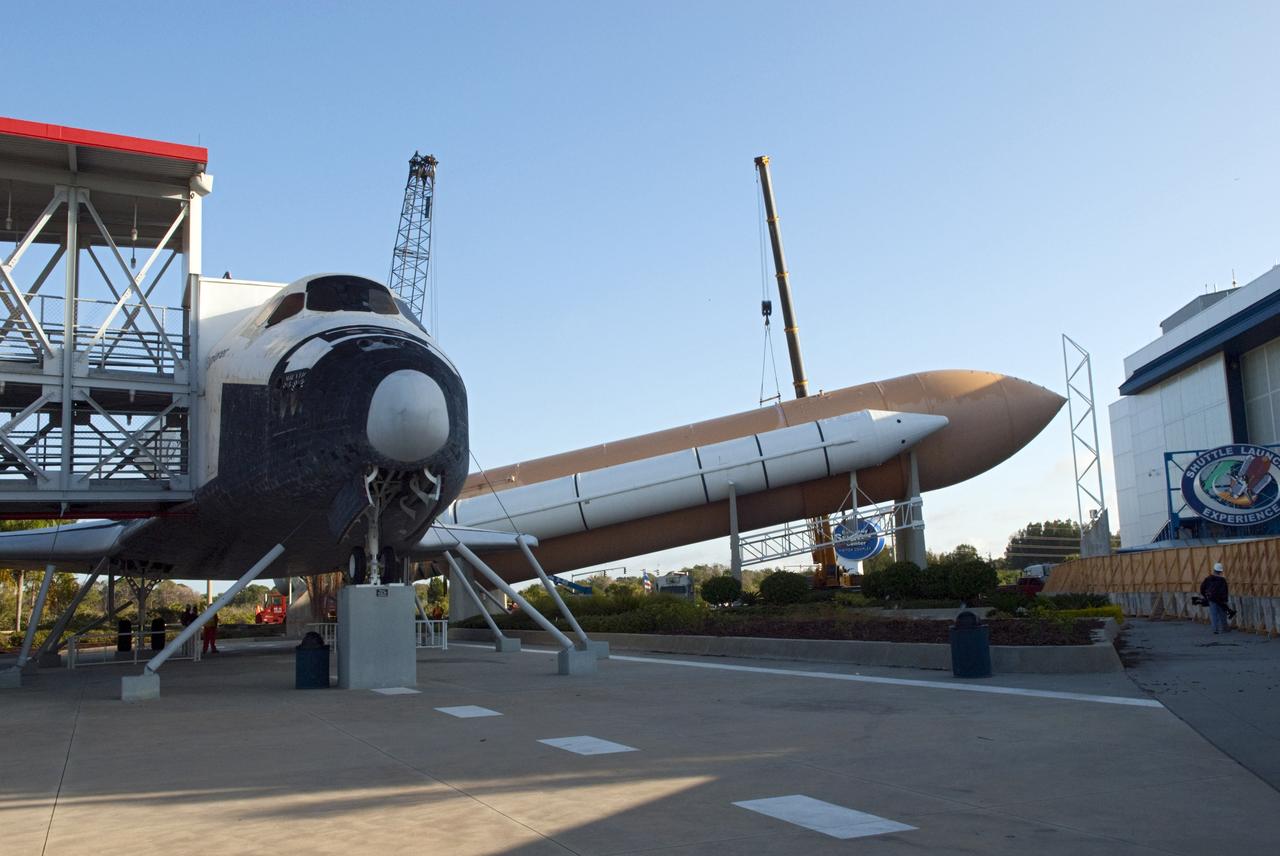
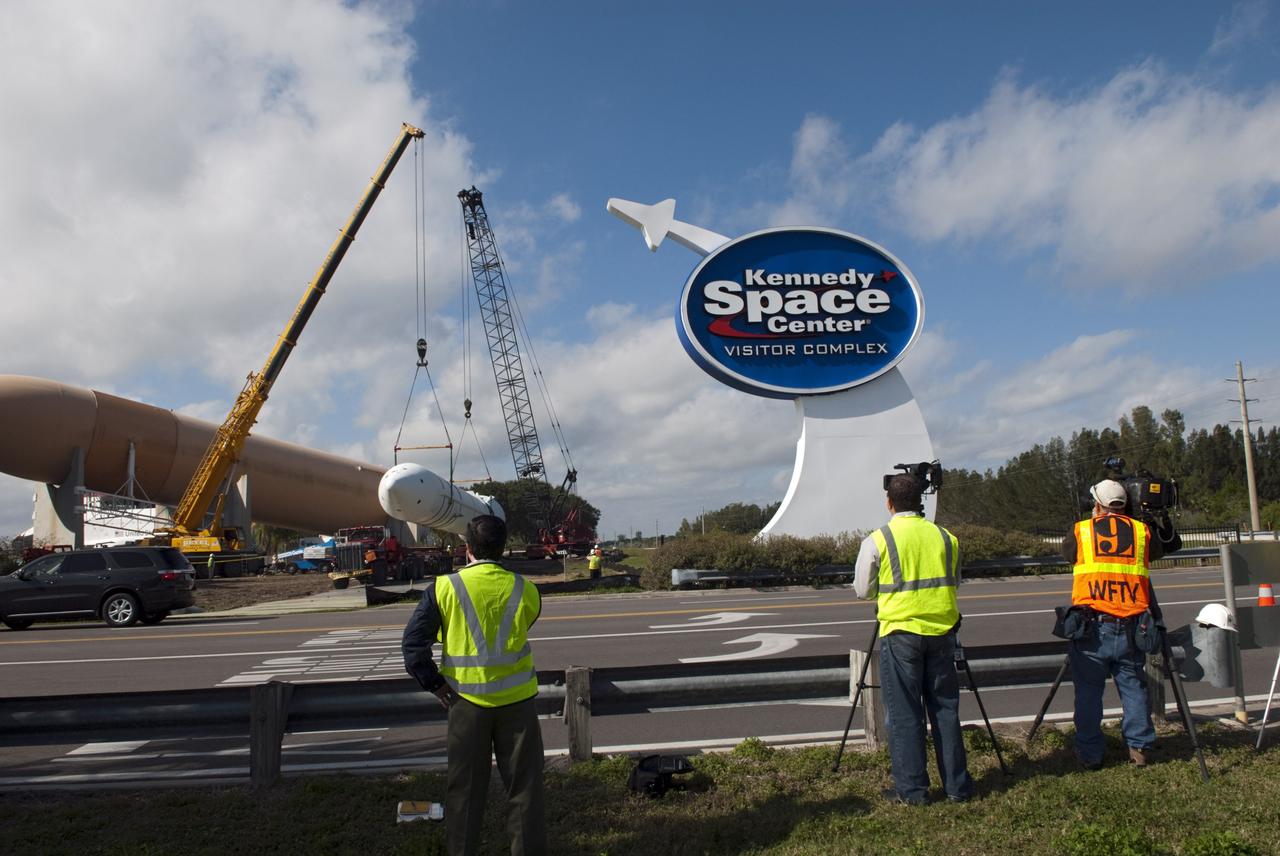
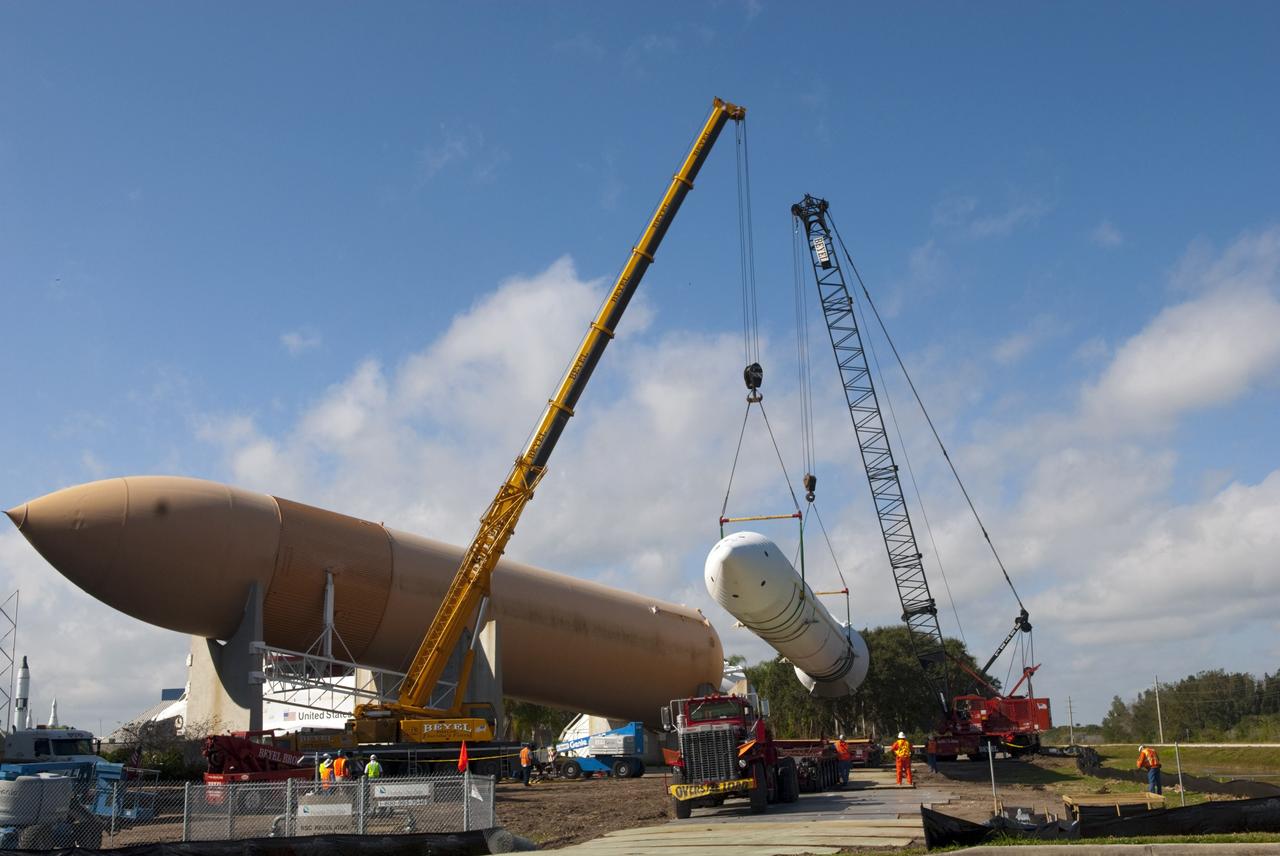
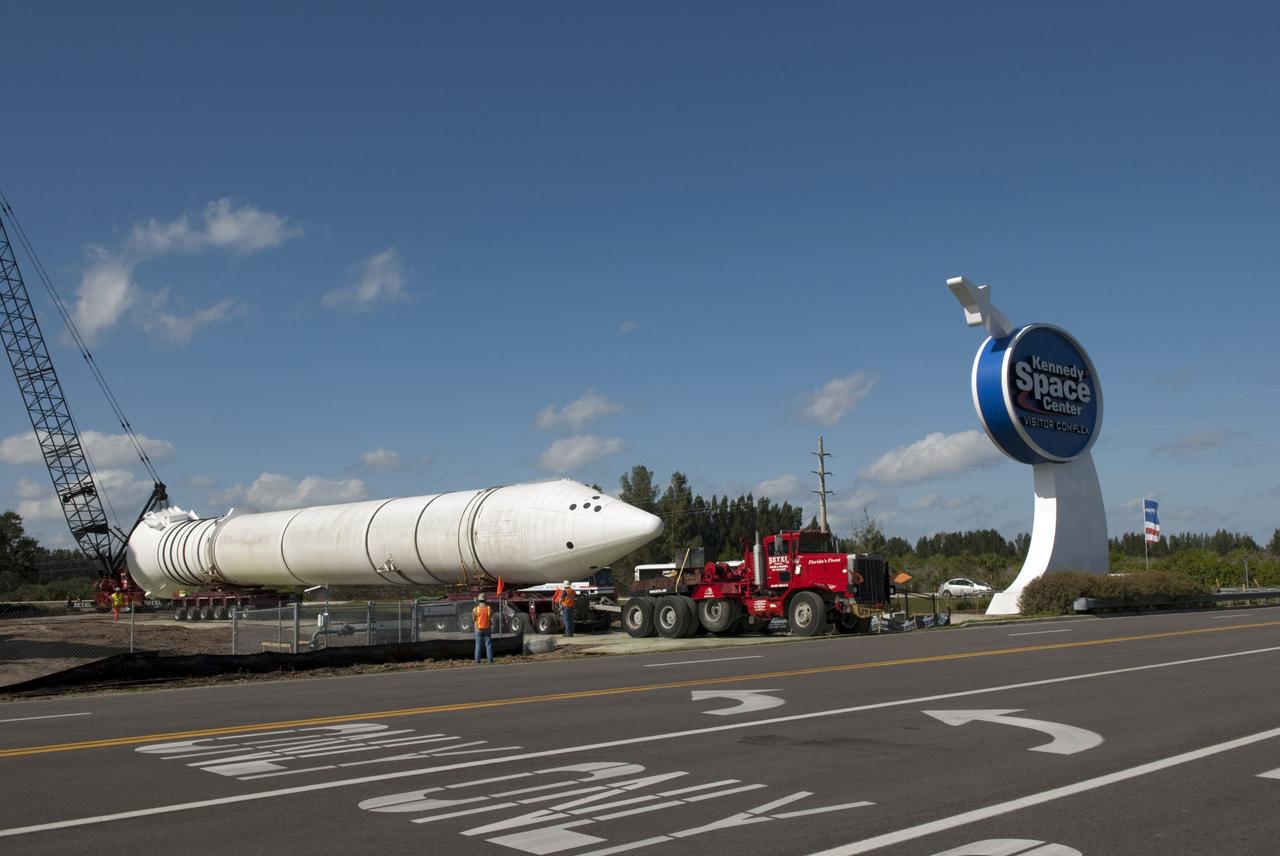
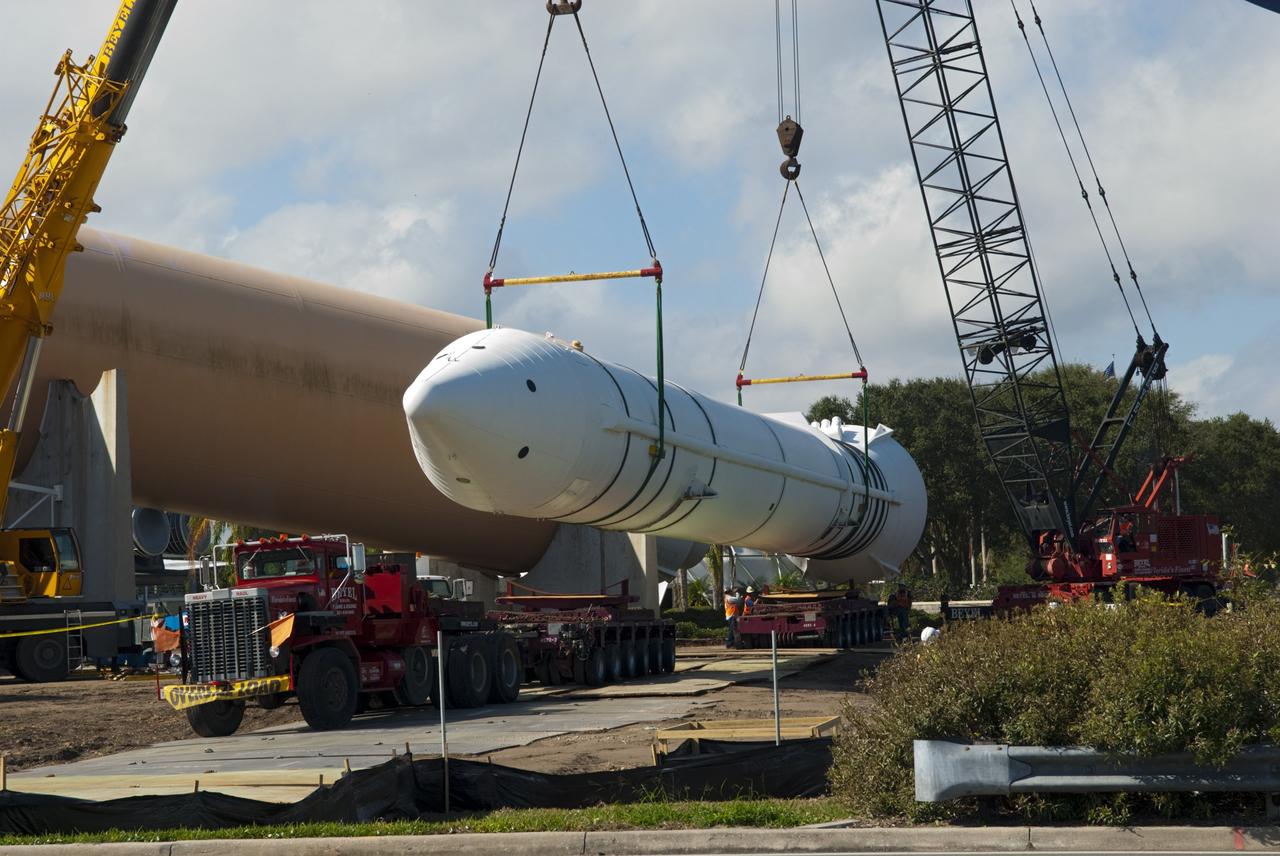
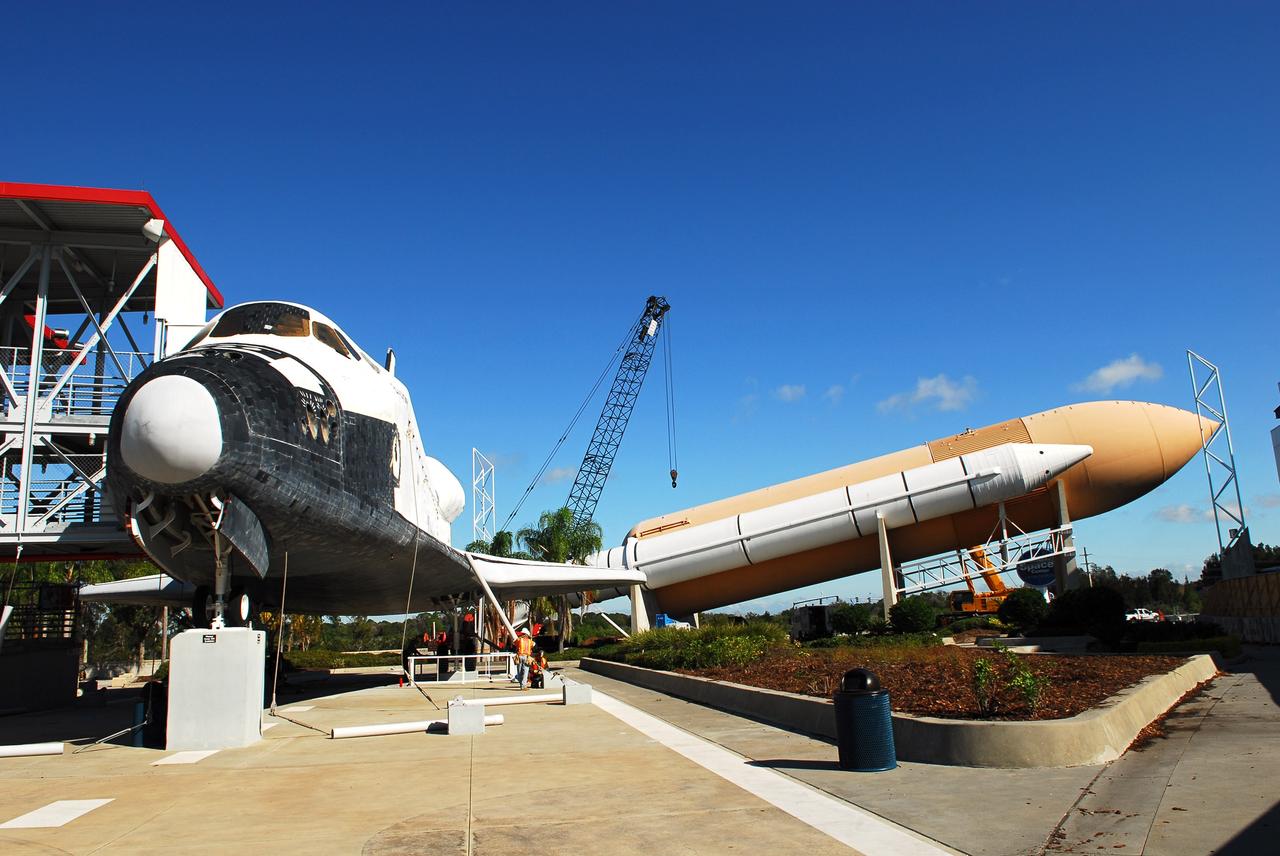
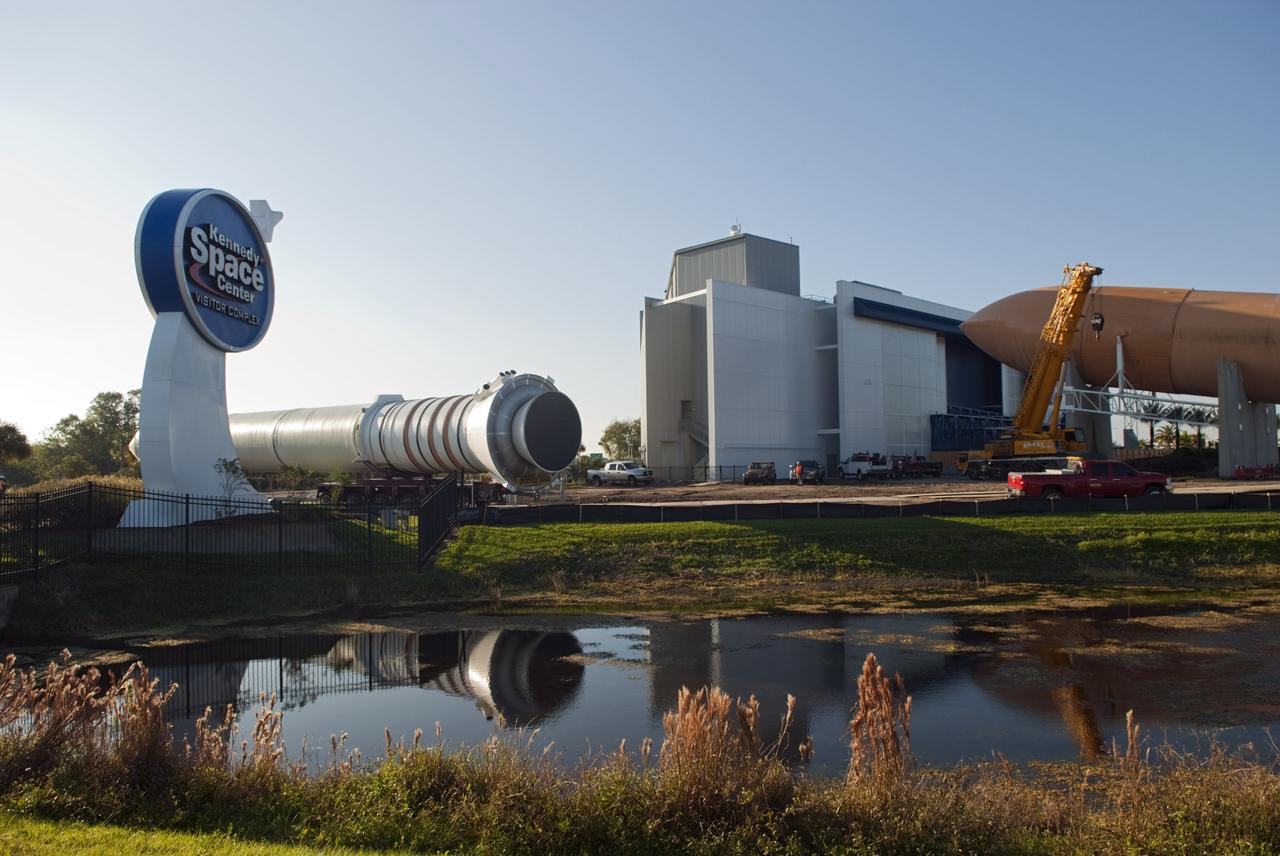
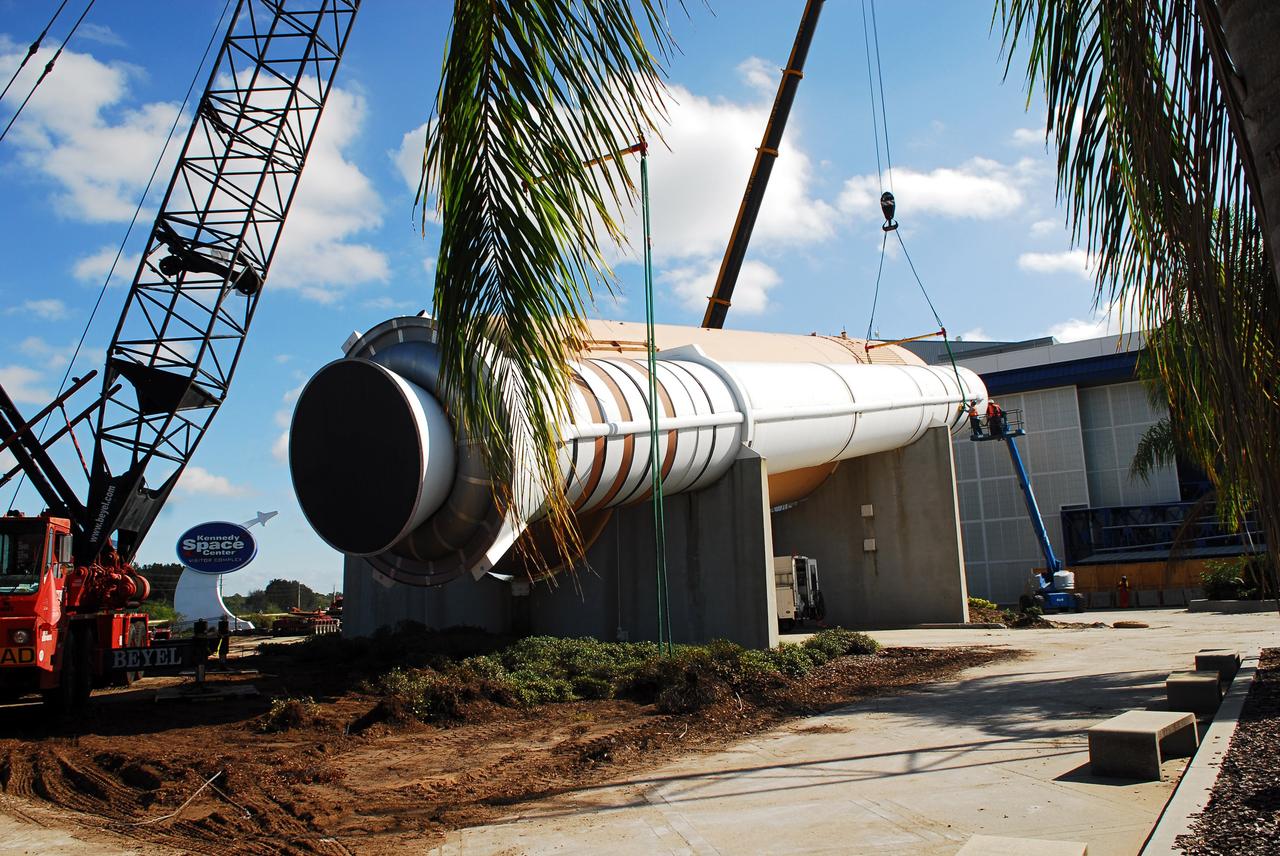
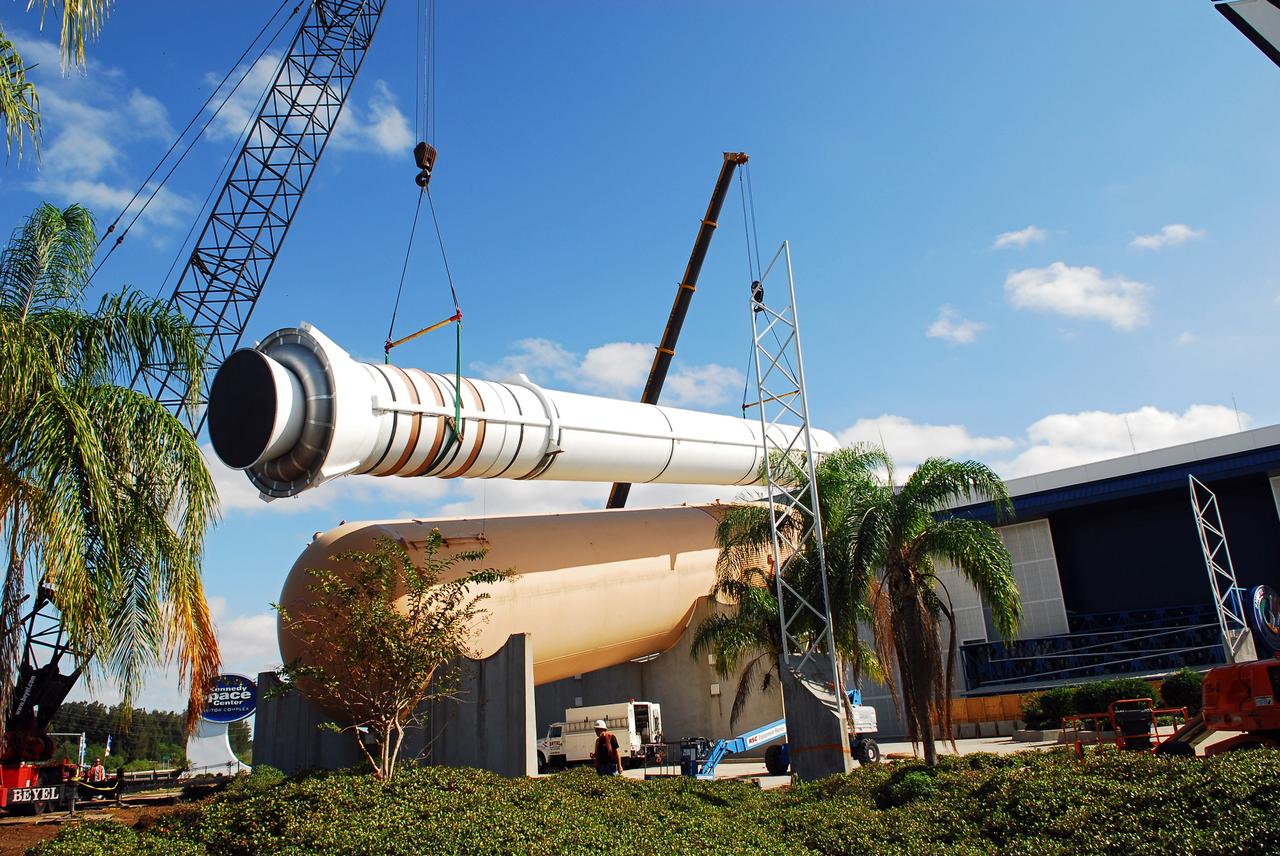
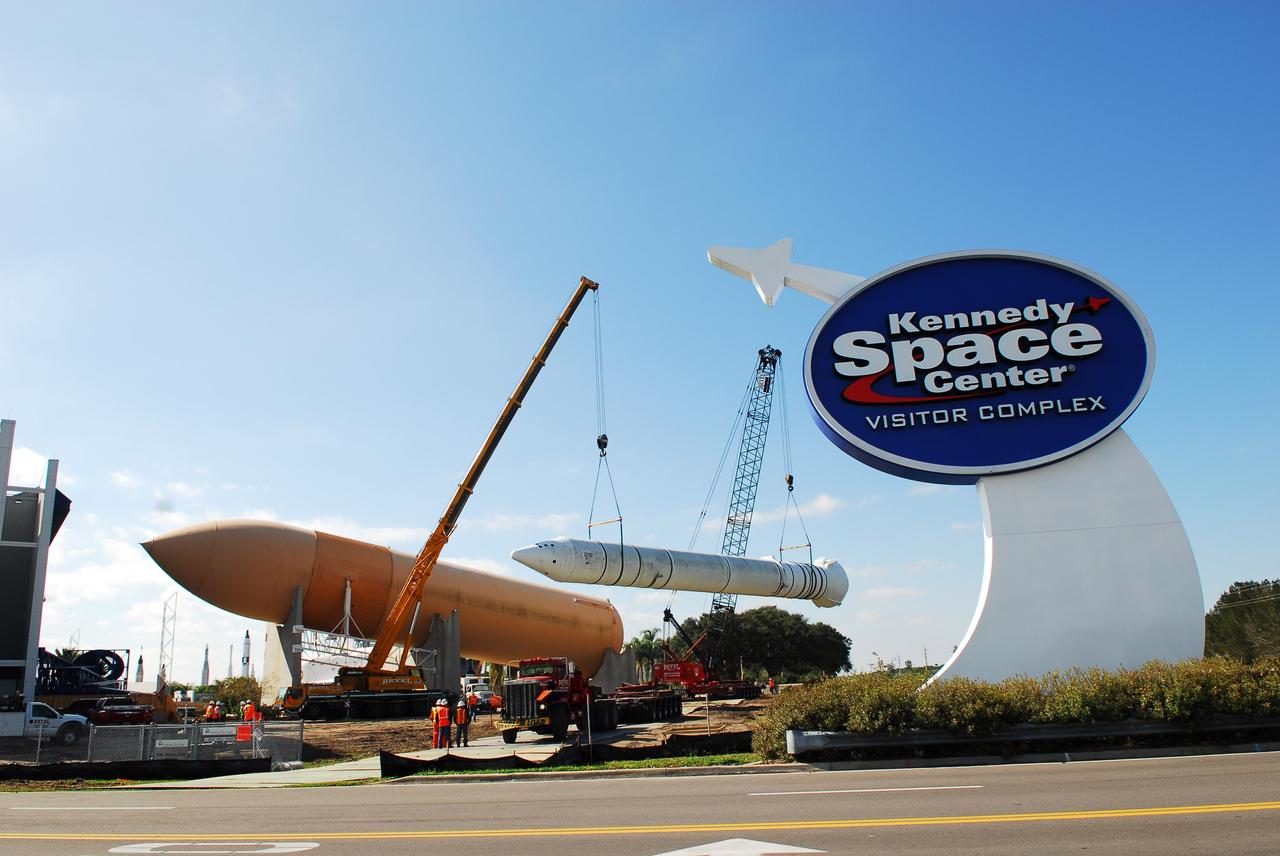
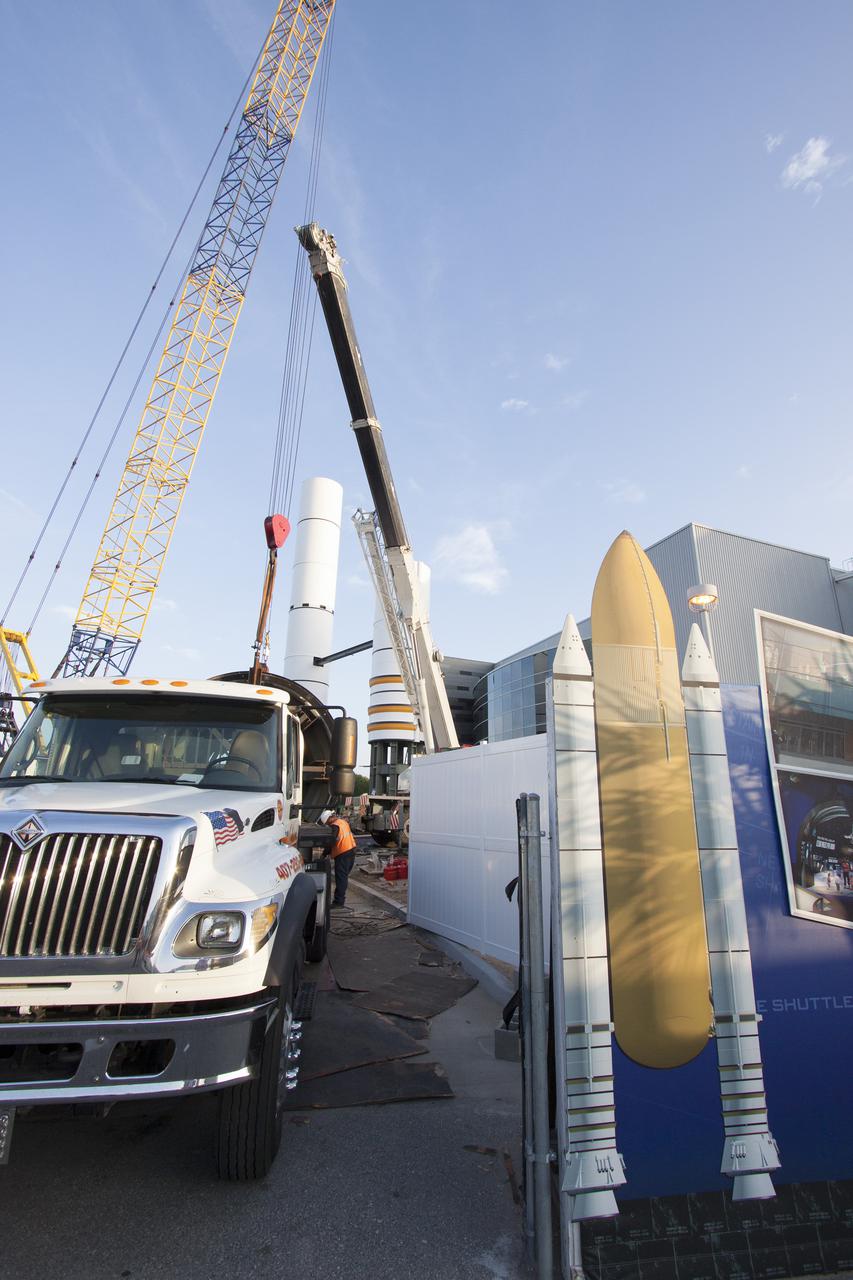
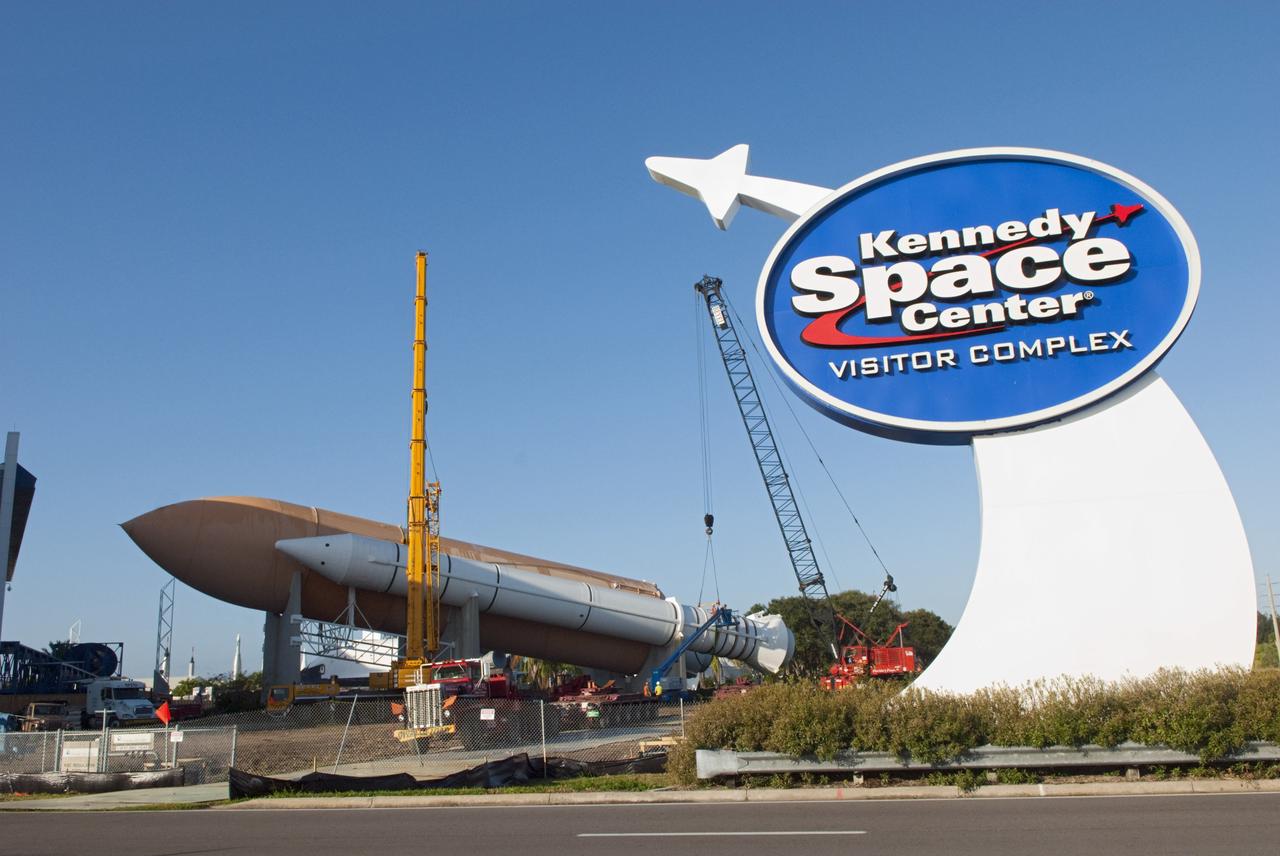
CAPE CANAVERAL, Fla. – Cranes remove a full-size, 149-foot-long, space shuttle solid rocket booster, or SRB, replica from the Kennedy Space Center Visitor Complex as the space-themed attraction makes way for a new exhibit featuring space shuttle Atlantis, which is currently undergoing preparations to go on public display. The SRB is being placed into temporary storage at NASA's Kennedy Space Center. The SRB was part of a mockup of the external tank and two SRBs at the visitor complex that were used to show visitors the size of actual space shuttle components. A space shuttle rode piggyback on the tank and boosters at liftoff and during the ascent into space. The SRBs burned out after about two-and-a-half minutes of flight. After recovery from the ocean, the boosters could be used repeatedly. Photo credit: NASA/Jim Grossmann
KSC-2011-8071
CAPE CANAVERAL, Fla. – Cranes remove a full-size, 149-foot-long, space shuttle solid rocket booster, or SRB, replica from the Kennedy Space Center Visitor Complex as the space-themed attraction makes way for a new exhibit featuring space shuttle Atlantis, which is currently undergoing preparations to go on public display. The SRB is being placed into temporary storage at NASA's Kennedy Space Center. The SRB was part of a mockup of the external tank and two SRBs at the visitor complex that were used to show visitors the size of actual space shuttle components. A space shuttle rode piggyback on the tank and boosters at liftoff and during the ascent into space. The SRBs burned out after about two-and-a-half minutes of flight. After recovery from the ocean, the boosters could be used repeatedly. Photo credit: NASA/Jim Grossmann
KSC-2011-8072
CAPE CANAVERAL, Fla. – Cranes remove a full-size, 149-foot-long, space shuttle solid rocket booster, or SRB, replica from the Kennedy Space Center Visitor Complex as the space-themed attraction makes way for a new exhibit featuring space shuttle Atlantis, which is currently undergoing preparations to go on public display. The SRB is being placed into temporary storage at NASA's Kennedy Space Center.The SRB was part of a mockup of the external tank and two SRBs at the visitor complex that were used to show visitors the size of actual space shuttle components. A space shuttle rode piggyback on the tank and boosters at liftoff and during the ascent into space. The SRBs burned out after about two-and-a-half minutes of flight. After recovery from the ocean, the boosters could be used repeatedly. Photo credit: NASA/Jim Grossmann
KSC-2011-8070
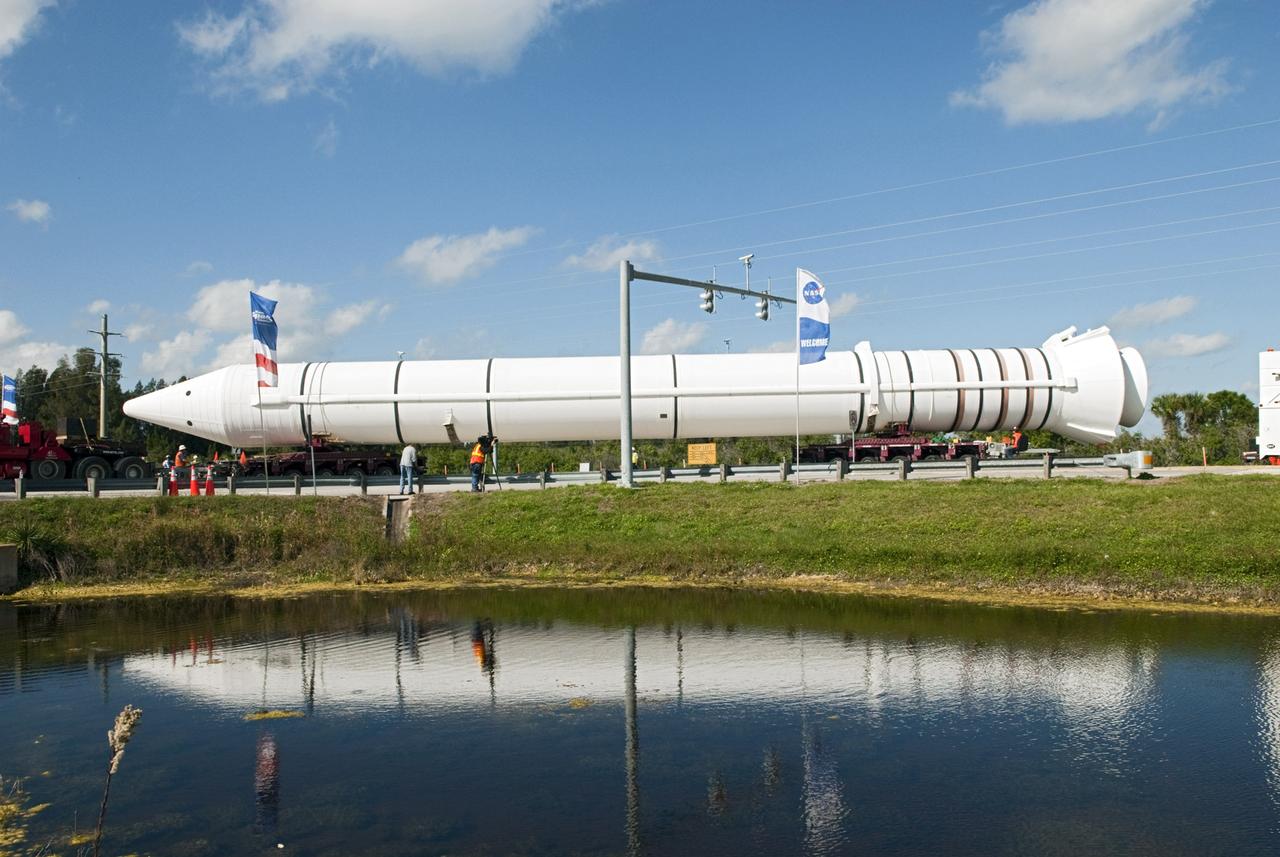
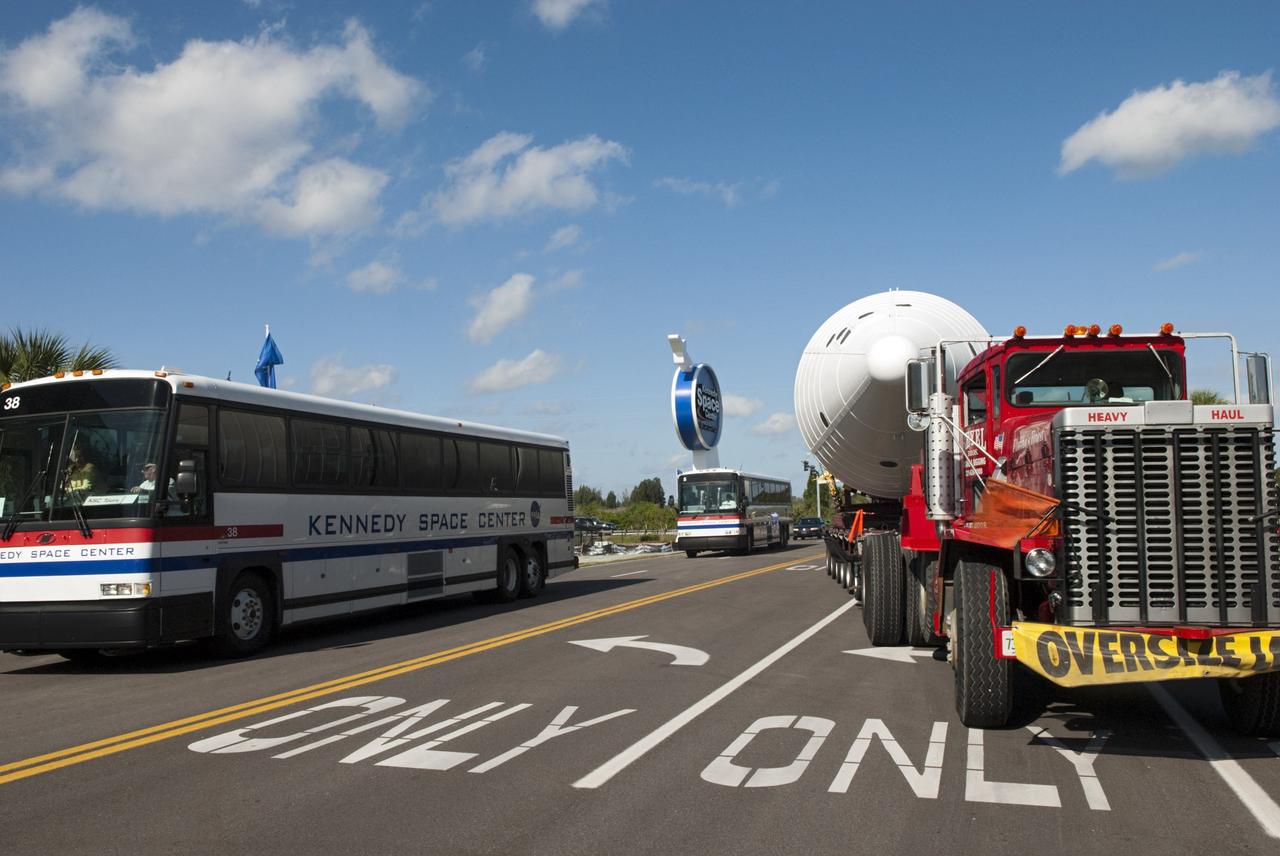
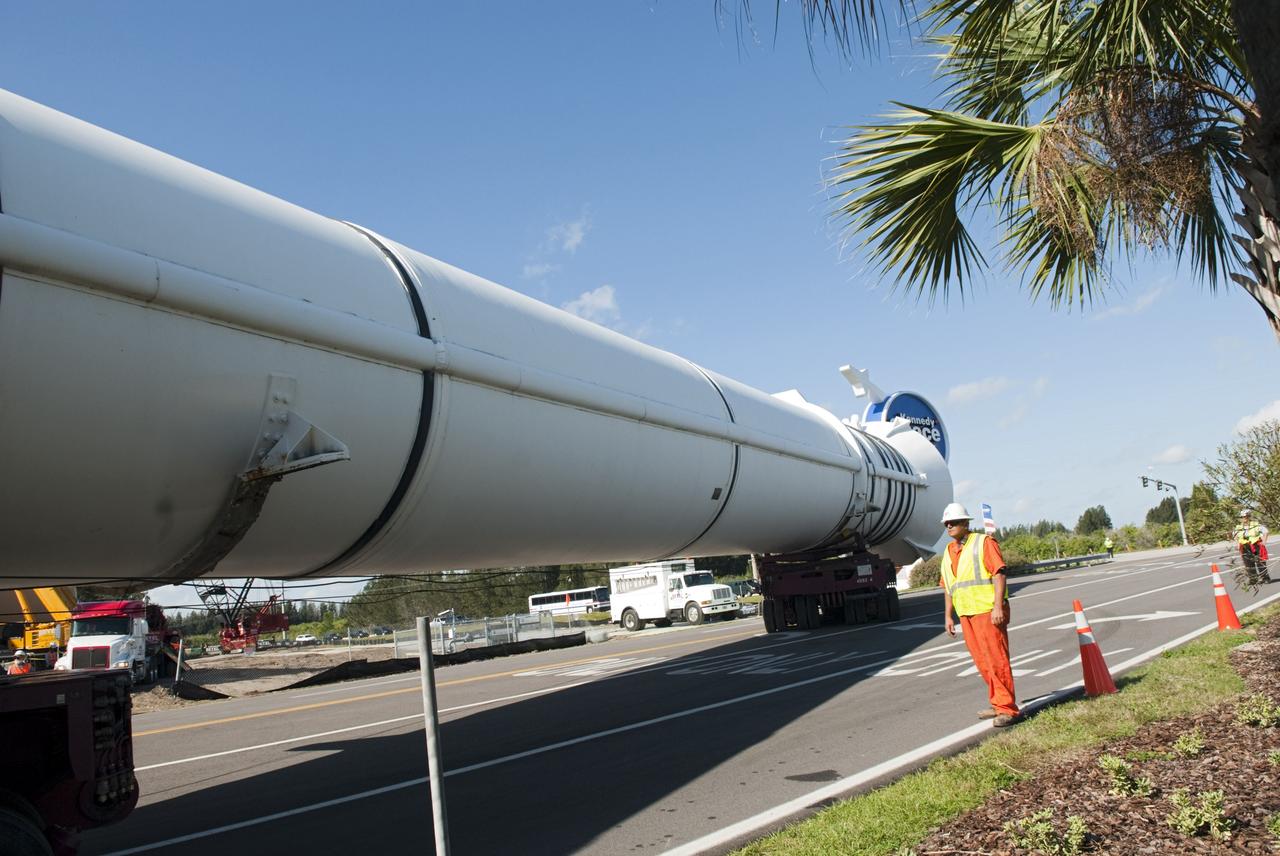
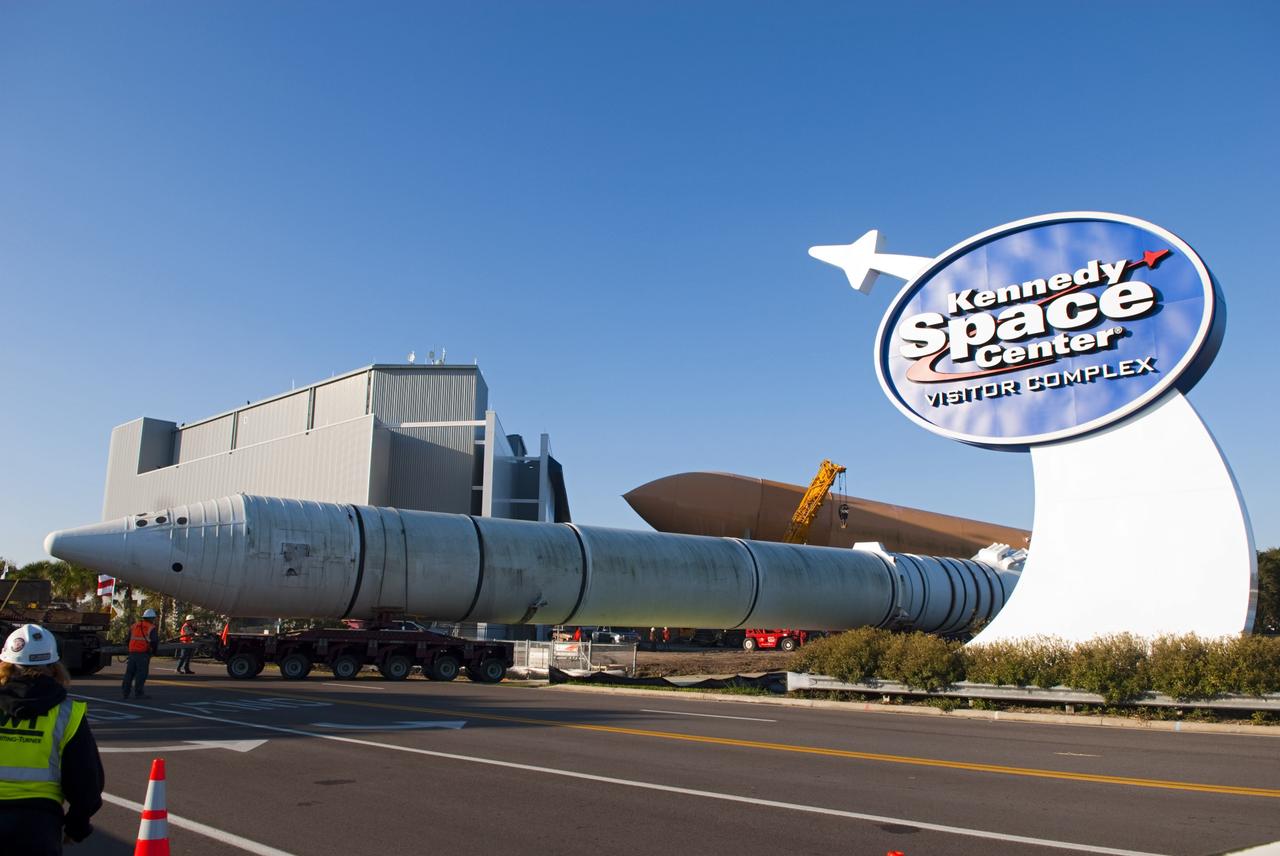
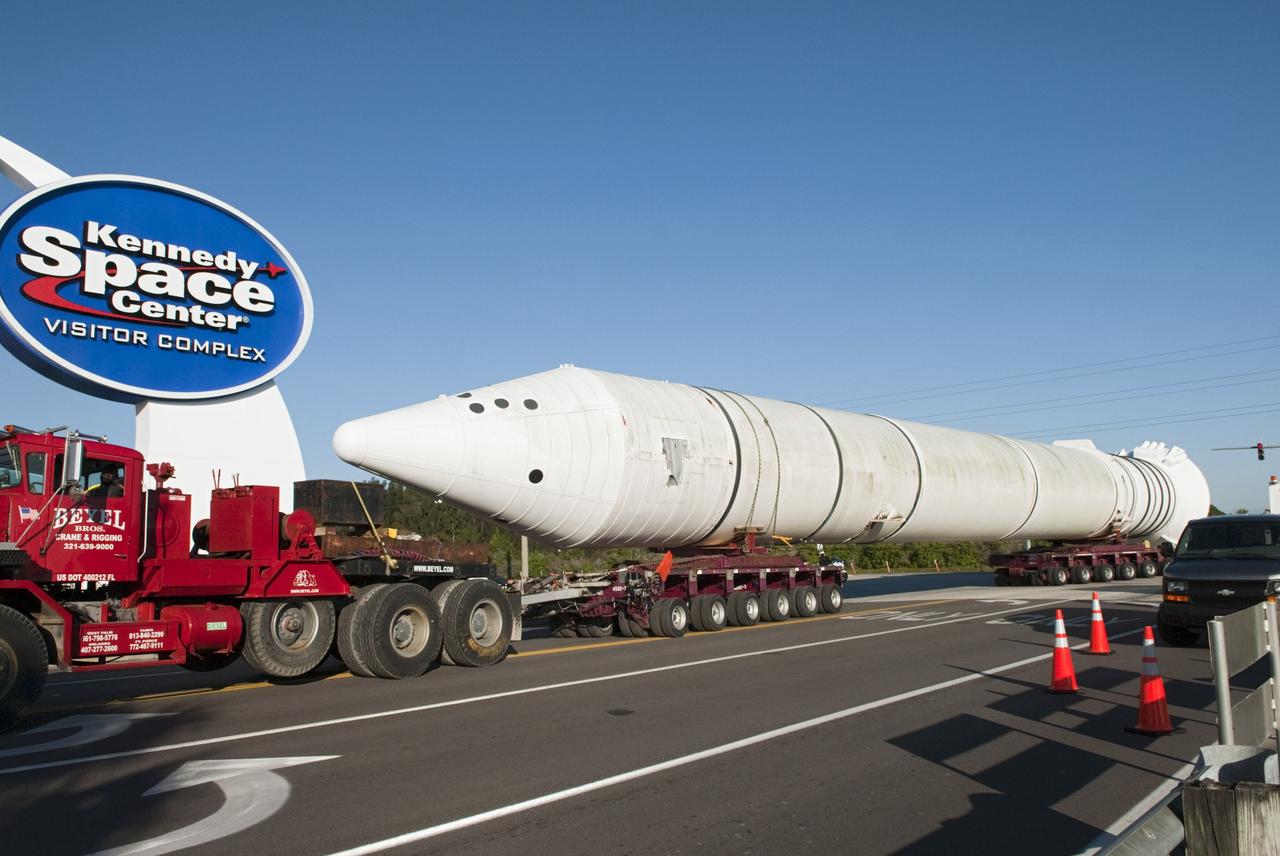
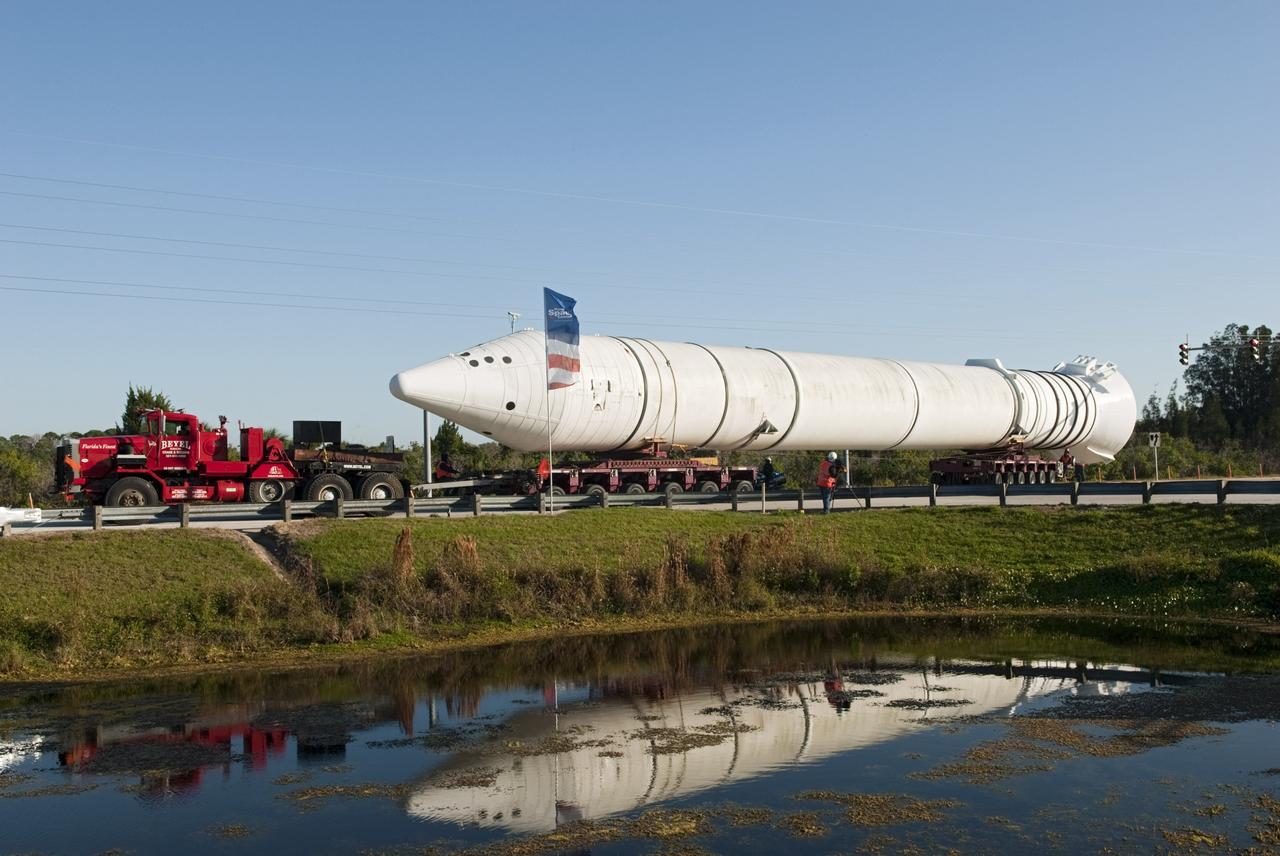
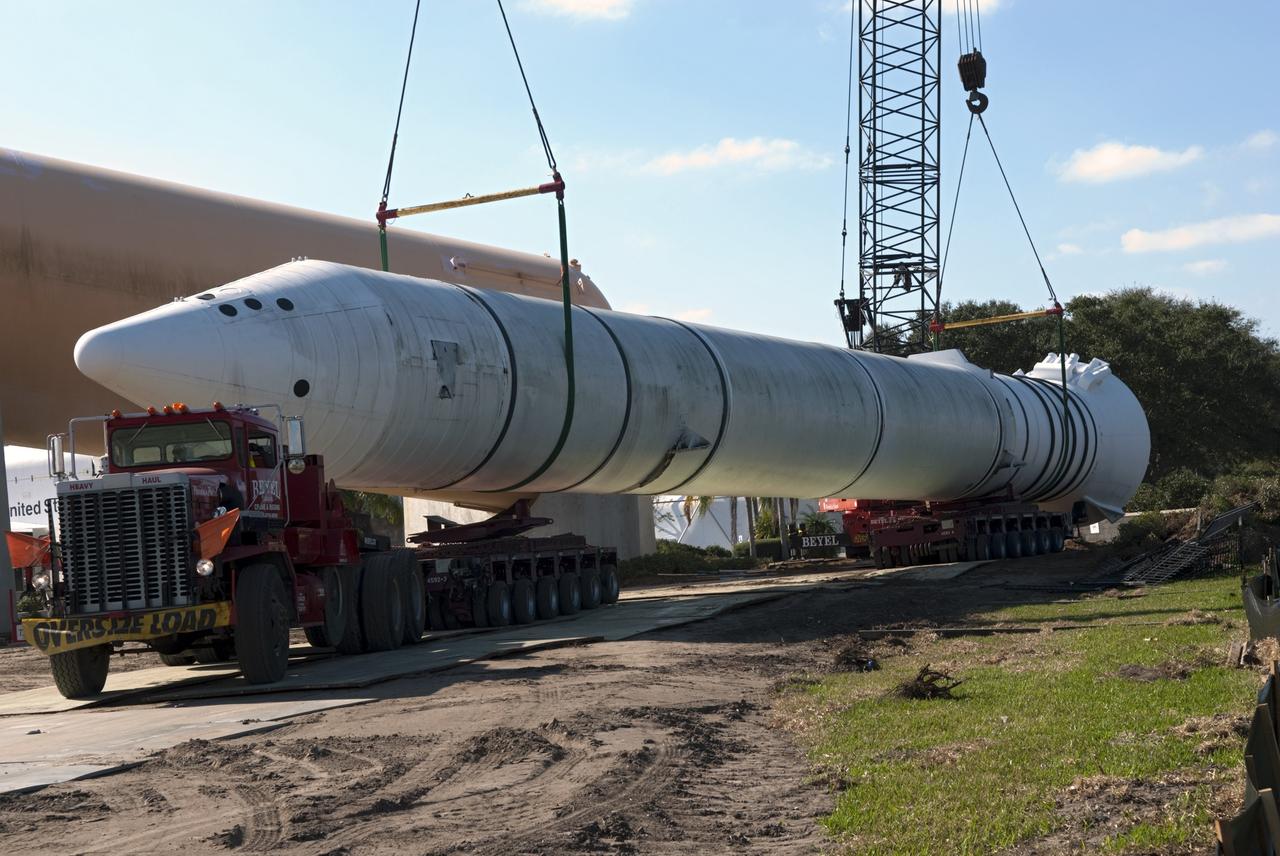
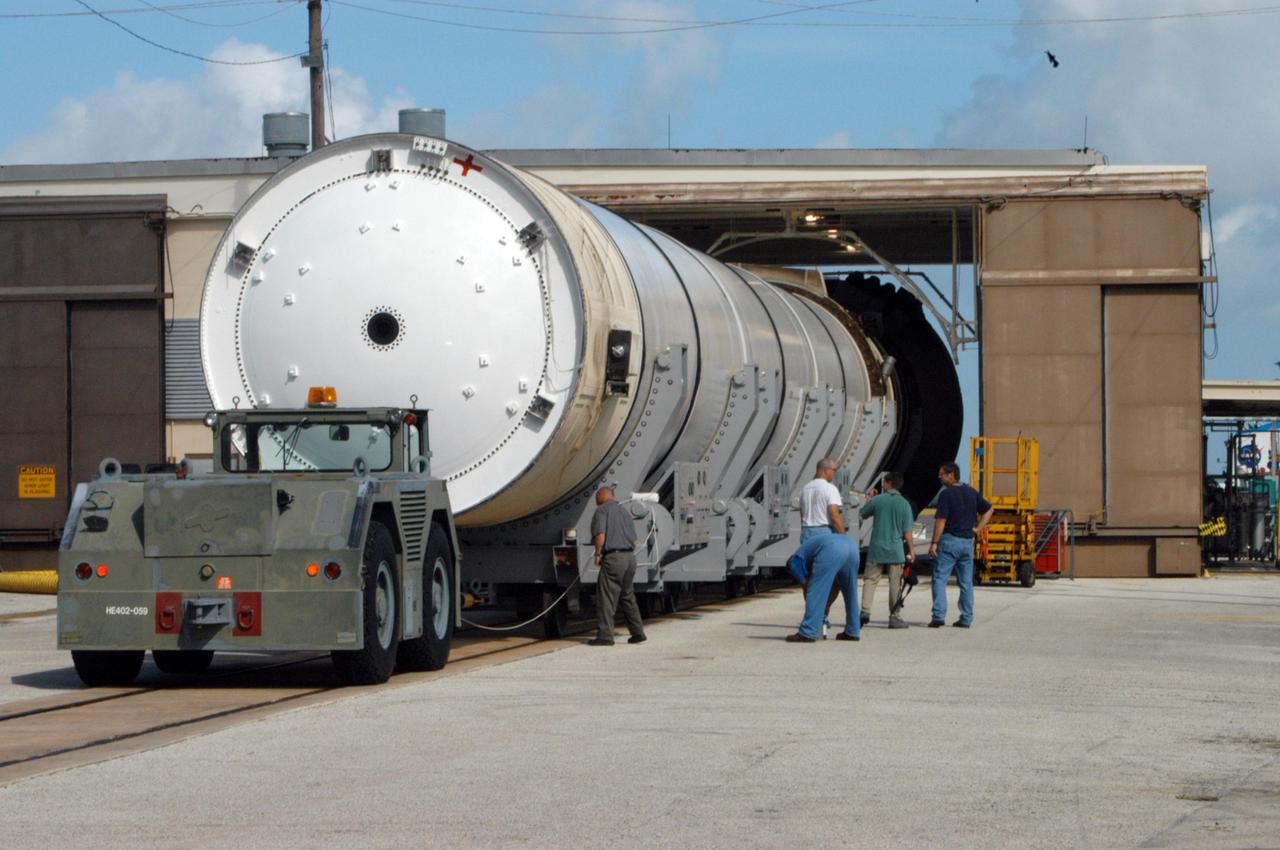
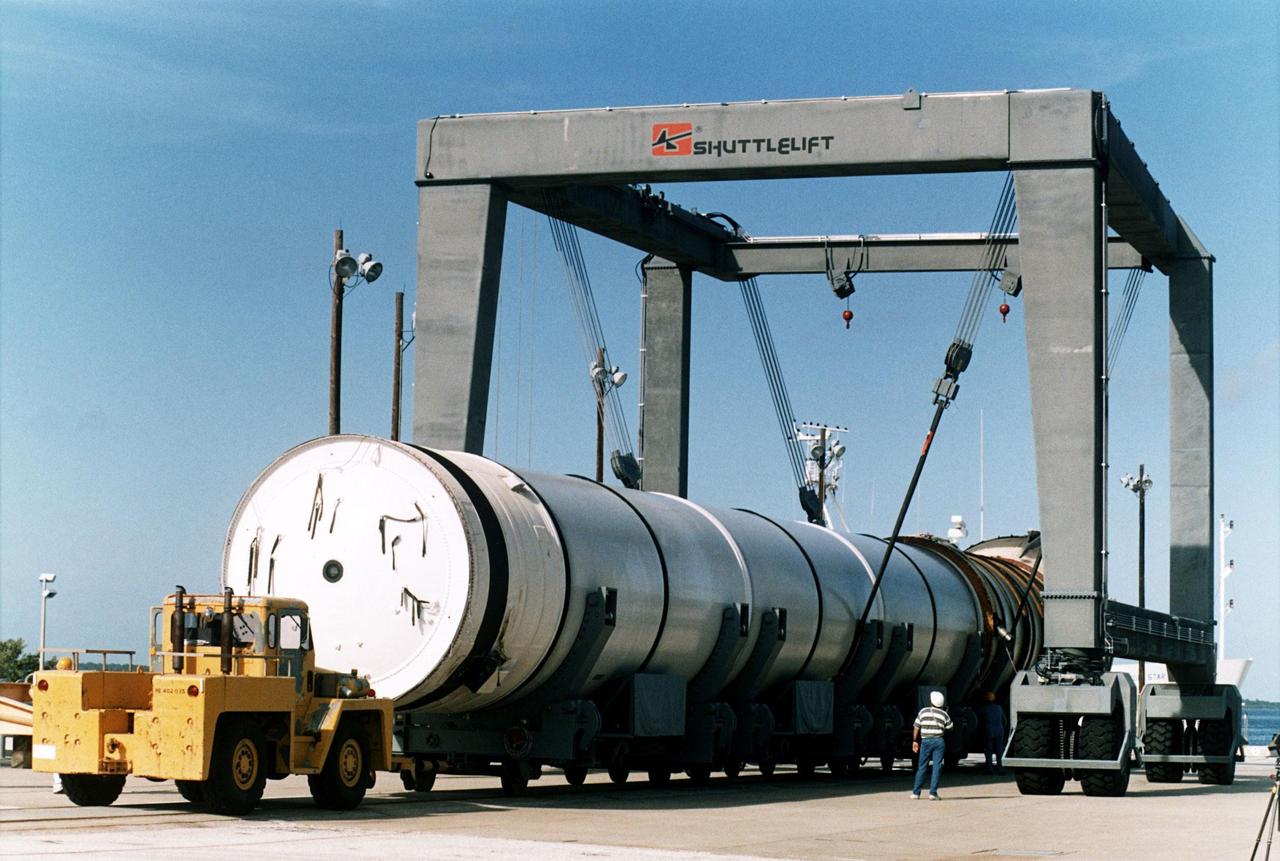
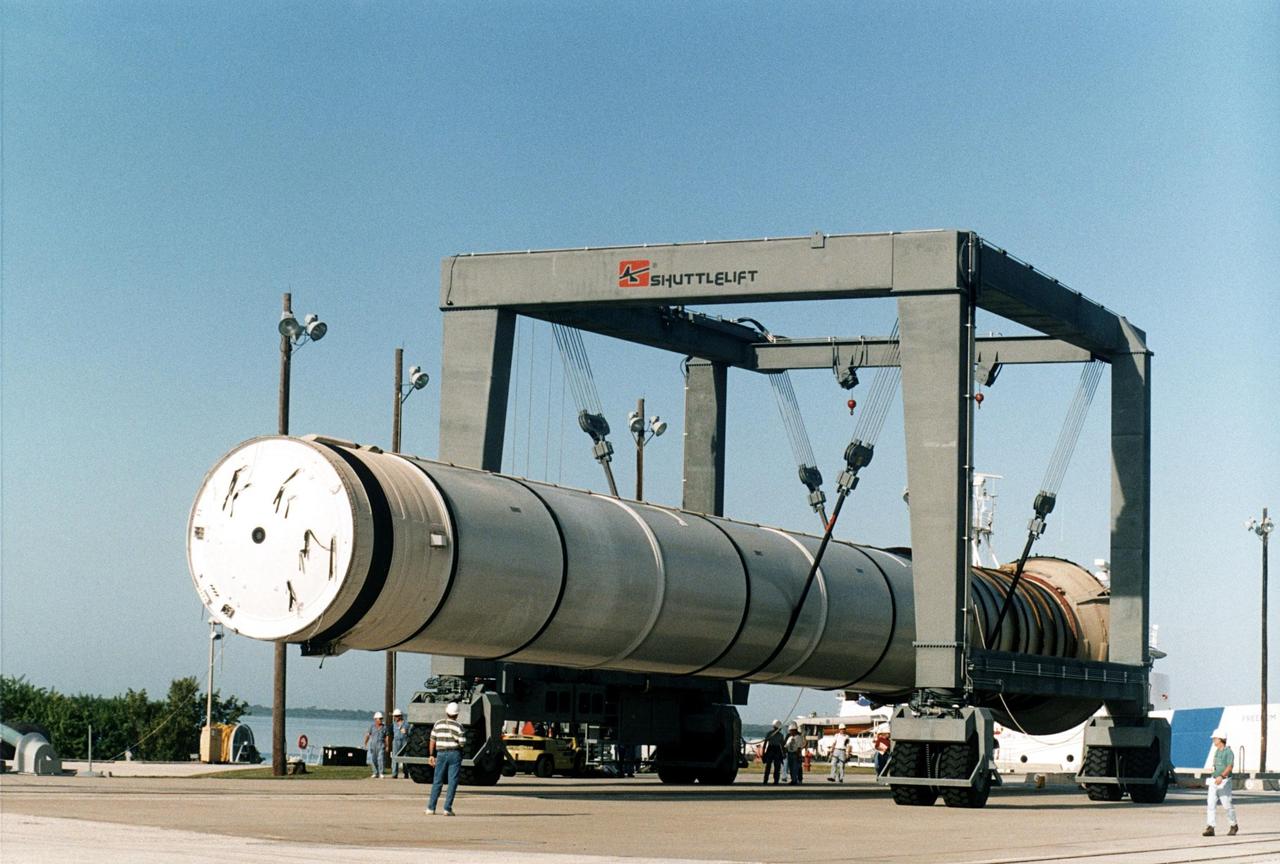
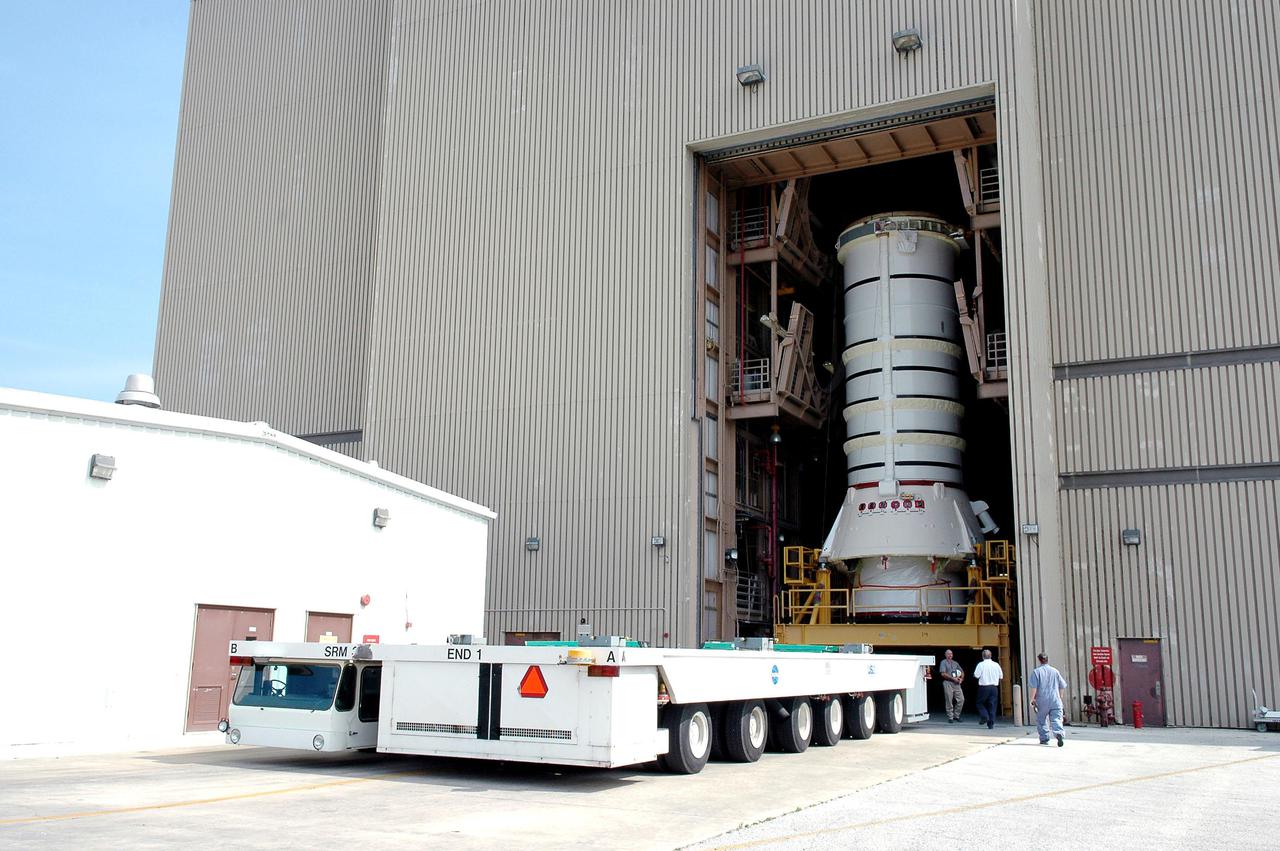
CAPE CANAVERAL, Fla. – A large truck hauls a full-size, 149-foot-long, space shuttle solid rocket booster, or SRB, replica from the Kennedy Space Center Visitor Complex as the space-themed attraction makes way for a new exhibit featuring space shuttle Atlantis, which is currently undergoing preparations to go on public display. The SRB is being placed into temporary storage at NASA's Kennedy Space Center. The SRB was part of a mockup of the external tank and two SRBs at the visitor complex that were used to show visitors the size of actual space shuttle components. A space shuttle rode piggyback on the tank and boosters at liftoff and during the ascent into space. The SRBs burned out after about two-and-a-half minutes of flight. After recovery from the ocean, the boosters could be used repeatedly. Photo credit: NASA/Jim Grossmann
KSC-2011-8079
CAPE CANAVERAL, Fla. – Cranes remove a full-size, 149-foot-long, space shuttle solid rocket booster, or SRB, replica from the Kennedy Space Center Visitor Complex as the space-themed attraction makes way for a new exhibit featuring space shuttle Atlantis, which is currently undergoing preparations to go on public display. The SRB is being placed into temporary storage at NASA's Kennedy Space Center. The SRB was part of a mockup of the external tank and two SRBs at the visitor complex that were used to show visitors the size of actual space shuttle components. A space shuttle rode piggyback on the tank and boosters at liftoff and during the ascent into space. The SRBs burned out after about two-and-a-half minutes of flight. After recovery from the ocean, the boosters could be used repeatedly. Photo credit: NASA/Jim Grossmann
KSC-2011-8068
CAPE CANAVERAL, Fla. – A large truck hauls a full-size, 149-foot-long, space shuttle solid rocket booster, or SRB, replica from the Kennedy Space Center Visitor Complex as the space-themed attraction makes way for a new exhibit featuring space shuttle Atlantis, which is currently undergoing preparations to go on public display. The SRB is being placed into temporary storage at NASA's Kennedy Space Center. The SRB was part of a mockup of the external tank and two SRBs at the visitor complex that were used to show visitors the size of actual space shuttle components. A space shuttle rode piggyback on the tank and boosters at liftoff and during the ascent into space. The SRBs burned out after about two-and-a-half minutes of flight. After recovery from the ocean, the boosters could be used repeatedly. Photo credit: NASA/Jim Grossmann
KSC-2011-8075
CAPE CANAVERAL, Fla. – A large truck hauls a full-size, 149-foot-long, space shuttle solid rocket booster, or SRB, replica from the Kennedy Space Center Visitor Complex as the space-themed attraction makes way for a new exhibit featuring space shuttle Atlantis, which is currently undergoing preparations to go on public display. The SRB is being placed into temporary storage at NASA's Kennedy Space Center. The SRB was part of a mockup of the external tank and two SRBs at the visitor complex that were used to show visitors the size of actual space shuttle components. A space shuttle rode piggyback on the tank and boosters at liftoff and during the ascent into space. The SRBs burned out after about two-and-a-half minutes of flight. After recovery from the ocean, the boosters could be used repeatedly. Photo credit: NASA/Jim Grossmann
KSC-2011-8076
CAPE CANAVERAL, Fla. – Cranes remove a full-size, 149-foot-long, space shuttle solid rocket booster, or SRB, replica from the Kennedy Space Center Visitor Complex as the space-themed attraction makes way for a new exhibit featuring space shuttle Atlantis, which is currently undergoing preparations to go on public display. The SRB is being placed into temporary storage at NASA's Kennedy Space Center. The SRB was part of a mockup of the external tank and two SRBs at the visitor complex that were used to show visitors the size of actual space shuttle components. A space shuttle rode piggyback on the tank and boosters at liftoff and during the ascent into space. The SRBs burned out after about two-and-a-half minutes of flight. After recovery from the ocean, the boosters could be used repeatedly. Photo credit: NASA/Jim Grossmann
KSC-2011-8074
CAPE CANAVERAL, Fla. – Cranes remove a full-size, 149-foot-long, space shuttle solid rocket booster, or SRB, replica from the Kennedy Space Center Visitor Complex as the space-themed attraction makes way for a new exhibit featuring space shuttle Atlantis, which is currently undergoing preparations to go on public display. The SRB is being placed into temporary storage at NASA's Kennedy Space Center. The SRB was part of a mockup of the external tank and two SRBs at the visitor complex that were used to show visitors the size of actual space shuttle components. A space shuttle rode piggyback on the tank and boosters at liftoff and during the ascent into space. The SRBs burned out after about two-and-a-half minutes of flight. After recovery from the ocean, the boosters could be used repeatedly. Photo credit: NASA/Jim Grossmann
KSC-2011-8073
CAPE CANAVERAL, Fla. – A large truck hauls a full-size, 149-foot-long, space shuttle solid rocket booster, or SRB, replica from the Kennedy Space Center Visitor Complex as the space-themed attraction makes way for a new exhibit featuring space shuttle Atlantis, which is currently undergoing preparations to go on public display. The SRB is being placed into temporary storage at NASA's Kennedy Space Center. The SRB was part of a mockup of the external tank and two SRBs at the visitor complex that were used to show visitors the size of actual space shuttle components. A space shuttle rode piggyback on the tank and boosters at liftoff and during the ascent into space. The SRBs burned out after about two-and-a-half minutes of flight. After recovery from the ocean, the boosters could be used repeatedly. Photo credit: NASA/Jim Grossmann
KSC-2011-8077
CAPE CANAVERAL, Fla. – A large truck hauls a full-size, 149-foot-long, space shuttle solid rocket booster, or SRB, replica from the Kennedy Space Center Visitor Complex as the space-themed attraction makes way for a new exhibit featuring space shuttle Atlantis, which is currently undergoing preparations to go on public display. The SRB is being placed into temporary storage at NASA's Kennedy Space Center. The SRB was part of a mockup of the external tank and two SRBs at the visitor complex that were used to show visitors the size of actual space shuttle components. A space shuttle rode piggyback on the tank and boosters at liftoff and during the ascent into space. The SRBs burned out after about two-and-a-half minutes of flight. After recovery from the ocean, the boosters could be used repeatedly. Photo credit: NASA/Jim Grossmann
KSC-2011-8078
CAPE CANAVERAL, Fla. – Cranes remove a full-size, 149-foot-long, space shuttle solid rocket booster, or SRB, replica from the Kennedy Space Center Visitor Complex as the space-themed attraction makes way for a new exhibit featuring space shuttle Atlantis, which is currently undergoing preparations to go on public display. The SRB is being placed into temporary storage at NASA's Kennedy Space Center. The SRB was part of a mockup of the external tank and two SRBs at the visitor complex that were used to show visitors the size of actual space shuttle components. A space shuttle rode piggyback on the tank and boosters at liftoff and during the ascent into space. The SRBs burned out after about two-and-a-half minutes of flight. After recovery from the ocean, the boosters could be used repeatedly. Photo credit: NASA/Jim Grossmann
KSC-2011-8069
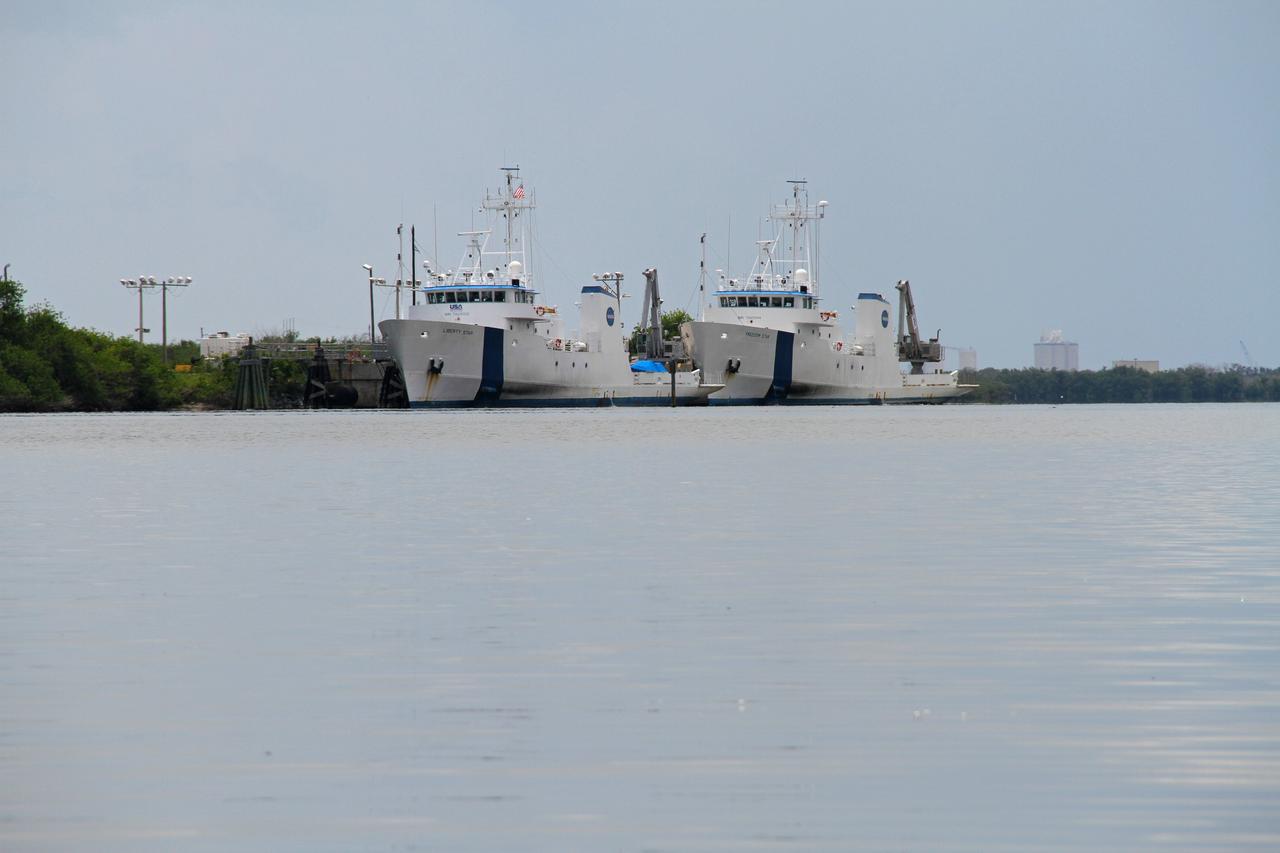
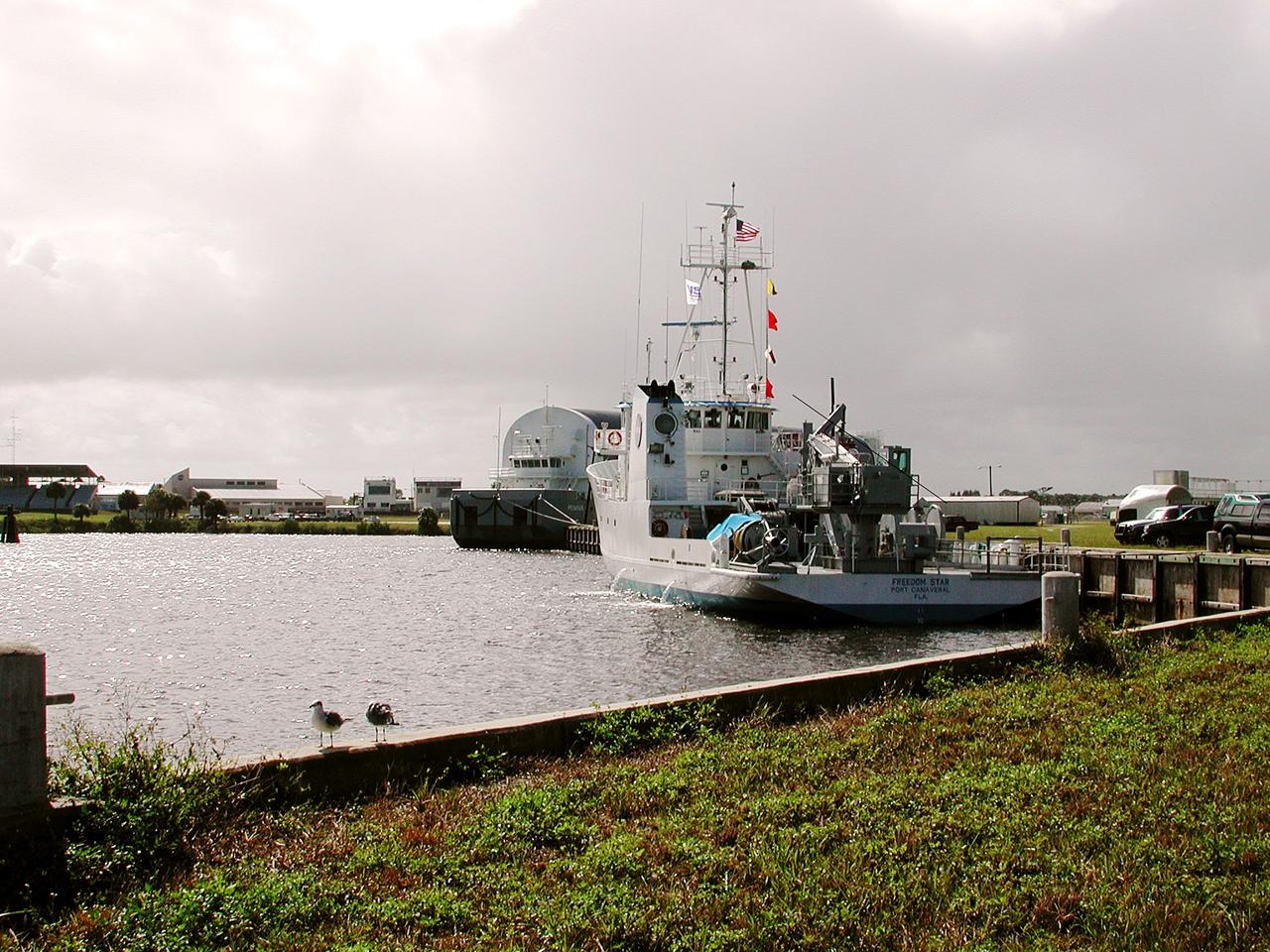
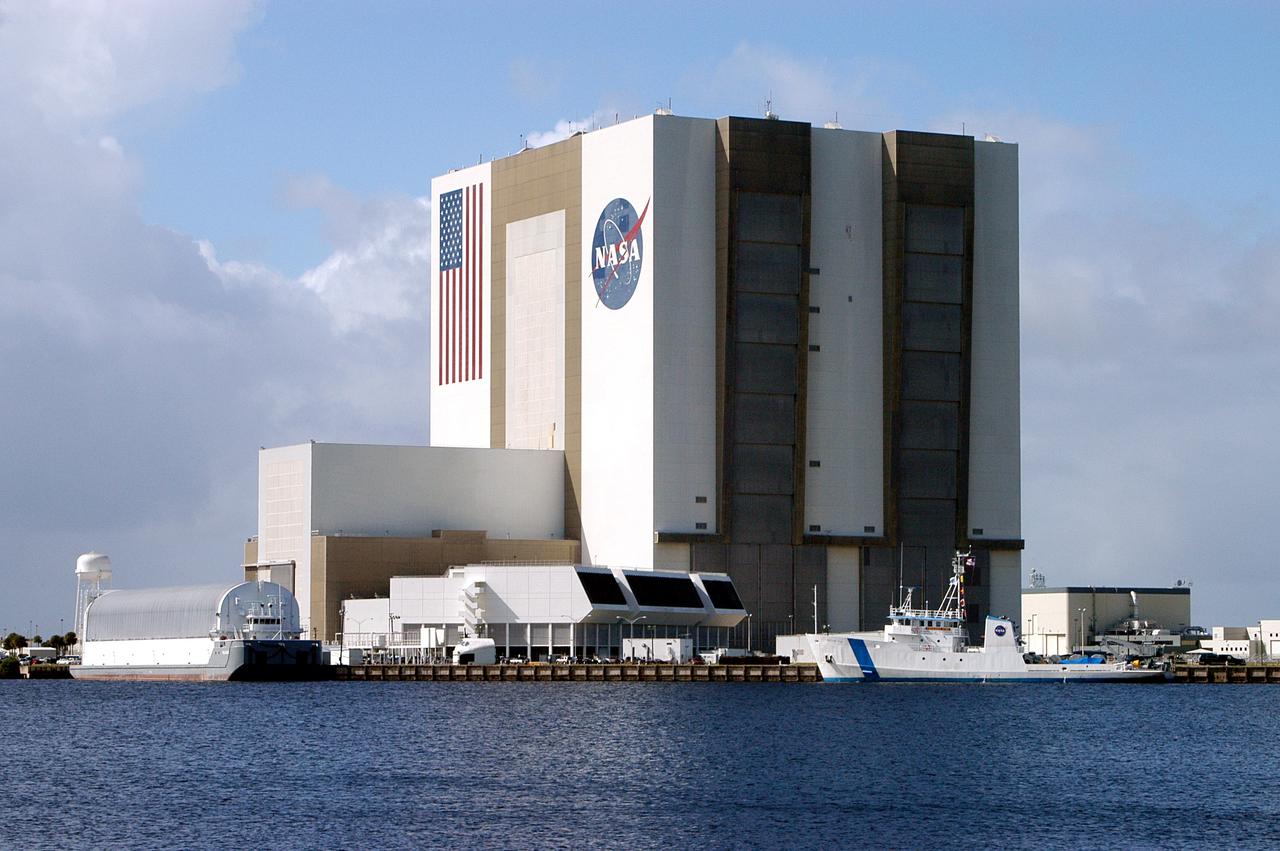
CAPE CANAVERAL, Fla. – The solid rocket booster SRB retrieval ships, Liberty Star and Freedom Star, are docked in the Banana River at Cape Canaveral Air Force Station's Hangar A F. The NASA vessels were used during the space shuttle era to retrieve the SRBs following shuttle launches.       Kennedy is located on Merritt Island, a barrier island, about 34 miles long and varying in width from five to 10 miles. Only 6,000 acres are actually used for operational activities. The Kennedy Space Center is also a National Wildlife Refuge. Consisting of 140,000 acres, the refuge provides a wide variety of habitats: coastal dunes, saltwater estuaries and marshes, freshwater impoundments, scrub, pine flatwoods and hardwood hammocks providing habitat for more than 1,500 species of plants and animals. For more information, visit: http://ipv6.nasa.gov/centers/kennedy/shuttleoperations/alligators/kscovrv.html Photo credit: NASA/Ben Smegelsky
KSC-2012-4542
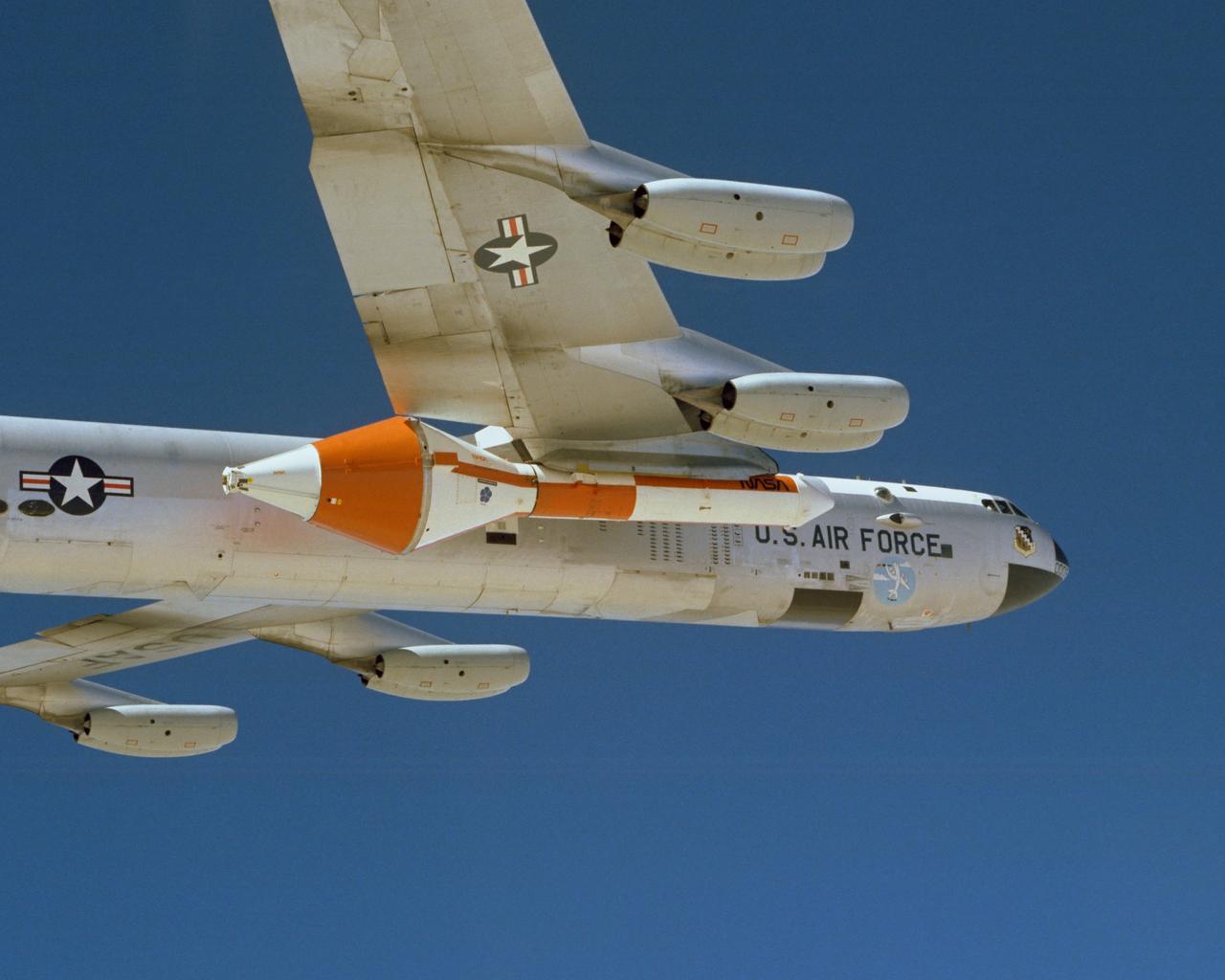
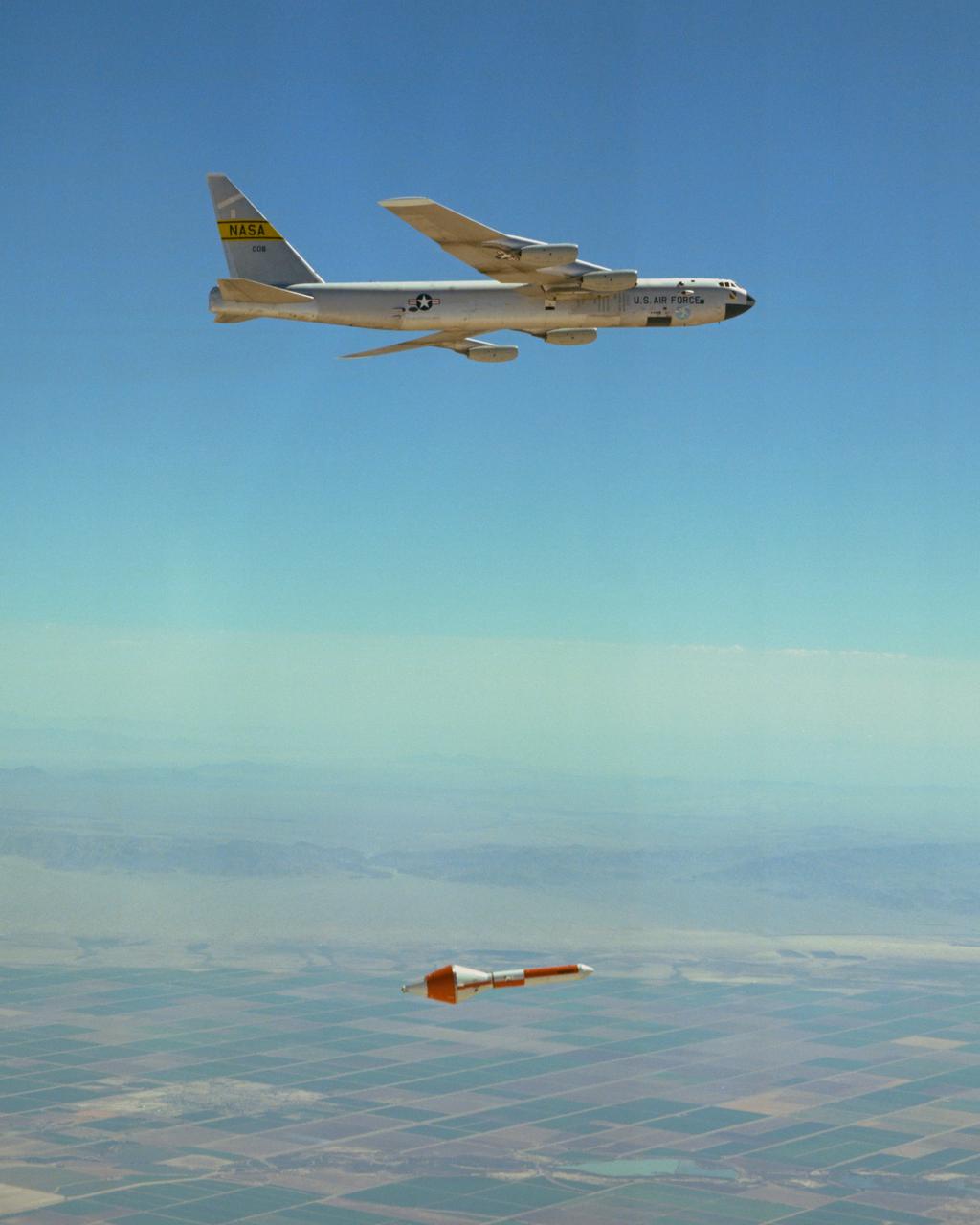
Space Shuttle Solid Rocket Booster Drop Test Vehicle (SRB-DTV) captive flight on NB-52B
EC77-7428
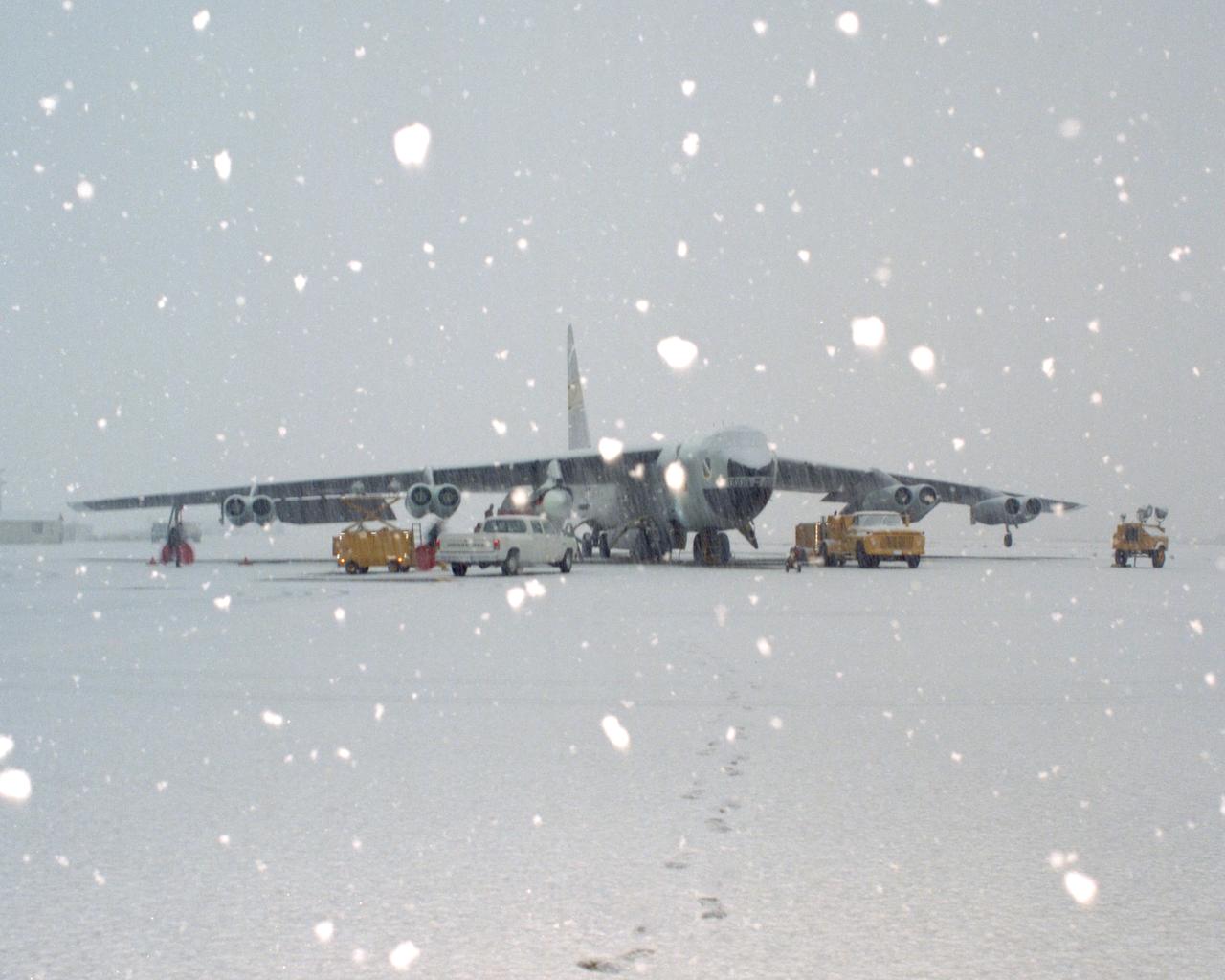
Space Shuttle Solid Rocket Booster Drop Test Vehicle (SRB-DTV) mated to NB-52B in snow
EC84-32107
Space Shuttle Solid Rocket Booster Drop Test Vehicle (SRB-DTV) first release from NB-52B
EC77-8184
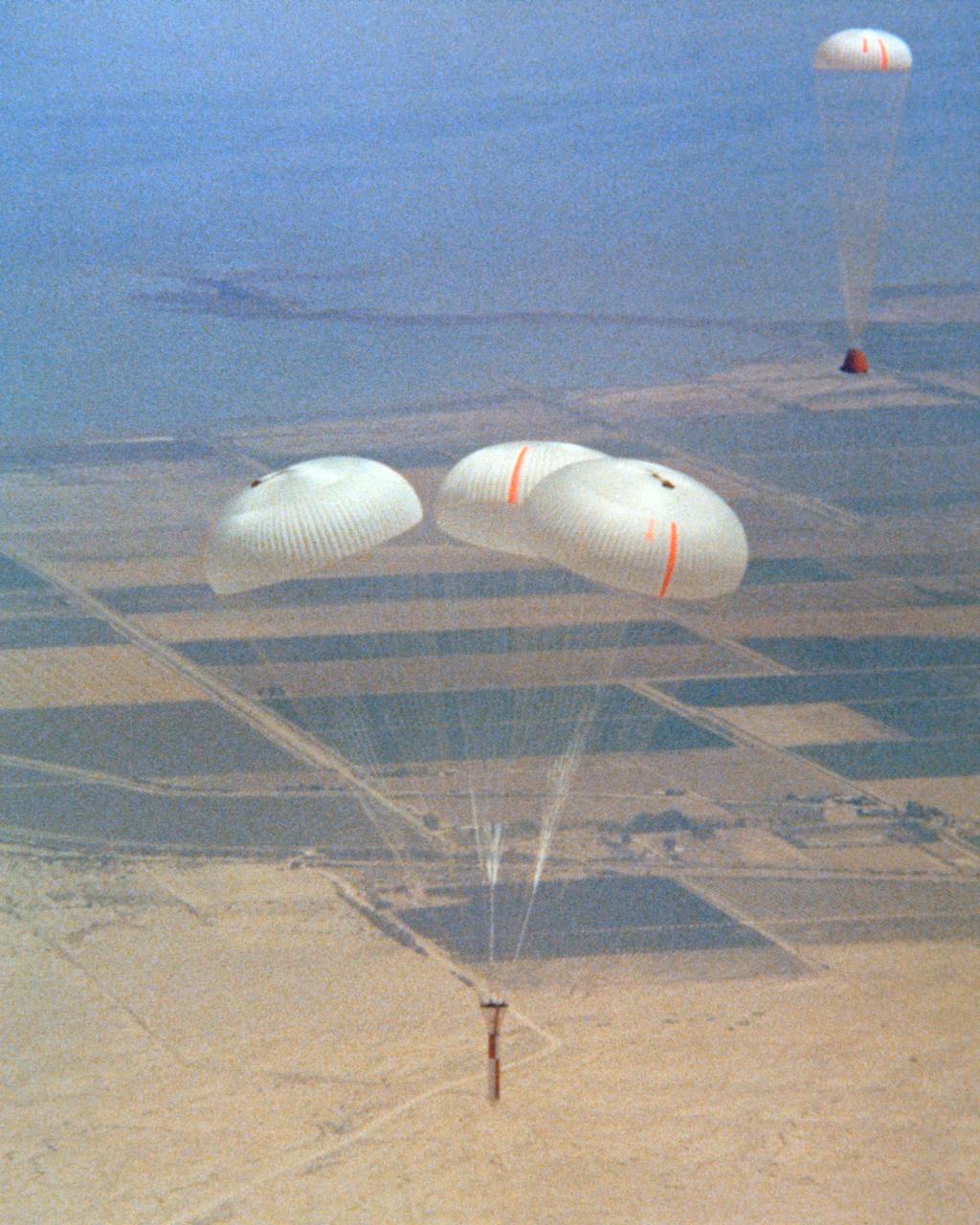
Space Shuttle Solid Rocket Booster Drop Test Vehicle (SRB-DTV) with chutes open after release from NB-52B
EC79-10168
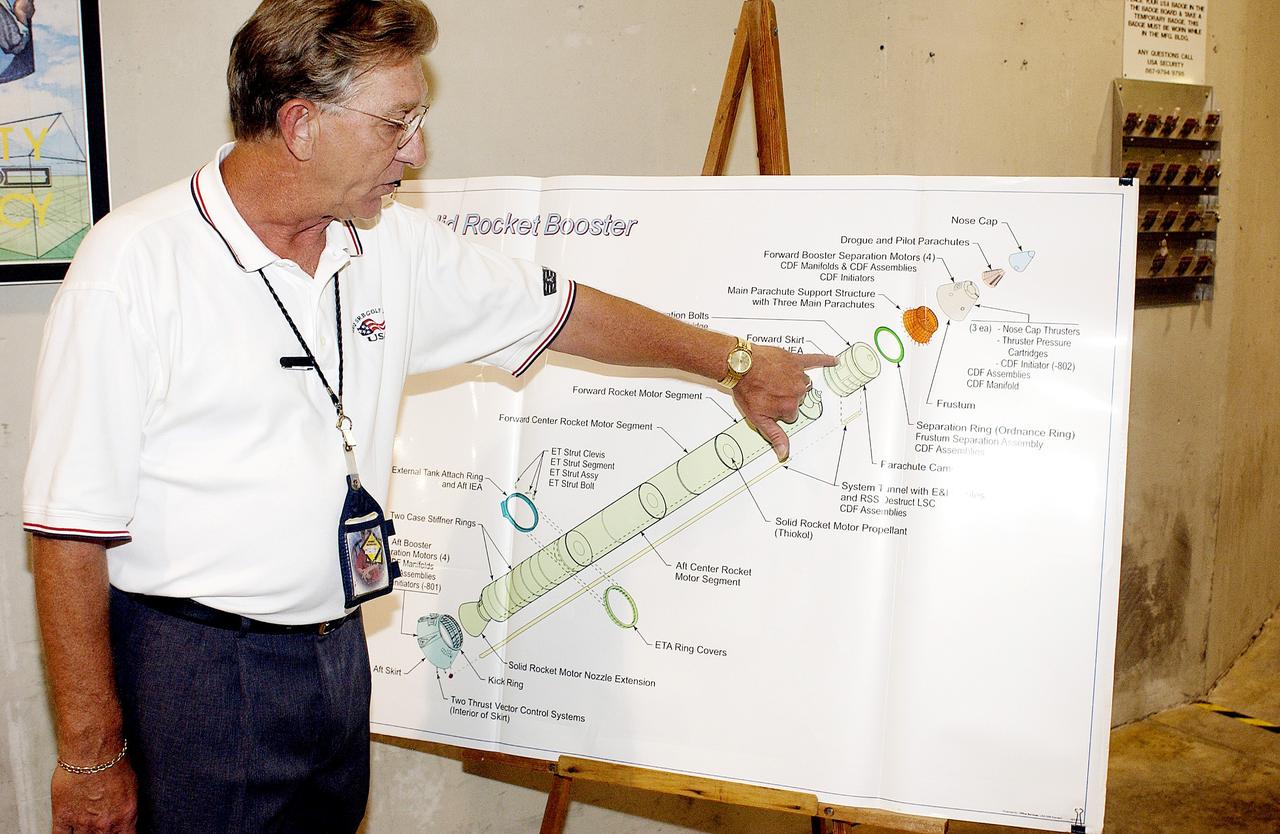
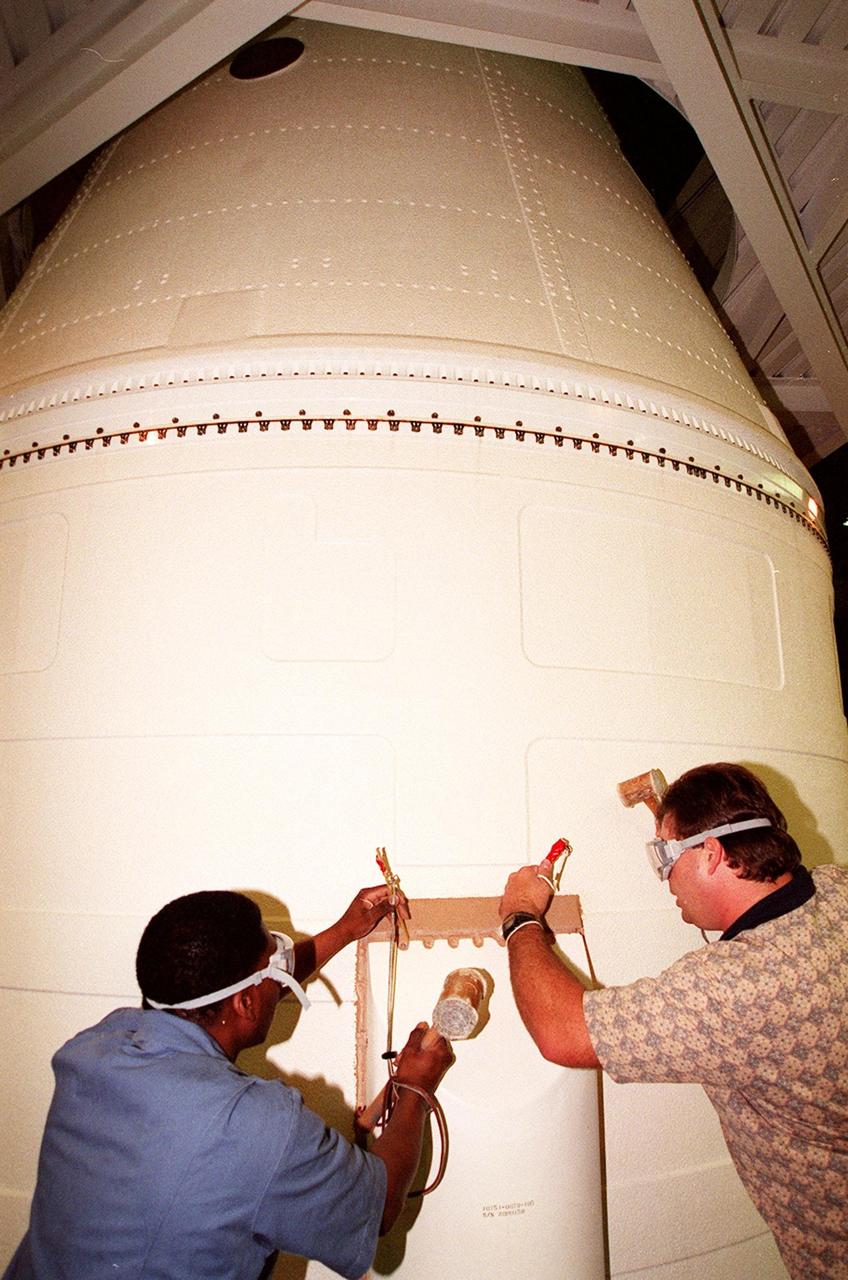
KENNEDY SPACE CENTER, FLA. - On a drawing of a solid rocket booster (SRB), Mark Northcraft, with United Space Alliance, points to the spot where a parachute camera will be installed, on the forward skirt of the SRB.  The work is being done in the Solid Rocket Booster Assembly and Refurbishment Facility, which routinely carries out refurbishment and subassembly of Shuttle SRB hardware.
KENNEDY SPACE CENTER, FLA. - On a drawing of a solid rocket booster (SRB), Mark Northcraft, with United Space Alliance, points to the spot where a parachute camera will be installed, on the forward skirt of the SRB. The work is being done in the Solid Rocket Booster Assembly and Refurbishment Facility, which routinely carries out refurbishment and subassembly of Shuttle SRB hardware.
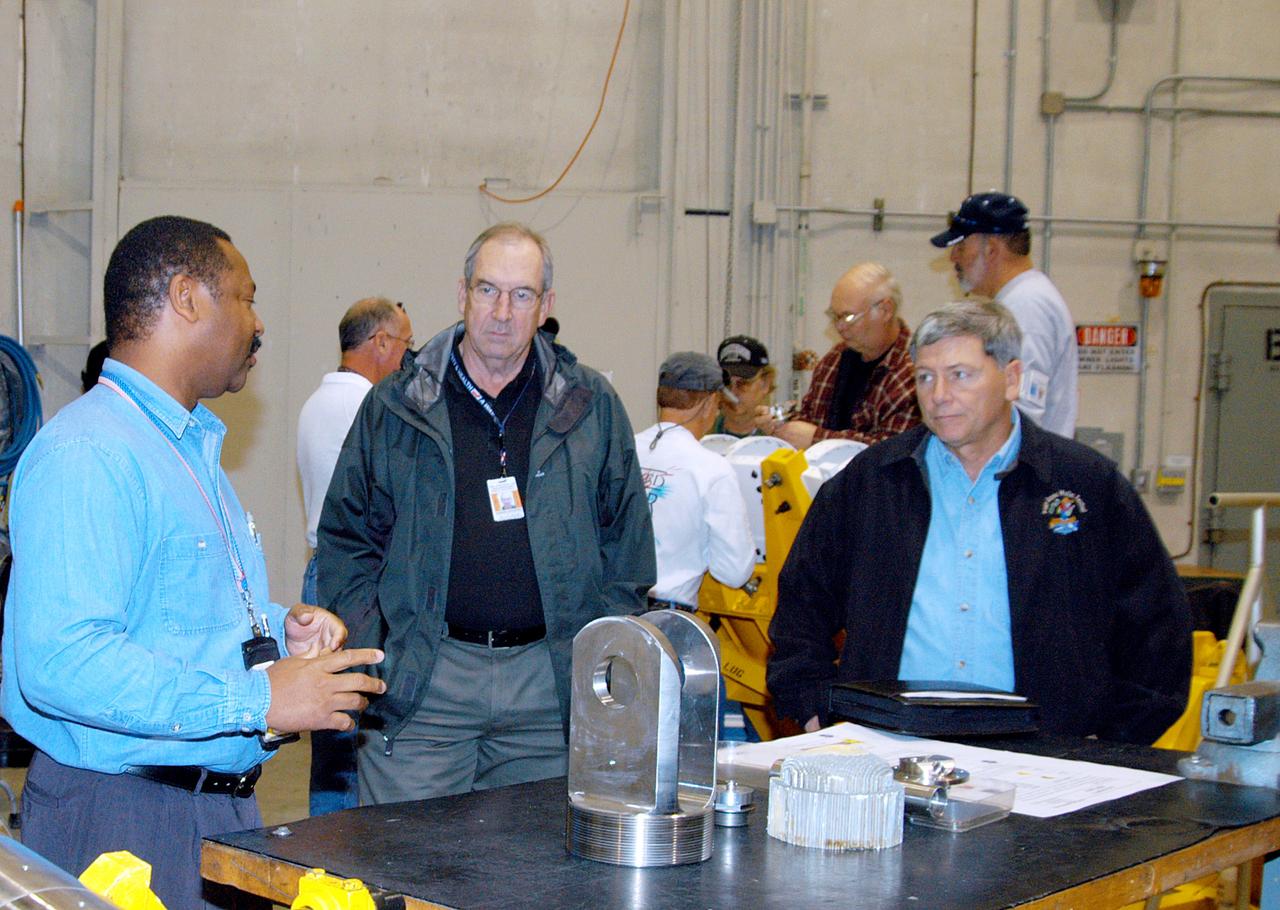
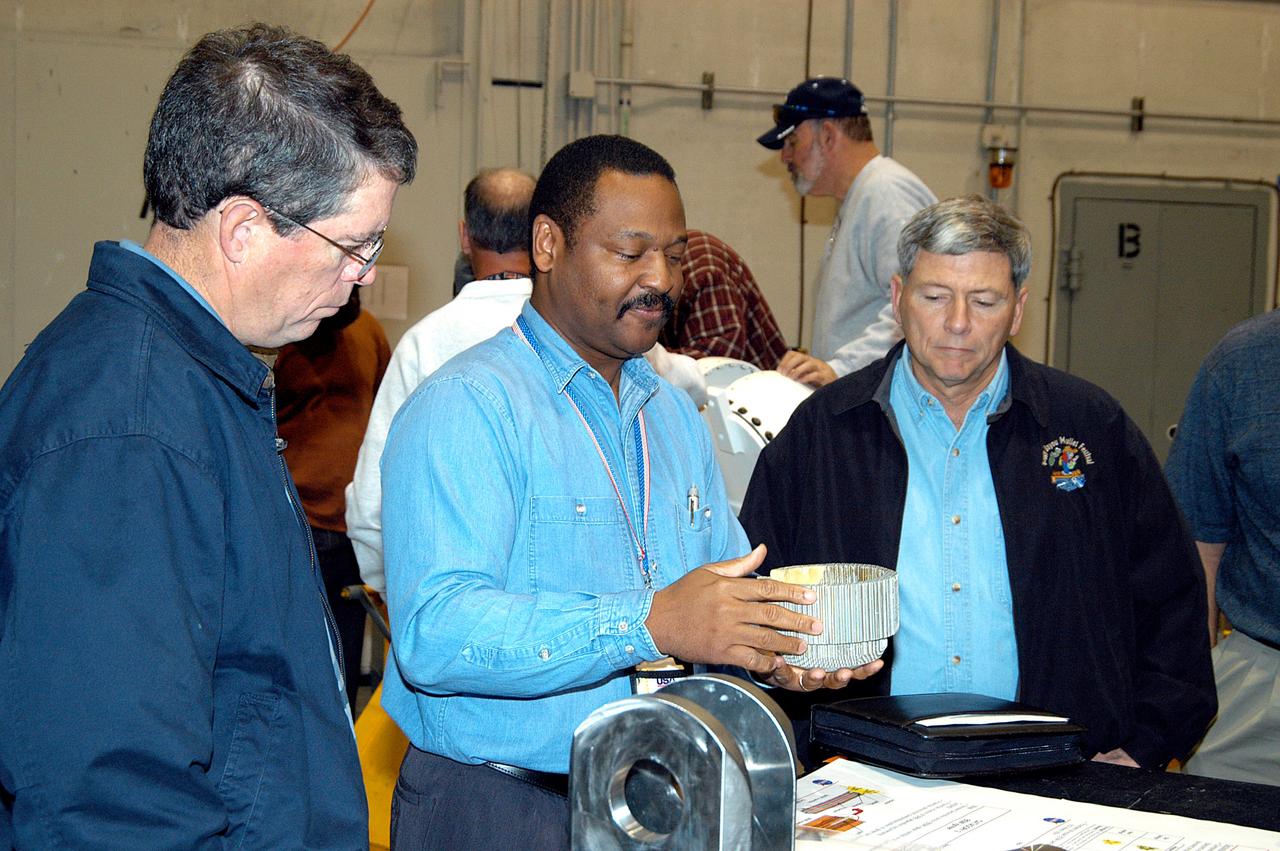
KENNEDY SPACE CENTER, FLA. -- From left, a United Space Alliance (USA) technician discusses aspects of Shuttle processing performed in the Solid Rocket Booster (SRB) Assembly and Refurbishment Facility (ARF) with USA Vice President and Space Shuttle Program Manager Howard DeCastro and NASA Deputy Associate Administrator for Space Station and Shuttle Programs Michael Kostelnik.  NASA and USA Space Shuttle program management are participating in a leadership workday.  The day is intended to provide management with an in-depth, hands-on look at Shuttle processing activities at KSC.
KENNEDY SPACE CENTER, FLA. -- From left, a United Space Alliance (USA) technician discusses aspects of Shuttle processing performed in the Solid Rocket Booster (SRB) Assembly and Refurbishment Facility (ARF) with USA Vice President and Space Shuttle Program Manager Howard DeCastro and NASA Deputy Associate Administrator for Space Station and Shuttle Programs Michael Kostelnik. NASA and USA Space Shuttle program management are participating in a leadership workday. The day is intended to provide management with an in-depth, hands-on look at Shuttle processing activities at KSC.
KENNEDY SPACE CENTER, FLA. -- A United Space Alliance (USA) technician (center) discusses aspects of Shuttle processing performed in the Solid Rocket Booster (SRB) Assembly and Refurbishment Facility (ARF) with NASA Deputy Associate Administrator for Space Station and Shuttle Programs Michael Kostelnik (right).  NASA and USA Space Shuttle program management are participating in a leadership workday.  The day is intended to provide management with an in-depth, hands-on look at Shuttle processing activities at KSC.
KENNEDY SPACE CENTER, FLA. -- A United Space Alliance (USA) technician (center) discusses aspects of Shuttle processing performed in the Solid Rocket Booster (SRB) Assembly and Refurbishment Facility (ARF) with NASA Deputy Associate Administrator for Space Station and Shuttle Programs Michael Kostelnik (right). NASA and USA Space Shuttle program management are participating in a leadership workday. The day is intended to provide management with an in-depth, hands-on look at Shuttle processing activities at KSC.
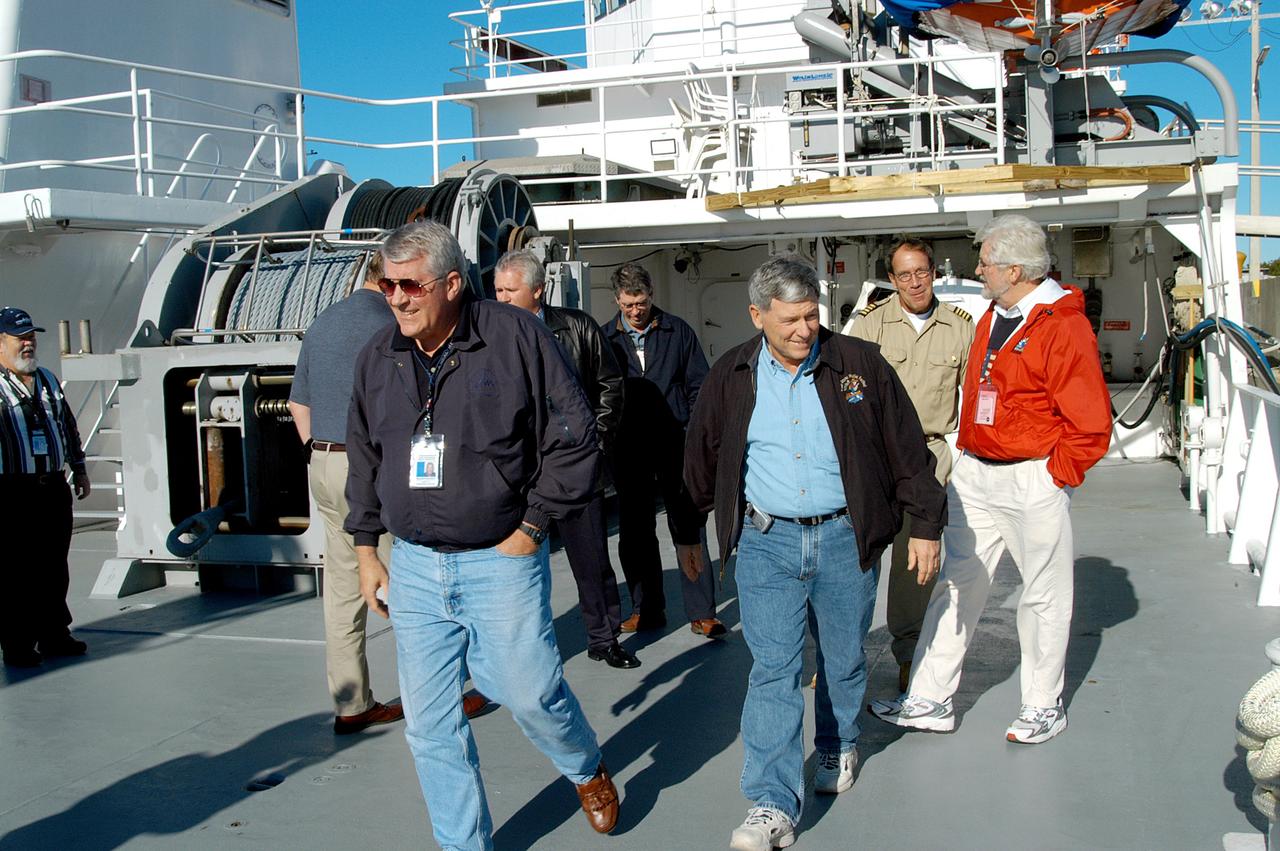
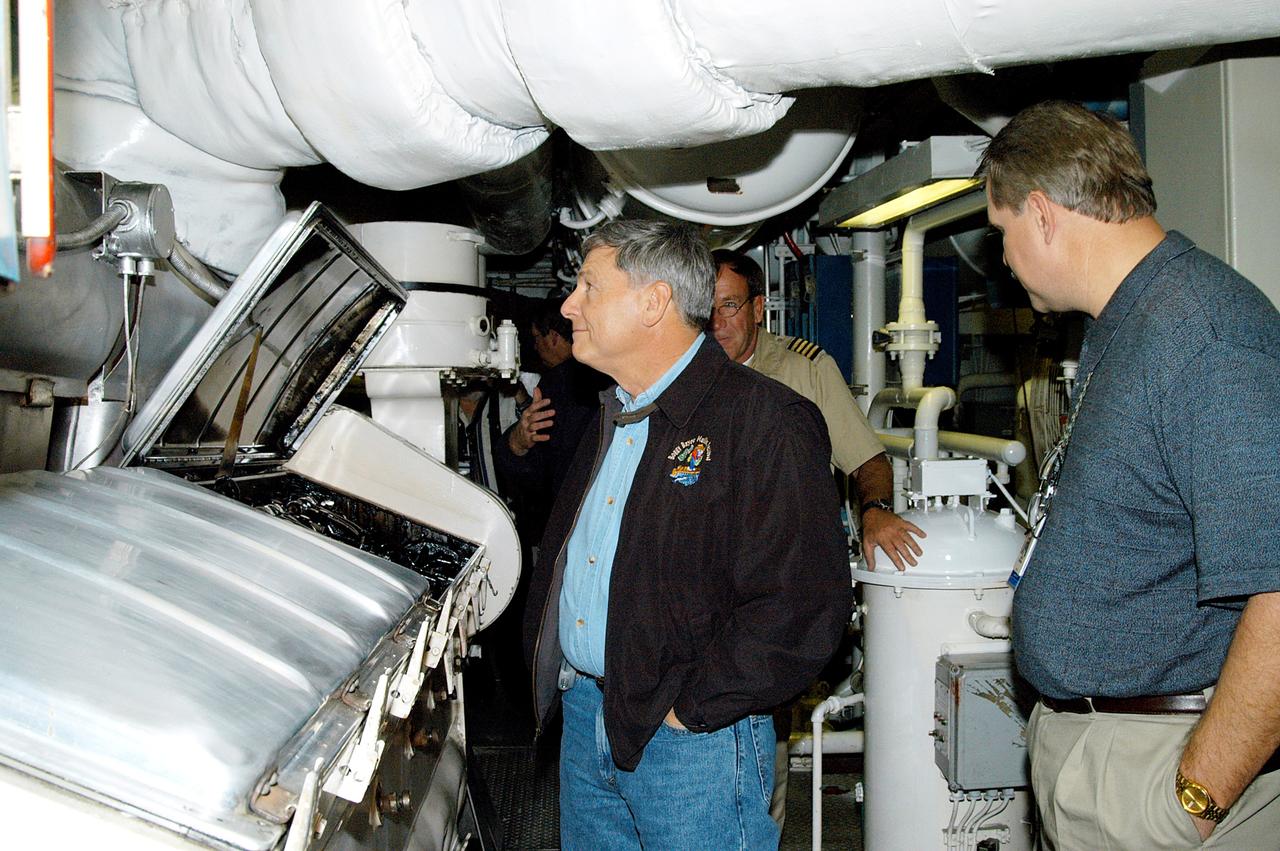
KENNEDY SPACE CENTER, FLA. -- NASA Deputy Associate Administrator for Space Station and Shuttle Programs Michael Kostelnik (center) is given a tour of a solid rocket booster (SRB) retrieval ship by United Space Alliance (USA) employee Joe Chaput (right).  NASA and USA Space Shuttle program management are participating in a leadership workday.  The day is intended to provide management with an in-depth, hands-on look at Shuttle processing activities at KSC.
KENNEDY SPACE CENTER, FLA. -- NASA Deputy Associate Administrator for Space Station and Shuttle Programs Michael Kostelnik (center) is given a tour of a solid rocket booster (SRB) retrieval ship by United Space Alliance (USA) employee Joe Chaput (right). NASA and USA Space Shuttle program management are participating in a leadership workday. The day is intended to provide management with an in-depth, hands-on look at Shuttle processing activities at KSC.
KENNEDY SPACE CENTER, FLA. -- NASA Deputy Associate Administrator for Space Station and Shuttle Programs Michael Kostelnik (left) tours a solid rocket booster (SRB) retrieval ship at Cape Canaveral.  NASA and United Space Alliance (USA) Space Shuttle program management are participating in a leadership workday.  The day is intended to provide management with an in-depth, hands-on look at Shuttle processing activities at KSC.
KENNEDY SPACE CENTER, FLA. -- NASA Deputy Associate Administrator for Space Station and Shuttle Programs Michael Kostelnik (left) tours a solid rocket booster (SRB) retrieval ship at Cape Canaveral. NASA and United Space Alliance (USA) Space Shuttle program management are participating in a leadership workday. The day is intended to provide management with an in-depth, hands-on look at Shuttle processing activities at KSC.
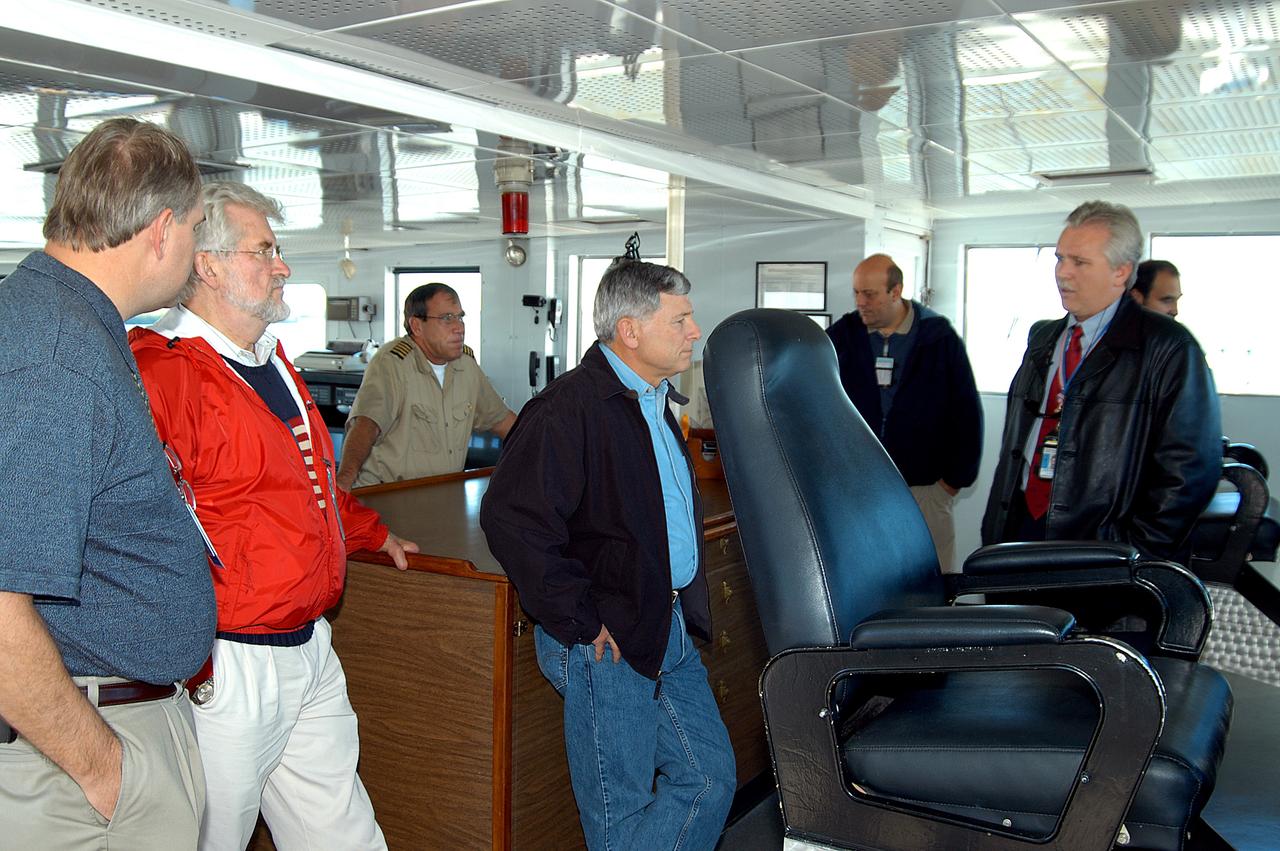
KENNEDY SPACE CENTER, FLA. -- United Space Alliance (USA) Vice President and Associate Program Manager of Florida Operations Bill Pickavance (left front) and NASA Deputy Associate Administrator for Space Station and Shuttle Programs Michael Kostelnik (right front) tour a solid rocket booster (SRB) retrieval ship at Cape Canaveral.  NASA and USA Space Shuttle program management are participating in a leadership workday.  The day is intended to provide management with an in-depth, hands-on look at Shuttle processing activities at KSC.
KENNEDY SPACE CENTER, FLA. -- United Space Alliance (USA) Vice President and Associate Program Manager of Florida Operations Bill Pickavance (left front) and NASA Deputy Associate Administrator for Space Station and Shuttle Programs Michael Kostelnik (right front) tour a solid rocket booster (SRB) retrieval ship at Cape Canaveral. NASA and USA Space Shuttle program management are participating in a leadership workday. The day is intended to provide management with an in-depth, hands-on look at Shuttle processing activities at KSC.
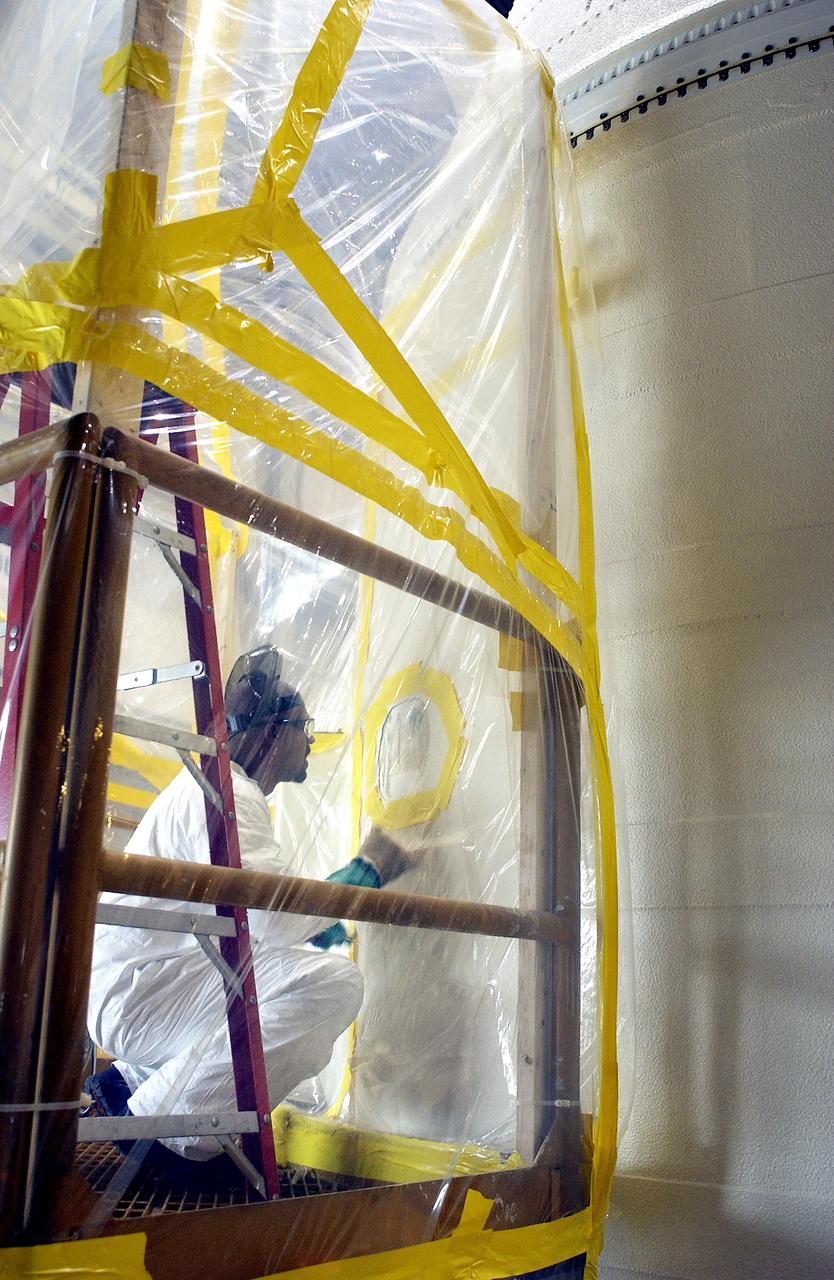
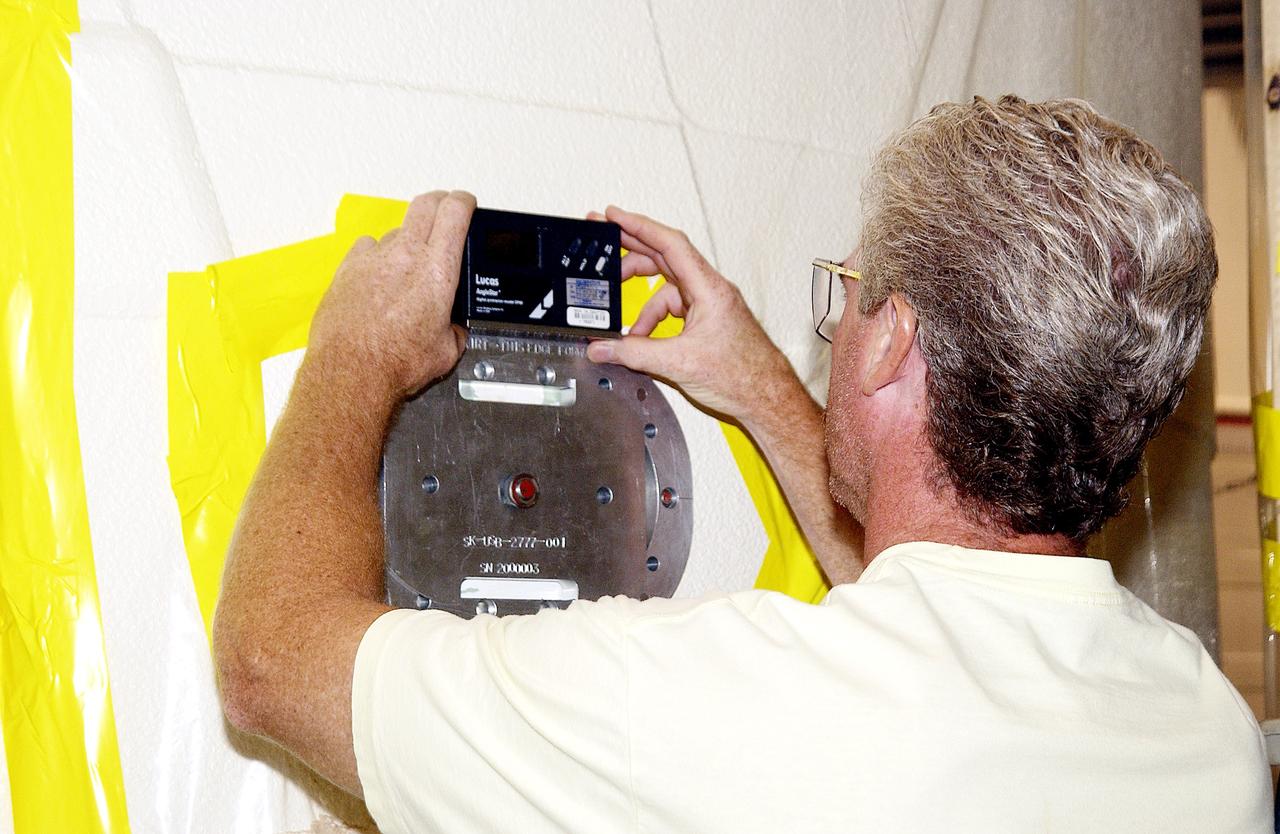
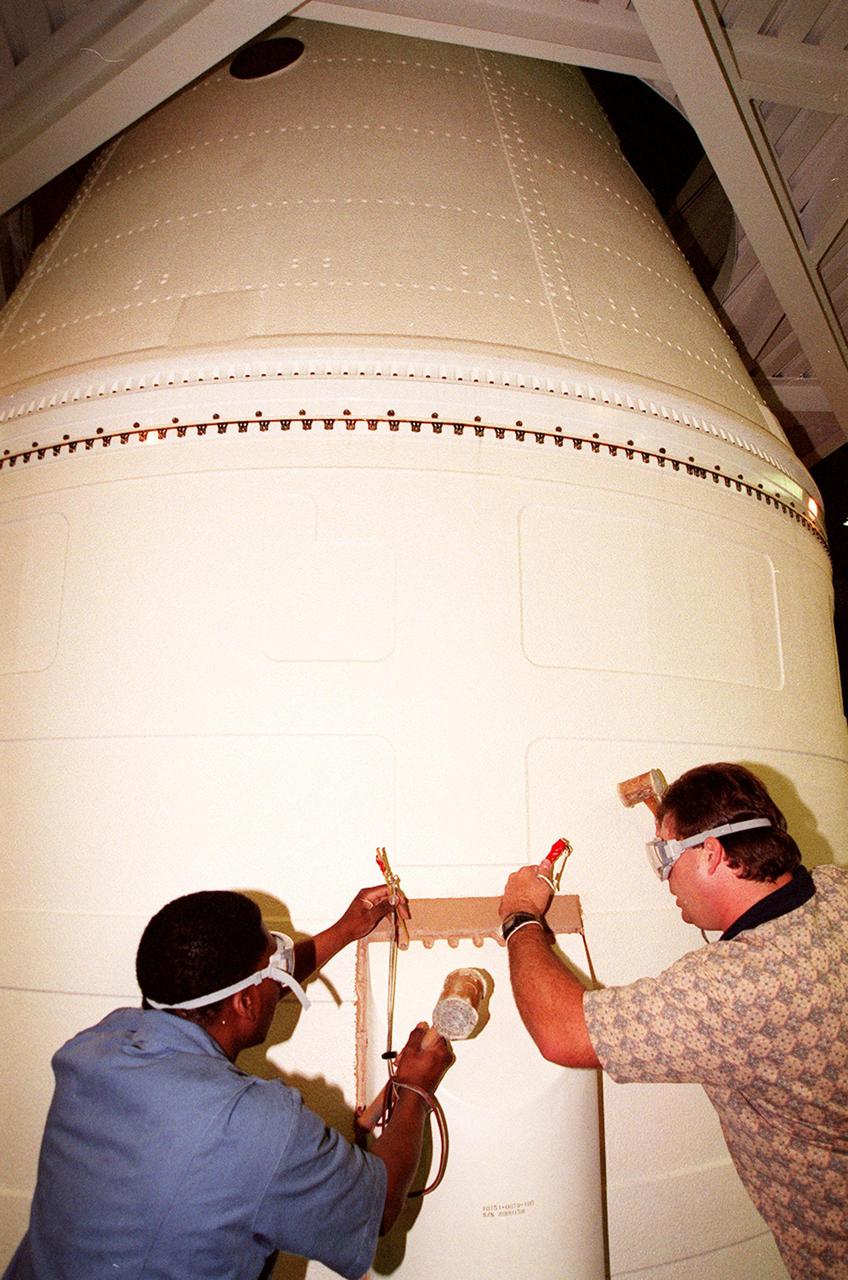
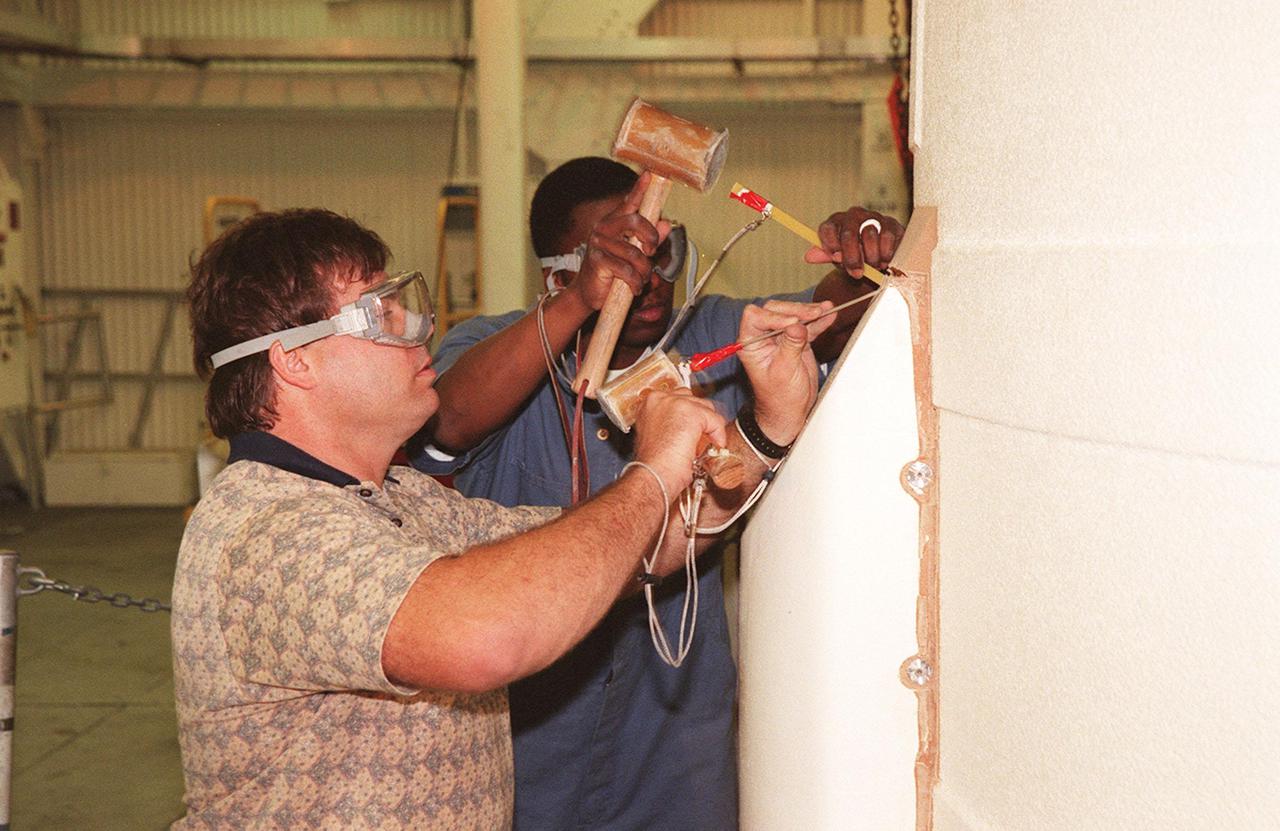
KENNEDY SPACE CENTER, FLA. -  In the Solid Rocket Booster Assembly and Refurbishment Facility (ARF), Donnie Cardigan, with United Space Alliance,  installs the parachute camera on the solid rocket booster forward skirt.  Refurbishment and subassembly of Shuttle SRB hardware - primarily the forward and aft assemblies - is carried out in the ARF.
KENNEDY SPACE CENTER, FLA. - In the Solid Rocket Booster Assembly and Refurbishment Facility (ARF), Donnie Cardigan, with United Space Alliance, installs the parachute camera on the solid rocket booster forward skirt. Refurbishment and subassembly of Shuttle SRB hardware - primarily the forward and aft assemblies - is carried out in the ARF.
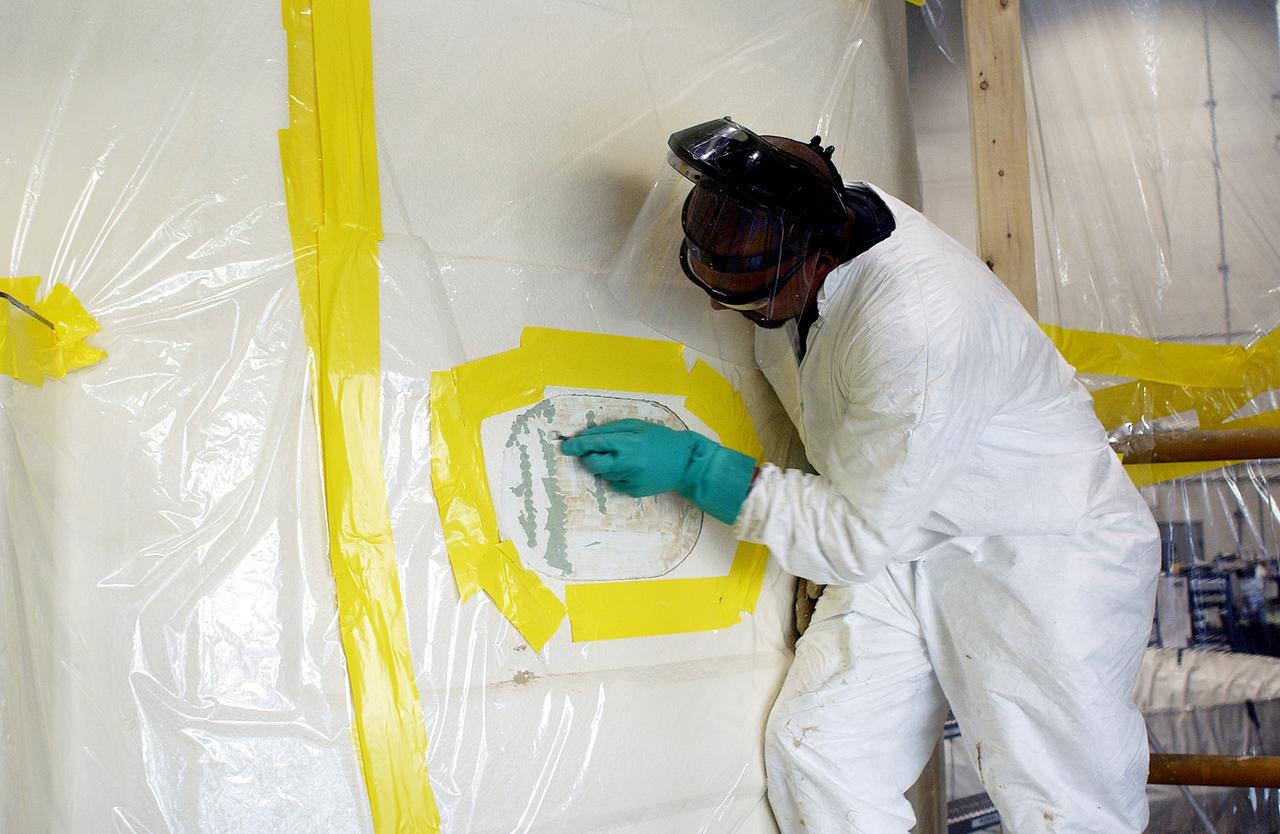
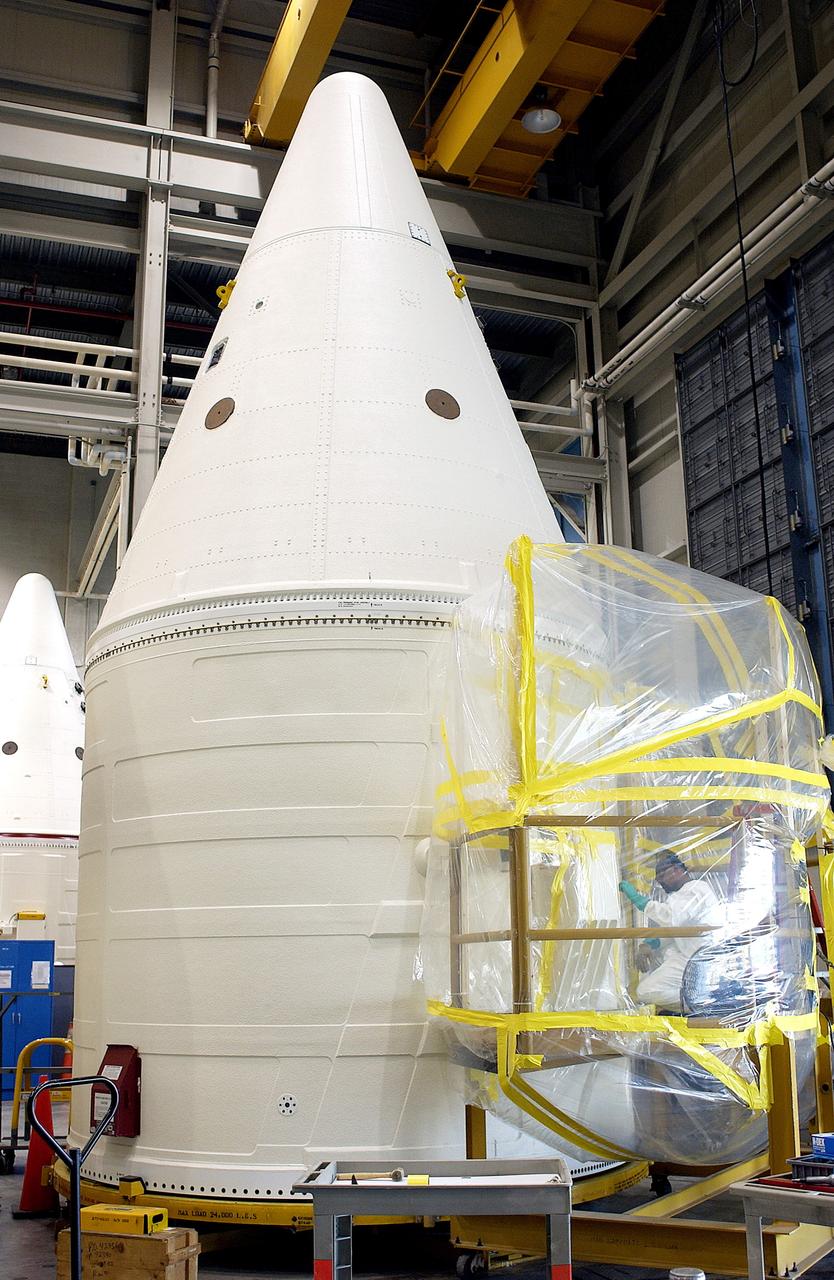
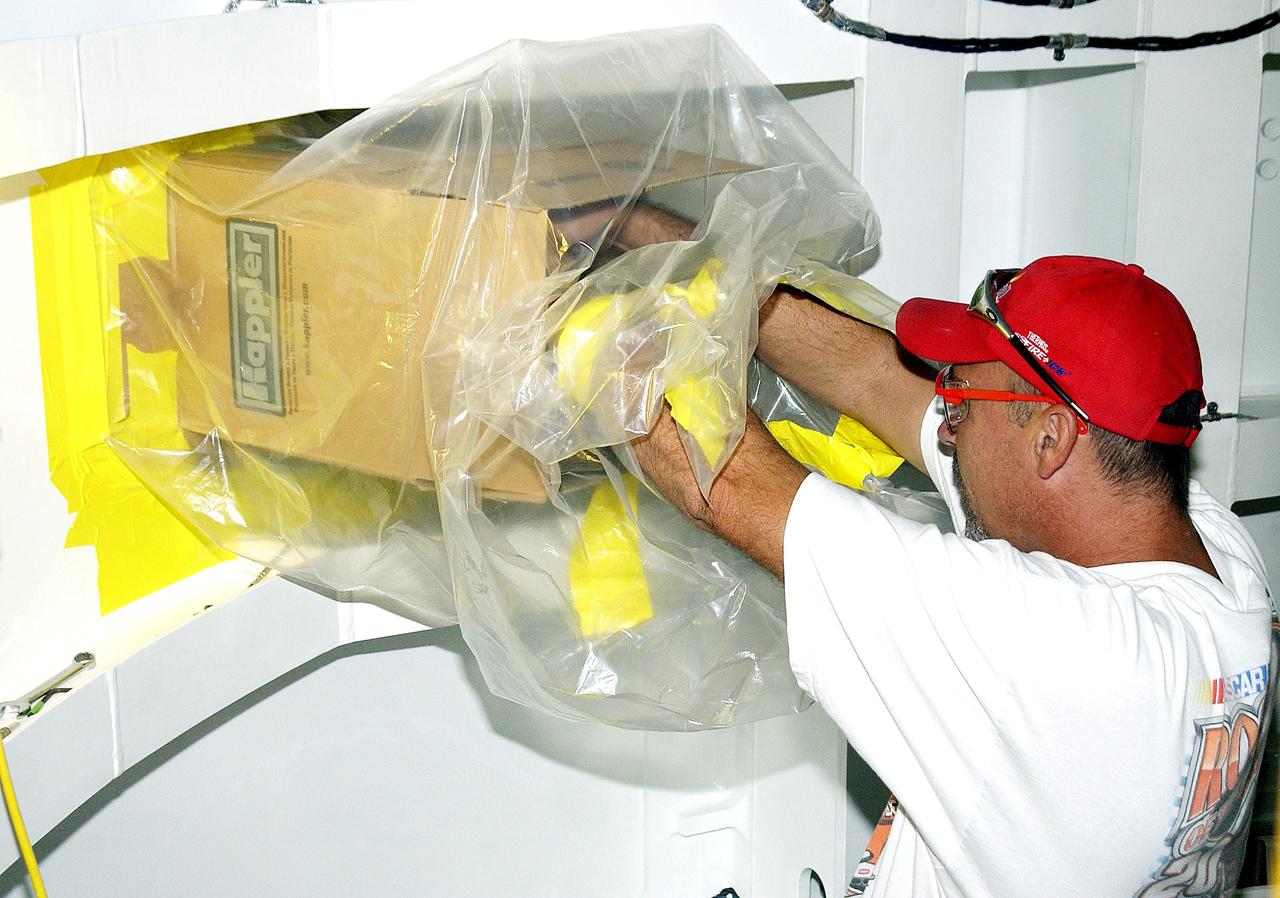
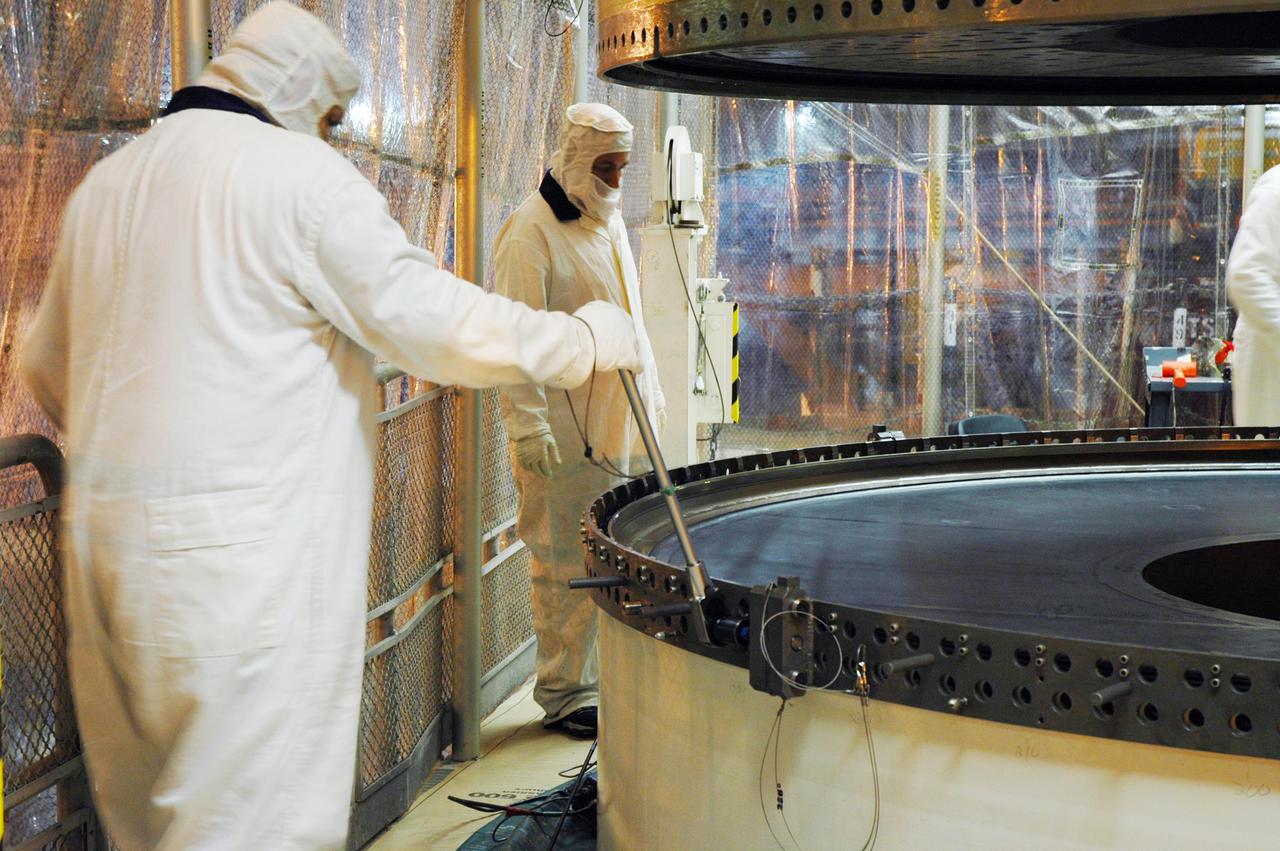
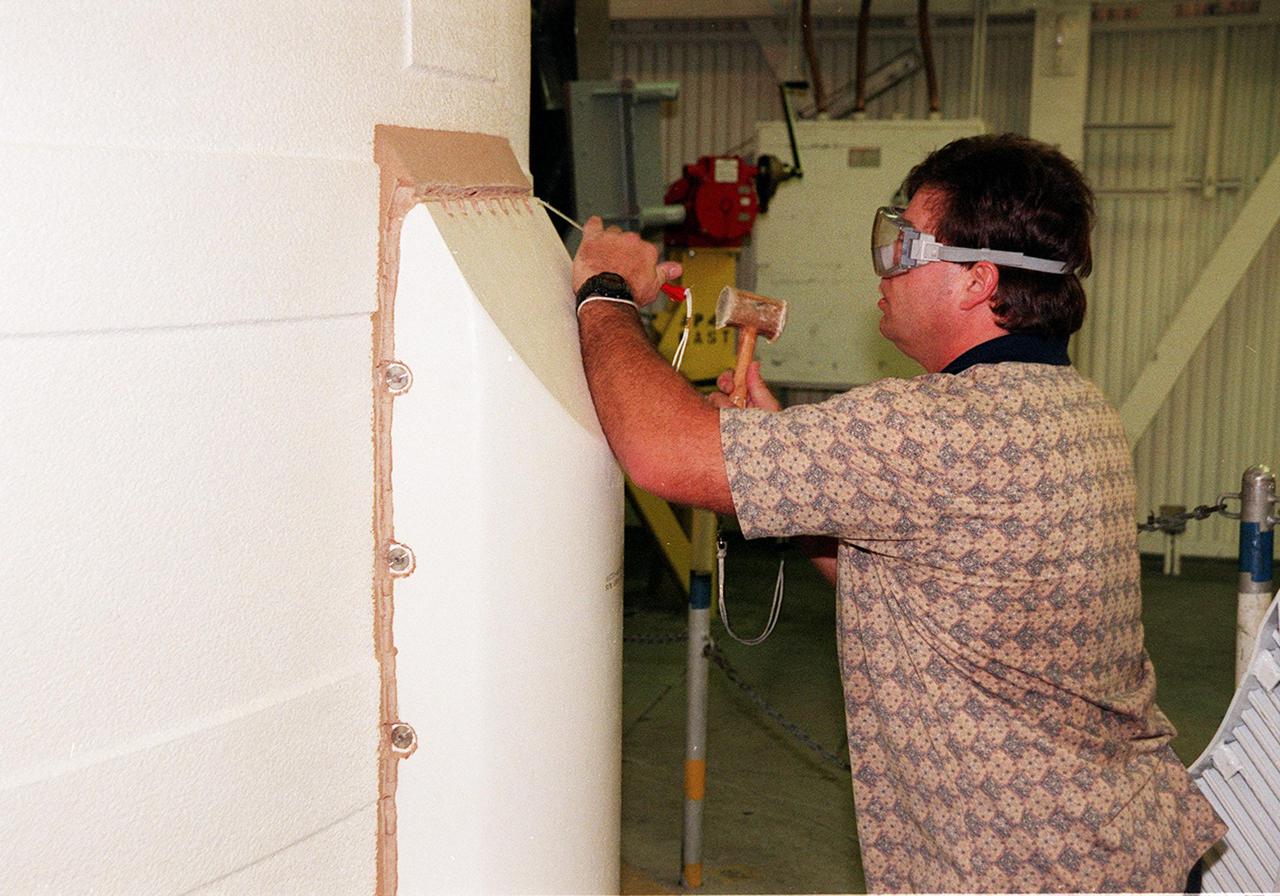
KENNEDY SPACE CENTER, FLA. - In the Solid Rocket Booster Assembly and Refurbishment Facility (ARF), Vernon Gibbs, with United Space Alliance, prepares the forward skirt of a solid rocket booster for installation of the parachute camera.  Refurbishment and subassembly of Shuttle SRB hardware - primarily the forward and aft assemblies - is carried out in the ARF.
KENNEDY SPACE CENTER, FLA. - In the Solid Rocket Booster Assembly and Refurbishment Facility (ARF), Vernon Gibbs, with United Space Alliance, prepares the forward skirt of a solid rocket booster for installation of the parachute camera. Refurbishment and subassembly of Shuttle SRB hardware - primarily the forward and aft assemblies - is carried out in the ARF.
KENNEDY SPACE CENTER, FLA. - In the Solid Rocket Booster Assembly and Refurbishment Facility (ARF), Vernon Gibbs, with United Space Alliance, prepares the forward skirt of a solid rocket booster for installation of the parachute camera.  Refurbishment and subassembly of Shuttle SRB hardware - primarily the forward and aft assemblies - is carried out in the ARF.
KENNEDY SPACE CENTER, FLA. - In the Solid Rocket Booster Assembly and Refurbishment Facility (ARF), Vernon Gibbs, with United Space Alliance, prepares the forward skirt of a solid rocket booster for installation of the parachute camera. Refurbishment and subassembly of Shuttle SRB hardware - primarily the forward and aft assemblies - is carried out in the ARF.
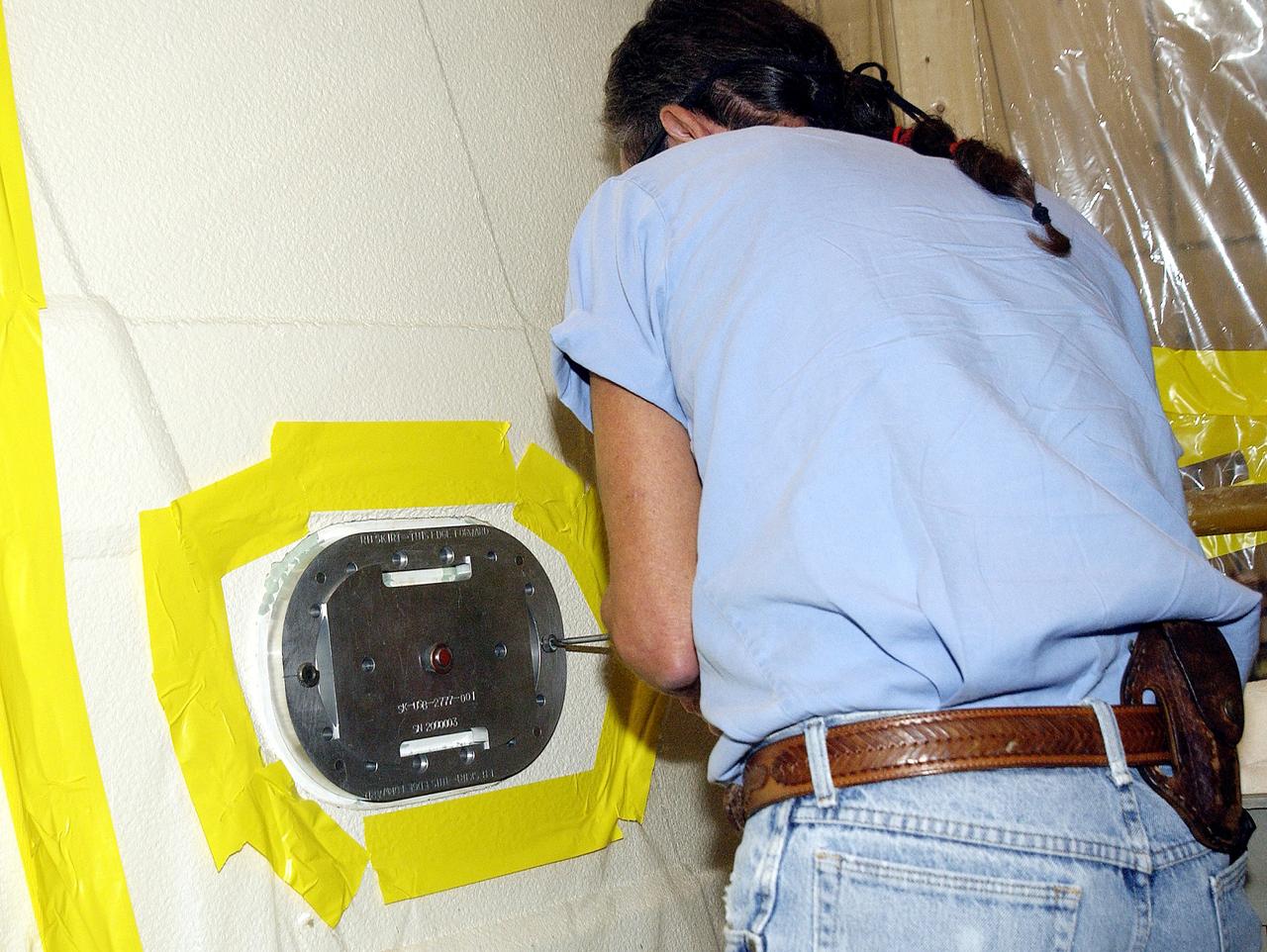
KENNEDY SPACE CENTER, FLA. - In the Solid Rocket Booster Assembly and Refurbishment Facility (ARF), Troy Krout, with United Space Alliance, works on positioning the parachute camera after installation on the solid rocket booster forward skirt.  Refurbishment and subassembly of Shuttle SRB hardware - primarily the forward and aft assemblies - is carried out in the ARF.
KENNEDY SPACE CENTER, FLA. - In the Solid Rocket Booster Assembly and Refurbishment Facility (ARF), Troy Krout, with United Space Alliance, works on positioning the parachute camera after installation on the solid rocket booster forward skirt. Refurbishment and subassembly of Shuttle SRB hardware - primarily the forward and aft assemblies - is carried out in the ARF.
KENNEDY SPACE CENTER, FLA. -  In the Solid Rocket Booster Assembly and Refurbishment Facility (ARF), Vernon Gibbs, with United Space Alliance, prepares the forward skirt of a solid rocket booster for installation of the parachute camera.  Refurbishment and subassembly of Shuttle SRB hardware - primarily the forward and aft assemblies - is carried out in the ARF.
KENNEDY SPACE CENTER, FLA. - In the Solid Rocket Booster Assembly and Refurbishment Facility (ARF), Vernon Gibbs, with United Space Alliance, prepares the forward skirt of a solid rocket booster for installation of the parachute camera. Refurbishment and subassembly of Shuttle SRB hardware - primarily the forward and aft assemblies - is carried out in the ARF.
KENNEDY SPACE CENTER, FLA. -  Mark Northcraft adjusts the position of the parachute camera just installed on the solid rocket booster forward skirt in the Solid Rocket Booster Assembly and Refurbishment Facility (ARF).  Refurbishment and subassembly of Shuttle SRB hardware - primarily the forward and aft assemblies - is carried out in the ARF.
KENNEDY SPACE CENTER, FLA. - Mark Northcraft adjusts the position of the parachute camera just installed on the solid rocket booster forward skirt in the Solid Rocket Booster Assembly and Refurbishment Facility (ARF). Refurbishment and subassembly of Shuttle SRB hardware - primarily the forward and aft assemblies - is carried out in the ARF.
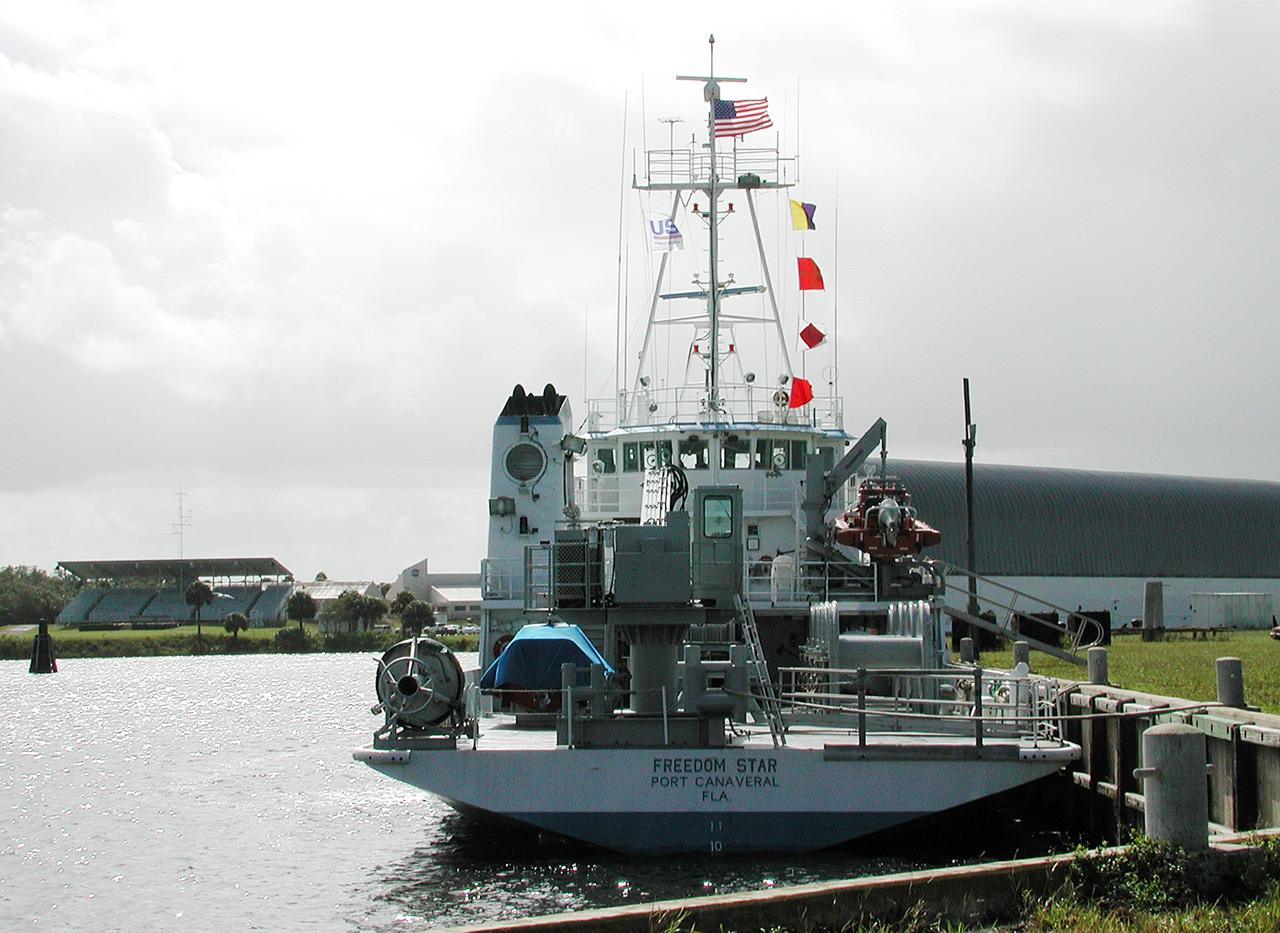
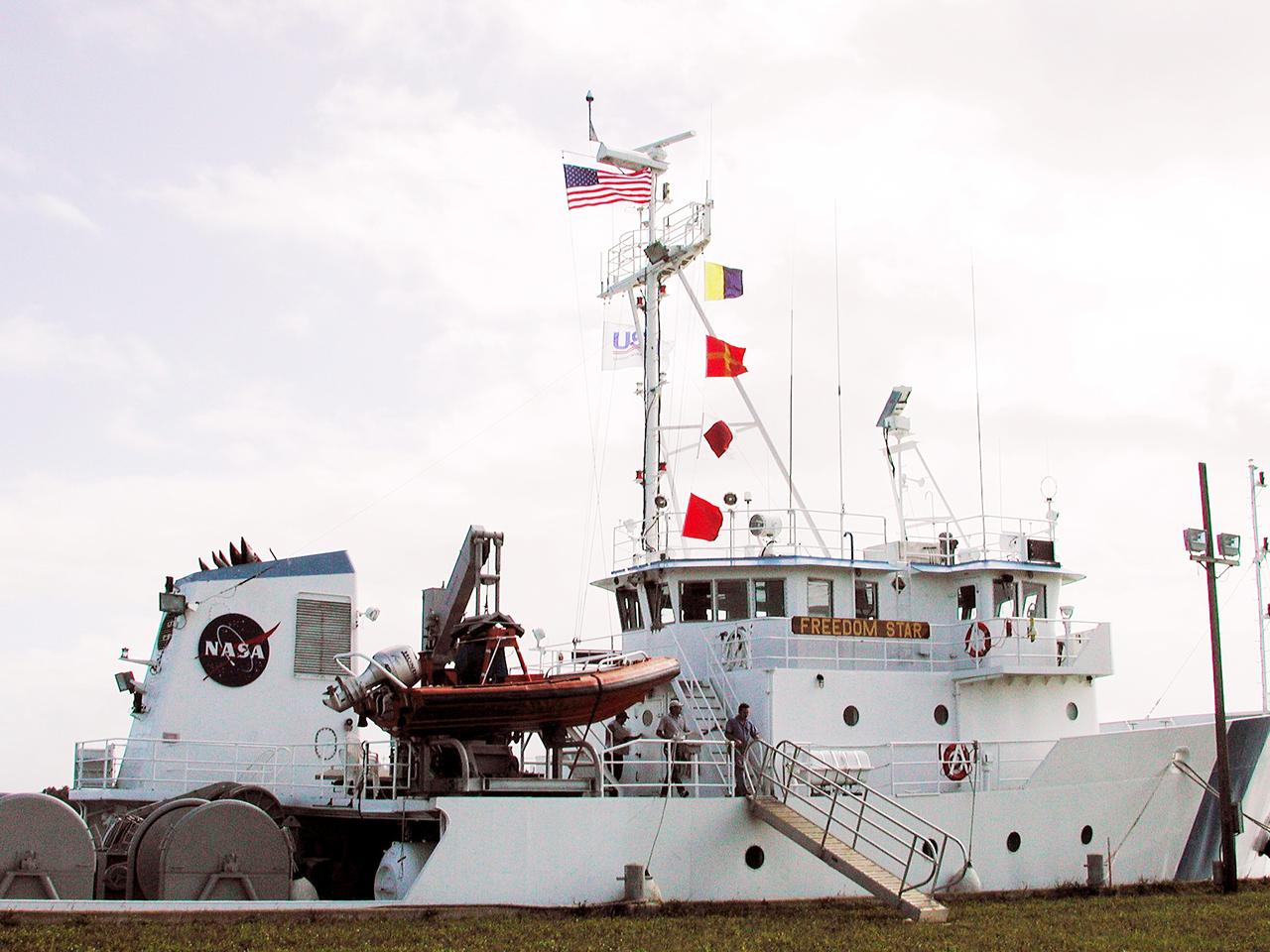
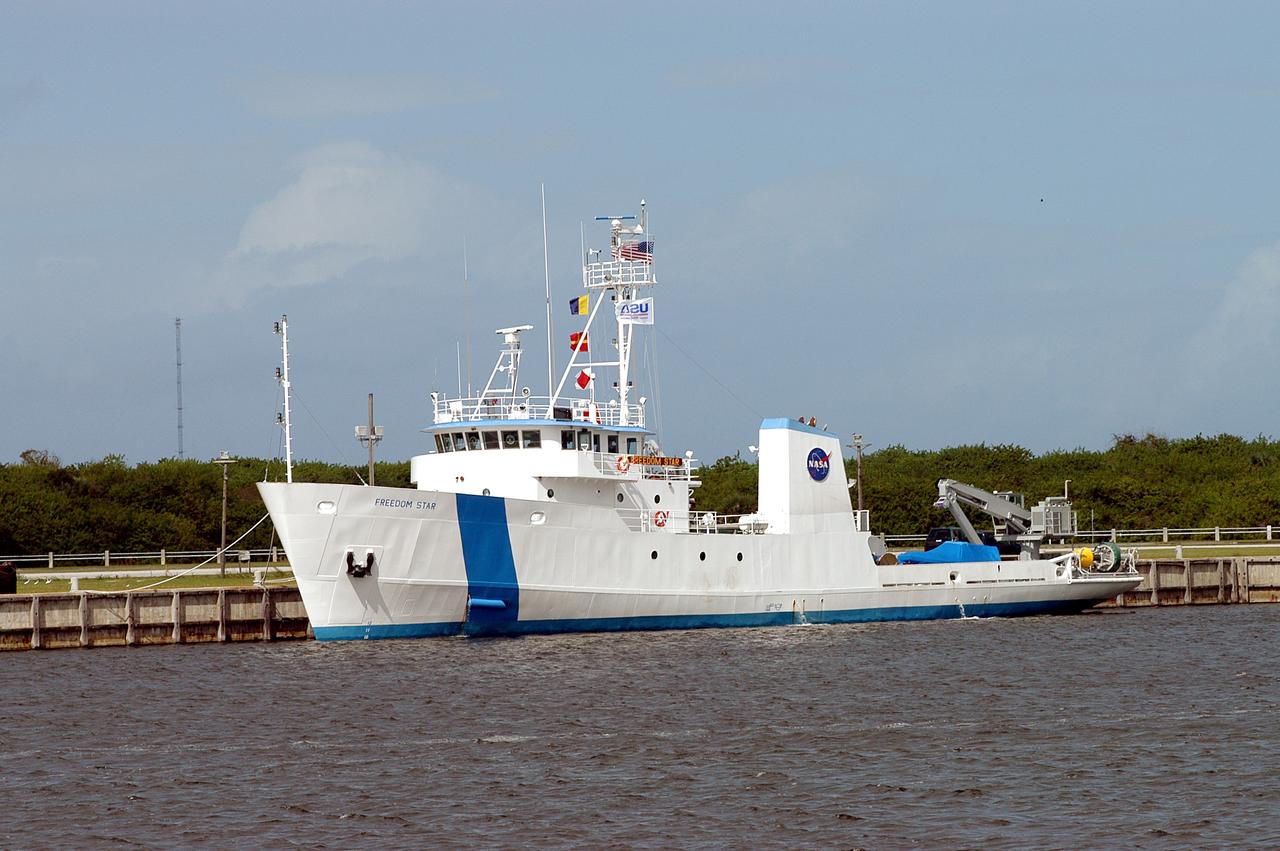
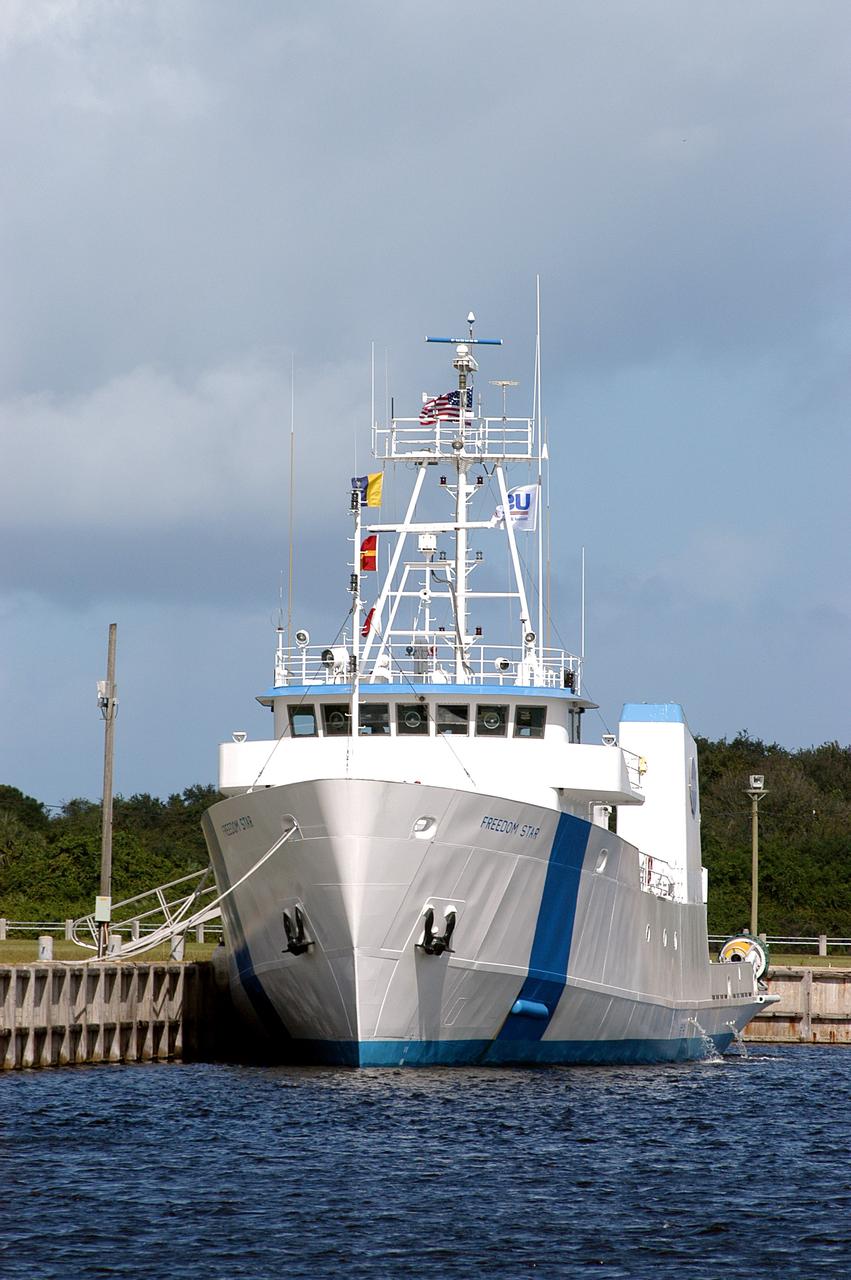
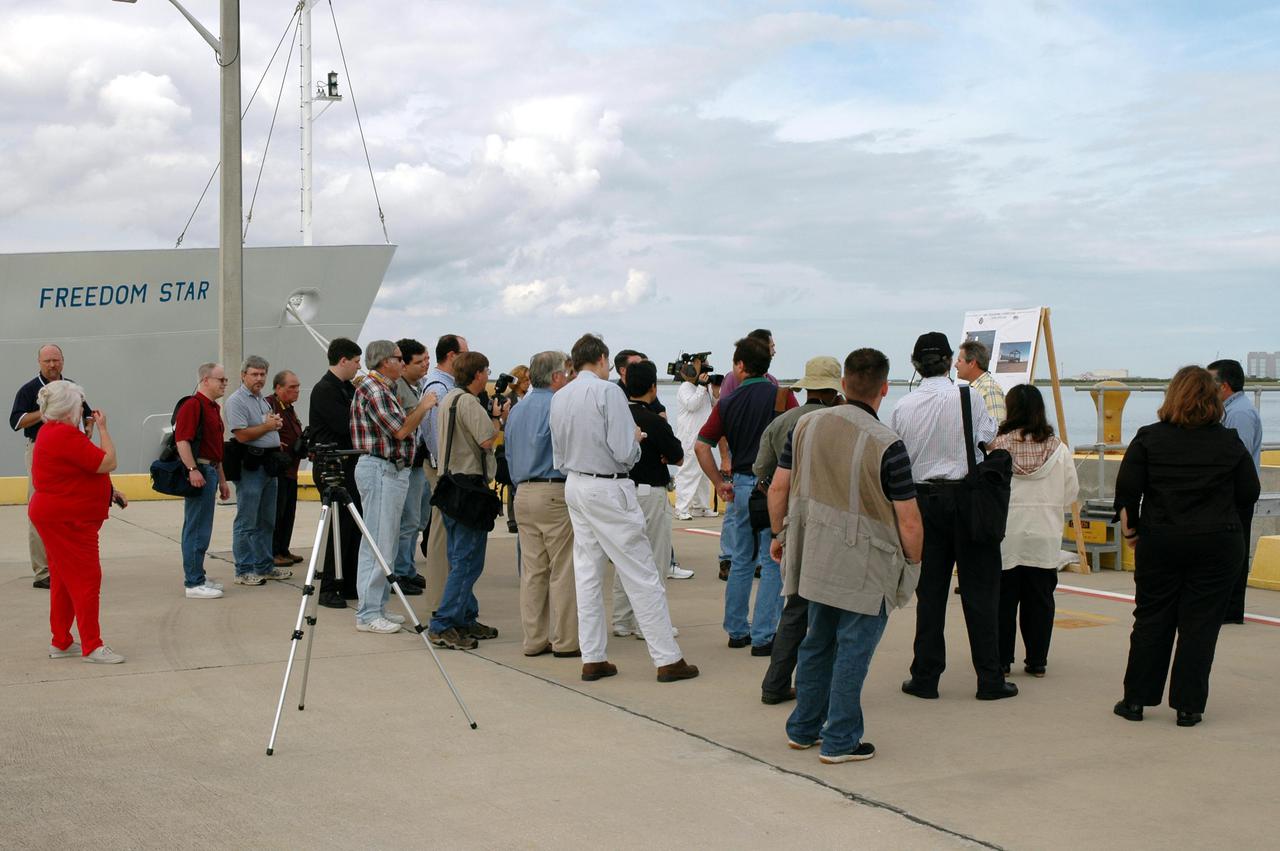
KENNEDY SPACE CENTER, FLA. - The Freedom Star is berthed at the Turn Basin near the Vehicle Assembly Building.  The ship has recently returned to KSC after refurbishment at Fort George Island, Fla., including new paint.  Freedom Star is one of the solid rocket booster (SRB) retrieval ships built to recover the SRB casings released over the Atlantic Ocean after launch of a Space Shuttle.  In addition to the SRBs, the ship recovers the drogue and main parachutes that slow the boosters’ speed before splashdown.  Some of the retrieval equipment can be seen on the rear deck.  The ships also tow the external tanks built at the Michoud Space Systems Assembly Facility near New Orleans to Port Canaveral, Fla.  Freedom Star was brought to KSC today for a visit by NATO Parliamentarians.
KENNEDY SPACE CENTER, FLA. - The Freedom Star is berthed at the Turn Basin near the Vehicle Assembly Building. The ship has recently returned to KSC after refurbishment at Fort George Island, Fla., including new paint. Freedom Star is one of the solid rocket booster (SRB) retrieval ships built to recover the SRB casings released over the Atlantic Ocean after launch of a Space Shuttle. In addition to the SRBs, the ship recovers the drogue and main parachutes that slow the boosters’ speed before splashdown. Some of the retrieval equipment can be seen on the rear deck. The ships also tow the external tanks built at the Michoud Space Systems Assembly Facility near New Orleans to Port Canaveral, Fla. Freedom Star was brought to KSC today for a visit by NATO Parliamentarians.
KENNEDY SPACE CENTER, FLA. - The Freedom Star is berthed at the Turn Basin near the Vehicle Assembly Building.  The ship has recently returned to KSC after refurbishment at Fort George Island, Fla., including new paint.  Freedom Star is one of the solid rocket booster (SRB) retrieval ships built to recover the SRB casings released over the Atlantic Ocean after launch of a Space Shuttle.  In addition to the SRBs, the ship recovers the drogue and main parachutes that slow the boosters’ speed before splashdown.  Some of the retrieval equipment can be seen on the rear deck.  The ships also tow the external tanks built at the Michoud Space Systems Assembly Facility near New Orleans to Port Canaveral, Fla.  Freedom Star was brought to KSC today for a visit by NATO Parliamentarians.
KENNEDY SPACE CENTER, FLA. - The Freedom Star is berthed at the Turn Basin near the Vehicle Assembly Building. The ship has recently returned to KSC after refurbishment at Fort George Island, Fla., including new paint. Freedom Star is one of the solid rocket booster (SRB) retrieval ships built to recover the SRB casings released over the Atlantic Ocean after launch of a Space Shuttle. In addition to the SRBs, the ship recovers the drogue and main parachutes that slow the boosters’ speed before splashdown. Some of the retrieval equipment can be seen on the rear deck. The ships also tow the external tanks built at the Michoud Space Systems Assembly Facility near New Orleans to Port Canaveral, Fla. Freedom Star was brought to KSC today for a visit by NATO Parliamentarians.
KENNEDY SPACE CENTER, FLA. - The Freedom Star is berthed at the Turn Basin near the Vehicle Assembly Building.  The ship has recently returned to KSC after refurbishment at Fort George Island, Fla., including new paint.  Freedom Star is one of the solid rocket booster (SRB) retrieval ships built to recover the SRB casings released over the Atlantic Ocean after launch of a Space Shuttle.  In addition to the SRBs, the ship recovers the drogue and main parachutes that slow the boosters’ speed before splashdown.  Some of the retrieval equipment can be seen on the rear deck.  The ships also tow the external tanks built at the Michoud Space Systems Assembly Facility near New Orleans to Port Canaveral, Fla.  Freedom Star was brought to KSC today for a visit by NATO Parliamentarians.
KENNEDY SPACE CENTER, FLA. - The Freedom Star is berthed at the Turn Basin near the Vehicle Assembly Building. The ship has recently returned to KSC after refurbishment at Fort George Island, Fla., including new paint. Freedom Star is one of the solid rocket booster (SRB) retrieval ships built to recover the SRB casings released over the Atlantic Ocean after launch of a Space Shuttle. In addition to the SRBs, the ship recovers the drogue and main parachutes that slow the boosters’ speed before splashdown. Some of the retrieval equipment can be seen on the rear deck. The ships also tow the external tanks built at the Michoud Space Systems Assembly Facility near New Orleans to Port Canaveral, Fla. Freedom Star was brought to KSC today for a visit by NATO Parliamentarians.
KENNEDY SPACE CENTER, FLA. -  The Freedom Star is berthed at the Turn Basin near the Vehicle Assembly Building.  The ship has recently returned to KSC after refurbishment at Fort George Island, Fla., including new paint.  Freedom Star is one of the solid rocket booster (SRB) retrieval ships built to recover the SRB casings released over the Atlantic Ocean after launch of a Space Shuttle.  In addition to the SRBs, the ship recovers the drogue and main parachutes that slow the boosters’ speed before splashdown.  Some of the retrieval equipment can be seen on the rear deck.  The ships also tow the external tanks built at the Michoud Space Systems Assembly Facility near New Orleans to Port Canaveral, Fla.  Freedom Star was brought to KSC today for a visit by NATO Parliamentarians.
KENNEDY SPACE CENTER, FLA. - The Freedom Star is berthed at the Turn Basin near the Vehicle Assembly Building. The ship has recently returned to KSC after refurbishment at Fort George Island, Fla., including new paint. Freedom Star is one of the solid rocket booster (SRB) retrieval ships built to recover the SRB casings released over the Atlantic Ocean after launch of a Space Shuttle. In addition to the SRBs, the ship recovers the drogue and main parachutes that slow the boosters’ speed before splashdown. Some of the retrieval equipment can be seen on the rear deck. The ships also tow the external tanks built at the Michoud Space Systems Assembly Facility near New Orleans to Port Canaveral, Fla. Freedom Star was brought to KSC today for a visit by NATO Parliamentarians.
KENNEDY SPACE CENTER, FLA. - The Freedom Star is berthed at the Turn Basin near the Vehicle Assembly Building.  The ship has recently returned to KSC after refurbishment at Fort George Island, Fla., including new paint.  Freedom Star is one of the solid rocket booster (SRB) retrieval ships built to recover the SRB casings released over the Atlantic Ocean after launch of a Space Shuttle.  In addition to the SRBs, the ship recovers the drogue and main parachutes that slow the boosters’ speed before splashdown.  The ships also tow the external tanks built at the Michoud Space Systems Assembly Facility near New Orleans to Port Canaveral, Fla.  Freedom Star was brought to KSC today for a visit by NATO Parliamentarians.
KENNEDY SPACE CENTER, FLA. - The Freedom Star is berthed at the Turn Basin near the Vehicle Assembly Building. The ship has recently returned to KSC after refurbishment at Fort George Island, Fla., including new paint. Freedom Star is one of the solid rocket booster (SRB) retrieval ships built to recover the SRB casings released over the Atlantic Ocean after launch of a Space Shuttle. In addition to the SRBs, the ship recovers the drogue and main parachutes that slow the boosters’ speed before splashdown. The ships also tow the external tanks built at the Michoud Space Systems Assembly Facility near New Orleans to Port Canaveral, Fla. Freedom Star was brought to KSC today for a visit by NATO Parliamentarians.
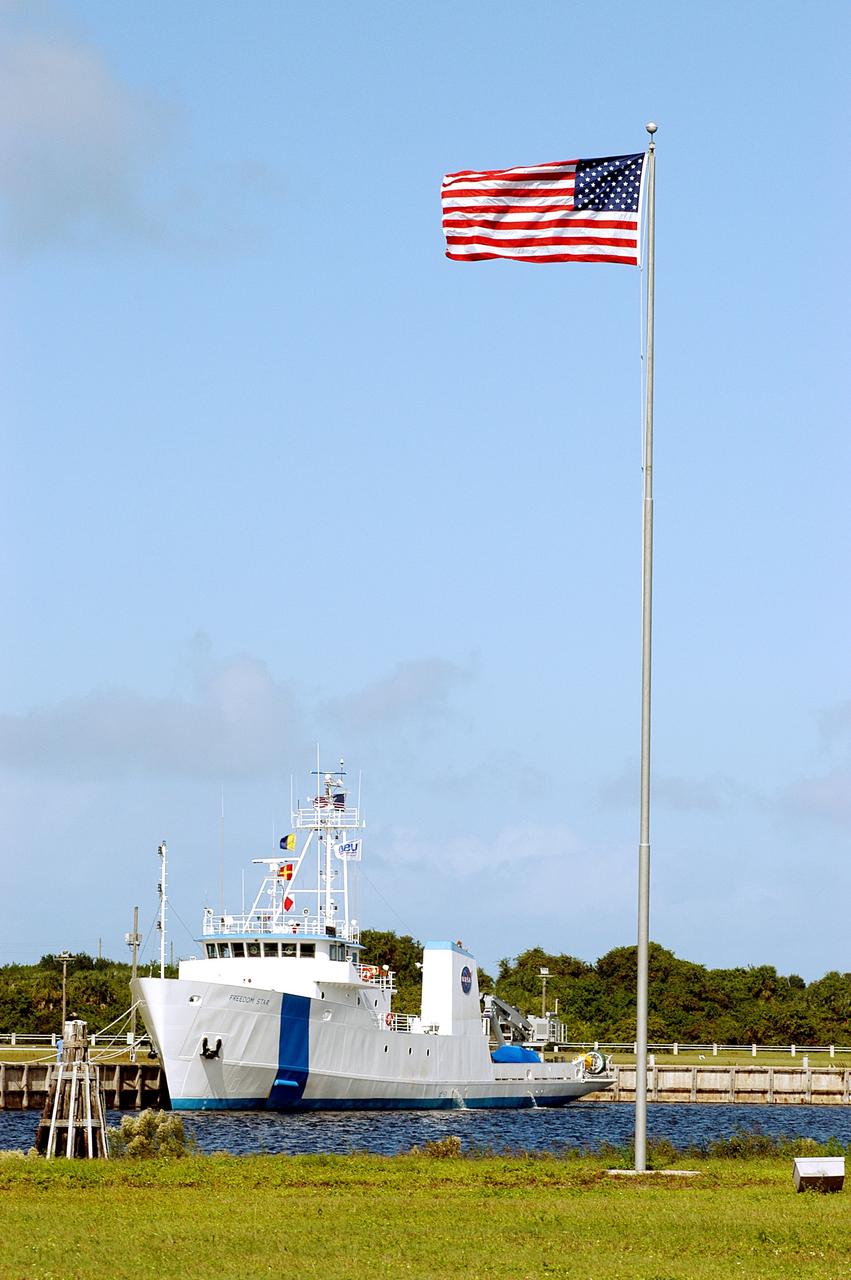
KENNEDY SPACE CENTER, FLA. -  The Freedom Star is berthed at the Turn Basin near the Vehicle Assembly Building and NASA-KSC News Center.  The flag is near the News Center.   The ship has recently returned to KSC after refurbishment at Fort George Island, Fla., including new paint.  Freedom Star is one of the solid rocket booster (SRB) retrieval ships built to recover the SRB casings released over the Atlantic Ocean after launch of a Space Shuttle.  In addition to the SRBs, the ship recovers the drogue and main parachutes that slow the boosters’ speed before splashdown.   The ships also tow the external tanks built at the Michoud Space Systems Assembly Facility near New Orleans to Port Canaveral, Fla.  Freedom Star was brought to KSC today for a visit by NATO Parliamentarians.
KENNEDY SPACE CENTER, FLA. - The Freedom Star is berthed at the Turn Basin near the Vehicle Assembly Building and NASA-KSC News Center. The flag is near the News Center. The ship has recently returned to KSC after refurbishment at Fort George Island, Fla., including new paint. Freedom Star is one of the solid rocket booster (SRB) retrieval ships built to recover the SRB casings released over the Atlantic Ocean after launch of a Space Shuttle. In addition to the SRBs, the ship recovers the drogue and main parachutes that slow the boosters’ speed before splashdown. The ships also tow the external tanks built at the Michoud Space Systems Assembly Facility near New Orleans to Port Canaveral, Fla. Freedom Star was brought to KSC today for a visit by NATO Parliamentarians.
KENNEDY SPACE CENTER, FLA. -  The Freedom Star is berthed at the Turn Basin near the Vehicle Assembly Building.  The ship has recently returned to KSC after refurbishment at Fort George Island, Fla., including new paint.  Freedom Star is one of the solid rocket booster (SRB) retrieval ships built to recover the SRB casings released over the Atlantic Ocean after launch of a Space Shuttle.  In addition to the SRBs, the ship recovers the drogue and main parachutes that slow the boosters’ speed before splashdown.   The ships also tow the external tanks built at the Michoud Space Systems Assembly Facility near New Orleans to Port Canaveral, Fla.  Freedom Star was brought to KSC today for a visit by NATO Parliamentarians.
KENNEDY SPACE CENTER, FLA. - The Freedom Star is berthed at the Turn Basin near the Vehicle Assembly Building. The ship has recently returned to KSC after refurbishment at Fort George Island, Fla., including new paint. Freedom Star is one of the solid rocket booster (SRB) retrieval ships built to recover the SRB casings released over the Atlantic Ocean after launch of a Space Shuttle. In addition to the SRBs, the ship recovers the drogue and main parachutes that slow the boosters’ speed before splashdown. The ships also tow the external tanks built at the Michoud Space Systems Assembly Facility near New Orleans to Port Canaveral, Fla. Freedom Star was brought to KSC today for a visit by NATO Parliamentarians.
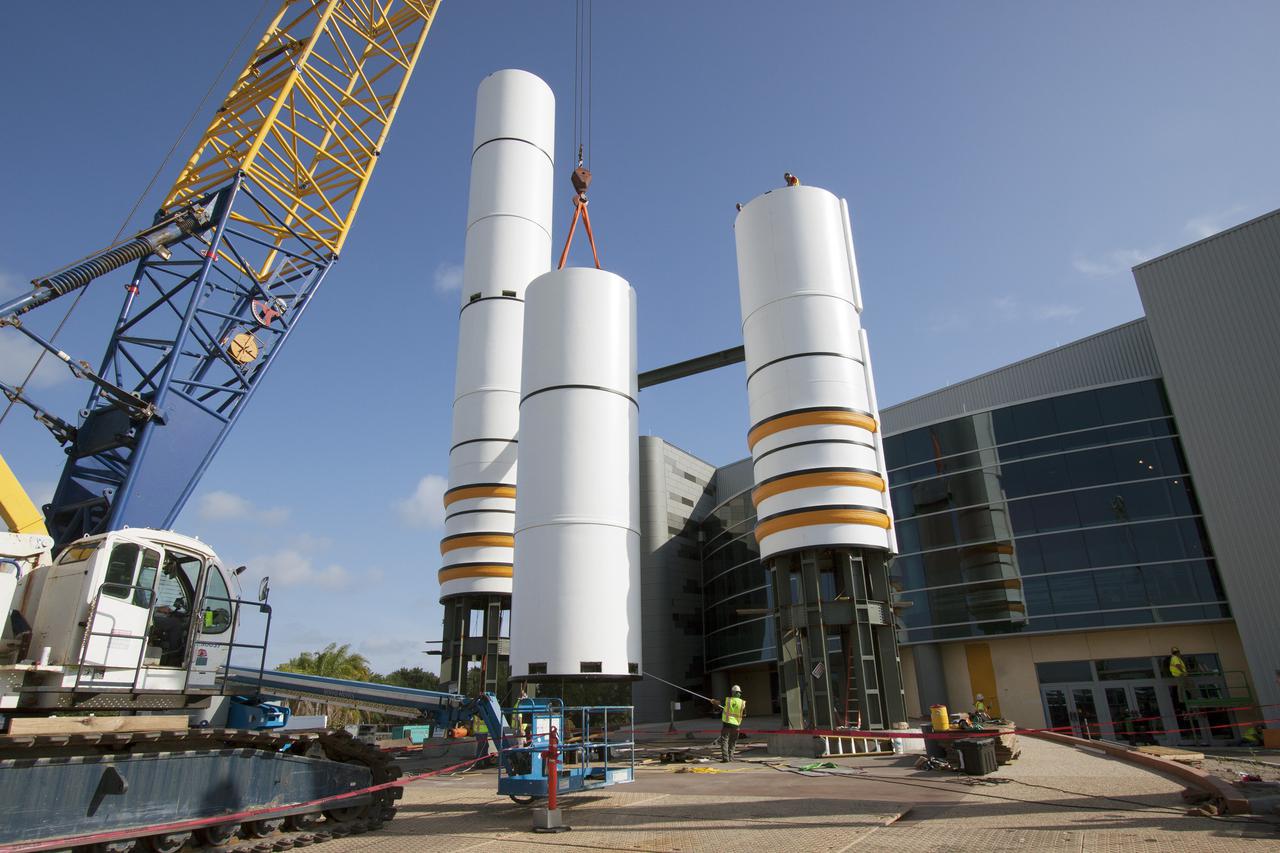
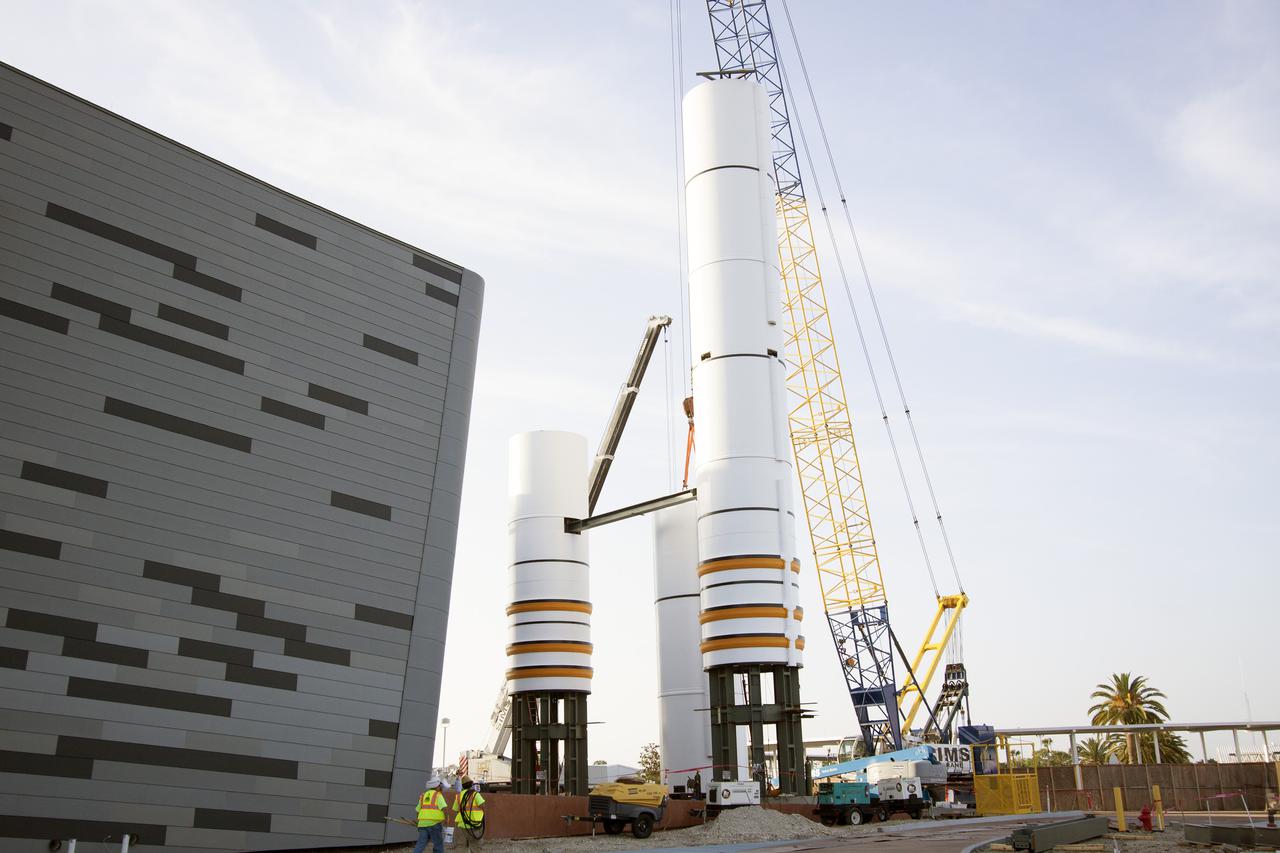
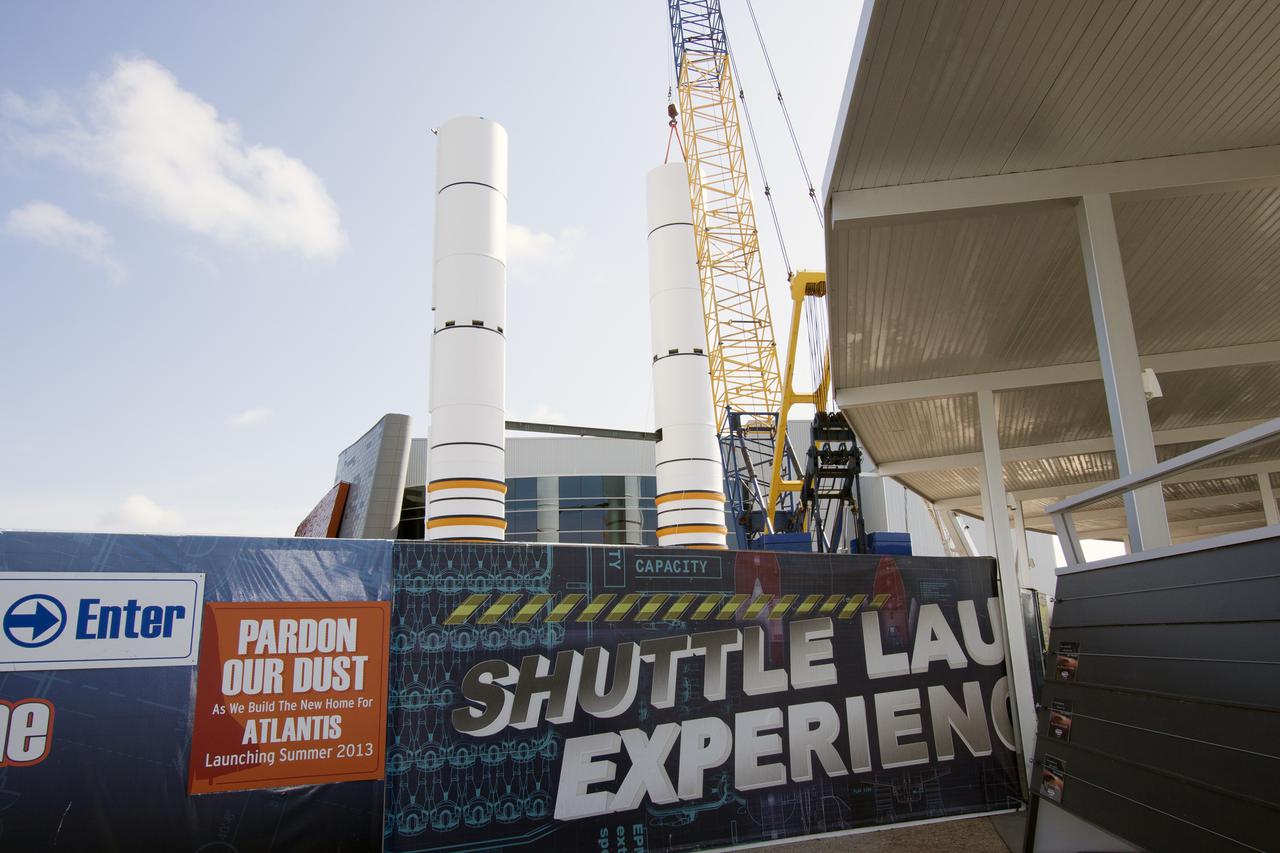
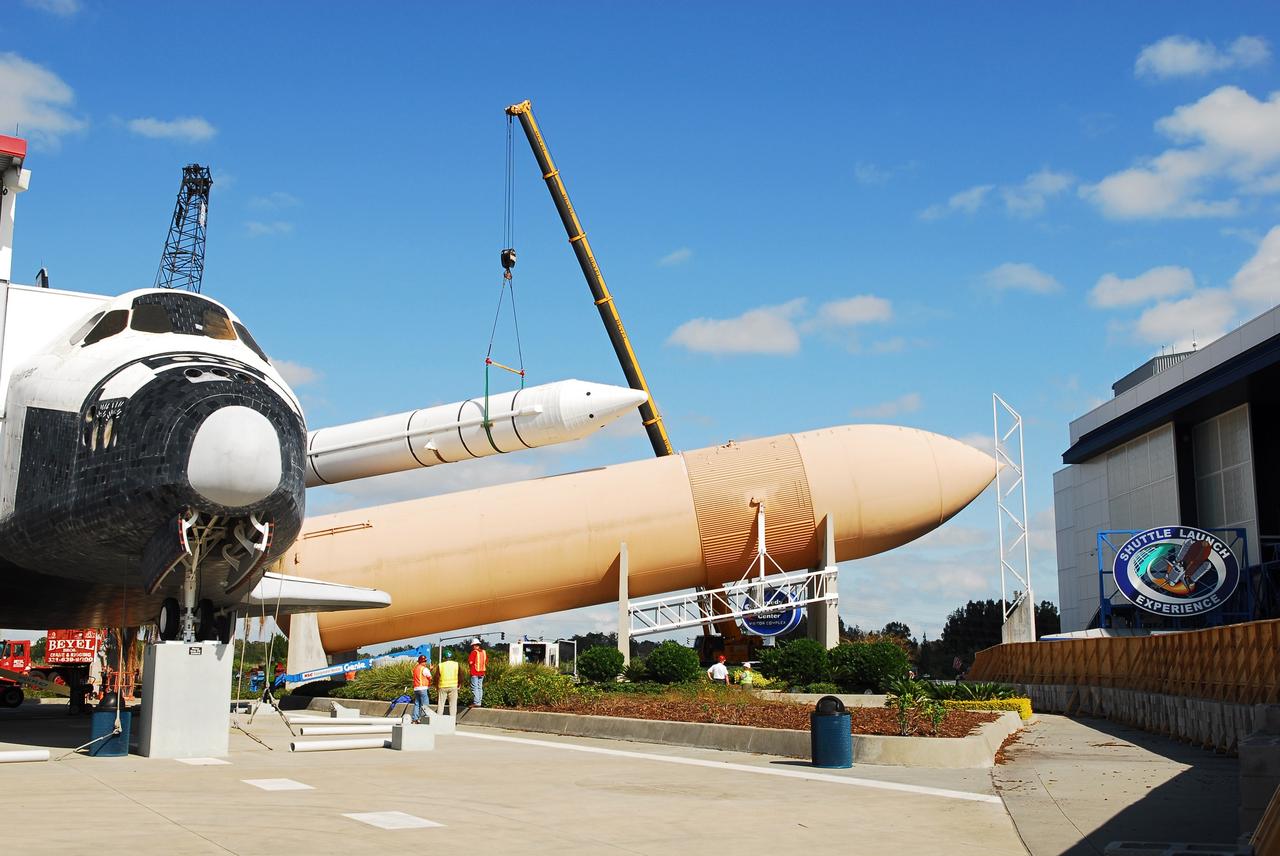
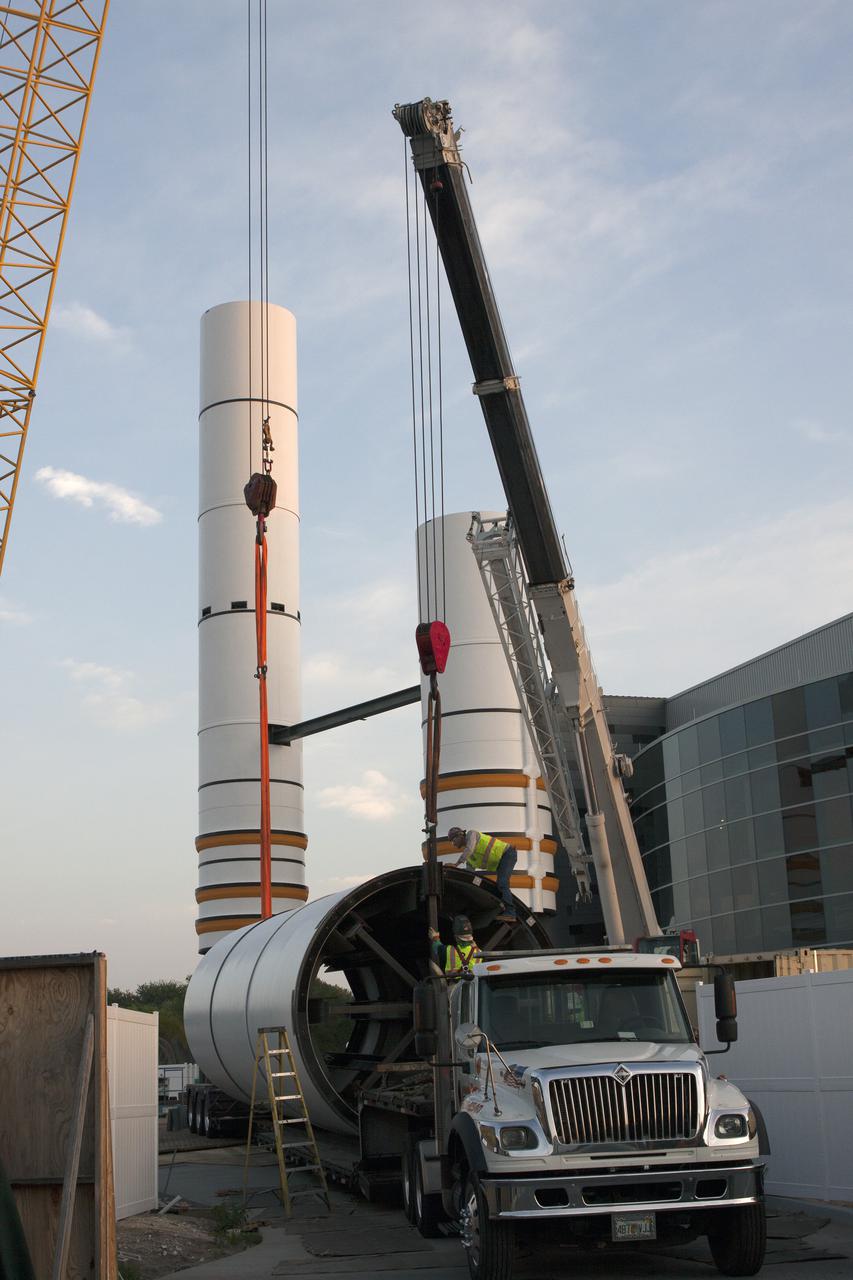
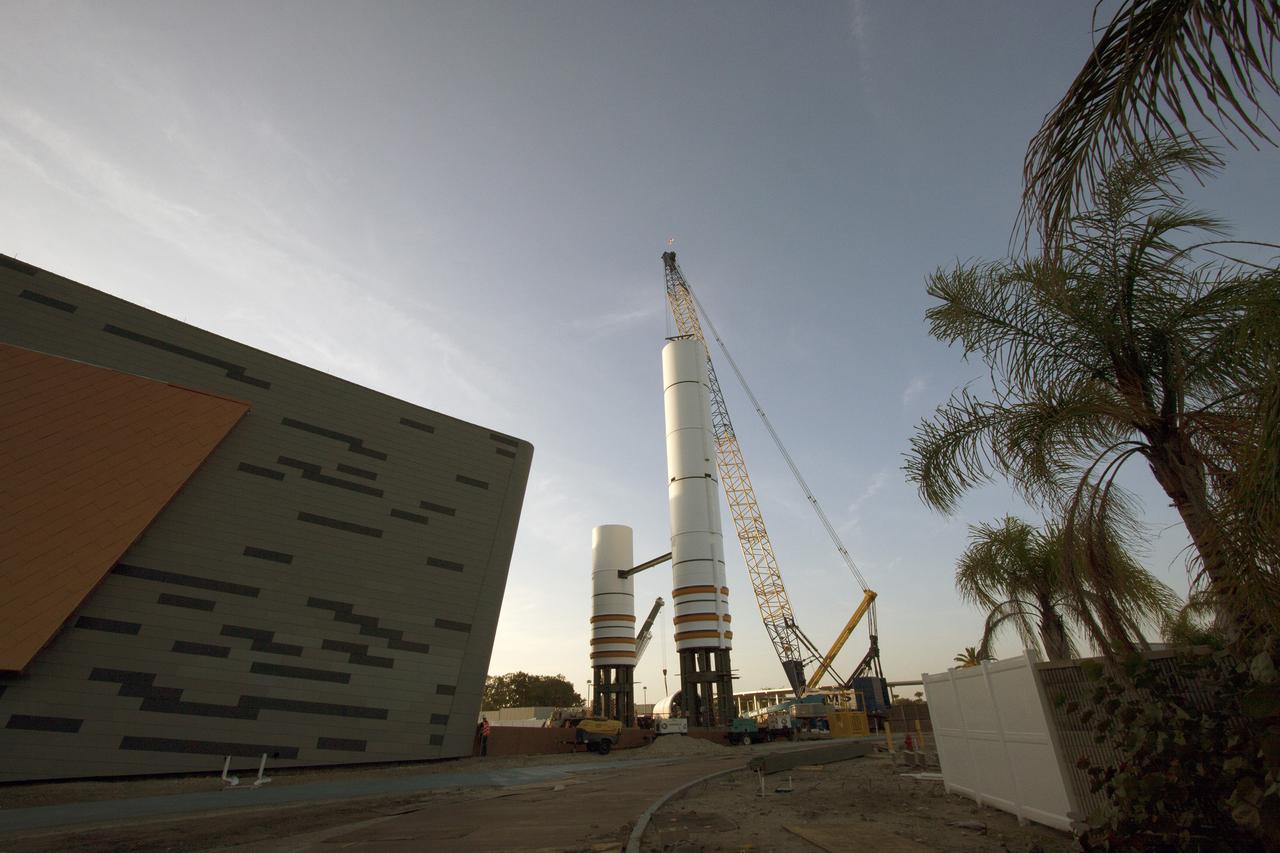
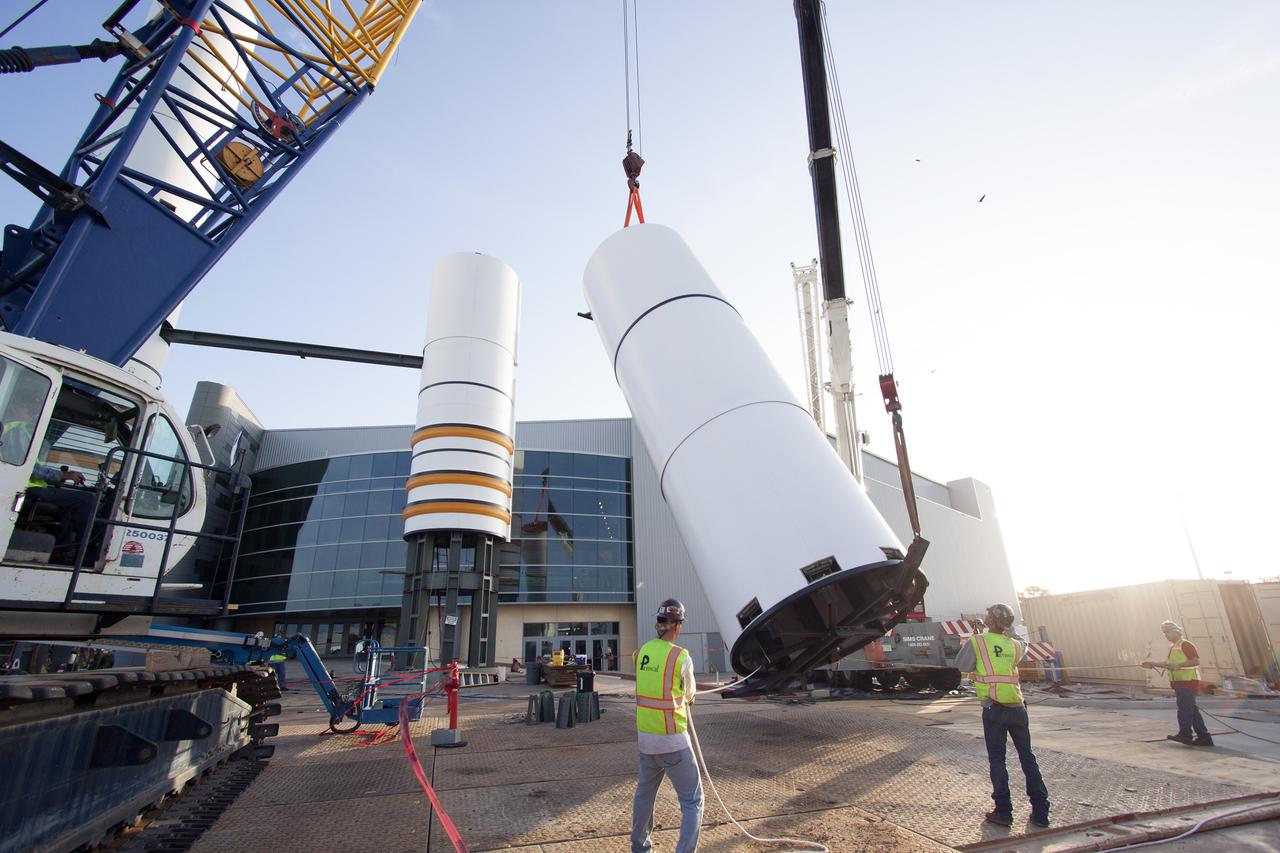
CAPE CANAVERAL, Fla. – A crane lifts a segment for a set of twin, full-size replica Solid Rocket Boosters SRBs in front of the Space Shuttle Atlantis exhibit under construction at the Kennedy Space Center Visitor Complex in Florida. Atlantis is housed in the building behind the SRB stack. An external tank replica will be added later to the middle of the SRBs to complete the display. The SRBs stand 150 feet tall, while the external tank will reach 184 feet when it is finished. The shuttle was mounted to the stack and depended on the power of the SRBs to lift it off the launch pad and start it on its way to space. The external tank was loaded with liquid propellants for the shuttle's three main engines. Photo credit: NASA_Jim Grossmann
KSC-2013-1971
CAPE CANAVERAL, Fla. – A crane lifts a segment for a set of twin, full-size replica Solid Rocket Boosters SRBs in front of the Space Shuttle Atlantis exhibit under construction at the Kennedy Space Center Visitor Complex in Florida. Atlantis is housed in the building behind the SRB stack. An external tank replica will be added later to the middle of the SRBs to complete the display. The SRBs stand 150 feet tall, while the external tank will reach 184 feet when it is finished. The shuttle was mounted to the stack and depended on the power of the SRBs to lift it off the launch pad and start it on its way to space. The external tank was loaded with liquid propellants for the shuttle's three main engines. Photo credit: NASA_Jim Grossmann
KSC-2013-1976
CAPE CANAVERAL, Fla. – A crane lifts a segment for a set of twin, full-size replica Solid Rocket Boosters SRBs in front of the Space Shuttle Atlantis exhibit under construction at the Kennedy Space Center Visitor Complex in Florida. Atlantis is housed in the building behind the SRB stack. An external tank replica will be added later to the middle of the SRBs to complete the display. The SRBs stand 150 feet tall, while the external tank will reach 184 feet when it is finished. The shuttle was mounted to the stack and depended on the power of the SRBs to lift it off the launch pad and start it on its way to space. The external tank was loaded with liquid propellants for the shuttle's three main engines. Photo credit: NASA_Jim Grossmann
KSC-2013-1974
CAPE CANAVERAL, Fla. – A crane lifts a segment for a set of twin, full-size replica Solid Rocket Boosters SRBs in front of the Space Shuttle Atlantis exhibit under construction at the Kennedy Space Center Visitor Complex in Florida. Atlantis is housed in the building behind the SRB stack. An external tank replica will be added later to the middle of the SRBs to complete the display. The SRBs stand 150 feet tall, while the external tank will reach 184 feet when it is finished. The shuttle was mounted to the stack and depended on the power of the SRBs to lift it off the launch pad and start it on its way to space. The external tank was loaded with liquid propellants for the shuttle's three main engines. Photo credit: NASA_Jim Grossmann
KSC-2013-1975
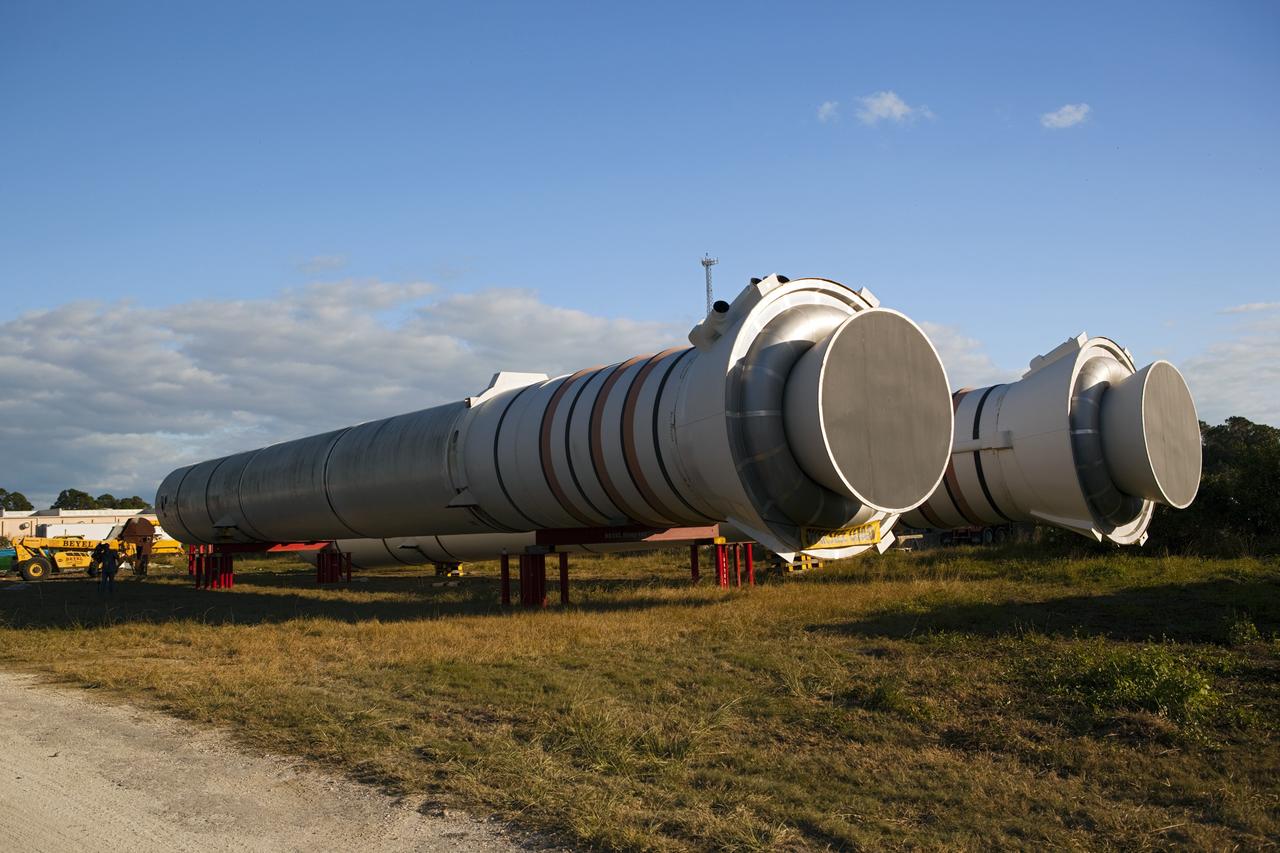
CAPE CANAVERAL, Fla. – A pair of 149-foot-long, space shuttle solid rocket booster, or SRB, displays from the Kennedy Space Center Visitor Complex sit inside a temporary storage area at NASA's Kennedy Space Center. The SRBs were part of a display of the external tank and two SRBs at the visitor complex that were used to show visitors the size of actual space shuttle components. A space shuttle rode piggyback on the tank and boosters at liftoff and during the ascent into space. The SRBs burned out after about two-and-a-half minutes of flight. After recovery from the ocean, the boosters could be used repeatedly. Photo credit: NASA/ Dmitri Gerondidakis
KSC-2011-8163
CAPE CANAVERAL, Fla. – Cranes remove a full-size, 149-foot-long, space shuttle solid rocket booster, or SRB, replica from the Kennedy Space Center Visitor Complex as the space-themed attraction makes way for a new exhibit featuring space shuttle Atlantis, which is currently undergoing preparations to go on public display. The SRB is being placed into temporary storage at NASA's Kennedy Space Center. The SRB was part of a mockup of the external tank and two SRBs at the visitor complex that were used to show visitors the size of actual space shuttle components. A space shuttle rode piggyback on the tank and boosters at liftoff and during the ascent into space. The SRBs burned out after about two-and-a-half minutes of flight. After recovery from the ocean, the boosters could be used repeatedly. Photo credit: NASA/Jim Grossman
KSC-2011-8128
CAPE CANAVERAL, Fla. – Cranes remove a full-size, 149-foot-long, space shuttle solid rocket booster, or SRB, replica from the Kennedy Space Center Visitor Complex as the space-themed attraction makes way for a new exhibit featuring space shuttle Atlantis, which is currently undergoing preparations to go on public display. The SRB is being placed into temporary storage at NASA's Kennedy Space Center. The SRB was part of a mockup of the external tank and two SRBs at the visitor complex that were used to show visitors the size of actual space shuttle components. A space shuttle rode piggyback on the tank and boosters at liftoff and during the ascent into space. The SRBs burned out after about two-and-a-half minutes of flight. After recovery from the ocean, the boosters could be used repeatedly. Photo credit: NASA/Jim Grossman
KSC-2011-8125
CAPE CANAVERAL, Fla. – Cranes remove a full-size, 149-foot-long, space shuttle solid rocket booster, or SRB, replica from the Kennedy Space Center Visitor Complex as the space-themed attraction makes way for a new exhibit featuring space shuttle Atlantis, which is currently undergoing preparations to go on public display. The SRB is being placed into temporary storage at NASA's Kennedy Space Center. The SRB was part of a mockup of the external tank and two SRBs at the visitor complex that were used to show visitors the size of actual space shuttle components. A space shuttle rode piggyback on the tank and boosters at liftoff and during the ascent into space. The SRBs burned out after about two-and-a-half minutes of flight. After recovery from the ocean, the boosters could be used repeatedly. Photo credit: NASA/Jim Grossman
KSC-2011-8127
CAPE CANAVERAL, Fla. – A truck hauls a full-size, 149-foot-long, space shuttle solid rocket booster, or SRB, replica from the Kennedy Space Center Visitor Complex as the space-themed attraction makes way for a new exhibit featuring space shuttle Atlantis, which is currently undergoing preparations to go on public display. The SRB is being placed into temporary storage at NASA's Kennedy Space Center. The SRB was part of a mockup of the external tank and two SRBs at the visitor complex that were used to show visitors the size of actual space shuttle components. A space shuttle rode piggyback on the tank and boosters at liftoff and during the ascent into space. The SRBs burned out after about two-and-a-half minutes of flight. After recovery from the ocean, the boosters could be used repeatedly. Photo credit: NASA/Jim Grossman
KSC-2011-8132
CAPE CANAVERAL, Fla. – A truck hauls a full-size, 149-foot-long, space shuttle solid rocket booster, or SRB, replica from the Kennedy Space Center Visitor Complex as the space-themed attraction makes way for a new exhibit featuring space shuttle Atlantis, which is currently undergoing preparations to go on public display. The SRB is being placed into temporary storage at NASA's Kennedy Space Center. The SRB was part of a mockup of the external tank and two SRBs at the visitor complex that were used to show visitors the size of actual space shuttle components. A space shuttle rode piggyback on the tank and boosters at liftoff and during the ascent into space. The SRBs burned out after about two-and-a-half minutes of flight. After recovery from the ocean, the boosters could be used repeatedly. Photo credit: NASA/Jim Grossman
KSC-2011-8133
CAPE CANAVERAL, Fla. – Cranes remove a full-size, 149-foot-long, space shuttle solid rocket booster, or SRB, replica from the Kennedy Space Center Visitor Complex as the space-themed attraction makes way for a new exhibit featuring space shuttle Atlantis, which is currently undergoing preparations to go on public display. The SRB is being placed into temporary storage at NASA's Kennedy Space Center. The SRB was part of a mockup of the external tank and two SRBs at the visitor complex that were used to show visitors the size of actual space shuttle components. A space shuttle rode piggyback on the tank and boosters at liftoff and during the ascent into space. The SRBs burned out after about two-and-a-half minutes of flight. After recovery from the ocean, the boosters could be used repeatedly. Photo credit: NASA/Jim Grossman
KSC-2011-8126
CAPE CANAVERAL, Fla. – A truck hauls a full-size, 149-foot-long, space shuttle solid rocket booster, or SRB, replica from the Kennedy Space Center Visitor Complex as the space-themed attraction makes way for a new exhibit featuring space shuttle Atlantis, which is currently undergoing preparations to go on public display. The SRB is being placed into temporary storage at NASA's Kennedy Space Center. The SRB was part of a mockup of the external tank and two SRBs at the visitor complex that were used to show visitors the size of actual space shuttle components. A space shuttle rode piggyback on the tank and boosters at liftoff and during the ascent into space. The SRBs burned out after about two-and-a-half minutes of flight. After recovery from the ocean, the boosters could be used repeatedly. Photo credit: NASA/Jim Grossman
KSC-2011-8130
CAPE CANAVERAL, Fla. – A truck hauls a full-size, 149-foot-long, space shuttle solid rocket booster, or SRB, replica from the Kennedy Space Center Visitor Complex as the space-themed attraction makes way for a new exhibit featuring space shuttle Atlantis, which is currently undergoing preparations to go on public display. The SRB is being placed into temporary storage at NASA's Kennedy Space Center. The SRB was part of a mockup of the external tank and two SRBs at the visitor complex that were used to show visitors the size of actual space shuttle components. A space shuttle rode piggyback on the tank and boosters at liftoff and during the ascent into space. The SRBs burned out after about two-and-a-half minutes of flight. After recovery from the ocean, the boosters could be used repeatedly. Photo credit: NASA/Jim Grossman
KSC-2011-8131
CAPE CANAVERAL, Fla. – Cranes remove a full-size, 149-foot-long, space shuttle solid rocket booster, or SRB, replica from the Kennedy Space Center Visitor Complex as the space-themed attraction makes way for a new exhibit featuring space shuttle Atlantis, which is currently undergoing preparations to go on public display. The SRB is being placed into temporary storage at NASA's Kennedy Space Center. The SRB was part of a mockup of the external tank and two SRBs at the visitor complex that were used to show visitors the size of actual space shuttle components. A space shuttle rode piggyback on the tank and boosters at liftoff and during the ascent into space. The SRBs burned out after about two-and-a-half minutes of flight. After recovery from the ocean, the boosters could be used repeatedly. Photo credit: NASA/Jim Grossman
KSC-2011-8124
CAPE CANAVERAL, Fla. – Cranes remove a full-size, 149-foot-long, space shuttle solid rocket booster, or SRB, replica from the Kennedy Space Center Visitor Complex as the space-themed attraction makes way for a new exhibit featuring space shuttle Atlantis, which is currently undergoing preparations to go on public display. The SRB is being placed into temporary storage at NASA's Kennedy Space Center. The SRB was part of a mockup of the external tank and two SRBs at the visitor complex that were used to show visitors the size of actual space shuttle components. A space shuttle rode piggyback on the tank and boosters at liftoff and during the ascent into space. The SRBs burned out after about two-and-a-half minutes of flight. After recovery from the ocean, the boosters could be used repeatedly. Photo credit: NASA/Jim Grossman
KSC-2011-8129
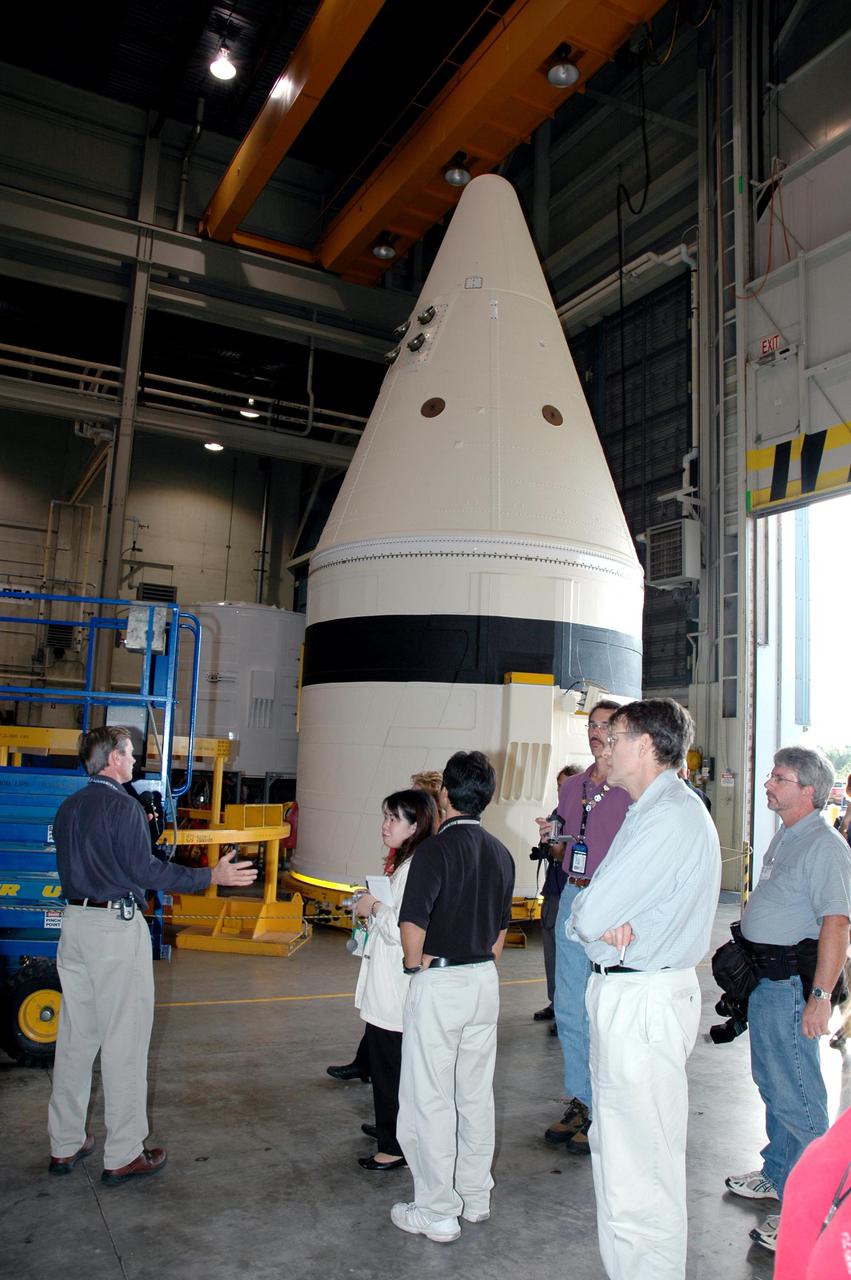
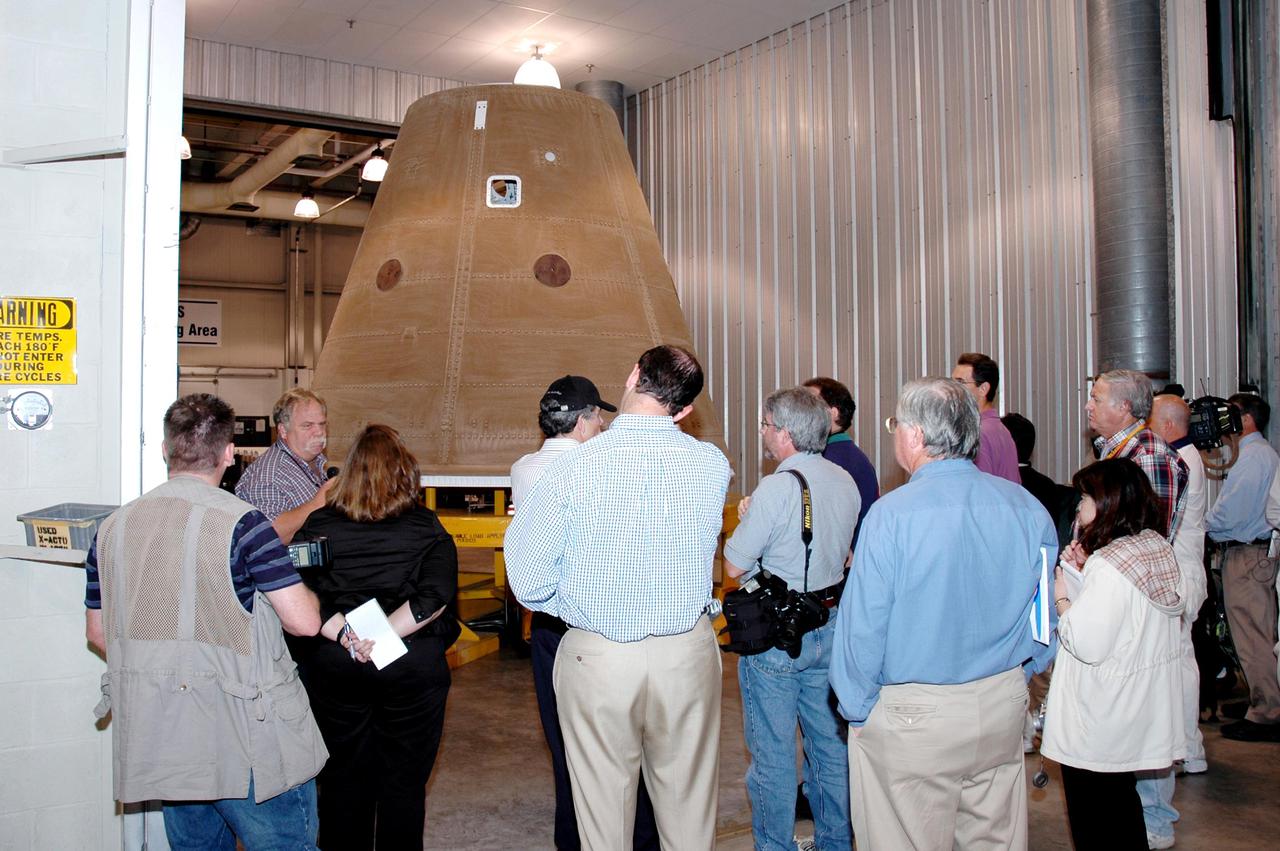
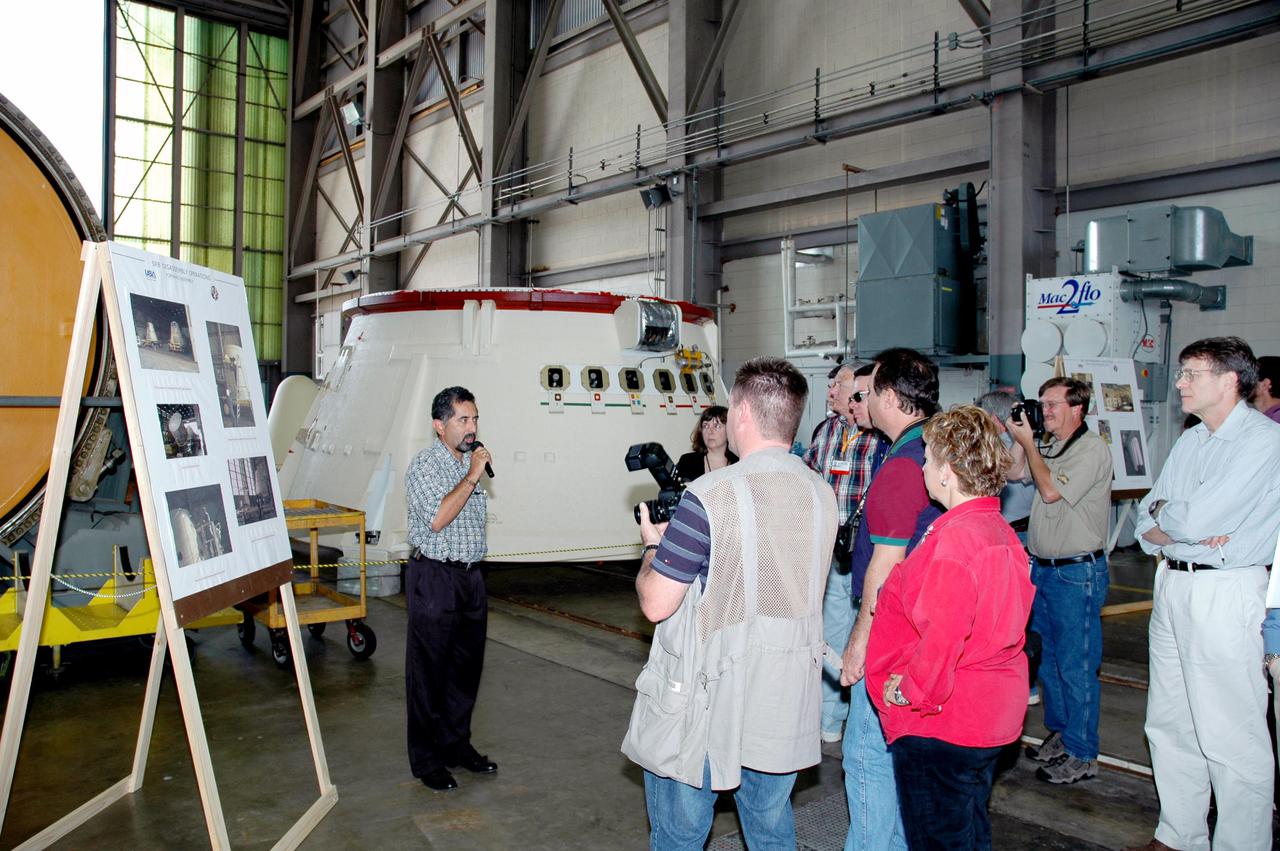
KENNEDY SPACE CENTER, FLA. -   The media tour the Solid Rocket Booster (SRB) Assembly and Refurbishment Facility where SRB segments are refurbished.  In the background can be seen the frustum and nose cap of an SRB.  The media event featured the movement of the first SRB segments to the Vehicle Assembly Building for stacking for Return to Flight mission STS-114. Two SRBs support the liftoff of the Space Shuttle on a launch.  The twin 149-foot tall, 12-foot diameter SRBs provide the main propulsion system during launch to place the orbiters in the proper orbit around the Earth.  They operate parallel with the Space Shuttle main engines for the first two minutes of flight and jettison away from the orbiter, with help from the Booster Separation Motors, about 26.3 nautical miles above the Earth’s surface.
KSC-04pd-2387
KENNEDY SPACE CENTER, FLA. -   The media tour Solid Rocket Booster (SRB) Assembly and Refurbishment Facility where Solid Rocket Booster (SRB) segments are refurbished.  In the background can be seen the frustum and nose cap of an SRB.  The media event featured the movement of the first SRB segments to the Vehicle Assembly Building for stacking for Return to Flight mission STS-114. Two SRBs support the liftoff of the Space Shuttle on a launch.  The twin 149-foot tall, 12-foot diameter SRBs provide the main propulsion system during launch to place the orbiters in the proper orbit around the Earth.  They operate parallel with the Space Shuttle main engines for the first two minutes of flight and jettison away from the orbiter, with help from the Booster Separation Motors, about 26.3 nautical miles above the Earth’s surface.
KSC-04pd-2389
KENNEDY SPACE CENTER, FLA. -   The media tour Solid Rocket Booster (SRB) Assembly and Refurbishment Facility where Solid Rocket Booster (SRB) segments are refurbished.  In the background can be seen the frustum and nose cap of an SRB.  The media event featured the movement of the first SRB segments to the Vehicle Assembly Building for stacking for Return to Flight mission STS-114. Two SRBs support the liftoff of the Space Shuttle on a launch.  The twin 149-foot tall, 12-foot diameter SRBs provide the main propulsion system during launch to place the orbiters in the proper orbit around the Earth.  They operate parallel with the Space Shuttle main engines for the first two minutes of flight and jettison away from the orbiter, with help from the Booster Separation Motors, about 26.3 nautical miles above the Earth’s surface.
KSC-04pd-2388
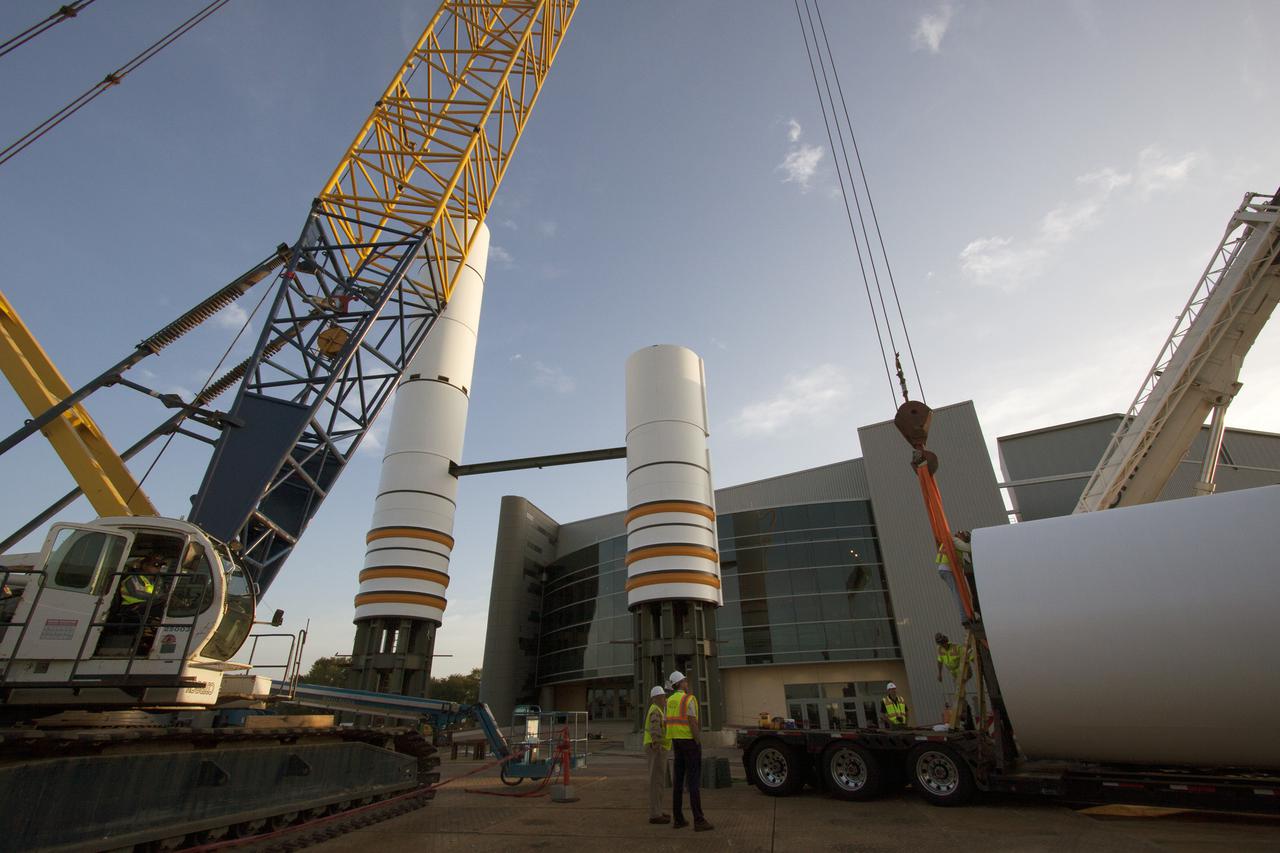
CAPE CANAVERAL, Fla. – Workers prepare to lift a segment for a set of twin, full-size replica Solid Rocket Boosters SRBs in front of the Space Shuttle Atlantis exhibit under construction at the Kennedy Space Center Visitor Complex in Florida. Atlantis is housed in the building behind the SRB stack. An external tank replica will be added later to the middle of the SRBs to complete the display. The SRBs stand 150 feet tall, while the external tank will reach 184 feet when it is finished. The shuttle was mounted to the stack and depended on the power of the SRBs to lift it off the launch pad and start it on its way to space. The external tank was loaded with liquid propellants for the shuttle's three main engines. Photo credit: NASA_Jim Grossmann
KSC-2013-1973
CAPE CANAVERAL, Fla. – Workers prepare to lift a segment for a set of twin, full-size replica Solid Rocket Boosters SRBs in front of the Space Shuttle Atlantis exhibit under construction at the Kennedy Space Center Visitor Complex in Florida. Atlantis is housed in the building behind the SRB stack. An external tank replica will be added later to the middle of the SRBs to complete the display. The SRBs stand 150 feet tall, while the external tank will reach 184 feet when it is finished. The shuttle was mounted to the stack and depended on the power of the SRBs to lift it off the launch pad and start it on its way to space. The external tank was loaded with liquid propellants for the shuttle's three main engines. Photo credit: NASA_Jim Grossmann
KSC-2013-1972
CAPE CANAVERAL, Fla. – Workers prepare to lift a segment for a set of twin, full-size replica Solid Rocket Boosters SRBs in front of the Space Shuttle Atlantis exhibit under construction at the Kennedy Space Center Visitor Complex in Florida. Atlantis is housed in the building behind the SRB stack. An external tank replica will be added later to the middle of the SRBs to complete the display. The SRBs stand 150 feet tall, while the external tank will reach 184 feet when it is finished. The shuttle was mounted to the stack and depended on the power of the SRBs to lift it off the launch pad and start it on its way to space. The external tank was loaded with liquid propellants for the shuttle's three main engines. Photo credit: NASA_Jim Grossmann
KSC-2013-1969
CAPE CANAVERAL, Fla. – Workers prepare to lift a segment for a set of twin, full-size replica Solid Rocket Boosters SRBs in front of the Space Shuttle Atlantis exhibit under construction at the Kennedy Space Center Visitor Complex in Florida. Atlantis is housed in the building behind the SRB stack. An external tank replica will be added later to the middle of the SRBs to complete the display. The SRBs stand 150 feet tall, while the external tank will reach 184 feet when it is finished. The shuttle was mounted to the stack and depended on the power of the SRBs to lift it off the launch pad and start it on its way to space. The external tank was loaded with liquid propellants for the shuttle's three main engines. Photo credit: NASA_Jim Grossmann
KSC-2013-1970
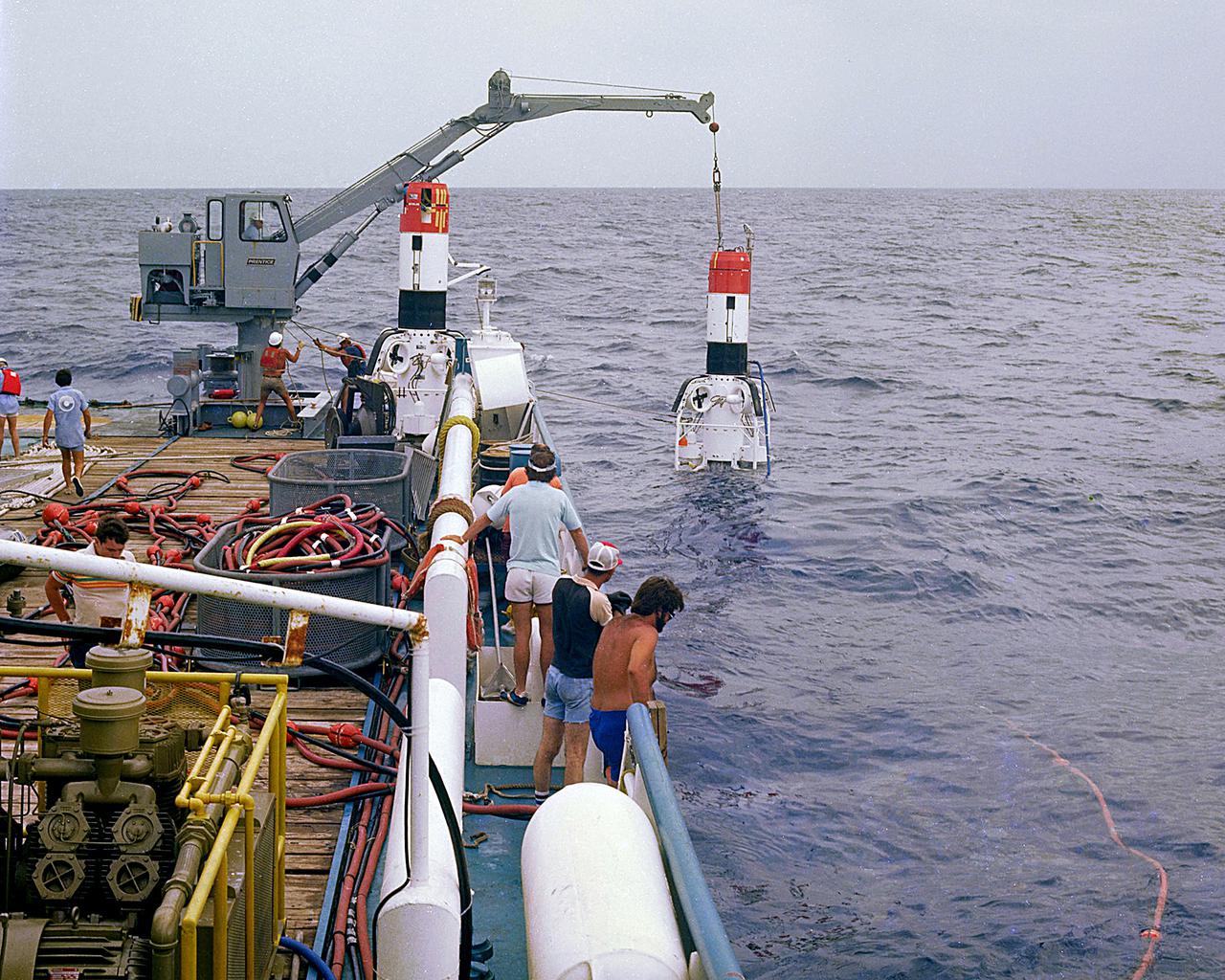
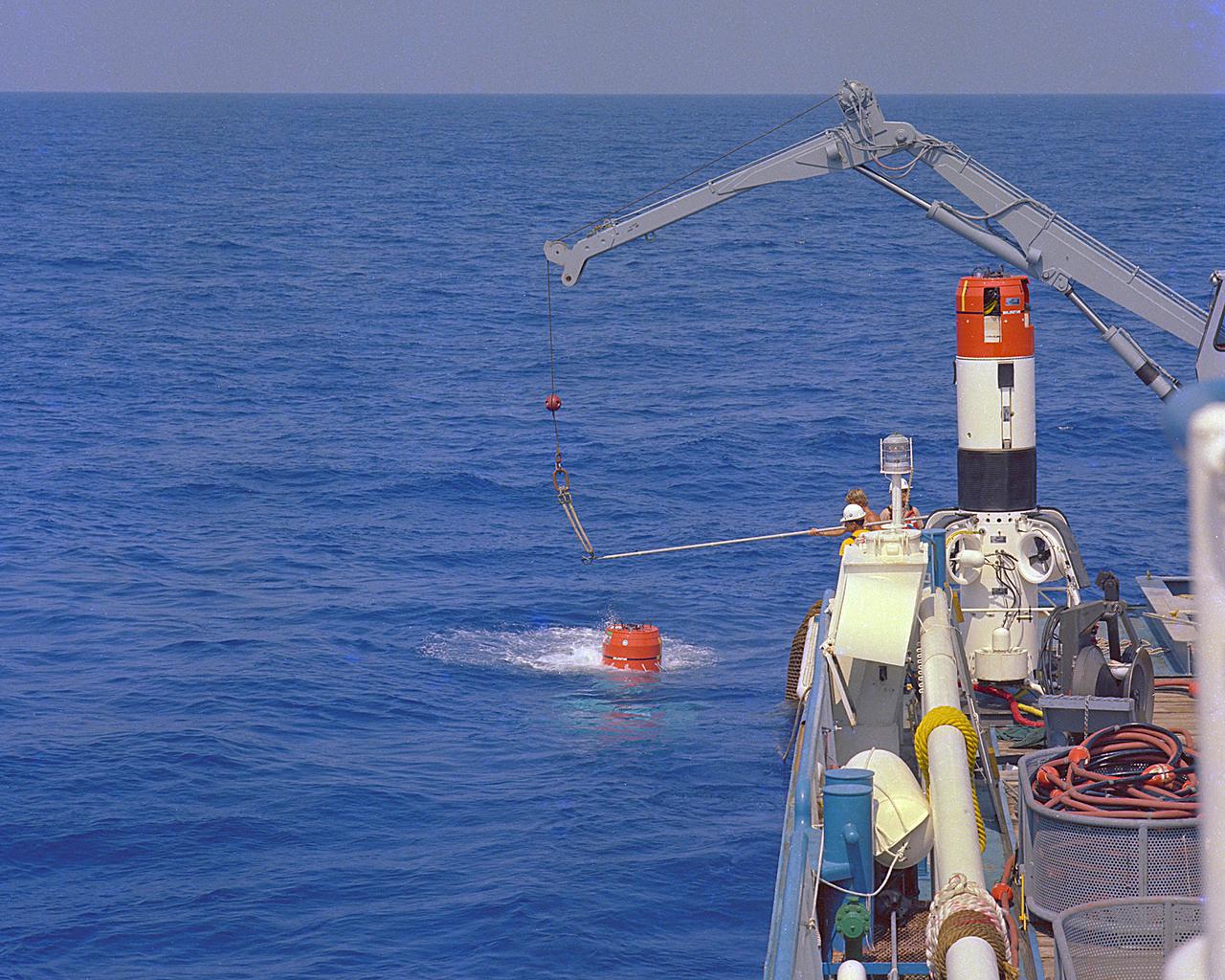
KENNEDY SPACE CENTER, FLA. - Shuttle SRB retrieval acceptance test at sea.
KSC-80pc-0292
KENNEDY SPACE CENTER, FLA. - Shuttle SRB retrieval acceptance test at sea.
KSC-80pc-0284
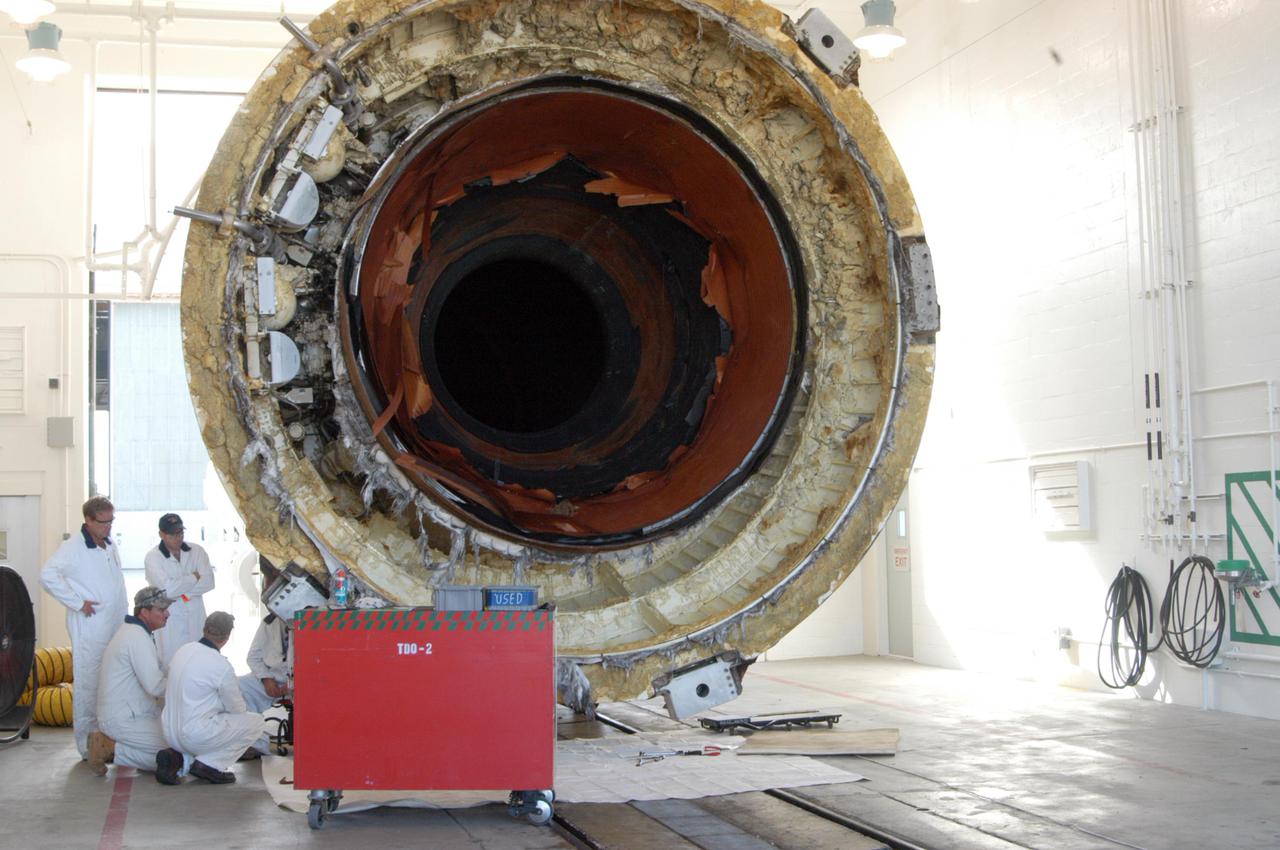
KENNEDY SPACE CENTER, FLA. -  Workers in Hangar AF at Cape Canaveral Air Force Station take a look at one of the spent Solid Rocket Boosters (SRBs) from the launch of Space Shuttle Discovery July 26 on Return to Flight mission STS-114.  The SRBs are the largest solid propellant motors ever flown and the first designed for reuse. After a Shuttle is launched, the SRBs are jettisoned at two minutes, seven seconds into the flight. At six minutes and 44 seconds after liftoff, the spent SRBs, weighing about 165,000 lb., have slowed their descent speed to about 62 mph and splashdown takes place in a predetermined area. They are retrieved from the Atlantic Ocean by special recovery vessels and returned for refurbishment and eventual reuse on future Shuttle flights. Once at Hangar AF, the SRBs are unloaded onto a hoisting slip and mobile gantry cranes lift them onto tracked dollies where they are safed and undergo their first washing.
KSC-05PD-1816
KENNEDY SPACE CENTER, FLA. - One of the spent Solid Rocket Boosters (SRBs) from the launch of Space Shuttle Discovery July 26 on Return to Flight mission STS-114 is moved into Hangar AF at Cape Canaveral Air Force Station.  The SRBs are the largest solid propellant motors ever flown and the first designed for reuse. After a Shuttle is launched, the SRBs are jettisoned at two minutes, seven seconds into the flight. At six minutes and 44 seconds after liftoff, the spent SRBs, weighing about 165,000 lb., have slowed their descent speed to about 62 mph and splashdown takes place in a predetermined area. They are retrieved from the Atlantic Ocean by special recovery vessels and returned for refurbishment and eventual reuse on future Shuttle flights. Once at Hangar AF, the SRBs are unloaded onto a hoisting slip and mobile gantry cranes lift them onto tracked dollies where they are safed and undergo their first washing.
KSC-05PD-1815
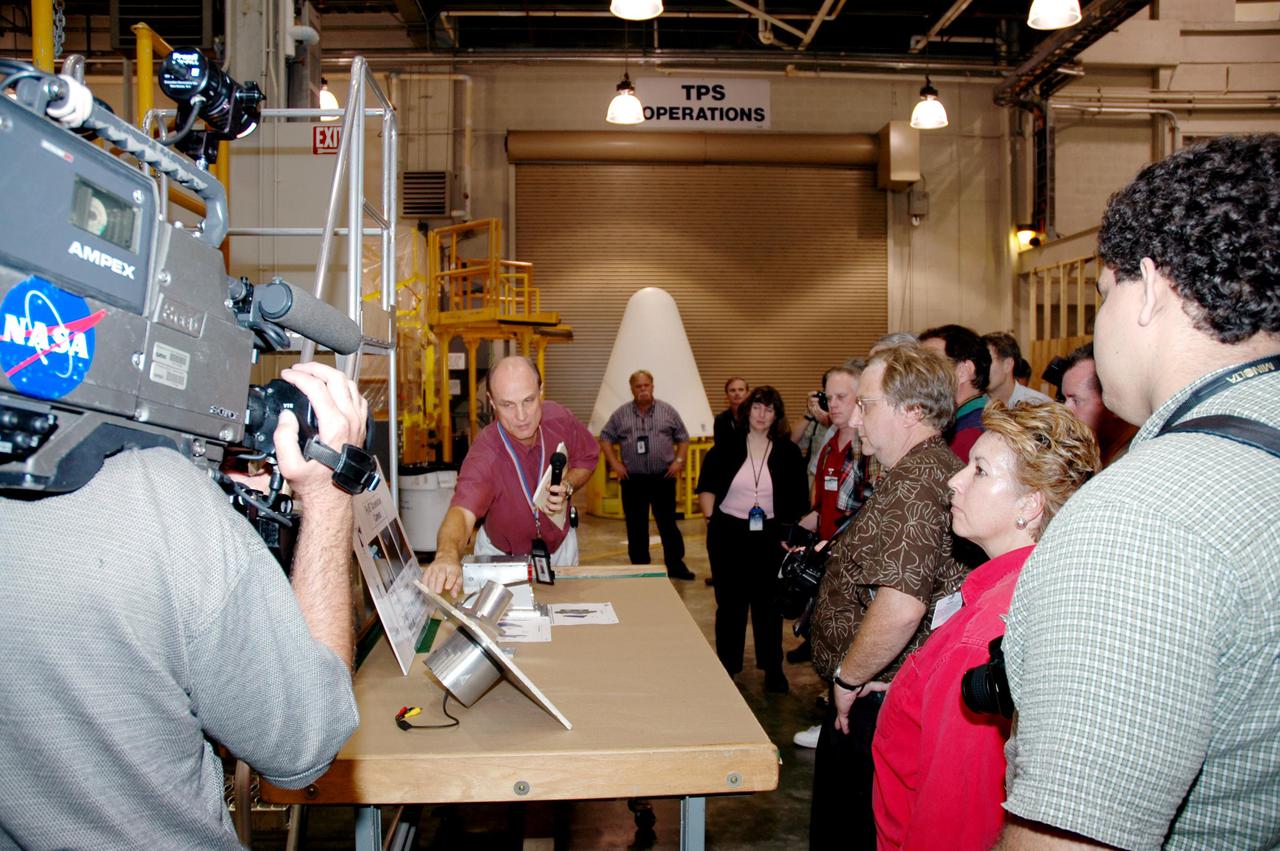
KENNEDY SPACE CENTER, FLA. -   The media are shown parts of Solid Rocket Booster (SRB) segments in the SRB Assembly and Refurbishment Facility.  The tour was part of a day-long event that featured the movement of the first SRB segments to the Vehicle Assembly Building for stacking for Return to Flight mission STS-114. Two SRBs support the liftoff of the Space Shuttle on a launch.  The twin 149-foot tall, 12-foot diameter SRBs provide the main propulsion system during launch to place the orbiters in the proper orbit around the Earth.  They operate parallel with the Space Shuttle main engines for the first two minutes of flight and jettison away from the orbiter, with help from the Booster Separation Motors, about 26.3 nautical miles above the Earth’s surface.
KSC-04pd-2390
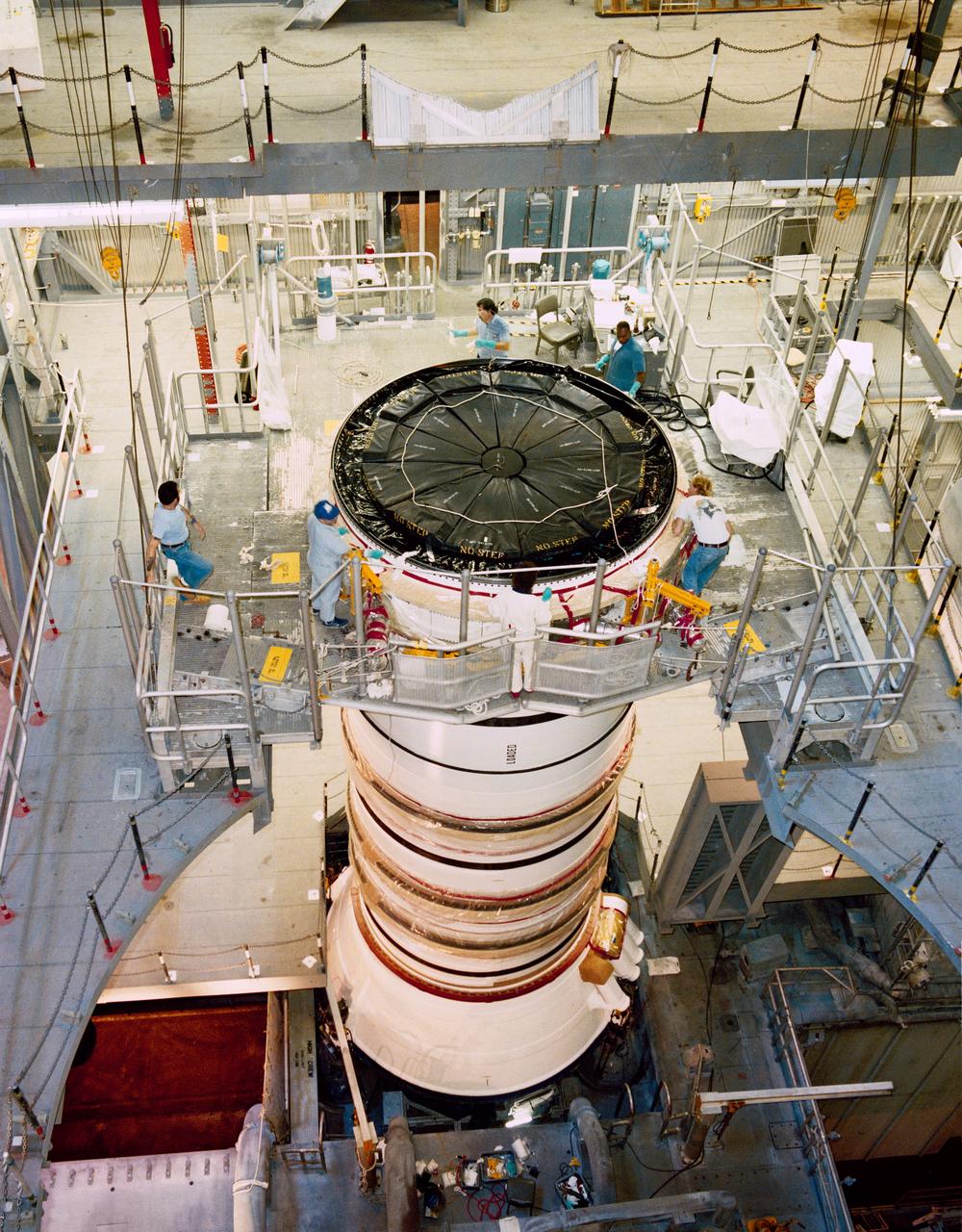
STS-29 Discovery, Orbiter Vehicle (OV) 103, solid rocket booster (SRB) right aft segment is being prepared for stacking in the Kennedy Space Center (KSC) Vehicle Assembly Building (VAB). Technicians examine and work with SRB seal from scaffolding platform. The twin sets of boosters provide 80 percent of the space shuttle launch thrust. Each SRB is made up of four "loaded" or fueled segments. The SRBs operate in parallel with the space shuttle main engines (SSMEs) for the first two minutes of flight providing additional thrust needed to escape the gravitational pull of the Earth. At an altitude of approximately 24 nautical miles, the SRBs separate, descend on parachutes, and land in the Atlantic Ocean where they are recovered and reused on future flights. View provided by KSC with alternate number KSC-88PC-1323.
STS-29 Discovery, OV-103, solid rocket booster (SRB) preparation at KSC
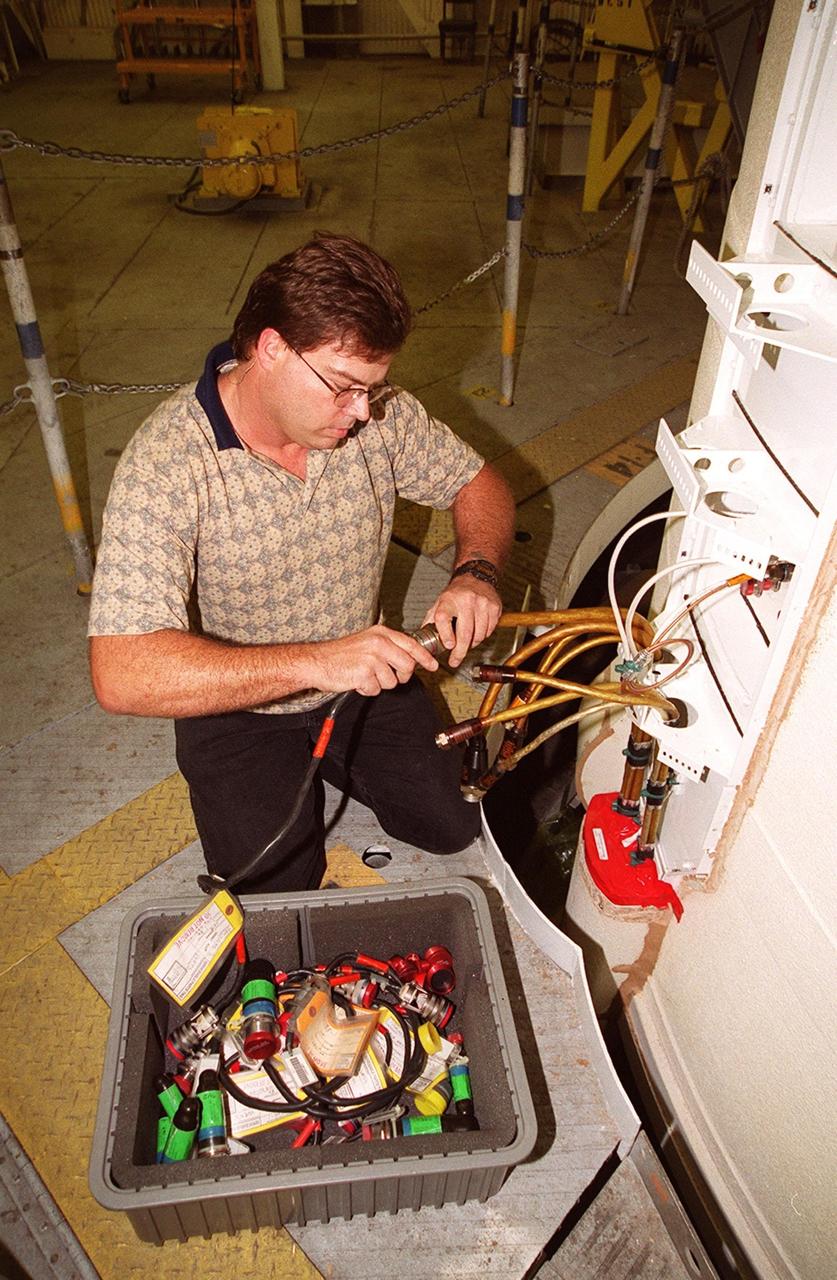
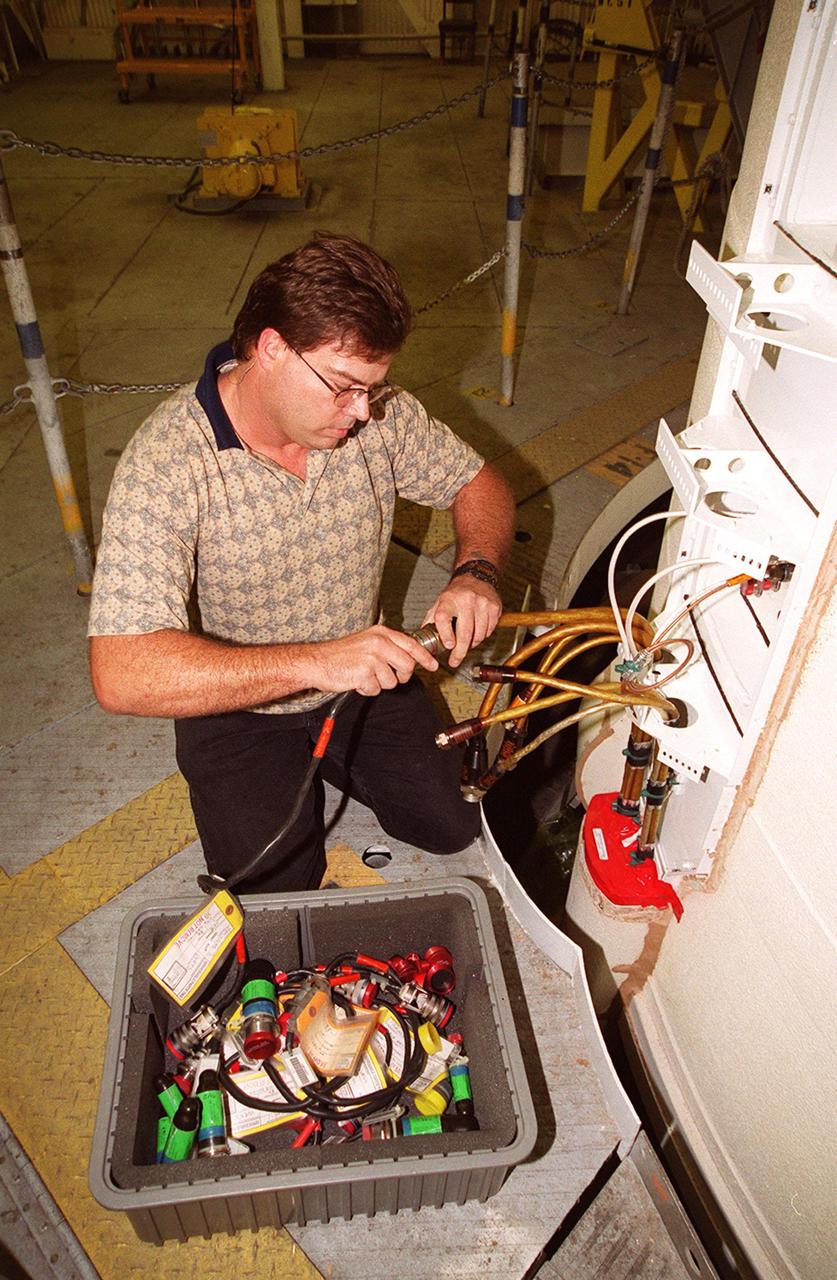
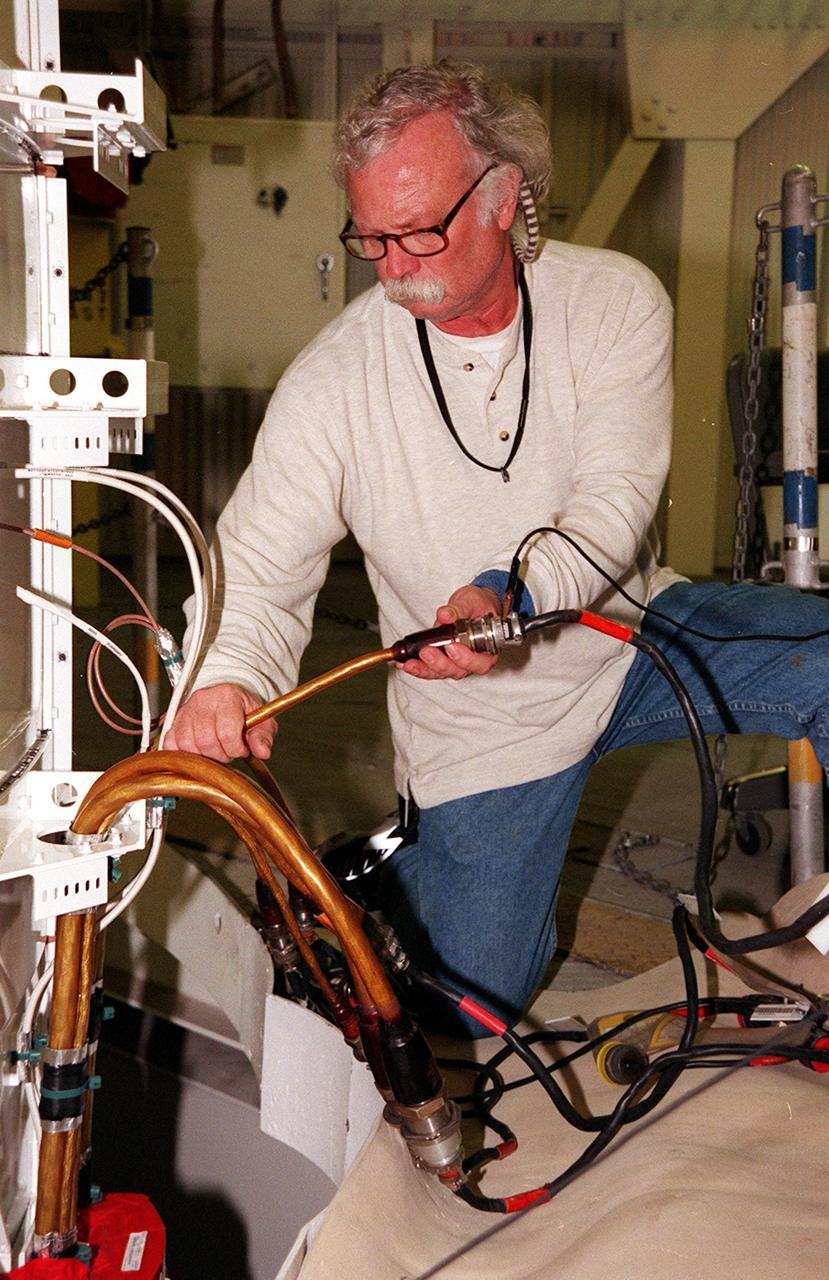
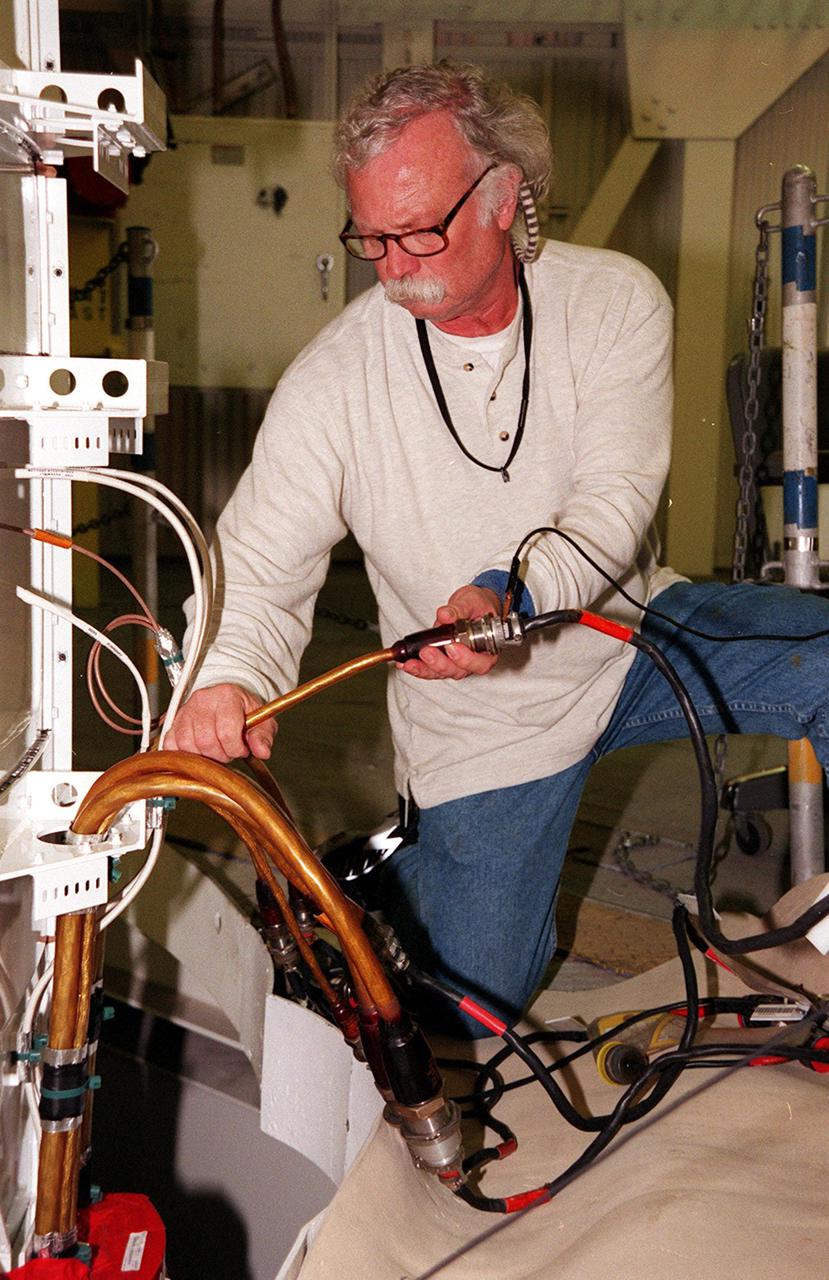
KENNEDY SPACE CENTER, FLA. -- United Space Alliance SRB technician Richard Bruns attaches a cable end cover to a cable pulled from the solid rocket booster on Space Shuttle Atlantis. The Shuttle was rolled back from Launch Pad 39A in order to conduct tests on the SRB cables. A prior extensive evaluation of NASA’s SRB cable inventory on the shelf revealed conductor damage in four (of about 200) cables. Shuttle managers decided to prove the integrity of the system tunnel cables already on Atlantis before launching. Workers are conducting inspections, making continuity checks and conducting X-ray analysis on the cables. The launch has been rescheduled no earlier than Feb. 6. <br
KSC01pp0153
KENNEDY SPACE CENTER, FLA. -- United Space Alliance SRB technician Richard Bruns attaches a cable end cover to a cable pulled from the solid rocket booster on Space Shuttle Atlantis. The Shuttle was rolled back from Launch Pad 39A in order to conduct tests on the SRB cables. A prior extensive evaluation of NASA’s SRB cable inventory on the shelf revealed conductor damage in four (of about 200) cables. Shuttle managers decided to prove the integrity of the system tunnel cables already on Atlantis before launching. Workers are conducting inspections, making continuity checks and conducting X-ray analysis on the cables. The launch has been rescheduled no earlier than Feb. 6. <br
KSC-01PP-0153
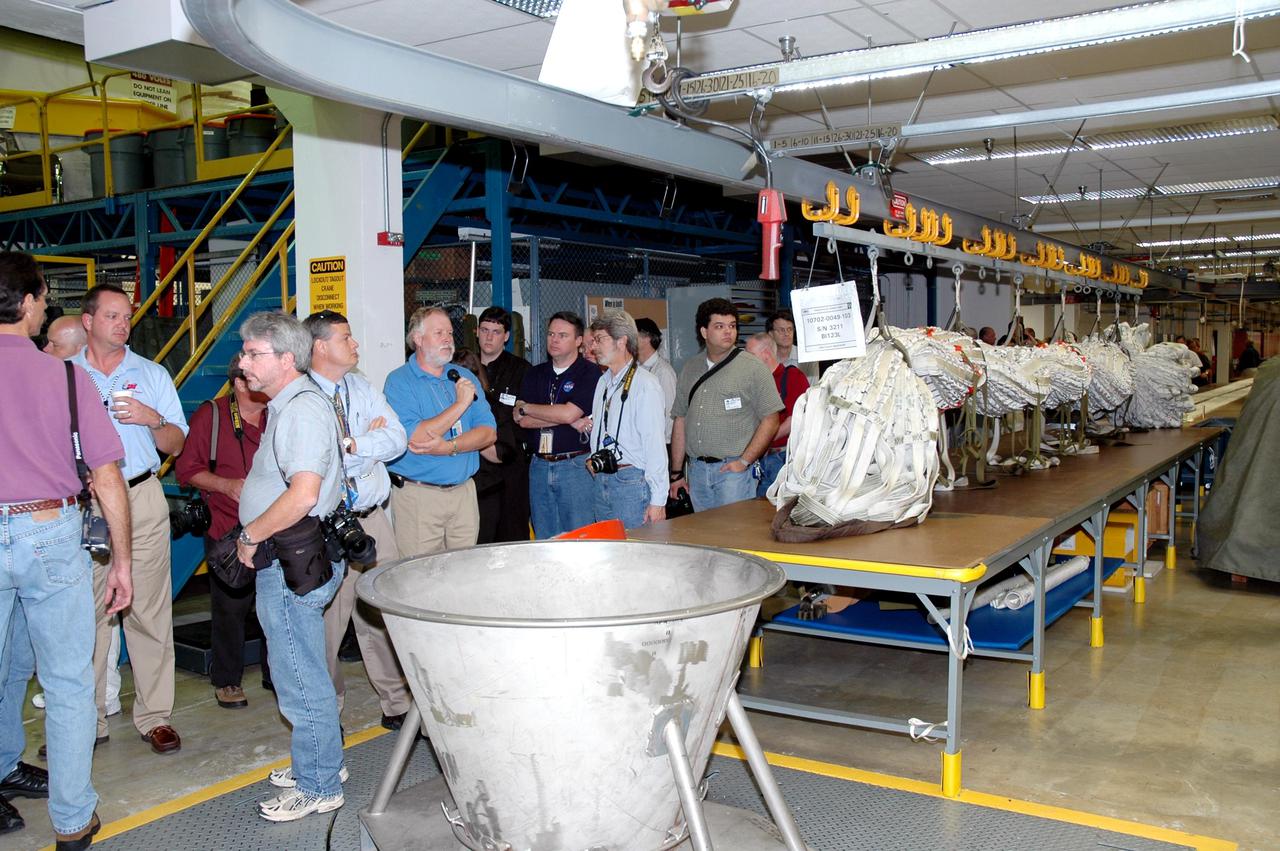
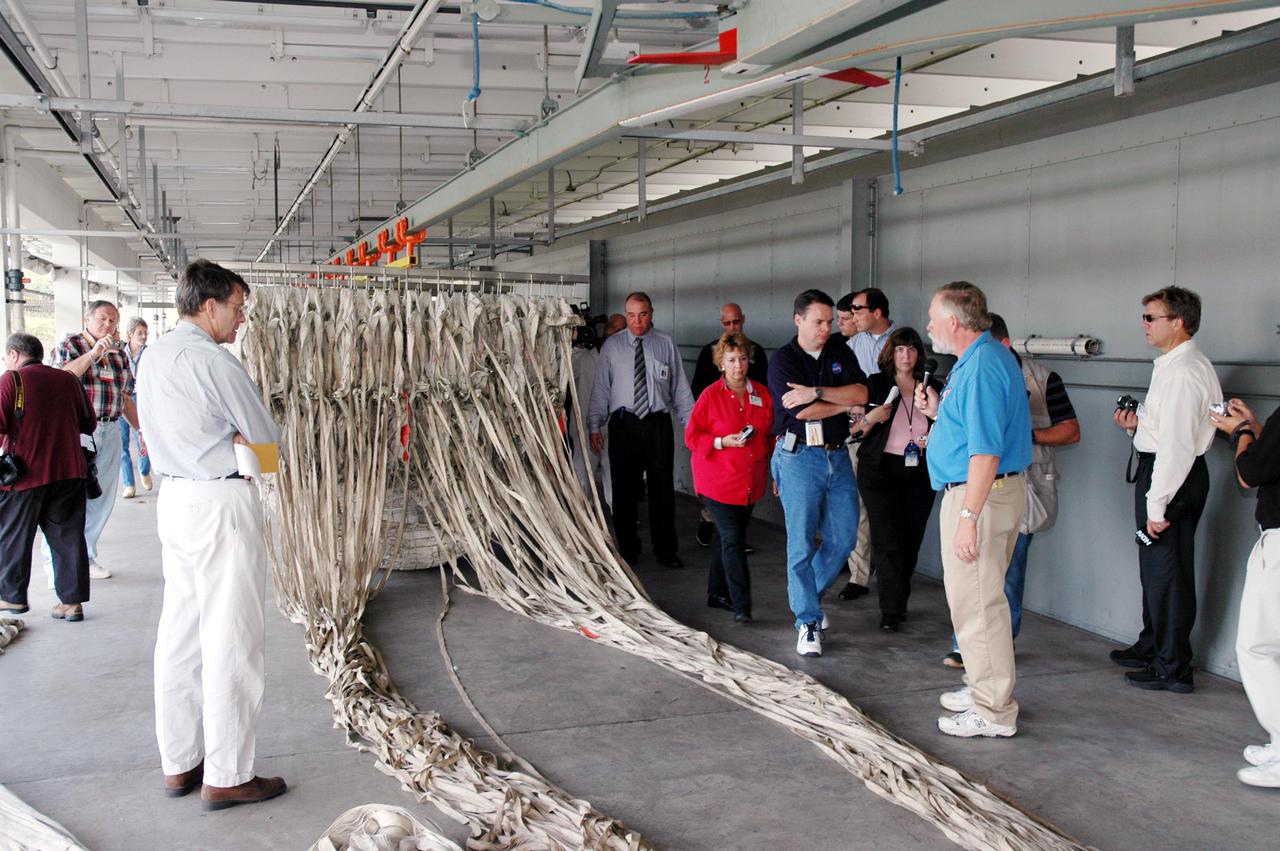
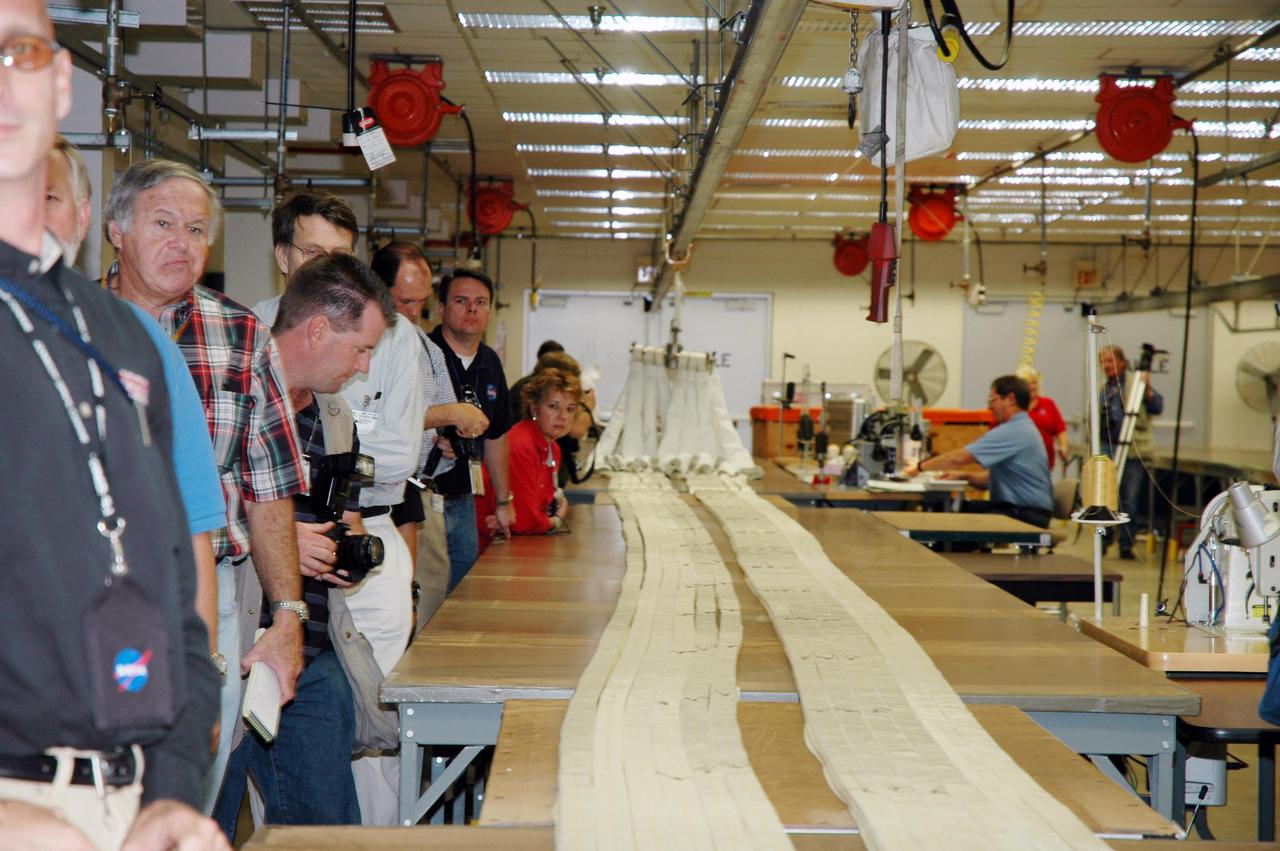
KENNEDY SPACE CENTER, FLA. -  The media tour the Parachute Refurbishment Facility, which cleans and repairs the Solid Rocket Booster (SRB) parachutes after a Space Shuttle launch.   The stop was part of a day-long event that featured the movement of the first SRB segments to the Vehicle Assembly Building for stacking for Return to Flight mission STS-114. Two SRBs support the liftoff of the Space Shuttle on a launch.  The twin 149-foot tall, 12-foot diameter SRBs provide the main propulsion system during launch to place the orbiters in the proper orbit around the Earth.  They operate parallel with the Space Shuttle main engines for the first two minutes of flight and jettison away from the orbiter, with help from the Booster Separation Motors, about 26.3 nautical miles above the Earth’s surface.
KSC-04pd-2396
KENNEDY SPACE CENTER, FLA. -  The media tour the Parachute Refurbishment Facility, which cleans and repairs the Solid Rocket Booster (SRB) parachutes after a Space Shuttle launch.   The stop was part of a day-long event that featured the movement of the first SRB segments to the Vehicle Assembly Building for stacking for Return to Flight mission STS-114. Two SRBs support the liftoff of the Space Shuttle on a launch.  The twin 149-foot tall, 12-foot diameter SRBs provide the main propulsion system during launch to place the orbiters in the proper orbit around the Earth.  They operate parallel with the Space Shuttle main engines for the first two minutes of flight and jettison away from the orbiter, with help from the Booster Separation Motors, about 26.3 nautical miles above the Earth’s surface.
KSC-04pd-2398
KENNEDY SPACE CENTER, FLA. -  The media tour the Parachute Refurbishment Facility, which cleans and repairs the Solid Rocket Booster (SRB) parachutes after a Space Shuttle launch.   The stop was part of a day-long event that featured the movement of the first SRB segments to the Vehicle Assembly Building for stacking for Return to Flight mission STS-114. Two SRBs support the liftoff of the Space Shuttle on a launch.  The twin 149-foot tall, 12-foot diameter SRBs provide the main propulsion system during launch to place the orbiters in the proper orbit around the Earth.  They operate parallel with the Space Shuttle main engines for the first two minutes of flight and jettison away from the orbiter, with help from the Booster Separation Motors, about 26.3 nautical miles above the Earth’s surface.
KSC-04pd-2399
KENNEDY SPACE CENTER, FLA. -  The media tour the Parachute Refurbishment Facility, which cleans and repairs the Solid Rocket Booster (SRB) parachutes after a Space Shuttle launch.   The stop was part of a day-long event that featured the movement of the first SRB segments to the Vehicle Assembly Building for stacking for Return to Flight mission STS-114. Two SRBs support the liftoff of the Space Shuttle on a launch.  The twin 149-foot tall, 12-foot diameter SRBs provide the main propulsion system during launch to place the orbiters in the proper orbit around the Earth.  They operate parallel with the Space Shuttle main engines for the first two minutes of flight and jettison away from the orbiter, with help from the Booster Separation Motors, about 26.3 nautical miles above the Earth’s surface.
KSC-04pd-2397
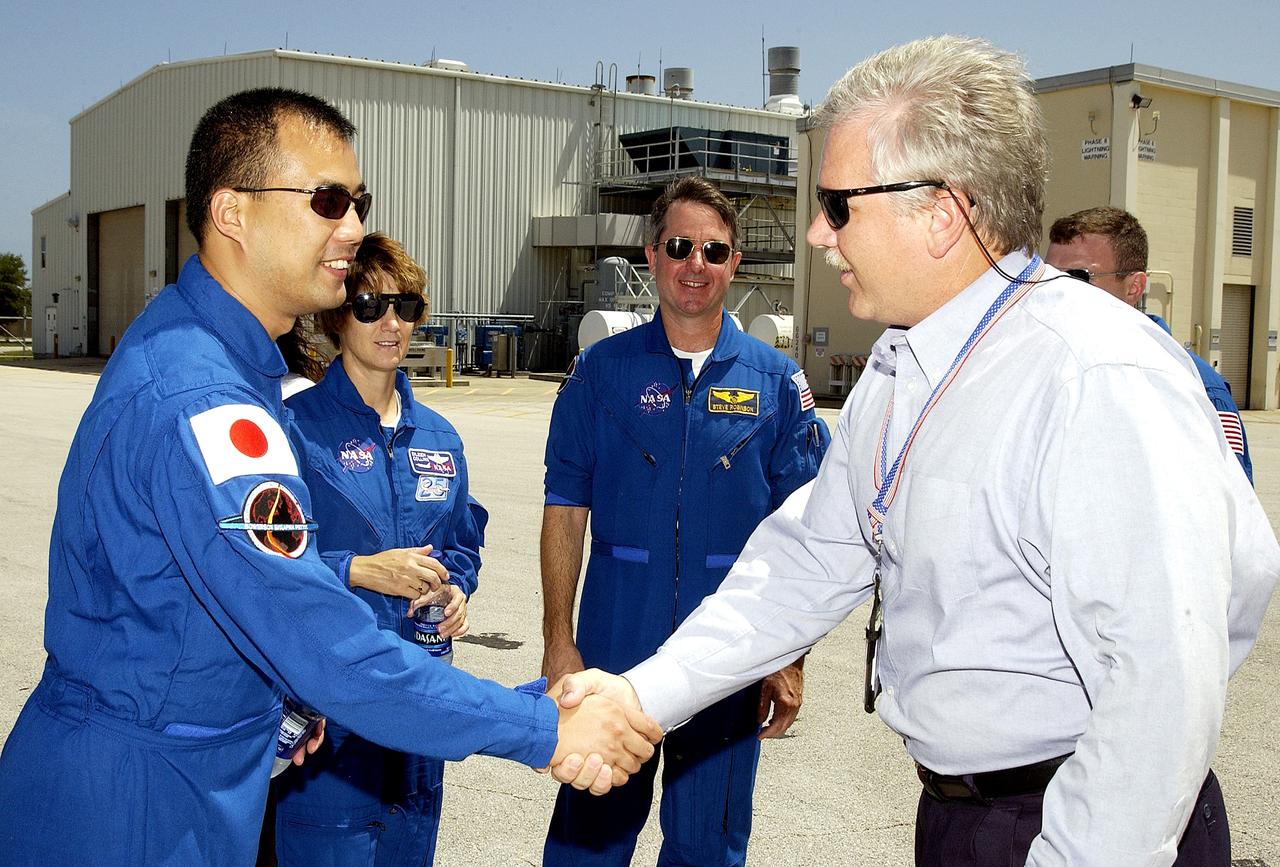
KENNEDY SPACE CENTER, FLA. -   The STS-114 crew is welcomed to Hangar AF, Cape Canaveral Air Force Station, by Joseph Chaput, with United Space Alliance. The crew, from left, are Mission Specialist Soichi Noguchi, Commander Eileen Collins, Mission Specialist Stephen Robinson and (partially hidden) Pilot James Kelly.  Noguchi is with the Japanese space agency NASDA.  On the mission, the crew will carry the MultiPurpose Logistics Module (MPLM) Raffaello and External Stowage Platform 2 to the International Space Station.  The MPLM will contain supplies and equipment.  Another goal of the mission is to remove and replace a Control Moment Gyro.  Launch date for mission STS-114 is under review.  Hangar AF is the site where SRB Retrieval Ships return the spent solid rocket boosters after a Shuttle launch.  The SRBs are lifted from the water and placed on rail cars to begin the disassembly and refurbishment process.
KENNEDY SPACE CENTER, FLA. - The STS-114 crew is welcomed to Hangar AF, Cape Canaveral Air Force Station, by Joseph Chaput, with United Space Alliance. The crew, from left, are Mission Specialist Soichi Noguchi, Commander Eileen Collins, Mission Specialist Stephen Robinson and (partially hidden) Pilot James Kelly. Noguchi is with the Japanese space agency NASDA. On the mission, the crew will carry the MultiPurpose Logistics Module (MPLM) Raffaello and External Stowage Platform 2 to the International Space Station. The MPLM will contain supplies and equipment. Another goal of the mission is to remove and replace a Control Moment Gyro. Launch date for mission STS-114 is under review. Hangar AF is the site where SRB Retrieval Ships return the spent solid rocket boosters after a Shuttle launch. The SRBs are lifted from the water and placed on rail cars to begin the disassembly and refurbishment process.
KENNEDY SPACE CENTER, FLA. -  In a Vehicle Assembly Building (VAB) high bay, workers check the alignment of a Solid Rocket Booster (SRB) aft center segment as it is lowered toward an aft segment already secured to a Mobile Launch Platform. These segments are part of the right SRB for the Space Shuttle Return to Flight mission, STS-114. Two SRBs are stacked on a Mobile Launch Platform for each Shuttle flight and later joined by an External Tank. The twin 149-foot tall, 12-foot diameter SRBs provide the main propulsion system during launch. They operate in parallel with the Space Shuttle main engines for the first two minutes of flight and jettison away from the orbiter with help from the Booster Separation Motors, about 26.3 nautical miles above the Earth’s surface.
KSC-04pd-2562
KENNEDY SPACE CENTER, FLA. -  In a Vehicle Assembly Building (VAB) high bay, an aft center segment of a Solid Rocket Booster (SRB) continues its descent toward an aft segment already secured to a Mobile Launch Platform. These segments are part of the right SRB for the Space Shuttle Return to Flight mission, STS-114. Two SRBs are stacked on a Mobile Launch Platform for each Shuttle flight and later joined by an External Tank. The twin 149-foot tall, 12-foot diameter SRBs provide the main propulsion system during launch. They operate in parallel with the Space Shuttle main engines for the first two minutes of flight and jettison away from the orbiter with help from the Booster Separation Motors, about 26.3 nautical miles above the Earth’s surface.
KSC-04pd-2563
KENNEDY SPACE CENTER, FLA. -  In a Vehicle Assembly Building (VAB) high bay, an aft center segment of a Solid Rocket Booster (SRB) is moments away from contact with an aft segment already secured to a Mobile Launch Platform. These segments are part of the right SRB for the Space Shuttle Return to Flight mission, STS-114. Two SRBs are stacked on a Mobile Launch Platform for each Shuttle flight and later joined by an External Tank. The twin 149-foot tall, 12-foot diameter SRBs provide the main propulsion system during launch. They operate in parallel with the Space Shuttle main engines for the first two minutes of flight and jettison away from the orbiter with help from the Booster Separation Motors, about 26.3 nautical miles above the Earth’s surface.
KSC-04pd-2564
KENNEDY SPACE CENTER, FLA. -  In a Vehicle Assembly Building (VAB) high bay, workers check the alignment of a Solid Rocket Booster (SRB) aft center segment which has been lowered onto an aft segment already secured to a Mobile Launch Platform. These segments are part of the right SRB for the Space Shuttle Return to Flight mission, STS-114. Two SRBs are stacked on a Mobile Launch Platform for each Shuttle flight and later joined by an External Tank. The twin 149-foot tall, 12-foot diameter SRBs provide the main propulsion system during launch. They operate in parallel with the Space Shuttle main engines for the first two minutes of flight and jettison away from the orbiter with help from the Booster Separation Motors, about 26.3 nautical miles above the Earth’s surface.
KSC-04pd-2565
KENNEDY SPACE CENTER, FLA. -  In a Vehicle Assembly Building (VAB) high bay, an aft center segment of a Solid Rocket Booster (SRB) is lowered toward an aft segment already secured to a Mobile Launch Platform. These segments are part of the right SRB for the Space Shuttle Return to Flight mission, STS-114. Two SRBs are stacked on a Mobile Launch Platform for each Shuttle flight and later joined by an External Tank. The twin 149-foot tall, 12-foot diameter SRBs provide the main propulsion system during launch. They operate in parallel with the Space Shuttle main engines for the first two minutes of flight and jettison away from the orbiter with help from the Booster Separation Motors, about 26.3 nautical miles above the Earth’s surface.
KSC-04pd-2560
KENNEDY SPACE CENTER, FLA. -  In a Vehicle Assembly Building (VAB) high bay, workers monitor the movement of a Solid Rocket Booster (SRB) aft center segment as it is lowered toward an aft segment already secured to a Mobile Launch Platform. These segments are part of the right SRB for the Space Shuttle Return to Flight mission, STS-114. Two SRBs are stacked on a Mobile Launch Platform for each Shuttle flight and later joined by an External Tank. The twin 149-foot tall, 12-foot diameter SRBs provide the main propulsion system during launch. They operate in parallel with the Space Shuttle main engines for the first two minutes of flight and jettison away from the orbiter with help from the Booster Separation Motors, about 26.3 nautical miles above the Earth’s surface.
KSC-04pd-2561
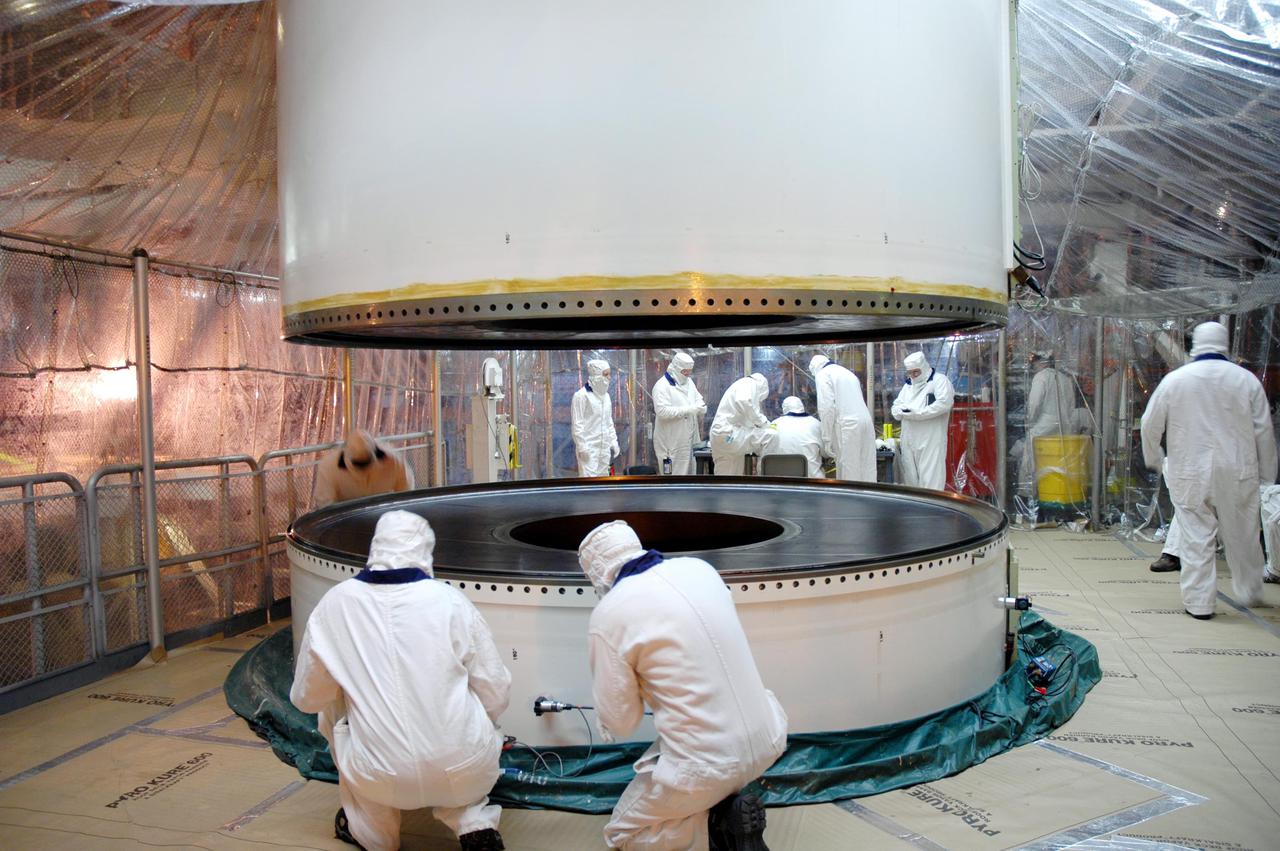
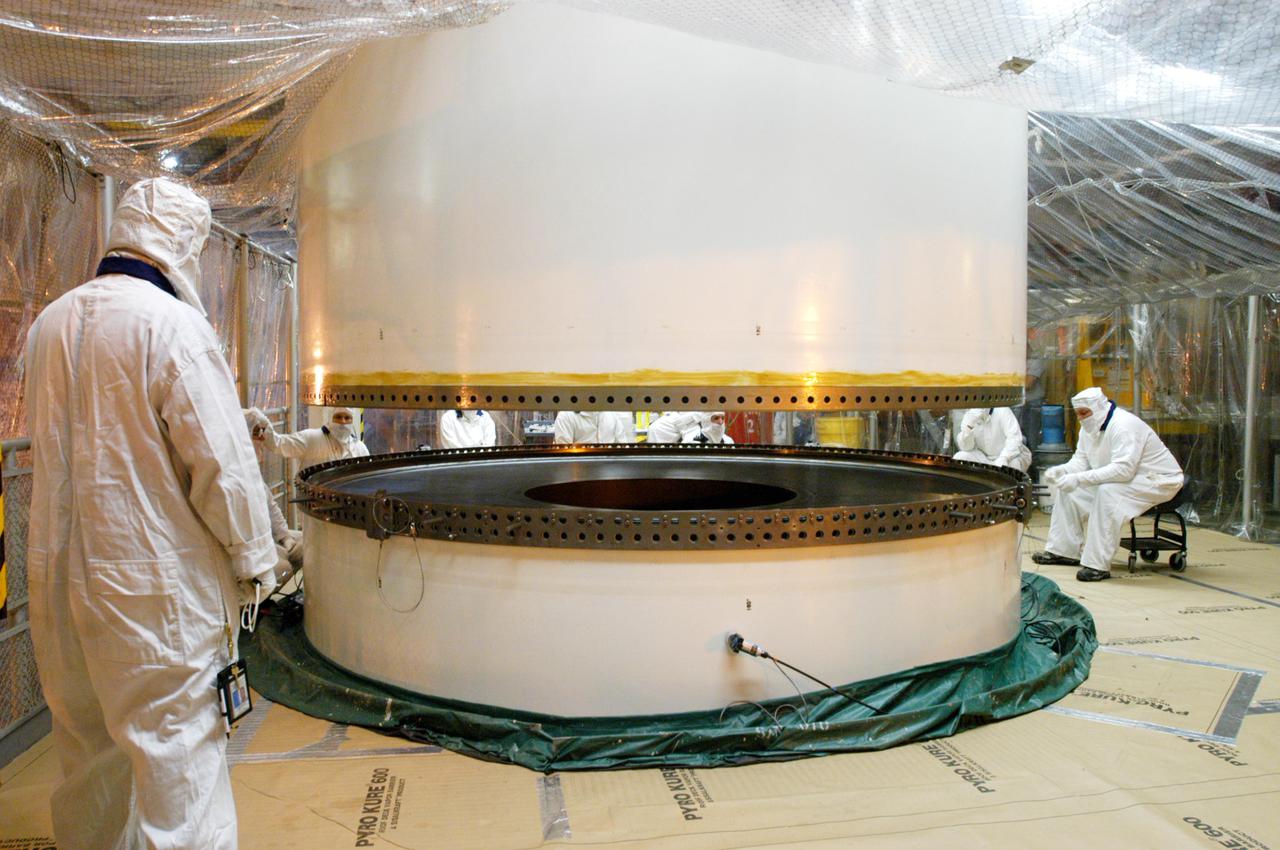
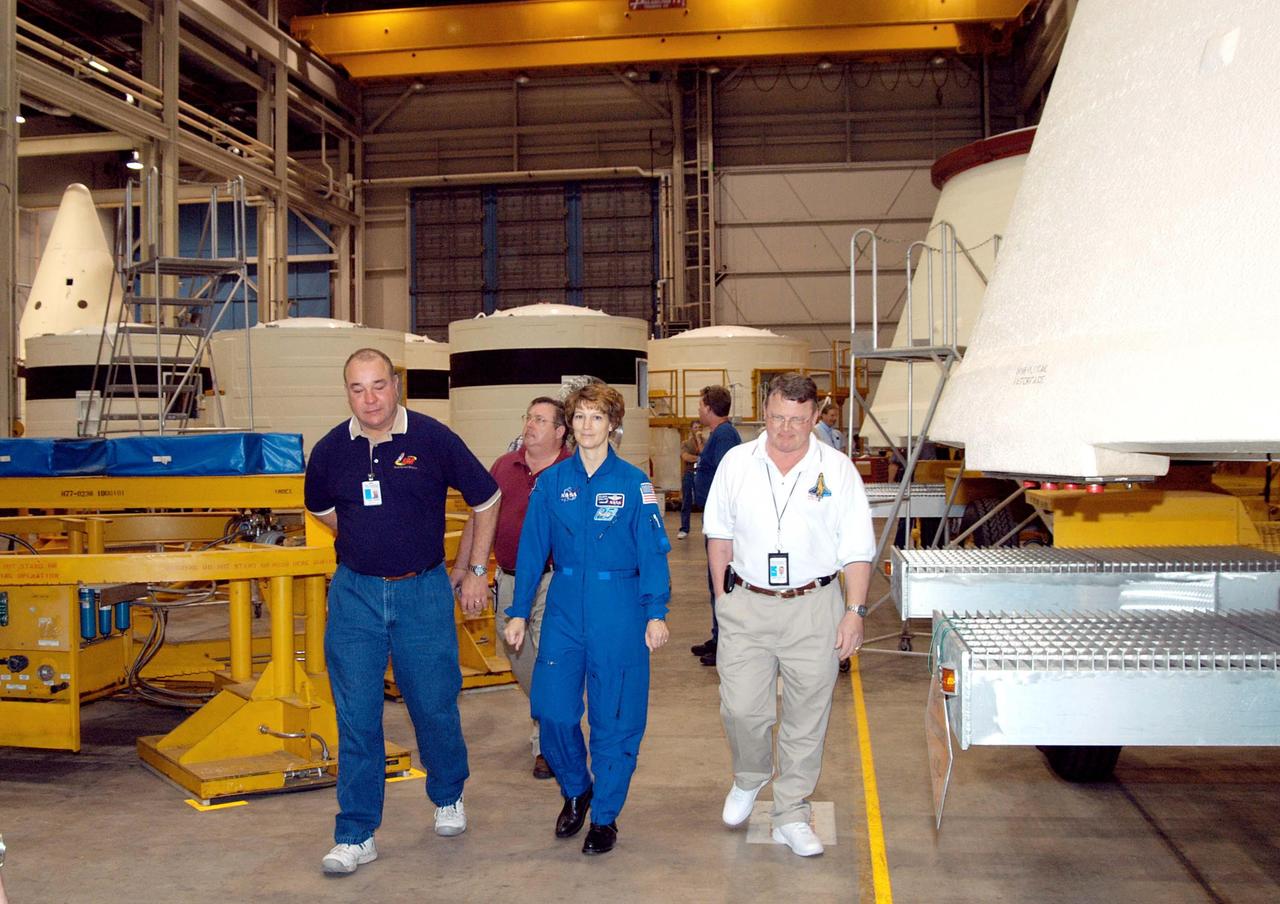
KENNEDY SPACE CENTER, FLA. -  At the SRB Assembly and Refurbishment Facility, STS-114 Commander Eileen Collins (center) is flanked by Bob Herman (left), SRB deputy associate program manager with United Space Alliance, and Jim Carleton (right), director, SRB Program Management, as they walk past solid rocket booster aft skirts. The crew is at KSC for familiarization with Shuttle and mission equipment. The STS-114 mission is Logistics Flight 1, which is scheduled to deliver supplies and equipment, plus the external stowage platform, to the International Space Station.
KSC-04pd0392
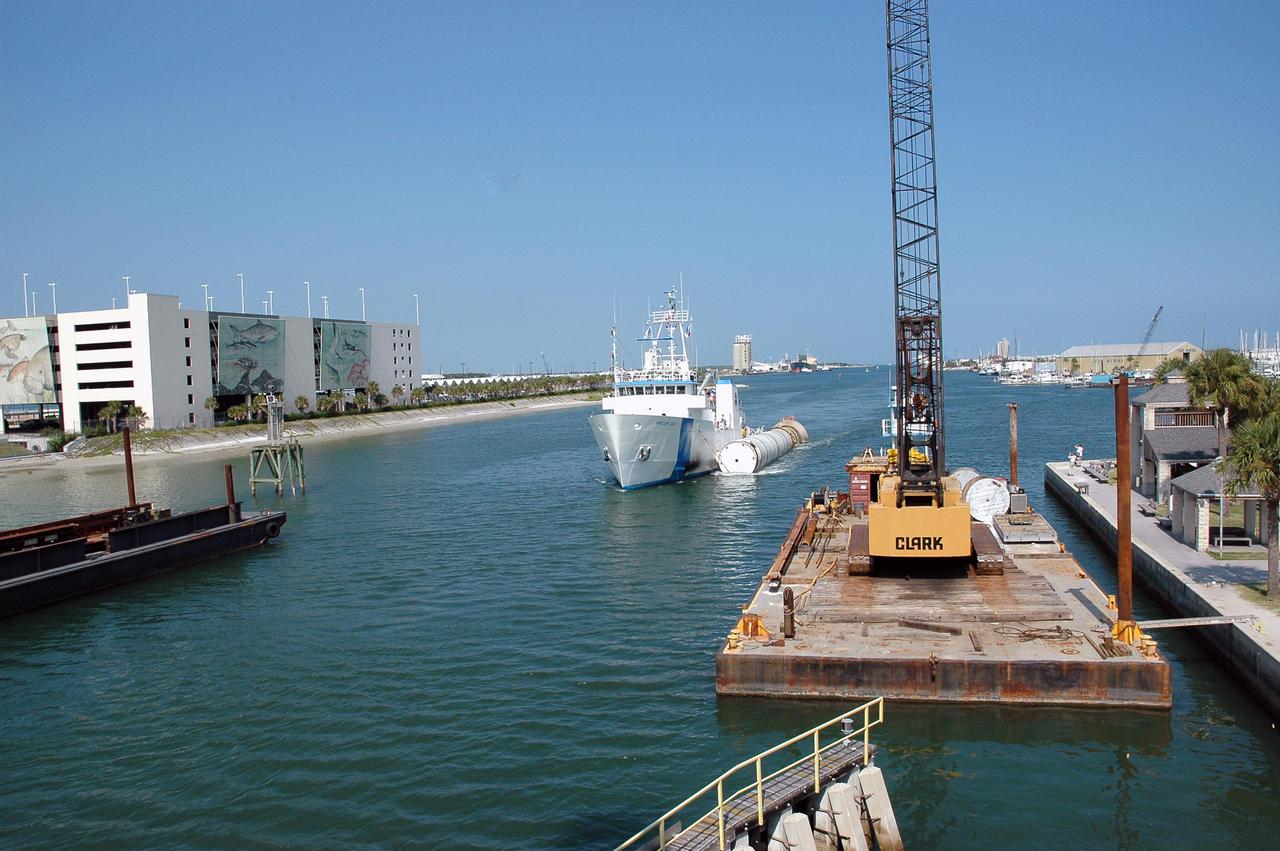
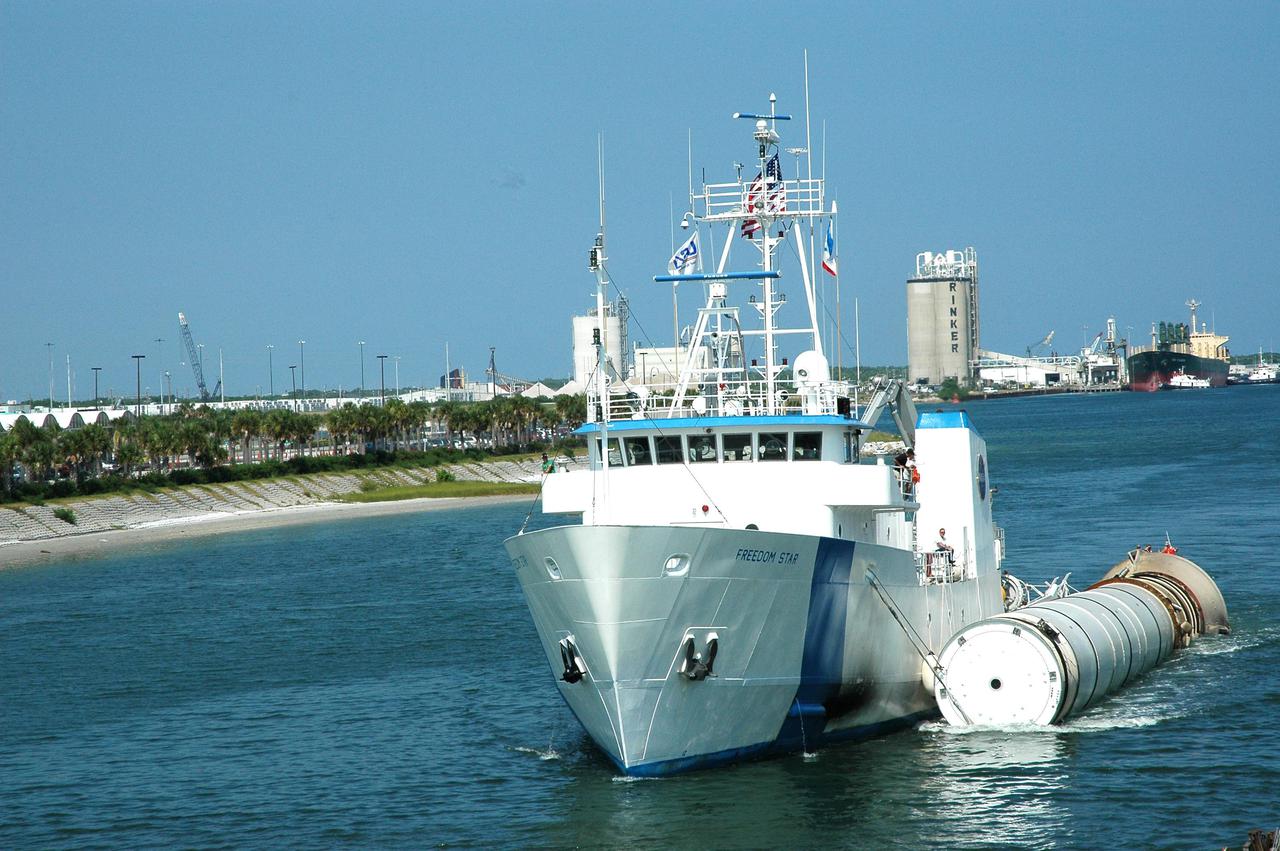
KENNEDY SPACE CENTER, FLA. - The solid rocket booster recovery ship Freedom Star travels through Port Canaveral with a spent solid rocket booster (SRB) from the STS-114 launch on July 26 in tow.  The SRBs are the largest solid propellant motors ever flown and the first designed for reuse. After a Shuttle is launched, the SRBs are jettisoned at two minutes, seven seconds into the flight. At six minutes and 44 seconds after liftoff, the spent SRBs, weighing about 165,000 lb., have slowed their descent speed to about 62 mph and splashdown takes place in a predetermined area. They are retrieved from the Atlantic Ocean by special recovery vessels and returned for refurbishment and eventual reuse on future Shuttle flights. Once at Hangar AF, the SRBs are unloaded onto a hoisting slip and mobile gantry cranes lift them onto tracked dollies where they are safed and undergo their first washing.
KSC-05PD-1788
KENNEDY SPACE CENTER, FLA. - The solid rocket booster recovery ship Freedom Star makes its way through Port Canaveral with a spent solid rocket booster (SRB) from the STS-114 launch on July 26 in tow.  The SRBs are the largest solid propellant motors ever flown and the first designed for reuse. After a Shuttle is launched, the SRBs are jettisoned at two minutes, seven seconds into the flight. At six minutes and 44 seconds after liftoff, the spent SRBs, weighing about 165,000 lb., have slowed their descent speed to about 62 mph and splashdown takes place in a predetermined area. They are retrieved from the Atlantic Ocean by special recovery vessels and returned for refurbishment and eventual reuse on future Shuttle flights. Once at Hangar AF, the SRBs are unloaded onto a hoisting slip and mobile gantry cranes lift them onto tracked dollies where they are safed and undergo their first washing.
KSC-05PD-1789
A spent solid rocket booster (SRB) from the STS-87 launch on Nov. 19 is lifted in a hoisting slip in the Hangar AF area at Cape Canaveral Air Station. Hangar AF is a building originally used for Project Mercury, the first U.S. manned space program. The SRBs are the largest solid propellant motors ever flown and the first designed for reuse. After a Shuttle is launched, the SRBs are jettisoned at two minutes, seven seconds into the flight. At six minutes and 44 seconds after liftoff, the spent SRBs, weighing about 165,000 lb., have slowed their descent speed to about 62 mph and splashdown takes place in a predetermined area. They are retrieved from the Atlantic Ocean by special recovery vessels and returned for refurbishment and eventual reuse on future Shuttle flights. Once at Hangar AF, the SRBs are unloaded onto a hoisting slip and mobile gantry cranes lift them onto tracked dollies where they are safed and undergo their first washing
KSC-97PC1726
A spent solid rocket booster (SRB) from the STS-87 launch on Nov. 19 is lifted in a hoisting slip in the Hangar AF area at Cape Canaveral Air Station. Hangar AF is a building originally used for Project Mercury, the first U.S. manned space program. The SRBs are the largest solid propellant motors ever flown and the first designed for reuse. After a Shuttle is launched, the SRBs are jettisoned at two minutes, seven seconds into the flight. At six minutes and 44 seconds after liftoff, the spent SRBs, weighing about 165,000 lb., have slowed their descent speed to about 62 mph and splashdown takes place in a predetermined area. They are retrieved from the Atlantic Ocean by special recovery vessels and returned for refurbishment and eventual reuse on future Shuttle flights. Once at Hangar AF, the SRBs are unloaded onto a hoisting slip and mobile gantry cranes lift them onto tracked dollies where they are safed and undergo their first washing
KSC-97PC1728
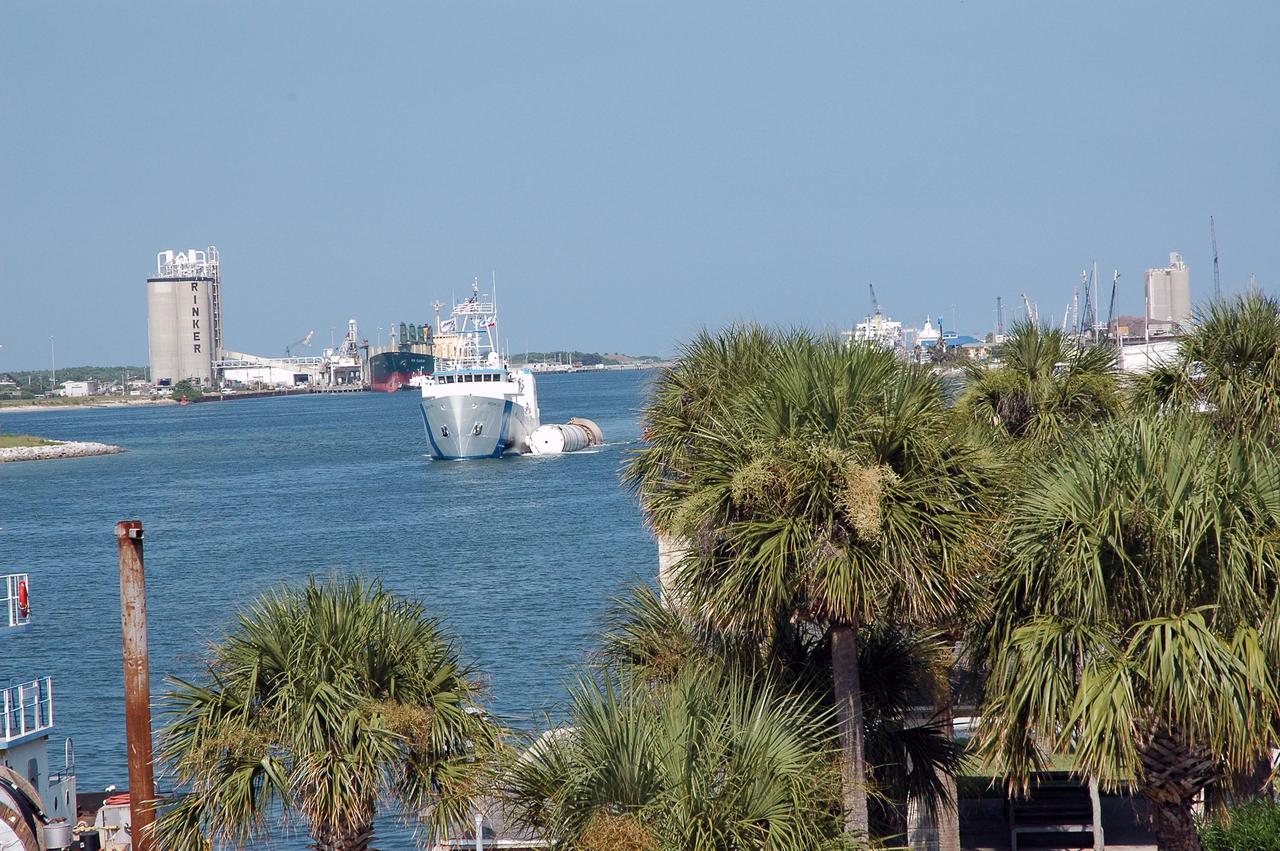
KENNEDY SPACE CENTER, FLA. - The solid rocket booster recovery ship Freedom Star enters Port Canaveral with a spent solid rocket booster (SRB) from the STS-114 launch on July 26 in tow.  The SRBs are the largest solid propellant motors ever flown and the first designed for reuse. After a Shuttle is launched, the SRBs are jettisoned at two minutes, seven seconds into the flight. At six minutes and 44 seconds after liftoff, the spent SRBs, weighing about 165,000 lb., have slowed their descent speed to about 62 mph and splashdown takes place in a predetermined area. They are retrieved from the Atlantic Ocean by special recovery vessels and returned for refurbishment and eventual reuse on future Shuttle flights. Once at Hangar AF, the SRBs are unloaded onto a hoisting slip and mobile gantry cranes lift them onto tracked dollies where they are safed and undergo their first washing.
KSC-05PD-1787
KENNEDY SPACE CENTER, FLA. -- United Space Alliance SRB technician Jim Glass conducts a Flex test on a cable on the solid rocket booster at left. The SRB is part of Space Shuttle Atlantis, rolled back from Launch Pad 39A in order to conduct tests on the cables. A prior extensive evaluation of NASA’s SRB cable inventory on the shelf revealed conductor damage in four (of about 200) cables. Shuttle managers decided to prove the integrity of the system tunnel cables already on Atlantis before launching. Workers are conducting inspections, making continuity checks and conducting X-ray analysis on the cables. The launch has been rescheduled no earlier than Feb. 6. <br
KSC-01PP-0157
KENNEDY SPACE CENTER, FLA. -- United Space Alliance SRB technician Jim Glass conducts a Flex test on a cable on the solid rocket booster at left. The SRB is part of Space Shuttle Atlantis, rolled back from Launch Pad 39A in order to conduct tests on the cables. A prior extensive evaluation of NASA’s SRB cable inventory on the shelf revealed conductor damage in four (of about 200) cables. Shuttle managers decided to prove the integrity of the system tunnel cables already on Atlantis before launching. Workers are conducting inspections, making continuity checks and conducting X-ray analysis on the cables. The launch has been rescheduled no earlier than Feb. 6. <br
KSC01pp0157
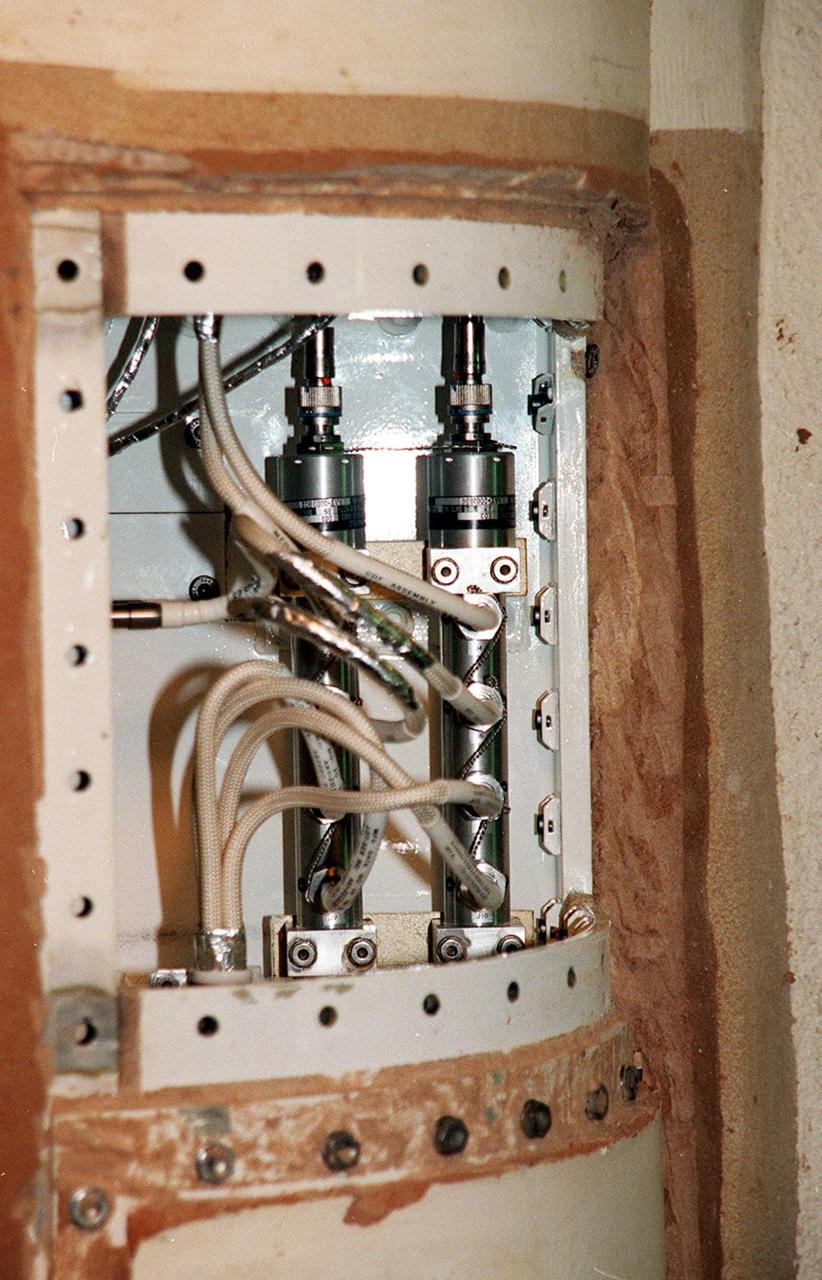
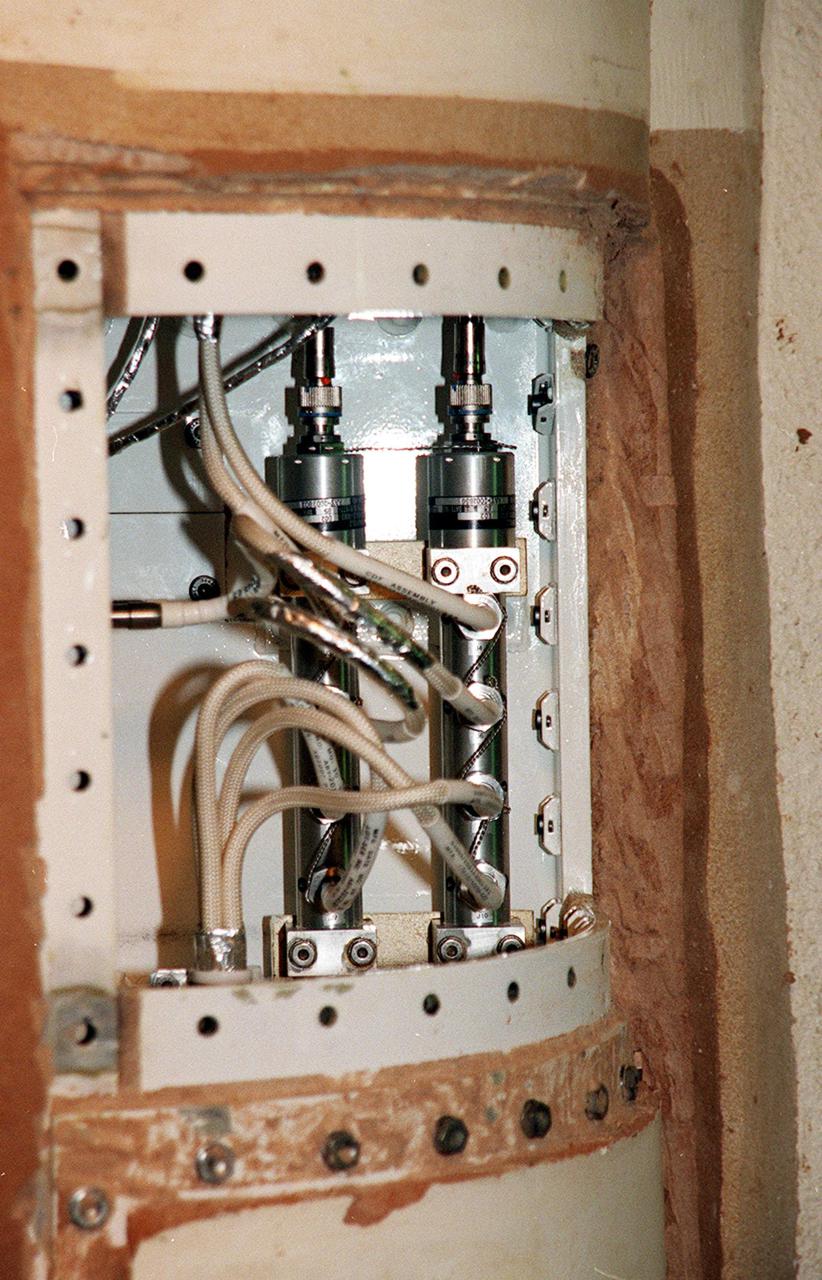
KENNEDY SPACE CENTER, FLA. -- Solid rocket booster cables are exposed after removal of the SRB system tunnel cover. The SRB is part of Space Shuttle Atlantis, rolled back from Launch Pad 39A in order to conduct tests on the cables. A prior extensive evaluation of NASA’s SRB cable inventory on the shelf revealed conductor damage in four (of about 200) cables. Shuttle managers decided to prove the integrity of the system tunnel cables already on Atlantis before launching. Workers are conducting inspections, making continuity checks and conducting X-ray analysis on the cables. The launch has been rescheduled no earlier than Feb. 6. <br
KSC01pp0149
KENNEDY SPACE CENTER, FLA. -- Solid rocket booster cables are exposed after removal of the SRB system tunnel cover. The SRB is part of Space Shuttle Atlantis, rolled back from Launch Pad 39A in order to conduct tests on the cables. A prior extensive evaluation of NASA’s SRB cable inventory on the shelf revealed conductor damage in four (of about 200) cables. Shuttle managers decided to prove the integrity of the system tunnel cables already on Atlantis before launching. Workers are conducting inspections, making continuity checks and conducting X-ray analysis on the cables. The launch has been rescheduled no earlier than Feb. 6. <br
KSC-01PP-0149
KENNEDY SPACE CENTER, FLA. -  The aft segment of a Solid Rocket Booster (SRB) is ready to roll out of the Rotation Processing and Surge Facility at NASA’s Kennedy Space Center.  The segment is being moved to the Vehicle Assembly Building where it will be mated with other segments for use on the launch of Space Shuttle Atlantis on the second Return to Flight mission, STS-121. SRBs are used as matched pairs and each is made up of four solid rocket motor segments.  Two SRBs provide the main thrust to lift the Space Shuttle off the pad to an altitude of about 150,000 feet. In addition, the two SRBs carry the entire weight of the External Tank and orbiter and transmit the weight load through their structure to the Mobile Launcher Platform. Each booster has a thrust (sea level) of approximately 3,300,000 pounds at launch, and provide 71.4 percent of the thrust at liftoff and during first-stage ascent.
KSC-05pd-0541
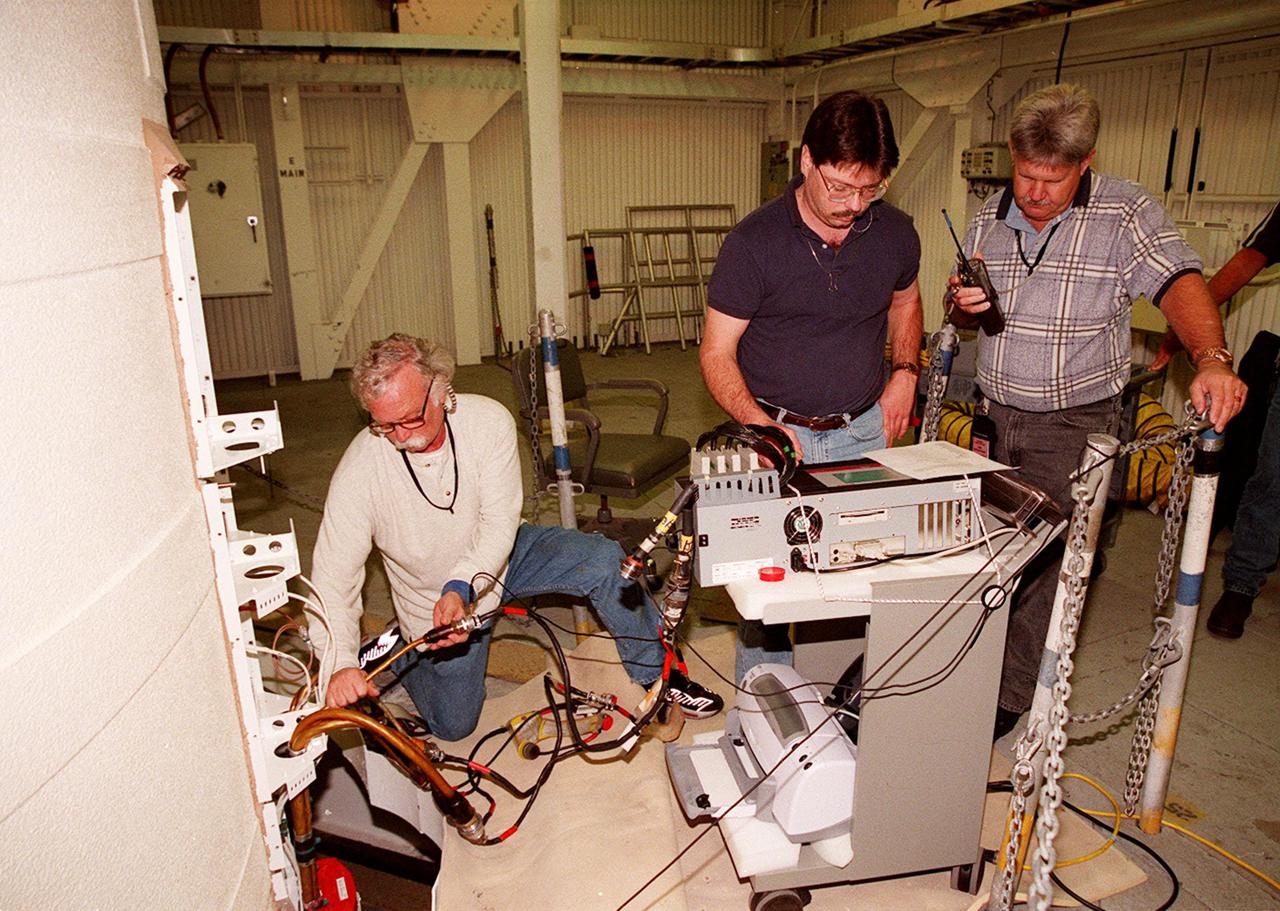
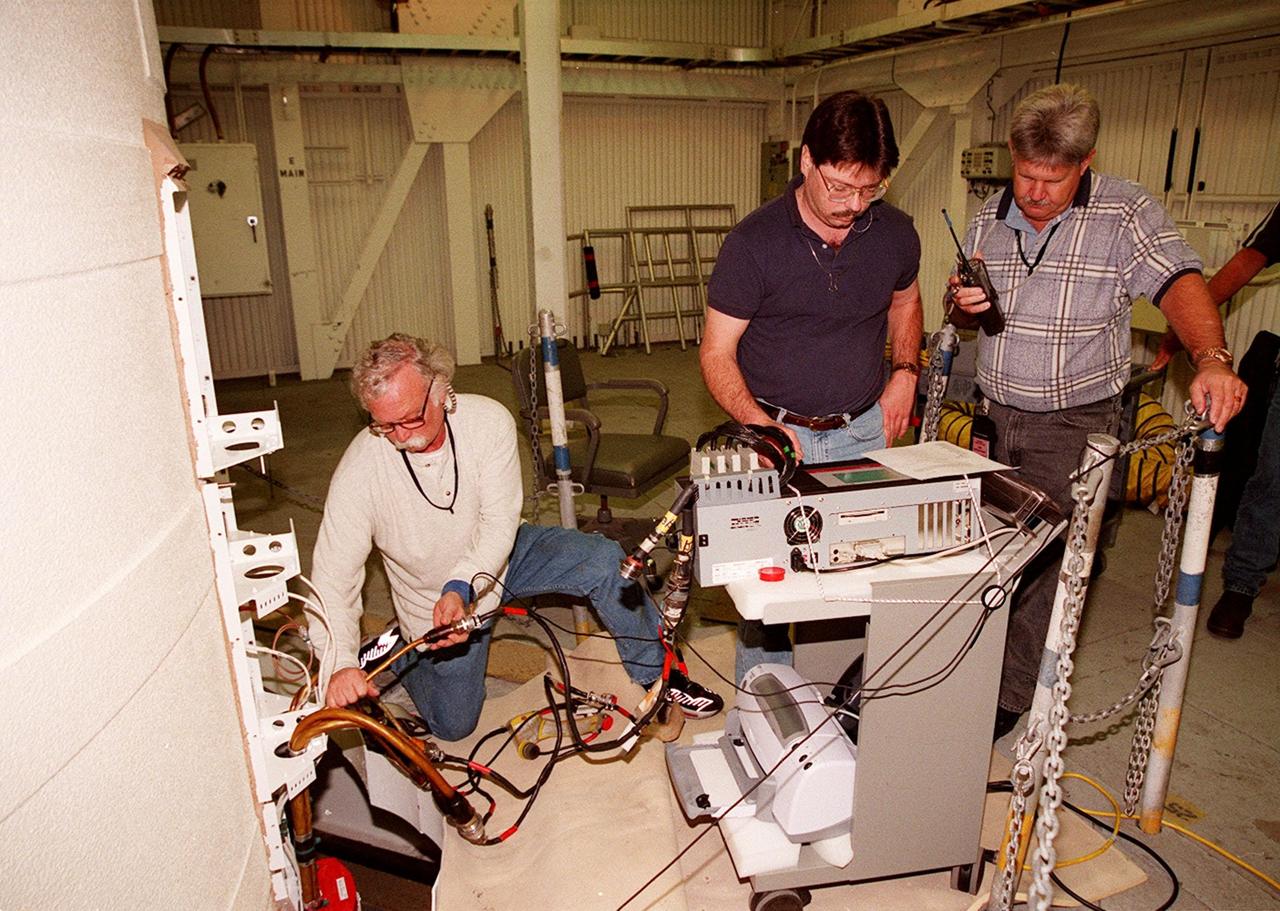
KENNEDY SPACE CENTER, FLA. -- Working near the top of a solid rocket booster, NASA and United Space Alliance SRB technicians hook up SRB cables to a Cirris Signature Touch 1 cable tester. From left are Steve Swichkow, with NASA, and Jim Silviano (back to camera) and Jeff Suter, with USA. The SRB is part of Space Shuttle Atlantis, rolled back from Launch Pad 39A in order to conduct tests on the cables. A prior extensive evaluation of NASA’s SRB cable inventory on the shelf revealed conductor damage in four (of about 200) cables. Shuttle managers decided to prove the integrity of the system tunnel cables already on Atlantis before launching. Workers are conducting inspections, making continuity checks and conducting X-ray analysis on the cables. The launch has been rescheduled no earlier than Feb. 6. <br
KSC01pp0155
KENNEDY SPACE CENTER, FLA. -- Working near the top of a solid rocket booster, NASA and United Space Alliance SRB technicians hook up SRB cables to a Cirris Signature Touch 1 cable tester. From left are Steve Swichkow, with NASA, and Jim Silviano (back to camera) and Jeff Suter, with USA. The SRB is part of Space Shuttle Atlantis, rolled back from Launch Pad 39A in order to conduct tests on the cables. A prior extensive evaluation of NASA’s SRB cable inventory on the shelf revealed conductor damage in four (of about 200) cables. Shuttle managers decided to prove the integrity of the system tunnel cables already on Atlantis before launching. Workers are conducting inspections, making continuity checks and conducting X-ray analysis on the cables. The launch has been rescheduled no earlier than Feb. 6. <br
KSC-01PP-0155
KENNEDY SPACE CENTER, FLA. -- Working near the top of a solid rocket booster, NASA and United Space Alliance SRB technicians hook up SRB cables to a CIRRUS computer for testing. From left are Jim Glass, with USA, performing a Flex test on the cable; Steve Swichkow, with NASA, and Jim Silviano, with USA, check the results on a computer. The SRB is part of Space Shuttle Atlantis, rolled back from Launch Pad 39A in order to conduct tests on the cables. A prior extensive evaluation of NASA’s SRB cable inventory on the shelf revealed conductor damage in four (of about 200) cables. Shuttle managers decided to prove the integrity of the system tunnel cables already on Atlantis before launching. Workers are conducting inspections, making continuity checks and conducting X-ray analysis on the cables. The launch has been rescheduled no earlier than Feb. 6. <br
KSC-01PP-0156
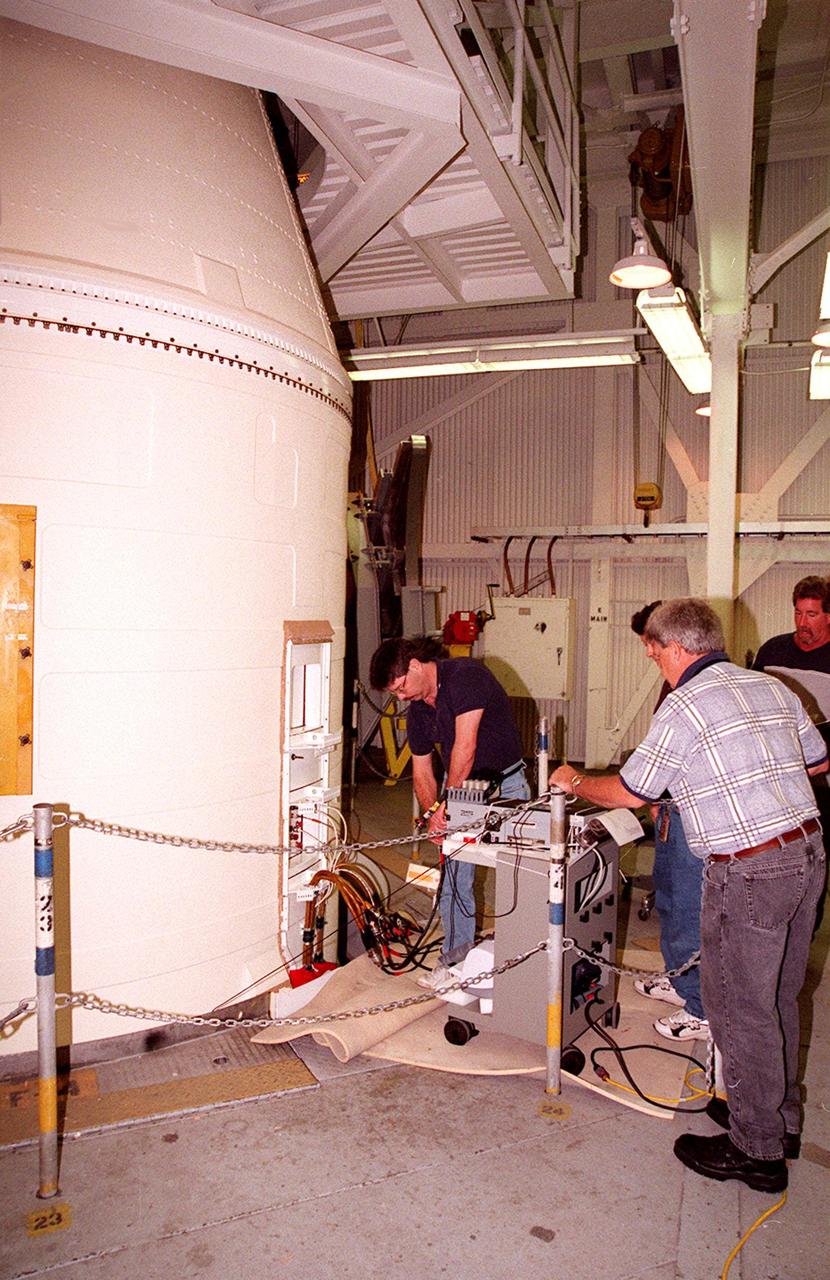
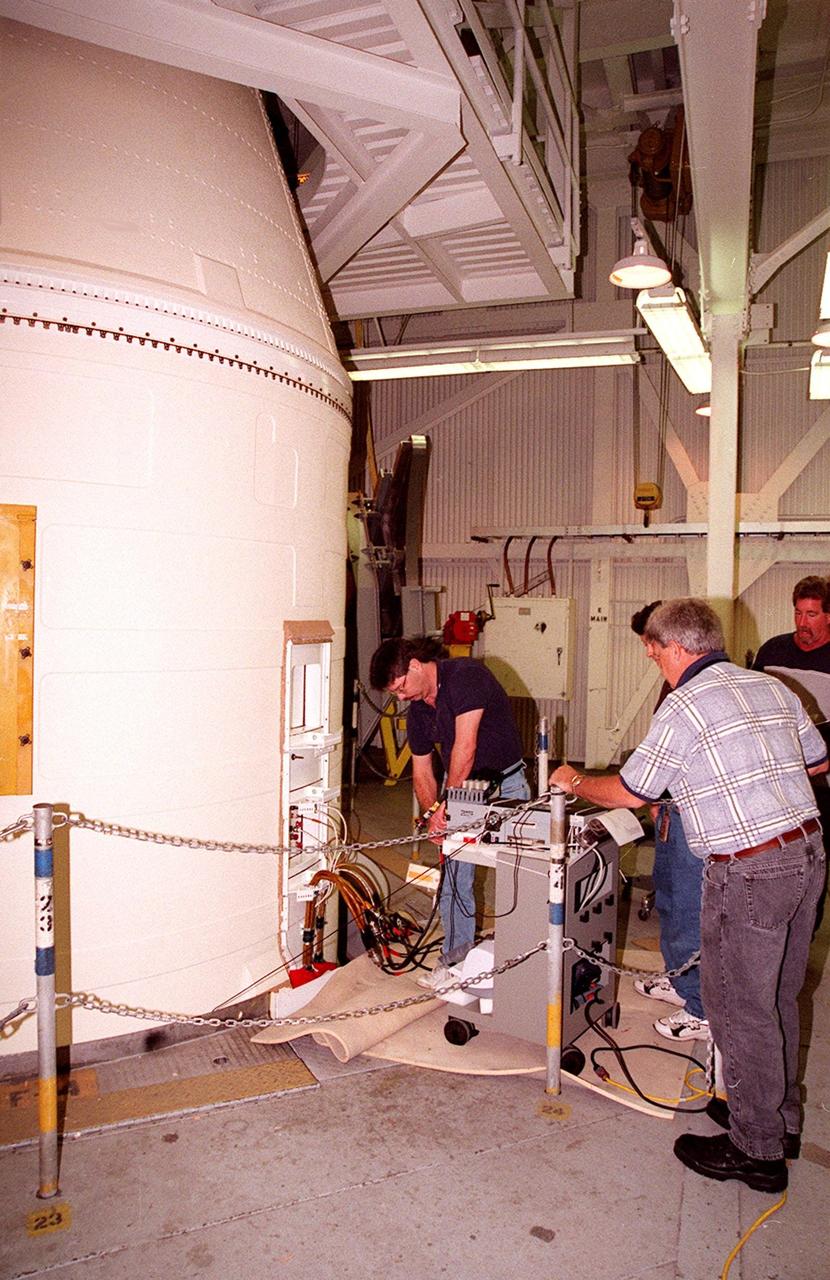
KENNEDY SPACE CENTER, FLA. -- In the Vehicle Assembly Building, near the top of the solid rocket booster, Henry Jones and Richard Bruns begin to detach the SRB system tunnel cover on the 36 cables inside. Jones and Bruns are United Space Alliance SRB technicians. The SRB is part of Space Shuttle Atlantis, rolled back from Launch Pad 39A in order to conduct tests on the cables. A prior extensive evaluation of NASA’s SRB cable inventory on the shelf revealed conductor damage in four (of about 200) cables. Shuttle managers decided to prove the integrity of the system tunnel cables already on Atlantis before launching. Workers are conducting inspections, making continuity checks and conducting X-ray analysis on the cables. The launch has been rescheduled no earlier than Feb. 6.<br
KSC01pp0145
KENNEDY SPACE CENTER, FLA. -  The media visit the operations center on board the Freedom Star, one of the Solid Rocket Booster (SRB) retrieval ships.  The stop was part of a day-long event that featured the movement of the first SRB segments to the Vehicle Assembly Building for stacking for Return to Flight mission STS-114. Two SRBs support the liftoff of the Space Shuttle on a launch.  The twin 149-foot tall, 12-foot diameter SRBs provide the main propulsion system during launch to place the orbiters in the proper orbit around the Earth.  They operate parallel with the Space Shuttle main engines for the first two minutes of flight and jettison away from the orbiter, with help from the Booster Separation Motors, about 26.3 nautical miles above the Earth’s surface.
KSC-04pd-2393
KENNEDY SPACE CENTER, FLA. -- In the Vehicle Assembly Building, Richard Bruns, a United Space Alliance SRB technician, begins to detach the SRB system tunnel cover on the 36 cables inside. The SRB is part of Space Shuttle Atlantis, rolled back from Launch Pad 39A in order to conduct tests on the cables. A prior extensive evaluation of NASA’s SRB cable inventory on the shelf revealed conductor damage in four (of about 200) cables. Shuttle managers decided to prove the integrity of the system tunnel cables already on Atlantis before launching. Workers are conducting inspections, making continuity checks and conducting X-ray analysis on the cables. The launch has been rescheduled no earlier than Feb. 6. <br
KSC01pp0143
KENNEDY SPACE CENTER, FLA. -- Near the bottom of the solid rocket booster in the Vehicle Assembly Building, a United Space Alliance SRB technician detaches the SRB system tunnel cover on the 36 cables inside. The SRB is part of Space Shuttle Atlantis, rolled back from Launch Pad 39A in order to conduct tests on the cables. A prior extensive evaluation of NASA’s SRB cable inventory on the shelf revealed conductor damage in four (of about 200) cables. Shuttle managers decided to prove the integrity of the system tunnel cables already on Atlantis before launching. Workers are conducting inspections, making continuity checks and conducting X-ray analysis on the cables. The launch has been rescheduled no earlier than Feb. 6
KSC01pp0147
KENNEDY SPACE CENTER, FLA. -  On the deck of the Freedom Star, one of the Solid Rocket Booster (SRB) retrieval ships, the media learn about retrieval operations.  The stop was part of a day-long event that featured the movement of the first SRB segments to the Vehicle Assembly Building for stacking for Return to Flight mission STS-114. Two SRBs support the liftoff of the Space Shuttle on a launch.  The twin 149-foot tall, 12-foot diameter SRBs provide the main propulsion system during launch to place the orbiters in the proper orbit around the Earth.  They operate parallel with the Space Shuttle main engines for the first two minutes of flight and jettison away from the orbiter, with help from the Booster Separation Motors, about 26.3 nautical miles above the Earth’s surface.
KSC-04pd-2394
KENNEDY SPACE CENTER, FLA. -- In the Vehicle Assembly Building, Richard Bruns and Henry Jones, United Space Alliance SRB technicians, begin to detach the SRB system tunnel cover on the 36 cables inside. The SRB is part of Space Shuttle Atlantis, rolled back from Launch Pad 39A in order to conduct tests on the cables. A prior extensive evaluation of NASA’s SRB cable inventory on the shelf revealed conductor damage in four (of about 200) cables. Shuttle managers decided to prove the integrity of the system tunnel cables already on Atlantis before launching. Workers are conducting inspections, making continuity checks and conducting X-ray analysis on the cables. The launch has been rescheduled no earlier than Feb. 6. <br
KSC-01PP-0144
KENNEDY SPACE CENTER, FLA. -- Near the bottom of the solid rocket booster in the Vehicle Assembly Building, a United Space Alliance SRB technician detaches the SRB system tunnel cover on the 36 cables inside. The SRB is part of Space Shuttle Atlantis, rolled back from Launch Pad 39A in order to conduct tests on the cables. A prior extensive evaluation of NASA’s SRB cable inventory on the shelf revealed conductor damage in four (of about 200) cables. Shuttle managers decided to prove the integrity of the system tunnel cables already on Atlantis before launching. Workers are conducting inspections, making continuity checks and conducting X-ray analysis on the cables. The launch has been rescheduled no earlier than Feb. 6
KSC-01PP-0147
KENNEDY SPACE CENTER, FLA. -- In the Vehicle Assembly Building, near the top of the solid rocket booster, Henry Jones and Richard Bruns begin to detach the SRB system tunnel cover on the 36 cables inside. Jones and Bruns are United Space Alliance SRB technicians. The SRB is part of Space Shuttle Atlantis, rolled back from Launch Pad 39A in order to conduct tests on the cables. A prior extensive evaluation of NASA’s SRB cable inventory on the shelf revealed conductor damage in four (of about 200) cables. Shuttle managers decided to prove the integrity of the system tunnel cables already on Atlantis before launching. Workers are conducting inspections, making continuity checks and conducting X-ray analysis on the cables. The launch has been rescheduled no earlier than Feb. 6.<br
KSC-01PP-0145
KENNEDY SPACE CENTER, FLA. -  The media tour Hangar AF where Solid Rocket Booster (SRB) segments are refurbished (an aft skirt is in the background).  The stop was part of a day-long event that featured the movement of the first SRB segments to the Vehicle Assembly Building for stacking for Return to Flight mission STS-114. Two SRBs support the liftoff of the Space Shuttle on a launch.  The twin 149-foot tall, 12-foot diameter SRBs provide the main propulsion system during launch to place the orbiters in the proper orbit around the Earth.  They operate parallel with the Space Shuttle main engines for the first two minutes of flight and jettison away from the orbiter, with help from the Booster Separation Motors, about 26.3 nautical miles above the Earth’s surface.
KSC-04pd-2395