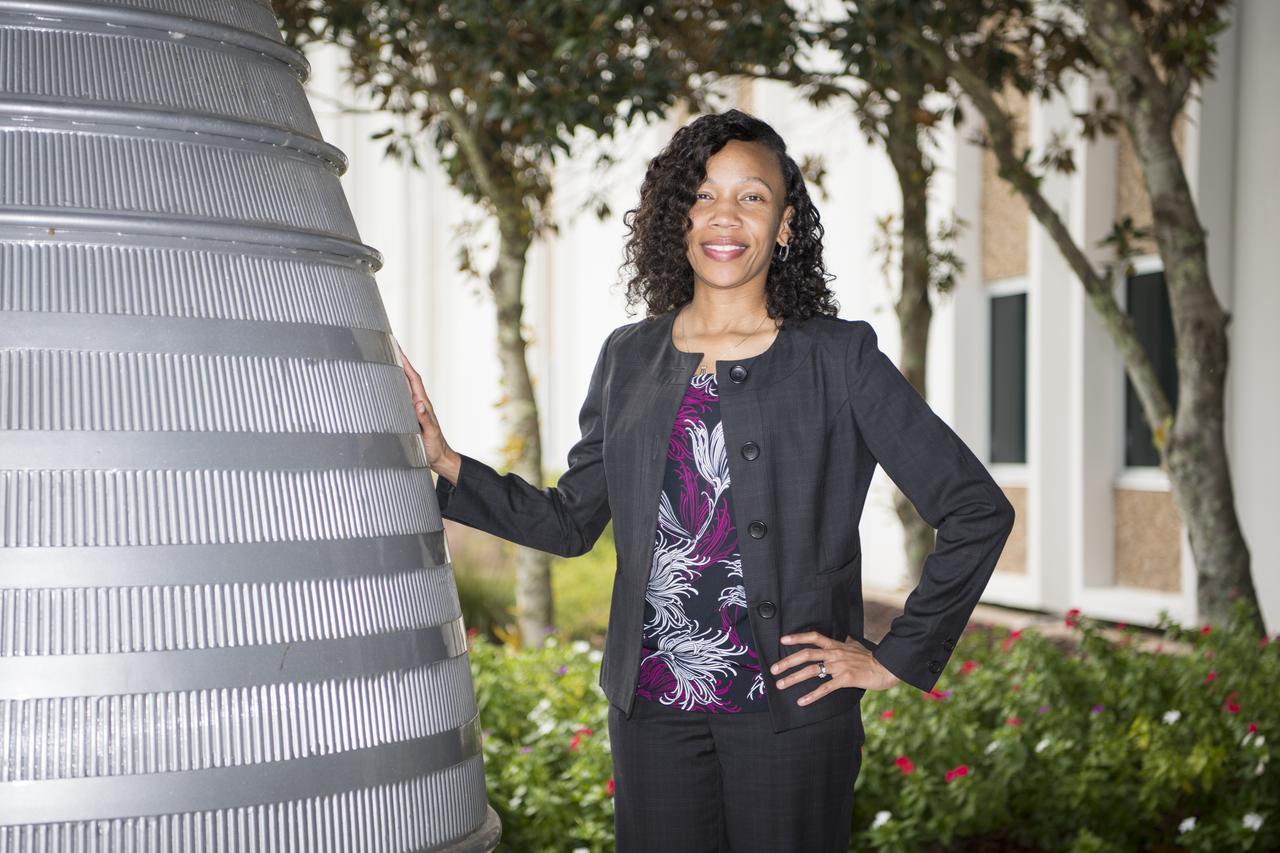
Portrait; Mary Horne, a NASA reimbursable accountant at Stennis Space Center, performs analysis and budgeting funds for SSC tenants and commercial customers. This photo was taken as part of a monthy feature called “Faces of Stennis.”
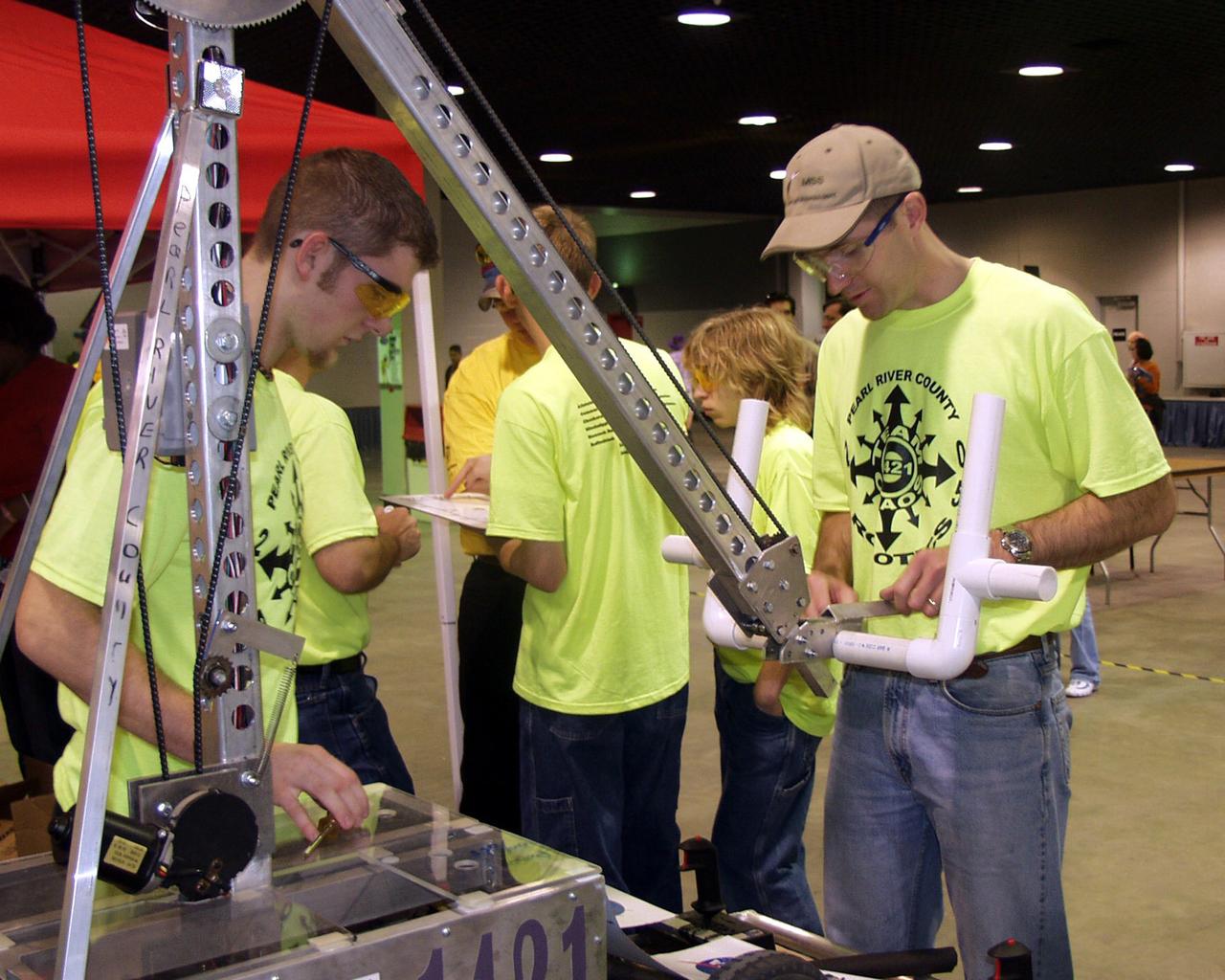
Engineers from SSC mentor teams of students from Mississippi and Louisiana competing in the FIRST Robotics Competition.
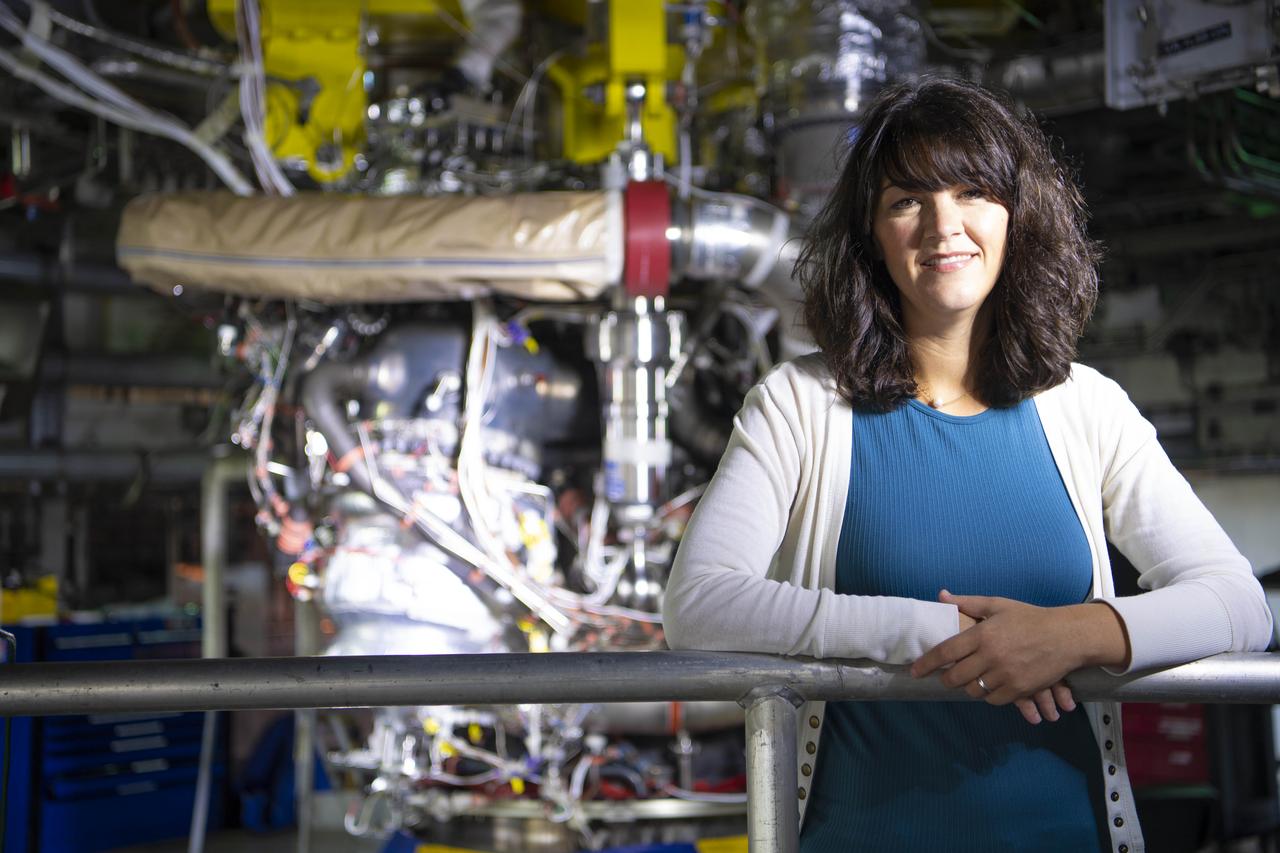
Nyla Trumbach, a NASA lead mechanical engineer, broke barriers as the first female to conduct a J-2X powerpack engine test at Stennis Space Center. She currently works on testing of the RS-25 rocket engine, shown installed on the A-1 Test Stand at SSC.
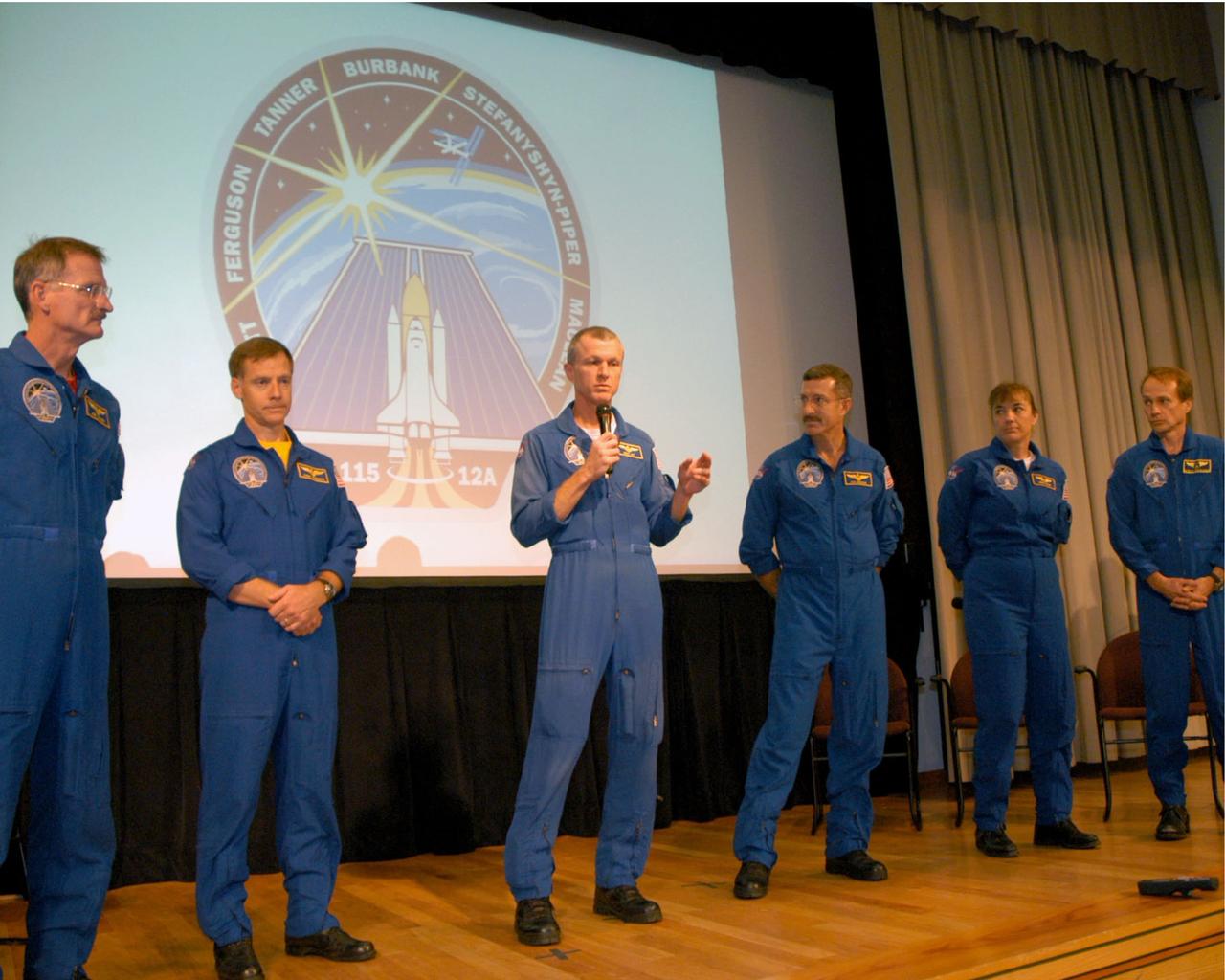
Commander Brent Jett (center) talks with employees and visitors at NASA Stennis Space Center. The astronauts of NASA's STS-115 space shuttle mission visited SSC in south Mississippi to share highlights of their 12-day mission and to thank SSC employees for the reliability of the space shuttle's main engines, which helped propel Space Shuttle Atlantis into orbit. STS-115's other crewmembers are (from left) Mission Specialists Joe Tanner, Dan Burbank, Heidemarie Stefanyshyn-Piper and Steve MacLean of the Canadian Space Agency. The mission launched Sept. 9, 2006, resuming construction of the International Space Station.
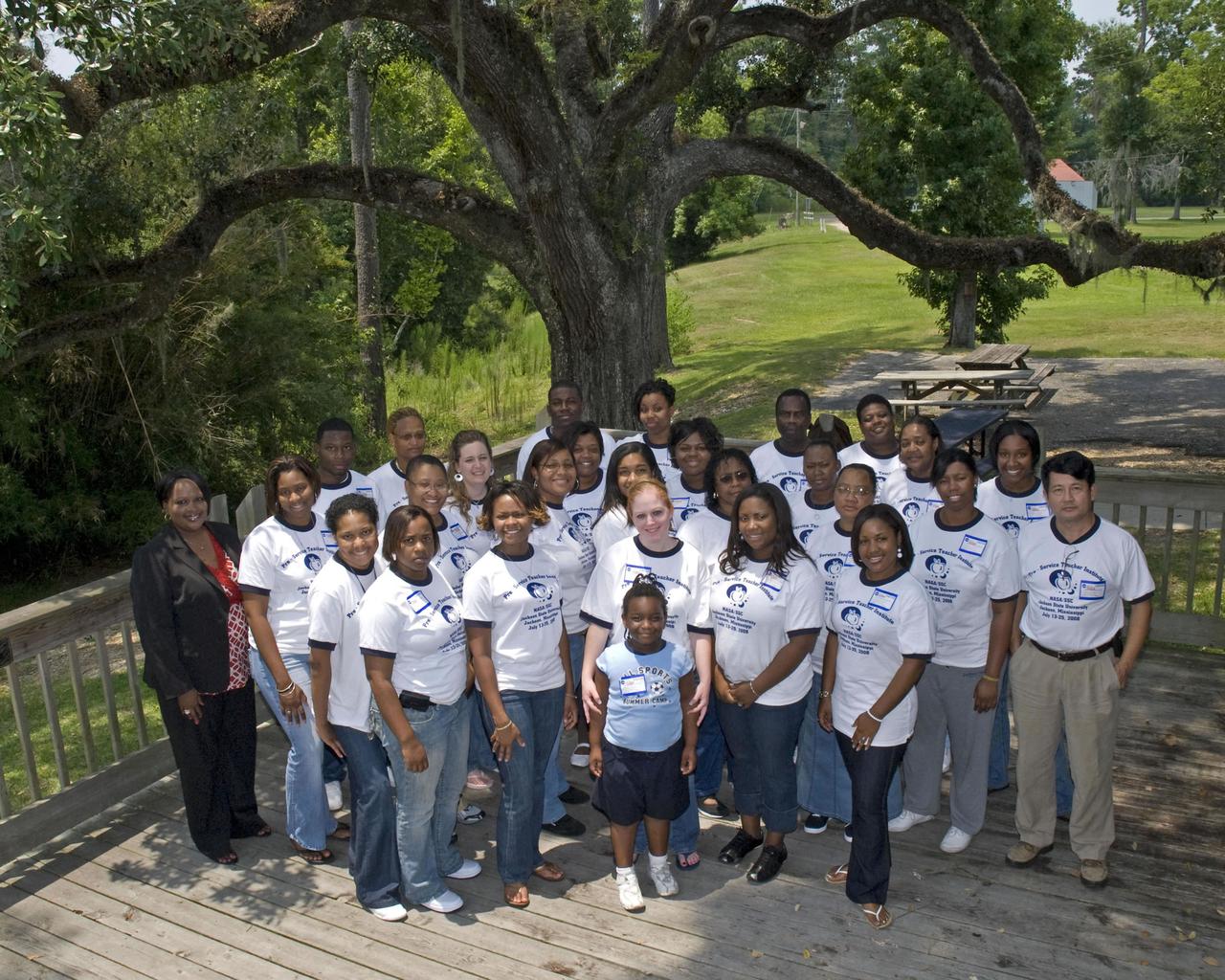
The Pre-Service Teachers Institute sponsored by Jackson (Miss.) State University participated in an agencywide Hubble Space Telescope workshop at Stennis Space Center on July 18. Twenty-five JSU junior education majors participated in the workshop, a site tour and educational presentations by Karma Snyder of the NASA SSC Engineering & Safety Center and Anne Peek of the NASA SSC Deputy Science & Technology Division.

At the Hurricane Katrina observance held Aug. 29 in the StenniSphere auditorium, Stennis Space Center Deputy Director David Throckmorton (left) and RAdm. Timothy McGee, Commander, Naval Meteorology and Oceanography Command, unveil a plaque dedicated to SSC employees.
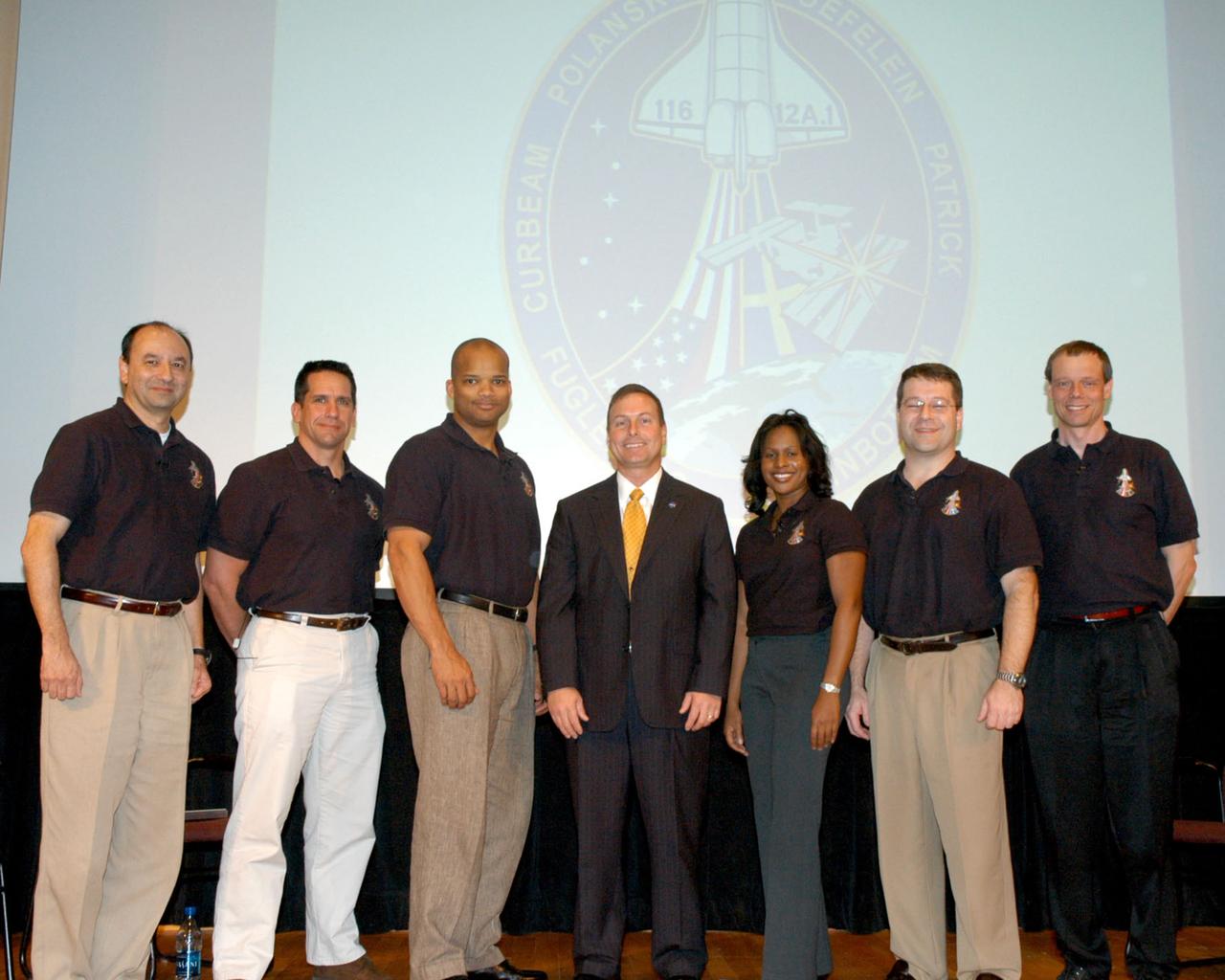
The astronauts of NASA's STS-116 space shuttle mission visited NASA Stennis Space Center in south Mississippi to share highlights of their 13-day mission and to thank SSC employees for the reliability of the space shuttle's main engines, which helped propel Space Shuttle Discovery into orbit during its Dec. 9, 2006, launch. Pictured (from left) are STS-116 crewmembers Commander Mark Polansky, Pilot Bill Oefelein, Mission Specialist Robert Curbeam, SSC Center Director, Richard Gilbrech, Mission Specialists Joan Higginbotham, Nicholas Patrick and Christer Fuglesang. During the mission, which began with the first evening launch since 2002, the astronauts installed the P5 spacer truss segment and rewired the International Space Station's power system.
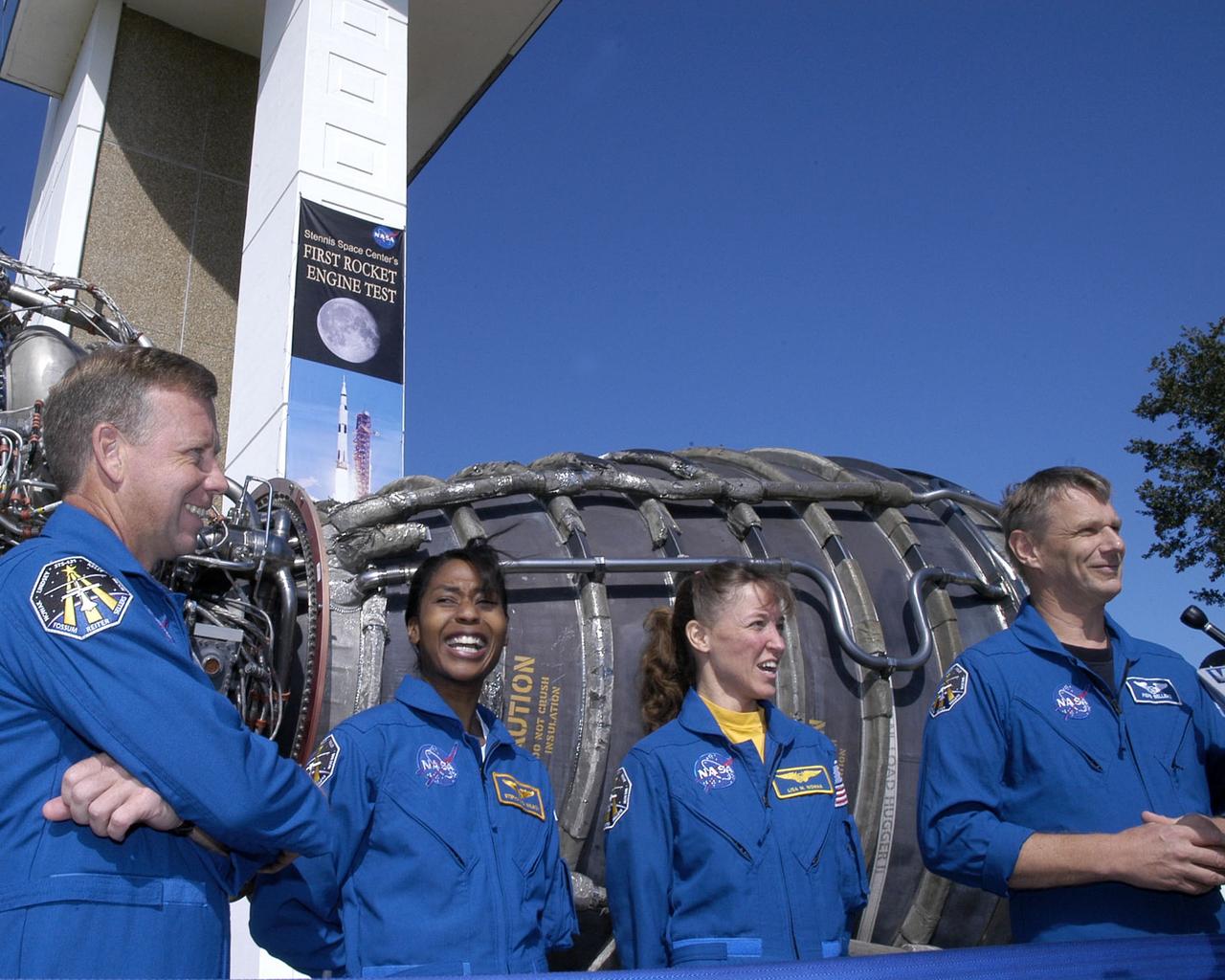
Astronauts Steve Lindsey (left), Stephanie Wilson, Lisa Nowak and Piers Sellers meet with employees at NASA Stennis Space Center. The crewmembers on NASA's space shuttle mission STS-121, which launched July 4, 2006, thanked SSC's workers for their dedication and safe work history. `We feel blessed that you are a part of the NASA family,' Wilson said. All four expressed gratitude for the reliability of the space shuttle's main engines, which helped propel the STS-121 crew into orbit on their 13-day mission.
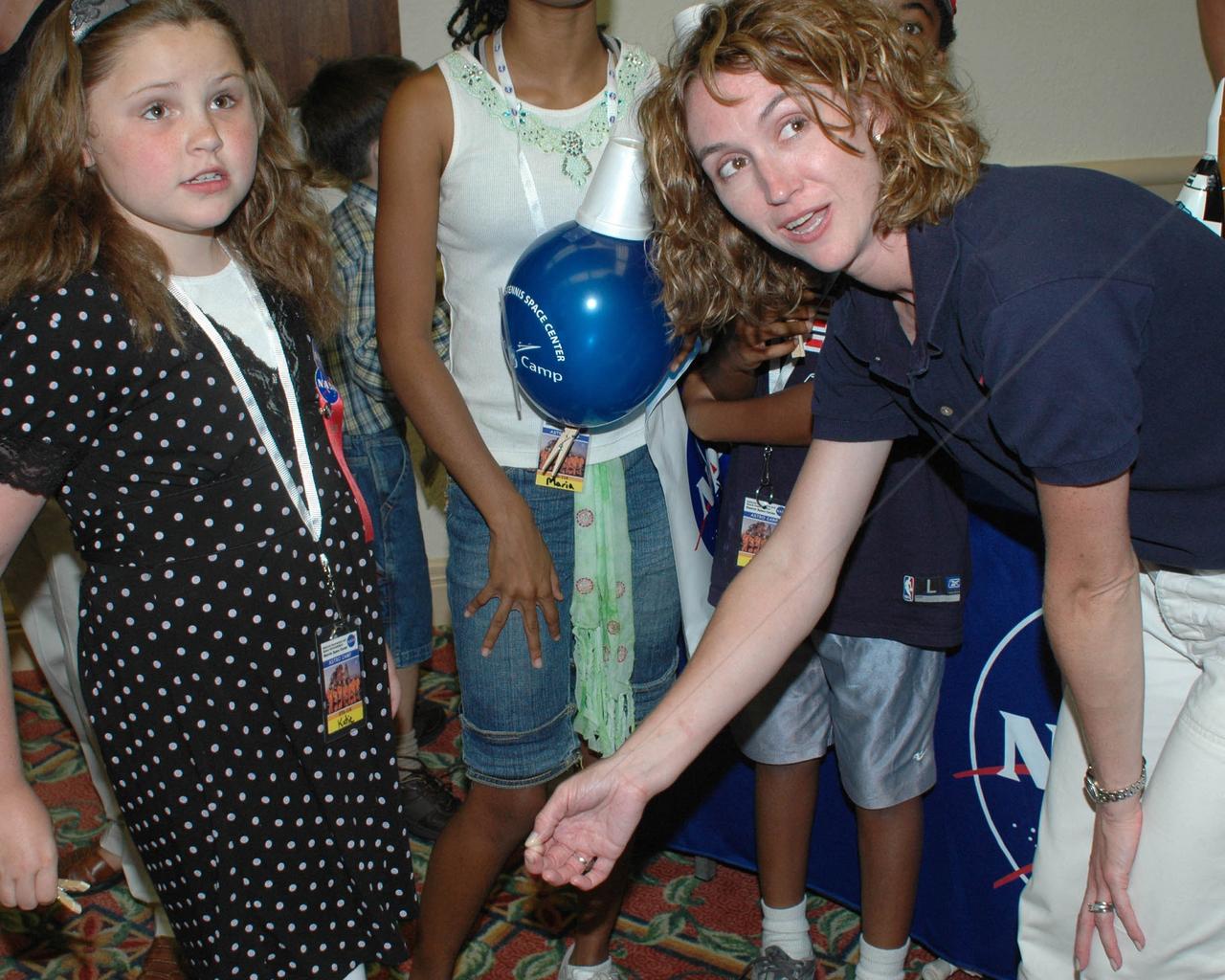
Katie Craig, daughter of former Stennis Space Center Deputy Director Mark Craig, launches a 'balloon rocket' with the help of Rebecca Compretta, Astro Camp coordinator at SSC. SSC took Astro Camp on the road to Florida this week to engage children and their parents during activities surrounding the Aug. 8 launch of Space Shuttle Endeavour on NASA's STS-118 mission to the International Space Station. Astro Camp is SSC's popular space camp program designed to inspire and educate students using science and math principles.
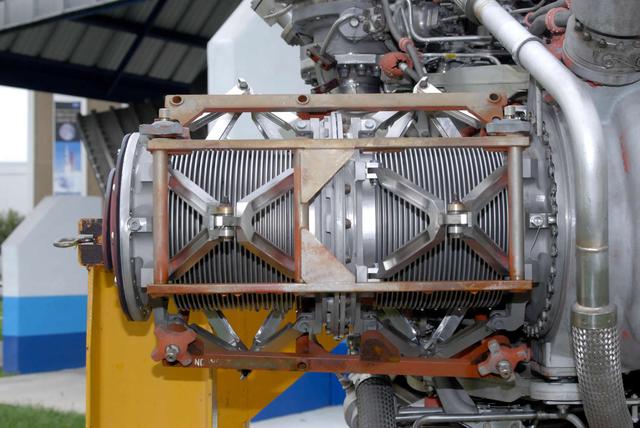
Stennis Space Center engineers are preparing to conduct water tests on an updated version of the scissors duct component of the J-2X engine. Measuring about 2 feet long and about 8 inches in diameter, the duct on the J-2X predecessor, the J-2, connected its fuel turbo pumps to the flight vehicle's upper stage run tanks. According to NASA's J-2X project manager at SSC, Gary Benton, the water tests should establish the limits of the duct's ability to withstand vibration.
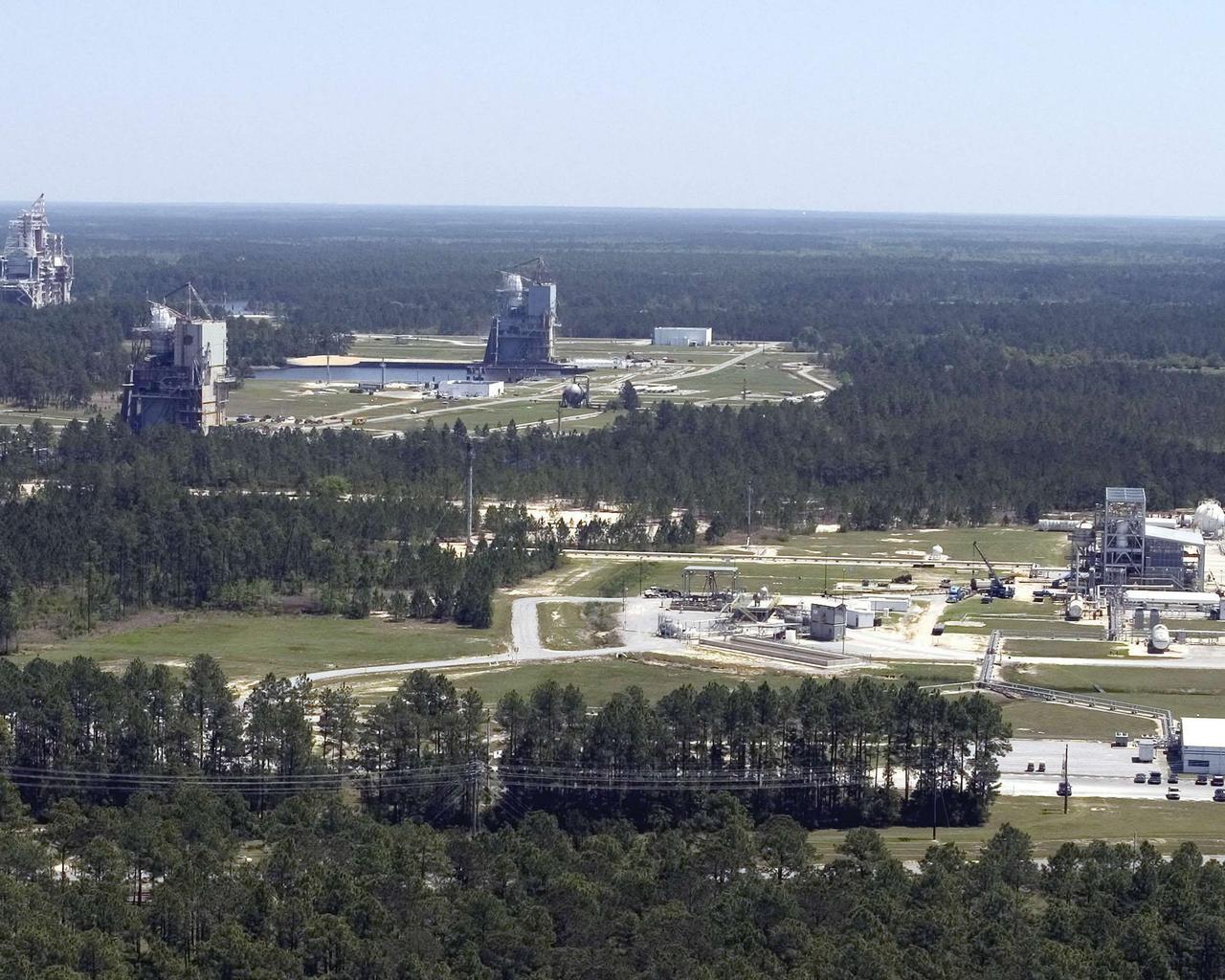
SSC's rocket engine test complex and its four unique test stands provide test operations for the development and certification of propulsion systems, subsystems and components.
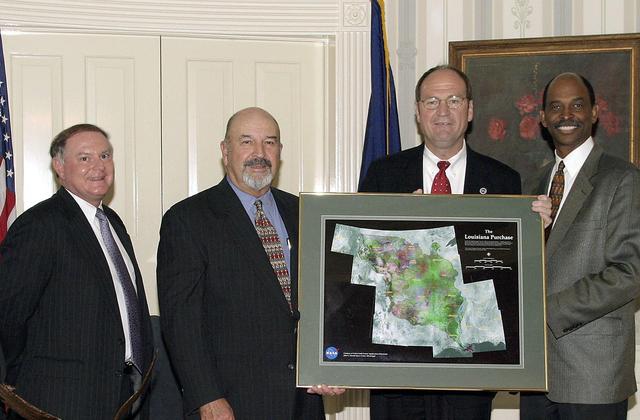
NASA Stennis Space Center (SSC) Interim Center Director Michael Rudolphi (second from right) presents Louisiana Gov. Mike Foster (second from left) an image from space of the area that comprised the Louisiana Purchase. Gov. Foster and Rudolphi signed a Memorandum of Understanding (MOU) between SSC and the state of Louisiana to promote technology transfer partnerships. Also pictured are Charles D'Agostino (left), executive director of the Louisiana Business and Technology Center, and Don Hutchison, secretary of the Louisiana Department of Economic Development.
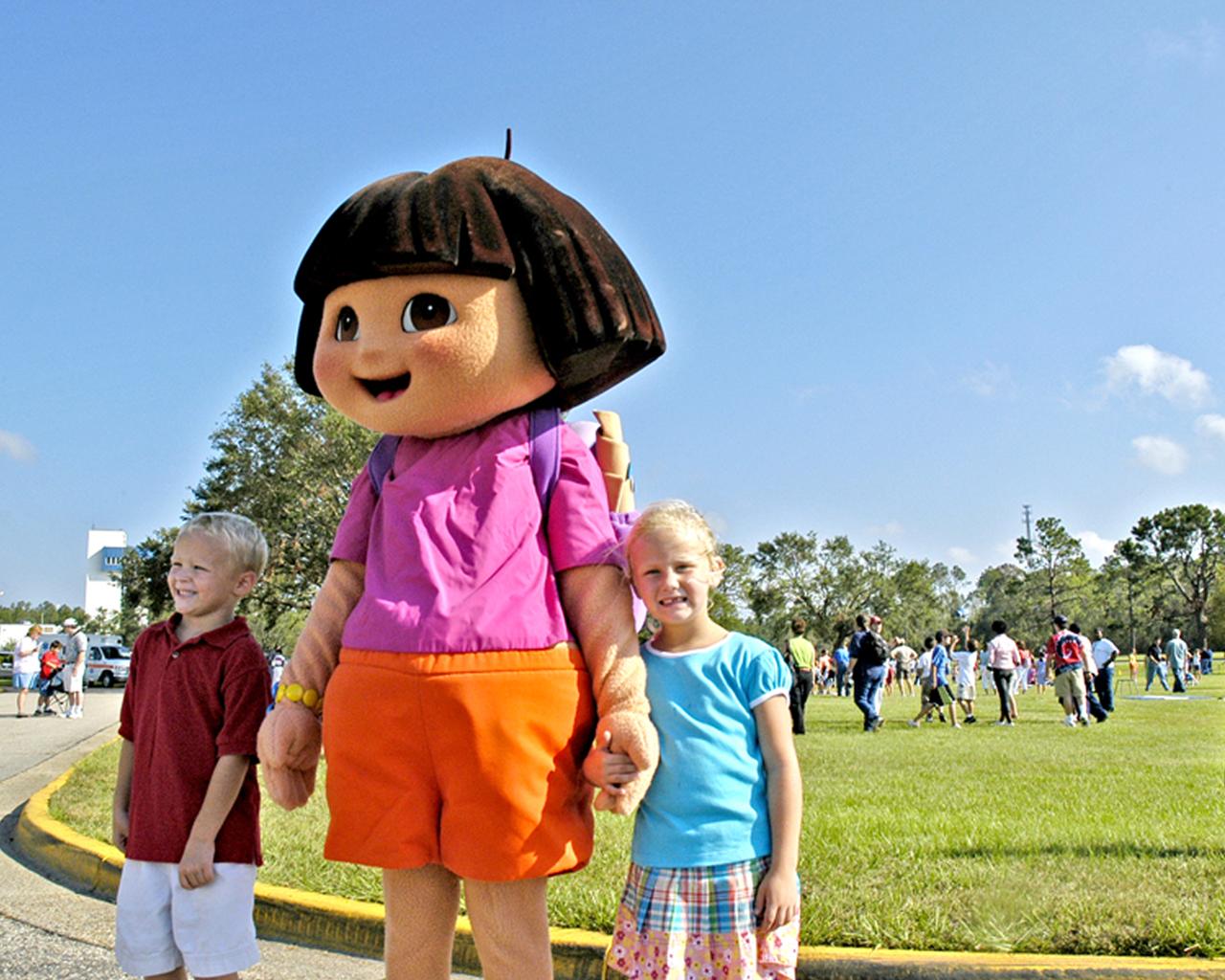
From left, Cobie Smith, 5, and Tatume Smith, also 5, have their picture taken with 'Dora the Explorer.' The children were participants in Nickelodeon's Worldwide Day of Play celebration at Stennis Space Center (SSC) on Oct. 1. The Worldwide Day of Play is sponsored annually by Nickelodeon television network to encourage children to be physically active. Approximately 150 children participated in the event at SSC.
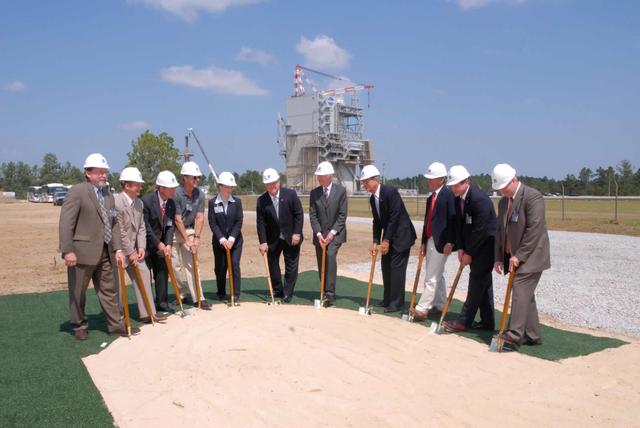
NASA officials and government leaders participated in a groundbreaking event for a new rocket engine test stand at NASA's Stennis Space Center, Miss. Pictured (left to right) are Deputy Associate Administrator for Exploration Systems Doug Cooke, Pratt & Whitney Rocketdyne President Jim Maser, Stennis Space Center Director Richard Gilbrech, NASA Associate Administrator for Exploration Systems Scott Horowitz, NASA Deputy Administrator Shana Dale, Mississippi Gov. Haley Barbour, Sen. Thad Cochran, Sen. Trent Lott, Rep. Gene Taylor, SSC's Deputy Director Gene Goldman, and SSC's A-3 Project Manager Lonnie Dutreix. Stennis' A-3 Test Stand will provide altitude testing for NASA's developing J-2X engine. That engine will power the upper stages of NASA's Ares I and Ares V rockets. A-3 is the first large test stand to be built at SSC since the site's inception in the 1960s.
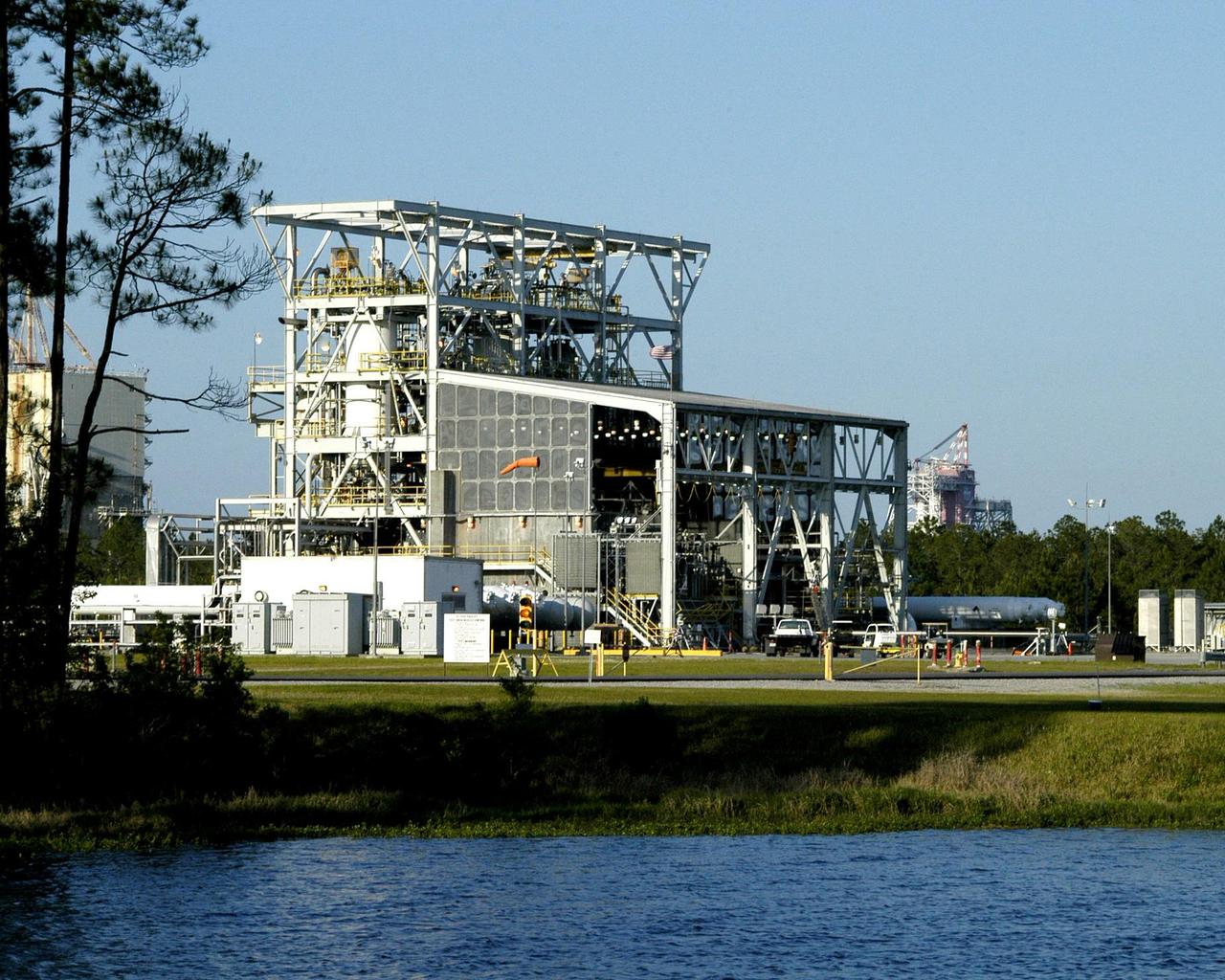
The E Test Complex is SSC's versatile, three-stand complex that includes seven separate test cells capable of testing that involves ultra high-pressure gases and cryogenic fluids.
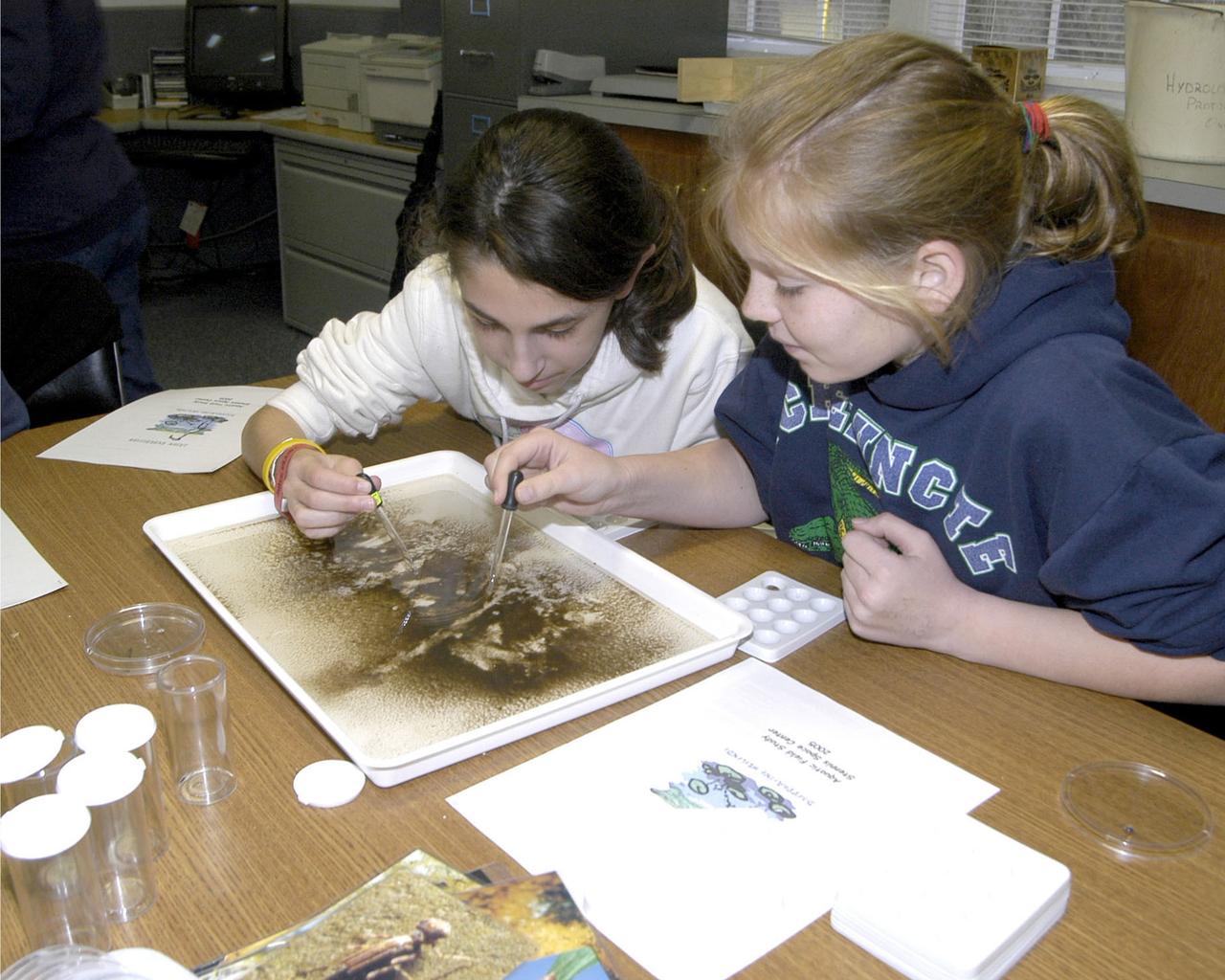
Students participate in the JASON Project's 2004-05 expedition, `Disappearing Wetlands' at SSC, conducting field lab experiments and watching live broadcasts from JASON Expedition Louisiana research sites.
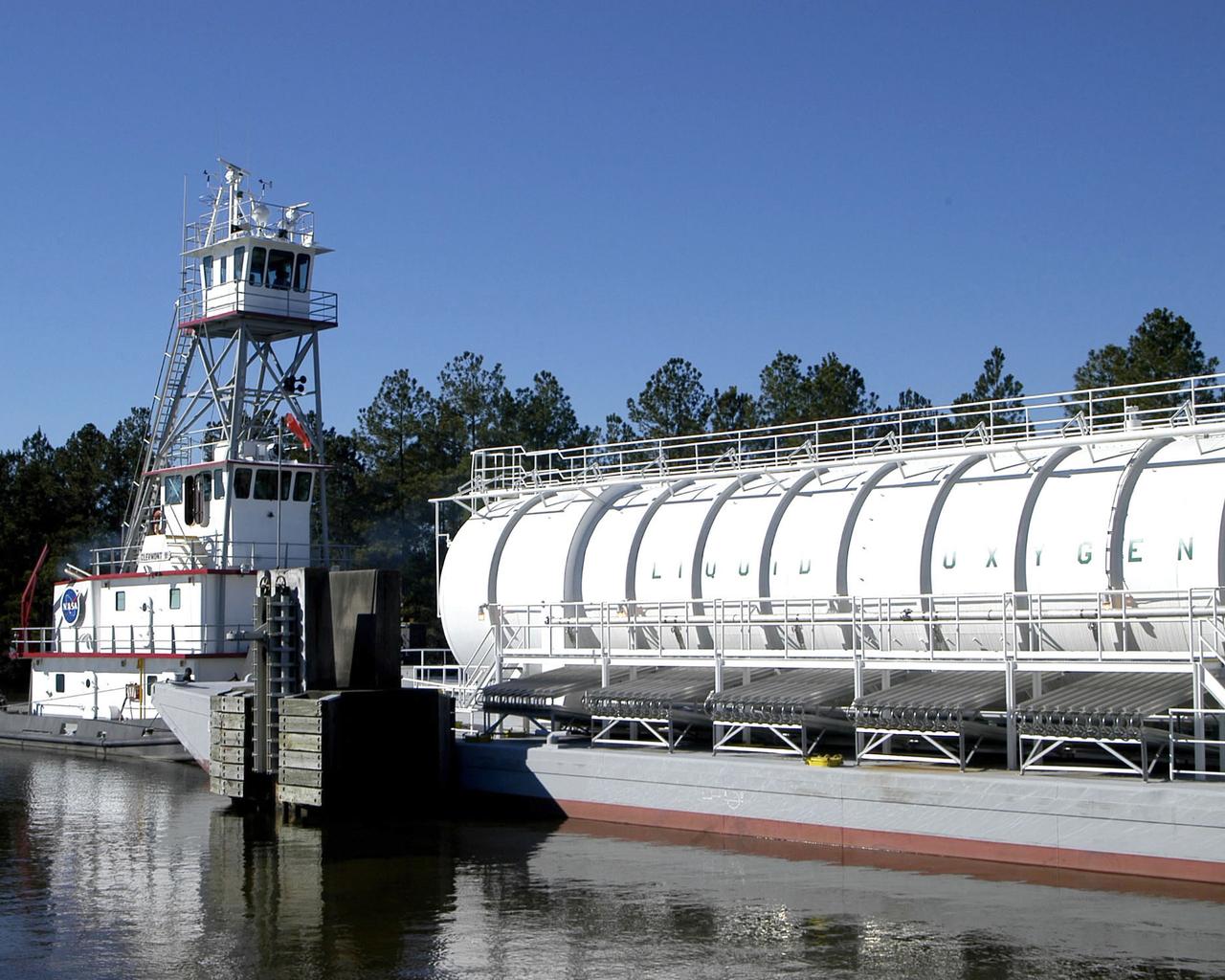
The crew of the NASA tugboat Clermont II navigates a barge of super-cool liquid oxygen through the 7 -mile canal system at SSC prior to a Space Shuttle Main Engine test.
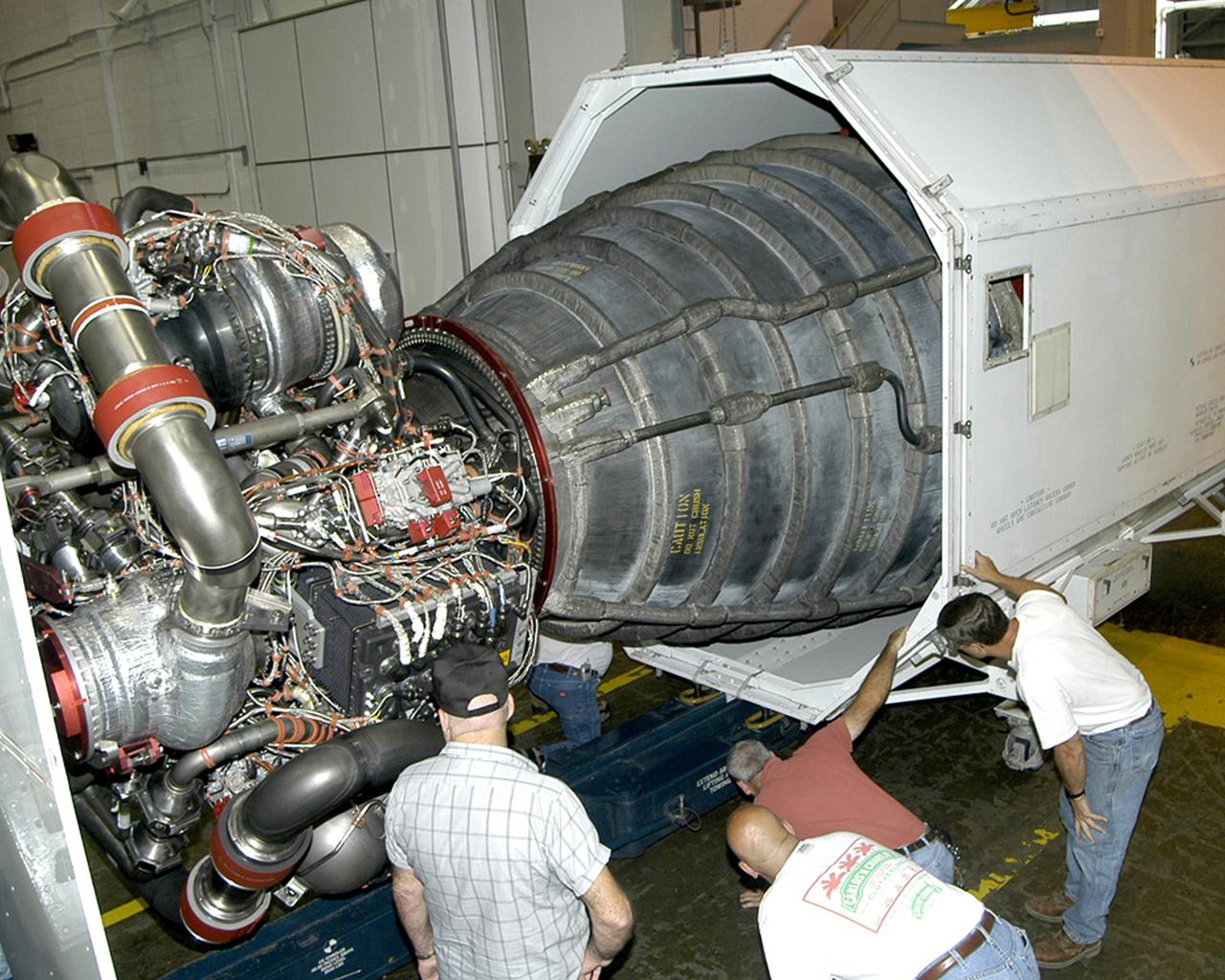
On Oct. 5, 2004, SSC shipped the last of the three Space Shuttle Main Engines to NASA's Kennedy Space Center for installation on Space Shuttle Discovery for STS-114, NASA's Return to Flight mission.

Officials cut the ribbon during dedication ceremonies of the George A. Knauer Marine Science Building on Oct. 17 at NASA Stennis Space Center (SSC). The $2.75 million facility, the first building at the test site funded by the state of Mississippi, houses six science labs, classrooms and office space for 40 faculty and staff. Pictured are, from left, Rear Adm. Thomas Donaldson, commander of the Naval Meteorology and Oceanography Command; SSC Assistant Director David Throckmorton; Dr. George A. Knauer, founder of the Center of Marine Science at the University of Southern Mississippi (USM); Lt. Gov. Amy Tuck; and USM President Dr. Shelby Thames.
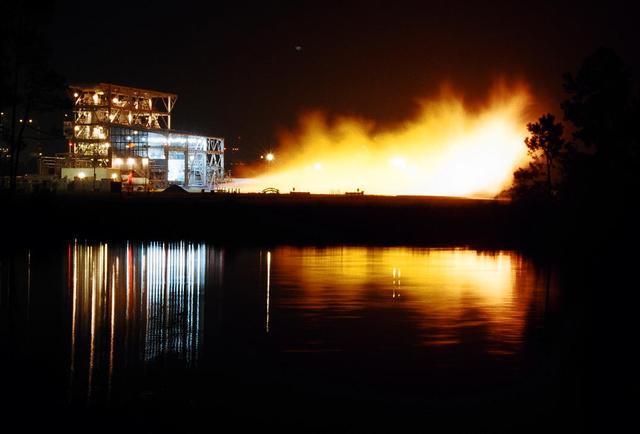
Gaseous hydrogen is burned off at the E1 Test Stand the night of Oct. 7 during a cold-flow test of the fuel turbopump of the Integrated Powerhead Demonstrator (IPD) at NASA Stennis Space Center (SSC). The gaseous hydrogen spins the pump's turbine during the test, which was conducted to verify the pump's performance. Engineers plan one more test before sending the pump to The Boeing Co. for inspection. It will then be returned to SSC for engine system assembly. The IPD is the first reusable hydrogen-fueled advanced engine in development since the Space Shuttle Main Engine.
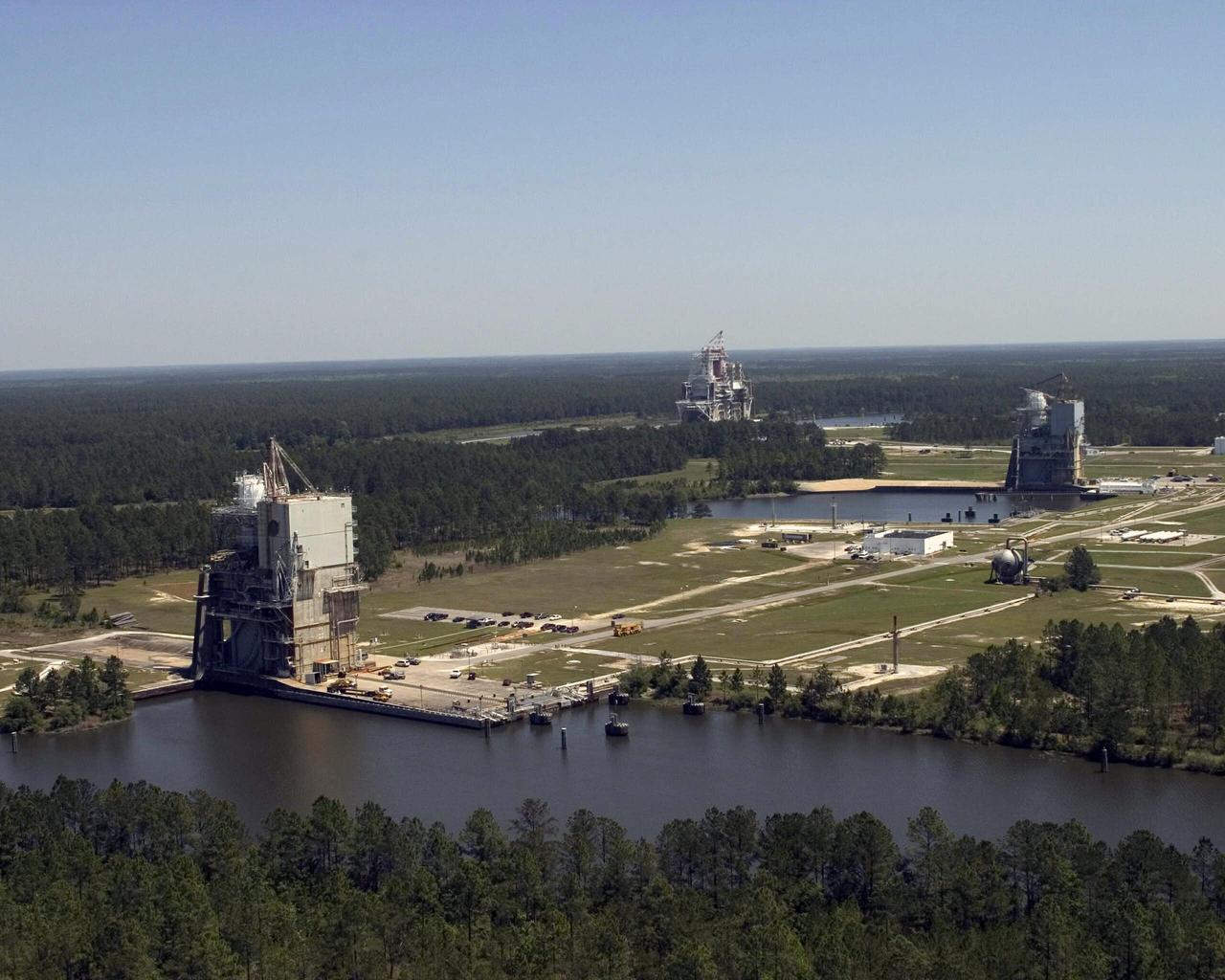
SSC's A-1, A-2 and B test stands were built in the early 1960s to test the first and second stages of the Apollo Saturn V rocket that safely transported Americans to the moon. The A-1 Stand (foreground) will soon test the J-2X engines that will power the rockets to take Americans back to the moon.

Barbara Marino (left), Stennis Space Center education technology specialist, shows Astro Camp Counselor Beverly Fitzsimmons a LEGO model during a teambuilding exercise May 29 at SSC's North Gate computer lab as a part of the counselors' `new hire' orientation.

Sarah Dastugue, 11, leaps in the air as Libby Knox, 9, swings a jump rope. The children were participants in Nickelodeon's Worldwide Day of Play celebration at Stennis Space Center (SSC) on Oct. 1. On the day of the event, children all over the world participate in physical activities as part of the celebration.
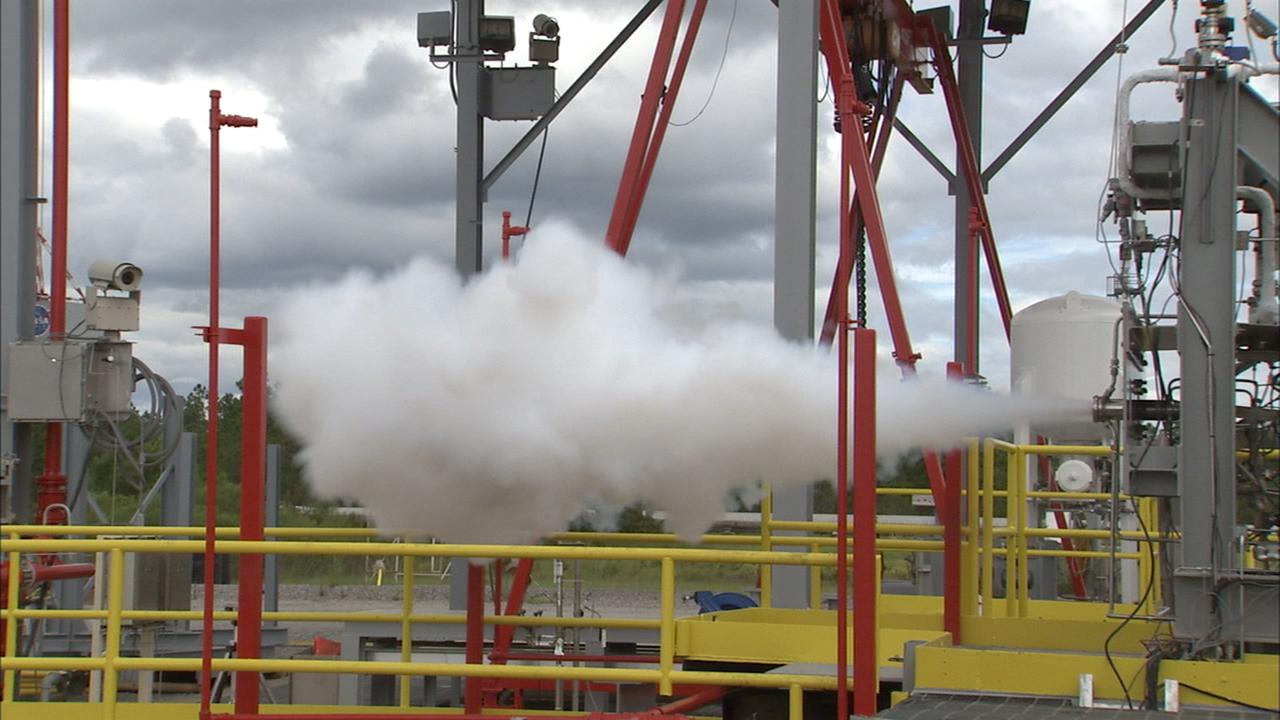
Tests begun at Stennis Space Center's E Complex Sept. 13 evaluated a liquid oxygen lead for engine start performance, part of the A-3 Test Facility Subscale Diffuser Risk Mitigation Project at SSC's E-3 Test Facility. Phase 1 of the subscale diffuser project, completed Sept. 24, was a series of 18 hot-fire tests using a 1,000-pound liquid oxygen and gaseous hydrogen thruster to verify maximum duration and repeatability for steam generation supporting the A-3 Test Stand project. The thruster is a stand-in for NASA's developing J-2X engine, to validate a 6 percent scale version of A-3's exhaust diffuser. Testing the J-2X at altitude conditions requires an enormous diffuser. Engineers will generate nearly 4,600 pounds per second of steam to reduce pressure inside A-3's test cell to simulate altitude conditions. A-3's exhaust diffuser has to be able to withstand regulated pressure, temperatures and the safe discharge of the steam produced during those tests. Before the real thing is built, engineers hope to work out any issues on the miniature version. Phase 2 testing is scheduled to begin this month.
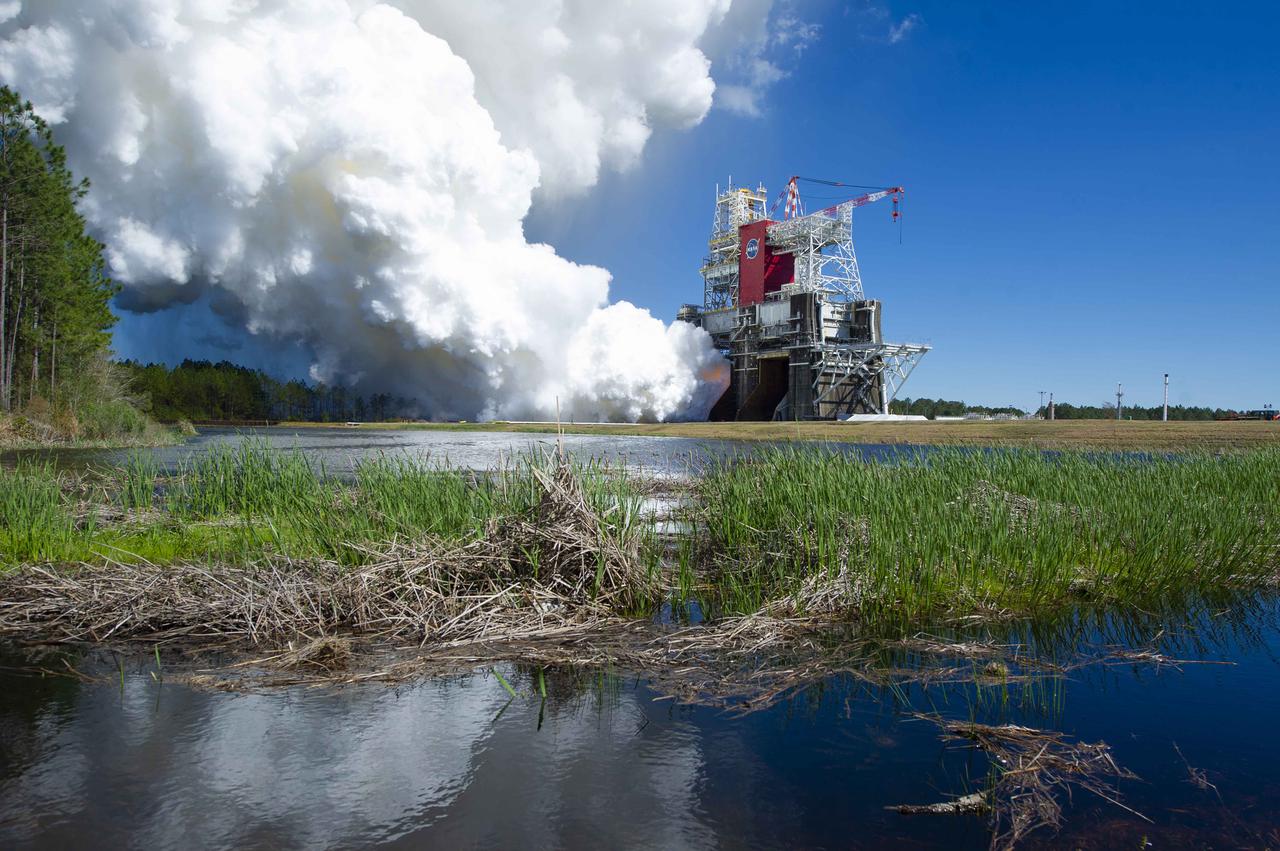
NASA conducts a hot fire test March 18, 2021, of the core stage for the agency’s Space Launch System rocket on the B-2 Test Stand at Stennis Space Center near Bay St. Louis, Mississippi. The hot fire test of the stage’s four RS-25 engines generated a combined 1.6 million pounds of thrust, just as will occur during an actual launch. The hot fire is the final test of the Green Run test series, which represents a comprehensive assessment of the core stage and its integrated systems prior to its launch on the Artemis I mission to the Moon.
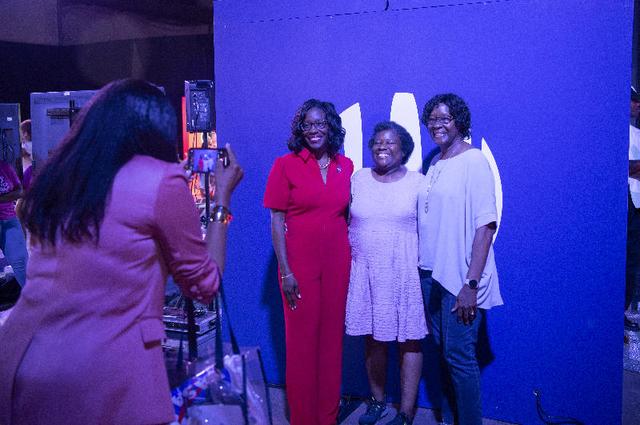
NASA Assistant Deputy Associate Administrator for the Moon to Mars Program Office Lakiesha Hawkins, left, takes a picture with attendees of the 30th annual ESSENCE Fest in New Orleans on July 5.
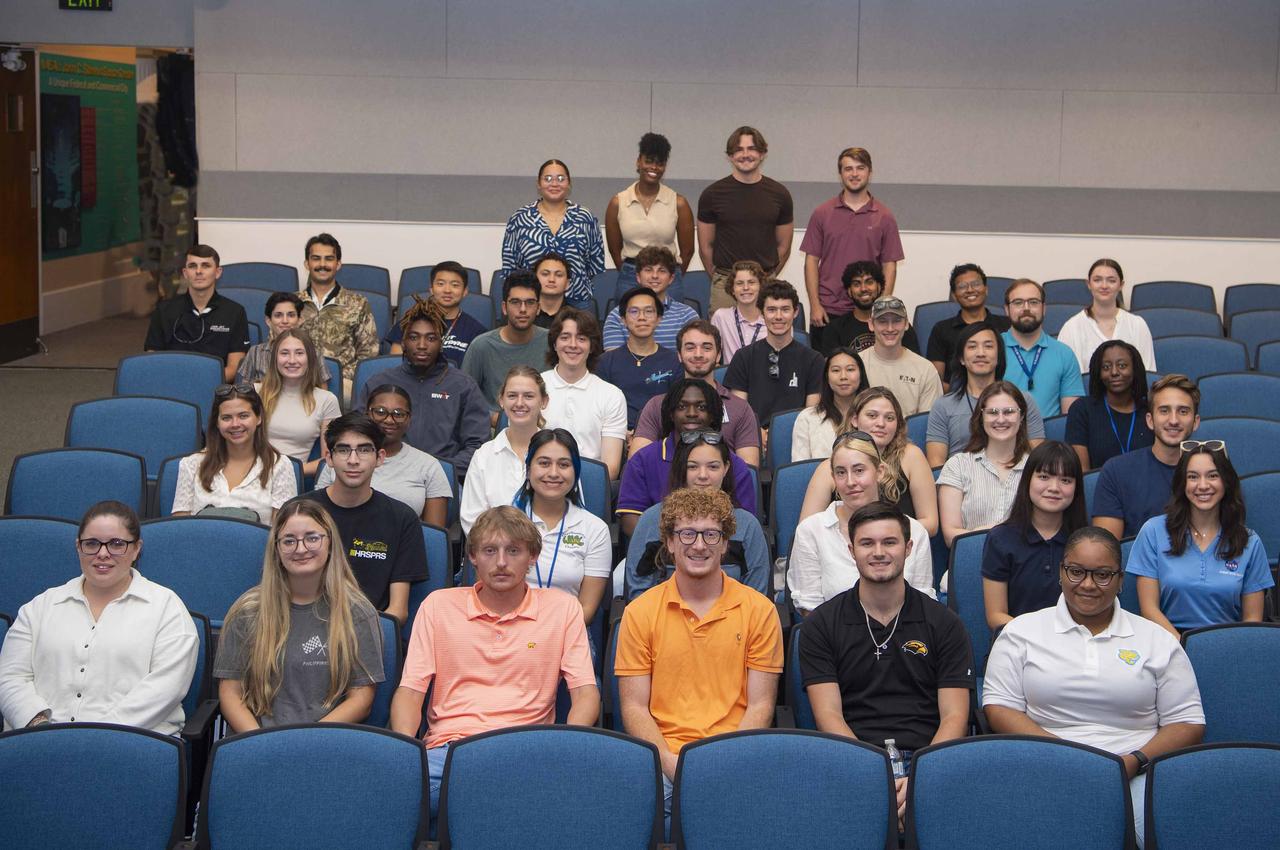
Interns representing NASA and companies across the NASA Stennis federal city participate in National Intern Day activities at NASA Stennis on July 25. NASA has over 100 programs and opportunities to attract, engage, and educate students across the nation.
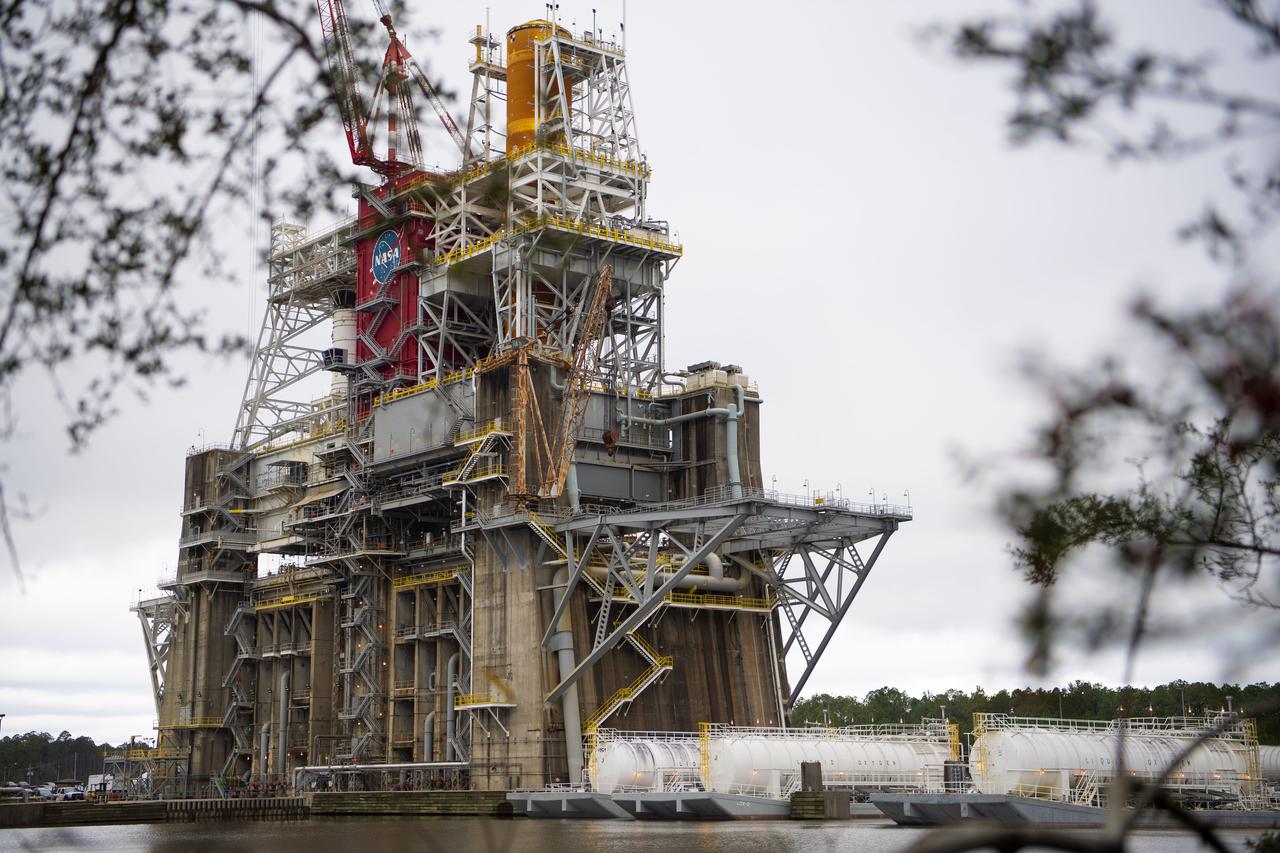
Barges are docked at the B-2 Test Stand at Stennis Space Center on Dec. 4, 2020, in preparation for upcoming Green Run test activities. Teams at the center have been performing Green Run tests of NASA’s Space Launch System core stage and its integrated systems throughout 2020. In mid-December, teams performed the seventh test of the Green Run series – a wet dress rehearsal of a countdown to hot fire. It marked the first time the stage tanks had been loaded with liquid oxygen and liquid hydrogen propellants supplied by the docked barges.
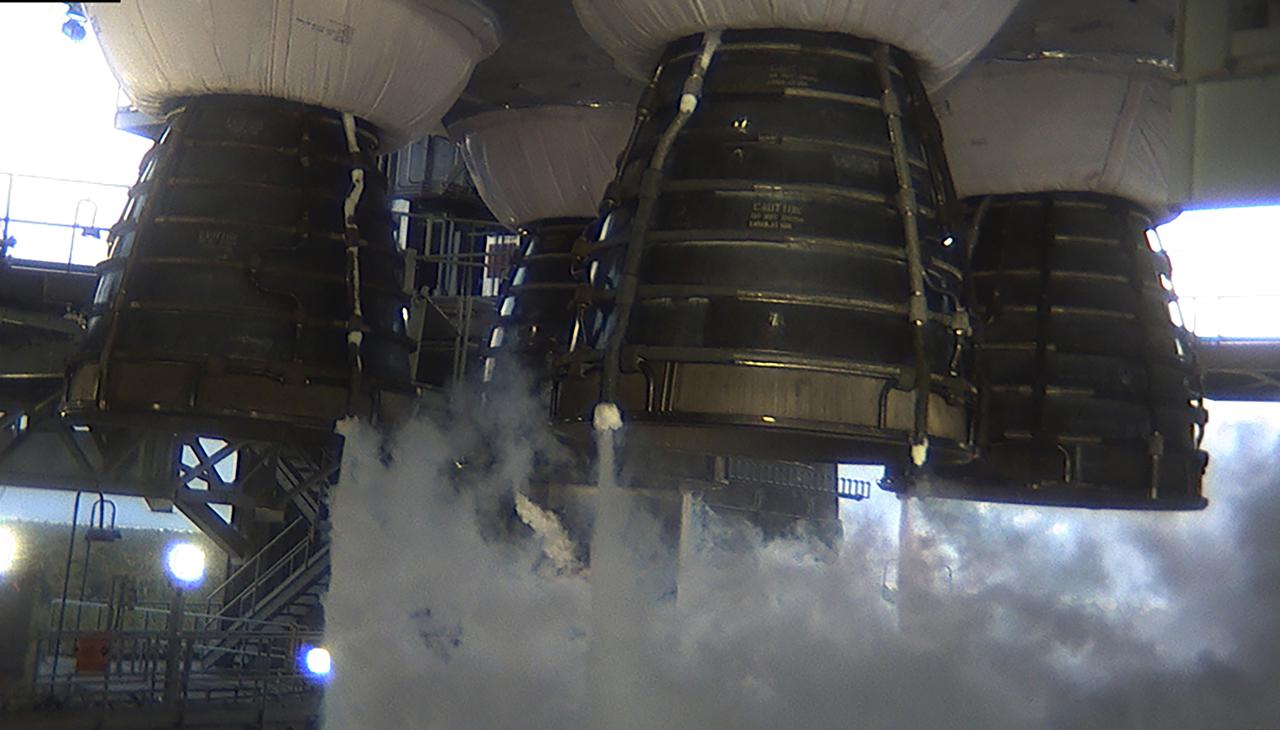
Teams at NASA’s Stennis Space Center performed a wet dress rehearsal exercise with the new Space Launch System core stage Dec. 20, 2020. The test – the seventh in an eight-test Green Run series – involved rehearsal of a countdown to hot fire of the stage’s engines, including the loading of 733,000 pounds of liquid hydrogen and liquid oxygen propellants. This image shows liquid oxygen as it naturally boils off and is vented from the four RS-25 engines that will be fired during the final core stage test.
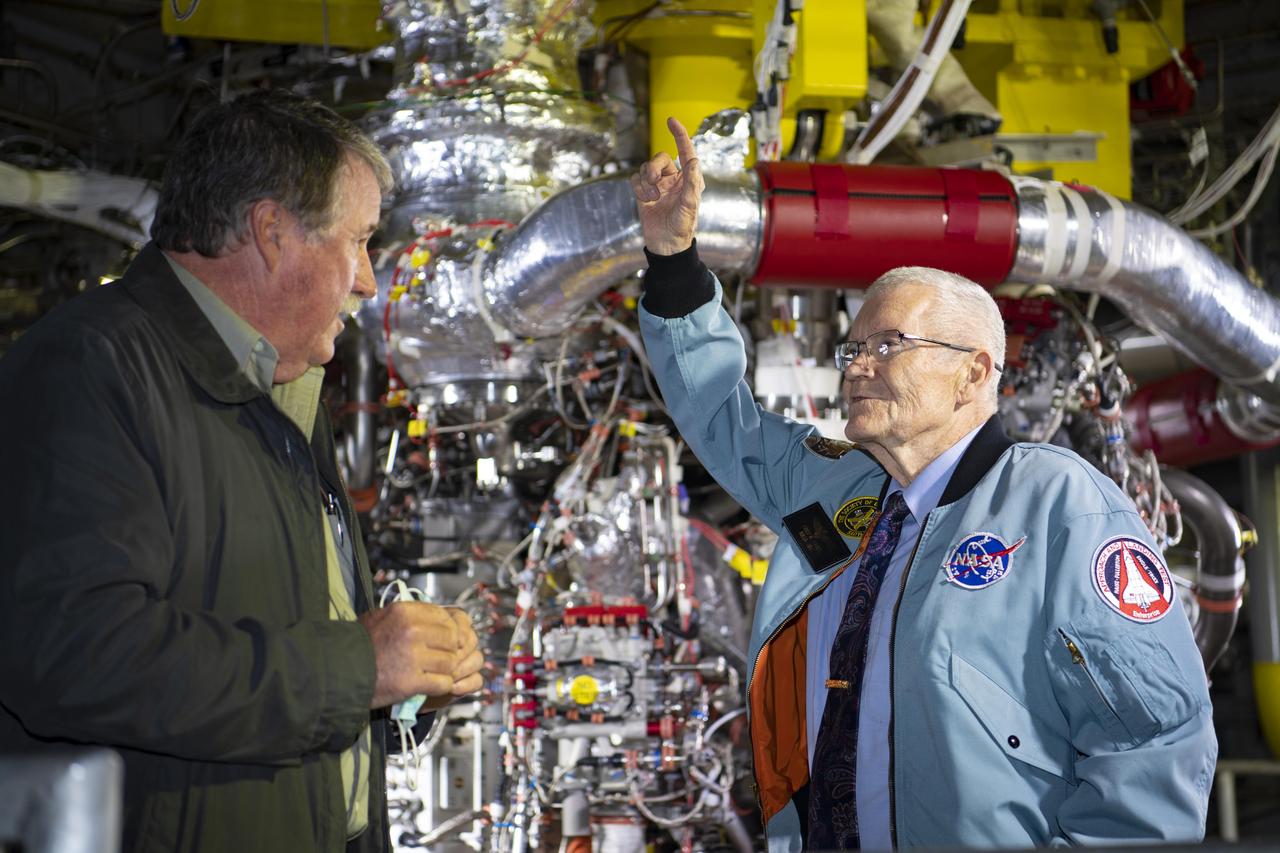
Apollo 13 Astronaut Fred Haise, right, stands in front of an RS-25 rocket engine installed on the A-1 Test Stand along with Jeff Henderson, test director at NASA’s Stennis Space Center. The A-1 stand was dedicated to the former astronaut on Dec. 7, 2021 and is now officially known as the Fred Haise Test Stand.
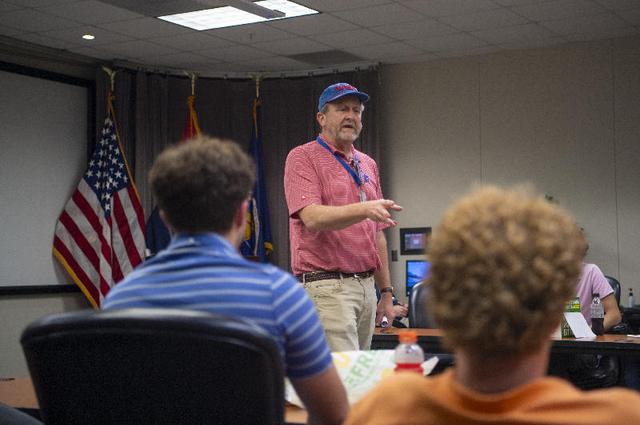
NASA Stennis Associate Director Rodney McKellip speaks with interns from across the NASA Stennis federal city on July 25 as part of National Intern Day at the center.
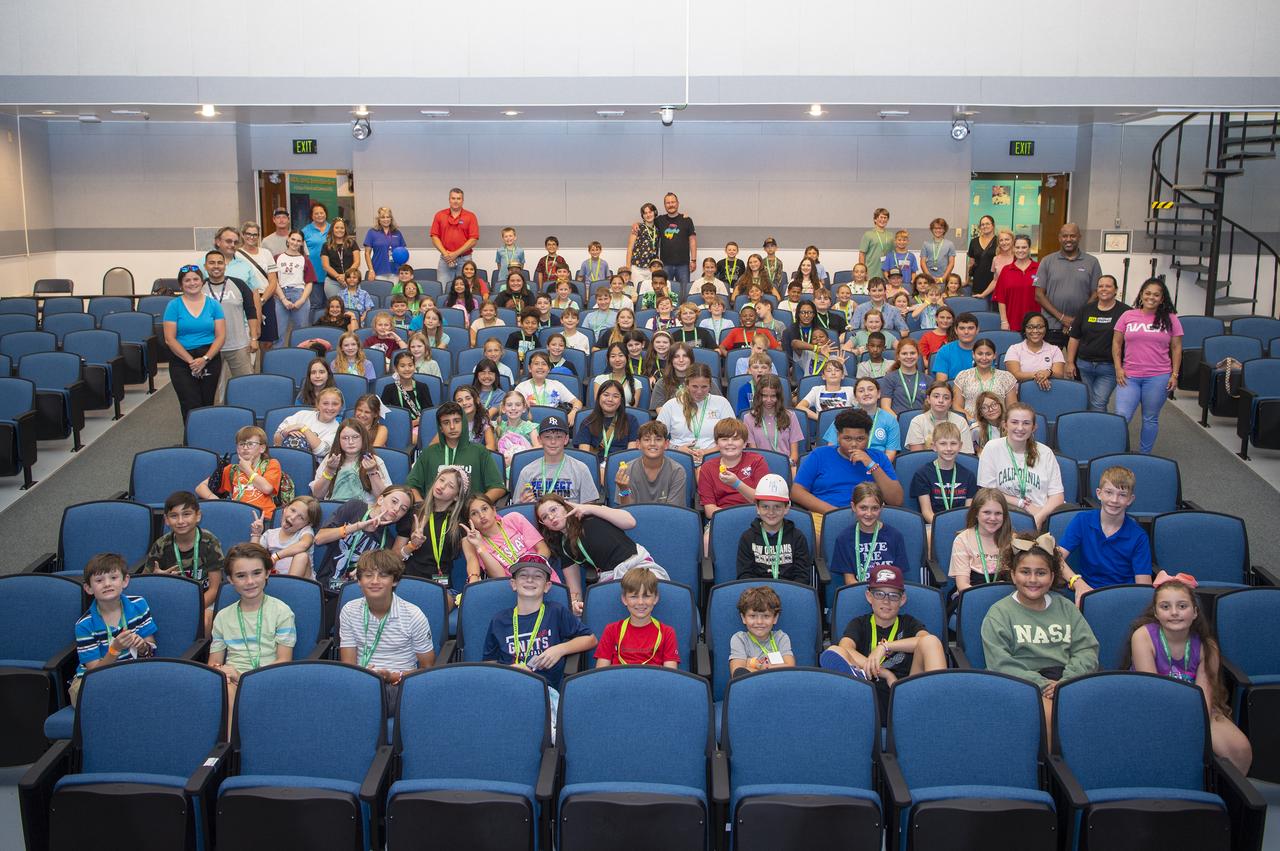
NASA’s Stennis Space Center inspired the Artemis Generation during the 2024 Take Our Children to Work Day on June 27. Participants are shown in the StenniSphere auditorium following a site tour and full day of hands-on activities to promote interest in STEM (science, technology, engineering, and mathematics) and the variety of work conducted at NASA Stennis. NASA is returning to the Moon through the Artemis campaign for scientific discovery, economic benefits, and inspiration for a new generation of explorers.
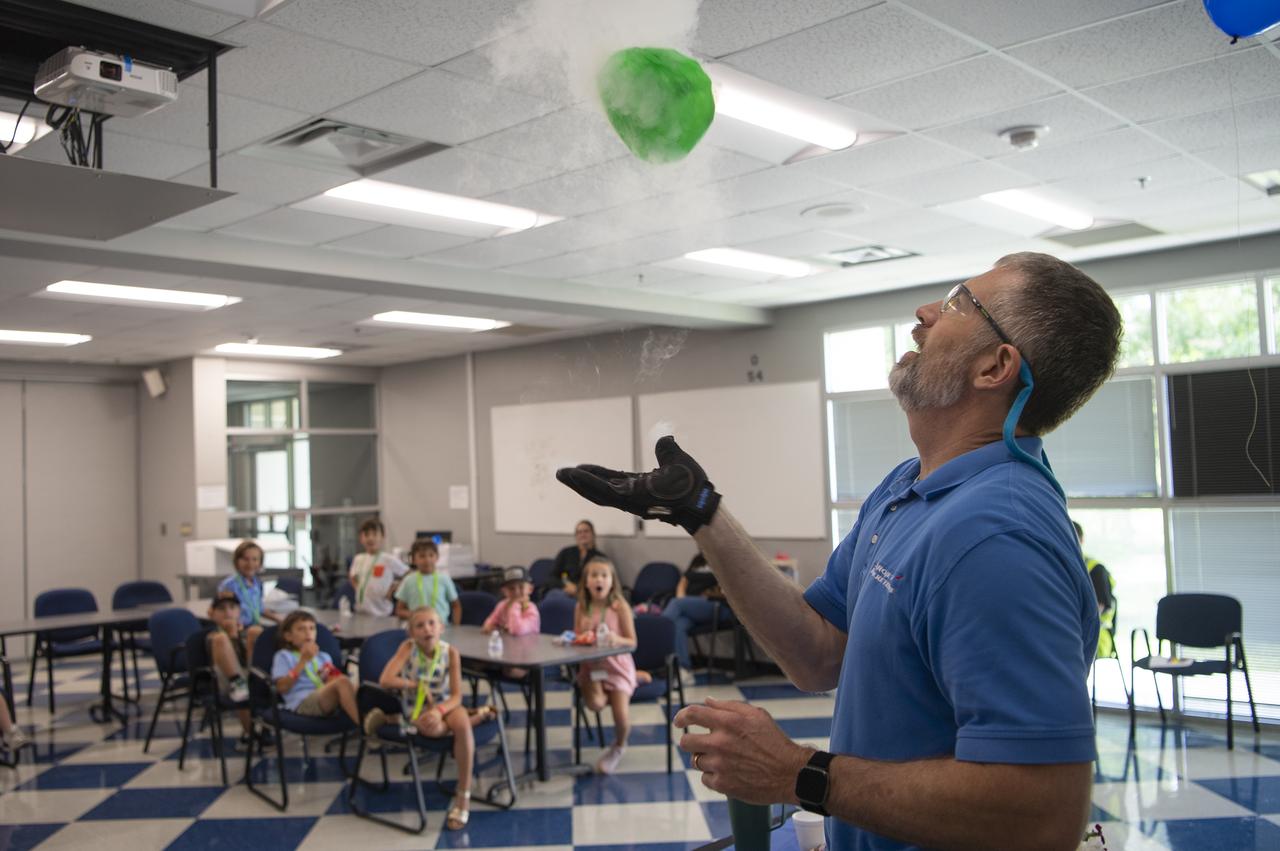
A group of Take Our Children Day participants watch a cryogenic demonstration led by Allen Forsman of Aerojet Rocketdyne, an L3Harris Technologies company, on June 27 at the Aerojet Rocketdyne Engine Assembly Facility at NASA Stennis.
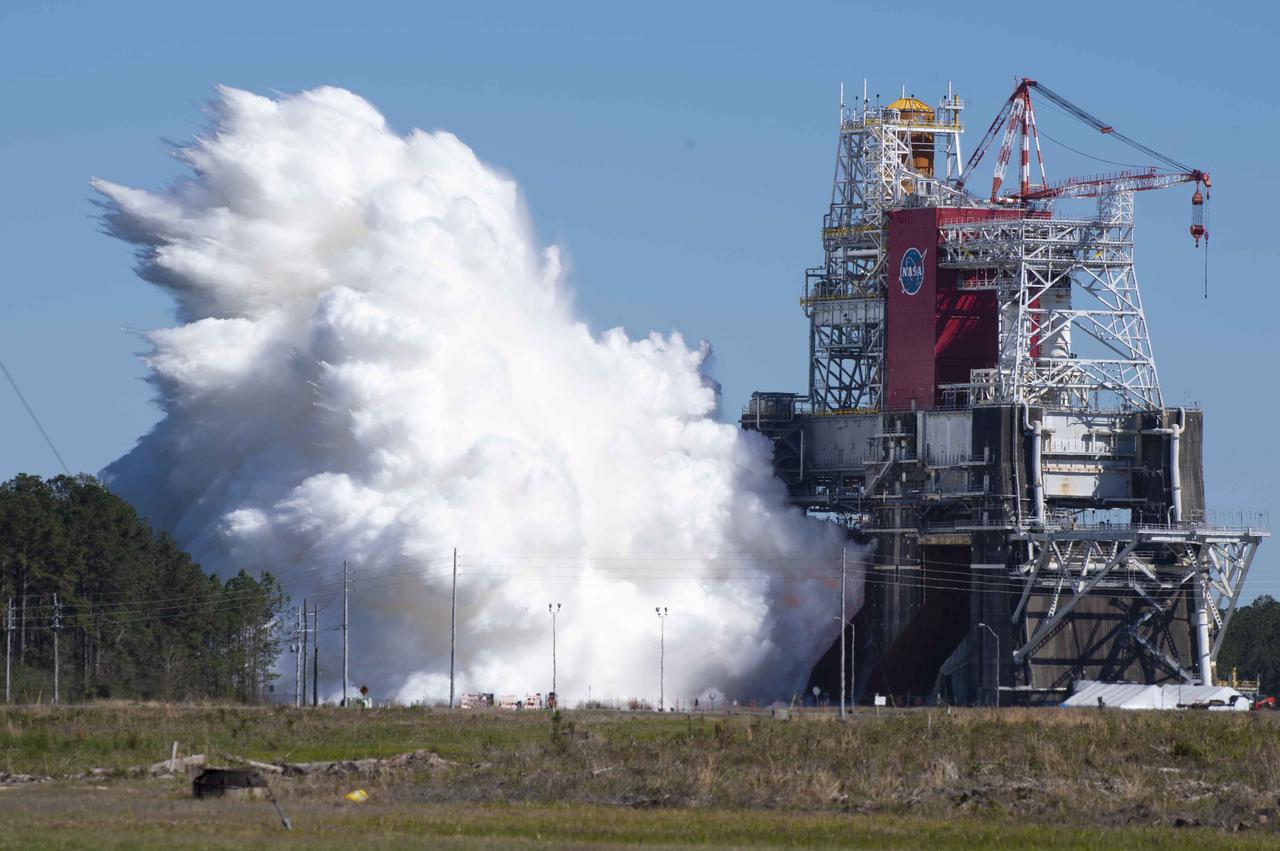
NASA conducts a hot fire test March 18, 2021, of the core stage for the agency’s Space Launch System rocket on the B-2 Test Stand at Stennis Space Center near Bay St. Louis, Mississippi. The hot fire test of the stage’s four RS-25 engines generated a combined 1.6 million pounds of thrust, just as will occur during an actual launch. The hot fire is the final test of the Green Run test series, which represents a comprehensive assessment of the core stage and its integrated systems prior to its launch on the Artemis I mission to the Moon.
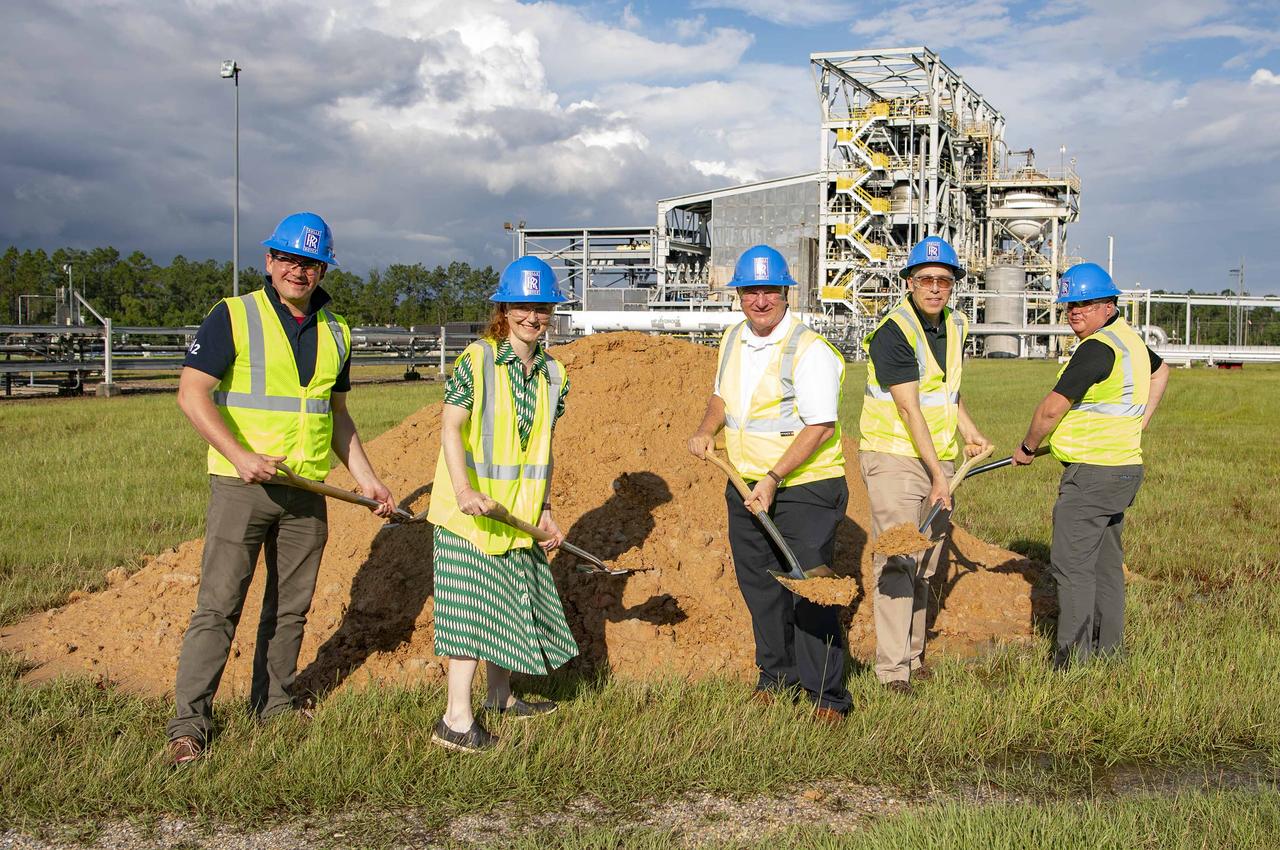
: NASA’s Stennis Space Center continues to support commercial companies and benefit the aerospace industry. The latest example comes as officials from NASA Stennis and Rolls-Royce break ground for the E-1 Hydrogen Test Pad, located at the NASA Stennis E-Complex Test Facility, during a June 27 ceremony. The site will be where Rolls-Royce conducts hydrogen testing for the Pearl 15 engine. The Pearl 15 engine helps power the Bombardier Global 5500 & 6500 aircraft and enables top speeds of Mach 0.90. Groundbreaking participants include (left to right): Adam Newman, Rolls-Royce chief engineer of hydrogen technology; Deborah Robinson, Rolls-Royce director of test and experimental engineering; Troy Frisbie, NASA Stennis legislative affairs specialist and chief of staff; Dan Lyon, Rolls-Royce North America general manager; and Steven Blake, Rolls-Royce North America indirect purchasing, global commodity manager.
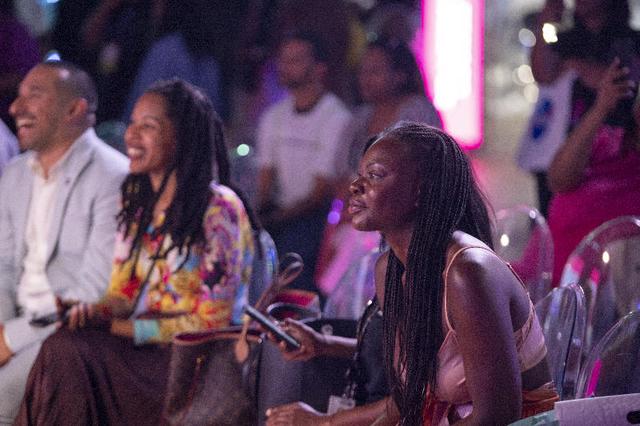
The audience for a Take Up Space (Literally) presentation at the 30th annual ESSENCE Fest in New Orleans on July 5 listens to a conversation with NASA representatives about Black women in the aerospace industry and diversity in science, technology, engineering, and mathematics (STEM).
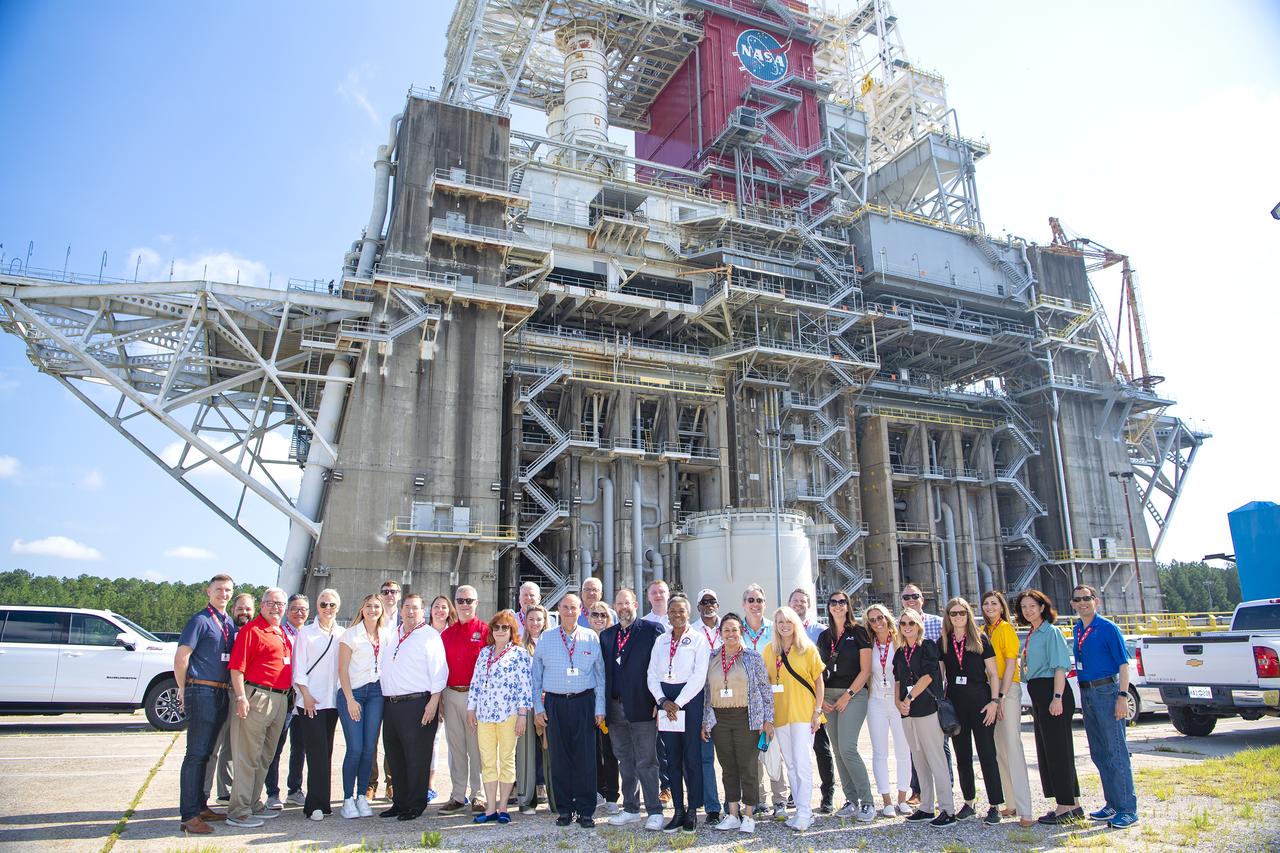
Members of the Aerospace States Association stand at the Thad Cochran Test Stand on June 25 during a visit to NASA’s Stennis Space Center. The group came to the south Mississippi NASA center during the Aerospace States Association conference in New Orleans June 24-27. NASA Stennis will use the Thad Cochran Test Stand (B-2) to test the exploration upper stage, a more powerful second stage to send the Orion spacecraft to deep space on NASA’s SLS (Space Launch System) rocket, ahead of its expected flight on the Artemis IV mission.
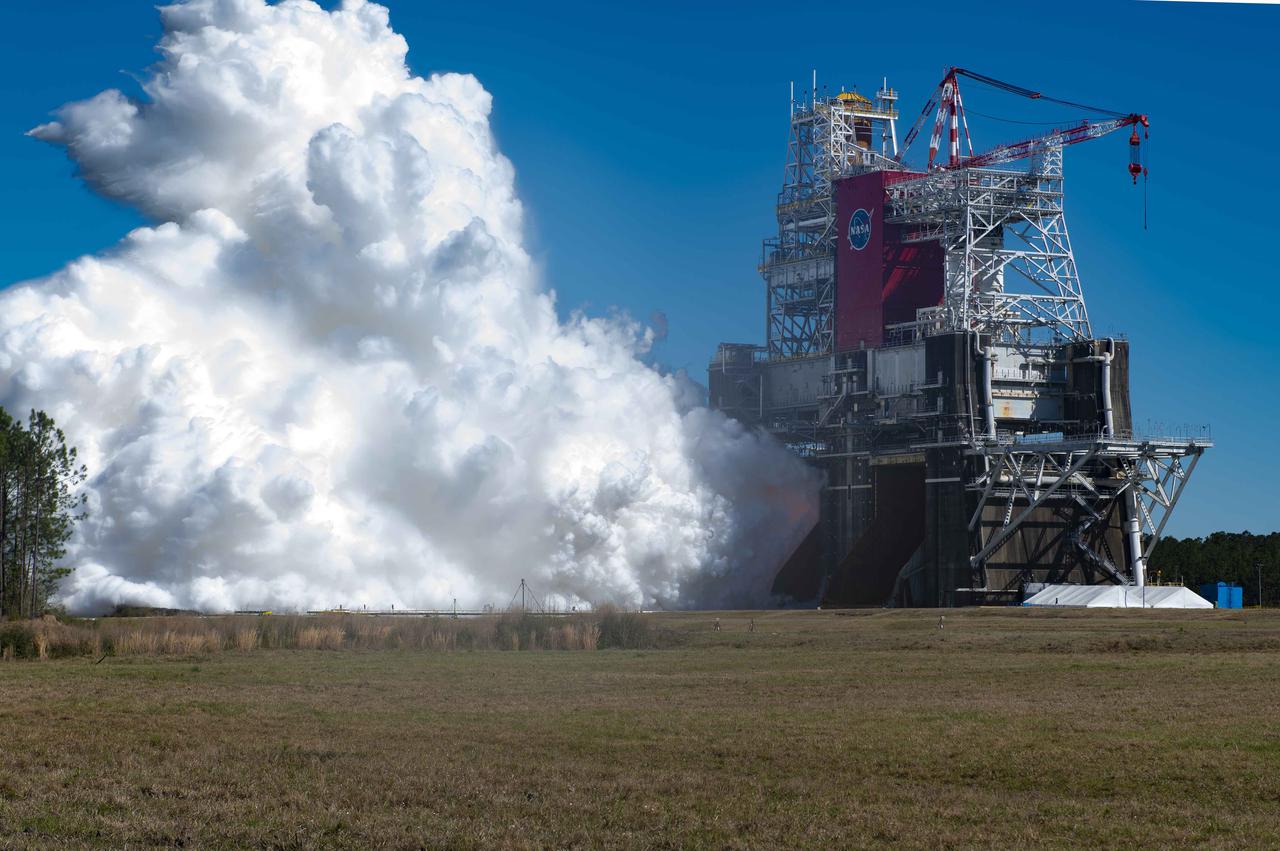
NASA conducts a hot fire test March 18, 2021, of the core stage for the agency’s Space Launch System rocket on the B-2 Test Stand at Stennis Space Center near Bay St. Louis, Mississippi. The hot fire test of the stage’s four RS-25 engines generated a combined 1.6 million pounds of thrust, just as will occur during an actual launch. The hot fire is the final test of the Green Run test series, which represents a comprehensive assessment of the core stage and its integrated systems prior to its launch on the Artemis I mission to the Moon.
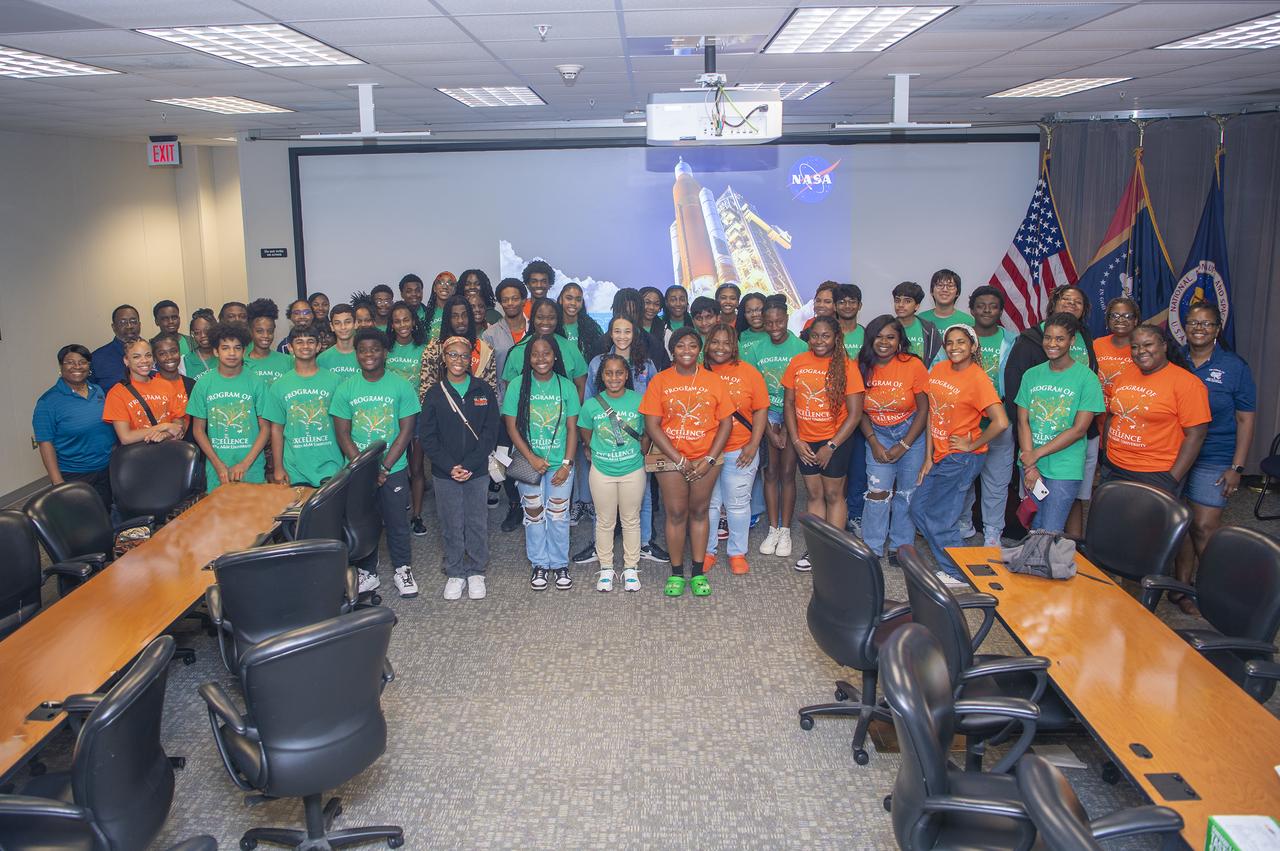
Members of the Florida A&M University Program of Excellence in STEM attend a presentation June 21 during a visit to NASA’s Stennis Space Center. The NASA Office of STEM Engagement provided information on grants and student activities during the presentation about NASA Stennis and the work conducted at the unique federal city. The group also visited the Thad Cochran Test Stand and Relativity Space test complex during a site tour. The Program of Excellence in STEM summer academy aims to enhance student knowledge of opportunities in the fields of science, technology, engineering, and mathematics.
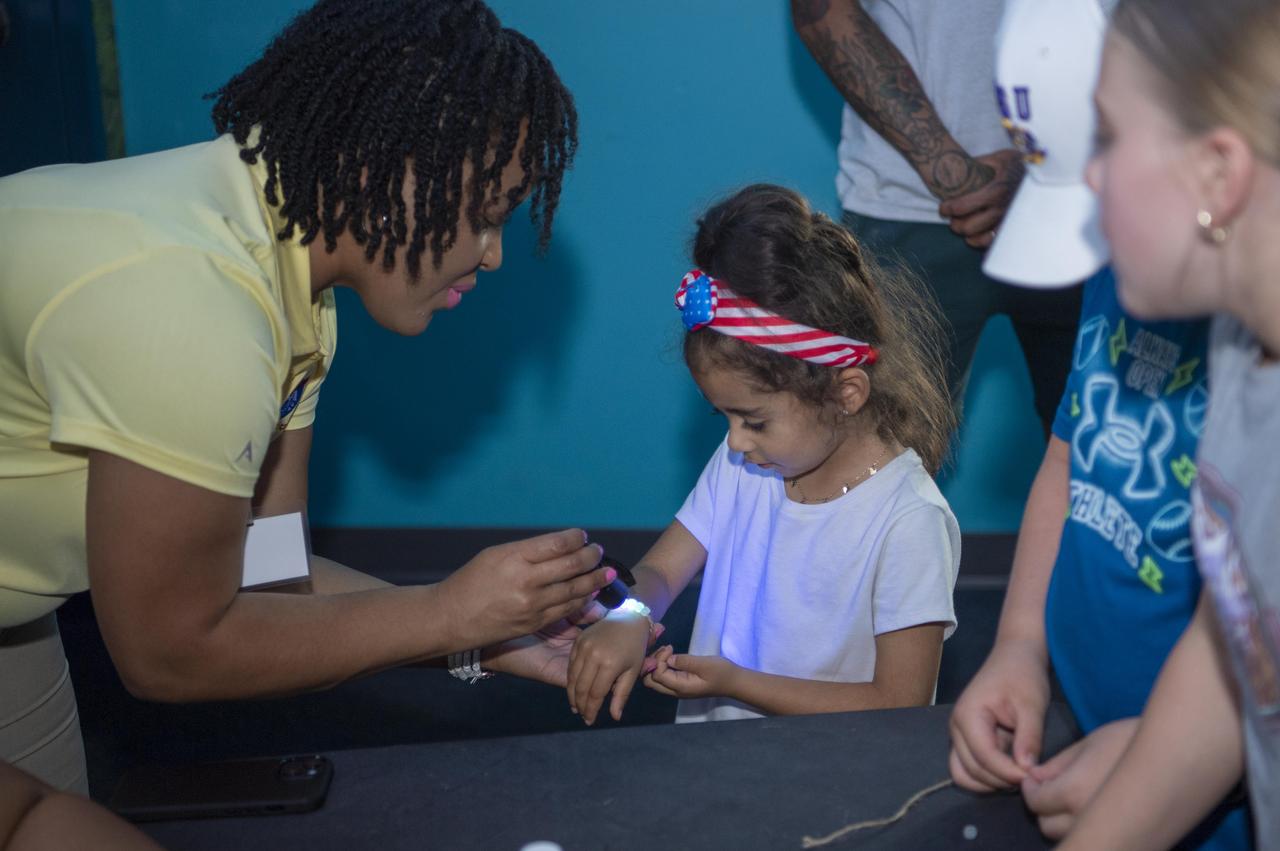
NASA Public Affairs Specialist Samone Wilson, left, uses a solar bead activity to teach a young visitor to the Audubon Aquarium in New Orleans about skin protection on July 5. NASA hosted an information/interactive exhibit at the aquarium in conjunction with NASA activities at the 30th annual ESSENCE Fest in New Orleans during the Fourth of July weekend.
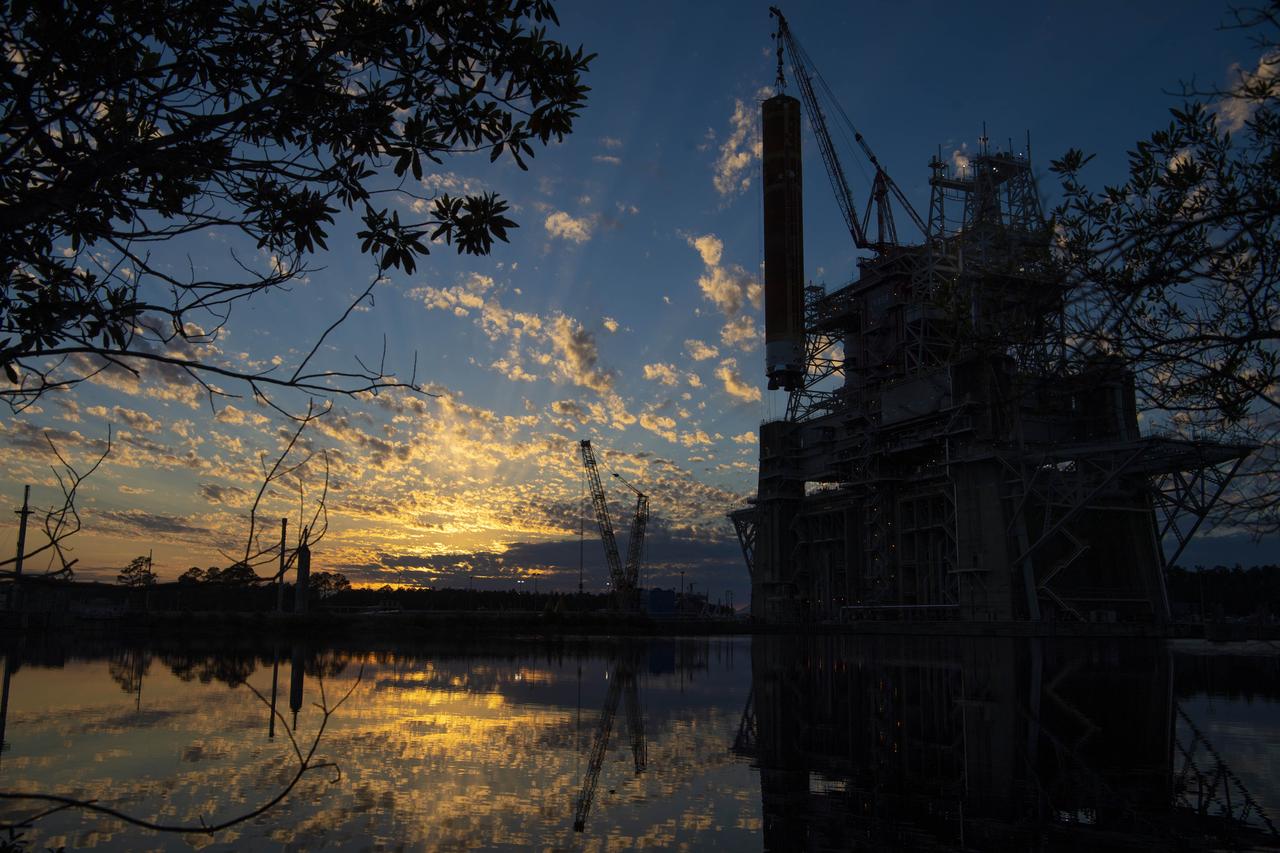
The first flight core stage of NASA’s Space Launch System rocket is removed from the B-2 Test Stand on April 19, 2021, following completion of a series of eight Green Run tests conducted at Stennis Space Center.
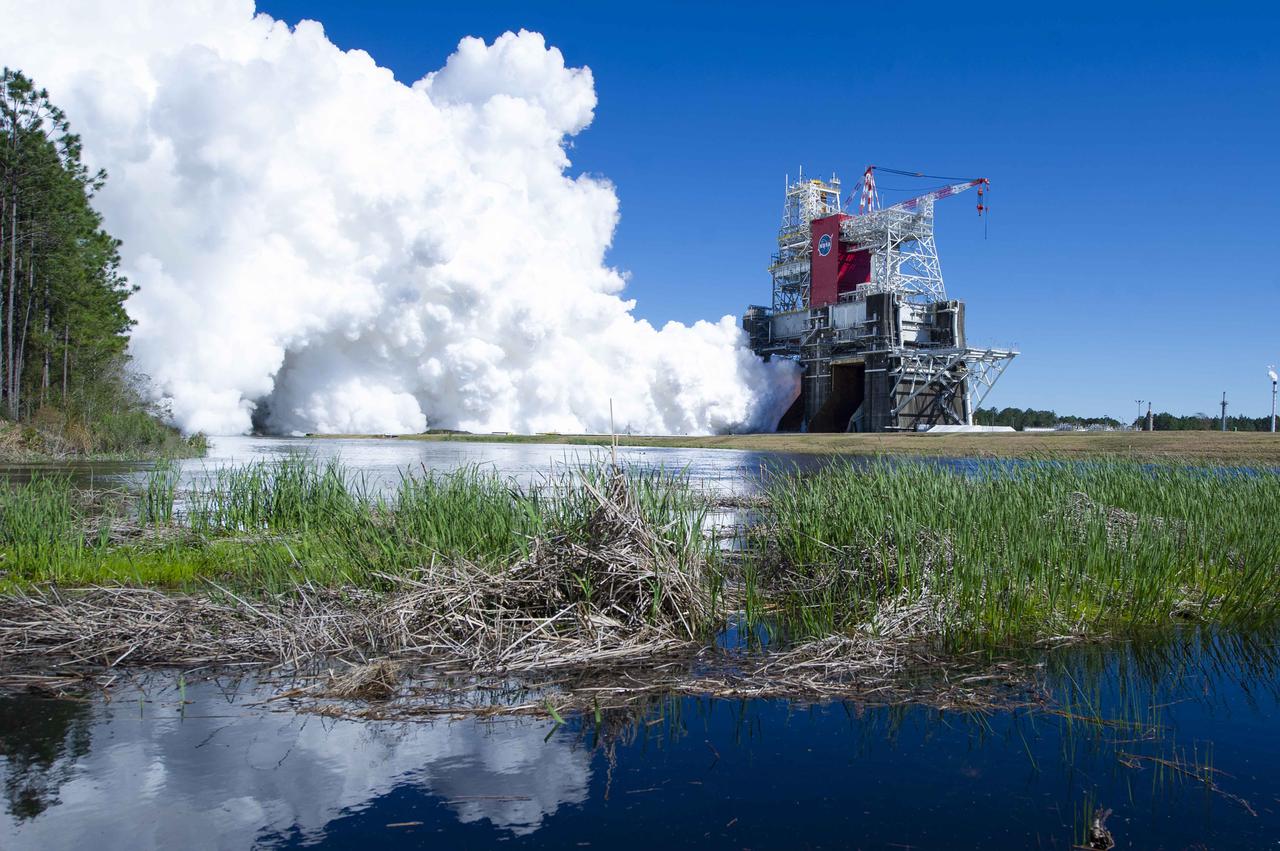
NASA conducts a hot fire test March 18, 2021, of the core stage for the agency’s Space Launch System rocket on the B-2 Test Stand at Stennis Space Center near Bay St. Louis, Mississippi. The hot fire test of the stage’s four RS-25 engines generated a combined 1.6 million pounds of thrust, just as will occur during an actual launch. The hot fire is the final test of the Green Run test series, which represents a comprehensive assessment of the core stage and its integrated systems prior to its launch on the Artemis I mission to the Moon.
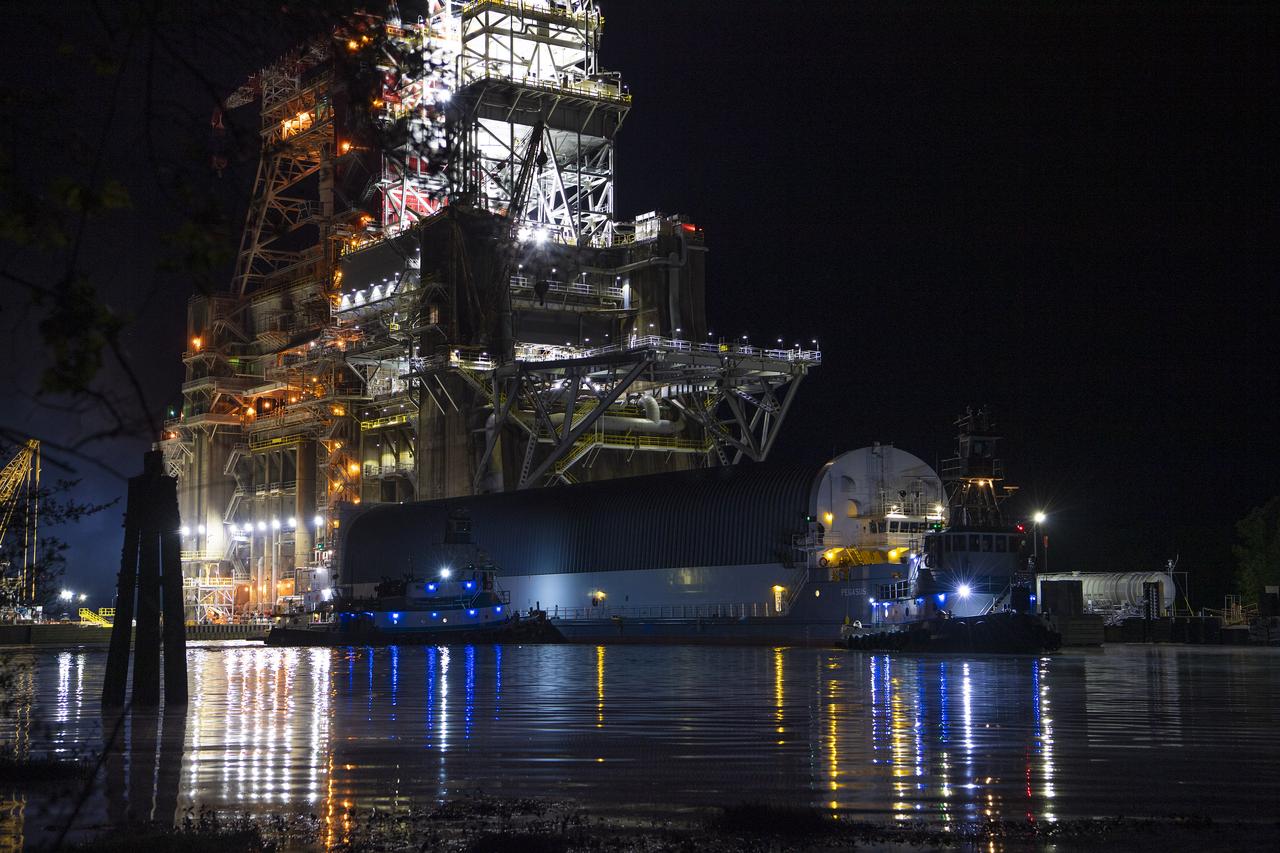
After a series of successful tests conducted the B-2 Test Stand at Stennis Space Center, NASA’s Space Launch System (SLS) core stage was loaded on the Pegasus barge and departed the test stand in the early morning hours of April 22, 2021, beginning its journey to Kennedy Space Center.
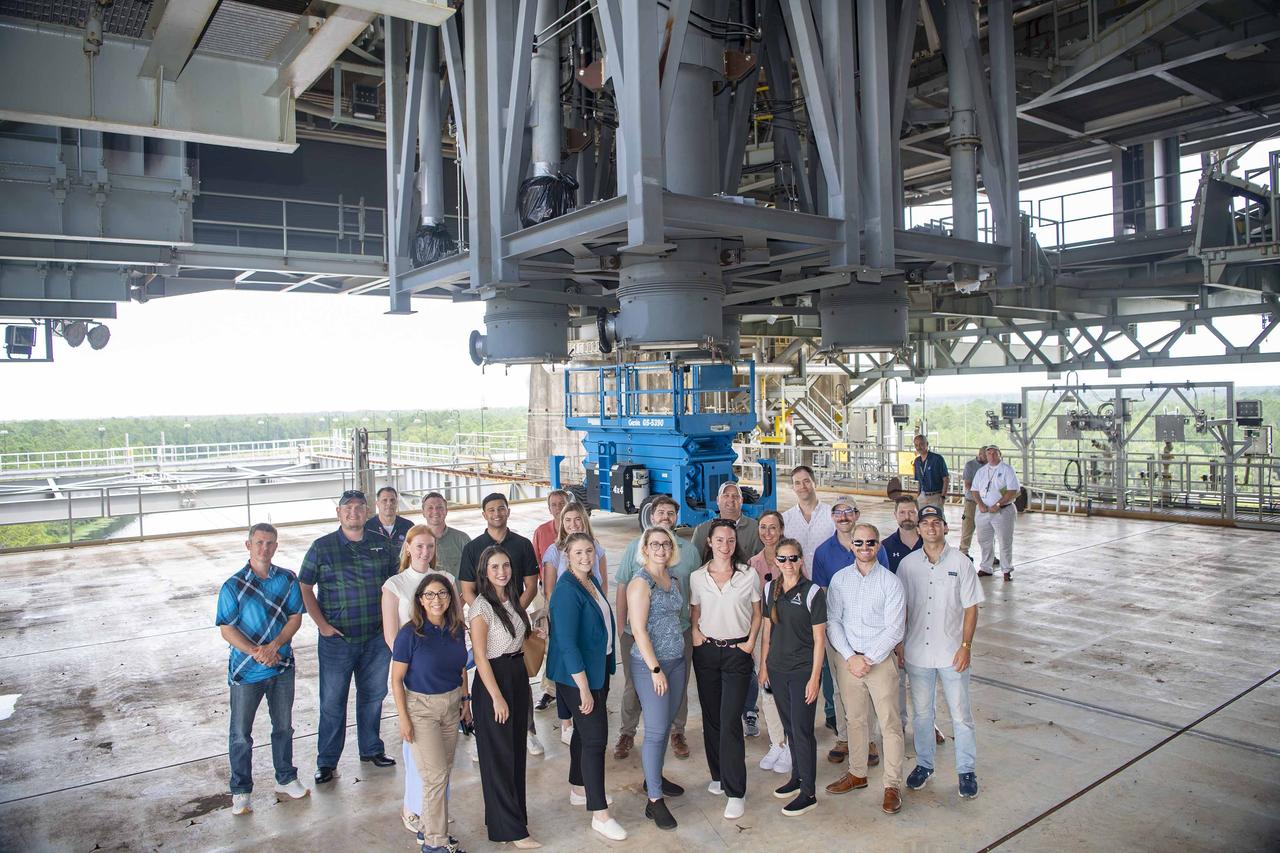
Congressional staff delegates representing eight states (Alabama, California, Colorado, Illinois, Louisiana, Maryland, New Jersey, and New York), along with NASA and U.S. Air Force representatives, tour the Thad Cochran Test Stand (B-2) at NASA Stennis on July 16. The visit provided an opportunity for the group to learn about propulsion test work carried out onsite by NASA and commercial companies.
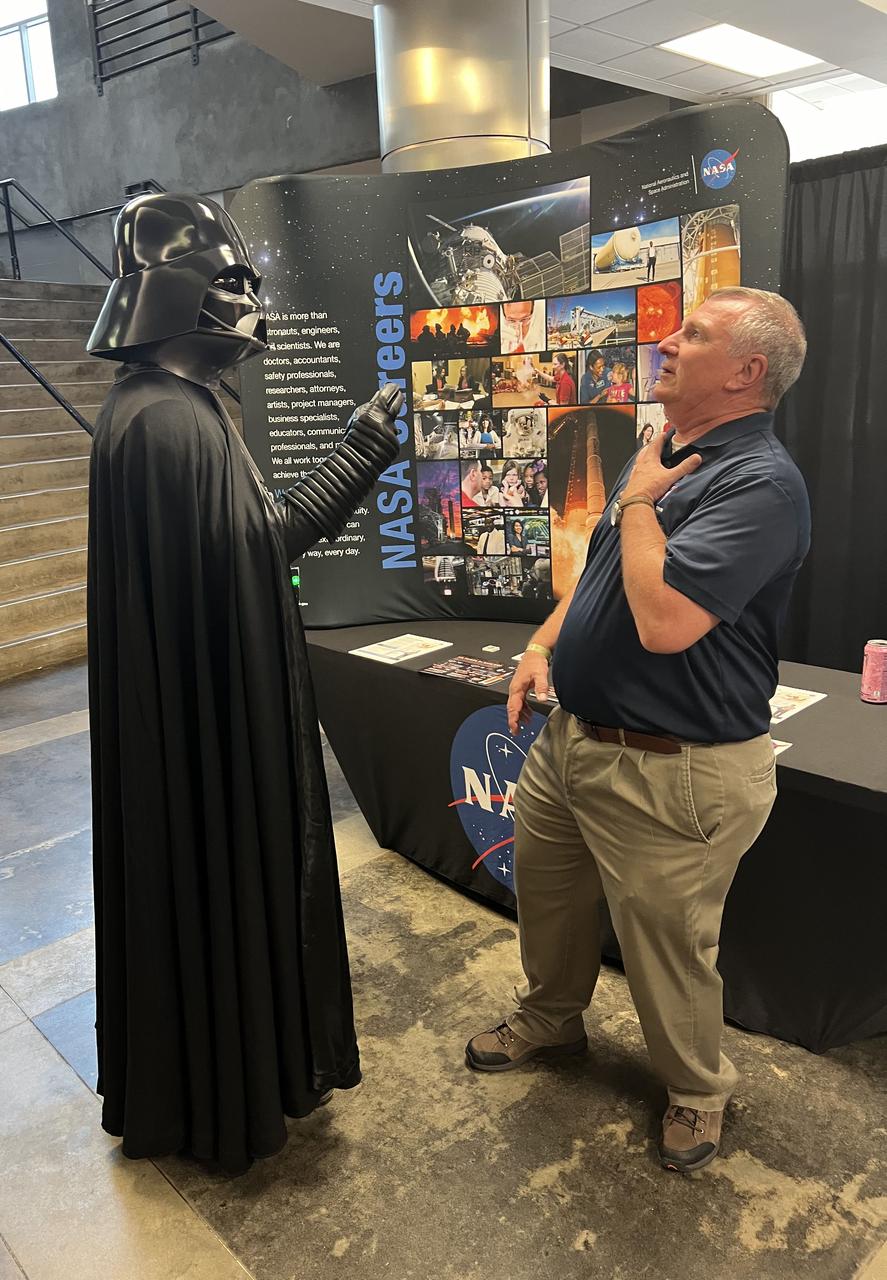
A Darth Vader character visits with NASA Stennis legislative affairs specialist and chief of staff Troy Frisbie at the NASA booth on June 23 at the Mississippi Comic Convention in Jackson, Mississippi.
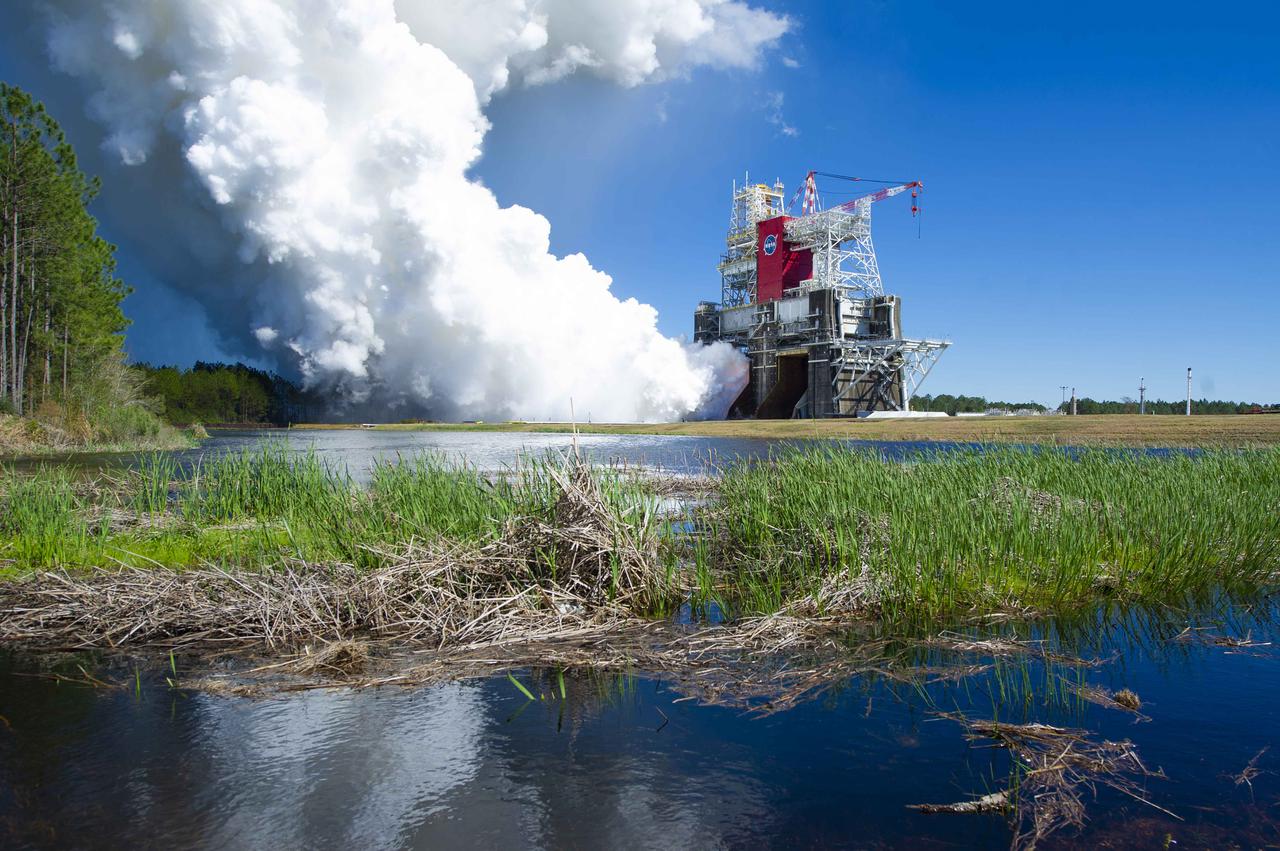
NASA conducts a hot fire test March 18, 2021, of the core stage for the agency’s Space Launch System rocket on the B-2 Test Stand at Stennis Space Center near Bay St. Louis, Mississippi. The hot fire test of the stage’s four RS-25 engines generated a combined 1.6 million pounds of thrust, just as will occur during an actual launch. The hot fire is the final test of the Green Run test series, which represents a comprehensive assessment of the core stage and its integrated systems prior to its launch on the Artemis I mission to the Moon.
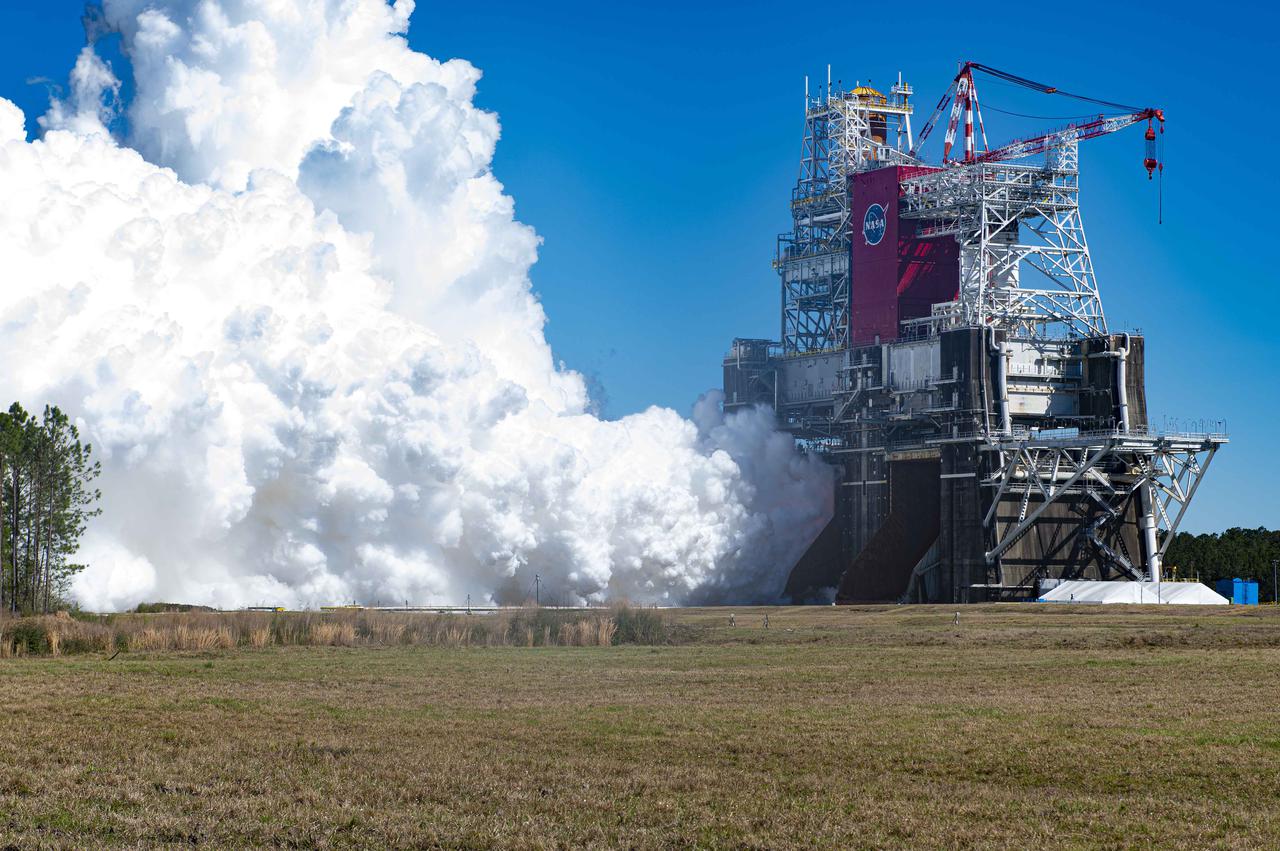
NASA conducts a hot fire test March 18, 2021, of the core stage for the agency’s Space Launch System rocket on the B-2 Test Stand at Stennis Space Center near Bay St. Louis, Mississippi. The hot fire test of the stage’s four RS-25 engines generated a combined 1.6 million pounds of thrust, just as will occur during an actual launch. The hot fire is the final test of the Green Run test series, which represents a comprehensive assessment of the core stage and its integrated systems prior to its launch on the Artemis I mission to the Moon.
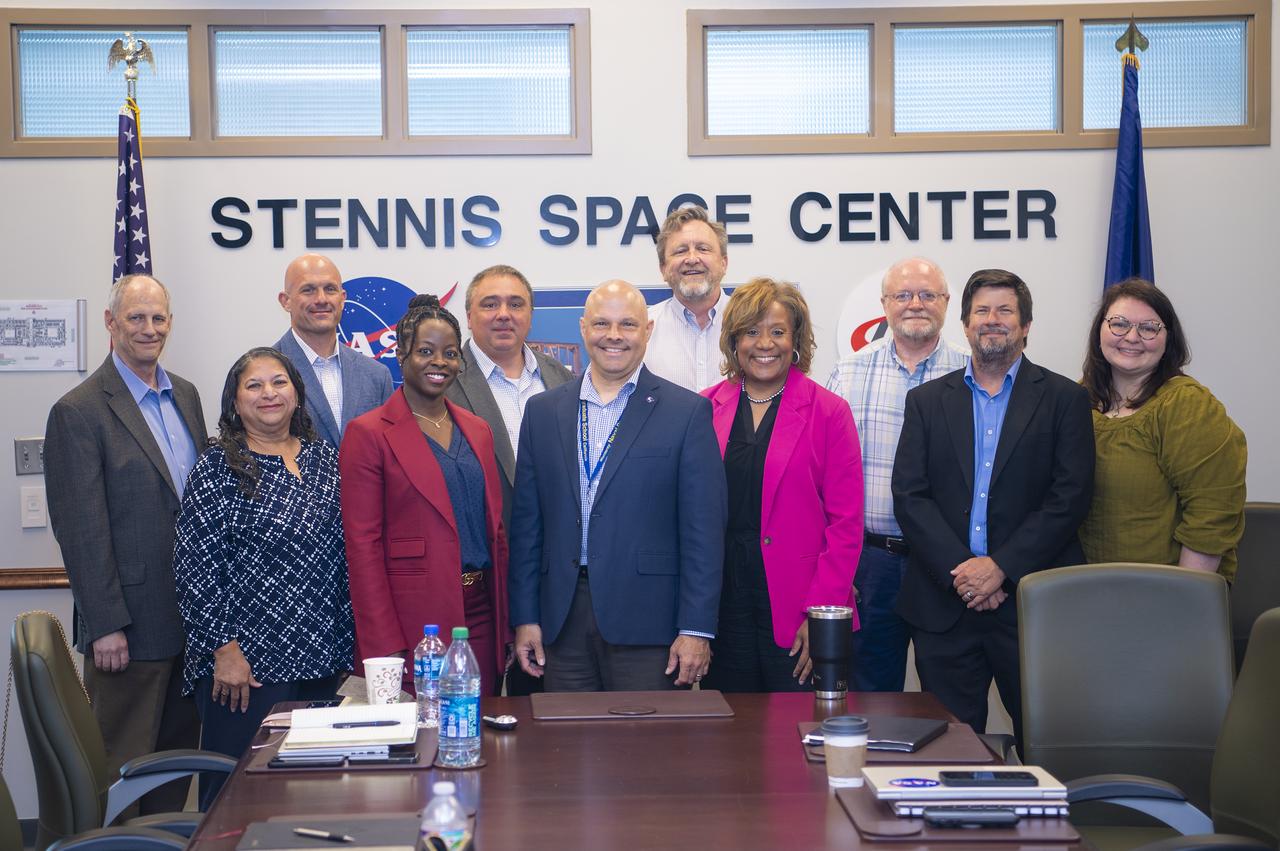
Members of NASA’s Mission Support Directorate met with leaders from NASA’s Stennis Space Center and the NASA Shared Services Center during an onsite visit June 3. The group also participated in an in-depth tour of the NASA Stennis facilities. Pictured (left to right) are Ron Bald, chief counsel for the Office of the General Counsel at NASA Stennis and NASA Shared Services Center; Dinna Cottrell, chief information officer for the NASA Stennis and NASA Shared Services Center Office of the Chief Information Officer; Eli Ouder, procurement officer for NASA Stennis and NASA Shared Services Center; Stacy Houston, executive officer for NASA’s Mission Support Directorate; Michael Tubbs, acting director for the NASA Stennis Center Operations Directorate; Michael Hess, deputy associate administrator for NASA’s Mission Support Directorate; Rodney McKellip, associate director for NASA Stennis; Nichole Pinkney, program manager for NASA’s Mission Support Directorate; Duane Armstrong, manager for the NASA Stennis Strategic Development Office; Gary Benton, director for the NASA Stennis Safety and Mission Assurance Directorate; and Alison Butsch, associate chief financial officer for the External Business Operations Division within the NASA Stennis Office of the Chief Financial Officer.

NASA conducts a hot fire test March 18, 2021, of the core stage for the agency’s Space Launch System rocket on the B-2 Test Stand at Stennis Space Center near Bay St. Louis, Mississippi. The hot fire test of the stage’s four RS-25 engines generated a combined 1.6 million pounds of thrust, just as will occur during an actual launch. The hot fire is the final test of the Green Run test series, which represents a comprehensive assessment of the core stage and its integrated systems prior to its launch on the Artemis I mission to the Moon.

: NASA program specialist Miyoshi Collins talks with an annual ESSENCE Fest audience in New Orleans on July 5 following a video presentation from NASA astronaut Jeannette Epps aboard the International Space Station. NASA representatives participated in a panel presentation about women in space during the cultural festival held each year during the Fourth of July weekend.
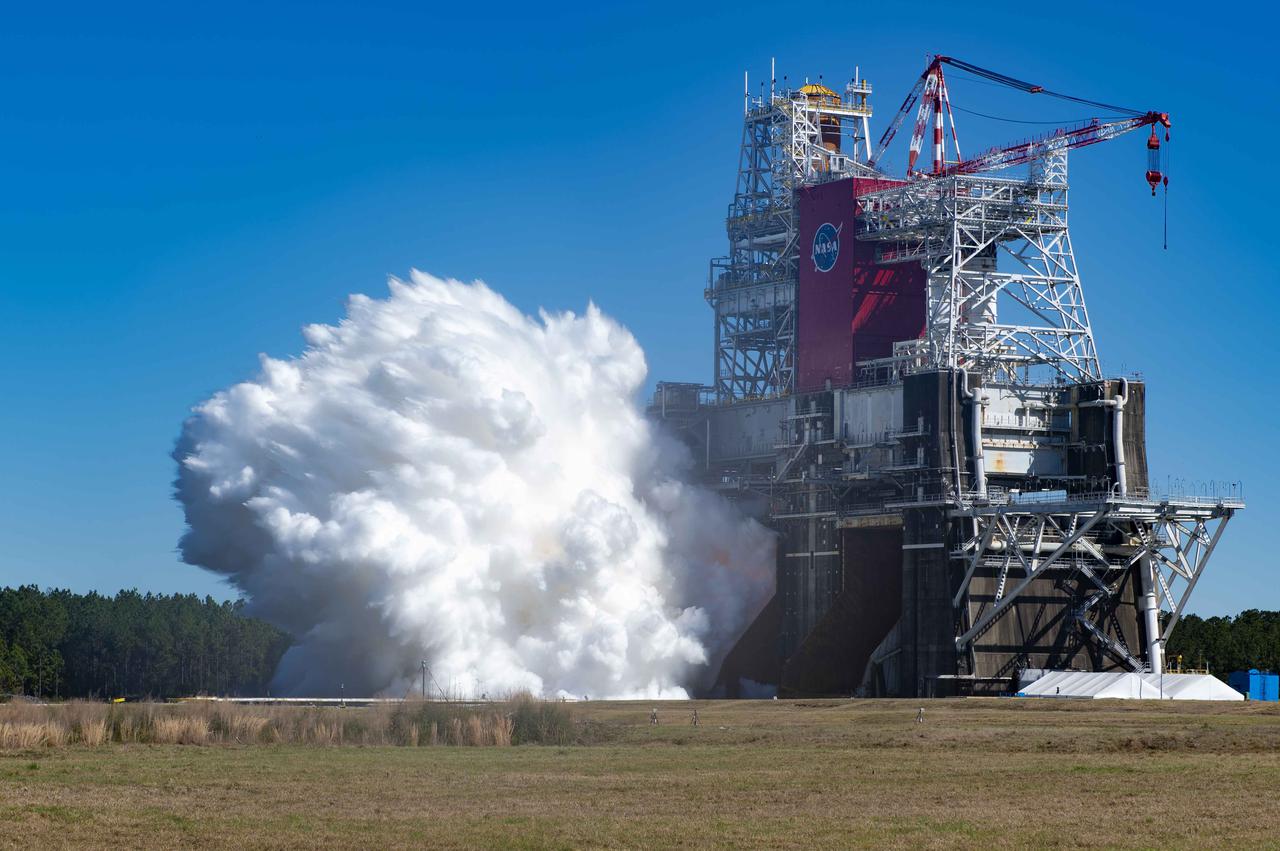
NASA conducts a hot fire test March 18, 2021, of the core stage for the agency’s Space Launch System rocket on the B-2 Test Stand at Stennis Space Center near Bay St. Louis, Mississippi. The hot fire test of the stage’s four RS-25 engines generated a combined 1.6 million pounds of thrust, just as will occur during an actual launch. The hot fire is the final test of the Green Run test series, which represents a comprehensive assessment of the core stage and its integrated systems prior to its launch on the Artemis I mission to the Moon.
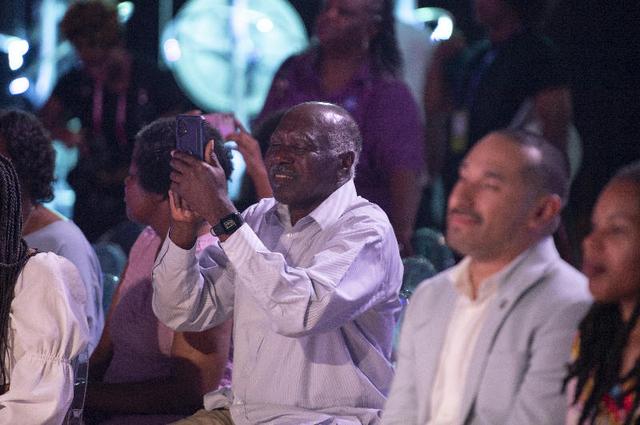
An audience member takes a photo as NASA representatives participate in a Take Up Space (Literally) panel conversation during the 30th annual ESSENCE Fest in New Orleans on July 5.
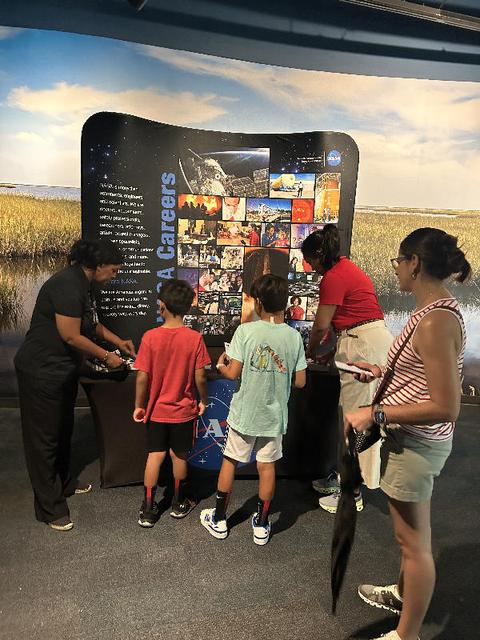
NASA representatives provide information about the space agency to Audubon Aquarium visitors in New Orleans on July 5. NASA hosted an information/interactive exhibit at the aquarium in conjunction with NASA activities at the 30th annual ESSENCE Fest in New Orleans during the Fourth of July weekend.
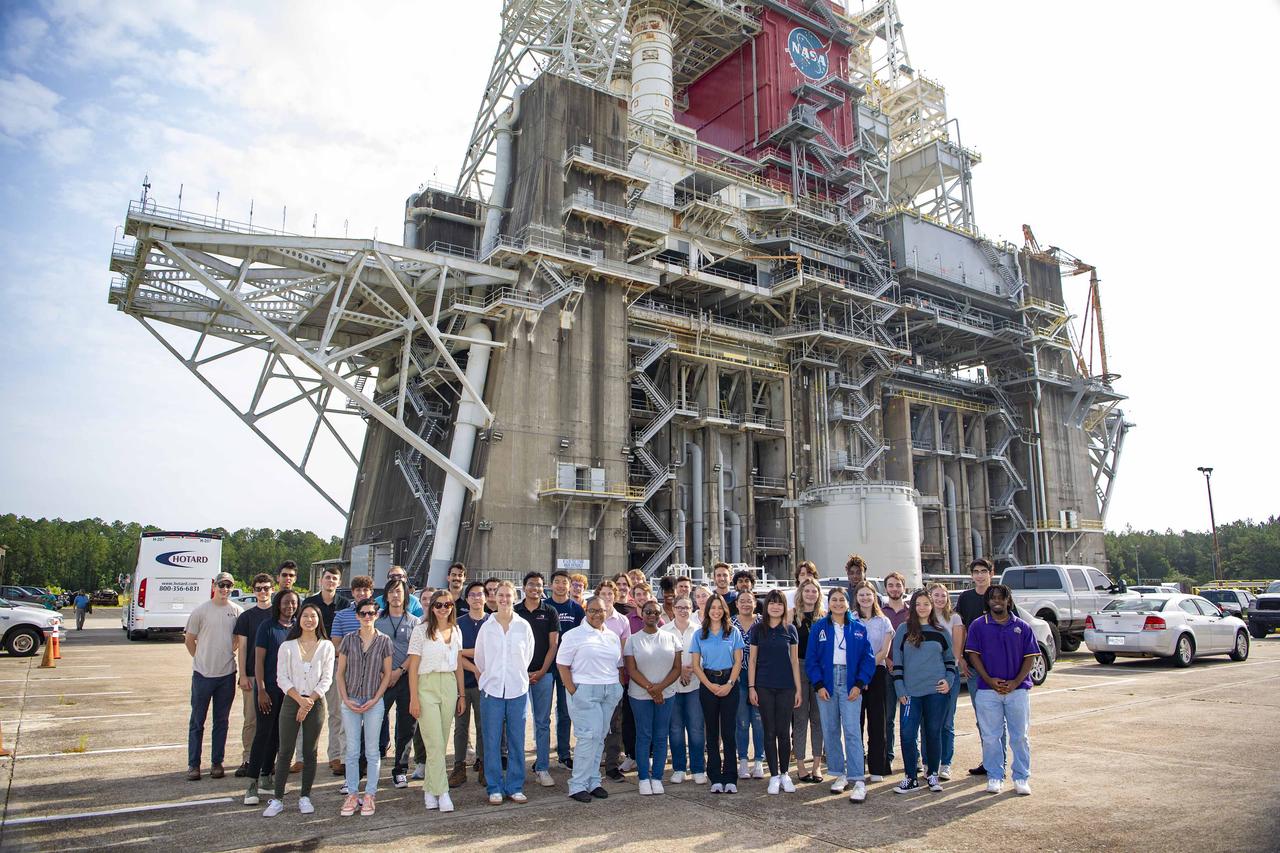
Interns at NASA Stennis visit the Thad Cochran Test Stand (B-1/B-2) on July 25 during a test complex tour on National Intern Day. As NASA continues to progress with the Artemis campaign, students across the nation are invited to join the journey. NASA’s internships aim to inspire the Artemis Generation to pursue STEM careers across the nation.

NASA Stennis Director John Bailey hosts a Java with John session with NASA Stennis supervisors on July 24. Java with John is an ongoing employee-led discussion in a relaxed environment aimed to foster a culture where all are welcome to share what matters most to their work at NASA Stennis.
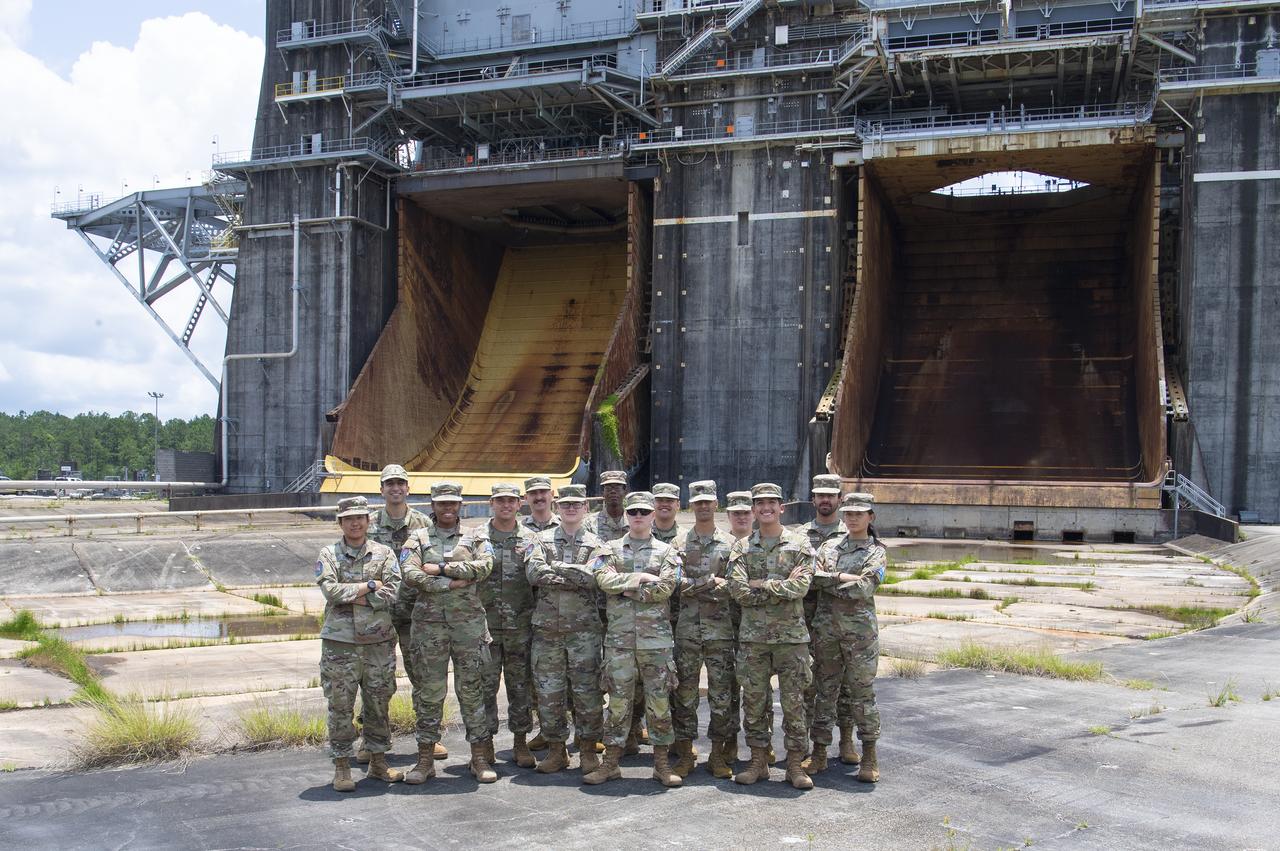
United States Space Force training students and professors stand at the Thad Cochran Test Stand on June 4 during a tour of NASA’s Stennis Space Center. NASA Stennis is preparing the test stand to test the exploration upper stage, which will fly on future SLS (Space Launch System) missions as NASA continues its mission of exploring the secrets of the universe for the benefit of all. The upper stage is being built at NASA’s Michoud Assembly Facility in New Orleans as a more powerful second stage to send the Orion spacecraft to deep space. It is expected to fly on the Artemis IV mission. Before that, it will be installed on the Thad Cochran Test Stand (B-2) at NASA Stennis to undergo a series of Green Run tests of its integrated systems to demonstrate it is ready to fly. The Space Force, established in 2019, organizes, trains, and equips personnel to protect U.S. and allied interests in space and to provide space capabilities to the joint forces.
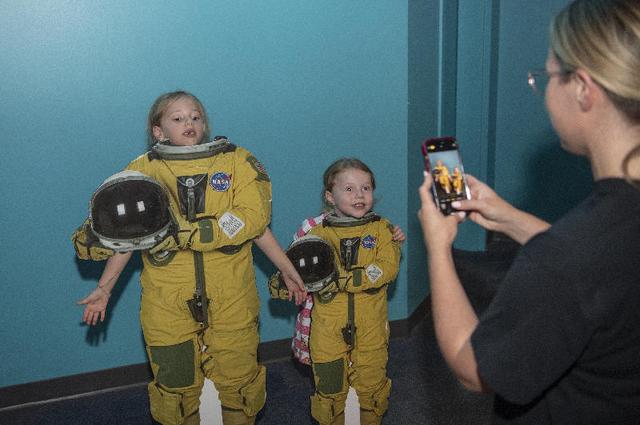
Two young visitors to the Audubon Aquarium in New Orleans pose as NASA astronauts as part of a NASA exhibit July 5. NASA hosted an information/interactive exhibit at the aquarium in conjunction with NASA activities at the 30th annual ESSENCE Fest in New Orleans during the Fourth of July weekend.
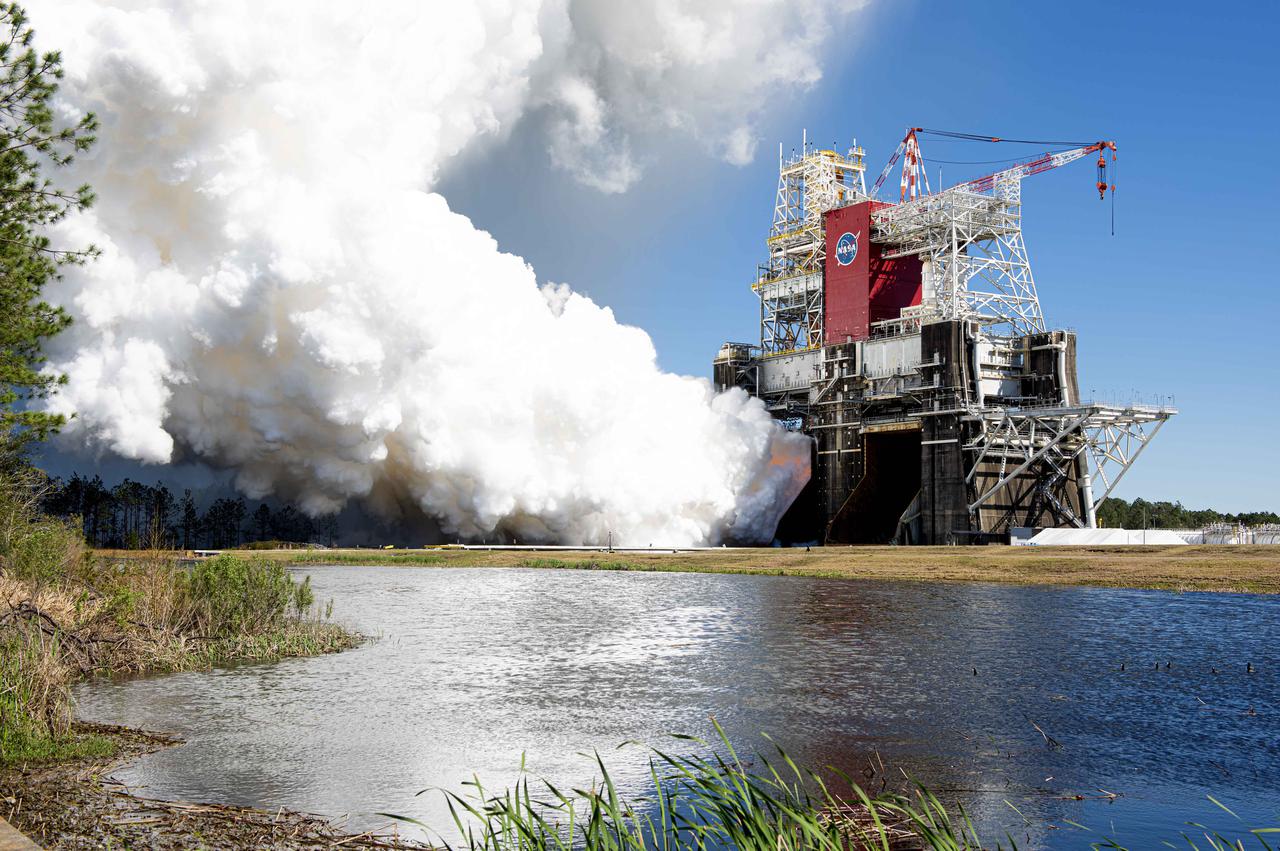
NASA conducts a hot fire test March 18, 2021, of the core stage for the agency’s Space Launch System rocket on the B-2 Test Stand at Stennis Space Center near Bay St. Louis, Mississippi. The hot fire test of the stage’s four RS-25 engines generated a combined 1.6 million pounds of thrust, just as will occur during an actual launch. The hot fire is the final test of the Green Run test series, which represents a comprehensive assessment of the core stage and its integrated systems prior to its launch on the Artemis I mission to the Moon.
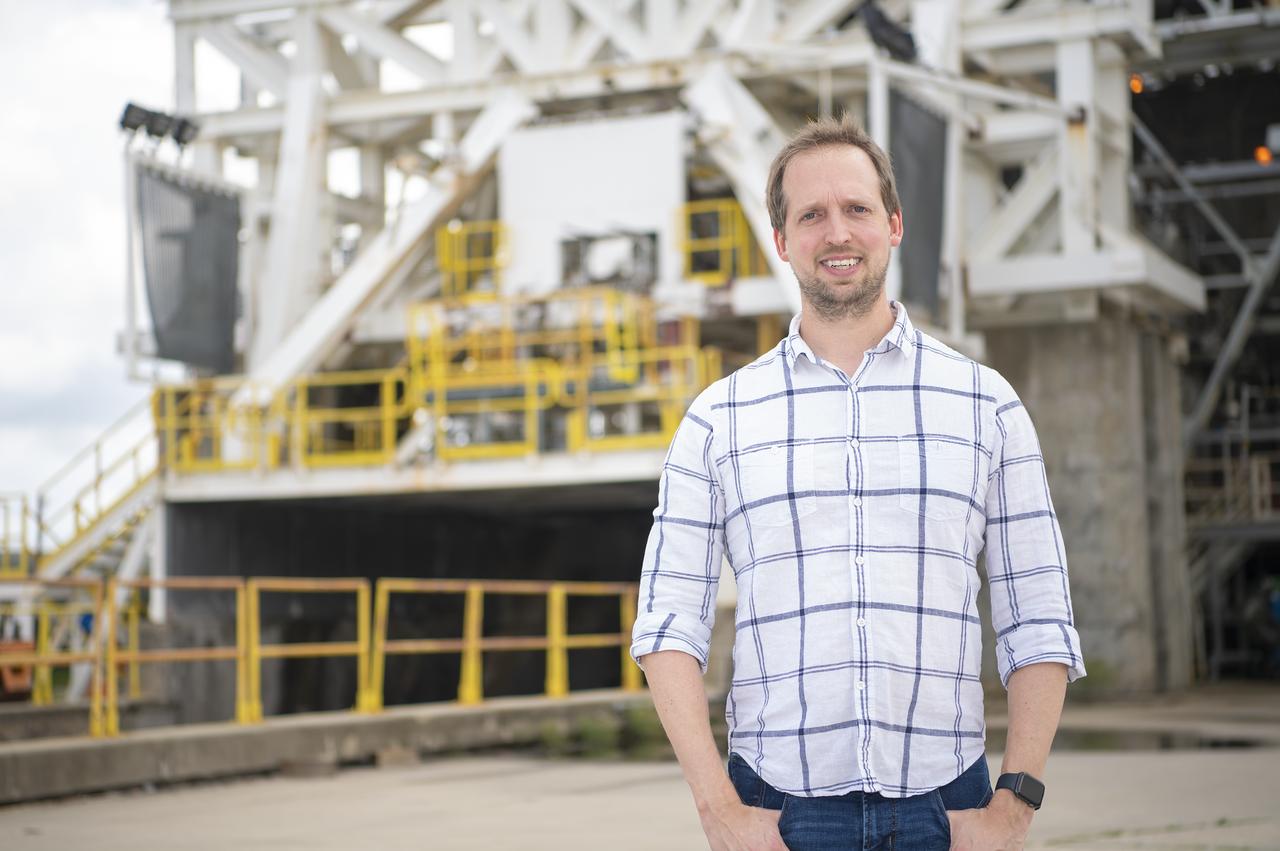
Chris Barnett-Woods is shown at the E-1 Test Stand at NASA’s Stennis Space Center near Bay St. Louis, Mississippi, where NASA Stennis accelerates the exploration and commercialization of space and innovates to benefit NASA and industry.
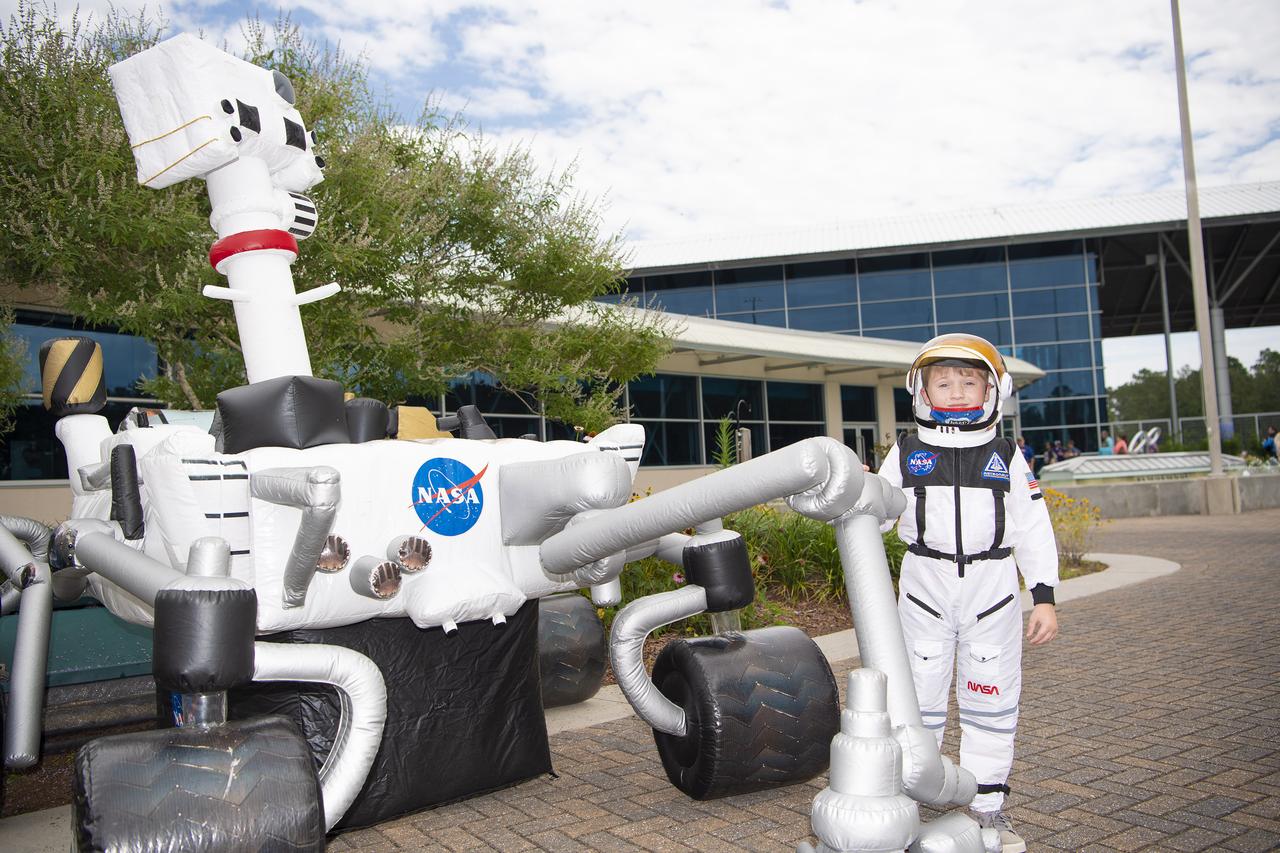
Jackson Barber of Mandeville, LA, poses in front of an inflatable Mars Rover outside INFINITY Science Center adjacent to NASA’s Stennis Space Center. The science center held its grand reopening on May 29, 2021, after closing in 2020 due to Covid 19.
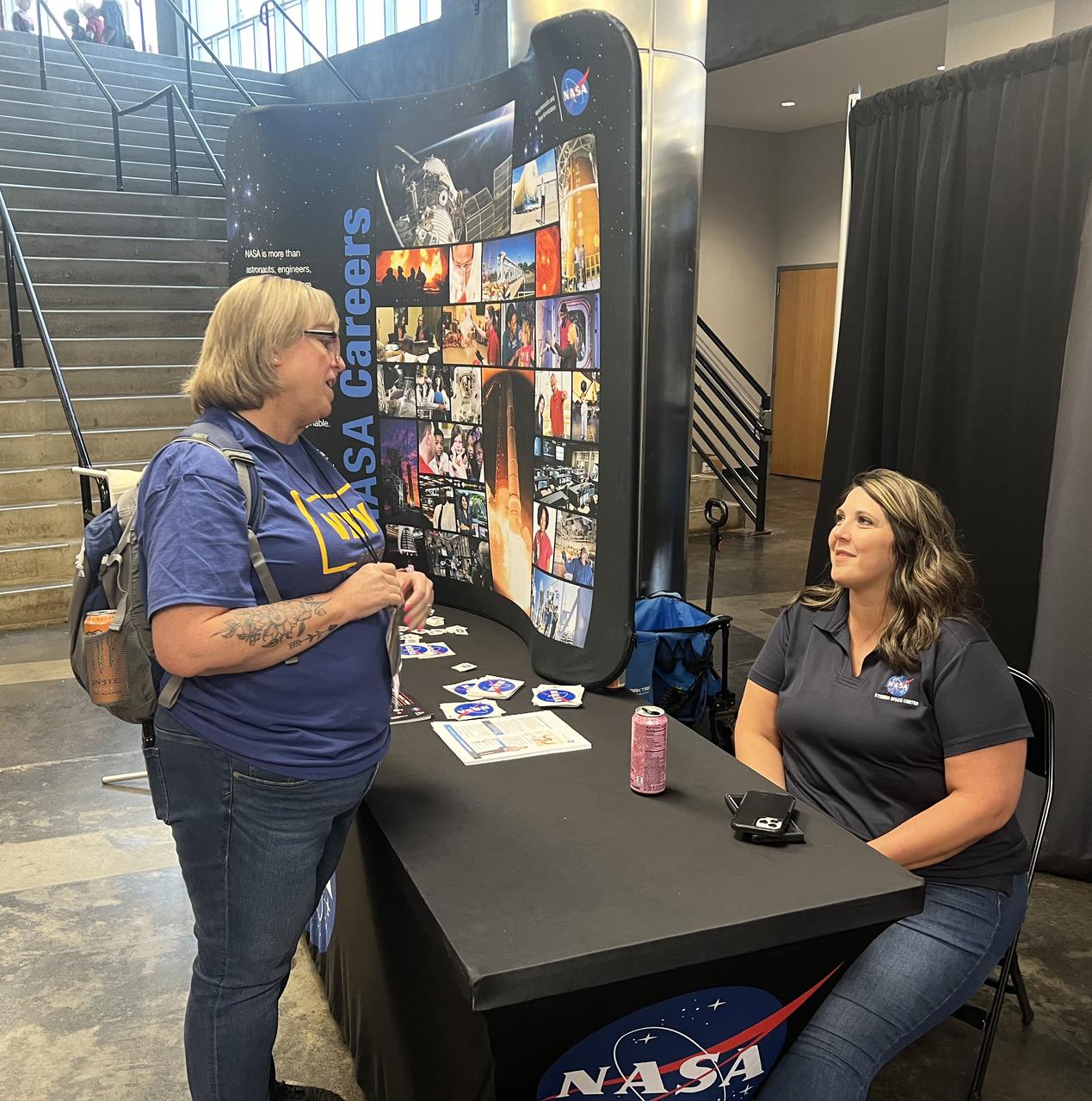
A Mississippi Comic Convention worker, an advocate for children with disabilities, speaks with NASA Stennis budget analyst Rebecca Mataya, right, during the event in Jackson, Mississippi, on June 22, about community outreach events and INFINITY Science Center’s ability to host children with special needs interested in learning more about NASA.
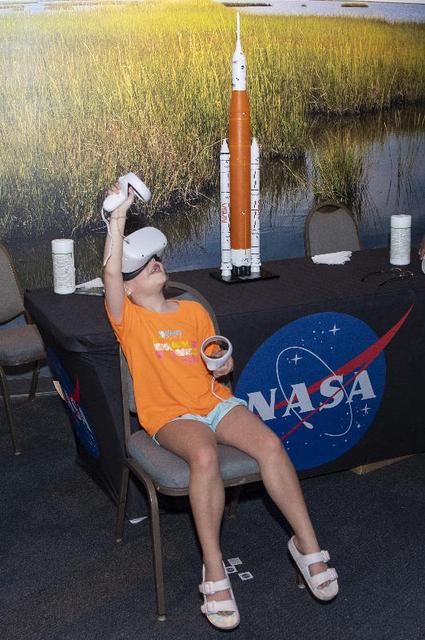
An Audubon Aquarium visitor in New Orleans experiences a virtual reality visit to the International Space Station as part of a NASA exhibit on July 5. NASA hosted an information/interactive exhibit at the aquarium in conjunction with NASA activities at the 30th annual ESSENCE Fest in New Orleans during the Fourth of July weekend.
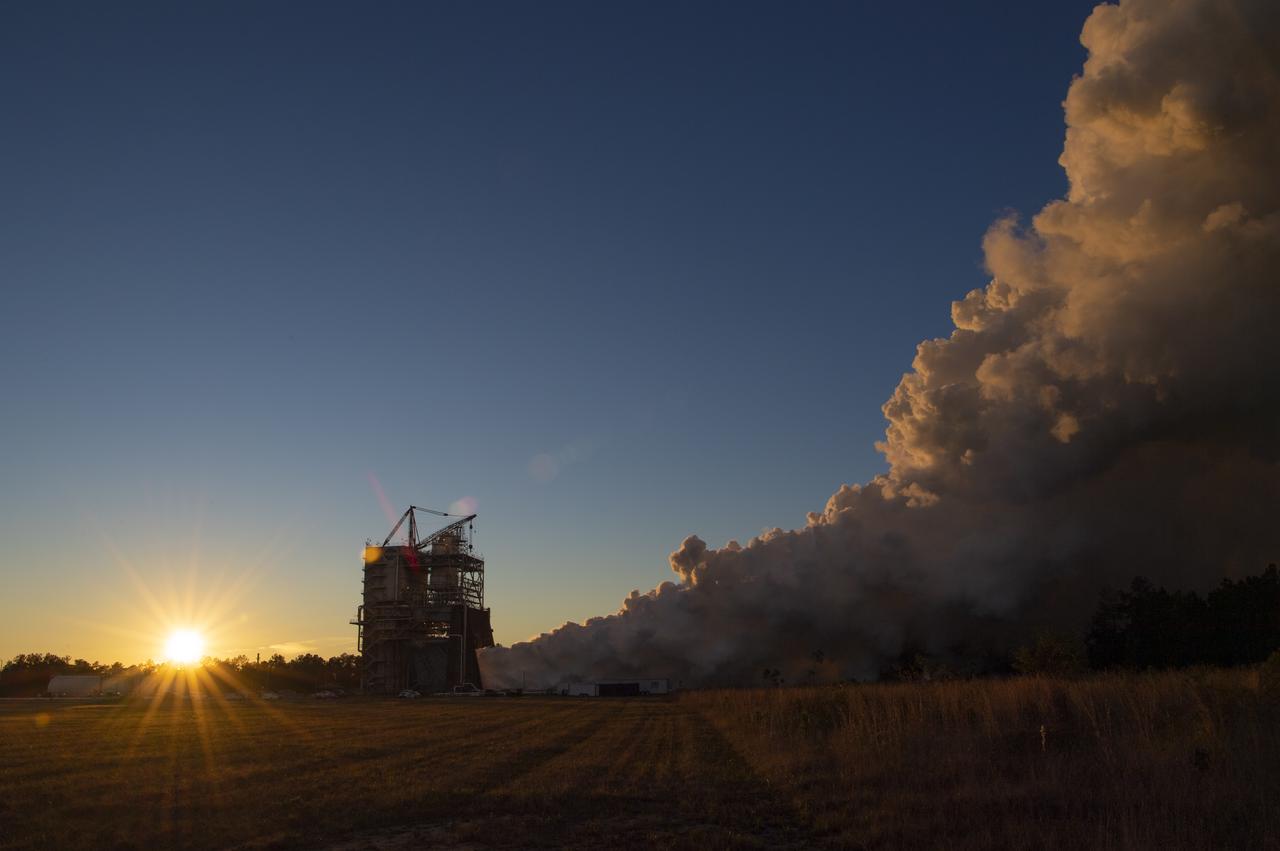
An RS-25 engine is fired at sunset on Nov. 15 on the A-1 test stand at Stennis Space Center. The 650-second duration test represents the time three such engines would need to fire to burn up propellant and power the rocket into orbit, even if the fourth shut down early during an SLS launch.
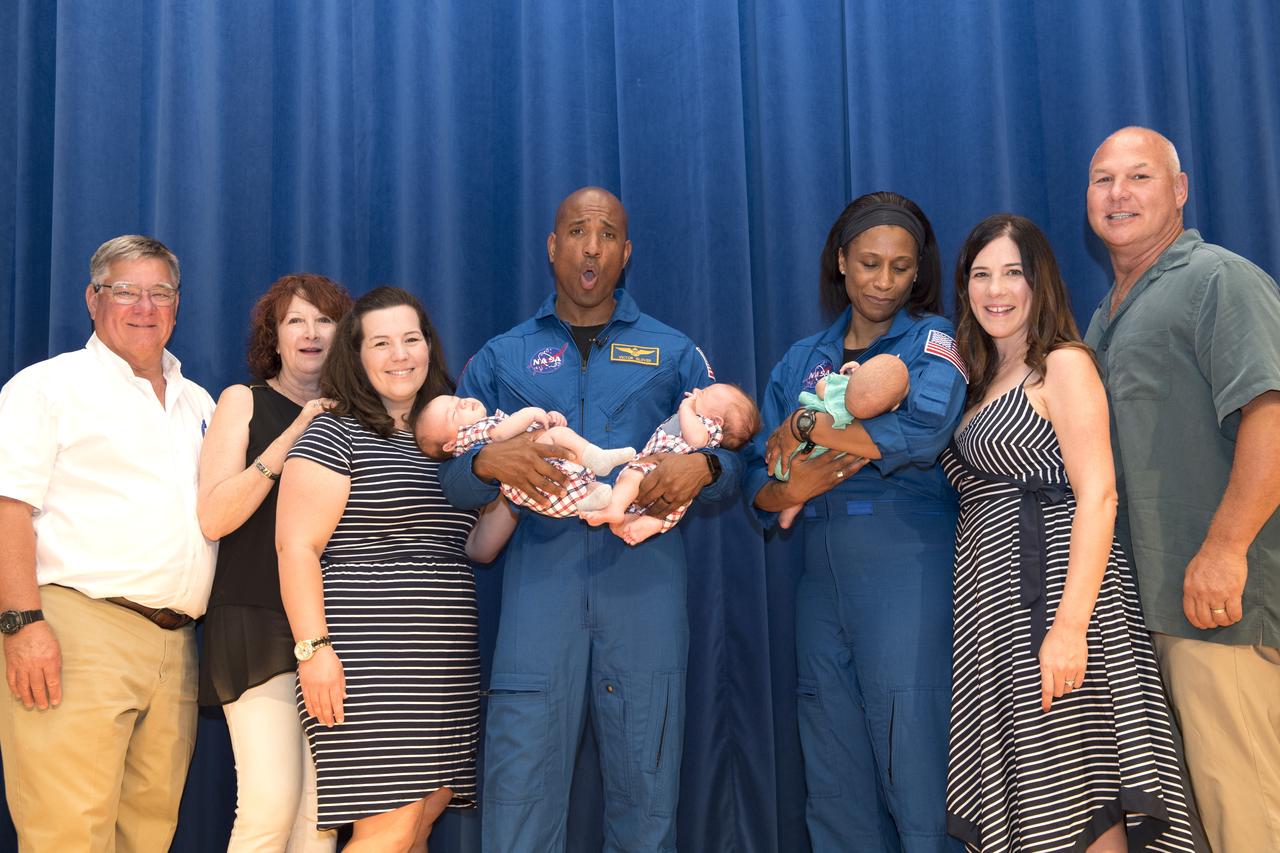
Astronauts Victor Glover and Jeanette Epps presented Silver Snoopy Awards at Stennis Space Center on June 27, including to NASA engineer Katie Carr Kopeso, who accepted the award with her ever-expanding family
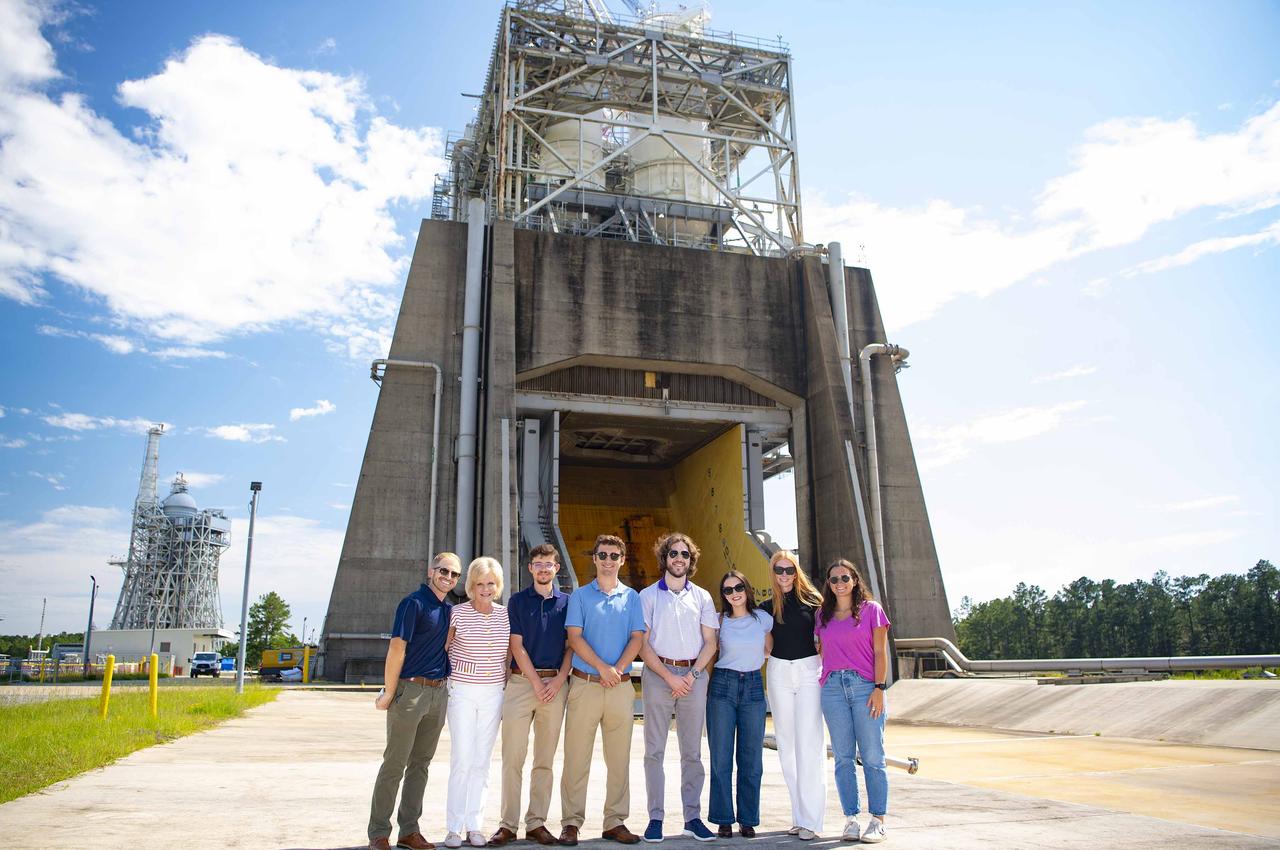
Legislative staff and interns from the office of U.S. Rep. Garrett Graves of Louisiana are pictured at the Fred Haise Test Stand at NASA Stennis on July 11. During the visit to the south Mississippi site, the group learned more about internship opportunities with NASA and NASA Stennis. In addition to touring the test complex where RS-25 engines are tested for future Artemis missions, the group visited the Aerojet Rocketdyne Engine Assembly Facility onsite. Aerojet Rocketdyne, an L3Harris Technologies company, manufactures RS-25 engines to help power NASA’s SLS (Space Launch System) rocket on Artemis missions to the Moon and beyond.
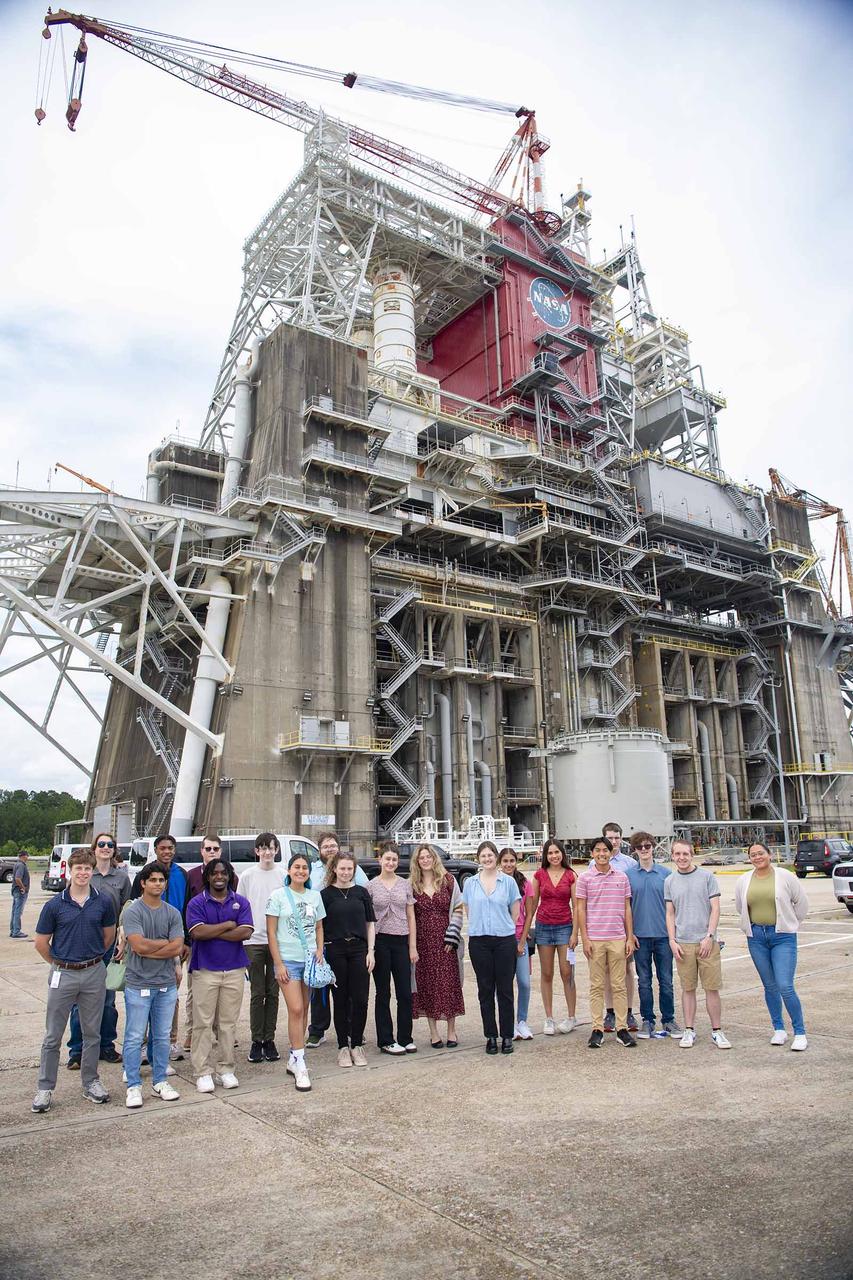
Summer interns with the U.S. Naval Research Laboratory stand in front of the Thad Cochran Test Stand (B-1/B-2) on July 10. NASA Stennis crews are preparing the B-2 side of the stand for future testing of NASA’s exploration upper stage. The more powerful second stage is expected to fly on NASA’s SLS (Space Launch System) rocket for Artemis IV. The Naval Research Laboratory interns visited the stand during an afternoon tour of NASA Stennis. The Naval Research Laboratory is a tenant of the NASA Stennis federal city, where it provides advanced scientific capabilities required to bolster the nation’s position of global naval leadership.
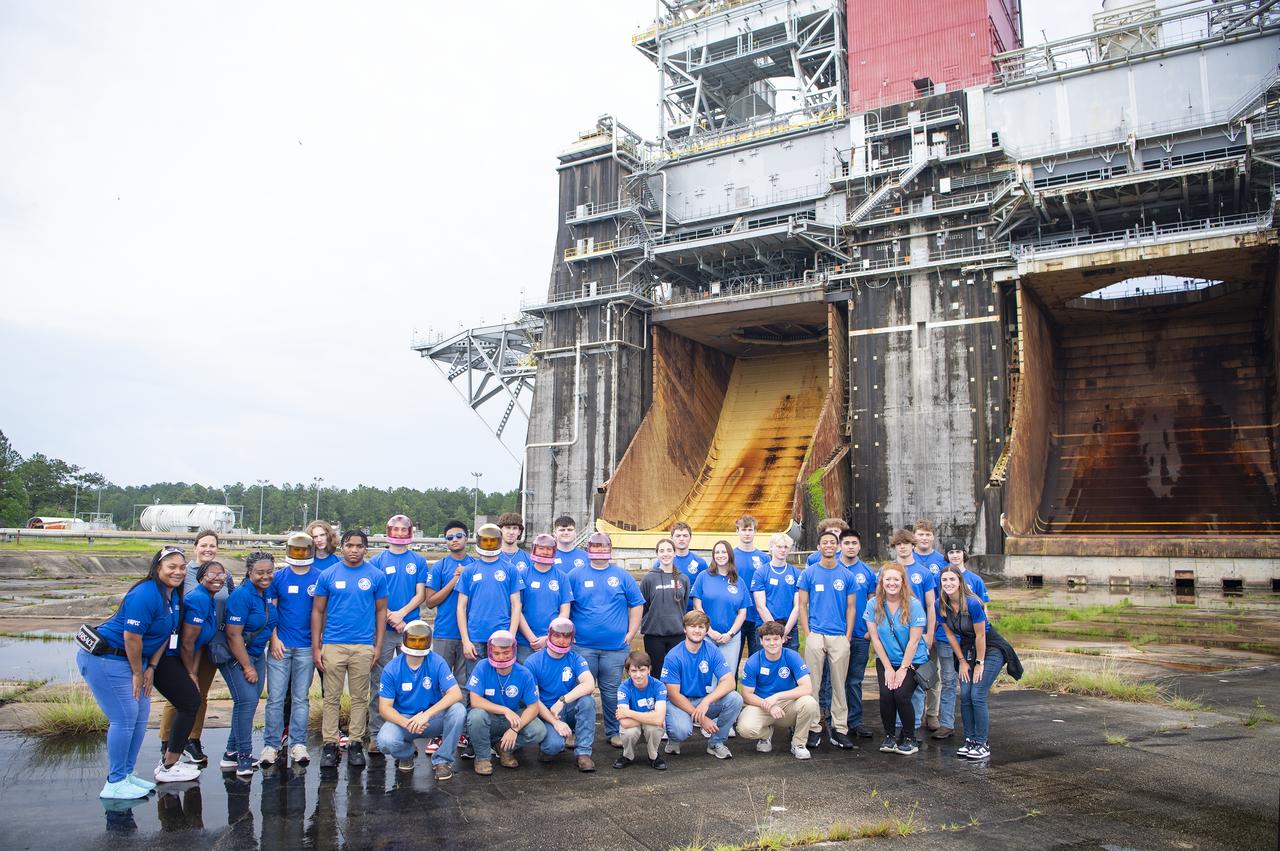
Rising high school juniors and seniors from Ascension Parish, Louisiana, visit the Thad Cochran Test Stand on June 6 during a tour of NASA’s Stennis Space Center. The students are part of the week-long BASF Tech Academy, in coordination with River Parishes Community College, where participants learn about technical careers and education. NASA Stennis is preparing the test stand to test the exploration upper stage, which will fly on future SLS (Space Launch System) missions as NASA continues its mission of exploring the secrets of the universe for the benefit of all. The upper stage is being built at NASA’s Michoud Assembly Facility in New Orleans as a more powerful second stage to send the Orion spacecraft to deep space. It is expected to fly on the Artemis IV mission. Before that, it will be installed on the Thad Cochran Test Stand (B-2) at NASA Stennis to undergo a series of Green Run tests of its integrated systems to demonstrate it is ready to fly.
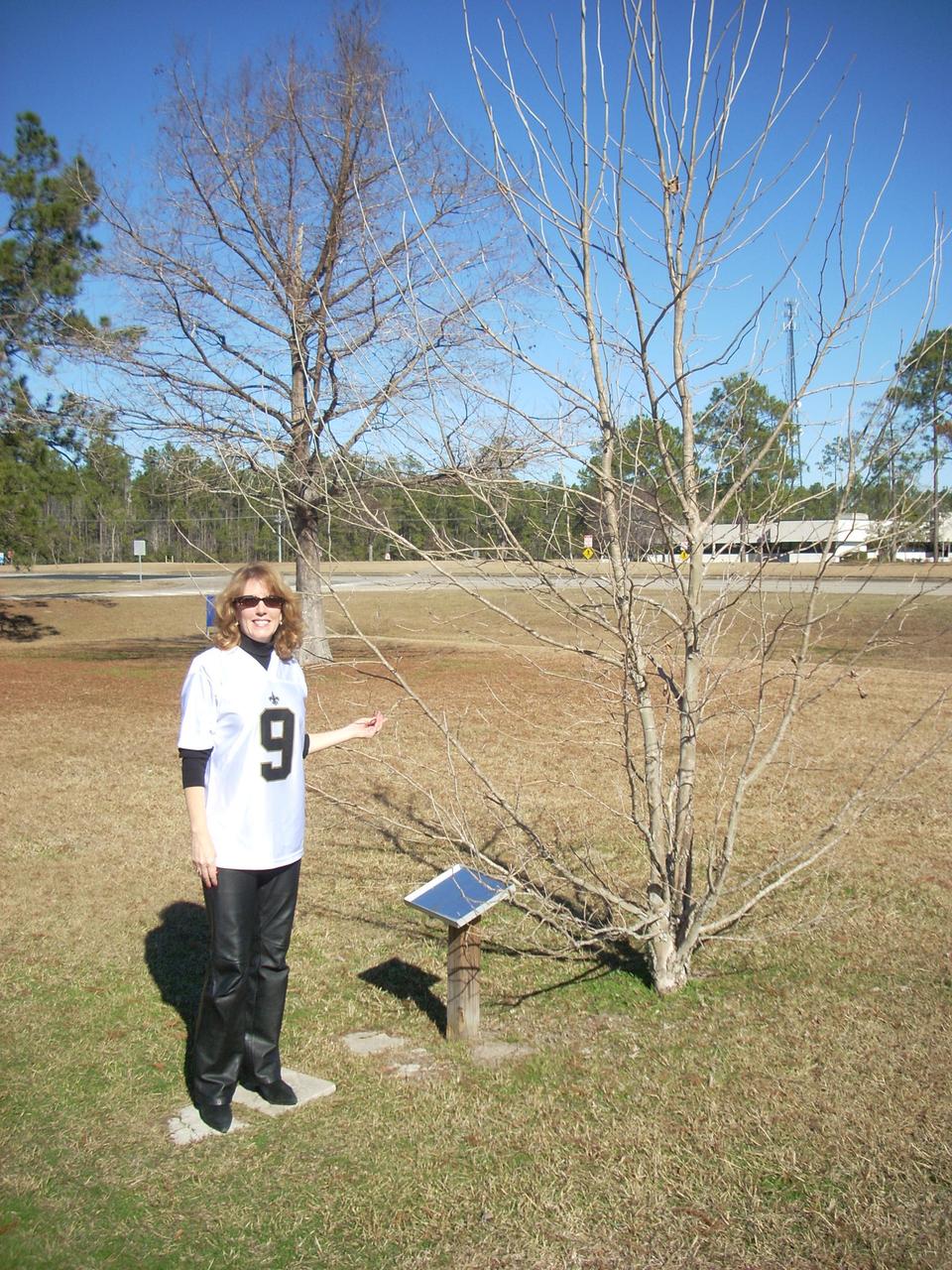
: An image from Jan. 7, 2011, shows Rosemary Roosa, daughter of the late Apollo 14 astronaut Stuart Roosa, standing beside the Moon tree outside of StenniSphere, the previous museum and visitor center at NASA’s Stennis Space Center. The Moon tree is grown from seeds carried to the Moon and back by astronaut Stuart Roosa on the Apollo 14 mission.

Kim Johnson supports NASA’s mission as a contracting officer at NASA’s Stennis Space Center near Bay St. Louis, Mississippi.

Interns at NASA Stennis watch The Color of Space documentary featuring NASA astronaut Victor Glover during National Intern Day activities onsite July 25. Glover will be the first Black astronaut to travel around the Moon for NASA’s Artemis II mission.
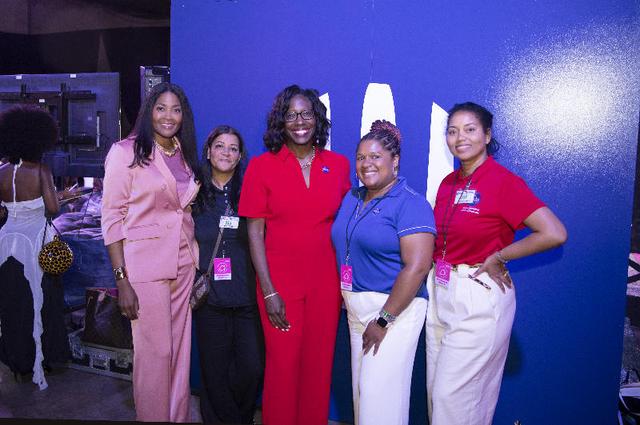
NASA representatives are shown at the 30th annual ESSENCE Fest in New Orleans on July 5. Pictured left to right: Aya Collins, director of engagement; Michelle Bascoe, management analyst; Lakiesha Hawkins, assistant deputy associate administrator for the Moon to Mars Program Office; Zudayyah Taylor-Dunn, chief knowledge officer for Space Operations Mission Directorate; and Miyoshi Collins, program specialist.
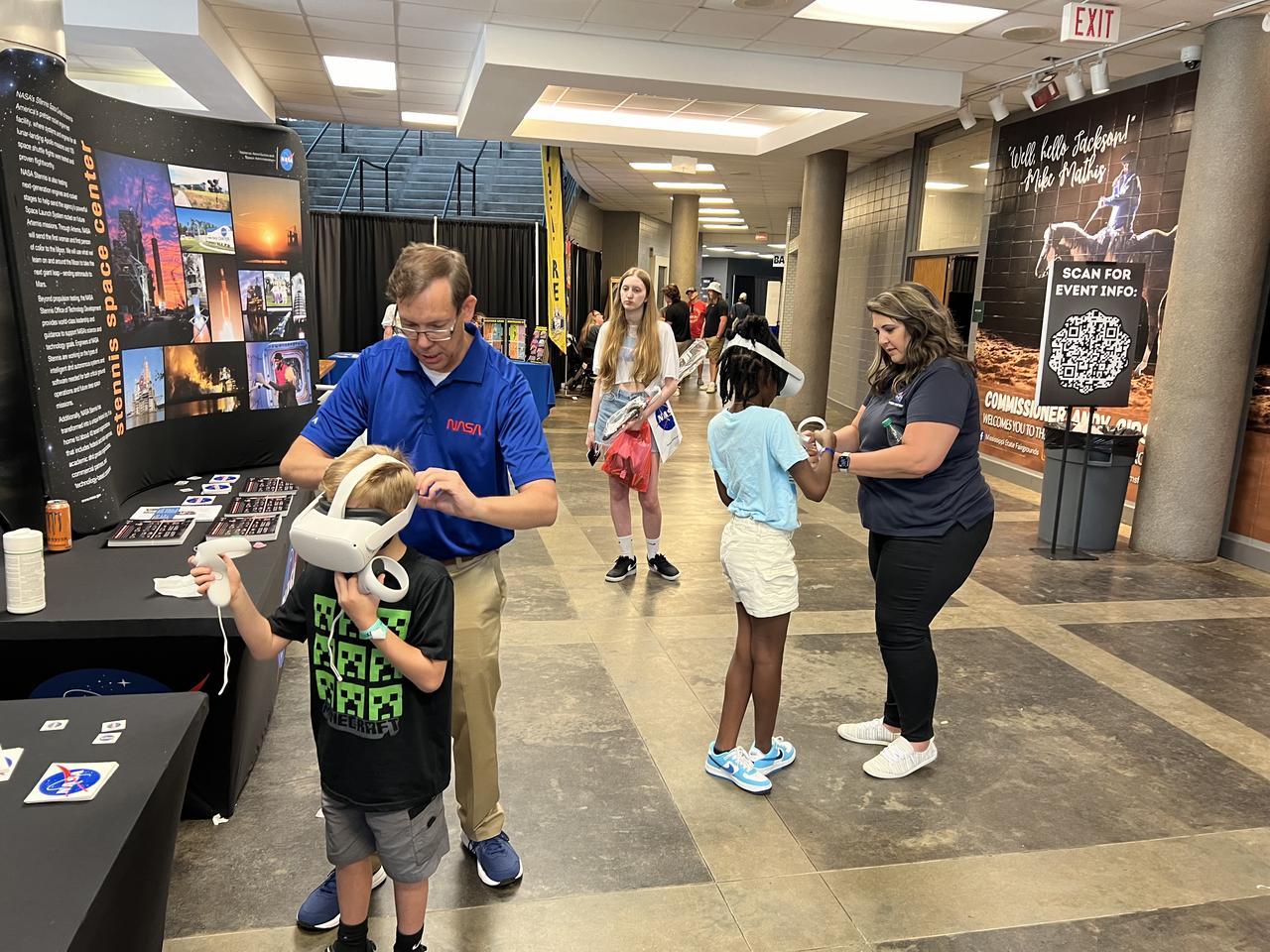
NASA Stennis budget analyst Rebecca Mataya, right, and NASA Stennis engineer Paul Fuller assist young space fans with the NASA virtual reality experience at the Mississippi Comic Convention in Jackson, Mississippi, on June 22 at the Mississippi Trade Mart and Coliseum.

NASA conducts a hot fire test March 18, 2021, of the core stage for the agency’s Space Launch System rocket on the B-2 Test Stand at Stennis Space Center near Bay St. Louis, Mississippi. The hot fire test of the stage’s four RS-25 engines generated a combined 1.6 million pounds of thrust, just as will occur during an actual launch. The hot fire is the final test of the Green Run test series, which represents a comprehensive assessment of the core stage and its integrated systems prior to its launch on the Artemis I mission to the Moon.
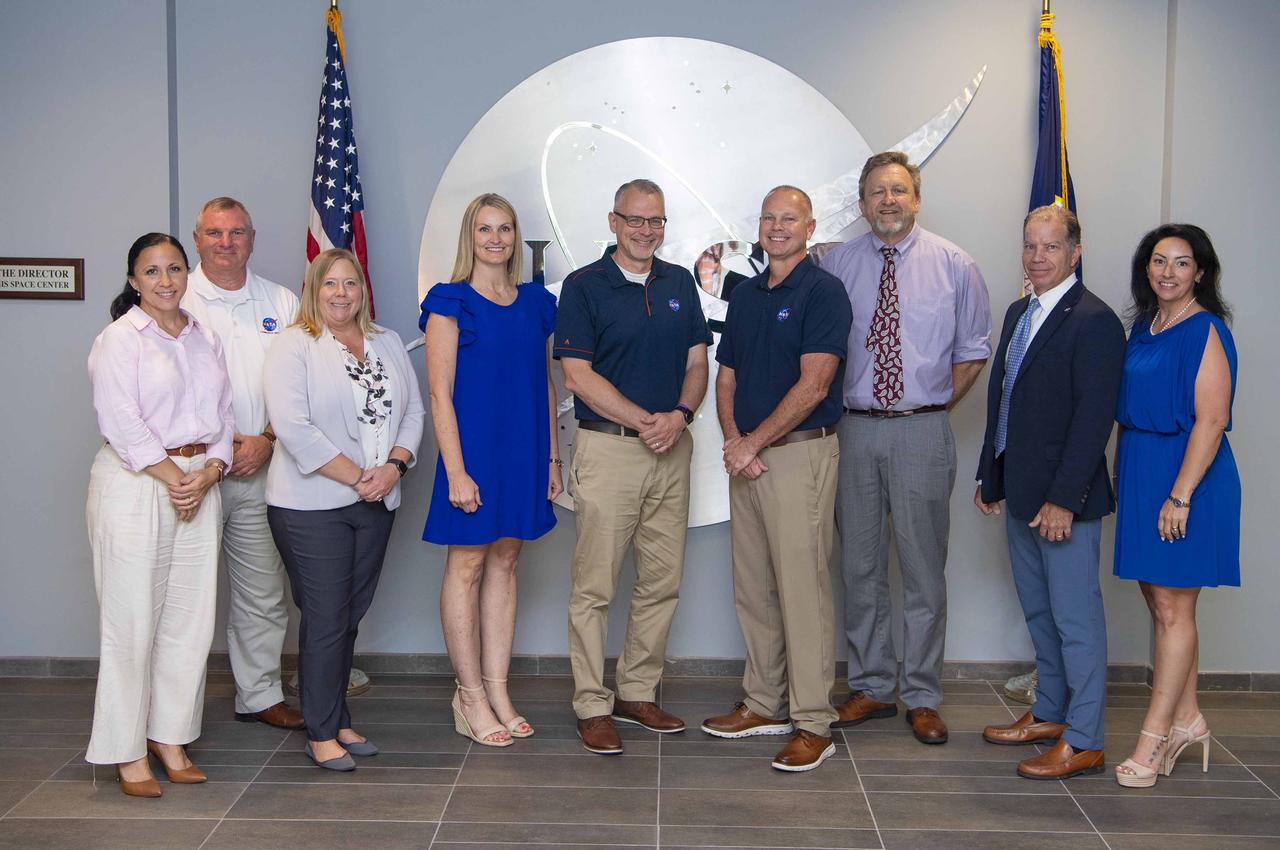
NASA Associate Administrator Jim Free stands with leaders from NASA Stennis and the NASA Shared Services Center during a visit on July 16 to the south Mississippi site. Free also met with representatives of commercial companies engaged in onsite propulsion activities. Pictured left to right is Jill Castiglione, NASA Stennis executive assistant; Troy Frisbie, NASA Stennis chief of staff; Nikki Tubbs, NASA Shared Services Center director of support operations; Anita Harrell, NASA Shared Services Center executive director; Free; John Bailey, NASA Stennis director; Rodney McKellip, NASA Stennis associate director; Troy Taylor, NASA Shared Services Center deputy director of service delivery; and Jessie Shiyou, NASA Shared Services Center executive assistant.

Take Our Children to Work Day participants learn about buoys on June 27 during an activity conducted by Brandon Elsensohn, Amentum software engineer, for the National Data Buoy Center at NASA’s Stennis Space Center.
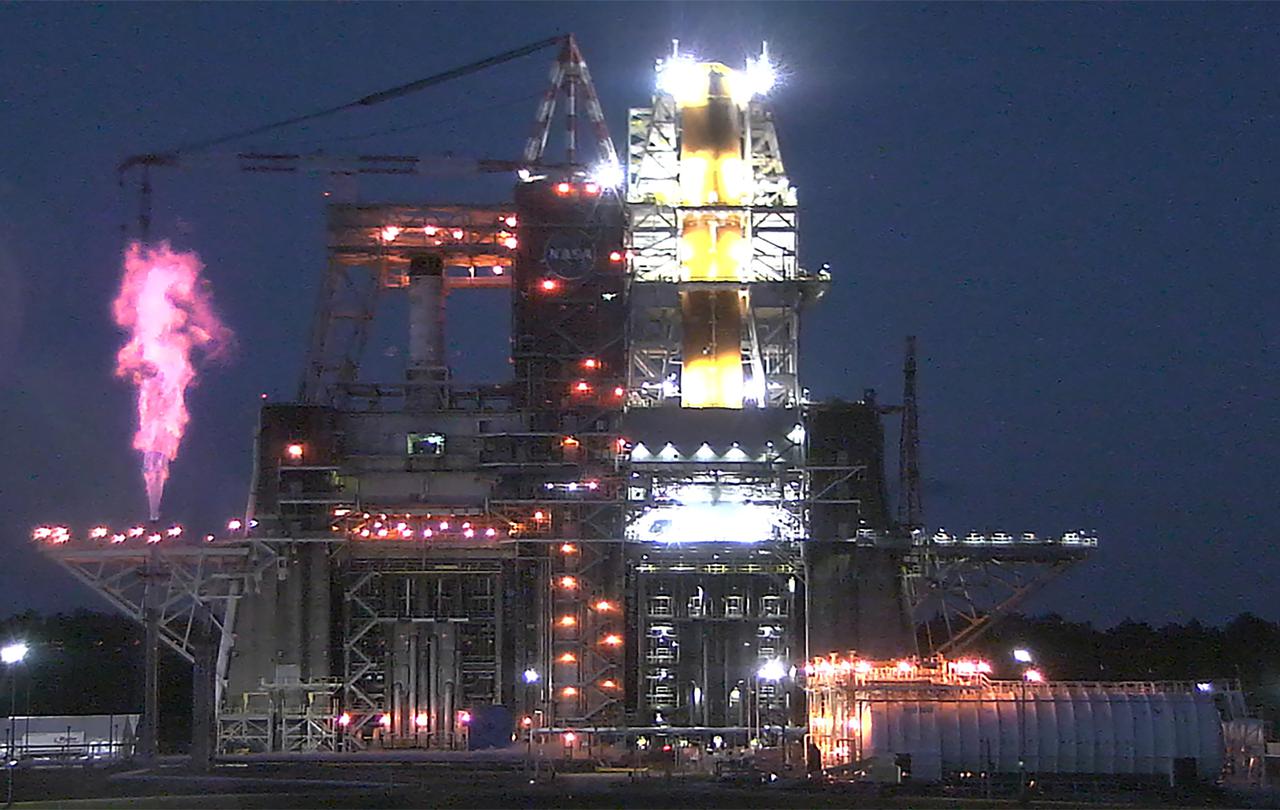
Teams at NASA’s Stennis Space Center performed a wet dress rehearsal exercise with the new Space Launch System core stage Dec. 20, 2020. The test – the seventh in an eight-test Green Run series – involved rehearsal of a countdown to hot fire of the stage’s engines, including the loading of 733,000 pounds of liquid hydrogen and liquid oxygen propellants. This image shows liquid hydrogen being safely vented and burned as it naturally warms and boils off.
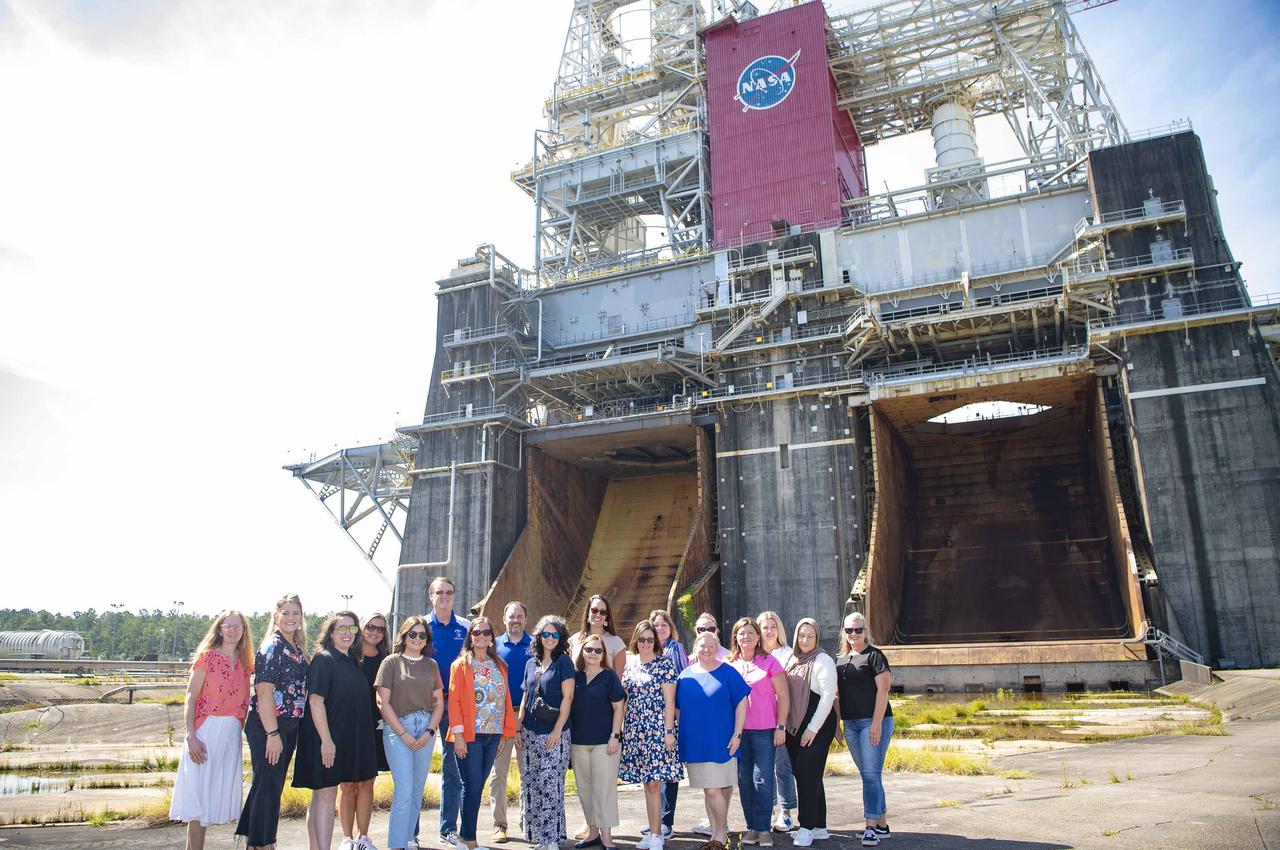
Pearl River County Elementary School leaders visit the Thad Cochran Test Stand (B-1/B-2) during a NASA Stennis tour on July 15. The school leaders received an overview of work conducted at NASA Stennis, including how the south Mississippi site is contributing to NASA’s return to the Moon through the Artemis campaign by testing engines and stages to help power the SLS (Space Launch System) rocket.
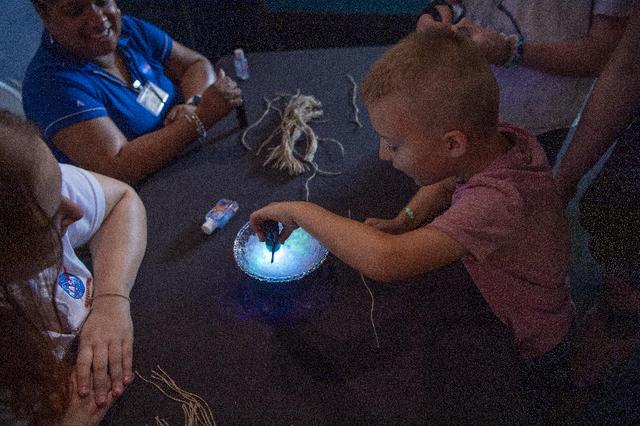
An Audubon Aquarium visitor in New Orleans is all smiles while participating in the solar bead activity provided by NASA on July 5. NASA hosted an information/interactive exhibit at the aquarium in conjunction with NASA activities at the 30th annual ESSENCE Fest in New Orleans during the Fourth of July weekend.
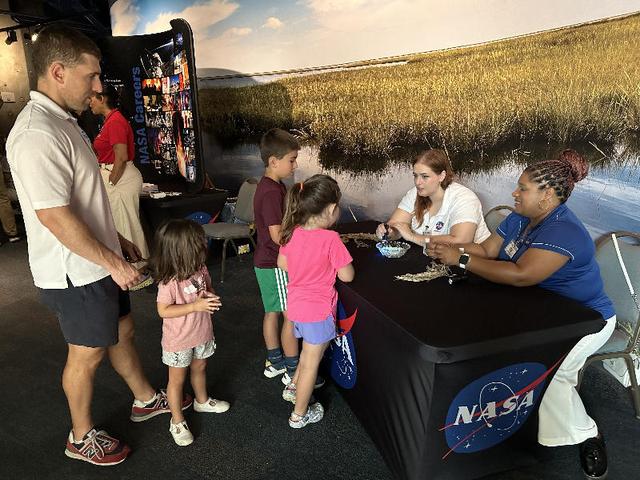
NASA representatives teach visitors to the Audubon Aquarium in New Orleans about the Sun on July 5. NASA hosted an information/interactive exhibit at the aquarium in conjunction with NASA activities at the 30th annual ESSENCE Fest in New Orleans during the Fourth of July weekend.
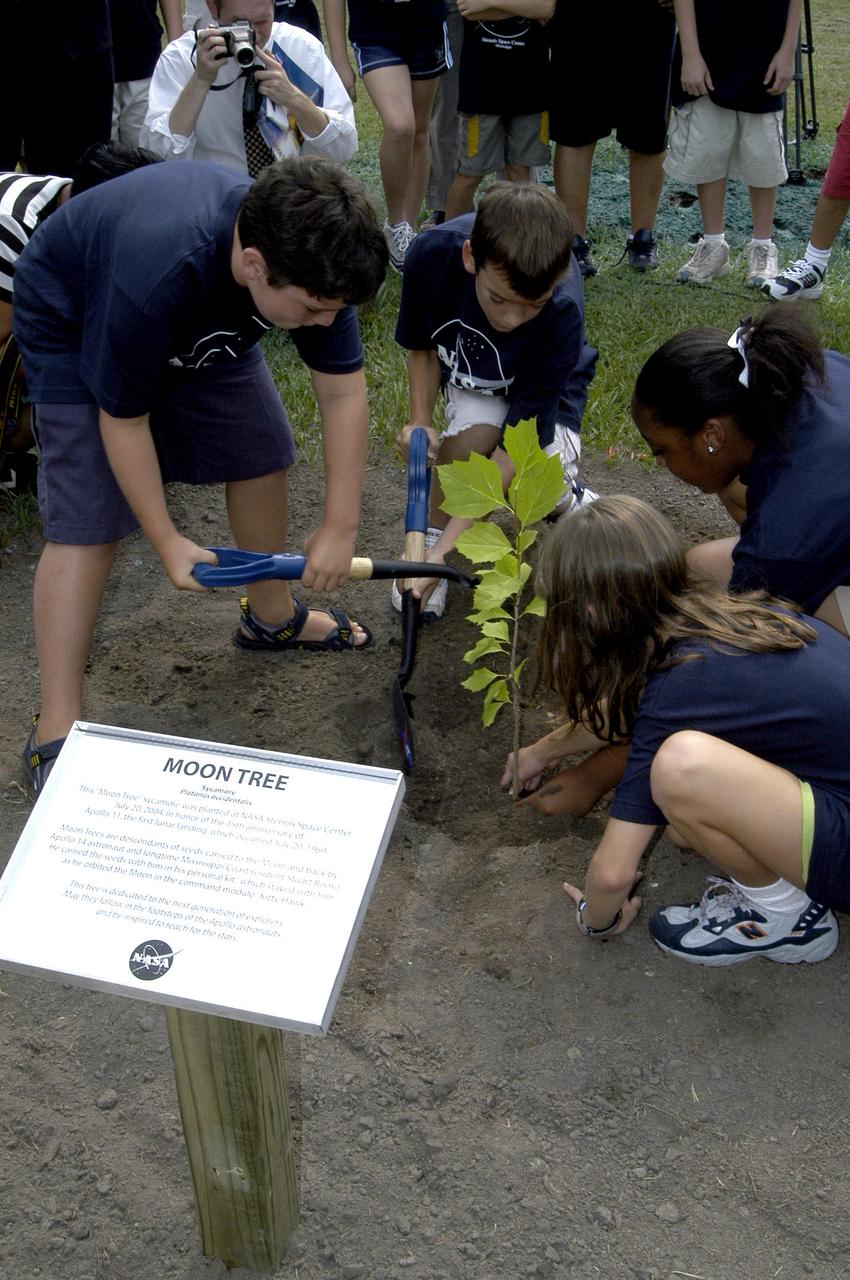
An image from July 20, 2004, shows Astro Camp participants planting a sycamore Moon tree at NASA’s Stennis Space Center near Bay St. Louis, Mississippi. The tree honors the 35th anniversary of Apollo 11 and the first lunar landing on July 20, 1969.
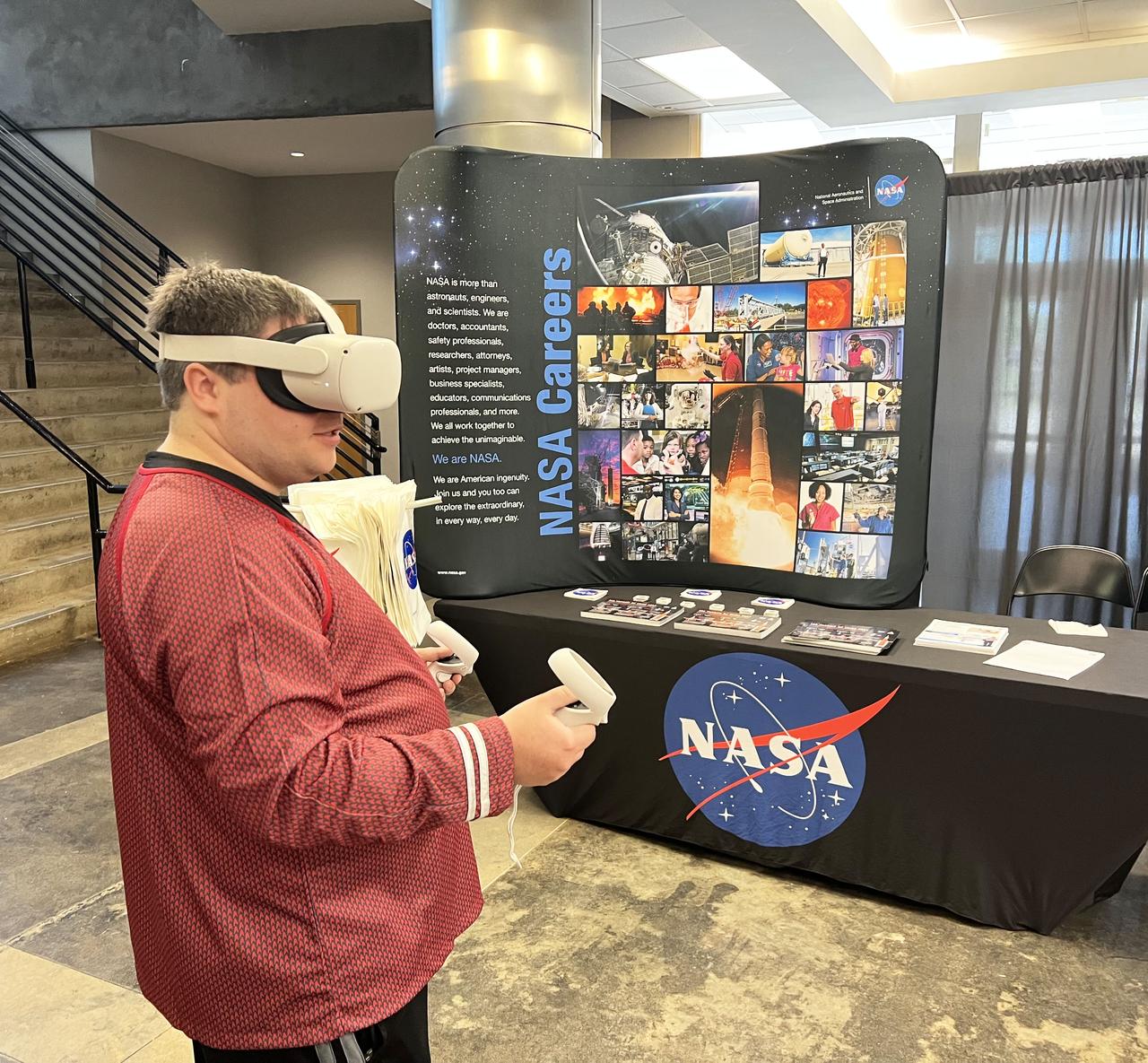
A Jackson, Mississippi, Star Trek fan club, USS Haise member, volunteers to be the first user of the virtual reality experience provided by NASA Stennis before the Mississippi Comic Convention begins.
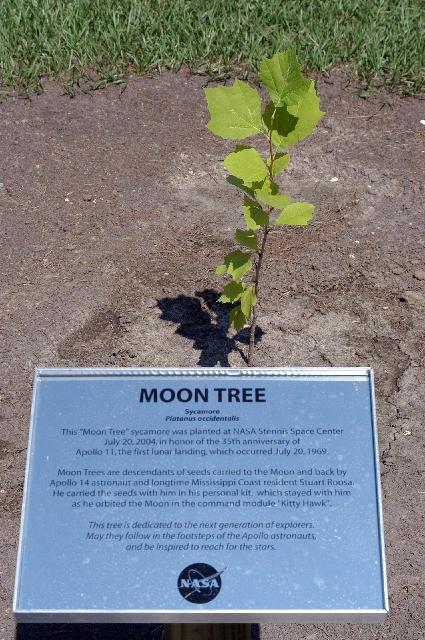
The Moon tree, planted on July 20, 2004 at NASA Stennis, is a descendant of seeds carried to the Moon and back by the late Apollo 14 astronaut and longtime Mississippi Coast resident, Stuart Roosa, as he orbited the Moon in the command module, “Kitty Hawk.”
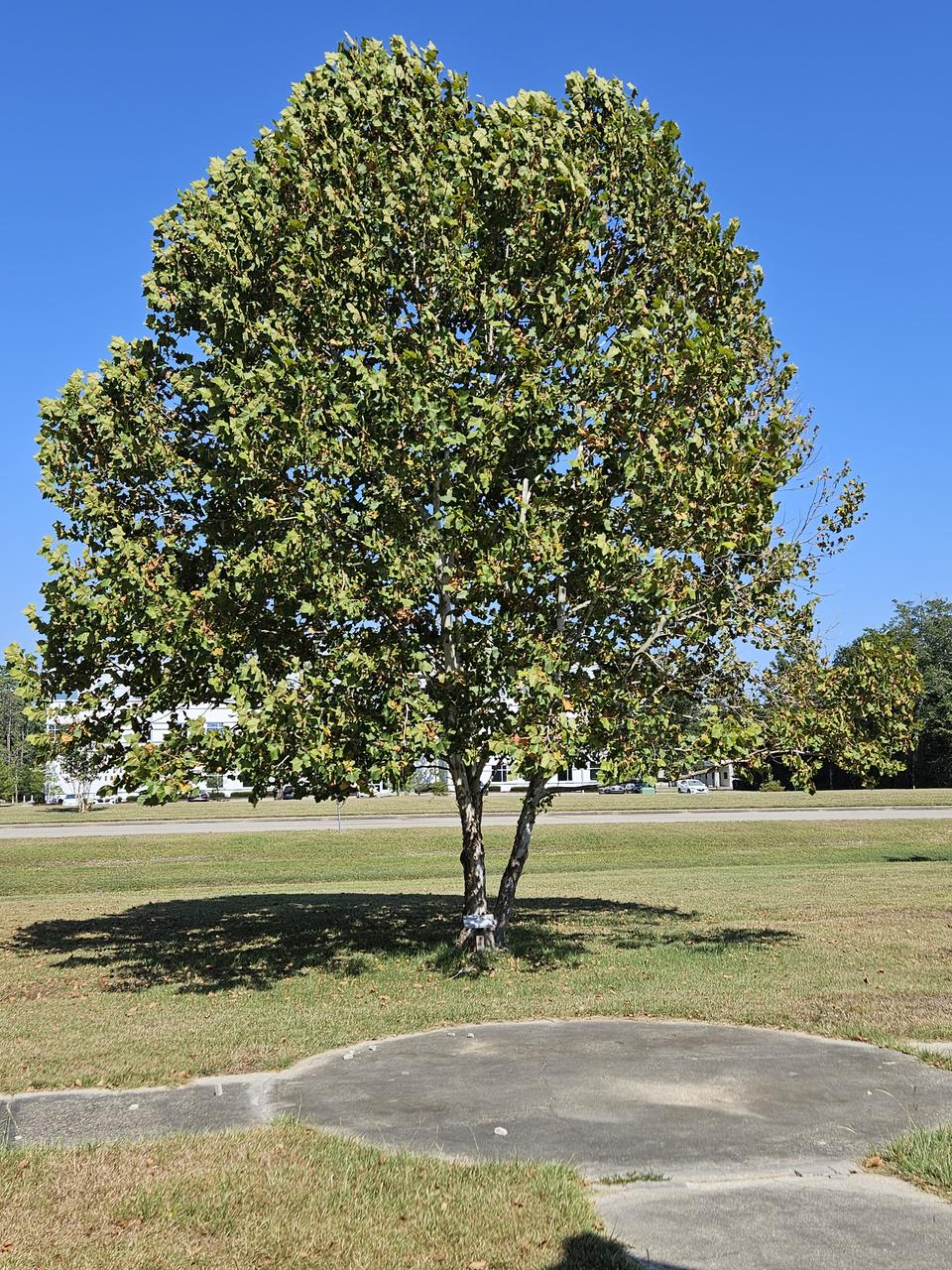
An image from 2023 image shows the growth of a Moon tree planted in 2004 to honor the Apollo 11 mission. The seeds for the tree were carried to the Moon and back by astronaut Stuart Roosa on the Apollo 14 mission.
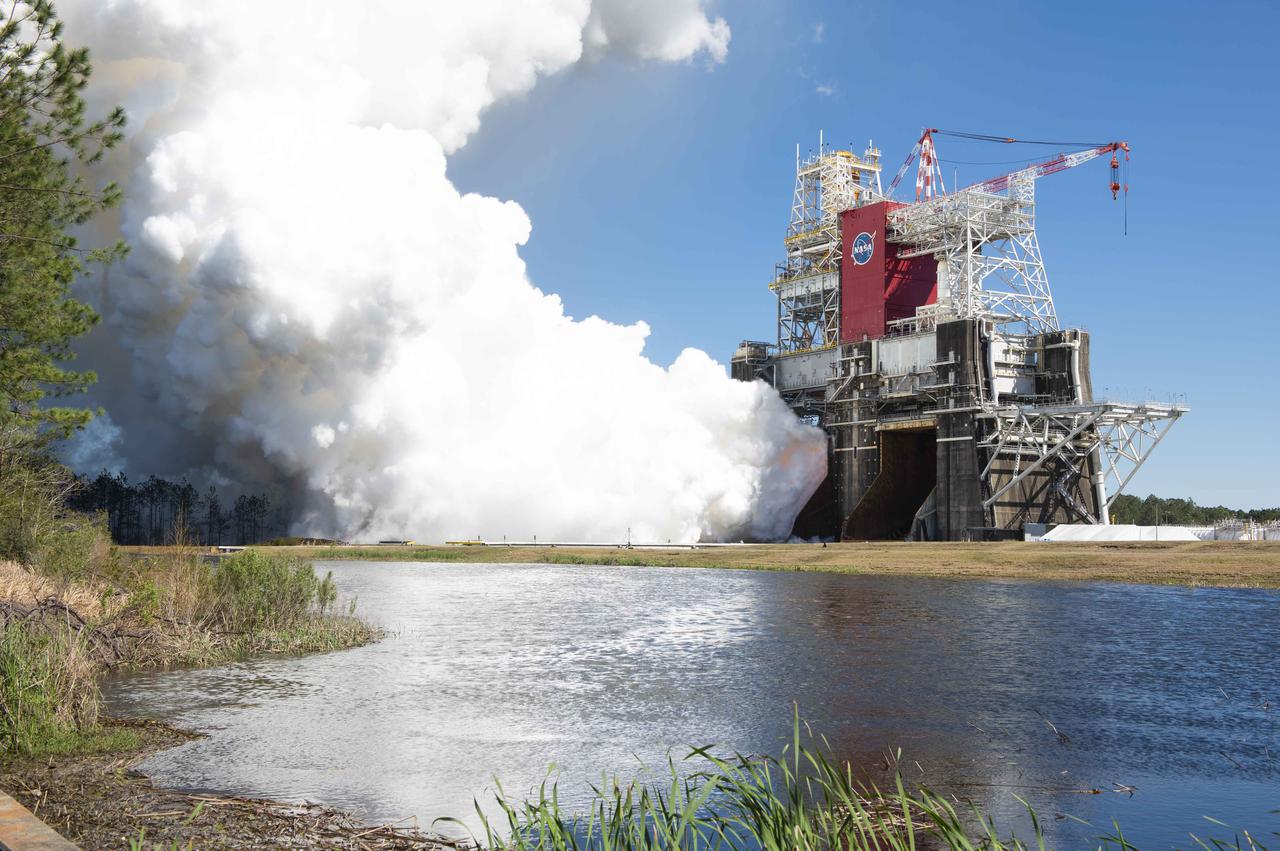
NASA conducts a hot fire test March 18, 2021, of the core stage for the agency’s Space Launch System rocket on the B-2 Test Stand at Stennis Space Center near Bay St. Louis, Mississippi. The hot fire test of the stage’s four RS-25 engines generated a combined 1.6 million pounds of thrust, just as will occur during an actual launch. The hot fire is the final test of the Green Run test series, which represents a comprehensive assessment of the core stage and its integrated systems prior to its launch on the Artemis I mission to the Moon.
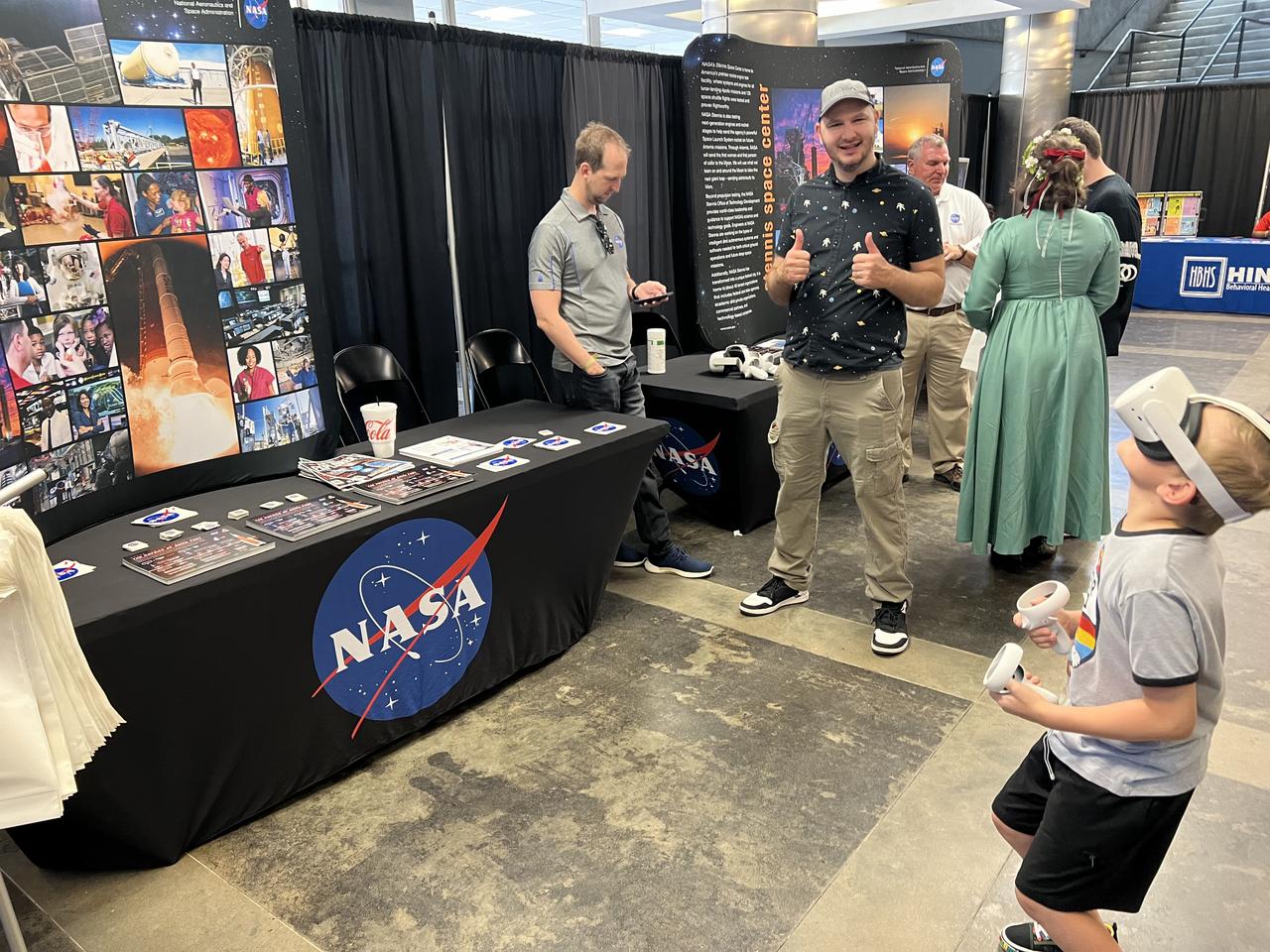
NASA engineer Steve Helmstetter, center, gives a thumbs up on June 22 at the Mississippi Comic Convention in Jackson, Mississippi, as a young fan has a virtual reality experience in space.
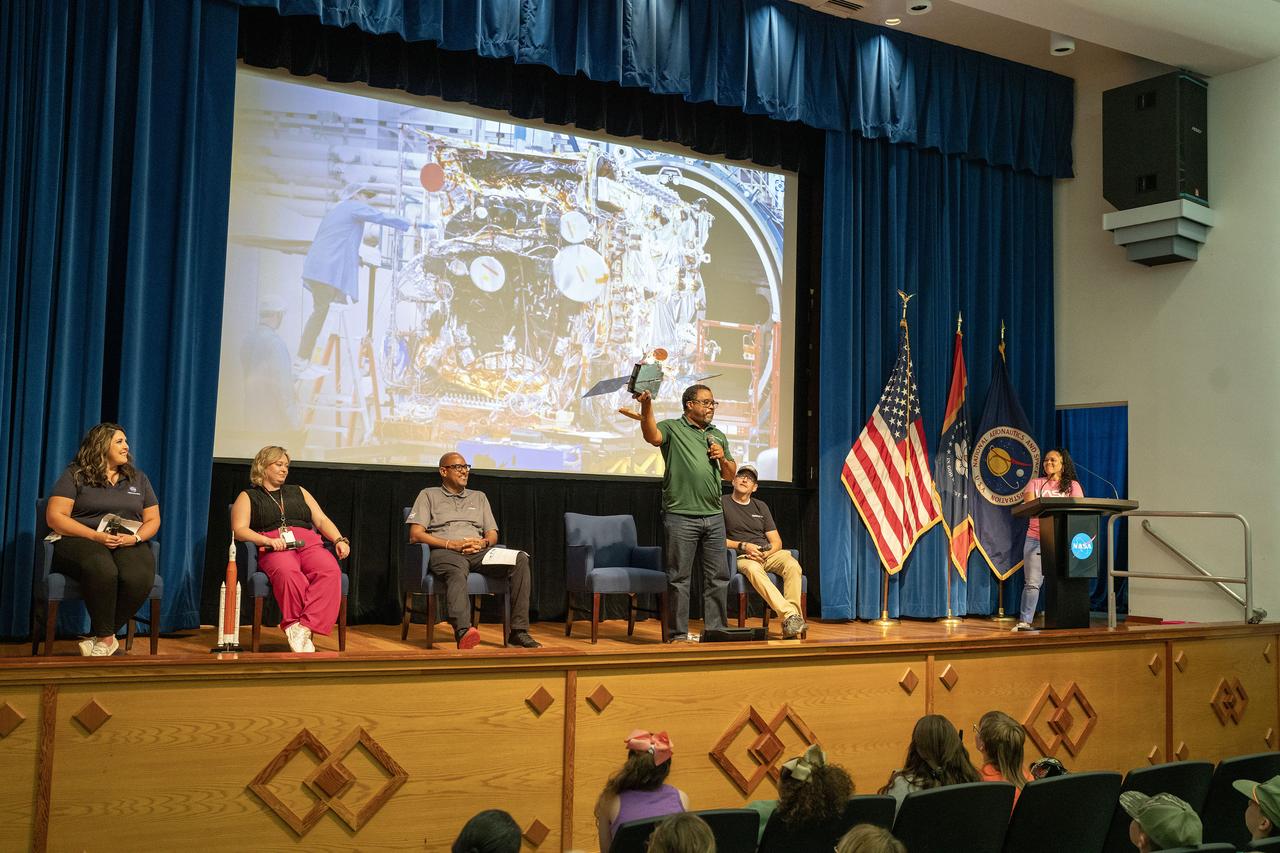
Take Our Children to Work Day participants join NASA Stennis federal city employees for a career panel discussion on June 27. The career panel discussion included (left to right): Rebecca Mataya, NASA Stennis budget analyst; Madison Rundell, Aerojet Rocketdyne information technology specialist; Troy Chivers, COLSA/All In Solutions representative; Clyde Conerly, Lockheed Martin quality engineer; Andy Guymon, Relativity Space test engineer; and moderator Apolonia Acker, NASA Stennis public affairs specialist.
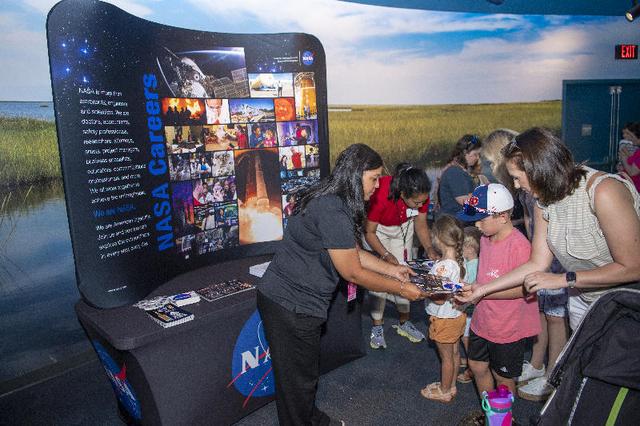
NASA representatives provide memorabilia to Audubon Aquarium visitors in New Orleans on July 5. NASA hosted an information/interactive exhibit at the aquarium in conjunction with NASA activities at the 30th annual ESSENCE Fest in New Orleans during the Fourth of July weekend.
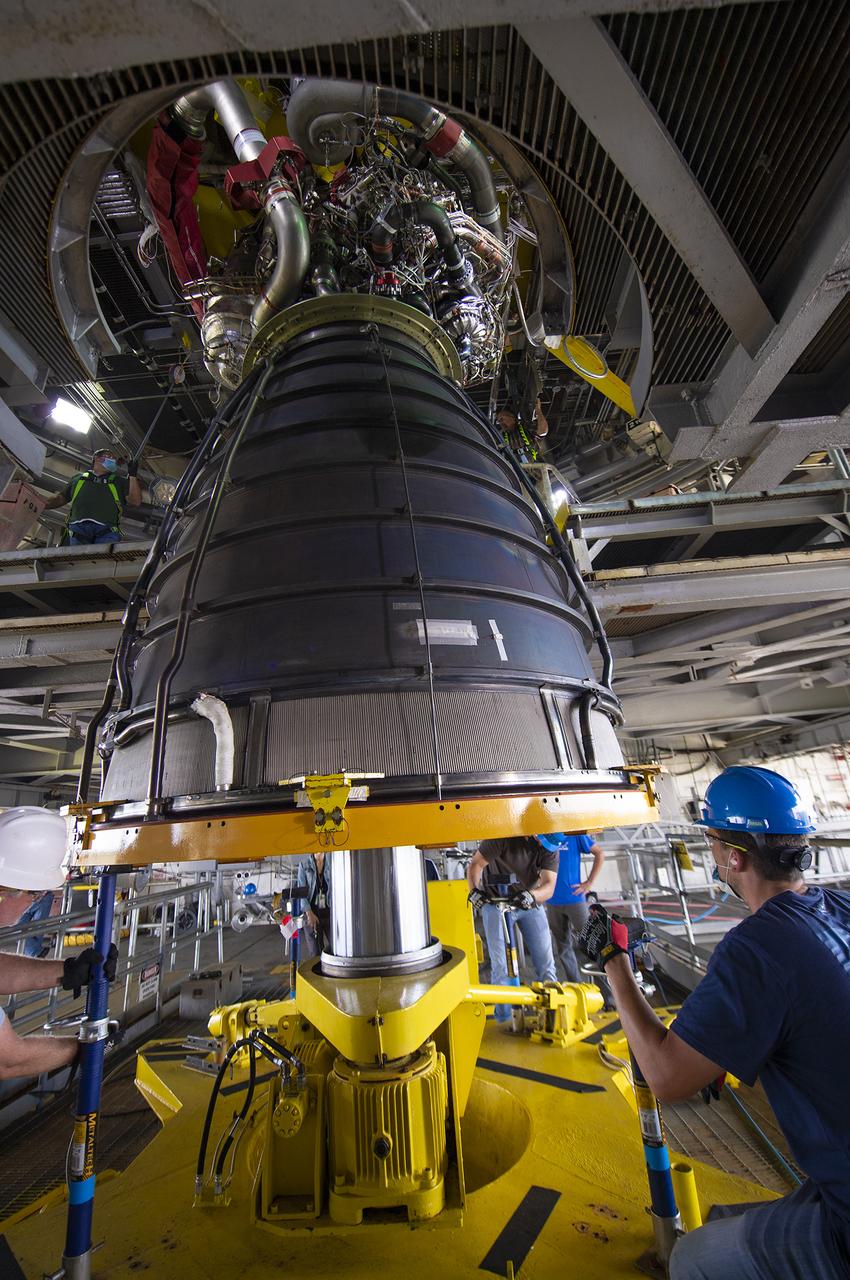
Crews at NASA’s Stennis Space Center remove an RS-25 rocket engine from the A-1 test stand on Nov. 1, 2021, following a series of successful tests.
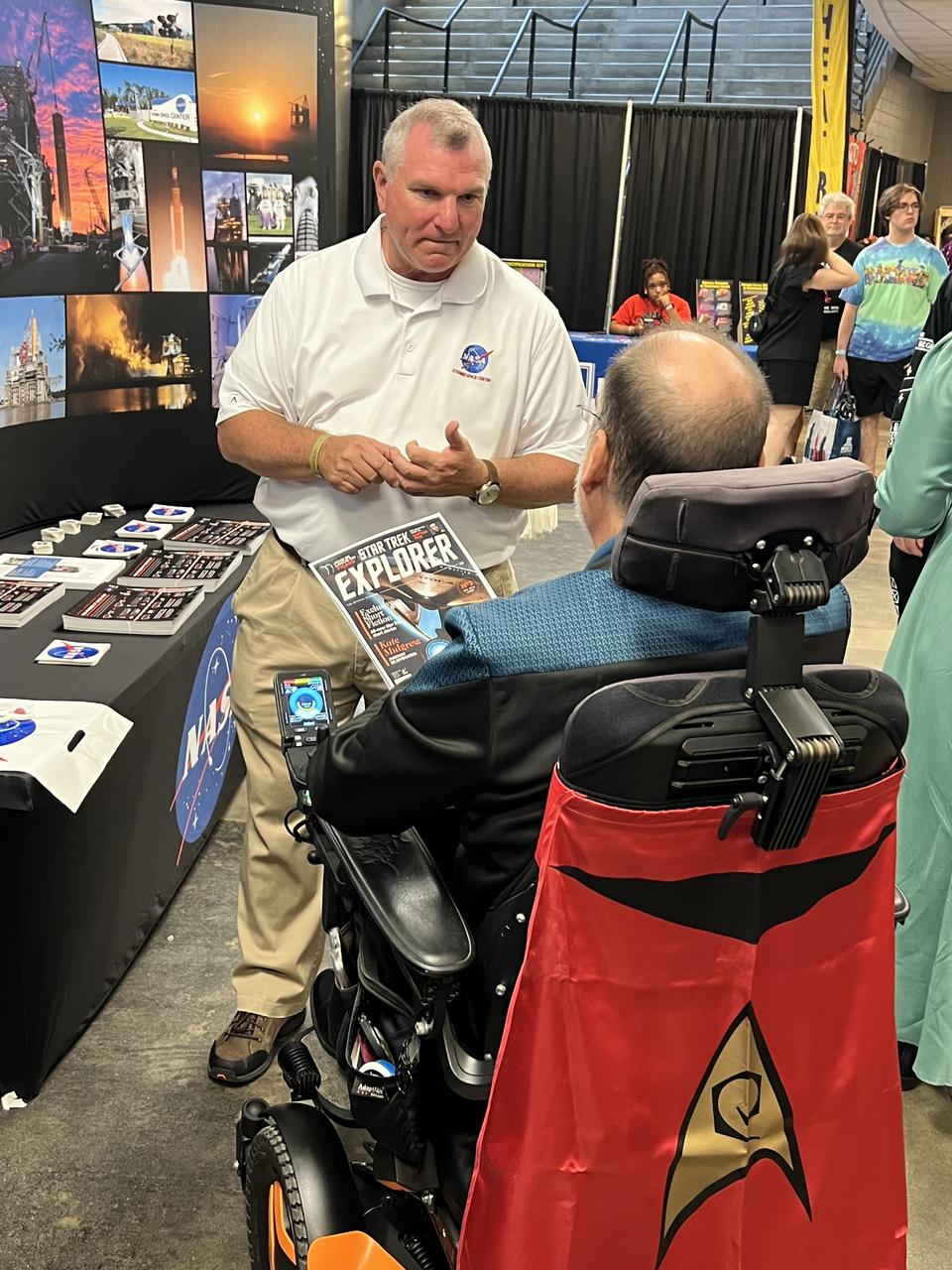
NASA Stennis legislative affairs specialist and chief of staff Troy Frisbie discusses his appearance in Star Trek Explorer magazine with a member of the Jackson, Mississippi, Star Trek fan club, USS Haise.

Audubon Aquarium visitors in New Orleans experience a virtual reality visit to the International Space Station as part of a NASA exhibit on July 5. NASA hosted an information/interactive exhibit at the aquarium in conjunction with NASA activities at the 30th annual ESSENCE Fest in New Orleans during the Fourth of July weekend.
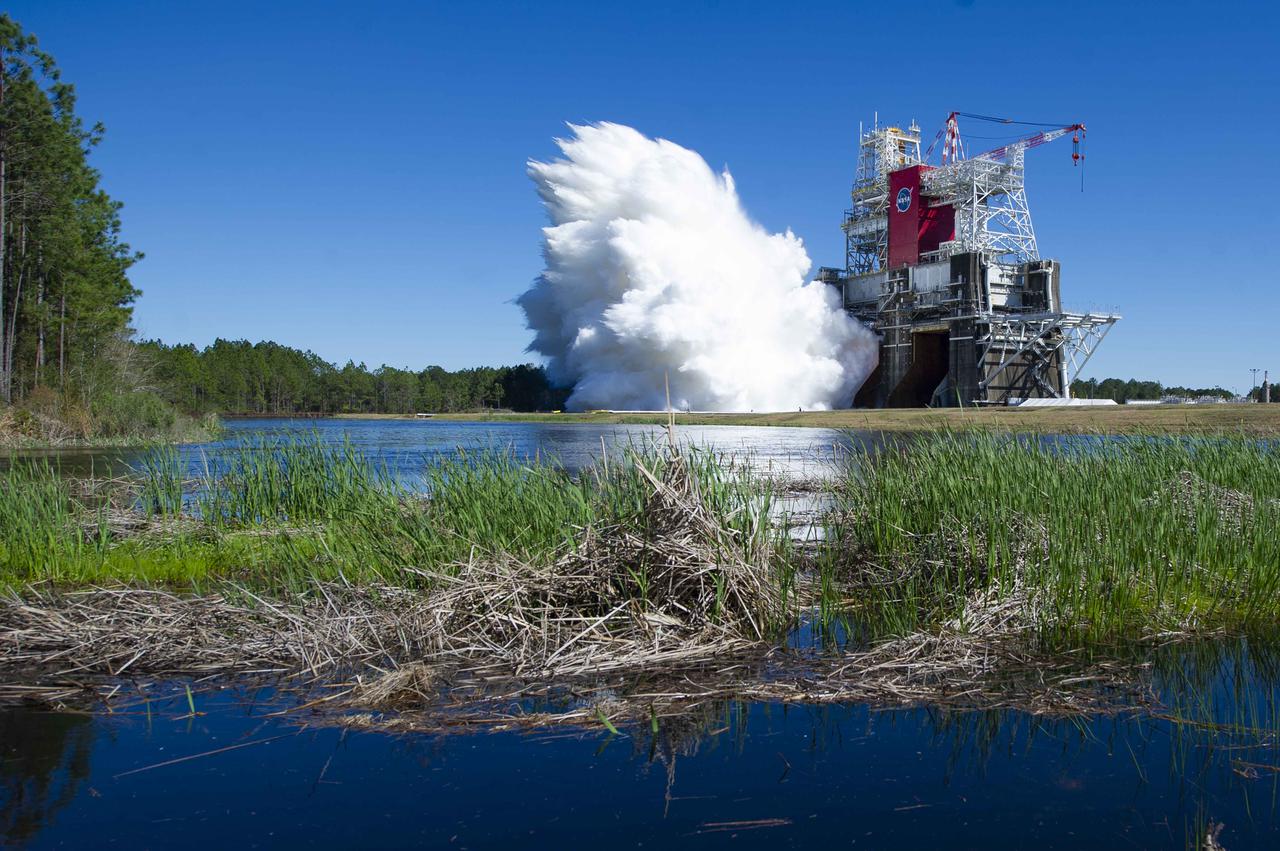
NASA conducts a hot fire test March 18, 2021, of the core stage for the agency’s Space Launch System rocket on the B-2 Test Stand at Stennis Space Center near Bay St. Louis, Mississippi. The hot fire test of the stage’s four RS-25 engines generated a combined 1.6 million pounds of thrust, just as will occur during an actual launch. The hot fire is the final test of the Green Run test series, which represents a comprehensive assessment of the core stage and its integrated systems prior to its launch on the Artemis I mission to the Moon.
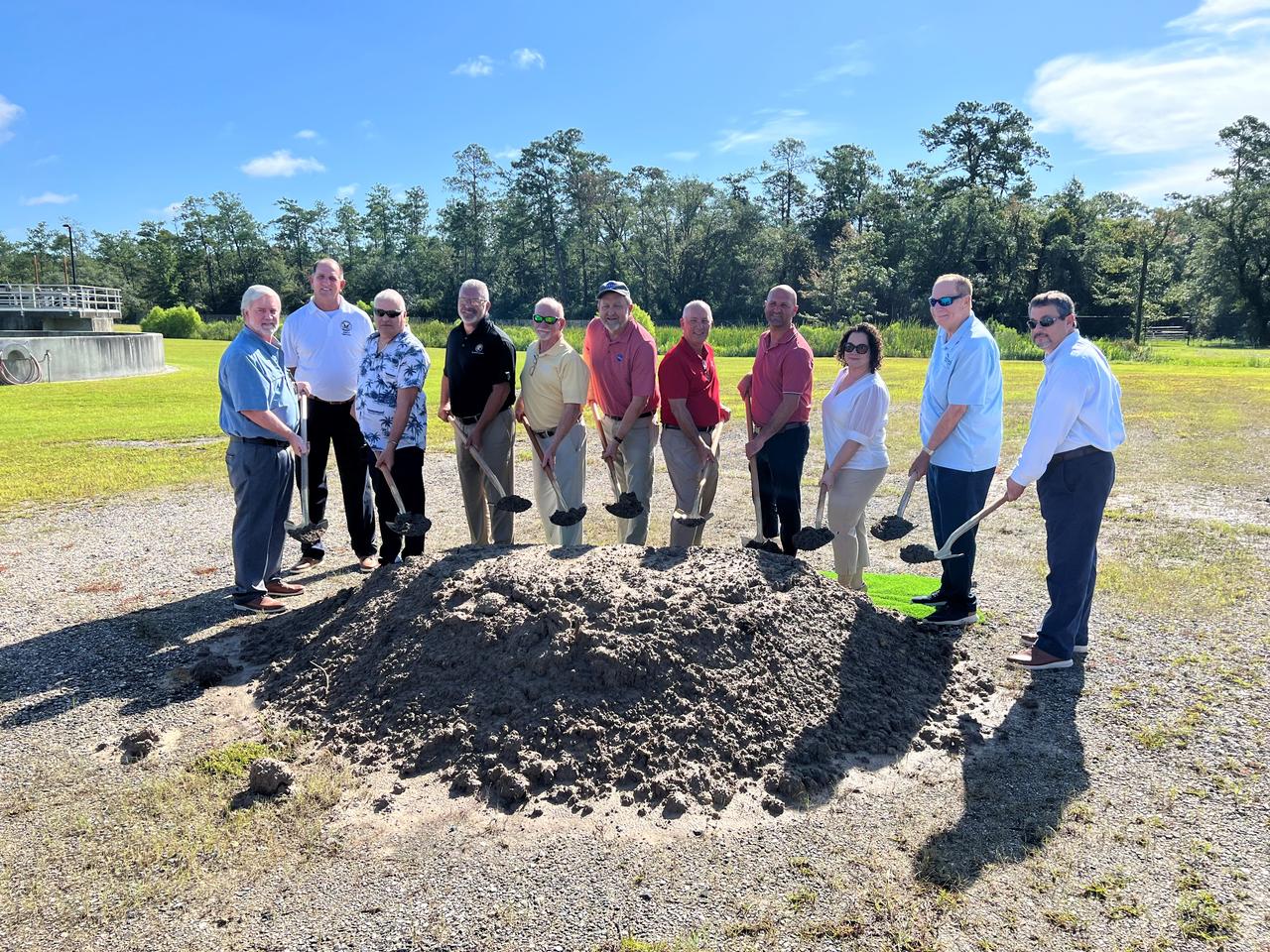
NASA Stennis breaks ground with officials from Hancock County on July 18 for the Stennis Wastewater Conveyance Project at the Northern Wastewater Treatment Plant in Kiln, Mississippi. The groundbreaking represented launch of an agreement described as a win-win situation for Hancock County and NASA Stennis. Upon completion of the project, the county will assume responsibility for servicing wastewater from the NASA center. The new agreement will enable the county to utilize its existing facility more efficiently, while also allowing NASA Stennis to devote more center resources its mission work. Groundbreaking participants include (left to right): Hancock County supervisor Chuck Clark, District 3; Hancock County supervisor Bo Ladner, District 5; Hancock County Water & Sewer District Chair Farron Hoda; state Rep. Brent Anderson, Mississippi District 122; Mayor Mike Favre, Bay St. Louis, Mississippi; NASA Stennis Associate Director Rodney McKellip; Hancock County Board President Scotty Adam (District 4 supervisor); state Sen. Philman Ladner, Mississippi District 46; NASA Stennis project manager Brittany Bouche; Mayor Jay Trapani, Waveland, Mississippi; and Hancock County Utility Authority Executive Director David Pitalo.

NASA representatives welcome visitors to the agency exhibit at the Audubon Aquarium in New Orleans on July 5. NASA hosted an information/interactive exhibit at the aquarium in conjunction with NASA activities at the 30th annual ESSENCE Fest in New Orleans during the Fourth of July weekend.
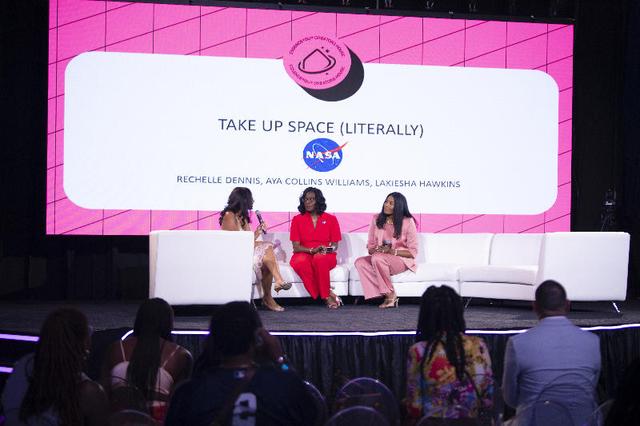
Girls United co-founder Rechelle Dennis, left, moderates a conversation with NASA Assistant Deputy Associate Administrator for the Moon to Mars Program Office Lakiesha Hawkins, center, and NASA Director of Engagement Aya Collins at the Take Up Space (Literally) panel presentation during the 30th annual ESSENCE Fest in New Orleans on July 5.
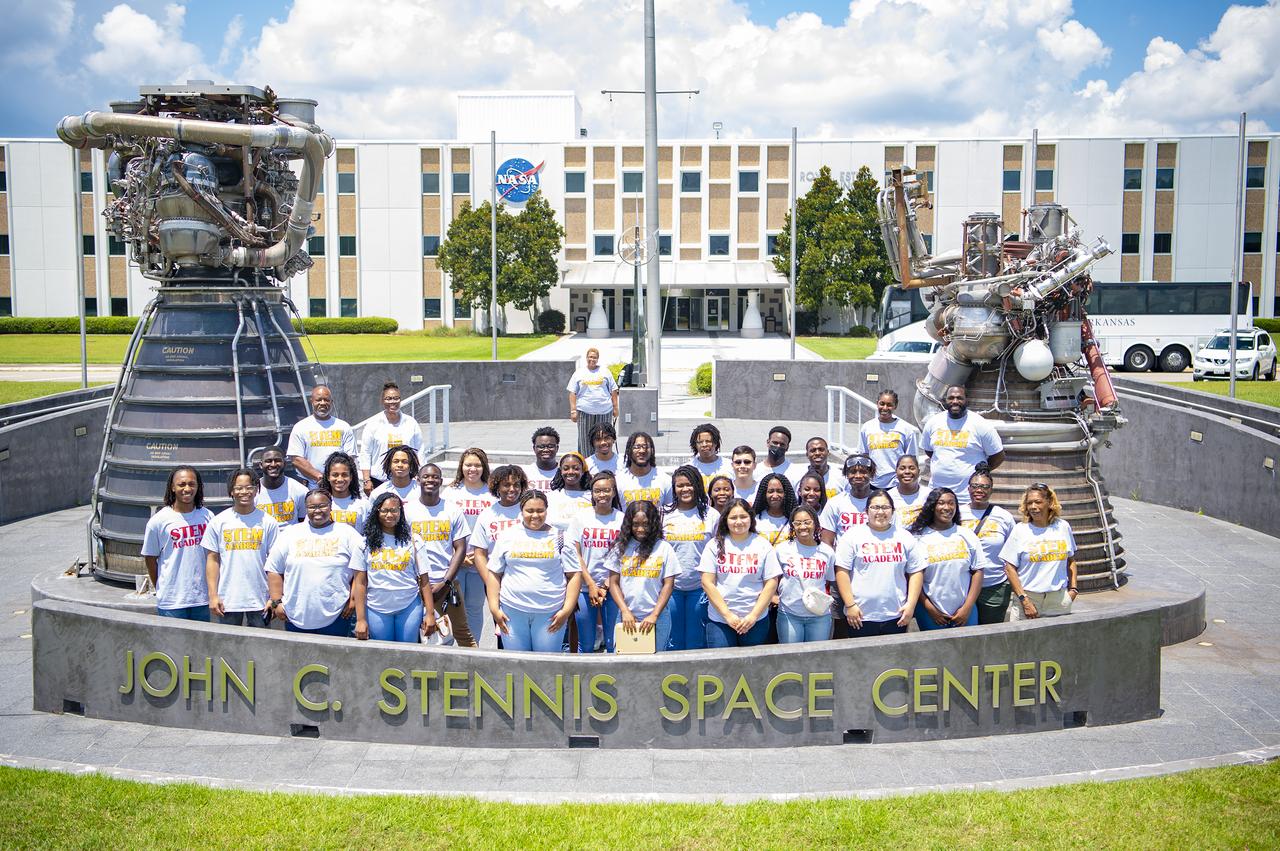
Participants in the University of Arkansas at Pine Bluff STEM (science, technology, engineering and mathematics) Summer Institute stand in front of the Roy Estess Building at NASA’s Stennis Space Center during a site tour on June 25. The students viewed multiple areas of the federal city, including a visit to the Thad Cochran Test Stand, where students learned about NASA Stennis’ role in the Artemis campaign. NASA is going back to the Moon for scientific discovery, economic benefits, and inspiration for a new generation of explorers: the Artemis Generation. The agency will use what is learned on and around the Moon to take the next giant leap – sending astronauts to Mars. The Arkansas at Pine Bluff STEM program started in 2003 and is designed to help increase the number and diversity of well-prepared STEM graduates.
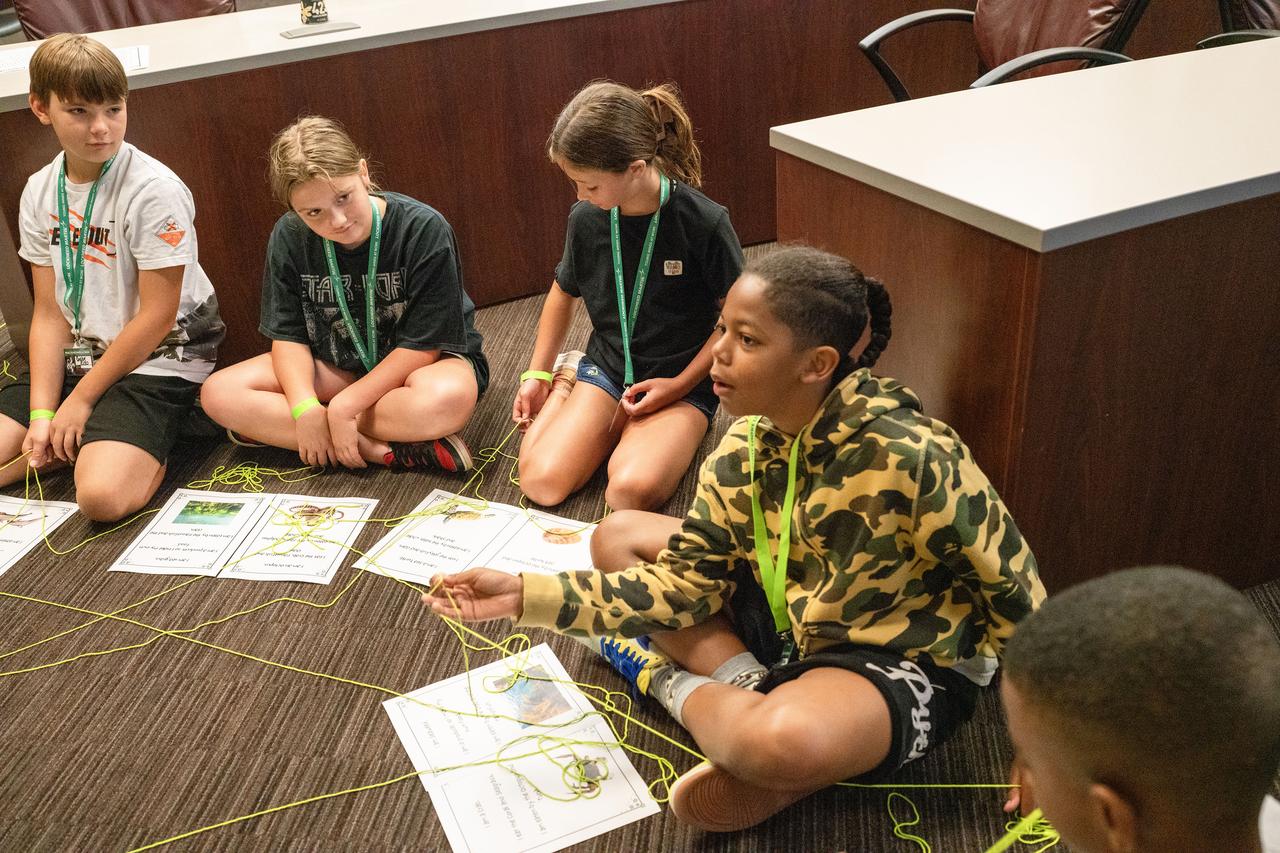
Take Our Children to Work Day participants learn about the ocean’s ecosystem on June 27 during an activity conducted by representatives with Mississippi State University, Northern Gulf Institute, and the Alliance for System Safety of UAS through Research Excellence.
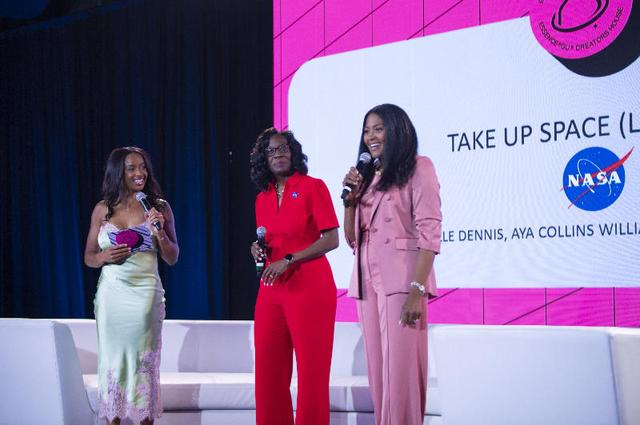
Girls United co-founder Rechelle Dennis, left, introduces NASA Assistant Deputy Associate Administrator for the Moon to Mars Program Office Lakiesha Hawkins, center, and NASA Director of Engagement Aya Collins, right, for a Take Up Space (Literally) panel conversation during the 30th annual ESSENCE Fest event in New Orleans on July 5.
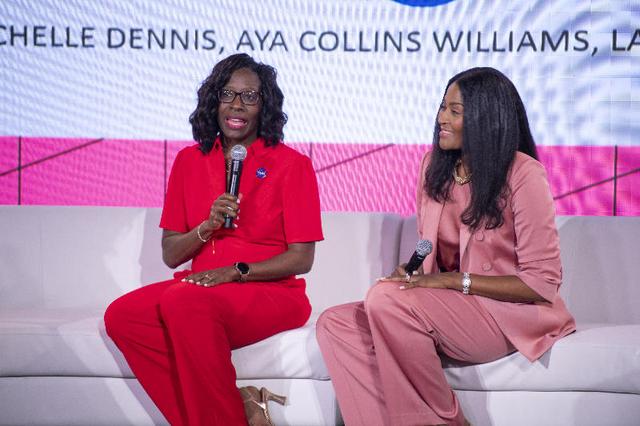
NASA Assistant Deputy Associate Administrator for the Moon to Mars Program Office Lakiesha Hawkins, left, and NASA Director of Engagement Aya Collins are shown at the Take Up Space (Literally) panel conversation during the 30th annual ESSENCE Fest in New Orleans on July 5.

NASA conducts a hot fire test March 18, 2021, of the core stage for the agency’s Space Launch System rocket on the B-2 Test Stand at Stennis Space Center near Bay St. Louis, Mississippi. The hot fire test of the stage’s four RS-25 engines generated a combined 1.6 million pounds of thrust, just as will occur during an actual launch. The hot fire is the final test of the Green Run test series, which represents a comprehensive assessment of the core stage and its integrated systems prior to its launch on the Artemis I mission to the Moon.
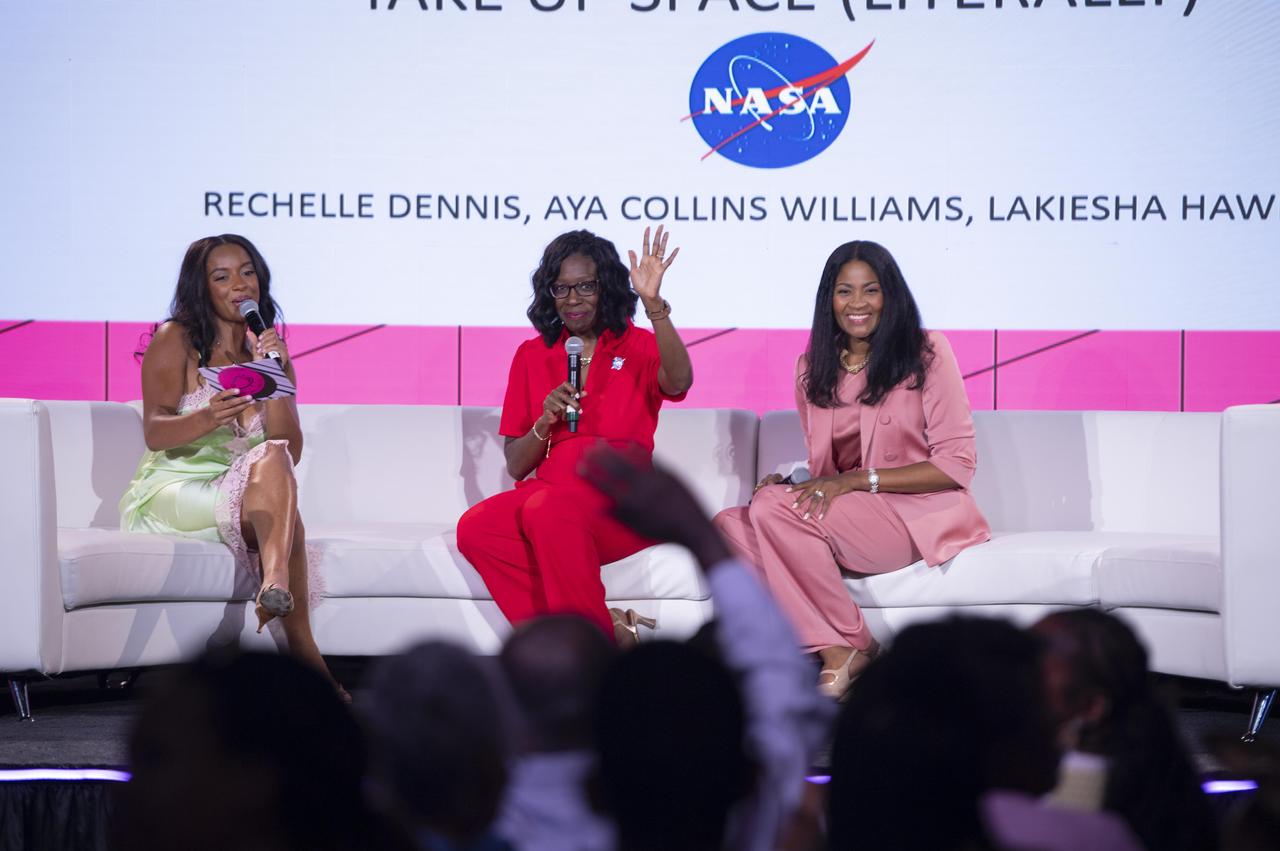
Girls United co-founder Rechelle Dennis, left, continues a conversation about how to become a shining star in the face of adversity with NASA Assistant Deputy Associate Administrator for the Moon to Mars Program Office Lakiesha Hawkins, center, and NASA Director of Engagement Aya Collins at the Take Up Space (Literally) panel conversation during the 30th annual ESSENCE Fest in New Orleans on July 5.